
My Longest Ever Boeing 737-800 Ride: Almaty to Istanbul on SCAT
It’s probably fair to say with a decent amount of certainty that few ‘normal’ passengers have ever snubbed Turkish Airlines in favour of Kazakhstan’s second-largest carrier, SCAT Airlines. However, as an aviation enthusiast, back in May 2023, I did exactly that and flew on one of their longest routes from Almaty to Istanbul.
This was scheduled to be my second time flying with the carrier, having had the pleasure of riding on one of their old and battered Boeing 737-500s from Xi’an to Almaty in August 2017 (you can read about that here). Whilst my inaugural experience with SCAT Airlines had not offered the utmost levels of comfort or onboard service, it had not been terrible enough to stop me from flying with the airline again almost six years later. In the end, a cancelled flight meant that this was to be my third ride with SCAT Airlines, as I made the short hop up from Almaty to Astana with them several days before this flight.
Background
As international routes go, the 2443-mile slog between the largest cities (but not capitals) of Kazakhstan and Turkey, Almaty and Istanbul, is relatively well served. Those needing to get between the two are offered a plethora of options and at the time of my trip, eighteen flights were operated between the two cities each week by aircraft ranging in size from the Boeing 737-800 to the Boeing 787-9 Dreamliner. These services are operated by Kazakhstan’s award-winning national carrier, Air Astana and their lesser-known compatriot, SCAT Airlines, as well as Turkish Airlines and Pegasus, the latter serving Almaty from its hub at Istanbul Sabiha Gökçen.
Needing to find a cost-effective way to return to Britain at the end of my Central Asian adventure, I was left with a fair number of options. As an Air Astana enthusiast, I had initially been drawn in by a reasonably priced ticket for their Airbus A321neo flight between Almaty and Heathrow which operates with a mid-journey stop in Aktau. However, by the time I got around to booking, eye-watering increases in this ticket price grounded my initial plan and forced me to chart a new course. Continuing my search, I soon stumbled across a relatively reasonable Turkish Airlines which would allow me to experience their renowned service for the first time. However, a whisper of intrigue led me to a bolder option: SCAT Airlines to Istanbul, followed by a separate leg to the UK, all for the same price! Lacking hold luggage, I would not have to pass through immigration in Istanbul, and I did not envisage any problems with obtaining a boarding pass for my ride between Istanbul and the UK.
About the Airline
Unless you happen to be an aviation enthusiast, a Kazakhstani traveller, a frequent visitor to the country, or simply passionate about airlines with dubious names, you could be forgiven for never having heard of SCAT Airlines. However, despite this, the carrier pre-dates Kazakhstan’s prestigious flag carrier Air Astana by several years and is today the country’s second-largest airline, serving destinations across Central and East Asia, Europe, the Middle East and North Africa.
Formed in the southern city of Shymkent in 1997, ‘Special Cargo Air Transport’ commenced operations with a fleet of versatile Antonov An-2s and An-24s, deploying these on domestic services across south and east Kazakhstan. In 2005, SCAT Airlines added their first jet, the now rare Yakovlev Yak-42 tri-holer which enabled them to expand and operate longer scheduled services, with this joined a short time later by the Boeing 737-200. Unfortunately, all Soviet-era types and this rare Boeing variant have since been retired and today SCAT Airlines operates a smorgasbord of over thirty Boeing 737s and Bombardier CRJ-200s, whilst their holiday subsidiary Sunday Airlines operates Boeing 757-200s and Boeing 767-300s. Focusing on its Boeing 737 fleet, the carrier continues to operate the older -300 and -500 variants, although these are gradually being replaced by a growing fleet of second-hand -800 variants as well as brand-new Boeing 737 MAX 8 and MAX 9 aircraft.
Booking
When it came to booking a ticket for my SCAT adventure, as with any major airline, I could do this either via the carrier’s website or through a plethora of booking sites. However, with SCAT Airlines’ website offering the cheapest tickets, I was not left with any reason not to book with the carrier directly. Following a quick Google search, I skipped past the unsavoury results and safely touched down on the Kazakhstani carrier’s website. Once there, I was immediately presented with a scrolling banner advertising several of the carrier’s destinations, a set of crew proudly standing in front of one of SCAT Airlines’ Boeing 737 MAX aircraft and an advertisement promoting the airline’s 25th anniversary. Making a quick search for flights, I was promptly presented with a total of five different itineraries which consisted of an early morning direct service, as well as two via Astana and one each via Atyrau and Shymkent, indicating the fairly large scale of SCAT Airlines’ operations to Istanbul.
Needing to be in Istanbul as early as possible to leave me with a decent number of options to get back to the UK that day, I decided to go for the direct flight, with the cheapest tickets for this coming in at a total of 82,619 Kazakh tenge (around £150). Once I had clicked on this, I was then offered three different fare options – Light, Optimum and Flex. Being an all-Economy airline, the most expensive of these was priced at a reasonable 100,264 Tenge and so there was not much between the various fare classes. I should also note that unlike on many airlines, even the cheapest tickets included a generous 23kg of complimentary hold luggage!
With no reason not to, I went for the Light fare before entering my details and being taken to a seat selection page. Whilst extra legroom and seats near the front of the aircraft could be selected for a fee of up to 8,823 Tenge (£12.71), I was delighted to see that many seats could be reserved without payment – something that is always impressive to see in today’s world of inescapable additional charges! Examining the seat map, the 46 rows displayed indicated that rather excitingly I would be in for my first flight onboard the Boeing 737 MAX 9 and opted to select Seat 38L just behind the wing. Once done, I was then presented with a summary of my booking before I went ahead and made a quick and easy payment. Soon receiving an email confirmation, I was soon all set for my longest-ever ride onboard a Boeing 737. The distance between Almaty and Istanbul is similar to that between New York and San Diego, Seoul and Phuket, or London and Baku.
As with most SCAT Airlines’ services, online check-in for my flight opened 24 hours before departure. Upon entering my details, I was taken to a seat selection page which revealed a smaller cabin than that of the expected Boeing 737 MAX 9, indicating that my flight had been downgraded to one of the carrier’s older second-hand Boeing 737-800s. Whilst this was a slight disappointment, taking the edge off this, I was delighted to find that I was able to select any seat in the cabin, including the bulkhead and emergency exit row seats without paying an additional fee. Choosing one of the exit row seats, I continued onwards and checked in, however, likely as a passport/visa check would have to be made, I was unable to retrieve my boarding pass.
The Journey
Safely touching down in Almaty onboard an old and rumbling Antonov An-24 on Tuesday evening at 2030, and scheduled to head off the next morning at 0630, as nice as the City of Apples may be, I saw no point in venturing into this for my brief overnight stay. Whilst I had pondered the idea of spending my final night in Kazakhstan on the cold and hard terminal floor, I instead decided to splurge out on an airport hotel. Despite Almaty Airport’s status as one of Kazakhstan’s two major international gateways, there are just two hotels located in the immediate vicinity – the Aksuntar Hotel right next to the terminal building and the Tranzit Hotel which is around a ten-minute walk away from the terminal. Those expecting these to offer any sort of Ritz level of luxury will be disappointed, with both facilities being somewhat spartan, dated, and dare I say, Soviet. However, they do serve their purpose for a short overnight stay and are both relatively cheap for airport hotels. Having already stayed in the Tranzit Hotel on this trip, that night I decided to stay in the Aksuntar Hotel – a place where I had previously spent a couple of nights back in August 2017. This consists of a mixture of ensuite and shared bathroom rooms, and I parted with a total of 24,000 Tenge (£42) for the former.
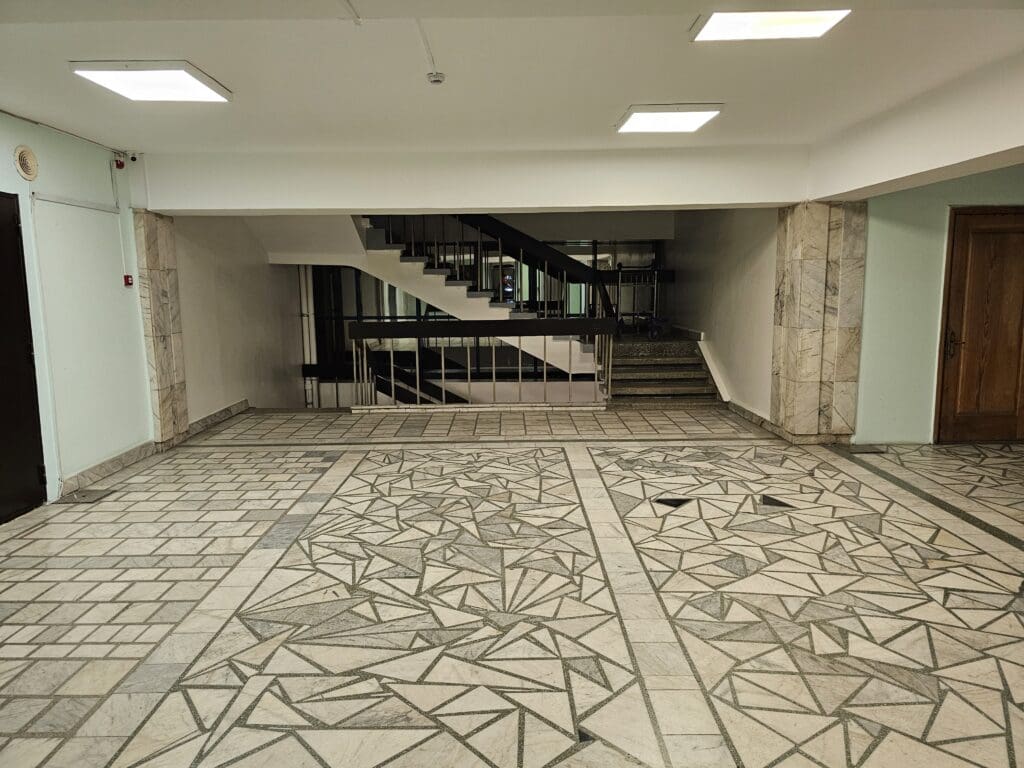
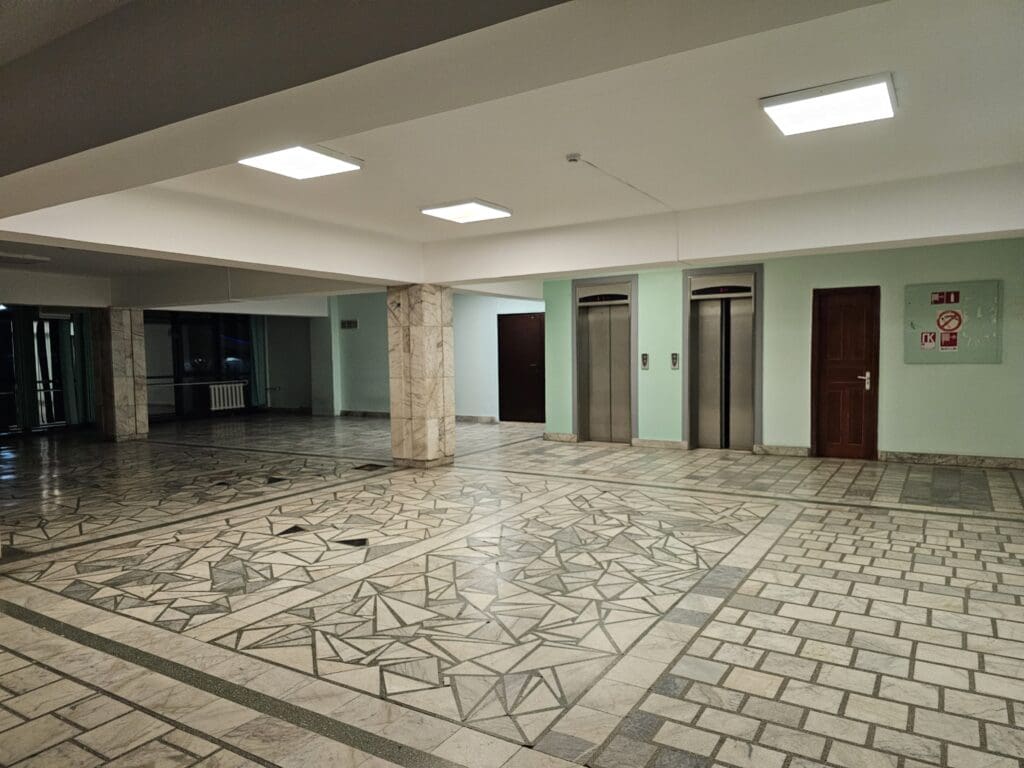
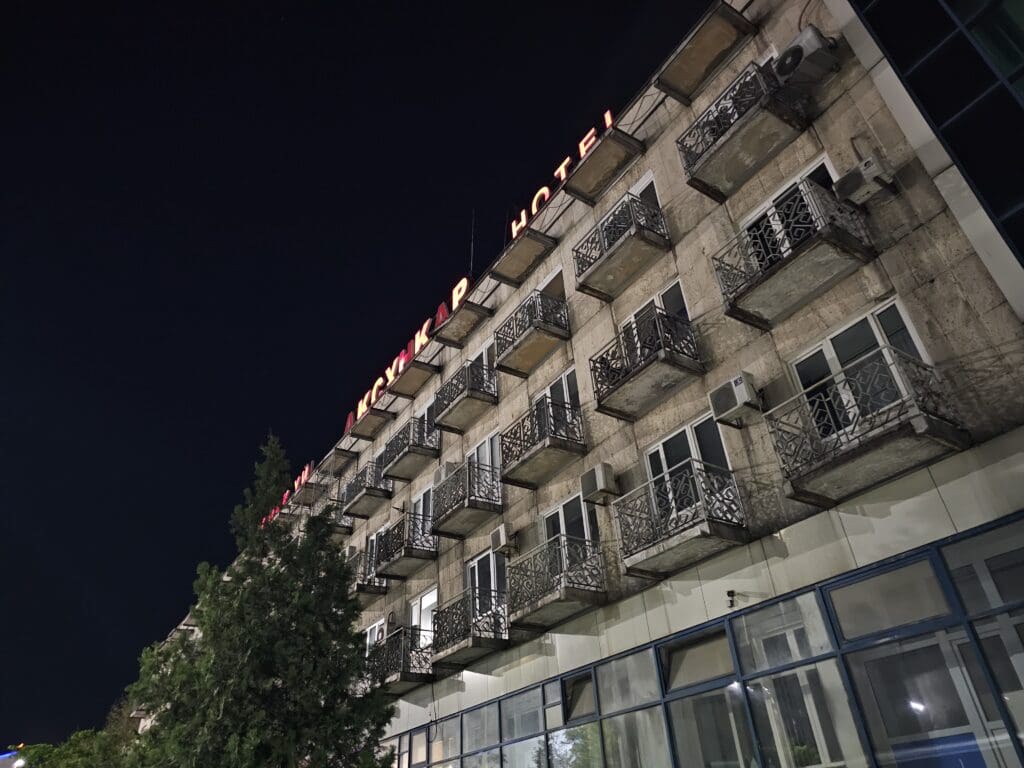
Following a very short night’s sleep, I was awoken at 0300 by the buzzing of my phone. Having packed up most of my stuff before going to bed, I was not left with too much to do before commencing my SCAT adventure, other than jumping in the freezing cold shower (having been warned during check-in that the hotel’s boiler had broken down, the temperature did not come as too much of a shock). A short time later and suitably shivering, I handed my key in and made my way out into the cold pre-dawn morning air and followed the sparkling diamond that sits atop the terminal building. No more than two minutes after leaving the hotel, I wandered into the landside departure level which sits on the terminal’s first floor. Inside, whilst this is not particularly large, this does feature a decent number of facilities that include multiple cafés and shops, all of which were open despite the early hour. This was also incredibly busy, with weary-looking passengers seen here, there and everywhere, many of whom appeared to have camped out in the terminal overnight. Examining the terminal’s layout, the domestic and international check-in halls are separated and located at different ends of the terminal.
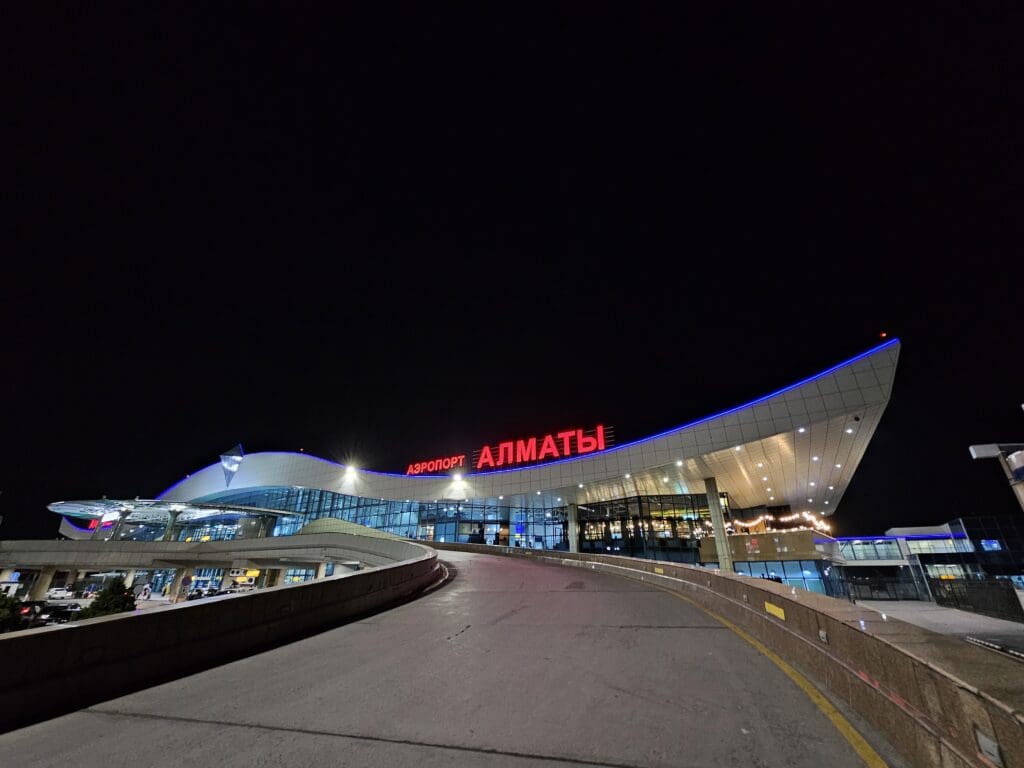
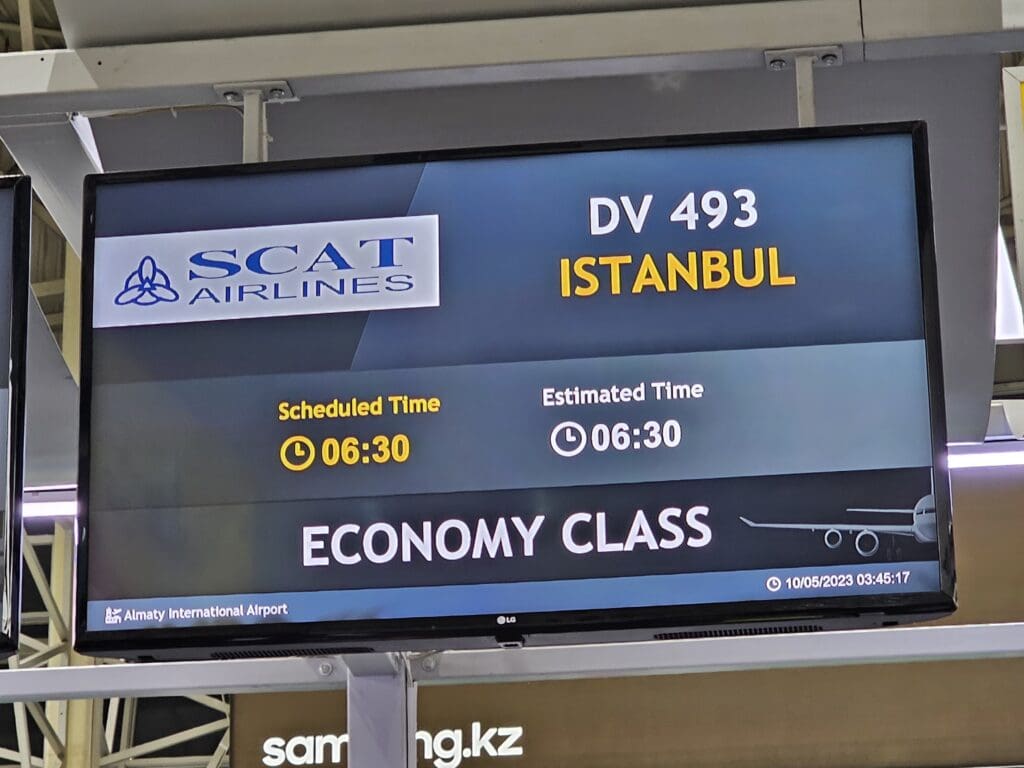
Following a quick wander around, still with a wad of colourful Kazakhstani notes, I decided to head to the currency exchange counter in the hope that I could change the last of my Tenge into British Pounds, Euros or US Dollars. However, with the terminal’s two currency exchange kiosks out of all of these, and rejecting the offer to instead convert my Tenge to Russian Roubles, I continued onwards through the ‘customs zone’ to the international heck-in hall in the hope that I could spend these once airside. With a fair number of departures that morning, unsurprisingly the small check-in hall was rather busy, with long lines of passengers, many of whom were travelling with heaps and heaps of luggage, seen leading up to many of the counters. Having inadvertently timed things just right, within minutes of arriving there, at 0345 check-in desks for SCAT Airlines’ service to Istanbul opened and I joined the scrum of waiting passengers. After around ten minutes of edging forward, I reached the counter and handed over my passport. There, the plain-clothed staff member questioned me on my onward travel plans and asked me if British citizens required a visa to enter Turkey. Giving satisfactory answers, a SCAT Airlines branded boarding pass was soon printed out and I was advised to head onwards to immigration.
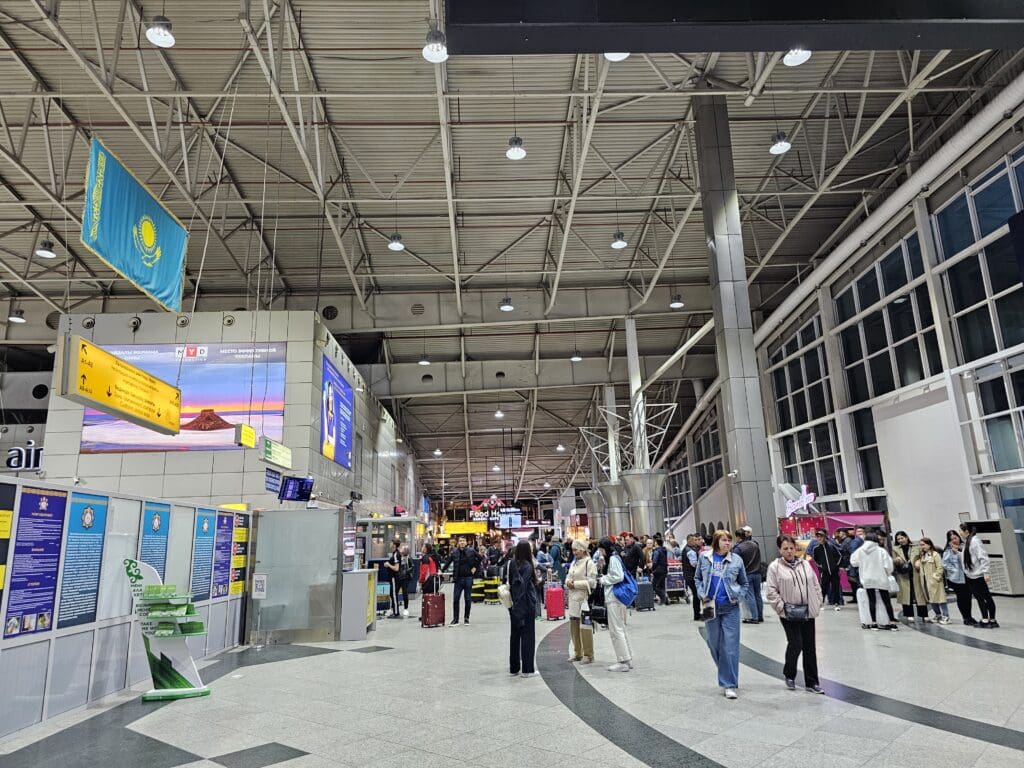
Thanks to the sheer number of passengers, the check-in hall was rather chaotic and I had expected somewhat of a wait at both immigration and security. However, with a line of immigration booths open, no more than two minutes of waiting was required before I headed up to one of these and handed over my passport and boarding pass. Manned by a stern-looking officer dressed in a quasi-military outfit topped with a large Soviet-style hat, I expected some tough questioning however instead they just gave me a few angry looks up and down, scanned my passport and stamped this before sliding this back to me. From there, I continued onwards to the small security checkpoint, where once again little waiting was required before I passed through this. Just before entering the main waiting area, two officials stopped me and asked me first in Russian and then in English how much cash I had on me – stopping me just as I got out my wallet to count (presumably fearful that others may think I was about to pay them a bribe), they allowed me to continue onwards on my journey.
Considering that Almaty Airport is the busiest airport in Kazakhstan, the international portion of this is small, cramped and ultimately disappointing. Airside, this consists of a small rectangular hall with one café, two café-bars, an ice cream stall, a large duty-free shop and a souvenir store along three sides of this – whilst seats can be found in the middle. On one side, windows offer partially obstructed views out onto the apron and a smaller waiting area for the bus boarding gates can be found on the ground floor. Disappointingly, this was rather dirty with rubbish strewn about and the toilets were in poor condition. Meanwhile, very few plug sockets could be seen and no public wifi was offered either by the airport or by the various cafés in the waiting area. Based on my experience that morning, I would recommend that those heading off on international flights from Kazakhstan do so from Astana Airport’s nice and modern Terminal 1!
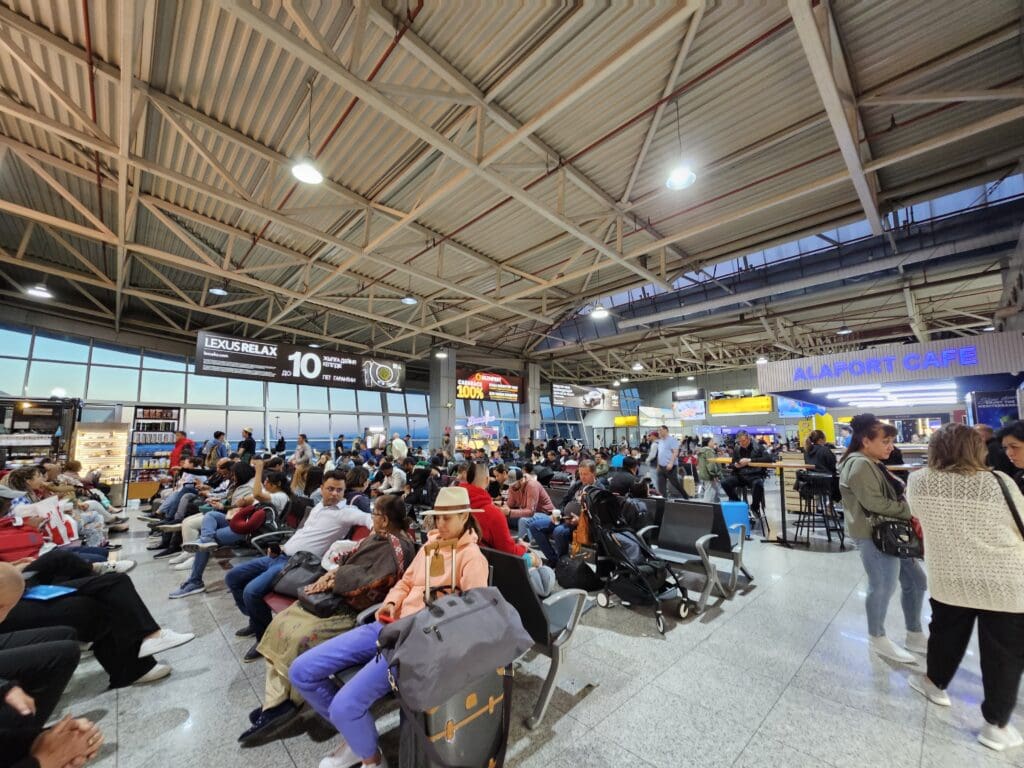
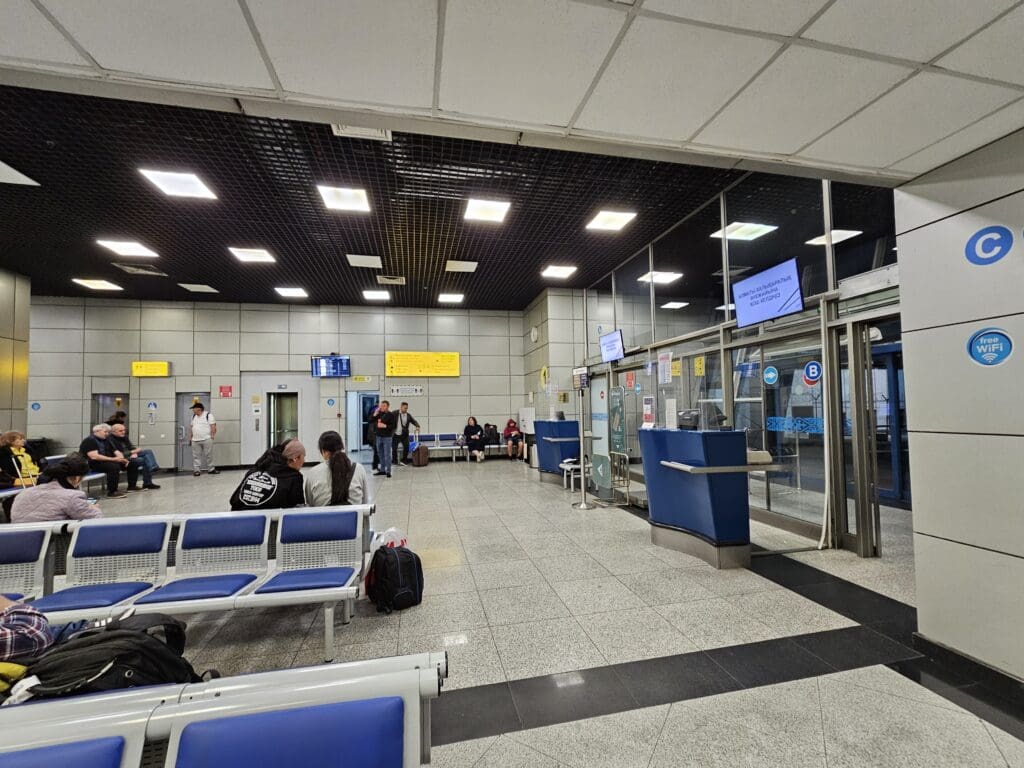
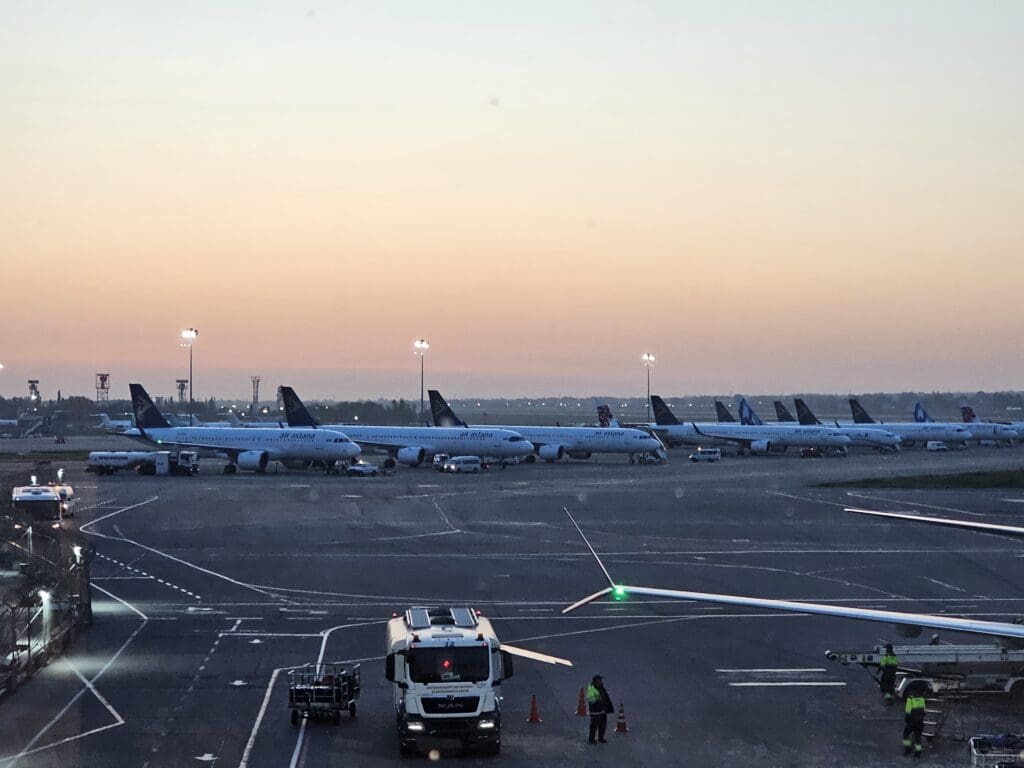
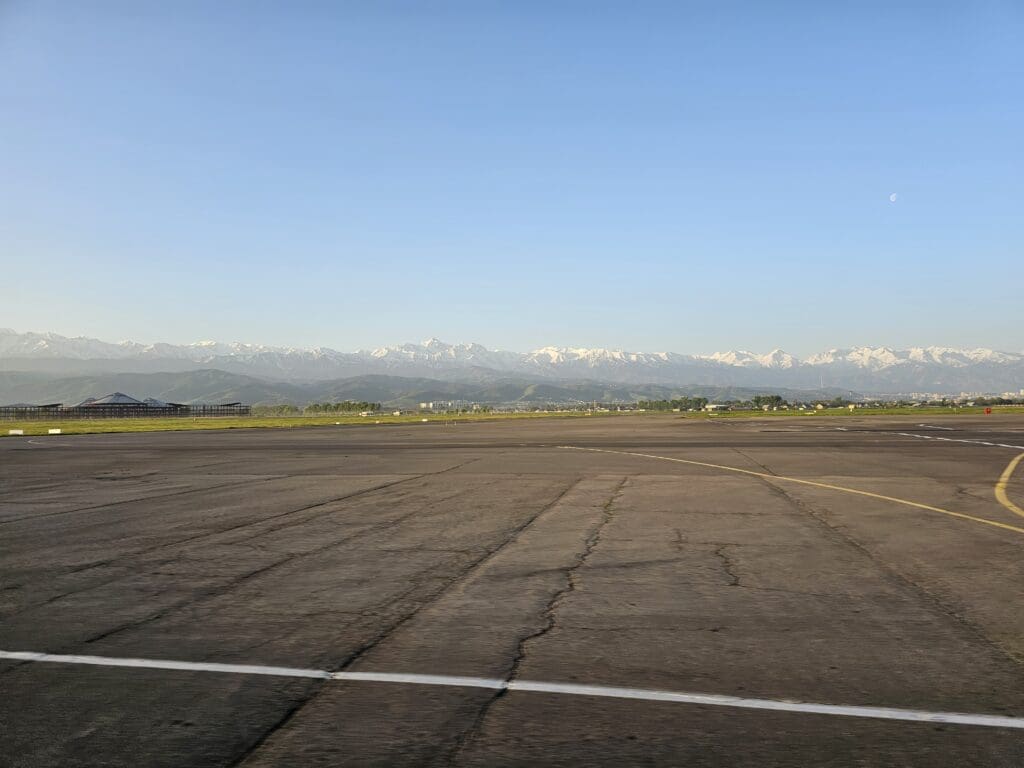
Hovering around, I watched as the skies slowly brightened and revealed rows and rows of aircraft outside as well as the picturesque snow-capped Tian Shan Mountains in the distance. That morning, there were to be a total of five international departures before SCAT Airlines’ Istanbul service. These took the form of flights to Antalya, Doha, Dubai and Sharjah, operated by Air Arabia, Air Astana, FlyDubai and Qatar Airways. Meanwhile, a Turkish Airlines Boeing 787-9 Dreamliner service to Istanbul would depart five minutes after the SCAT Airlines flight thus adding to the terminal’s crowdedness. Glancing around, it appeared that many passengers were very much getting in the holiday mood with many of those waiting seen swigging from beer cans to pass the time, reminiscent of Stansted Airport on a Saturday morning!
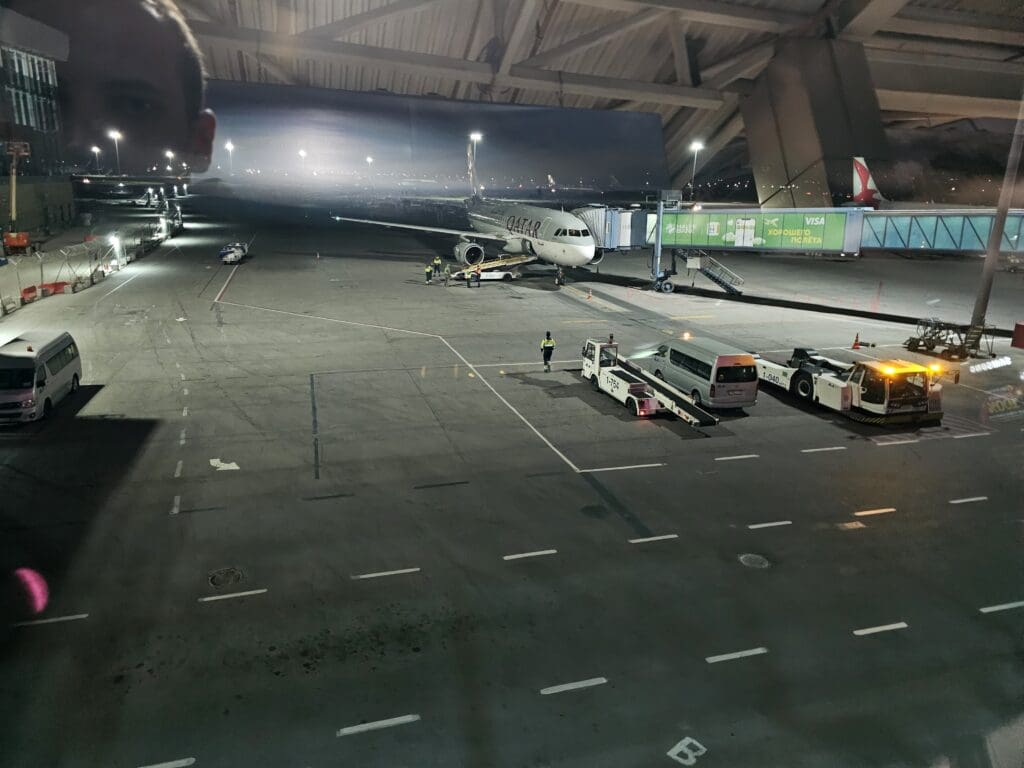
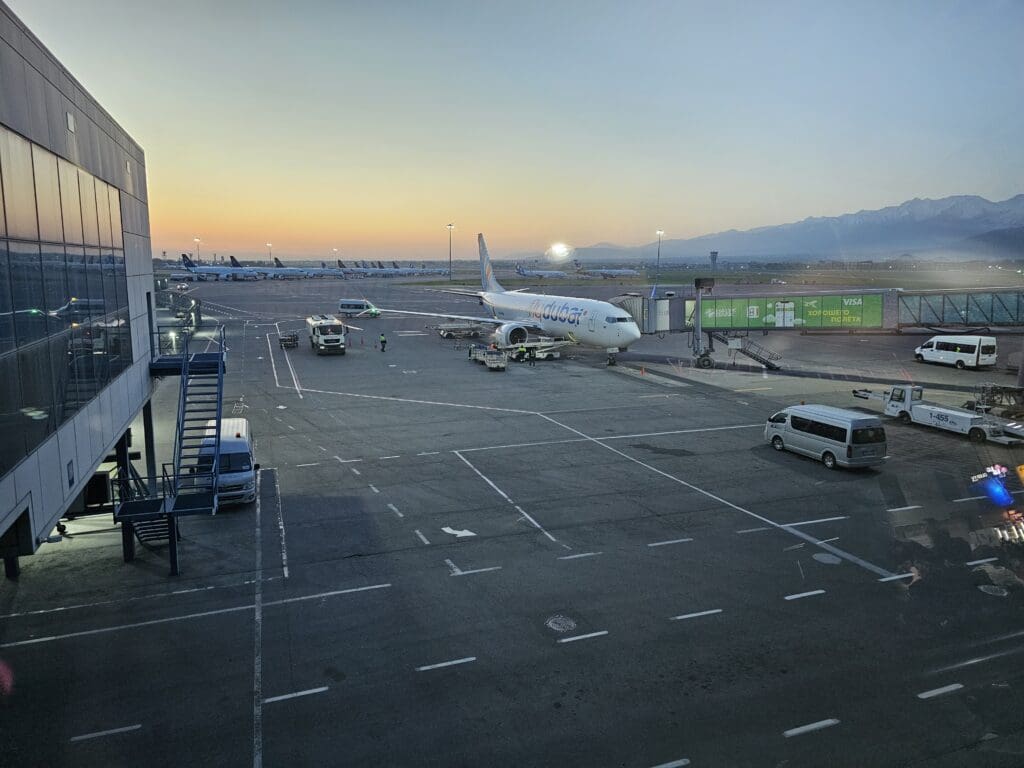
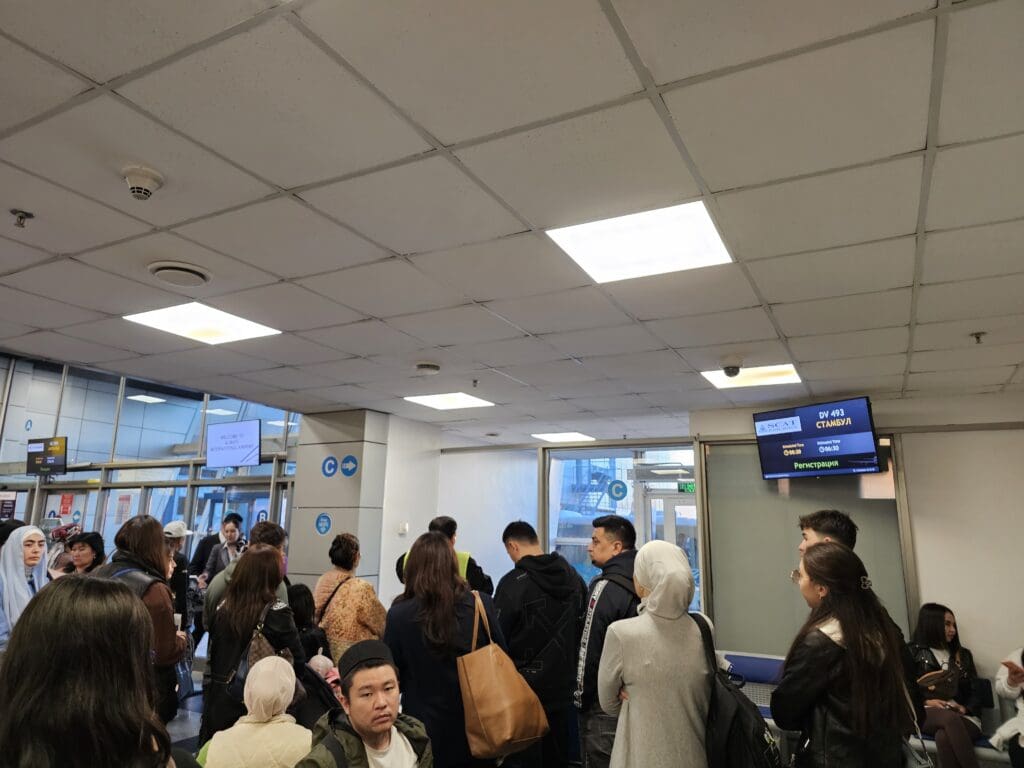
With Almaty Airport home to just three jetbridges, it didn’t come as much of a surprise to find that boarding for my flight that morning would take place via bus, with Gate 1C having been assigned to the flight. Once I had spent some Tenge on souvenirs, I headed downstairs to the bus boarding gate area which consists of a small waiting hall with toilets and several televisions that played state advertisements, public service announcements and patriotic messages for the duration of my stay. Whilst I found this to be incredibly busy with a near-constant throughput of passengers, I managed to snag one of the last remaining seats enabling me to wait in relative comfort.
At 0545, a small army of smartly dressed Air Astana ground staff appeared and boarding for the national carrier’s flight to Antalya commenced through the neighbouring gate. Contrasting with the smartly dressed Air Astana staff, as those bound for Antalya boarded the waiting bus, a bulky-looking figure with plenty of gold rings donned in a leather jacket and topped with a SCAT Airlines reflective jacket appeared – with this turning out to be the Captain of the Istanbul service. With the gate layout meaning that only one flight at a time can be boarded through the bus boarding gates, unsurprisingly our scheduled boarding time of 0550 came and went and with Antalya-bound passengers still making their way onto the bus, there was no sign that the Istanbul service was to board any time soon. At 0600, a couple of SCAT Airlines’ ground staff appeared, both dressed in casual clothes and only identifiable as airline workers thanks to their lanyards and reflective jackets. At 0607, one of these staff members said a few words in Kazakh and Russian and the scrum that had already formed began to push forwards and passengers filtered out onto the waiting bus. After some jostling, I reached the gate podium where my boarding pass was scanned and torn and my passport checked before I made my way out onto the bus. Taking a spot near the window, I watched as a sleek FlyDubai Boeing 737 MAX 8 was pushed back away from the terminal before its two LEAP engines quietly whirred into life.
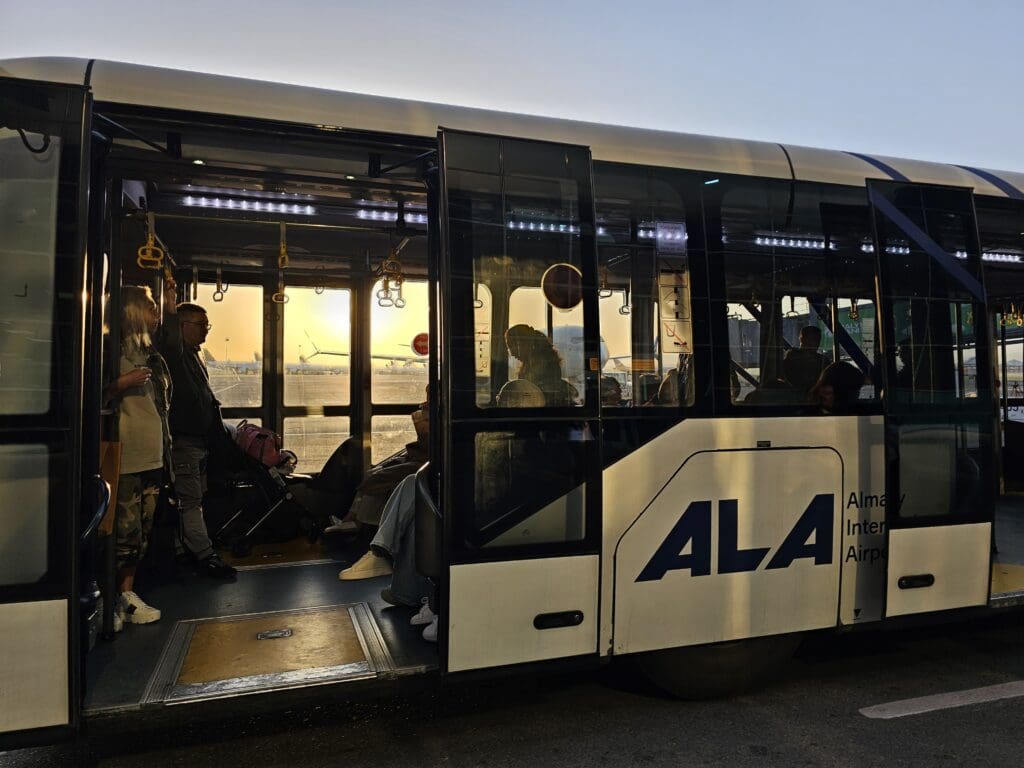
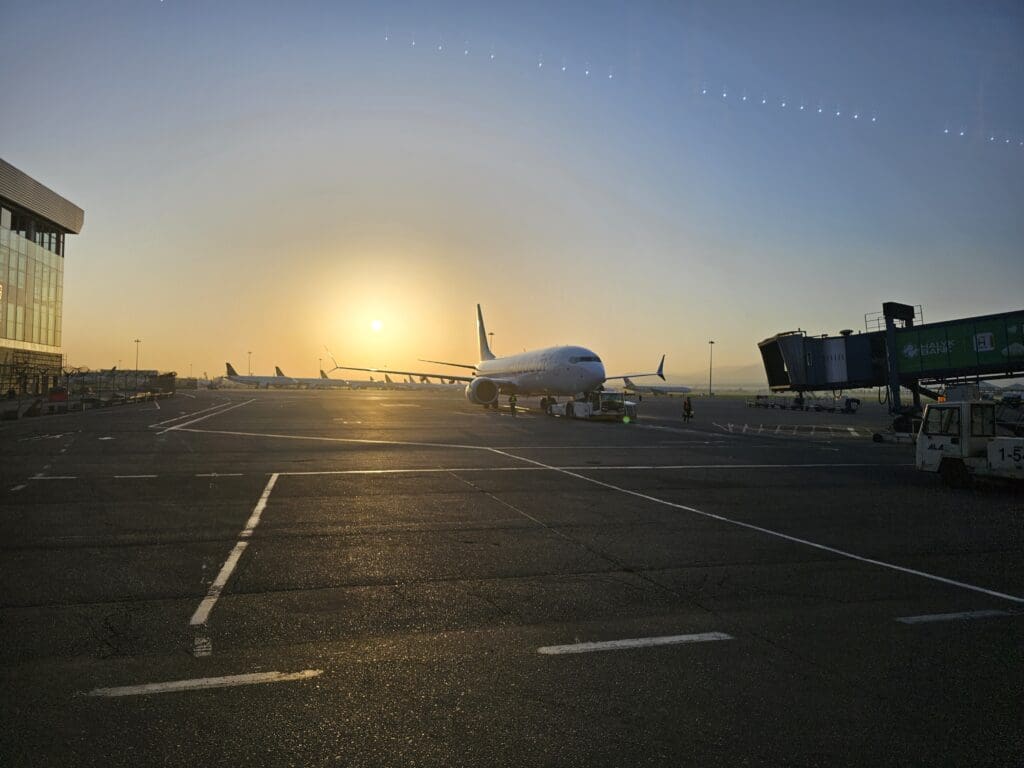
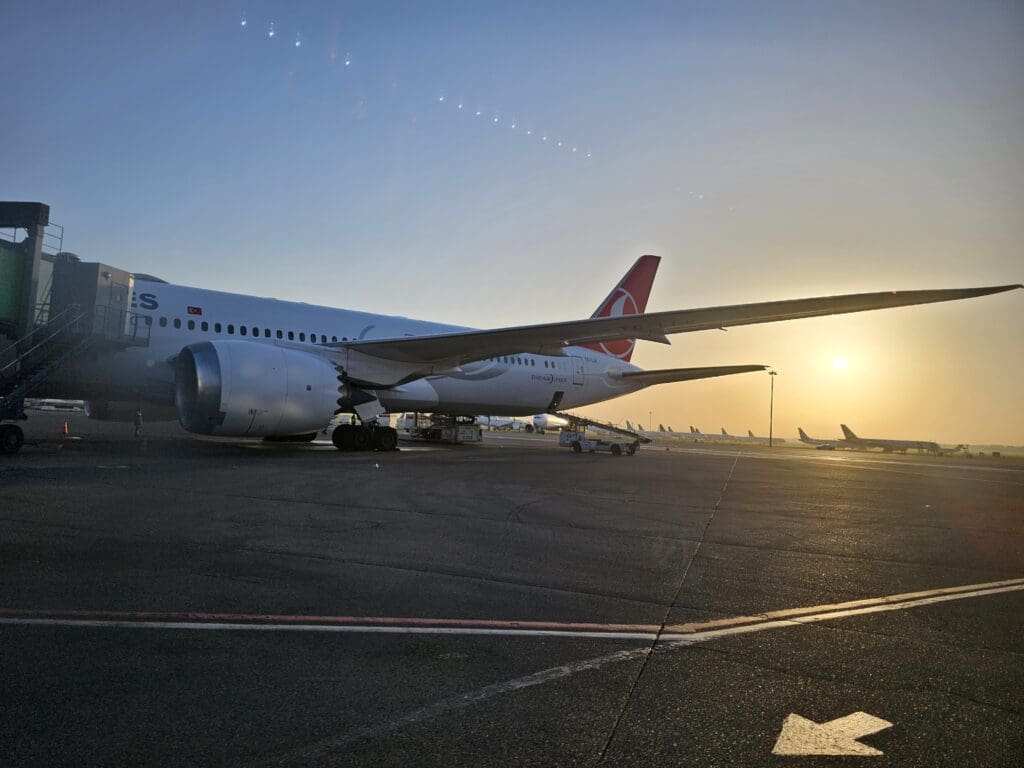
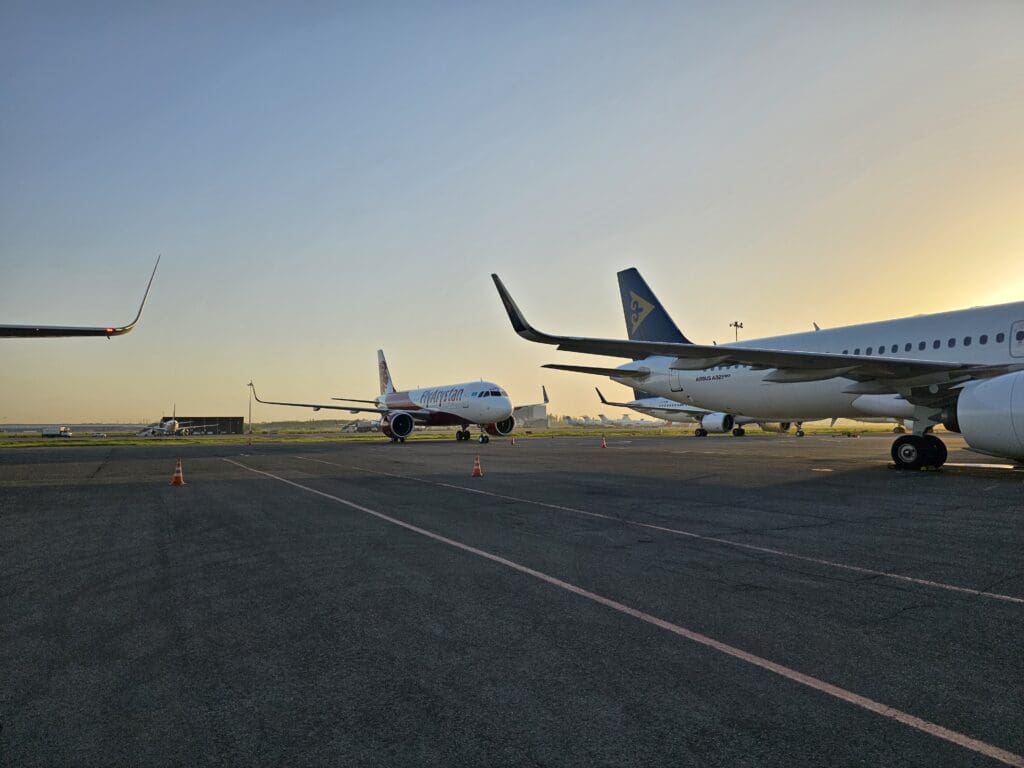
Once packed in like sardines, at 0614 the bus doors closed and we gently pulled away from the terminal. That morning our journey took us past the Turkish Dreamliner which we would race over to Istanbul, before we left the terminal behind and made a beeline for the cluster of Air Astana and SCAT Airlines jets. On the more interesting side of things, the bus also passed a registration-less Yakovlev Yak-42 once operated by International Jet Tour and an inconspicuous almost all-white wingletted CASA 295 operated by the National Security Committee. After passing this pair of interesting aircraft, the bus pulled up near the nose of the Boeing that would carry us all across to Turkey that morning.
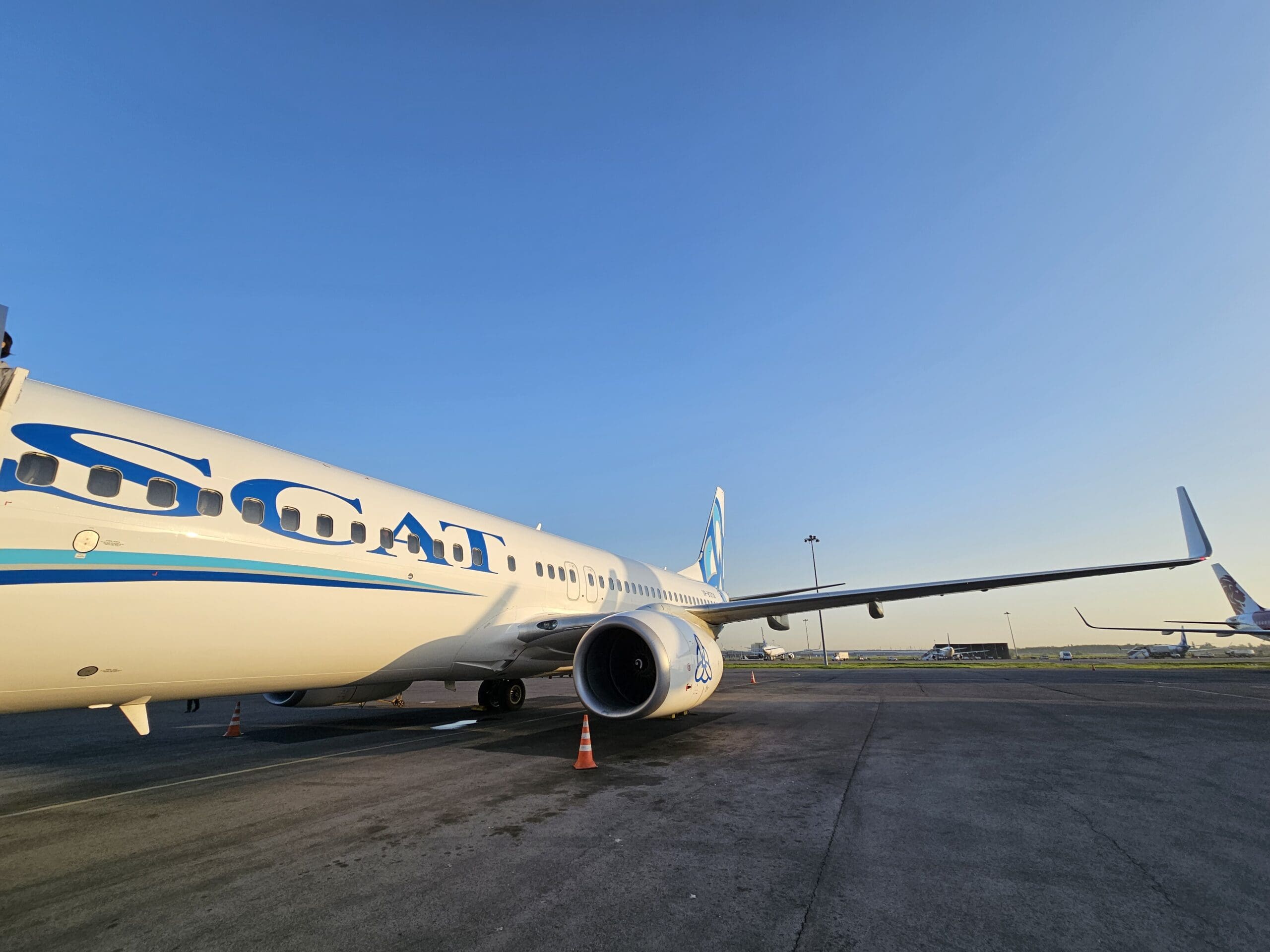
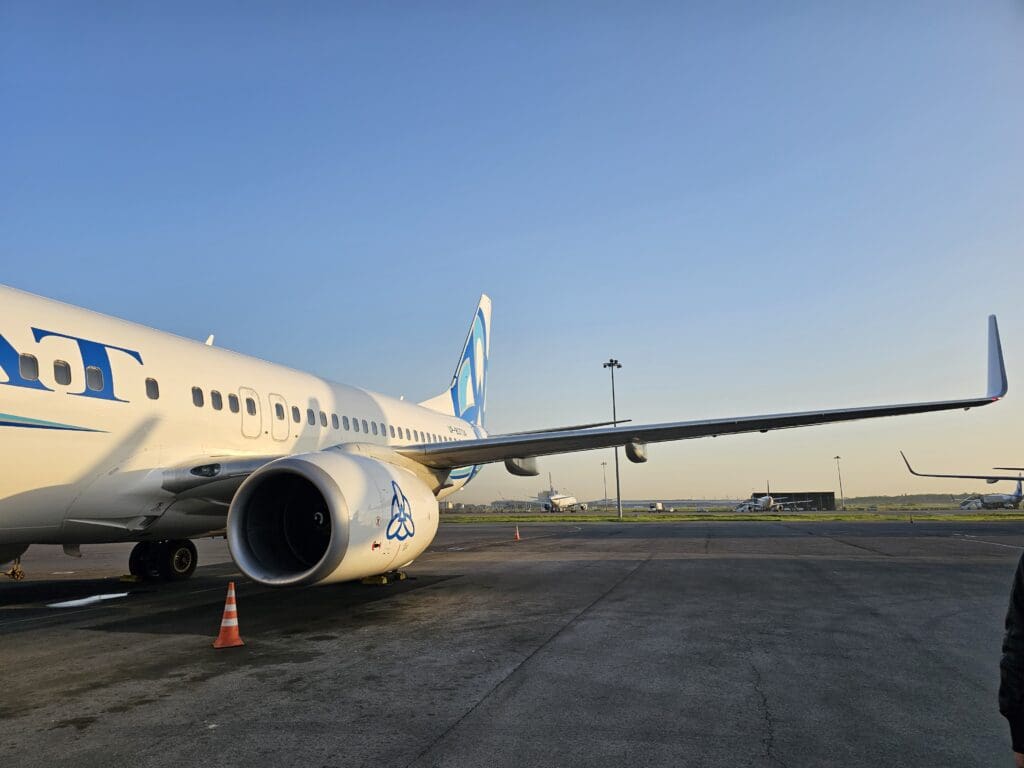
As expected, whilst initially scheduled to be operated by one of SCAT Airlines’ comparatively new Boeing 737 MAX 9 aircraft, instead, an older Boeing 737-8HX could be seen waiting for us in the bright morning sunshine. This particular example took the form of UP-B3734, which, as the more diehard aviation enthusiasts will be able to tell from the jet’s customer code of ‘HX’, began its life owned by the Aviation Capital Group. Carrying construction number 29658 and line number 2970, this aircraft was assembled at Boeing’s Renton factory and took its first flight in July 2009. This made the aircraft almost fourteen years old at the time of my flight. Whilst initially intended for Delta Air Lines, the aircraft was instead leased to Ukraine International Airlines and operated from its base at Kyiv Boryspil to destinations across Europe, Central Asia, the Middle East and North Africa.
In December 2018, the aircraft was retired from service in Ukraine and returned to the Aviation Capital Group, being stored at Rzeszow and Woensdrecht before being delivered to the short-lived Malaysian carrier Love Fly in October 2019. Following the closure of the airline, in September 2020 the Boeing was ferried to Clark in the Philippines where it was stored until March 2021 before spending time on the ground in Perpignan and Montpellier. In June 2021, the aircraft returned to Ukraine where it operated for Bees Airlines as UR-UBD until the invasion of Ukraine when the aircraft was ferried to Montpellier. Sadly, with the carrier halting operations in August 2022, the aircraft remained on the ground there until entering service with SCAT Airlines in October 2022 as UP-B3734. Today, the aircraft operates to most destinations on SCAT Airlines’ route map. In the week before my flight, this had visited Almaty, Astana, Atyrau, Jeddah and Istanbul – operating seventeen sectors and covering at least 24,200 miles.
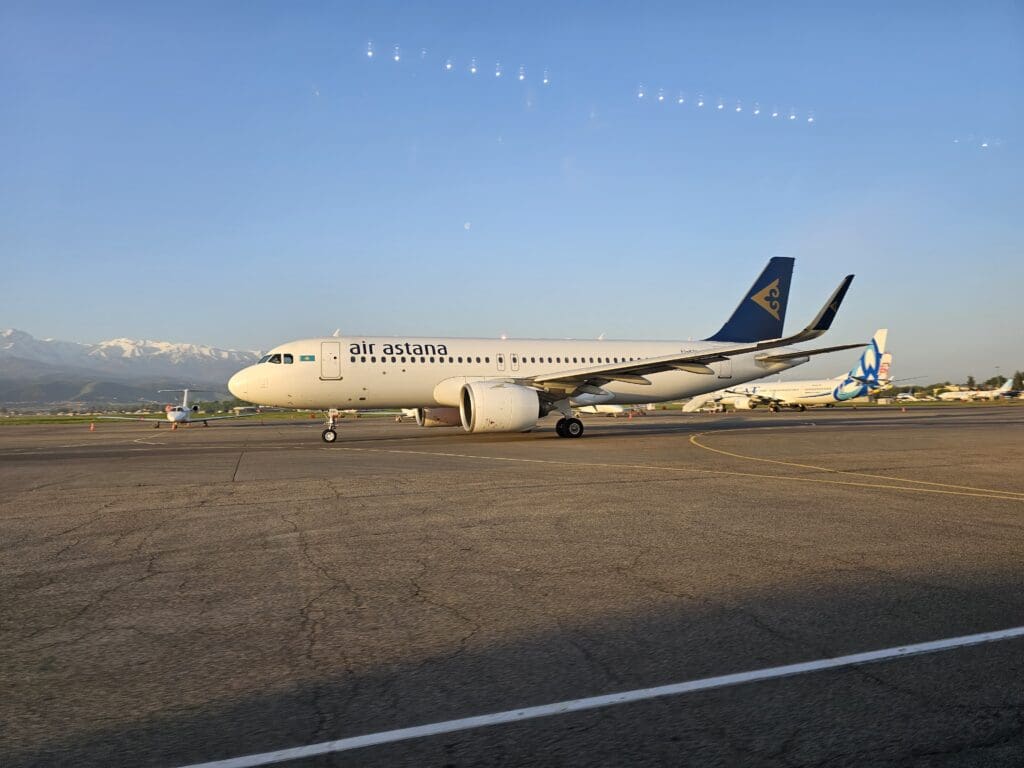
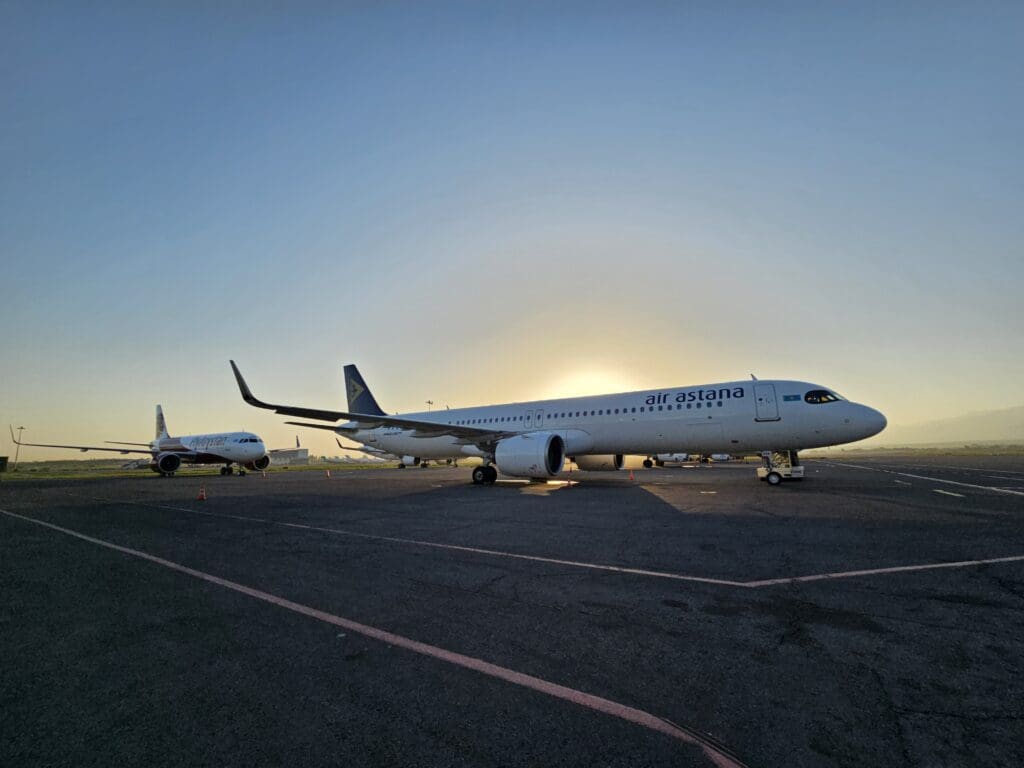
As soon as the bus came to a halt, the doors opened and passengers spilled out onto the apron. That morning, it seemed that the majority of those heading to Istanbul were tourists and many snapped plenty of photos of the aircraft and took pictures of their friends and relatives standing in front of the Boeing. Whilst the security guards seemed to have no issue with the happy passengers snapping away, they ended up angrily telling off those passengers who had wandered to the nose as well as those who had almost climbed into the engine for a photo! That morning, only one set of airstairs was connected up to the aircraft and thus some waiting was required before entering the Boeing. However, with the superb weather and good views of an Air Astana Airbus and an old SCAT Airlines Boeing 737-500 taxiing past a short distance away, I had nothing to complain about.
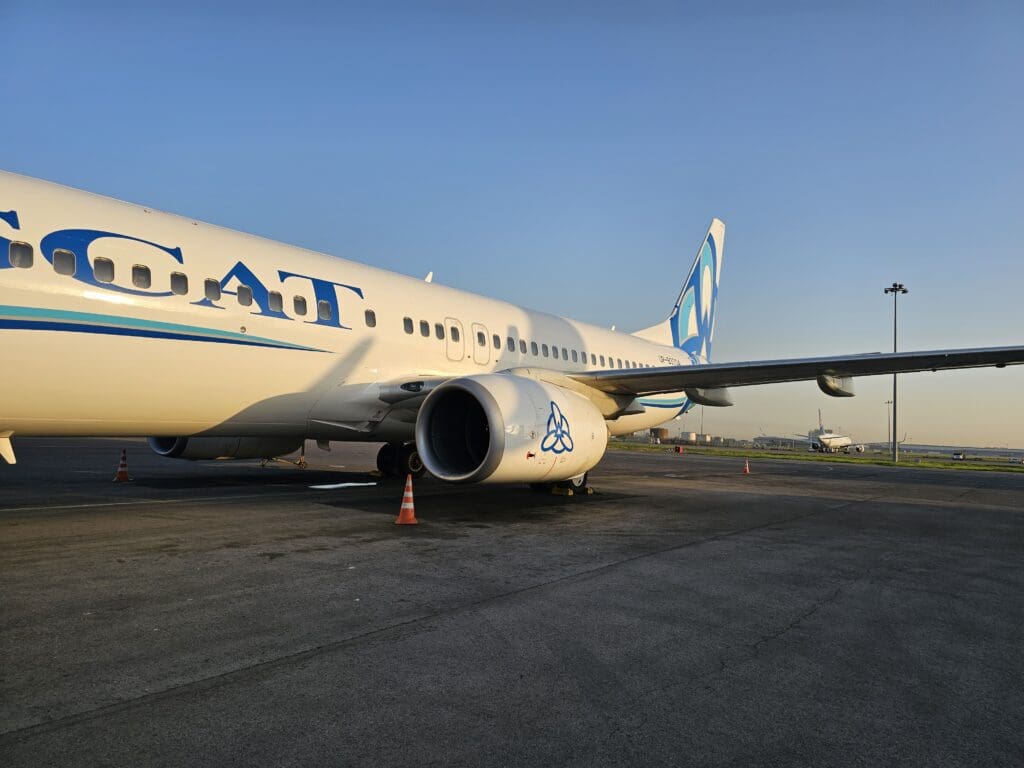
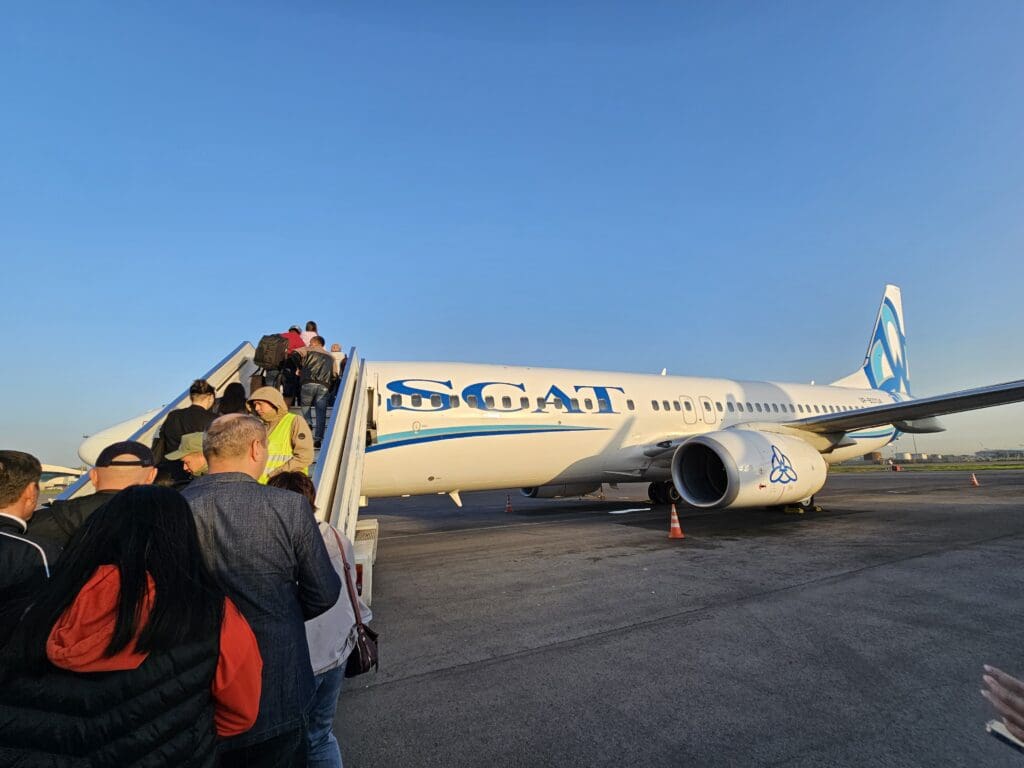
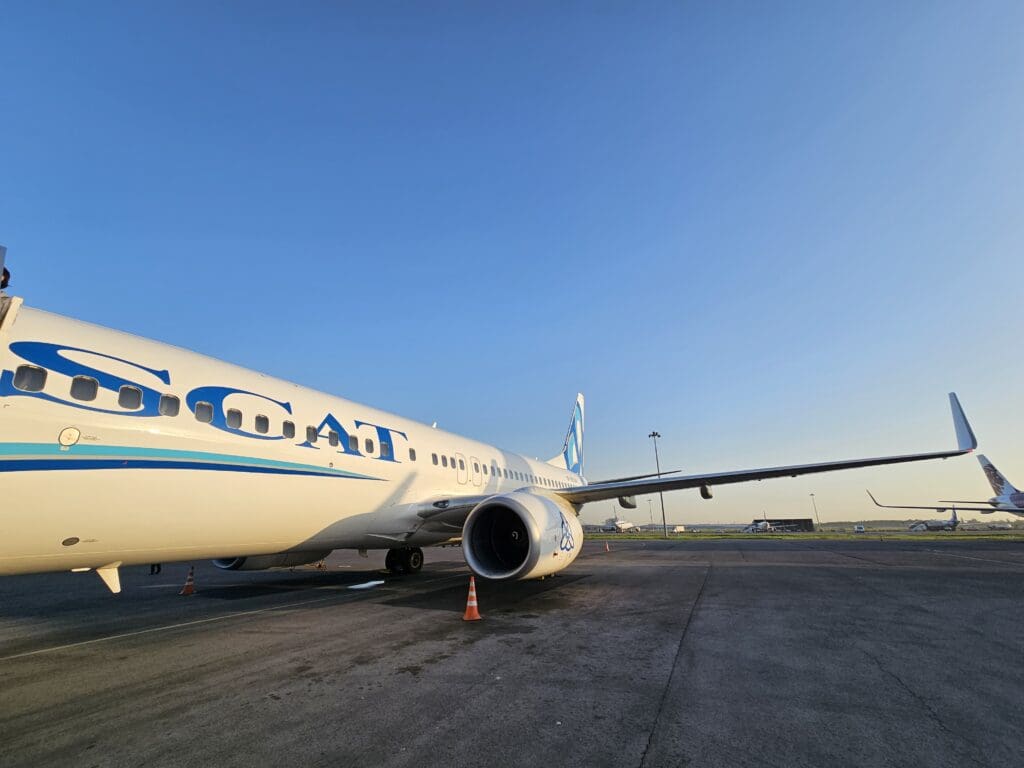
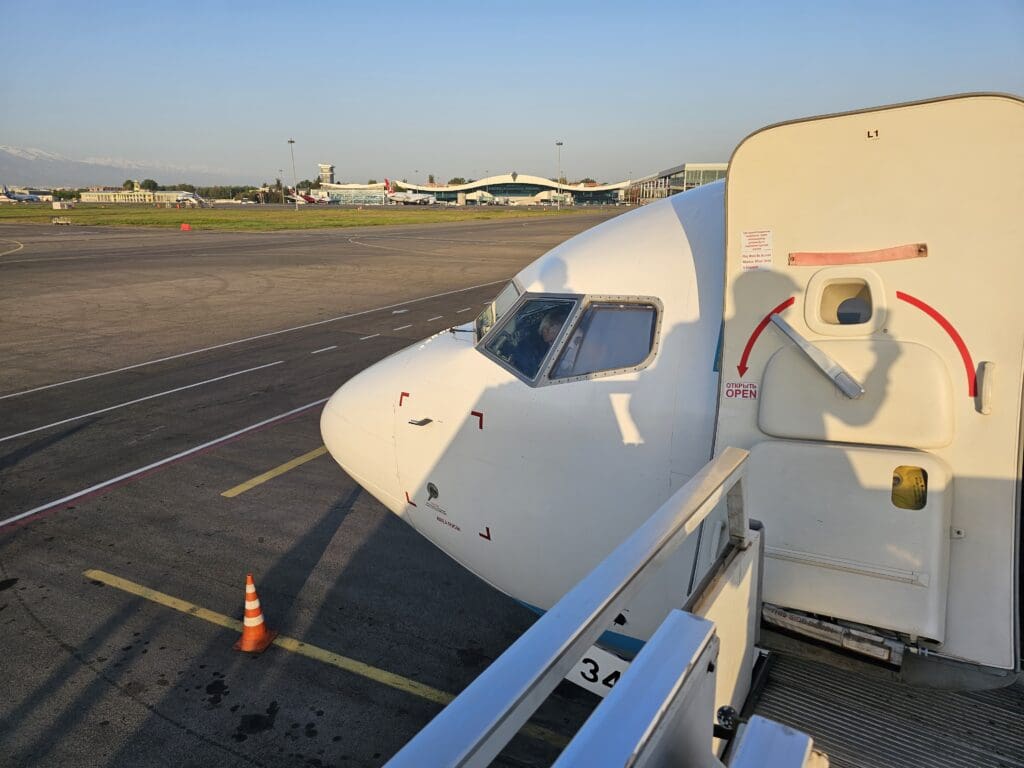
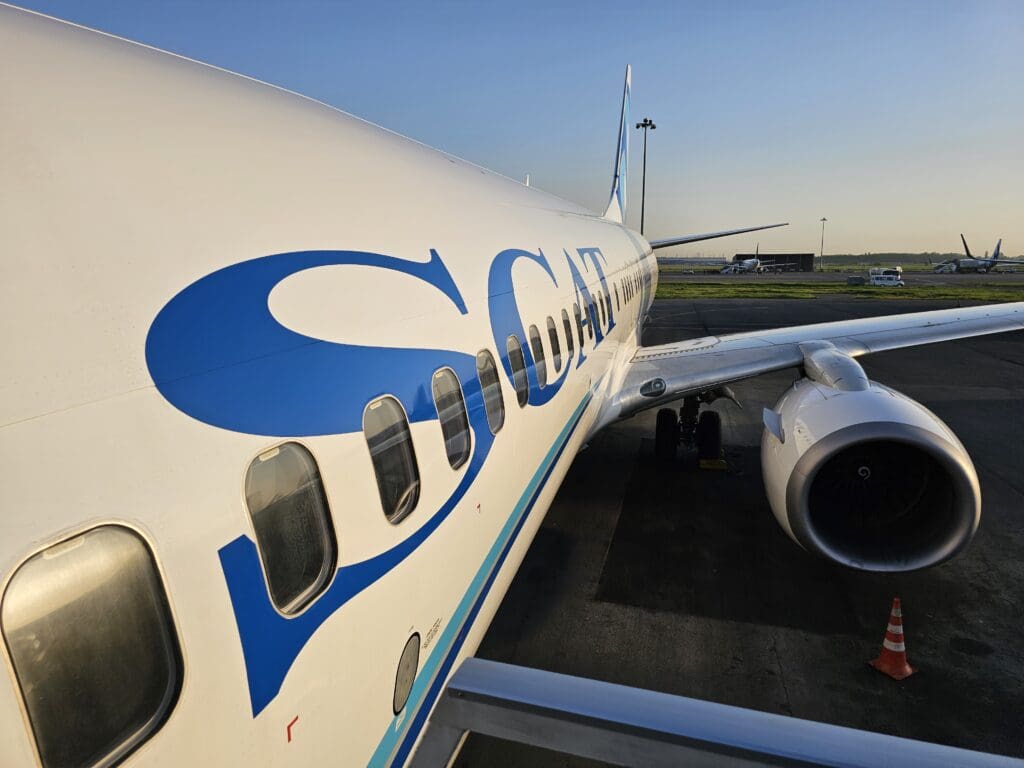
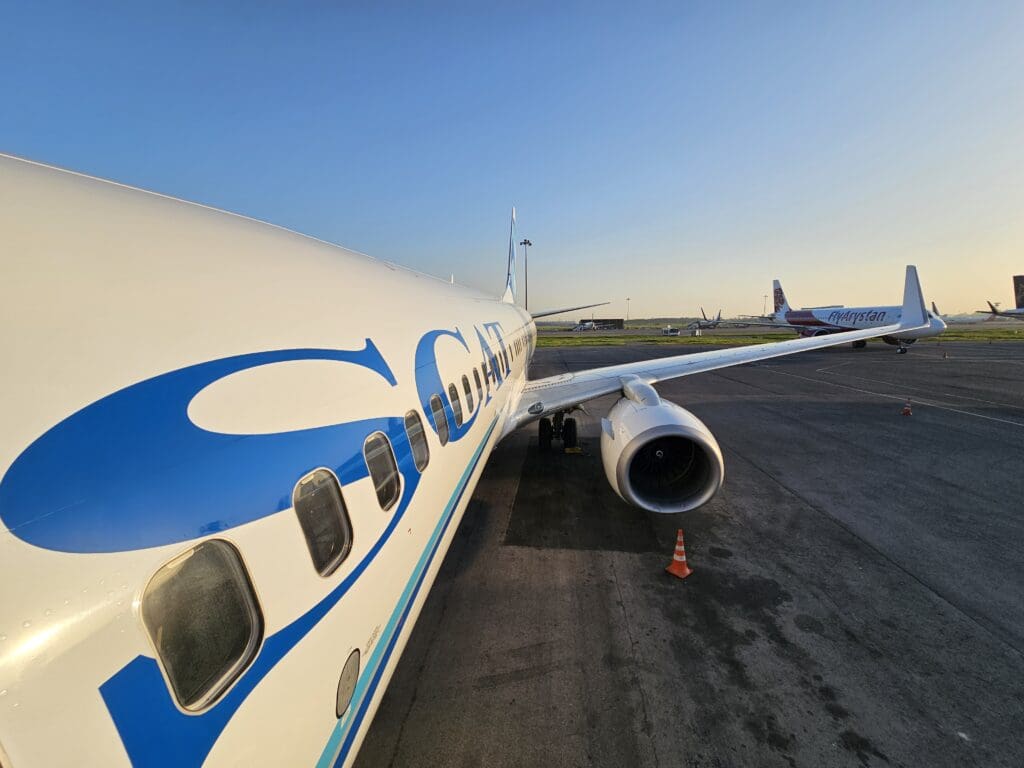
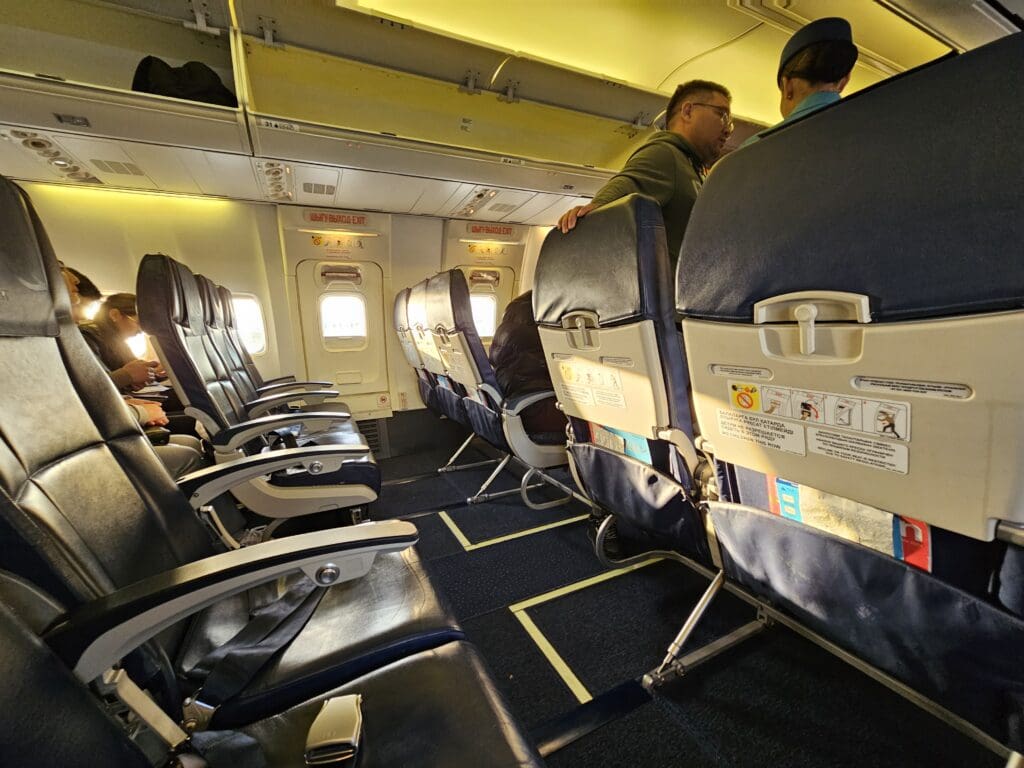
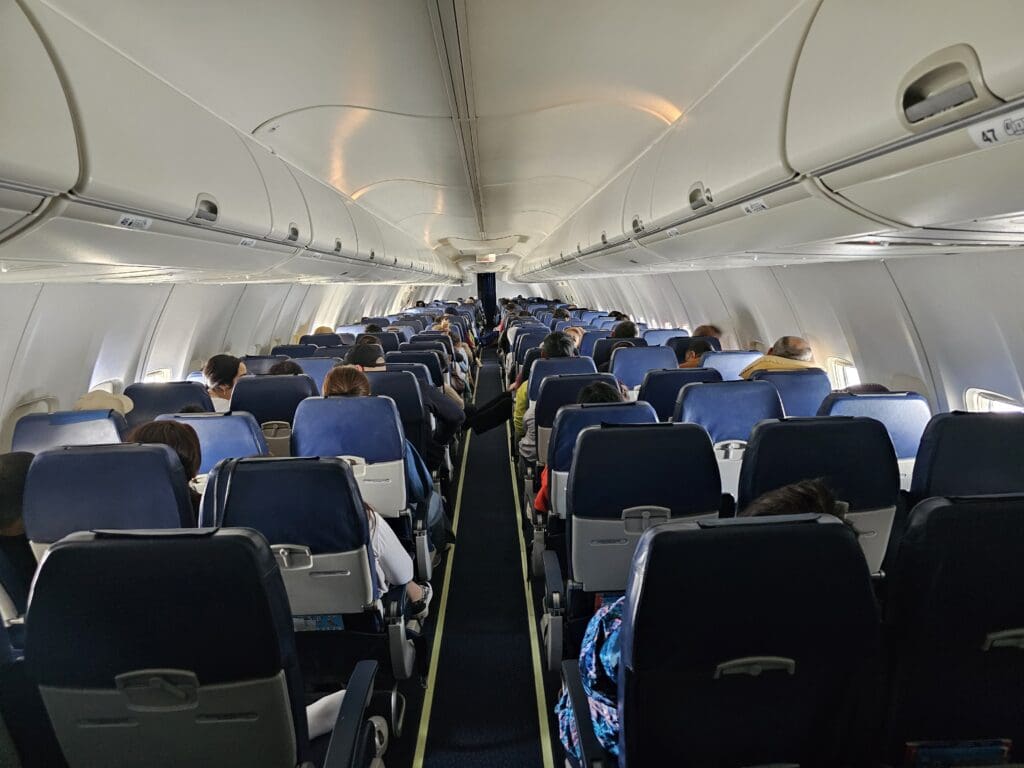
After a few minutes of waiting, I stepped into the Boeing’s forward galley where I was greeted in Russian by one of the six flight attendants on board – all of whom were donned in SCAT Airlines’ very distinctive vibrant green-turquoise uniform. Turning right, I entered the aircraft’s all-economy cabin which is home to a total of 189 seats – the standard number on a low-cost carrier-operated Boeing 737-800. Onboard, each seat came in the form of a retrofitted modern, thin and firm-looking seat covered in a dark blue pleather cover and topped with a blue leather headrest cover on which SCAT Airlines’ motif was debossed. As I made my way down the cabin, calming piano music rang out and provided a pleasant soundtrack to the otherwise slightly chaotic boarding process as passengers tried to pile onto the aircraft as quickly as possible.
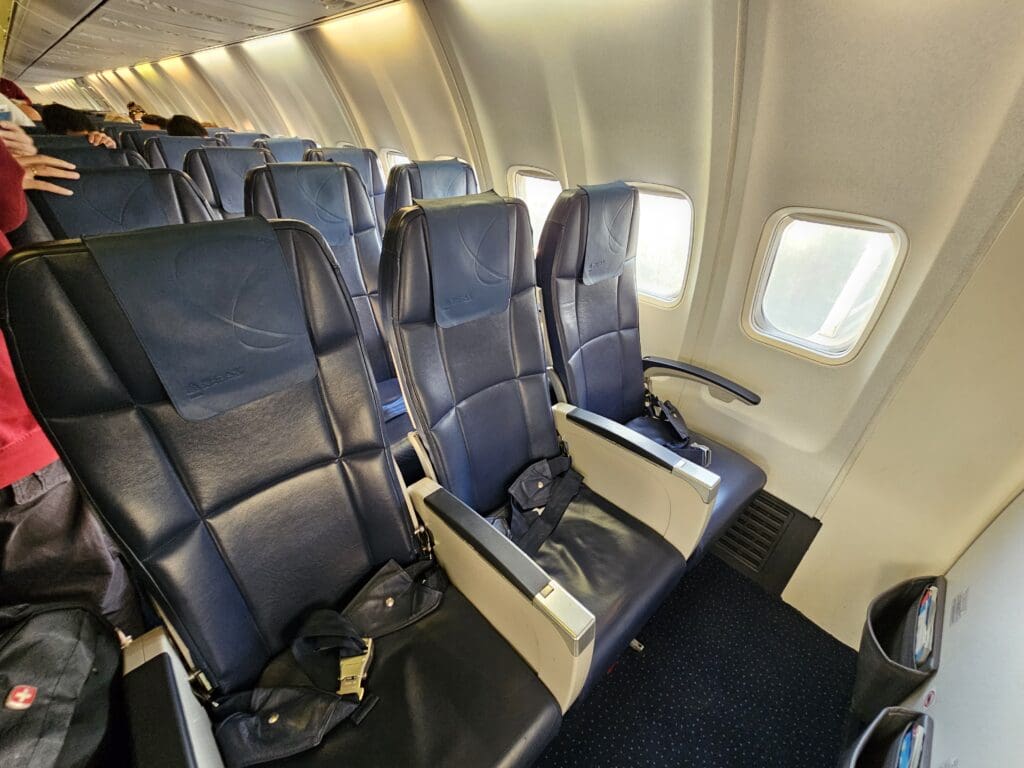
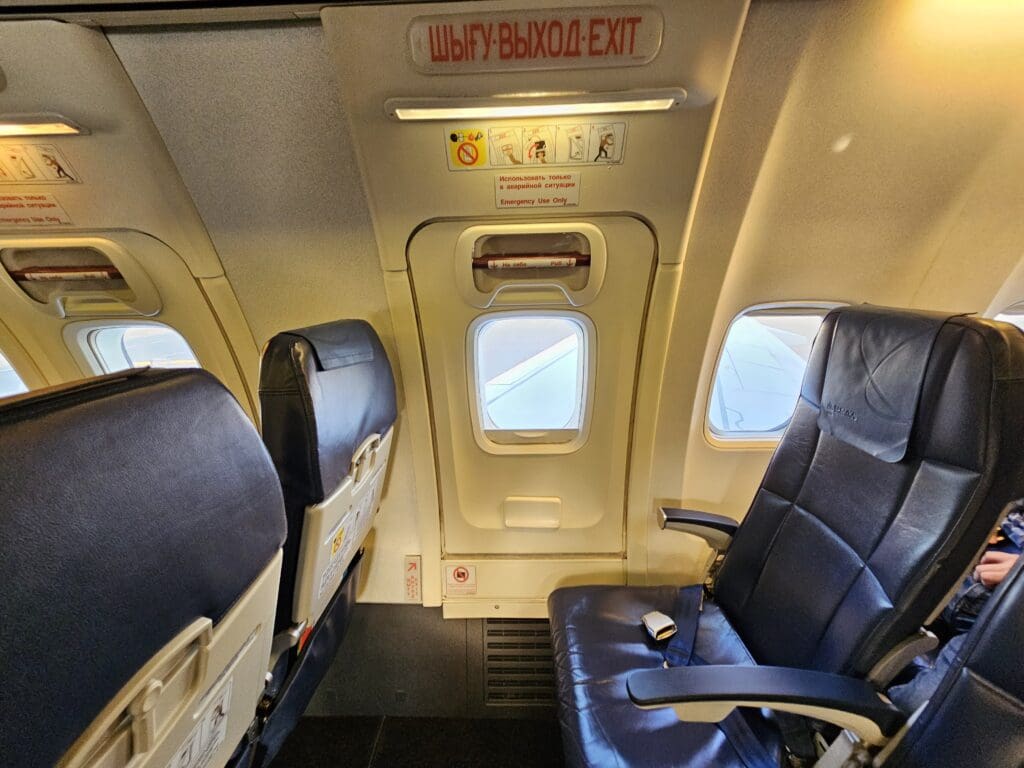
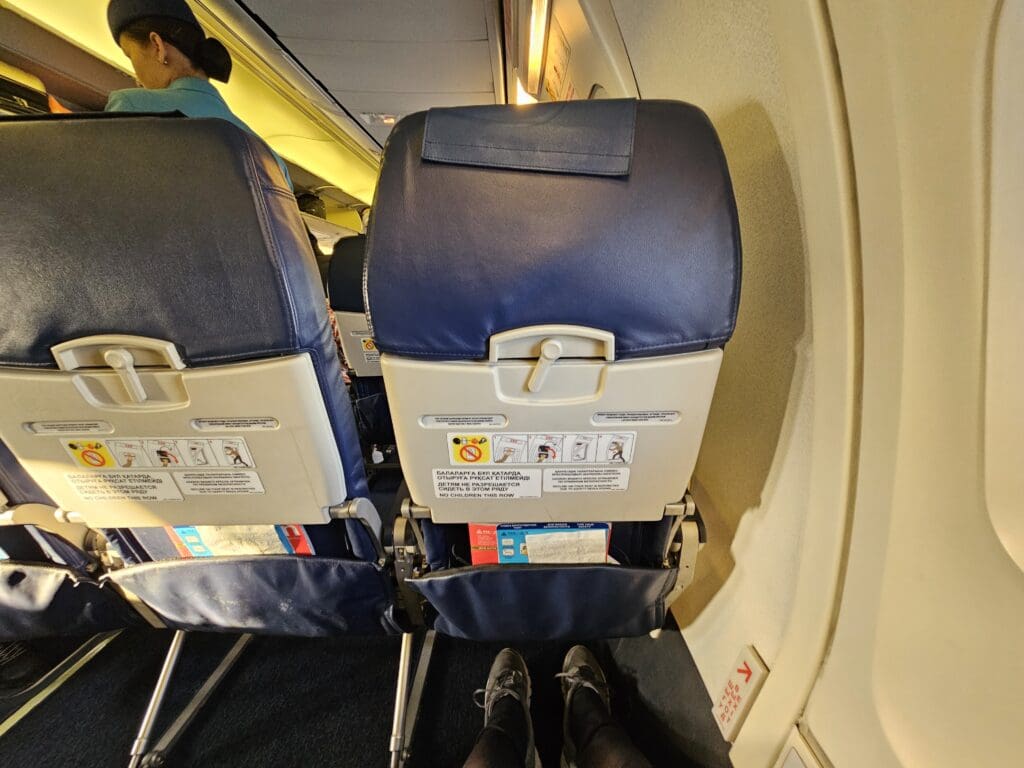
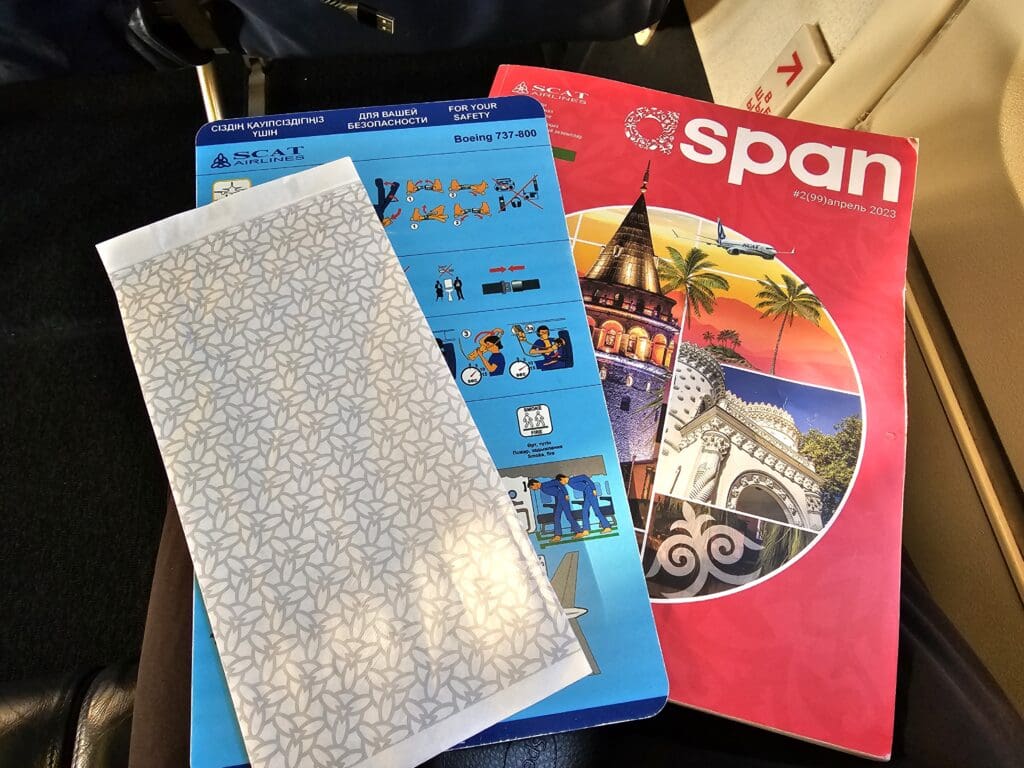
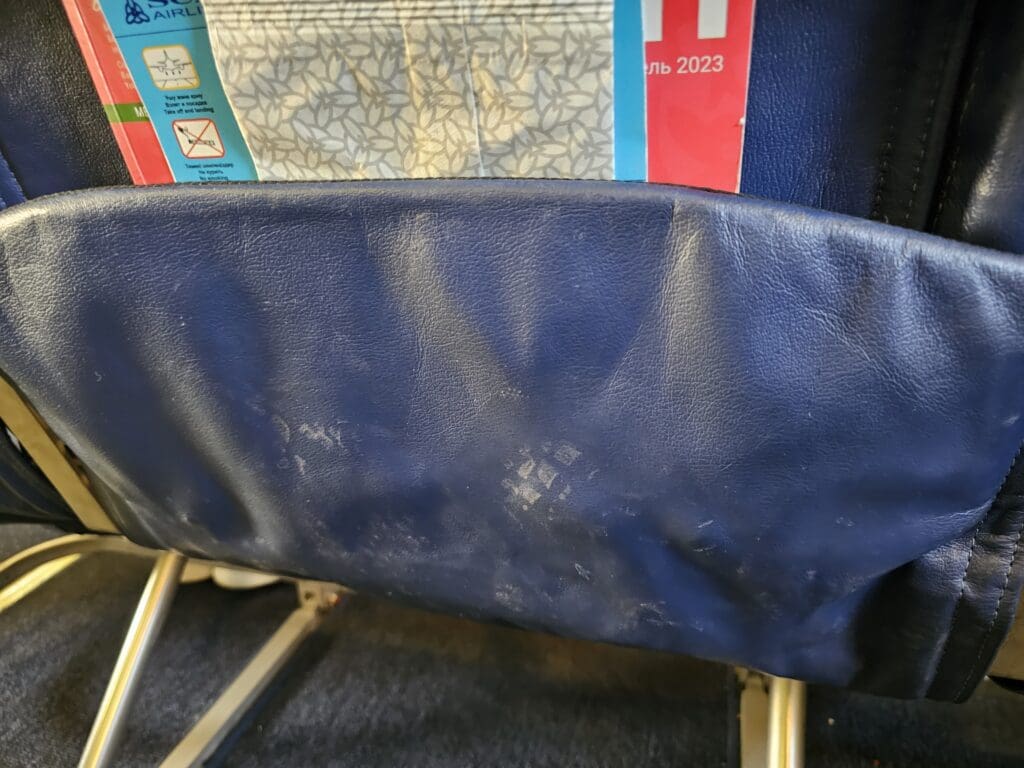
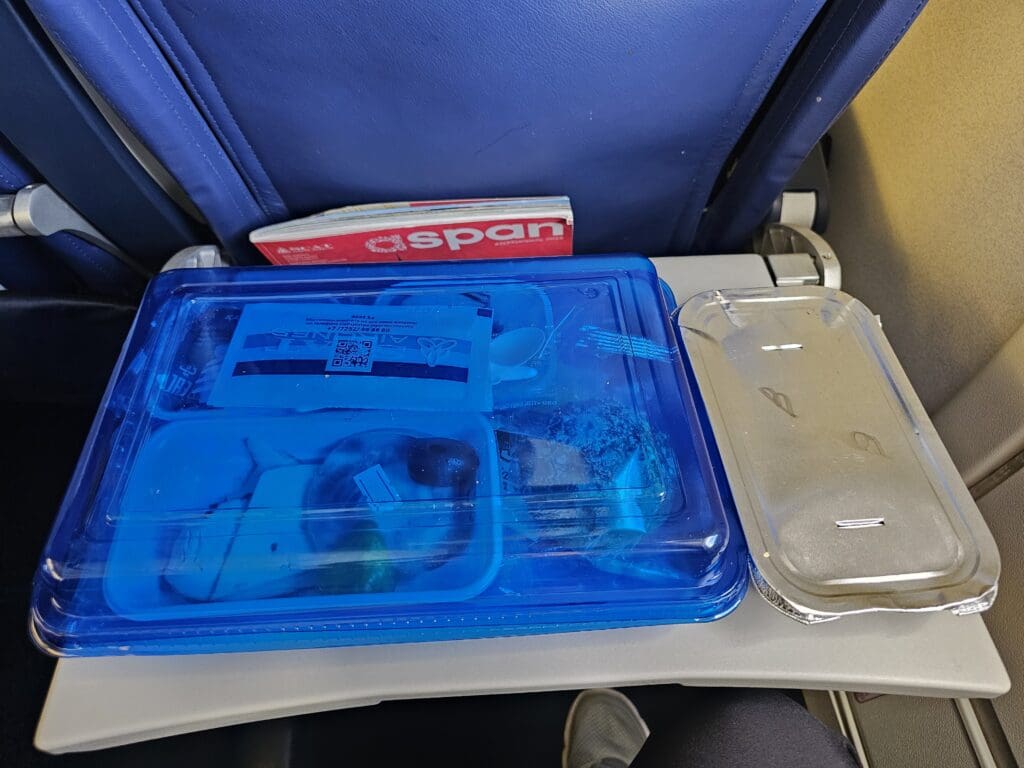
As I made my way to Row 31, I received another greeting in Russian from a smiling flight attendant before arriving at my seat. Travelling in an emergency exit row, I decanted everything I would need for the flight and stowed my bag in the overhead locker before settling in for the journey ahead. As I had expected given their appearance, I found the seat to be firm although the superb legroom offered in this emergency exit row seat made up for this. Examining the area around my seat, I was pleased to find this to be in good condition with no obvious wear and tear, whilst the cabin appeared to be in a clean and spotless condition. This was most definitely a far cry from the vintage SCAT Airlines Boeing 737-500 I had flown from Xi’an to Almaty back in August 2017! Examining the contents of the seatback pocket, this contained a safety card, sickbag and a pristine copy of the April 2023 issue of SCAT Airlines’ Aspan inflight magazine.
Despite the delayed start to boarding, it wasn’t long before the second and final bus arrived and at 0627 boarding was announced as complete. That morning, there seemed to be plenty of space onboard the Boeing and I would say that the flight was no more than 70% full. At 0630 on the dot, the cabin door was closed and the purser soon performed their trilingual welcome announcement in Kazakh, Russian and English. Along with the usual welcomes, thanks and warnings, during this, the flight time was announced as a long six hours. This soon transitioned into a manual safety demonstration which was performed as the Boeing’s two CFMI CFM56-7B26 engines spooled into life. In the usual manner, as soon as this was completed, the cabin crew came around ensuring that all was in place for our departure and spent much of this inspection requesting that passengers open their window blinds.
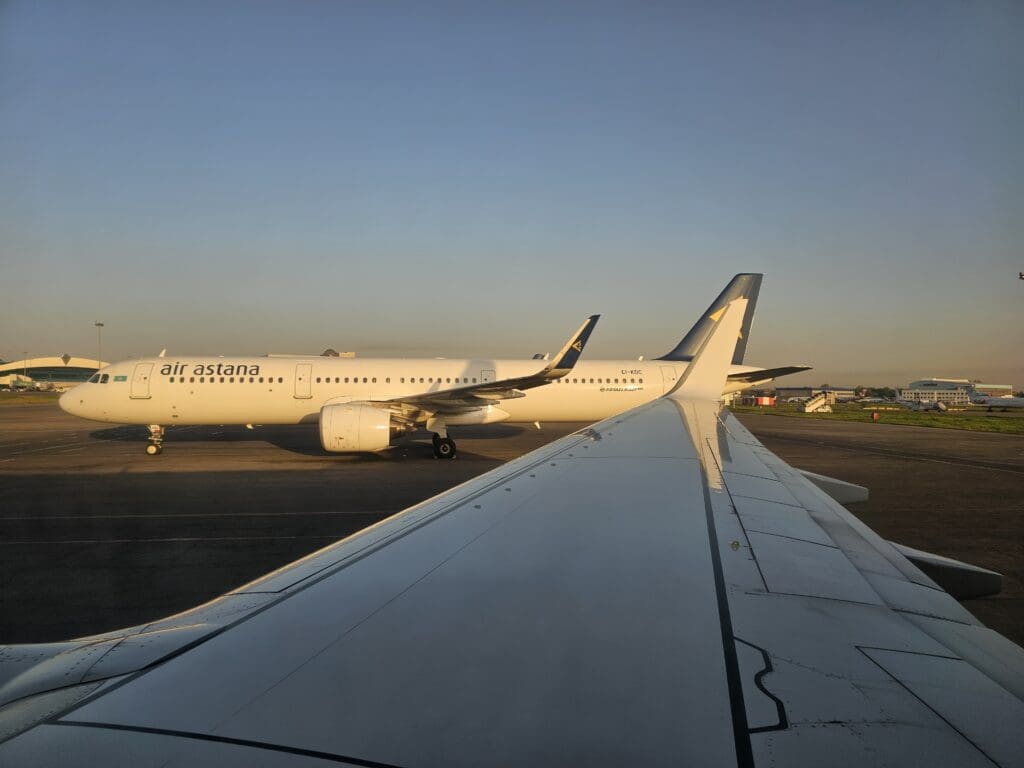
Given my unprotected connection in Istanbul, I was pleased to see that the Boeing powered forward out of its stand at 0638 and began its short taxi to the end of Runway 05R. After passing a cluster of locally based private jets, the aircraft came to a halt where we waited for a couple of minutes before heading onto the runway at 0642.
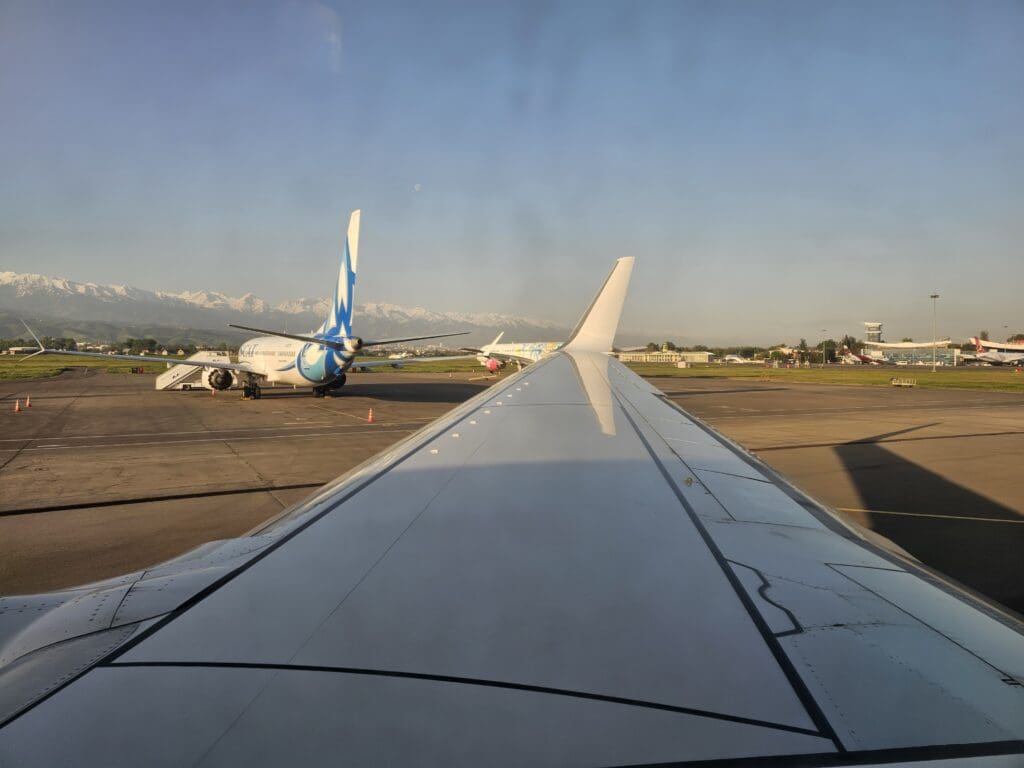
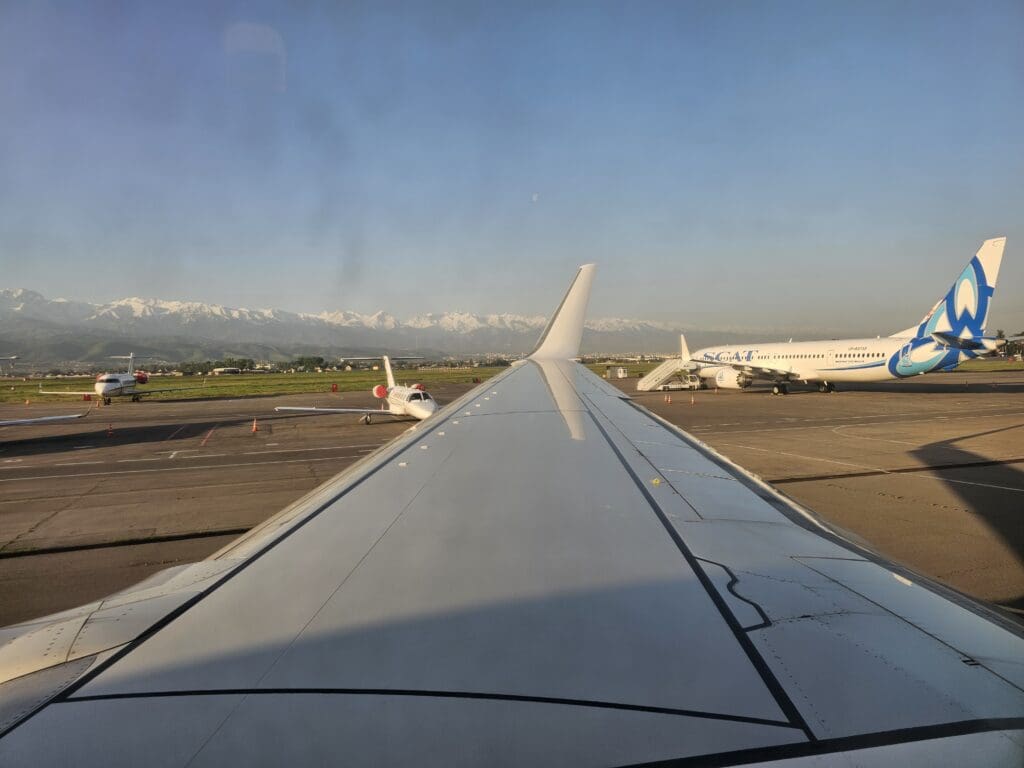
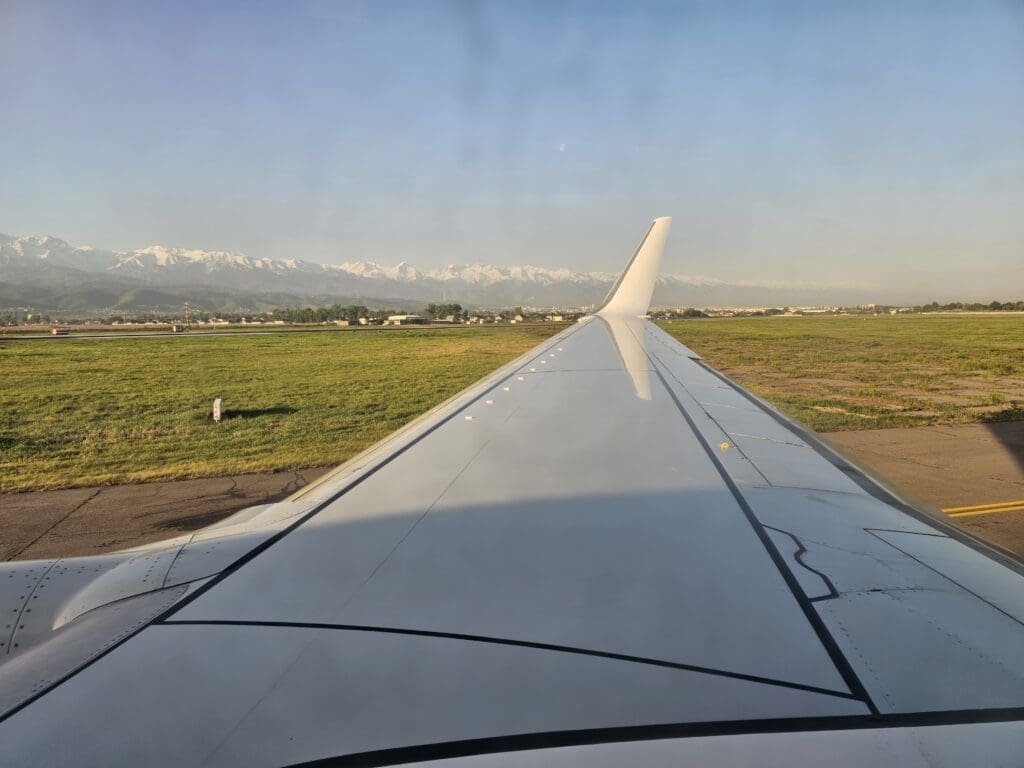
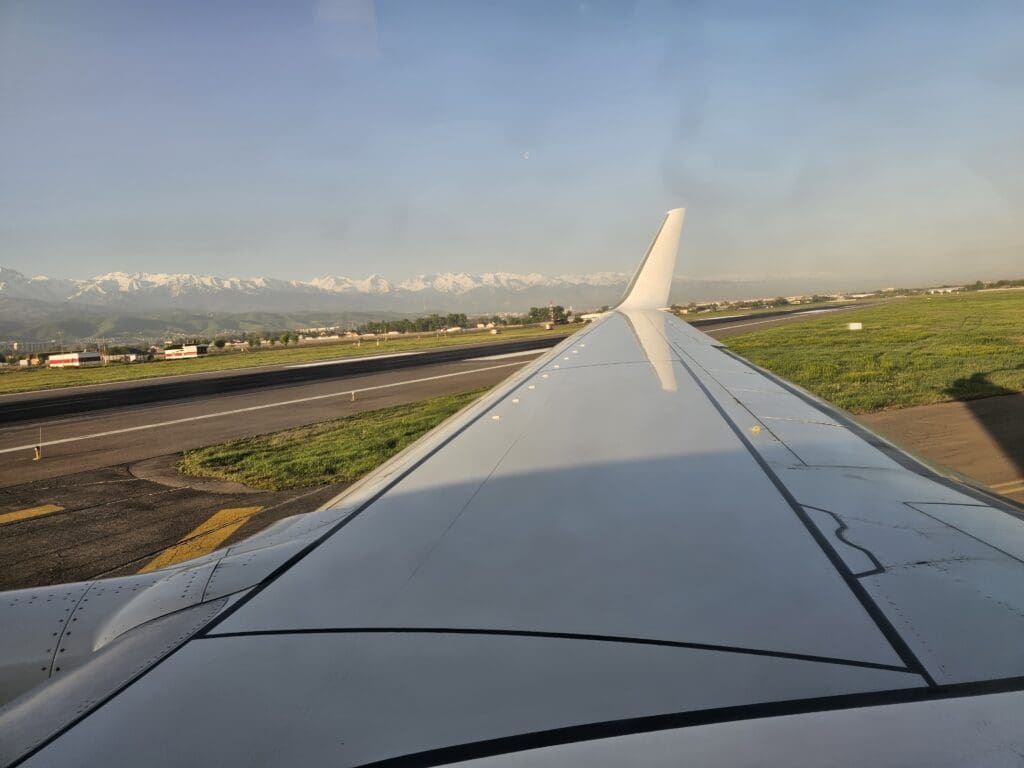
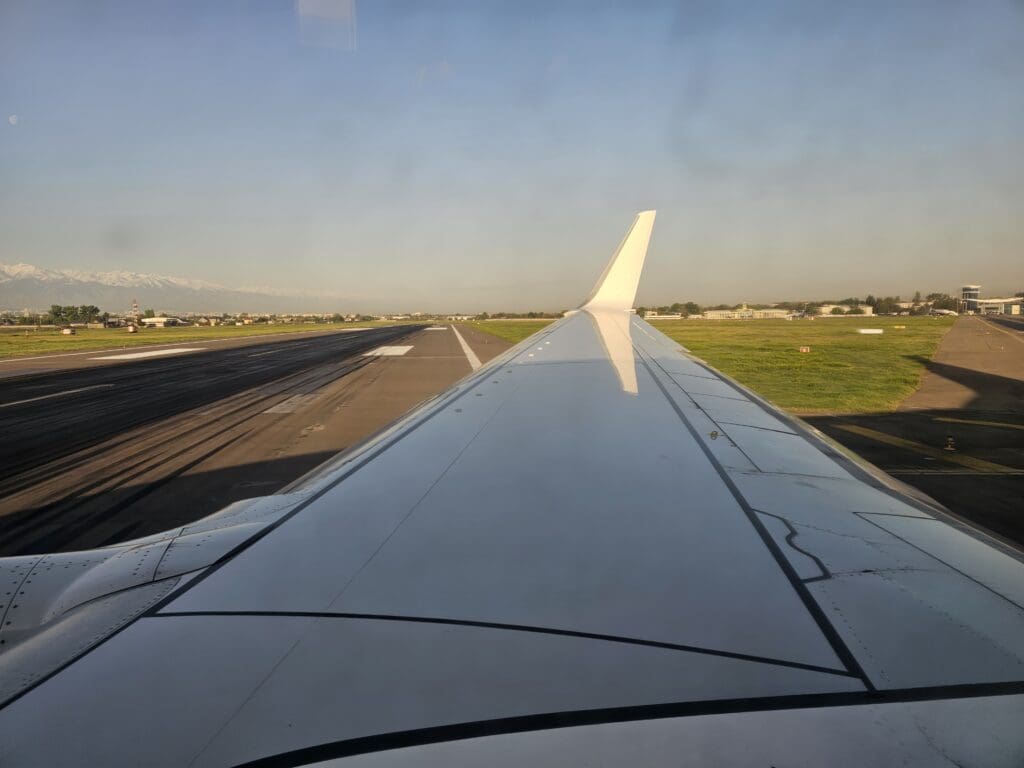
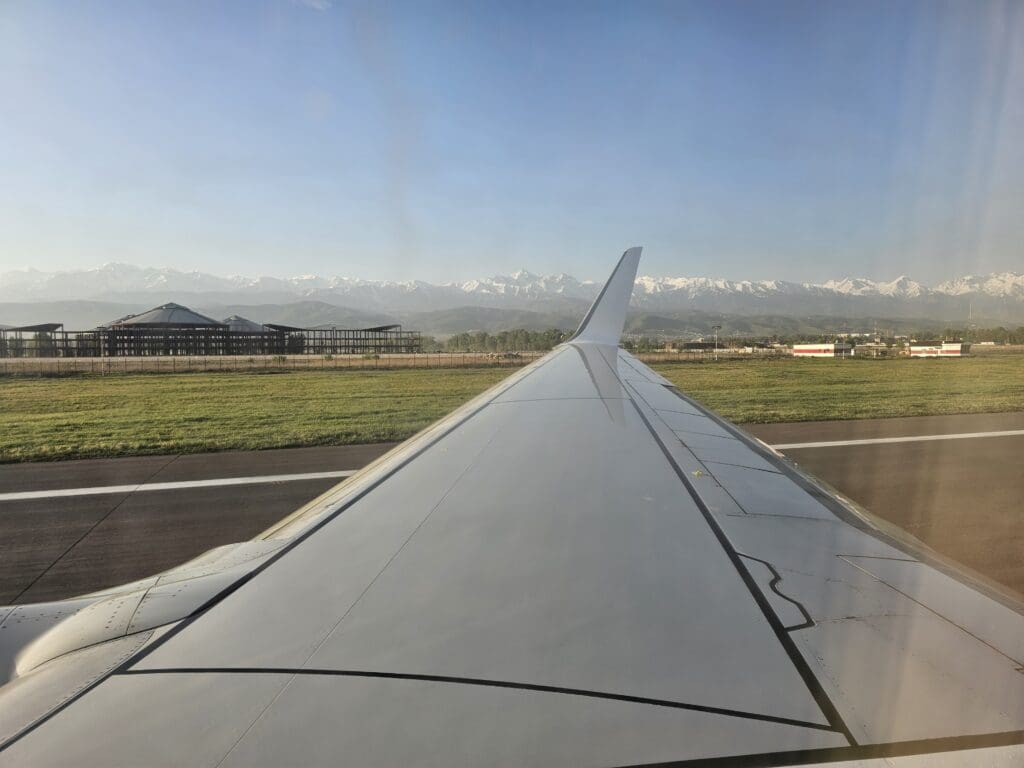
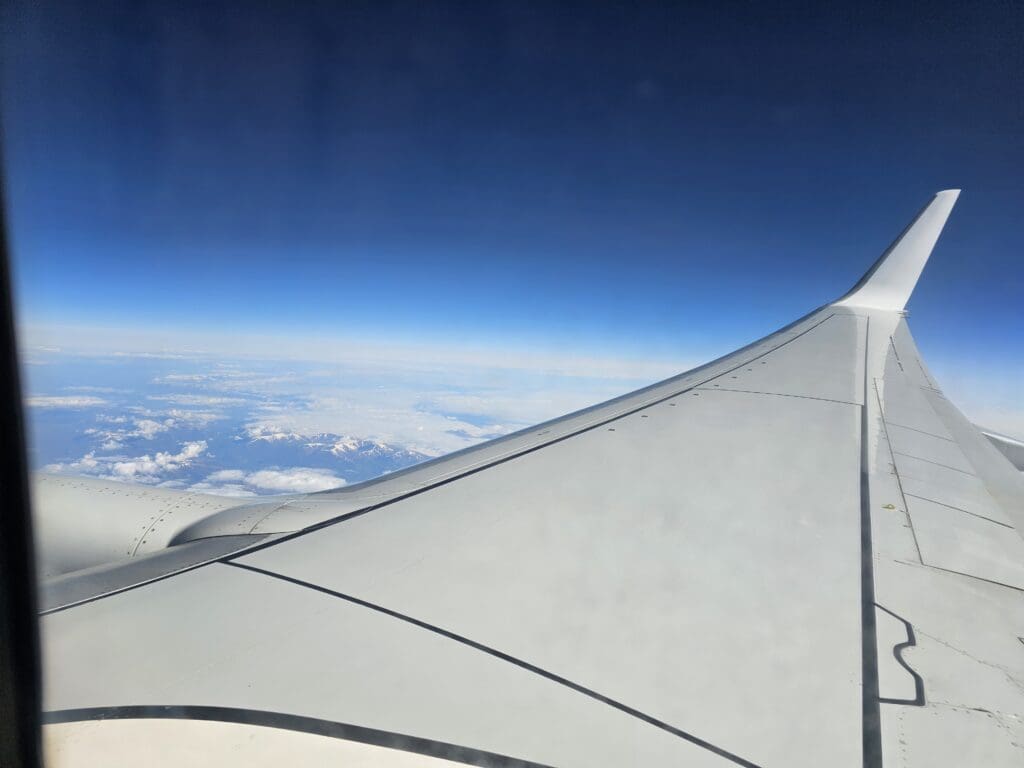
Once there, without pausing the Boeing began rolling down the runway. Likely to be heavily laden with fuel, that morning our takeoff roll was long and gentle, and we did not seem to take to the skies until we neared the end of the runway. Reassuringly, eventually, we rotated upwards into the Kazakhstani skies and made a fairly gentle climb. Thanks to the lack of haze and sitting on the right-hand side of the aircraft, I was treated to a good view of the tall snow-capped peaks of the Tian Shan Mountains before the Boeing banked to the left and rolled out on a westerly heading.
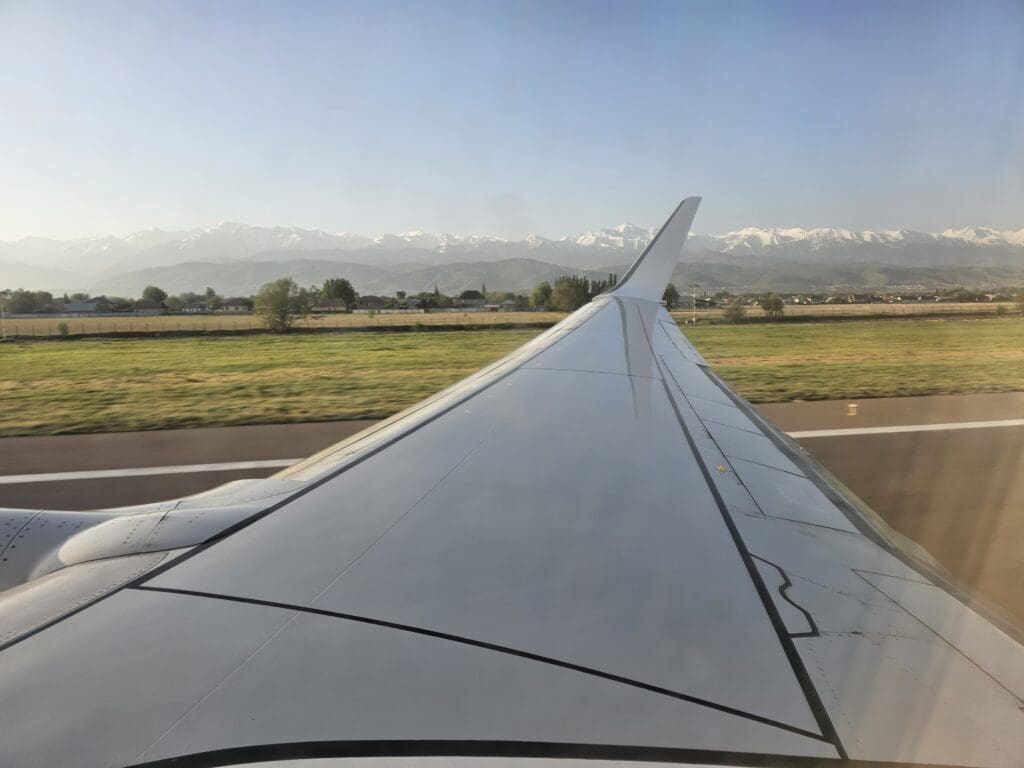
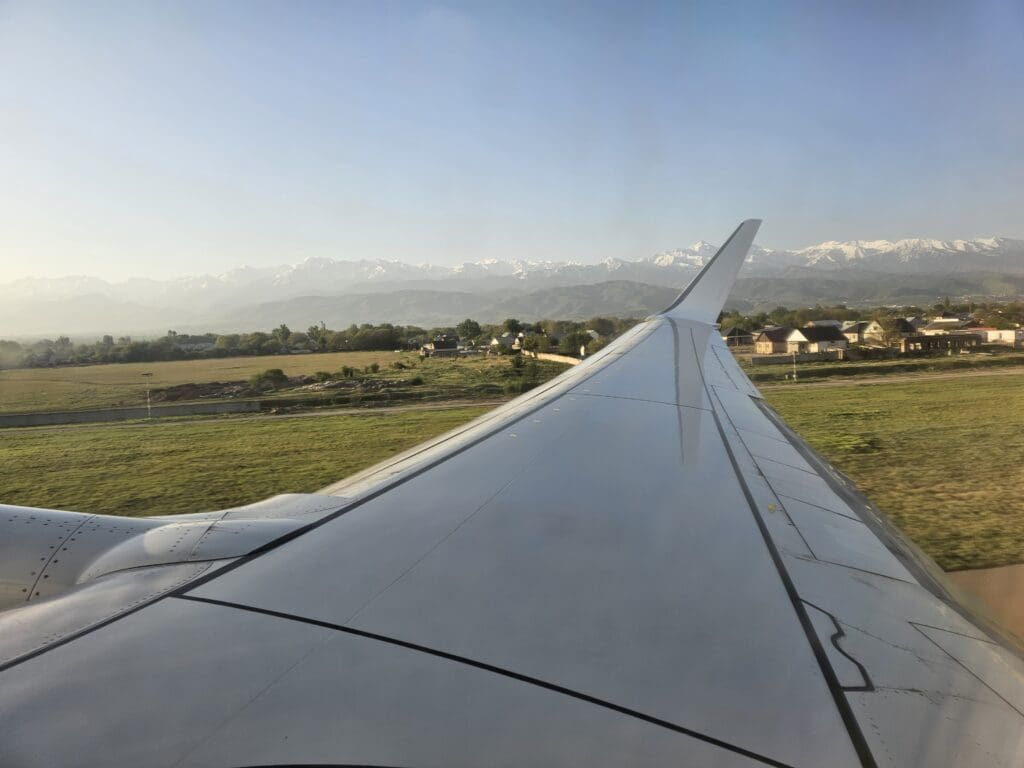
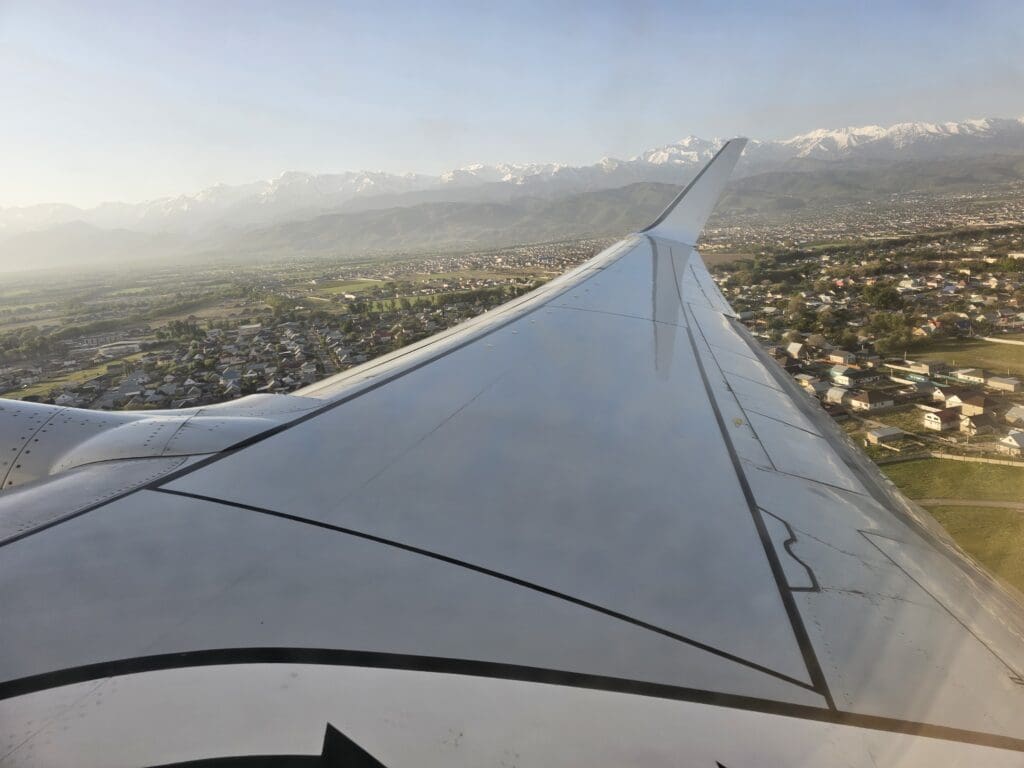
Despite our smooth climb and the almost total lack of turbulence, as seems to be the norm in Kazakhstan, the seatbelt signs remained illuminated until we reached our initial cruising altitude of 34,000 feet. Like many in the cabin, having had a short night’s sleep, it wasn’t long before I drifted off for a short morning nap. Waking up around forty minutes later; by this time we were soaring high over the sandy deserts of Kazakhstan’s Jambyl Province and speeding towards the provinces of South Kazakhstan and Kyzylorda. By this time, I had been joined by two brothers in their late teens or early twenties who, upon realising I was not Kazakh or Russian, engaged me in conversation. As it turned out, one of them was a keen aviation enthusiast from Almaty who was studying abroad at the elite Georgia Tech University in the US and travelling to Istanbul on a family holiday. At this time, the scent of warming food had filled the cabin.
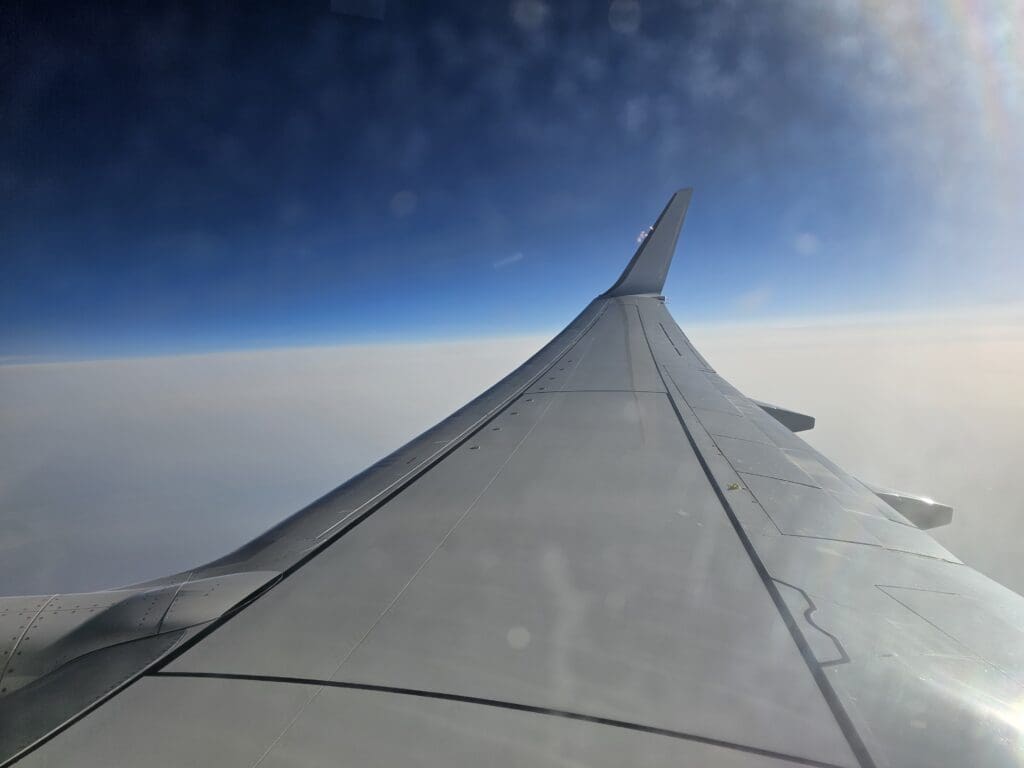
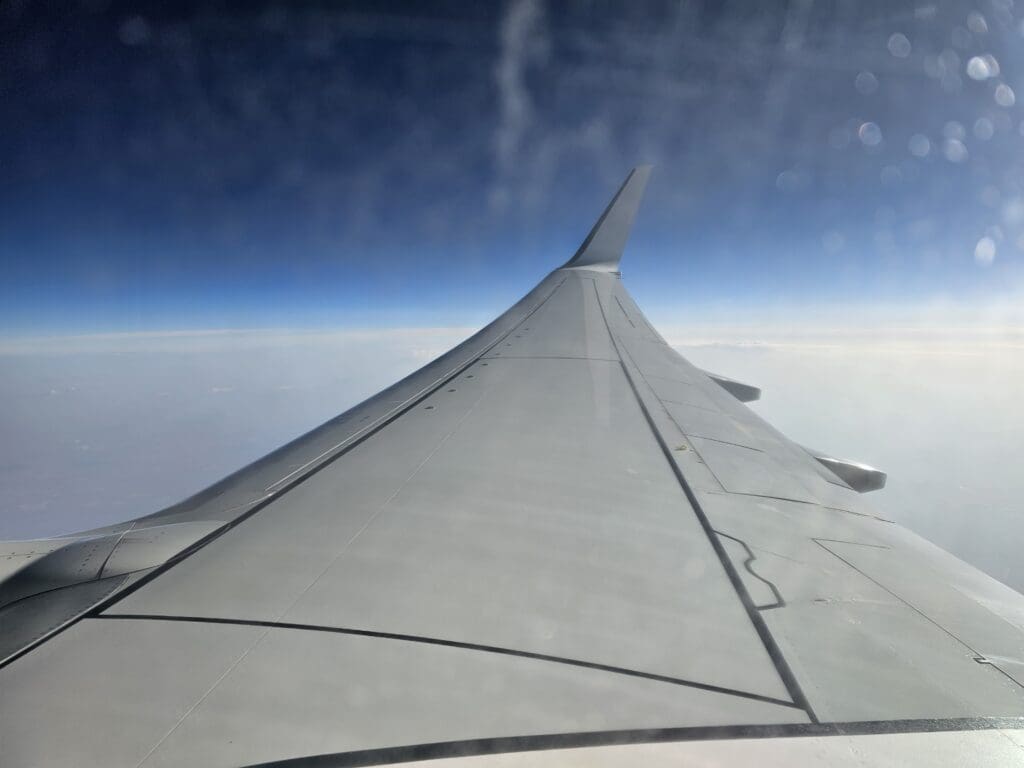
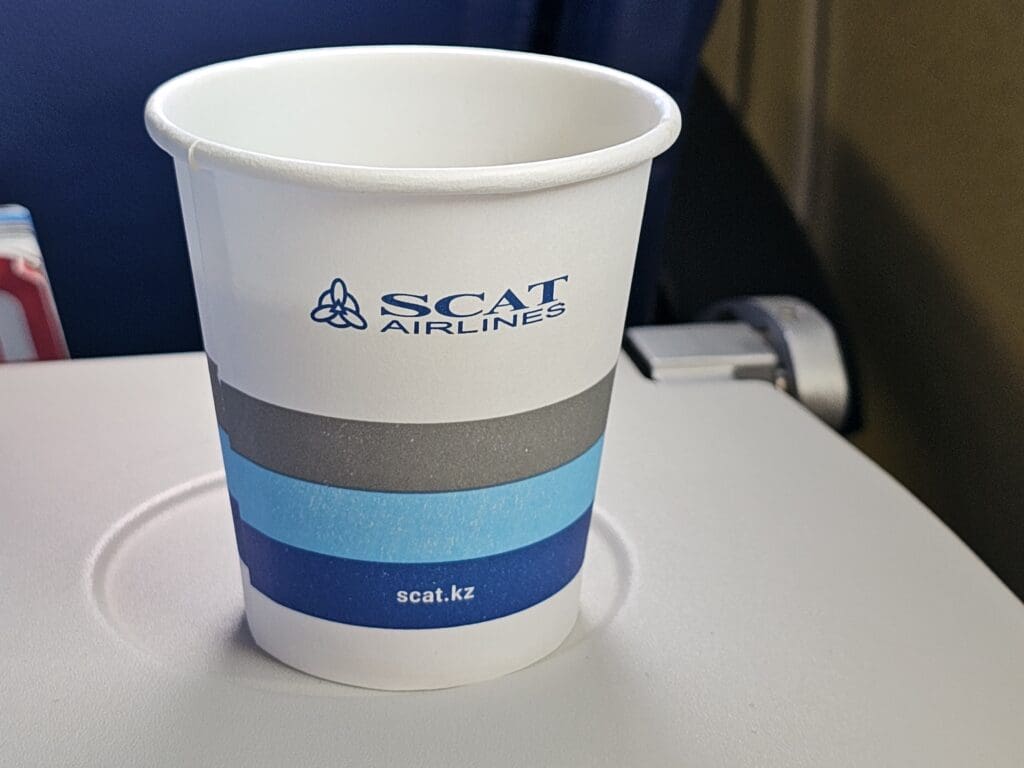
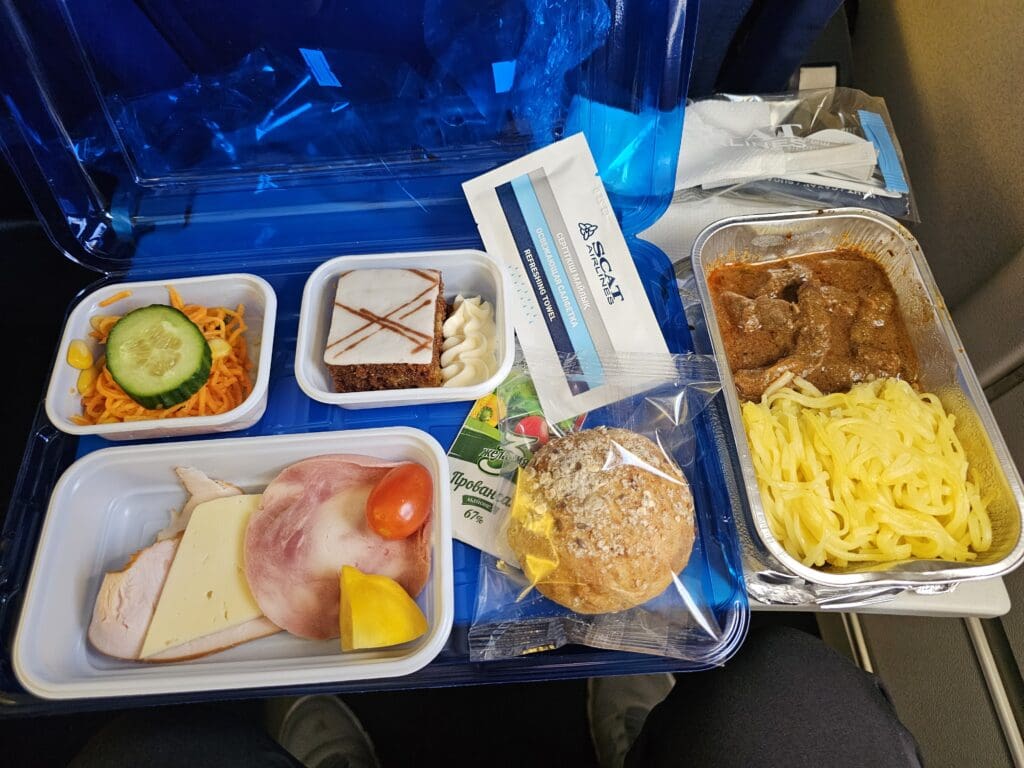
At 0812, the Purser performed a trilingual announcement advising that the meal service was about to commence and requested passengers to ensure that their seats were in the upright position for this. A short time later, two carts were rolled out into the aisle, with one commencing service from the front of the aircraft and the other from the emergency exits. Soon reaching my row, I was handed a plastic box which seemed to be heavily laden with food (although not to Uzbekistan Airways quantities!) and I was then offered a choice of beef or chicken. Opting for the former, a boiling hot foil dish was passed over to me which contained a beef and pasta dish, meanwhile, the box contained a bread roll, cold cuts of meat, a small salad and dressing and a carrot cake along with plastic cutlery. A choice of four drinks – Coca Cola, coffee, tea and water were offered and I opted for a coffee which was soon passed to me in a paper cup. Whilst far from being haute cuisine and not the most traditional of breakfast foods, overall this meal was certainly filling and was by no means inedible.
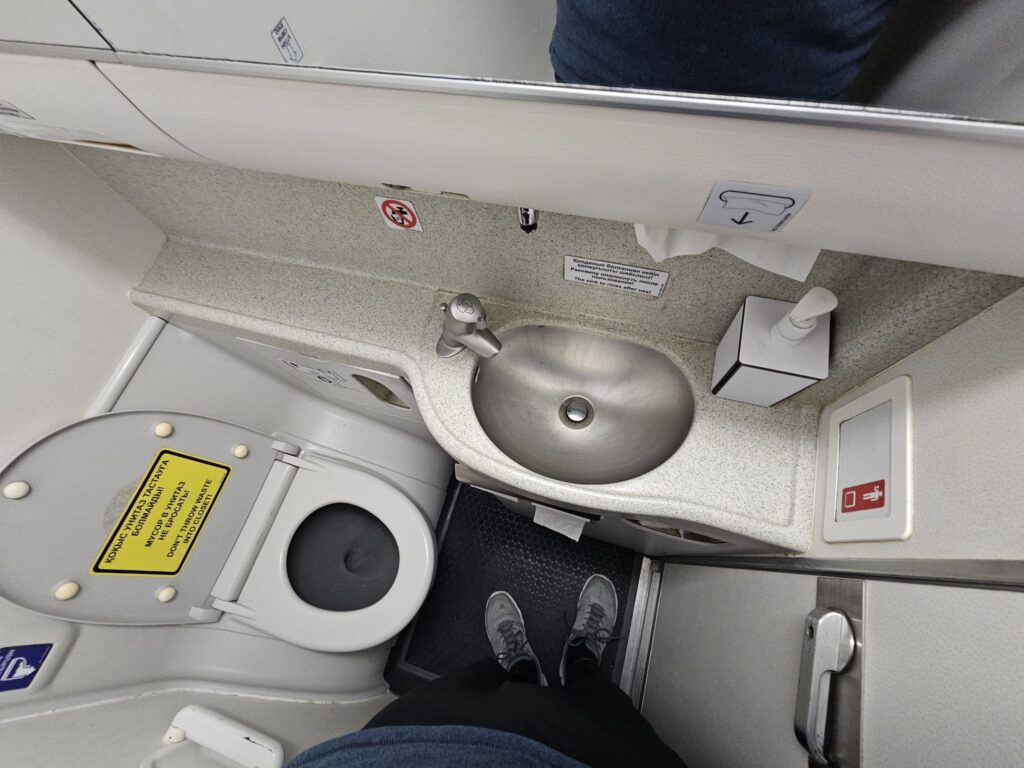
Around thirty minutes after the service had commenced, the remnants of the meal were collected and the cabin fell back to sleep. Returning to the route, by this time, the aircraft was cutting across Kyzylorda Region and speeding towards the Aral Sea. After passing over this, the aircraft turned to fly southwest as it skirted around the far northwestern Uzbek border without entering the country’s airspace. From there, the aircraft made a beeline for Kazakhstan’s Caspian Sea coastline and crossed over this just to the south of the city of Aktau, a total of almost exactly three hours after taking to the skies. As we crossed the Caspian Sea, I decided to make a trip to one of the two lavatories at the rear of the aircraft. As I neared these, I noticed that the rearmost rows of the jet were being used as crew rest areas, with two crew members on either side sprawled out and fast asleep. This gave the impression that despite the length of the flight, the crew would be heading back to Kazakhstan later that day. Upon entering the lavatory, I was pleased to find this to be clean and in good condition, leaving me with nothing to complain about.
Once back in my seat, I drifted off again and after around twenty minutes of flying across the Caspian, the Boeing made landfall near the Azerbaijani city of Khachmaz just to the south of the Russian border. Unfortunately, thanks to the clouds, nothing of Azerbaijan could be seen as we crossed over the country’s mountainous interior and made our way towards Armenia. Thankfully, something of the Caucasus could be seen as we reached Armenia, with snow-capped mountains visible as we crossed over Lake Sevan and the country’s capital, Yerevan. At 1045 Almaty time or 0745 Turkish time, the Boeing crossed over into Turkish skies and headed westwards through Kars Province and towards the town of Kağızman.
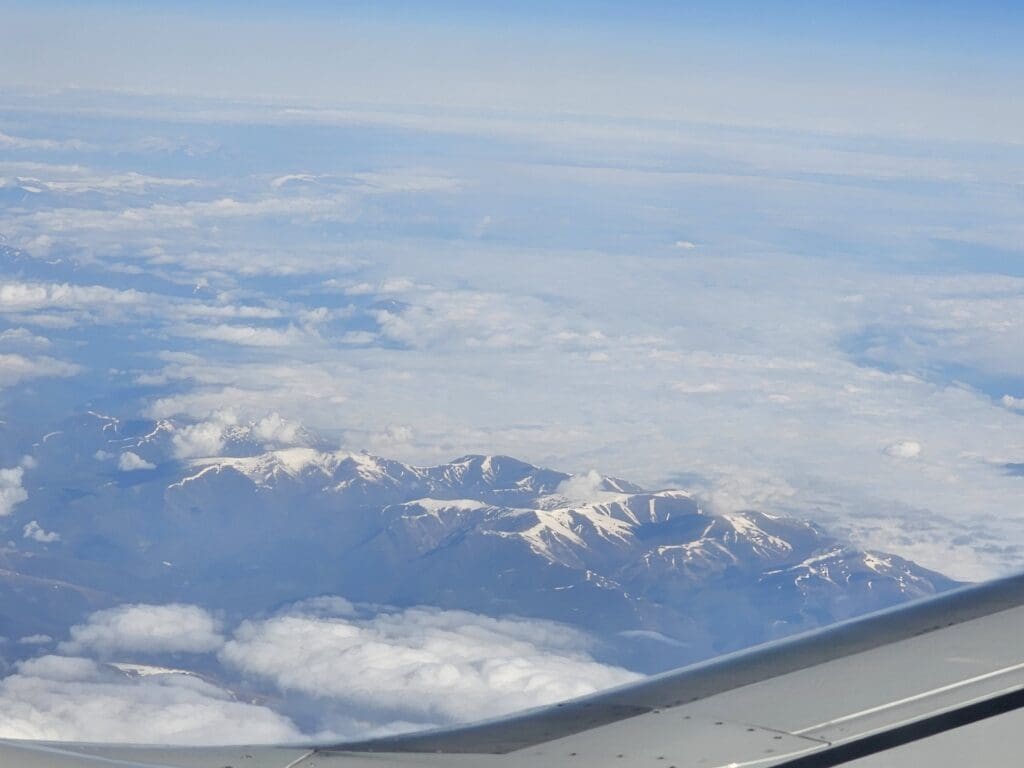
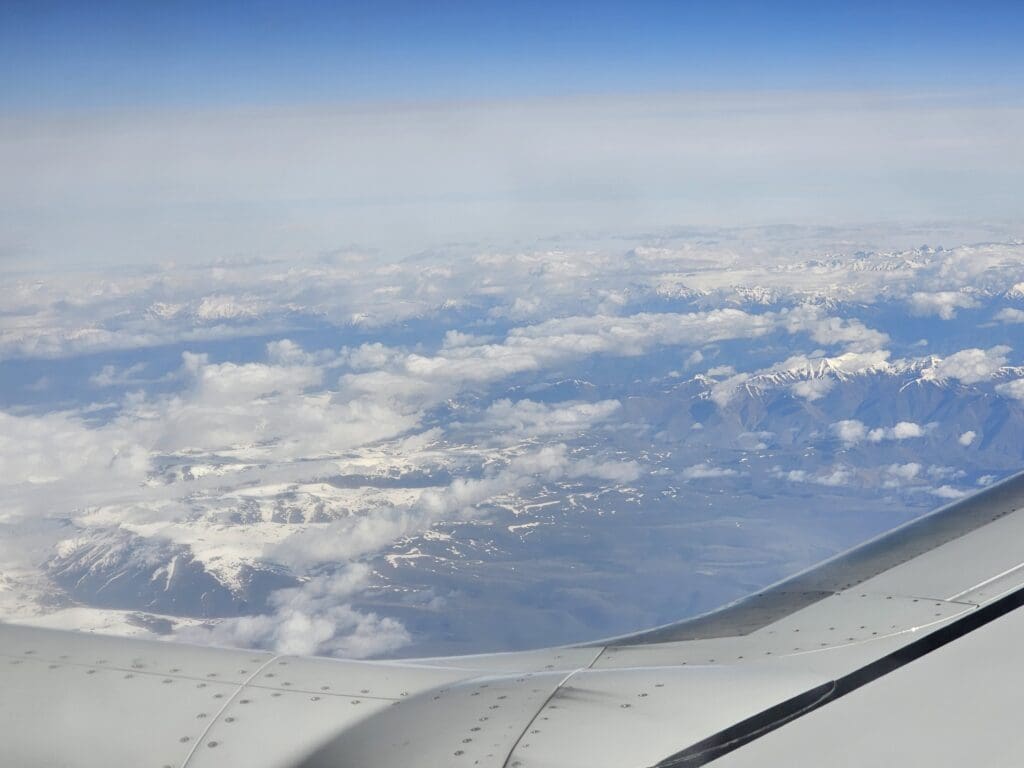
A short time later, a cart was rolled out to the front of the cabin and a soft drinks round was made for the few passengers that were awake at this time. Opting for water, this was passed over to me by one of the friendly crew members and I sipped this as I browsed through the only form of airline-provided entertainment onboard, the Aspan inflight magazine (aspan meaning sky in Kazakh). Examining this, Aspan proved to be a typical inflight magazine with several articles on SCAT Airlines’ destinations interspersed by plenty of advertisements as well as a section on the airline at the end. Perhaps unsurprisingly, given the demographic of the carrier’s passengers, all bar one short section, the appropriately named ‘Welcome to Kazakhstan’, was in Kazakh and Russian only. This English section highlighted the sights of Turkestan, Kazakh hospitality and several other things albeit with a fair number of grammatical and spelling errors.
At 0900, an announcement was made in Kazakh and Russian informing passengers of the imminent commencement of our descent into Istanbul. At this point, many passengers stood up and rushed off to the bathroom. Unfortunately for them, we soon hit a patch of turbulence which resulted in the seatbelt sign being illuminated and remaining on until the engines had spooled down at the gate. Unfortunately, thanks to the thick cloud, nothing of Turkey could be seen until the final stages of the flight. Back inside the cabin, the crew soon passed around ensuring that all was secure and in place for our arrival before strapping themselves into the jumpseats in preparation for our arrival.
Eventually, after plenty of shaking, the Boeing sank through the clouds and the Turkish landscape appeared below. This came in the form of the northern shores of the Marmara Region as we headed southwards back towards Istanbul’s seemingly endless urban sprawl. Reaching the capital in no time, the aircraft flew parallel to the Bosporus and I caught a good view of the city as we weaved in and out of the clouds. As we passed over Istanbul, I was treated to a fantastic view of the city’s former main airport, Istanbul Atatürk, which is now used for general aviation. Heading south, the aircraft crossed the coastline once again and travelled a short distance out over the Sea of Marmara before turning northwards and lining up for an approach to Runway 34L.
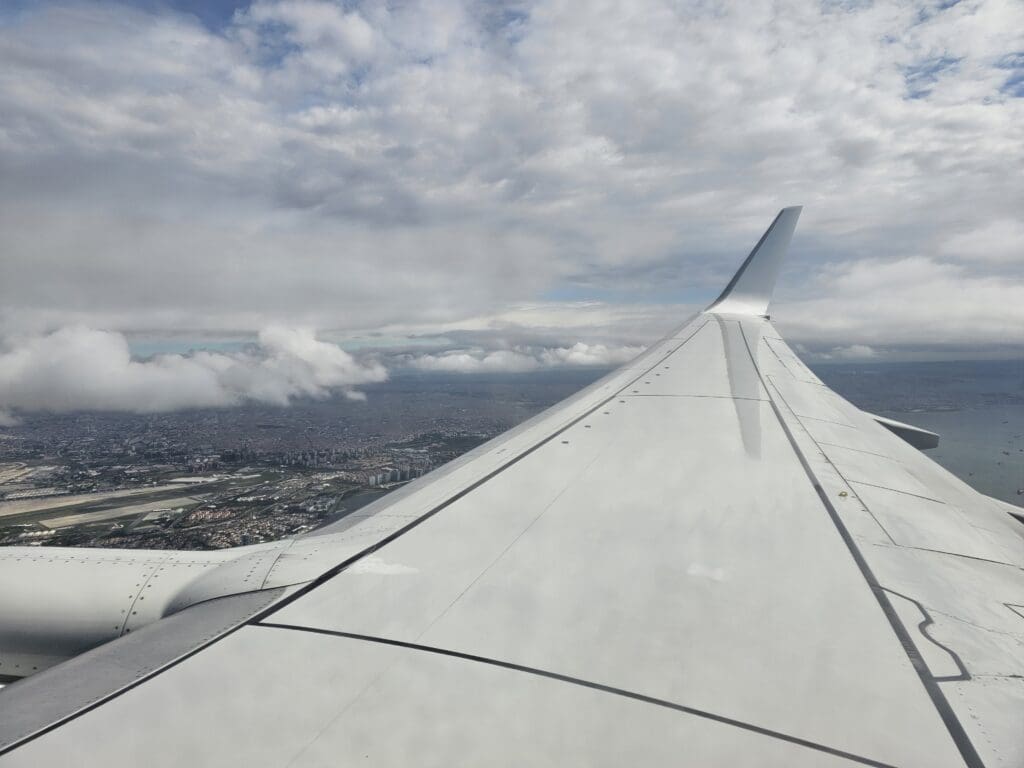
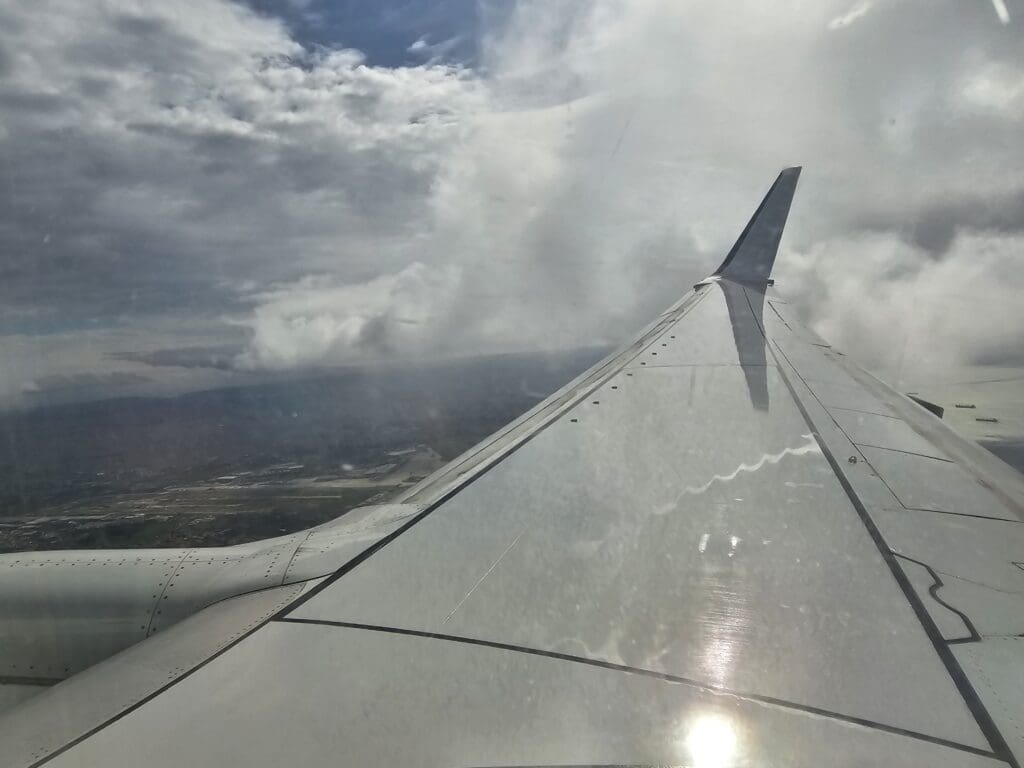
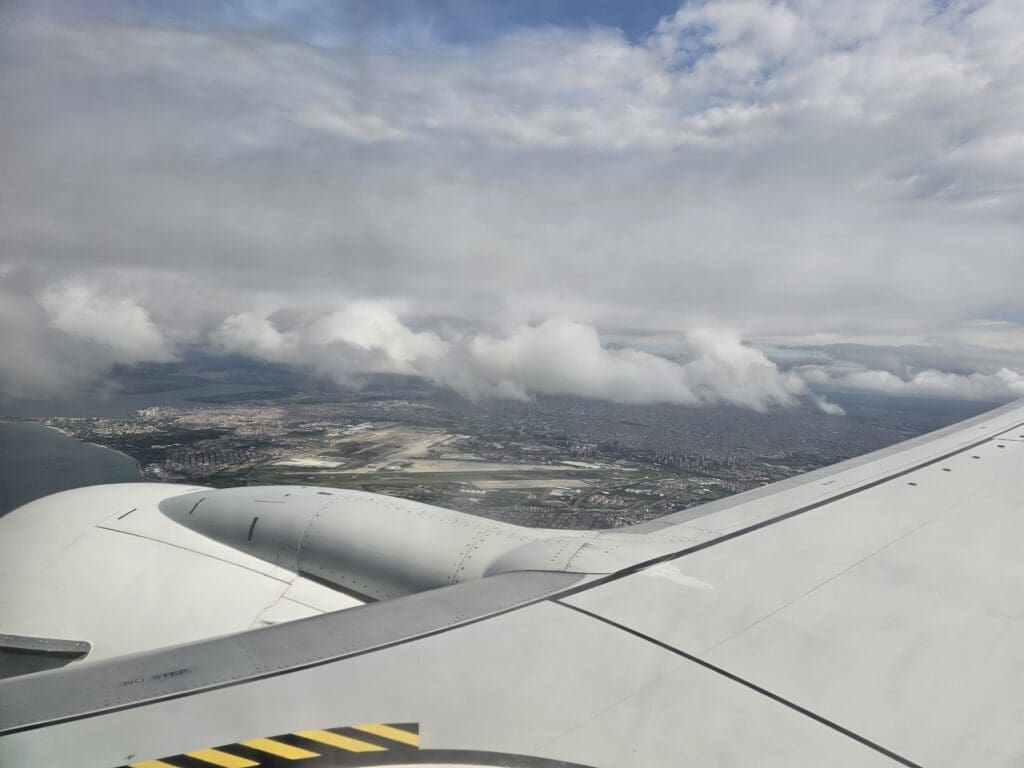
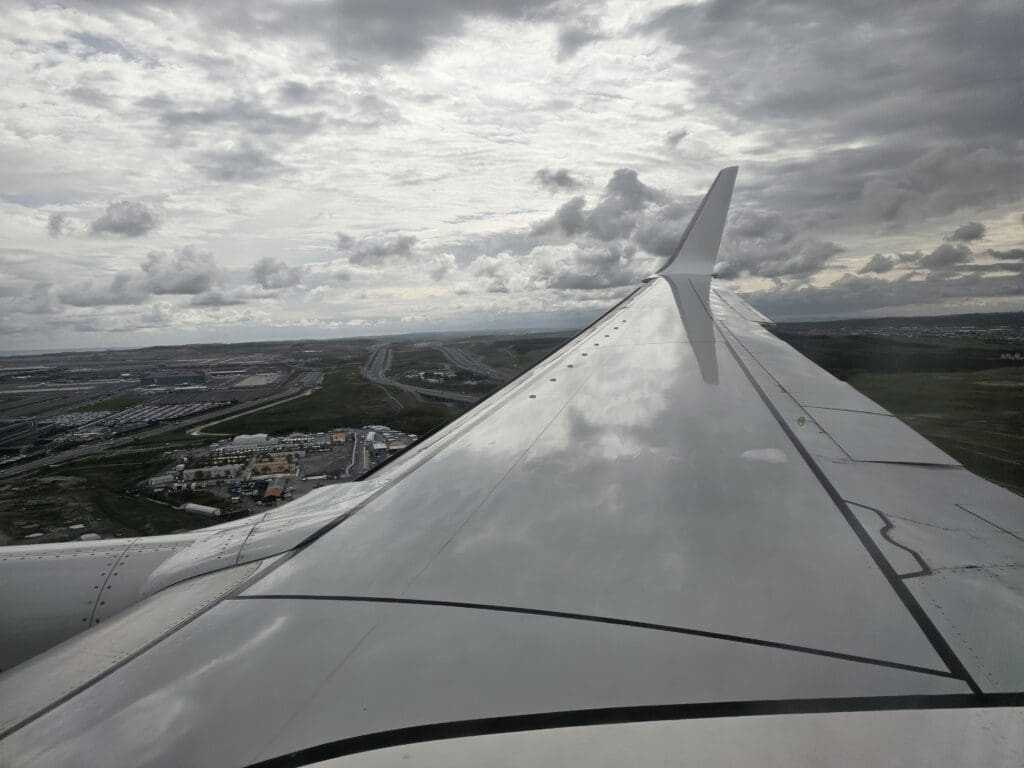
As we trundled northwards towards the airport, it wasn’t long before the flaps and gear were extended and we passed the town of Arnavutköy, indicating our imminent arrival. Shaking from side to side in the wind, we whizzed over the perimeter fence as Turkish Airlines hangars came into view before the aircraft was gently placed down onto the runway at 0952 after an impressive (for a Boeing 737-800) six hours and ten minutes in the air. After our soft return to earth, we decelerated rather quickly at which point a round of applause broke out and filled the cabin for a few seconds. In the usual manner, once safely off the runway, the purser welcomed all to Istanbul, thanked passengers for flying with SCAT Airlines and advised all to remain seated in Kazakh, Russian and English.
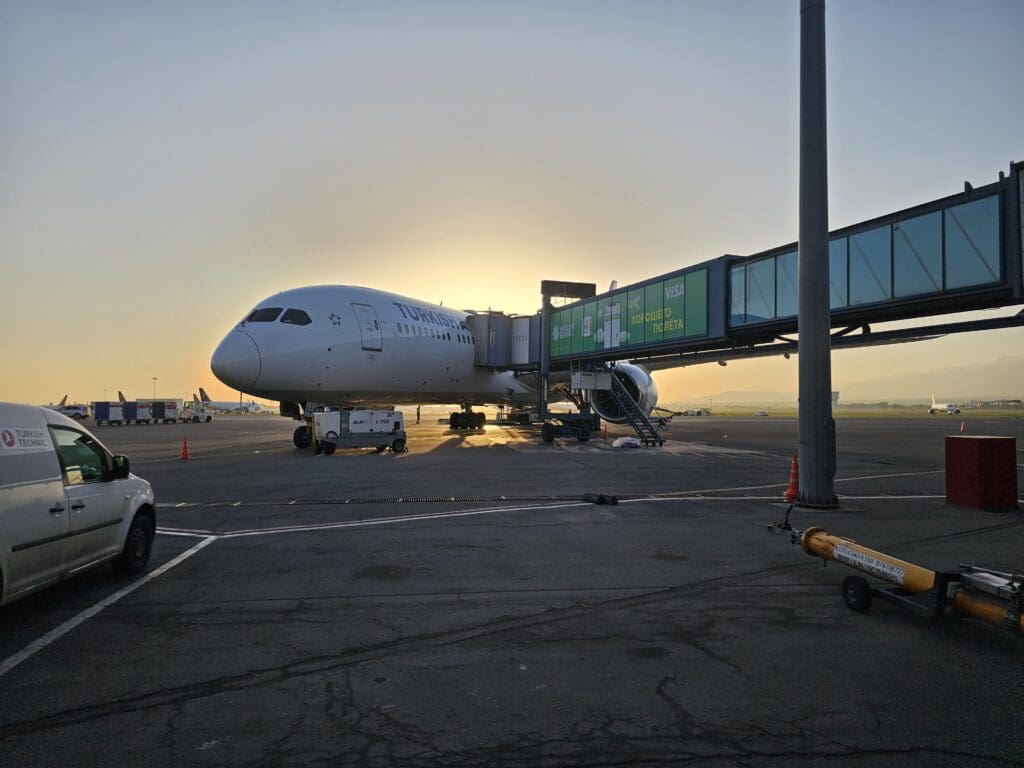
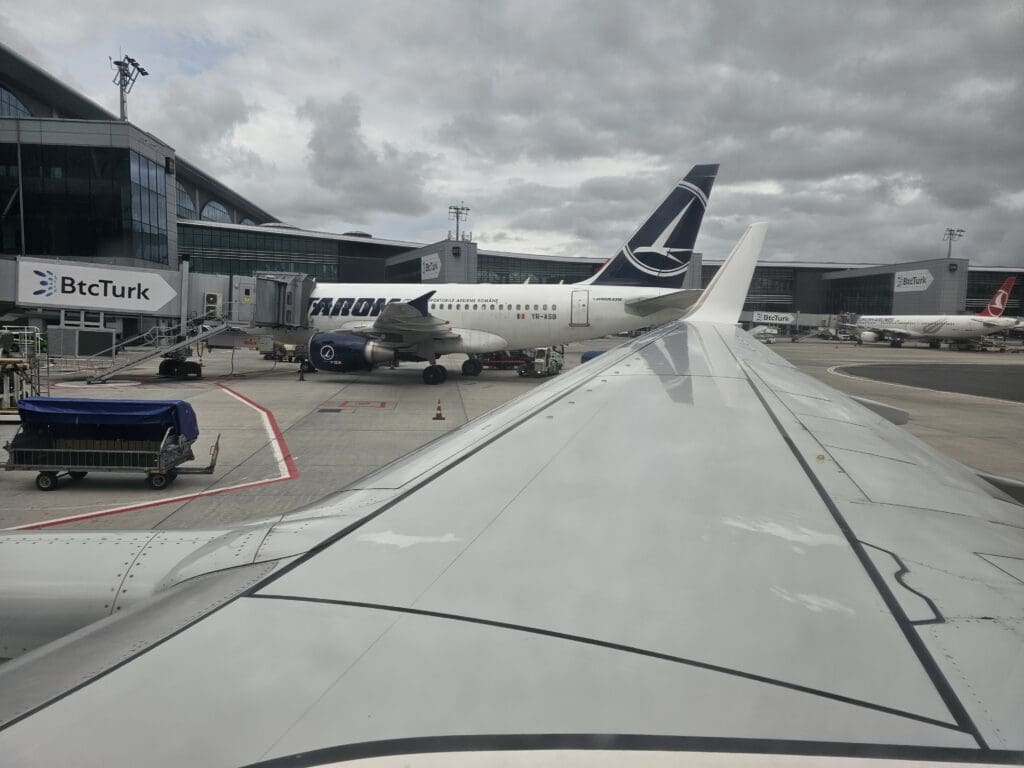
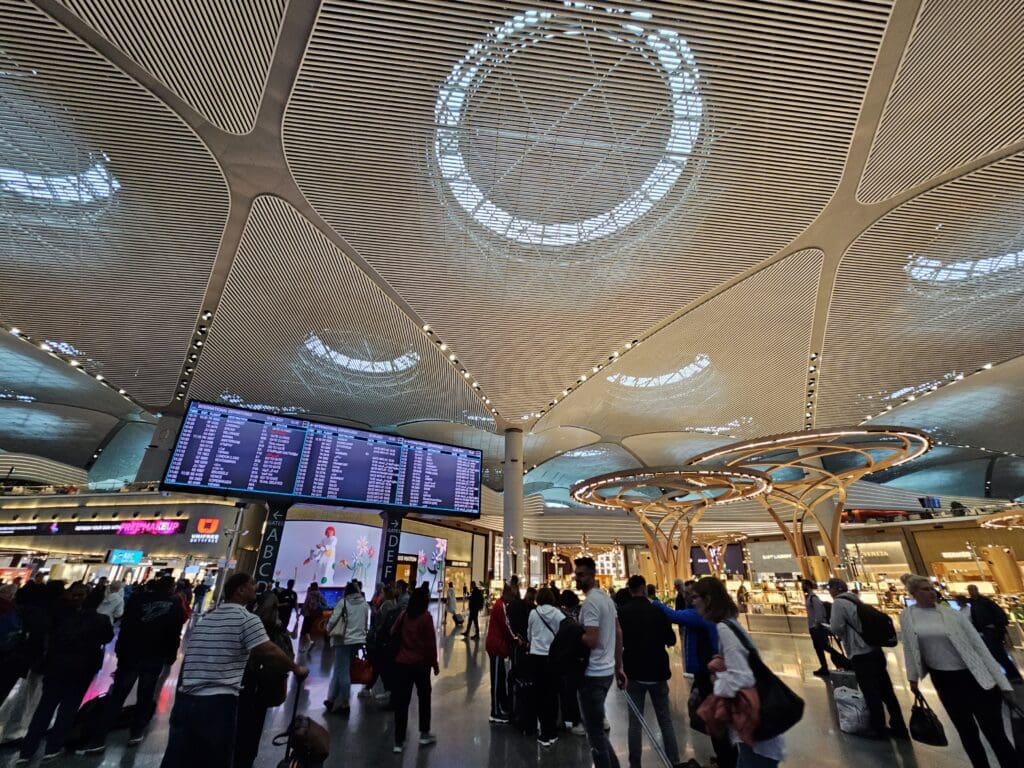
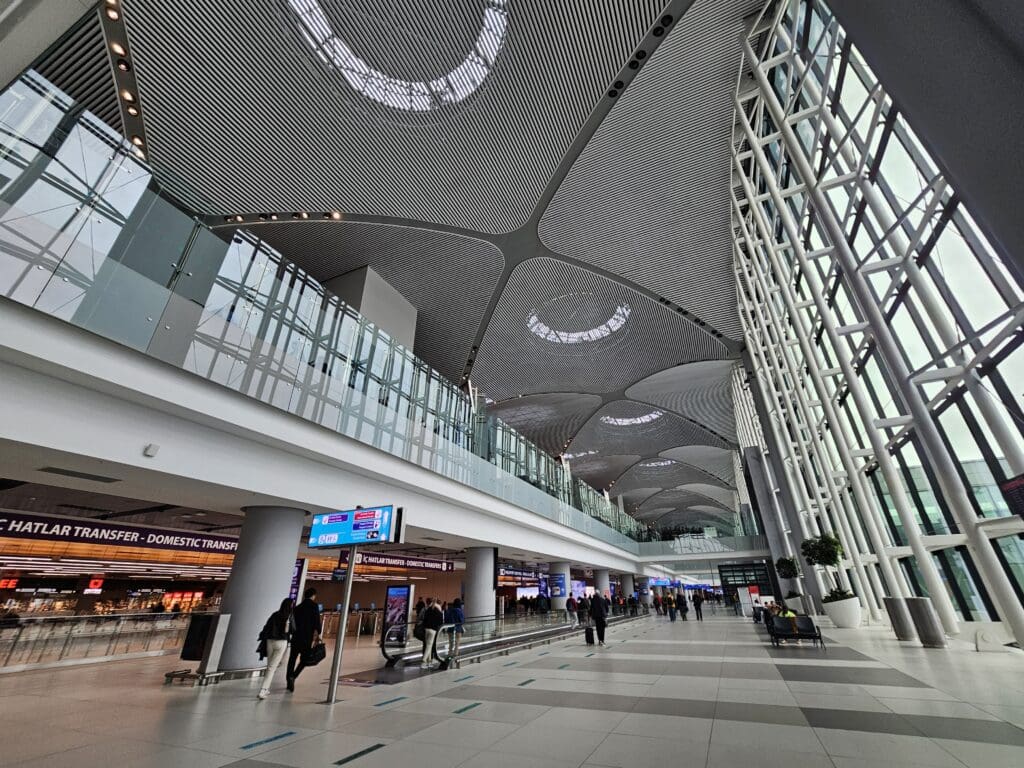
Having landed on what I believe to be the furthest runway from the terminal building, a fairly long taxi was in store. This initially took us past the airport’s cargo terminal before arriving at the near-endless rows of Turkish Airlines jets. During this stage of the journey, I caught sight of the Boeing 787-9 Dreamliner which we had left behind in Almaty, having beaten us to Istanbul as a result of flying higher and faster than our Boeing 737. Following a 17-minute taxi, the Boeing cautiously pulled into Stand E3 where it slotted in between a TAROM Airbus A318 and a SkyUp Airlines Boeing 737-800 operating on behalf of Moldovan carrier HiSky. Perhaps eager to disembark, as soon as the engines spooled down the cabin jumped up and a queue soon formed in the aisle. Fortunately for those in a rush to leave, the jetbridge was soon connected and the door was opened just two minutes after we came to a halt at which point disembarkation commenced. After thanking the crew, I headed up into Istanbul’s massive and modern terminal and commenced my transit.
Summary
Despite not offering the most unchaotic, entertaining or comfortable flight experience, given the price I paid for my ticket, SCAT Airlines did not offer me too much to complain about. Onboard, I found the crew to be generally friendly and welcoming, the meal was most certainly decent and we landed in Istanbul on time and in one piece. Granted, if I had to make this journey again, I would probably go for Air Astana or Turkish Airlines if they were similarly priced, but if push came to shove, based on my experience that morning, I would have no qualms about flying with SCAT Airlines again.
That is a very unfortunate name for an airline. Surprised that they didn’t even Google the name before deciding.