Mission 767 Failed: Dubai to Baku on an Azerbaijan Airlines Dreamliner
Background
In June 2018, I spent a pleasant three hours onboard an Azerbaijan Airlines Airbus A319 from Baku to Kyiv. Despite the cool and distant crew (you can read my review here!), I had found the aircraft to be comfortable and clean, whilst I was positively taken aback by just how much food had been served during the relatively short morning flight. Thus, I was left with no reason not to fly onboard Azerbaijan’s national carrier again and longed to sample the delights of one of their widebody jets.
Almost six years later, in May 2024, the opportunity to fly with Azerbaijan Airlines for a second time rolled around. Needing to book a one-way ticket from Dubai to London, Azerbaijan Airlines turned out to offer the cheapest fares, with these starting at just £132! However, with this itinerary involving a long overnight stop in Baku where I would need both a hotel and an e-visa, I decided on the more direct and expensive option. This involved departing Dubai at 1310 onboard one of the airline’s Boeing 767-300ERs. Following a quick change in Baku, I would jet off to London Heathrow onboard a Boeing 787-8 Dreamliner, arriving at 2030.
Booking
Despite there being a small price premium to book directly with Azerbaijan Airlines, fearful of the potential complications were I to have to make any changes, I decided to book directly with the airline. Touching down on Azerbaijan Airlines’ homepage, once there, I was presented with the airline’s flight search engine, which was superimposed on a computer-generated image of an Azerbaijan Airlines Boeing 787-8 Dreamliner. Making a quick search for flights, I was soon presented with a trio of options with varying connection times in Baku. Choosing the one with the shortest connection time, I was then taken to select one of three fares – Classic, Plus and Budget. Rather strangely, despite being the most restrictive fare class, the Budget fare was the most expensive, meanwhile, there did not seem to be a great deal between the Classic and Plus fares, other than minor differences in refund and change fees. Importantly, both of these offered 23kg of hold luggage and complimentary seat selection across much of the cabin.
With no reason not to select the cheapest option, the Classic fare, in the usual manner, I was then taken to enter my details. After this, I was allowed to add optional extras, such as a pre-reserved seat, a special meal, assistance and additional luggage. Making use of the complimentary seat selection, I opted to reserve a seat near the front of the rearmost Economy cabins on both flights. For those seeking more space or wishing to sit near the front of the cabin, on both flights, these seats could be reserved for an acceptable $43.40 (£33.05) or $32.60 (£24.83) fee respectively. Steaming ahead, I made it to the Azericard-powered payment portal where I was able to make a quick and easy payment for my ticket, my only complaint being that I would have to pay for this in US Dollars (the other options being Azeri Manat or Russian Roubles) – this coming to a total of $274.70 (£188.63).
As it turned out, I ended up having to amend the date of my flight and slightly annoyingly, there was no option to do this online. I thus had to send an email to Azerbaijan Airlines’ customer service centre. Fortunately, I received a quick response, and once I had paid the fare difference between my original and new ticket, I was sent my new ticket. In the end, there was one final spanner in the works, in that around a week before my flight, the Boeing 767-300ER that was scheduled to operate my first flight was replaced by a Boeing 787-8 Dreamliner. Whilst this was no major disaster, this did mean my two Azerbaijan Airlines services would be operated by the Dreamliner.
Whilst Azerbaijan Airlines offers online check-in, holding a one-way ticket to the United Kingdom, my right to enter the country would need to be verified in person at check-in, and I was thus unable to check-in online. However, seeing as I would have to stop by at check-in to drop off my suitcase, this was no major issue.
The Journey
Following a seemingly neverending slog from Beijing onboard an Air China Airbus A350, by the time I touched down in the Middle East, I was left with exactly fourteen and a half hours until I was scheduled to head off on my final sprint to London. Whilst this was hardly enough time to marvel at the Burj Khalifa, hike Jabal Bil Ays, or wander around the majestic Sheikh Zayed Grand Mosque, I had plenty of time to visit my sister, who lives a short hop away from Dubai International Airport in the Emirate of Sharjah. Making it to her house at around midnight, following a late-night curry, having had a long day of travelling and thus feeling shattered, I bedded down for the night. However, a few short hours later, with my body still on Korean time and thus thinking it was late morning, I automatically awoke at the crack of dawn. Unable to get back to sleep and seeing as I would be stuck inside for most of the day, I decided to go for a short morning walk around the neighbourhood. By that time, the mercury was already hitting 30 degrees, so after grabbing an overpriced cappuccino, I retreated to the house and began getting everything ready for the long day ahead. Following a karak chai and a toasted omelette sandwich for breakfast, I packed the last of my things and darted into the shower before undertaking my final preparations.
With my sister living about ten kilometres from the airport, reaching this is usually a quick, painless and relatively economical affair. However, with Sharjah not being particularly well connected to Dubai’s public transport network, this typically requires a short taxi ride. Fortunately, saving me a few bob that morning, I was able to hitch a lift in her partner’s battered and beaten-up but well-loved Jeep. Unfortunately, there aren’t many different routes you can take to get from Sharjah to Dubai International Airport’s Terminal 1, and doing so without traversing the Sheikh Zayed Road is nearly impossible. With this being the main artery running through Sharjah and Dubai and connecting both to the capital, Abu Dhabi, at times, this can be a traffic nightmare. Unfortunately, that morning, this was to be the case, and so we decided to leave with plenty of time, heading out onto the busy streets at 0900. As we had suspected, as soon as we hit the main road, we stumbled across a wall of traffic, and unable to weave in and out of this, we accepted our fate and spent a good hour crawling along at a snail’s pace. Eventually, we crossed the border from Sharjah to Dubai and passed the far western ends of the runways. Some entertainment was provided by a series of aircraft passing overhead every minute or so before we slowly made our way around the airport. Eventually, a good hour after leaving home, the welcome sight of Terminal 1’s facade appeared, bringing my journey to a close.
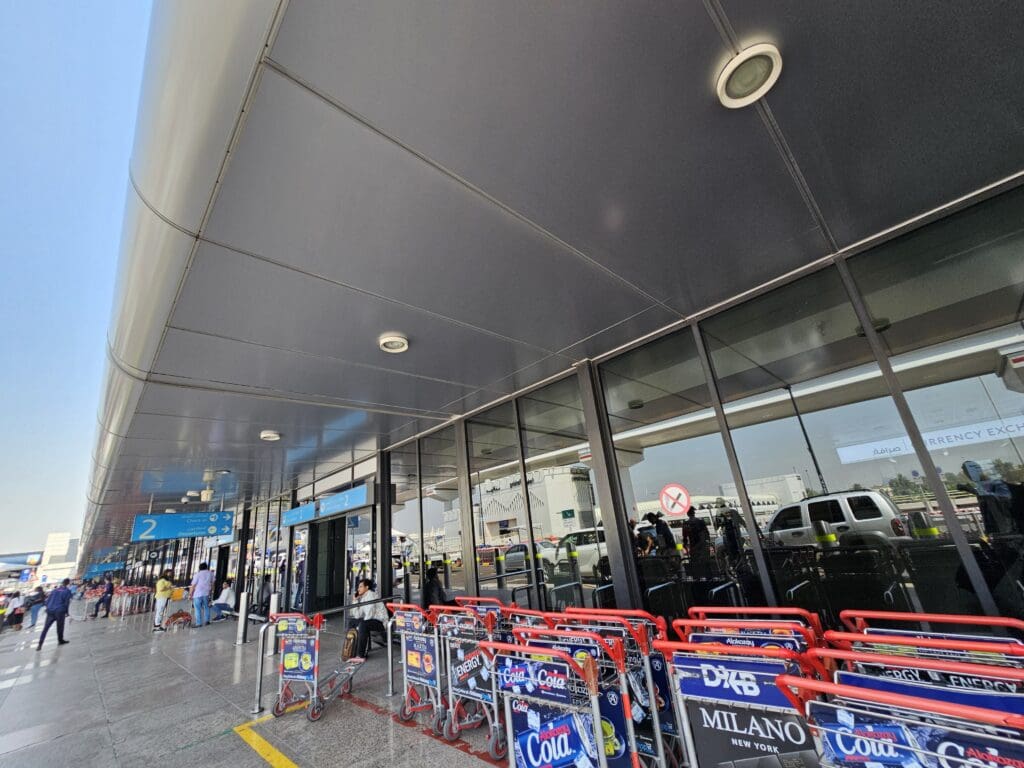
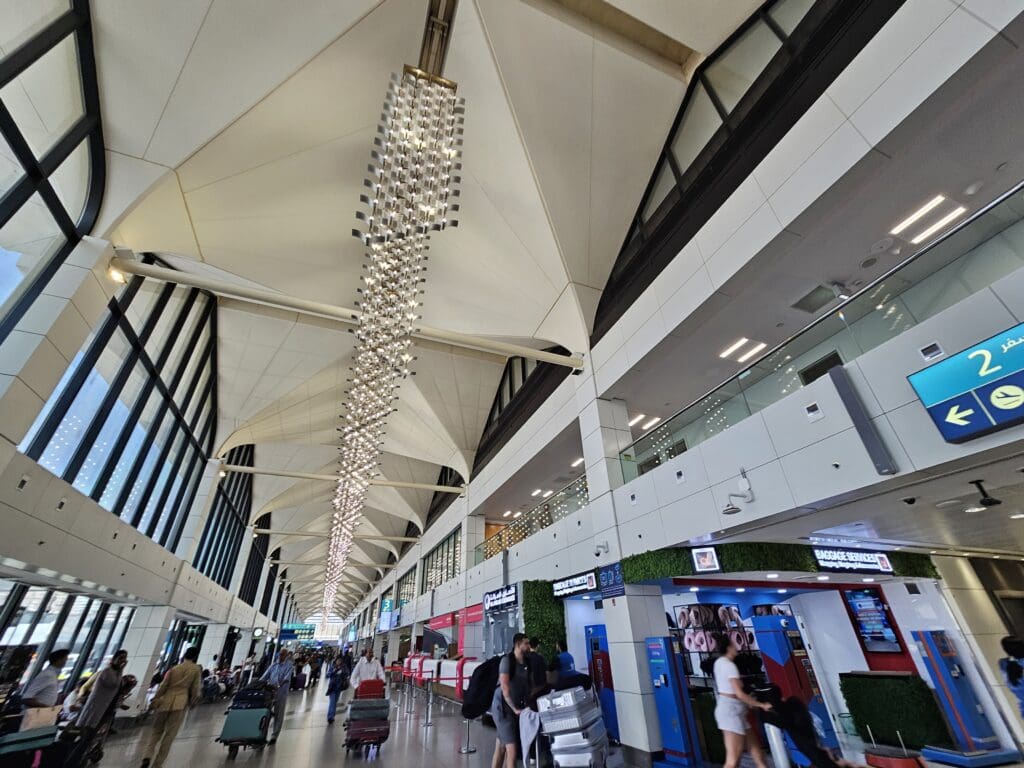
Upon coming to a halt outside the check-in hall, I said my farewells before darting out and making several steps through the boiling hot morning heat, soon making it to the nicely air-conditioned landside departures area on the terminal’s first floor. With this being the sixth time departing from Terminal 1, I had a good idea of what to expect from the terminal, and inside, this was as busy as ever, with plenty of passengers, many of whom had heaps and heaps of luggage precariously piled high on carts, scurrying about in all directions. As its name may imply, Terminal 1 is Dubai International Airport’s oldest still-operational terminal, and perhaps expectedly, its landside area is not particularly modern. Constructed well before Dubai became a skyscraper-filled international hub, this is a little less glitzy and glamorous than you may expect from the airport’s second-busiest terminal and lacks any spectacular architectural features. Nevertheless, this has never left me with any major complaints, and that morning was no different. Inside, this was clean, tidy and complete with fast complimentary wifi that worked well throughout the landside and airside areas. In terms of facilities, this features several shops, cafés and eateries, several of which are located in a spacious food court that sits above the check-in area. With this being one of the only places in the landside portion of the terminal to offer airside views, this is one of the better places for enthusiasts to sit and wait. However, a combination of dirty windows and a lack of understanding of plane spotting amongst the Emirati authorities means that this is not a spotter’s paradise, and I would caution against openly taking too many photos there.
In terms of its role, Terminal 1 hosts the majority of non-Emirati carriers that serve Dubai. However, there are a few exceptions, such as Air Canada, Qantas and United Airlines, which operate from Emirates’ terminal, Terminal 3. Meanwhile, several low cost and smaller carriers utilise Terminal 2 on the north side of the airfield, the primary user of which is FlyDubai.
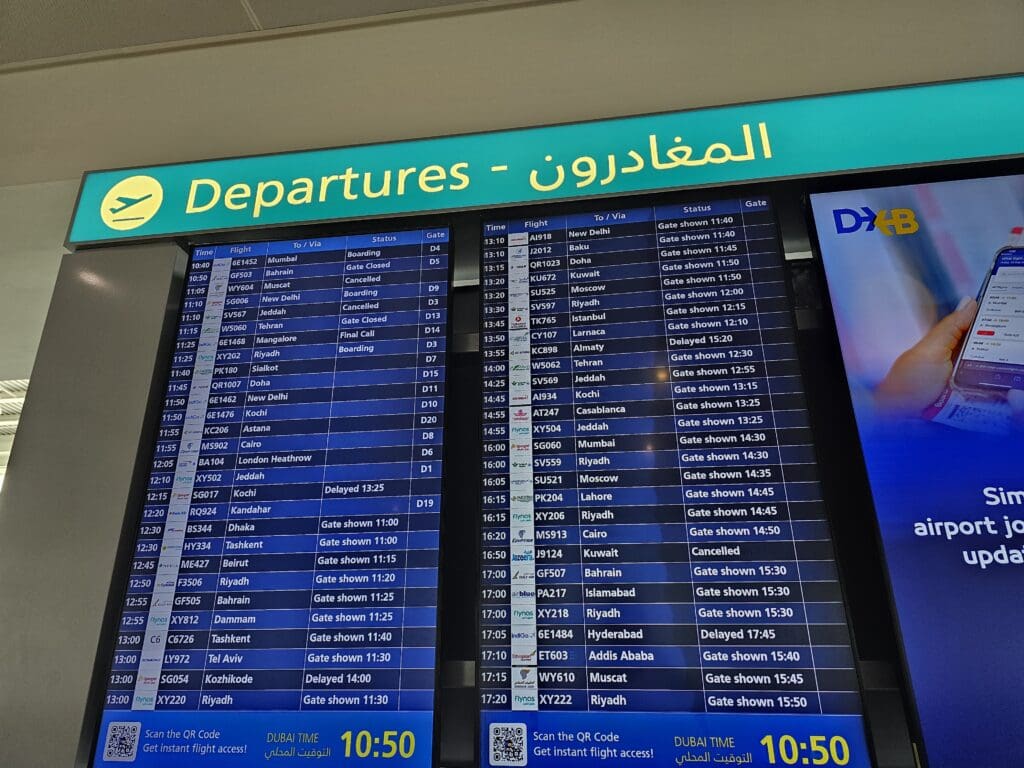
By the time I made it to the terminal, I was left with about three hours to go until my flight was scheduled to rocket off to Baku. Hoping to get rid of my suitcase as soon as possible, I decided to head to Azerbaijan Airlines’ check-in desks in the hope that they were already open. In terms of its layout, Terminal 1’s check-in desks sit across six zones, and after checking the departure boards, I made the short walk over to check-in Zone 1. Upon reaching there, I was greeted by a friendly Dubai Airport worker who asked me my airline before pointing in the direction of Azerbaijan Airlines’ check-in desks. At that time, these were being readied by several Dnata agents, and so, anticipating that these were about to open, I made my way over to them. Just before joining the short queue, I had a short panic as I thought that I had left my passport behind in Sharjah! As I frantically rummaged through my bag, I was soon approached by two bulky security guards who ushered me along. As it turned out, passengers were checking in for El Al’s Boeing 737-800 operated service to Tel Aviv just next door, and security guards had been tasked with ensuring that nobody lingered around these desks.
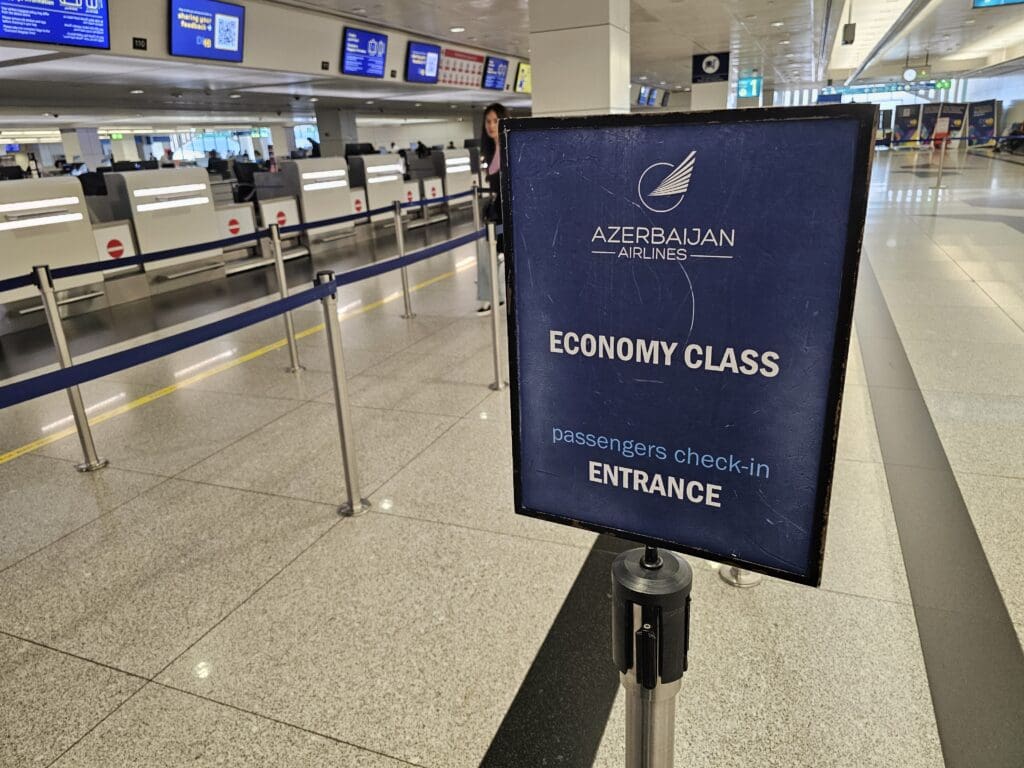
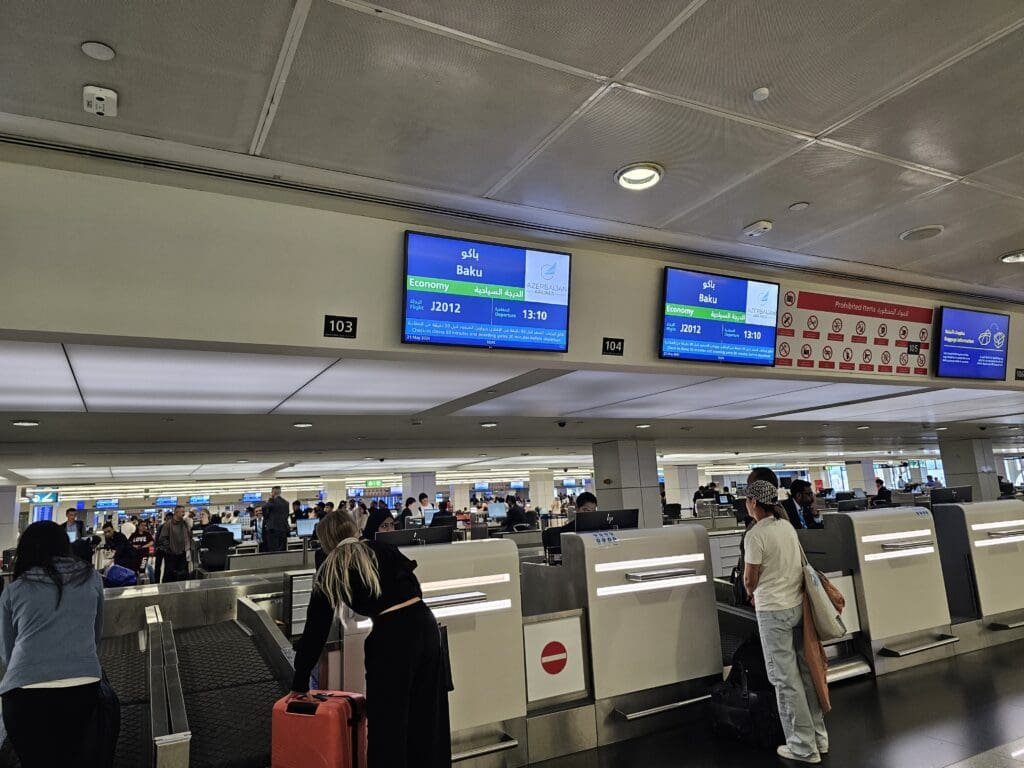
Fortunately, after about a minute, I found my passport and joined the short queue of Baku-bound passengers. A few minutes later, the desks opened, and after about three minutes of shuffling forwards, I reached the front of the queue. That day, Azerbaijan Airlines occupied four desks – two for those in Economy, and one each for those in Premium Economy and Business Class. Seeing as Azerbaijan Airlines operates two daily flights between Baku and Dubai, a widebody flight with the Boeing 767 or Boeing 787 Dreamliner and an Airbus A320 operated service, I wasn’t surprised that plenty of the airline’s signage could be seen around the four desks. Once at the desk, the Dnata agent manning this did not seem to be particularly warm or friendly, however, they were able to check me in quickly and without issue, and I was soon able to continue onwards. With my two Azerbaijan Airlines branded boarding passes in hand, I had no reason to remain in the landside portion of the terminal and steamed onwards in the direction of security and immigration.
Following a very short walk, I tapped my boarding pass on the scanner of one of the automated gates which allowed me to continue onwards and join the line for immigration. On a side note, as I have always found to be the case in Dubai, plenty of staff were on hand to assist those who had issues with these automated gates and ensure passengers joined the correct queue for immigration. Once upon a time, immigration at Terminal 1 always seemed to be a slow affair; however, thanks to the recent installation of e-gates, the days of long queues are long gone! After about five minutes of shuffling forward, I scanned my passport and had my photo taken before the gates swung open, and I was able to continue onwards to security. As usually seems to be the case in Terminal 1, most of the checkpoints were open and the staff there worked efficiently, ensuring that security was a quick and easy process that involved absolutely no queuing.
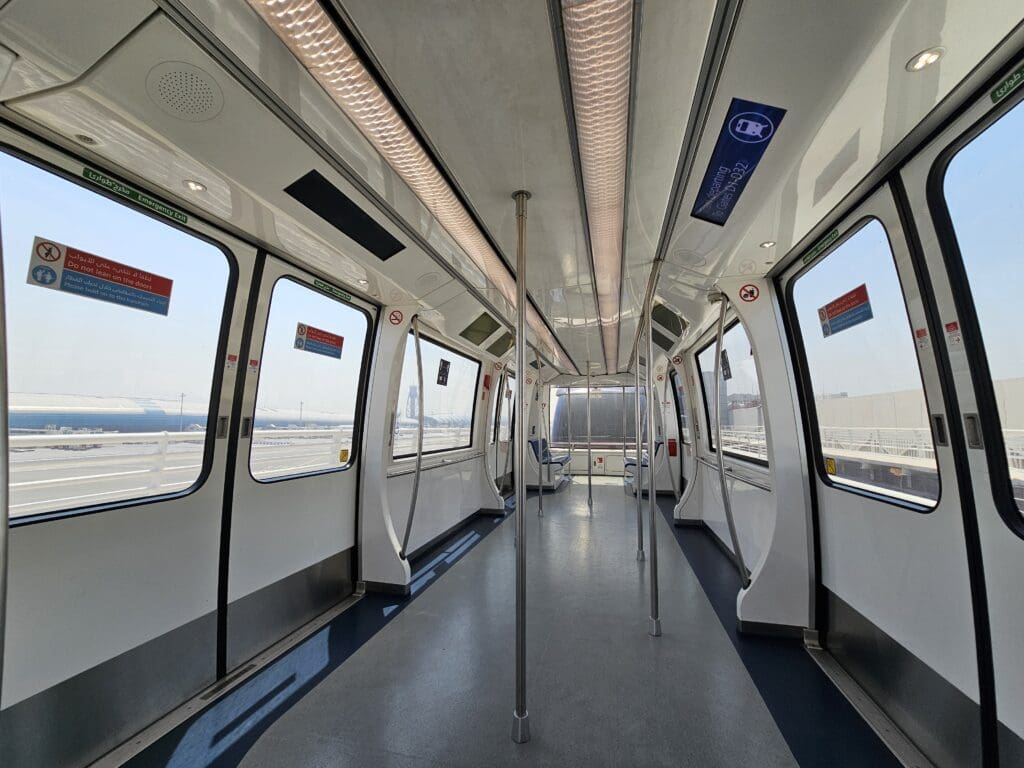
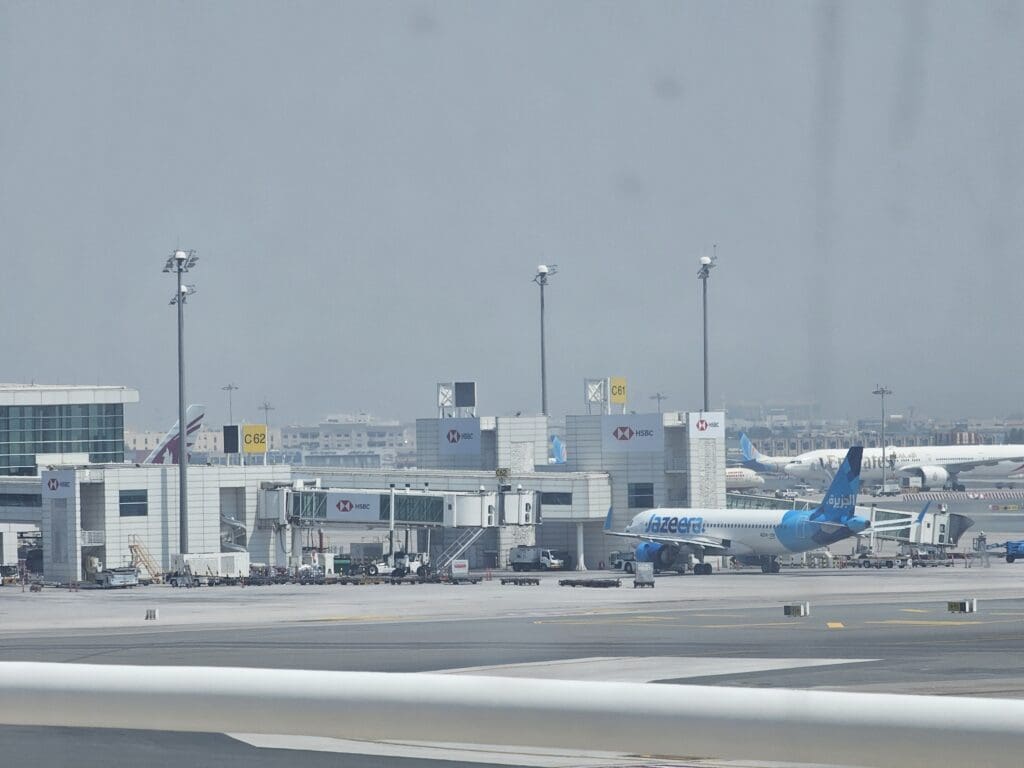
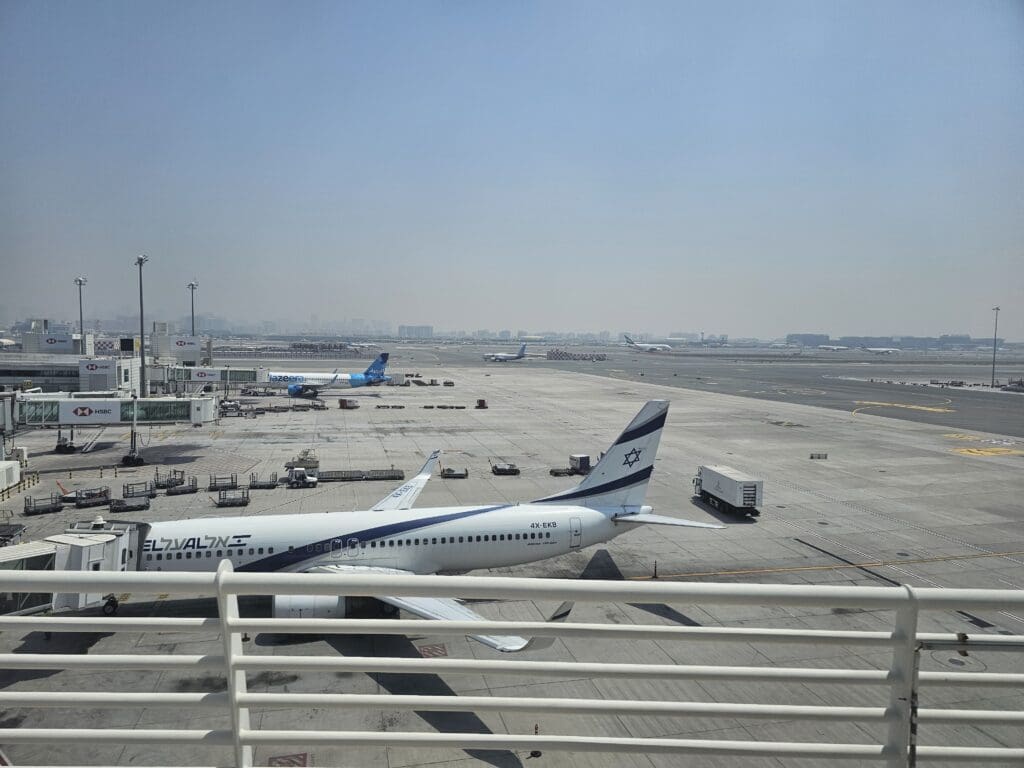
Whilst Terminal 1 usually leaves me with little to complain about, I should mention that one slight disadvantage of this is that the landside and airside portions of the terminal are in two different buildings. This means that all arriving and departing passengers must catch an automated people mover when travelling to and from the terminal’s gates. From security, I headed up the escalators to the people mover station and with trains running every few minutes, I did not have to wait long until the next service arrived. Soon, I boarded the train and was whisked off over the apron, affording me a good bird’s eye view of the El Al Boeing 737-800 being readied for its return flight to Tel Aviv before I came to a halt at the terminus station.
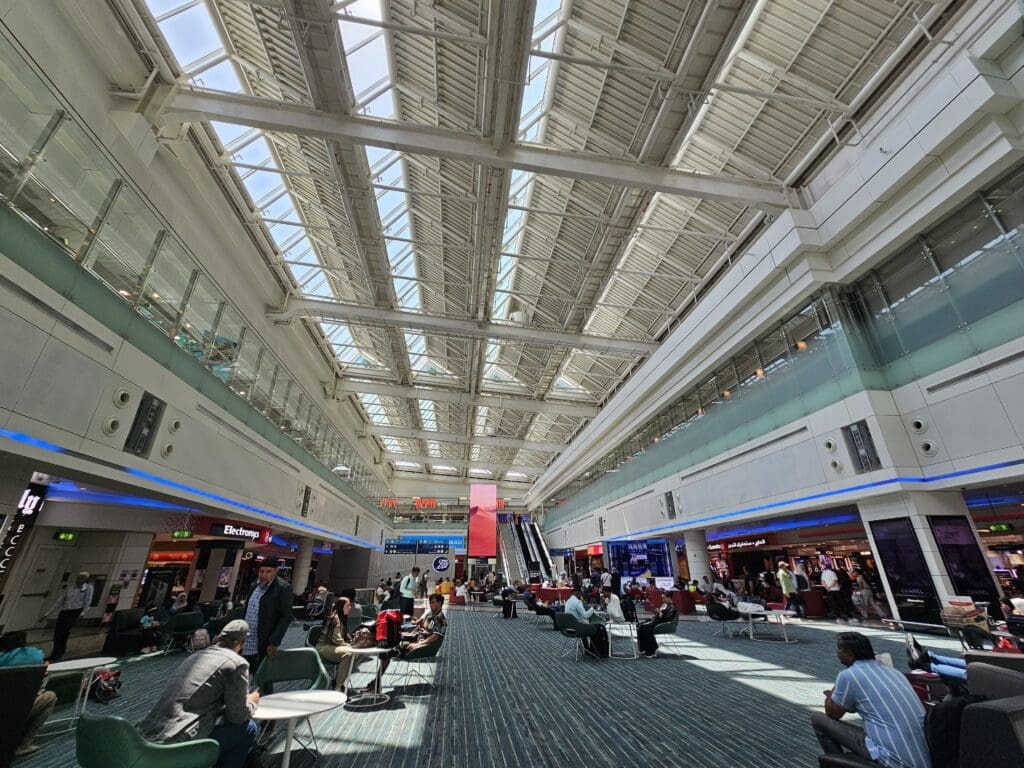
Once off the train, I headed downstairs and leisurely sauntered through Terminal 1’s large Dubai Duty Free store, before arriving in the terminal’s main atrium. With this part of the terminal being considerably newer than the landside portion, this is modern, spacious and covers a large area. Arranged in an E shape, this is home to plenty of shops, cafés and eateries, meaning that passengers will likely have no problem filling the time before heading off to destinations across the world. Importantly, with an army of cleaners seen throughout my stay, I was pleased to find this to be in a near-spotlessly clean state, and, as many passengers now expect, plenty of charging points could be found whilst complimentary wifi was offered for those needing to stay connected to the outside world. Once there, I decided to splurge on a coffee from the local Pret a Manger before having a short walk around the terminal, which, for the most part, revealed this to be entirely unchanged from my last visit six months prior. Ultimately, this left me with nothing to complain about!
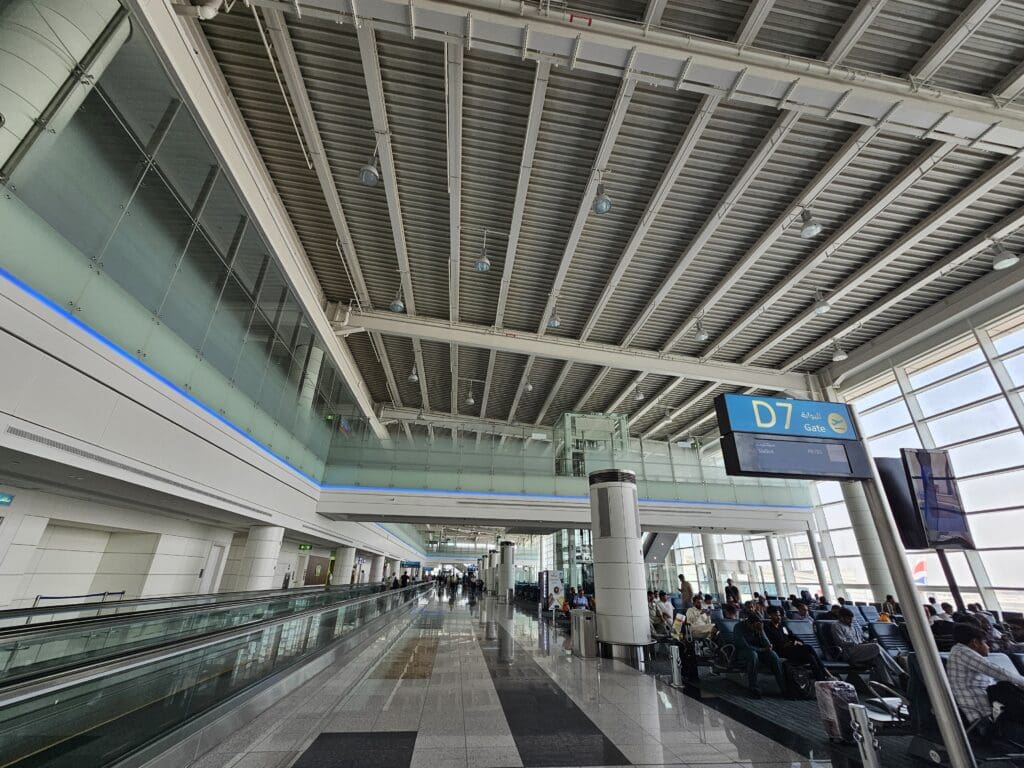
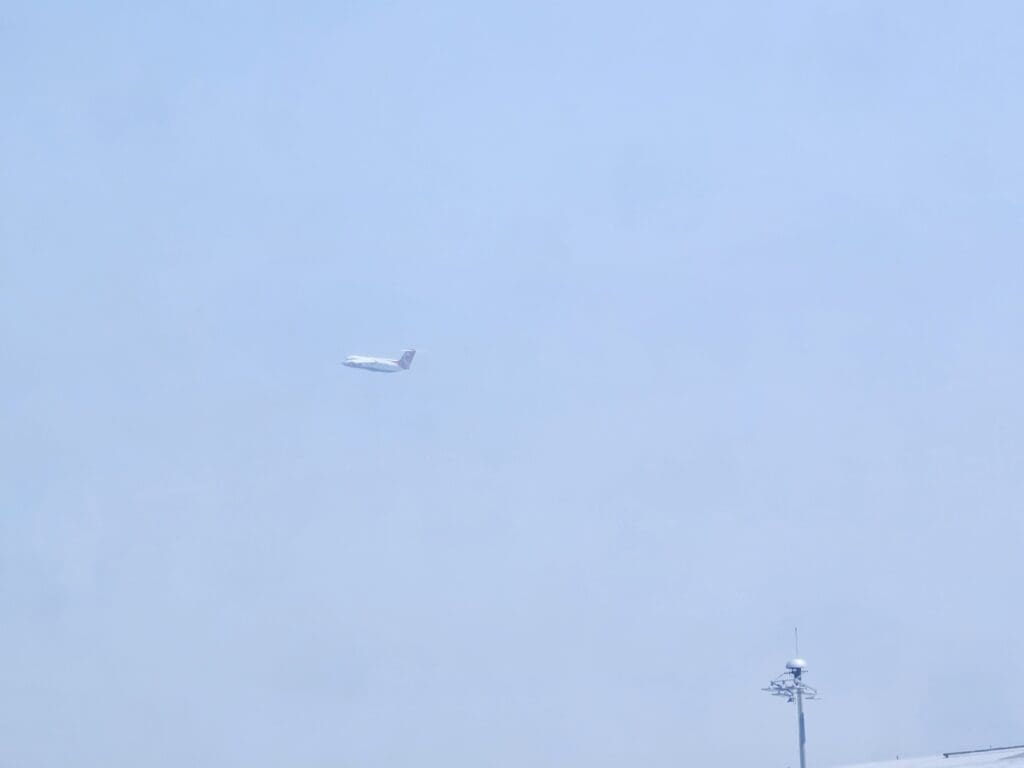
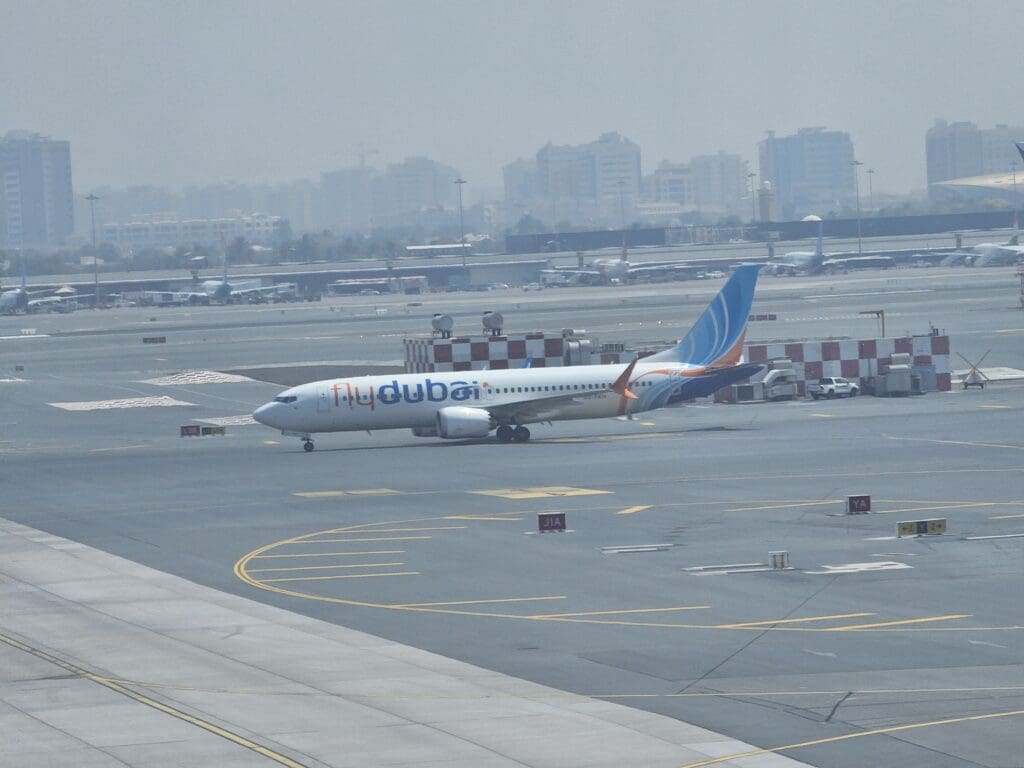
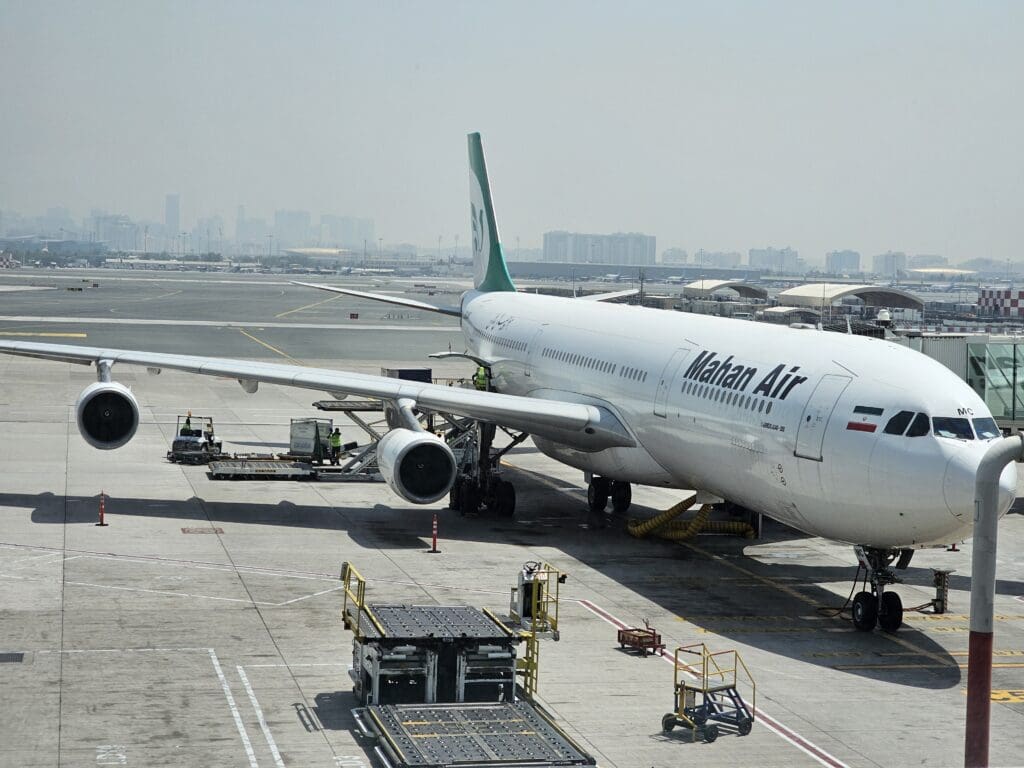
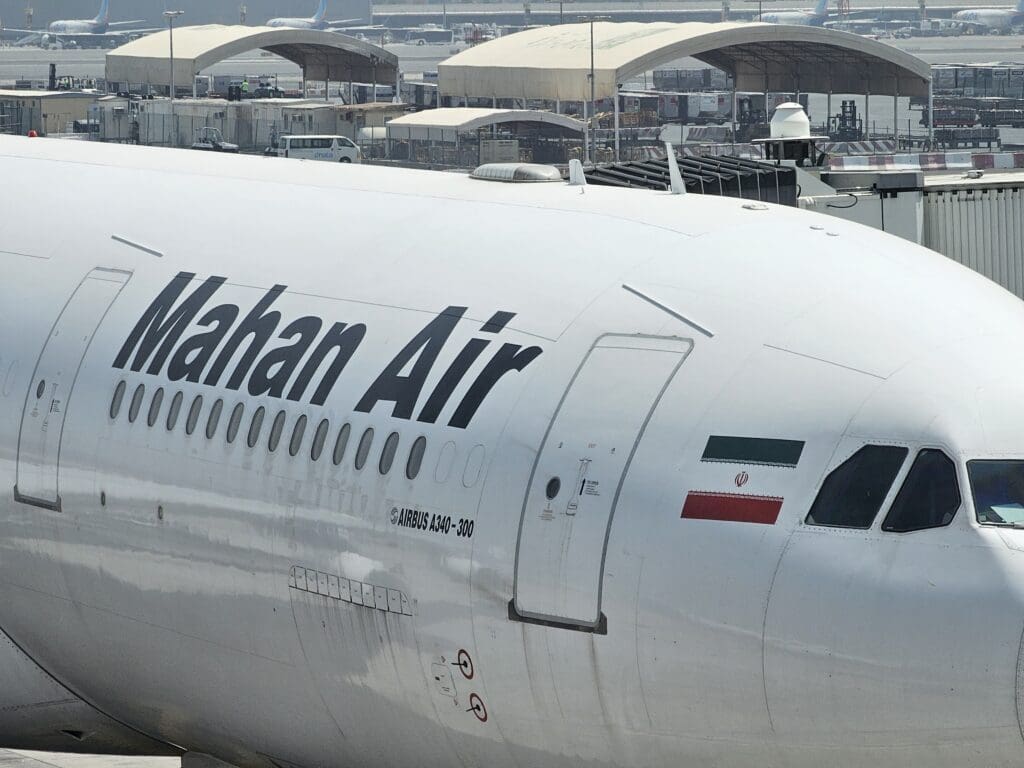
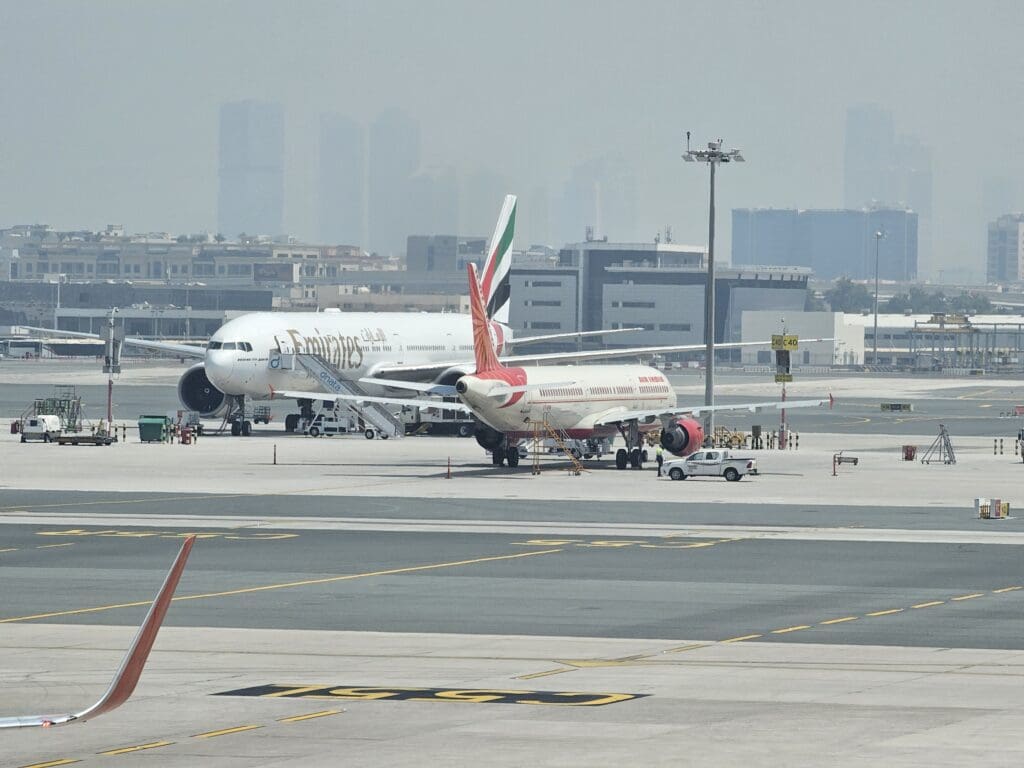
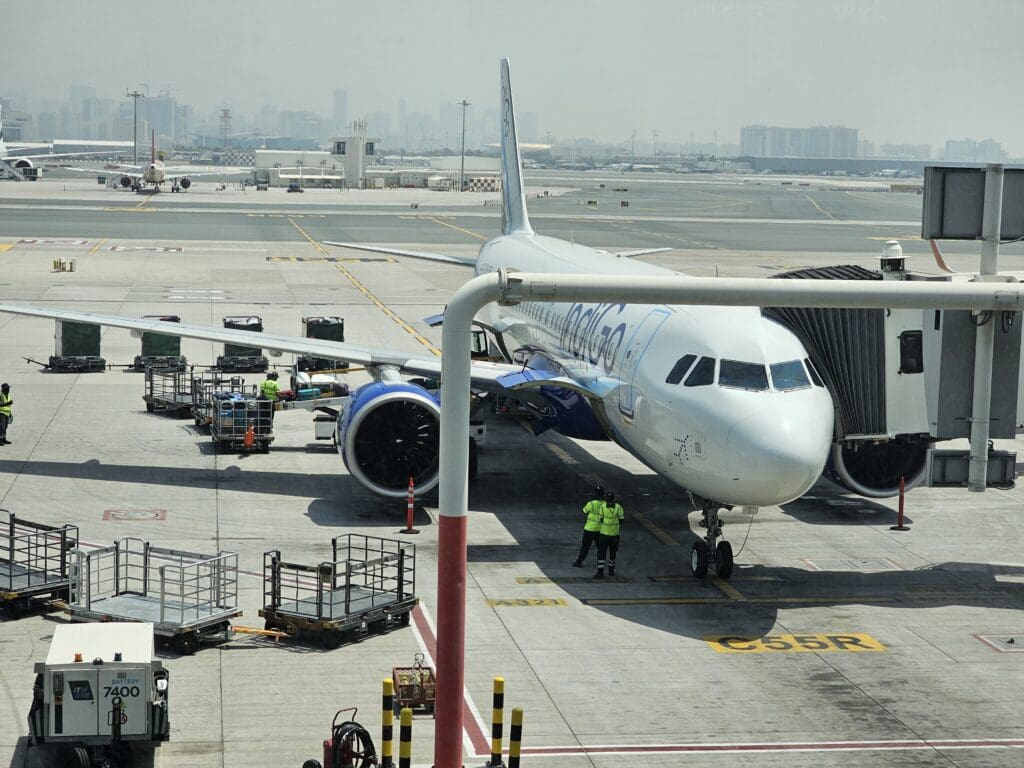
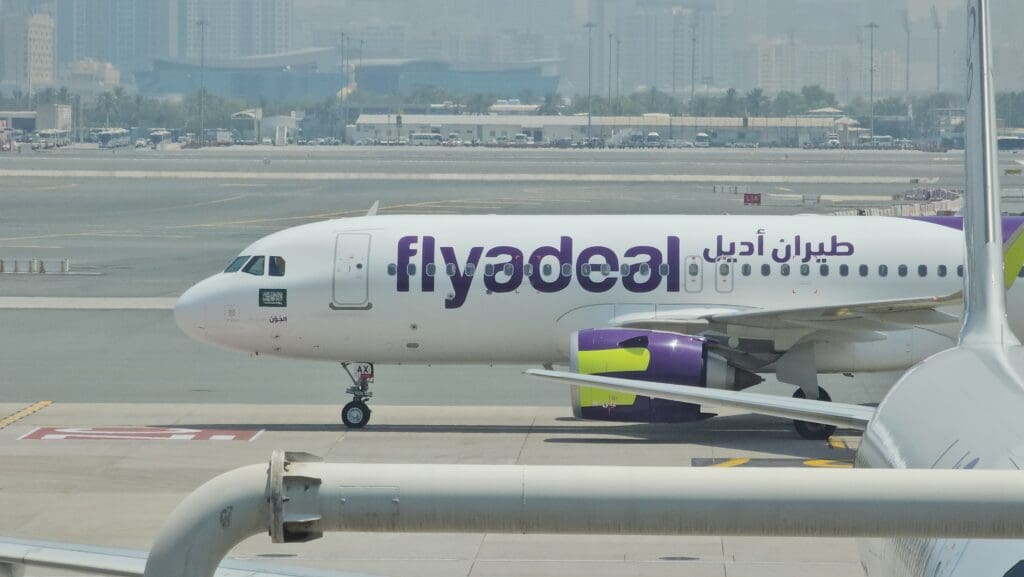
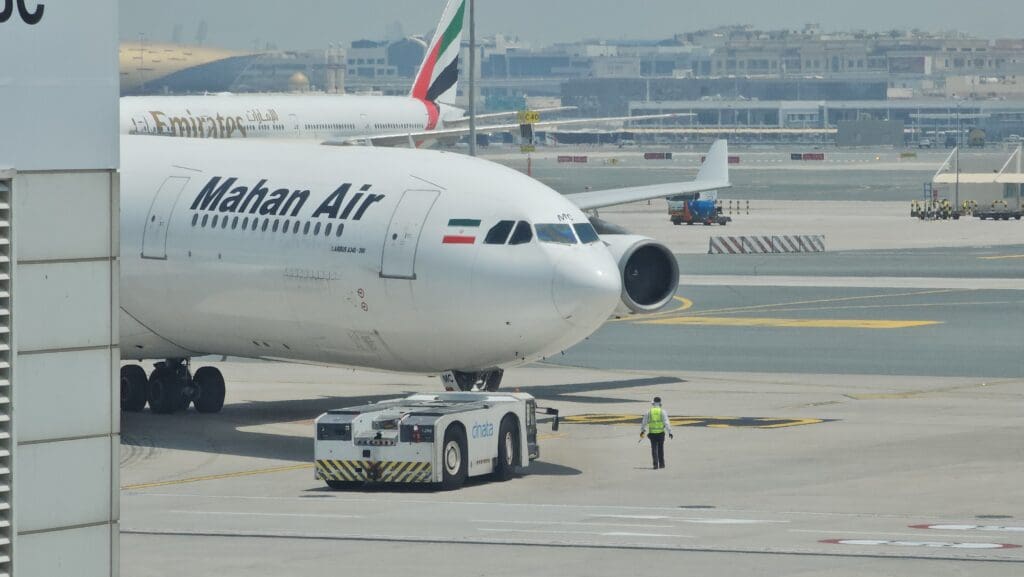
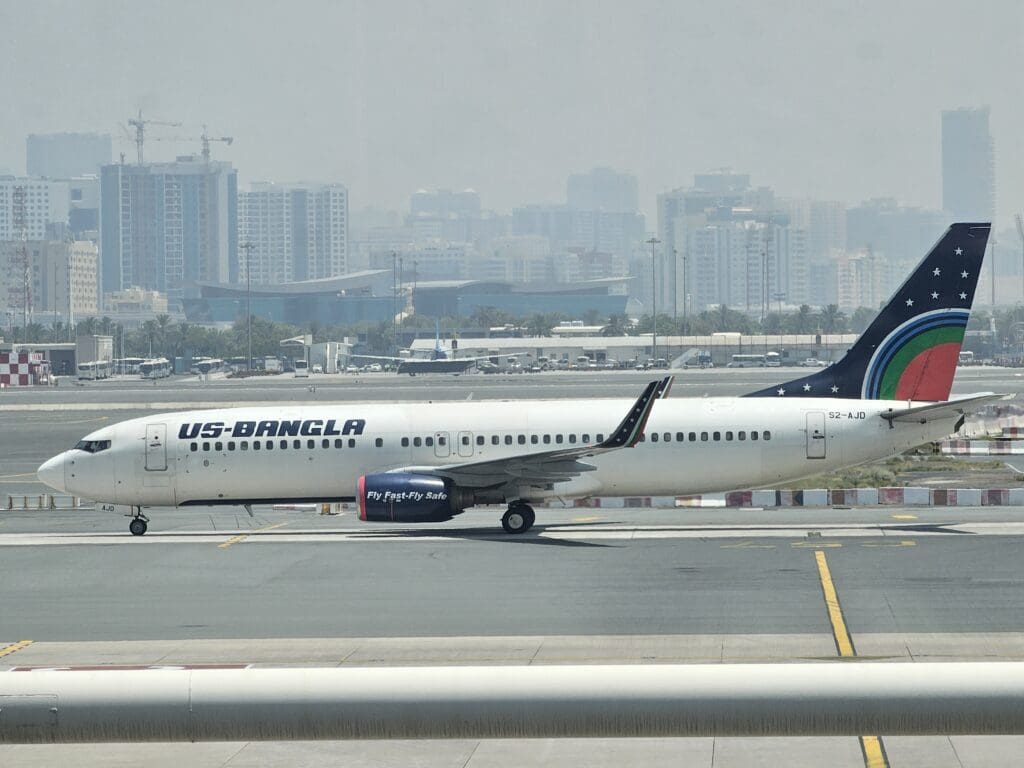
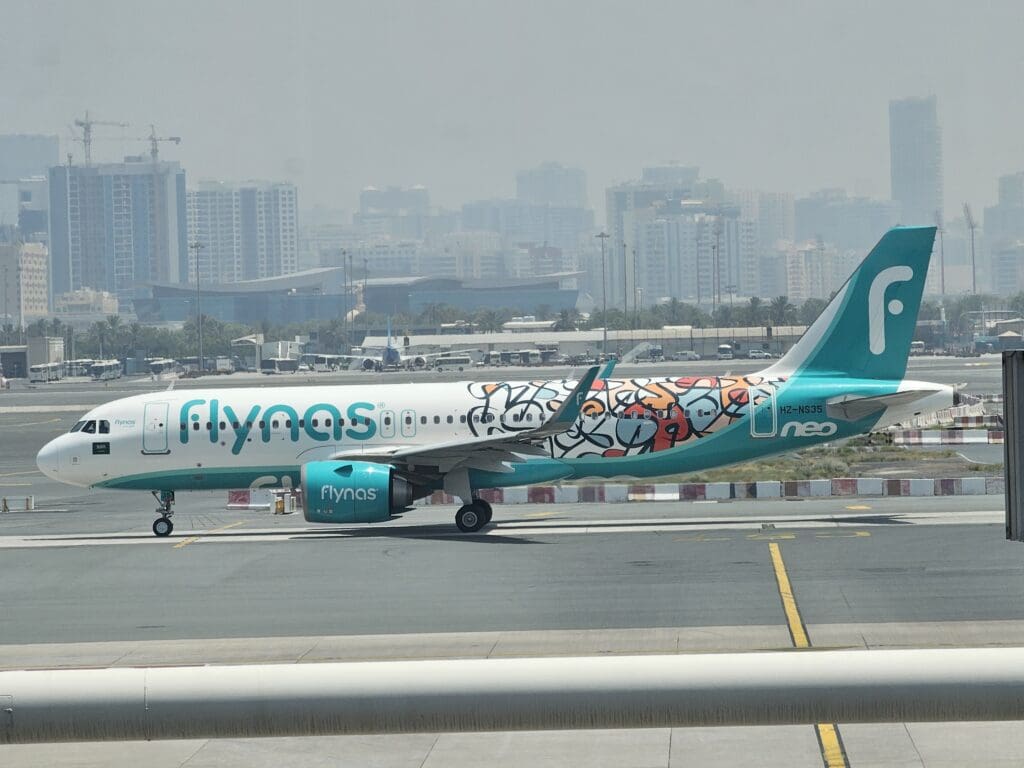
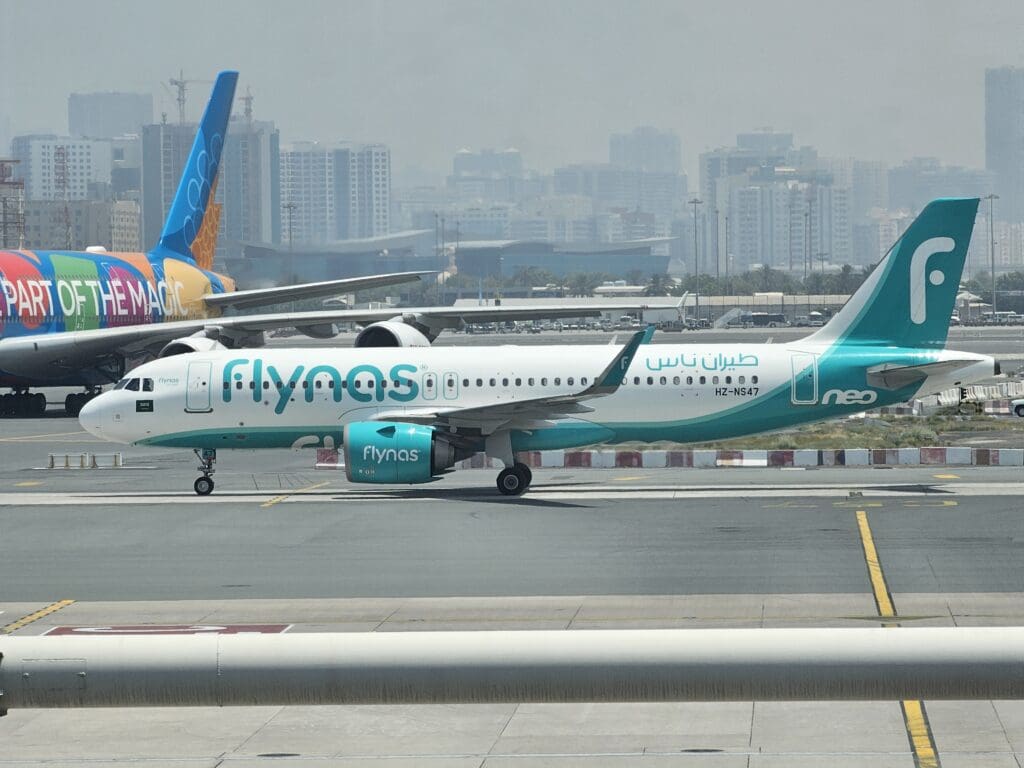
Unlike the landside portion of the terminal, once airside, passengers have plenty of opportunities to watch the diverse stream of movements outside. Inside, most gates feature windows that offer a view of the stands outside, whilst a number of these also offer a good view of the two runways and nearby taxiways. That morning, I was treated to views of aircraft and airlines that I would most certainly not see back home in Britain, with the highlight movement for me taking the form of a now-rare British airliner, a four-engined Avro RJ100, operated by Iranian carrier Qeshm Airlines.
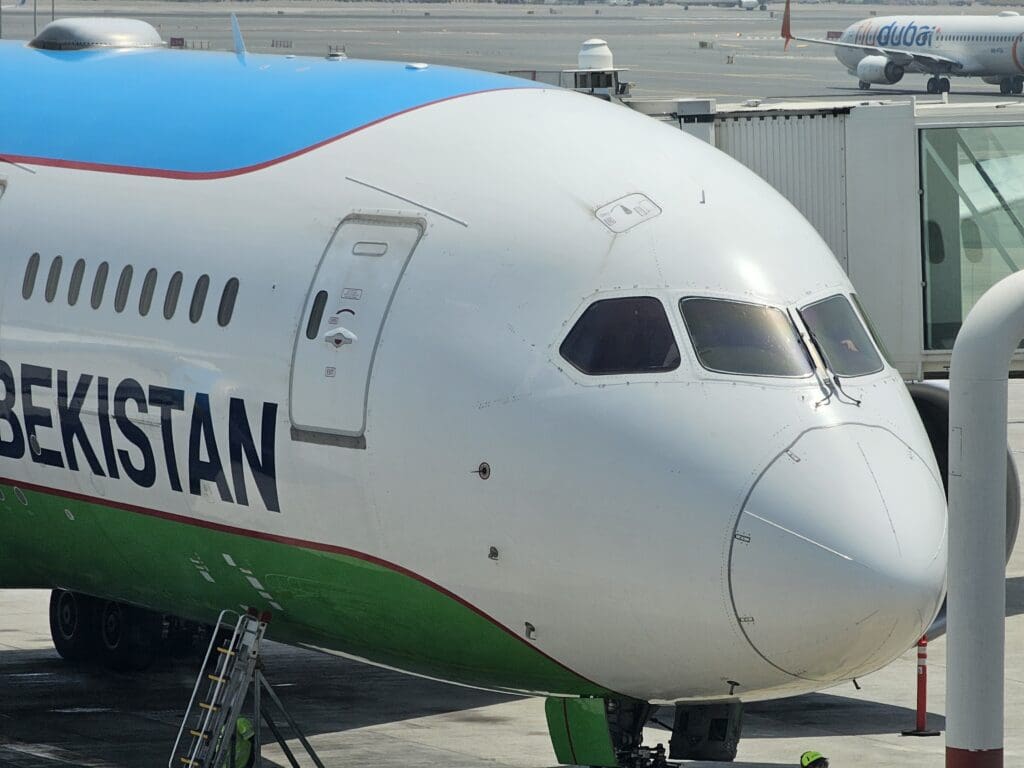
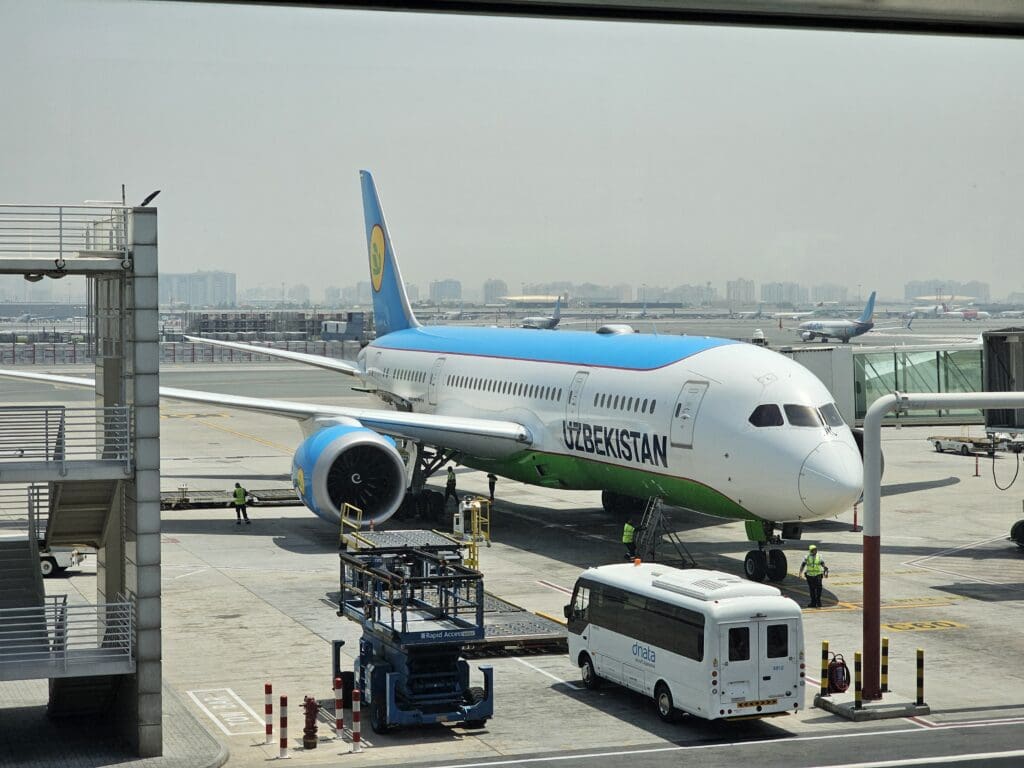
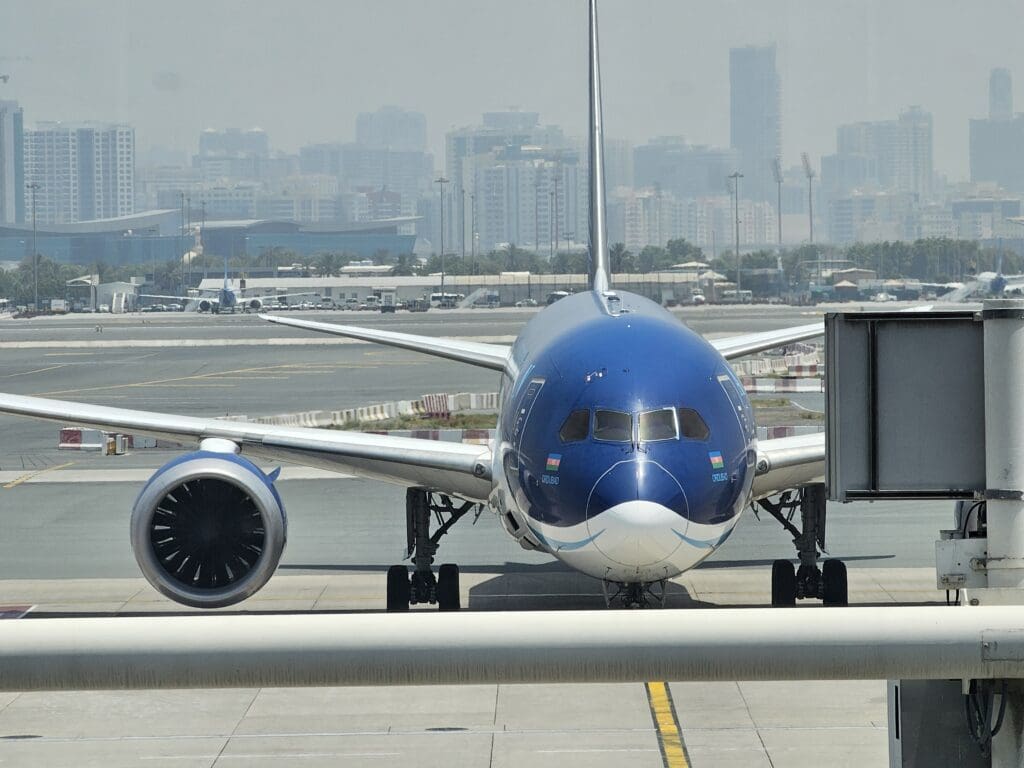
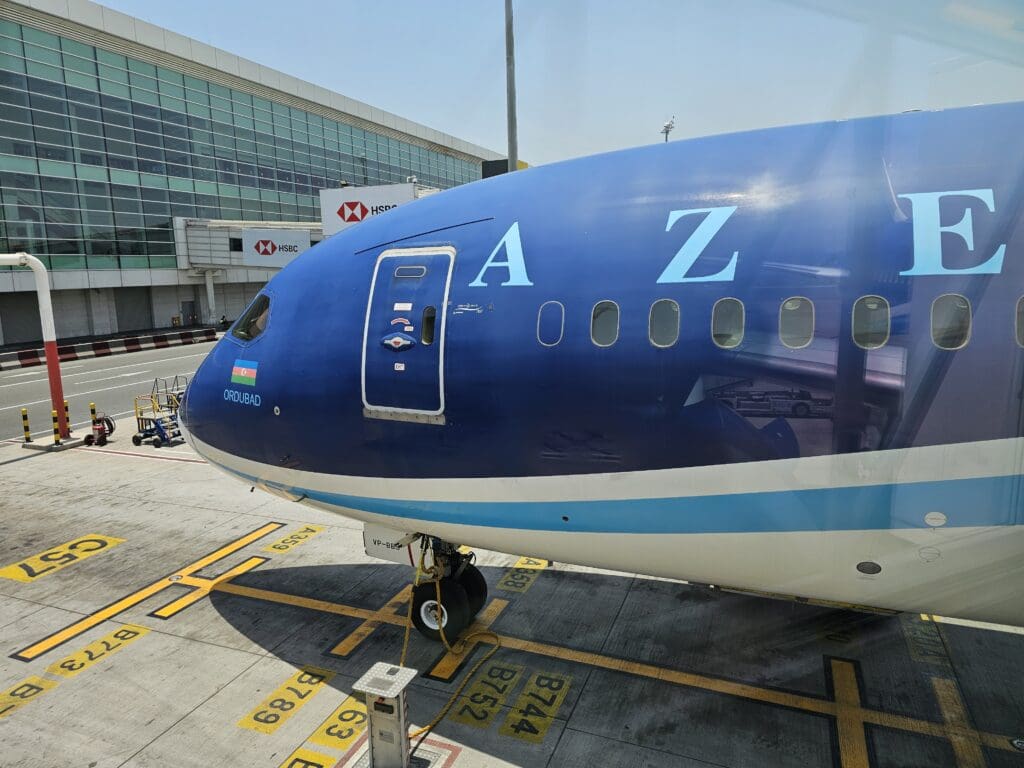
Considering the size of the Boeing 787, Azerbaijan Airlines’ rotation to Dubai is scheduled to have a comparatively short turnaround time of just an hour and fifteen minutes. However, having made a punctual departure from Baku and a speedy flight down to Dubai, the Dreamliner came to a halt at Stand C57 well ahead of schedule at 1141. That day, I would be flying onboard Bermudan-registered Boeing 787-8 Dreamliner VP-BBS, which, coincidentally, I had spotted on the ground at Beijing Capital the previous day! Assembled at Boeing’s plant in the South Carolina city of Charleston, this carries line number 247 and made its first test flight in November 2014, making it around 9.5 years old at the time of my flight. Painted in Azerbaijan Airlines’ distinctive regal blue livery and named Ordubad after the small city in the Nakhchivan Autonomous Republic, the aircraft was ferried to Baku in December 2014 and has flown with the airline ever since. During its almost decade-long career, the aircraft has been deployed on a mixture of short, medium and long haul routes, with its furthest destination being the recently ended route to New York JFK.
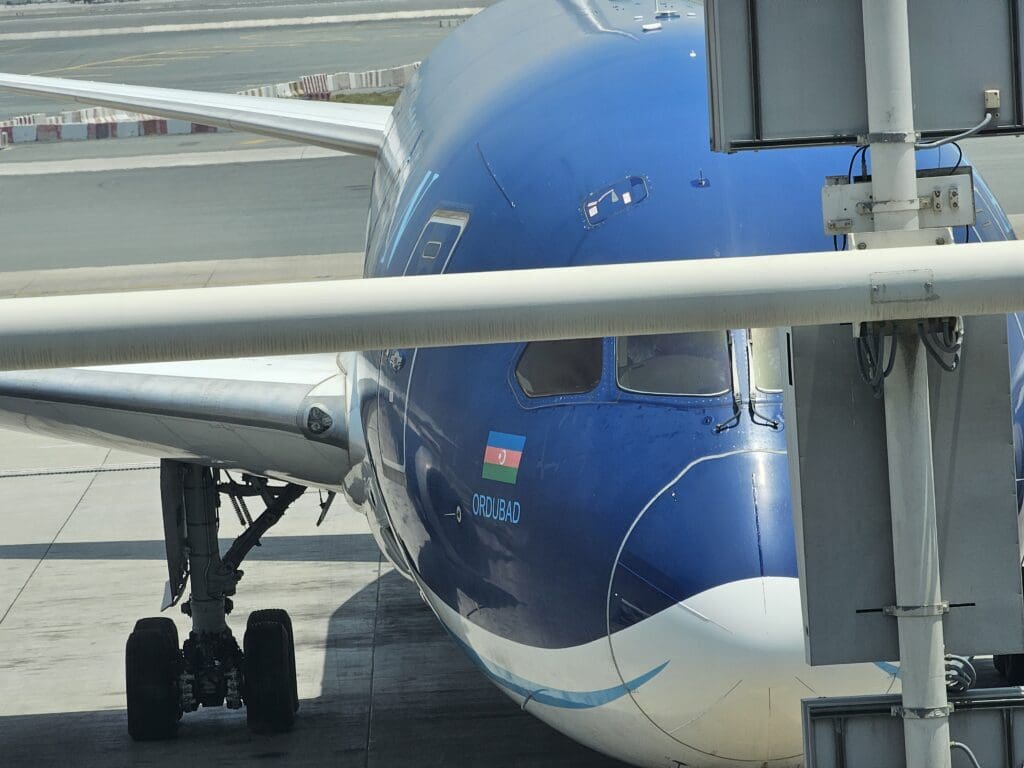
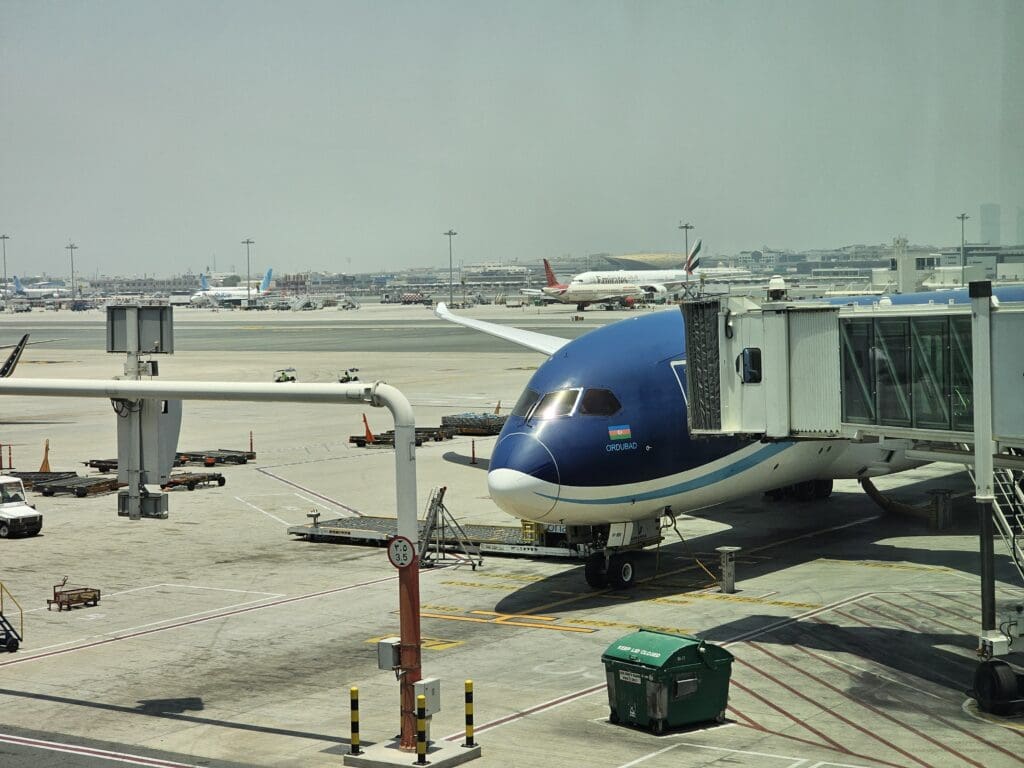
According to my boarding pass, boarding was scheduled to commence a total of sixty minutes before departure at 1210. Despite being somewhat sceptical that it could take a full hour to board a relatively low-density Boeing 787, as the clock struck midday, I decided to saunter over to Gate D19. Upon arriving there, indicating that boarding would indeed commence on time, an army of Dnata agents could be seen at the gate podium typing away and undertaking their final preparations for boarding. Whilst there was still plenty of time to go until our flight was scheduled to depart, there didn’t seem to be too many people lingering around, giving me some hope that I would be in for a quiet ride up to Azerbaijan.
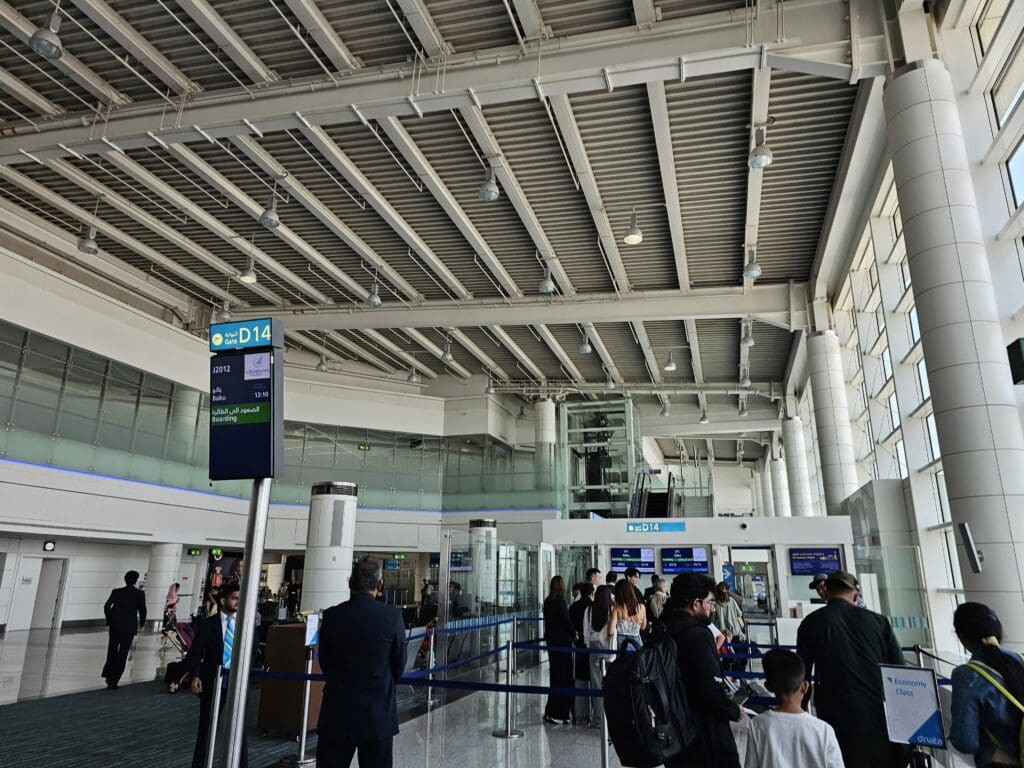
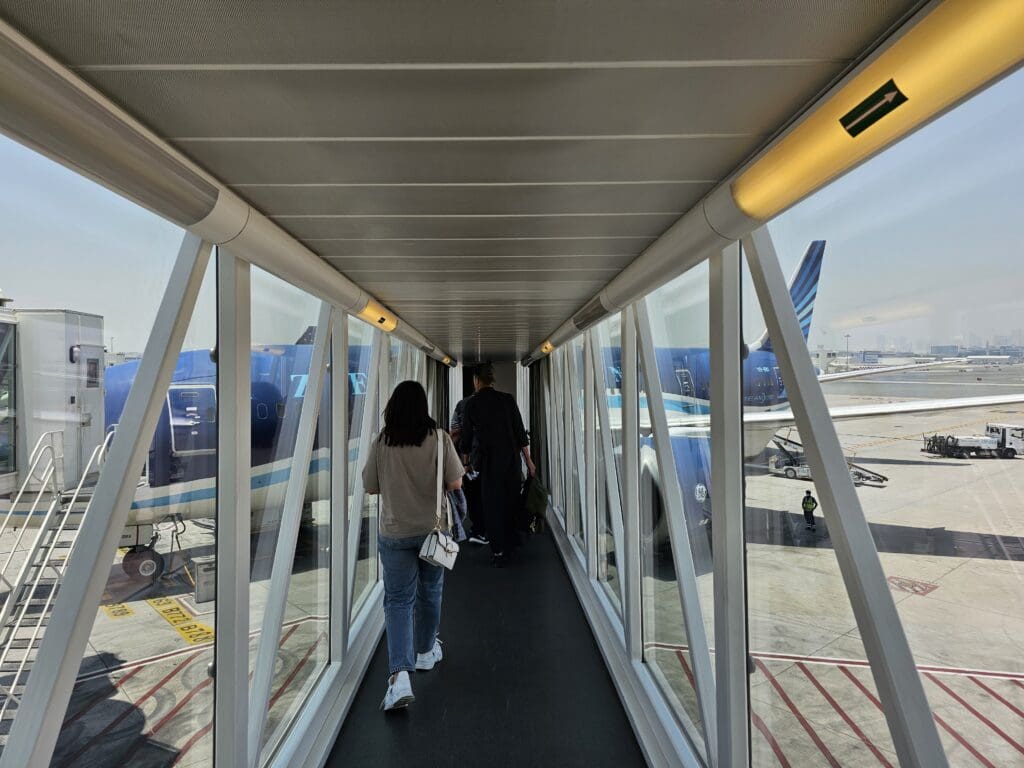
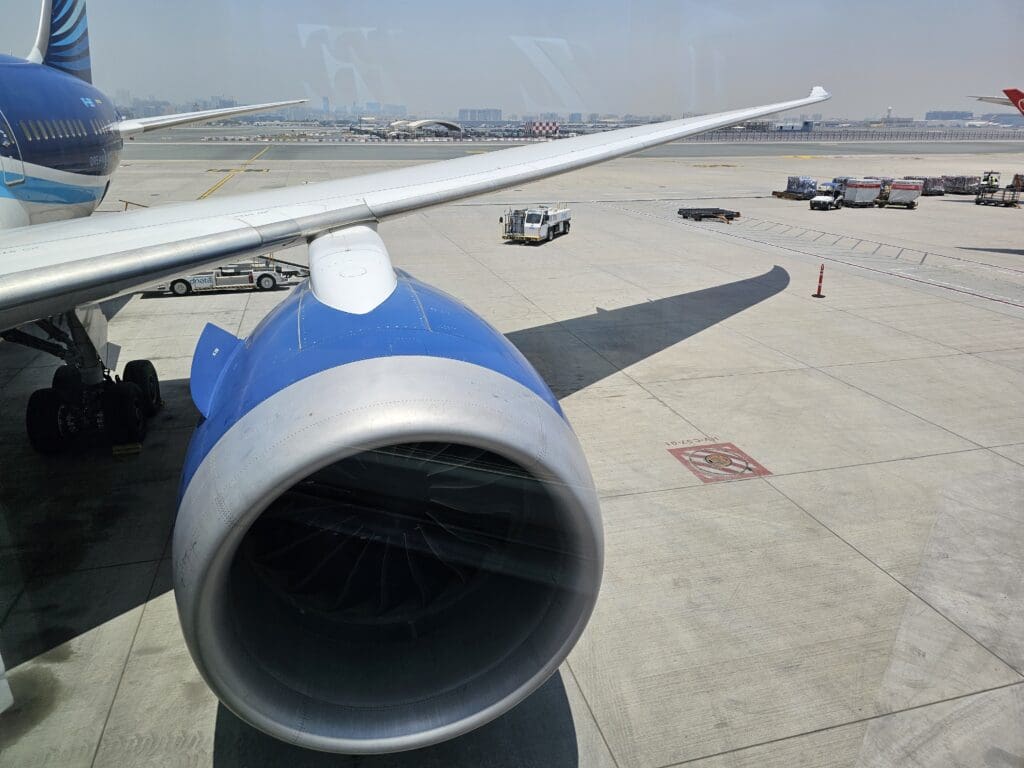
At 1210, a pre-recorded announcement rang out in English, Arabic and Russian, which advised passengers of the commencement of boarding. That lunchtime, all passengers were invited to board at once, with no priority appearing to be given to those in Business, elite members of the Azal Miles program or those requiring assistance. At this time, a short queue formed, and after joining this, thanks to the army of staff on hand, it wasn’t long before I shuffled forward and was greeted by a wonderfully friendly Dnata agent. Once they had scanned my boarding pass, checked my passport and wished me a nice flight by name, I voyaged down the glass jetbridge towards the waiting Dreamliner. Like many aviation enthusiasts, I am quite a fan of Azerbaijan Airlines’ unique mostly blue livery which seems to suit the Dreamliner well and is the polar opposite of the all too increasingly common plain and boring liveries of today. However, as I neared the aircraft, I couldn’t help but notice that this livery required a touch-up and was fading in plenty of patches across the fuselage.
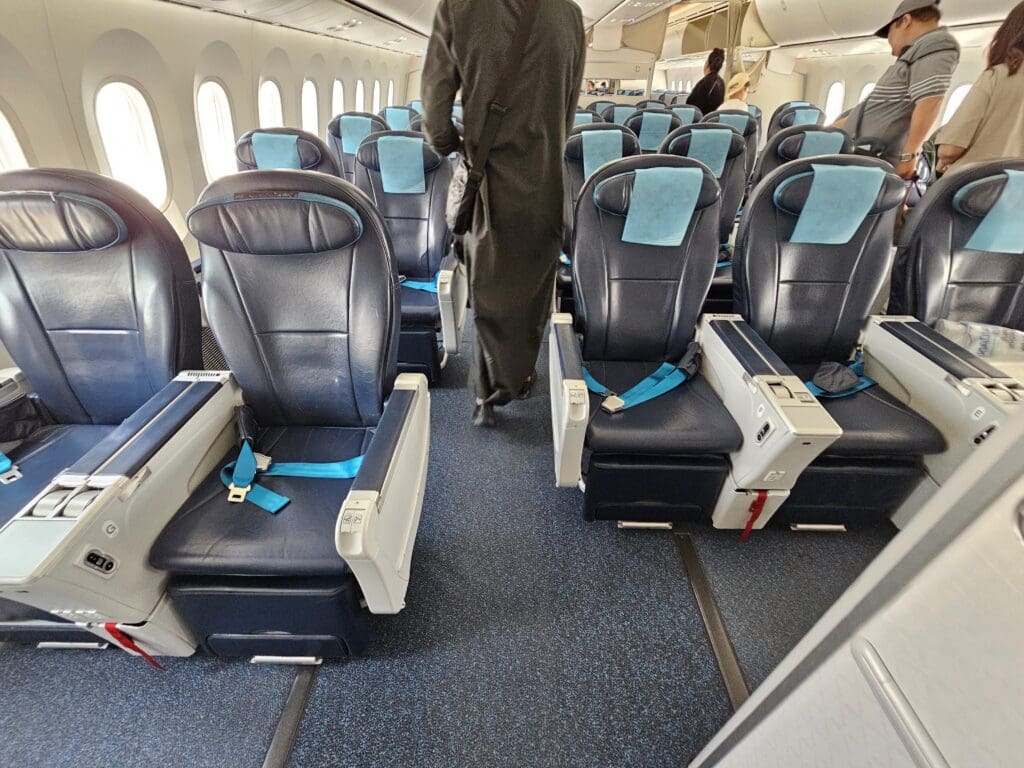
Following a short wait, I stepped aboard via the L2 door and was immediately greeted in Russian by one of the flight attendants. Upon showing my boarding pass, I was pointed down the second aisle and soon entered the Dreamliner’s large Premium Economy cabin. Interestingly, this cabin is unique to Azerbaijan Airlines’ two Boeing 787-8 Dreamliners, and cannot be found on their Boeing 767s or any of their narrowbody fleet. This features five rows of comfortable-looking Timco recliners in a 2-3-2 configuration. At first glance, these seemed to be more spacious than your typical Premium Economy seats and are the same model of seat that several leisure and low cost Dreamliner operators market as a Business class product. Being one of the first passengers to board the aircraft, I didn’t have to stop too many times as I trundled down the cabin and soon arrived in the forward Economy cabin where I received a quiet welcome in Russian from one of the flight attendants.
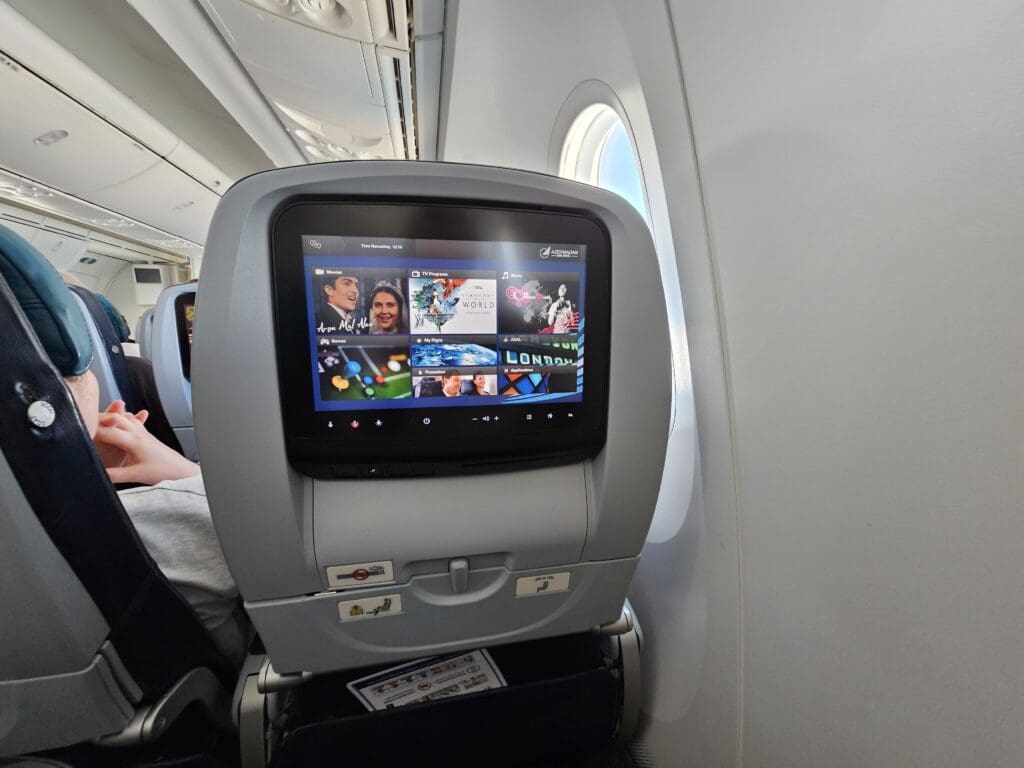
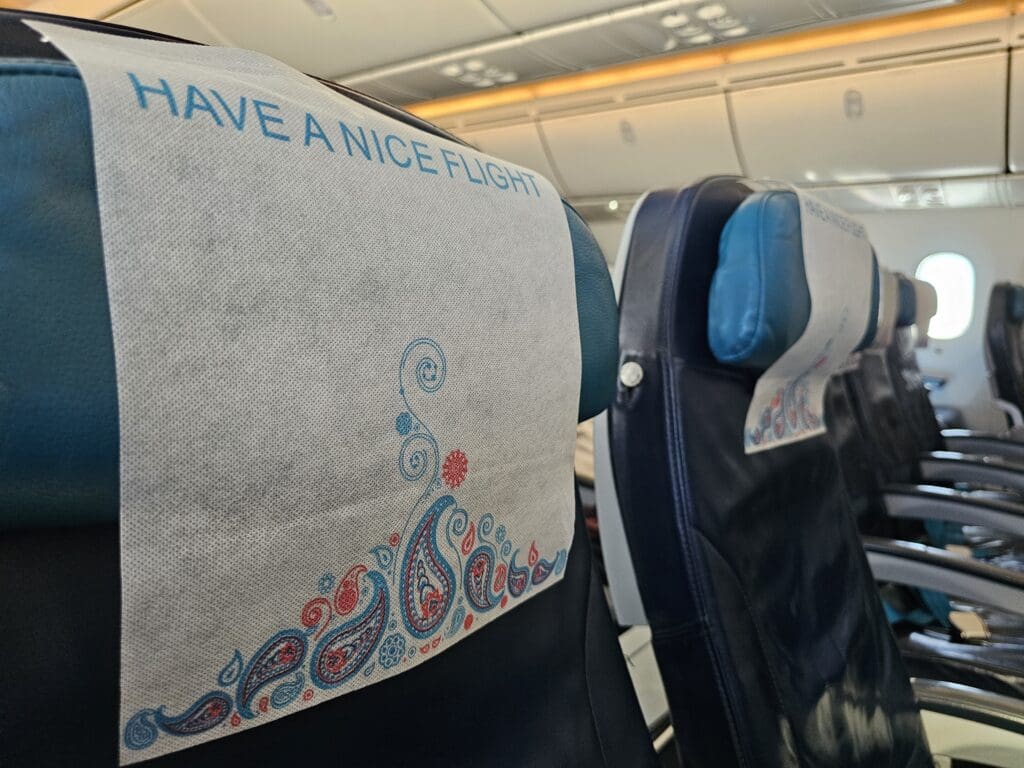
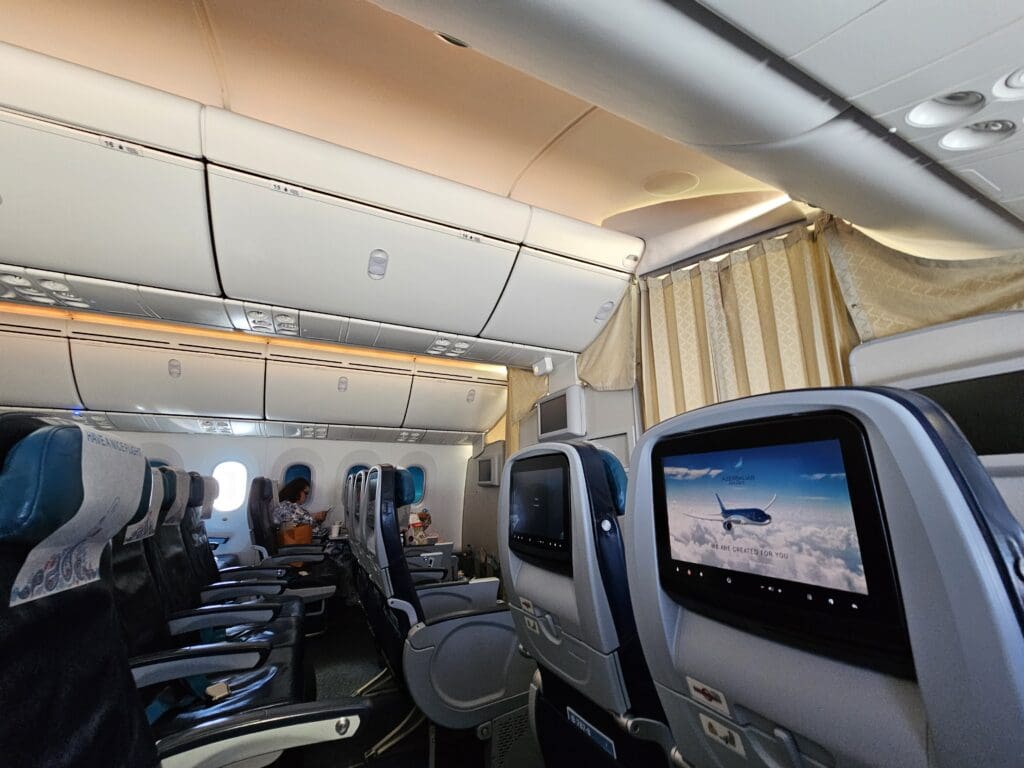
Despite Azerbaijan Airlines’ excitingly colourful livery, sadly, the interior of their Dreamliners is on the whole, plain and fails to provide anything memorable or out of the ordinary. In Economy, each seat is covered in dark pleather and topped with an adjustable headrest partially covered by a disposable turquoise fabric antimacassar. Distinguishing pre-reservable seats in the bulkhead and exit rows, and at the front of the forward Economy section, these seats feature a white disposable fabric antimacassar featuring a swirling pattern and the phrase, ‘Have a nice flight’. Each seat comes with a coat hook, a fold-down footrest, a bifold tray table and a relatively modern Panasonic touchscreen inflight entertainment screen. Beneath each screen, a USB port could be found, whilst two universal plug sockets were provided for each bank of three seats, although unfortunately, neither of these seemed to work that day. Finally, upon boarding, neither pillows nor blankets were provided as standard to those in Economy, although given the short length of the flight, this was not particularly surprising.
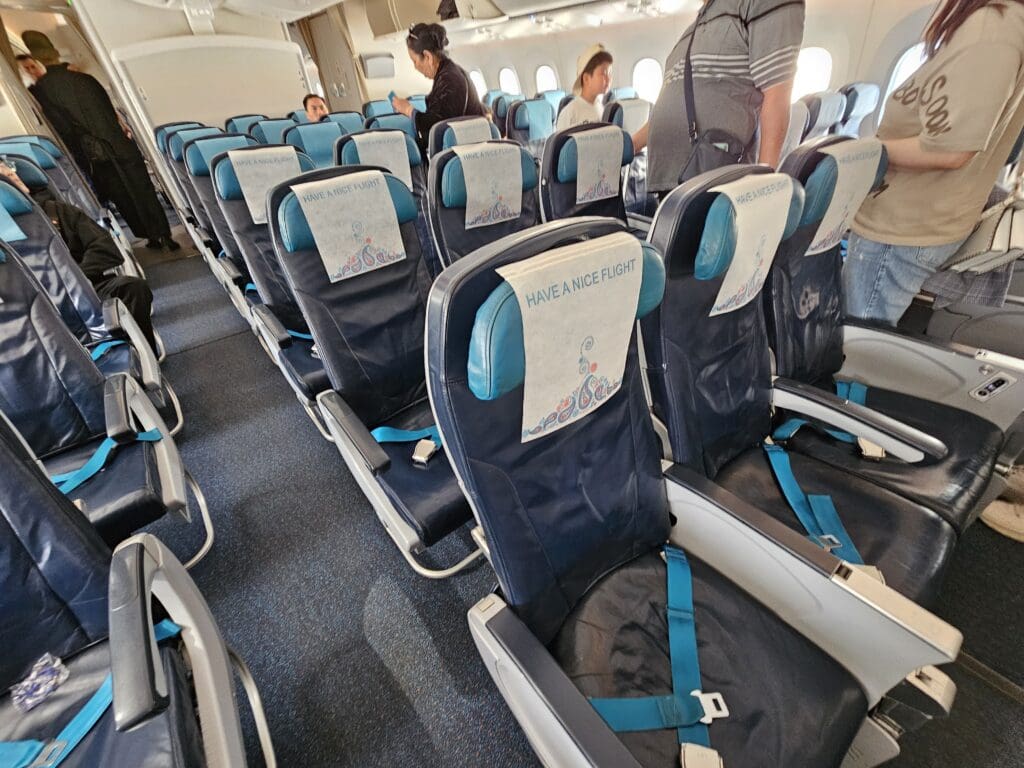
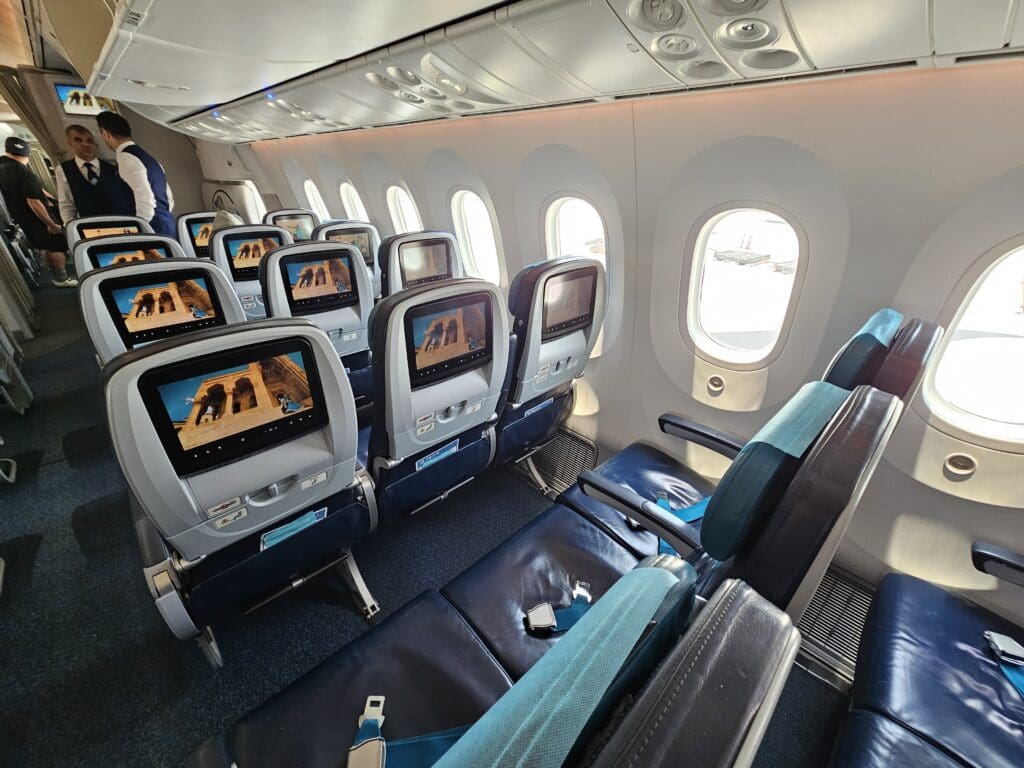
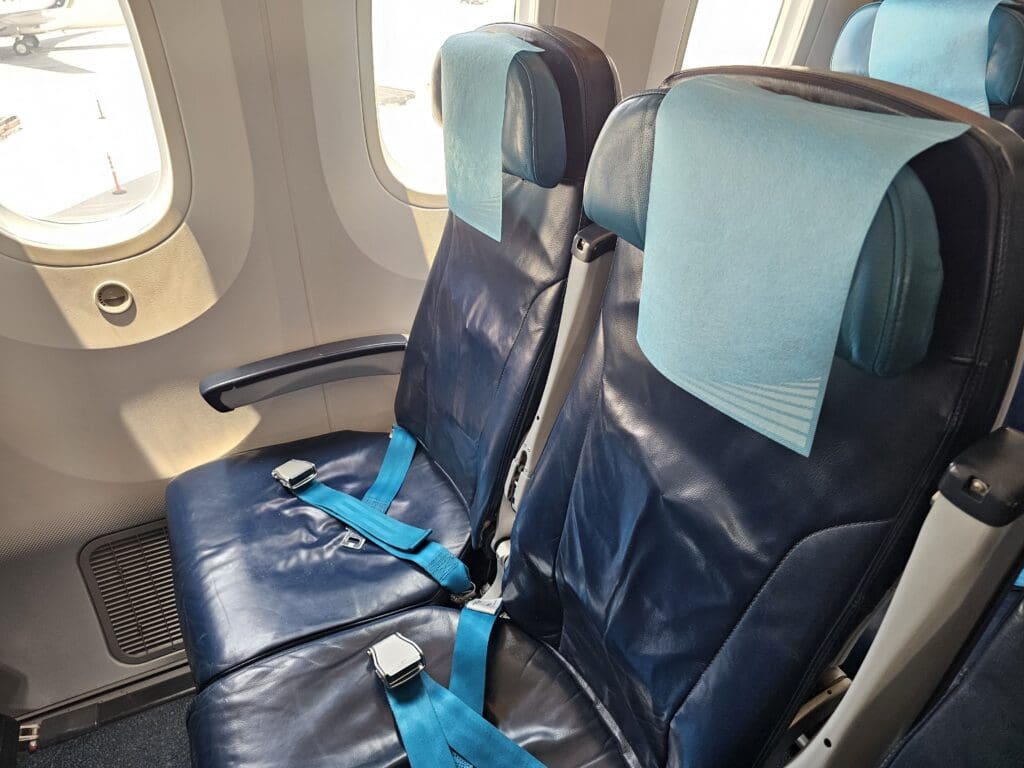
As I wandered down the cabin, upbeat traditional music rang out, accompanied by a montage of videos displaying a host of Azerbaijani sights and lively traditional dancing. Looking around, I wasn’t overly delighted to see that the cabin was far from tip-top condition, with both the seat covers and carpets appearing to be worn, frayed and in need of replacement. However, at that time, this was not my greatest concern as, once in the rear Economy cabin, I soon realised that my seat, 28L was in the dreaded window-less window seat! Seeing as the cabin was still reasonably empty and given the lack of passengers at the gate, I hoped that a few empty rows would remain and thus enable me to slip into an empty window seat. Thus, I decided to linger around at the rear of the aircraft, where I remained unquestioned by the crew who seemed to be deeply engaged in loud general chit-chat in the rear galley rather than welcoming passengers!
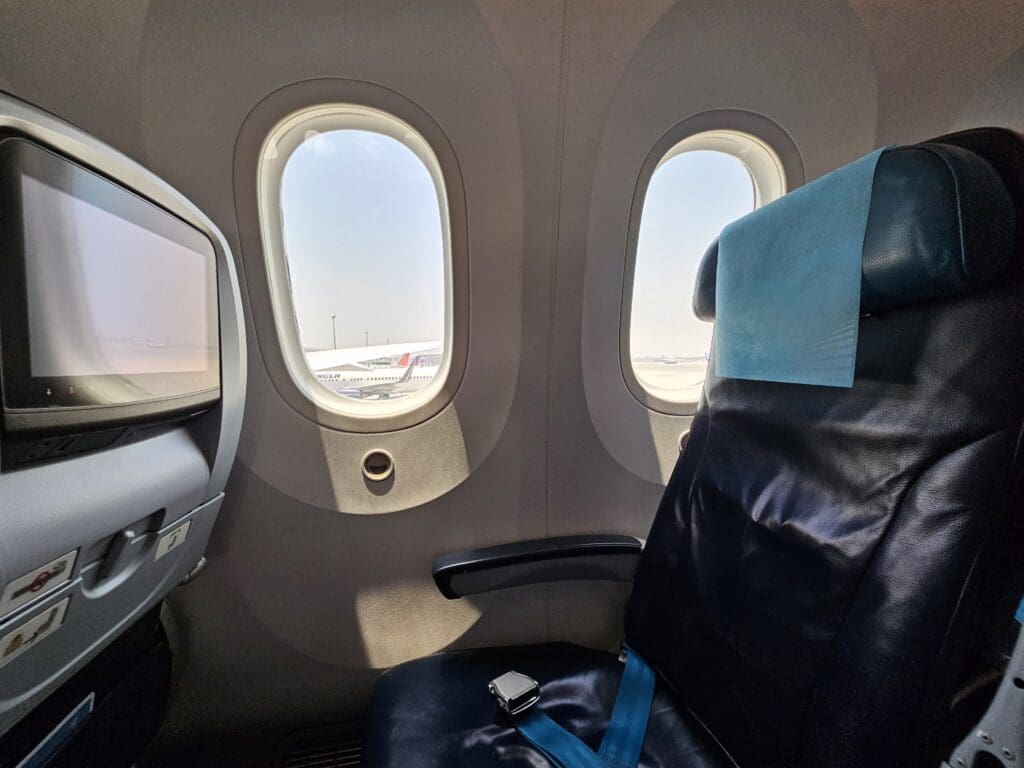
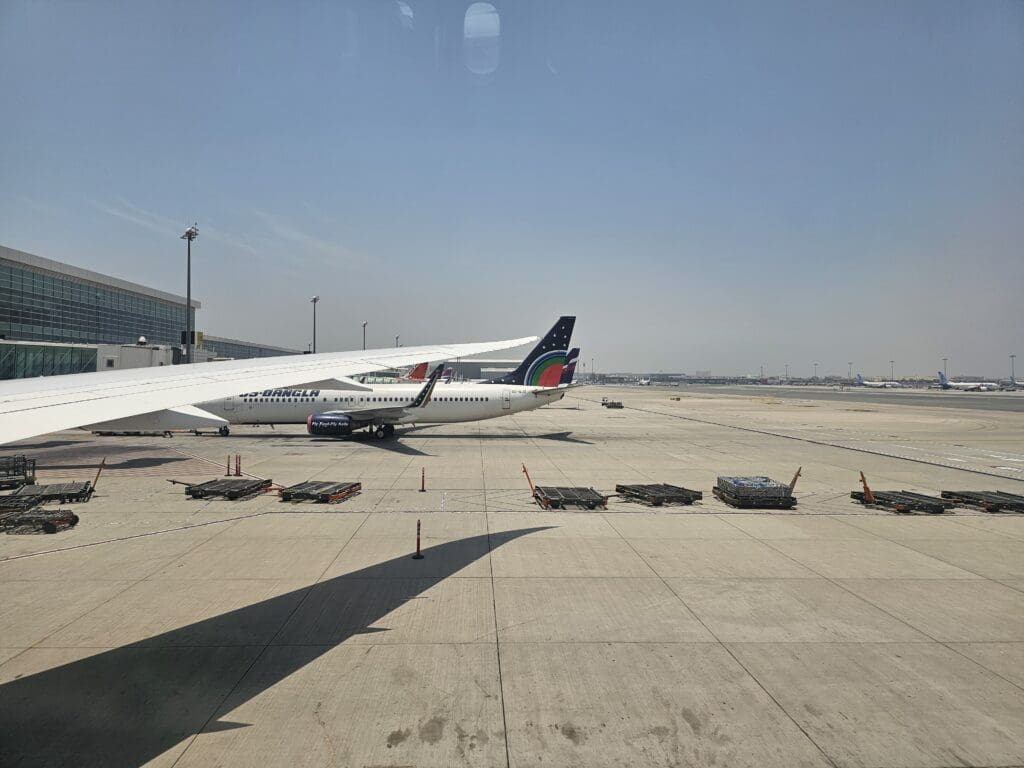
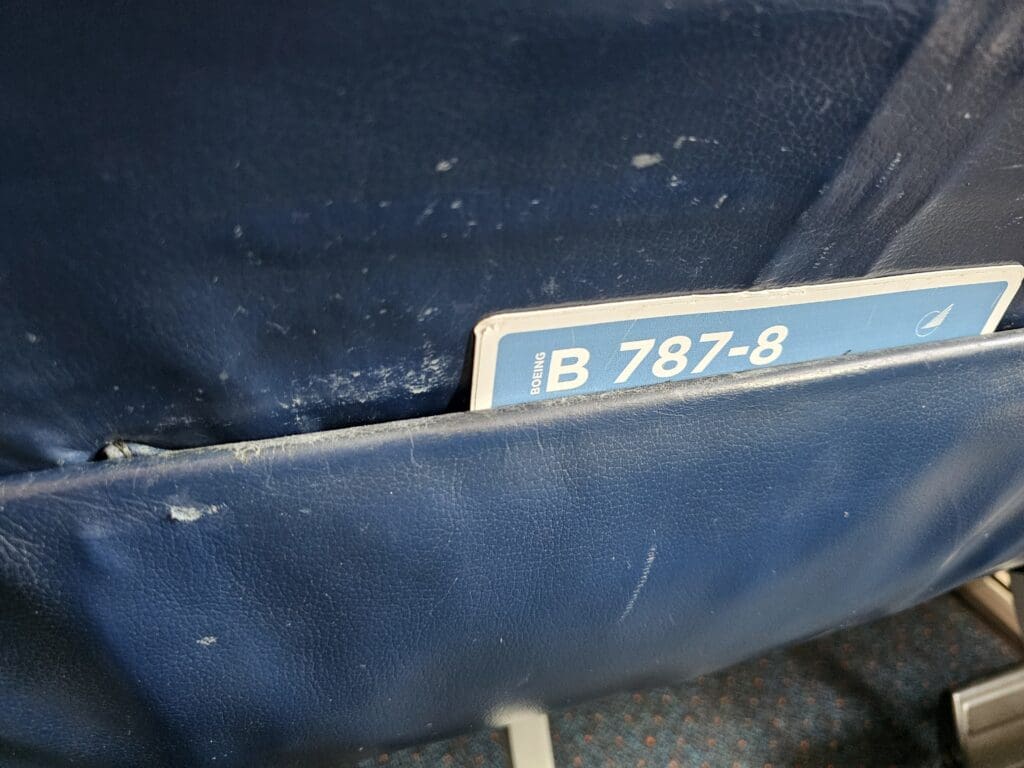
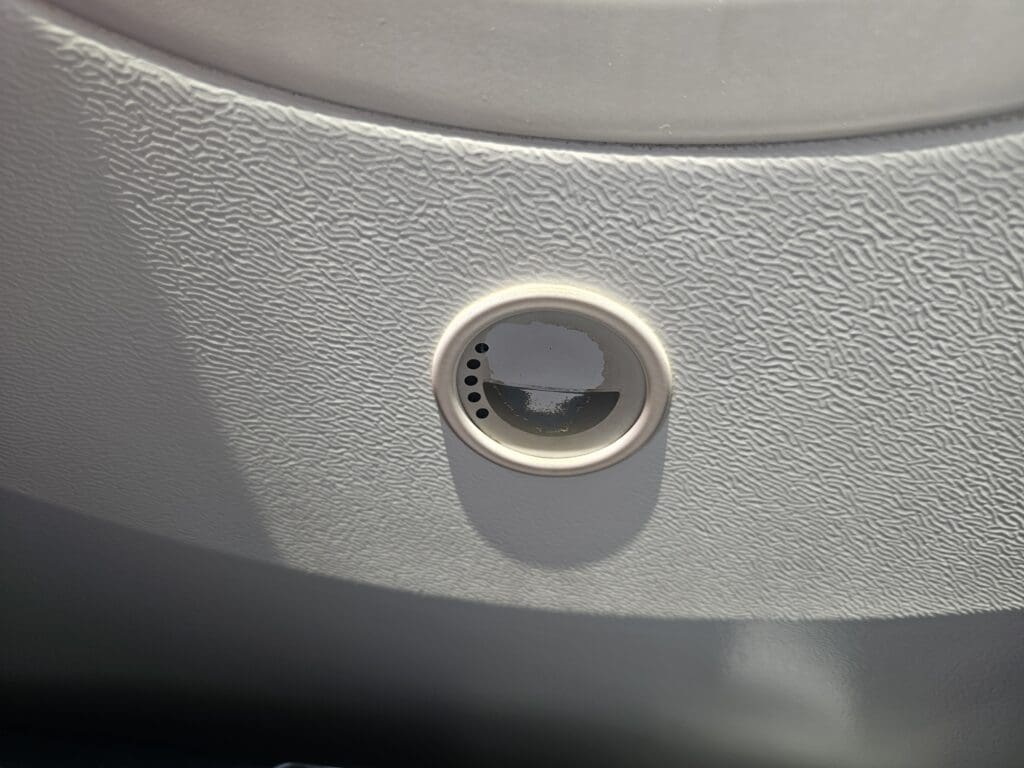
Unfortunately, fifteen or so minutes later, it became clear that the chances of a free row were slim, so I accepted my fate and slipped into 28L, squeezing past a Russian mother and their hyperactive young child. Once seated, taking the edge of the battered state of the cabin, I found that the area around my seat appeared to have been thoroughly cleaned during the turnaround, with no signs of crumbs or rubbish, whilst the seat was very comfortable and offered a great amount of legroom.
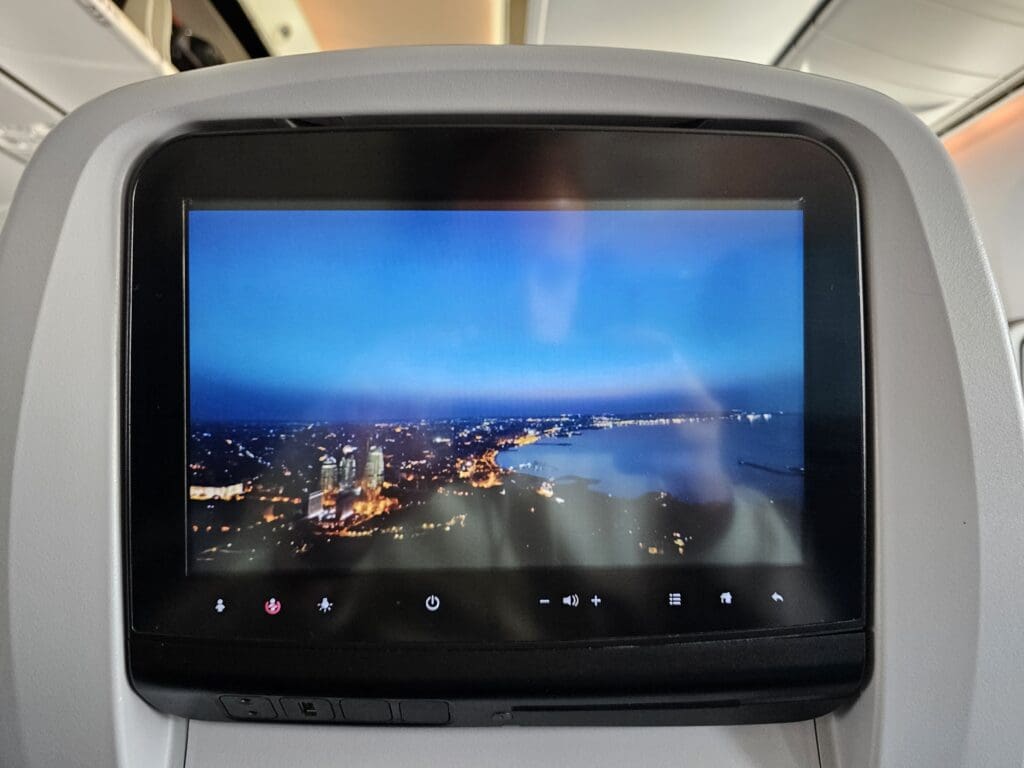
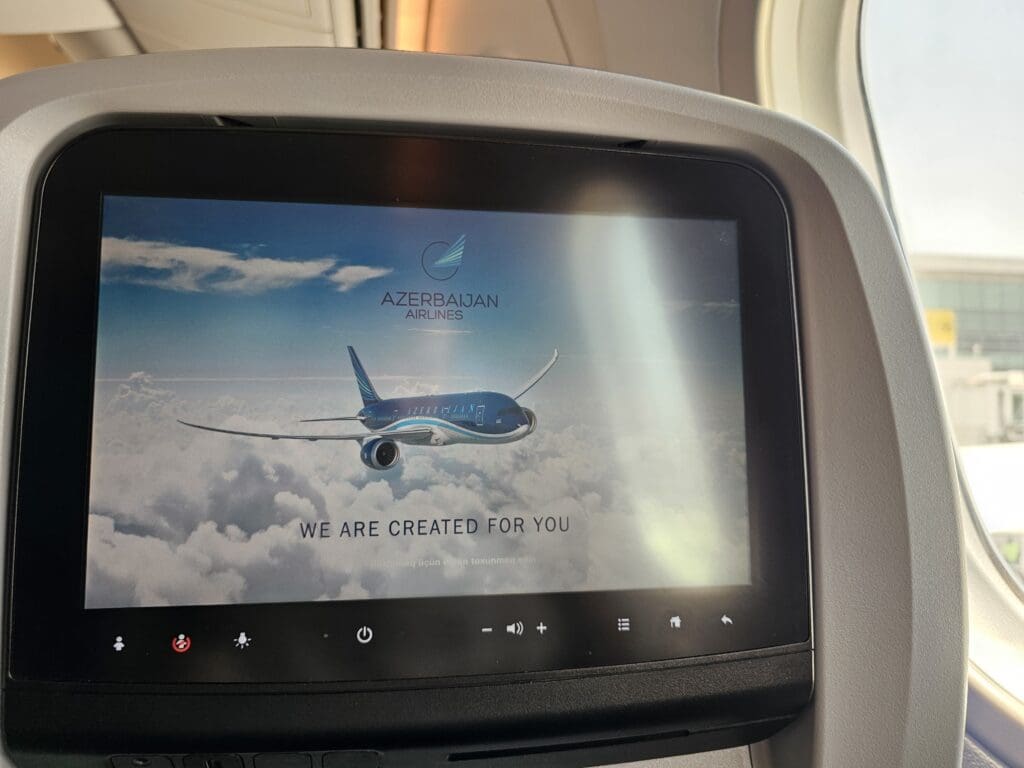
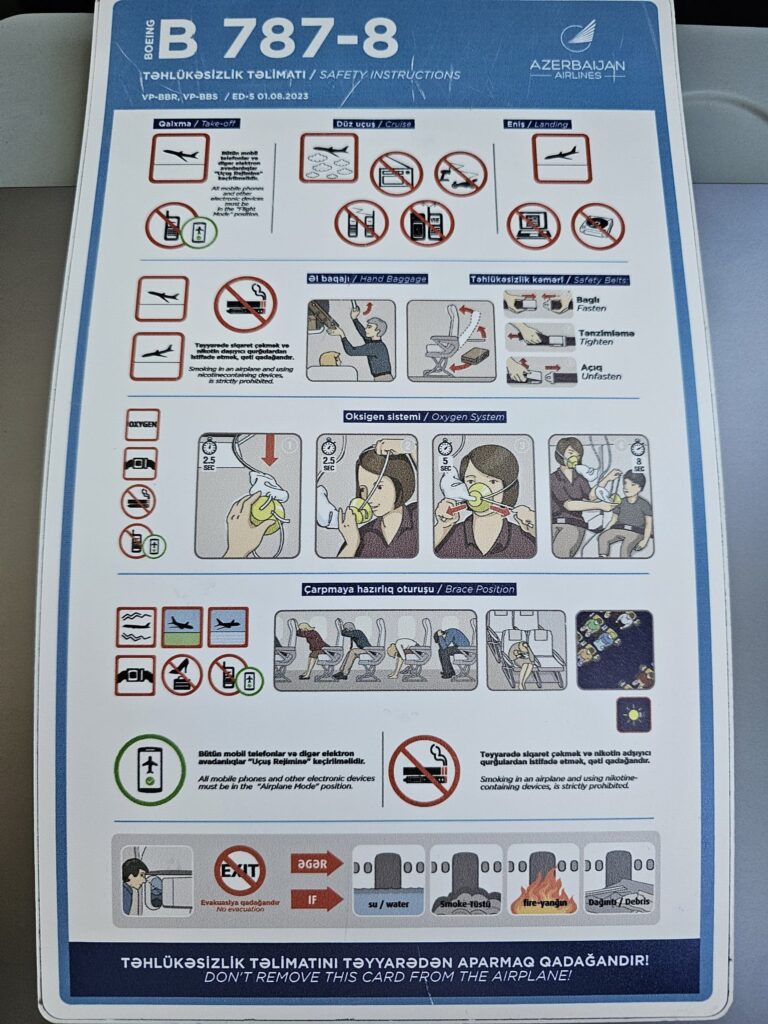
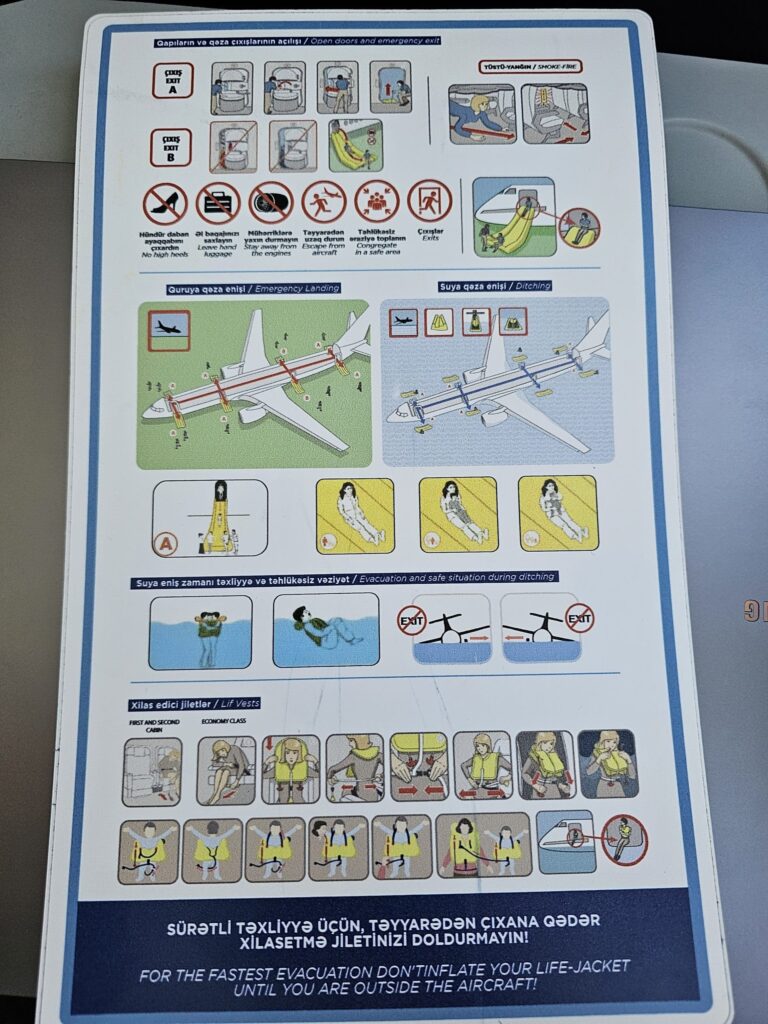
Perhaps thanks to the early start to boarding, the final passenger made it onto the aircraft with around ten minutes to go until our scheduled departure time. Looking around, the cabin seemed to be about 70% full and it seemed that the vast majority of passengers took the form of homeward-bound Russian tourists, presumably connecting onto Azerbaijan Airlines’ evening flights to Moscow and St Petersburg. Despite Azerbaijan Airlines’ bargain fares between Dubai and London, I failed to hear any British accents during the flight. Once all were onboard, the upbeat traditional music came to an end before the Purser performed a trilingual welcome announcement in Azerbaijani, Russian and English. This contained the usual welcomes, thanks and all the usual information about the flight, as well as a few quick safety messages. Whilst this was underway, several crew members passed through the aisles, distributing fairly standard economy-quality headphones. Almost immediately after the Purser completed their welcome announcement, Azerbaijan Airlines’ safety video took over the inflight entertainment screens. This took the form of a seemingly high-budget production that takes passengers on a journey through Azerbaijan, highlighting some of the country’s culture and sights whilst simultaneously going through the safety procedures.
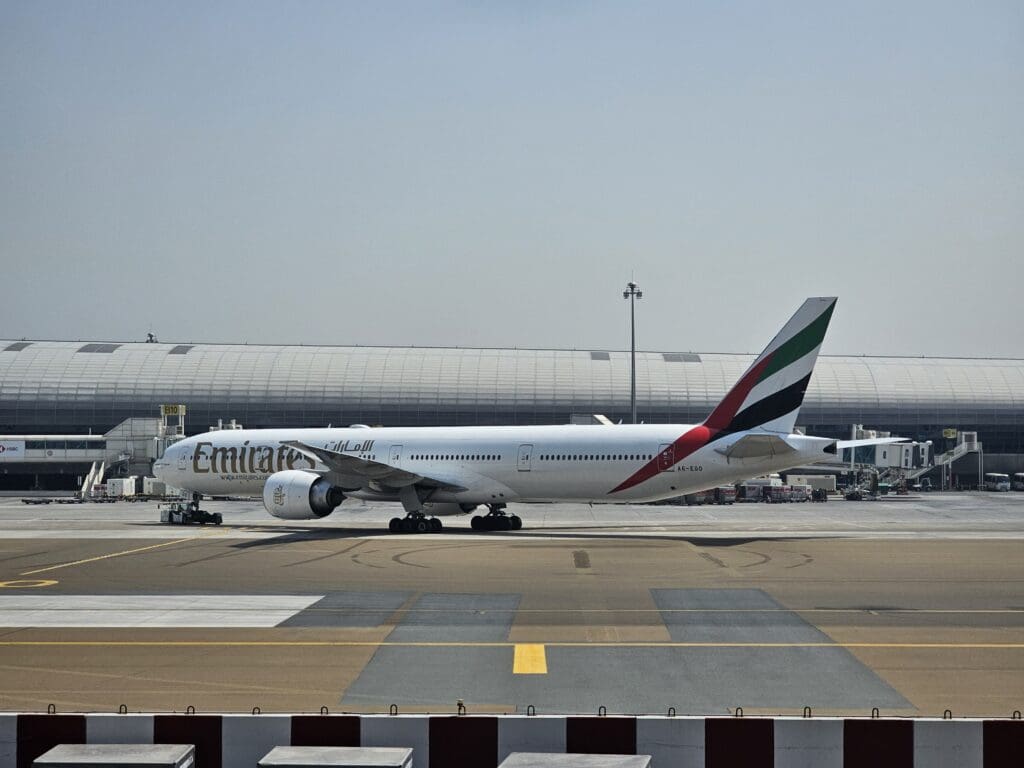
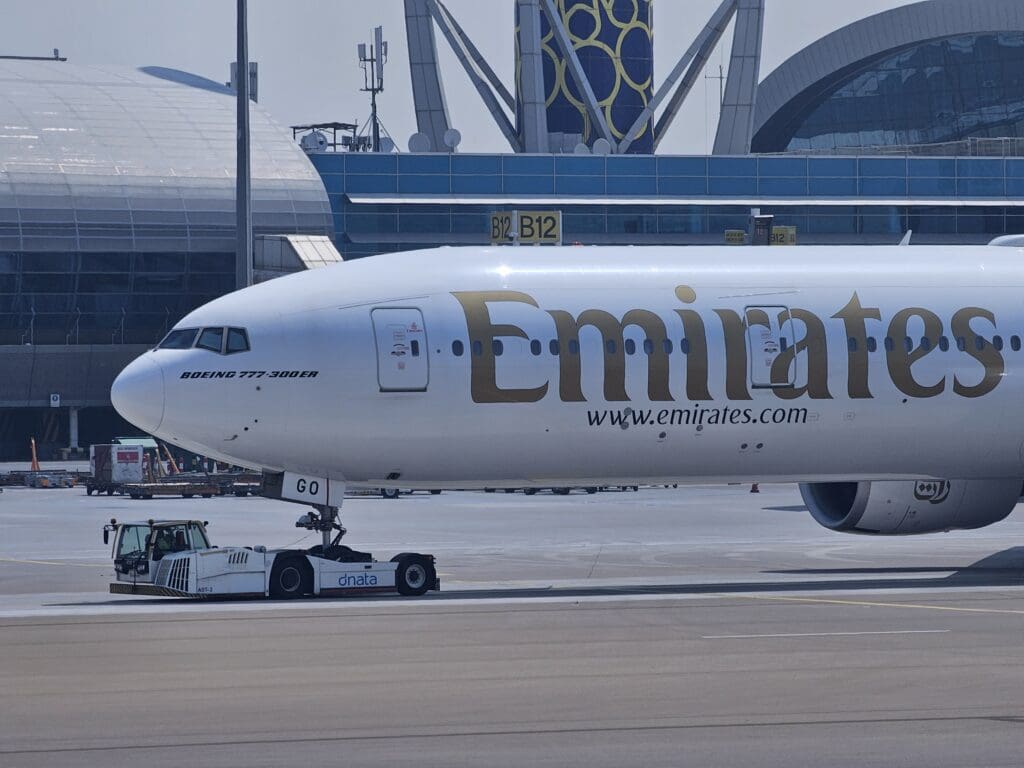
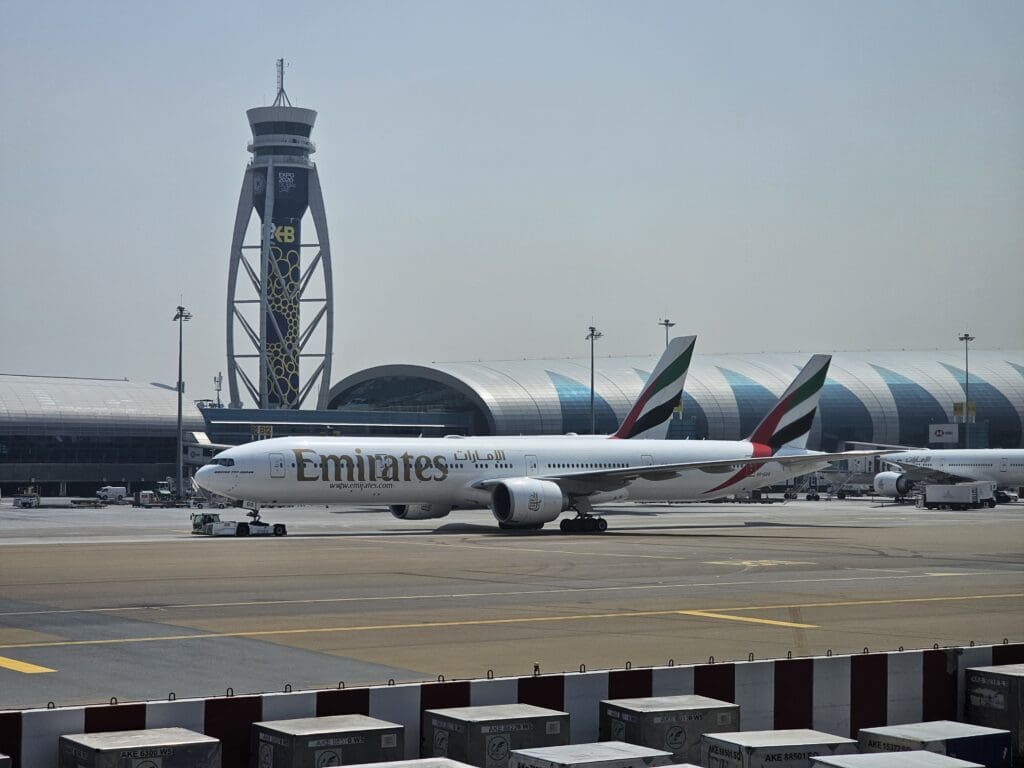
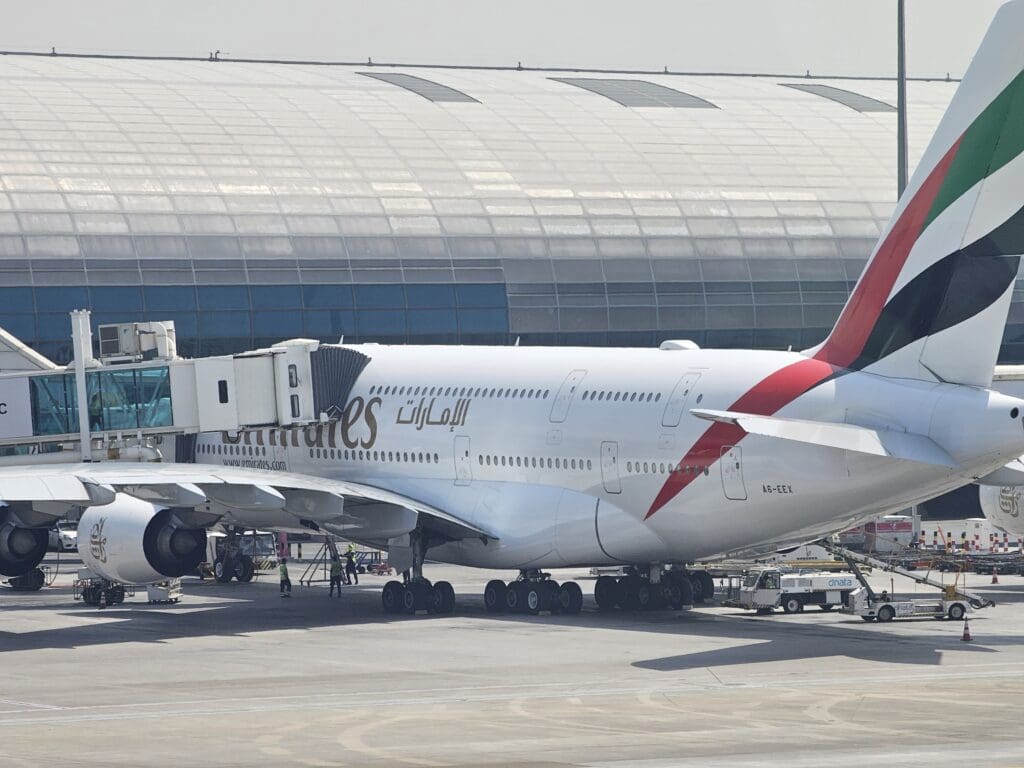
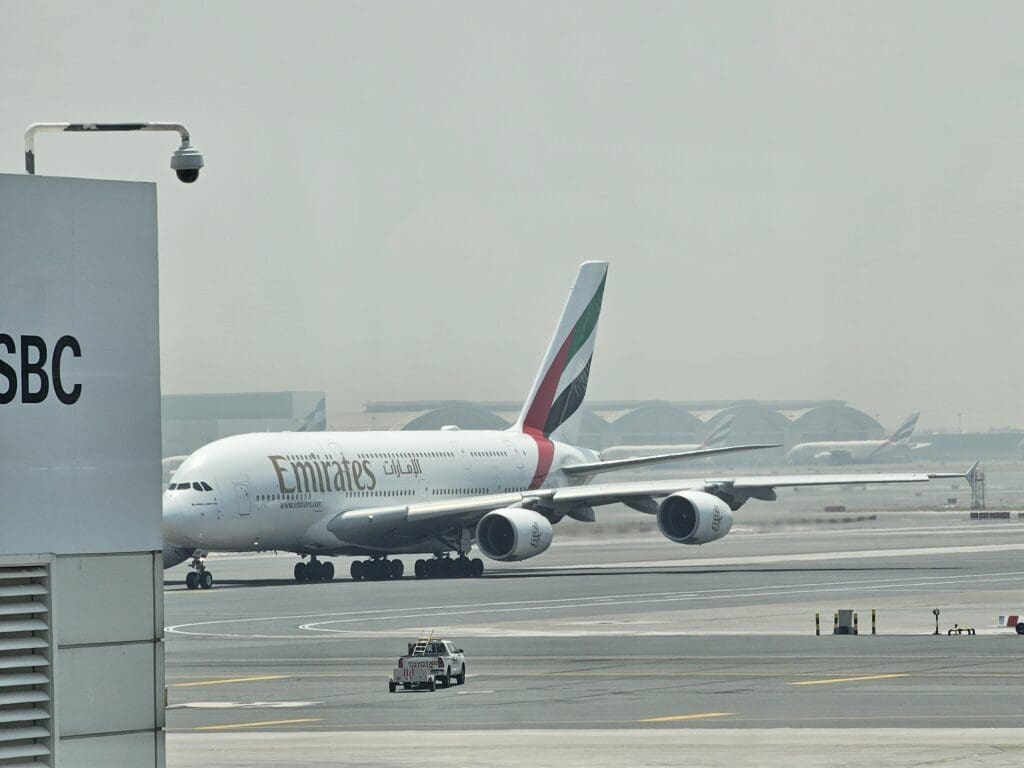
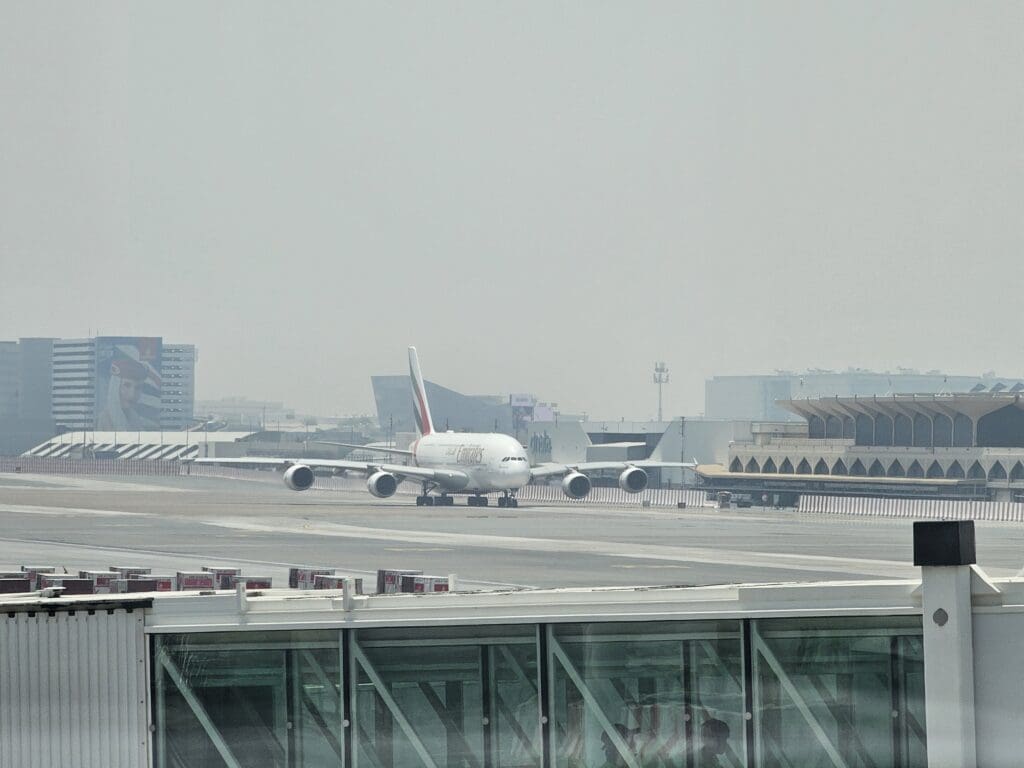
As the safety video was played, at 1307, the Dreamliner could be felt being pushed back away from its stand and soon a series of whirs could be heard as its two gigantic General Electric GEnx-1B engines powered up into life, ready for the 1,093-mile journey to Baku. A few minutes later, the flaps whined as they dropped into position and once the tug had been disconnected, the Boeing began its taxi to the end of Runway 30R. Given my lack of a window and with no external cameras accessible via the inflight entertainment system, I couldn’t really track the progress of our taxi. However, this did take us past Emirates’ hub at Terminal 3 and the masses of the Airbus A380s and Boeing 777-300ERs waiting to head off to destinations as close as Muscat and as far away as Auckland. After traversing almost the entire length of the runway, the Dreamliner came to a halt at the end of this where we paused for a few moments. Soon, we headed onto the runway and following another short pause, at 1322, the two engines spooled up and we commenced a powerful and sporty take-off roll. Perhaps being rather lightly loaded for the short flight, it wasn’t long before the nose was pointed skywards and we rocketed upwards into the sunny Emirati skies, soon leaving the sprawl of Dubai International Airport behind.
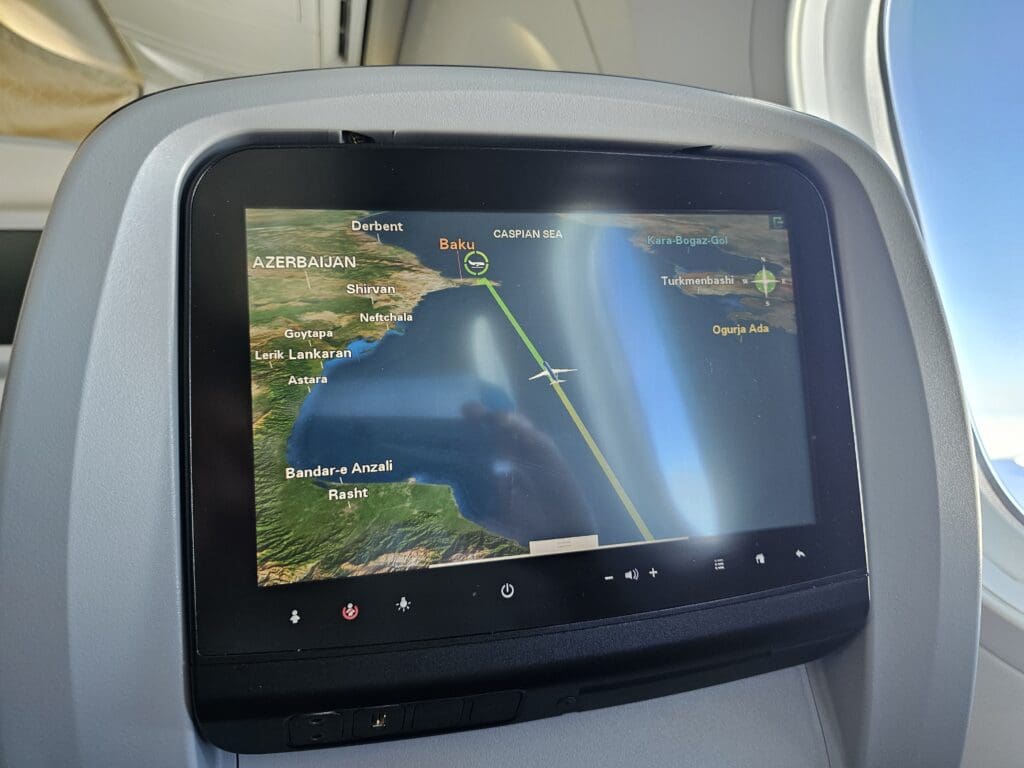
After leaving the airport, the Dreamliner soon banked to the right and trundled up the coastline of the Musandam Peninsula. Had I had the luxury of a window seat, the clear weather that lunchtime would have offered me a superb view of the Emirates of Sharjah, Ajman, Umm Al Quwain and Ras Al-Khaimah before crossing the waters of the Persian Gulf. However, I instead decided to watch the moving map and tracked our progress that way instead! Undertaking a smooth climb, it wasn’t long before the seatbelt signs were switched off at which point, many of my fellow passengers appeared to stand up, move around the cabin and congregate in the aisles. That lunchtime, it seemed that there were plenty of groups who had ended up being split up and were sat at opposite ends of Economy.
No more than twenty minutes after taking off from Dubai, the Dreamliner soared over the Iranian island of Qeshm and we soon reached the Iranian mainland near the coastal city of Bandar Abbas. Continuing northwards over the southeastern province of Hormozgan, the aircraft levelled off at its cruising altitude of 36,000 feet ,at which point the inflight service commenced. Despite the short length of the flight, Azerbaijan Airlines treated all passengers to a full meal, something that would have been unthinkable on a similarly lengthed flight back in Europe! Wasting no time, it wasn’t long before the service carts were rolled out into the aisles, with each being manned by two flight attendants – one who took responsibility for serving drinks, whilst the other distributed meals. Upon reaching my row, the first flight attendant asked me for my drink choice in Russian. Whilst a decent array of both alcoholic and non-alcoholic drinks was offered, I went for a plain and simple orange juice, which seemed to have an unnaturally sugary and sweet taste and a worryingly fluorescent appearance! Next up was the meal service, with passengers being offered the time-old options of beef or chicken.
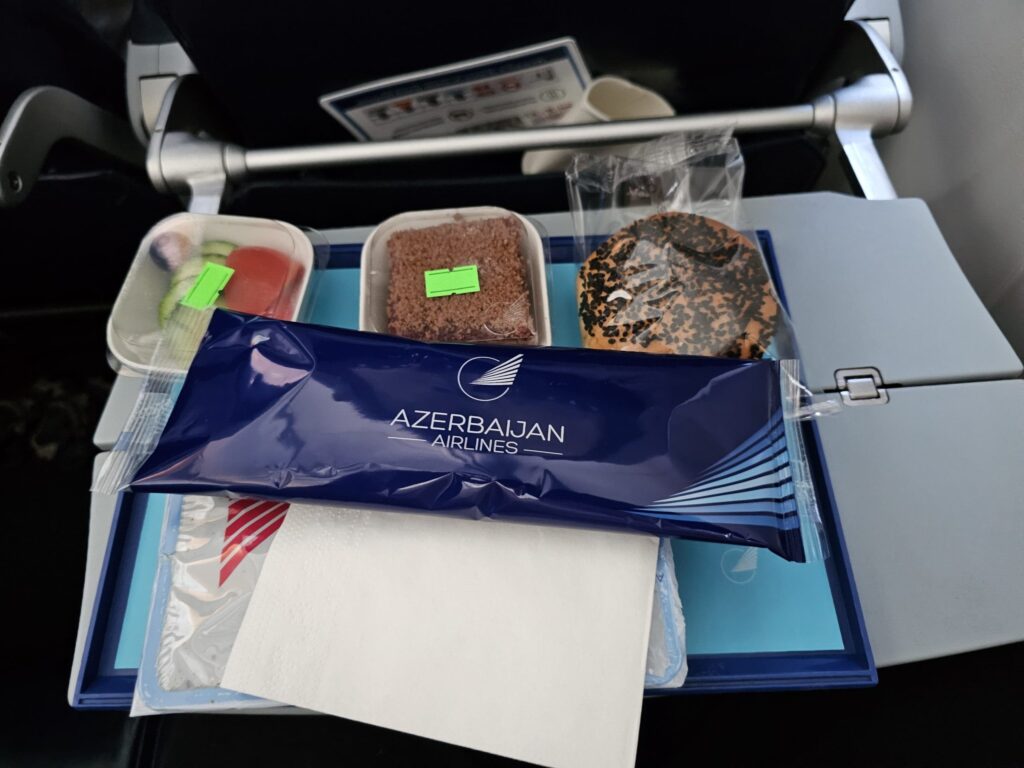
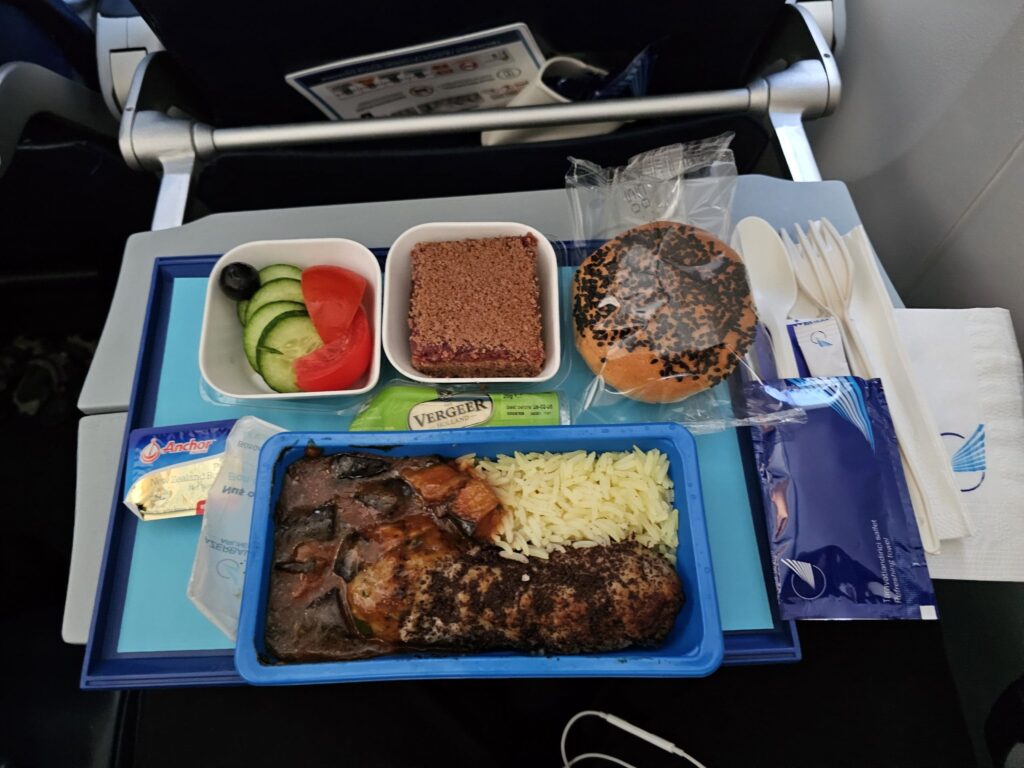
Opting for the beef, I was soon handed a tray that contained the main dish alongside a simple side salad that consisted of unseasoned cucumbers, tomatoes and olives, a packaged bread roll with margarine, a block of gouda cheese and a small square sponge cake for dessert. As I peeled the lid back from the main dish, I discovered this to be beef kofta in a mystery sauce and was accompanied by a small portion of rice. Soon getting to work on this, whilst by no means being Michelin star cuisine, the meal was perfectly edible, and the quantity left me with no qualms given the length of the flight. Around twenty minutes after handing out the main meals, the crew took to the aisles once more and collected the empty trays whilst handing out teas and coffees. Opting for the latter, this was poured into a nicely branded paper cup and was of standard quality for an inflight coffee.
As we cruised northwards, thanks to my windowless window seat, I was unable to gaze out at the impressive and diverse landscapes of Iran as we headed north through the skies of the provinces of Kerman and Meybod. Feeling a little tired and wanting to save the delights of Azerbaijan Airlines’ inflight entertainment system for my longer flight to London, I drifted off to sleep and remained in the land of nod for about twenty minutes. Having been woken up by a few jolts of short-lived turbulence, I noticed that my neighbours had arisen for a lavatory break and so I decided to follow suit. In total, four lavatories are available for Economy class passengers, all of which are sandwiched between the two Economy cabins. Choosing one of these at random, upon entering the lavatory, I found this to be a little messy, and like the rest of the cabin, this seemed to be in a battered and worn state. Nevertheless, this served its purpose and was stocked with the basics.
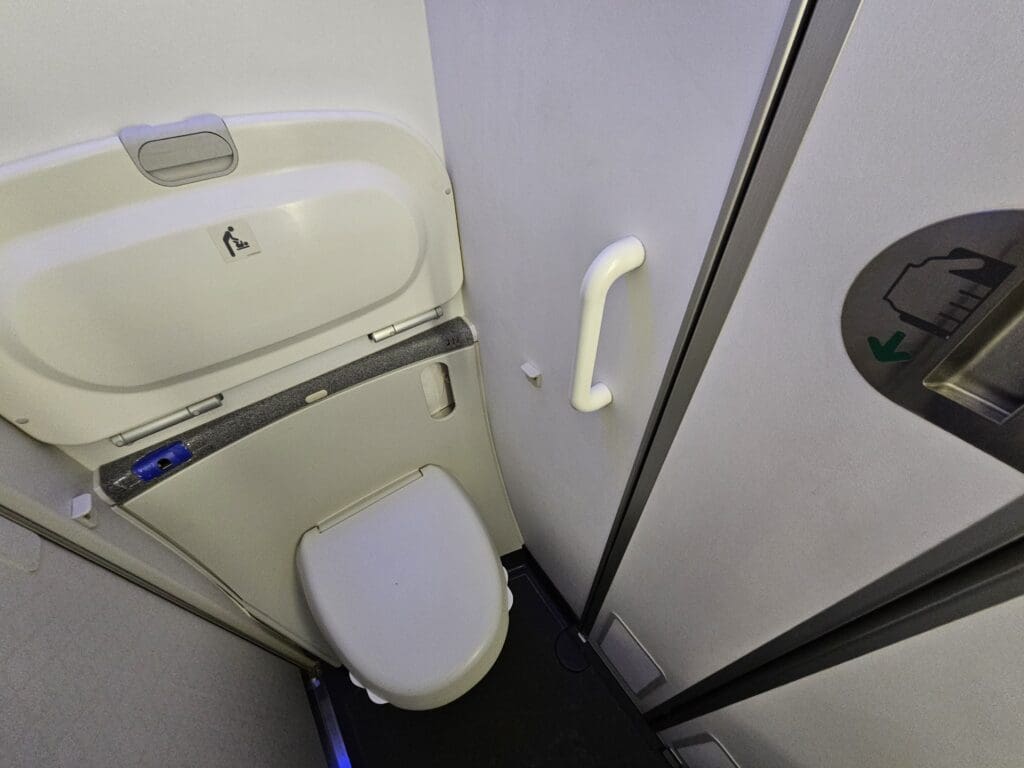
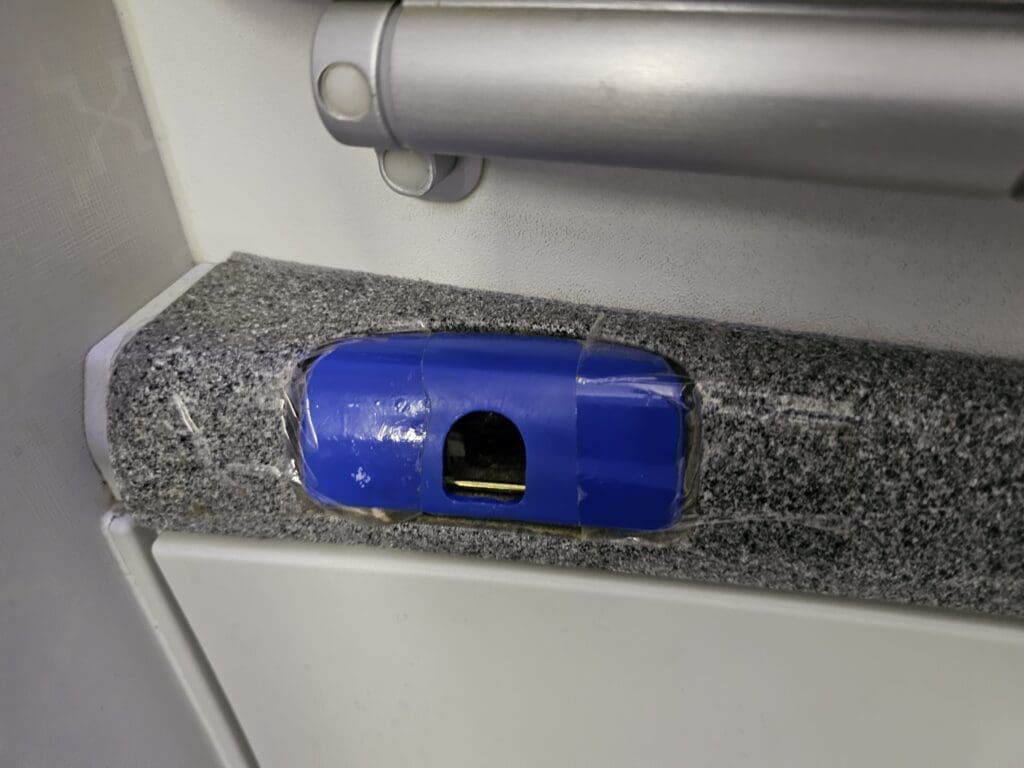
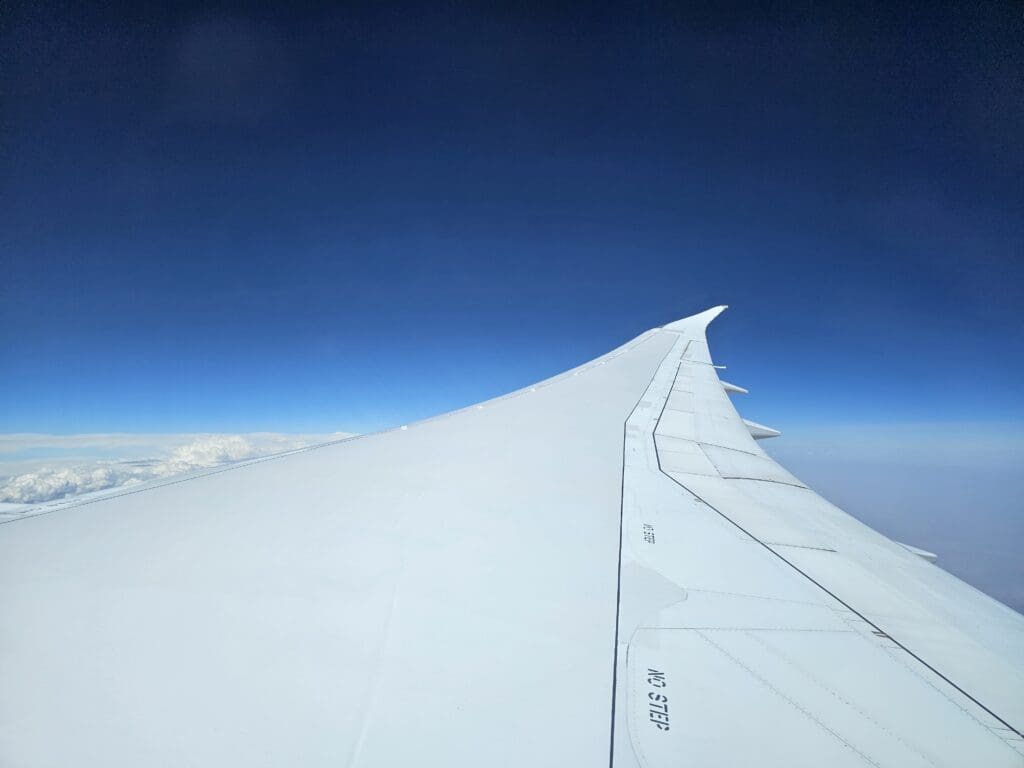
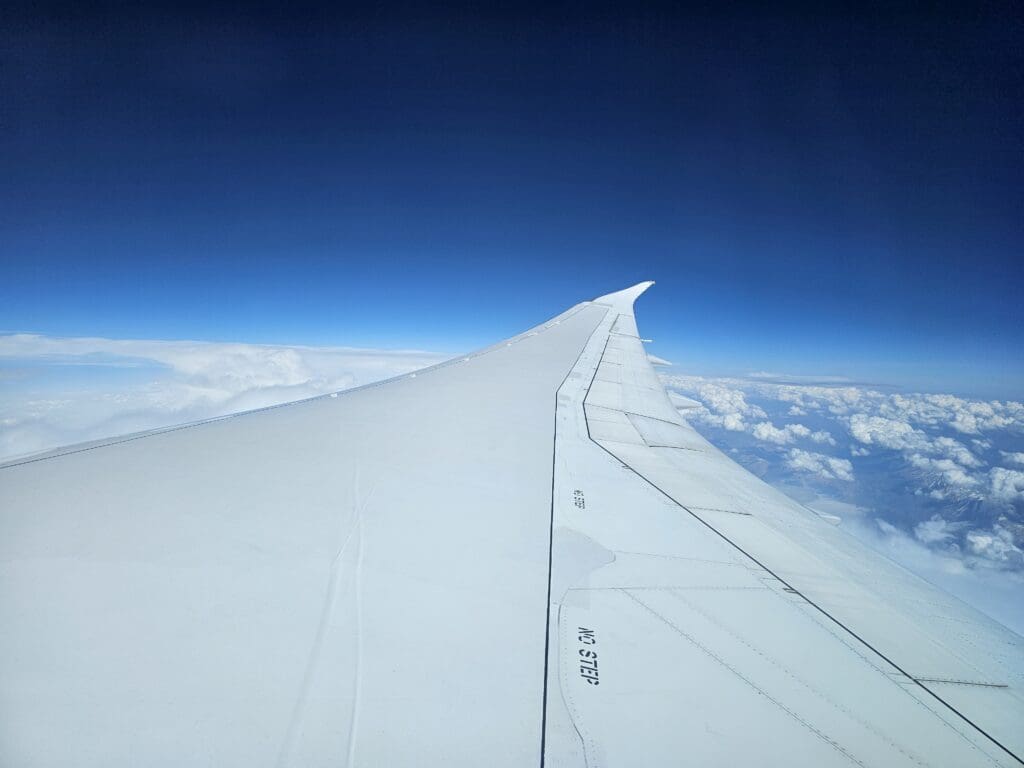
During my trip to the lavatory, I spotted a few vacant rows in the Dreamliner’s forward Economy section and thus, wanting to bag a ‘real’ window seat, I decided to move forward to Seat 15L, located in the second row of this cabin. Granted, whilst the view from this seat was largely blocked by the wing, I was still thankful to be in a ‘real’ window seat as we cruised northwestwards through the Iranian skies. By this time, the aircraft was well over halfway into its voyage and we were nearing the Iranian capital, Tehran, passing just to the east of this. Back inside the cabin, once the meal service had been completed, the crew took the galleys and were almost entirely absent from the aisles until they emerged to commence their pre-arrival checks.
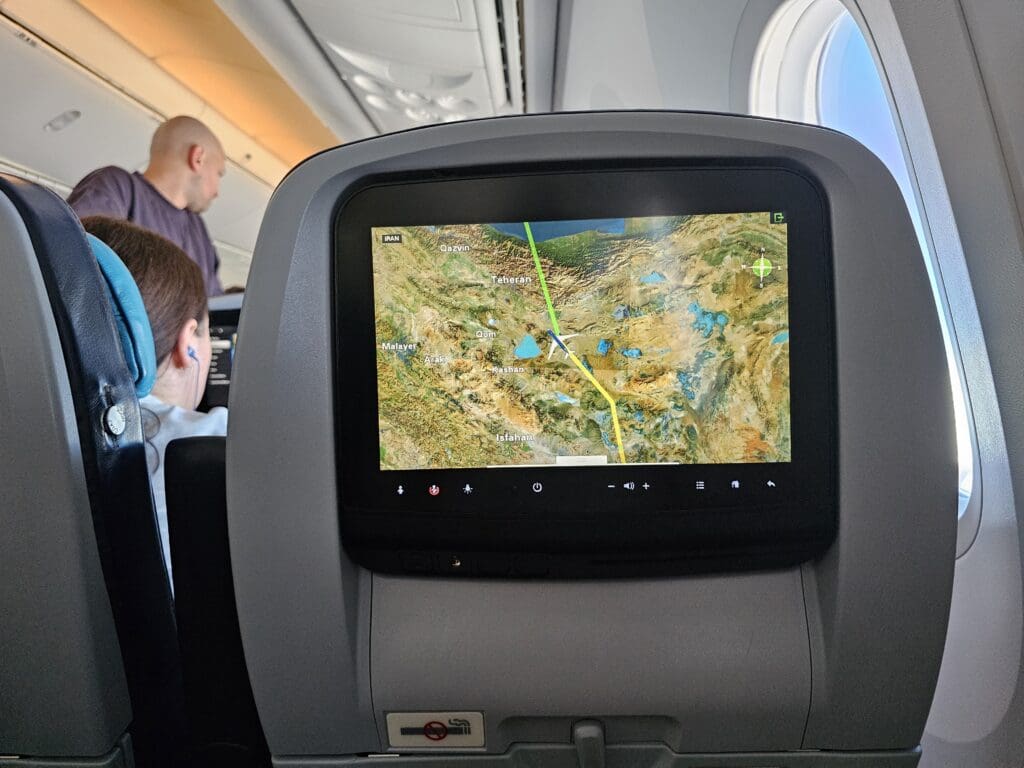
Following a smooth crossing of Iran that lasted an hour and twenty minutes, the Dreamliner cut across the city of Chalus in the country’s green Mazandaran region and made its way over the blue waters of the Caspian Sea. Ten minutes later, the aircraft could be felt commencing its descent, and perhaps wanting to get everything in place and secure for our arrival as soon as possible, the Purser soon performed their pre-arrival announcement in Azerbaijani, Russian and English, after which the crew passed through the cabin ensuring that all was secure and in place. Thankfully, during this time, the crew either failed to notice that I had moved to the new window seat or simply did not care! Either way, I strapped myself in and remained in my new seat as we slowly headed downwards and crossed into Azerbaijani skies.
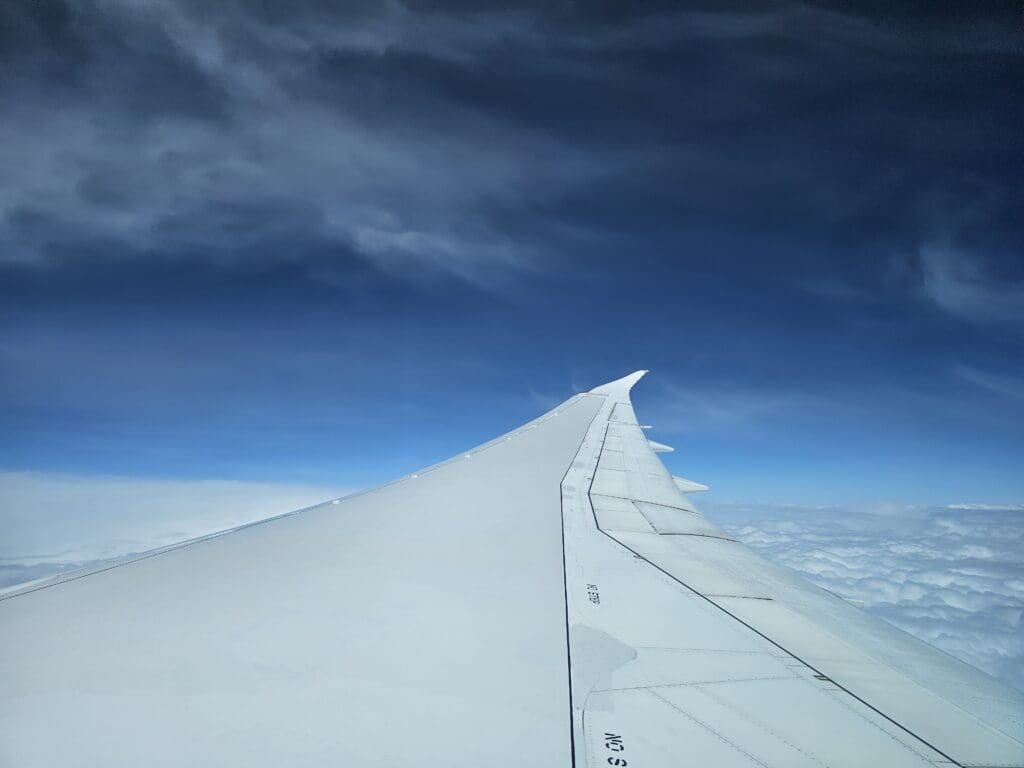
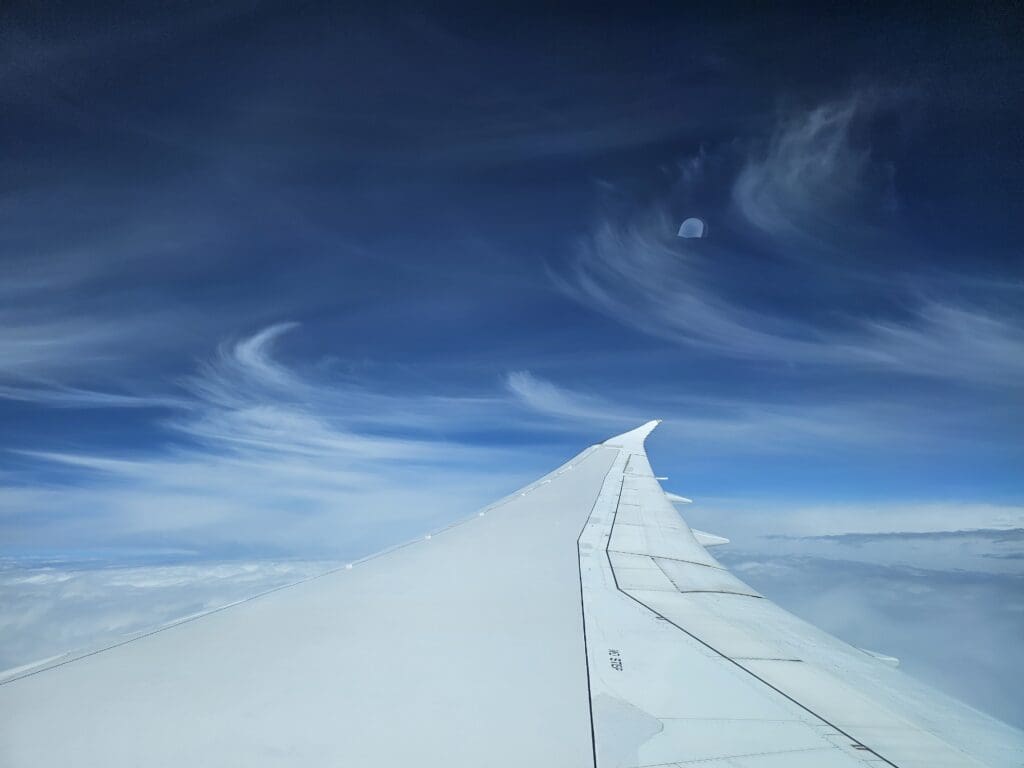
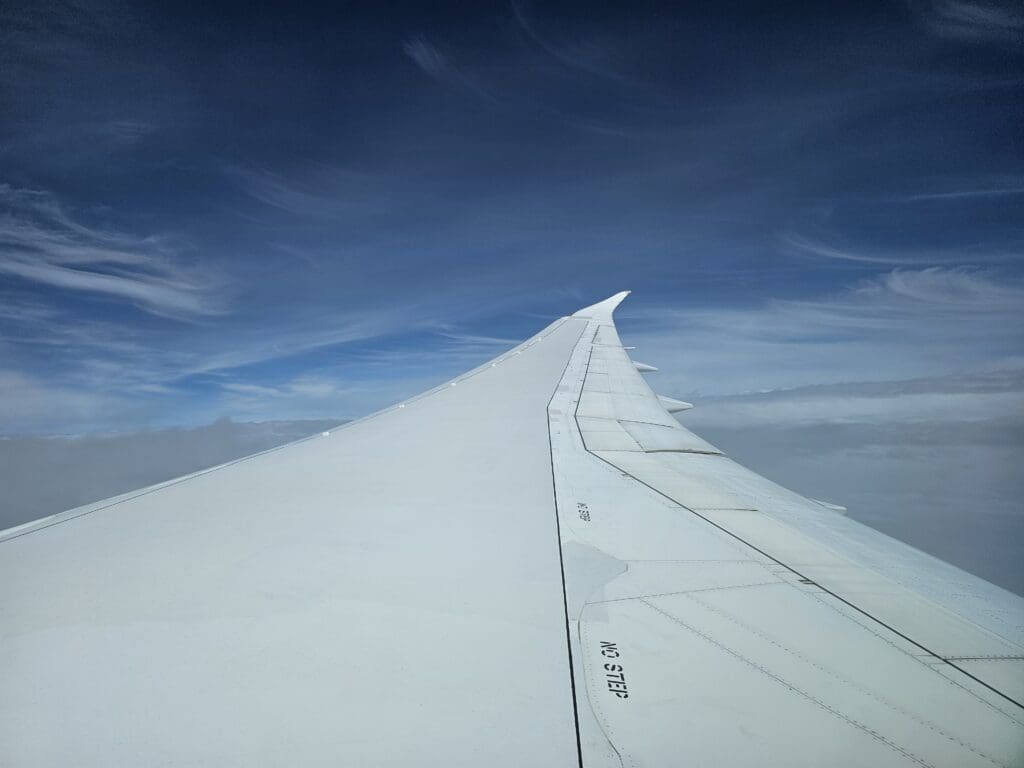
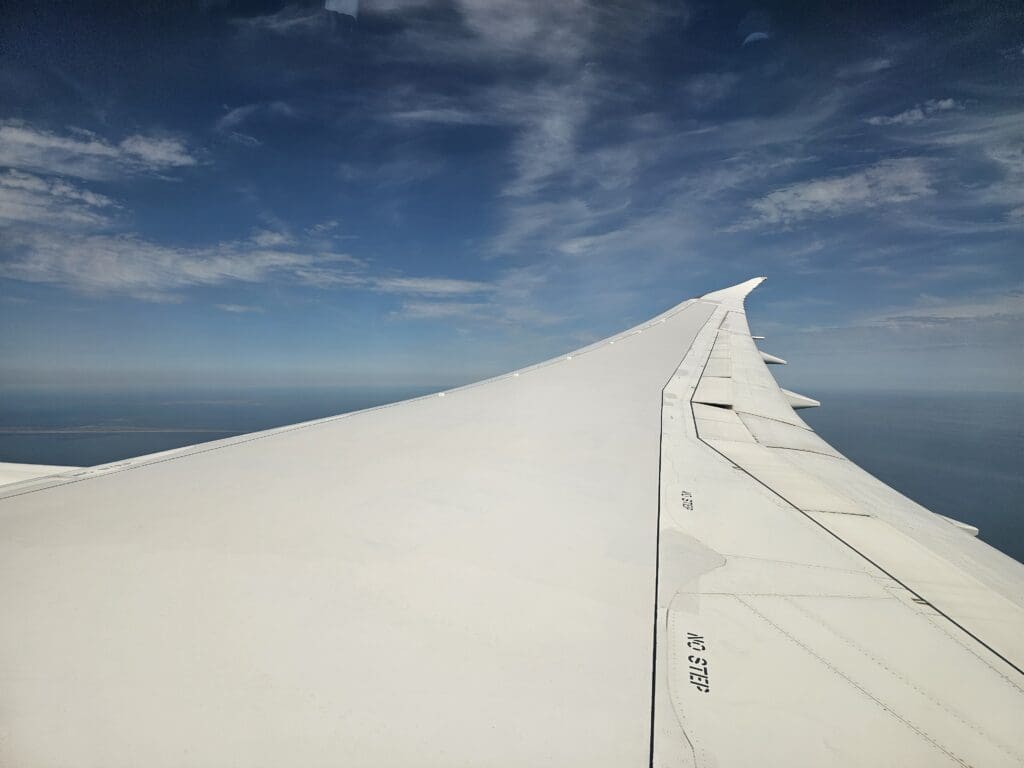
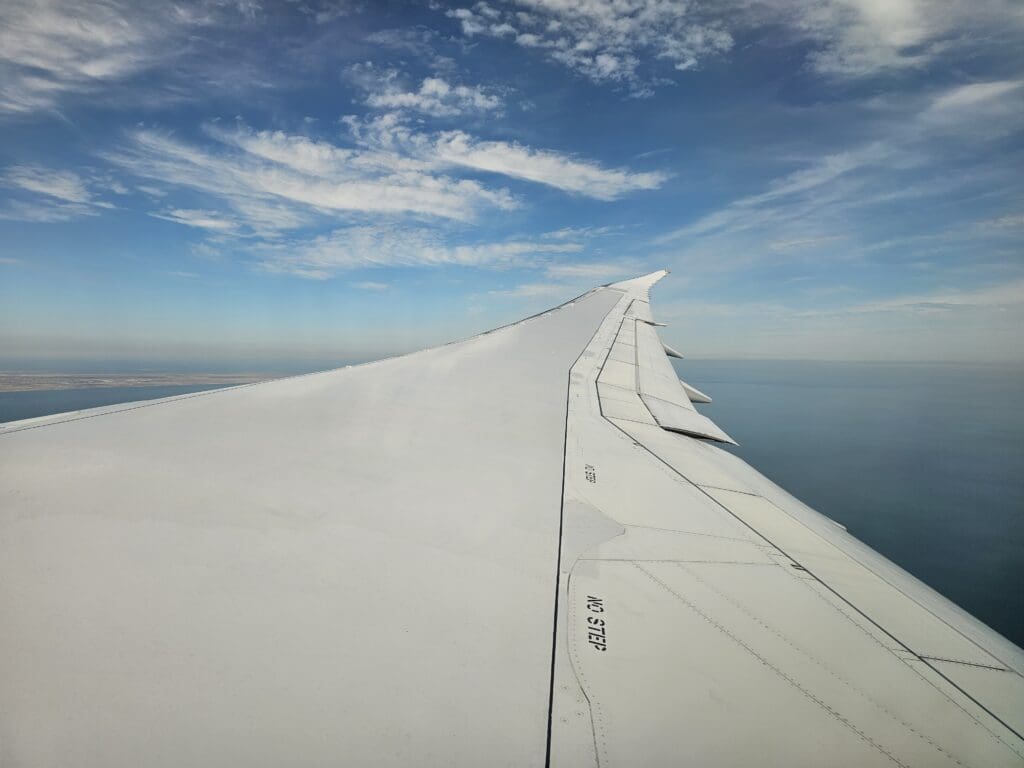
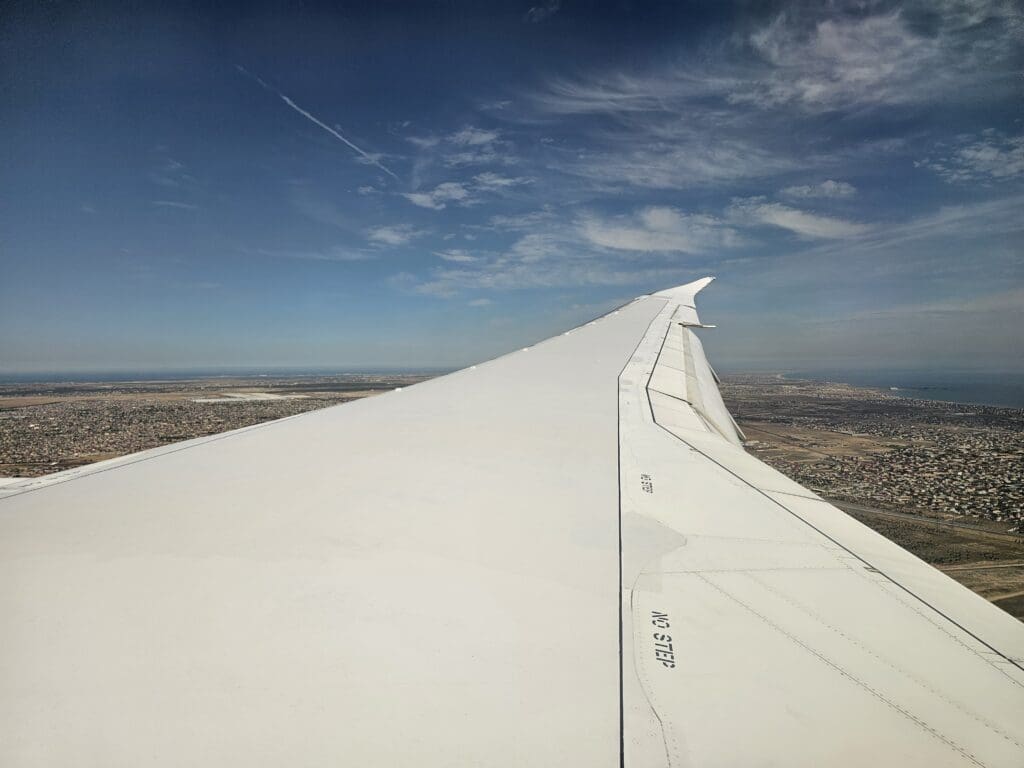
Sinking downwards, little could be seen for much of our descent, and landing on one of Baku Airport’s northerly runways, Runway 34 to be precise, very little turning was required to line us up for an approach to this. As we descended, eventually, the southernmost tip of the Absheron Peninsula, Shahdili, popped into view as our flaps were partially extended in preparation for our arrival. Continuing heading downwards, soon, the Dreamliner crossed over the built-up coastline at Hovsan before descending over the arid-looking semi-rural areas surrounding the airport.
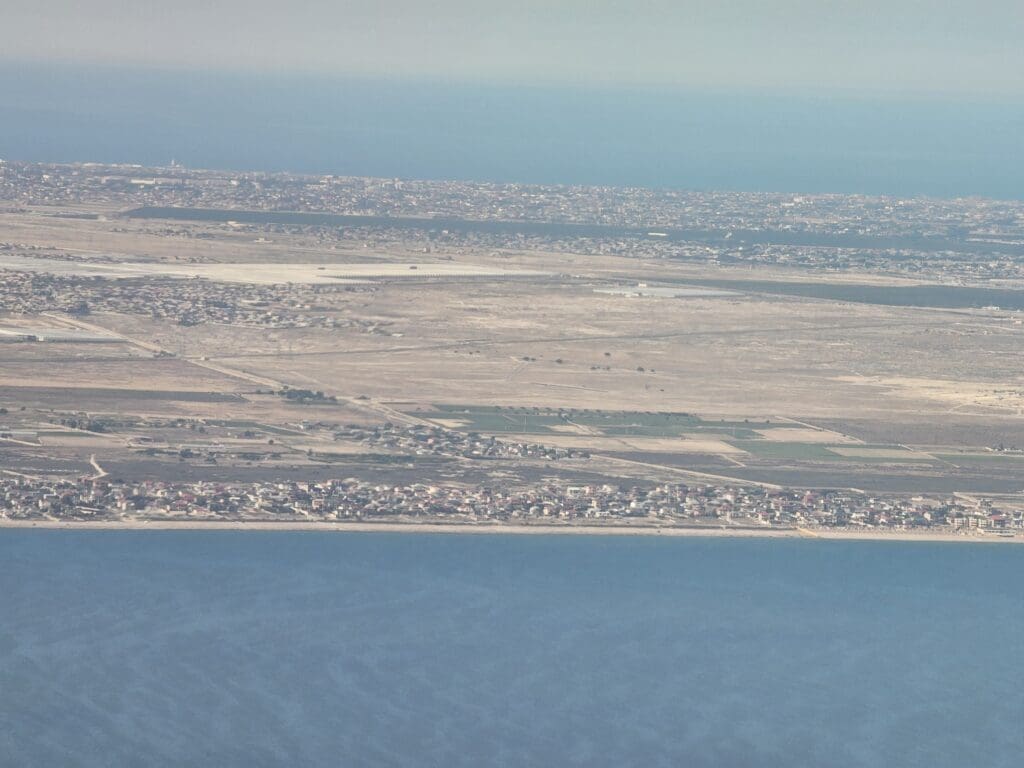
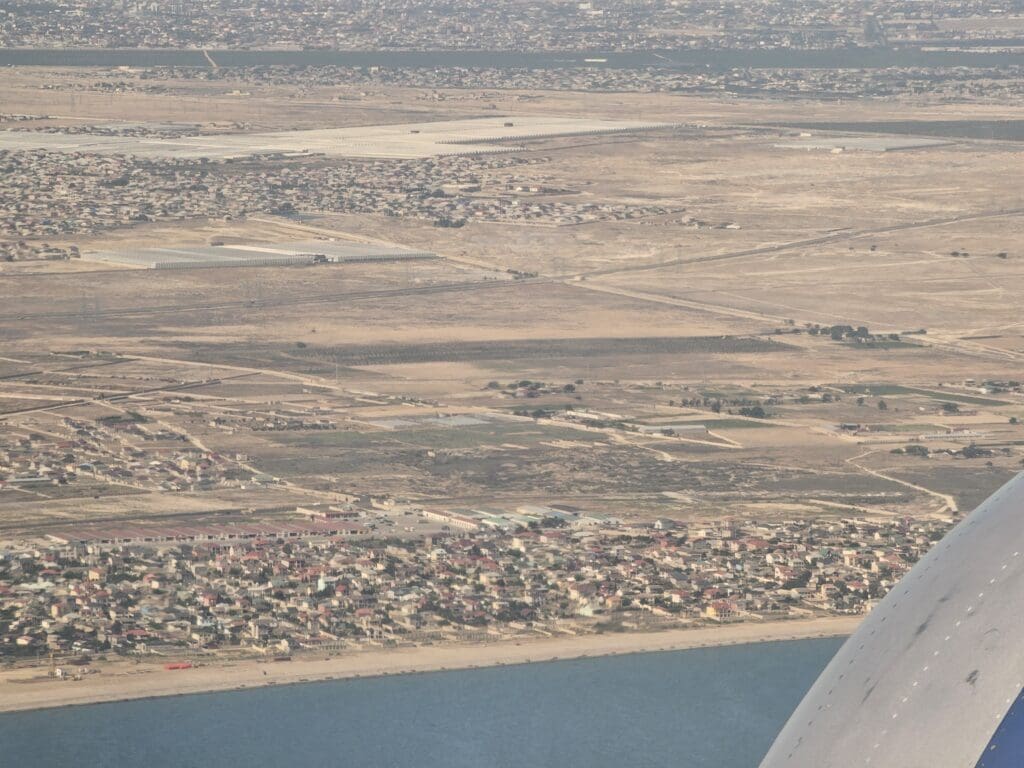
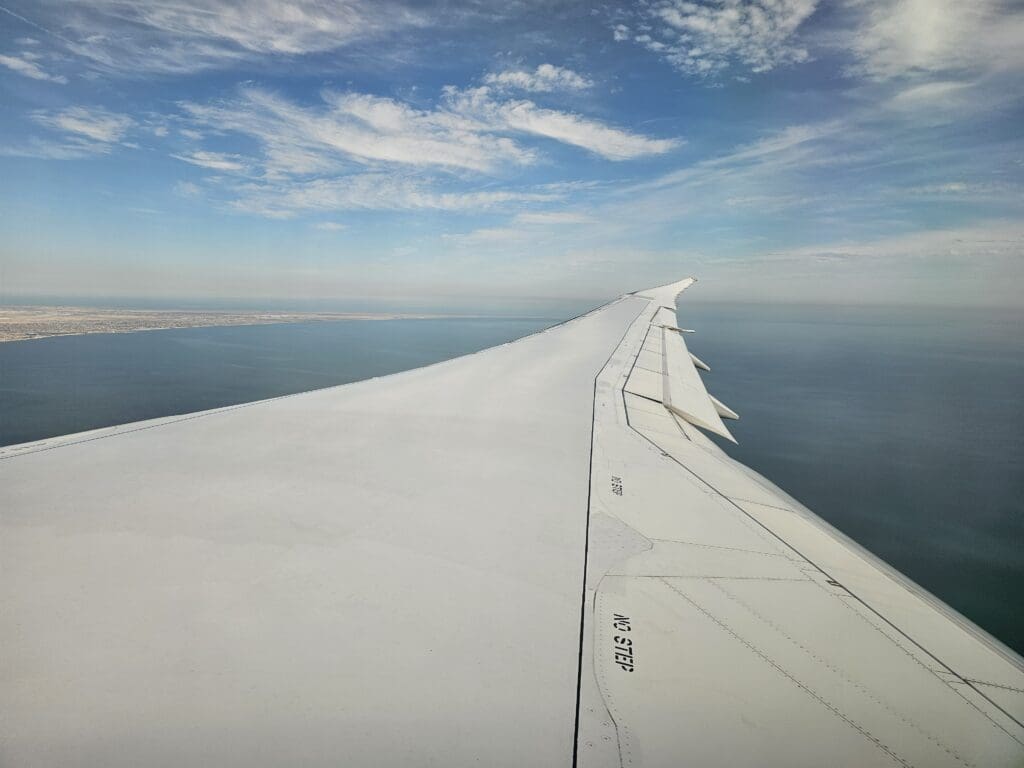
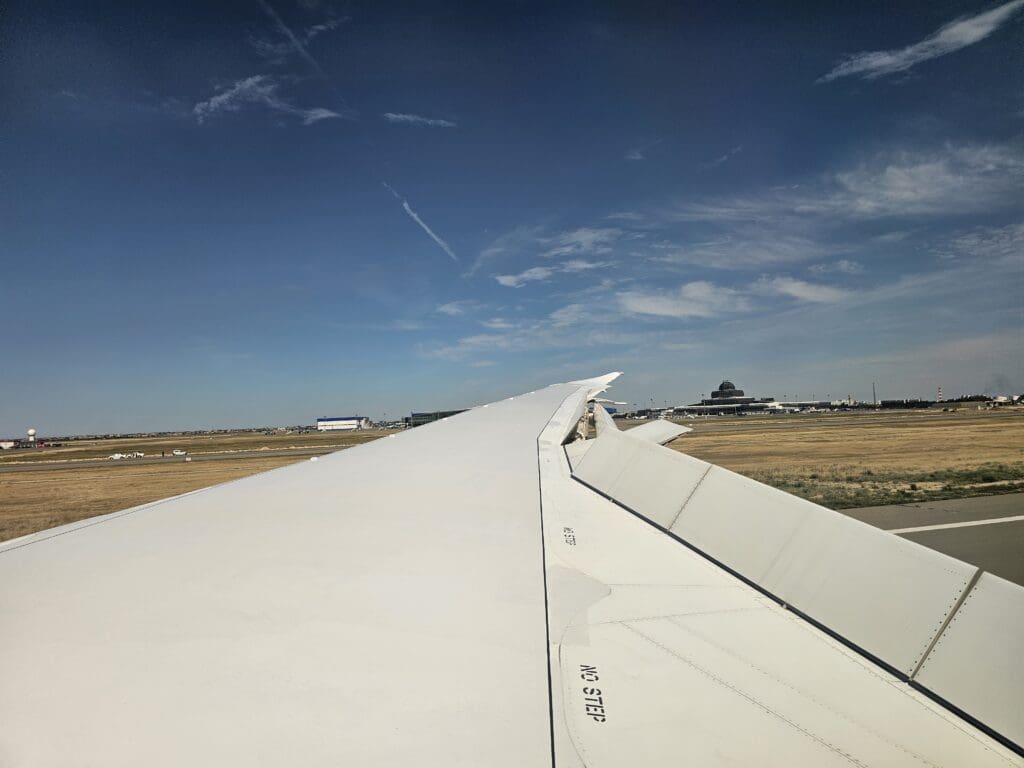
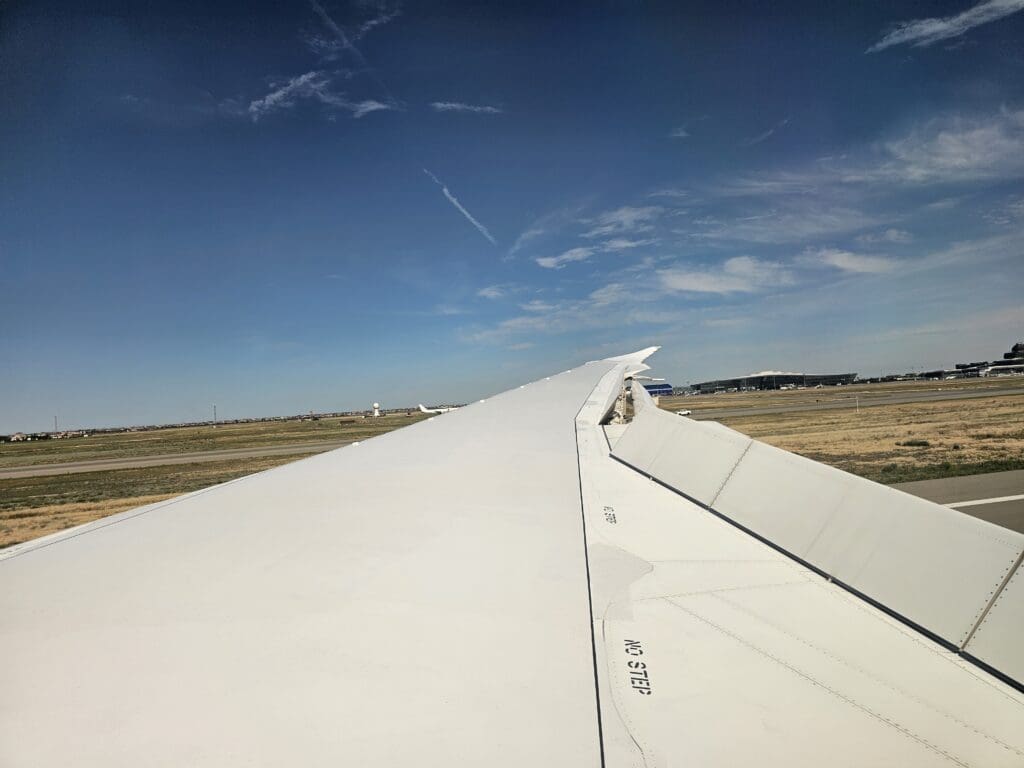
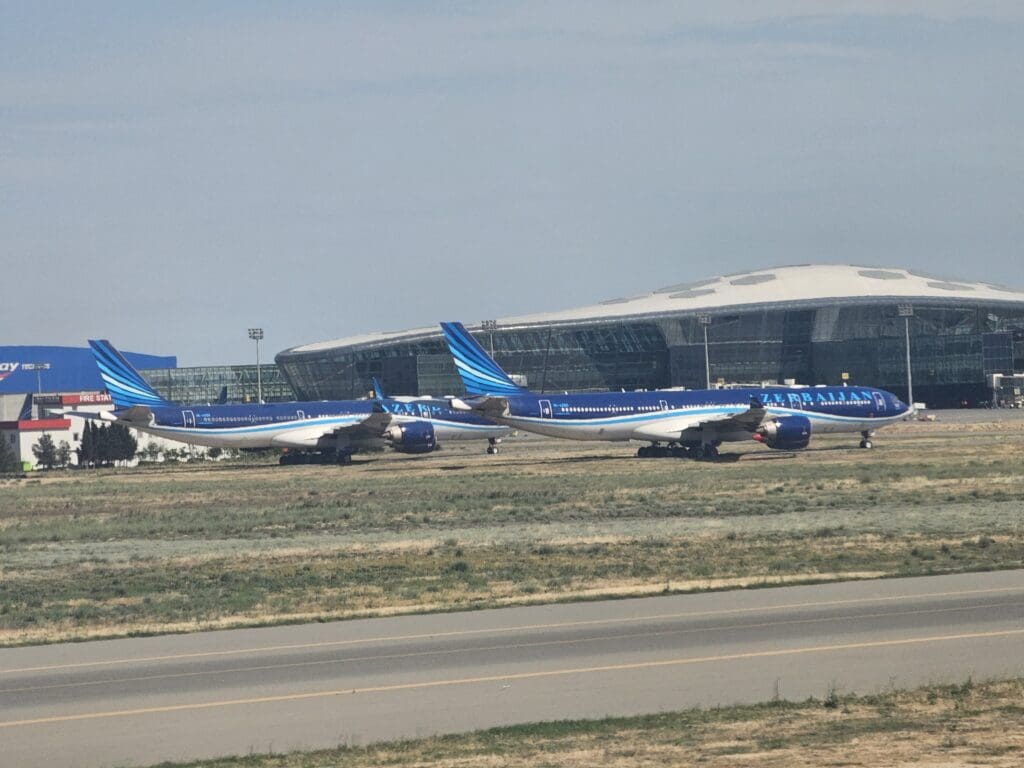
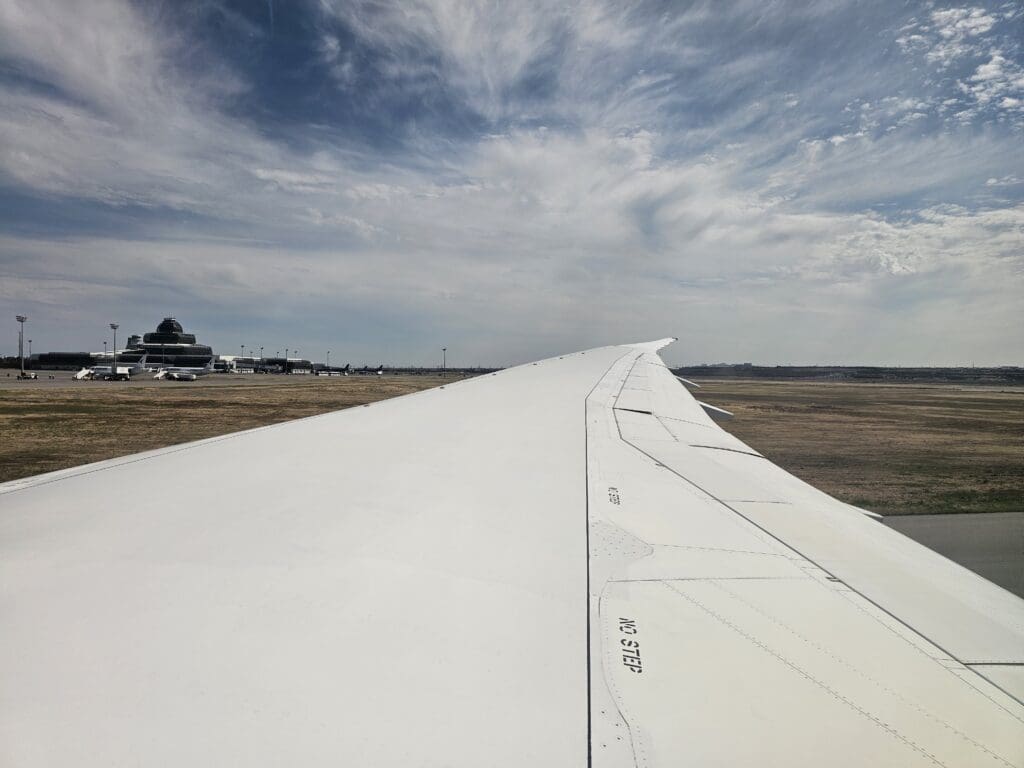
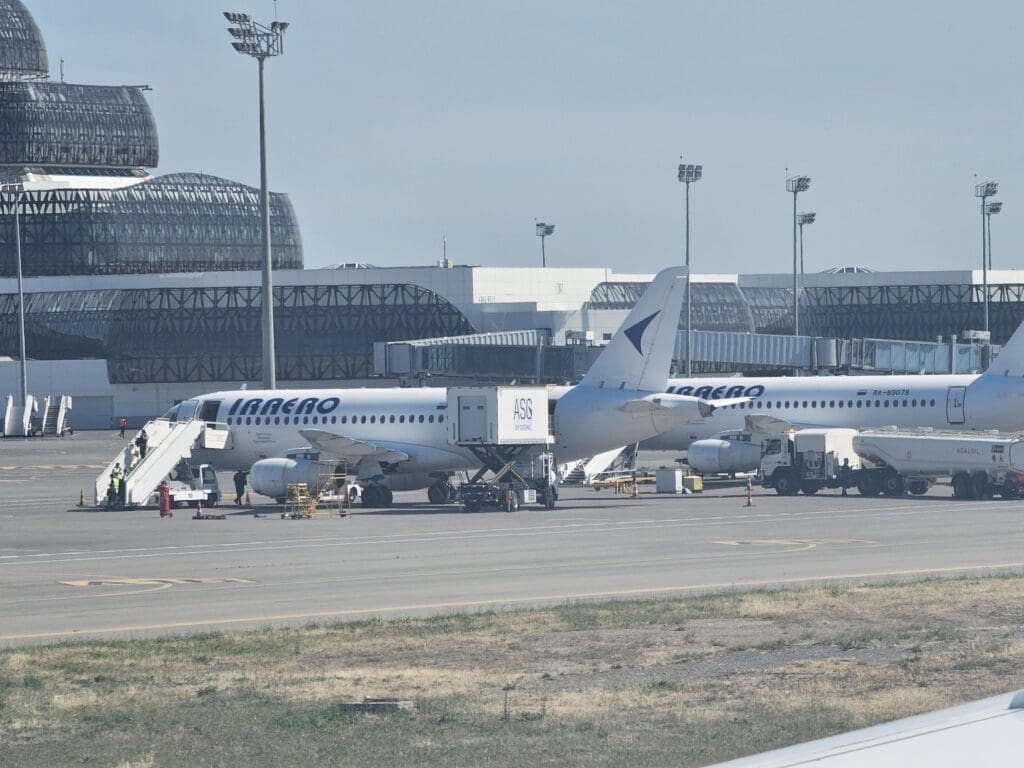
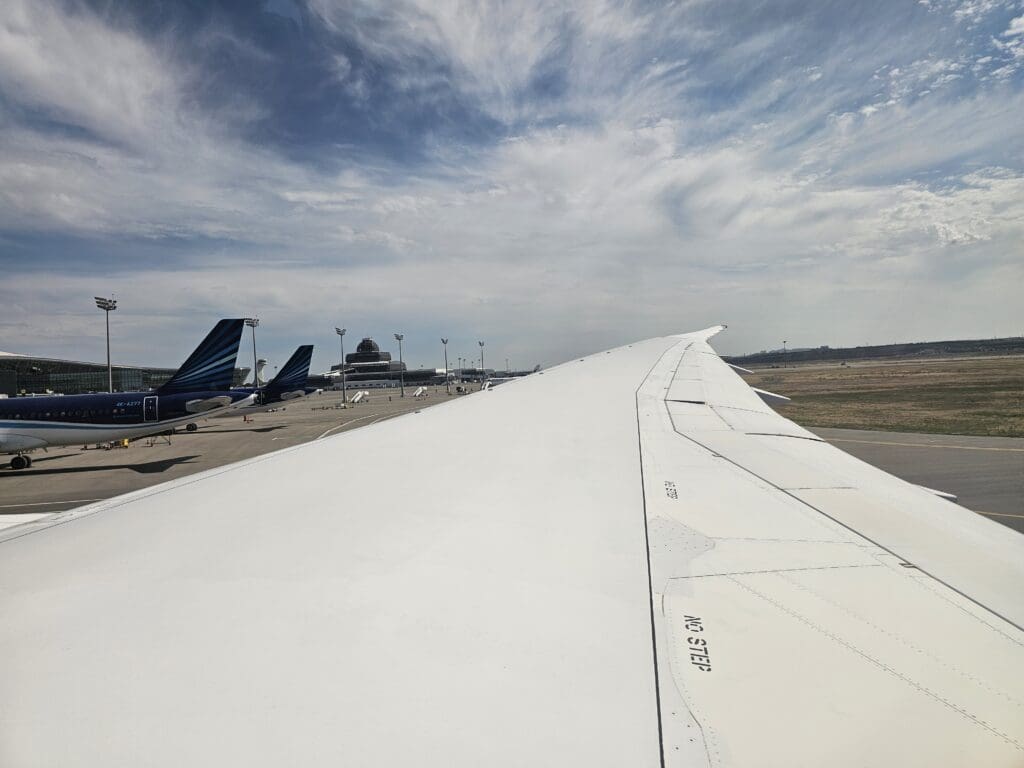
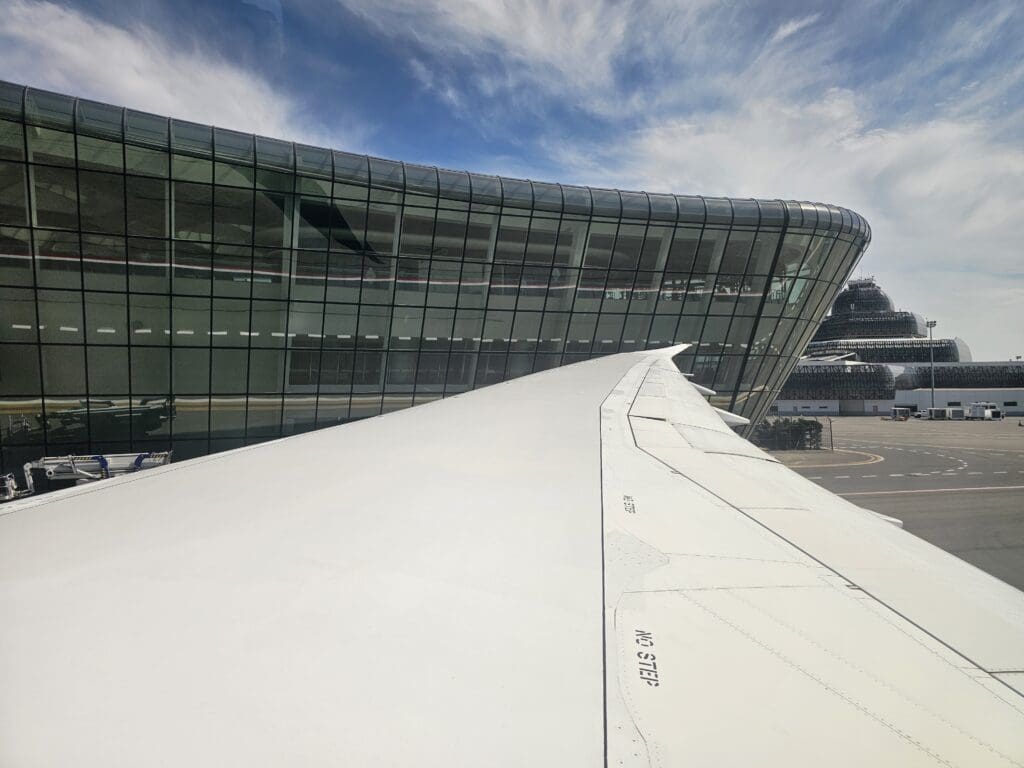
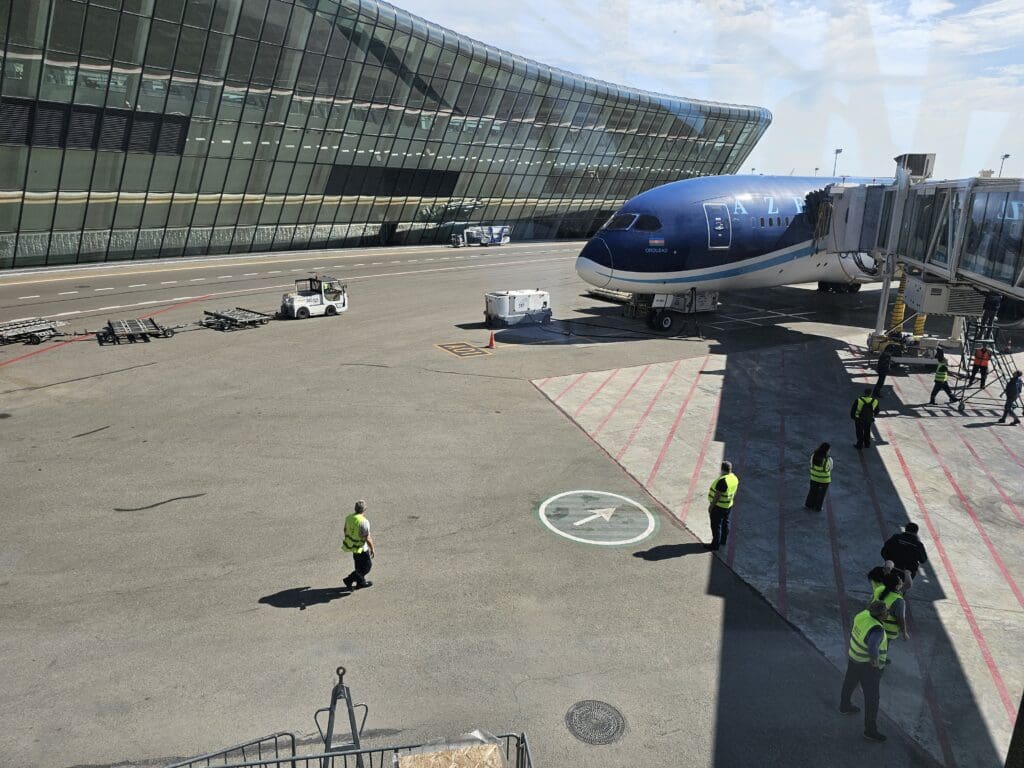
Following a smooth approach, at 1538, the sprawl of Heydar Aliyev International Airport appeared, and moments later, the Dreamliner made a firm return to Earth before decelerating with haste. In the usual manner, as we vacated the runway and commenced our short taxi to the airport’s modern international terminal, the Purser performed their post-arrival announcement, thanking passengers, informing us of the local time and advising all to remain seated with their seatbelts fastened. Soon, the aircraft came to a gentle halt at Stand A01, arriving there almost thirty minutes ahead of schedule. Once our engines had spooled down, as is often the case across the world, many passengers jumped up in a desperate rush to disembark, and thankfully for those in a rush, it took no more than a couple of minutes for the jetbridge to be connected and for disembarkation to commence. Seated at the front of the Economy cabin, it didn’t take long for me to stand up, head through the Premium Economy cabin and disembark, receiving a lukewarm farewell and thanks in Russian as I did so, ending my second-ever flight with Azerbaijan Airlines.
Summary
Starting with the positives, considering the duration of the flight, Azerbaijan Airlines left me impressed with their full meal, whilst despite its worn and battered condition, I was very pleased with the space and comfort afforded by the seat. However, I can’t say that the meal was particularly delicious, and for the most part, I found the crew to be cold and distant, having very minimal interactions with passengers throughout the flight.