My First Business Jet Ride! An Empty Leg from Liverpool to Gloucester on a Citation Bravo
Background
As a postgraduate student in London, whose employment history at the time of writing had not ventured beyond intern or part-time retail worker status, it is fair to say that I am not blessed with an endless stream of expendable funds that can be used to travel to my heart’s content. Whilst I make an effort to save money, living frugally to engage in my passion for travelling on rare and unusual aircraft, I am most certainly not part of your typical corporate jet demographic.
As the UK emerged from a tough winter and began loosening its restrictions, in Spring 2021 the golden opportunity to sample a domestic cost-shared empty-leg ride onboard a Cessna Citation Bravo with several other aviation enthusiasts arose, and I soon jumped at the opportunity. With the cost of this coming to a total of £225, this was not exactly cheap, however after a year of cancelled and postponed travel plans, I had been able to save up some money and saw this as being too good of an offer to pass on! Of course, I did realise that for slightly less I could bag myself a one-way flight onboard a Hahn Air Citation between Dusseldorf and Luxembourg. However, at the time of arranging this flight, travelling to Germany and Luxembourg would have been somewhat of a challenge, whilst Hahn Air’s service appeared to have been suspended with no clear date offered for its resumption.
The flight in question would take the form of a short 104-mile hop from Liverpool to Gloucestershire Airport early on a Sunday evening in May. Despite living in London, with regular trains ploughing between Euston and Liverpool, reaching the city’s airport for the scheduled 1645 meet-up time, later moved forward by fifteen minutes, would not prove particularly difficult. However, despite booking several weeks in advance, that day tickets for direct train services between London and Liverpool would set me back a small fortune and I therefore opted for a cheaper route. This would see me catch the train up to my hometown, Sheffield, the day before where I would stay over at my parents’ house. The next morning, I would head across the Peak District to Liverpool. Meanwhile, after the flight, I planned to catch a rail replacement bus service from Gloucester to Swindon, from where I would catch a Great Western Railway service to London Paddington, ending my adventurous day.
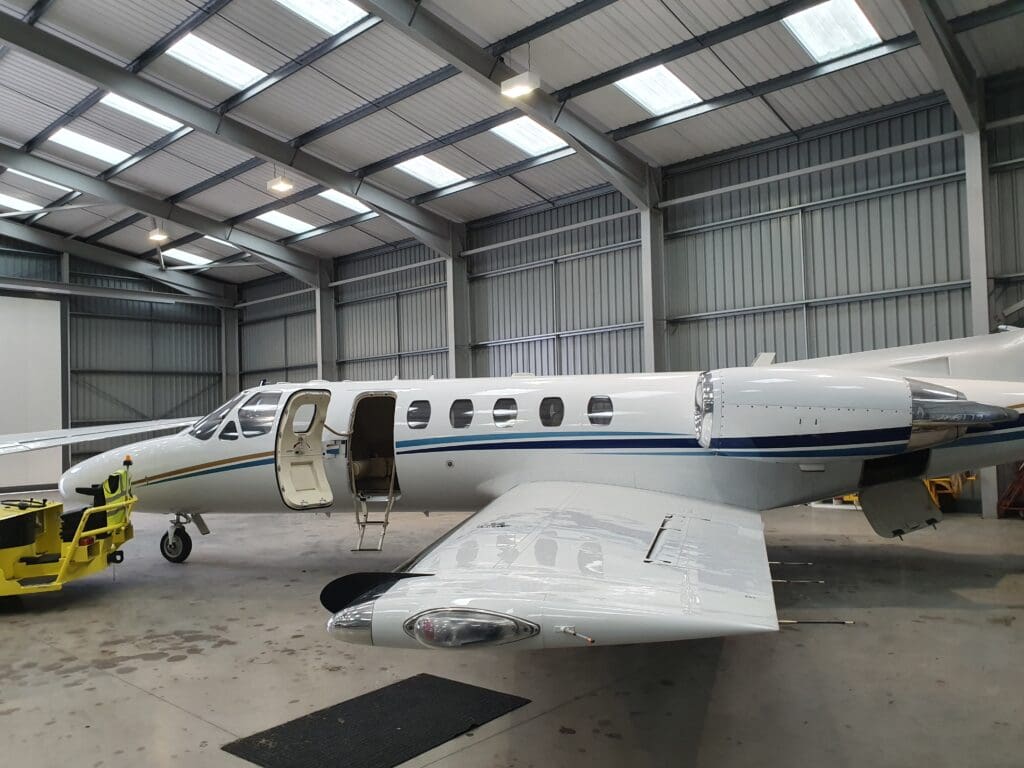
The flight down to Gloucestershire Airport would be operated by the locally based The Little Jet Company, or, technically Regency Jet seeing as they hold the air operator’s certificate for the company’s flights. That Sunday, the Citation would deliver a couple of Liverpudlian passengers up from Pisa, before returning to its home base, hence the availability of the empty leg to Gloucestershire. Established in 2014, The Little Jet Company is a small corporate aircraft operator, offering luxurious ad hoc charter flights for the rich and famous, discounted empty leg services and a jetcard scheme, alongside aircraft management and charter brokerage services. At the time of writing, the company operates a concise fleet of two Cessna 550 Citation Bravo jets and a recently added single Beechcraft King Air 350I turboprop. All of which can be seen regularly popping up at airports both large and small across Europe.
The Journey
On the Sunday of my flight, Britain’s rail network was subject to a myriad of engineering works that would see a reduced frequency of services between Manchester and Liverpool, and an elongated diversionary route that would stretch the journey time between the two. When things are working as they should, whilst Liverpool John Lennon Airport is not the easiest to reach from Sheffield, travelling to the airport on public transport is not an overly difficult task. This consists of an hour-and-a-half train ride to Liverpool South Parkway followed by a short bus journey. Given the engineering works taking place, Sunday trains would not be stopping at Liverpool South Parkway so the most convenient option involved taking the train to Liverpool Lime Street. Leaving plenty of room for delays and sightseeing, I decided to catch the 1041 service, arriving in Liverpool at 1231 – this coming to a total of £6.45 with a 16-25 Railcard.
Following a brief overnight stop at my parents’ house, I departed at 1010 for the short journey to Sheffield’s city centre station. That morning, the station was neither particularly busy nor particularly quiet. That Sunday, a good few families could be seen travelling alongside the usual smorgasbord of solo travellers and other passengers. Holding a mobile ticket, upon arriving, I checked the destination boards which revealed that the train was still set to depart on time and would depart from Platform 5. Once I had made my way over to the busy platform, at 1037 an East Midlands Railway train appeared from Nottingham. This consisted of three conjoined units – two two-carriage Class 158 units, and a two-carriage Class 156 unit. The latter would be separated from the Class 158 units at Sheffield and head off to Norwich. Ensuring to board the correct portion of the train, I clambered aboard and found an empty window seat. Having first taken to the rails sometime between 1989 and 1992, this unit had previously served with British Rail’s Regional Railways before heading onto TransPennine Express and East Midlands Trains post-privatisation. Despite being around thirty years old, the train’s interior seemed to be in relatively good nick and appeared to be clean. Given the unit’s deployment on long-distance services from Norwich to Liverpool, the seats were comfortable and offered ample amounts of legroom whilst the interior colour scheme was a Stagecoach red, orange and blue owing to the train’s previous operator, Stagecoach-owned East Midlands Trains.
At 1041, the train was whistled off and soon powered away from the platform, making its way southwards away from the city centre and through the city’s leafy suburbs before making a short stop at Dore and Totley Station. From here, the train left the Midland Main Line and onwards to the scenic Hope Valley Line, soon entering the long Totley Tunnel before emerging in the heart of the Peak District National Park. Following a picturesque dash across the UK’s oldest national park, around 45 minutes after leaving Sheffield, the train arrived at Stockport before continuing onto Manchester and then onwards to Liverpool. Despite some slow running after leaving Manchester, at 1231, the train gently pulled into Platform 6 at Liverpool Lime Street, leaving me plenty of time to do some sightseeing and grab a Tesco meal deal for lunch.
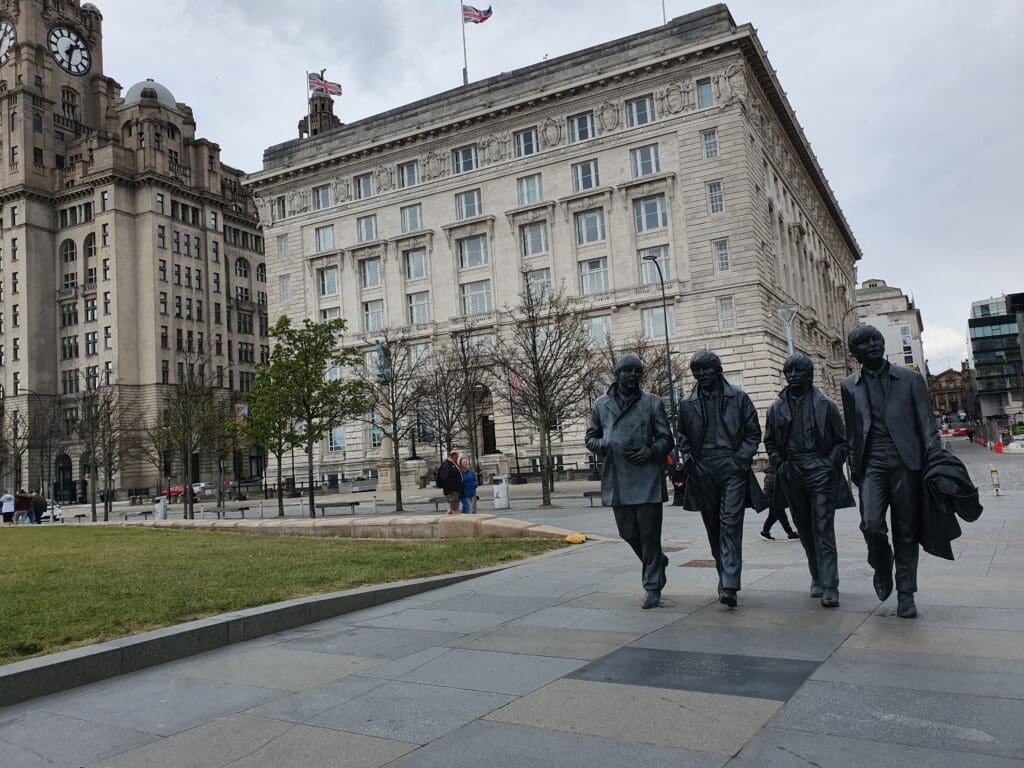
Whilst I could have taken a bus to the airport, given the lack of rain, I decided to sample the delights of Merseyrail for the first time and caught the Northern Line from Liverpool Central to Hunts Cross, from where I walked to the airport. Having checked Google Maps multiple times beforehand, upon arriving at Hunts Cross I confidently strode out of the station and headed southwards towards John Lennon Airport. For the first third of the journey, the route took me along a main road through a primarily industrial area before passing through the residential Speke Estate. Around half an hour later, I arrived at the southern boundary of the airport. Seeing as I was set to meet my fellow passengers at the Business Aviation Centre, I turned left and continued walking for another fifteen minutes before reaching a fairly unassuming blue hangar in the southeastern corner of the airport. During this walk, I spotted the sorry sight of a few temporarily stored EasyJet aircraft – with very few scheduled passenger departures that day.
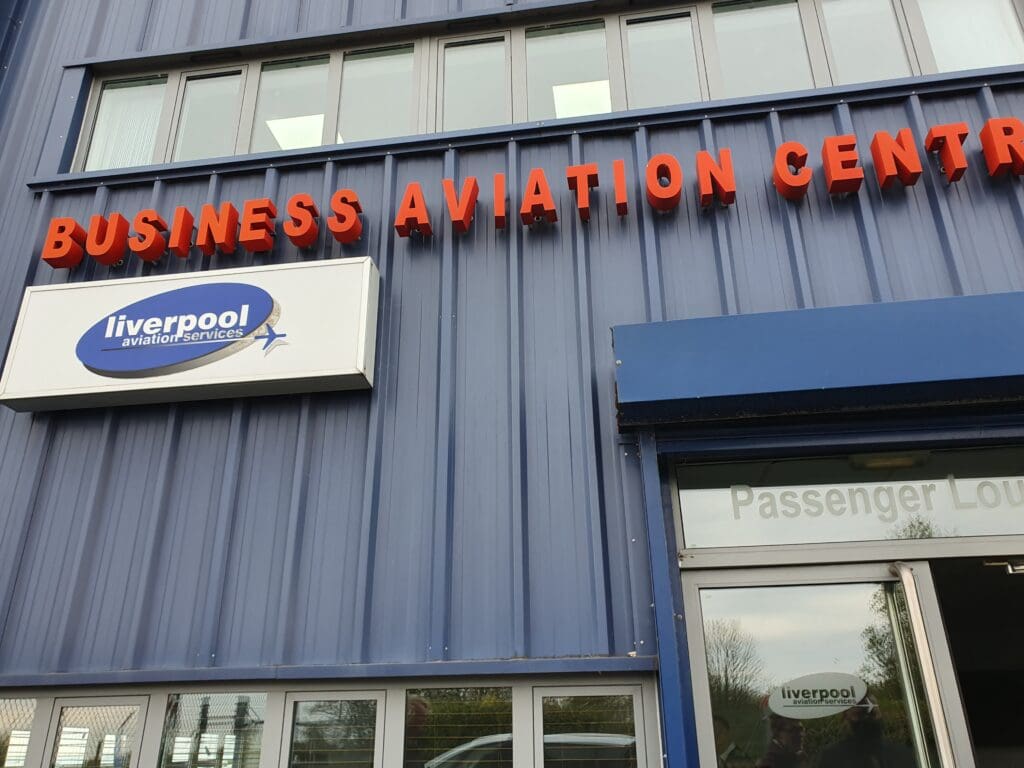
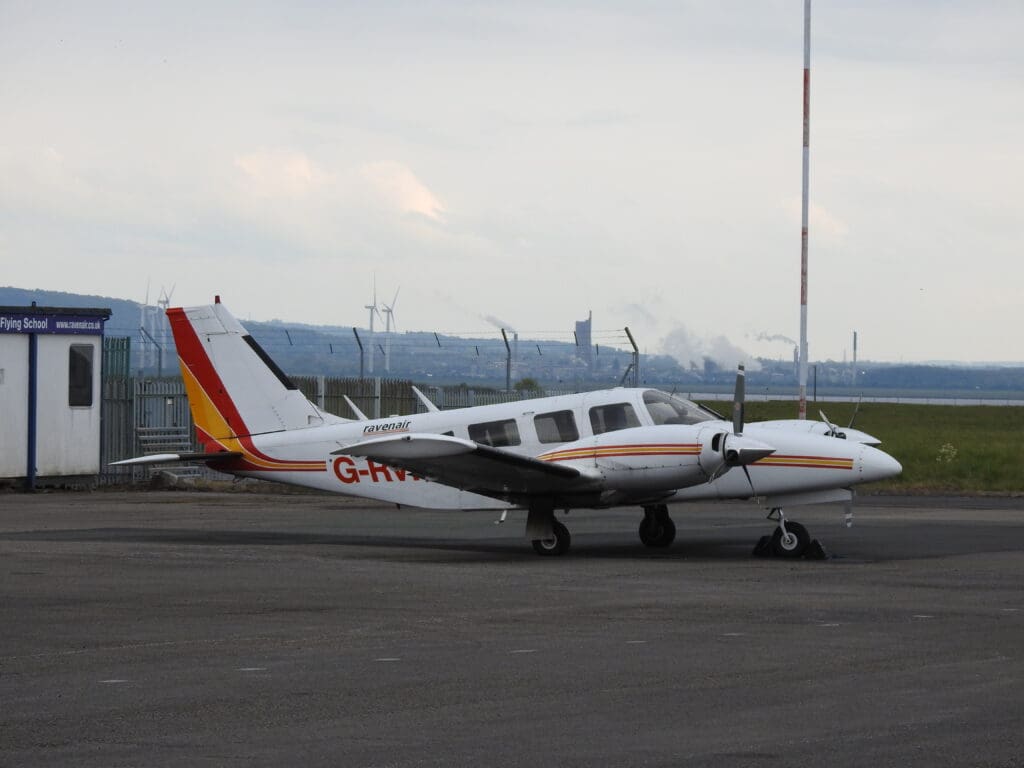
This blue hangar is the home of Ravenair, a long-established locally based company operating a flying school, as well as aerial survey and charter services, flying a fleet ranging from Piper Tomahawks to a Pilatus PC-12 and TBM-900. In addition, the company also offers FBO services and runs Liverpool’s Business Aviation Centre. Despite arriving fifteen minutes ahead of schedule, at that time several Gloucerstershire-bound passengers had already arrived and I headed into the private terminal. This consists of a small yet comfortable room with sofas, a television, a well-stocked fridge and a Nespresso machine as well as a couple of toilets. Given its size, it is fair to say that this area is not designed for long waits, and of course, taking into account the nature of private operations, it is likely that few passengers will spend any significant length of time waiting there – with this perhaps more often serving as a crew room. Upon entering this, I was greeted by both the Captain and First Officer, the latter being a former Flybe pilot. Both of whom were incredibly friendly, welcoming and more than accommodating for our bunch of perhaps non-conventional business jet passengers! Also, there were a couple of IAS Medical pilots waiting for a patient to be transported back to the Isle of Man in their King Air following hospital treatment in Liverpool.
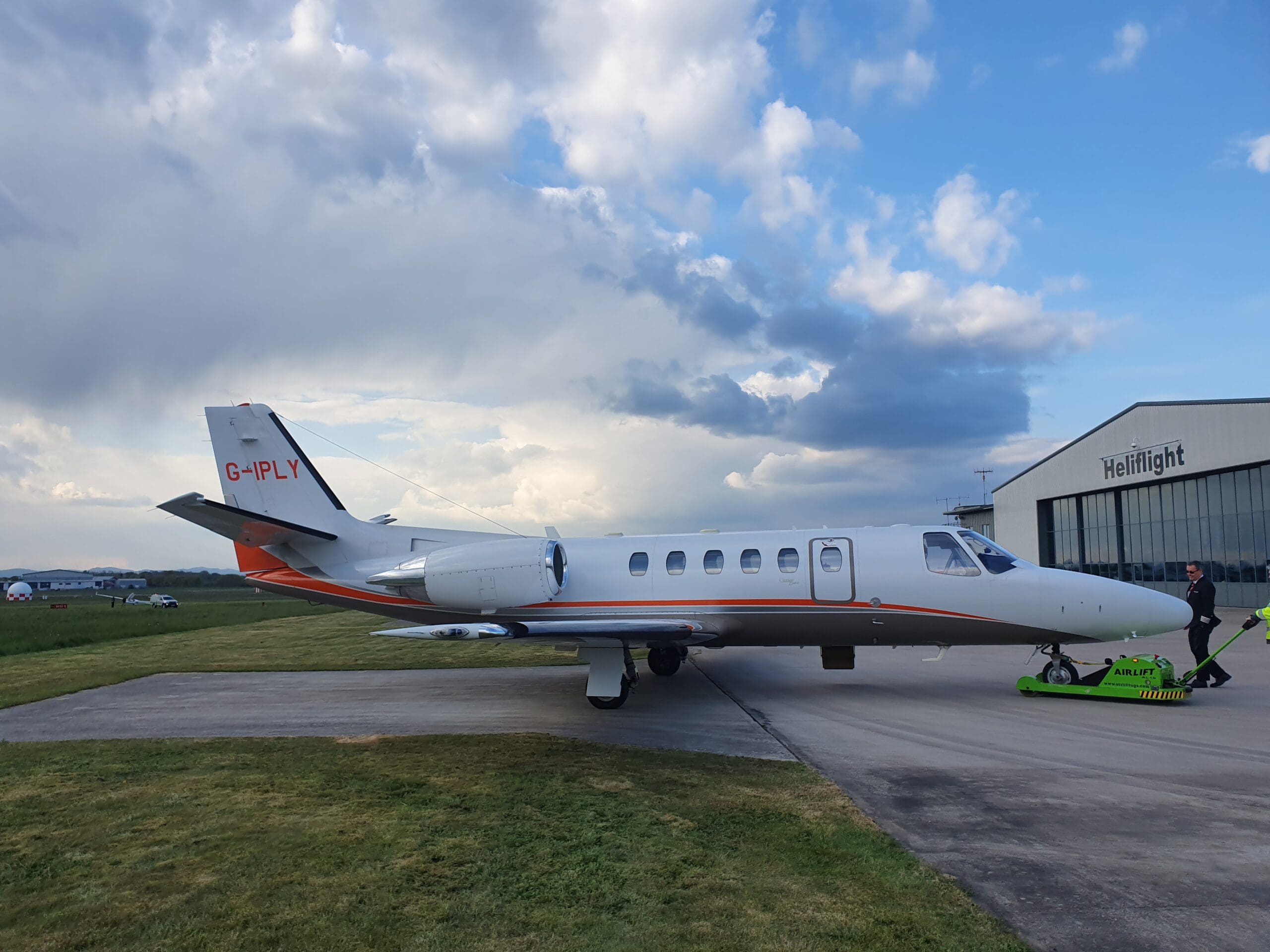
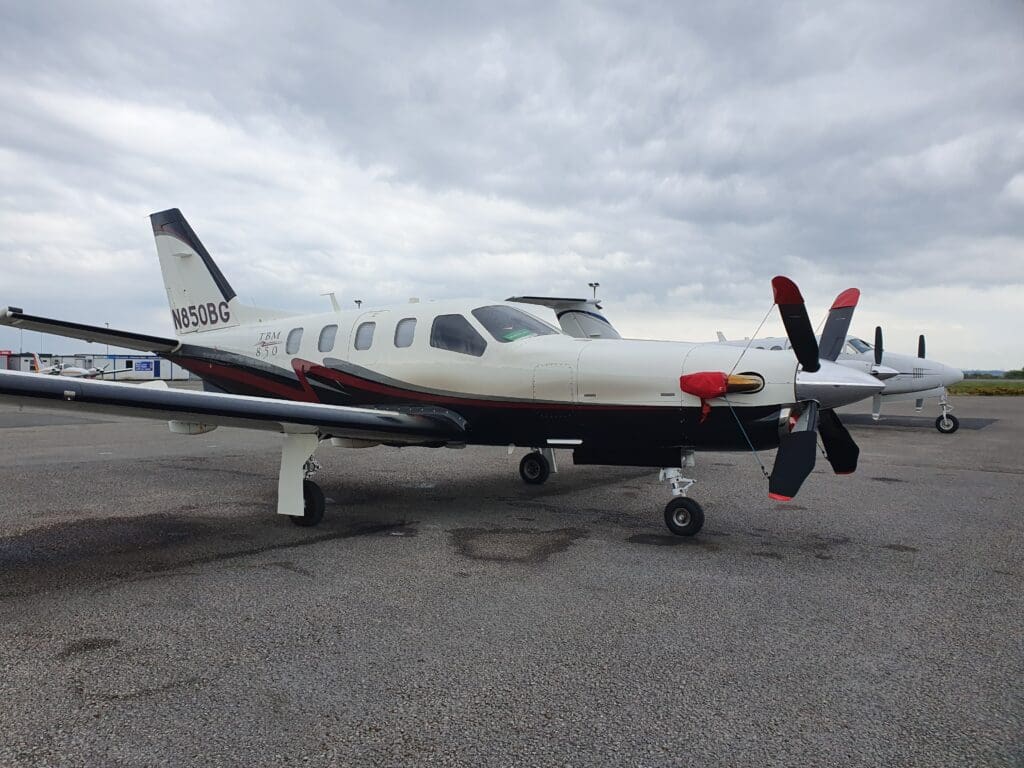
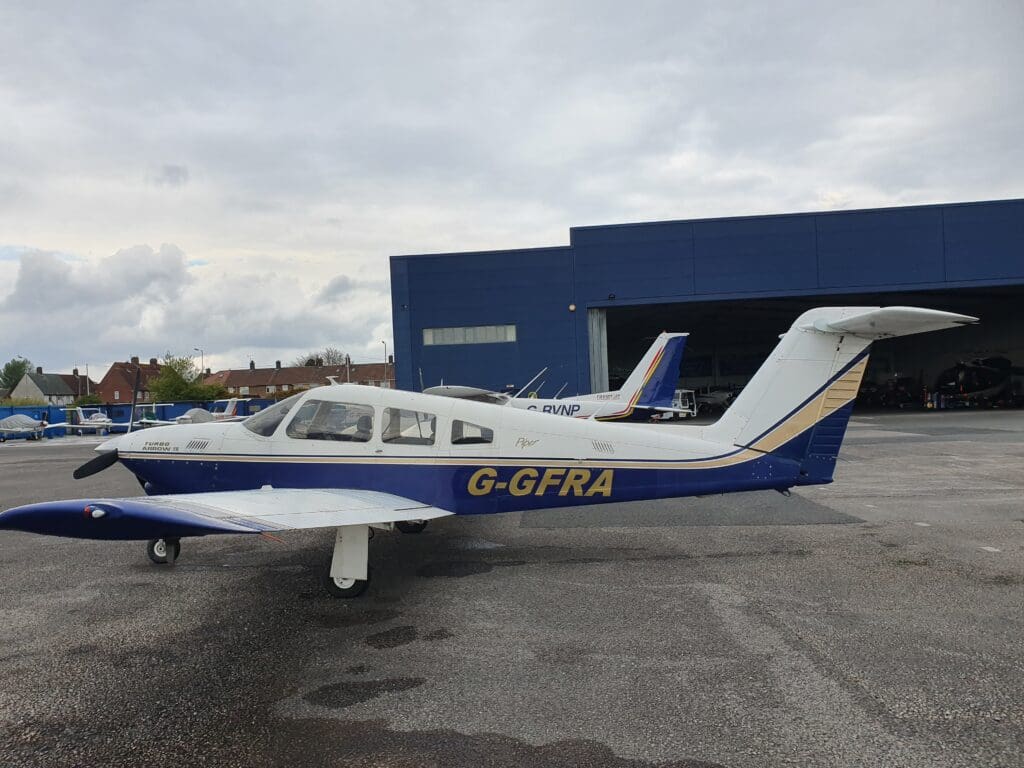
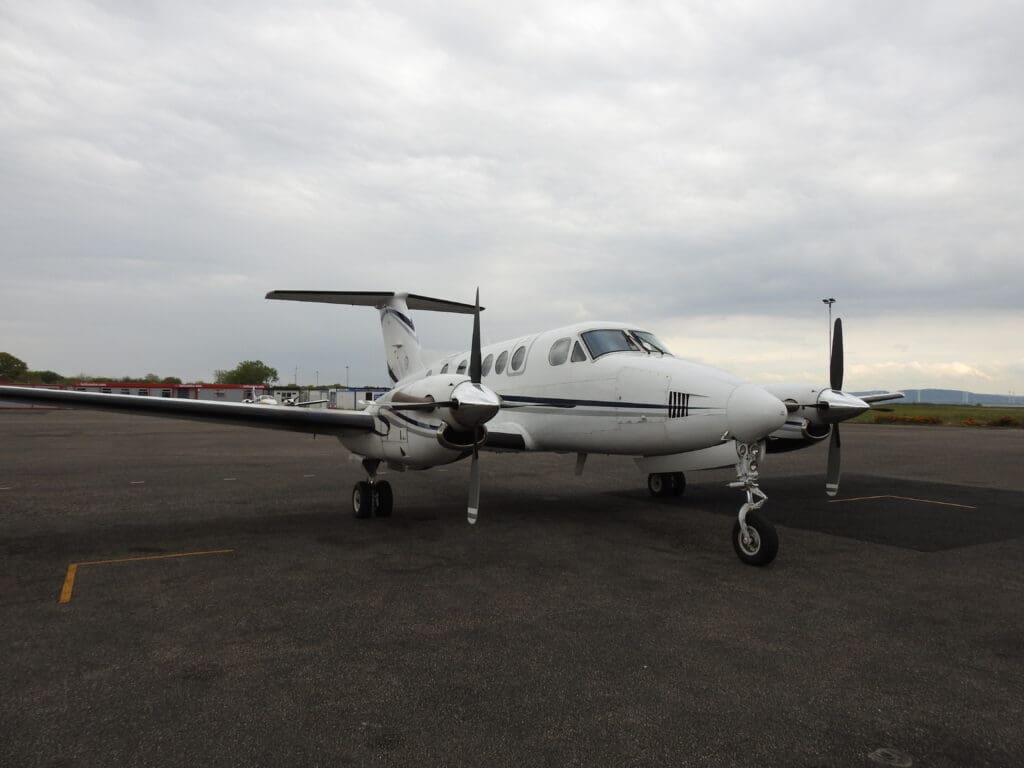
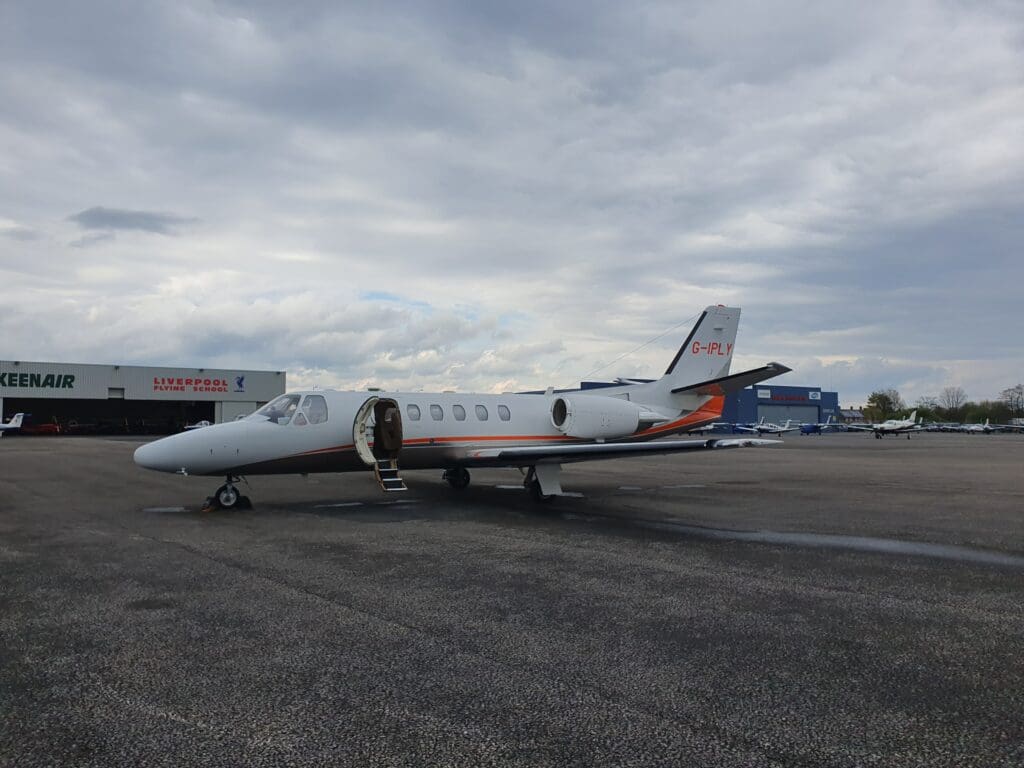
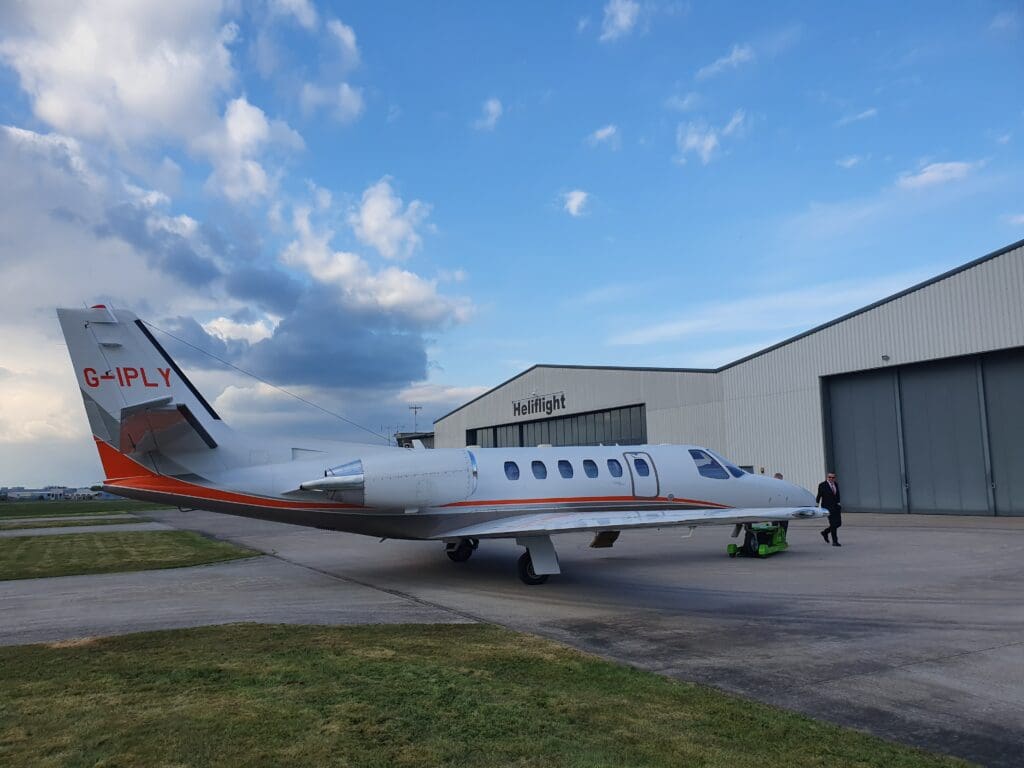
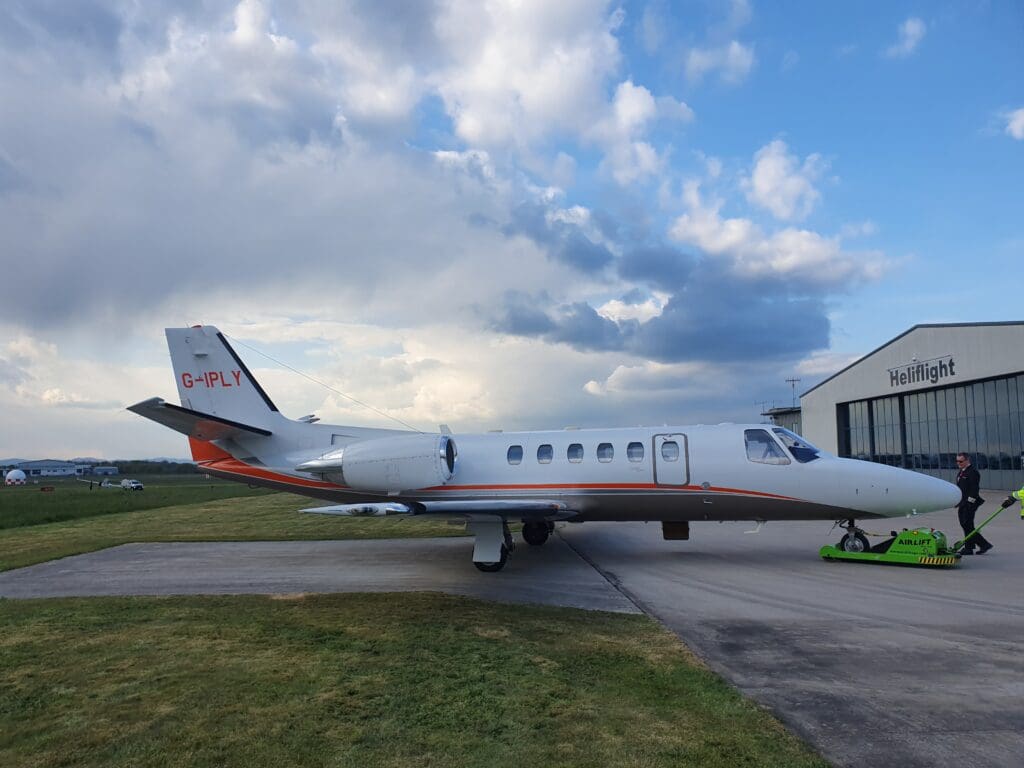
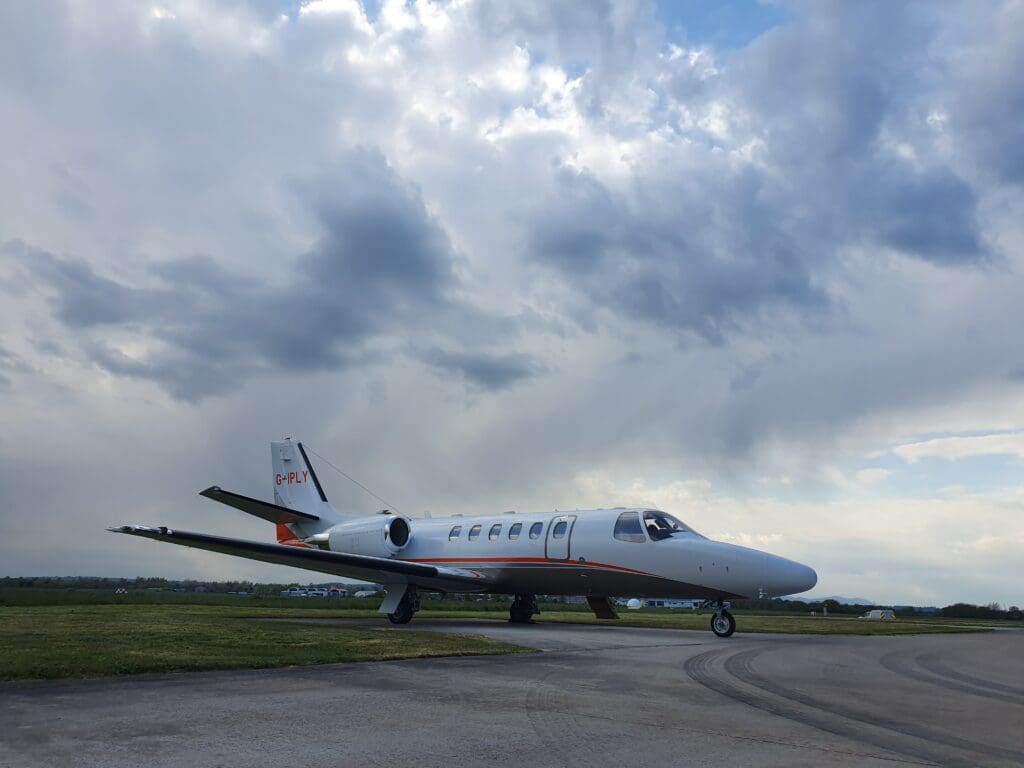
Given the pandemic and subsequent lack of flights, Liverpool’s tower was operating with limited hours and therefore the aircraft could not depart until 1715 – hence the slight delay to our original departure time. To pass the time, once all six eager passengers had arrived, the First Officer offered to take us out to the aircraft for a good look around and to snap photos away at our hearts’ content. In the distant pre-pandemic era, Liverpool Airport served to be a relatively busy low-cost hub, with regular services operated by Blue Air, EasyJet, Ryanair and Wizz Air. However, this corner of the airport is home to plenty of general aviation aircraft – more than you would typically find at a commercial airport in the UK. However, given the fairly strong winds and low clouds that day, despite being a Sunday most of these were safely tucked away in the hangars, waiting for the next good weather day. Fortunately, a few aircraft could be seen out on the apron – these consisting of a few Ravenair Partenavia P68s and Piper PA-34 Senecas used for aerial survey work and multi-engine training. These were joined by several larger aircraft – an Oxford-based TBM-850, an IAS Medical Beechcraft Super King Air, and finally Cessna 550B Citation Bravo G-IPLY, the aircraft that would take us down to Gloucestershire Airport.
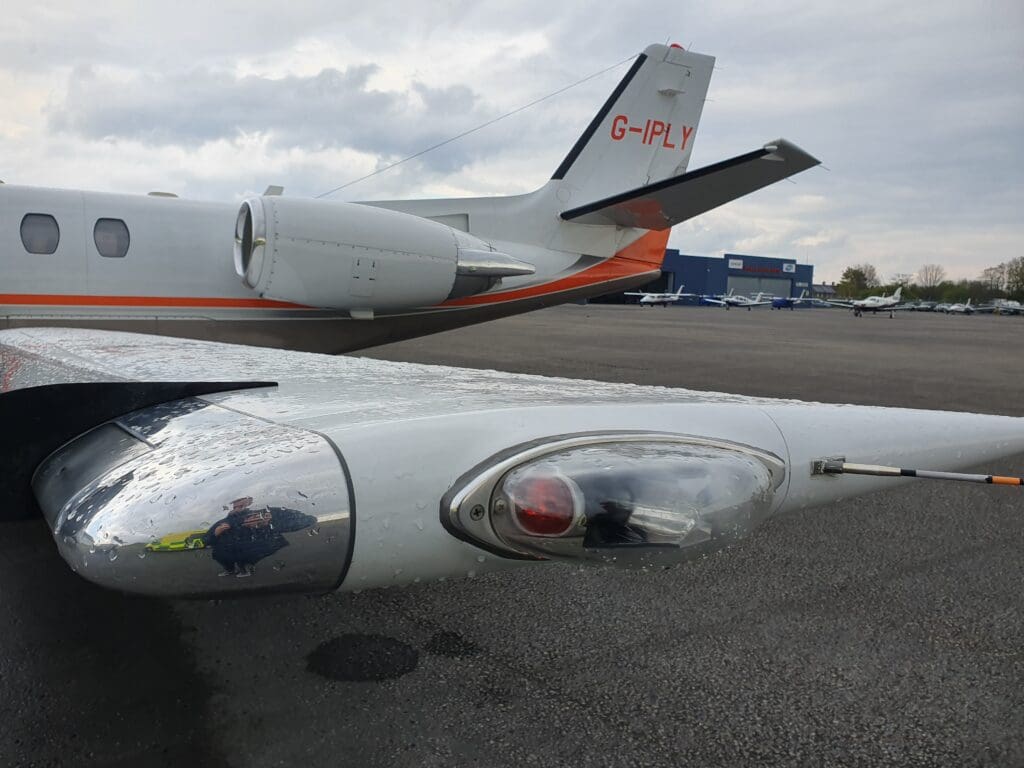
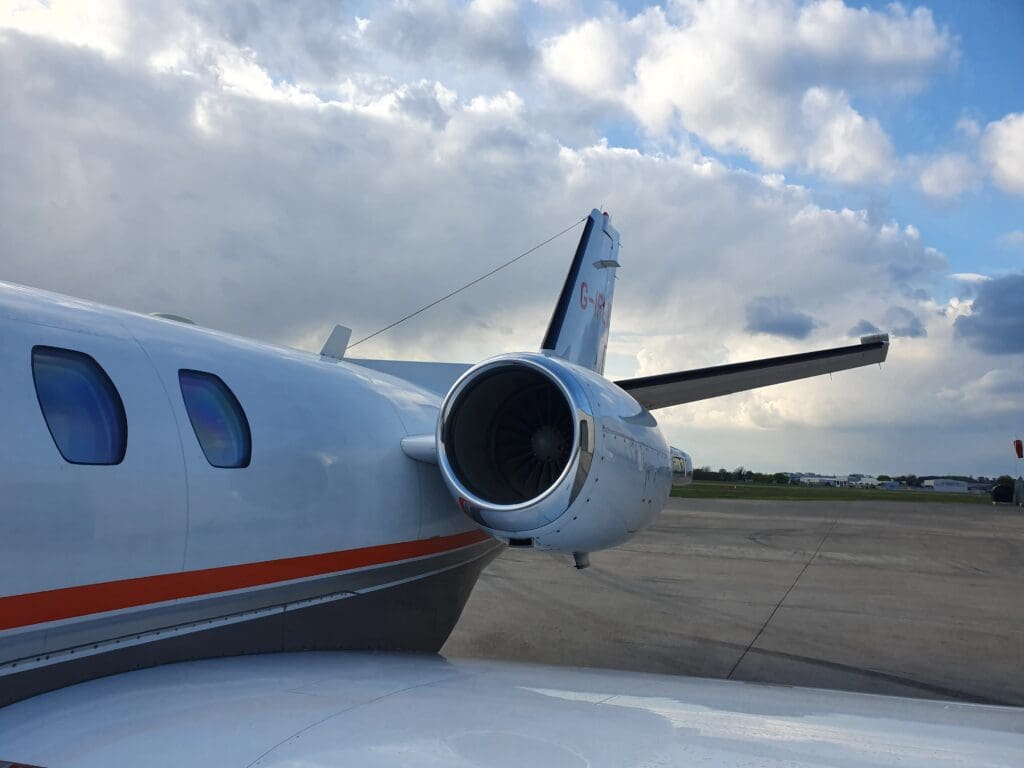
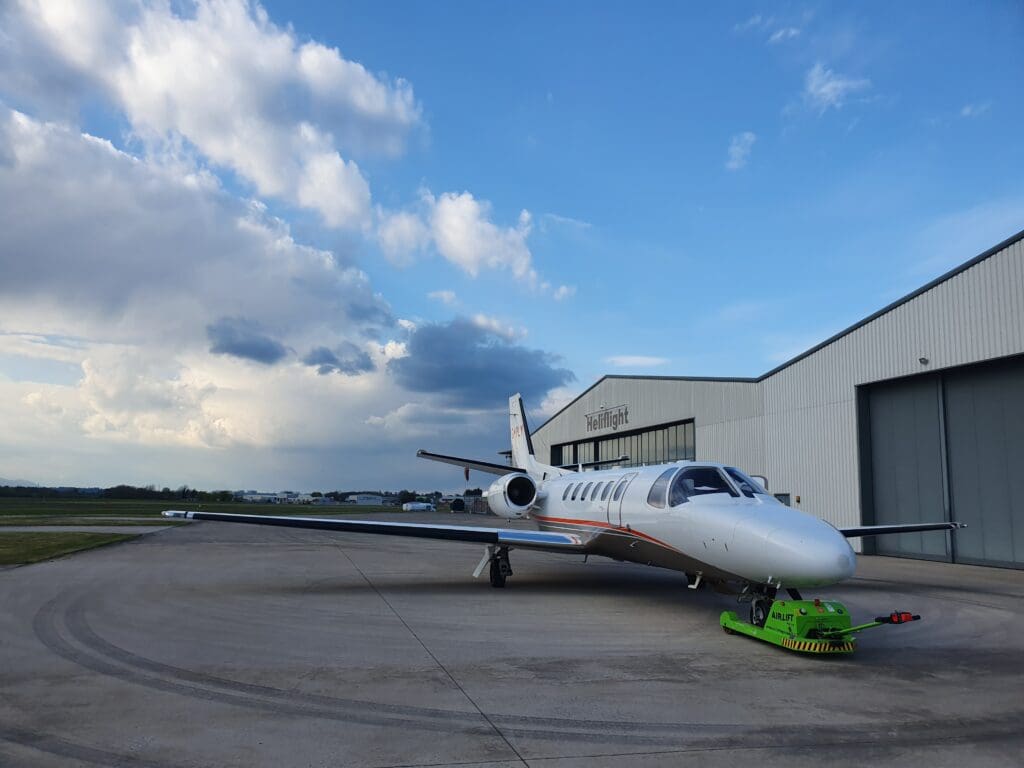
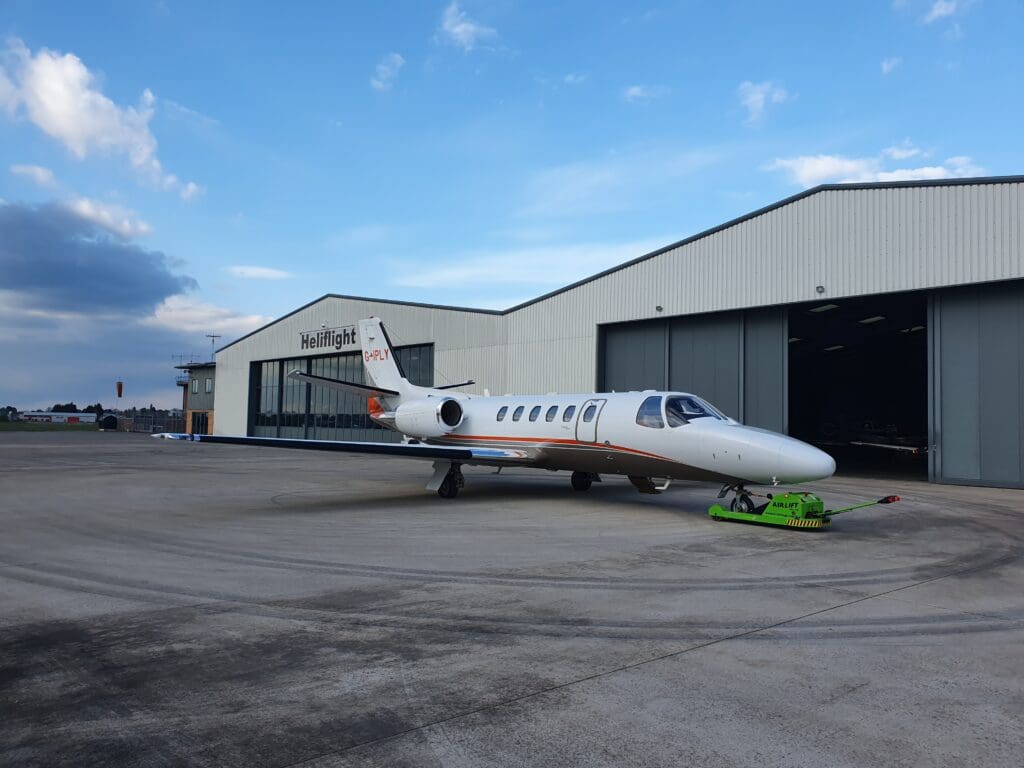
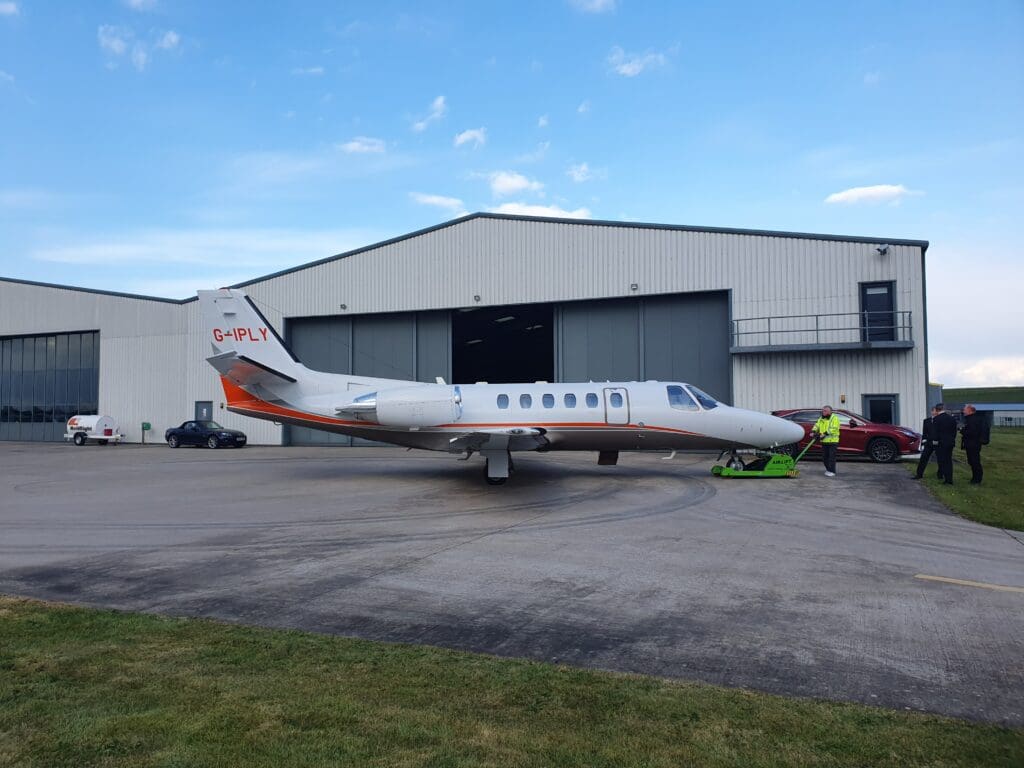
Bearing the construction number 550-0927, this particular Citation first took to the skies in 2000 and was christened with the Dutch registration PH-DYE. Commencing its life in the Netherlands in June 2000, the aircraft was initially operated by Rotterdam-based corporate operator Dynamic Airlines. In 2004, retaining its registration the aircraft was transferred to Jet Management Europe BV and then again to Eindhoven-based Solid Air in 2006. In 2008, the livery of the aircraft was refreshed and the jet received the white, grey and orange colours that it continues to sport to this day. During the Cessna’s time with Solid Air, the aircraft featured several different decals, two indicating the airline’s support for the Dutch national football team – ‘Hup Holland Hup’ and ‘Orange Dream Team’ in 2006 and 2010 respectively. Meanwhile, in 2011 the aircraft featured Swedish House Mafia titles, indicating that the jet was used by the group to shuttle them between concerts. Following the bankruptcy of Solid Air in 2011, in 2013 the jet found a new life in the UK as G-OPEM. Finally, in February 2014 the aircraft was re-registered once again, receiving its current registration G-IPLY.
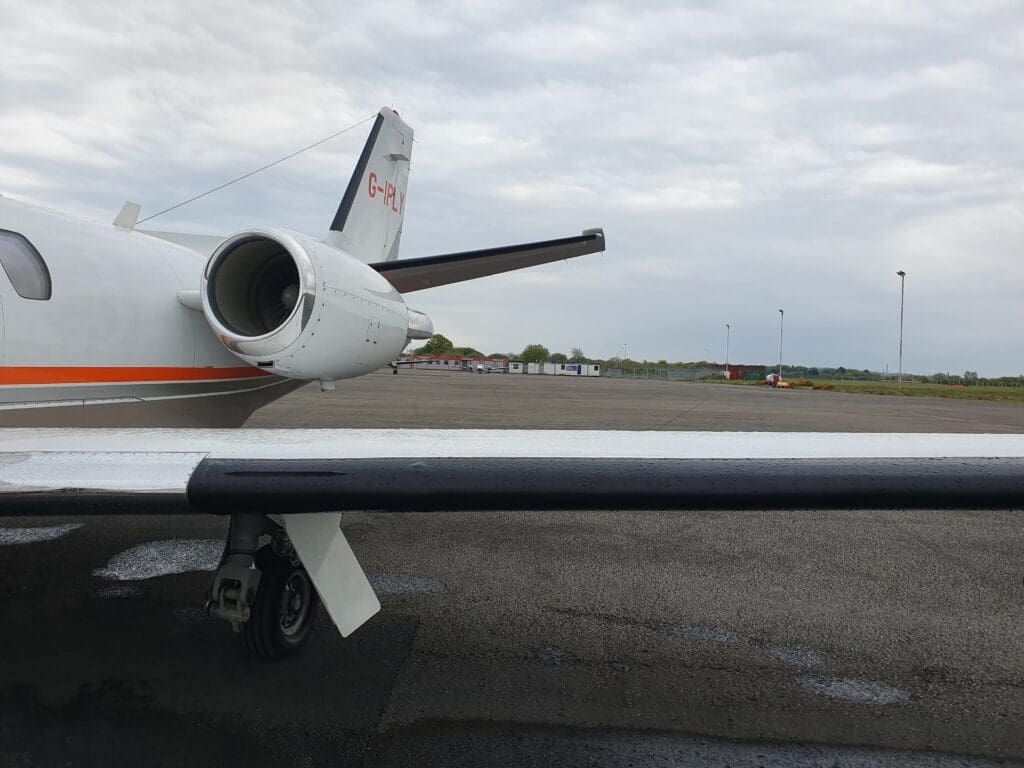
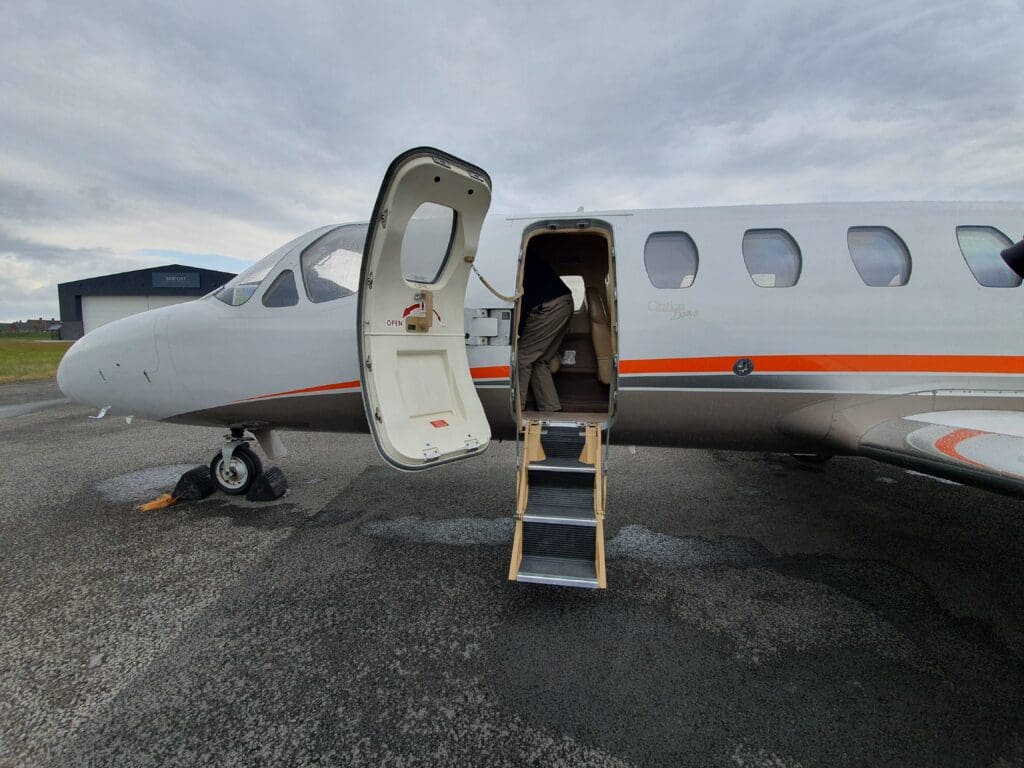
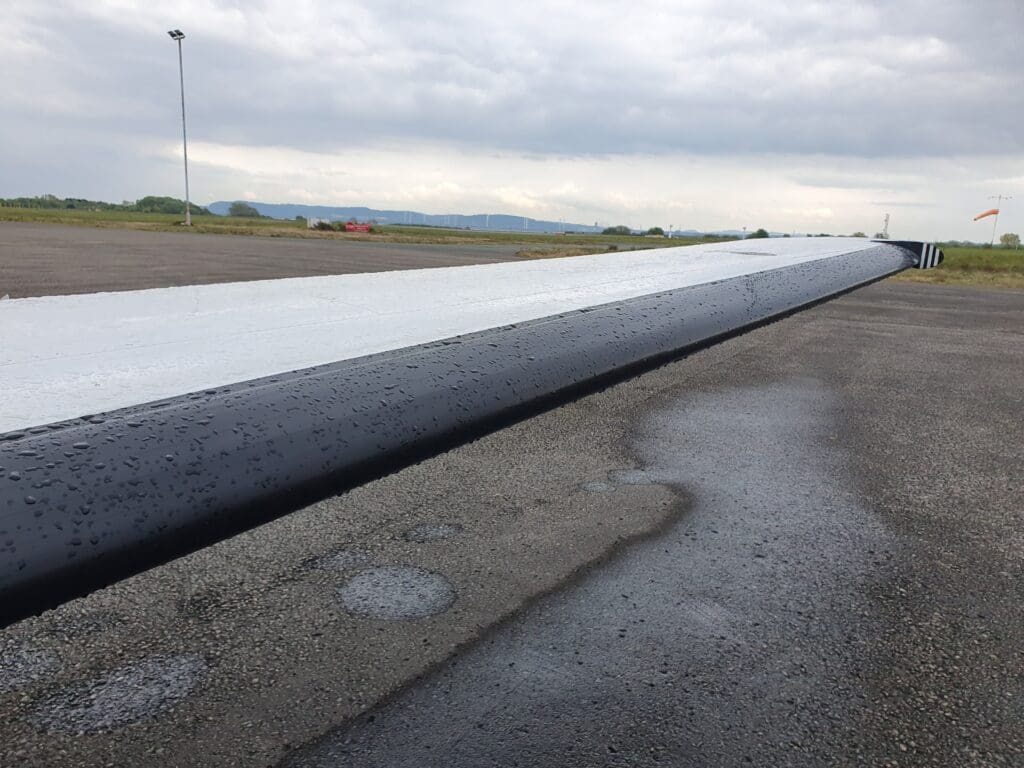
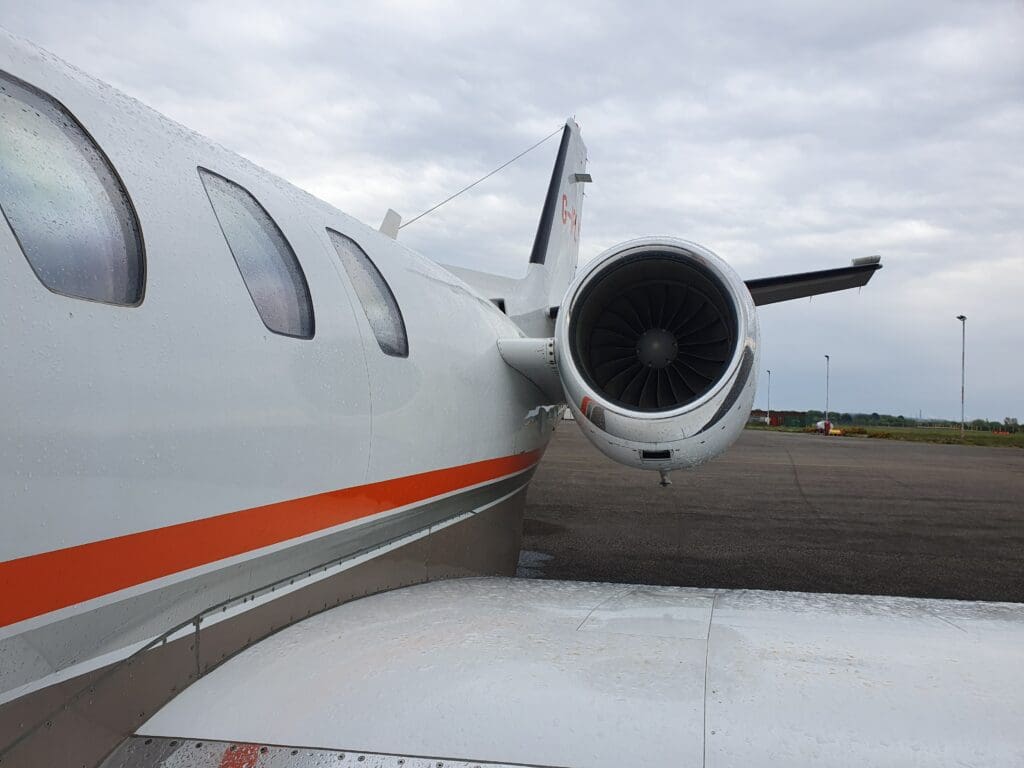
Clearly not utilised as much as a Ryanair Boeing 737, in the week before my flight this particular Cessna had flown a grand total of seven flights. These consisted of round trips from the aircraft’s base in Gloucester to the Isle of Man and Nice, a positioning flight up to Liverpool, and a weekend round trip from Liverpool to Pisa – with the aircraft having arrived from Italy earlier than afternoon.
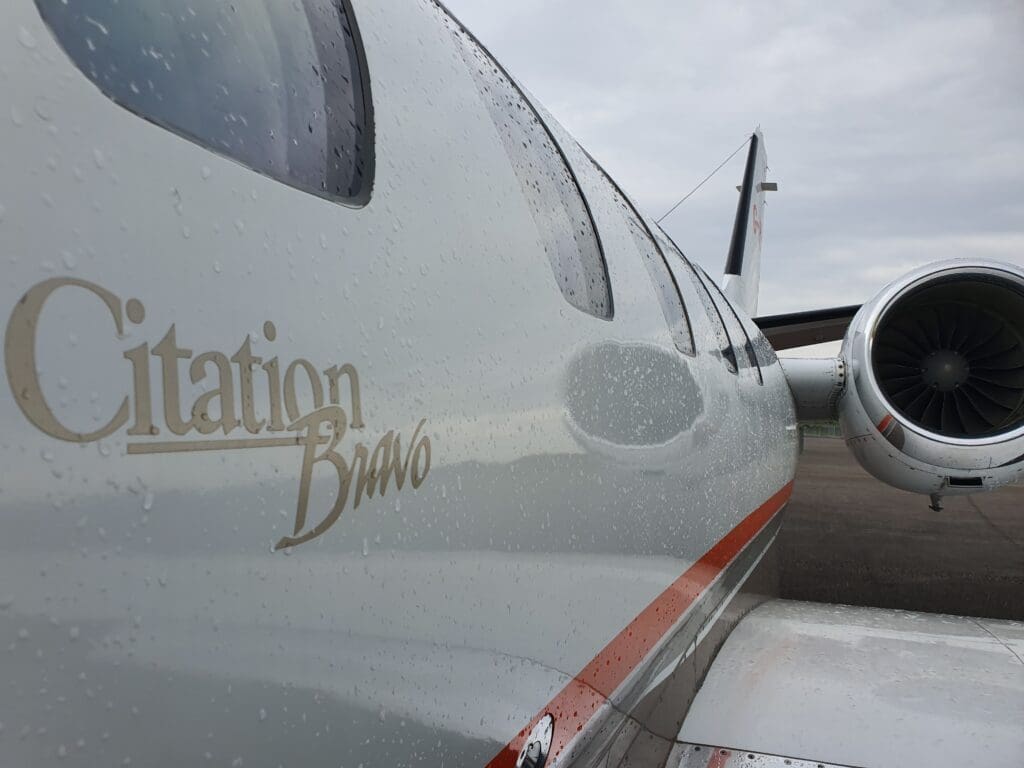
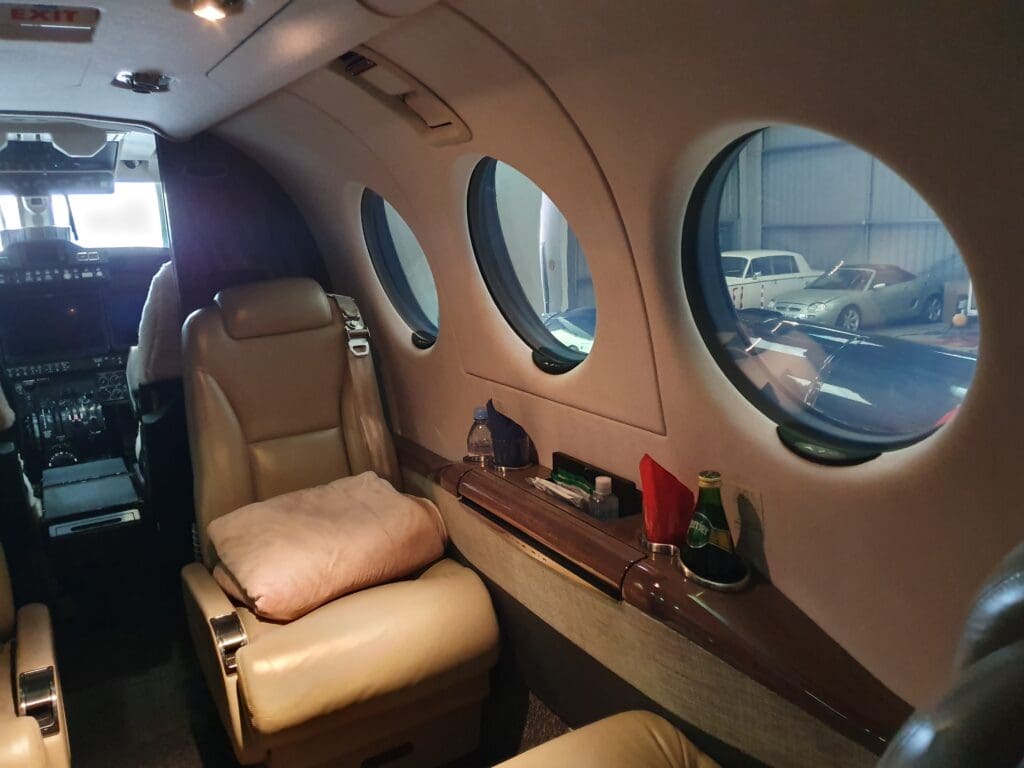
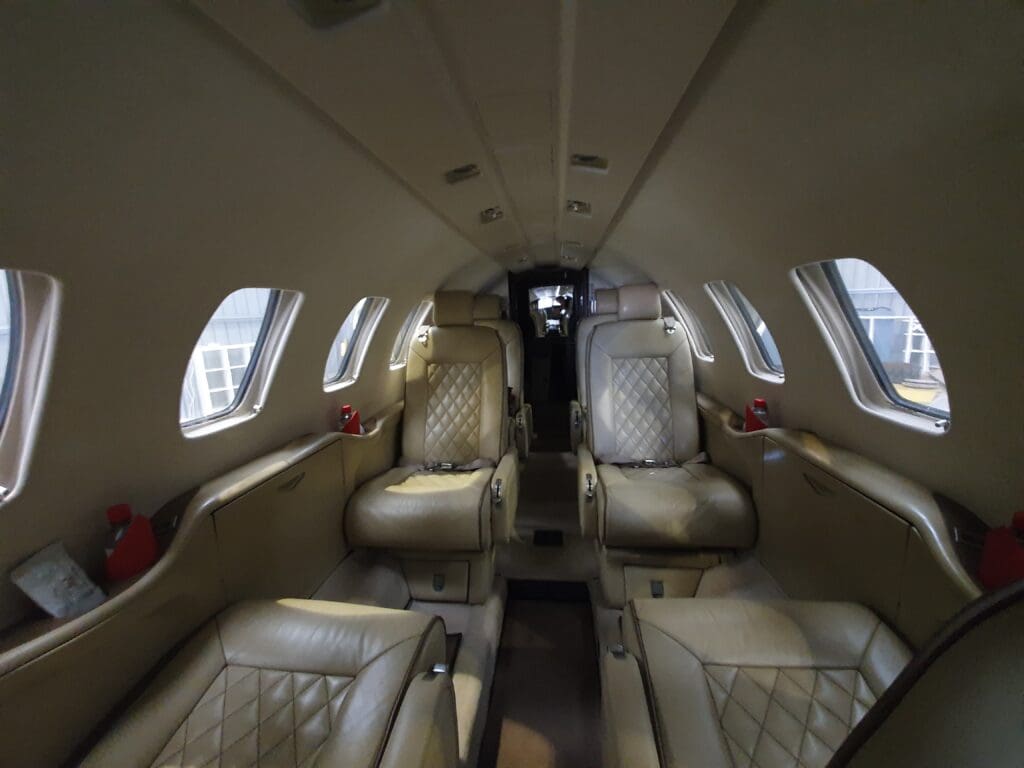
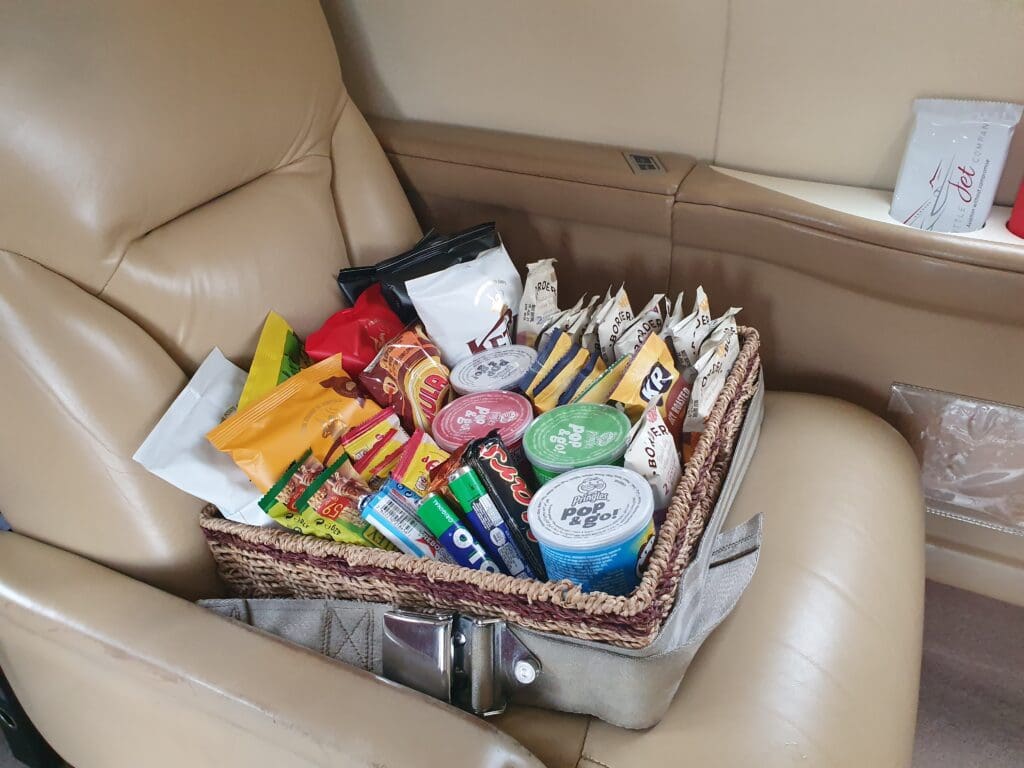
After taking a selection of photos, I climbed up the three steps and for the first time in my life, I entered the cabin of a Cessna Citation. Onboard, G-IPLY’s configuration is standard for a Citation Bravo, consisting of two sets of seats facing one another, allowing for mid-flight conversations and sociable dining, with two seats behind affording passengers a slightly greater level of privacy. At the very front of the cabin, a rear-facing seat could be seen directly opposite the entry door, although this was reserved for the full snack basket. At the rear was a toilet separated from the main cabin by a small divider. Onboard, the interior colour scheme is a somewhat executive aircraft standard beige, with leather seats, panelling and beige-grey carpets, whilst the forward bulkhead and rear divider are made of polished wood.
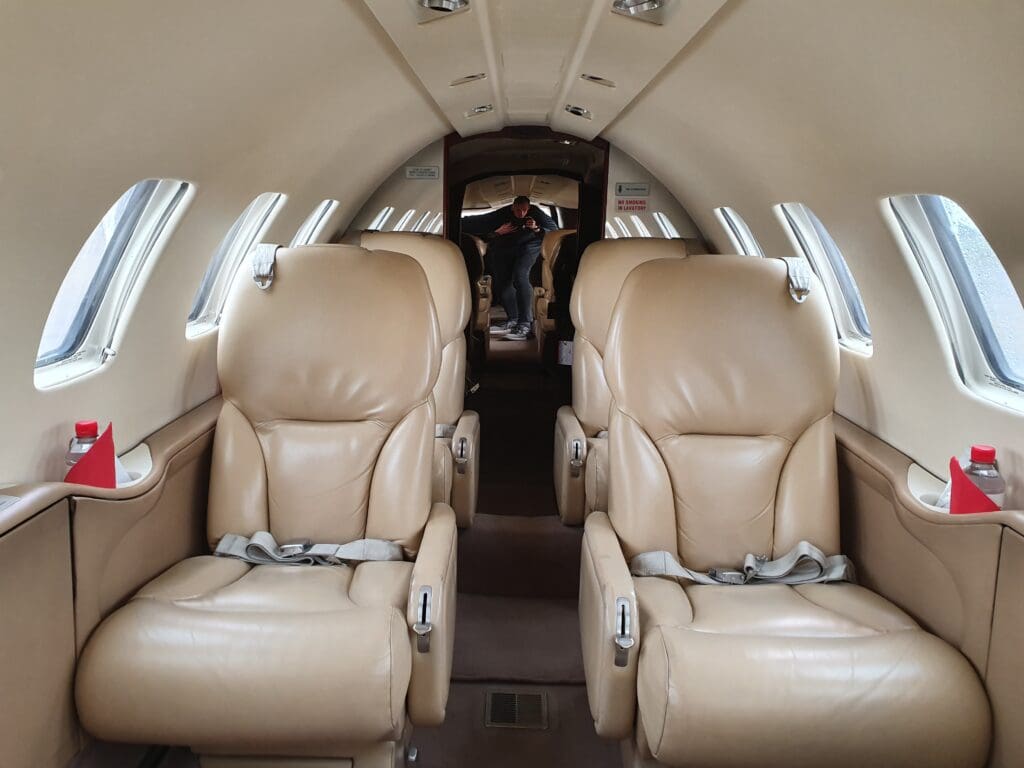
After a few minutes of taking photos, the group headed back to the lounge where we passed the time with refreshments and aviation-related conversation until 1710 at which point we headed back outside to the aircraft. After more photos, I squeezed through the small entry door once again and into the cabin. Given my slightly above-average stature of 1.85 metres, plenty of bending over was needed once inside the 1.46 metre-high cabin. Measuring an equal distance across, fitting six fully grown men into the jet seemed to be somewhat of a tight squeeze at first, however, once everyone had taken their seats, things became a little more comfortable. As one would expect from a business jet, the leather seats were incredibly soft and well-padded. Sitting facing forward in one of the twin seats (2A?), the legroom was not amazing since another passenger was sitting directly in front of me; however, the seats at the rear of the aircraft may have offered a slightly better amount of space. Furthermore, the cabin was perfectly clean, although indicative of the Cessna’s age, I did notice a few marks and scratches here and there.
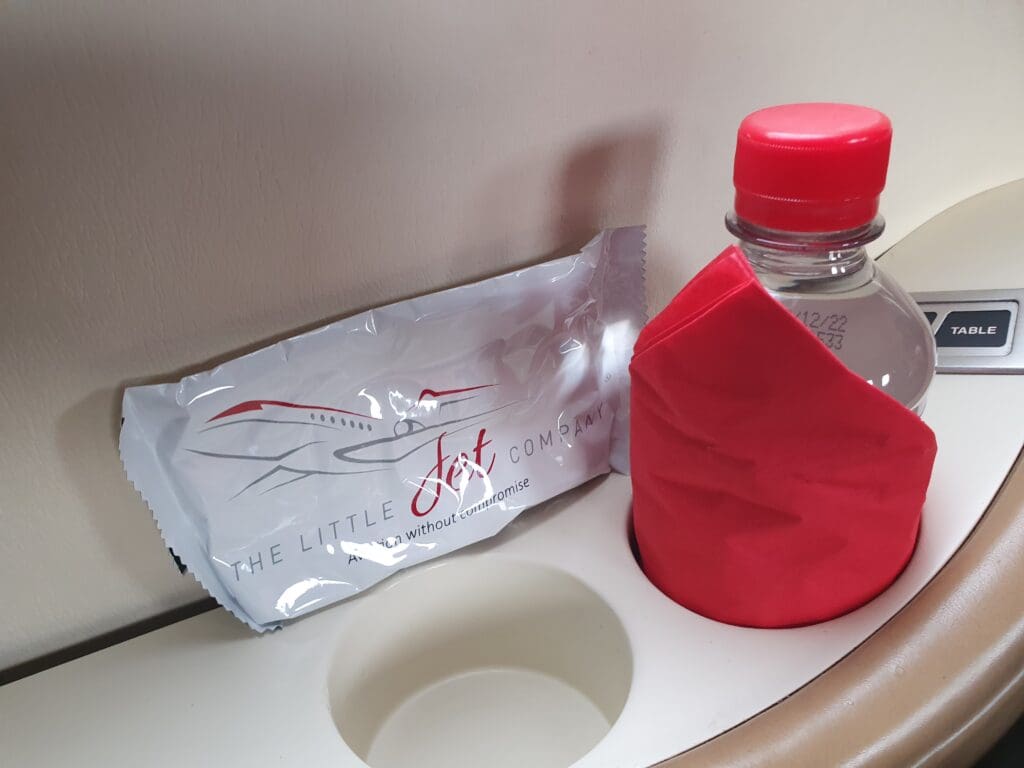
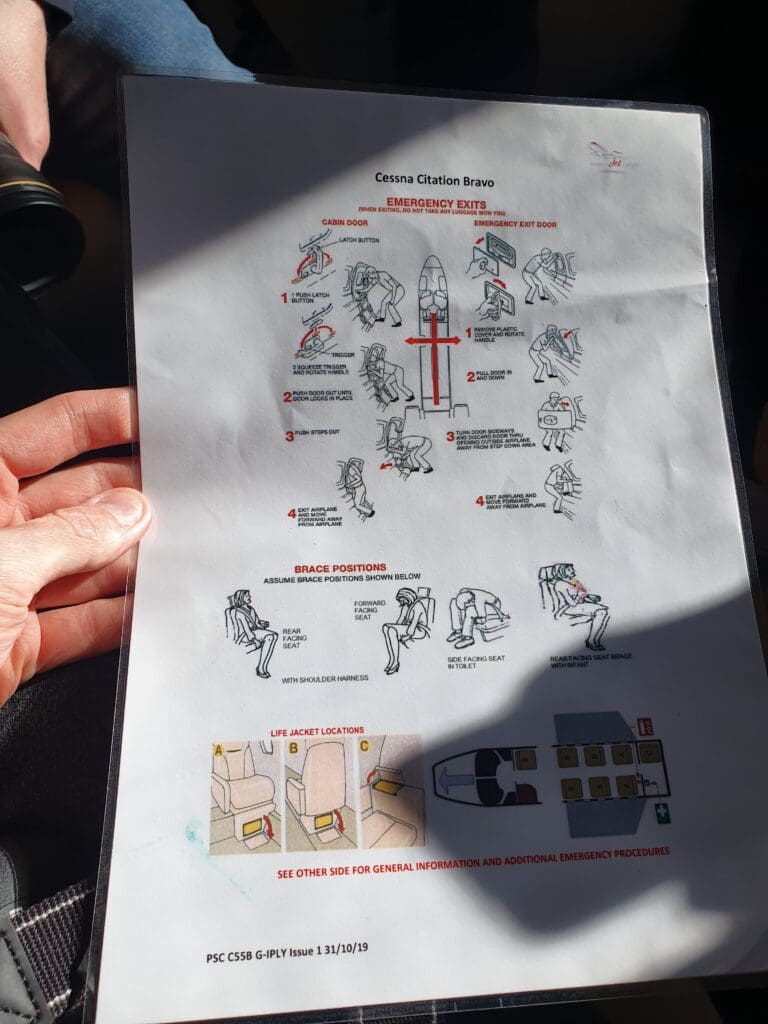
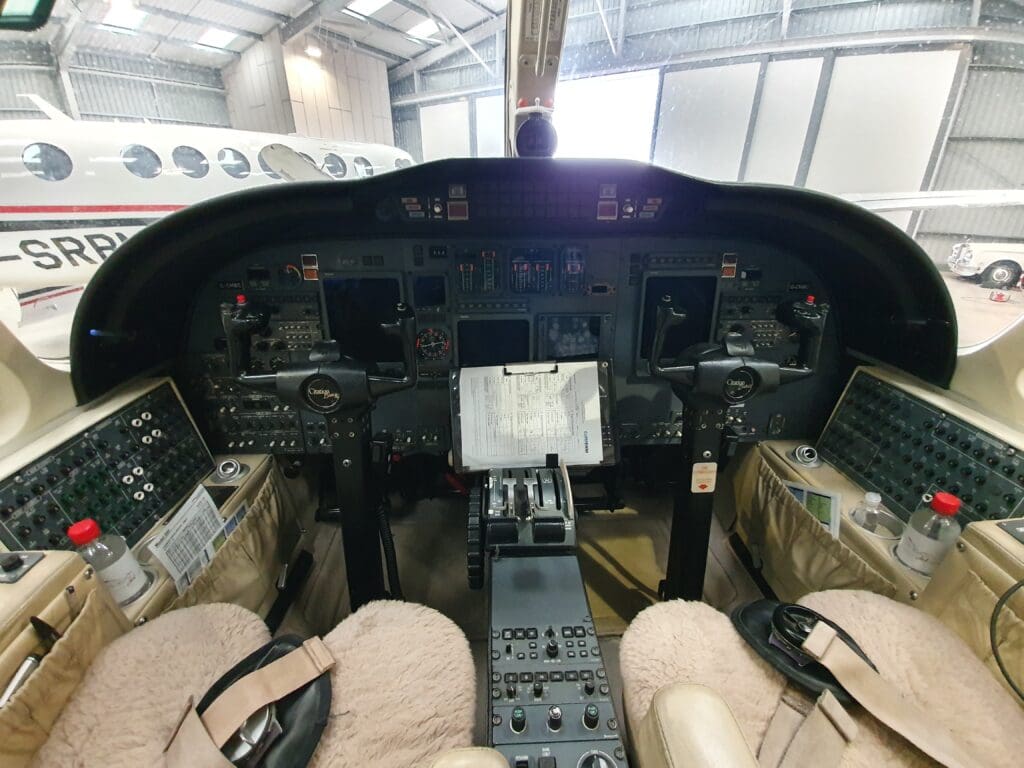
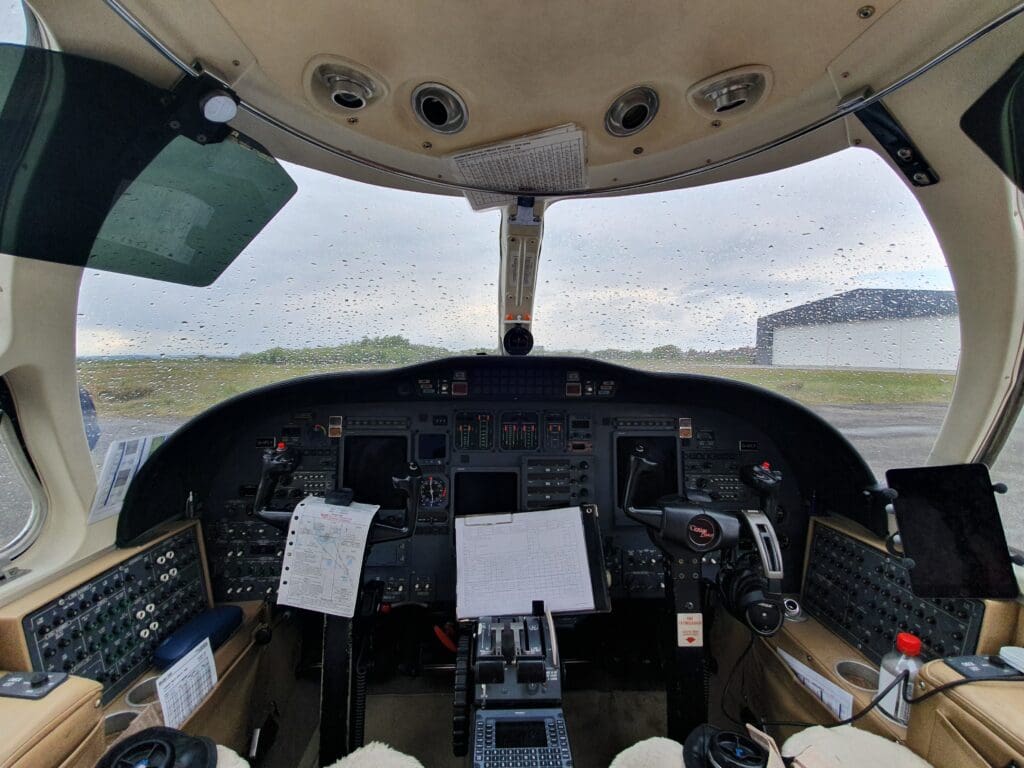
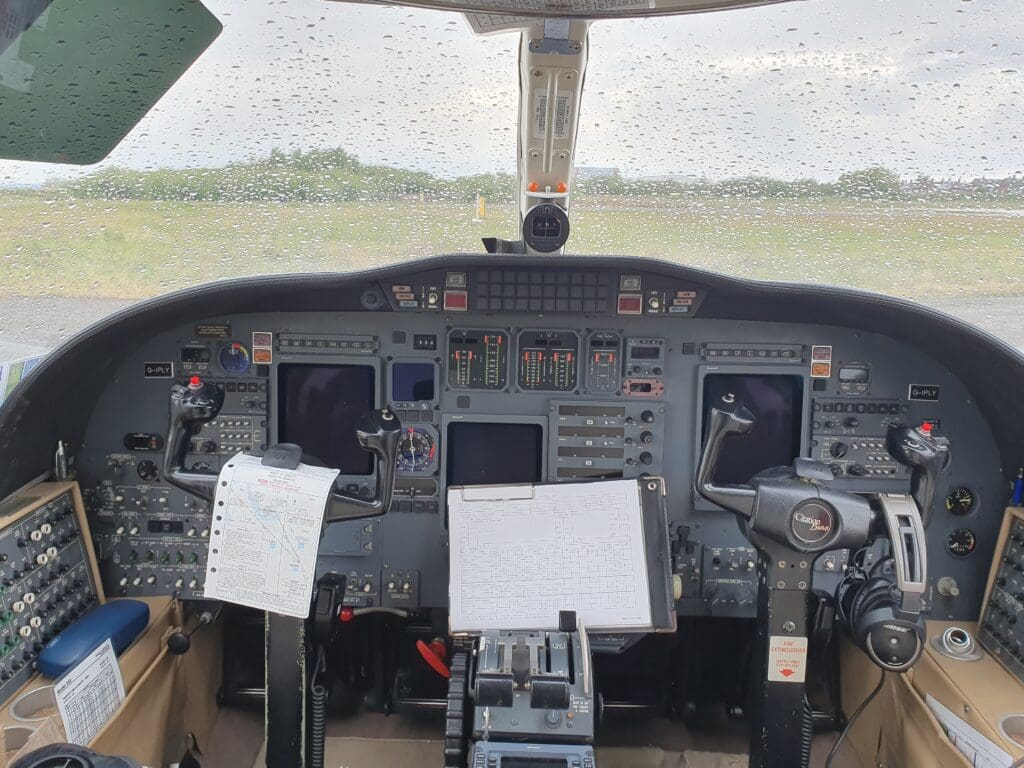
Once everyone was seated and ready to go, the captain closed the door and gave a brief safety announcement during which behind us, the Cessna’s two Pratt and Whitney PW530A engines powered up into life with a slightly high-pitched whine. Given the aircraft’s small size and the position of these engines just behind the passenger cabin, I was an MD-80 style noisy start-up however this was quieter than expected. Following the quick safety demonstration, the captain retreated into the small cockpit and squeezed over the first officer before running through their checklist. Even after this had appeared to be completed, the aircraft remained on stand for a few minutes before eventually powering away from the apron. Seeing as the wind was blowing in from the west, the aircraft would depart from Runway 27 and thus only a very short taxi was needed that afternoon from the general aviation area.
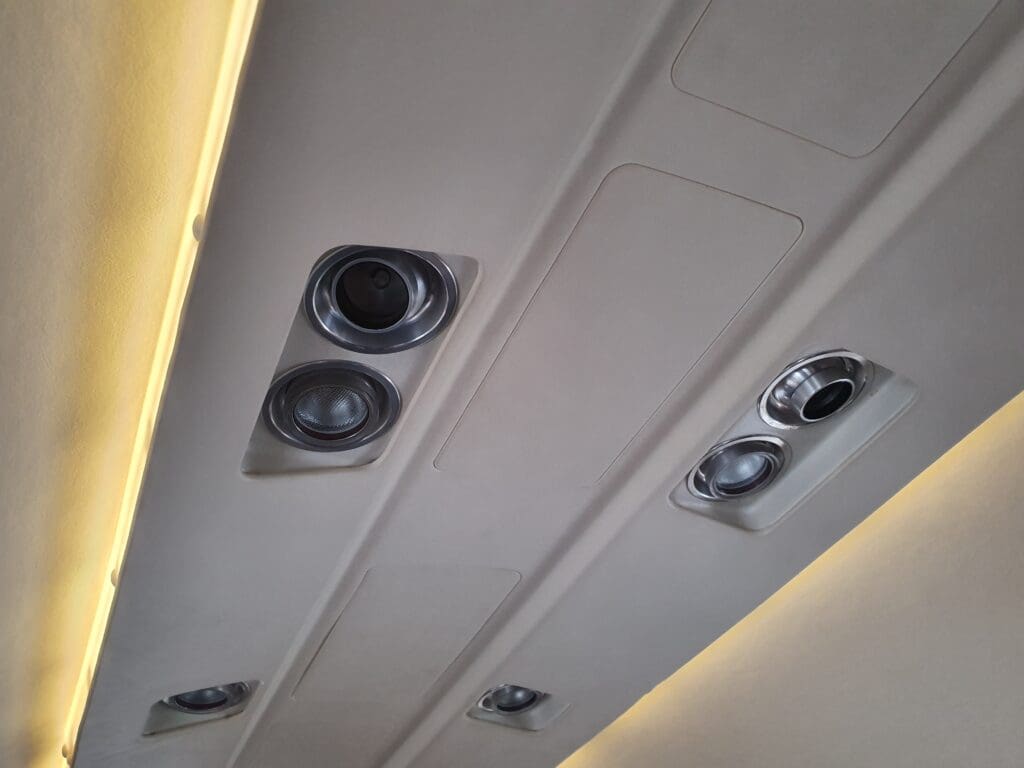
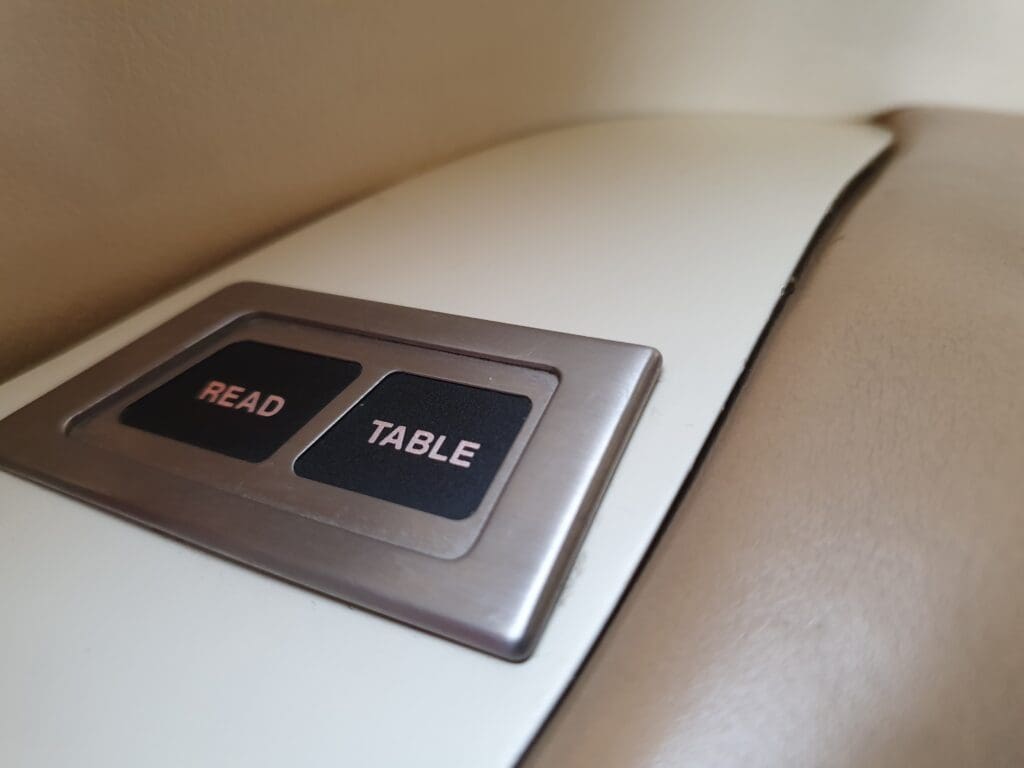
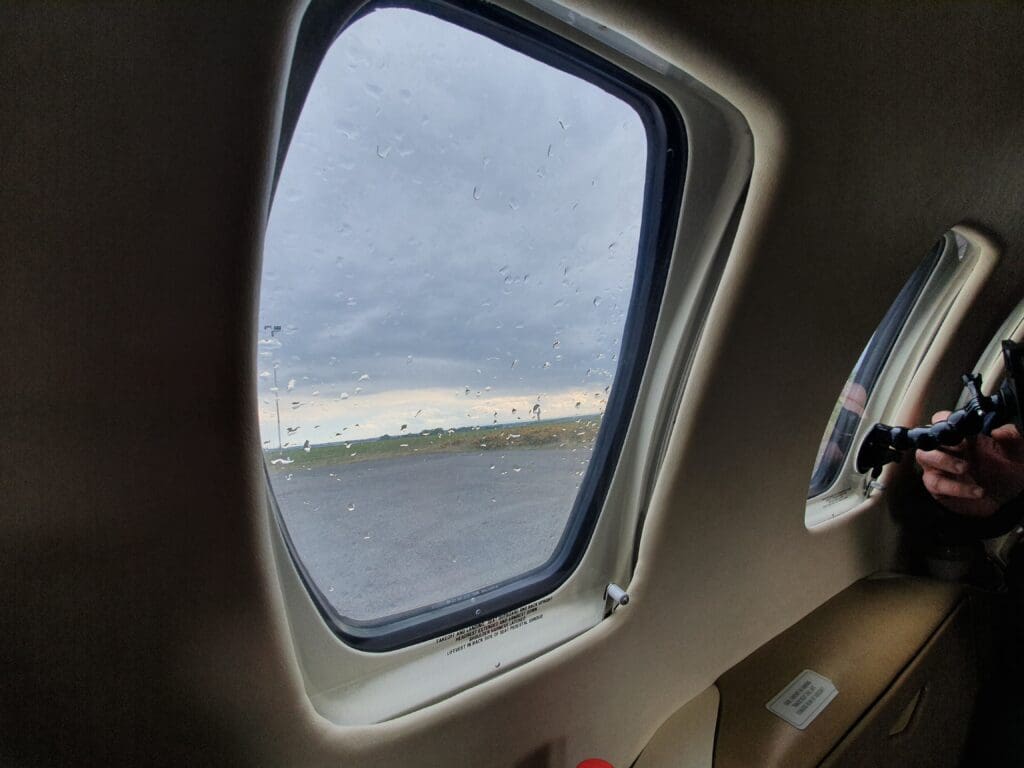
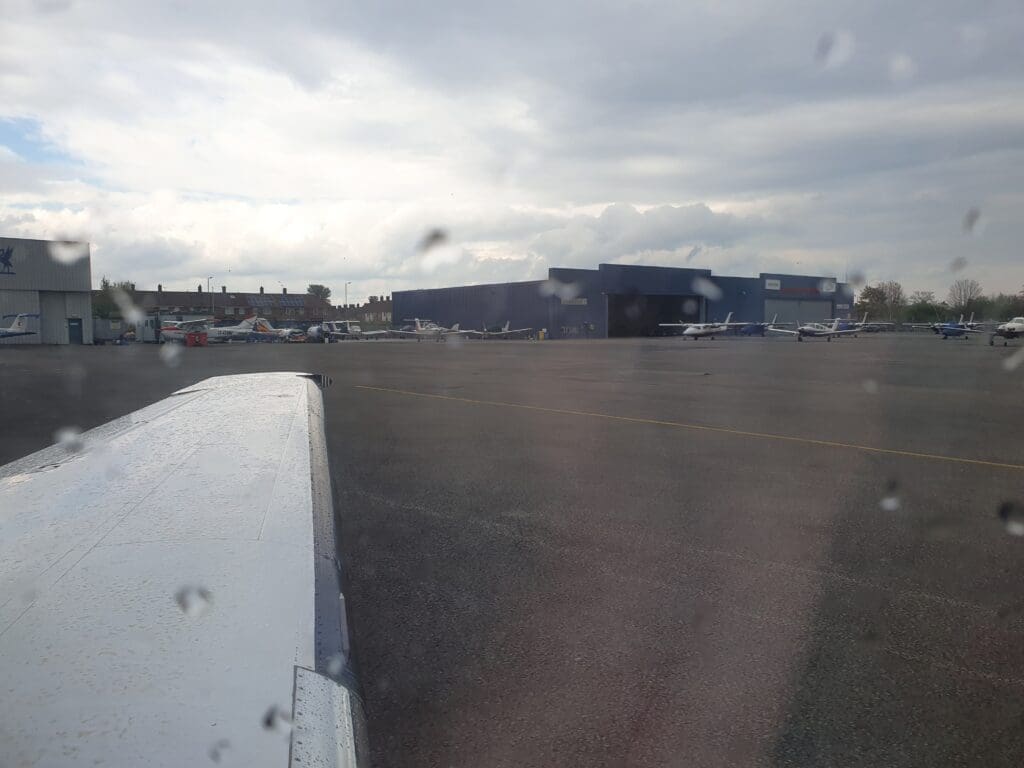
No more than a couple of minutes after taxiing away from its parking position, the Cessna made its way onto the runway and began a powerful rolling take-off. Aware that the thrust-to-weight ratio of small business jets can result in impressive rocketing take-offs, I was looking forward to our departure. As the captain had mentioned, given the relatively light weight of the aircraft, we soon left the ground and made our way up into the gloomy skies of the northwest. Once the landing gear had been retracted, the Cessna soon left the airport behind and crossed the wide River Mersey before turning southeast, and then south.
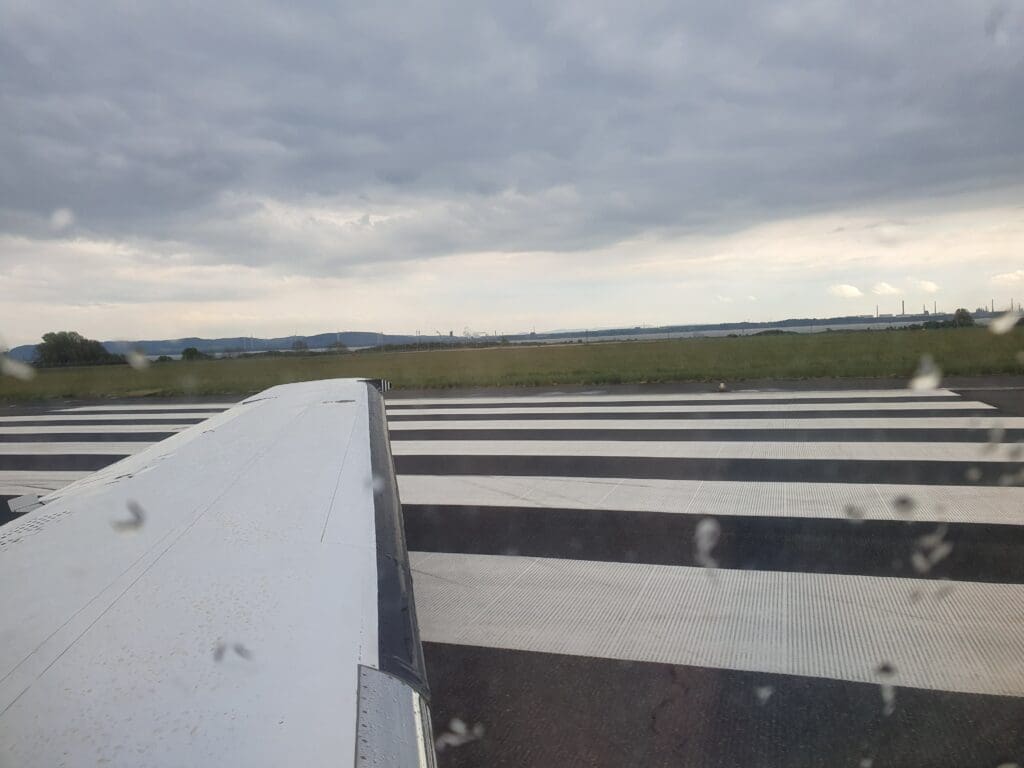
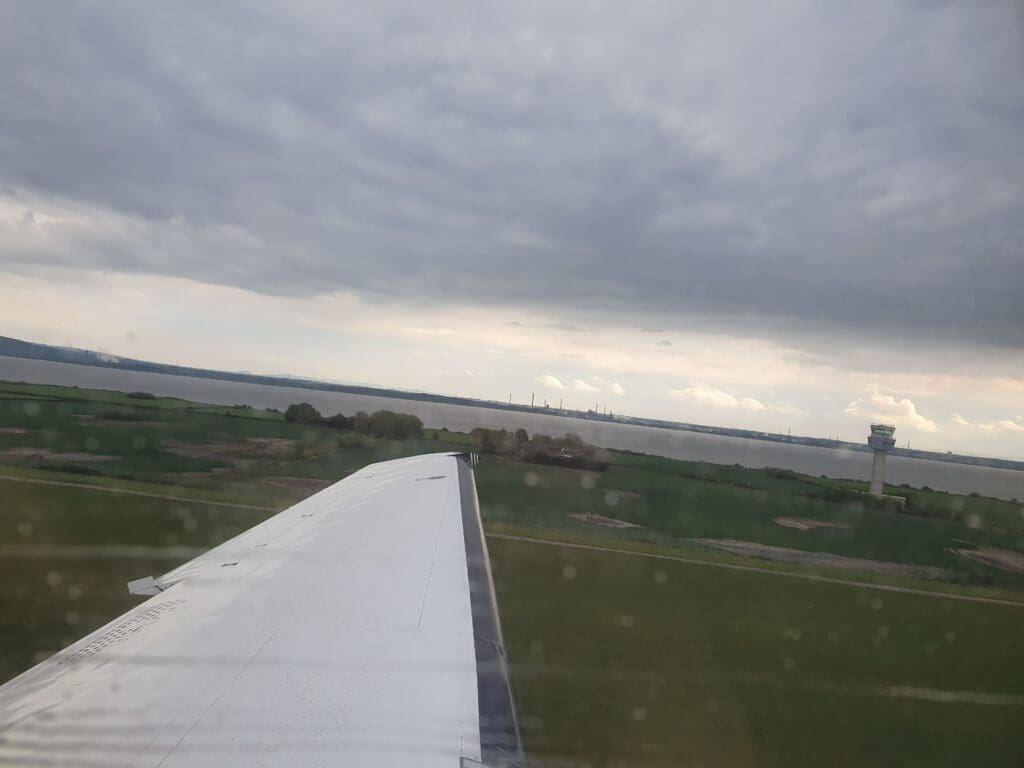
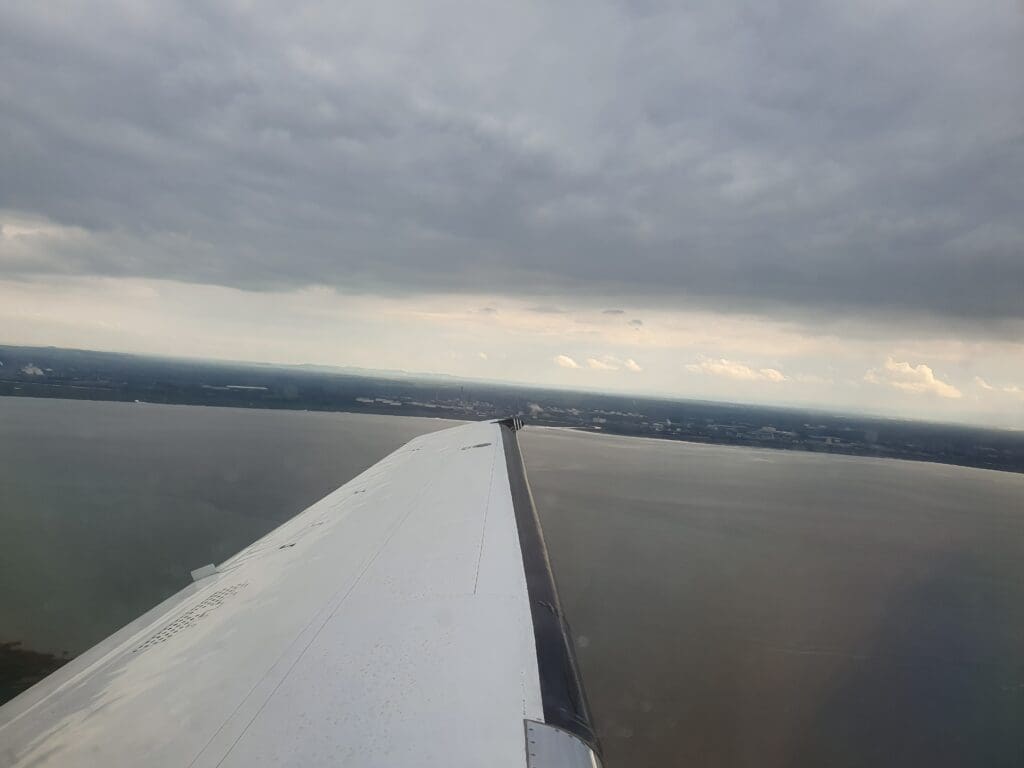
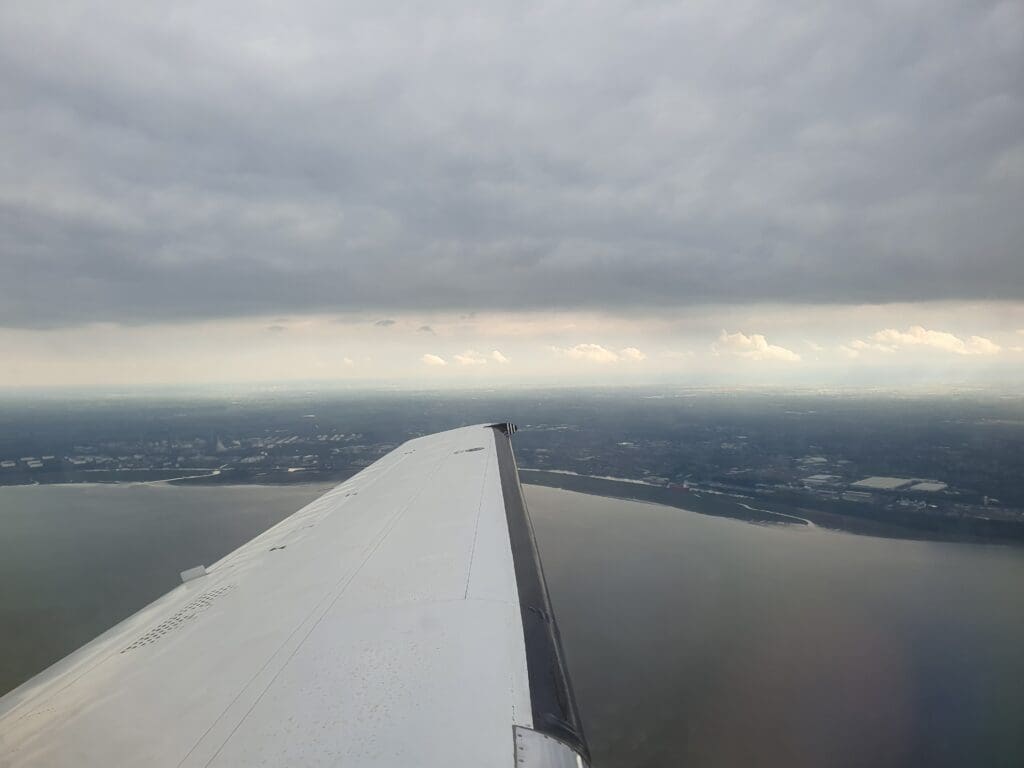
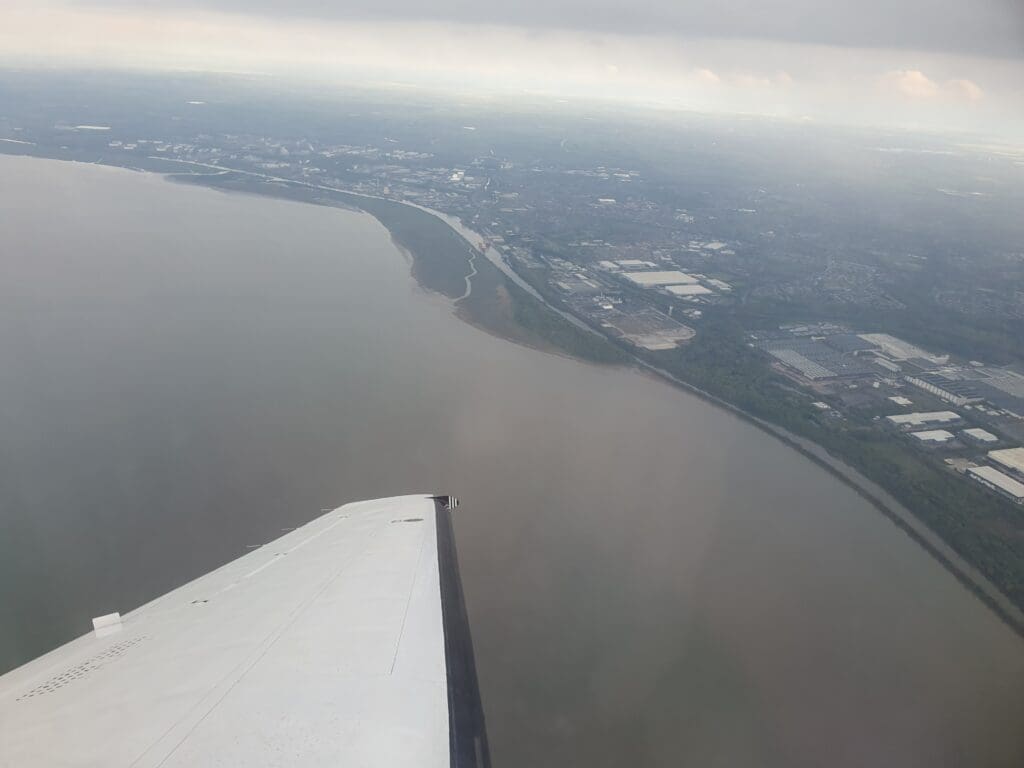
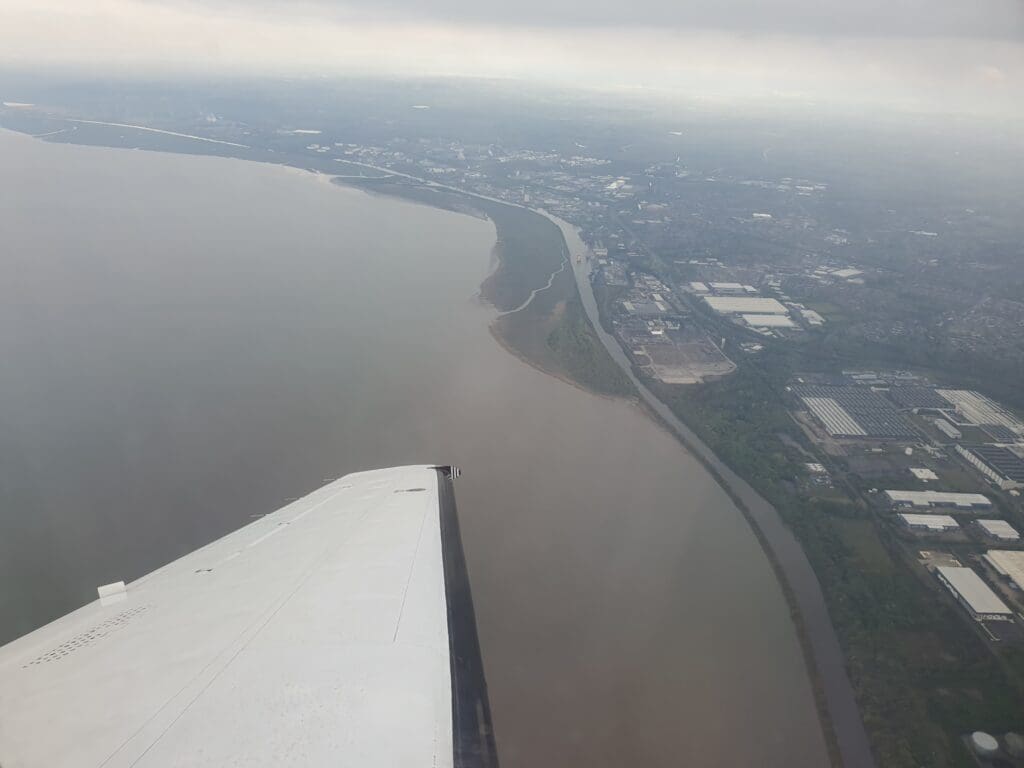
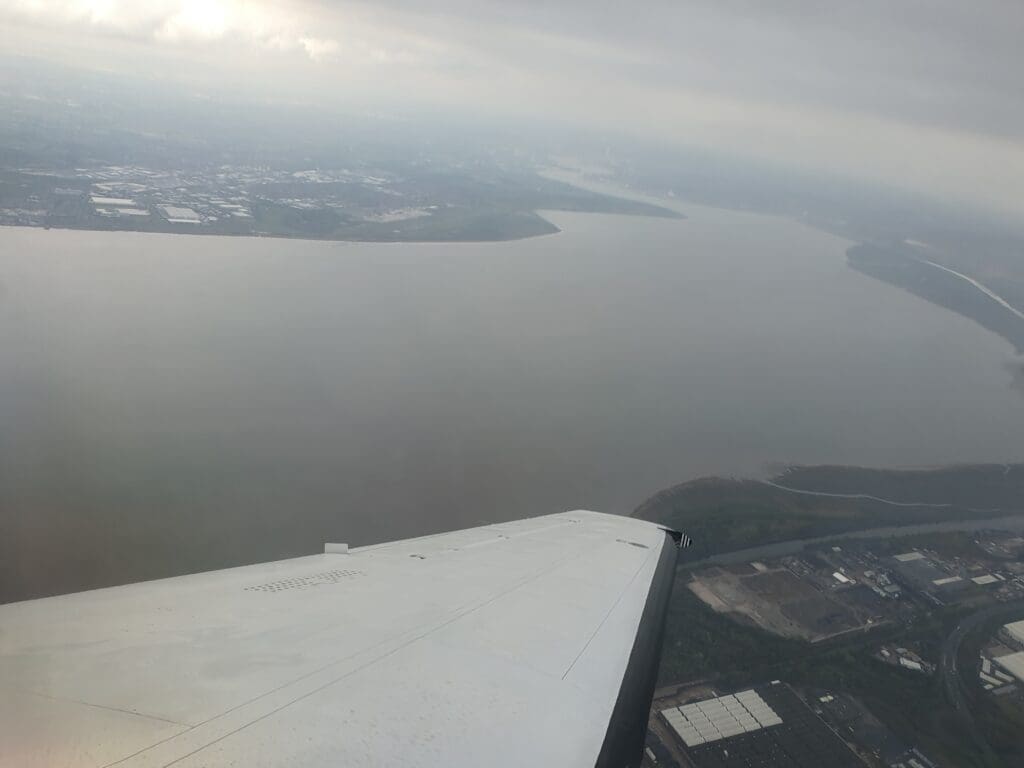
As the aircraft made its way across the Mersey, good views could be had of western Cheshire and the industrial sprawl at Ellesmere Port before rising up into the clouds. That afternoon, the Cessna climbed quickly and we reached our low cruising altitude of 13,000 feet around five minutes after taking to the skies. At this point, the aircraft was passing to the west of the town of Crewe and cruising southwards towards the Shropshire town of Telford. Onboard, we passed the time by exploring as much of the Citation as there was to discover – trying out the various features and amenities of the jet, as well as snapping photos and taking videos of the experience in between swapping stories of our aviation-related travels.
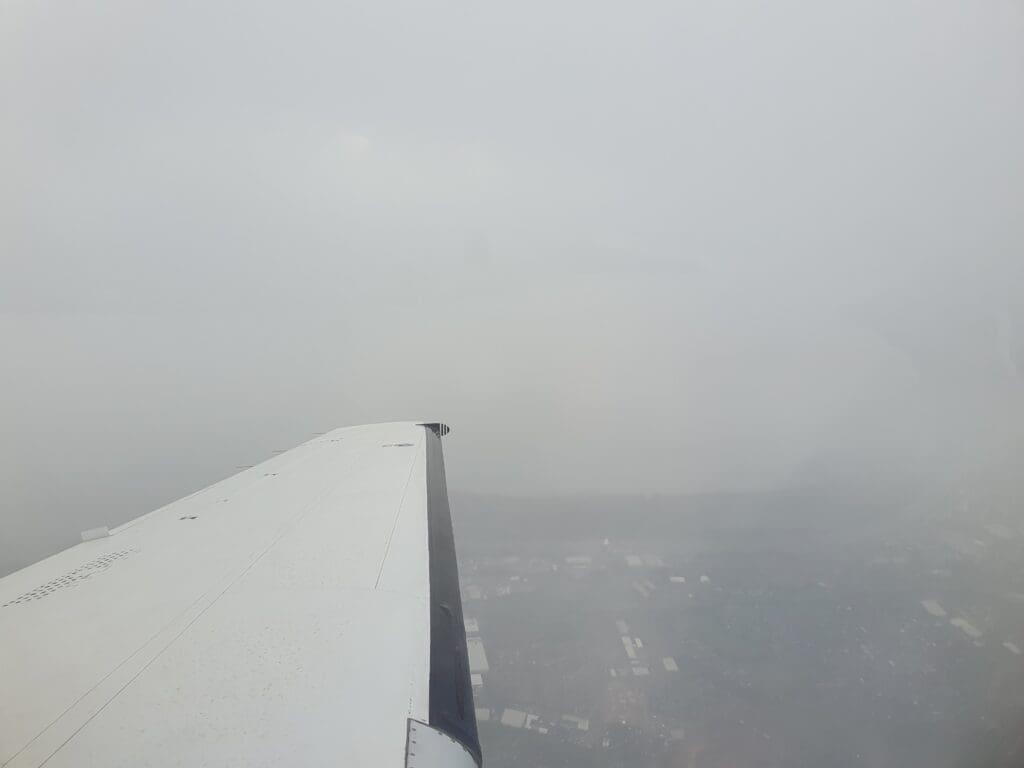
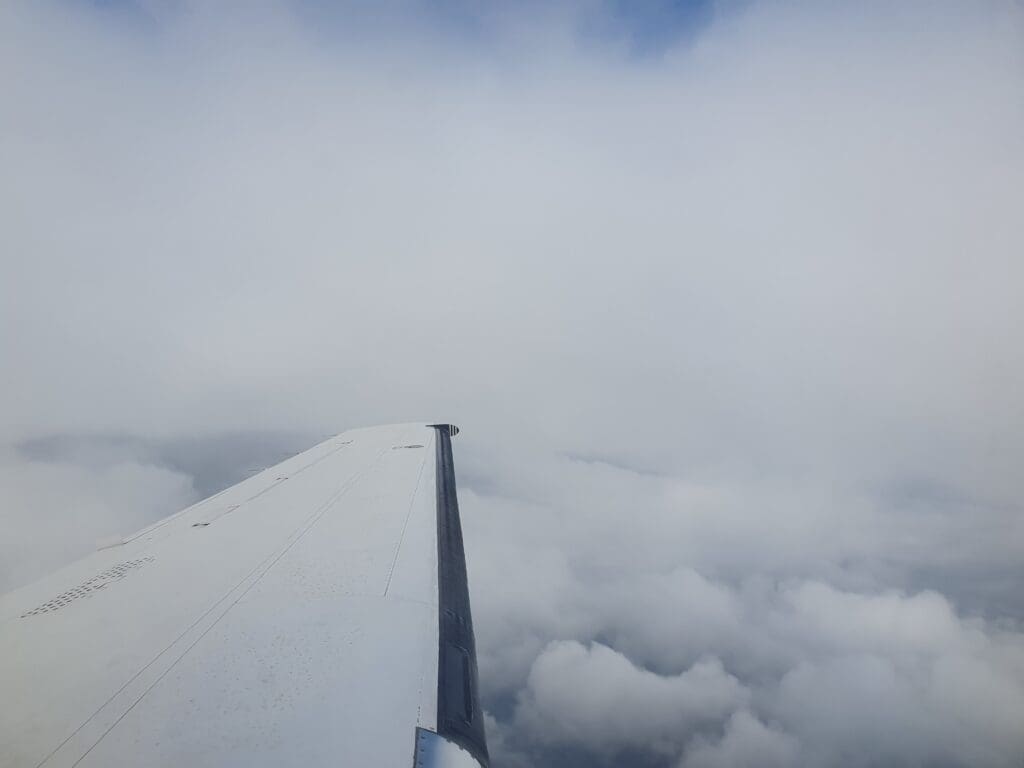
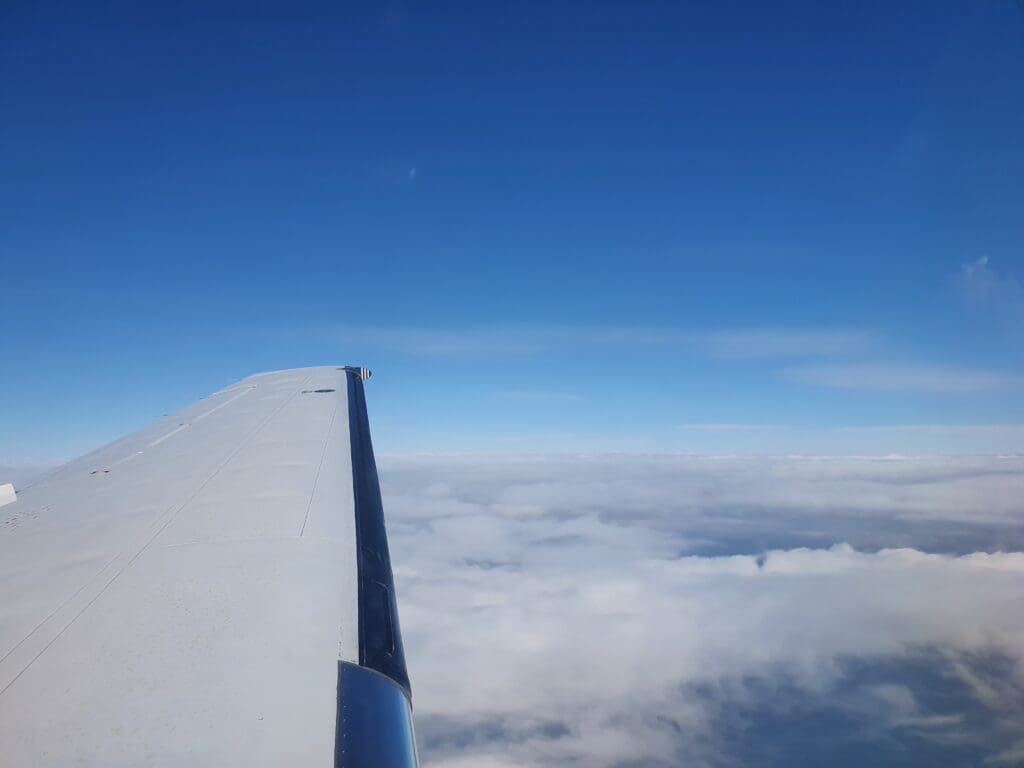
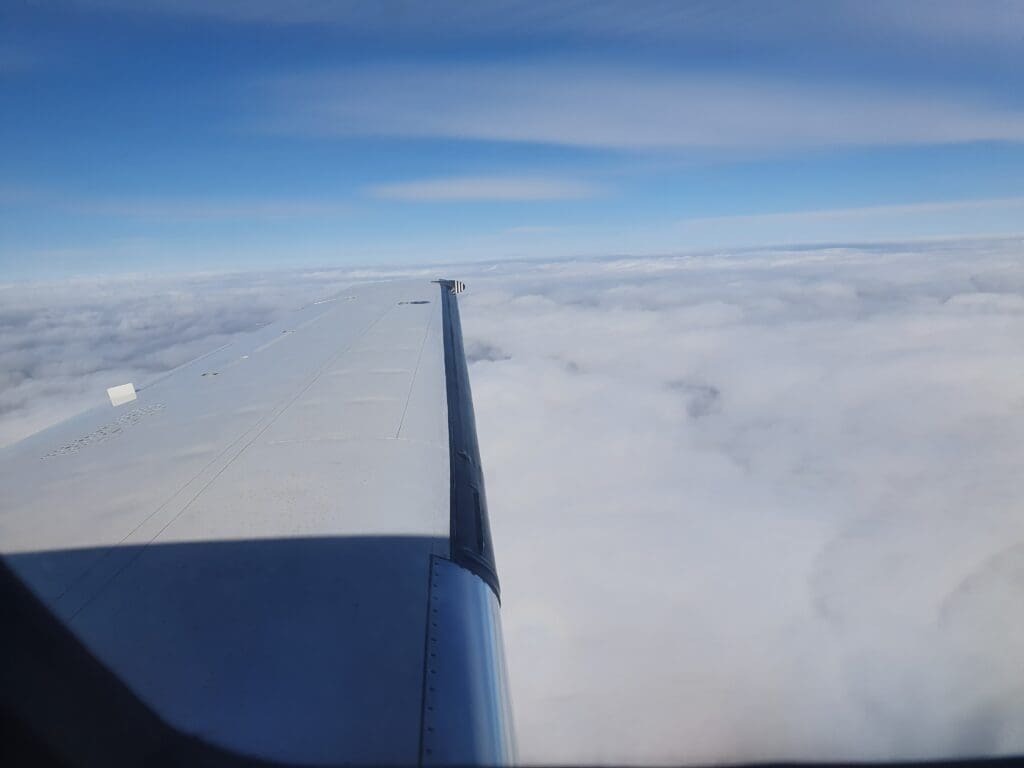
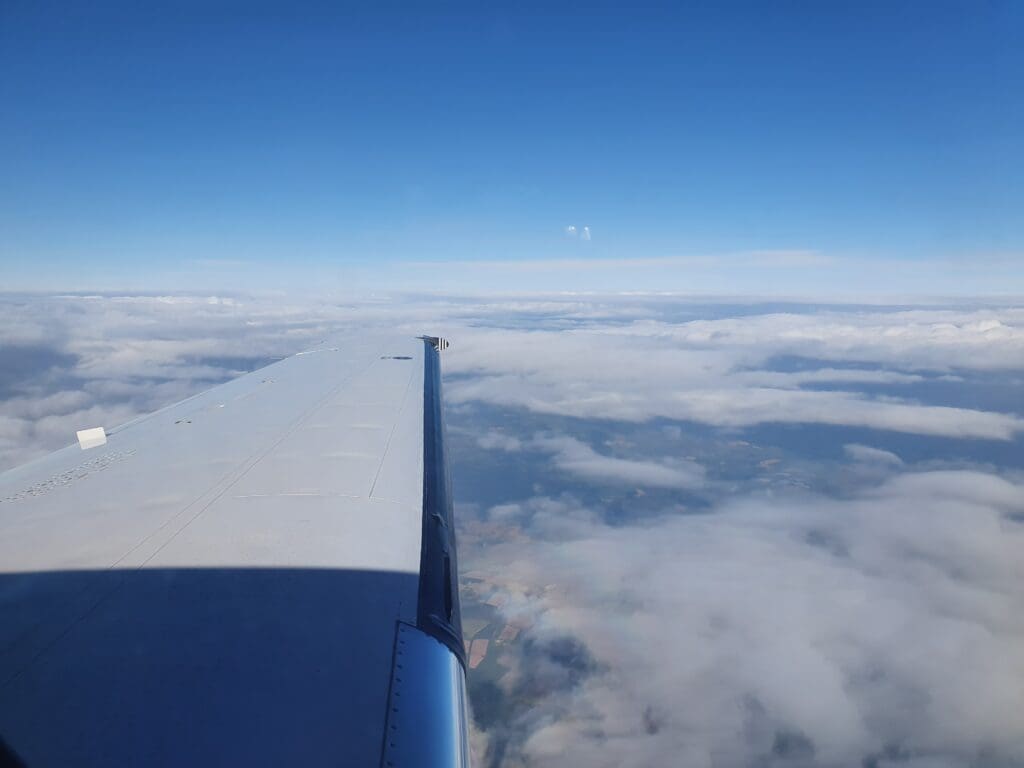
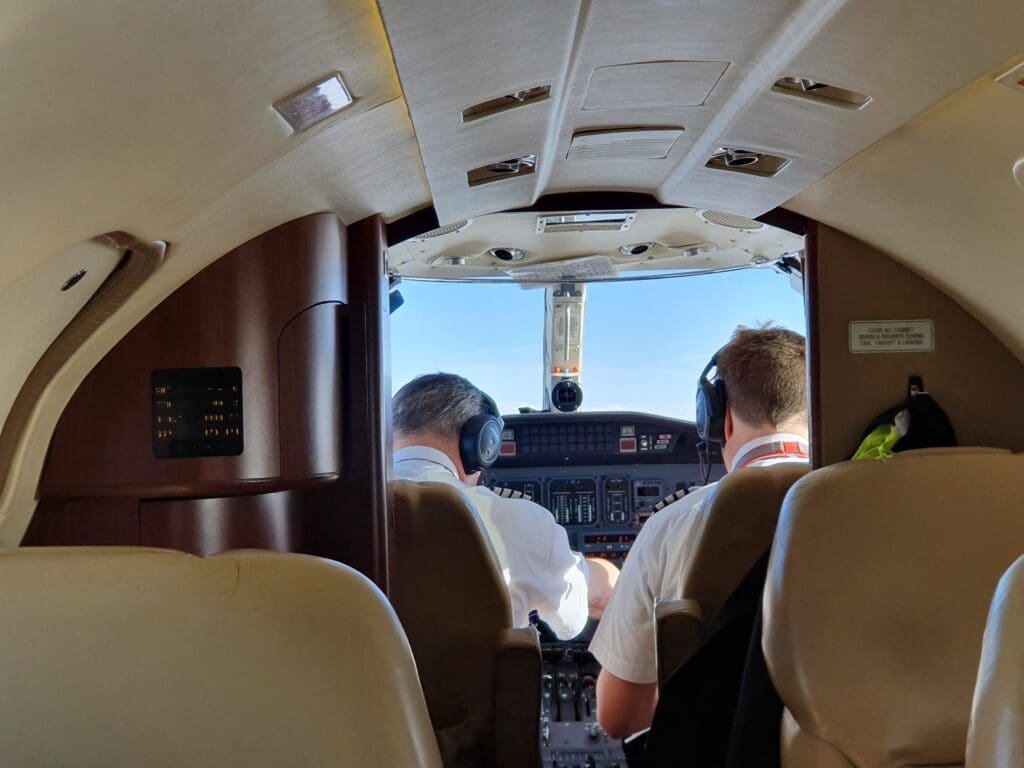
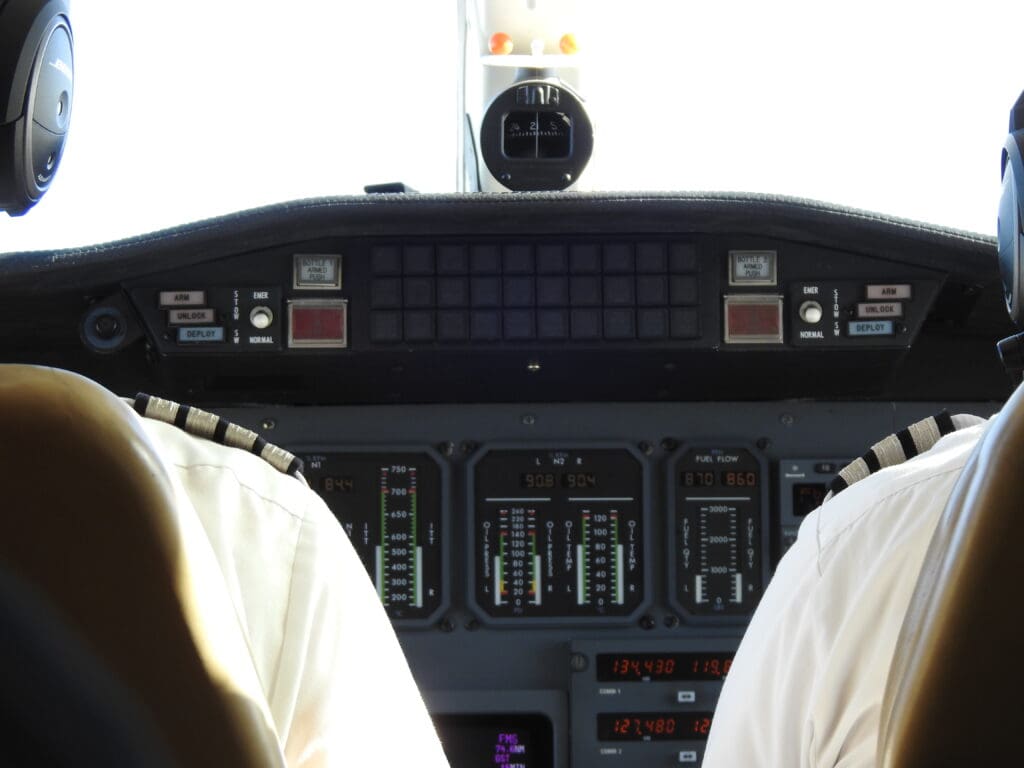
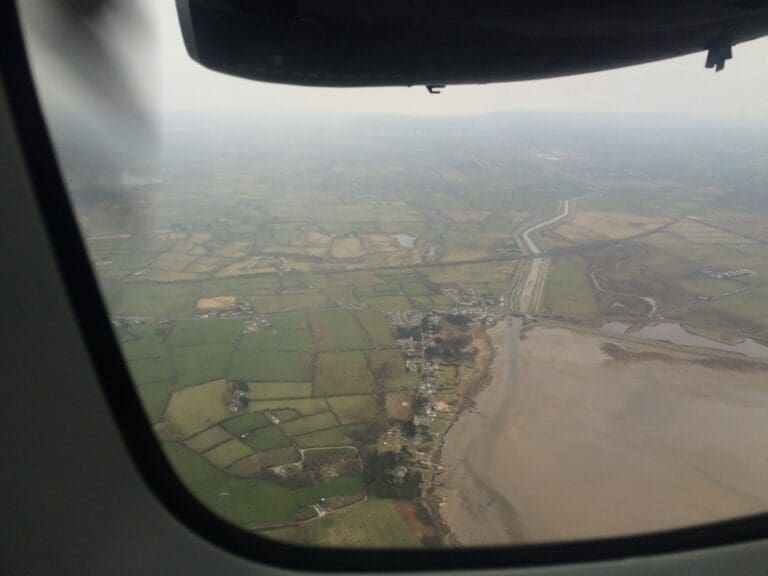
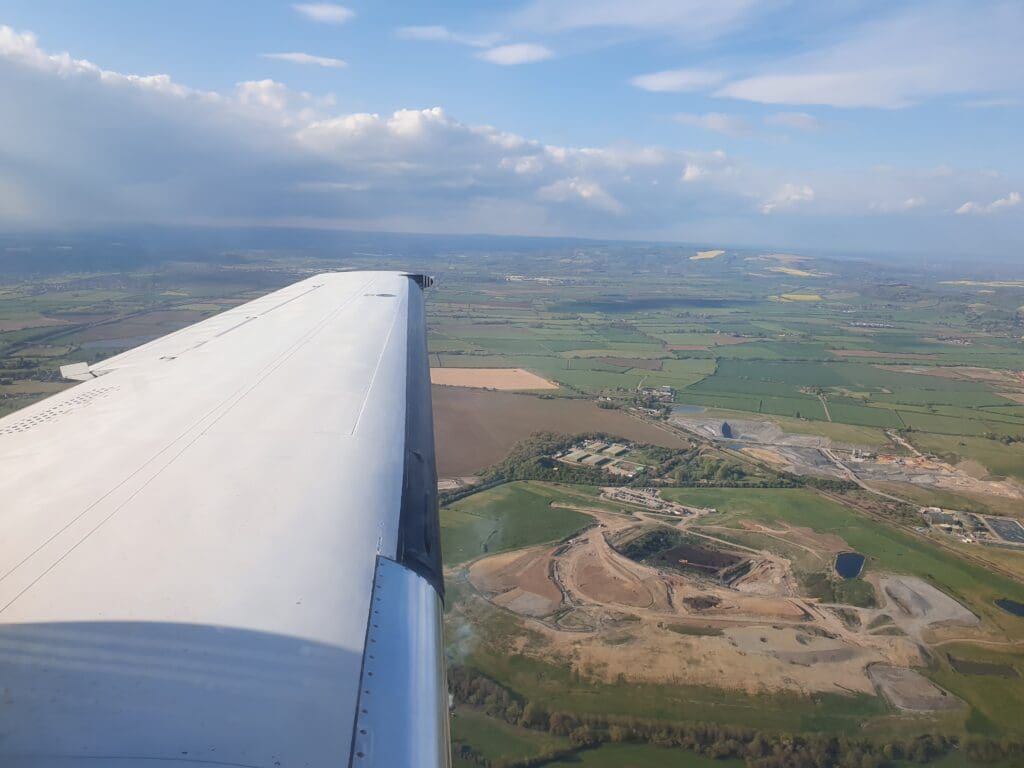
As the jet headed onwards to the Worcestershire town of Kidderminster, several gaps appeared in the clouds which offered views of the mostly rural landscape below as well as the occasional town. Unfortunately, after a mere twelve minutes into the flight, the aircraft could be felt commencing its descent and soon sank into the clouds, passing through these with only a few barely noticeable lumps and bumps. Once through these, brown and green fields appeared beneath the aircraft and the town of Evesham soon passed by. From there, the aircraft turned on to a southwesterly heading and the town of Cheltenham appeared, rising out of Gloucestershire’s gentle hills.
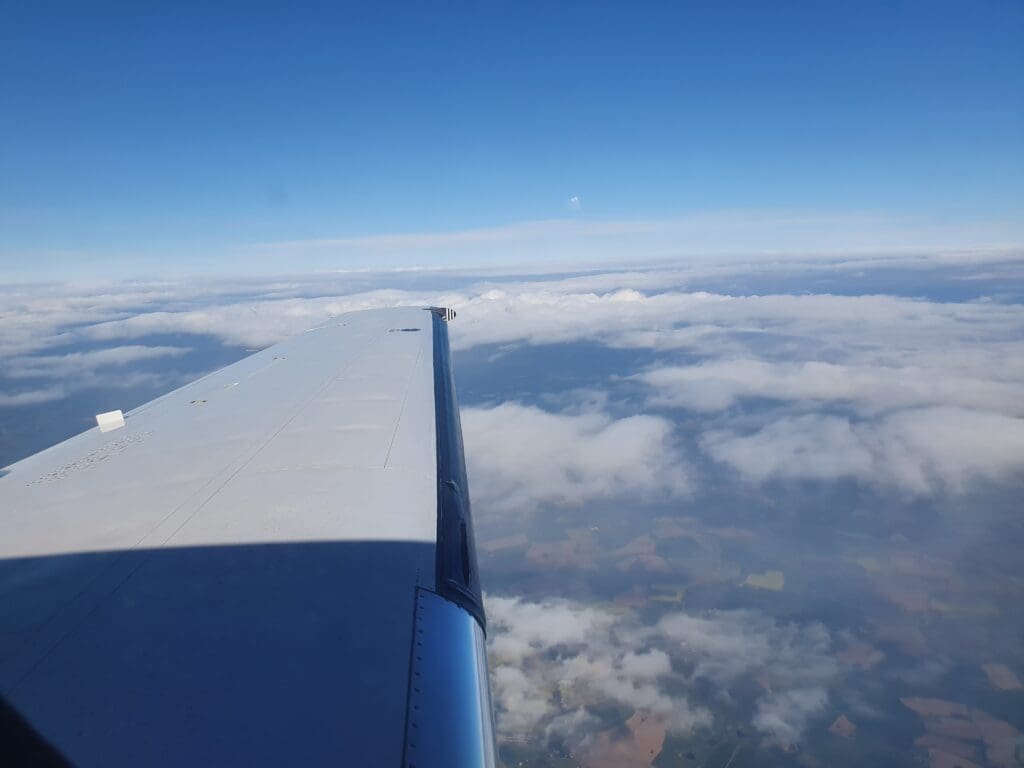
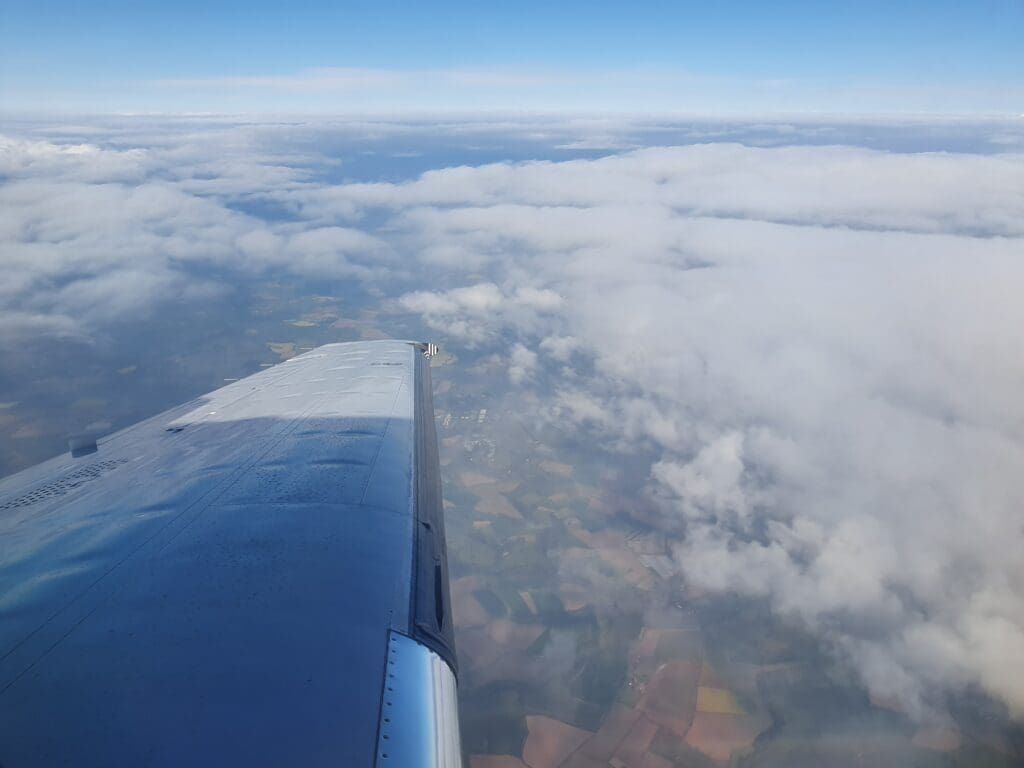
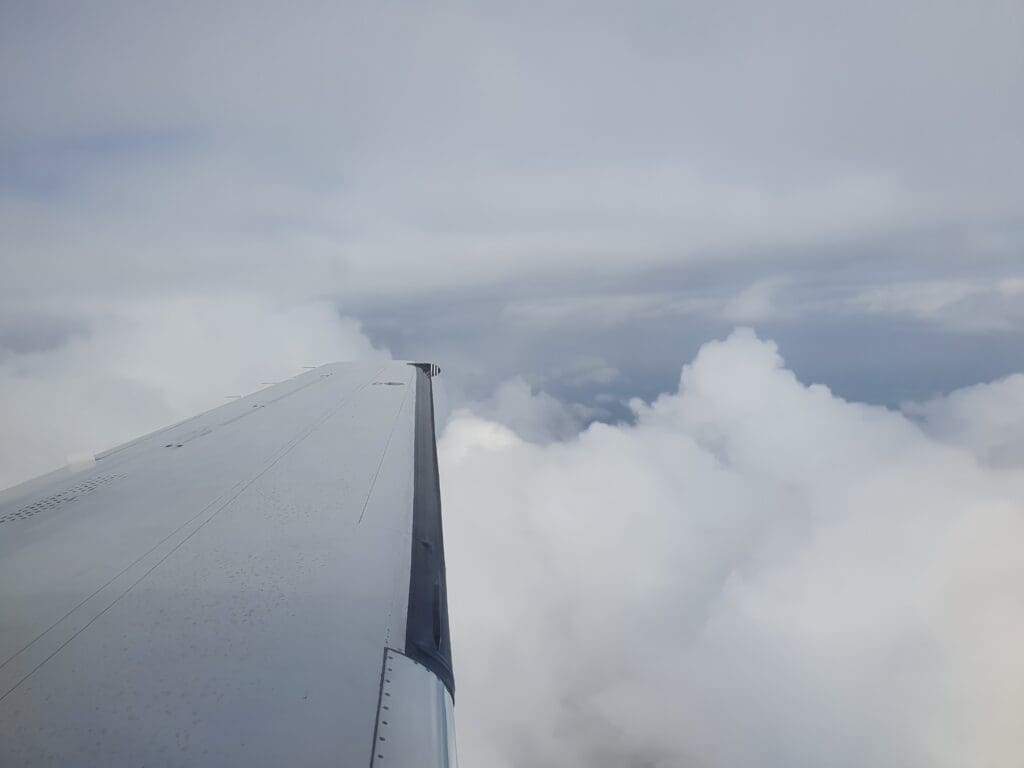
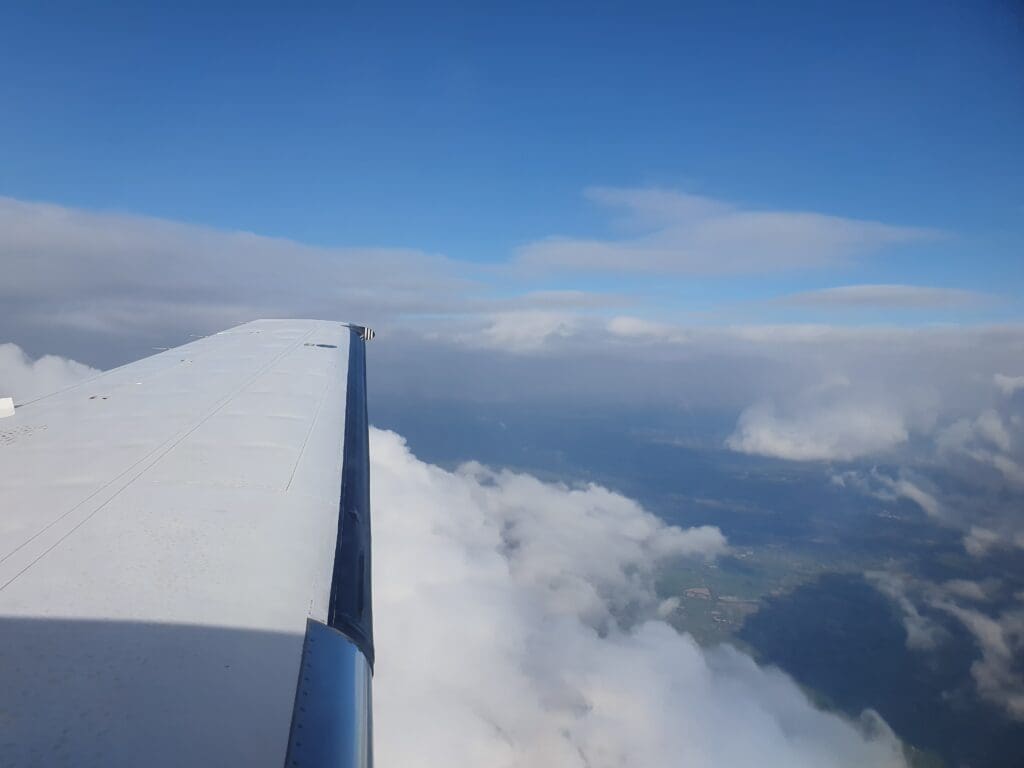
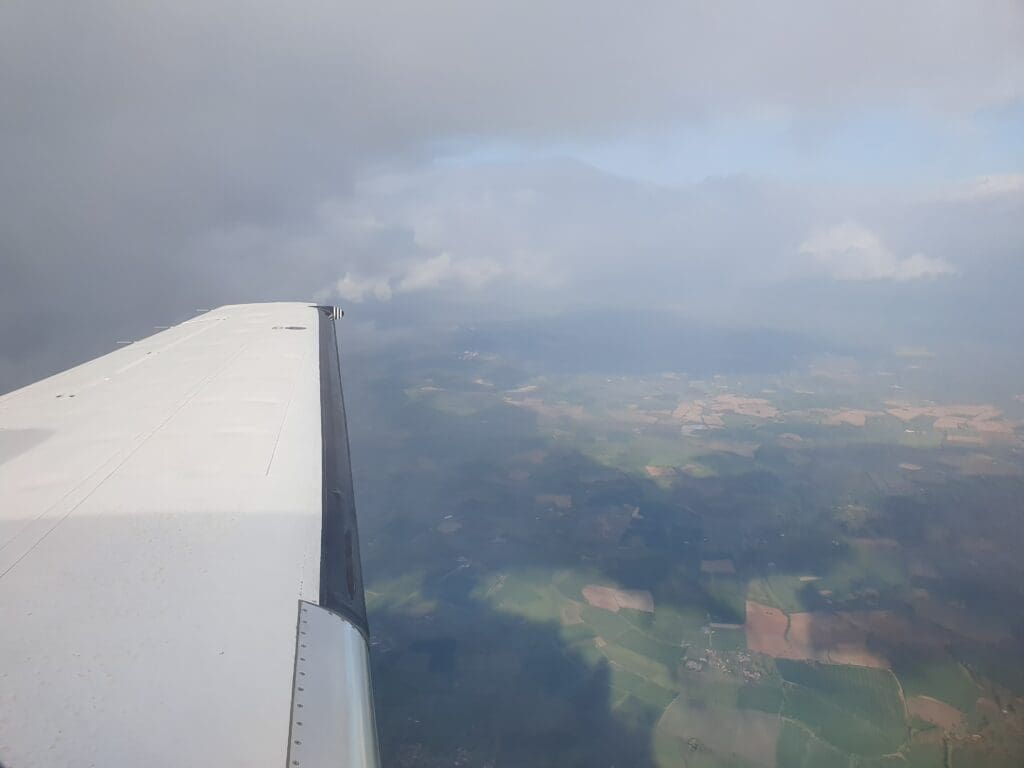
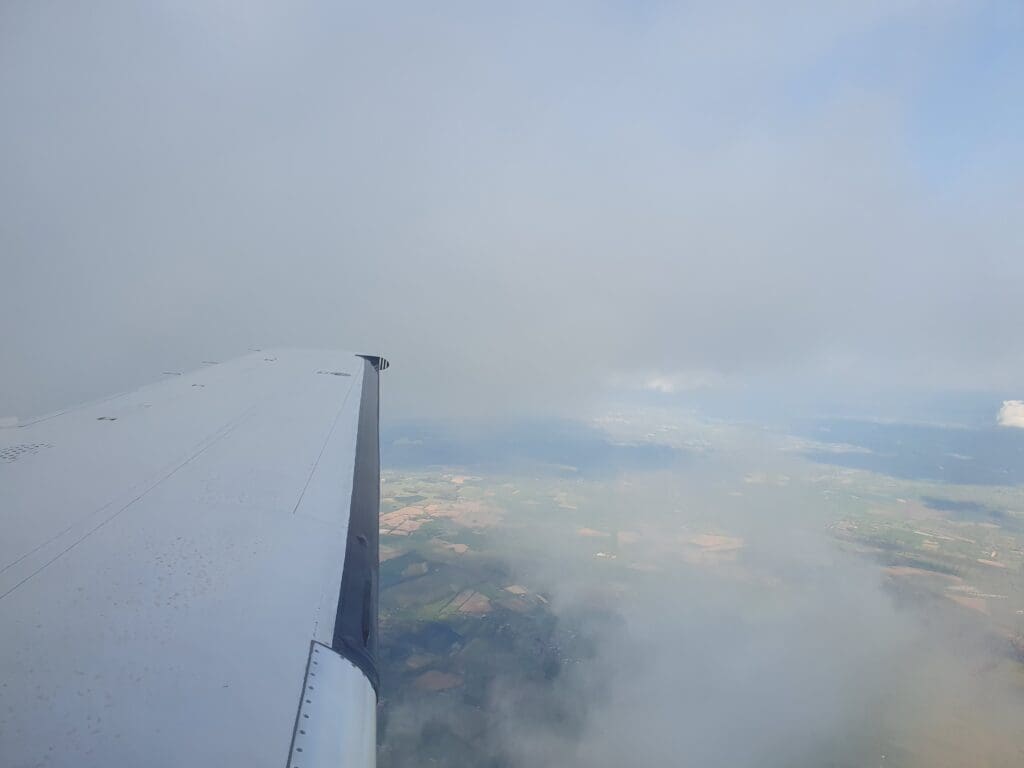
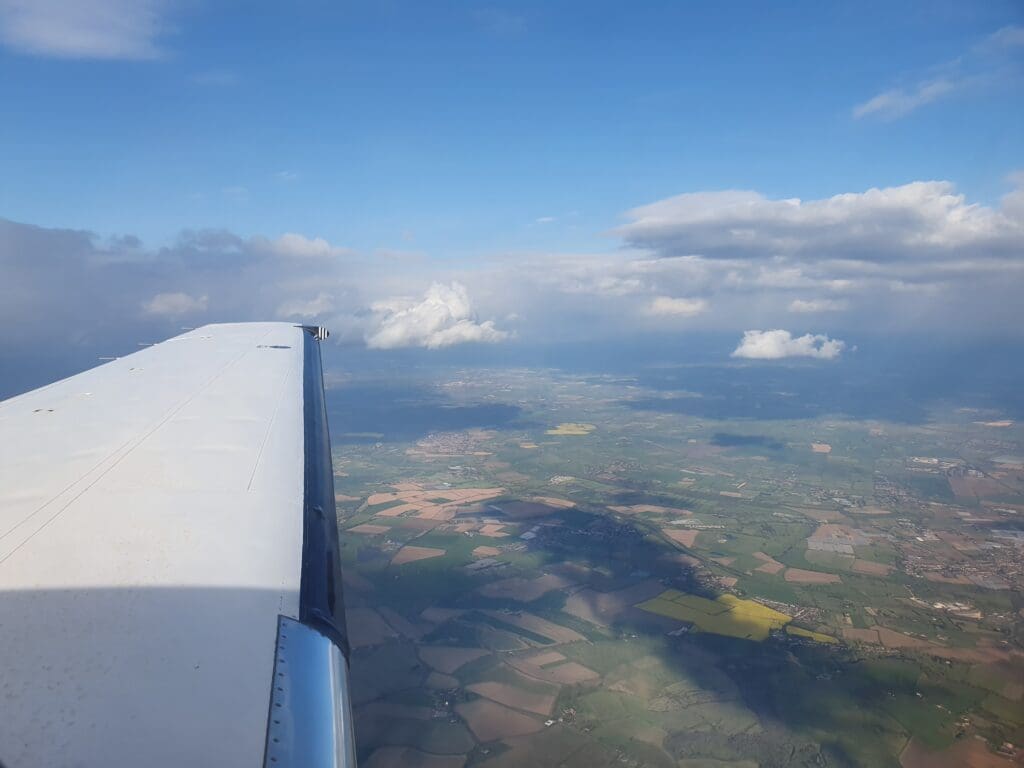
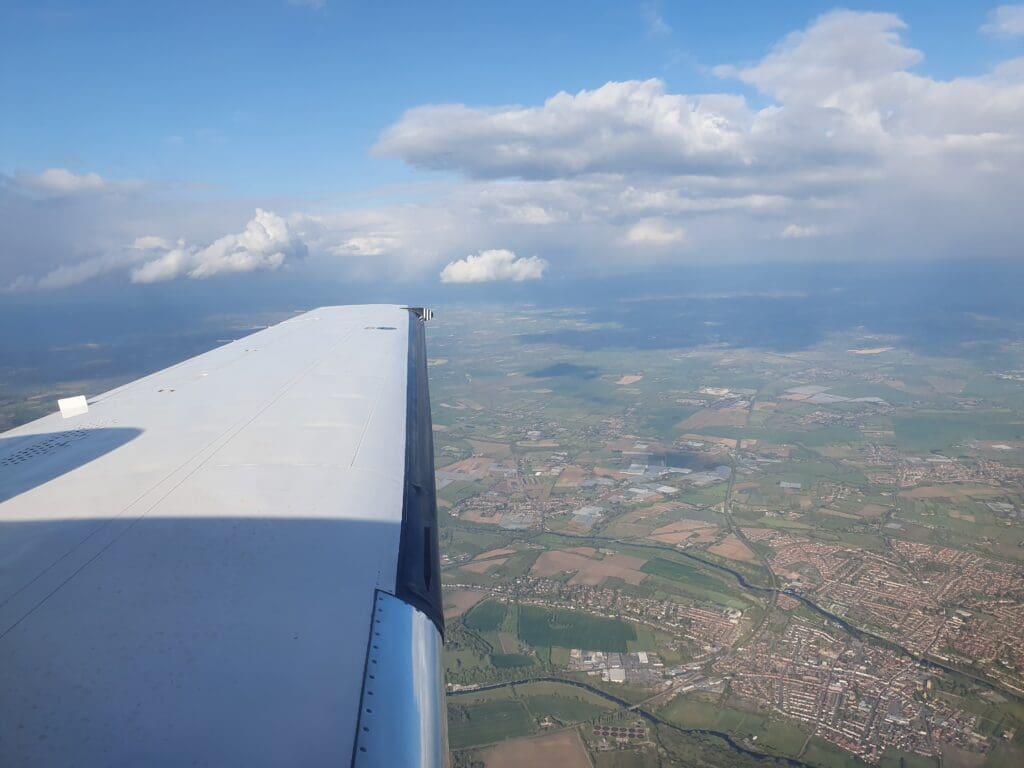
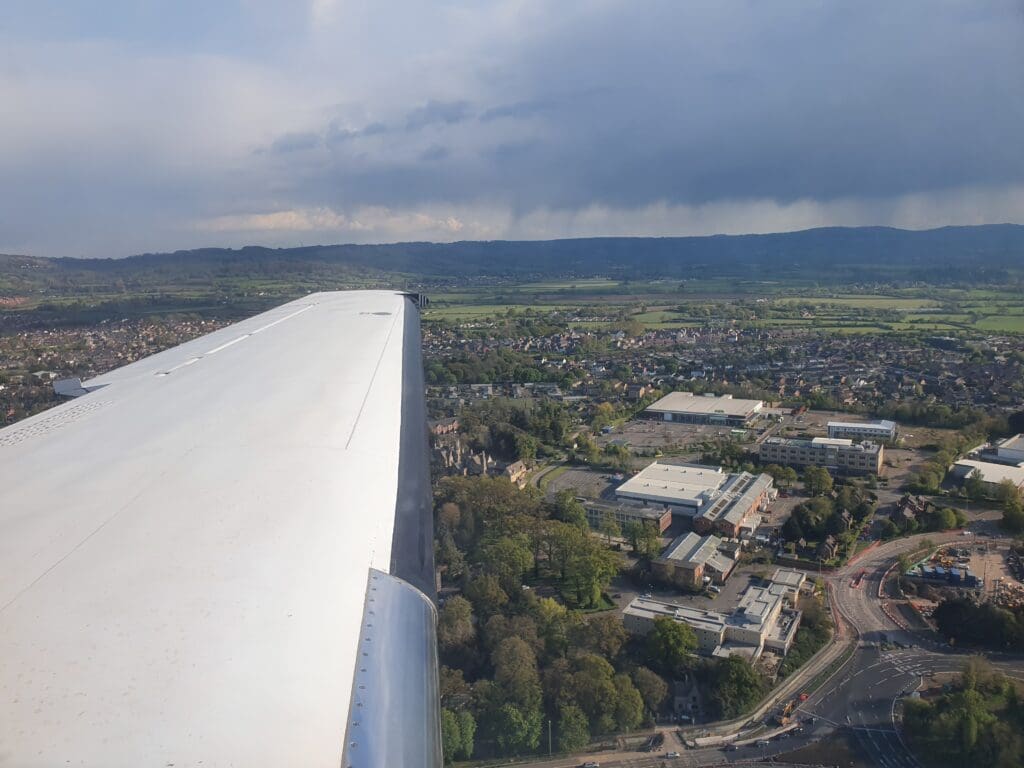
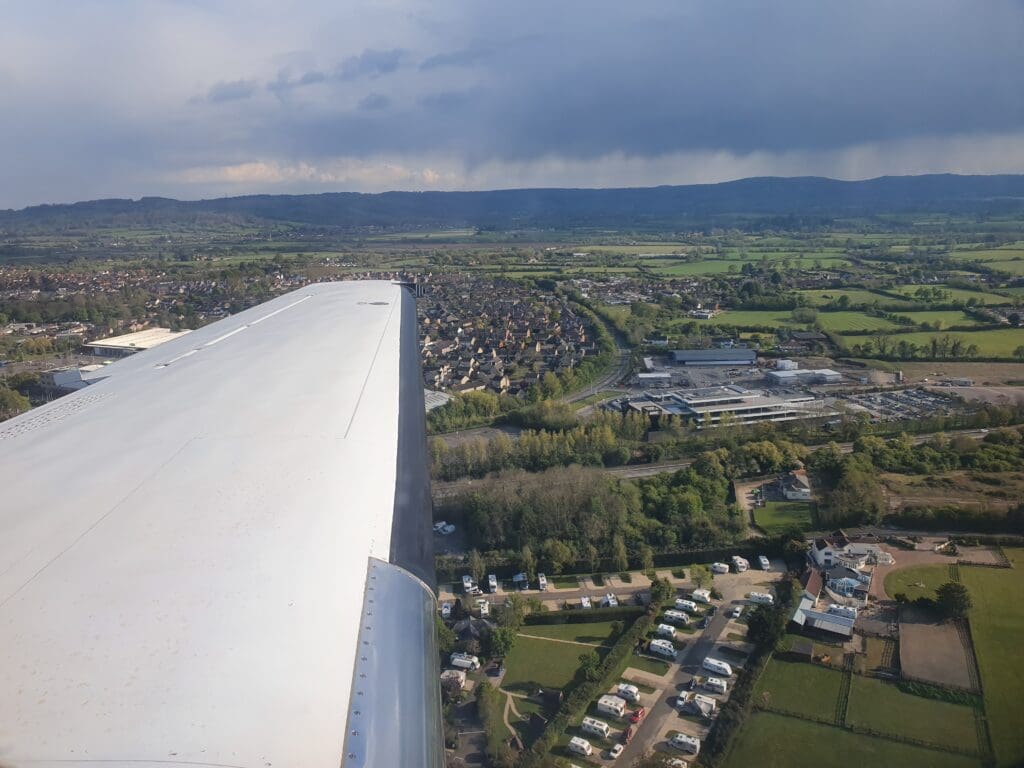
As the First Officer would turn around and explain, owing to the unexpected arrival of a glider at Gloucestershire Airport during a cross-country flight, the approach was extended as we looped around the airport. For those on the right-hand side of the jet, this offered superb views of the airport and surrounding areas. Sandwiched in between Gloucestershire’s two largest settlements, Cheltenham and Gloucester, Gloucestershire Airport is reasonably sized and complete with four runways – three asphalt runways and a single grass strip. In 2019, the airport hosted 74,523 movements – these consisting primarily of corporate and general aviation aircraft. Meanwhile, between 2008 and 2017, the airport also saw several scheduled passenger flights. These connected Gloucestershire with both Jersey and the Isle of Man, operated first by Manx2 and their leased Dornier 228s and then by Citywing with their fleet of LET L-410s leased from Van Air Europe.
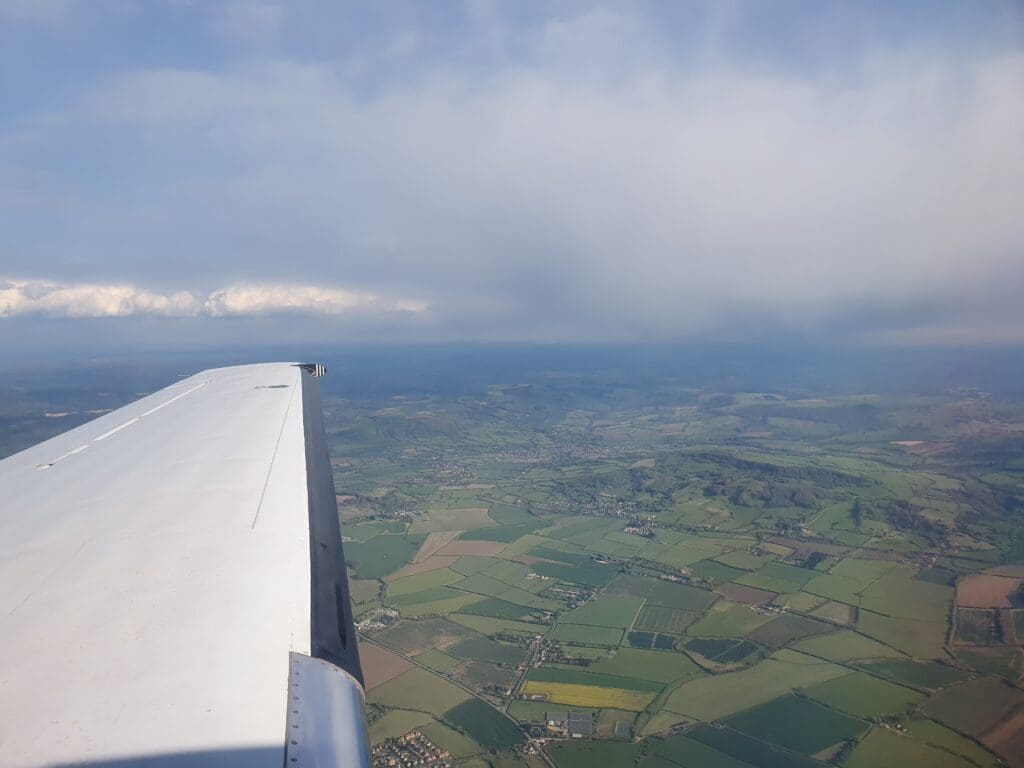
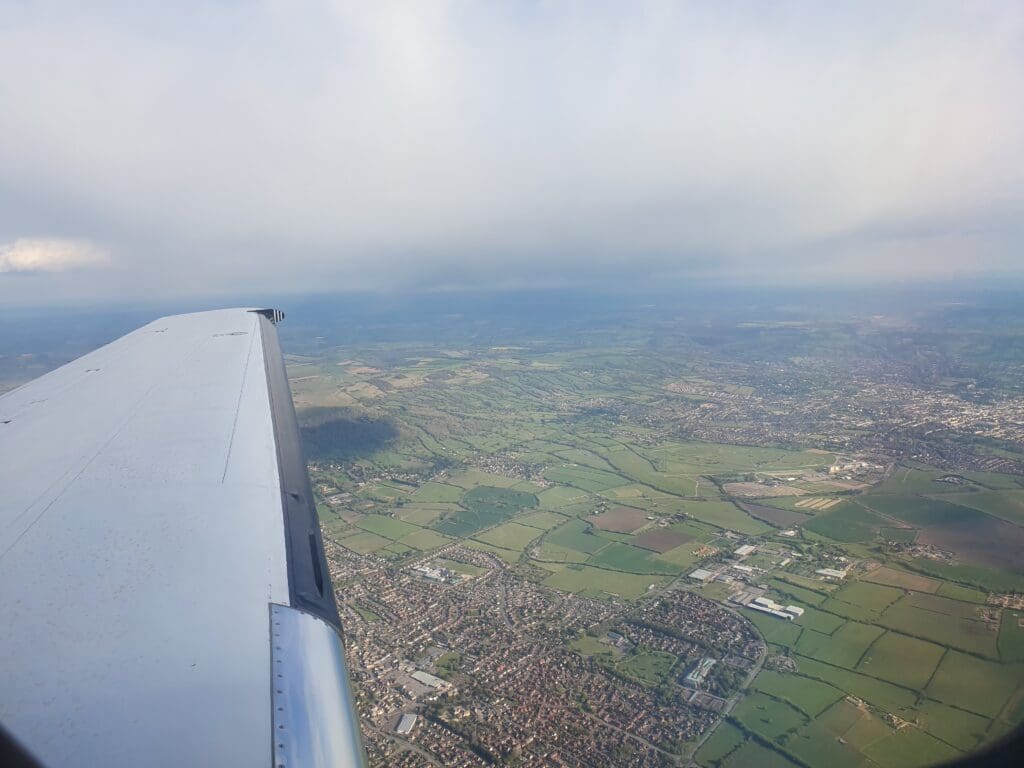
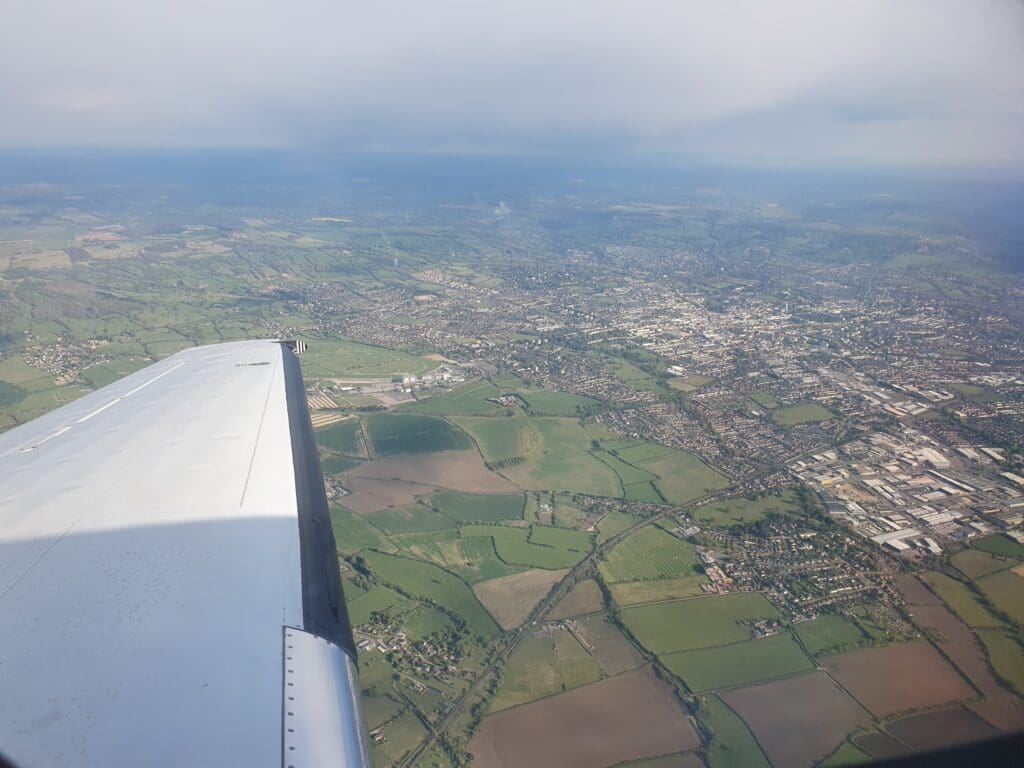
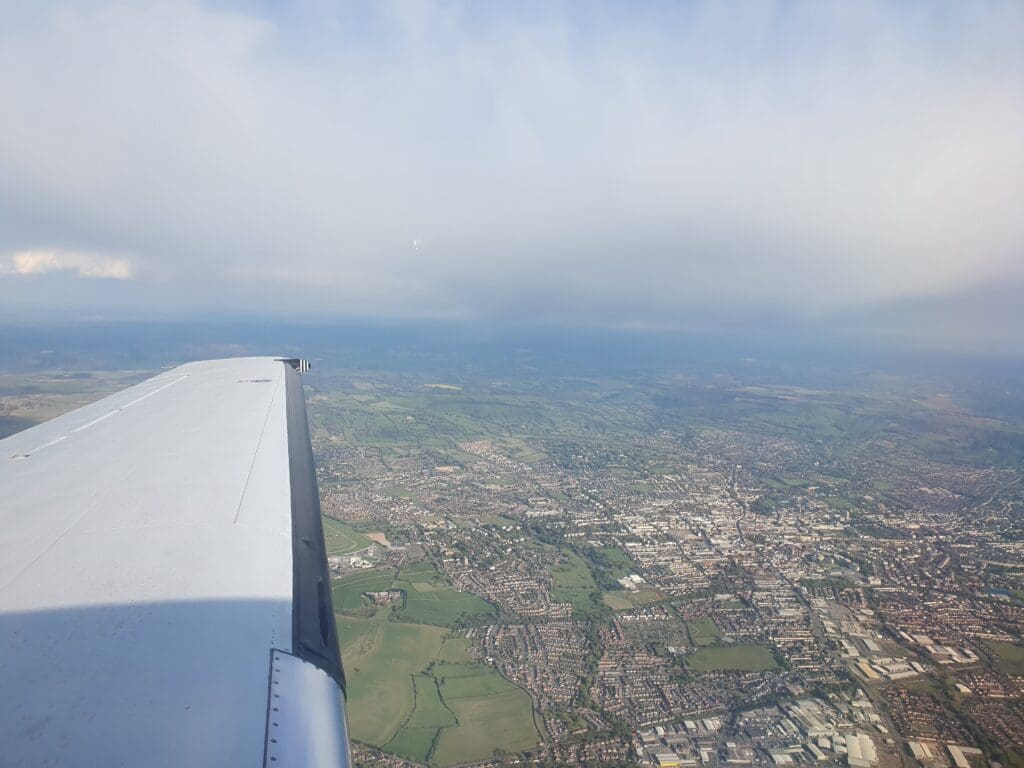
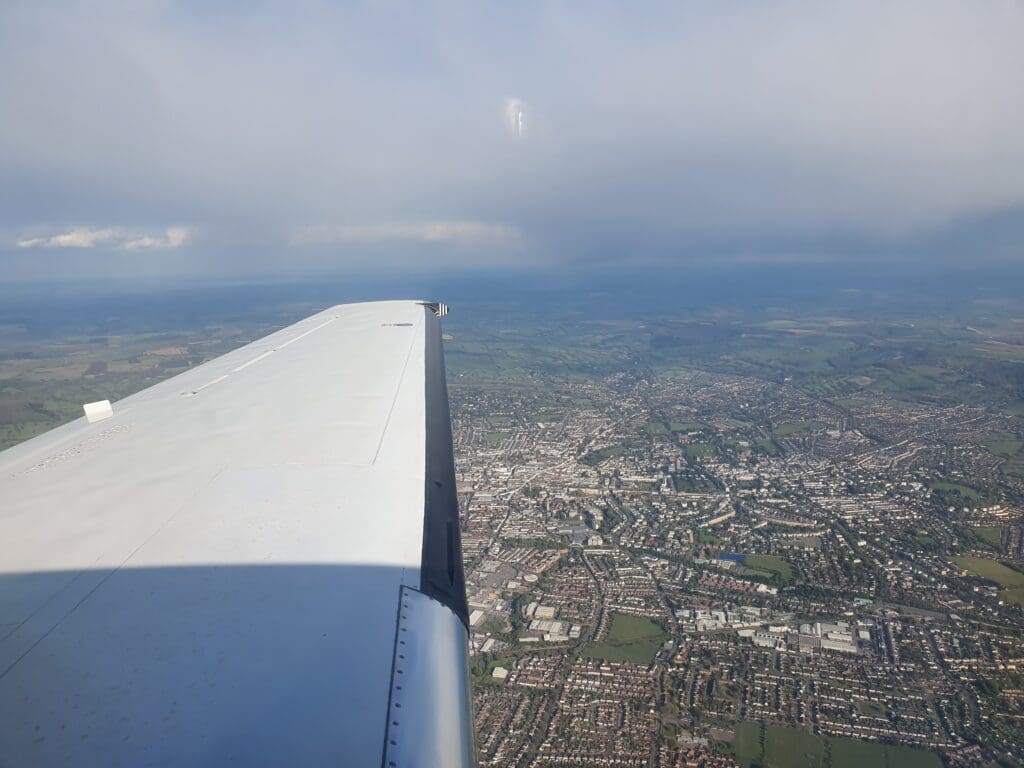
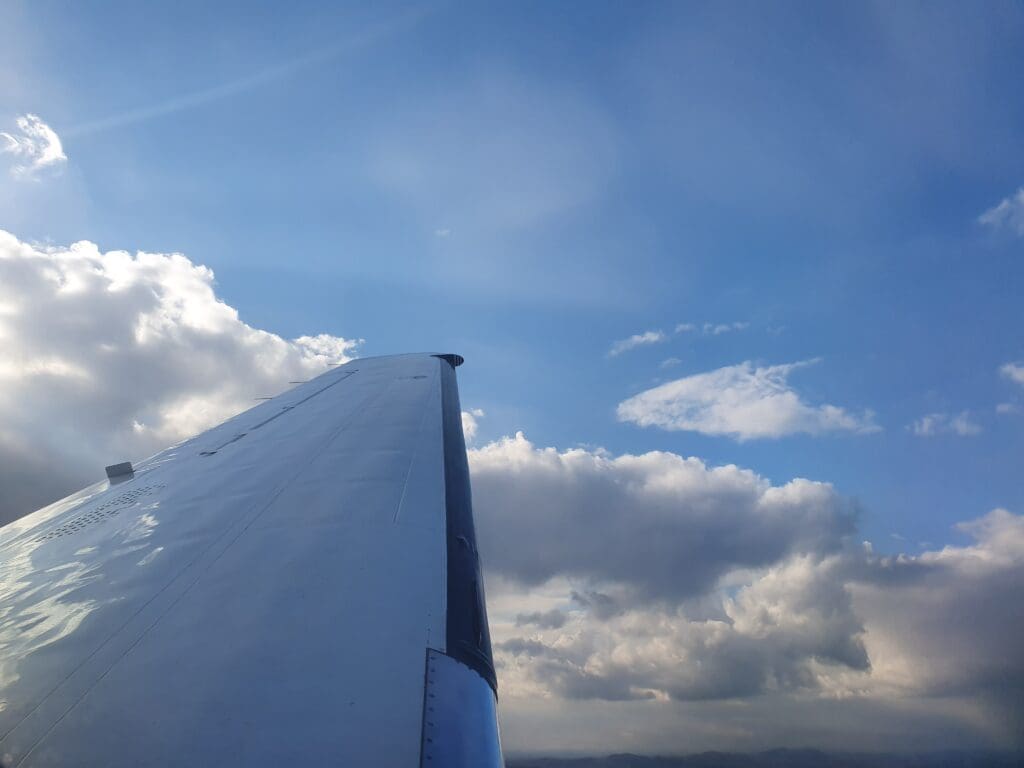
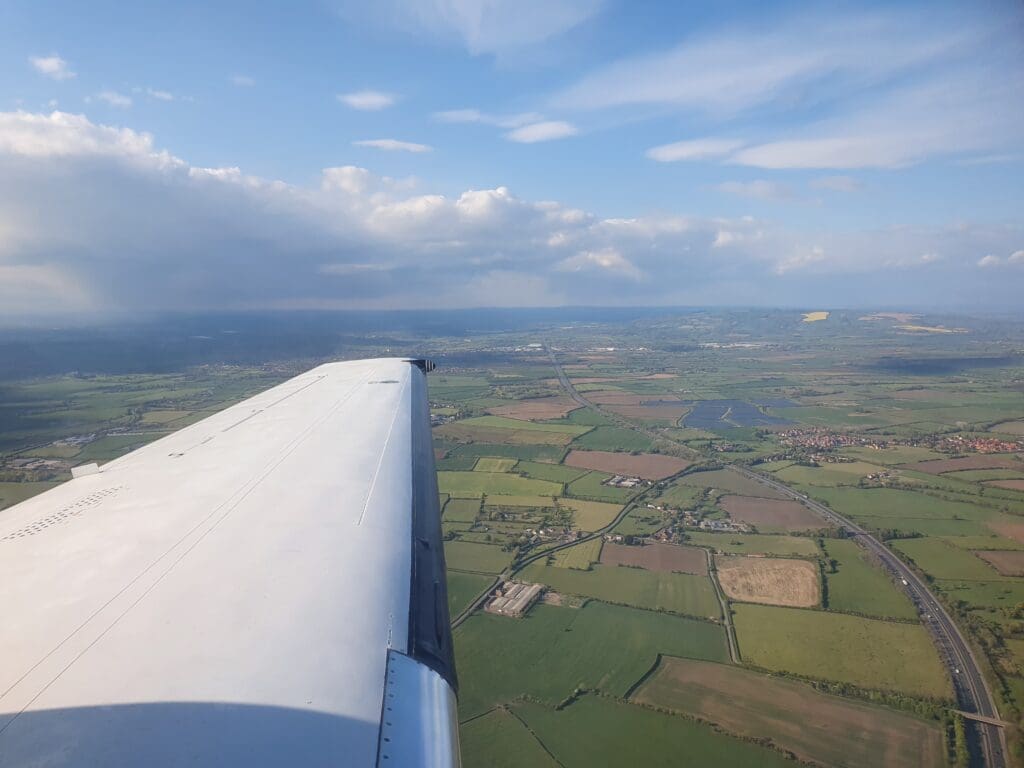
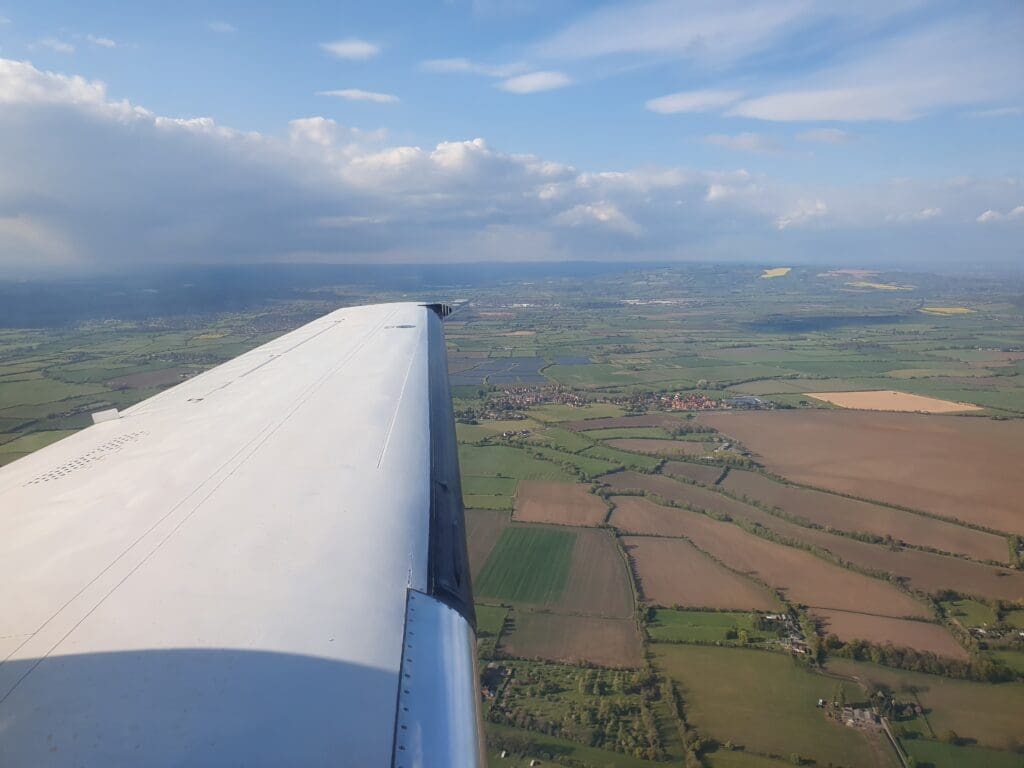
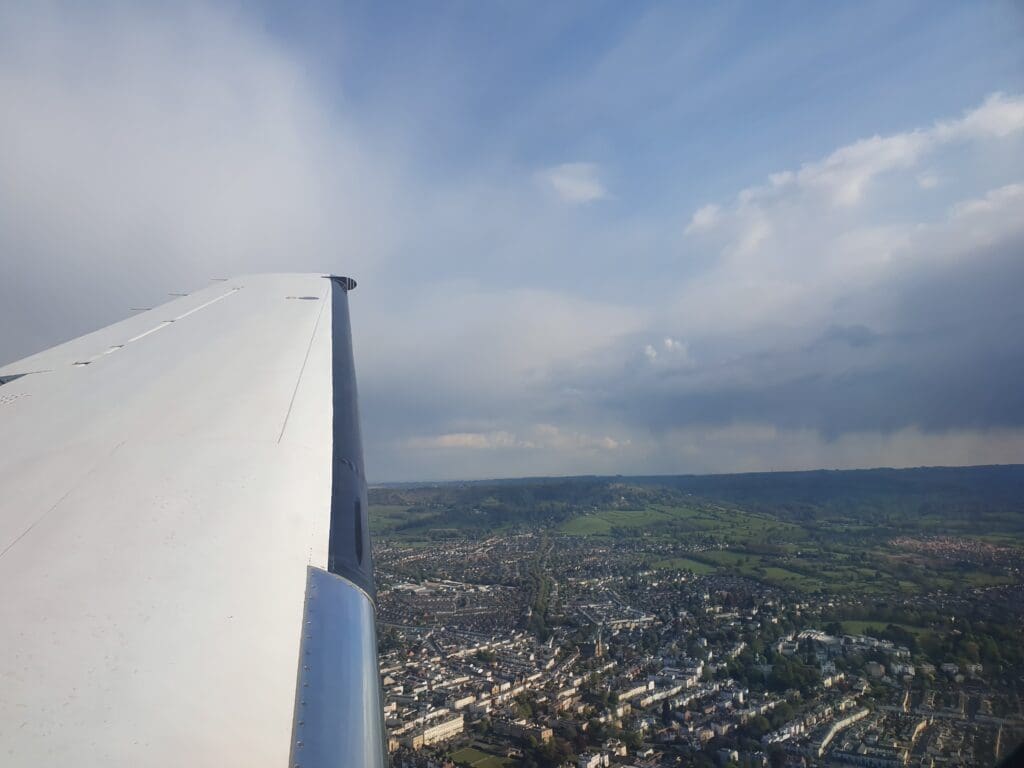
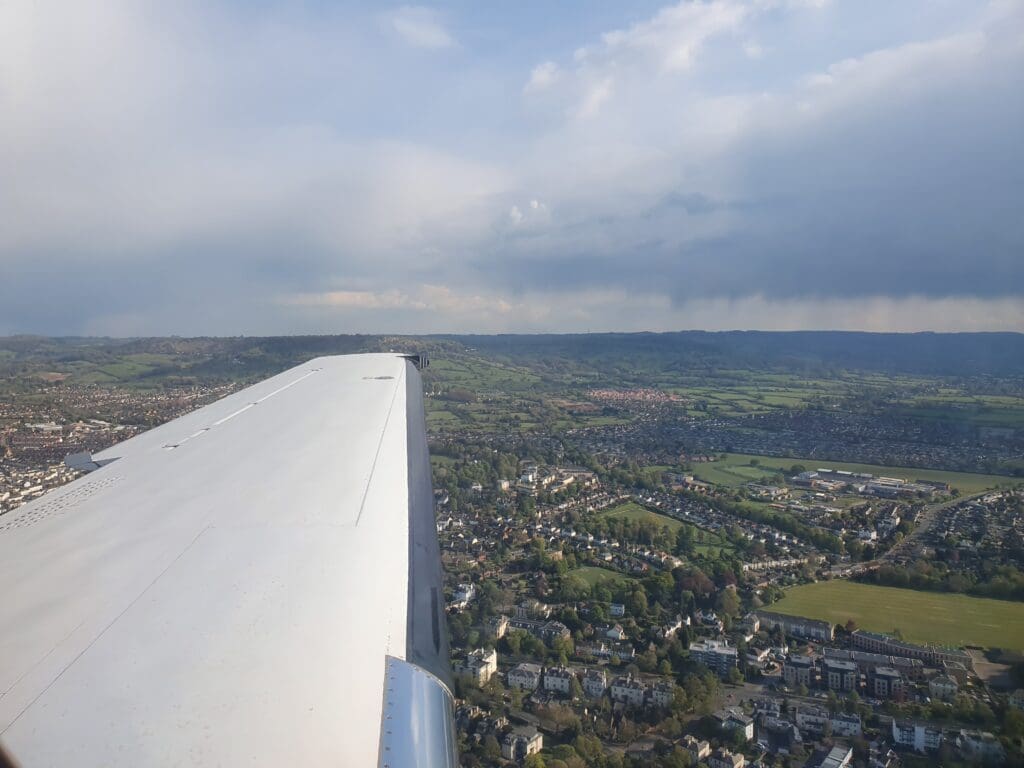
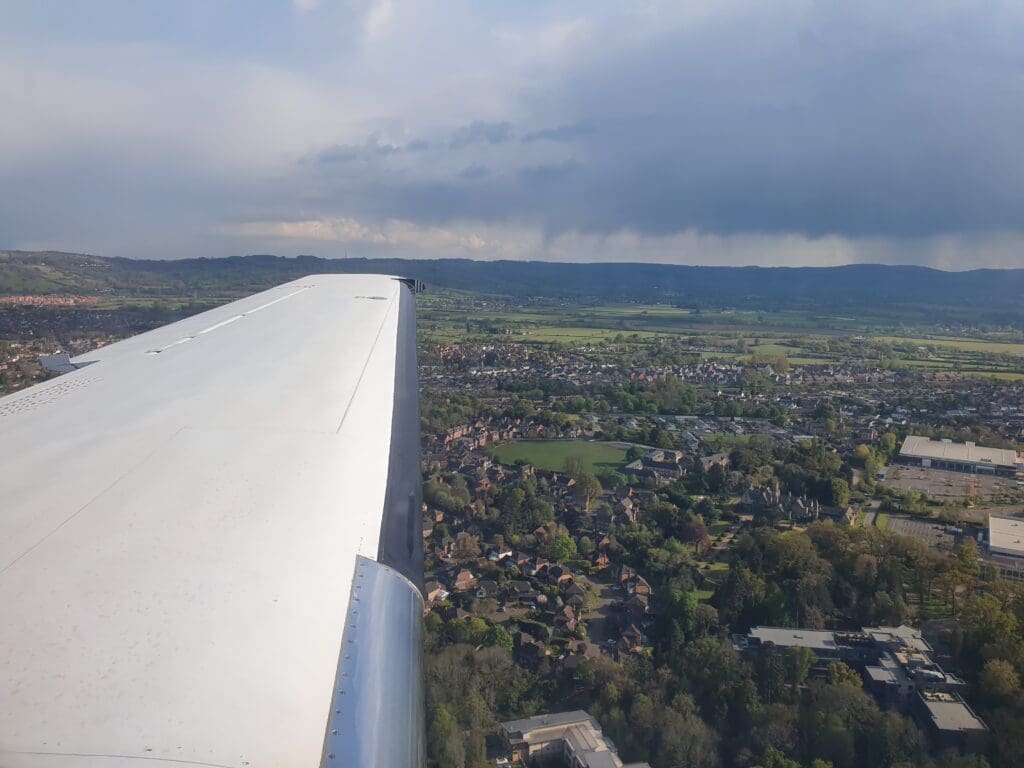
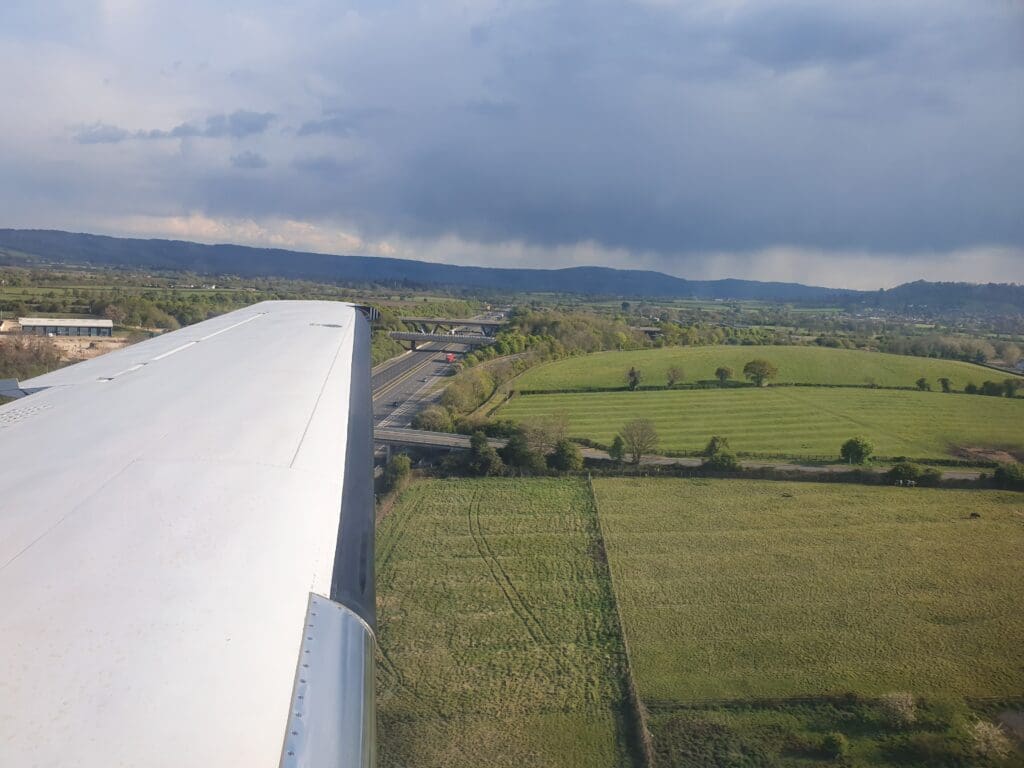
As the Cessna approached the airport, the flaps and landing gear were extended and the aircraft sank over Cheltenham’s western suburbs. After passing over the M5 motorway, following a quick but highly enjoyable 28 minutes in the air, at 1748 the Citation touched down with a gentle bump on Runway 27, the airport’s longest runway, standing at 4695 feet long. Once on the ground, the reverse thrust kicked in and the aircraft decelerated rather rapidly, meanwhile, the Citation’s interestingly designed speedbrakes emerged from the wing. After exiting the runway at its end, the aircraft vacated the runway and made its way along the taxiway which runs along the airport’s southwestern perimeter.
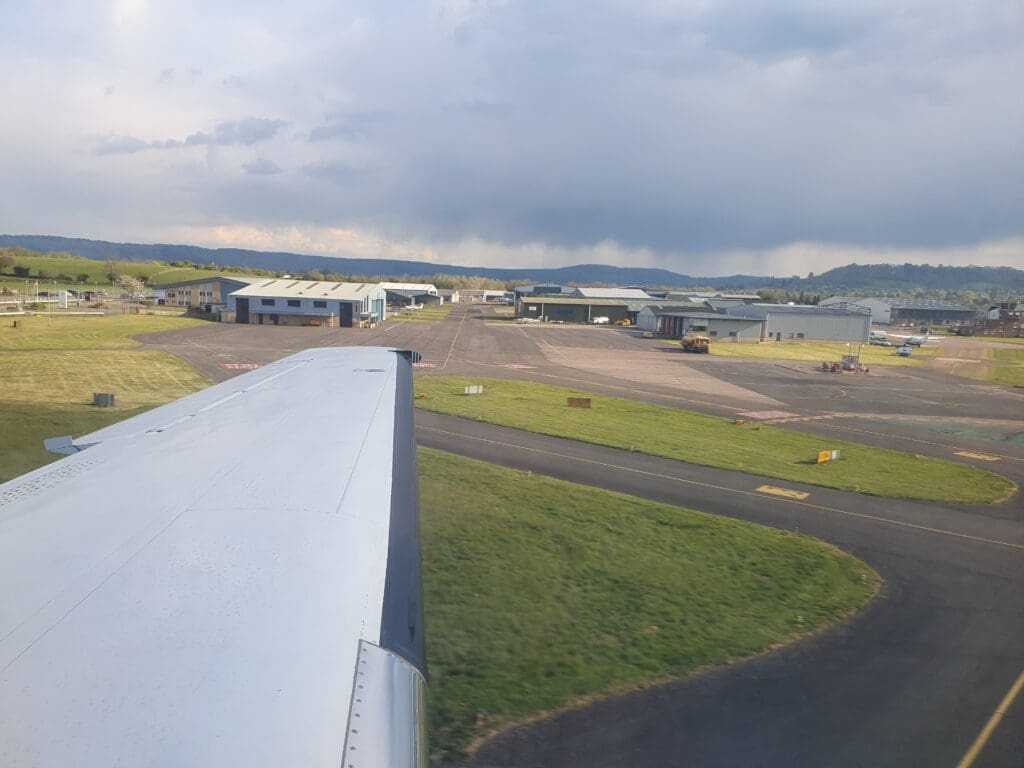
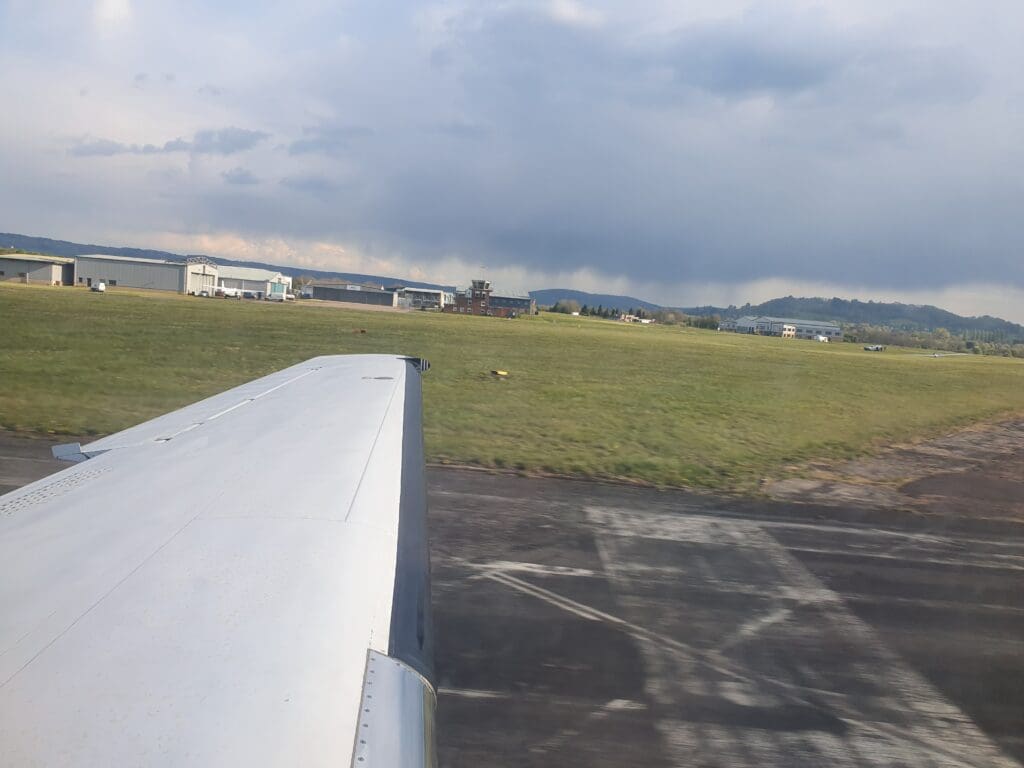
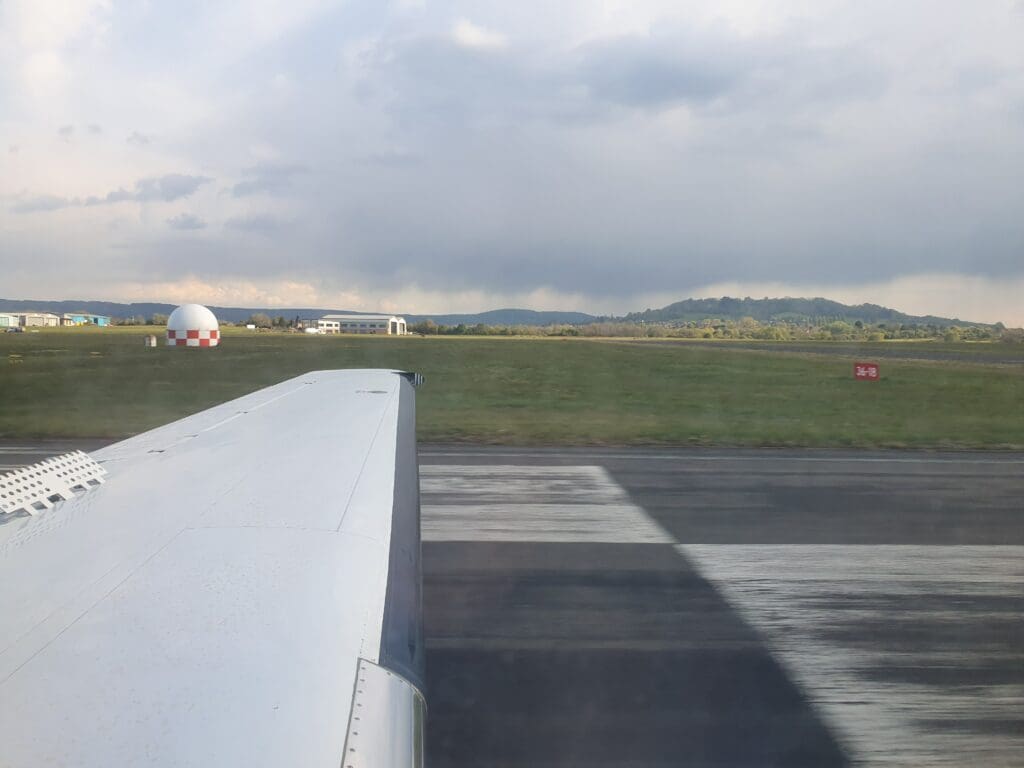
At 1753, the Citation came to a gentle halt directly outside The Little Jet Company’s hangar and the two Pratt and Whitney engines spooled down. Wasting no time, the captain soon emerged from the small cockpit and opened the cabin door.
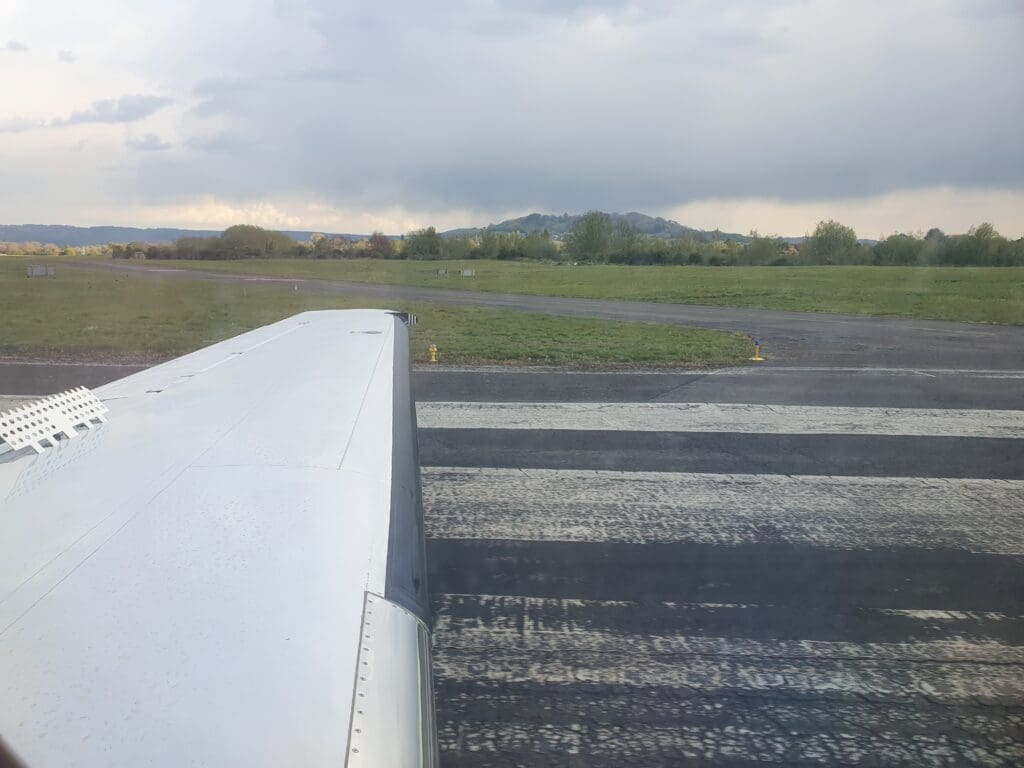
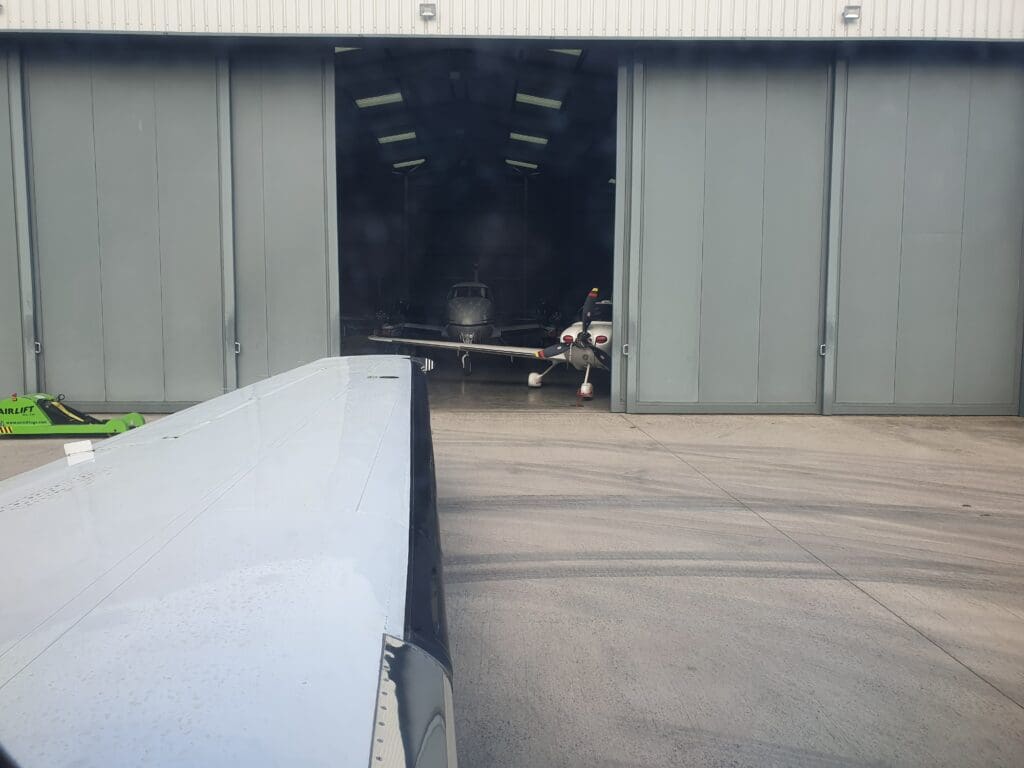
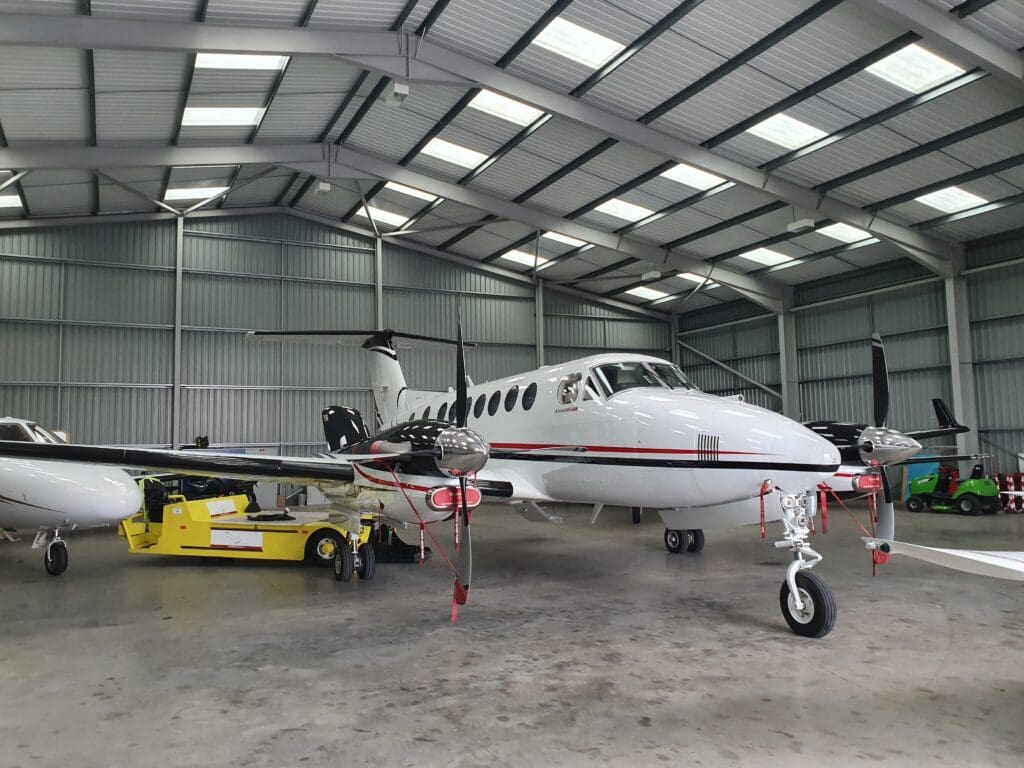
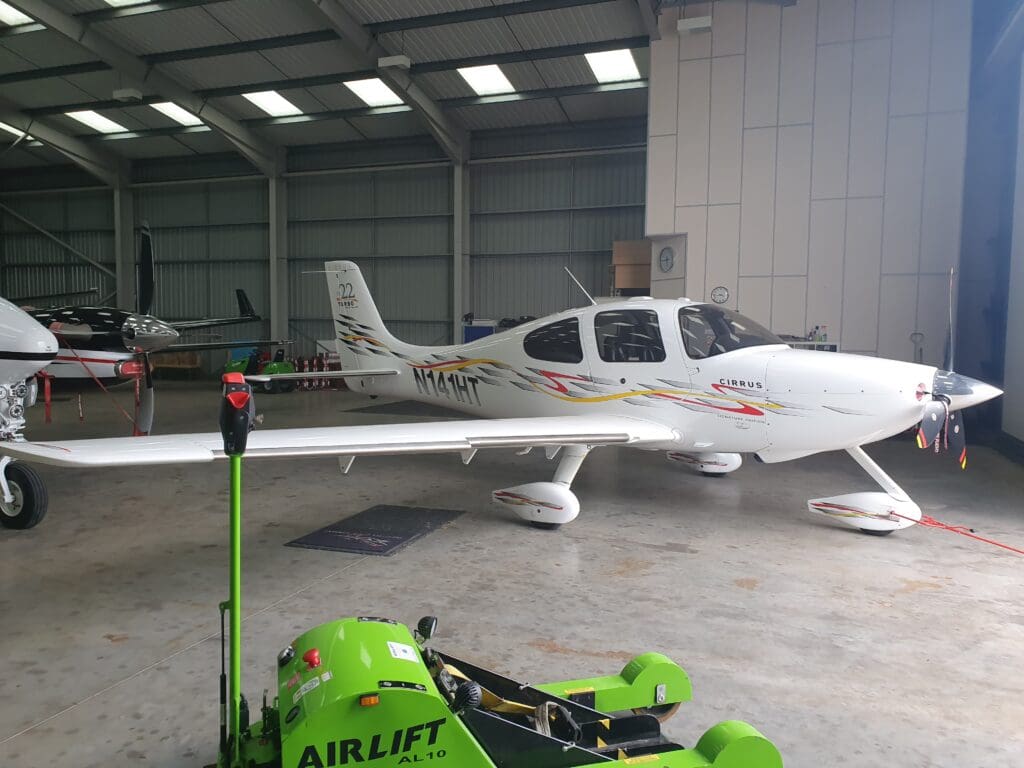
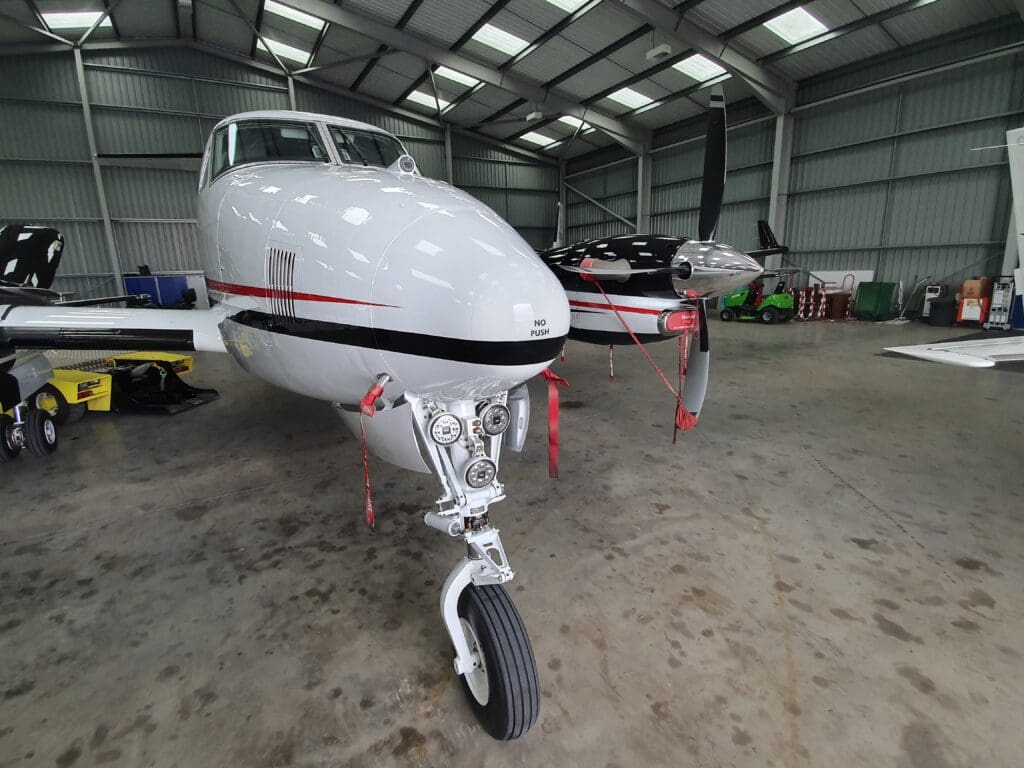
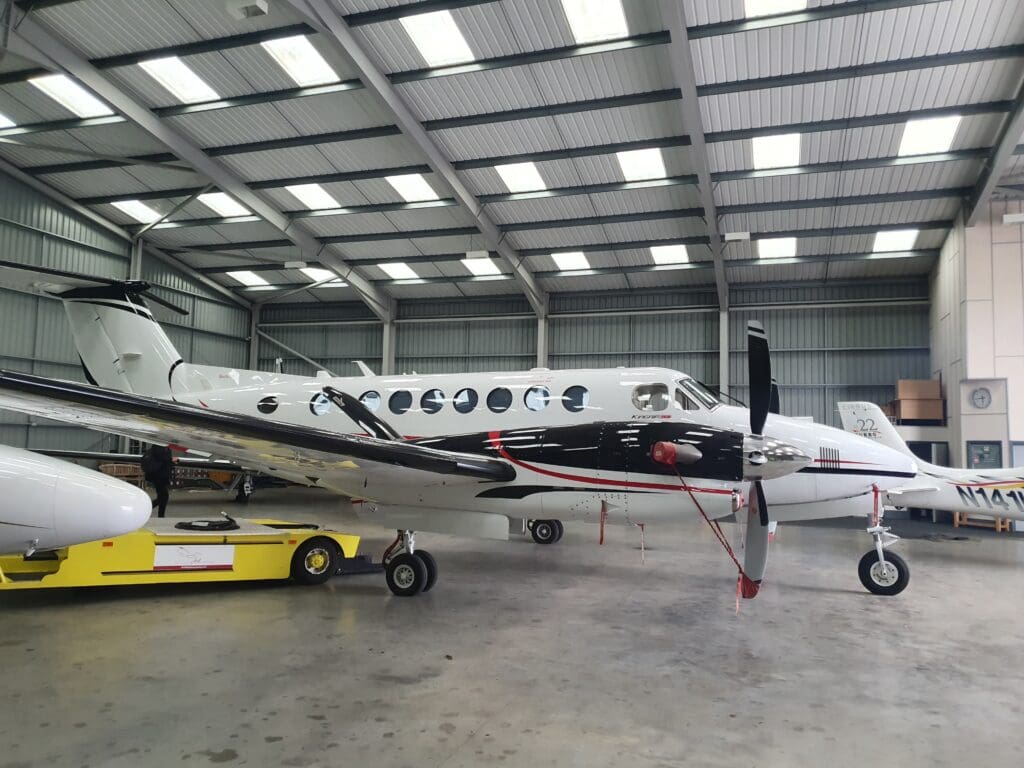
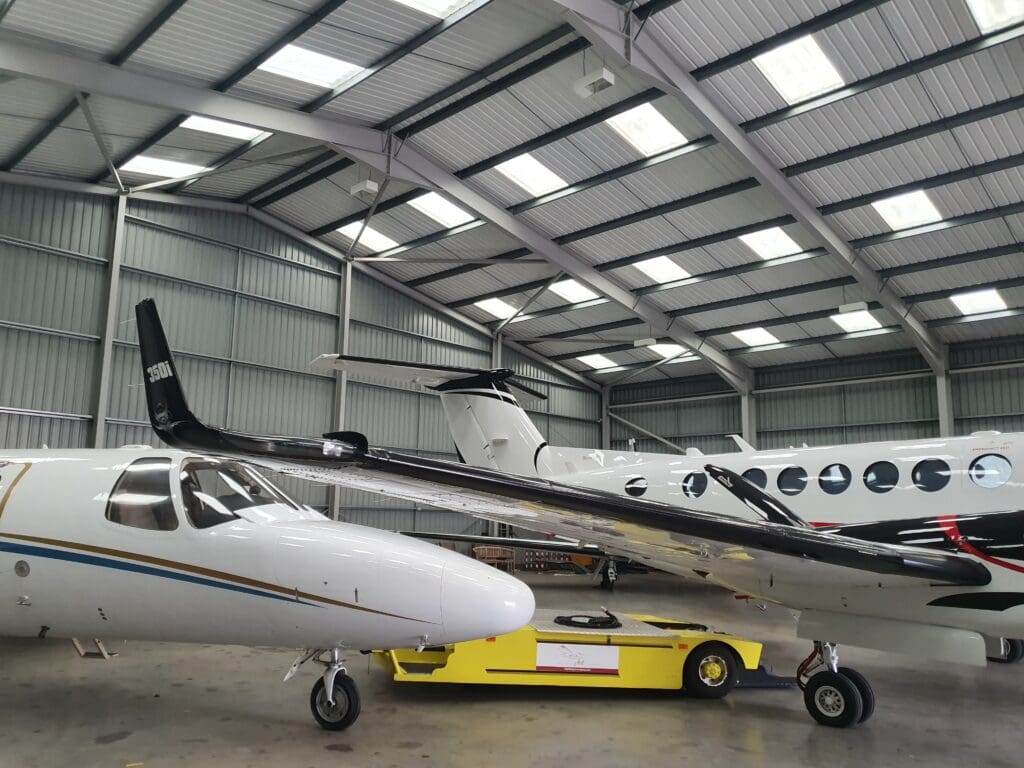
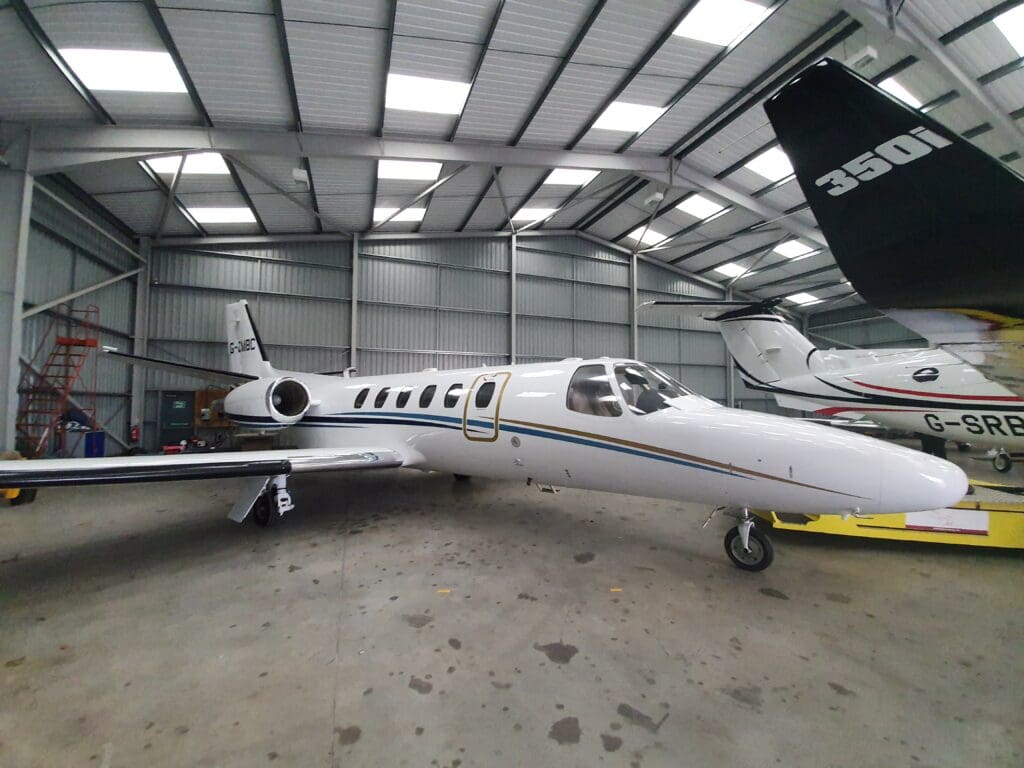
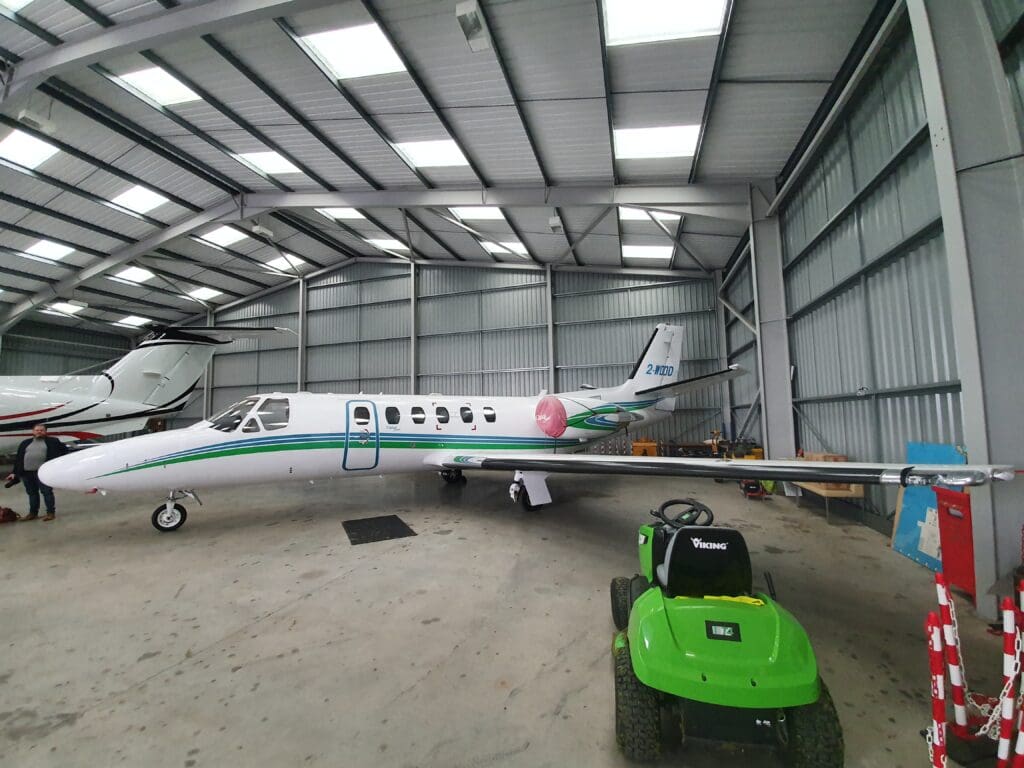
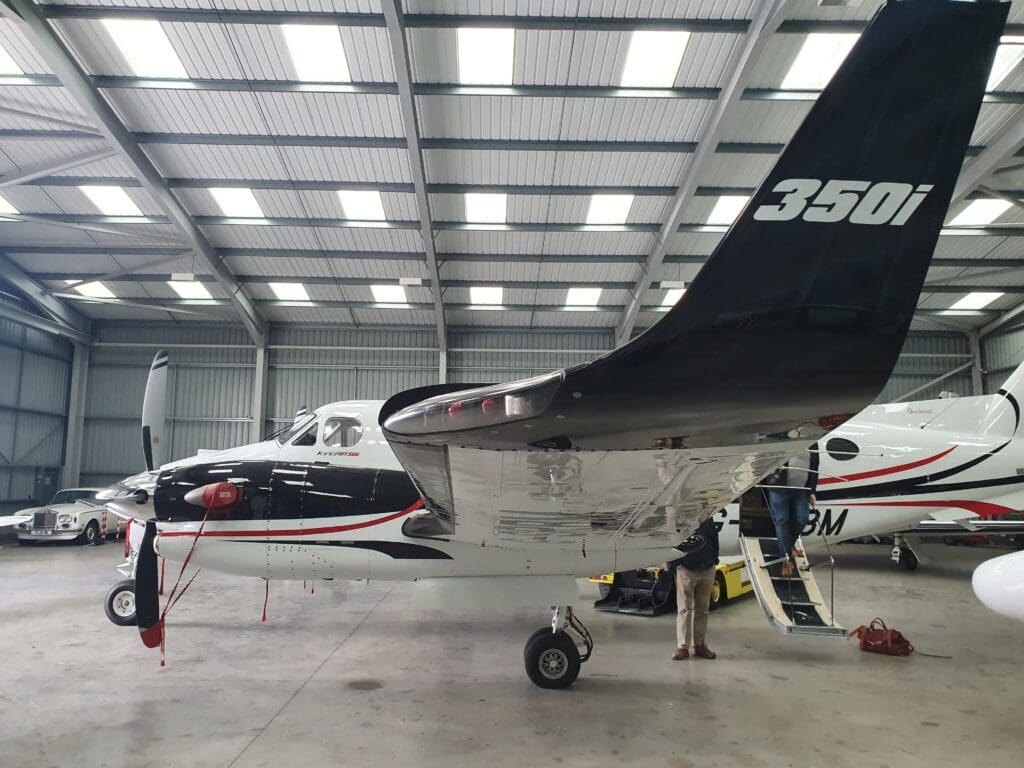
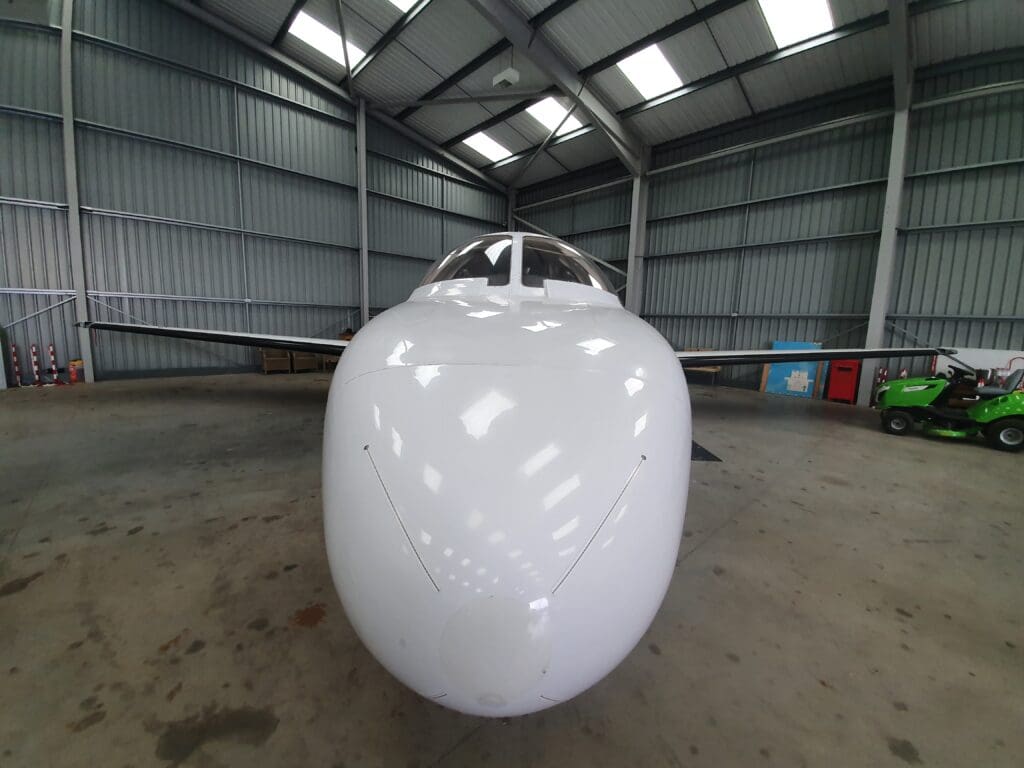
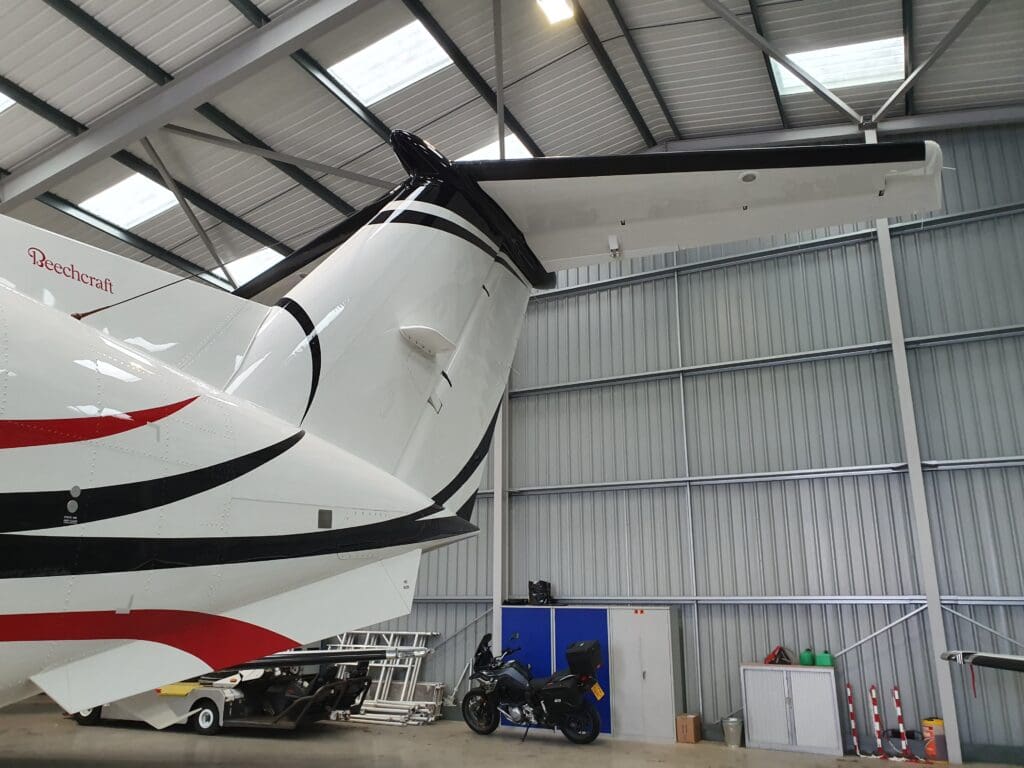
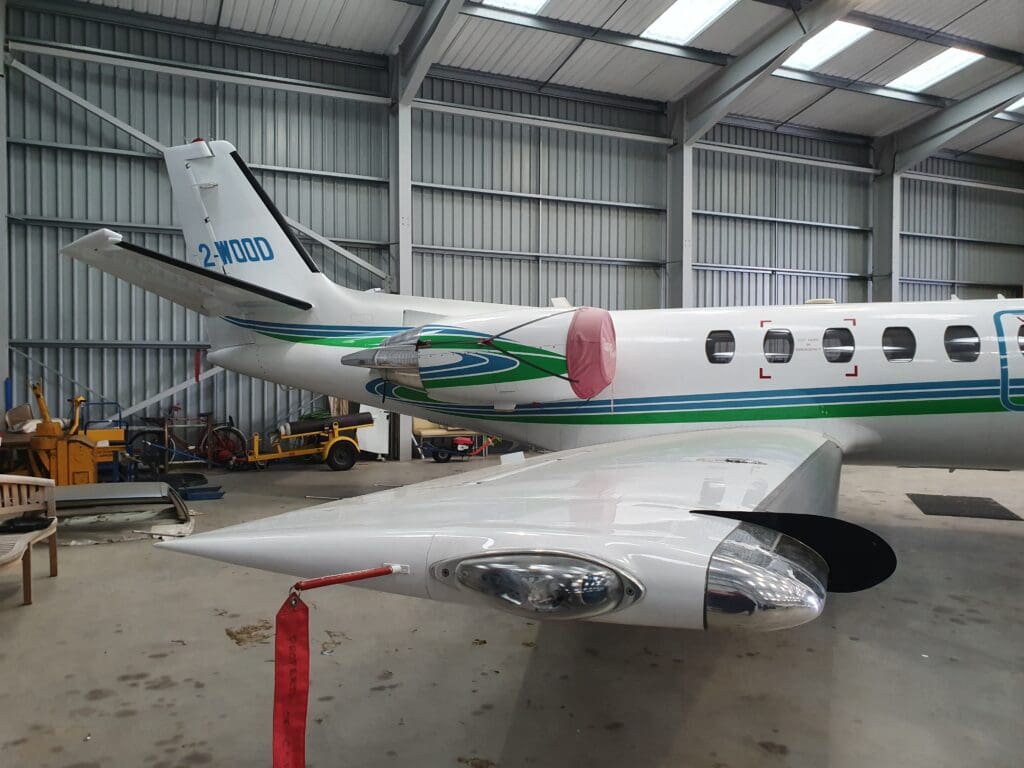
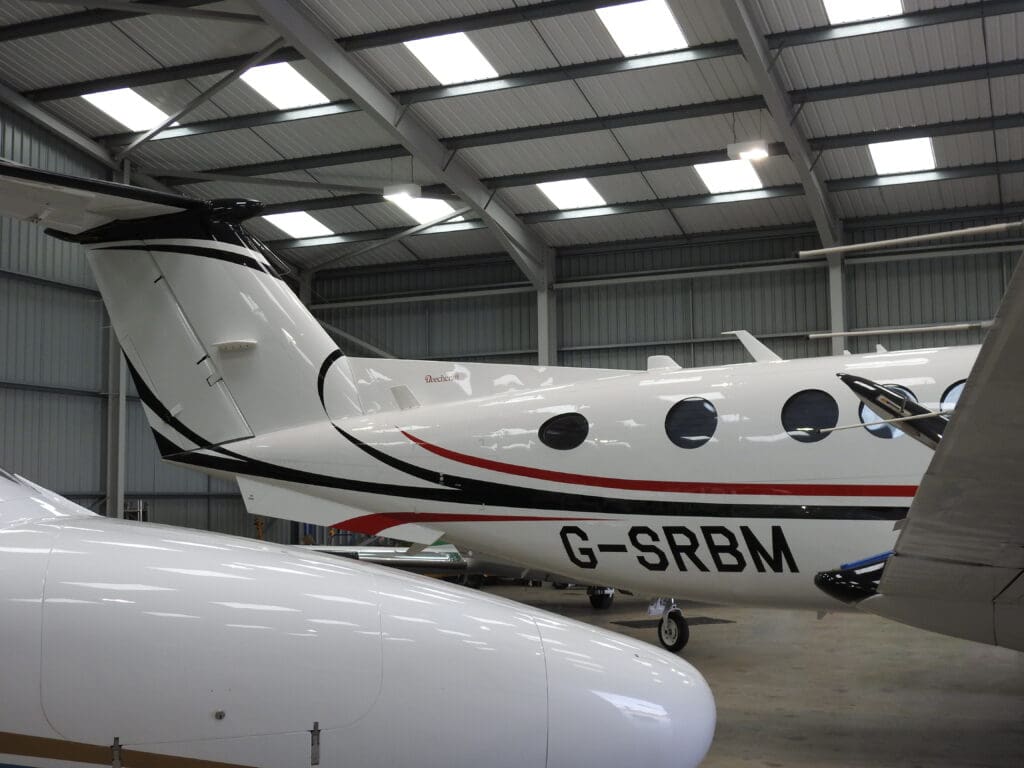
One by one, we soon made our way off the jet and were greeted by one of the company’s engineers. As with the pilots, this person was incredibly friendly and accommodating, happily talking to the enthusiasts about their work in detail and even moving the aircraft into the best position for photographs! After taking some final shots of the jet, we made our way into the company’s hangar where we were permitted to have a look inside the company’s other Citation Bravo, G-CMBS, as well as their Beechcraft Super King Air 350, G-SRBM. In addition, another Citation Bravo as well as an American registered Cirrus could also be seen tucked away in the hangar.
Following plenty of photos and some conversations with the pilots and the engineers, it was finally time to end my fantastic experience with The Little Jet Company. Whilst I am unlikely to ever get the opportunity to fly with them again soon, I would recommend the company to anyone who has the cash to fly on a private jet! From Gloucestershire Airport, I was able to catch a ride to Gloucester Station with one of the other passengers and began my trip back to London. Following a rail replacement bus service to Swindon, I caught a Great Western Railway service back to Paddington and arrived back home just after 2200, ending my exciting day of travel.
To end, here are some photos of the hangar tour: