
My Last Ever European MD-80 Ride: Varna to Leipzig with European Air Charter

Background
Complete with a long pencil-like fuselage, two screaming Pratt and Whitney JT8D engines and a tall T-tail, the McDonnell Douglas MD-80 is far more distinctive than many of today’s modern airliners. Comparable in design to the almost extinct Douglas DC-9, the MD-80 started its life as a modernised and stretched version of this 1960s aircraft, complete with upgraded engines, modernised avionics, larger wings and new landing gear. Rocketing into the skies over Long Beach for the first time in October 1979, this new aircraft entered commercial service with Swissair just under a year later and proved to be fairly popular with carriers across the world. Indicative of the MD-80’s relative success, the type enjoyed a long production run with the last example rolling out of McDonnell Douglas’ Long Beach plant in 1999. By this time, a total of 1,191 had been manufactured.
Growing up in the UK in the 2000s, during my childhood and early youth, I never thought of the MD-80 as being an overly rare aircraft. During this era, I would regularly see examples operated by European giants such as Alitalia, Iberia, Scandinavian Airlines and Spanair, as well as a few operated by smaller carriers such as Blue Line, Onur Air and Viking Airlines. I even recall spotting an MD-80 operated by Bangladeshi carrier United Airways in 2009, which operated a short-lived service between Dhaka and London via Dubai and Istanbul. An itinerary that would likely be an enthusiast’s dream today! However, just like similarly aged types such as the Boeing 737 Classic and Fokker 100, the MD-80 went from being commonplace to rare within the space of no more than a decade, and catching a ride on one without travelling to the likes of Iran or Venezuela can prove challenging.
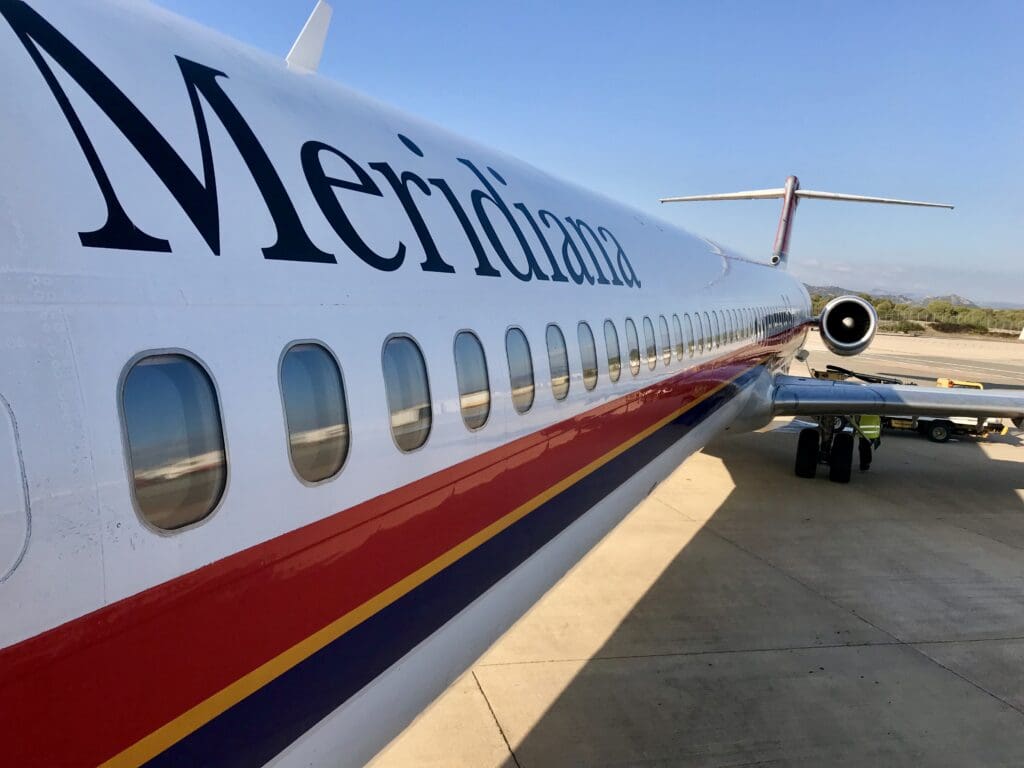
Fortunately, as they type had been becoming increasingly rare across the world, I had managed to bag a few rides onboard these aircraft, including a short hop from Taipei to Makung with Taiwanese carrier FAT in 2016, a longer flight from Olbia to London Gatwick with Meridiana in 2017 and a flight from Rhodes to Linz with European Air Charter in 2022.
In the summer of 2023, just three European carriers remained that had the MD-80 on their books – all of which were headquartered in Eastern Europe. Before the invasion of Ukraine, Bravo Airways operated a single MD-82 from airports across the country to the Middle East and North Africa. However, halting operations in 2022, today, the status of their aircraft cannot be verified. Down in Bulgaria, Sofia-based charter specialist ALK Airlines officially has a fleet of two MD-82s. However, it appears that the carrier’s two Boeing 737-300s have taken over flying responsibilities from these aircraft, with both MD-82s reported to be in storage. The other carrier is European Air Charter, with a larger fleet of seven MD-82s. Spending their summers connecting Bulgaria’s Black Sea cities of Bourgas and Varna with destinations across Europe, in recent years, these aircraft have offered European enthusiasts a relatively easy and inexpensive means of travelling onboard this rare aircraft. However, with a growing fleet of Airbus A320s, there long existed a rumour that their MD-80s were up for retirement, and in the summer of 2023, this became official. With the type’s retirement scheduled for October, enthusiasts rushed to bag one final ‘easy’ ride onboard the MD-80, and, following the flock, I soon got to work planning a ride onboard this rare and unique airliner.
Thanks to the Facebook group ‘Special Flights Enthusiasts’ I was able to find a list of services that were scheduled to be operated by European Air Charter’s remaining MD-82s throughout the summer months, with one helpful member updating this each month. Using this, I decided to book a trip from Varna to Leipzig in mid-September, taking advantage of the slightly lower flight costs at the end of the peak summer season. With European Air Charter not selling their tickets, I booked this via online travel agency eDreams, parting with a total of £151.01 for the flight.
The Journey
Those who are more used to making long treks from London to Stansted, Paris to Beauvais or Frankfurt to Hahn will be delighted to hear that Varna Airport sits just 10 kilometres to the west of the city centre. Given the short distance and the status of Varna as Bulgaria’s third busiest airport, travelling between the airport and the city centre is neither a cumbersome nor expensive task. By day, the most cost-effective means of reaching the airport involves hopping on the Number 409 bus which takes around 25 minutes to travel between the airport and the city centre. However, seeing as my flight was scheduled to depart Varna at 0800, and with the first bus not arriving at the airport until just after 0700, I decided that this would be leaving things a little too close for comfort.
Browsing the internet, I stumbled across a few pages advising tourists against taking taxis in Varna unless necessary, warning about the risk of being severely ripped off – especially on rides to and from the airport. However, my experience of Varna’s taxis had been anything but extortionate. Following my arrival in Varna at 0300 on Saturday morning, I caught an official taxi operated by one of the city’s main taxi companies, Triumf Taxi, from the airport to the centre. Costing me a reasonable 12 Lev (£5.28), this had left me with nothing to complain about (other than the driver’s erratic driving style and a questionable playlist of amateur early 2000s Eminem-esque hip hop). Thus, for my return journey, I had little hesitation about taking a taxi back to the airport and was advised by the hotel reception that they would call for this on the morning of my departure.
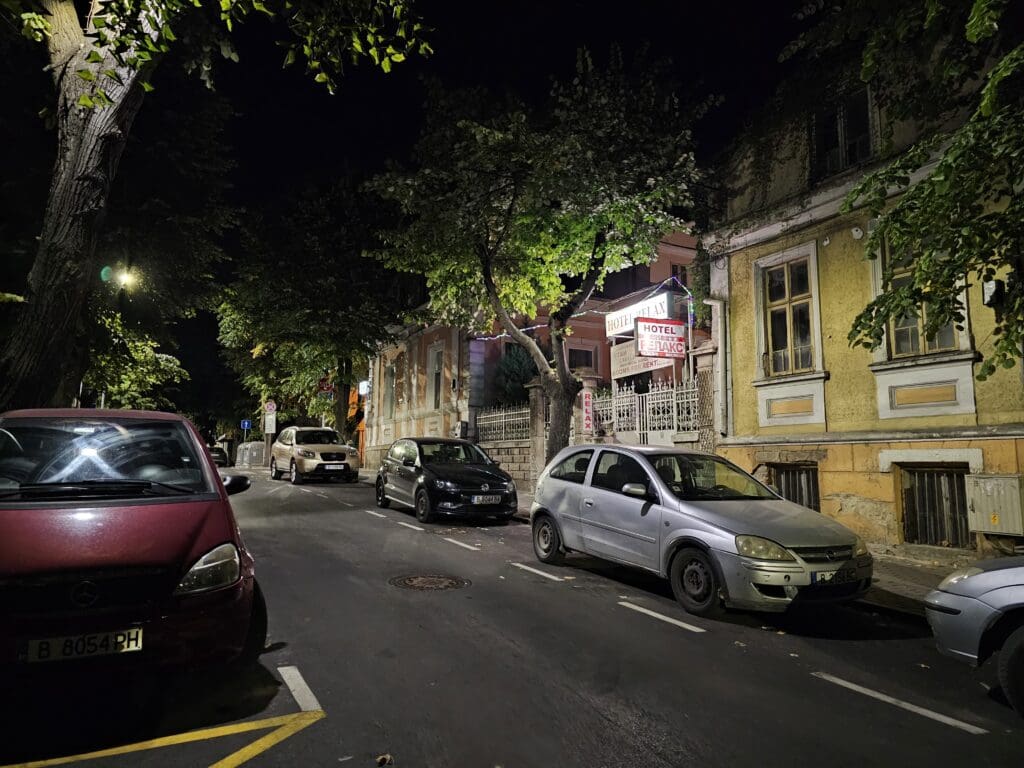
As is slightly unusual, but not particularly unexpected given the fact that tickets cannot be purchased from European Air Charter, at the time of my flight, the airline did not offer any sort of online check-in function. Therefore, whilst I lacked hold luggage, I would still have to drop by the terminal’s check-in desks before departure. Leaving myself plenty of time, I woke up at the ungodly hour of 0400 and after a quick shower, I packed the last of my things and made my way out of the surprisingly large yet dated hotel room that I had called home for the weekend. Upon making it to reception, as promised, the receptionist called me a taxi and I was advised that this would collect me from a dark side street next to the hotel in four minutes. Making my way outside, being early on a Sunday morning, plenty of weekend revellers could be seen stumbling home from nights out and I soon made it to the rendezvous point. A short time later, the Triumf Taxi appeared and we sped off down the dark streets of Varna. Whilst early, the roads were far from completely quiet and plenty of taxis, boy racers in noisy cars with oversized exhausts and fully blacked-out luxury vehicles could be seen as we left the city centre. Following an eventless ride, no more than fourteen minutes after commencing the journey, the taxi pulled up to Varna Airport’s small rectangular terminal building. Not receiving any sort of shock, the fare came to a total of 15.63 lev (£6.76), and after handing over the cash, I made my way over to the terminal.
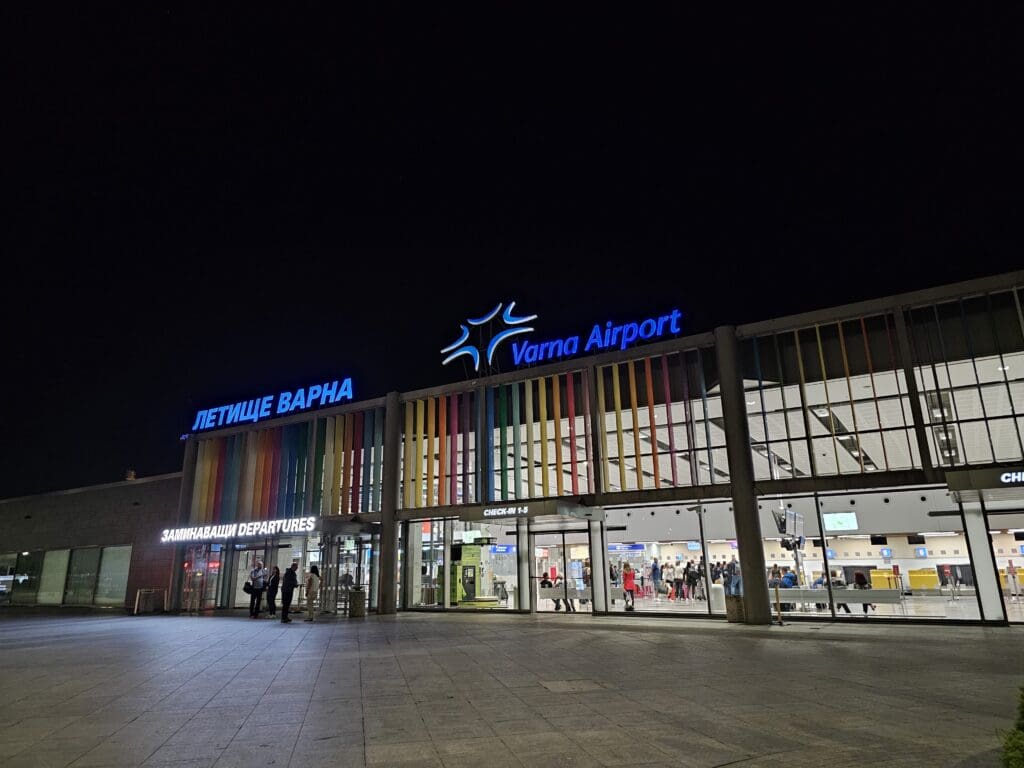
Whilst Varna Airport can trace its roots back more than a century, its current terminal building welcomed its first passengers in 2013 and remains modern in its appearance. On the outside, multicoloured slats hang down and provide passengers with a more colourful first impression of the airport than the many drab and characterless terminals that exist across Europe. Sitting outside of this, several benches and displays can be seen, creating a pleasant space to wait in good weather conditions. Heading inside, I soon found myself standing in the terminal’s check-in hall, which is complete with 25 desks. At that time, long queues could be seen leading up to those desks that had been assigned to Wizz Air’s early morning services to London Luton and Tel Aviv, and Enter Air’s flight to the Polish city of Katowice. For those like me who had arrived too early to check-in, plenty of benches could be found along the sides of the hall, however, fancying my first coffee of the day, I decided to make my way to the café which is located immediately after arrivals. Other than this café, a convenience-style store and a kiosk can be found, plus a currency exchange counter and a few ATMs.
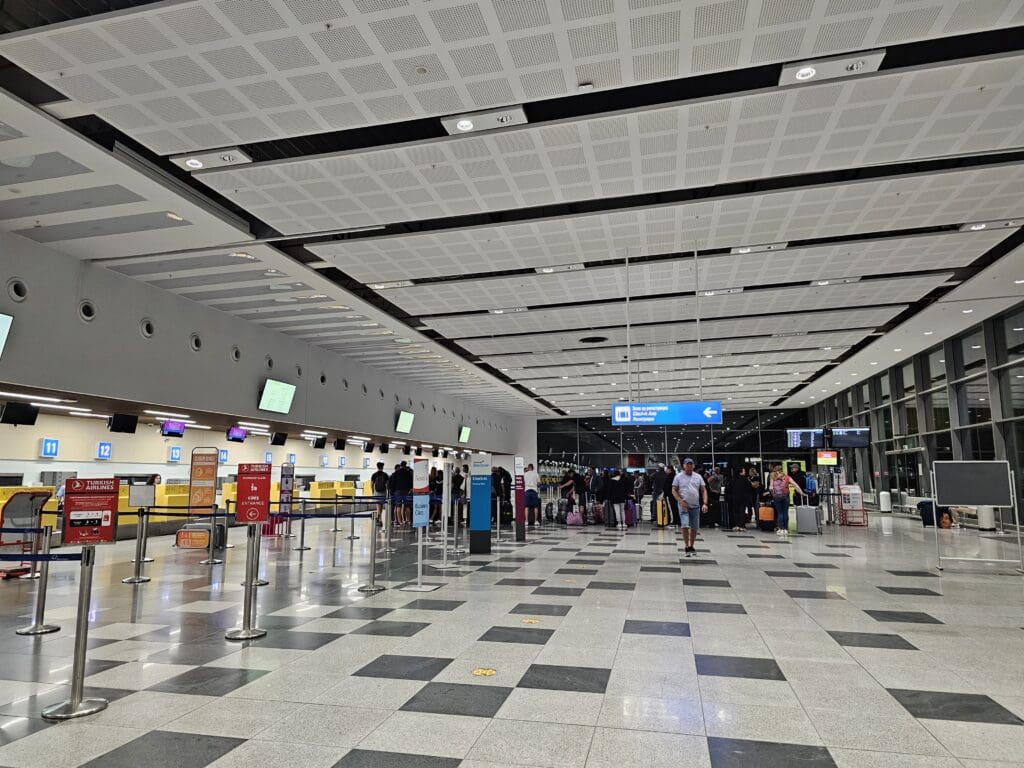
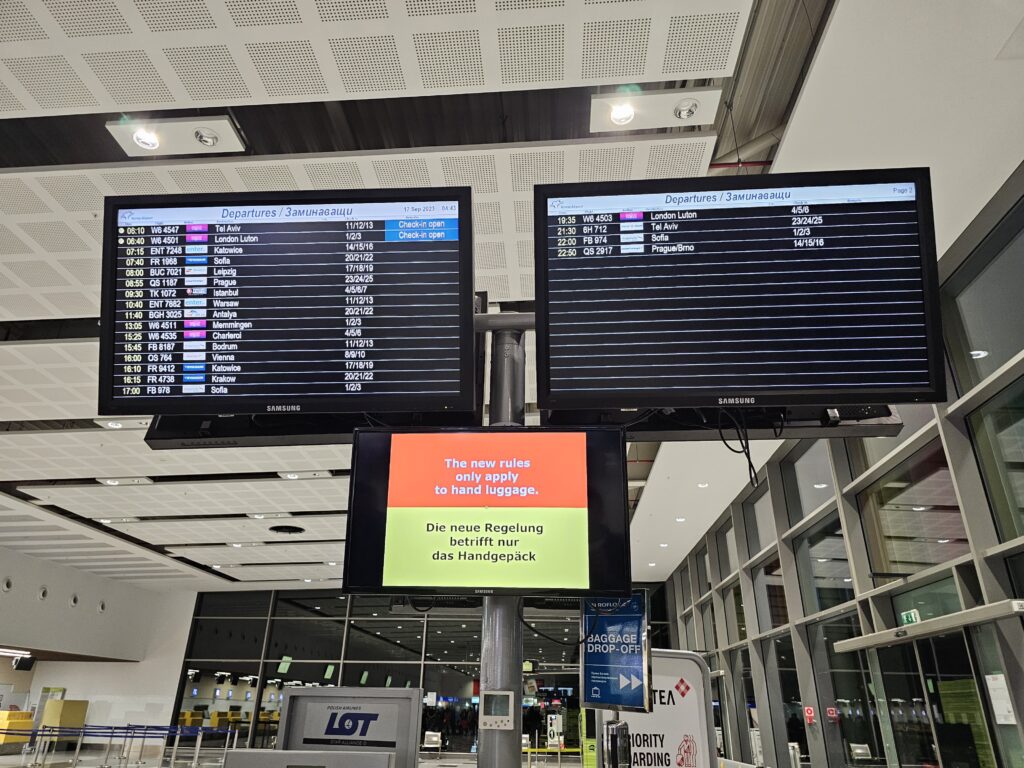
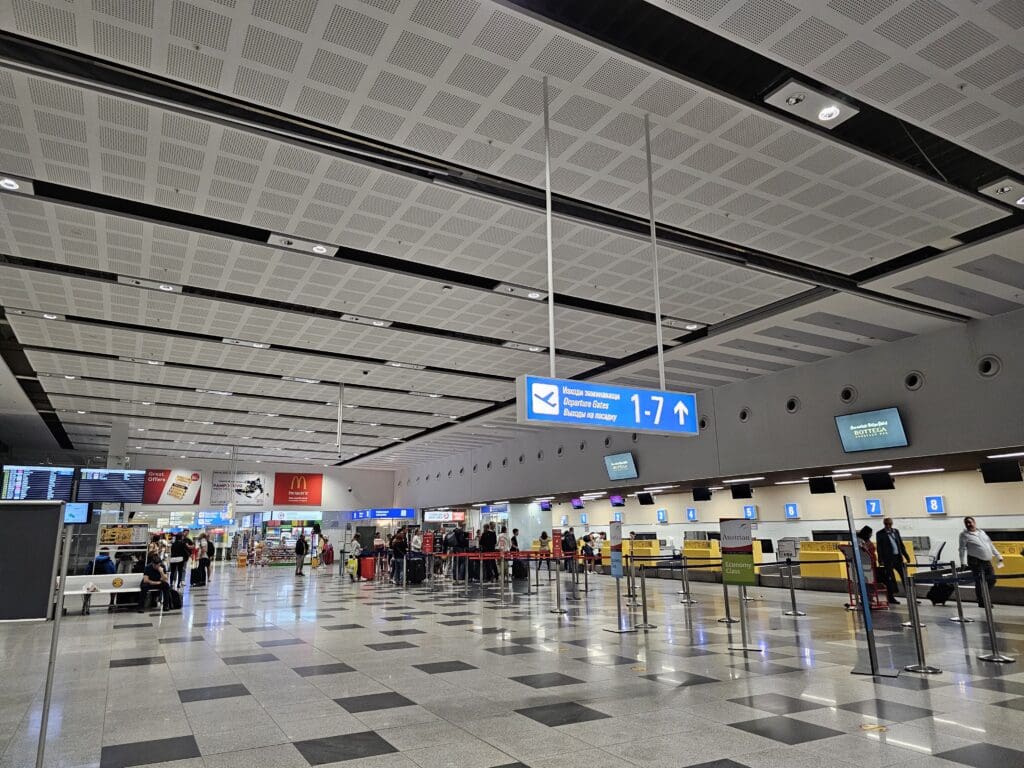
Once at the Ginger Café, I ordered a slightly overpriced Americano and after sipping this, I continued on my journey. Wandering around, I found the terminal to be pleasant, clean and modern. Furthermore, fast complimentary wifi was provided, which I found to work well throughout the terminal for the duration of my stay. However, unfortunately, the cleanliness appeared not to extend to the toilets, which were in a very sorry state in both the landside and airside portions of the terminal. Other than this gripe, my only other complaint regarded the lack of plug sockets outside of the café. Returning to the check-in hall, as I sat and waited, indicating that I was in the right place, several groups of young German tourists appeared. Some of these appeared to be subdued whilst others appeared to still be in the party mood as if they had just come straight from the bars of Varna and were yet to sober up and feel the consequences of their heavy evenings!
After a coach party of older tourists had arrived, at around 0550 a couple of small queues leading up to European Air Charter’s check-in desks formed and at 0600 three staff members appeared, at which point the screens above these desks updated and check-in commenced. Having ended up near the front of one of the queues, I did not have long to wait until I was able to hand over my passport to a friendly agent. After confirming my reserved seat, a Varna Airport-branded boarding pass was printed out and handed over to me and I was free to head through security.
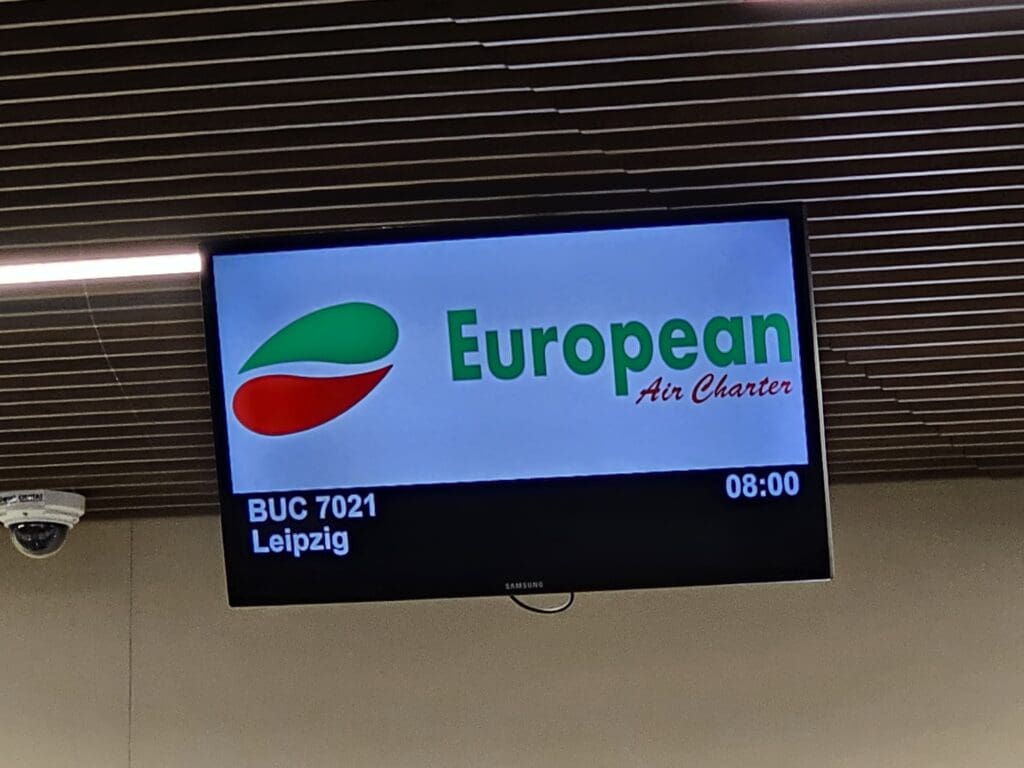
By the time I had checked in, the crowds of passengers heading off on the three earlier services had already passed through security, and thus nothing more than a short queue of about five passengers could be seen waiting to pass through this checkpoint. Whilst I imagine that the security area can get rather busy at peak times, that morning, this was as pleasant as a security check can be, and I passed through this quickly and without issue. Seeing as Bulgaria sits outside of the European Union’s Schengen area, all departing passengers bound for destinations abroad must pass through passport control, with a line of booths located immediately after security. Whilst only three of these were open, given the number of passengers there at the time, once again, this was no issue and no more than three minutes after I had been handed my boarding pass, I found myself standing in the airside portion of the terminal.
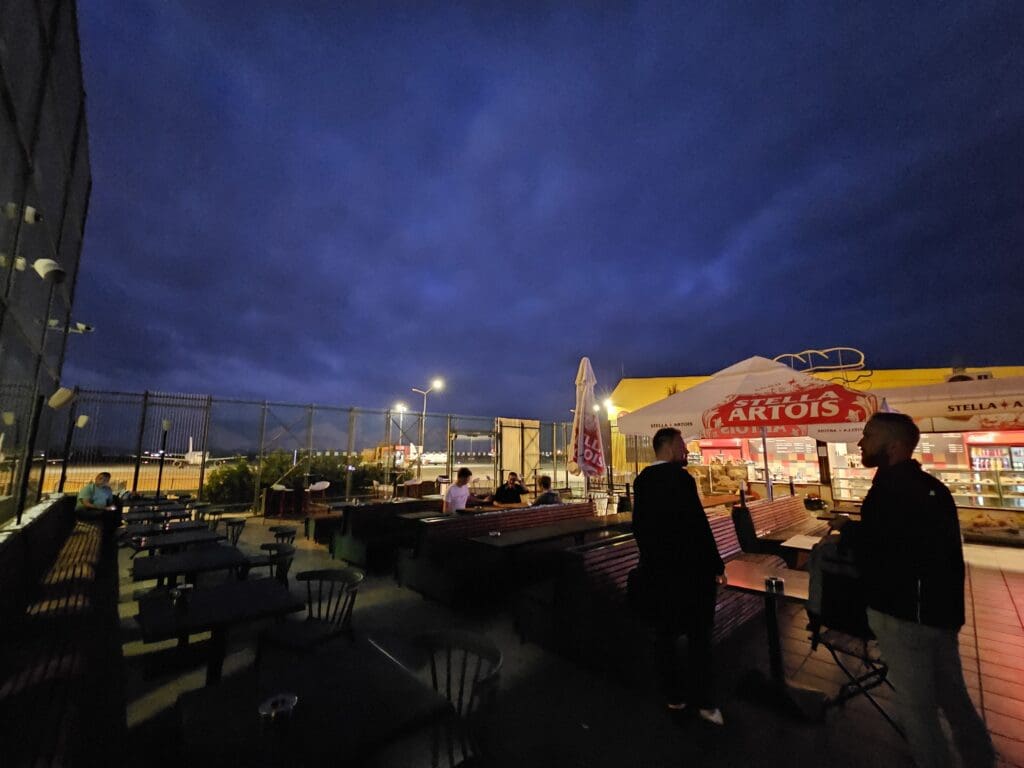
As with the landside portion of the terminal, once airside, my only issues regarding this part of Varna Airport revolved around the unclean toilets and the lack of plug sockets. Given the small size of the terminal, I was rather impressed by the number of facilities on offer, with a branch of McDonald’s, two branches of Costa Coffee and two café-bars – one of which is located outside and thus popular with smokers. In addition to this, various shops selling a range of duty-free goods, local souvenirs and other items could be found.
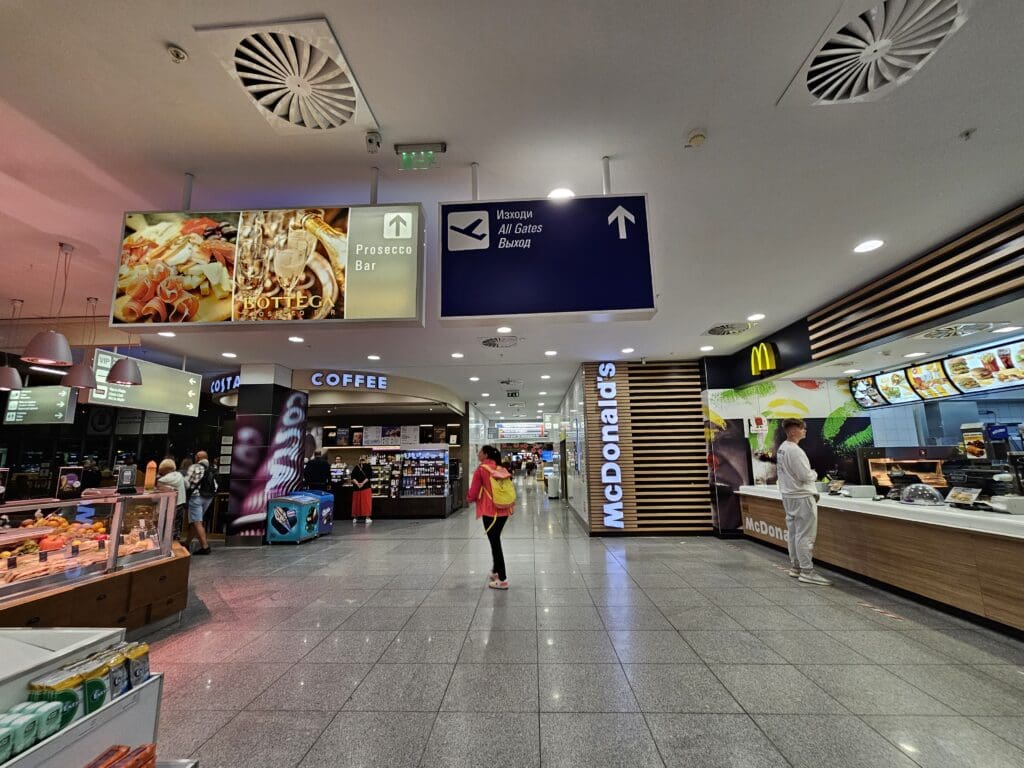
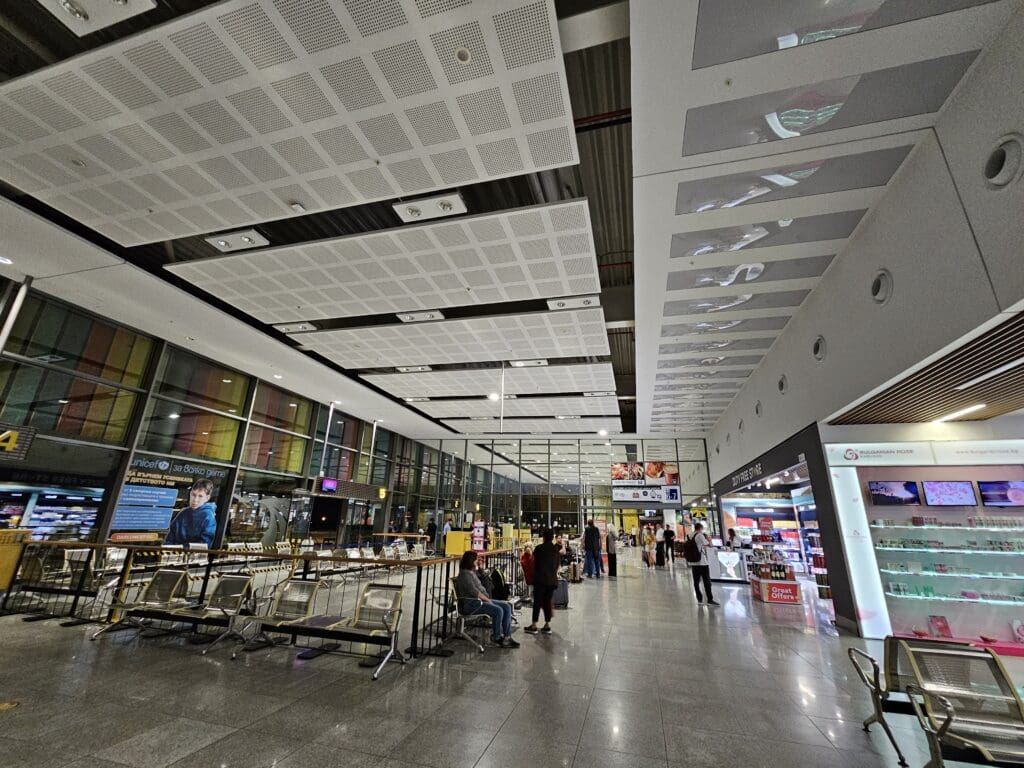
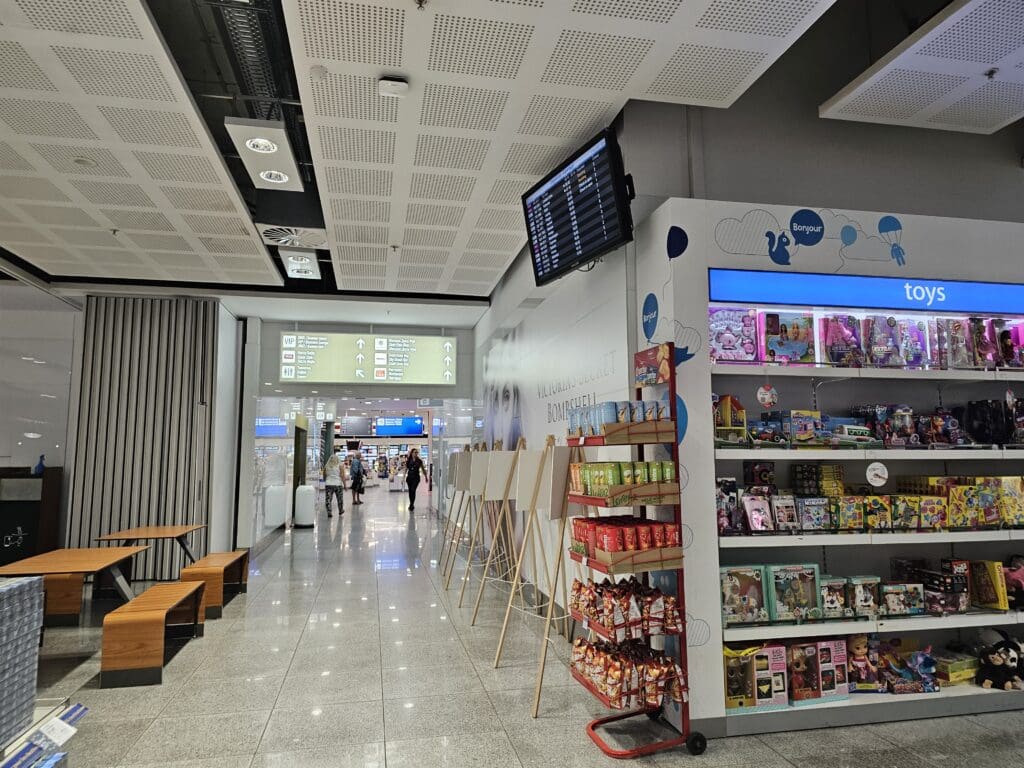
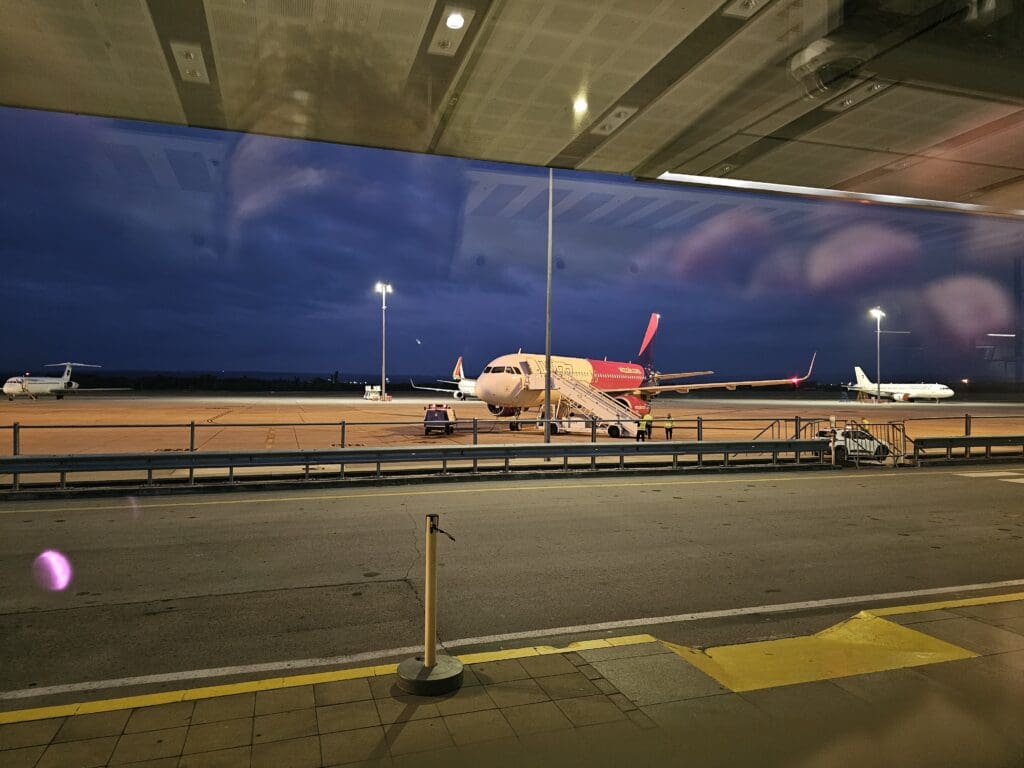
Importantly for enthusiasts, large glass windows offer a view of the ramp outside. However, as the terminal sits on ground floor level, various light poles and other objects mean that the view outside is partially obstructed and not ideal for more professional spotters looking to get decent photographs of the aircraft on the ramp.
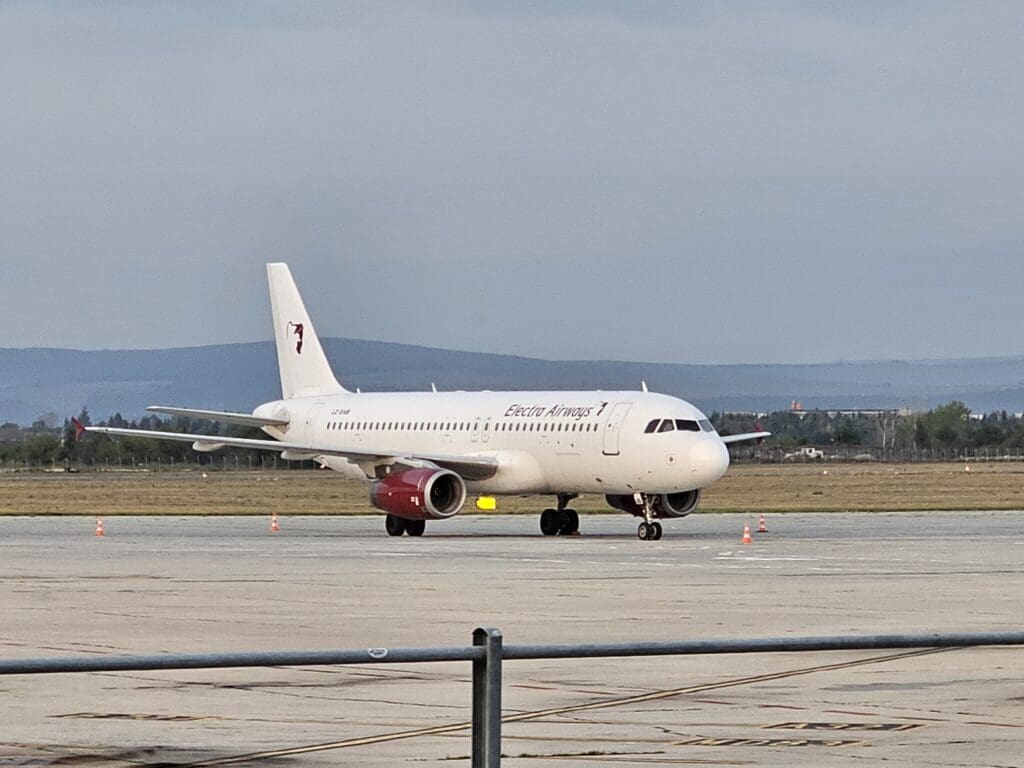
Outside, it wasn’t long before the skies slowly began to brighten in preparation for a new day and illuminated the smorgasbord of aircraft sitting outside. A short time after I had arrived in the airside area, Wizz Air’s two locally based Airbus A320s could be seen heading off into the dark morning skies. This was followed a short time later by Enter Air’s service to Katowice, which was operated by one of the carrier’s latest additions, a Boeing 737 MAX 8. In the distance, a line of five Bulgarian aircraft could be seen sitting at the remote stands. At one end stood two Airbus A320s operated by charter specialist Electra Airways, next to which was an all-white 31-year-old Boeing 737-300 operated by Bulgaria Air subsidiary Bul-Air. At the other end were two European Air Charter jets, an Airbus A320 that would fly empty down to Burgas before hopping over to Dusseldorf, and the iconic MD-80 that would be operating the Leipzig rotation. Contrary to what many would expect, this particular Airbus was older than the MD-80 by around three years! Other aircraft seen include a Buzz Boeing 737 MAX 8 operating Ryanair’s Sofia rotation and a Czech Gulfstream G550 operated by ABS Jets.
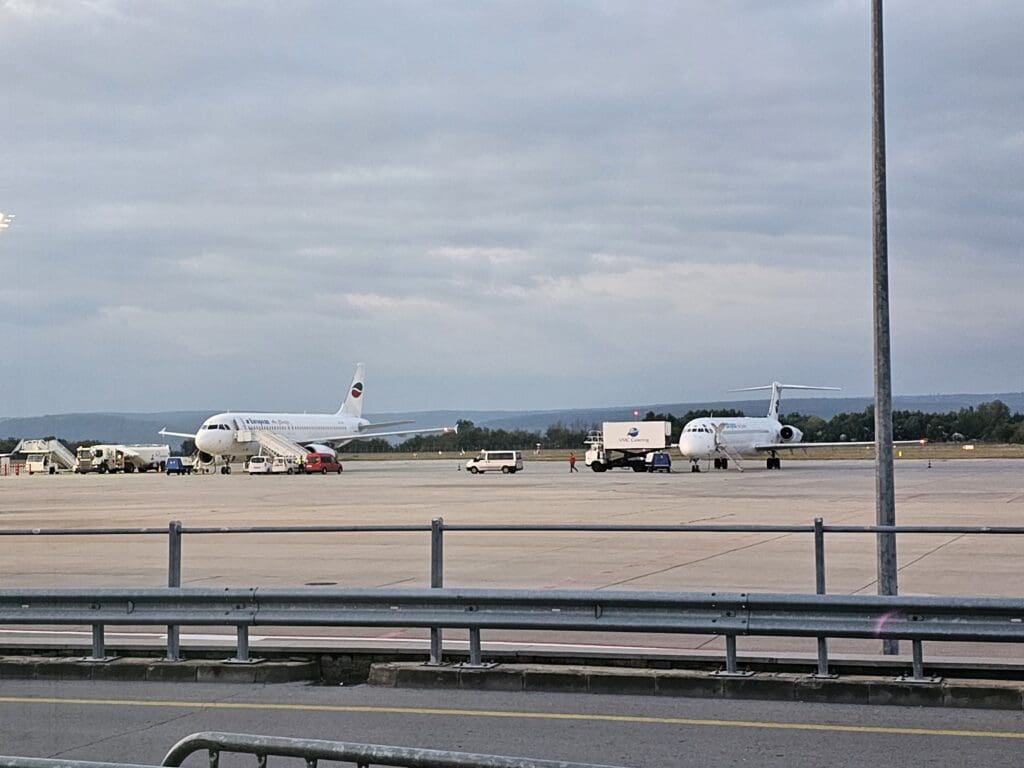
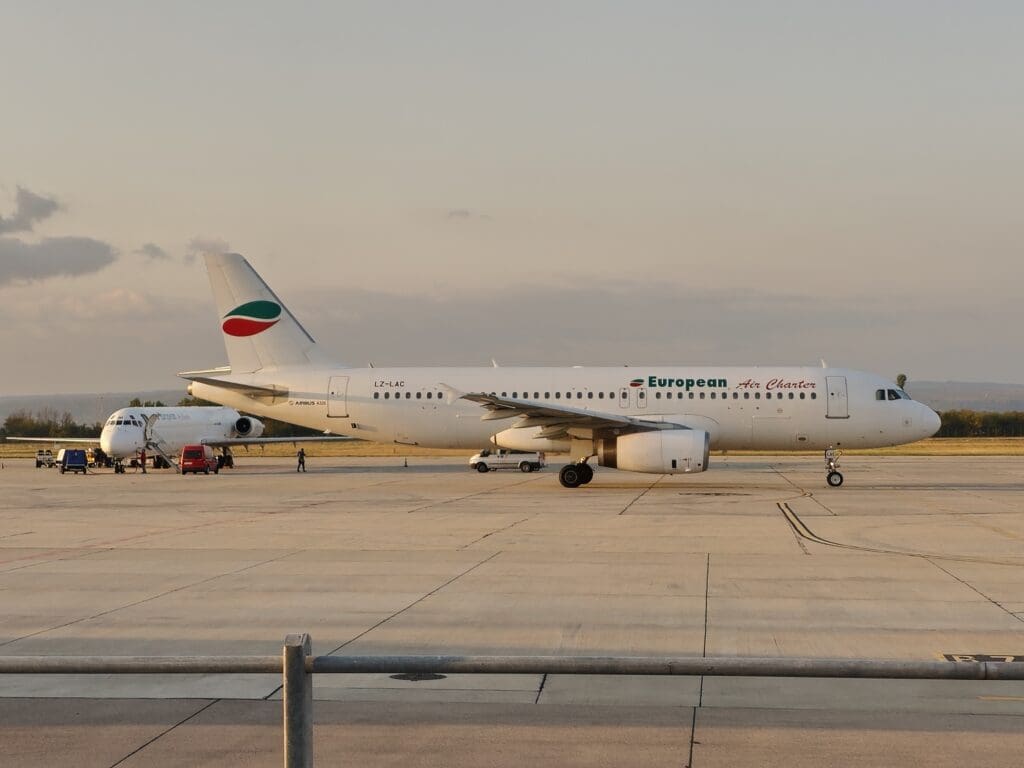
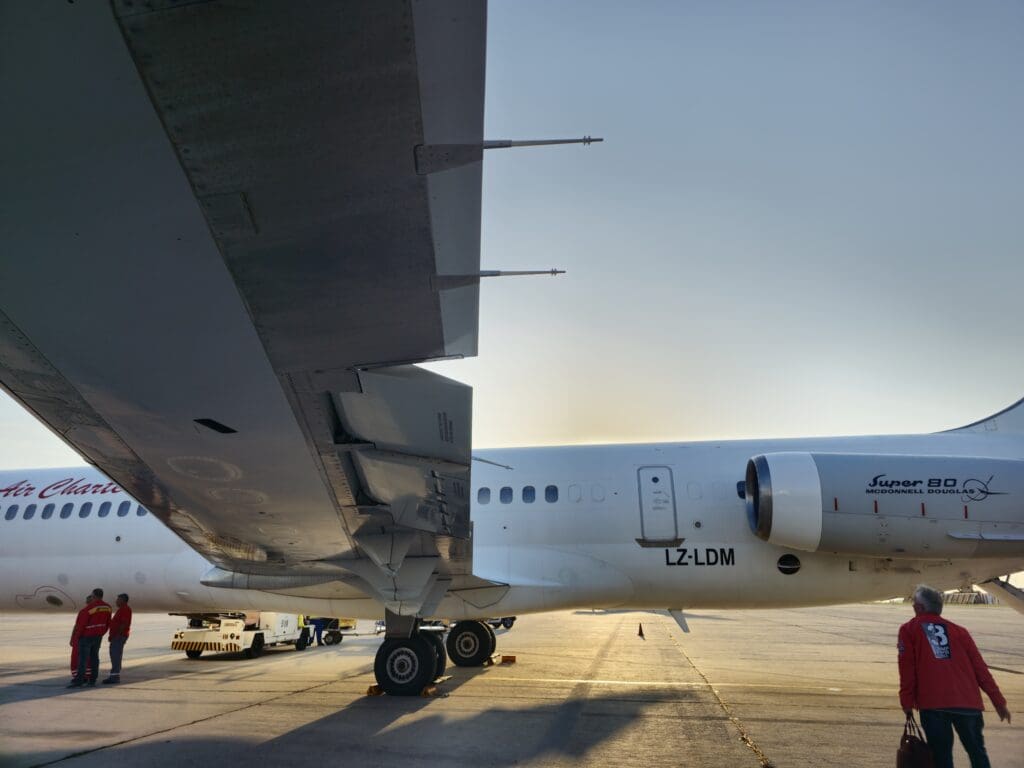
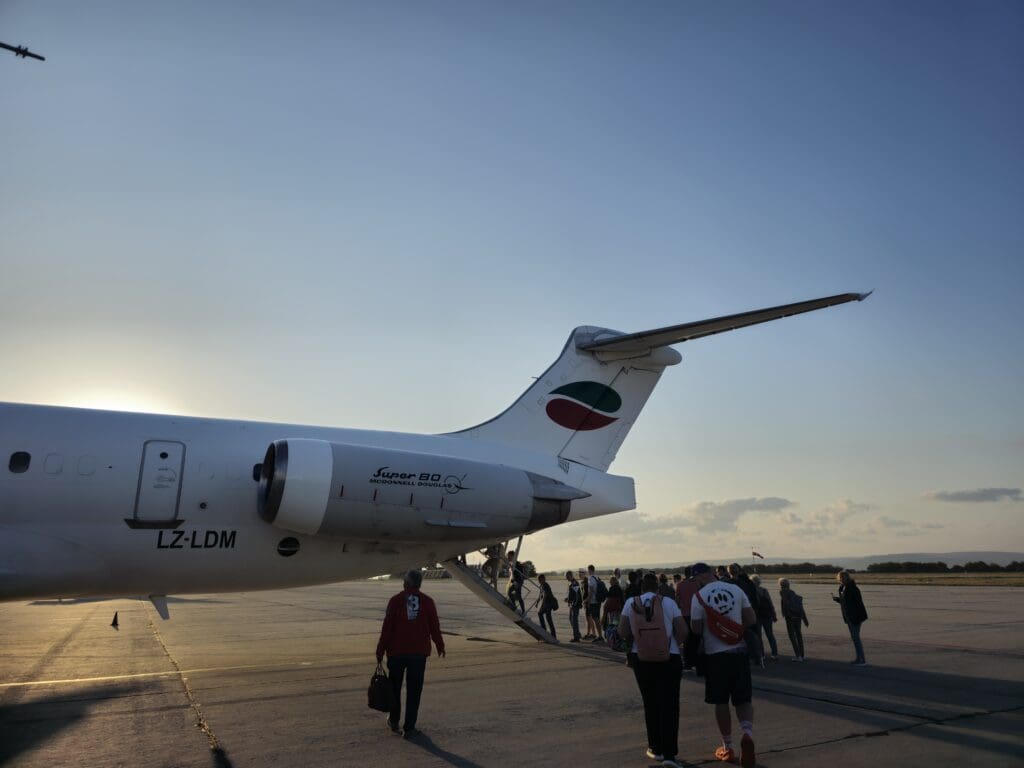
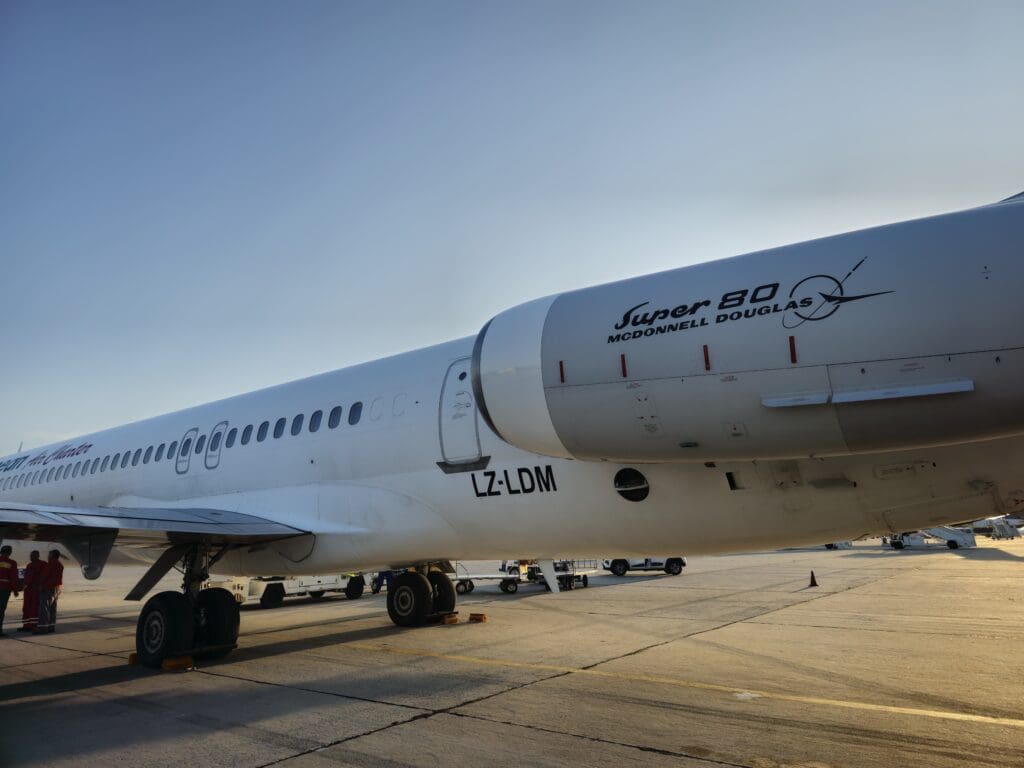
Seeing as European Air Charter had based just one MD-80 in Varna that September, it wasn’t hard to guess which aircraft would be operating the service that morning. As expected, this came in the form of McDonnell Douglas MD-82, LZ-LDM. As with all MD-80s, this example was assembled thousands of miles away at McDonnell Douglas’ plant in the Californian city of Long Beach. Bearing the construction number 53228 and line number 2104, this aircraft first took to the skies in December 1994, making it just under 29 years old at the time of my flight. This was the second youngest MD-80 out of European Air Charter’s fleet of seven examples of the type.
As with all European Air Charter’s other MD-80s, LZ-LDM started its life with the former Italian flag carrier, Alitalia. There, the aircraft sported the registration I-DATK and the name Ravenna and spent its time flying to destinations across Europe. After around fourteen years of service with Alitalia, the aircraft was withdrawn from use and placed into storage in January 2009. Remaining on the ground for well over a year, the aircraft was eventually given a new lease of life in June 2010 when it was delivered to Bulgarian Air Charter. Since then, the aircraft has operated a mixture of charter and scheduled services for the carrier, alongside partaking in wet-leased operations, supporting other carriers across Europe. In addition, between April 2011 and May 2012, records indicate that the aircraft operated for the short-lived Armenian carrier Ararat International Airlines as EK-82228 although I was unable to find any pictures from this part of the aircraft’s life. In terms of utilisation, LZ-LDM is far from the most flown aircraft in European Air Charter’s fleet and had undertaken a total of just eight sectors in the week leading up to my flight. These had seen the aircraft visit Enfidha, Hannover, Leipzig and Tel Aviv from its base in Varna, with the aircraft covering around 7800 miles during this week.
Having exhausted the sights of Varna Airport’s small terminal building and not yet fancying my second coffee of the day, after a wander around, I plonked myself down on one of the metal seats at gate 1, through which the Leipzig service would board. Looking out across the apron, as I waited LZ-LDM could be seen being readied for its flight over to Germany and was in the process of being fuelled up and catered before the crew were driven out to the jet in a European Air Charter minibus around 45 minutes before our scheduled departure time.
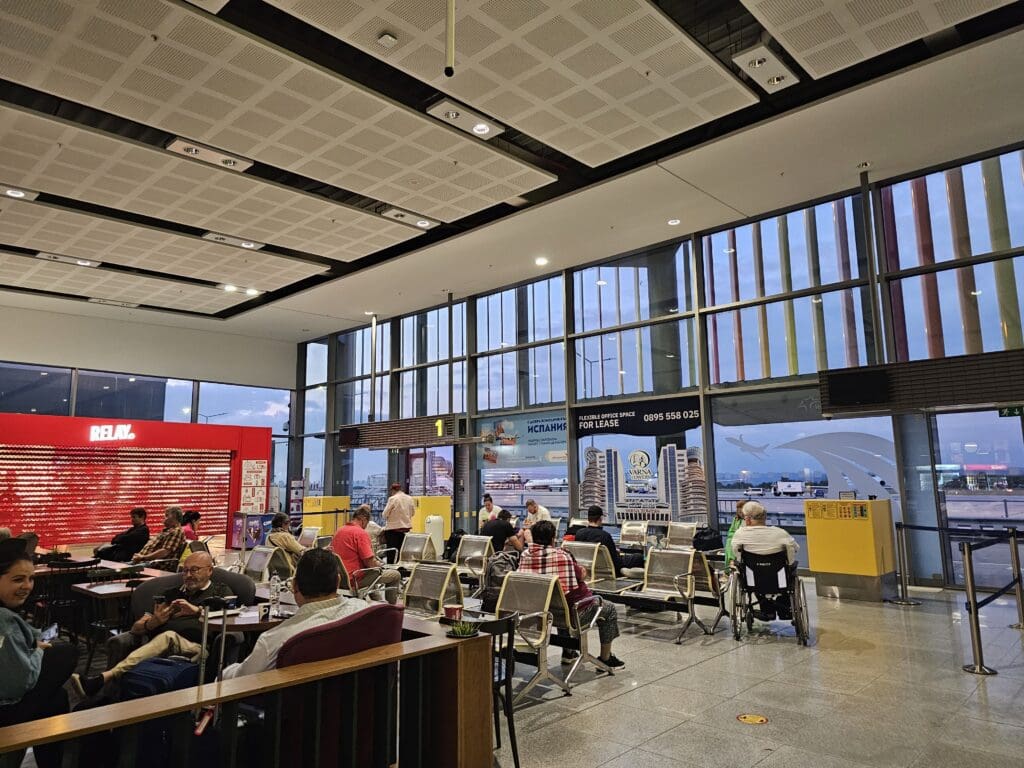
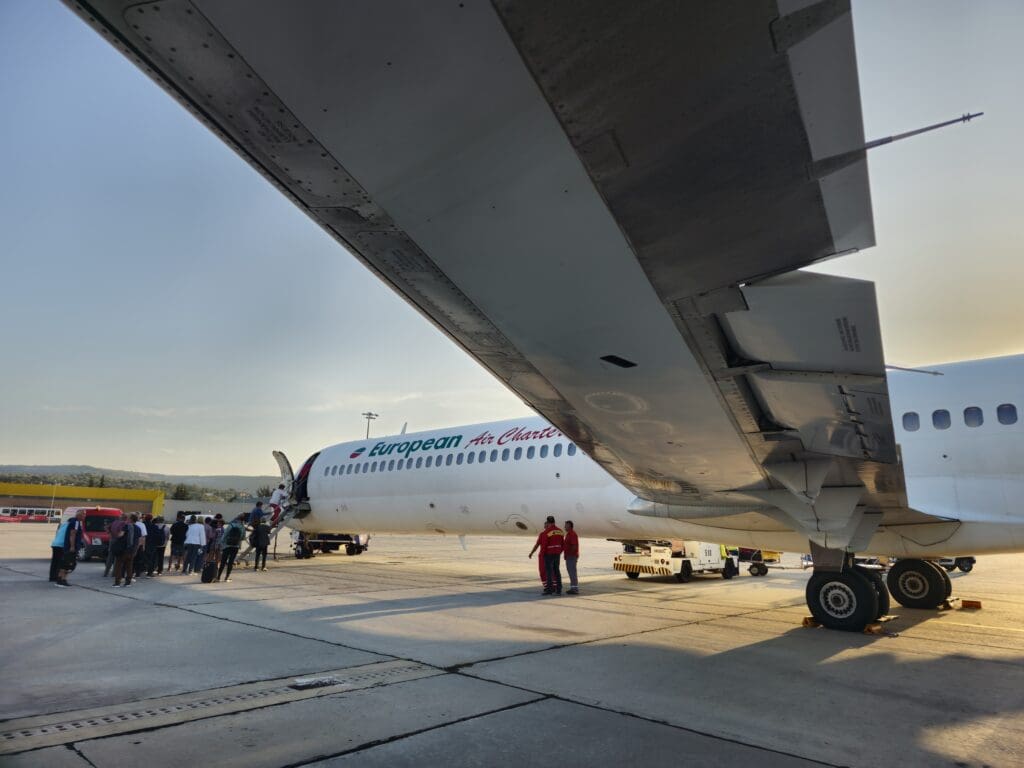
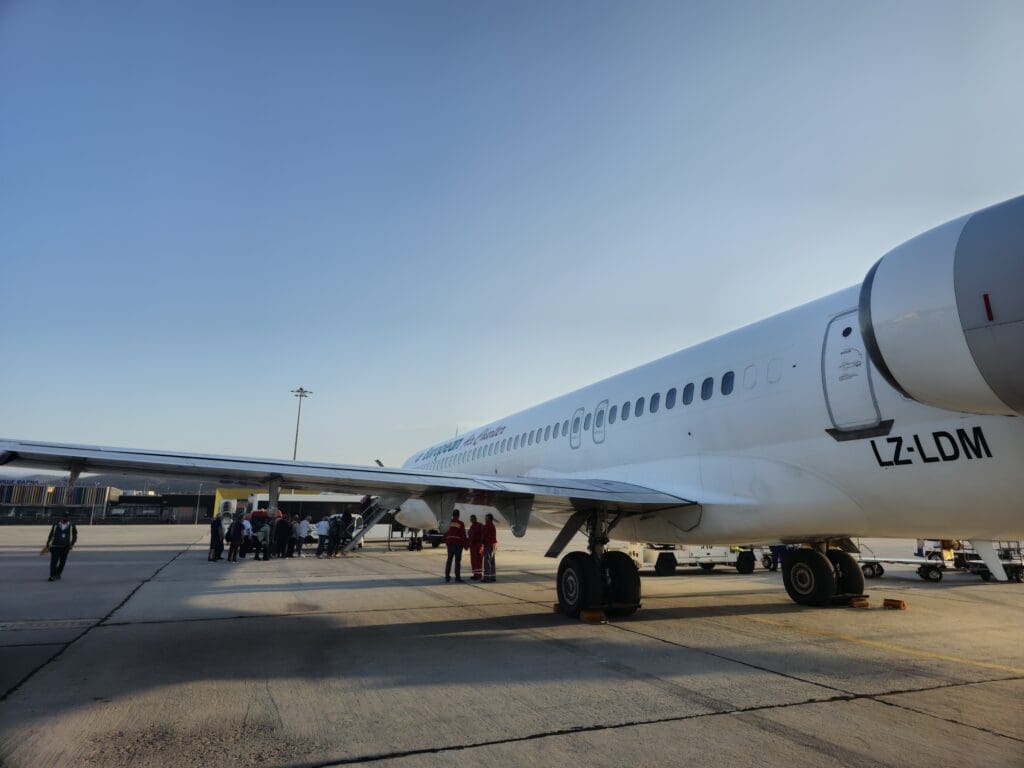
That morning, boarding for the service was scheduled to commence at 0720 and two minutes after this time, a white Cobus 3000 appeared outside, and the two gate agents took their positions behind the gate podiums. At that time, boarding commenced at which point a scrum of passengers formed leading up to the doors. Whilst I wouldn’t go as far as to say that boarding was disorganised, this was not preceded by any announcement, and there was no order to this, with all passengers invited to board at the same time. Following a short queue, I had my boarding pass scanned and my passport checked before I stepped onto the waiting bus. Once onboard, a few minutes of waiting was required whilst the agents squeezed as many people as physically possible onto the bus. At 0730, the doors closed and the bus jolted before cautiously and slowly making its way to the aircraft. Heading across the apron, the aircraft made its way around the Bul-Air Boeing 737-300 before coming to a halt near the MD-82’s port wingtip. However, after arriving there, the bus doors remained firmly shut for several minutes whilst those passengers requiring assistance boarded the aircraft by means of an ambulift.
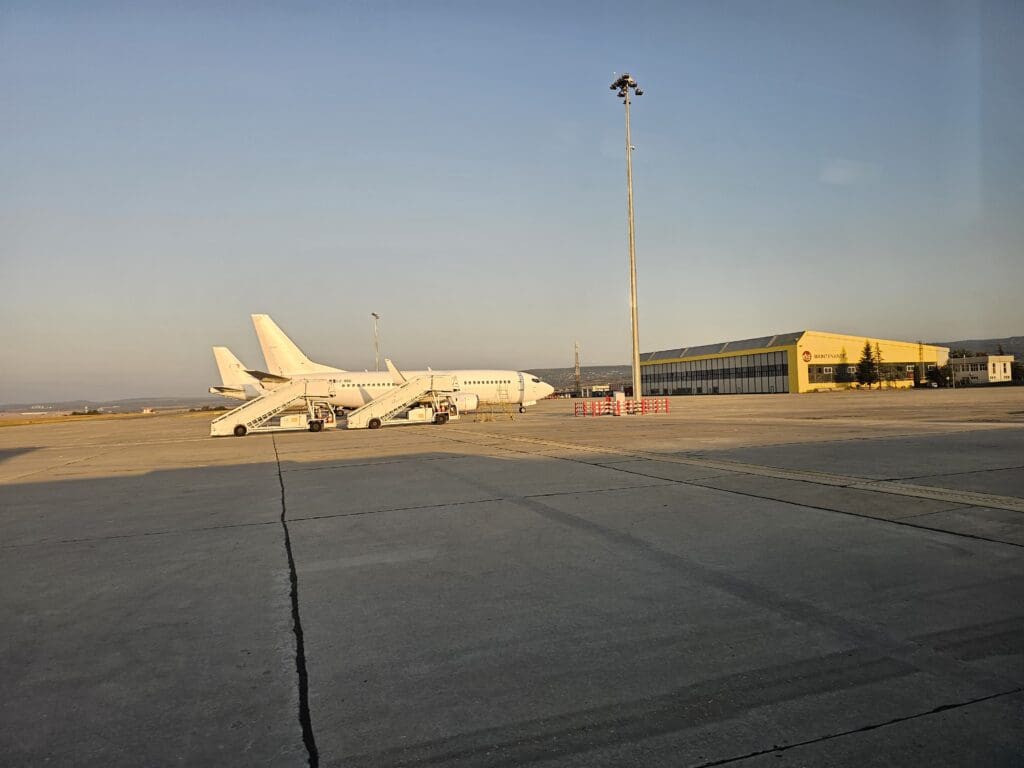
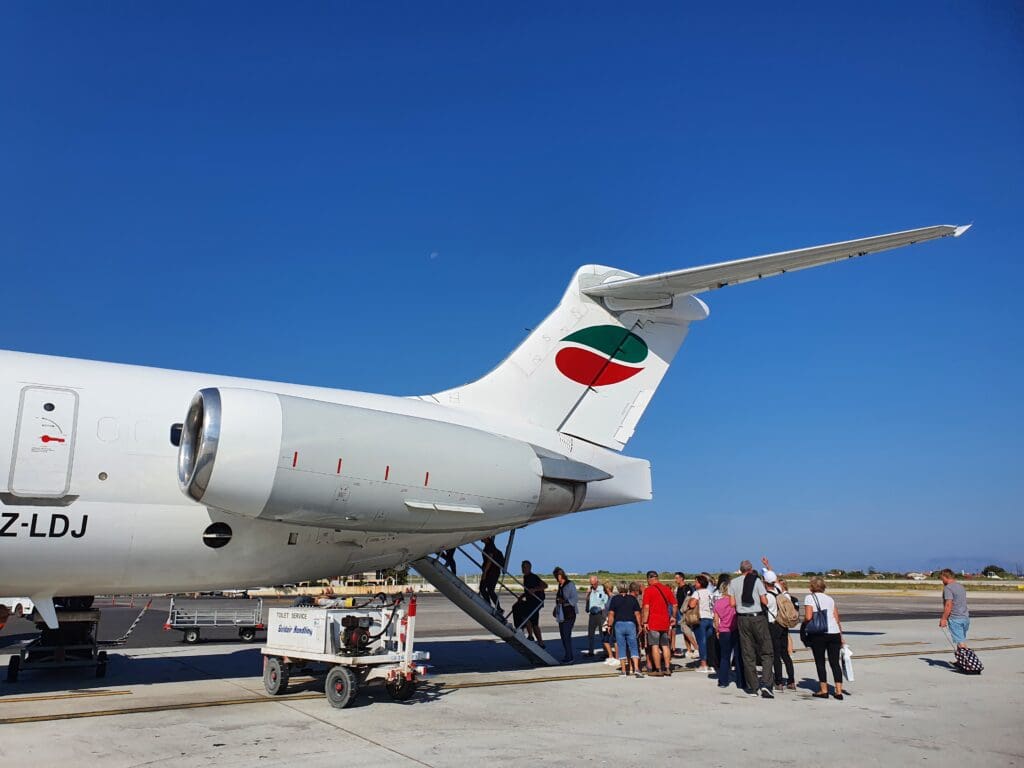
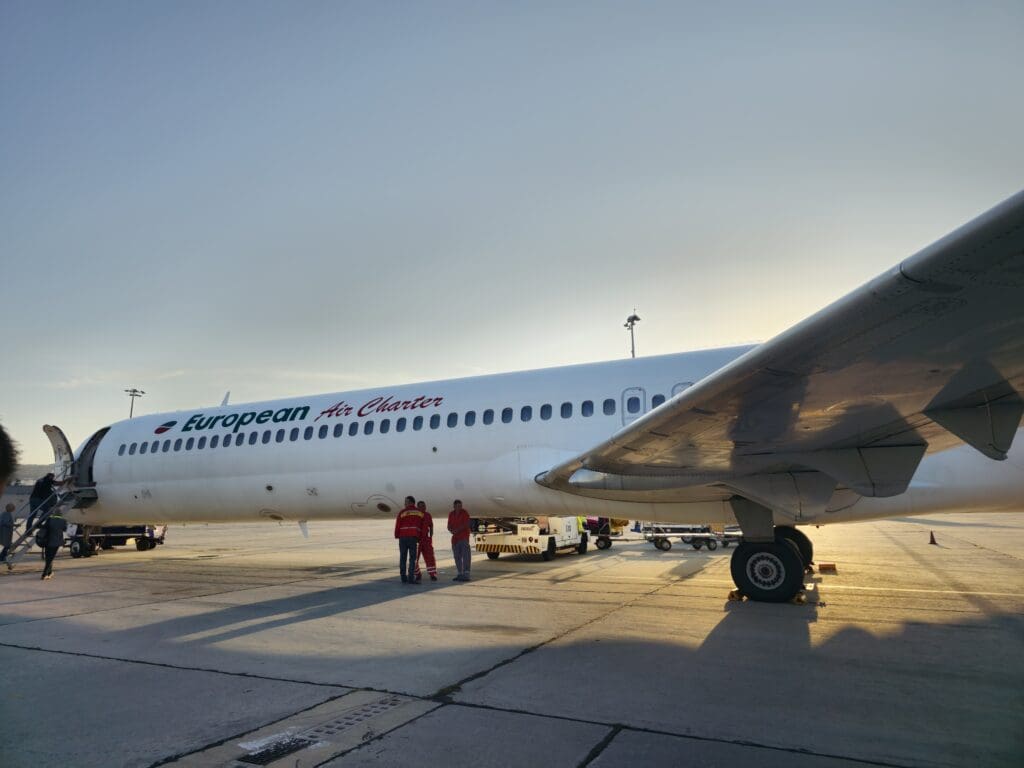
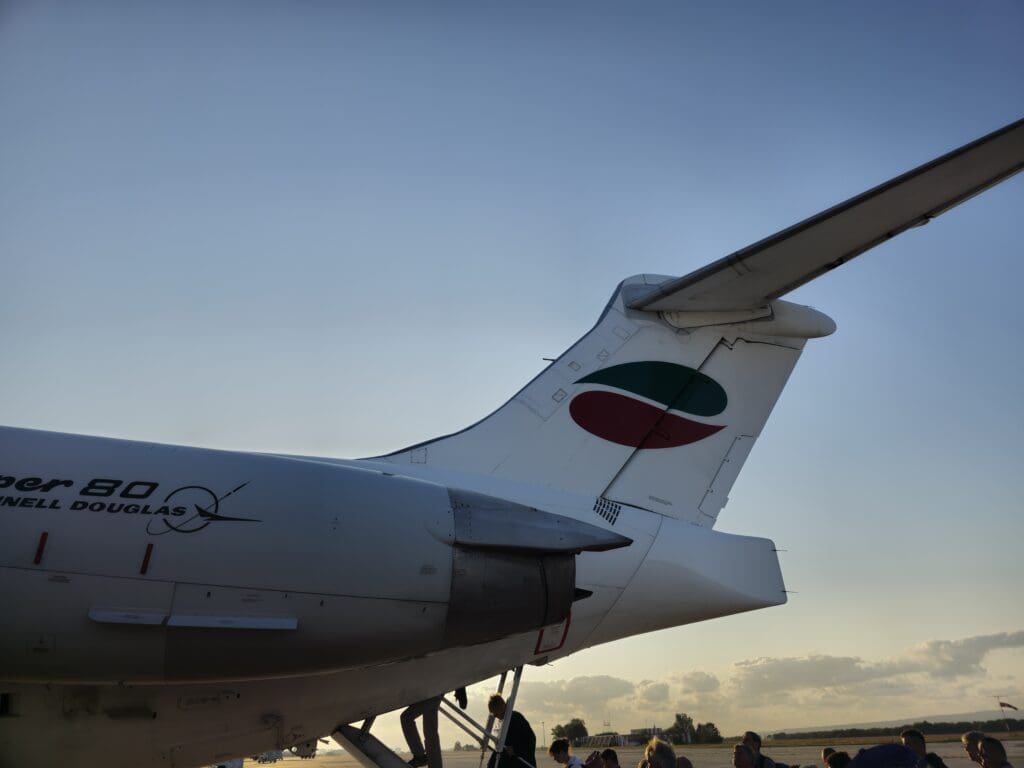
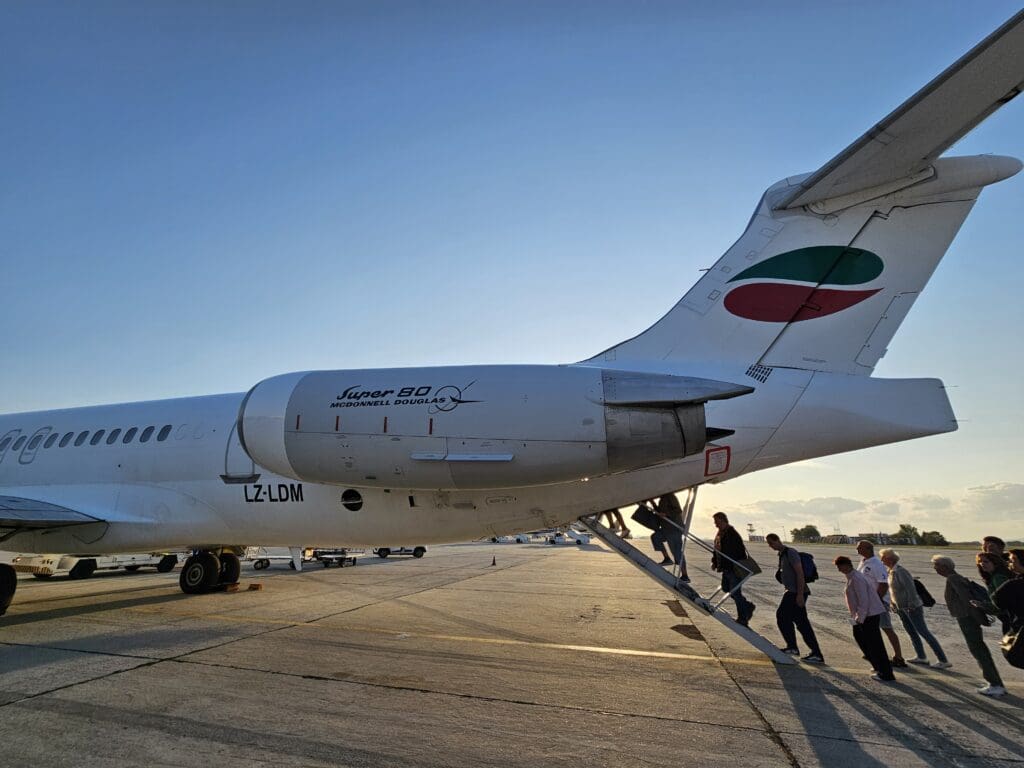
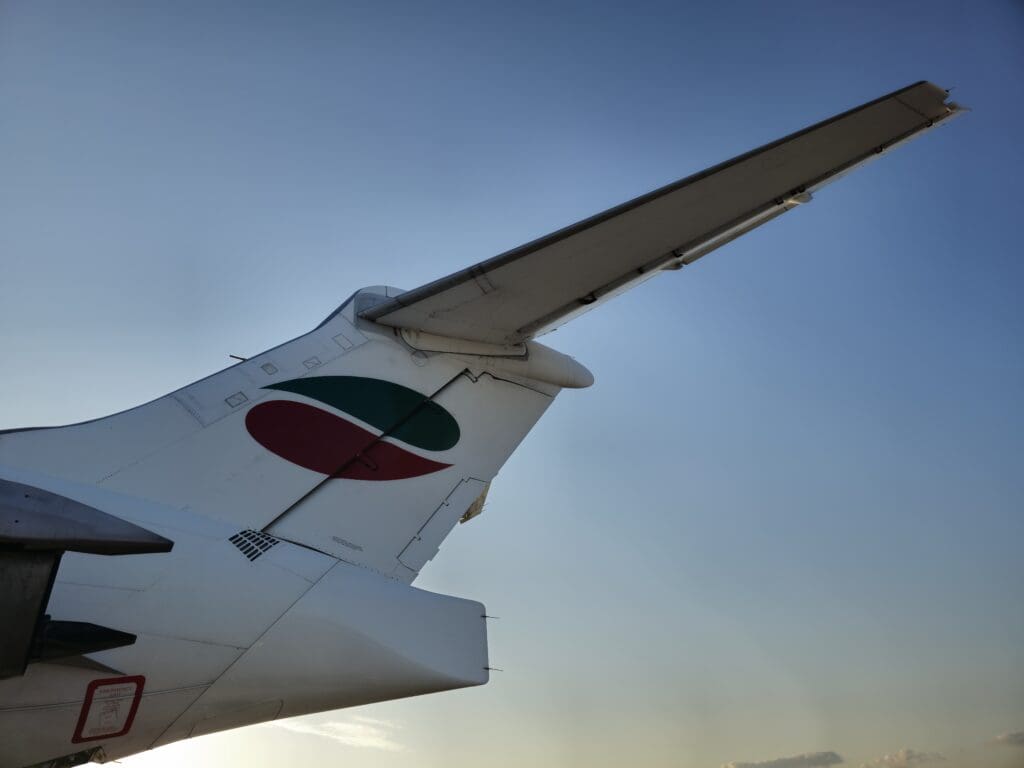
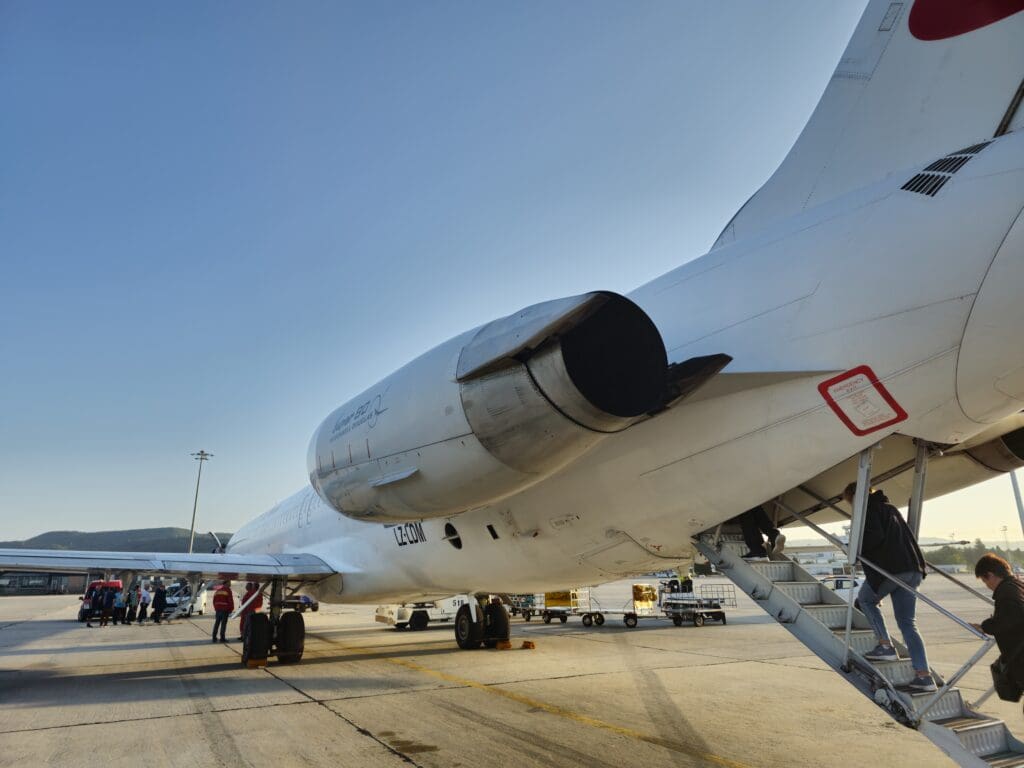
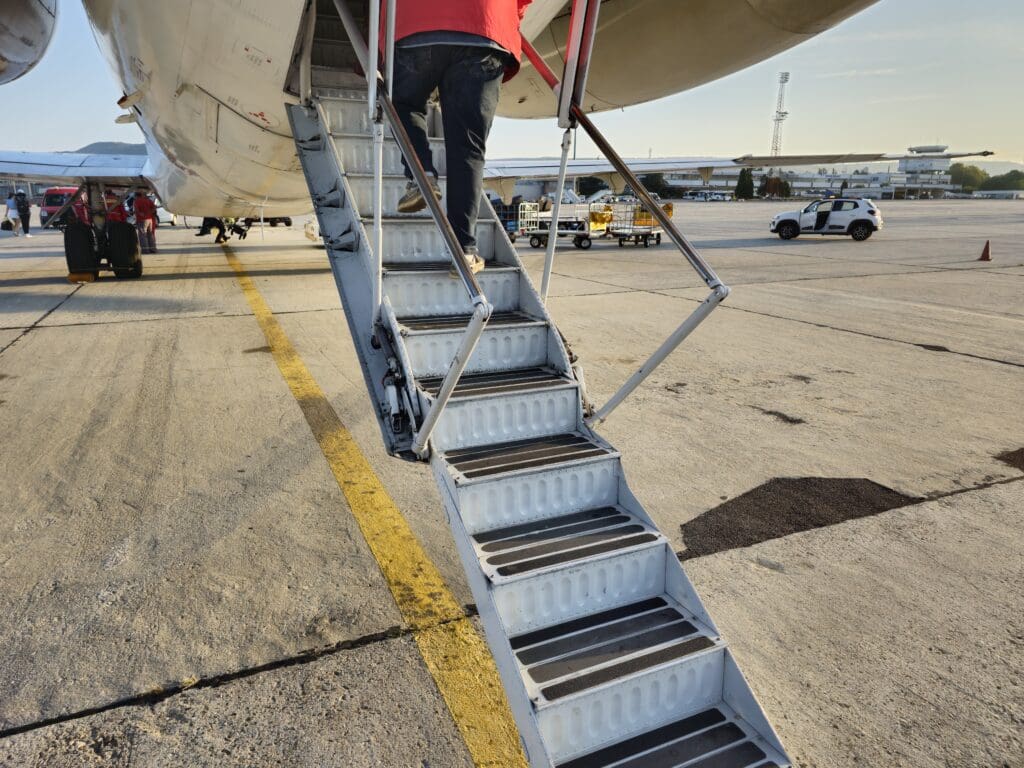
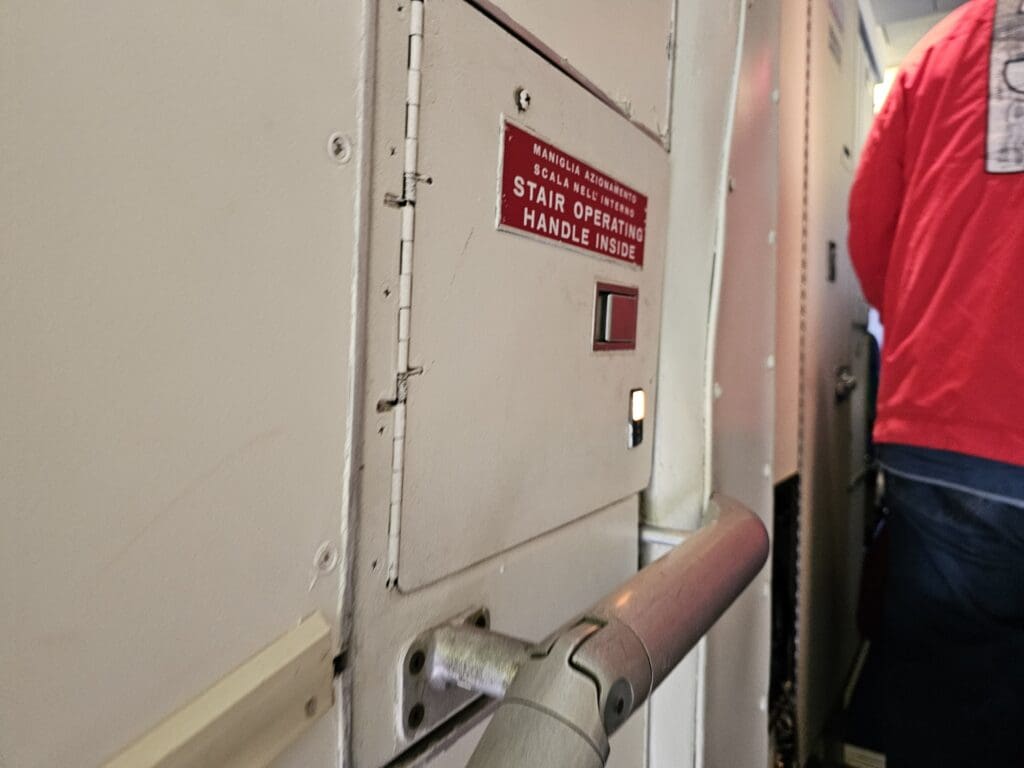
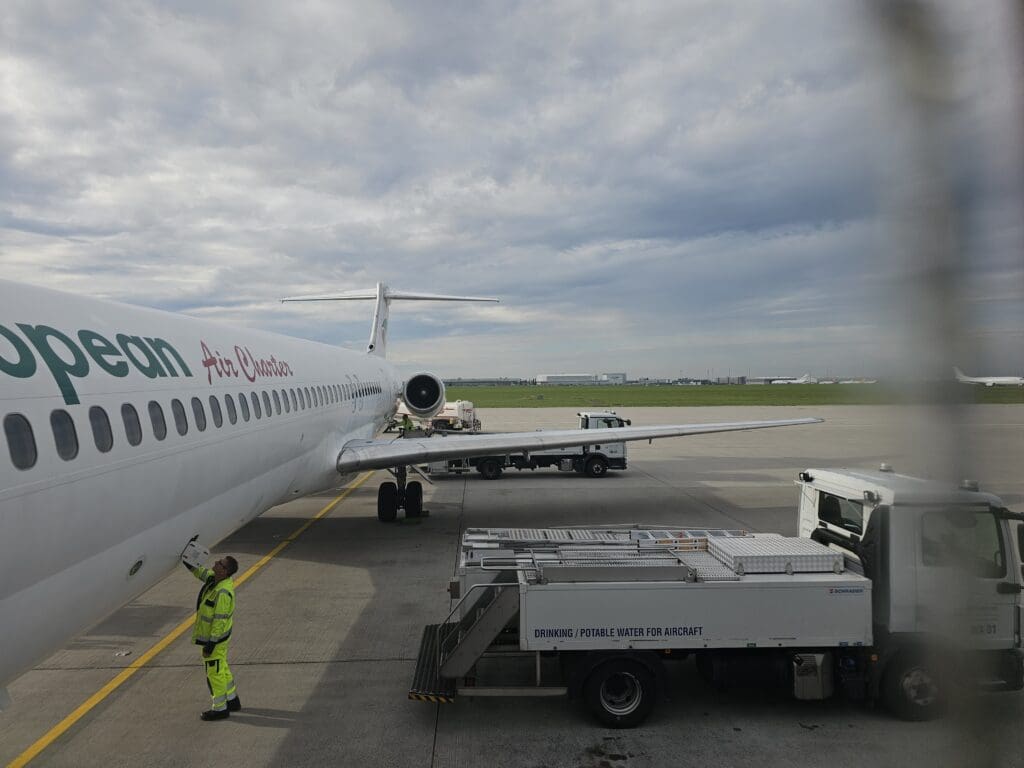
After several minutes, the doors slid open and passengers spilt out onto the apron. Seeking to streamline the boarding process, a member of ground staff stood just ahead of the leading edge of the wing holding two signs which advised passengers to board via the front or rear door, depending on their row number. As had been the case whilst boarding sistership LZ-LDJ in Rhodes for a flight to Linz almost exactly a year prior (you can read my review of this flight here!), whilst cones had been placed around the aircraft’s wing many passengers took a shortcut, passing directly beneath the relatively low wing. As a true enthusiast, after disembarking the bus, I held back slightly to take plenty of photos of the aircraft before eventually making my way towards the MD-82’s built-in steps at the rear of the aircraft. Following a short wait near the rear of the aircraft, I clambered up the steps and passed through the thick rear bulkhead door where I received a quiet and subdued ‘morgen’ greeting from one of the four flight attendants onboard the aircraft that morning.
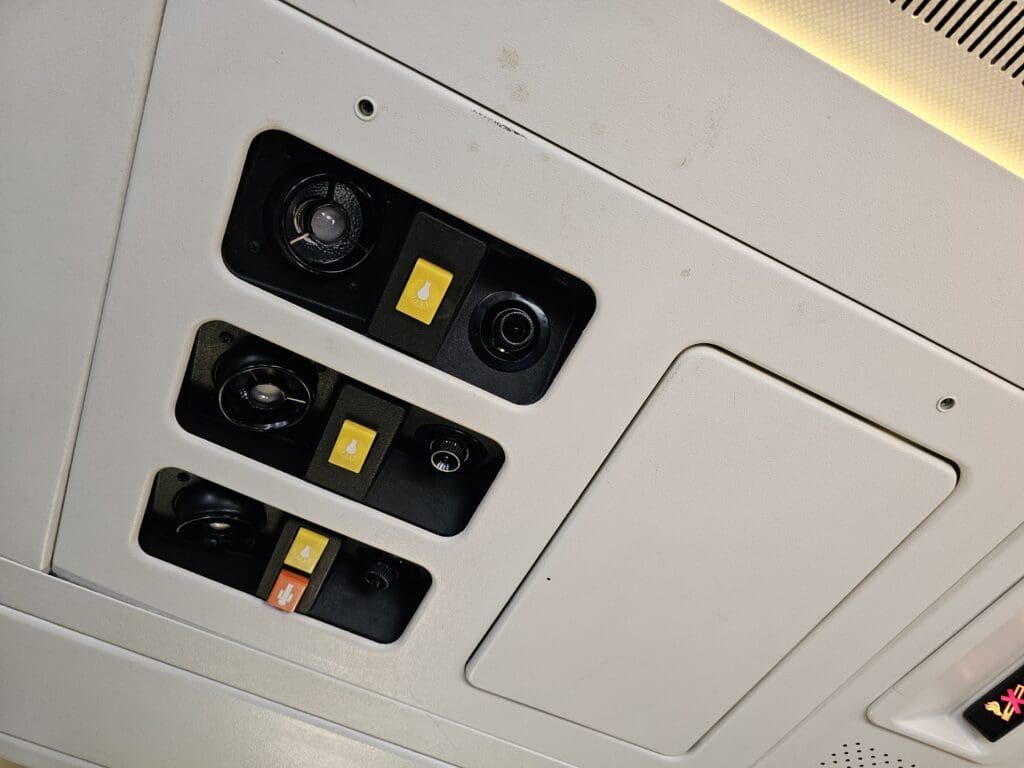
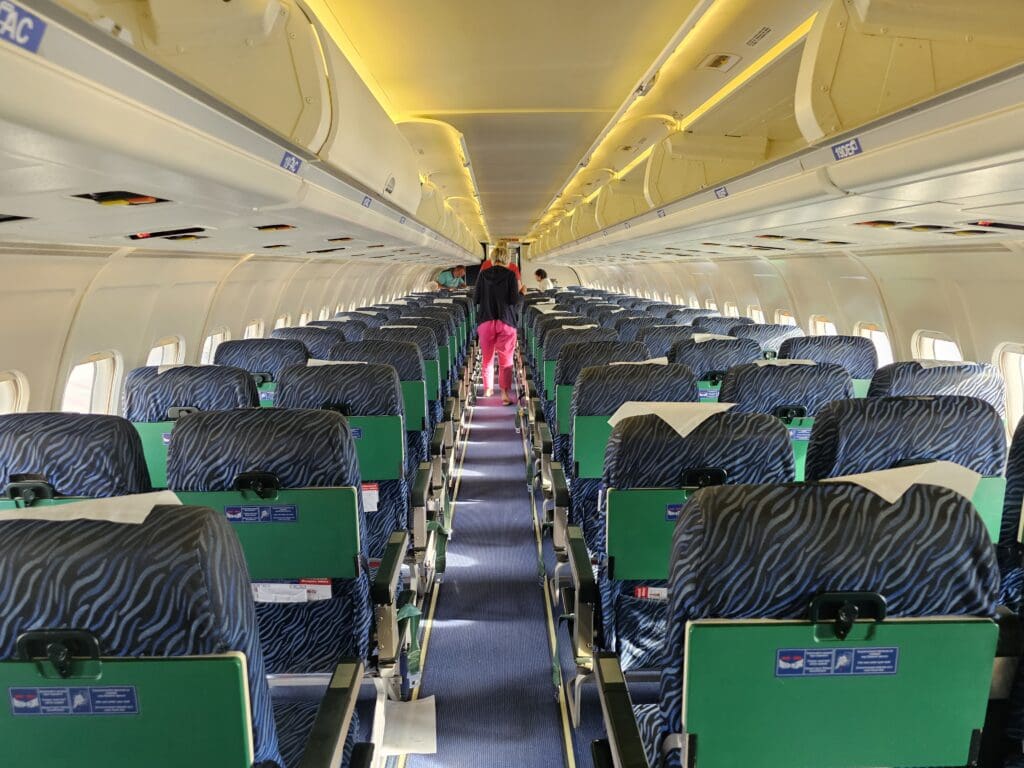
Seeing as I would be sitting in row 33 out of 36, I didn’t have far to walk until I reached my seat, which was located opposite the half-galley at the rear of the cabin. Looking around, in spite of the fact that LZ-LDM is relatively young for an MD-80, I found the cabin to be dated in its appearance. Giving some hope that I would be in for a comfortable ride, not a single slim lightweight seat could be seen, with each of the aircraft’s 164 seats coming in the form of well-padded and reclinable seats separated by chunky armrests capable of supporting the forearms of Bulgaria’s largest bodybuilders. Up above, clunky PSUs could be seen, whilst a mishmash of varying shades of yellow and orange beamed down from above.
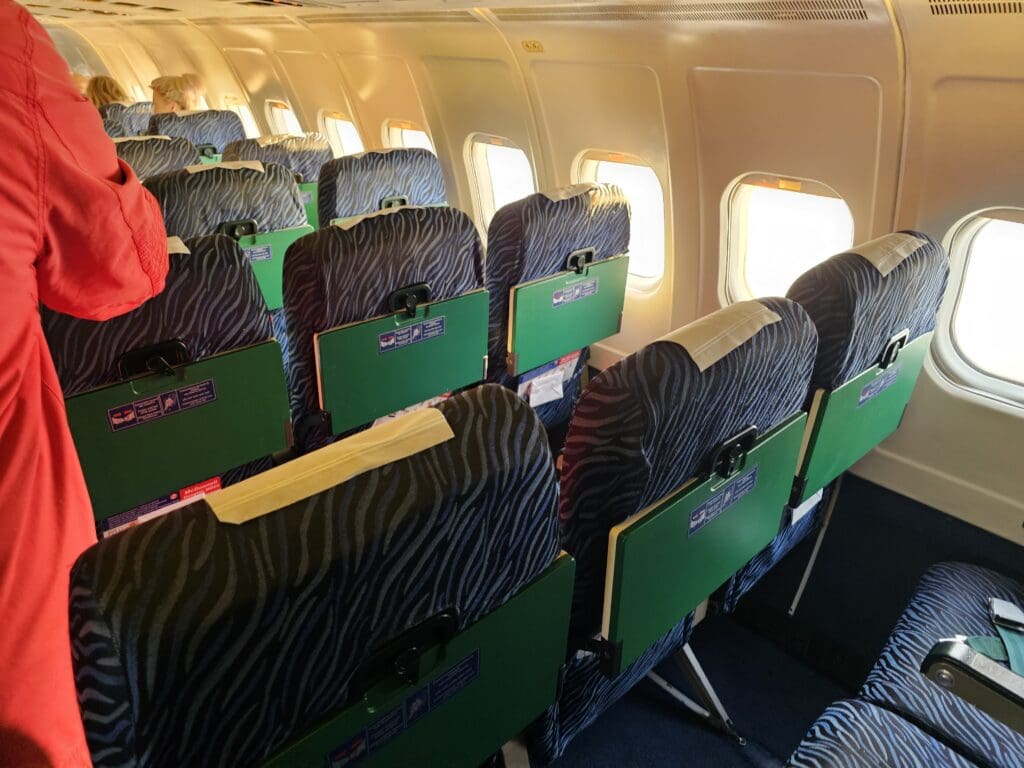
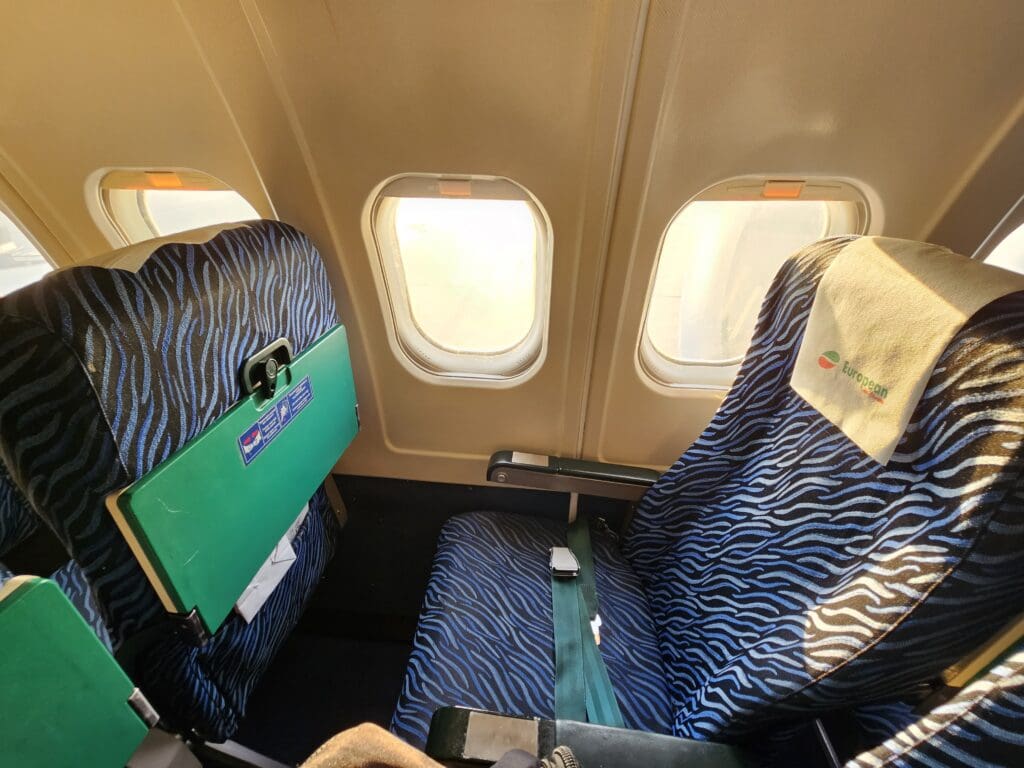
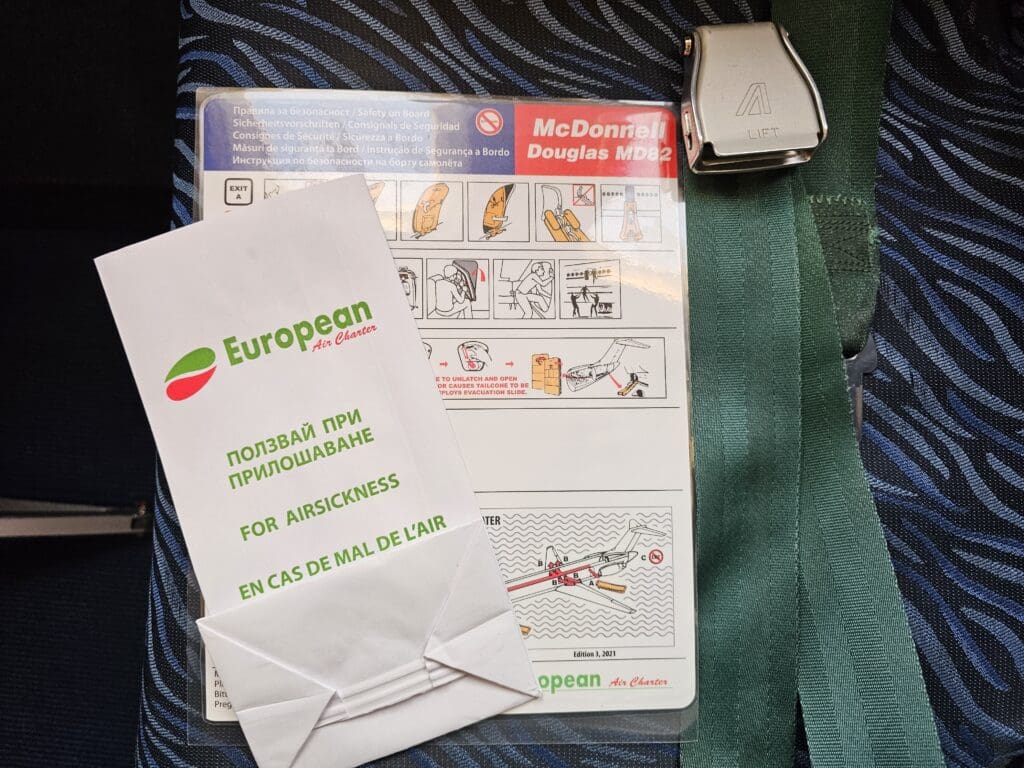
As with all European Air Charter MD-80s, only minimal changes had been made to the cabin since the aircraft stopped flying with Alitalia. Throughout the cabin, Italian signage could easily be spotted along with green tray tables and seatbelt straps. However, the most obvious sign of the aircraft’s former operator was the Alitalia motif engrained into each seatbelt buckle. However, fans of the defunct Italian carrier may be somewhat disappointed to hear that the green fabric that once covered the aircraft’s seats has since been replaced by a zebra-like blue-dark blue pattern, whilst these were topped with a disposable fabric antimacassar that sports European Air Charter’s logo.
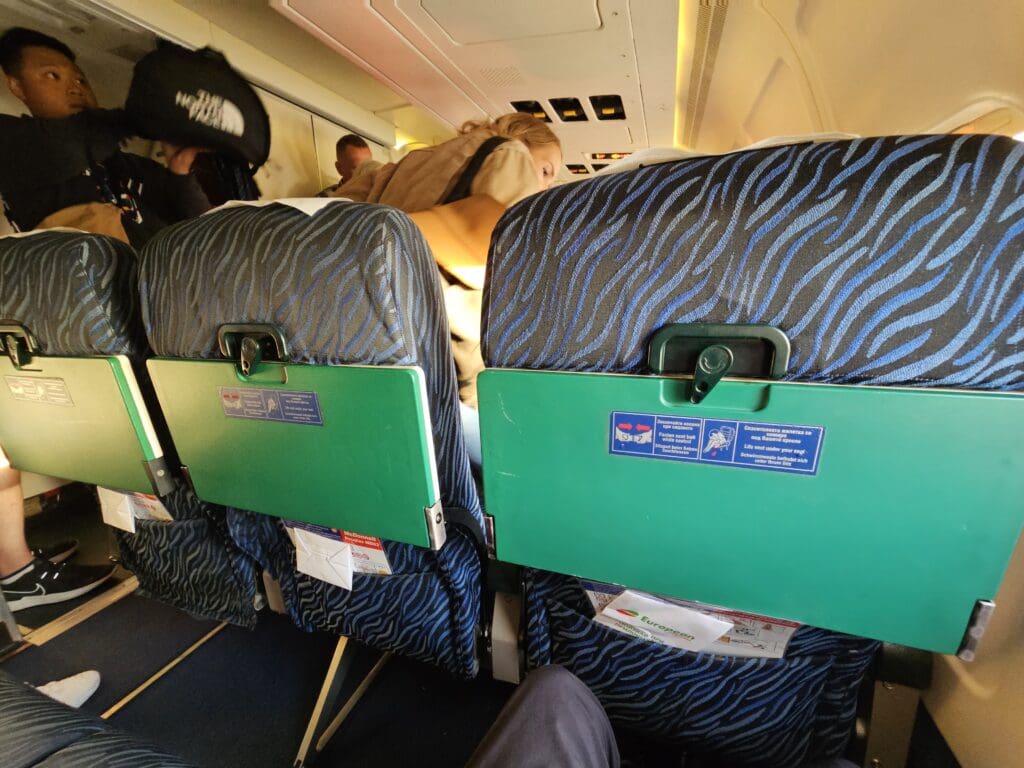
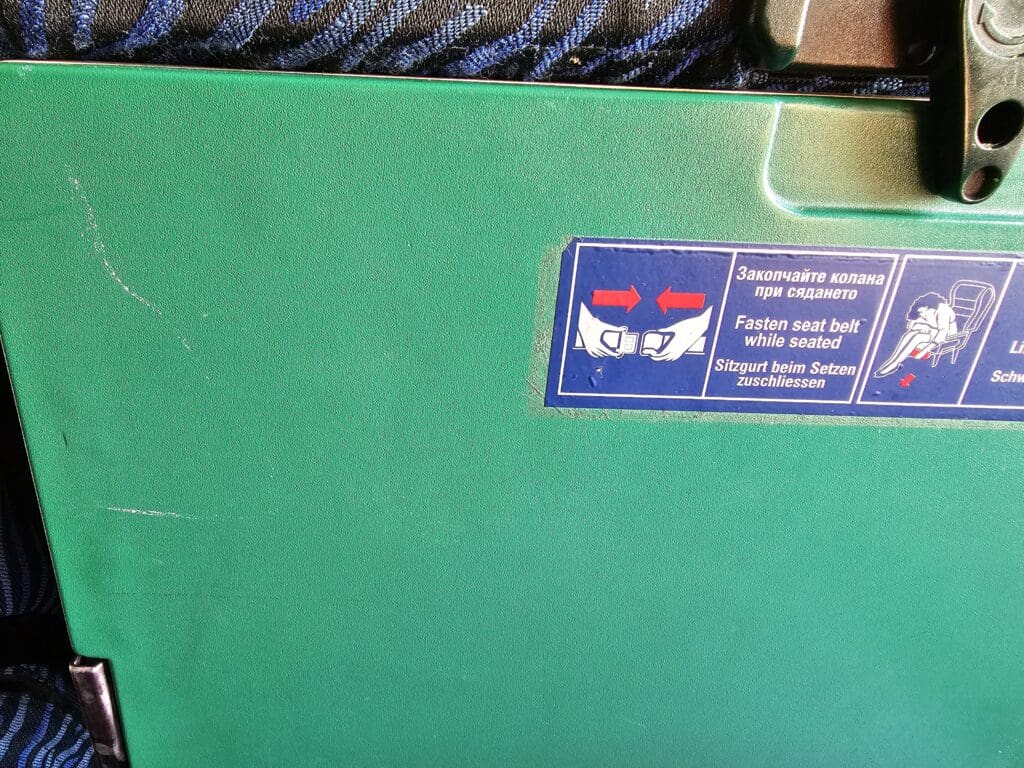
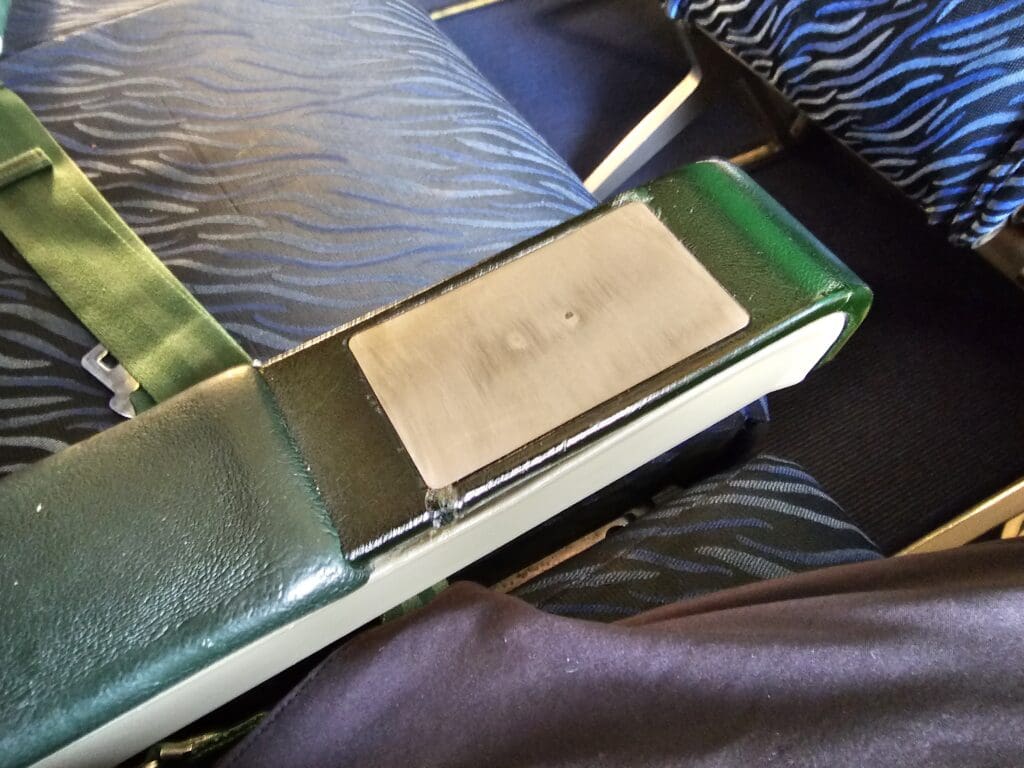
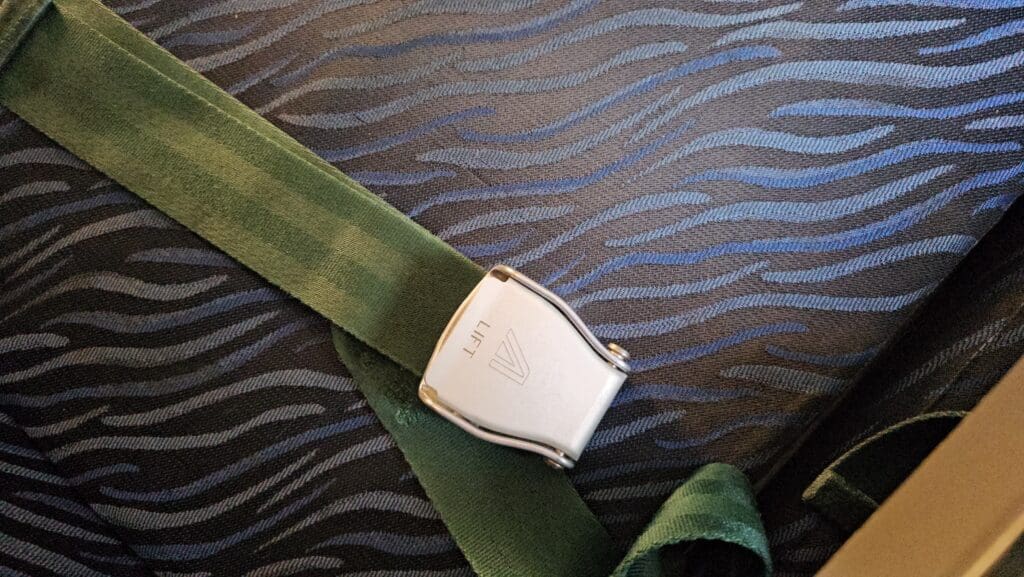
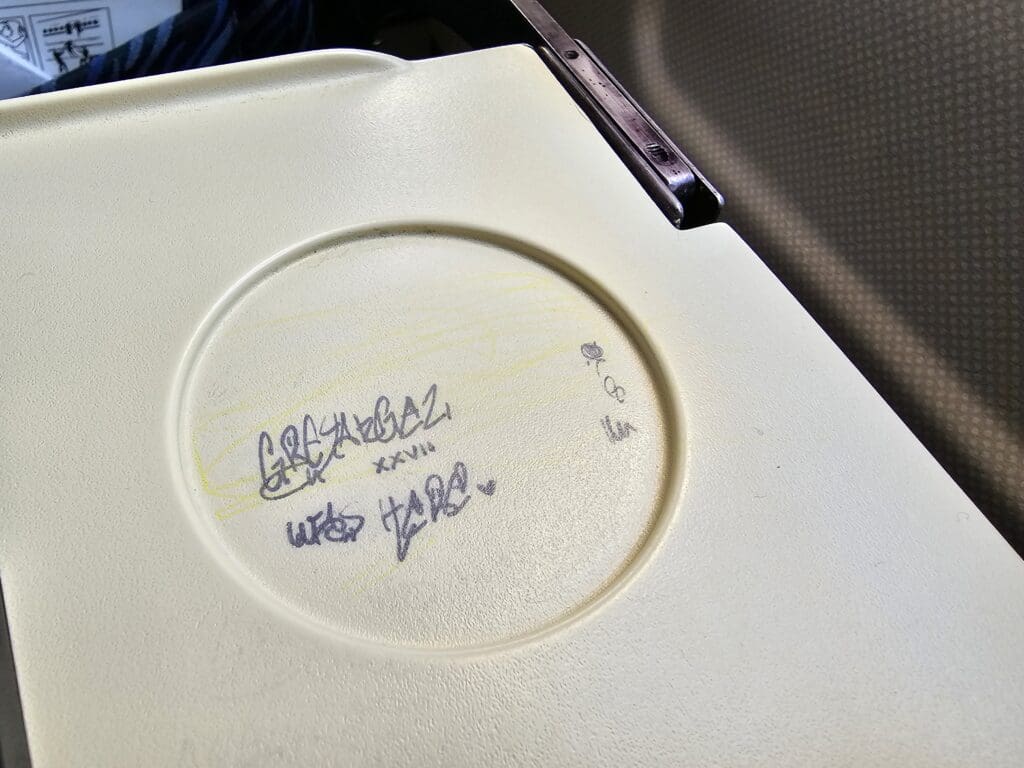
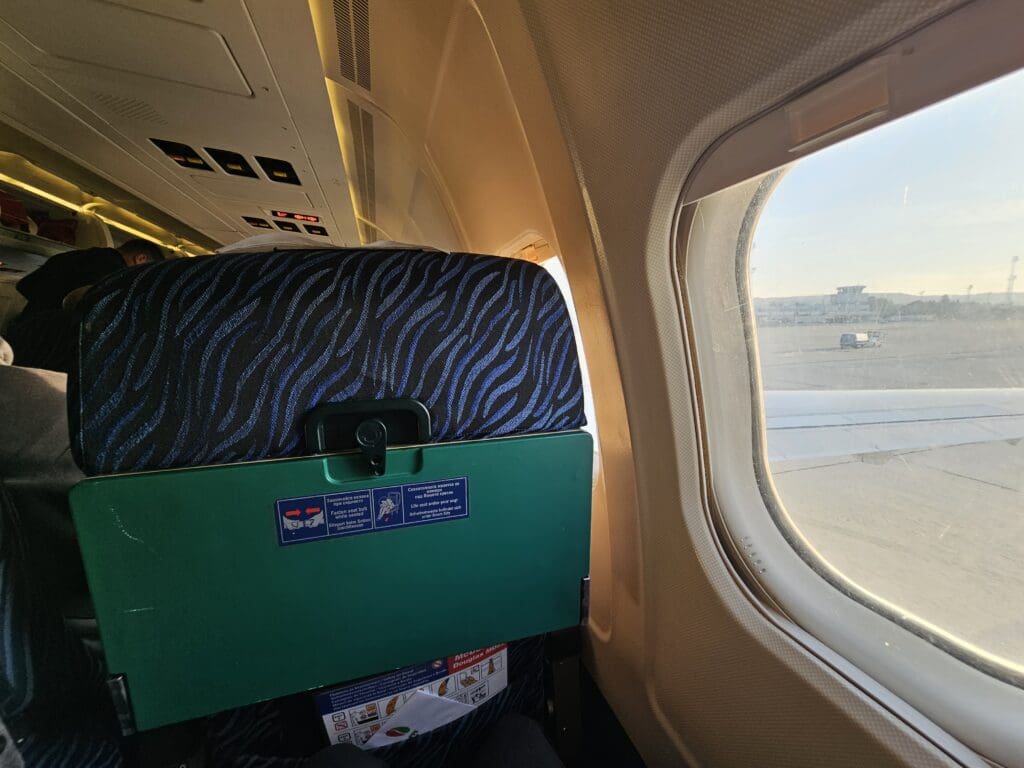
After storing my bag in the overhead locker, I slid into my seat and settled in for the ride over to Leipzig. As I had expected, I found the seat to be soft and comfortable and was also delighted to find that these provided a good amount of legroom. Furthermore, the cabin appeared to be in a spotless condition, although this was to be expected given the fact that the aircraft had not flown in almost 2 days. Taking into account the age of the aircraft, I wasn’t too surprised to encounter a fair number of marks and scratches in the area around my seat, although I was disappointed to find some unsightly graffiti on the tray table. Turning to the seatback pocket, this contained a copy of the aircraft’s safety card as well as a European Air Charter branded sick bag.
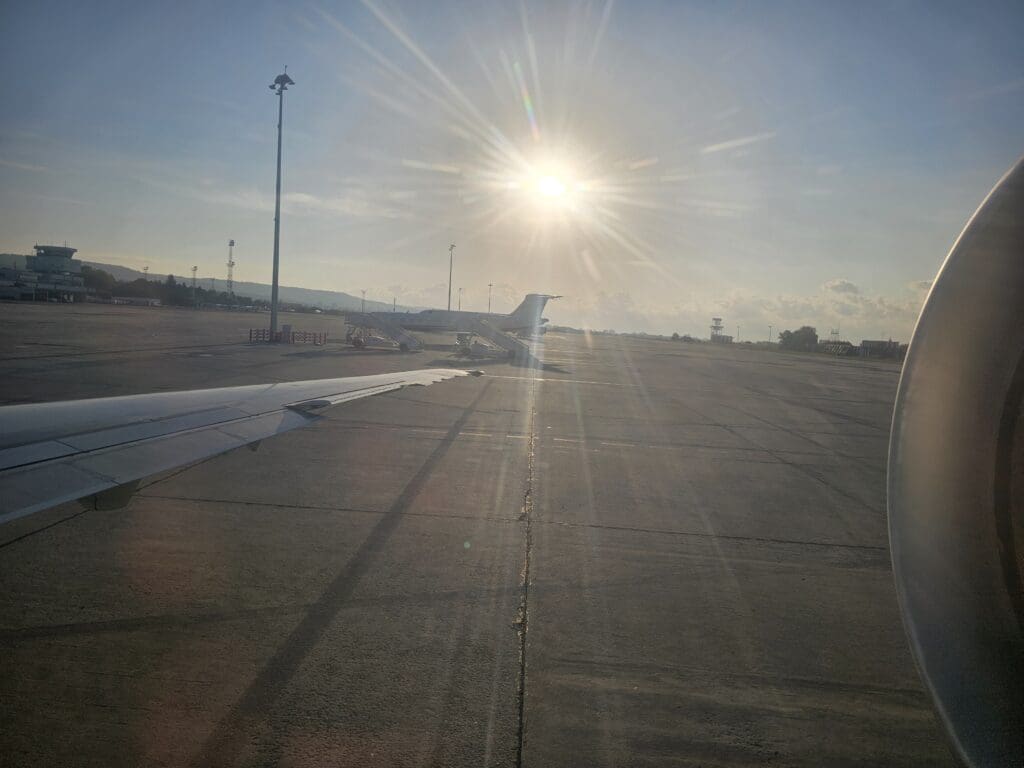
Glancing through the large window to my right, once sat down, the belt loader could be seen being backed away from the aircraft, indicating that all bags were onboard. Meanwhile, the first passengers from the second and final bus could be seen filtering onto the aircraft. Both were good signs that a punctual departure was in store that morning. As passengers climbed aboard, the MD-80’s AlliedSignal APU could be heard noisily firing up into life. Located at the rear of the aircraft, I couldn’t help but think that this would have provided a deafening soundtrack to those passengers boarding the aircraft via the rear steps at that time. As often seems to be the case, my two seatmates seemed to be amongst the last passengers to board, giving me the false hope that I would have a window seat with direct aisle access until the very end. That morning, the flight to Leipzig seemed to be around 90% full, with most passengers taking the form of gloomy-looking tourists returning home to Germany at the end of their Black Sea holidays. Slightly surprisingly, given the fact that this would be one of European Air Charter’s final MD-80 flights of the season, I appeared to be the only non-covert aviation enthusiast onboard.
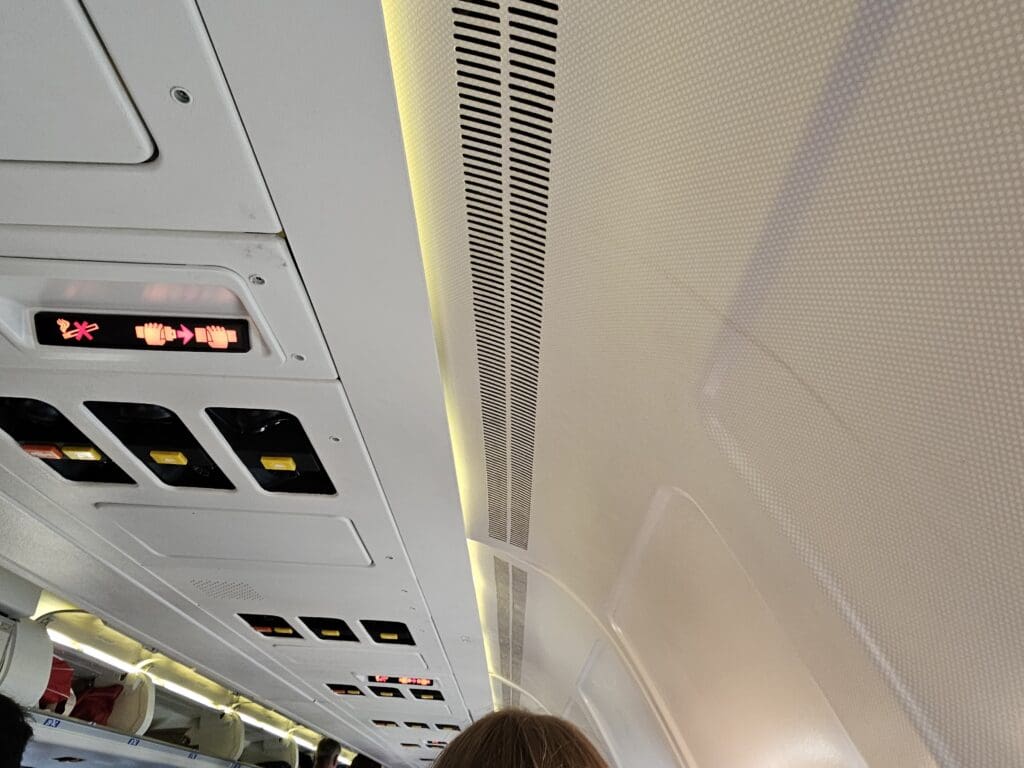
Seeing as European Air Charter’s service between Varna and Leipzig had generally departed either on time or ahead of schedule in the weeks leading up to my flight, with seven minutes to go I was delighted although not surprised to hear a loud whine from the rear of the aircraft as the built-in steps were retracted. This was followed by a loud thud as the door was firmly closed before the command ‘cabin crew arm the doors’ crackled over the speakers. Wasting no time, moments later one of the flight attendants performed their welcome announcement in Bulgarian and German. As they performed this, a series of humming could be heard and a few vibrations were felt as the MD-80’s classic Pratt & Whitney JT8D-217C engines began to spool up, filling the rear of the aircraft with the scent of fuel and making the ongoing announcement inaudible. As with all similarly designed airliners with engines at the rear of the fuselage, given my position, I was unsurprisingly in for a noisy ride over to Germany that morning. However, as I knew from my Taiwanese MD-80 hop back in August 2016, the two JT8D engines can be barely heard from the front of the cabin.
Returning back to the proceedings in the cabin, as soon as the welcome announcement came to an end, several flight attendants took to the aisle and undertook a safety demonstration whilst the one remaining flight attendant read through the instructions in Bulgarian and German. As this neared its end, at 0800 on the dot, the MD-82 lurched forward and made its way out of its stand before immediately turning right and commencing its journey to the end of Runway 27. This taxi took us past the sleek Czech Gulfstream, a Buzz Boeing 737 MAX and an Avion Express Malta Airbus A320 that would soon head off to Prague on behalf of Smartwings. As we journeyed to the runway, the aircraft seemed to bounce around a fair bit, indicating that the apron and taxiways needed resurfacing!
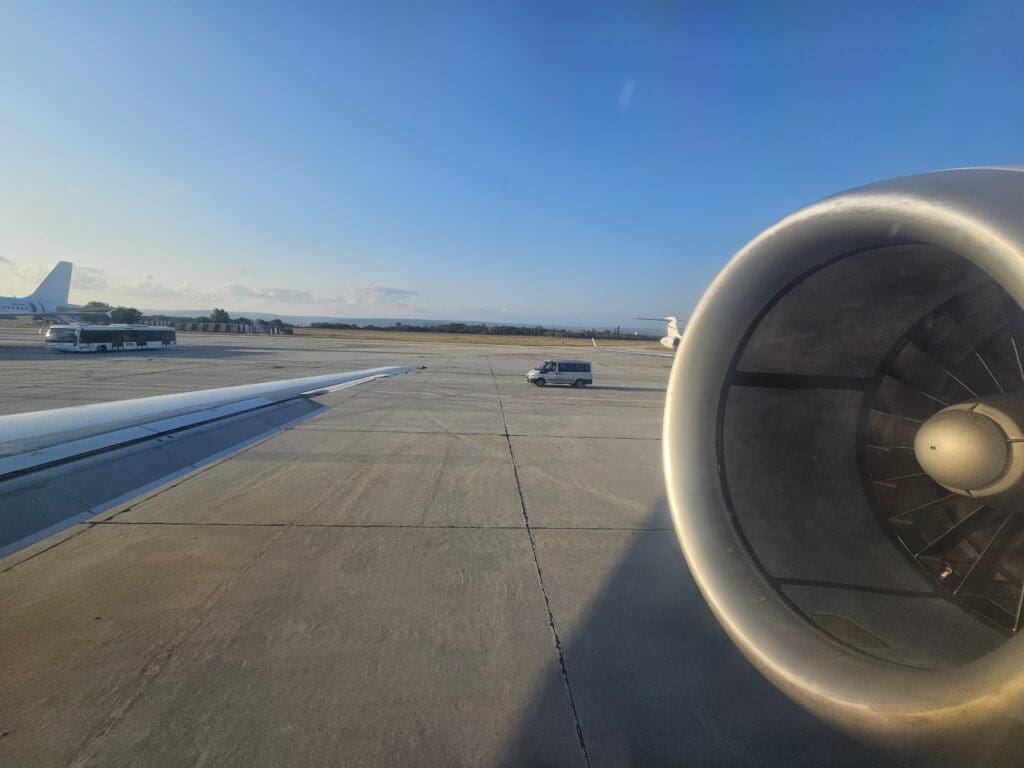
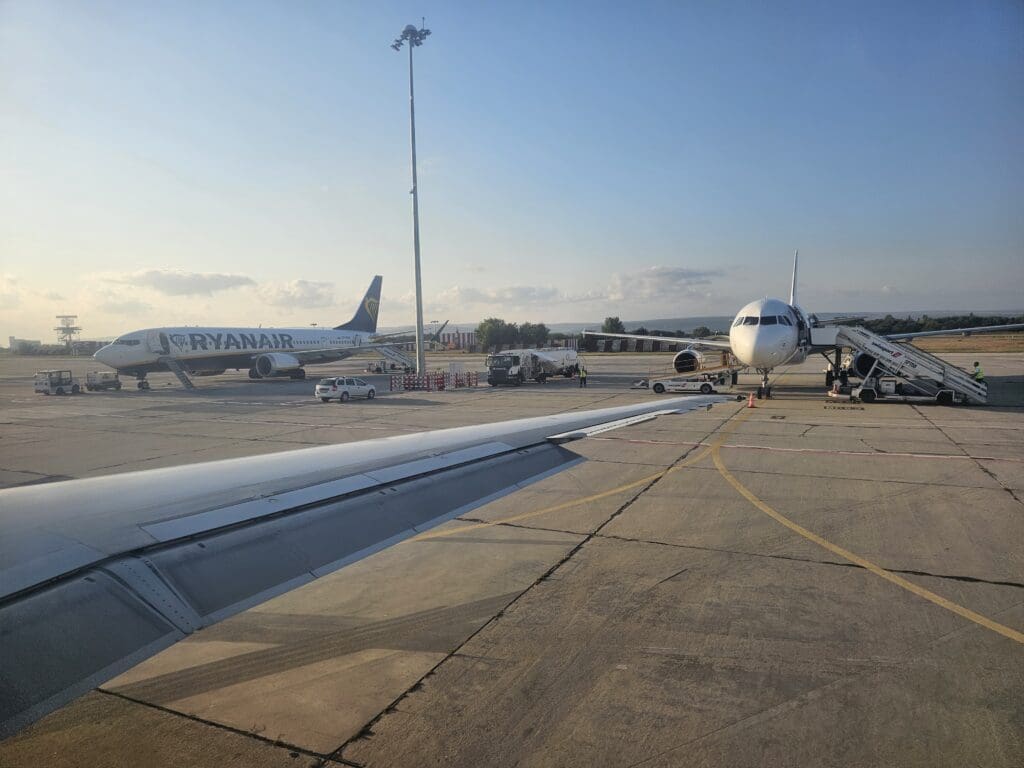
With Varna being far from Europe’s busiest airport, with nothing on approach and nothing ahead of us, once at the end of the runway no holding was required, and a grand total of four minutes after commencing our taxi, the aircraft made its way onto the runway. Without coming to a halt, the two JT8D engines roared and filled the cabin with noise as we began to accelerate down the runway. Sitting on the right-hand side of the aircraft, as we sped along, I was offered one last glimpse of the terminal as well as of the cluster of Airbus A320 family aircraft in varying states spread about the airport grounds. More interestingly, I also caught sight of a Tupolev Tu-154 that has been rotting away at the airport since it retired from Bulgarian carrier Air VIA in the early 2000s.
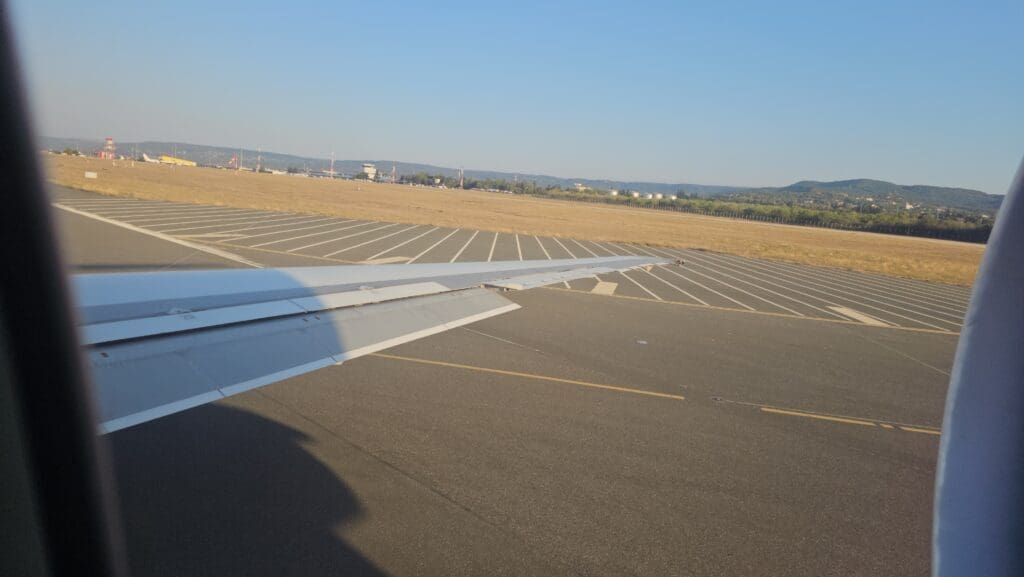
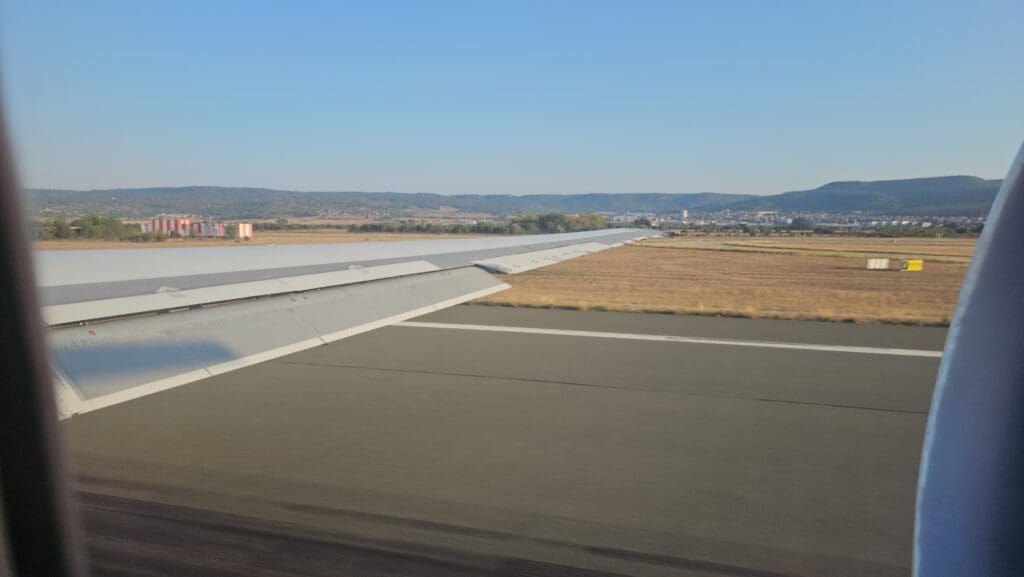
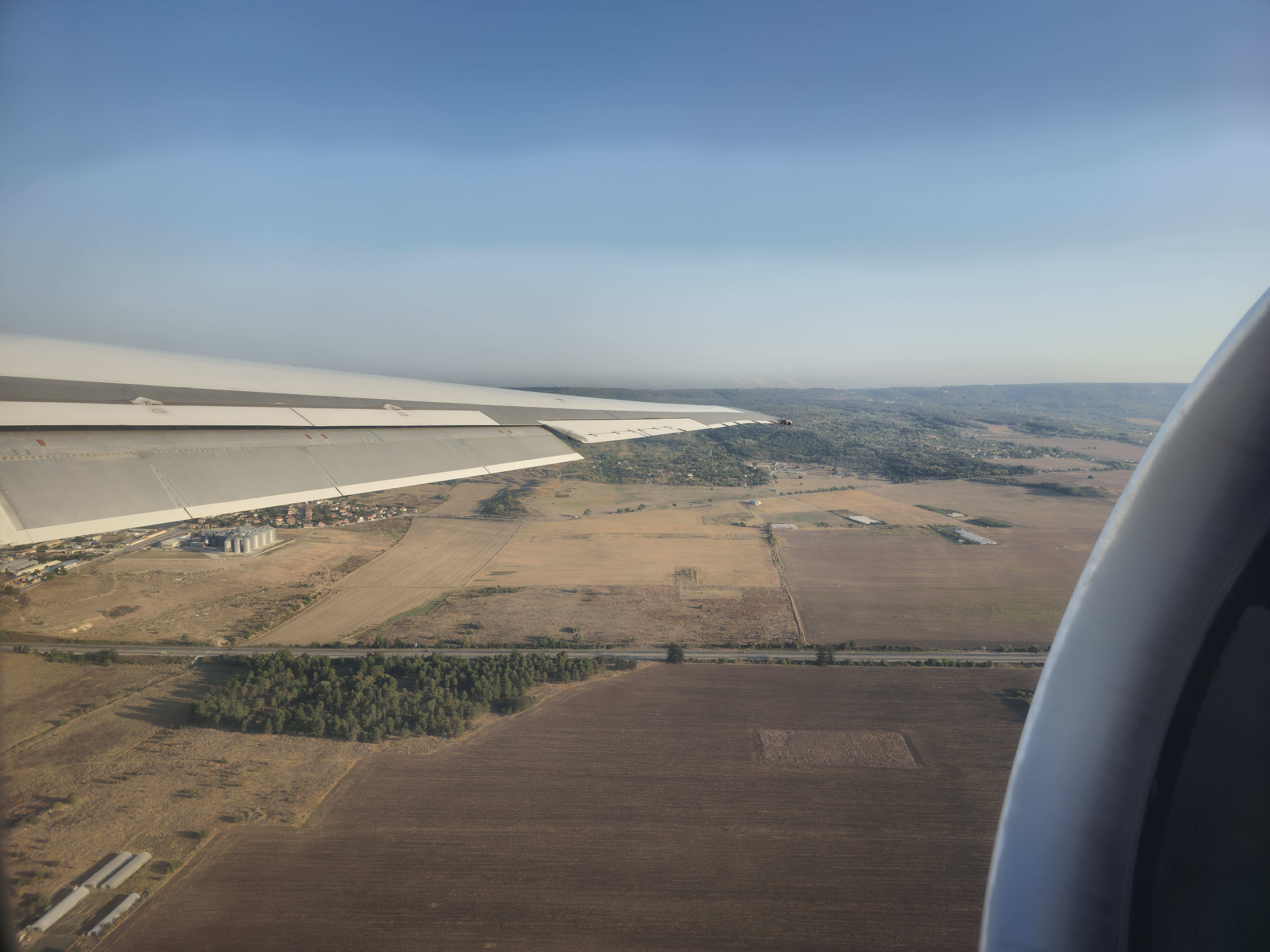
Reassuringly, after a long take-off roll, the nose was pointed skywards, and the MD-82 rocketed upwards into the Bulgarian skies. Taking off into the opposite direction to Varna, our initial climb out took us over a mixture of forests, fields and hills plus the occasional village, the two noisy engines likely providing an unwelcome Sunday morning alarm clock to those below. Unfortunately, views of Bulgaria were not to last for long and around three minutes after taking off, a thin layer of cloud swooped in below, ensuring that little else of Southeastern Europe could be seen.
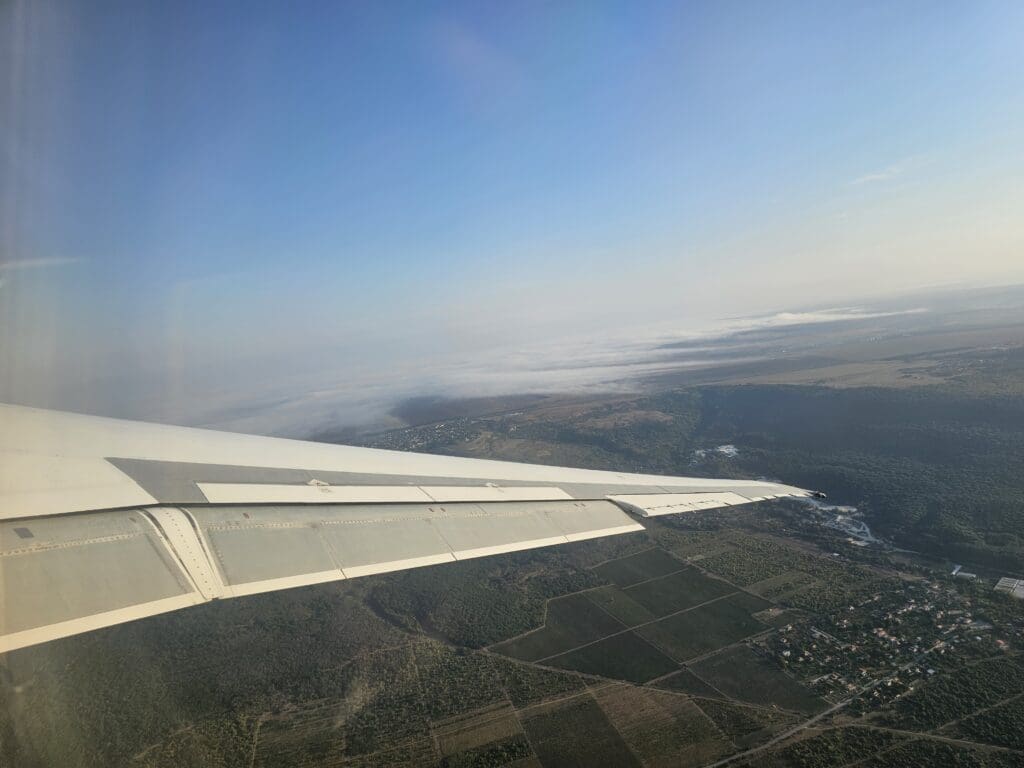
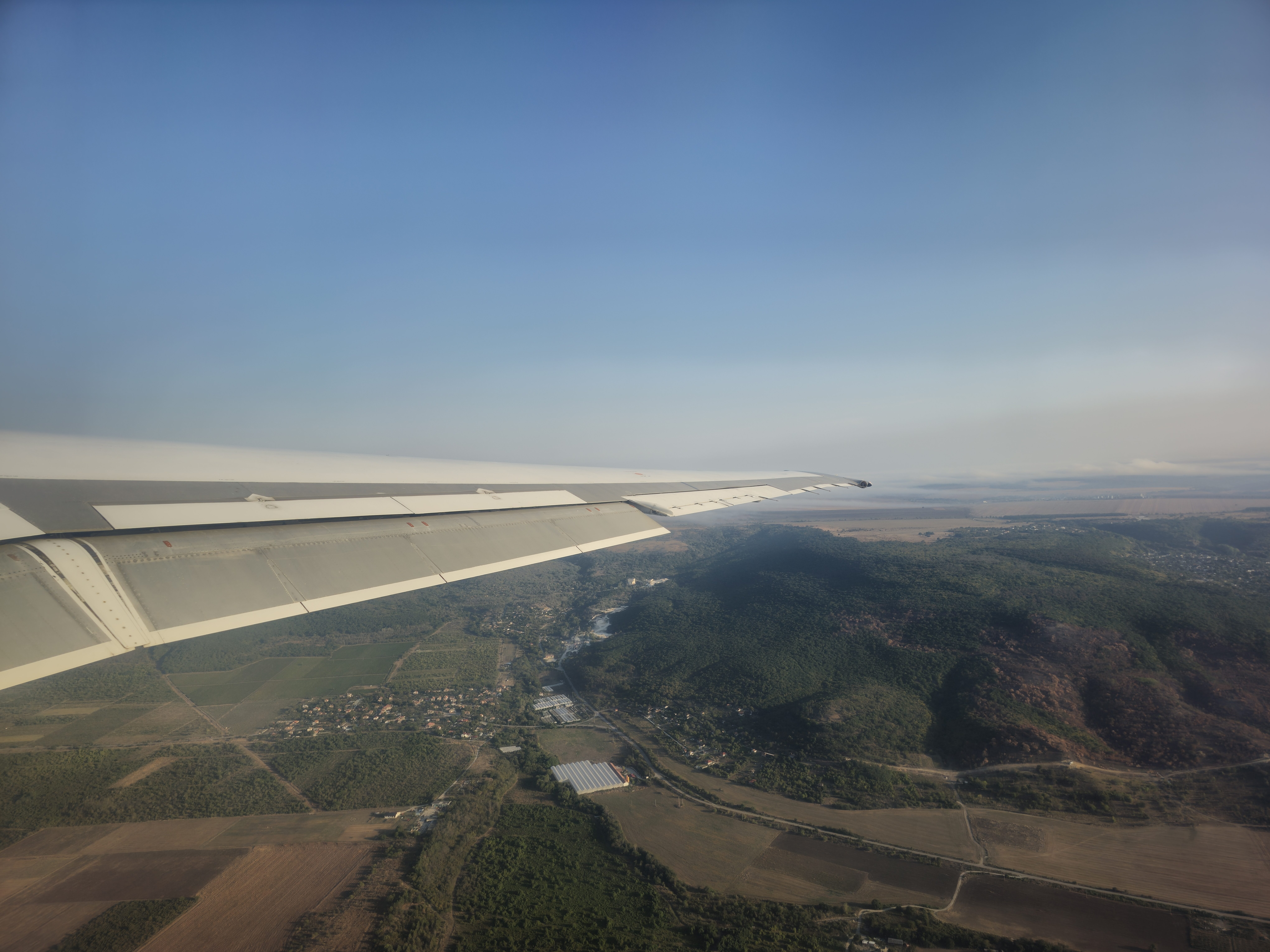
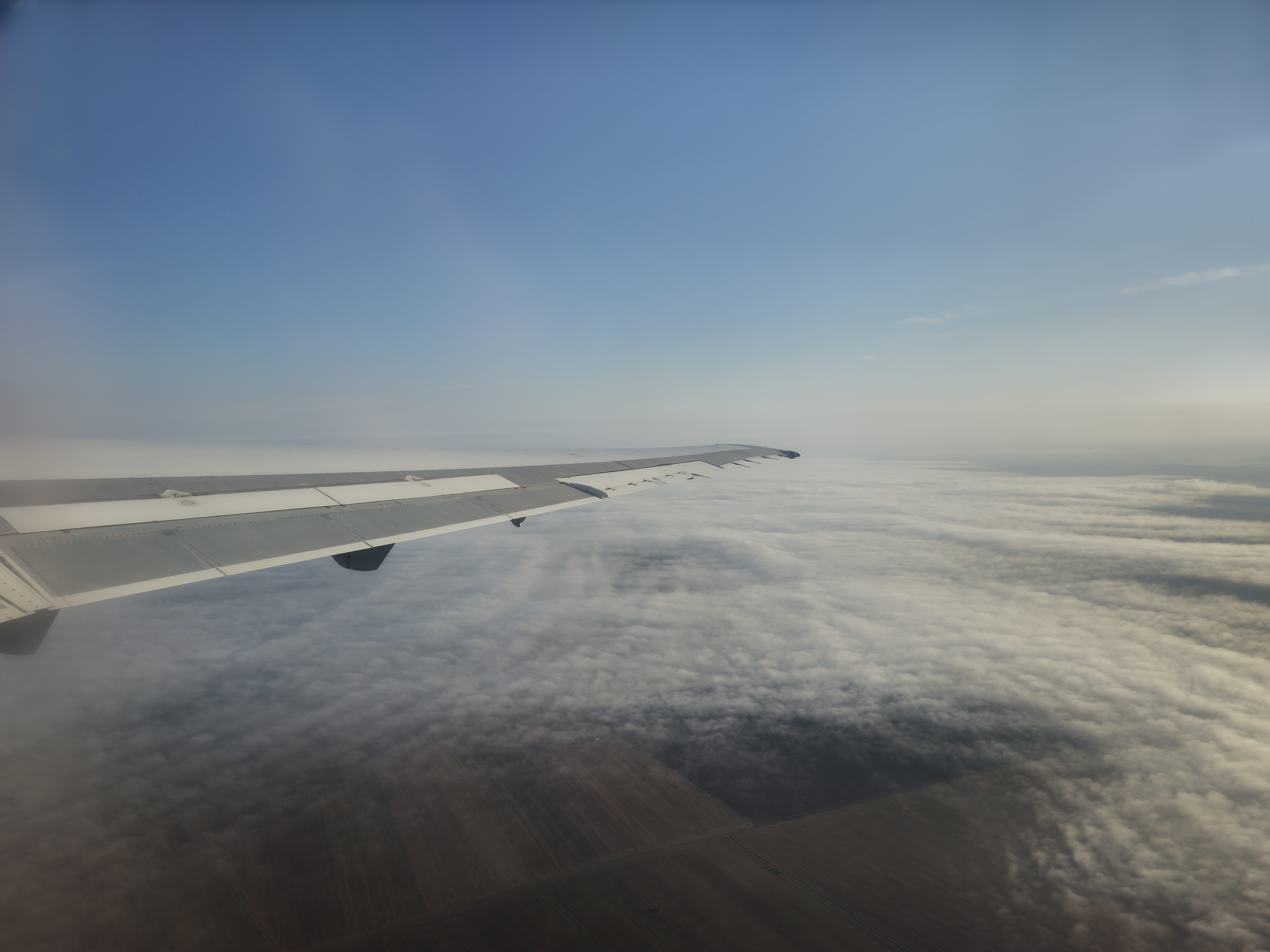
With the climb proving to be entirely turbulence-free, it wasn’t long before the seatbelt signs were extinguished at which point the crew performed an announcement in German regarding the soon-to-commence buy-on-board service before rolling out a cart to the front of the cabin. Unfortunately, no physical menu was offered for this service, although I later found a PDF version of European Air Charter’s website. Whilst the offerings were not as comprehensive as on many other low cost carriers, European Air Charter sells a fair selection of drinks and snacks, the most substantial of which came in the form of sandwiches, instant noodles, a pasta dish and tapas box. In terms of prices, these appeared to be very standard for a low-cost carrier, with an instant coffee coming in at an inflated €3.50, sandwiches at €5 and the tapas box or pasta dish at €7.50. Slightly disappointingly, unlike on my European Air Charter ride from Rhodes to Linz, no complimentary bottle of water was offered, although seeing as I wasn’t flying the carrier for their onboard service, I couldn’t really complain! With many passengers sleeping, the crew seemed to make minimal purchases and sped through the cabin in no more than four minutes.
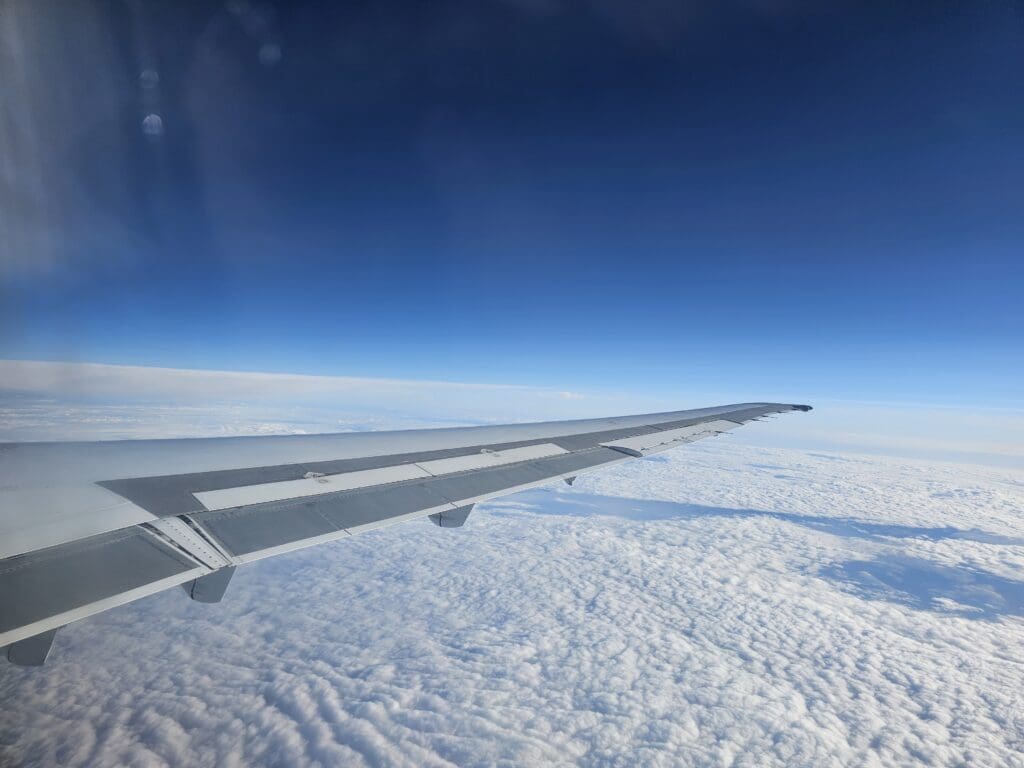
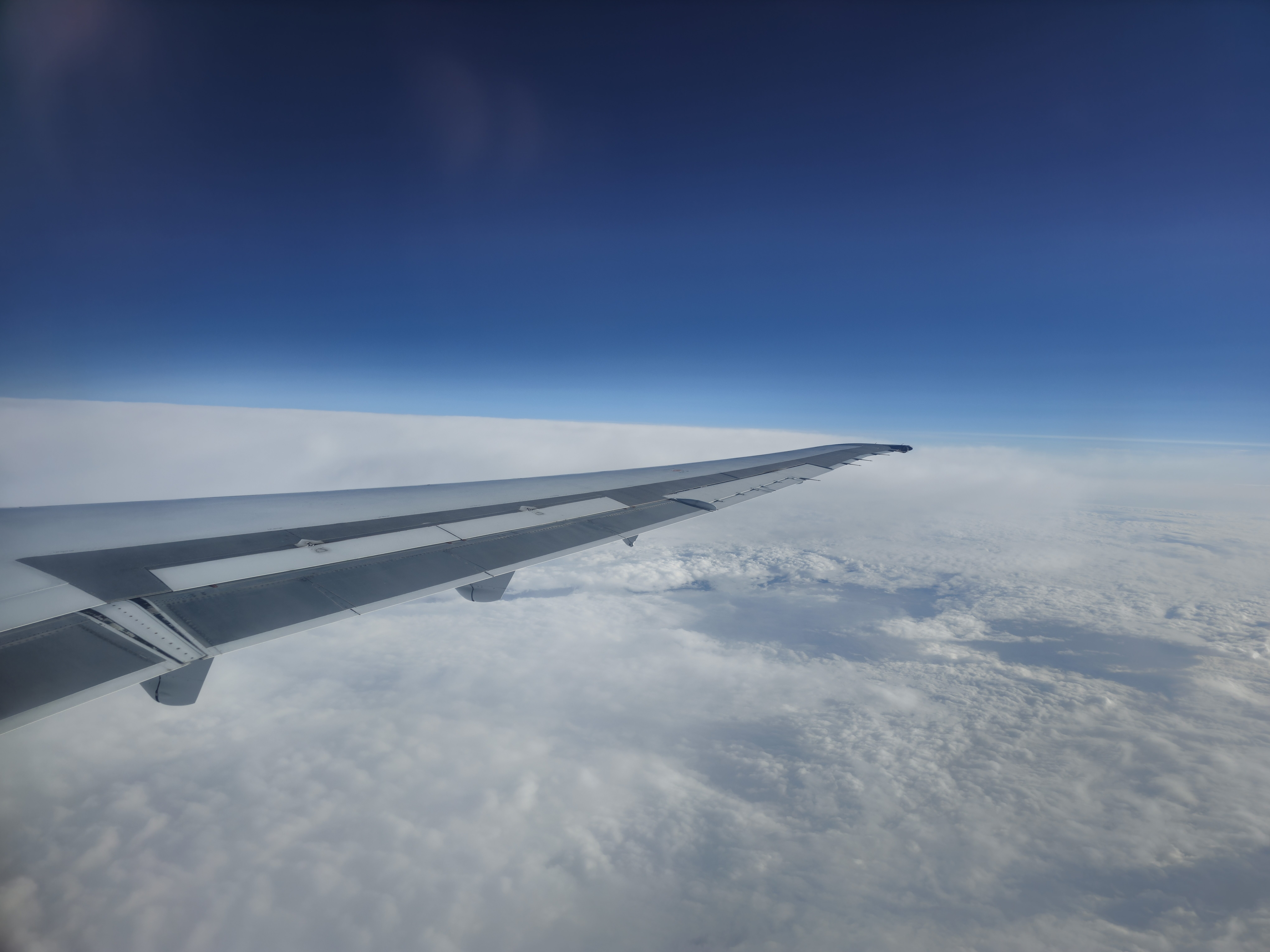
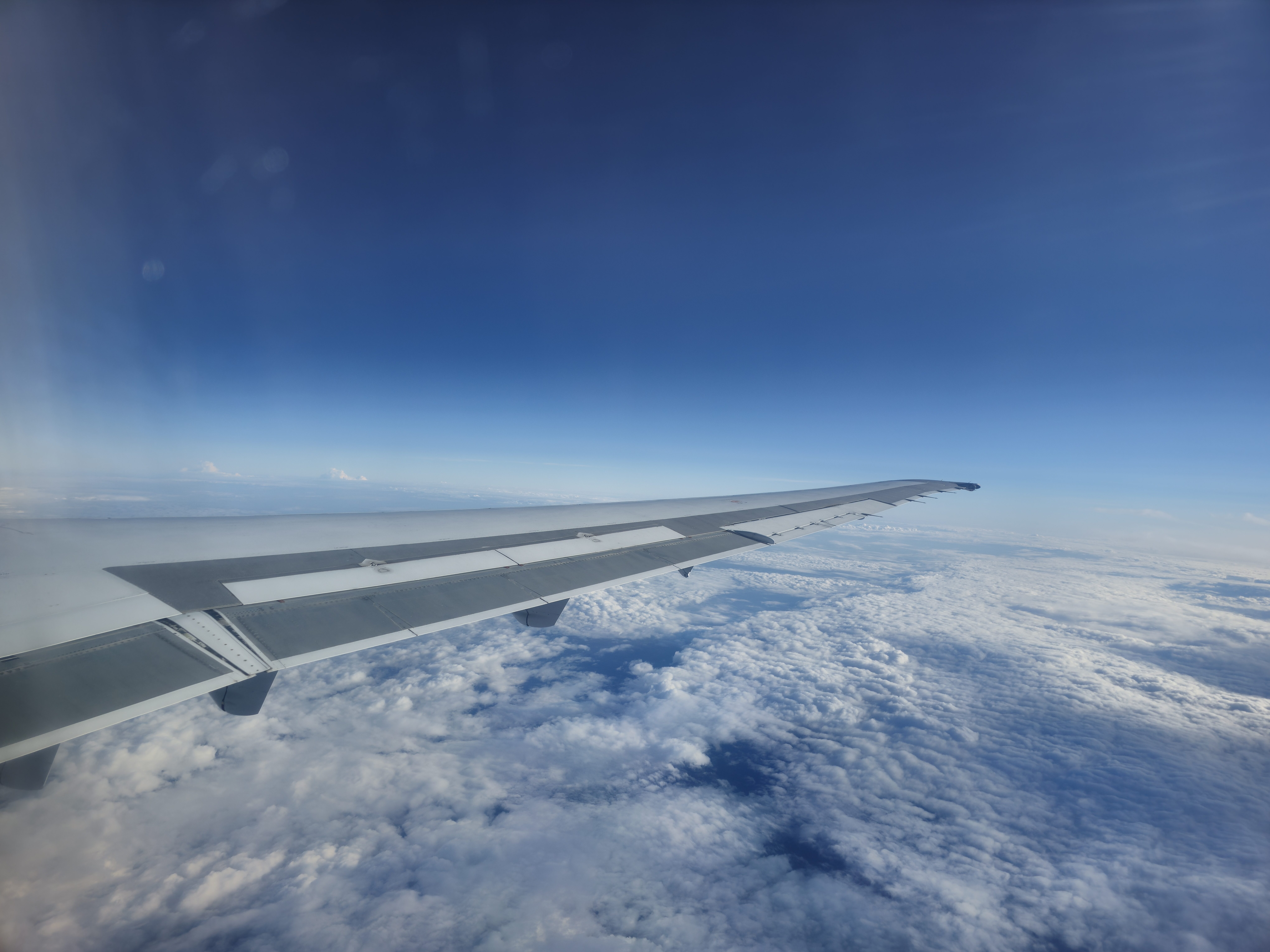
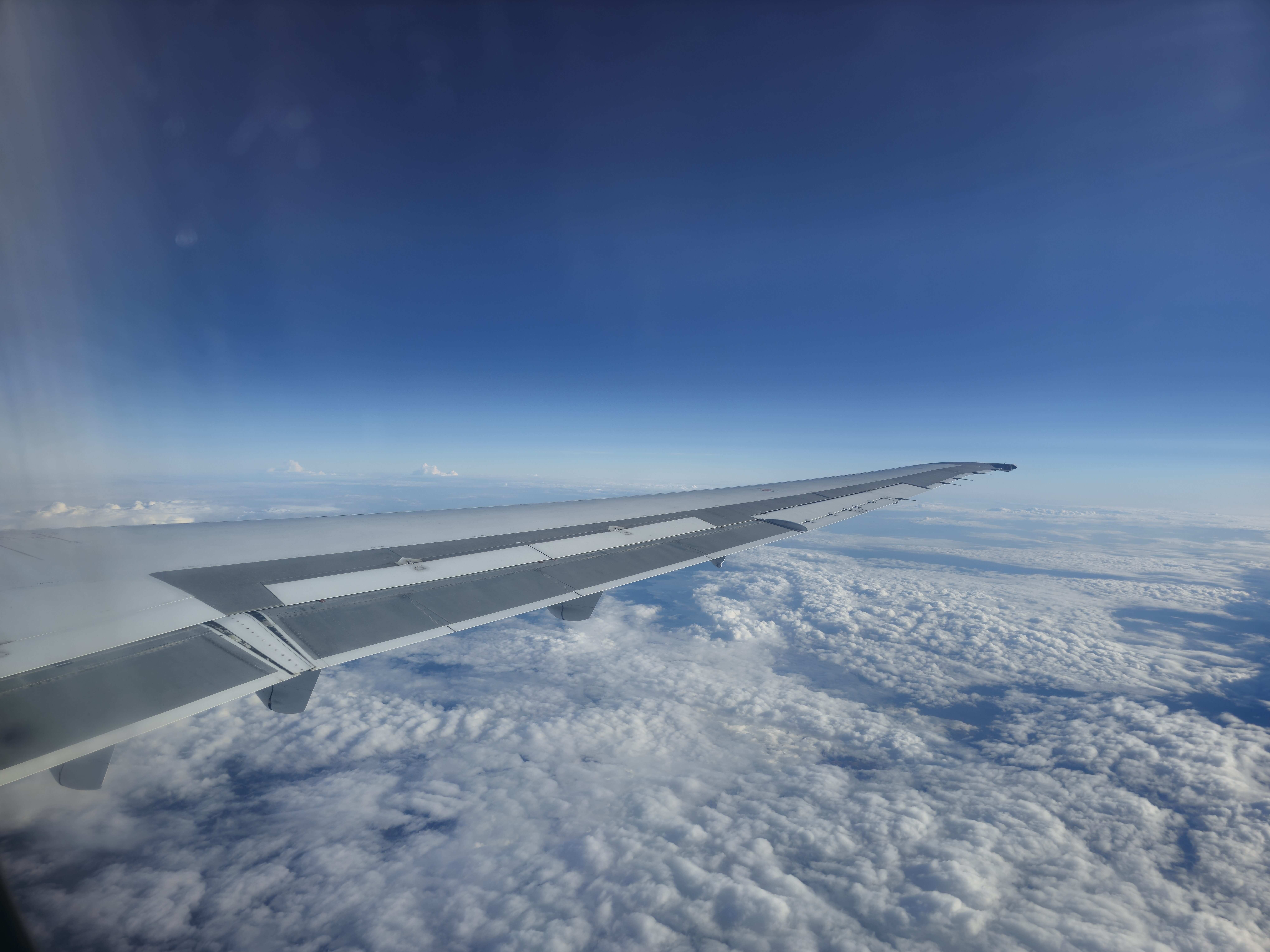
Examine our initial route out of Varna, after leaving the airport the aircraft banked slightly and rolled out on a northwesterly heading, making a beeline for the country’s northern border with Romania. With much of this border consisting of the Danube, we crossed the famous river just downstream from the city of Ruse a grand total of 16 minutes into the flight. Once in Romanian airspace, the jet continued onwards towards Romania’s Carpathian Mountains and as we cruised towards these the aircraft levelled off at its cruising altitude of 34,000 feet. Back inside the cabin, after completing the onboard service the crew congregated around the jumpseats at the rear of the cabin and spent much of the remainder of the flight chatting away. Whilst I could complain about the fact that they were absent from the aisle for almost the entire flight, having carried out their important safety duties and seeing as most passengers were fast asleep, admittedly there was little else for the crew to do as we cruised westwards.
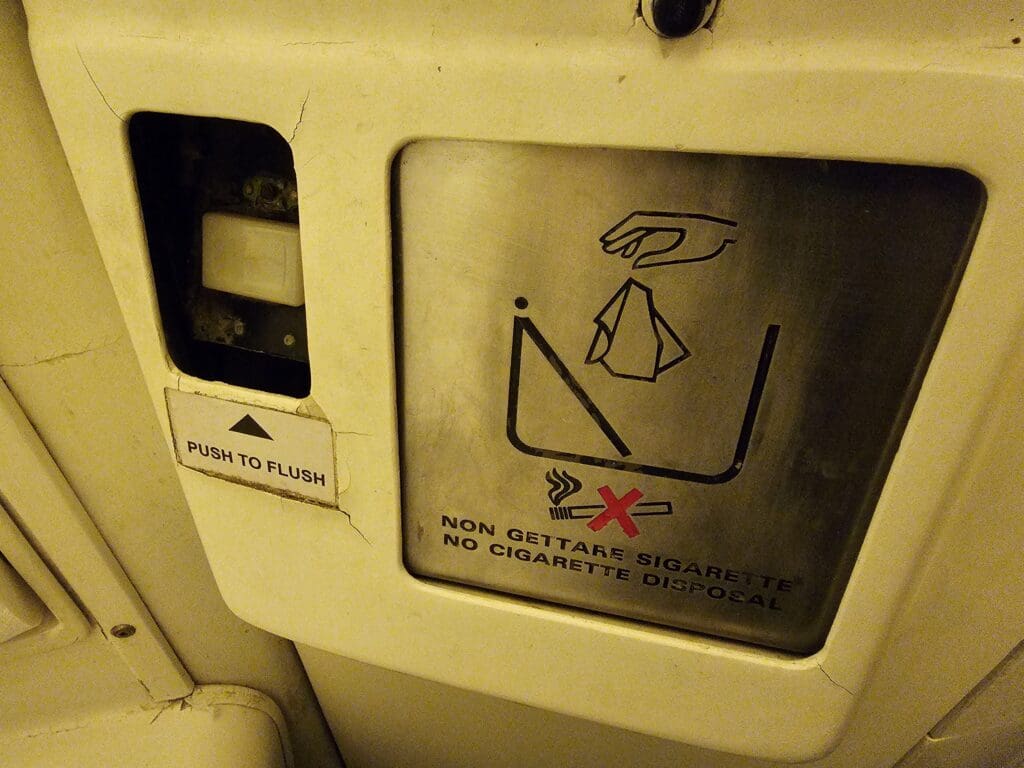
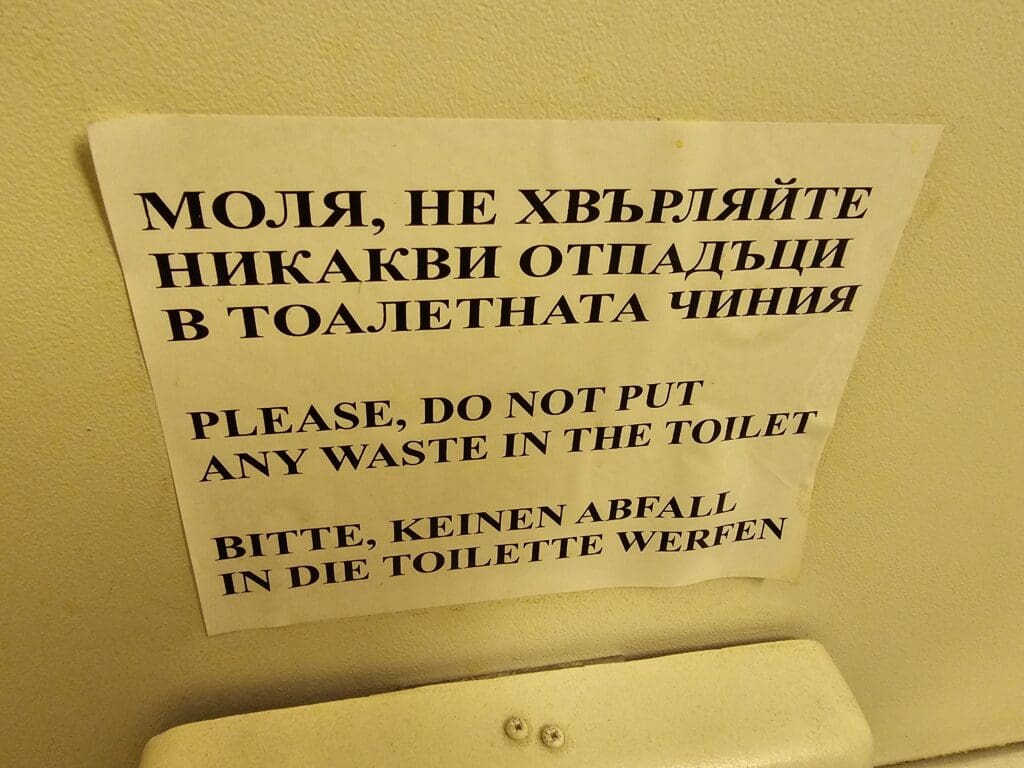
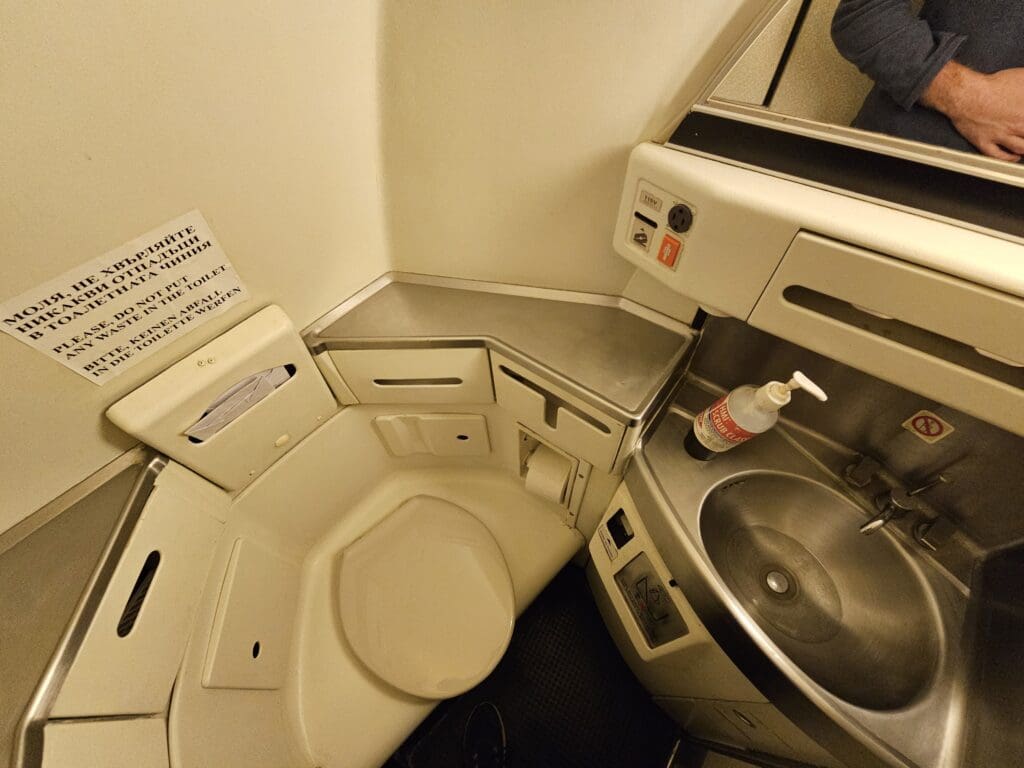
With little to see outside other than the MD-82’s starboard wing, and seeing as my two seatmates had woken up from their morning slumber, around halfway into the flight, I decided to journey rearwards and sample the delights of the aircraft’s lavatories. Like most MD-80s, LZ-LDM features a grand total of three lavatories – two at the rear of the cabin on either side of the aisle and another at the very front of the aircraft. A quick sum revealed this to equate to one toilet for 55 passengers, which proves better than the ratio on most low cost carriers’ Airbus A320s and Boeing 737s. After my neighbours had kindly stood up to allow me to pass, I turned left and journeyed the short distance to the rear of the aircraft. Pre-empting my reason for being at the rear of the cabin, as I neared the lavatories, one of the flight attendants politely opened the door to one of these. After squeezing in, unsurprisingly, I was hit by a wall of noise from the engines, with this part of the aircraft appearing to have poorer sound insulation than the main cabin. Examining this, whilst the lavatory was neither the largest nor most modern and complete with plenty of marks and scratches, I was pleased to find this to be in a clean and tidy state. Serving its vital purpose, I was thus left with nothing to complain about following my short trip and soon returned to my seat, relieved and content.
Once back down and settled, I glanced out through the large and slightly scratched window and was delighted to see that the sea of clouds that had lingered below had now parted and the green hills and mountains of Northern Hungary’s Bükk National Park could be seen. A short time later, the aircraft cruised from Hungarian to Slovakian airspace where the scenic vistas continued, becoming slightly more impressive as the hills rose into the rocky Tatra Mountains.

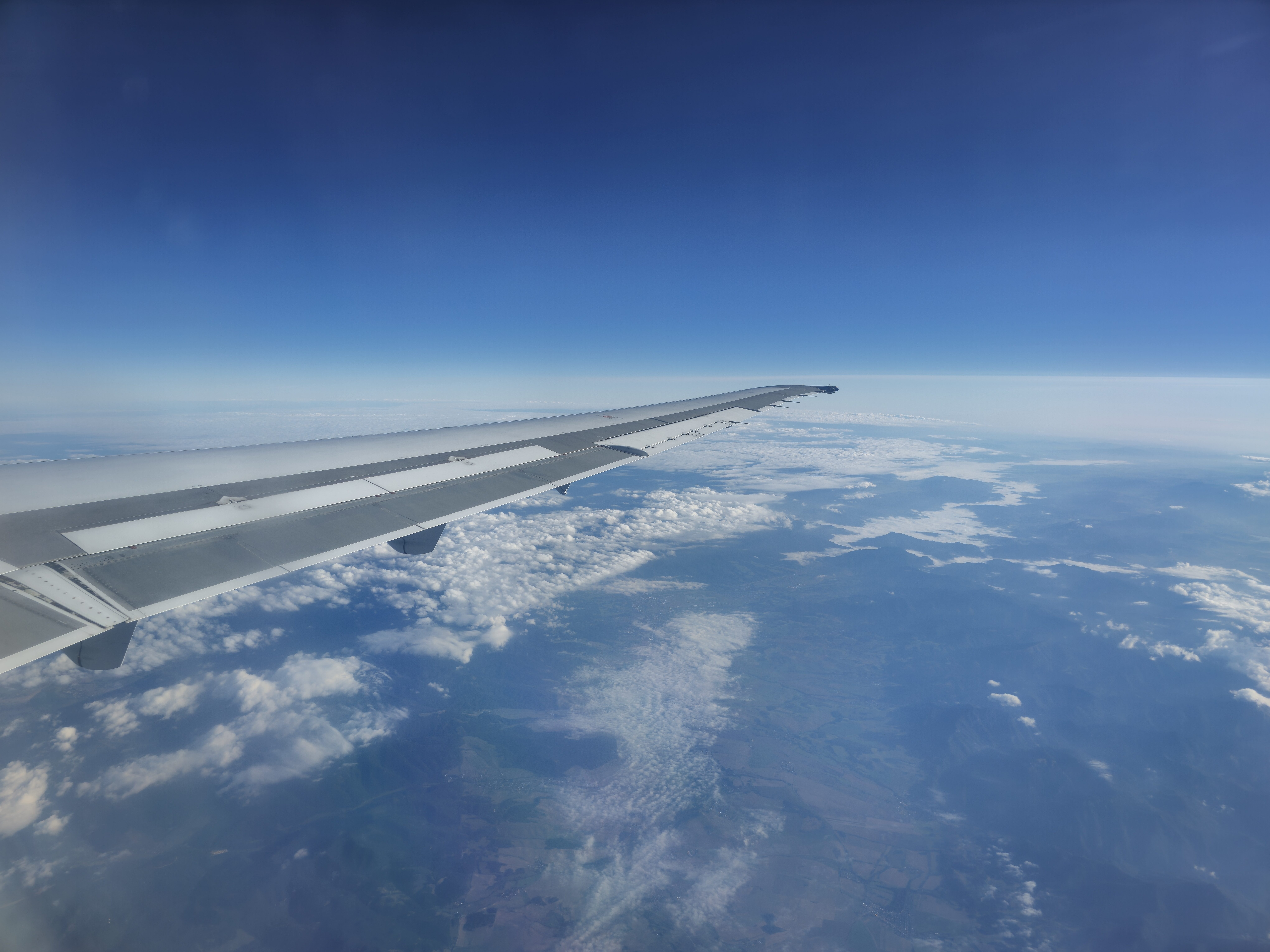
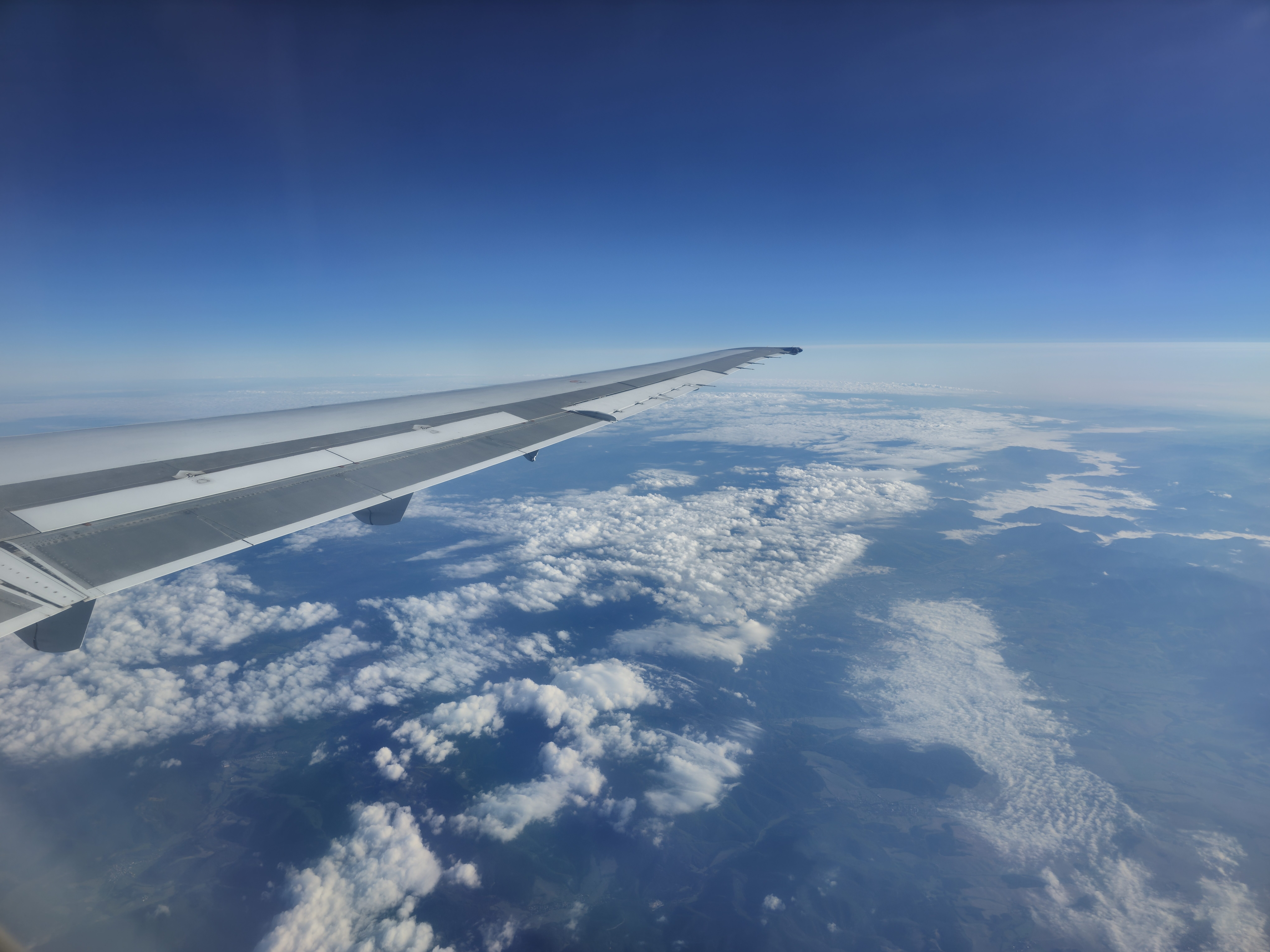
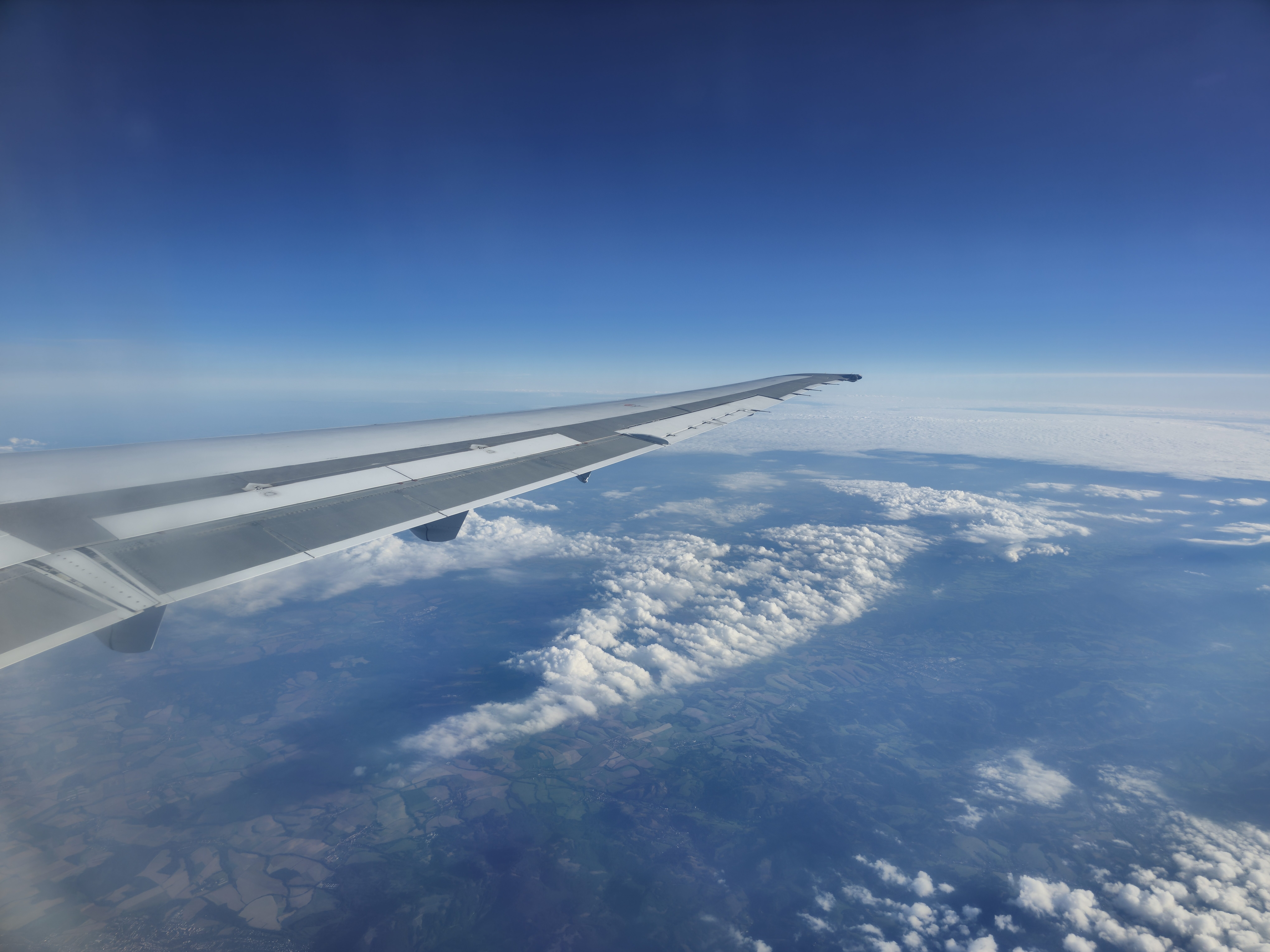
After a few minutes, the mountains could be seen sinking back down into hills and fields as we neared Slovakia’s border with the Czech Republic and after 14 minutes in Slovakian skies, the aircraft made its fourth border crossing of the flight. First up on our trek from east to west across the Czech Republic was the Zlín Region, famous for its local aircraft manufacturer, Zlin Aircraft. As we cruised over the country, a mixture of fields, forests and towns could be seen and several minutes after entering Czech airspace the city of Olomouc came into view, followed by Hradec Králové. As we cruised high above the latter, the city’s small airport could be seen, although I managed to spot few aircraft on the group other than the little white dots of light aircraft.
As we cruised over Central Europe, it dawned on me that this may well be the last MD-80 flight I take for quite some time (dare I say ever!) and I soaked up the atmosphere and the slightly fuelly scent, and took in the views as we approached the northwestern end of the Czech Republic. With Leipzig sitting a short distance away from Germany’s border with the Czech Republic, I was not too surprised to find that the aircraft commenced its descent whilst still in the skies of Central Europe. Upon reaching the Central Bohemian city of Mladá Boleslav, at 0843 German time, the noise decreased from the engines whilst the vibrations increased as we began our journey back to the ground. A short time later, I spotted Hradčany Airport. Once an important Soviet military base on the fringes of the Eastern Bloc, following the collapse of the Soviet Union, the airport was abandoned, and today, no aircraft remain other than the odd ultralight.
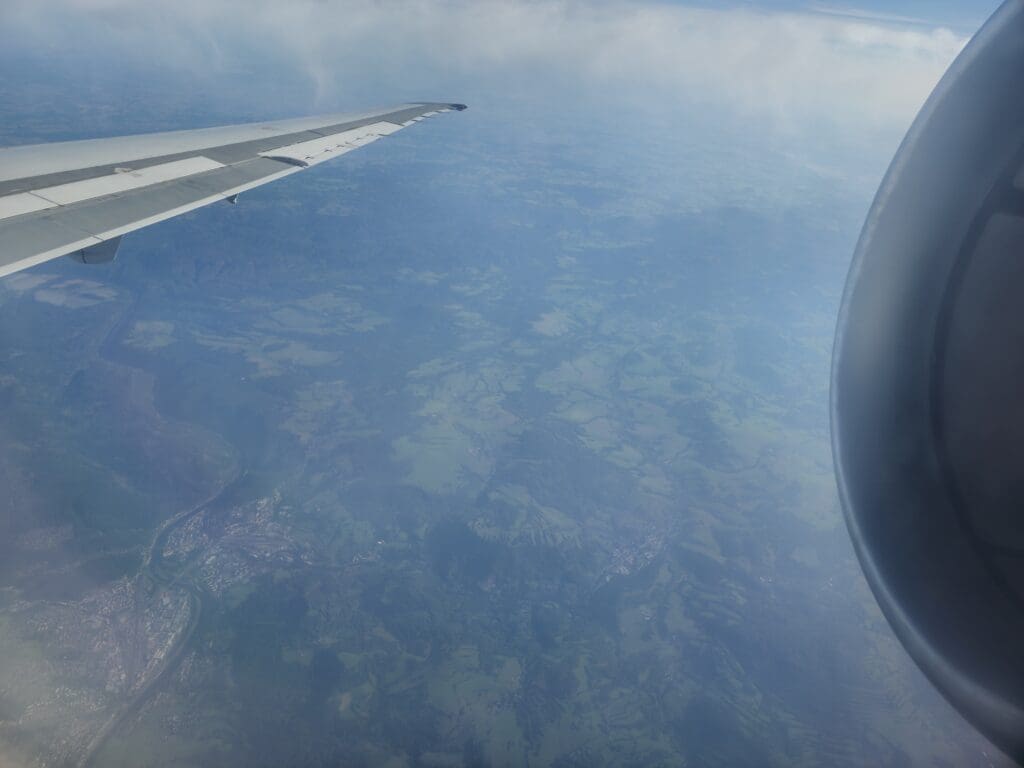
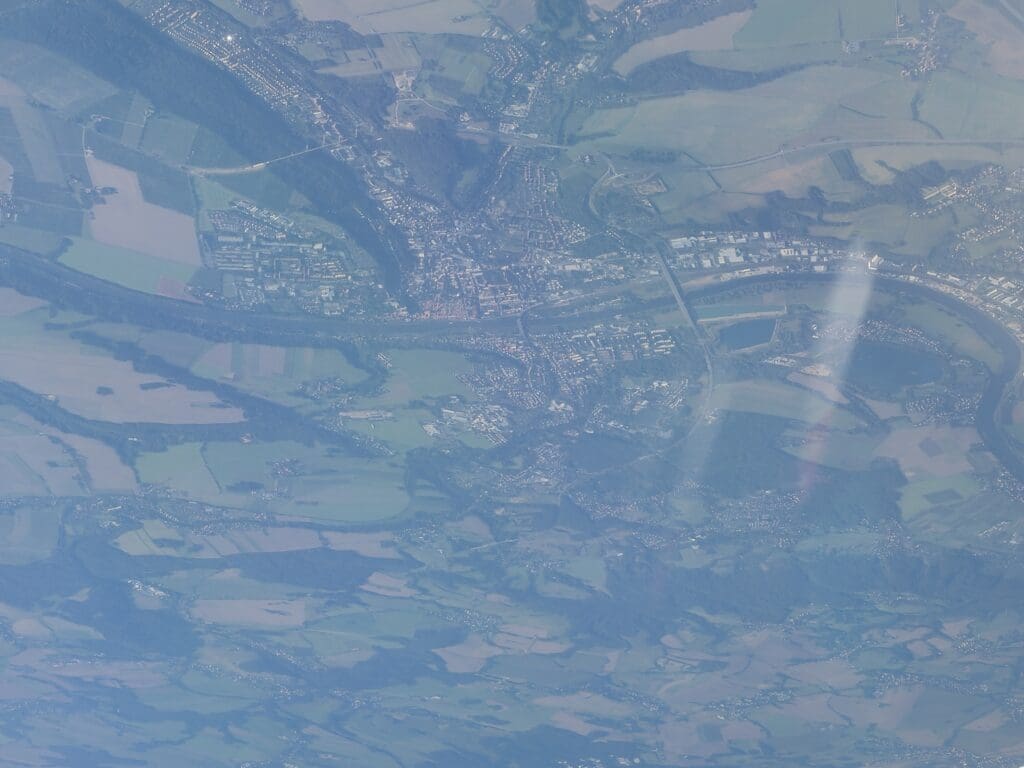
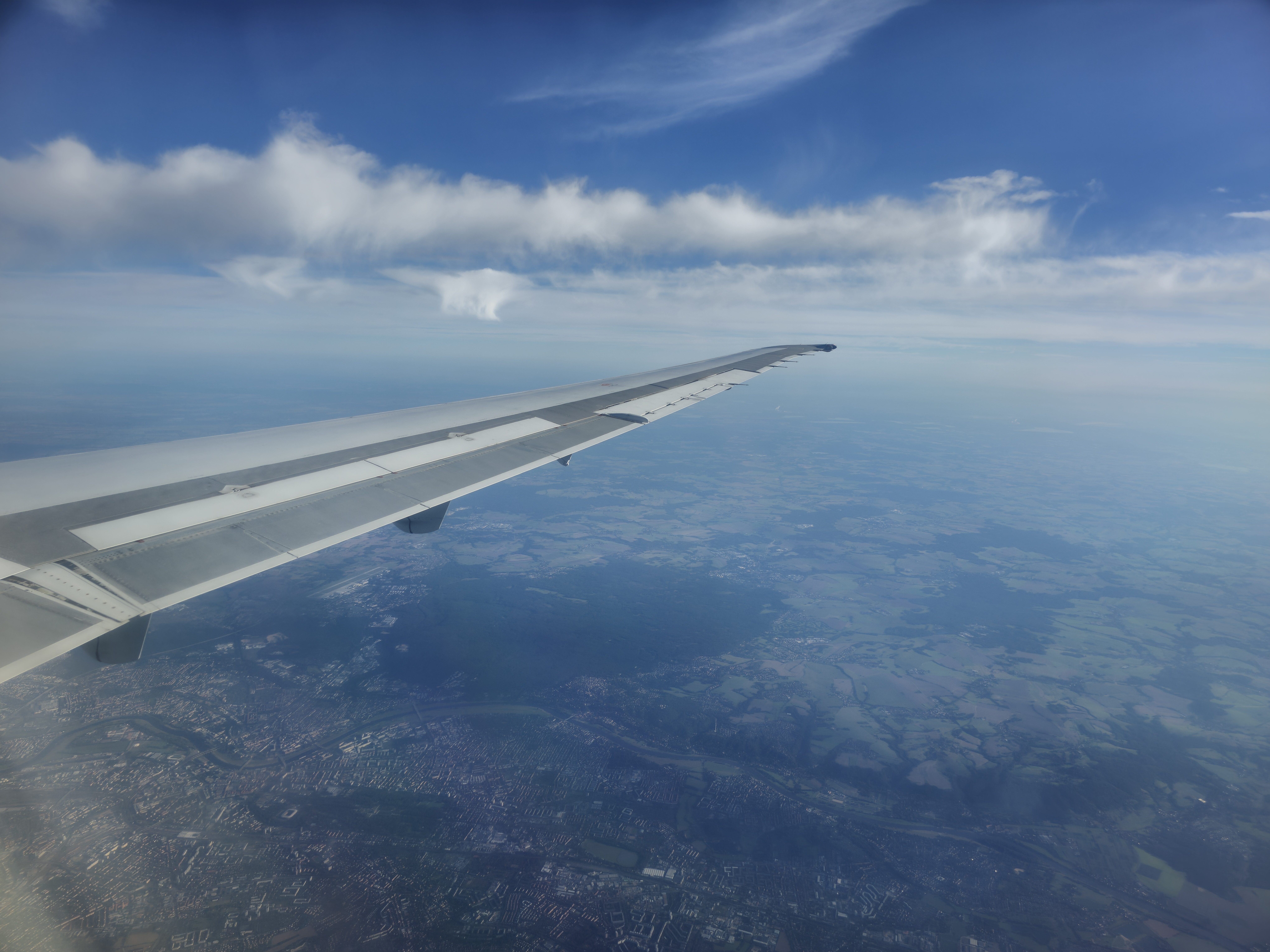
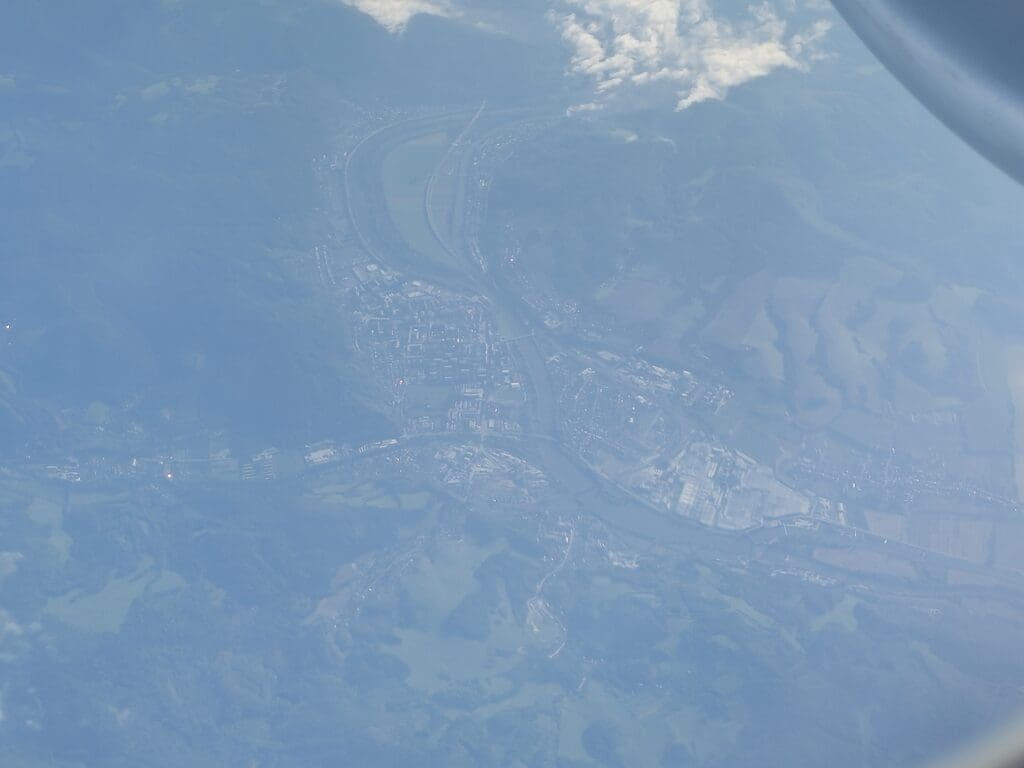
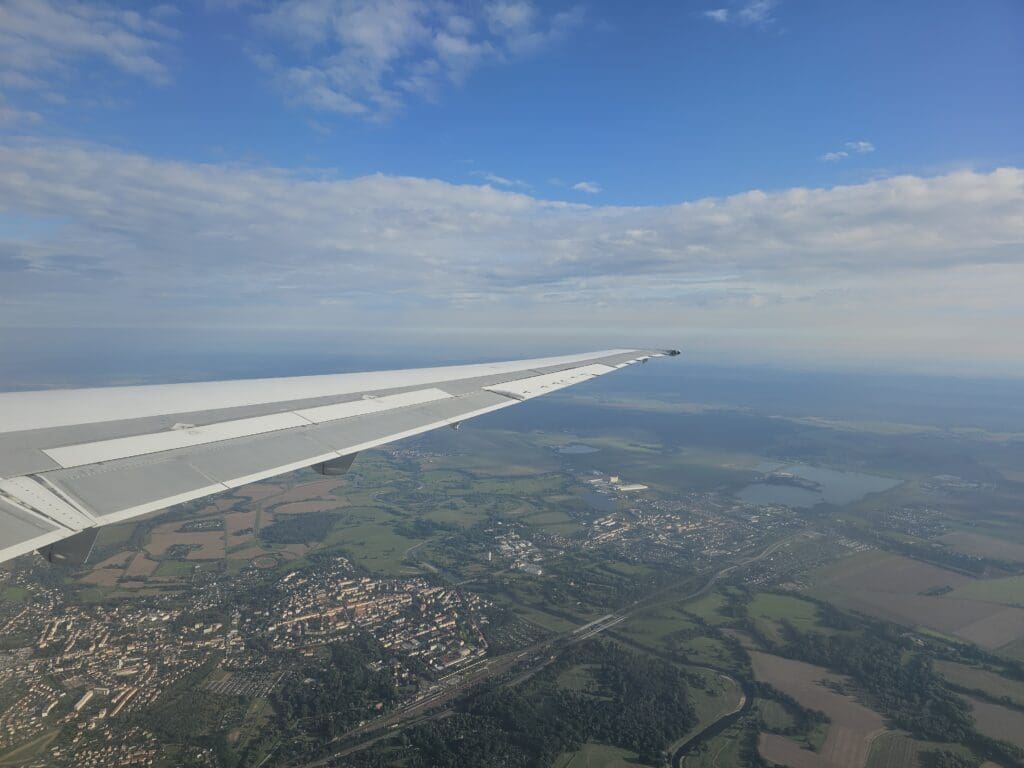
After a grand total of 27 minutes spent in the skies of the Czech Republic, the city of Děčín and the winding Elbe River that flows through this appeared before we entered German airspace. At this time, the seatbelt signs were switched on and the crew passed through the cabin, ensuring that all was secure and in place for our arrival. Almost immediately after entering German airspace, the fringes of the city of Dresden appeared as we followed the winding Elbe River towards this. Soon, the city centre, as well as its airport could be seen as we continued to sink down towards the flat landscape below.
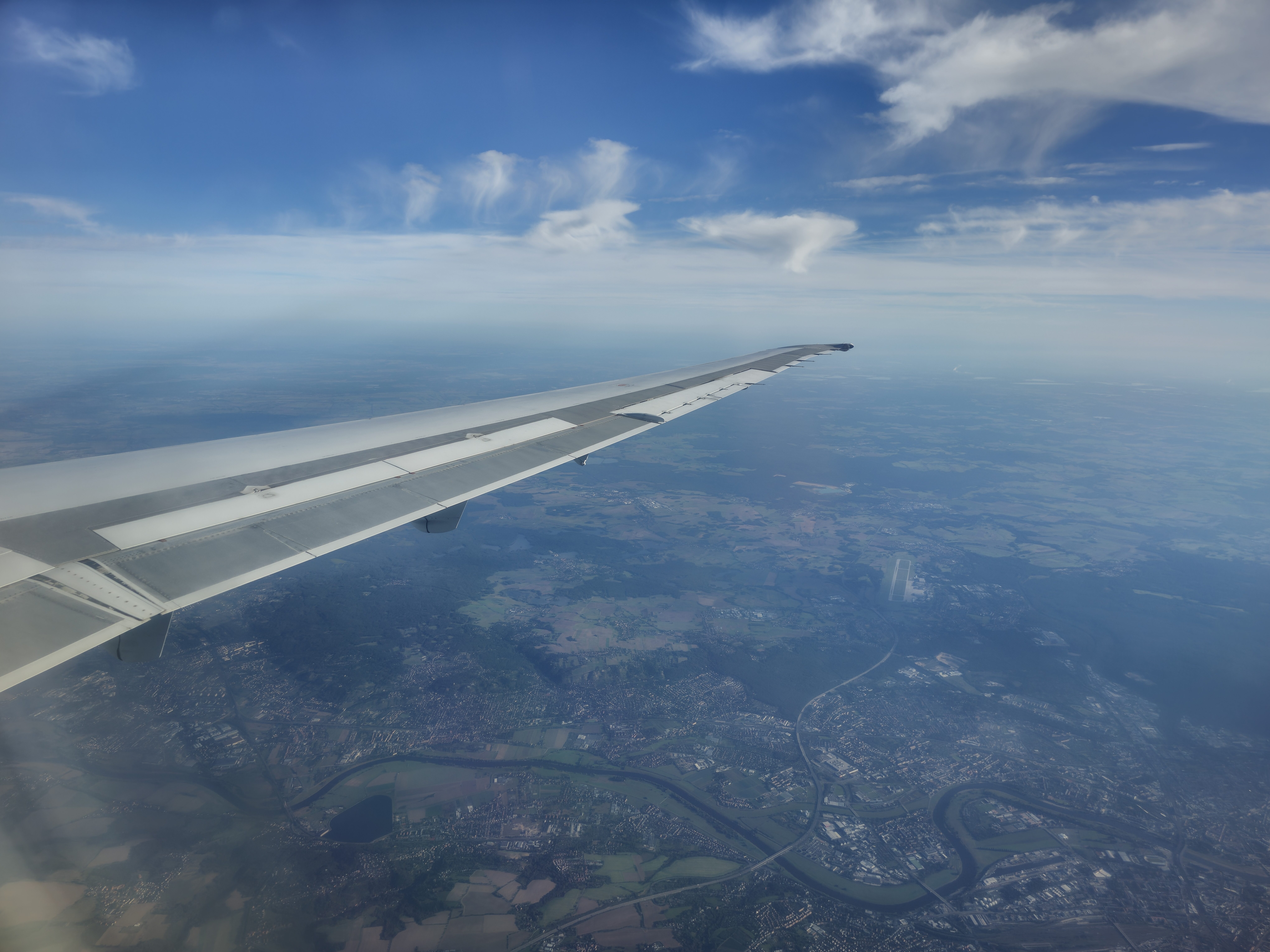
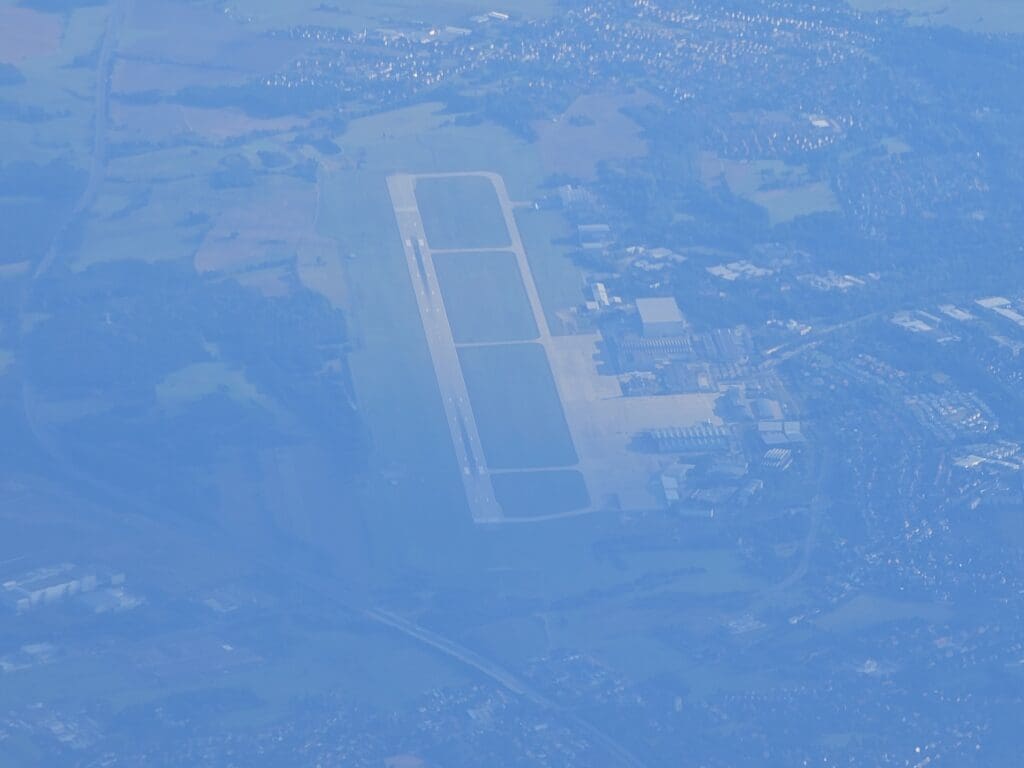
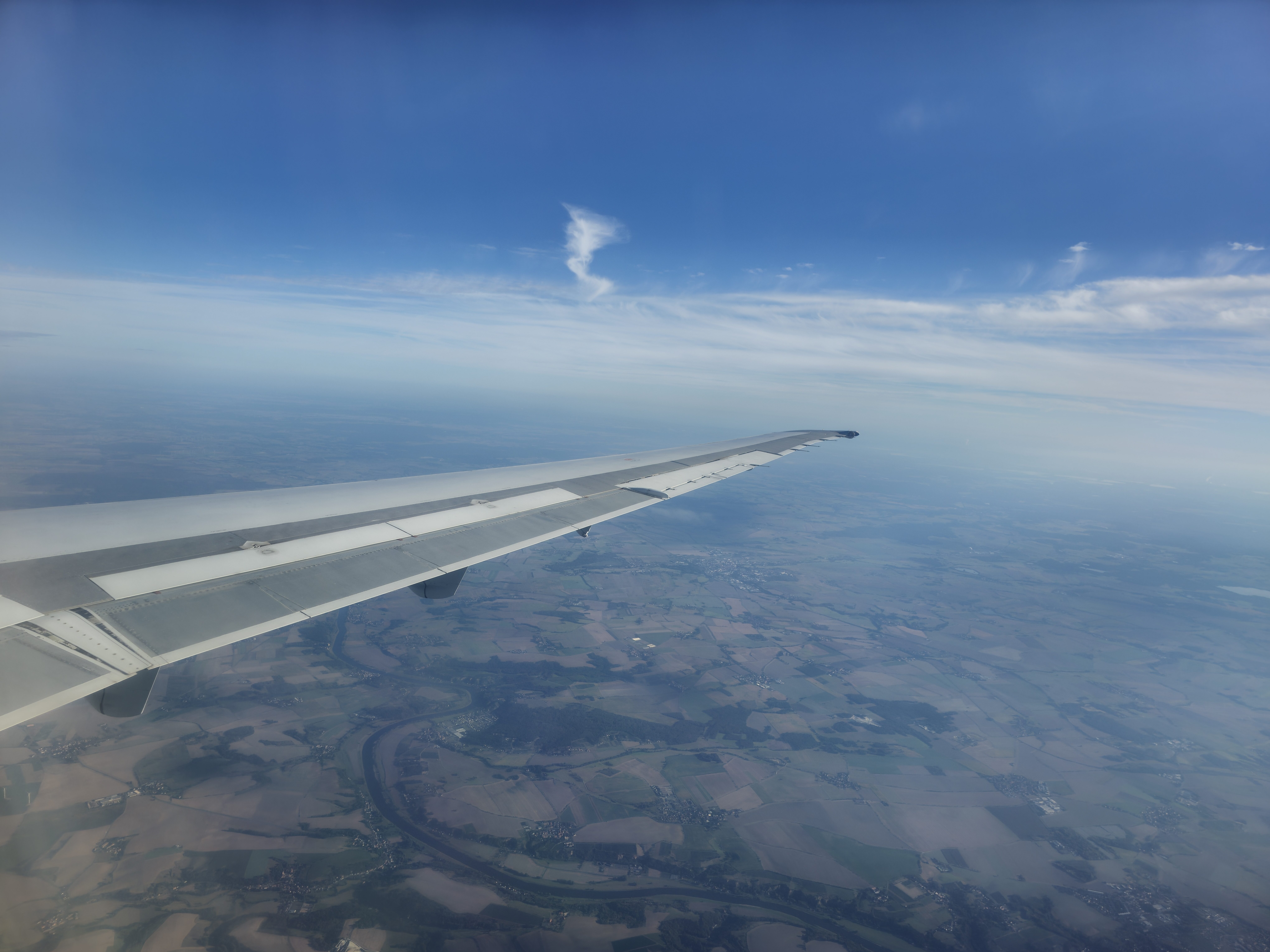
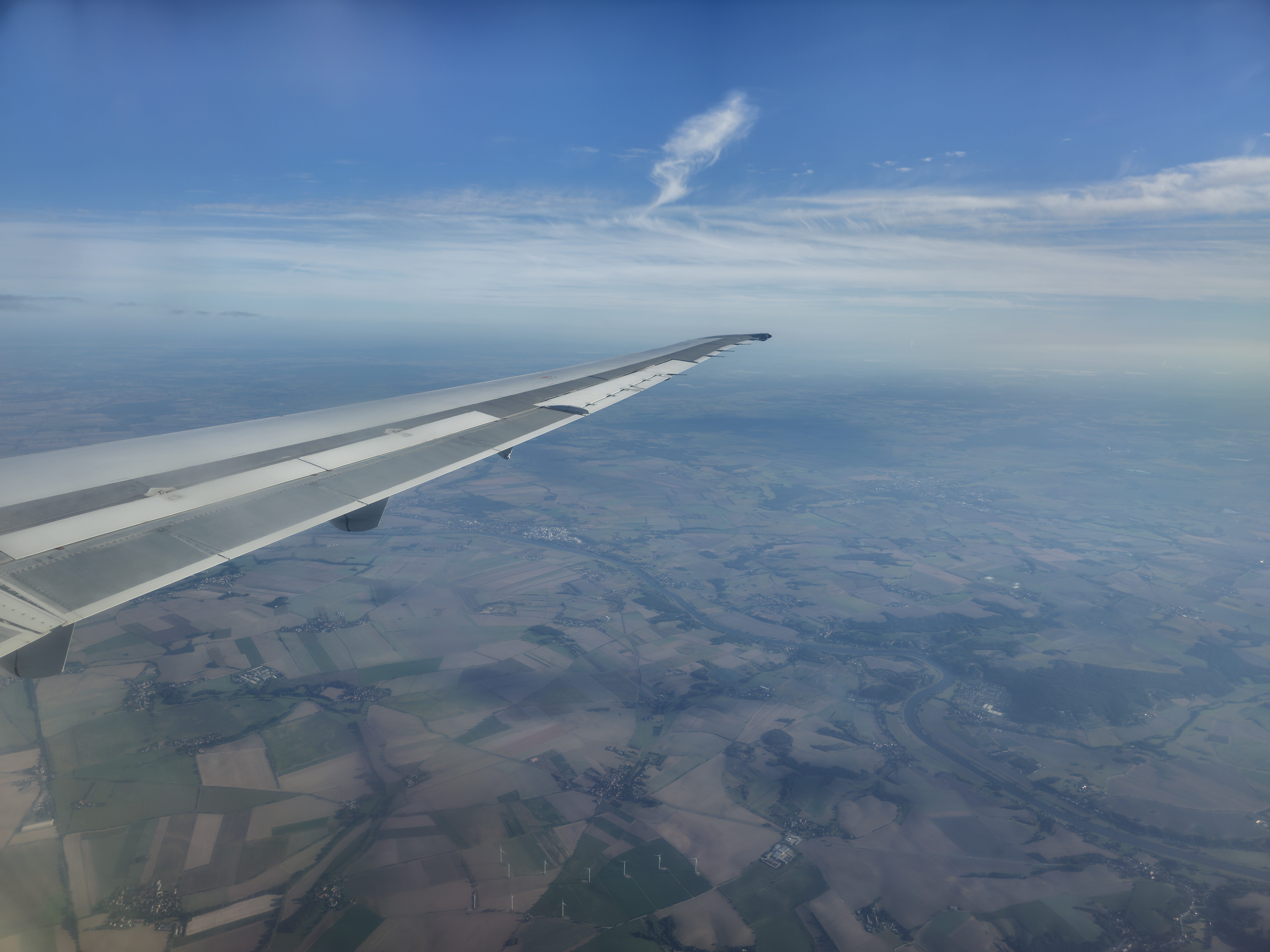
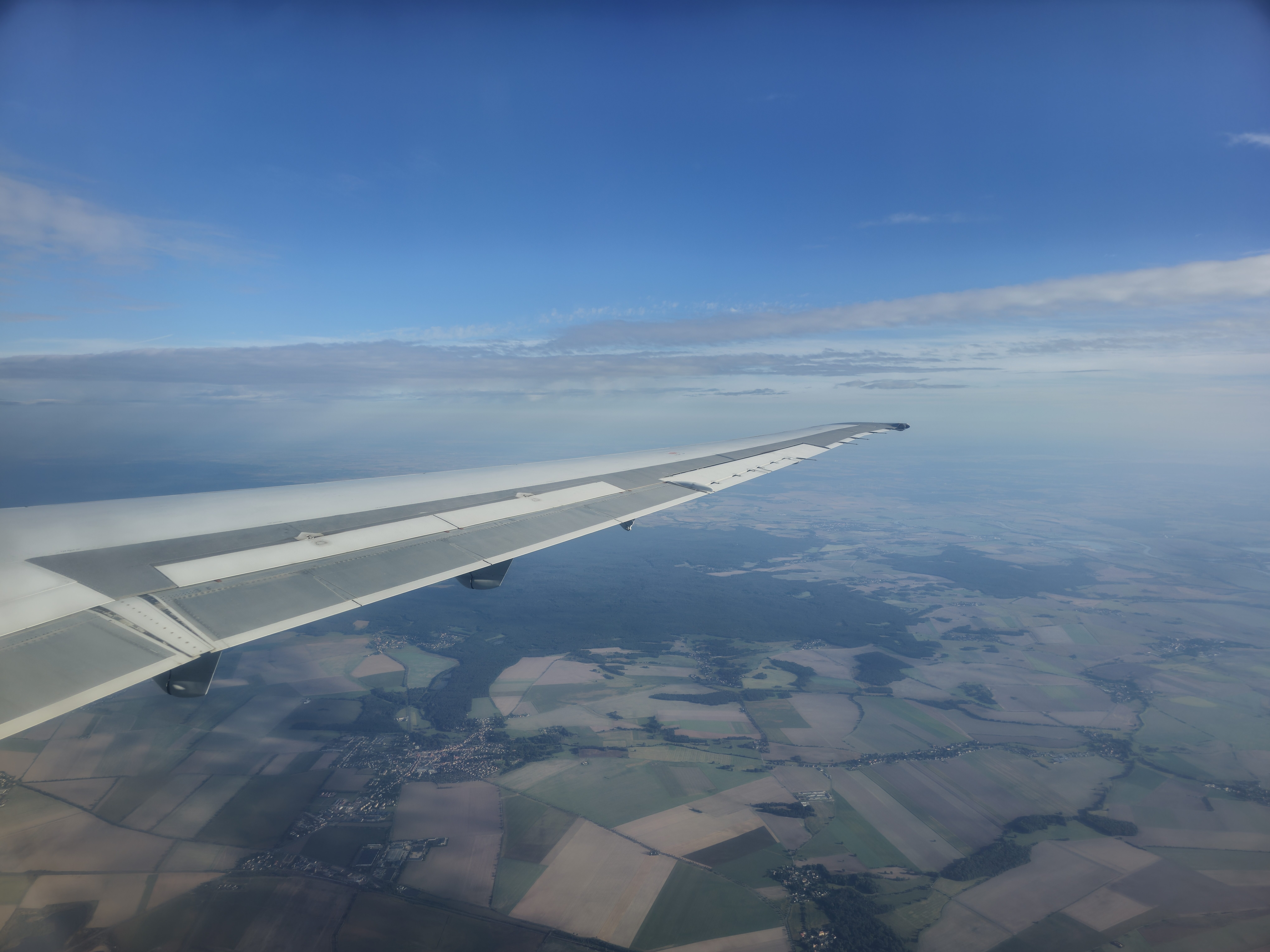
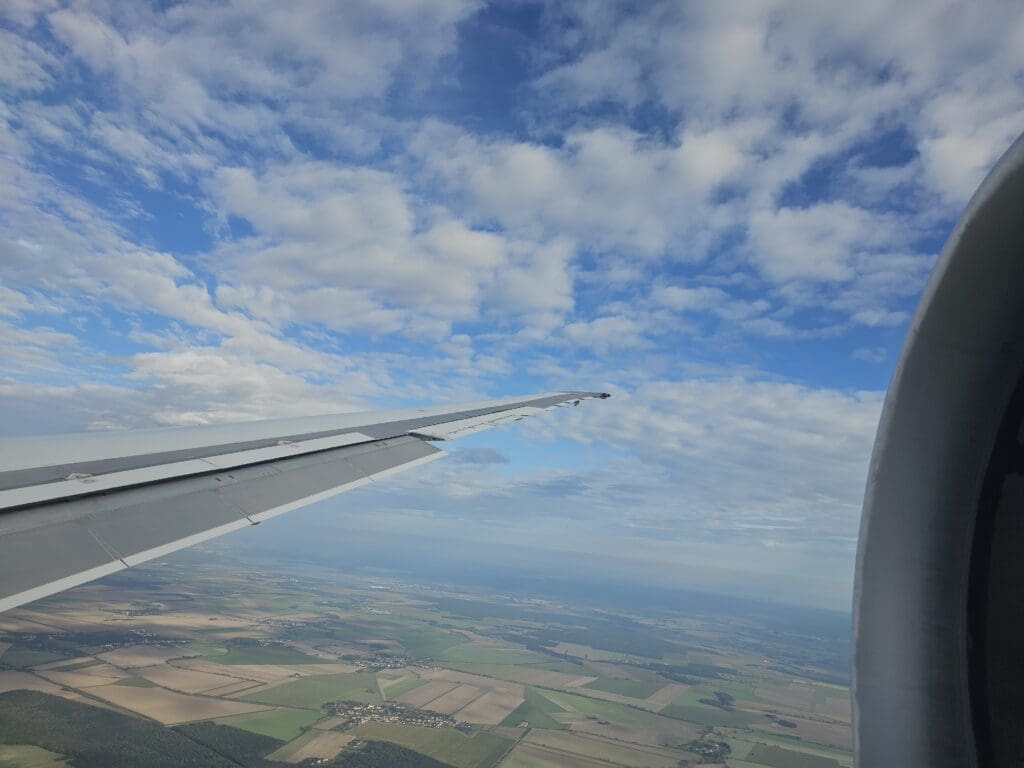
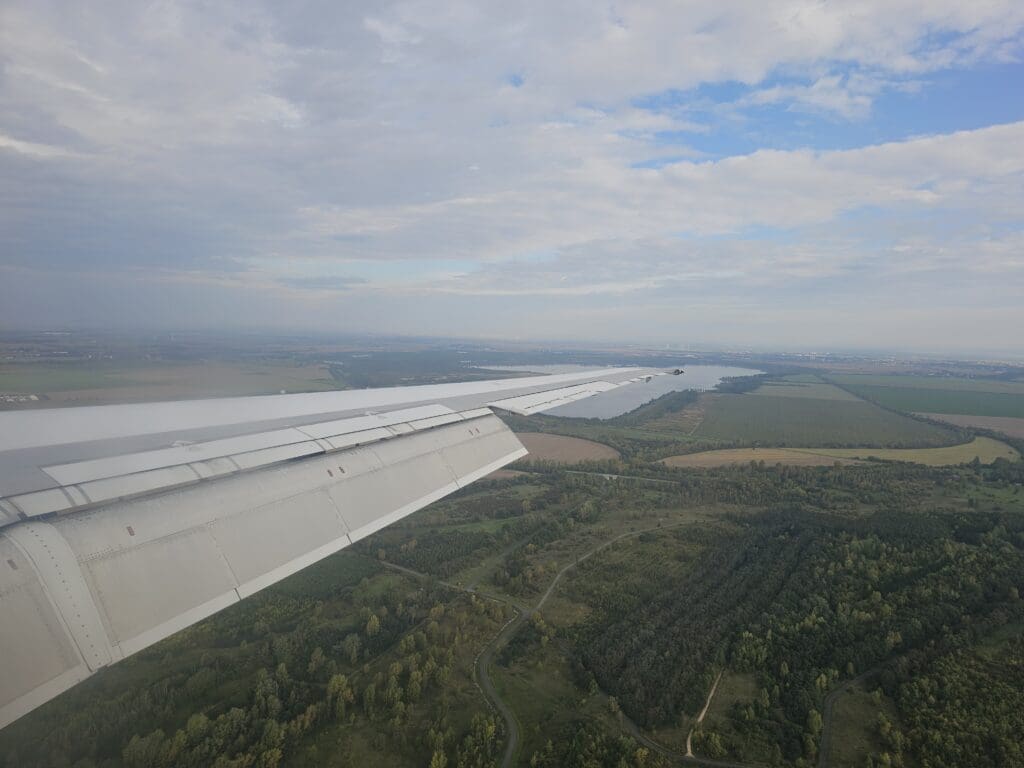
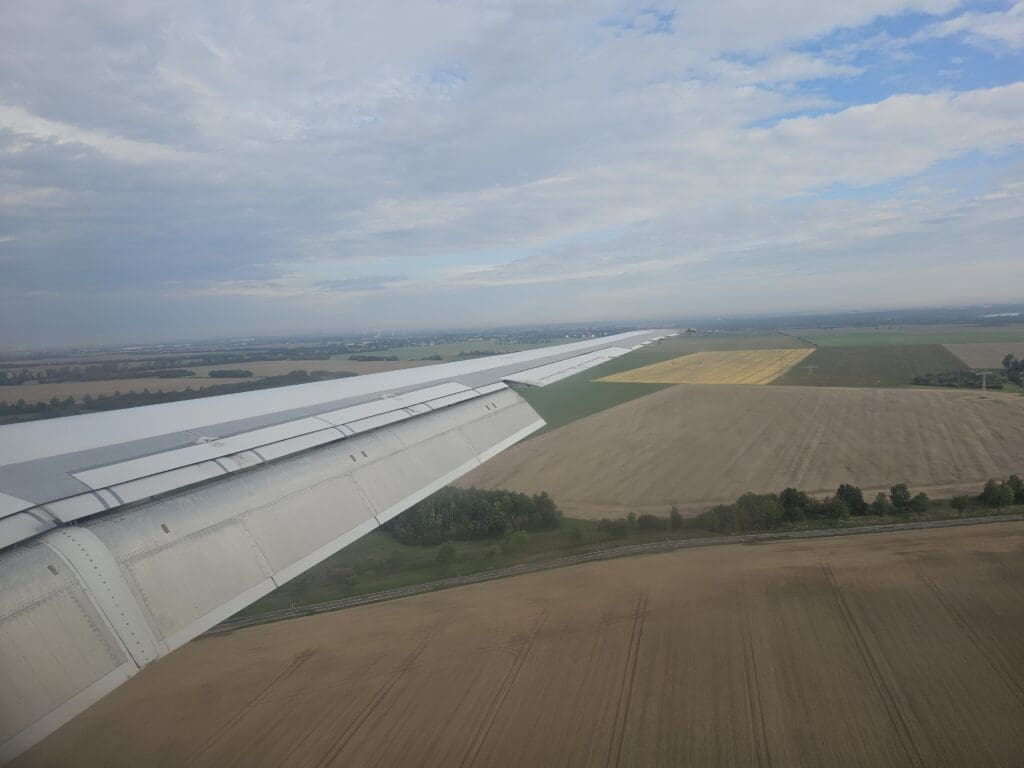
With Dresden soon disappearing, the aircraft continued onwards over the mostly rural landscapes of Saxony where little could be seen other than the odd industrial estate and small town. Indicating that we were soon to land, the flaps were lowered in preparation for our arrival, followed by the landing gear which fell into position with a loud clunk as we crossed over the blue waters of Schladitzer See. Whilst those on the opposite side of the aircraft would have been treated to views of Leipzig, facing north no such views could be had, although as an aviation enthusiast, I had few complaints about having to look at the front end of the starboard JT8D engine As we approached the airport, the MD-82’s flaps were fully extended and as I had noticed on my Meridiana MD-80 ride, during the final stages of the flight, the engines seemed to produce plenty of noise as if the throttles were being constantly pushed and pulled.
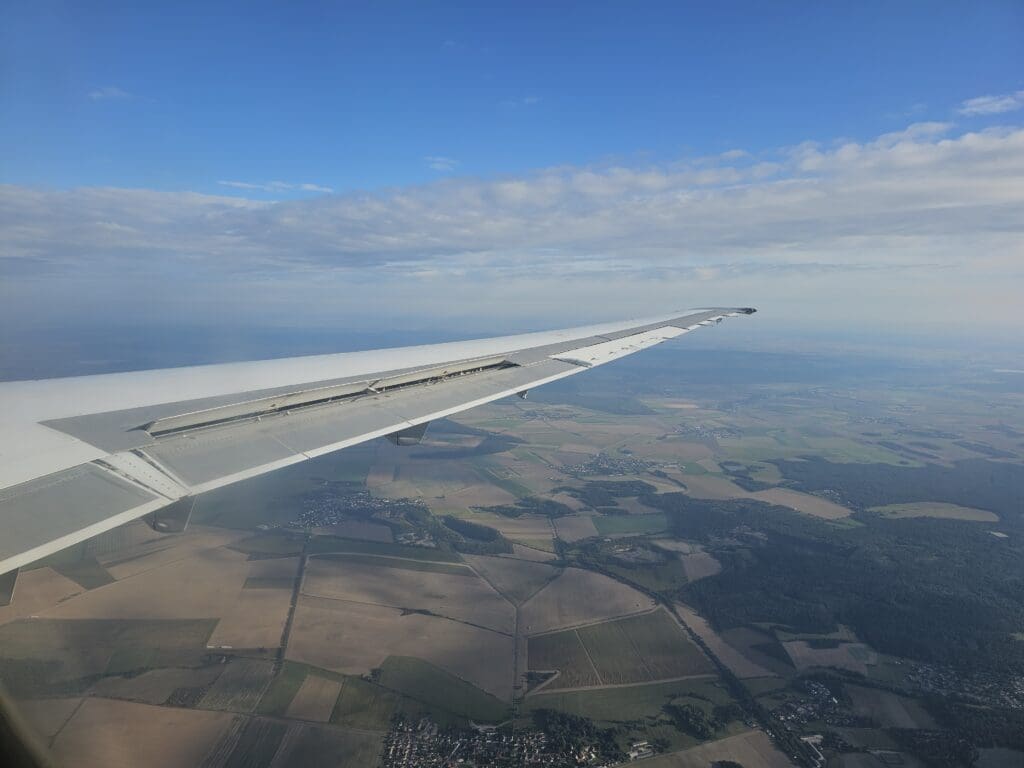
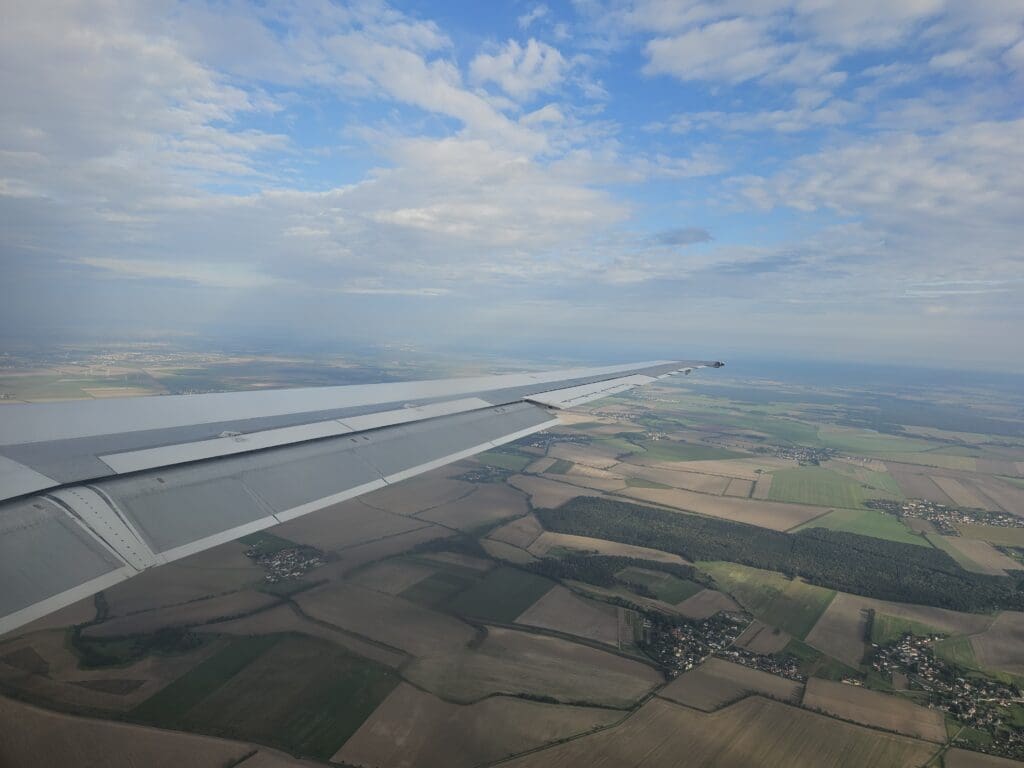
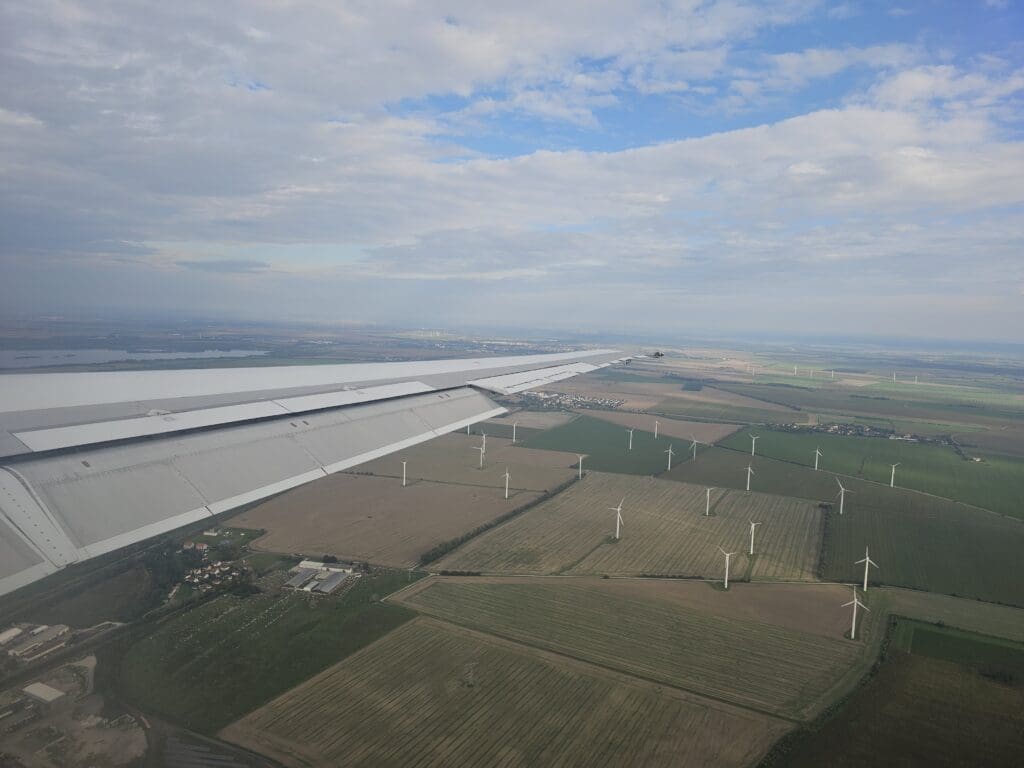
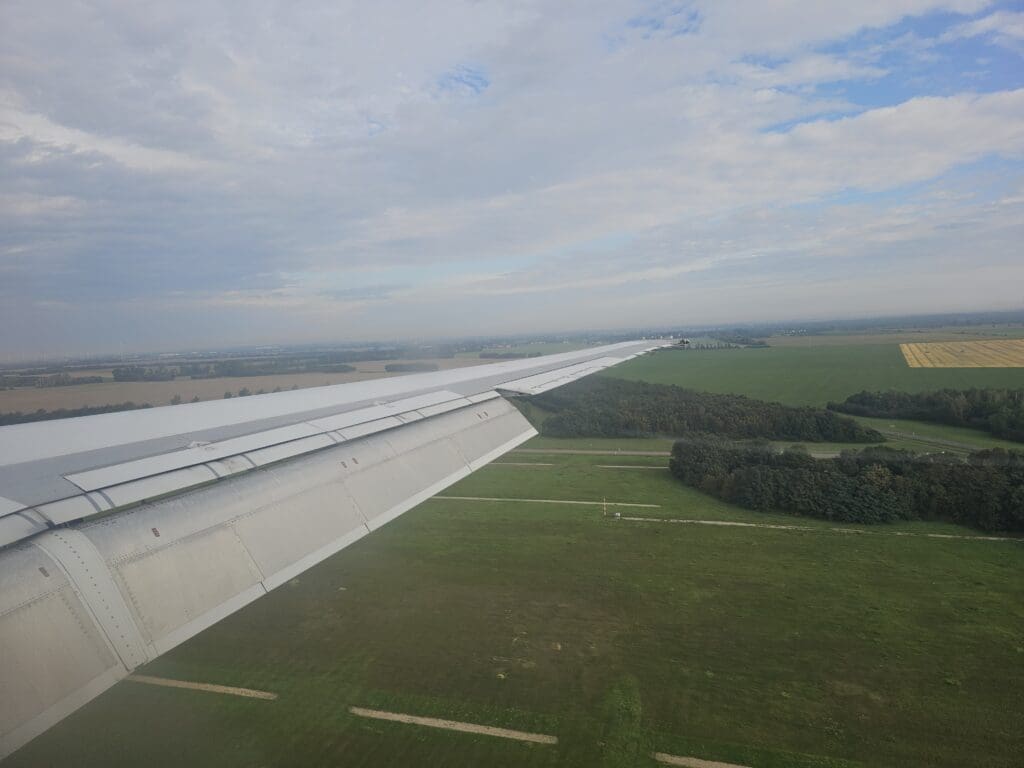
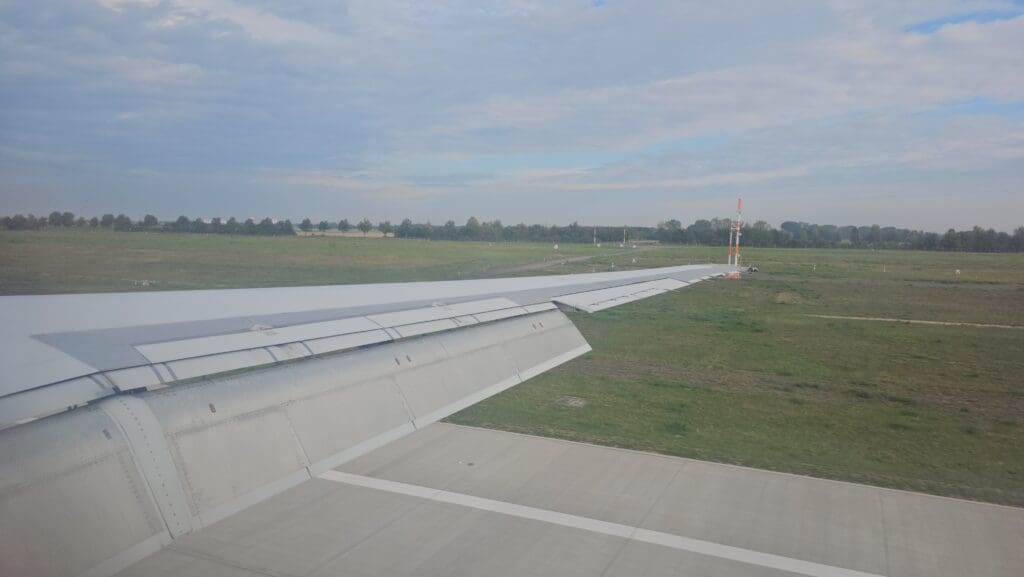
A little over two hours after rocketing upwards into the skies of Bulgaria, the MD-82 floated down over Leipzig Airport’s perimeter fence and at 0907 made a firm touchdown on Runway 26R. Almost immediately upon hitting the ground, a round of applause rang out through the cabin and the aircraft decelerated rather gently in an attempt to minimise taxi time. Once at the end of the 3.6 kilometre long runway, the aircraft vacated this to the left at which point one of the flight attendants performed the last announcement of the flight. Whilst unfortunately unable to speak Bulgarian or German, I assume this took the form of a welcome to Leipzig and a word of thanks for flying with European Air Charter and was met by another round of applause. Outside, once off the runway, the MD-82 made its way over a bridge that spans across one of Germany’s autobahns, followed in quick succession by another stretching across a railway line. Whilst not entirely uncommon in much of the world, taxiway bridges are somewhat of a novelty back home in the UK (the only real one I can think of is at Luton), and so this was an exciting way to end the journey!
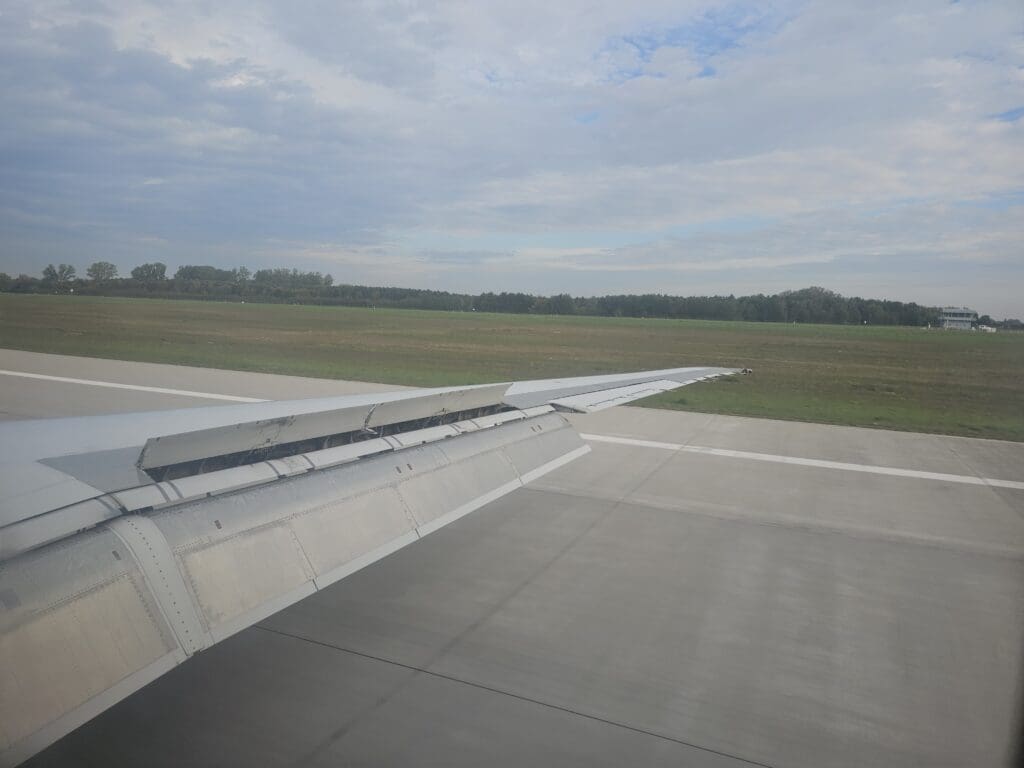
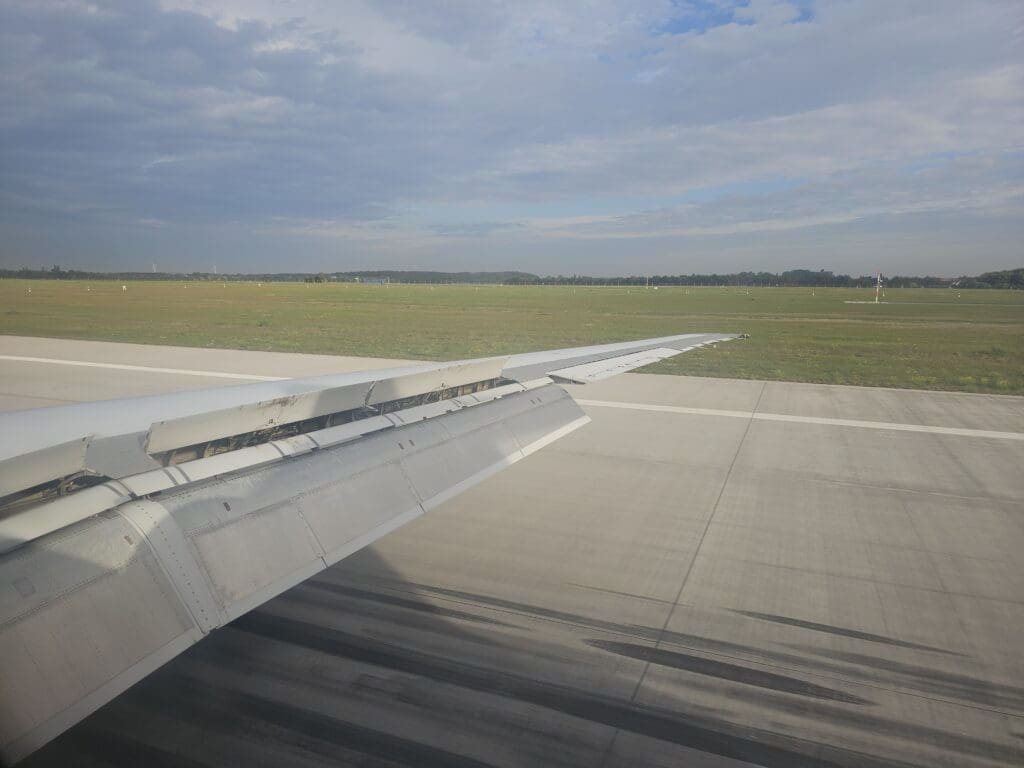
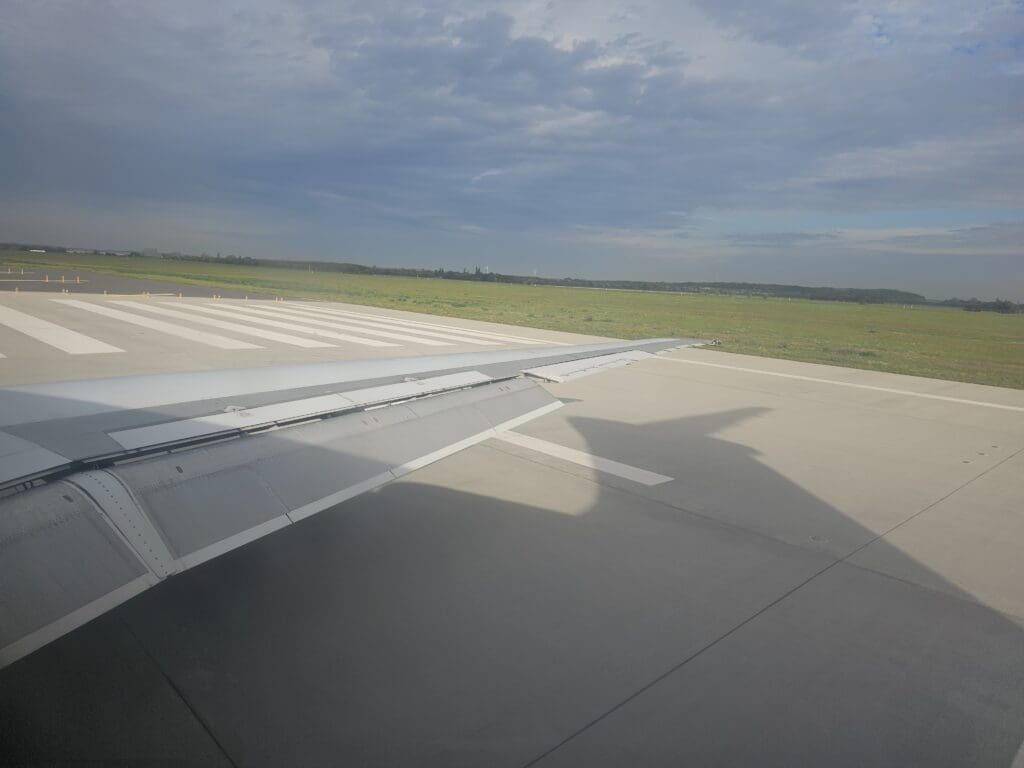
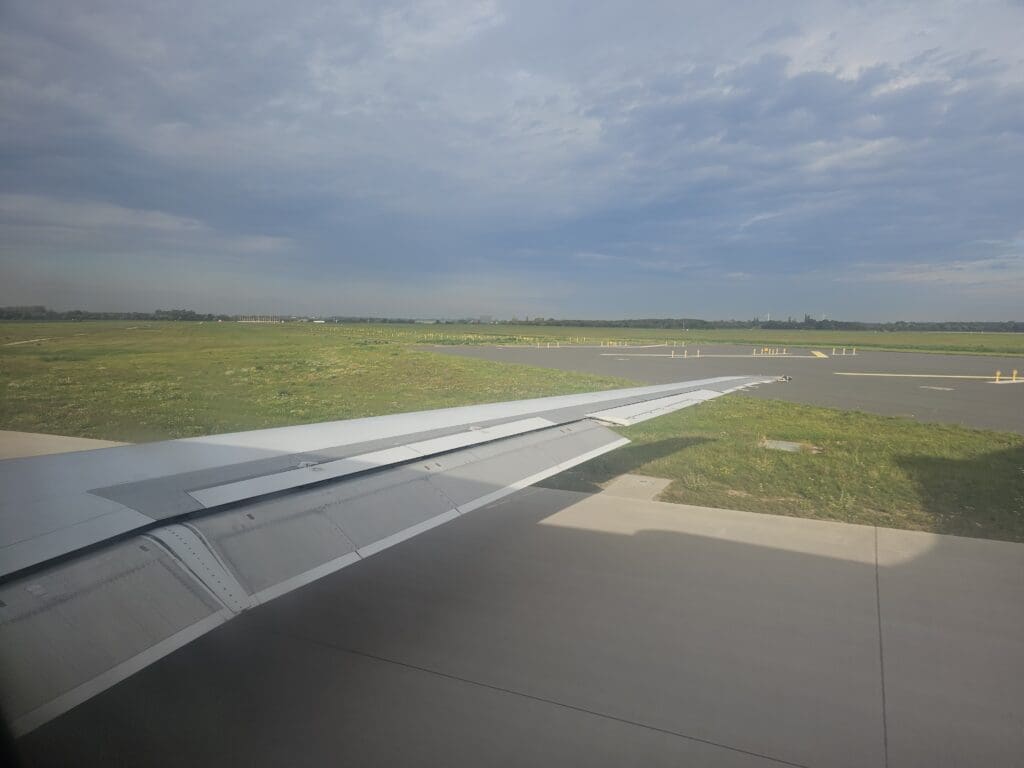
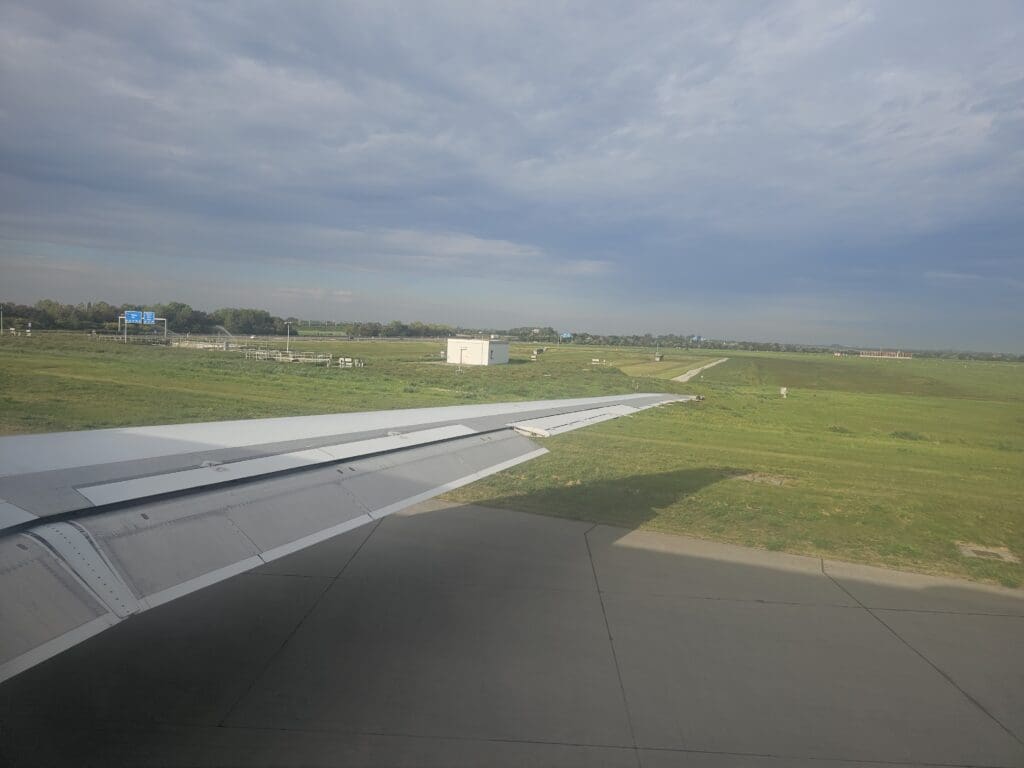
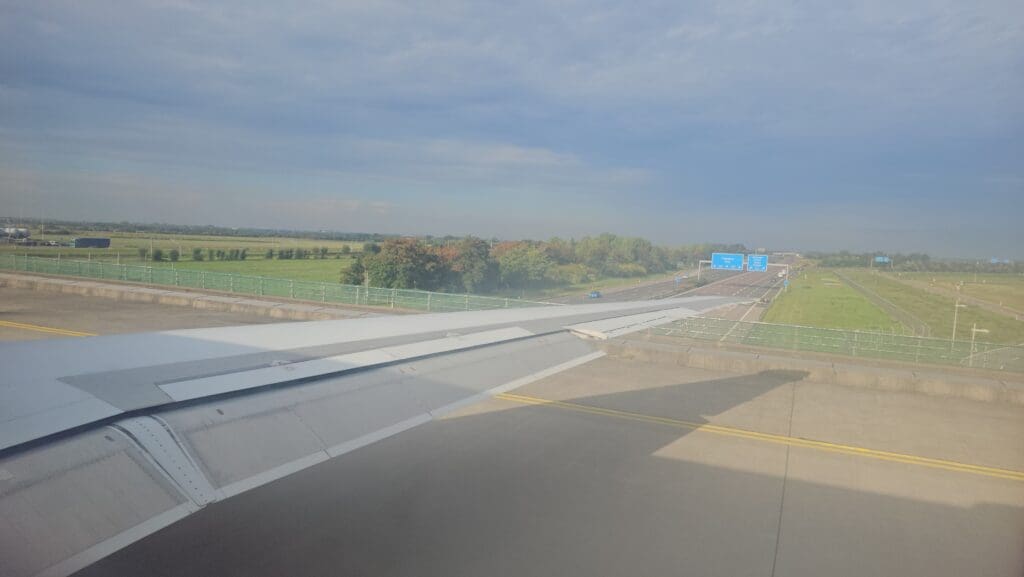
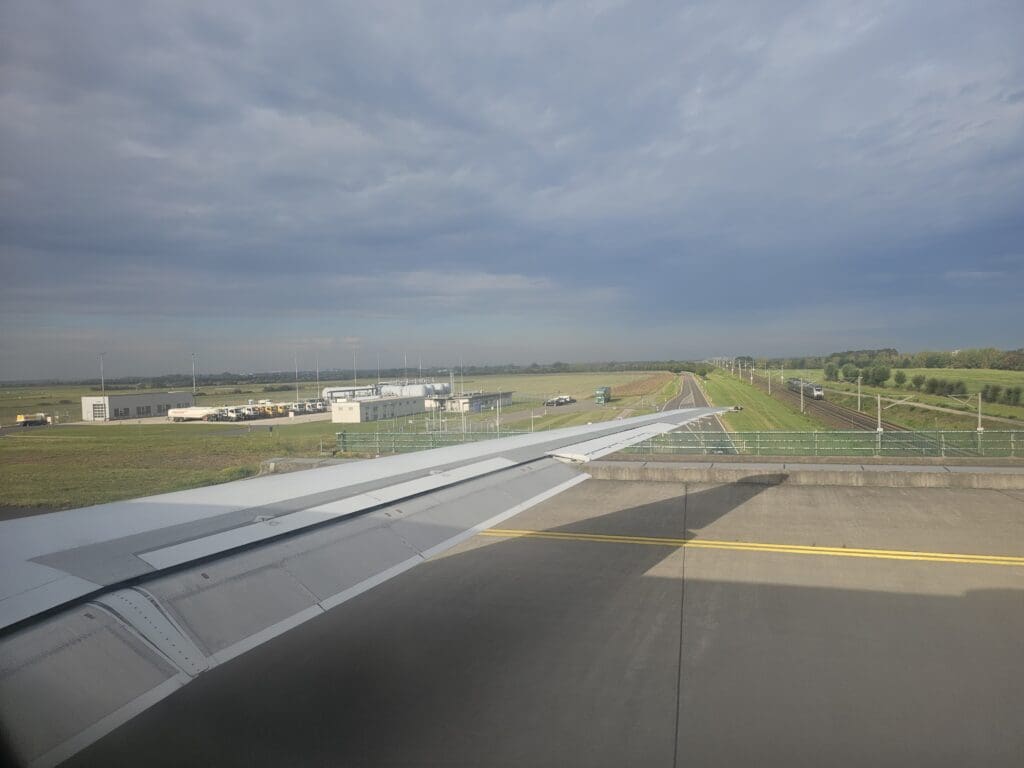
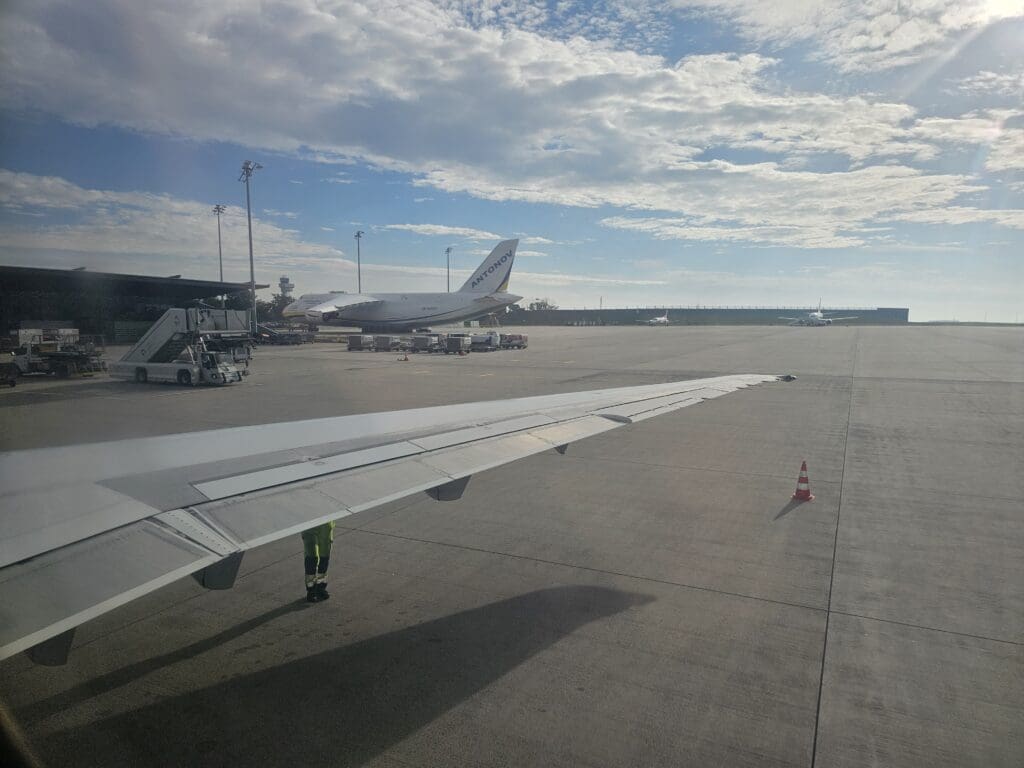
On the subject of the UK, were I to compare Leipzig Airport to one back home, it would undoubtedly be East Midlands Airport. Whilst both airports may not be particularly well known for their passenger services, both serve as major cargo hubs with massive DHL facilities. It thus wasn’t long before I spotted a sea of cargo aircraft, many of which sported the easily recognisable livery of this cargo giant. However, likely of more interest to aviation enthusiasts were the six massive Antonov An-124s I spotted on the ground – these consisted of three active Antonov Airlines examples that are temporarily based in Leipzig and three Volga-Dnepr Airlines aircraft that are now impounded. Other airlines seen included ASL Airlines, Atlas Air, Bluebird Nordic, CargoAir, Compass Air Cargo, Cygnus Air, MNG Airlines, Rom Cargo, SmartLynx, Solinair, Sprint Air and Swift Air.
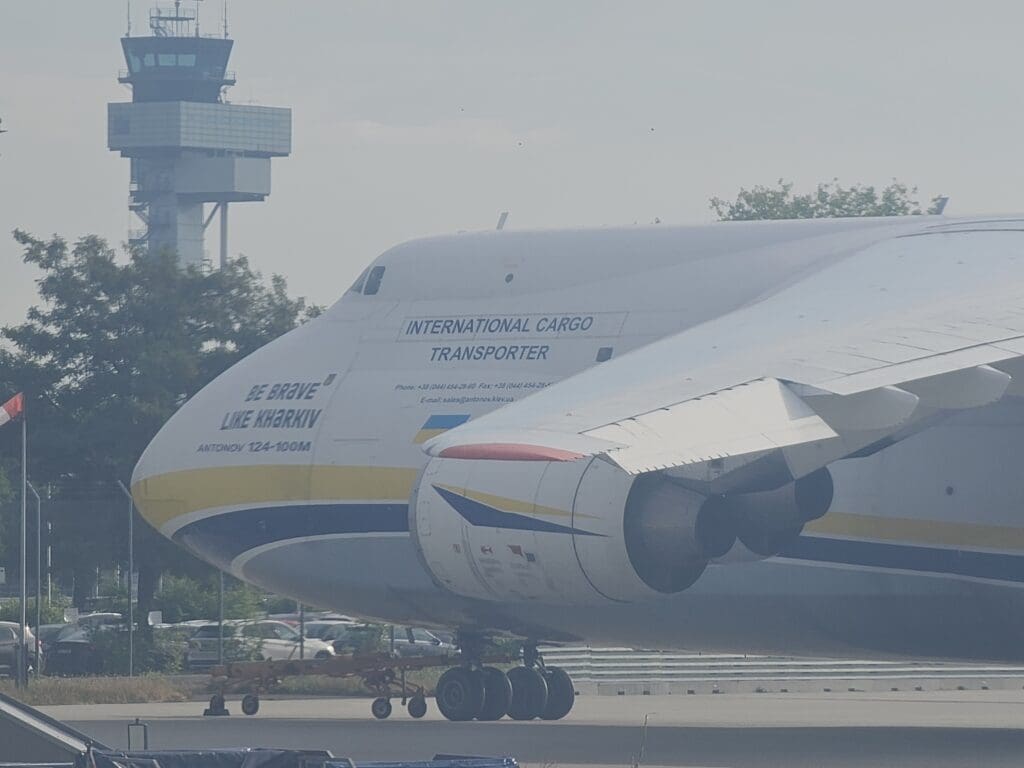
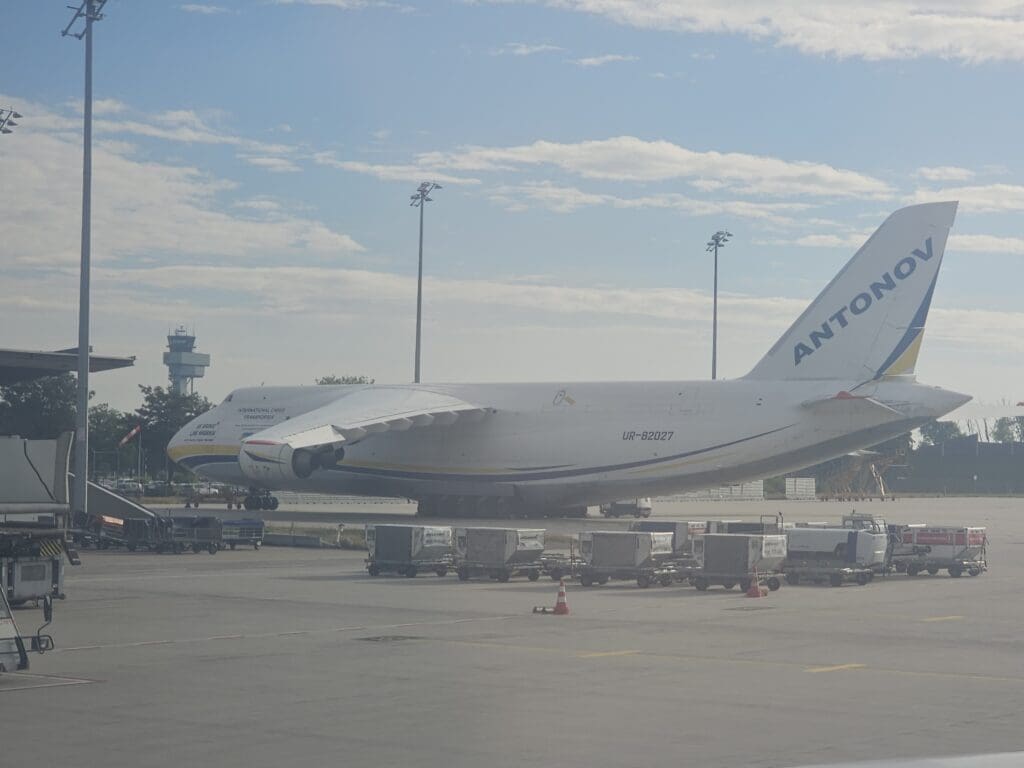
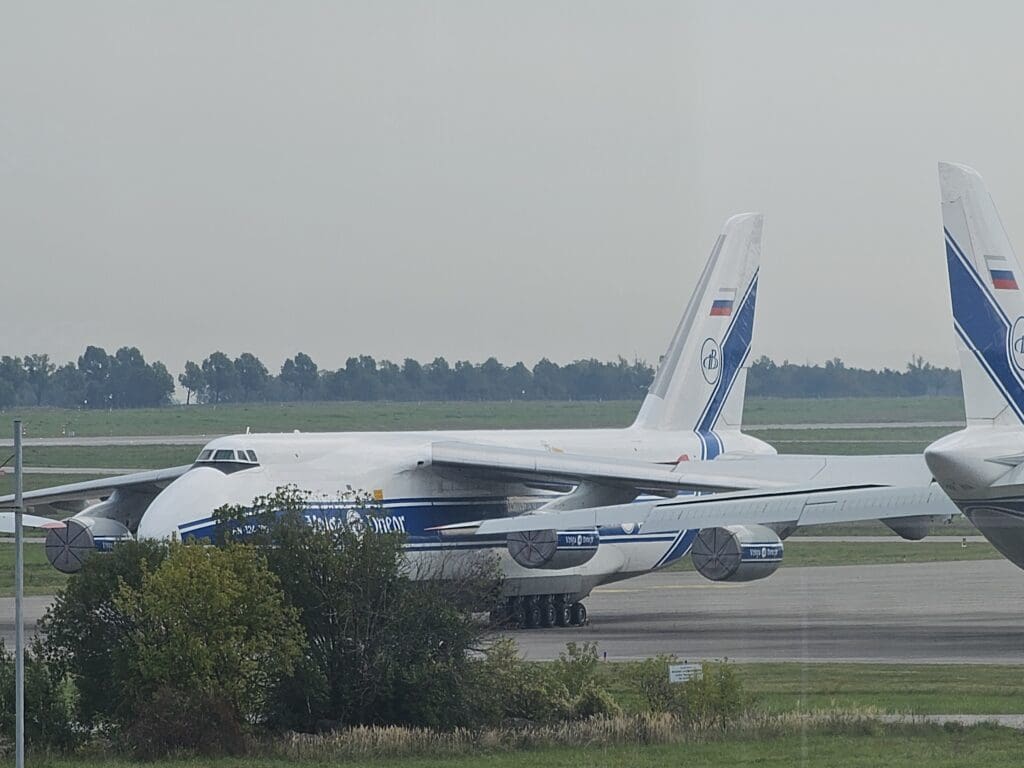
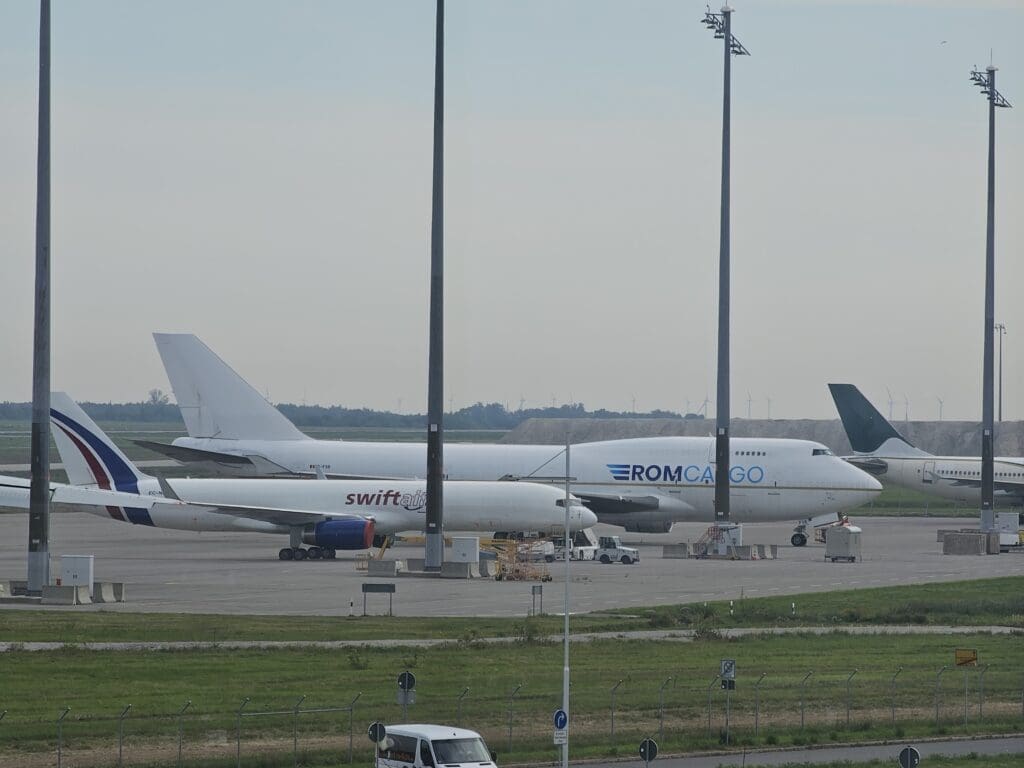
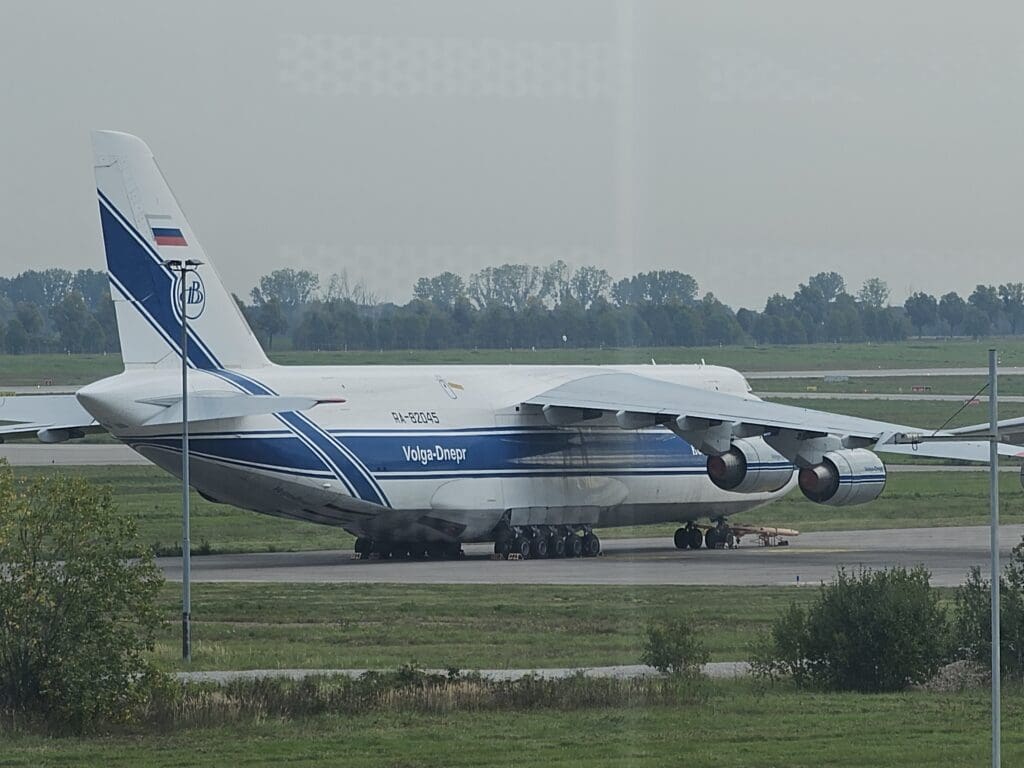
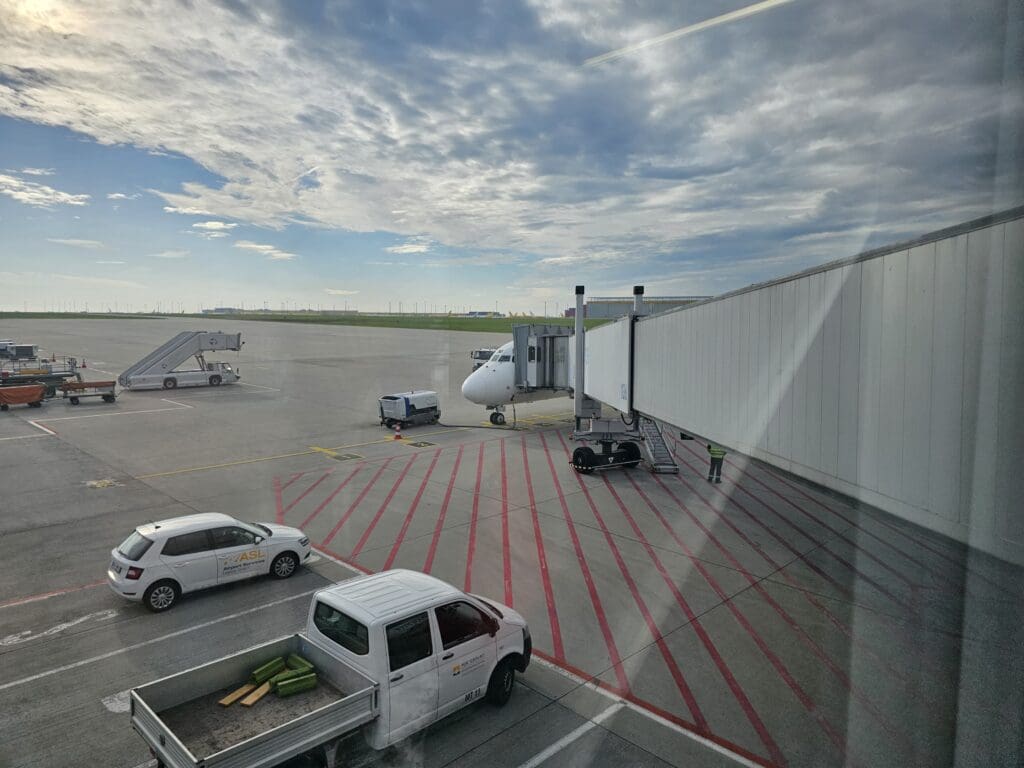
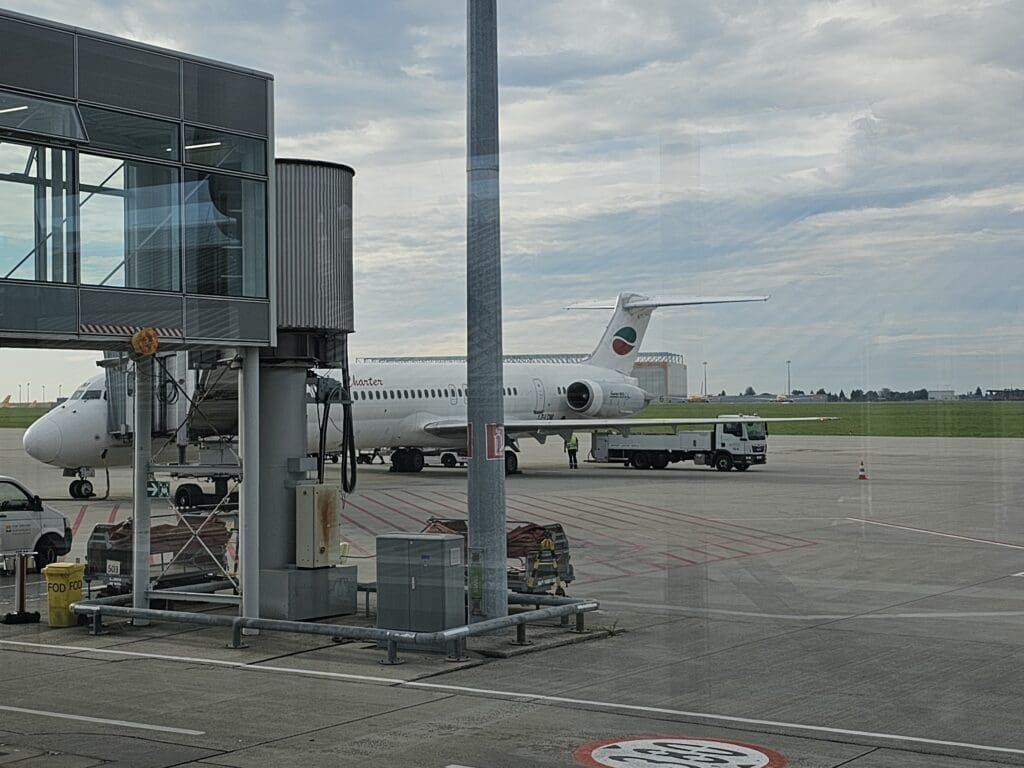
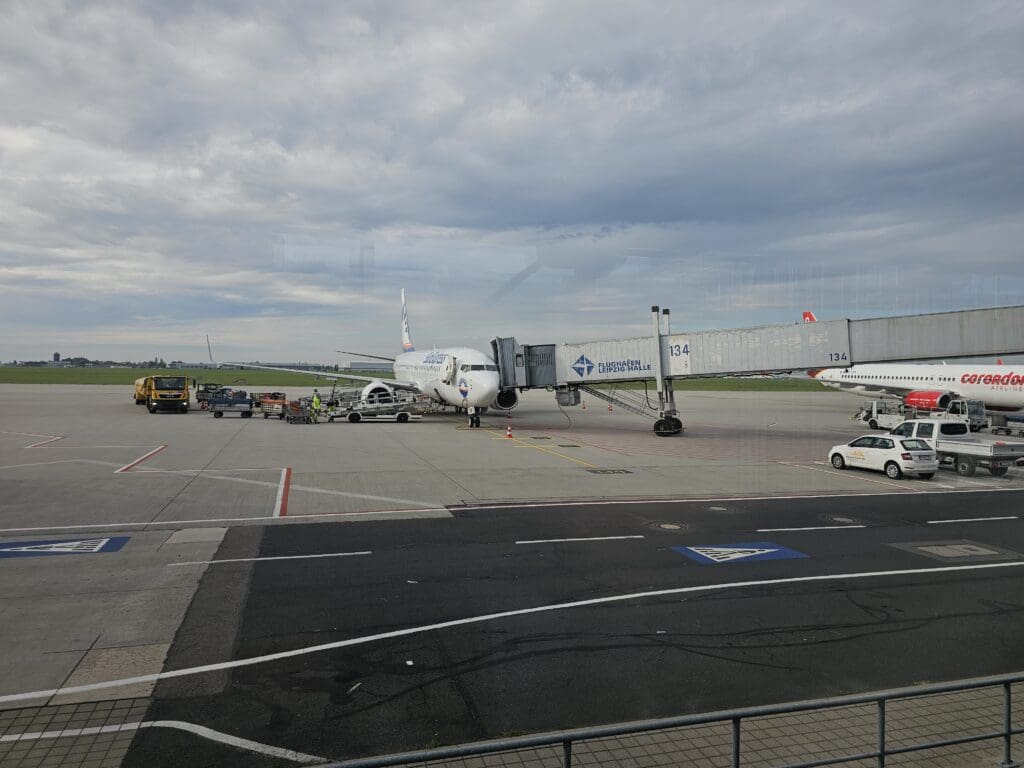
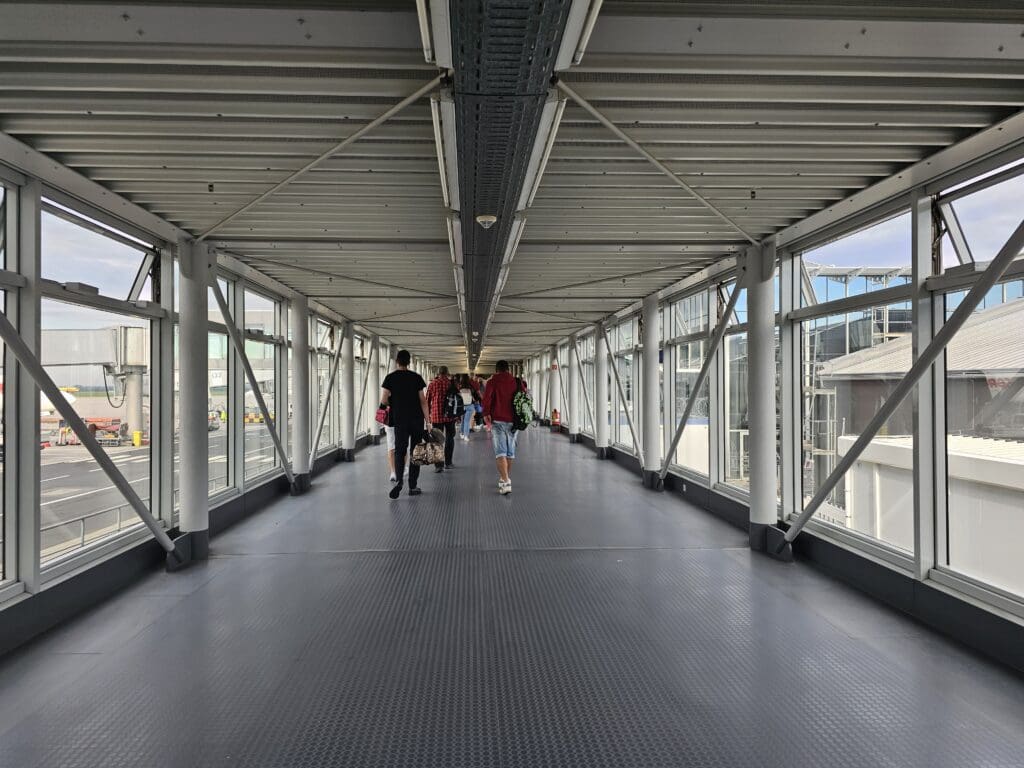
Following an eight-minute taxi, the MD-82 slowly and cautiously turned left and came to a halt at Stand 136 which is located at the very end of Leipzig’s passenger terminal. Moments later, the two JT6Ds spooled down and the cabin was temporarily plunged into near silence before passengers stood up and flocked to the aisle. Seeing as I had almost six hours until my Ryanair flight to Stansted was scheduled to depart, I was in no hurry to escape the aircraft and decided to wait around and savour my final moments onboard this unique aircraft. With all passengers deplaning via a jetbridge, once this had been connected the queue began to budge and slowly but surely, passengers made their way up into the terminal building.
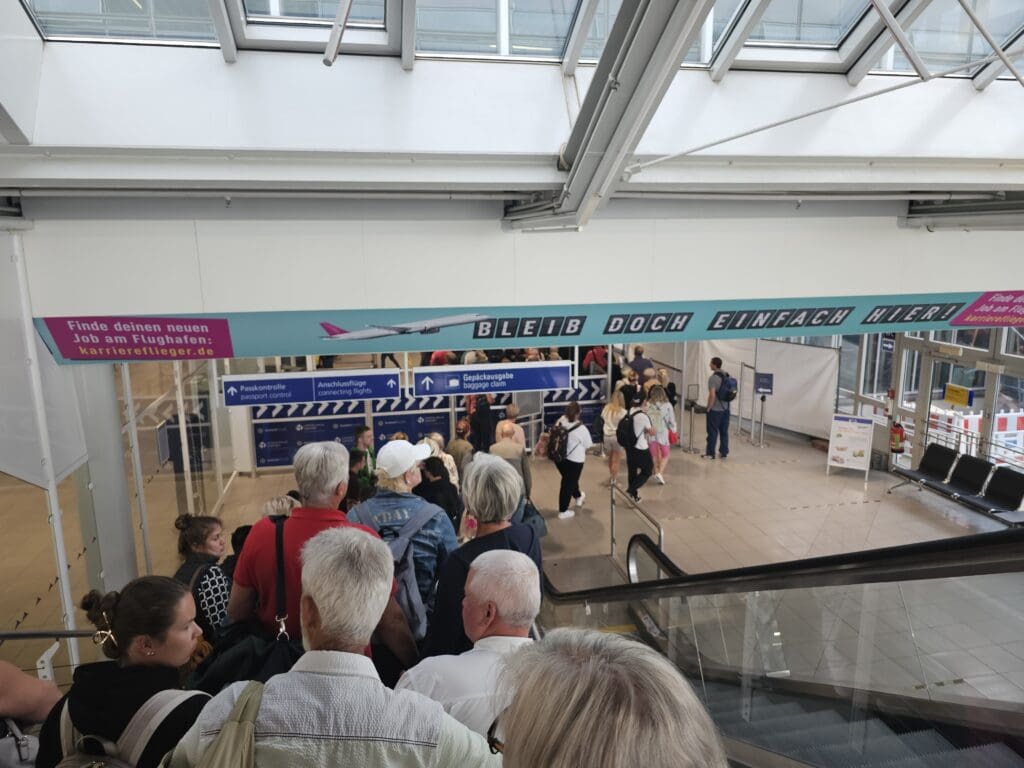
After some shuffling, I thanked one of the flight attendants who stood in the forward galley before stepping onto the jetbridge and making my way up into the terminal building. From the gate, a short walk was in order before reaching the terminal’s passport control area, and, having arrived behind two flights from Turkey, a gigantic queue could be seen. Lacking any sort of passport e-gates, all passengers had to pay a visit to the immigration booths, only half of which seemed to be open that morning. After around thirty minutes of queuing, I handed over my passport and following a quick interaction with the stern-looking officer, I was stamped in and made my way into the baggage collection hall. With nothing to pick up, I steamed through this and commenced my long transit in Leipzig.
Summary
Whilst the McDonnell MD-80 is far from the newest aircraft in the sky, my experience onboard LZ-LDM left me feeling as if European Air Charter had kept the aircraft in a reasonable condition. This was clean, and other than the odd inevitable minor marks and scratches, the cabin seemed to be in reasonably good nick. In addition, this offered a far more comfortable ride than many low cost airlines, and the seat was soft and relatively spacious. Furthermore, whilst my interactions with the cabin crew had been limited, during the interactions that I did have, I found the crew to be polite and friendly.
Epic farewell to Europe’s last MD-80 LZ-LDM’s Alitalia history, roaring JT8Ds, and retro vibes nailed the nostalgia on that Varna-Leipzig run. True enthusiast’s hurrah thanks for sharing
Thank you very much for reading – glad you enjoyed!
This plane is a former Alitalia plane. I remeber, flying on them very often. The green Table and the green seat belts were typical for the Alitalia MD’s and seem to be still original.
Yes – the only thing cabin wise that appeared to have changed since the aircraft’s Alitalia days were the fabric seat covers