My Underwhelming Experience with Italy’s National Carrier: Rome to Heathrow with ITA Airways
Background
Having flown from Copenhagen to Rome on Singapore Airlines’ Airbus A350 service, I needed to get back to London in time for work the next morning. A quick search for flights revealed there to be several economical options, and, one of which involved one of the multiple daily services operated by Italy’s ‘new’ national carrier, ITA Airways. Yet to fly with ITA Airways (or indeed their predecessor), I decided to book a ticket with the airline, parting with a very reasonable total of £37.37 for the one-way flight.
Check-In
Those flying on most of ITA Airways’ scheduled services can check in for their flight 48 hours before departure. The exception to this is those bound for the United States who can only check-in 24 hours before their flight’s scheduled departure time. With two days to go until my flight to London, I opened up ITA Airways’ app and accessed my booking with little issue. However, once I began check-in proceedings, I soon ran into a problem. Namely, this would not accept a passport expiry date in January, February or March. Meanwhile, Northern Irish, Scottish and Welsh passengers may be dismayed to hear that the only nationality listed relating to British nationals was listed as ‘England’. Unable to check-in, I made my way over to ITA Airways’ website where things ran a little smoother after filling in the COVID declaration and my passport details once again, I was then presented with a seat map. Being on one of the cheapest Economy fares, I had been automatically assigned Seat 25A and was unable to change this without paying an additional fee of £10.10, which covered most seats in the cabin. Skipping past this and the option to add luggage, I completed check-in and was soon emailed a boarding pass.
The Journey
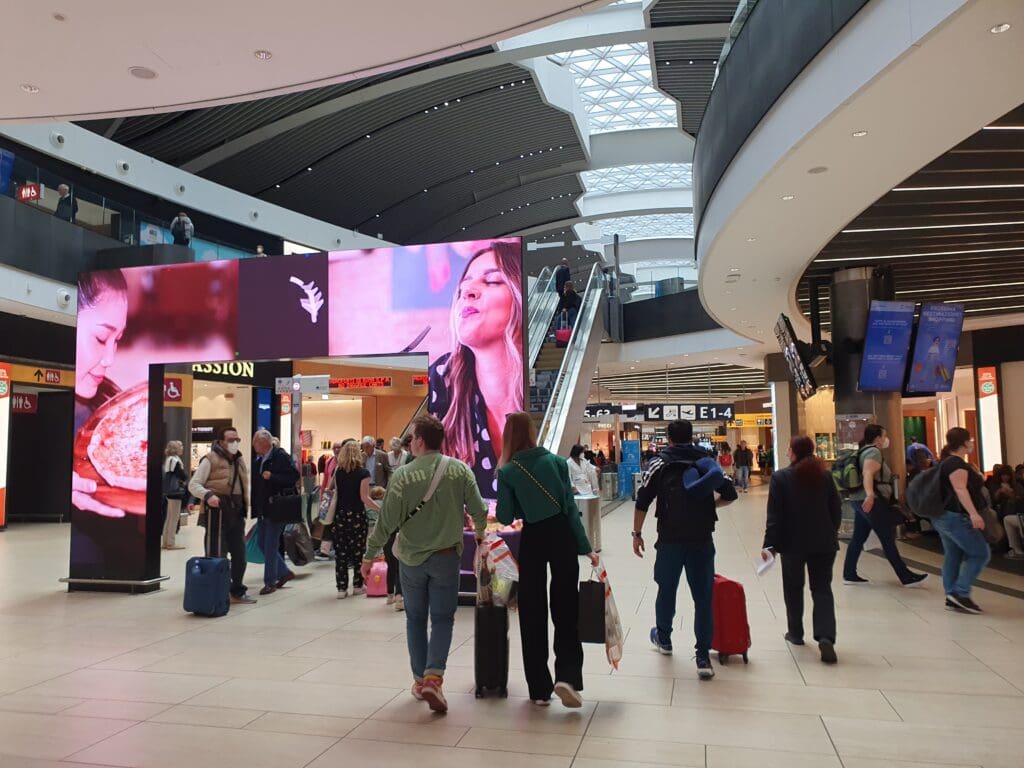
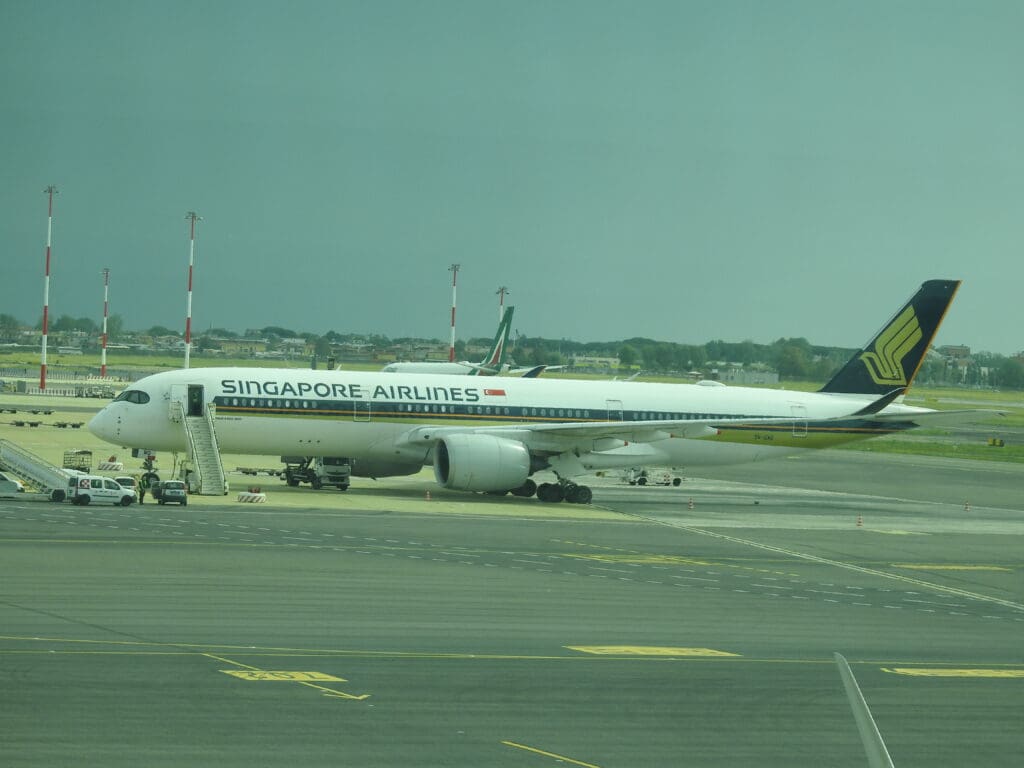
Following a heavily delayed yet enjoyable ride down from Copenhagen onboard a Singapore Airlines Airbus A350, I found myself scurrying through the busy, dingy, chaotic and somewhat makeshift-looking passageway that runs between the entrance to the landside arrivals area and the main airside portion of Terminal 3. Going against the flow of passengers as they journeyed towards the arrivals area, after a few minutes I arrived at a large duty free store. Upon passing through this I emerged inside Terminal 3’s main airside hall which inside appeared to be rather akin to a shopping centre on a busy afternoon, with plenty of shops and restaurants lining this on either side whilst above sat a rather interestingly designed roof with a crack like design splitting this into two and allowing natural light to enter.
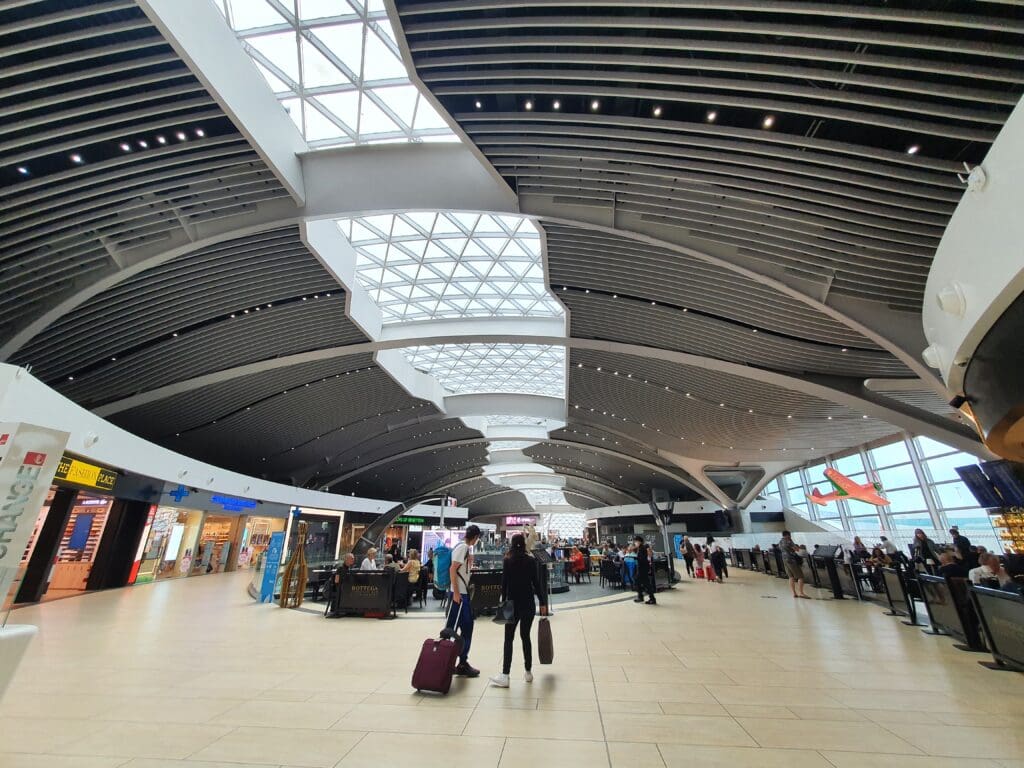
Not wanting to do any shopping nor queue at one of the many eateries in this part of the terminal, with my flight scheduled to depart from gate E33, I followed signs for gates E31-44 and soon arrived at the very busy immigration area. Travelling on a British passport, whilst no longer a citizen of the European Union, Italy allows those from the UK to use e-gates when entering and exiting the country. Following a glance at my passport, thankfully I was directed away from the long snaking queues that led up to the manned counters and pointed towards the small collection of e-gates, which at that time lacked any queues. After scanning my passport, I walked up to the counter where I handed over my passport to a very disinterested-looking immigration officer who very nearly stamped my passport’s photo page! Thankfully realising their error just in time, they then flicked to an empty page where they stamped this some vigour before handing my passport back to me. From there, I made my way up to the platform of the SkyBridge – the automated people mover that shuttles passengers to and from Terminal 3’s satellite terminal, which serves as the start and end point of some of Rome Fiumicino’s services to and from destinations outside of the European Union’s Common Travel Area.
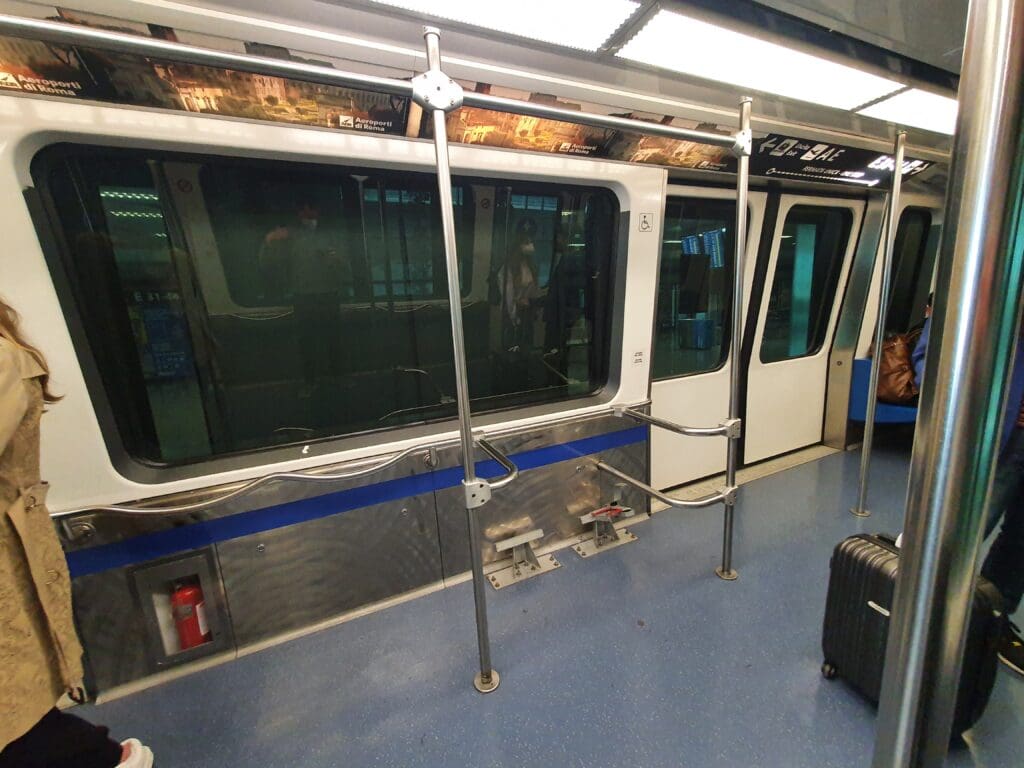
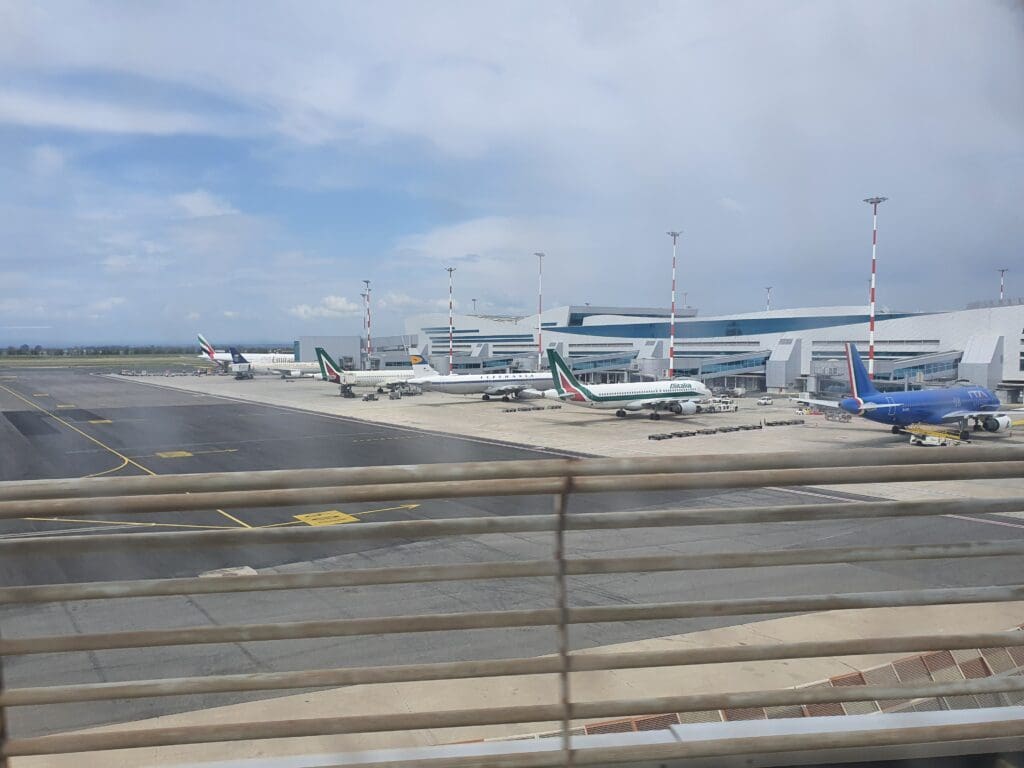
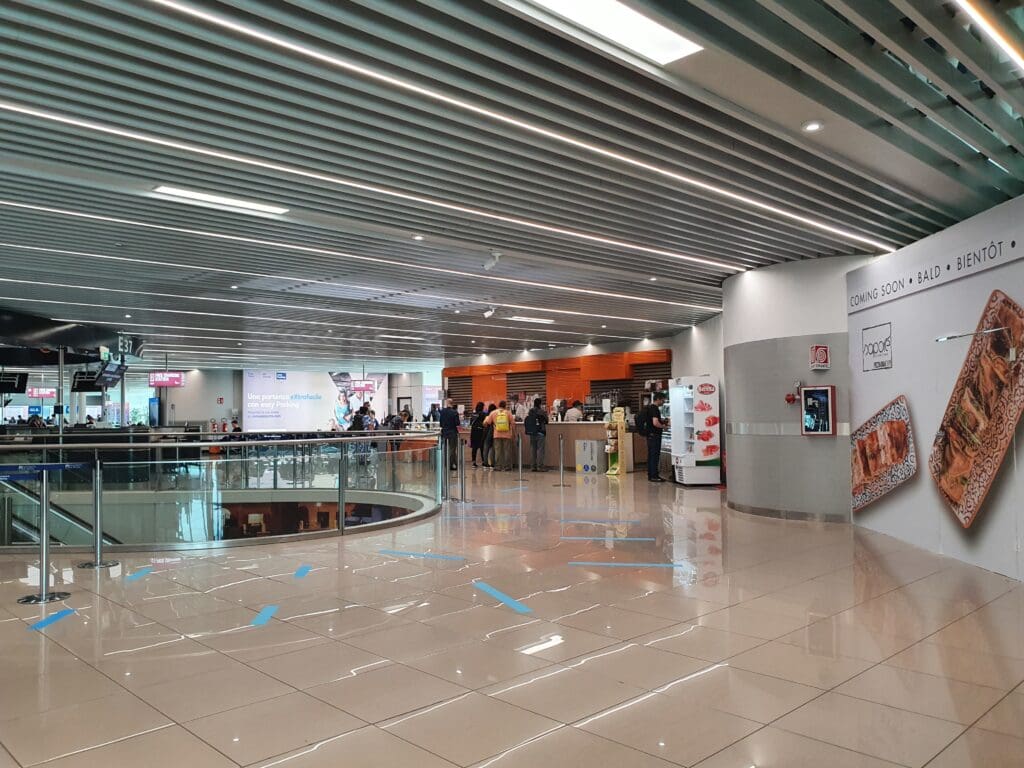
Following a quick journey over the apron, I arrived at the small square-shaped satellite terminal and wasted no time in exploring this. Inside, this seemed to be slightly dated in its design and tatty in its aesthetic, clearly having seen better days. Whilst this is not an automatic disqualifier, my first impression was soured somewhat since plenty of rubbish could be seen dotted about waiting to be cleaned up whilst I also spotted several pieces of gum stuck to the seating in various places across the terminal. Furthermore, the scent of cigarette smoke seemed to be omnipresent across the terminal, something which was probably attributable to the multiple smoking booths scattered throughout the waiting area. In terms of facilities, these were limited to a couple of cafés – both of which seemed to feature long queues for the duration of my stay, as well as an Aelia duty free store and a small WHSmiths shop. Turning to the positives, plenty of seating was on offer throughout the terminal and as is unfortunately not the case at many airports, a good number of working plug sockets were available which I soon made use of to charge my phone. As many passengers expect, complimentary wifi was provided and this seemed to work well for the duration of my stay. Importantly for aviation enthusiasts, sitting high above the ground, large glass windows running along all sides of the terminal offered a fantastic view of the movements outside however these were slightly tinted and in need of a clean ensuring that any decent photography proved to be rather difficult.
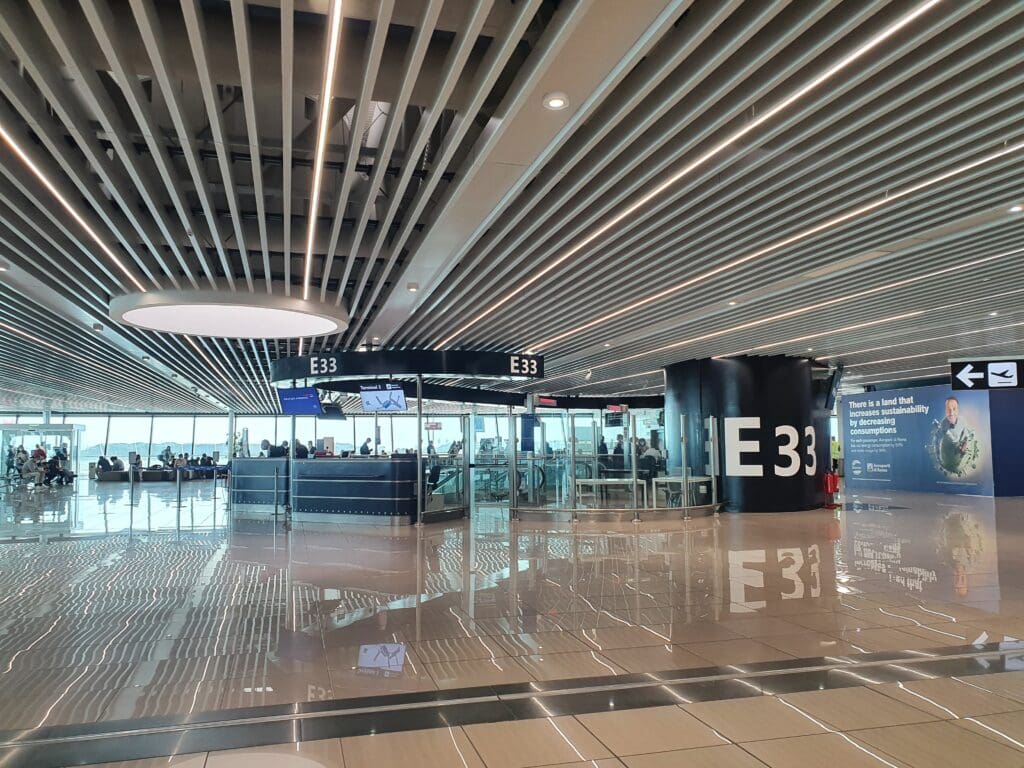
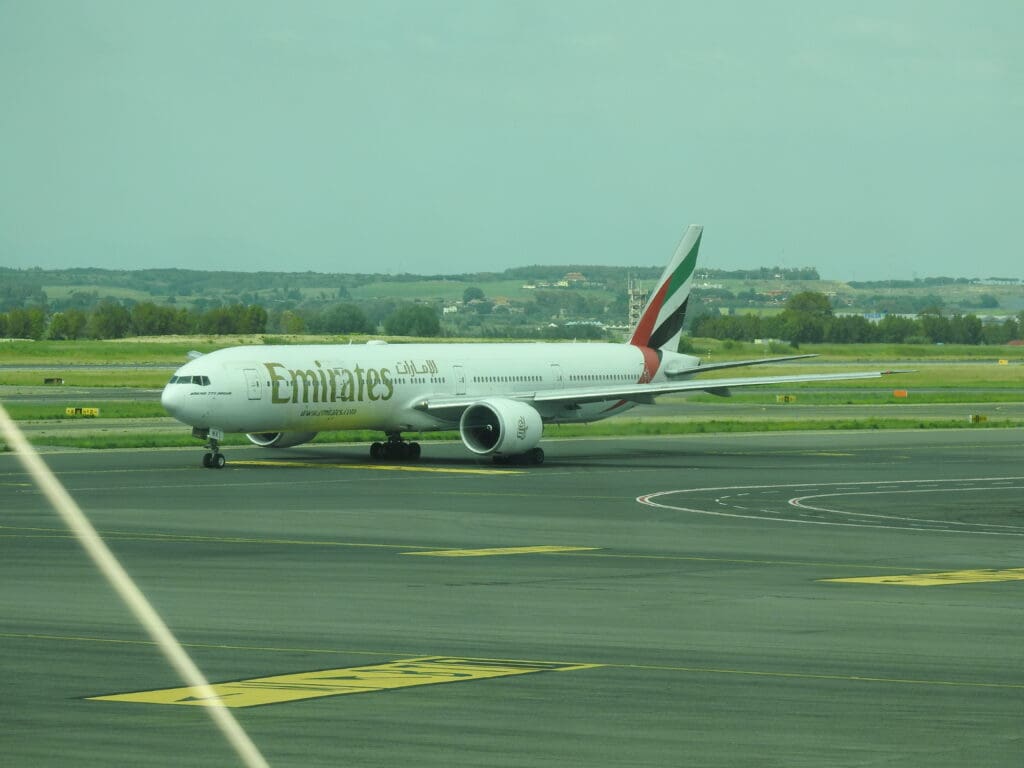
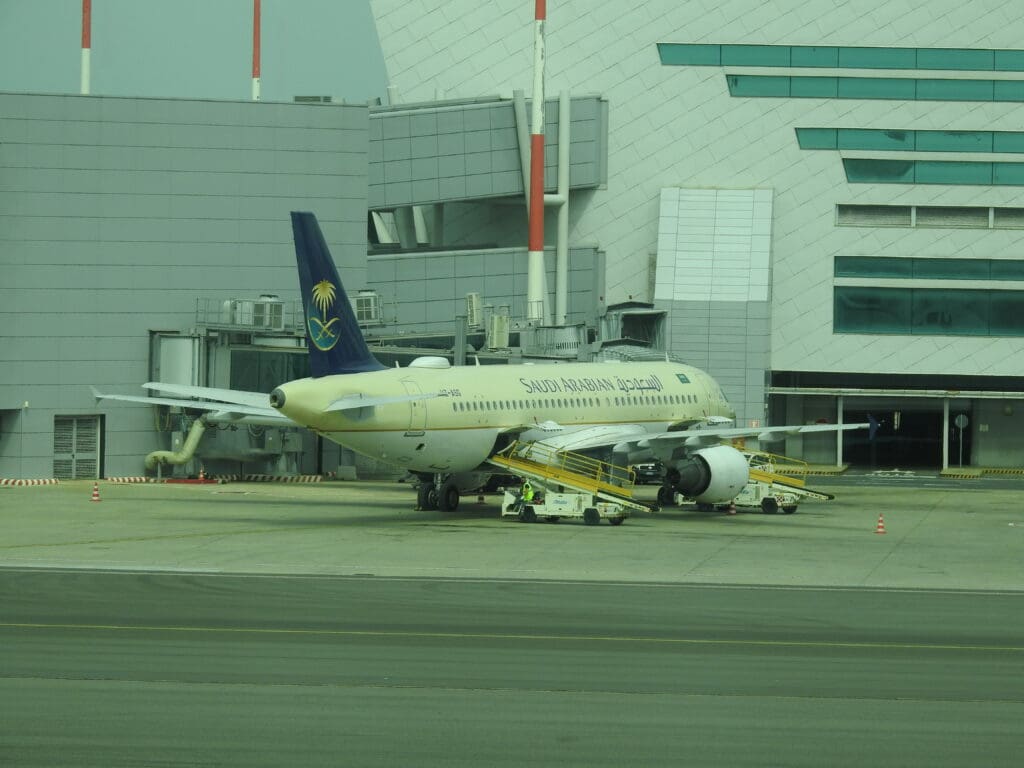
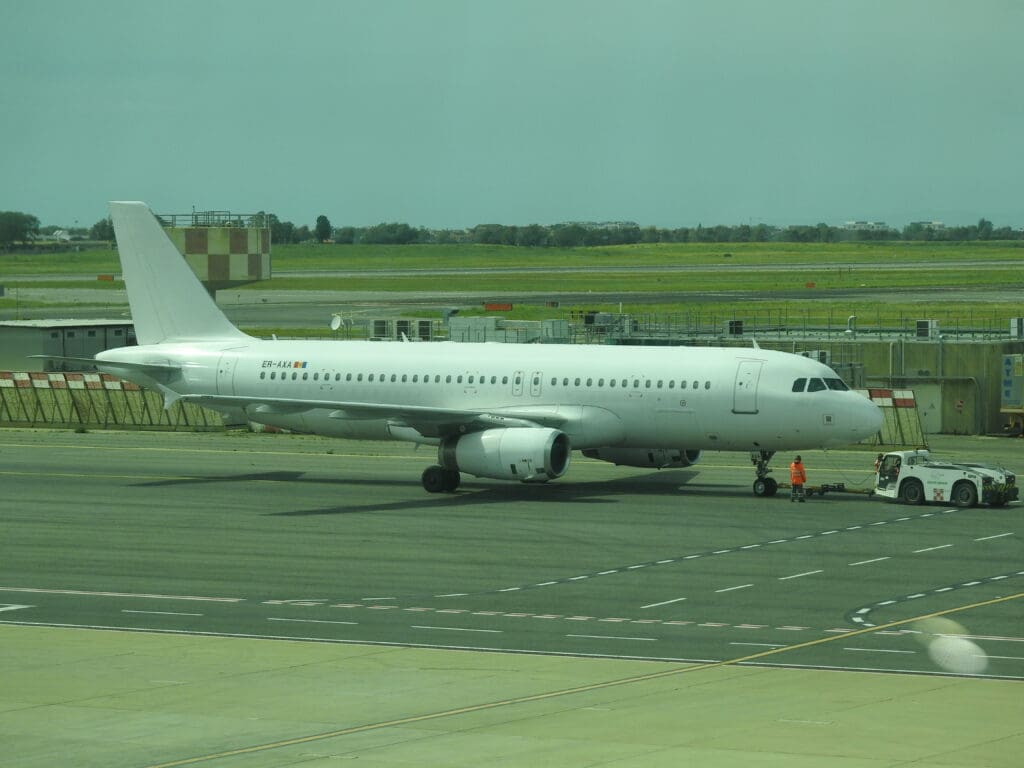
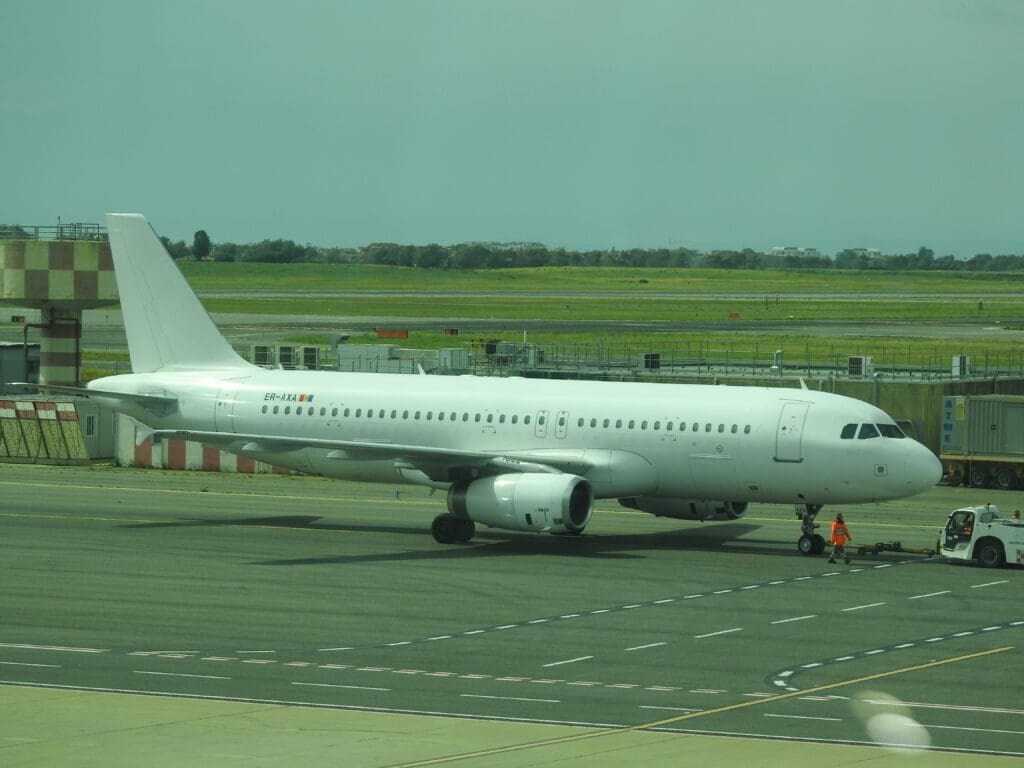
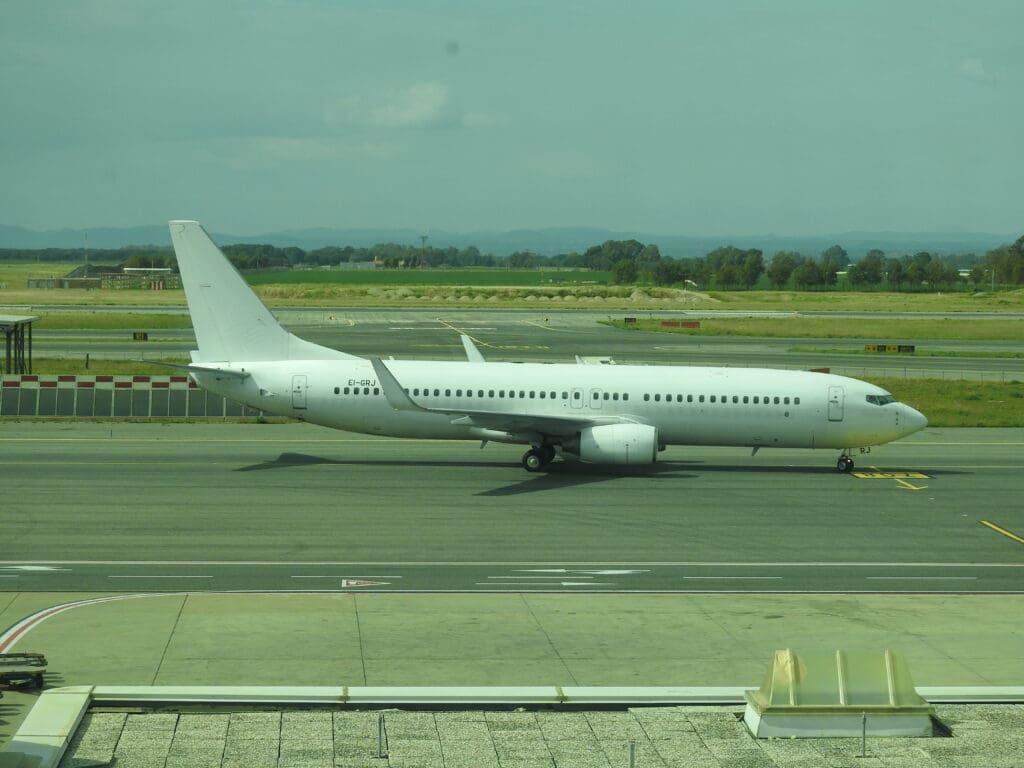
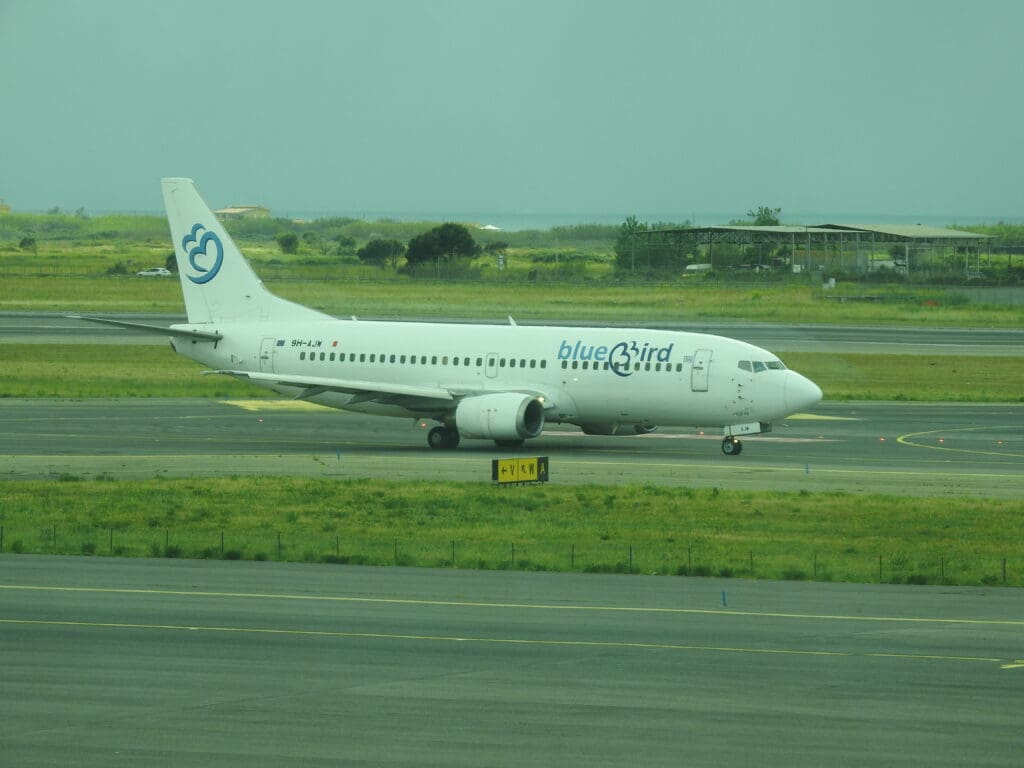
That afternoon whilst I did not manage to spot anything particularly rare, several aircraft outside were not examples that I would typically see regularly back in the UK. For example, amongst the masses of EasyJet, ITA Airways and Wizz Air jets across the airport, I managed to spot a couple of increasingly rare Boeing 737 Classics, an AirHorizont example parked up at a remote stand waiting for its next sortie and a Bluebird Airways aircraft (not the Icelandic cargo airline) which departed off on a scheduled flight to Tel Aviv during my stay. Meanwhile, upon arriving at the satellite terminal an all-white Air Moldova Airbus A320, a Qatar Airways Airbus A330-300, Royal Jordanian Airbus A319 and Turkish Airlines Airbus A321 could all be seen waiting at the gates outside ready to head off on their eastward journeys. Meanwhile, over at the main terminal, a Saudia Airbus A320 could be seen being prepared for its flight to Jeddah. After wandering around, I plonked myself down on a seat that provided a good view of both those aircraft landing on Runway 16R and those departing from Runway 25. That afternoon, my boarding pass informed me that boarding would commence at 1645 and take place through Gate E33. However, upon checking the departure boards, these revealed that the Heathrow flight’s departure gate had shifted to Gate E37 – of course, given the small size of the terminal, this proved to be no issue.
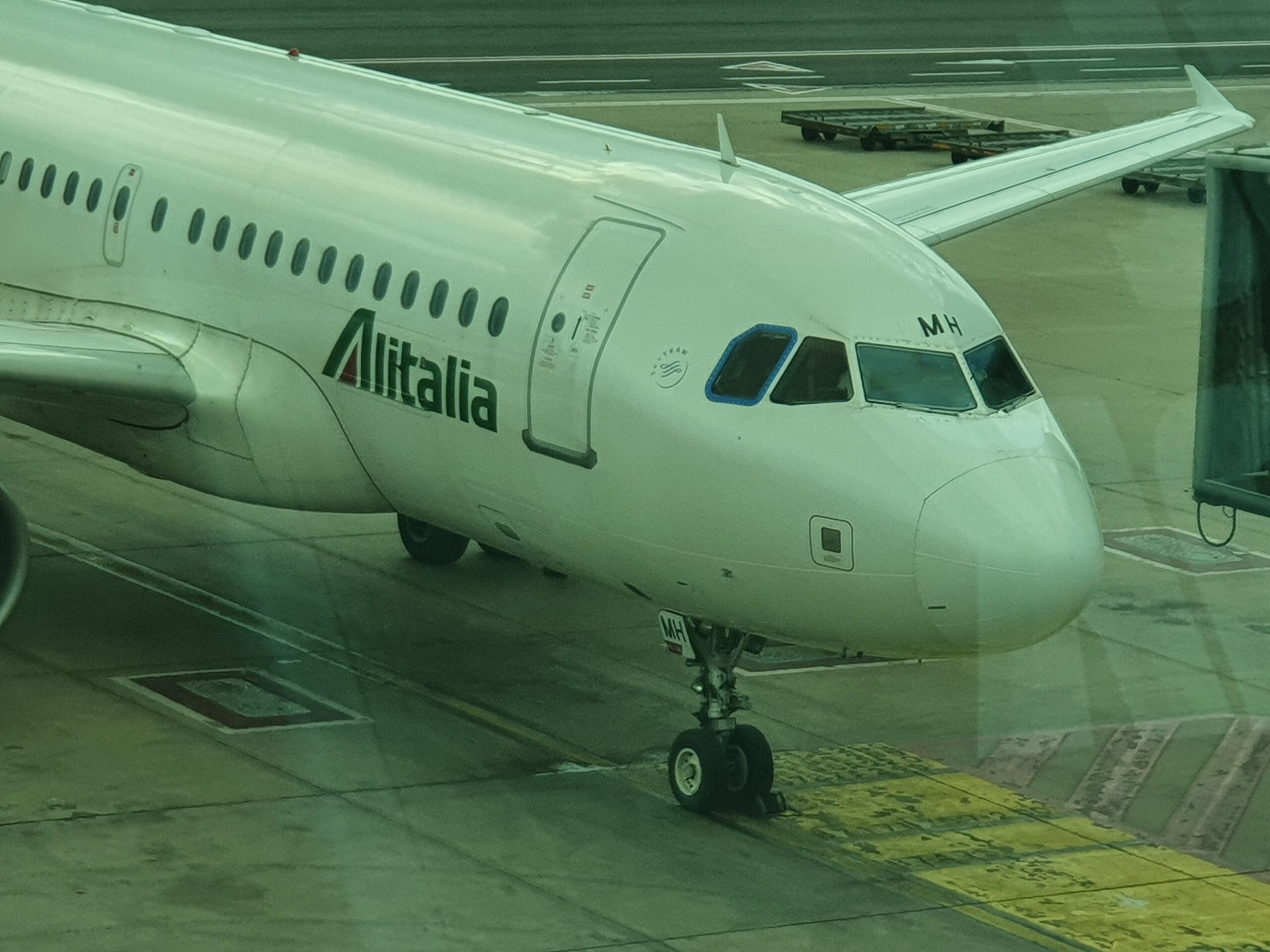
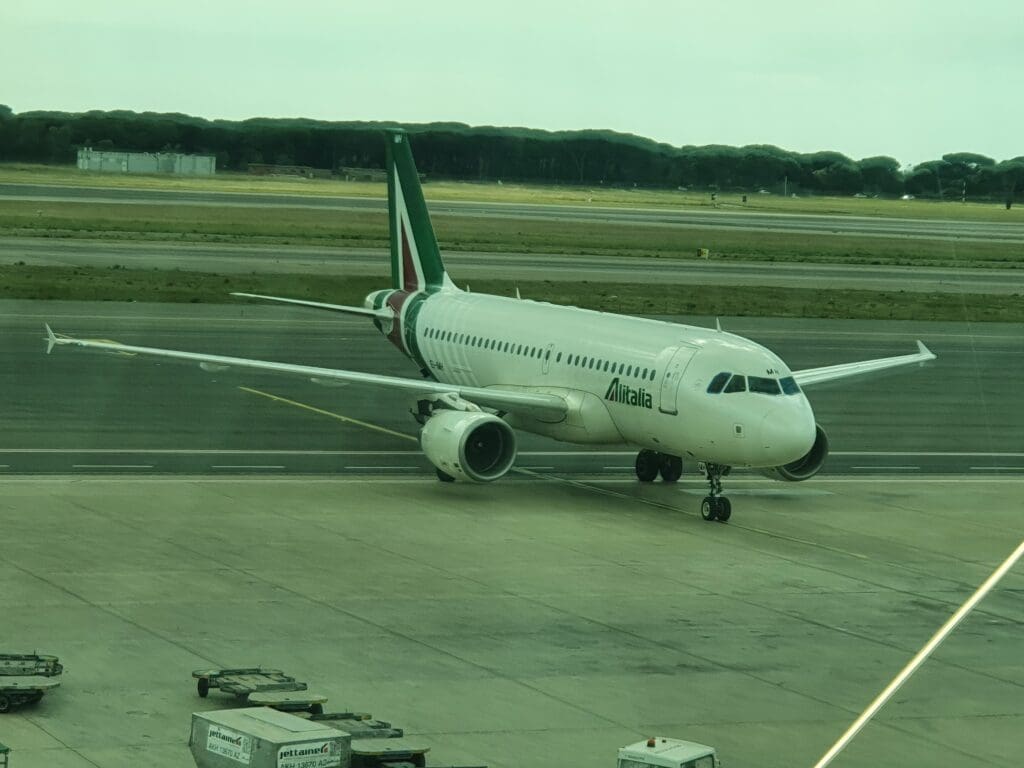
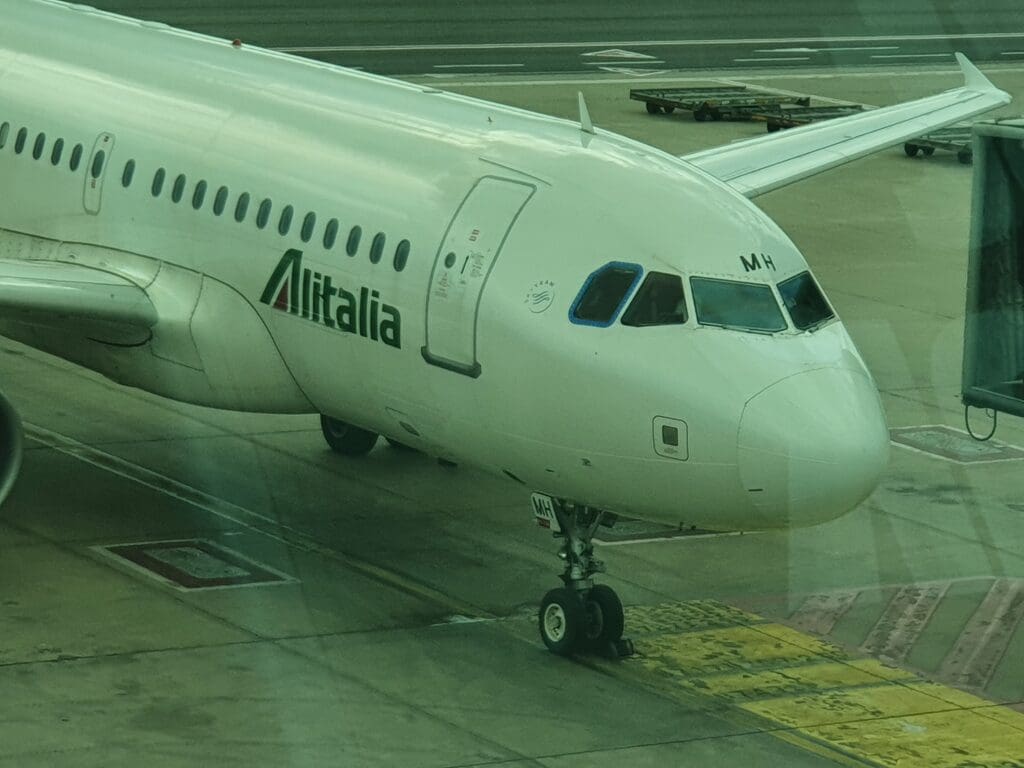
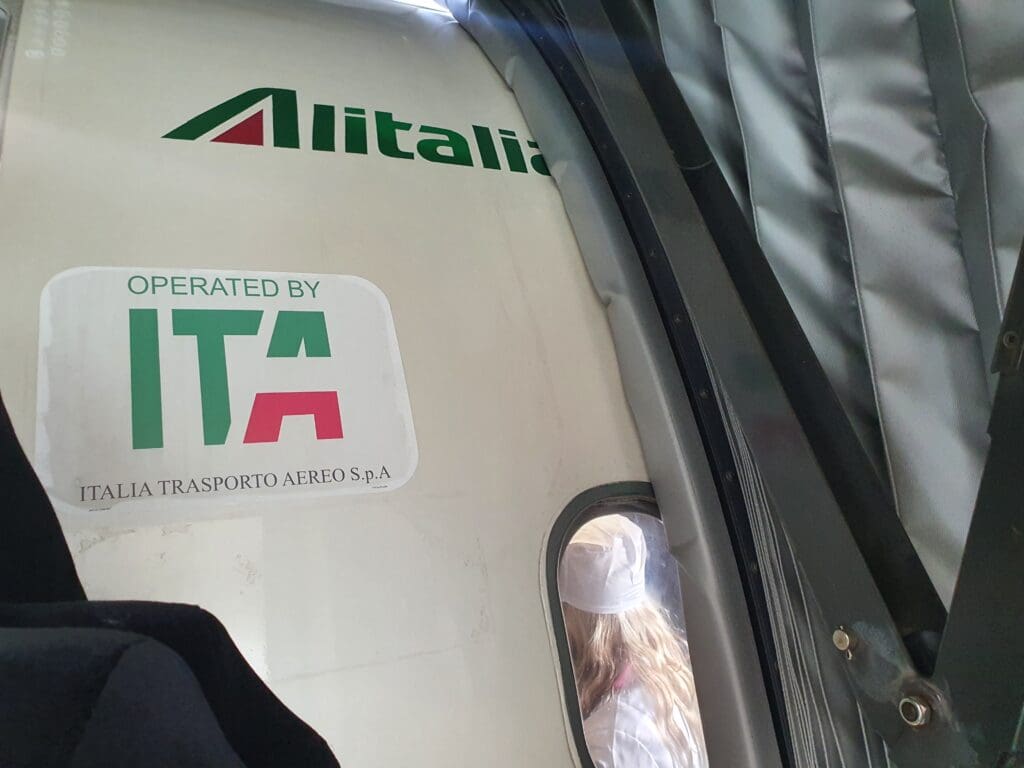
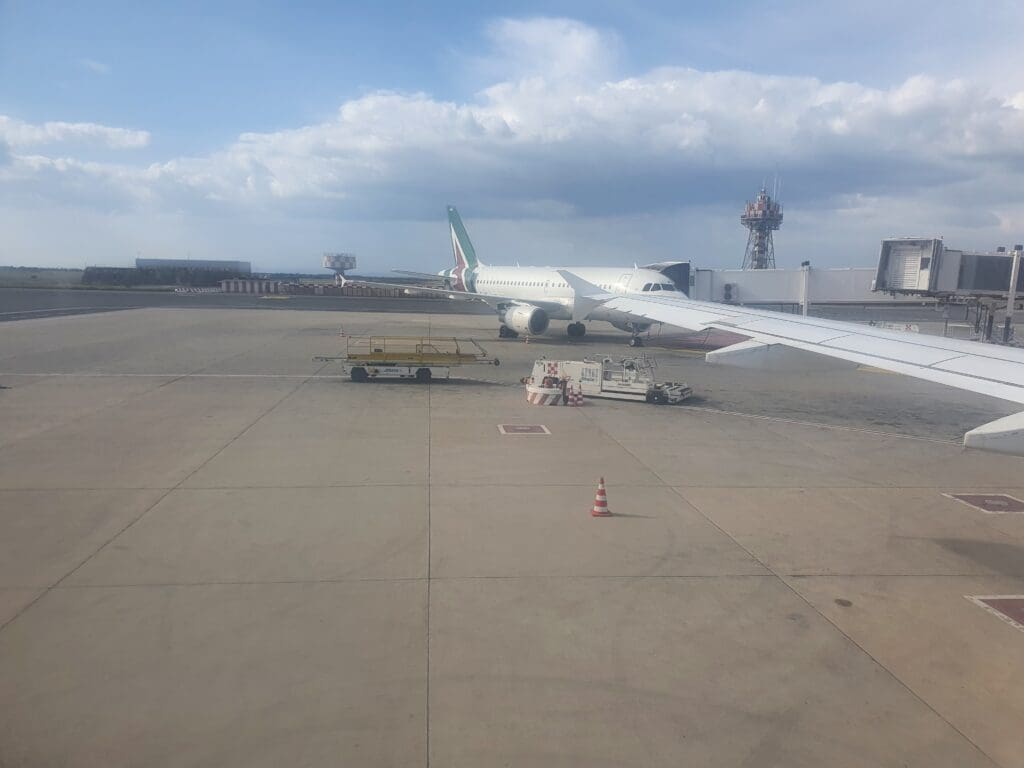
At 1630, I watched as Airbus A319-112 EI-IMH pulled into Stand 705 at the end of a short flight down from the Northern Italian city of Genoa. Seeing as this was the only ITA Airways jet at the satellite terminal, once this came to a halt outside it became obvious that this would be the aircraft operating the flight up to the UK that afternoon. As with many of ITA Airways’ aircraft, at the time of my flight, this particular example was yet to be repainted into the new Italian carrier’s distinctive bright blue livery and instead sported the latest Alitalia livery albeit with the addition of ITA Airways stickers near the main cabin door. Assembled at Airbus’ Hamburg Finkenwerder facility, this particular aircraft first took to the skies in January 2004 with the test registration of D-AVYY, making the aircraft over eighteen years old at the time of my flight. Following the usual pre-delivery testing, in February 2004 the Airbus received its Italian registration of I-BIMH and christened Isola Di Ventotene after the small island in the Tyrrhenian Sea, and commenced its life with Alitalia. Since then, the aircraft has spent its career connecting Italy with destinations across Europe and North Africa. As with many aircraft in Alitalia’s fleet, in 2010 the Airbus was sold to the Aircraft Purchase Company No.12 and leased back to Alitalia, receiving its current Irish registration of EI-IMH as a result, and in 2015 the aircraft became one of the first to be repainted into Alitalia’s ‘new’ livery. In the week before my flight, the aircraft had been busy flying across Europe, covering over 19,600 miles throughout fifty flights. Except one rotation each from Rome to London Heathrow, Munich, Paris Orly and Zurich, all of these services took the form of domestic flights with the jet paying visits to Brindisi, Catania, Genoa, Milan Linate, Naples, Palermo, Pescara, Reggio di Calabria, Trieste and Turin.
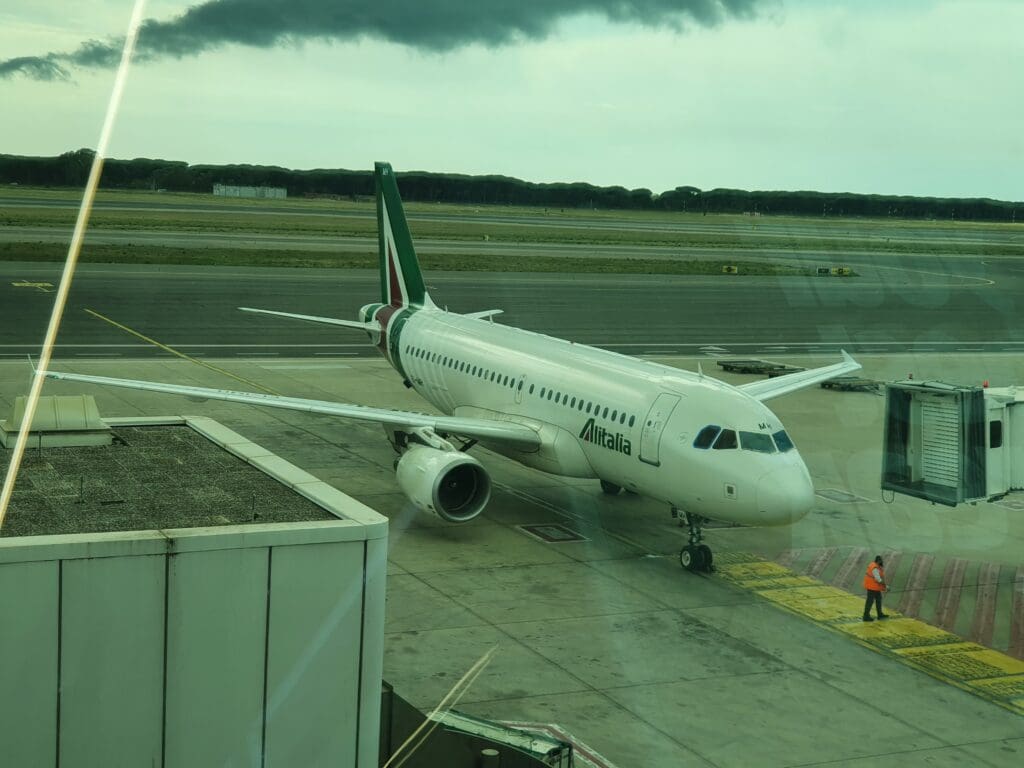
With the Airbus pulling into the stand just fifteen minutes before the scheduled commencement of boarding for the London flight, at 1640 I was not particularly surprised to hear a pre-recorded announcement ring out in Italian and English advising passengers that boarding would commence in ten minutes. True to this, ten minutes later another pre-recorded announcement could be heard which requested priority passengers to proceed forward for boarding. By this time, a long queue leading up to the gate podium had formed, and, not wanting to get left behind, I joined this a short time later. After around ten minutes of shuffling, my boarding pass was scanned and my passport was briefly checked before I was permitted to head down to the jetbridge.
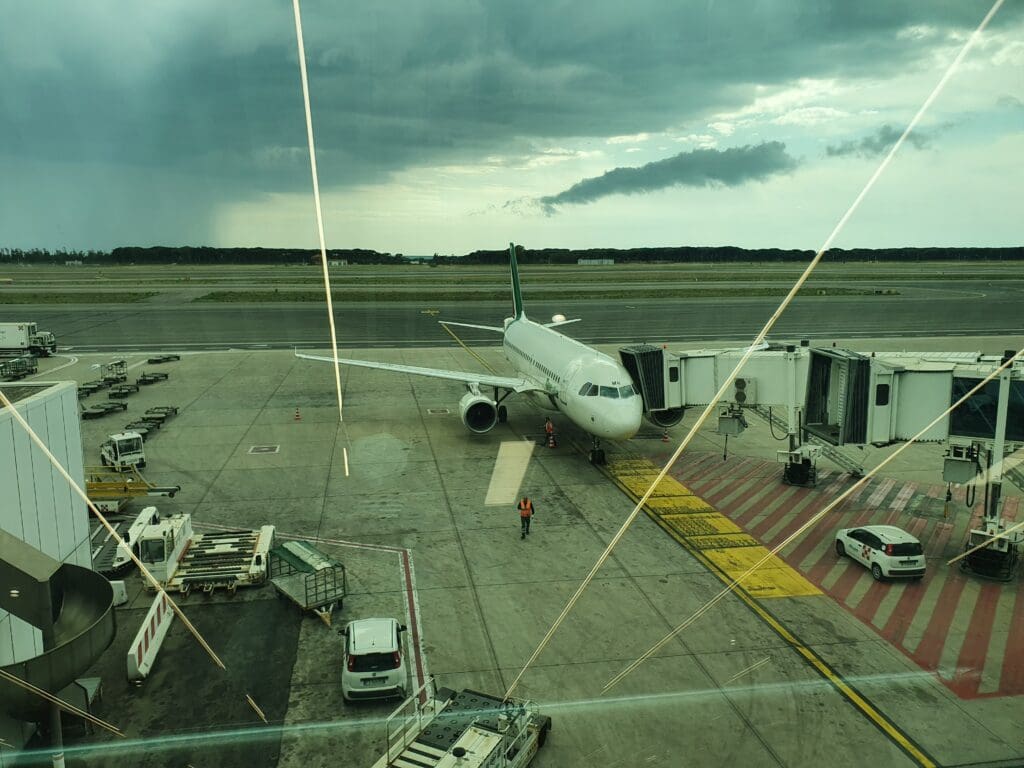
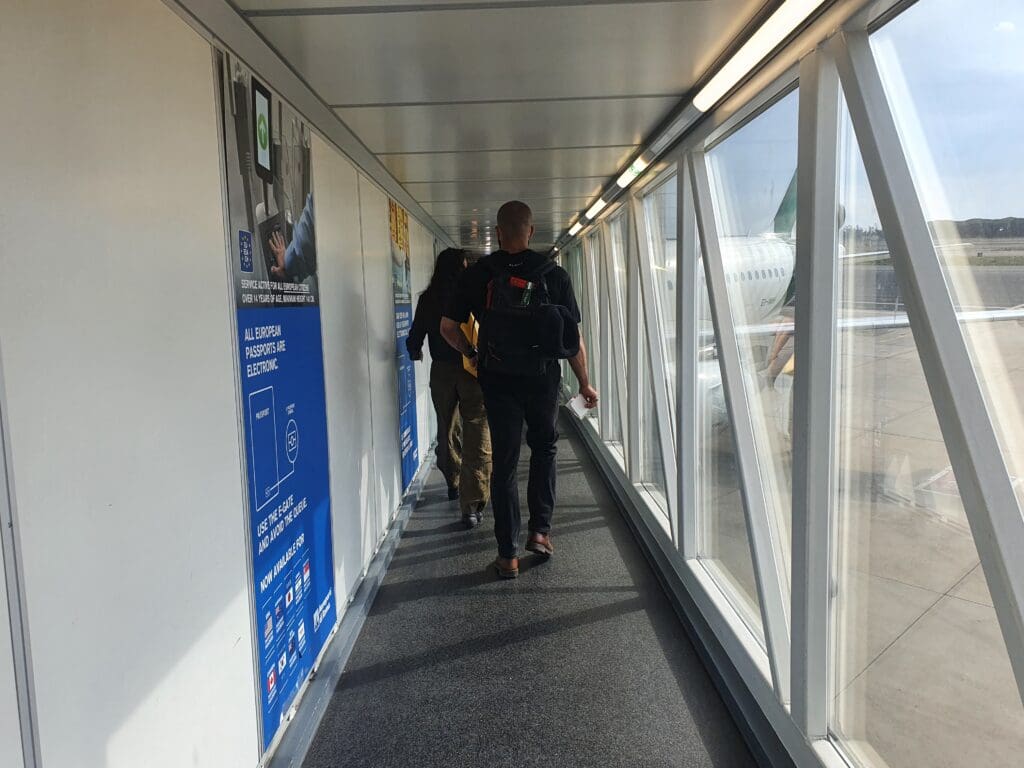
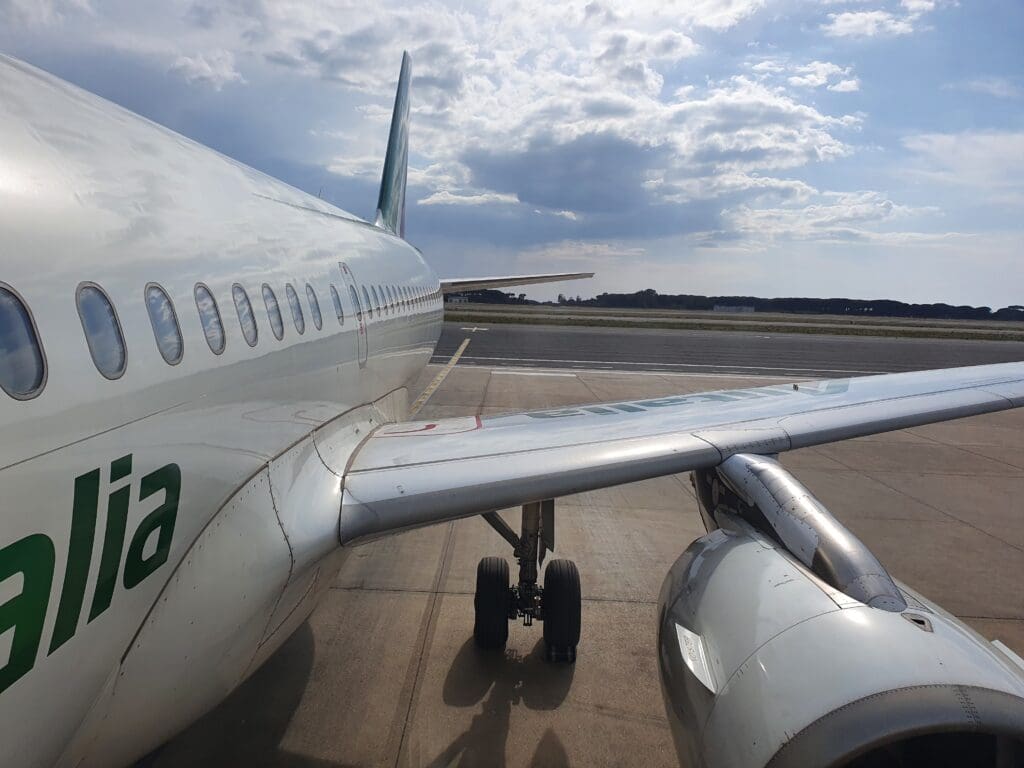
As I approached the Airbus, as is often the case, another short wait was in store on the jet bridge before I was able to board. After several minutes, I stepped into the Airbus’ forward galley where I received a very quiet and subdued welcome in Italian from one of the flight attendants before I turned right and made my way into the aircraft’s 144-seat cabin. Compared to other European Airbus A319s, those of ITA Airways feature slightly more seats than those of British Airways, Iberia and Lufthansa. As is the case onboard most European full-service carriers, those flying in Business onboard ITA Airways’ narrowbody jets are not treated to a different seat to those in Economy. However, these feature a blocked middle seat. Further distinguishing these seats from those in Economy, ITA Airways’ Business Class seats come complete with a beige (faux?) leather antimacassar, whilst those in Economy feature a bright red antimacassar adorned with Alitalia’s motif. This motif can also be seen on the faux wooden bulkheads at the front and rear of the cabin which I found to be a nice, although not rare, touch.
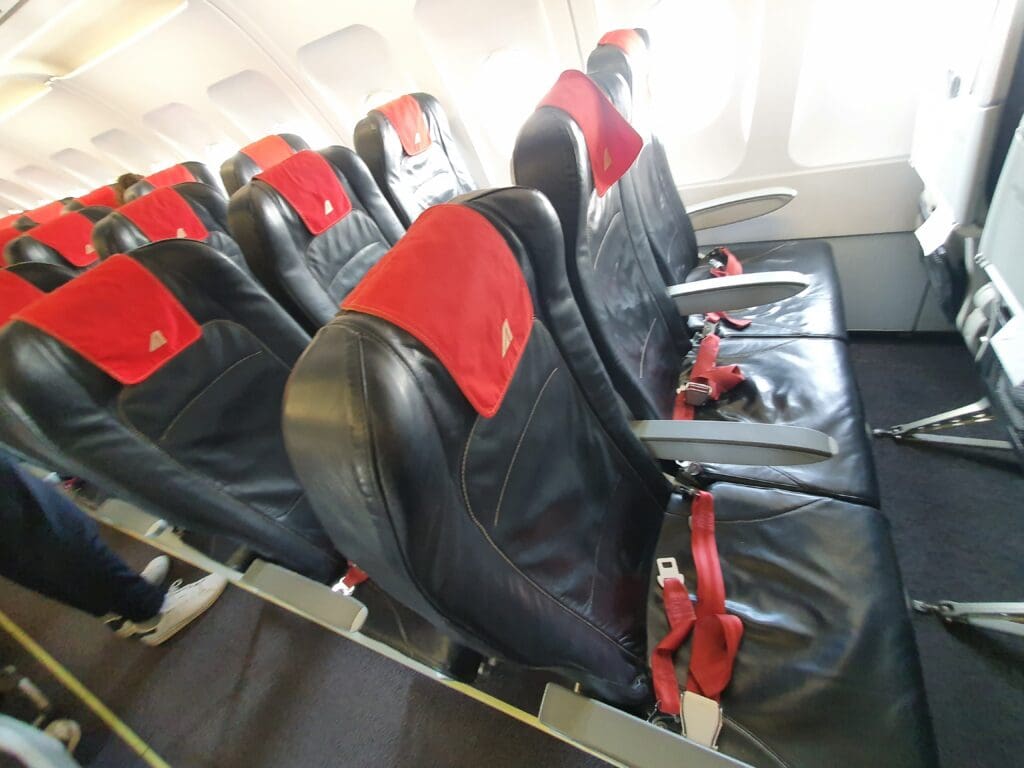
That afternoon, the flight up to London seemed to be fairly premium-heavy with Business Class taking up a significant portion of the front of the cabin. Even though I had ended up queuing for some time on the jetbridge, once in the aisle I was able to move down this and head to the rear of the aircraft without too much waiting. As with those seats in Business, each Economy seat was covered in a dark blue (faux?) leather covering and each seat appeared to be slightly more well-padded than your typical slimline seat, giving me some hope that I would be in for a comfortable ride up to London. With Alitalia having once installed small personal television screens on their Airbus narrowbodies, these had been removed and plastic coverings could be seen masking the spaces where these had once been. Although several buttons to control the now non-existent entertainment system remained in place in the armrests. Meanwhile, each seat featured a seatback pocket containing a sick bag and safety card. Curiously, as I journeyed to my seat, despite making the journey in May, I could not help that upbeat Christmas music loudly rang out through the cabin (Michael Bublé I think?), with three or four Christmas songs played on repeat until the welcome announcement.
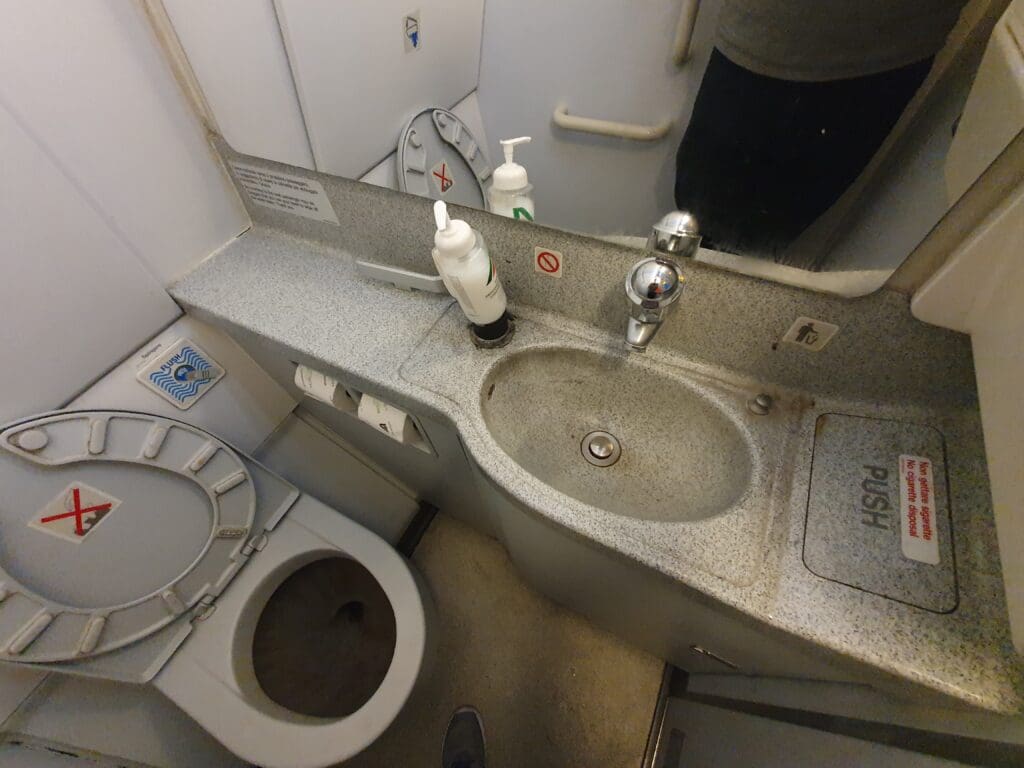
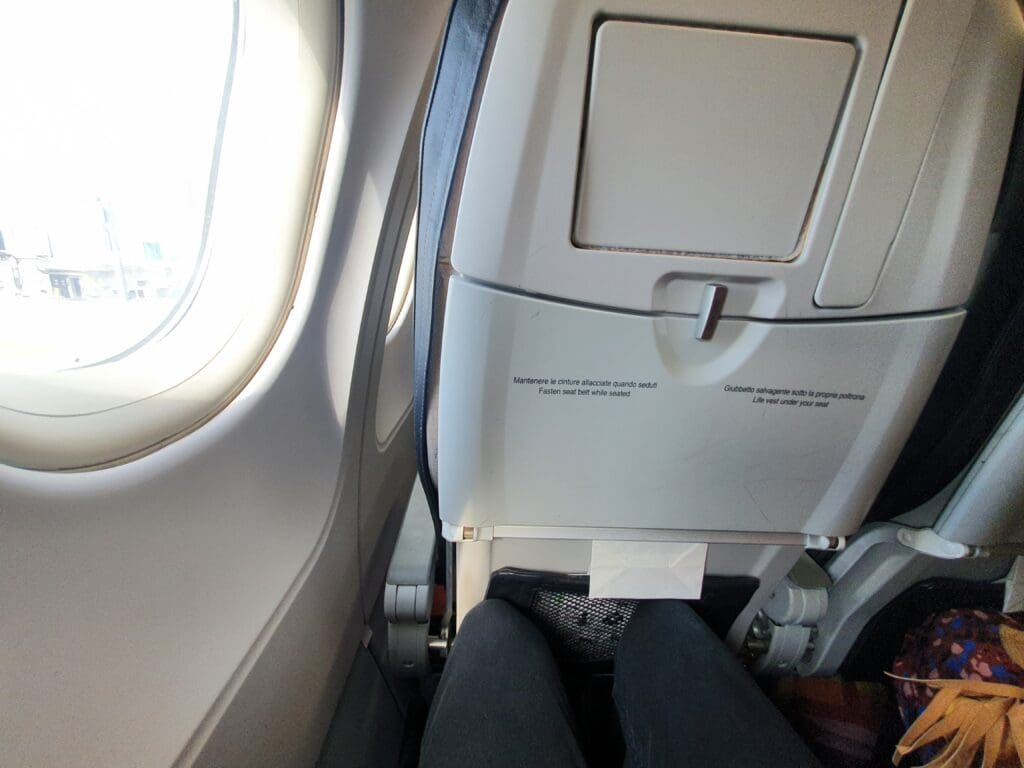
By the time I reached Row 25, I noticed that my neighbour was already sitting in the middle seat, and thus, not wishing to disturb them during the flight, I plonked my bag down and made a quick trip to one of the two lavatories at the rear of the aircraft. Upon opening the door to this, I found this to be in a seemingly dirty condition with plenty of signs of wear and tear. Nevertheless, this served its purpose and featured all the things that you would expect to find in an aircraft lavatory. Hoping that my seat would not be in such a poor state, I made my way back into the cabin and soon settled down in Seat 25A. Unfortunately, upon sitting down I was disappointed to see that this was absolutely covered in marks and scratches, having seen better days. Meanwhile, the plastic armrest cover of the seat in front of mine appeared to have become detached. Were the seat to have proven comfortable, this would have gone a little way to redeem ITA Airways however unfortunately, despite the seat’s chunky appearance, this was not the case. This featured a dire amount of legroom that seemed to be worse than the carrier’s low-cost rivals and thus the seat felt cramped and uncomfortable for the duration of the flight. Furthermore, I managed to spot a fair number of crumbs around this indicating that the cabin had not been properly cleaned during its short turnaround in Rome.
After sitting down, passengers continued to stream onto the aircraft and as expected for a Sunday evening service, the flight ended up being full, with many fellow passengers taking the form of solemn-looking weekend-trippers heading home. Given the high load and considering that many of those onboard were travelling with large cabin bags, there was plenty of jostling as passengers attempted to squeeze their oversized luggage into the overhead lockers. In the end, several passengers’ bags ended up being stored in the rear galley. To their credit, the flight attendant at the rear of the aircraft appeared to be helpful and proactive in assisting passengers and searching for space for their bags. Soon enough, the flight’s scheduled departure time of 1720 came and went, however, at this time passengers continued to stream onto the aircraft and there was no sign that the flight was ready to depart.
At 1730, the last passenger appeared to have made their way into the cabin and a short time later the Captain’s voice filled the cabin as they performed a short welcome announcement in Italian and English. During this speech, they informed passengers that the aircraft would soon commence its pushback and that we could expect a flight time of around two hours that evening. This was immediately followed by a welcome announcement from the Purser followed by a safety announcement accompanied by a demonstration as the aircraft jolted back from the gate fourteen minutes behind schedule at 1734. As the Airbus was pushed back away from the terminal, the aircraft’s two CFMI CFM56-5B6/P engines hummed into life causing some vibration and a short time later, the aircraft commenced its taxi to the runway during which the crew passed through the cabin in the usual manner ensuring that all was in place for our departure.
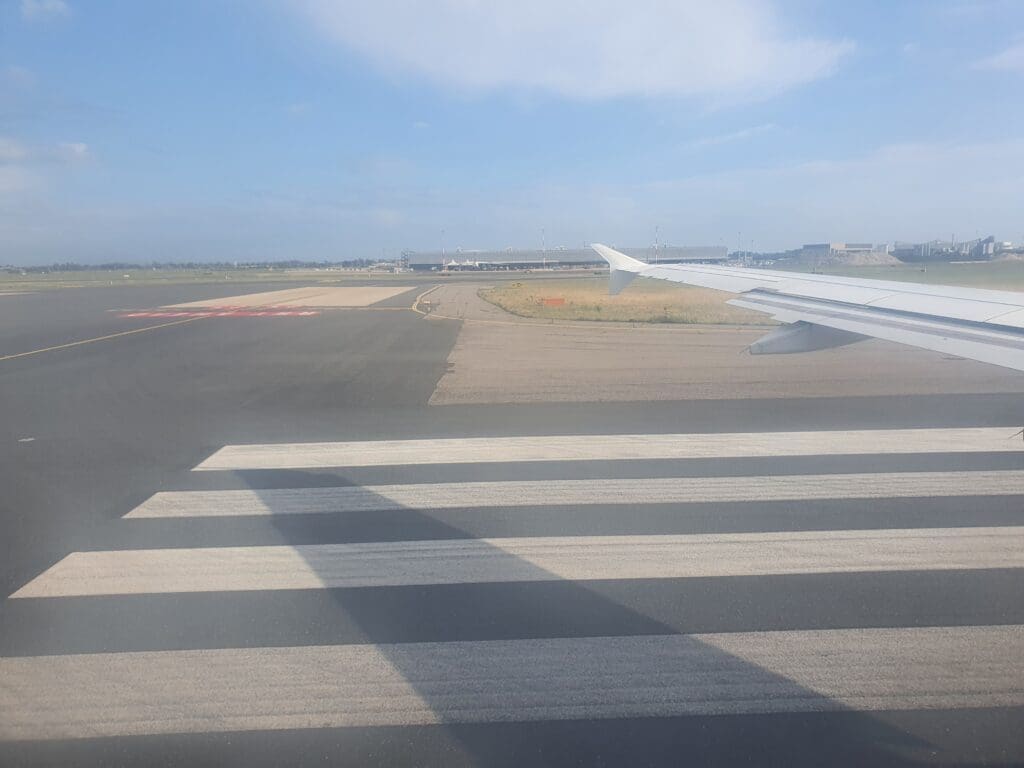
Once away from the stand, I drifted in and out of sleep as the Airbus made its way to the runway before waking up for good as we waited for a Vienna-bound Austrian Airbus A320 to depart ahead of us. As this aircraft began to roll down the runway, the London-bound Airbus made its way onto Runway 25 and came to a halt for a minute or so whilst the Austrian jet cleared out of the skies up ahead. As we waited, I managed to spot a rare Ilyushin Il-76TD-90VD belonging to Azerbaijani cargo airline Silk Way Airlines. By coincidence, despite this aircraft’s rarity, I had watched the same aircraft the previous day at London Stansted as it rocketed off into the cloudy skies at the start of its journey down to Rome! Following our short pause, the two engines spooled up and the Airbus commenced its powerful and relatively short take-off roll during which I was treated to good views of Rome Fiumicino Airport before the Lazio coastline came into view as we made our way up into the Italian skies.
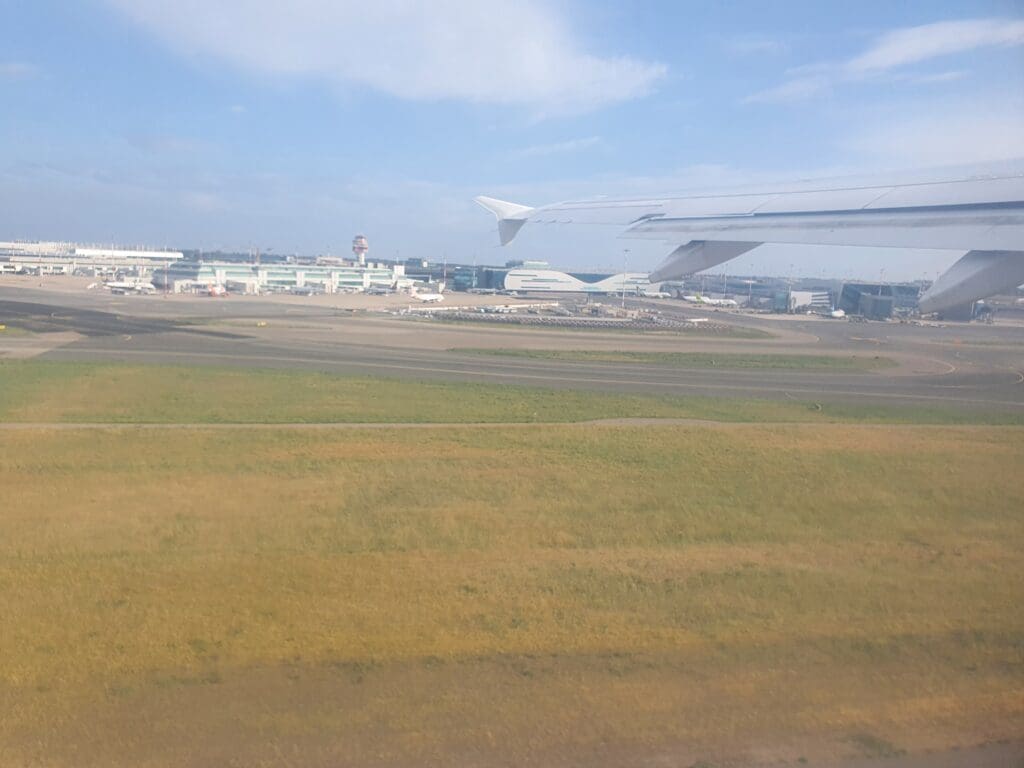
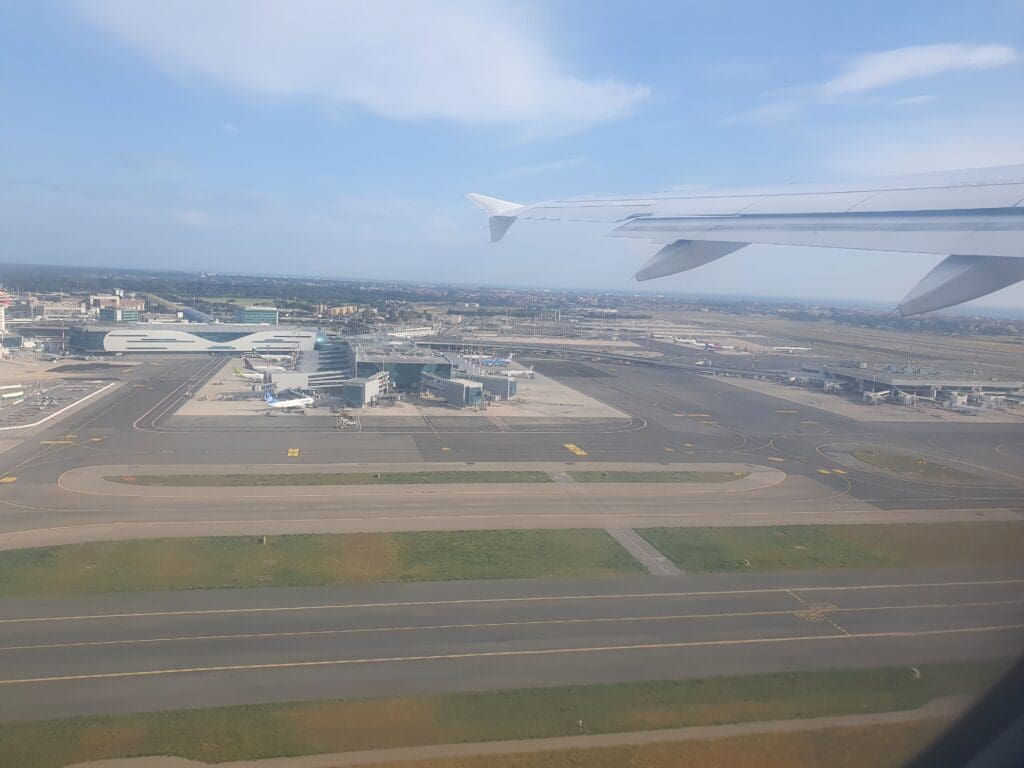
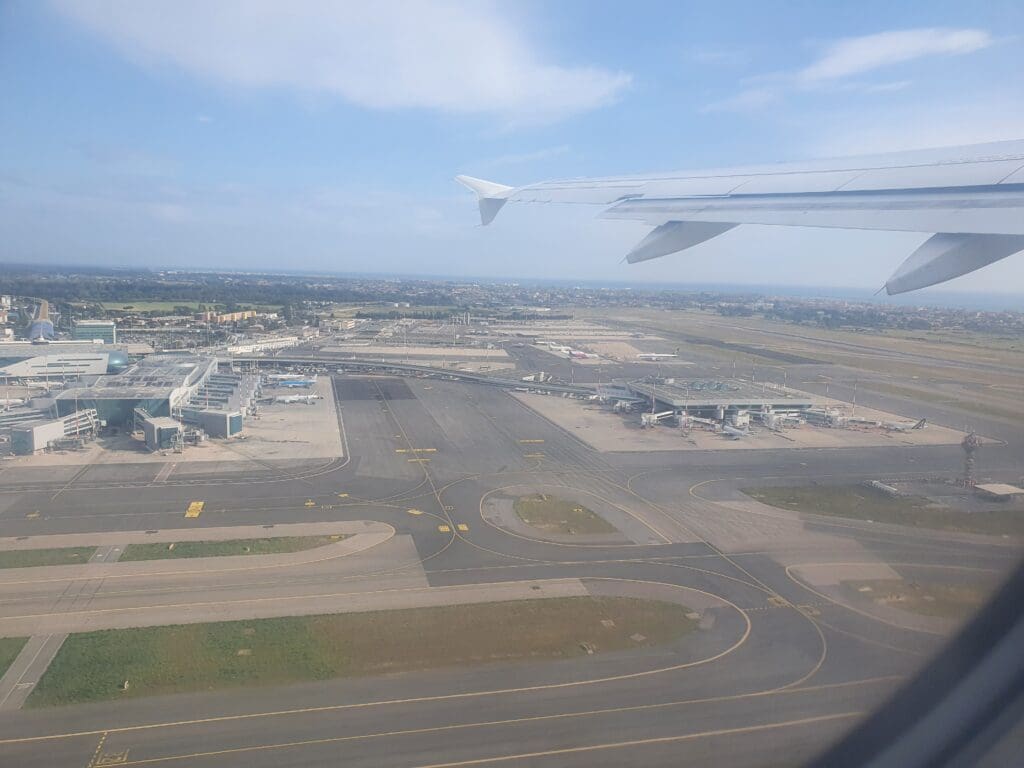
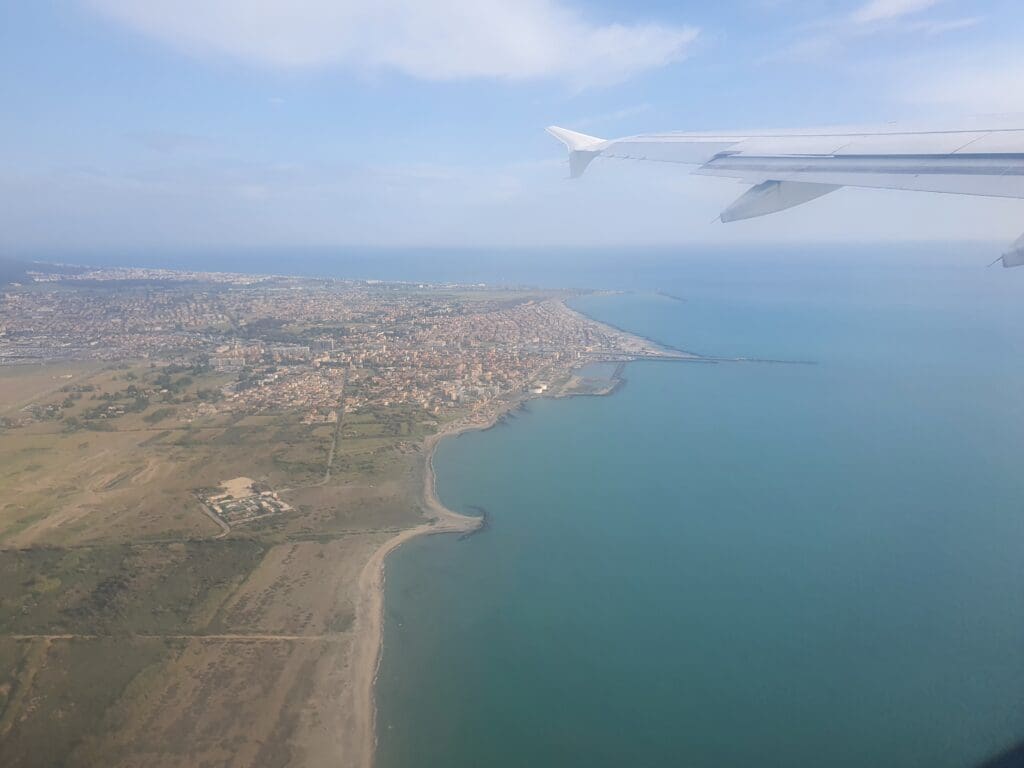
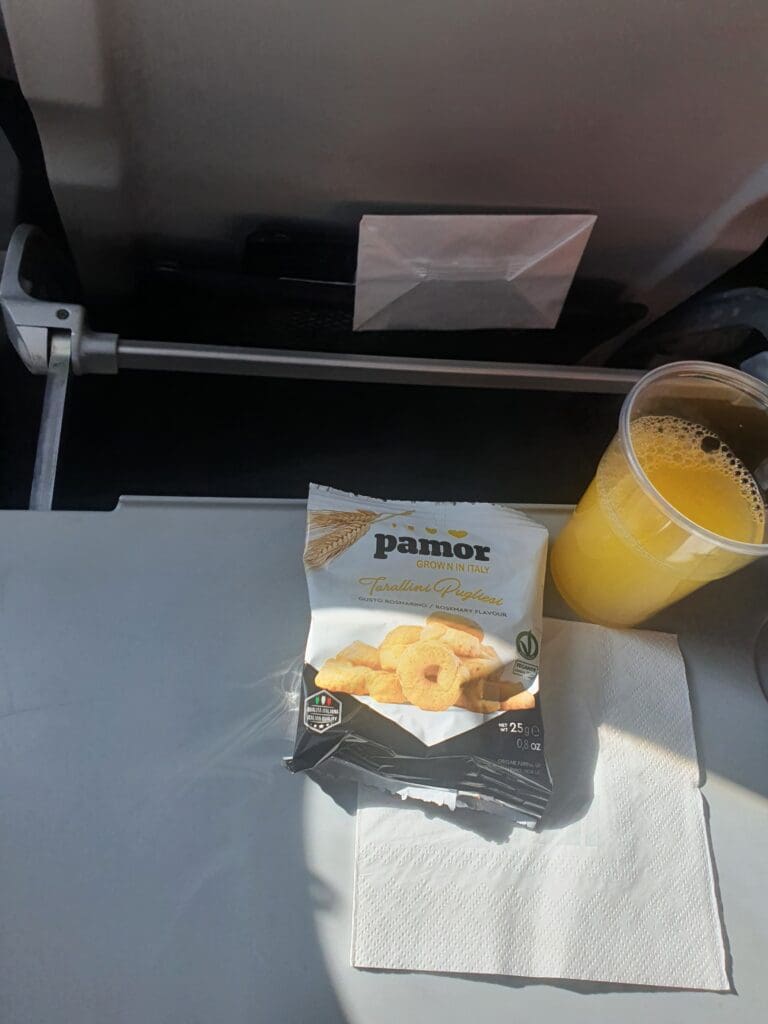
From Rome Fiumicino, the Airbus continued on the runway heading and flew westwards out over the Mediterranean for a few minutes before gently banking onto a northwesterly heading and flying very roughly parallel with Italy’s western coastline. Around twenty minutes after taking to the skies, and with almost no bumps whatsoever, the aircraft levelled off at its cruising altitude of 36,000 feet. Despite smooth flying conditions that evening which lasted to London, the seatbelt signs remained illuminated for the duration of the journey however, the cabin crew did nothing to reprimand those passengers who stood up whilst in the cruise. A short time after levelling off, the two flight attendants tasked with looking after those seated in Economy rolled a trolley to the front of the cabin and commenced the inflight service. Reaching my row around twenty minutes later, I was offered a sweet or savoury snack and settled on the latter. After a bag of what turned out to be a delicious Italian baked snack, Taralli Pugliese was handed over to me along with a serviette featuring Alitalia’s motif, I was offered a choice of drink. Opting for an orange juice, this was poured into a plastic cup and cautiously passed across to me, over the heads of the two neighbouring passengers. Given the length of the flight, this service left me with nothing to complain about and served to beat that of many other ‘full-service’ European carriers.
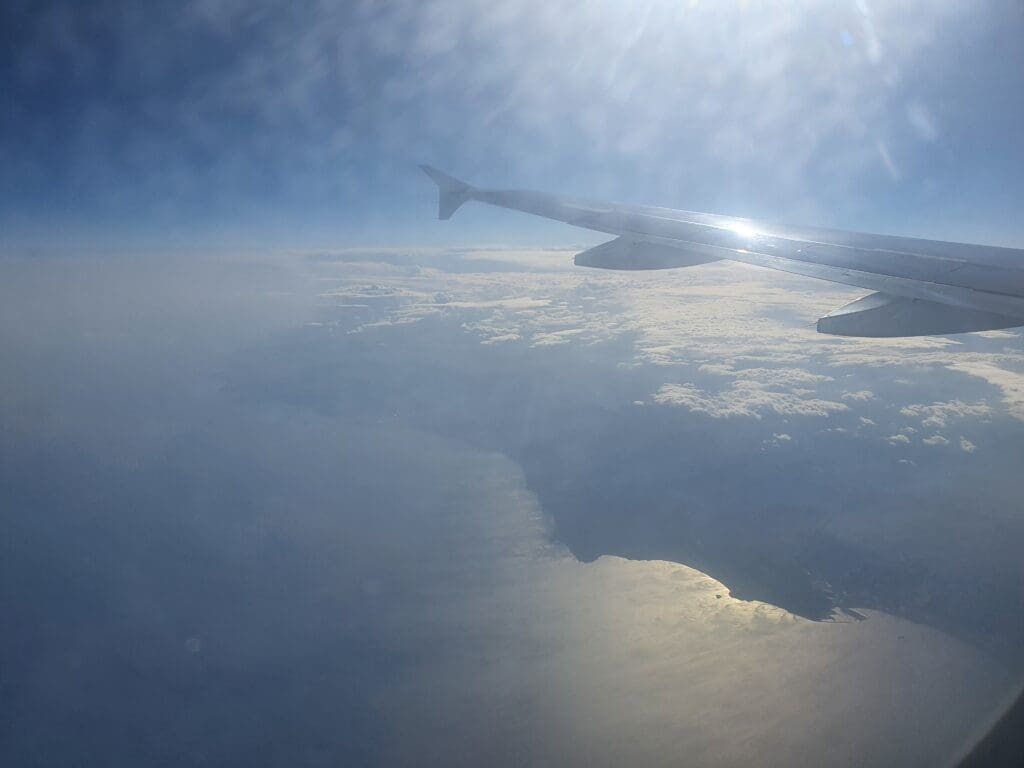
As the crew distributed drinks and snacks, below the coastline Italy’s Liguria region came into view and the Airbus crossed this just to the west of Genoa – the city that the Airbus had visited a couple of hours earlier. Heading inland, the aircraft passed Turin and continued north through Piedmont and then the Aosta Valley before reaching the Swiss border. From there, the aircraft flew along the French-Swiss border for a few minutes, temporarily crossing over into France before retreating into Swiss skies. A very short time later, the aircraft left Swiss airspace for good and journeyed northwest over the countryside of Eastern France. Unfortunately, the near-total cloud cover below meant that very little could be seen of France during this part of the flight, and with little to see outside, I spent much of our voyage across the country drifting in and out of sleep. However, later research revealed that we had passed in between the cities of Besançon and Dijon, crossed over Troyes before cruising to the east of Paris, and finally passed straight over the Northern French city of Amiens.
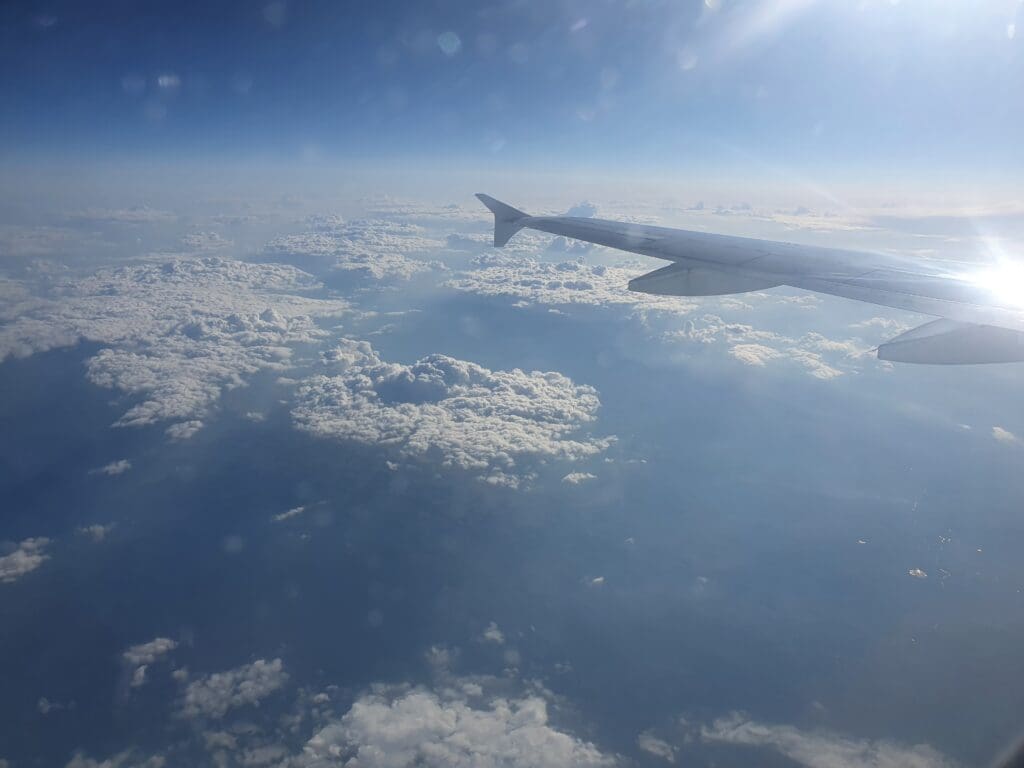
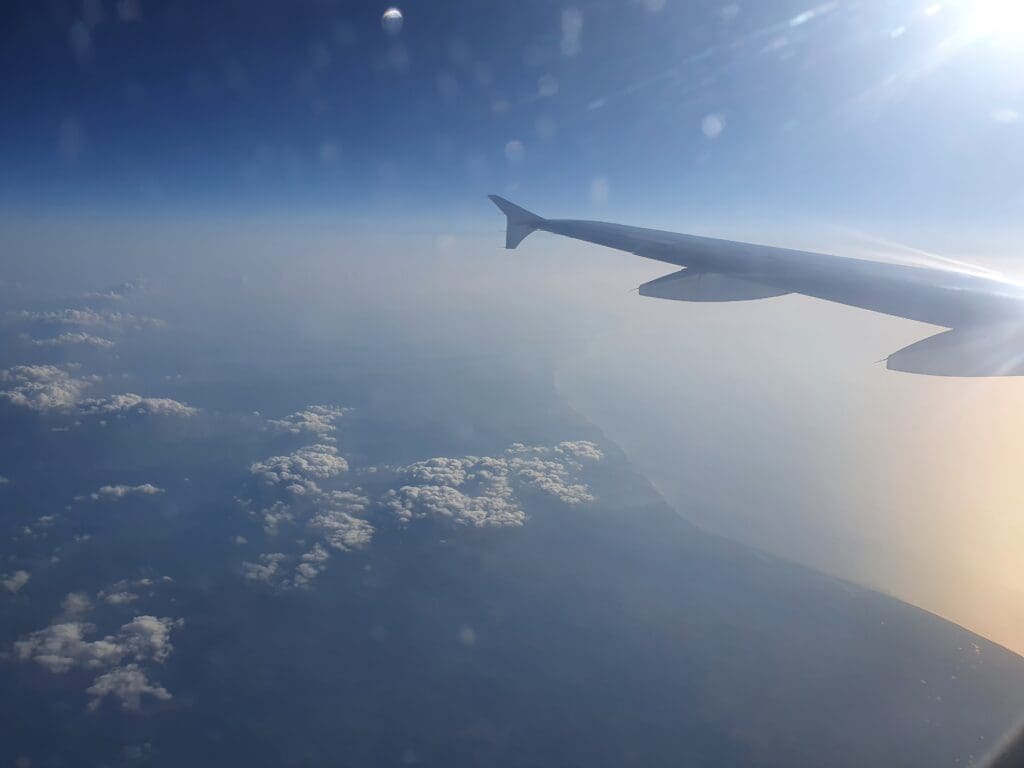
At 1825 BST, the aircraft passed over the Northern French commune of Abbeville, located in the country’s Hauts-de-France region, and commenced its long descent down from 36,000 feet. A few minutes later, the aircraft headed out over the Channel, crossing the French coastline just to the south of the town of Le Touquet – a popular spot amongst daytripping British light aircraft pilots. At this point, an announcement was made by the Purser advising that we could expect to be on the ground in twenty minutes before they went through the usual pre-landing warnings and announcements. Whilst the aircraft crossed over the Channel at far from its narrowest point, that evening our crossing over the sea took no more than six minutes. Thanks to the lack of clouds that evening, good views were offered of the Southern English coastline, with the aircraft making landfall between the Kent towns of Dungeness and Hastings. The good visibility that afternoon allowed for views up the English coastline to the Solent and Isle of Wight. After crossing the coast, the picturesque green countryside of the High Weald AONB could be seen as the aircraft crossed this from south to north, soon reaching the north side near the town of Royal Tunbridge Wells.
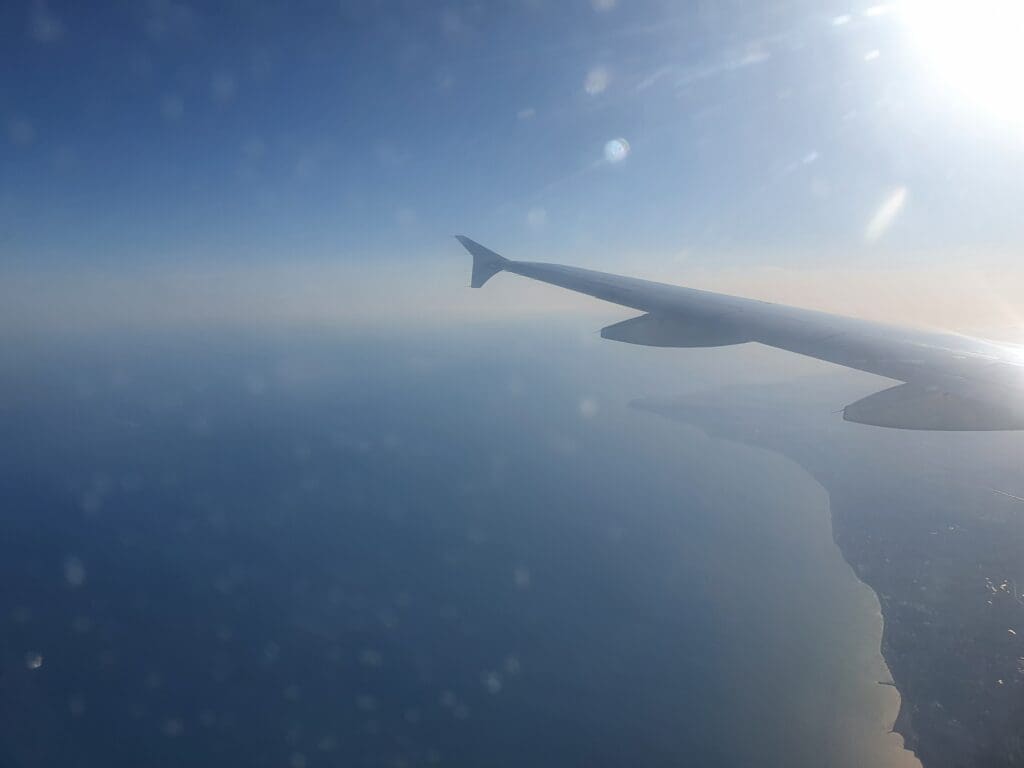
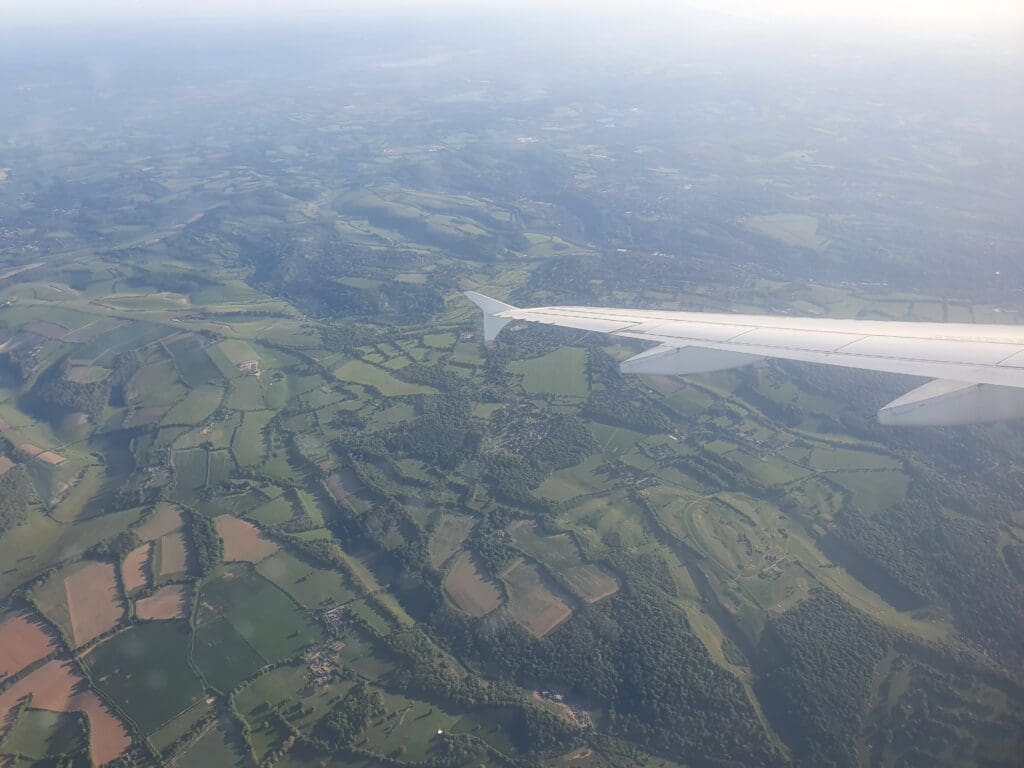
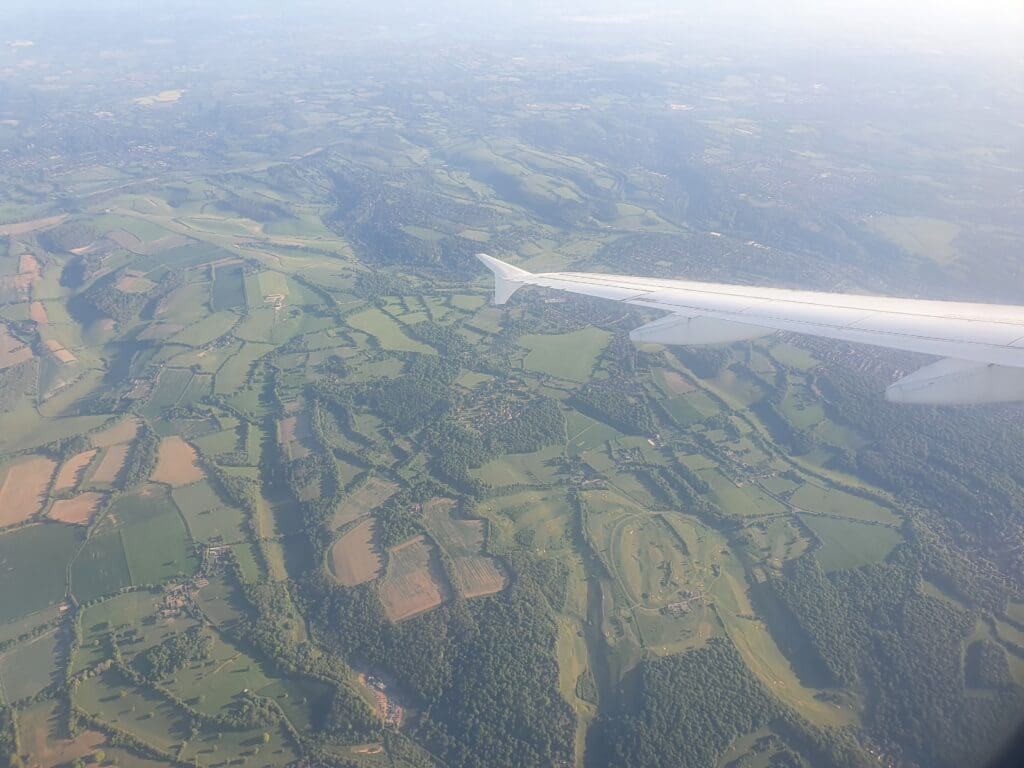
A short time later, the aircraft reached the town of Sevenoaks, at which point both Gatwick Airport and the airfield at Redhill could be seen a short distance to the west. This was followed by the historic airfield of Biggin Hill which now serves as a popular hub for private jets. At this time, a luxury Manx-registered Bombardier Global 5000 jet could be crossing below as it approached the airport following a flight from Tel Aviv. After passing Biggin Hill, the aircraft banked to the left and soon rolled out on a westerly heading, providing an early indication that we would make an approach onto one of Heathrow’s 09 runways rather than approaching the airport from Central London. At this time, continuing with the aviation sights, the airfield of RAF Kenley, a former important Spitfire base and now glider airfield, could be seen below. This is an airfield I have some familiarity with having flown several glider flights from there the year before!
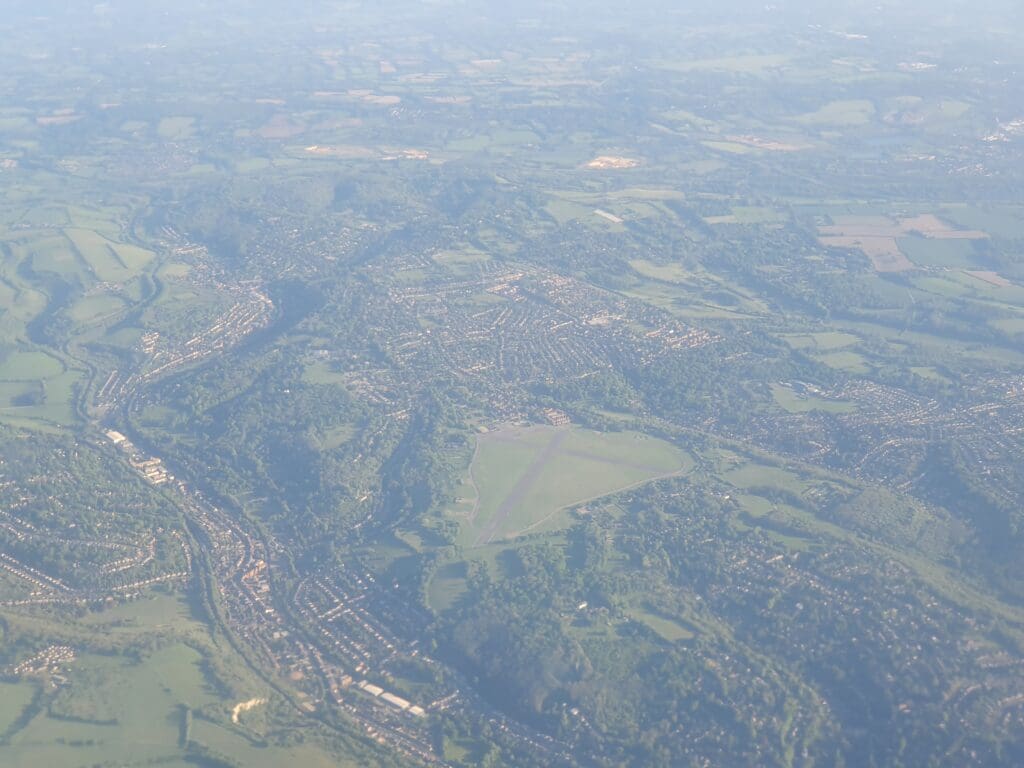
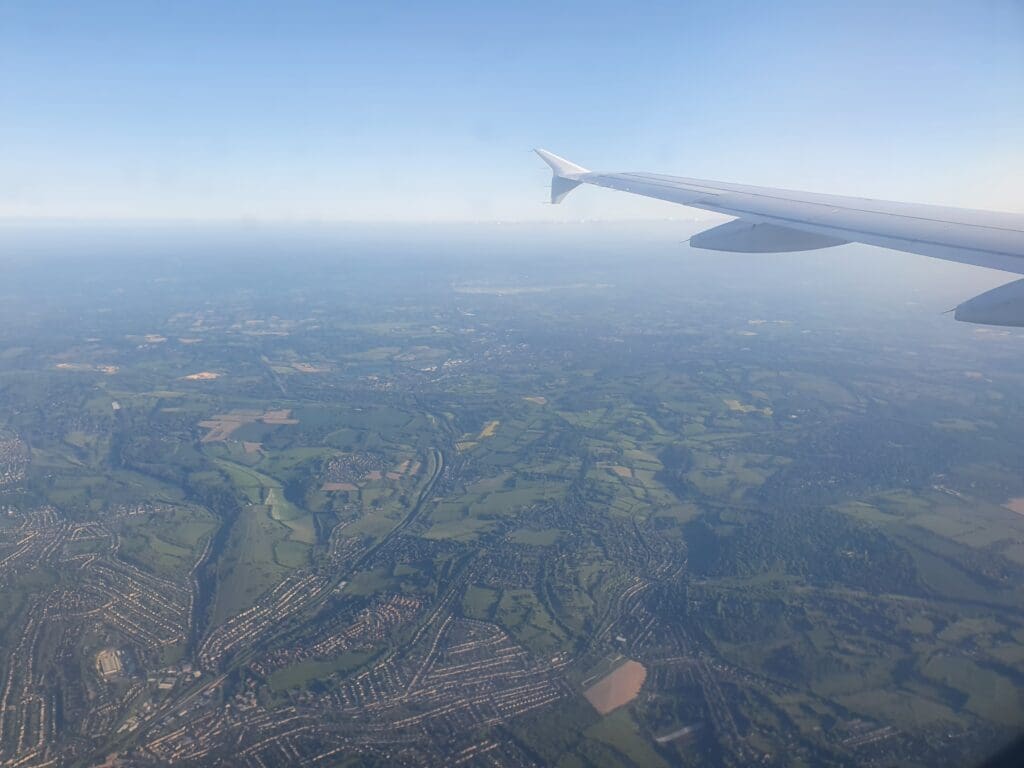
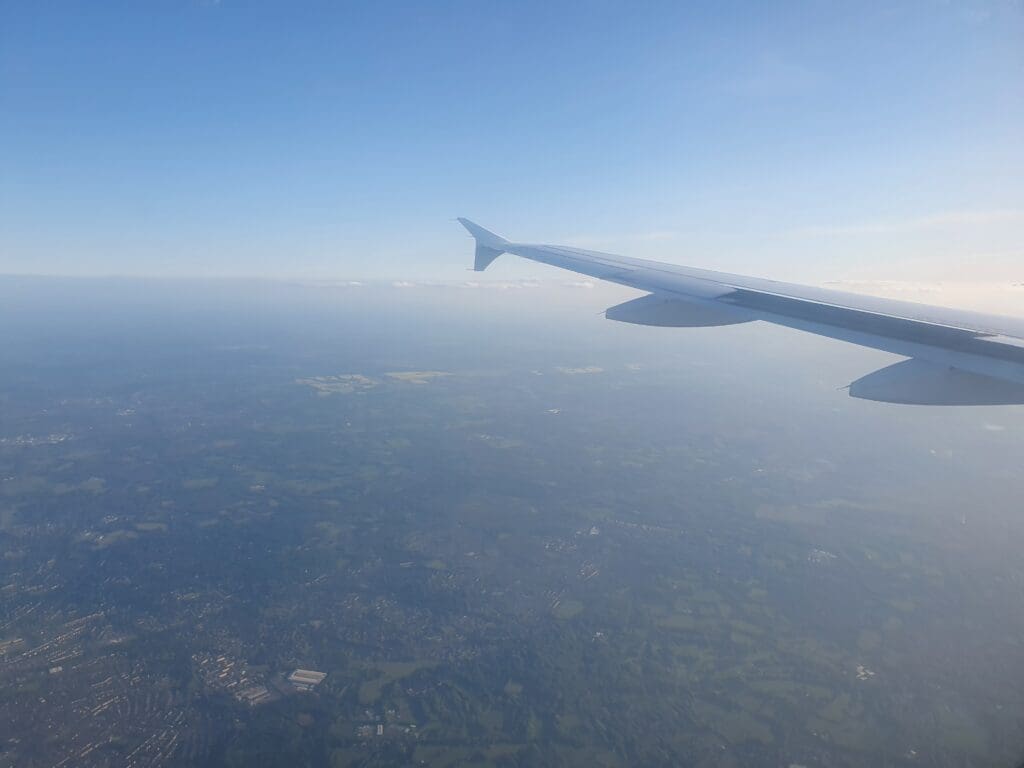
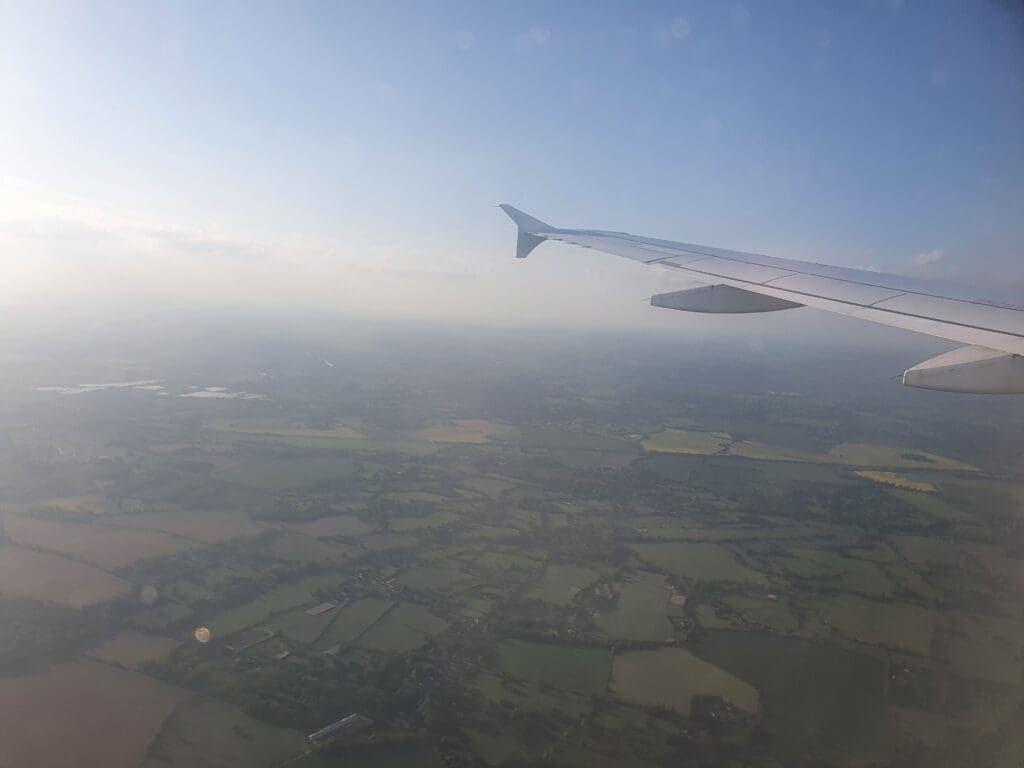
Flying on a westerly heading, a good view was offered of the scenic Surrey Hills and the occasional well-to-do suburb that sits beyond the southern boundaries of London – such as Purley, Epsom and Oxshott. A short time later, the town of Woking could be seen before a couple of aviation sights came into view once again off the left wingtip. The first of these took the form of Farnborough Airport, followed a few moments later by Blackbushe Airport. Upon reaching Swinley Forest, the aircraft banked to the north as it began to turn onto the approach for Heathrow Airport’s Runway 09L. Establishing itself on approach just before reaching the UK’s Legoland at Windsor, I was soon treated to views of Eton and Windsor, where fantastic views of the latter’s famous castle could be seen just before the flaps and gear fell into position.
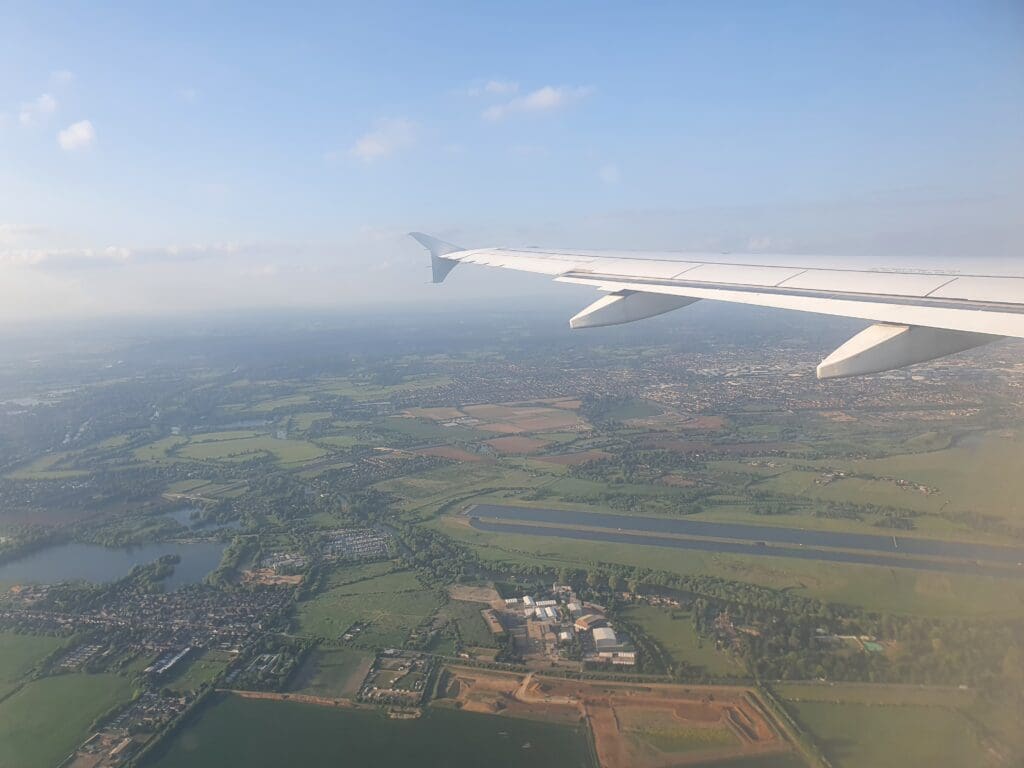
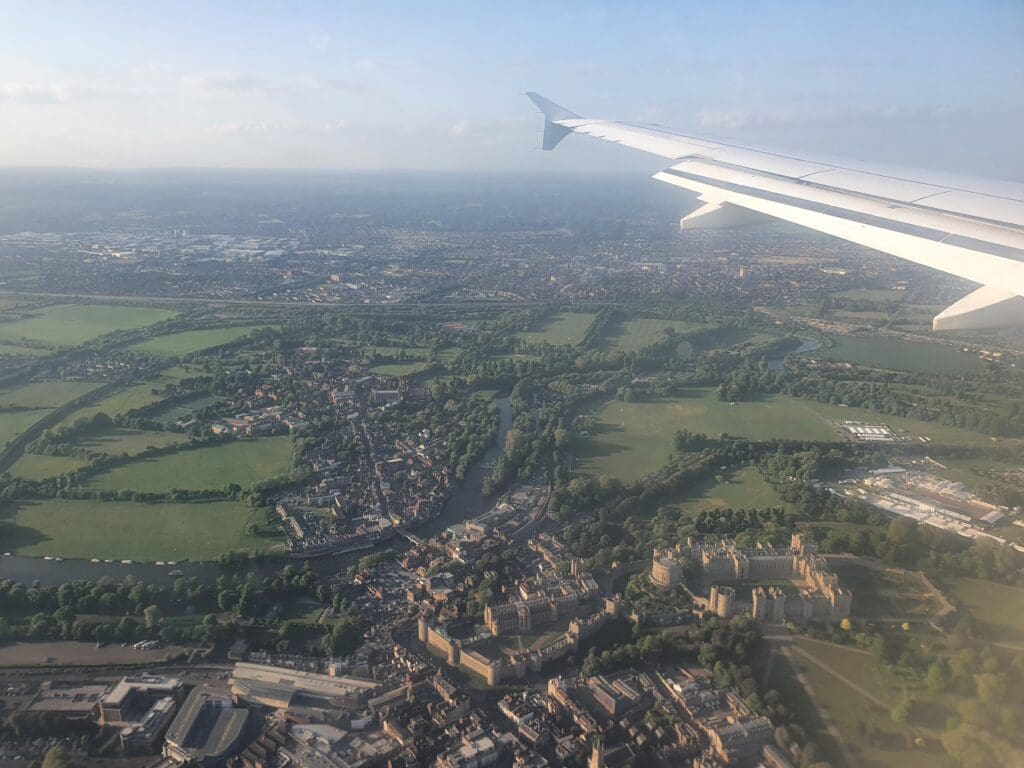
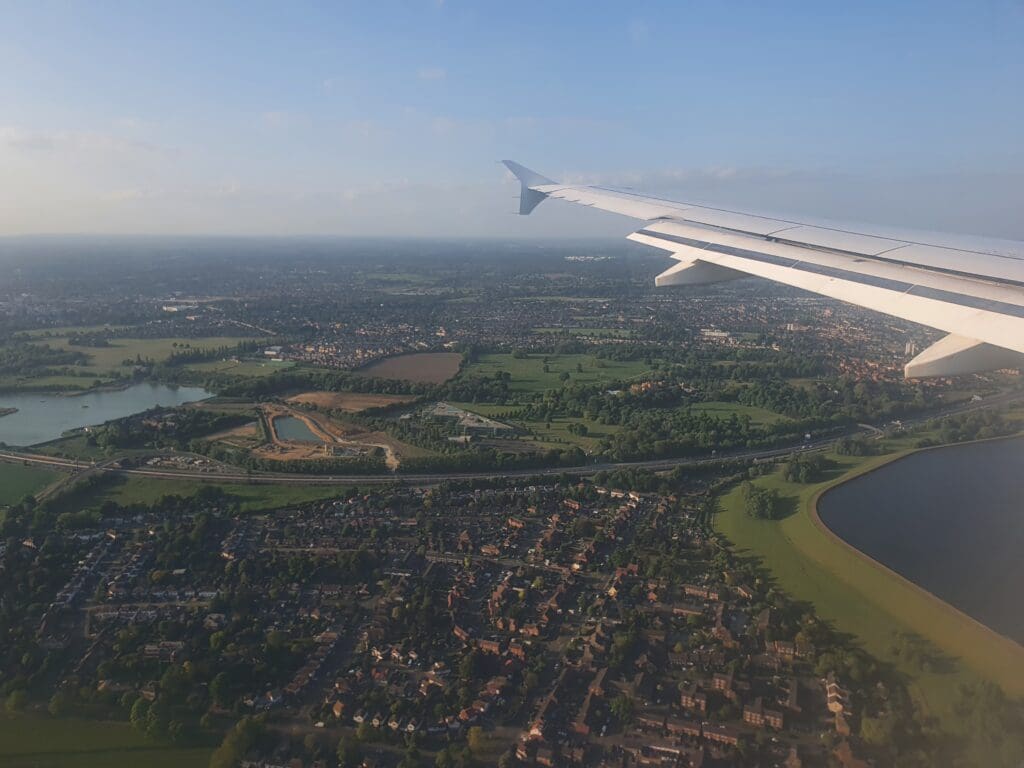
Moments after leaving Windsor behind, the Airbus descended over the still-looking waters of The Queen Mother Reservoir, one of the multiple reservoirs that sit to the west of Heathrow and supply the capital. From there, the aircraft sank over the once tranquil leafy villages of Colnbrook and Poyle before crossing the busy M25 that loops around London. Seconds later the Airbus crossed over Heathrow’s perimeter fence before making a surprisingly soft touchdown on Runway 09L. Once on the ground, in true Heathrow style, the aircraft decelerated rather vigorously to vacate the runway in good time to ensure that the British Airways Airbus A319 following us was able to land after its flight from Edinburgh.
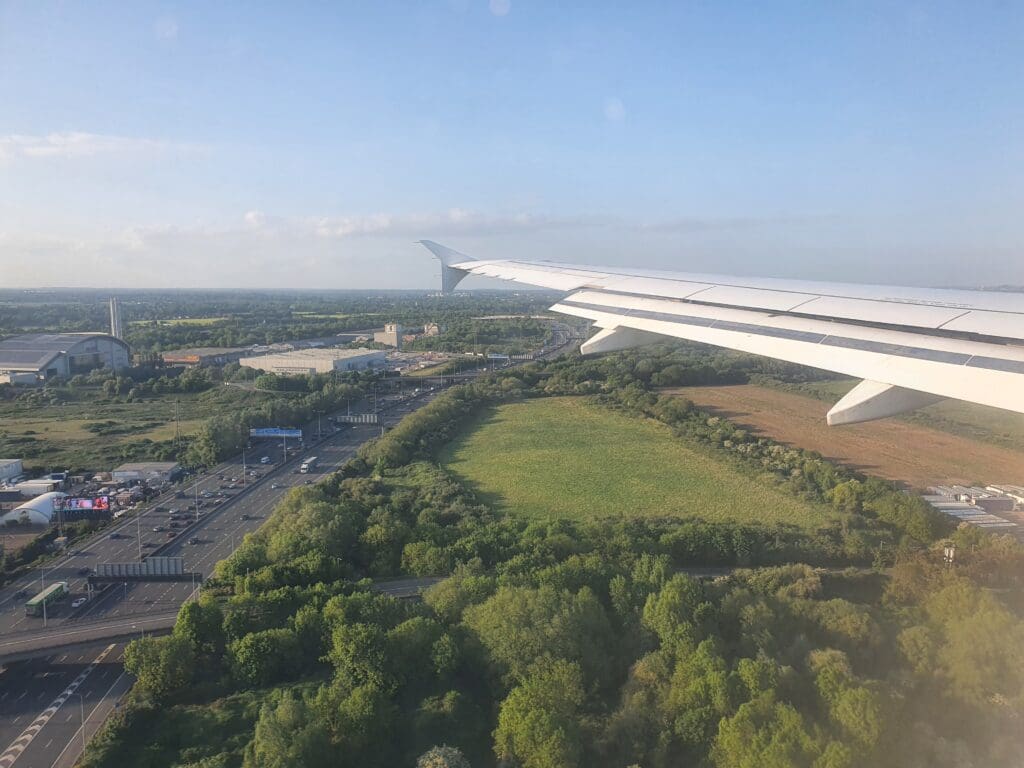
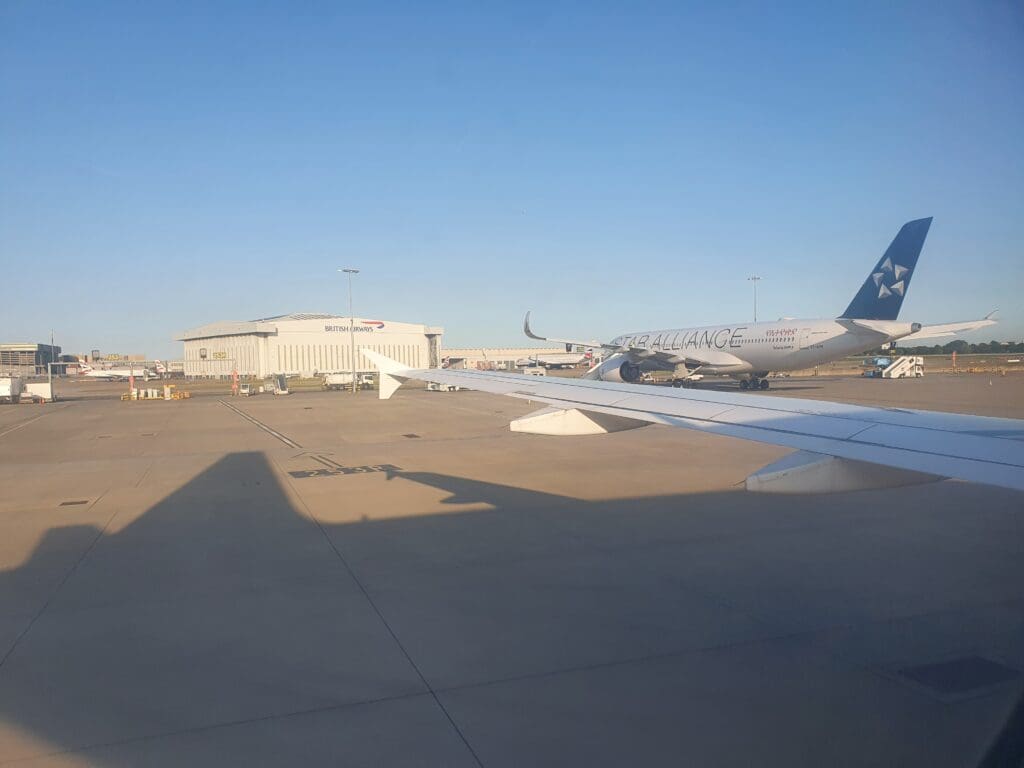
Once off the runway, the Purser welcomed all to London in Italian and English, during which they gave their usual update on the local time and advised passengers to remain seated until the seatbelt signs were extinguished. After leaving the runway, the aircraft quickly taxied past Terminal 2B where a line of widebody jets could be seen being readied to head off on overnight flights to far-flung destinations. A minute or so later, the aircraft then pulled into Stand 220 at Terminal 2 and the engines spooled down. Perhaps understandably given the tight legroom, as soon as the seat belt signs were extinguished many of those onboard jumped up and fortunately, it didn’t take too long for the jet bridge to be connected up to the main cabin door. However, thanks to my position at the rear of the cabin combined with many passengers’ heaps of cabin baggage, it took quite a while to exit the jet.
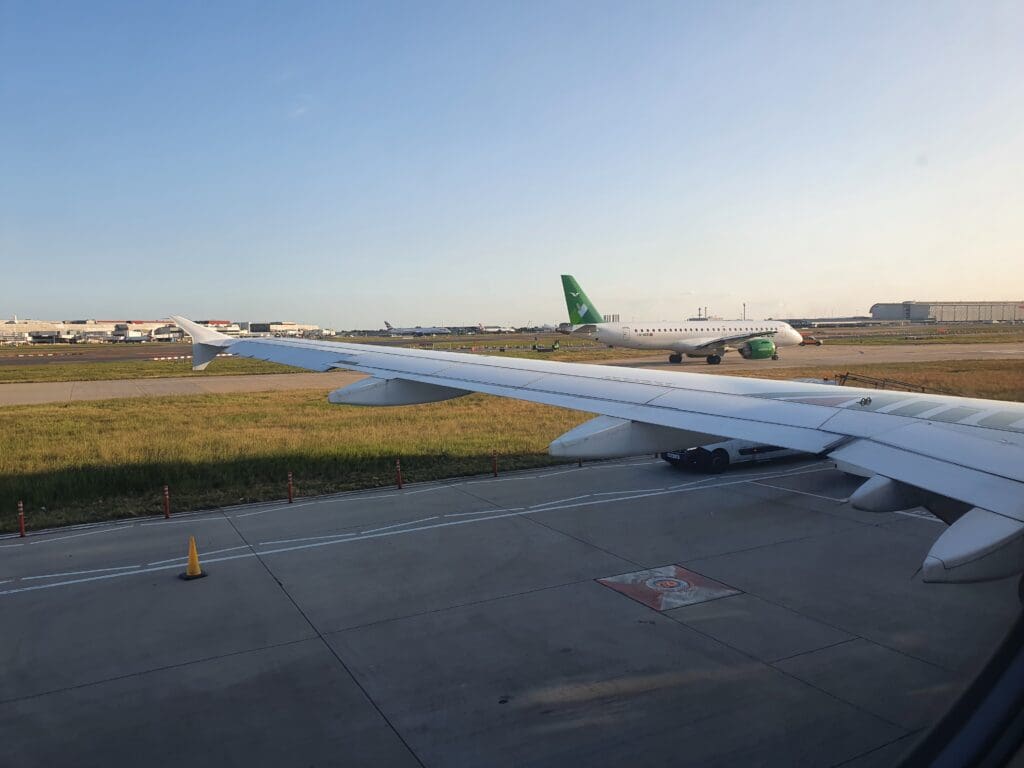
Eventually, I stood up and made my way through the empty cabin before thanking the crew member at the front of the aircraft heading up the jet bridge and entering the fairly modern airside arrivals area of Heathrow’s Terminal 2. From the aircraft, a fairly short walk was in store until I arrived at immigration. Being a Sunday evening, I should not have been overly surprised to see long snaking queues leading up to the terminal’s automated immigration checkpoints. However, with these proving to be far longer than I had ever seen before at Heathrow, I was taken aback. Since the installation of automated immigration checkpoints around a decade ago, I have never had to wait more than ten minutes before reaching one of these at any British airport. Unfortunately, that evening this took considerably longer and around thirty minutes of waiting in line was required before I reached one of these. Once there, this let me through within about thirty seconds and having nothing to collect from the baggage carousels, I made my way out into the landside arrivals area and headed down to the Underground station.
Summary
In all honesty, I won’t be rushing back to sample ITA Airways again at any time again in the near future, especially onboard one of their Airbus A320 Family aircraft. The aircraft was battered and uncomfortable and felt like a sardine can, more so than on any EasyJet or Ryanair service that I have taken in the recent past. Other than the fact that I arrived on time and in one piece, the only positive thing I can say about my experience was the complimentary snack offering, as well as the slightly friendly crew. However, all complaints aside, I did only pay £37 for my flight back from Italy and some may question whether I can make any valid complaints about my experience with ITA Airways given the low price that I paid for the flight.