Not Quite SAS! Flying on an Xfly CRJ-900: Ostersund to Stockholm Arlanda
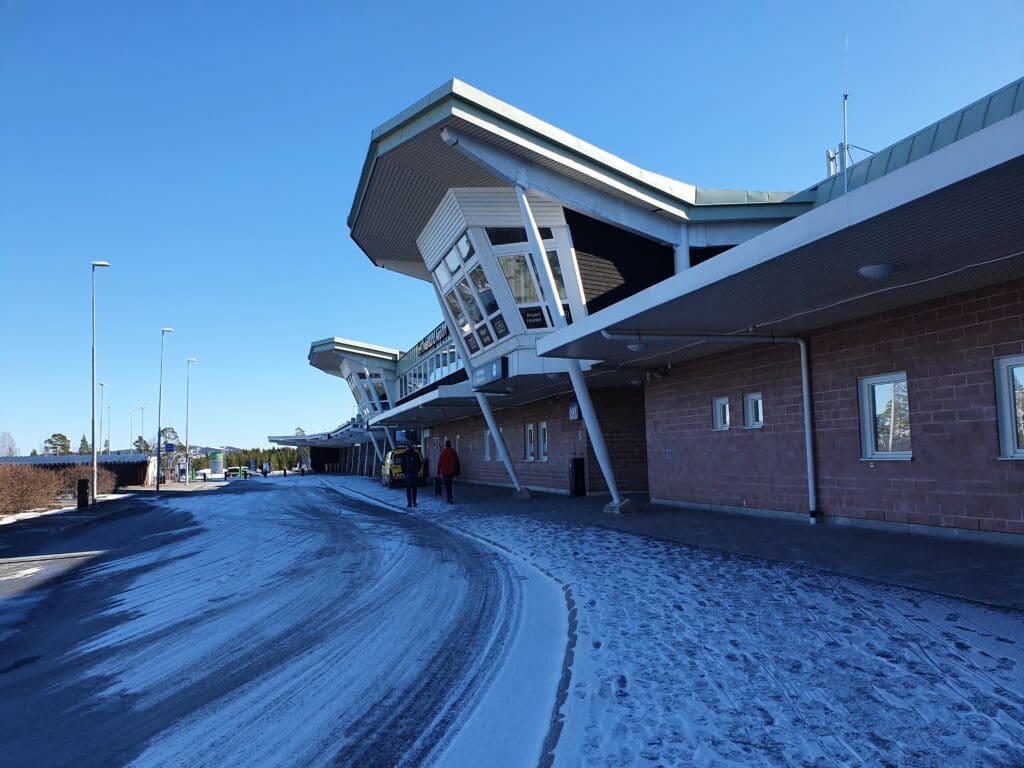
Following an exciting flight over from Umeå Airport onboard Jonair’s Citation 560XL Citation Excel, it was time to get back to reality and join the masses for my next hop down to the Swedish capital. From the Citation, I had been escorted out through a gate and into the airport’s car park however with little to see in the immediate vicinity, once there I decided to walk straight over to the airport’s modest terminal building. Having spent around an hour and a half in the landside portion of the terminal before heading off that morning to Umeå on Jonair’s Beechcraft 1900C, by that time I was fairly well acquainted with the delights of this. Having seen all there is to see in the landside portion of the terminal, once inside I decided to make a beeline for the small security area. Whilst there was just one checkpoint open and several passengers ahead of me, I found the staff to work in a friendly and efficient manner and I was able to pass through this quickly and without any issues.
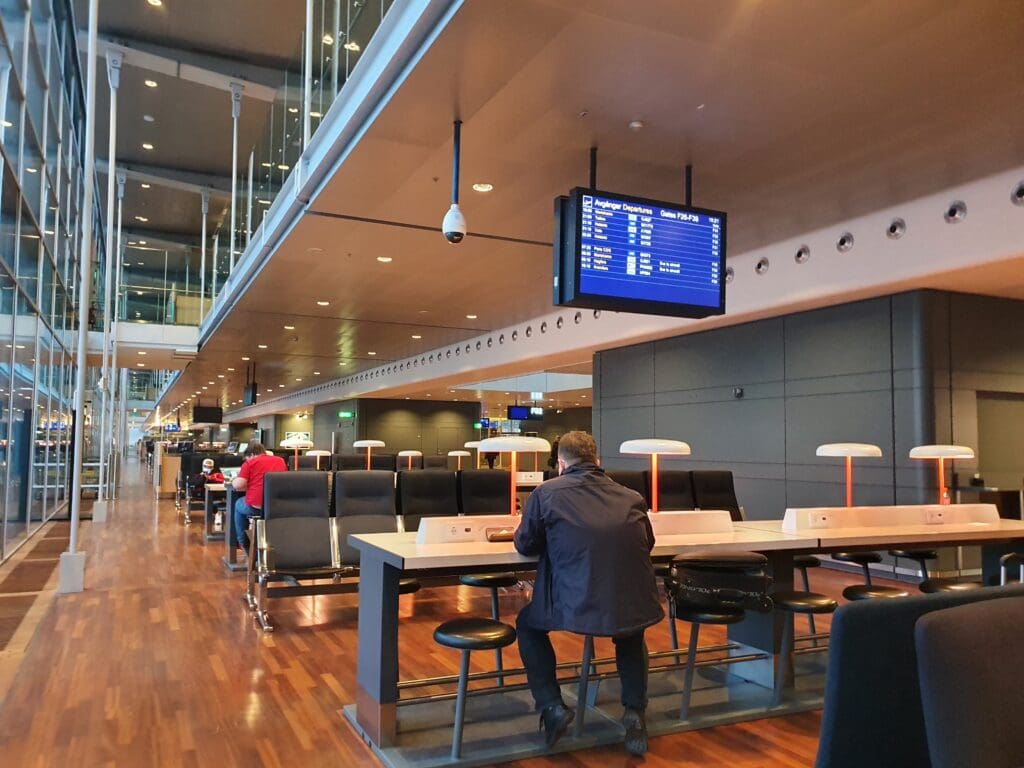
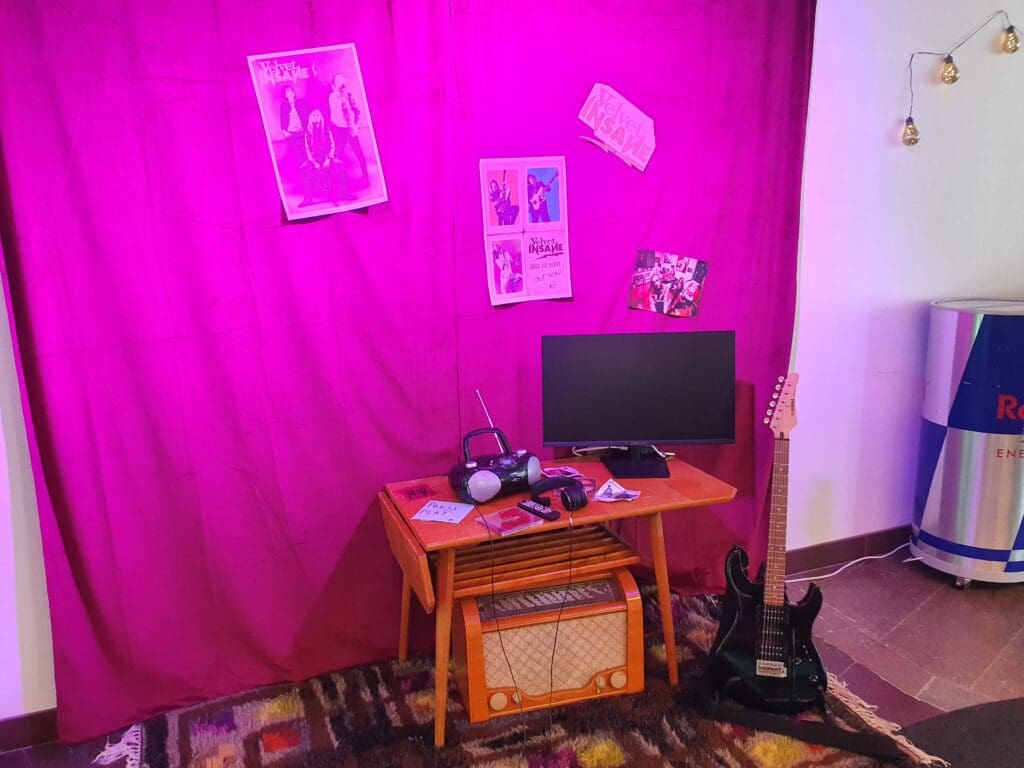
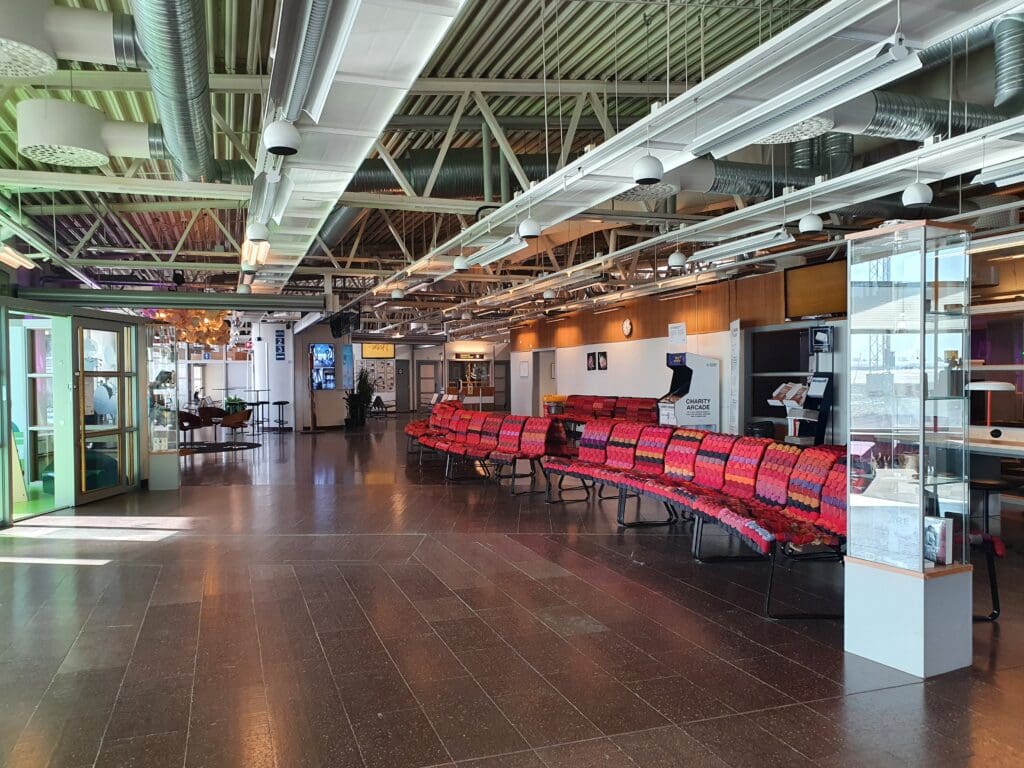
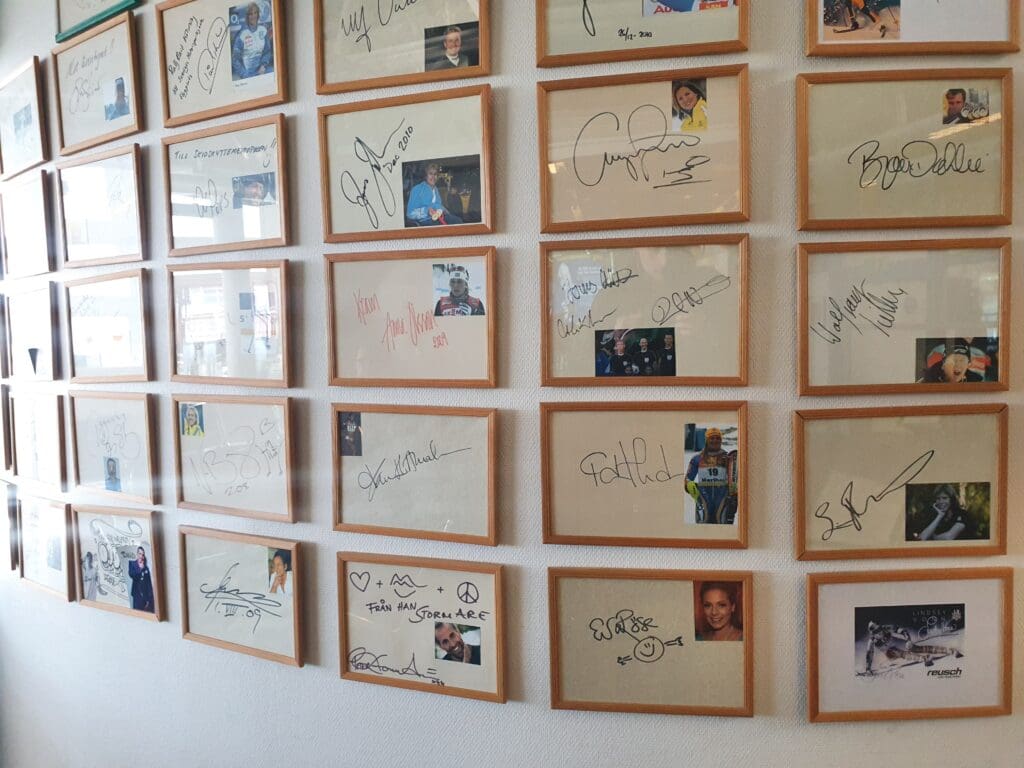
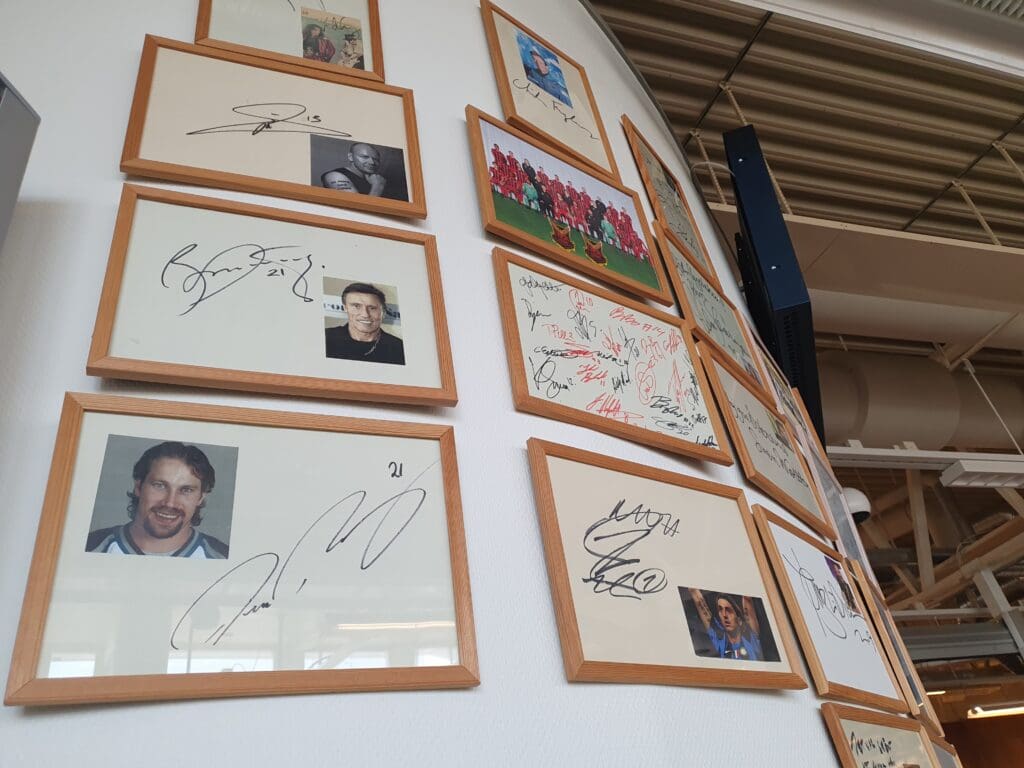
With plenty of passengers heading off on Scandinavian Airlines’ earlier 1605 service to Stockholm Arlanda, upon arriving in the airside portion of the terminal I found this to be fairly busy although with boarding commencing for this a short time later, soon enough this began to empty out and remained relatively quiet for around an hour until passengers for the next Arlanda service began to arrive. Whilst Östersund Airport serves several popular ski resorts, the airport itself is rather small. However, despite this, plenty of seating ranging from ornate carved wooden benches to sofas and large comfortable armchairs could be seen. Meanwhile, plenty of plug sockets could also be found and I thus faced no issues in charging up my phone and laptop in preparation for the flight ahead. Inside, the airside portion of the terminal features a café-restaurant selling a good range of drinks, food, snacks and souvenirs, as well as a small duty free store and multiple vending machines. Meanwhile, several interesting displays could be found including a shrine dedicated to local Swedish rock band Velvet Insane and a wall of celebrities’ autographs.
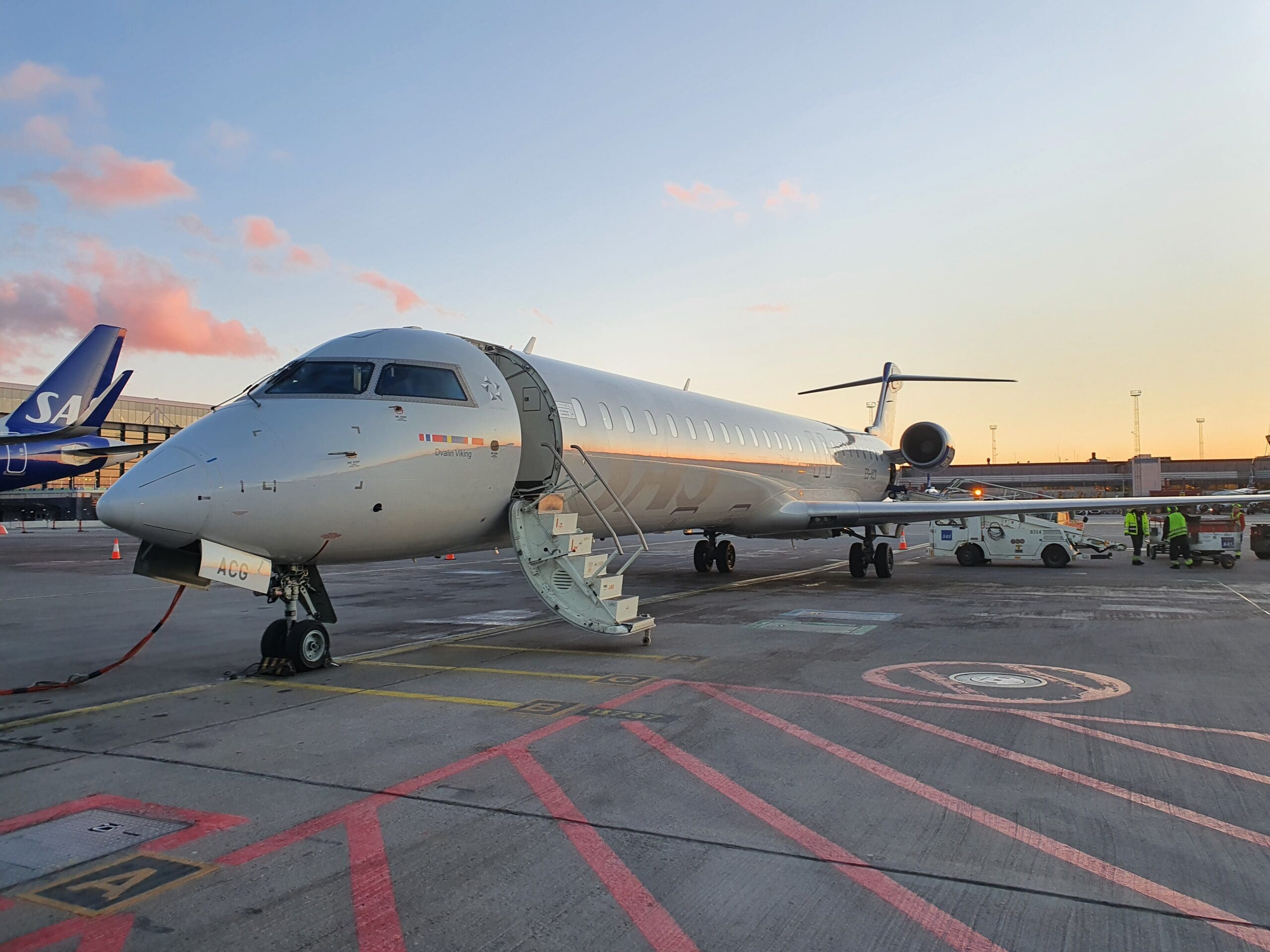
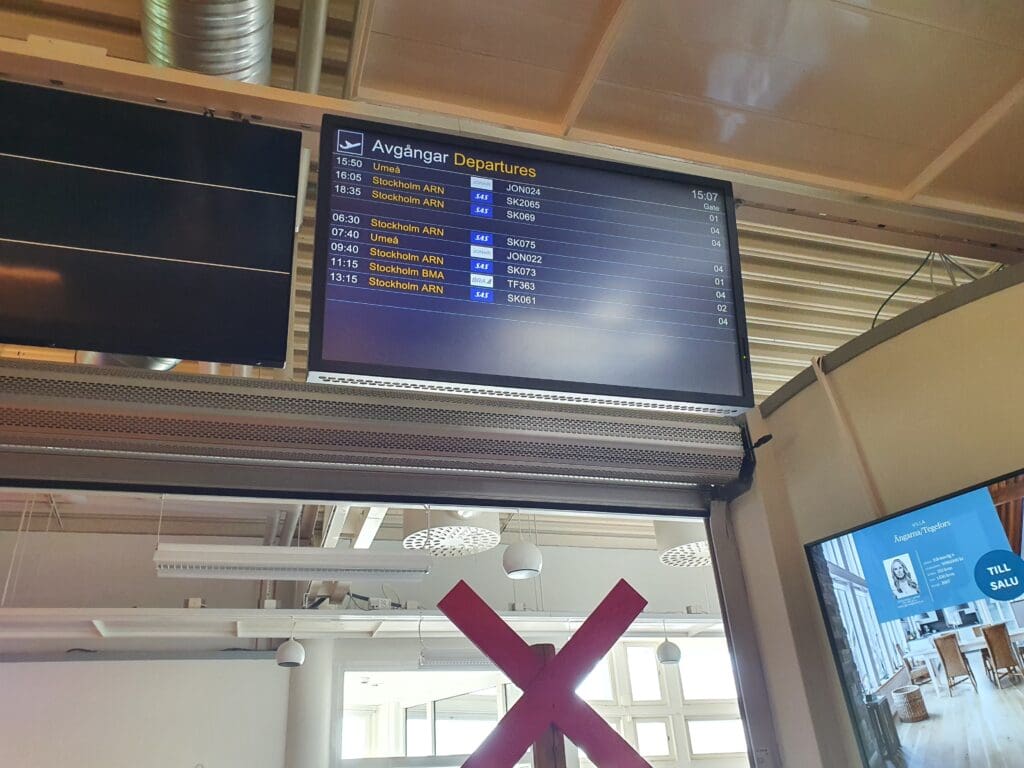
After grabbing an expensive coffee, I took a seat in one of the terminal’s very comfortable armchairs and began writing up my experience on the Citation that had carried me over to Östersund. As was to be expected, as time passed, the terminal became a little busier as passengers on the evening service to Stockholm Arlanda arrived. Outside, once the Scandinavian Airlines Bombardier departed, few other aircraft could be seen other than a locally based helicopter and a Svenskt Ambulansflyg Pilatus PC-24 on a mission from Stockholm. At 1757, I watched as the sleek-looking Estonian registered Bombardier CRJ-900LR touched down on Östersund Airport’s Runway 30 at the end of its short flight up from the Swedish capital. A few minutes later, this pulled into Stand 2 before what appeared to be a small collection of passengers piled out and made their way over to the terminal’s arrivals area.
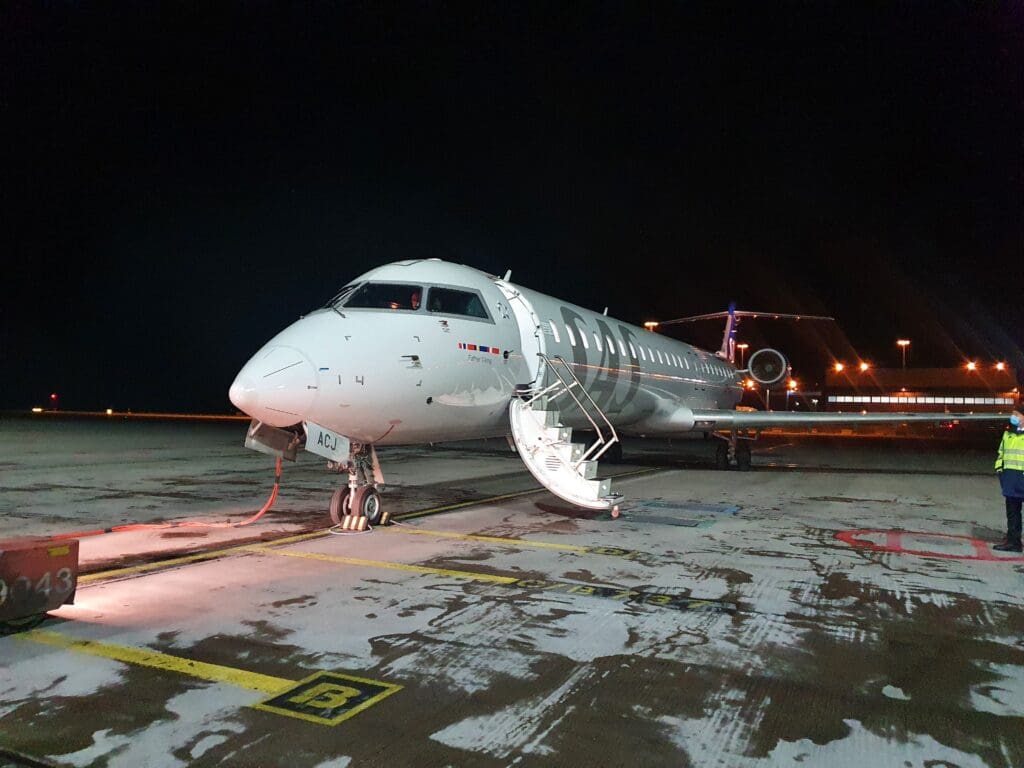
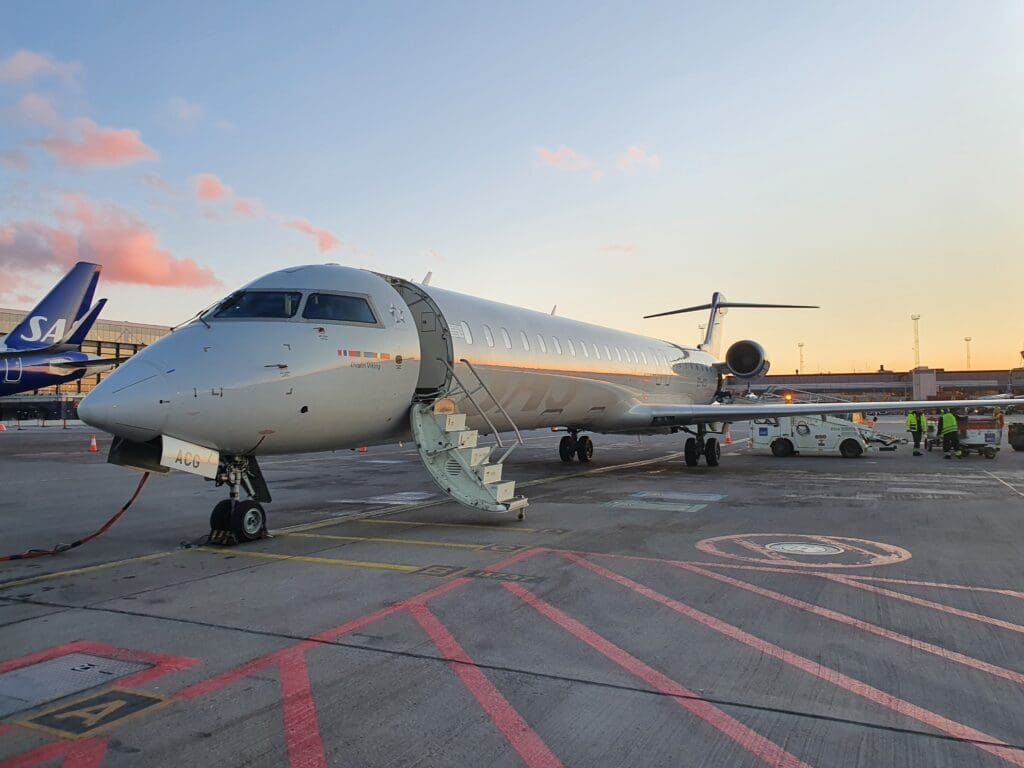
That evening, the aircraft that would be taking us all down to Stockholm Arlanda took the form of Xfly-operated ES-ACG. Manufactured in 2012 at Bombardier’s factory at Montréal-Mirabel Airport, this particular Bombardier had initially been destined for Chinese regional carrier China Express Airlines. Whilst the aircraft was painted in blue and white colours of the airline, this retained its Canadian test registration of C-GIAZ and never ended up being delivered to the airline. Instead, the aircraft commenced its life in storage at Ontario’s Peterborough Airport with the American registrations N151MN and N666RD. Finally, in April 2016, the aircraft was ferried across to Europe where it received its current registration and began its life with Estonian flag carrier and Xfly’s parent airline, Nordica. Initially, the Bombardier operated a variety of services, including those for both Nordica and LOT Polish Airlines. In 2020, the aircraft received the colours of Scandinavian Airlines and the name Dvalin Viking and has operated services for the carrier ever since. In the week before my flight, the aircraft had been busy flying across Europe, visiting Amsterdam, Bergen, Brussels, Copenhagen, Dublin, Dusseldorf, Gdansk, Gothenburg, Hamburg, Östersund, Paris CDG, Stockholm Arlanda, Tallinn, Umeå, Vilnius and Warsaw. According to the AvHerald, the aircraft had experienced a couple of incidents during its career in Europe. The first occurred in August 2016 when a control issue that, according to passengers, resulted in the aircraft severely shaking, resulted in a diversion to Copenhagen on a flight between Tallinn and Paris CDG. The second took place in April 2017 and involved smoke in the lavatory during the climb whilst operating a flight between Tallinn and Stockholm Arlanda, causing this to return to its origin.
Just ten minutes after the inbound aircraft had touched down in Östersund, in a rather Ryanair-esque fashion, the gate agent announced the commencement of boarding. In the usual manner, those needing assistance and elite members of Scandinavian Airlines’ EuroBonus frequent flyer programme were invited to board the aircraft through gate 4. By the time I had strolled over to the gaggle of passengers waiting there, boarding for all other passengers had commenced and at 1810 I scanned my boarding pass on one of the two automated gates. Fortunately, this let me proceed without any issue and I soon journeyed outside and joined the queue of passengers waiting to board the Bombardier. Whilst few may consider the CRJ-900 to be a large aircraft when compared to other airliners, with my previous flights having taken place on small rare types – namely the Jetstream 32, Beechcraft 1900 and King Air and the Cessna Citation 560XL, this airliner seemed to be rather large, with its fuselage sitting a fair way off the ground.
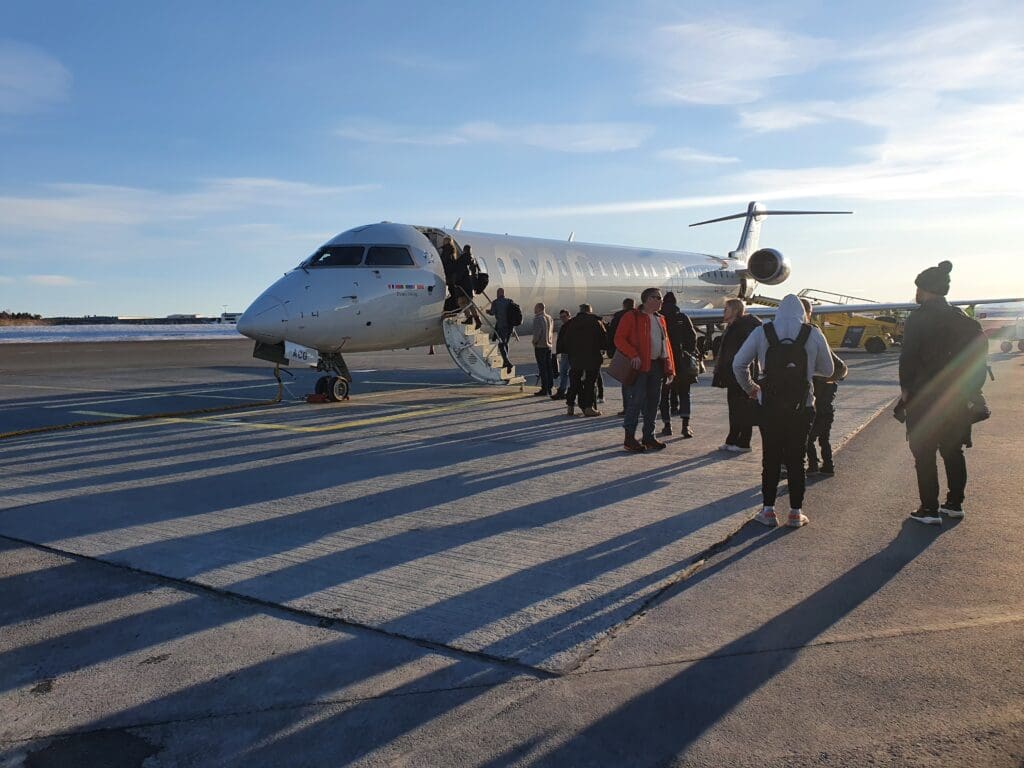
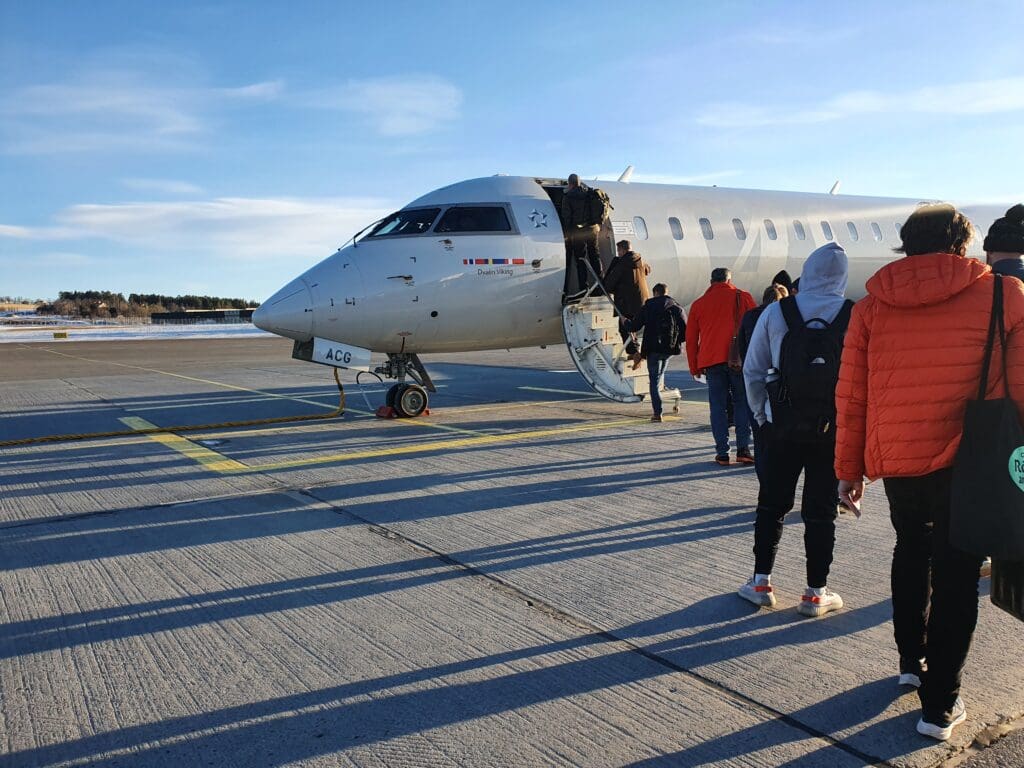
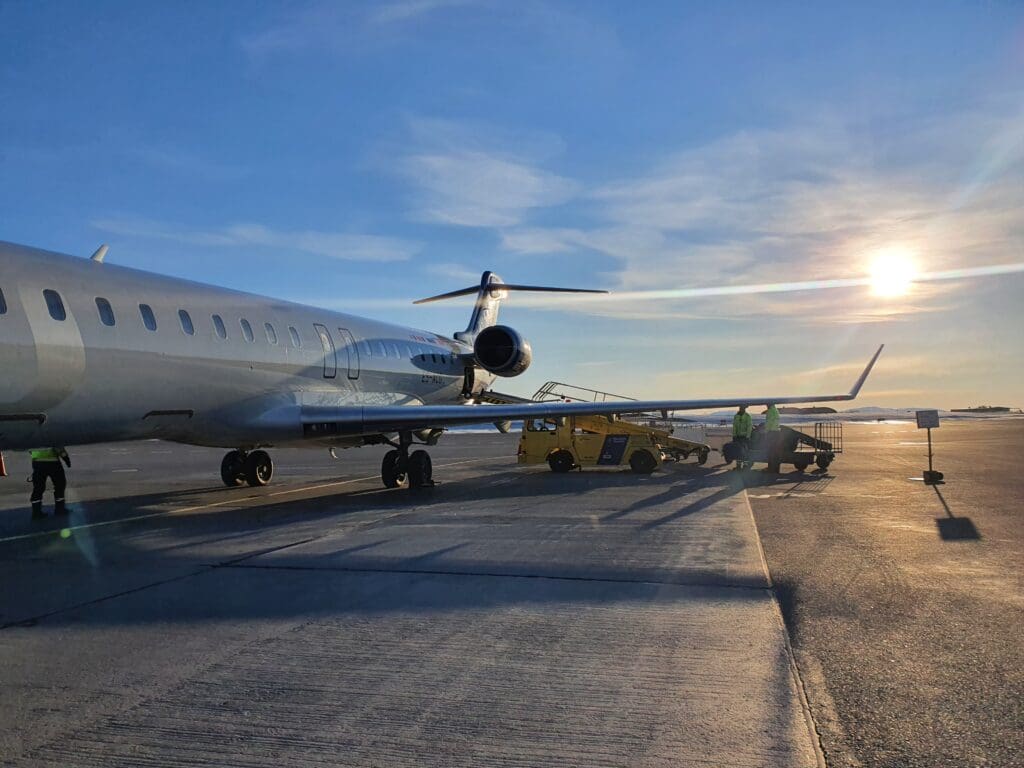
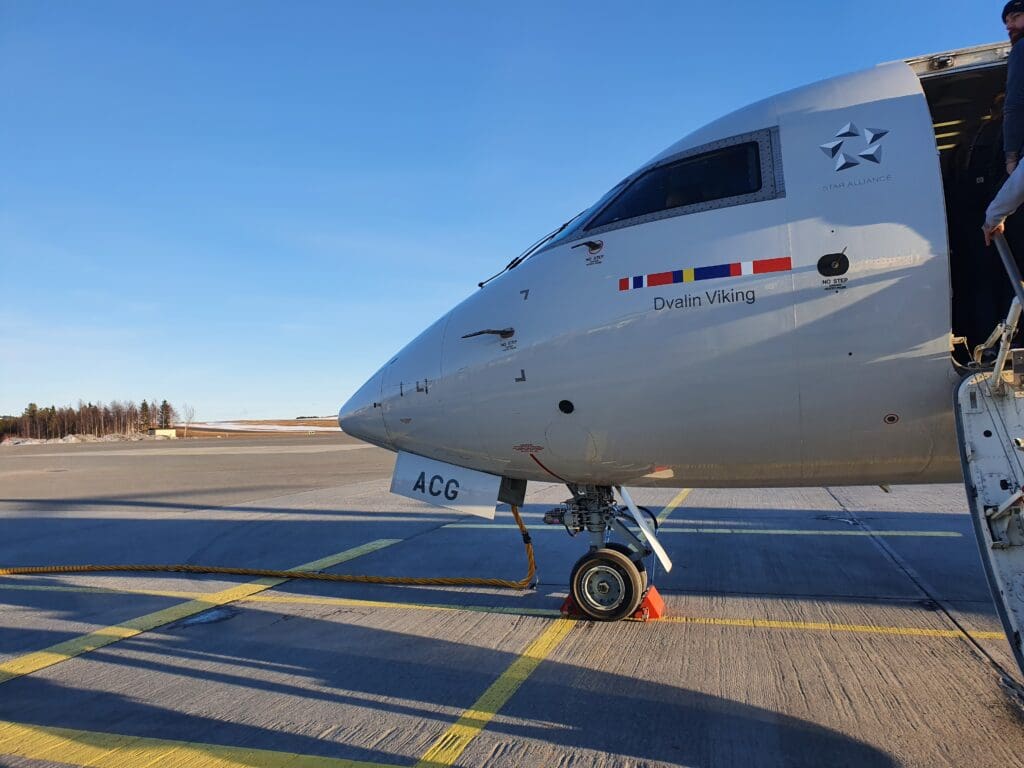
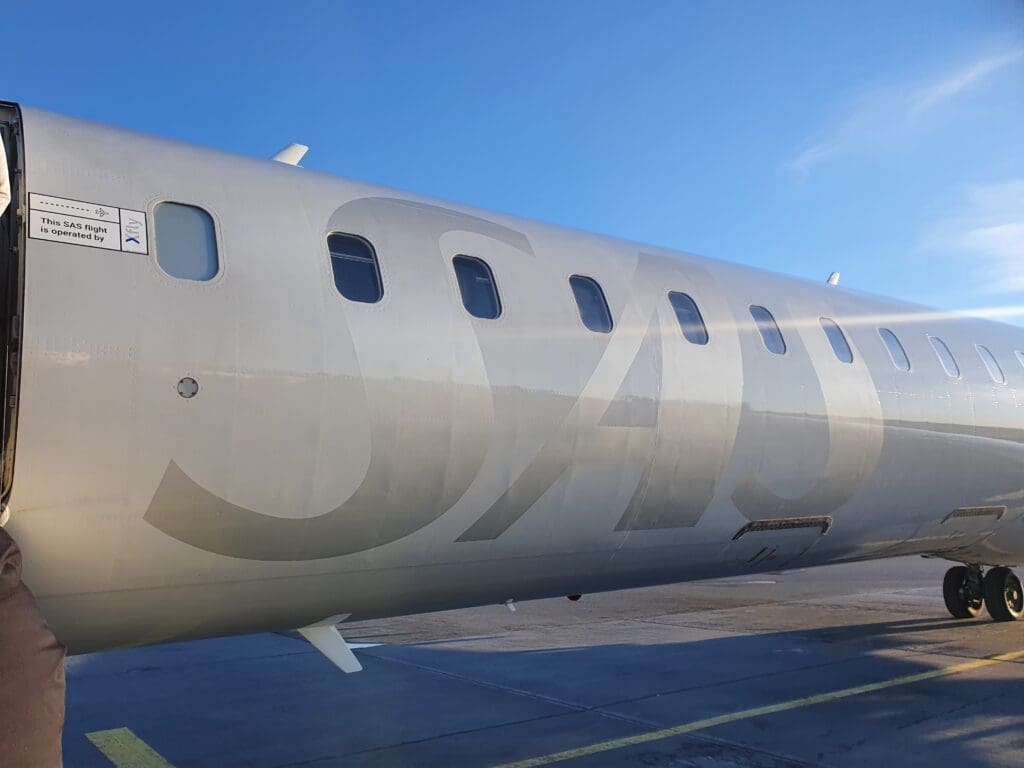
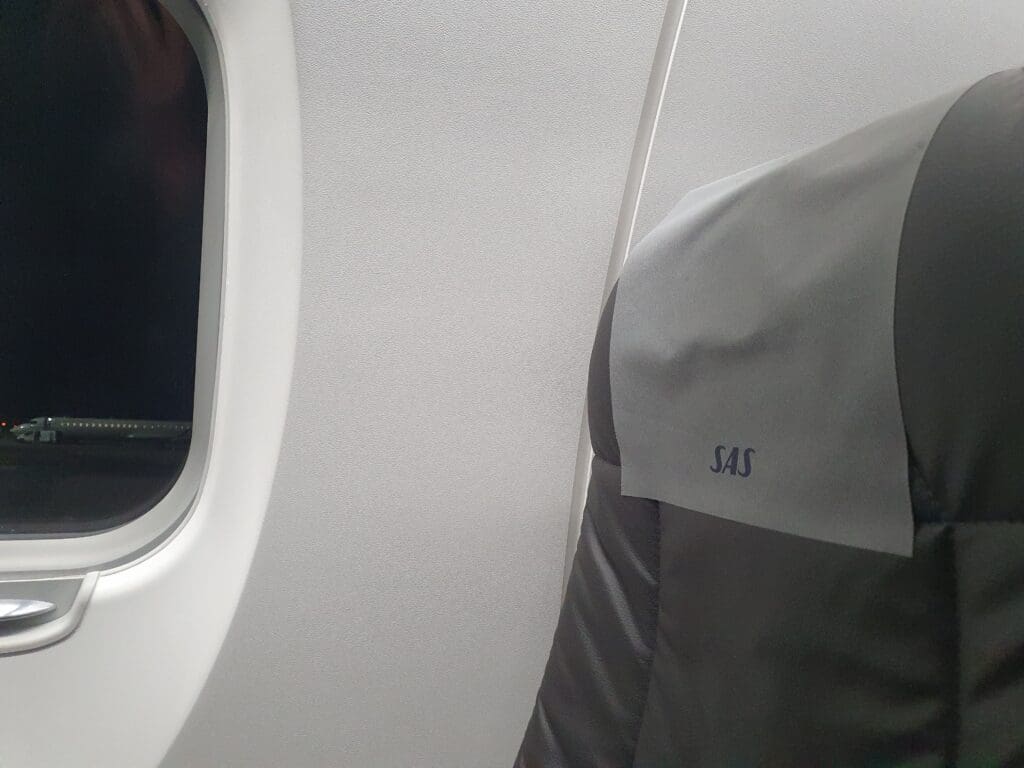
After several minutes spent waiting in the chilly early evening air, I climbed up the seven steps built into the inner side of the Bombardier’s door and made my way into the welcomingly warm small forward galley. As soon as I stepped into this, I was given a ‘hej’ by one of the two cabin crew members who would be looking after passengers on the ride southwards, both of whom unsurprisingly sported Scandinavian Airlines’ dark blue uniform. Soon turning right, I journeyed into the cabin where I was greeted by the sight of 88 seats each sporting a smart-looking dark grey faux leather cover and topped with a disposable fabric antimacassar complete with Scandinavian Airlines’ iconic square logo. Inside, the interior of the jet seemed to be modern, with bright cabin lighting beaming down from the ceiling and the large cabin windows allowing for the evening sunshine to pour into the Bombardier.
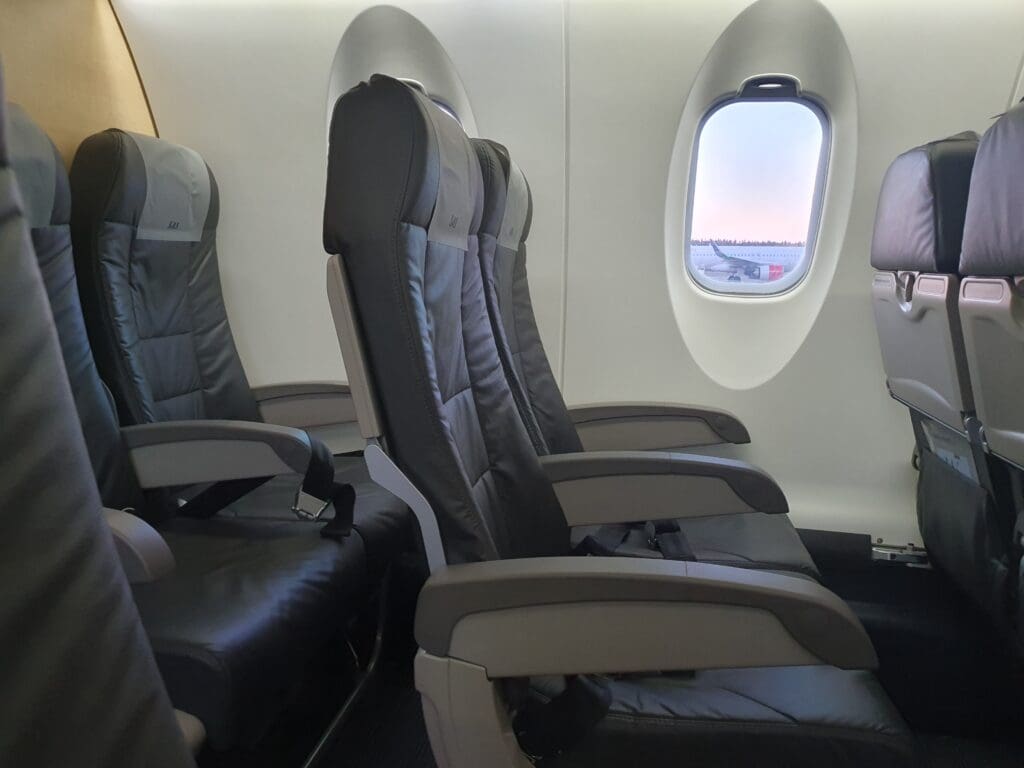
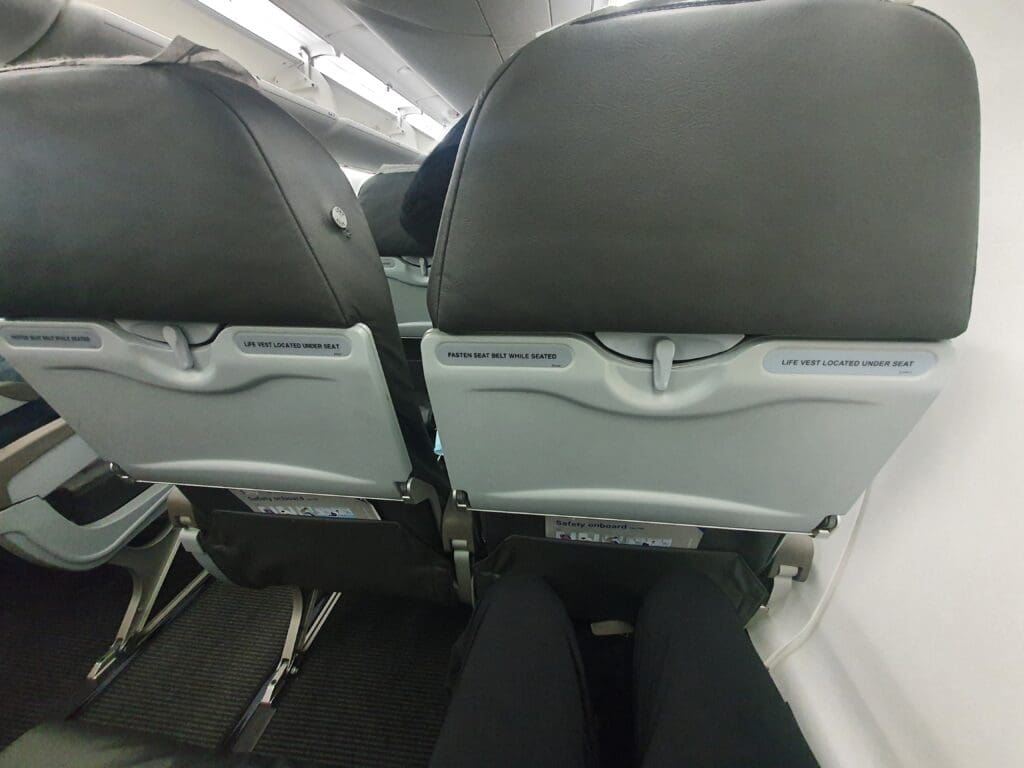
Seeing as I would be travelling to the penultimate row of the jet, it took quite a while to reach my seat and upon arriving there I found that I had already been joined by a seatmate in Seat 22C. Fortunately, once I had reached my row they were happy to let me in and so I soon slid into my window seat. Whilst I would only have a short ride on the CRJ-900 that evening, with the aircraft flying sectors of up to around two hours, I was pleased to find the seat to be soft and well-padded, whilst also offering a good amount of legroom for a regional jet. Examining the area around my seat, whilst this appeared to be in a clean state, I did notice a few marks and scratches – although this was far from being in a poor state. Turning to the seatback pocket, this contained an Xfly branded safety card, a Scandinavian Airlines sickbag and a compact buy-on-board menu.
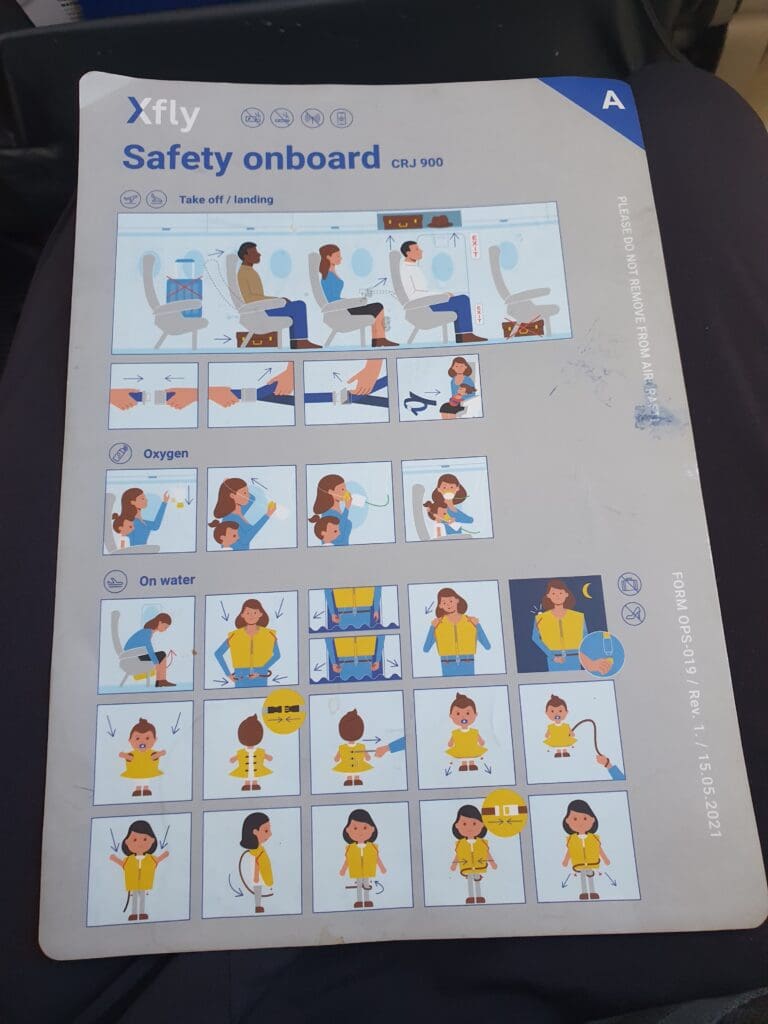
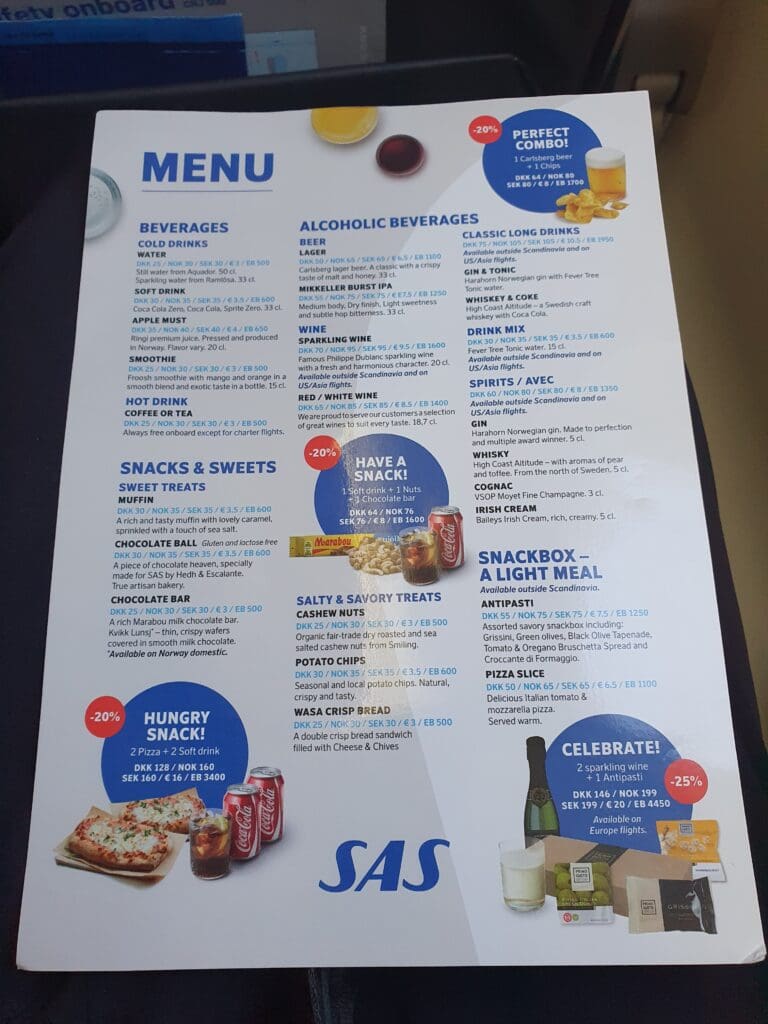
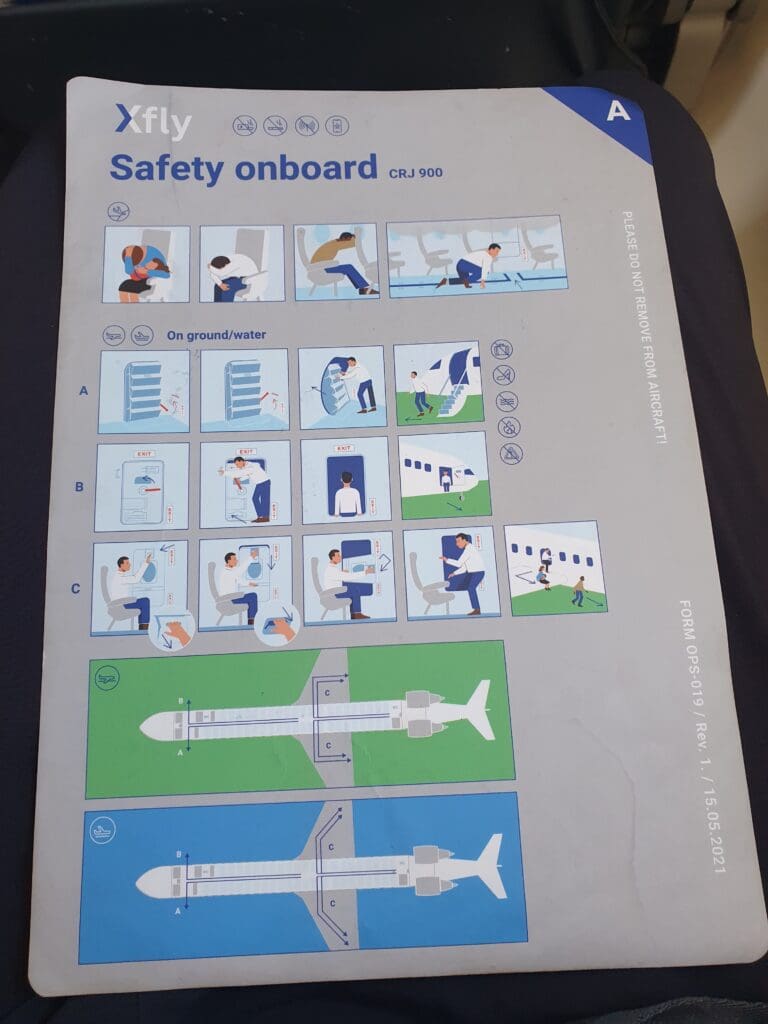
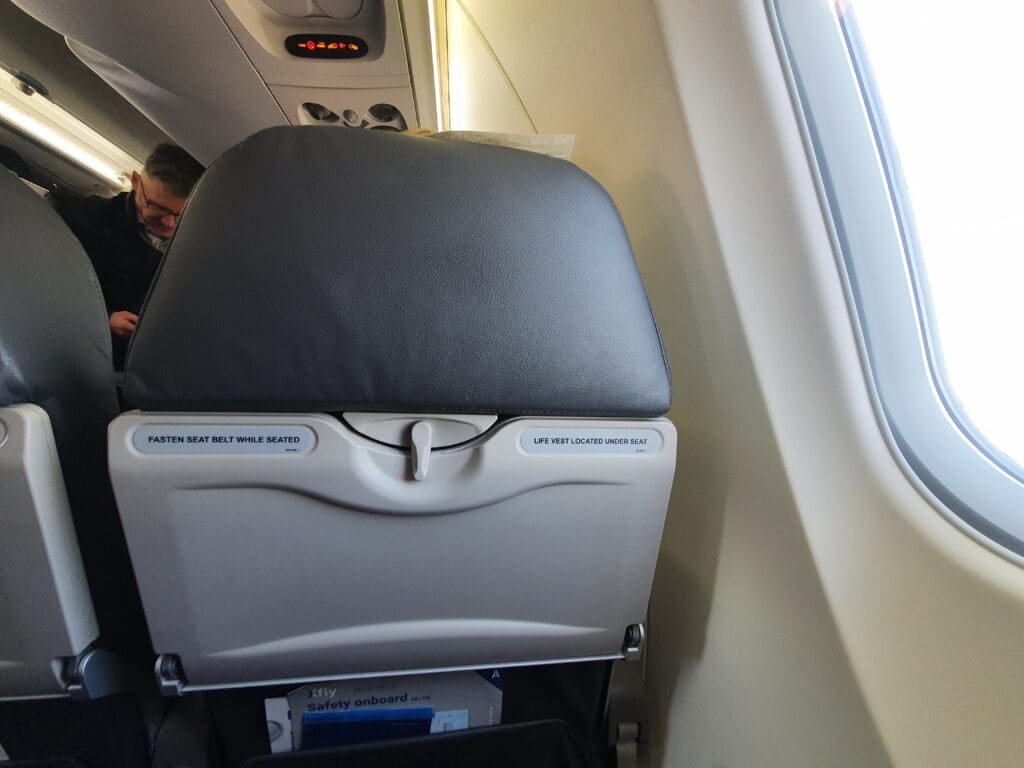
Given my slow journey down the aircraft to the rear of the cabin, once I had taken my seat, it wasn’t too long before boarding was announced as having been completed. This was then followed by a pre-recorded welcome announcement in Swedish and English whilst those around me settled down and strapped themselves in for the short flight ahead. As I had predicted, that evening the flight ended up being far from full, and whilst most of those seats at the rear of the aircraft ended up being filled, many further ahead remained vacant. As the ground crew cleared up their equipment from around the aircraft, the Captain performed a short welcome announcement in English only during which they thanked all passengers for flying with Scandinavian Airlines, and advised that we could expect a smooth 45-minute-long flight down to Stockholm.
A short time after the Captain completed their welcome announcement, the Bombardier’s two General Electric CF34-8C5 engines began to hum into life, with this seeming to be rather noisy – although this was unsurprising given my location at the rear of the cabin. As the two engines fired up, the two flight attendants performed a safety demonstration to the soundtrack of a pre-recorded announcement in Swedish and English. Later overhearing the two flight attendants communicating with one another, it appeared that both hailed from Xfly’s homeland, Estonia. However, given the high level of English ability amongst many Swedes, it is unlikely that the two cabin crew would have run into any communication issues on this short domestic flight.
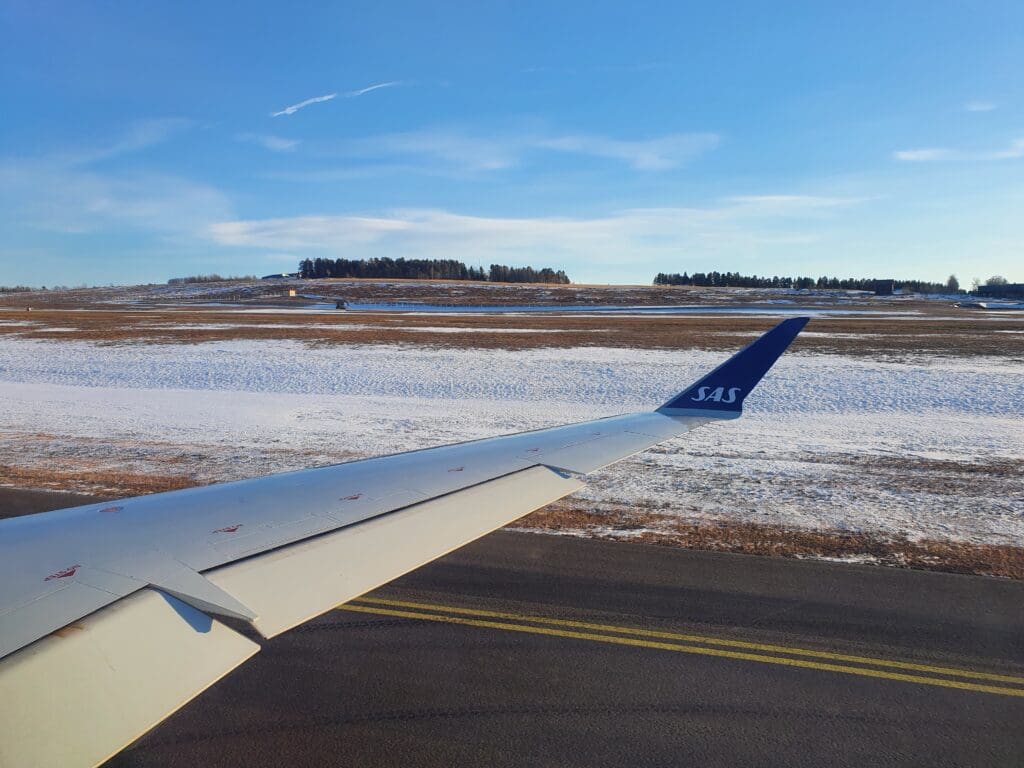
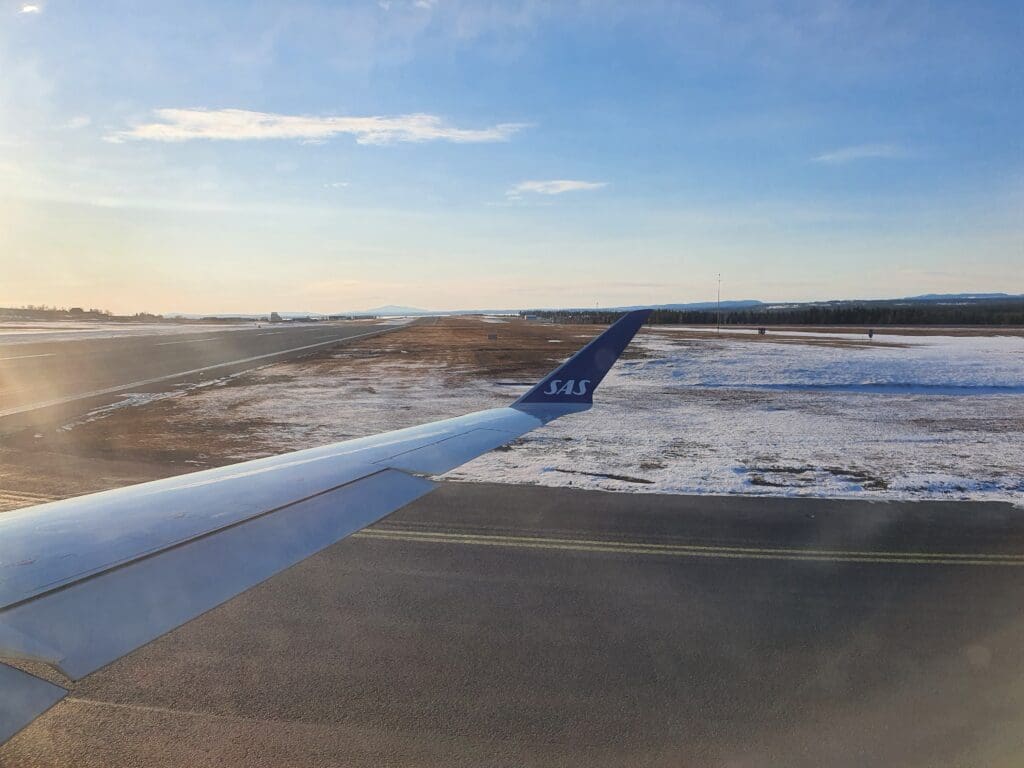
At 1823, the Bombardier powered forward out of its stand and soon wheeled to the right before joining the taxiway. That evening, with a light breeze blowing in from the north, the aircraft would depart from Östersund Airport’s Runway 30 and thus a relatively long taxi (for such a small airport) was in store. A short time after leaving the stand, the two crew members made their way through the cabin ensuring all was secure for departure before strapping themselves into the jumpseats at the front and rear of the aircraft in preparation for our departure. Following several minutes of taxying parallel to Östersund Airport’s sole runway, at 1828 the Bombardier made its way onto this before coming to a quick stop.
After around a minute of waiting, the Bombardier’s two General Electric engines spooled up and filled the cabin with noise before the brakes were released and the jet went flying down the runway. A short time later, the aircraft rotated upwards and rocketed into the sunny evening skies, offering a good view of the airport’s small terminal below before leaving the airport behind. As the jet climbed, the ‘mainland’ could be seen beyond the forests and frozen snow-covered Lake Storsjön. A few moments later, one of the three road bridges that connect the island to the airport, this one carrying the Rodovagen, appeared as the aircraft left Frösön behind before the aircraft banked to the left and rolled out on a southeasterly heading. Upon rolling out, the Jamtland peaks that sit between Östersund and Norway came into view and with the climb proving to be a smooth affair, it wasn’t long before the seatbelt signs were extinguished.
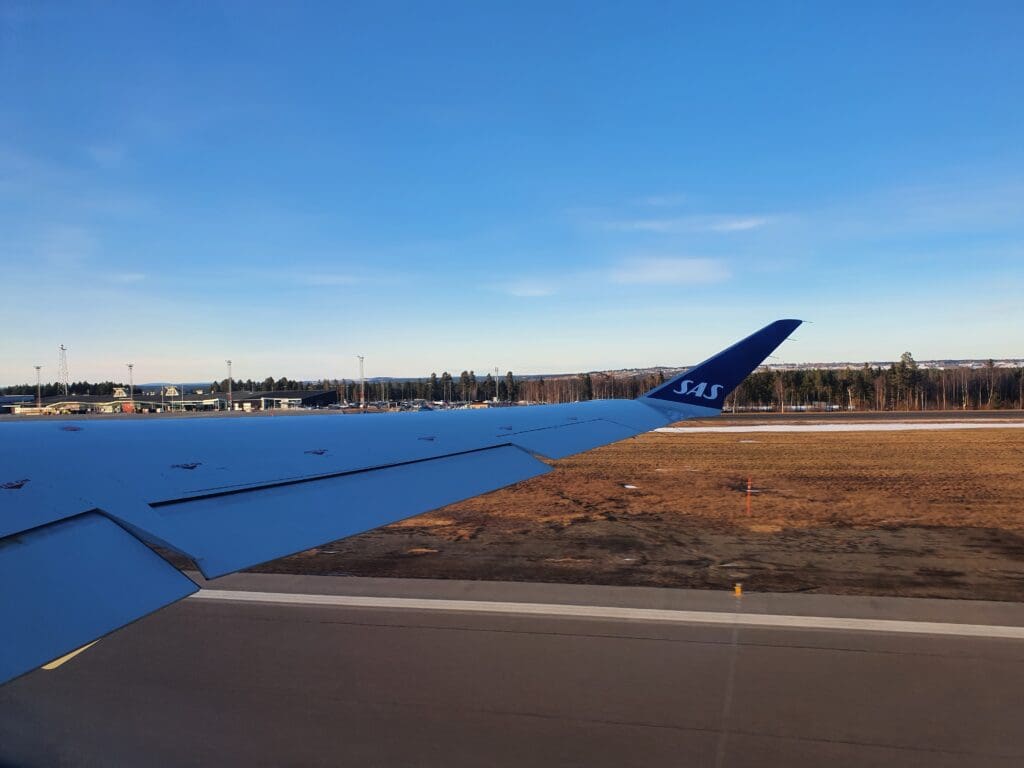
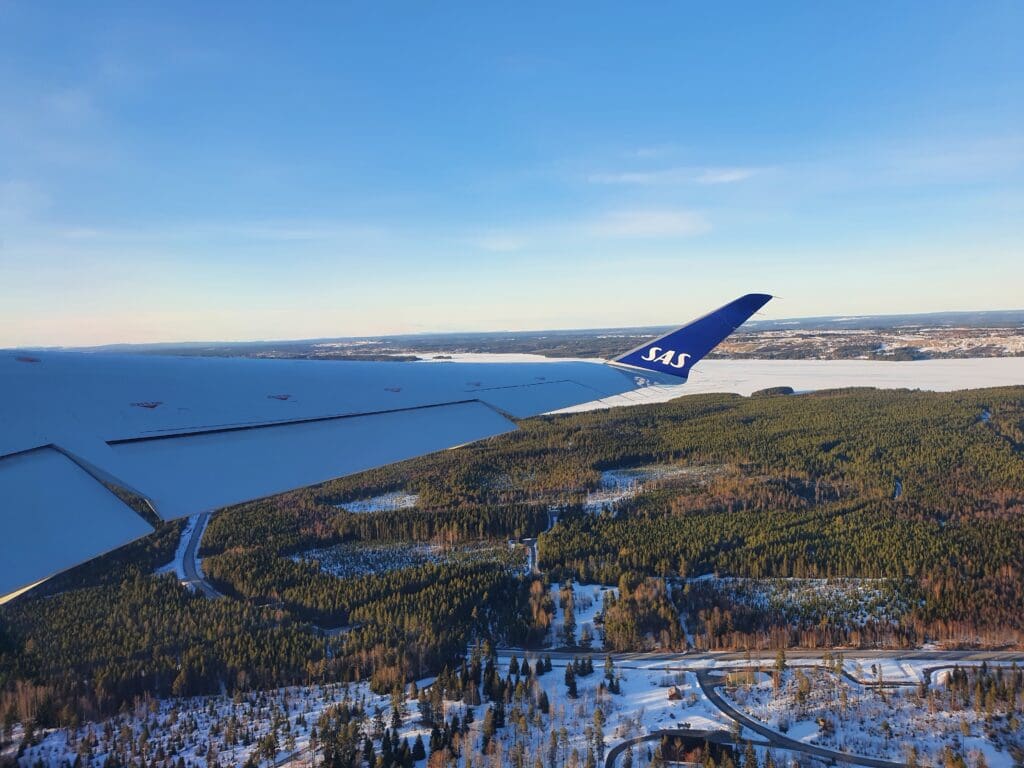
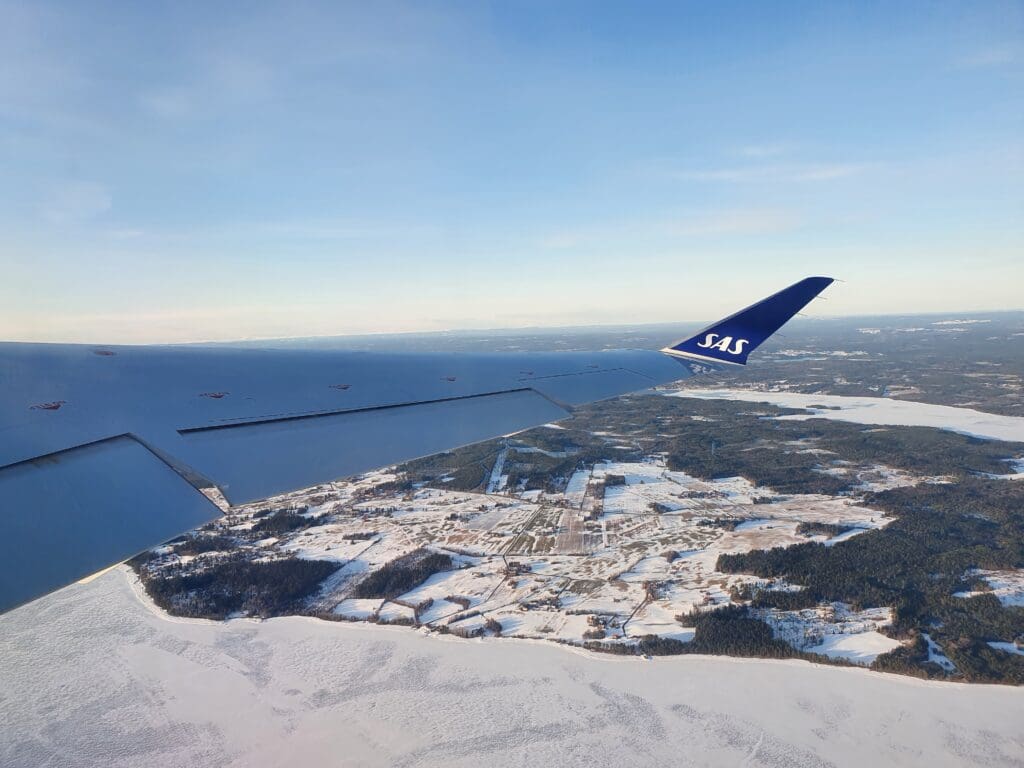
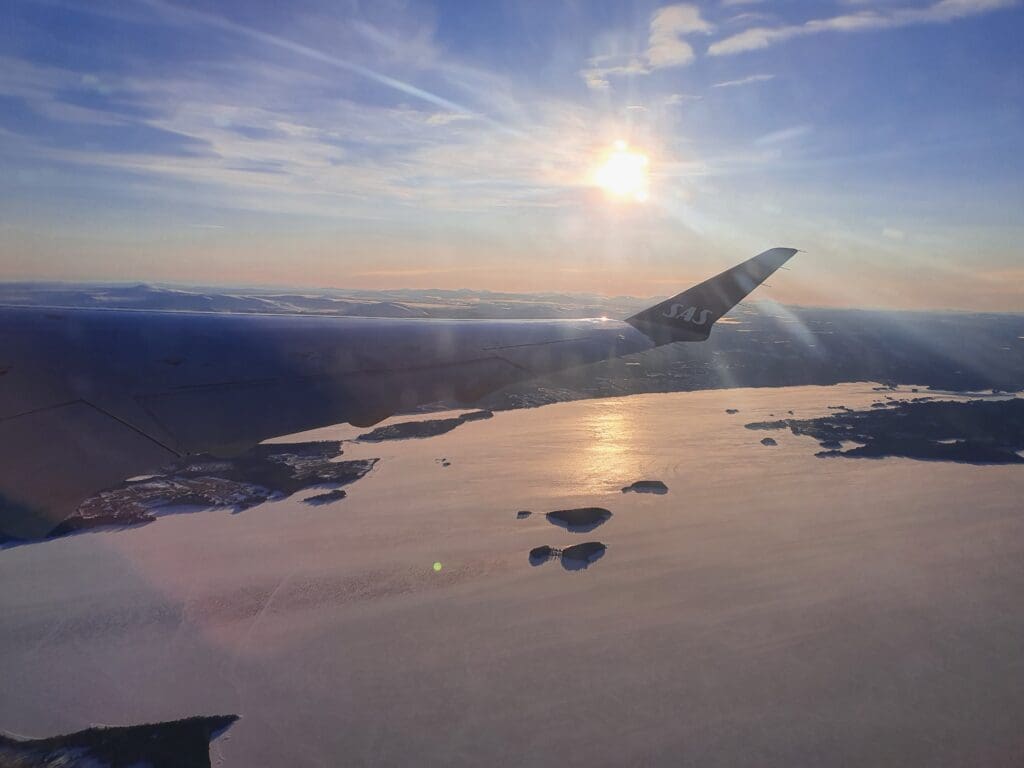
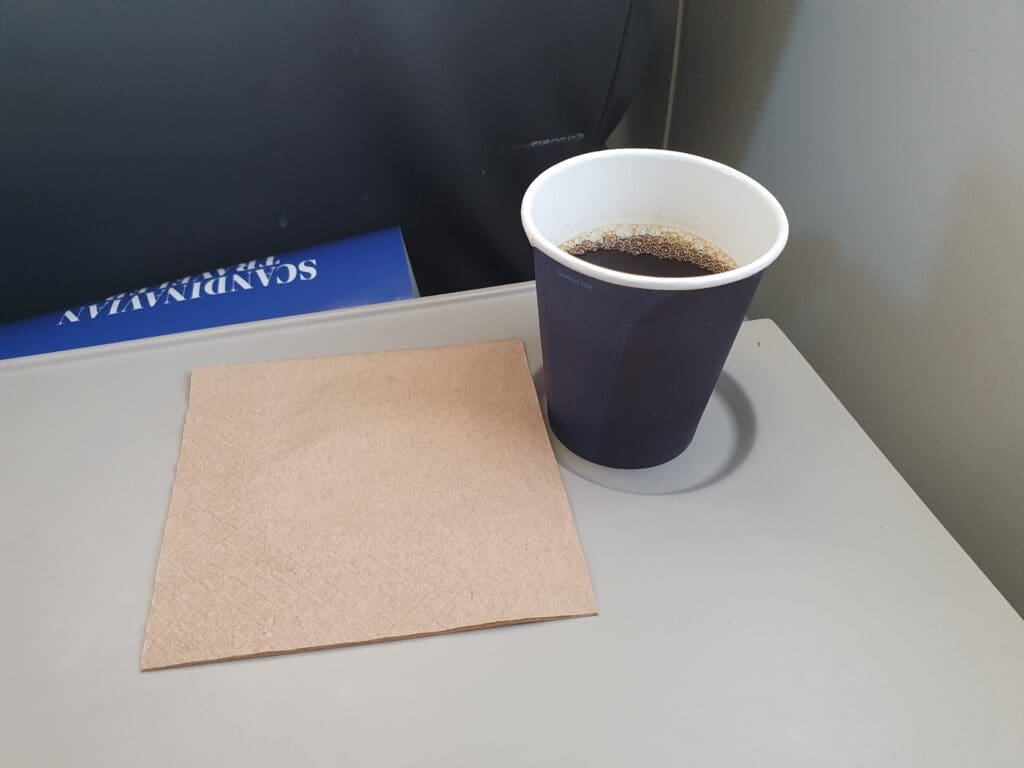
As the Bombardier neared its cruising altitude, the landscapes below soon flattened out and transitioned from snow-covered mountains and hills to a mixture of fields, forests and frozen lakes that I had become well-acquainted with during my time in Sweden. Given the short flight time, I was unsurprised to find that the two cabin crew members sprung into action a few short minutes after the Bombardier had rocketed upwards into the Swedish skies. A short time later, a flight attendant passed through the cabin repeating ‘Coffee? Tea?’, at which point I was a little surprised to find that no water would be provided as part of the complimentary service. Upon reaching my row, I opted for a coffee and was handed a serviette and a small Scandinavian Airlines branded paper coffee cup. Around five minutes later, the other friendly flight attendant reached my row armed with a coffee pot and cautiously filled by cup. Whilst a buy-on-board menu could be seen in the seatback pocket advertising a variety of drinks and snacks, given the length of the flight, that evening no buy-on-board service ended up being undertaken.
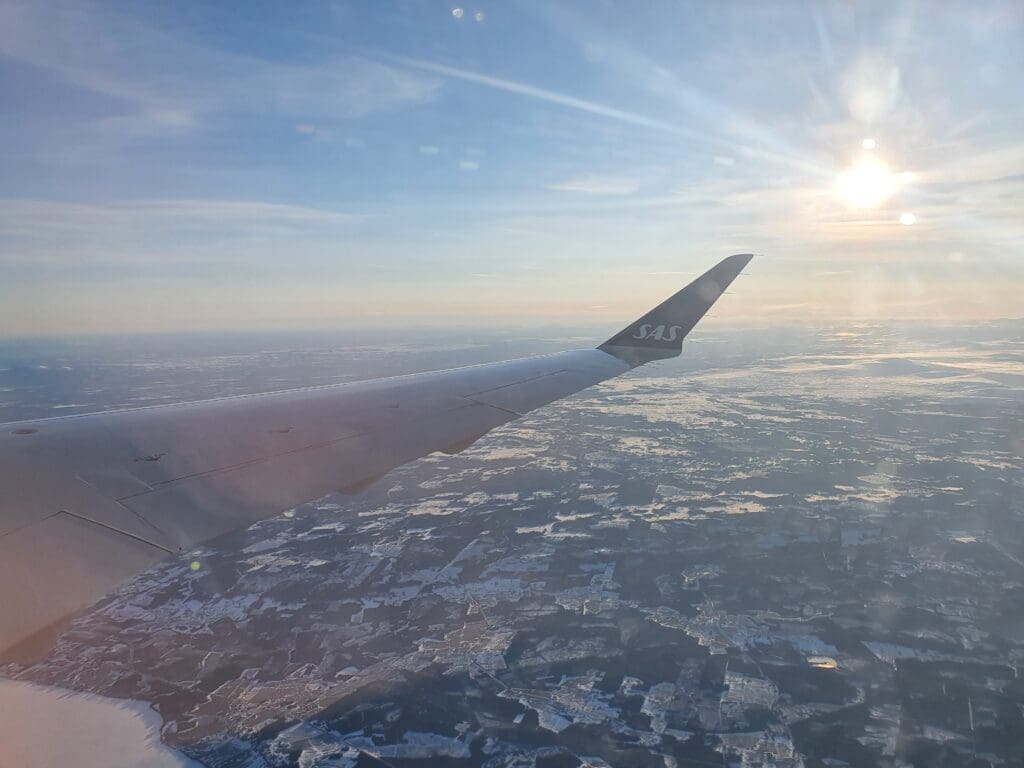
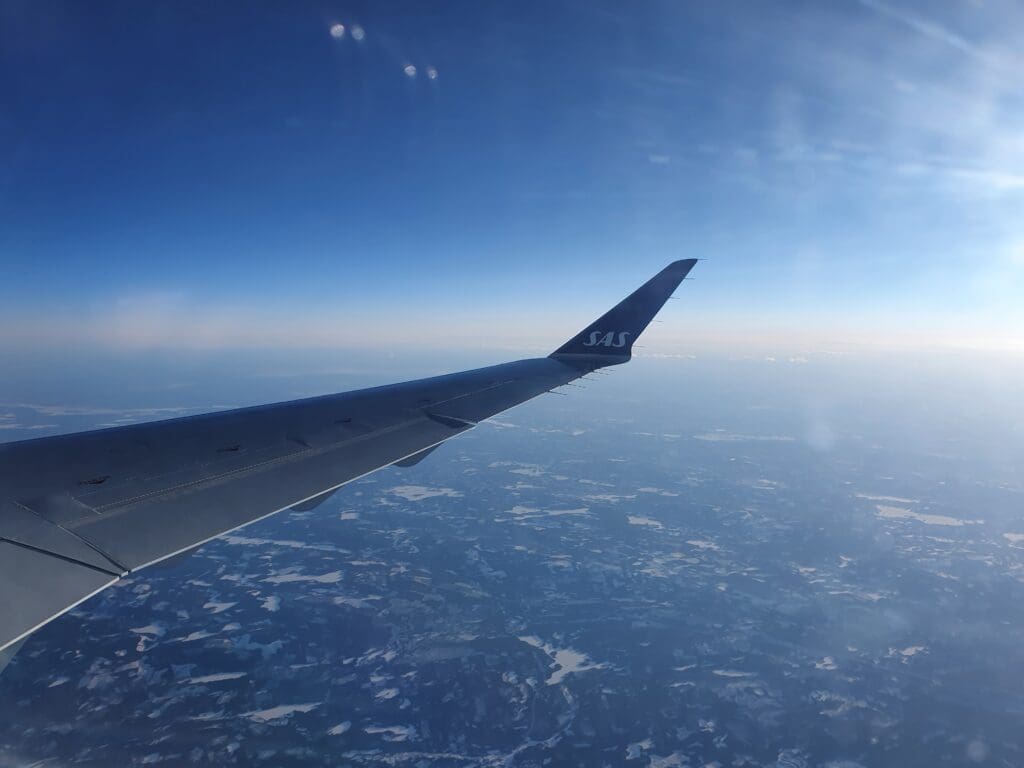
Following a short cruise, the Bombardier could be felt leaving its cruising altitude and a few minutes later the voice of the calm-sounding North American-accented First Officer filled the cabin as they undertook their pre-arrival announcement in English only. During this, they advised passengers on the weather in Stockholm – which was to be similar to that we had left behind in Östersund albeit slightly warmer and wished all onboard a lovely evening and a safe onward journey. This was then immediately followed by pre-recorded Scandinavian Airlines announcements in Swedish and English, which contained the usual pre-arrival warnings regarding seatbelts, seatbacks, tray tables and window shades, plus a message for passengers to look over the safety card before landing and a reminder for those onboard not to take their bags with them in the event of an evacuation. Whilst this is all sensible stuff, I can’t help but think that such announcements may cause some worry and concern amongst nervous flyers!
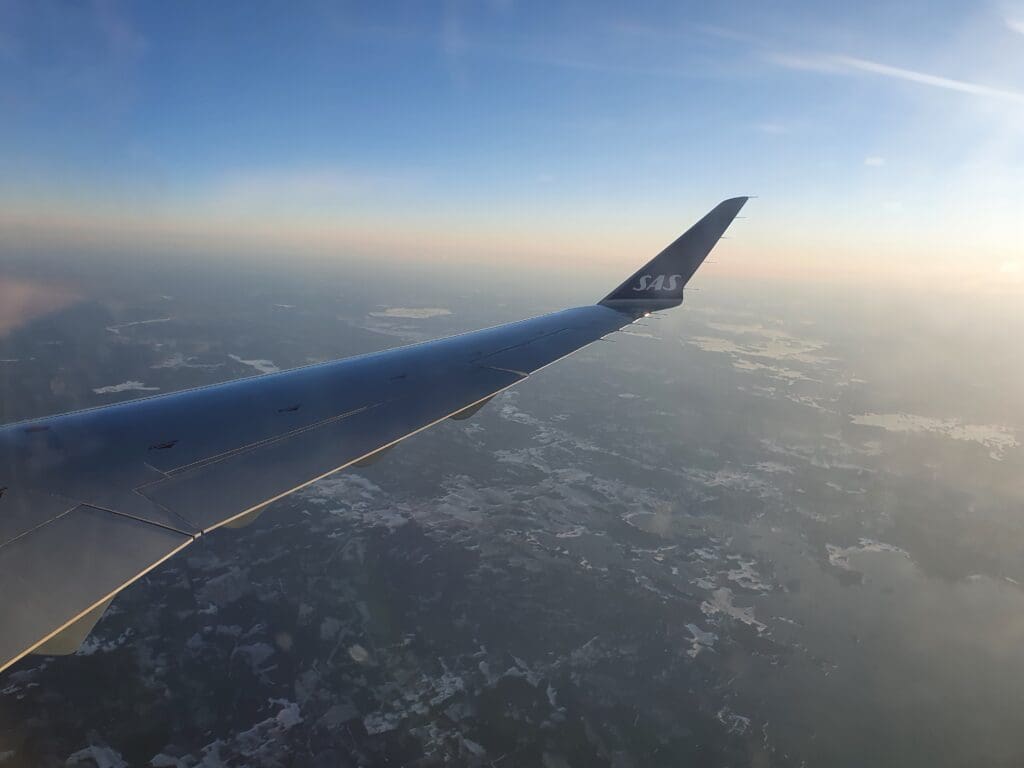
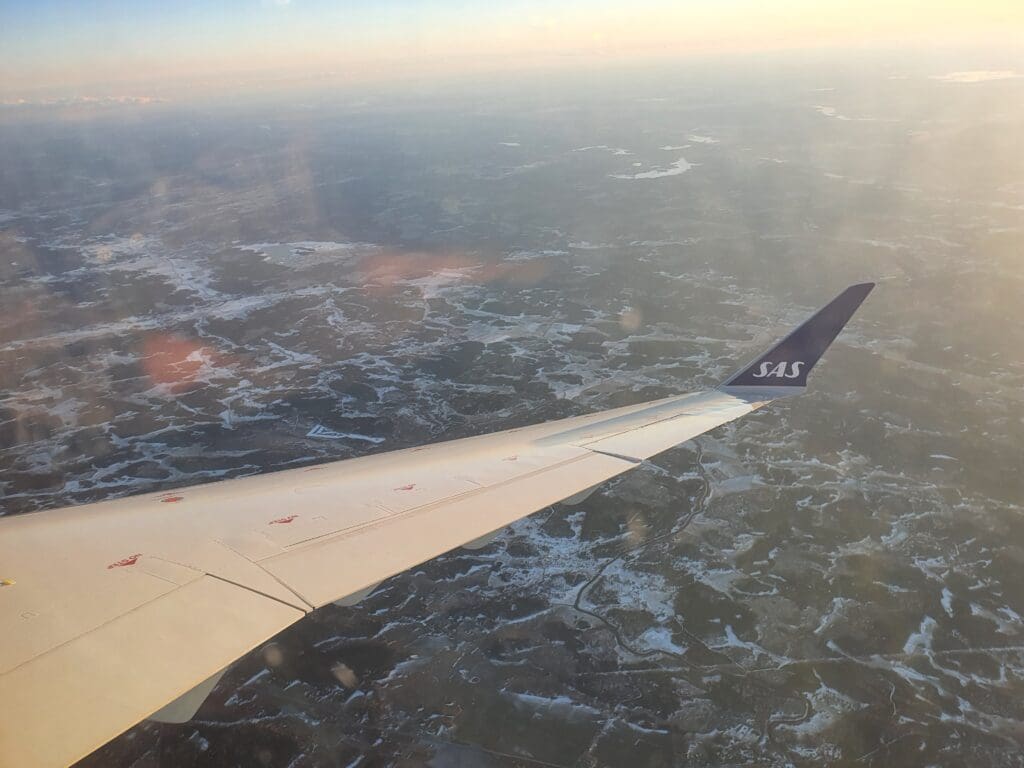
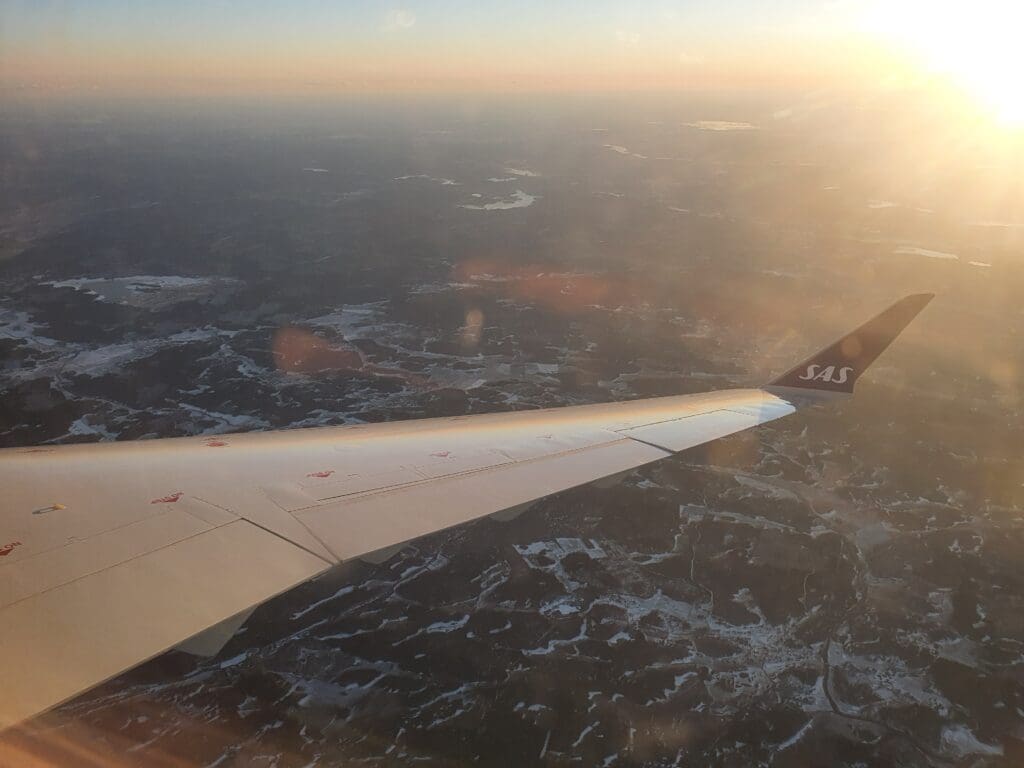
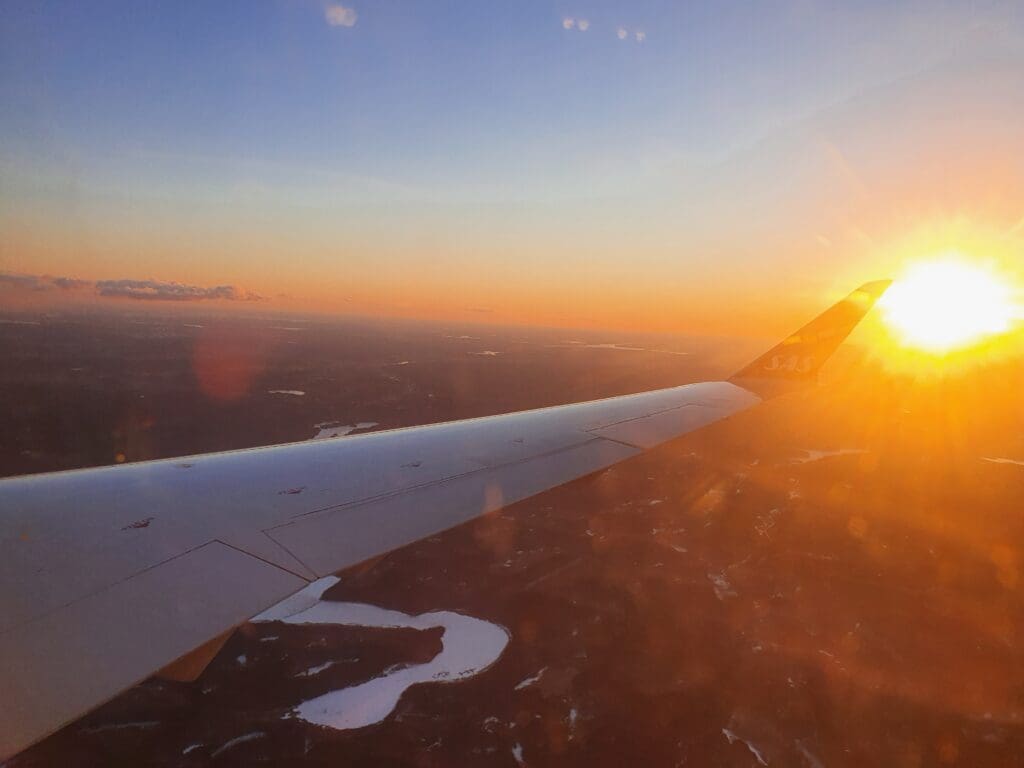
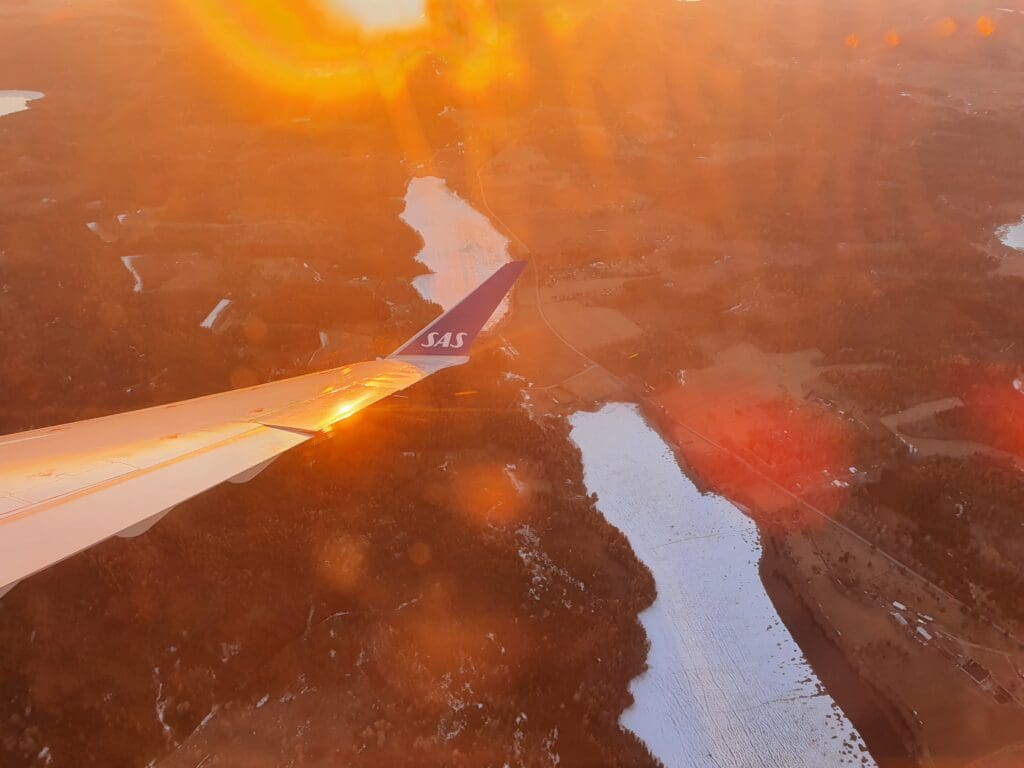
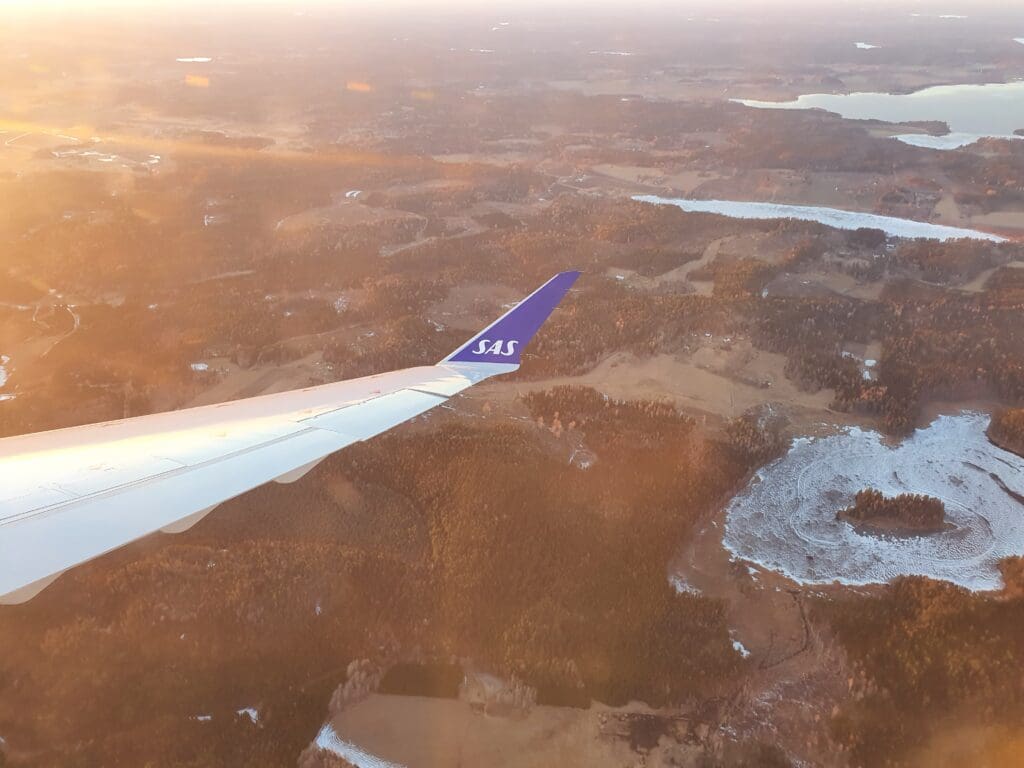
Soon, the Bombardier found itself descending low over the countryside, with the flaps falling into position indicating that the end of the short flight was near. This was then followed by the gear as the aircraft lined itself up for an approach to Stockholm Arlanda’s Runway 26. Continuing its descent over a mixture of fields and forests, at 1912, the Bombardier crossed over the perimeter fence before returning to earth with a gentle bump after just 44 minutes in the Swedish skies. Perhaps eager to minimise taxi time, once on the ground the aircraft decelerated incredibly rapidly resulting in noise coming from up above as items in the overhead lockers slid forwards. As the Bombardier taxied off the runway, one of the flight attendants performed a very brief post-landing announcement consisting of the message ‘welcome to Stockholm’, after a longer generic post-arrival pre-recorded announcement played in Swedish and English.
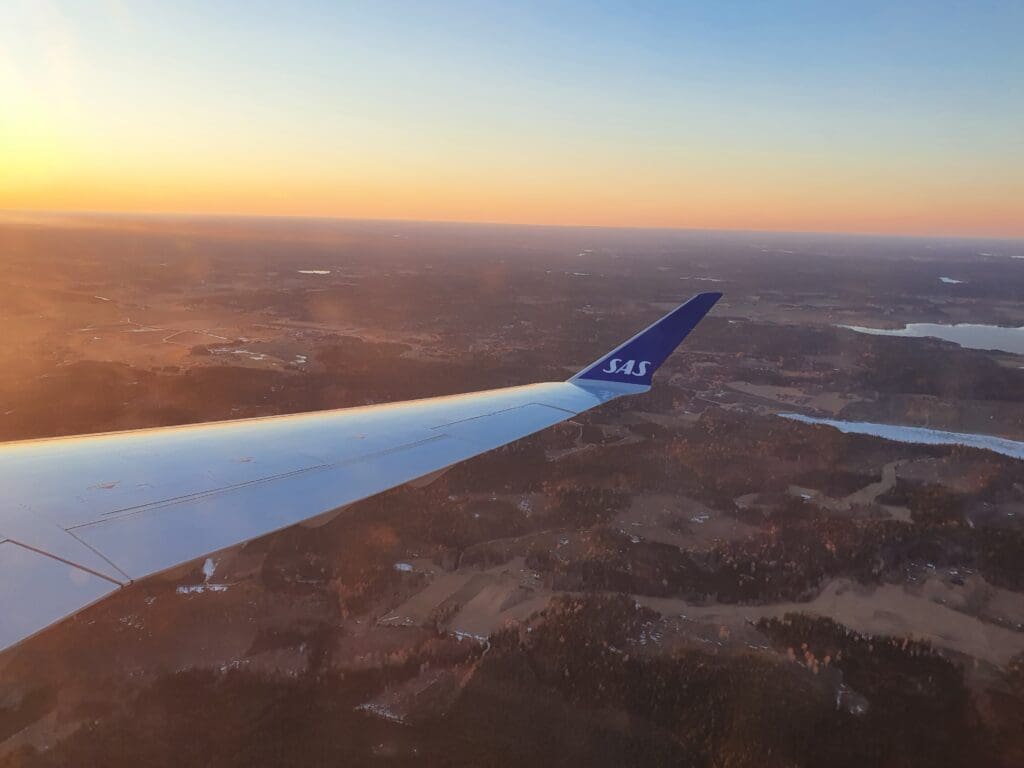
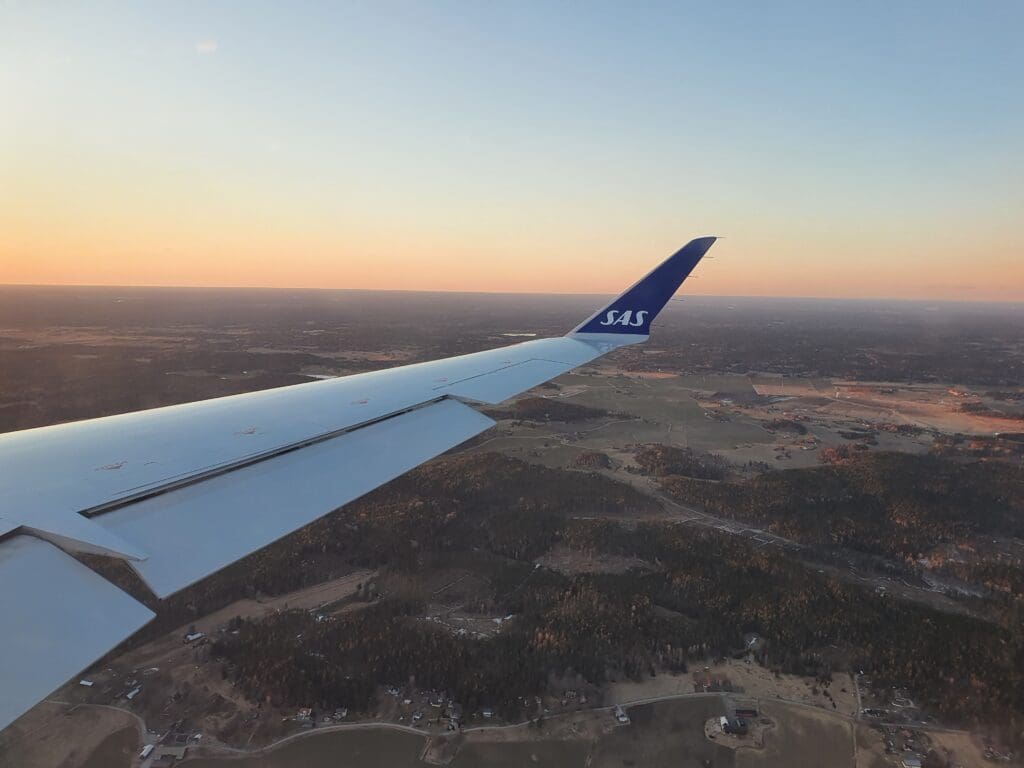
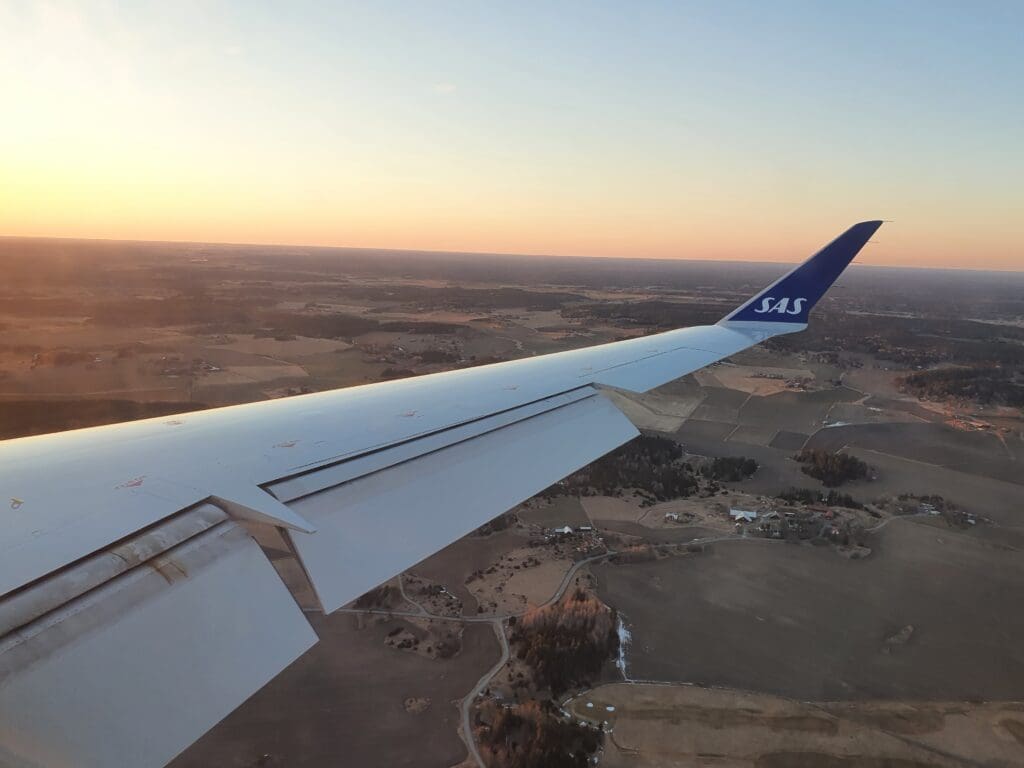
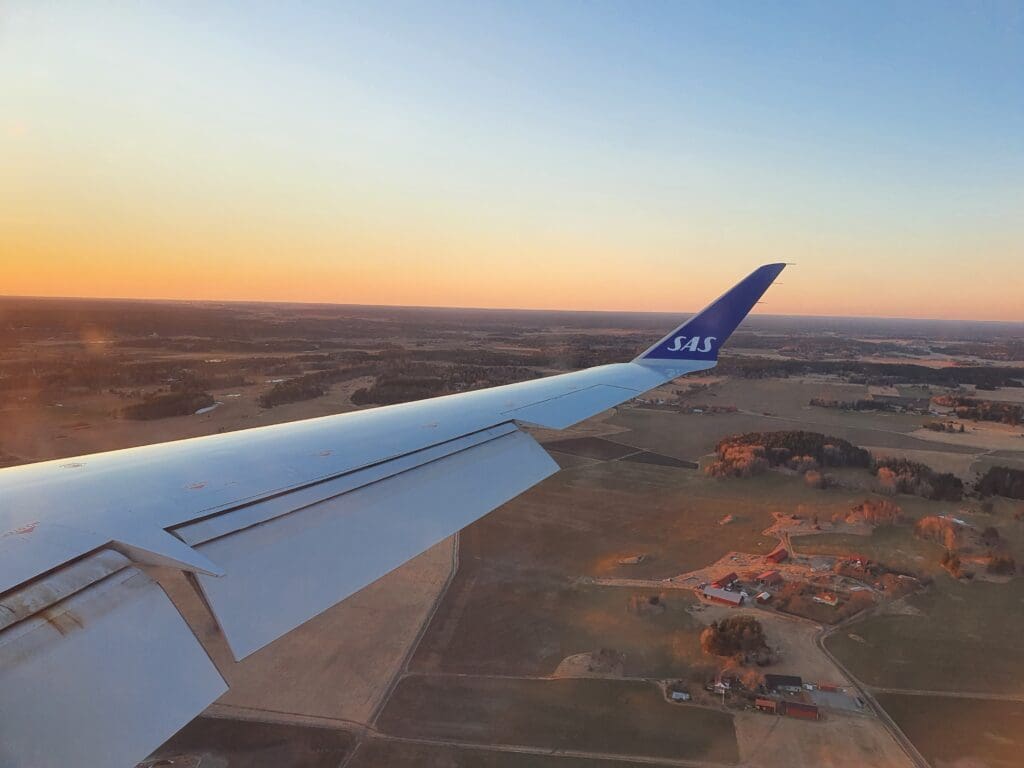
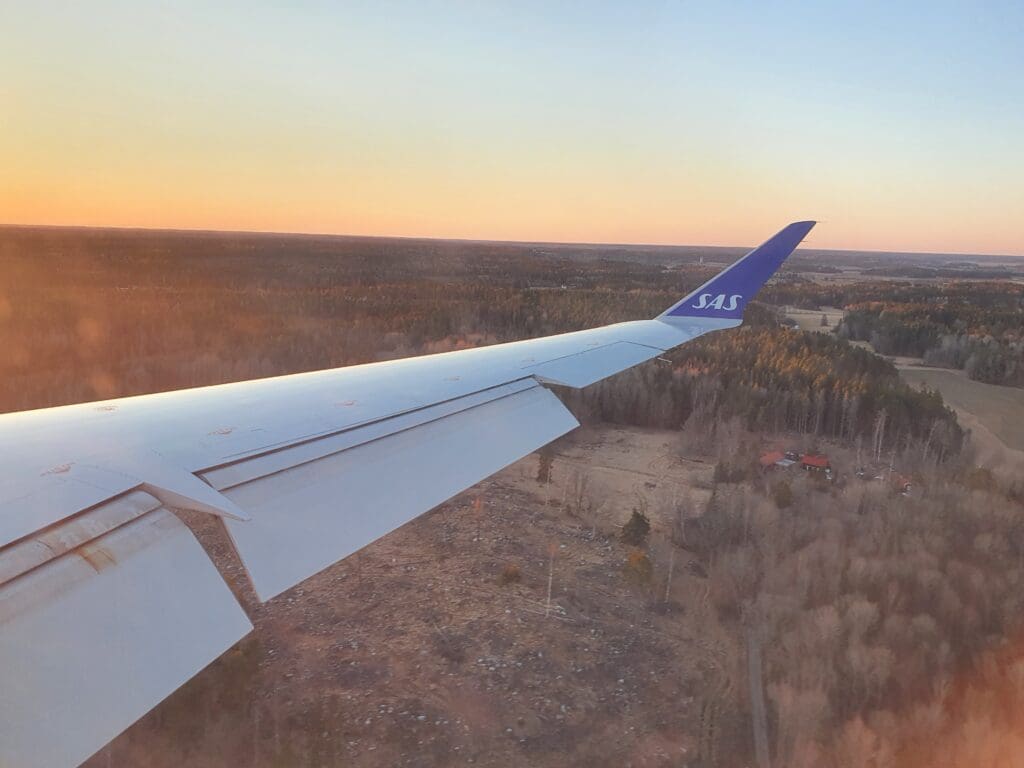
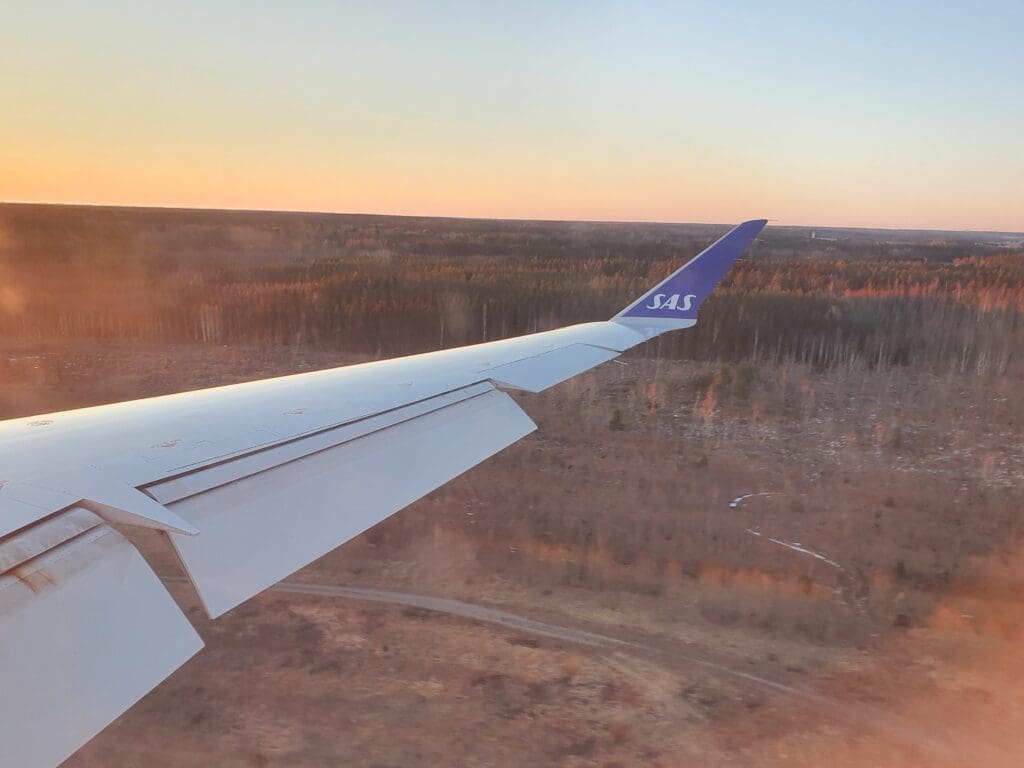
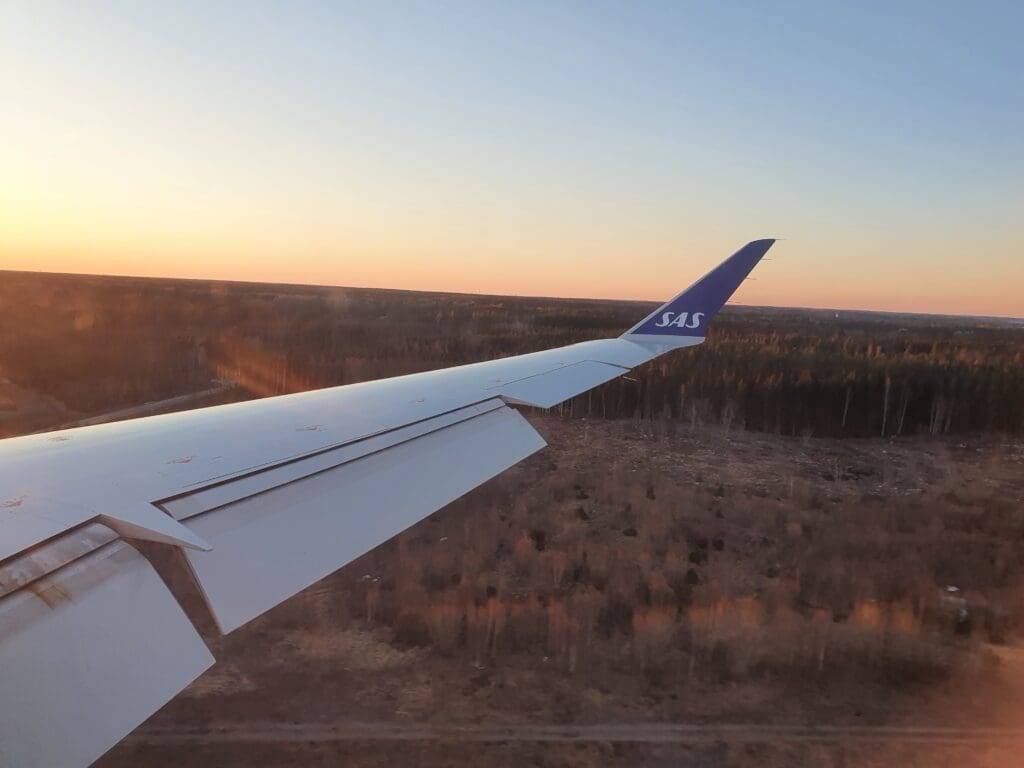

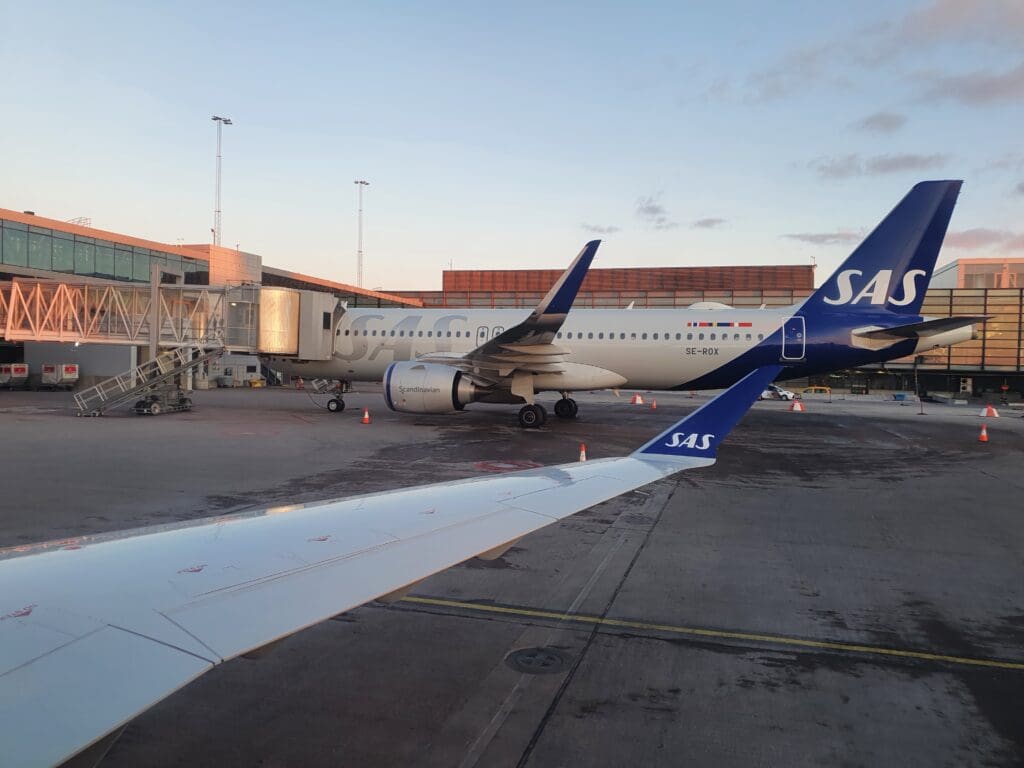
After vacating the runway, a relatively short taxi was in store and soon the Bombardier slowly and cautiously made its way into Stand F33R outside Terminal 5 where it pulled in next to the Airbus A320neo that I had originally been scheduled to fly down from Umeå. Coming to a halt nineteen minutes ahead of schedule, for some reason even after coming to a halt, the engines remained powered for a minute or so after which they spooled down. Once the seatbelt signs had been extinguished, many onboard appeared to jump up as if in a desperate hurry to escape the aircraft. Fortunately for those in a hurry, no jet bridge needed to be connected and the door was quickly opened with disembarkation soon commencing. Set to have several hours on the ground at Stockholm Arlanda before catching another Xfly Bombardier CRJ-900 for the short hop across the Baltic to Helsinki, I saw no point in attempting to make a quick exit. Taking things slowly, once the queue in the aisle subsided I stood up, thanked the flight attendant at the rear of the aircraft and made my way out of the aircraft being the final passenger to disembark. After bidding farewell to the flight attendant at the front of the aircraft, I cautiously made my way down the Bombardier’s steep steps and proceeded into the terminal building, arriving in the modern airside portion of the terminal at 1920.
Summary
That evening, I had a pleasant flight down from Östersund with Xfly. The aircraft was clean and comfortable whilst its cabin was in a reasonable state. Meanwhile, both crew members were friendly and welcoming, and the flight touched down in Arlanda well ahead of schedule. All-in-all I was left with nothing to complain about, and I would not hesitate to fly onboard one of Bombardier CRJ-900s operating on behalf of Scandinavian Airlines again.
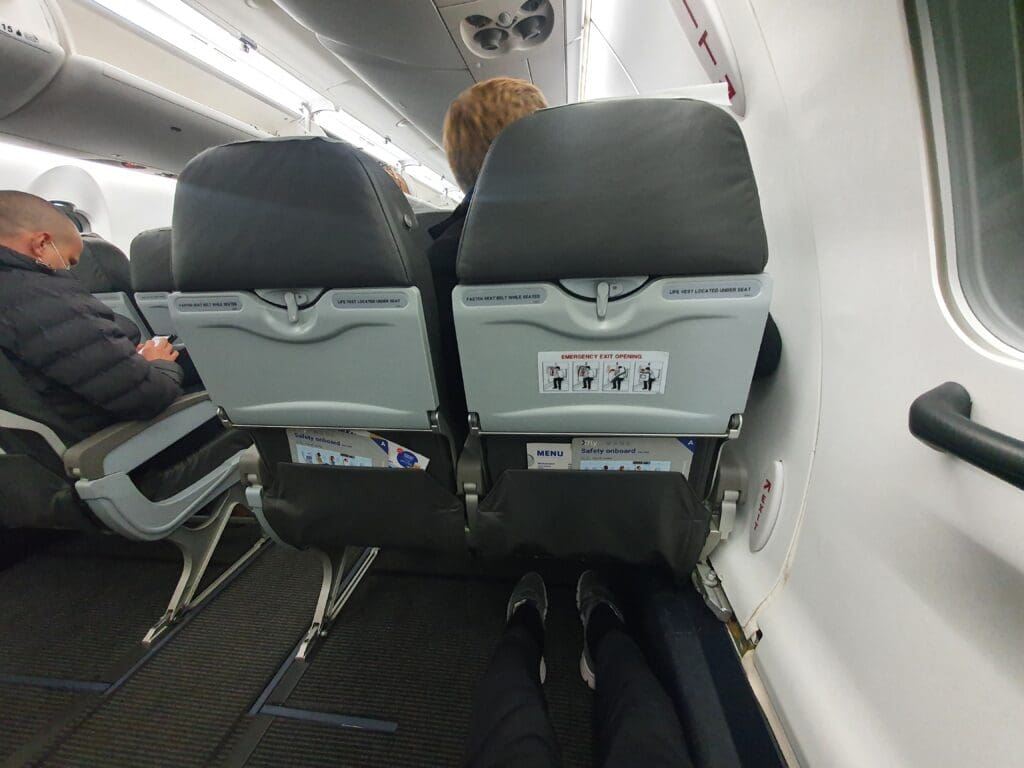
To end, here are some snaps of my second flight onboard another Xfly to Helsinki taken later that evening. This second flight proved to be almost empty and I was moved from my original Seat 22D to the exit row Seat 16F which allowed me endless amounts of space during the short hop across the Baltic Sea. As with the first flight, I was left with a similar impression – the aircraft was clean and in a reasonable condition, the crew were friendly and once again the aircraft arrived ahead of schedule. The only slightly notable part of this flight was the non-working nature of their hot water dispenser resulting in the only complimentary offering on the flight being water.