Remembering Eurowings’ Dash 8 Q400s: Paris CDG to Dusseldorf with LGW Aviation
Background
After being in Dubai for a couple of weeks, I received an invitation to attend a job interview for an aviation related position. The catch to this was that this interview was back home in Britain. Despite being several thousand miles away and enjoying the pleasant February sunshine of the Middle East, I decided that this was too good of an opportunity to pass and so I soon planned a route back to the UK. Little did I know at the time that my job interview would end up being cancelled due to the COVID-induced uncertainty within the aviation sector. After some searching, I deciphered that one of the cheapest ways to get back would be to travel via Paris which would also allow for a weekend in the city that I had recently called home.
Specifically, this involved two flights with Saudia from Dubai to Jeddah and then on to Paris CDG onboard one of their Airbus A320s and Boeing 787-9 Dreamliners. Fortunately, a range of cheap options are available for those looking to fly from Paris to destinations across Britain and I soon found a bargain last-minute fare to Manchester onboard a Flybe Dash 8 Q400 for no more than £40. Whilst semi-aware of the ongoing issues at Flybe, I was confident that the airline would stay around for at least another week, so I went ahead and booked this. Hours later, the airline collapsed and I took to Skyscanner once again!
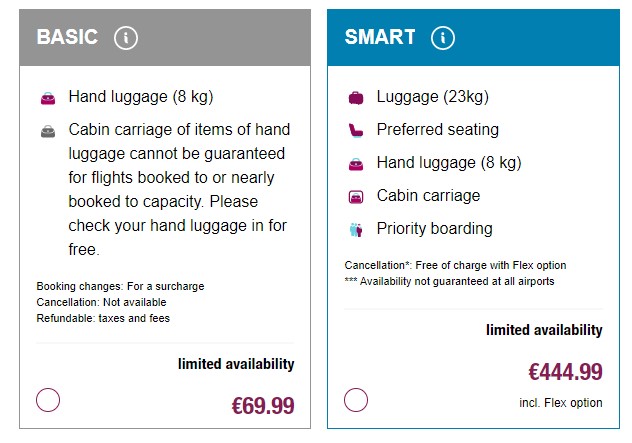
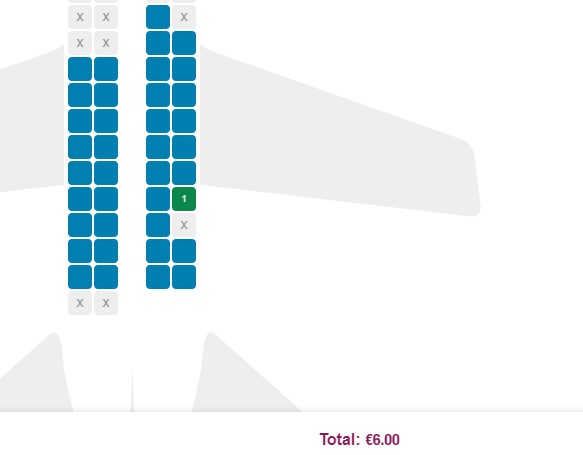
Fortunately, by the time I hit Skyscanner again, there was still a fair selection of cheap flights with direct services on EasyJet and one-stop journeys via Düsseldorf with Eurowings proving to be the cheapest options to Manchester. Whilst the majority of ‘normal’ would likely go for the direct option, failing to fall into this category I gravitated towards Eurowings. The fact that the first flight in Eurowings’ afternoon option involved a hop in an LGW-operated Dash 8 Q400 sealed the deal for me and I instantly headed onto Eurowings’ website. A short time later I was presented with two options for that day, both priced at €69.99, an 0855 departure and another at 1305, these arriving in Manchester at 1505 and 1905 respectively after a long stop in Düsseldorf. Allergic to early starts and not needing to arrive in a hurry, I chose the afternoon option. After I selected this, I was taken to the first optional extras page where I was invited to add luggage to my booking and reserve seats. Whilst the price for luggage did not seem too extortionate (€17 for 23kg), I passed on this although I did opt to reserve a window seat for the first Dash 8 operated leg. At the time of booking, the majority of the seats from Row 9 onwards remained vacant and were priced at €6 each – I settled on Seat 16A and added this to my booking. Once past the optional extras page, I entered my details and was able to add a frequent flyer number for the programmes of Air Canada, ANA, Lufthansa, United and of course Eurowings. Even though these were to be my seventh and eighth flights with Eurowings, foolishly, I was still not a member of the airline’s Boomerang Club and so I skipped this before being delivered to a second page of optional extras – namely for car hire and travel insurance. Finally, I made it to the payment page where I was able to purchase the tickets quickly and without any issue, receiving an email in German confirming my purchase almost instantly after making payment.
Whilst some LCCs offer check-in weeks before a flight’s departure, online check-in for the majority of Eurowings’ flights opens 72 hours before departure and no penalty is given for those who wish to check-in at the airport. Having flown with Eurowings from Manchester to Düsseldorf several weeks before this flight and not expecting to fly with the carrier again so soon, I had already deleted the airline’s app from my phone. Nevertheless, preferring to do this via the app, shortly after arriving at the 72-hour window I reinstalled this. As soon as this finished, I opened the app and entered my booking details which gave me the option to check in for my flight. Despite booking with the English language version of the site, as with my confirmation email, I was only able to input my passport data into the German language form. After some consultation with Google Translate, I entered this and headed onto the next page where I was able to edit my pre-booked seat for the first flight and select a seat for the second. Unlike many of their competitors, Eurowings allows those who have not reserved a seat to select one from the remaining vacant standard seats during the online check-in process rather than simply allocating these automatically and locking them unless the passenger pays a fee. Once I had selected a window seat for the second flight of the journey back to Manchester, I received mobile boarding passes for both flights and was all set to go!
The Journey
When travelling light, the usual route from my accommodation in Paris’ 3rd Arrondissement to Gare du Nord Station involved a 20 minute walk up the slight incline that leads to Paris’ northern terminus. This route often proves quicker than the indirect metro ride involving two changes and is more comfortable than the jolting bus ride through Paris’ busy streets. However, with Paris set to be yet again plagued by heavy rain showers, I initially planned to be sensible and resign myself to the metro. However, despite the gloomy forecast, upon heading out to the supermarket that morning I was pleased to see that the predicted heavy rain was nothing more than some drizzle. Therefore, at 0910, I decided to embark on my usual walk up to Gare du Nord from where I would take an RER B train to Paris CDG. Around twenty minutes after my departure and after an uneventful walk, I walked past the army of chilly-looking illegal cigarette vendors and proceeded into Paris’ northern terminal. Despite official advice at the time encouraging citizens and visitors to limit travel to prevent the spread of Coronavirus, that morning, the station seemed to be as busy as ever. That said, considering I was in the country that hosted the world’s largest-ever meeting of Smurfs a few days earlier, I was not overly surprised by this!
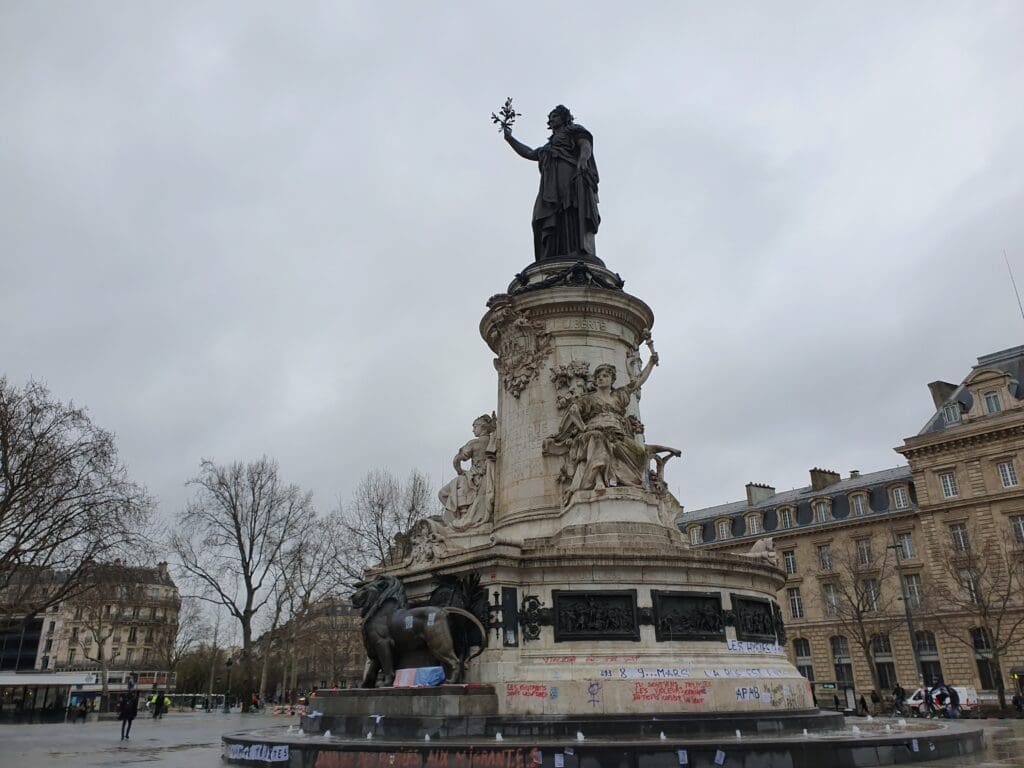
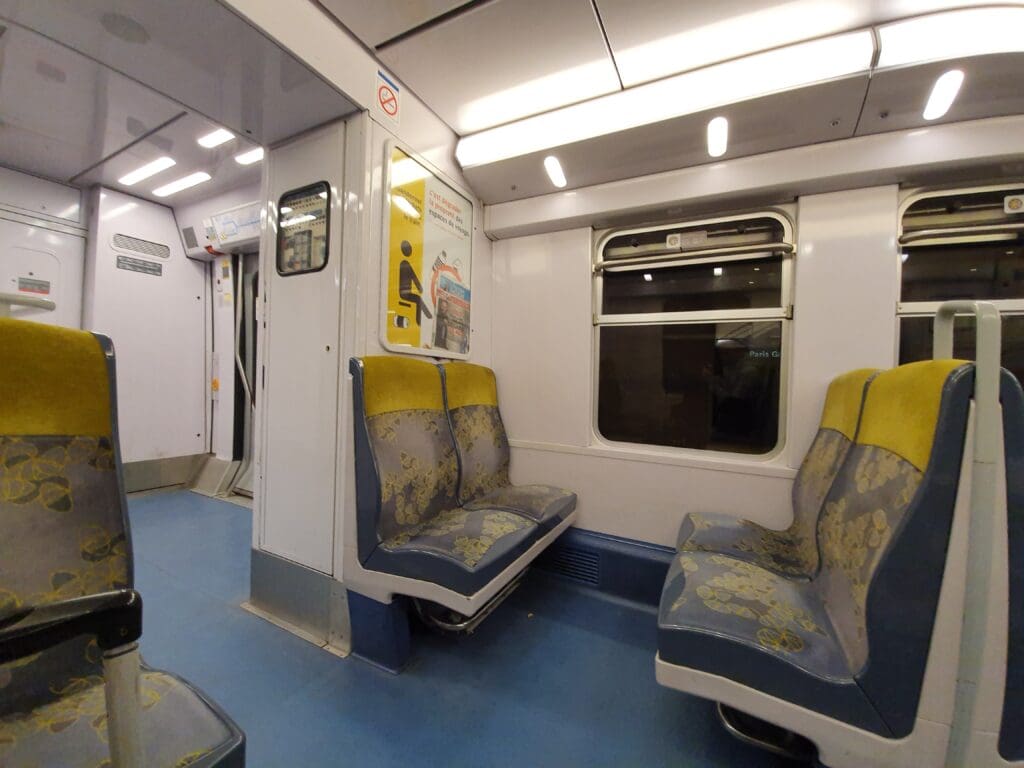
Being in no particular rush, rather than heading straight to the basement to catch the first airport-bound train that arrived, I decided to wait for a while and take the first non-stop service to the airport that day at 0957. Whilst no rail enthusiast, coming from a country whose railways are becoming increasingly dominated by diesel and electric multiple units, as I walked around it was interesting to see powerful locomotives and ‘real’ high-speed trains. Once I had satisfied my inner trainspotter, I headed down to the station’s basement, stopping mid-journey to purchase a one way ticket to the airport for a pricey €10.30. After my arrival on the platform, a stopping train bound for the airport came and went and, soon enough, the non-stop service arrived at 0955. Notorious for not being the most luxurious of France’s rail services or indeed the safest (with regards to crime) method of travelling to and from the airport, that morning, as I stepped onto the train I had few complaints. This was relatively clean and with few other passengers making the trip to the airport, there was plenty of space to stretch out. Leaving the station a minute behind schedule, the train slowly proceeded out into the open air, giving a view of Paris’ northern suburbs sitting beneath a gloomy grey sky. As we neared the airport, an okay busker entered the carriage adding some excitement to the journey. Rather than serenading passengers with the usual accordion in true Parisian style, instead this particular musician performed a half-song, half-rap in English and French.
As the busker neared the end of their first song, the train was slowing as we approached our first stop, Terminal 1. Despite its name, this particular station is located in the Roissypole complex with the closest terminal being Terminal 3! Those wishing to head to Terminal 1 must take the free automated CDGVal shuttle train which fortunately runs at interviews of no more than a few short minutes. Thus, after my quick train journey from Gare du Nord, I headed up from the platform to the ticket barriers on the ground floor level. After admiring the near-acrobatic moves of some fare dodgers as they swung over the tall barriers, I exited more traditionally before heading back down underground to the CDGVal station. In no time whatsoever, a train pulled up and whisked me off to Terminal 1, making an intermediate stop first at one of the airport’s many car parks. At 1030, my journey on the automated train reached a gentle conclusion and I disembarked, following the crowds to the bottom floor of Terminal 1. Whilst Paris CDG may occasionally get scolded for its unreliable and occasionally unpleasant connections to the city centre, that day including my pause at Gare du Nord, I had completed the journey in an hour and twenty minutes and, ignoring the steep ticket price, I was left with no complaints.
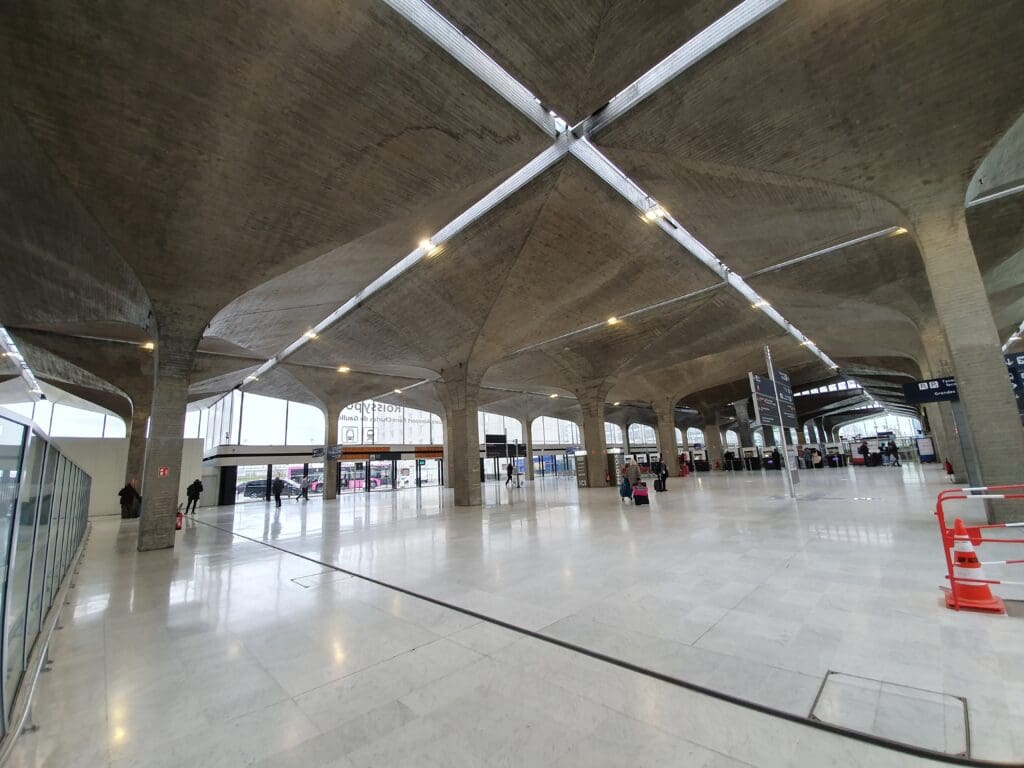
Being the third time passing through Paris CDG’s Terminal 1, as with Gare du Nord, the terminal seemed no less busy than it had been the previous two times I had travelled through this. As I strolled through the basement-level check-in area I saw plenty of people waiting to check-in for flights to destinations both near and far. In need of my second coffee of the morning, I decided to head across to McDonalds. Whilst the fast food chain may not be known for being home to the best coffee in the world, it is home to some of the cheapest coffee in the terminal. Several minutes later and with a €2.90 double espresso in hand, I embarked on a circular walk of the unique terminal. Hoping to head out onto the outdoor smoking area in the middle of this to admire the crisscrossing space age tubes, I was a little disappointed to find that the outdoor area was closed that morning.
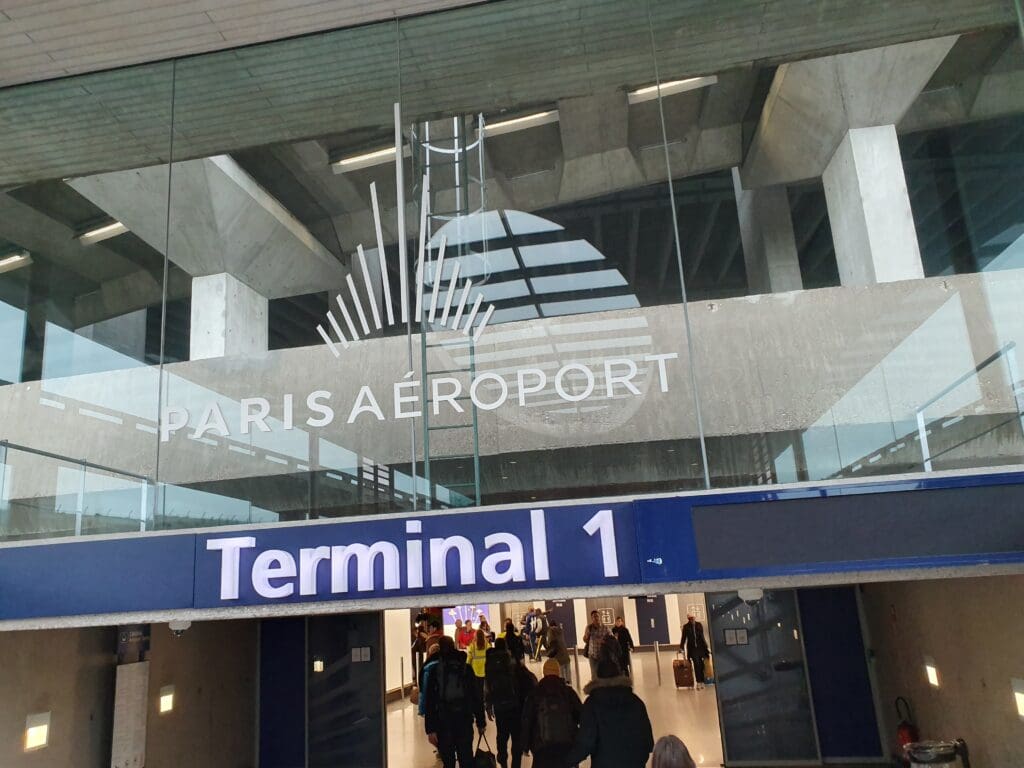
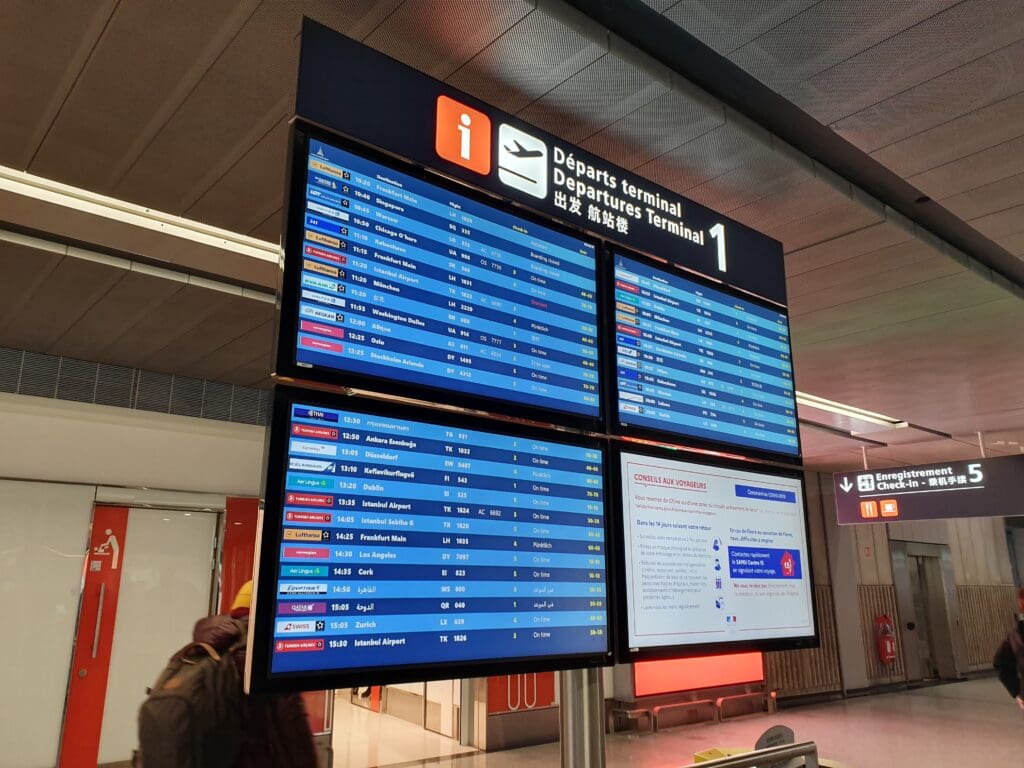

With no luggage to check-in, and having opted to use my mobile boarding pass for the two flights, as soon as I finished my coffee I proceeded onto the airside area. The first stage of my journey to one of the terminal’s six satellite terminals involved passing through an automated boarding pass check, which, after opening allowed me to head up into one of the terminal’s tubes. As I headed up a floor, there seemed to be plenty of departing passengers however most seemed to be heading off across the Atlantic on Norwegian and United Airlines and thus turned towards the immigration area once the tube deposited them on the first floor. Alongside Lufthansa, LOT, Swiss and Norwegian flights to destinations in the Schengen Area, Eurowings utilises the small island that is home to Gates 60 through 68. Following signs for these gates, I was almost immediately led to a ‘rollercoaster’ moving walkway into the tunnel under the apron, emerging a minute or so later at the island. With Lufthansa’s 1120 flight to Munich in the final stages of boarding and the airline’s 1115 Frankfurt service cancelled, there was only one other departure at the terminal before my 1305 flight, a Norwegian flight to Stockholm Arlanda. As a result both the tunnel to the satellite as well as the security area were virtually deserted.
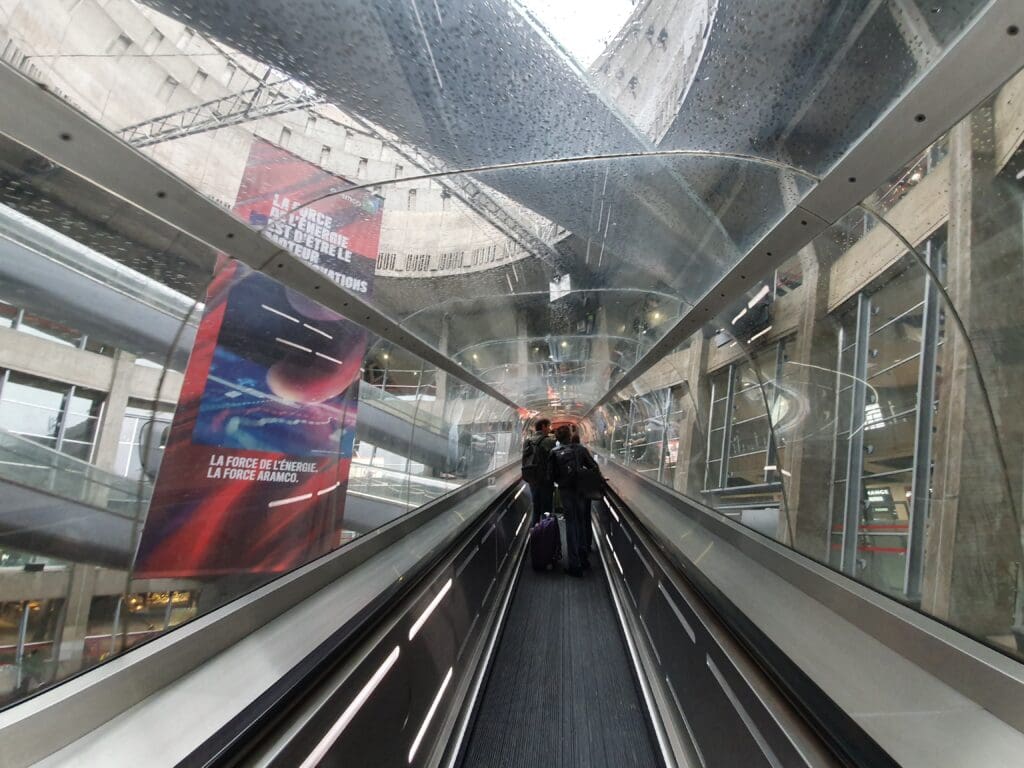
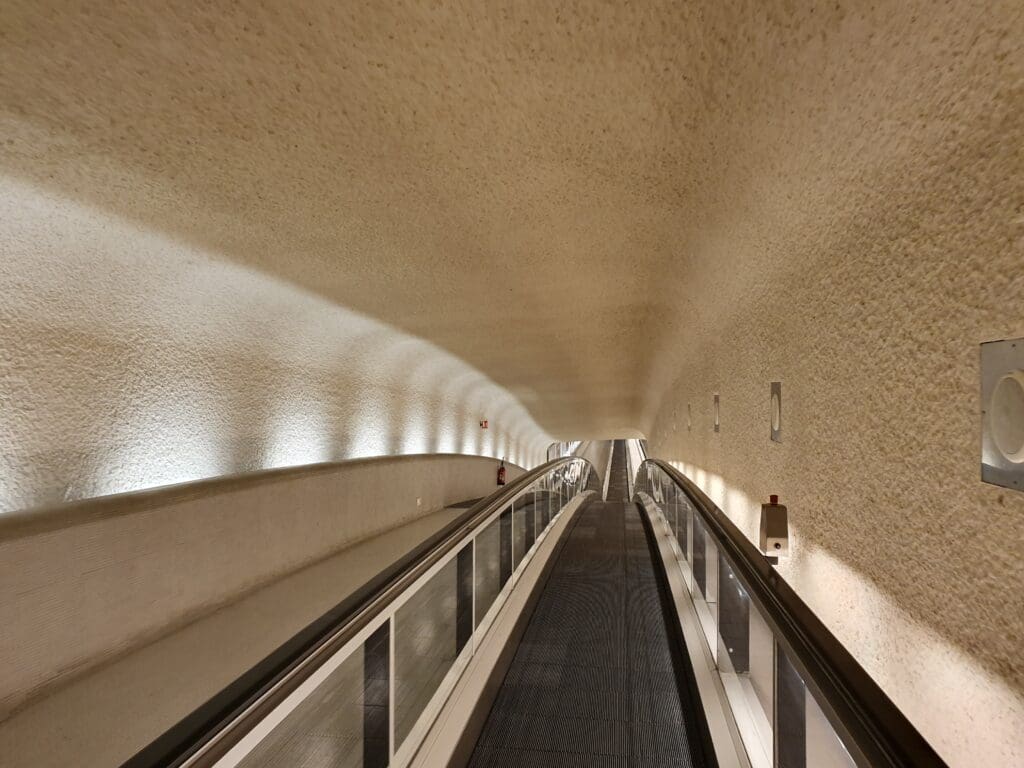
As soon as I arrived at the satellite terminal, I walked straight up to one of the two security checkpoints. There a tough security worker promptly gave me a quick interrogation with the usual questions regarding liquids and electronics before allowing me to pass through the metal detector. Without any issues, I made it through to the airside area well over an hour before my flight’s scheduled boarding time of 1235. As one would expect given the lack of flights, this area was almost empty with there initially appearing to be an equal number of staff and passengers. As airside departure areas go, that of this particular satellite terminal is most definitely not the most exciting in the world and is not designed to be a place to spend more than an hour or so. There, a branch of the popular bakery-café Brioche Dorée, a Relay convenience store and a small duty-free shop are all on offer in addition to plenty of seats and a couple of Playstations which are free for passengers to use. On the plus side, that morning I found this area to be clean and needing to charge my phone and laptop, I was pleased to see an abundance of plug sockets, with these located in most benches. However, I should also note that it did take me some time to find a plug socket that worked.
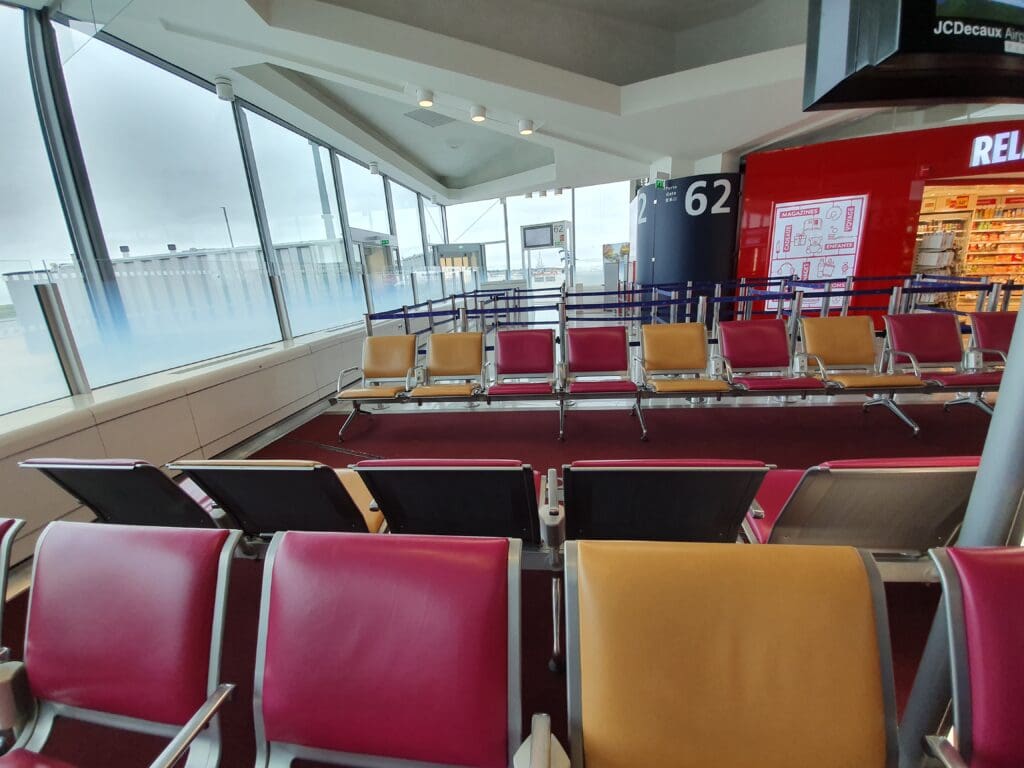
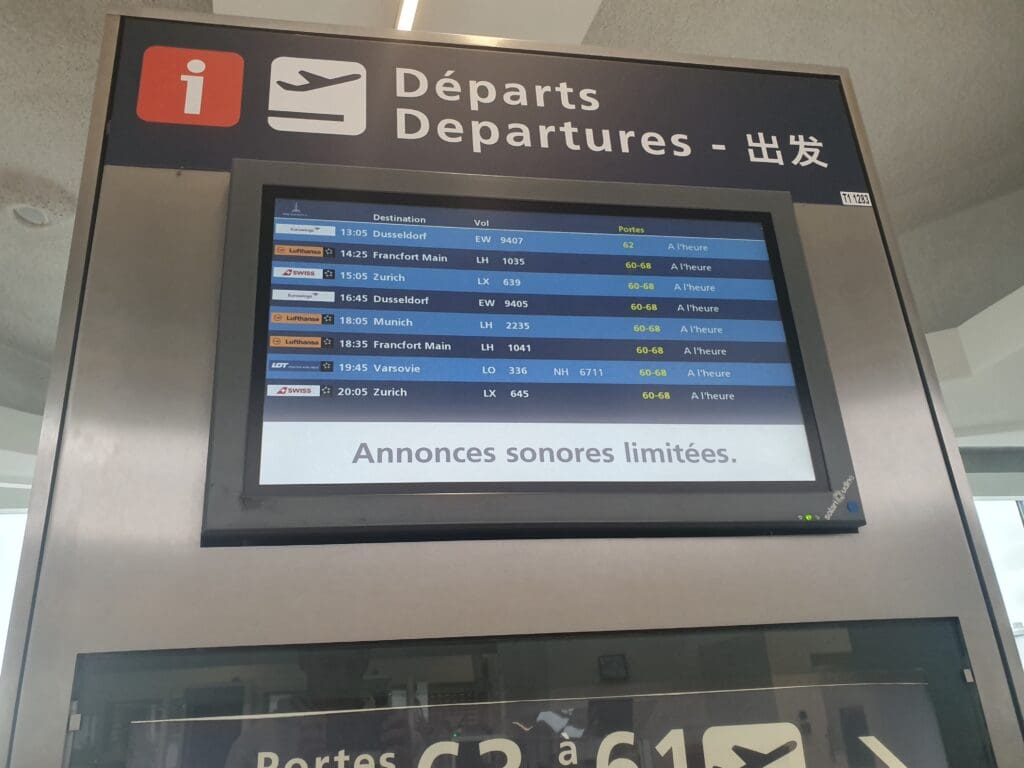
Moving on to the aviation enthusiast side of things, it is worth noting that the waiting area does allow for reasonable views of those aircraft arriving on Runway 27R, particularly as they taxied off this and made their way to their respective stands. However, thanks to the design of the terminal, any photography of these aircraft, or even those jets waiting outside the terminal is all but impossible. With little to do as I waited, I passed the time by watching the constant stream of arrivals which consisted of aircraft ranging in size from the small Dash 8 Q400 to the whalejet Airbus A380. Meanwhile, at the terminal, following the departure of the Munich-bound Lufthansa A320, all stands remained empty until the arrival of the Swedish-registered Norwegian 737 that would head to Stockholm. This particular aircraft sported the portrait of Norwegian sailor Otto Sverdrup on its tail.
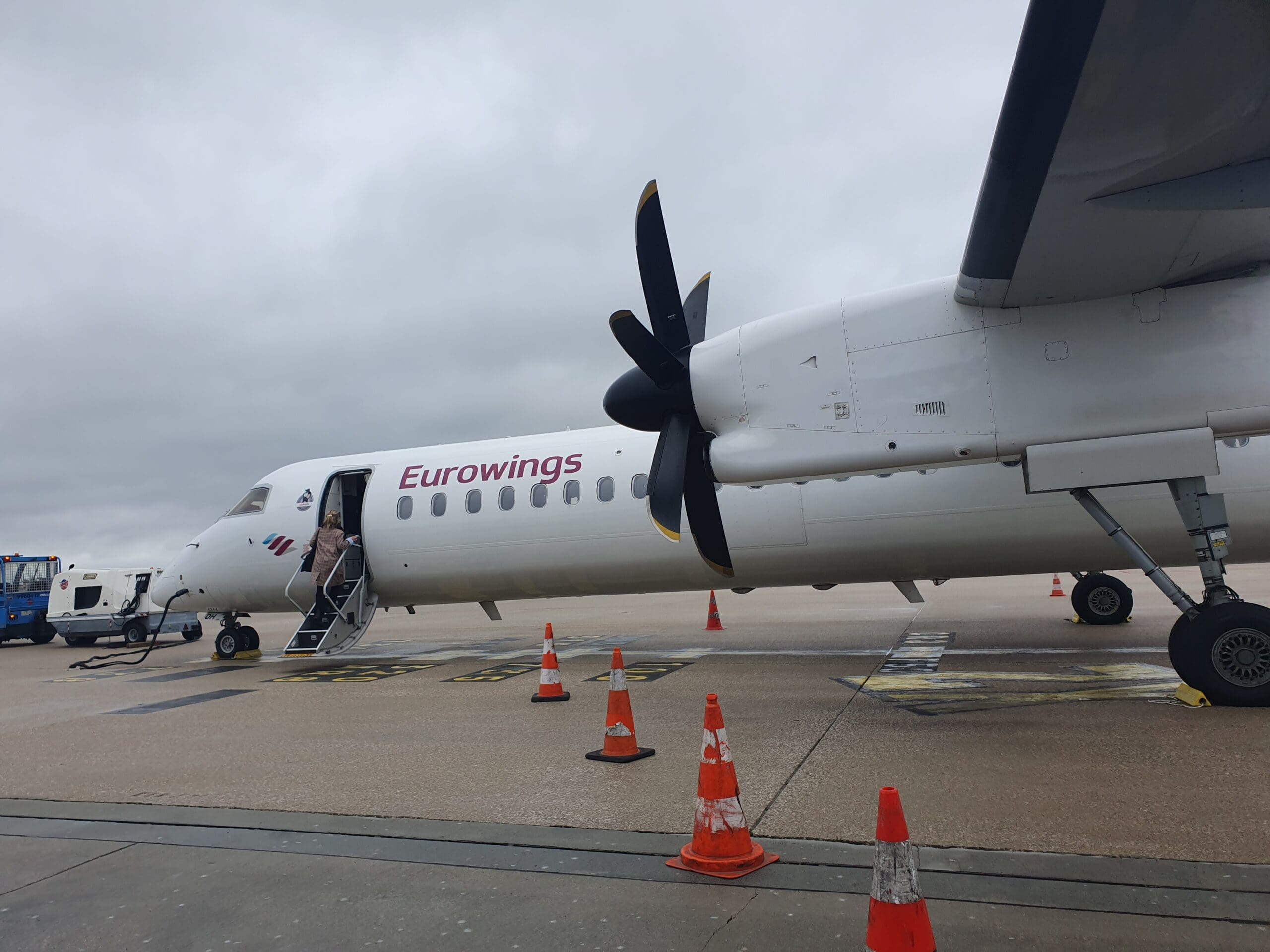
At 1229, Dash 8 Q400 D-ABQH touched down in Paris, ending its flight from Düsseldorf exactly four minutes minutes behind schedule. Taking this into account, I was aware that the chance of boarding occurring at the scheduled time of 1235 was virtually zero, especially seeing as the aircraft did not arrive at the terminal until this time. Having first taken to the skies of Eastern Canada in Spring 2009 complete with the test registration C-FWGO, at the time of my flight, this particular Dash 8 was very nearly eleven years old. By late May 2009, this aircraft was christened with the name ‘Helga’, which it still wears today, and headed across the Atlantic in the red and white colours of Air Berlin to begin its life in Germany. Following the collapse of the carrier in October 2017, late that year, the aircraft was repainted into the mostly white livery it still wars today, complete with small Eurowings titles above the windows at the front of the aircraft and the airline’s motif to the left of the main cabin door. In the week before my flight, the aircraft had covered around 11,000 miles, and operated a total of 31 sectors, connecting Eurowings’ Düsseldorf hub with Basel, Birmingham, Copenhagen, Gothenburg, Hamburg, Kosice, Lyon, Nuremberg and Paris. Fortunately, whilst all these flights appear to have gone without a glitch, according to the Avherald, the aircraft suffered from one notable incident in its lifetime when, at the end of a short flight from Düsseldorf to Nuremberg, an emergency was declared following an unsafe gear indication, however, the aircraft landed safely after going around.

By the time the Dash 8 pulled up to the terminal, a fair few passengers could be seen gathering around Gate 62. Several moments later, one of the ground staff members passed around eyeing up luggage for transportation in the cargo hold free of charge. Aware of the smaller-than-average overhead locker size onboard the Q400 and with nothing too precious inside my small suitcase, I volunteered for this service. This was met with plenty of enthusiasm from the friendly staff member who tagged my bag and passed me a sticker for this. At 1240, a very small number of passengers, most of whom were dressed in business attire headed up into the terminal and, eight minutes later, boarding for the Düsseldorf service was announced. Given the size of the aircraft, passengers were only split up into two groups – those holding Basic tickets and those with other fares. Once the few people with non-basic tickets headed out to the aircraft, it was time for the majority to board and after a few moments, I had my boarding pass scanned and passport checked before being wished a good flight.
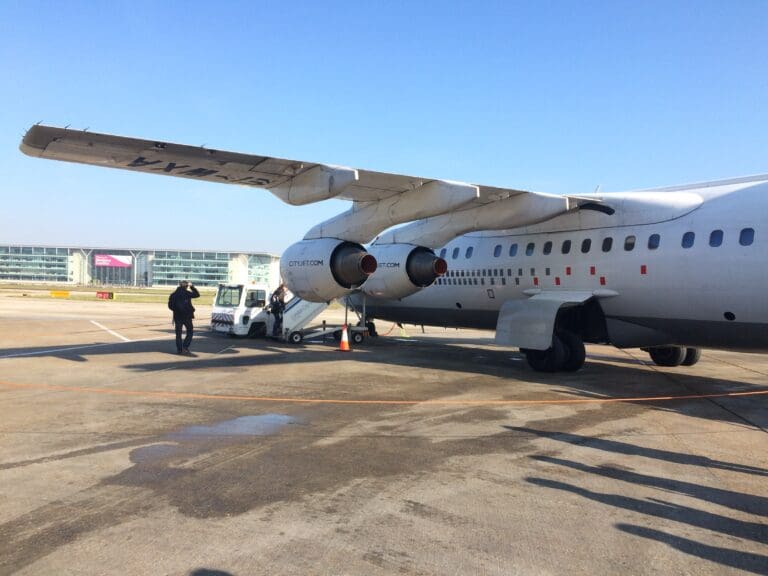
Heading down to ground level, I soon found myself outside at the rear of the aircraft where I swung my suitcase onto the waiting trolley before being thanked and wished a ‘bon voyage’ by the two staff members guarding this. Leaving me with a great final impression of the ground staff that morning, I received another farewell as I walked around the wing. The downside to this was my disappointment at not receiving a greeting after clambering up the Dash 8’s built-in steps, instead receiving a vacant look from one of the two flight attendants onboard.
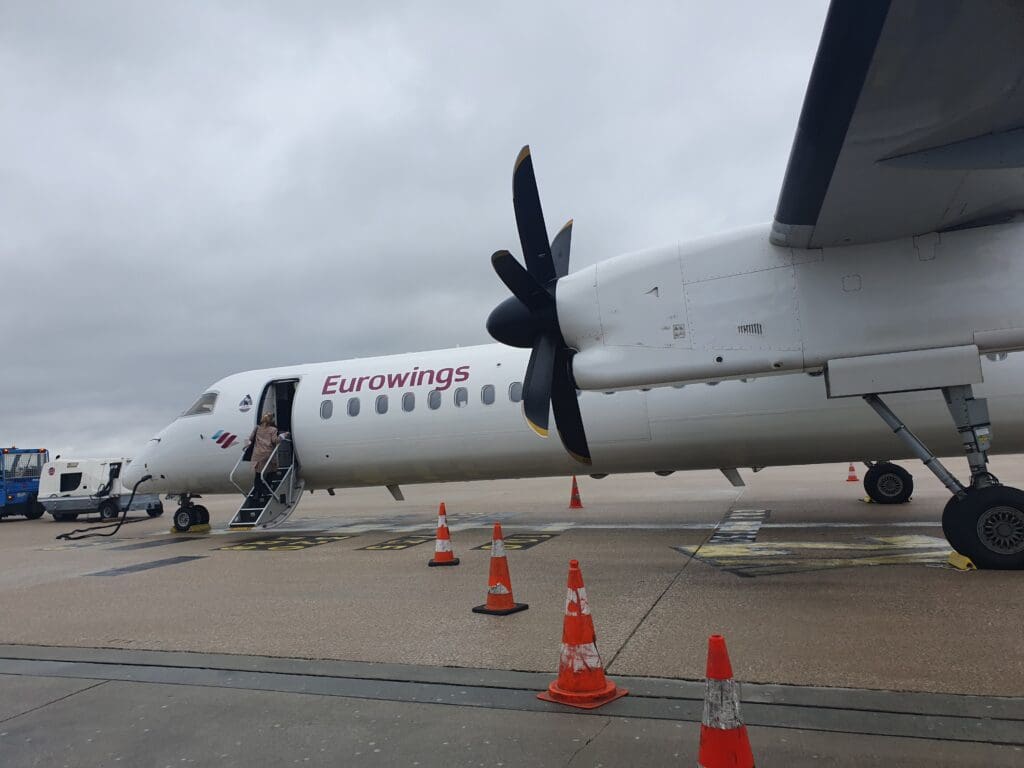
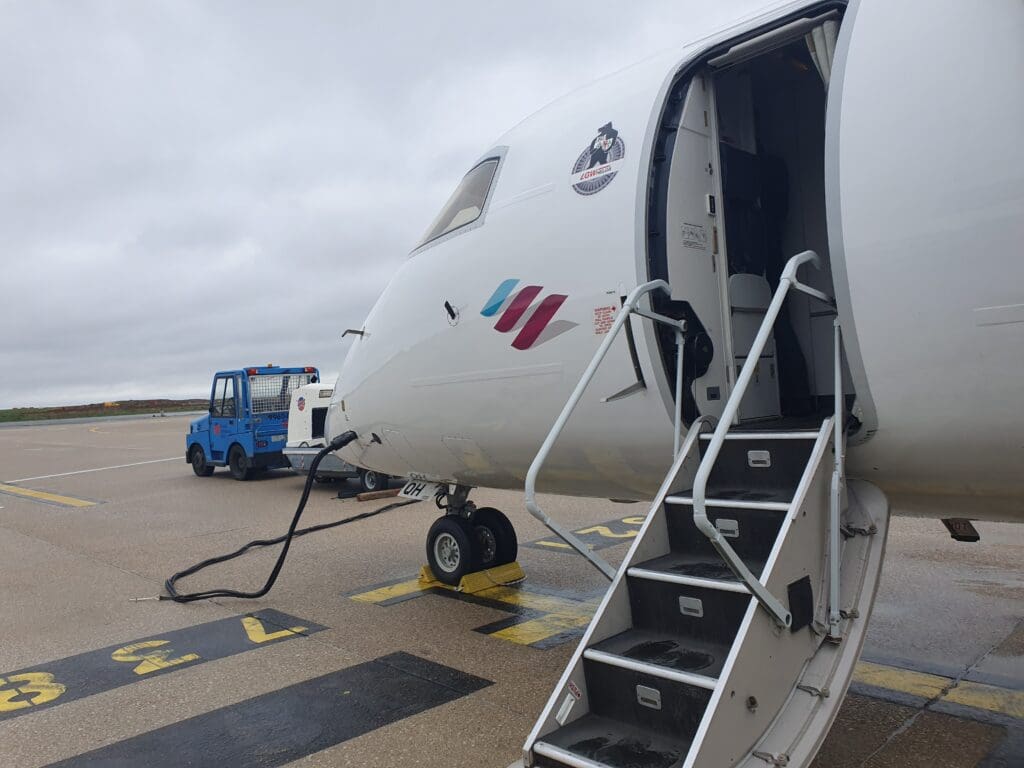
Once inside the narrow cabin of the Dash 8, my journey to Row 16 was fairly quick, having only one brief stop to allow a passenger in front of me to slide into their seat. Inside the cabin, each of the aircraft’s 76 seats is covered in dark faux leather and is complete with a grey fabric headrest with a stitched version of Eurowings’ logo. Soon enough, I reached Seat 16A and discovered that whilst this gave a good view of the engine, views beyond this were limited and I thus made a mental note to opt for one of the rearmost seats next time I find myself on a Dash 8 Q400.
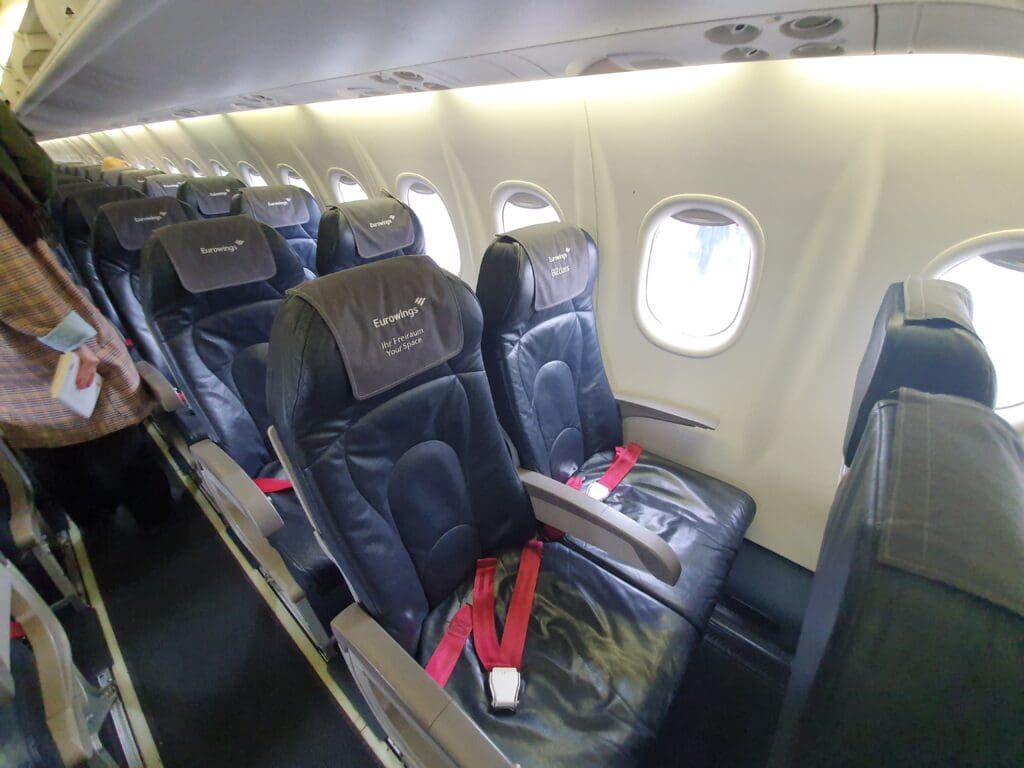
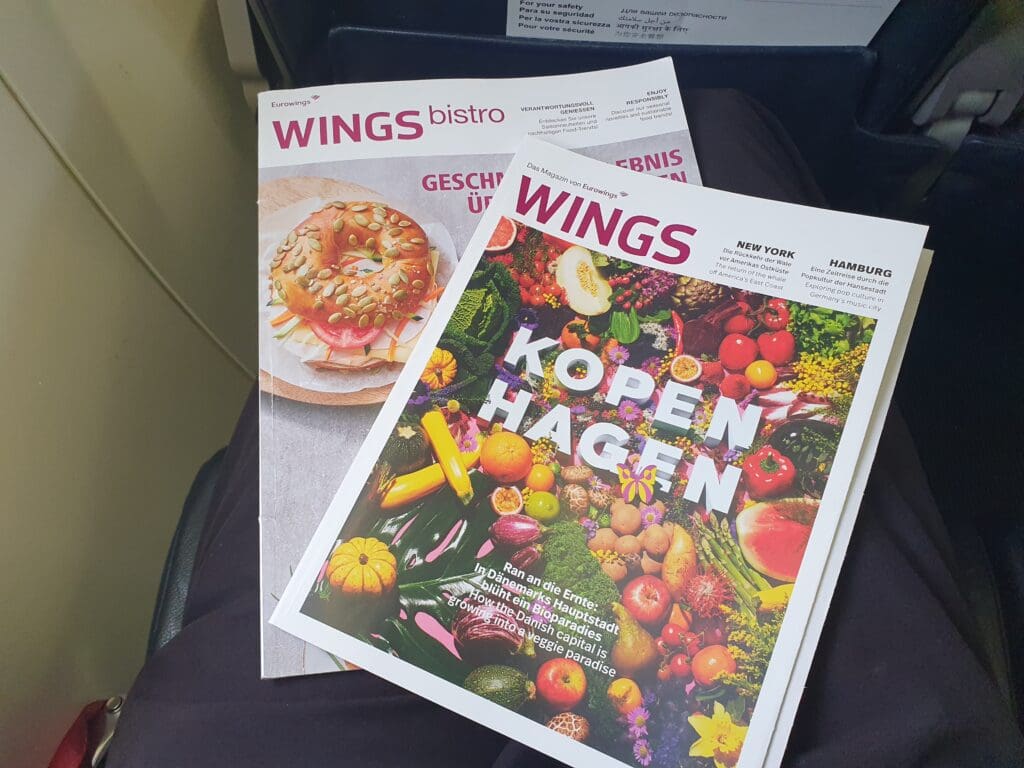
Glancing over the minor marks and scratches, the area around my seat was in decent condition and despite the quick turnaround appeared to be spotlessly clean. However, of course, I am sure this was assisted by the light load on the inbound flight. Away from the square-ish seats that one can find on many Dash 8s and older models of CRJs, the seats onboard the D-ABQH were slightly different in style and were comfortable and well-padded. Legroom-wise, whilst this was not in abundance, it was also nothing to complain about considering the relatively short flight time. Turning to the seatback pocket, this contained a copy of the March 2020 edition of the airline’s Wings magazine, the BoB menu, Wings Bistro, which combined with the duty free catalogue. Last but not least this also featured a largely textless safety card which noted LGW as the operator of the aircraft. The only thing missing from the seatback pocket was a sick bag however, having never fallen victim to airsickness, nor collecting these, its absence was no major issue for me.
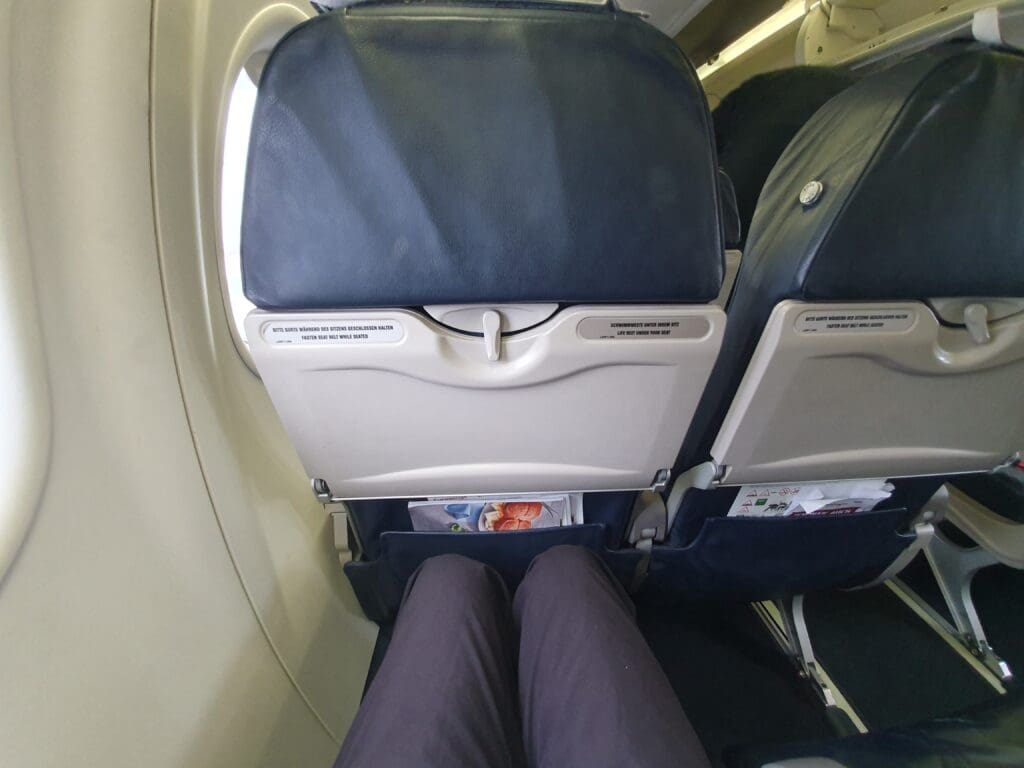
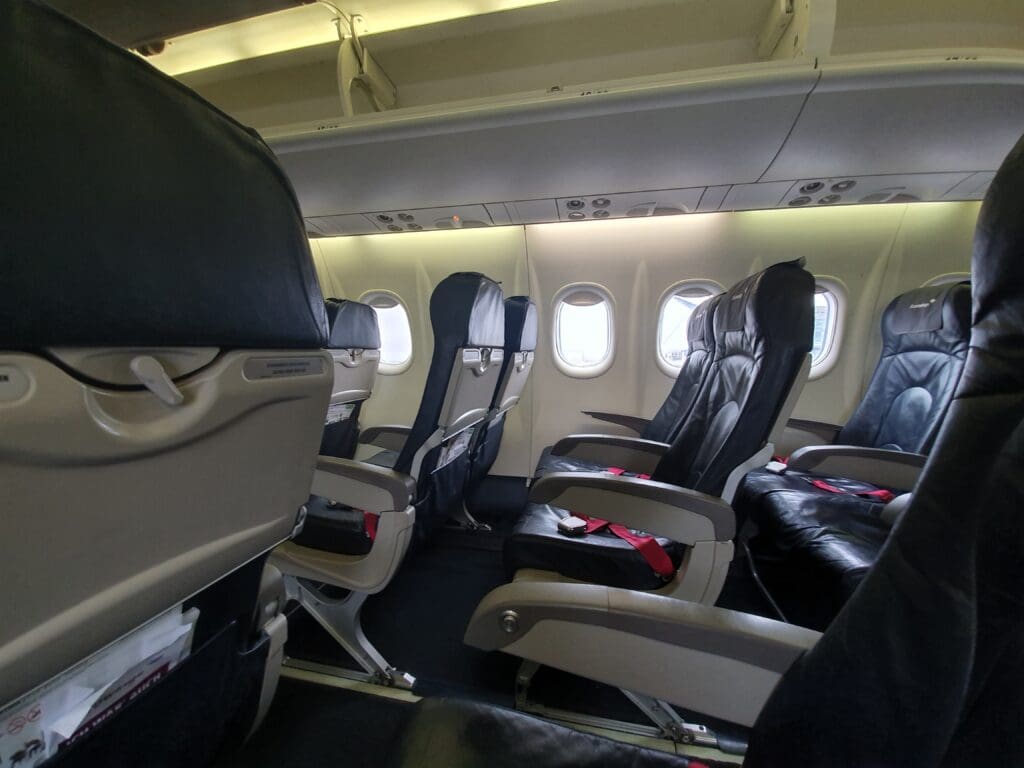
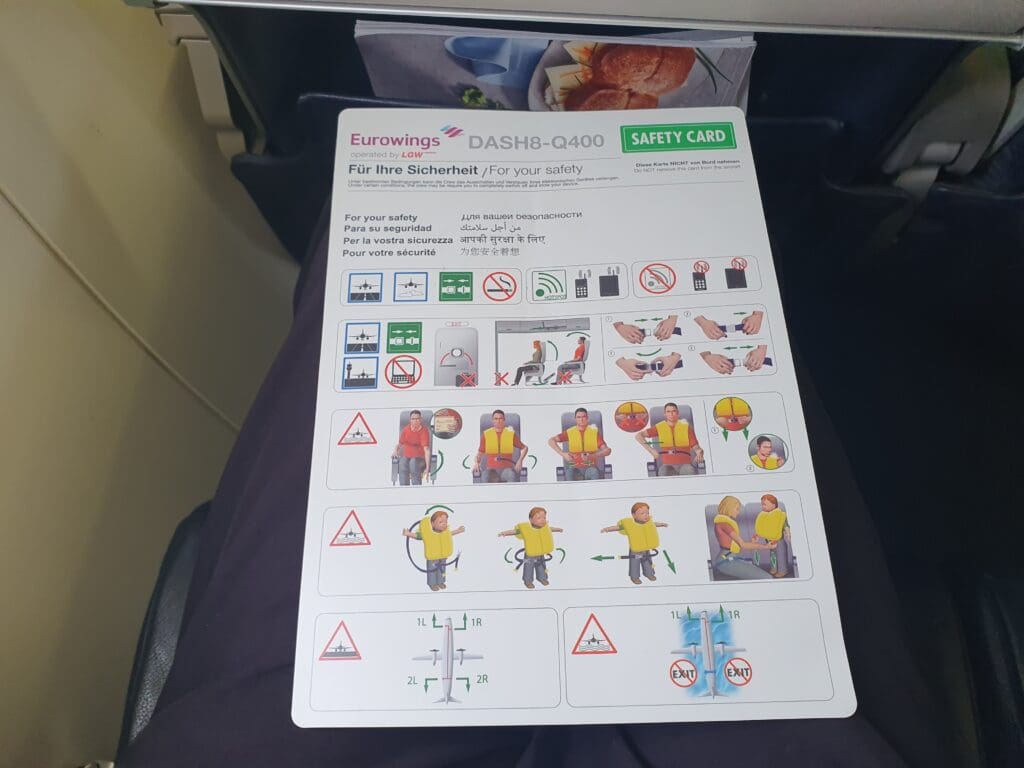
As passengers filtered onto the aircraft, with most flying alone and with no boarding music, the cabin was almost completely silent to the extent that I was able to hear the muffled conversations of the baggage handlers outside! With many passengers travelling with only small amounts of luggage and with the flight being far from full, it wasn’t long before the final passenger made it onto the Dash 8 and at 1301, the cabin door was closed with a loud thud. That afternoon I later counted a measly total of 30 passengers onboard the aircraft who appeared to be a smorgasbord of business people and leisure flyers. Given the ongoing Coronavirus situation, the middle of-the-day departure time and the good rail connections between Paris and Düsseldorf, I was not incredibly surprised by the low load that afternoon. Once the door was closed, the Captain’s calming voice filled the cabin with a standard welcome and brief detailing the flight time and weather conditions both en route and in Düsseldorf.
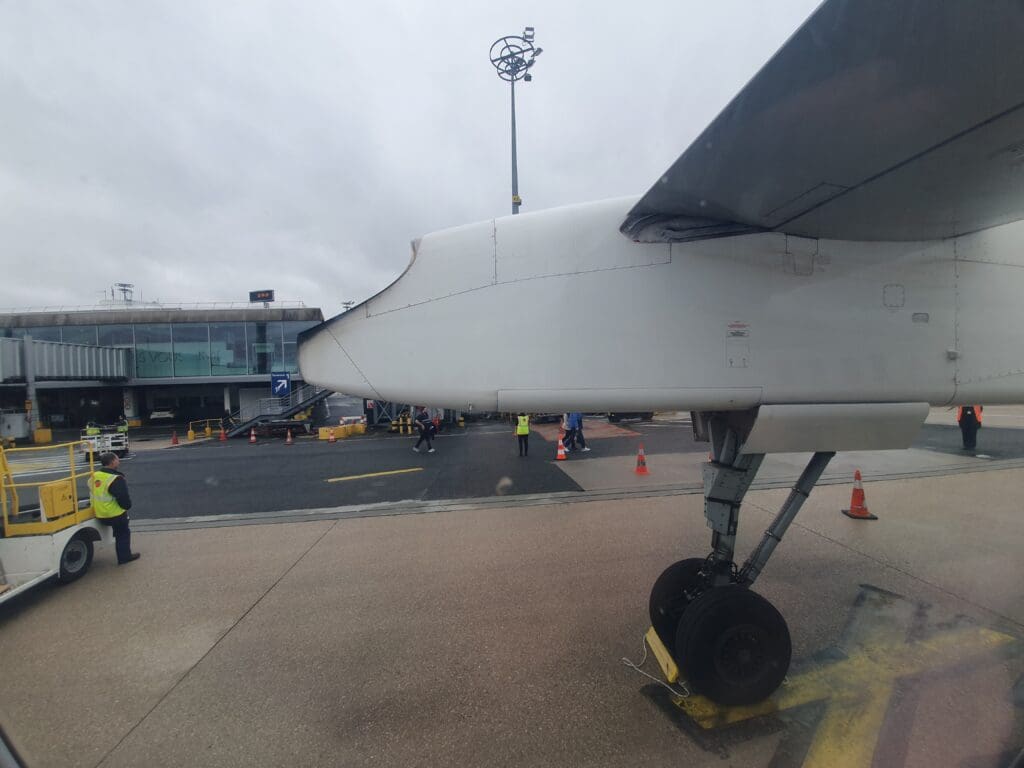
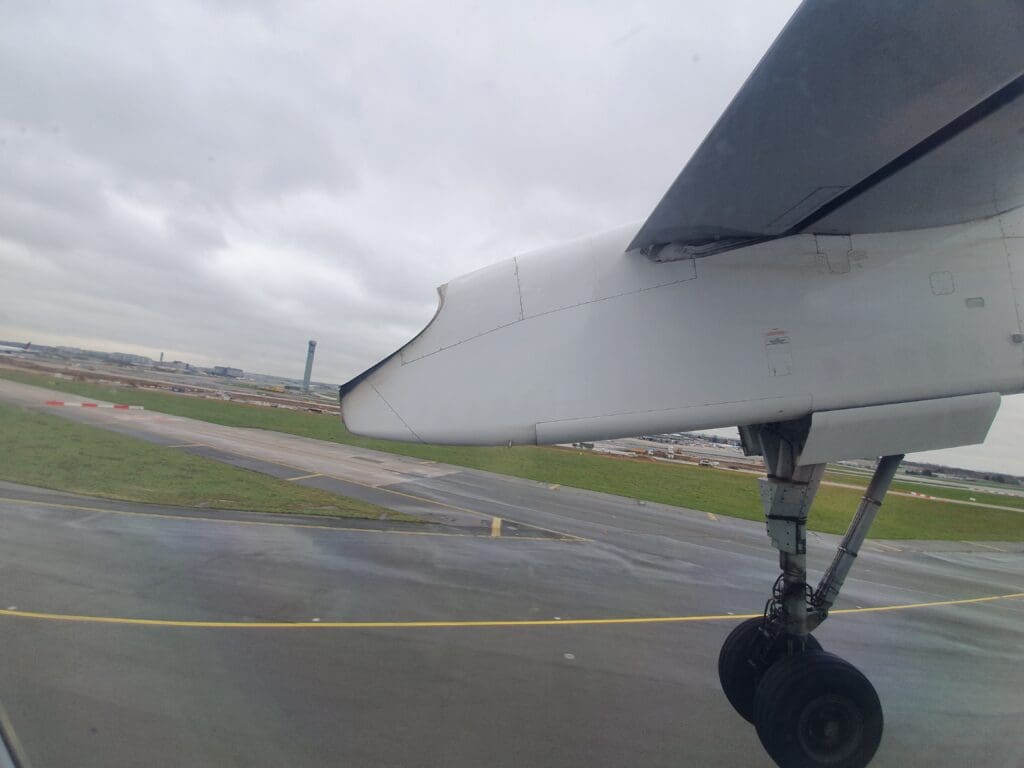
As the Captain made his announcement, outside the cones around the aircraft and chocks were removed indicating our impending departure. Once the Captain’s announcement came to an end, a very brief welcome was made by the flight attendant who had blanked me before a safety demonstration was performed. To ensure all had a good view of this, this was first conducted in German with the actions being performed at the front of the cabin before the second crew member moved rearwards and performed this again in the middle of the cabin. Once this had been completed, the cabin fell silent again for a few moments before the two PWC150A powered up, soon whirling into life resulting in reasonable amounts of vibration in the cabin. In no time at all, the aircraft powerfully propelled itself forward out of the stand before turning left onto the taxiway where it initially followed a sleek-looking EgyptAir Boeing 787-9 Dreamliner that had just arrived from Cairo. Having flown on plenty of noisy aircraft, to me, the taxi was neither unbearably noisy nor was it uncomfortable despite feeling plenty of bumps and bounces on the taxiway. Yet, that said, as we taxied to one of Paris CDG’s runways, I realised why those who are not particularly well acquainted with the Dash 8 and similar types may prefer to fly in larger types such as the Airbus A320 or Boeing 737. However, personally, I’d take an aircraft in a 2-2 configuration over one in a 3-3 configuration any day!
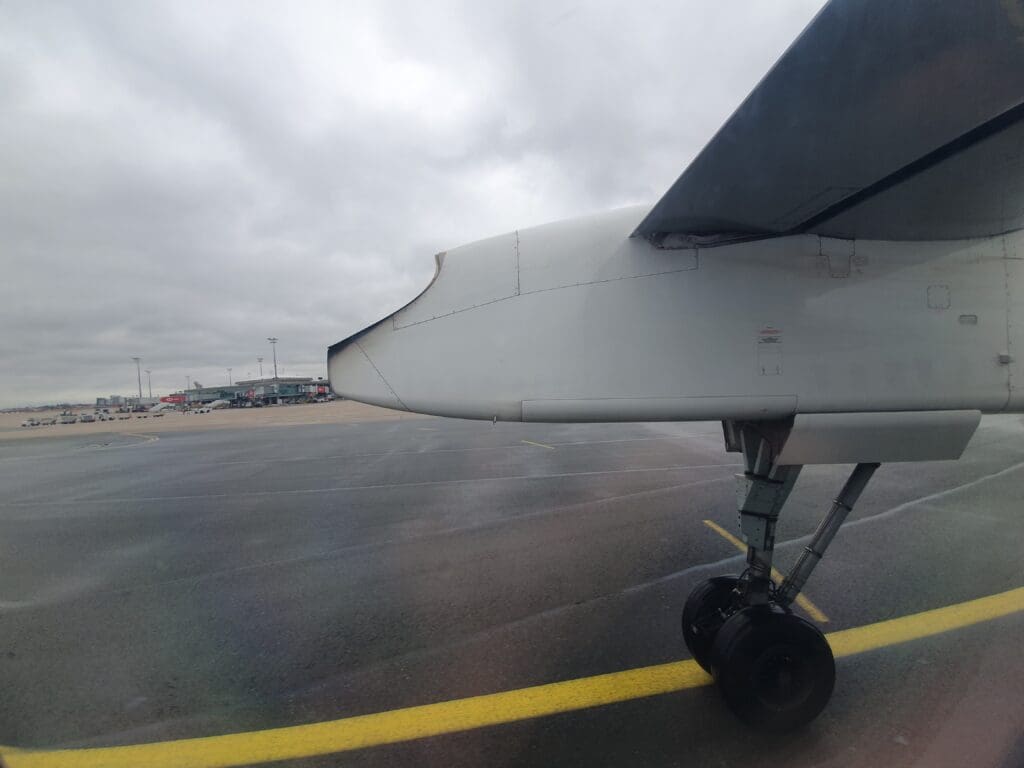
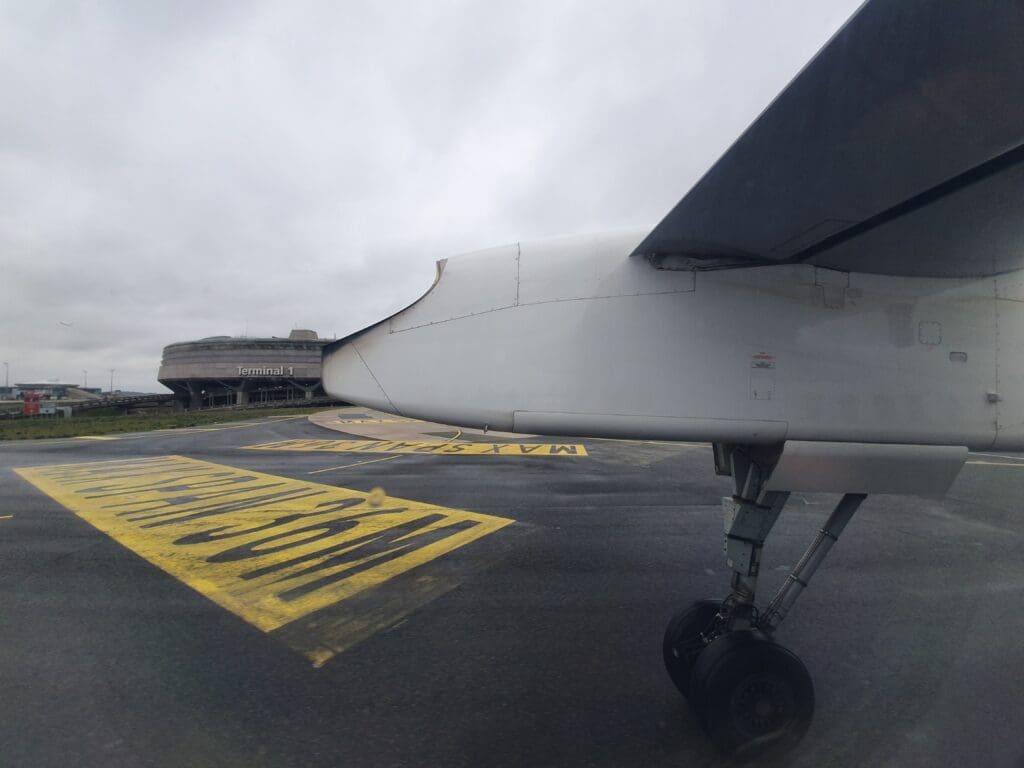
After taxying around each of Terminal 1’s satellites, seven minutes after leaving the stand the Dash 8 found itself at the threshold of Runway 27L. Without any holding, the aircraft headed straight onto the runway and performed what seemed like a very powerful rolling takeoff. In no time at all, the aircraft rotated and climbed up into the sky like a rocketship initially allowing for views of the Terminal 1 complex. Almost immediately after the gear retracted, the aircraft headed up into the clouds. After gently cutting through the first layer of grey cloud, the skies brightened up slightly and our aircraft banked to the right putting the Dash 8 onto an easterly course towards the city of Reims. At this time, the lead flight attendant at the front of the aircraft made a short announcement which could barely be heard over the roar of the engines, however, from what I did catch, this appeared to be a standard announcement regarding keeping seatbelts fastened during the flight and a quick advertisement for the Wings Bistro service. Once this was made, this cabin crew member headed to the rear galley where some clinking and clanking could be heard as the two crew members prepared the BoB service.
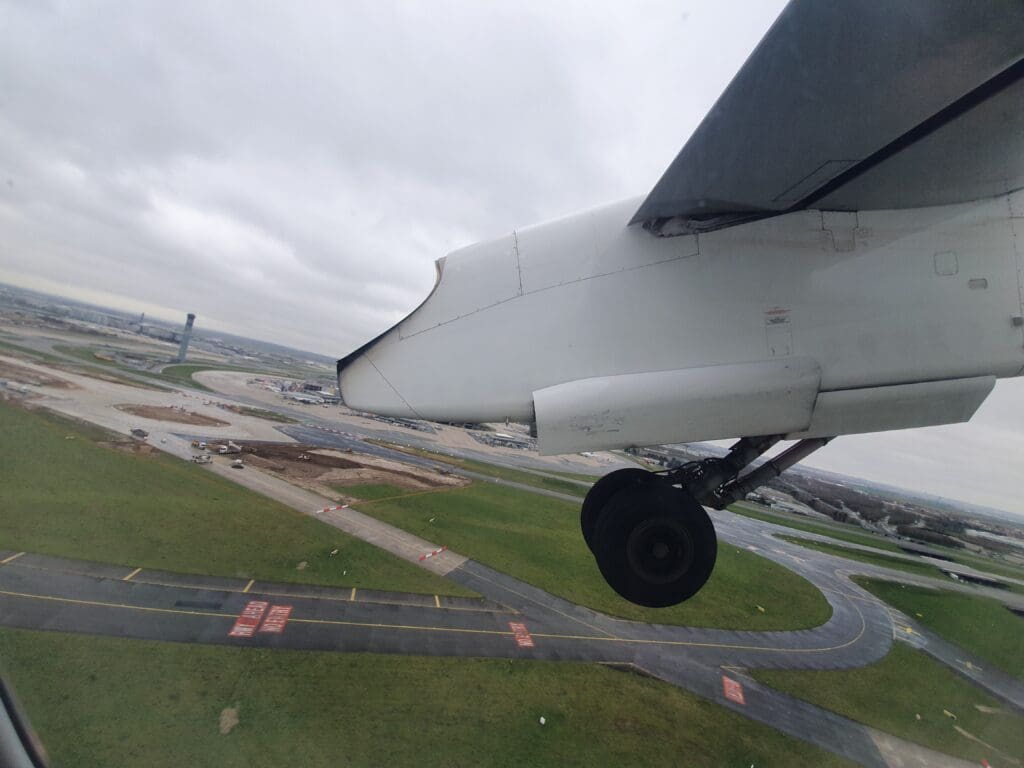
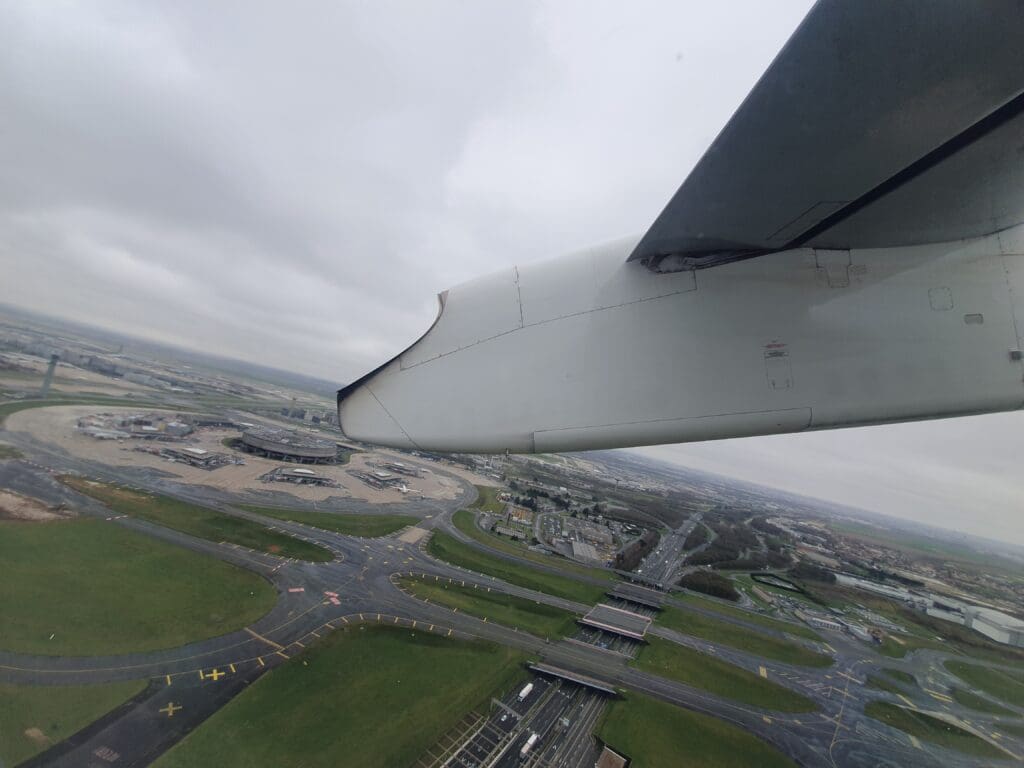
As the Dash 8 neared its low cruising altitude of 23,000 feet, a small cart fully laden with a variety of goods was rolled to the front of the cabin and the cockpit crew was handed hot drinks. Once this crucial initial service was done, the crew then worked backwards. Given the length of the flight, most appeared to reject this service resulting in this taking no more than a few short minutes to pass through the entire cabin.
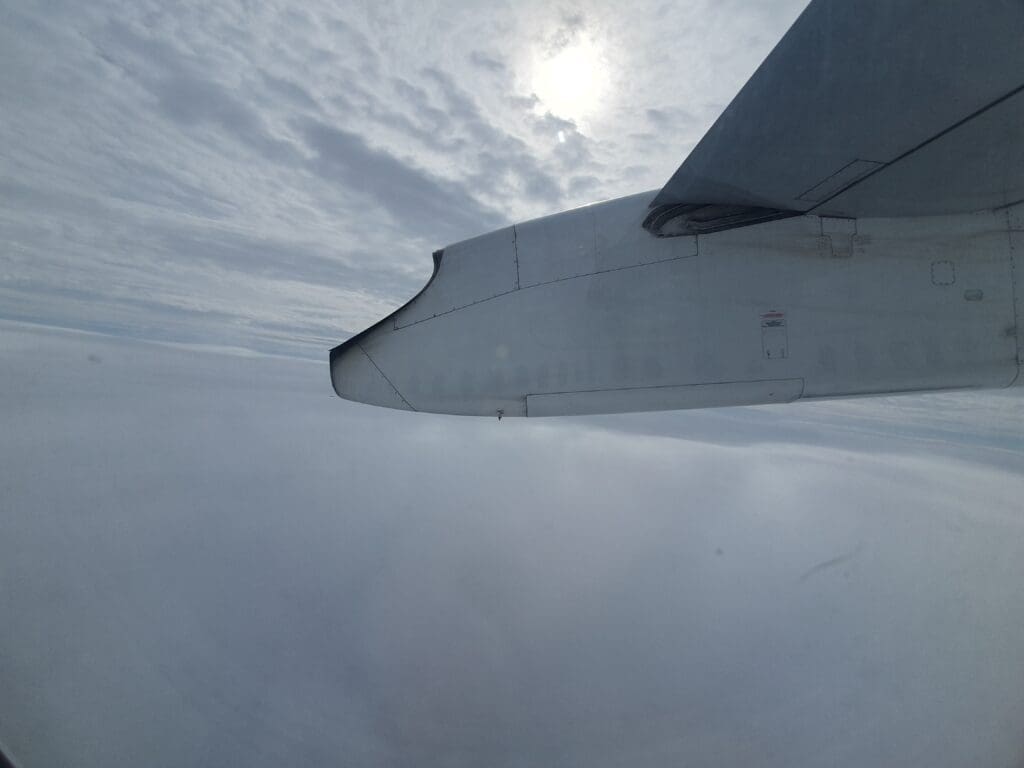
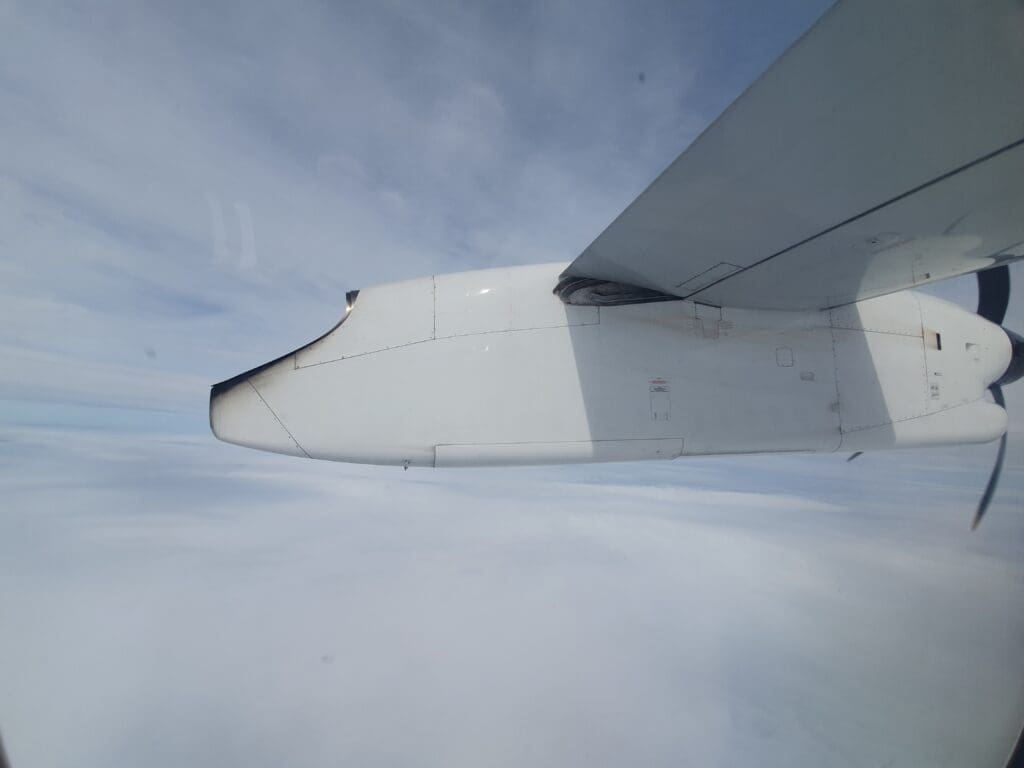
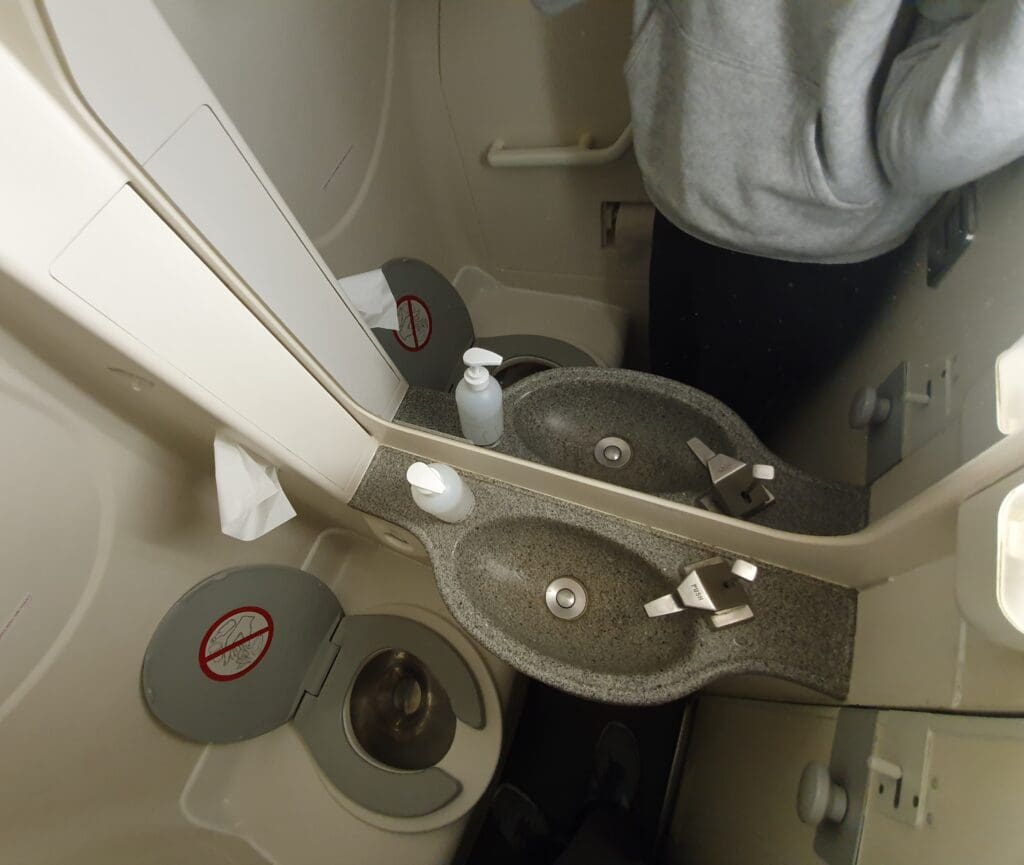
Even though the Captain had mentioned that he expected a smooth cruise that lunchtime, throughout the flight, the seatbelt signs remained firmly illuminated. However, seeing that the cabin crew did not appear to take any issue with one passenger who appeared to be standing up and doing some mid-flight stretches, I decided to pay a visit to the aircraft’s sole lavatory. Located right at the front of the aircraft, I made my way through the cabin and soon arrived there. Despite being of average height and state, some contortionism was required to squeeze myself into this minuscule lavatory. Once inside, I was pleased to find this in a clean state with minute wear and tear and stocked with the basics, fulfilling its duty as an aircraft lavatory.
With no view of the ground below and most definitely no moving map provided to track the flight’s progress, the only way of roughly estimating our position was by guessing this to be somewhere between Paris and Düsseldorf. A later check of Flightradar24 revealed that after leaving French airspace around 25 minutes after departing Paris, the aircraft crossed a small portion of Belgium’s far eastern Luxembourg province before making a four-minute passage up the country of Luxembourg’s northwest. From there, the aircraft headed over Belgium again, finally entering into German airspace 23,000 feet above the Eifel National Park in the south of North Rhine-Westphalia. Given the lack of views outside, I decided to occupy the time by turning to the sole form of Eurowings provided entertainment onboard, the March 2020 edition of the Wings magazine. Split into four sections (Agenda, Questions of the Month, Features and Airline News), this features the usual wide range of articles you would expect to find in the magazine of any major airline. In addition, being an LCC, there are also plenty of advertisements to browse through which were rather diverse ranging from coffee to careers with Germany’s Federal Customs Service.
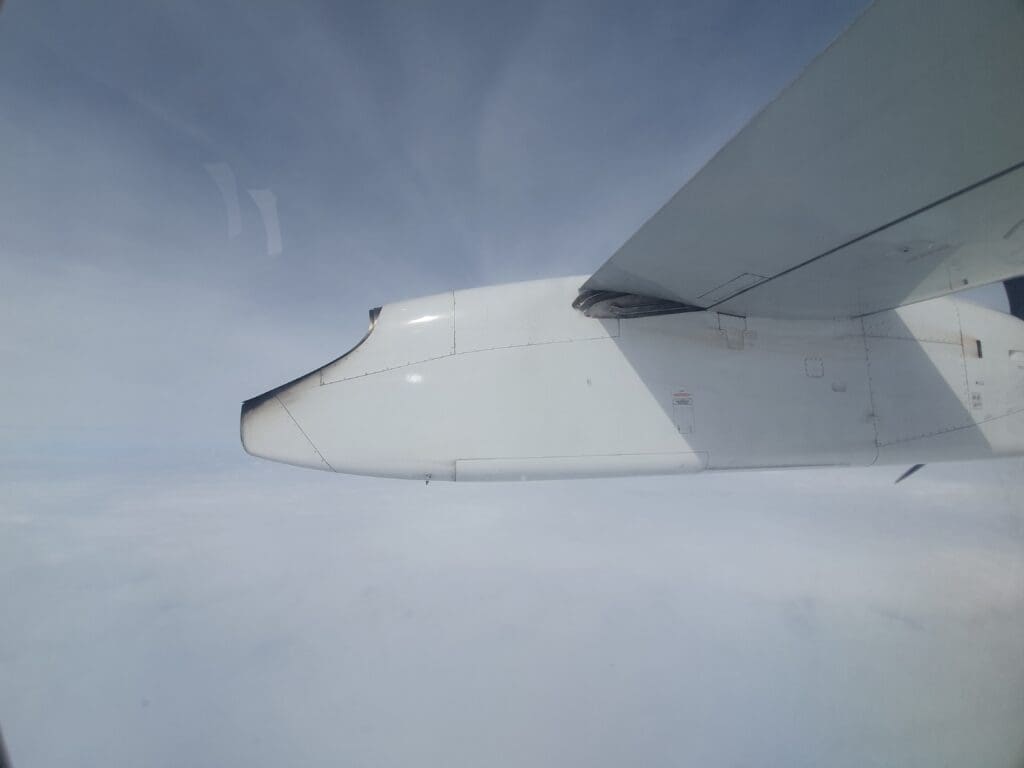
By the time I finished browsing through the magazine, the aircraft had just smoothly cruised into German airspace and was soon to commence its descent. Less than 25 minutes after reaching our cruising altitude, at 1358 the Dash 8 could be felt gently sinking back towards the ground at which point one of the crew members passed through the cabin with a rubbish bag. Seven minutes after commencing our descent, just after the aircraft passed over Cologne, a pre-arrival announcement was made with the usual instructions regarding window shades, tray tables, seatbacks and seatbelts before the other crew member passed through the cabin ensuring all was secured for our arrival into Düsseldorf. As the aircraft headed towards Wuppertal, some bumps could be felt as we passed through 11,000 feet however these were nothing too major and most certainly not uncomfortable. A short time later, the aircraft commenced a gentle bank to the left to take us from our heading of 43 degrees to 230 degrees to line us up for a landing on Düsseldorf’s Runway 23R.
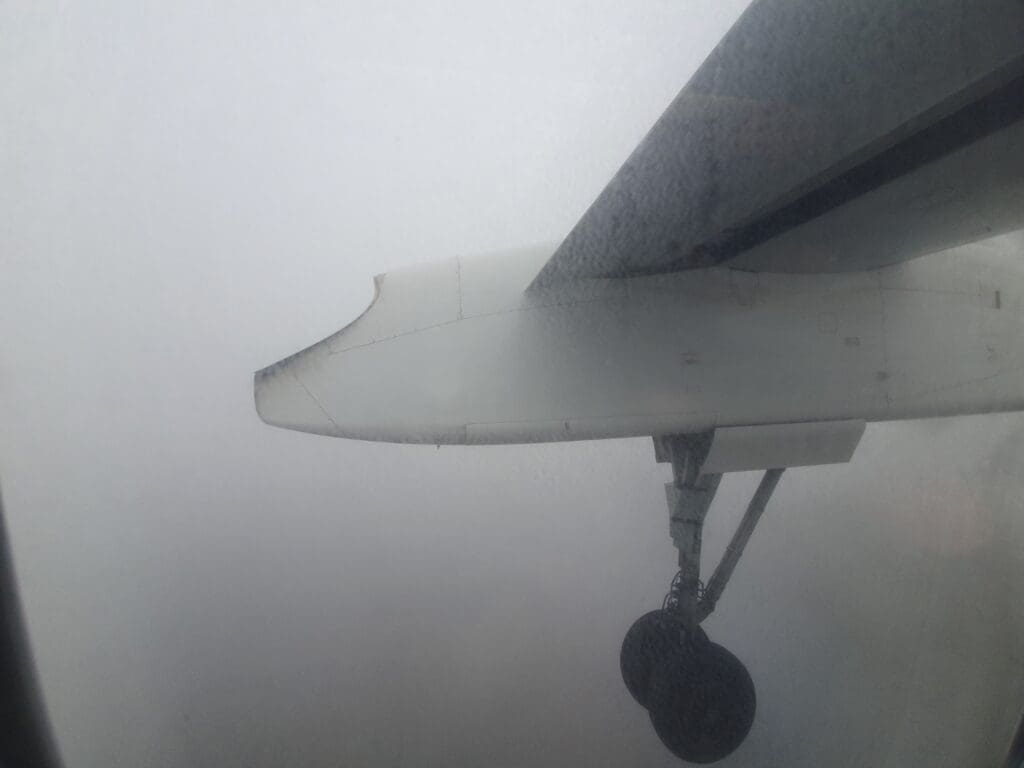
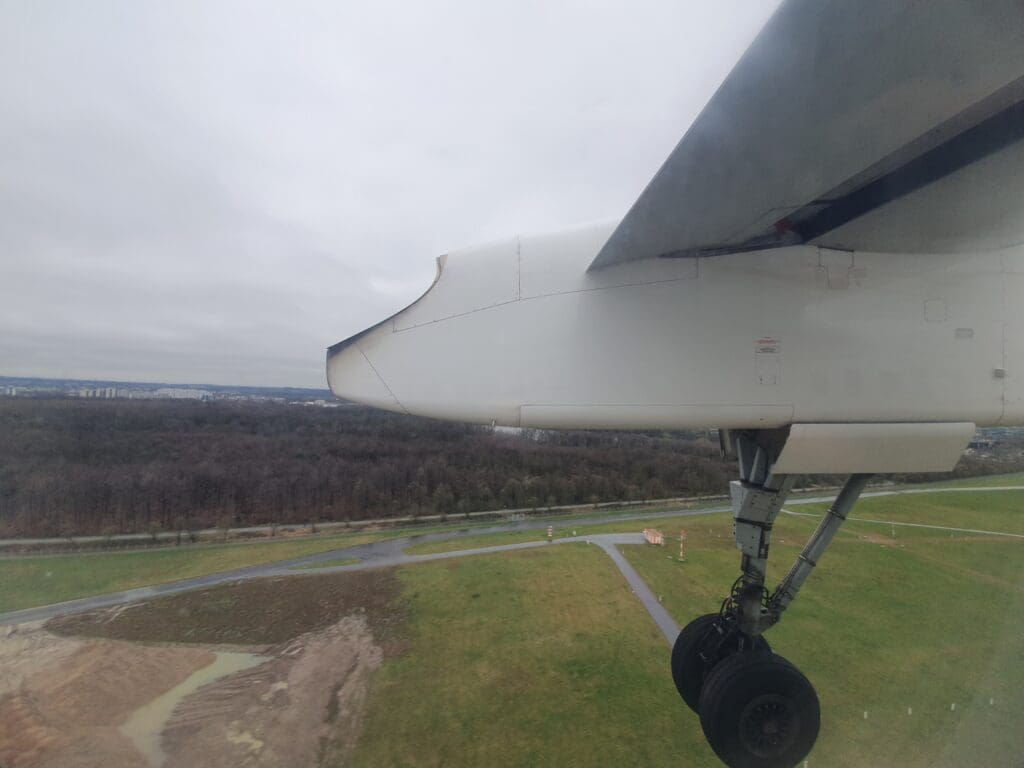
As we continued to descend, eventually both the flaps and gear were extended although the ground remained invisible hinting at a very gloomy afternoon in Düsseldorf. At 1415 as the aircraft passed through 1500 feet, the rain-soaked landscape finally came into view and the town of Ratingen flew past below. Soon, the town’s buildings were replaced by the dark brown wintery colours of the forest that lies to the northeast of the airport and after a rather unexciting approach, at 1417 the airport’s perimeter fence popped into view. A few moments later, a Ukraine International Airlines Embraer 190 nearing the end of its taxi before departing to Kyiv Boryspil could be seen followed by a large squadron of Eurowings narrowbodies parked up at the remote stands. After a quick flare, just under an hour after our departure from Paris, the Dash 8 arrived back on home soil, making a soft touchdown on the wet runway before the cabin was filled with noise.
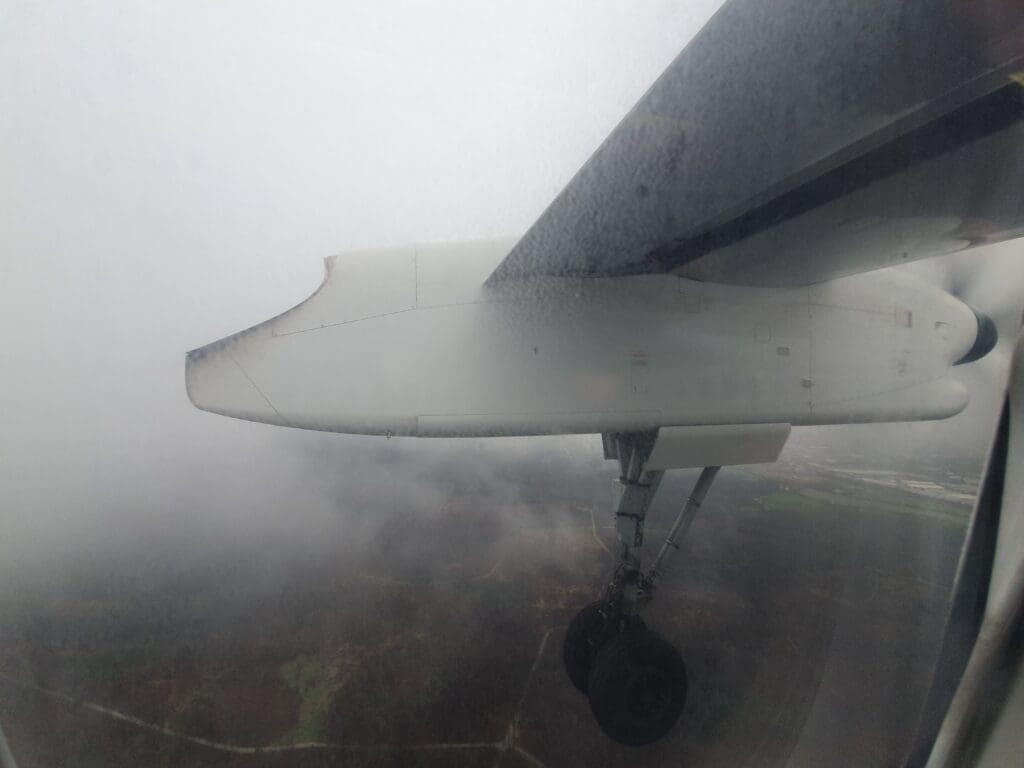

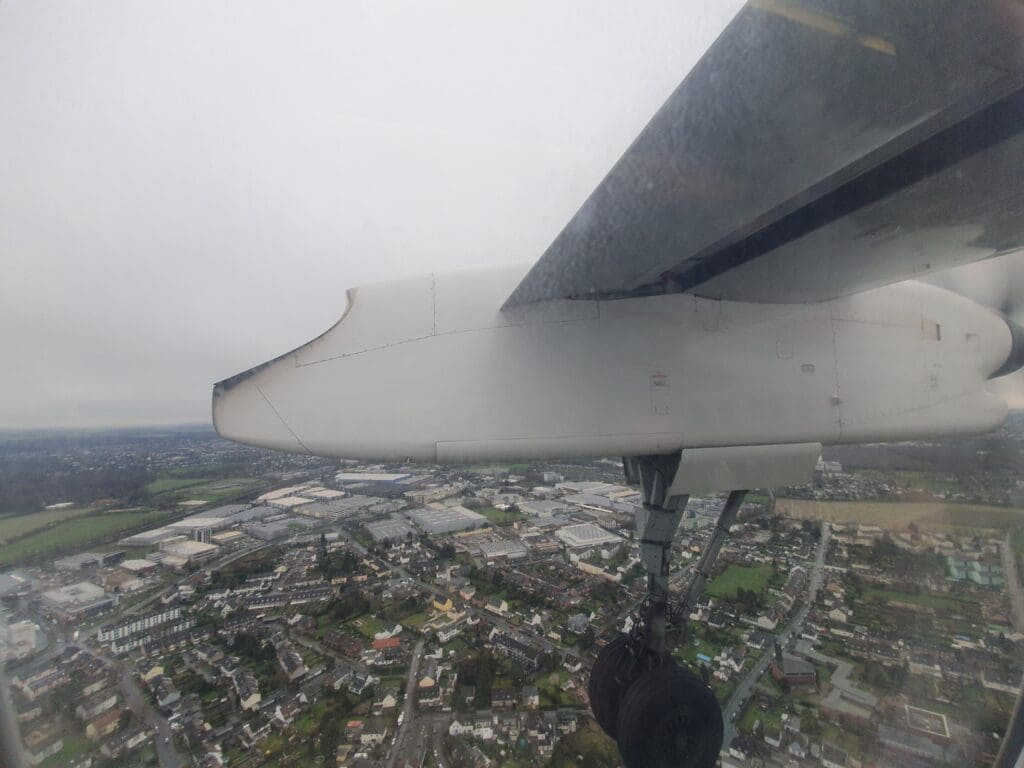
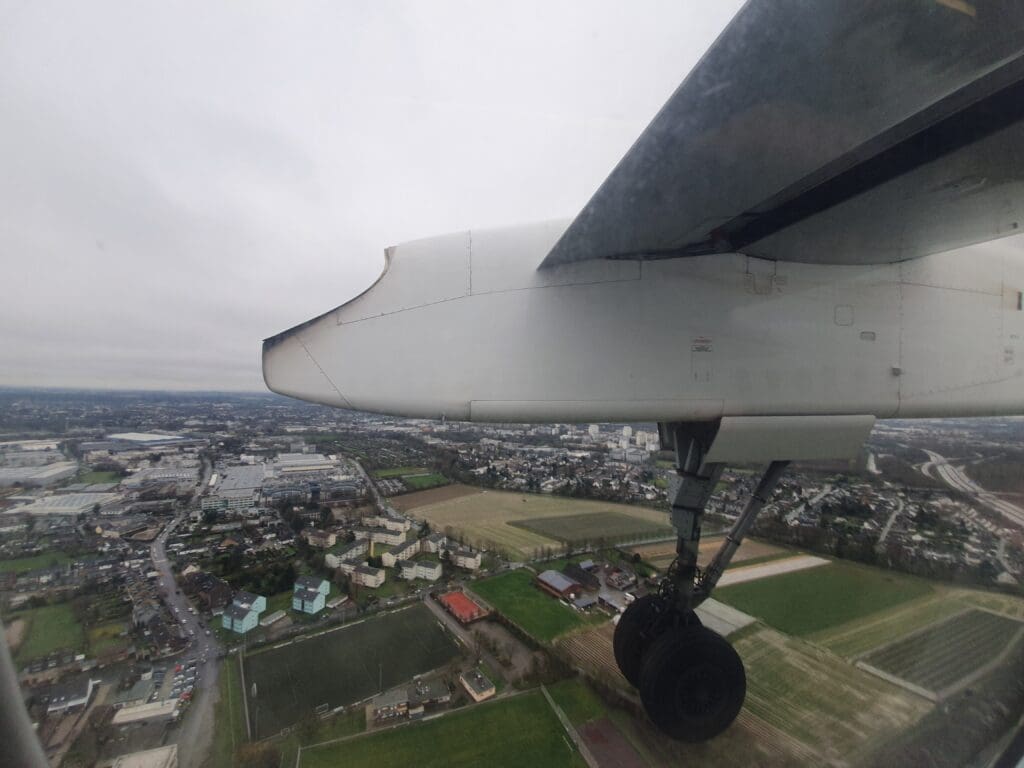
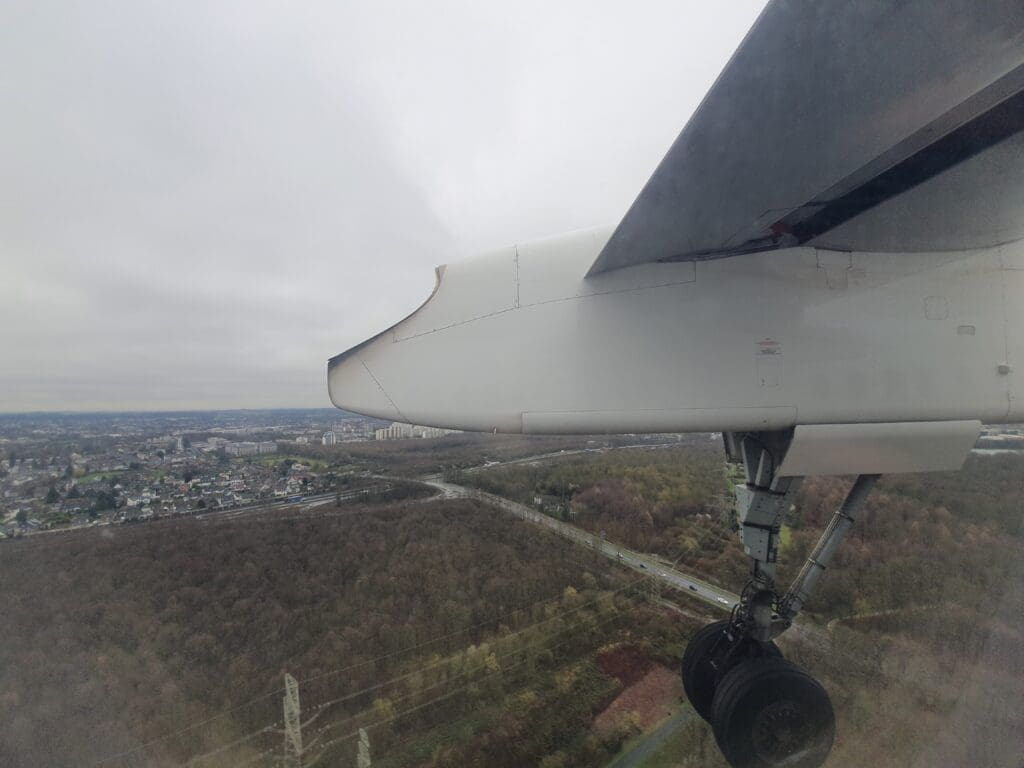
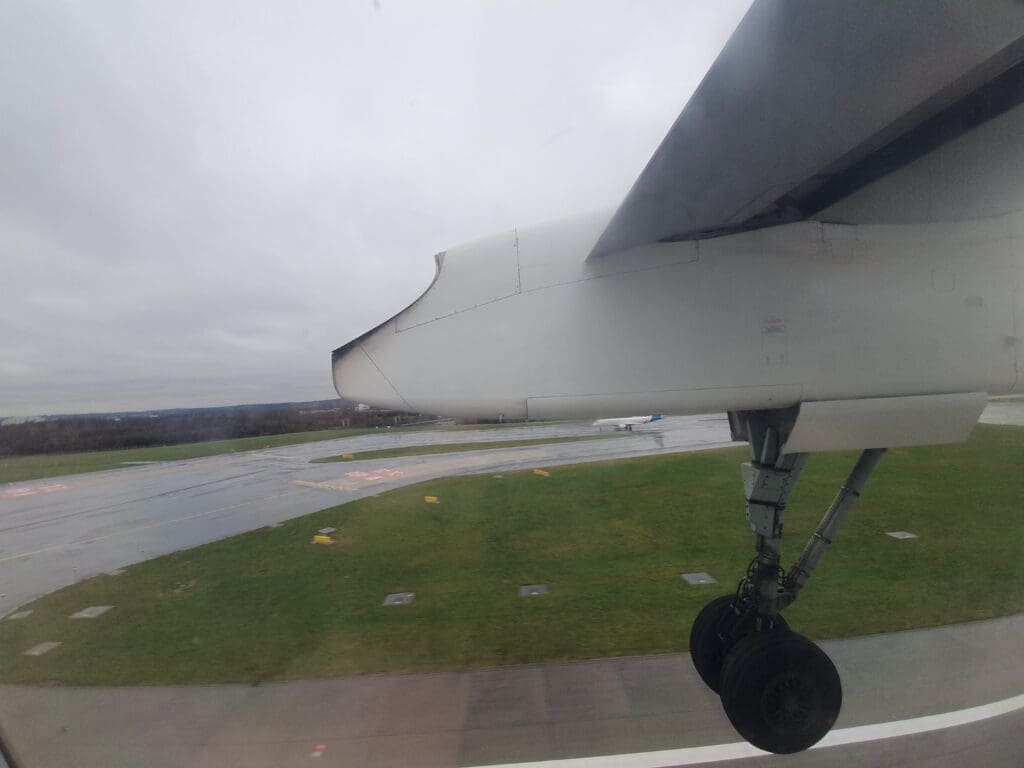
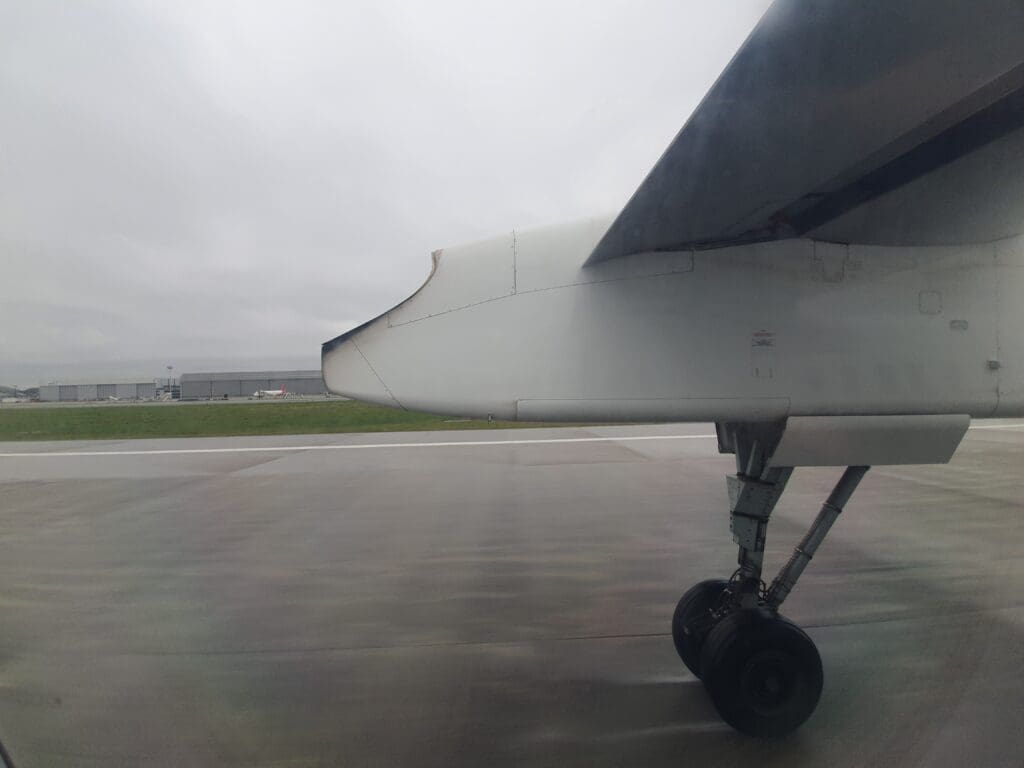
Given the fact that LGW’s Dash 8s usually utilise the remote stands at the far side of the airport near the private jet apron, there was no rush to leave the runway and the aircraft gently braked as the terminal came into view. Eventually, the aircraft taxied left off the runway and the lead flight attendant at the front of the aircraft performed a standard post-arrival announcement in German and English welcoming us all to Düsseldorf. Less than two minutes after touching down, after passing by a couple of company Dash 8s, the aircraft turned into a remote stand bringing a massive total of seventeen business aircraft into view just before we came to a halt. After this, the cabin fell eerily silent again once the engines spooled down and as is usually the case, many passengers stood up in preparation for disembarkation. Seeing as a bus and several vehicles were already waiting to greet the inbound aircraft, and, seeing as the Dash 8 does not need airstairs brought up to its fuselage, disembarkation commenced almost immediately after our arrival.
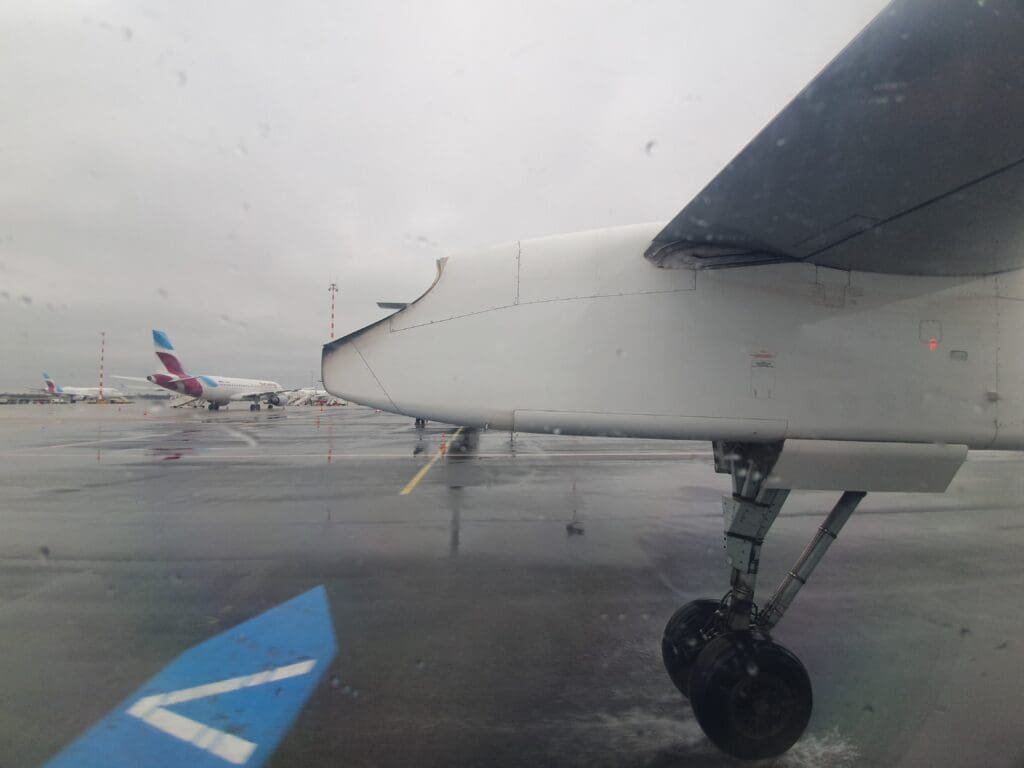
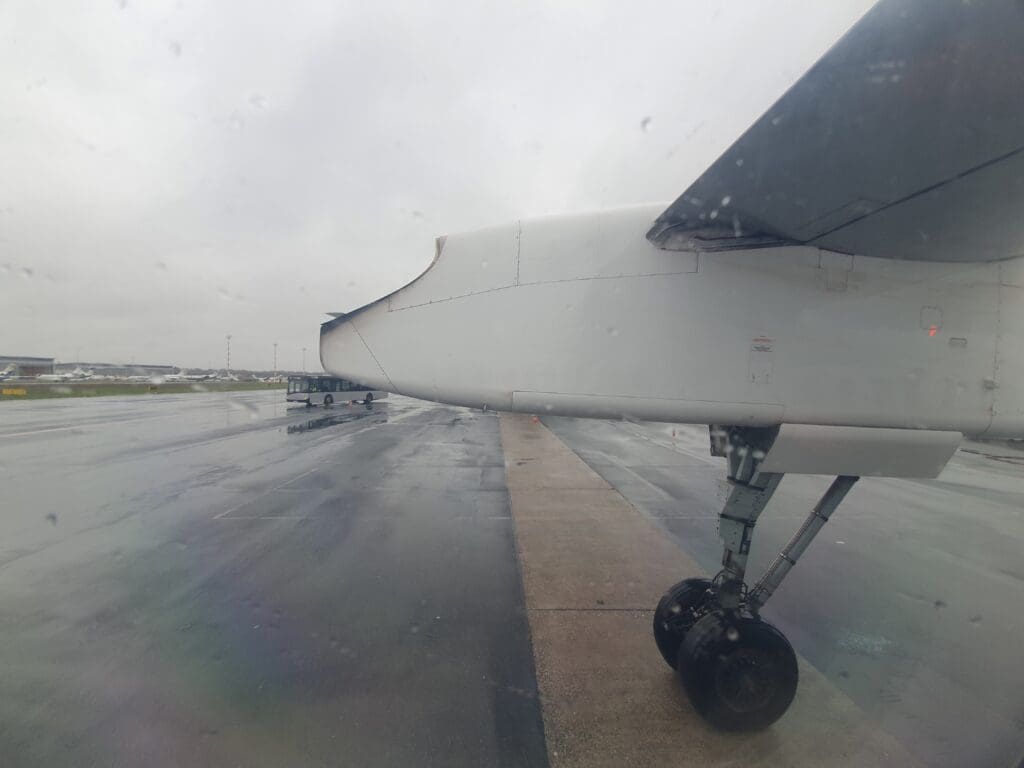
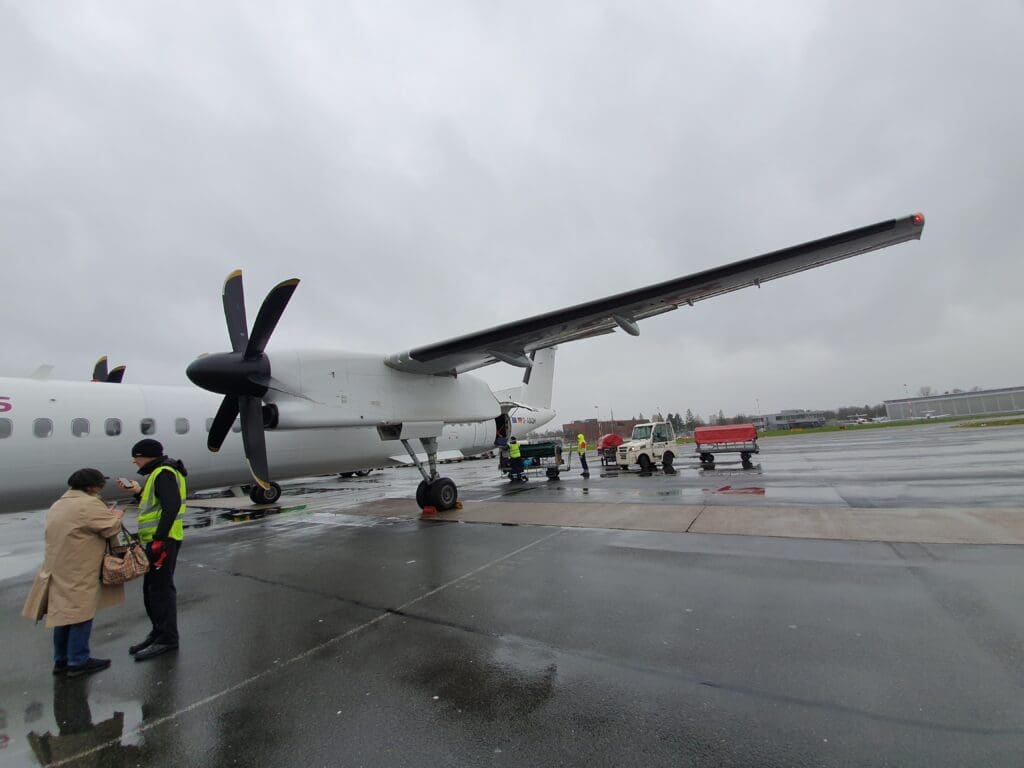
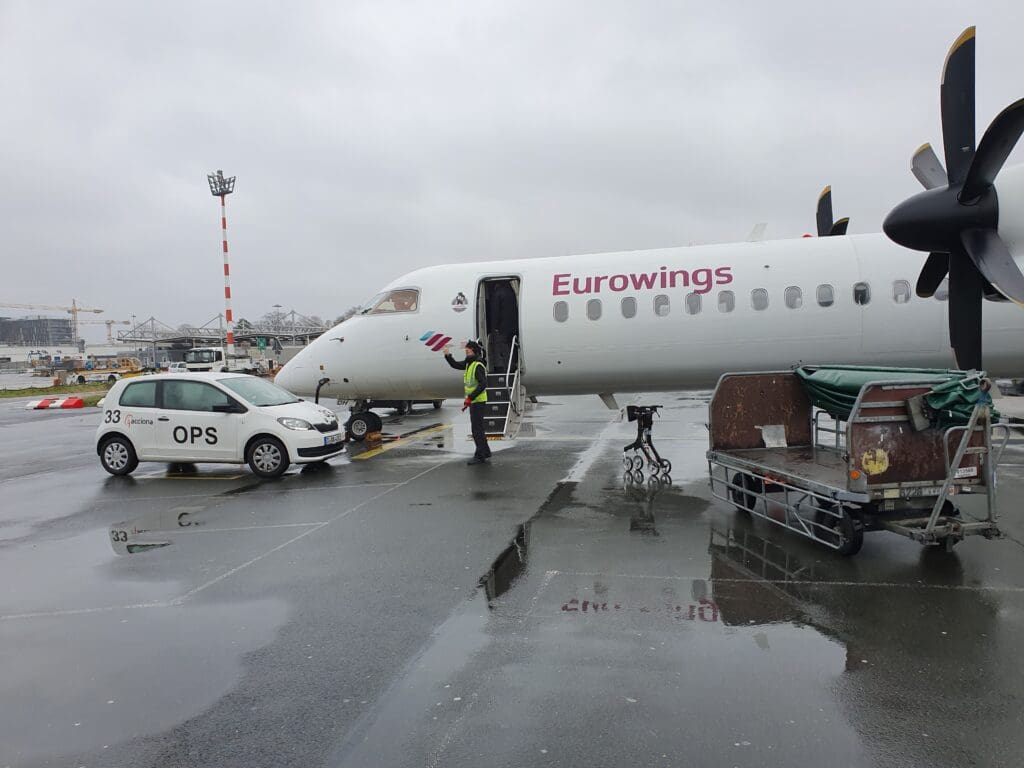
Not too long after the first passengers headed out to the waiting bus, I thanked the lead crew members before heading down the steps and into the rain. Like me, many of the flight’s passengers had placed items in the hold at the last minute, however, most took shelter from the rain on the bus before these were retrieved and placed onto a trolley. Once these emerged, most disembarked the bus to pick up their small suitcases and soon enough, all had their bags and the bus doors closed before this commenced its short journey to the terminal. Whilst the rain droplet-covered windows of the bus prevented any good photos of the aircraft on the apron, during this journey, we passed in between a brightly coloured S7 Airlines Boeing 737-800 getting ready to head back to Moscow as well as a Turkish registered Sun Express Boeing 737 waiting for its next load of holidaymakers.
Summary
Having experienced cold and distant crew on almost every flight I have taken with Eurowings, I was not greatly surprised to experience a less-than-enthusiastic pair of crew members on the LGW-operated flight that afternoon. Glossing over this, my experience was largely positive with comfortable seats and an aircraft that appeared to be in a clean and presentable state with only minimal amounts of wear and tear.