Remembering Loganair’s Saab 340s: Kirkwall to Glasgow
Background and Booking
Needing to return home to Britain’s capital following my jaunt on Loganair’s Inter-Orkney Islander service, as with most journeys I commenced my search for tickets on Skyscanner. This revealed that British Airways were providing the cheapest one-way tickets between Kirkwall and London, with a range of one-stop Loganair-British Airways combinations on my chosen departure day. With the cheapest tickets being sold directly by British Airways as opposed to an online booking site, I soon opened up British Airways’ sleek app and undertook a quick search for flights. Within a few moments I was presented with a very impressive total of twenty options, with these ranging in price from an acceptable £111 up to an eye watering £222. These consisted of five different Loganair departures from Kirkwall – three to Aberdeen, one to Glasgow and one to Inverness, and a selection of flights from these airports to London City and London Heathrow. Unable to splurge out a massive amount on flights, yet hoping to spend much of the day exploring Kirkwall, I was pleased to find that one of the cheapest tickets was an afternoon option. This would see me depart Kirkwall at 1515 onboard a Loganair Saab 340 and head across Scotland to Glasgow. Following a 1H55 connection I would then head southwards onboard a British Airways Airbus A320, touching down at Heathrow at 1950. After selecting this, I confirmed my personal details and made payment quickly and easily. Once done, I was pleased to find that I had automatically been assigned a window seat (Seat 12A) for the Loganair operated service. On a side note, had I wished to go for the same itinerary but book the Loganair and British Airways flights separately with each airline, this would have totalled £148.31, and therefore I was making a saving of £36.53 by booking both flights with British Airways.
The Journey
With an inflexible check-out time of 1100, and with my flight set to depart Orkney at 1515, once I had left my accommodation I ended up with plenty of time on my hands before my flight down to Glasgow. After making it out of the rustic bed and breakfast that I had called home for my two-night stay in Orkney, I bid a fond adieu to the highly eccentric and friendly owner and trundled down the hill into the bright lights of the Orcadian metropolis of Kirkwall for one final explore. Whilst London was basking in a late June heatwave, that lunchtime the weather proved to be wintery, with the temperature failing to exceed 11 degrees and a bitter wind blowing making this feel much chillier. Following a pleasant stroll along the harbour where I stopped to admire the collection of locally based trawlers resting up for the day before heading out for another night of ploughing the seas, I headed inland and strolled along the town’s main high street. After stopping for souvenirs, I popped into the small yet interesting Orkney Museum before heading down to the bus station, or Travel Centre as it is officially known in preparation for the journey to the airport. That lunchtime, the town was busier than I had seen it for the duration of my stay, with plenty of North American tourists exploring the sights having disembarked from a visiting cruise ship, the MV Viking Mars. Indeed, located on prime cruise ship routes for sailings between Scandinavia and the UK, and around the British Isles, Kirkwall sees plenty of cruise ships each year, with their passengers being warmly received by many businesses across the island.
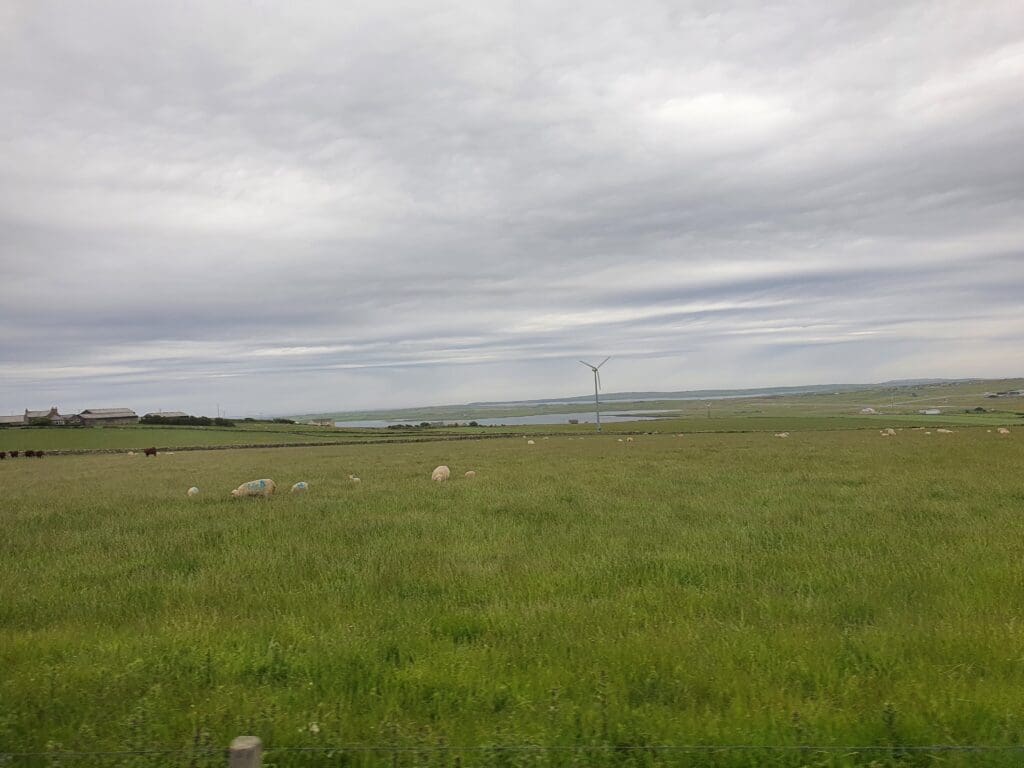
Despite being a keen walker, that afternoon the chilly Orcadian temperatures and lack of pavements on the road to the airport dissuaded me from making the one-hour walk to the airport. Fortunately, for much of the day, Kirkwall Airport is served by a relatively frequent bus service. This runs between the town centre and the airport, at its most frequent departing at intervals of every thirty minutes. After warming up for a few minutes in the waiting room, I headed outside to Stance 4 where a modern Stagecoach-operated bus could be seen waiting to head off. Upon stepping onto this, the driver gave me a friendly greeting before I paid the £1.70 fare by contactless bank card and headed down the bus. After sitting down, the driver popped out for a quick cigarette which, keeping the bus doors open, resulted in the scent of cigarette smoke lingering inside the small bus for the duration of the journey. Once they had returned to their cab, I was joined by one fellow passenger before this pulled out of the stand and headed down the town centre’s streets and out to Kirkwall’s suburbs. Following a quick mid-journey stop to allow the other passenger to disembark, the bus sped out of Kirkwall and soon enough the cold-looking waters of Inganess Bay appeared, next to which Kirkwall Airport could be seen. As we neared the airport, I caught sight of the Islander that I had taken the previous day sitting next to the Loganair hangar, as well two other Loganair aircraft sitting outside the terminal – an ATR 72 Freighter and a Saab 340, both of which would later head southwards to Inverness.
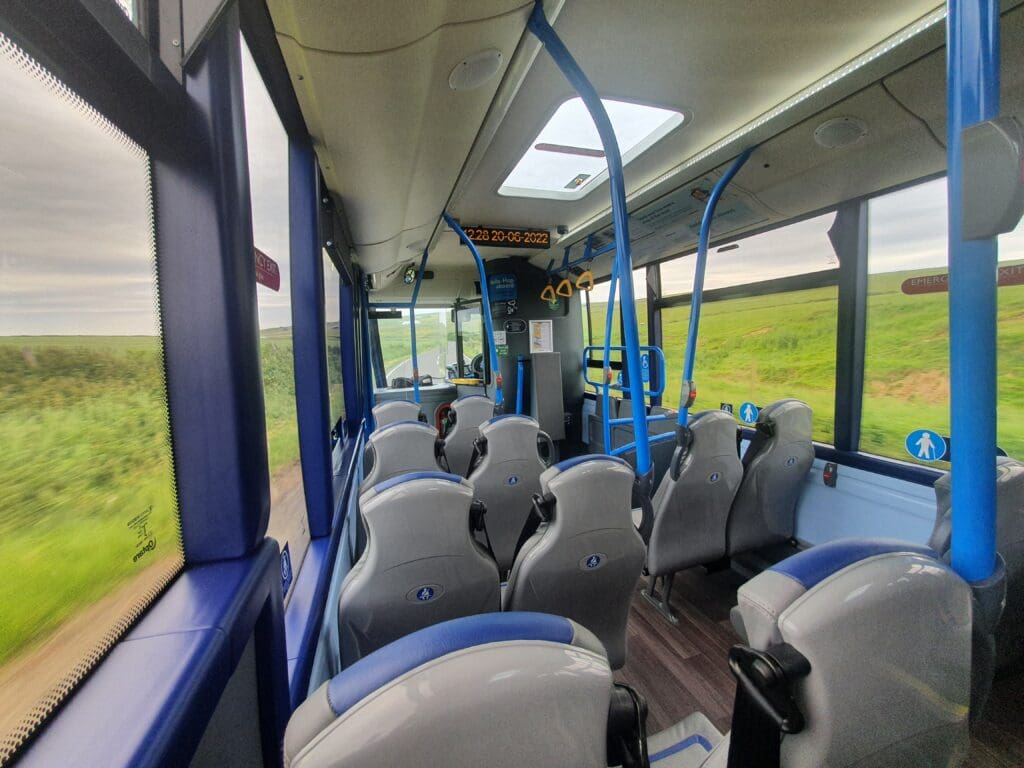
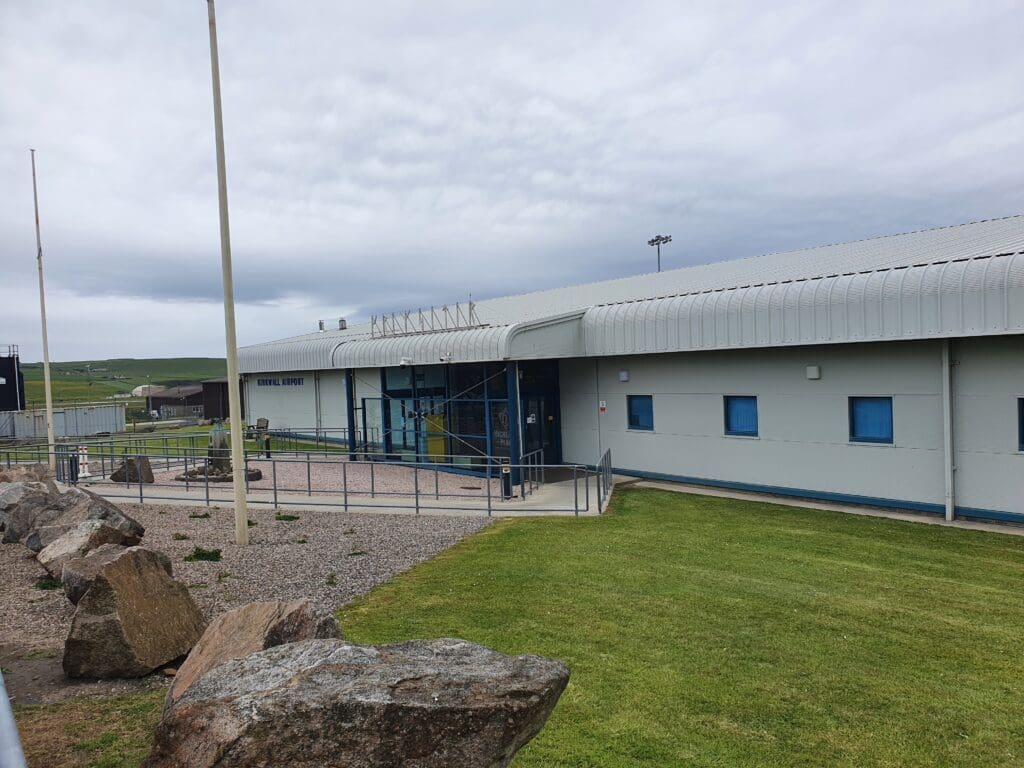
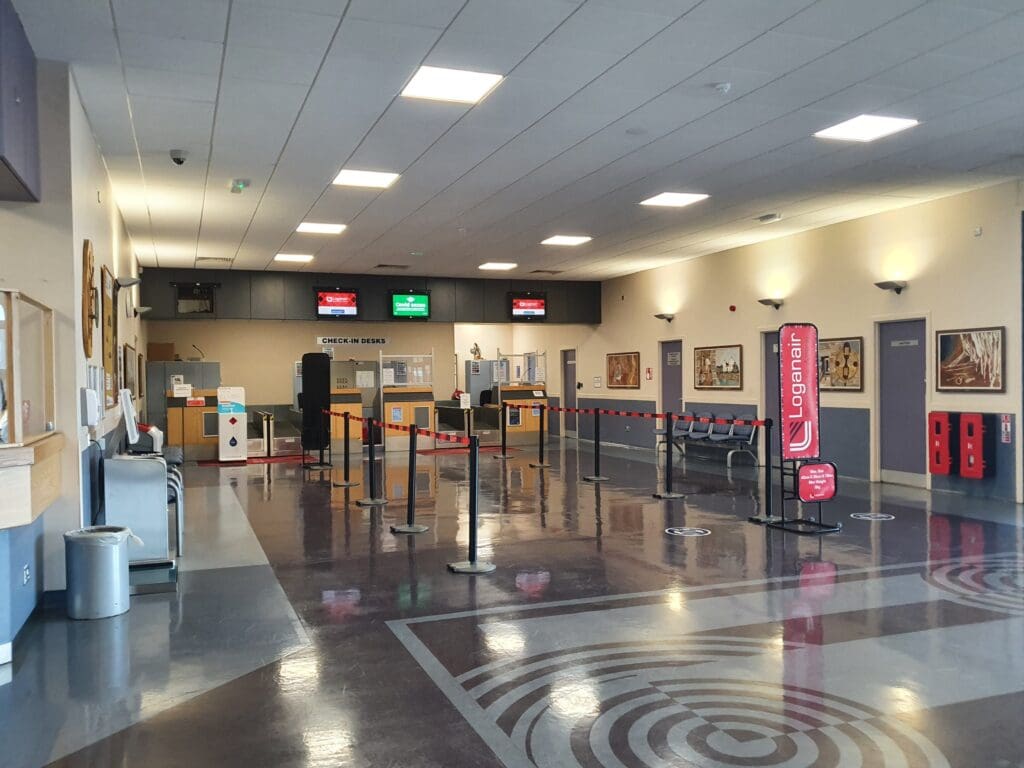
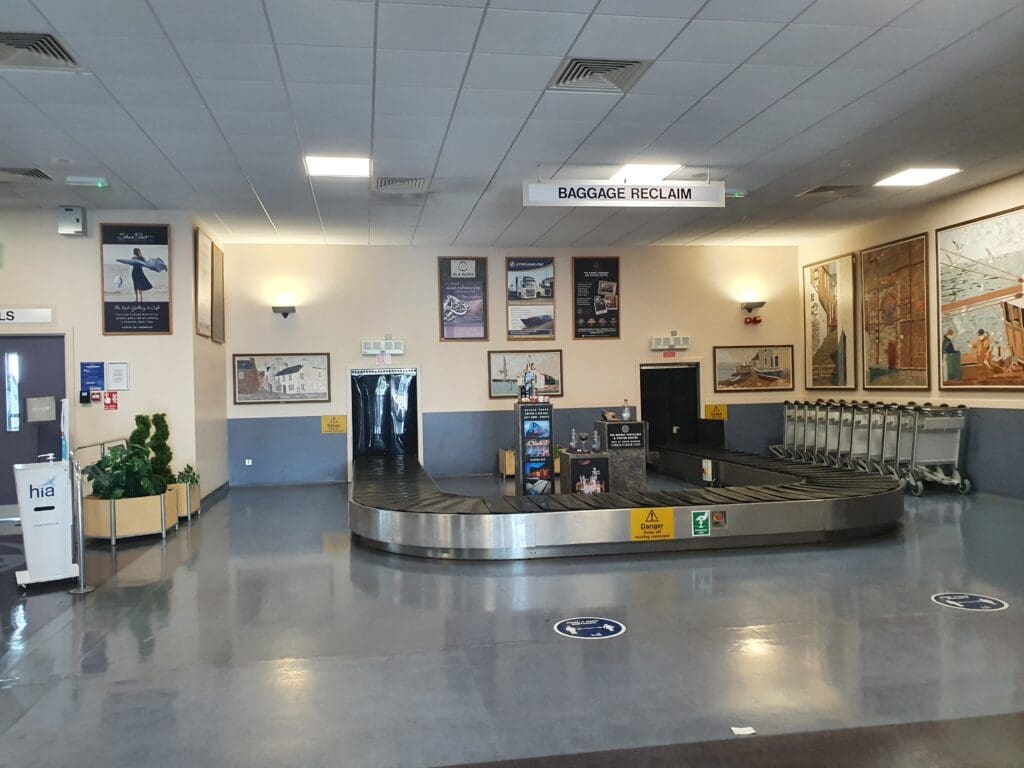
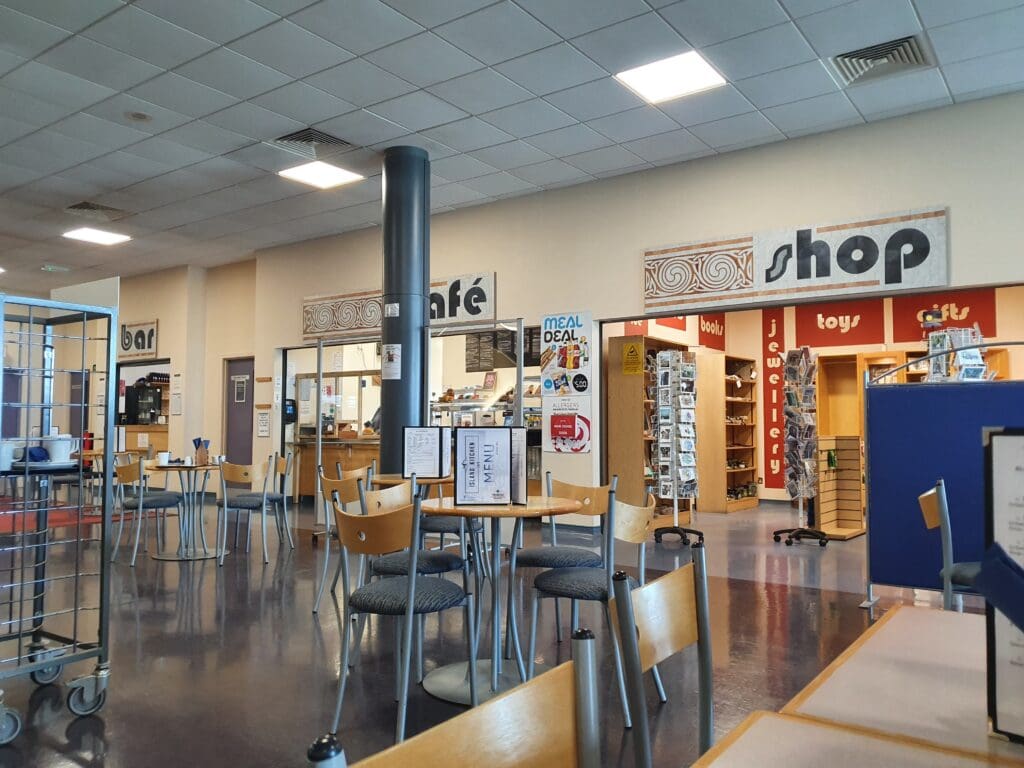
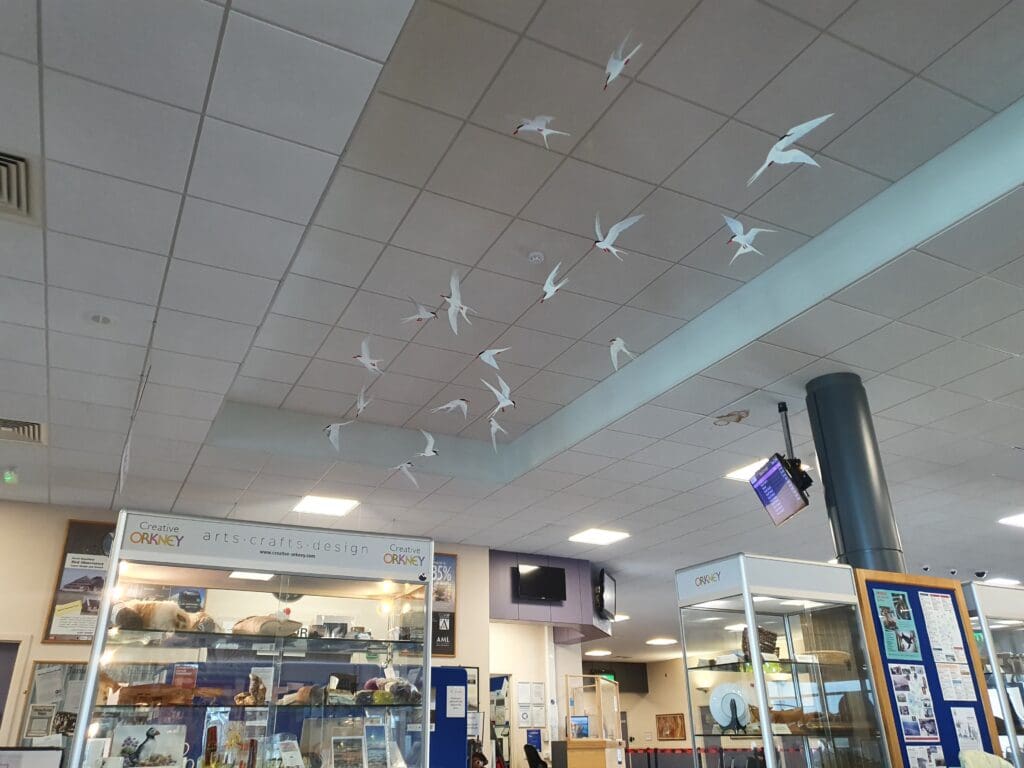
Following a pleasant eleven-minute journey, the bus came to a gentle halt directly outside the terminal where a cluster of suitcase-wielding passengers who had presumably arrived on the Saab from Sumburgh could be seen waiting for their ride to Kirkwall. After disembarking the bus, I headed straight into the small terminal building and upon arriving there, with the next departure scheduled to be the 1515 service to Glasgow, I found this to be unsurprisingly deserted, with most inside taking the form of HIAL and Loganair staff members waiting in between flights at the café. Focusing on the layout of the terminal, this features three well-branded Loganair check-in counters, with a baggage carousel at the opposite end of this – with nothing separating this from the landside portion of the terminal. On one side, the Island Kitchen Café and bar, and a small shop could be seen along with several display cabinets featuring a range of items related to Orcadian culture, history, products and aviation. As mentioned in my previous report, few would likely describe Kirkwall Airport as being particularly stylish. Yet this is clean, pleasantly compact and uncomplicated, and with plenty of interesting displays and a bar, café and shop, I personally found this to be a pleasant terminal and comfortable for a wait of up to a few hours. Furthermore, all staff members I interacted with seemed to be pleasant and friendly and, as with similar-sized island airports, there seemed to exist a real and pleasant sense of community between staff. On a side note, the terminal appeared to be almost identical in size and layout to Stornoway Airport’s terminal. Ultimately, other than the forgivable lack of plug sockets, I didn’t have too much to complain about.
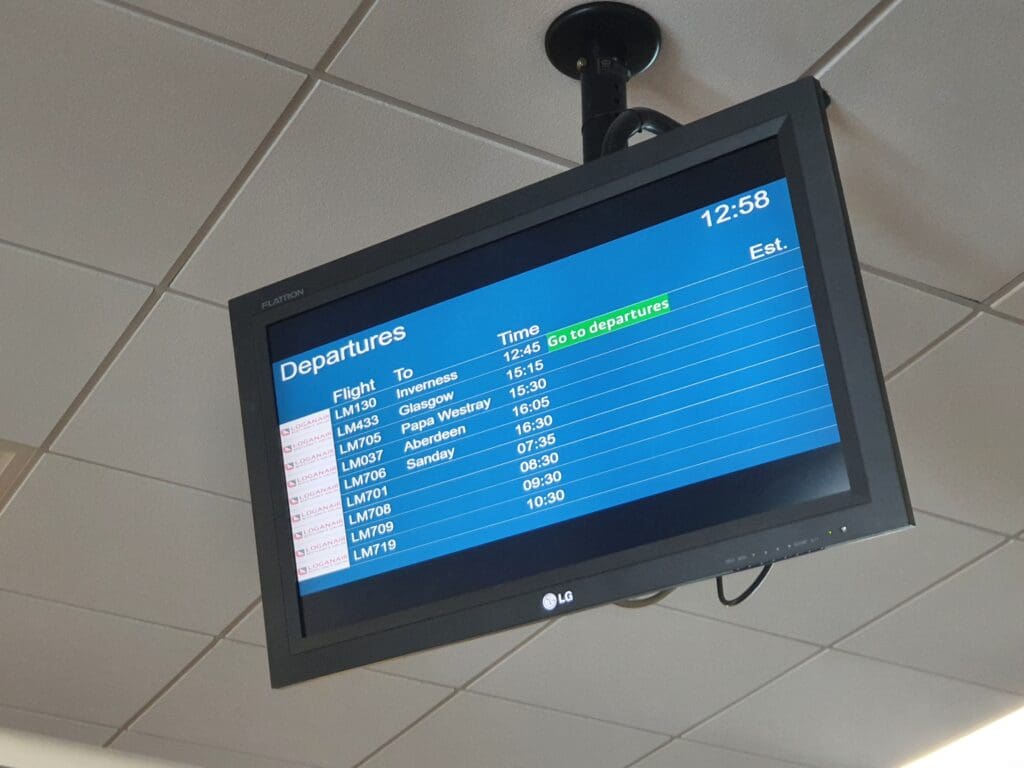
With plenty of time to go until my flight, once I had gotten my bearings, I made a beeline for the Island Kitchen Café for a medium-sized cappuccino. Setting me back £3.30, whilst this was not the cheapest coffee that I have ever purchased, made with fresh local milk and being of decent quality, I could hardly complain about this. Whilst not fancying anything more substantial, I was rather impressed by their long menu of hearty dishes made with local Orcadian ingredients. After sipping away at my coffee for a few minutes, I headed over to one of the terminal’s very few plug sockets to top up my phone’s battery in preparation for taking plenty of pictures during the flight ahead. As expected, as time passed more and more passengers arrived in the terminal however with an inter-island flight at 1530 and an Aberdeen flight at 1605, it was difficult to judge just how many in the terminal were set to head off to Glasgow. As I waited, I tracked the inbound aircraft on Flightradar24 which showed the flight as having departed Scotland’s largest city 23 minutes behind schedule and I was thus a little sceptical that this would touch down on Orkney on time.
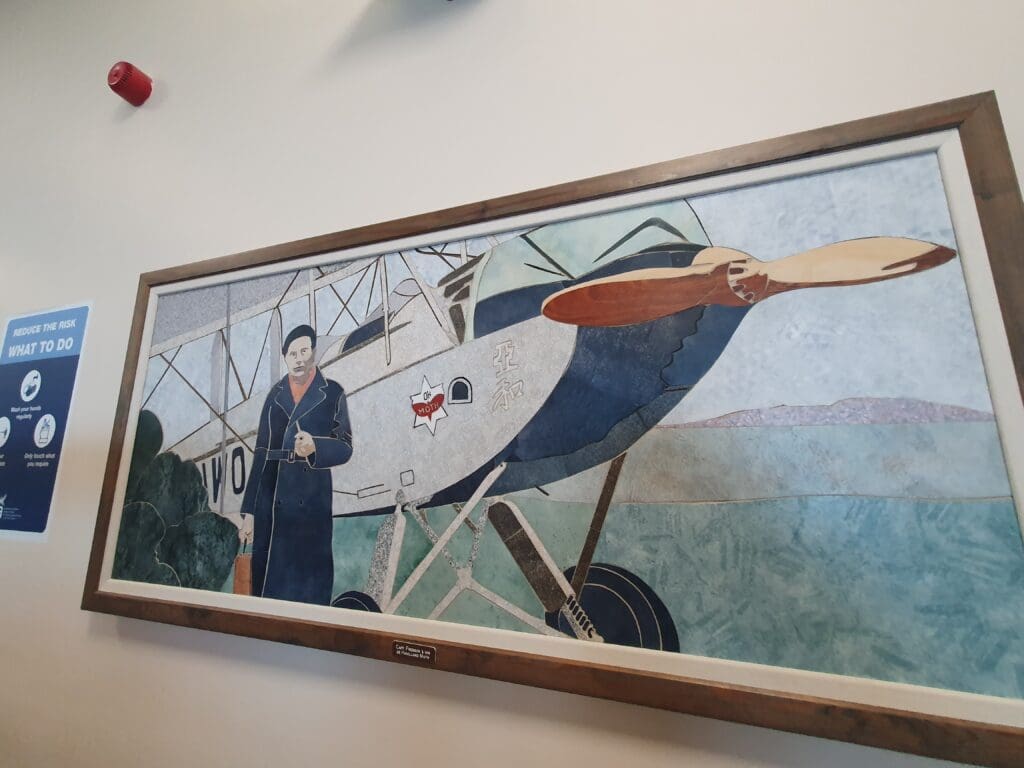
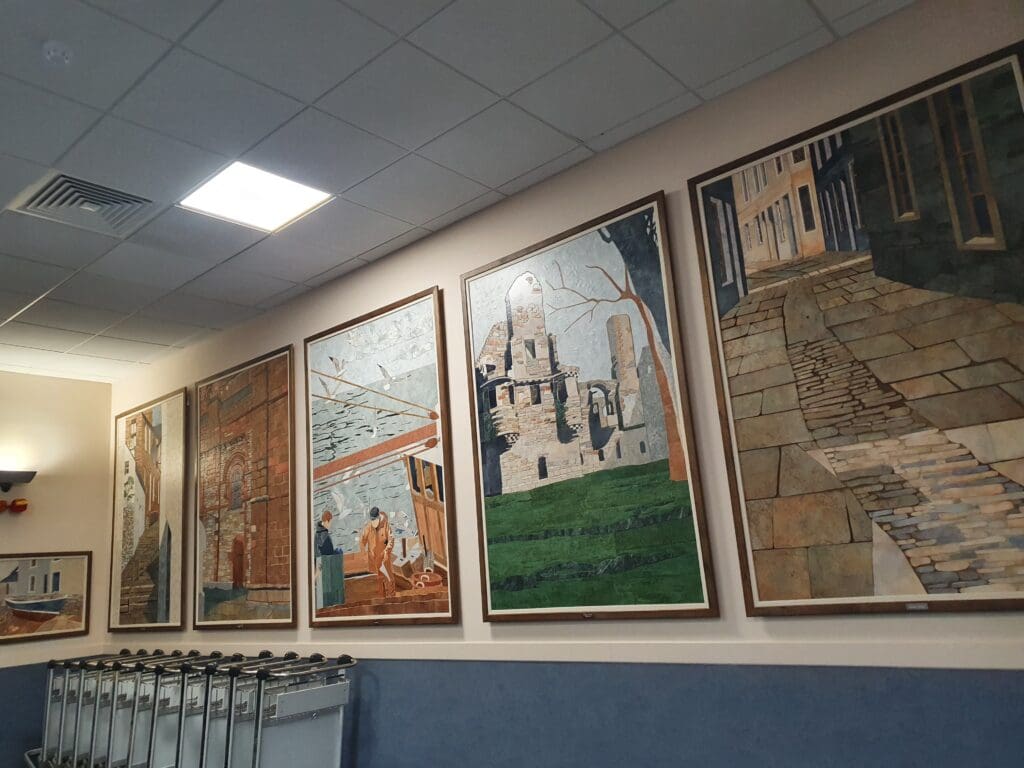
Given the small size of the terminal, those departing on Loganair’s mainline services do not need to be at the airport hours in advance of departure. Instead, the airline recommends departing passengers arrive at Kirkwall Airport an hour before departure, with check-in closing thirty minutes before this. Seeing as I had checked in online and was lacking any bags that needed to be transported in the hold, I opted not to join the short queue which had formed at the check-in desks and continued to maintain my position near one of the terminal’s windows. Once checked in, passengers congregated around the set of double doors that led to the departures area and at 1420 an announcement was made inviting those bound for Glasgow to make their way to departures. A few minutes later, an airport staff member appeared and opened the door to the security checkpoint. Unlike inter-island flights, those departing on Loganair’s ‘mainline’ services are required to pass through security; however fortunately this proved to be a painless process and I found all four staff members manning this to be polite and friendly.
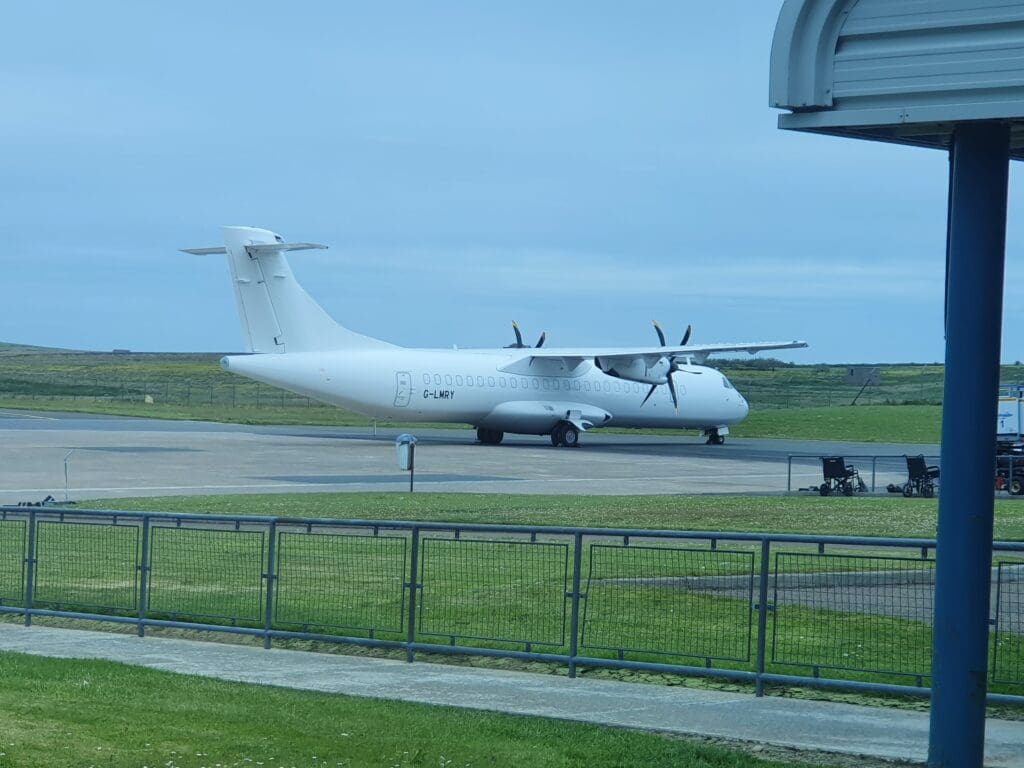
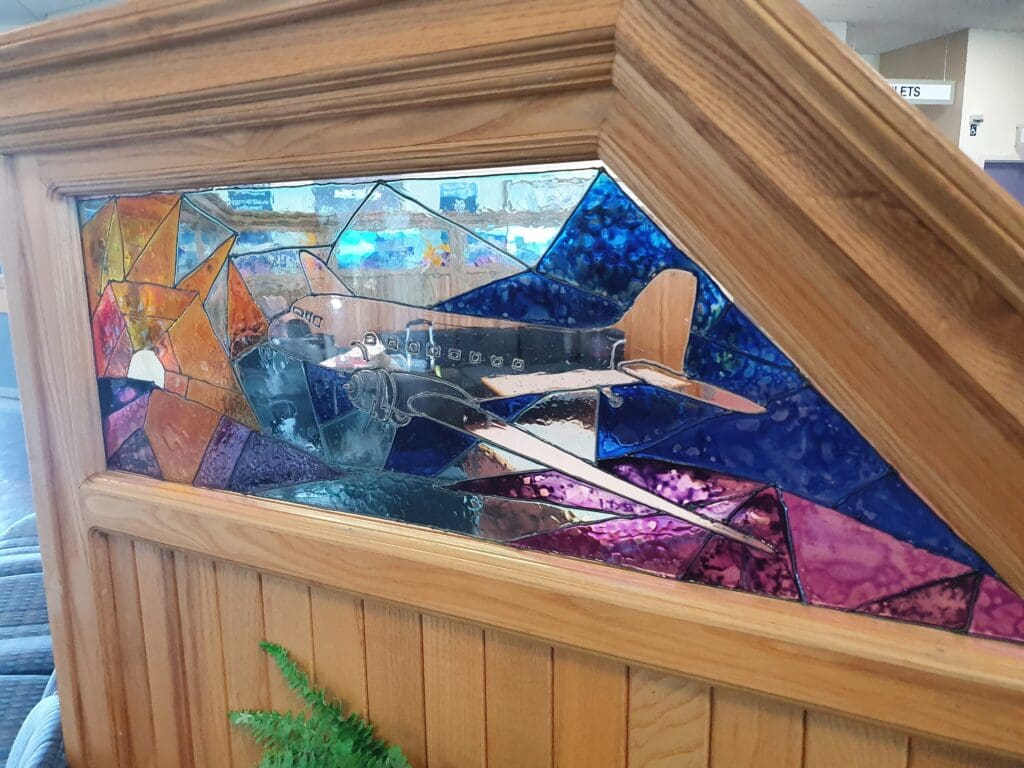
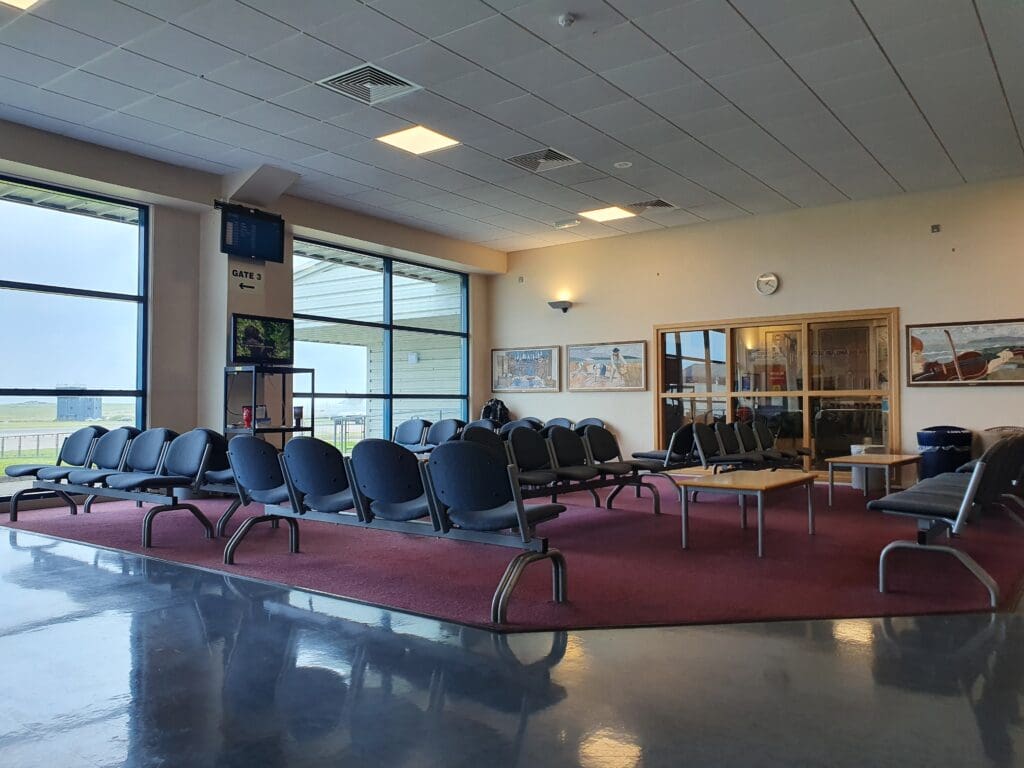
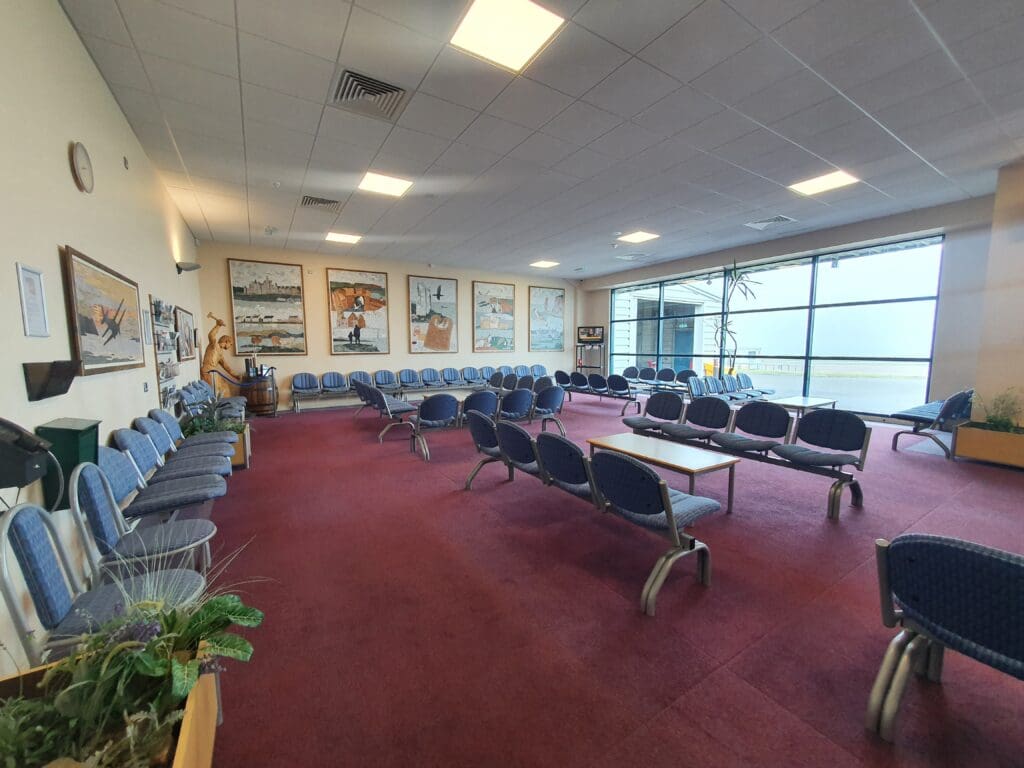
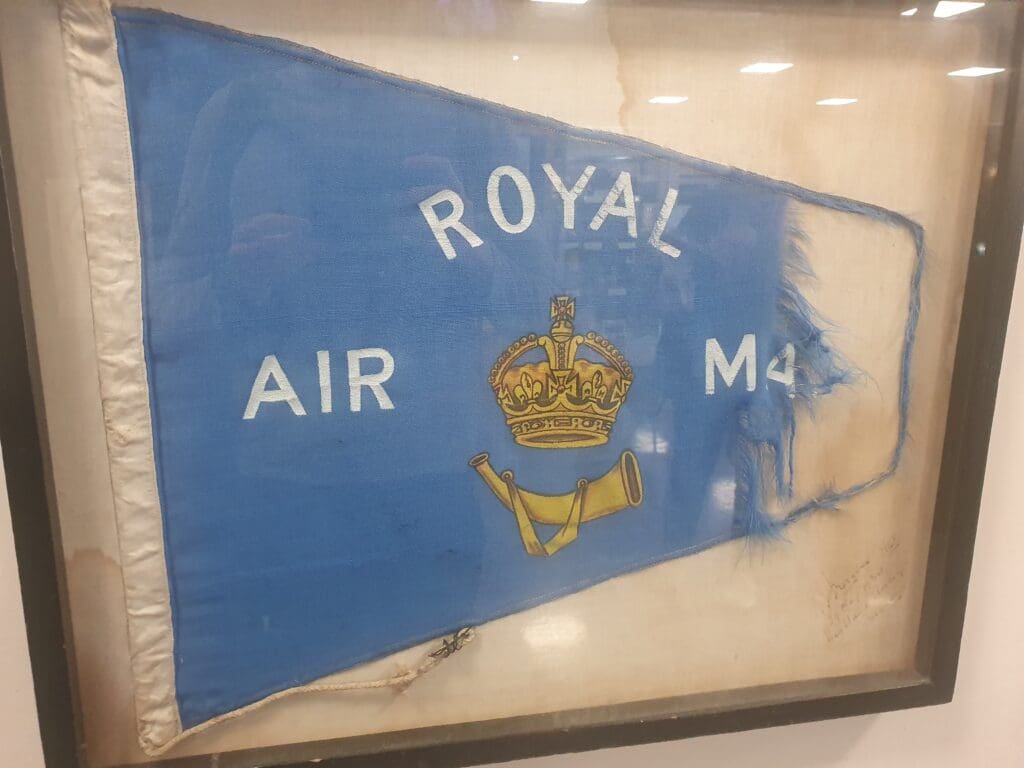
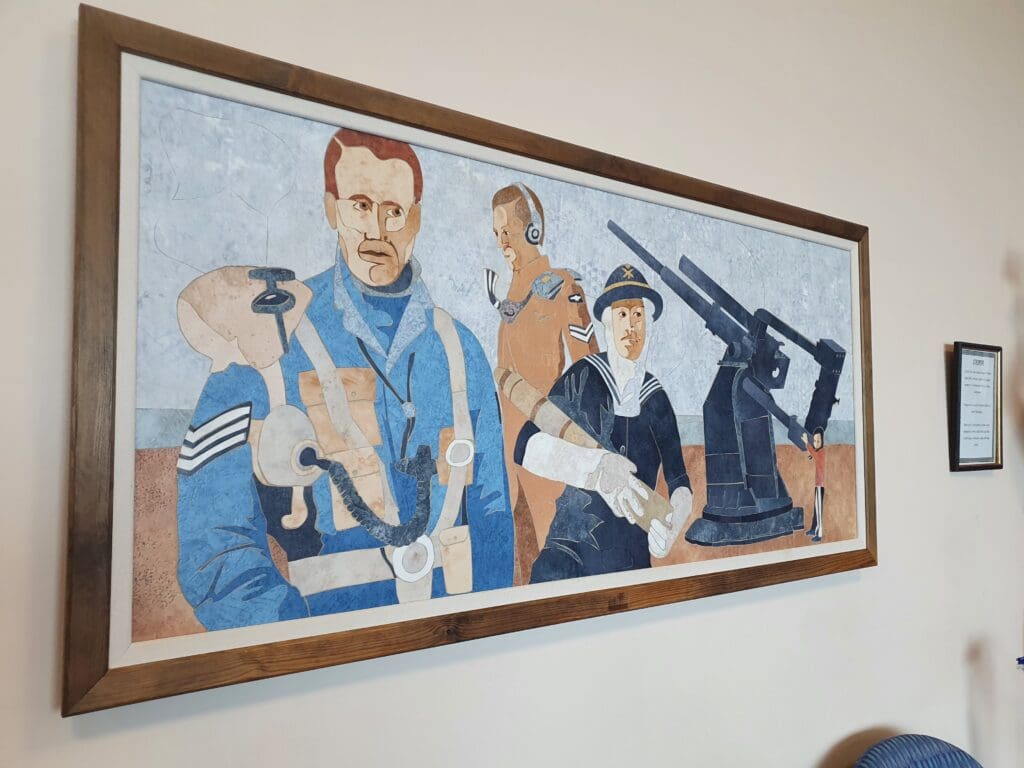
Once through the security checkpoint, I arrived at the terminal’s small airside waiting area which took the form of a large room with plenty of seats complete with a decent view of the ramp. Inside, the walls were linked with an array of interesting local displays and artwork, whilst entertainment was provided in the form of a television in one corner, at that time broadcasting Dickinson’s Real Deal on STV. Whilst most passengers are unlikely to find themselves waiting in the airside portion of the terminal for longer than forty minutes, a reasonable library of books was also on offer for passengers looking to pass the time. Finally, a couple of vending machines and a set of toilets were also on offer for refreshment and relief respectively. Turning my attention outside, as I waited the mist rolled in off the sea resulting and thus the visibility dropping rather significantly obscuring the view of Inganess Bay on the other side of the airfield.

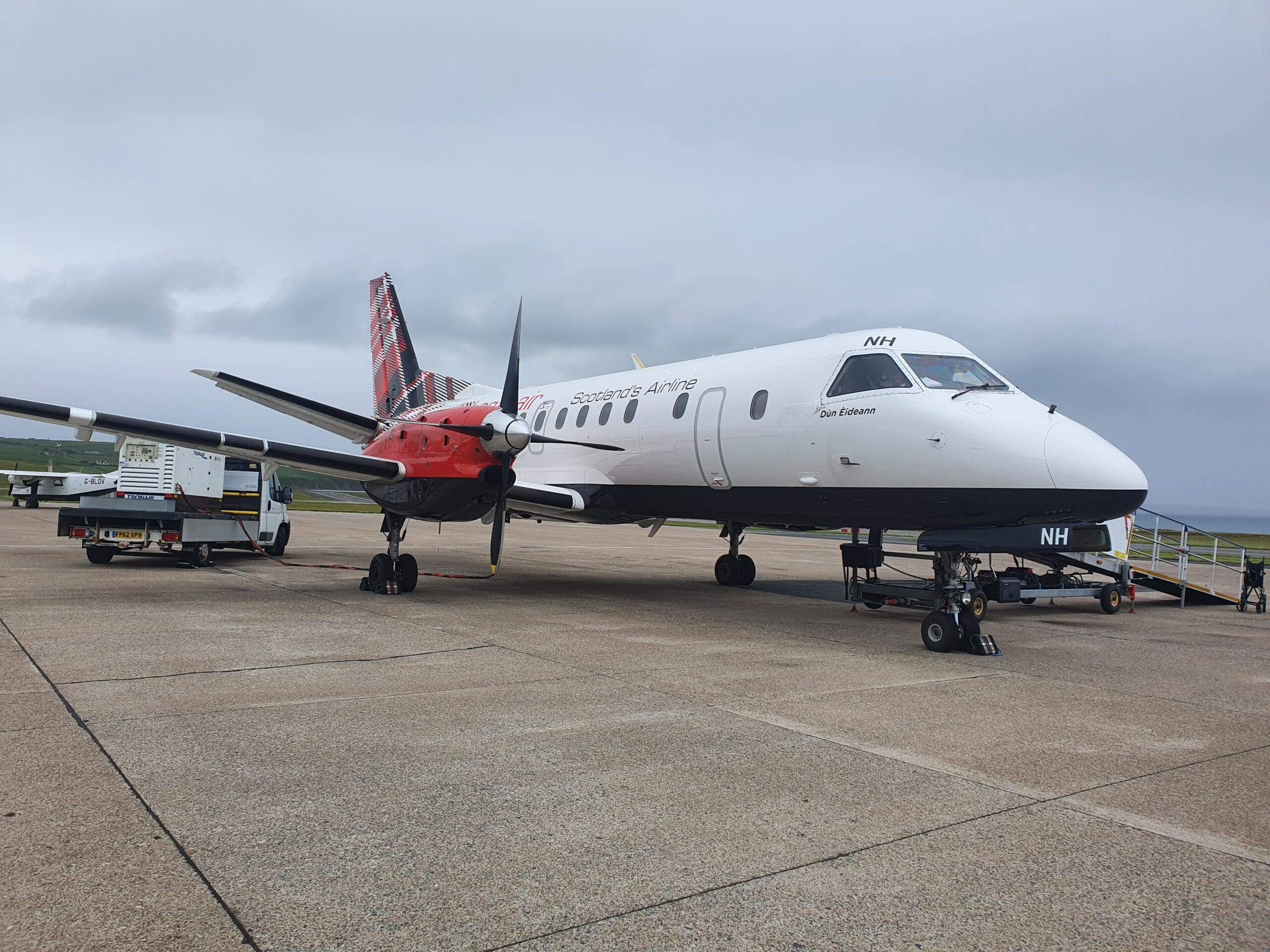
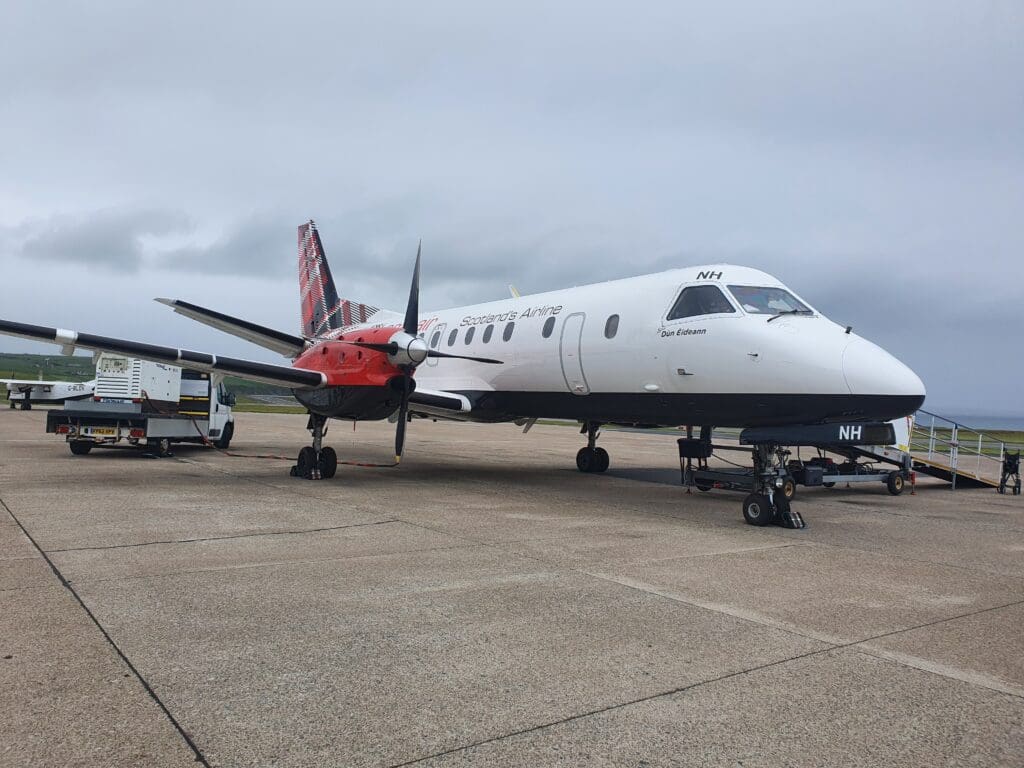
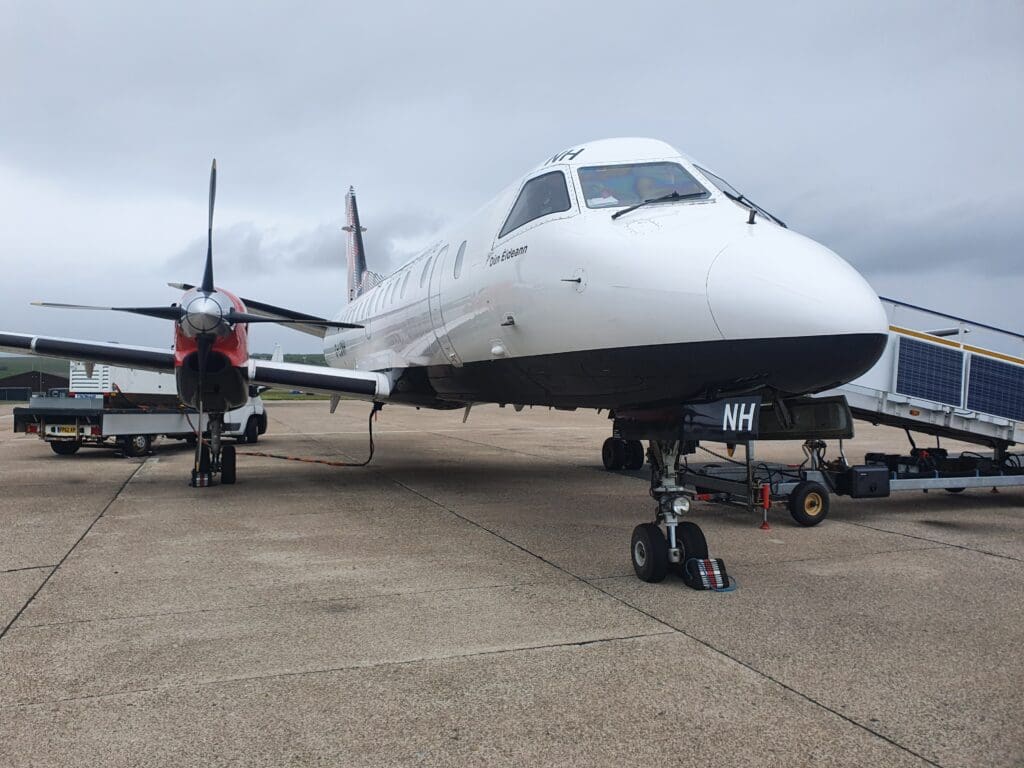
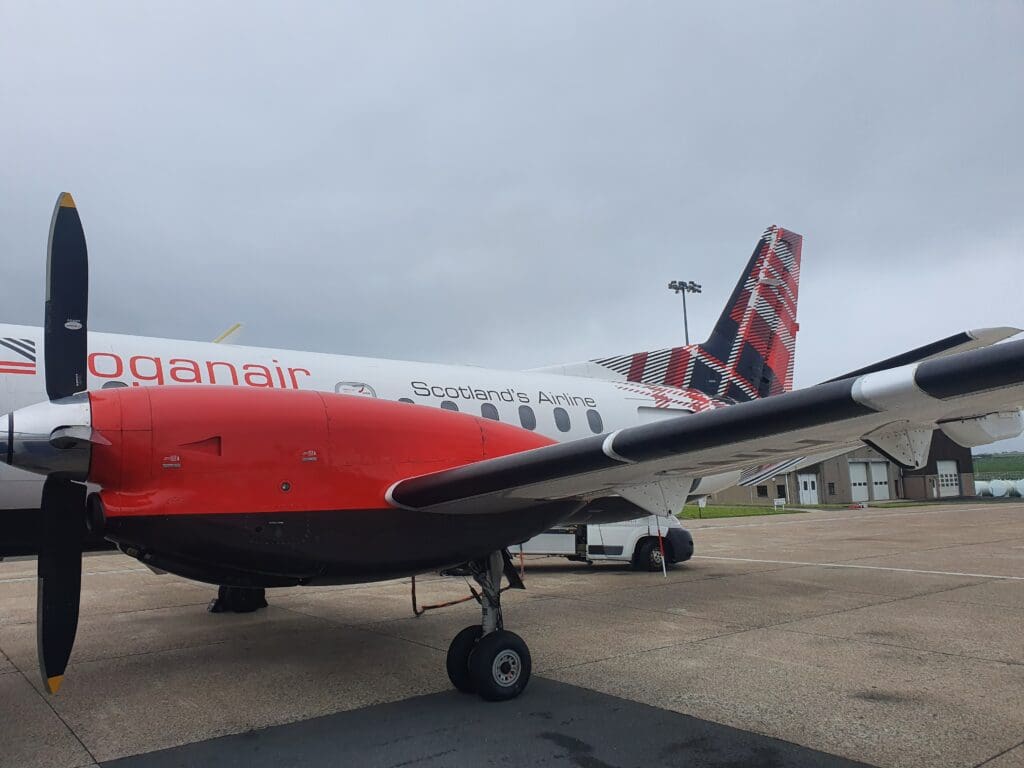
Fortunately, the low visibility did not last too long nor did it interrupt the progress of the inbound aircraft. Following a 55-minute flight through Scottish skies, the Saab touched down on Kirkwall Airport’s Runway 27 and soon filled the terminal with noise as it came to a halt directly outside the waiting area. That afternoon the flight down to Glasgow would be operated by Saab 340B G-LGNH, known as the Spirit of Edinburgh, or Spio Dùn Èideann in Scots Gaelic. With the construction number of 333, this particular Saab rolled off the production line in Linköping and made its first flight in January 1993. This made the aircraft a vintage 29.5 years old at the time of my flight. In March of that year, the aircraft was shuttled down to France where it was delivered to Nantes-based Regional Airlines as F-GMVX, the predecessor to Régional. However, the aircraft’s initial stint in Europe was not to last too long and in June 1998 the aircraft was shuttled all the way to Australia. There, the Saab operated as VH-XDA for MacAir Airlines, a long-defunct regional carrier that operated charters and scheduled flights across Queensland. After nearly six years Down Under, in May 2004 the aircraft was ferried back to Europe and soon delivered to its current operator Loganair where it received British Airways’ livery. With the Loganair franchise transferring to Flybe in 2008, following a stint spent wearing a mostly white hybrid livery, in late 2008 the carrier received Flybe’s full colours. Almost a decade later following the termination of the franchise agreement with Flybe in 2017, the aircraft temporarily wore a white livery before receiving its current colours in late 2017 or early 2018. Based in Glasgow, in the week before my flight, the aircraft had had a busy schedule, visiting Benbecula, Derry, Inverness, Kirkwall, Stornoway and Sumburgh, flying 47 sectors and covering at least 5,300 miles. This is roughly equivalent to the distance between London and Las Vegas.
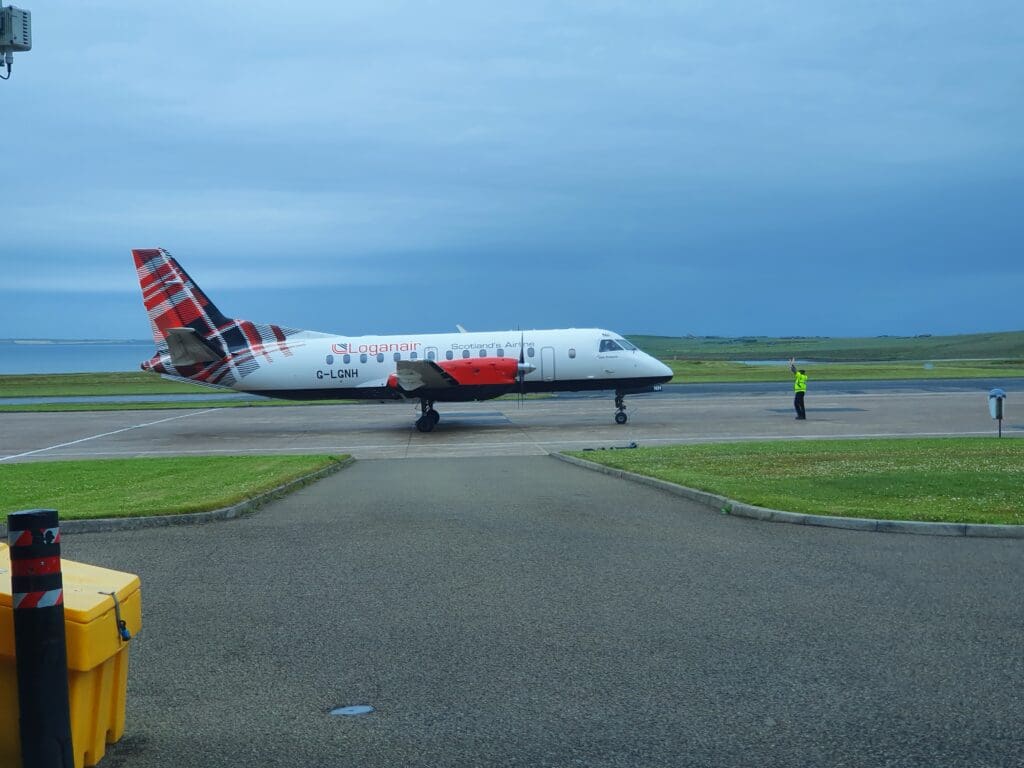
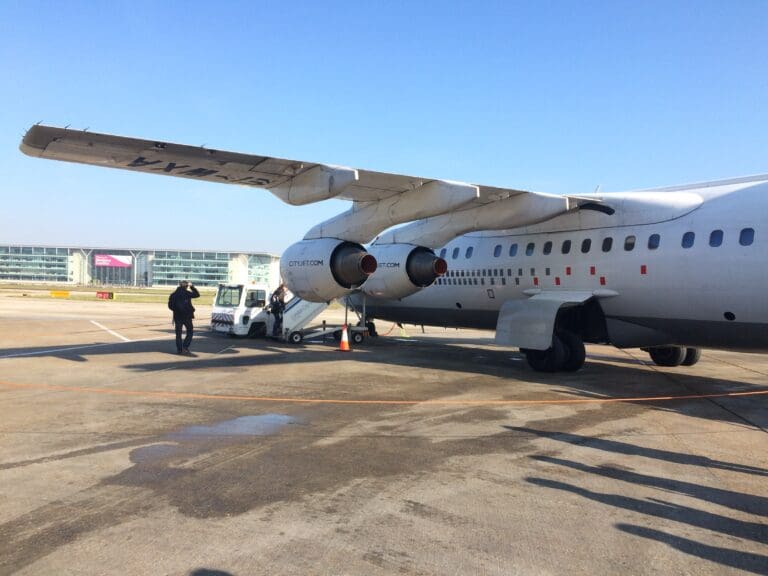
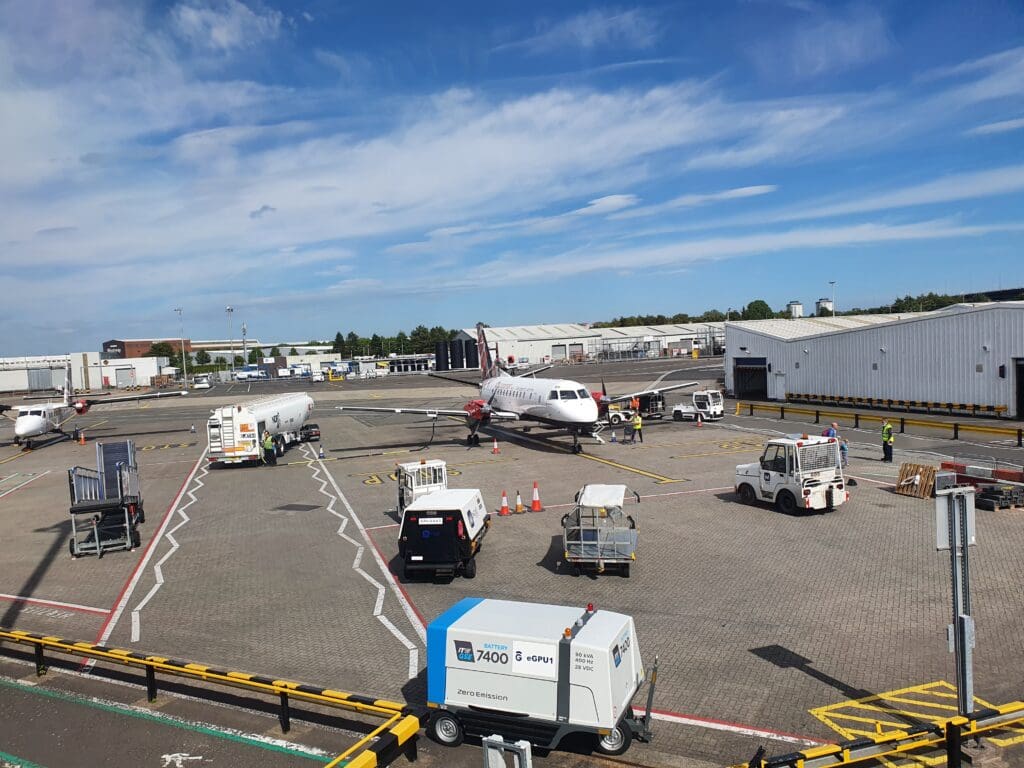
Unlike at most British airports, HIAL makes use of accessible step-free boarding ramps rather than airstairs, or making passengers climb up to the aircraft via its built-in steps. Thus, once the two engines spooled down and their propellers stopped whirling, the boarding ramp was moved up to the Saab’s passenger door and disembarkation soon commenced. As this took place, a van positioned itself up to the door of the cargo hold at the rear of the aircraft ready to shuttle passengers’ hold luggage to the terminal, whilst a tanker commenced refuelling the aircraft.
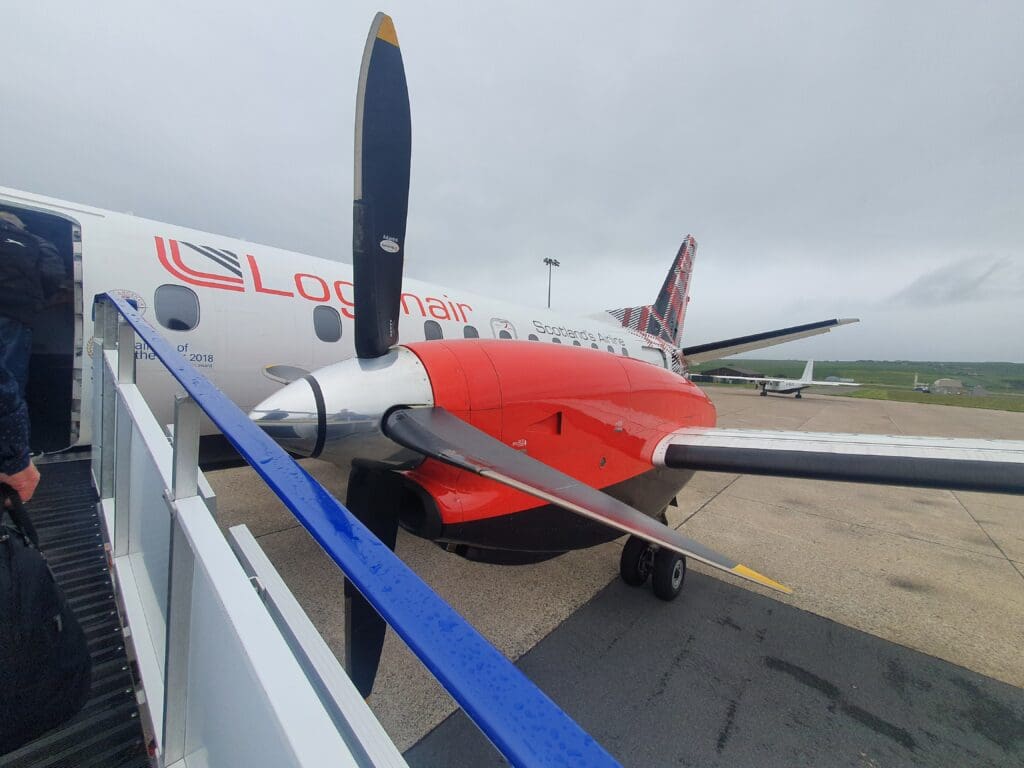
Once all Kirkwall-bound passengers disembarked, at 1502 a Loganair agent appeared in the airside waiting hall before escorting a wheelchair passenger to the aircraft once the tanker had pulled away. Several minutes later, at 1509 an announcement was made requesting all passengers to proceed forward for boarding. Joining a short queue, I was soon greeted by the friendly Loganair agent before my boarding pass was checked and my name crossed off on the manifest. After this formality had been completed, I journeyed outside and commenced the short walk over to the waiting Saab. As I shuffled up the ramp, I spent a few moments admiring the seemingly large General Electric CT7 engine and the four-blade Dowty propellers attached to this before I ducked slightly and entered the miniscule galley at the front of the Saab. As soon as I entered, I received a lively and friendly greeting from the sole flight attendant who briefly checked my boarding pass before pointing me in the direction of the rear of the aircraft.
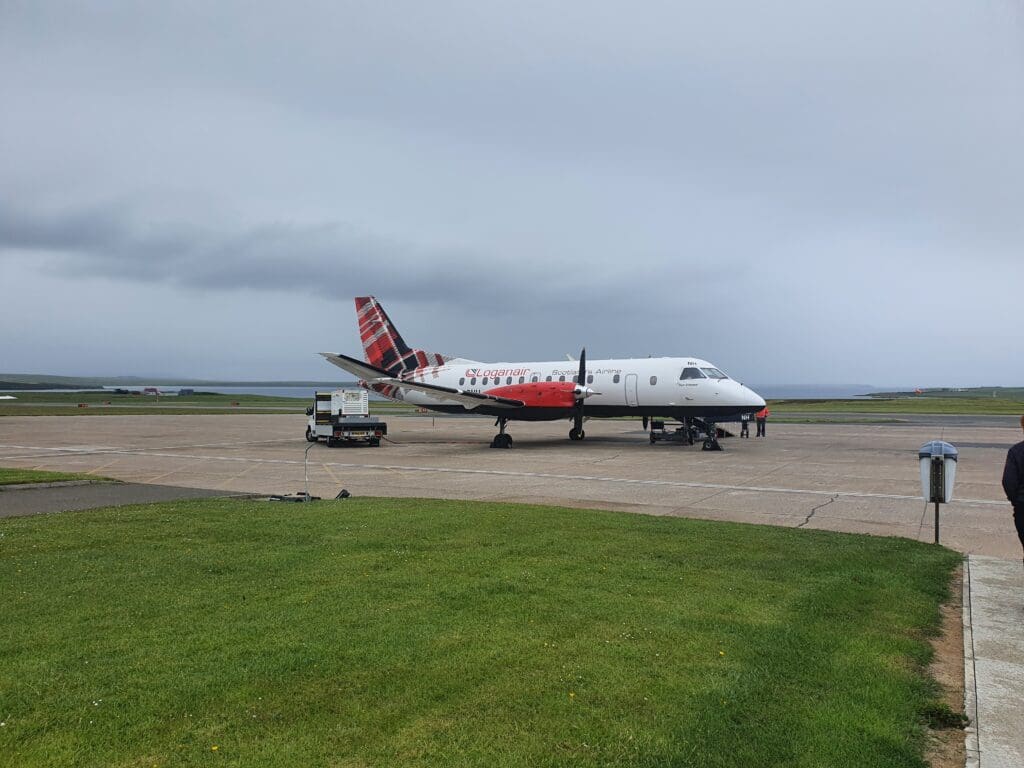
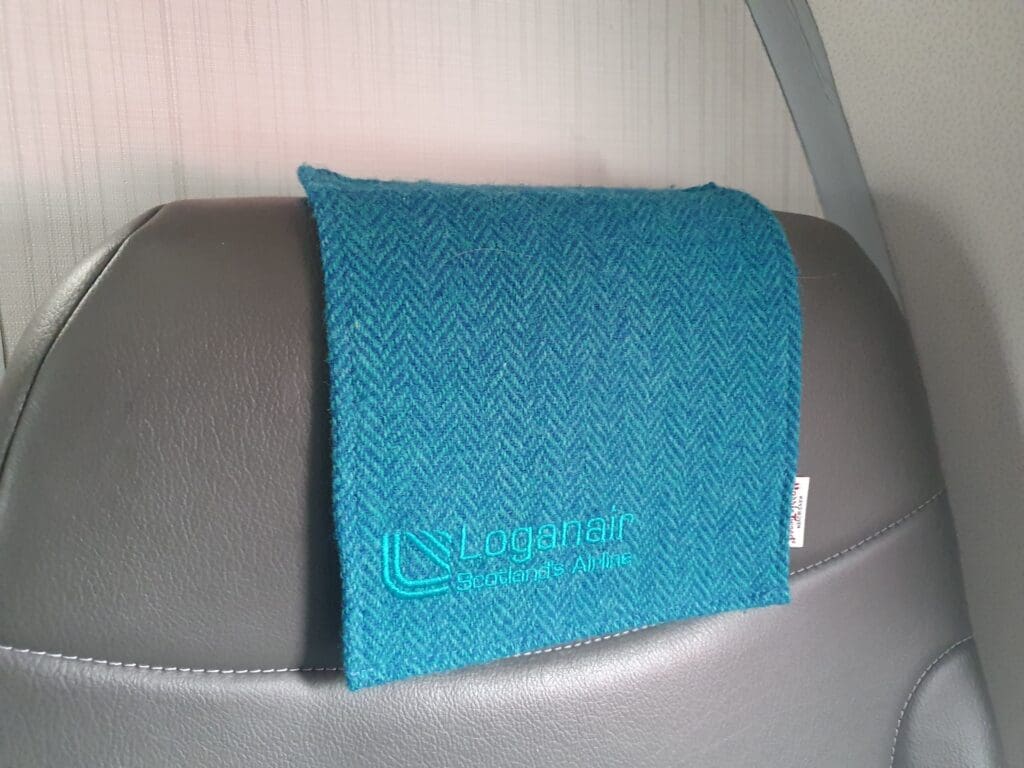
With Loganair having commenced an extensive interior refurbishment programme in 2016, today all of the carrier’s Saabs feature a smart interior consisting of 34 modern slimline seats covered in a (faux?) elephant grey leather which sit in a 2-1 configuration on raised platforms on either side of the aisle. Each of these is topped with smart-looking and regionally appropriate Harris tweed fabric antimacassars of varying colours, each of which features Loganair’s logo. Interestingly, unlike the two Loganair Saab 340Bs that I had flown in the previous year, this Saab did not feature a bank of four seats in the rearmost row, with the last row (Row 13) featuring a bank of three seats, and a small storage cupboard on the left-hand side.
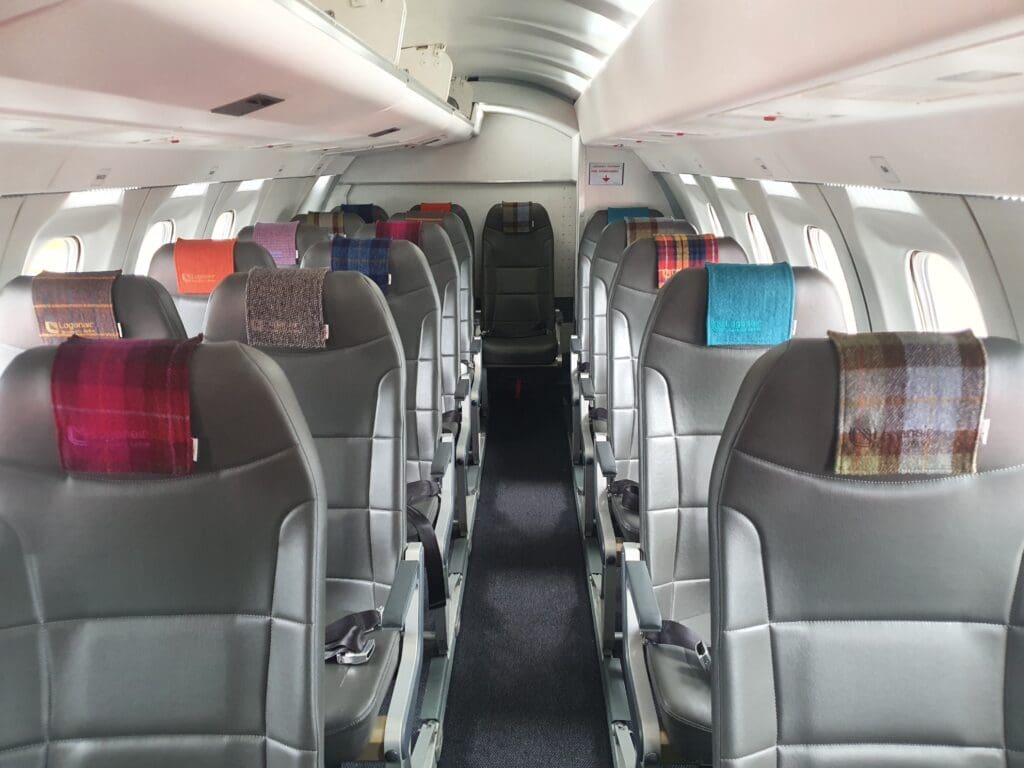
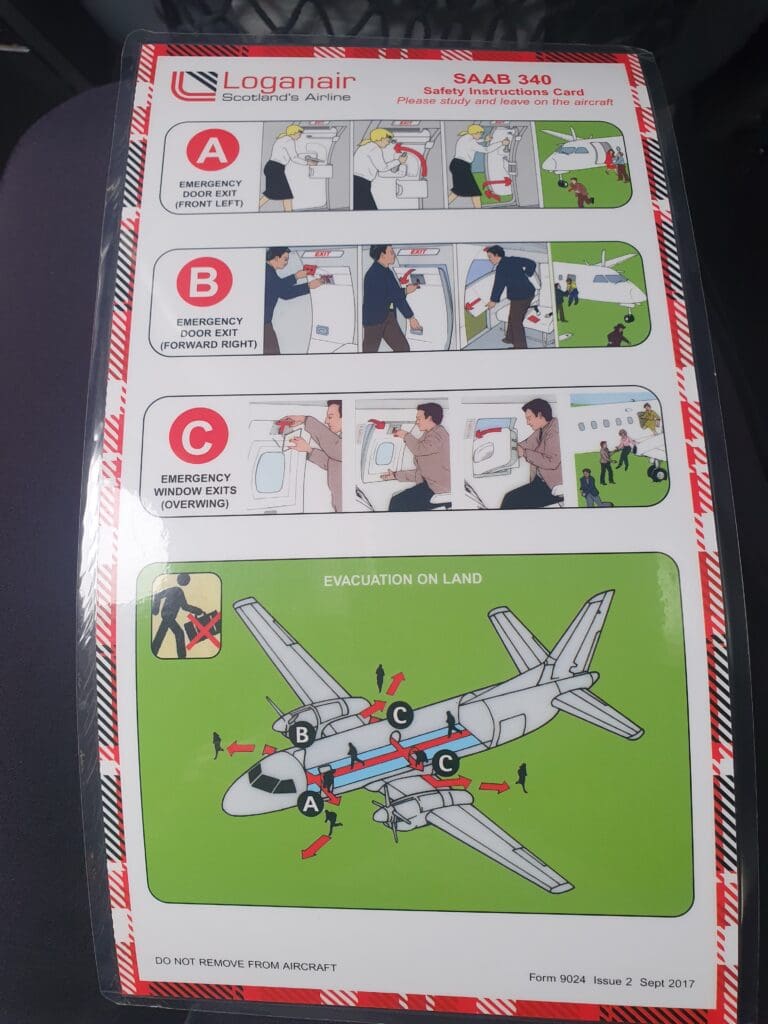
With few passengers in front of me, as I journeyed down the short cabin, it did not take long to reach Seat 12A. Once I had squeezed my bag into one of the small overhead lockers (these positioned only above the bank of two seats as is the case on many aircraft with seats in a 2-1 configuration), I took my seat and settled in for the flight ahead. Despite their thin appearance, I was pleased to find the seat to be soft and comfortable, with a good amount of legroom for a regional turboprop. As with most airliners, all passengers on the Saab 340 can enjoy the luxury of their own air vent, reading light and flight attendant call bell. Upon first glance, I found the area around my seat to be clean and in good condition with limited signs of wear and tear; however, later on, I couldn’t help but notice some well-ingrained dirt and stains on the tray table. Examining the contents of the seatback pocket, this contained a safety card and a plain white sickbag, with Loganair’s Flightlog Magazine having migrated to the digital world many months prior at the start of the pandemic.
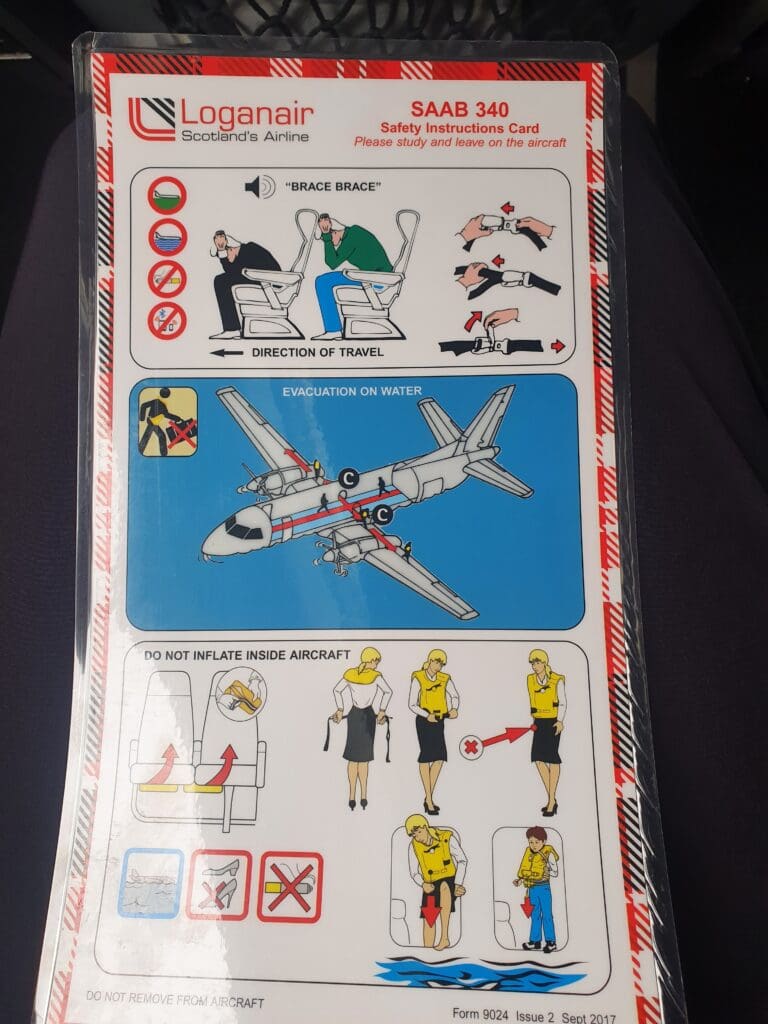
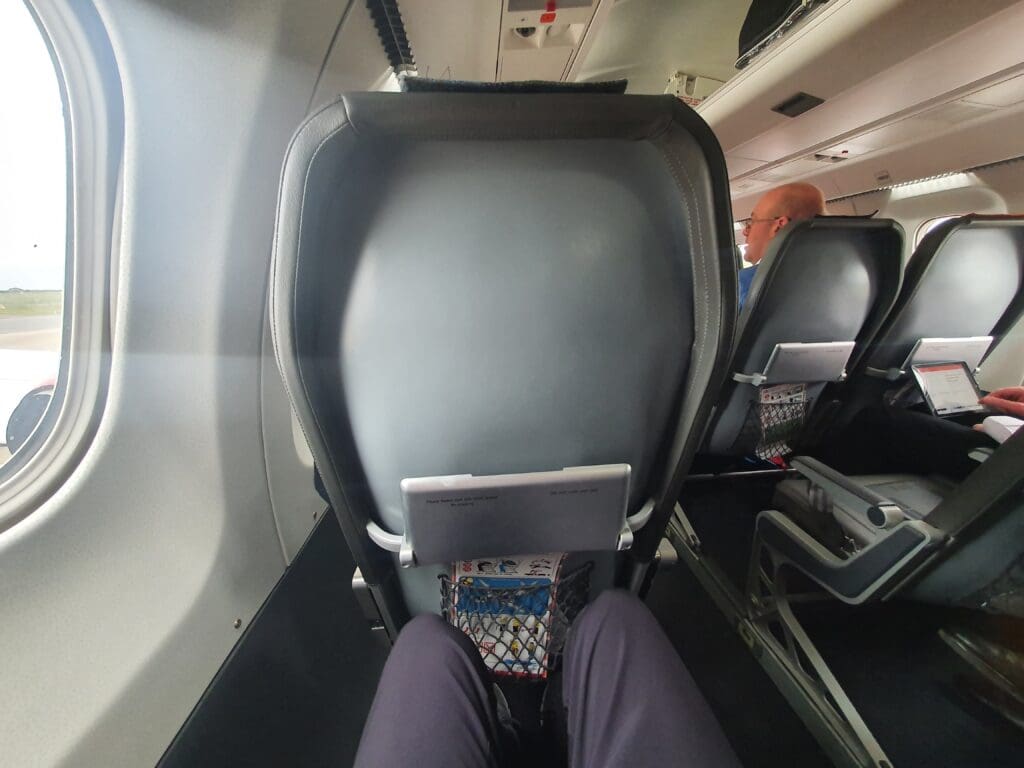
With all having made it to the gate on time, that afternoon passengers filtered onto the aircraft promptly with all passengers making it onto the aircraft by our scheduled departure time of 1515. That afternoon, the flight would be around two-thirds full with a fair mixture of tourists, locals and smartly dressed business people heading back to the mainland. Once all were seated and settled, the flight attendant performed a lively welcome announcement featuring the usual welcomes, thanks and warnings before closing the cabin door at 1518. After this had been closed, the cockpit door was shut and the captain’s calm voice filled the cabin as they welcomed all passengers and advised of a flight time of one hour before warning of a few bumps during the first and last few minutes of the flight. Almost immediately after this came to an end, the flight attendant performed a short safety announcement before demonstrating how to use the lifejackets. Afterwards, they then passed through the cabin ensuring everything was in place for our departure, during which they took the time to interact with many passengers throughout the cabin, adding to my very positive first impression.
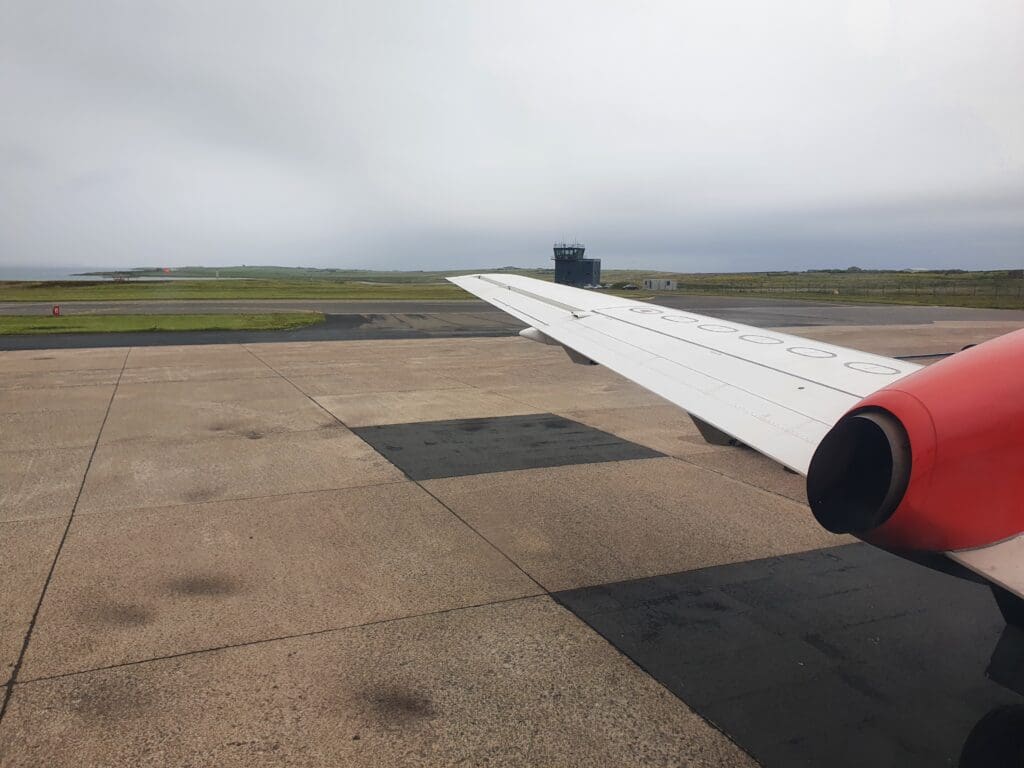
After the flight attendant had passed through the cabin, they strapped themselves into the rearward-facing jumpseat. However, whilst all was set in the cabin for our departure, there was little movement or activity for several minutes other than the aircraft slightly swaying from side to side in the breeze, whilst the noise of rain pattering on the top of the cabin could be faintly heard, temporarily interrupted by the local Islander roaring off to Papa Westray and Westray. After a few minutes, at 1529 the two General Electric engines powered into life, producing a fair amount of whirring and whining as the two Dowty propellers spun into life ready to propel us all southwards to Glasgow.
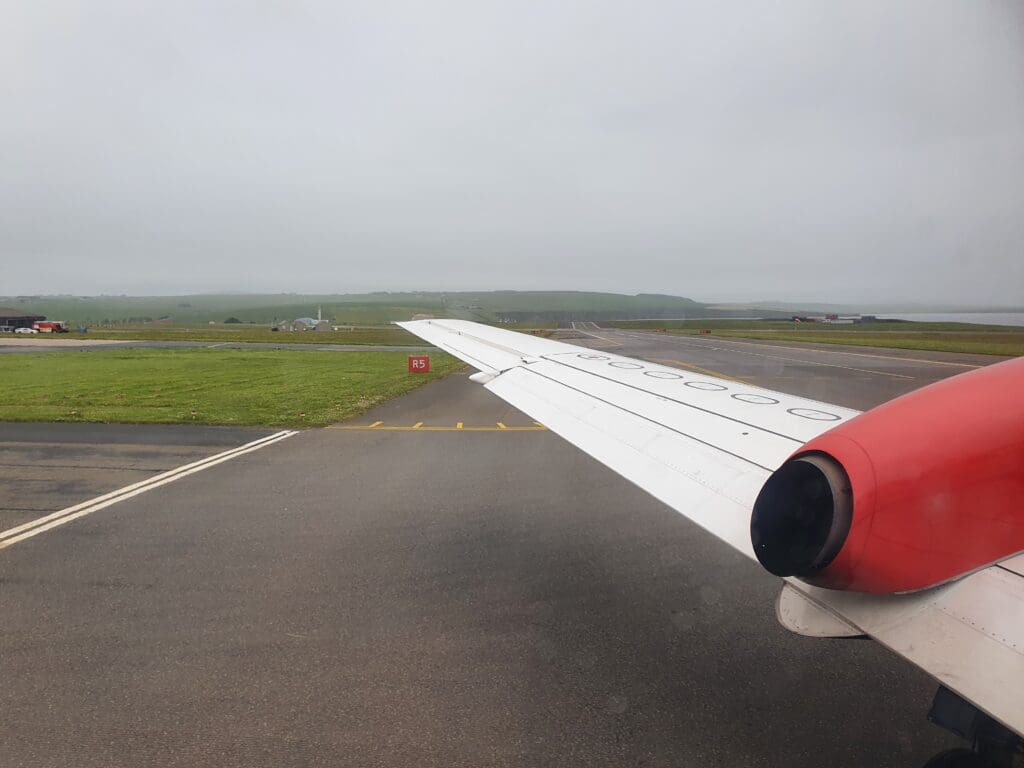
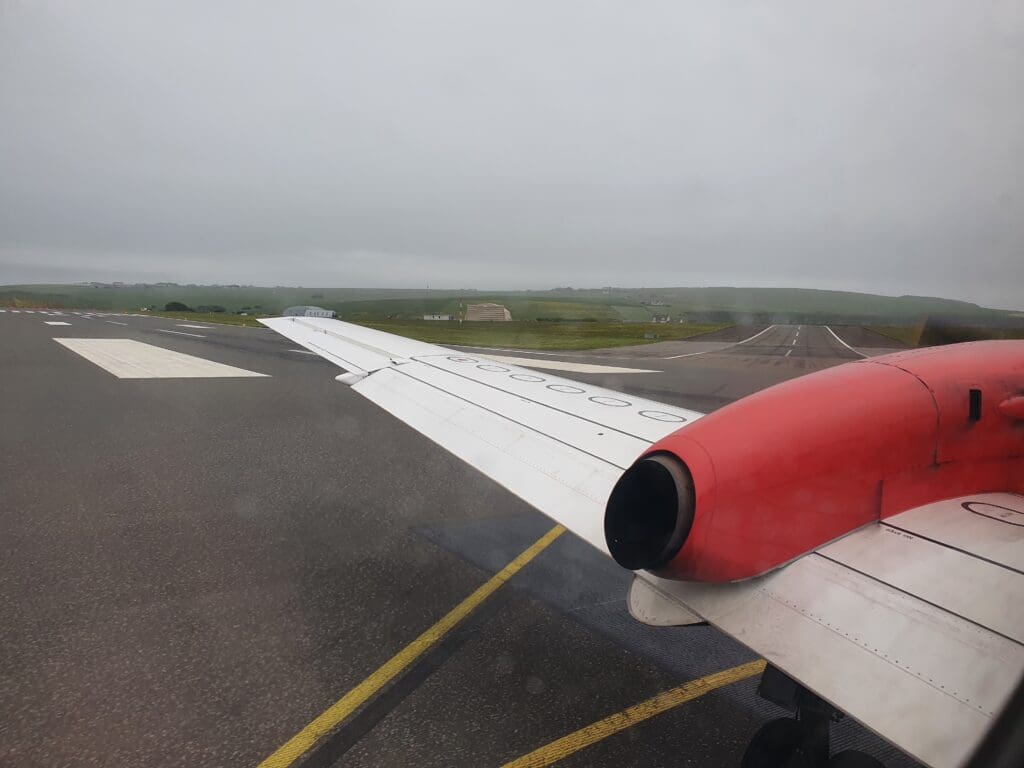
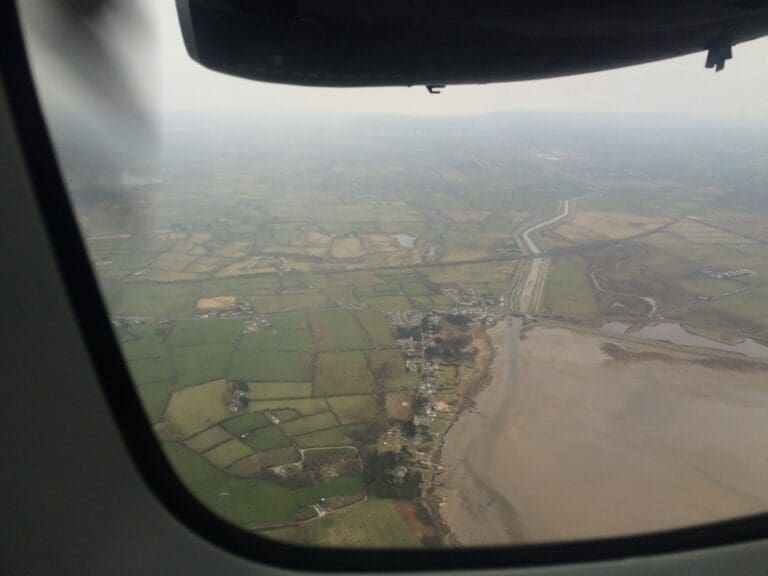
At 1533, the Saab commenced its short taxi to the end of Runway 27, entering this without holding before backtracking and turning around. Once there, at 1536 the two engines noisily powered up with the brakes held causing plenty of noise and vibration. As soon as these were released, the Saab went flying down the runway, rocketing upwards into the cloudy Orcadian skies in a matter of moments. During the first few seconds of the flight a bird’s eye view of the green fields that sit between Kirkwall and its airport before heading up into the thick grey clouds before reaching the town. Several minutes after taking to the skies, the flight attendant performed their post-departure announcement during which they advised passengers to keep their seatbelts on whilst seated and informed on the location of the toilet at the front of the cabin.
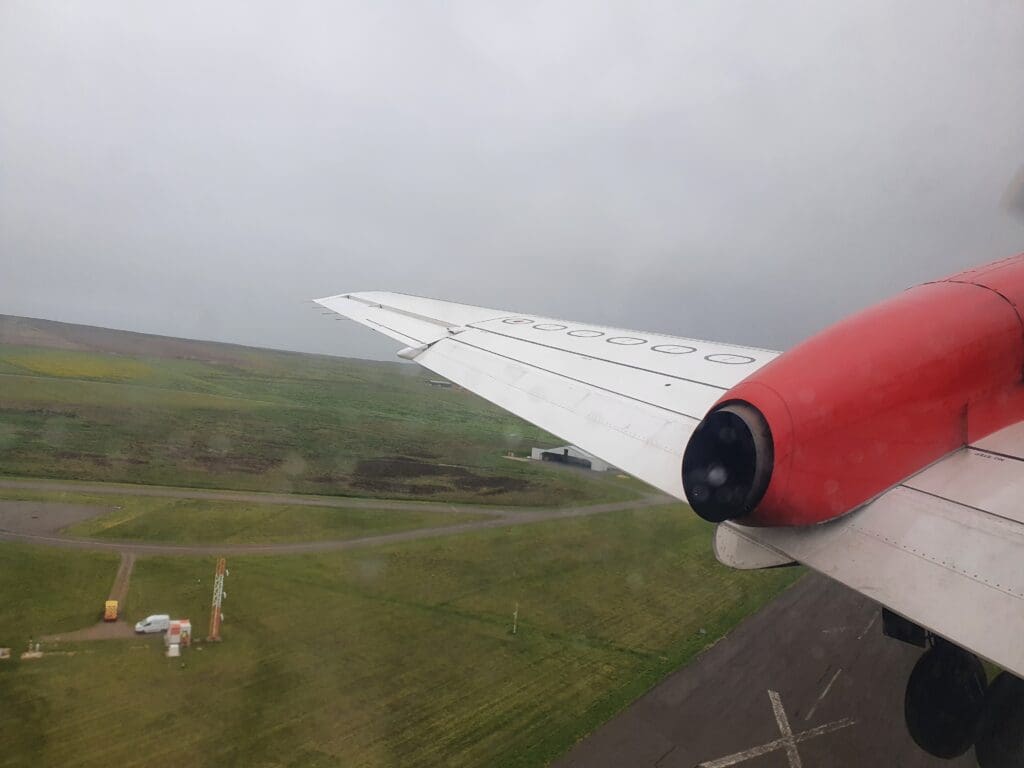

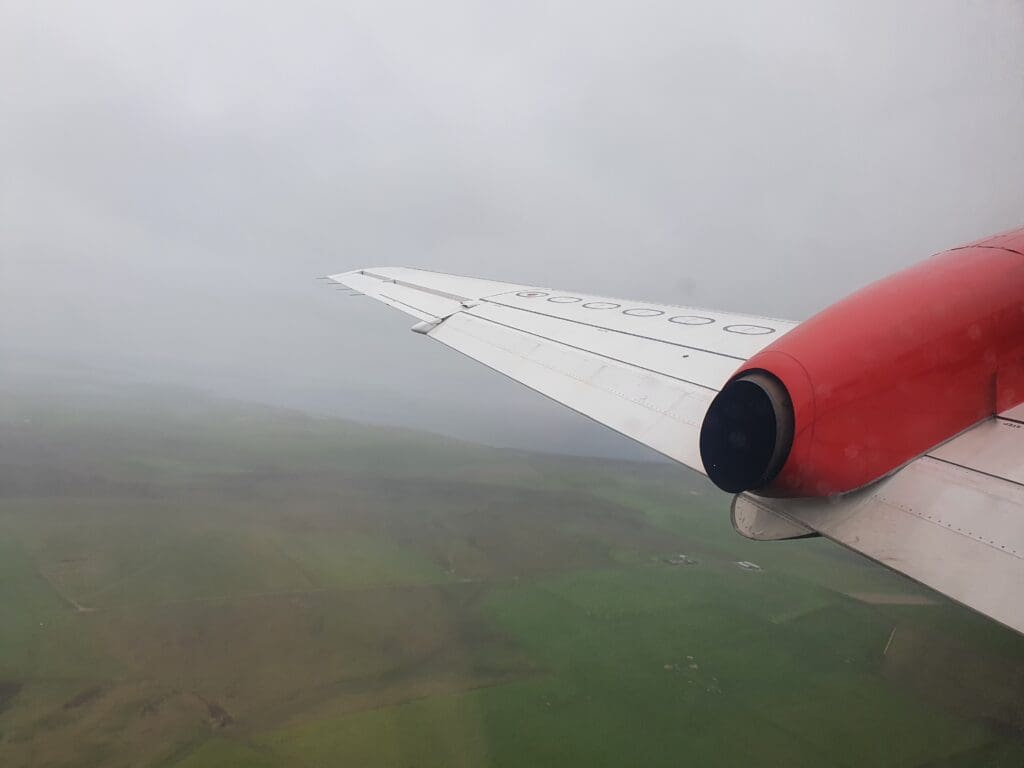
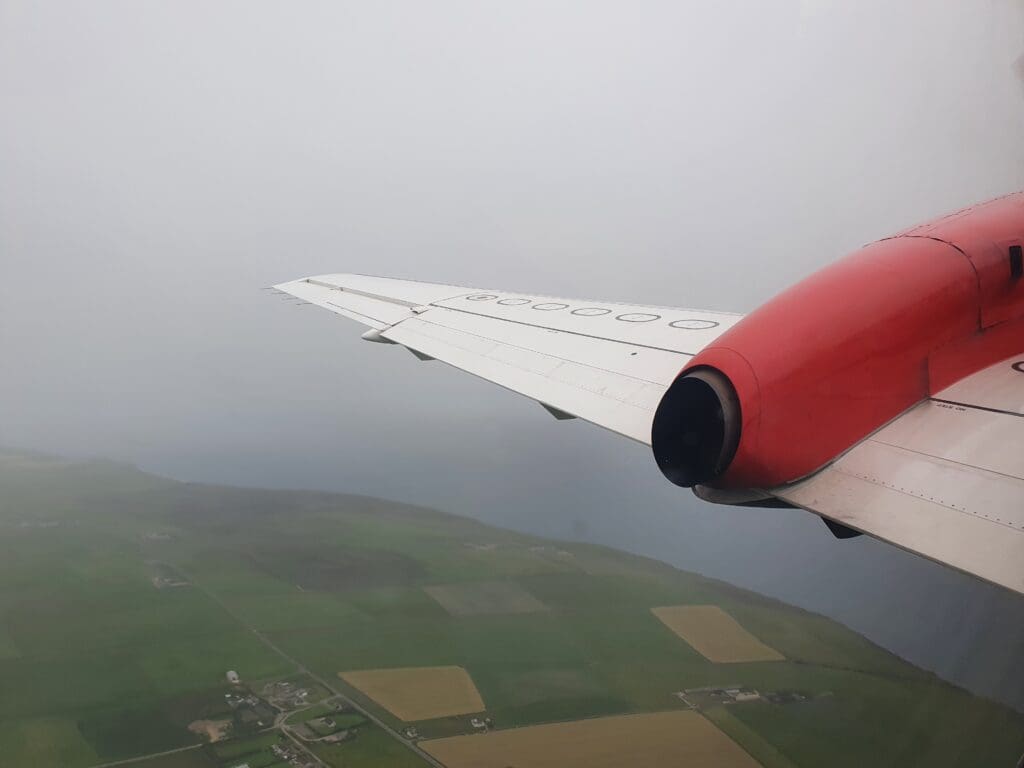

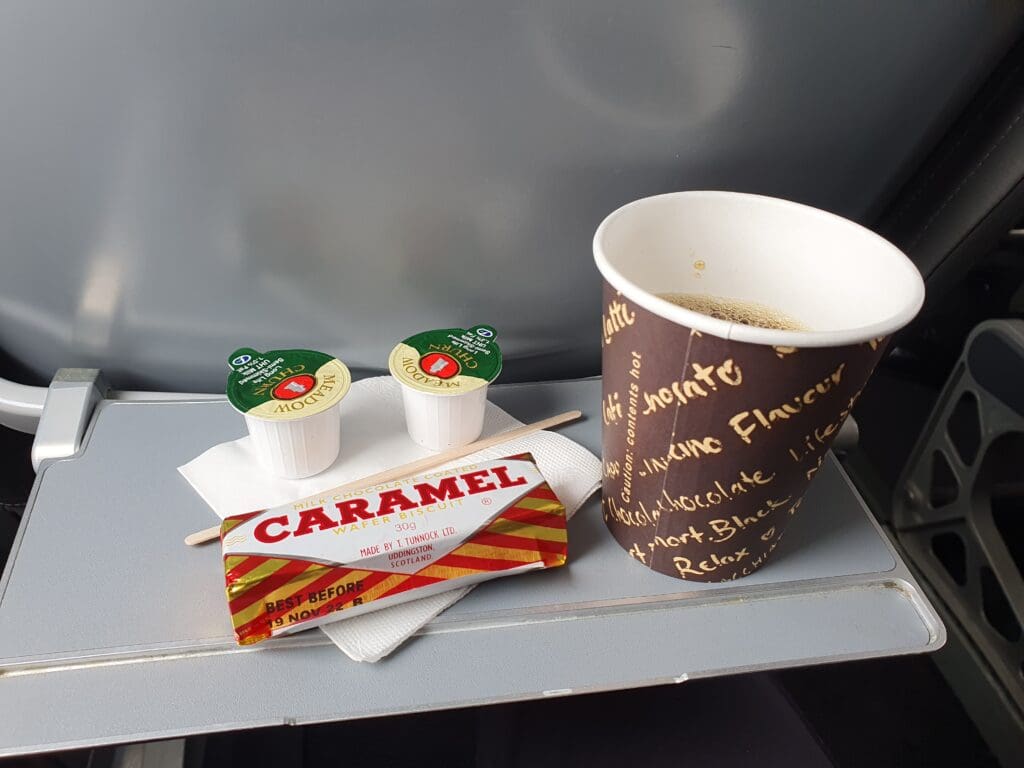
Once safely through the clouds and up in the blue skies, the seatbelt signs were extinguished and the flight attendant rolled out a small trolley from the forward galley, commencing the onboard service. Whilst this was my third flight onboard one of Loganair’s ‘mainline’ (i.e. Embraer or Saab operated) services, these flights had occurred in 2020 and 2021 before the airline’s reintroduction of their famous onboard service. Excited at what treats were in store on the ride down to Glasgow, the flight attendant made good progress and they journeyed through the cabin and reached my row at the rear of the Saab within around five minutes – just in time for a few gentle bumps. Opting for a coffee, this was poured into a paper cup and handed over to me with two pots of milk, a wooden stirrer and a serviette. Afterwards, I was invited to take a snack from the appropriate Scottish snack basket containing Tunnock caramel wafers and Walkers shortbread. Whilst this was by no means the most extensive inflight meal, this was better than can be expected on most domestic flights in the UK and I was certainly left with nothing to complain about regarding this. After completing this service, the flight attendant temporarily settled down in the rear row for a short break.
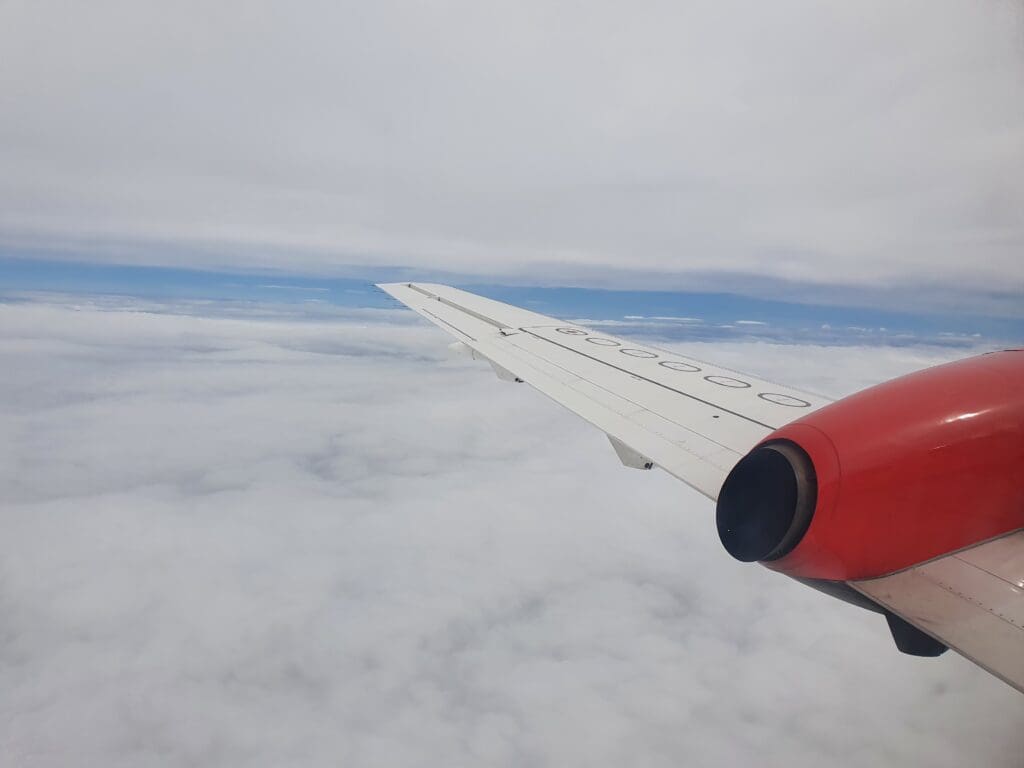
Whilst little could be seen during the first portion of the flight, after leaving Kirkwall the Saab had trundled southwards over South Ronaldsay and soon reached its cruising altitude of 15,000 feet. Upon leaving the Orkney Islands behind, the Saab crossed over the Pentland Firth, the short stretch of water that separates Orkney from Caithness. After reaching the mainland near John O’Groats, the Saab made its way down Caithness’ eastern coastline before crossing the Moray Firth. As the aircraft passed the city of Inverness, the cabin speakers came into life once more as the Lancashire accented First Officer commenced their long announcement that lasted for a few minutes. This began with a comprehensive overview of the route down to Glasgow, during which they noted that the skies would soon clear below and mentioned the sights that we could expect to see on both sides of the aircraft. Unfortunately, we would not be treated to a view of Scotland’s Cairngorms with the clouds not parting in time to see these. This ended with an update on the weather in Glasgow and a mention that we could expect to touch down in 25 minutes.
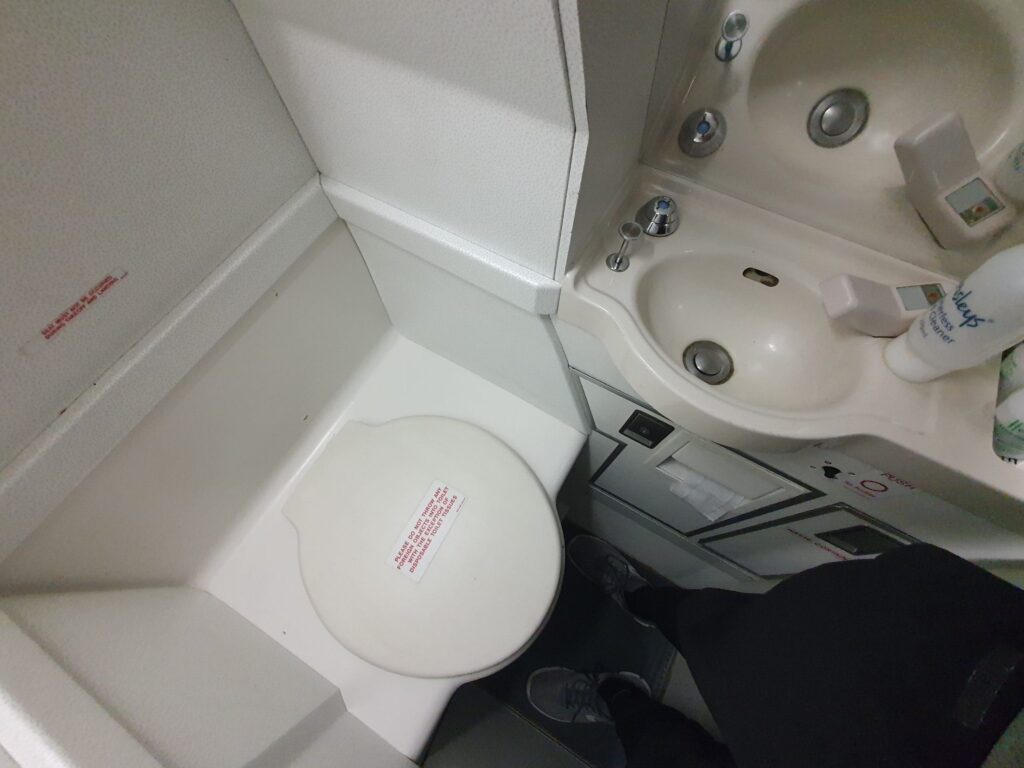
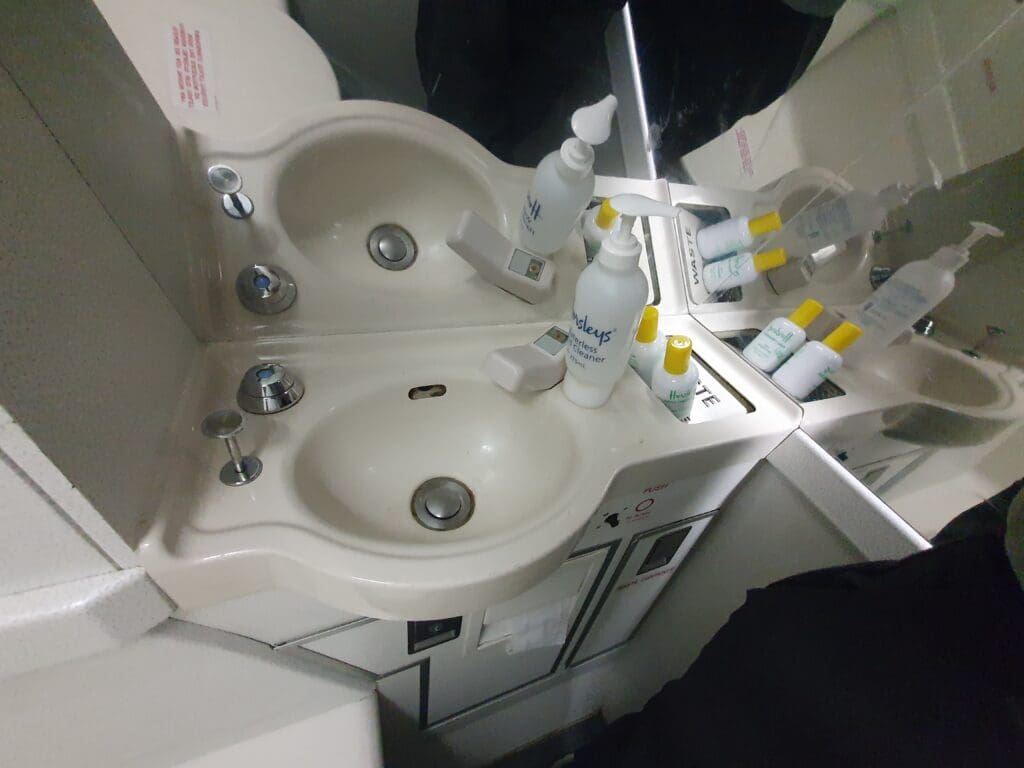
Once this announcement came to an end, I decided to make a quick trip to the toilet at the front of the cabin. Feeling slightly self-conscious as I journeyed through the aircraft I soon opened the door and performed some contortionism as I attempted to squeeze into this. Whilst slightly battered, I was pleased to find the toilet to be in a clean and tidy state, stocked with all the basics that you’d expect to find in an aircraft lavatory. However, as is sometimes the case on small-ish regional airliners, this did lack water although antibacterial gel was provided in place of soap and water.
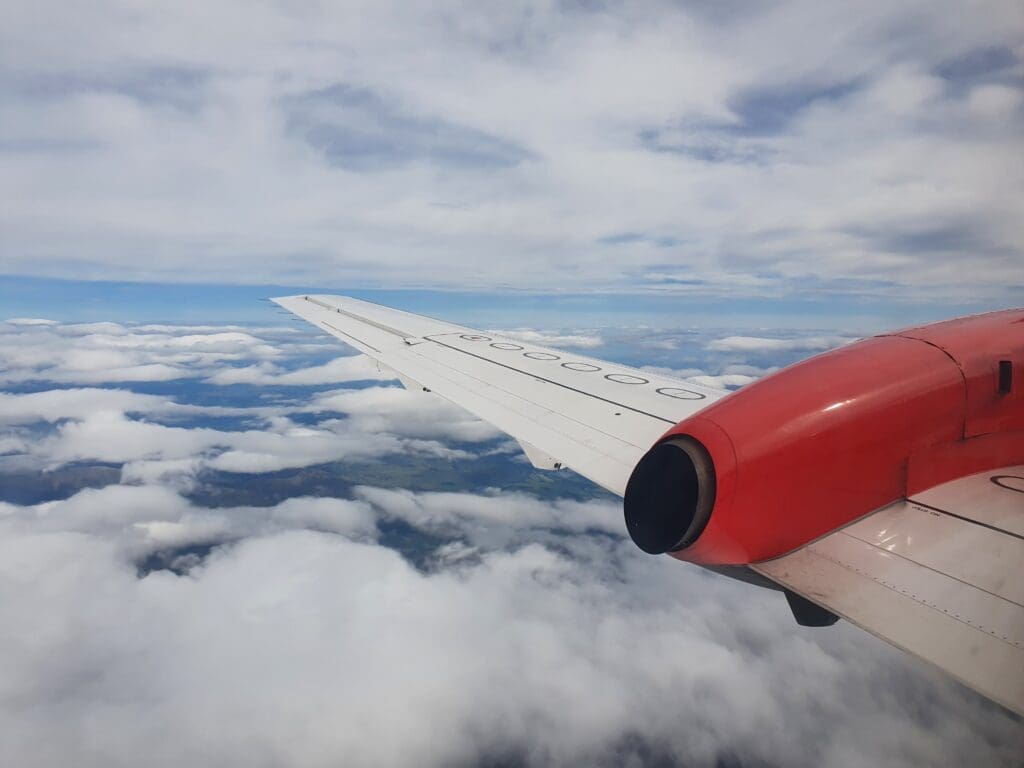
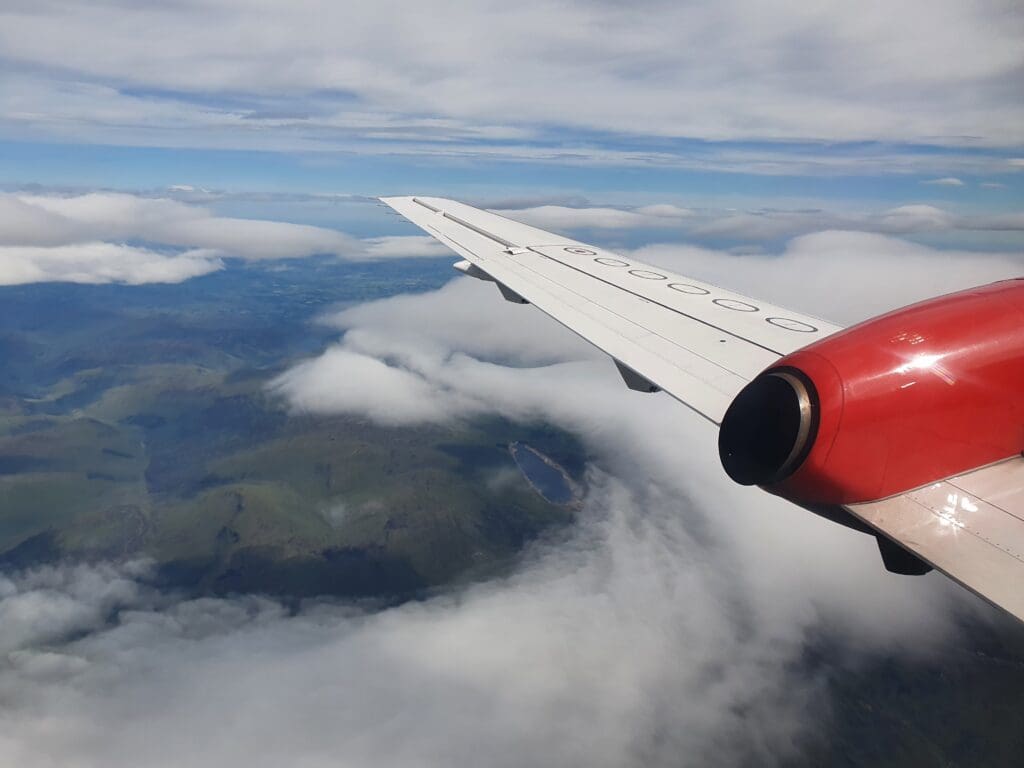
Following an uneventful trip, I returned to my seat just as the clouds began to part below. This initially revealed the very southern portion of the Cairngorms National Park around Blair Atholl and a few moments later the Saab could be felt commencing its descent. This was followed by the captain mentioning ‘twenty minutes to landing’ before the flight attendant made their pre-arrival announcement after which they passed through the cabin ensuring all was in position. As we descended, several lochs could be seen sitting in the picturesque Scottish countryside, the first being Loch Tummel followed by the larger Loch Tay and Loch Earn.
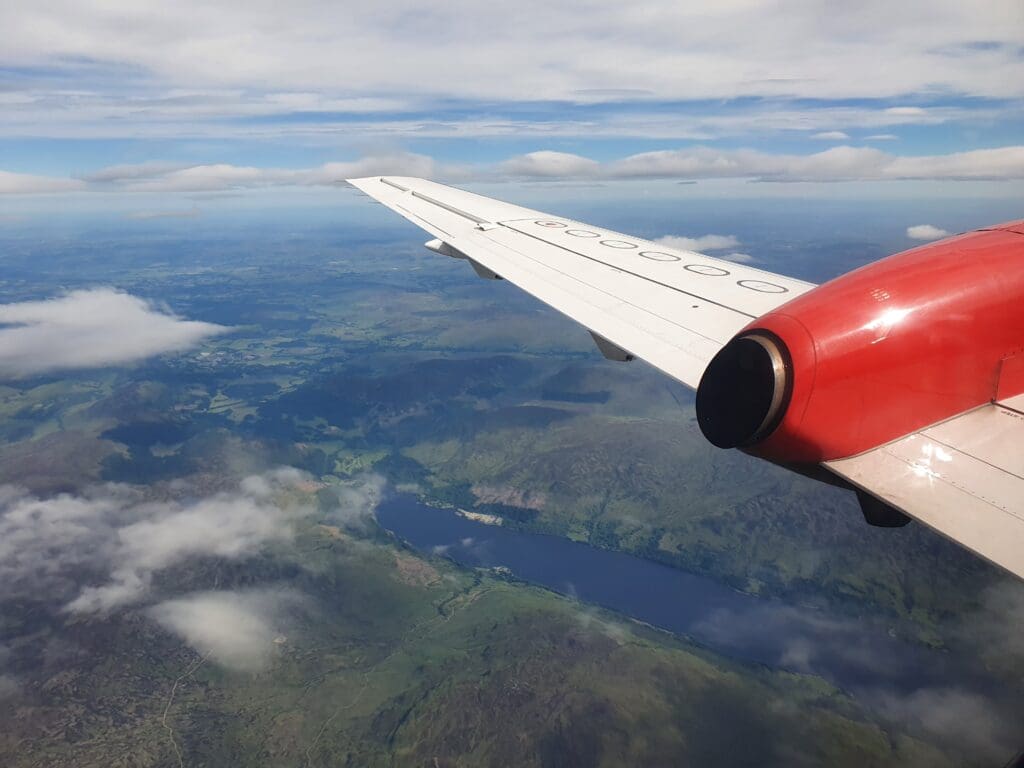
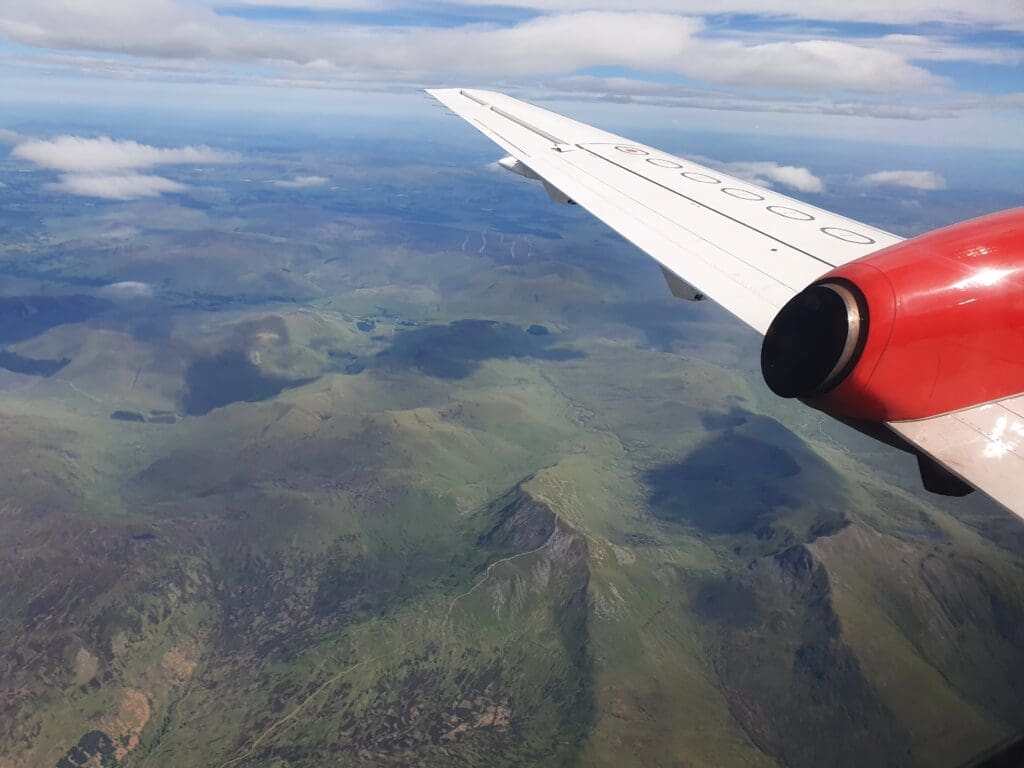
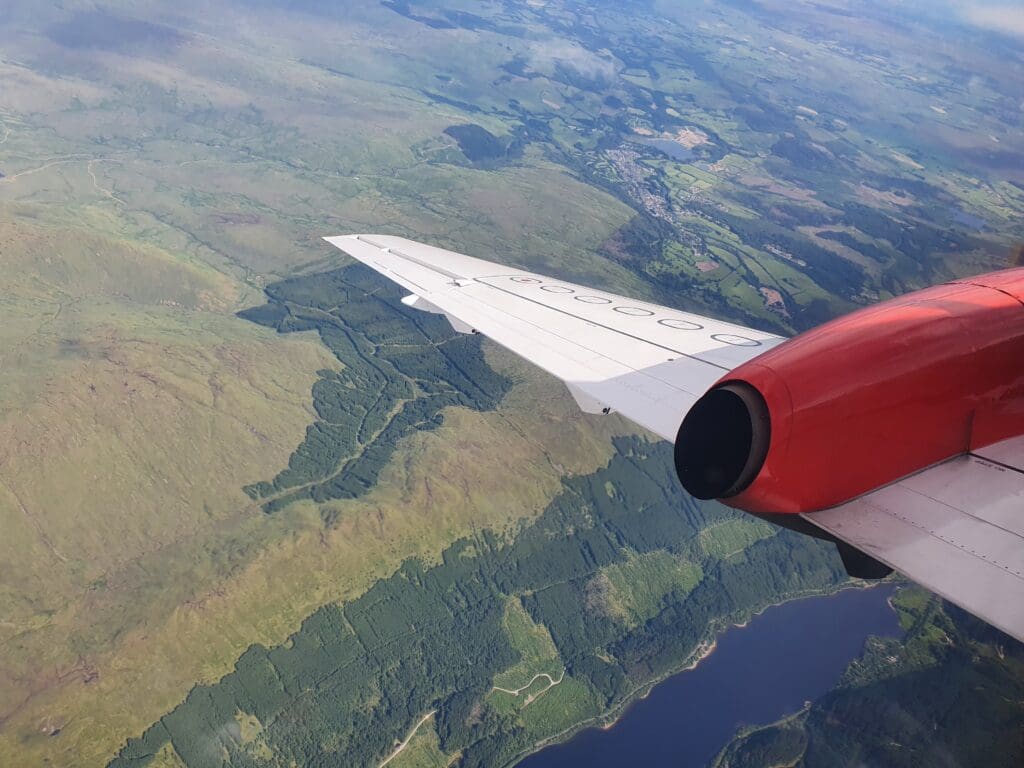
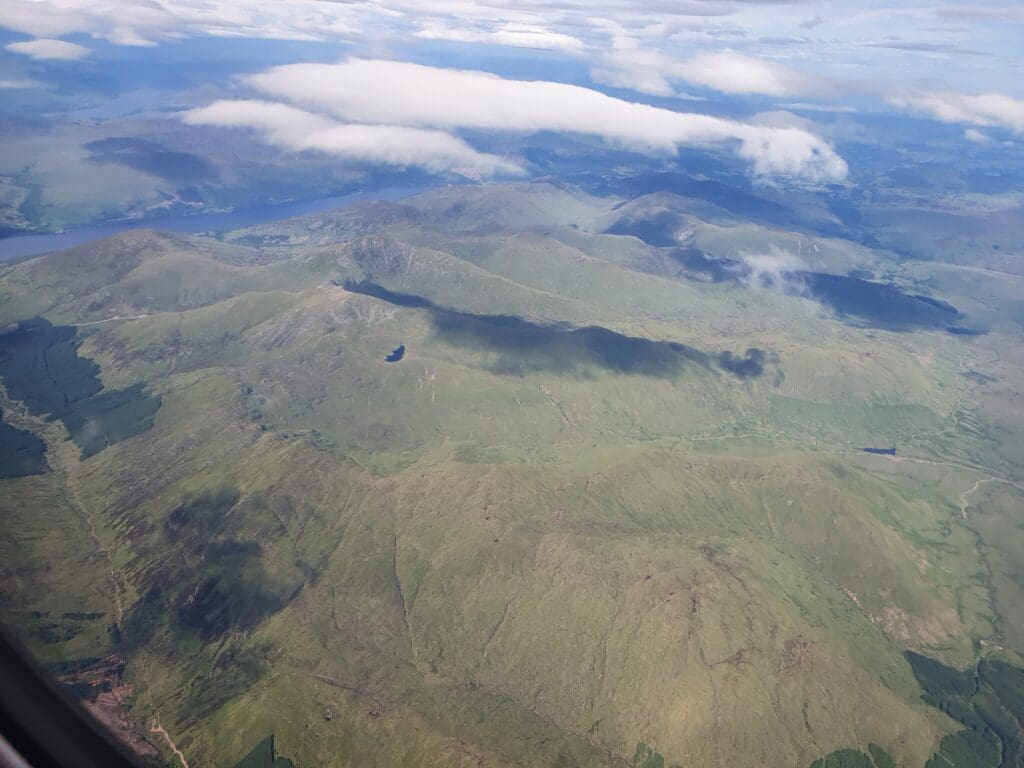
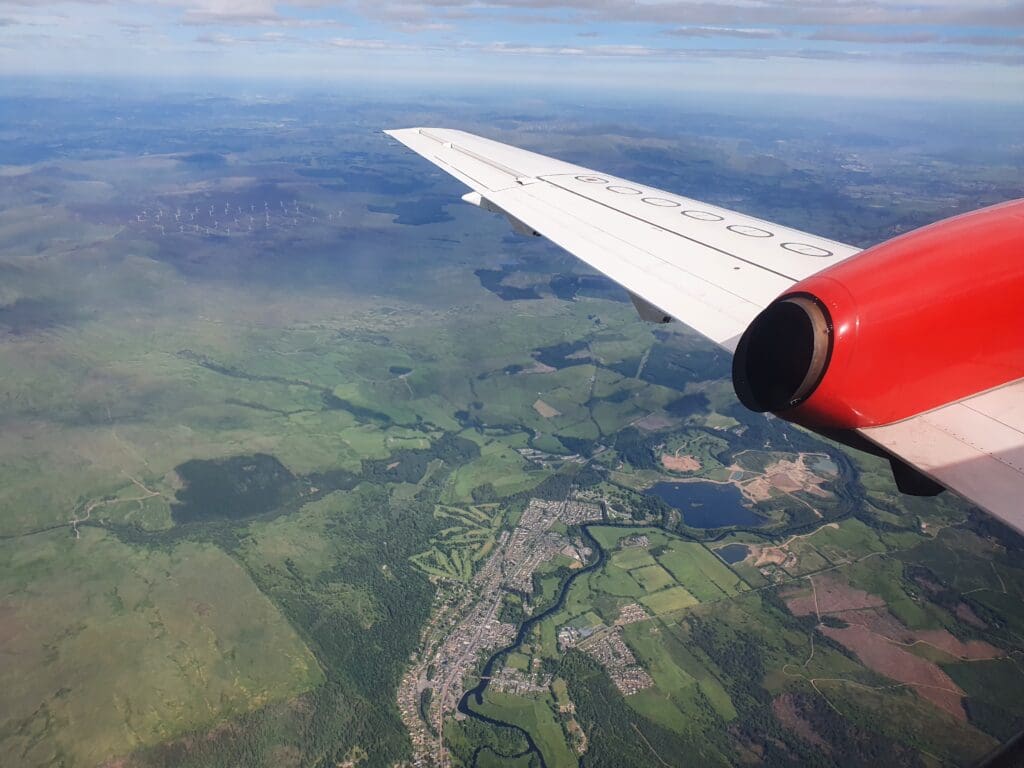
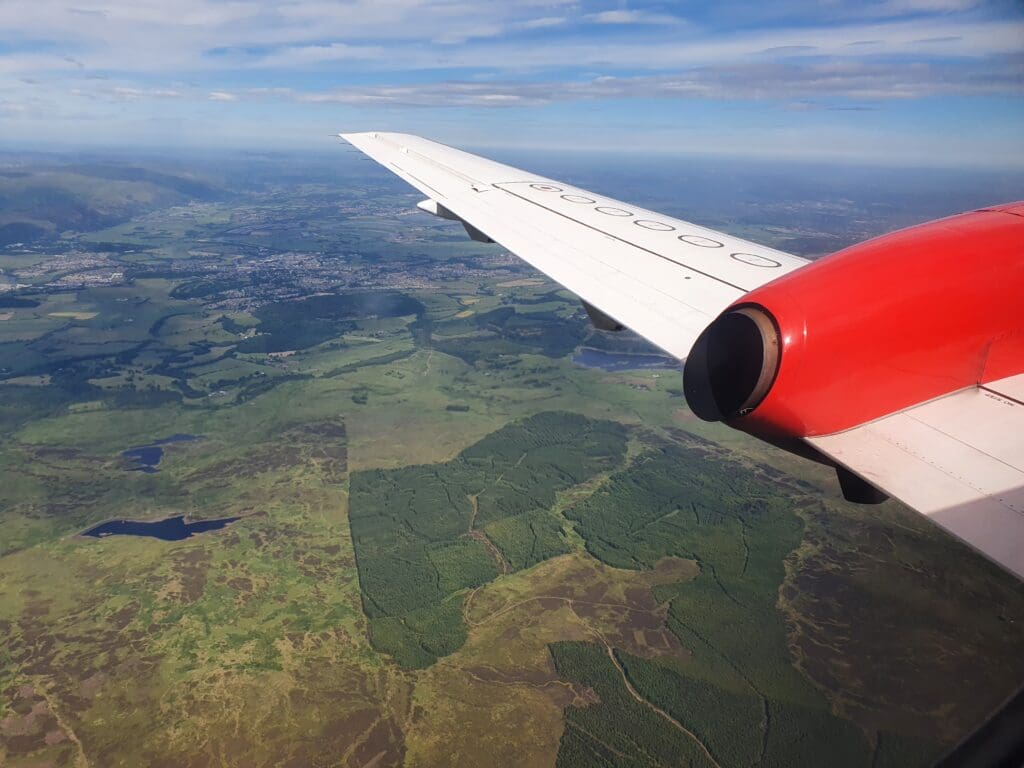
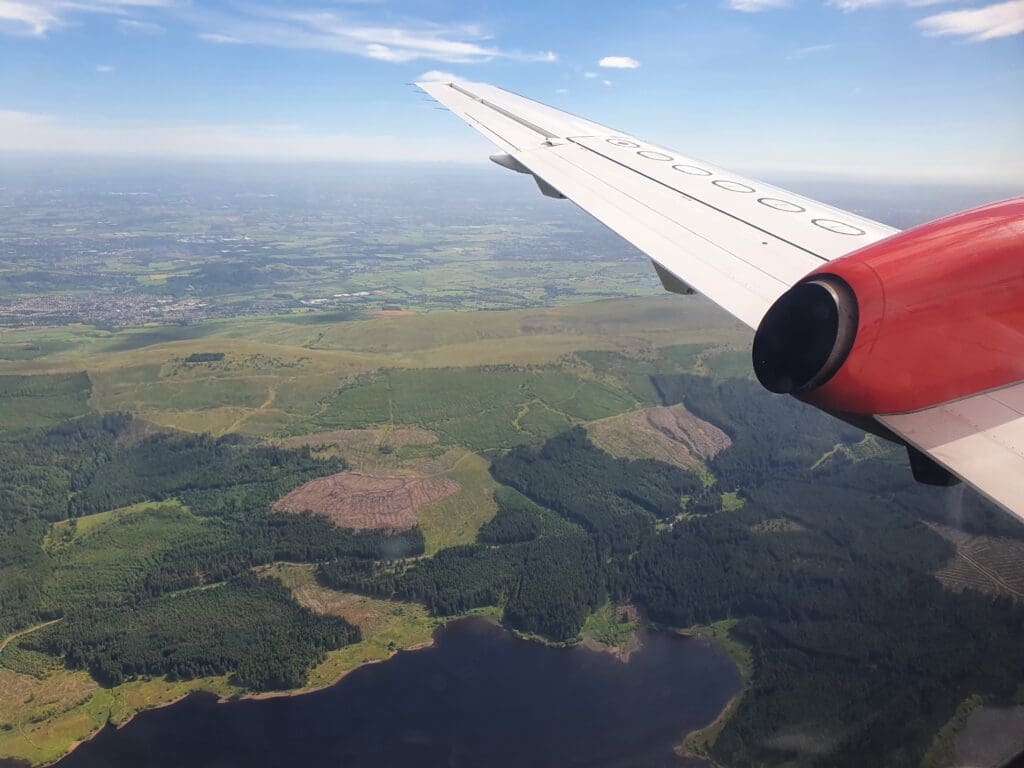
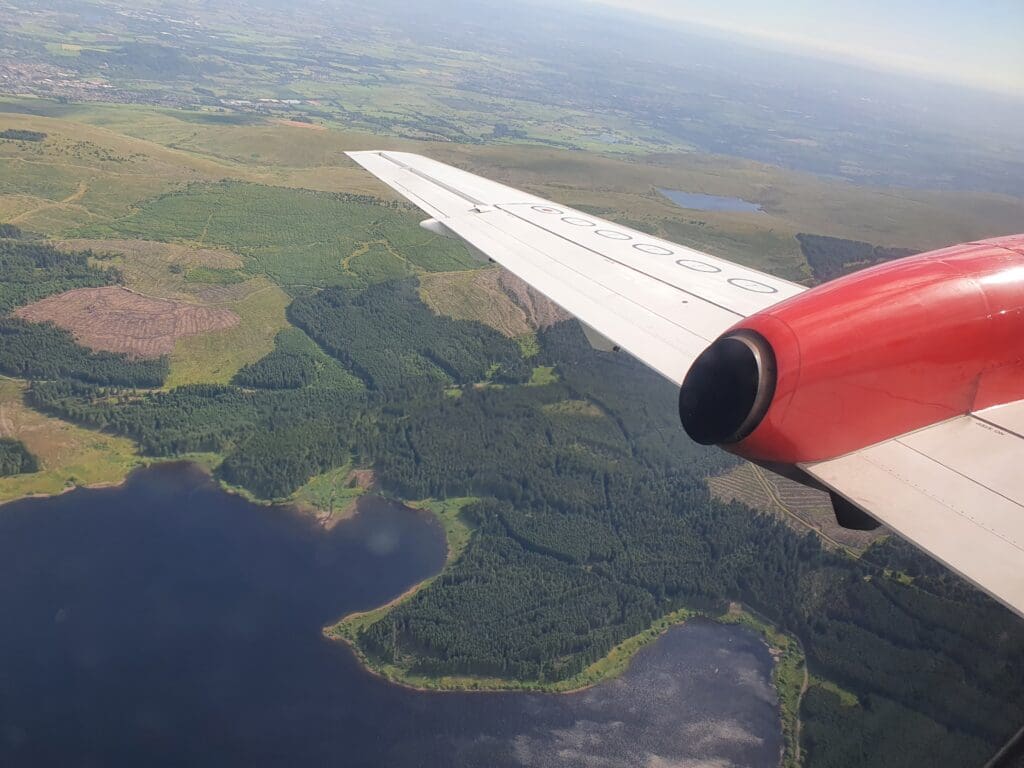
As the aircraft descended, the Saab swayed and shook a little as we crossed over the scenic peaks of the eastern end of Loch Lomond and the Trossachs National Park before we left this near the town of Callander. From there, the aircraft roughly followed the course of the winding River Forth sitting amid green fields before the scenery rose once again and transformed into the Campsie Fells. Having flown into Glasgow a fair number of times, approaching the airport from the north in good weather in one of my favourite approaches in the UK, and as we neared Scotland’s largest city my eyes were glued out the window and the passing hills a short distance below.
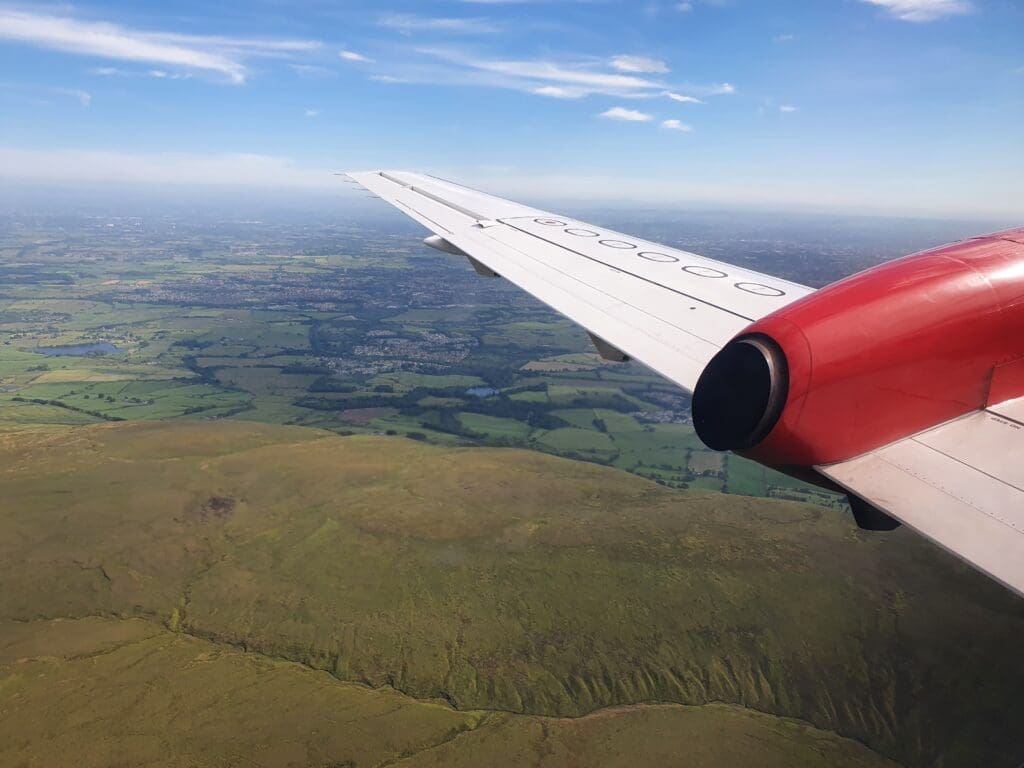
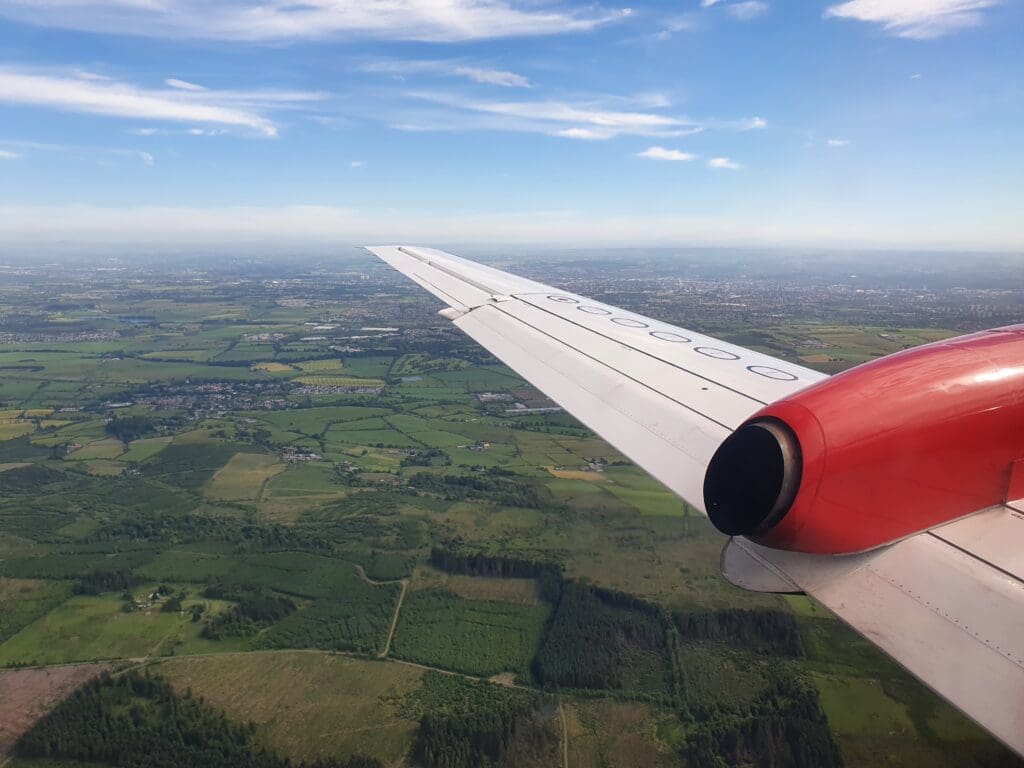
Following a couple of minutes of fells, the scenery once again sank downwards and soon the suburbs of Glasgow appeared beneath the aircraft, with the city centre visible in the distance. After passing over the East Dunbartonshire towns of Milngavie (pronounced mul-GHY) and Bearsden, the flaps and landing gear fell into position as we crossed over Glasgow’s western suburbs with the city centre visible in the distance. As often seems to be the case, at this point in the flight we were bounced about a fair bit. After crossing over the town of Yoker, made famous by Scottish comedian Limmy, the Saab reached Glagow’s famous River Clyde and sank down over this before passing the Renfrew Golf Club and River Cart.
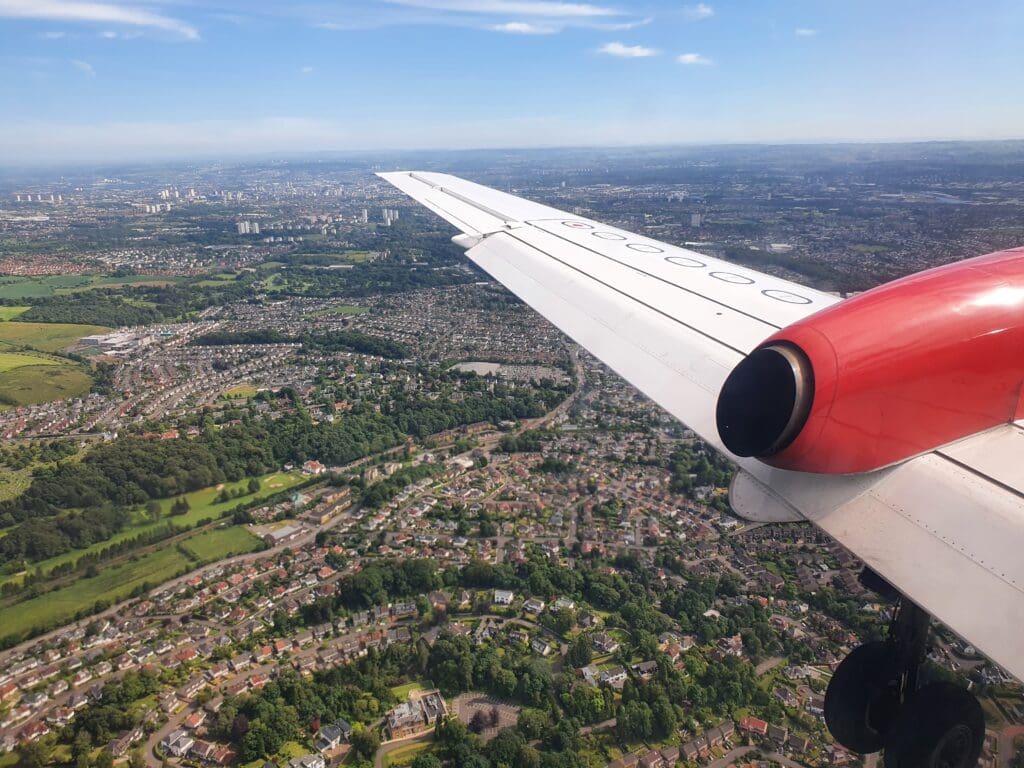
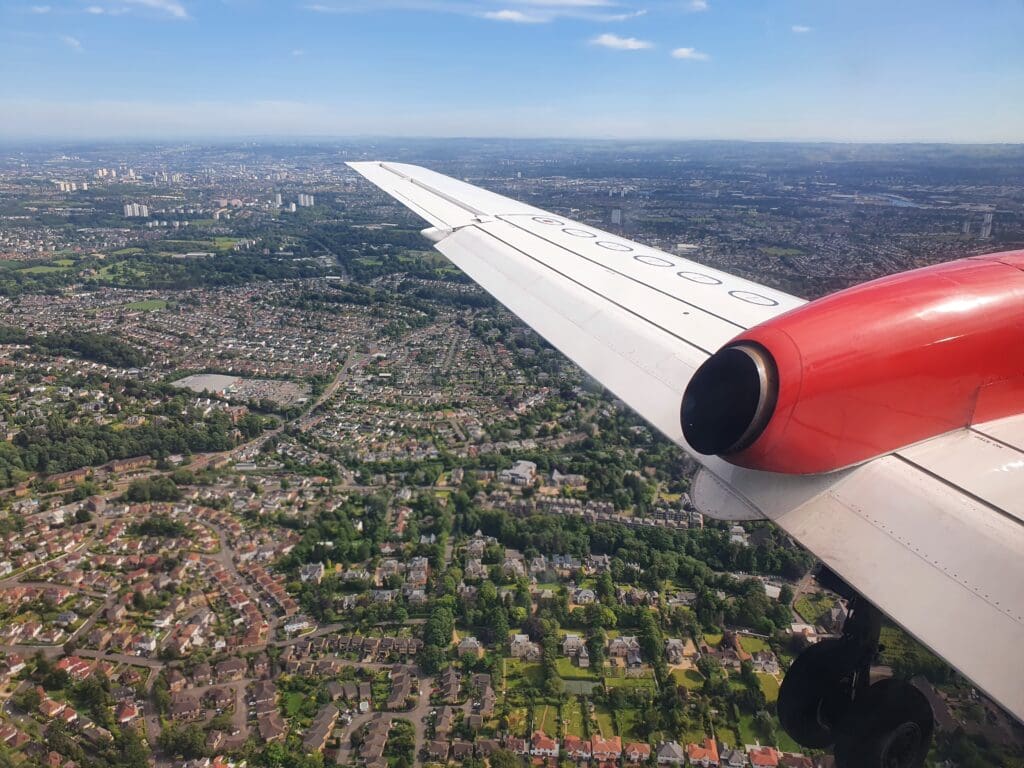
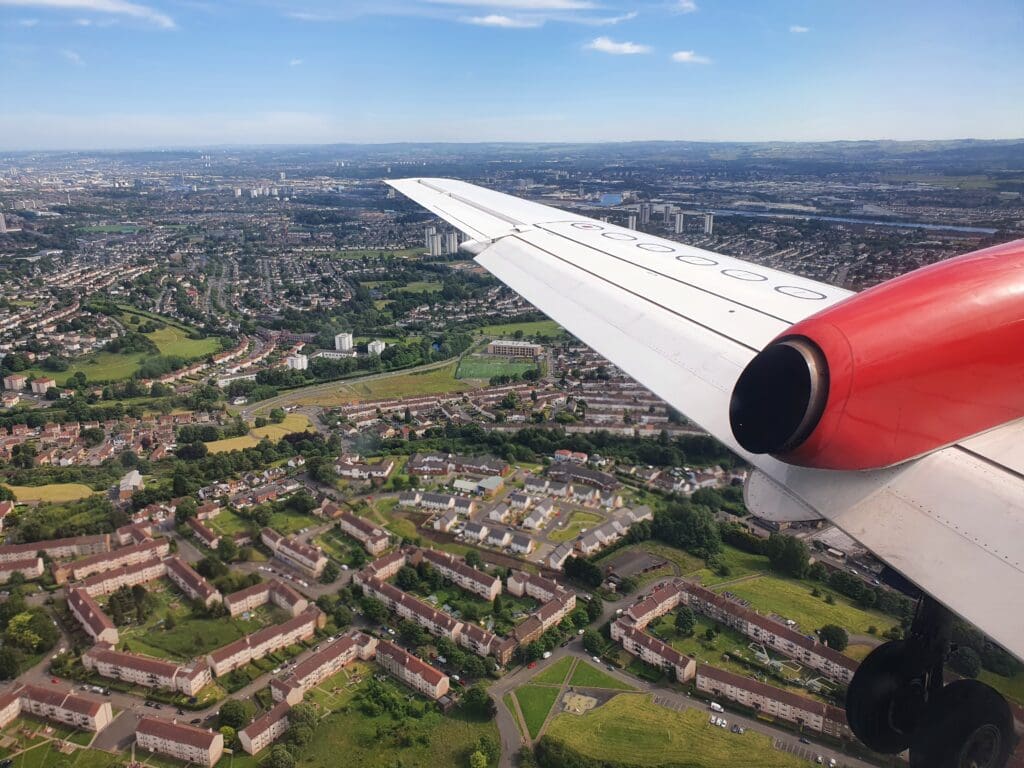
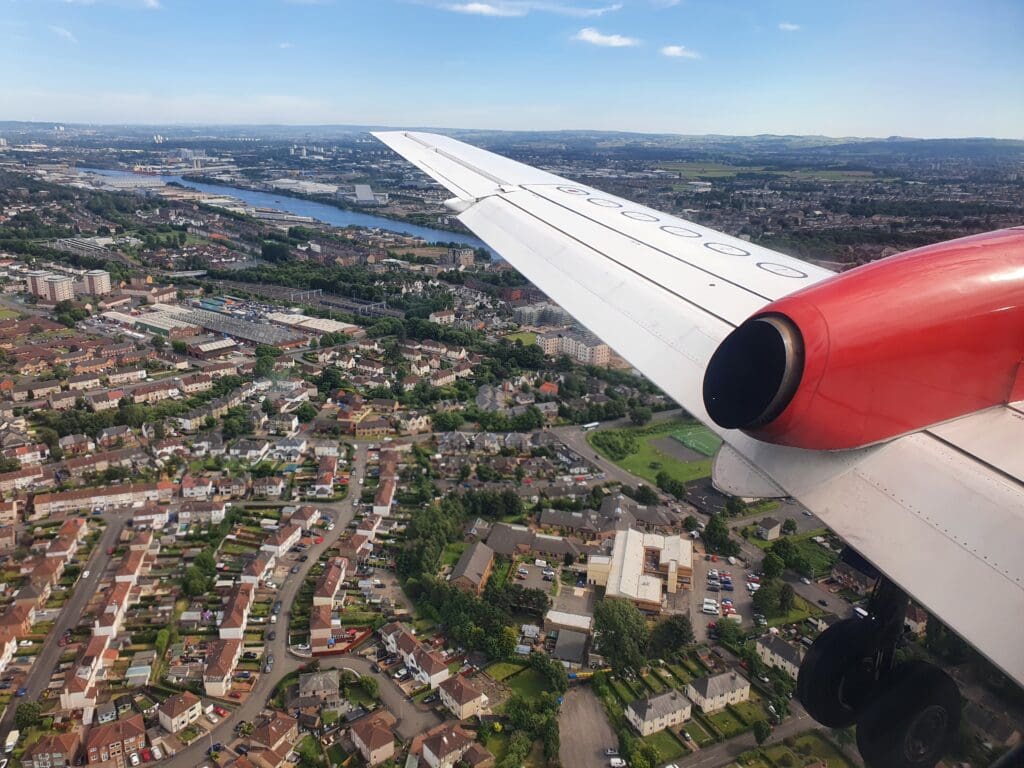
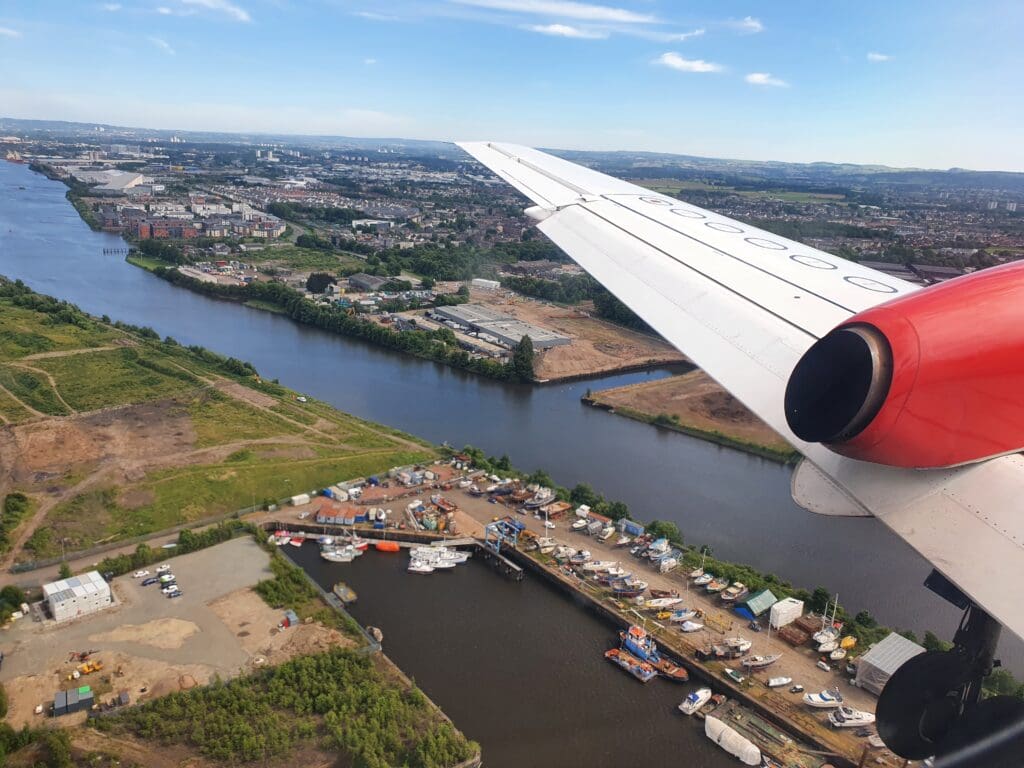
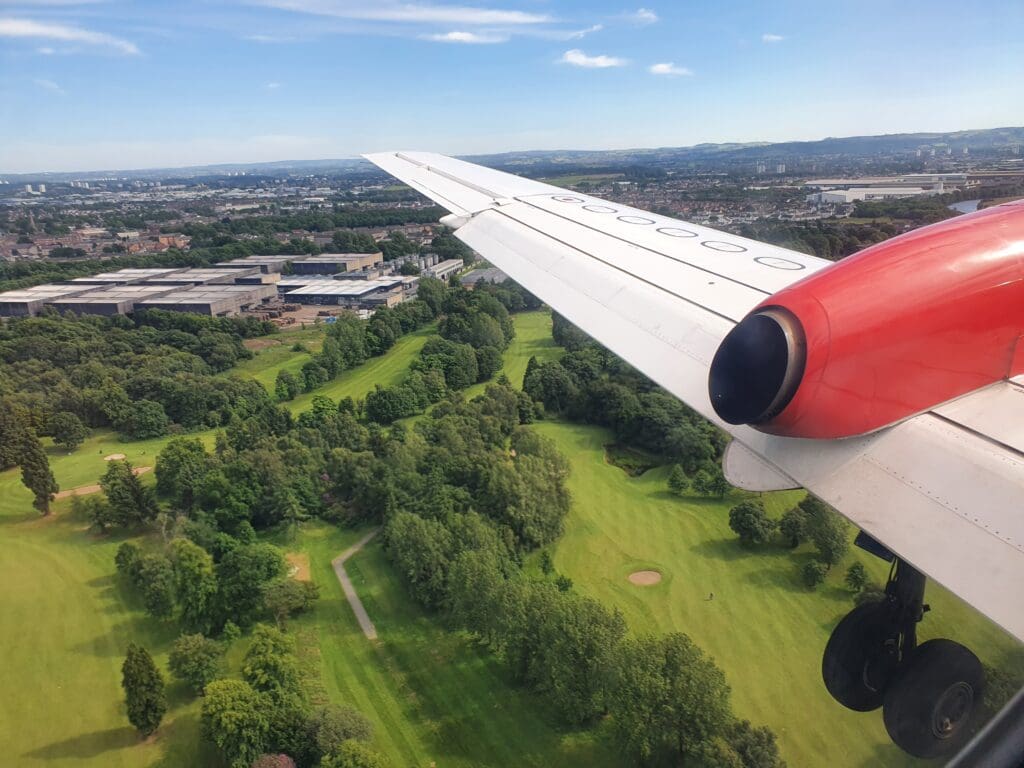
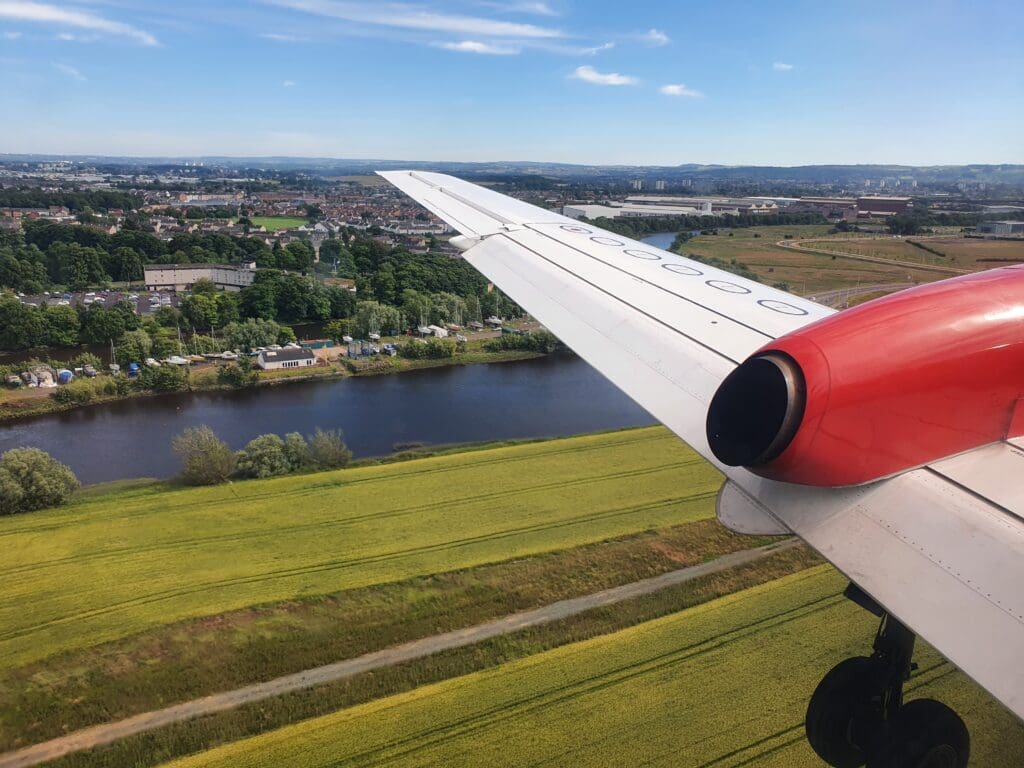
A grand total of 54 minutes after we had rocketed upwards into the cloudy Orcadian skies, at 1629 the Saab made a barely noticeable touchdown on Glasgow Airport’s Runway 23 – our gentle return to earth being slightly surprising given the fairly significant turbulence on approach. Once on the runway, likely seeking to minimise taxi time and with a TUI Boeing 737 MAX following a relatively short distance behind, the pilots braked rather harshly and the Saab soon slowed to a taxi speed. Sitting on the left-hand side of the aircraft, as the aircraft decelerated I was offered a view of the airport’s general aviation area where an American registered Cessna 425 and a TBM-940 could be seen, both resting having recently been ferried across the Atlantic. Other than this, two King Airs – one locally based and operating air ambulance services by Gama Aviation, and another based at Barrow-in-Furness and operating staff shuttles for BAE Systems could be seen.

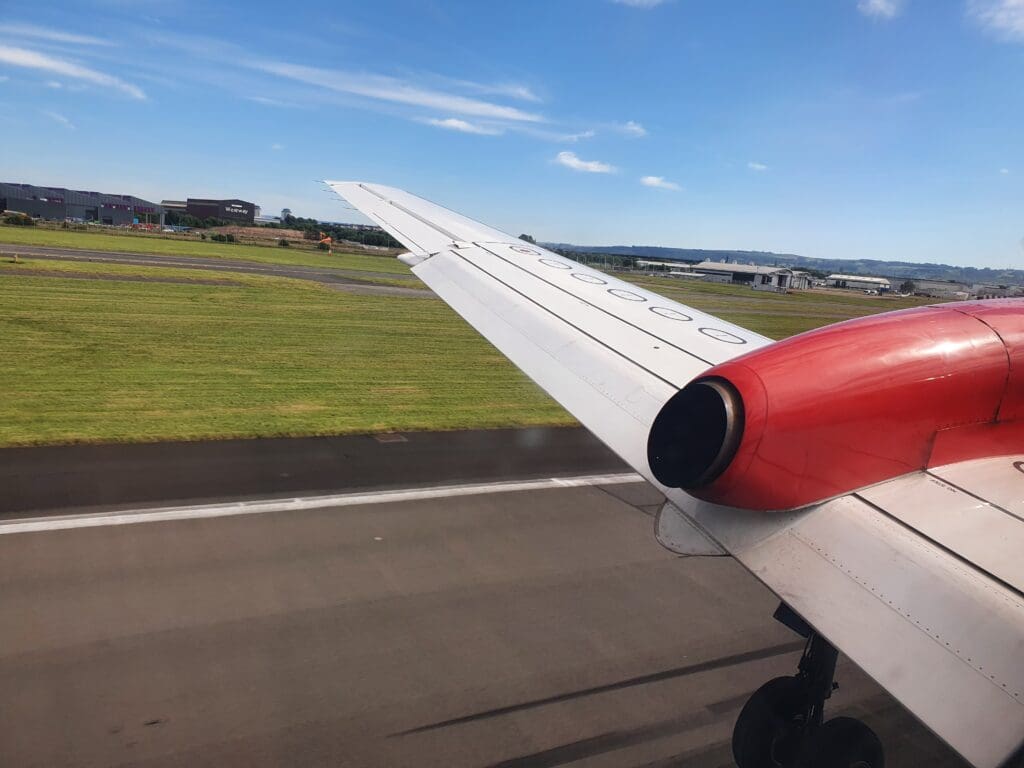
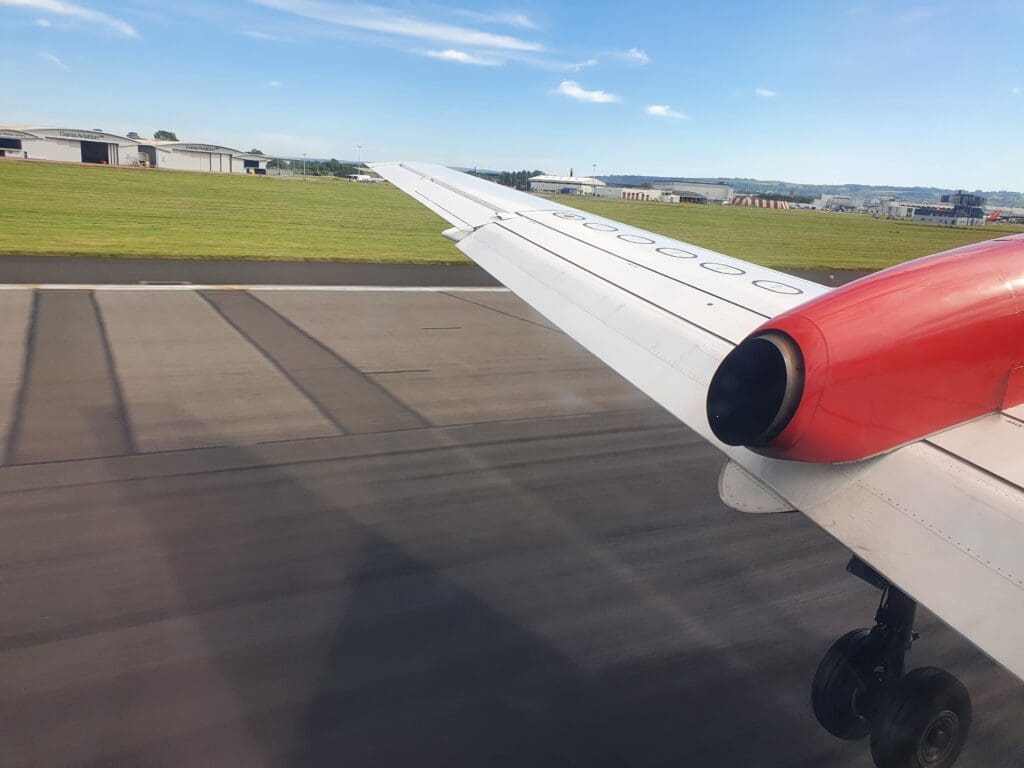

Soon vacating the runway, the aircraft then made its way past the terminal where a cluster of the usual airliners could be seen including Jet2 and TUI Airways Boeing 737-800s waiting to shuttle holidaymakers off to holiday destinations in mainland Europe, several locally based EasyJet and Loganair aircraft and a British Airways Airbus A320 waiting to be pushed back and commence its journey back down to London Heathrow. After passing the terminal, the aircraft turned right and trundled past British Airways’ Glasgow maintenance facility where an Airbus A319 and Airbus A321neo could be seen before cautiously turning into stand 1 and coming to a halt next to Loganair’s sole de Havilland Canada Twin Otter.
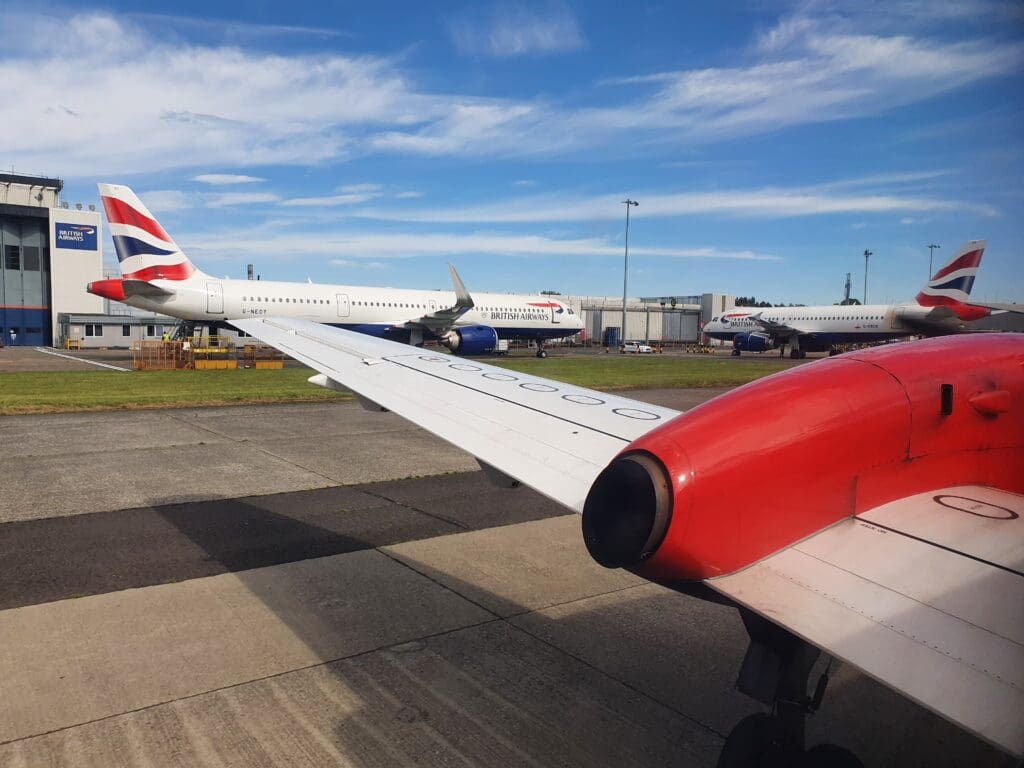
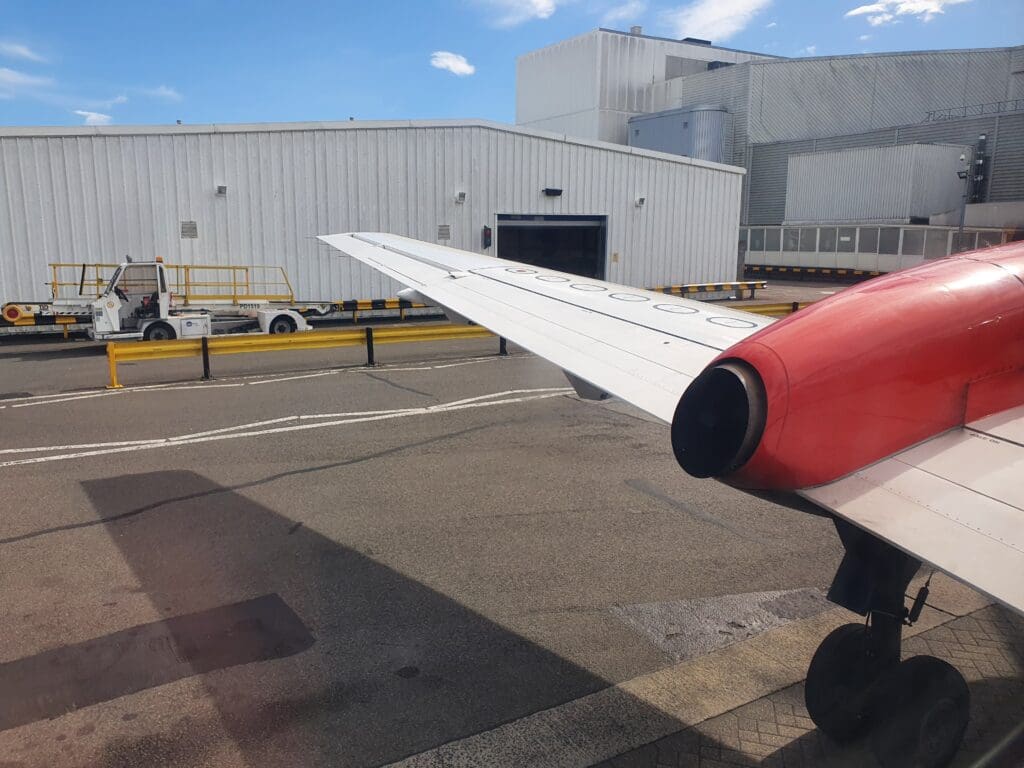
Once the aircraft came to a halt, many passengers stood up, perhaps in a rush to complete their journeys and fortunately for them, with no air stairs or ramp to be connected to the aircraft, disembarkation soon commenced. Seated at the rear of the aircraft and in no rush to exit the Saab, I waited for a while to allow those ahead to disembark before standing up and trundling through the mostly empty cabin. As I neared the front of the cabin, the flight attendant eagerly thanked me and wished me a nice evening, returning the thanks, I then cautiously made my way down the Saab 340’s built-in steps and headed onto the apron. Whilst the 19-degree temperature was far from tropical, after two days spent in the frigid Orkey air, this was a pleasant welcome back to the mainland. After snapping a couple of photos, I walked the short distance into the terminal and passed through the gate area where a cluster of passengers could be seen waiting to head off on the Saab’s next mission, a short hop across to Islay. With my flight to London City scheduled to head off at 1855 and not needing to collect any luggage, I had no reason to head to the landside area and so I stayed in the airside area.

Summary
All-in-all, once again I had a great experience with Loganair and was left with virtually nothing to complain about. Despite its size, I found their Saab 340 to be comfortable and relatively spacious whilst the flight attendant was highly friendly throughout the flight. Ultimately, this flight complimented my previous rides with Loganair and furthered my opinion as one of the best British airlines.