Remembering Norse Atlantic’s First UK Flight: Oslo to London Gatwick on the Boeing 787
Background
Airseven, Flyr and Great Dane Airlines; over the past few years several new Scandinavian airlines have taken to the skies, where, in spite of pandemic induced struggles, all except the latter remain. Following well over a year of preparations, in June 2022 Norse Atlantic Airways was added to this list, undertaking its first scheduled flight between Oslo and New York. Judging by brand identities, the calming blue and white tones of Norse Atlantic Airways appear to have little resemblance with the bold and brash bright red of Norway’s famous low cost carrier, Norwegian. Thus it may be difficult for many to conjure up any immediate linkages between the two carriers. However upon closer examination, some may suggest Norse Atlantic Airways to be a modest reincarnation of Norwegian’s Dreamliner operated long haul operations. Founded by three Bjørns – Bjørn Kise, Bjørn Kjos and Bjørn Tore Larsen, Kjos had established Norwegian in 1993 and served as its CEO until 2019 whilst Kise had previously worked on the board at the carrier. With the pandemic bringing an unfortunate and untimely close to Norwegian’s Dreamliner operations, some may suggest that Norse Atlantic is simply picking up where Norwegian left off. Not only is Norse Atlantic’s route map reminiscent of a scaled back version of Norwegian’s once relatively expansive transatlantic network, all of the carrier’s Dreamliners previously served with Norwegian.
Following Norse Atlantic’s first flight in June 2022, routes to Fort Lauderdale, Los Angeles and Orlando soon followed. Indeed, adding to the carrier’s linkages with Norwegian’s long haul operations, from the new airline’s inception Norse Atlantic expressed an interest in tapping into the lucrative market between the UK and US. As with Norwegian, who established Norwegian Air UK to meet regulatory requirements, Norse Atlantic opted to enact a similar measure, forming Norse Atlantic UK to operate services to and from Gatwick. However, Norse Atlantic opted to commence flights between the UK and the US with their Norwegian registered aircraft before the full establishment of their British subsidiary – the caveat to this being that all flights would commence in Oslo. To the delight of aviation enthusiasts for whom flying on a Dreamliner cheaply and easily within Europe is not often easy, the carrier enjoys the right to sell tickets on the comparatively short hop between London and Oslo. With tickets starting at bargain fares, upon hearing the news of this new route in May 2022, I snapped up a one-way ticket on the inaugural flight between Norway and the UK on the 12th of August 2022.
Booking
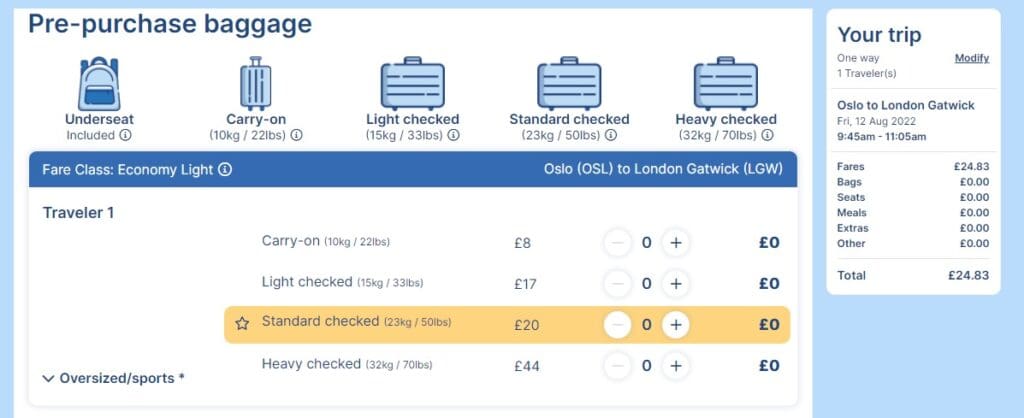
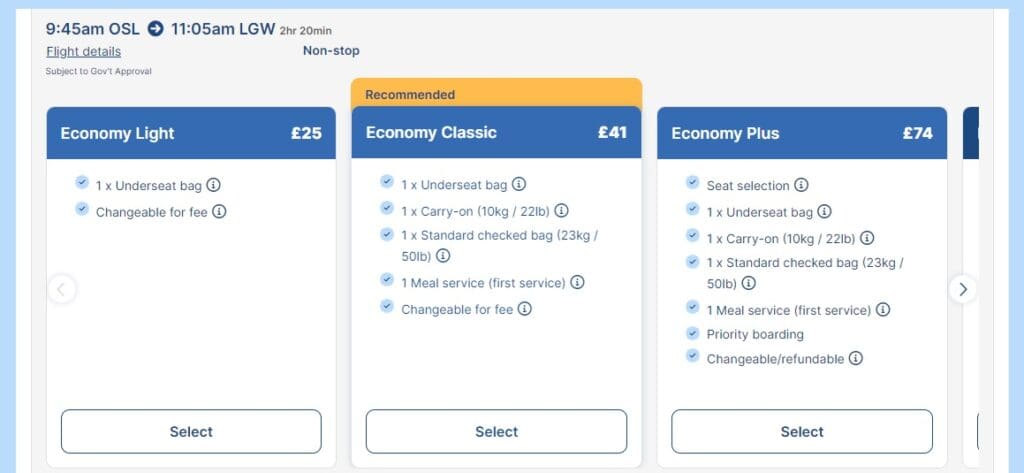
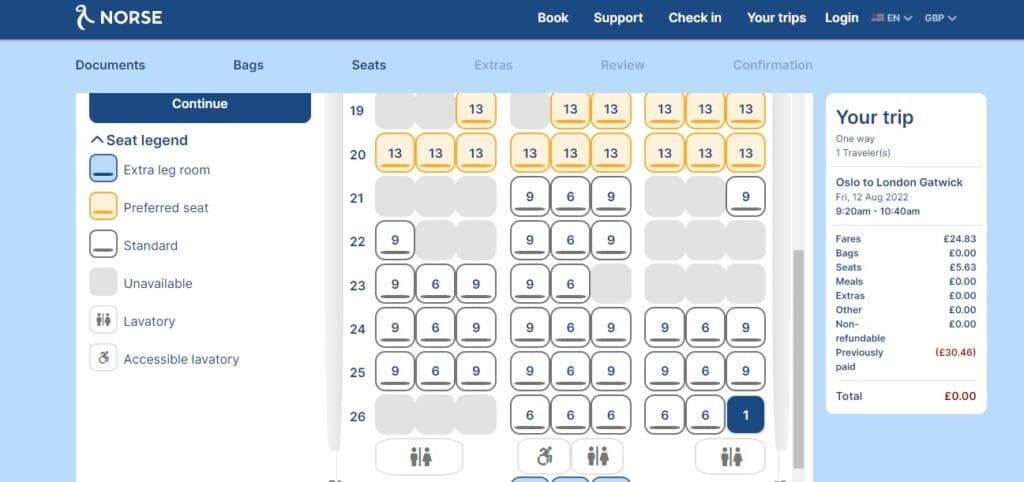
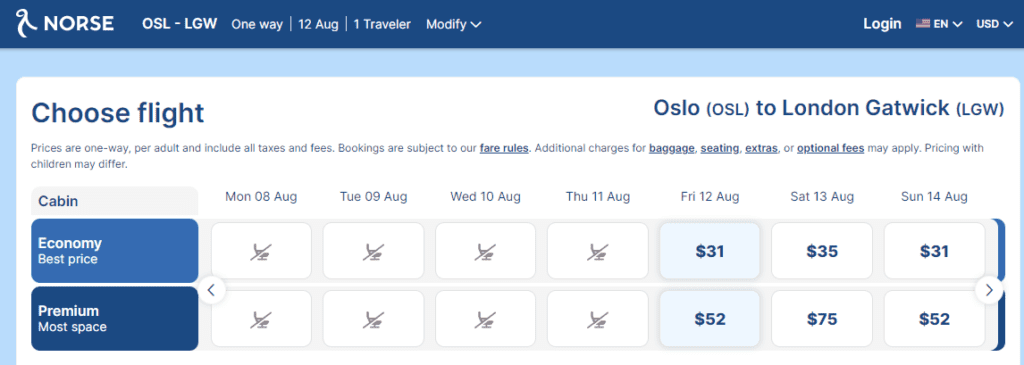
Upon touching down on Norse Atlantic Airways’ website, I was presented with a scrolling banner advertisement which promoted the carrier’s routes from its base in Oslo, as well as its newly announced Transatlantic one-way fares between London and New York for just £96! Beneath this, I entered all the relevant details into the flight search engine for the carrier’s first day of flights to the UK and was presented with two incredibly low base fares. That day, a one-way ticket to London would set me back £25 in Economy and just £42 in Premium. Despite the superb value of the latter, given the primary theme of my blog, I opted to make the trip over to the UK in Economy and upon selecting this, I was then presented with three different Economy fares: Light, Classic and Plus, priced at £25, £41 and £74 respectively. Clicking on the cheapest fare, I was then given the option to add additional luggage for between £8 and £44, as well as pre-selecting a seat with prices for these ranging from £6 to £13. This seat map revealed that, as I had expected, the cabin configuration was identical to that of Norwegian’s Dreamliners. Wanting to guarantee a window seat, I selected Seat 26J in the rearmost row of the forward Economy cabin for £6. Whilst Norse Atlantic does allow passengers to pre-select meals on their flights, this could not be done on the short hop to London. Next up were additional fees for airport check-in, priority check-in, priority boarding and carbon offset. Skipping past these I then made a quick and easy payment before receiving my ticket via email.
Once done, I then booked a cheap one-way Ryanair fare for the previous afternoon from Stansted to Oslo and an Airbnb near the airport, before I was all set for my short Norwegian adventure. With three days to go until departure, I received an email from Norse Atlantic advising me that there had been a slight change to my flight times, although strangely this email did not list the new flight times and simply requested me to log in and check these. Fortunately, with my departure time moved forward by 25 minutes, this would not prove to be a major issue. This email was then followed by another two days before departure which provided me with the exact new arrival and departure times of the flight, meanwhile, I received another email exactly 24 hours prior to departure advising me that I could now check-in. Seeing no reason not to, at this time I opened up Norse Atlantic Airways’ website and entered my passport details. Once this had been done, I was then taken to a page where I could select a new seat for a fee – at this time, the seat map still had plenty of vacant seats however with most passengers presumably still to check in, I was not particularly confident that the aircraft would remain empty. Having already selected Seat 26J, I then continued onwards where I had the ability to add luggage or additional services such as airport check-in, priority boarding and security fastrack. However, skipping past these I was then presented with my boarding pass which I saved as a PDF before emailing this over to myself.
The Journey
With the summer 2022 travel season having been synonymous with long queues, not wanting to miss out on any inaugural flight festivities, that morning I aimed to be at Oslo Gardermoen Airport a total of three hours before departure. Fortunately, having spent the evening at an Airbnb in the nearby town of Jessheim, getting to the airport at 0620 would not prove to be overly difficult. After examining the local bus schedules, I set my alarm for 0510 to catch a bus to the airport at 0604. However, following a short night’s sleep, I awoke automatically at 0400. Unable to drift off back to sleep, I decided to get up, have a quick shower and pack the last of my things before tidying up. Once I had completed these tasks, I left the modern apartment that I had called home where I had been hosted by a senior Scandinavian Airlines Purser before making my way out into the refreshing, pure and pine-scented Norwegian air.
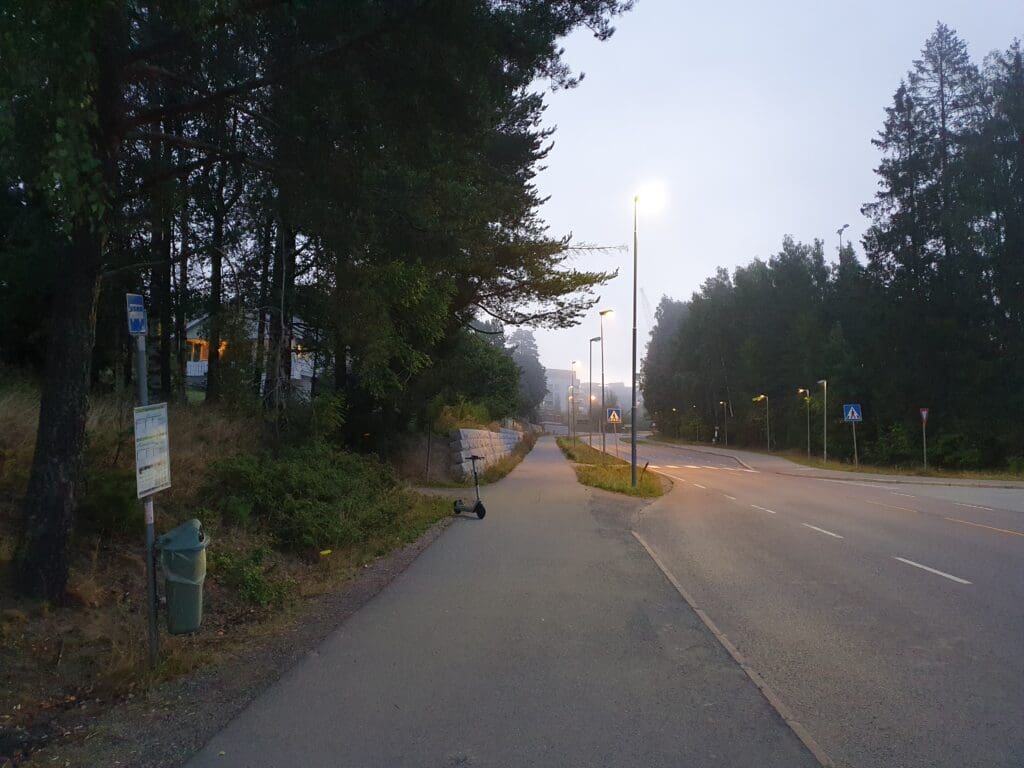
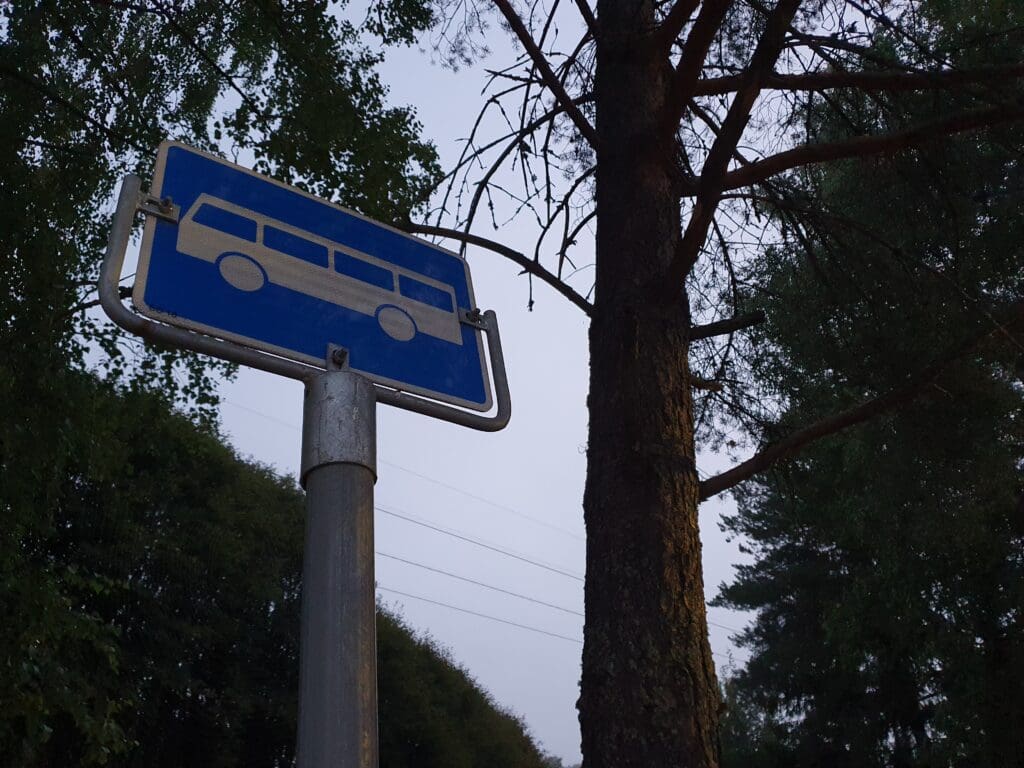
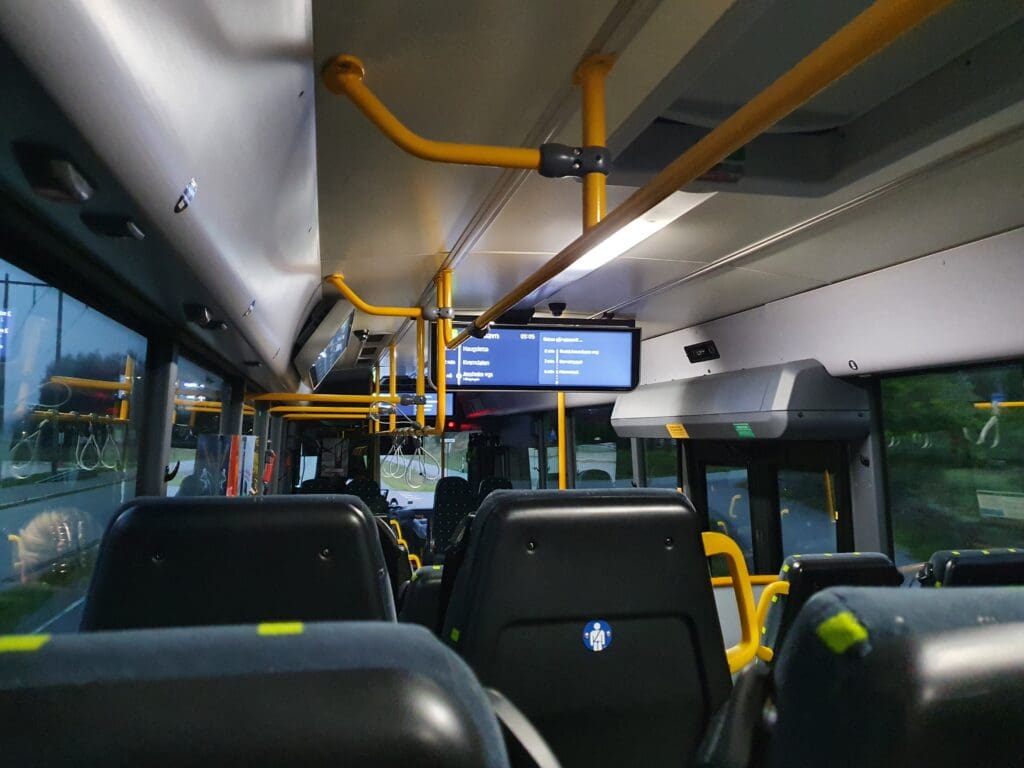
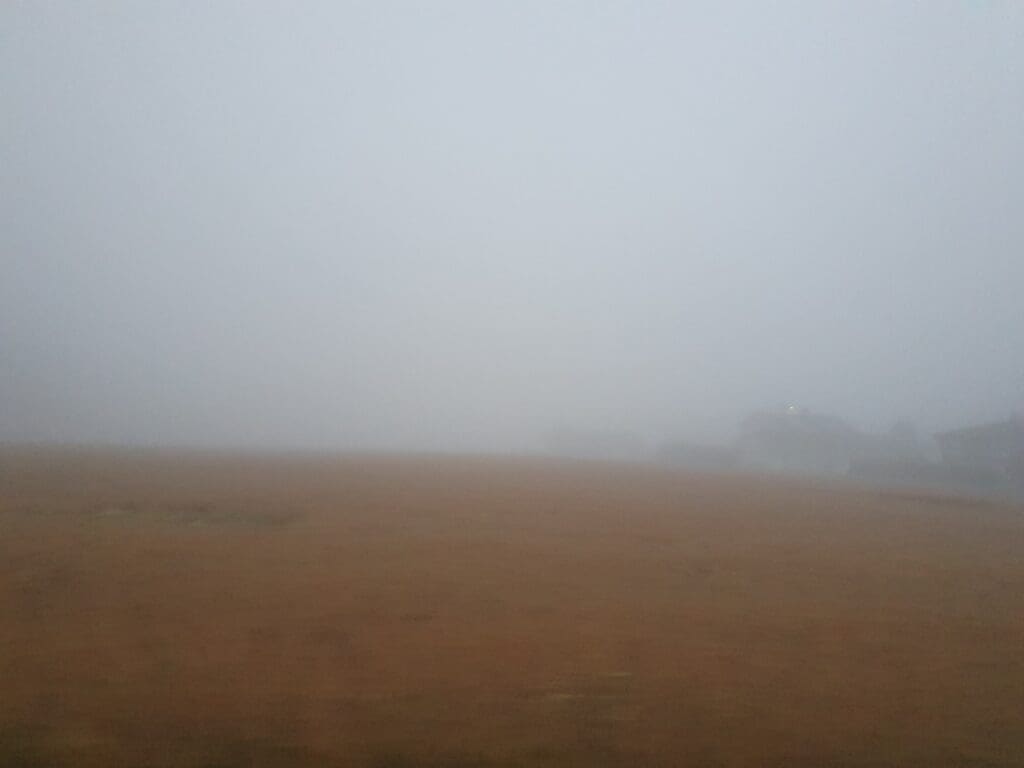
Had money been no object, that morning I would not have hesitated to catch a taxi to the airport – with Google Maps informing me that the journey would take no longer than ten minutes. However, not wanting to succumb to extortionate Norwegian prices on my measly British wage, that morning I settled for catching the bus. Following a 10-minute trundle through the quiet and peaceful misty morning streets of Jessheim I arrived at the bus stop with about six minutes to spare until the bus’ scheduled departure time. Having purchased a ticket via the Ruter app (Ruter being Oslo’s public transport authority), this had set me back a total of 39Kr (£3.36 as of August 2022) although an additional charge of 20Kr would have been charged on top of this had I wished to purchase my ticket on the bus. Reminding me that I was not in the UK, not too much waiting was required with a green coloured bus appearing right on time at 0504. Joining a load of mostly airport and airline staff. Once onboard, this journeyed off through the mist-covered fields that surround the airport.
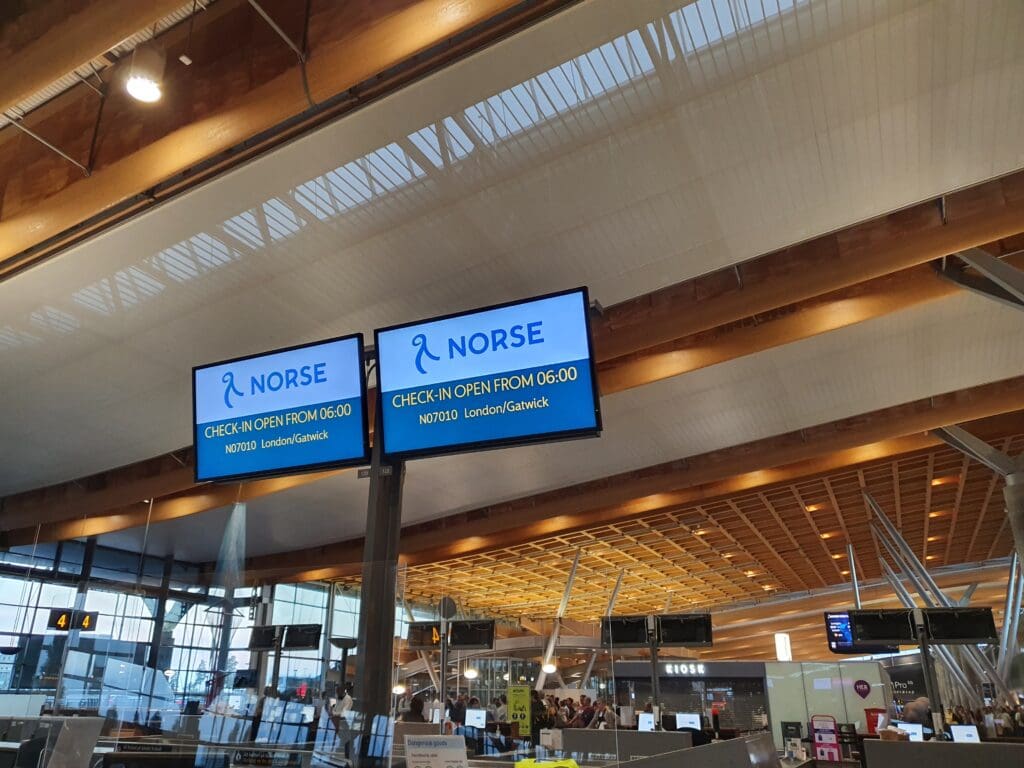
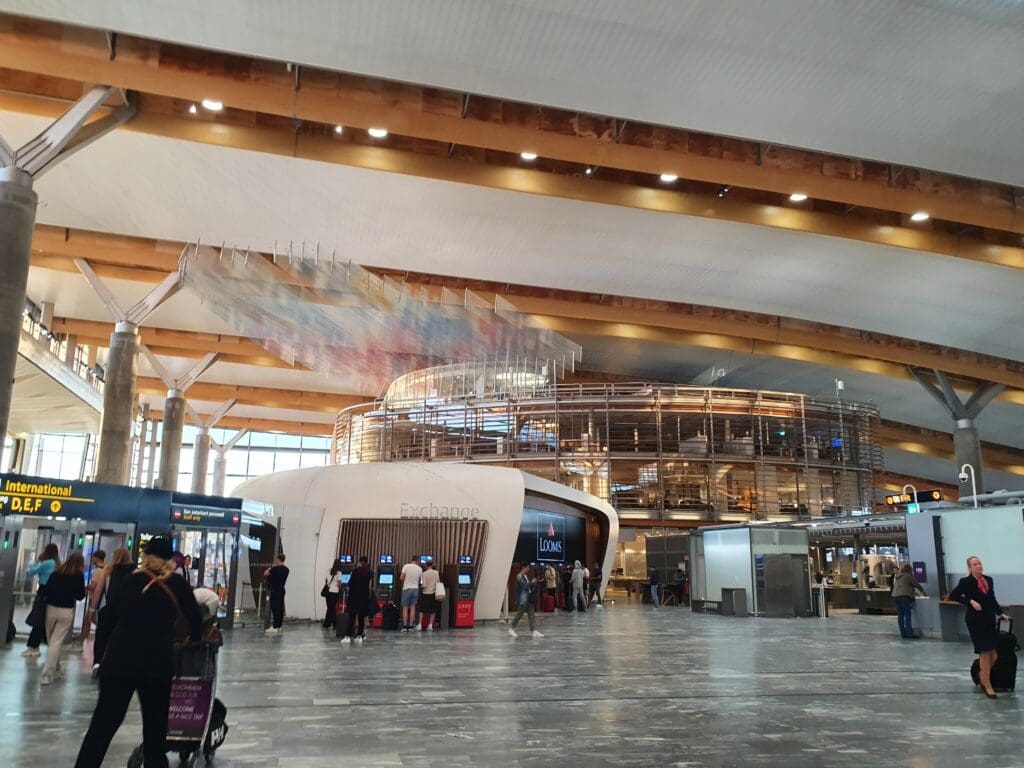
Following a 14-minute journey, Oslo Airport’s modern terminal appeared and we soon came to a halt near the doors to the terminal’s ground floor arrivals hall. Once off the bus, I headed inside where, in need of my first coffee of the day, I made a beeline to the local 7-Eleven. There I parted with the pricey sum of 63Kr (around £5.20) for a coffee and some chocolate for a combined total of 63Kr. As I sipped this, I made my way upstairs to the terminal’s large, modern and spacious check-in hall. Thanks to Oslo’s early morning rush of departures to destinations across Europe, this appeared to be rather busy with plenty of families jetting off on early morning holiday flights to the Mediterranean as well as couples heading away for long weekends. Still needing to finish my coffee, I wandered around the check-in hall for a few minutes and ended up at Norse Atlantic’s check-in counters. With the carrier’s first flight of the day being its 0920 service to Gatwick, and with no flight after this until 1150, unsurprisingly these were yet to open. Seeing as I had managed to check-in online, once I had finished my coffee I saw no point in waiting around and made my way over to the security area, located in the centre of the check-in hall.
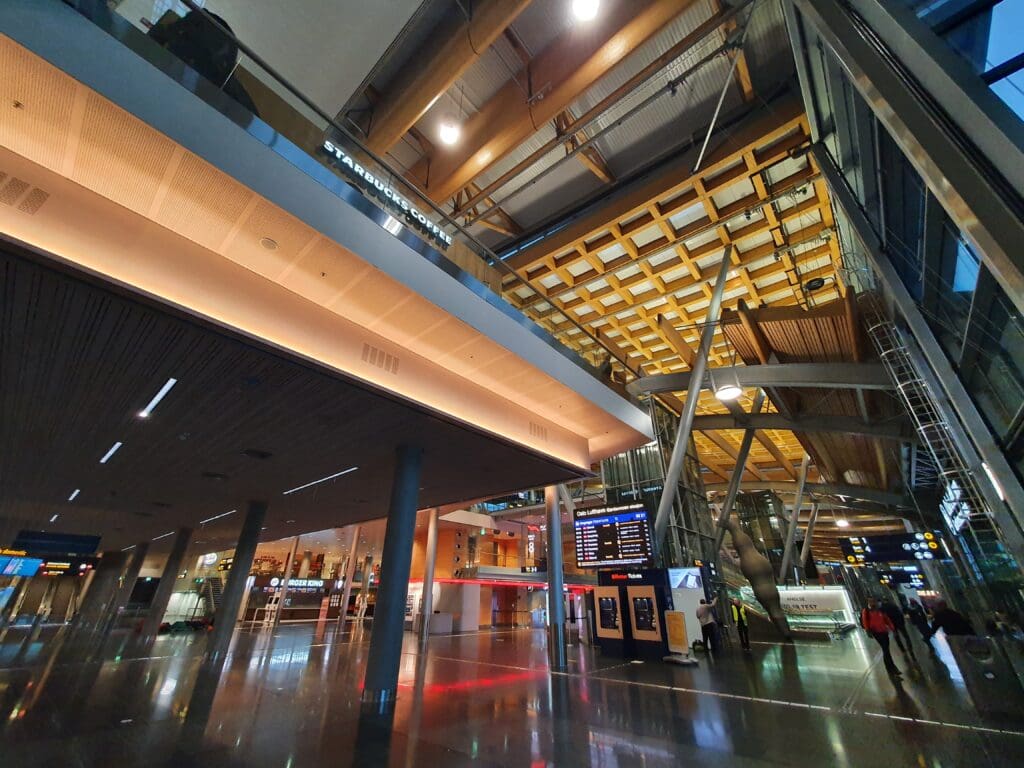
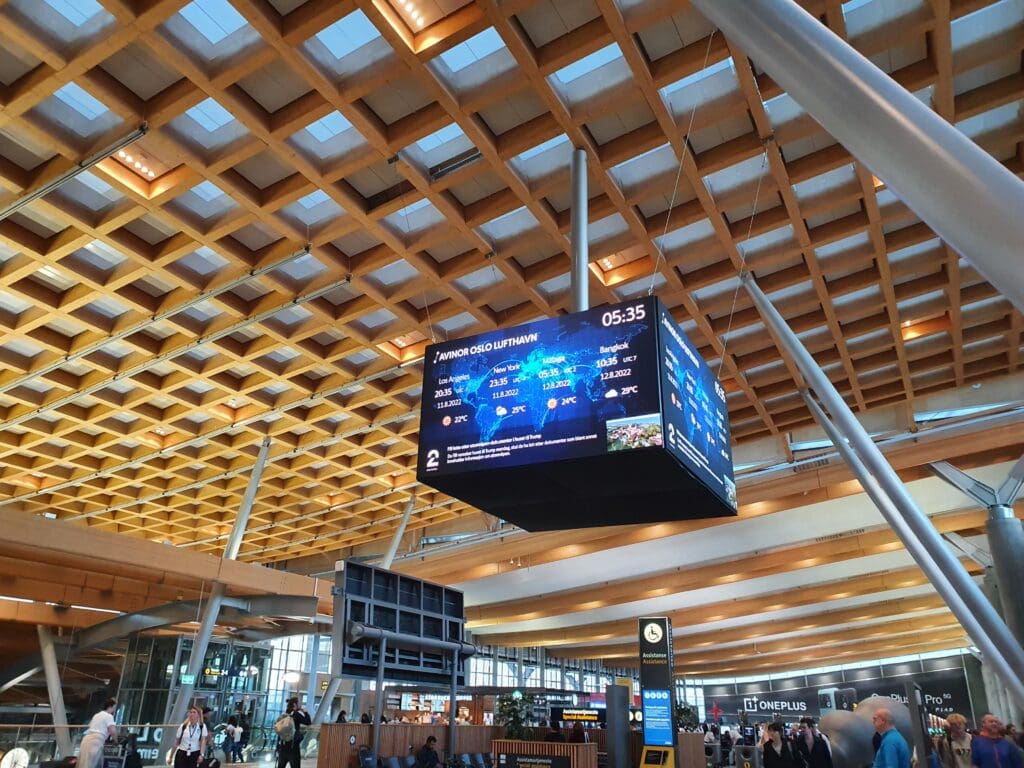
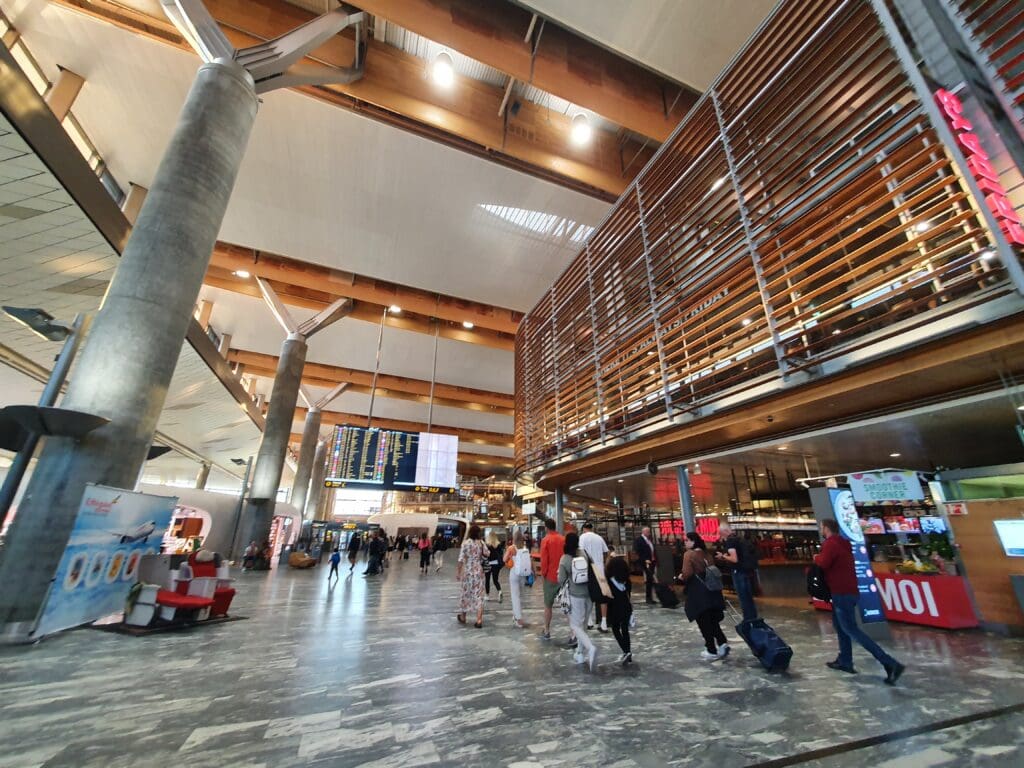
As I trundled over to security, it wasn’t long before I caught sight of a fairly long queue. Fortunately, with plenty of time to spare I was not particularly worried by this and fortunately once in line, this moved along quickly. After about ten minutes of shuffling forwards, I walked up to one of the checkpoints where I temporarily parted with my backpack and walked through the metal detector. Passing through this without any issue, I was soon free to spend several hours exploring the delights of Oslo Airport’s airside area. Whilst Oslo Airport is by no means the largest airport in the world, this is relatively large, consisting of a central ‘hub’ with four piers leading off this. As with the landside area, I found the terminal to be modern and stylish, with plenty of local wood utilised in its design and construction. Meanwhile, large windows allow light to pour in across much of the terminal whilst also providing enthusiasts and more ‘regular’ passengers alike the opportunity to watch the action outside on the ramp.
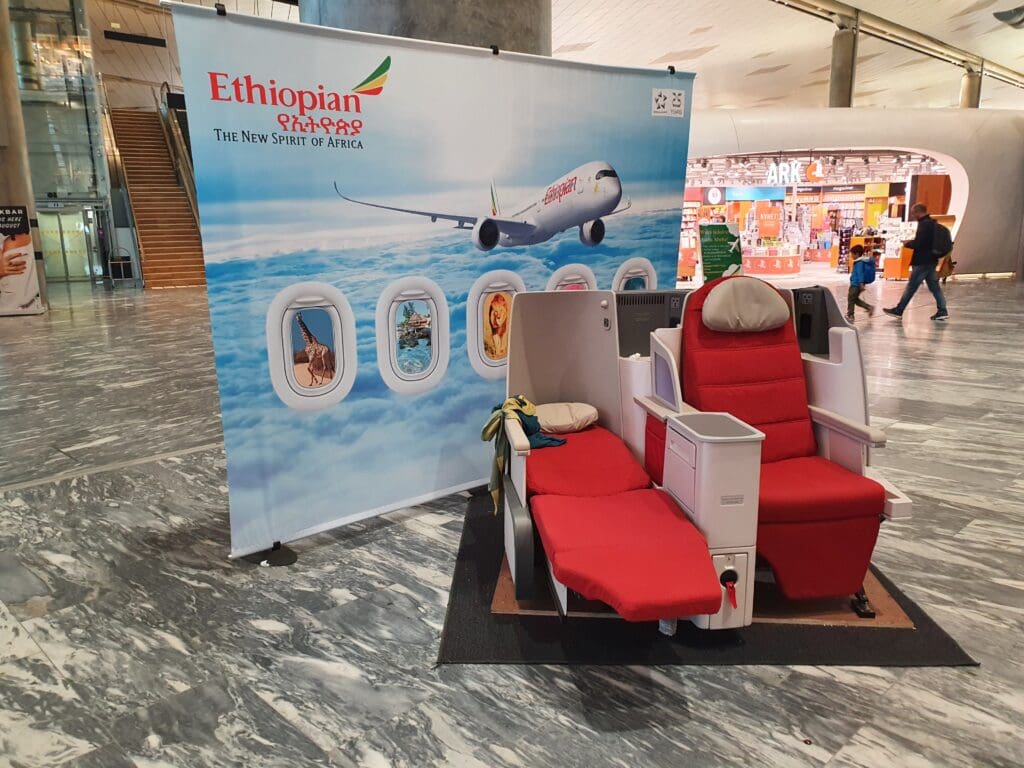
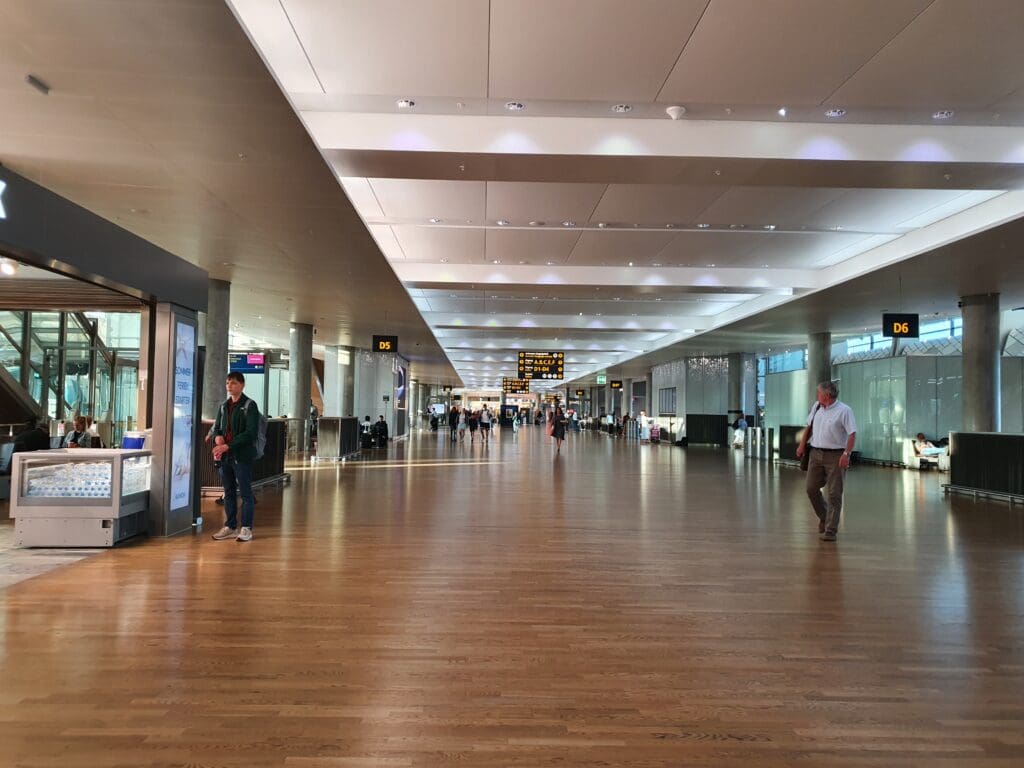
After passing through security, I turned right and made my way past the customs barrier and into the international portion of the terminal. Reaching a large duty free store, having no desire to purchase anything I continued onwards without pausing before arriving in the main portion of the terminal. As with the check-in hall, the many morning departures ensured that the terminal was rather busy with masses of passengers scurrying about here, there and everywhere. In terms of facilities, plenty of shops, cafes and restaurants could be seen for those in need of refreshment and/or retail therapy, and with deep pockets given the local prices! For those needing to stay connected to the outside world, complimentary wifi was provided throughout the terminal. Other than Avinor’s main Oslo Airport network, which allows passengers to connect for up to four hours at a time, an Eduroam network was also provided throughout much of the terminal. As a former student whose login credentials still worked at the time of my flight, I was able to connect to this and browse away to my heart’s content. Furthermore, as many passengers expected in 2022, a good number of plug sockets and USB charging points could be seen throughout the terminal. Last but most certainly not least, despite the high number of passengers milling about the terminal that morning, all areas that I strolled around seemed to be in a clean, tidy and presentable state. Overall, I was very pleased with Oslo Airport that morning and was left with no real complaints about my stay there.
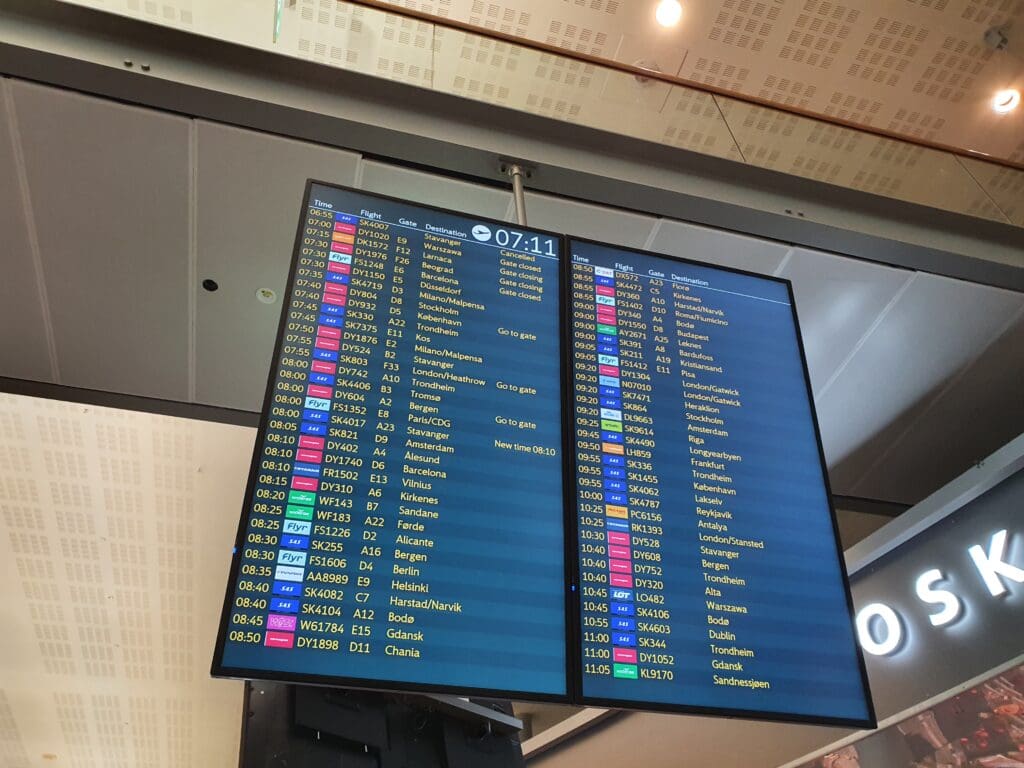
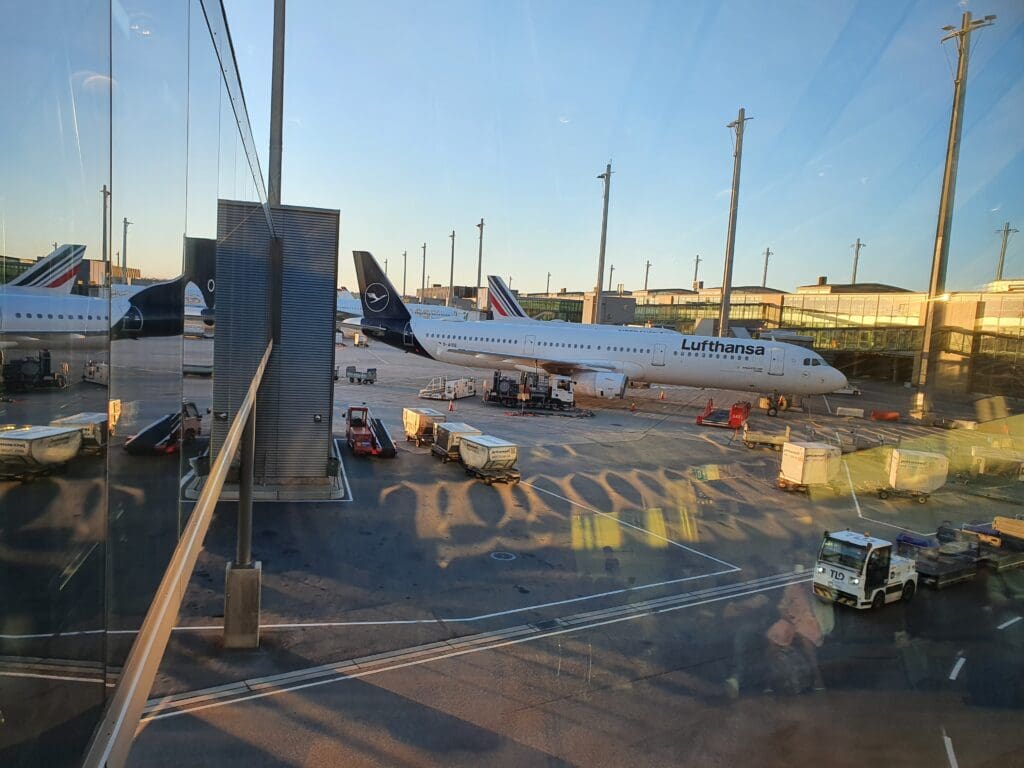
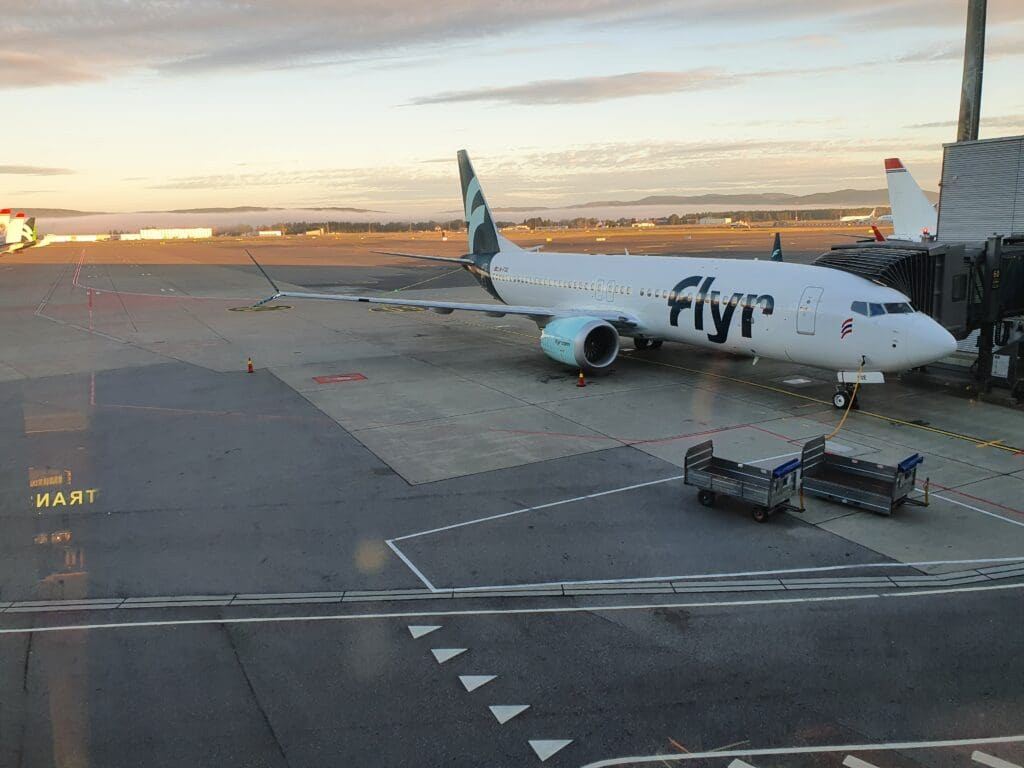
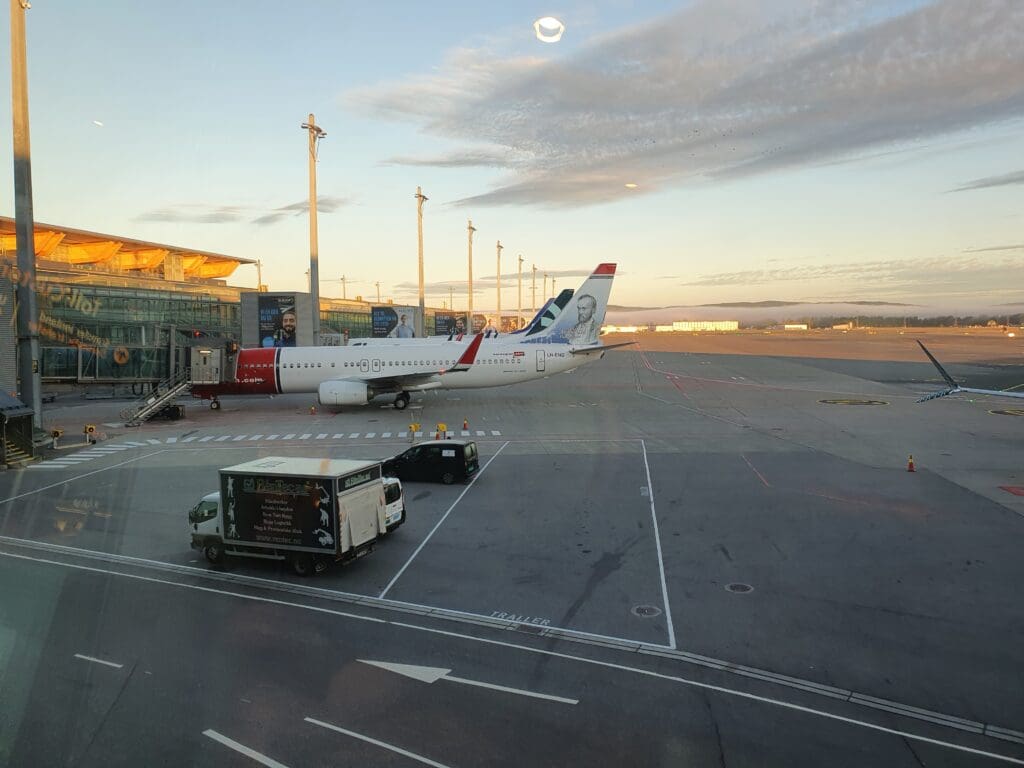
Being an enthusiast, it was only natural that I spent much of my time at the airport glued to the action outside. As I had expected, that morning it was clear that local carriers Norwegian and Scandinavian Airlines ruled the roost, with the two airlines operating 68% of the 78 departures between 0600 and my flight’s departure at 0920. These two carriers were then followed by fellow local carriers Flyr and Wideroe, whilst that morning’s international visitors took the form of Aegean Airlines, Air France, Brussels Airlines, Carpatair, Ethiopian Airlines, Finnair, KLM, Lufthansa, Pegasus Airlines, Sunclass Airlines and Wizz Air. Admittedly, for a UK-based aviation enthusiast, other than Wideroe’s smaller Dash 8-100s, 200s and 300s, there wasn’t much to spot outside that I wouldn’t have been able to see back home. Nevertheless, I still enjoyed watching the comings and going of aircraft outside through the terminal’s large windows. However, it is worth pointing out that many of the windows appeared to be in a fairly streaky state which made any decent photography through these prove a little challenging, especially with the sun shining through them.
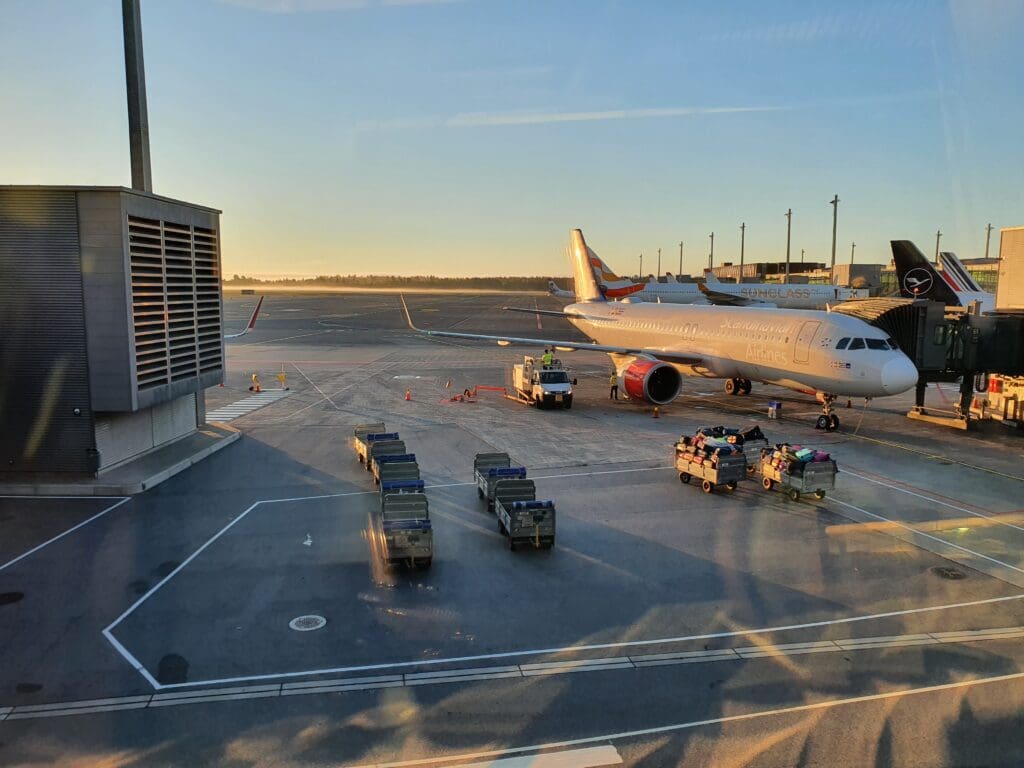
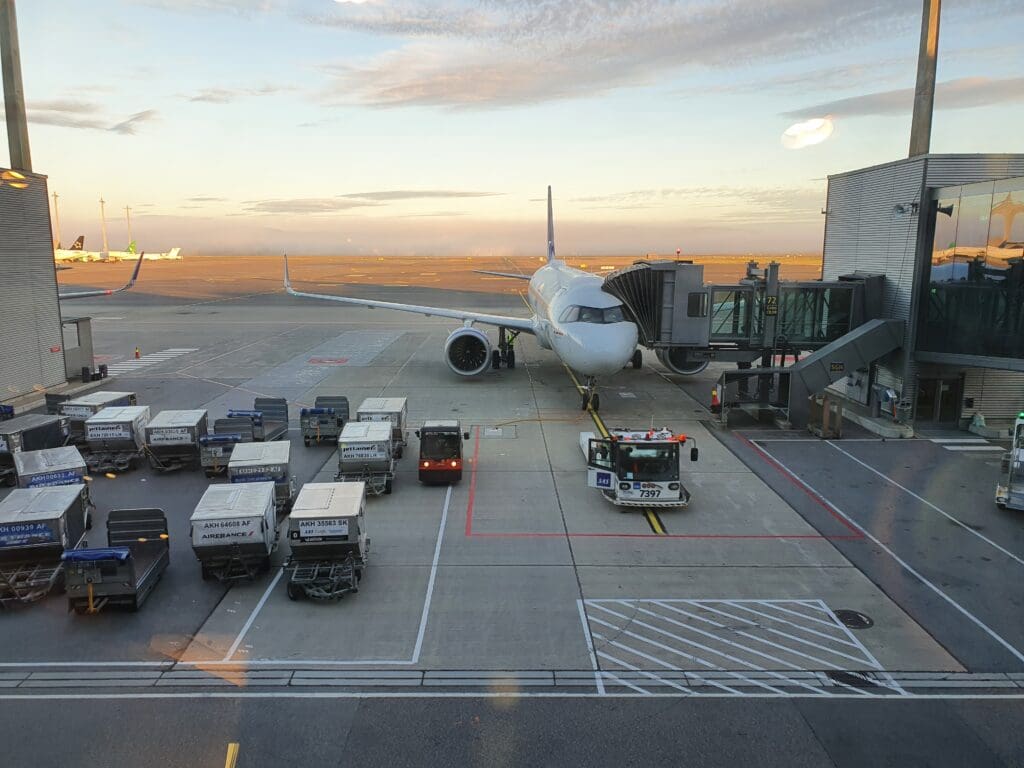
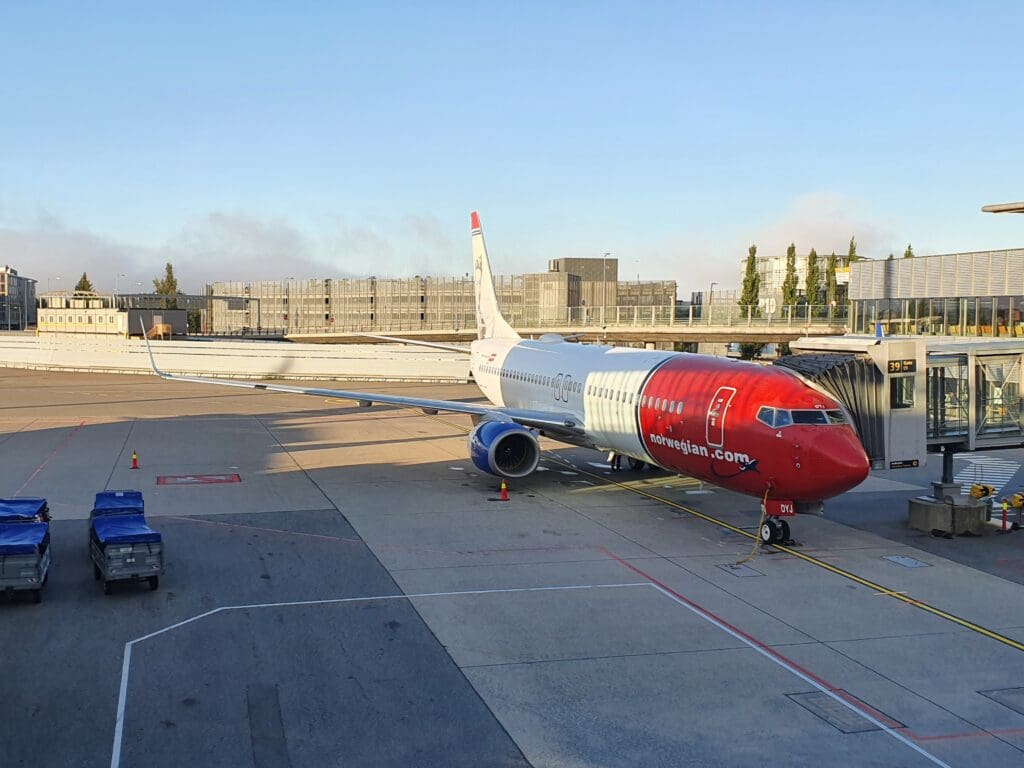
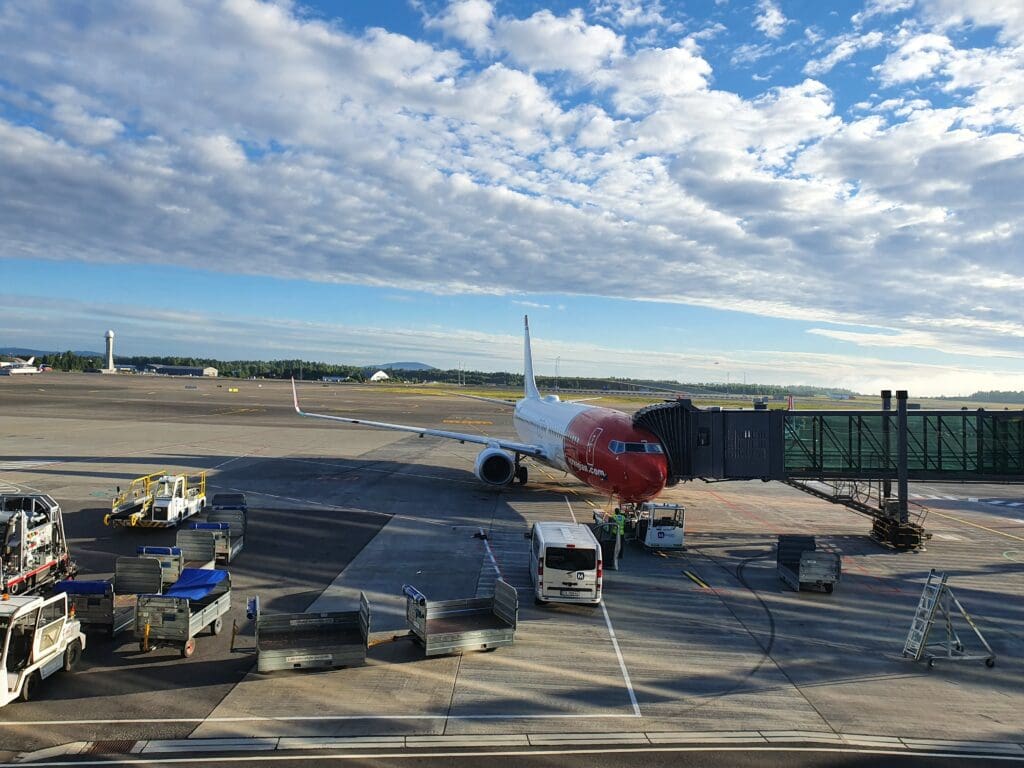
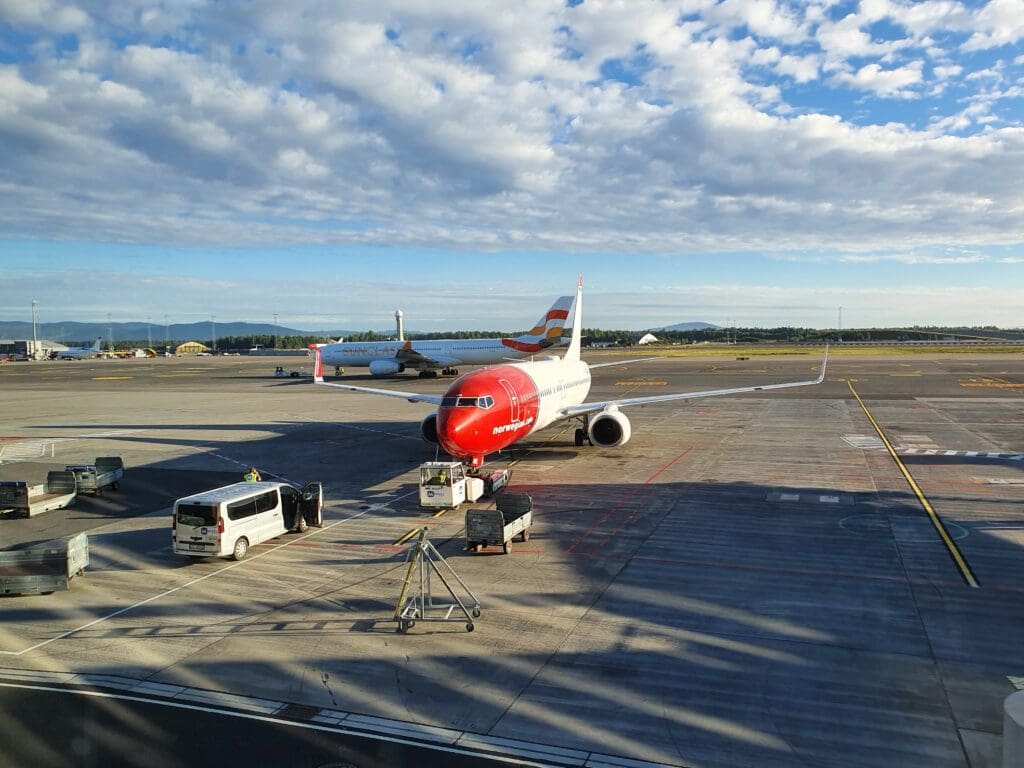
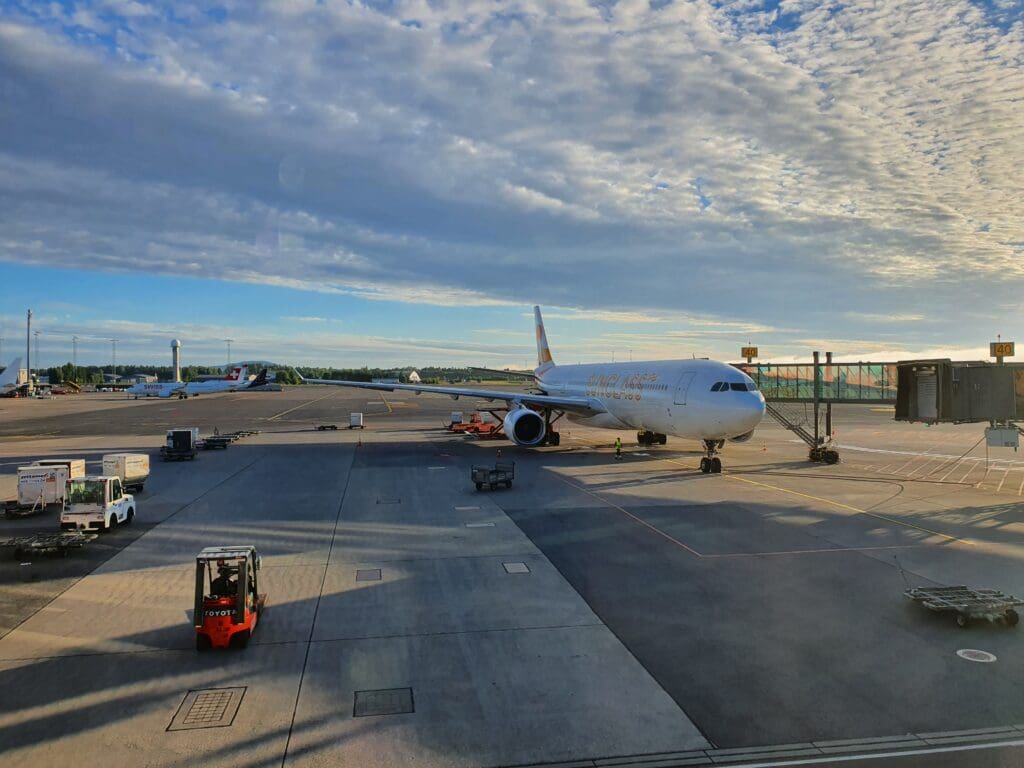
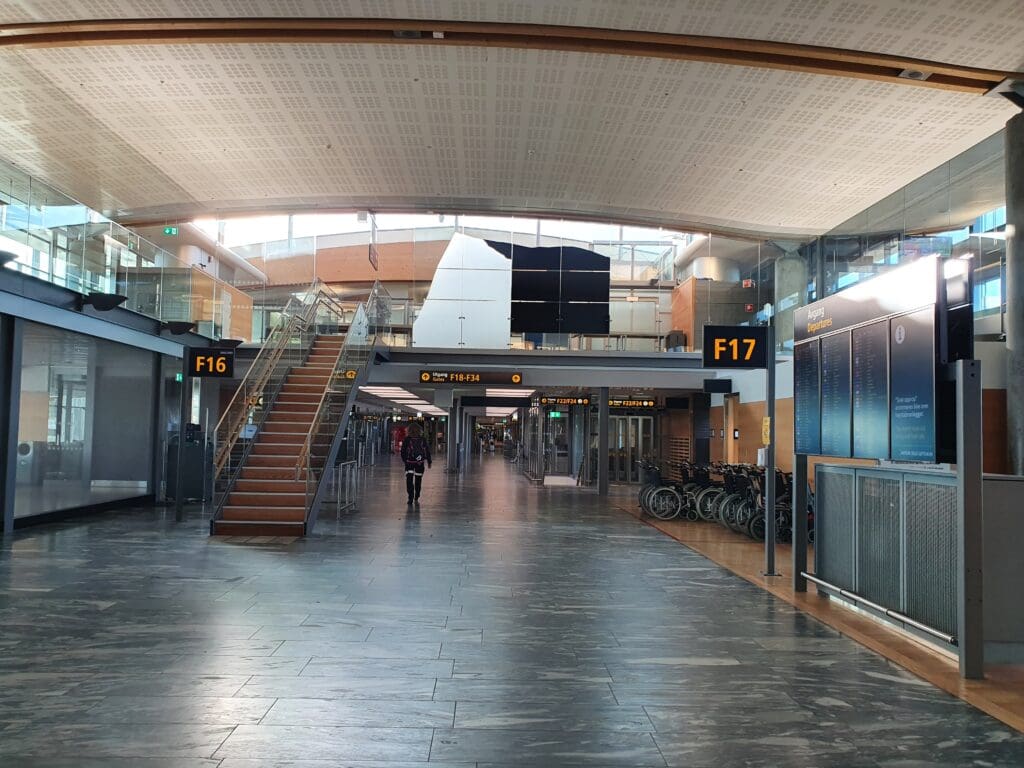
Examining the departure boards, it appeared that departing flights’ gates are not revealed until two hours prior to departure. However, with all flights to non-Schengen destinations departing from the terminal’s F-gates, I had a rough idea of where I should have been going. With two hours to go, the departure boards updated and revealed that Norse Atlantic’s first flight to London would depart from Gate F32 which corresponds to Stand 56. Once this information was displayed, I proceeded onwards to passport control and walked straight up to one of the manned booths. After handing my passport over to an unusually polite and friendly immigration officer, this was scanned, stamped and handed back to me before I was free to explore the sights of the non-Schengen portion of the terminal. As I had expected, whilst this did not contain the same range of facilities as in the main portion of the terminal, this was clean, modern and bright, ultimately allowing for a pleasant stay. Inside, this features a small selection of shops and cafes for passengers to visit before their flights. Upon entering this portion of the terminal, there would be just two other departures within the next couple of hours, Scandinavian Airlines’ 0755 Airbus A320neo operated service to London Heathrow and a Norwegian Boeing 737-800 flight to Gatwick departing at the same time as my Norse Atlantic flight. Thus, this proved to be relatively empty.
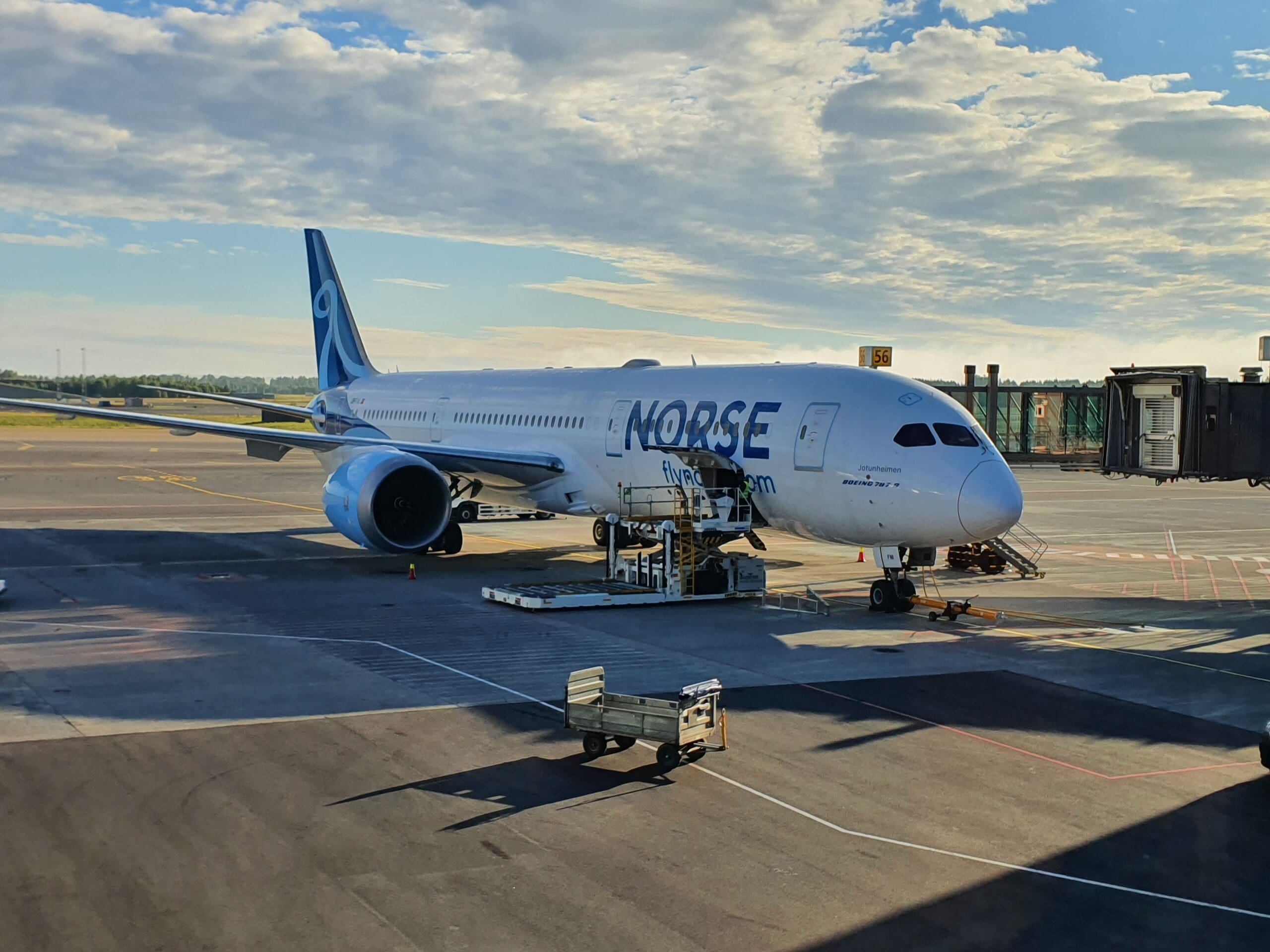
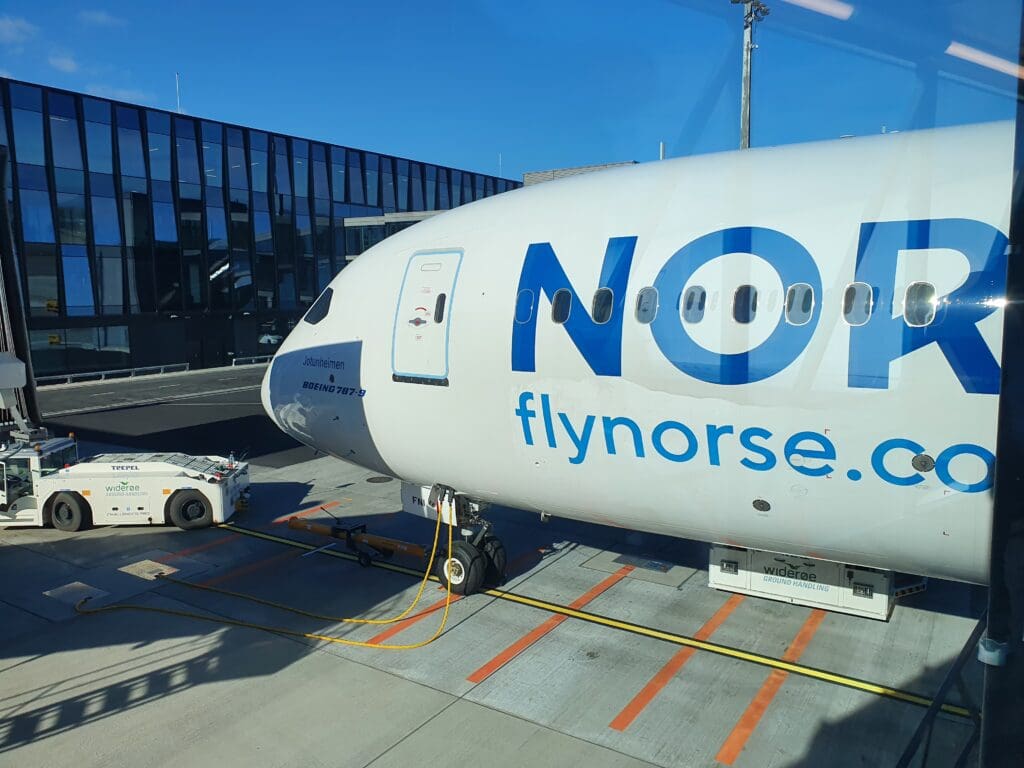
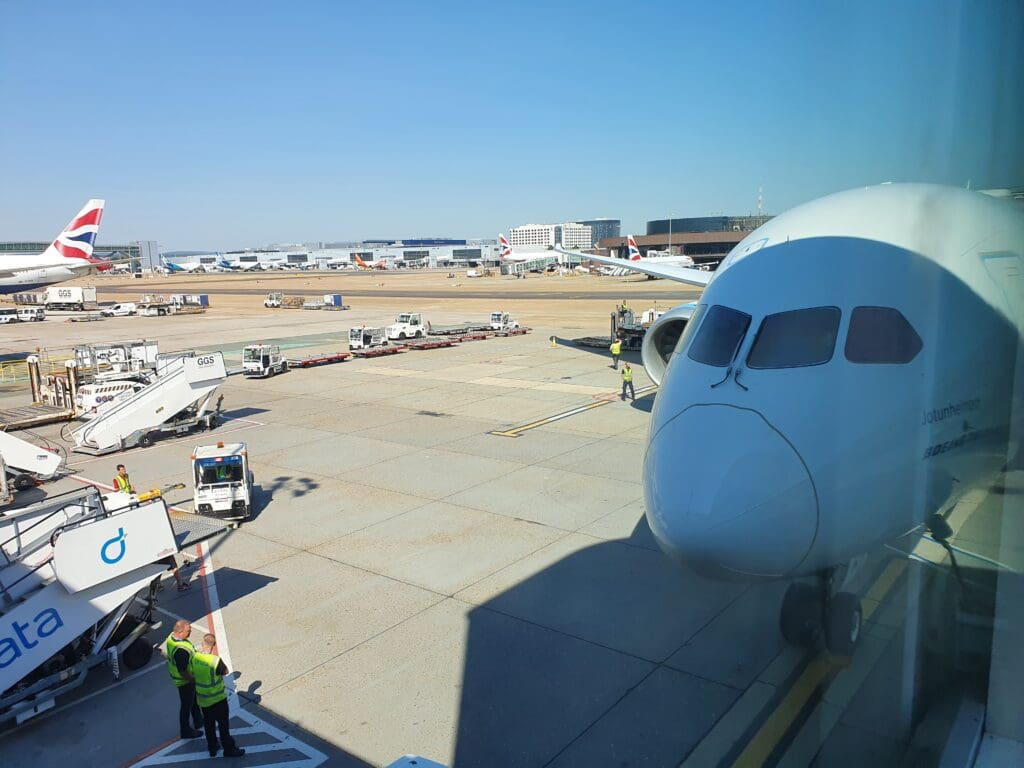
Following a quick look around, I journeyed down towards the end of the pier and soon caught sight of the sleek-looking Dreamliner that would be operating Norse Atlantic Airways’ first-ever flight to the UK. Assembled at Boeing’s Everett plant, this aircraft took the form of Boeing 787-9 LN-FNI which wears the name Jotunheimen in honour of the Norwegian mountain range. Making its first flight in September 2018, this aircraft was getting on for four years old at the time of my flight and had commenced its life in the distinctive red and white colours of Norwegian. Specifically, this had previously operated for Norwegian Air UK as G-CKWN and had previously featured the portrait of author Oscar Wilde on its tail in true Norwegian fashion. As the pandemic took hold, this Dreamliner was taken out of service in late March 2020 and ferried to Oslo where it entered long-term storage. Remaining there for exactly one year, in March 2021 the Dreamliner was shuttled to Shannon Airport where it was painted into Norse Atlantic’s blue and white ‘Oseberg’ livery by IAC Shannon. In December 2021, the aircraft was then ferried across the Irish Sea to Birmingham where it remained on the ground until February 2022 whilst receiving attention from BCT Aviation Maintenance in preparation for its return to commercial service. Finally, in February 2022, the aircraft was shuttled back to Oslo where it remained on the ground for several months before returning to the skies for several test flights. As it happened, my flight to Gatwick that morning would be the aircraft’s first-ever commercial service since the jet had operated for Norwegian Air UK back in March 2020!
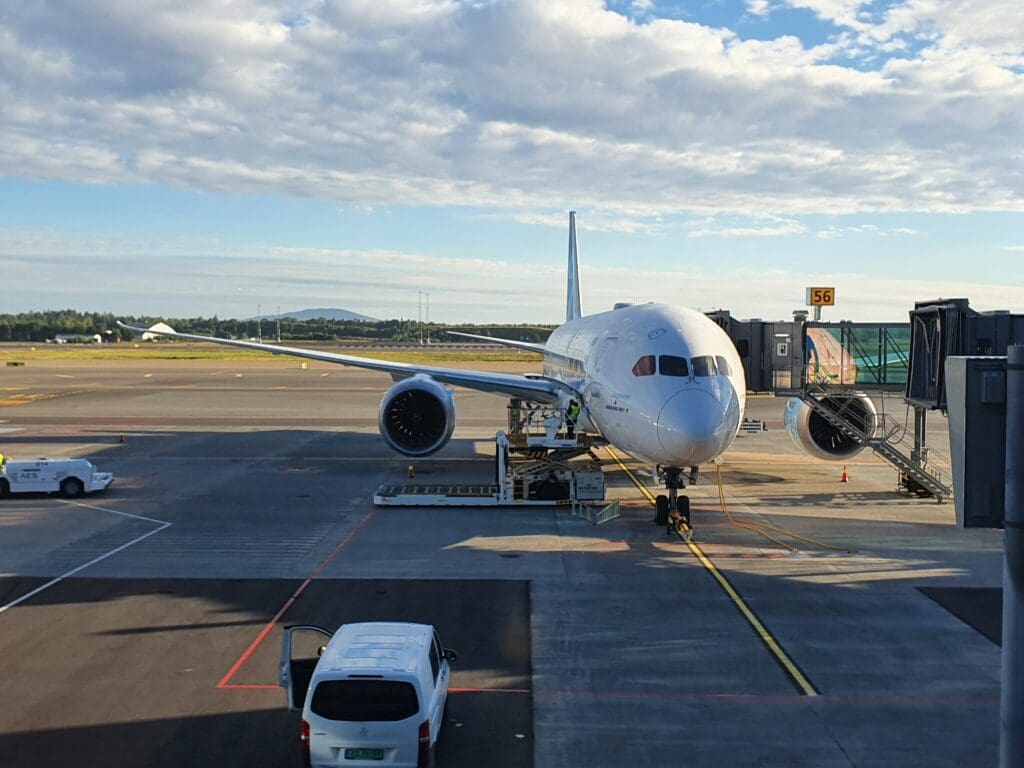
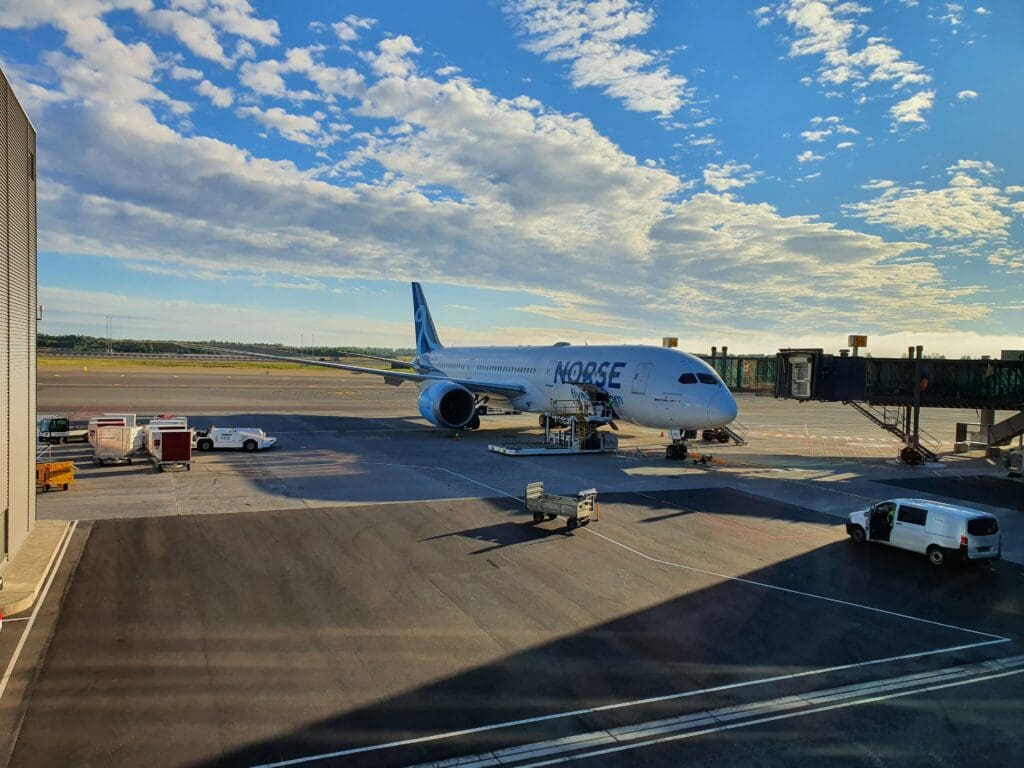
Upon arriving at the gate, this was yet to open so I took a seat nearby and watched as an army of ground crew could be seen readying the jet for its first day of commercial operations with Norse Atlantic. Inside the terminal, passengers began to trickle through from immigration and at 0755 the team of cabin crew and pilots that would be taking the aircraft all the way to New York that day appeared before undertaking their pre-flight briefing at the gate. This commenced with the Captain’s briefing followed by a speech by the Purser during which they quizzed the cabin crew and reminded them of the high standards of onboard service that they should deliver. Perhaps slightly disappointingly, other than the presence of a few other enthusiasts laden with all sorts of cameras, there was nothing at the gate to suggest that this would be a special flight.
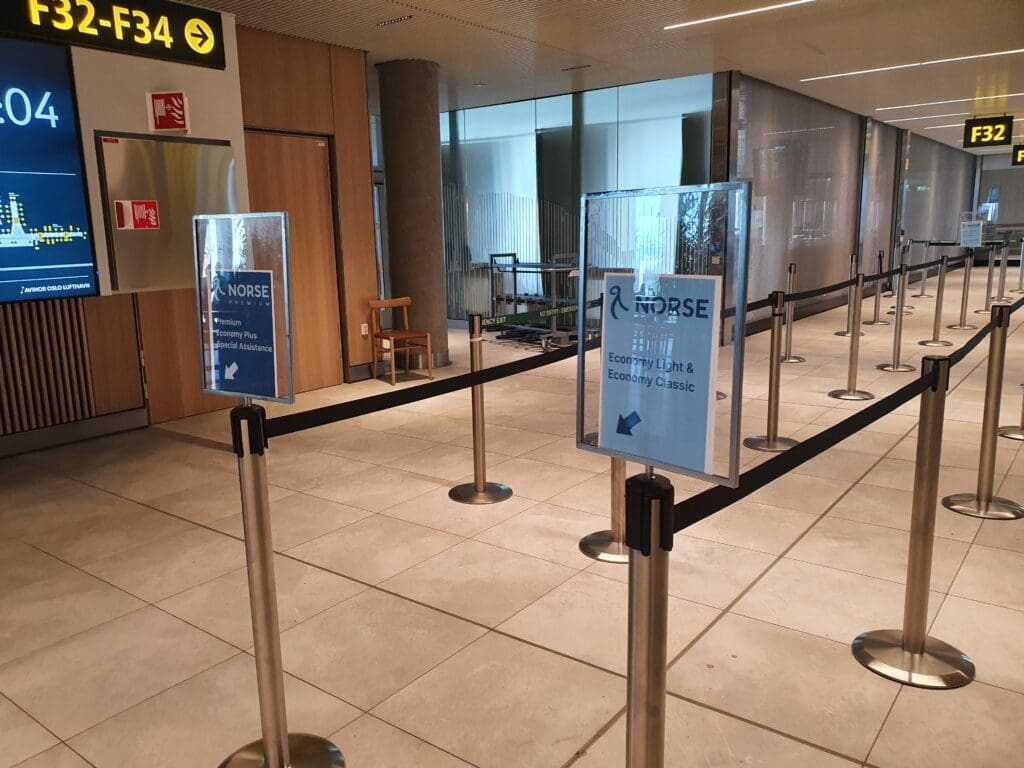
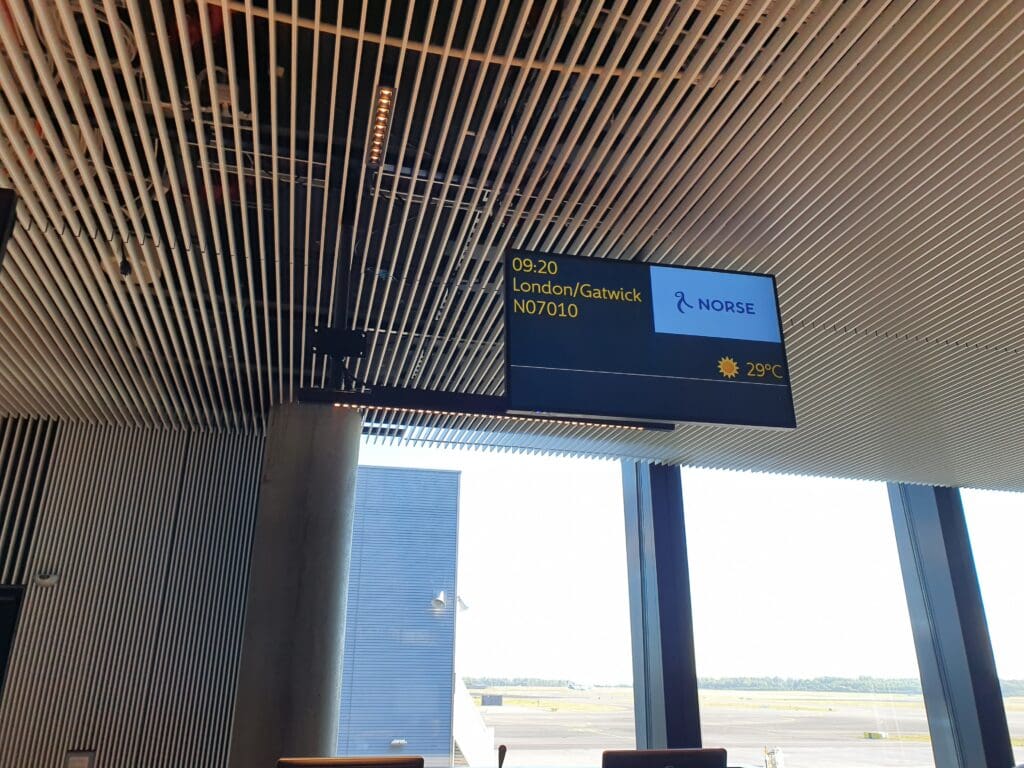
With T-minus sixty minutes until the scheduled departure of the flight, the gate opened and two ground agents began scanning passengers’ boarding passes and checking their passports. Joining the short queue, a friendly agent soon checked my passport rather thoroughly before scanning my boarding pass and letting me into the gate area. Once inside, it took about twenty minutes for the gate area to become full at which point it seemed as if the ride down to London would be fairly busy. As I waited, one of the Norse Atlantic gate agents performed a lively gate announcement in English only during which they requested all passengers to remain seated as the cabin crew were still in the process of ‘preparing the longship’ for the flight to London. This was immediately followed by an announcement informing those bound for New York JFK that they would have to pass through immigration and customs at London Gatwick before heading through security once again – although they could use the priority lane to do this.
Outside, as the Boeing was being readied for its flight down to London, two fellow Norse Atlantic Boeing 787-9s could be seen pulling up at the neighbouring gates on either side of the aircraft. One of these, Dartmoor, had just arrived following an overnight flight from Orlando, whilst the other, Rago, had been towed over from a remote stand and would later head to Fort Lauderdale. Inside the gate area, there was a small amount of commotion amongst the staff as the Norse Atlantic’s smartly dressed CEO, Bjørn Tore Larsen appeared before heading down towards the aircraft. With just twenty minutes to go until departure, at 0900 the gate agent made another lively announcement requesting that those in Group 1 proceed forward for boarding which was followed by a request a short time later for those in the other groups.
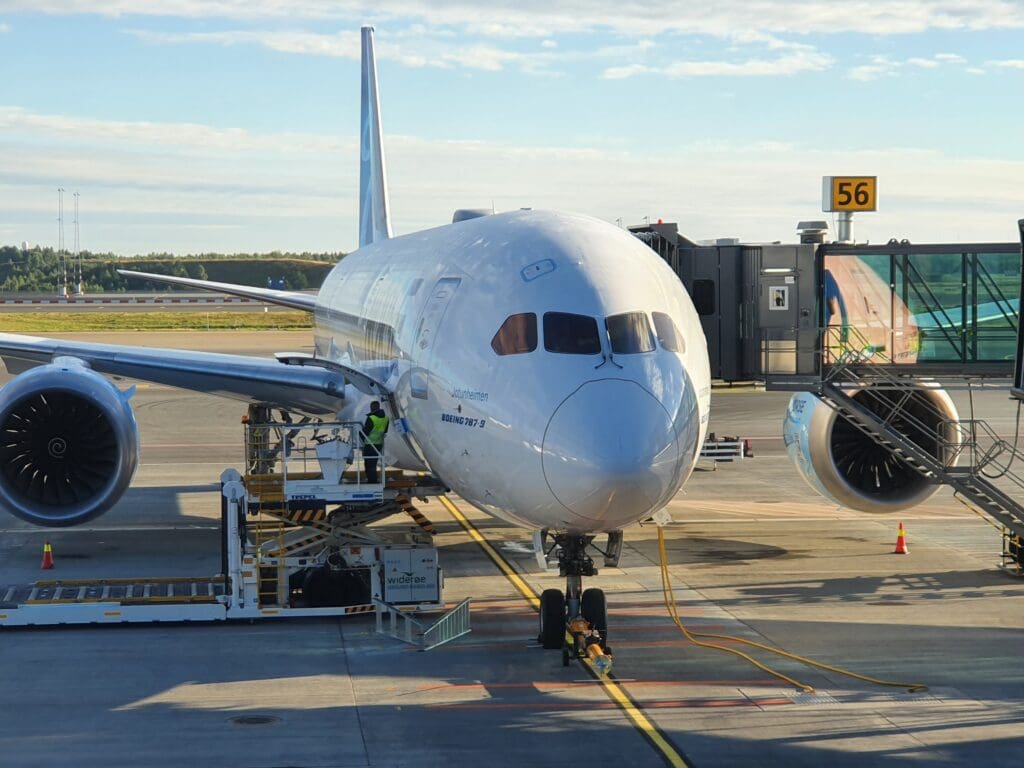
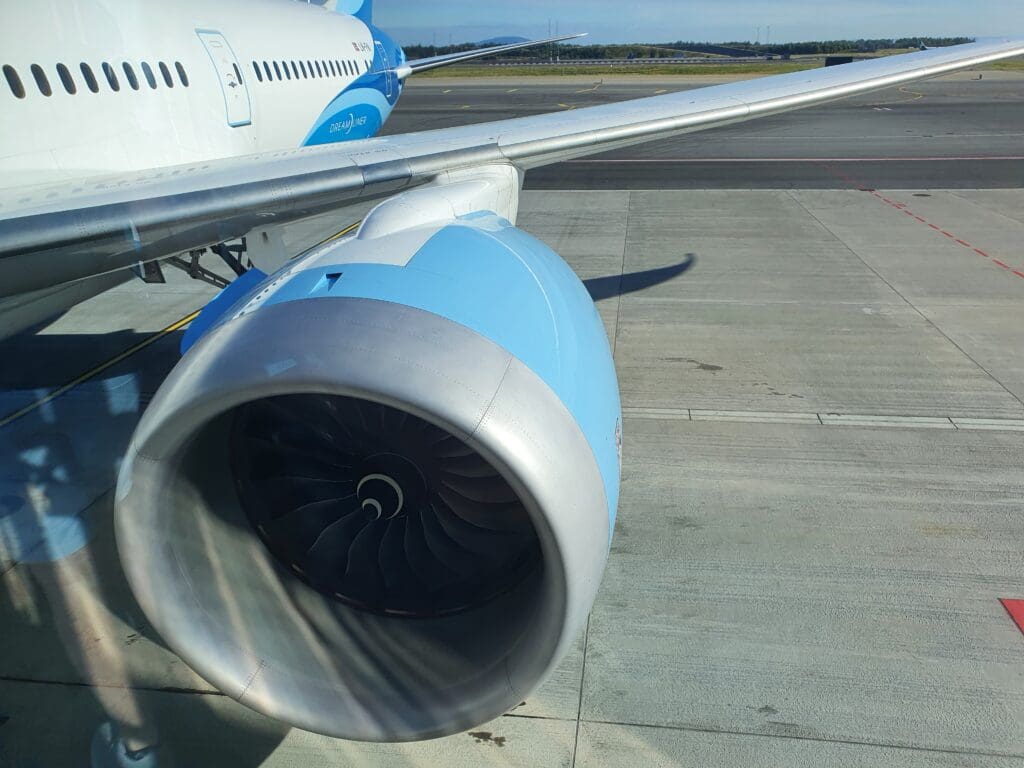
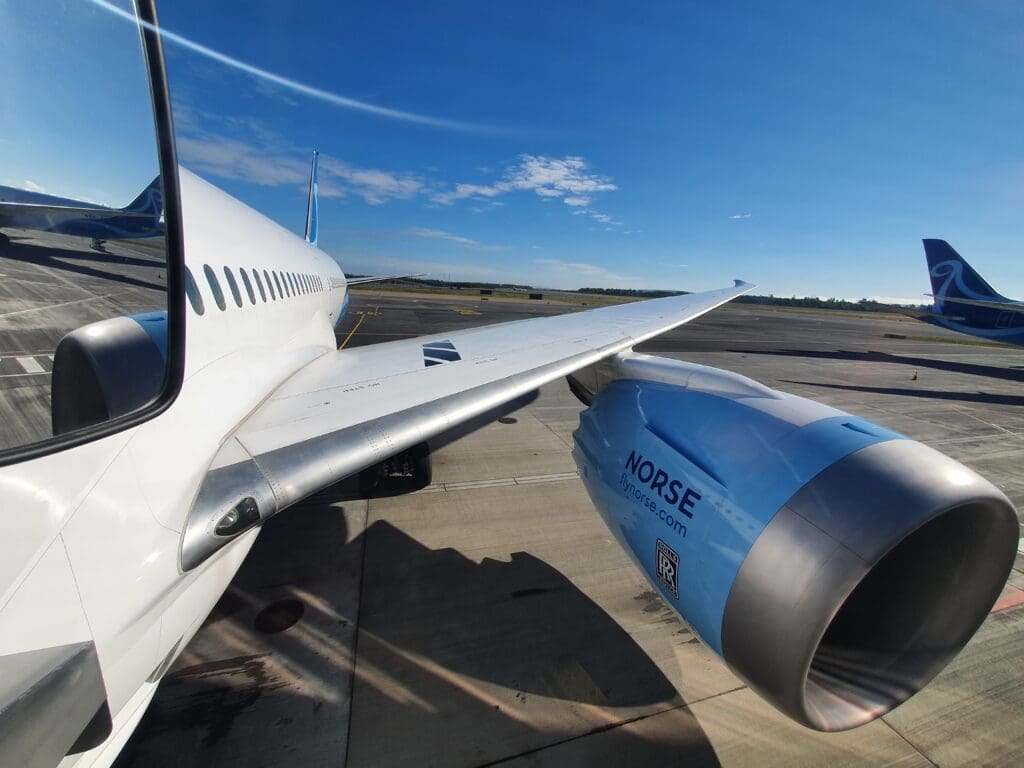
Seeing as the gate agents had already checked passengers’ boarding passes and passports, once boarding was announced passengers were free to head down towards the waiting Boeing without any further checks. Heading down the glass jet bridge, I was greeted by the usual short queue as I neared the Dreamliner’s L2 door. Fortunately, this moved along quickly and after admiring the Boeing’s impressively large Rolls-Royce engine I stepped into the galley that separates the Premium cabin from the forward Economy cabin. As soon as I stepped into the aircraft, I received a very warm and friendly welcome from one of the flight attendants. Glancing left, I caught a quick glimpse of Norse Atlantic Airways’ Premium cabin which consists of eight rows of Haeco 3050 recliner seats in a 2-3-2 configuration – comparable to the premium cabins of fellow low-cost Dreamliner operators Jetstar and Scoot. Whilst indisputably more luxurious than Economy, those flying long haul and more au fait with the ‘real’ business class cabins of full-service carriers may be slightly disappointed by this product which is instead more akin to a widebody premium economy cabin. Nevertheless, on the hop between Oslo and London, it would be difficult to deny that these seats beat the Eurobiz premium cabins of British Airways and Scandinavian Airlines’ narrowbody Airbuses and came at a fraction of the price!
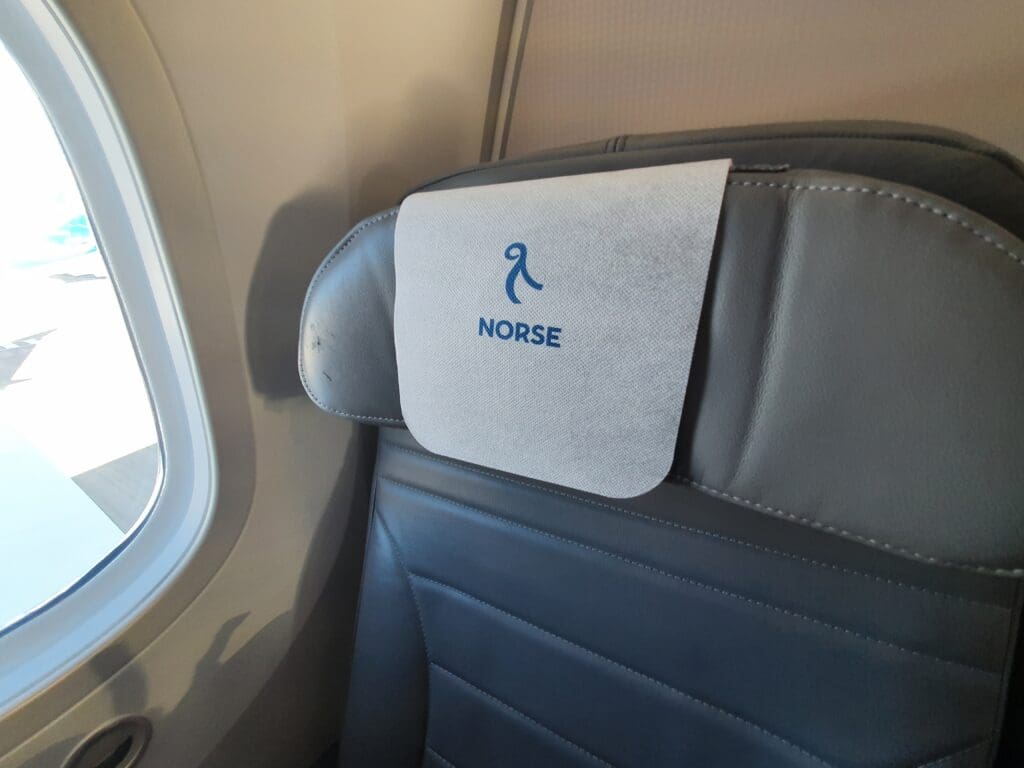
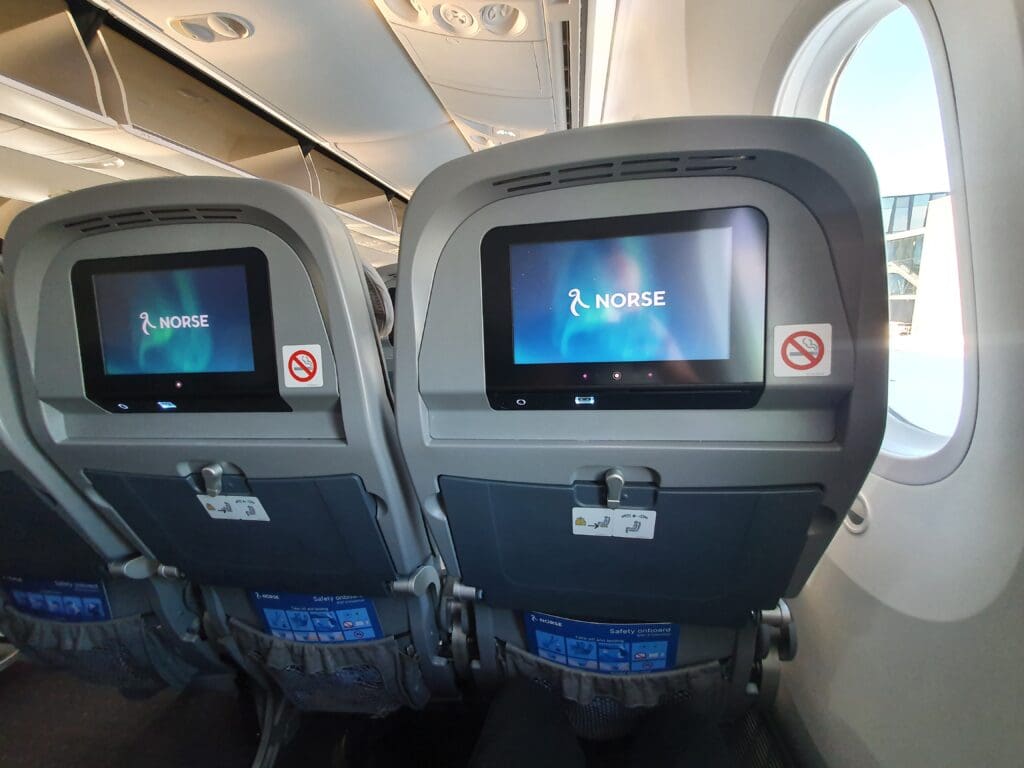
After I had received another friendly welcome from a flight attendant standing on the opposite side of the galley to the main door, I turned right and made my way down the second aisle and into the forwardmost Economy cabin of the Dreamliner. As was to be expected, except for Norse Atlantic branded disposable fabric antimacassars and scenic photographs of Norway at the rear of the two Economy cabins, the cabin was identical to when it flew with Norwegian. Inside, each of the 282 Haeco 3500 Economy seats was covered in a smart (faux?) grey leather covering and complete with an adjustable headrest. Meanwhile, even though Norse Atlantic may be a low-cost long-haul carrier, these seats are arranged in an increasingly rare 3-3-3 configuration. Those heading off on Norse Atlantic’s transatlantic services will likely be glad to hear that each seat comes with a personal television screen as well as a USB-A port – although the latter simply sustained the battery on my phone during the flight rather than charging it.
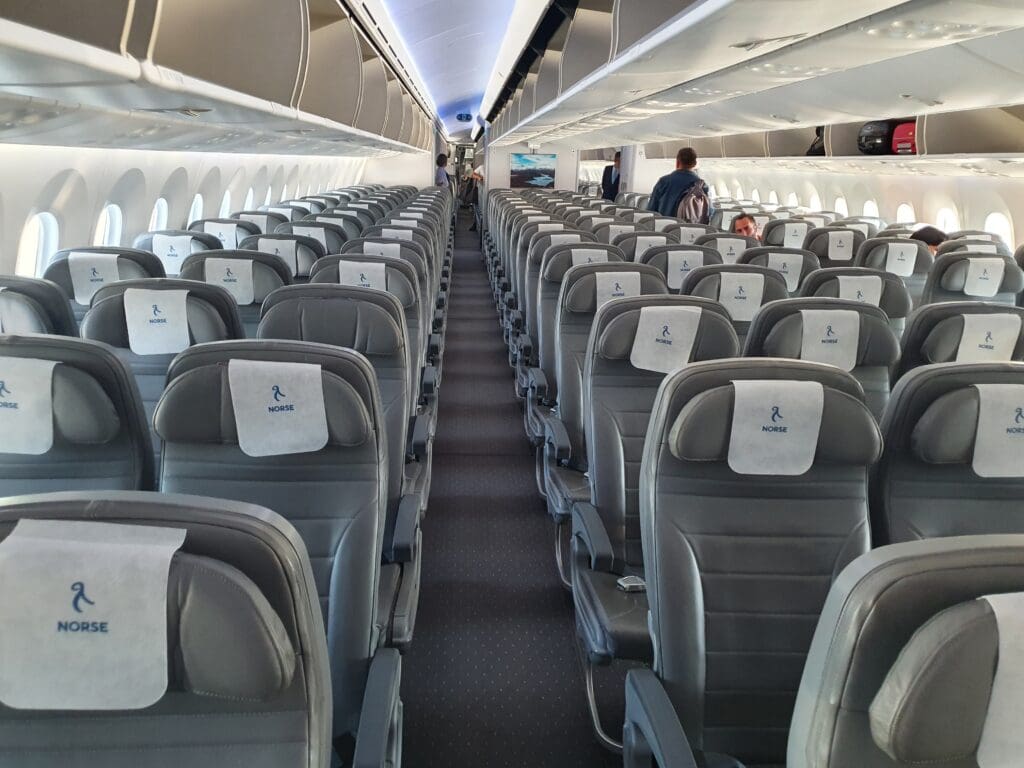
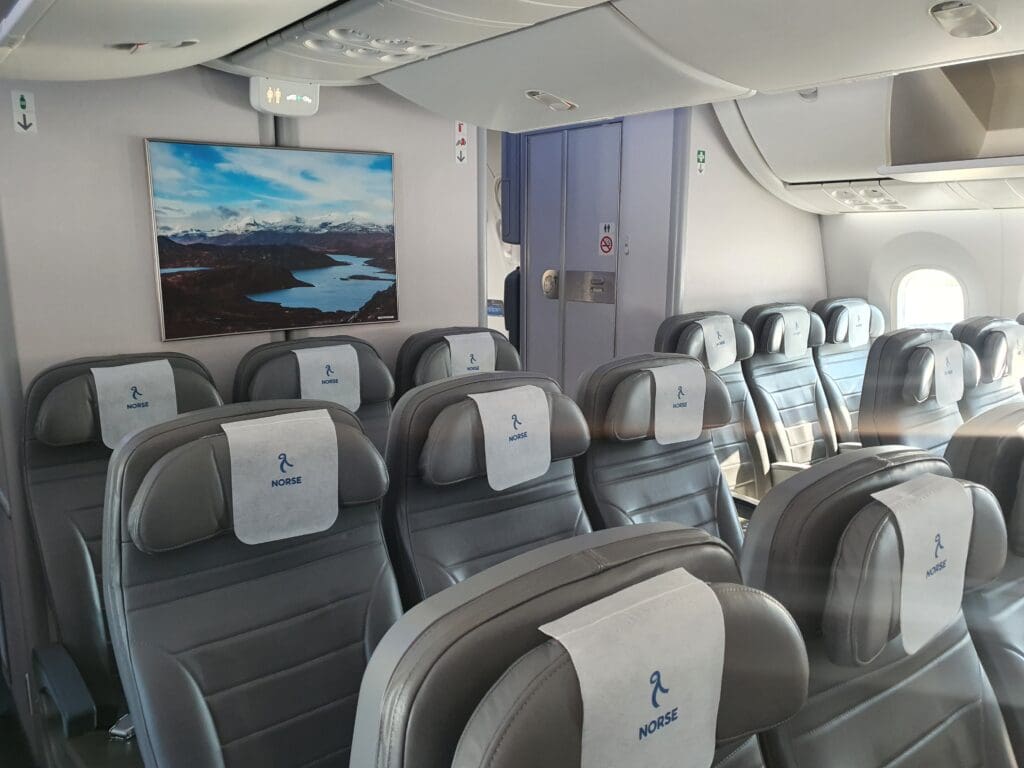
Whilst Ryanair may play upbeat tempo music to get passengers to rush down the aisle and take their seats, that morning a soundtrack of calming music accompanied the boarding process on Norse Atlantic. Fortunately, with few passengers in front of me, I soon made it to the rearmost row of the forward Economy cabin. Yet to be joined by any seatmates, I slid into Seat 26J with ease and for once, I was pleased that I had managed to inadvertently select a seat which perfectly aligned with one of the Dreamliner’s large windows! Whilst the seat may have appeared to be comfortable at first glance, upon sitting down I found this to be fairly firm whilst the amount of legroom provided by this was simply so-so, and somewhat hindered thanks to the presence of an inflight entertainment box beneath the seat ahead. Whilst this would not leave me with too many complaints on the short ride down to London, I may have ended up slightly less satisfied with this had I been off to say, Los Angeles. Fortunately, yet unsurprisingly with this being the aircraft’s first ever commercial flight, the aircraft appeared to be spotlessly clean although a rather chemical smell lingered in the air – perhaps this being since I was seated right in front of the lavatories. Turning to the contents of the seatback pocket, this contained the all-important safety card, a plain white sickbag and the carrier’s Flight Mood buy-on-board menu and shopping catalogue. Finally, upon boarding the inflight entertainment screen displayed Norse’s logo superimposed on a background of the Northern Lights, although this soon changed to a welcome message. For those eager to get stuck into something, all entertainment could be watched from boarding.
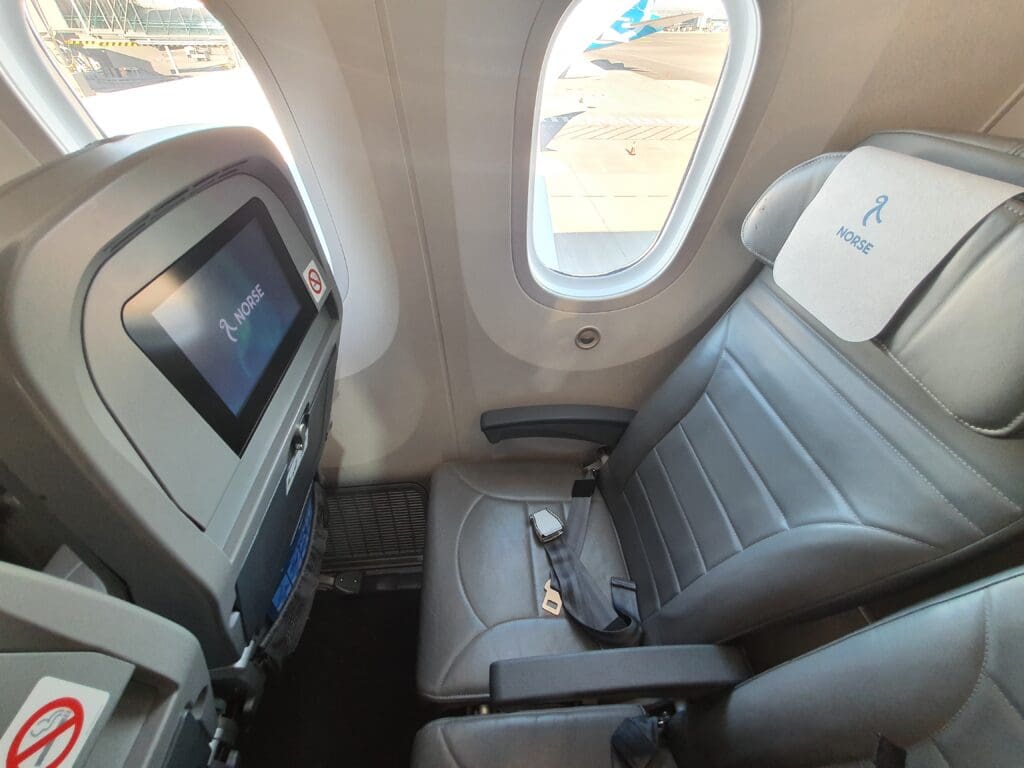
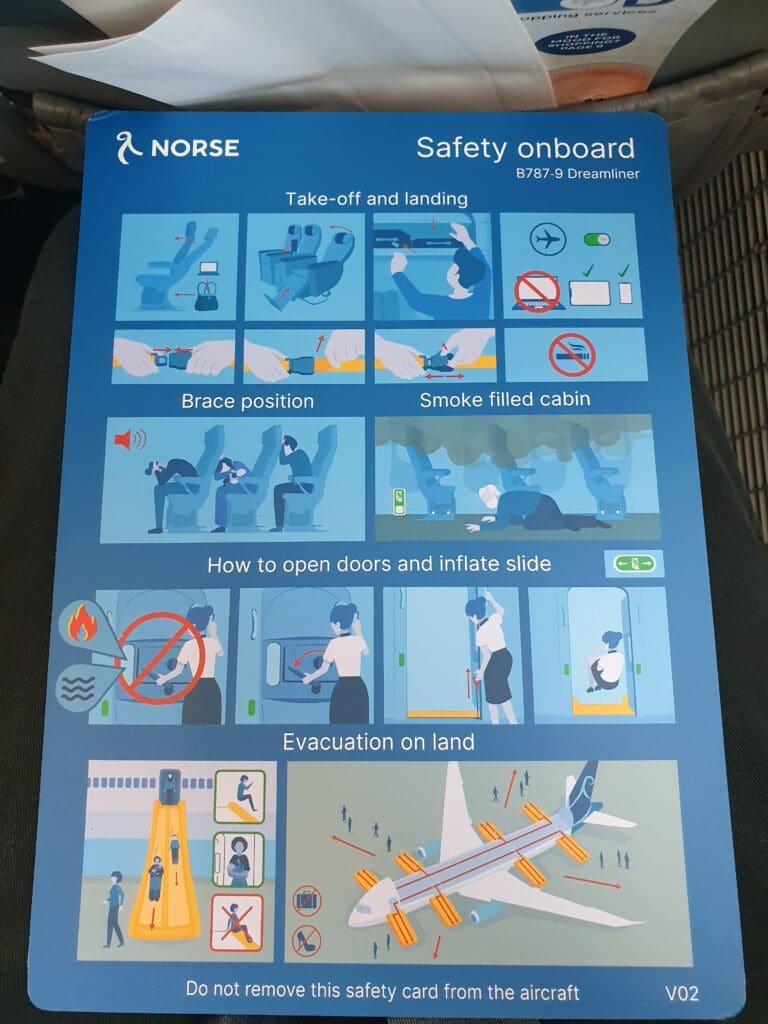
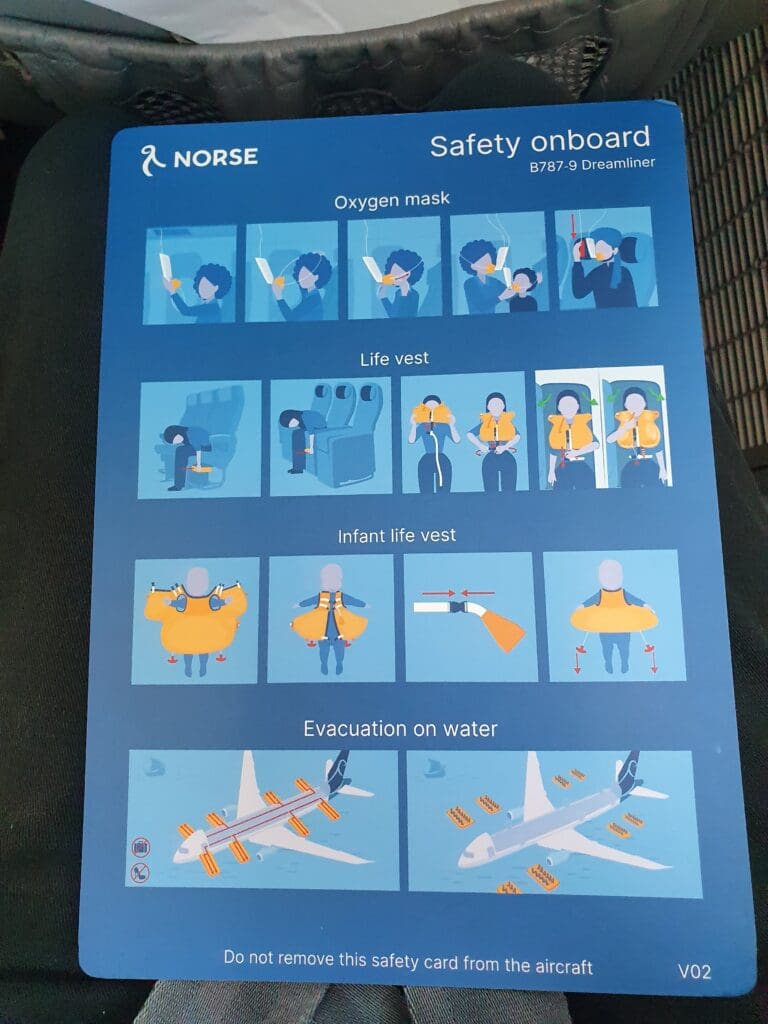
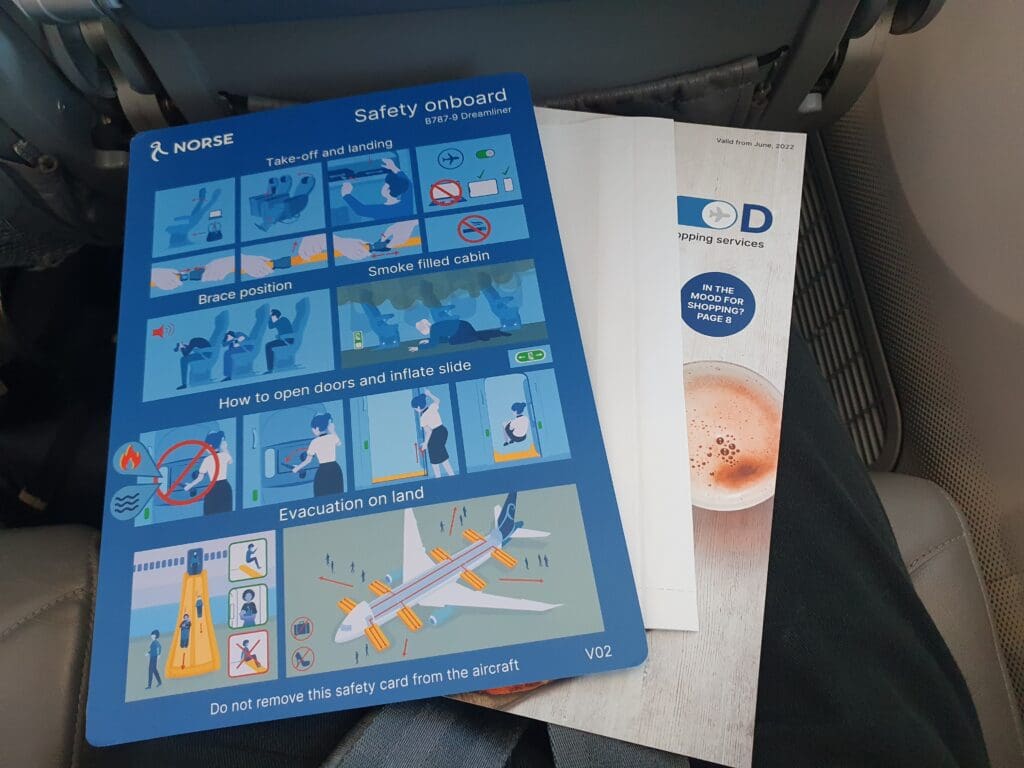
Being one of the first passengers to board, once seated and settled passengers continued to stream onto the aircraft and it wasn’t long before I was joined by a passenger in the aisle seat, who, presumably assuming that no one would take the middle seat, soon spread out their wide array of make-up across this. During boarding, a pre-recorded announcement rang out several times advising passengers to stow their luggage correctly and reminding all of the no smoking rule onboard the aircraft. That morning, passengers appeared to board with minimal fuss and thus boarding reached its end just 18 minutes after it had commenced, with the ‘boarding complete’ announcement ringing through the cabin at 0918. Being Norse Atlantic’s first flight to London, I had been unsure of just how busy this would be although. As it turned out, their very reasonable fares appeared to have enticed plenty to fly with them that morning with the aircraft appearing to be almost full. Focusing on my fellow flyers, most onboard seemed to take the form of Norwegian leisure passengers heading off to London for the weekend, with relatively few fellow Brits. Meanwhile, most of the cabin crew appeared to hail from either Norway or the UK.
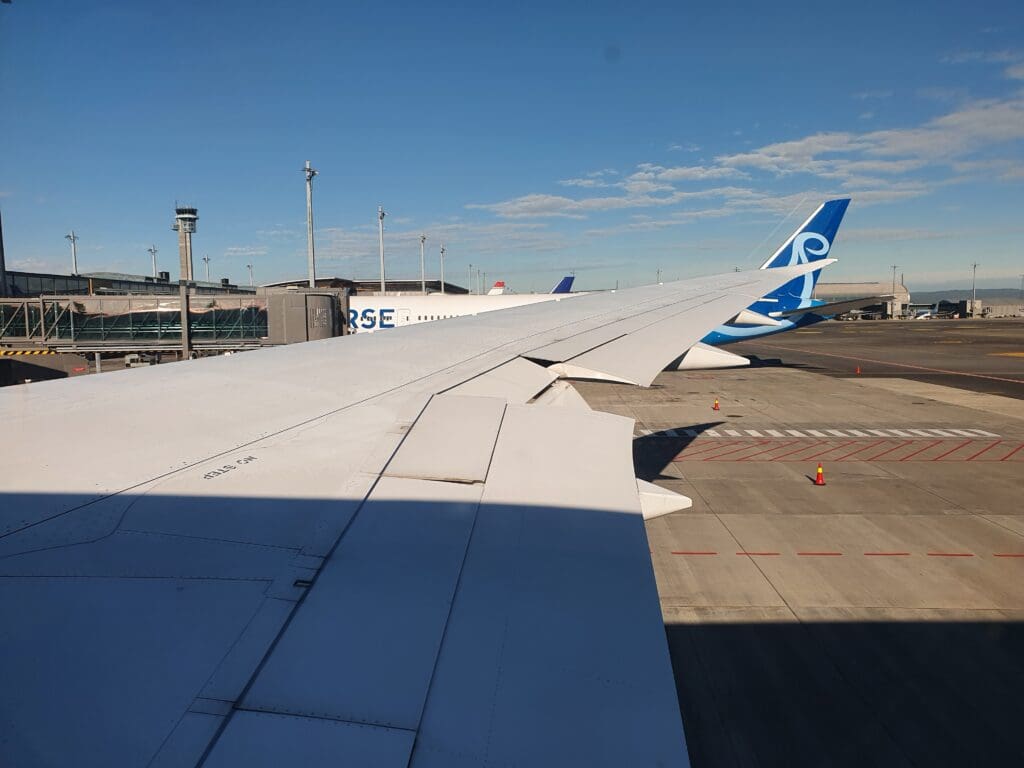
Glancing outside, a member of ground staff could be seen removing the cones from around the aircraft just before 0920 although there was little movement for several minutes. At 0925, the calm-sounding Belgian-accented Captain’s voice filled the cabin as they welcomed all onto the aircraft and thanked passengers for flying with Norse Atlantic. Following this initial greeting, they noted the special nature of this flight, and the presence of the airline’s owner, ‘Mr Larsen’ onboard before detailing the flight time and weather on the ground in London. In the usual manner, once this announcement came to an end the Purser then welcomed all aboard and went over a few brief safety and housekeeping points ahead of the main safety demonstration.
Whilst Norse Atlantic’s Dreamliners are all equipped with personal television screens, the airline has not yet invested in the production of a safety video and thus, at 0930 the Purser went over the safety instructions whilst several crew members took to the aisles and performed the safety demonstration. As this was underway, the aircraft was gently pushed back away from the gate and a series of whinings and whirrings could be heard as the Dreamliner’s systems powered into life before the aircraft’s two gigantic Rolls-Royce Trent 1000 engines fired up. Following a short pause during which the flaps were partially extended and the tug was disconnected, at 0935 the aircraft began its taxi to the end of Runway 19L during which the crew passed through the cabin ensuring all was safely in place for our departure.
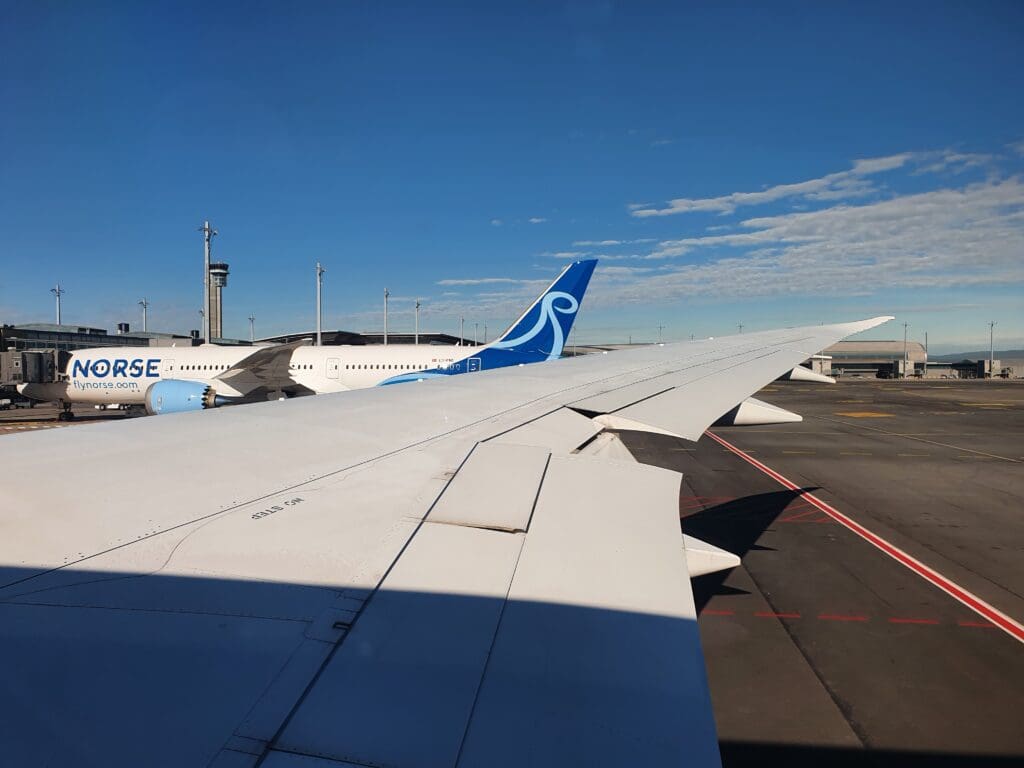
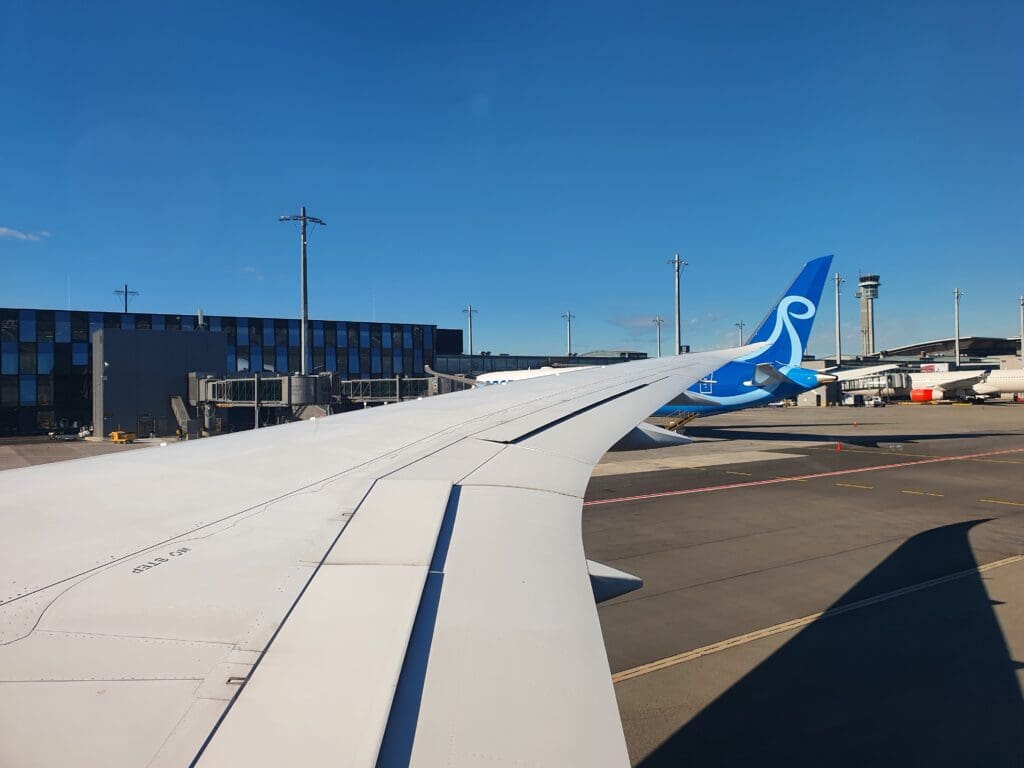
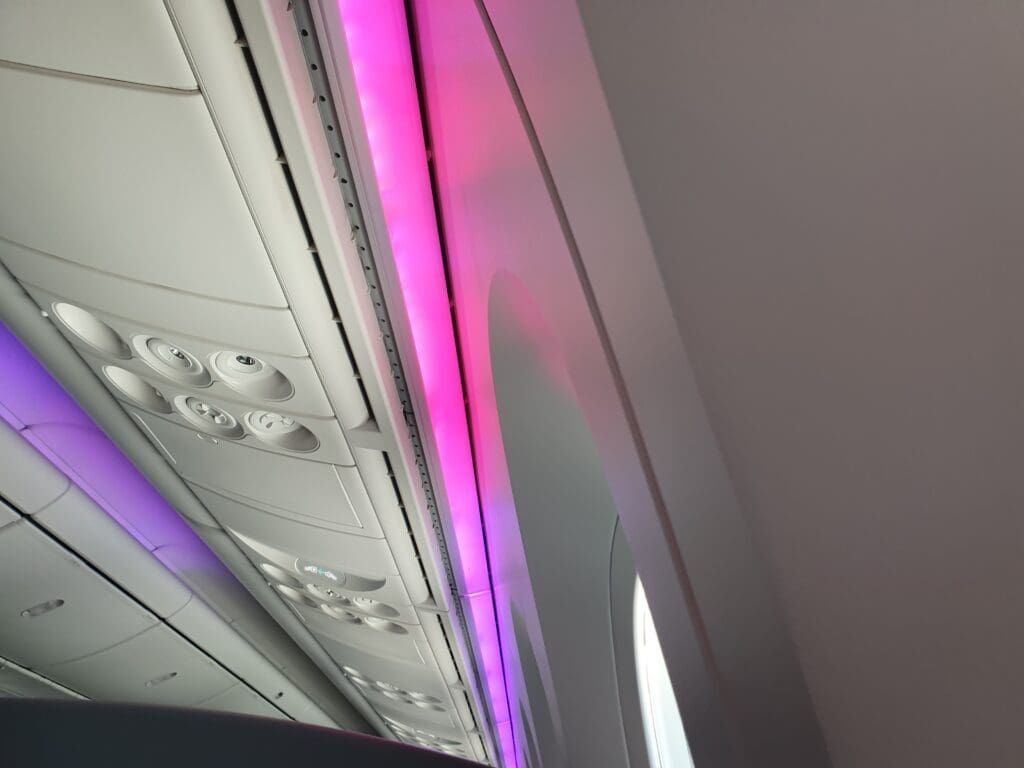
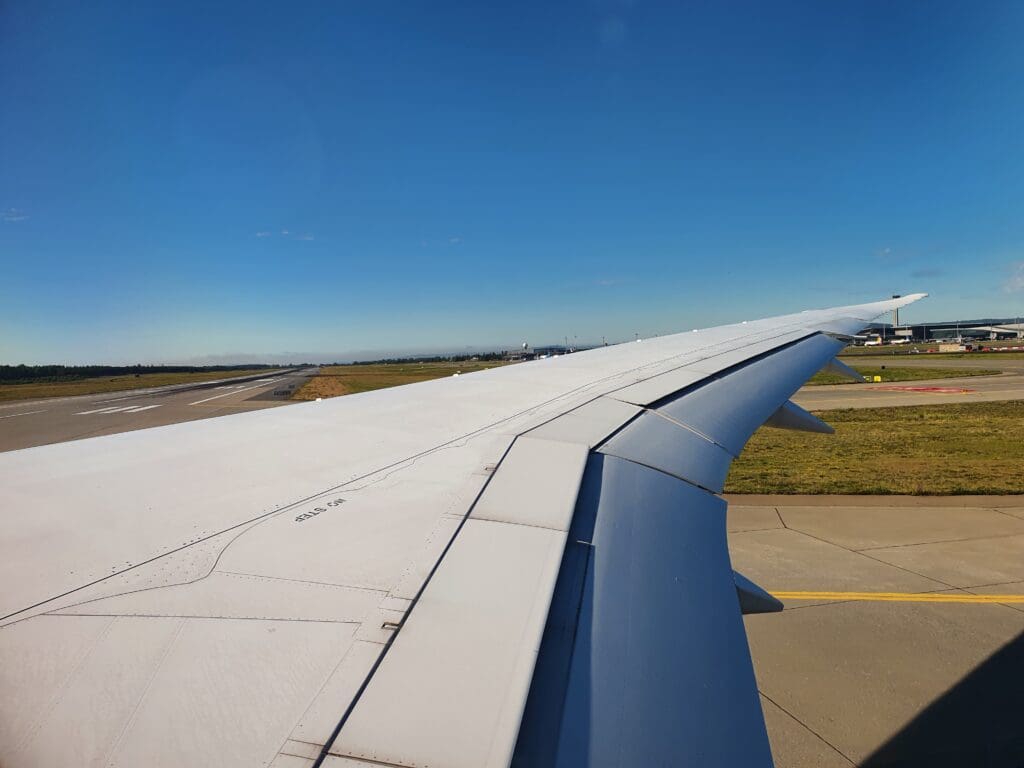
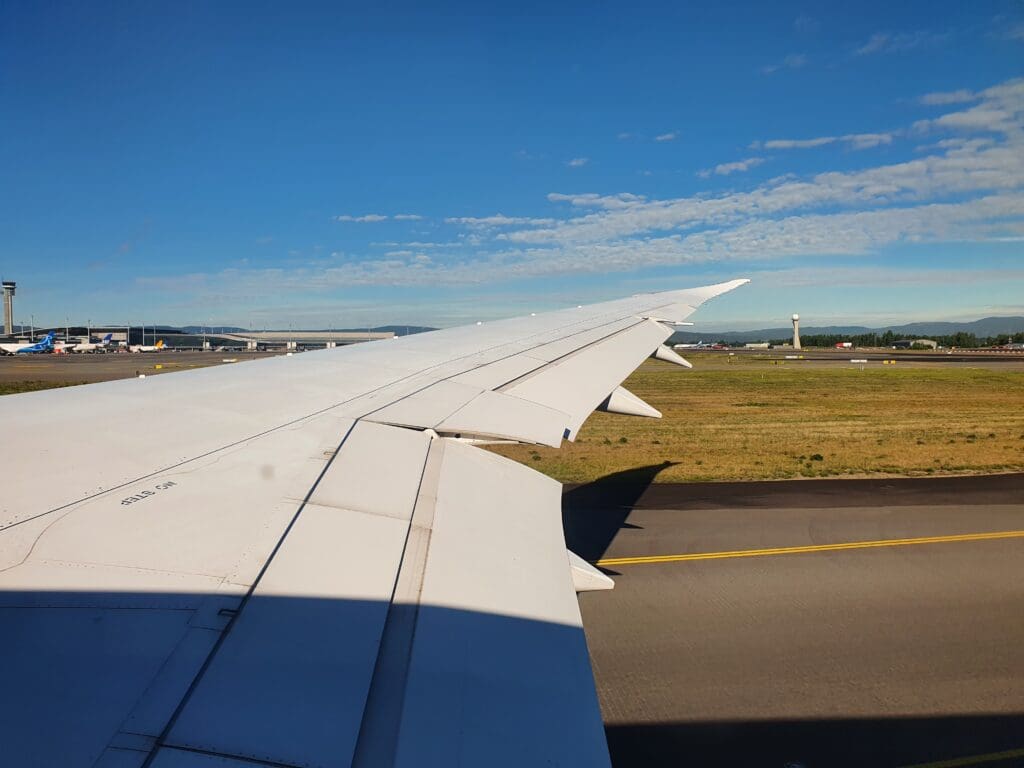
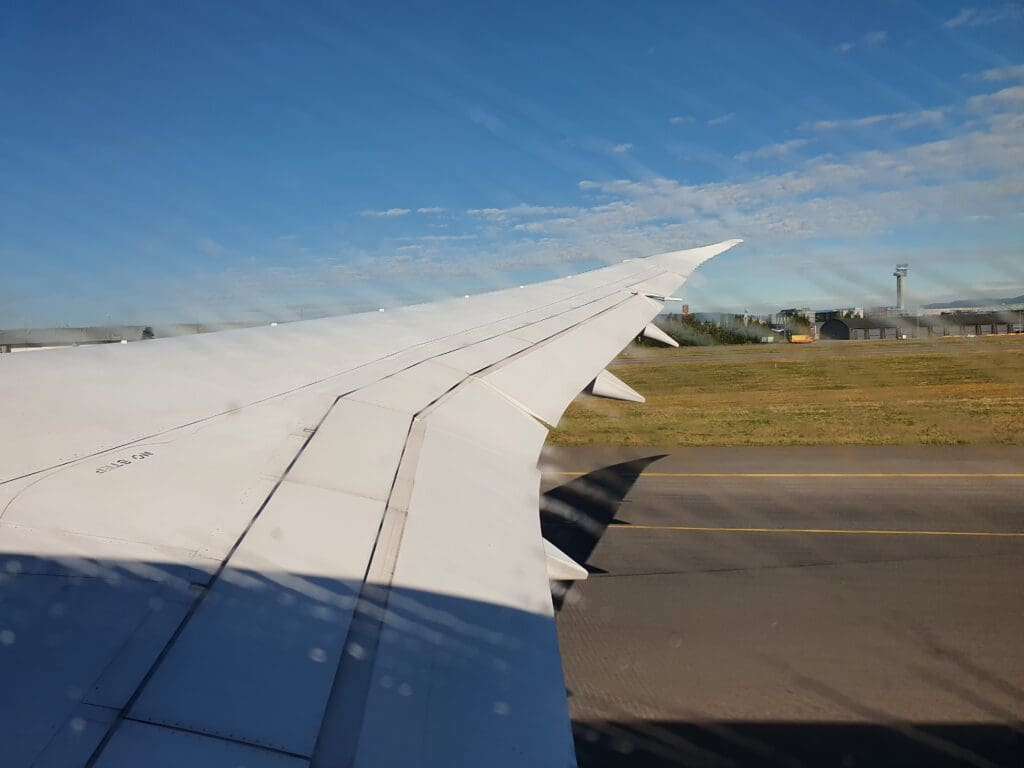
Once away from the terminal, only a short taxi was required to reach the end of the runway and at 0939 the Dreamliner slowly lumbered onto this without holding. Without stopping, the two Rolls-Royce engines spooled up, with the aircraft performing a gentle rolling takeoff. After accelerating past the terminal, eventually, the aircraft rotated upwards into the sunny Norwegian skies and climbed over the semi-rural areas that sit between Oslo Airport and the city itself. Already pointing roughly in the right direction, during the initial stages of the flight, the aircraft continued to fly on runway heading with only minimal banking.
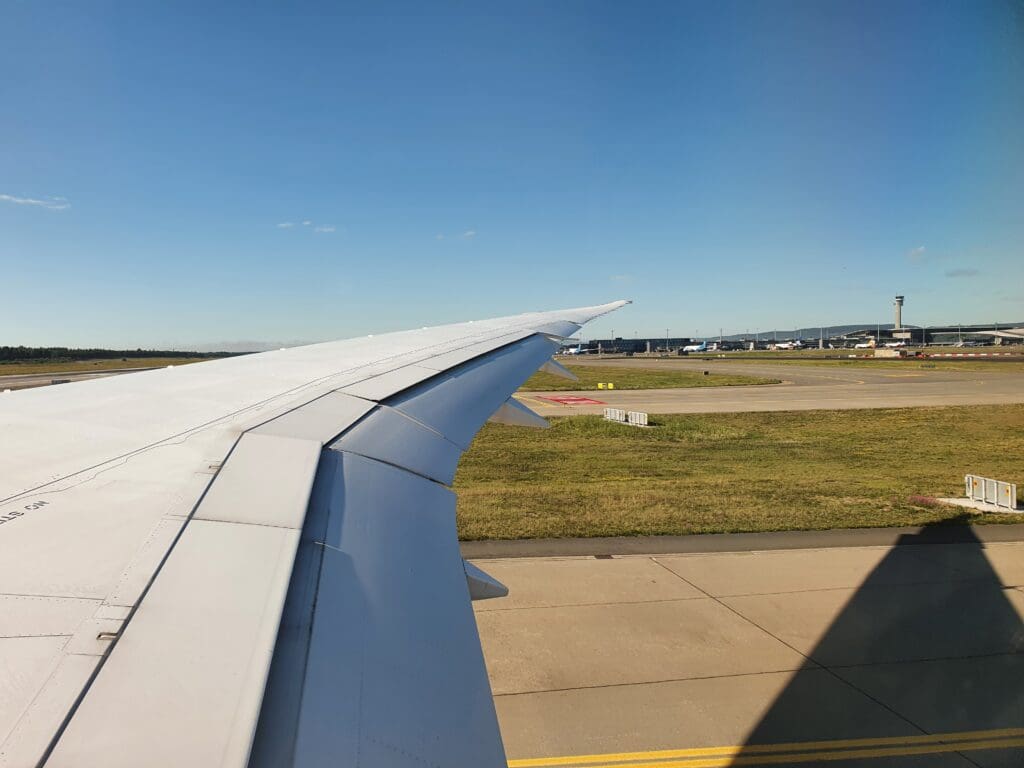
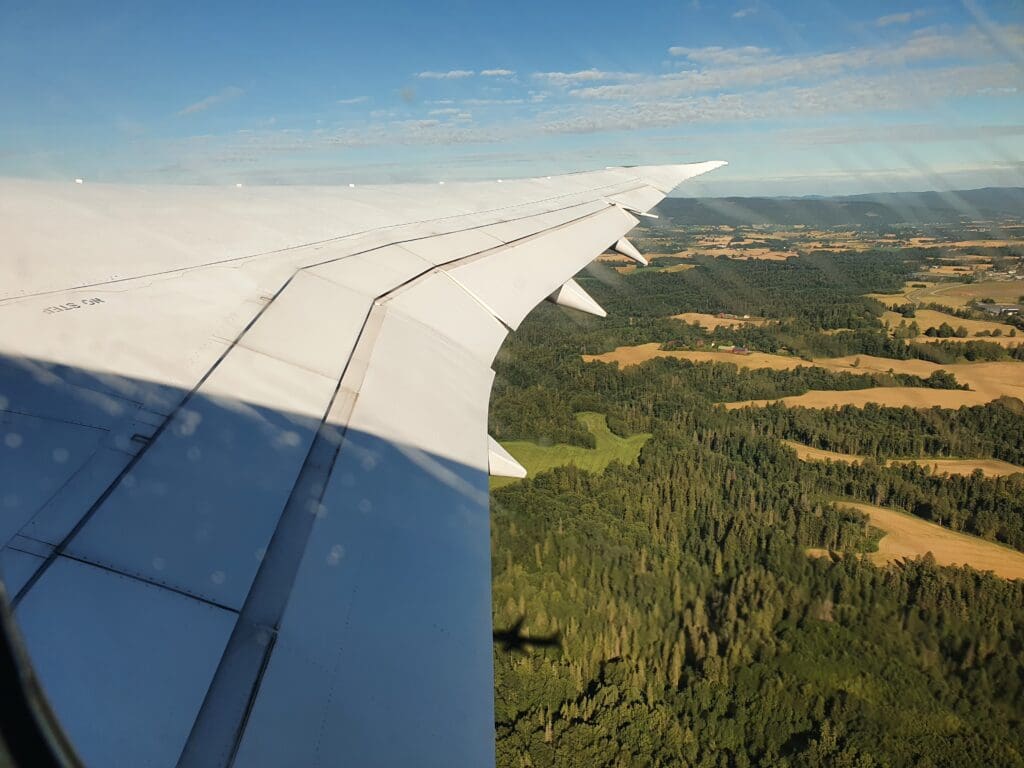
At 0945, the seatbelt signs were extinguished as the aircraft climbed up through 10,000 feet at which point one of the cabin crew members performed the usual announcement regarding keeping seatbelts fastened whilst seated and informed passengers that the buy-on-board service would commence shortly. At this time, the centre of Oslo appeared just to the west of the aircraft allowing for a good bird’s eye view of much of the city for a minute or so before the aircraft continued southwards over the Viken region of Follo, roughly following Oslofjord.
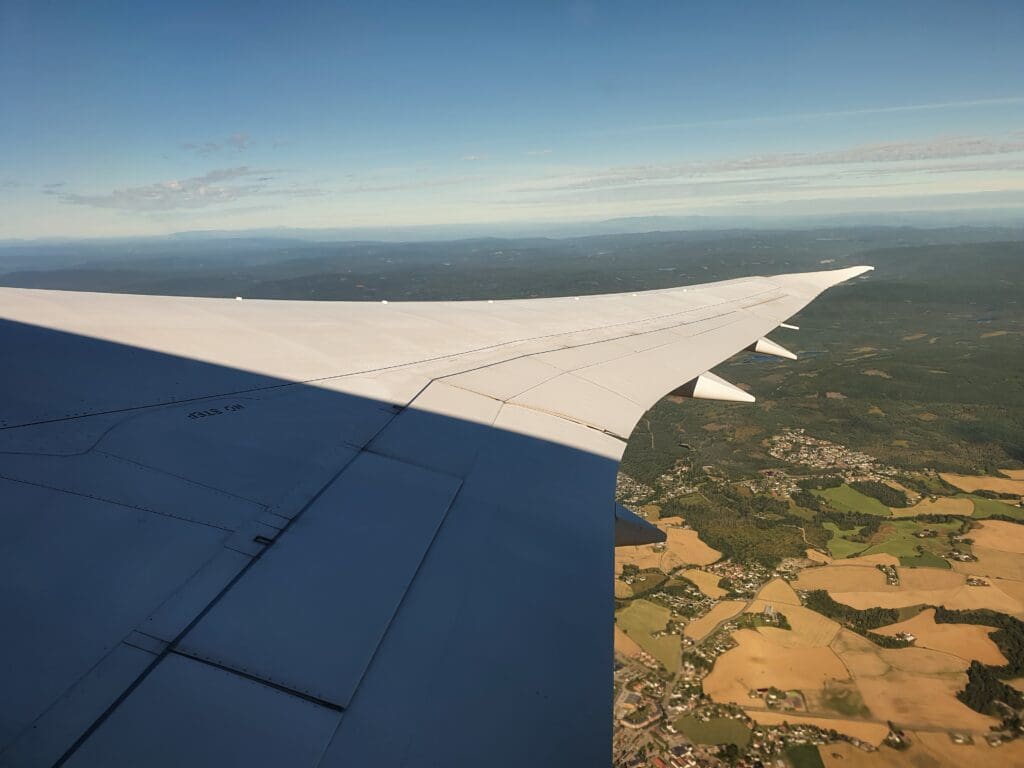
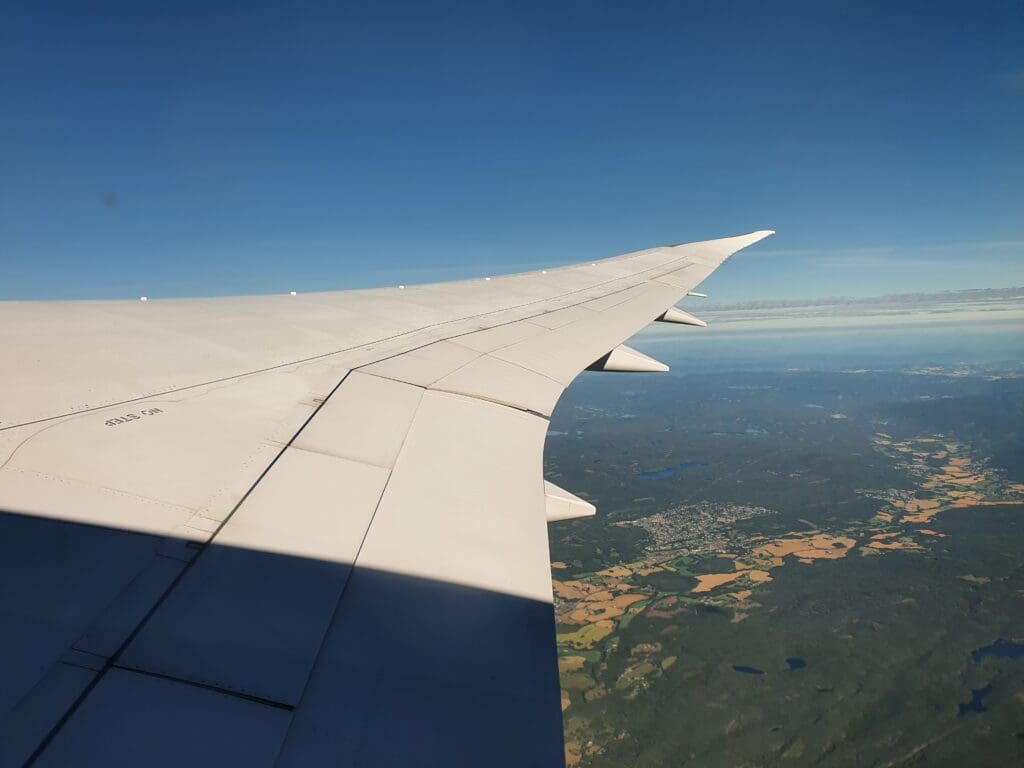
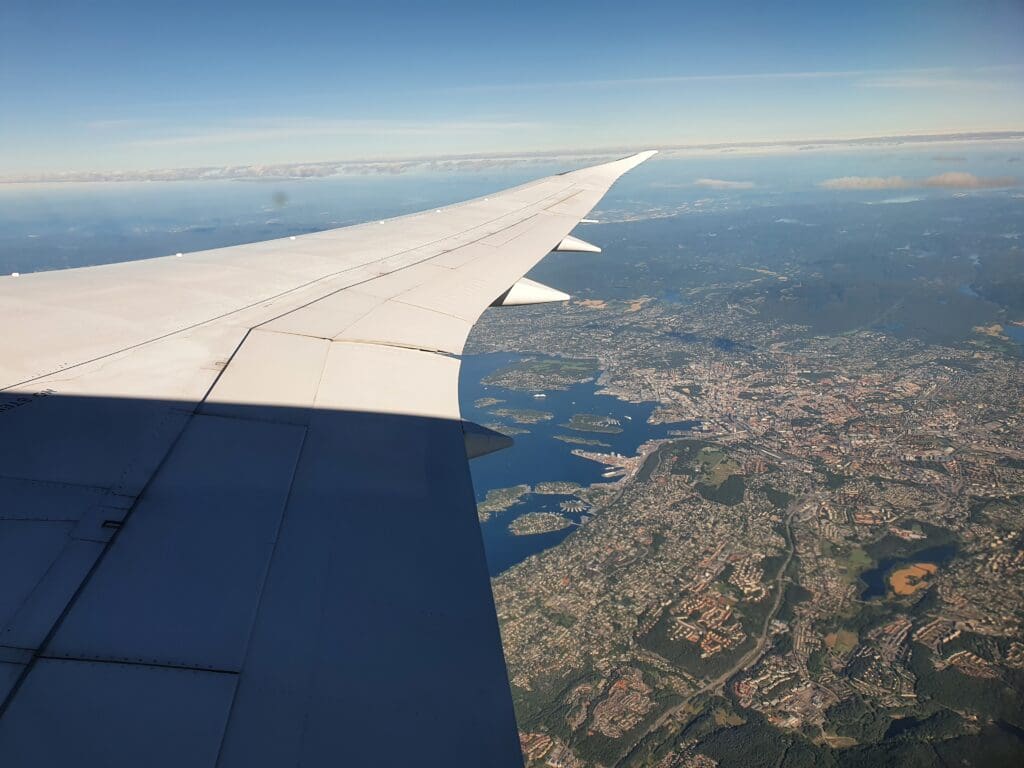
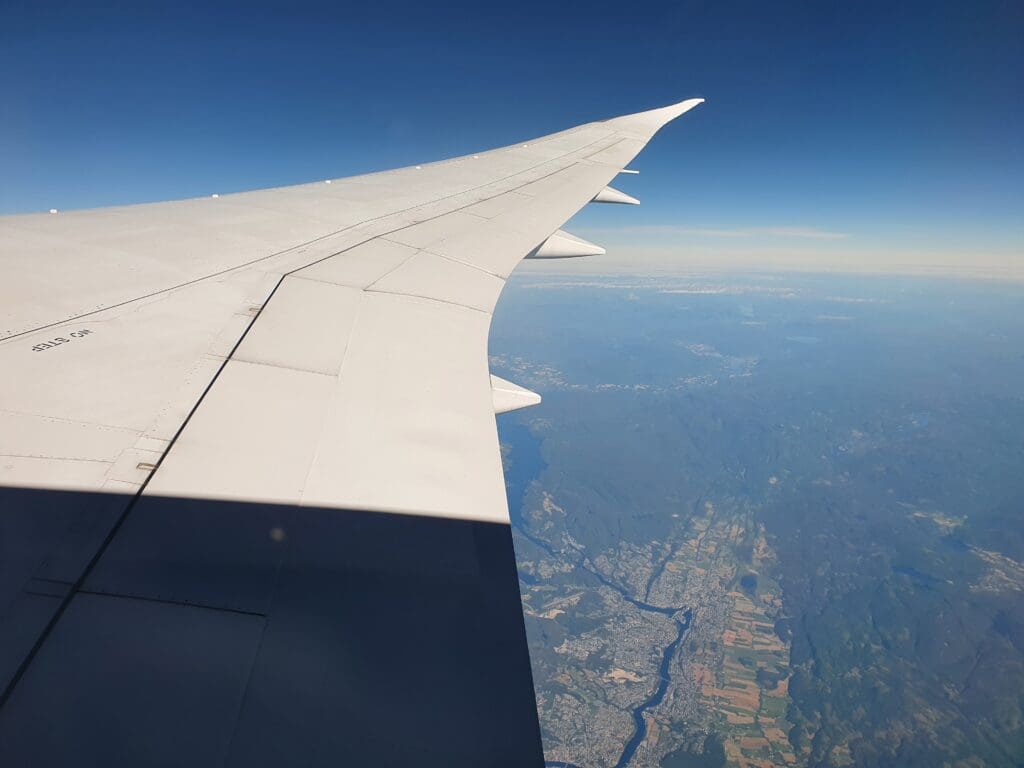
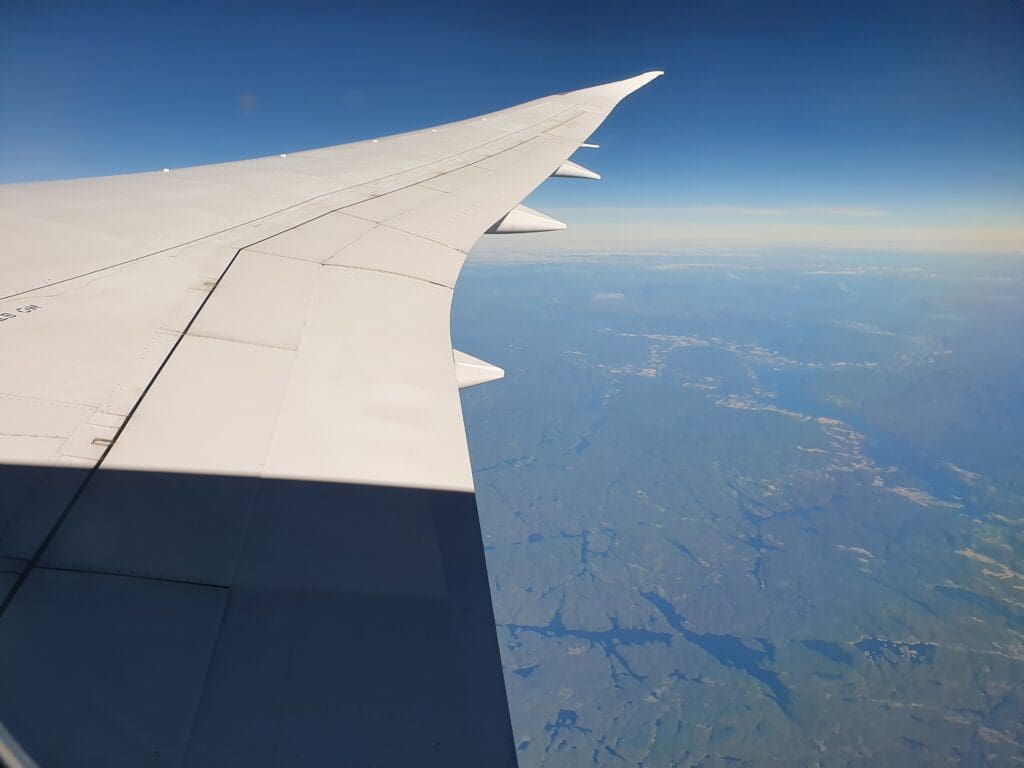
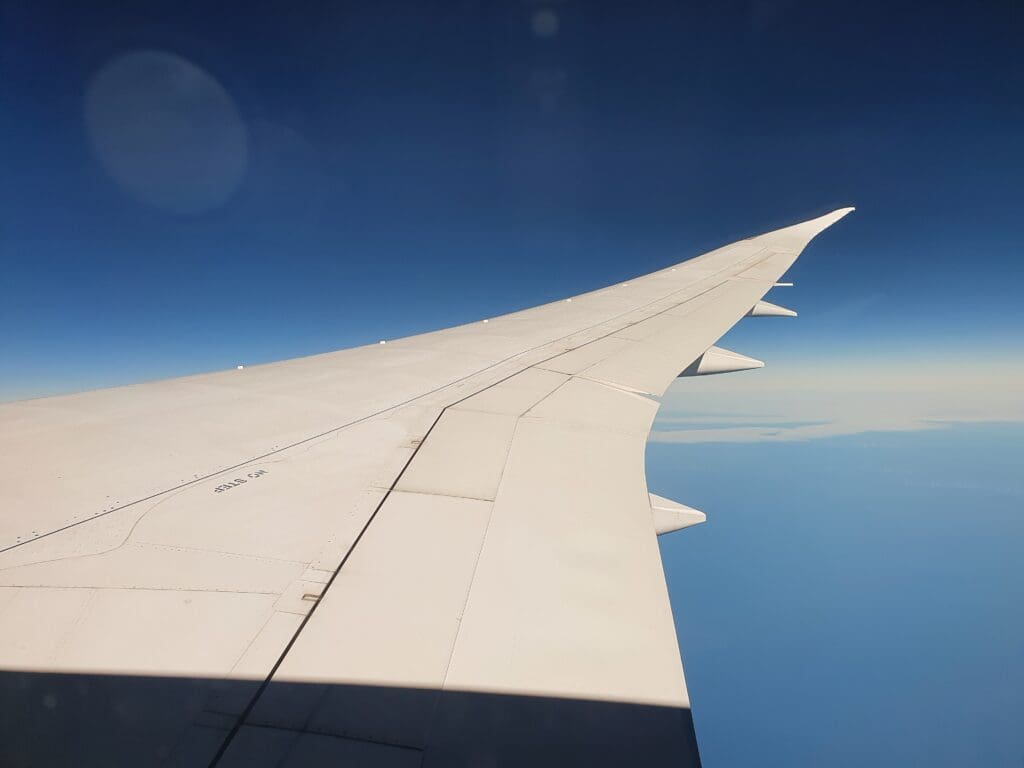
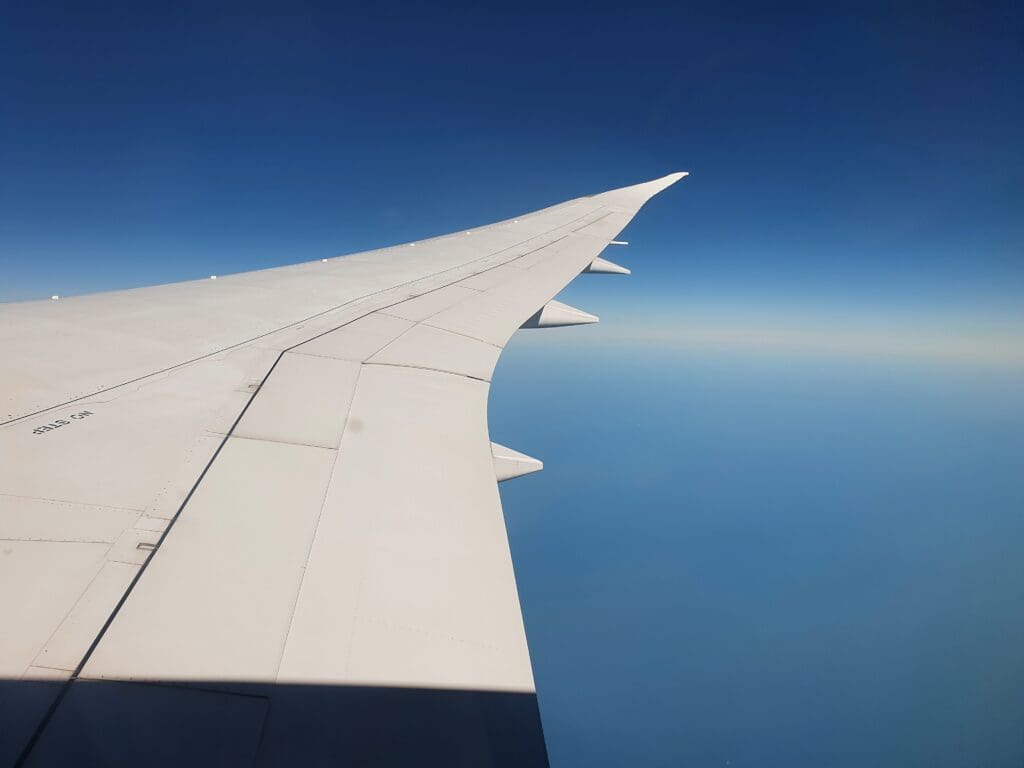
After gently turning to fly on a southwesterly heading, below the green landscapes rose slightly and transformed into hills, whilst the good visibility ensured that mountains could be seen off in the distance. Once the jet had crossed Oslofjord, the aircraft cut across the county of Vestfold og Telemark before reaching the coastline at which point the aircraft reached its initial cruising altitude of 43,000 feet. Once at the Norwegian coastline, the aircraft flew roughly parallel to this for around ten minutes, allowing for a good view of the bays, islands and fjords of this scenic part of Europe. At 1004, I managed to spot an airport nestled in by the coast and a neighbouring city. Turning out to be Kristiansand, after passing this the aircraft made its way out to sea at which point little could be seen other than the blue waters of the North Sea as well as the occasional ship and offshore platform until reaching the British coastline.
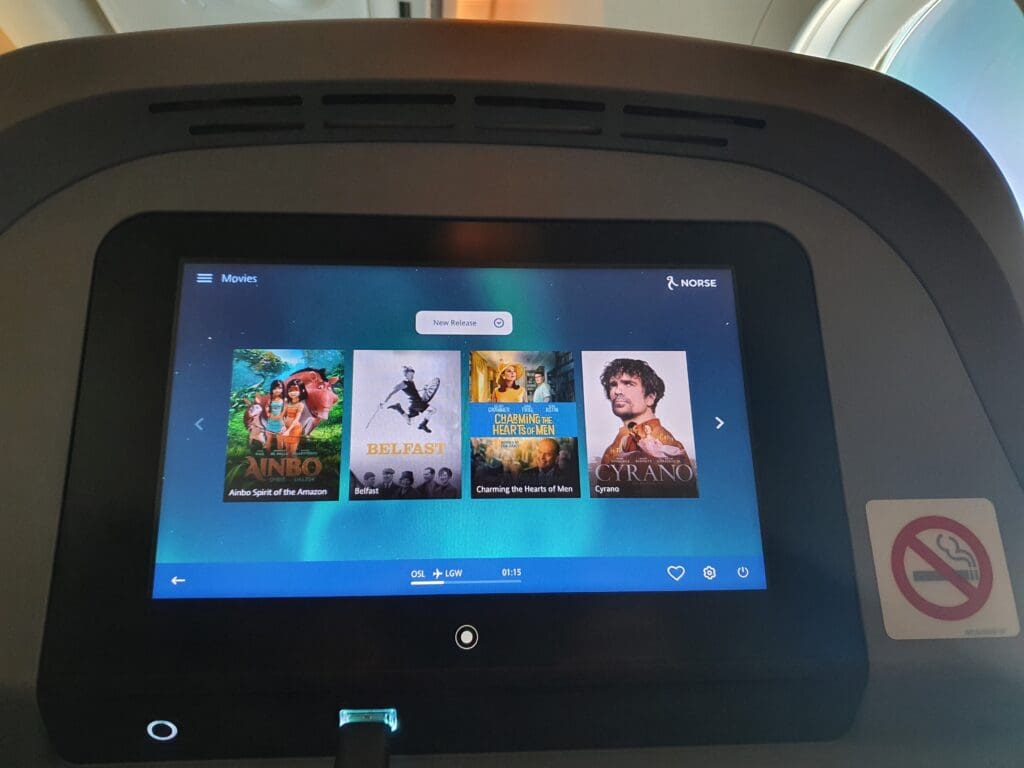
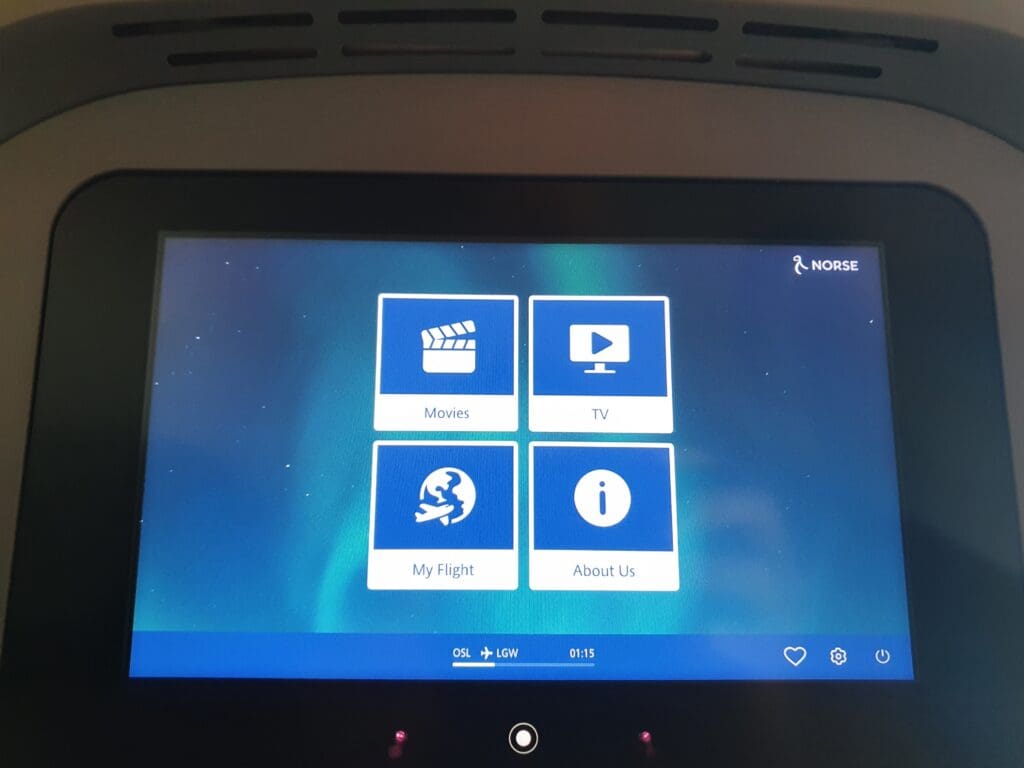
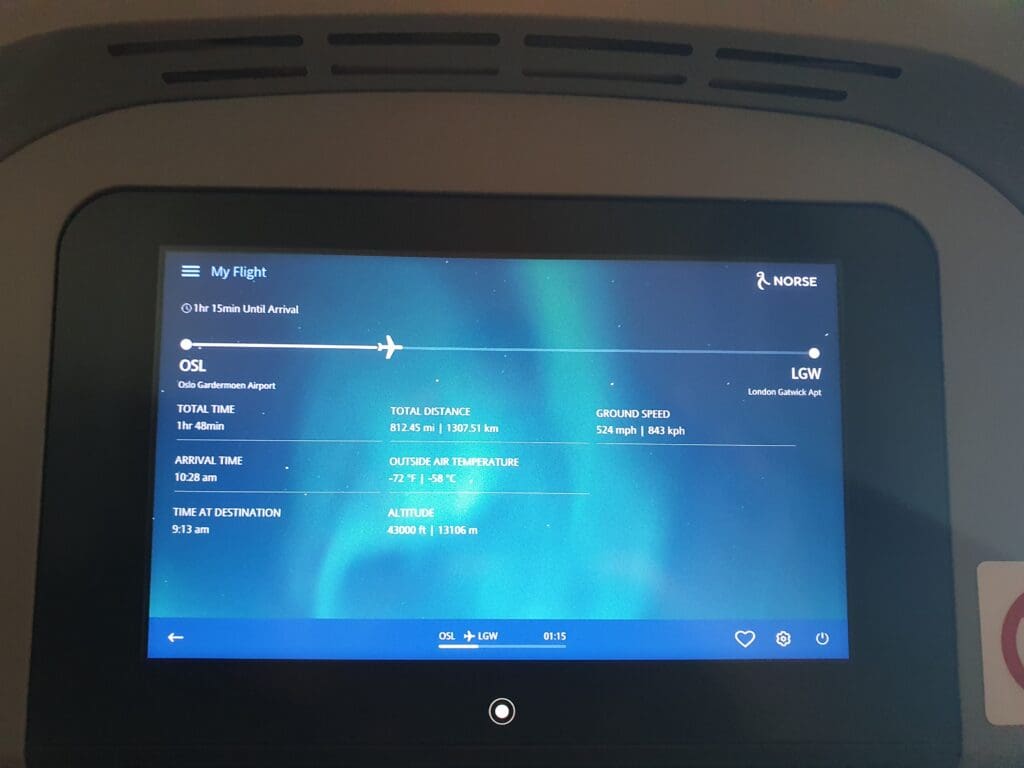
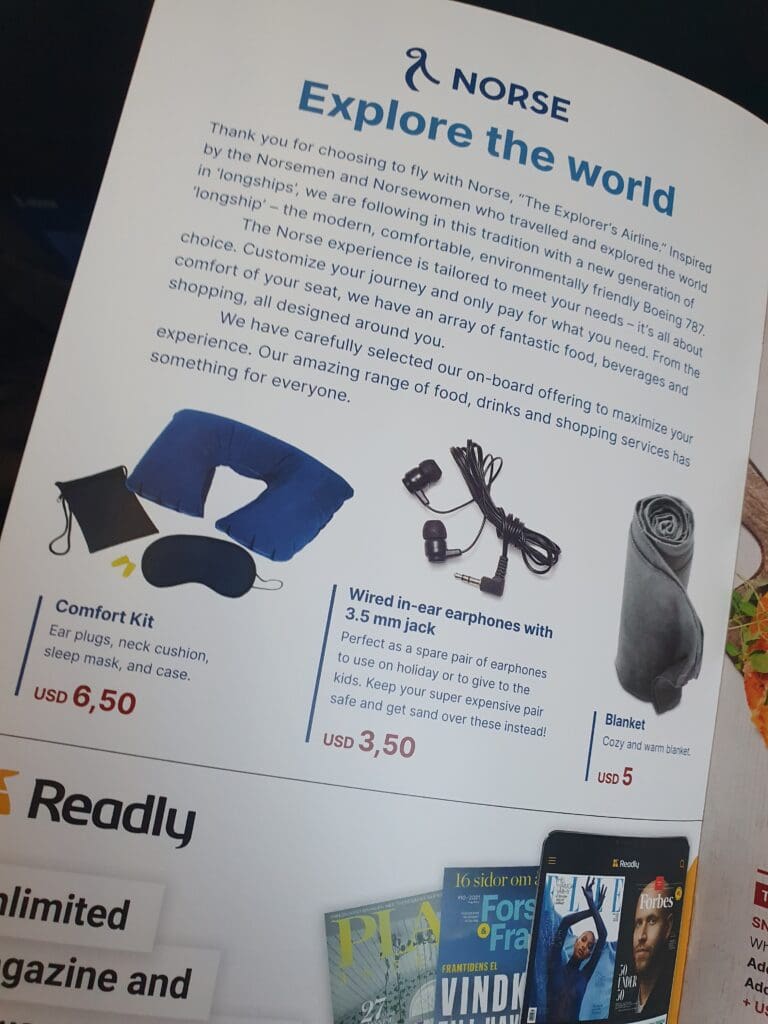
At the time of my flight, Norse Atlantic was yet to publish an inflight magazine in either ‘real’ or digital format and it is not known whether they will. With nothing to read, and no onboard wifi, the only form of Norse Atlantic provided entertainment came in the form of the inflight entertainment system. Overall, this was compact and easy to navigate, whilst the screen itself proved to be of decent quality and quick to load between pages. This offers just four options for passengers – about us, flight information, movies, and television programme pages. However, examining the content provided by the latter two, a fair number of films, including the latest releases and television programmes were on offer – with these commencing without any sort of advertisements. Not wanting to watch anything, I turned to the flight information page although I was slightly disappointed to see that this simply displayed some facts about the flight although it lacked any sort of moving map. My one other complaint, or rather, slight surprise, was that despite the fairly high standard of English of many Norwegians, the system was available in English only. Finally, being a low-cost carrier, no complimentary headphones were provided, leaving those lacking wired headphones and wishing to watch anything with no option other than to purchase these for $3.50.

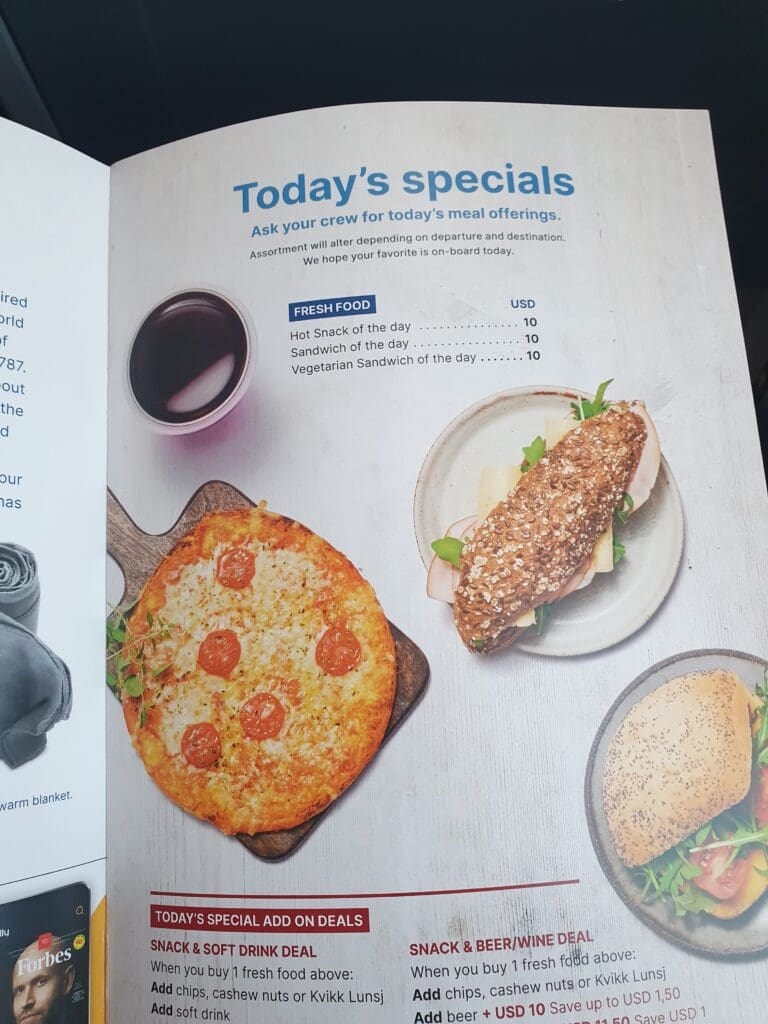
As the aircraft cruised southwest over the North, or should I say, Norse, Sea, four crew members armed with two carts could be seen heading down the aircraft’s two aisles. That morning, a fair number of passengers could be seen partaking in purchases and thus progress seemed to be rather slow. Norway is not exactly known for cheap goods and the Flight Mood menu seemed to reflect this. With prices listed in US Dollars only, a sandwich would have set me back a total of $10, with no deals on offer combining this with a drink or a snack. Meanwhile, a chocolate bar is priced at $3.50, as is a bottle of water, whilst a 330ml of soft drink such as Coca-Cola or Fanta comes in at $3.50. At 1045, two cabin crew members reached my row and asked if I wanted anything in a very friendly and polite manner – although this was not greatly surprising seeing as their boss, Mr Larsen, could be seen standing behind them and watching their every move! Not wanting to fork out for the overpriced snacks, I declined their offer before they continued onwards to the rear of the Economy cabin.
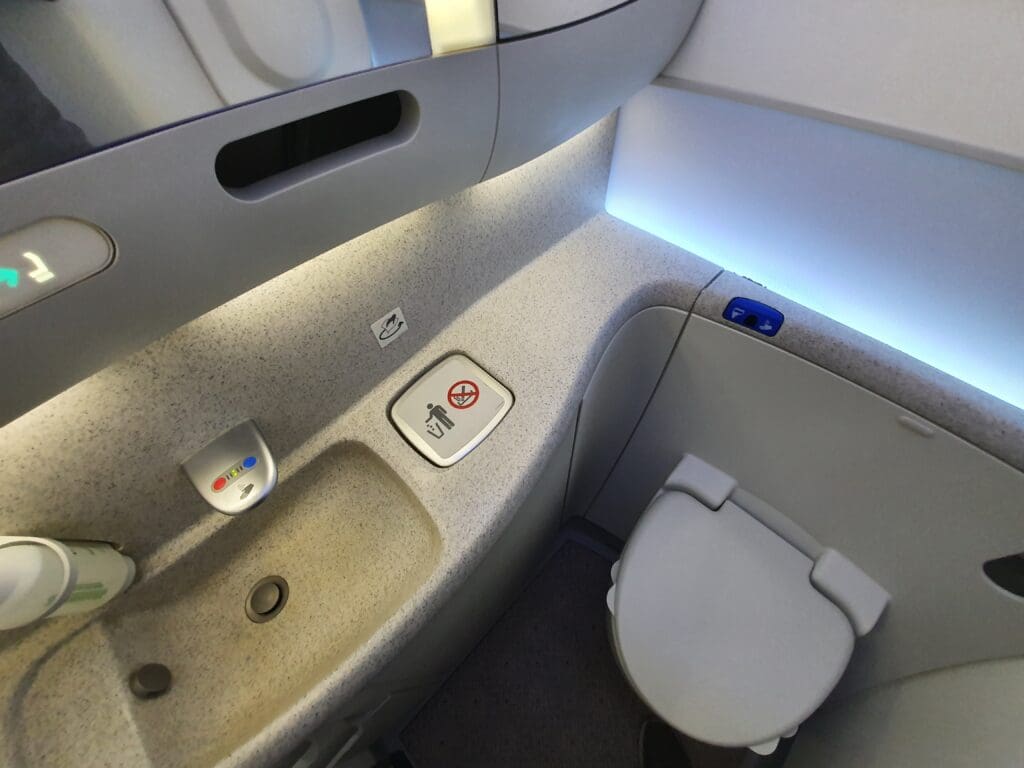
At this stage of the flight, the aircraft bumped around a bit and the Dreamliner descended to a lower cruising altitude of 33,000 feet where it settled for a few minutes. At this time the First Officer made a barely audible announcement during which they provided an update on the flight’s progress and advised that we would be commencing our descent shortly before giving an update on the weather and wishing us a nice stay in London. With not too much longer to run, at this time I decided to make a trip to one of the lavatories that sit between the two Economy cabins. As I opened the door and entered this, I was very pleased to find this to be in a clean, tidy and presentable state, serving its purpose and stocked with all the basics you would expect to find. Meanwhile, as I was inside this, the Purser performed an announcement regarding the duty free sales and this commenced just as I returned to the cabin. Unlike the buy-on-board snack service, this appeared to have far fewer takers and the crew sped through the cabin making very few stops.
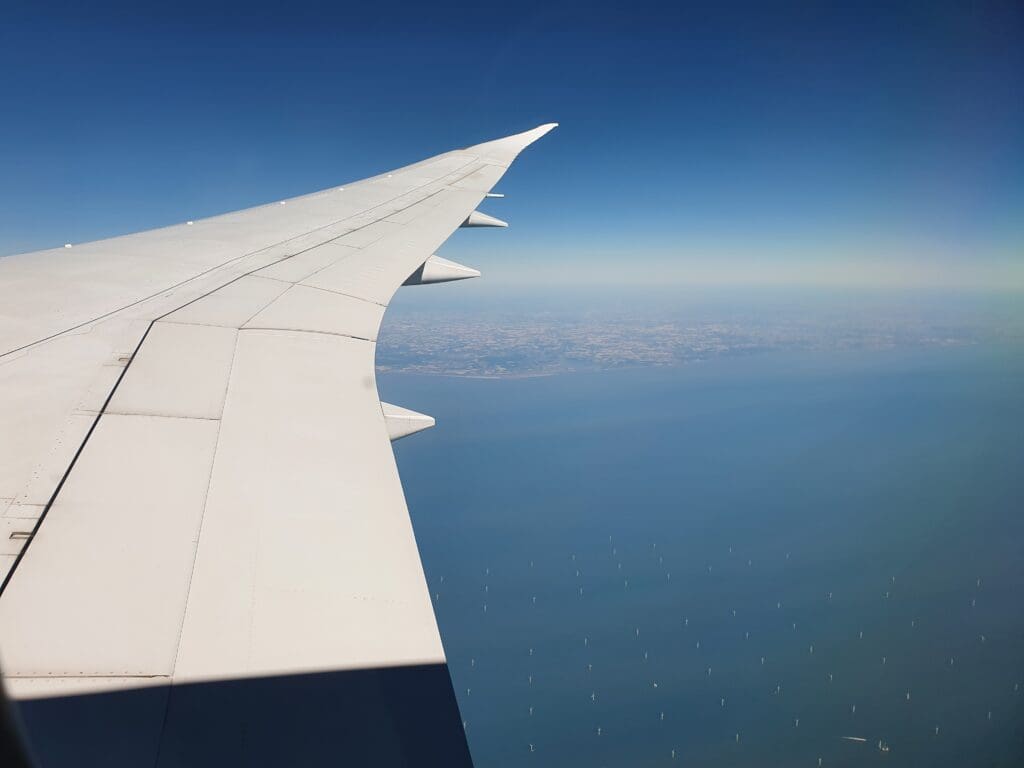
A short time after settling back into my seat, at 0958 BST the British coastline appeared in the distance, with the Norfolk seaside towns of Lowestoft and Great Yarmouth coming into view, beyond which the country’s drought-suffering brown and yellow fields could be seen. Continuing to fly southwest, the Dreamliner descended along the coastline without crossing this and soon Norfolk transformed into Suffolk where I managed to spot Harwich and Ipswich, followed by the Essex seaside town of Clacton-on-Sea a short time later. At 1006, the seatbelt signs were reilluminated and soon the Captain made an announcement requesting the crew to prepare the cabin for landing. This was then followed by an announcement from the Purser with the usual pre-arrival warnings regarding seatbacks, seat belts and tray tables.
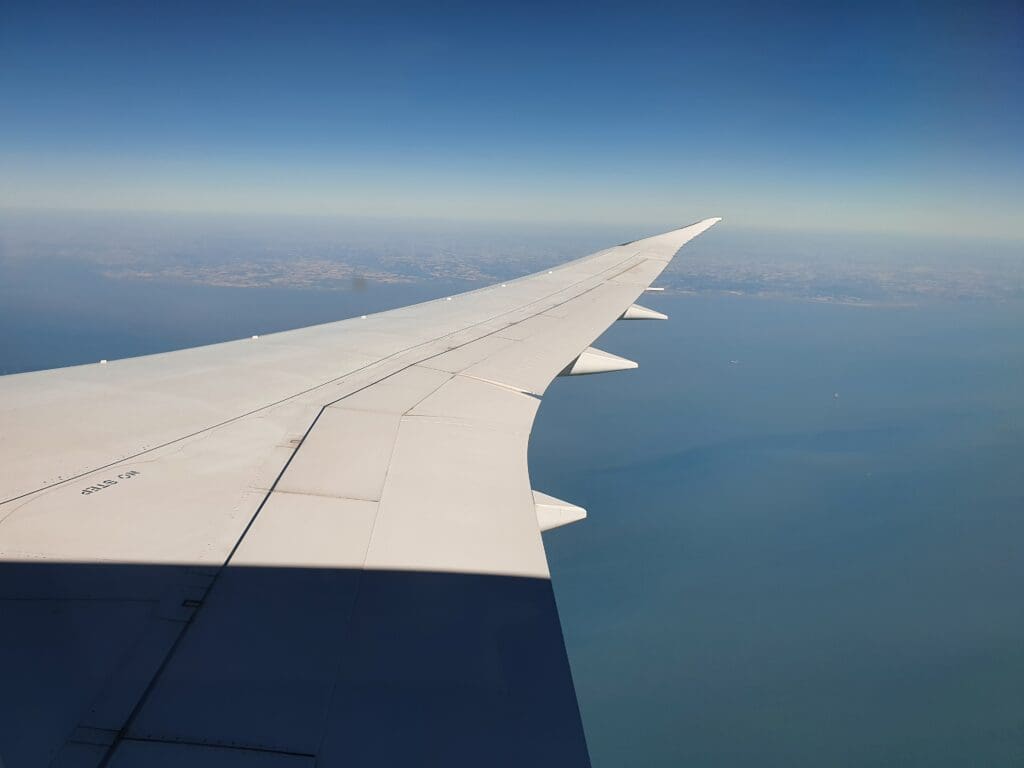
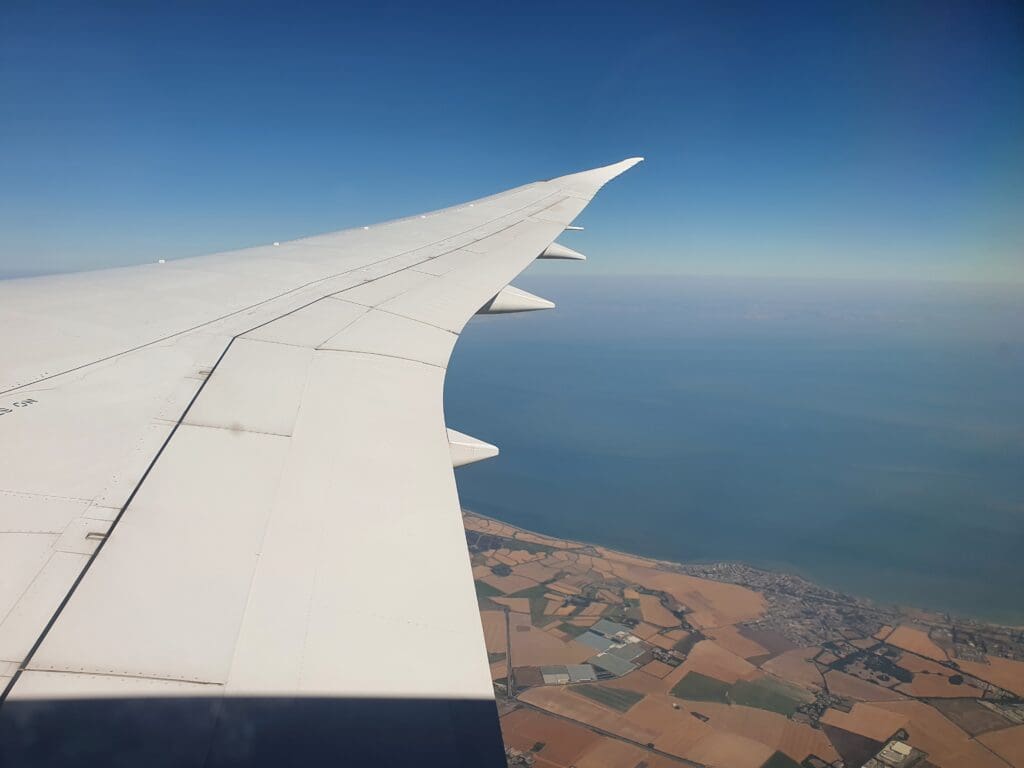
A little over an hour after the Dreamliner had left Norway’s picturesque coastline behind, the aircraft made landfall over the English county of Kent. Specifically arriving over the Isle of Thanet peninsula, located just to the south of the seaside town of Margate. A short time later, a small portion of the old airport at Manston could be seen after which the aircraft trundled westwards over the countryside of deepest Kent, crossing over the mostly flat brown and yellow fields in dire need of a torrential downpour. A short time later, the town of Ashford could be seen before the Dreamliner crossed over into the skies of the county of East Sussex and journeyed onwards towards the South Coast. Inside the cabin, as the aircraft journeyed westwards the crew could be seen passing through ensuring all was set for our imminent arrival into London Gatwick.
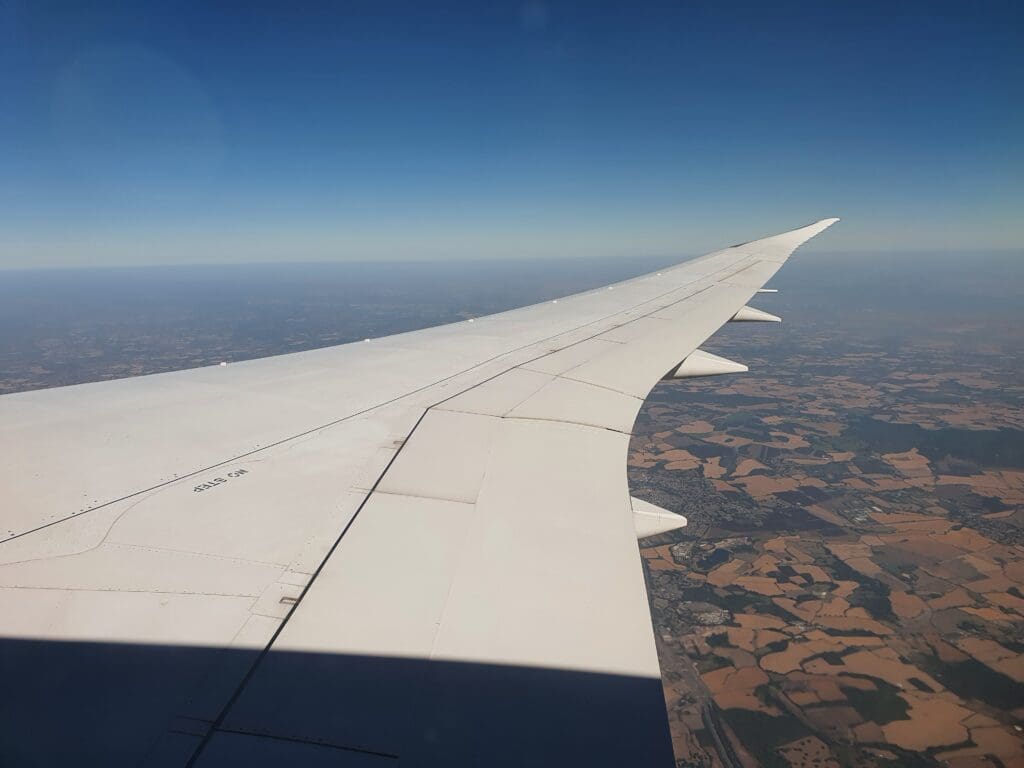
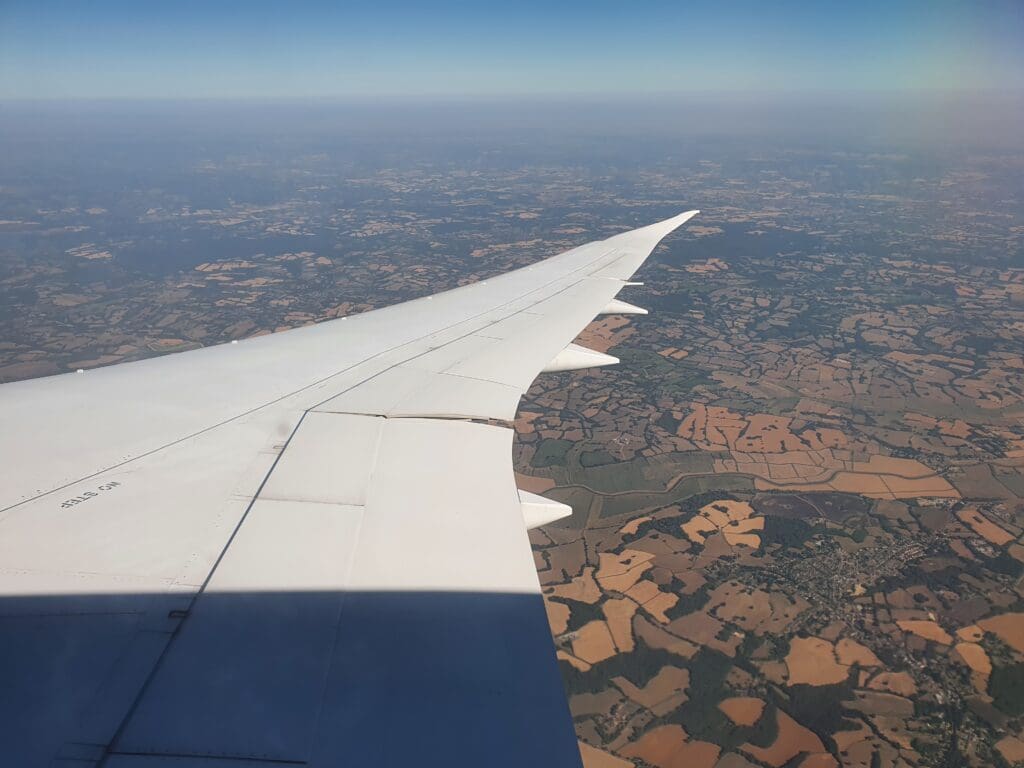
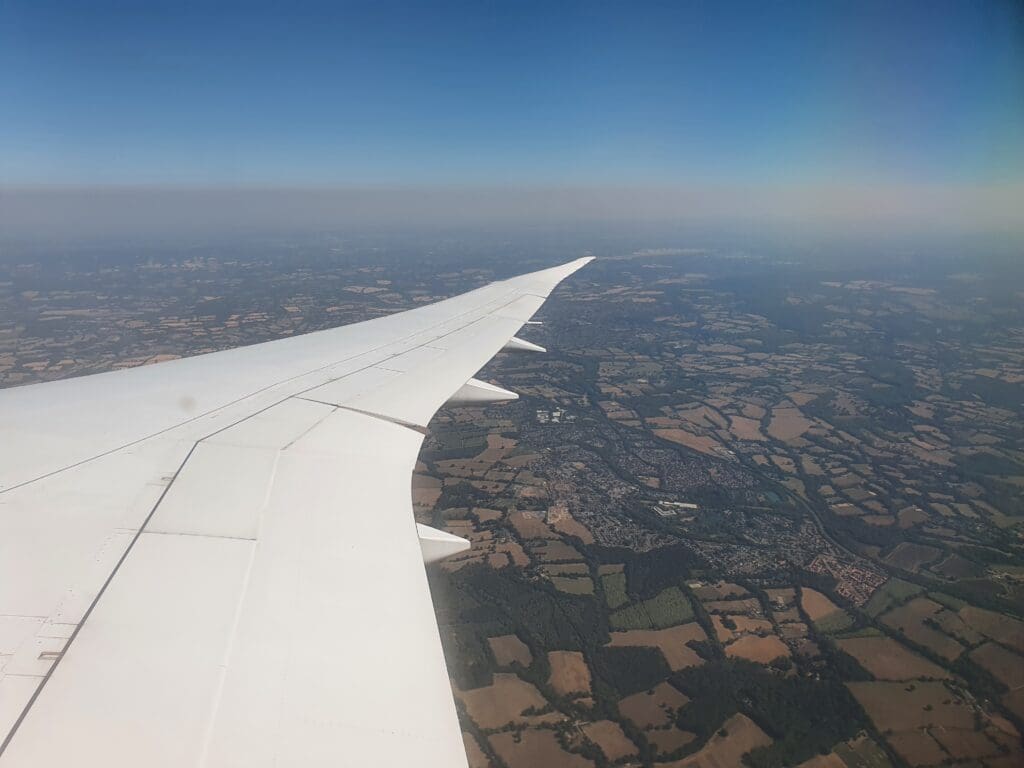
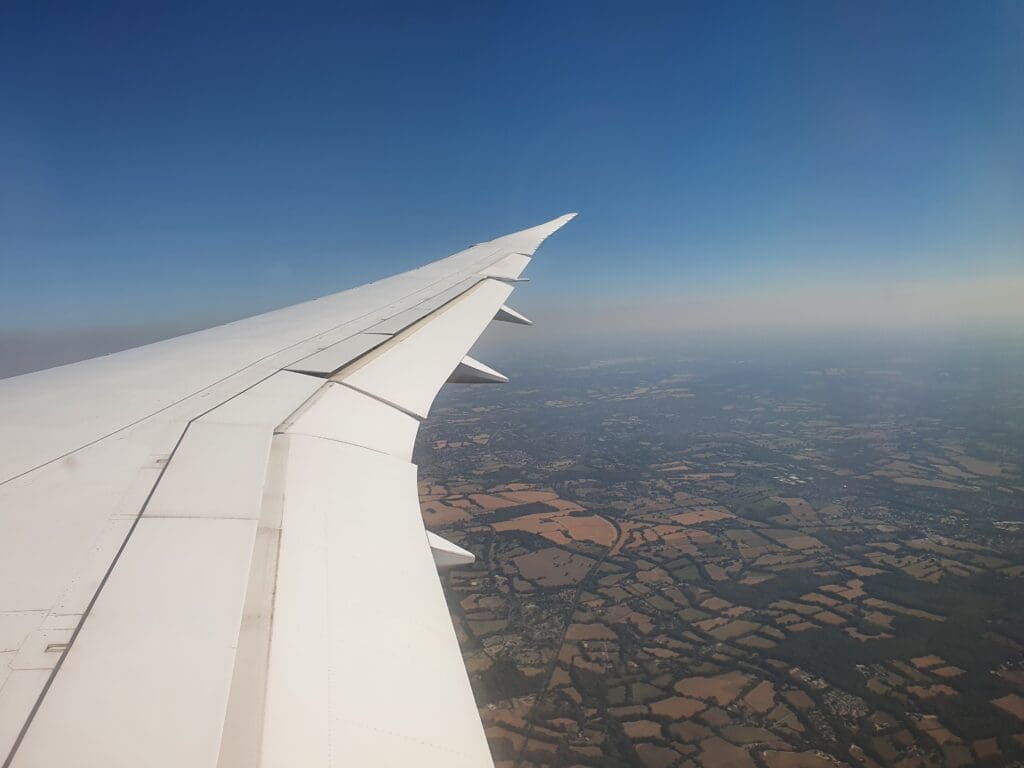
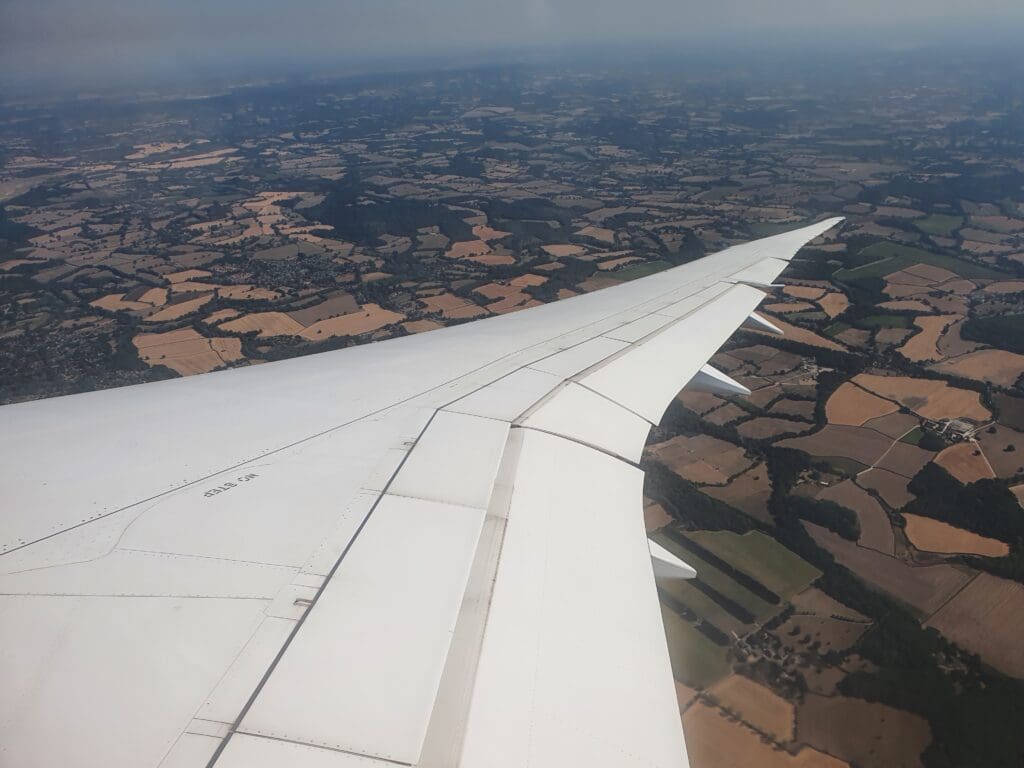
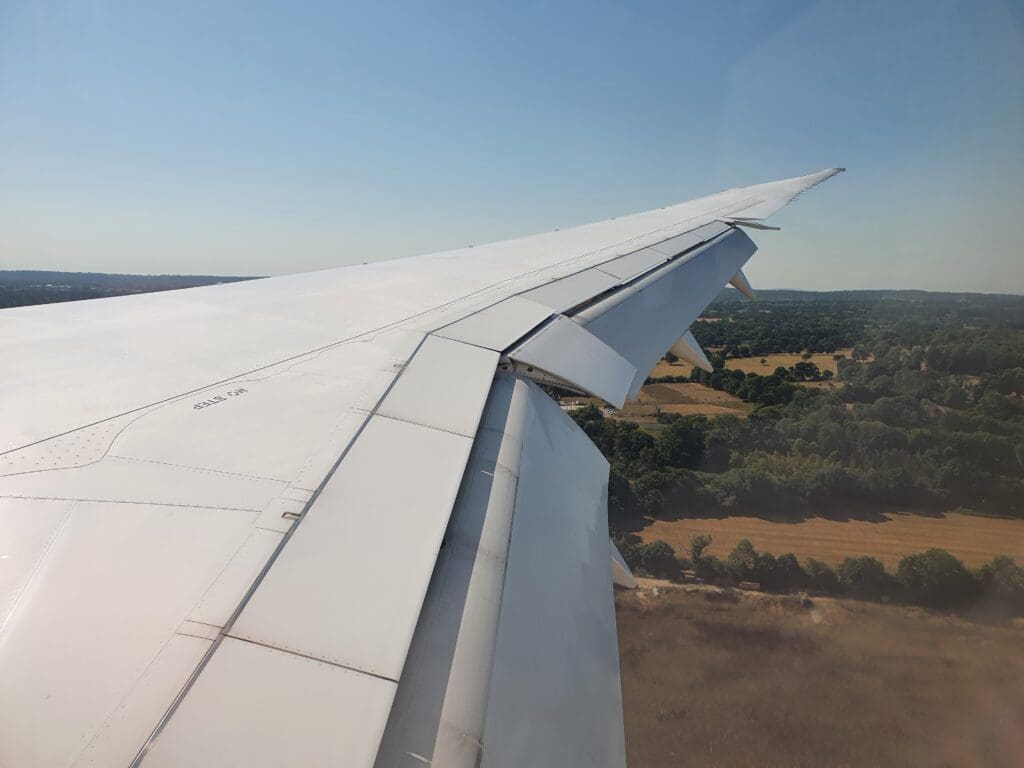
Once safely inside the skies of East Sussex, the Dreamliner headed westwards across the southern portion of the High Weald AONB and levelled off at 7,000 feet allowing for a good birds eye view of the mostly flat landscapes below. Meanwhile, at this stage of the flight, those on the opposite side of the aircraft would have likely been treated to views of the coastline and English Channel to the south. After several minutes, the aircraft continued its descent and the town of Crawley along with the sprawl of Gatwick Airport could be seen in the distance to the north. Soon enough, the flaps were partially extended in preparation for our arrival and upon reaching the small West Sussex village of Billingshurst, the aircraft turned around and began flying back towards Gatwick Airport.
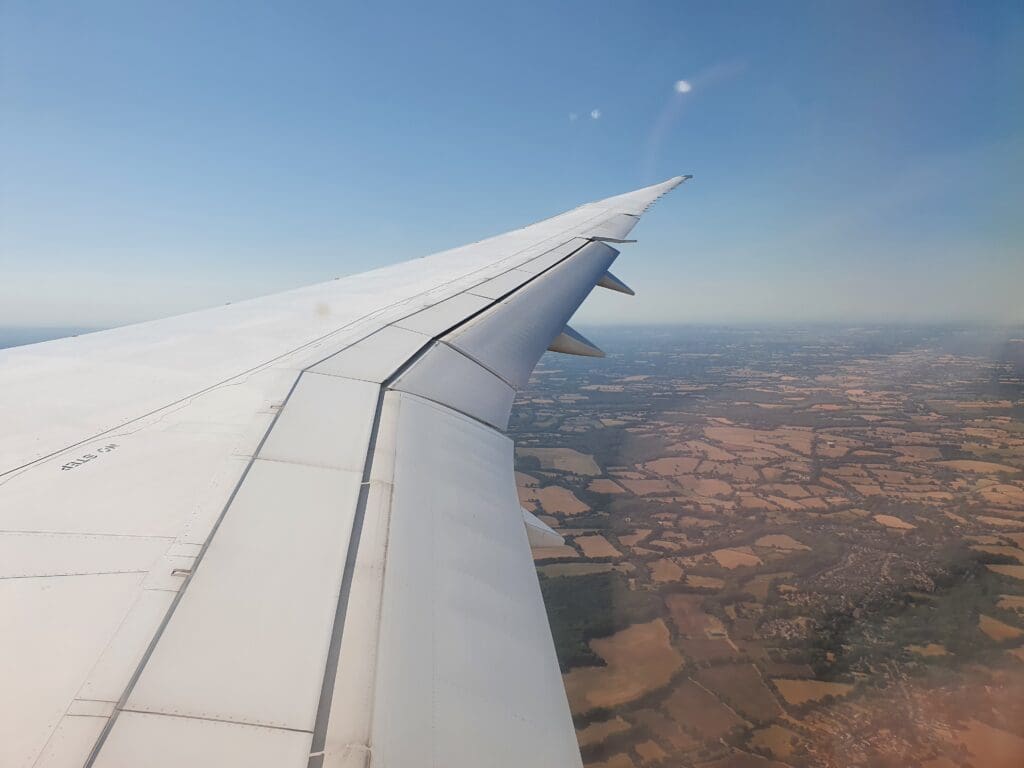
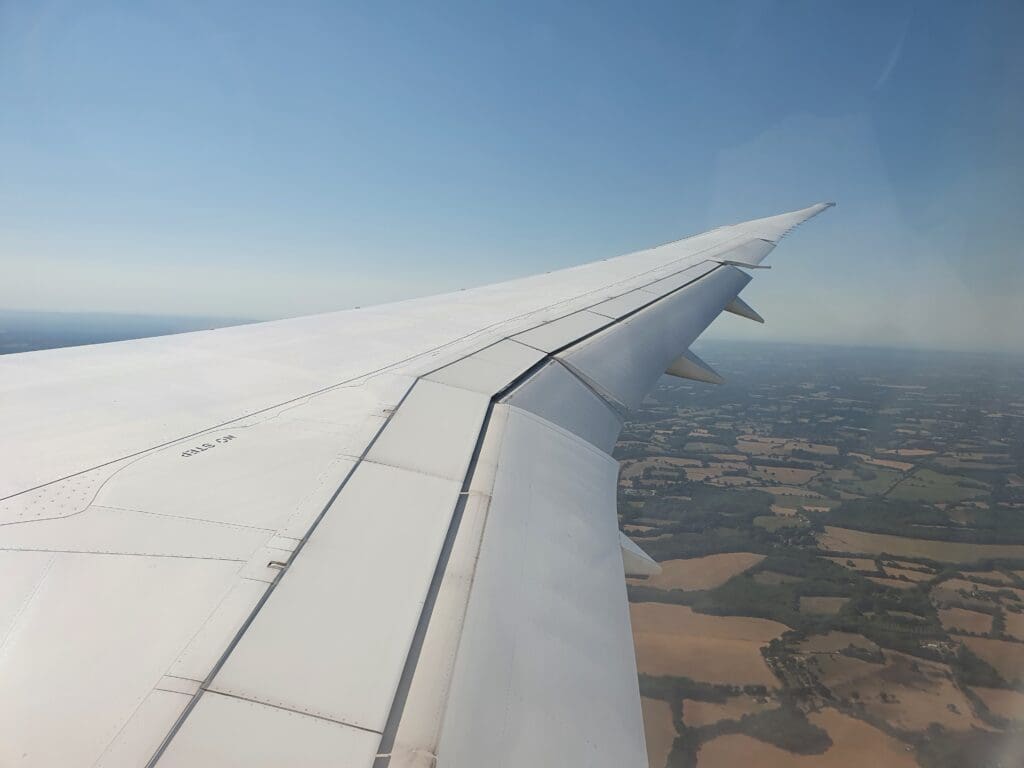
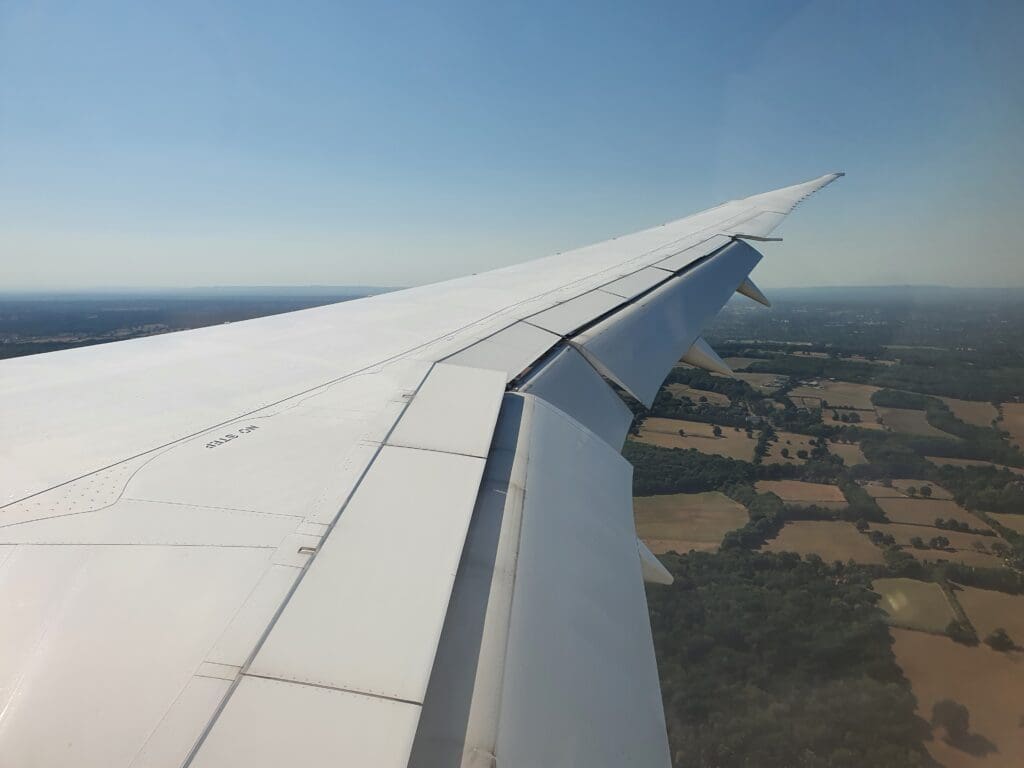
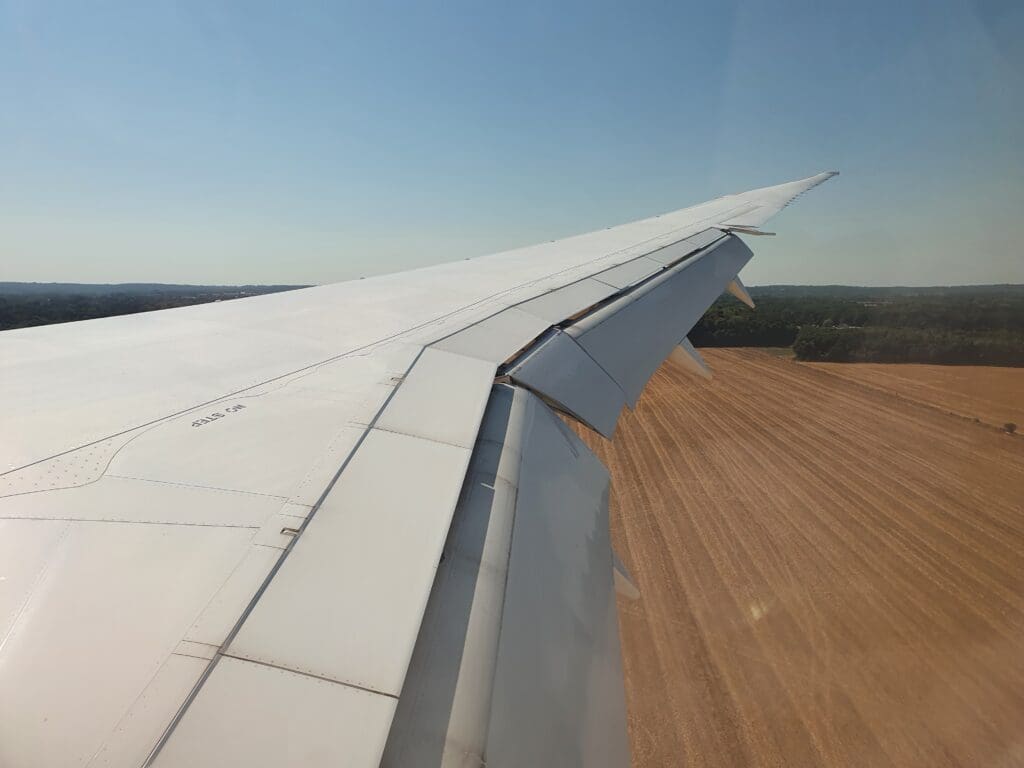
Once lined up for an approach to Gatwick Airport’s Runway 08R, the aircraft bounced around a little and soon full flaps and the landing gear were extended as we neared the airport. Continuing to descend over the fields of West Sussex, at 1035 the Dreamliner whizzed over Gatwick’s perimeter fence before making a very gentle touchdown on the runway. Perhaps with nothing on approach immediately behind the Dreamliner and wanting to minimise taxi time, once on the ground the aircraft decelerated rather gently before vacating the runway to the left near the end of this.
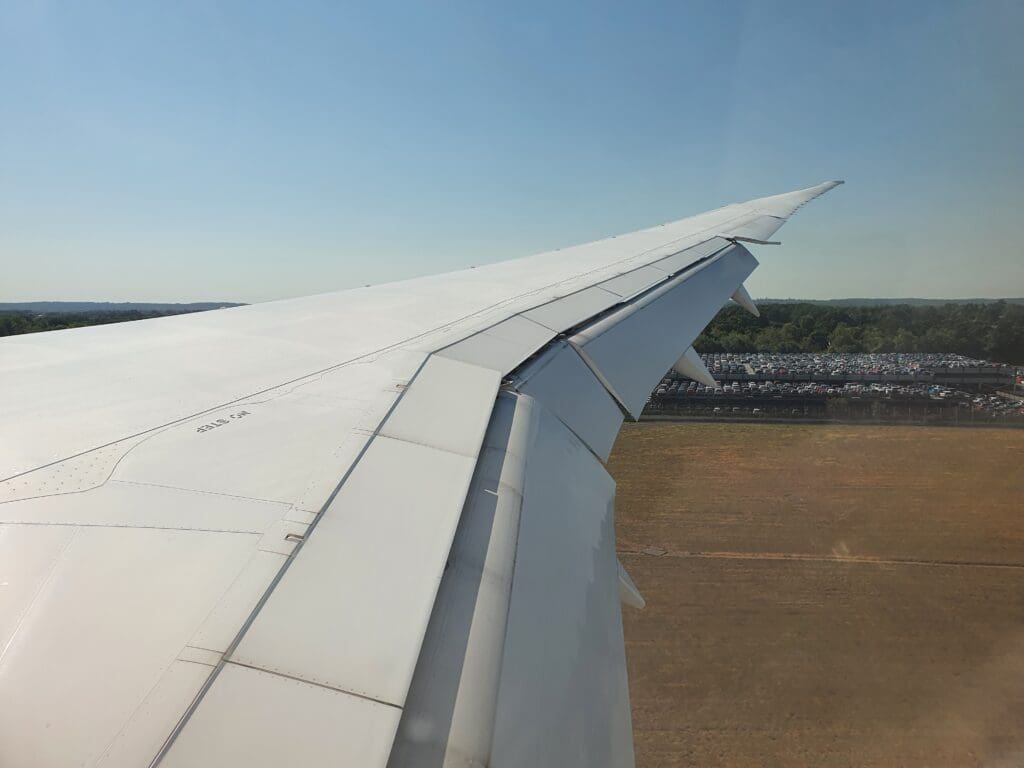
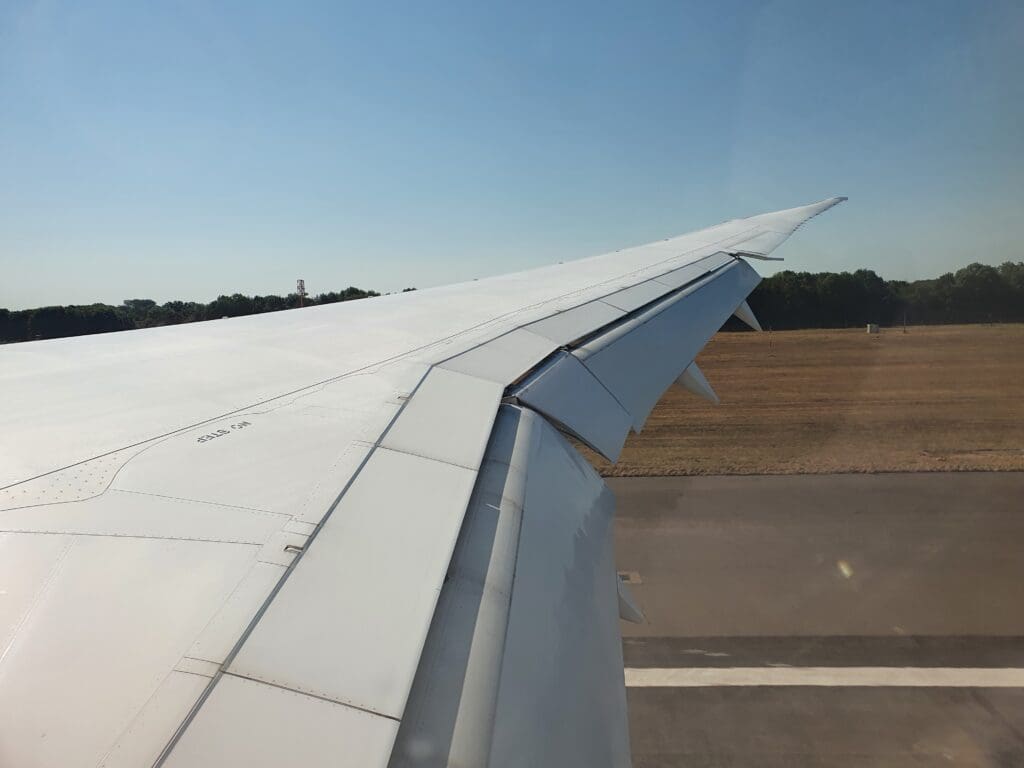
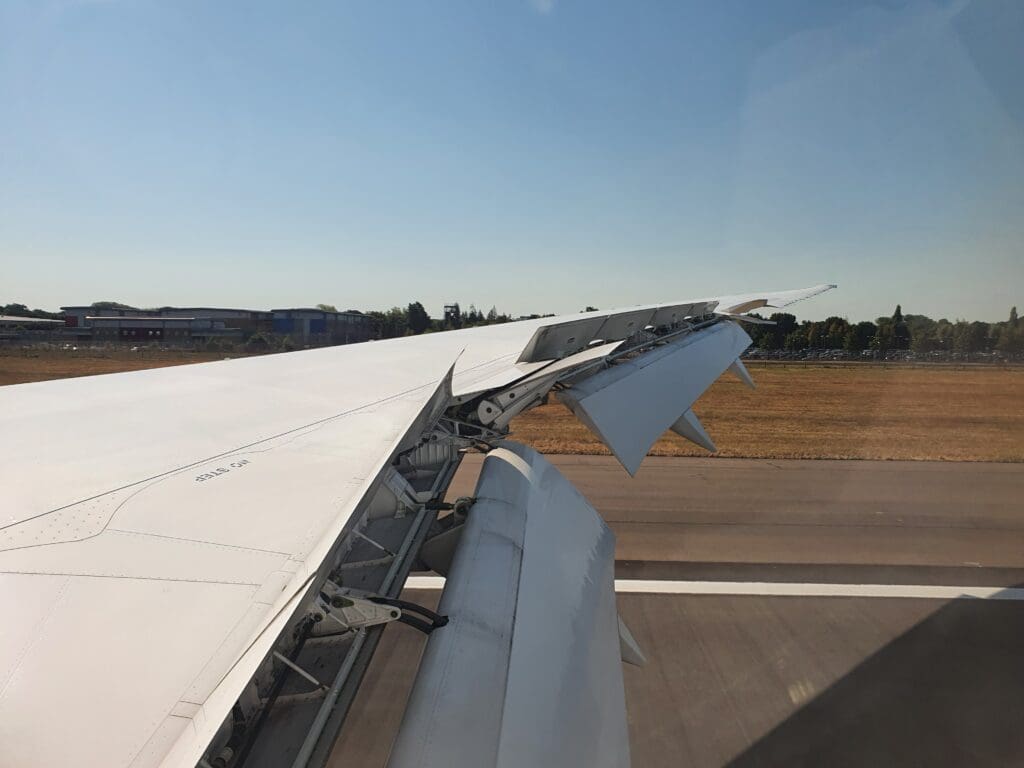
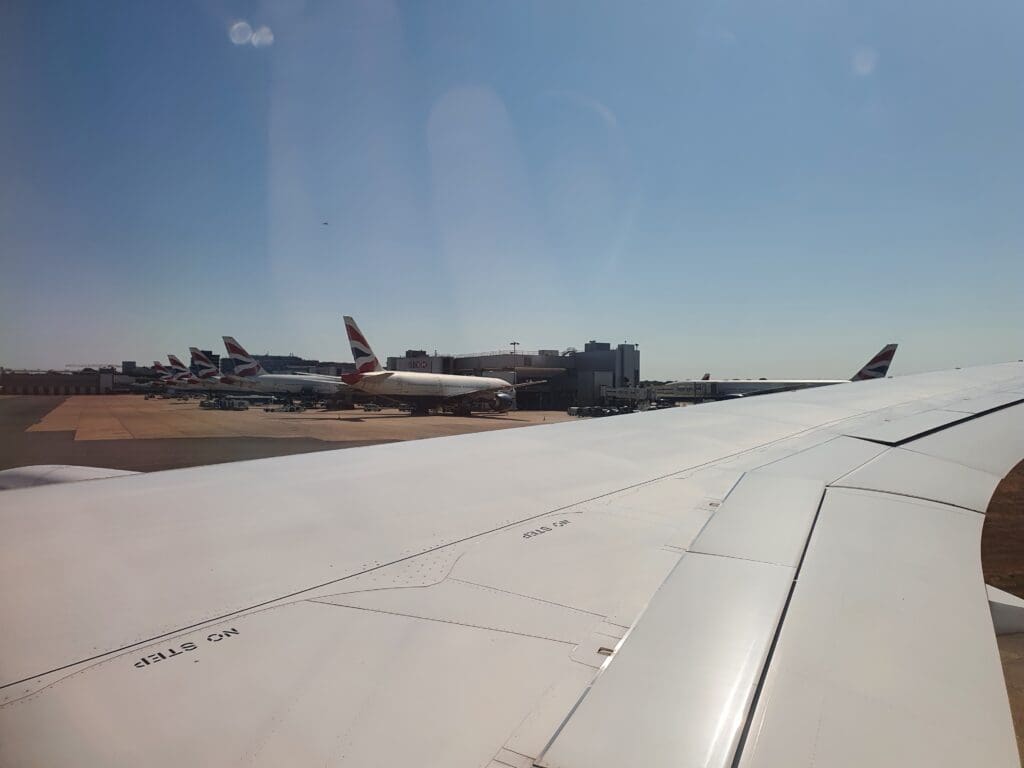
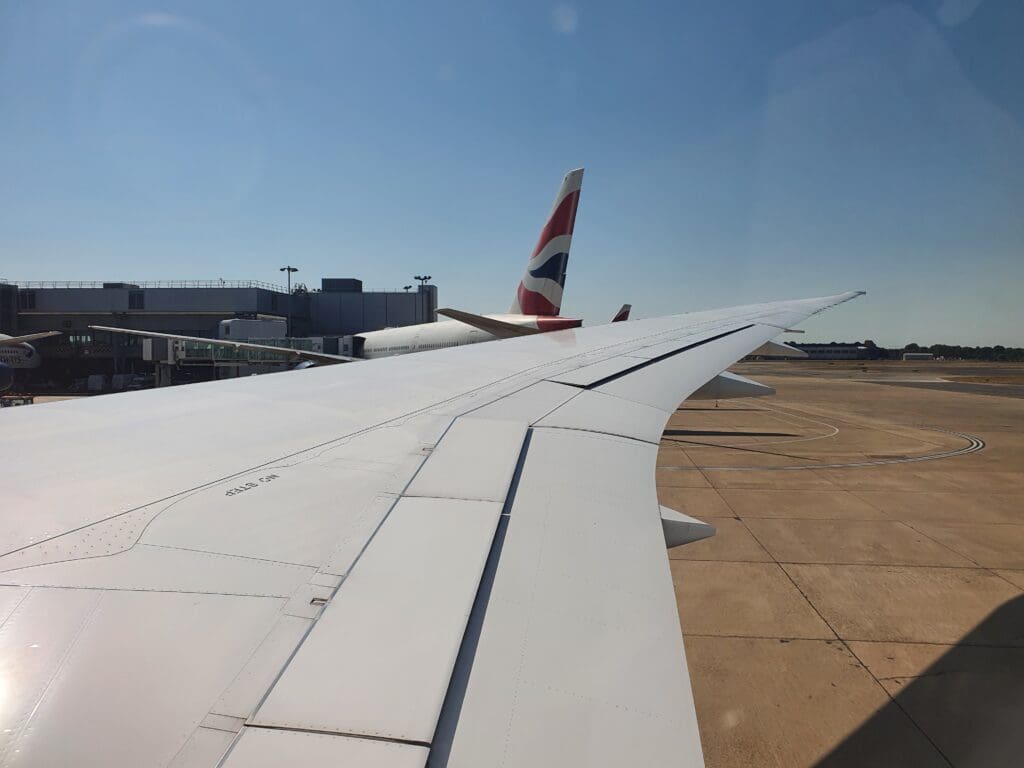
As the Dreamliner made its way off the runway, the Purser made an announcement welcoming all to Gatwick, mentioning the local time and thanking passengers for flying with Norse Atlantic, before moving to reiterate the arrangements for those continuing onwards to New York. Outside, a line of aircraft from both home and abroad could be seen waiting at the South Terminal’s gates, including the Norwegian Boeing 737-800 that had operated the carrier’s 0920 service from Oslo. Heading around the terminal, the Dreamliner then made its way past a line of six British Airways Boeing 777-200ERs in the process of being readied for their flights to holiday destinations. From there, the aircraft made its way to Stand 13 and pulled into this six minutes after touching down. Perhaps unsurprisingly, plenty of ground staff and members of Gatwick Airport’s PR team could be seen taking photographs of the sleek looking jet as it made its way into the stand.
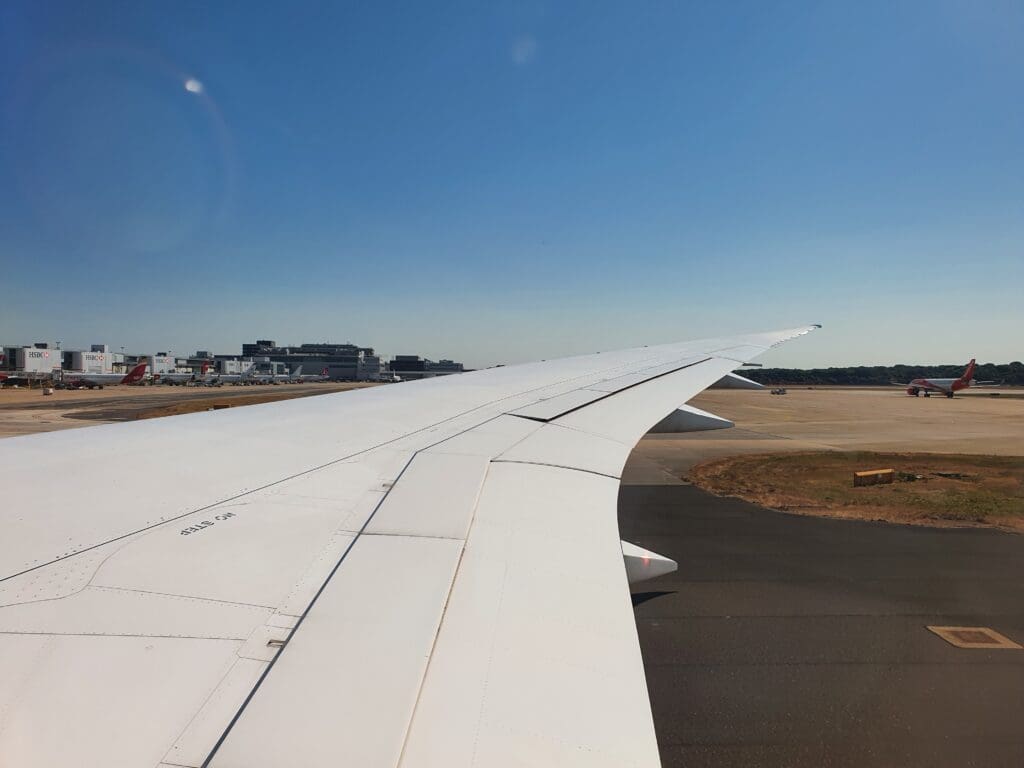
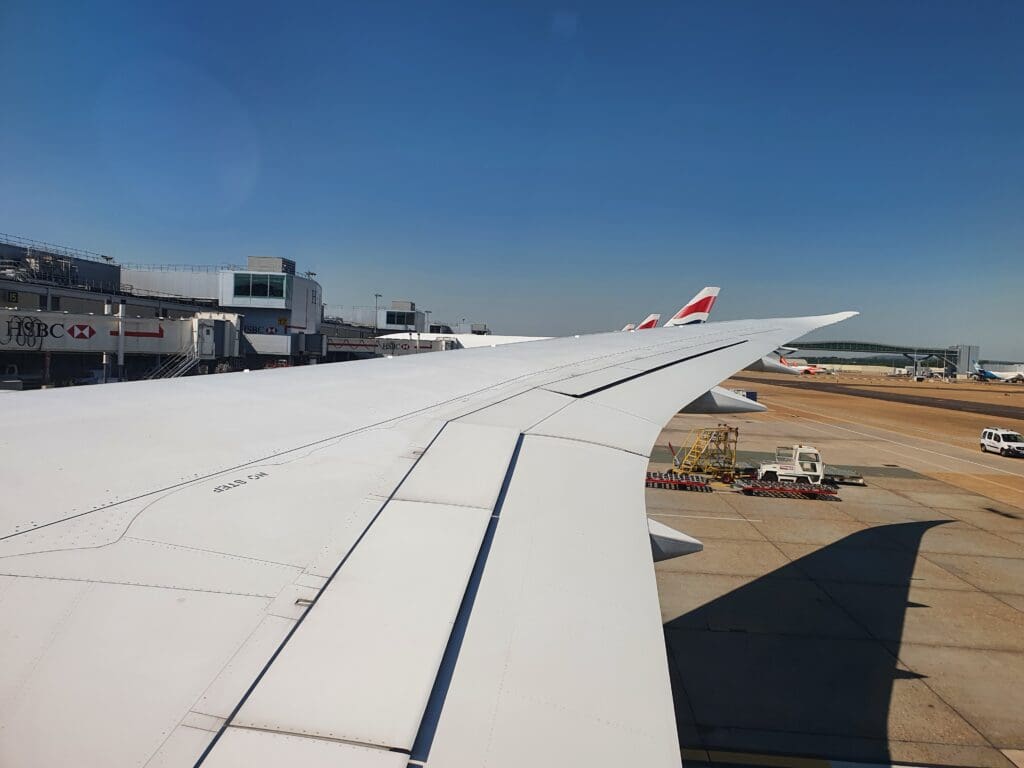
Once the Dreamliner’s two massive engines spooled down, the seat belt signs were extinguished and many of my fellow passengers stood up as if in a rush to exit the aircraft. Fortunately, that morning it did not take too long for the jet bridge to be connected and the queue of passengers in the aisle soon began to move. A short time later, I stood up and commenced my journey to the L2 door, thanking the crew and receiving a few farewells before I stepped off the aircraft and made my way into Gatwick’s rather dated looking 1990s-esque South Terminal. From the aircraft, a reasonably long walk was in store before I arrived at the terminal’s immigration hall. Travelling during the peak summer travel season, I was not particularly surprised to find the hall to be incredibly busy, however fortunately the queues for the passport e-gates was not particularly long and I soon scanned my passport, with the machine letting me back into the UK with no issues. Once through, I made my way to the ramshackle baggage collection hall before passing through customs and arriving in the landside portion of the terminal. One of the big advantages of flying to or from the South Terminal is that this is within very easy reach of the airport’s train station, and so, once landside I made a short walk over to the station where I picked up my pre-booked ticket to Clapham Junction and rushed down to the platform, just making a train. Following a boiling hot and packed ride, I then transferred onto an Overground train to Shepherd’s Bush before connecting onto a Central Line train for the last part of my journey to West Acton – making it back home within around two hours of disembarkation.
Summary
For a relatively short flight, Norse Atlantic left me with nothing to complain about, and I am sure that their Economy product is very competitive with the other options on the route between Oslo and London. That morning, the crew were all incredibly friendly and the aircraft was clean, tidy and in good shape leaving me with no complaints at all. However, given the firmness of the seat and the mediocre legroom, I may be slightly hesitant to fly on one of Norse Atlantic’s long haul services. However, that said, if the price was right, then I wouldn’t be completely averse to flying with Norse Atlantic across the Norse Atlantic.