Remembering the Dutch Dakota Association: A Joyride Around Amsterdam on a Legendary DC-3
Background
Enjoying legendary status, you are unlikely to encounter an aviation enthusiast who is unfamiliar with the venerable propliner, the Douglas DC-3 (and its military variant, the C-47 Skytrain, also known as the Dakota). Designed as a civilian airliner capable of shrinking the globe through improved journey times and fewer fuel stops than existing airliners, upon taking to the skies in 1935, the DC-3 was arguably the pinnacle of 1930s aviation technology. Perhaps unsurprisingly then, Douglas’ new aircraft proved popular and soon joined the fleets of airlines across the globe. Having proven itself to be a reliable and capable airliner, with the outbreak of the Second World War, the type soon became the transport aircraft of choice for the Allied Forces. Receiving a series of modifications including the strengthening of the cabin floor and a cargo door at the rear of the fuselage, the resultant aircraft was the Douglas C-47 Skytrain. With over ten thousand examples manufactured, during the war, the type played a key role in countless operations across the world. As with many, I have a familial connection with the Dakota. During the Second World War, my grandfather had served as a Royal Air Force navigator on the Bristol Beaufighter, taking part in the Burma Campaign. Following the end of the war, he continued to serve in South East Asia, completing 228 transport sorties on the Dakota with the Singapore-based Far East Air Force, before moving on to fly with BOAC.
Having been constructed in such large numbers, unsurprisingly once the Second World War drew to a close, surplus Dakotas came to flood the civilian market across the world with many repurposed to haul passengers and freight. Being relatively cheap to procure following the conflict, and with a wealth of spares and technical expertise on the type, these proved to be a suitable aircraft for carriers both large and small. However, it wasn’t too long before the march of technological progress and the advent of modern turboprop airliners resulted in the Dakota becoming increasingly obsolete – unable to compete with the speed and overall performance of these new types. Nevertheless, with plenty of examples knocking about, the downfall of the Dakota was most certainly not swift and the type remained commonplace in a variety of roles for decades. A tribute to its versatility, even today Dakotas can be found in commercial service hauling freight in some of the more remote parts of the world such as Alaska, Canada’s Northwest Territories and Colombia, not to mention Basler’s re-engined and modernised turboprop variant. Alongside those examples that remain in private and commercial operation, several foundations have sprung up with the intention of preserving, restoring and operating the Dakota and affording members of the public to sample the joys of a flight in the aircraft.
Being based in the UK, the geographically closest of these is the Amsterdam Schiphol-based Dutch Dakota Association. Established by a pair of Transavia captains in 1982, the foundation soon got to work procuring their first Dakota and were led to Finland where they took control of former Finnish Air Force and Aero O/Y example, OH-LCB. Ferried back to the Netherlands and re-registered as PH-DDA in 1983, the foundation soon got to work on working to ensure the aircraft received all the required certifications before entering ‘full service’ in 1985. Unfortunately, this aircraft was lost in an accident near Texel in 1996. However, despite the Dutch Dakota Association’s name, the foundation also added an ultra-rare Douglas DC-2 and a four-engined Douglas DC-4 to its fleet – although unfortunately, both are now on display at the Aviodrome Museum in Lelystad, with no plans to re-restore these to an airworthy condition.
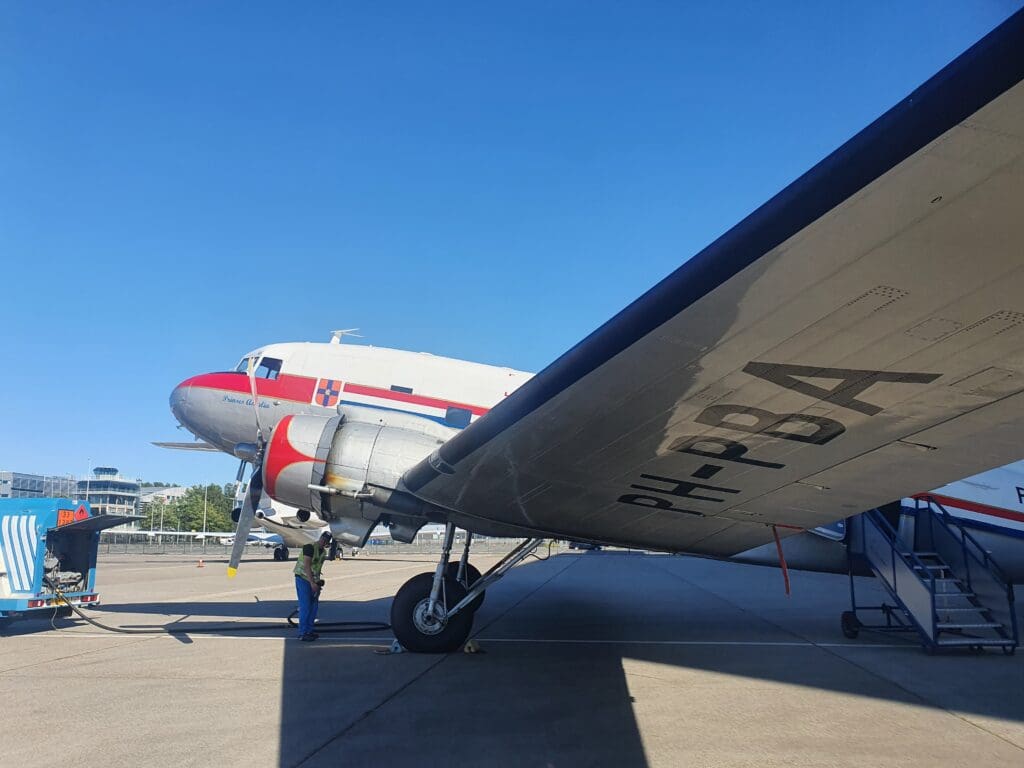
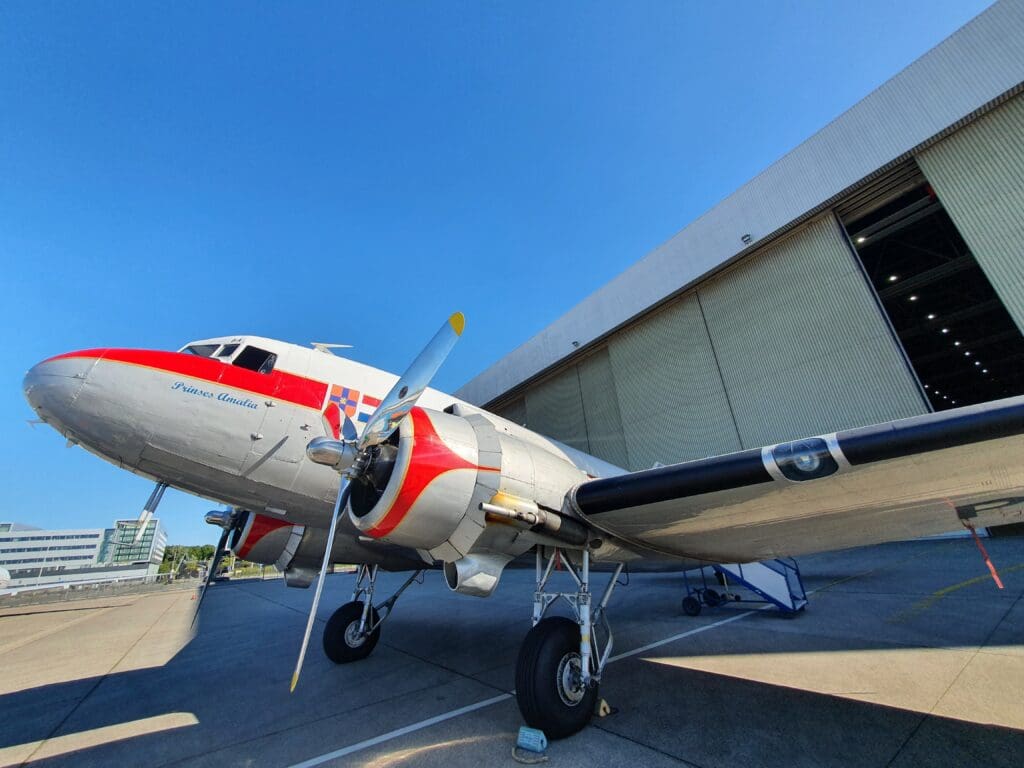
Today, the Dutch Dakota Association operates a single Dakota, PH-PBA (c/n 19434). As with many of the world’s remaining airworthy Dakotas, this particular aircraft has a long and interesting history. Commencing its life in January 1944 as 42-100971, a US Army Air Forces Douglas C-47 Skytrain, the aircraft was soon sent to Europe. There, the aircraft was involved in dropping American paratroopers on the beaches of Normandy during the D-Day Landings in June 1944, undertaking a similar role during Operation Market Garden two months later. Remaining in Europe following the end of the war, the aircraft entered storage at the Bavarian airfield of Oberpfaffenhofen, famous for being home to the Dornier factory. However, it wasn’t long before the aircraft was snapped up by Dutch royalty, namely Prince Bernhard who earmarked the Dakota for use as a government aircraft. Receiving the registration PH-PBA (Prince Bernhard Alpha), the aircraft spent well over a decade shuttling high-ranking officials and Dutch royalty. In 1961, the aircraft was replaced by the then brand-new Dutch turboprop, the Fokker Friendship. Fortunately, this was not the end of the road for this aircraft and it soon found a new life as a calibration aircraft. Remaining in this role for fourteen years, this was finally withdrawn from use in 1975 and placed on display at the Aviodrome Museum in Lelystad. Remaining there for over twenty years, with the support of Prince Bernhard, in 1996 the aircraft was earmarked for restoration – with this project being led by Britain’s Air Atlantique. Fortunately, going without any insurmountable issues, this reached its end in 1998 and the aircraft soon entered service with DDA Classic Airlines, sporting KLM’s pre-war livery. In 2006, in celebration of the partnership between Air France and KLM, the aircraft received the liveries of both carriers – with each side of the aircraft painted in either airline’s livery. During this time, the aircraft took part in the occasional KLM-Air France event, however with the withdrawal of KLM’s sponsorship, in 2016 the aircraft was repainted into the livery worn whilst serving as a government aircraft.
Today, over the summer season DDA Classic Airlines operates a mixture of mostly thirty and forty-minute services from their base in Amsterdam Schiphol, and occasionally from other airports such as Eindhoven and Rotterdam. Having flown on PH-PBA with my father as an 11-year-old aviation enthusiast back in 2007, as the world emerged from the pandemic and DDA Classic Airlines resumed their operations, I decided to make the trip to the Netherlands to fly on the Dakota once again. Opting for the 40-minute option, set me back €175, with the total coming to €350 seeing as my father would join me on the trip – not the cheapest flight in the world, but in my opinion this was money well spent given the rarity of the Dakota!
The Journey
DDA Classic Airlines’ Dakota calls Hangar 32 on the Eastern side of Schiphol Airport home, with the airline utilising the airport’s General Aviation Terminal just across the apron from this for its passenger services. Several days before my flight, I received an email from DDA Classic Airlines advising me to be at the General Aviation Terminal for 1345, leaving an hour and fifteen minutes for all the pre-flight formalities before my flight’s scheduled departure time of 1500. This email also revealed that I would only be able to take a camera bag or other handbag-sized item as hand luggage and that I would need to carry some sort of formal identity document for the flight, and provided instructions on how to reach Schiphol-Oost from the main terminal. Having touched down from Gatwick onboard an EasyJet Airbus A320 at 0817, I was left with plenty of time to explore the delights of Schiphol before heading across the airfield. To start, I made my way over to Schiphol’s Panorama Terrace, where I met up with my father who had spent the previous evening in Utrecht. After a couple of hours, we then caught the bus around the airfield and spent an hour in the sunshine watching jets land in front of us on the Buitenveldertbaan from the benches in the McDonalds car park. Finally, we made the last stage of the journey on foot, walking over to Schiphol-Oost.
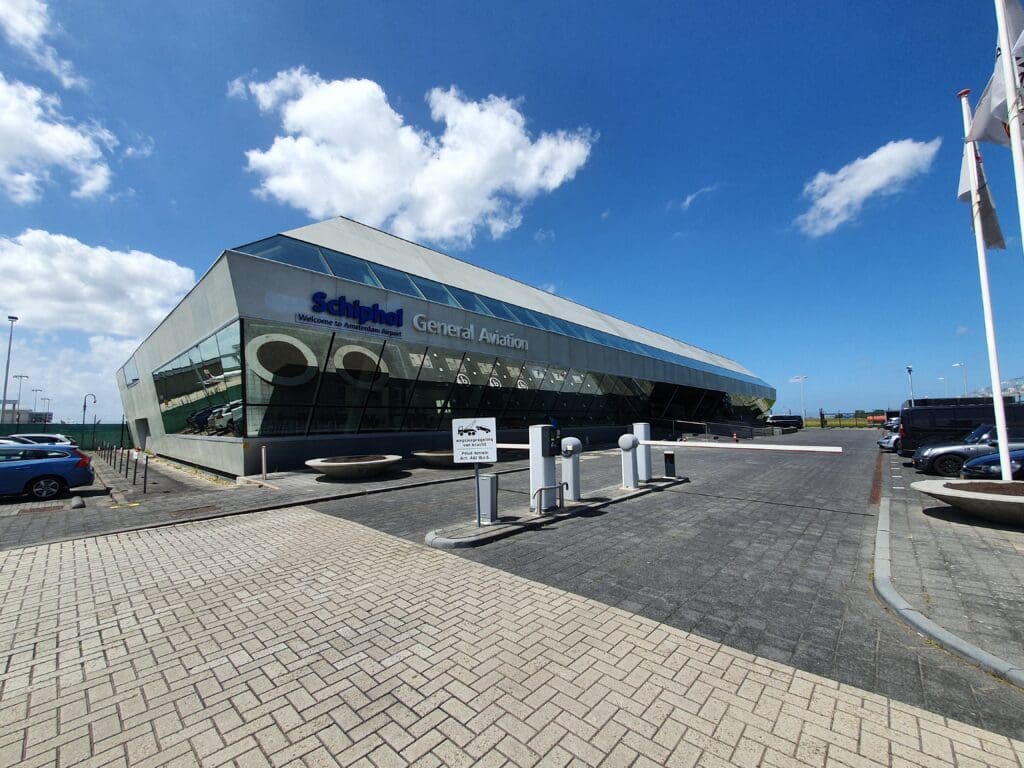
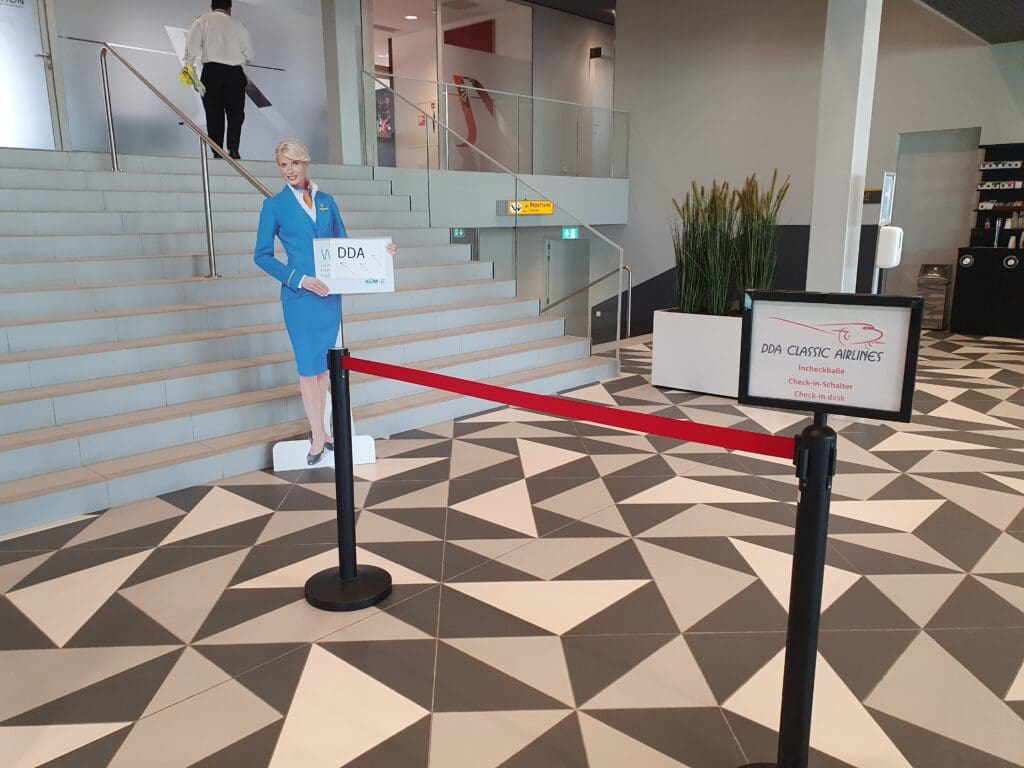
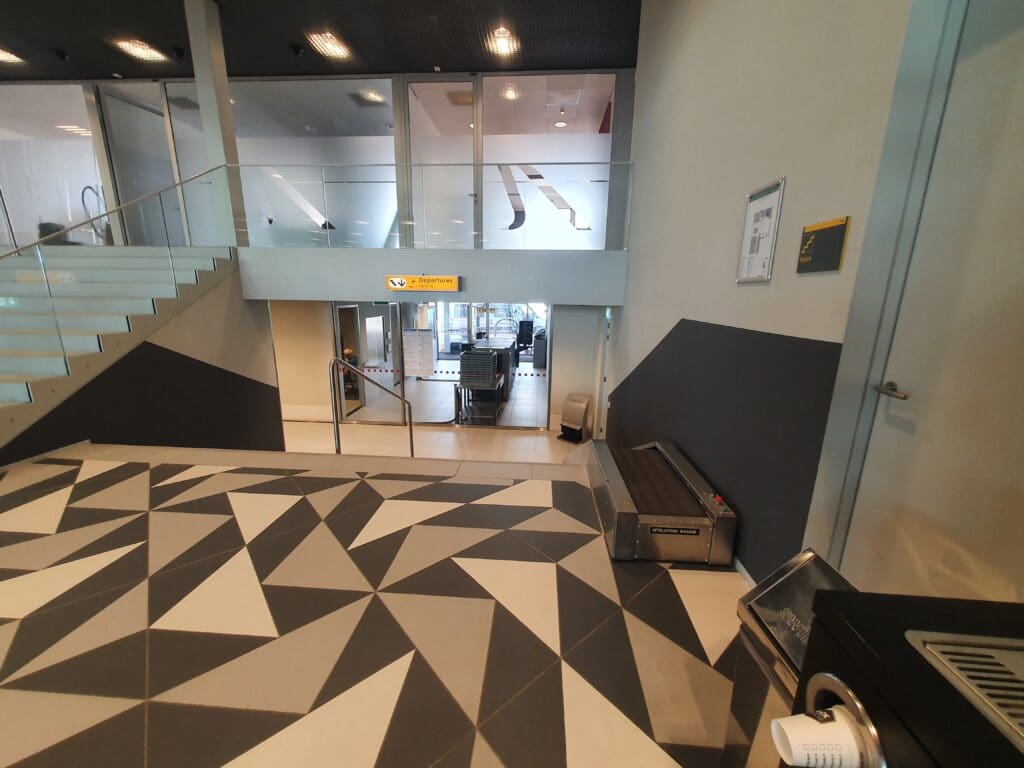
From the outside, Schiphol’s General Aviation Terminal is rather interestingly shaped, almost like an elongated diamond. As I entered this, two sets of smartly dressed crew could be seen ready to fly likely equally smartly dressed wealthy passengers to destinations across Europe and beyond. With the sum of my outfit not totalling over £50, I, and I suspect some of my fellow passengers, felt a little underdressed however it appeared that the terminal staff were used to DDA Classic Airlines’ passengers and I was not asked to leave, nor was my presence questioned! Inside the terminal’s main atrium, a sign had been placed up directing those flying with DDA Classic Airlines to head upstairs and to a small room which would serve as the waiting area and the airline’s operational hub that afternoon. As we entered this, we were greeted by no fewer than four DDA Classic Airlines staff dressed in the airline’s mostly red uniform who advised us to take a seat and relax, and that we could use the hot drinks machine next to the reception on the ground floor if we desired.
Whilst compact, this room was clean, modern and comfortable and provided a good view of virtually the entirety of Schiphol-Oost’s apron where a selection of private aircraft. These ranged in size from a Cirrus SR20 and a Diamond DA-40 up to Air Hamburg’s recently acquired Embraer Lineage 1000. Other than the Douglas DC-3, which at that time was being loaded up with passengers outside its hangar for its next flight, one fairly rare visitor took the form of a French Army Socata TBM-700 in one corner of the apron. Seeking an even better view of the aircraft on the apron, and still with plenty of time to go before check-in, I decided to head outside for a quick walk along the perimeter fence around the apron. In the car park, a fair number of aircraft enthusiasts could be seen peering through the mesh fence at the selection of aircraft on the apron. Arriving at the fenceline just in time, I watched as the Dakota’s two Pratt and Whitney R-1830 Twin Wasp engines spluttered into life with a fair amount of smoke, before the aircraft slowly and cautiously taxied away at the start of its penultimate flight of the day.
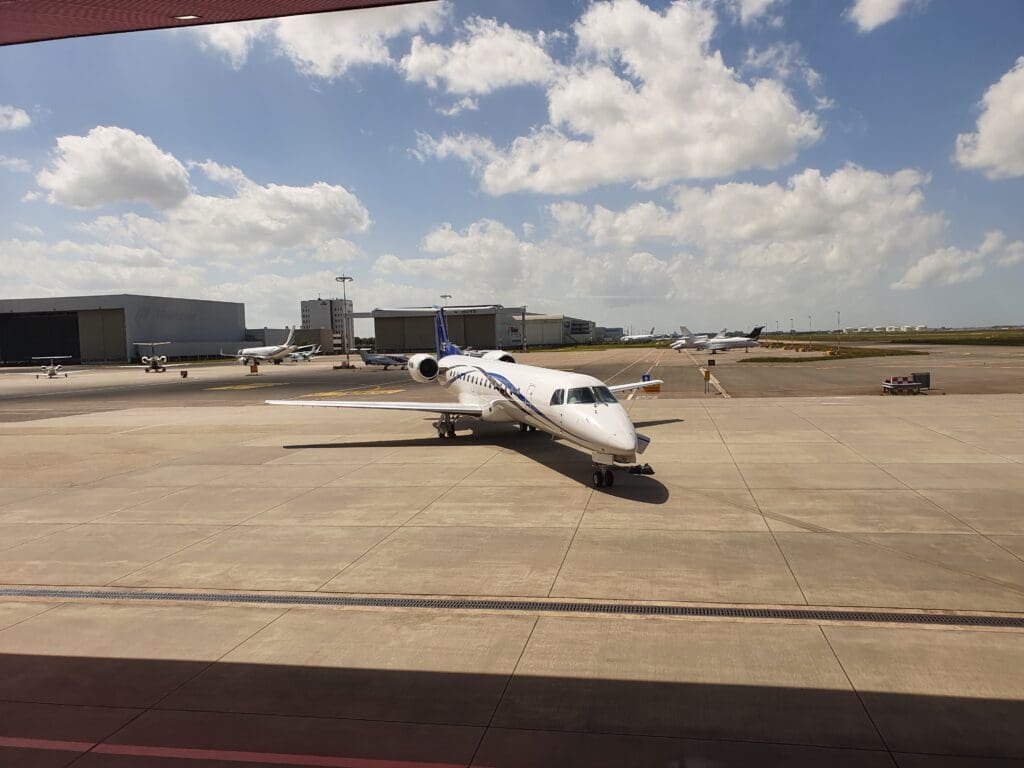
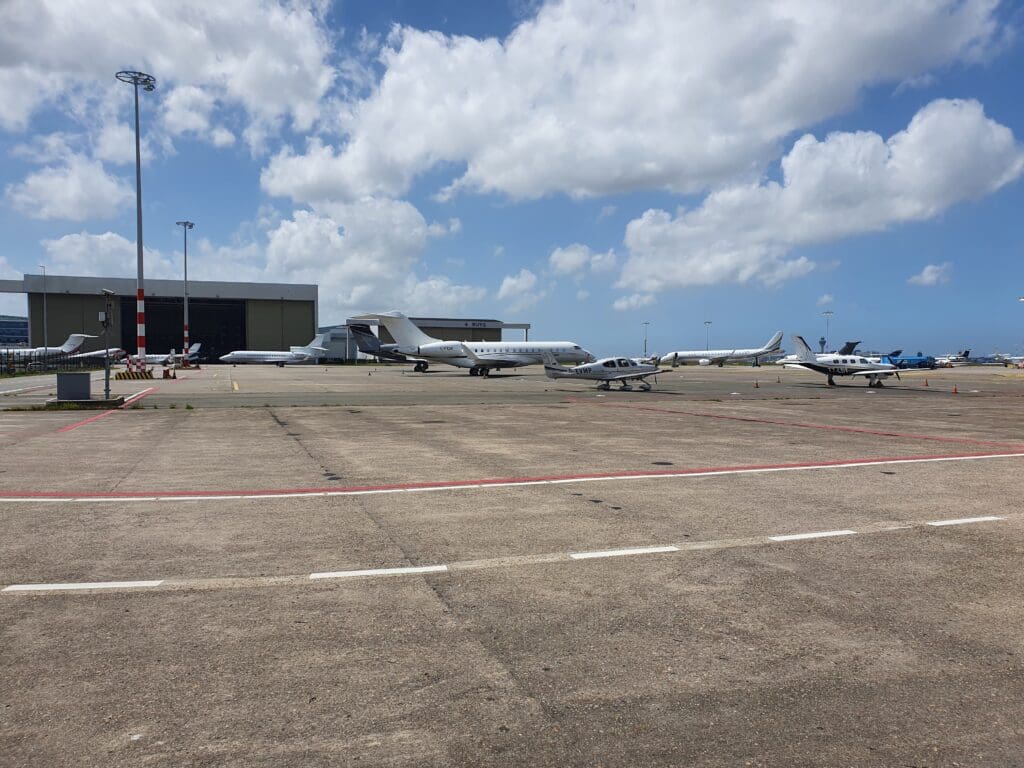
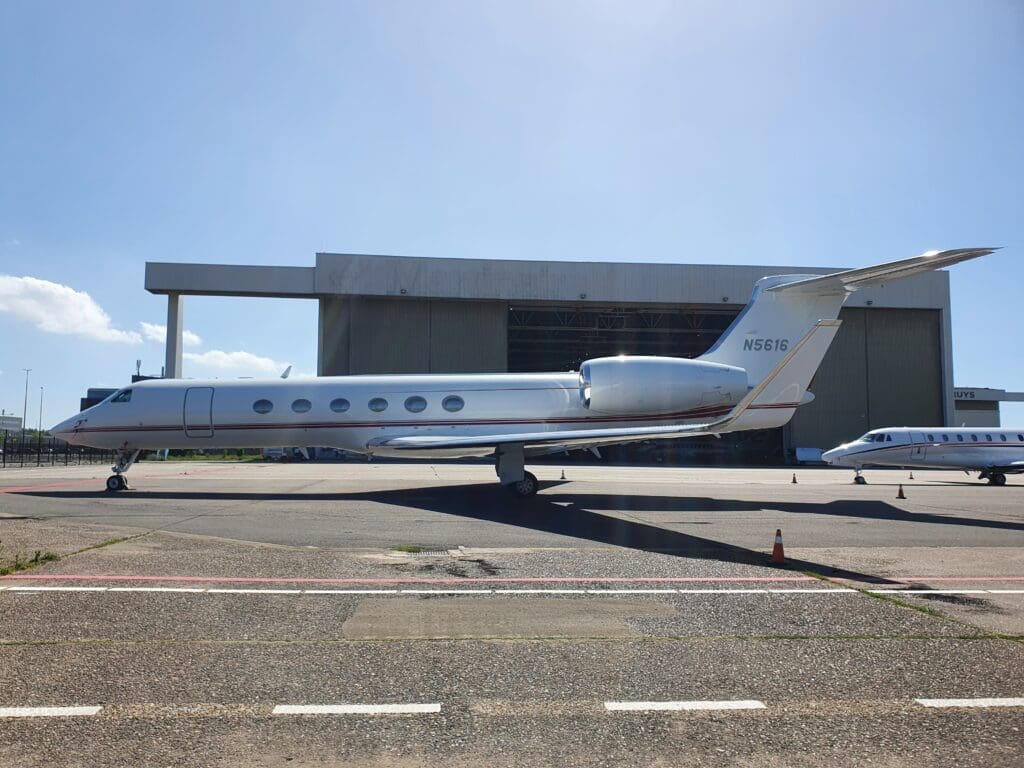
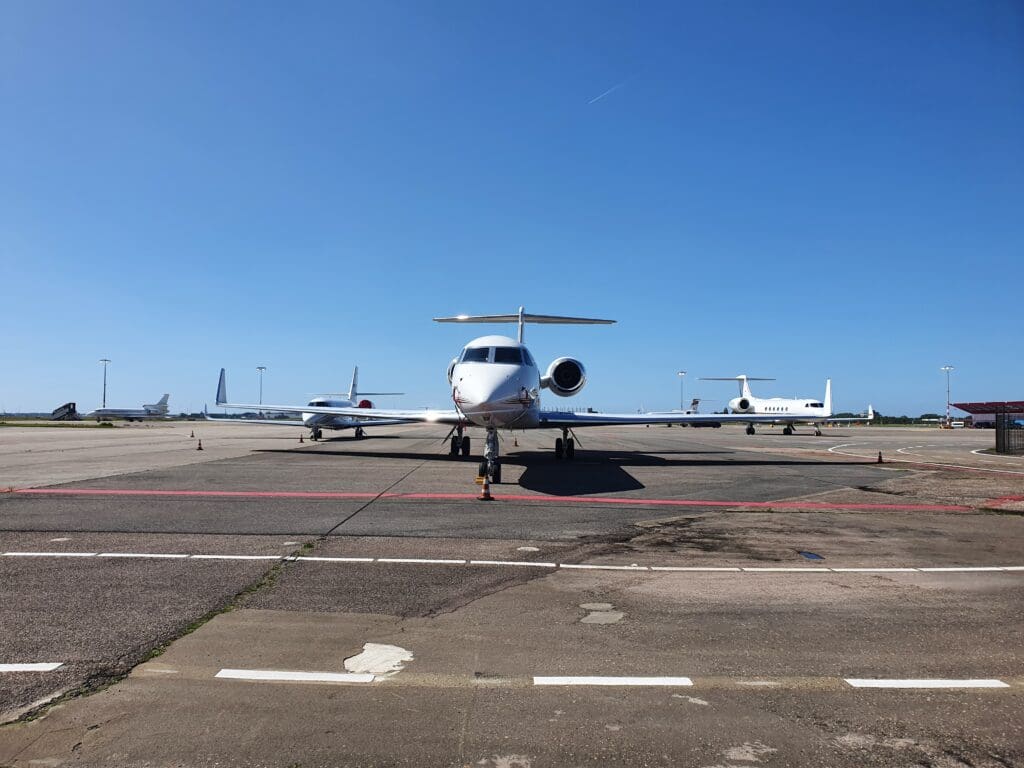
Once the Dakota had left the apron, I trundled back over to the terminal at a leisurely pace and arrived back in time for the commencement of check-in. By this time, more passengers had arrived and by the time all sixteen passengers for the 1500 flight had arrived, this room was rather full. That afternoon, all bar four passengers were Dutch, whilst all those hailing from abroad had made the trip over the North Sea from the UK to fly the Dakota. Unlike your typical Easyjet or Ryanair service, as the minutes passed there was an air of excitement in the terminal, with most if not all passengers taking the form of aviation enthusiasts eager to sample the delights of this rare vintage aircraft.

After grabbing some water, I passed the time by watching the action outside on the apron, where the odd business jet could be seen coming and going. During the wait, a line of conspicuous people carriers painted in black and with tinted windows journed out to the apron, coming to a halt at the steps of the largest jet at Schiphol Oost at that time, an Air Hamburg Embraer Lineage 1000. Whilst too far away to see whether these passengers were recognisably famous, they had plenty of luggage which could be seen being loaded into the cabin via the rear door. Once all were on board, the doors were soon closed and the aircraft taxied away for its flight to the Slovakian capital, Bratislava. Returning to the more ‘mundane’ traffic, outside most inbound aircraft were now landing on the nearby Runway 22 and so a good view of aircraft making their smoky touchdowns on the runway could be had from the lounge.
A little after 1345, one of the staff members stood up and advised all passengers in Dutch and then English that check-in was open and passengers were requested to make their way to the table at the entrance of the room with some form of ID. Following a short queue, we made it to the table where a couple of DDA Classic Airlines staff members were undertaking the check-in proceedings, and passengers’ boarding passes could be seen laid out ready to be handed over. After one of the staff members checked my passport, mine and my father’s initials were written on seats 1A and 1B on the seat map before stickers with these seat numbers were stuck to our boarding passes. As it happens, these were the same seats we had sat in fifteen years prior on our first Dakota flight! With these in hand, we returned to our seats near the window, and much to our surprise, the Dakota which had departed on its 30-minute sortie was still yet to reappear.
With time passing and still no Dakota, several passengers began to wonder where the aircraft could be. A short time later there appeared to be some commotion amongst the four staff members in the room, their conversation appearing to draw some attention from the flight’s Dutch-speaking passengers. With around thirty minutes to go until our flight’s scheduled departure time, one of the staff members stood up and performed a short speech in Dutch which was reacted to by some worried looks from my fellow passengers. Wondering whether there had been an issue with the aircraft and if the flight had been cancelled, all was soon revealed when the staff member mentioned that following its penultimate flight of the day, the Dakota had ended up with a flat tyre upon landing and was stuck, unable to taxi back to the apron. At this stage, there was some uncertainty as to whether the flight would go ahead however the staff member did promise to update us as soon as they had more information.
Looking out, the Dakota could be seen in the distance stuck either on or beside Runway 27. Despite having been on the ground for some time, no vehicles could be seen around this until around thirty minutes following its arrival when a follow-me car appeared and escorted two passenger minibuses over to the stranded aircraft to rescue the aircraft’s passengers. Back inside the terminal, a short time later DDA Classic Airlines’ Engineering and Compliance Manager (I think that’s what they mentioned their job title to be!) appeared and introduced themselves before giving another update on the situation. During this, they reassured us that the flight would be very likely to still go ahead and that the tyre change itself would only take around fifteen minutes to complete. The challenge however was that the aircraft was stuck in a secure part of the airfield and so any maintenance vehicles and engineers would have to be escorted to and from the aircraft, which, with a lack of airport staff that afternoon, would take quite some time. We were then informed that once the tyre change had been completed, the aircraft would taxi back to the apron where a short series of further tests would be undertaken before the Dakota could be cleared for its final flight of the day. Ending this, the manager mentioned that we could expect a new departure time of around 1730 to 1745.
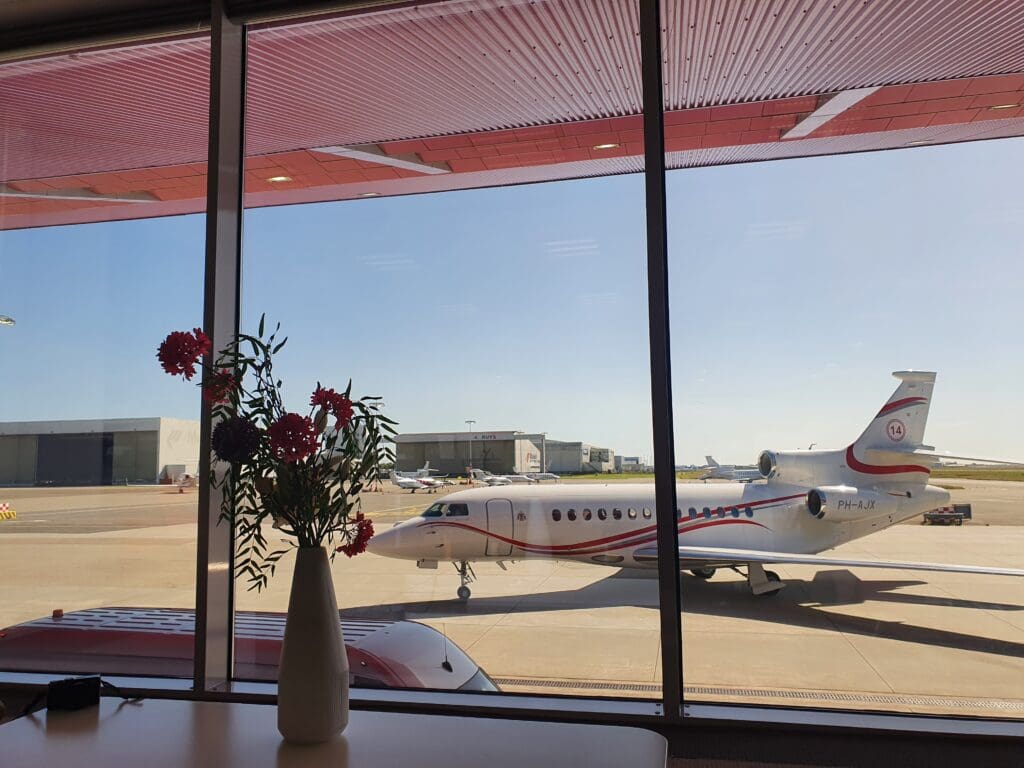
Now with plenty of time before our new departure time, given the sunny weather, I decided to head outside and soak up some sunshine, undertaking another quick walk before making my way back into the terminal and up to the waiting room. Fortunately, I arrived back just in time as the staff members were passing through this with a tray of stroopwafels and chocolate chip brioches, and handing out small cartons of fruit juice. Once I had polished off a sugary combination of an apple juice and stroopwafel, I turned back to the action outside. At 1700, a very sleek and shiny-looking luxurious Dassault Falcon 7X appeared and parked up right outside the waiting room. Whilst this was operated by Exxaero, named Johan Cruyff and with the famous player’s number ‘14’ on the tail, and registered PH-AJX, it appears that this jet was dedicated to the local football team, AFC Ajax. Once the cabin door had been opened, several athletic-looking figures emerged although it is unknown whether or not these took the form of some of the team’s players. Nevertheless, this caused some commotion with several passengers snapping photos of the jet, only to be scolded by the DDA Classic Airlines staff who reminded passengers that photography was prohibited.
Once things calmed down, it appeared that there was still no sign that our departure was imminent and at 1730, with the Dakota still stuck far away in the distance, it appeared that the flight would not depart by 1745 as initially stated. However, a short time later, a pilot appeared who would relieve the captain that had operated the day’s other Dakota flights, and introduced themselves in Dutch and then in English. Once done, the pilot then undertook a very long and detailed speech on the aircraft’s history and features and its long and varied career. Whilst this was performed in Dutch only, I did manage to pick out a section where the Captain jokingly asked for requests of passengers’ homes to buzz these that evening. Promisingly during this announcement, the Dakota could be seen slowly journeying towards the apron under its own steam.
At the end of the Captain’s announcement, they advised that we could expect to head out to the aircraft in 15 minutes and that as there are no toilets onboard, we should make use of the facilities inside the terminal. Once this announcement had reached its end, one of the staff members inside the terminal gave a brief safety speech whereby they advised that we could take nothing larger than a camera or handbag onto the aircraft and that we would be required to pass through security before journeying out to the apron. Following a final toilet stop, I followed the staff member downstairs to the small security checkpoint. There, my boarding pass was checked and torn, and I temporarily parted with my camera as this was sent through the X-ray machine. Making it through this with no issues, I was then handed a reflective jacket, further distinguishing us from the private jet passengers, and donned this before heading outside and onto one of the waiting minibuses.
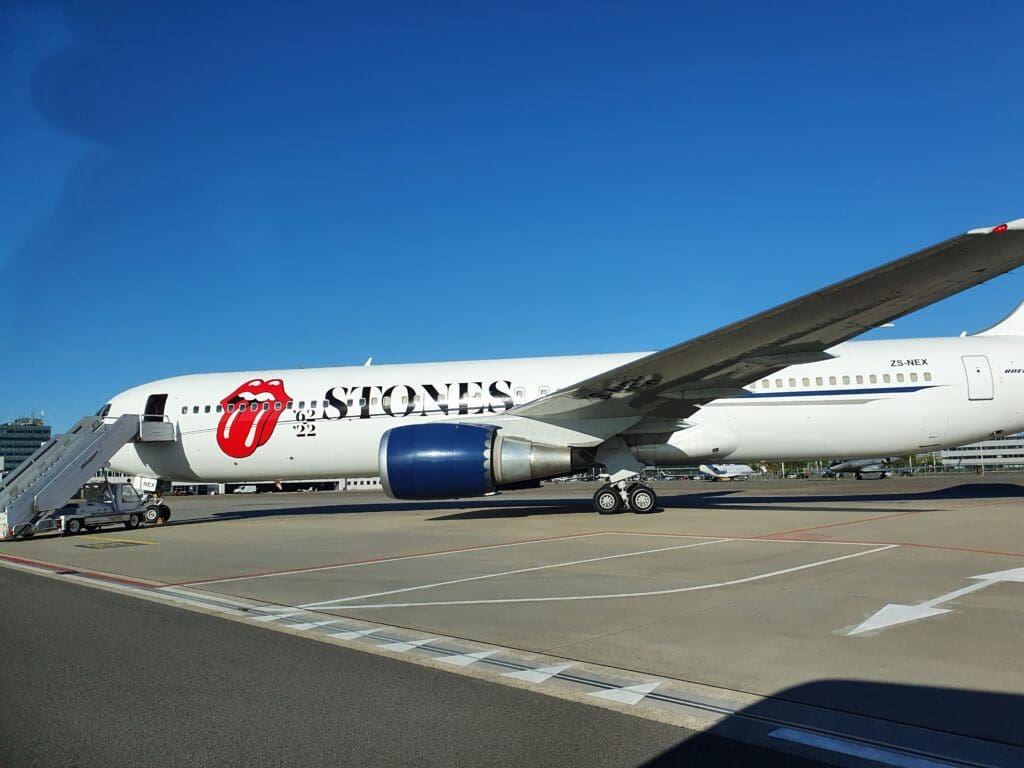
Once onboard the plush minibus, we journeyed out across the apron where the Dakota could be seen amid a sea of private jets. As we neared this, my first impressions were that the DC-3 appeared to be relatively small, short and stubby. Indeed in terms of length, this was almost identical to the nearby Cessna Citation Sovereign. Once the bus came to a halt, the doors opened and passengers spilt out onto the apron where they were advised to remain near the bus whilst a small army of ground crew could be seen readying the aircraft for its final flight of the day. After the second minibus arrived, the captain then pointed out some of the features of the DC-3’s exterior including its two massive Twin Wasp engines and offered to snap some photographs of passengers before boarding. At this time, there was some slight excitement from enthusiasts as two rare types taxied past – a Dornier 228 belonging to the Dutch Coast Guard and a Gippsland GA-8. Meanwhile, at another vacant stand, plenty of police, security, an ambulance and people carriers could be seen, and soon enough an aircraft arrived at this stand. As it happened, this was the Rolling Stones jet, an Aeronexus Boeing 767-35D shuttling the band and their entourage between concerns on their 2022 tour.
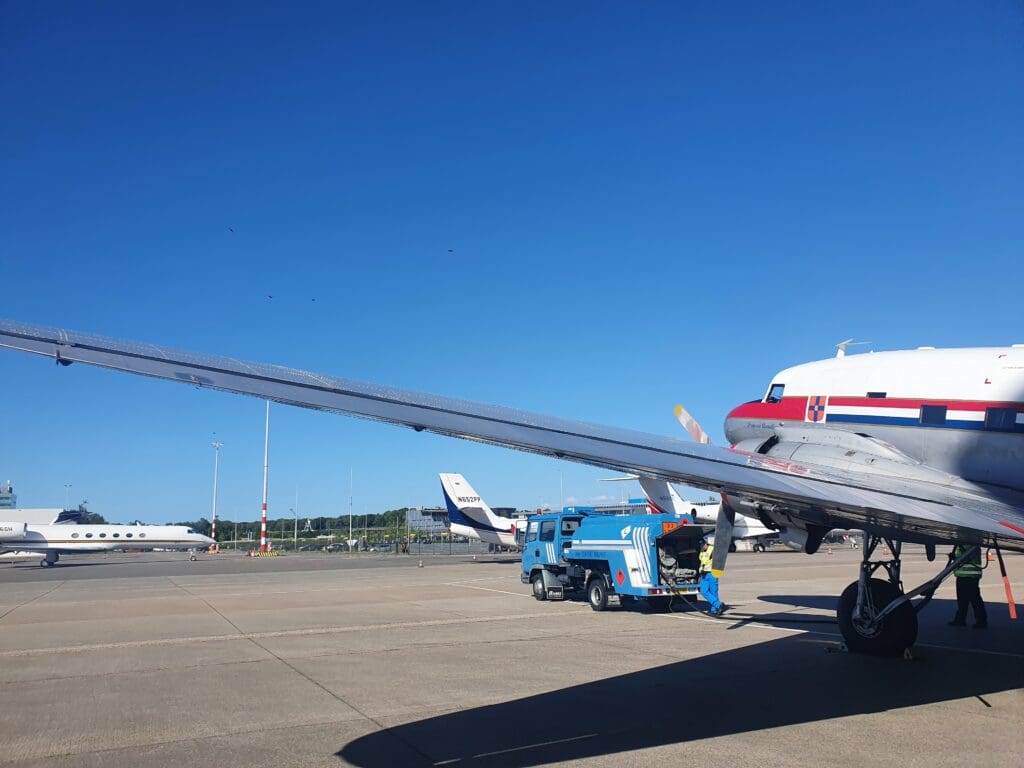
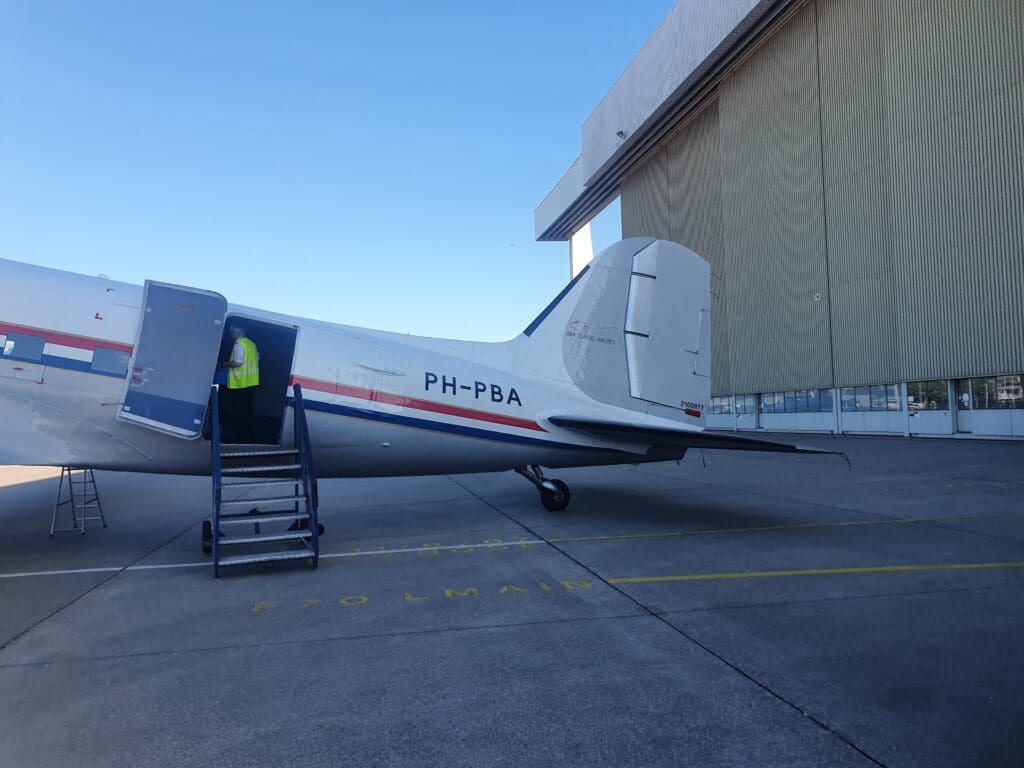
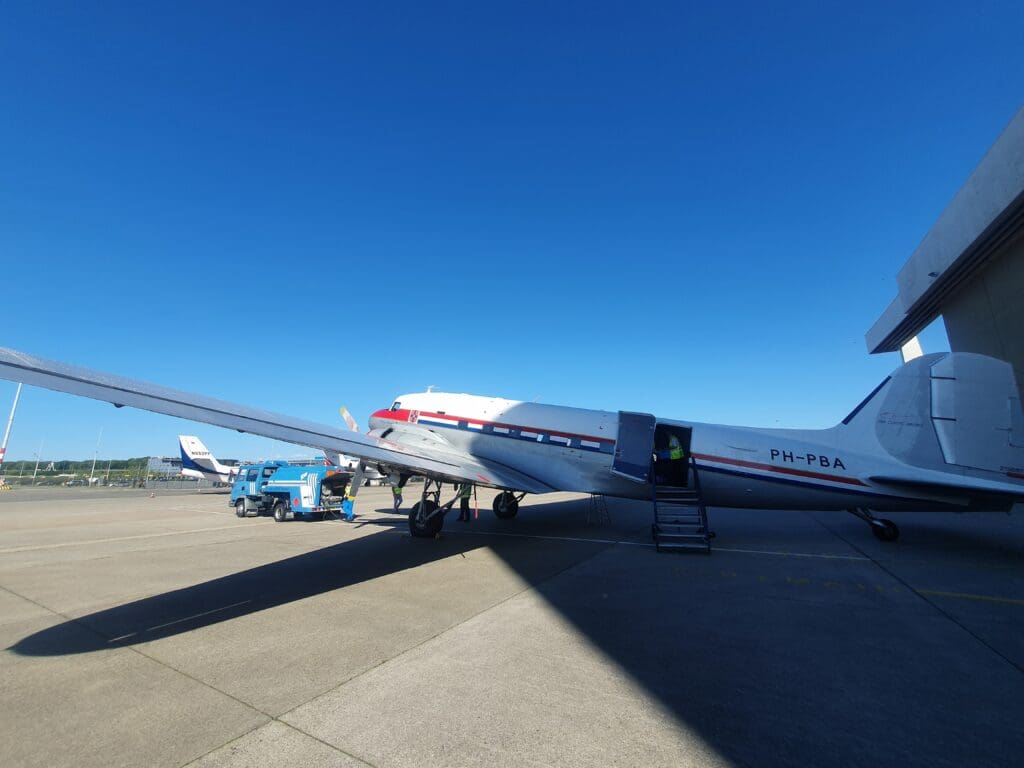
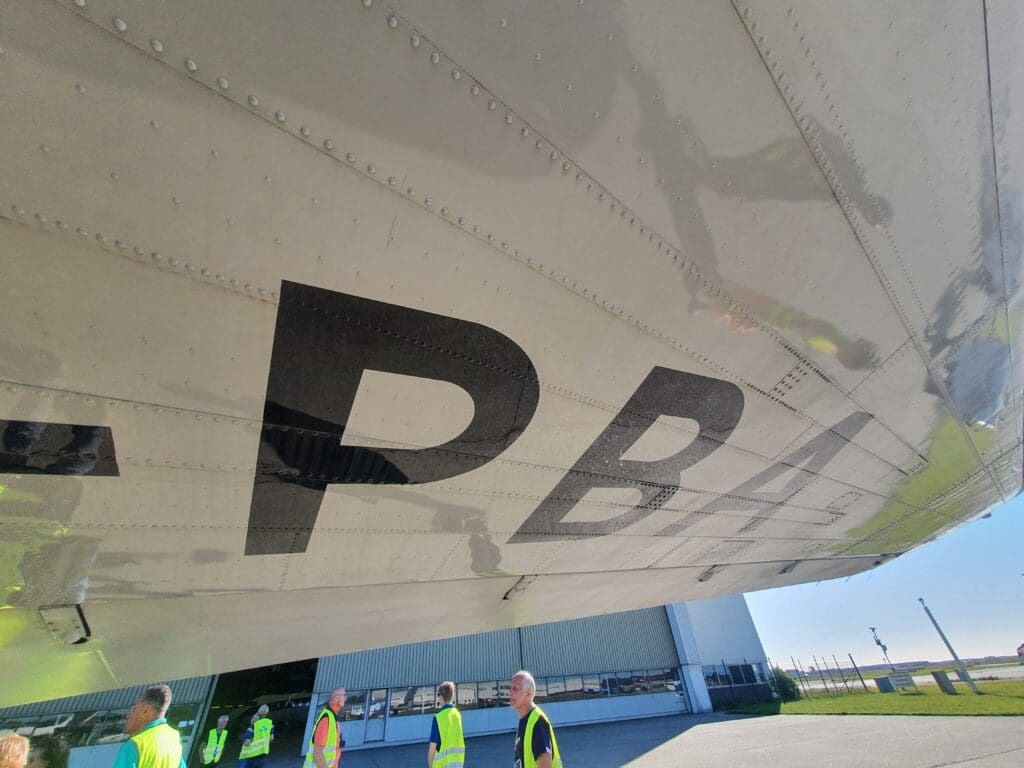
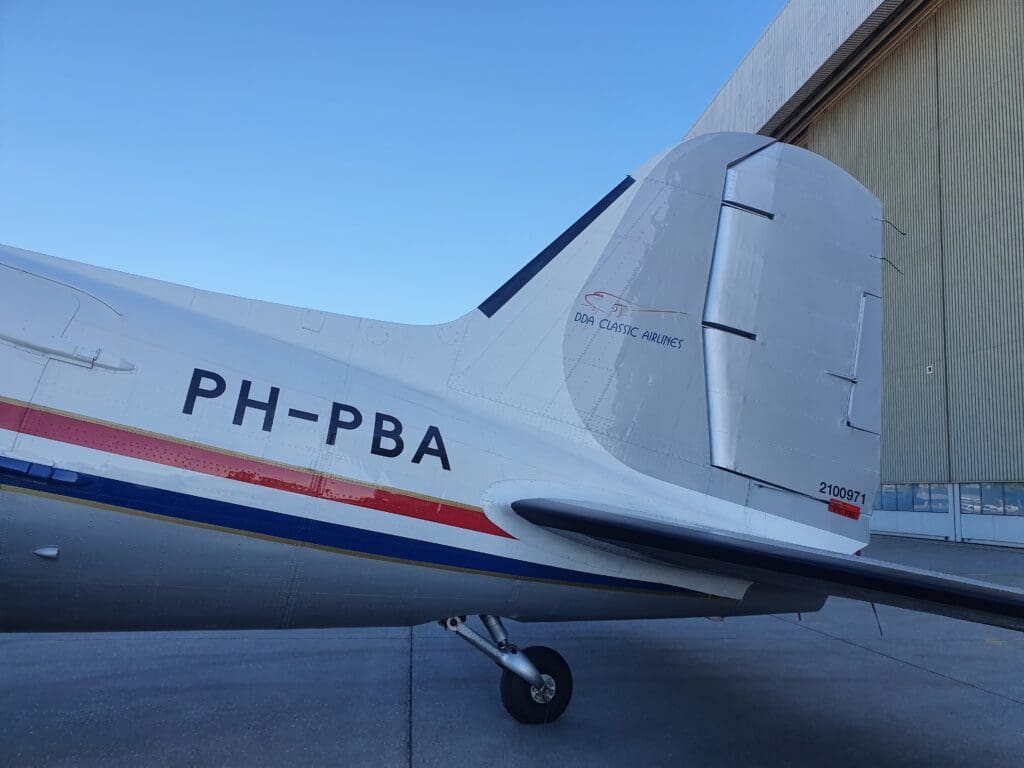
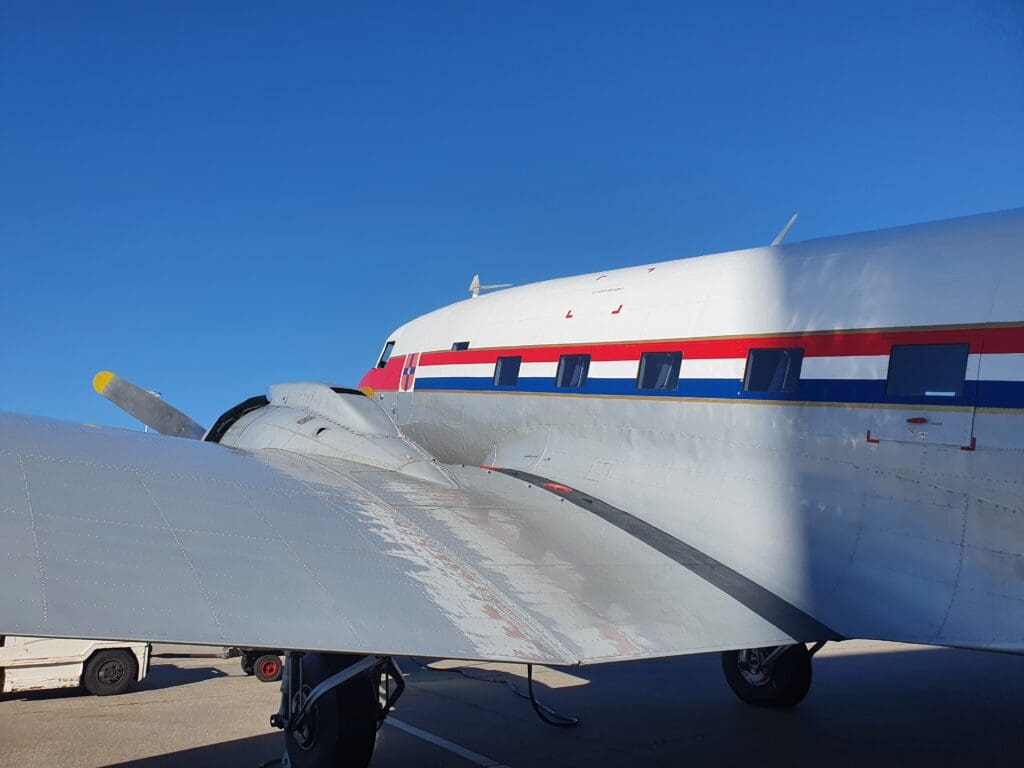
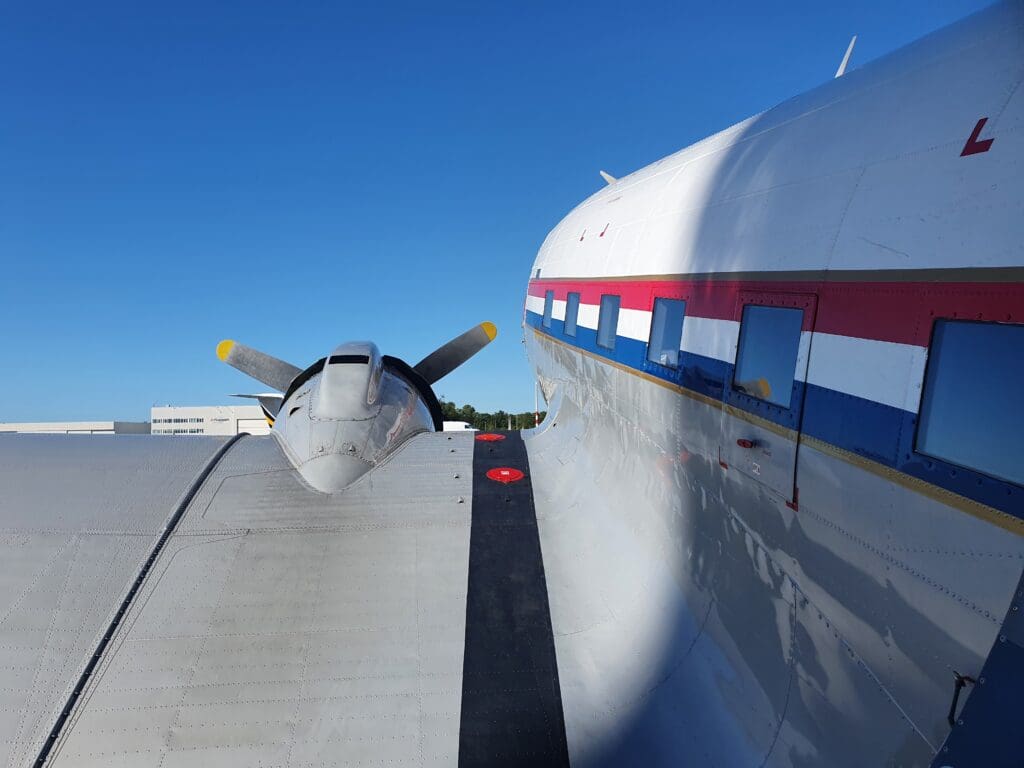
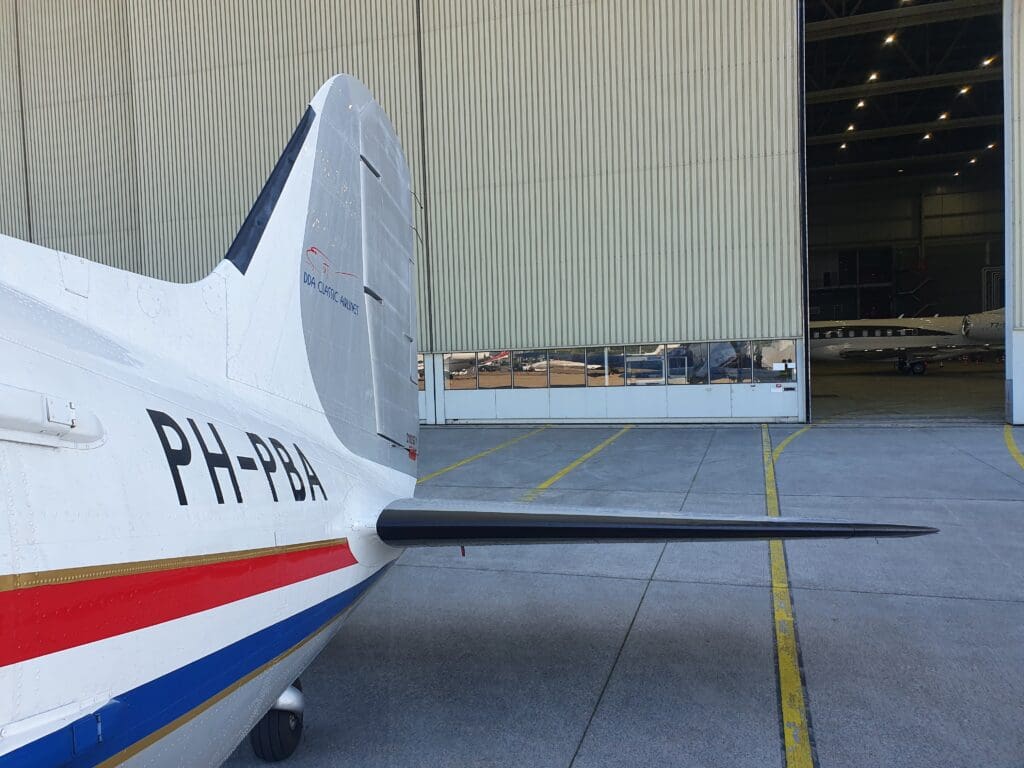
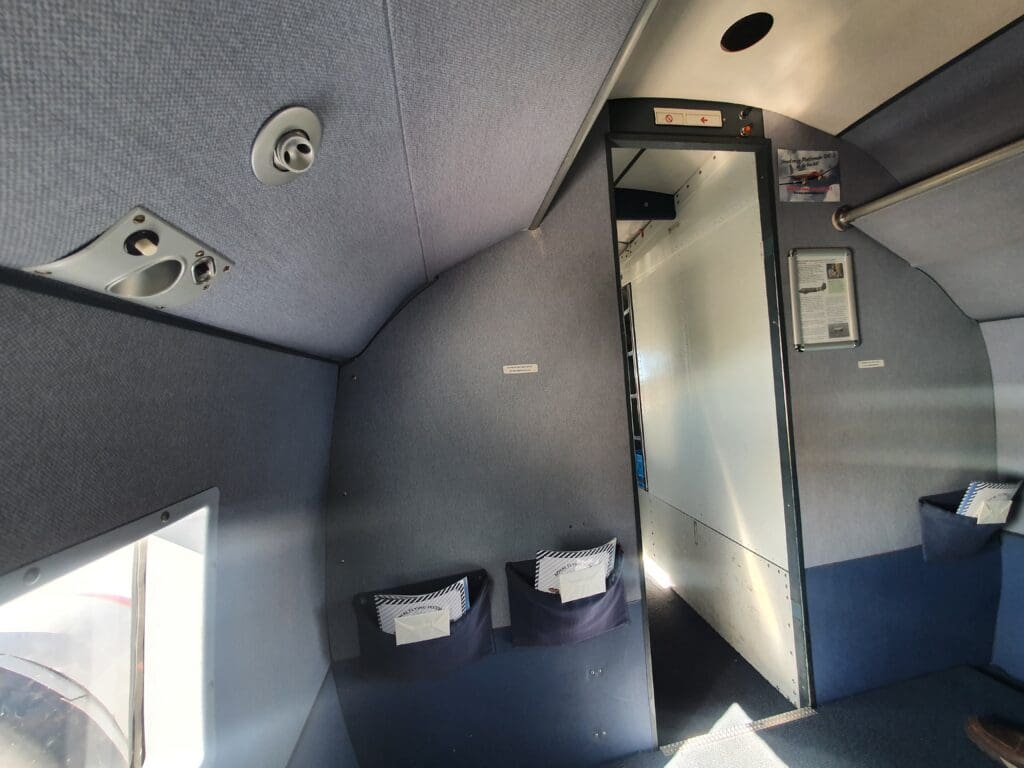
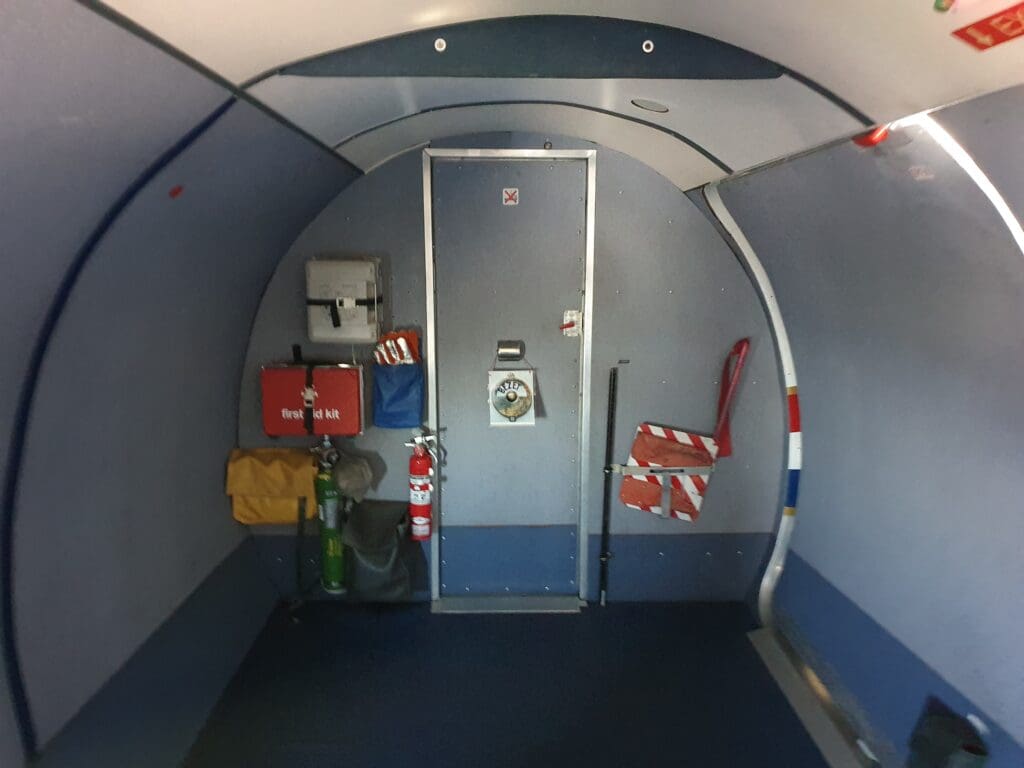
Once the Boeing 767 had taxied past with the elderly rock stars, the flight attendant, a former KLM steward who was now moonlighting as one of the world’s few remaining Dakota flight attendants appeared and gave a friendly welcome to the excited passengers. Being one of the first to board, I made my way up the short DC-3 specific airstairs that had been positioned up to the wide entry door at the rear of the aircraft. Upon entering this, I was warmly greeted in Dutch and found myself standing at the spacious area at the rear of the Dakota, with the out-of-service lavatory and a multitude of safety equipment to my right, and the main cabin to my left, with the flight attendant’s thin jumpseat located straight ahead.
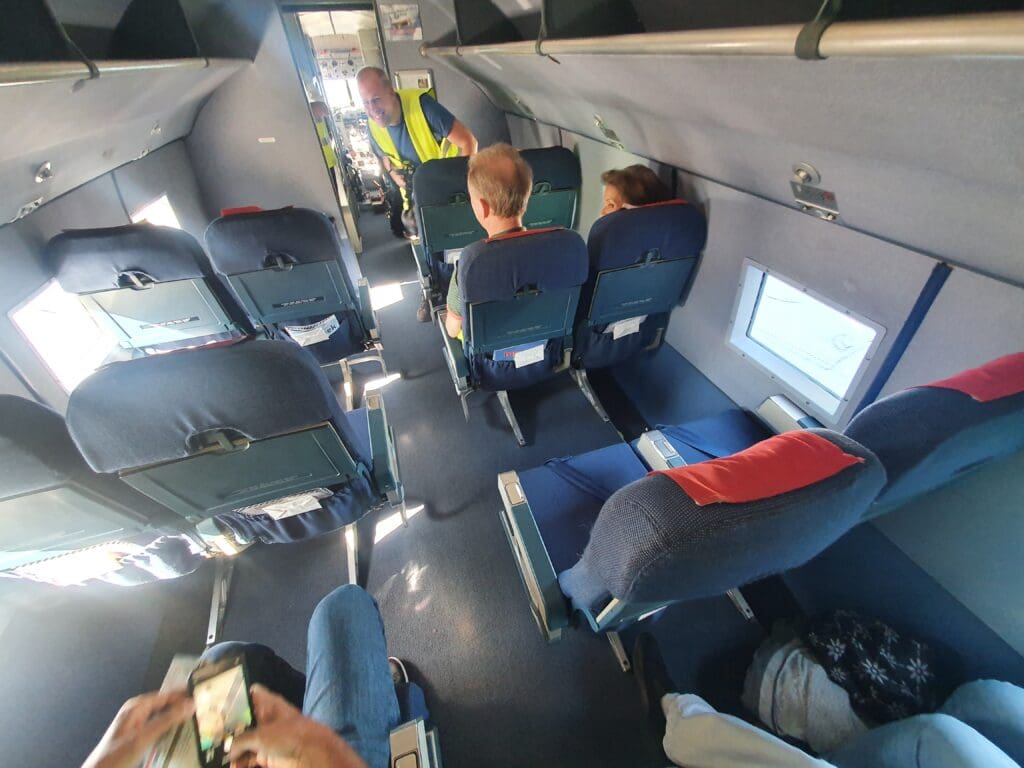
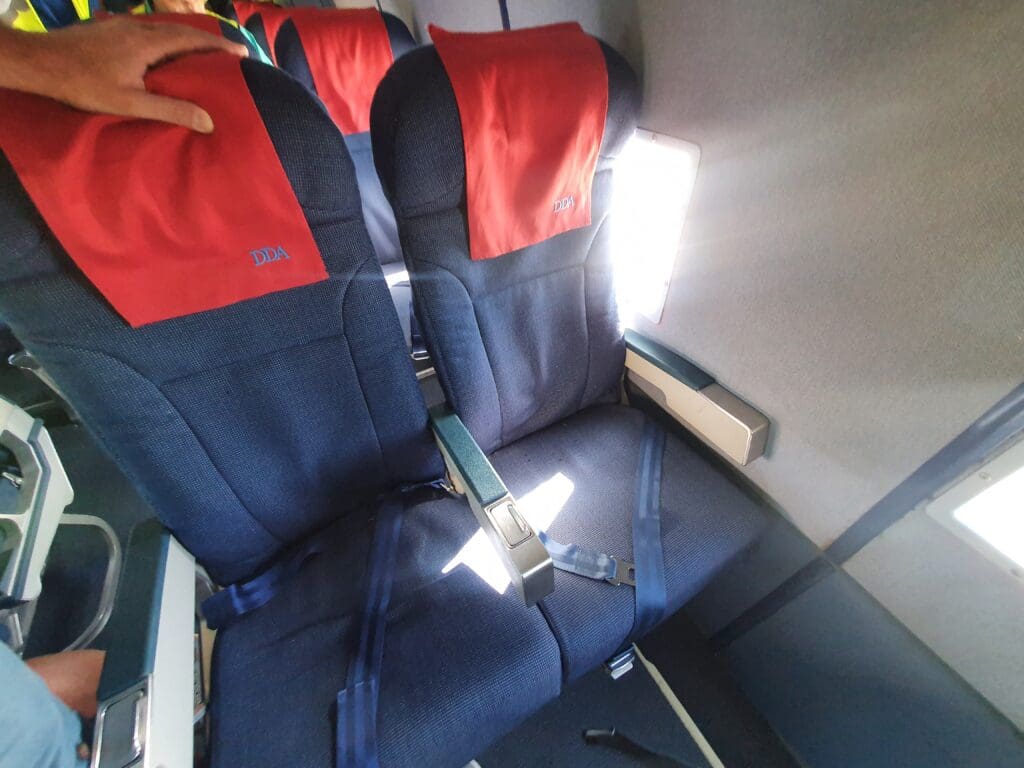
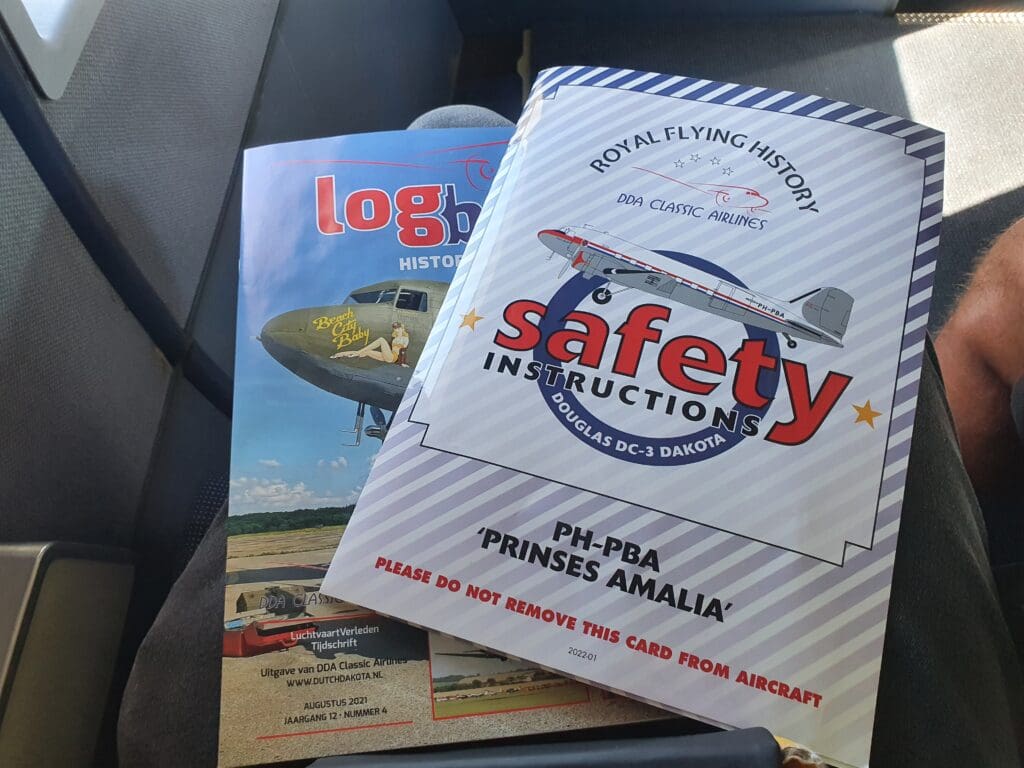
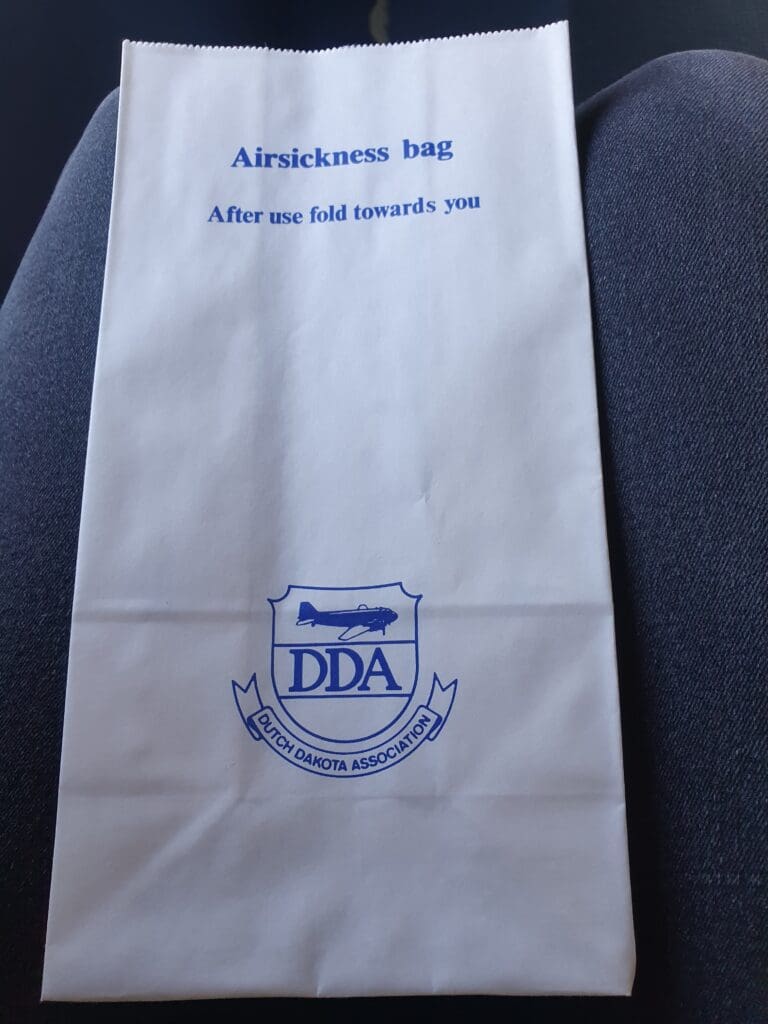
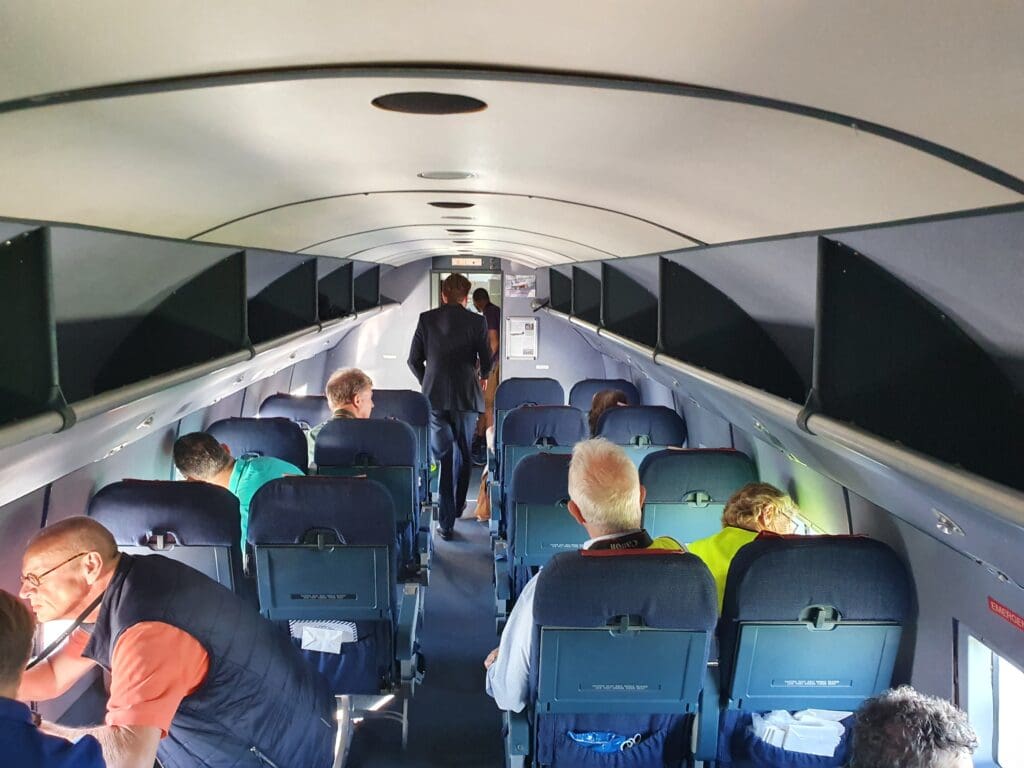
Since my previous flight in the Dakota in 2007, the large and very comfortable seats that had been arranged in a 2-1 configuration have been replaced by slightly more modern-looking and thinner seats arranged in a 2-2 configuration. With this work having been undertaken in cooperation with Fokker between the 2016 and 2017 flying seasons, and increasing the maximum number of passengers from twelve to eighteen. Whilst slightly more modern than the seats that these replaced, were these to be fitted to a ‘regular’ commercial airliner, I would label these as undoubtedly retro, sporting chunky armrests complete with ashtrays. With these seats appearing to be a little familiar, I wracked my brain attempting to decipher where I had seen these before. Following a few searches, these seem to be identical to those that had been fitted to Scandinavian Airlines’ long-retired McDonnell Douglas MD-80 fleet. Turning to their design, these sported a subtle repeating pattern of light dots, with each topped by a smart-looking red fabric antimacassar complete with ‘DDA’ stitched into this in the bottom right-hand corner. Meanwhile, a reading light and air vent could be seen along the sides of the cabin above each seat, although there appeared to be only one of each for each pair of seats. Despite the lack of inflight catering on most flights, these feature large tray tables, meanwhile, seatback pockets could be seen which contained the obligatory safety card, a copy of the latest edition of DDA Classic Airlines’ Logboek magazine and a sick bag featuring the carrier’s logo. In terms of design, the overall theme of the Dakota’s interior was blue, with blue plastic cabin panelling and blue carpets.
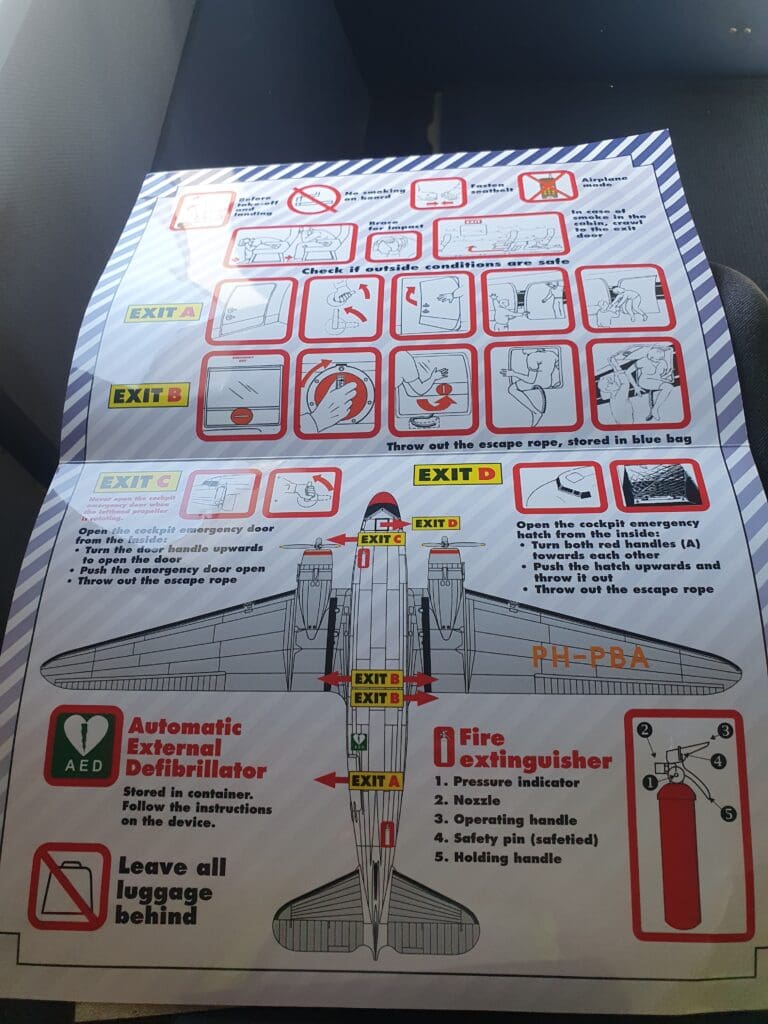
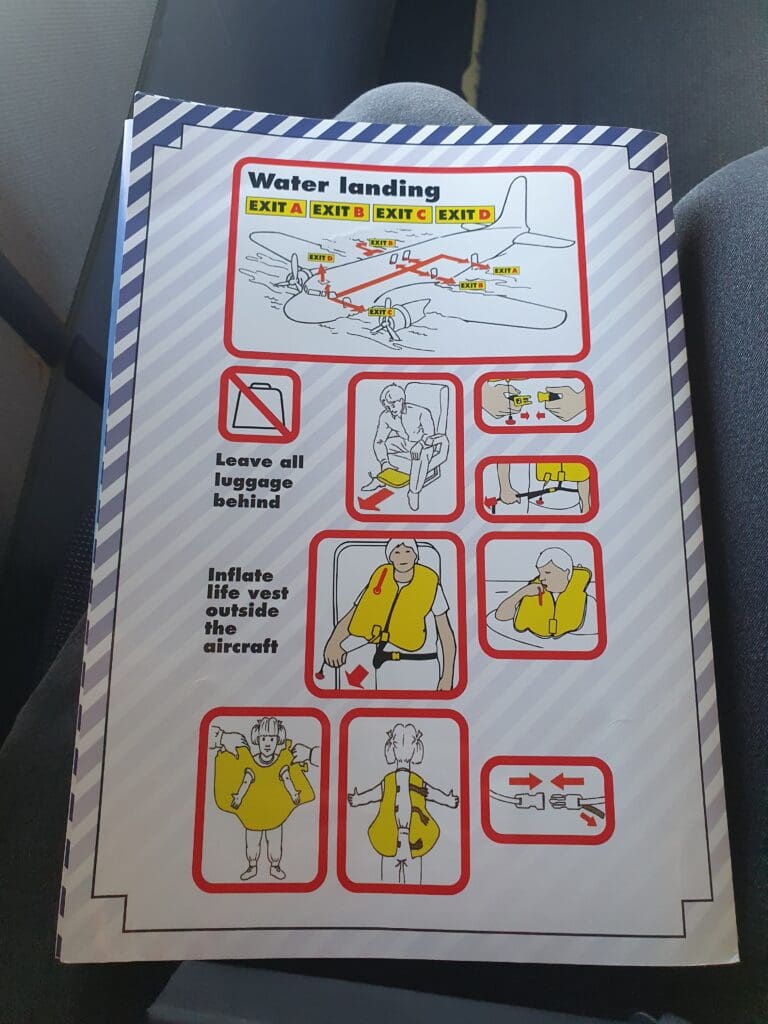
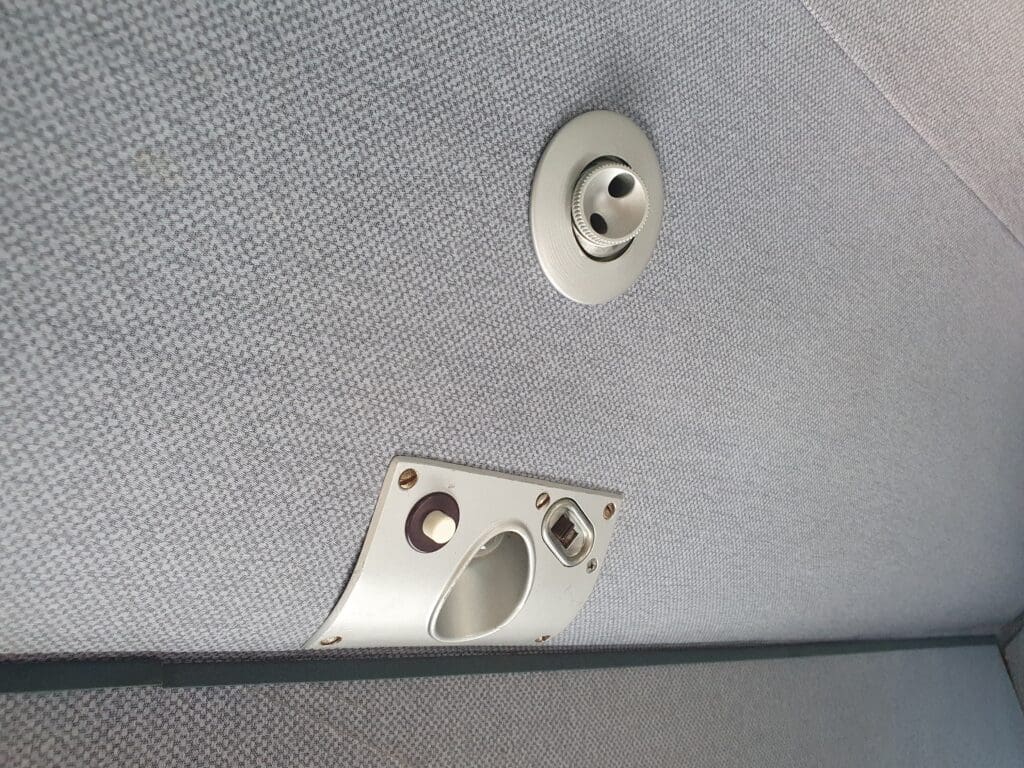
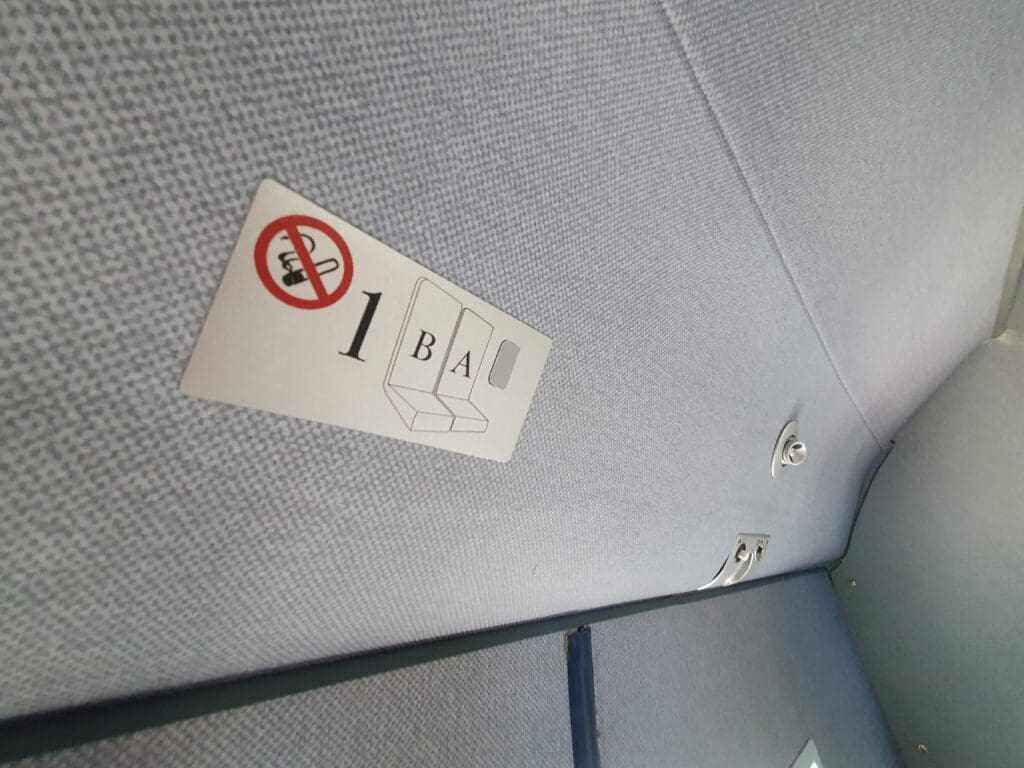
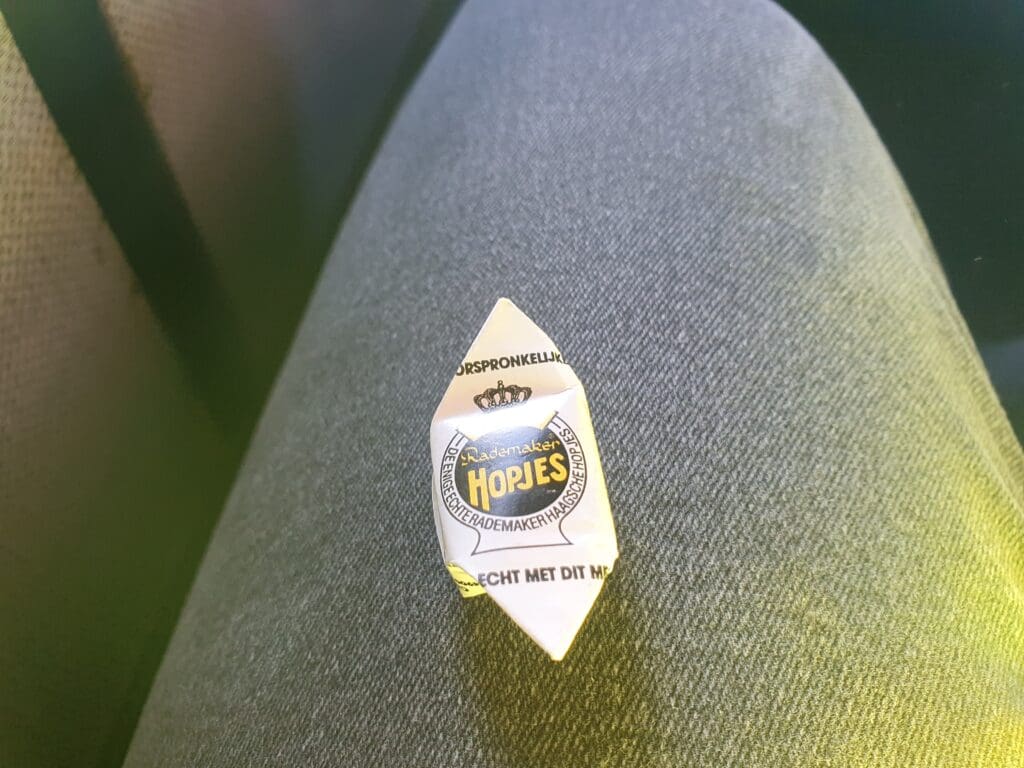
After climbing up the Dakota’s steep upwards sloping cabin, I arrived at the front row and settled into Seat 1A. In terms of comfort, admittedly the seat was a little firm although being a bulkhead seat, the amount of legroom provided was superb. It is also worth noting that all seats onboard appear to feature a fantastic amount of legroom. Inside, the cabin appeared to be clean and tidy, although as you’d expect from a vintage aircraft, despite being well cared for there were a fair few signs of wear and tear visible throughout. One thing I did notice was that when seated, the windows were at chest height, meaning plenty of bending over was needed to get a good view out of these. That evening, whilst passengers were taking their time, taking plenty of photos and soaking up the unique atmosphere of this rare aircraft, it still did not take too long for all passengers to make it onto the aircraft and get settled for the flight ahead. Once all passengers were seated, the Captain emerged and performed another pre-flight speech. This time, the captain advised that whilst the Dakota’s engines are easy to start when either warm or cold, that evening these were lukewarm and thus likely to be difficult to start and it may well end up taking a few attempts to get these to spool into life. This was perhaps mentioned to avoid worry in case these did not start straight away. Once done, the flight attendant then took to the front of the cabin and performed a welcome and safety speech in Dutch and English, pointing out the Dakota’s five exits. After this, the flight attendant then passed through the cabin with a small basket of Hopjes – hard coffee-flavoured sweets.
With no doors separating the cockpit from the cabin, after the flight attendant had finished their demonstration, the two pilots could be heard running through their pre-start checklists. Contrary to what the captain had said, following several long whines, one by one the two large Pratt & Whitney R-1830 Twin Wasp piston engines fired up into life with a puff of grey smoke, with their well-polished three-blade Hamilton Standard propellers whirling into life during the first start-up attempt. Despite sitting right next to the engines, their start-up still seemed to be a little quieter than you’d expect from a vintage piston-engined airliner. However, once a fellow passenger remarked how quiet the start-up had been, the flight attendant remarked on how things would become much louder during departure.
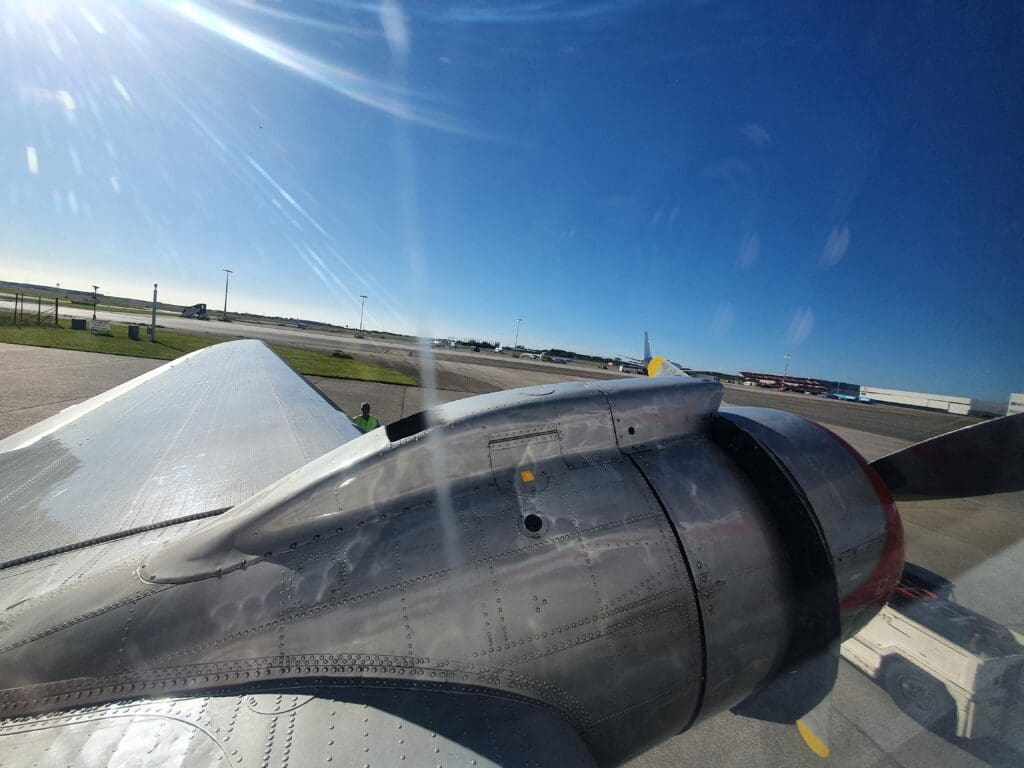
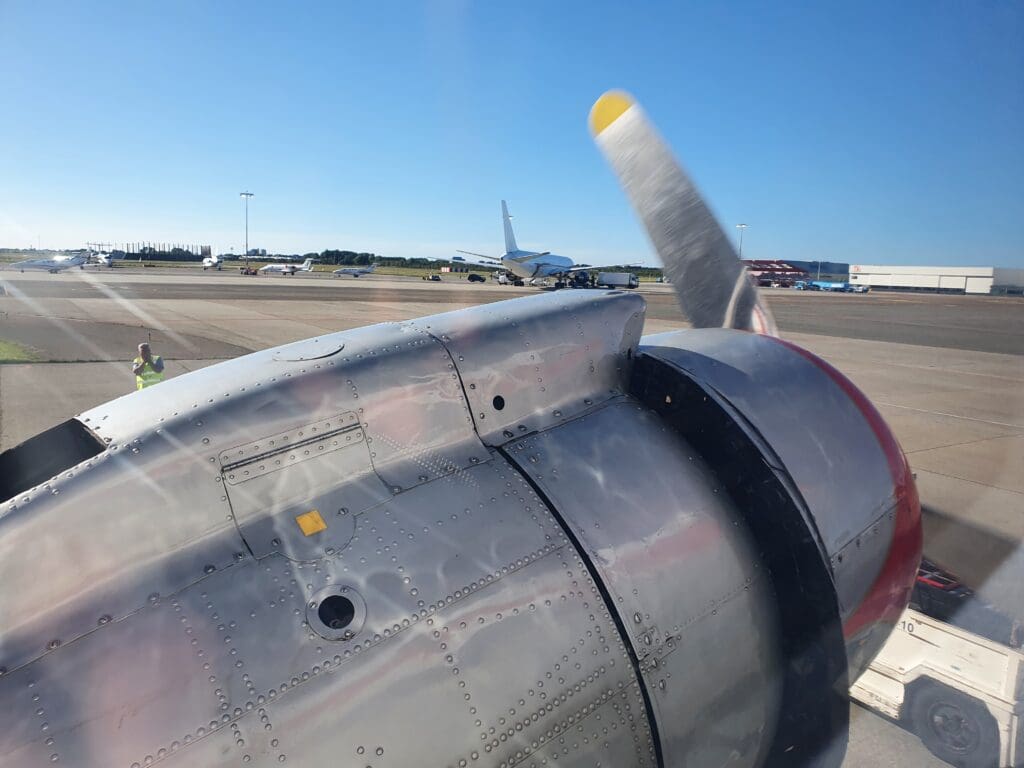
Once the engines had stabilised and the ground crew had retreated, the aircraft slowly taxied forward out of its stand and made a very short taxi over to the end of Runway 22, also known as the Oostbaan. Without holding, the aircraft made its way onto the runway before coming to a gentle halt and pausing for a couple of minutes. At 1853, the cabin was filled with the noise of the two Twin Wasps as the throttles were pushed forward and the aircraft commenced its take-off roll. Adrenaline junkies may be disappointed to hear that unlike on many airliners, the take-off roll was gentle and lacked the sensation of being pushed back into your seat. Once the tail wheel had lifted onto the ground, the Dakota continued powering down the runway and a very short time later, the entire aircraft floated up into the evening skies of Holland.
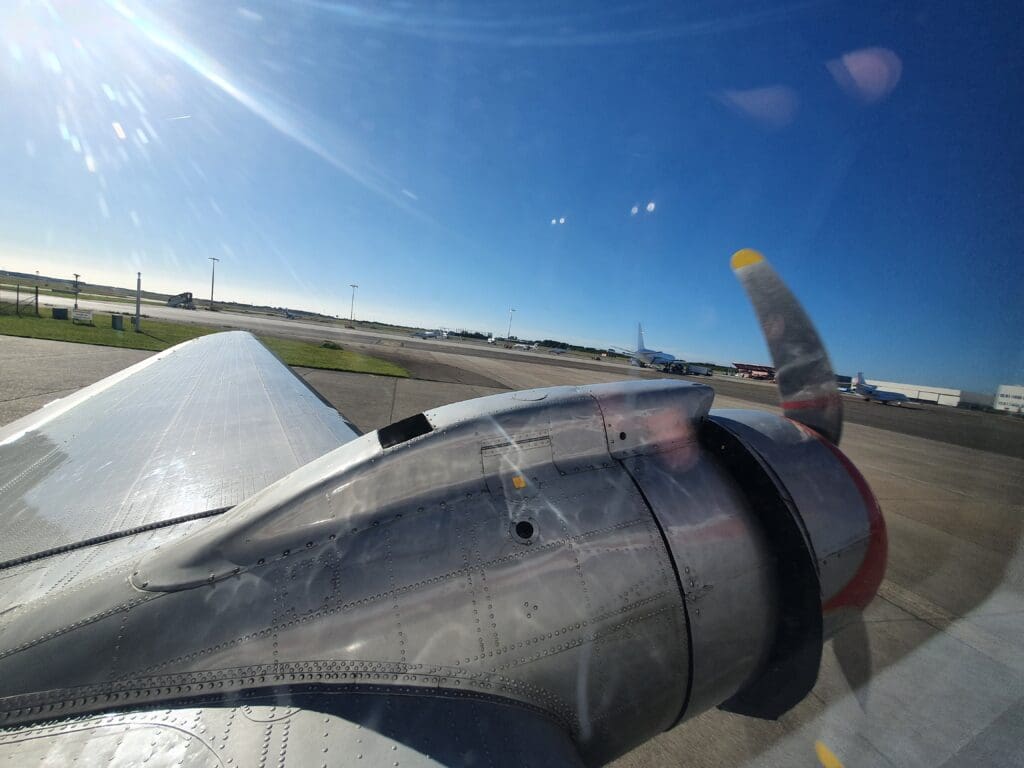
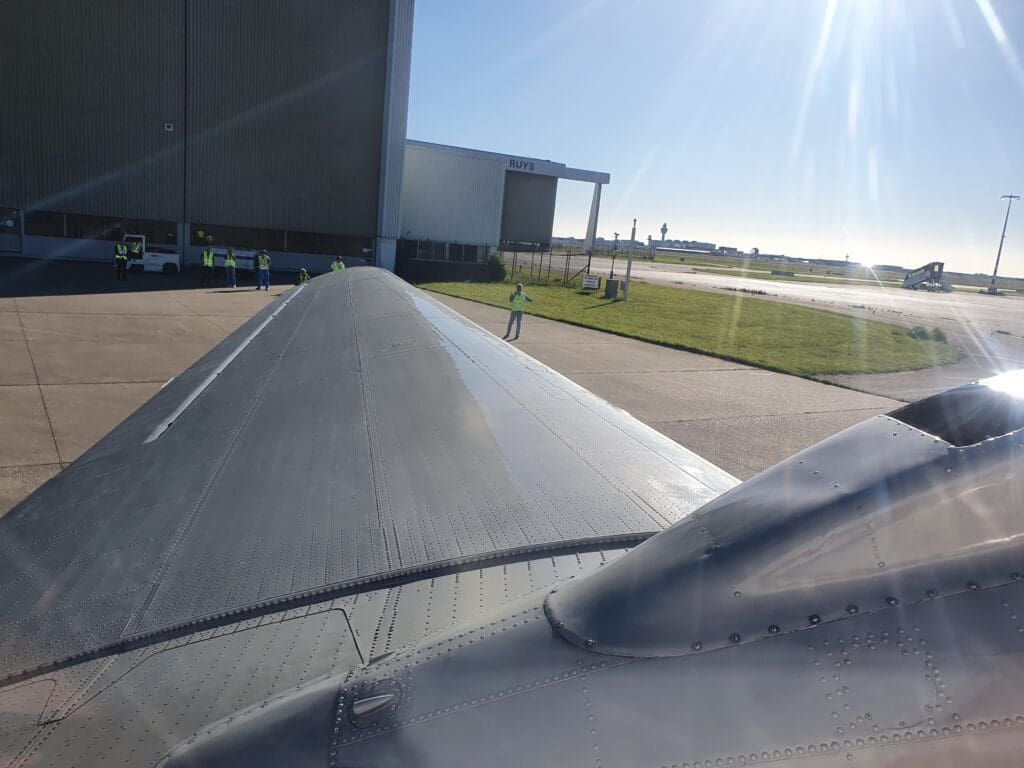
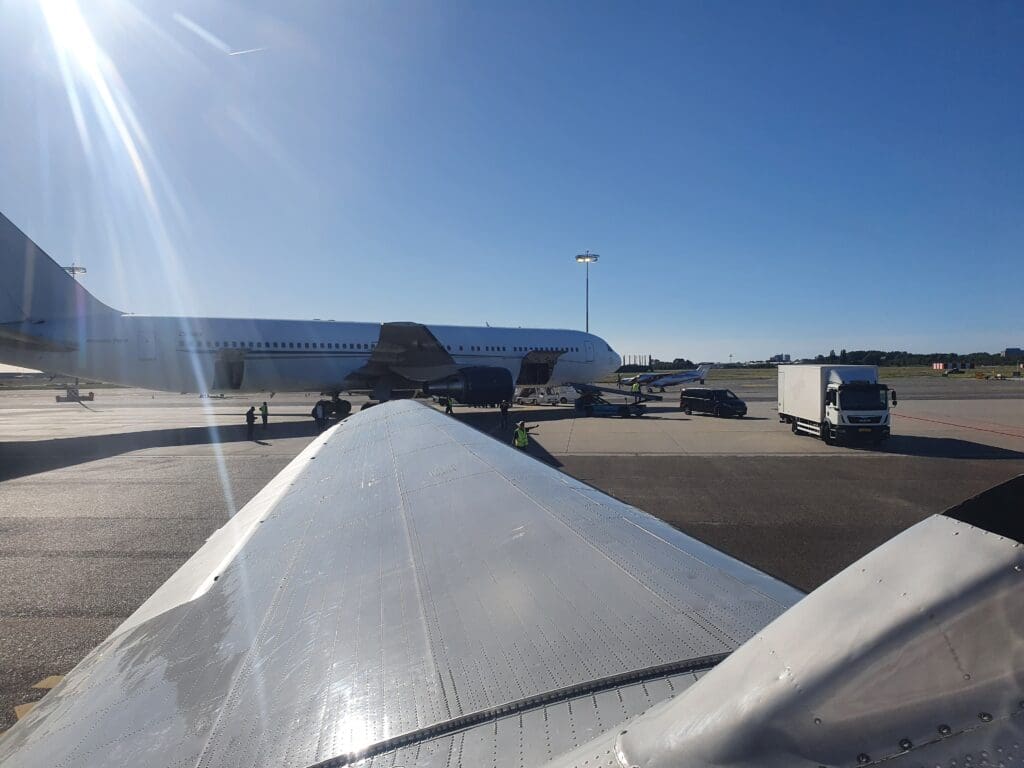
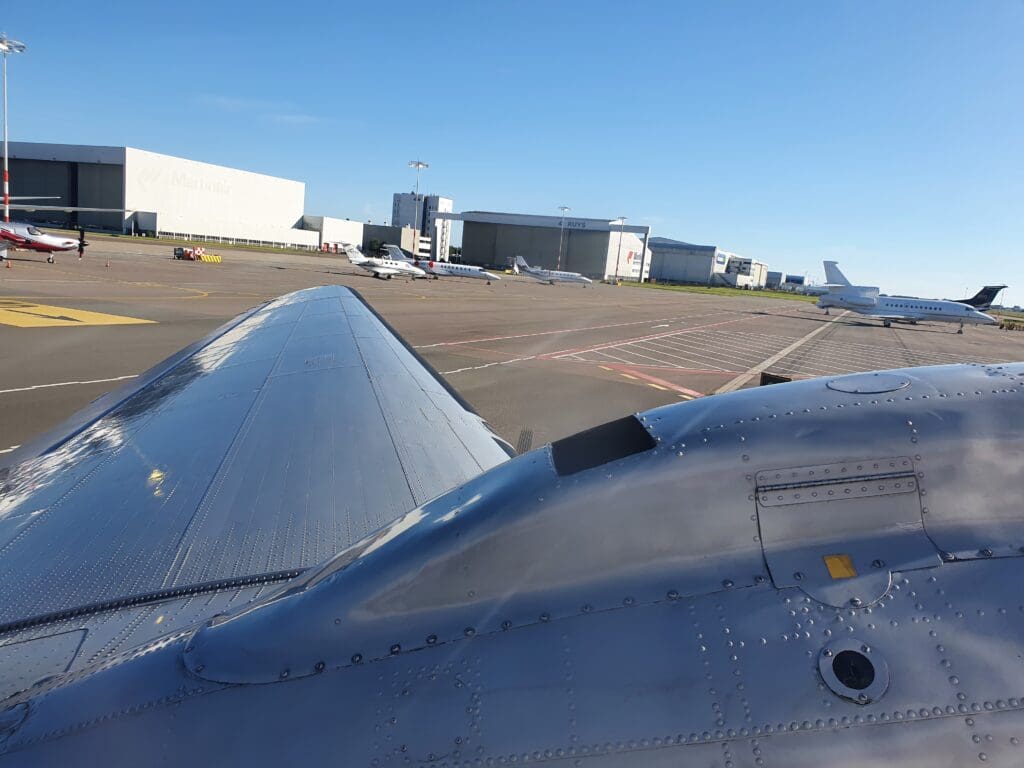
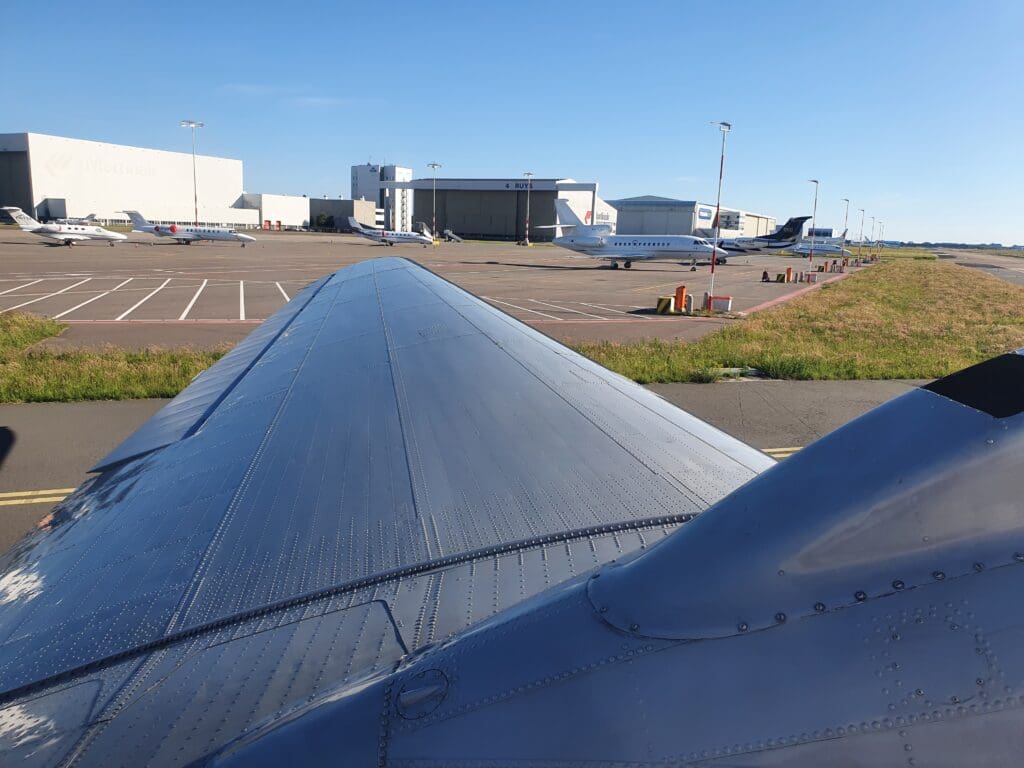
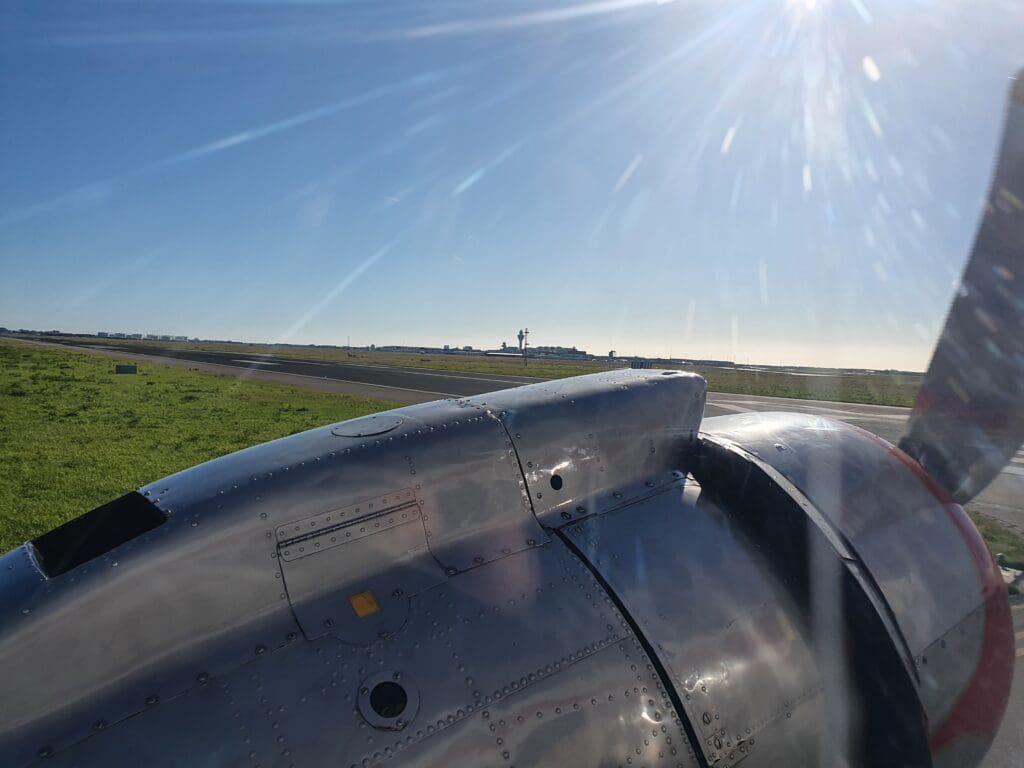
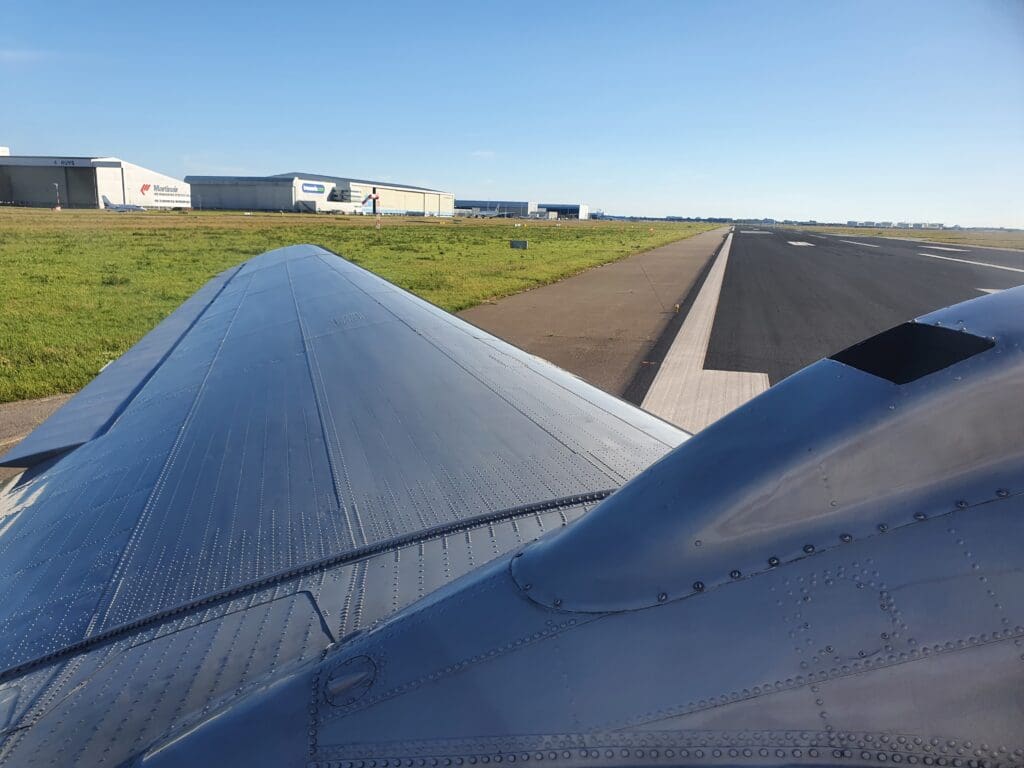
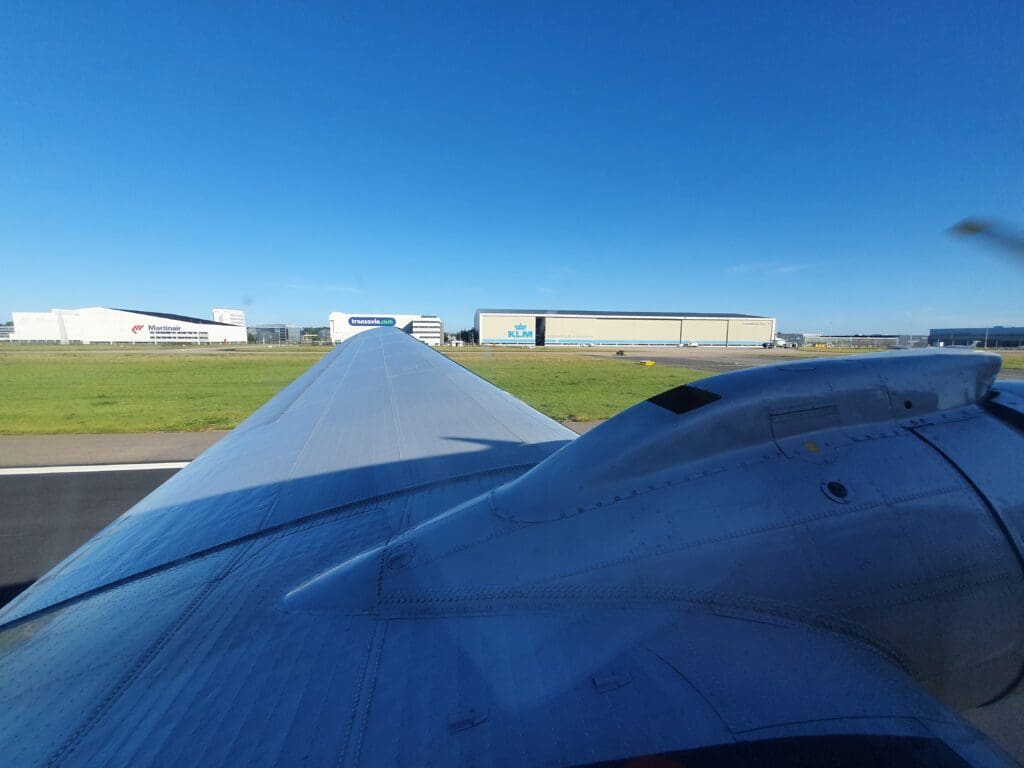
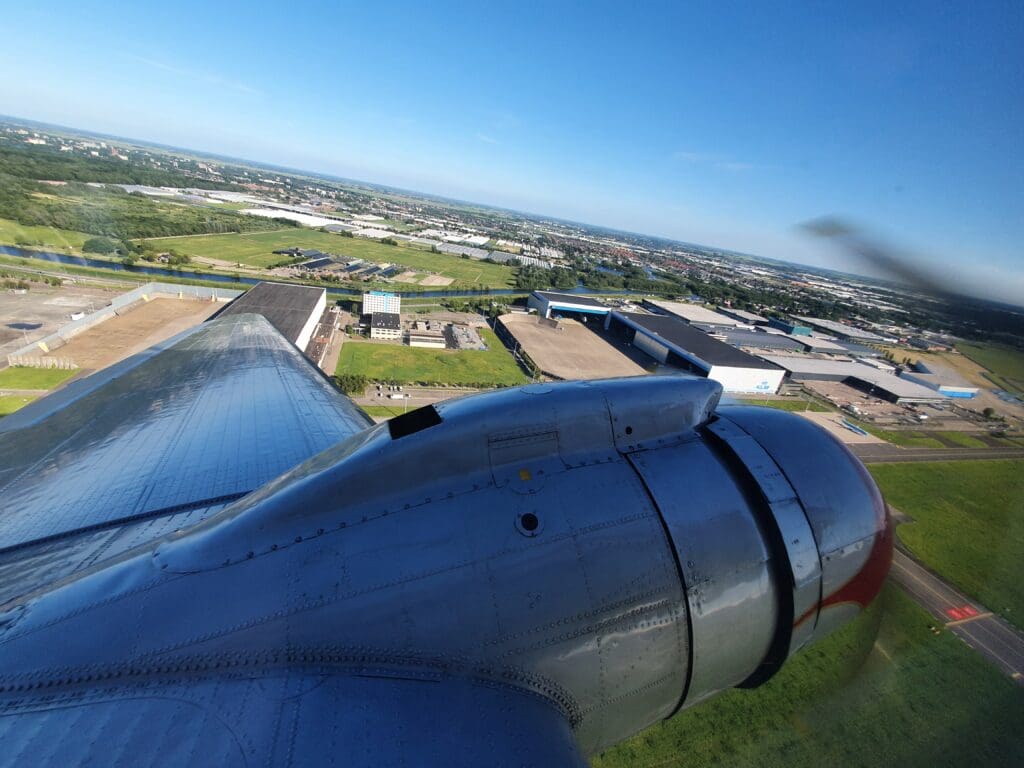
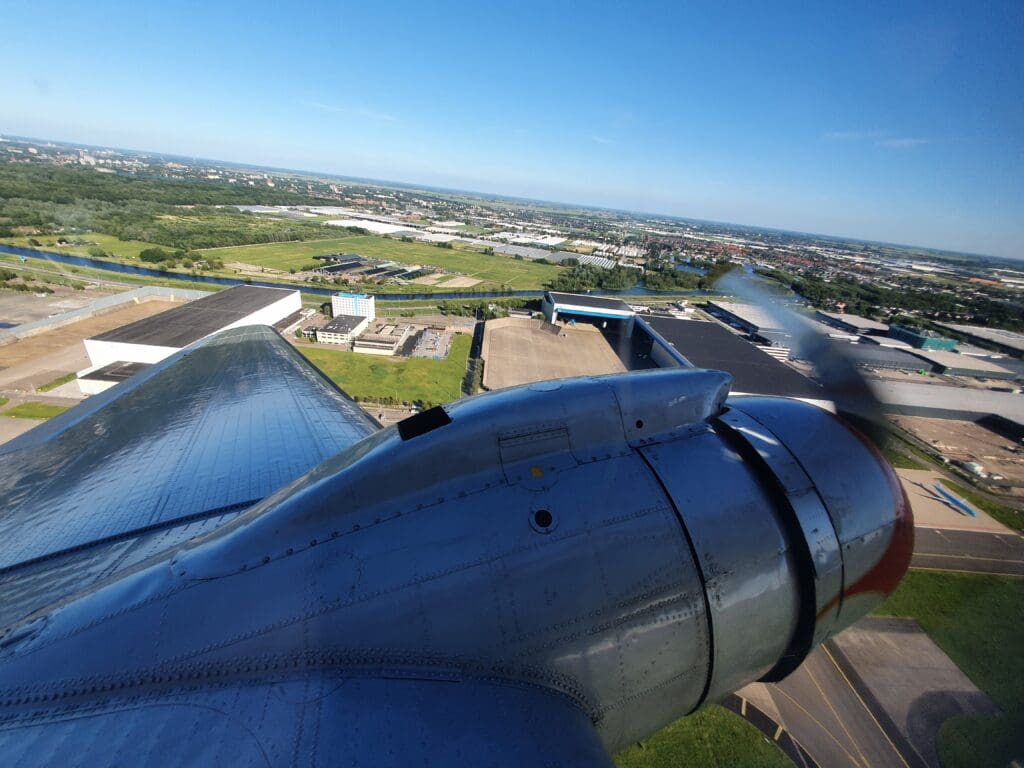
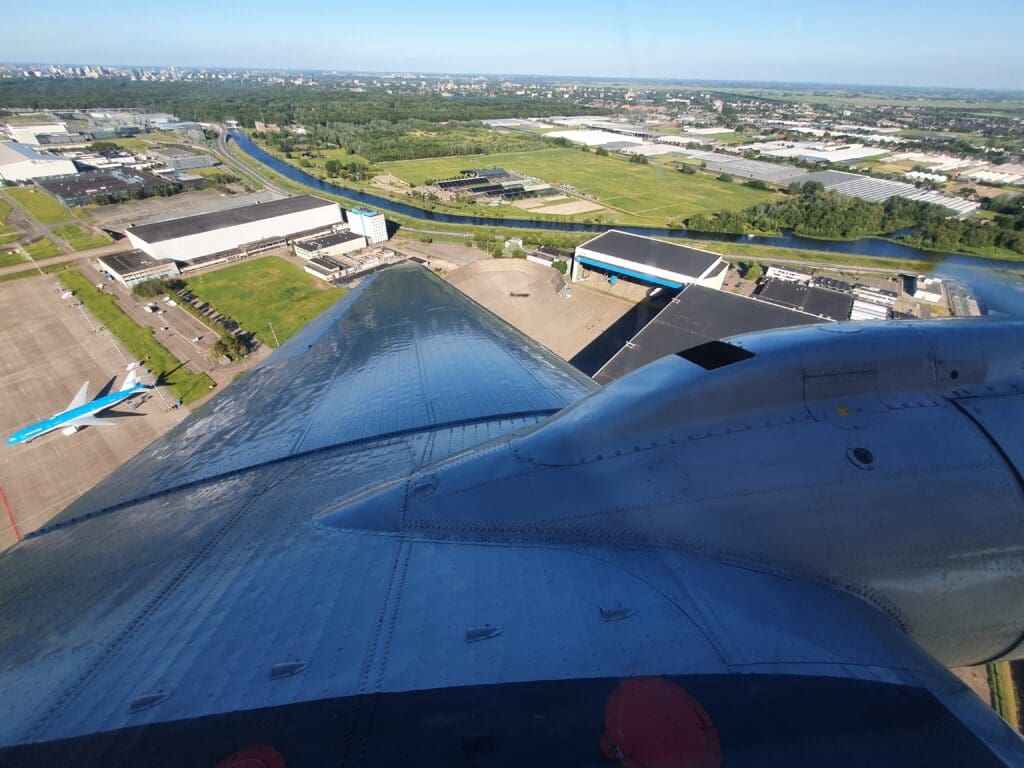
Almost as soon as the aircraft had taken to the skies, the aircraft banked left allowing for a good view of the KLM hangars that sit along the Oostbaan, before the Dakota left the vast expanse of Schiphol behind. At this early stage of the flight, the Dakota levelled off at its cruising altitude of just 900 feet at which point the seatbelt signs were switched off and the flight attendant announced that passengers were free to move about the cabin and visit the cockpit if they desired, the only requirement being that no more than two passengers could visit this at any one time. Meanwhile, from this moment, one of the pilots up front made regular brief announcements advising of the places that the aircraft was flying over. Thanks to the low cruising altitude and the superb weather that evening, a great view of the Netherlands’ famously flat countryside as well as its canals, fields and windmills could be seen as we trundled along at an airspeed of around 110 knots.
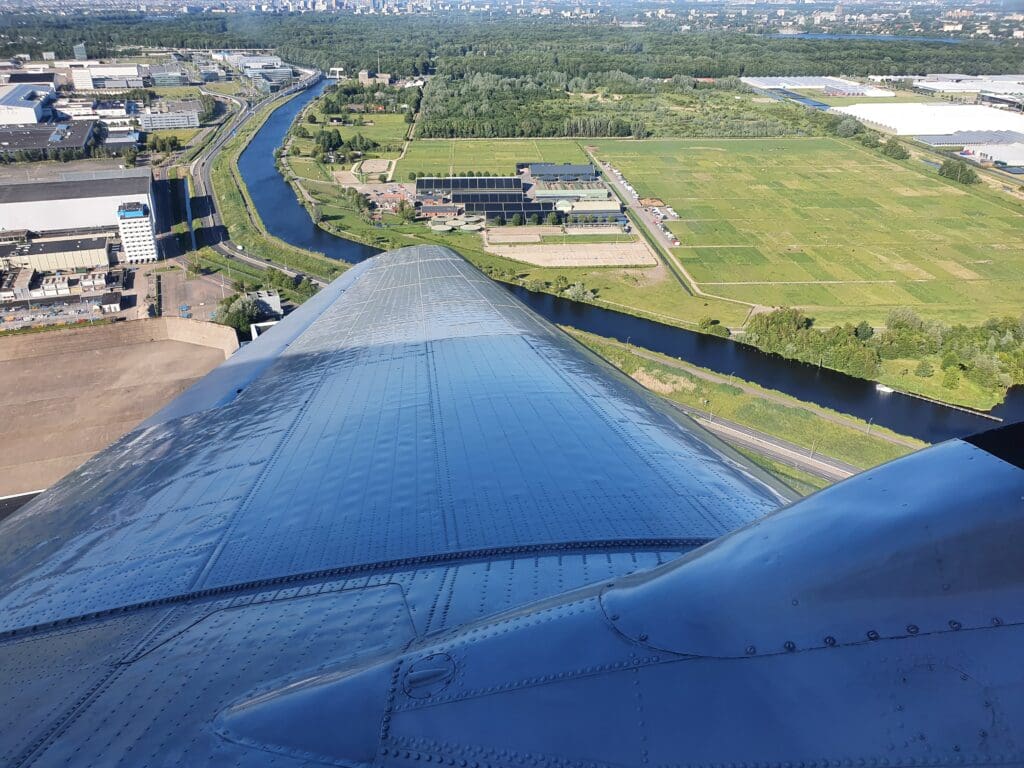
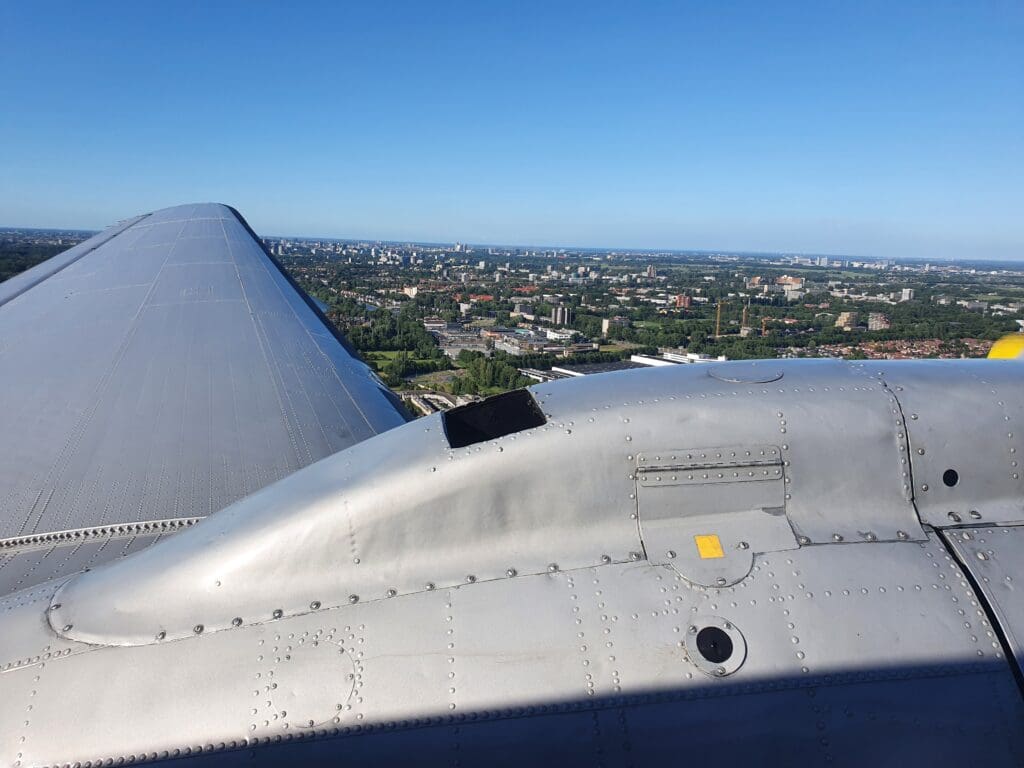
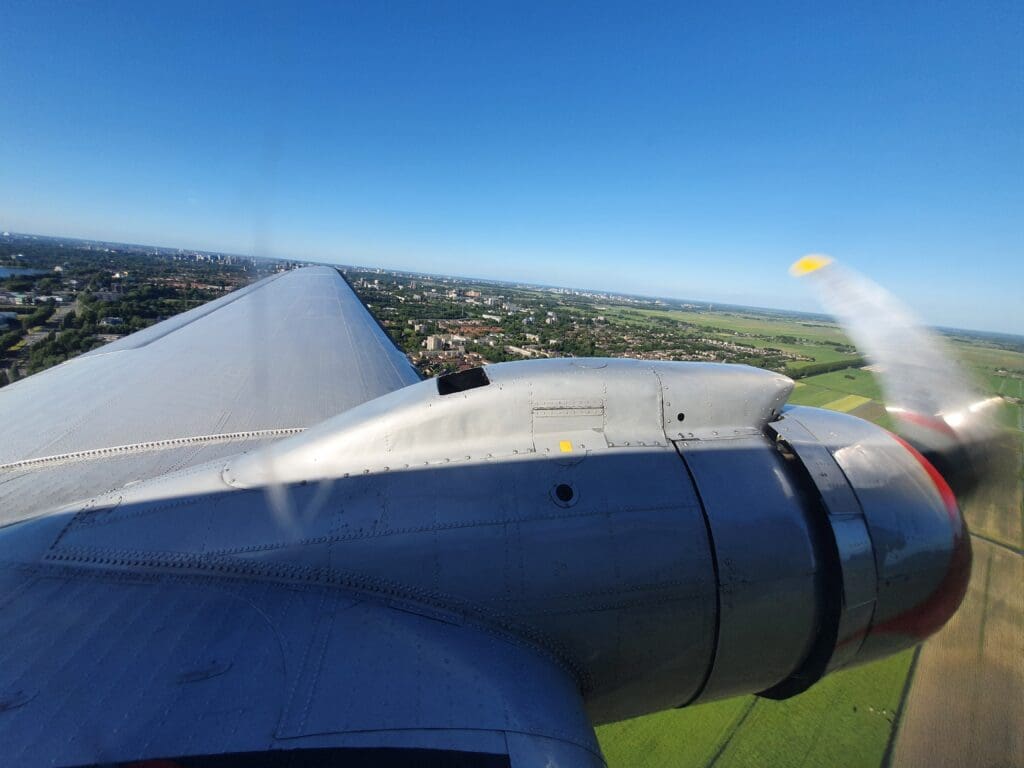
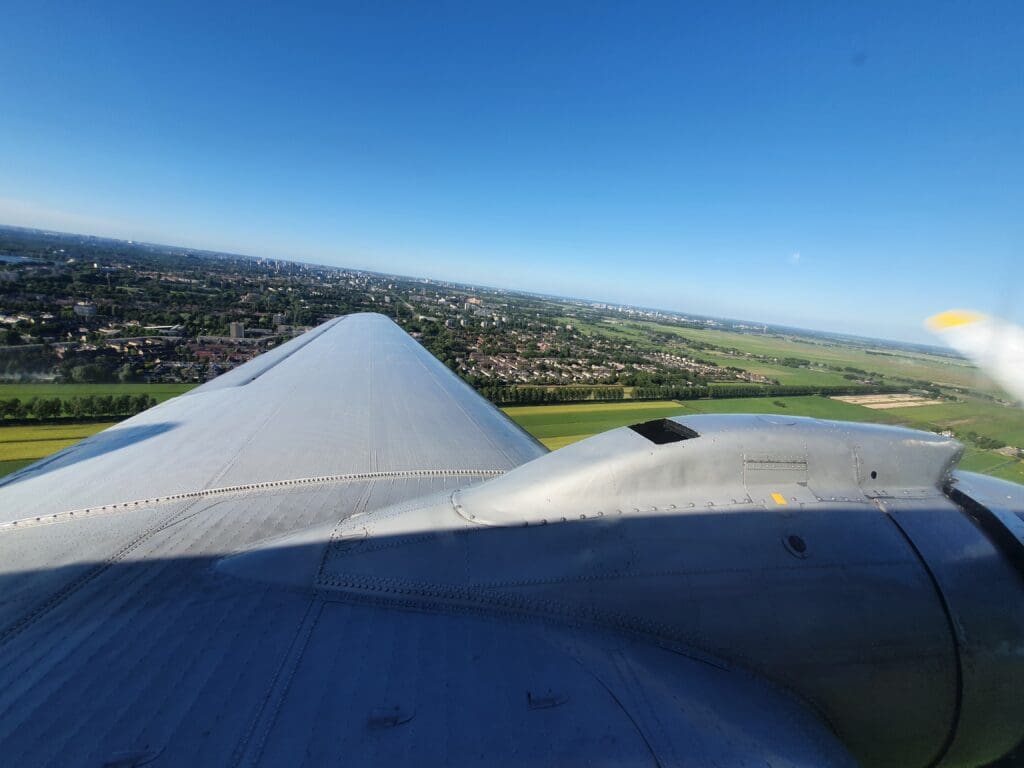
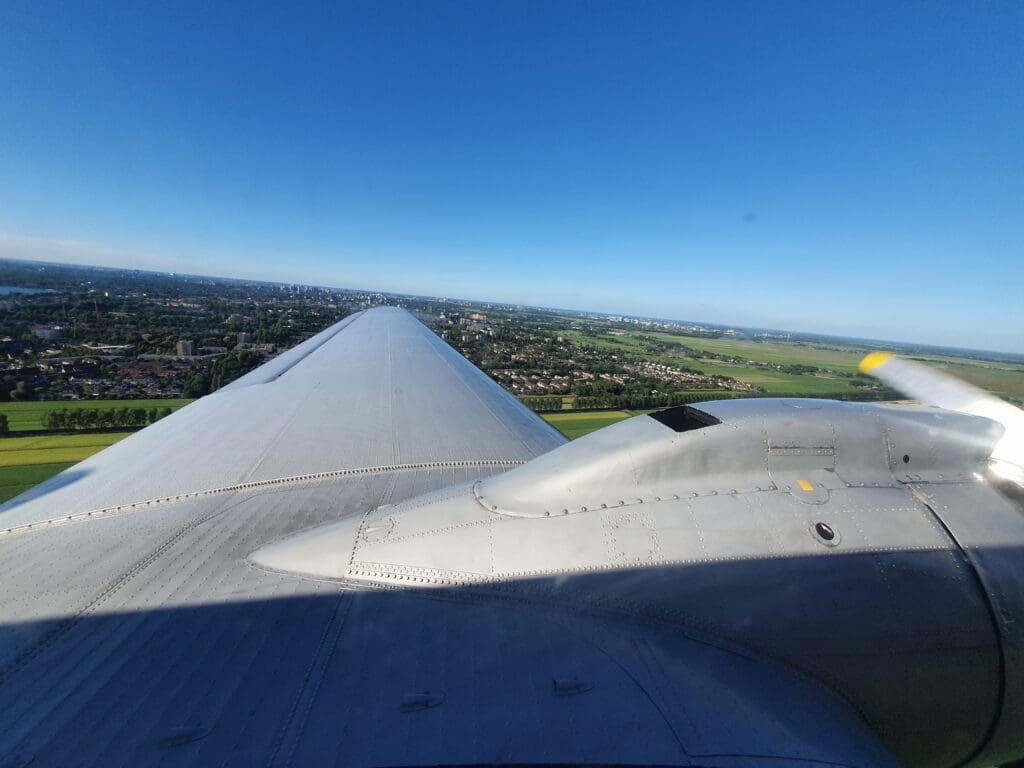
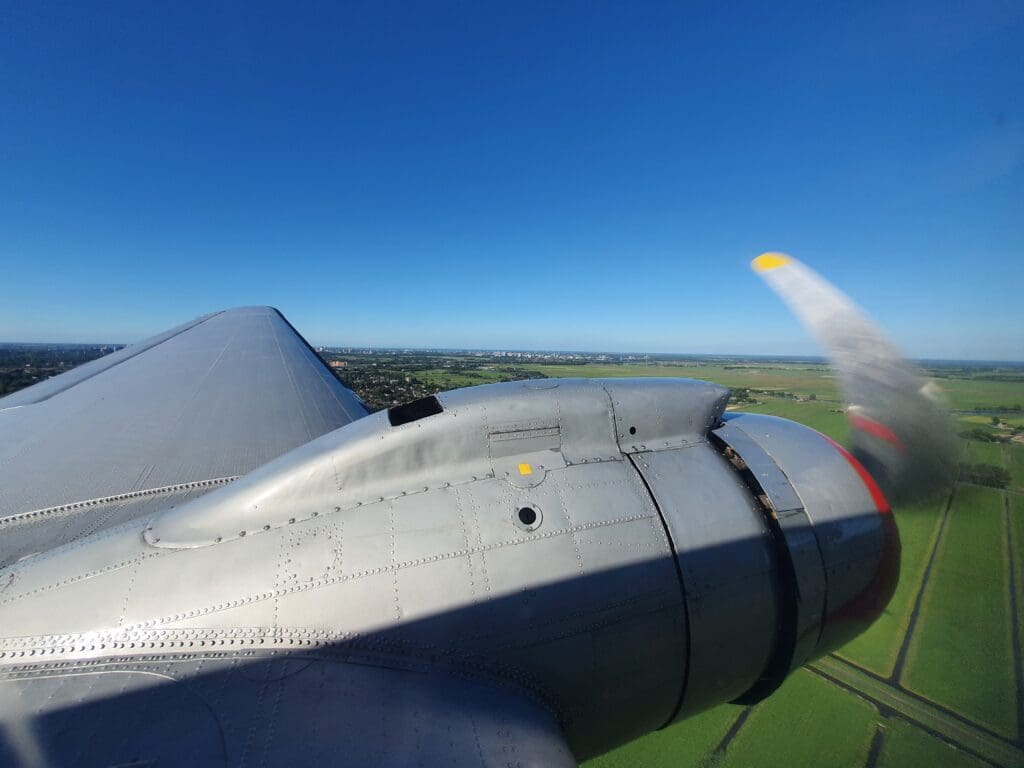
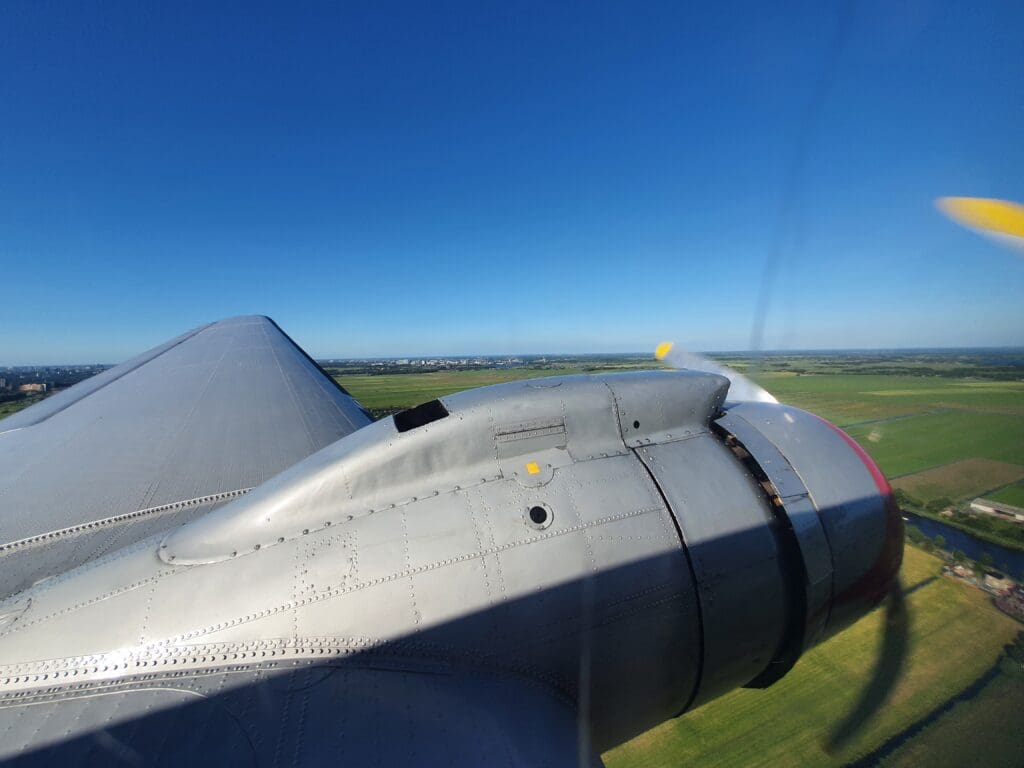
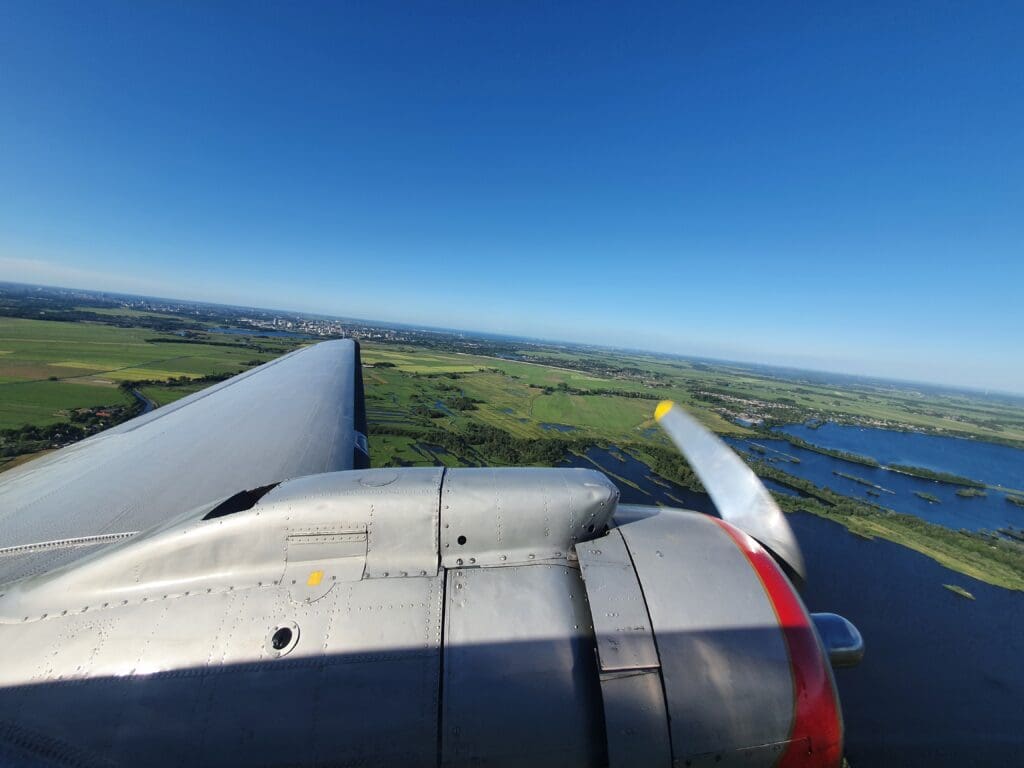
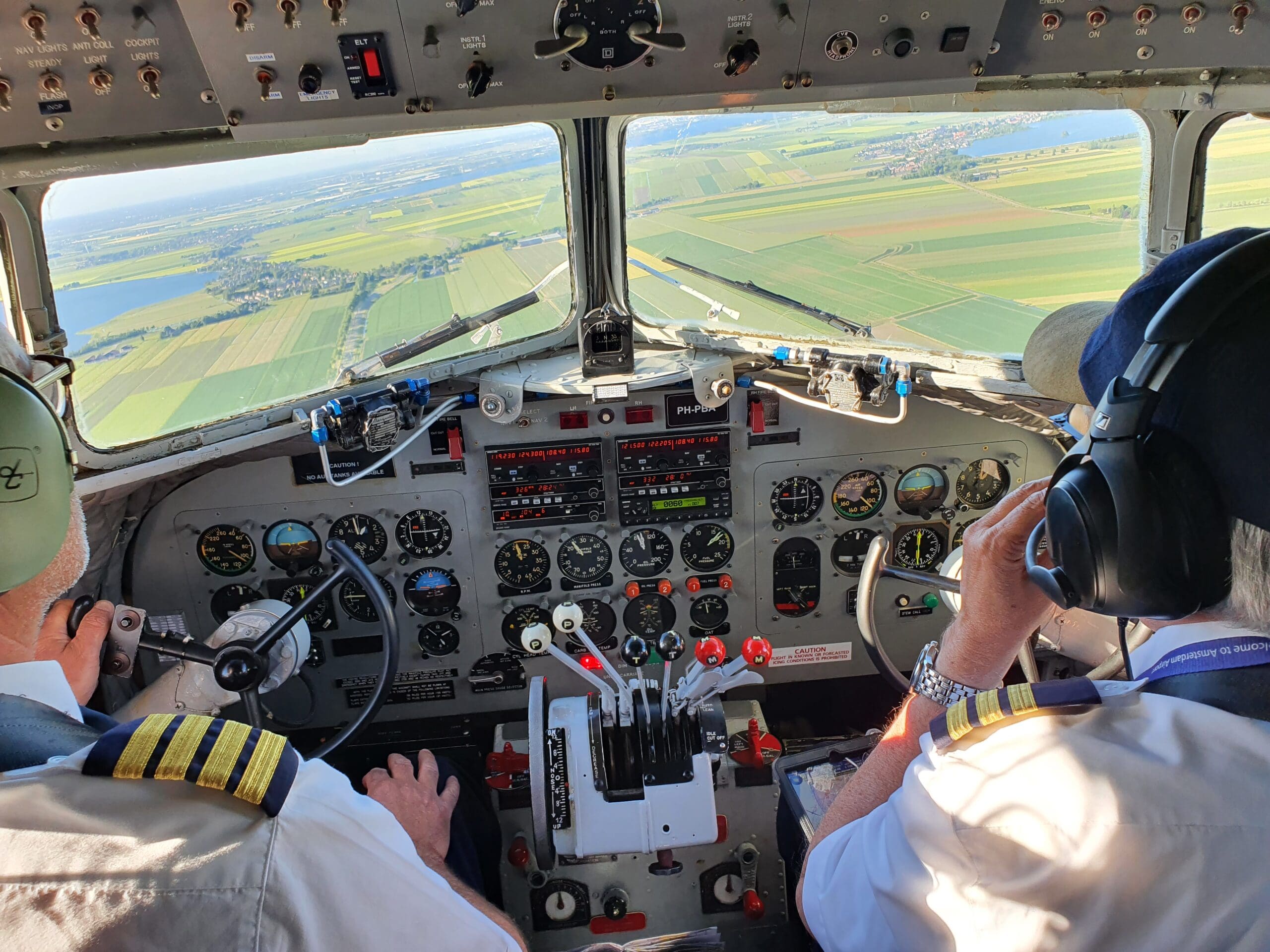
With this flight being the Zuid-Holland tour, after leaving Schiphol the aircraft made its way towards the city of Utrecht, passing just to the west of this allowing for a view of the cluster of buildings of the city centre as the aircraft then headed south and began an elongated circle, flying as far south as Gouda before heading back north and commencing its return to Amsterdam. As we journeyed over the fields, I took up the flight attendant’s offer to visit the cockpit, with the experience of standing up and heading up to the flight deck seeming to be a bit surreal given the myriad of strict regulations surrounding commercial flying today! After heading through the narrow passageway, passing the navigator’s station where my grandfather had spent many an hour (now mostly devoid of equipment) before arriving at the front of the aircraft. Spending about a minute there, I watched as the two pilots flew the aircraft low over the Netherlands’ countryside, cautiously looking out for other aircraft and flicking a few switches in the process.
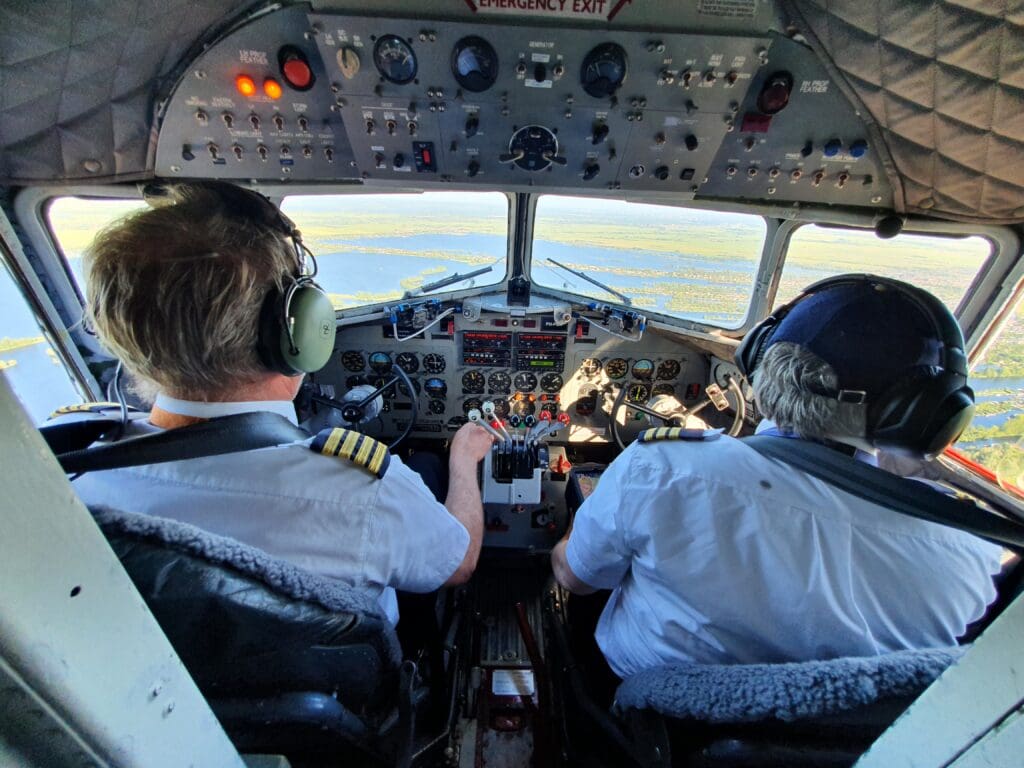
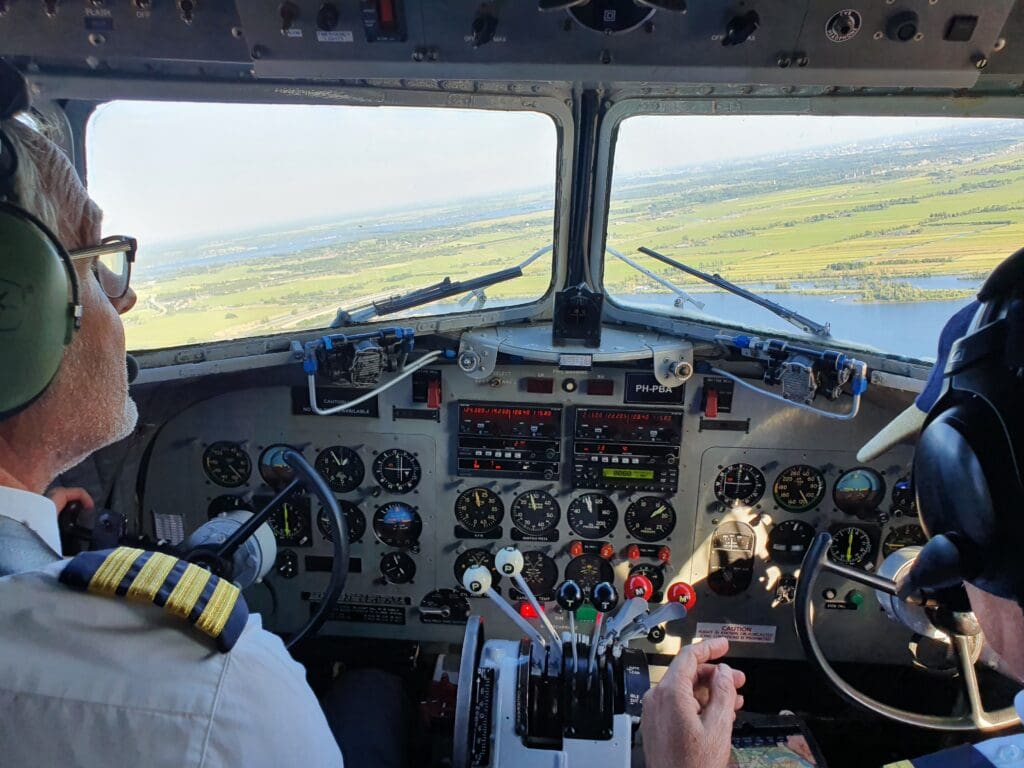
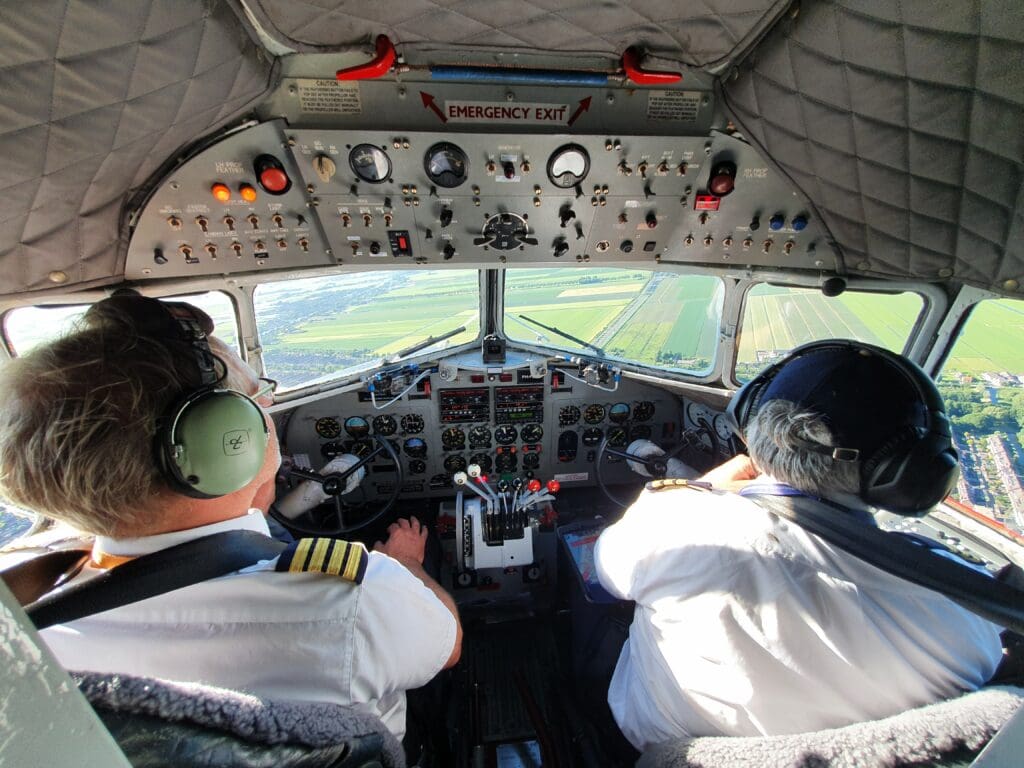
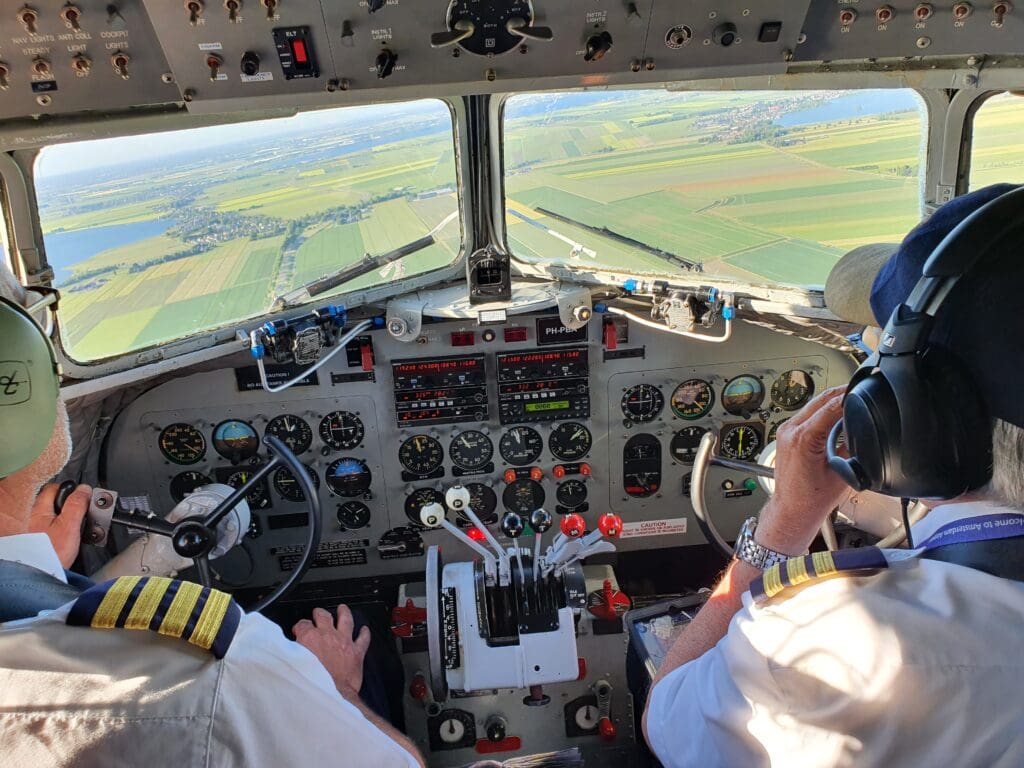
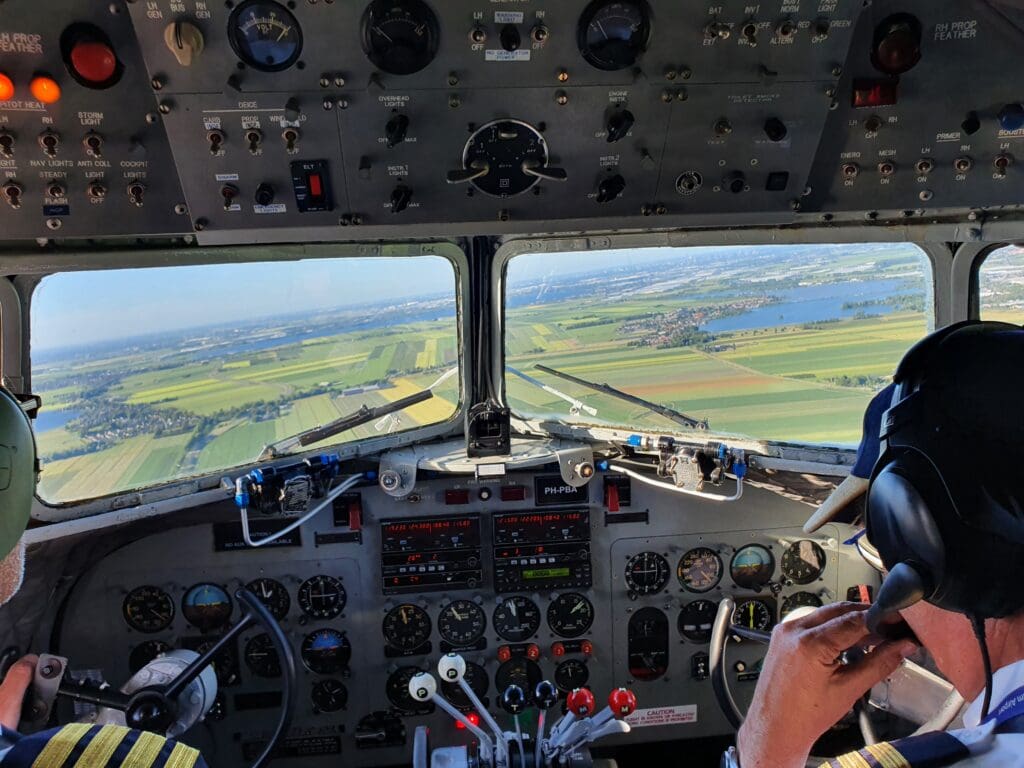
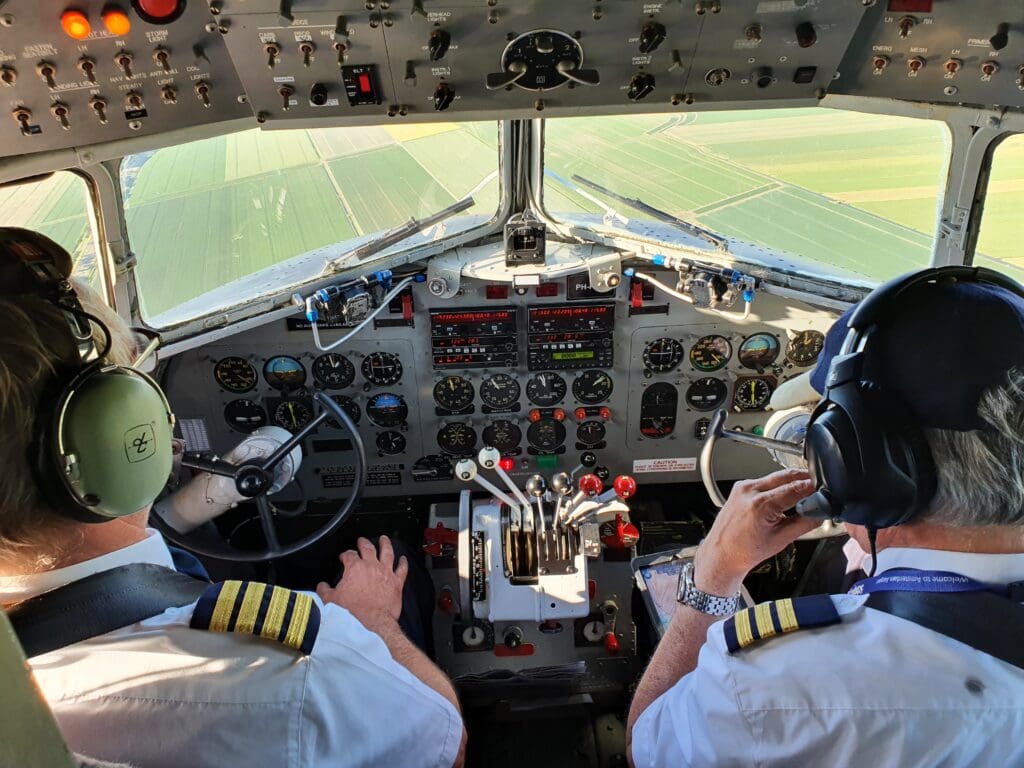
Knowing that plenty of my fellow passengers would also be interested in the opportunity to spend some time upfront, I then retreated back to the cabin and made my way to the rear of the aircraft where I briefly looked through some of the windows at the rear of the aircraft, snapping a few photographs. By this time, the aircraft was bouncing up and down slightly and so I clung up onto the open overhead luggage racks as I made my way up and down before retreating to 1A for good.
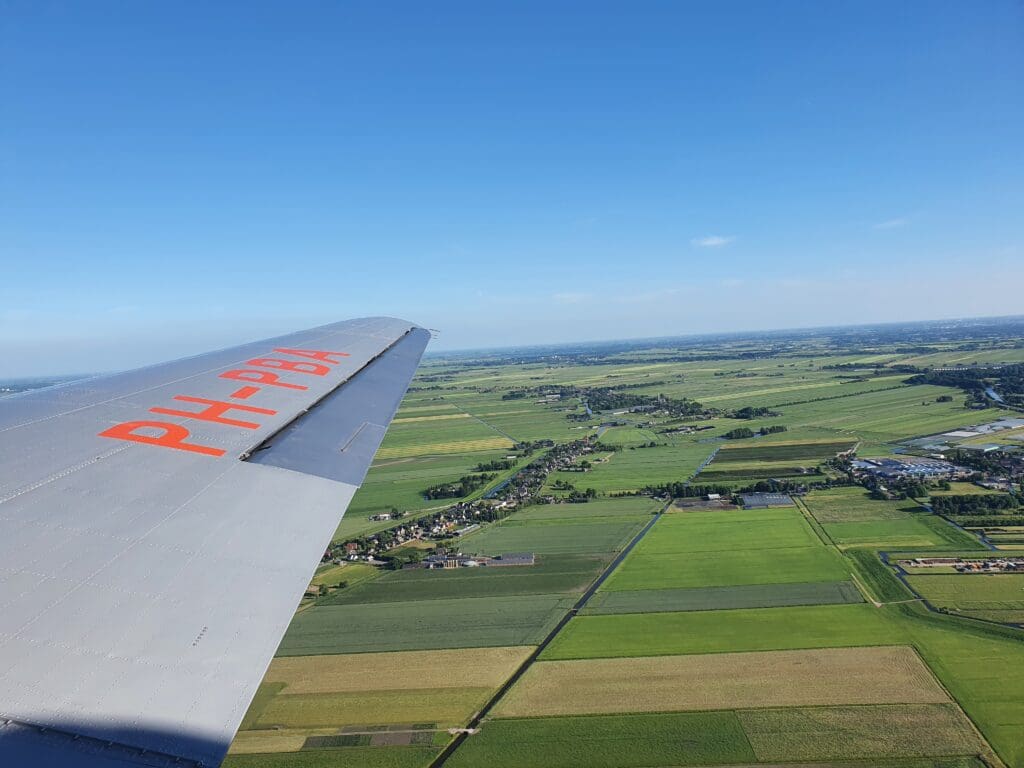
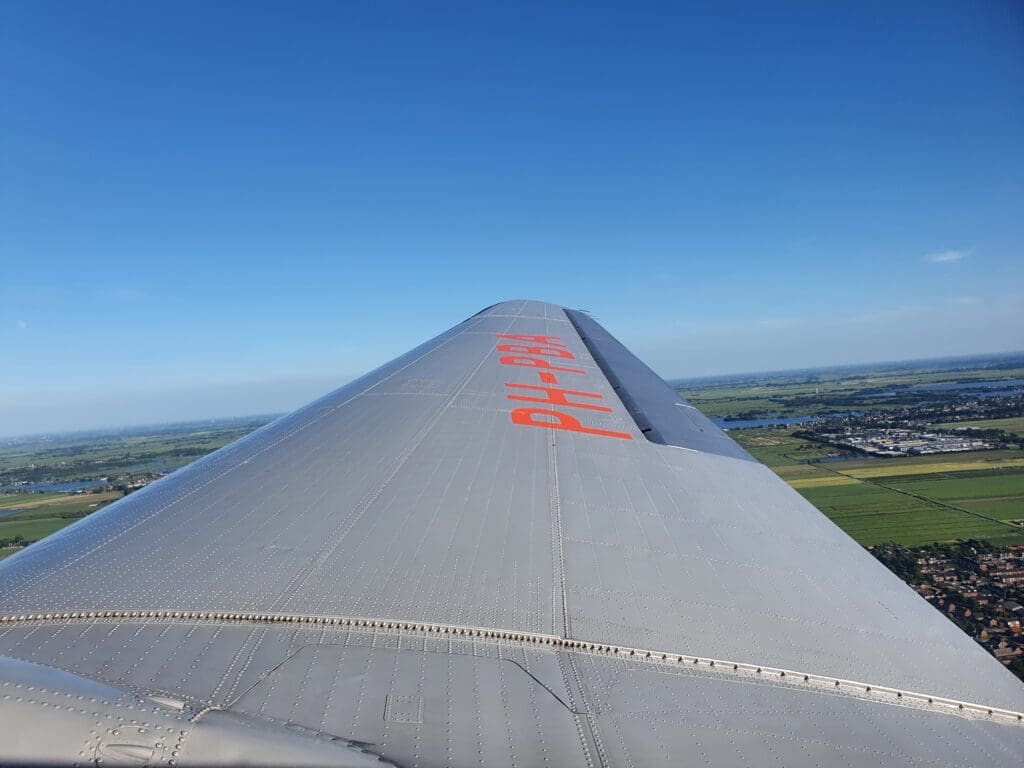
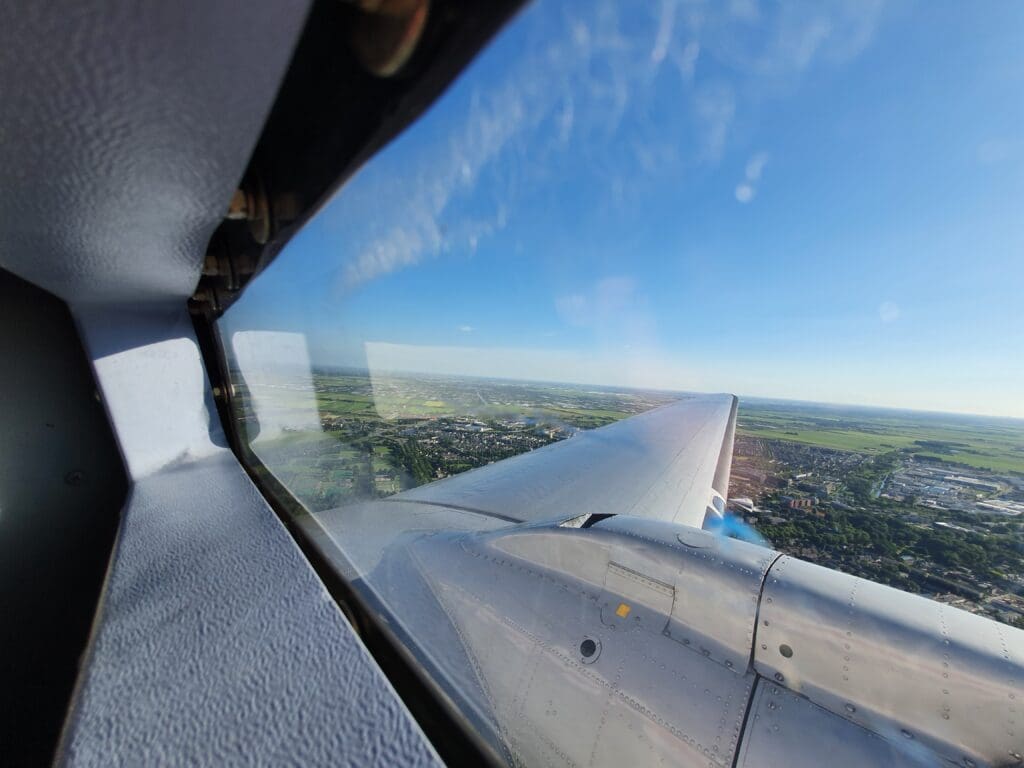
As we buzzed the fields of Holland, the flight attendant spent the flight chatting to passengers about the aircraft, answering questions about this venerable type and discussing various aviation-related topics. As it turned out, the flight attendant was a rather veteran DC-3 crew member, having commenced flying with DDA Classic Airlines in 2010 whilst not working their main job, looking after passengers with KLM. Since then, they were no longer working as cabin crew with the Netherlands’ national carrier however being a flight attendant with DDA Classic Airlines allowed them to continue to get their aviation fix, and it was clear that they were highly passionate about the Dakota!
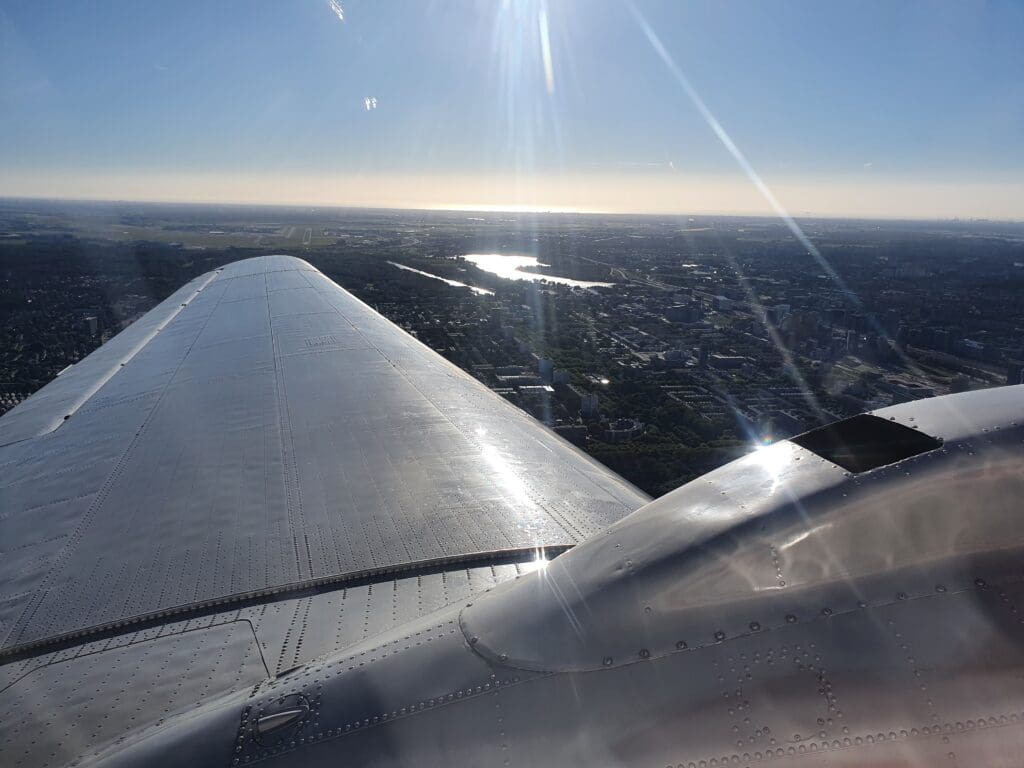
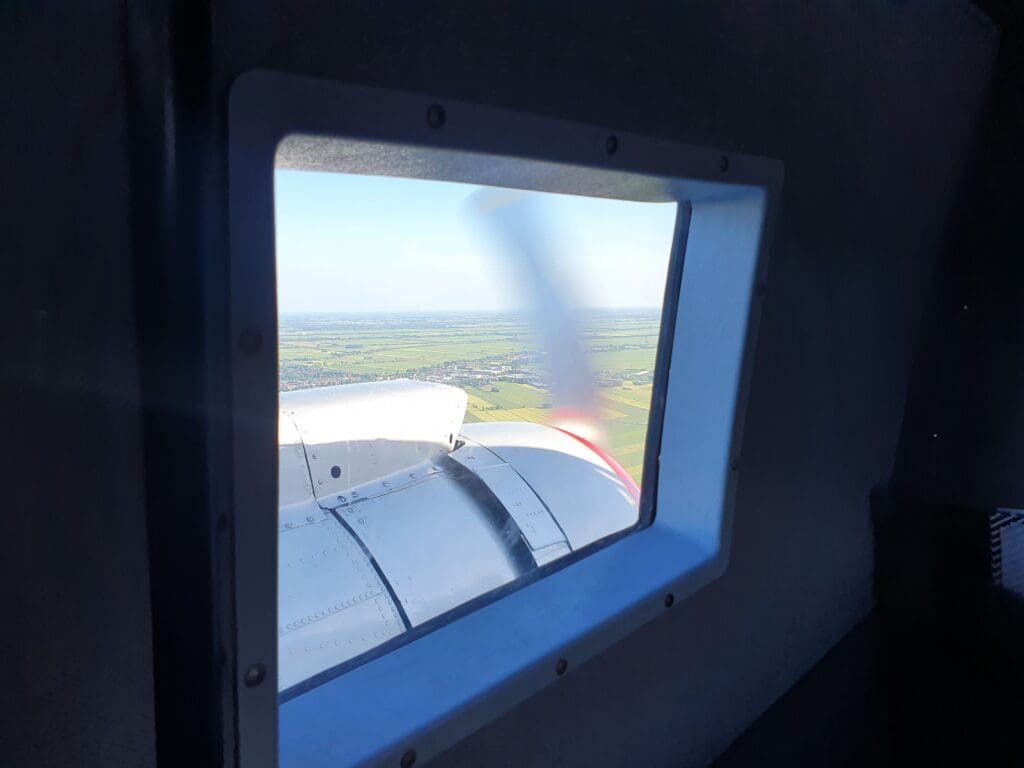
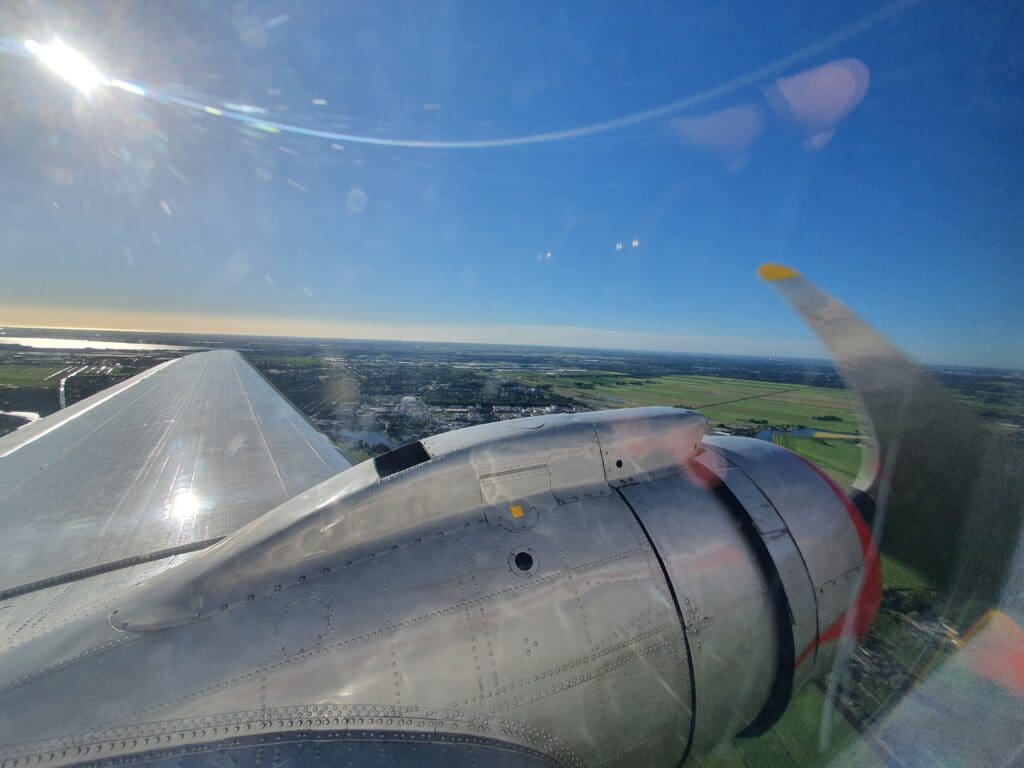
Before I knew it, the flight was nearing its final stages however we were in for one final surprise. As the aircraft neared Schiphol, the captain performed an announcement advising that as we had all had a long wait for the flight, the pilots would elongate this slightly and fly right over the heart of Amsterdam before turning around and heading back to Runway 22. Soon enough, the suburbs of Amsterdam came into view followed by the tree-lined canals and historic buildings of the city centre, at which point the captain came onto the speakers again and pointed out some of the sights below – including the Rijksmuseum and Van Gogh Museum.
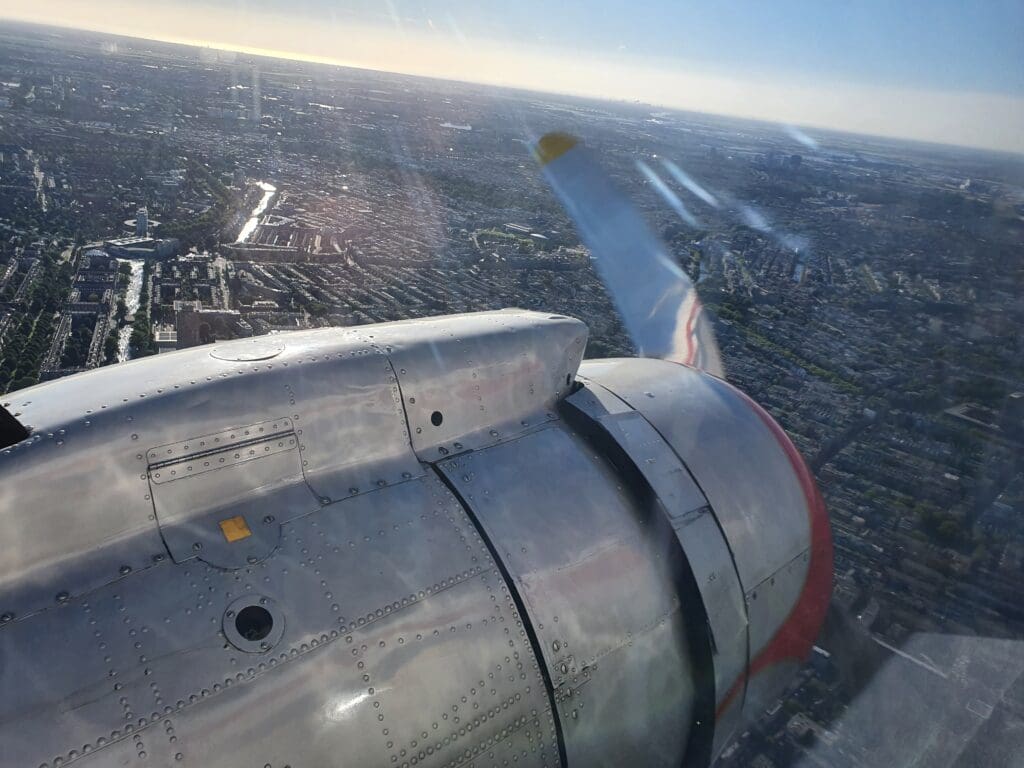
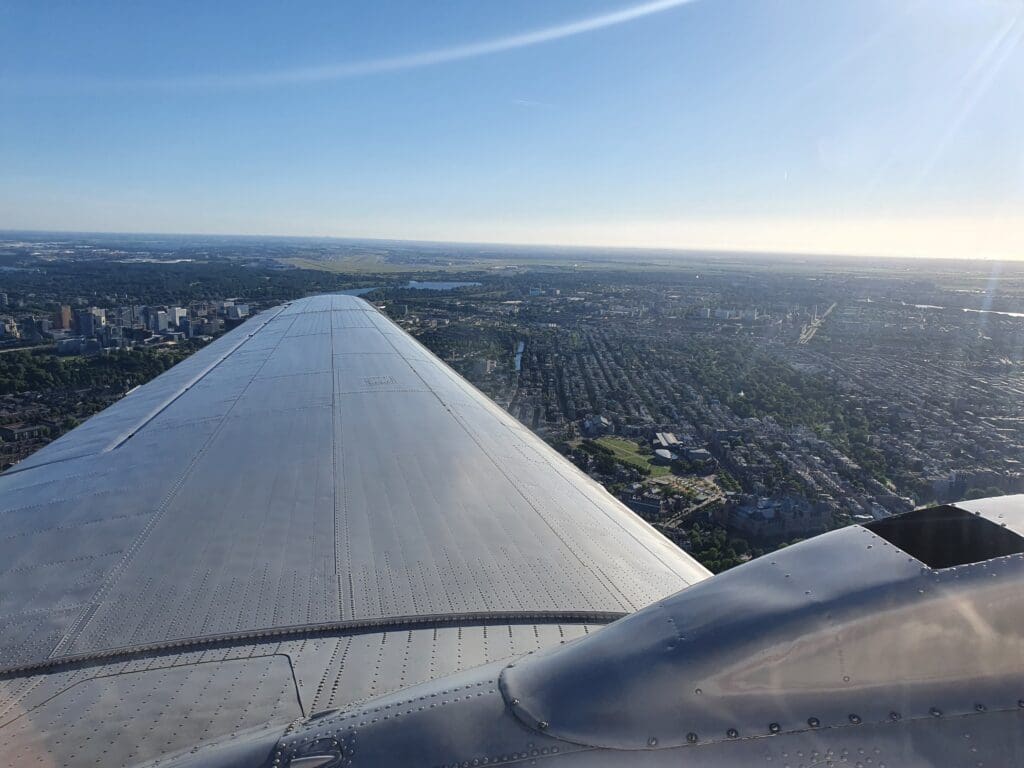
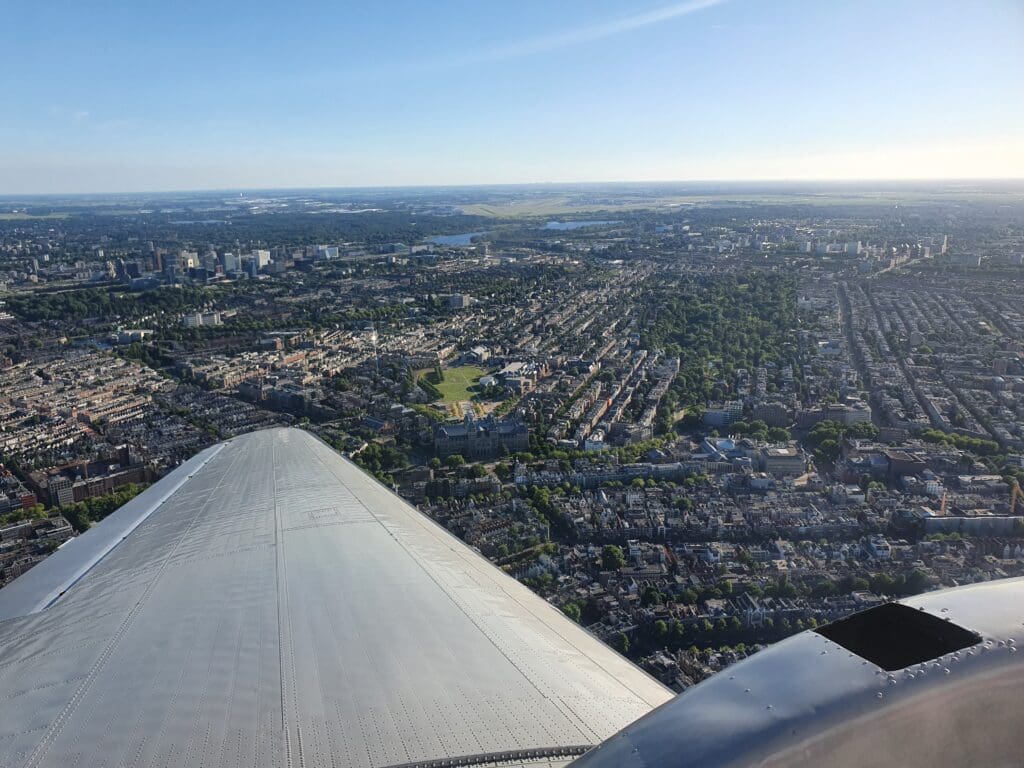
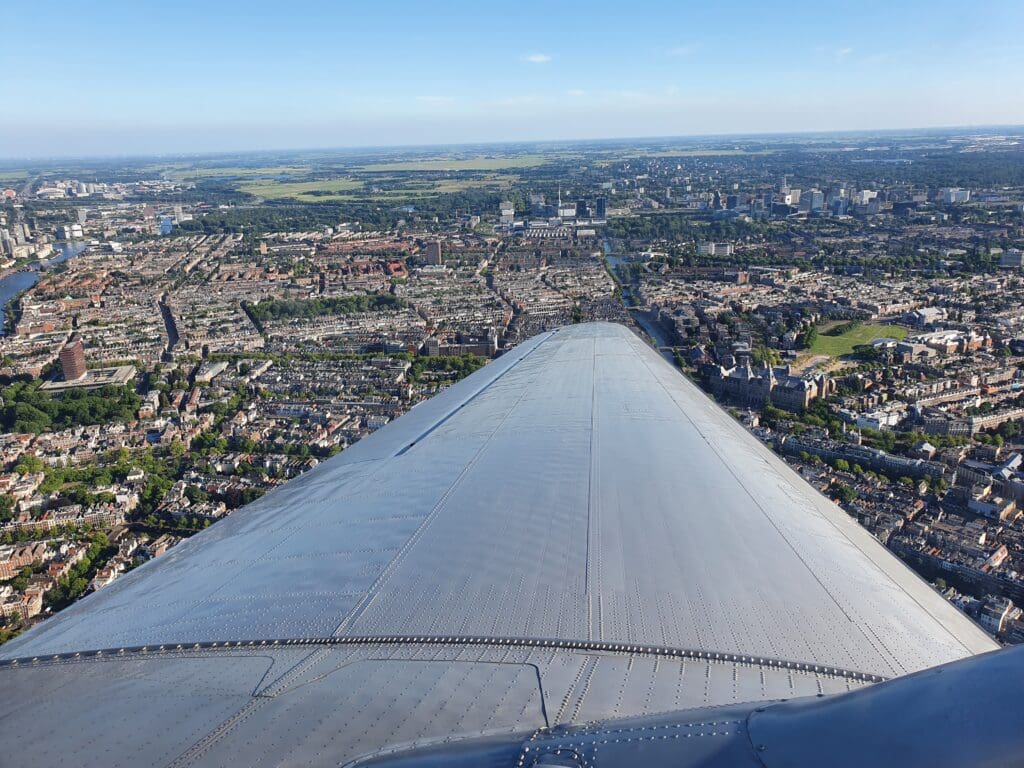
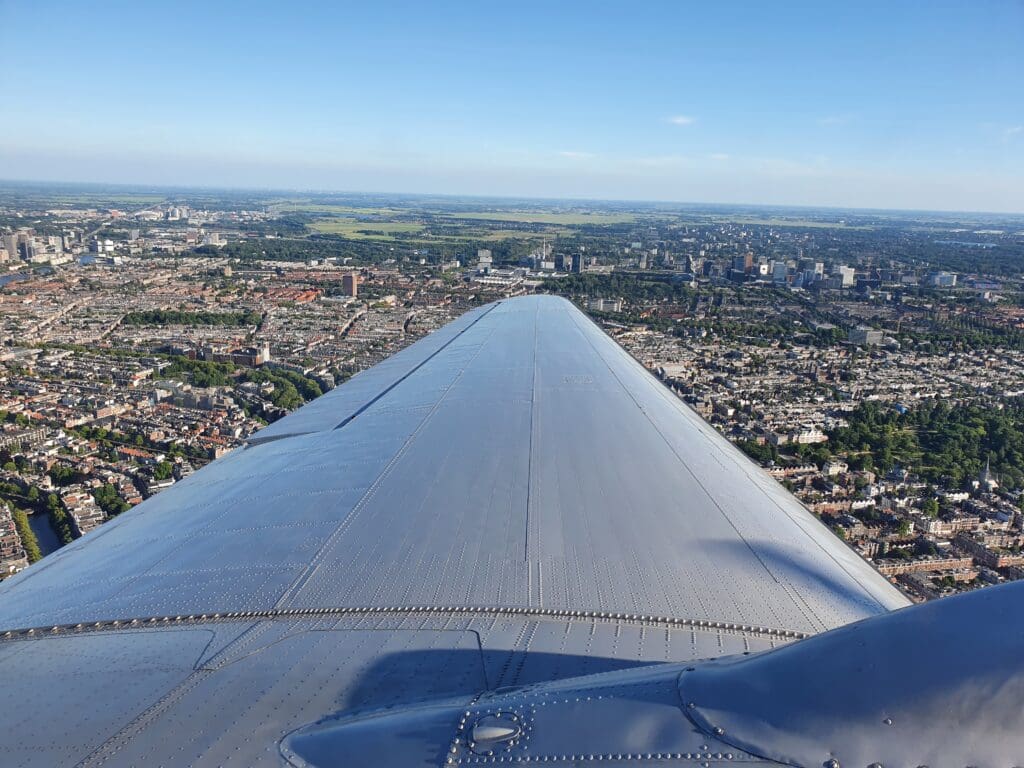
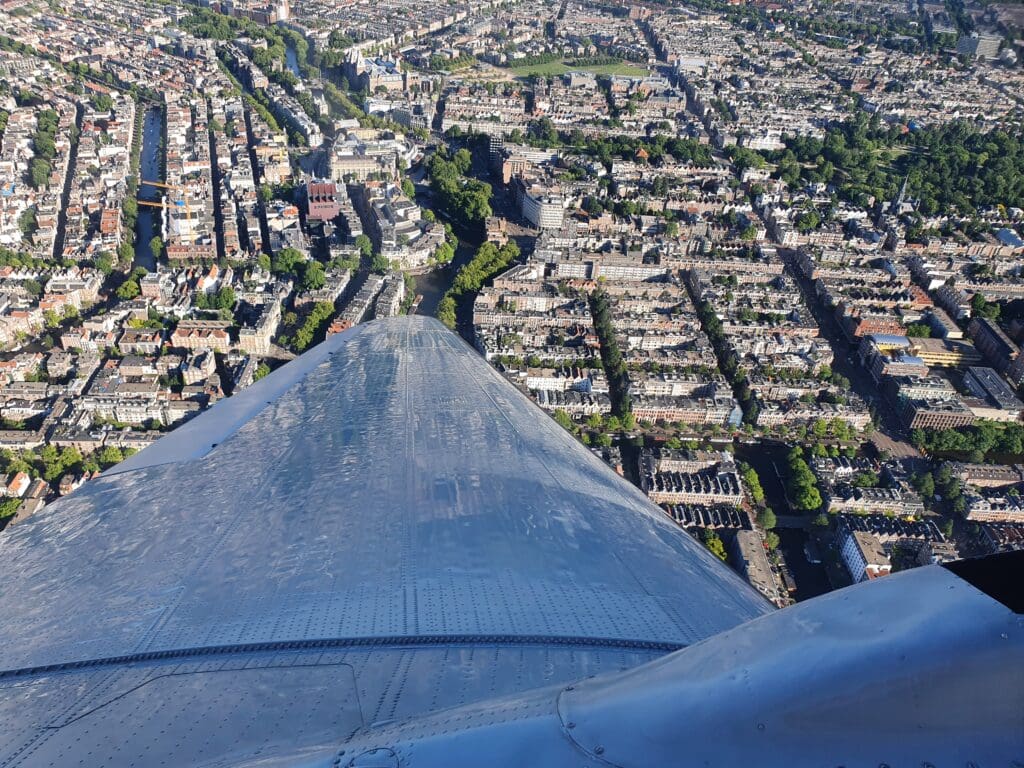
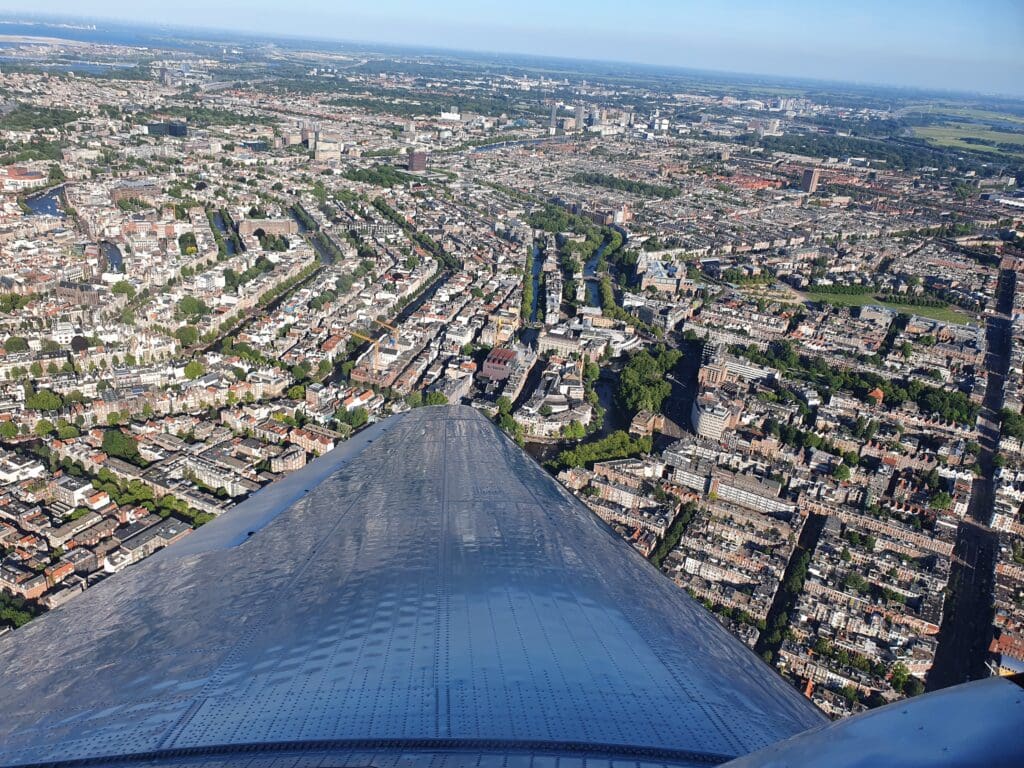
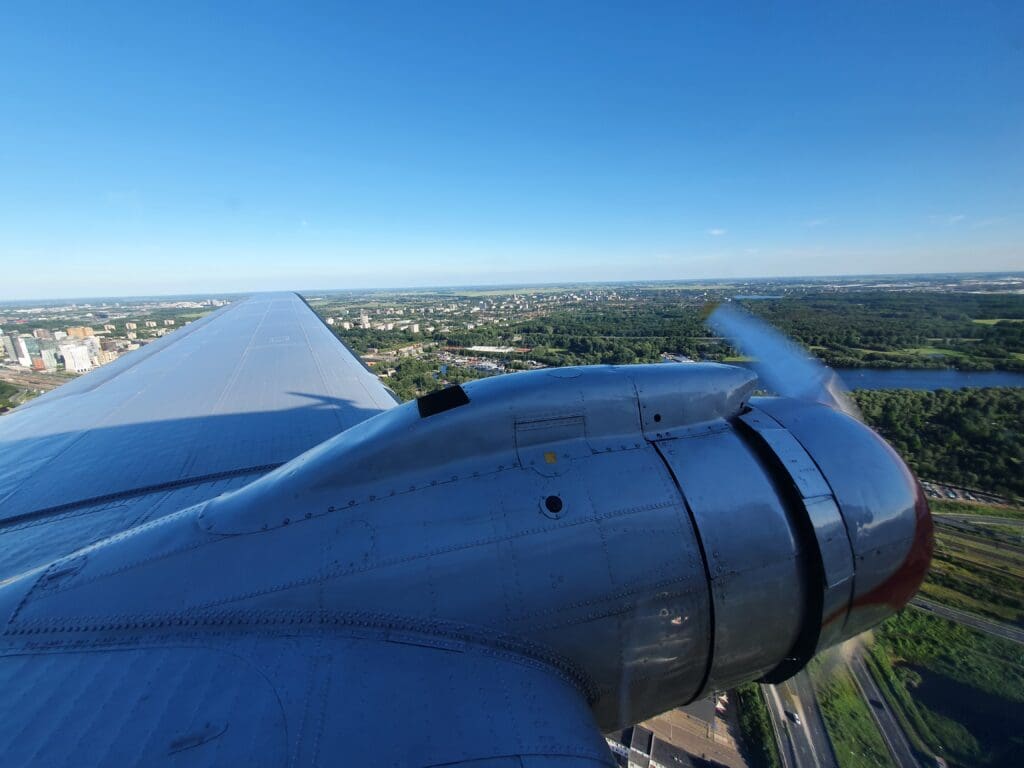
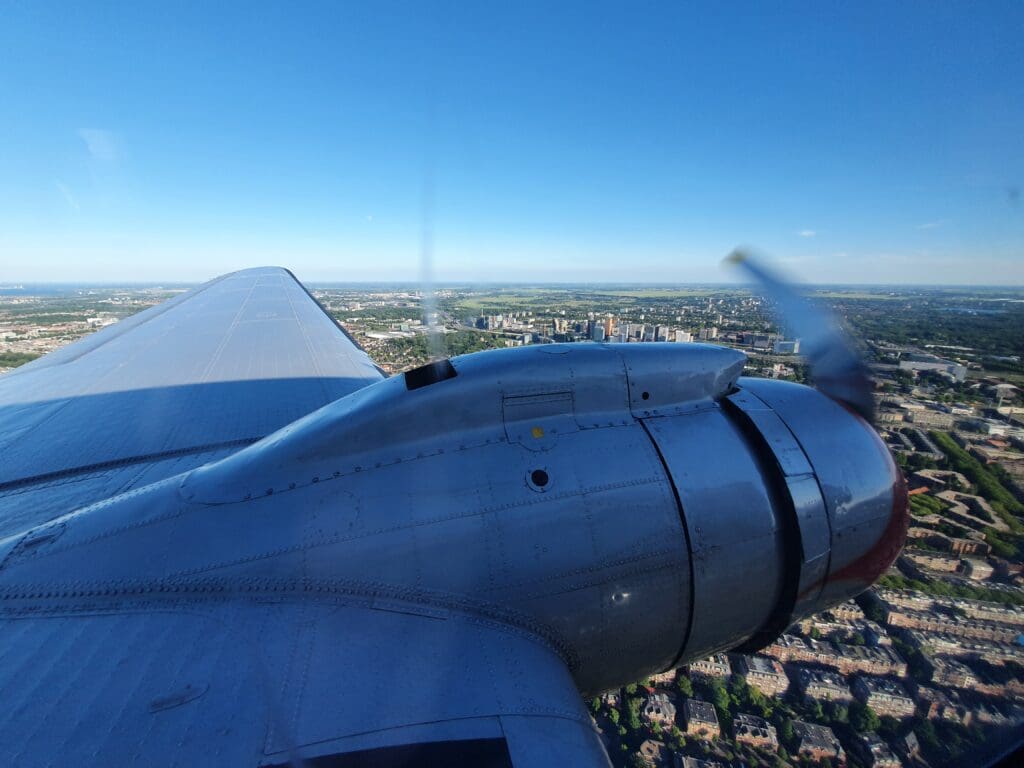
Just before reaching the IJ near Zeeheldenbuurt, the aircraft turned south and commenced its approach back to Schiphol Airport. From the centre, the Dakota made its way back over the southern suburbs of Amsterdam and soon crossed over the Park de Oeverlanden before crossing over the perimeter fence. Following 33 minutes in the air, the aircraft’s two tyres made a gentle touchdown on Runway 22 and the aircraft decelerated gently before the incline returned as the Dakota’s small tailwheel was placed down on the runway.
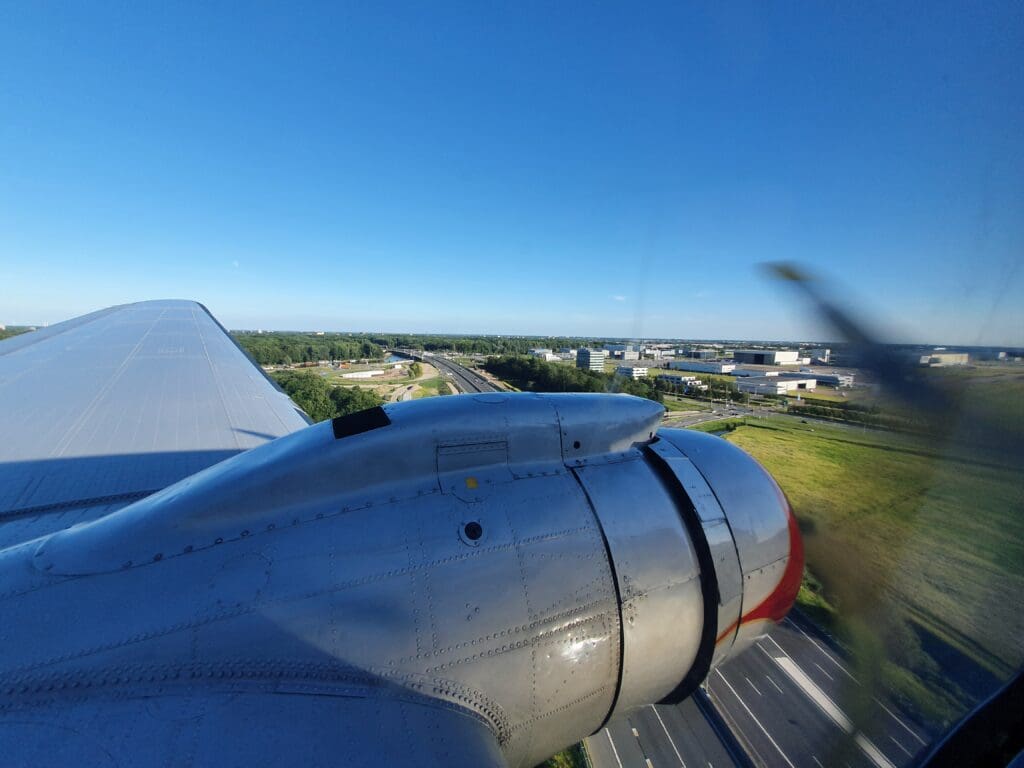
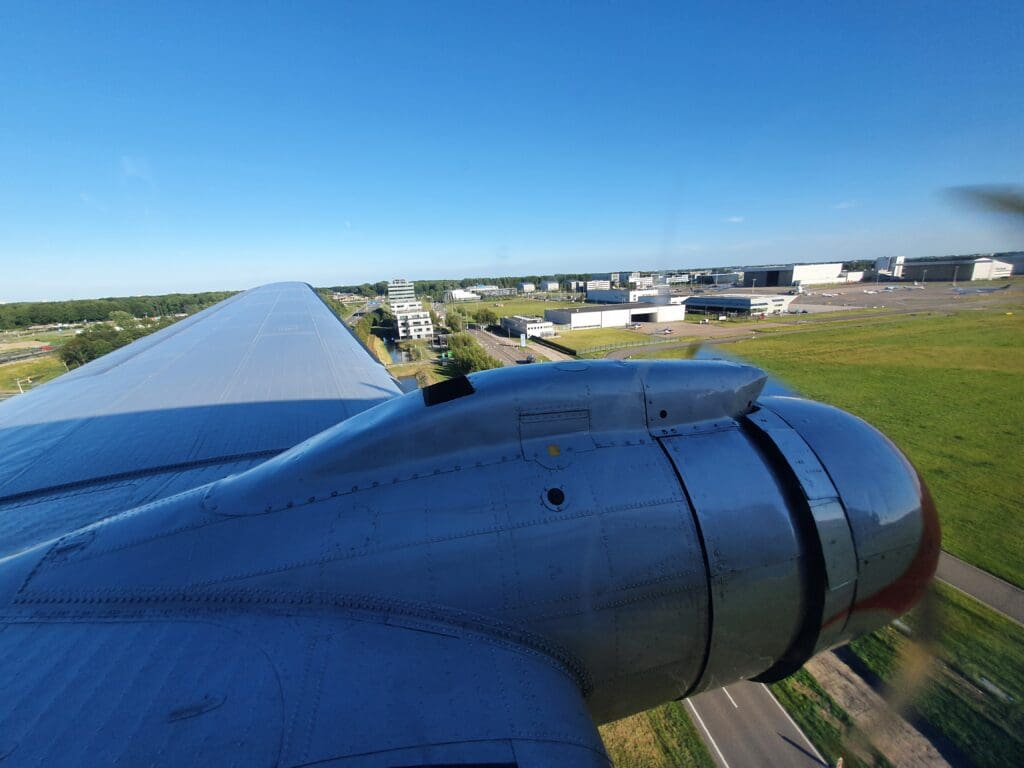
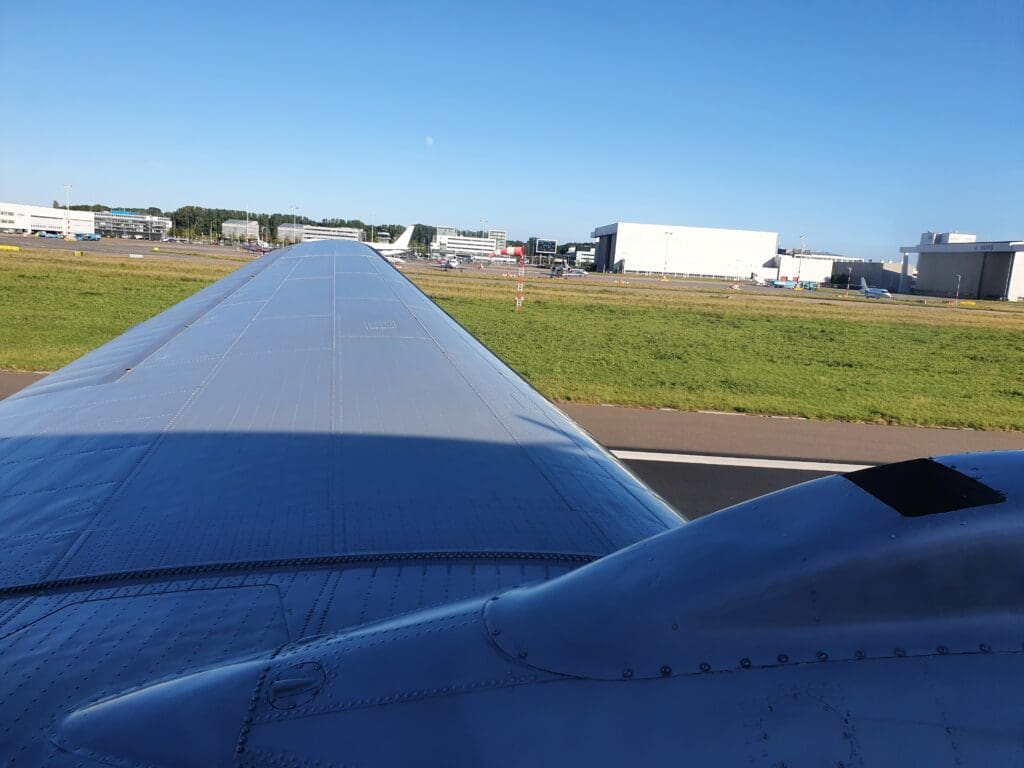
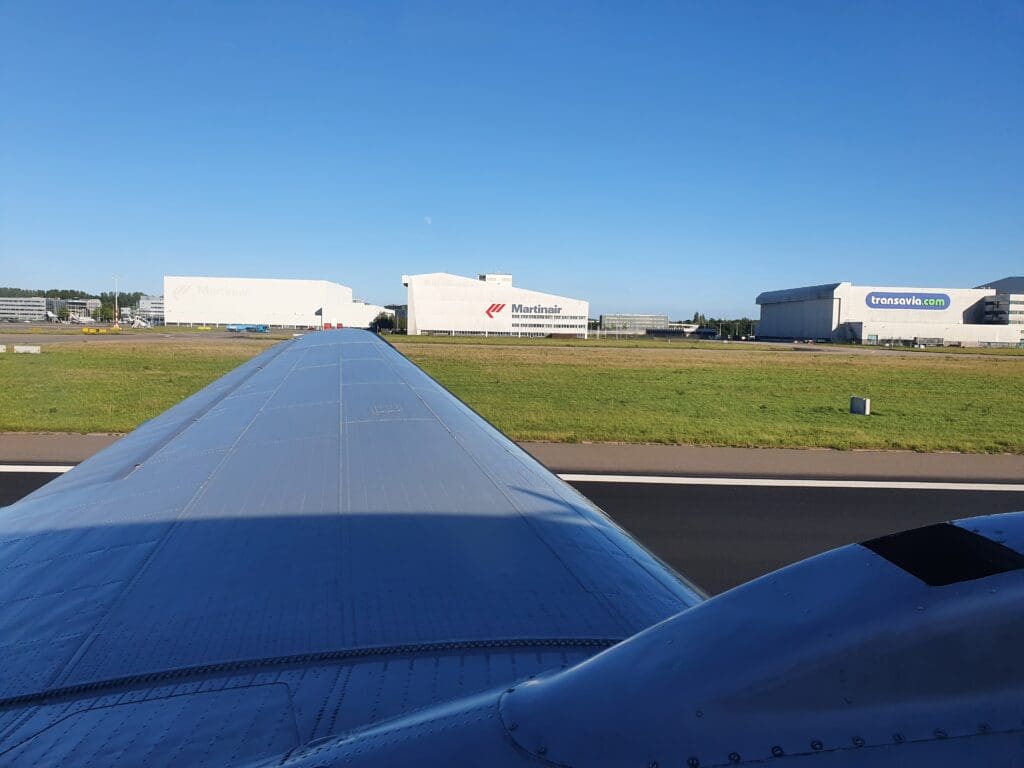
Once all wheels were back on Terrafirma, it did not take long for the aircraft to slow down to a taxi speed at which point the aircraft vacated the runway to the left and began its journey back to the apron at Schiphol-Oost. In the forty minutes or so that the aircraft was away, there appeared to have been little change in the selection of aircraft on the apron other than the addition of another Exxaero Dassault Falcon. Soon returning to its parking position outside its hangar, after coming to a halt, the two engines spooled down and the cabin temporarily fell into silence before the flight attendant welcomed us back to Schiphol. As one would expect given the load of enthusiasts, no passengers appeared to be in any particular hurry to exit the aircraft and the flight attendant passed through the cabin handing out personalised DC-3 flight certificates to passengers. Once this had been completed and the cabin door was open, disembarkation commenced with all passengers handed a DC-3 badge upon exiting the aircraft.
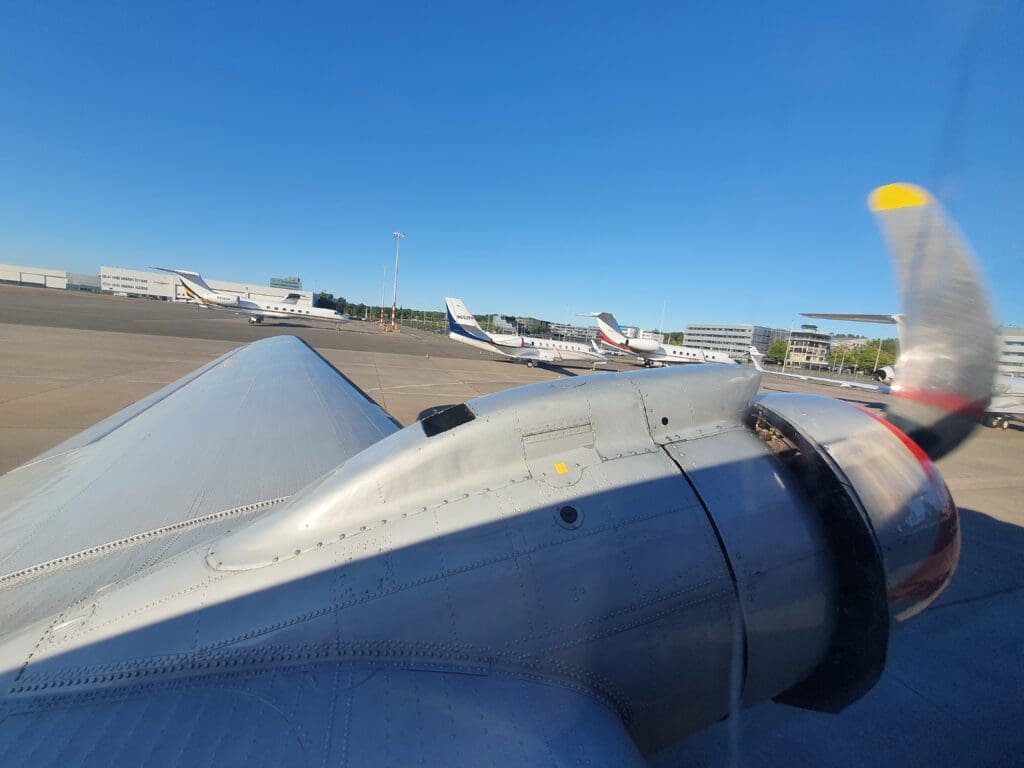
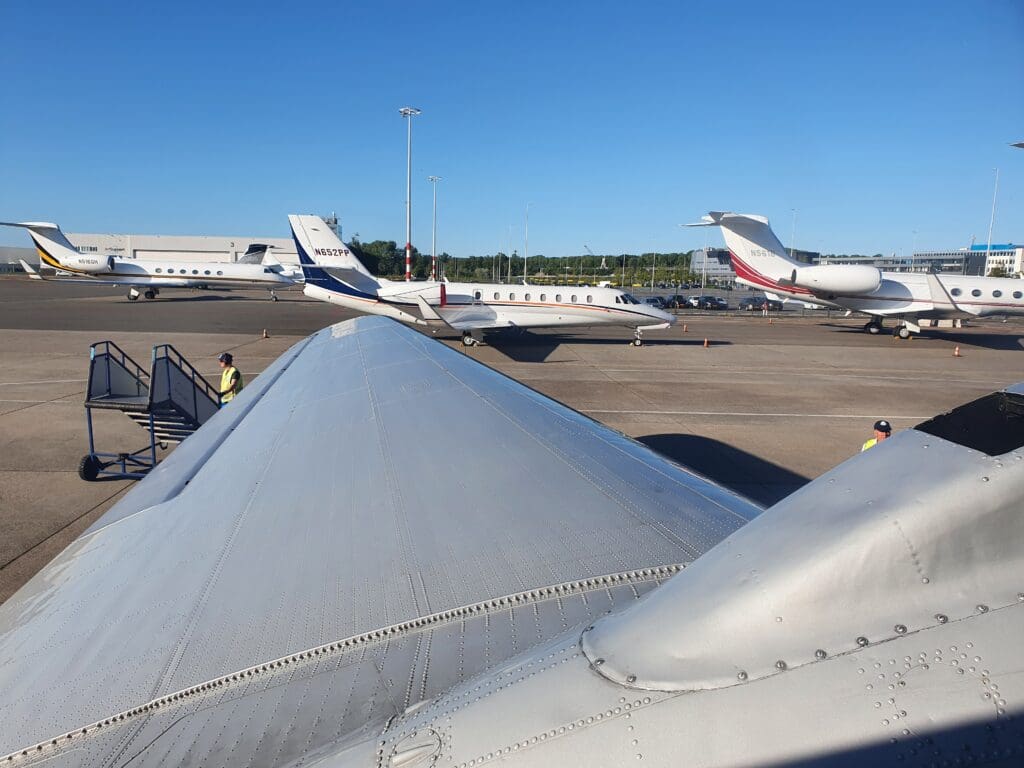
Once back in the fresh Dutch air, I snapped a few final photographs of the trusty Dakota before climbing aboard the minibus for the journey back over to the General Aviation Terminal, ending my second experience with DDA Classic Airlines. Overall, despite the wait, I had a fantastic flight and I would thoroughly recommend the experience to any aviation enthusiast looking to fly onboard this classic type.