Remembering when a Lufthansa Boeing 747-8 Flew to Mallorca: Palma to Frankfurt
Background
Few aviation enthusiasts can dispute the fact that the Boeing 747 is a legendary aircraft, yet one that is becoming increasingly hard to fly (unless of course, you happen to be a piece of freight). With the emergence of modern and capable fuel-efficient long haul twin-engined aircraft, more and more airliners have struggled to see the need to retain their ‘old’ four-engined jets. Unfortunately, the pandemic has accelerated the retirement of such aircraft. For example, whilst I had previously planned to catch at least one final ride on the Boeing 747s of British Airways and KLM, the premature retirement of these at both carriers amid the pandemic made such plans an impossibility. Fortunately, a single-passenger operator of the legendary jumbo remains in Europe, with this coming in the form of German giant Lufthansa who operates both the older -400 series and the newer -8. However, with the latter type having failed to prove popular amongst carriers, this remains a rare aircraft, with its passenger variant operated by only Korean Air and Lufthansa.
Given the Boeing 747’s range capabilities, Lufthansa typically deploys their jumbo jets on their long haul network – flying services from the carrier’s Frankfurt hub to destinations across the globe. Thus, being based in London, flying on one of Lufthansa’s jumbos easily and cheaply can prove to be a little difficult. However, in the summer of 2021, the decreased demand for long-haul travel yet increased numbers of tourists staying within Europe resulted in Lufthansa occasionally deploying some of their largest aircraft types on routes from Frankfurt and Munich to the popular Spanish island of Mallorca. From the latter, Lufthansa utilised their Bavarian-based Airbus A350 widebody jets, whilst a mixture of Boeing 747-400s and Boeing 747-8s shuttled between Frankfurt and Palma de Mallorca. Amongst the hordes of sunshine-craving tourists, unsurprisingly enthusiasts jumped at the opportunity to fly such large aircraft on these short flights. Unfortunately, a combination of work and money as I emerged from a year of postgraduate study meant that I failed to make the journey to the Balearics to sample these aircraft.
Much to my delight, all was not lost and around early February 2022, rumours emerged amongst enthusiast circles that Lufthansa was planning to deploy their larger types on short-haul holiday routes once more. Whilst initial reports talked of summer flights, these later transformed to earlier dates around Easter. However, as the weeks passed, nothing materialised on Lufthansa’s website, with their flights between Germany and Mallorca for April showing as being operated by Airbus A320 Family jets. However, one evening in early March, an enthusiast posted in a Facebook group for those interested in rare aircraft that Lufthansa had finally scheduled two widebody aircraft-operated flights on the 9th of April, and so I soon set my sights on flying onboard one of these aircraft. From Munich, Lufthansa would deploy one of their Bavarian-based Airbus A350s, whilst, on the same day, one of their Boeing 747-8 aircraft would be deployed from Frankfurt. Given the rarity of the latter type and having already sampled Lufthansa’s Airbus A350, I set my sights on the latter.
Booking
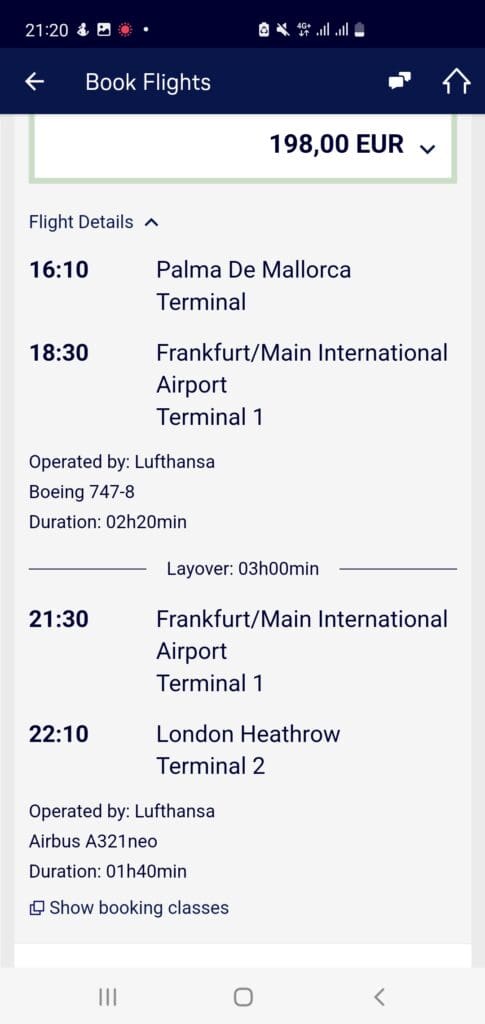
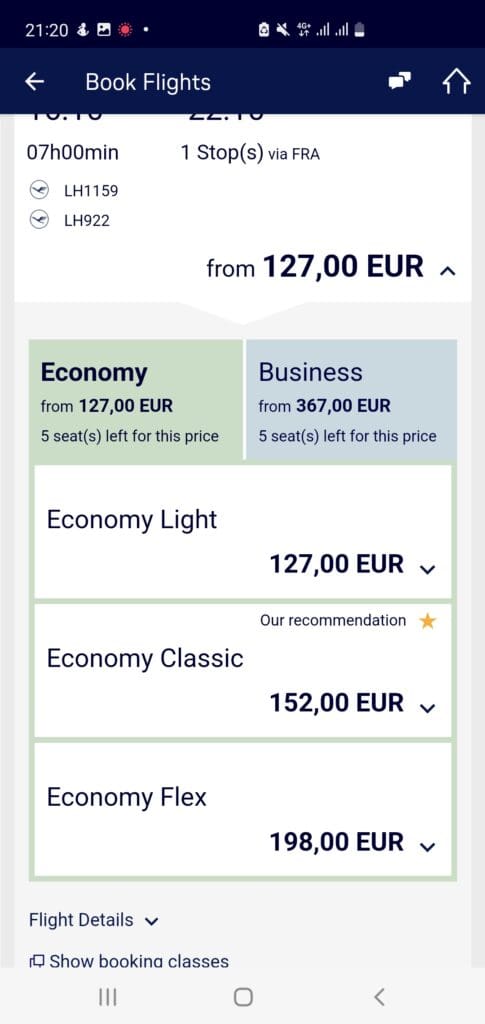
As is frequently the case, I found that the cheapest tickets available for my flight up to Frankfurt were sold not via Lufthansa’s website, but by a variety of third-party online booking sites. However, with no massive difference in cost between the airline’s site and other booking platforms, and given that even the cheapest tickets on Lufthansa’s website could be rebooked (albeit for a €35 fee plus any fare difference), I decided to book directly with Lufthansa. Already having Lufthansa’s app on my phone, I opened this up and did a quick search for potential options. Were I to book a standalone one-way ticket between Frankfurt and Palma de Mallorca, the cheapest Economy Light fare would set me back €164.01 when heading south, or €193.32 when heading north. Both options proved to be rather pricey given the short 778-mile distance between the two airports.
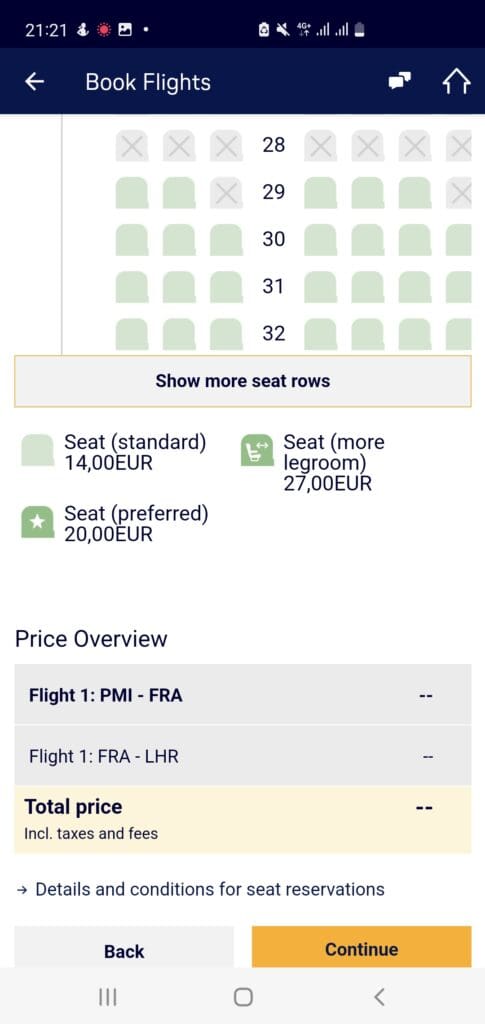
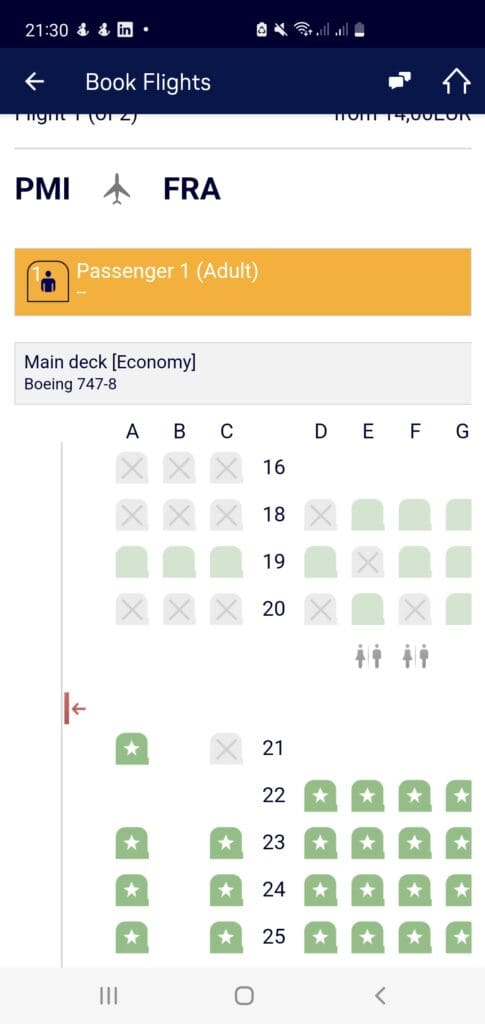
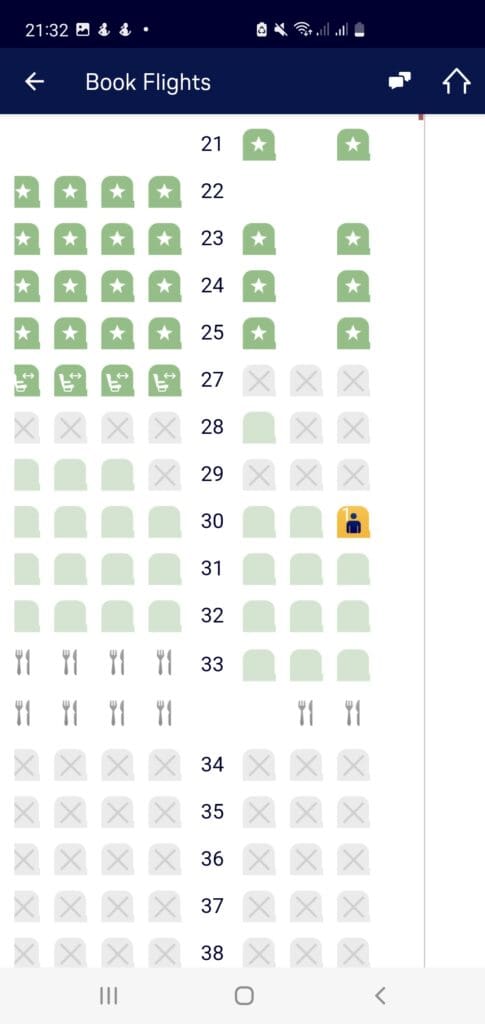
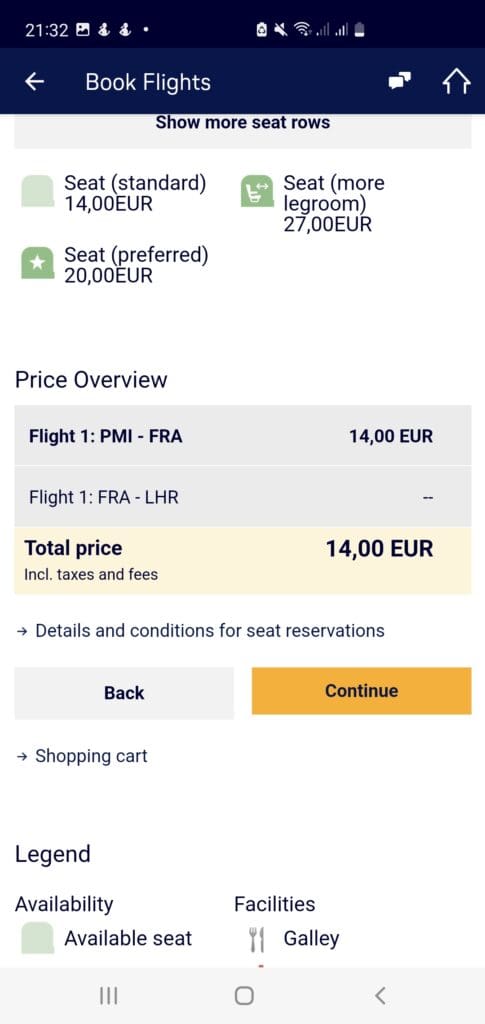
Seeing as I would have to end back home in London one way or another, I was delighted to find that by ending my booking in the UK, I would save over €66, with the trip from Palma de Mallorca to London Heathrow via Frankfurt costing a total of €127. After doing a quick search for other destination airports across the UK, which revealed that no major savings could be had by flying to Birmingham or Manchester, and thus I promptly began the booking process. Once I had selected the Economy Light fare, I arrived at the seat selection page. Travelling on the cheapest fare possible, unsurprisingly seat reservation could only be done for a fee. Seeing as I would not want to end up in an aisle or worse, a middle seat, on such a unique flight, I resigned myself to paying extra to end up next to a window. On the flight to Frankfurt, seats were sold with three different price tags – standard, preferred and more legroom for €14, €20 and €27 respectively. With no Premium Economy cabin offered onboard Lufthansa’s intra-European flights, seats in this cabin, which is strangely positioned in between two Economy sections, could be booked for €20. Whilst this would have provided a good opportunity to ride in this cabin for much less of a premium than on a long-haul flight, I instead booked Seat 30K for €14 in the hope that this would offer a good view of the wing. Once selected, I rejected the opportunity to pre-book a seat for the Airbus A321neo-operated leg of the trip to Heathrow and was soon taken to the payment page. As you would hope for a major airline, payment was quick and easy with no issues occurring and I received a booking confirmation almost instantly.
Check-In
As with many airlines, passengers heading off with Lufthansa can check in for their flights up to 23 hours before departure. However, seeing as I had pre-selected a seat during the booking process for the Boeing 747-operated service, I was in no particular rush to check-in. However, still wishing to select a window seat for the Airbus A321neo-operated flight over to London, I opted to check-in online rather than wait until I arrived at Palma de Mallorca Airport. Opting to check-in via Lufthansa’s app, after entering my booking reference and surname I was given the option to change my seats. Whilst I had no intention of changing my seat on the first flight, much to my surprise given the well-publicised nature of the flight within the aviation enthusiast community, a total of two window seats remained in the Boeing 747-8’s Economy cabin. Meanwhile, this also revealed that I had been given an aisle seat for the second flight, although I was able to change this to Seat 7F without any issue or additional fee. With all seats selected, I was then taken to a page where I confirmed that I would comply with all COVID regulations before being requested to enter my passport details. Once this had all been done, check-in was complete and I was presented with the two boarding passes that would allow me to fly from Palma to London.
The Journey
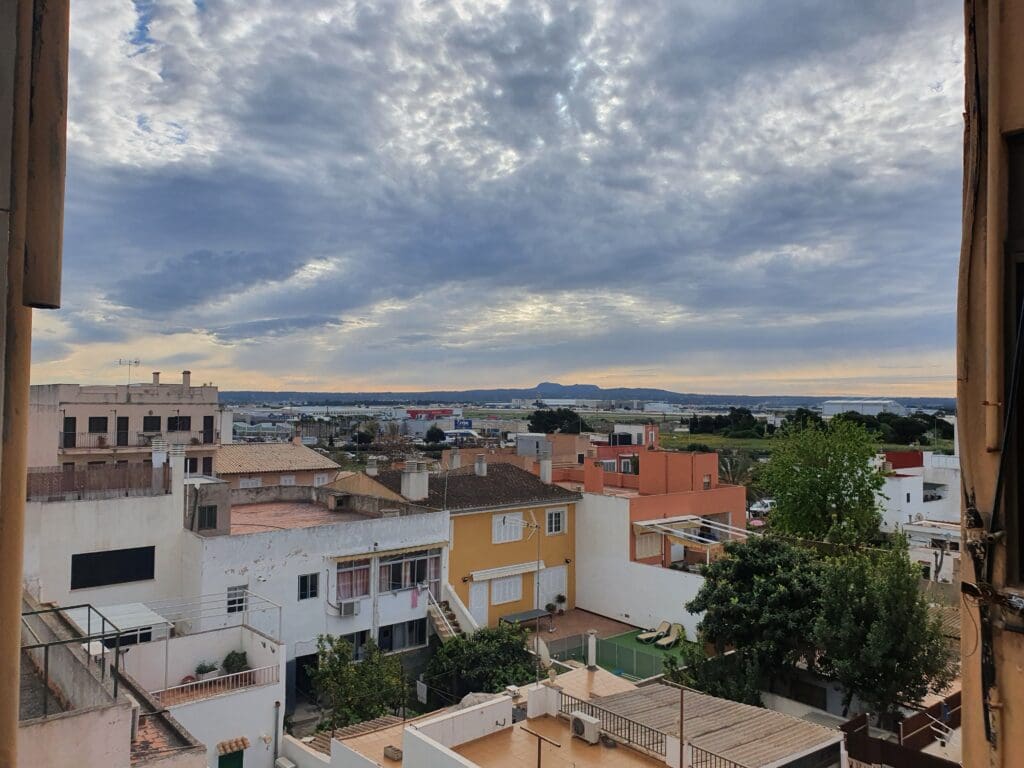
Having arrived from Stansted on a Ryanair Boeing 737-800 just before 2200 the previous evening, my stay in Mallorca was to be short and I had opted to spend the night in an Airbnb in the coastal town of Gentilico, which borders the airport to the northwest. With no more than three kilometres separating the town from the airport terminal, I had hoped that reaching the airport would not prove to be a difficult or costly task on the morning of my flight. Whilst my flight was set to depart at 1610, needing to check out of my Airbnb by mid-morning, I left this a little before 1000. Having already had a stroll around the town, and not particularly bothered with the hassle of going all the way into Palma, I decided to head to the airport early, allowing for plenty of time for planespotting and relaxing before my flight.
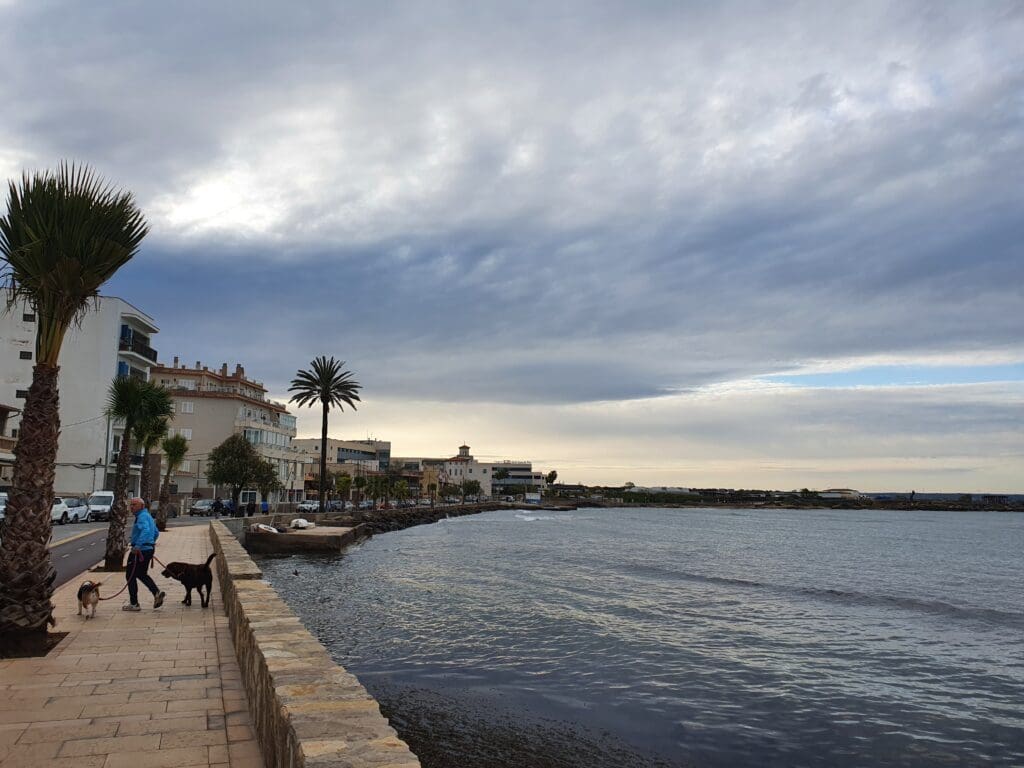
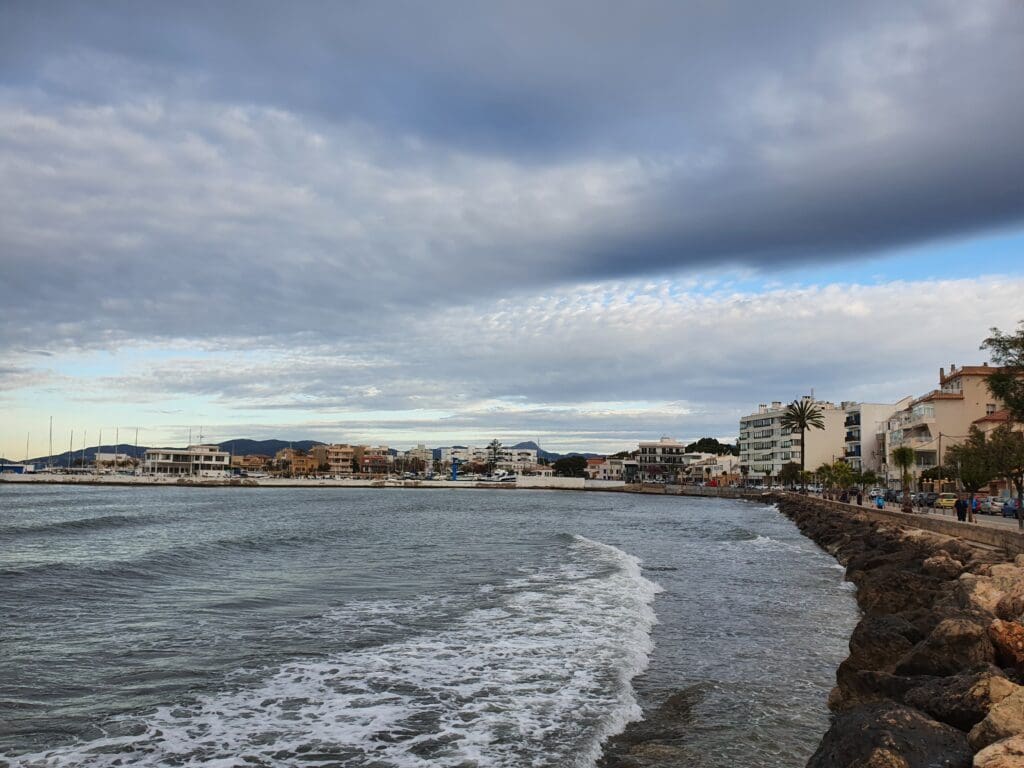
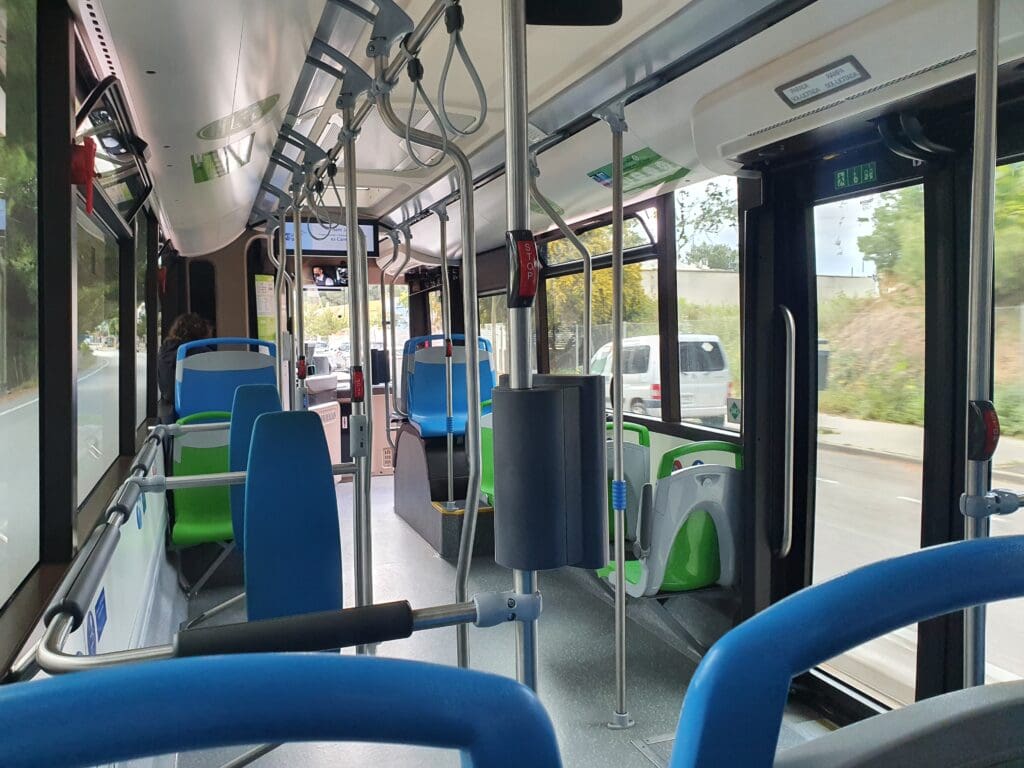
Given the distance between Gentilico and the airport as well as the pleasant Mallorcan spring weather, I had initially hoped that the journey would be walkable. However, thanks to the lack of pavements on the roads leading to the airport, this would not be possible. I therefore turned to the bus and catch a local service to the next town, C’an Pastilla from where I would then catch the A2 bus service to the airport. The first portion of this journey went to plan, with the local bus turning up as scheduled and taking me on a very quick trip to the next town – my only complaint about this being the pricey €2 fare. However, in C’an Pastilla things began to go a little pear-shaped. Having just missed an airport bus, a thirty-minute wait was in store and, when the next A2 service arrived, this ploughed straight past the bus stop. Not wanting to wait for the next service, I ended up taking a taxi – the four-minute journey to the airport setting me back a total of €12.50.
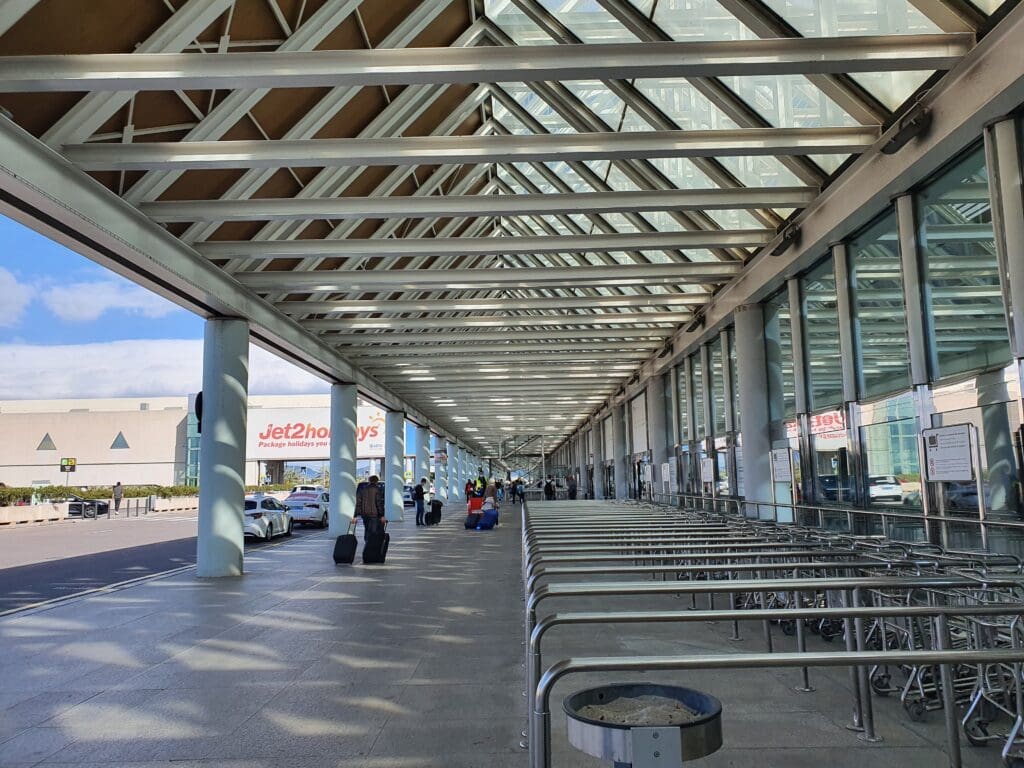
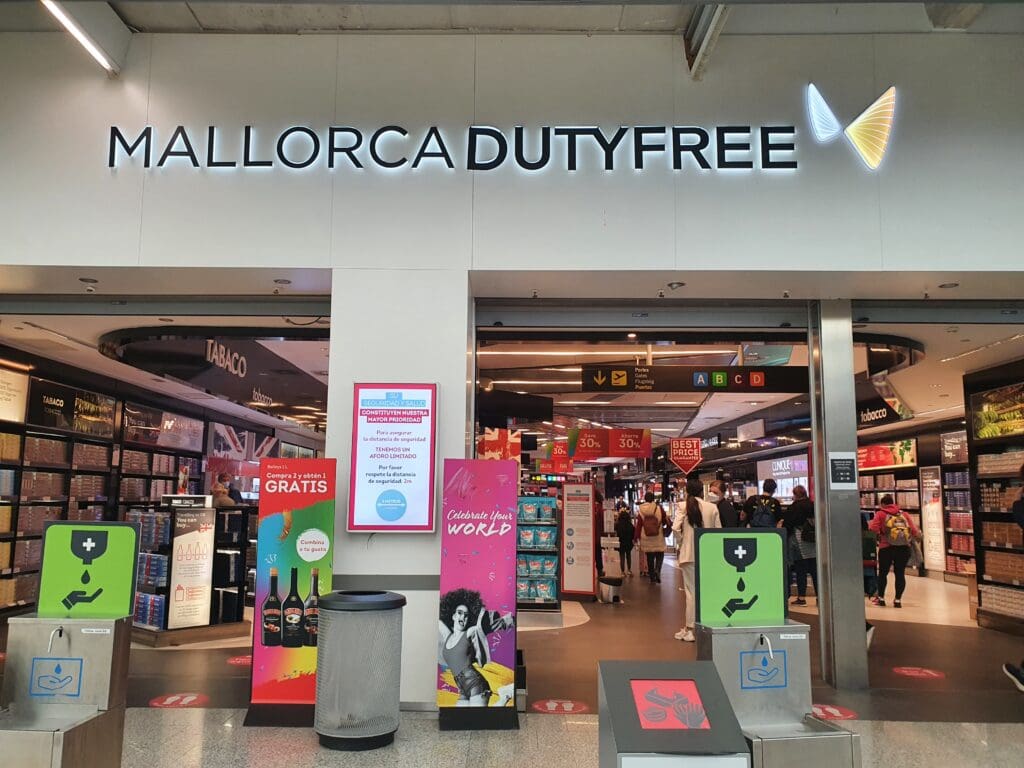
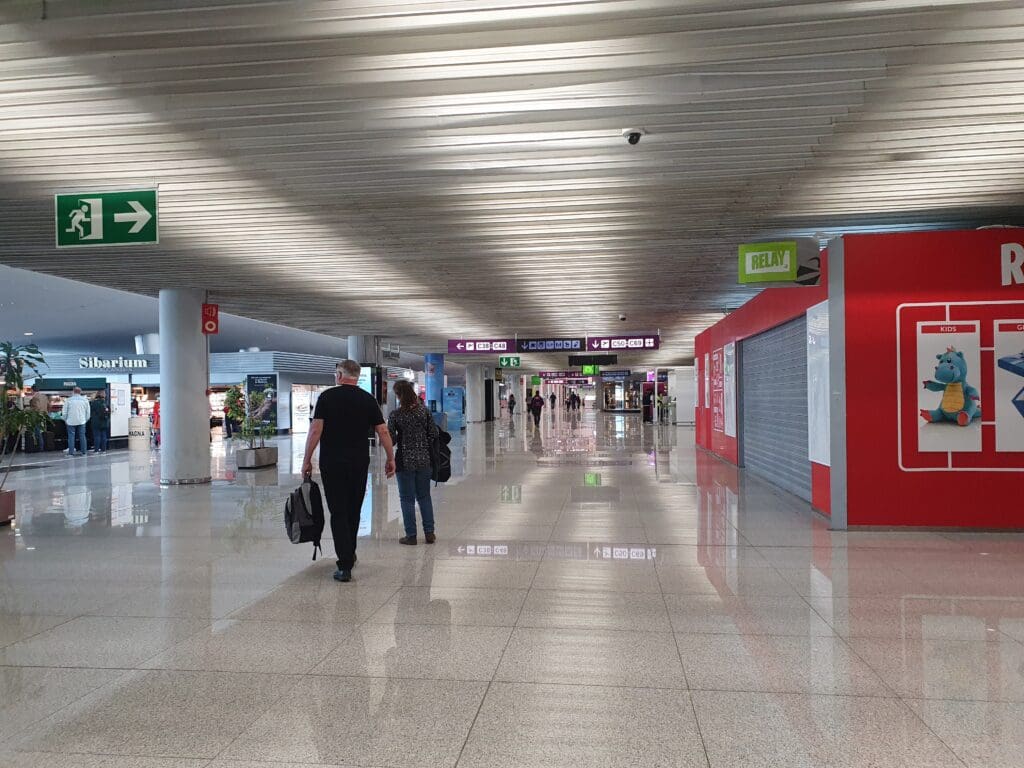
After being deposited at the terminal’s departure level on the first floor, I made my way into the modern, spacious and seemingly quiet landside departure hall. There, other than the usual check-in desks, a reasonable number of shops and cafés could also be found, and at that time all appeared to be clean and in a good state. However, with no bag to drop off and seeing as I already had my boarding passes for my two Lufthansa flights that day, I saw no reason to remain there, so, following a quick toilet stop, I made my way up the escalators to the security check. After tapping my boarding pass on the automated gates, I joined one of the short queues leading to the checkpoints and without any hassle, I managed to pass through this within a couple of minutes. That morning, unlike my journey to the airport, my trip from the landside to the airside portion of the terminal was quick and easy, leaving me with nothing to complain about.
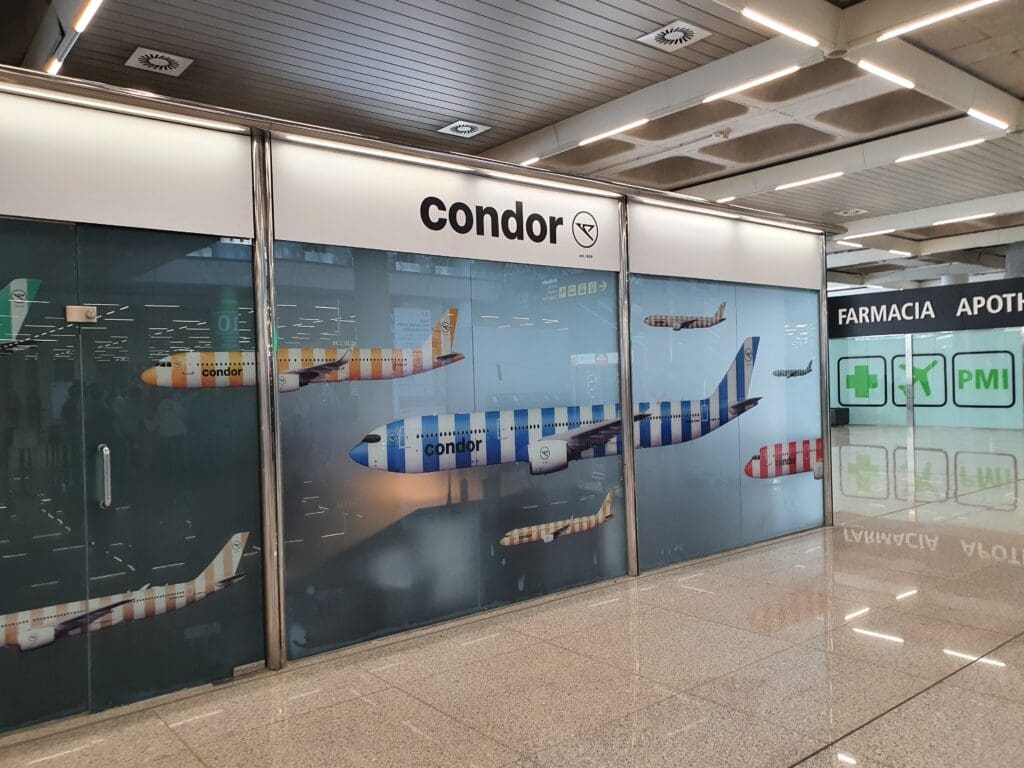
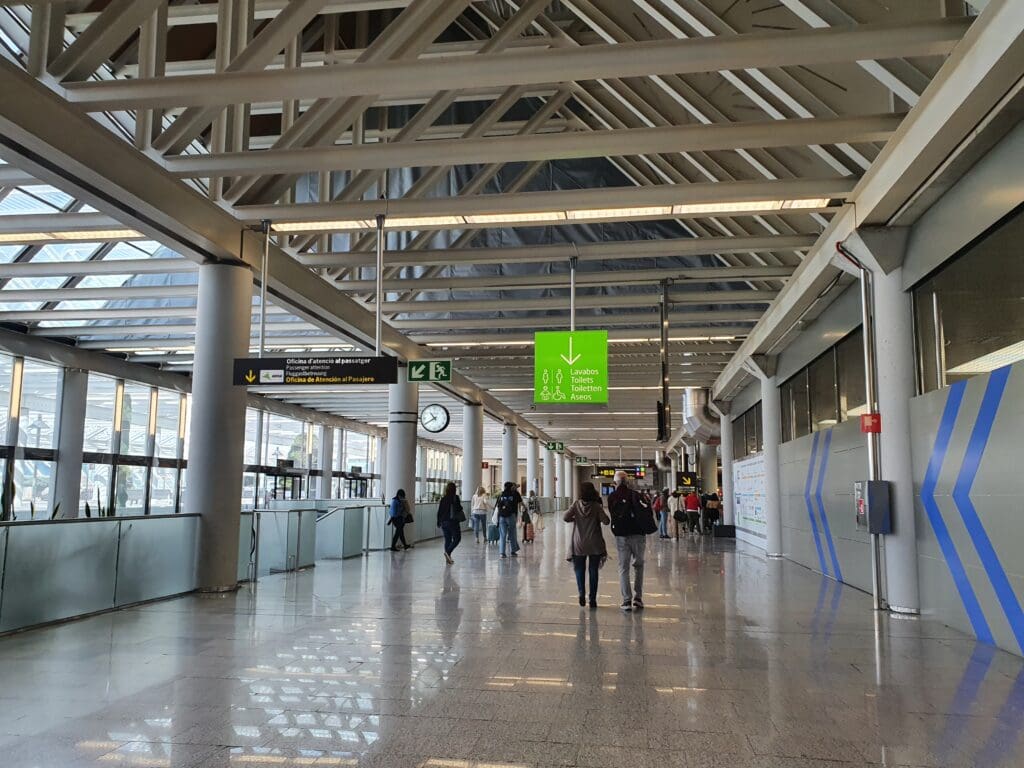
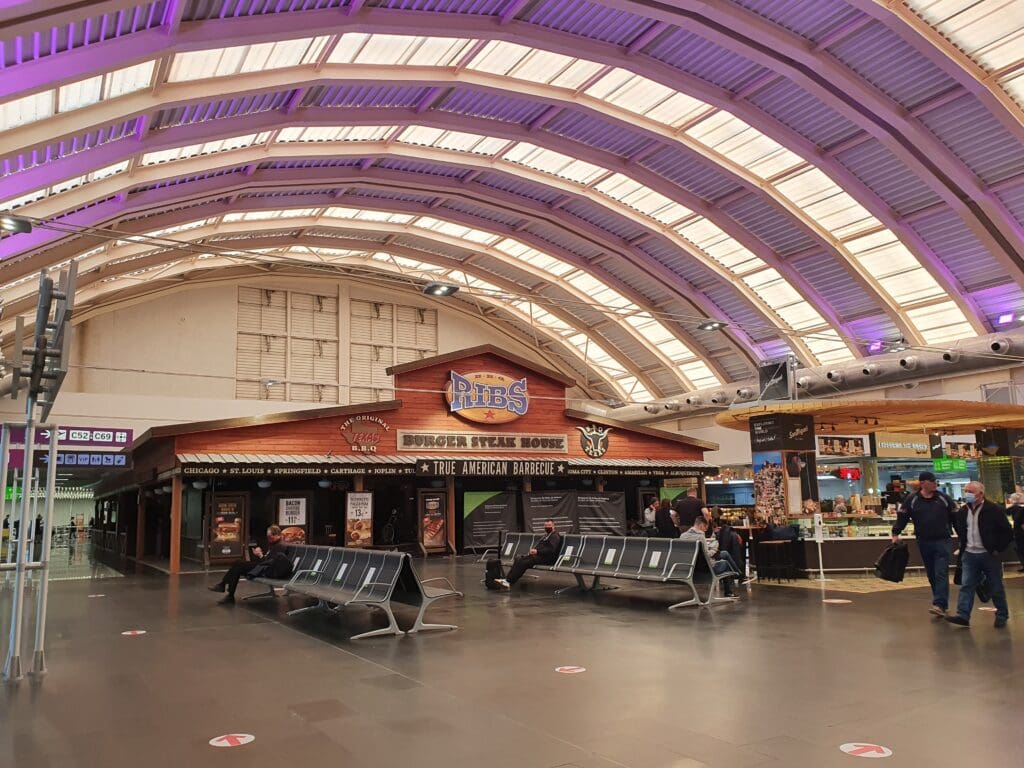
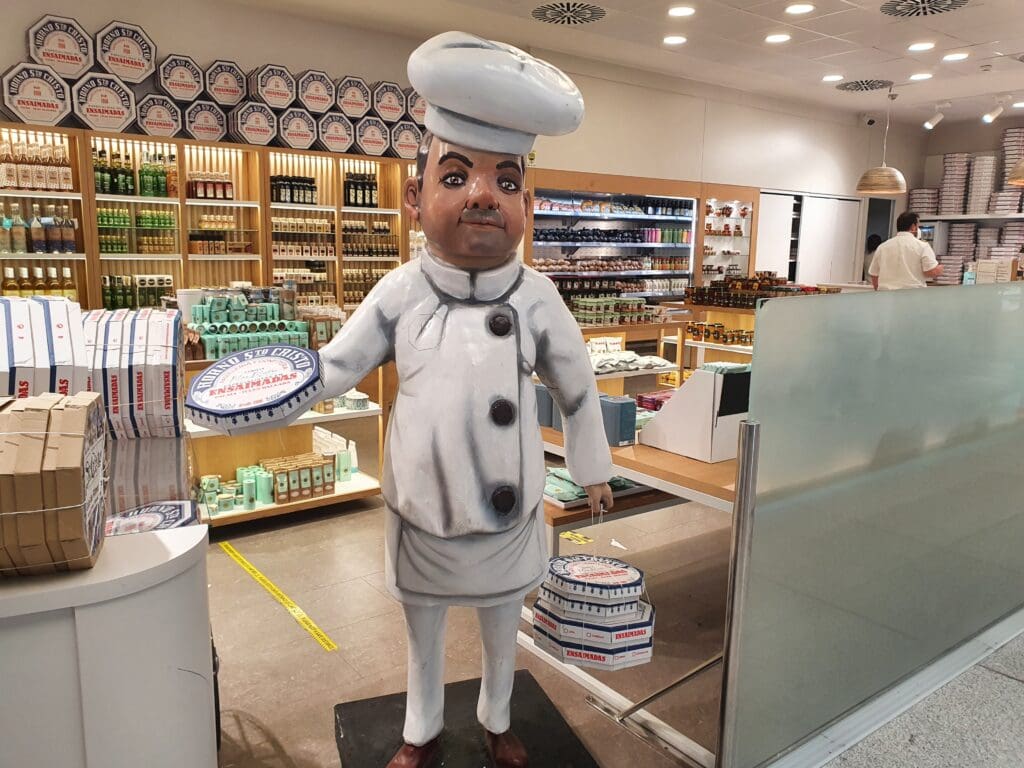
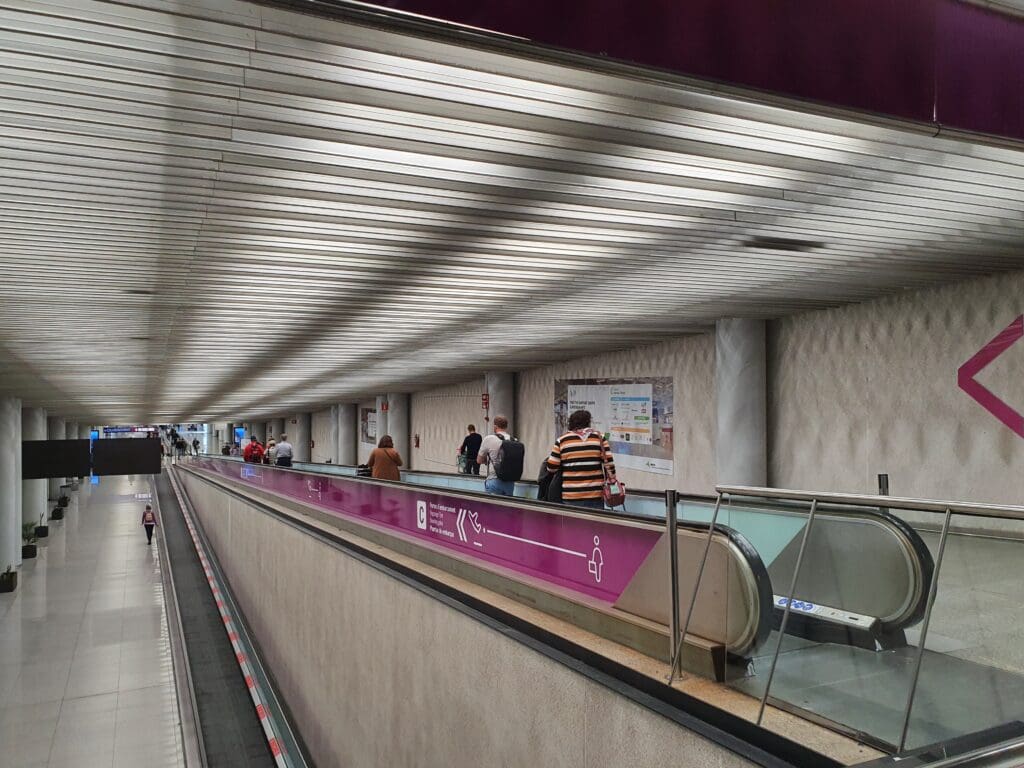
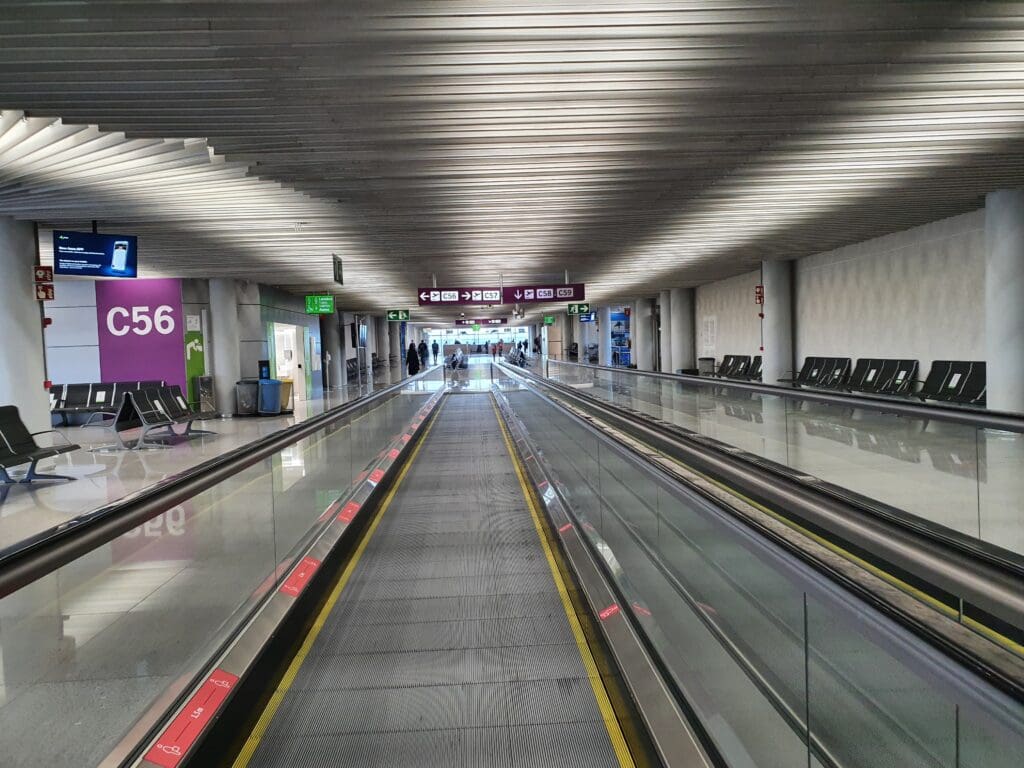
With Palma de Mallorca serving as Spain’s third busiest airport, unsurprisingly the airside portion of the terminal covers a rather significant area and consists of four different modules – A, B, C and D. Inside, much of the terminal appears to be relatively modern, open and spacious, whilst that morning this appeared to be in a relatively good condition with only a few pieces of rubbish visible as I walked around. In terms of facilities, I noticed that there was no shortage of shops, restaurants, cafes and bars for passengers to pass the time in before the flight, whilst a good number of charging stations with plug sockets and USB ports could be found. Aviation enthusiasts will be glad to hear that large windows offer a good view of the stands and runways outside, however, photography proved a little challenging thanks to the fact that these are heavily tinted whilst many of the windows appeared to require a good clean with these featuring plenty of marks and smudges.
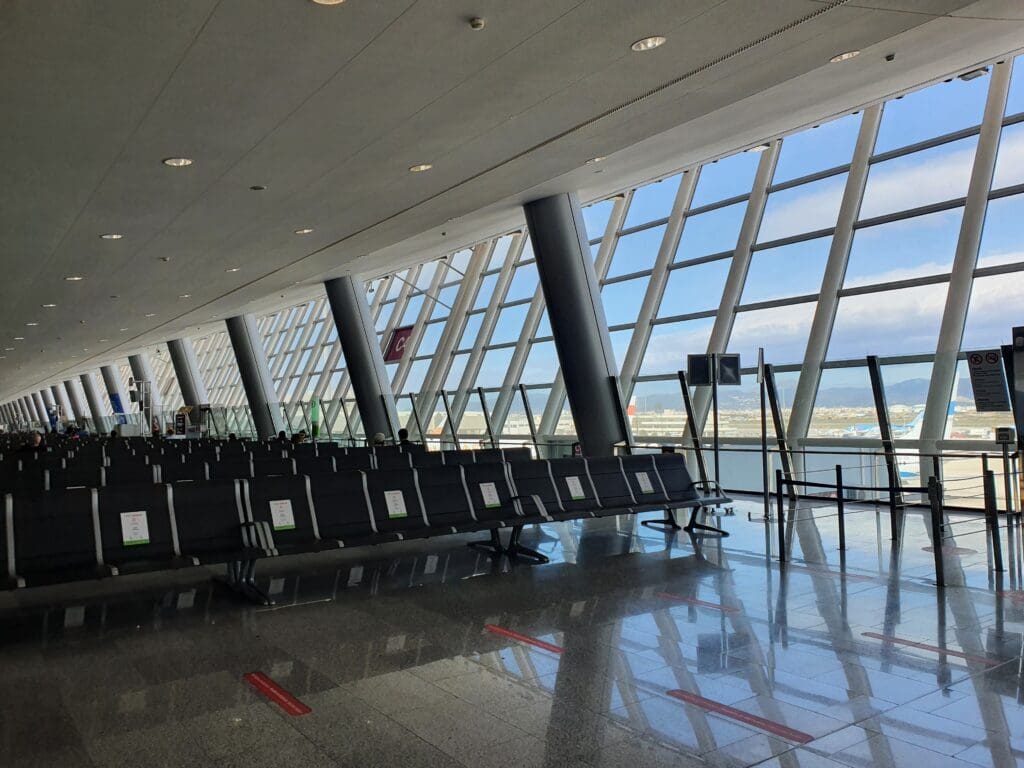
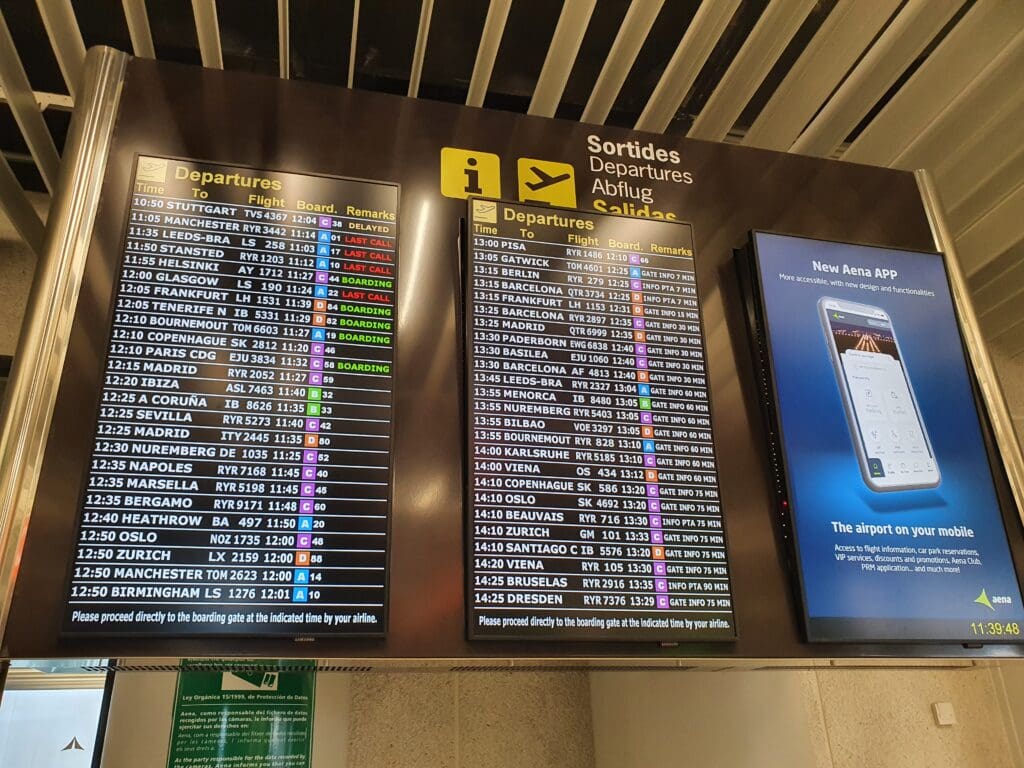
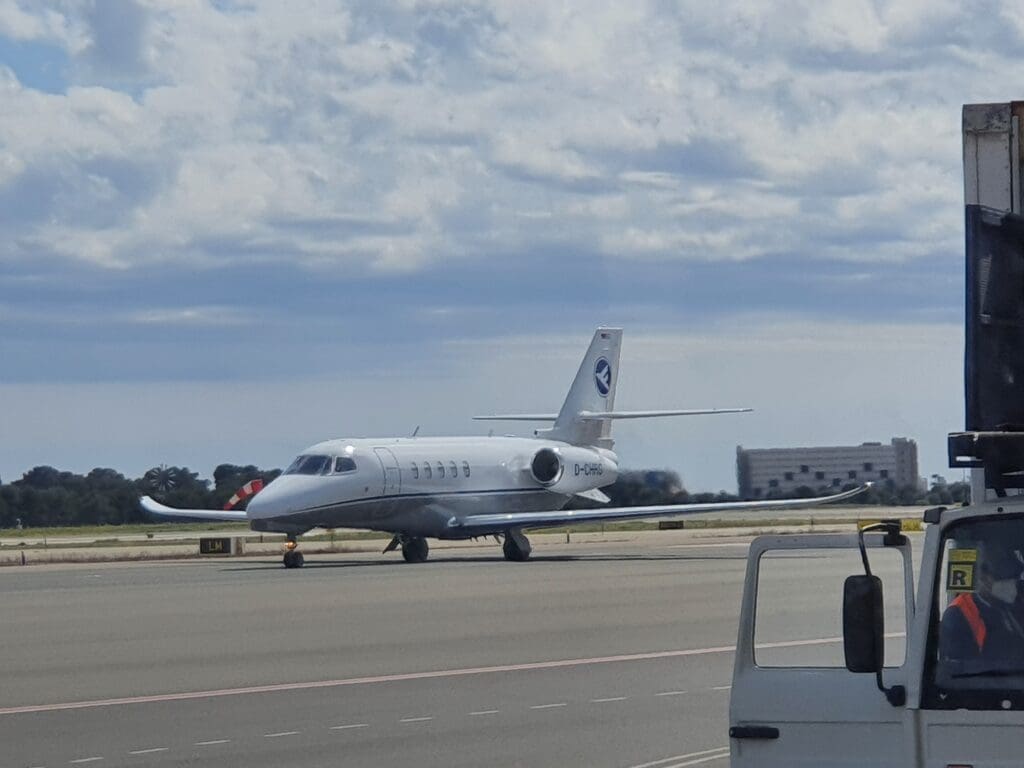
That afternoon, my flight would depart from Module C, however, given my early arrival in the terminal, I was not in any major rush. Once airside, I decided to grab a coffee before going on a long walk around the terminal. During this, I made my way to the end of Module D where I found a window that offered a good view of the diverse collection of business jets parked away from the terminal. These ranged in size from the small Beechcraft C90GTi King Air and Cirrus Vision SF50 to the Embraer Legacy and Dassault Falcon 7X. Of the 46 private aircraft identified on the ground that day, by far the largest cohort of these came from Germany, with 46% sporting ‘D’ registrations. With these presumably having shuttled wealthy holidaymakers down to Mallorca for the Easter break. Once I had sufficiently explored the nooks and crannies of the terminal, I retreated to Module C and took a recliner seat at the end of one of the piers which offered a good view of one of Palma de Mallorca Airport’s two runways.
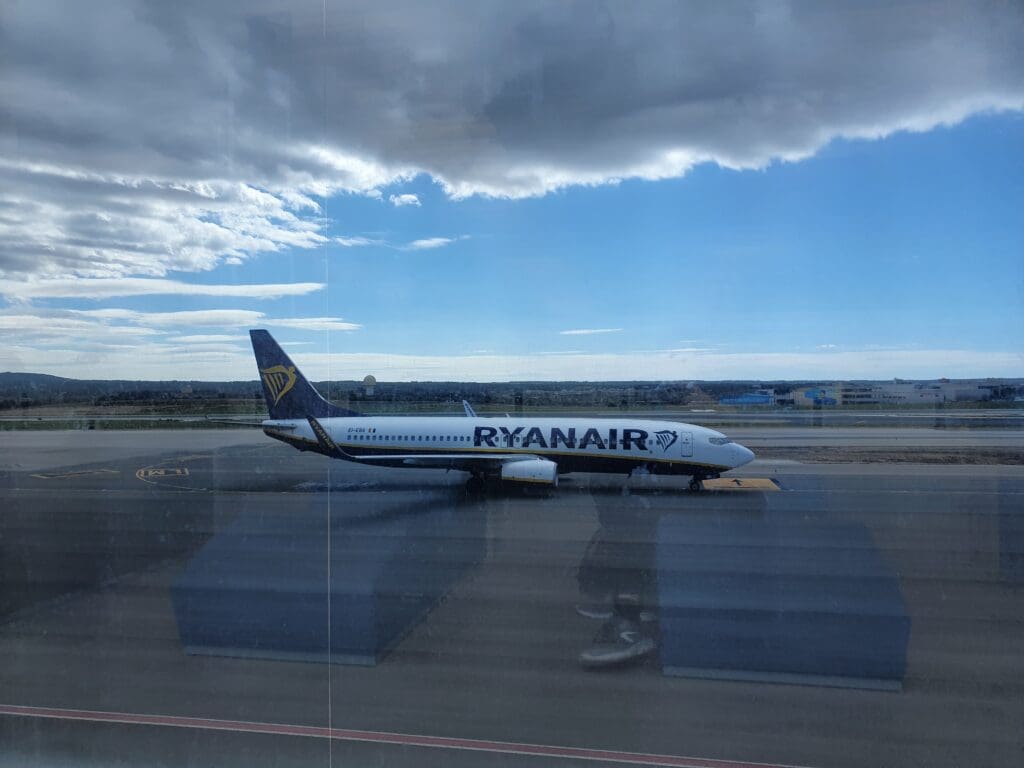
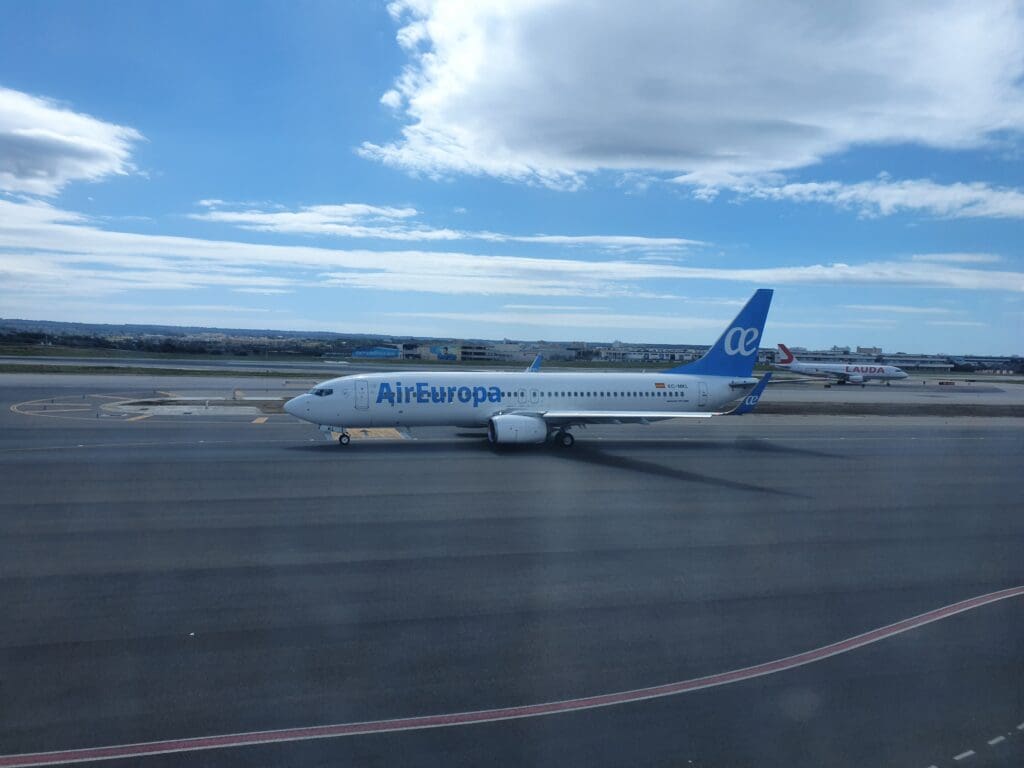
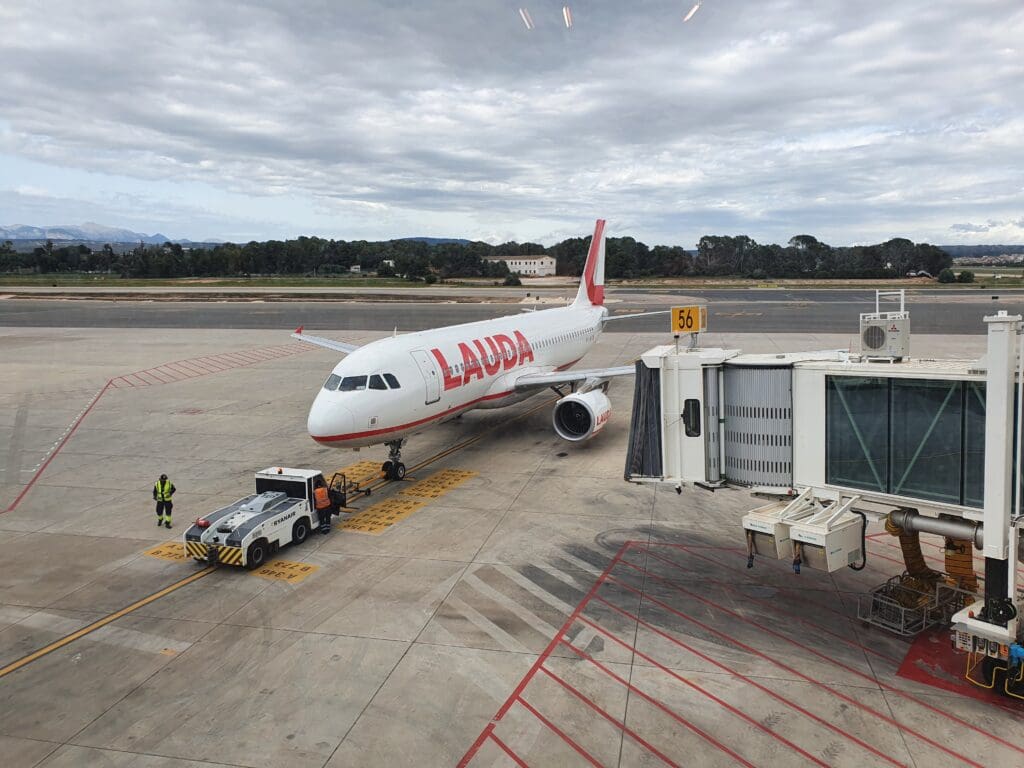
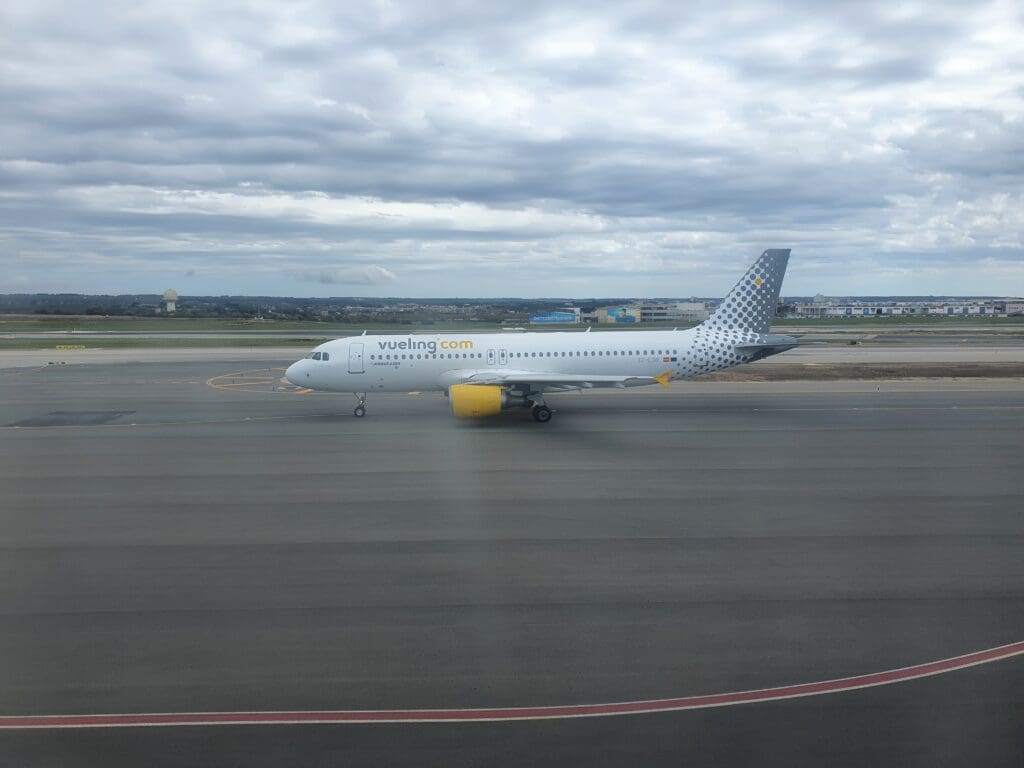
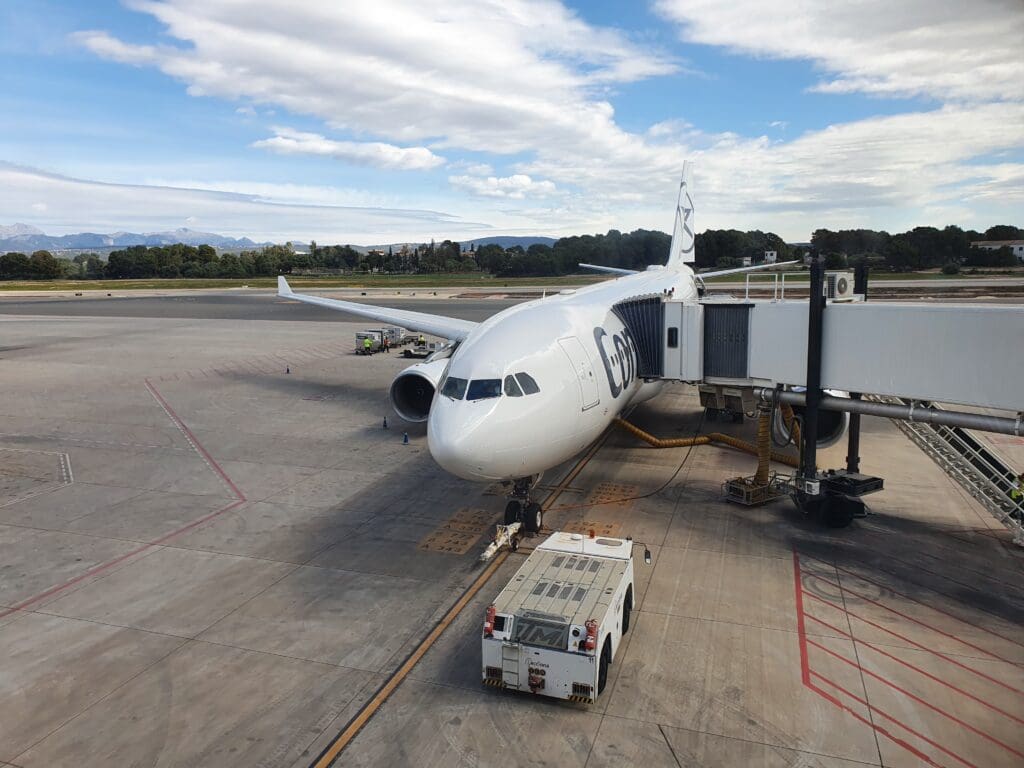
That day, the usual smorgasbord of traffic could be seen at the airport, with nothing particularly out of the ordinary popping in for a visit – other than perhaps an Aurigny Embraer 195 and a Blue Islands ATR 72 visiting from Guernsey and Jersey respectively. However, being from the UK, neither of these proved to be particularly rare aircraft for me. Those looking to do some planespotting at Palma de Mallorca can expect a fairly constant stream of traffic heading to and from destinations across Europe. These were operated by a fair mix of European national carriers, low cost and holiday airlines. Meanwhile, plenty of private aircraft could also be seen arriving and departing for the duration of my stay. Needless to say, Palma de Mallorca offers a good variety of movements for aviation enthusiasts. Before the arrival of Lufthansa’s Airbus A350 from Munich, the largest jets that could be seen on the ground came in the form of two Airbus A330s – one from Condor and the other from Danish holiday airline Sunclass Airlines.
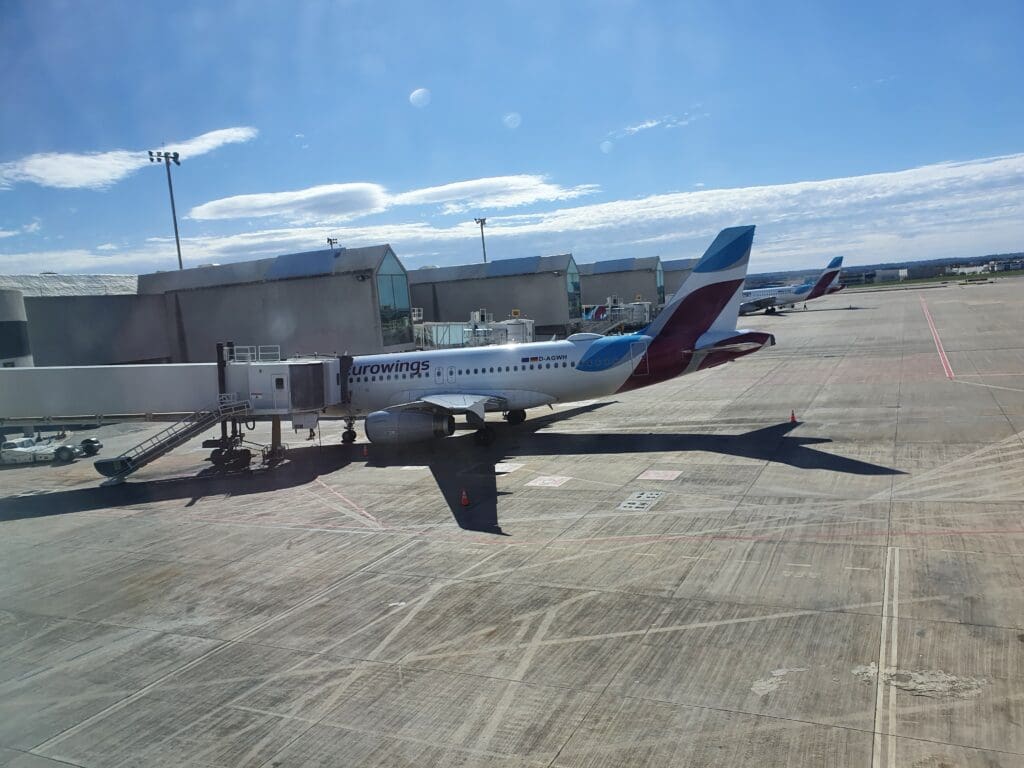
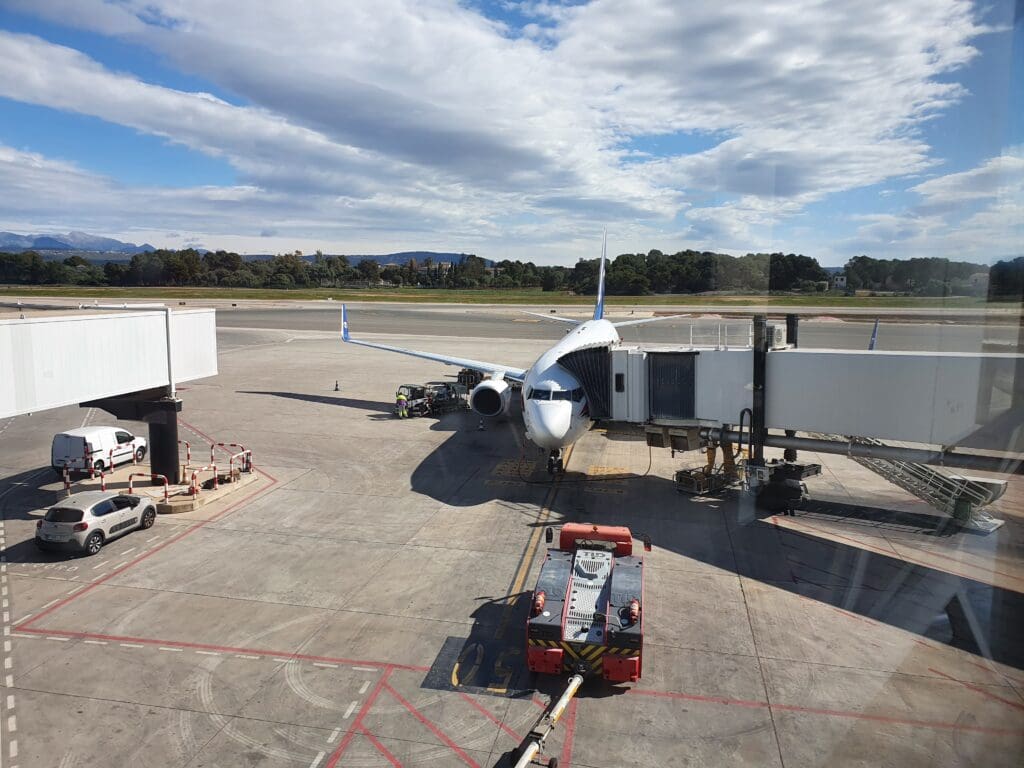
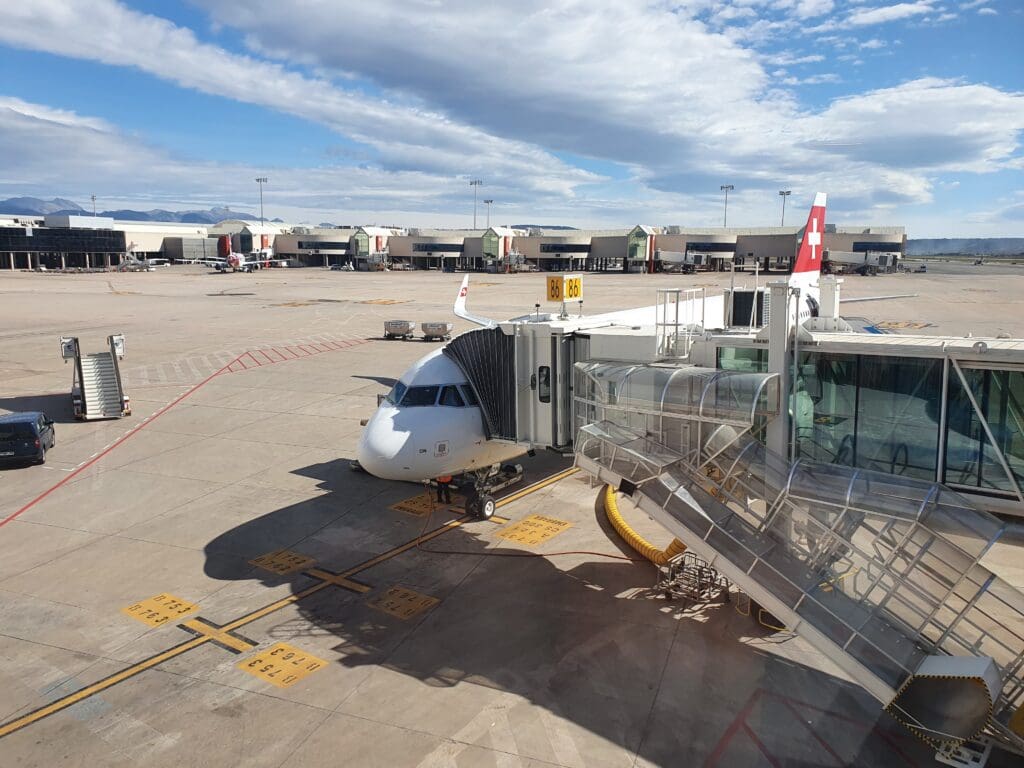
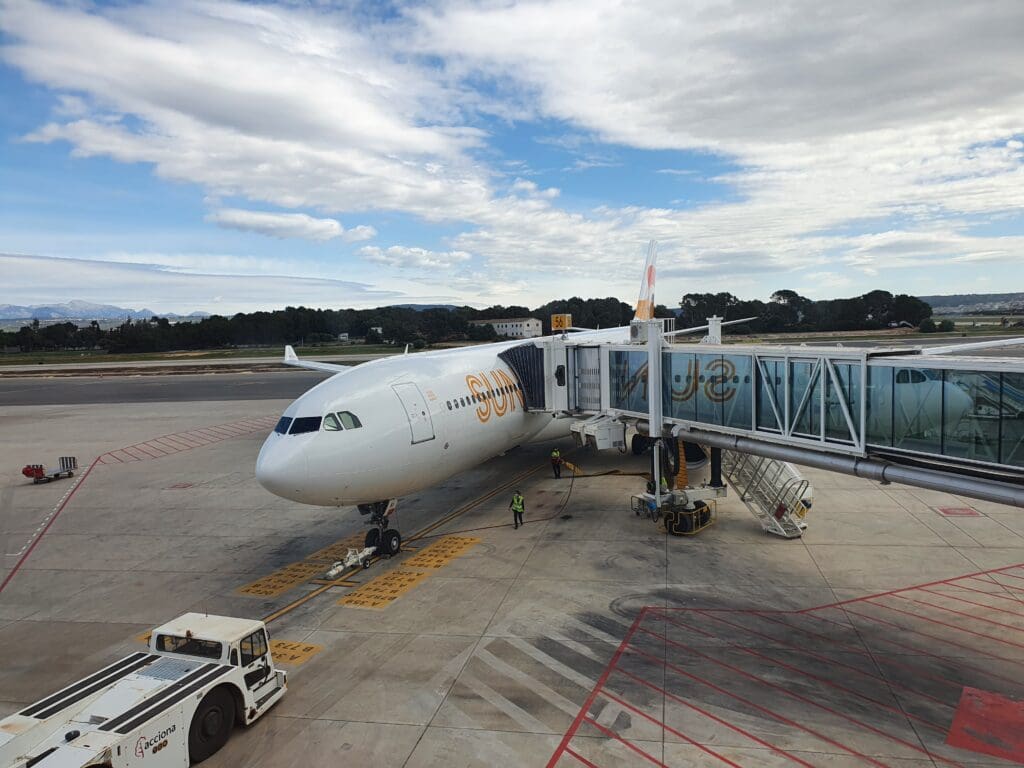
Seeing as I had downloaded Lufthansa’s app, as I waited I received a couple of notifications from this. The first informed me of a gate change, with my flight now scheduled to depart from gate C58. However, this wasn’t much of a change seeing as this had been the gate that was originally listed on my boarding pass. The second notification advised me of a fifteen-minute delay to the Frankfurt flight’s scheduled departure time, with this down to the fact that the aircraft departed Germany slightly behind schedule. Given my long connection time in Frankfurt, this was not an issue and I found Palma de Mallorca Airport to be a more pleasant place to wait than Frankfurt Airport. After lounging around for a while, at 1400 I decided to embark on another walk. By this time, the terminal appeared to be much busier than it had been when I arrived, and as was to be expected, plenty of enthusiasts could be seen looking out at and taking photos of the Lufthansa Airbus A350 being readied for its return flight to Munich. After watching this jet being pushed back, I grabbed another coffee before returning to the recliner area at the end of the pier.
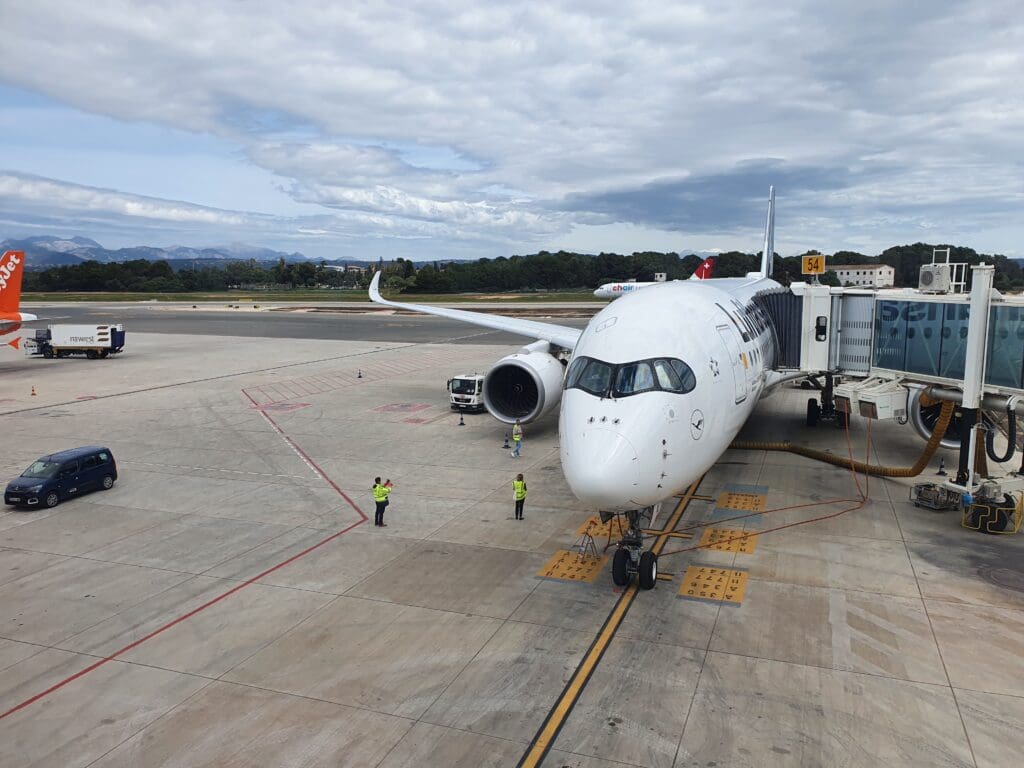
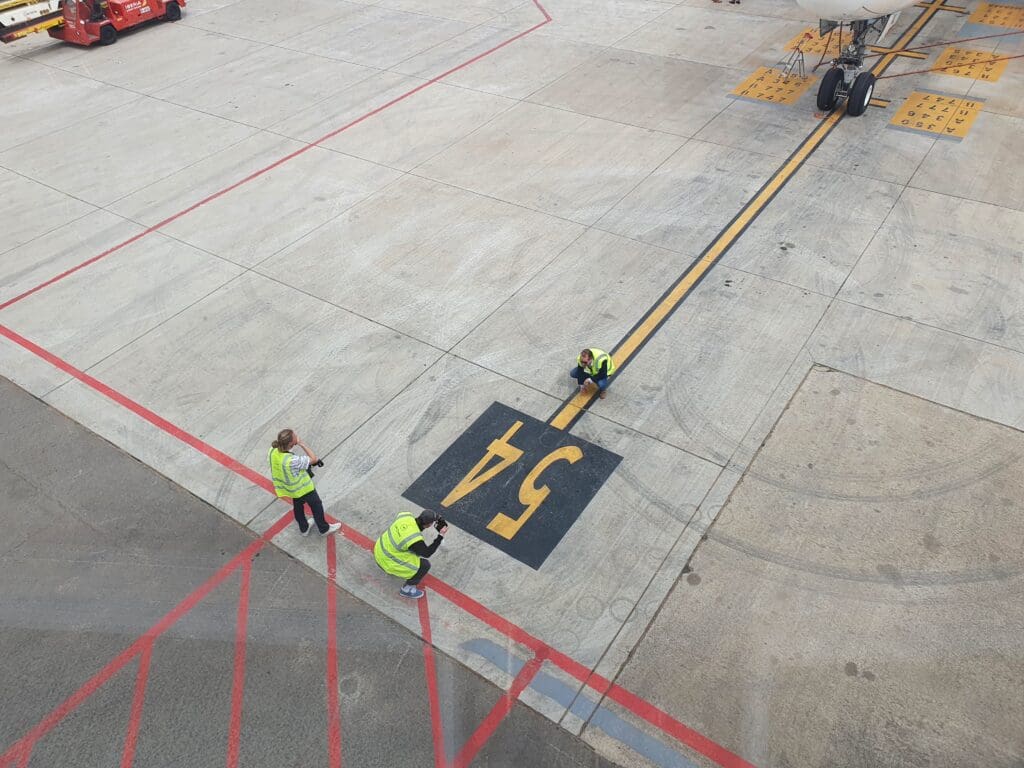
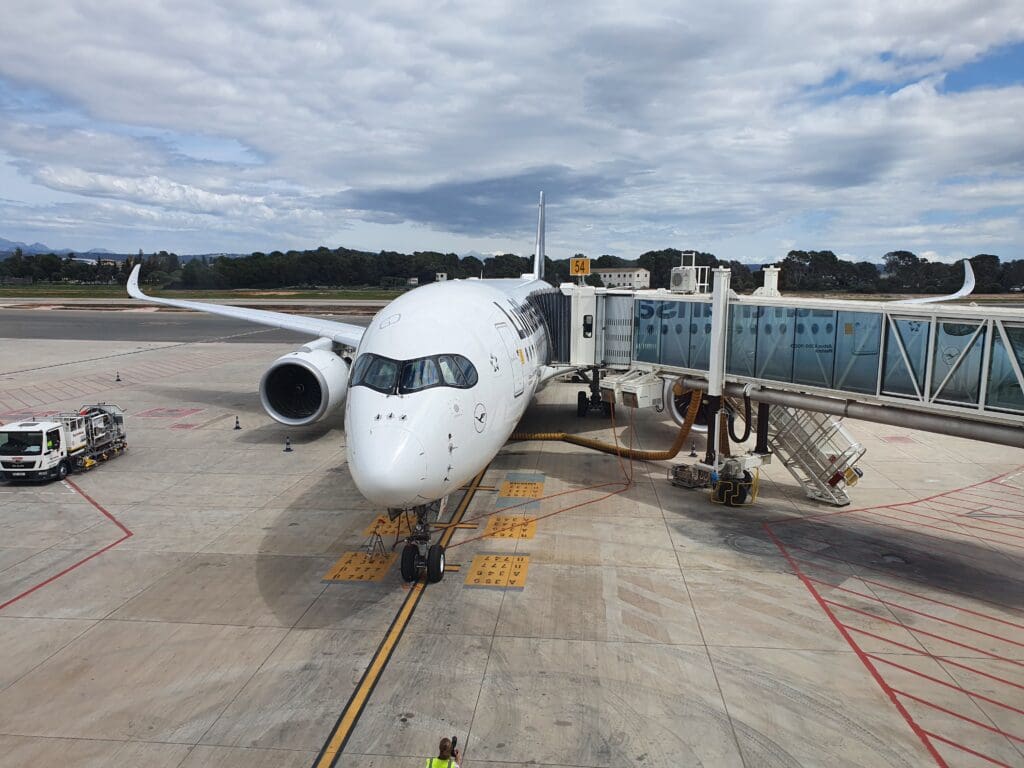
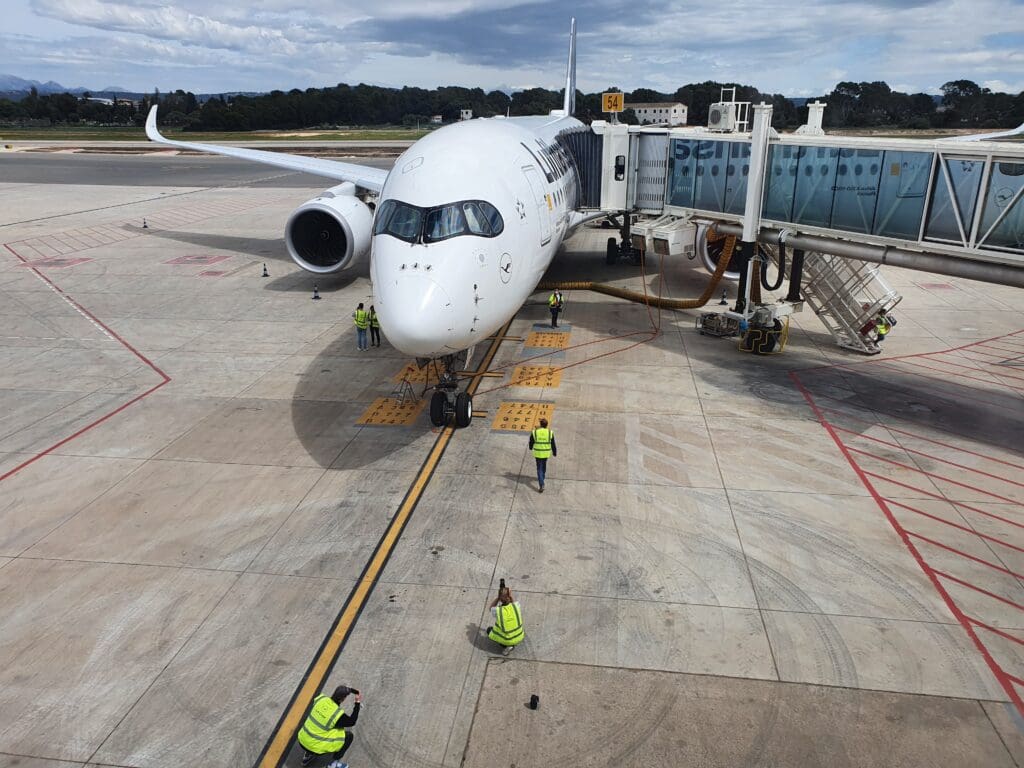
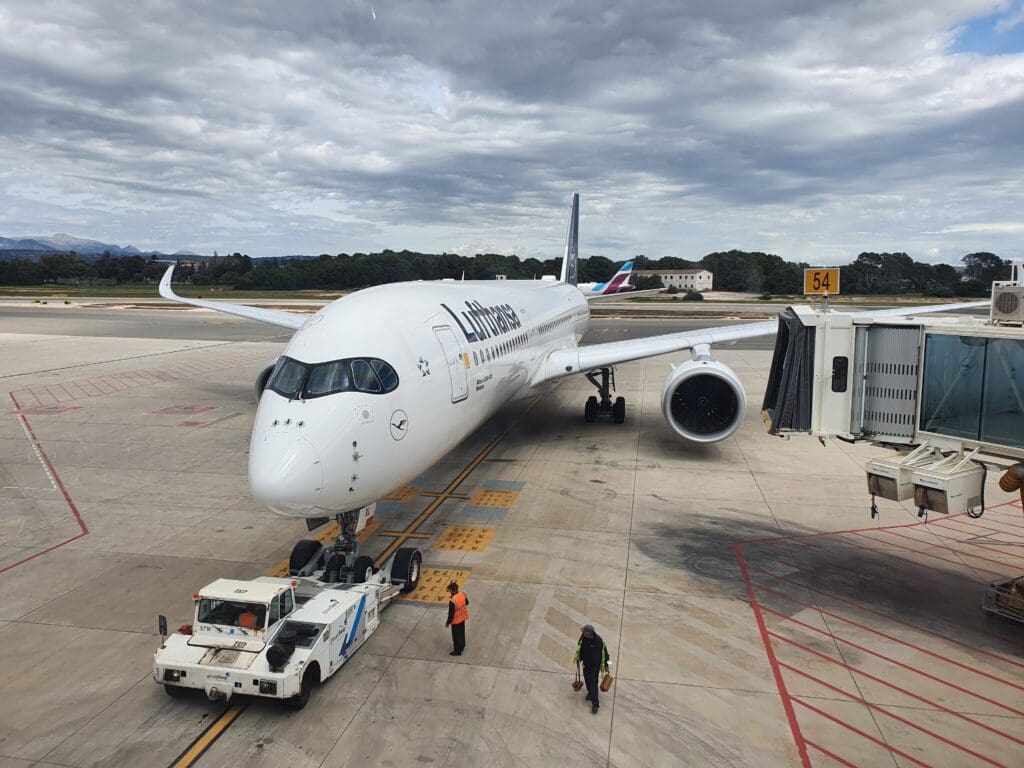
Before I knew it, the inbound Boeing 747 was nearing Mallorca, at which point I decided to head to one of the windows to watch the gigantic jet as it approached the airport from the west. Seeing as most arrivals that day had taken place on Palma’s Runway 24L, the gaggle of camera-wielding enthusiasts, myself included, had set themselves up in position to capture the aircraft as it touched down on Mallorca on this runway. However, for some reason, the aircraft instead approached Runway 24R ensuring that views of this whilst it arrived were somewhat minimal. Whilst this had been scheduled to touch down at 1440, its delayed departure meant that this did not land until 1518. Once off the runway, this then made its way over to remote Stand 118 at which point I trundled over to Gate C58 which I found to be rather busy.
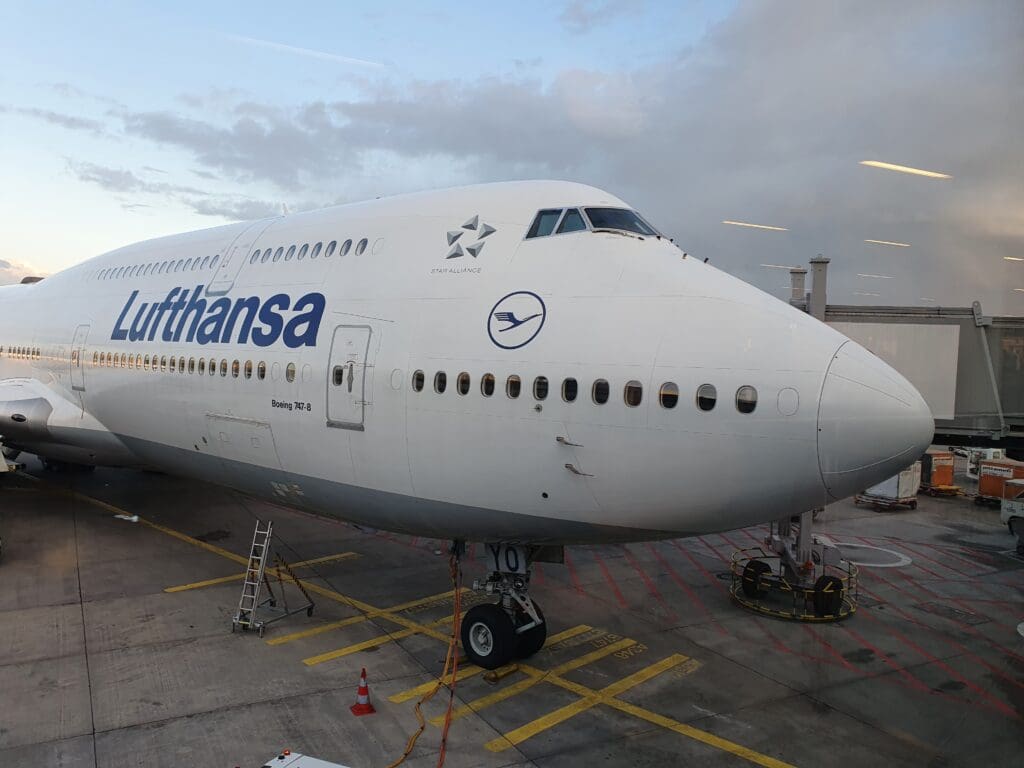
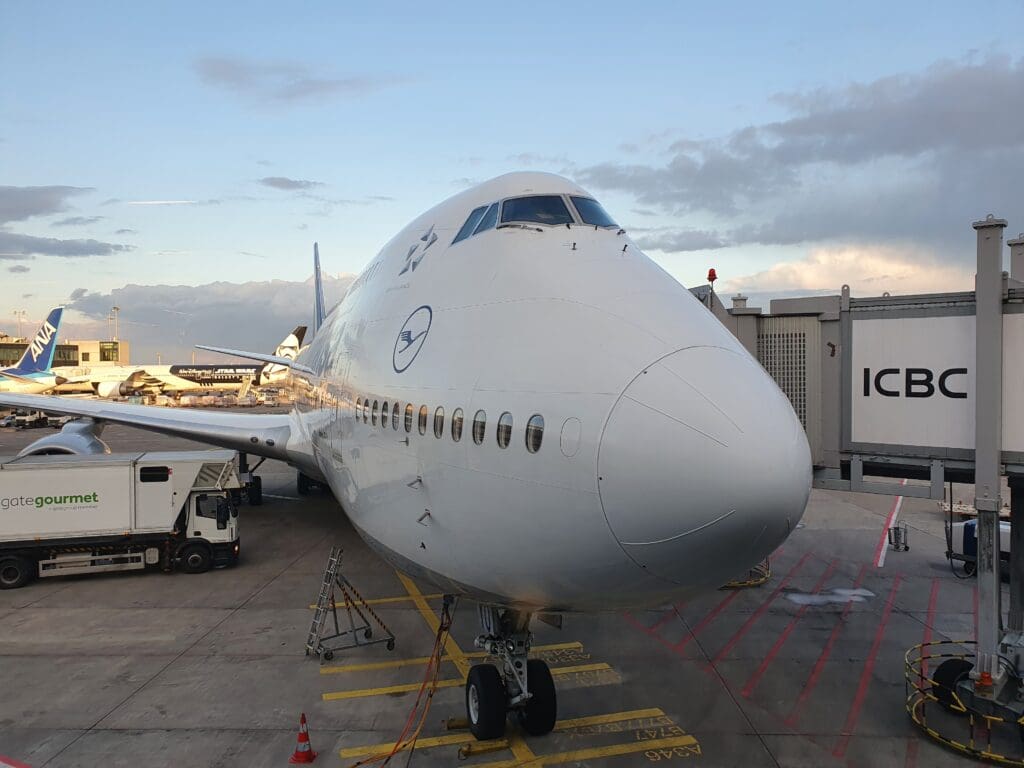
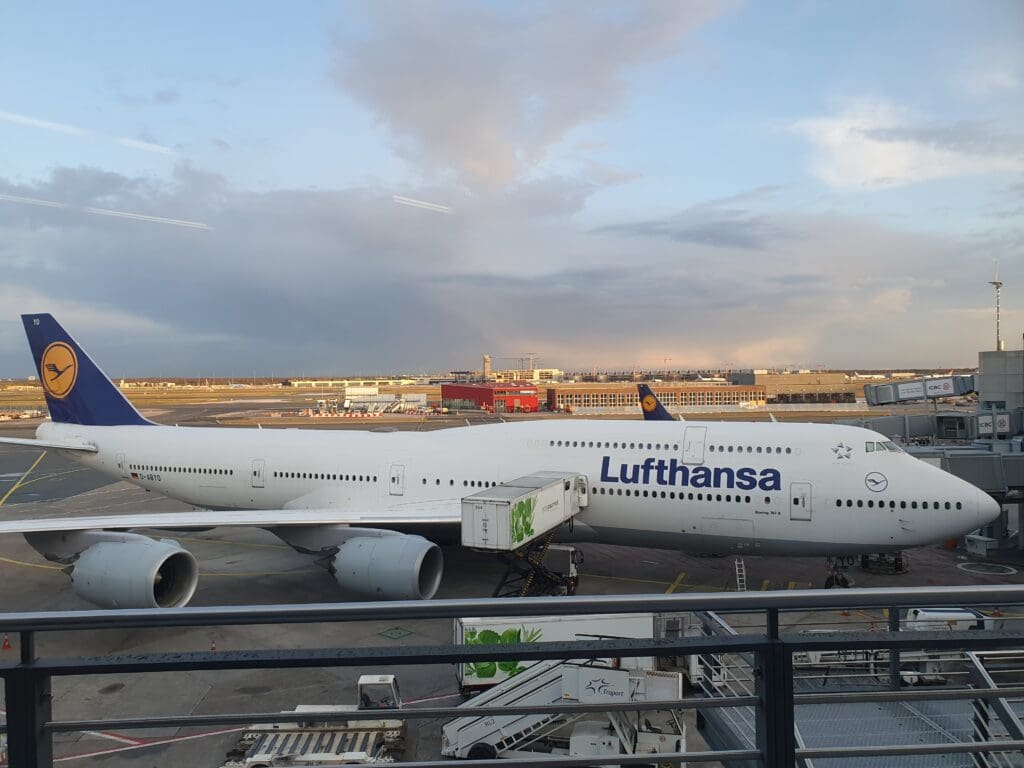
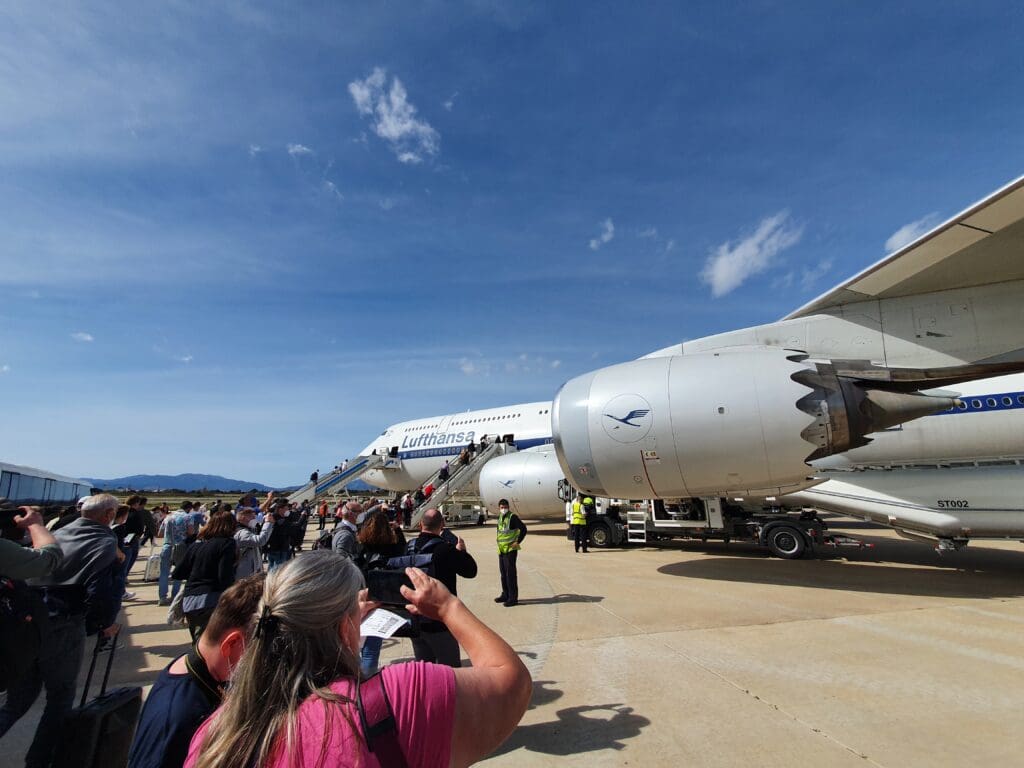
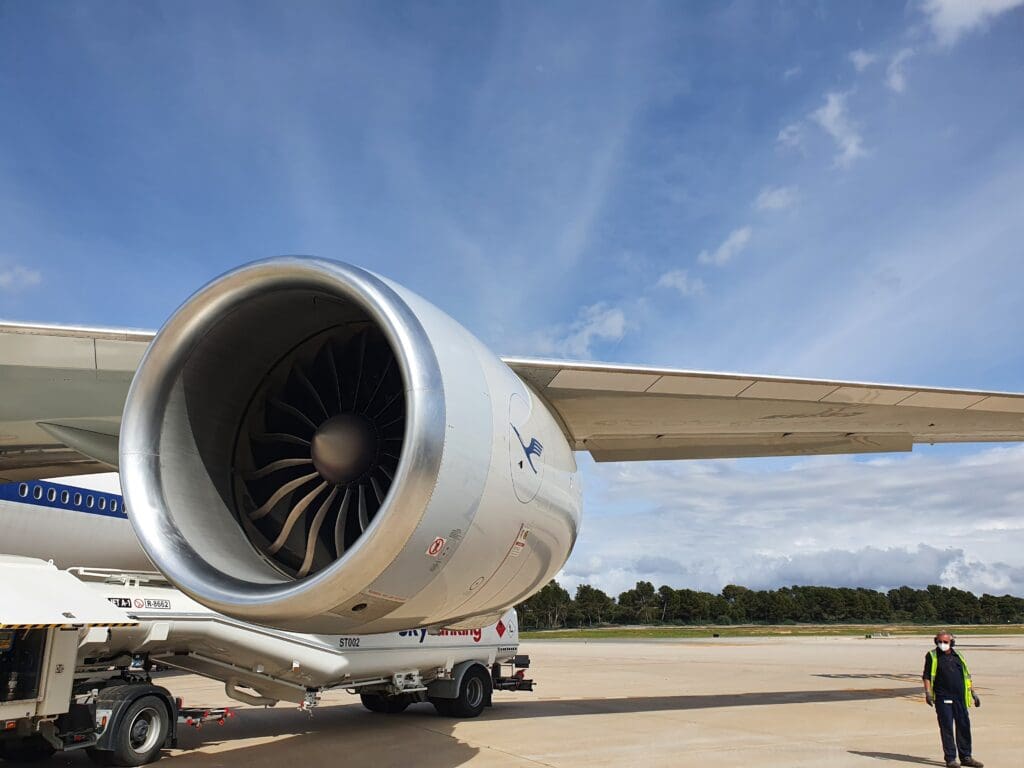
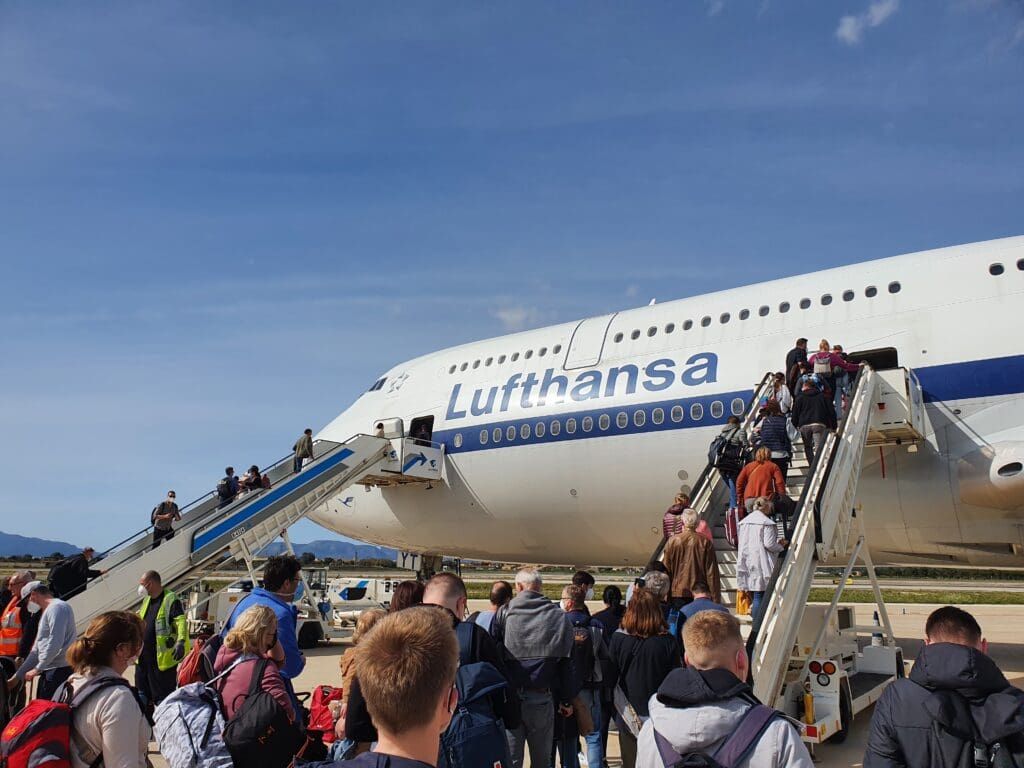
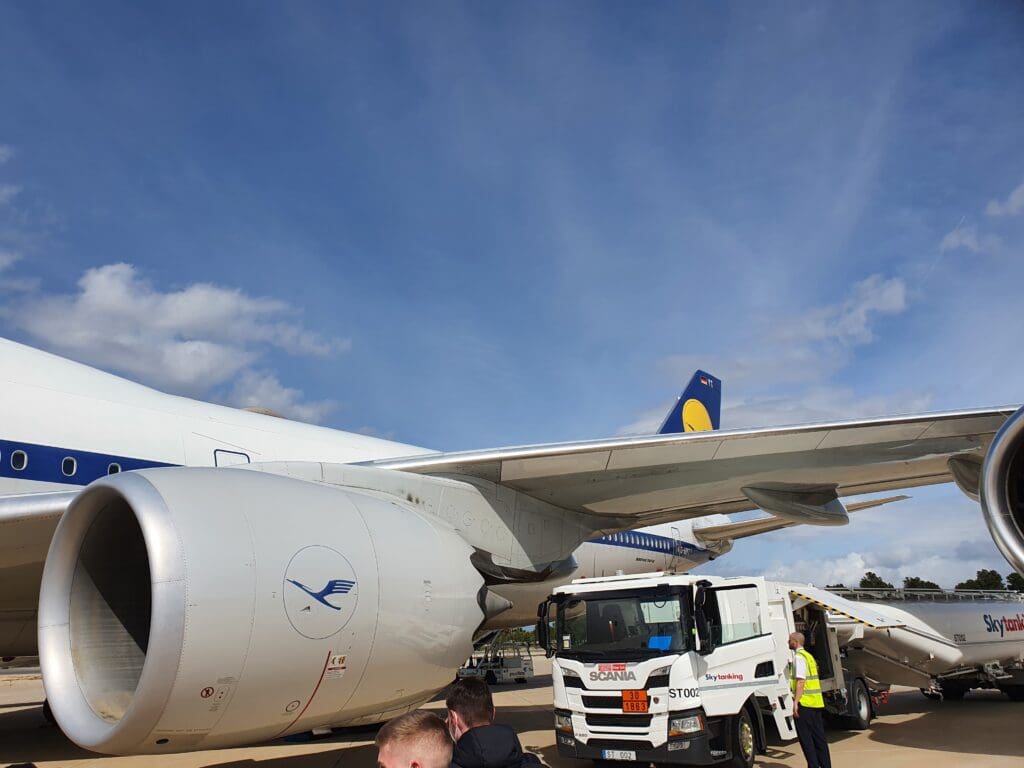
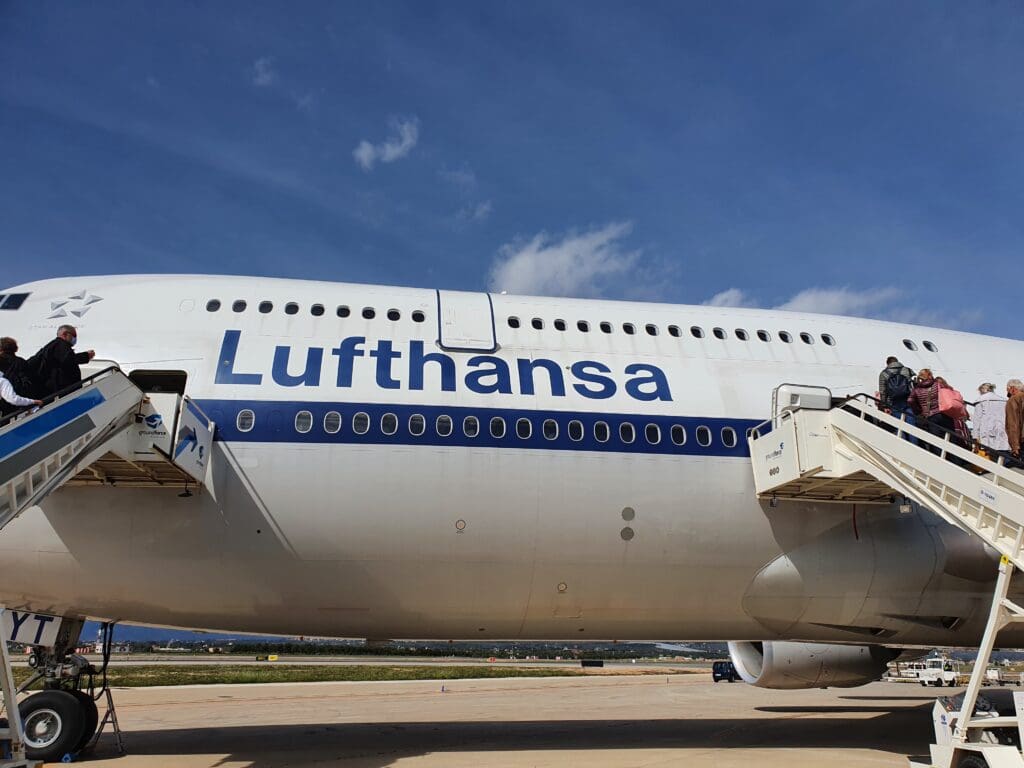
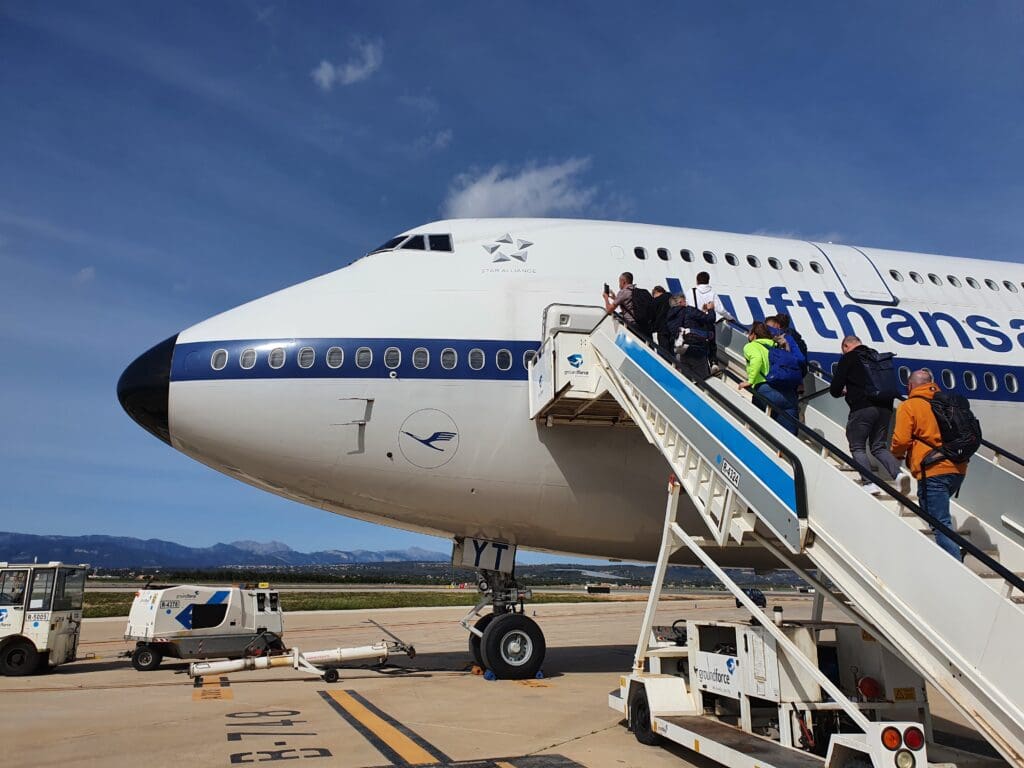
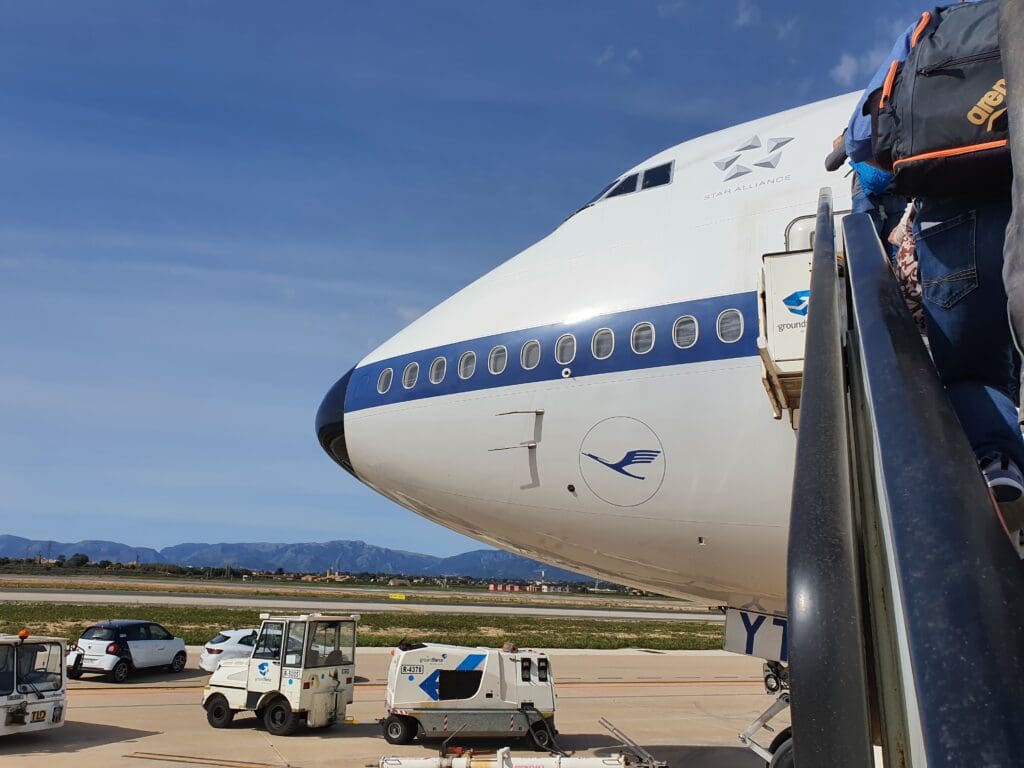
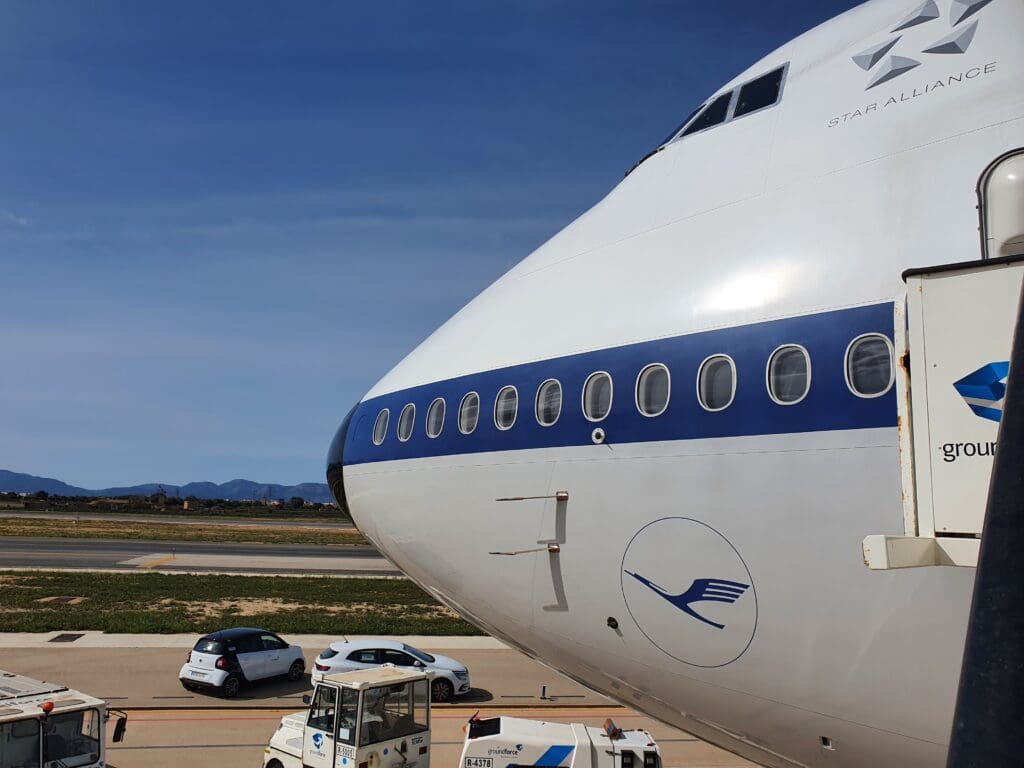
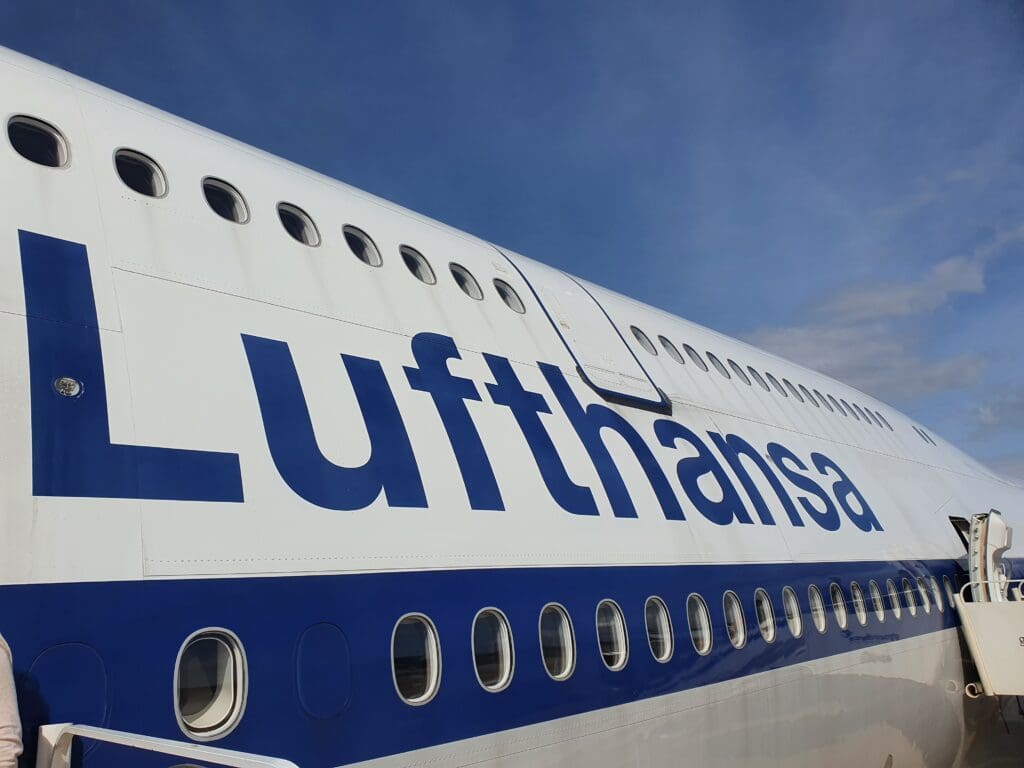
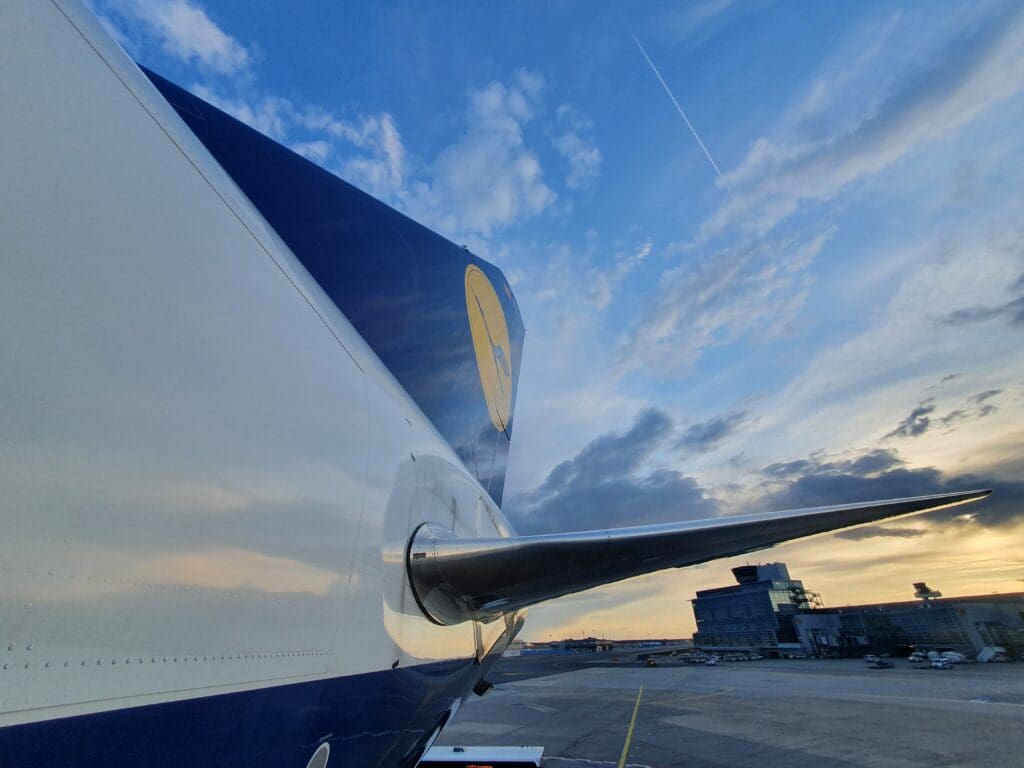
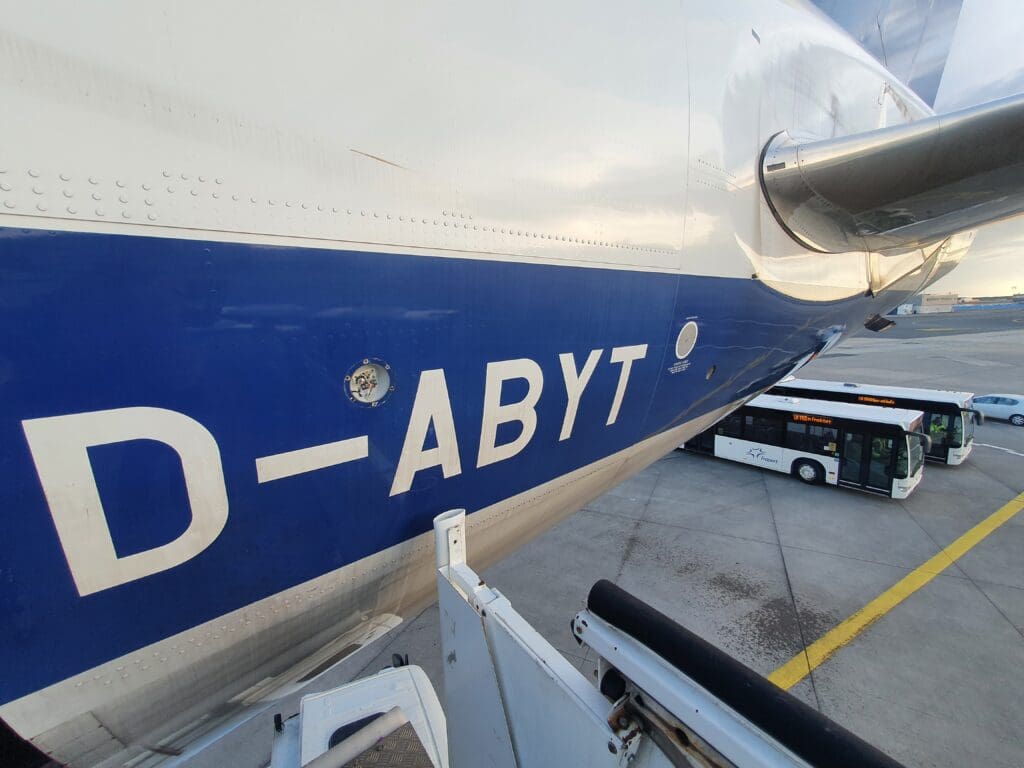
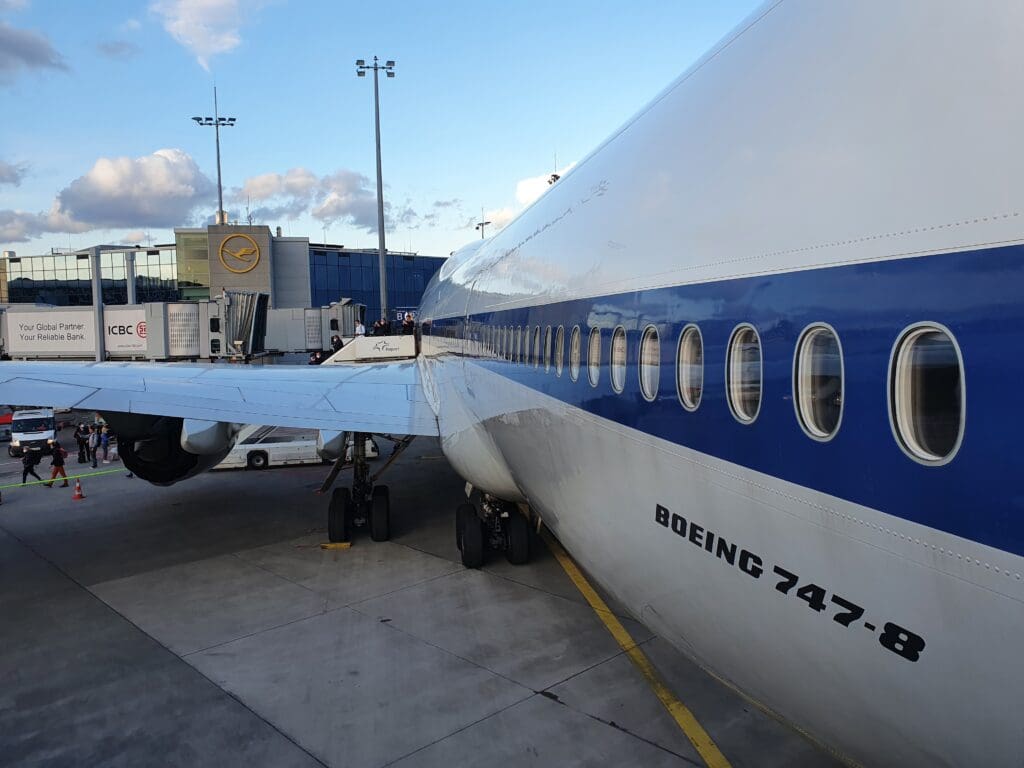
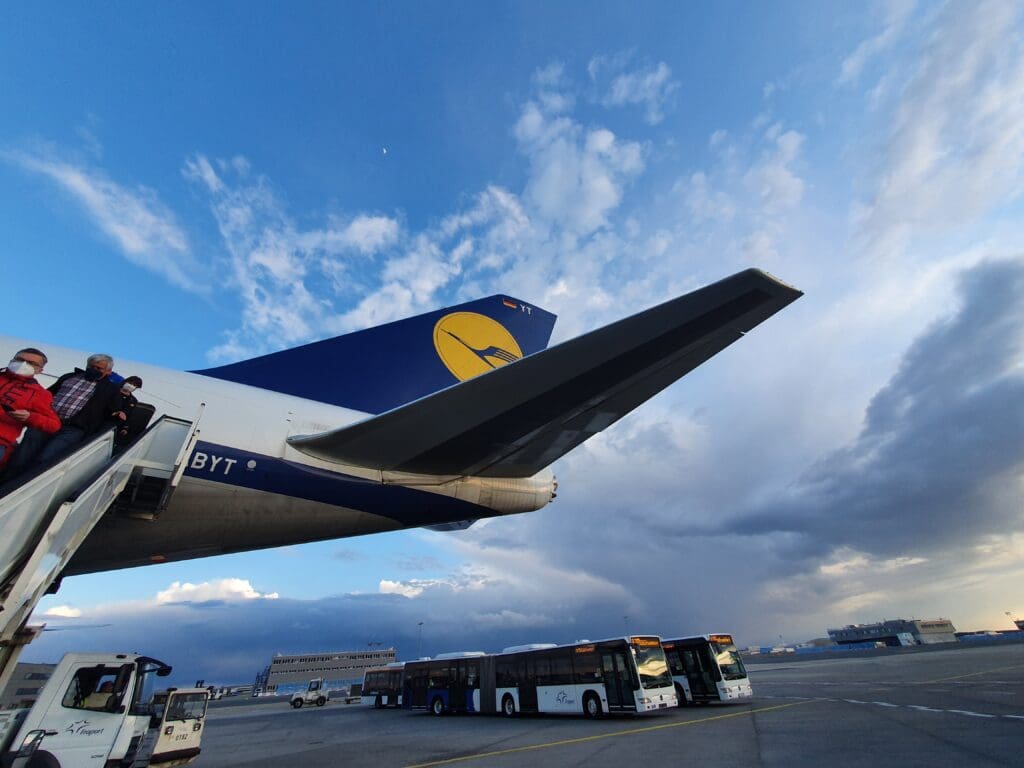
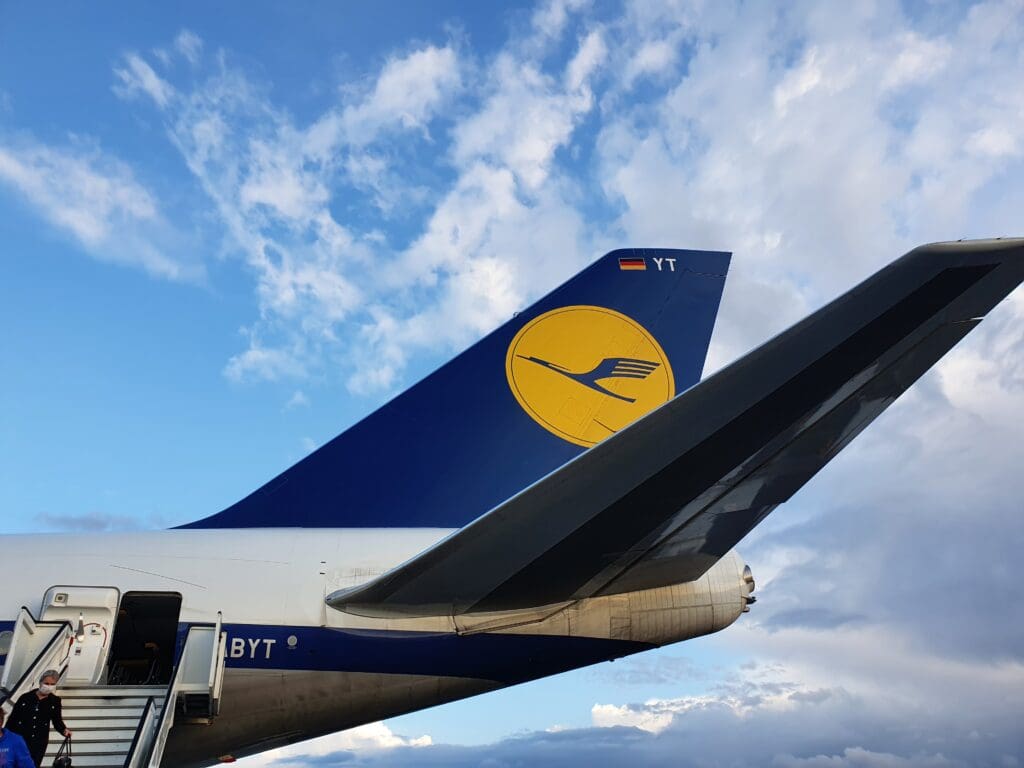
With Lufthansa’s schedulers likely aware of the attention that this special one-off flight would attract from the aviation enthusiast community as well as perhaps the local press, that afternoon Boeing 747-830 D-ABYT had been assigned to the Palma de Mallorca rotation. Rather than featuring the airline’s modern blue and white colours, or the slightly older mixture of blue, white, grey and yellow, this aircraft sports a retro livery almost identical to that worn by Lufthansa’s fleet throughout the 1970s and 80s. This has been applied to the aircraft in celebration of Lufthansa’s sixtieth anniversary. The aircraft is of course much newer than this, with the jet having first taken to the skies of Washington state in February 2015, making the aircraft a little over seven years old at the time of my flight. In April of that year, following a well-publicised handover ceremony, the aircraft departed Boeing Field on its long overnight journey across North America and the Atlantic before arriving in its new home, Frankfurt, where it has been based ever since. However, its career has not been without interruption, with the aircraft being placed into storage in Frankfurt from March 2020 to June 2021 owing to the effects of COVID-19 on the aviation industry.
During its fairly short career, the aircraft has experienced two notable incidents. The first of these occurred in January 2016 when the aircraft suffered a cracked windshield during the early stages of a flight from Washington Dulles to Frankfurt, resulting in a diversion to Boston. Meanwhile the following year, the scent of rotten eggs could be smelt before departure on a flight from Mexico City to Frankfurt, resulting in an aborted takeoff. Thankfully, all of the aircraft’s ten flights undertaken in the week before the service appear to have gone without a glitch, with the aircraft having flown over 45,100 miles during this time, making visits to Johannesburg, Miami, Sao Paulo and Washington Dulles during this time, before heading down to Palma de Mallorca.
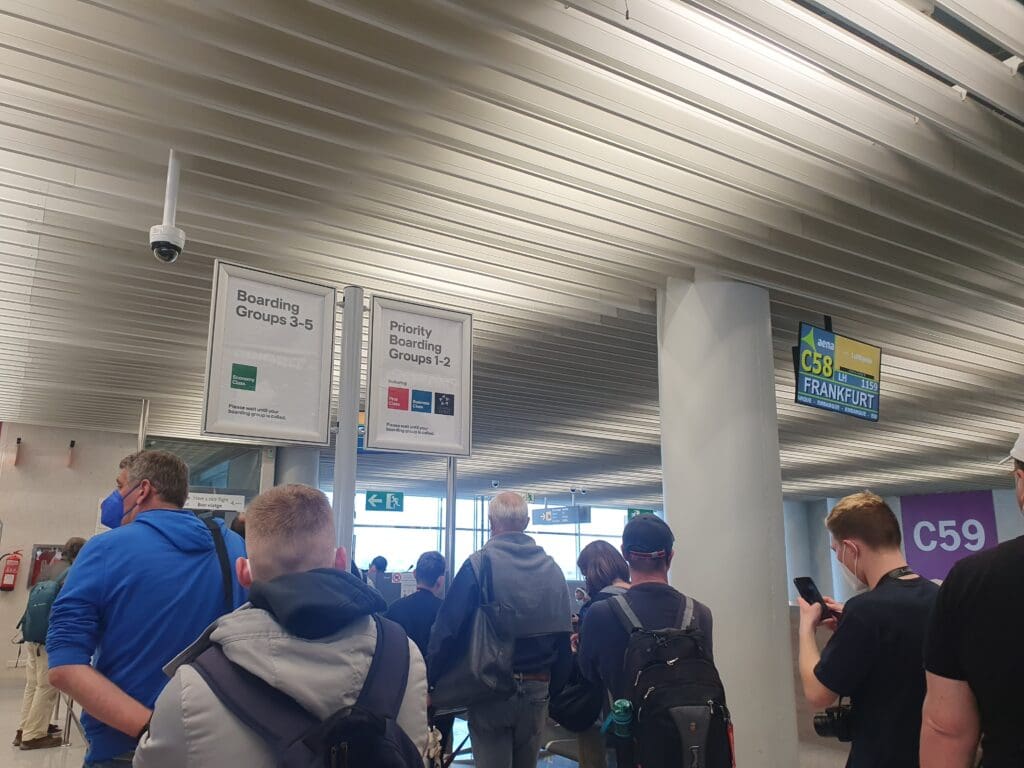
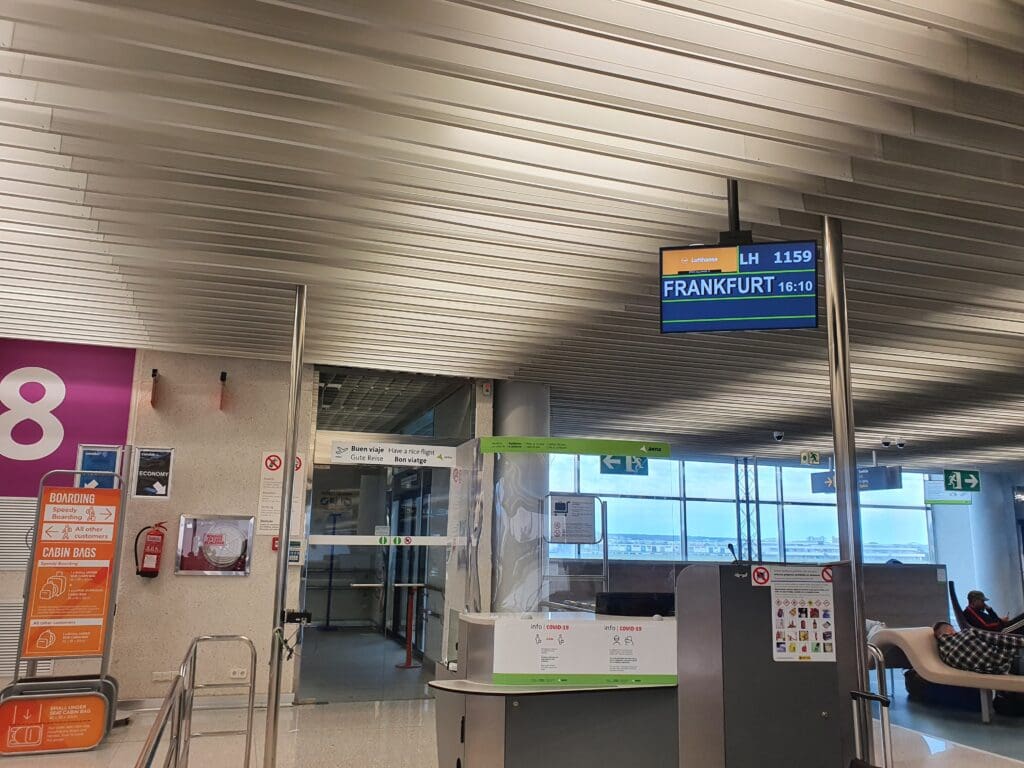
Whilst boarding for my group, Group 3, had been scheduled to commence at 1540, an announcement regarding the impending start of boarding was not made until 1555 which took the form of an automated announcement in English, German and Spanish. By this time, a large gaggle of passengers roughly resembling something of a queue had already congregated resulting in somewhat chaotic scenes. This was almost immediately followed by an invitation for those travelling with young children or those needing assistance to board the aircraft. With plenty of families on the flight, at this point, a fair few passengers came forward and at 1600 boarding was called for priority passengers, i.e. those in groups 1 and 2. With plenty of passengers in groups 3, 4 and 5 also attempting to make it through at this time, I was pleased to see that the gate agents policed this well and sent those who attempted to head through earlier than their allocated time to the back of the queue. With plenty of priority passengers, it wasn’t too long before progress stalled with no passengers being processed. I presume this was the result of one bus going off to the aircraft and no other bus being available to take the next load of passengers to the waiting jet. After over five minutes of no movement, boarding continued and all passengers were invited to proceed forward for boarding at 1645. Being near the front of the queue, I soon had my passport checked by the friendly agent and scanned my boarding pass before heading down to ground level.
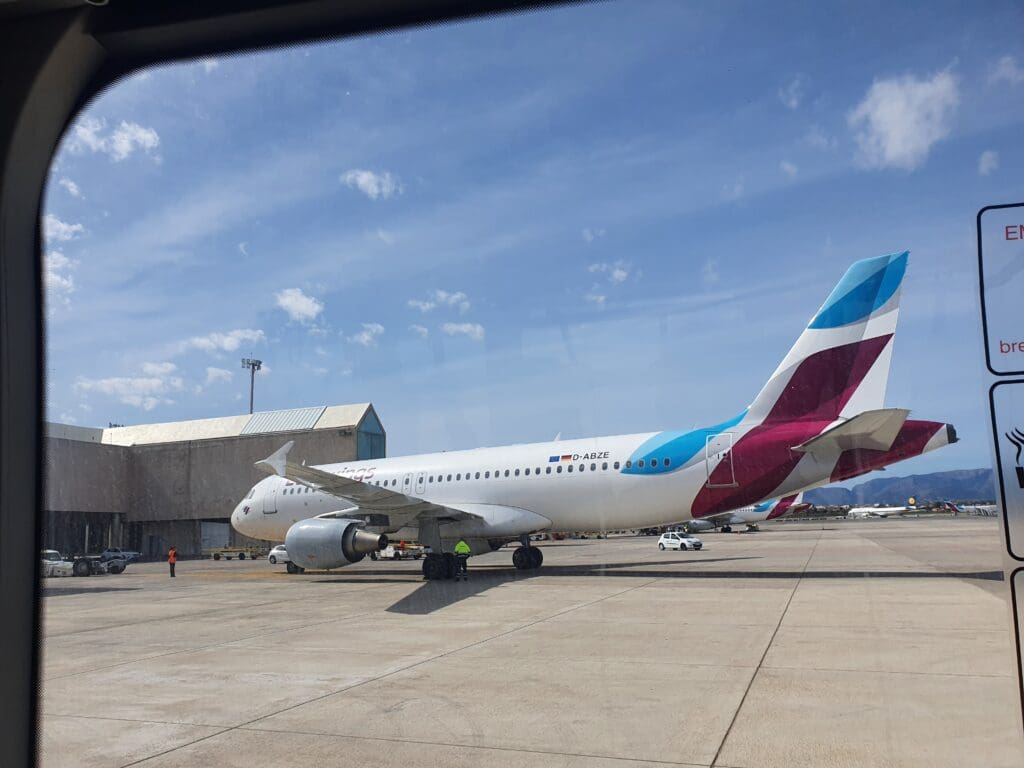
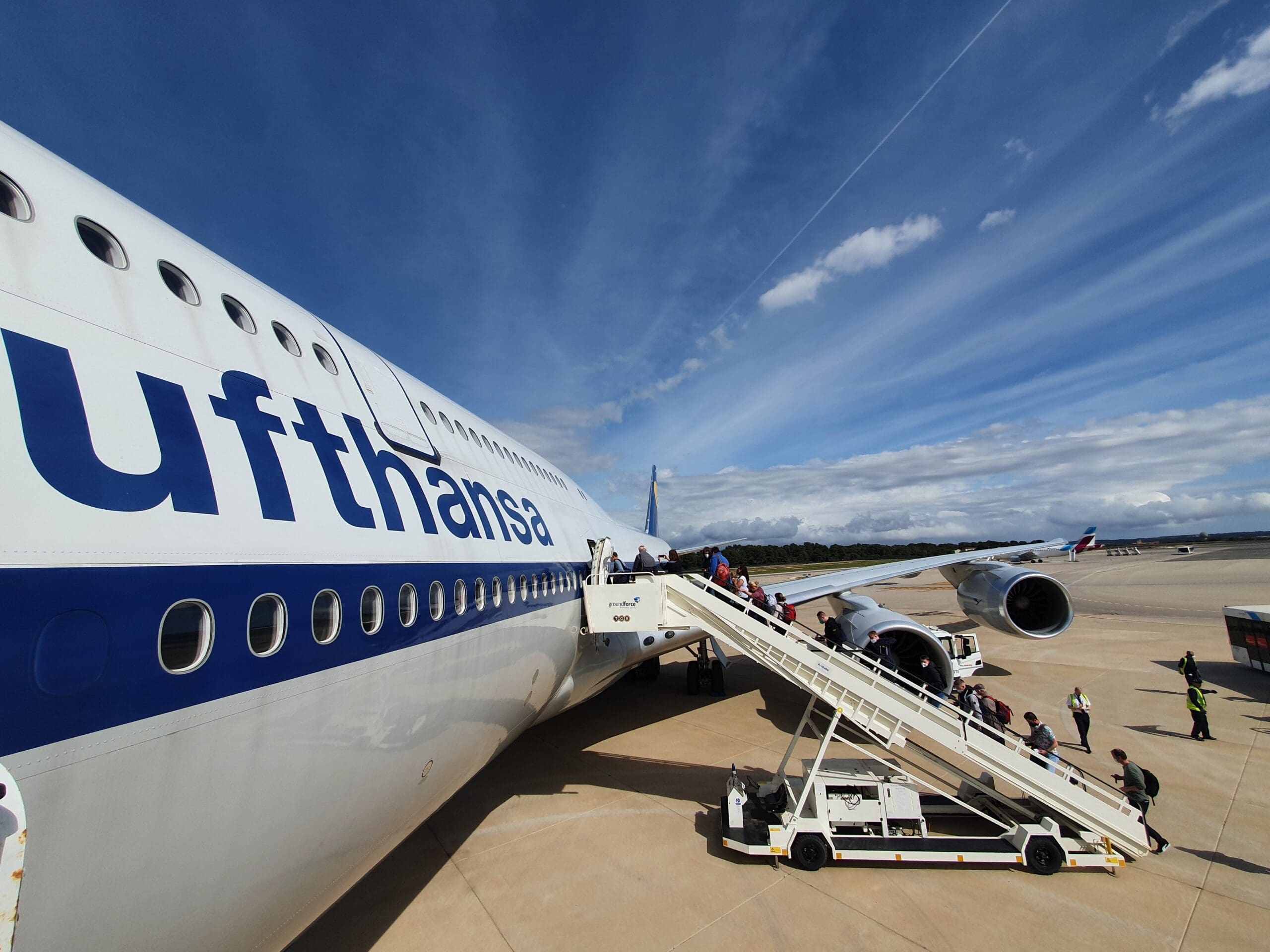
From the terminal, the bus passed several Airbus A319s and A320s before crossing the apron and voyaging out to the Boeing 747 which could be seen basking in the late afternoon sun at Stand 118. Following what seemed to be a slow trundle out to the aircraft, the bus came to a halt near the jumbo’s port wingtip and the doors soon slid open. Once free, unsurprisingly many passengers began snapping away on a variety of devices, with those more ‘regular’ passengers seemingly surprised to see a large four-engined double-decker behemoth standing in front of them in place of the usual Airbus narrowbody that plies the route. That afternoon, the airstairs had been positioned up to both the 1L and 2L doors and passengers were free to board via either of these. Opting to board at the front of the aircraft, I soon headed up the tall set of airstairs and arrived in the forwardmost galley positioned in between the First Class and forward Business Class cabins.
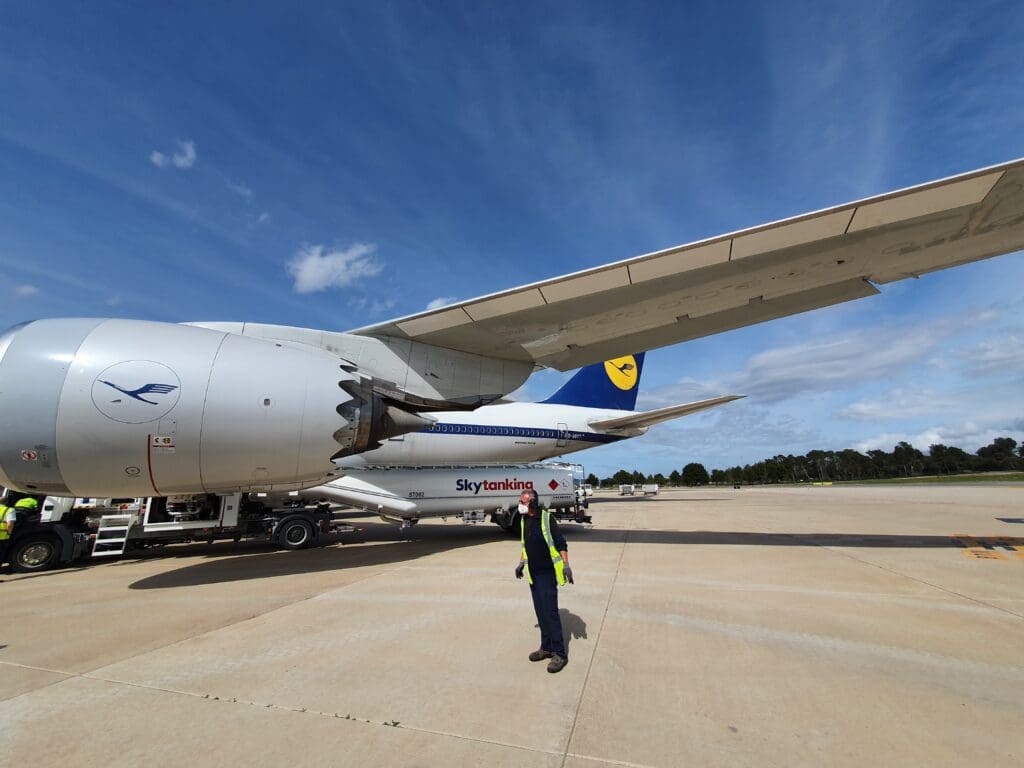
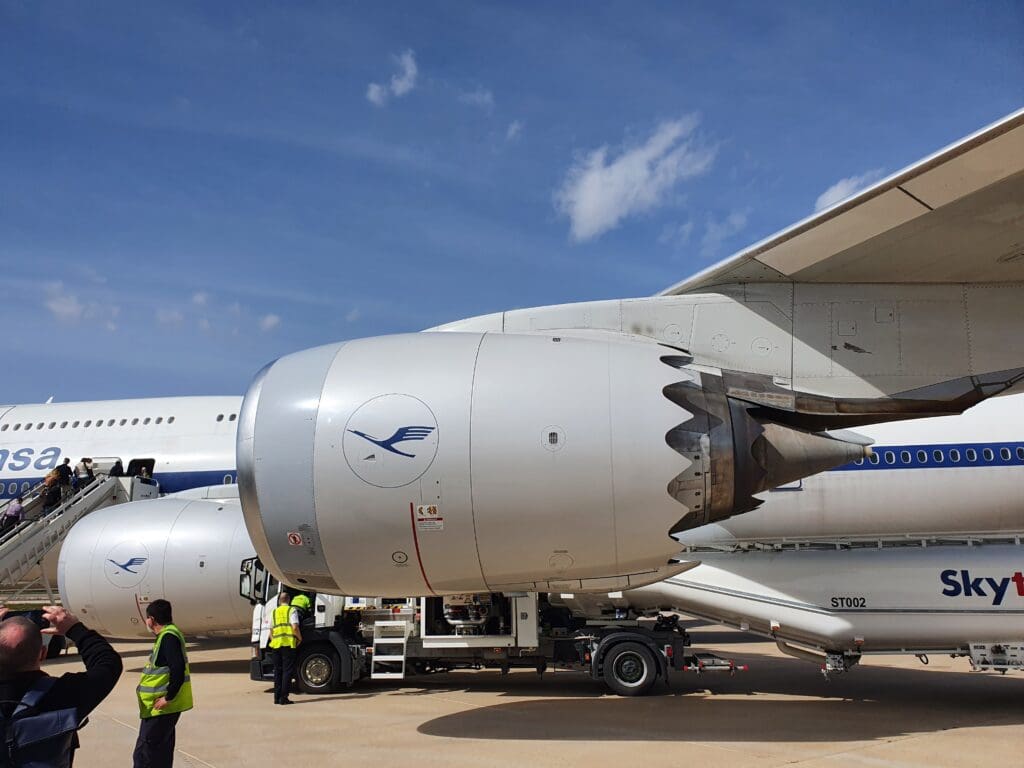
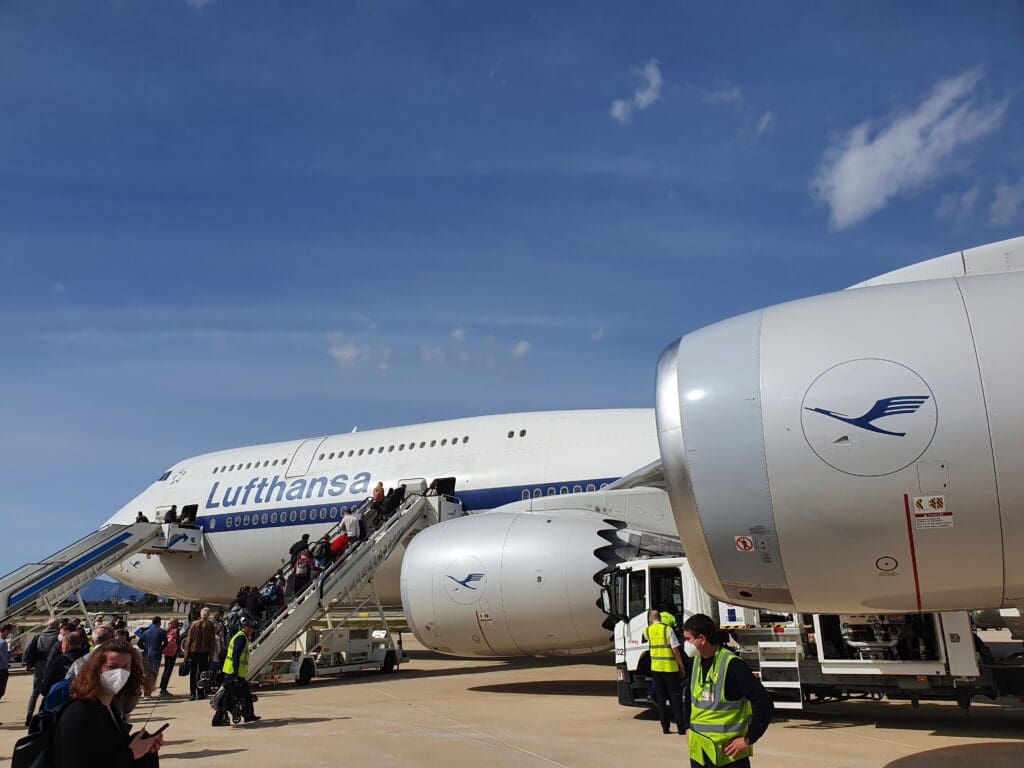
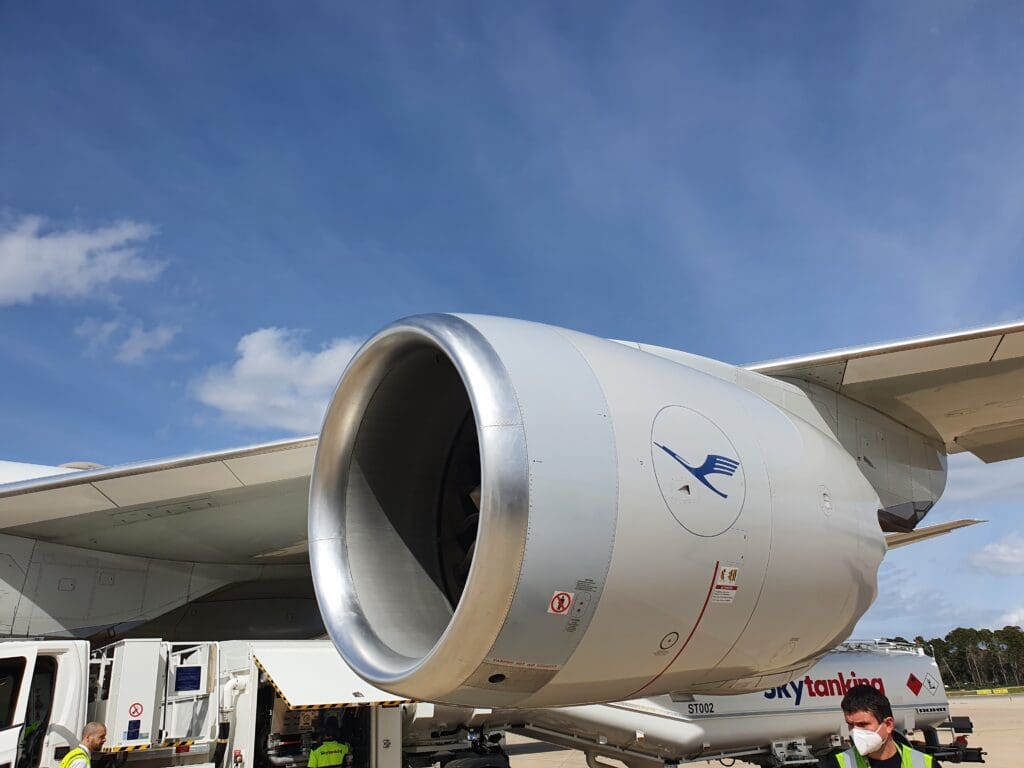
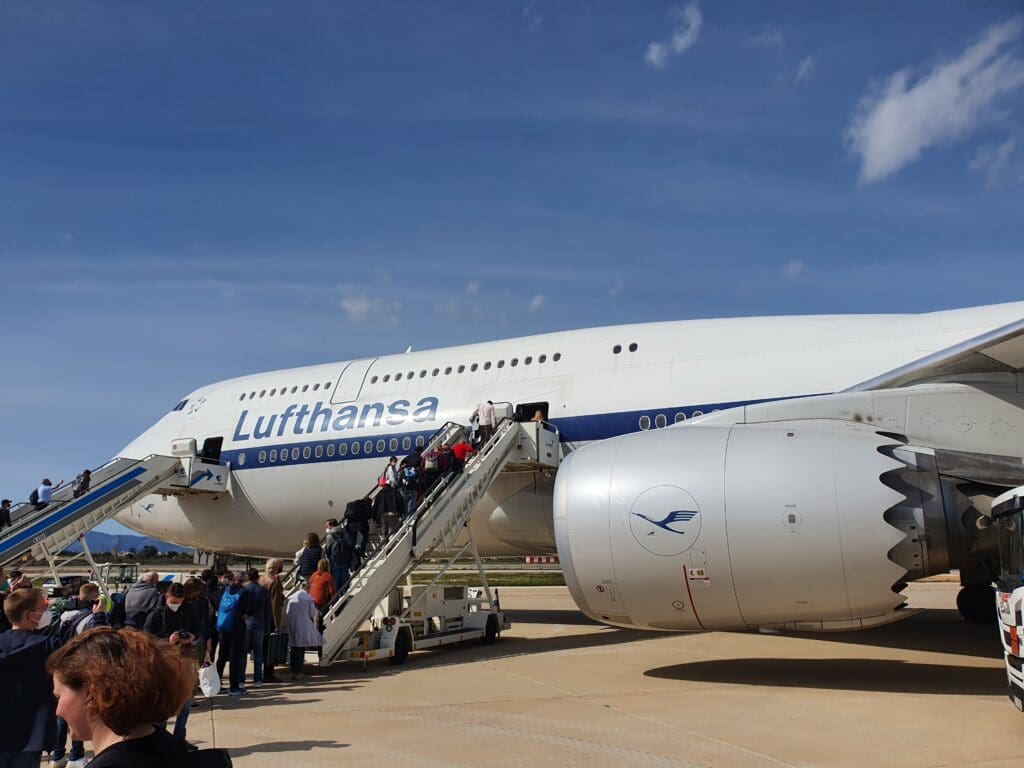
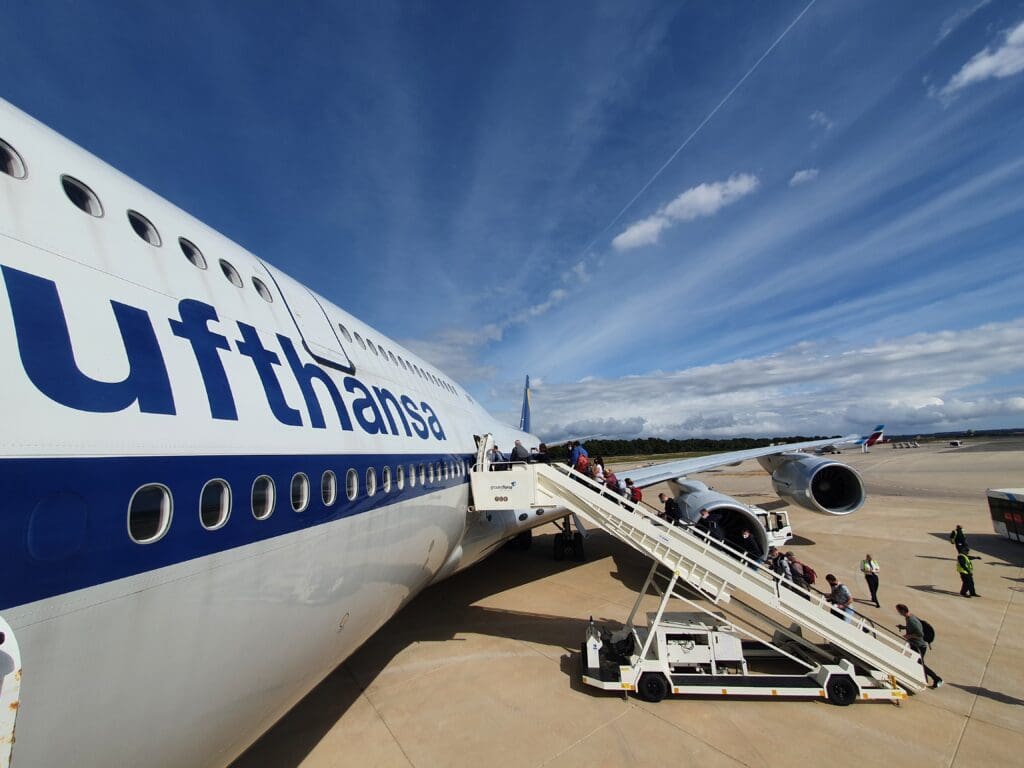
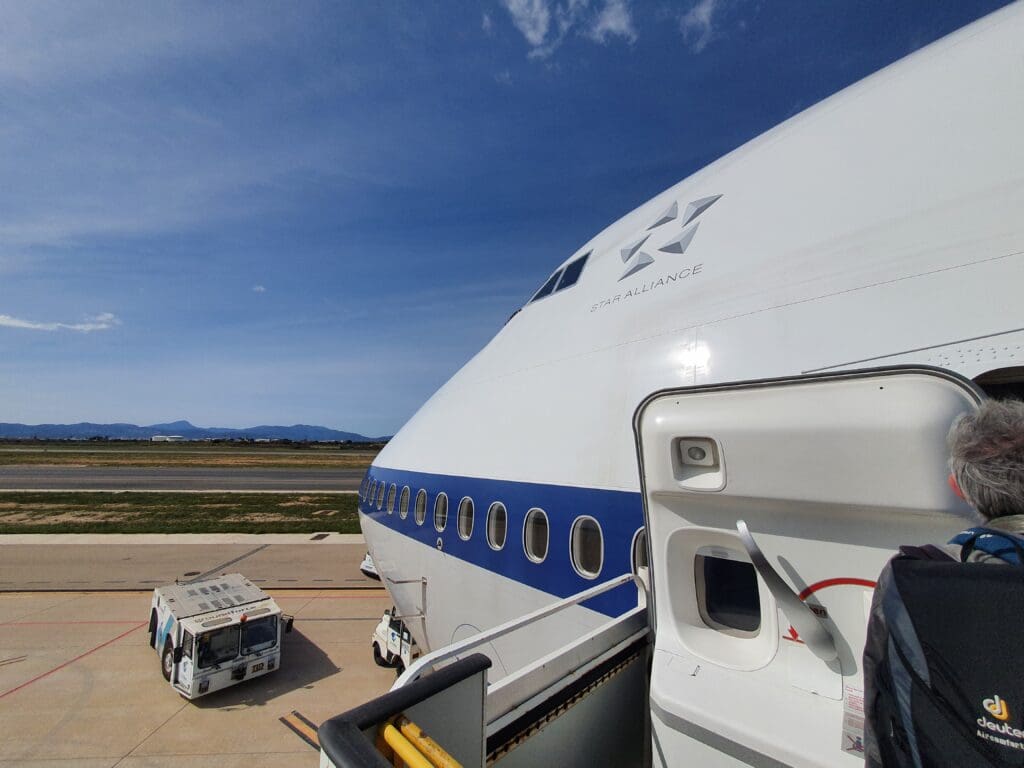
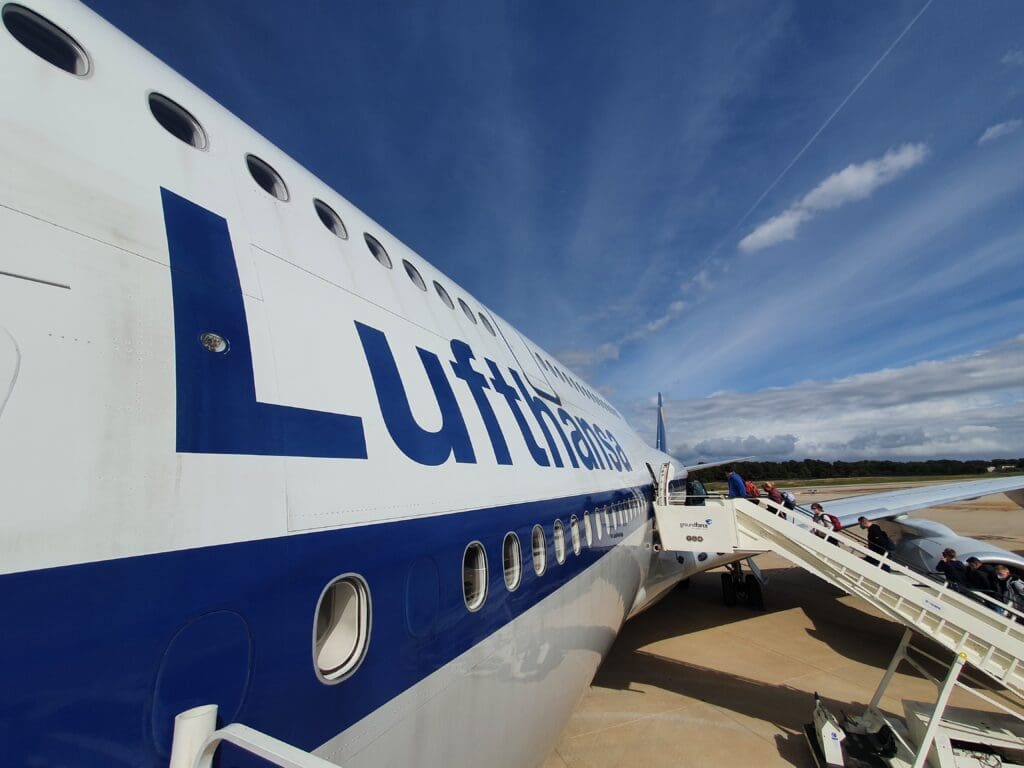
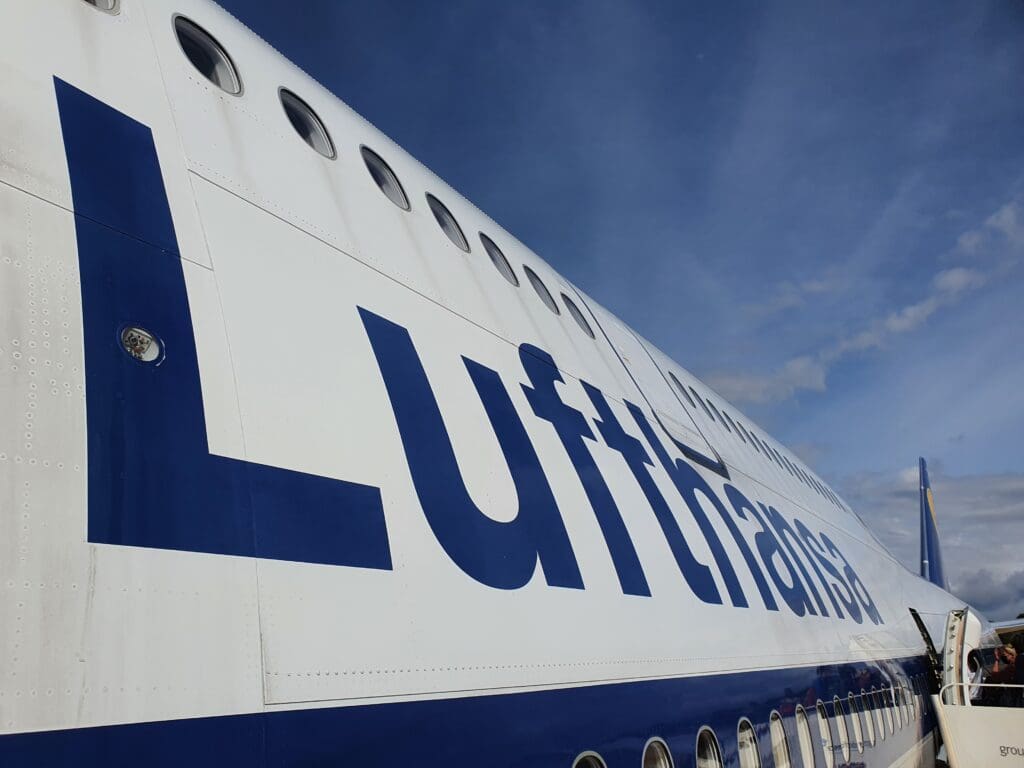

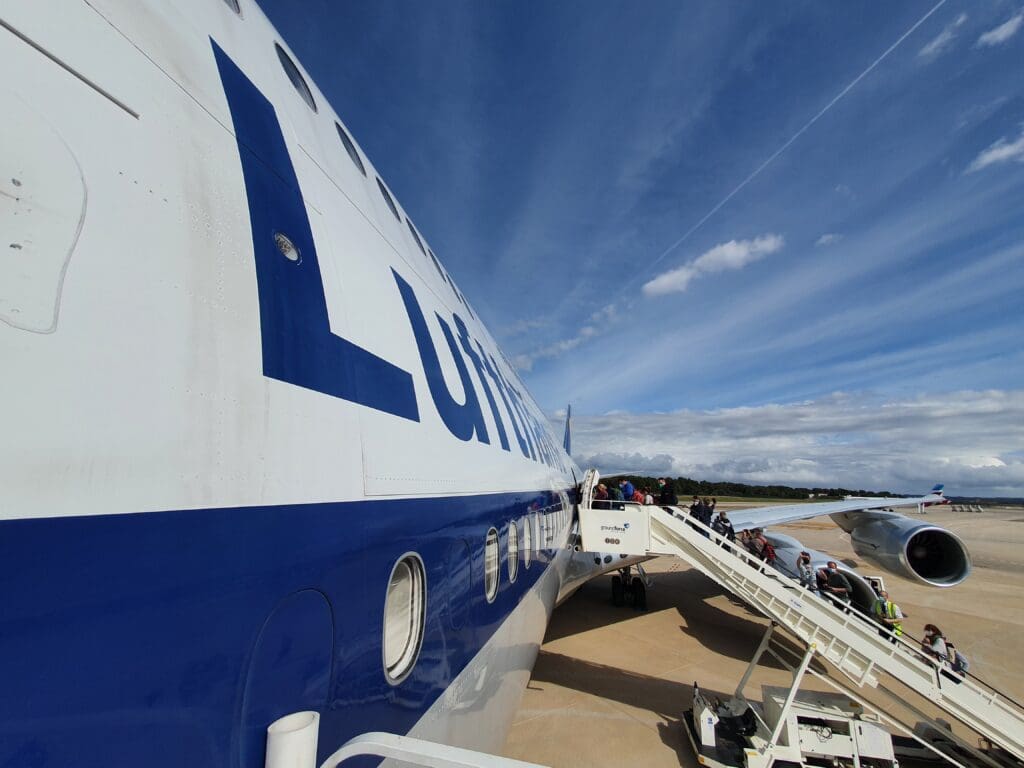
As soon as I set foot on the aircraft, I was warmly greeted in German by the two crew members standing there before being asked in English if I knew where I was heading. Responding that I did, no boarding pass check was required, and I made my way down the second aisle and into the Business Class cabin. On another note, as I made my way down the cabin several crew members greeted me whilst others simply gave blank stares, not giving me the very best impression of the crew that evening.
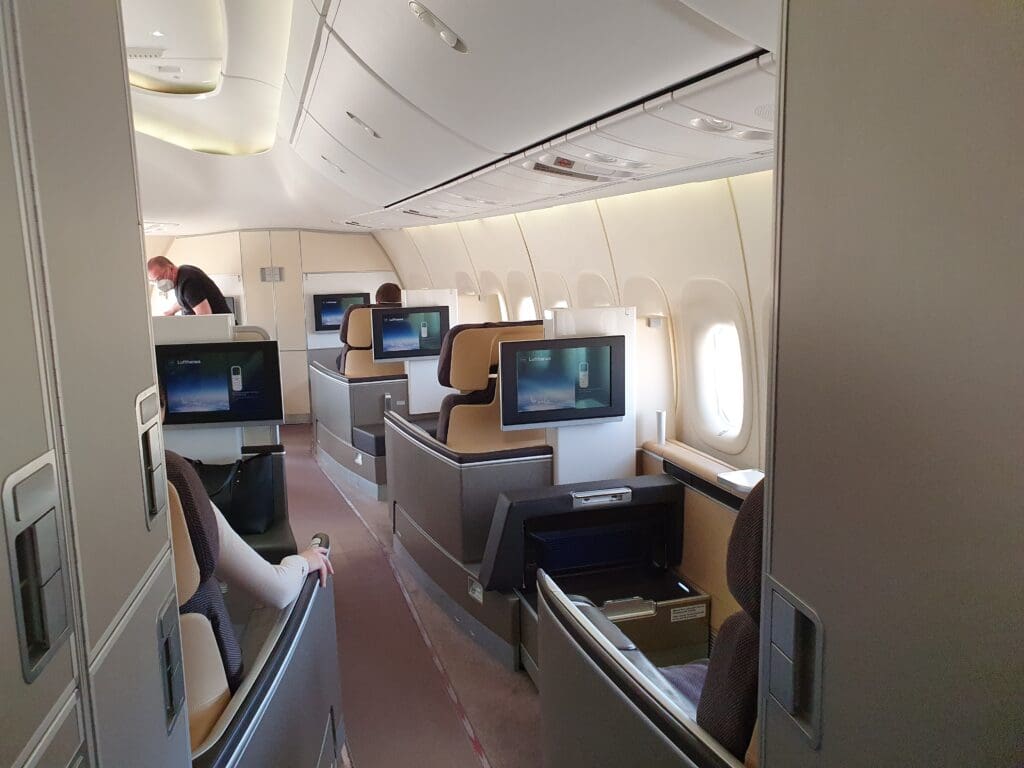
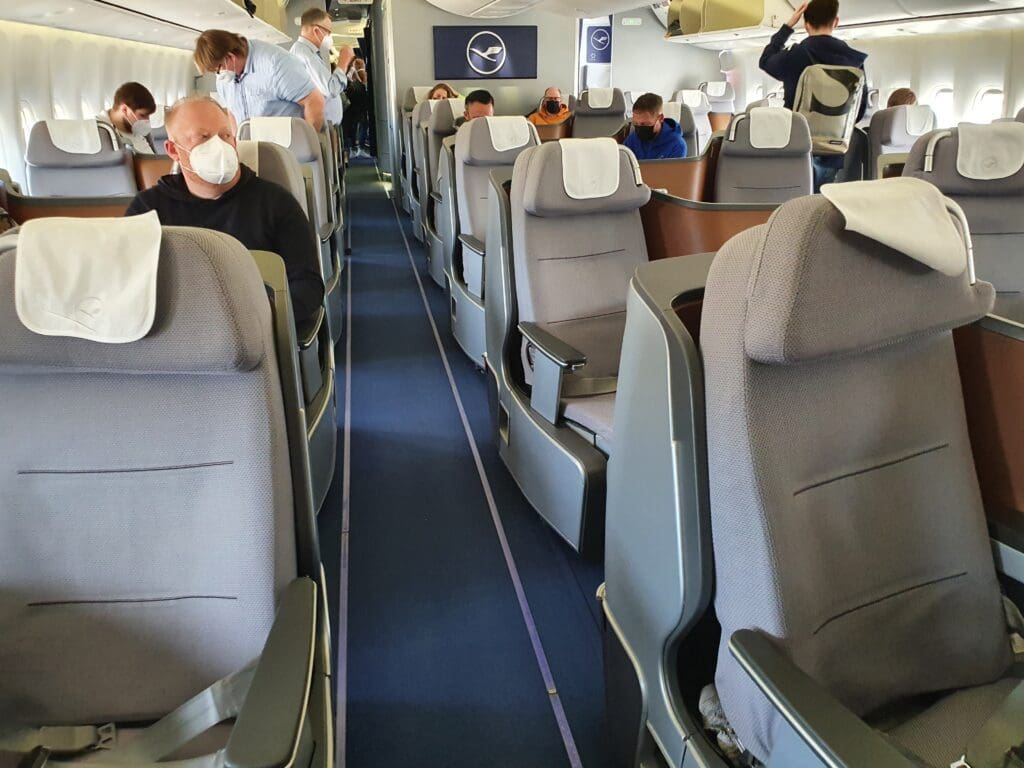
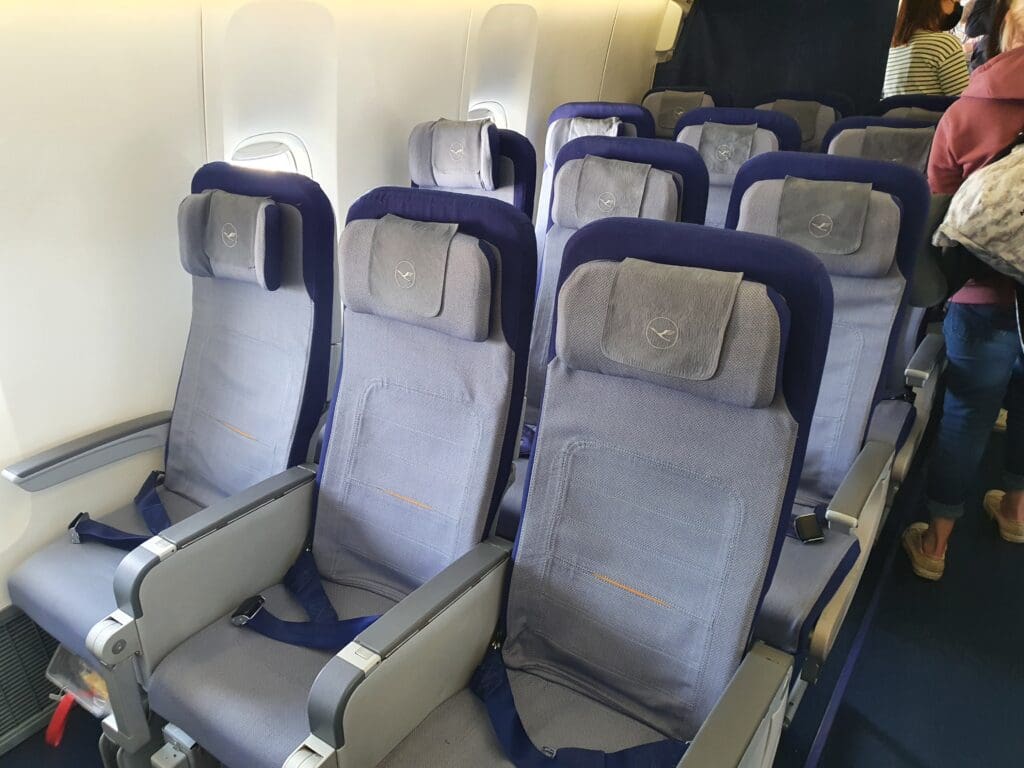
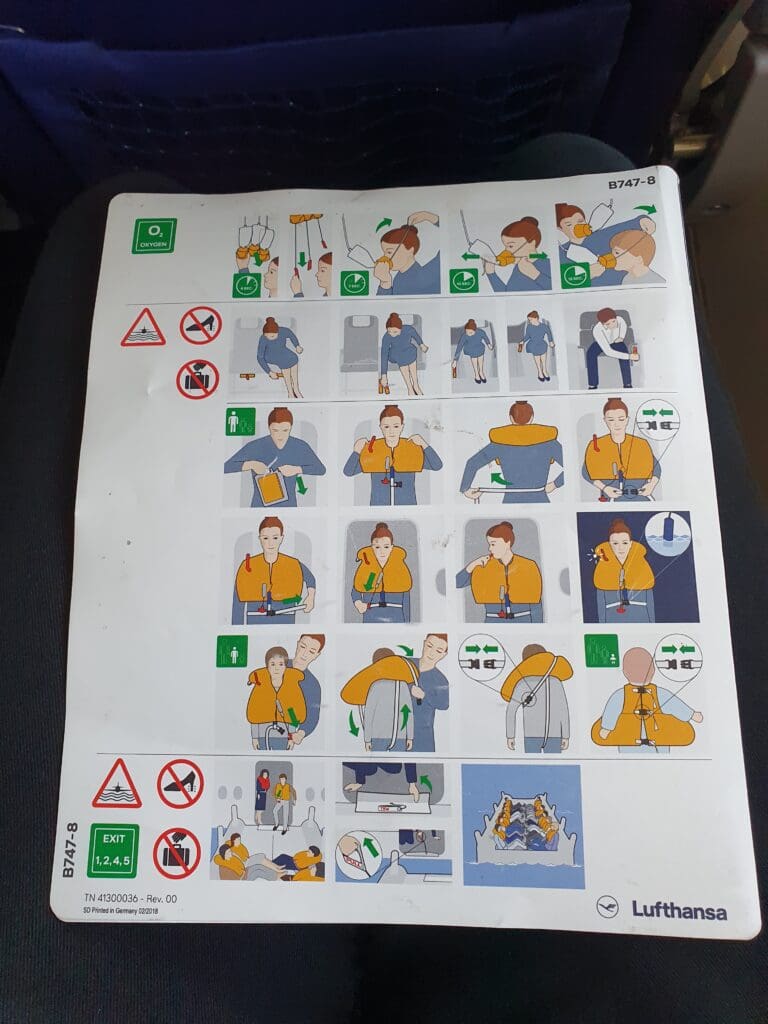
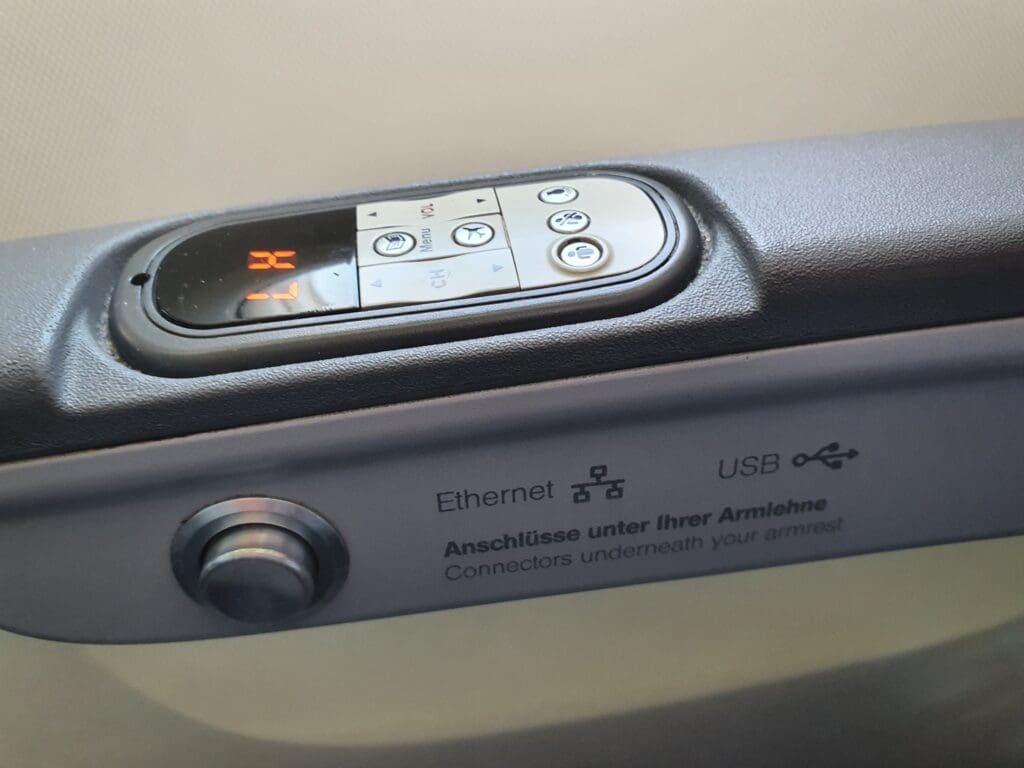
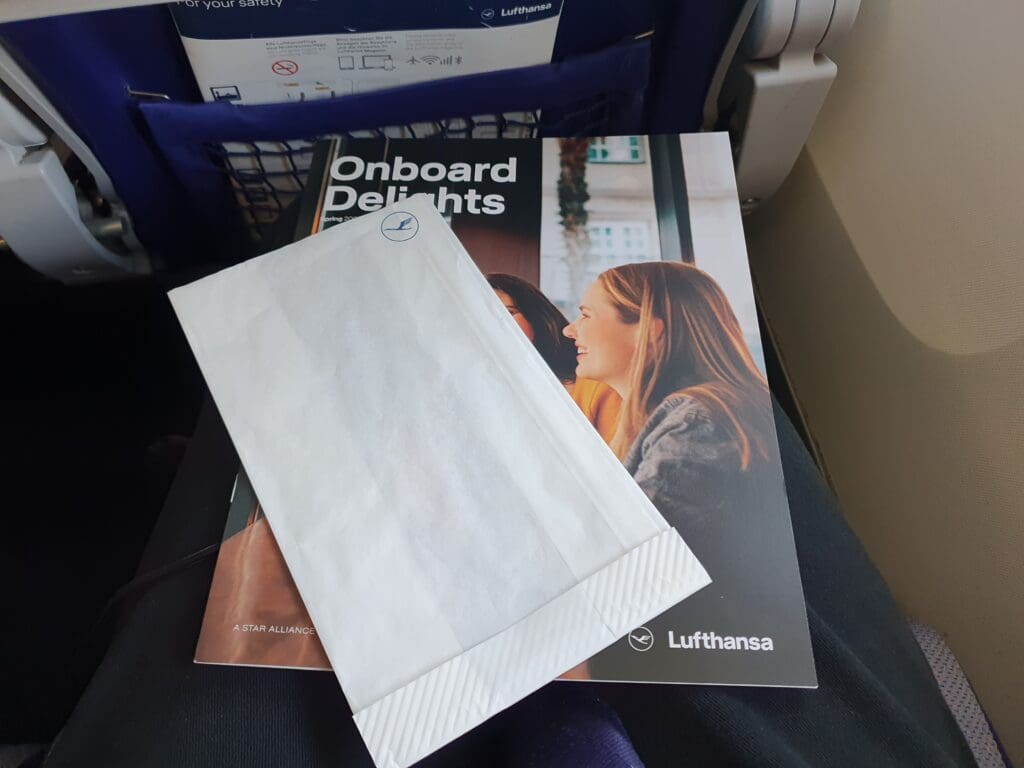
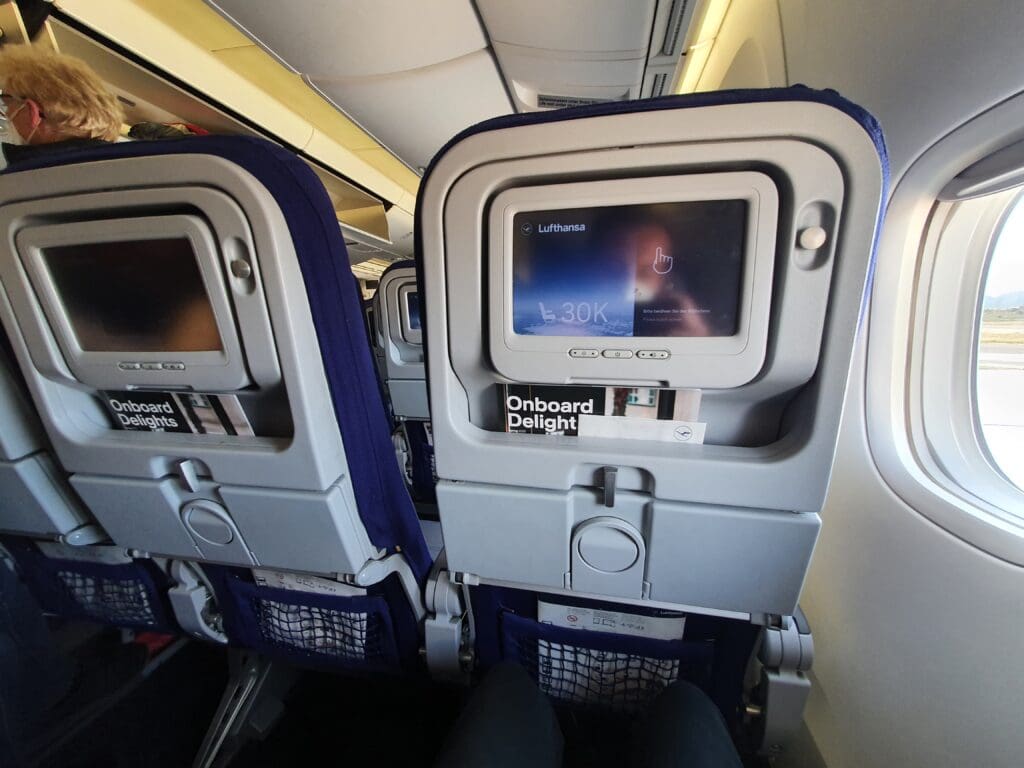
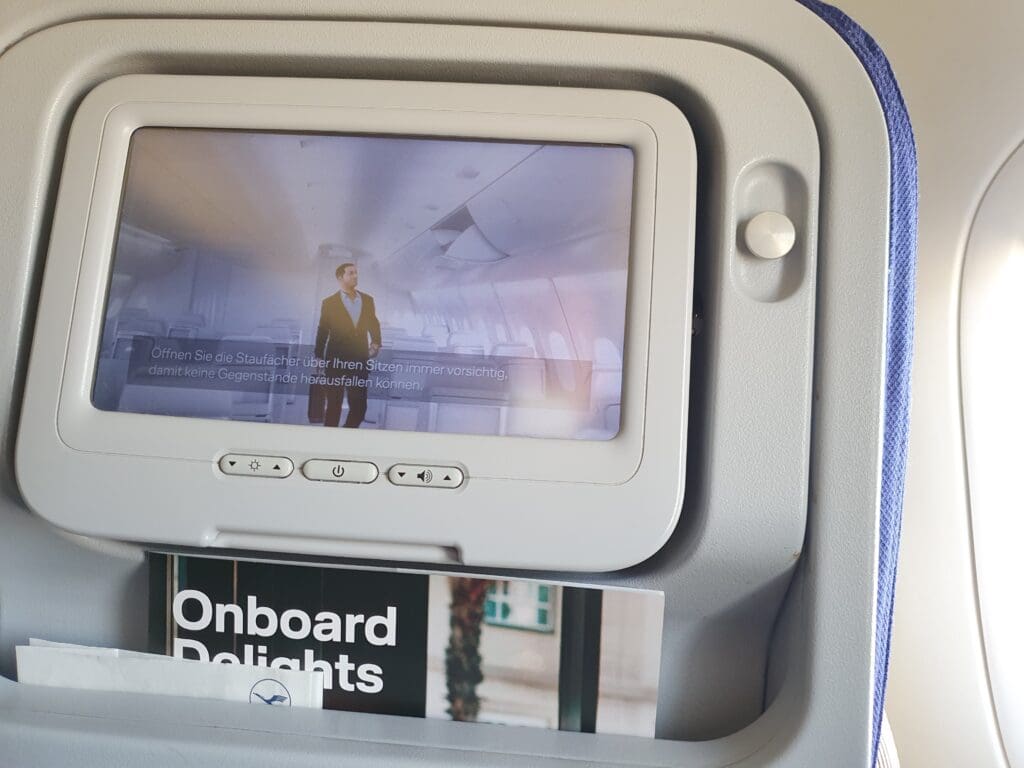
Lufthansa’s Boeing 747-8 aircraft feature a total of 80 Collins Diamond Parallel lie-flat Business Class seats, which are spread across three cabins. Making my way through the largest and smallest of these cabins, I had a quick gander at these, which are arranged in a 2-2-2 configuration and covered in grey fabric. Whilst I would not have complained about travelling up to Germany in these seats, more seasoned premium flyers may complain that these lack the same levels of luxury and privacy as those of many other airlines. Strangely, there is a small Economy cabin sandwiched in between Business Class and Premium Economy, and so next up was the 36-seat Economy cabin. There, 36 Recaro CL3810 seats could be seen in a 3-4-3 configuration, with this cabin making up 15% of the total Economy seats onboard. Each of these featured a grey and blue fabric cover and was topped with an adjustable headrest that was partially covered by a fabric antimacassar on which Lufthansa’s crane motif could be seen. Turning to the rear of these seats, these feature a slightly dated 9 inch-wide inflight entertainment screen, a literature compartment containing an Onboard Delights buy-on-board menu and a sickbag, and a seatback pocket containing a safety card. Finally, power sockets can be found beneath the seats with two provided for each bank of three seats, and a fixed entertainment system remote can be found in the armrest, with the reading light and cabin crew call buttons also located in this allowing for their easy misactivation.
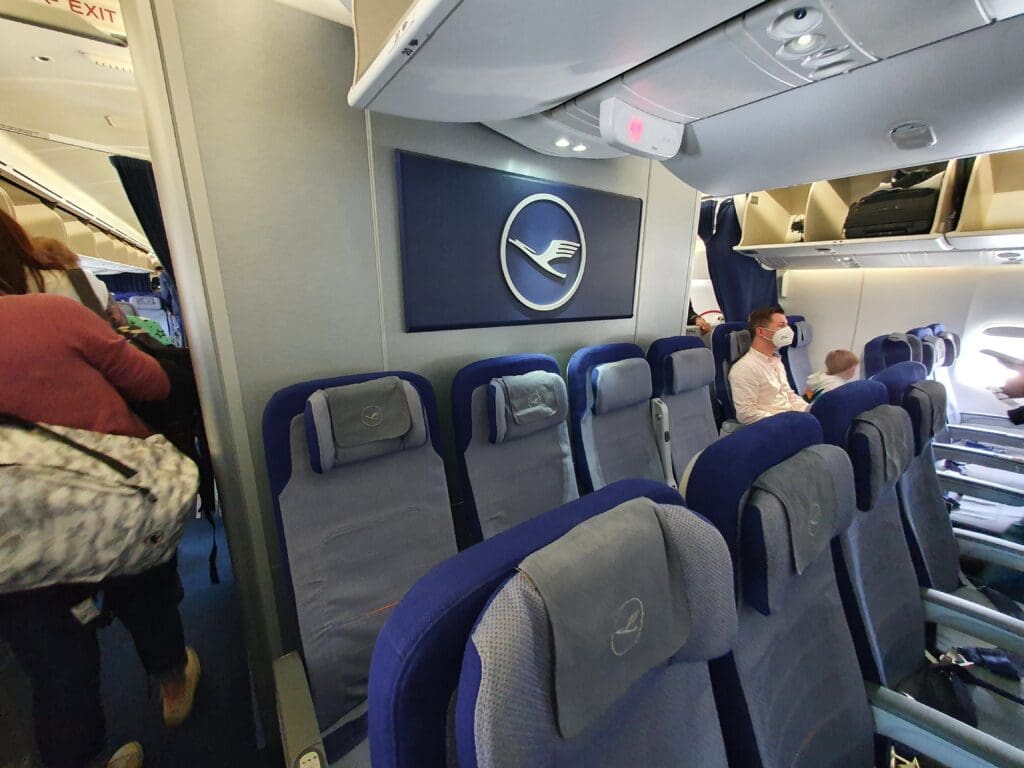
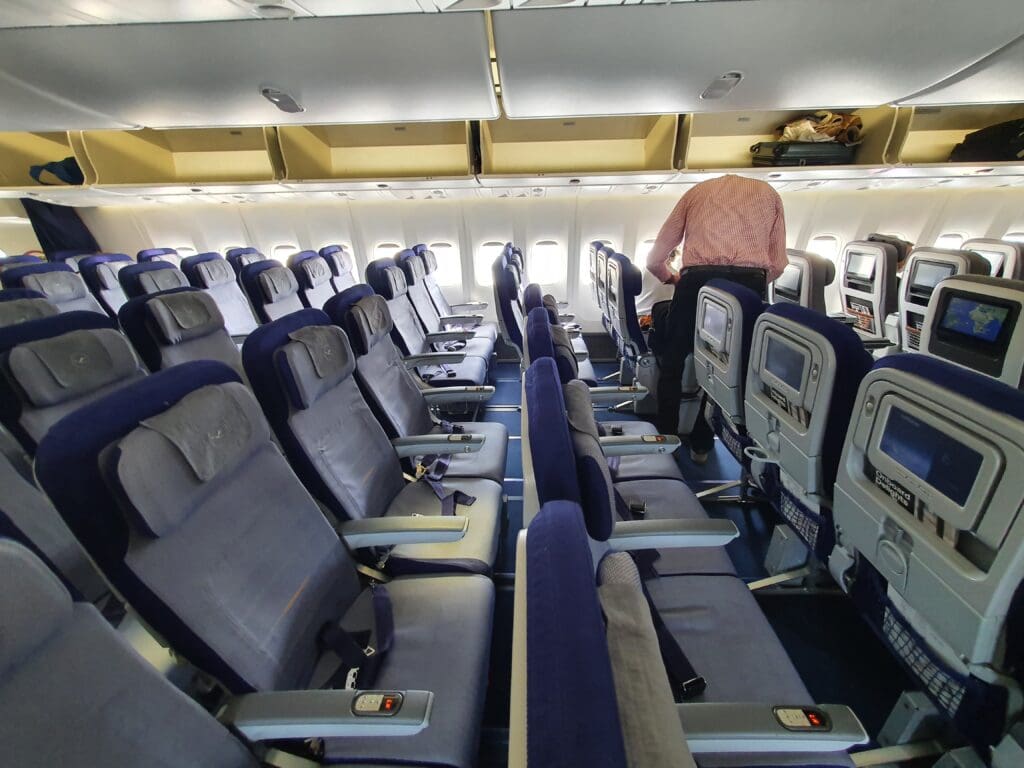
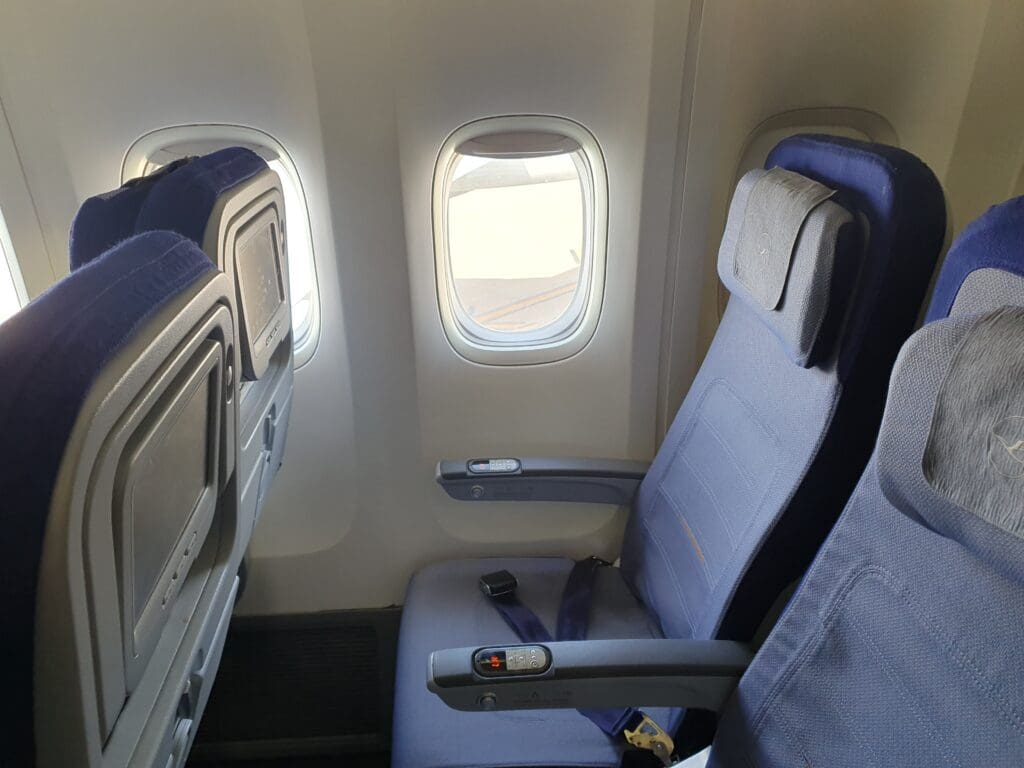
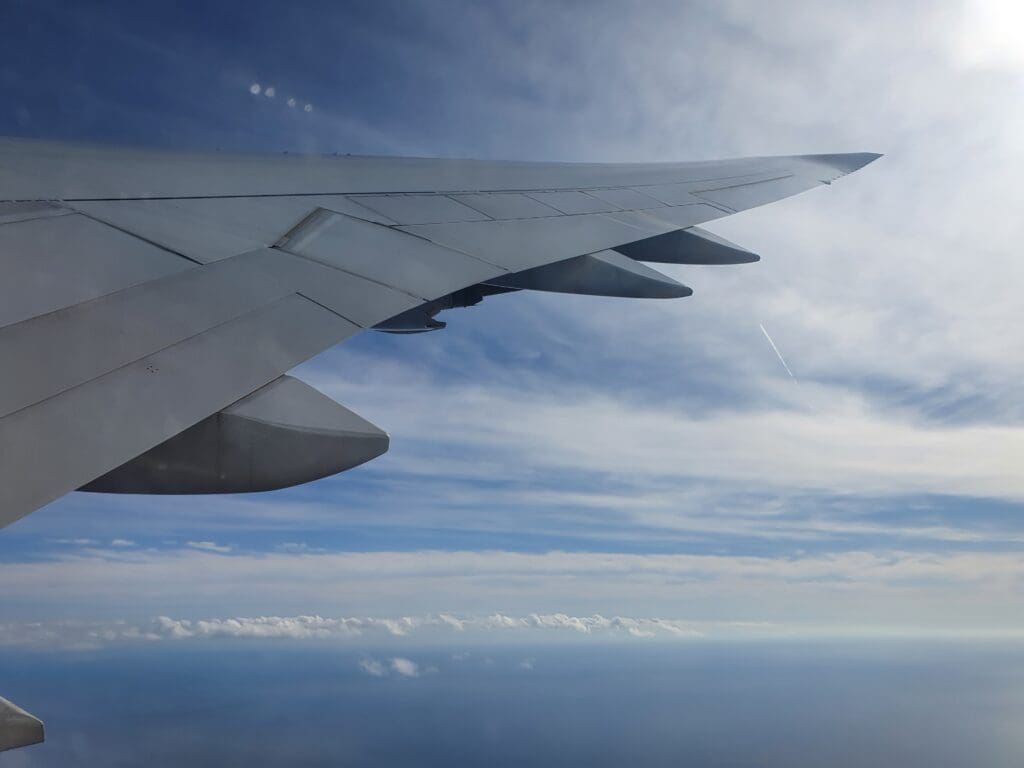
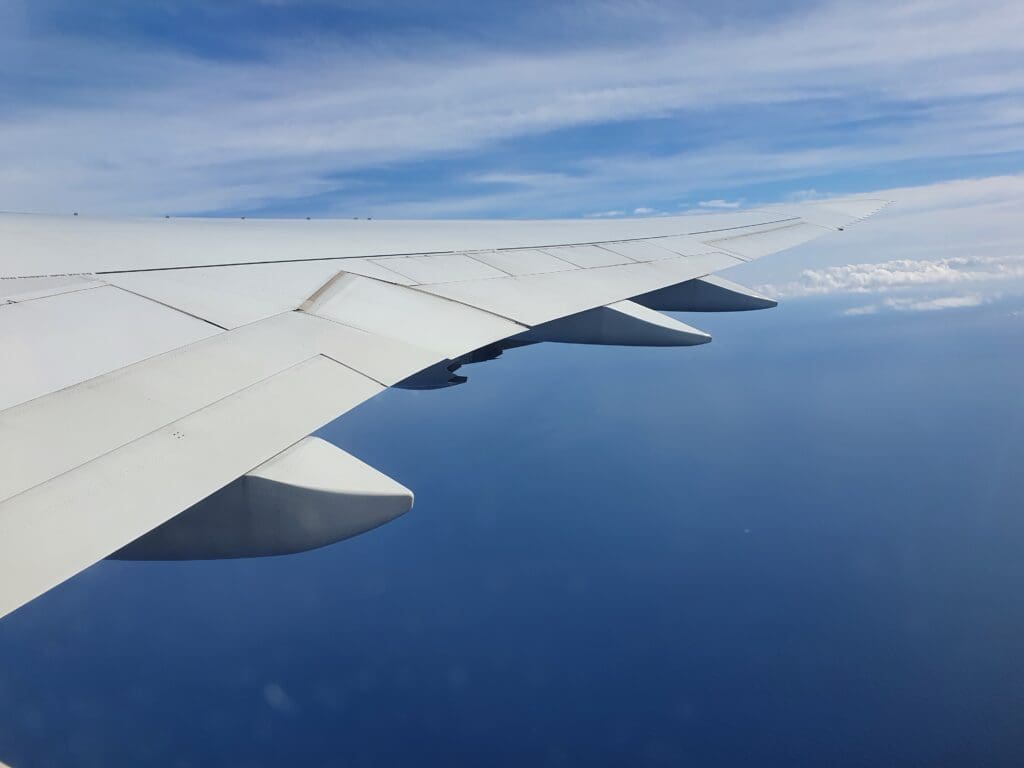
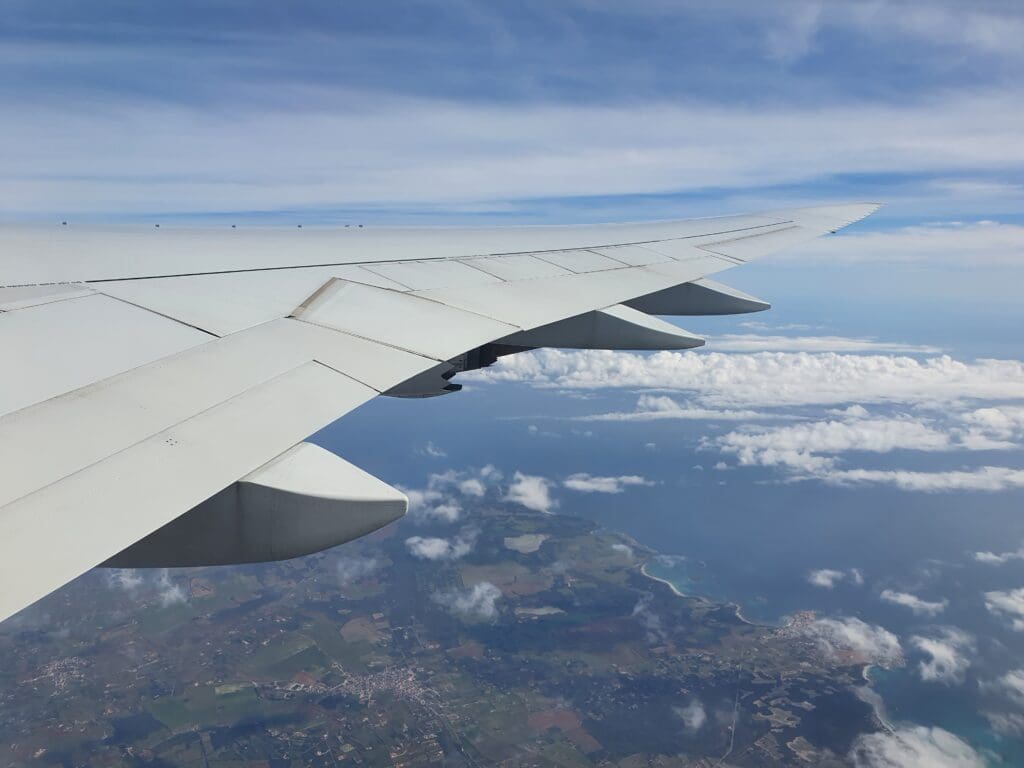
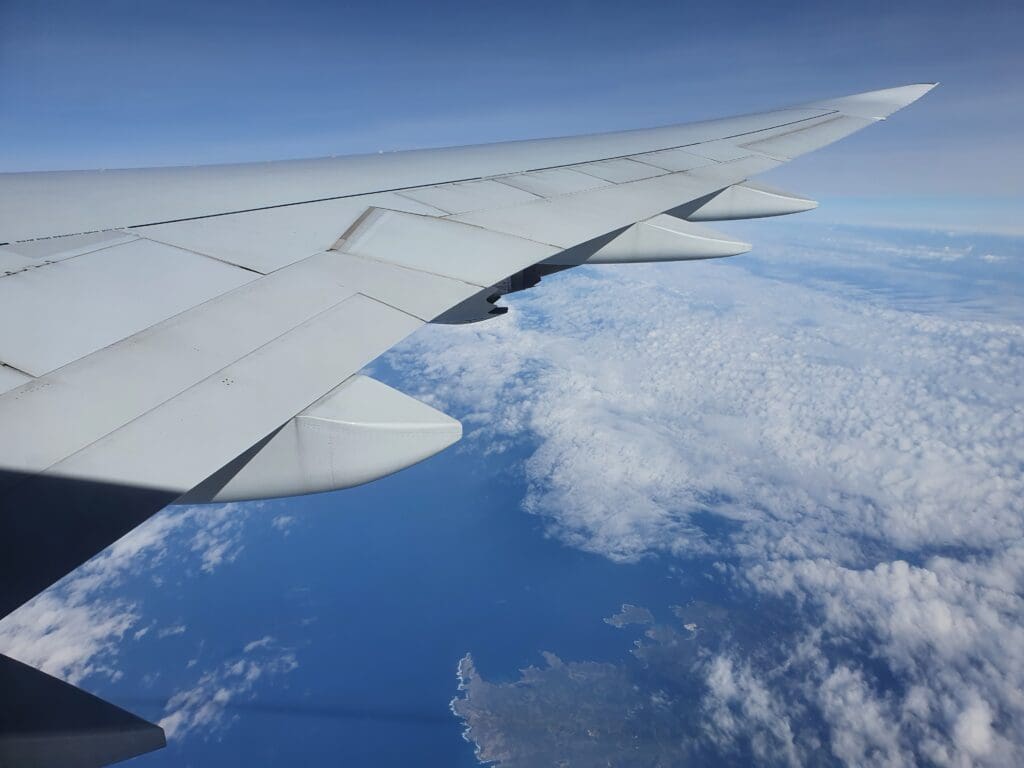
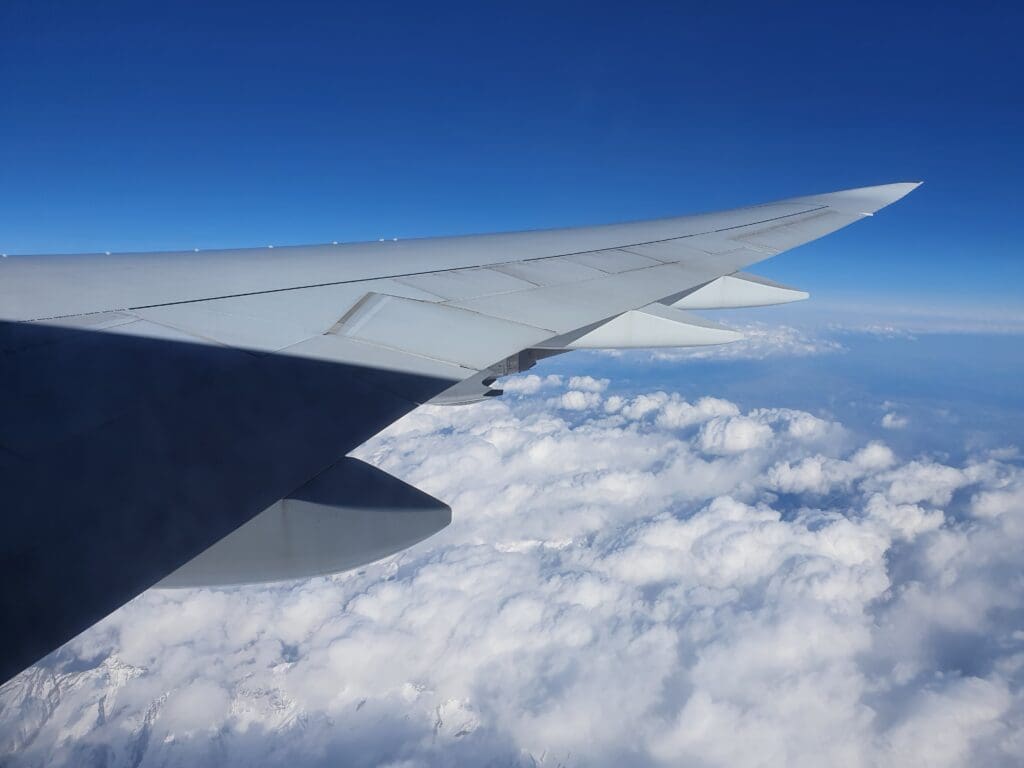
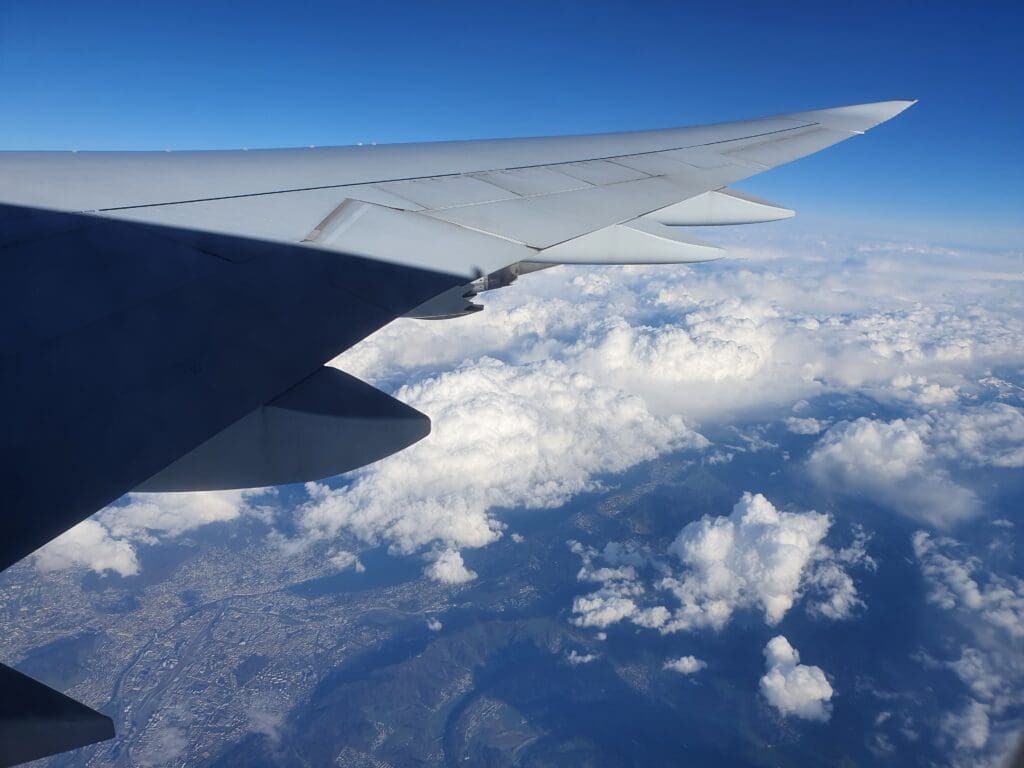
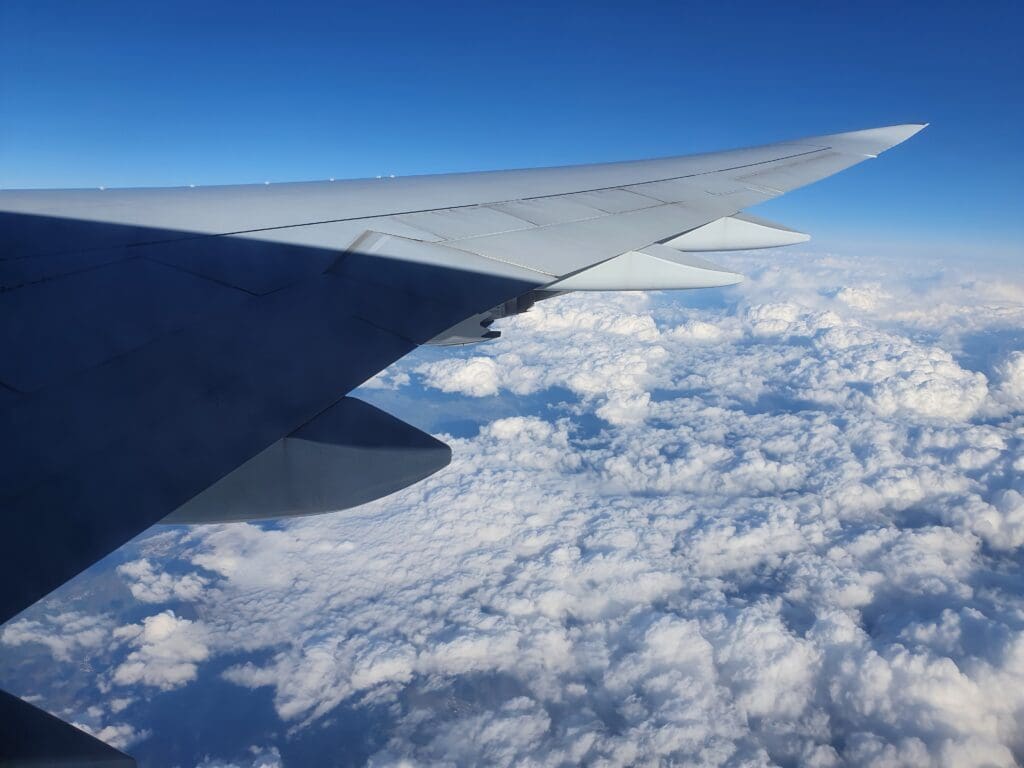
Returning to my journey down the aircraft, strangely this small Economy cabin and the other two larger Economy cabins are separated by the aircraft’s 32-seat Premium Economy cabin. After passing through the Premium Economy cabin, I arrived at row 30 almost immediately and made my way into Seat 30K. Much to my delight, this aligned well with the window and as I had hoped, offered a good view of both the wing and the world below. After dropping off my bag, I decided to go for a quick pre-flight visit to the lavatory, expecting that I would be blocked in for the duration of the flight. Heading to a lavatory at the rear of the aircraft, this appeared to be relatively clean and stocked with all the basics passengers would expect to find in an aircraft lavatory. Going against the flow of boarding passengers, it took a couple of minutes to return to my seat, by which time I had been joined by a passenger who took the aisle seat. Upon sitting down, I was pleased to find that the seat was soft and comfortable and provided a decent amount of legroom despite the presence of a pesky inflight entertainment box taking up some of my foot space. Other than a few marks and scratches, the area around my seat was free from any major signs of wear and tear, whilst this also appeared to be fairly clean although I did notice some well-ingrained dirt, particularly around the in-armrest remote.
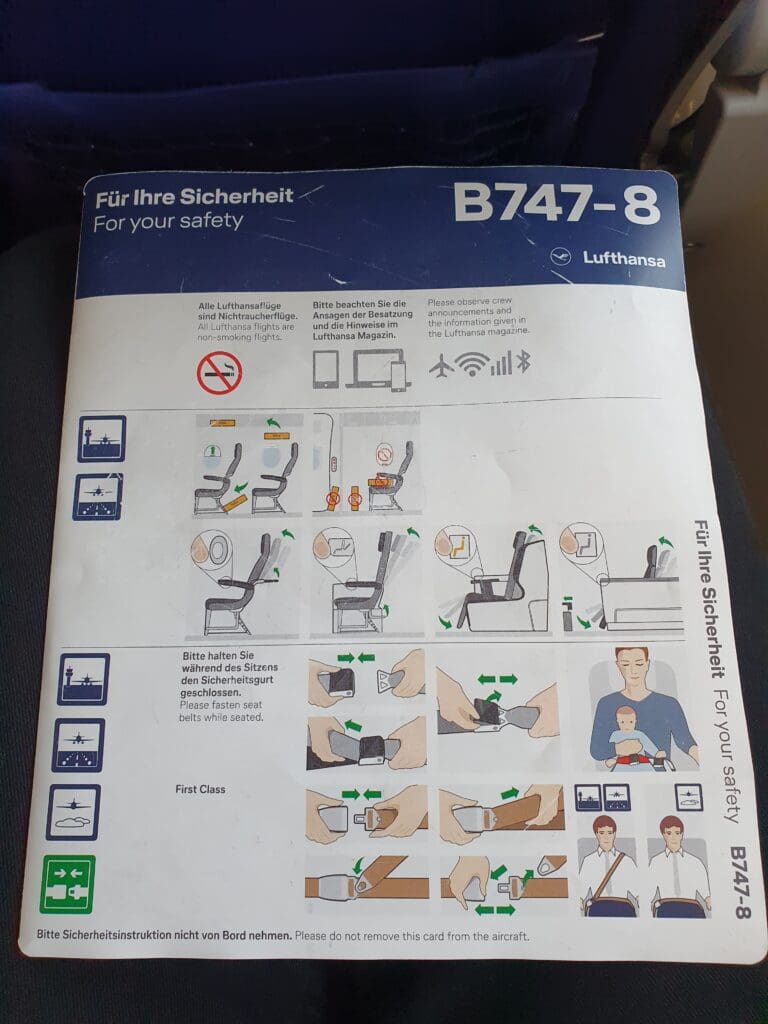
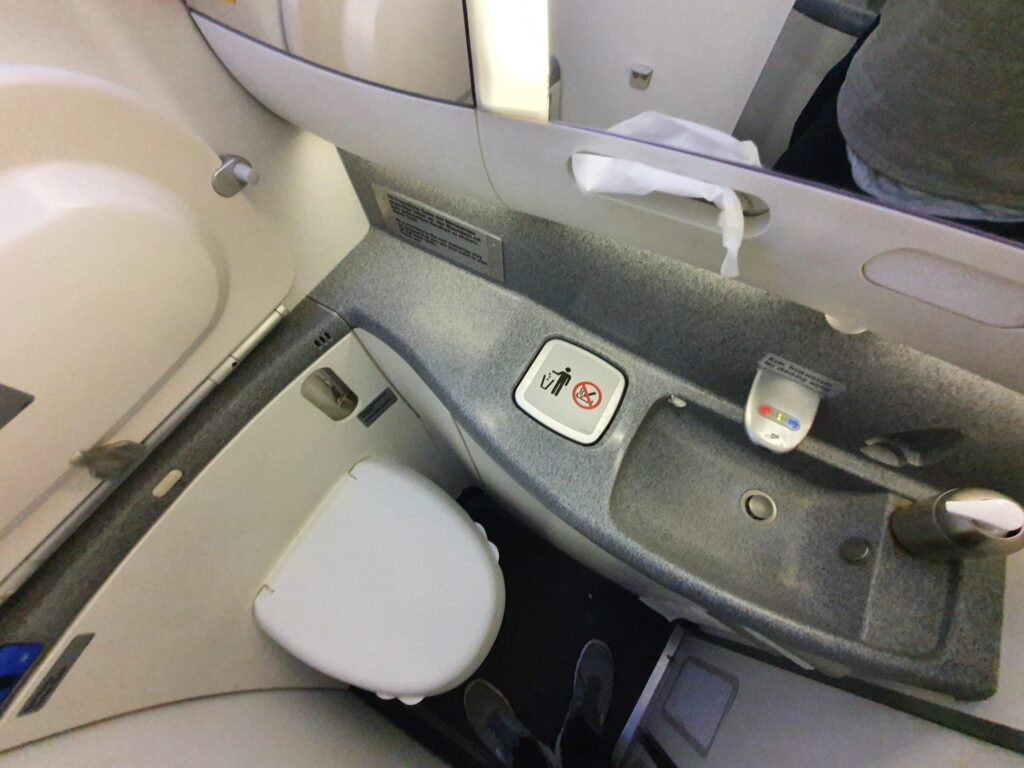
Whilst the Economy cabin had been fairly empty upon boarding, this soon filled up as calming music filled the cabin. After taking my seat, it did not take too long for all other passengers to join the aircraft, with boarding being announced as complete at 1635. However, as expected it did take a little longer for all passengers to take their seats and get settled. That afternoon, I would estimate the flight to have been around 70% full and fortunately, the middle seat remained vacant. As expected, the load that day consisted of plenty of families returning from their holidays, as well as a good number of aviation enthusiasts, many of whom had flown down from Munich on the Airbus A350 operated service.

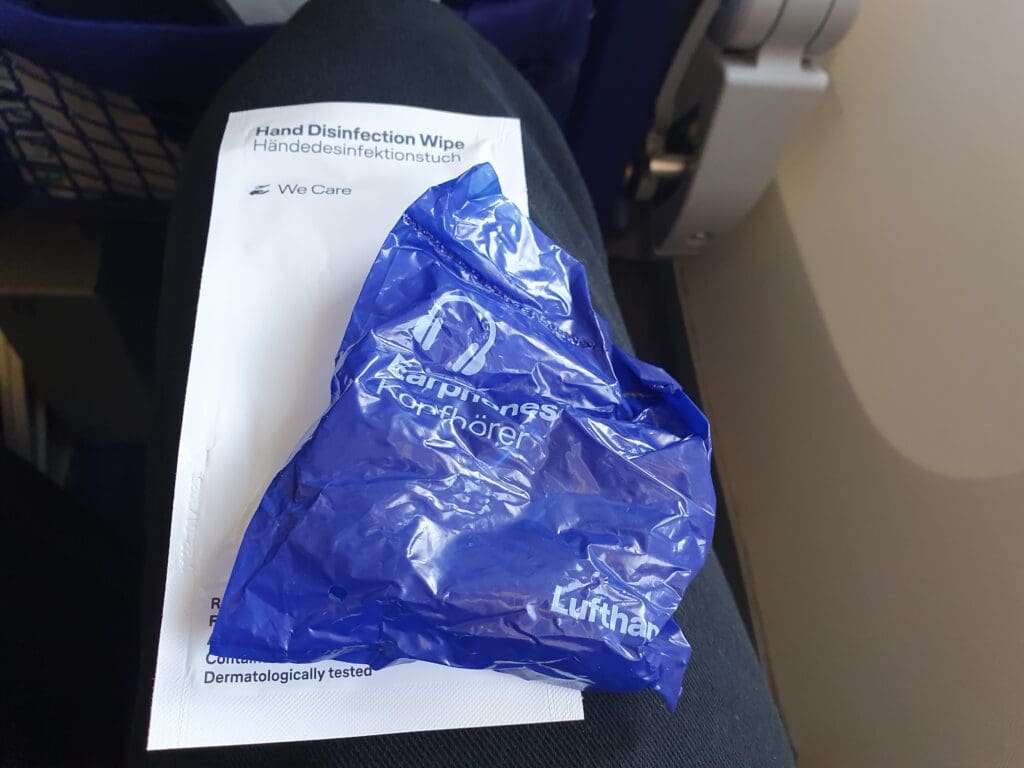
At 1640, the Captain’s voice filled the cabin as they undertook a long welcome announcement which was performed in German only. I did however manage to make out a word about this particular aircraft’s non-standard livery, as well as a comprehensive overview of the route up to Frankfurt that evening. This was then followed by an announcement in German and then in English with a notable Scottish accent from the Purser. Aside from the usual welcomes, thanks and brief safety messages, the Purser noted that the aircraft had arrived from Miami in the morning and would be heading to Sao Paulo that evening. As this was being made, the crew passed through the cabin handing out earbud-style packaged headphones and antibacterial wet wipes. At 1649, the aircraft could be felt being pushed back out of its parking position and one-by-one the Boeing’s four large GEnx-2B67 engines whirred into life resulting in a reasonable amount of noise and some vibration. As the aircraft was pushed back, Lufthansa’s long safety video featuring some rather haunting animated characters was broadcast first in German and then in English, with no Spanish version nor Spanish subtitles provided. During the safety video, the crew passed through the cabin ensuring that all was secure in preparation for our departure from Palma.
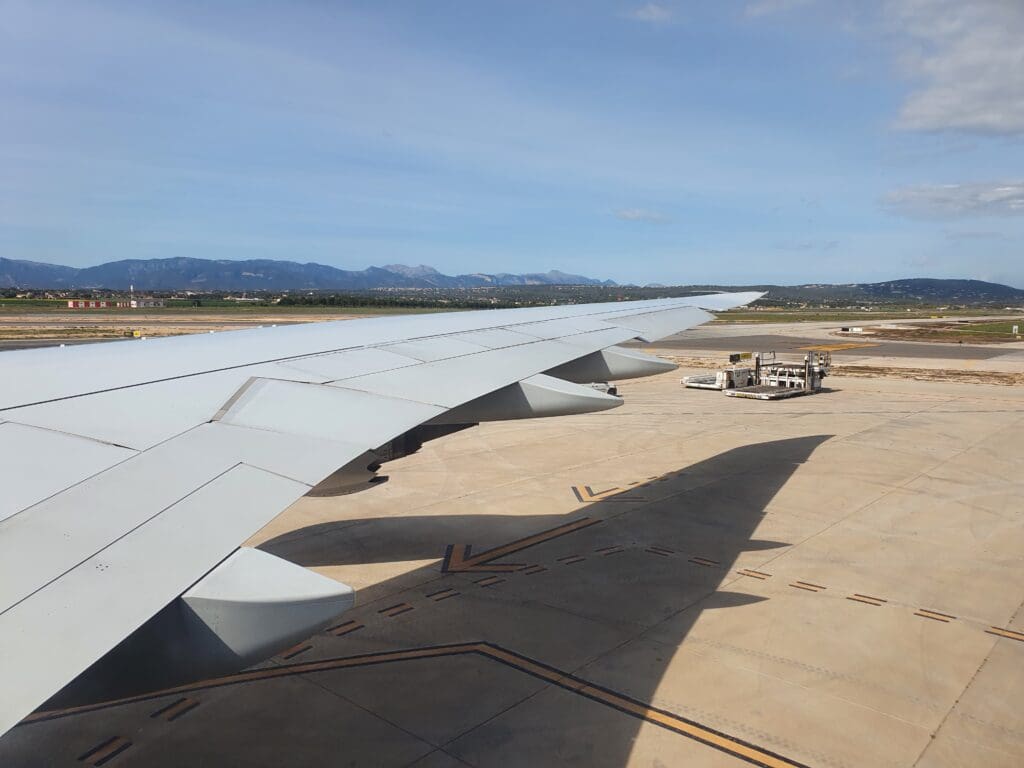
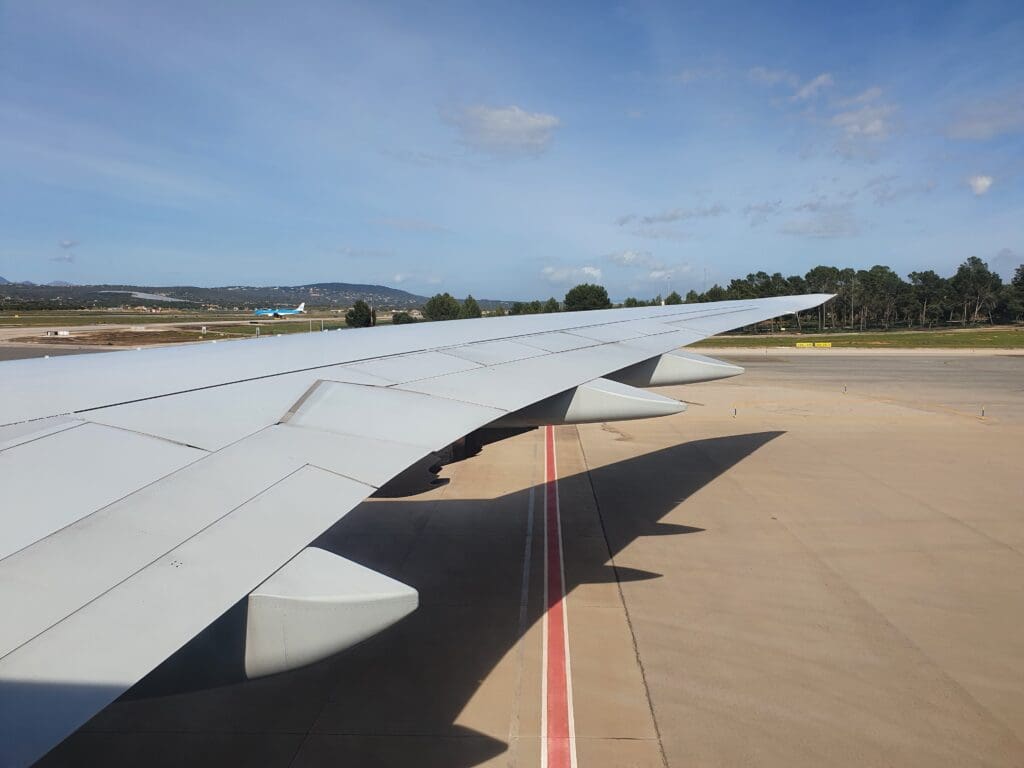
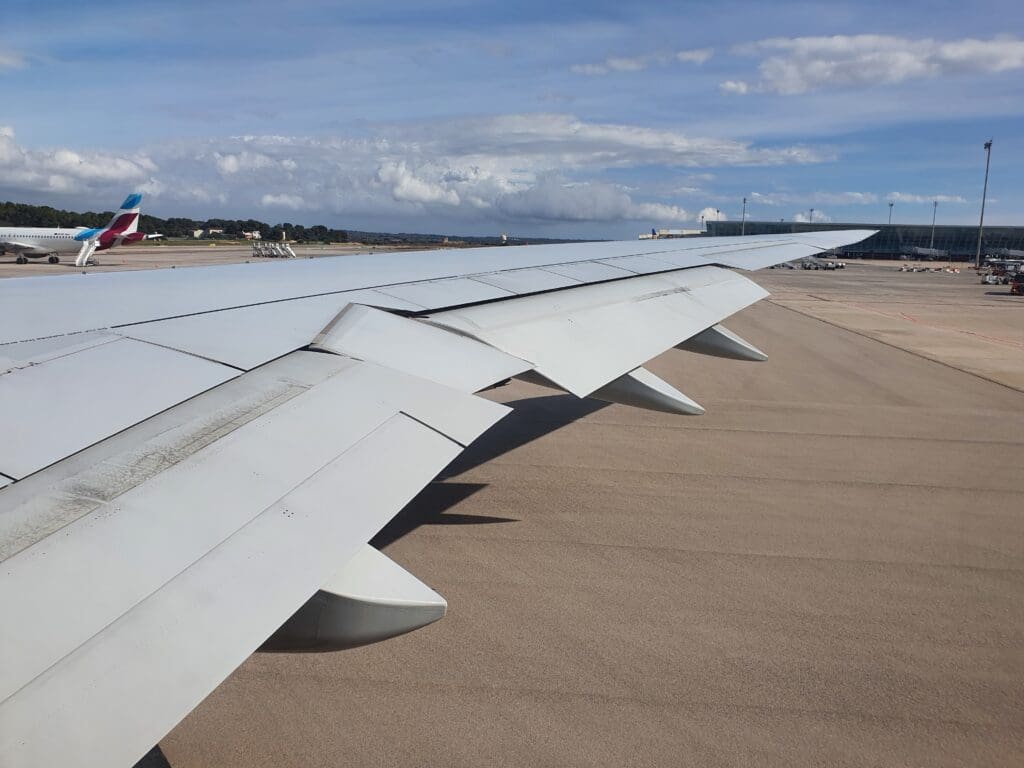
At 1700, the Boeing 747 cautiously powered forward under its own steam and made the short taxi over to the end of Runway 24R. Once away from the terminal, this took the aircraft past Palma de Mallorca Airport’s small military area where the open doors of one hangar revealed a locally based AgustaWestland AW139 search and rescue helicopter. This was then followed by the sight of a decaying Convair CV-990 once operated by the long-gone holiday airline Spantax before the aircraft turned left and entered Runway 24R.
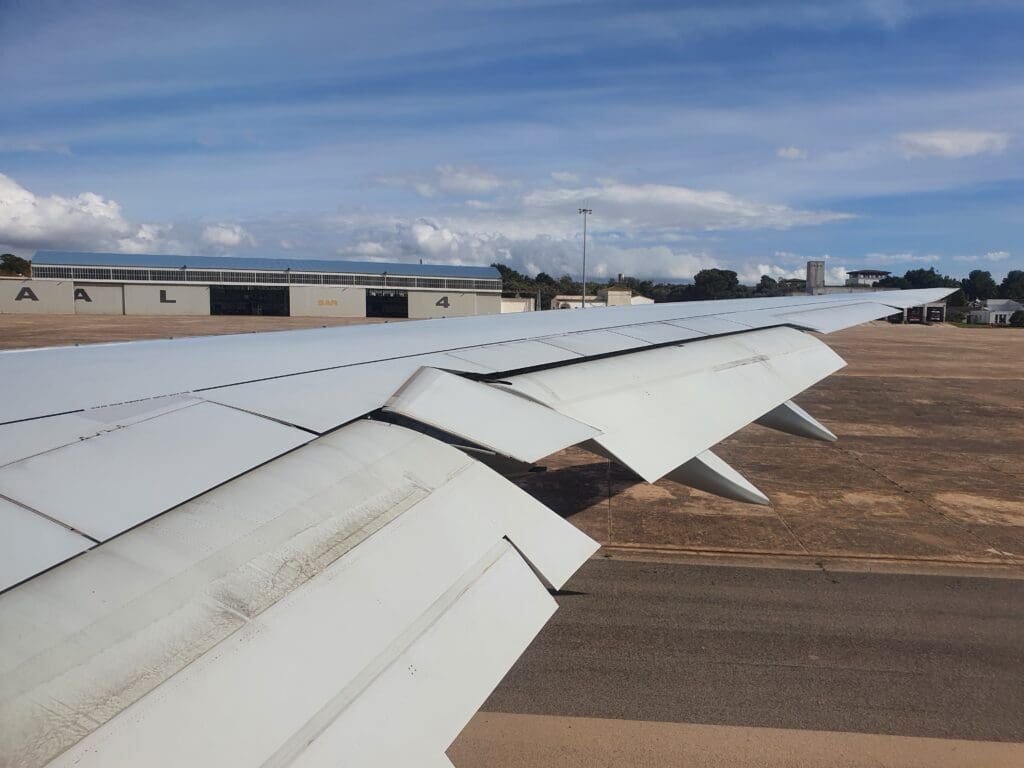
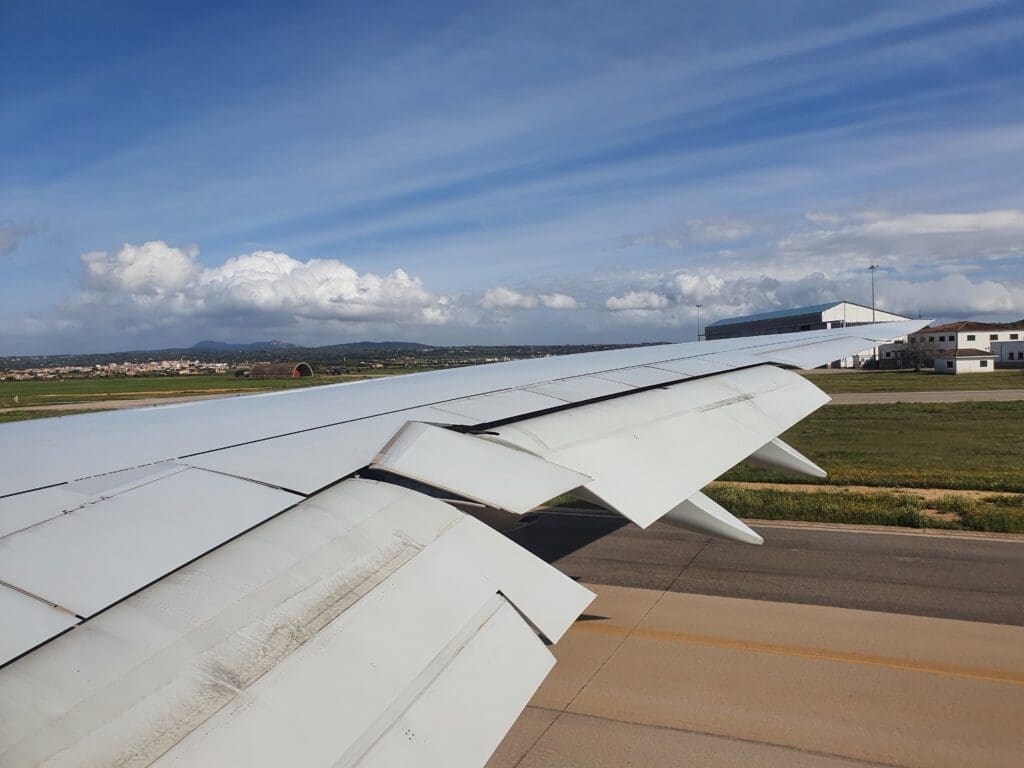
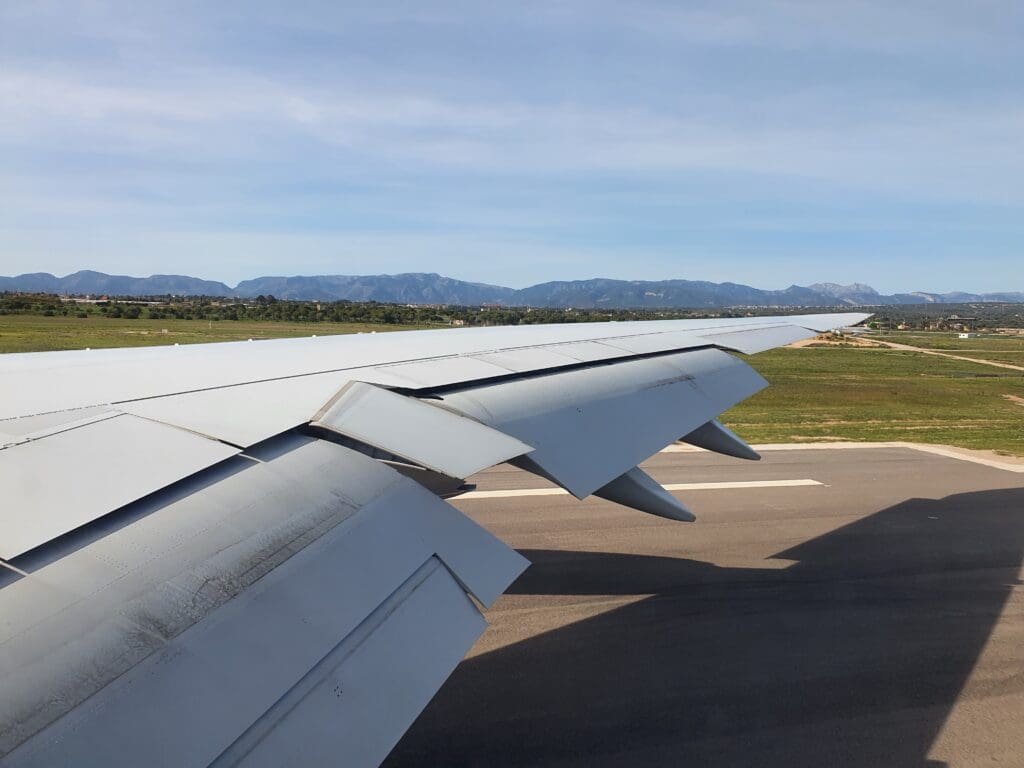
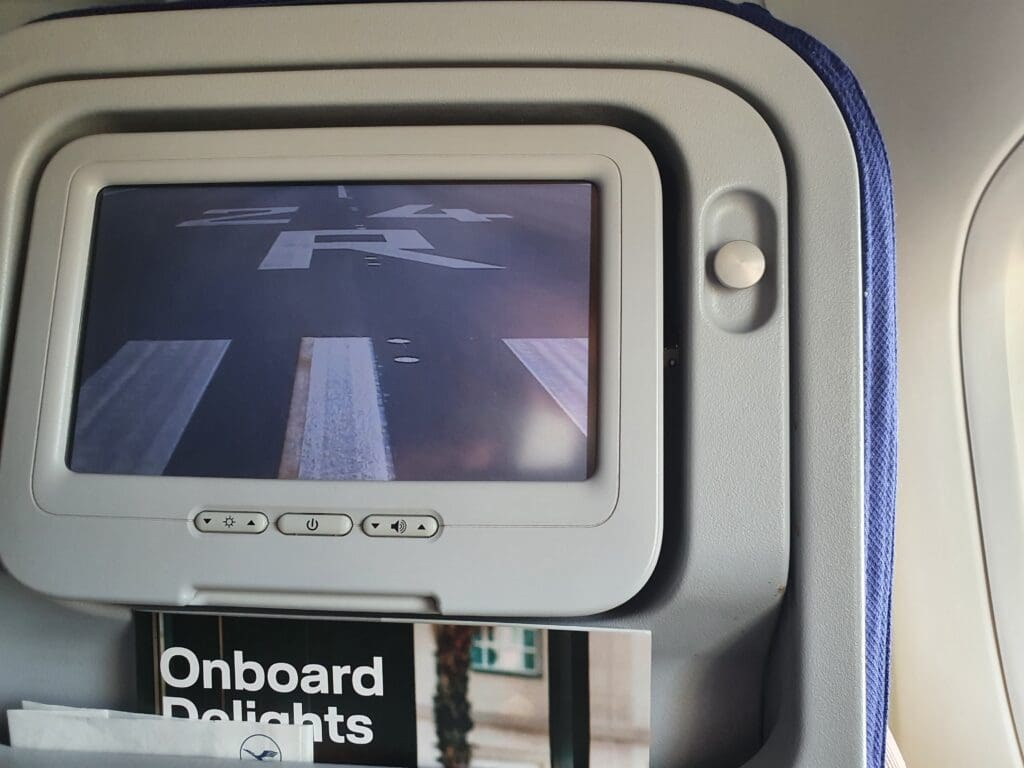
Once on the runway, the jumbo jet came to a halt to allow for an Ibiza-bound Air Nostrum Bombardier CRJ-1000 to shoot upwards into the skies at the start of its very short intra-Balearic flight. Once the jumbo jet’s take-off clearance was received, at 1605, the four GEnx engines powered up and the Boeing performed what seemed to be a fairly gentle take-off roll. As the aircraft picked up speed, various farms as well as typical Mallorcan water extraction windmills could be seen before the aircraft rotated upwards into the sunny Spanish skies. Once in the air, a worrying amount of shuddering could be felt for around five seconds as the aircraft left the runway behind and flew past the town of Gentilicio where I had spent the night before making its way over the blue waters of the Bay of Palma.
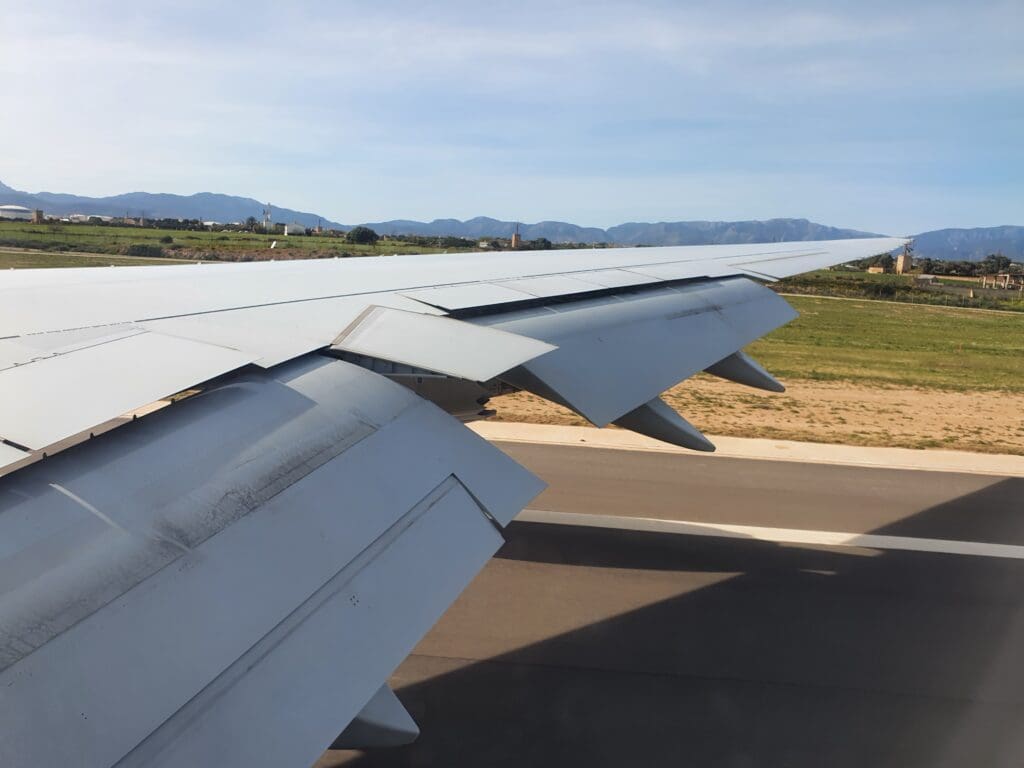
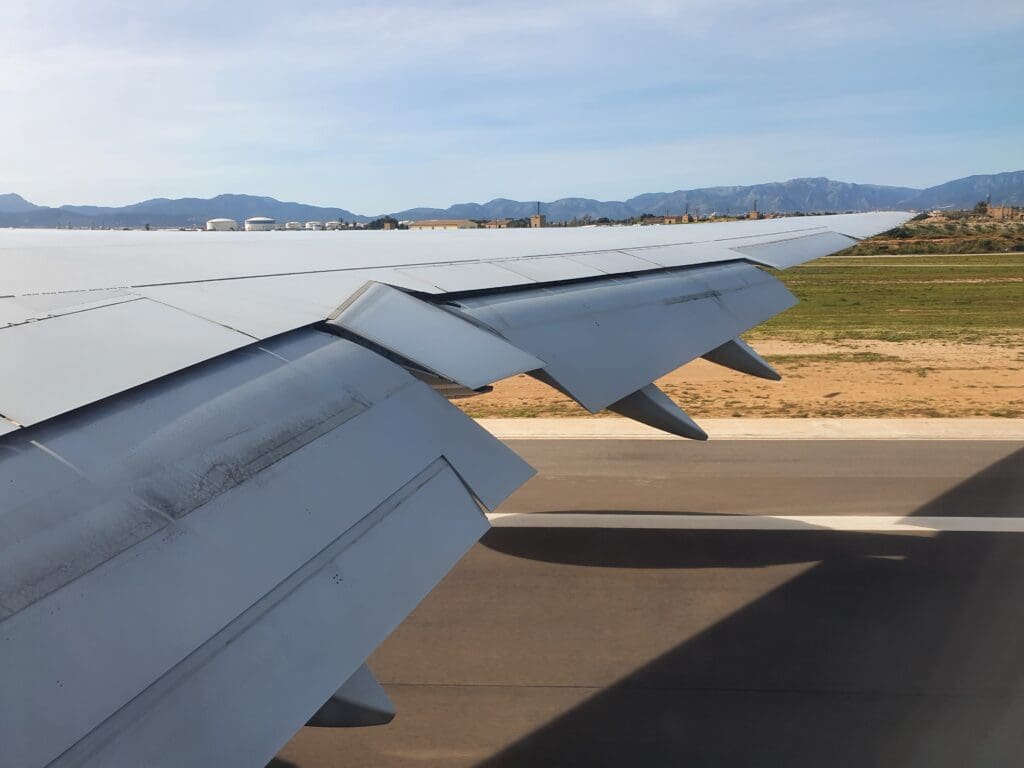
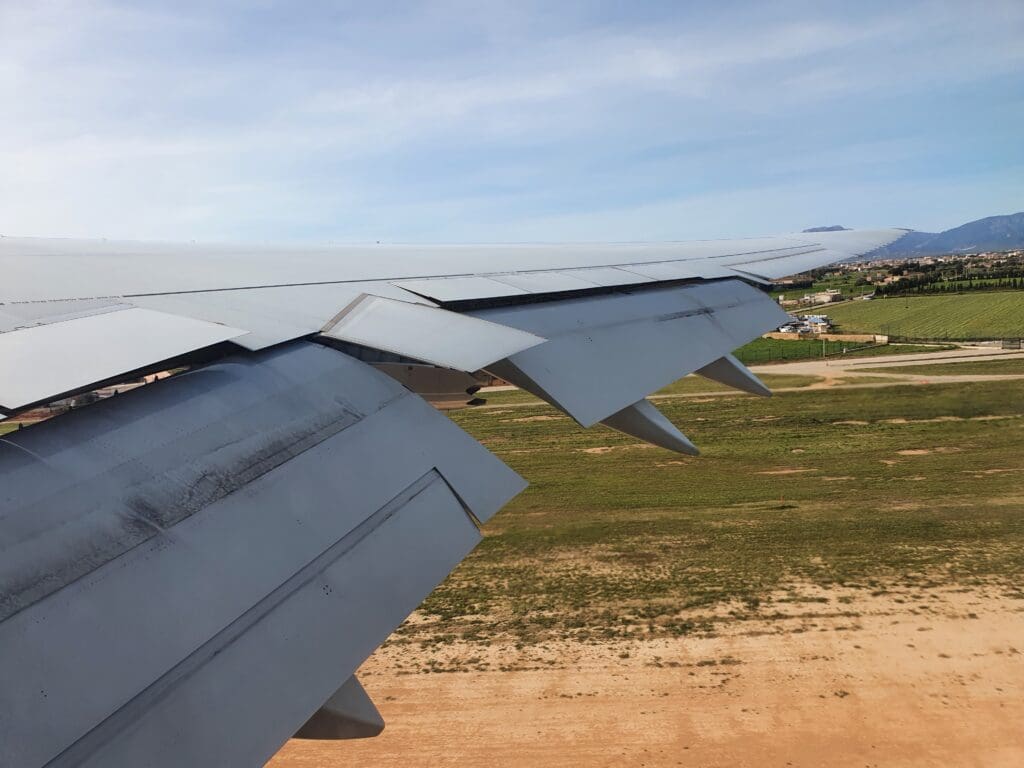
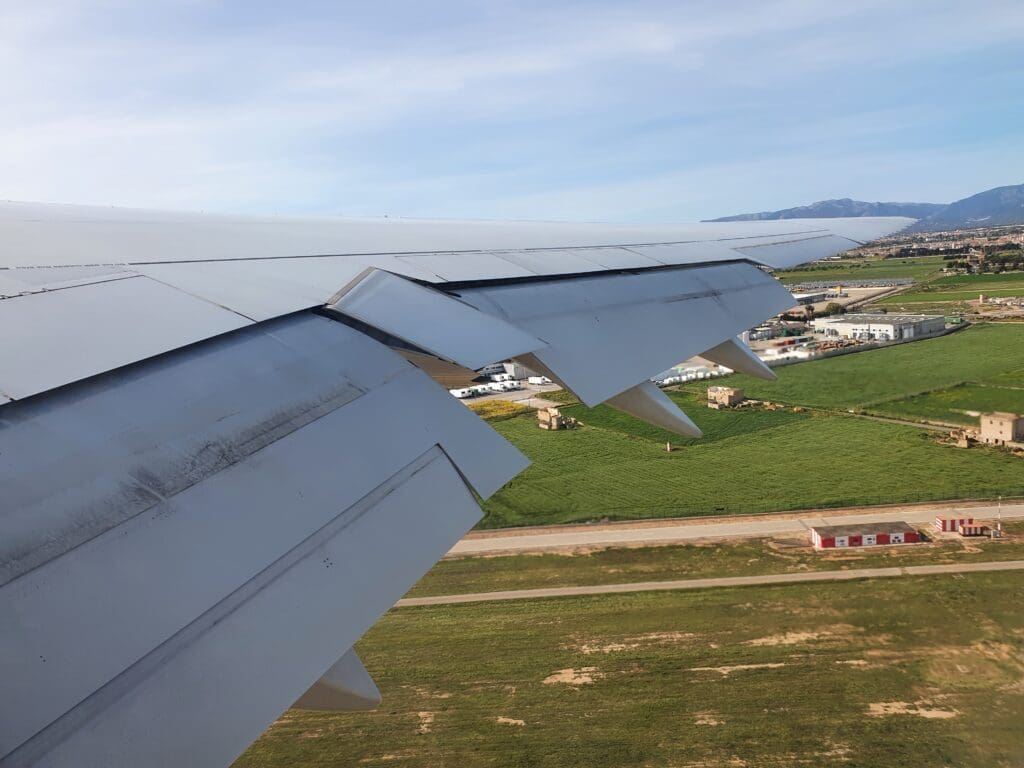
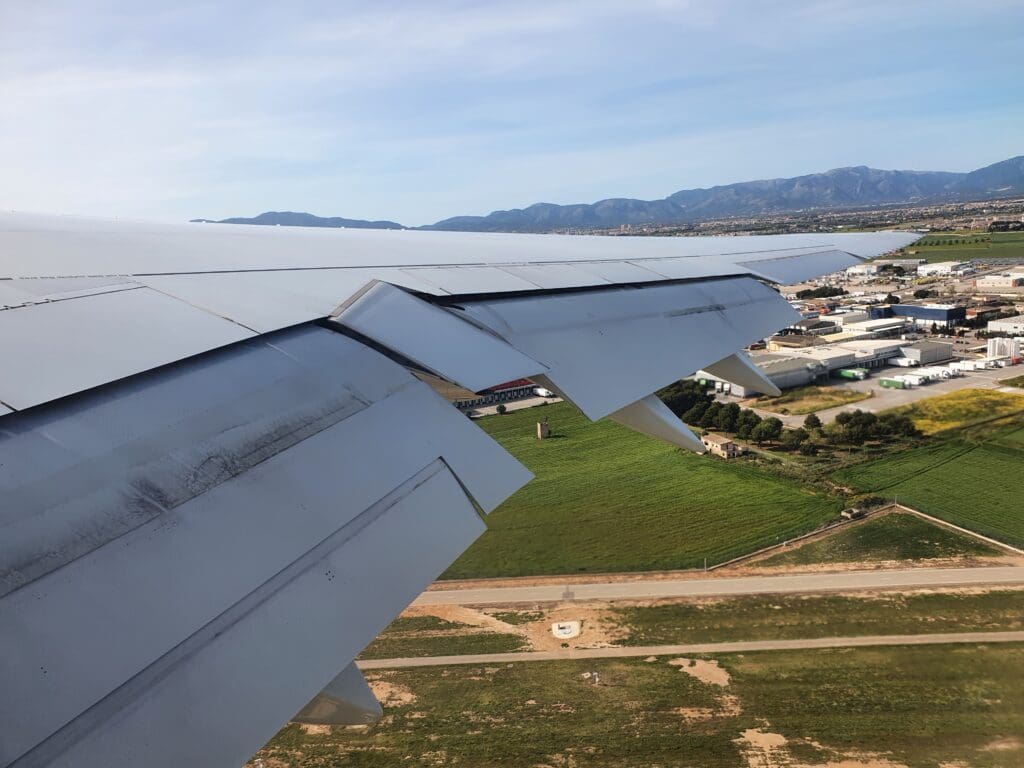
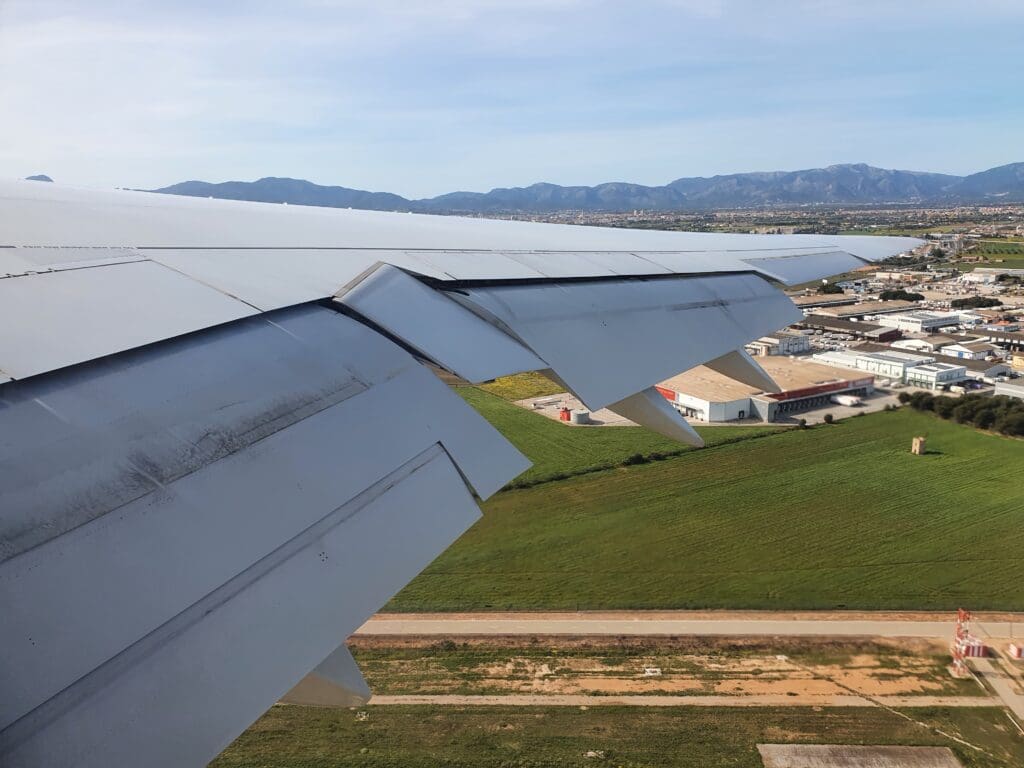
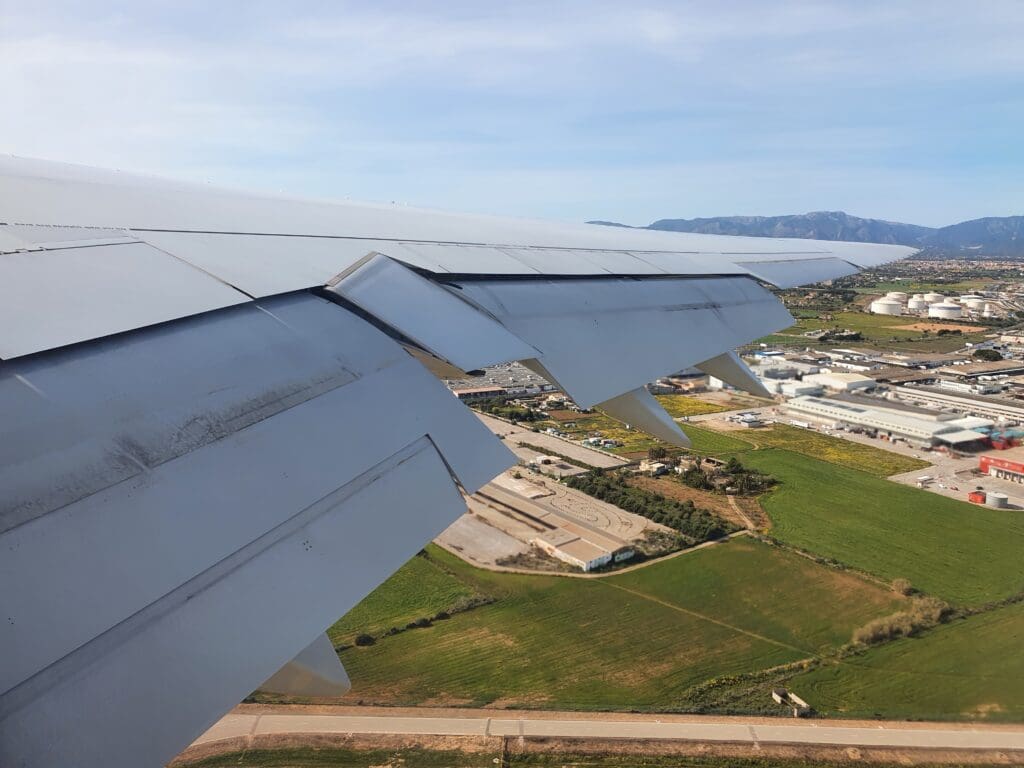
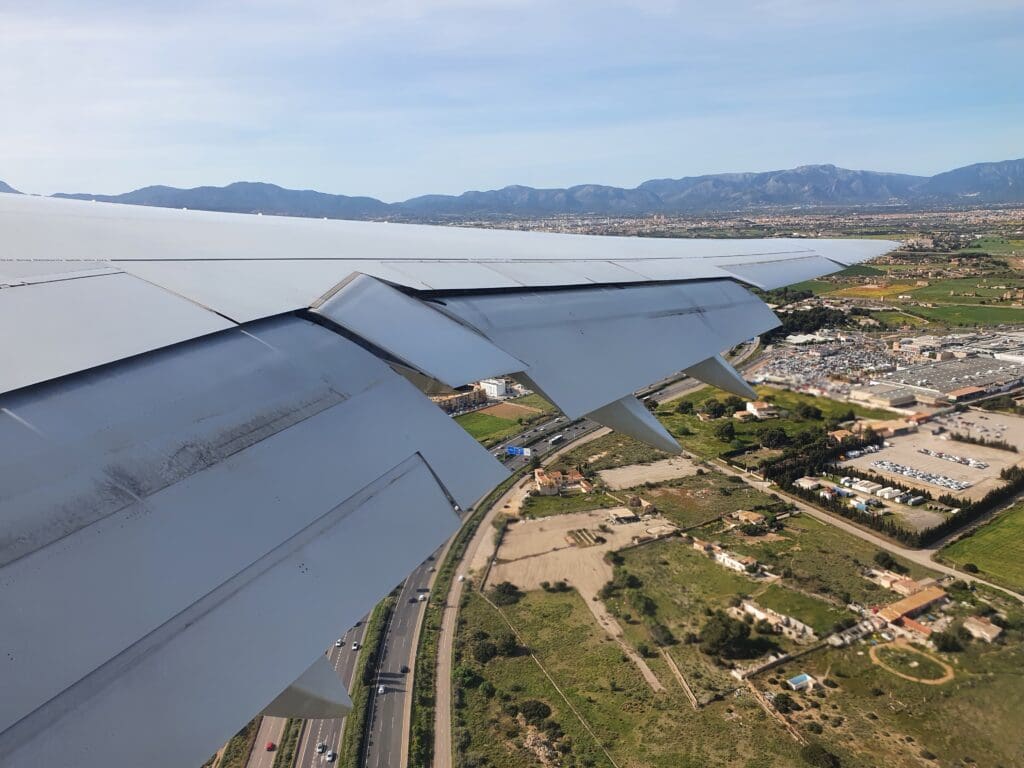
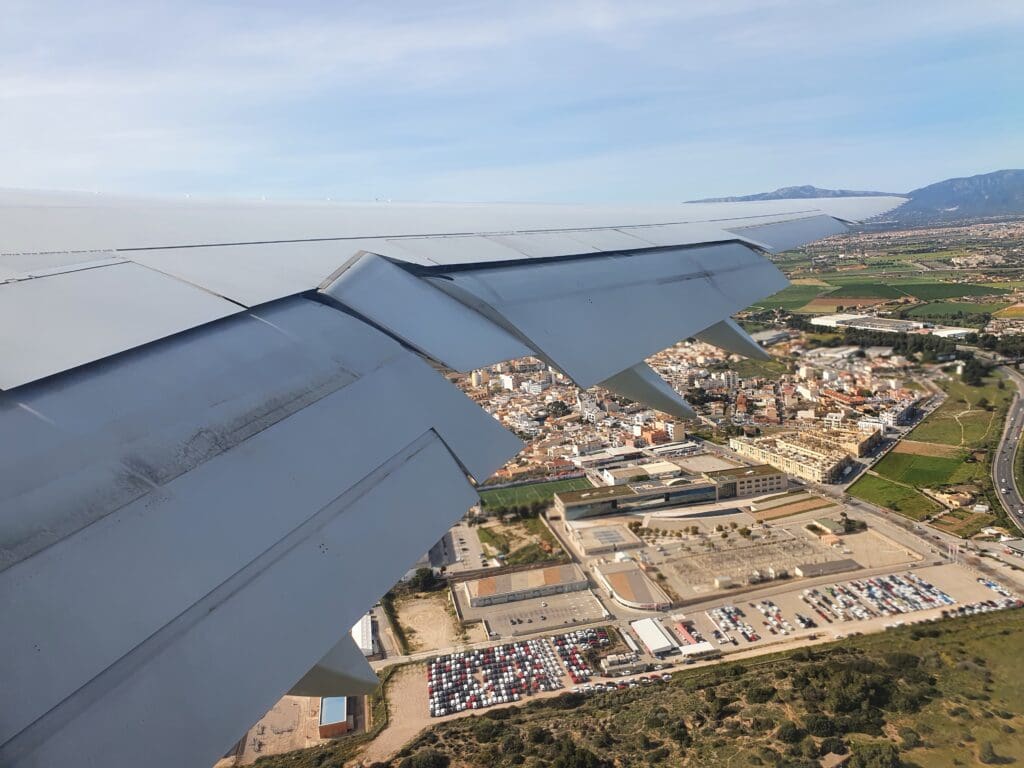
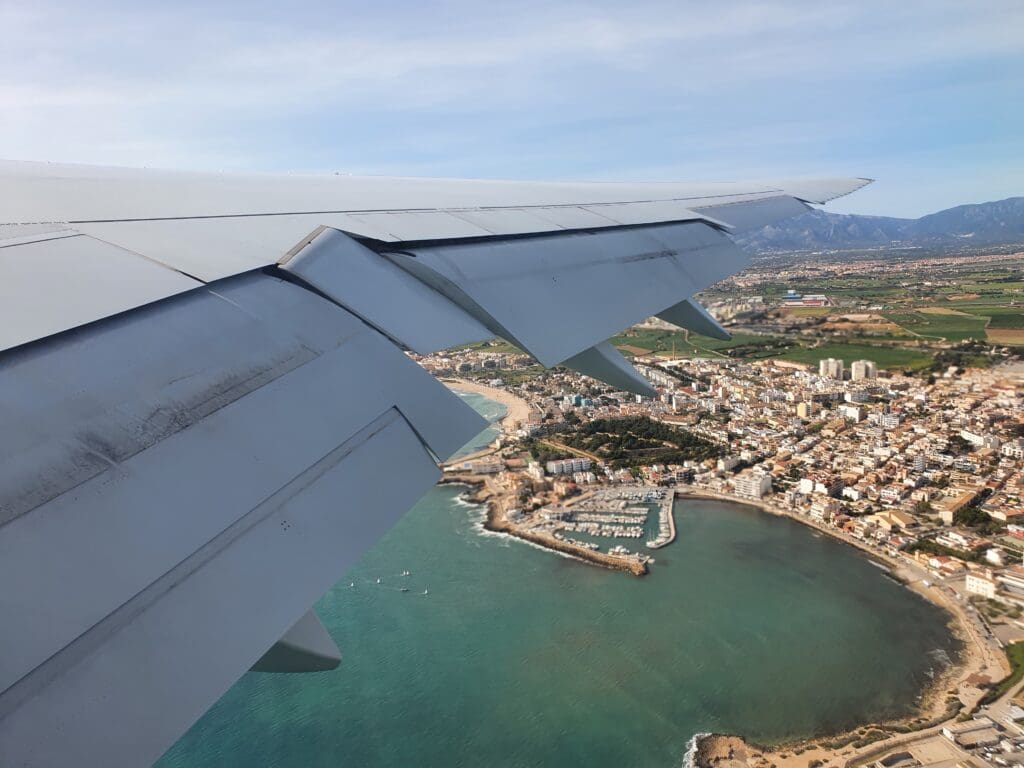
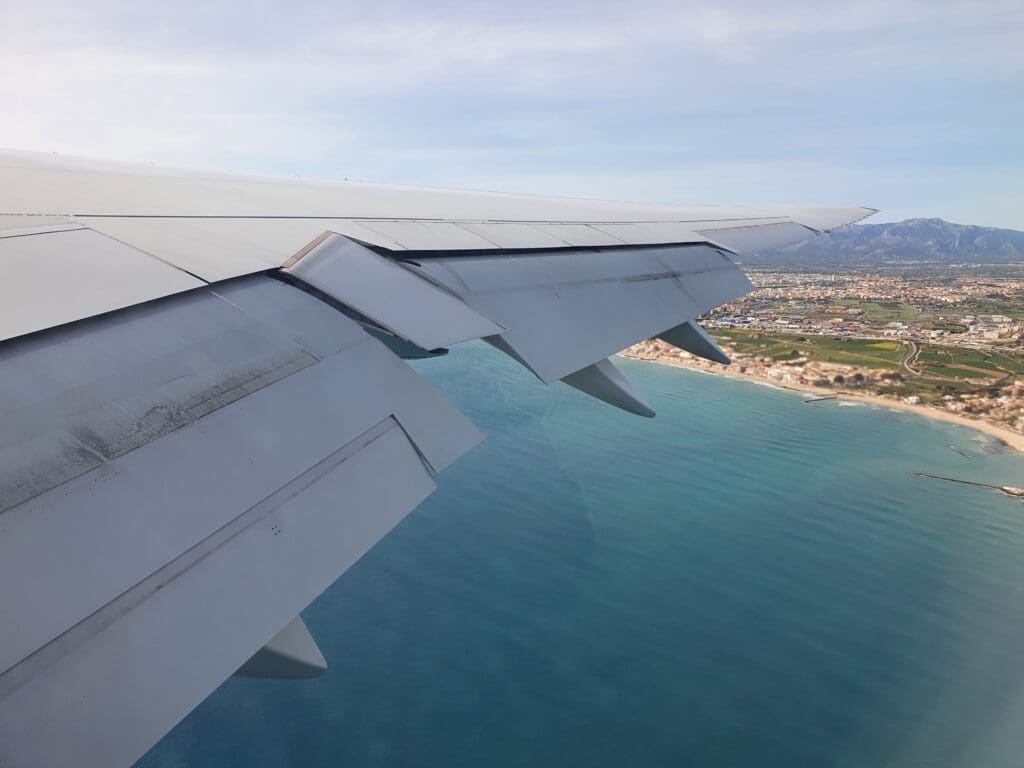
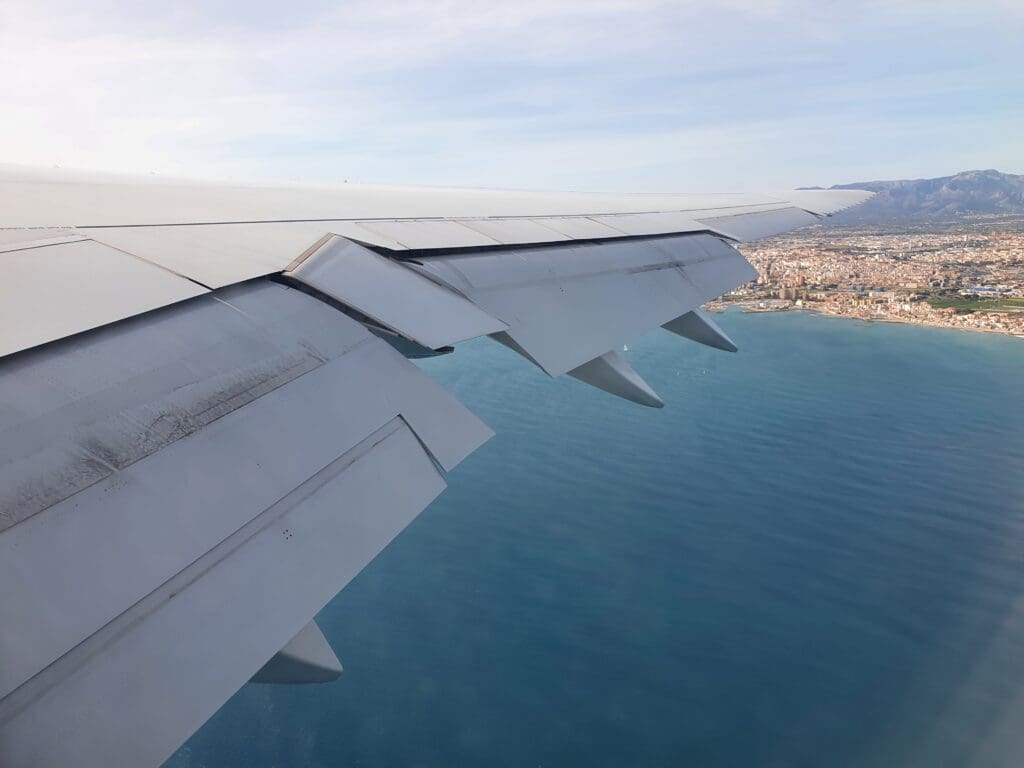
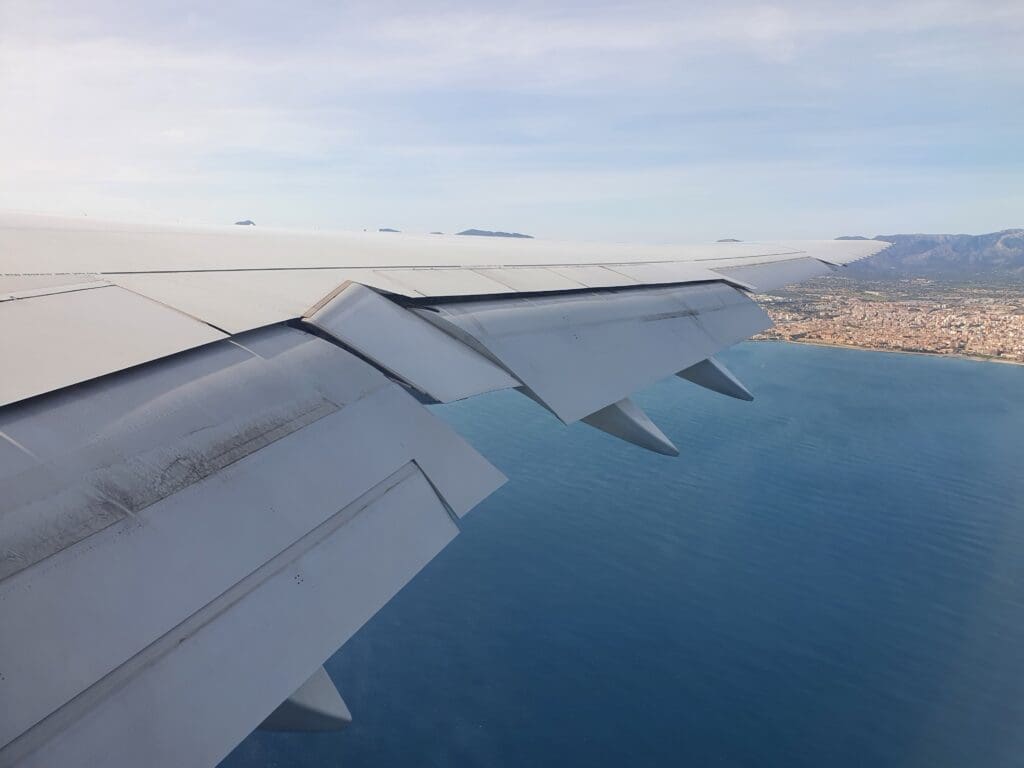
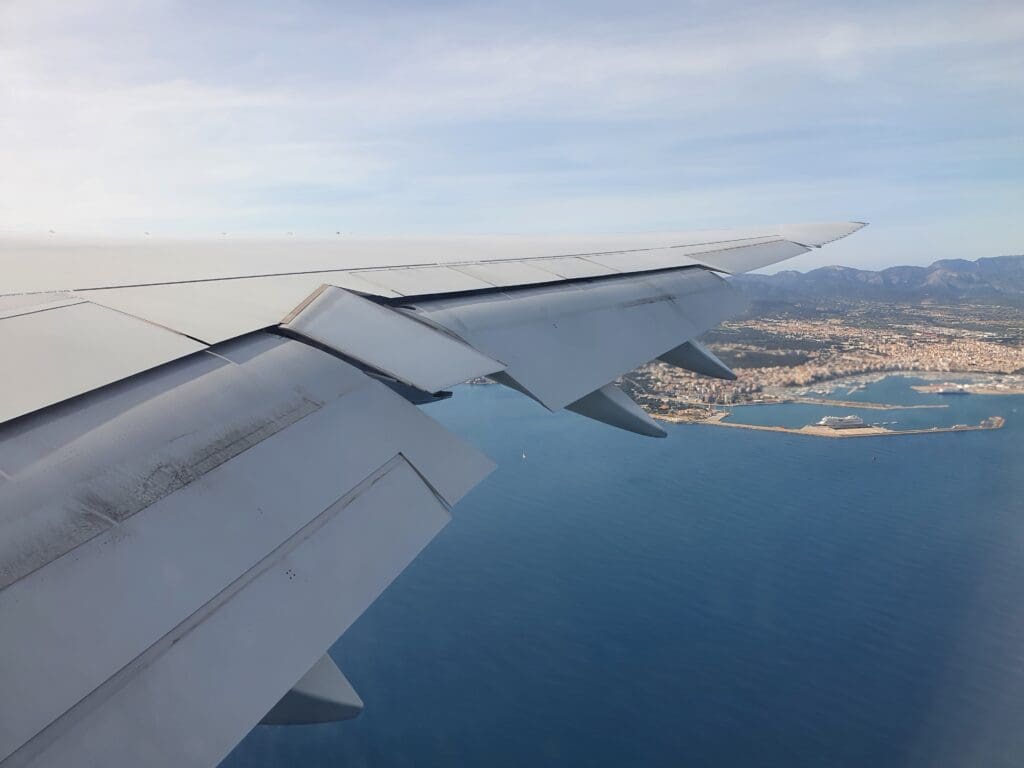
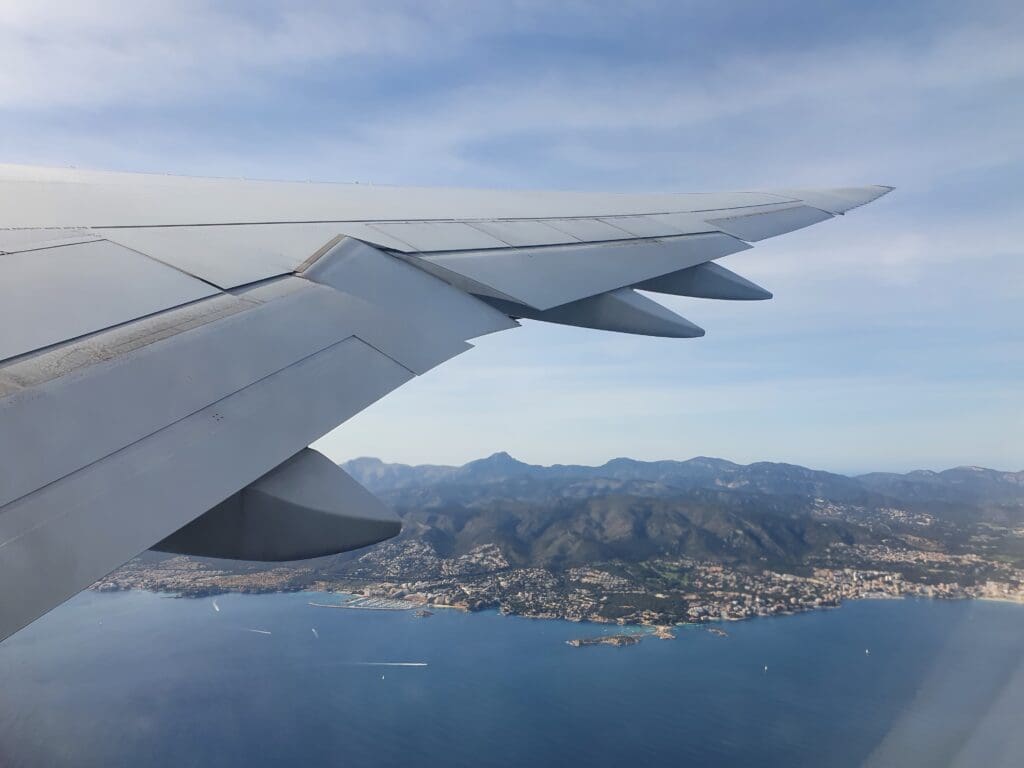
A short time after taking off, the city of Palma came into view where a luxury cruise liner could be seen making a port call alongside a more conventional ferry after which the jet banked to the left before rolling out on an easterly heading. From there, the jumbo jet headed across southern Mallorca before making its way to the island of Menorca where we turned onto a northerly heading that would take us up to mainland Europe. After leaving the island behind, the Boeing soon levelled off at its cruising altitude of 36,000 feet and would remain at that flight level until commencing the descent into Frankfurt.
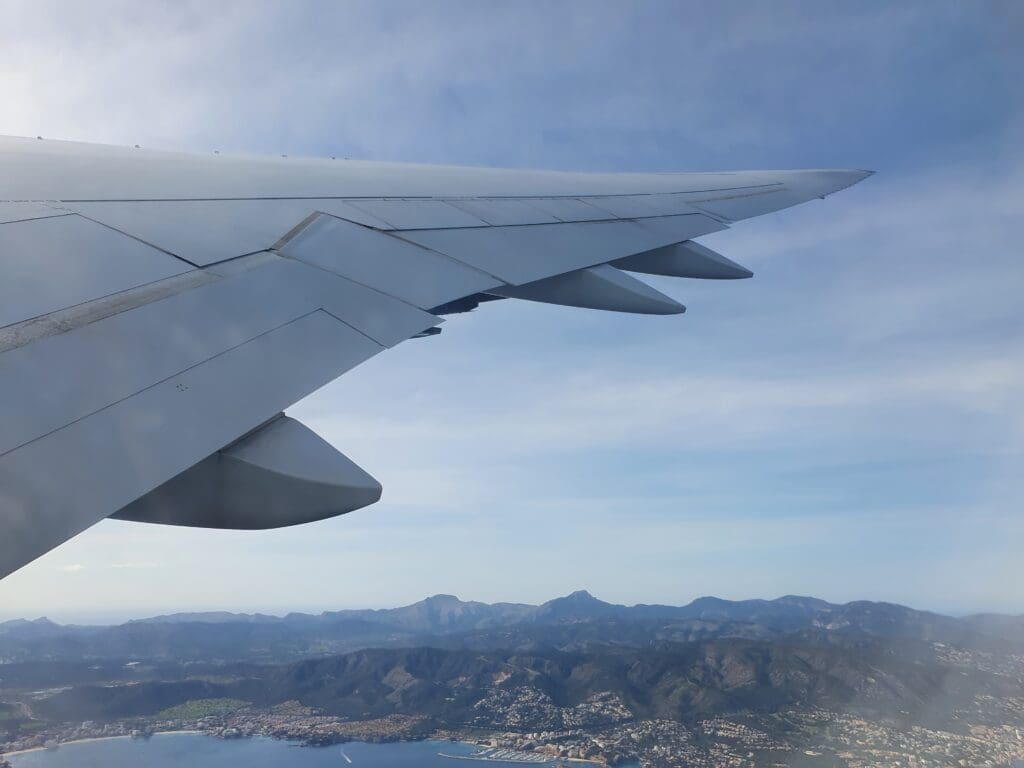
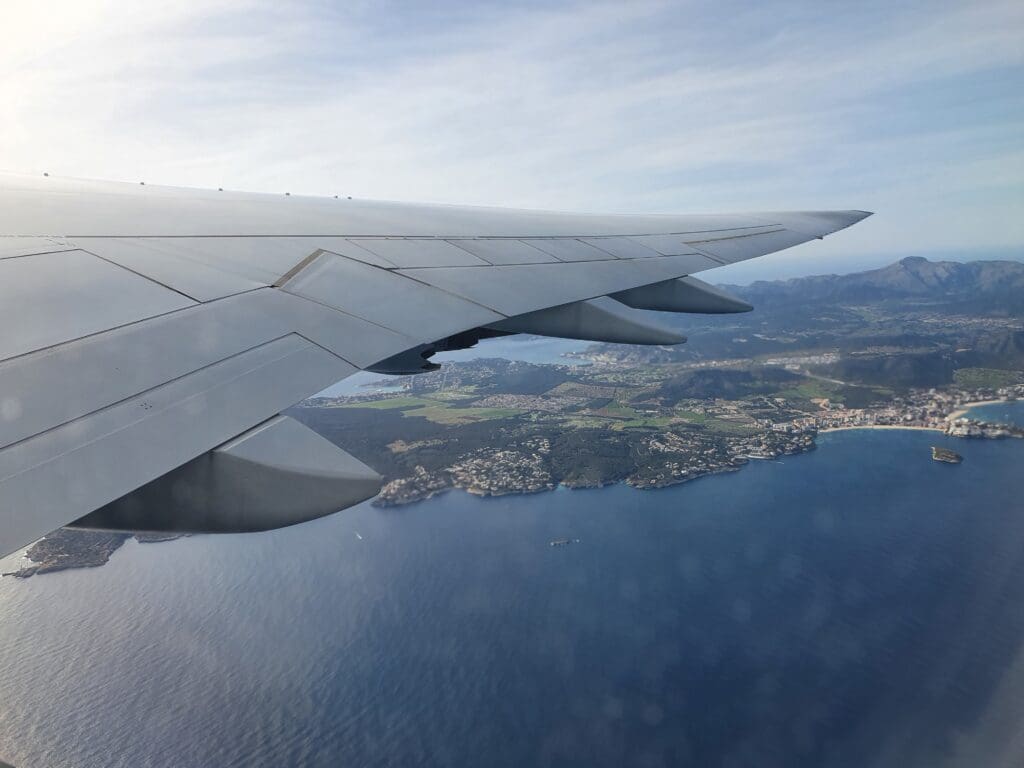
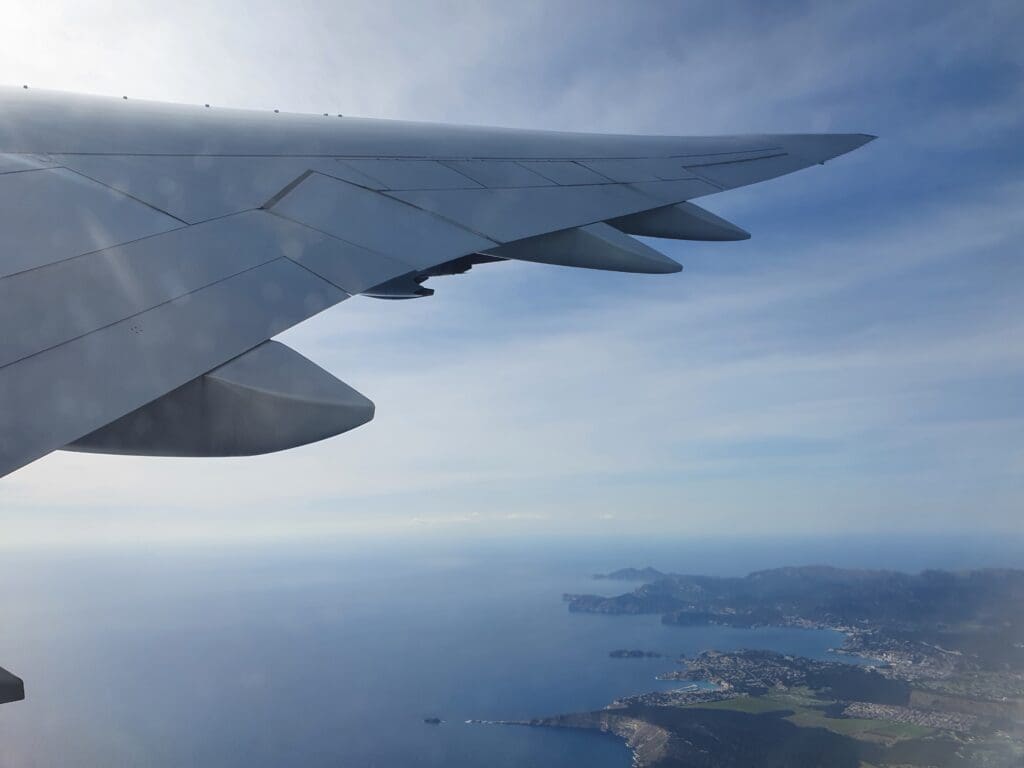
Eight minutes after taking to the skies, the Purser’s voice filled the cabin as they advised that the complimentary service in Economy would be commencing shortly and consist of a small bottle of water, and would be followed by the Onboard Delights buy-on-board service. A few minutes later at 1620, I was handed a 330ml bottle of Elisabethen Quelle still water, followed later by a small Lufthansa branded chocolate. As the Purser had mentioned, this was then followed by the Onboard Delights service, however, the crew sped through the cabin without stopping, failing to notice both myself and a fellow passenger several rows ahead attempting to flag the crew down. With my attempt to sample the delights of Lufthansa’s menu having failed, I pressed the call bell although nobody appeared, and, once again, each time a crew member walked past my row they did so quickly and with determination, disappointingly they failed to notice my attempts to get their attention. Fortunately, a while later I managed to flag down a crew member as they went about a rubbish collection round who advised me that another member of the crew would come and take my order shortly. Around ten minutes later, a crew member appeared and to their credit, they were rather friendly – informing me of the two sandwich options, grilled vegetable or chicken and hummus. Opting for the latter, I purchased this for €5.50 and was handed this in a box along with a Lufthansa motif branded serviette.
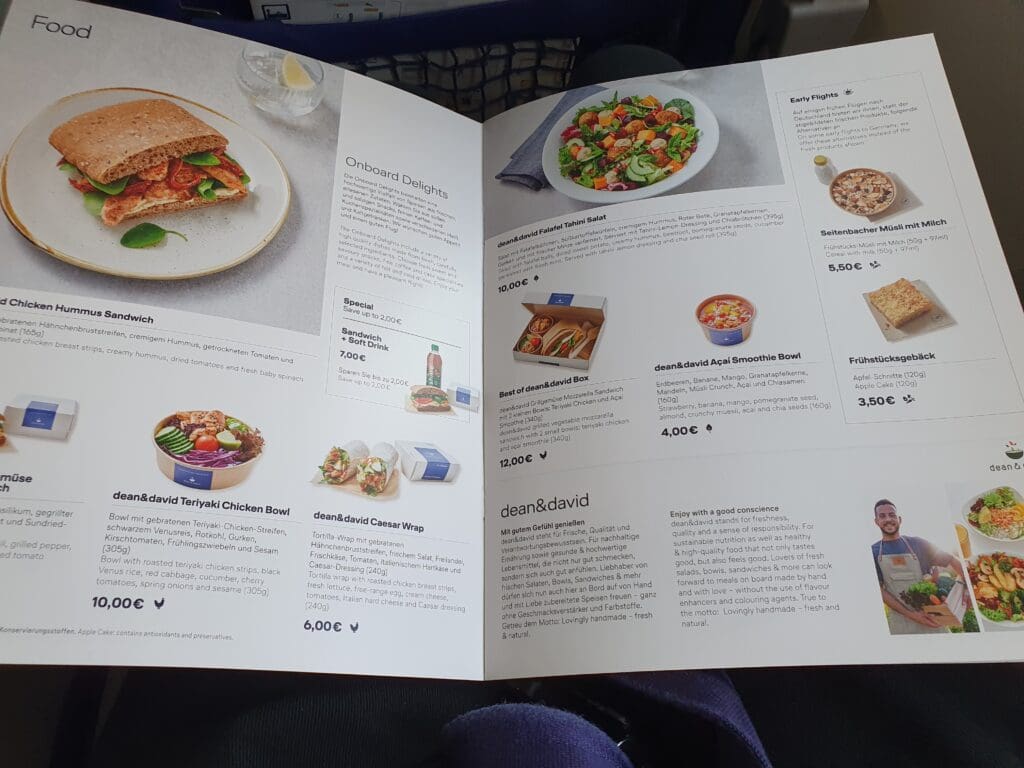
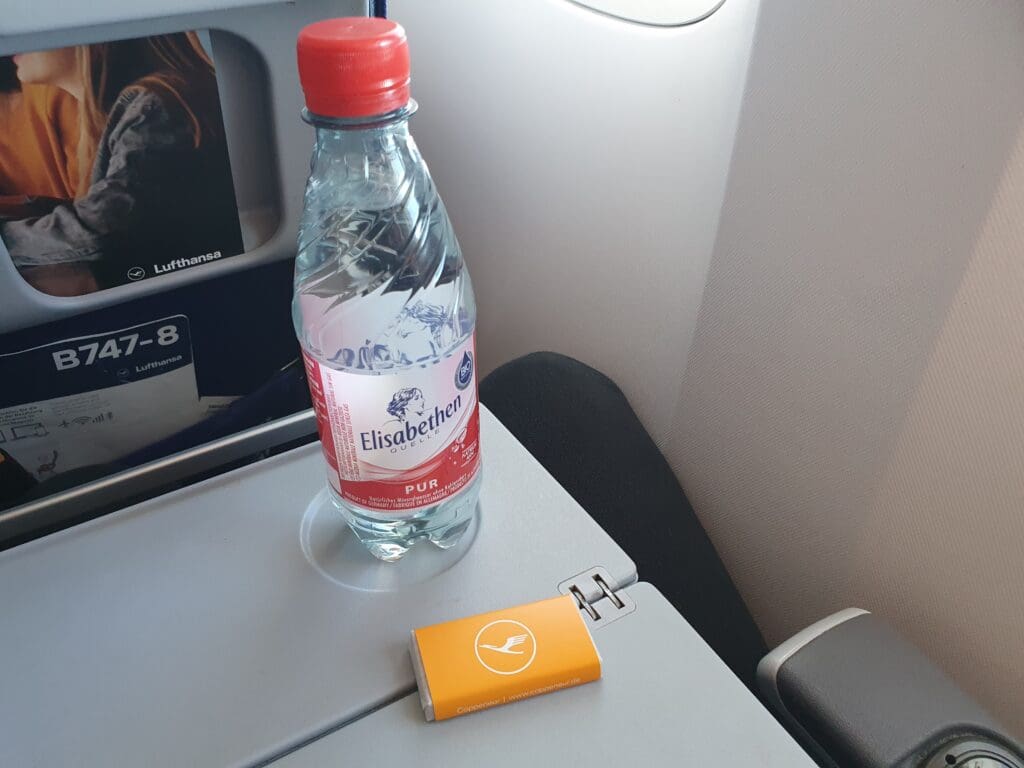
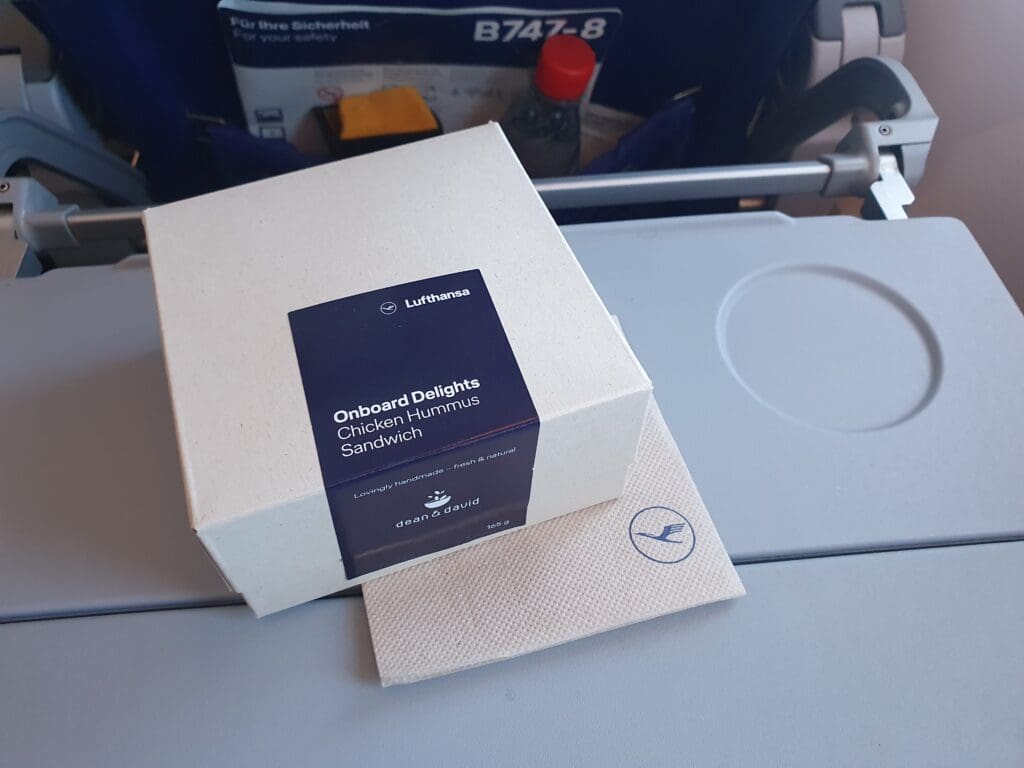
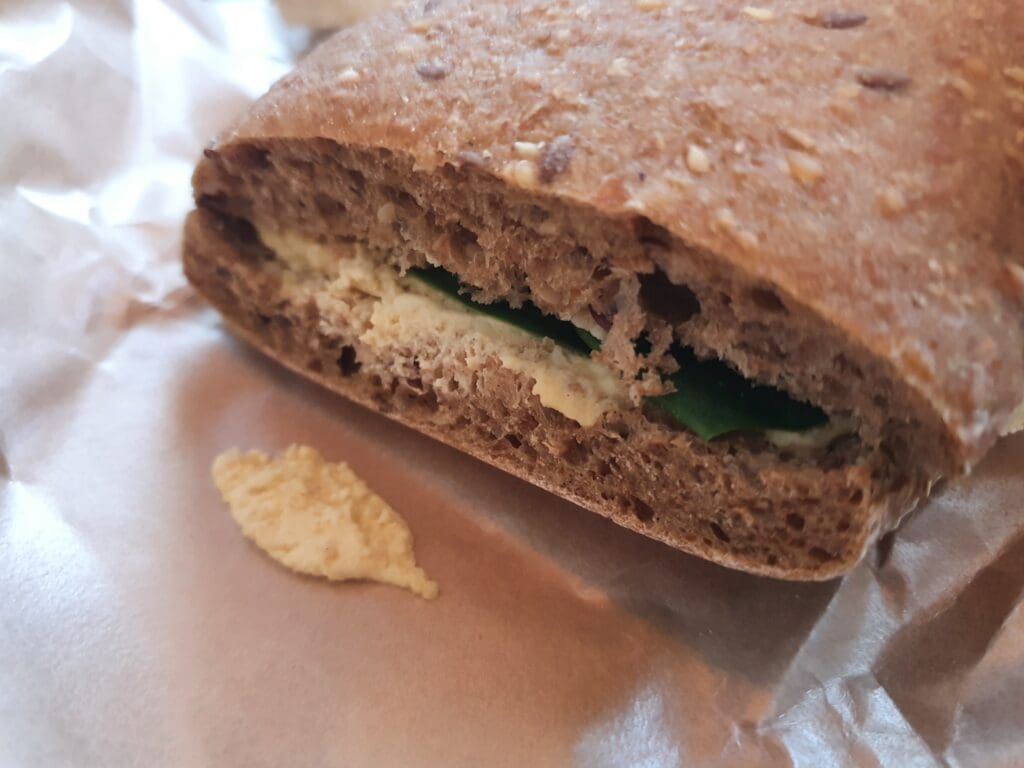
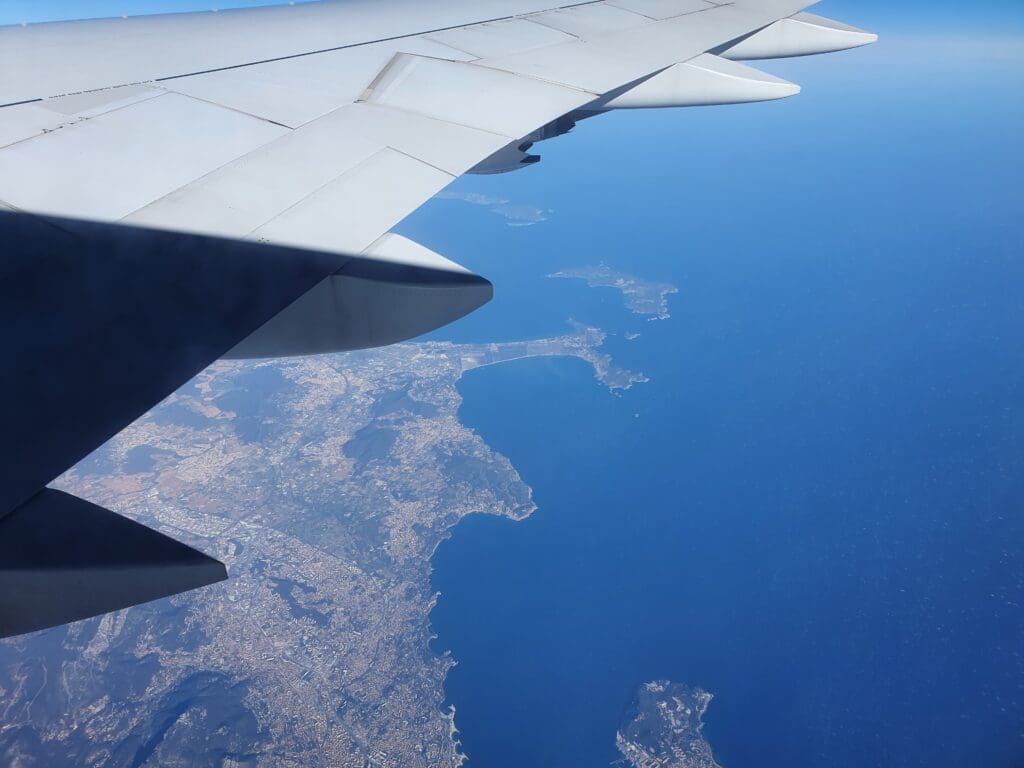
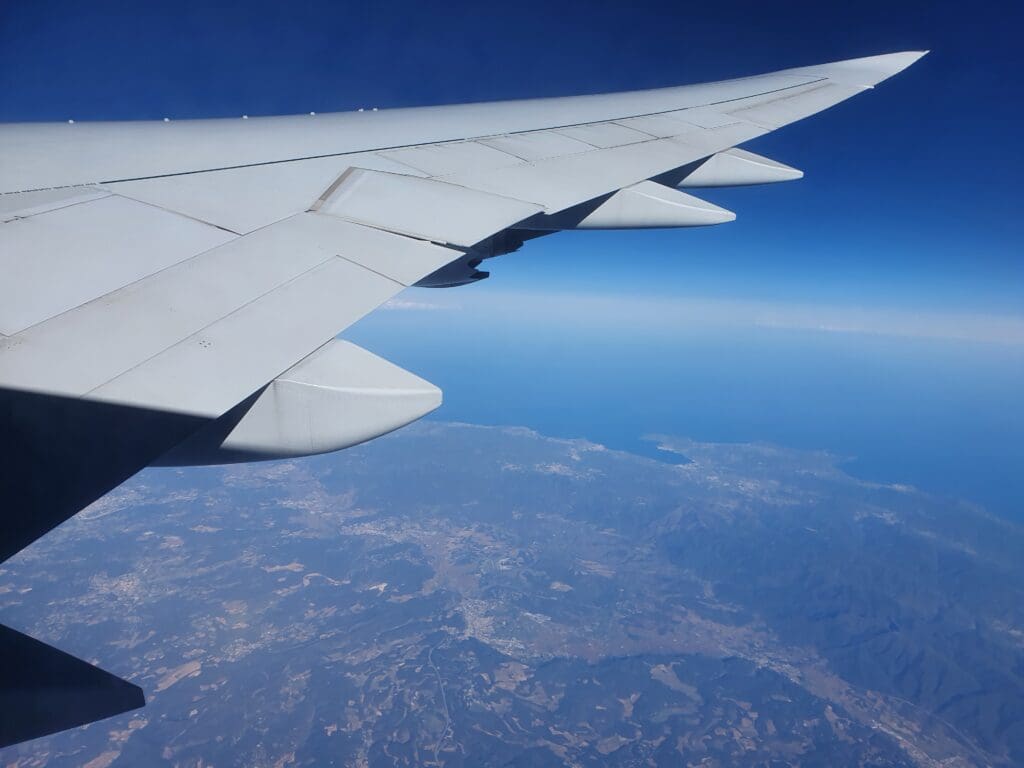
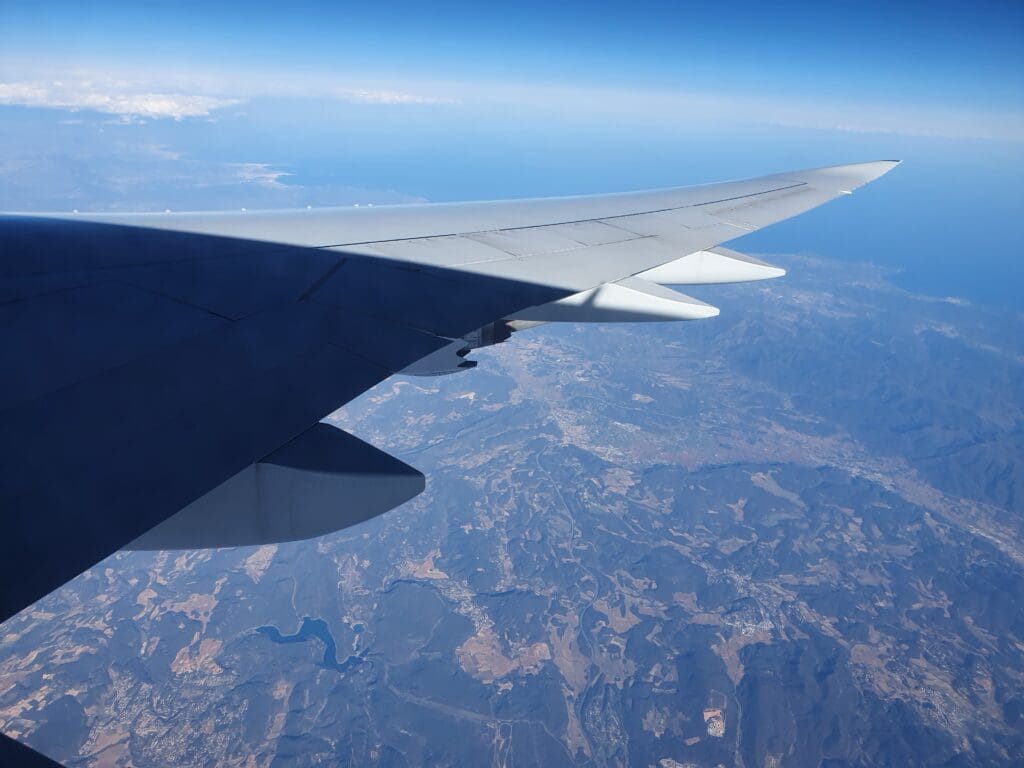
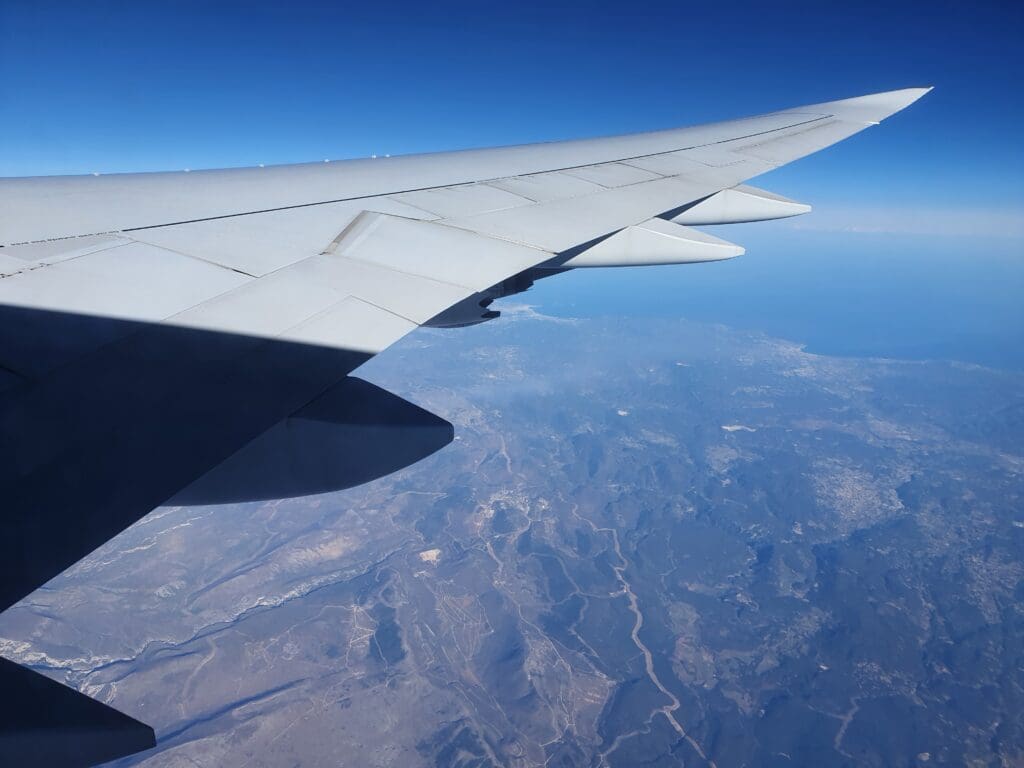
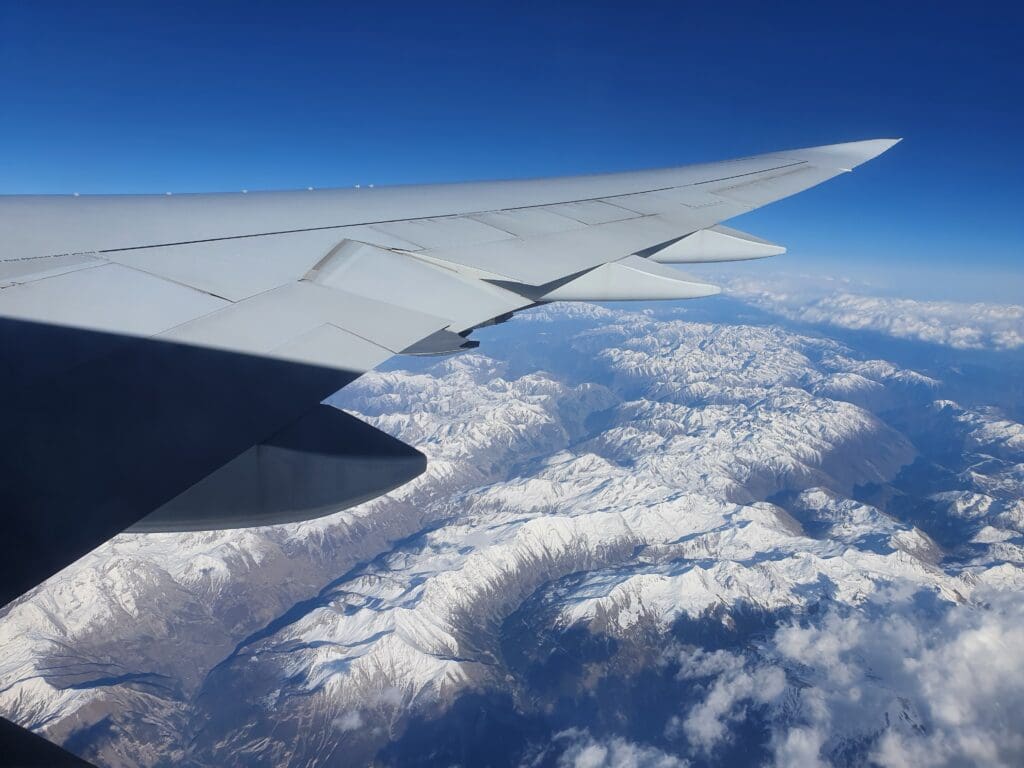
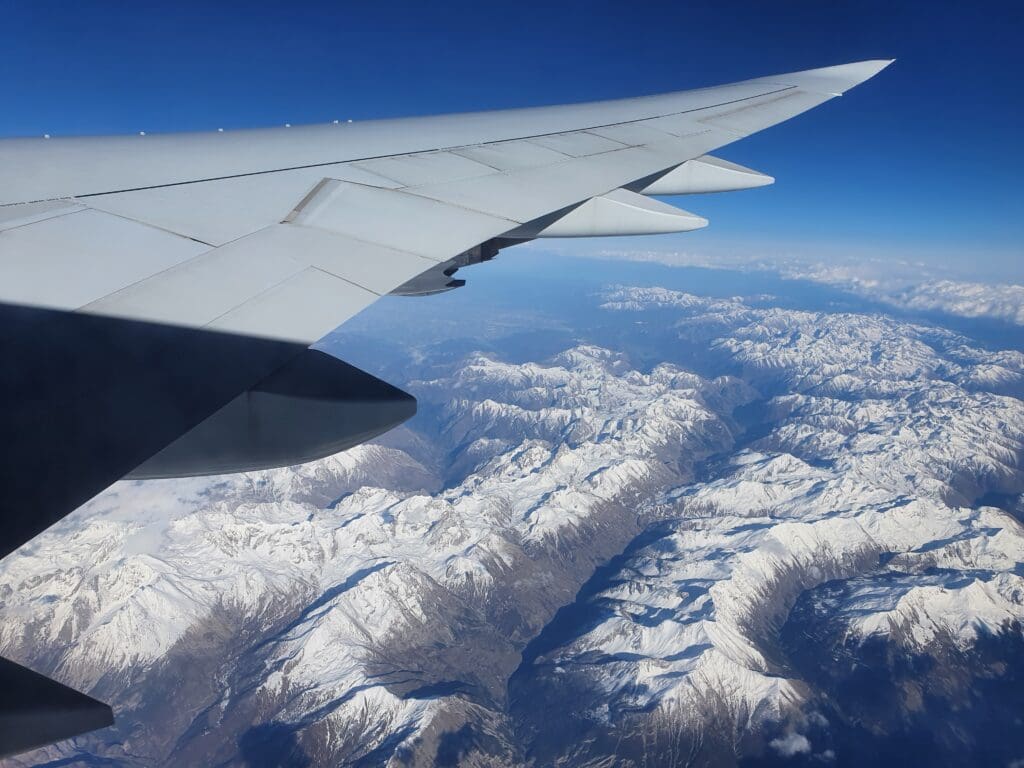
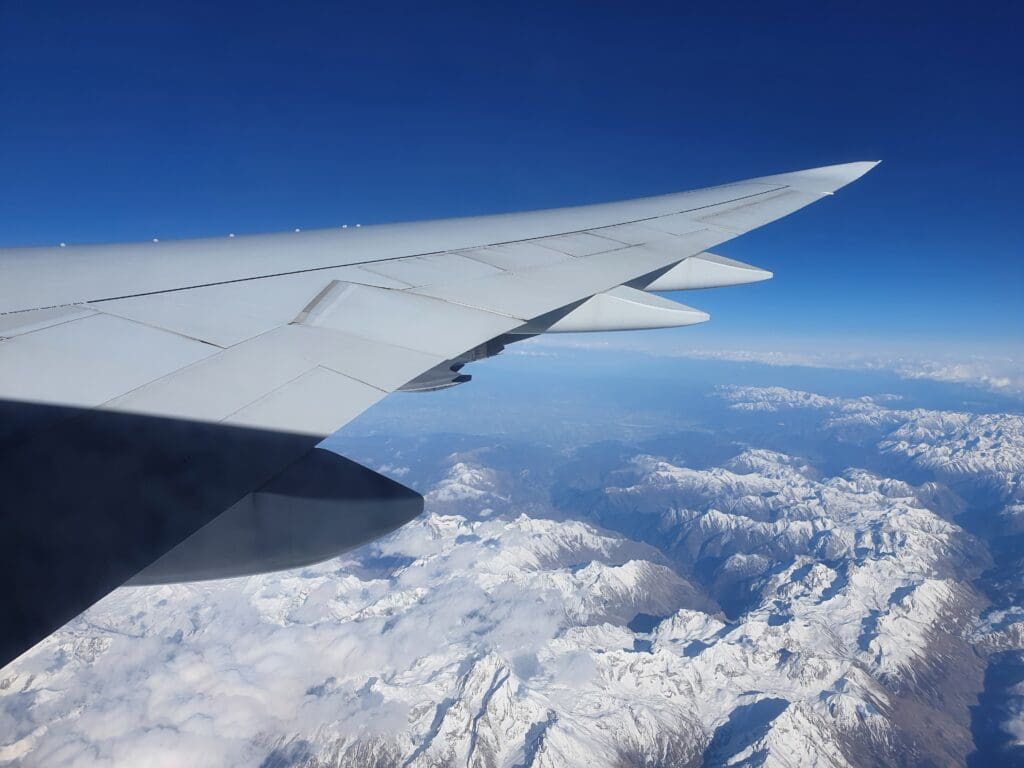
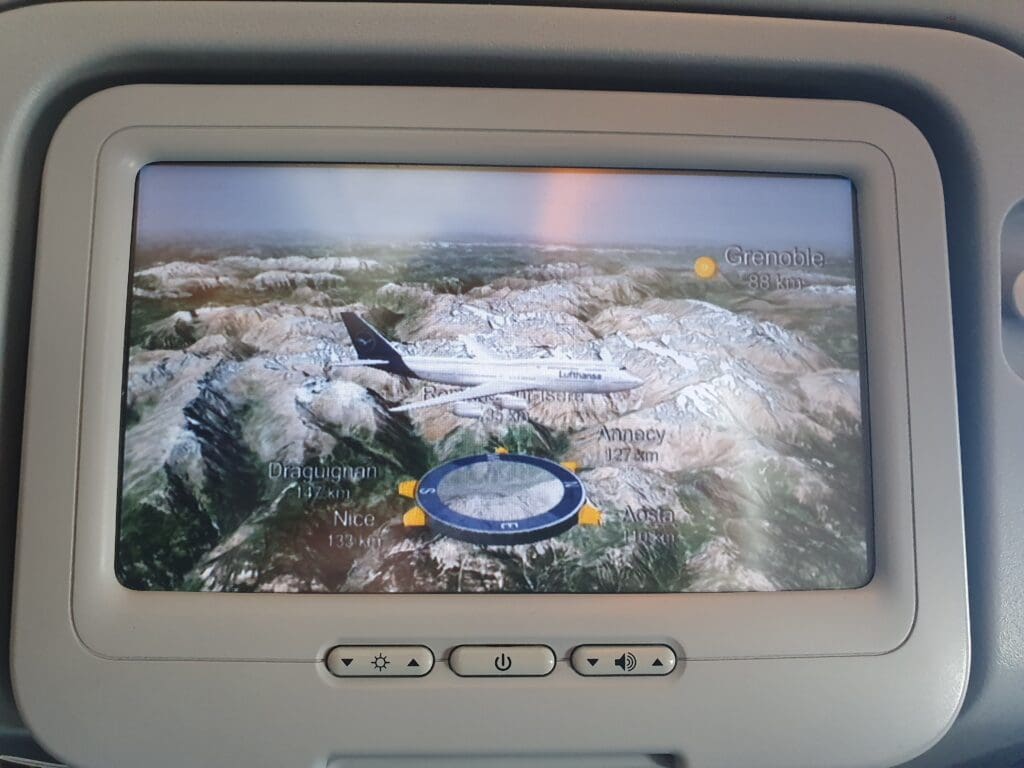
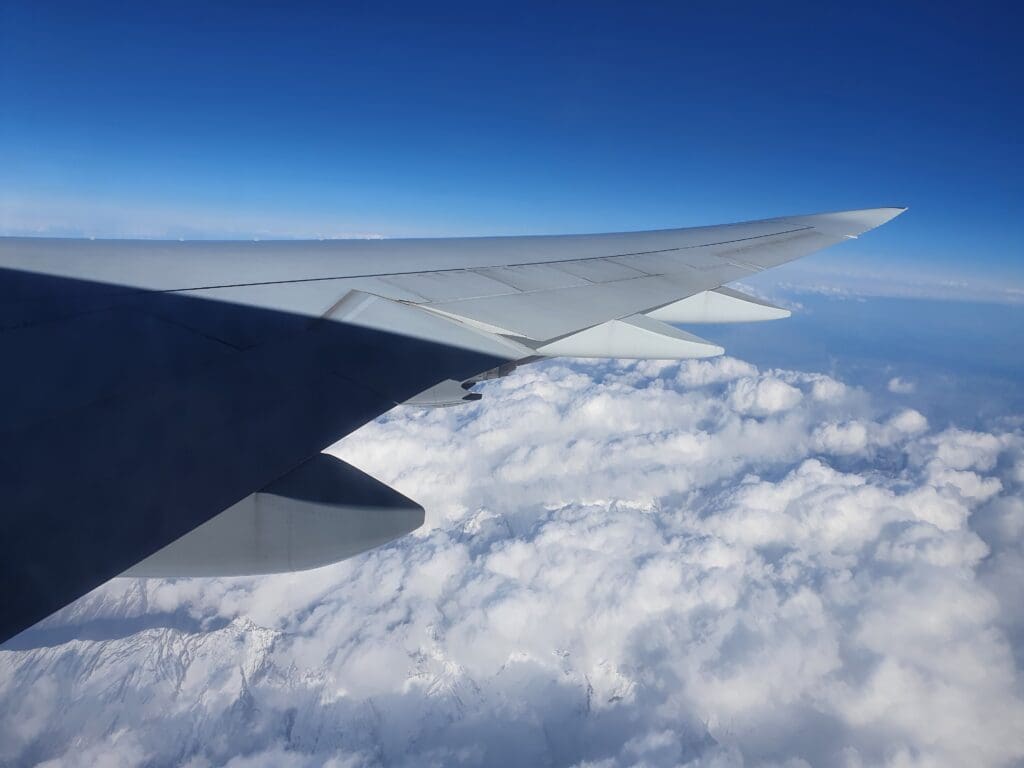
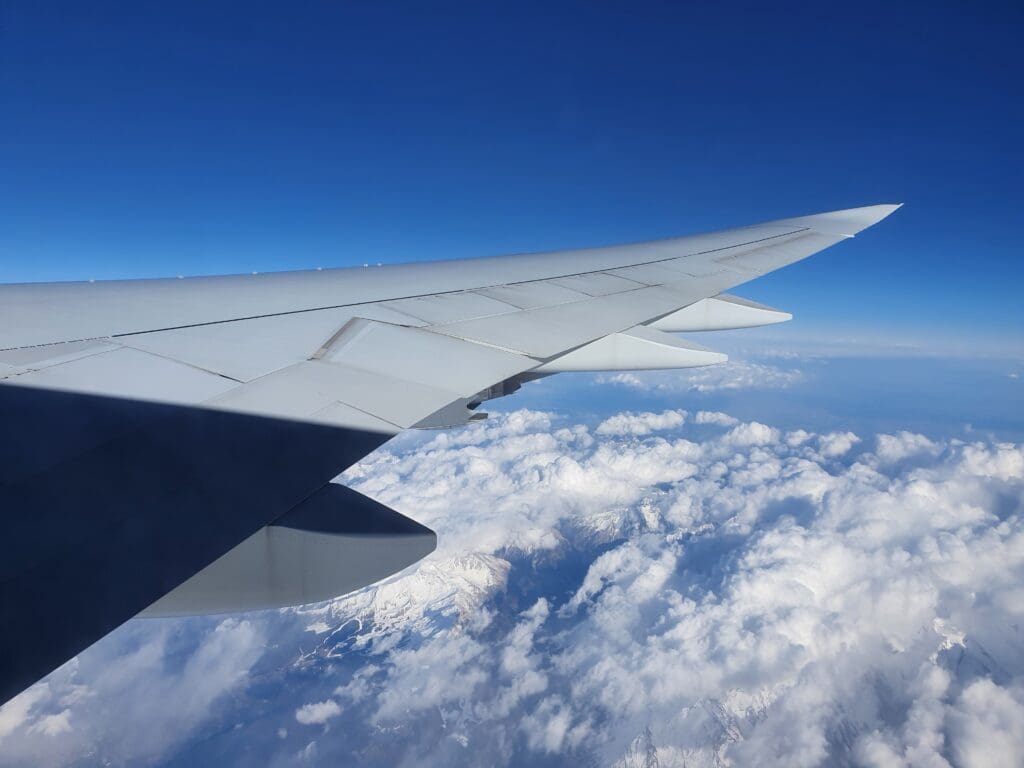
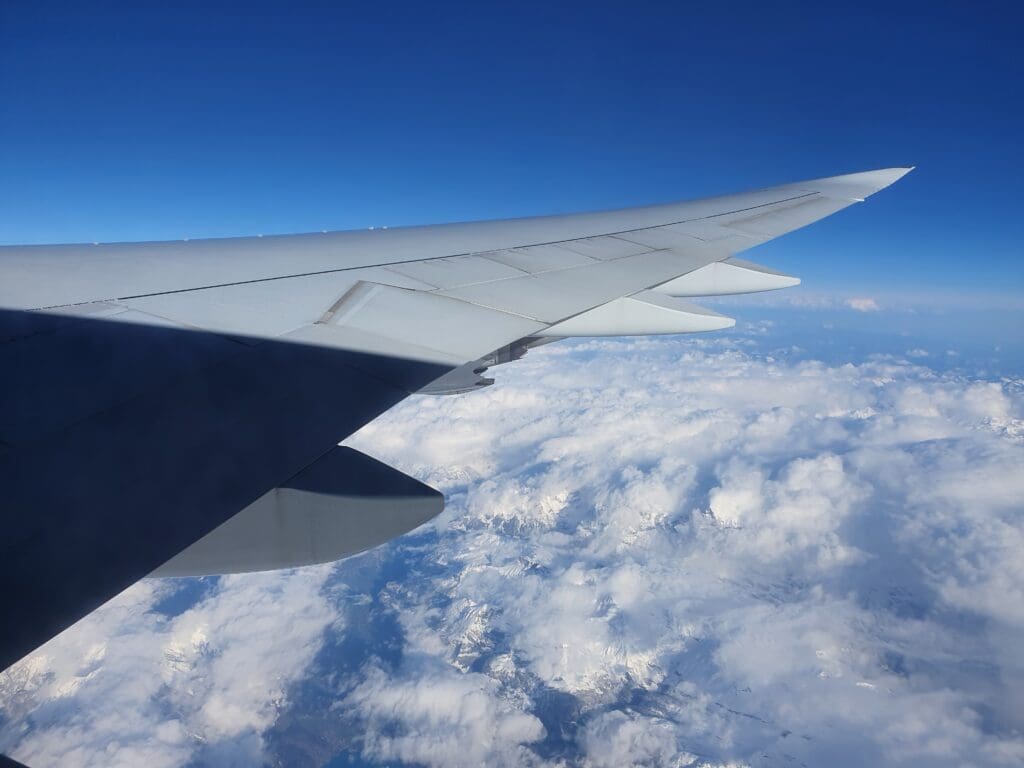
As I munched on this, the Boeing crossed the French coastline just to the west of Toulon, offering a good view of the Giens Peninsula to the east before heading inland towards the Alps. As the aircraft made its way north, the landscape transformed from fairly flat fields to hills which then transformed into impressive jagged snow-capped peaks as the aircraft reached the northern portion of France’s Alpes-de-Haute-Provence department. From there, the aircraft flew along the border between France and Italy for around ten minutes, during which it crossed this three times before reaching Switzerland. Unfortunately, views of the snowy Alps that afternoon were rather limited, with clouds rolling in a short time after crossing into Swiss airspace and ensuring that only very fleeting glimpses of the mountains below could be had as the jet cruised north.
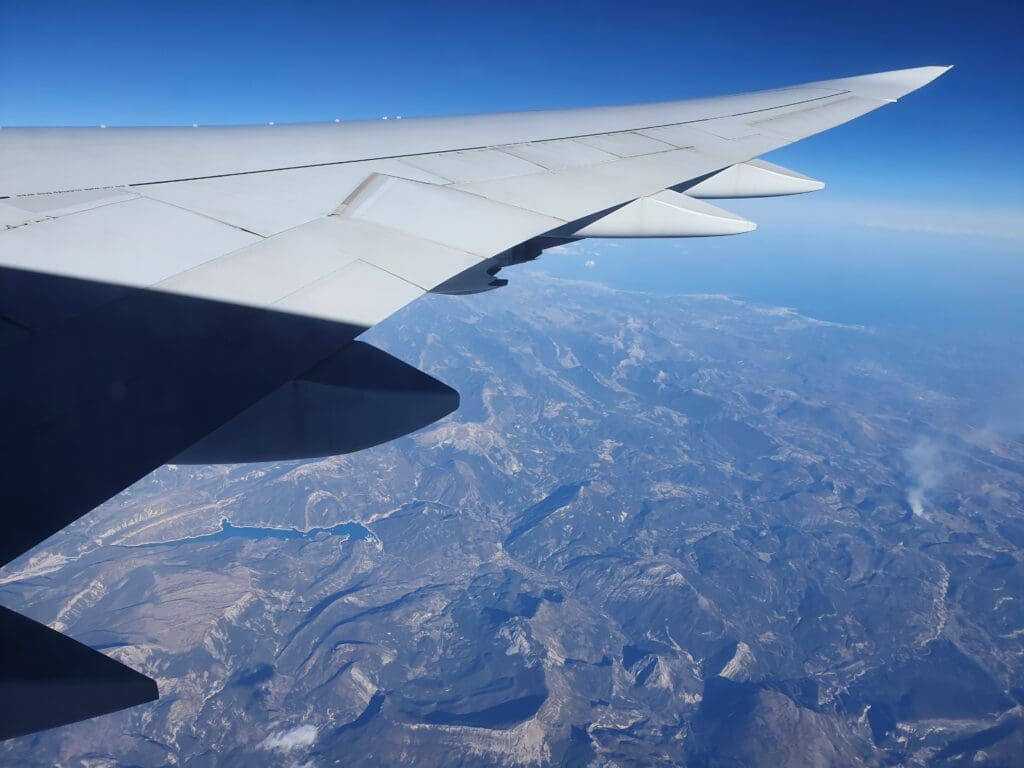
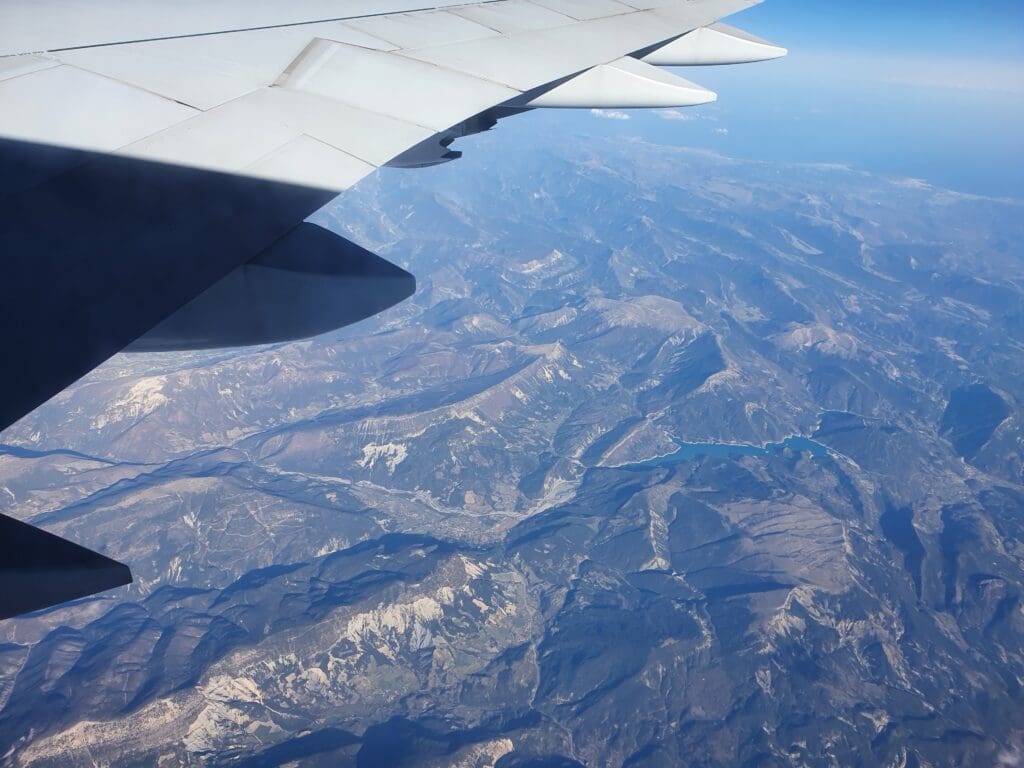
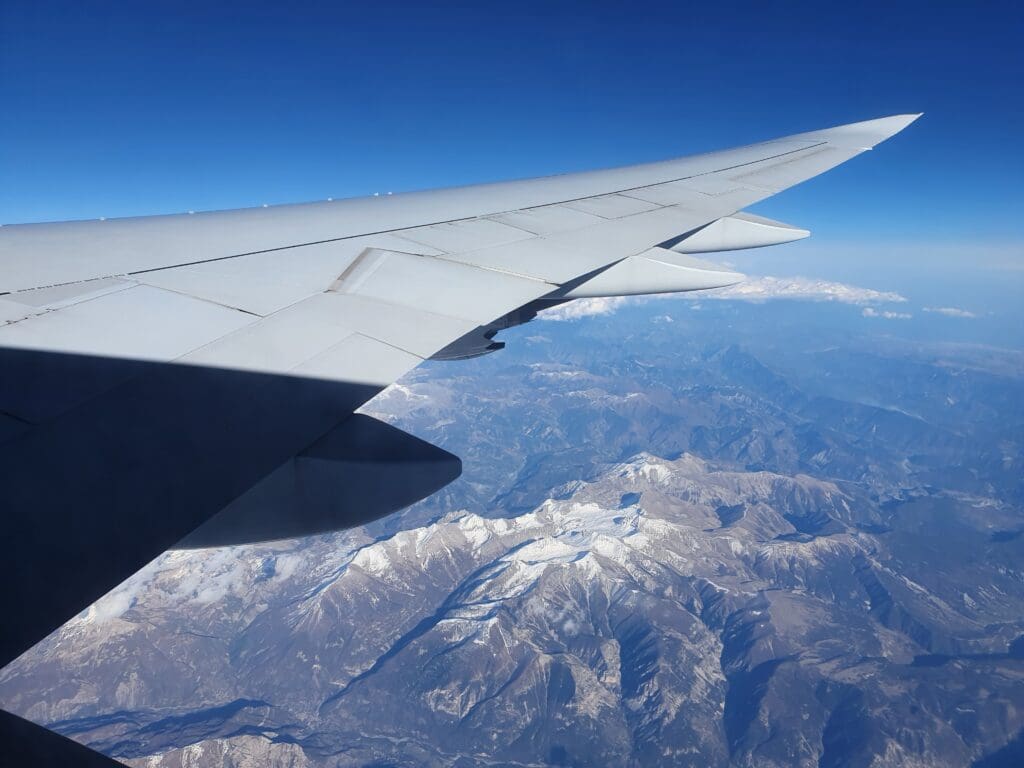
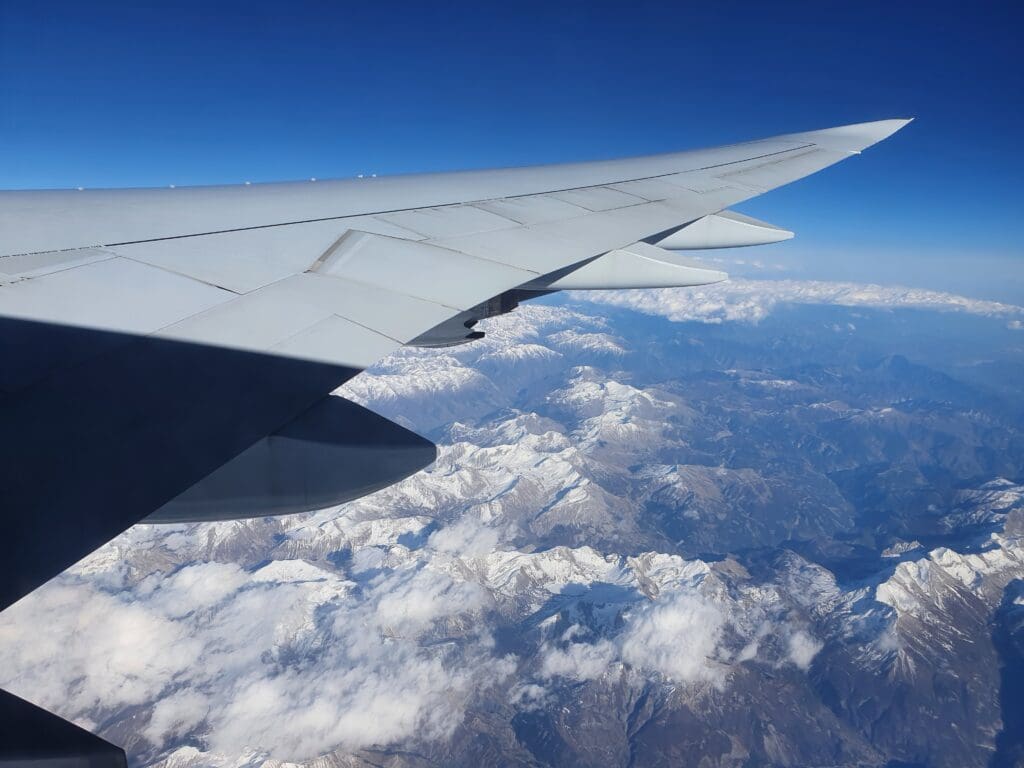
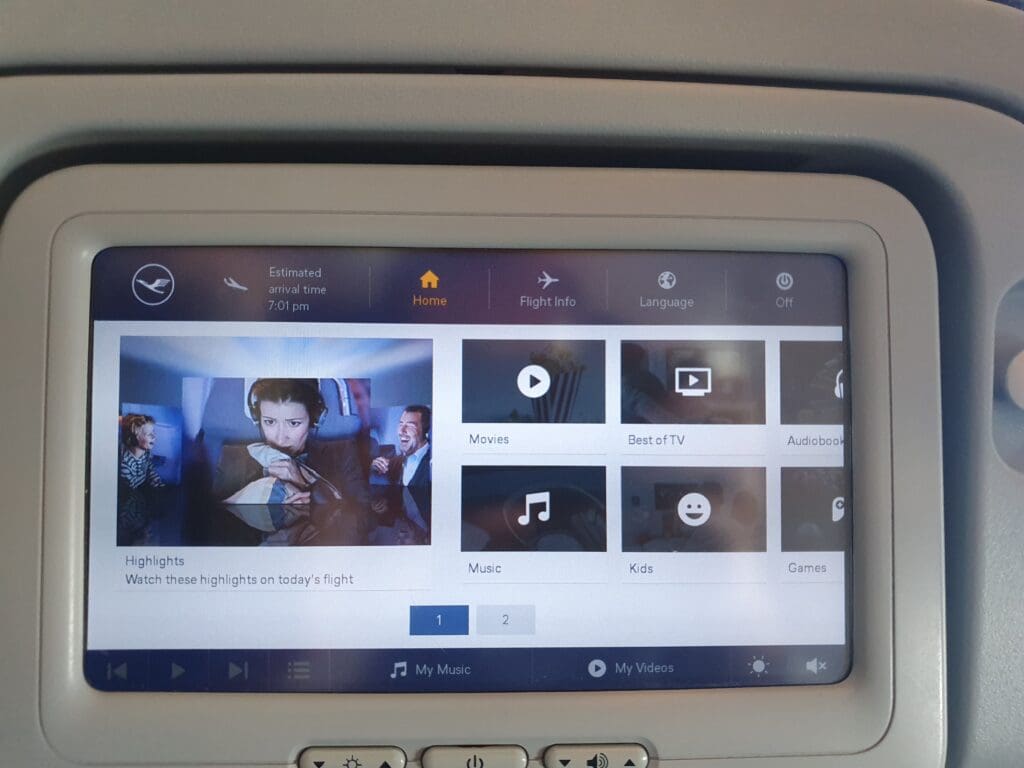
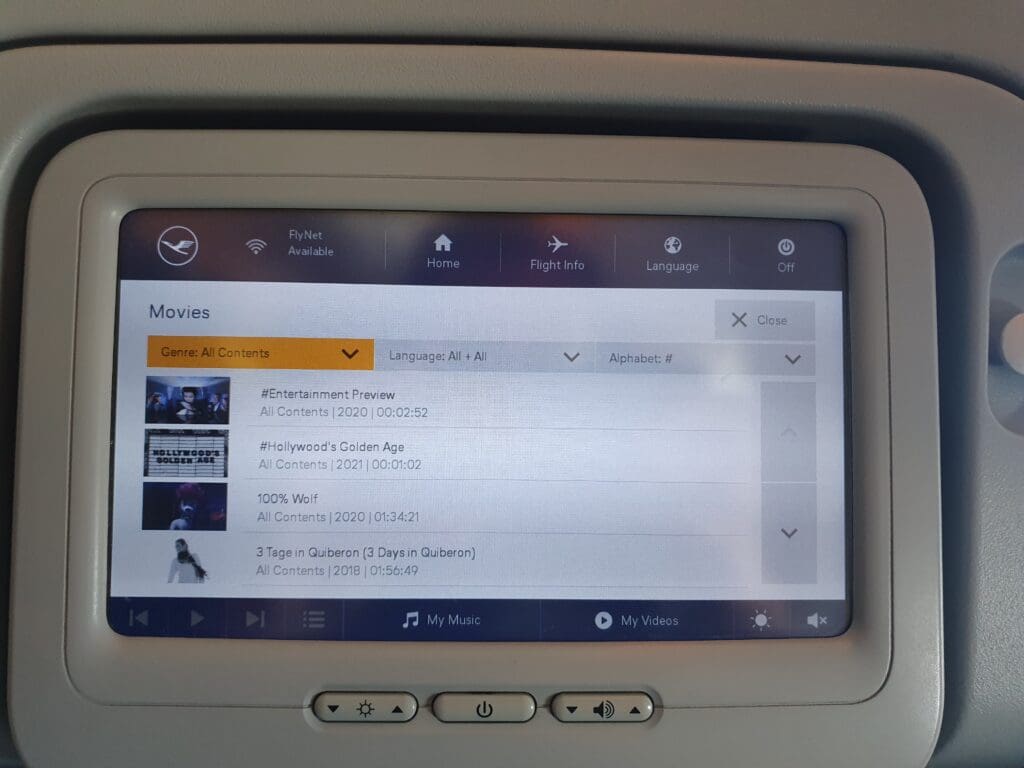
With not a great deal to see outside, I decided to turn my attention to the inflight entertainment. Whilst this particular aircraft first took to the skies in 2015, its inflight entertainment system is somewhat reminiscent of an older aircraft. Compared to the newer high-screen quality, quick-to-load and responsive systems of today with a plethora of moving map options, the system on Lufthansa’s Boeing 747-8s does seem to lag behind a little. Whilst this is a touchscreen system, this seemed to be far from responsive and I had a much better experience whilst using the remote control, although even then the system took quite a long time for pages to load. Meanwhile, the system’s layout did not seem to be overly modern, stylish or user-friendly. However, turning to the positives, the system is available in most of the languages of those countries served by Lufthansa’s Boeing 747 fleet, namely Arabic, Chinese, English, French, German, Italian, Japanese, Korean, Portuguese and Spanish. Meanwhile, I found this to feature a wide array of films, television programmes and music from across the world and is likely in a good position to alleviate boredom amongst those passengers flying on one of the aircraft’s more ‘typical’ flights. Finally, this also features a forward and a downwards facing camera, two features that are very appreciated but often not present. Whilst I did not have the intention of watching anything, I did notice that all content started without passengers having to sit through several advertisements. Other than the personal television screens, passengers can pass the time by connecting to the FlyNet onboard wifi network, although this appeared not to work on the flight that evening.
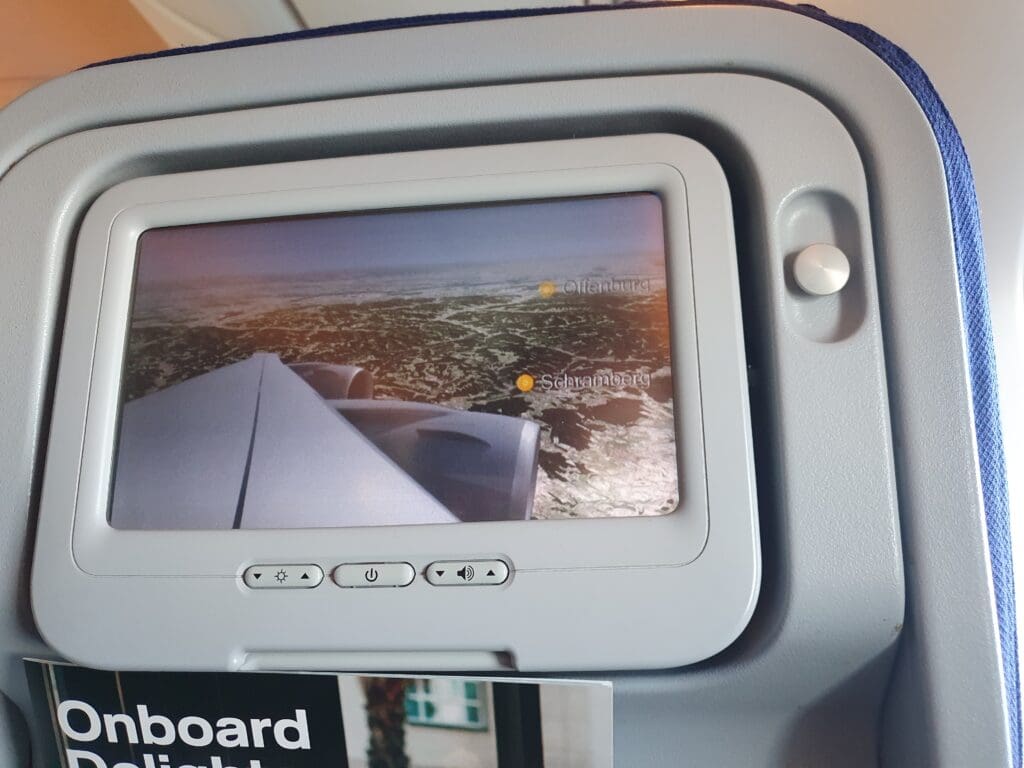
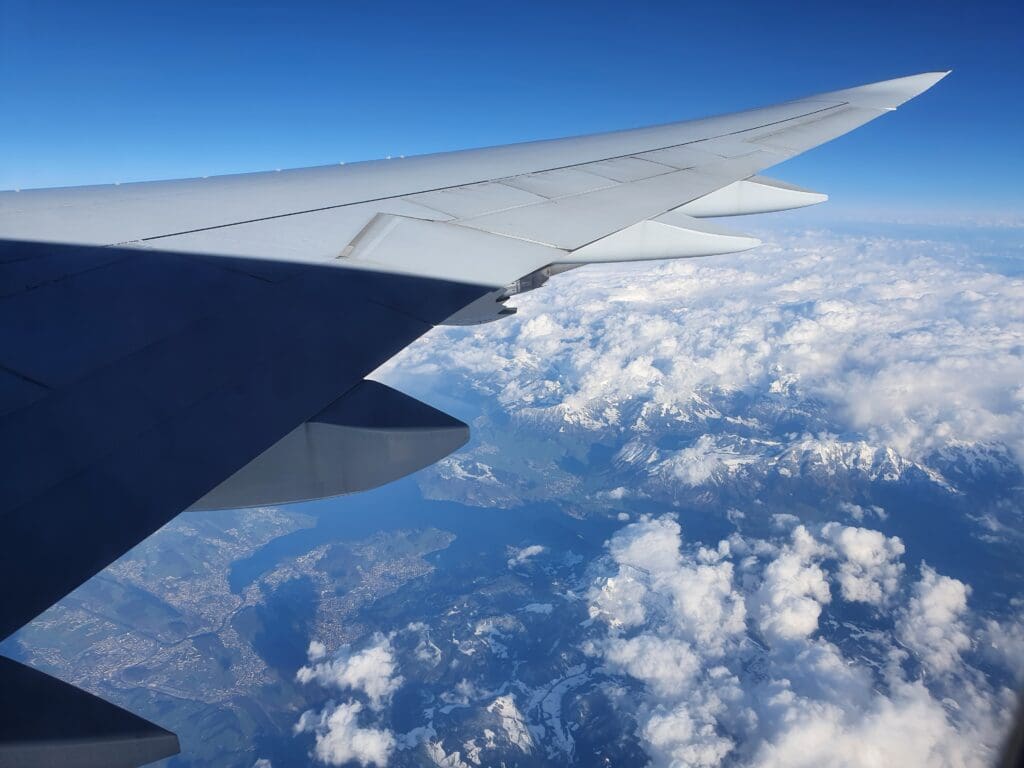
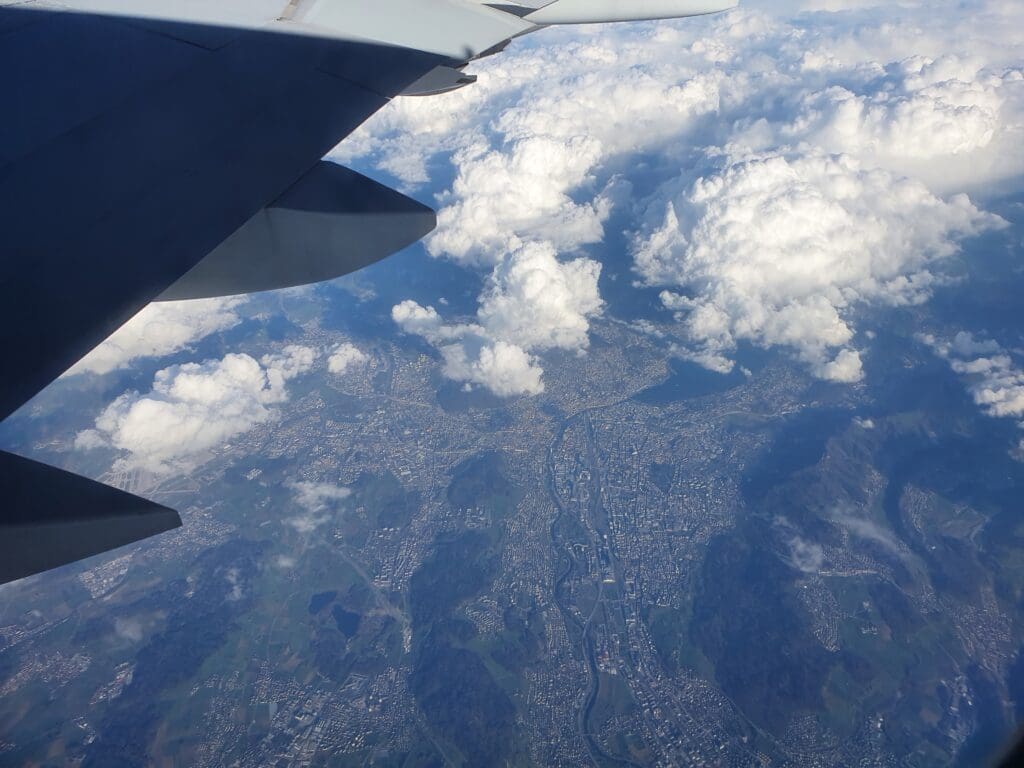
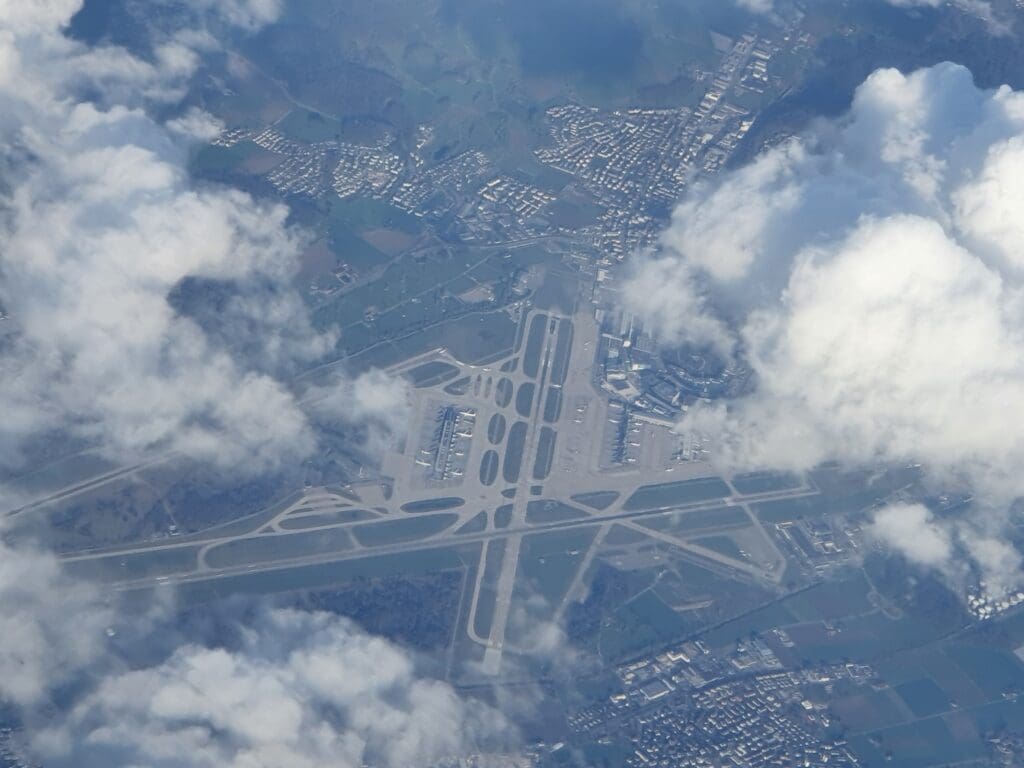
Turning my attention to the activities inside the cabin, I noticed a reflective jacket-wearing passenger from ‘PlaneMania’ interviewing one passenger, reminding all onboard that this was far from a ‘regular’ flight. As it turns out, PlaneMania is a popular German aviation YouTube channel and the reflective jacket-wearing passenger was documenting the flight. I also later found this trip report from a passenger sitting two rows behind me. Thoroughly enjoying my first-ever experience of flying onboard a Boeing 747-8, the flight flew by and at 1818, the aircraft could be felt leaving its cruising altitude and making its way back down to earth just as the clouds opened up and revealed the Swiss city of Lucerne and its neighbouring lake. This was then followed a short time later by Zurich, where much of the city and its airport could be seen through gaps in the clouds below. At 1825, the Boeing crossed over Switzerland’s northernmost canton, Schaffhausen, before entering German airspace.
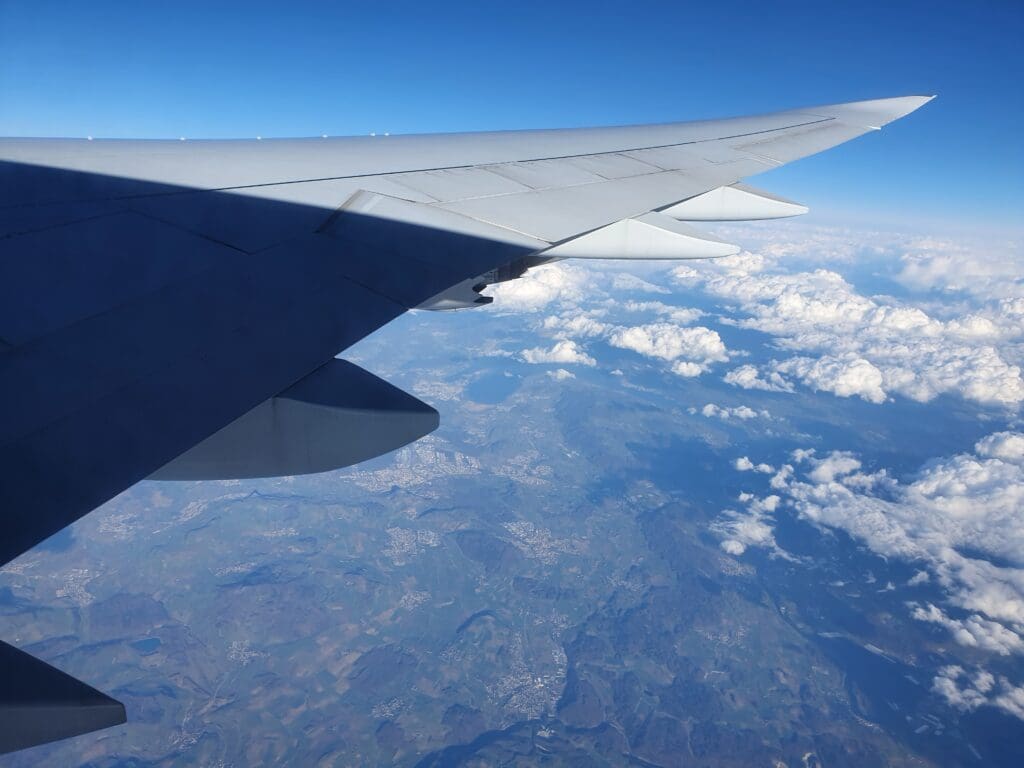
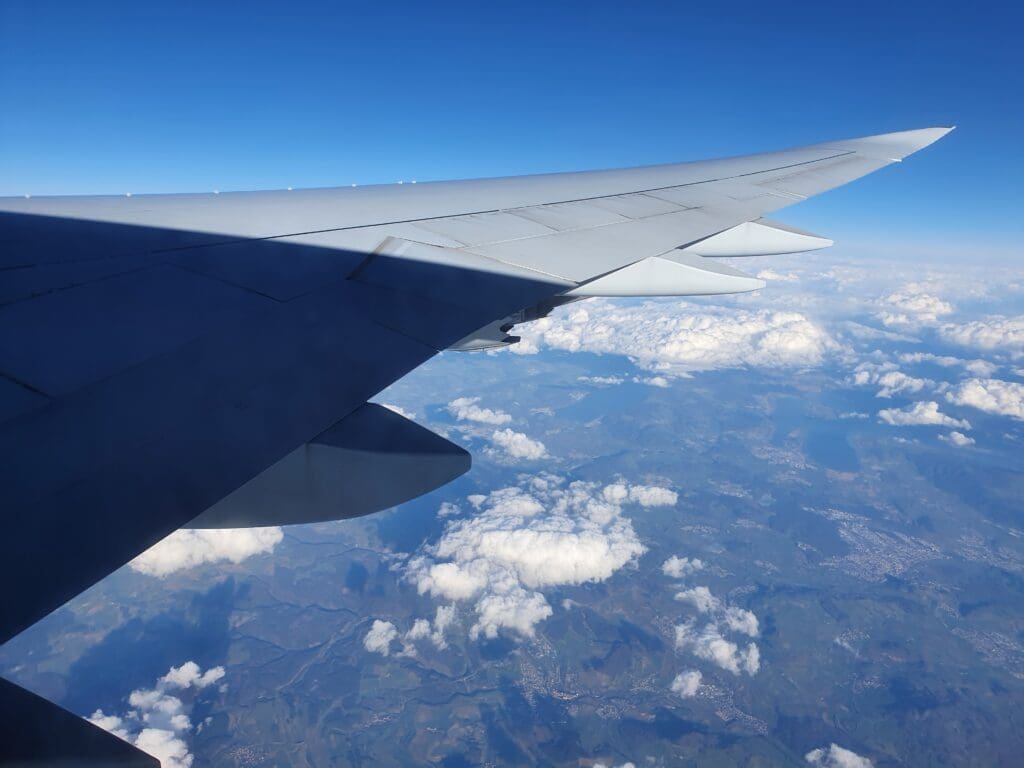
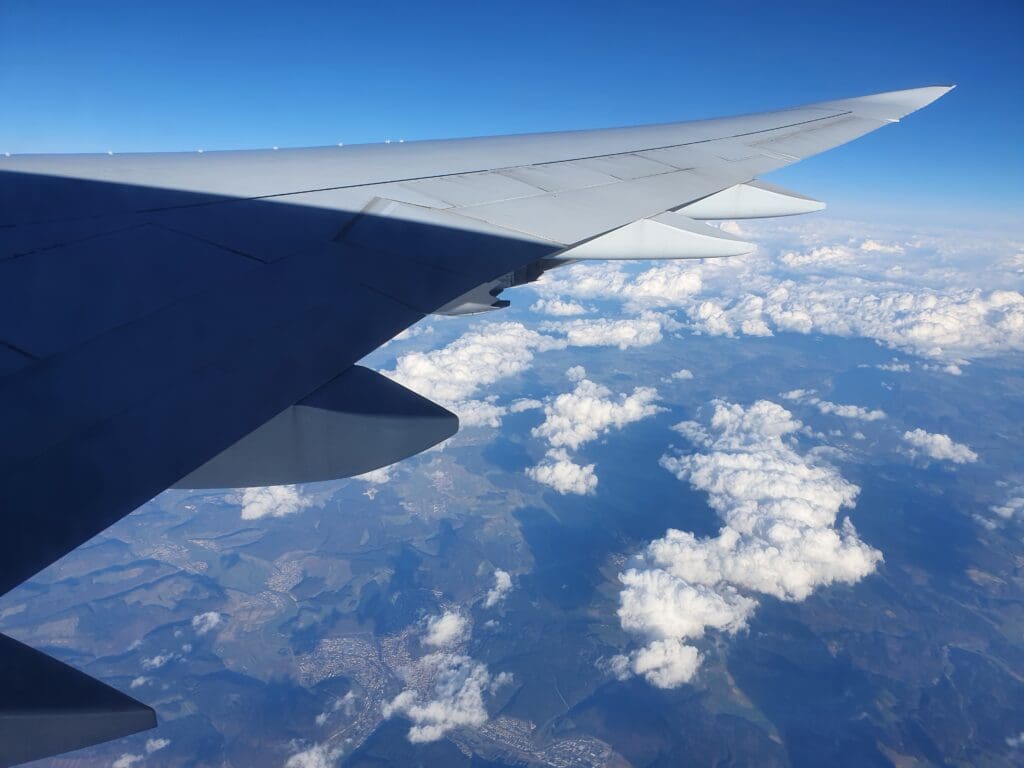
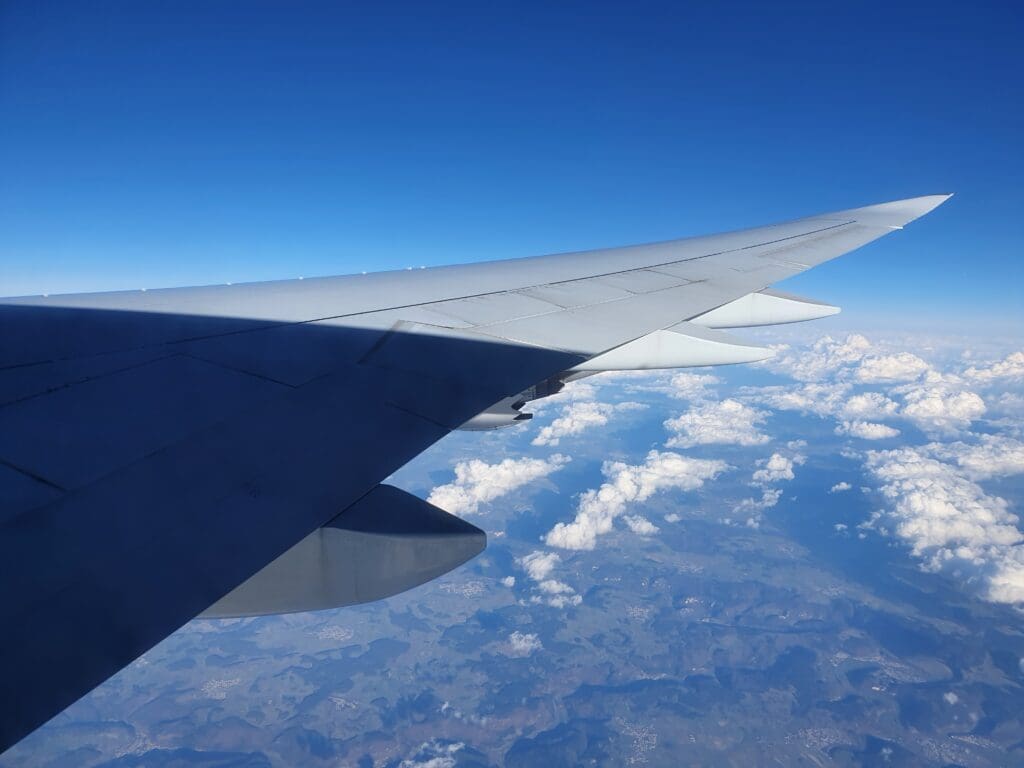
Once above Germany, the aircraft made its way north across the state of Baden-Württemberg before crossing over into Bavaria. As the aircraft passed a short distance to the west of Stuttgart, at 1835 the seatbelt signs were reilluminated in preparation for the aircraft’s arrival at which point the Purser performed their pre-arrival announcement with the usual warnings regarding seatbacks and tray tables. This was then followed by another announcement during which the Purser informed passengers of arrangements for those with connecting flights and connecting trains and buses under the convenient Lufthansa Express Rail and Lufthansa Express Bus schemes.
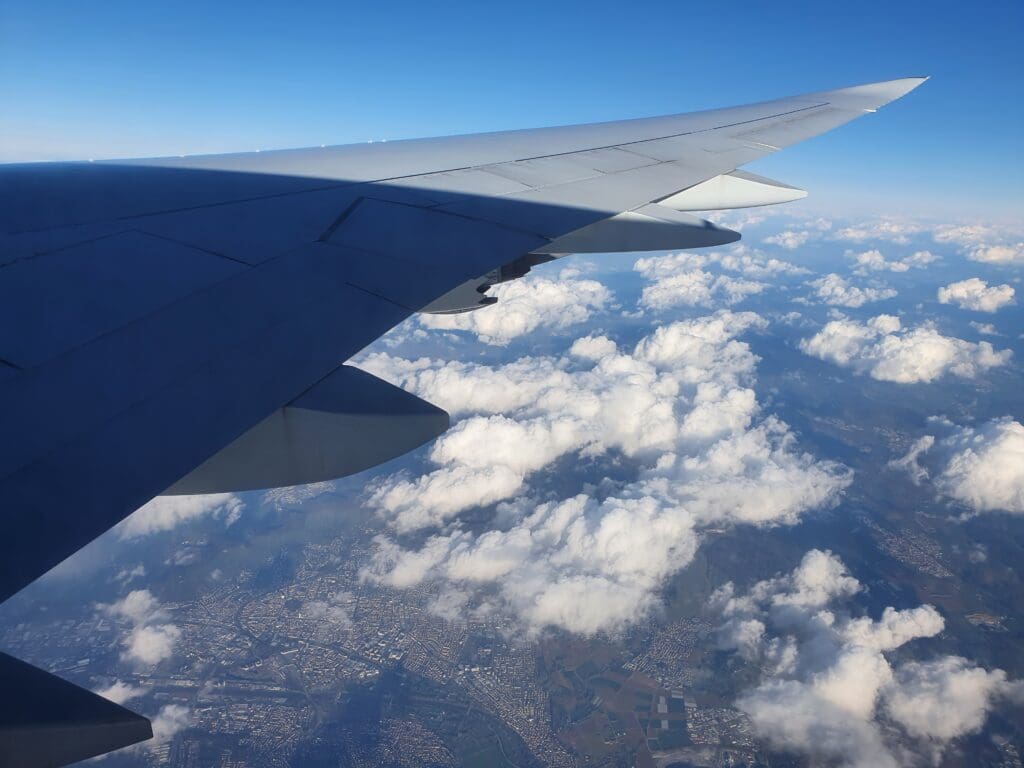
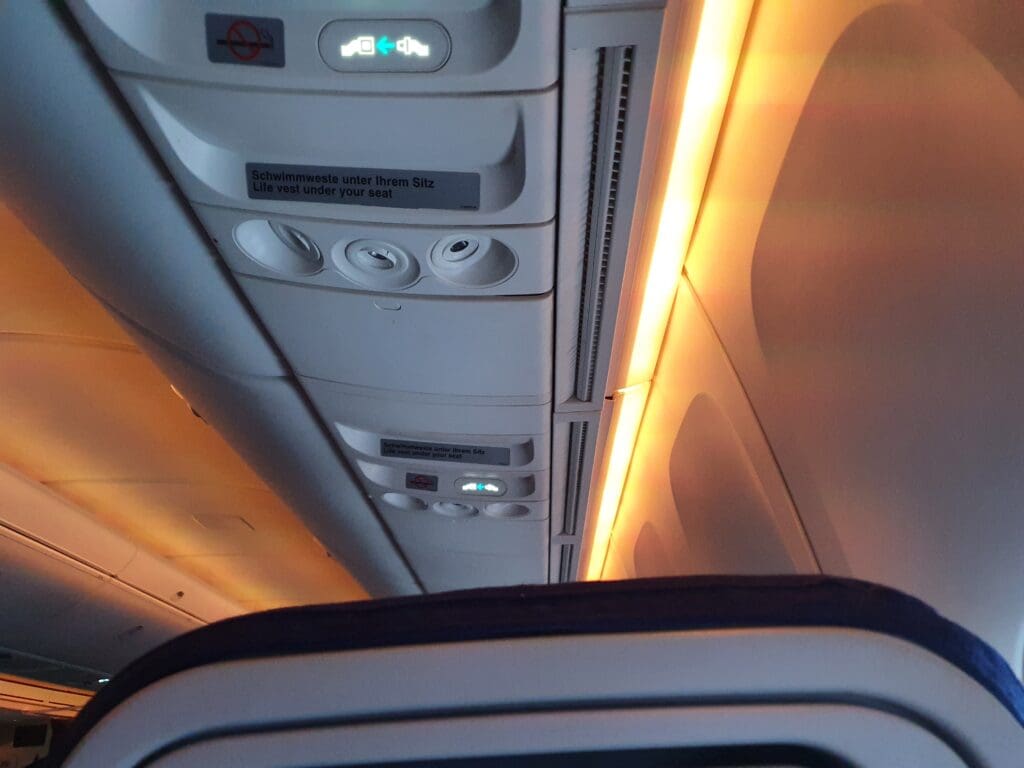
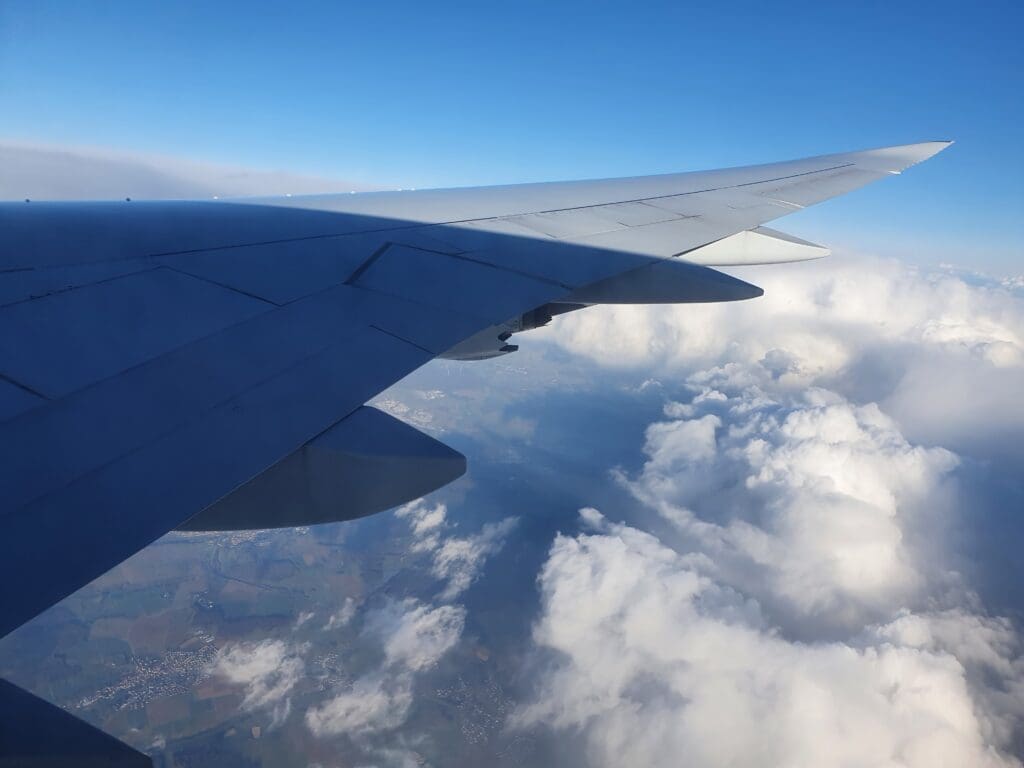
From Stuttgart, the aircraft made its way towards Heilbronn and Aschaffenburg as the crew ensured all was ready for our arrival before the jet sank into the clouds resulting in a fair amount of lumps and bumps. After sinking below these, a mixture of fields and forests could be seen with the occasional small town such as Hösbach and Mömbris appearing before the aircraft reached Hanau at which point the landscape below became decisively more urban as we approached Frankfurt. Upon reaching Hanau, the aircraft banked left and adopted a heading that would take it directly towards Frankfurt Airport’s Runway 25C.
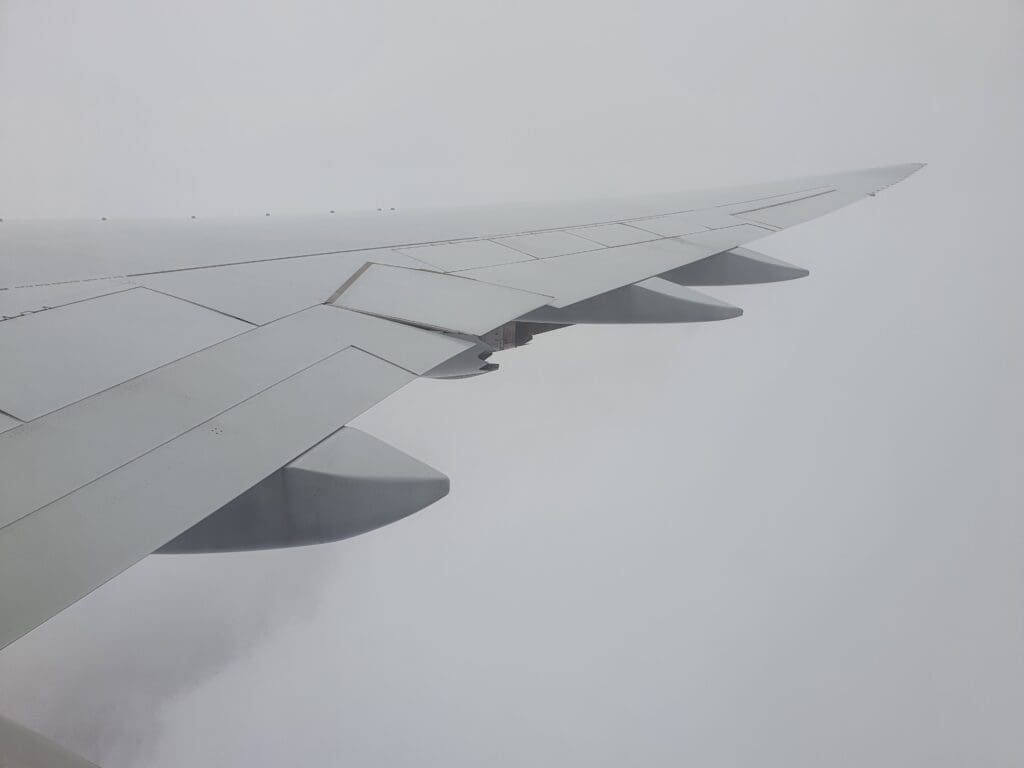
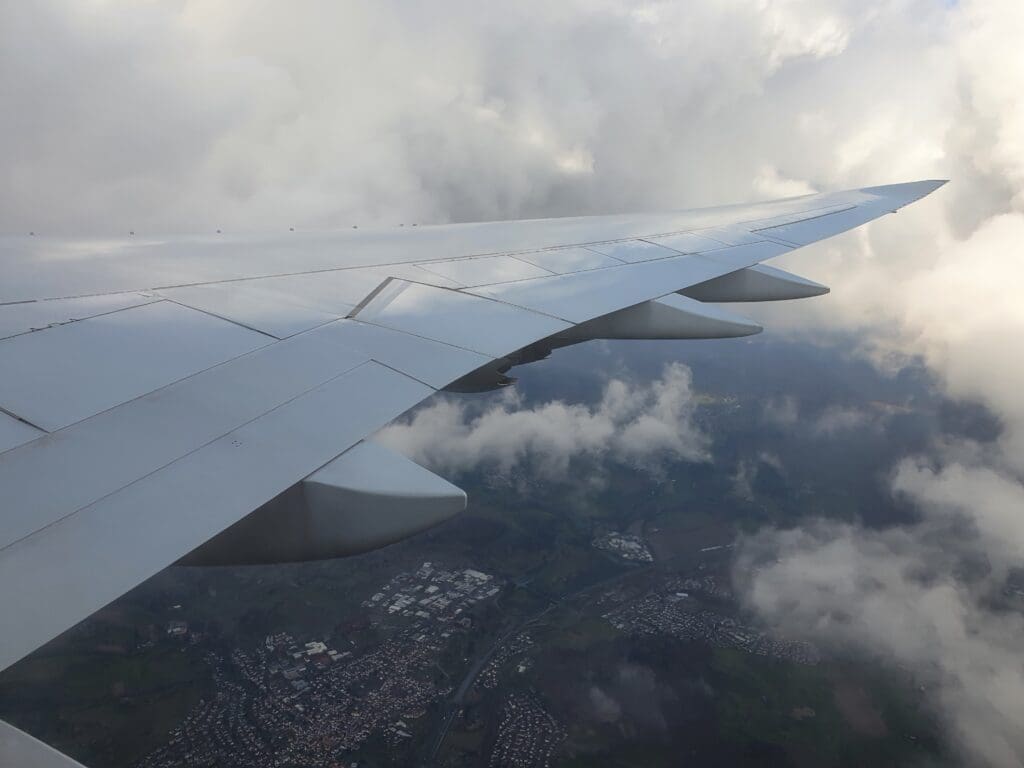
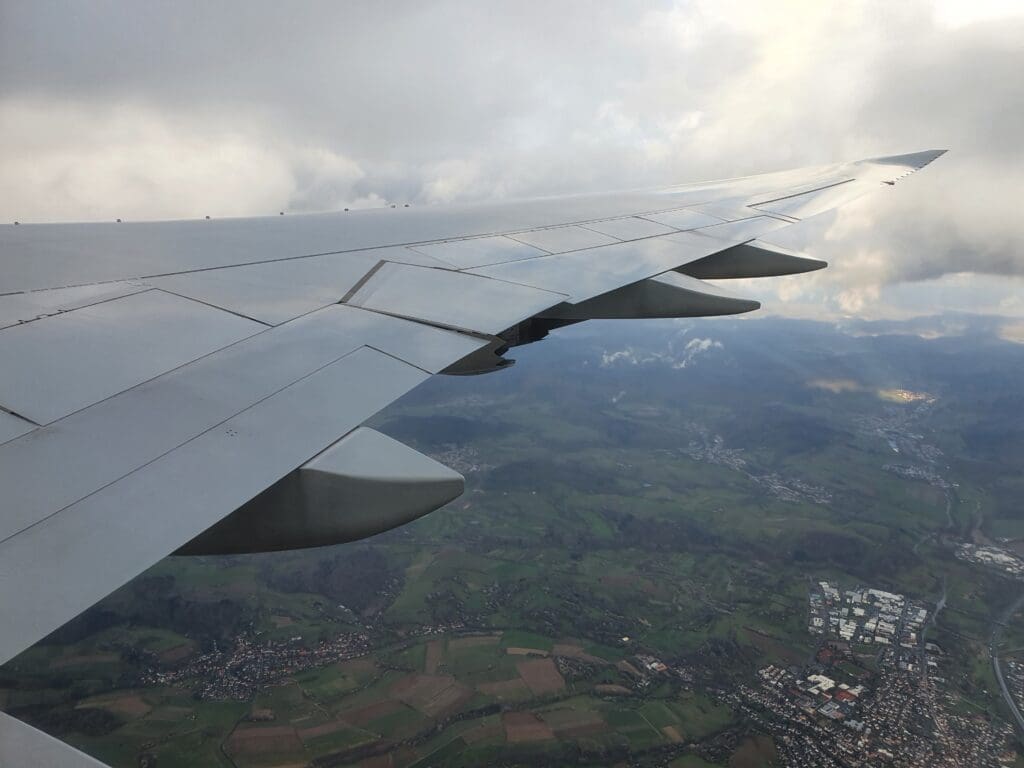
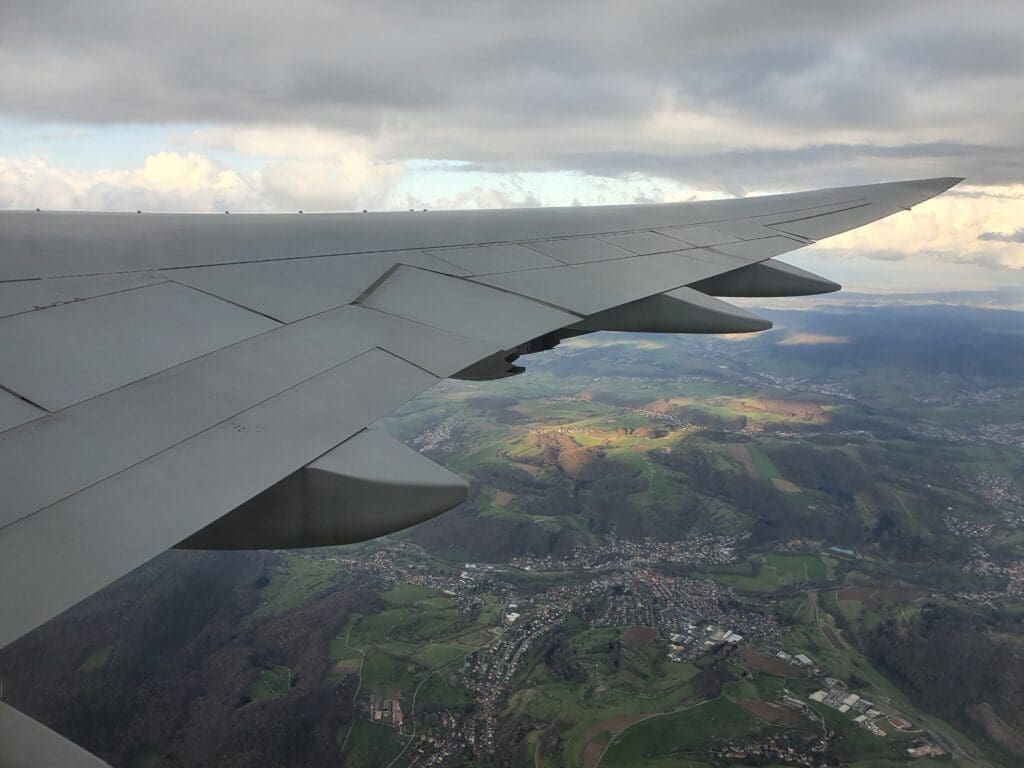
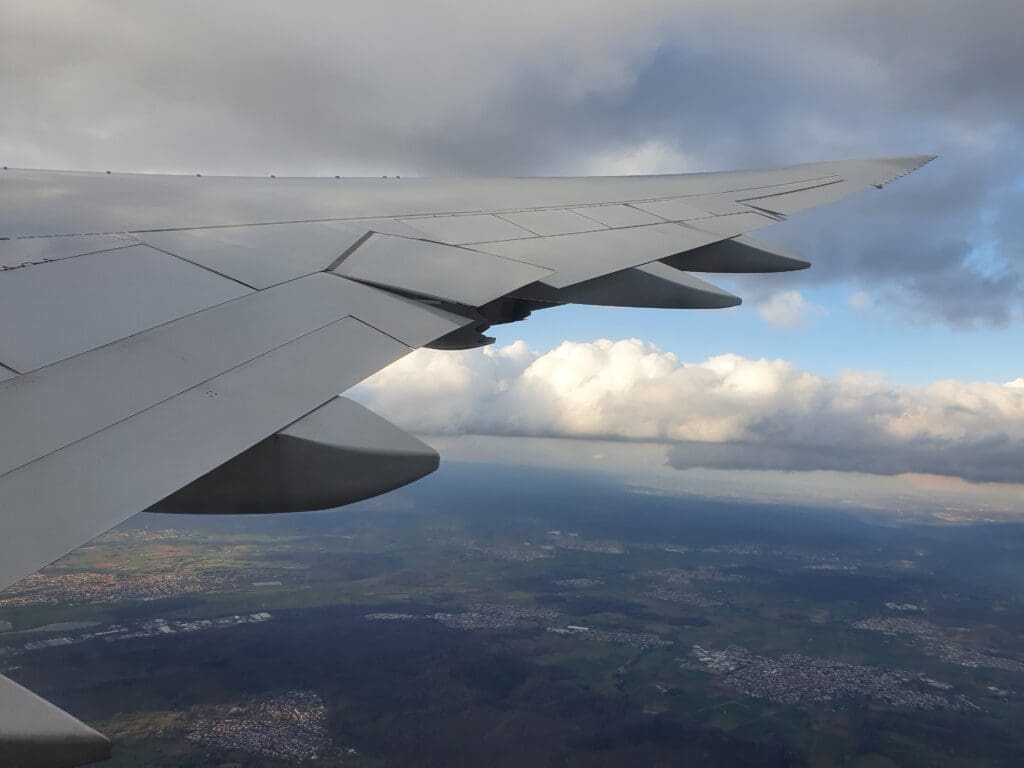
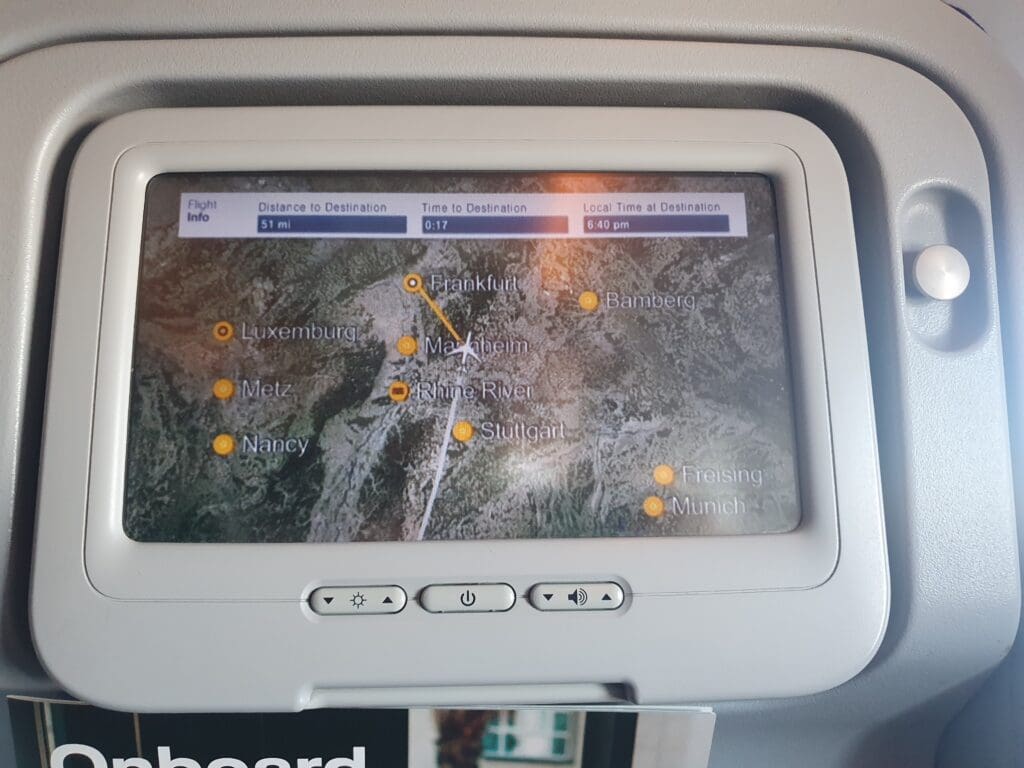
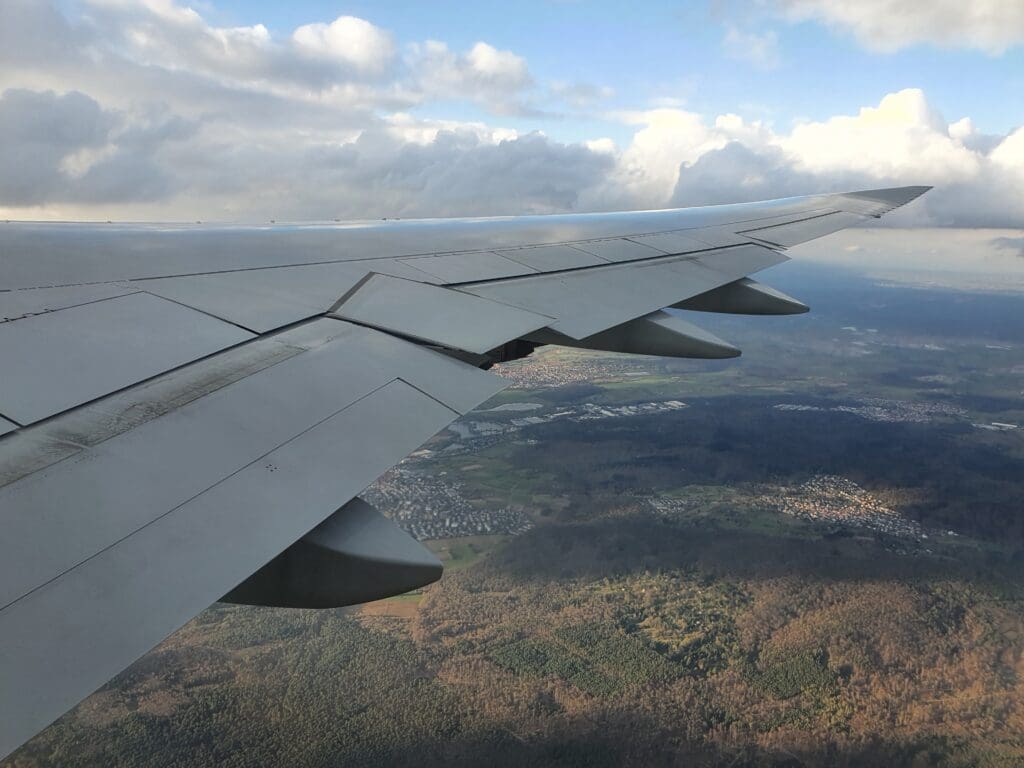
Heading into Frankfurt, the Boeing 747 roughly followed the course of the River Main and the rail lines leading into Germany’s fifth-largest city from the east. As the aircraft descended, the flaps and gear fell into position and the aircraft shook a little in the wind whilst the tall buildings of central Frankfurt appeared to the north of the aircraft. From there, the aircraft continued on its journey downwards and flew over the forests to the southwest of the city, with the Deutsche Bank Arena visible in the middle of this.
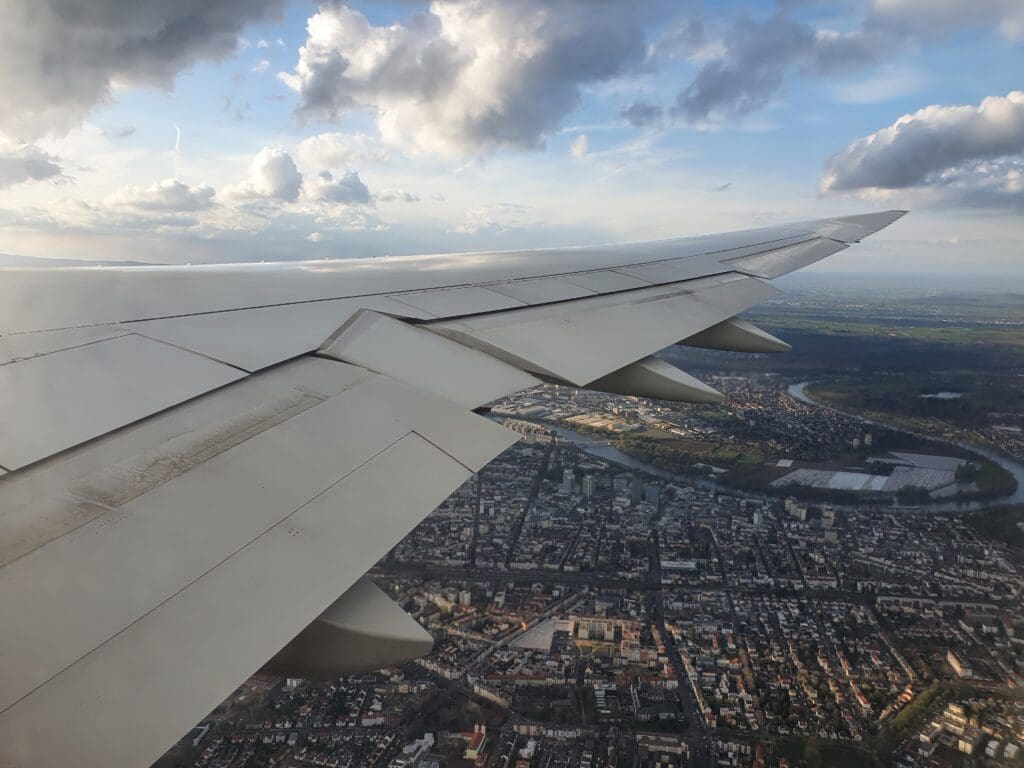
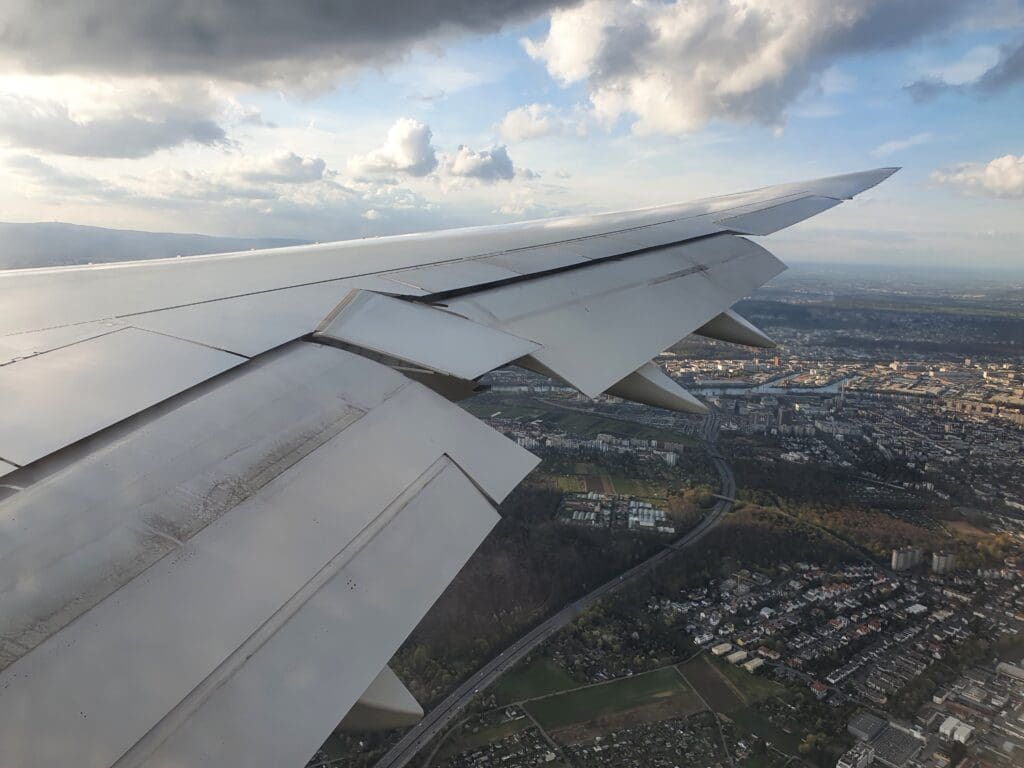
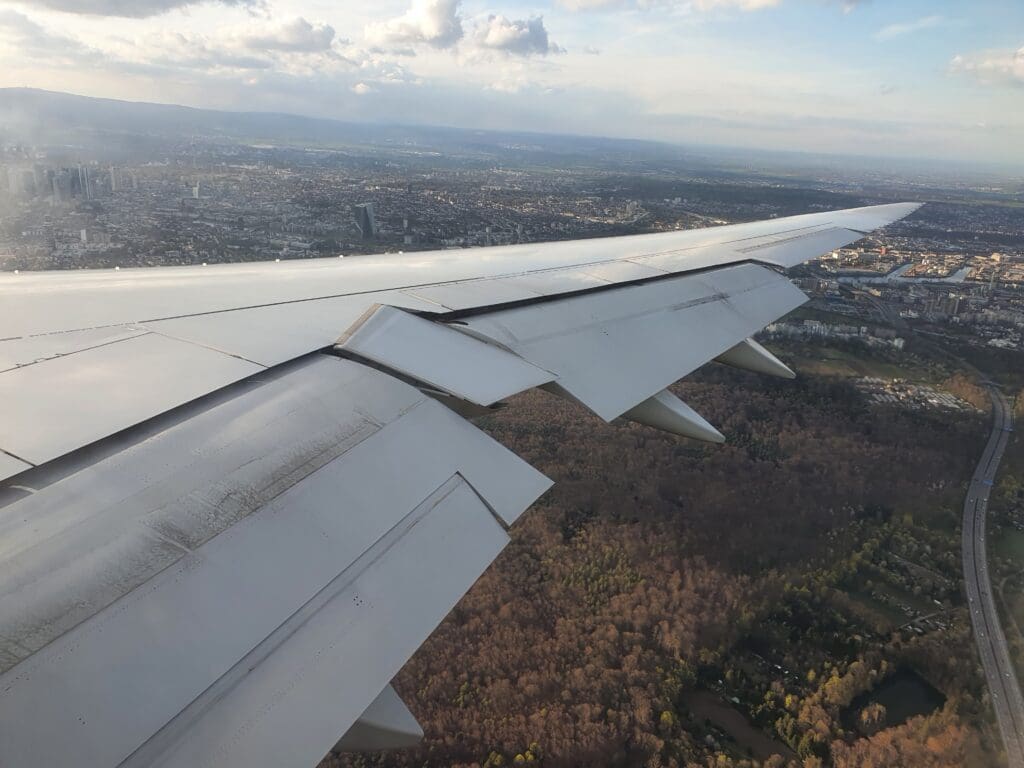
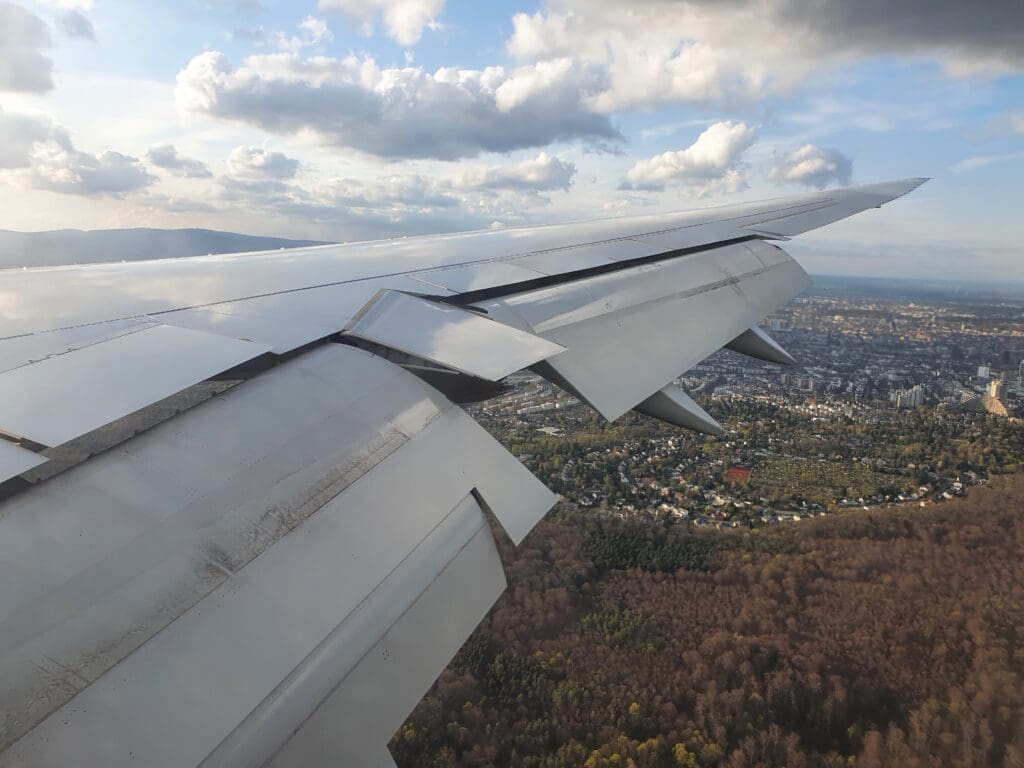
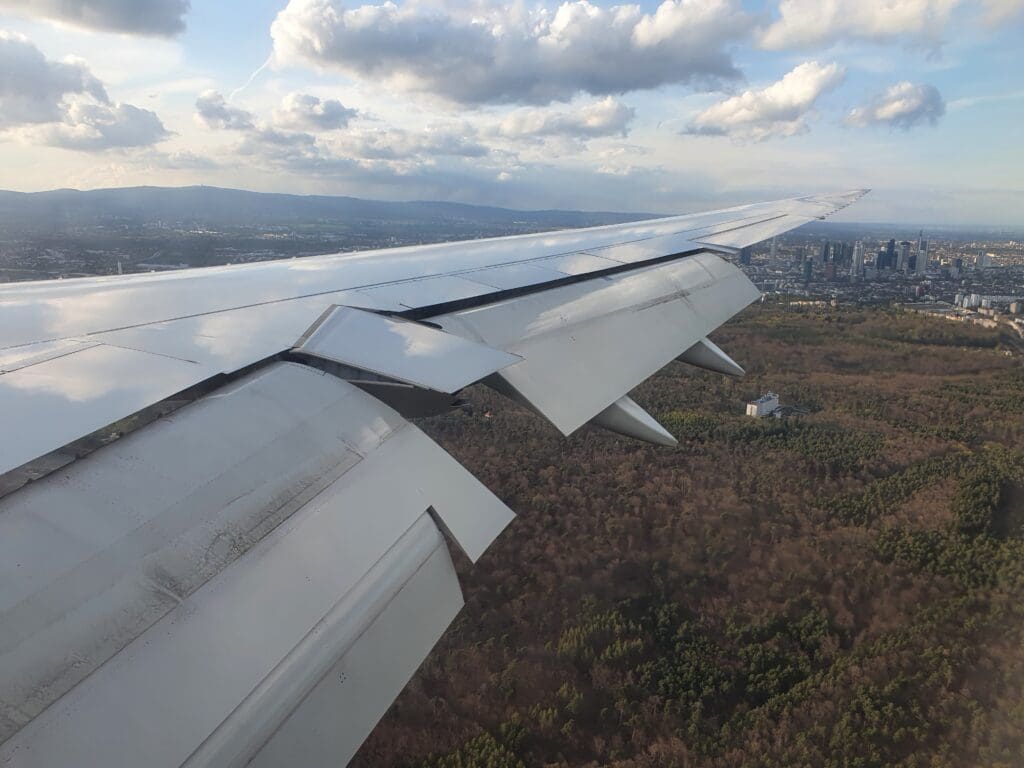
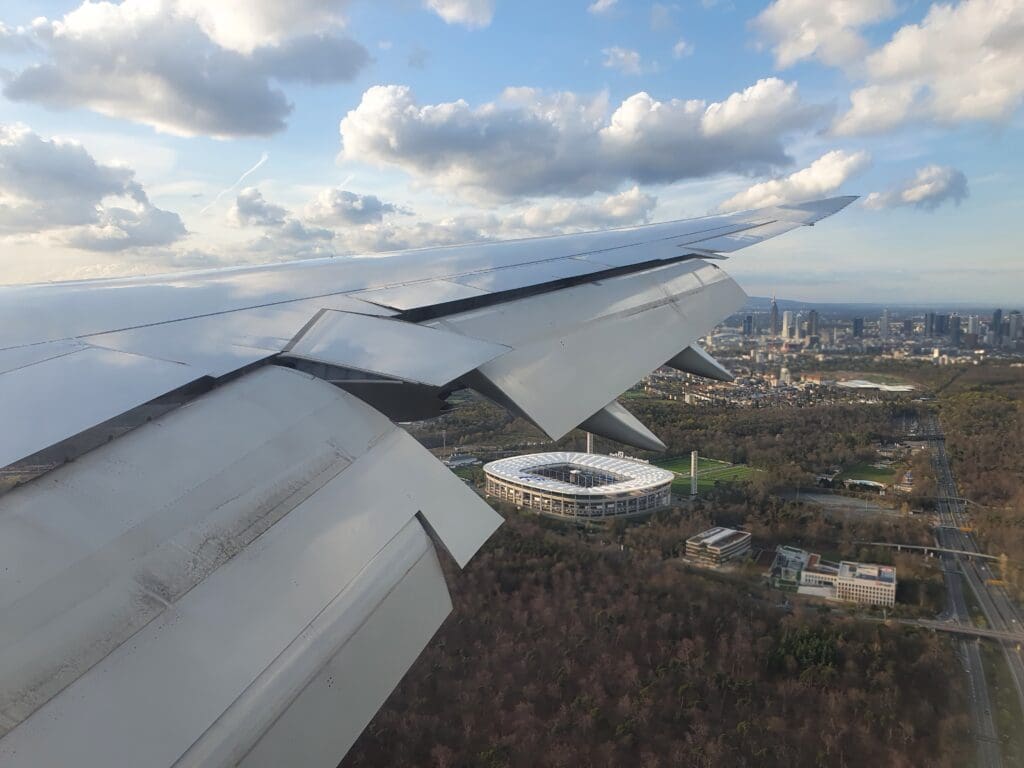
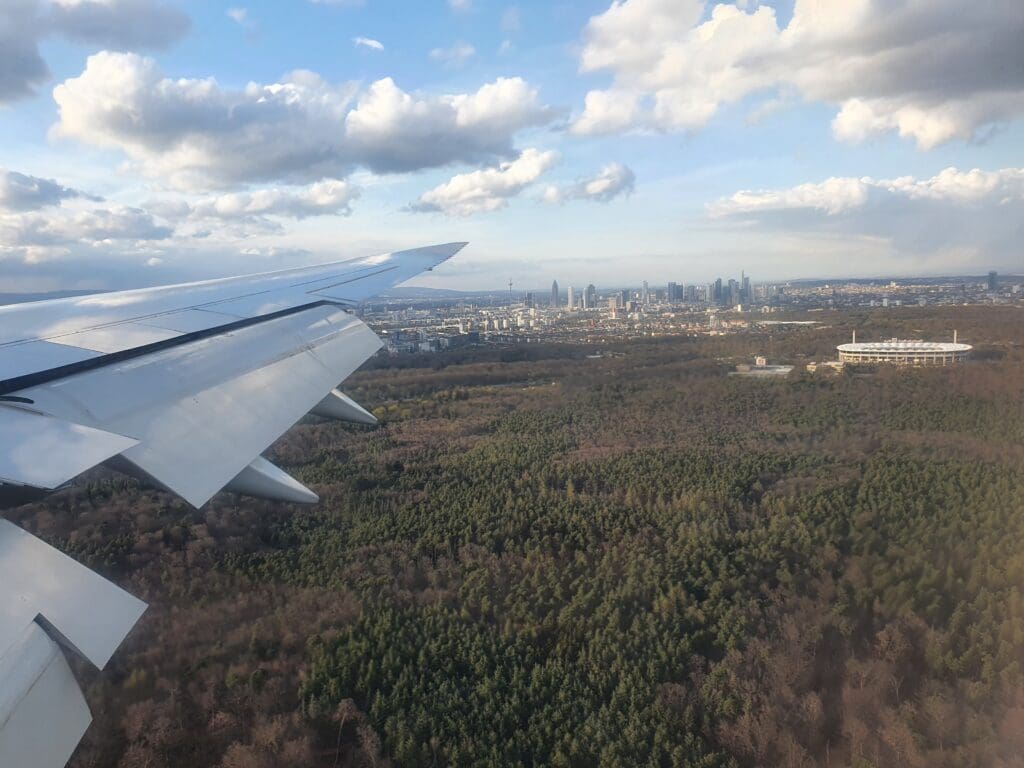
After passing over the busy Bundesautobahn 5, the aircraft crossed over Frankfurt Airport’s perimeter fence before I was welcomed to the airport by the sight of an Air Dolomiti Embraer parked up at a remote stand. This was then followed by a selection of visiting aircraft from abroad parked up at Terminal 1, waiting to head off to destinations both near and far. Following a mostly smooth ride lasting almost an hour and fifty minutes, at 1854 the Boeing 747-8 touched down in Frankfurt with a firm thud before the aircraft decelerated rather harshly as if the pilots were in a rush to exit the runway. Once the aircraft vacated the runway, the Purser’s voice filled the cabin once more as they performed their penultimate announcement of the flight. During this, they welcomed all to Frankfurt, thanked passengers for flying with Lufthansa and apologised for the flight’s slightly delayed arrival. However, that said, the aircraft did touchdown only 24 minutes behind schedule.
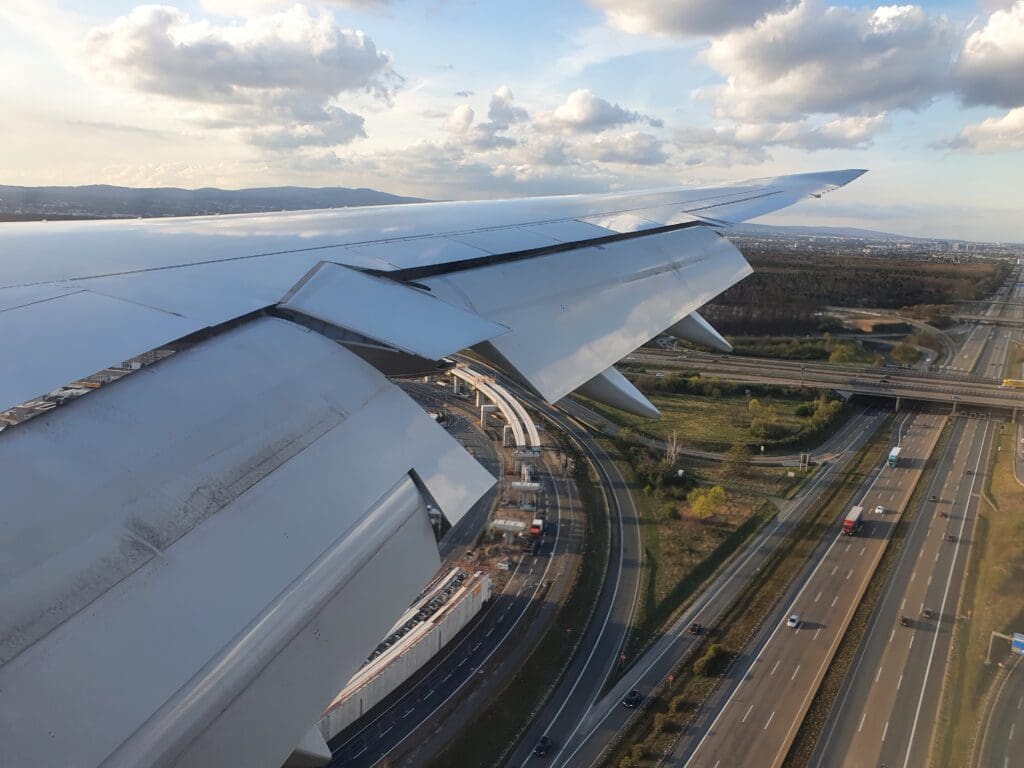
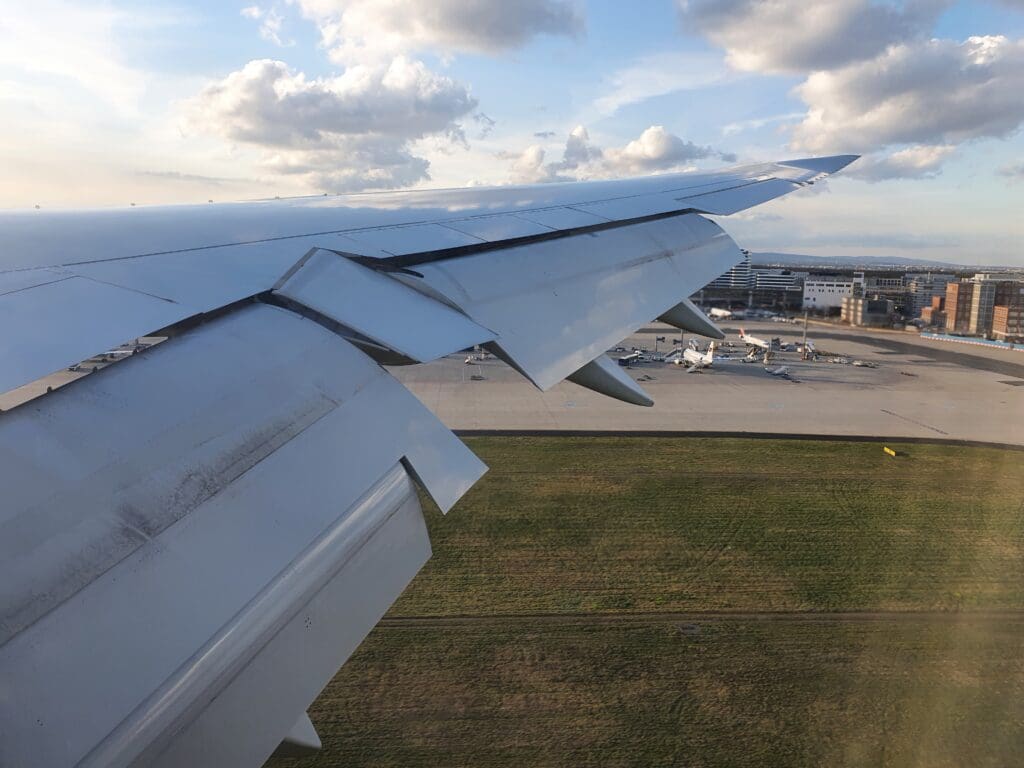
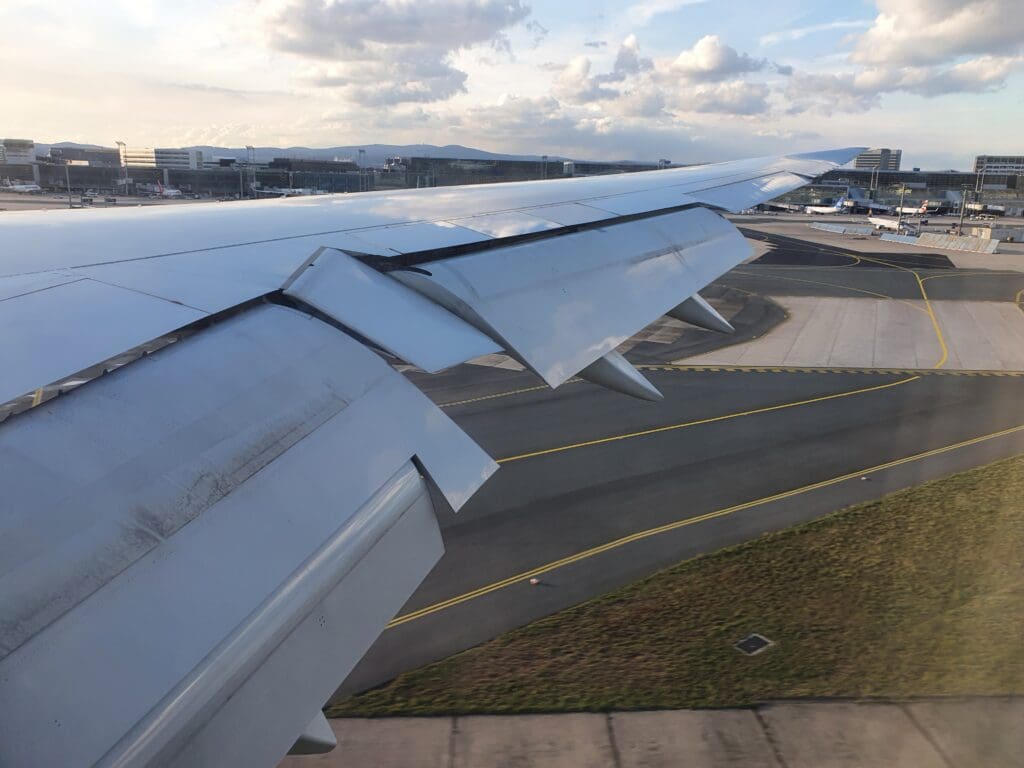
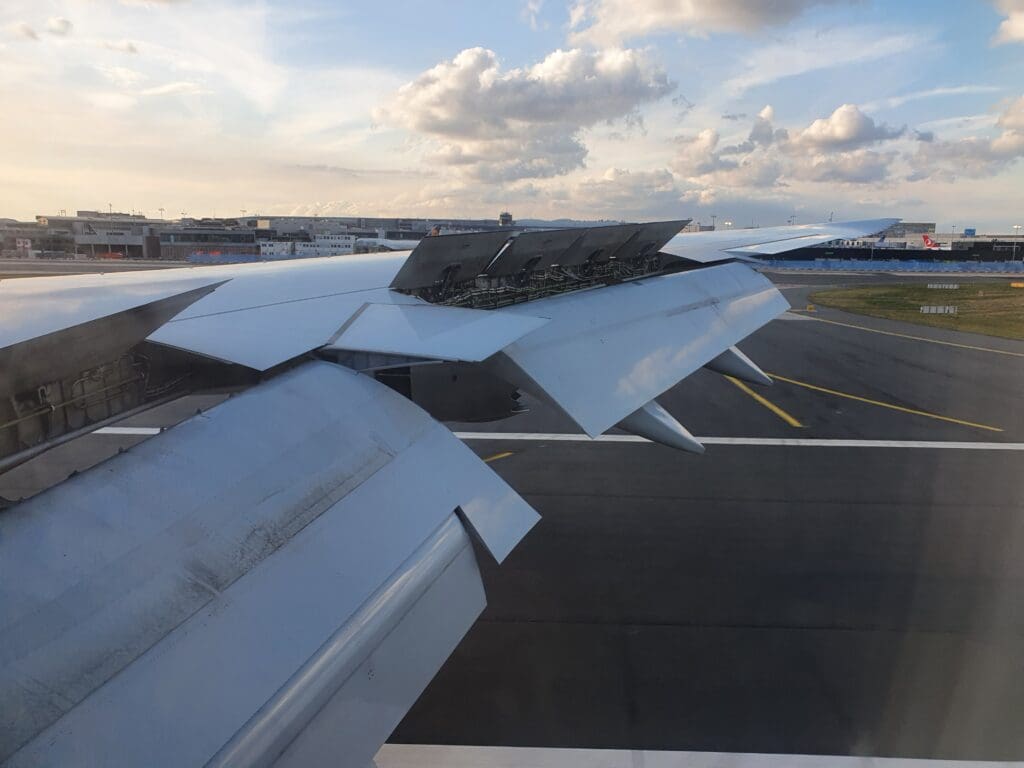
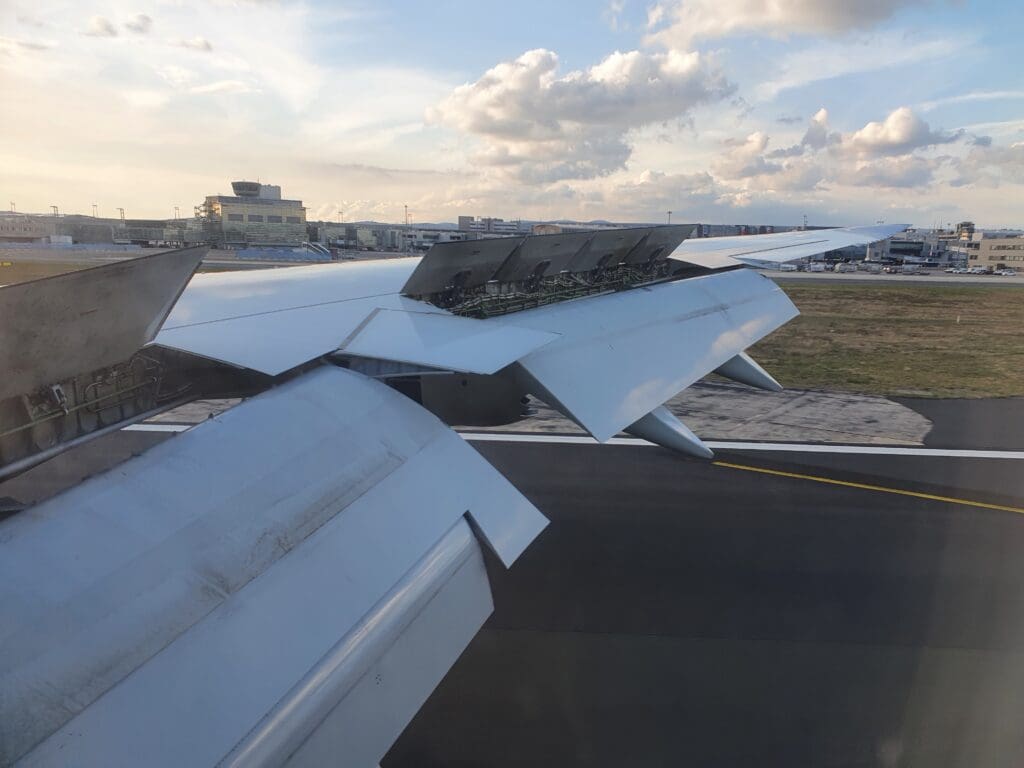
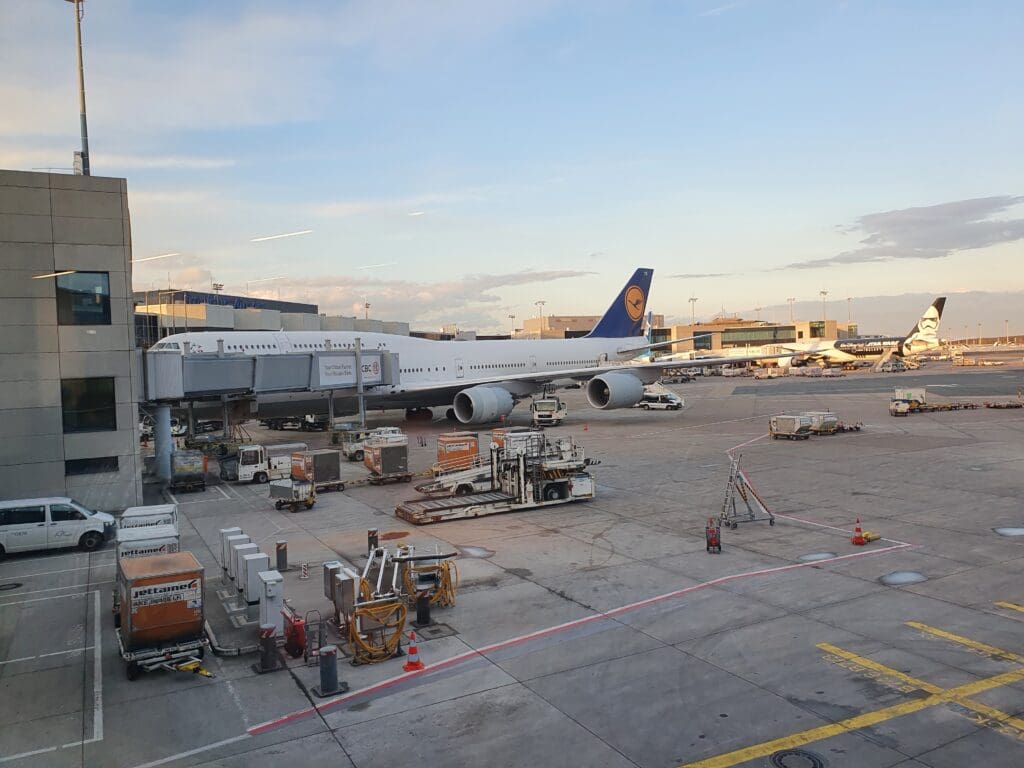
Whilst taxi times at Frankfurt Airport can be long thanks to the airport’s rather spread out runway layout, only a very short taxi would be in store, with the jet coming to a gentle halt at Stand B26 four minutes after touching down in Frankfurt. Once the engines spooled down, many, presumably non-enthusiast, passengers jumped up in a rush to exit the aircraft and get home at the end of their holiday. However, the Purser soon performed their final announcement informing passengers that there may be a short delay to disembarkation. This was down to the fact that, despite the aircraft pulling up to the terminal, arriving at the non-Schengen pier, airstairs would have to be brought up to the aircraft and passengers would be transported to the Schengen portion of Terminal 2 by bus. Whilst my flight to London was set to depart from the B pier, this was not entirely convenient given the fact I would have to journey back there on foot, but it was of course expected.
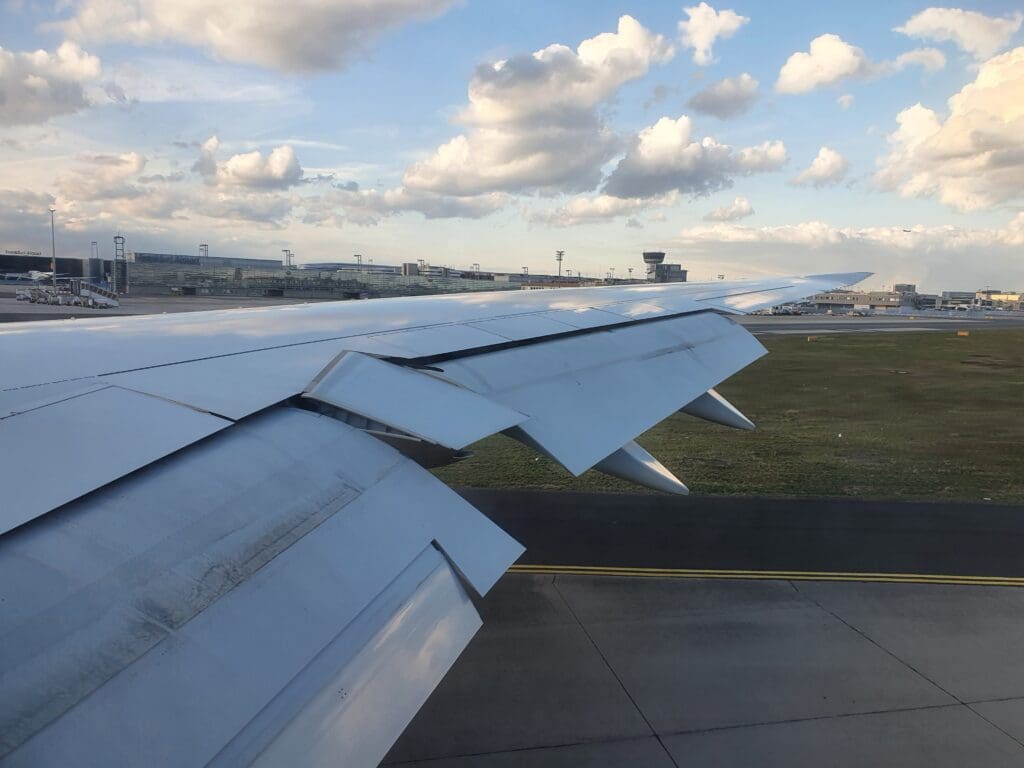
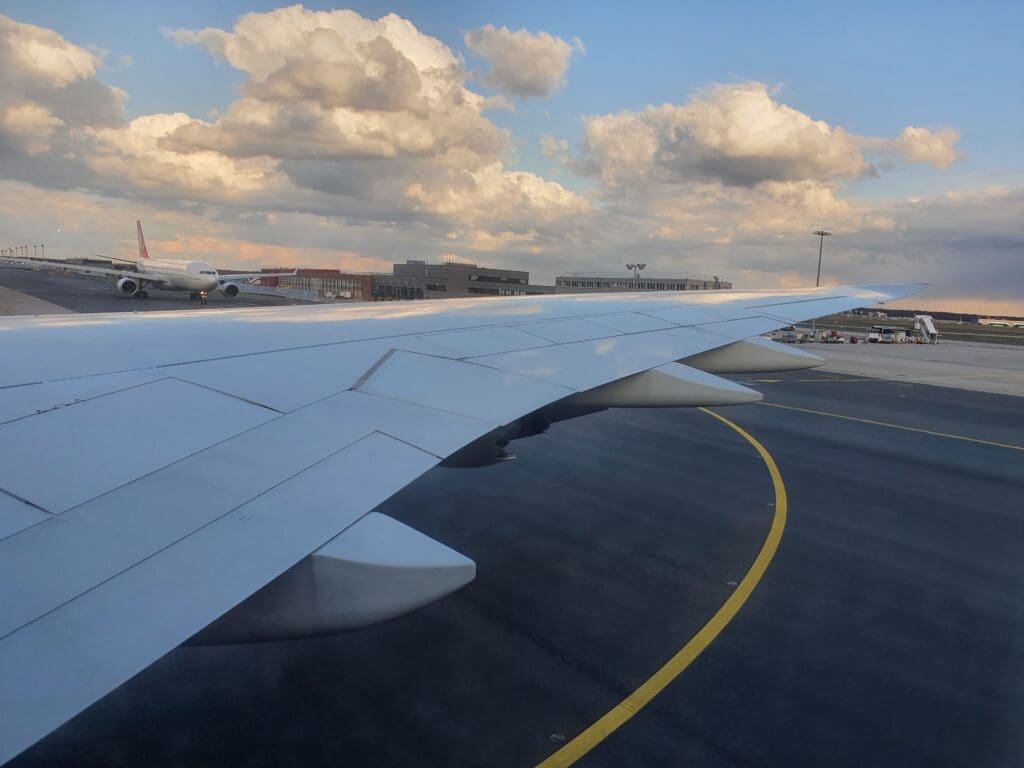
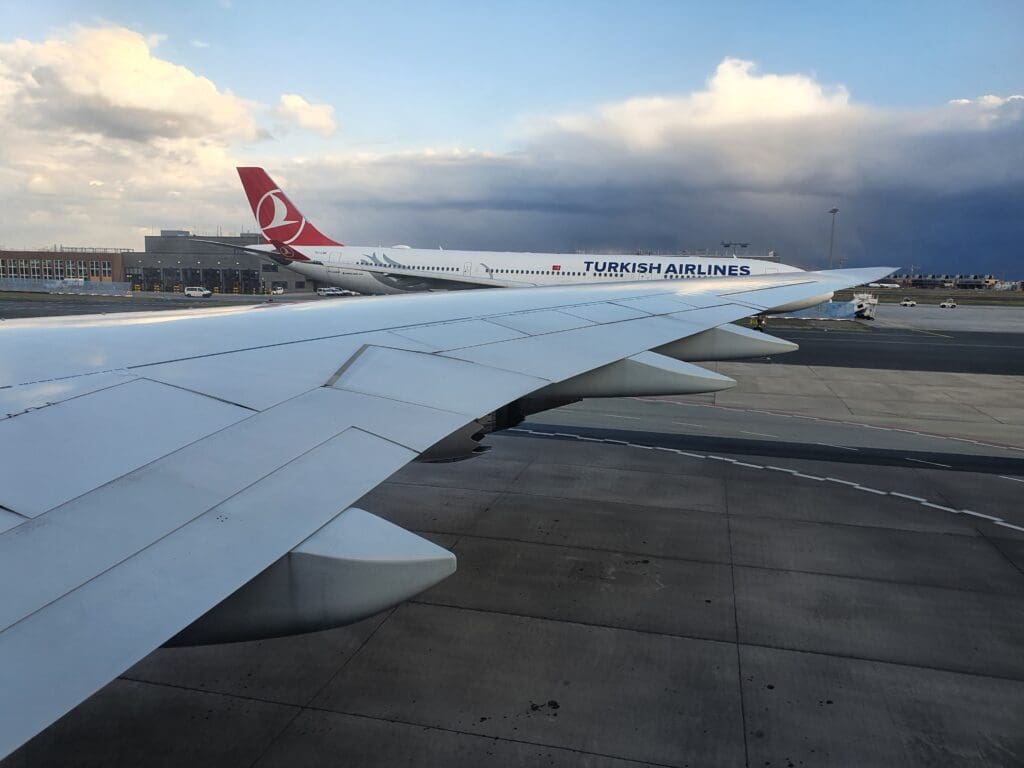
Eventually, airstairs were brought up to the 2L and 5L doors, a fleet of buses arrived and disembarkation commenced. Not being in any particular hurry, I remained seated until the queue began to move and eventually I stood up and made my way to the rear of the aircraft. After thanking a couple of crew members, I stepped out into the open air ten minutes after the aircraft had arrived on stand. After snapping a few photos, I made my way down the long airstairs and onto an almost full bus. Once as many passengers as possible had been squished into this bus, a minute or so later, the bus pulled away and commenced its short journey down the flightline to the Schengen portion of the terminal. Once this had arrived, I followed signs for the terminal’s B pier and commenced a long walk before arriving at a fairly quiet passport check. Whilst this had been an easy transit, as it turned out my stay in Frankfurt was to be a little longer than scheduled, with my next flight to London Heathrow delayed by over an hour.
Summary
Wearing my enthusiast hat, that afternoon, I was very happy to catch an ‘easy’ ride onboard a relatively rare Boeing 747-8 and I most certainly do not have any regrets about flying with Lufthansa that afternoon even though I ended up arriving in London an hour behind schedule. The Boeing 747 itself had proven to be comfortable, and other than my slight complaint about the slow, clunky and outdated inflight entertainment system, I would not have had any issues with flying on the aircraft on a long-haul flight. However, as with pretty much every single Lufthansa flight that I have taken thus far in my life, the crew proved to be very hit-and-miss – with some members of staff appearing to be very friendly and polite, whilst others members seemed to be disappointingly cold and distant. Nevertheless, my experience that afternoon did not provide me with any major reason not to fly with Lufthansa again.
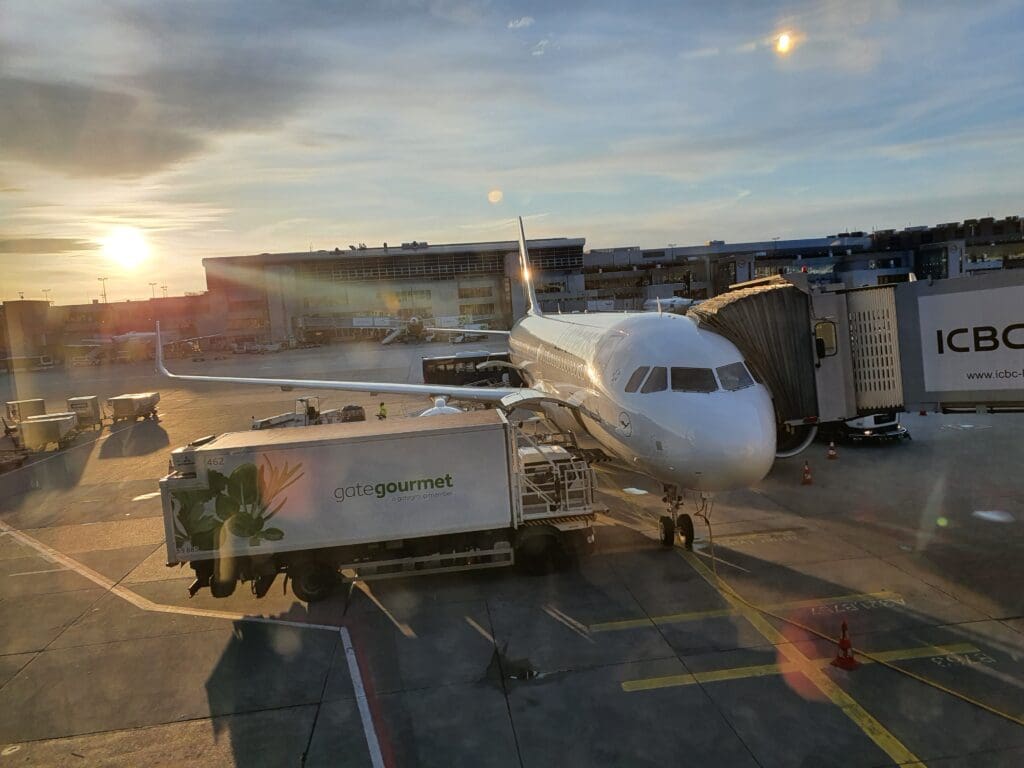
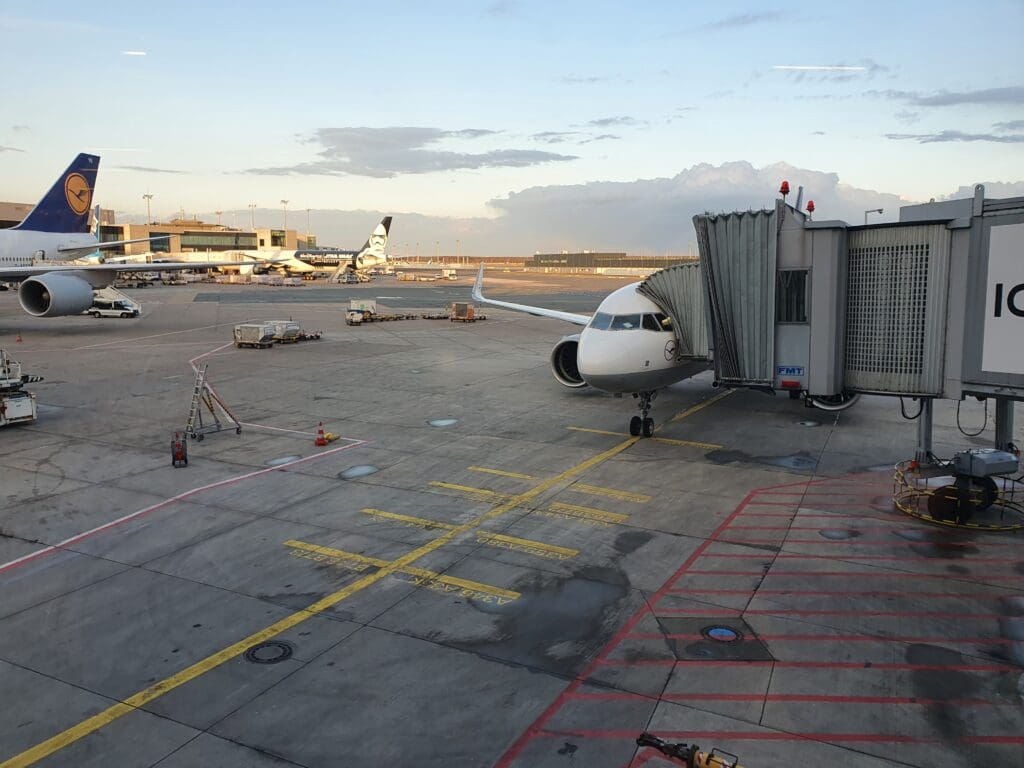
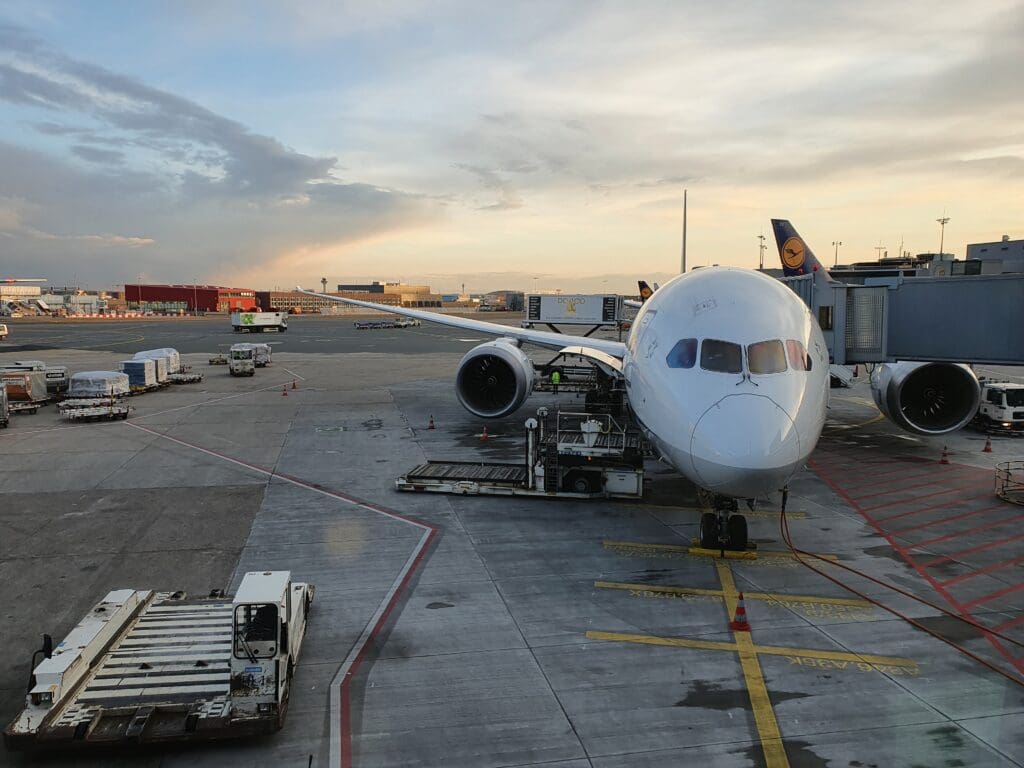
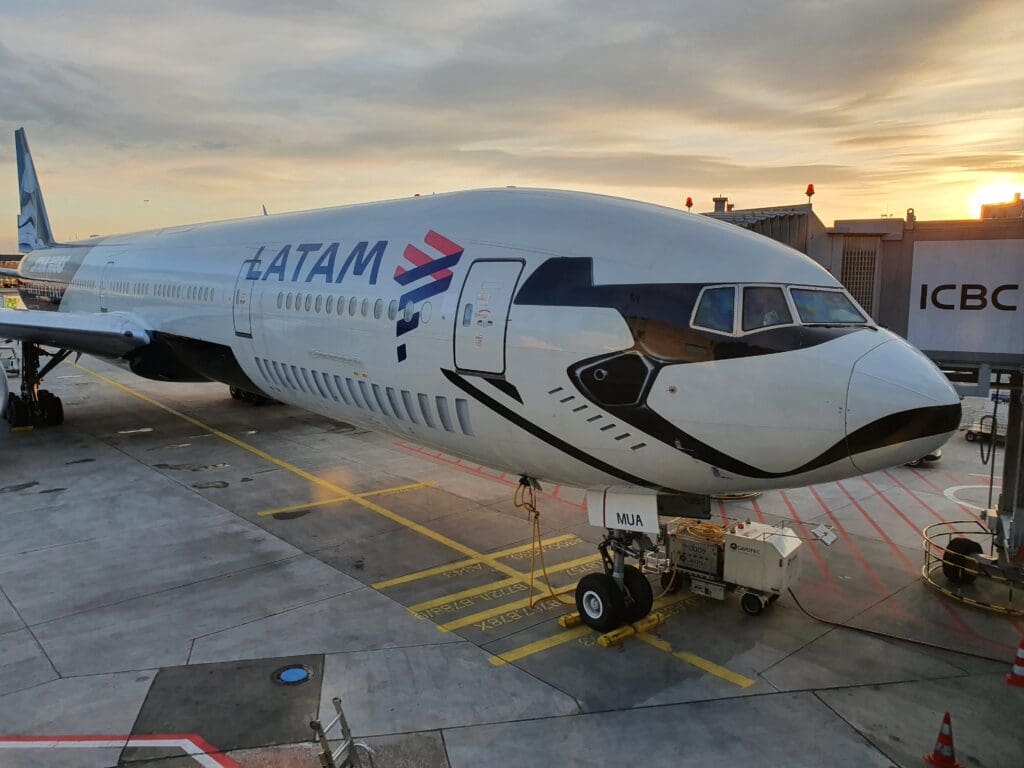
To end, here are some photos I took during my transit before I got dark