Riding Gulf Air’s Flagship: Bahrain to London Heathrow on a Dreamliner
You can read about my fantastic flight from Frankfurt to Bahrain onboard one of Gulf Air’s Airbus A321neos here, and my ride from Dubai to Bahrain onboard an Airbus A320neo here.
Following a short and pleasant hop over from Dubai onboard one of Gulf Air’s Airbus A320neos, I walked up the jet bridge and entered Bahrain’s modern terminal. Having arrived at gate sixteen near the centre of the terminal, once in this I did not have far until I reached the atrium where those ending their journey in Bahrain are siphoned off from those who are connecting to other services. Falling into the latter category, after a quick toilet stop I made my way up the escalators into the terminal’s security hall. Unlike at many airports, those who are connecting in Bahrain must undergo a security check before being allowed to re-enter the terminal’s airside area. Having arrived at a fairly busy time for arrivals, a long snaking queue of passengers, both connecting and commencing their journeys in Bahrain, could be seen. With only a small number of checkpoints open for Economy passengers, it took some time until I was able to reach one of these. Finally, around 25 minutes after joining the security queue, I was free to explore the delights of Bahrain Airport.
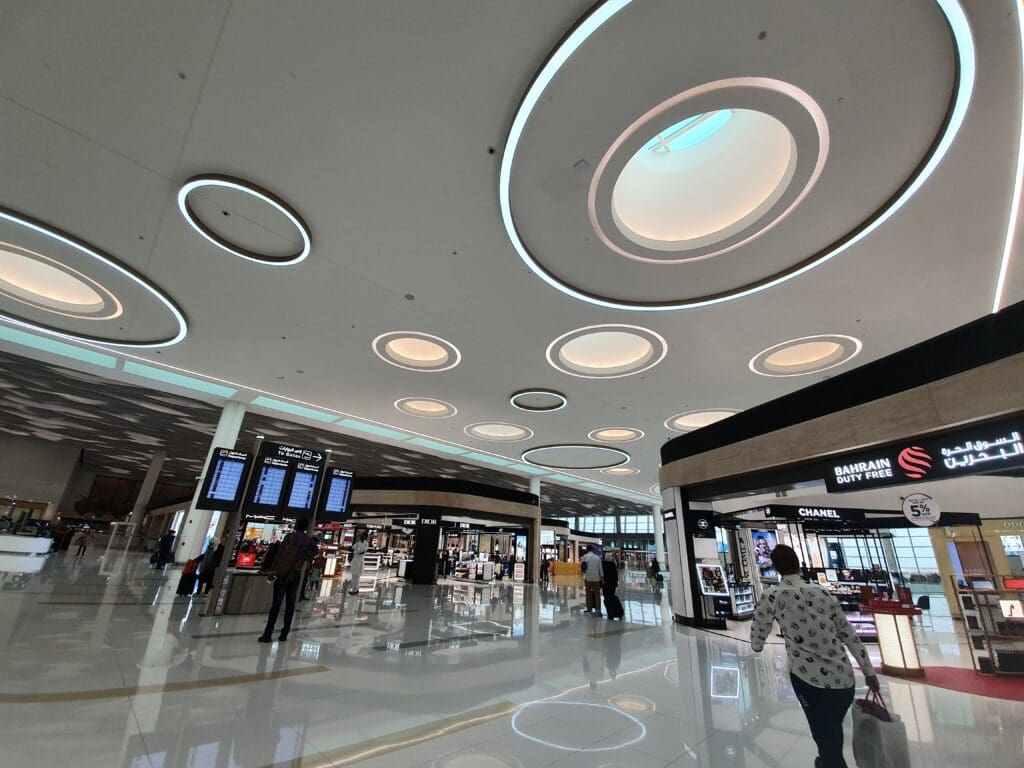
Designed to allow Gulf Air to further develop its route network and complement its status as a high-quality carrier, as well of course to provide Bahrain with a delightful transportation hub, the airport’s sole terminal opened in January 2021, almost exactly ten months before my trip. Given its age, as expected the terminal appeared to be brand new, shiny and incredibly modern. With high ceilings, bright open spaces and some very stylish elements of design, the terminal is undoubtedly one of the more architecturally memorable ones that I have had the pleasure of passing through in the past few years. In addition, rectangular in shape and running along the apron, the layout of the terminal is positively simplistic, allowing passengers to easily navigate their way through on their way to their gates. Aside from design, the terminal features all the usual facilities that you would expect at a major air terminal, such as luxury and more ‘regular’ shops, cafes and restaurants, the latter selling goods at typically airport-inflated prices. Meanwhile, a luxury airside hotel and spa, the appropriately named Gulf Hotels Group-operated Bahrain Airport Hotel is also on offer for those with enough time and money. Of perhaps more interest to aviation enthusiasts are the large floor-to-ceiling windows which offer good vistas of the airport’s runway, most gates and the stands to the north of the runway. Finally, all will likely appreciate the fact that seating in all shapes and sizes, ranging from comfortable sofas and recliners to stools was on offer throughout the terminal, with many seats featuring built-in plug sockets and USB-A ports. My only slight complaint about the terminal was that passengers reliant on the airport-provided wifi are only offered a complimentary hour whilst connected to this, with longer periods available for a fee. Whilst this worked well for the first hour, these days paid wifi networks at airports are becoming increasingly rare.
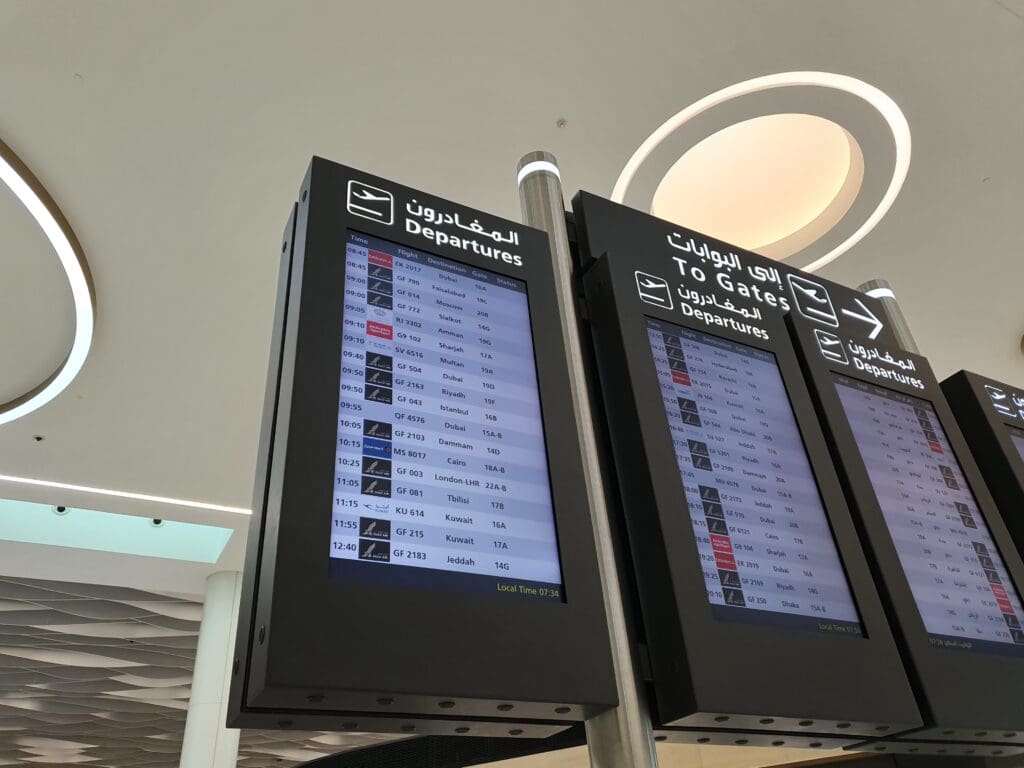
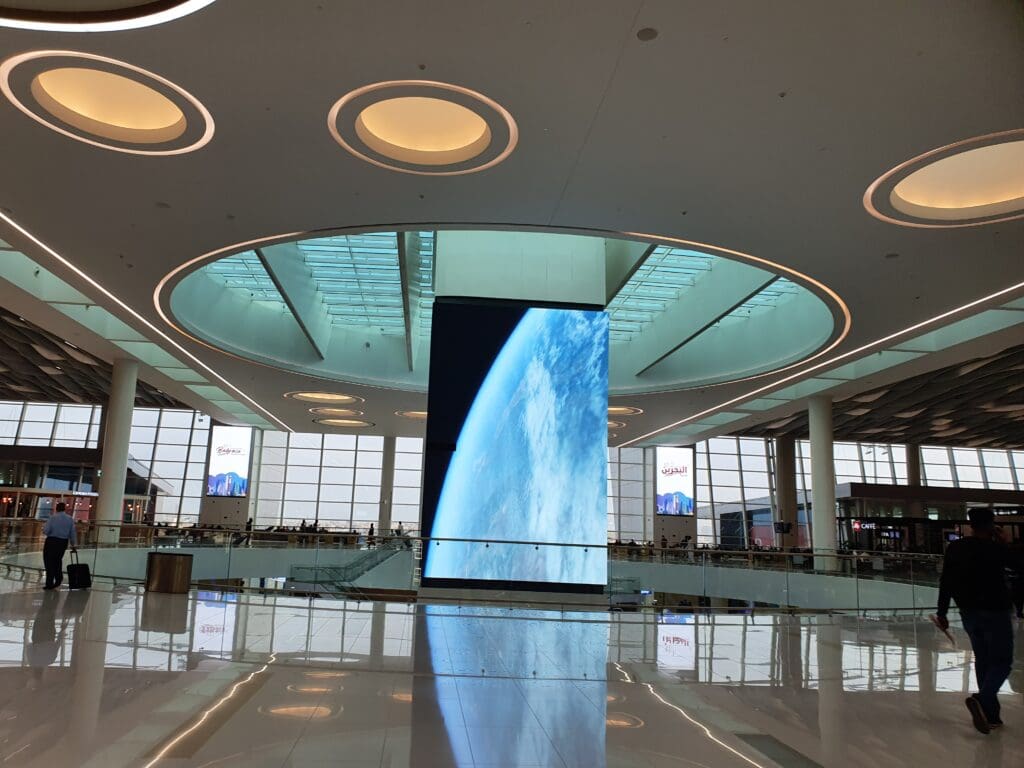
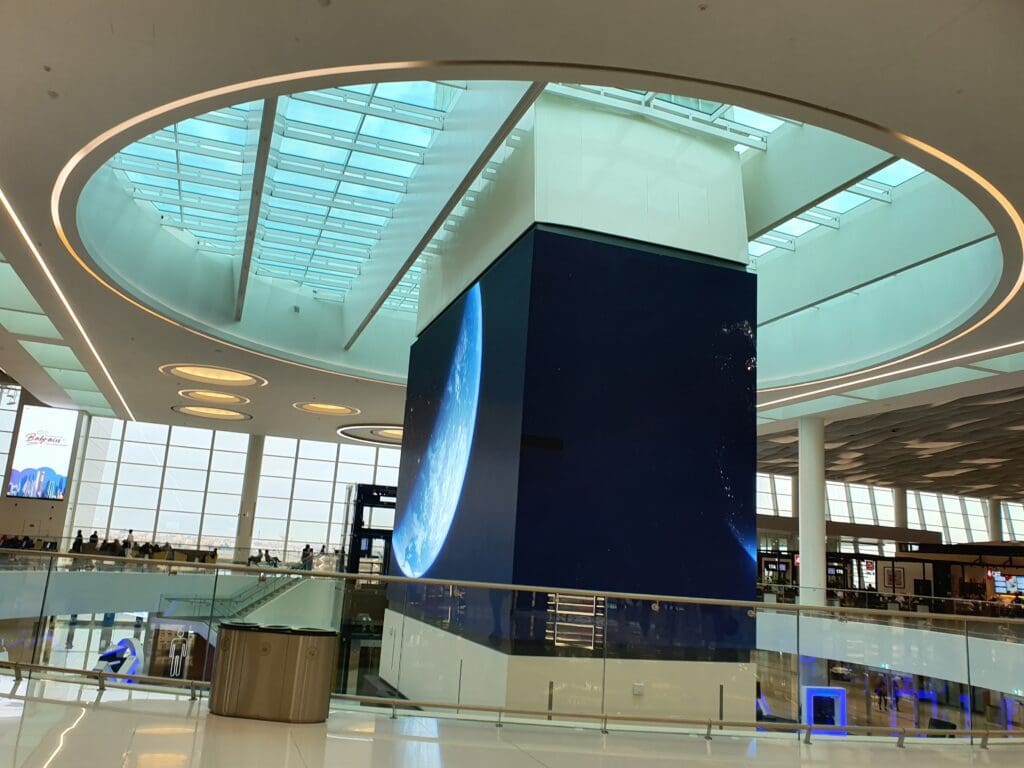
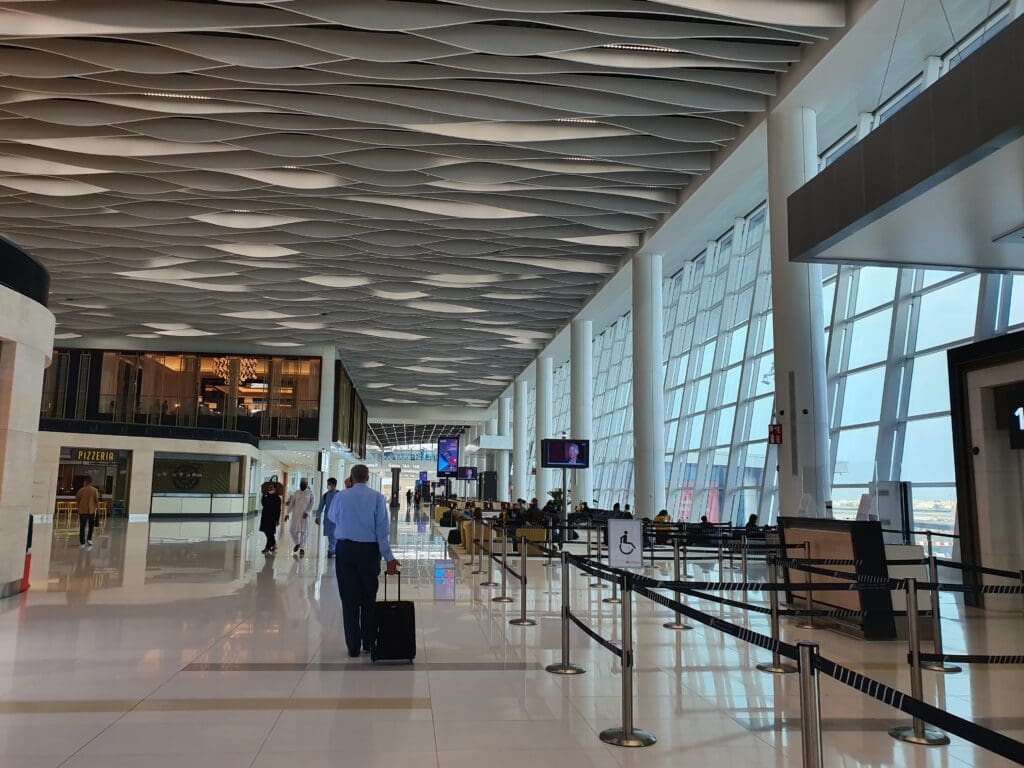
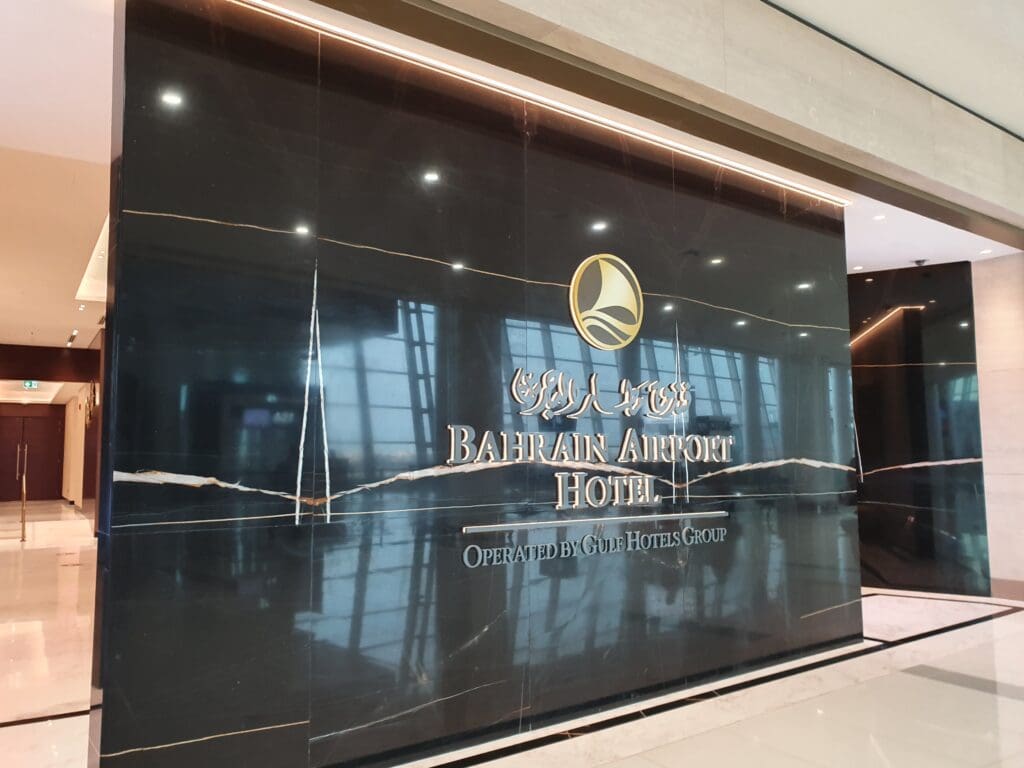
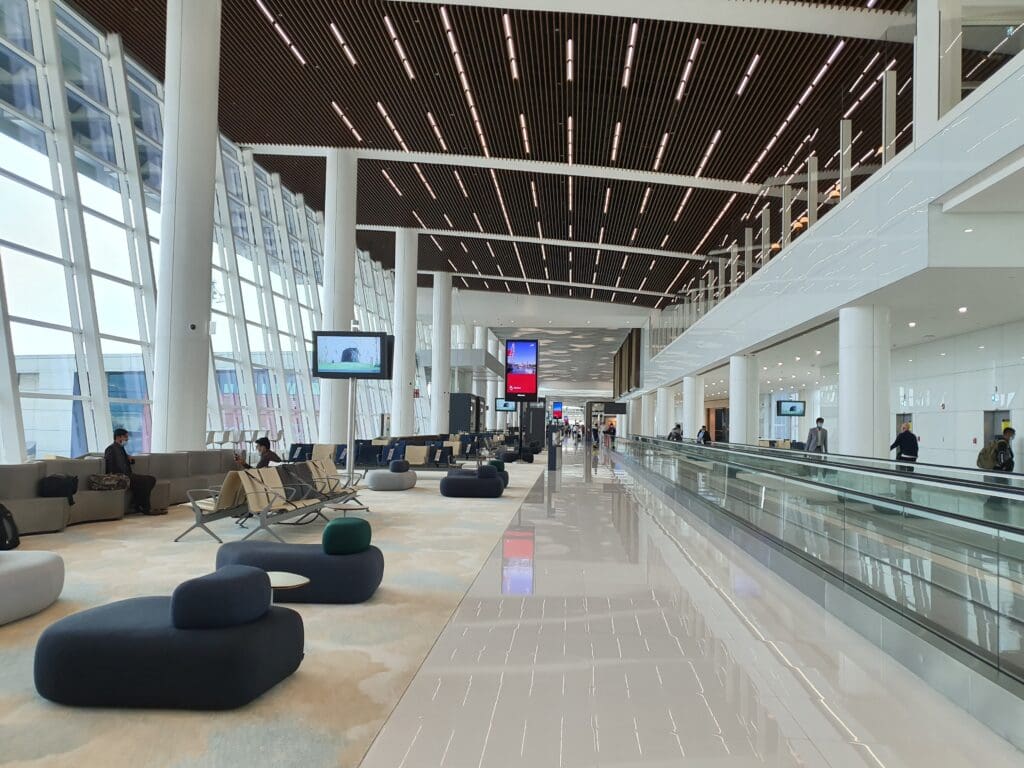
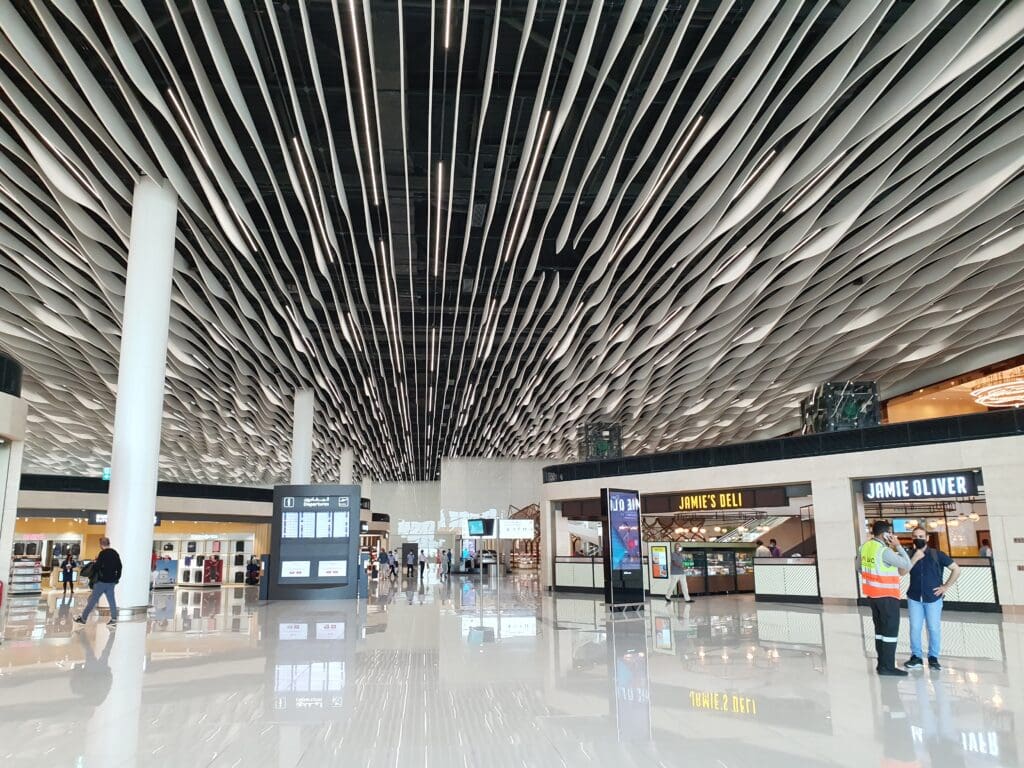
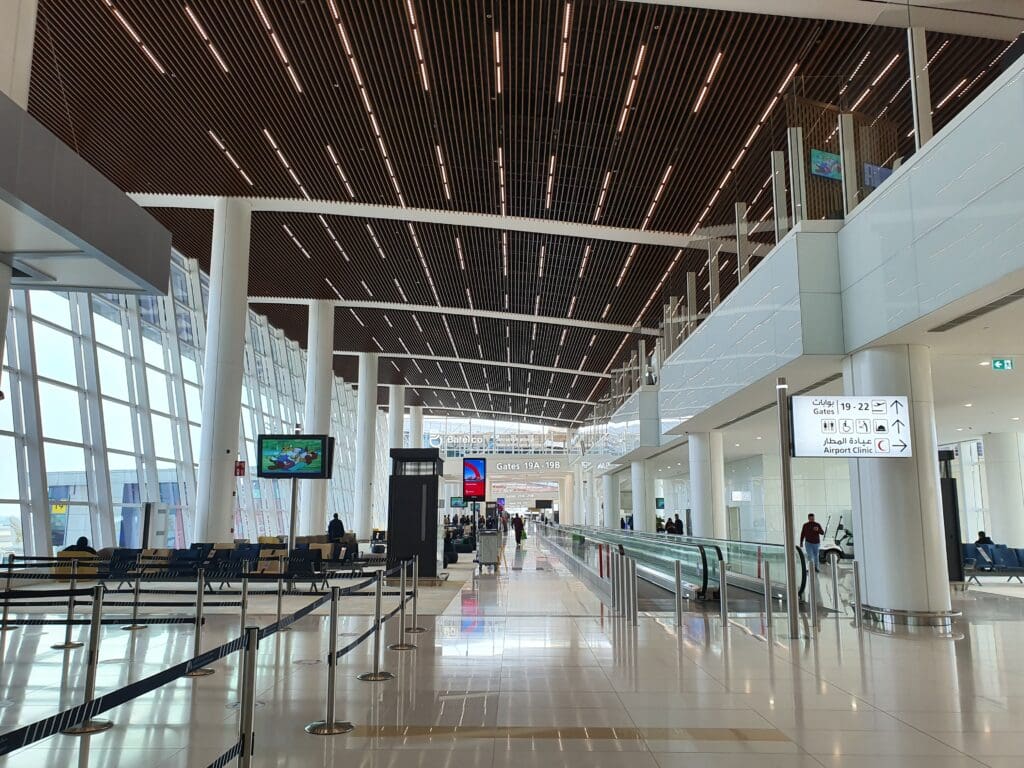
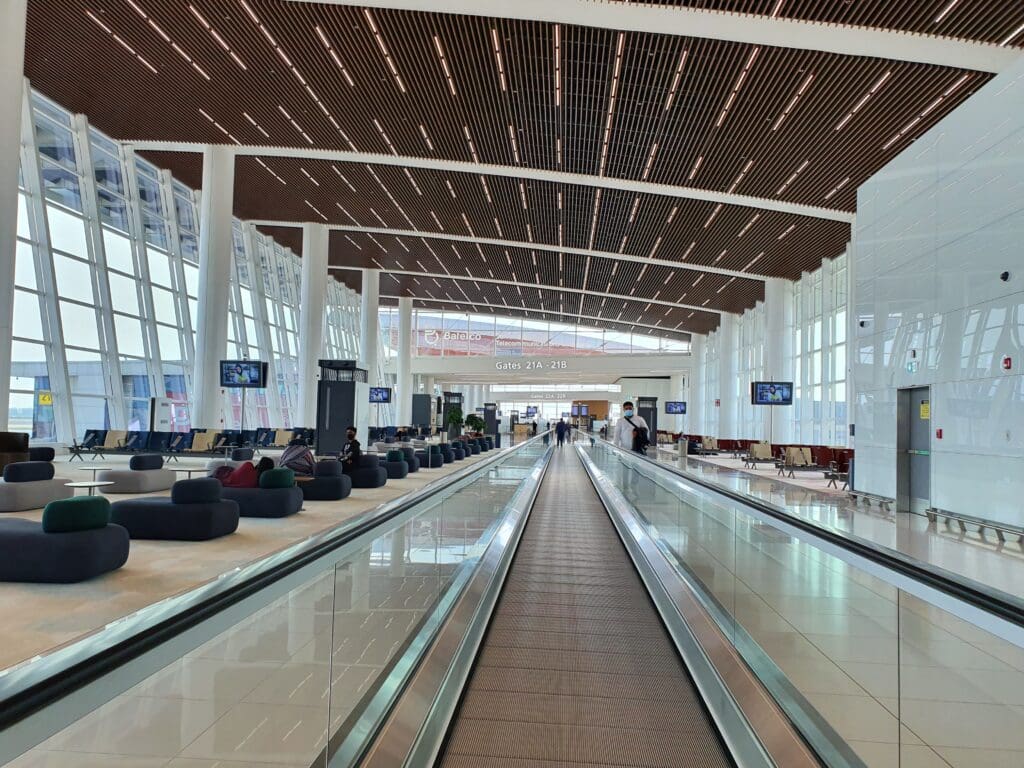
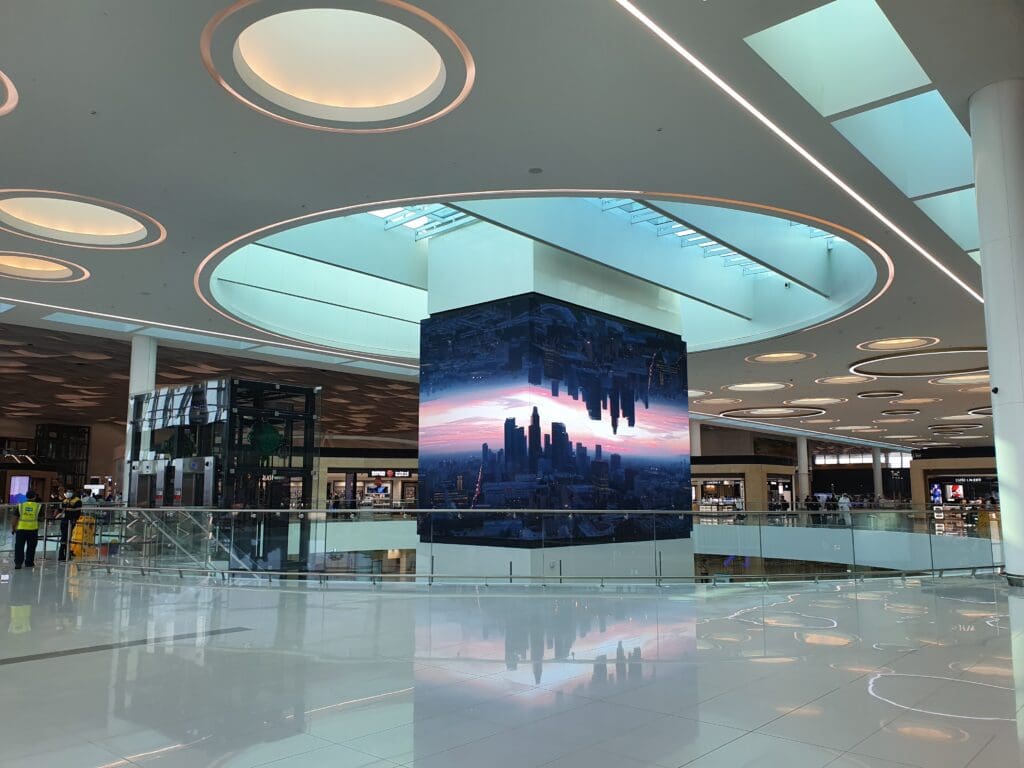
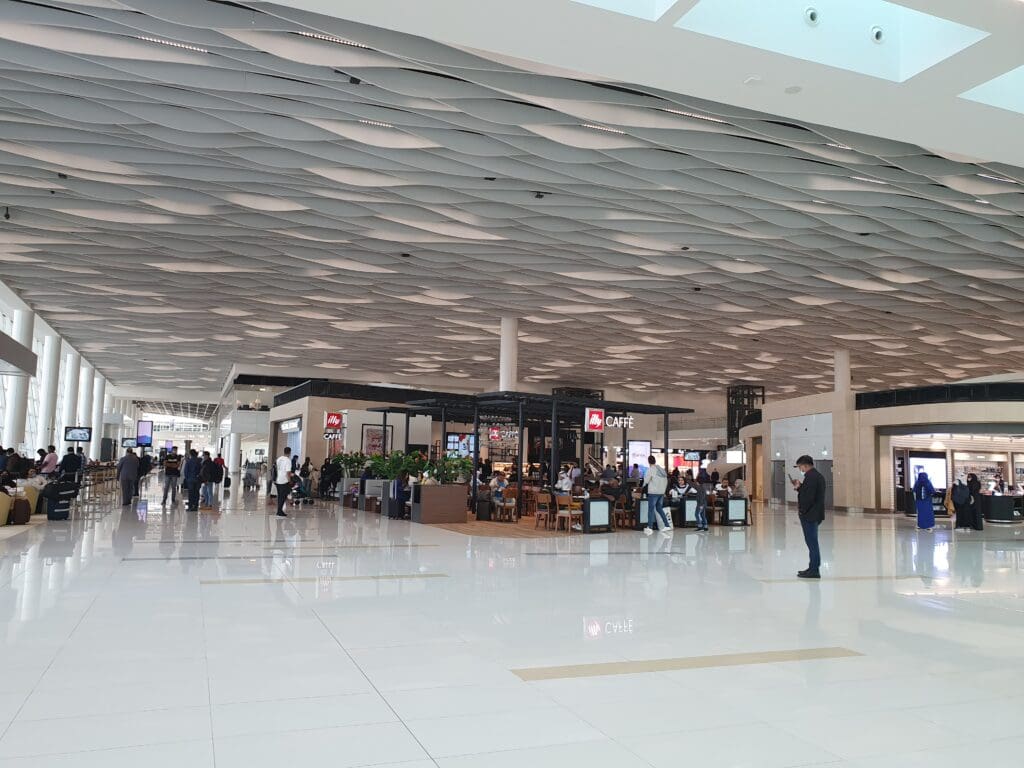
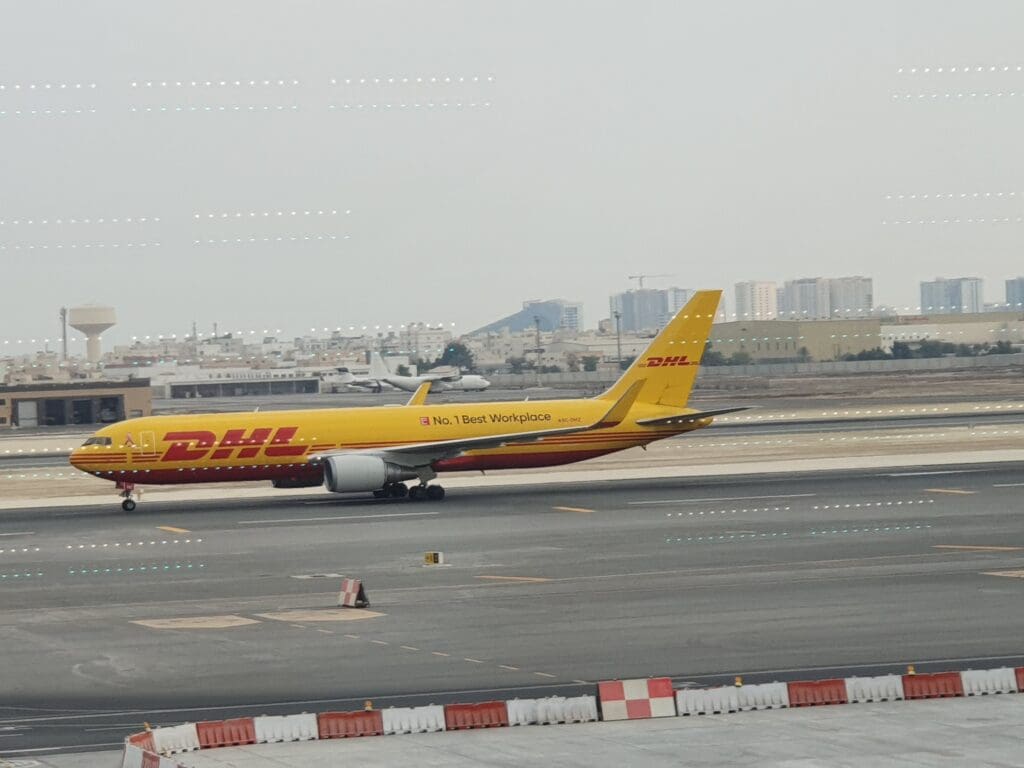
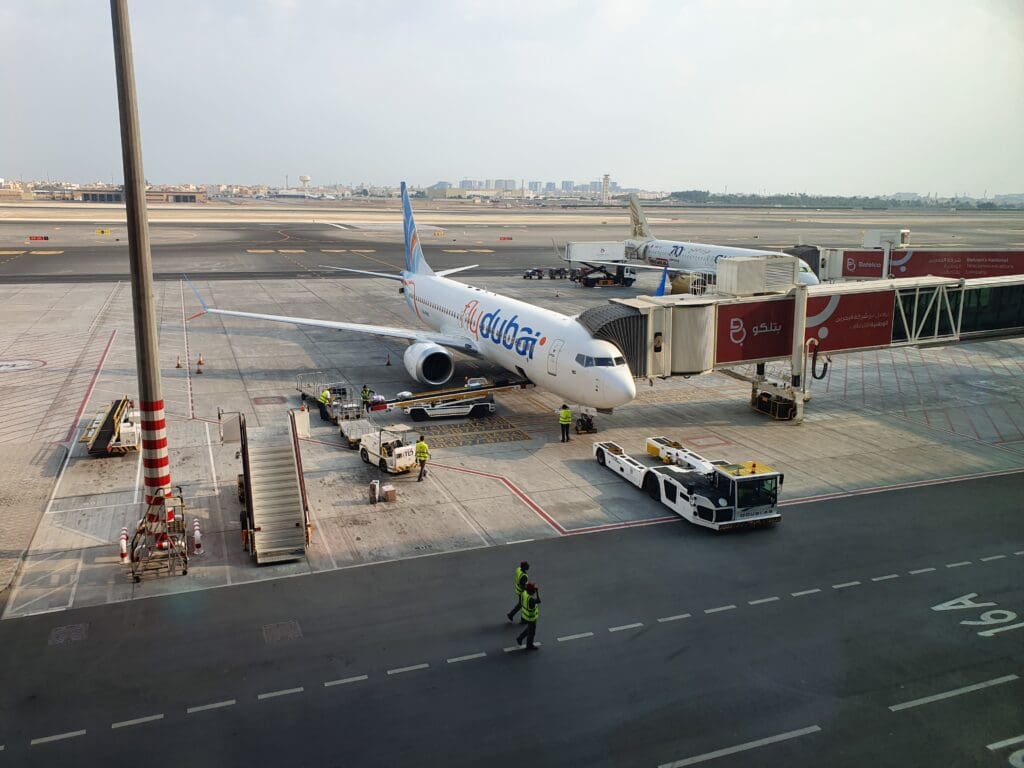
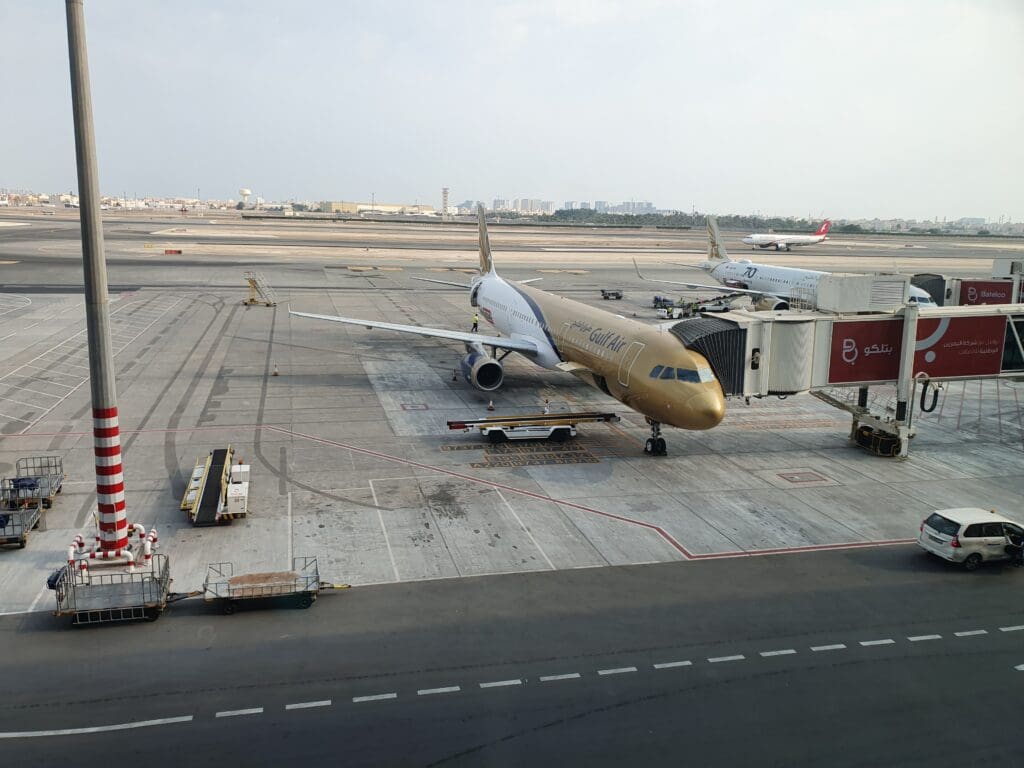
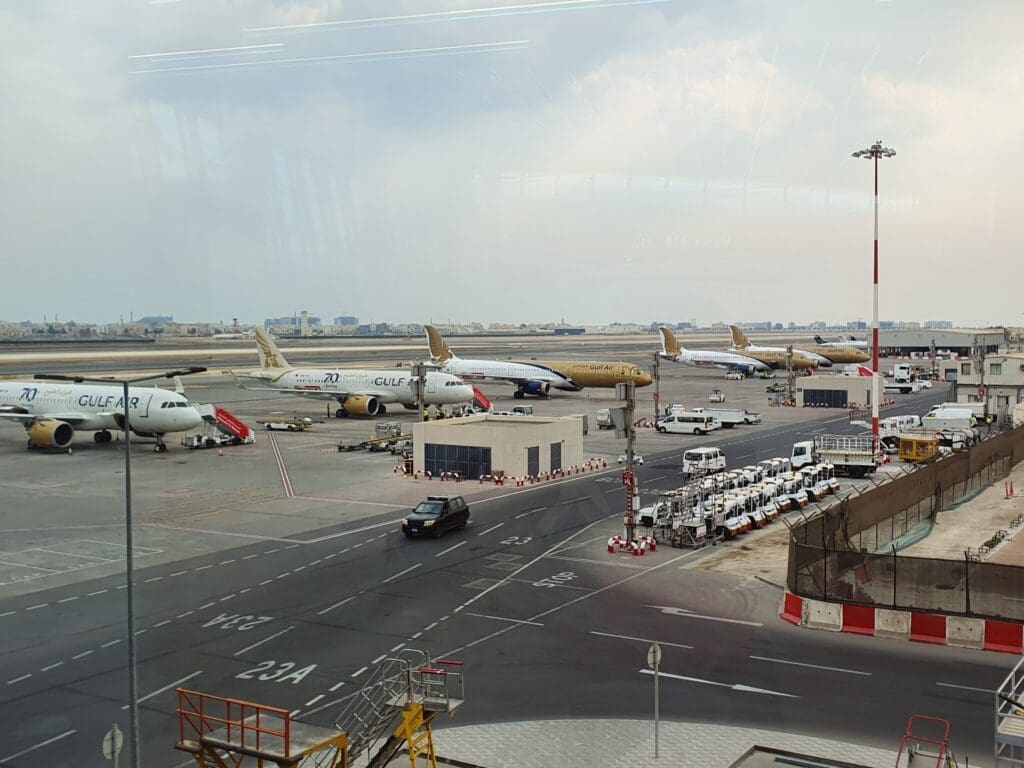
Not wanting to buy anything during my stay, after a walk around I plonked myself down on a comfortable recliner that offered good views of the movements outside. During my stay, aside from the regular coming and goings of Gulf Air’s Airbus A320 family and Boeing 787 aircraft, I managed to catch sight of several locally based DHL International Aviation Boeing 767-300F aircraft heading to and from airports across the Middle East, as well as a Texel Air Boeing 737-33A(SF) departing off to an unknown destination. Aside from these aircraft, foreign visitors to the terminal took the form of an Air Arabia Airbus A320, a Flydubai Boeing 737 MAX 8 and a Kuwait Airways Airbus A320neo. Finally, as a hub for American military, primarily US Navy operations, on the other side of the runway, a Boeing C-40C Clipper, Lockheed C-130T Hercules as well as a civilian Lynden Air Cargo Lockheed L382G Hercules could be seen.
With boarding scheduled to commence forty minutes before departure at 0945, having charged my phone at 0900 I slowly trundled over to Gate 22, located at the southeastern tip of the terminal. As I approached this, it became clear that this was no ordinary gate, with those heading to this required to pass through an additional security check before entering the gate area, something which I had only thought was the norm on flights to the US. Despite my early arrival at the gate, an army of Gulf Air staff could be seen welcoming passengers and I soon walked up to one of the gate agents who requested to see my boarding pass, passport and Passenger Locator form. Once these had all been checked, I joined the short queue for the sole security checkpoint and soon passed through this without any issue. Once at the gate, I found this to contain nothing other than seating and windows offering views of the apron and runway, with no toilets or other facilities. Whilst this was not an issue, seeing as passengers were being let into this area well before boarding, I do think it could have been advisable for a sign to be erected informing passengers of the lack of toilets in this area, or at least staff members could have advised passengers about this.
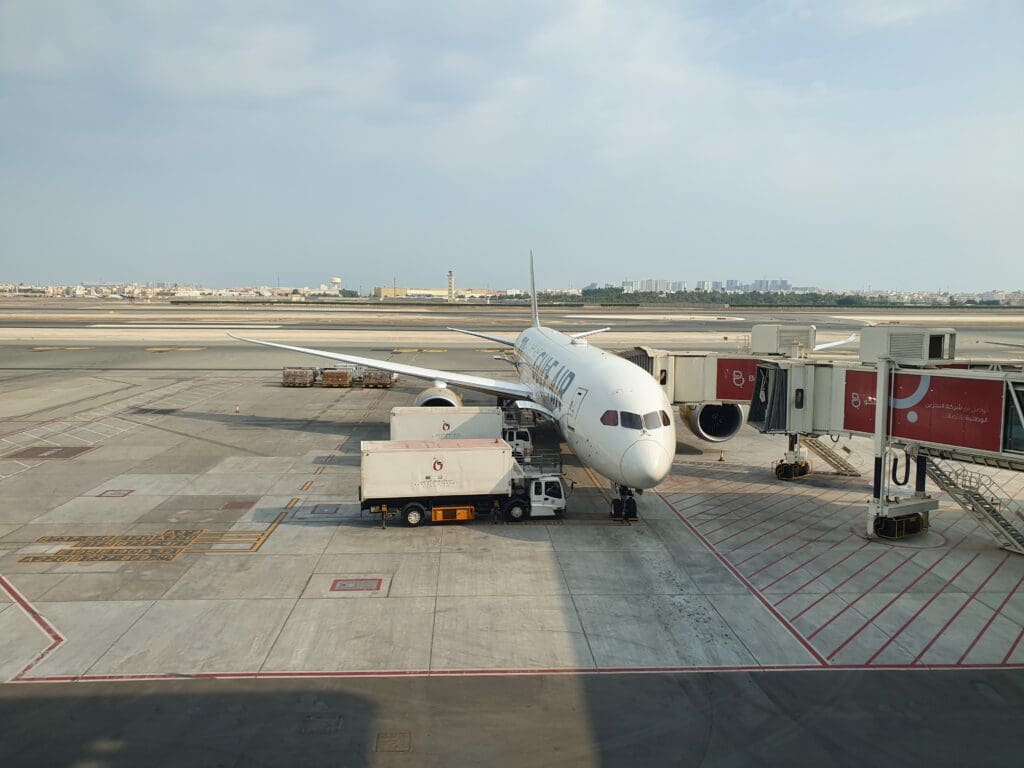
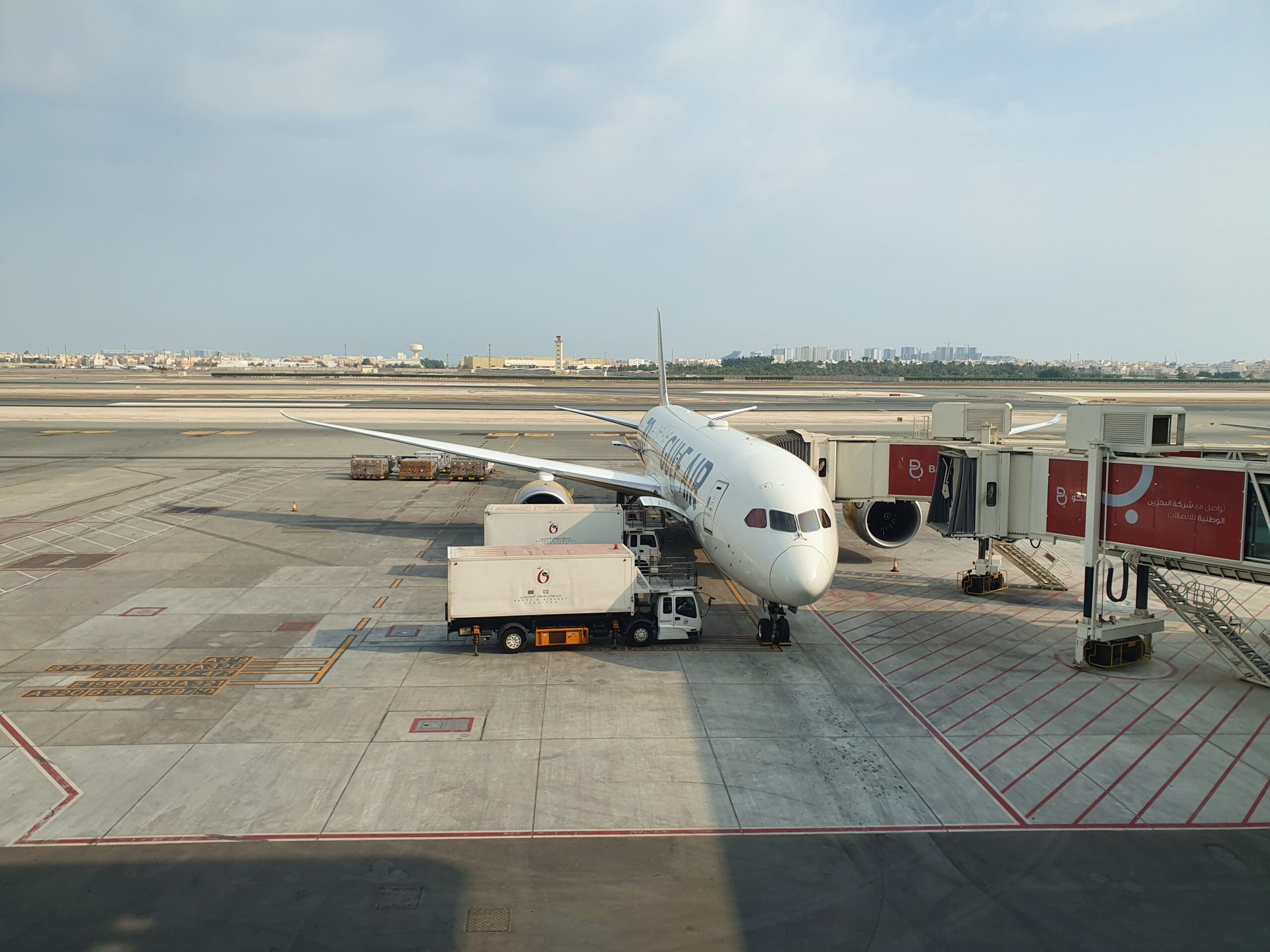
Outside, standing at Stand 22 Boeing 787-9 A9C-FD could be seen being readied for the trek across to London, with plenty of cargo being loaded into the belly of the aircraft. Manufactured at Boeing’s Everett facility, this particular Dreamliner was rolled out of the factory in September 2018 and made its first test flight the following month. As its registration implies, the jet was the fourth Dreamliner to be delivered to Gulf Air, entering service in early November 2018. Since then the aircraft has operated services across Gulf Air’s route network and in the week before my flight, this aircraft had flown around 45,500 miles over eighteen flights, flying between Bahrain and Dhaka, London Heathrow, Manila and Riyadh.
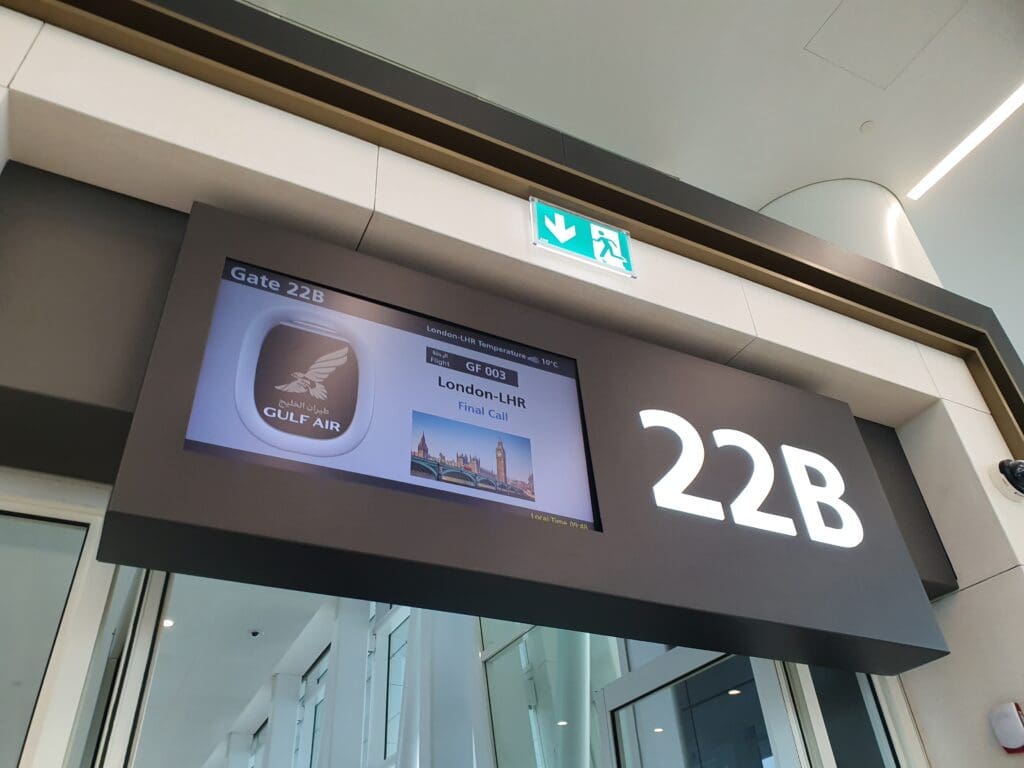
As time passed, the waiting area soon filled up; however, there remained a few vacant seats for the entirety of my stay. Nevertheless, at this stage it was difficult to tell just how busy the flight would be and I assumed that many passengers would rock up to the gate at the scheduled boarding time of 0945. At this time, a Gulf Air agent walked through the gate area shouting for those travelling in Falcon Gold to make their way forward for boarding. With only a light smattering of passengers making their way to the aircraft at this time, a couple of minutes later all those in Economy were asked to come forward, with boarding of those in Economy not conducted by row number or zone.
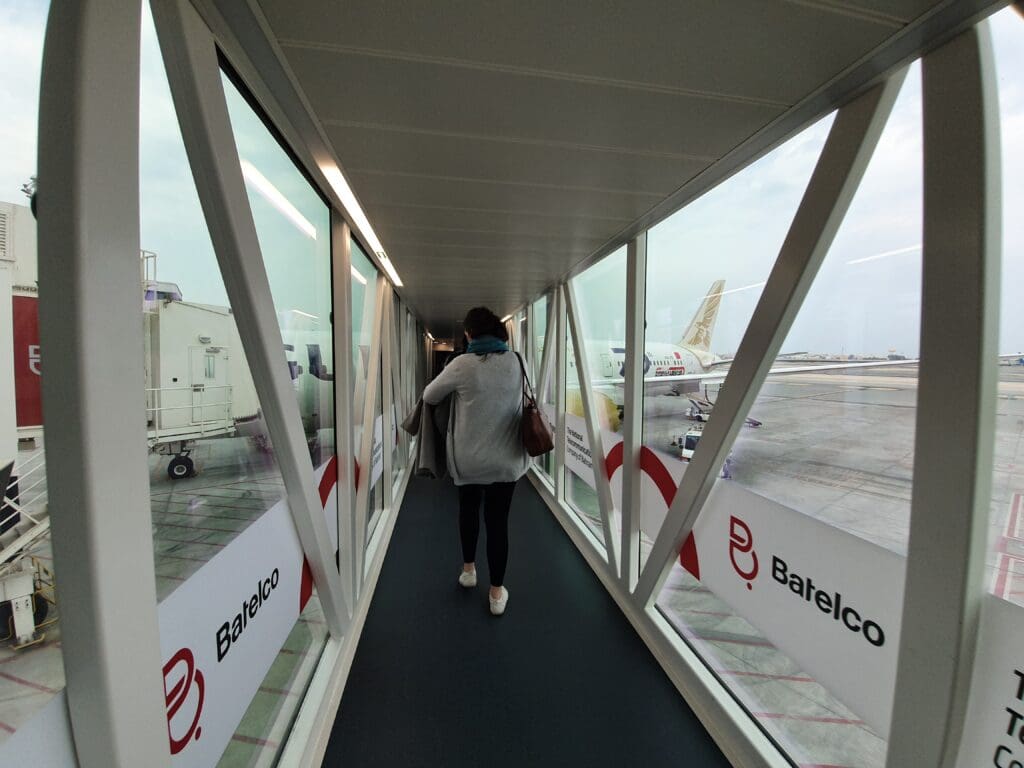
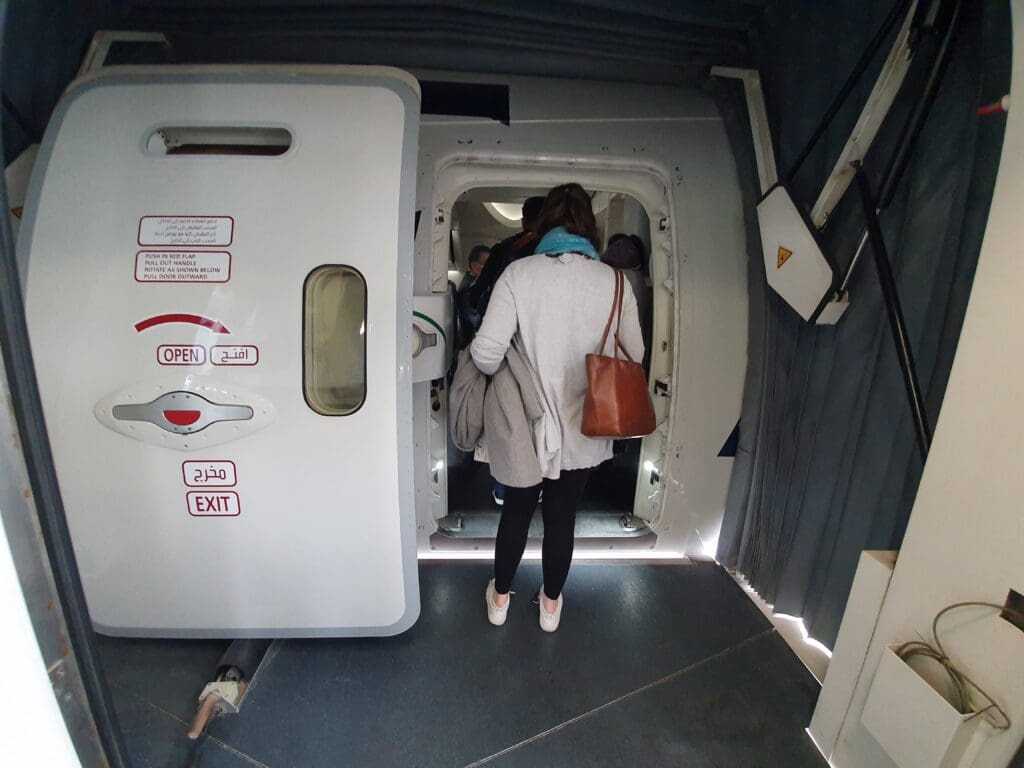
Seeing as my boarding pass had already been scanned, once those in Economy had been invited to board, I walked straight down the jetway and without any queuing I stepped into the aircraft via the L2 door, entering this at the spacious atrium area at the rear of the Falcon Gold cabin. Upon stepping onto the aircraft, I received a warm greeting from the Cabin Services Manager who advised me on how to reach my seat. Inside, Gulf Air’s Dreamliners feature 26 Apex suites, all of which are located in the forwardmost section of the aircraft between the L1 and L2 doors. Thus, with no premium economy cabin, upon turning right down the second aisle, I immediately entered the aircraft’s forward Economy cabin.
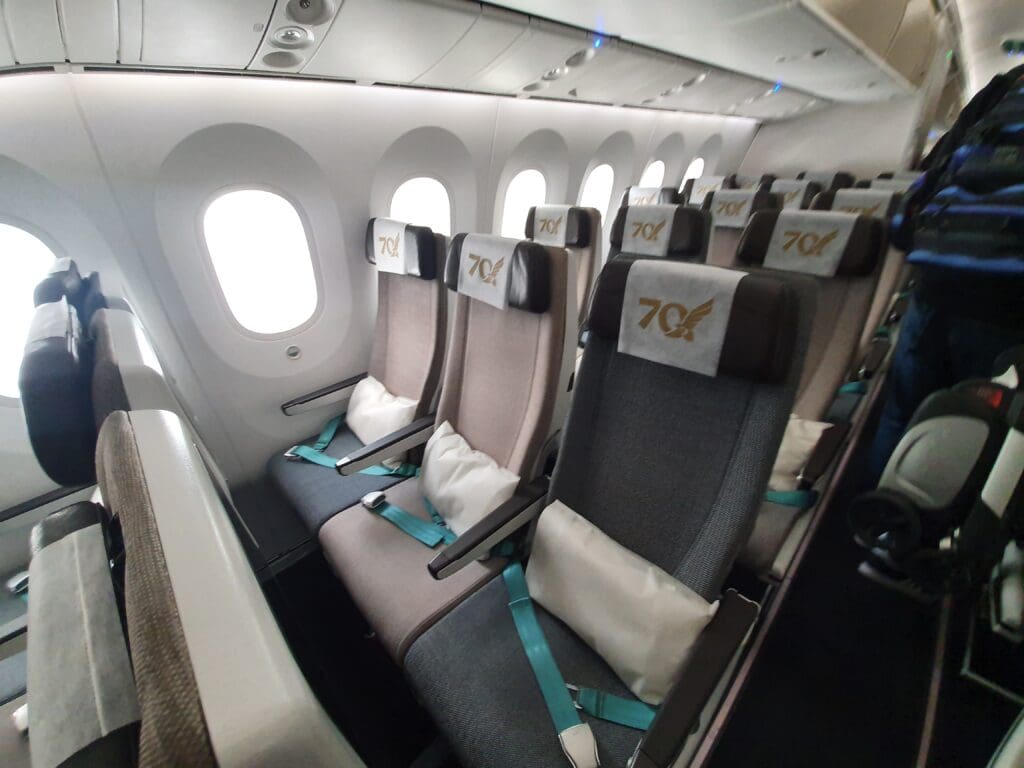
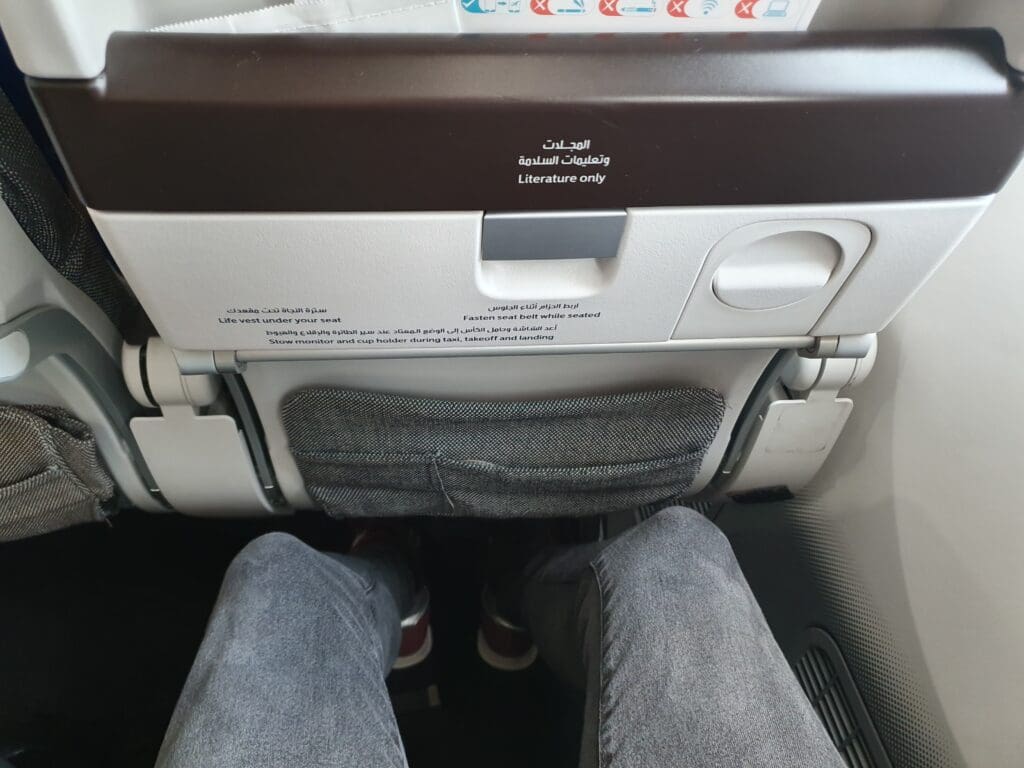
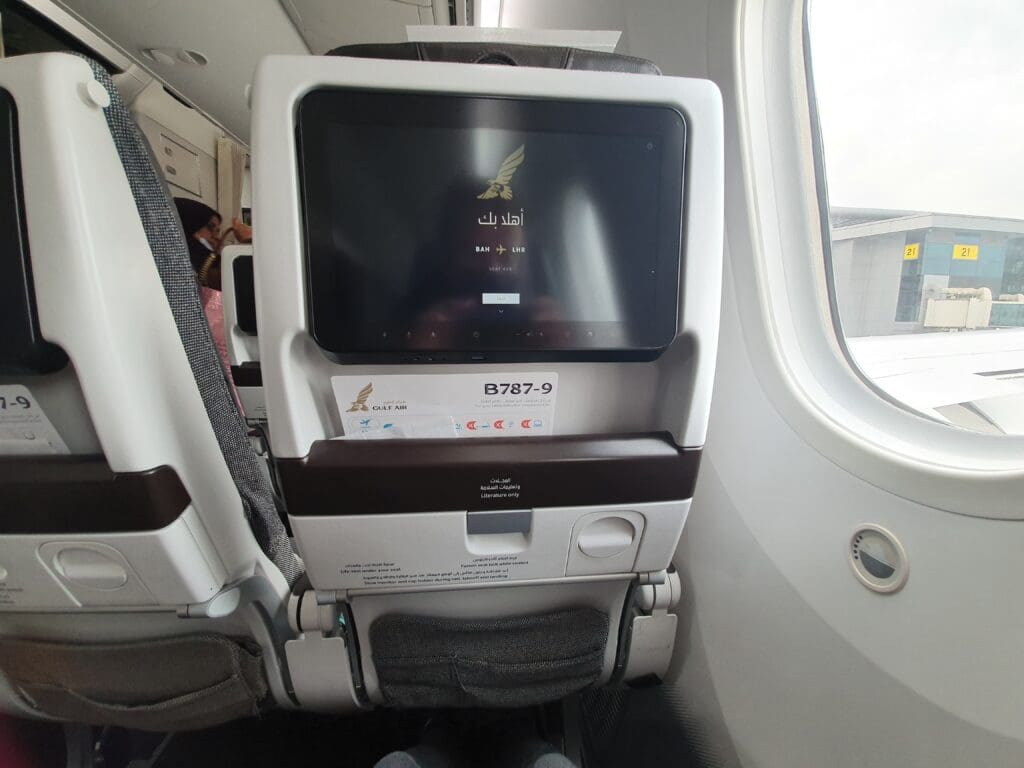
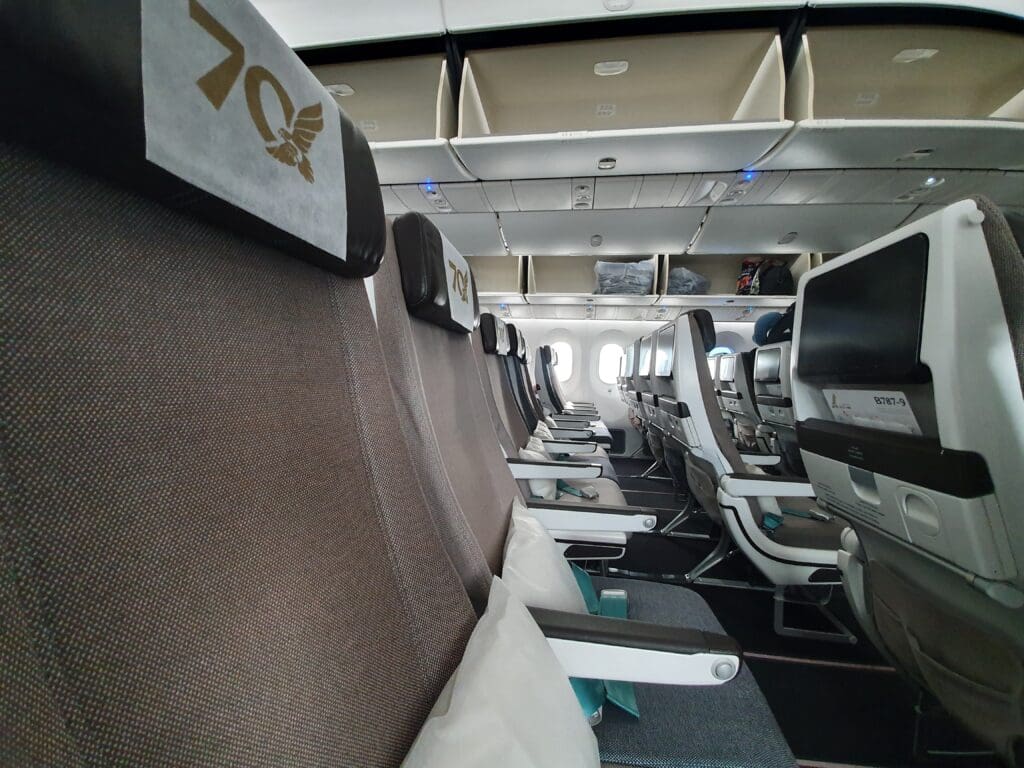
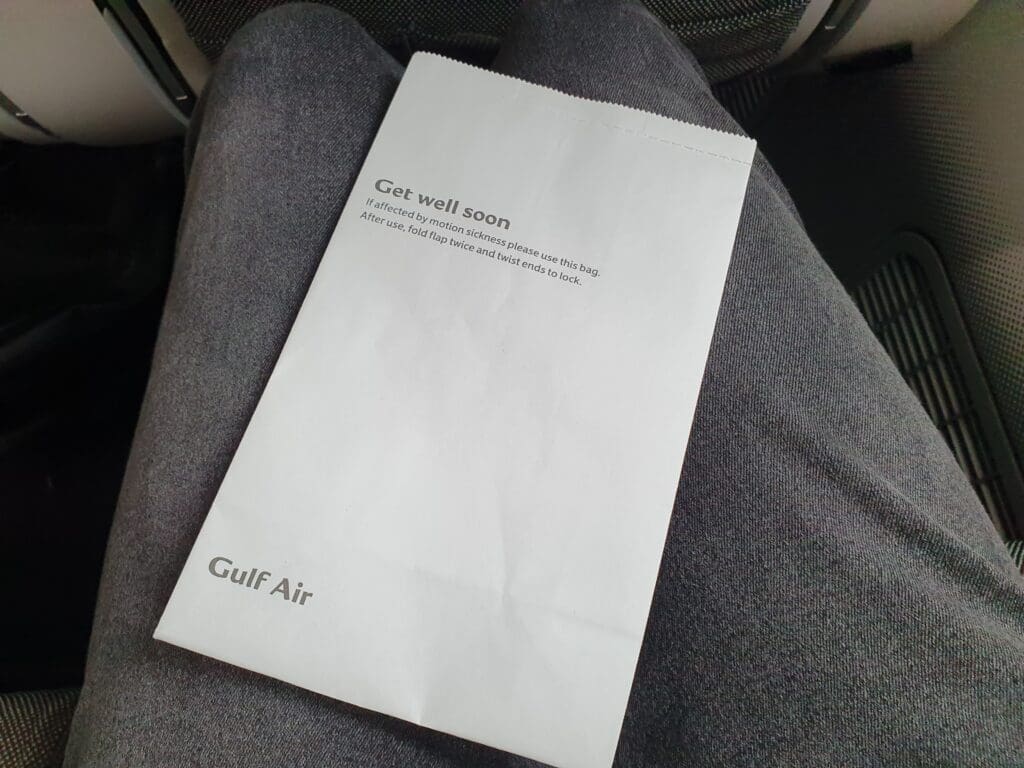
For those in Falcon Gold, there exist some discrepancies between the types of seats and suites featured onboard Gulf Air’s Airbus A320neo, Airbus A321neo and Boeing 787-9 aircraft. However, in Economy each of these features a virtually identical seat, the modern squarish Recaro CL3710, with each of these covered in either a grey or brown fabric and features an adjustable (faux?) leather headrest topped with a disposable fabric antimacassar advertising Gulf Air’s 70th anniversary could be seen. As well as a tray table, seatback pocket, literature compartment – containing a safety card and a sick bag, and a cup holder, the rear of each seat features a large and high-quality 10-inch wide personal inflight entertainment screen, powered by Thales’ AVANT inflight entertainment system. Meanwhile, onboard their Dreamliners, Gulf Air has opted for a 3-3-3 configuration in Economy. Upon boarding, a typically Economy class quality pillow could be seen on each seat, however unlike on the service from Frankfurt to Bahrain, no amenity kit was provided.
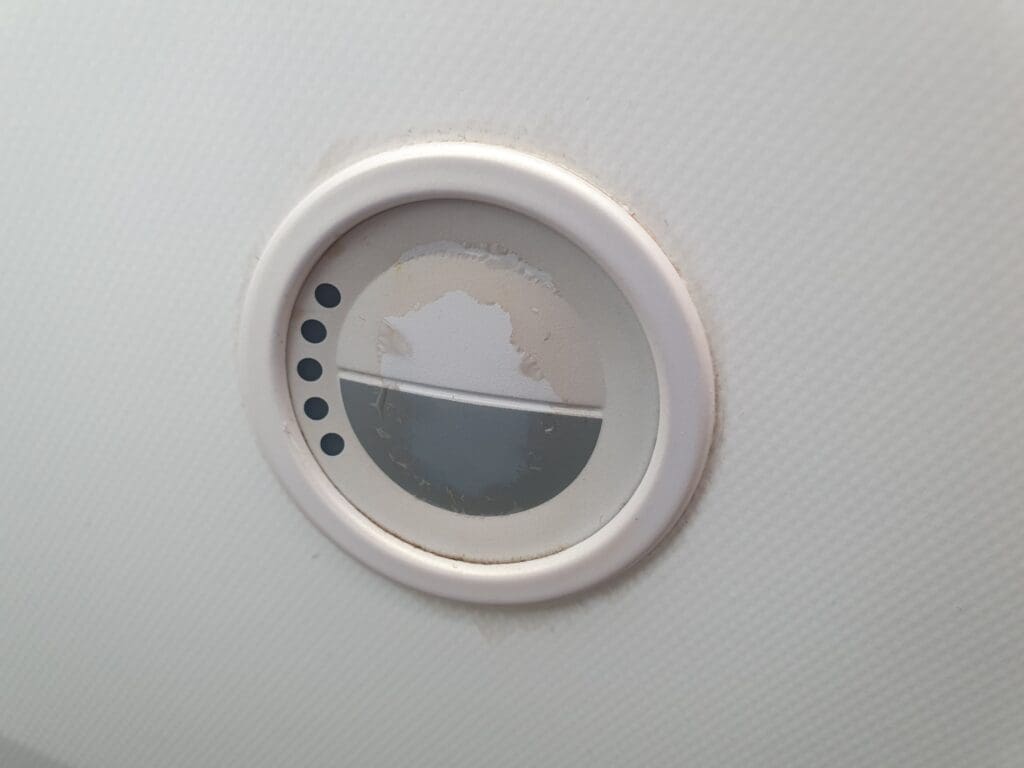
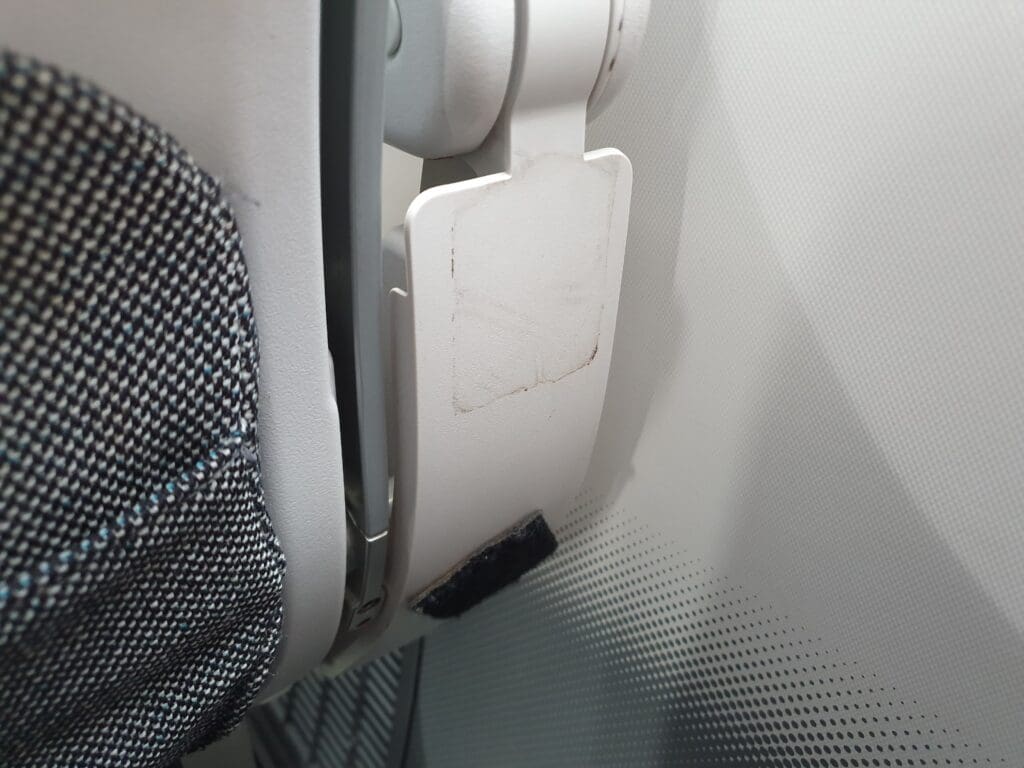
As I made my way through the Economy cabin, classical music rang out and I passed two flight attendants who provided nothing by means of a greeting as I journeyed to my seat. However, upon arriving in the rear Economy cabin, I was warmly welcomed by a flight attendant who requested to see my boarding pass and then guided me to my seat, 43K – offering an impressive level of service that they attempted to maintain as more and more passengers streamed into the aircraft. Upon sitting down and settling in, whilst I knew what to expect having recently travelled on Gulf Air’s Airbus A320neo and Airbus A321neo aircraft, I found the seat to be expectedly comfortable, well padded and featuring a decent amount of legroom. However, I did spot a reasonable number of marks and scratches around my seat, as well as a few crumbs and a headphone prong in the seatback pocket. After sitting down, passengers continued to stream onto the aircraft however the two seats next to me remained vacant giving me hope that I would enjoy unobstructed window and aisle access for the entire flight. Indeed, this turned out to be the case and I estimate the load to have been around 70% in Economy. That day, many of those on board appeared to be either travelling from Pakistan to the UK, as well as point-to-point travellers that had commenced their journeys in Bahrain. Slightly surprisingly, few passengers appeared to have commenced their journey in Dubai as I had done.
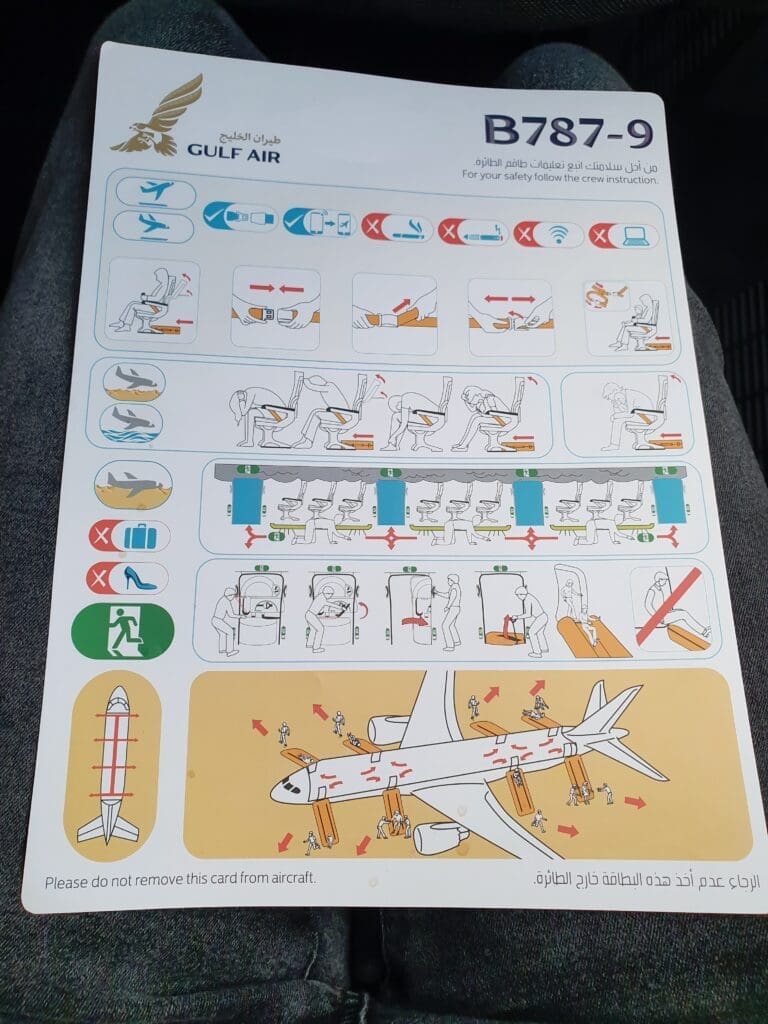
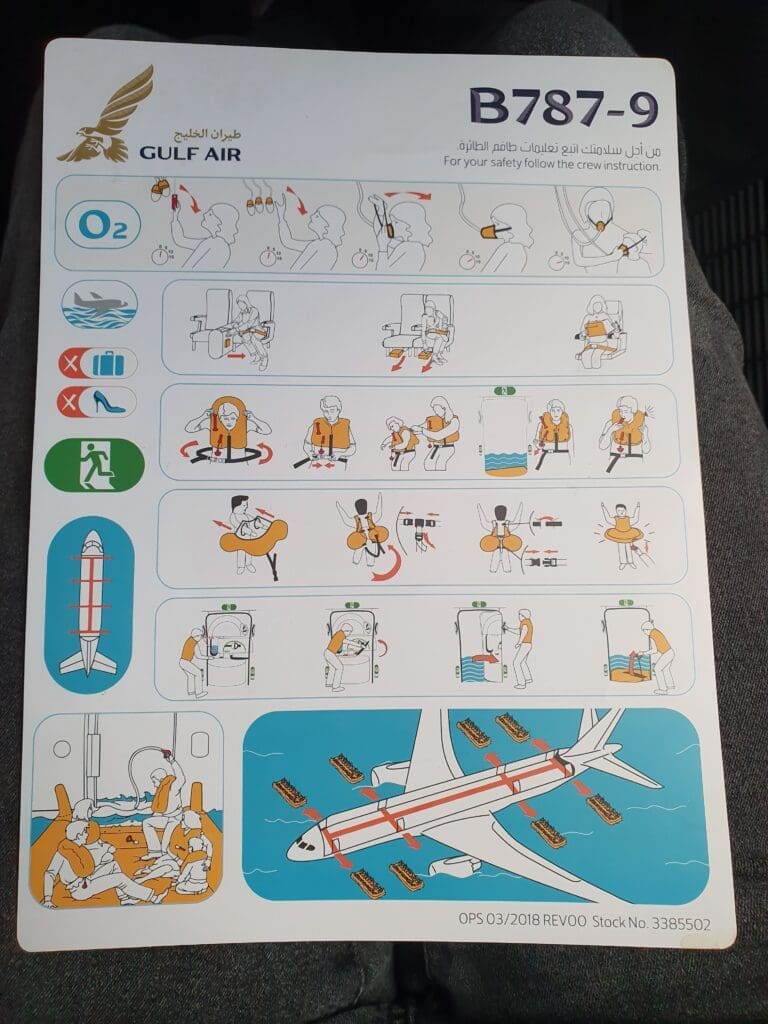
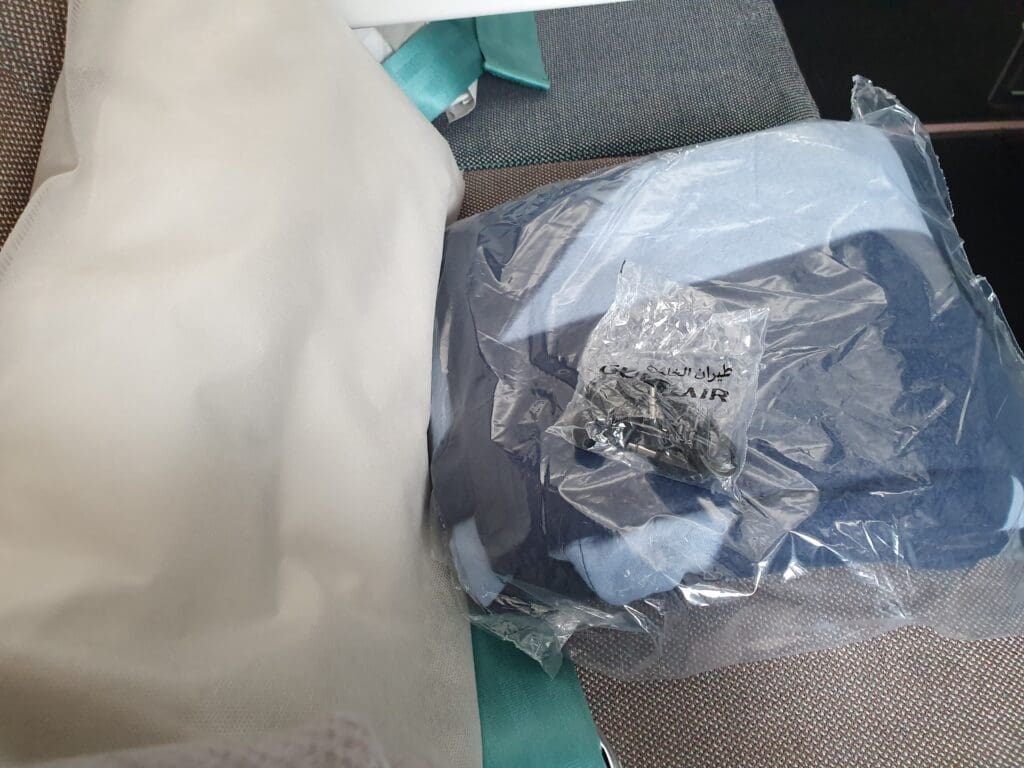
At 1020 the crew passed through the cabin distributing Gulf Air’s relatively decent quality packaged blankets, followed several minutes later by the distribution of headphones. At the flight’s scheduled departure time of 1025, the Cabin Services Manager performed their welcome speech first in Arabic and then again in English indicating that boarding was complete. Meanwhile, aside from the cones around the jet, outside all appeared to be ready for our departure. However, indicating that some baggage would need to be offloaded, a few minutes later, a baggage ramp could be seen being repositioned up to the aircraft. Inside the cabin, at this time, a prayer was broadcast and followed by Gulf Air’s long safety video which detailed the safety instructions in Arabic and English. Turning my attention back outside, I watched as an army of hardworking ground staff unloaded two containers and searched these, presumably in search of missing passengers’ bags. Meanwhile, confirming this, at 1038, the Captain performed a welcome announcement in English, during which they advised that there were three missing passengers and their bags were in the process of being offloaded.
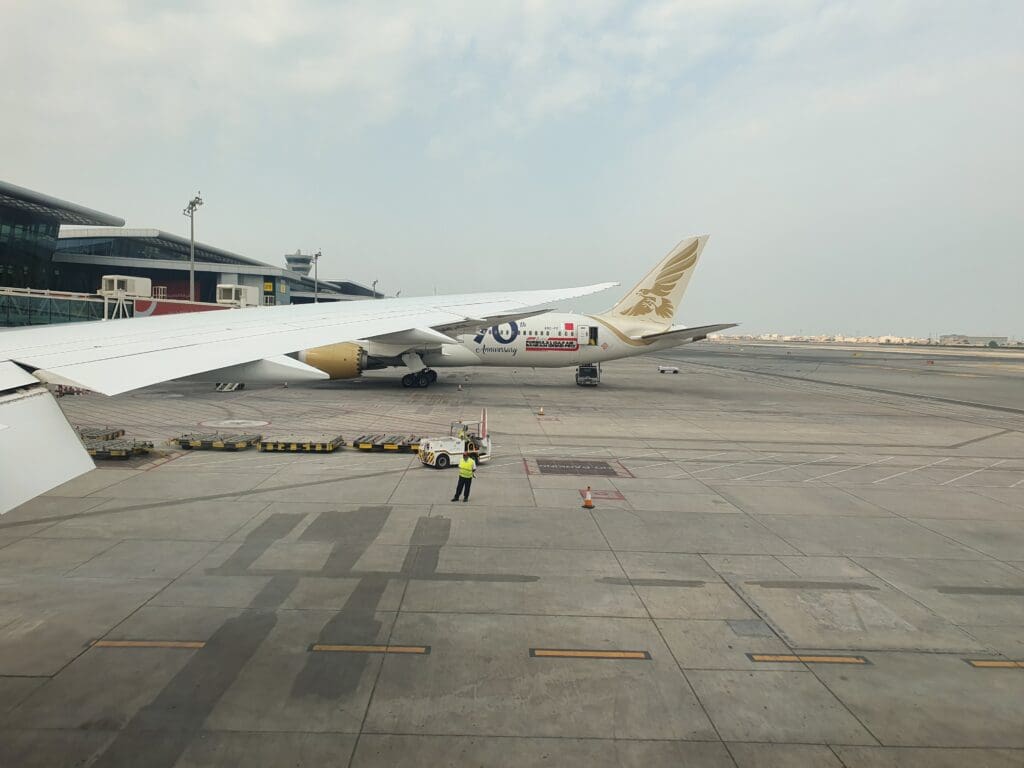
At 1047, 22 minutes behind schedule the Boeing jolted backwards and the Dreamliner’s two Rolls-Royce Trent 1000 engines whirred and hummed into life as the cabin lights were dimmed before transitioning to dark blue mood lighting. Perhaps somewhat illogically given the usual requirement to keep window shades open for departure, at this time the windows were set by the cabin crew to their darkest possible setting, however, thankfully this could be overridden by passengers. After several minutes, the aircraft slowly travelled parallel to the terminal along Bahrain Airport’s disused Runway 12R/30L. Seated on the right-hand side of the aircraft, I was on the wrong side to receive any decent views of the interesting aircraft parked on the ground during our journey to the runaway. Several minutes later, the aircraft slowly turned right onto taxiway A1 before making its way onto the runway without pausing. At this time, a collection of aircraft sitting on the military and cargo ramp could be seen which included one of the US Air Force’s Air Force One liveried Boeing VC-32, which was in town supporting the United States Defence Chief, Lloyd Austin’s visit to Bahrain, as well as two Charleston-based Boeing C-17 Globemasters.
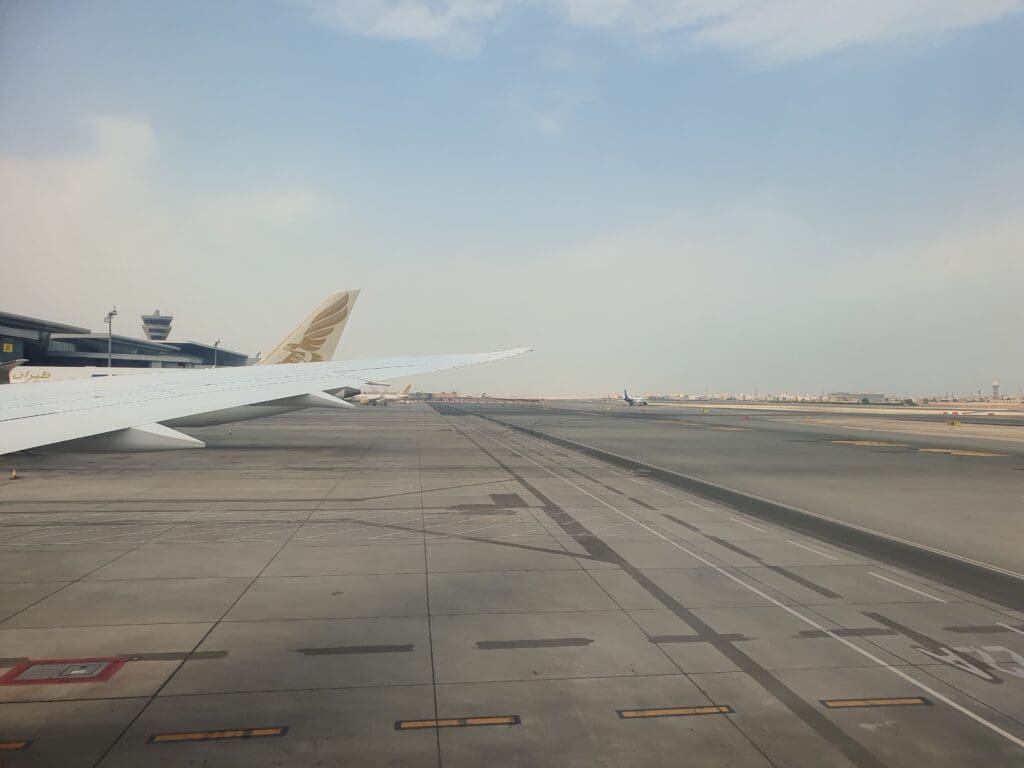
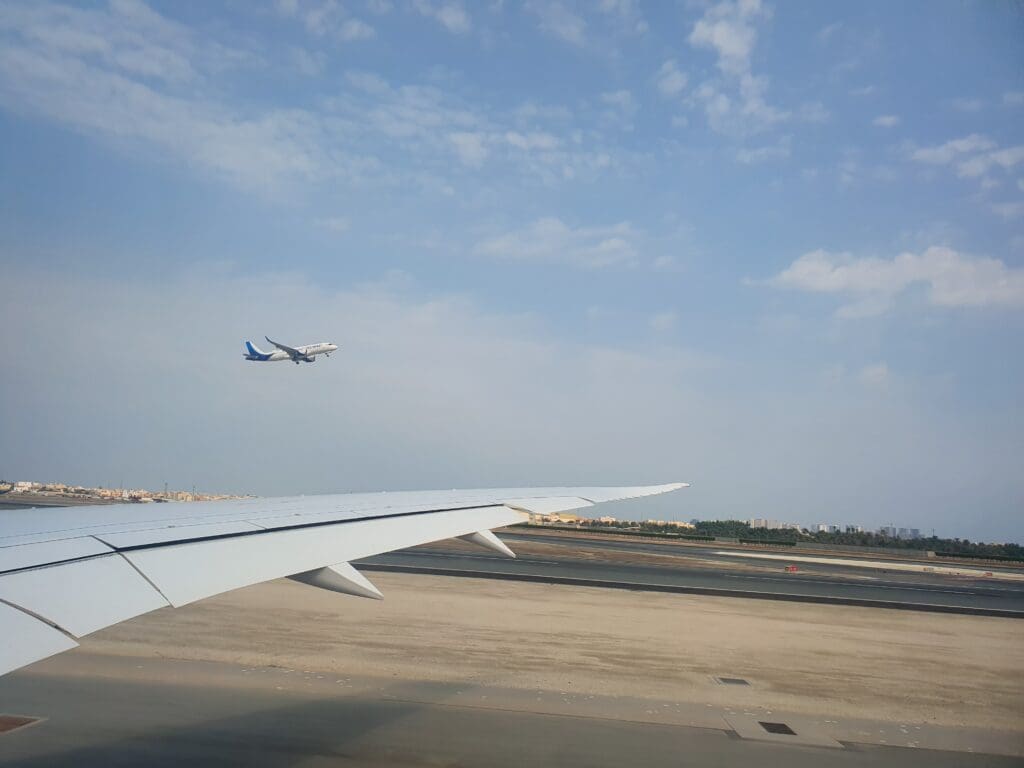
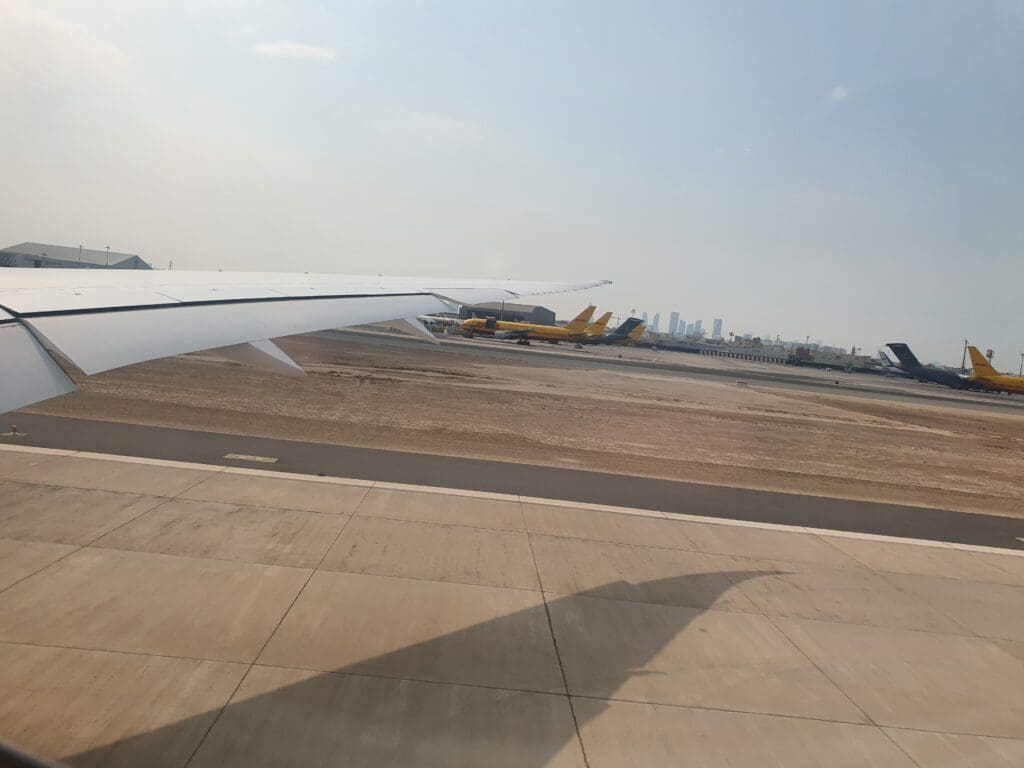
After coming to a halt on Runway 12L, at 1101 the aircraft’s two Rolls-Royce engines spooled up and the Dreamliner performed a long and gentle takeoff roll before eventually rising into the Bahraini skies. Almost immediately after leaving the ground, a good view of the small collection of business jets and two vintage Cobham Falcon 20s could be seen, followed by the skyscrapers of Manama and the suburbs that surround the airport. After leaving the airport behind, views of Bahrain were soon replaced by the blue waters of the Persian Gulf before the aircraft climbed into the clouds.
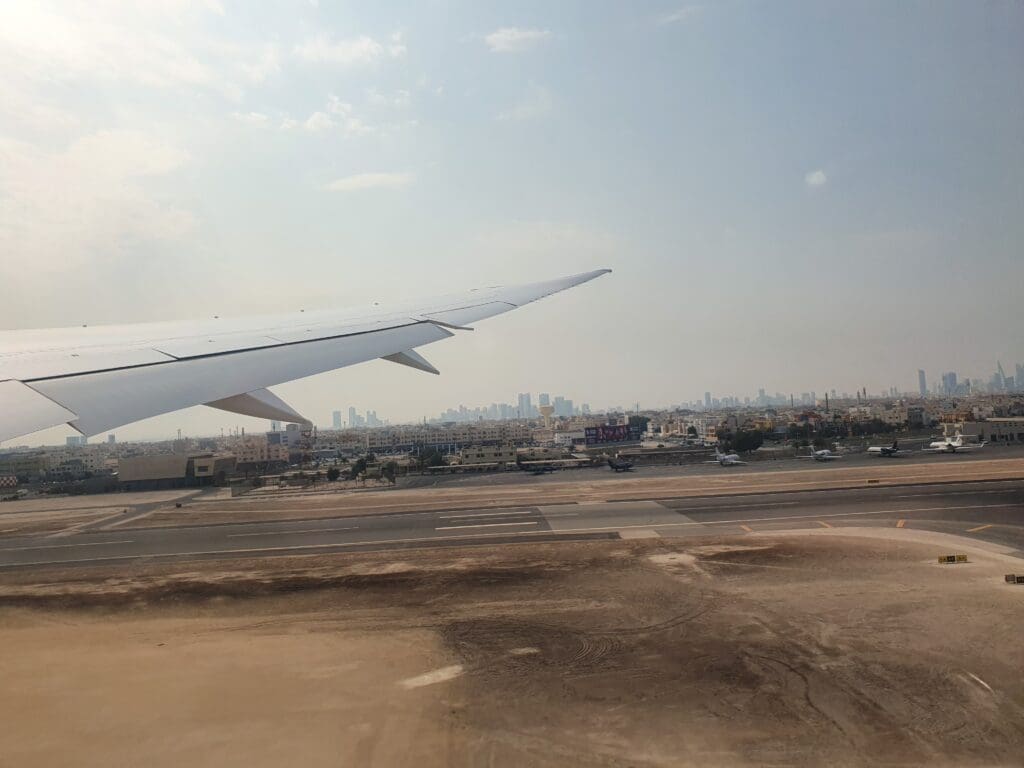
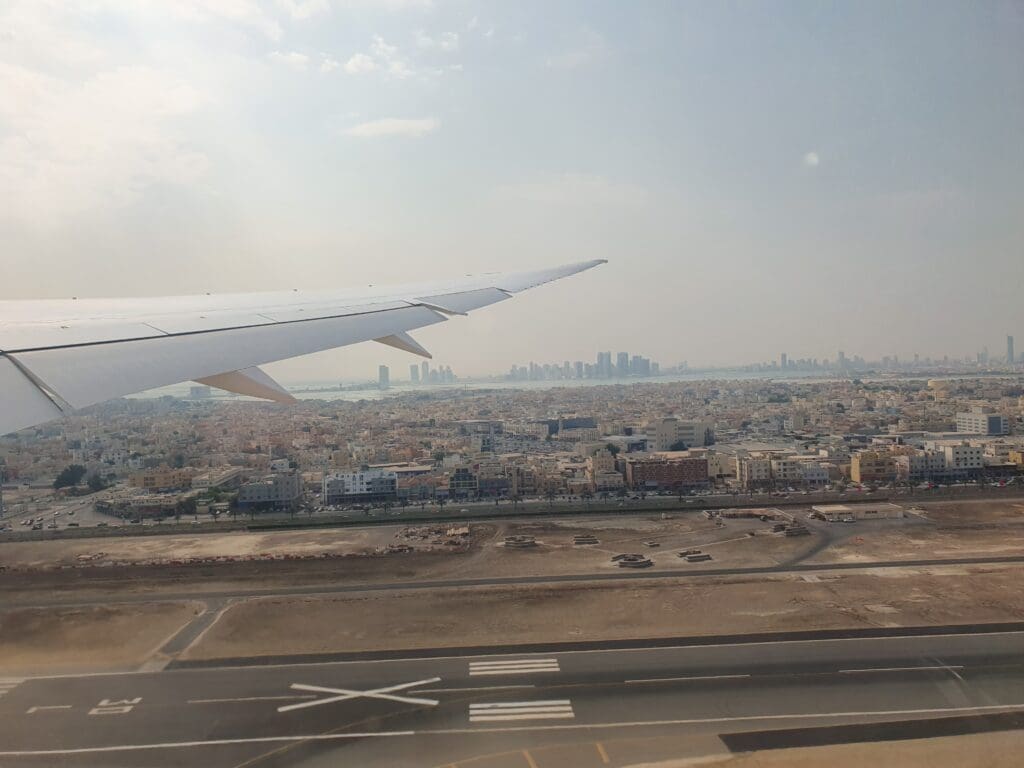
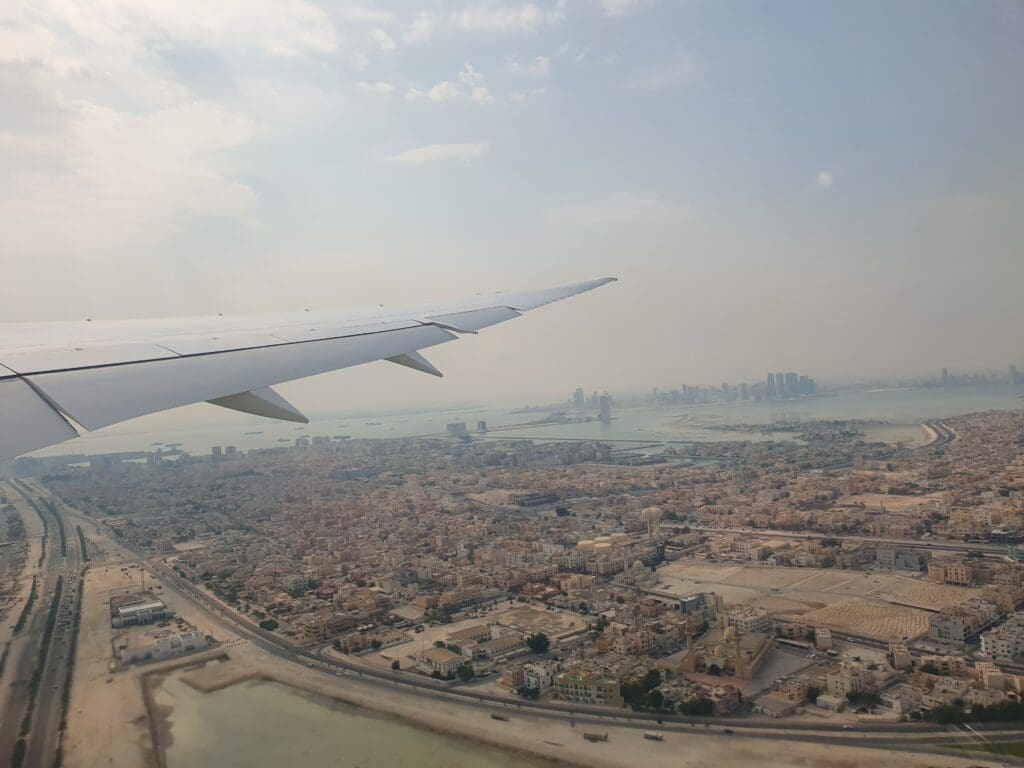
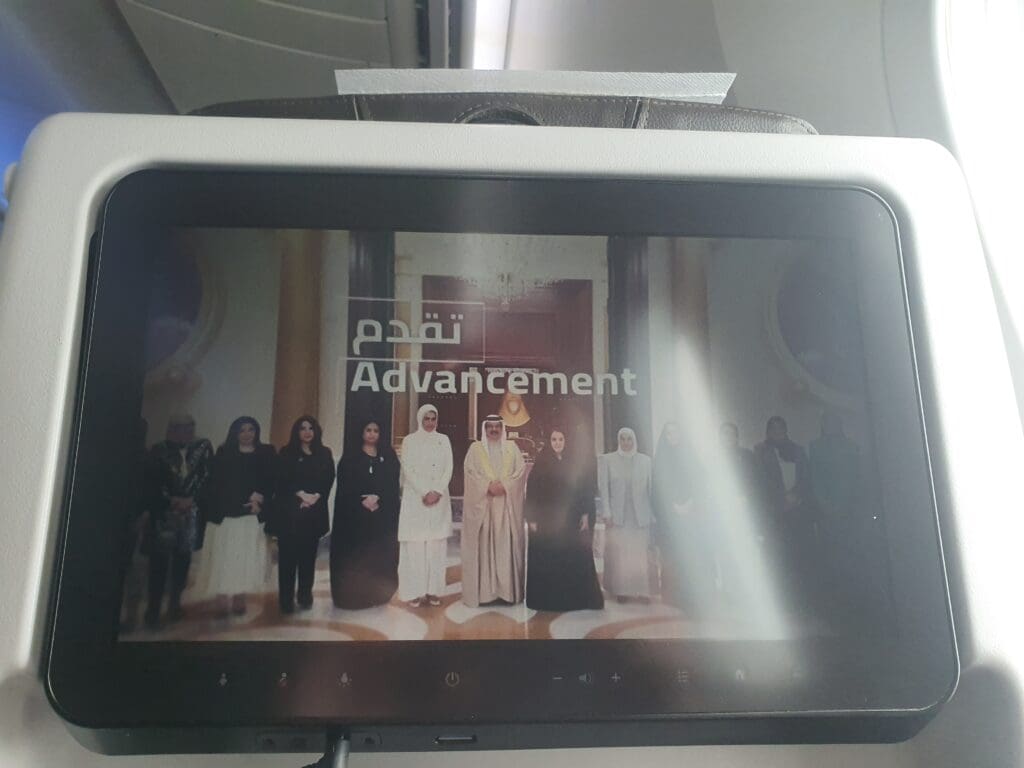
As the Dreamliner cut through the white clouds, the Cabin Services Manager performed another welcome announcement in Arabic and English, during which several members of the cabin crew were introduced by name, and the languages spoken by all members were listed, these being French, Greek, Hindi, Romanian, Serbian and Slovakian, alongside of course Arabic and English. After this was completed, a COVID-19-related health and safety video was played on all personal television screens as well as those at the front of the cabin, which was followed by a short government video commemorating the Supreme Council for Women’s twentieth anniversary. After this, the inflight entertainment system became usable once again and the seatbelt signs were extinguished as we ascended through 10,000 feet.
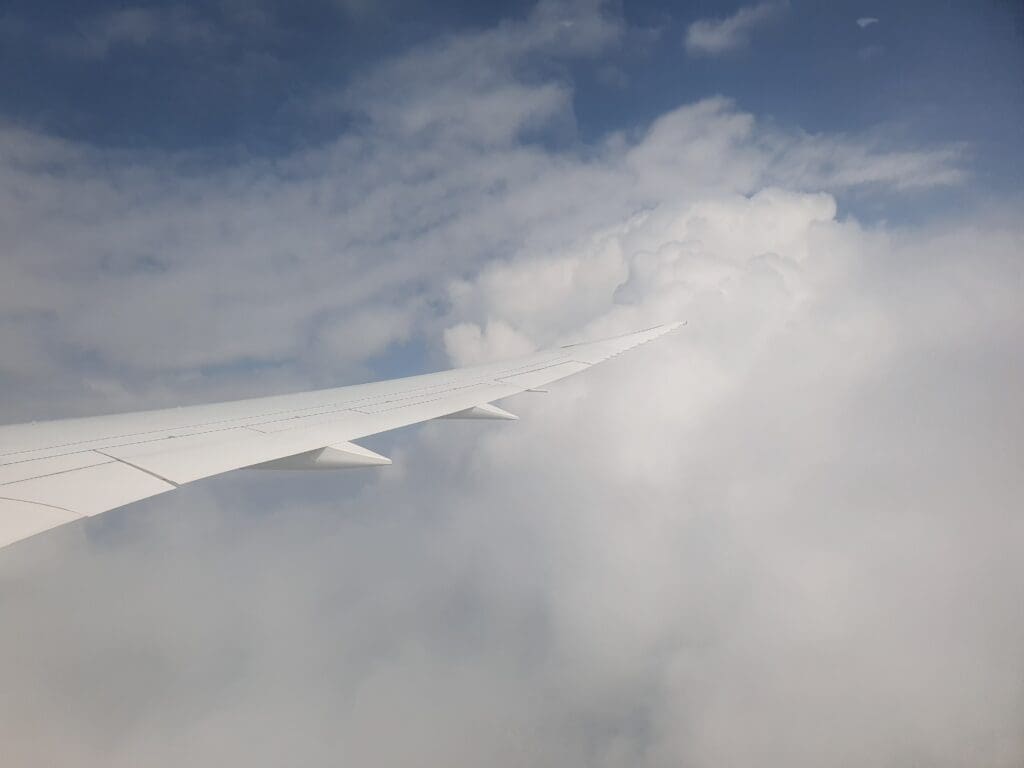
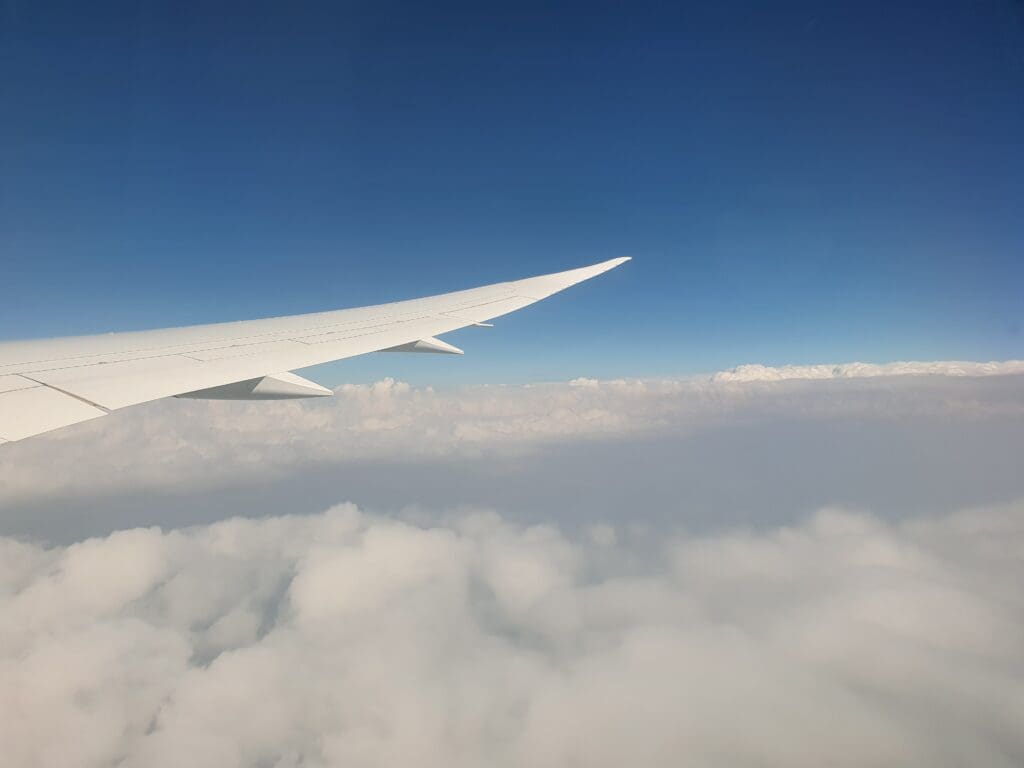
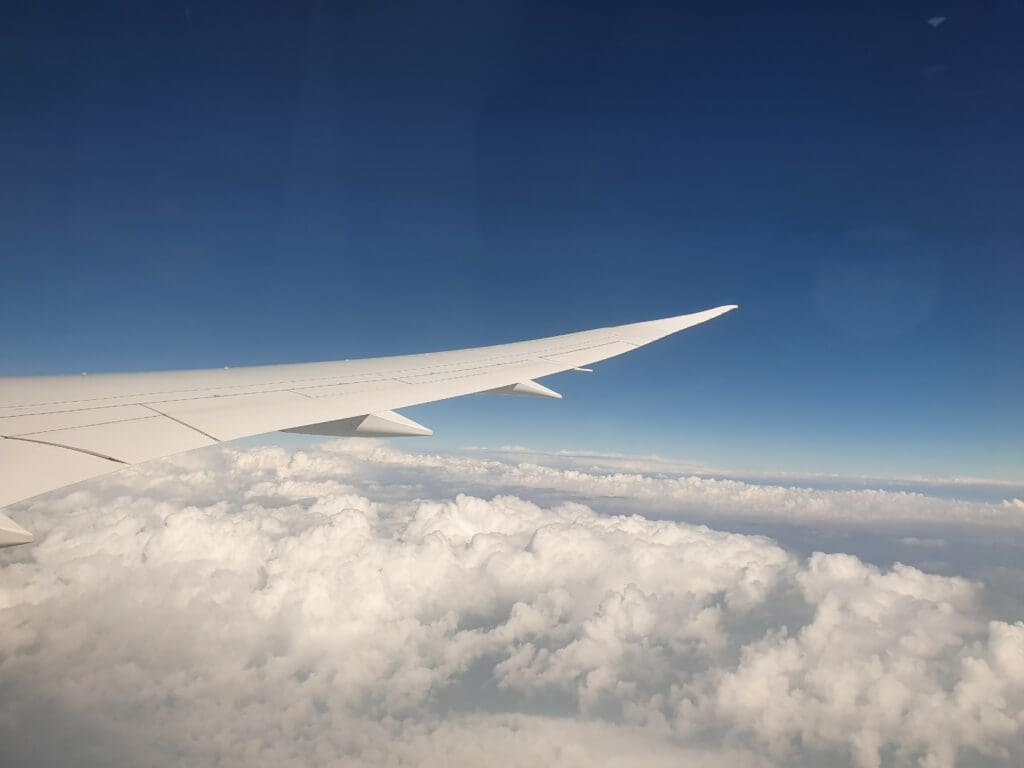
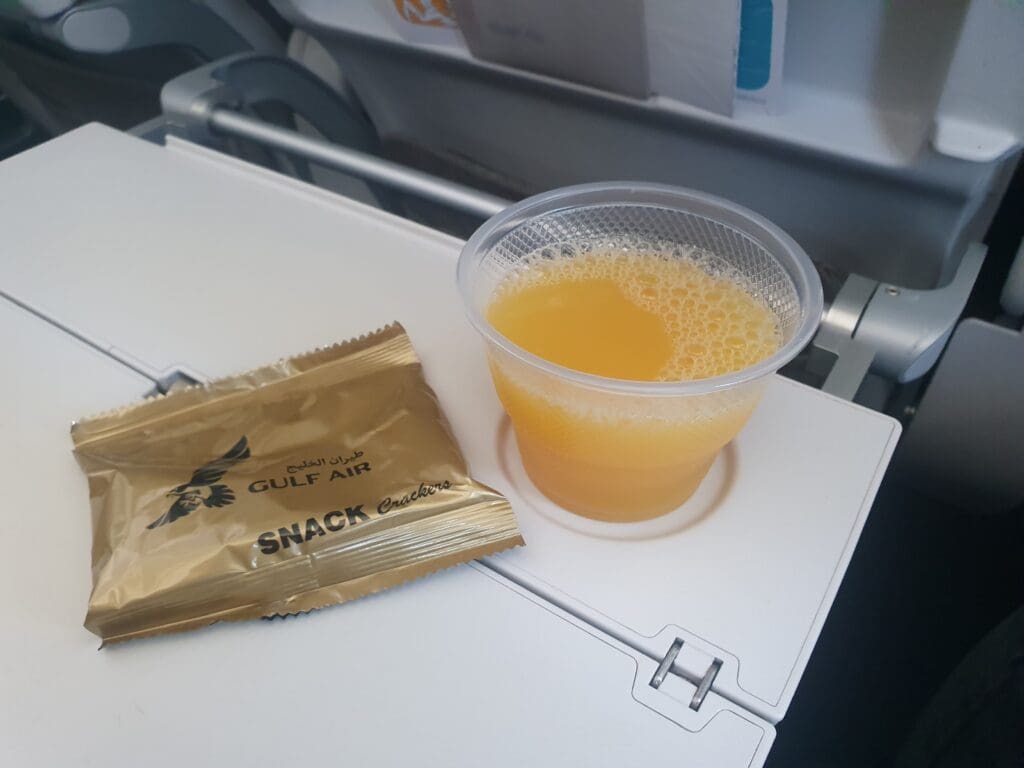
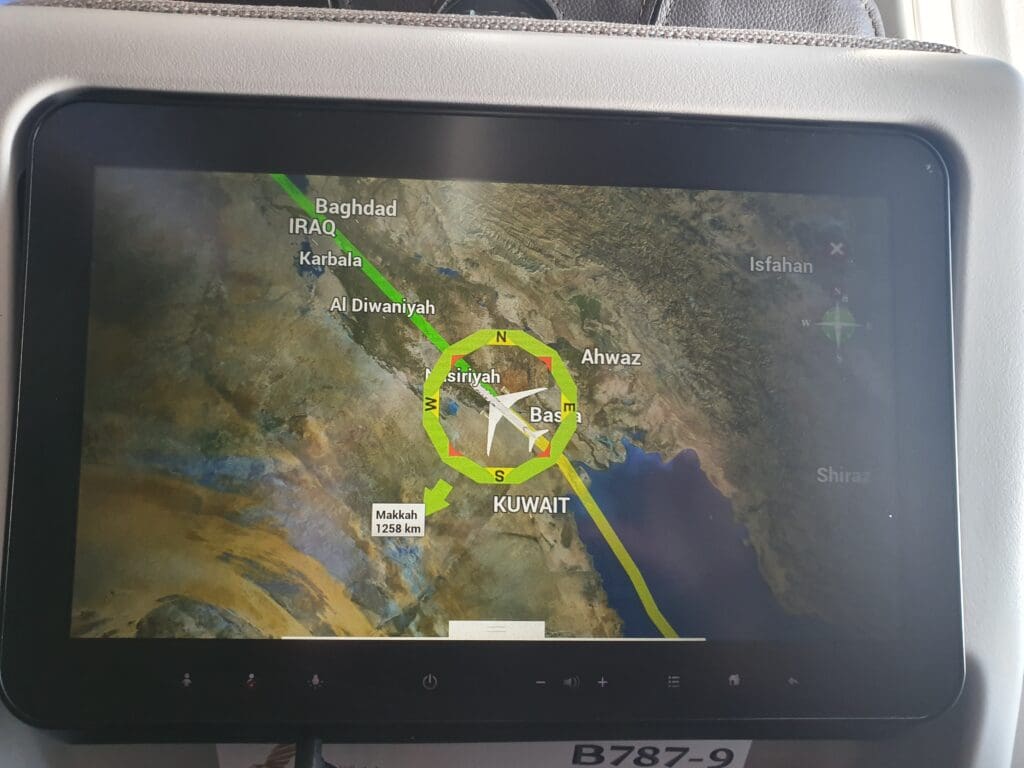
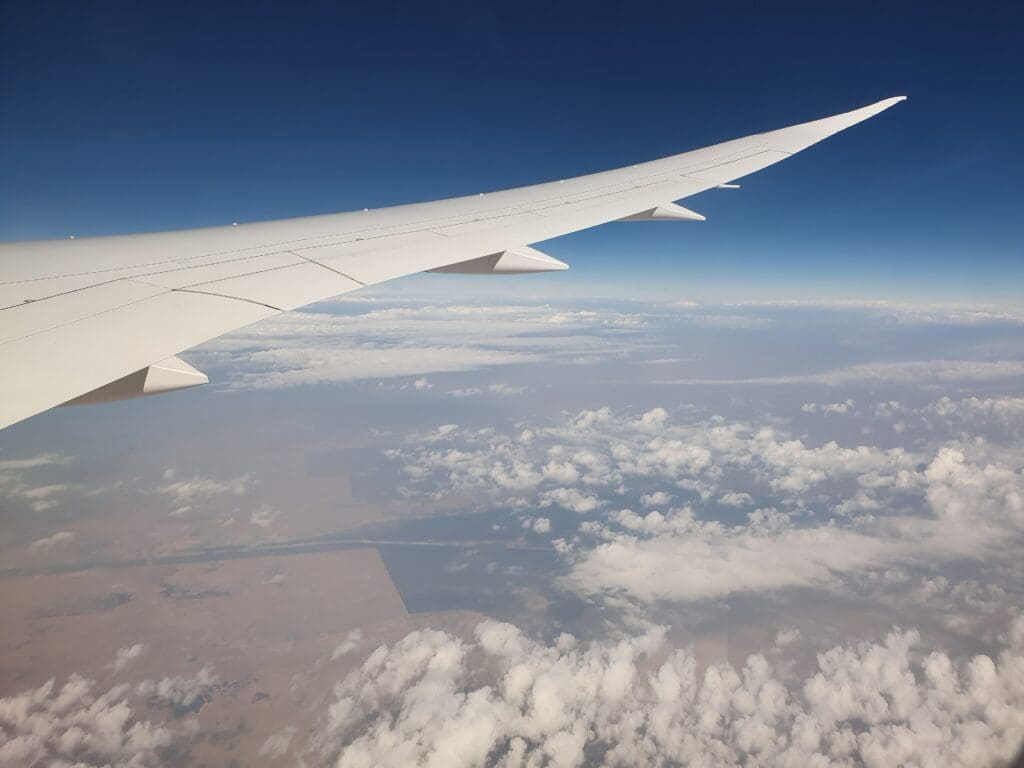
From Bahrain, the aircraft journeyed northwest over the Persian Gulf towards Kuwait and upon levelling off at its initial cruising altitude of 38,000 feet at 1120, trolleys were rolled out and the first drinks round commenced. Making quick progress, within a few minutes one of the flight attendants asked for my choice of drink and I opted for an orange juice which was handed to me in a Gulf Air branded plastic cup alongside a small bag of Gulf Air crackers, which in my opinion tasted rather similar to Mini Cheddars. Turning to the outside world, during the first hour or so of the flight occasional gaps in the clouds revealed the Persian Gulf before the aircraft made landfall over Kuwait’s Bubiyan Island, making a very quick crossing of the country before entering Iraqi airspace to the south of Basra. Once over Iraq, the sandy landscapes of the country’s Dhi Qar Governorate could be seen as the aircraft began its crossing of the country, trundling towards the capital and then onwards towards Kurdistan.
Having recovered from a bad cold before my trip to Dubai, I still had very mild lingering sinusitis. However, with this not having proved an issue on any of my outbound flights the previous week, I was confident that this would not cause too much discomfort on the long flight back to the UK. However, around fifty minutes after leaving Bahrain, a terrible stabbing pain developed around my forehead and eyes, which was overbearing and painful to the extent that I felt incredibly sick. With the intense pain of my barosinusitis considered, the usual inviting scent of warming food wafting through the cabin did little other than make me want to rush to the bathroom.
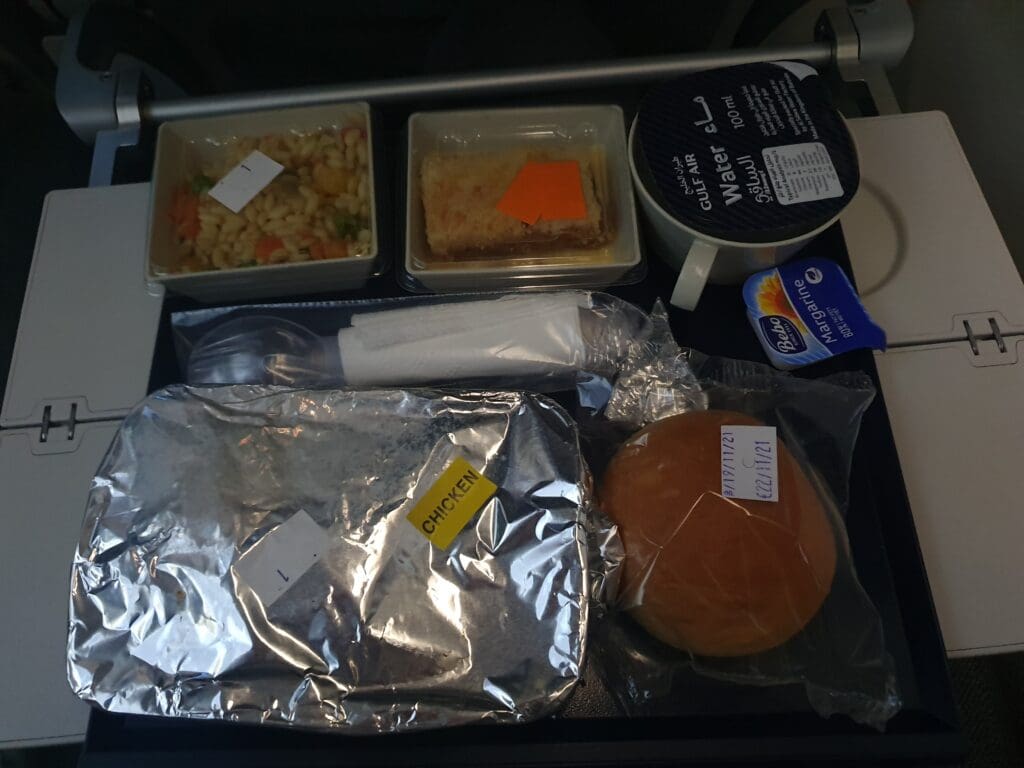
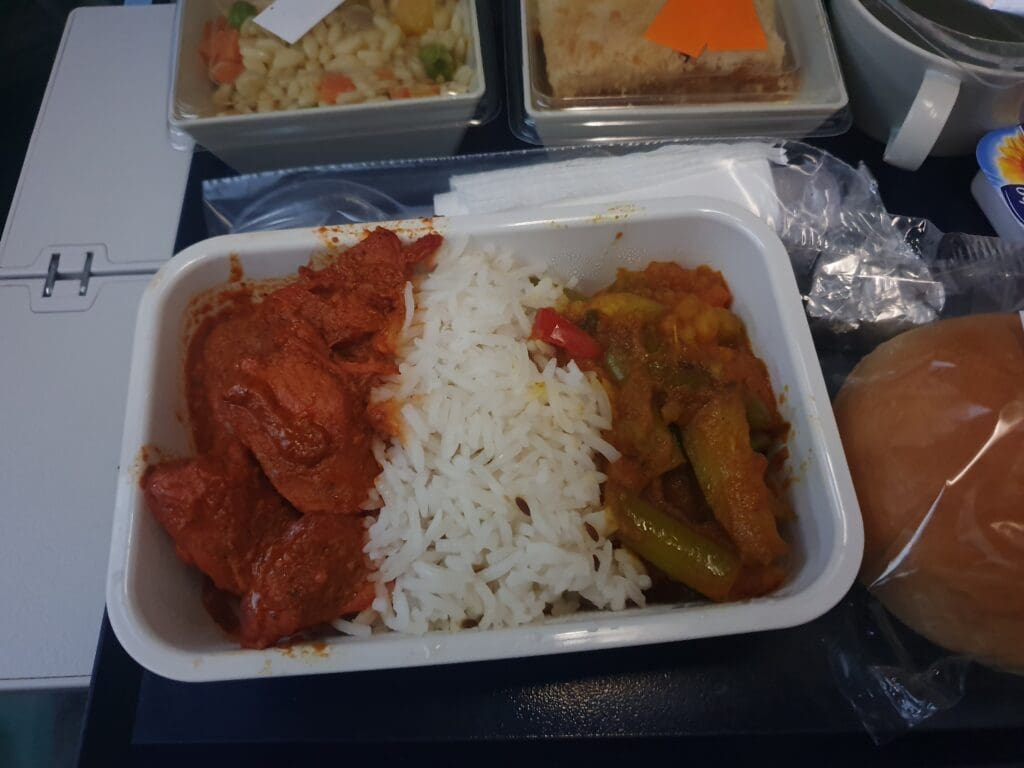
However, once the trolleys were rolled to the front of the cabin, for the purpose of the report, I decided to opt for the flight’s lunch service. As had been the case on the service from Frankfurt to Bahrain, the flight attendant manning the trolley took the time to explain both options to passengers. That lunchtime, these consisted of chicken curry with rice or a vegetable lasagne. Opting for the former, I was promptly handed a tray containing the main dish (chicken curry with white rice and a small portion of vegetable curry), a grain salad, a cake with a small portion of custard, a packaged bread roll complete with a cheese triangle and tub of margarine, water and a sachet containing plastic Gulf Air branded cutlery. Whilst I was barely able to touch the tray of food, I had a bite of the chicken which seemed to be of fairly decent quality. Meanwhile, this was followed by a round of drinks during which I opted for a tea.
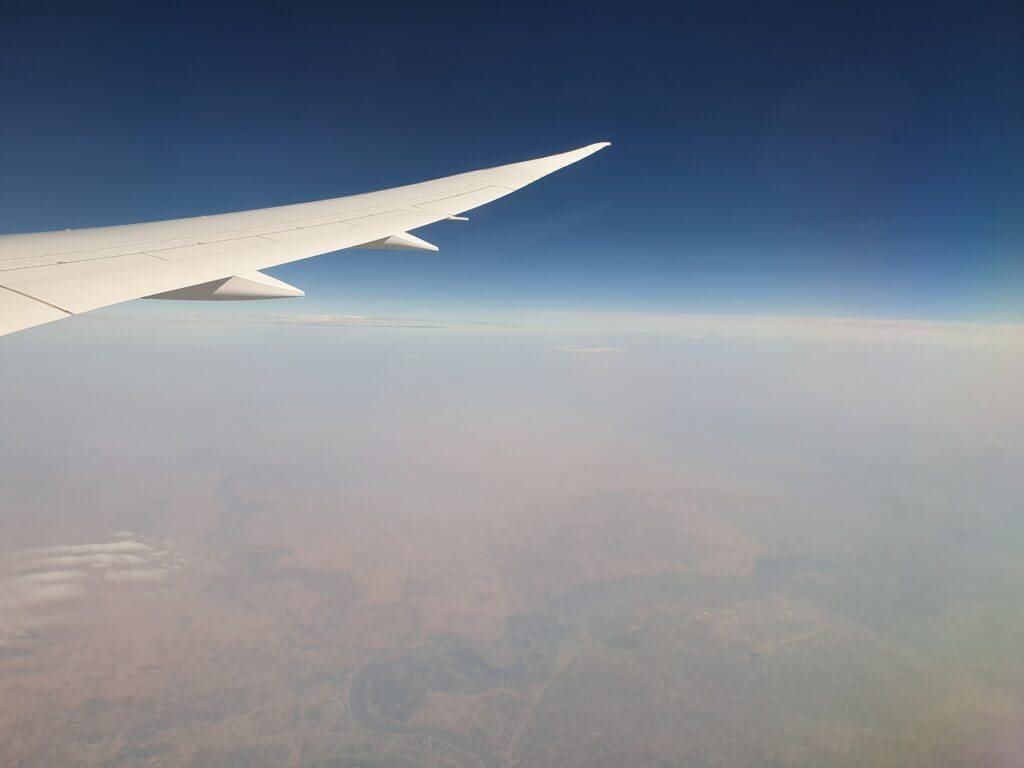
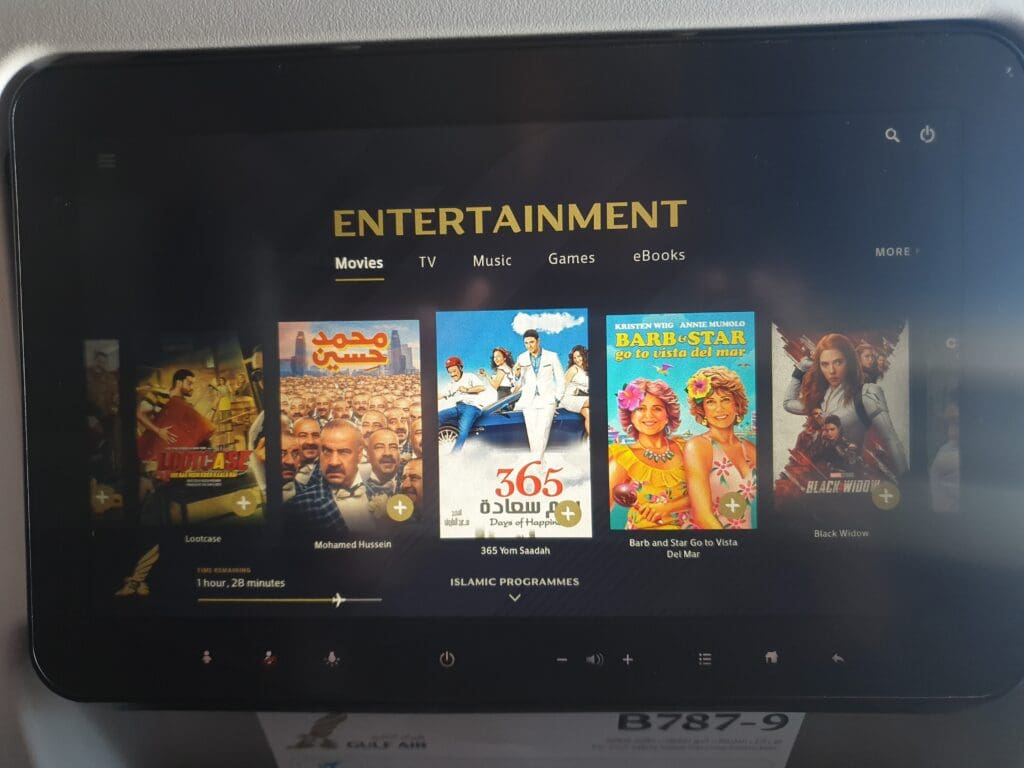
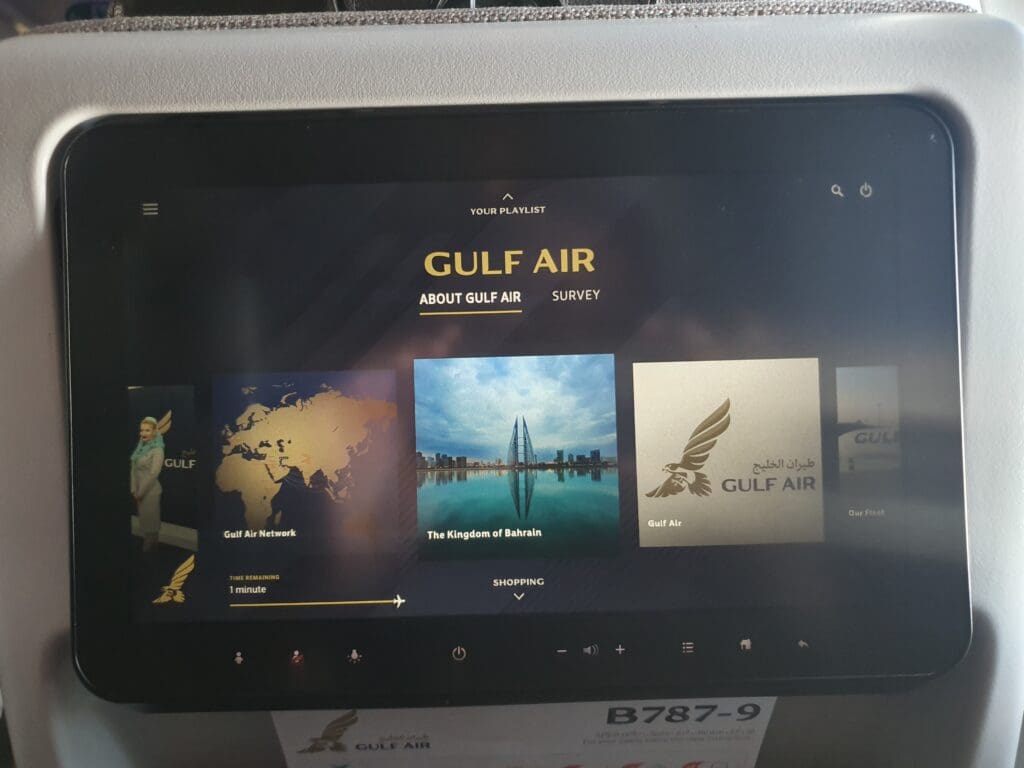
Returning to the route, the Dreamliner passed to the west of the cities of Kirkuk, Erbil and Mosul before making its way into Turkish airspace. Unfortunately, at this time the clouds beneath the aircraft ensured that nothing could be seen of the mountainous landscapes of southeast Turkey so I decided to have a very quick explore of the aircraft’s inflight entertainment system. Unsurprisingly this is identical in layout and content to the inflight entertainment systems onboard Gulf Air’s Airbus A320neo and Airbus A321neo aircraft. Whilst I give a full review of this in my Frankfurt to Bahrain trip report, to summarise this, the inflight entertainment system is well laid out, modern, easy to use and stylish, with a good number of films, television programmes and music playlists. Meanwhile, the moving map offers plenty of different options for those looking to track the flight’s progress whilst I should also mention that the system was quick to load and did not freeze for the entirety of the flight.
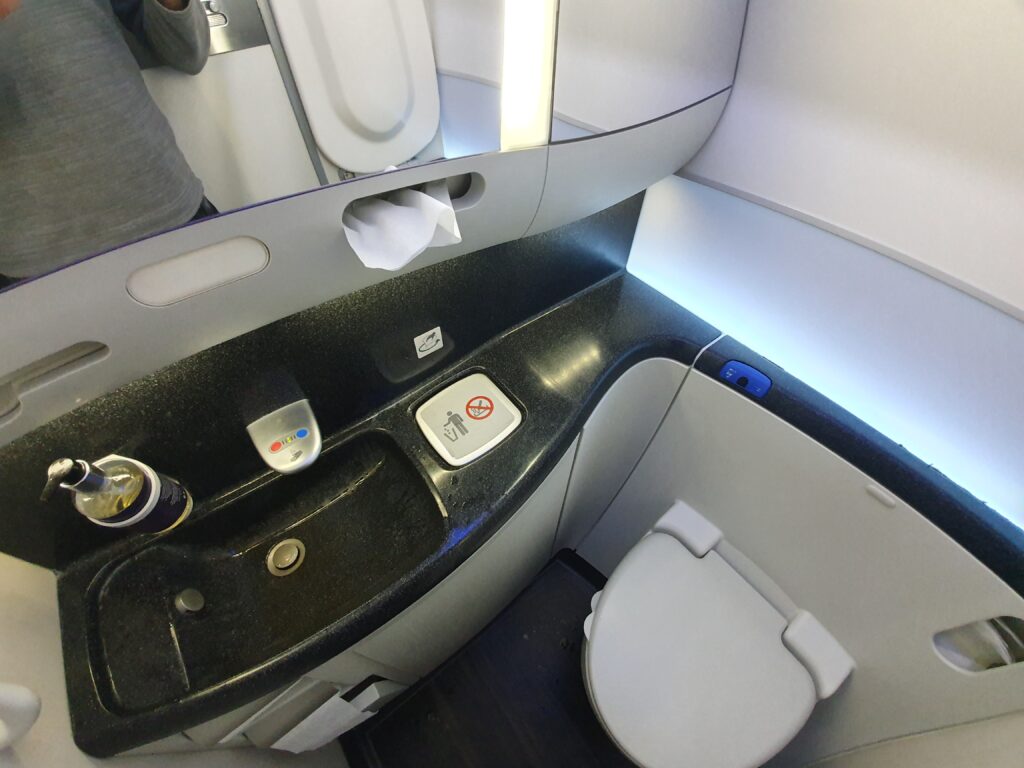
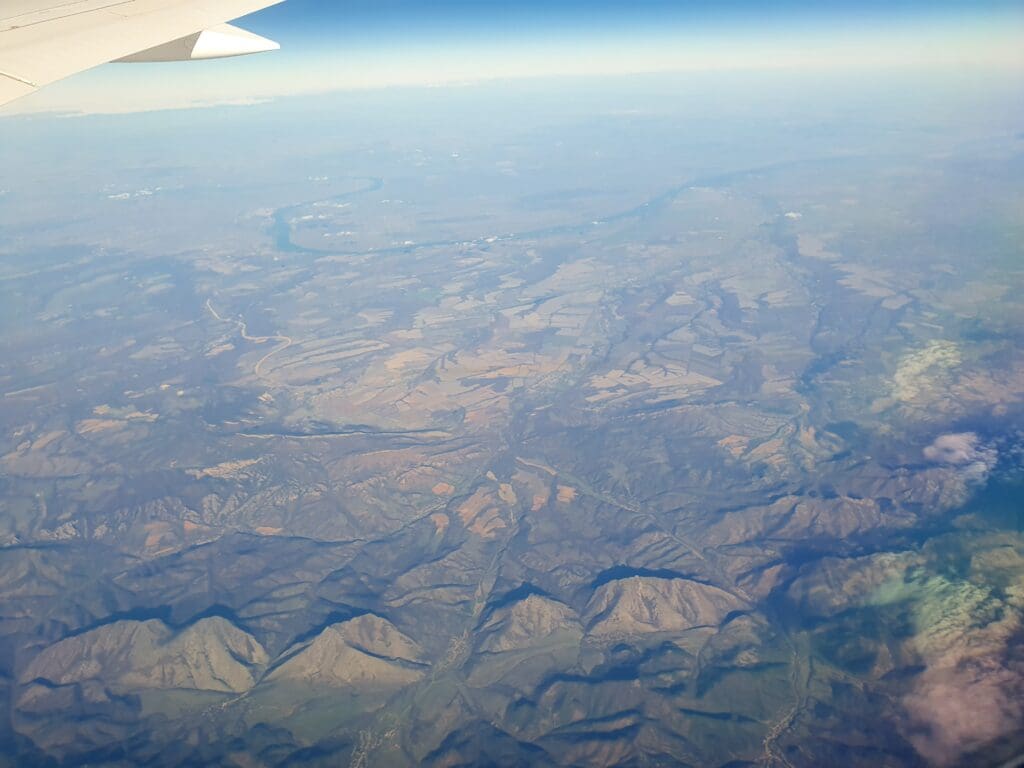
Following my explore of the inflight entertainment system, I drifted in and out of sleep as the aircraft cut across Turkey, heading from the southeast to the northwest of the country, passing over Ankara and Istanbul before reaching Europe and crossing into Bulgarian airspace to the south of Burgas. Whilst clouds remained firmly in place beneath the aircraft for much of the thirty-minute crossing of Bulgaria, as the Dreamliner soared over the country’s Montana Province and approached the border with Serbia, these parted and revealed hilly landscapes which soon rose into Serbia’s Carpathian and Balkan Mountains. Unfortunately, the gap in the clouds did not last too long with little to be seen outside once the aircraft crossed into the airspace of Bosnia and Herzegovina. At this stage in the flight, the first drinks round since the post-lunch round was undertaken, during which trays of plastic cups containing apple juice, orange juice, Coca Cola and water were passed through the cabin. After drinking a cup of refreshing apple juice, I opted to visit one of the lavatories positioned between the two Economy cabins and was pleased to find this to be in a good state – clean, stocked with everything you would expect in an aircraft lavatory and with few noticeable signs of wear and tear.
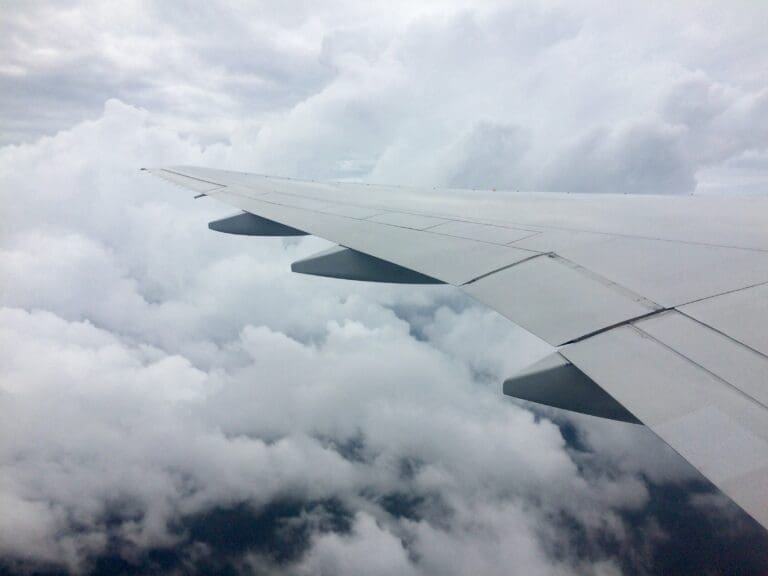
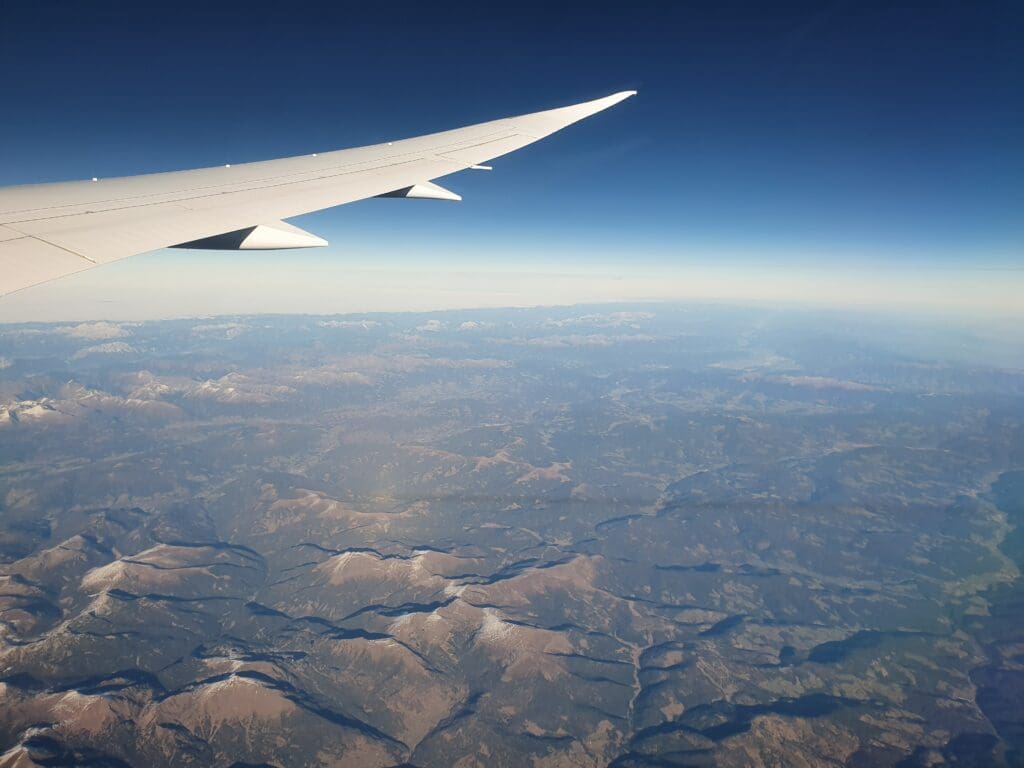
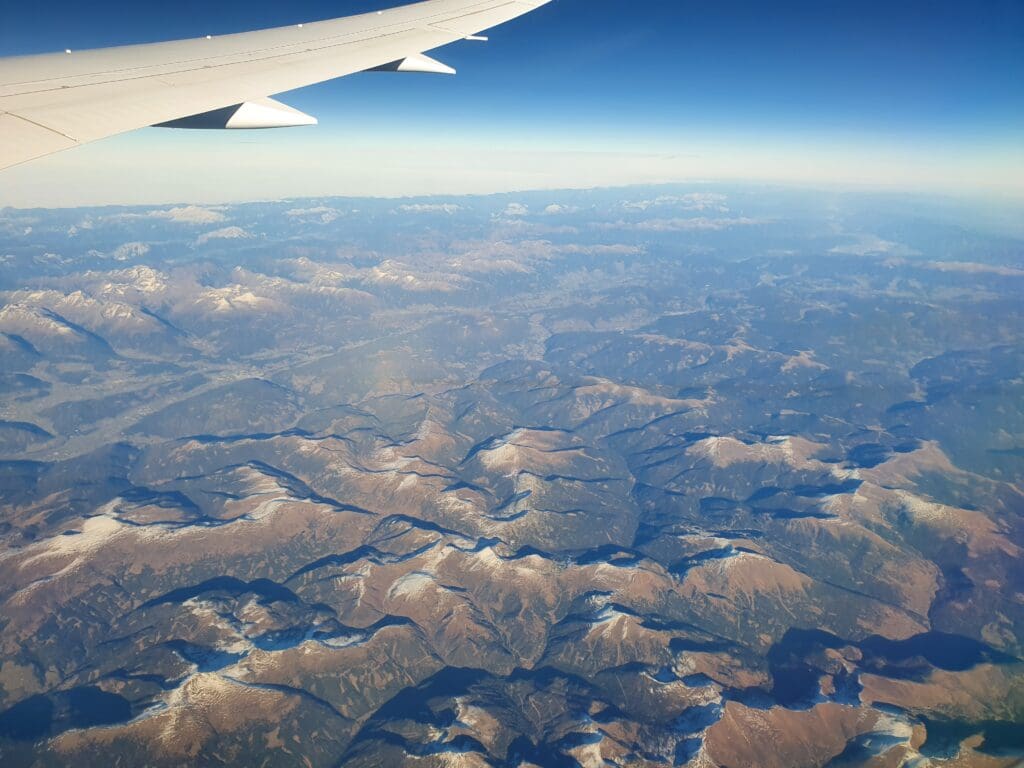
From Bosnia and Herzegovina, the aircraft continued to trundle northwest travelling at an airspeed of between 450 and 460 knots. That day, the flight’s route took the aircraft across Croatia, crossing almost directly over the country’s capital, Zagreb, before zipping over Slovenia and making its way into Austrian airspace heralding the final portion of the flight. Thankfully, by the time the aircraft reached Austria, the clouds below had parted once again and the landscape below soon rose up, transforming from hills to the snow-capped rocky peaks of Carinthia and Styria. As the aircraft continued its crossing of the alpine country, these grew further into the impressive rocky jagged mountains of the Central Eastern Alps. These sank slightly as the Dreamliner cruised towards the German border at which point thick white clouds rolled in below and ensured that nothing could be seen of Europe below until the aircraft approached Heathrow.
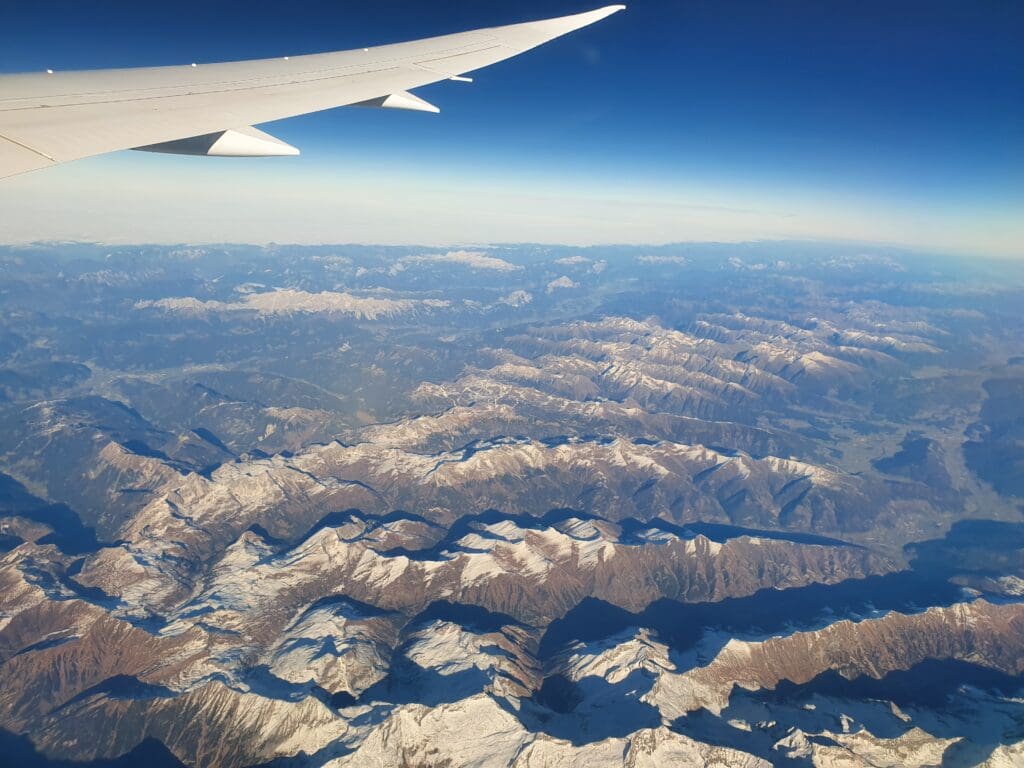
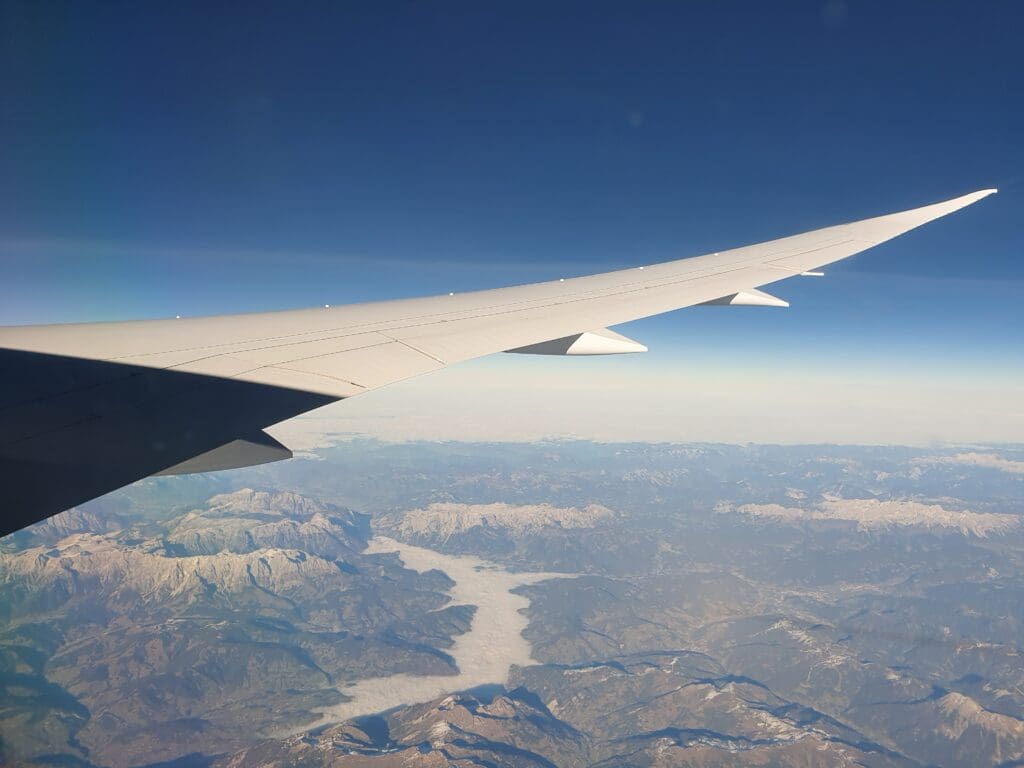
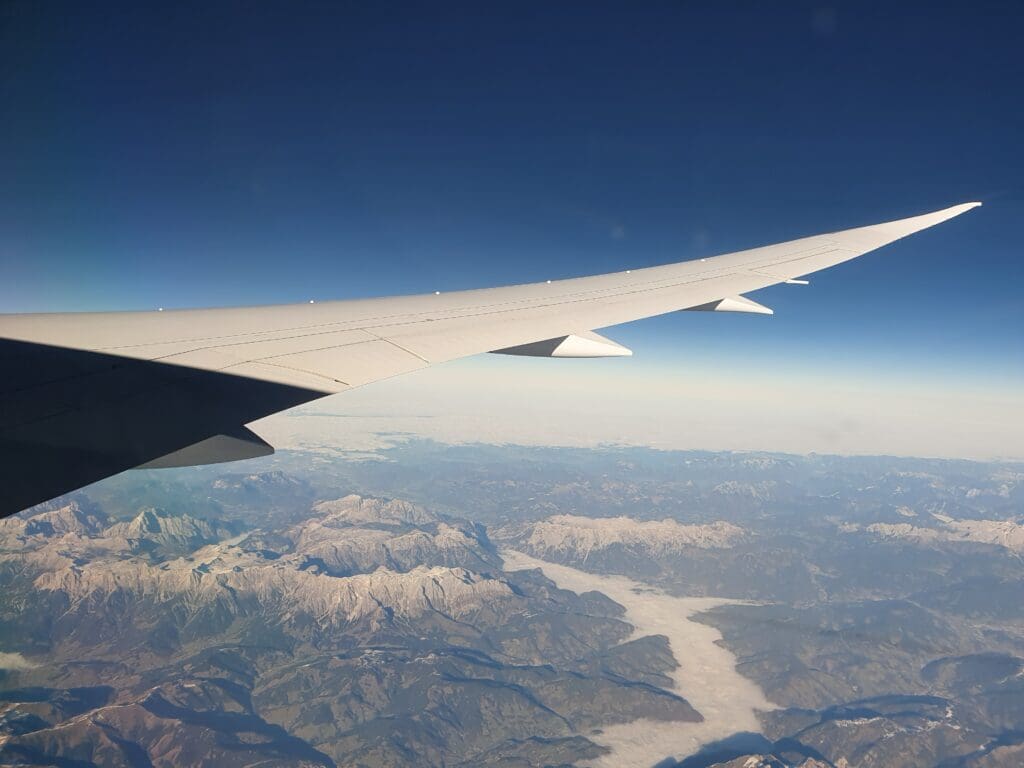
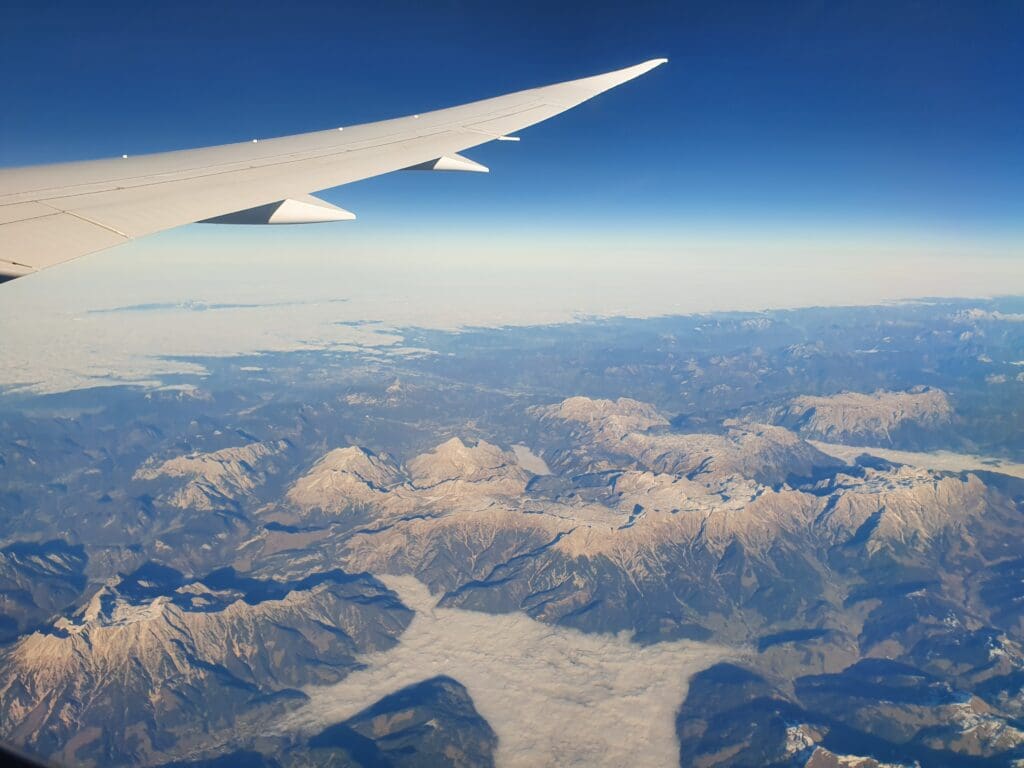
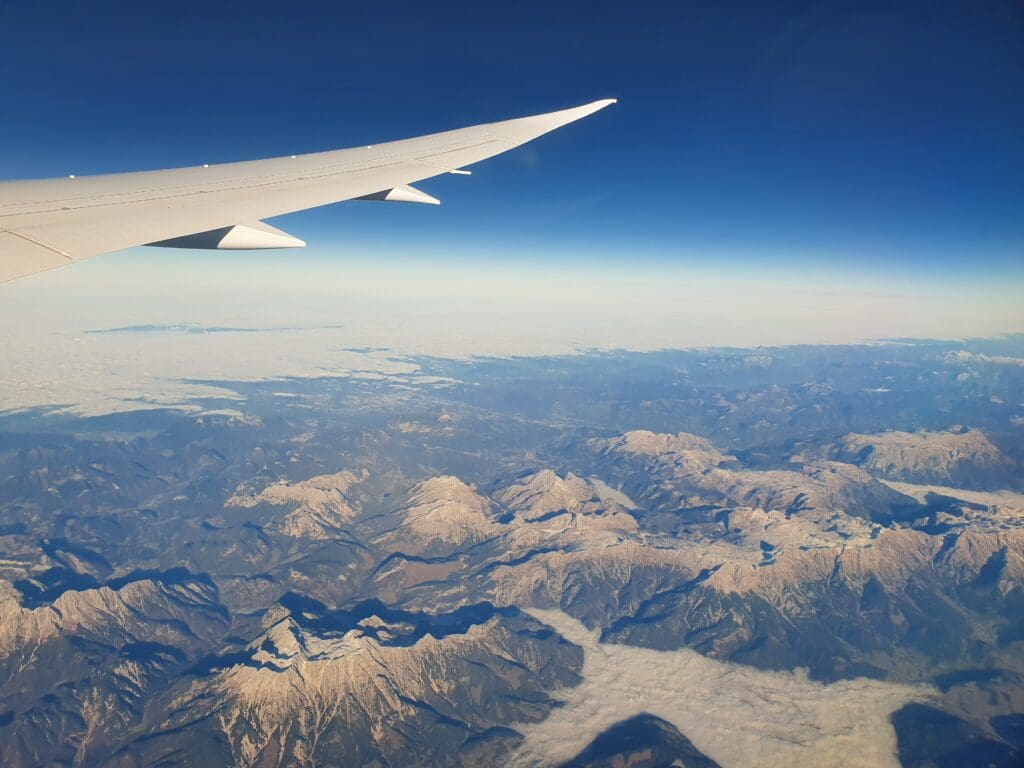
As the aircraft crossed Bavaria, making its way towards the German city of Stuttgart, the trolleys were rolled out and the final round of inflight service, a full drinks round, was undertaken. As with the outbound flight, nothing by means of food was provided with this service. Whilst I was still feeling under the weather and not fancying anything to eat, I cannot ignore the fact that Gulf Air is the only airline that I have flown with that only offers passengers a single round of food onboard their services between the Arabian Gulf and Western Europe. On all other carriers that I have sampled between the two regions, a main meal alongside a snack, usually a sandwich or wrap, is served onboard.
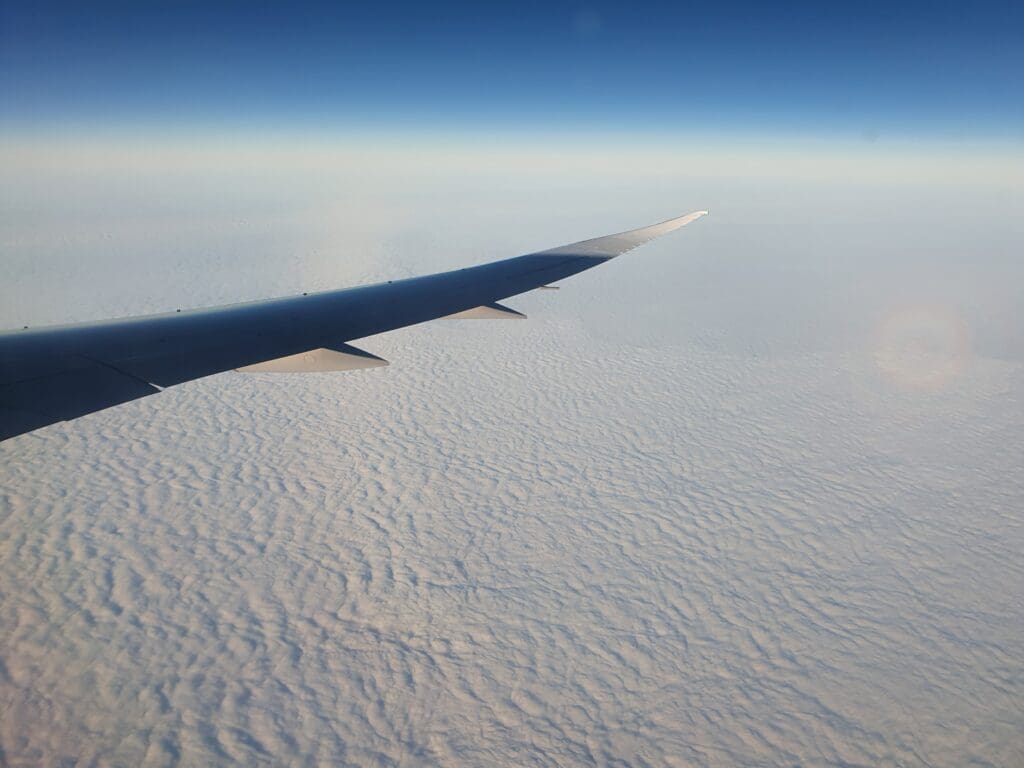
After passing directly over Stuttgart, the aircraft skirted around France’s Grand Est region, remaining in German airspace for as long as possible before making a very short crossing across Luxembourg and a minuscule portion of Belgium, after which the aircraft entered French airspace. Around fifteen minutes later and passing to the north of the city of Amiens, the aircraft could be felt commencing its descent as it turned northwards and made its way out over the Channel.
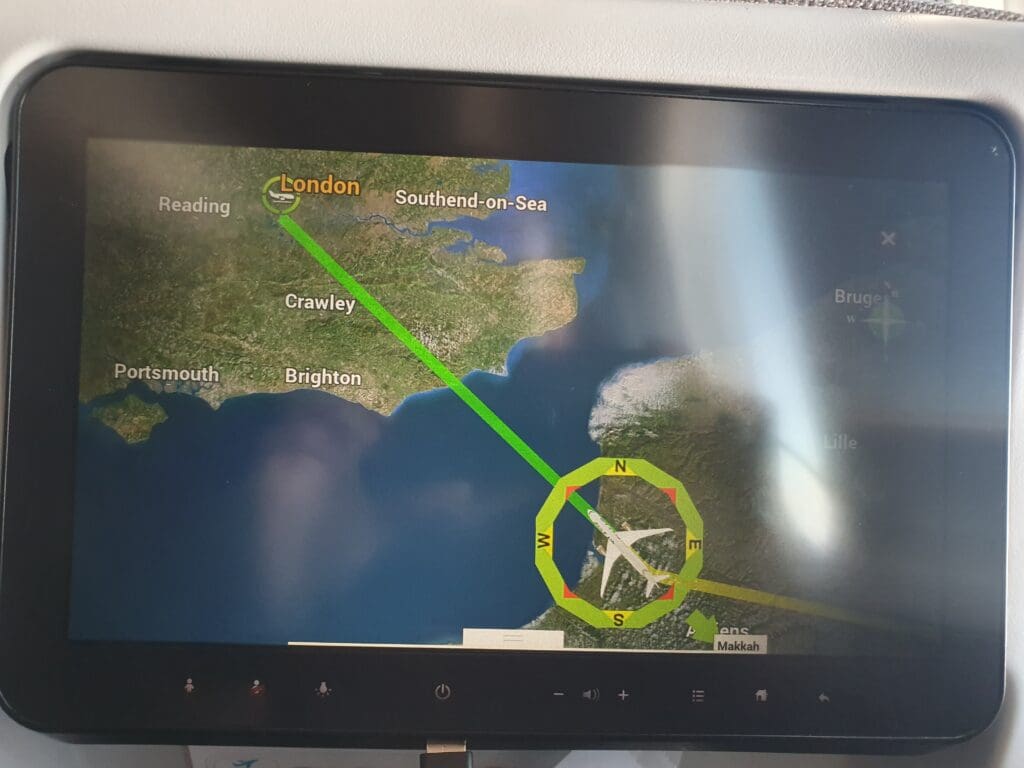
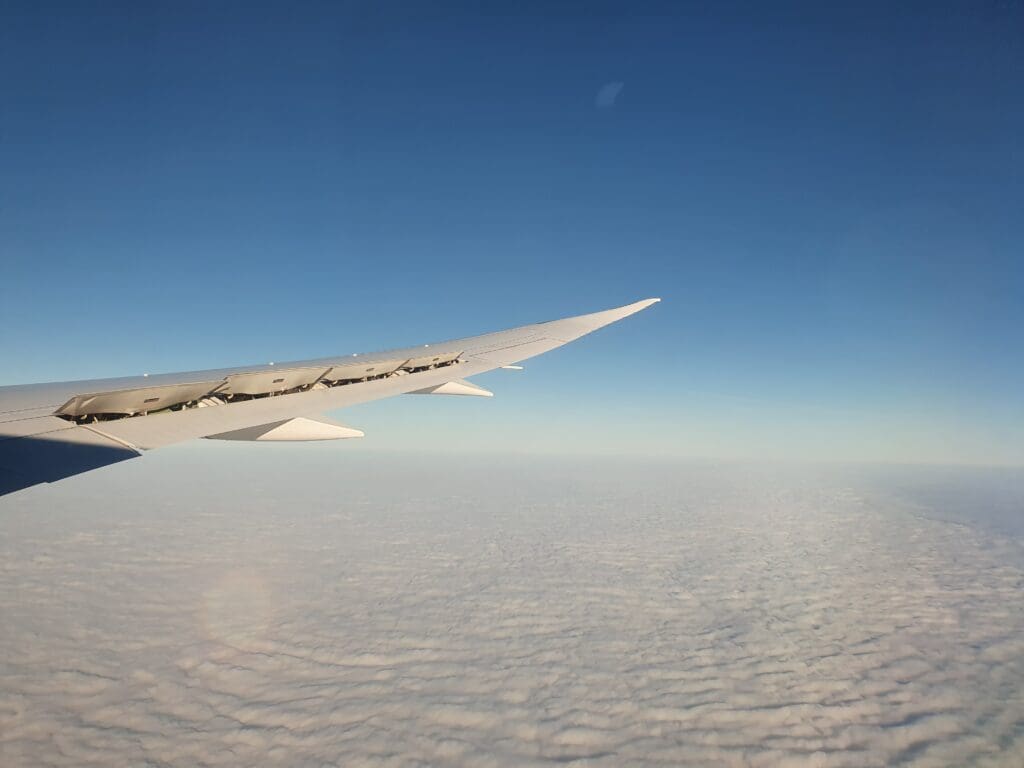
At 1405 British time, the seatbelt signs were reilluminated as the aircraft neared the English coastline before making landfall between Dungeness and Hastings. At this time, an automated announcement rang out through the cabin in Arabic and English advising passengers of the commencement of the aircraft’s approach before reading out the usual instructions regarding seatbacks, seatbelts and tray tables. This was then followed by a manual announcement from the Cabin Services Manager as the crew passed through the cabin ensuring all was in place for the aircraft’s arrival into London.
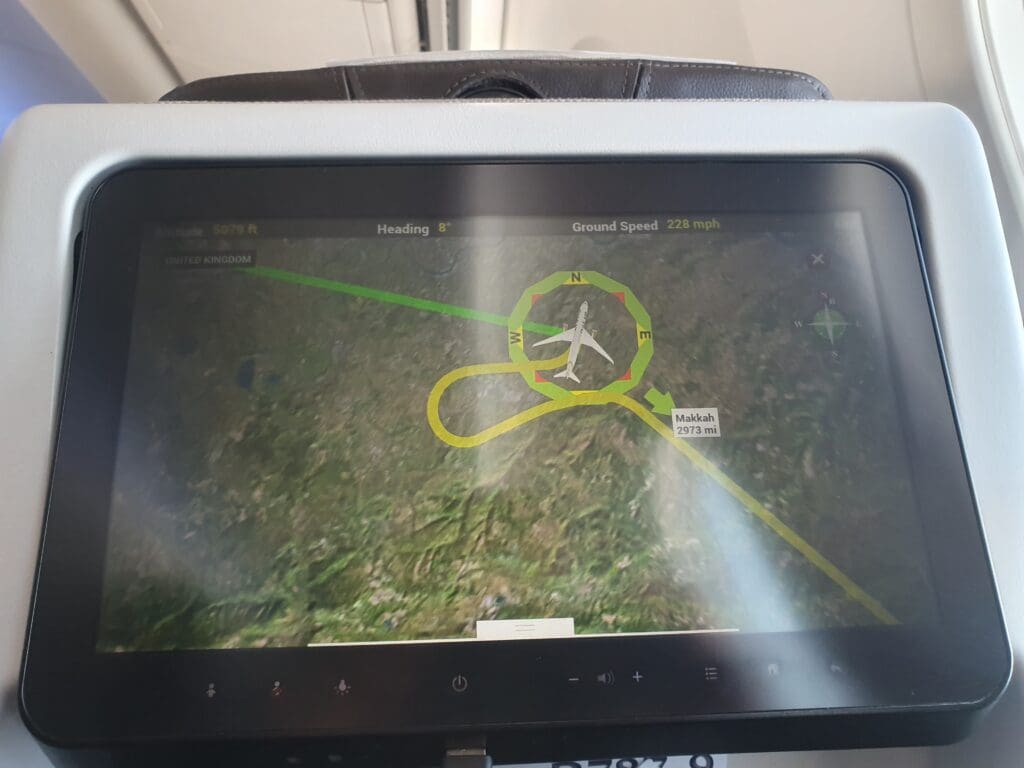
After crossing over Kent, the aircraft reached Biggin Hill where it began to loop around Croydon, at this time, the inflight entertainment was temporarily halted as Gulf Air’s Covid-19 health and safety video played once again. Having hoped for an arrival on one of Heathrow’s ‘27’ runways, that afternoon I was in luck, however, once again thanks to the low cloud I was not fortunate enough to receive scenic views of Central London as the aircraft descended. At 1420, the aircraft sank into the cloud over Central London, only to emerge from these between the West London districts of Brentford and Isleworth. From there the jet sank over Hounslow before a cluster of British Airways’ maintenance hangars appeared and the aircraft made a gentle touchdown on Heathrow’s Runway 27L at 1424, 6H23 after taking to the skies of Bahrain.
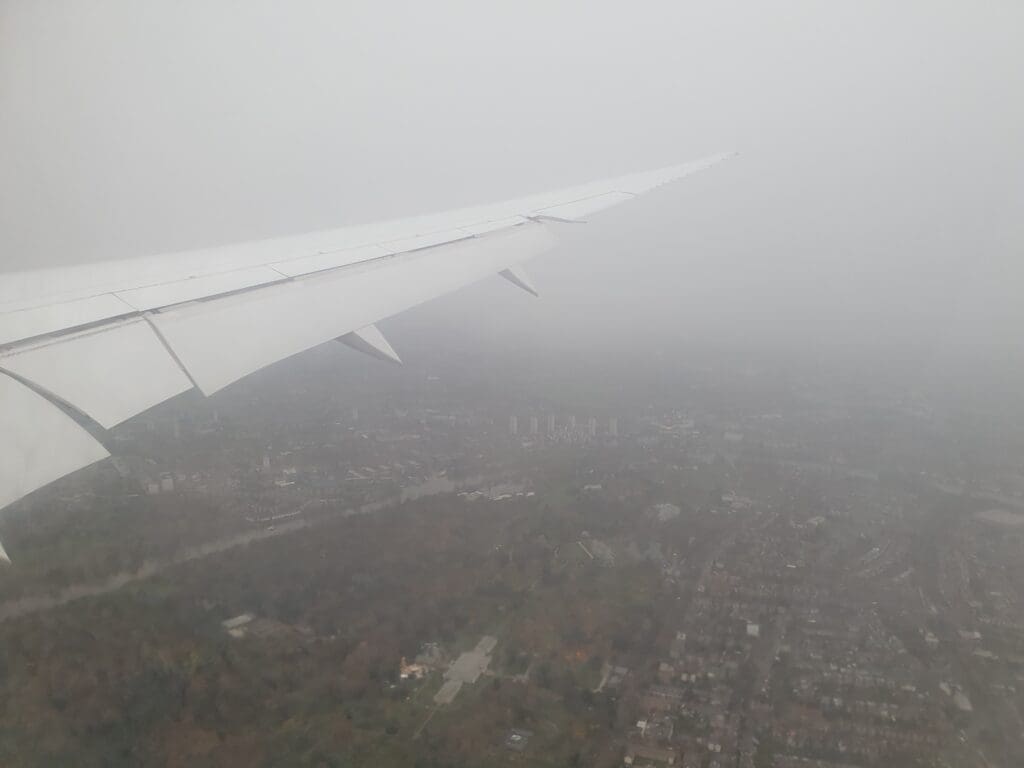
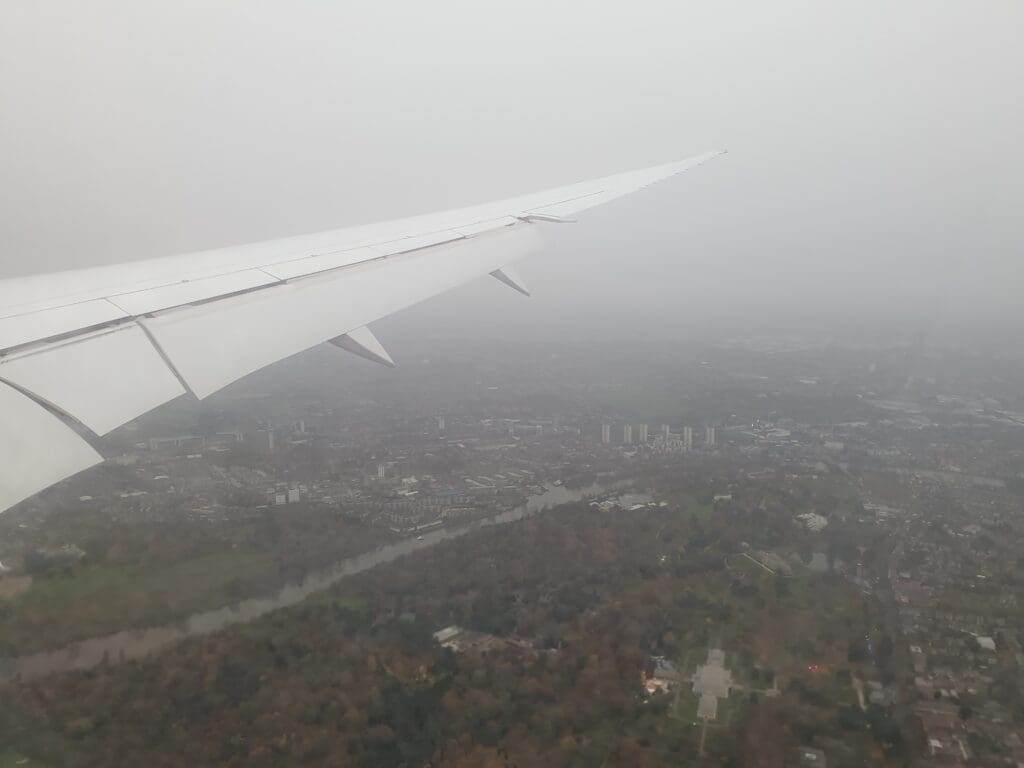
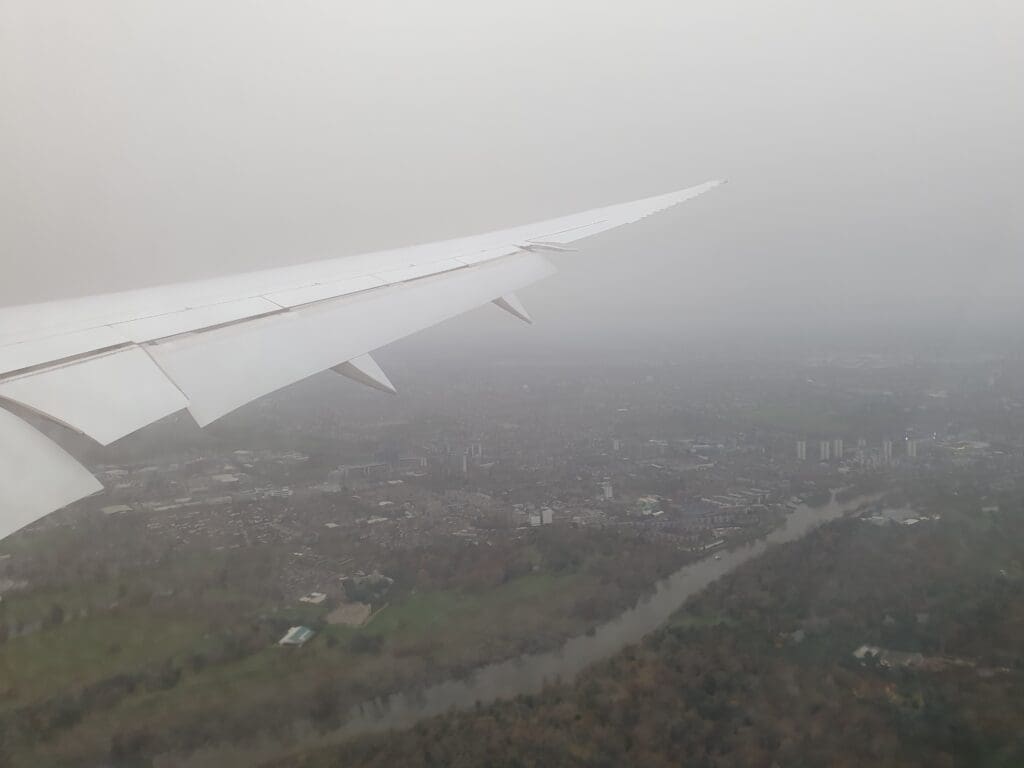
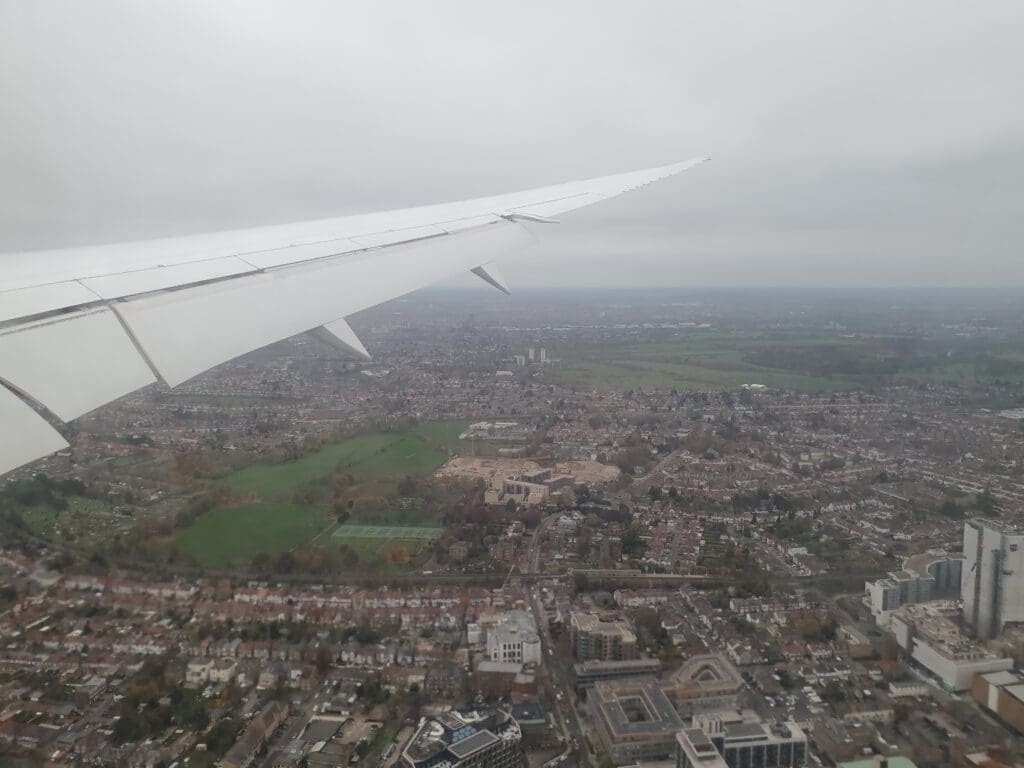
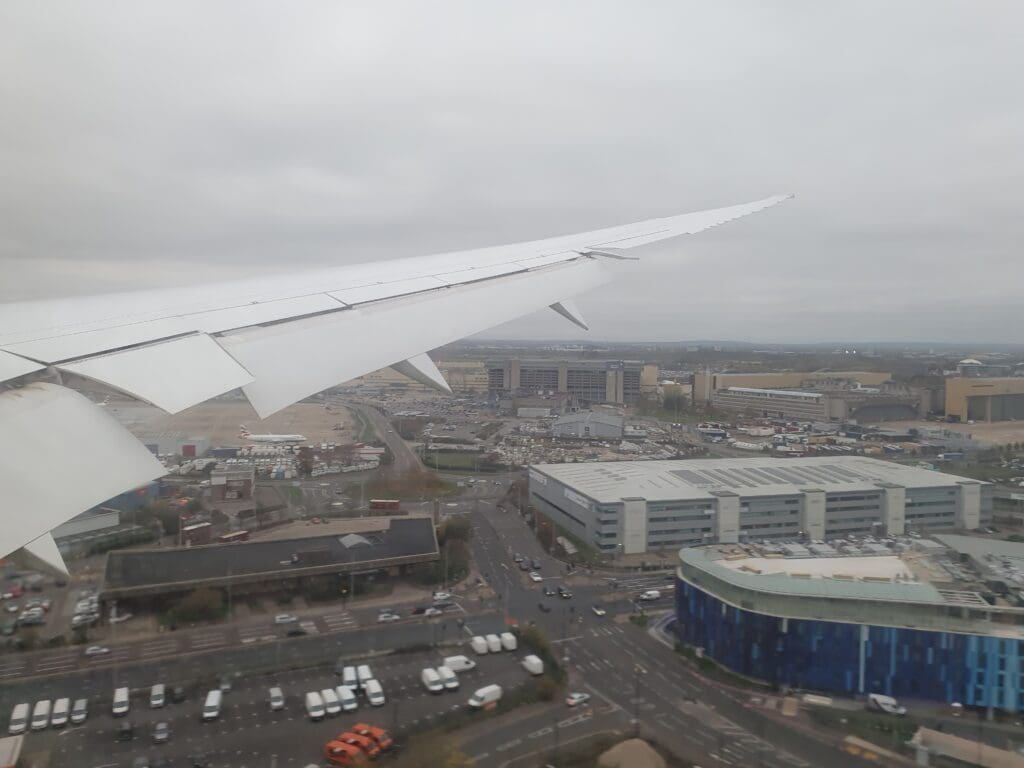
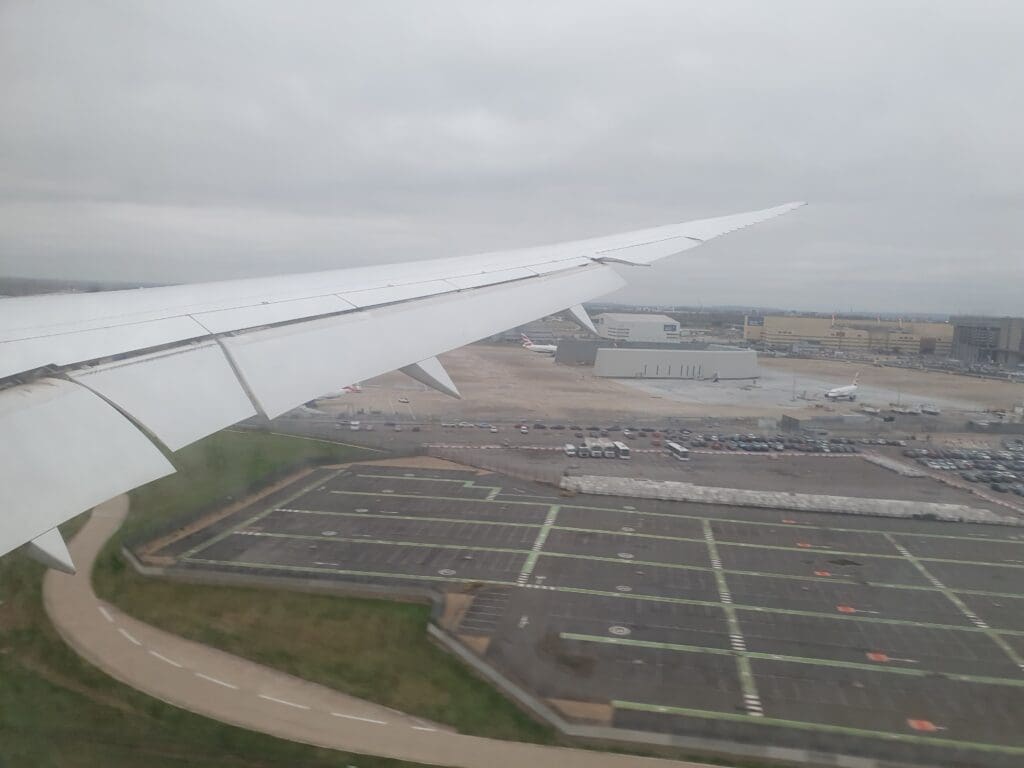
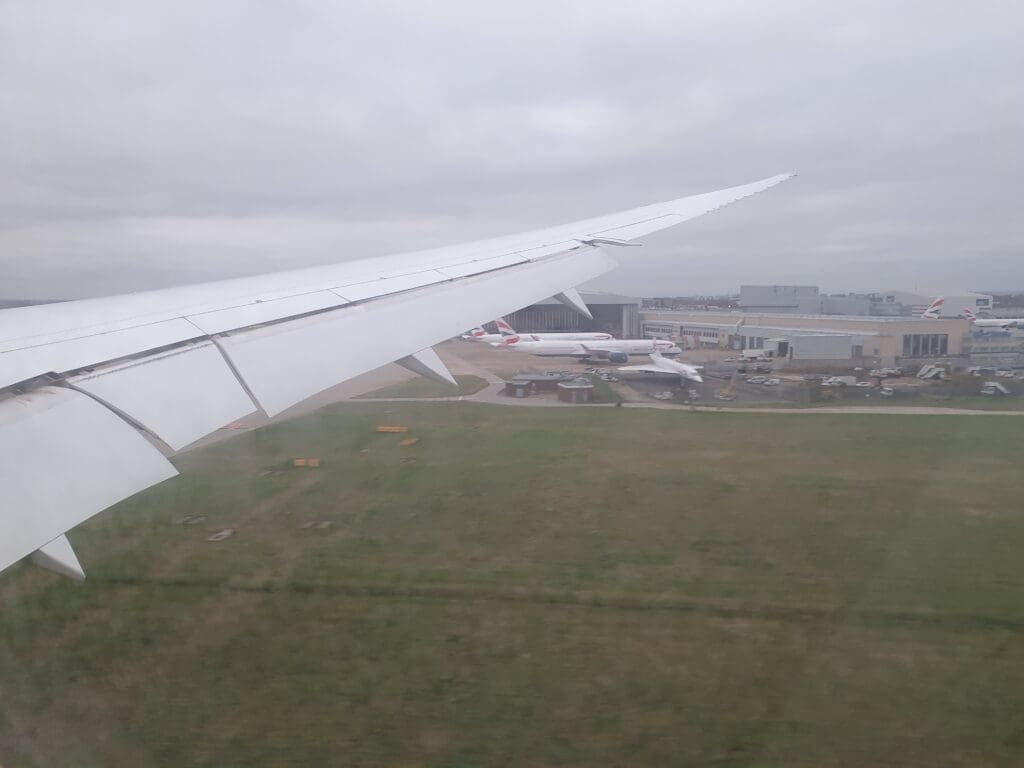
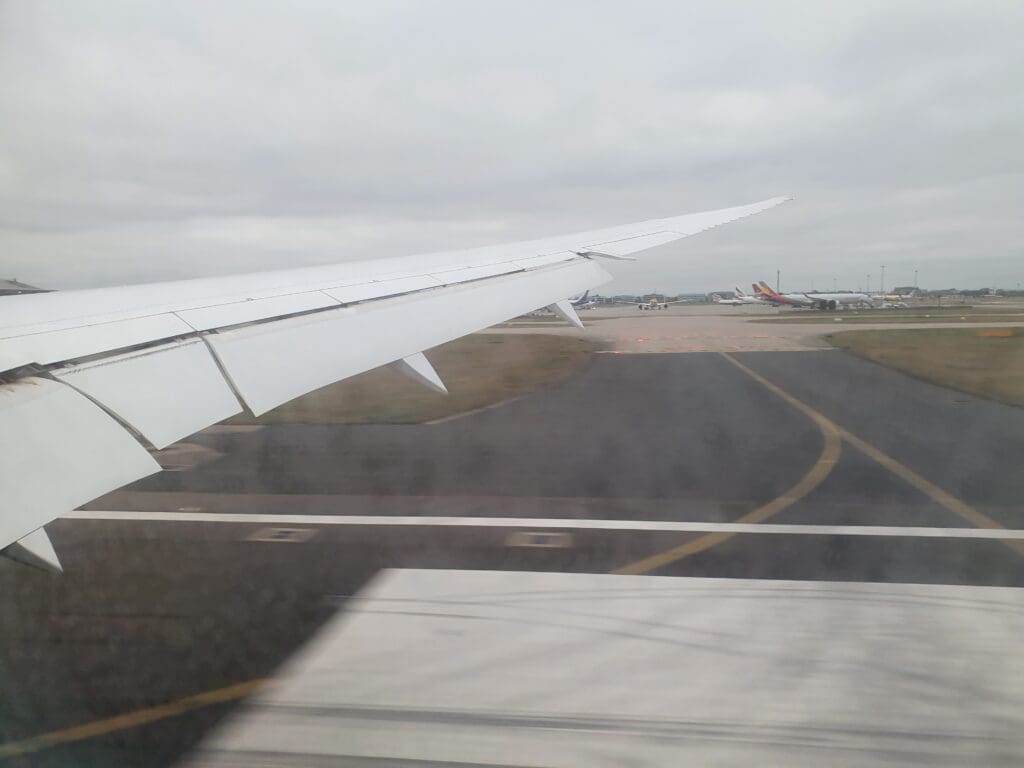
After vacating the runway, an automated welcome announcement was played advising passengers to remain seated before the Cabin Services Manager welcomed all passengers to London. As the aircraft made its way over to Terminal 2 where it pulled in at stand 247 around ten minutes after touching down. Once the engines spooled down, as if often the case many stood up and retrieved their bags however there was little movement inside the cabin, with disembarkation taking some time to commence. Eventually, I made my way through the aisle and the messy forward Economy cabin, thanking several crew members along the way before stepping onto a chilly and battered-looking jetway. From our arrival gate, a long walk over to the terminal’s immigration hall was required, however, once there, I was able to pass through an e-gate with minimal queuing before heading down the escalators to the terminal’s large baggage collection hall. After a ten-minute wait for my small suitcase to appear, I collected this and walked through customs before heading over to Heathrow Central railway station for my journey to Ealing, ending my experience with Gulf Air.