Royal Brunei Dreamliner Review: Sampling the Cheapest Direct Flight from Dubai to London
Background
Despite having nothing against the airline, Royal Brunei Airlines was not a carrier I had envisaged flying during my trip to Sharjah to spend Christmas at my sister’s house. Originally scheduled to have an exciting jaunt back to Europe with Air Algerie and Tunisair, sadly a last-minute commitment forced me to amend my plan and required me to be back in the UK with less than 48 hours’ notice. Thus, without delay, I took to Skyscanner in search of the cheapest flights back home. Whilst expecting to have to endure two squeezed flights on the likes of Pegasus or Wizz Air, much to my delight, I stumbled across an absolute bargain fare offered by Brunei’s national carrier and sole airline, Royal Brunei Airlines. Of course, some may think that flying from Dubai to London via Bandar Seri Begawan may be an unjustifiable detour to the other side of the world, however, Royal Brunei Airlines has long operated a direct service between Dubai and London Heathrow.
Royal Brunei Airlines operated its first regular commercial service to the UK in 1990, operating this with its then-new Boeing 767-200ER and Boeing 767-300ER jets. However, whilst capable machines in their own right, these aircraft lacked the range capabilities to make the nearly 7,000-mile non-stop flight between Bandar Seri Begawan and London and instead made a mid-journey refuelling stop in Dubai. Alongside serving this important logistical purpose, with fifth freedom rights between the United Arab Emirates and the United Kingdom, this enabled Royal Air Brunei to tap into the lucrative and ever-growing market between the two, with this continuing to serve as the airline’s flagship route. Highlighting the lucrative nature of this, despite taking delivery of their first aircraft capable of making the journey non-stop without taking too much of a payload penalty, the Boeing 777-200ER, Royal Brunei Airlines continued to operate this route with a stop in Dubai. Meanwhile, since 2013, this has been operated by the airline’s Boeing 787 Dreamliners.
Fearful that the cheap fare would soon slip away, I promptly downloaded Royal Brunei Airlines’ app. Upon opening this up, I was greeted by a promotion which advised passengers that they could receive 1000 miles in exchange for joining the airline’s Royal Skies frequent flyer program. Seeing as Royal Brunei Airlines is not part of any airline alliance, I decided to do this and once signed up, I continued onwards and undertook a search for flights. Within a few seconds, I was presented with the airline’s sole flight between Dubai and London that day. This was scheduled to depart Dubai at the early hour of 0300 and arrive in Heathrow at 0720. As soon as I had selected this, I was presented with three fare options – RB Saver, RB Value and RB Flexi, priced between 780 dirhams (£161.82) and 2340 dirhams (£485.45) respectively. However, it is worth noting that even the cheapest RB Saver fare includes a generous 25kg hold luggage allowance and free seat selection across much of the Economy cabin. With no reason not to select the cheapest fare, I selected this, entered my personal details and selected my seat before making a quick and easy payment, receiving my e-ticket via email almost instantly.
Online check-in for many Royal Air Brunei services opens up 48 hours before departure, however, as is often the case on a one-way ticket to the UK, this turned out not to be possible and the authenticity of my passport would need to be checked at the airport.
About Royal Brunei Airlines
As flag carriers go, operating twelve aircraft, Royal Brunei Airlines is by no means large. However, considering that Brunei is home to less than half a million people and is the world’s 164th largest country in terms of area, this is by no means surprising. Established by the local government with the assistance of British Airways, Royal Brunei Airlines flew its first service in May 1975, initially connecting Bandar Seri Begawan’s new airport with the likes of Hong Kong, Kota Kinabalu and Singapore with a fleet of two brand new Boeing 737-200s. Over the coming years, the airline would continue to expand its fleet and destinations, adding more Boeing 737s and serving an array of capital and regional cities across Southeast Asia, alongside services to the Australian city of Darwin. As time passed, despite its modest size, Royal Brunei Airlines solidified its importance in connecting the world with Brunei, often maintaining a monopoly on its routes.
Furthering its capabilities, in 1986 Royal Brunei Airlines took delivery of the first of three Boeing 757s. Alongside adding additional capacity on high-demand routes, these enabled the airline to serve destinations further afield such as Dubai. Seeking to expand the airline’s capacity and route network, in 1990 Royal Brunei Airlines added the Boeing 757’s larger cousin, the Boeing 767. These served as the airline’s flagship aircraft for over two decades, with the last example bowing out of action in 2011, following the entry into service of six Boeing 777-200ERs leased from Singapore Airlines. Throughout the 1990s, Royal Brunei Airlines’ fleet continued to grow, with the likes of Frankfurt, Jeddah, London, Perth and Shanghai all added during this decade. Enjoying an increased presence throughout Asia, Australasia and Europe, during this time the airline began to gain recognition in the global arena, and came to be known for its high levels of service.
Continuing to modernise, in 2003 Royal Brunei Airlines took delivery of its first Airbus A319, with the Airbus A320 Family becoming the airline’s narrowbody type of choice. Meanwhile, a total of five Boeing 787-8 Dreamliners were ordered to serve the airline’s long haul destinations. Since its inception, Royal Brunei Airlines has taken various shapes, and today operates a fairly streamlined fleet consisting of seven Airbus A320neos and five Boeing 787-8 Dreamliners, and deploys these on routes throughout East Asia, as well as serving the likes of Dubai, Jeddah, London and Melbourne. Despite the airline’s small size, Royal Brunei Airlines arguably punches above its weight, enjoying a fairly good reputation amongst the travelling public. Needless to say, I was eager to get onboard and sample the delights of Royal Brunei Airlines for myself!
The Journey
Like most full-service overseas carriers that serve Dubai International Airport, Royal Brunei Airlines operates from the oldest of the airport’s three passenger terminals, Terminal 1. For those travelling to and from Dubai, this is connected to the Dubai Metro and enjoys the convenience of its own dedicated station which sits no more than a few steps away from the terminal. However, as I would be commencing from the nearby neighbourhood of Al Khalidiya in the Emirate of Sharjah, the quickest and easiest way to reach the airport would be to take a taxi. With my flight scheduled to depart Dubai at 0300, theoretically I could have departed Sharjah at 0100 and still had time to browse the terminal’s shops before boarding. However, wanting to play things safe and have enough time to fully explore the delights of the terminal, just after 2300 a Chevrolet rocked up outside the house and soon whisked me away. Speeding down the quiet residential streets of Al Khalidiya, we soon hit the main road and powered out of the neighbourhood. Fortunately, as is not always the case, whilst the streets were as busy as ever, the traffic flowed freely and so nothing more than a relatively short journey to the terminal was in store that evening. Trundling down the Sheikh Zayed Road, it wasn’t long until the sprawl of Dubai International Airport came into view as we skirted around its western perimeter heralding the end of our journey.
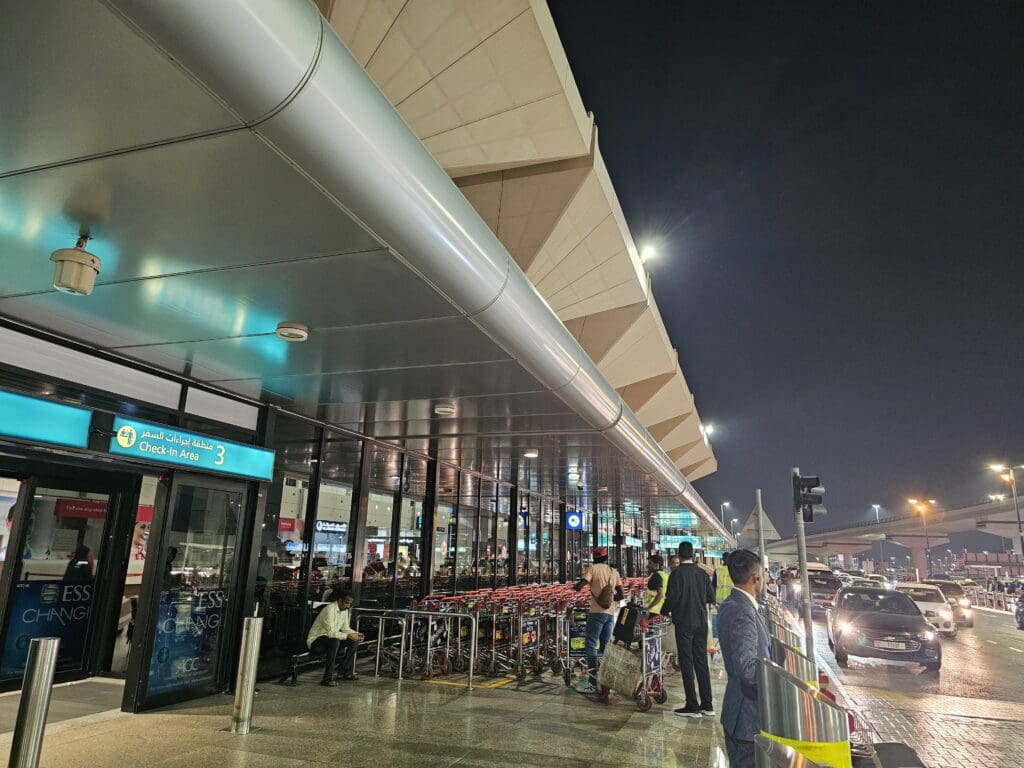
No more than about twenty minutes after leaving the house, the car pulled up to the busy facade of Terminal 1 where crowds of passengers could be seen shuttling all manner of luggage between cars and the check-in hall. With this being my sixth time departing from Terminal 1, I had a good idea of what to expect from the terminal that night. As always seems to be the case, thanks to the fact that the terminal serves an endless stream of flights departing to all corners of the world at all times of day and night, inside this was rather busy, noisy and slightly chaotic, with passengers scurrying about here, there and everywhere. Being Dubai Airport’s oldest terminal, admittedly, the landside area lacks the glitz and glamour that some may expect from Dubai’s main airport. However that evening, as always, I found this to be functional and largely clean thus leaving me with little to make a valid complaint about.
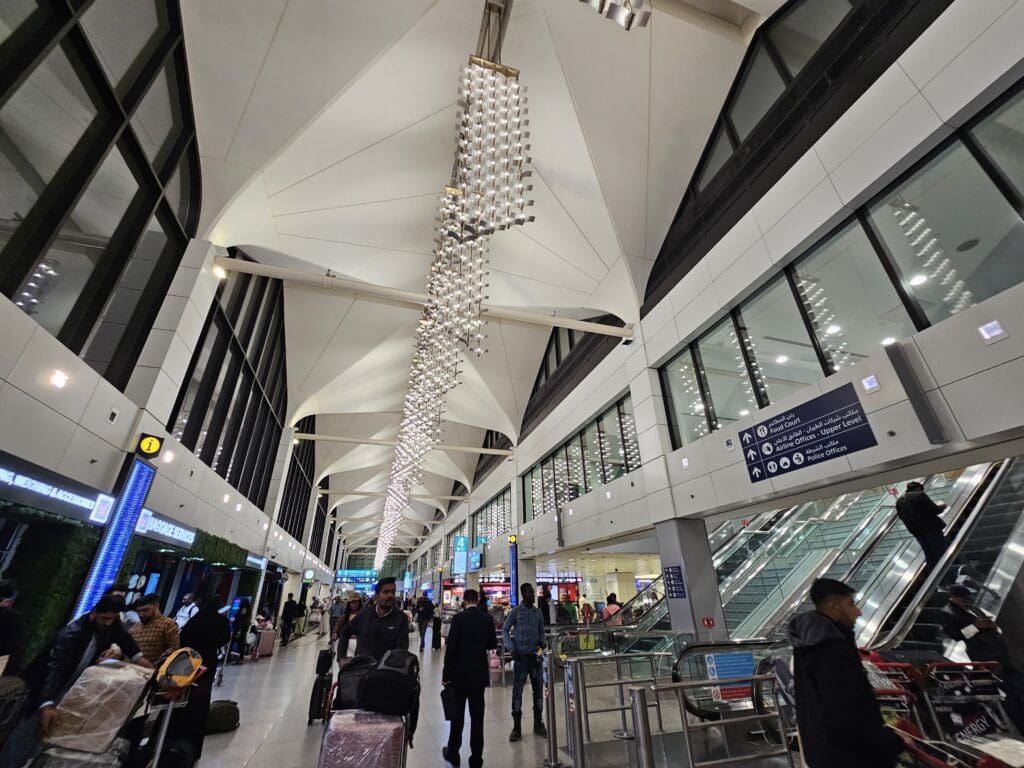
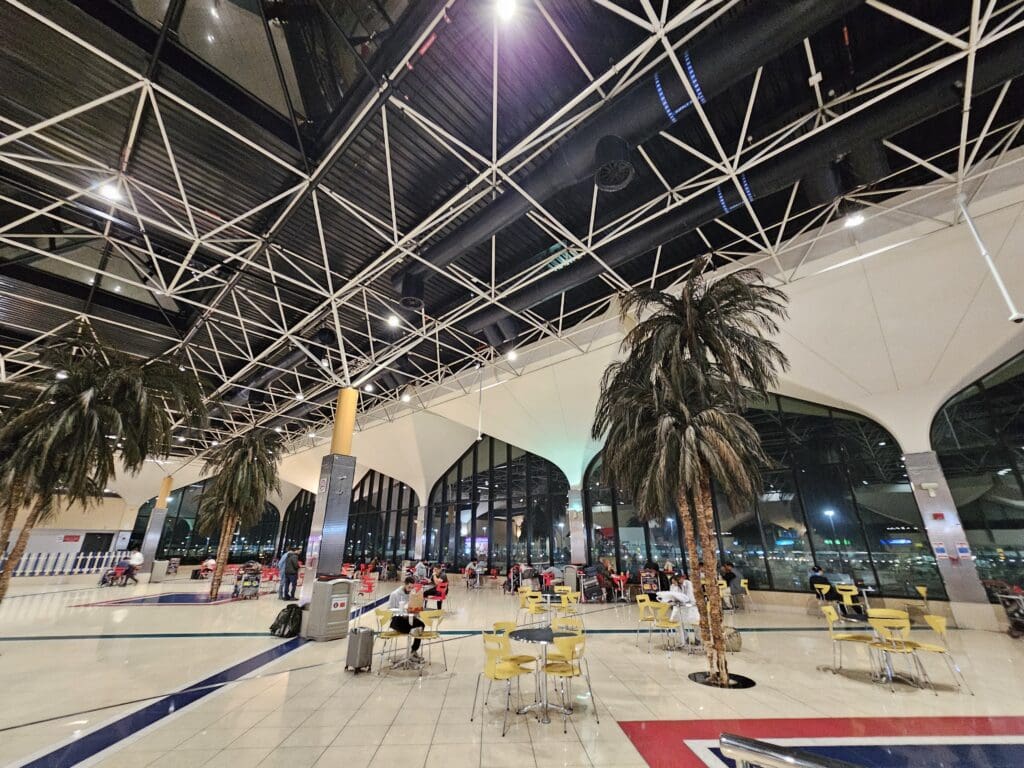
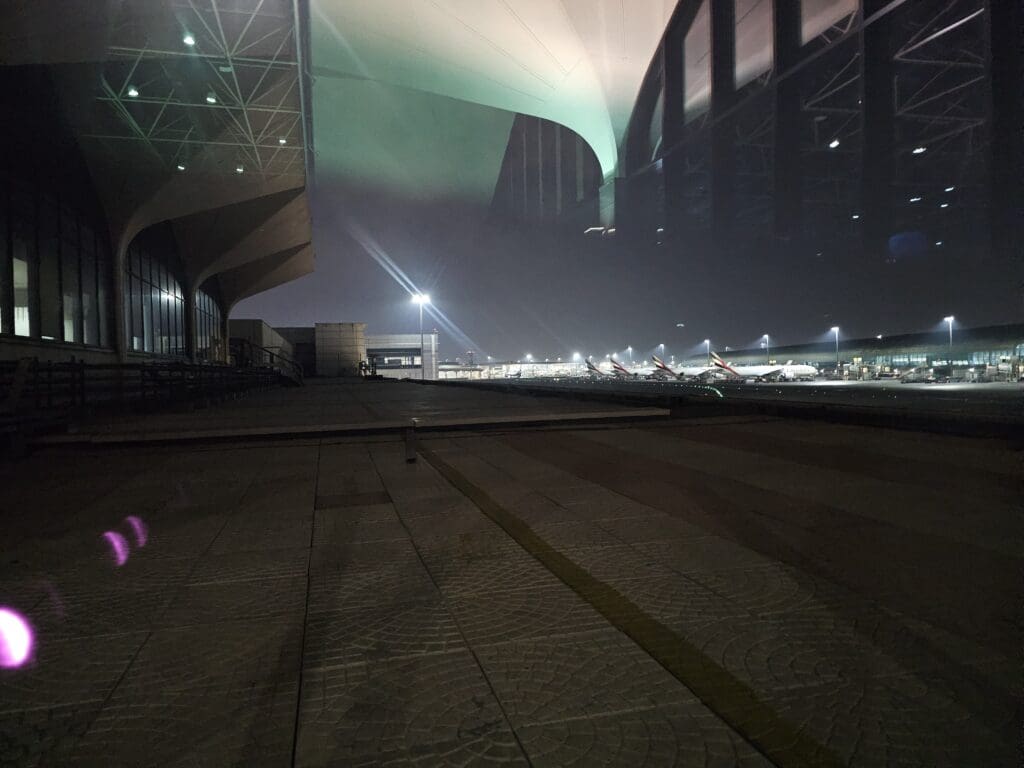
Seeing as I had plenty of time before my flight, I decided to have wander around the terminal before heading over to the check-in desks. For those looking to partake in some retail therapy or grab something to eat or drink before heading through security, a few shops, cafés and fast food outlets can be seen dotted around the terminal’s six check-in zones. Meanwhile, a fast food court can be found on the floor above the check-in hall, which is home to branches of Baskin Robbins, JB & Co, Marrybrown, McDonalds and Roti Bhai. For enthusiasts, it is worth noting that this is the only part of the landside portion of the terminal that offers views of the action outside on the ramp, offering a clear view of a small section of Terminal 3 and one of the taxiways. Seeing as Royal Brunei Airlines’ check-in desks were yet to open, I decided to head up to this spot and plonked myself down by the window where I spent a while watching multiple Emirates Airbus A380s and Boeing 777s taxi past, whilst the lights of a constant stream of aircraft could be seen rocketing upwards into the night skies a short distance behind this.
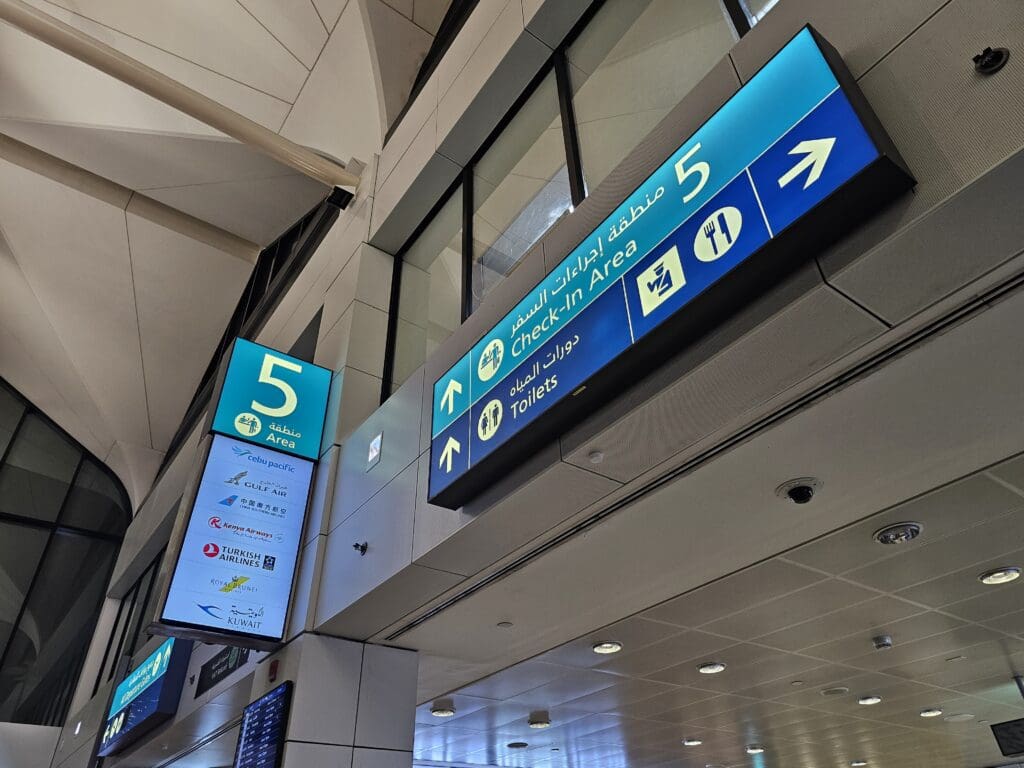
With three hours to go until departure, I decided to head back to check-in Zone 5. With Royal Brunei Airlines sharing this space with China Southern Airlines, Kenya Airways and Turkish Airlines, and with long queues at each of these airlines’ desks, this was rather crowded and not the calmest place in the world to check-in. Furthermore, upon arriving there I was greeted by the dreaded sight of a snaking queue leading up to the three desks that had been assigned to the flight – two for Economy passengers and one for those in Business as well as Silver and Gold members of Royal Brunei Airlines’ Royal Skies frequent flyer program. These were manned by a team of Dnata agents, whilst a local Royal Brunei Airlines representative in smart casual clothes, identifiable by their yellow lanyard could be seen overseeing proceedings. Operating three flights each week to Bandar Seri Begawan and London Heathrow, perhaps unsurprisingly, these desks lacked significant Royal Brunei Airlines branding other than a pair of signs directing passengers to the correct queue.
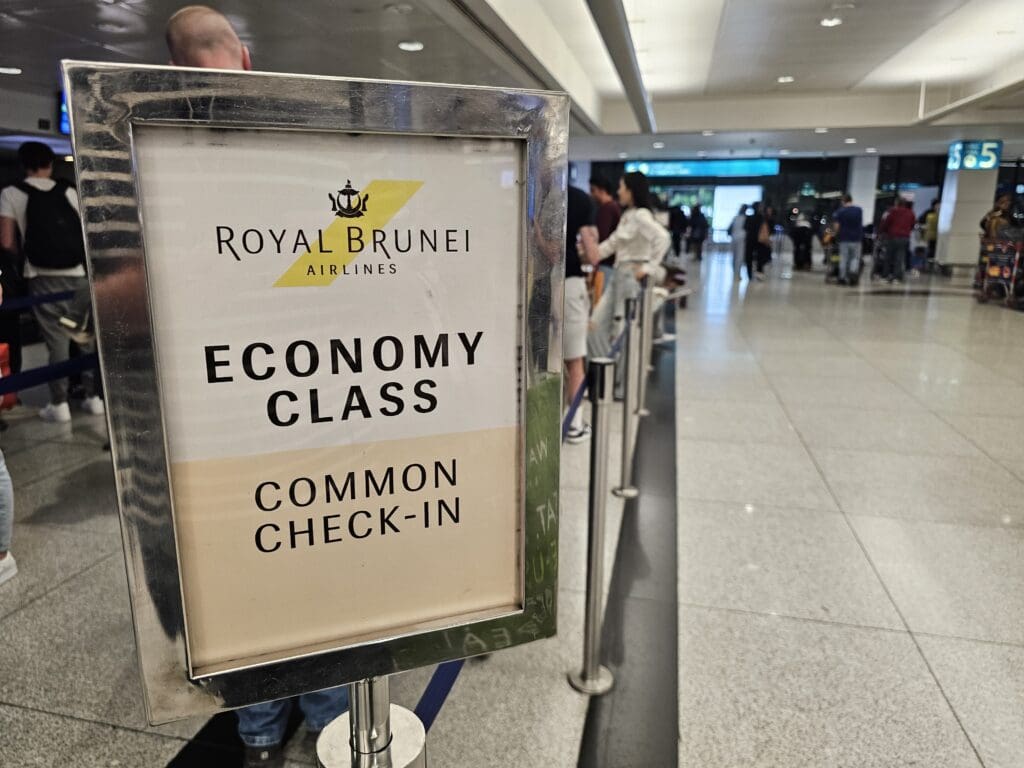
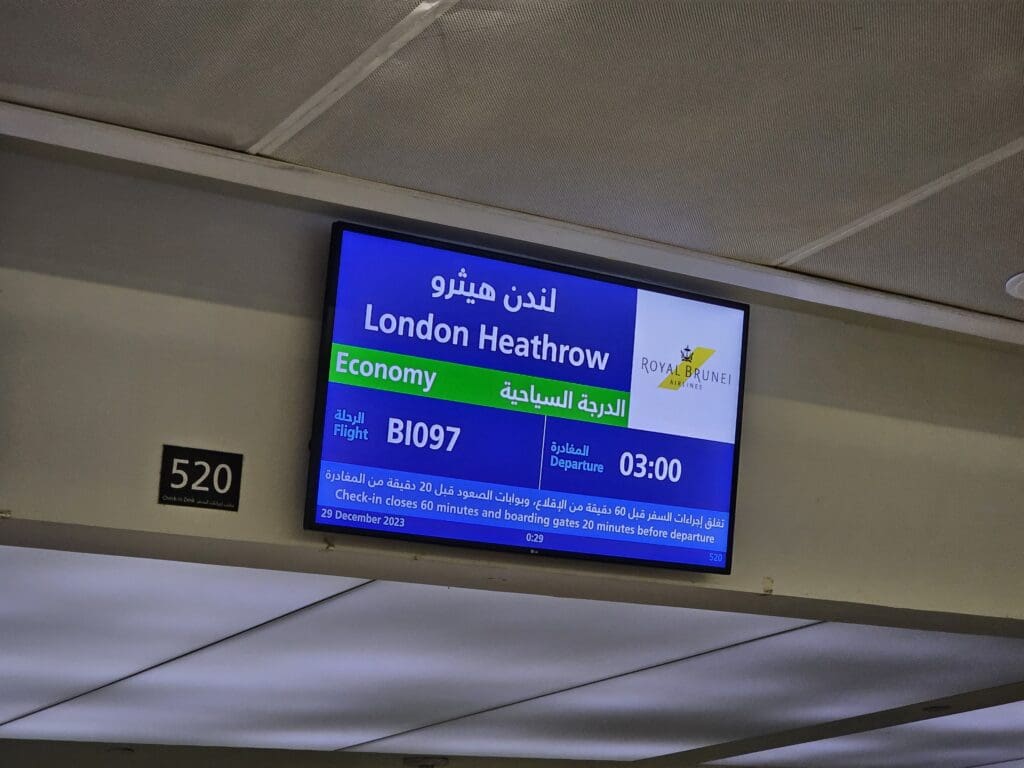
Unfortunately, my Royal Brunei Airlines experience failed to get off to the best start as the combination of a lack of check-in desks and many passengers’ heaps of luggage meant that I had to wait in line for around thirty minutes before reaching the front of the queue. Upon finally reaching this, I was served a reasonably friendly Dnata agent and, lacking any sort of hold luggage, I spent no more than a minute at the desk whilst my boarding pass was printed and a hand luggage tag was affixed to my backpack before I was free to continue onwards to security and immigration.
With everything now sorted, I was left with around two and a half hours to go until my flight was scheduled to depart. Lacking any reason to remain in the busy landside area, I made a beeline for the entrance to immigration and security. With Royal Brunei Airlines’ check-in desks being amongst some of the closest to this part of the terminal, I walked a matter of steps before having my boarding pass scanned and entering the immigration hall. Once upon a time, both entering and departing the United Arab Emirates via Terminal 1 could be a slow experience thanks to long lines at immigration. However, thankfully, there has been a shift to automation and many of those visiting the country can use the automated gates to enter and exit the country. Joining the snaking line leading up to the automated immigration gates, after about five minutes, I entered one of these and, thanks to the magic of facial recognition technology, no passport scanning was required and the gates swung open enabling me to continue onwards to security. With all security checkpoints open at that time, there was no need to queue up for these, nor was I required to remove any liquids or electronics, meaning that I was in for a pleasant and speedy check. Seeing as Terminal 1’s gates are located in a separate building from the check-in and immigration area, once through security, I made my way up the escalators to the automated people mover station. Having just missed a train, a short three-minute wait was in order and I soon boarded this and was whisked over the apron to the satellite building.
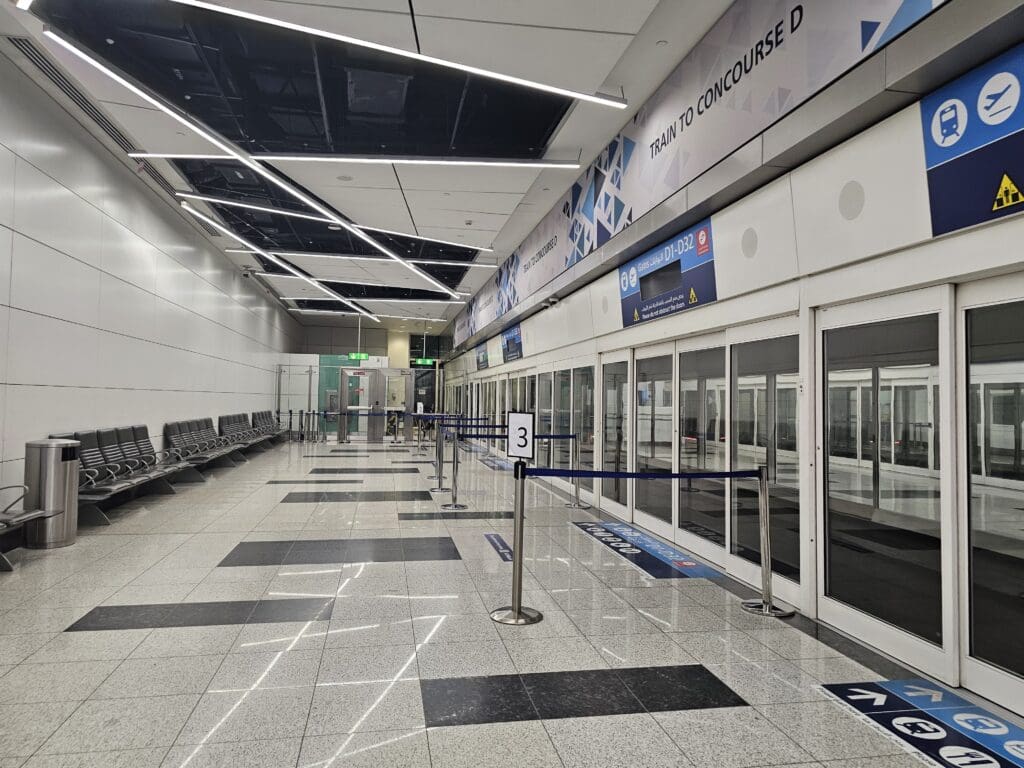
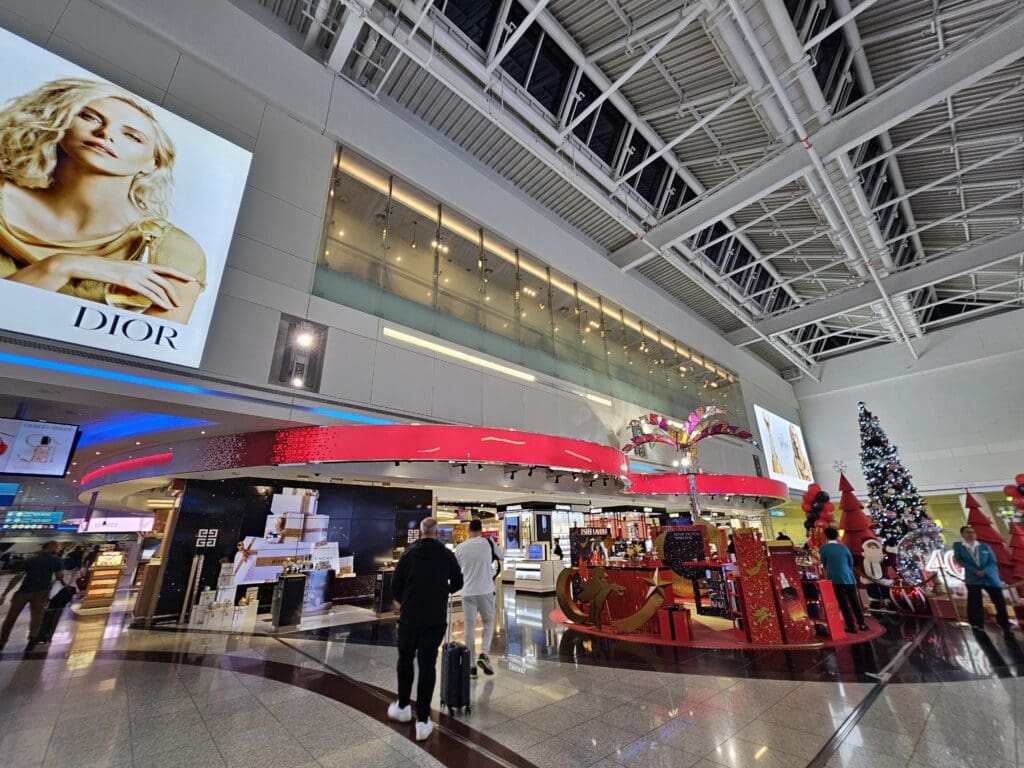
Compared to the original terminal which now serves as the landside area, the satellite terminal is much more modern and hosts a wide array of facilities. Once off the train, I headed down the escalators and found myself walking through the terminal’s gigantic and well-polished main duty free store, operated by Dubai Duty Free. In terms of its layout, much of the terminal sits on a single level, however, there is an upper floor with a host of lounges, a smoking area and a small collection of eateries. Examining the facilities offered, this is home to everything that you would expect to find in a major international airport terminal, with plenty of shops, cafés and restaurants. As always, wandering through the terminal I found this to be a little busy, although, despite this, there remained plenty of places to sit and wait, whilst, for the most part, the terminal was in a clean and tidy state. For those needing some juice, a good number of charging points are offered, whilst passengers can pass the time and stay connected via the fast complimentary wifi which I found to work well throughout the terminal. Thus, from a ‘regular’ passenger’s perspective, that night, the terminal left me with few complaints.
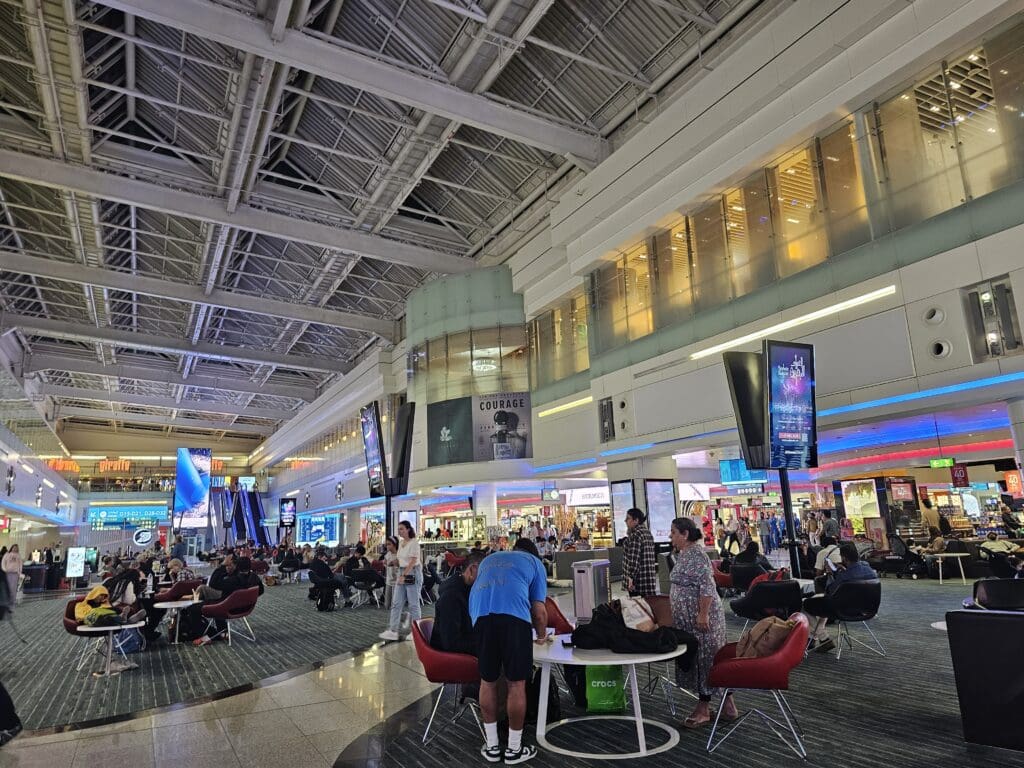
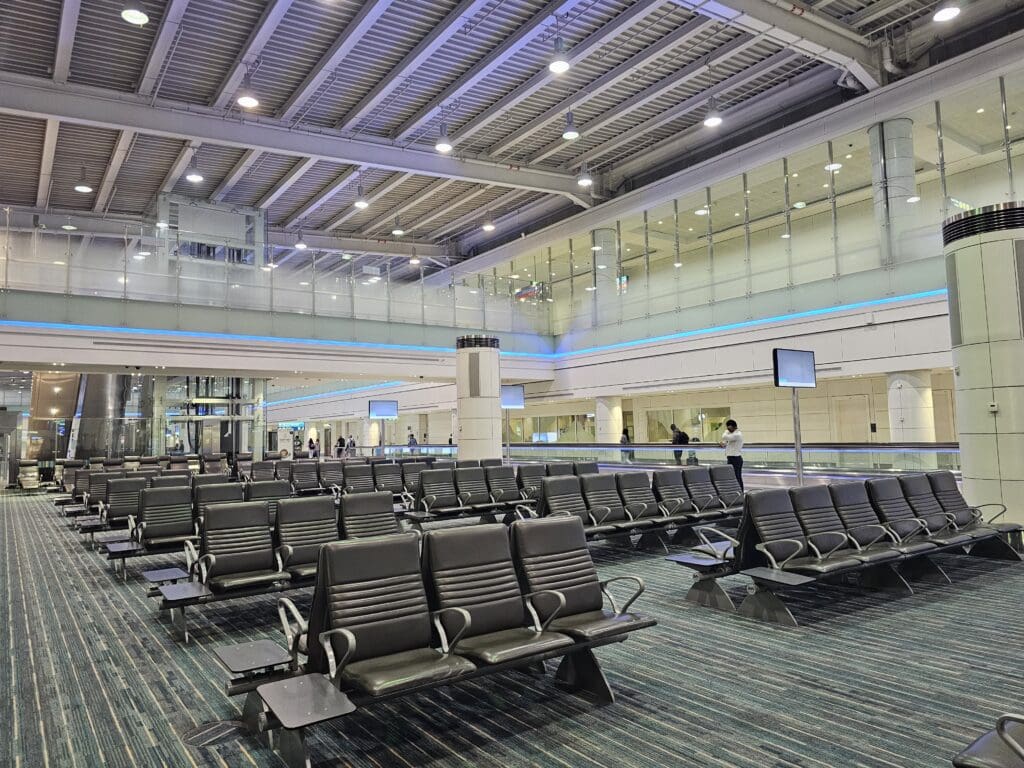
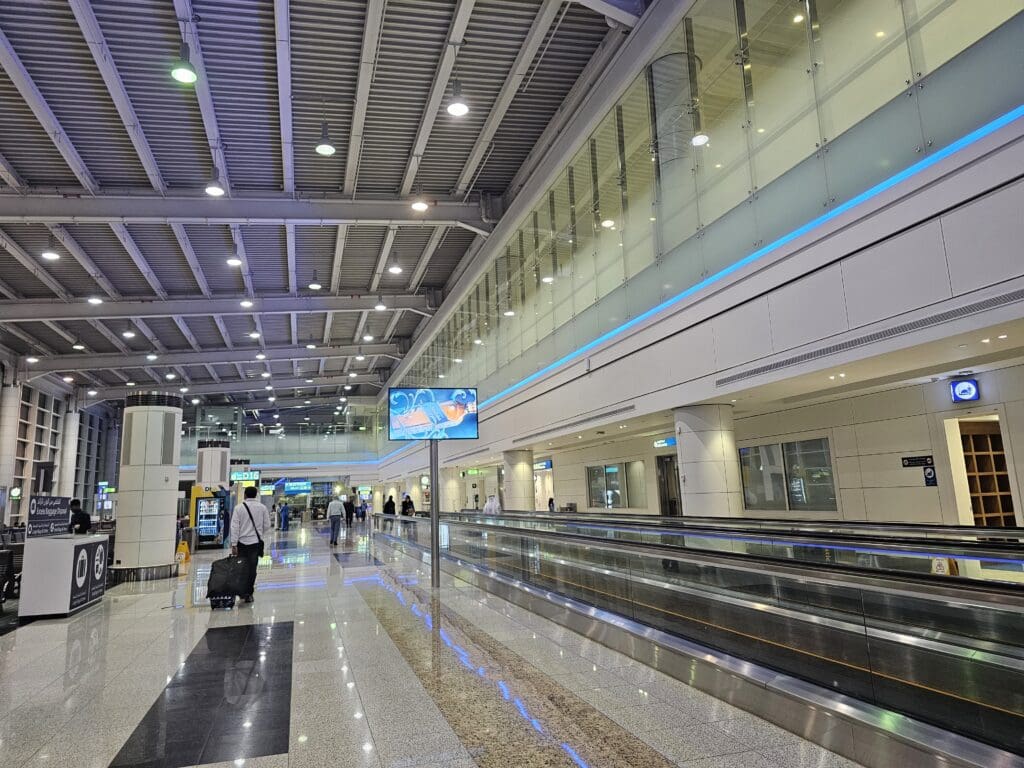
Moving on to the important things, Dubai Airport is a planespotter’s dream, and at all times of day, a fantastic selection of aircraft of all shapes and sizes from across the world can be seen. Many of which cannot be spotted back home in the UK, such as vintage Iranian Airbus A300s and Afghani Boeing 737 Classics. However, local authorities are not particularly keen on enthusiasts armed with large cameras snapping away passing aircraft around the airport’s perimeter. Fortunately, at least in my experience, spotting is somewhat more tolerated once airside and I am yet to be reprimanded for taking photos from Terminal 1. Assisting spotters and filling the terminal with plenty of natural light (at least during the day), large windows offer unobstructed views of many of the terminal’s stands as well as aircraft departing from or arriving on the runways in the distance. After wandering around, I sat down next to one of these windows and watched the movements outside. Other than the non-stop stream of locally based Emirates and FlyDubai jets, I spotted aircraft operated by a range of airlines from far and wide.
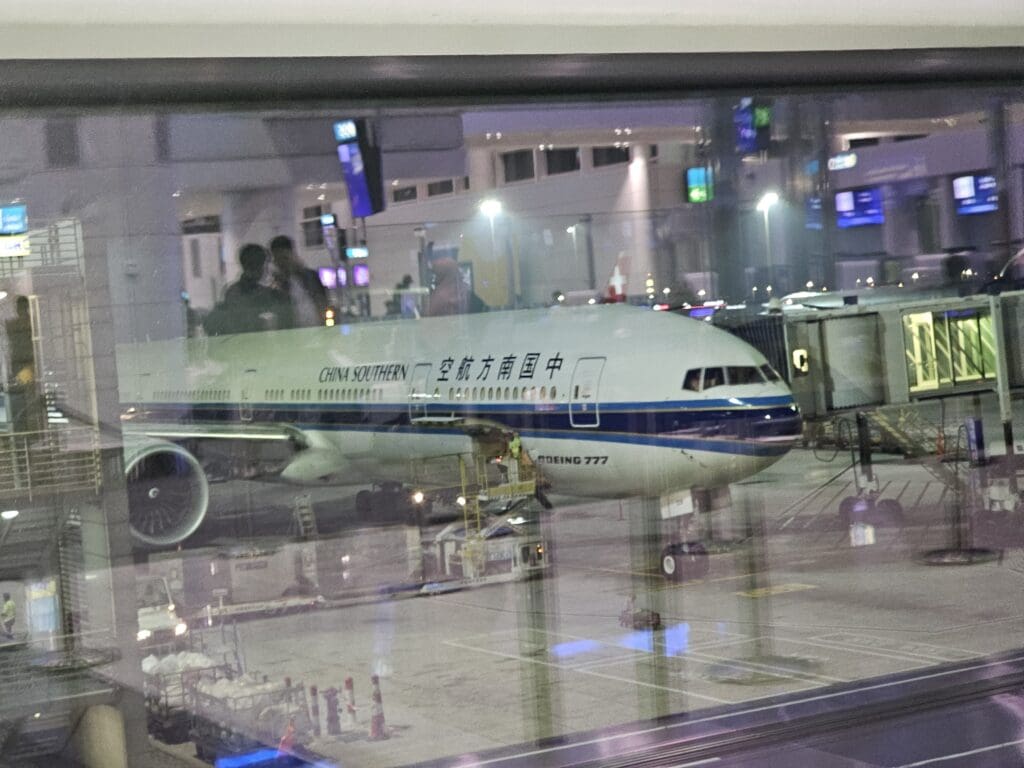
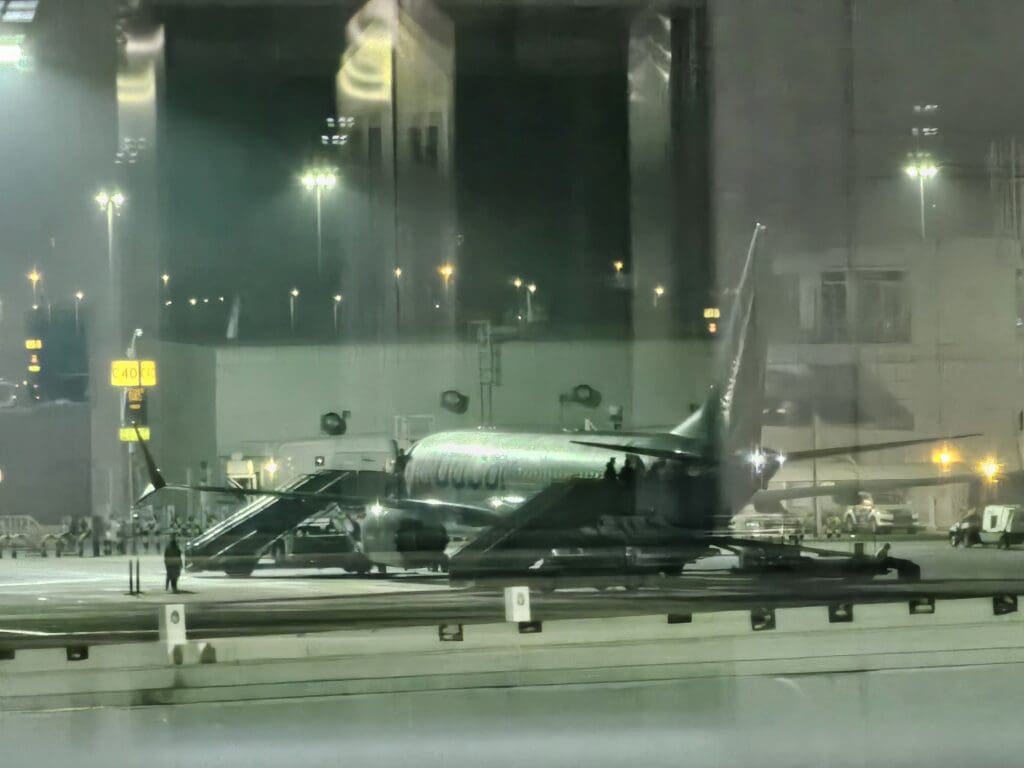
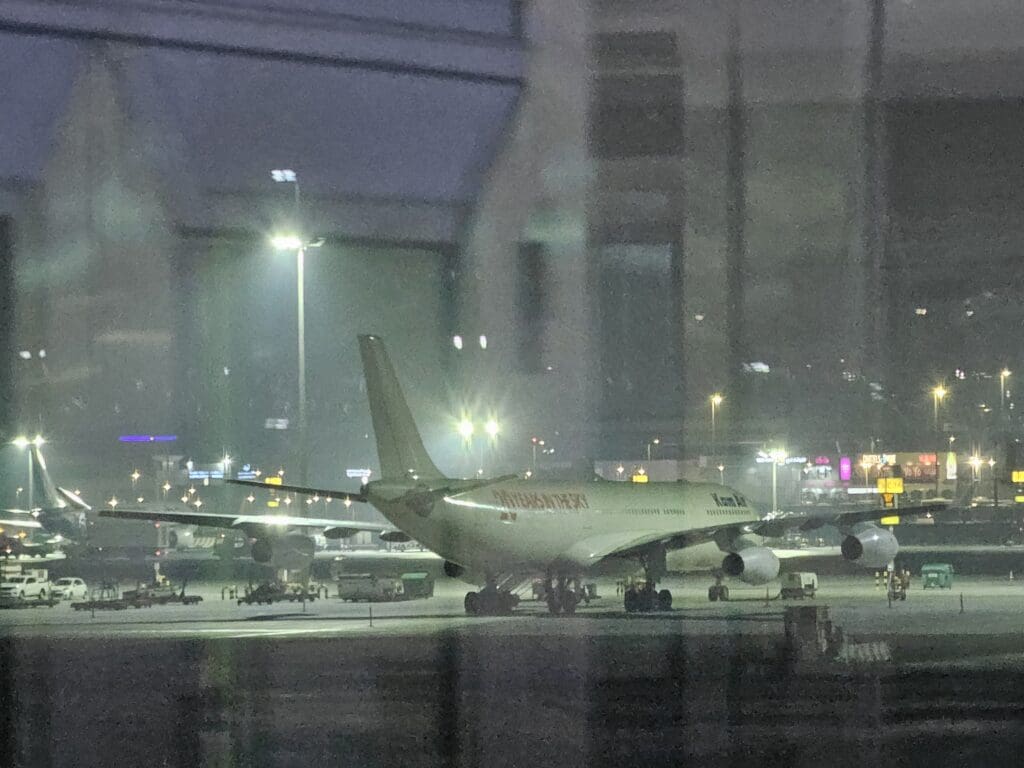
That night, had I not wished to head off on British Airways, flights could be seen on the departure boards bound for Amsterdam, Antalya, Beijing, Chongqing, Frankfurt, Guangzhou, Islamabad, Istanbul, London Heathrow, Mumbai, Nairobi Paris CDG, Riyadh and Zurich. These were operated by Air China, Air France, China Southern Airlines, Corendon Airlines (operating for SpiceJet), Flynas, Hi Fly (operating for Kenya Airways), KLM, Pakistan International Airlines, Pegasus, Swiss and Turkish Airlines. Meanwhile, the types at the terminal ranged in size from the Boeing 737-800 right up to the Airbus A380. That evening, the highlight movement for me was a Kam Air Airbus A340-300 seen waiting at a remote stand for its journey back to Kabul.
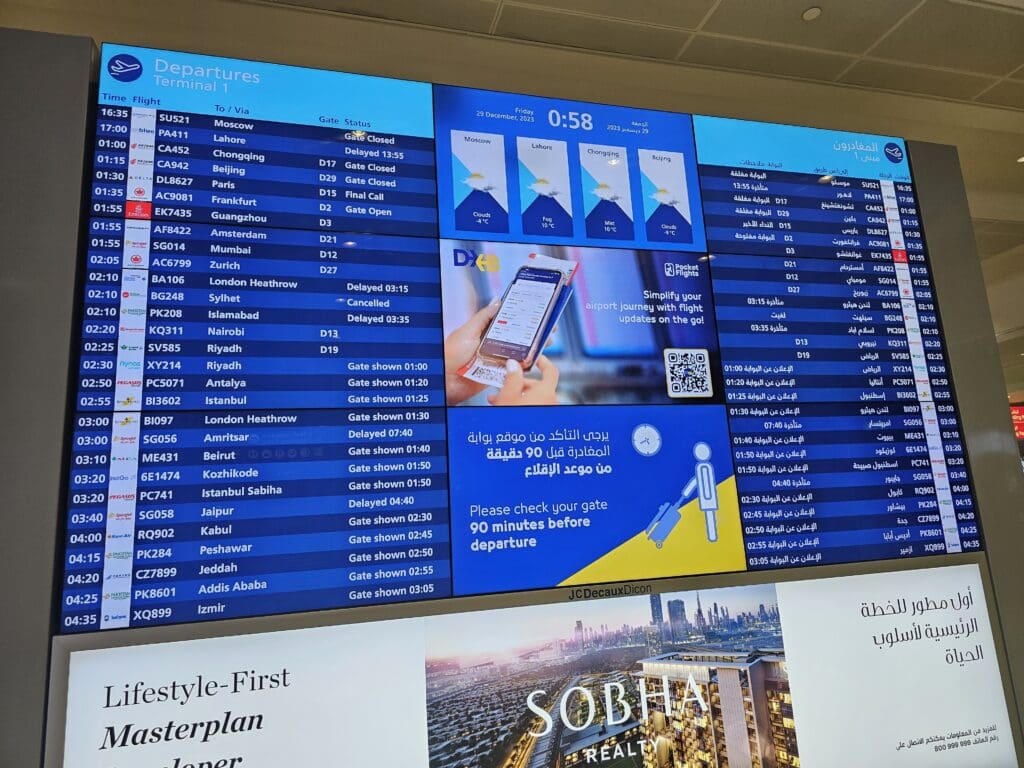
At 0105, the Bruneian Boeing 787-8 Dreamliner touched down on Emirati soil at the end of its 8H36 hour flight from Bandar Seri Begawan and cautiously pulled into Stand C52 a few minutes later, corresponding to Gate D6. After a wander around I made my way over to the gate. However, like all flights between the UAE and the UK, this was to depart from a sealed gate that required to undergo an additional security check before entering. Seeing as I still had a fair amount of time until the flight, and not wanting to be trapped in the facility-less gate waiting area, I instead decided to plonk myself down at the neighbouring gate and continued to planespot for a little longer.
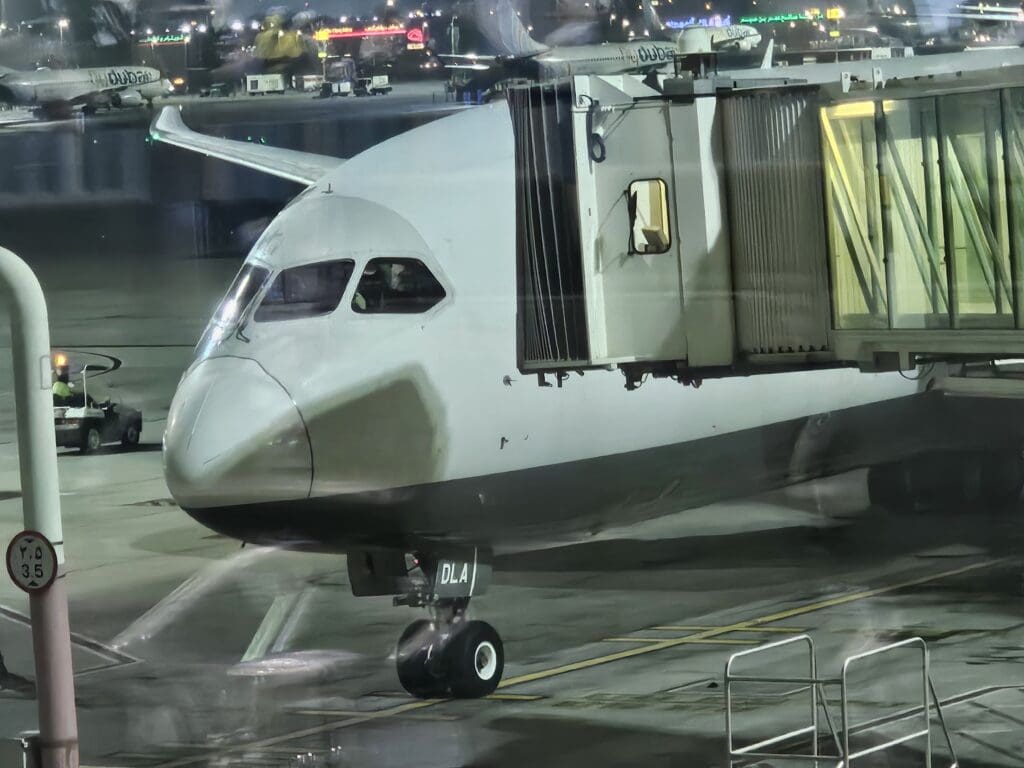
As was to be expected, all those who had originated their journey in Brunei were required to disembark in Dubai to allow for the cabin to be refreshed for the second half of its journey. Thus, a fair number of weary-looking passengers soon appeared, likely not being too appreciative of their middle-of-the-night transit in the Middle East! That evening, I was not too sure just how busy the flight to London would be, however, Royal Brunei Airlines provides the country’s only direct link to the UK. Additionally, this service is well-timed to allow for connections from Melbourne, and the carrier has a reputation for offering cheaper-than-average tickets between Australia and Europe. Thus, I semi-suspected that the flight may end up being a little busy.
Looking outside, Boeing 787-8 Dreamliner V8-DLA could be seen being readied for its overnight slog over to London. As its registration may hint, this was the first of five Dreamliners to be delivered to Royal Brunei Airlines. Assembled at Boeing’s Everett plant with the line number 128, this aircraft first took to the skies in September 2013, making it around 10.3 years old at the time of my flight and was thus the oldest Dreamliner that I have flown to date. In October 2013, the aircraft was ferried directly to its new home in Bandar Seri Begawan where it arrived to much celebration and soon got to work relieving Royal Brunei Airlines’ Boeing 777-200ERs on their long haul and high-demand short and medium haul flights. Since then, V8-DLA appears to have had a mostly uneventful life, although in November 2018 the aircraft suffered an oil leak on a flight between Brunei and the UK which saw the pilots shut down one of the aircraft’s engines and divert to Vienna. In the week before my flight, the aircraft had been hard at work, operating rotations from Bandar Seri Begawan to Jeddah, Hong Kong and Melbourne, before heading over to Dubai, covering at least 23,950 miles in the process.
With around fifty minutes to go until our scheduled departure time, the army of Dnata agents manning the gate area allowed passengers to enter the holding area. By this time, a fairly long queue of weary-looking passengers could be seen, however, recognising that the actual act of boarding the aircraft was still yet to commence, I was in no particular hurry. After a few minutes, I joined the queue and upon nearing the front, a very friendly agent greeted me, checked my passport and boarding pass (presumably to ensure that I was indeed bound for London) before wishing me a nice flight, addressing me as ‘Mr XXXXX’. This five-star service continued once I reached the gate podium where another agent addressed me by name once again as they scanned my boarding pass and checked my passport. Upon looking at my boarding pass, the friendly staff member overseeing the secondary security check pointed me away from this and I was delighted that for the first time in years, I had not been selected for secondary screening.
Thanks to the position of the gate, the darkness outside and the jetbridge, which was hooked up to the Dreamliner’s 2L door, views of the sleek Dreamliner outside were limited. However, from what I did see from both the holding area and during boarding, the livery seemed to be in need of a slight touch-up with a fair amount of chipped paint and I hoped that the cabin would be in a better state! A few moments after taking a seat, a pre-recorded announcement filled the holding area which welcomed all to the Royal Brunei Airlines service and informed passengers of the soon-to-commence boarding arrangements in Arabic and English. As was to be expected, those who required assistance and travelling with young children were invited to head down to the aircraft first, along with those in Business. However, as a two-day-old member of Royal Brunei Airlines’ Royal Skies frequent flyer programme, I was surprised to hear that as a member of this, I could also board with those first few passengers! This would be then followed by those in groups A, B and finally C – the latter being the group that was printed on my boarding pass.
With exactly thirty minutes to go until our scheduled departure time, a Dnata agent walked through the holding area announcing boarding’s commencement and I wasted no time in standing up. With both my passport and boarding pass having already been checked, there were no further checks until I stepped onto the aircraft and thus theoretically all passengers regardless of group could have snuck through at this time. Soon, I found myself standing on the glass jetbridge and seeing as the actual act of boarding was yet to commence, I had a few moments to admire one of the Dreamliner’s large Rolls-Royce engines that would power us through the night skies. Soon, a team of KLM Engineering staff who I presume Royal Brunei Airlines contracts maintenance services to in Dubai disembarked and passengers were given the go-ahead to make their way onto the aircraft.
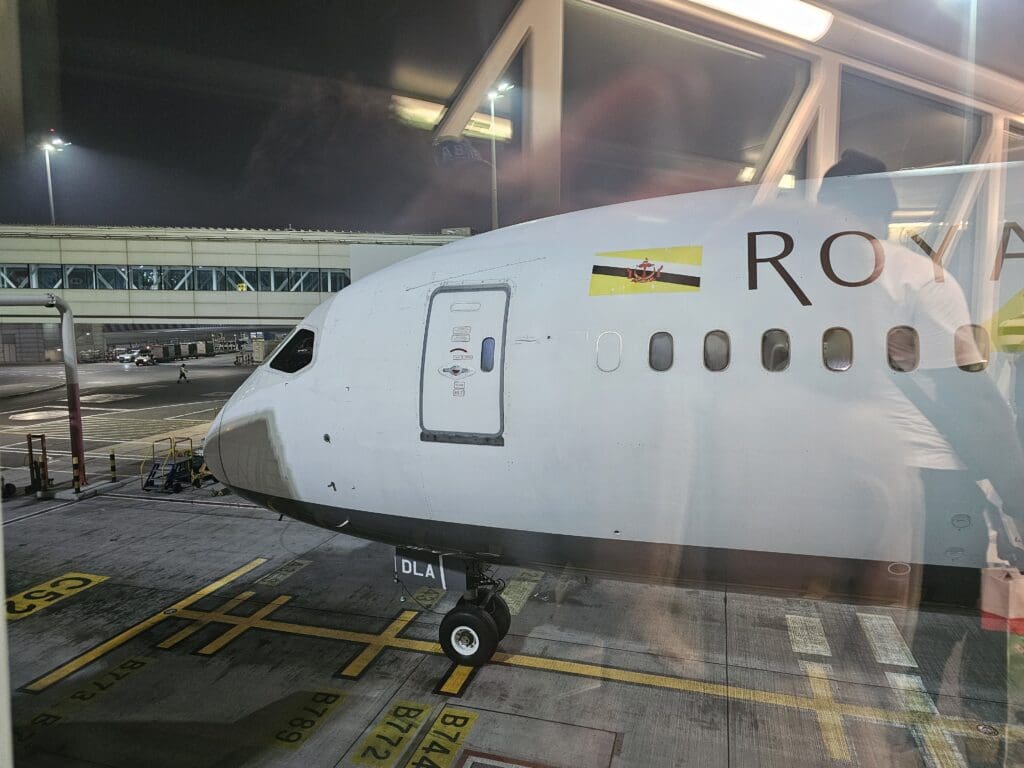
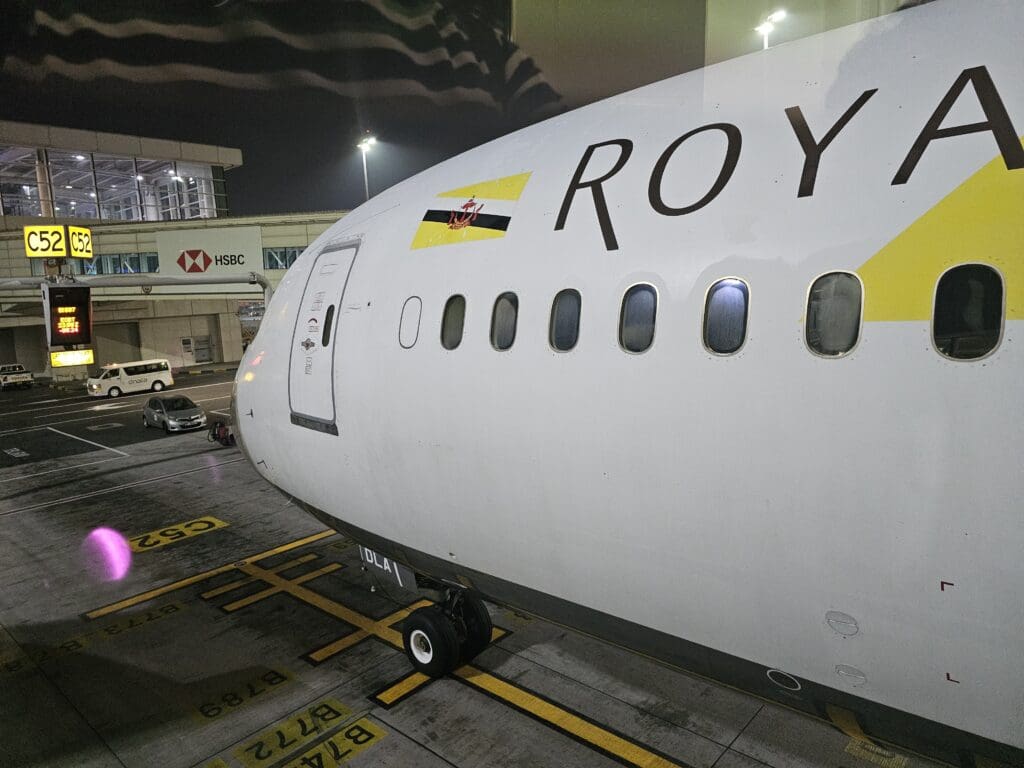
Upon stepping onto the aircraft, I was left with a very positive first impression as I received a very warm and friendly greeting from the two flight attendants standing there. Welcoming me back, either assuming that I was a regular passenger or had travelled on the flight over from Brunei, I was asked if I knew where I was going, responding that I did, no boarding pass check was needed.
Whilst Royal Brunei Airlines presumably sees a fair number of premium passengers given Brunei’s natural resource-rich status, their five Dreamliners are fitted with a small eighteen-seat Business cabin that is sandwiched at the very front of the aircraft between the 1L and 2L doors. Furthermore, their premium hard product does not seem to be particularly competitive with seats arranged in the now slightly dated and privacy-lacking 2-2-2 configuration. Seeing as Royal Brunei Airlines does not offer a premium economy product, upon turning right I immediately entered the forwardmost Economy cabin. There, soft-toned lighting filled the cabin, whilst calming music rang out for the duration of boarding and served to contrast with the loud and upbeat tones that you can find on some major airlines.
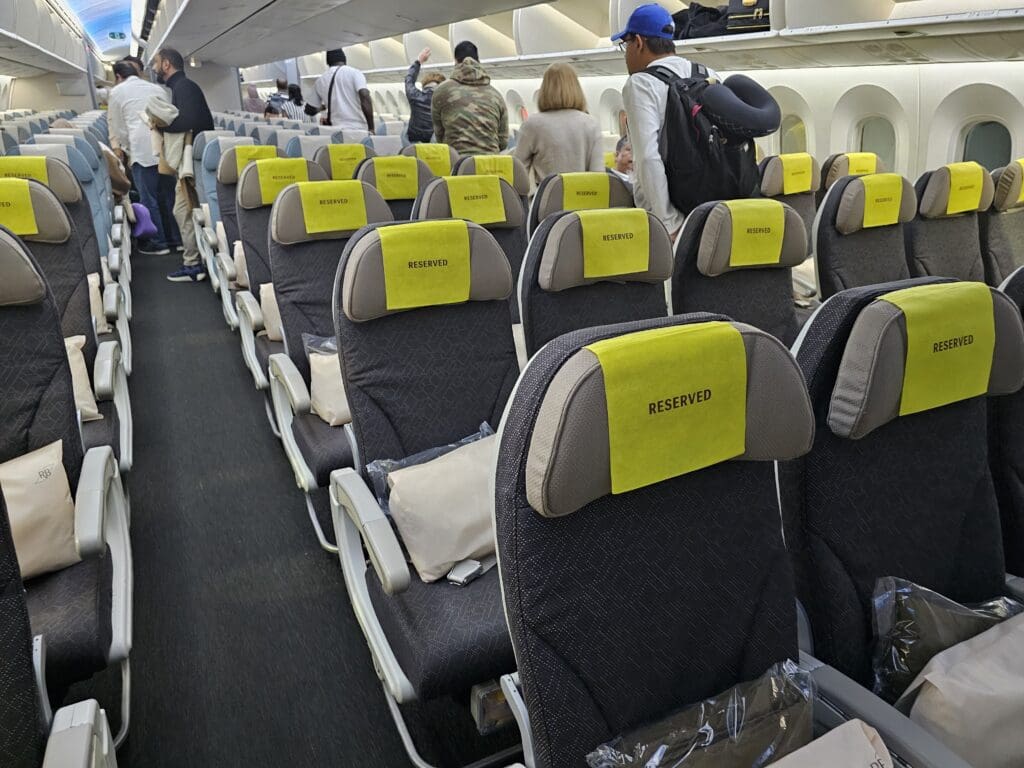
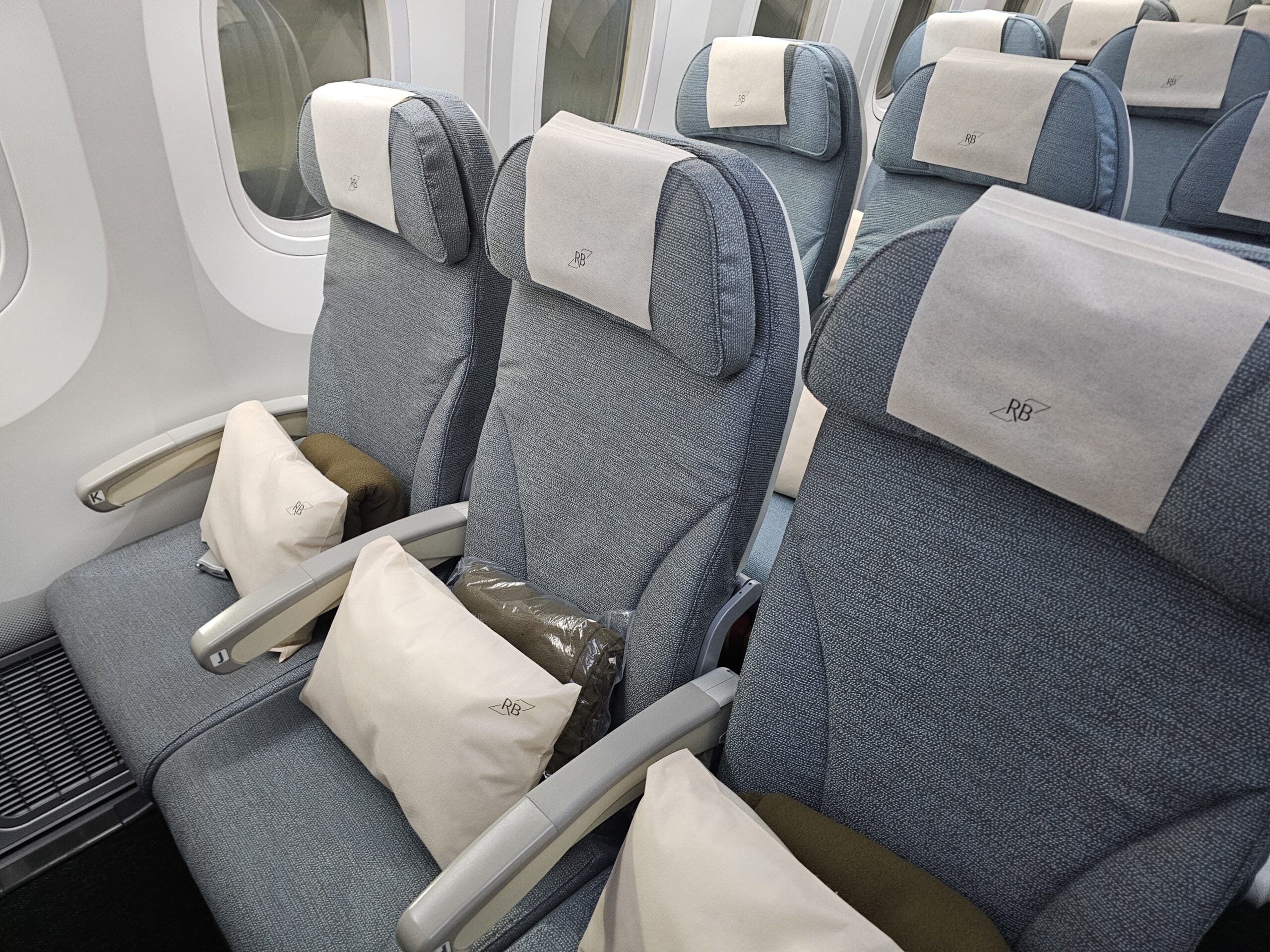
Onboard, seats in Economy are arranged in the Dreamliner standard configuration of 3-3-3, and the first few rows of the forward Economy section consist of ‘Preferred’ seats. These come in the form of the Zodiac Weber 5751, and each is covered in dark grey fabric, with a disposable yellow antimacassar covering their adjustable headrest. Meanwhile, standard Economy seats are covered in a light blue (almost grey) fabric and come with a disposable white antimacassar that displays Royal Brunei Airlines’ motif. Whilst those expecting Southeast Asian colour and vibrance would have been disappointed, I personally thought the tones of the cabin gave off a smart and professional look. Although perhaps my opinion reflects my boring personality.
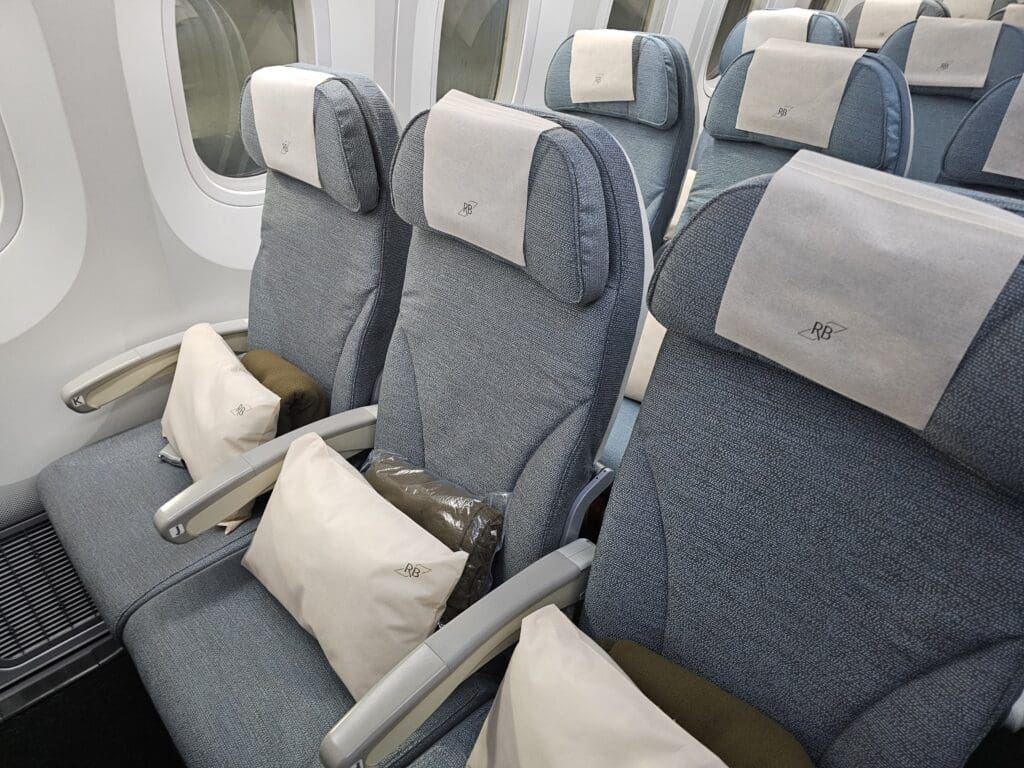
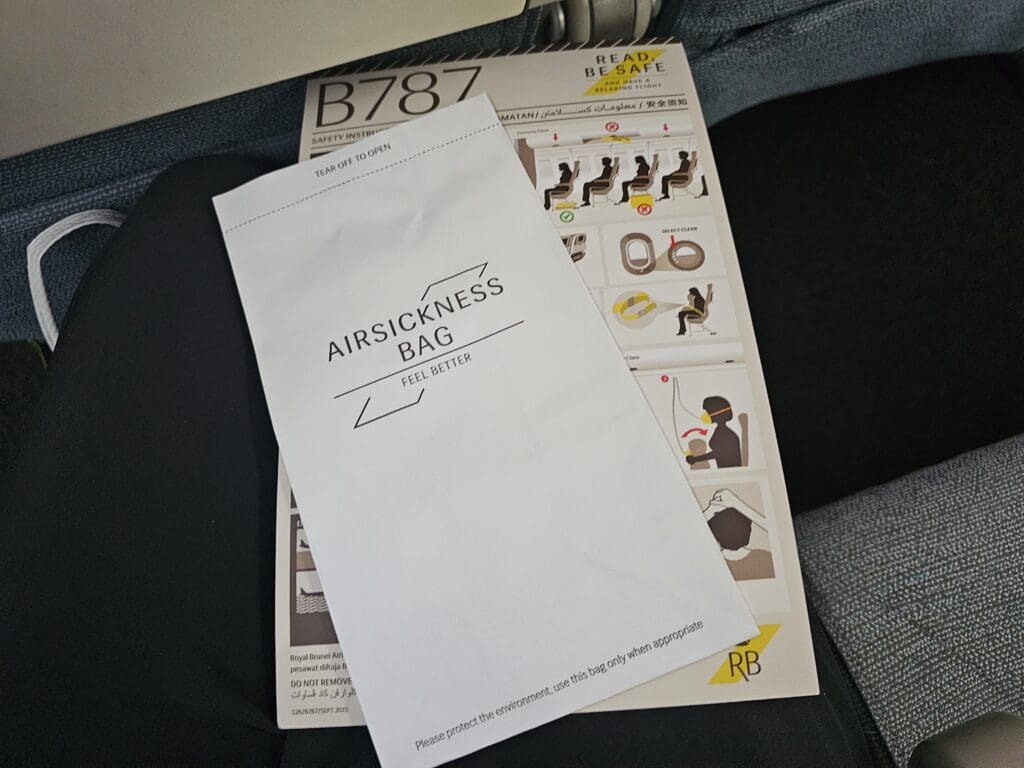
Examining the seats in more detail, each of these comes with an adjustable headrest, an under-seat universal power outlet (which I found to work well), a USB-A port, a tray table and a seatback pocket. Focusing on the latter, these contained copies of the all-important safety card as well as a sick bag. Unfortunately, Royal Brunei Airlines halted publication of their monthly Muhibah inflight magazine during COVID and has not yet resumed publication of either a digital or paper copy of this. Thus, the sole form of airline-provided entertainment comes in the form of each seat’s 9-inch wide inflight entertainment screens, which are powered by Panasonic’s eX2 system. Finally, as you would expect given the flight’s length, upon boarding a fairly Economy standard pillow and blanket could be found on each seat. However, somewhat unusually, some blankets were packaged whilst others were not.
As I voyaged down the Dreamliner to the rearmost Economy cabin, I received warm and friendly welcomes from each crew member I passed, all donned in their traditional Bruneian clothing-inspired uniforms. Rather sensibly given the increasing prevalence of Covid at the time of my flight, all crew members sported surgical masks. Of these crew members, one offered to guide me to my seat and needless to say I was provided with a fantastic first impression of the crew that night.
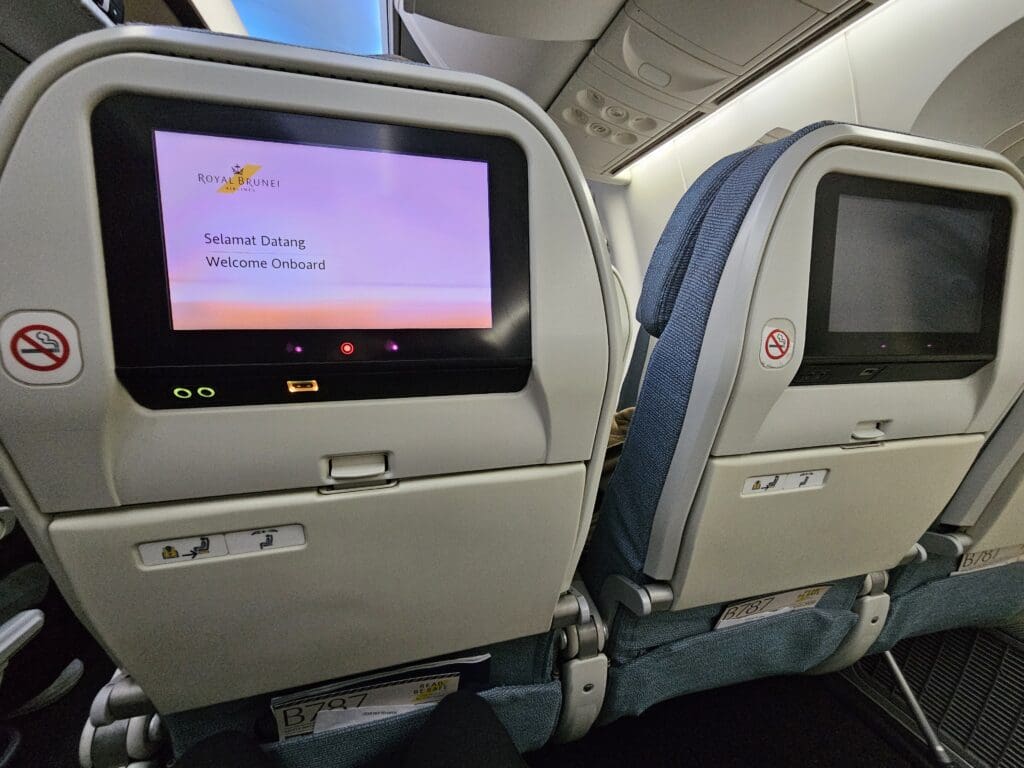
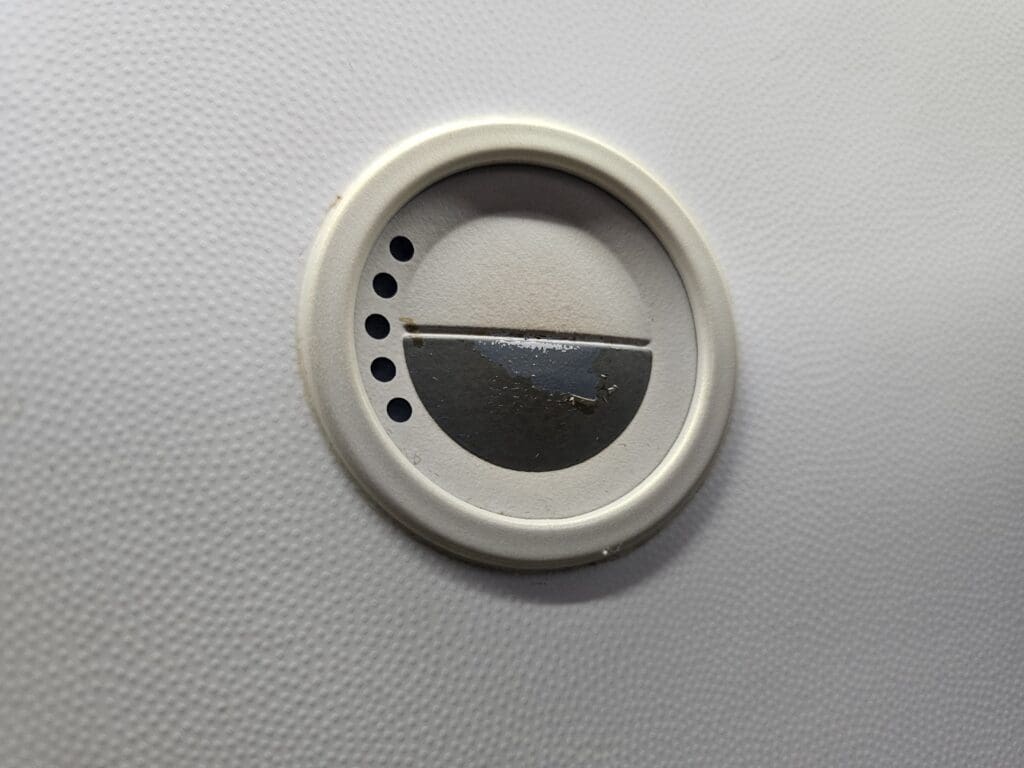
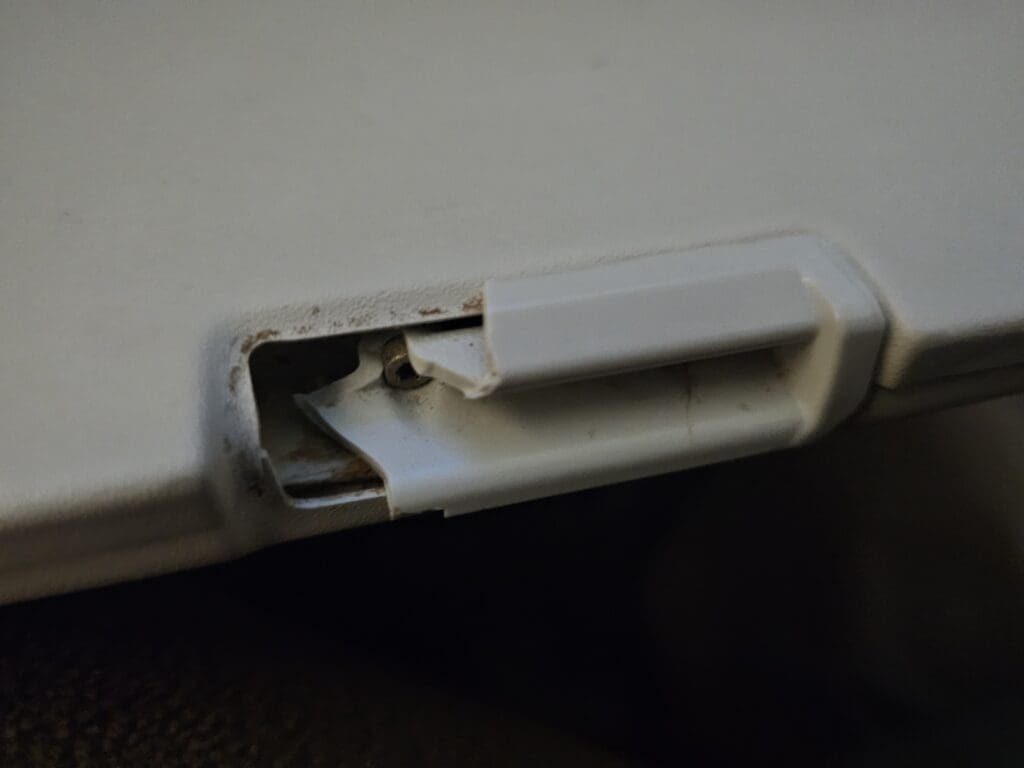
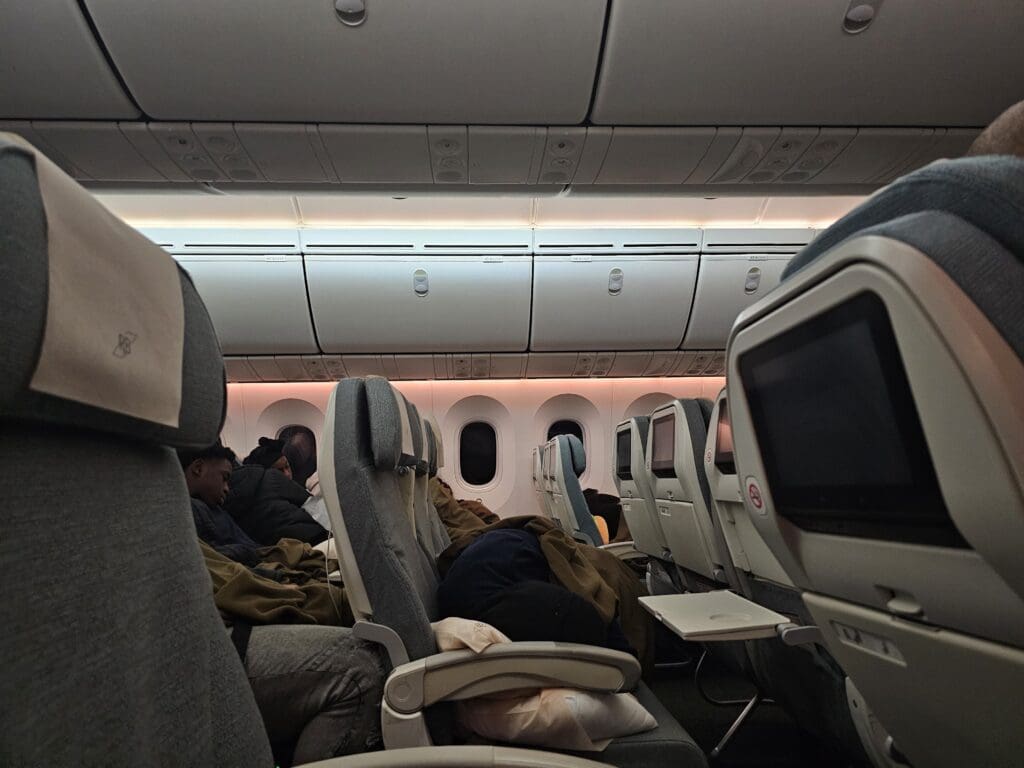
Soon making it to row 45, I stowed my bags in the overhead locker and settled in for the overnight slog ahead. Focusing on the seat itself, whilst this was a little firm for a widebody aircraft seat, this was spacious and featured plenty of legroom. Importantly, this also seemed to have been thoroughly cleaned during its stay on the ground in Dubai and I failed to spot so much as a single crumb as I inspected the area around my seat. There were, however, a few signs of wear and tear, such as peeling no smoking stickers, a damaged tray table latch, and the common Dreamliner issue of worn dimmer buttons beneath the large window. Nevertheless, I have flown on newer aircraft in notably worse states. Slightly disappointingly, no headphones were provided during boarding, nor were they handed out during the flight although they could be found in the literature storage compartments on the bulkheads and cabin dividers and I suspect that the crew members would have handed these out to those passengers that requested them.
That night, passengers streamed onto the aircraft at a reasonable pace and with a good view of the aisle I was delighted to see that the flow of passengers soon transformed to a trickle before coming to a complete halt indicating that boarding was complete. This was confirmed at 0249 when the cabin crew were requested to arm the cabin doors. That morning, I was left with two empty neighbouring seats and would thus enjoy the rare luxury of having a bank of three seats to myself. In total, I would estimate that the 236-seat Economy cabin was no more than 40% full and there seemed to be a fair mixture of passengers from all over – with the highest demographics perhaps being Australian and Bruneian passengers on long voyages to the other side of the world. Interestingly there was a fairly large party of Floridian passengers whose final destination was Miami, and later on during the flight the crew seemed to be fairly helpful in answering this group’s questions regarding their transit at Heathrow Airport.
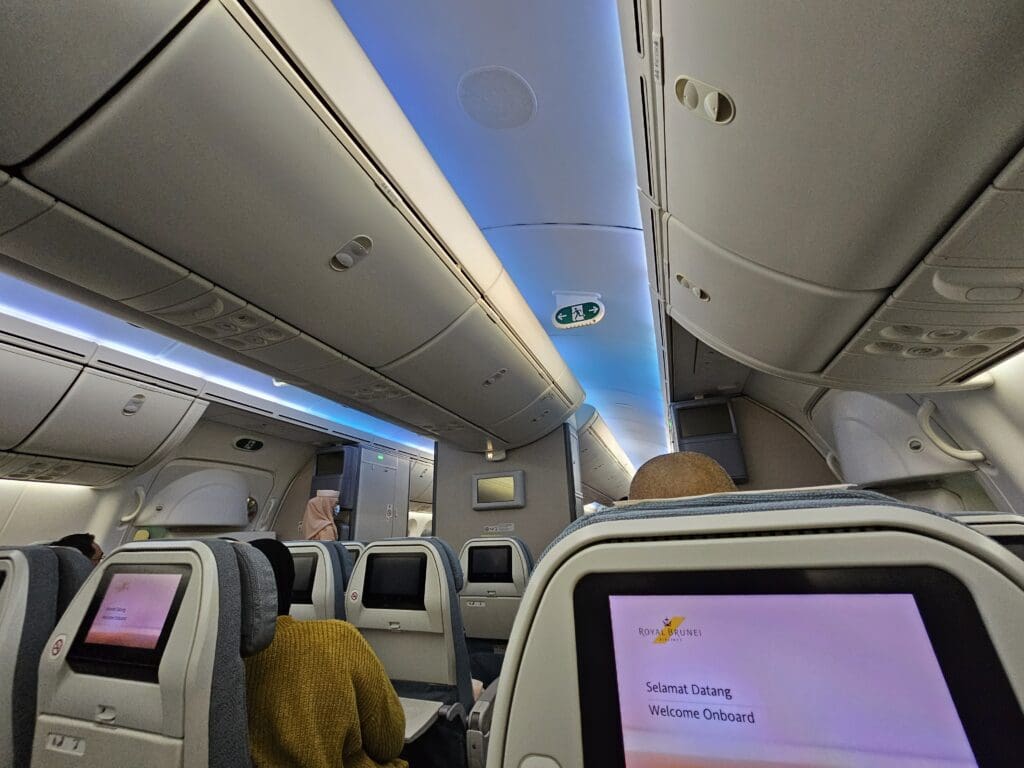
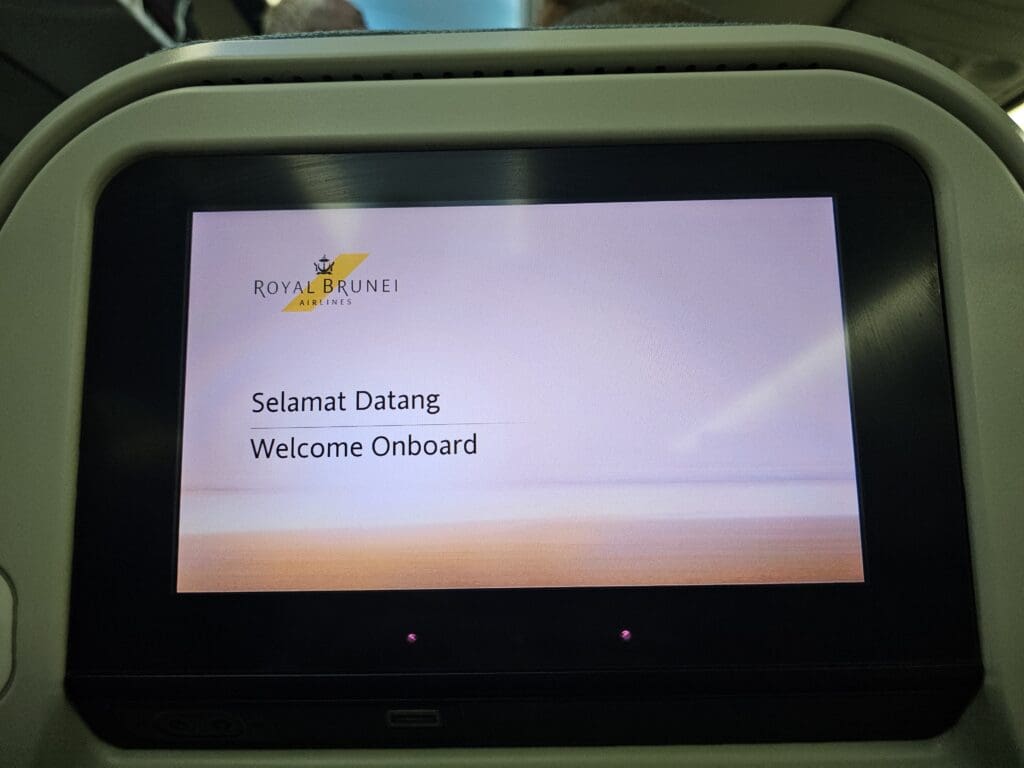
During the boarding process, all inflight entertainment screens were turned off however these could be turned on and upon doing so revealed a welcome message in English and Malay, although the inflight entertainment system could not be used at that time. Once the doors had been armed, the Purser performed their welcome announced in Malay and English, however, thanks to the quiet volume of the cabin speakers, this could barely be heard. However, from what I made out, this consisted of the standard welcomes and thanks, a the usual instructions regarding seatbelts, seatbacks and tray tables, an introduction to the Captain and First Officer and a mention of our flight time to London. That night, a flight time of 7H50 was given, which, as I will discuss later, is a little longer than the norm between Dubai and London.
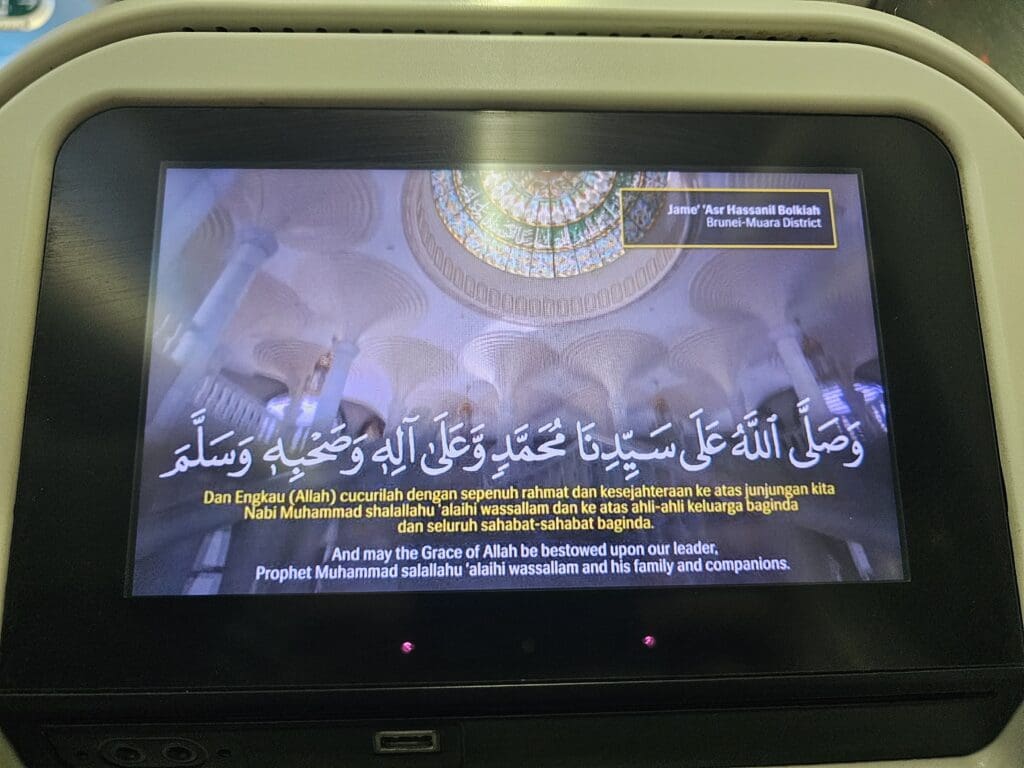
With Brunei famously being a highly religious state, as soon as the Purser’s announcement finished, the inflight entertainment screens came into life and broadcast the Islamic Travel Prayer. This seemed to be longer than those typically provided prior to departure, although adding a nice touch, this was superimposed on a video montage of scenes from eight mosques across Brunei. As this was underway, a grand total of five minutes ahead of our scheduled departure time, the aircraft jolted backwards and was pushed back away from the stand. Inside the cabin, after a couple of minutes, the prayer came to an end and was replaced by Royal Brunei Airlines’ safety video. This lacks any memorable gimmicks yet serves its important purpose, and comprises of two cabin crew members detailing the safety instructions. This was undertaken in English and Malay, with no Arabic version, or subtitles in any language provided. During this, the crew members pointed out the emergency exits before passing through the cabin to ensure that all was secure and in place for our departure from Dubai.
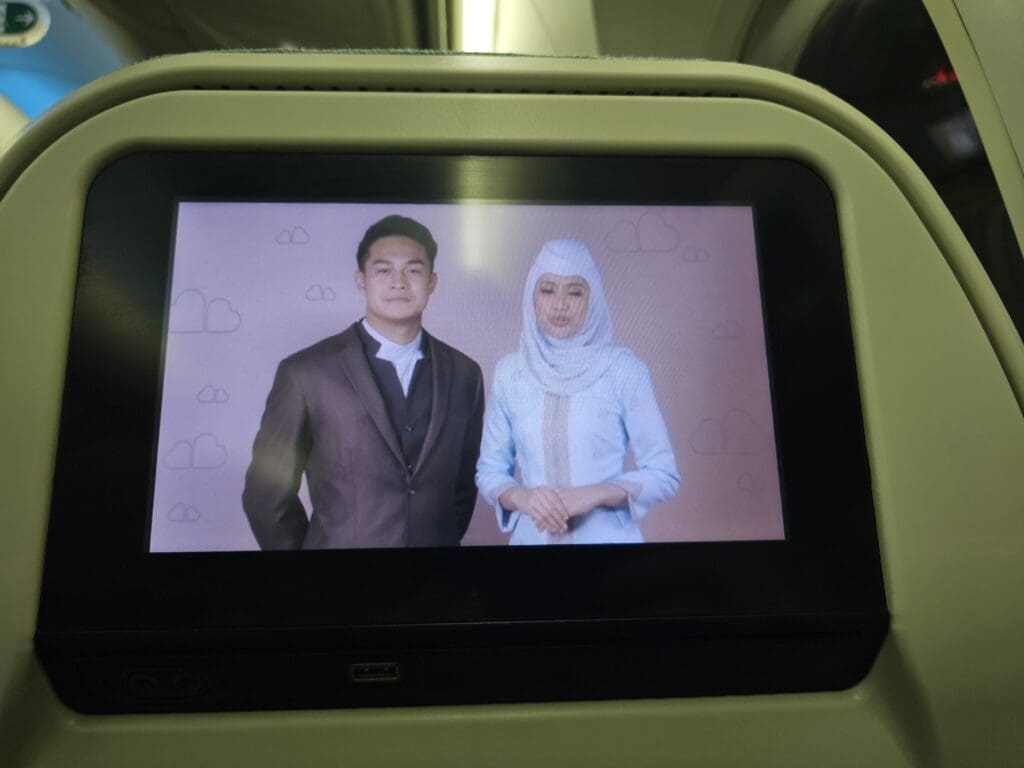
As the safety video was underway, one by one the Dreamliner’s two gigantic Rolls-Royce Trent 1000 engines powered up into life ready for the trek ahead. A minute after our scheduled departure time, the Dreamliner powered away under its own steam and commenced the short journey to the end of Runway 12L. Providing a soundtrack to this, a saxophone version of Shania Twain’s You’re Still the One rang out through the cabin, with music continuing to be played on the speakers until the crew had been released from their seats post-departure.
During the journey to the departure runway, the Dreamliner trundled past Terminal 1 where a selection of aircraft from British Airways, Hi Fly, Oman Air, Pakistan International Airlines, Pegasus, Saudia and Turkish Airlines could be seen – with these ranging in size from the Boeing 737 MAX 8 to the London bound Airbus A380. Focusing on the latter, whilst the British Airways jet was running well behind schedule and yet to push back as we taxied past this, taking a more direct route to the UK this would land just ahead of us in London later that morning! After all the diversity of Terminal 1’s visitors, the aircraft at Terminal 3 were a little more boring, consisting of a long line of Emirates Airbus A380s and Boeing 777s waiting to head off to destinations both near and far.
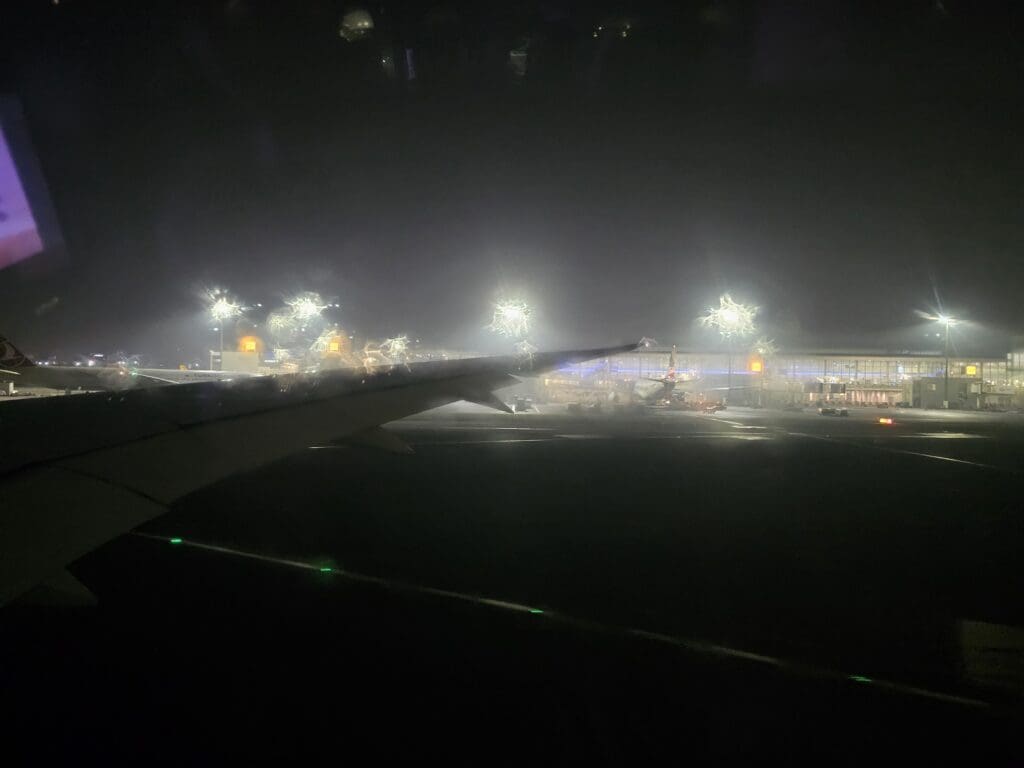
Within a few short minutes, the Dreamliner reached the end of the runway where we came to a halt as an Emirates Boeing Boeing 777-200LR could be seen and heard powering down the runway at the start of its long slog to Montréal. Once this was rolling, the Bruneian Dreamliner pushed ahead of Emirates’ Expo 2020 liveried Airbus A380 which was bound for Mauritius and came to a halt. Once the skies up ahead had cleared, at 0311 the Dreamliner’s two engines spooled up and we commenced what seemed to be a gentle take-off roll with no fighter jet or rollercoaster-like feeling of being pinned back into your seat as we accelerated. After leaving Terminal 3 behind, the Dreamliner was pointed skywards and we rotated upwards into the somewhat hazy skies of Dubai. Moments later, the airport’s luxurious terminal which is reserved for the exclusive use of the royal family and other top-level guests could be seen – with this complete with two jetbridge-equipped stands to avoid exposure to the Dubai heat. This was then followed by the Dubai Royal Air Wing hangars which are home to the government fleet of Boeing 737, Boeing 747 and Boeing 777 corporate jets before we left the sprawl of the airport behind.
From the airport, the Dreamliner climbed out over the orange glow of the neighbourhood of Mirdif and soon slowly banked to the right, making an about turn and crossing over the likes of Al Warqa and International City before making a beeline for Dubai’s coastline. A short time later, the aircraft crossed Sheikh Zayed Road around Business Bay and several of Dubai’s most famous buildings including the Dubai Frame, Dubai Mall and the tallest building in the world, the Burj Khalifa could be seen below. Moments later, the aircraft passed over Jumeirah’s Kite Beach and headed out over the waters of the Persian Gulf where nothing other than the lights of ships waiting to head into port could be seen below.
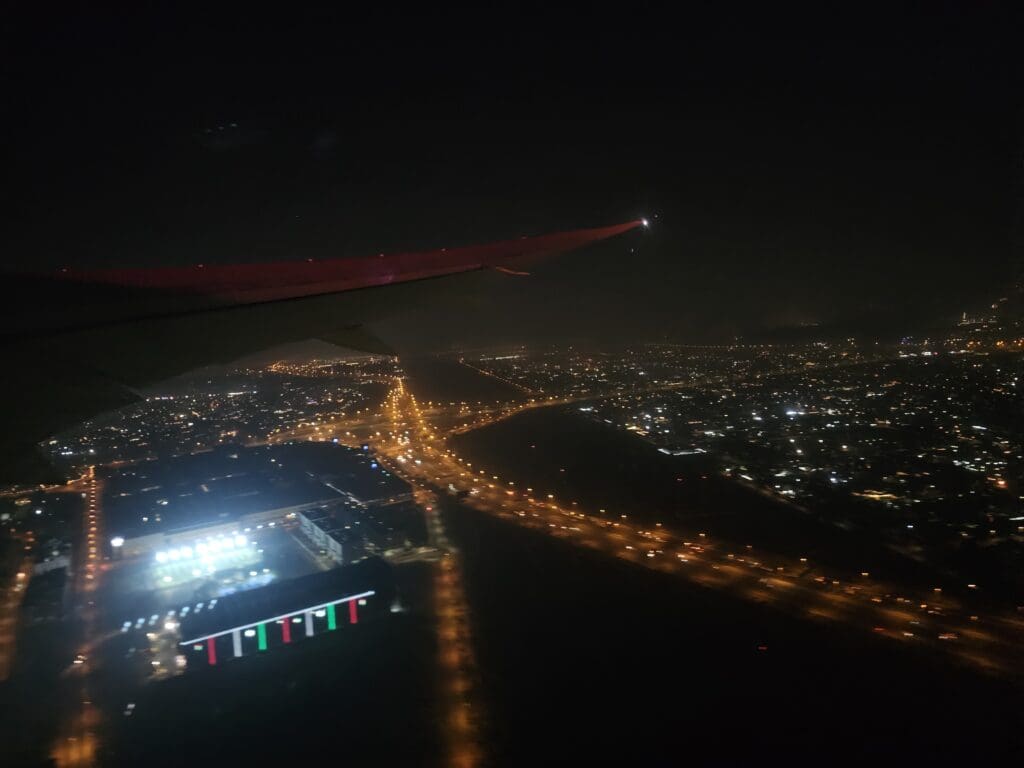
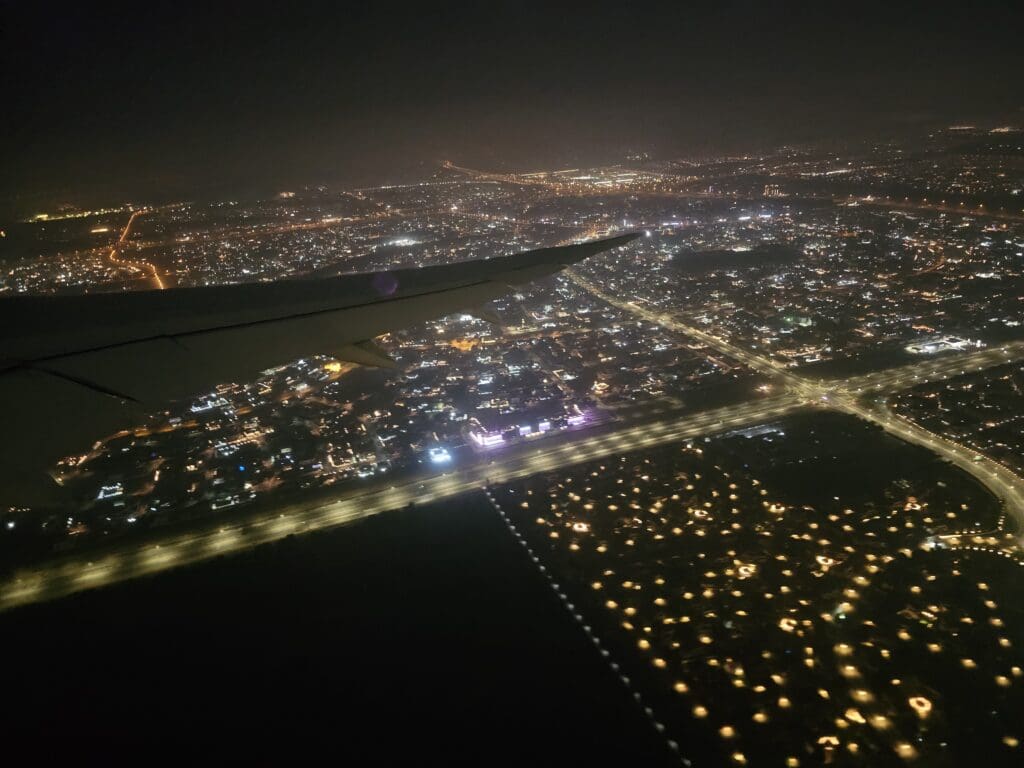
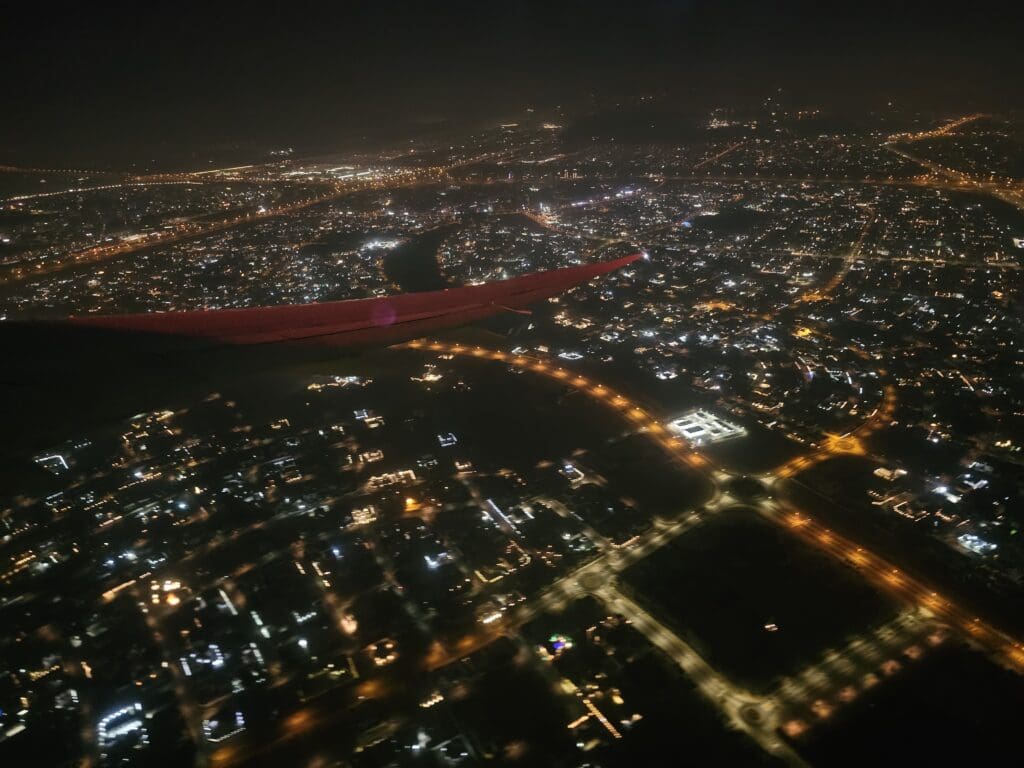
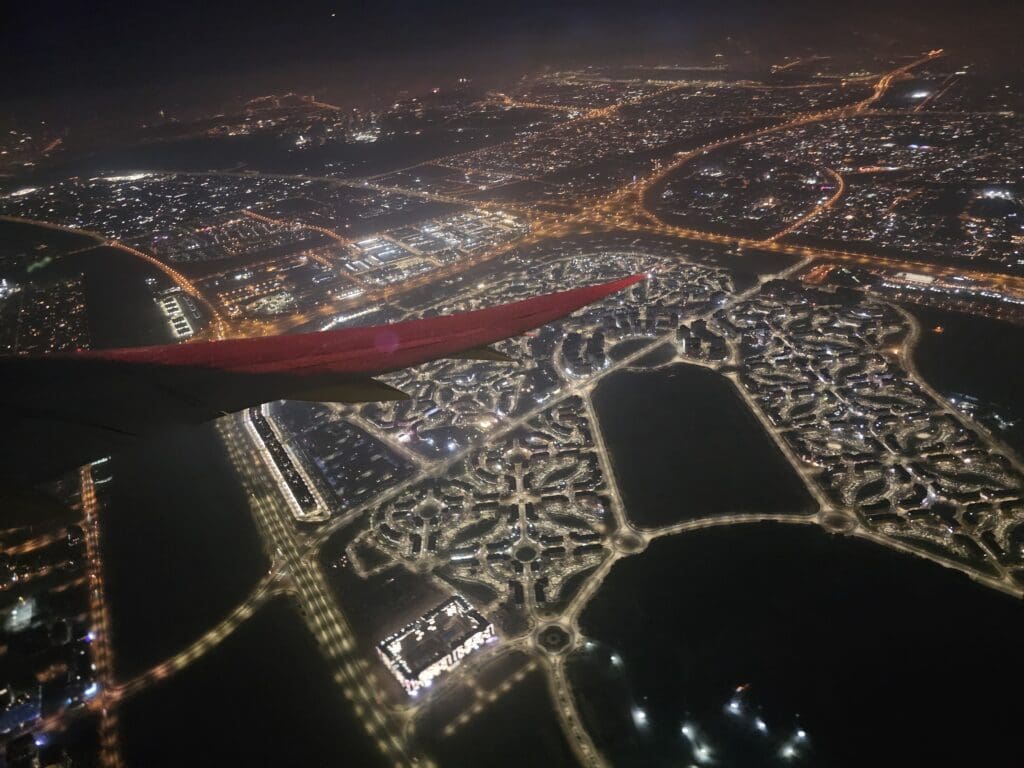
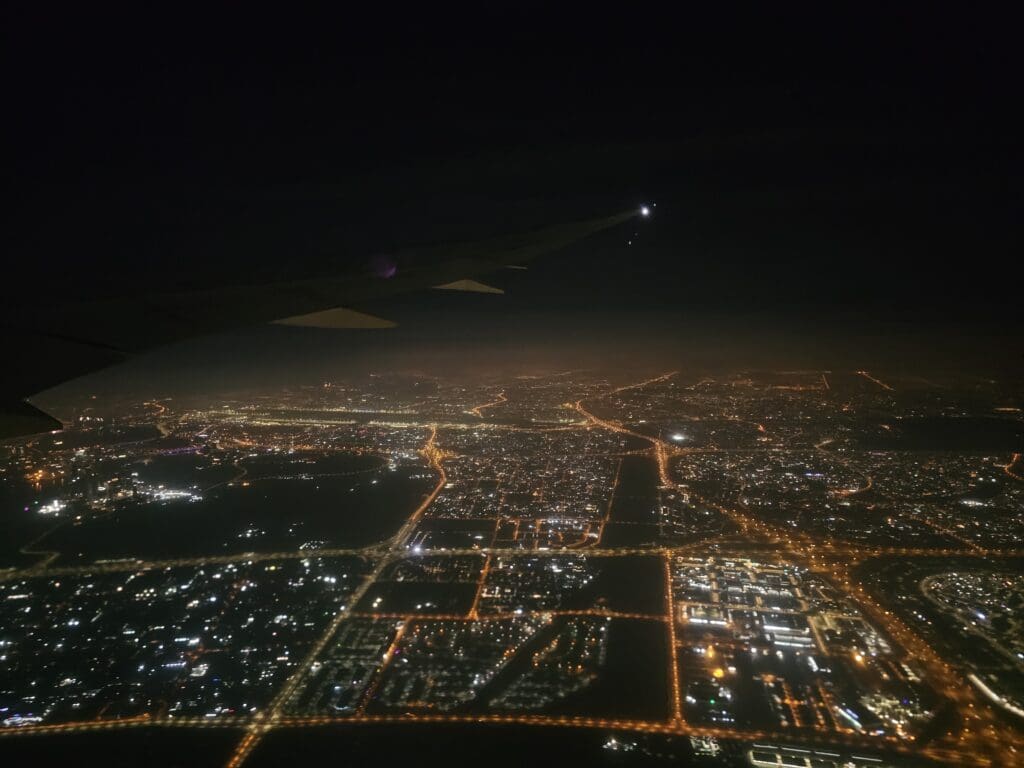
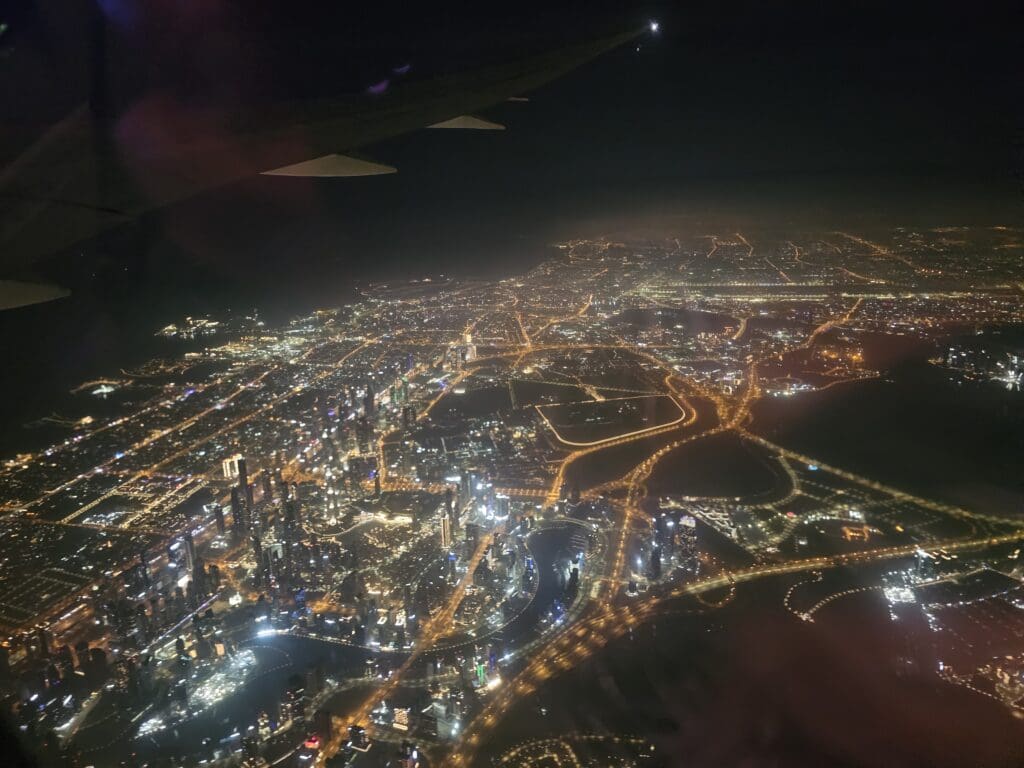
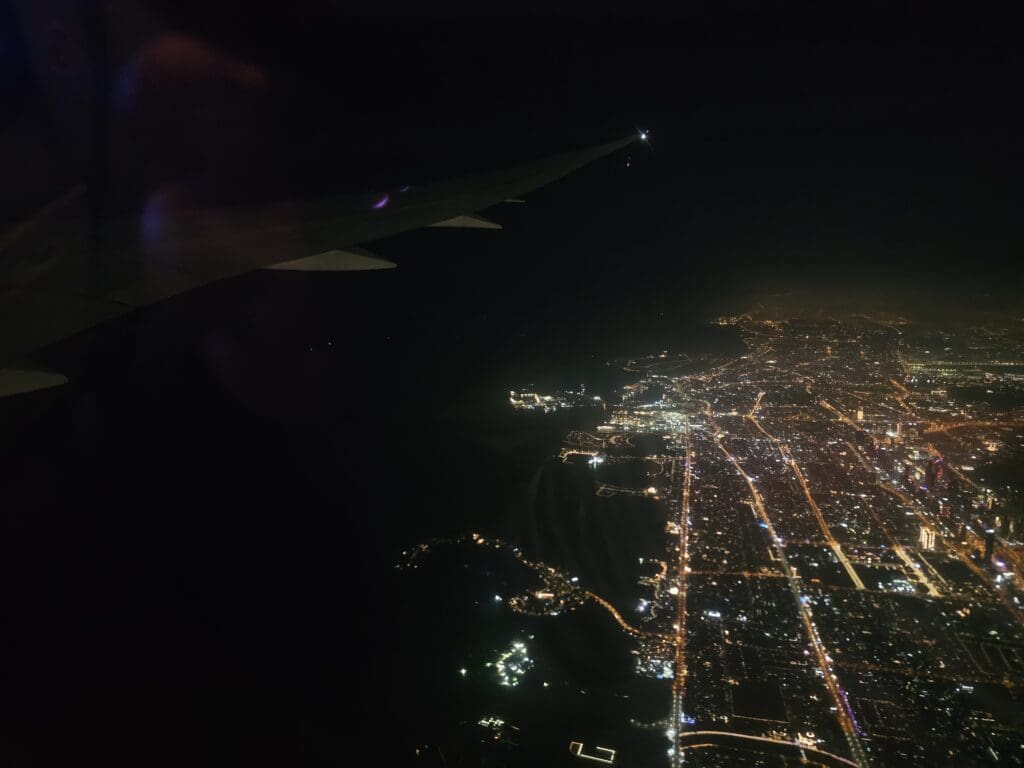
That night, the decent weather conditions around Dubai ensured that our climb was a smooth affair and the crew were released from their seats at 6,000 feet at which point the cabin lighting was turned back on. Meanwhile, the seatbelt signs were extinguished at 10,000 feet at which point a pre-recorded announcement rang out in Malay and English repeating the usual advice regarding keeping these fastened whilst seated. Whilst there had been no long delays on the ground prior to departure, as soon as the seatbelt signs were turned off, many passengers jumped up and proceeded to the lavatories resulting in queues forming in the aisles.
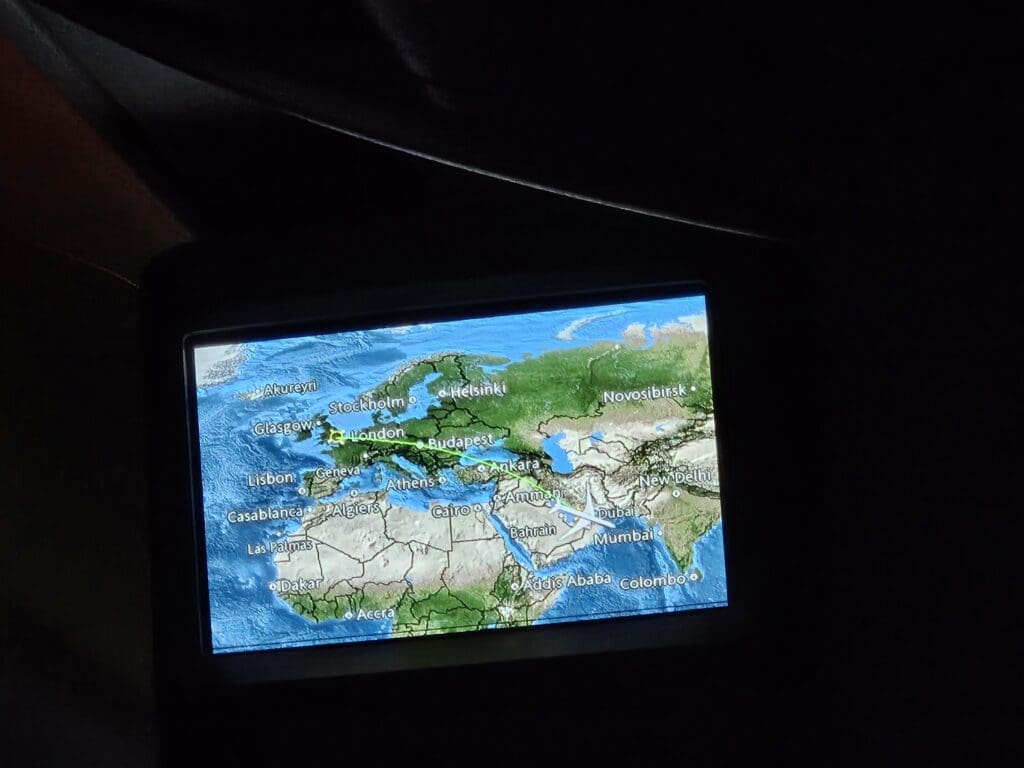
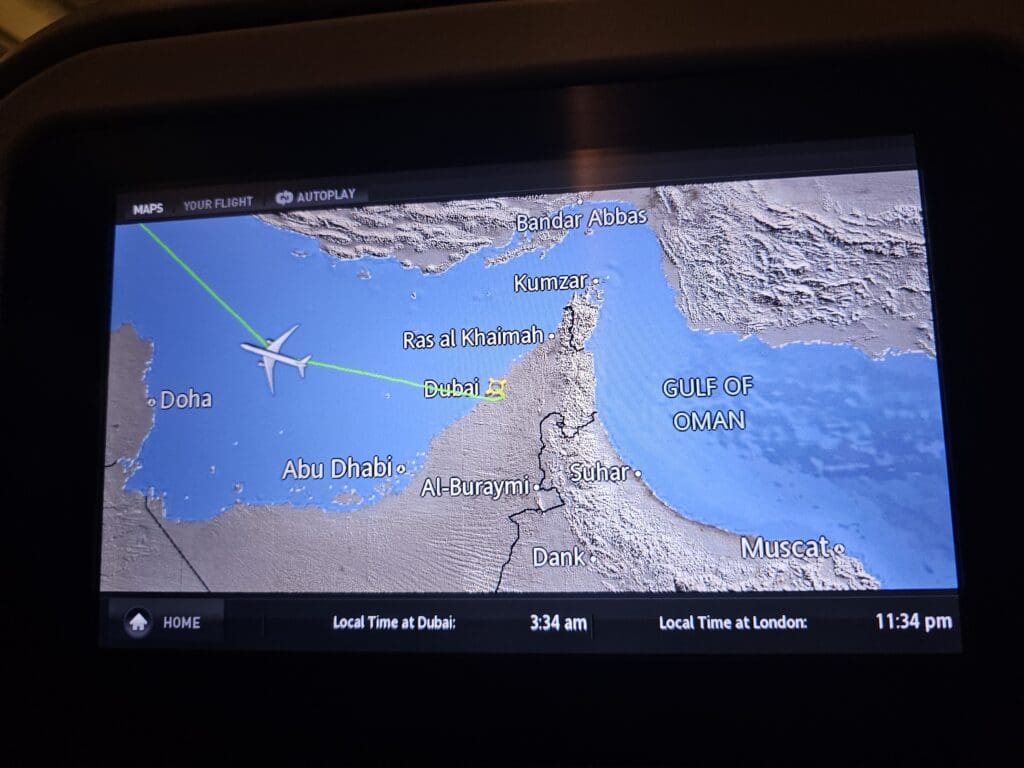
Returning to the route, after leaving Dubai behind, the Dreamliner headed westwards over the sea and around 24 minutes after taking to the skies, the aircraft levelled off at its initial and lowest of four cruising altitudes of 35,000 feet. At this time, the scent of warming food wafted from the large galley at the rear of the aircraft and eventually, at 0350 the crew rolled out the carts to the very front of the Economy cabin. Unlike my Royal Air Maroc service where passengers were served a full meal at around 0330, perhaps recognising that most passengers wanted to sleep, Royal Brunei Airlines were a little more sensible and served a snack service following departure.
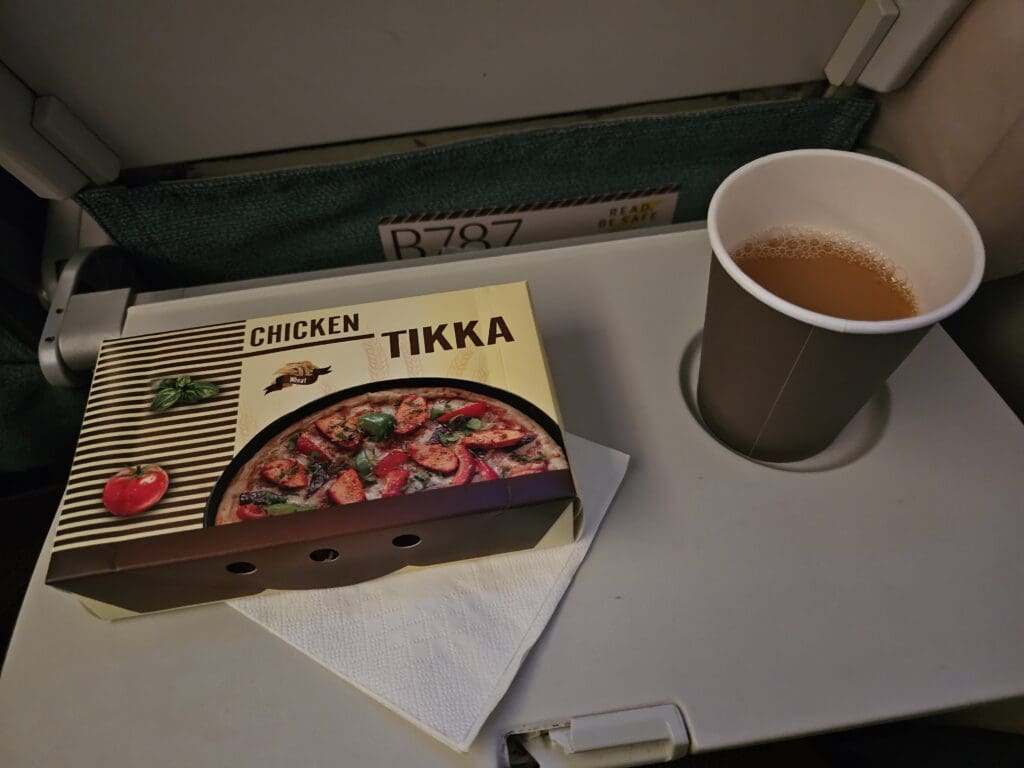
Given the light load and the fact that many passengers were already fast asleep, it did not take long before the crew reached my row. First up was the snack, and a polite and friendly crew member asked whether I would like margarita pizza or chicken tikka pizza. Opting for the latter, a warm cardboard box was passed over to me along with a Royal Brunei Airlines branded serviette. Moments later, the second flight attendant offered me a drink. As a completely dry airline, that evening a selection of juices, water, fizzy drinks, tea and coffee were offered. Going for an orange juice, this was poured into a paper cup before being cautiously placed on my tray table. Soon getting stuck in to the pizza, I was pleased to find this to be of decent quality and as is not always the case inflight, this was neither too soggy nor greasy. Polishing this off in a matter of seconds, I placed the remnants of this on the aisle seat’s tray table and this was soon noticed and collected by an attentive flight attendant. Once all rubbish from this service had been collected, at around 0430 the cabin lights were dimmed and the cabin was plunged into darkness.
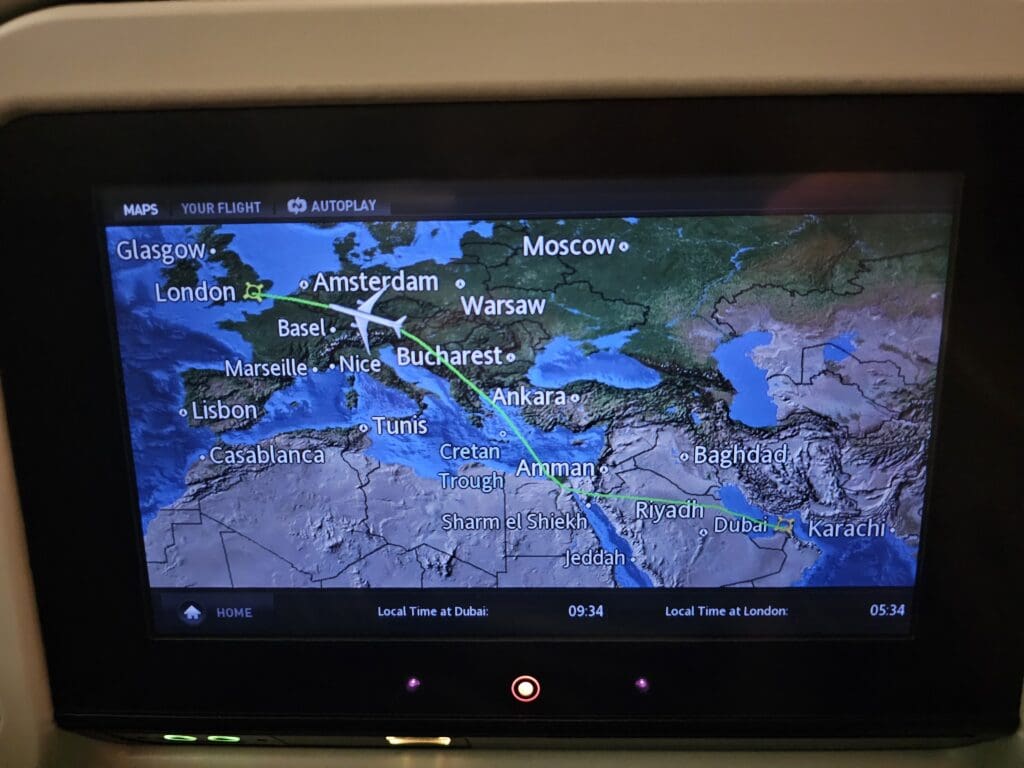
Unlike most other carriers operating between the Gulf States and London, who typically utilise the airspace through Iraq and then onwards to Turkey, Royal Air Brunei flies a more elongated route through Saudi Arabia, Egypt and then over the Mediterranean. Thus, after passing Qatar, the aircraft turned towards land and soon made landfall to the north of the capital of Saudi Arabia’s Eastern Province, Dammam. With the lights of the coastline soon fading away from view, little could be seen as we crossed over the empty deserts. Having not slept in around 21 hours and having had a busy day in Dubai, I was absolutely shattered and decided to make the most of my three seats, raising the armrests and creating something of a bed. Comparing this to the beds I had created on flights earlier in the year, this was more comfortable than my Royal Air Maroc Economy bed, but not as comfortable as the one that I had created on my Cathay Pacific flight from Dubai to Hong Kong.
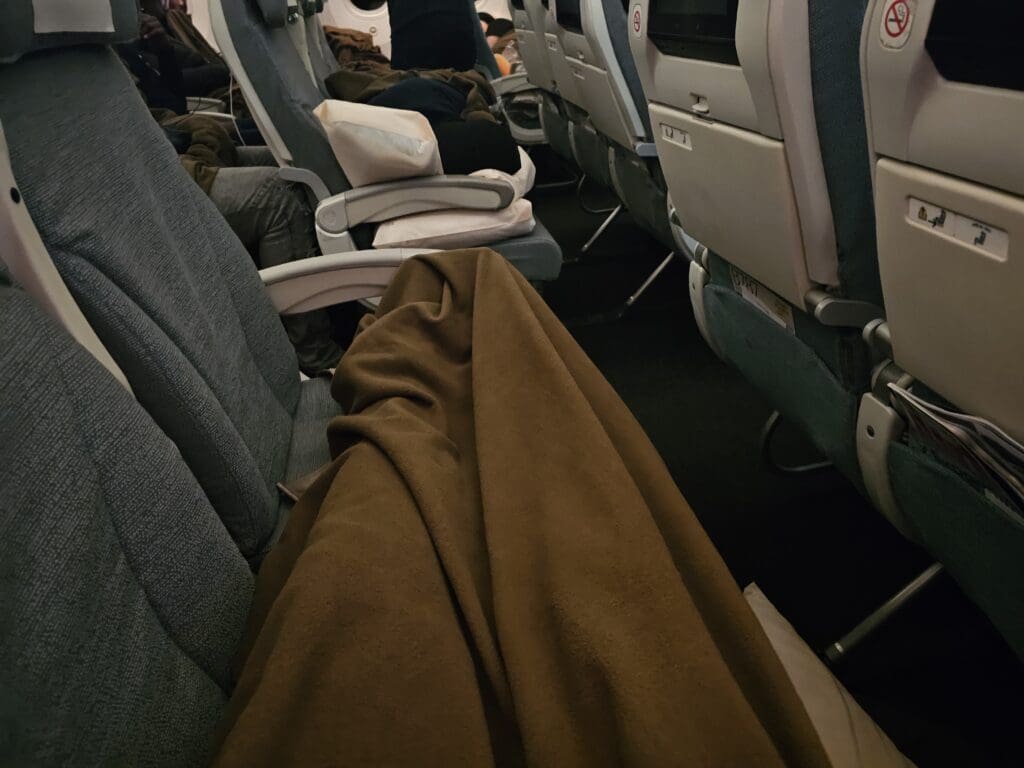
Given my tiredness, I faced no issue in drifting off to the land of nod as we cruised high over Saudi Arabia. In spite of waking up to the occasional jolt of turbulence, overall I slept fairly well and managed to get almost four hours of sleep. As I dreamed, the Dreamliner continued westwards over the north of Saudi Arabia and after almost two hours spent in the country’s skies, the aircraft passed the city of Haql in Tabuk Province and headed out over the waters of the Gulf of Aqaba.
No more than two minutes after leaving the Arabian Peninsula behind, the aircraft crossed over the shores of the Sinai Peninsula to the north of the Egyptian coastal city of Nuweibaa. Cruising northwards over Sinai, the Dreamliner took around fifteen minutes to cross the entire peninsula before making its way over the Gulf of Suez and speeding onwards towards the sprawl of the Egyptian capital Cairo, followed by the coastal city of Alexandria and the waters of the Mediterranean. A short time later, another bout of turbulence woke me up and glancing outside I saw a cluster of lights on the Greek island of Karpathos, which is located roughly halfway between the islands of Crete and Rhodes. From there, we continued northwards over the Aegean Sea and passed countless Greek islands before reaching the Greek mainland. Passing over Chalkidiki’s southernmost Kassandra Peninsula, we continued onwards and approached Greece’s second-largest city, Thessaloniki.
From Greece, we headed north through the Balkan skies and passed over the small country of North Macedonia, followed by Kosovo where the engines powered up and lifted us up to our highest cruising altitude of 41,000 feet. At this time, I woke up for good and whilst I was feeling far from refreshed I was pretty happy with the amount of sleep I managed to get. However, with my body clock convincing me it was around 0700 as per the time in Dubai, I was unable to get back to sleep. In addition, as we crossed over Kosovo, the cabin lights were reilluminated which failed to assist in any endeavours to get any extra sleep. With there still being a fair amount of time prior to the full meal service and our arrival into Heathrow, I’m not quite sure why the cabin lights were reilluminated so early.
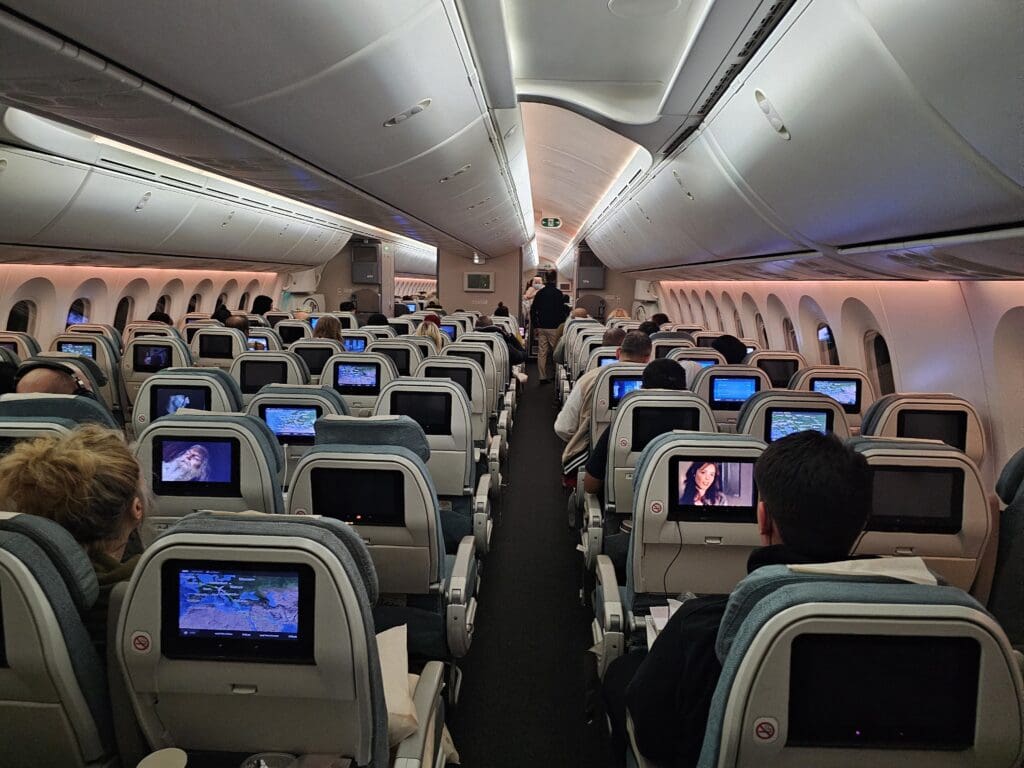
As we cruised northwards over the Balkans, I decided to pass the time by exploring Royal Brunei Airlines’ Impian inflight entertainment system. To start off this was available in Malay and English, and was a little dated in its layout and appearance although proved to be easy to navigate. This offered nothing other than the basics – namely films, television programmes, audio, moving maps and a kids section, and lacked items such as airline information, cameras, games or live television channels. With no remote control, the system could only be operated by touch and unfortunately, the screen did not always seem to be particularly responsive, especially when on the scrolling content menu.
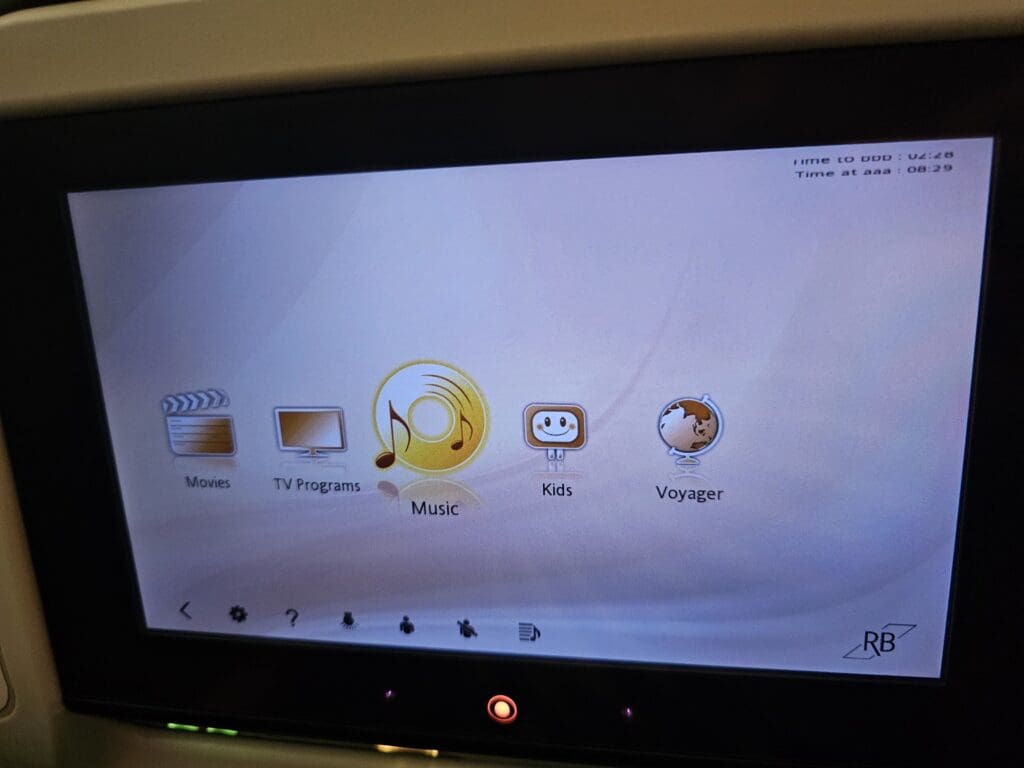
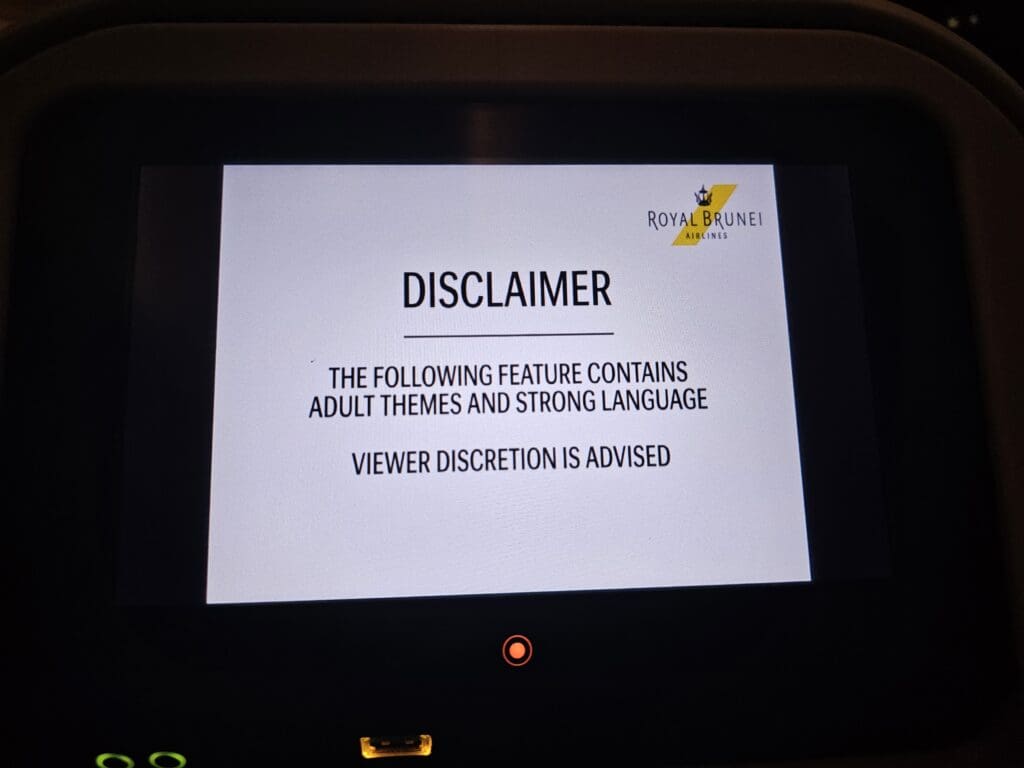
Examining the content, as was to be expected, this was not as expansive as is offered onboard many larger global carriers, however, passengers could still watch a wide array of films and television programmes and listen to a selection of music. In terms of the films, most of these took the form of Hollywood films which included recent releases such as Barbie and Mission Impossible, to older classics such as 2001: A Space Odyssey and Dumb and Dumber. Meanwhile, non-Hollywood productions were limited to just five options, with these being films from Hong Kong, Indonesia, Japan, Korea and the Philippines. As with the films, a fine array of television programmes from the US was offered, however, a few Bruneian television shows in the form of religious quiz shows could be found on the system. Lastly, a decent selection of music playlists could be listened to. Whilst not particularly interested in watching anything, I did start a show to test out the system and found this to commence with a warning about potential explicit content but lacked any sort of advertisements.
In addition, whilst those who end up on Royal Brunei Airlines’ narrowbody Airbus aircraft that lack inflight entertainment screens are offered wifi-based streaming, no wifi is offered onboard the Dreamliner and thus those on the airline’s longest flights have no choice but to remain incommunicado with the world.
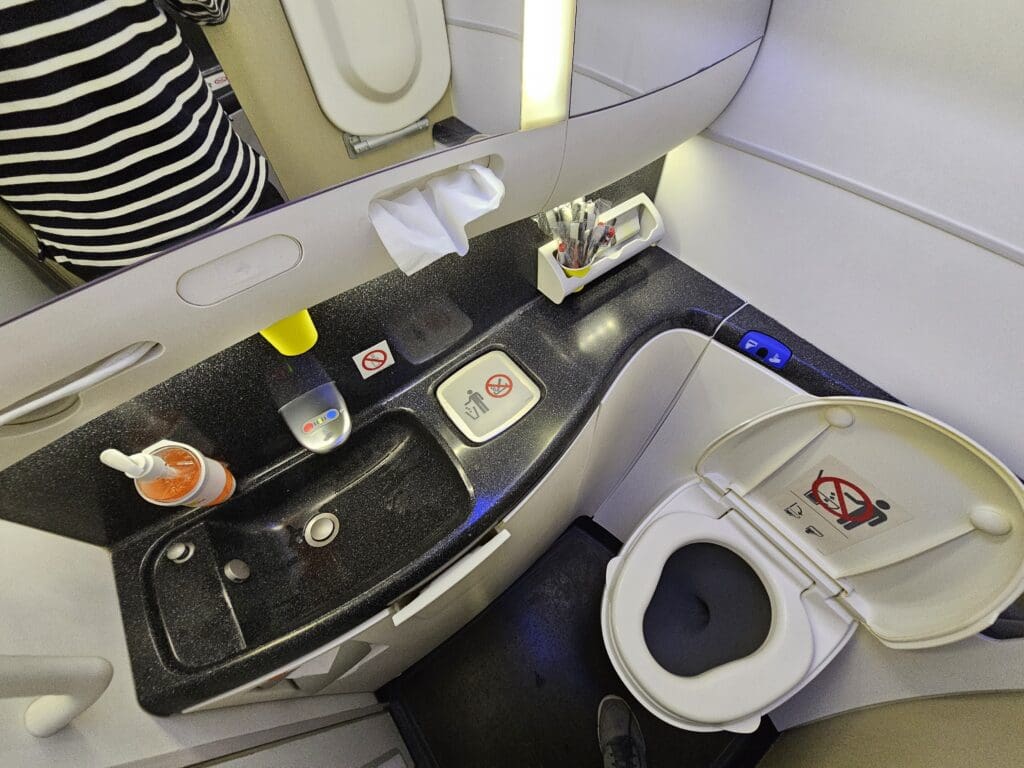
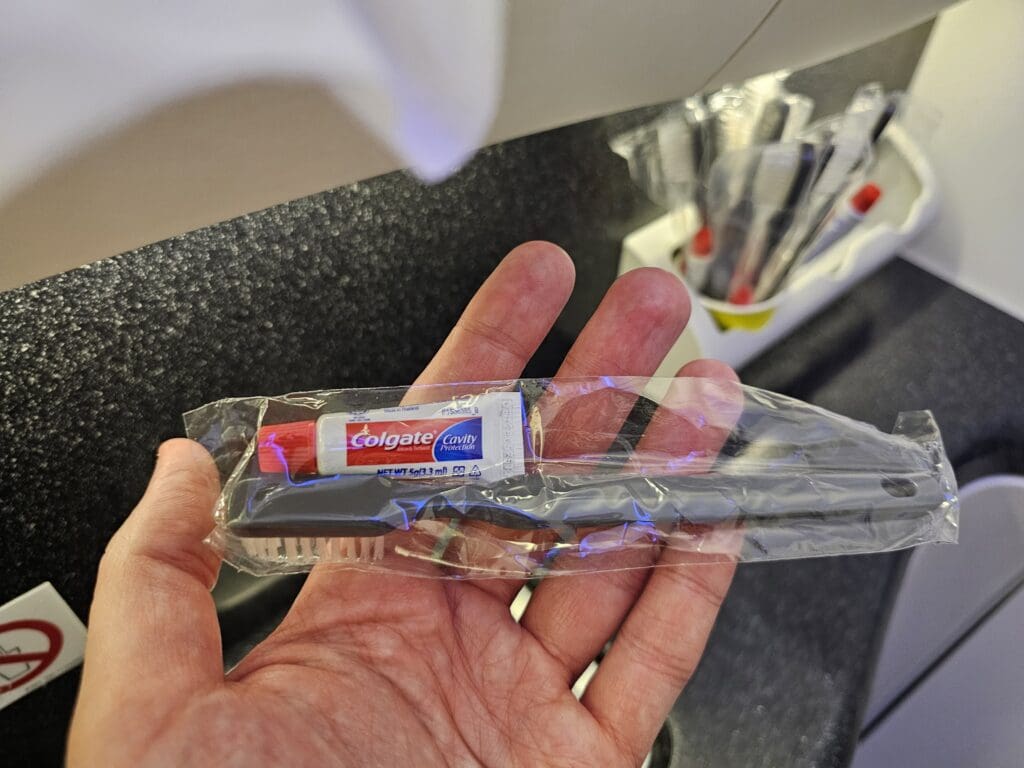
After exploring the nooks and crannies of the inflight entertainment system, I decided to pay a visit to one of the aircraft’s lavatories. In total, the aircraft featured six lavatories in Economy, equating to a total of 39.3 passengers per lavatory (for comparison a 189-seat Boeing 737-800 has 63 passengers to a lavatory). Upon entering one of the toilets, I was pleased to find this to be in a clean and good condition, appearing to have been tended to during the flight. Furthermore, this came with toothbrushes and toothpaste, along with all the expected amenities. In addition, Royal Brunei Airlines seemed to have opted for the swing-in doors which means that it is impossible to open the door in the face of any passenger or crew member as they walk past. Something that I have noticed to be a surprisingly rare type of door on many airlines.
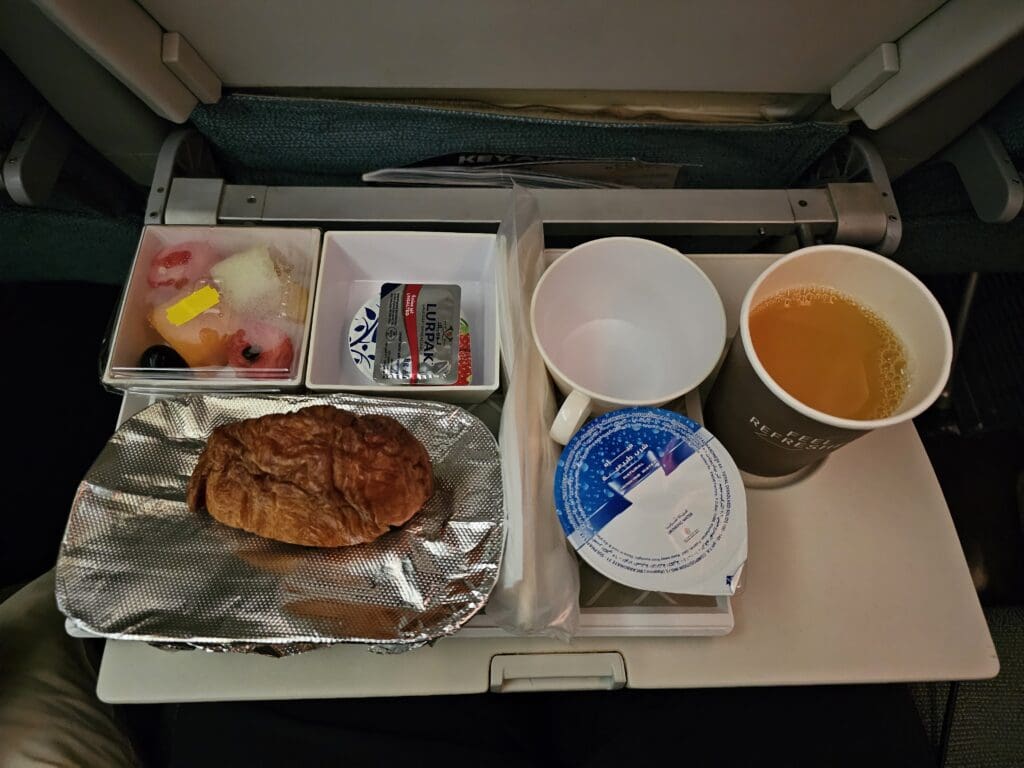
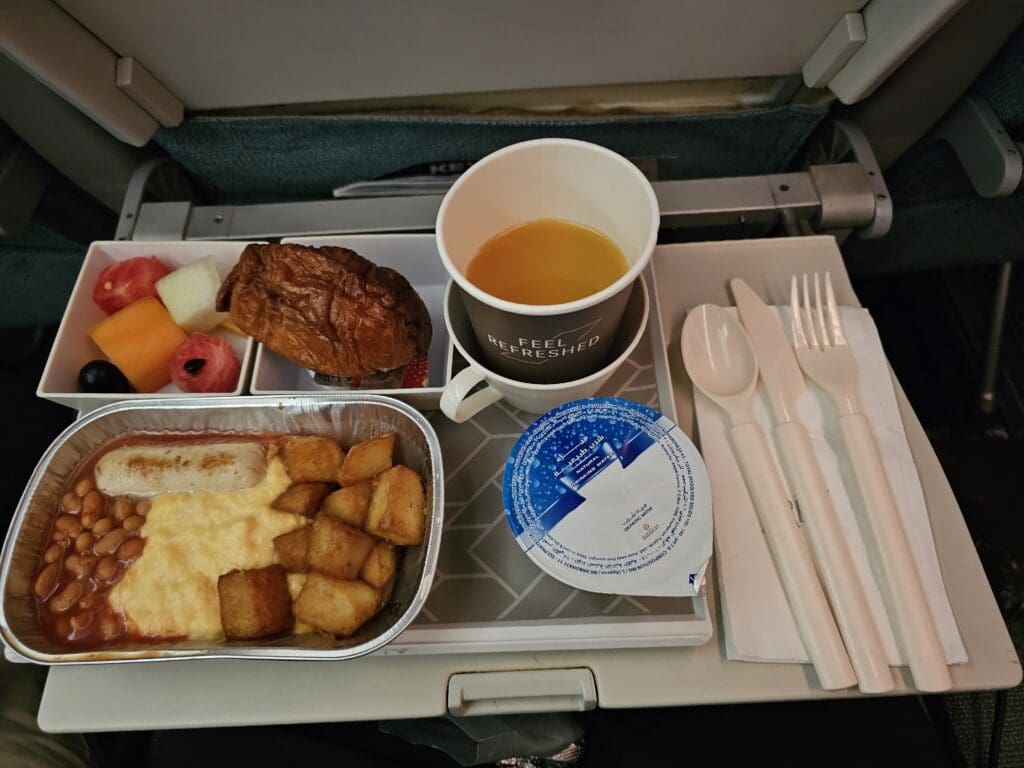
By the time I returned to my seat, the aircraft was making its way from Slovenian to Austrian airspace and a few minutes later upon passing the city of Graz, the service carts were rolled out into the cabin indicating the commencement of the main meal service. Once again, this commenced from the front of the Economy cabin although, with many passengers still fast asleep, it did not take too long to be served. That morning, eggs would be the main order of the day and the friendly flight attendant offered me the choice of an omelette with potato wedges or scrambled eggs with potato cubes. Opting for the latter, a tray was soon carefully placed on my tray table. This contained the main dish of scrambled eggs, baked beans, chicken sausage and potato cubes, a small fruit salad, a small, warm and slightly soggy croissant, a tub of still water and tubs of butter and jam. Meanwhile, eating utensils came in the form of sturdy plastic cutlery, similar to that that I had been presented with onboard Malaysian Airlines the previous month. That morning, I opted to pair this with an orange juice which the second flight attendant soon poured and handed over to me. Soon getting to work on the meal, admittedly, whilst edible and serving to fill a gap, this was nothing special and proved to be an ultimately forgettable meal.
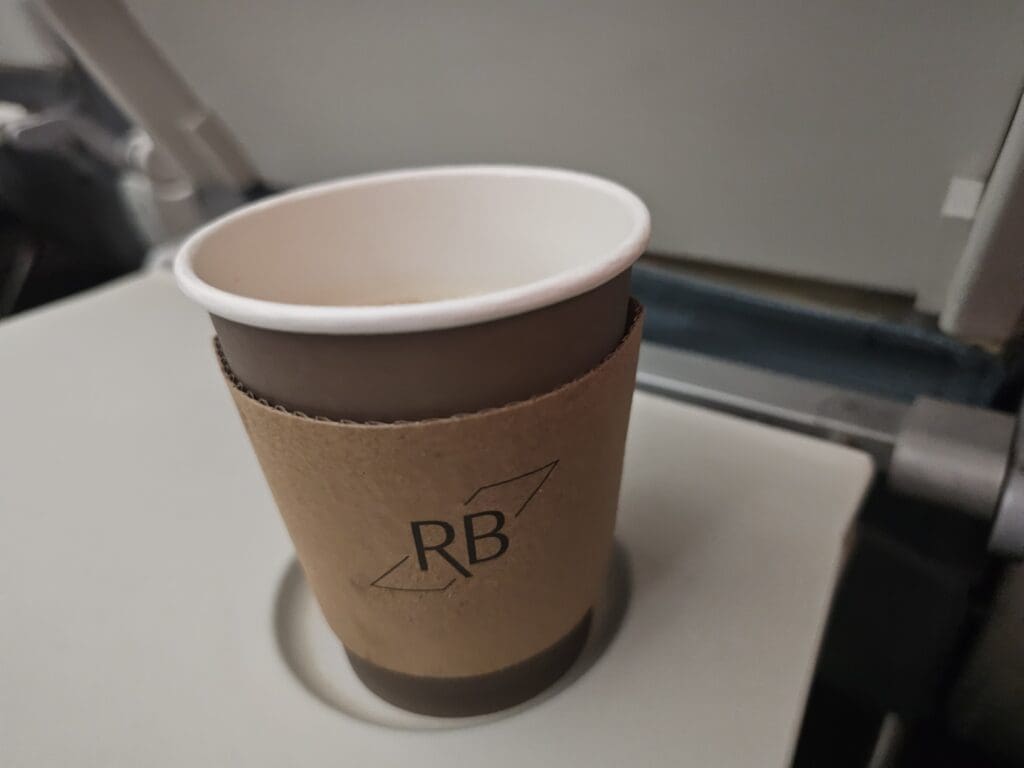
From Graz, the aircraft cut across the northeastern corner of Austria and after around 23 minutes the Dreamliner made its way over the Inn River and trundled into German airspace to the south of the Bavarian city of Passau. Upon reaching the city of Ingolstadt, at 0830 Dubai time or 0530 British time as I shall use from now on in the report, the crew made their way through the cabin collecting remnants of the meal service and undertaking the third and final round of drinks during the flight. Opting for a black coffee, I found this to be consumable but otherwise largely unremarkable. However, like the rest of the service, my interactions with the crew member undertaking this were fantastic and I was very pleased with the polite and friendly service offered.
From Ingolstadt, the aircraft continued onwards and passed to the south of Nuremberg and Würzburg, before leaving Bavaria behind and speeding onwards to Frankfurt. There, the lights of Germany’s fifth largest city could be clearly seen before this faded away as we continued onwards towards Belgium. A grand total of 45 minutes after entering German airspace, the Dreamliner trundled into Belgian skies near the Wallonian city of Liège and crossed over the north of the country, passing the likes of Hasselt, Mechelen, Antwerp and Ghent. As we neared the coastline of West Flanders, at 0623 the Captain performed their first and only announcement of the flight. This was first undertaken in Malay, followed by an English version in a very well-spoken British accent. During this, the Captain announced that we would be commencing our descent in a few minutes’ time and provided an update on the weather in London before thanking for passengers for flying with Royal Brunei Airlines.
True to their word, it wasn’t long before the Dreamliner could be felt commencing its descent whilst below, the lights of ships trundling across the North Sea could be seen. At this time, I decided to go for one final toilet visit and was once again pleased to find this to be in good condition, despite seeing heavy usage throughout the flight. Upon returning to my seat, there seemed to be little activity inside the cabin as we crossed over the North Sea. Following fourteen minutes spent trundling over the dark waters, the lights of the Essex coast came into view welcoming me back home before we made landfall over the Dengie Peninsula near the town of Maldon. Soon, as we descended through 15,000 feet, the seatbelt signs were illuminated which was followed by a pre-recorded announcement with the usual messages about seatbacks, tray tables and seatbelts. At this point, the crew took to the aisles, appearing to have their work cut out waking up those passengers who had spent much of the flight deep in slumber. Once all was set for our arrival, the crew took to their seats before dimming the cabin lights in preparation for landing.
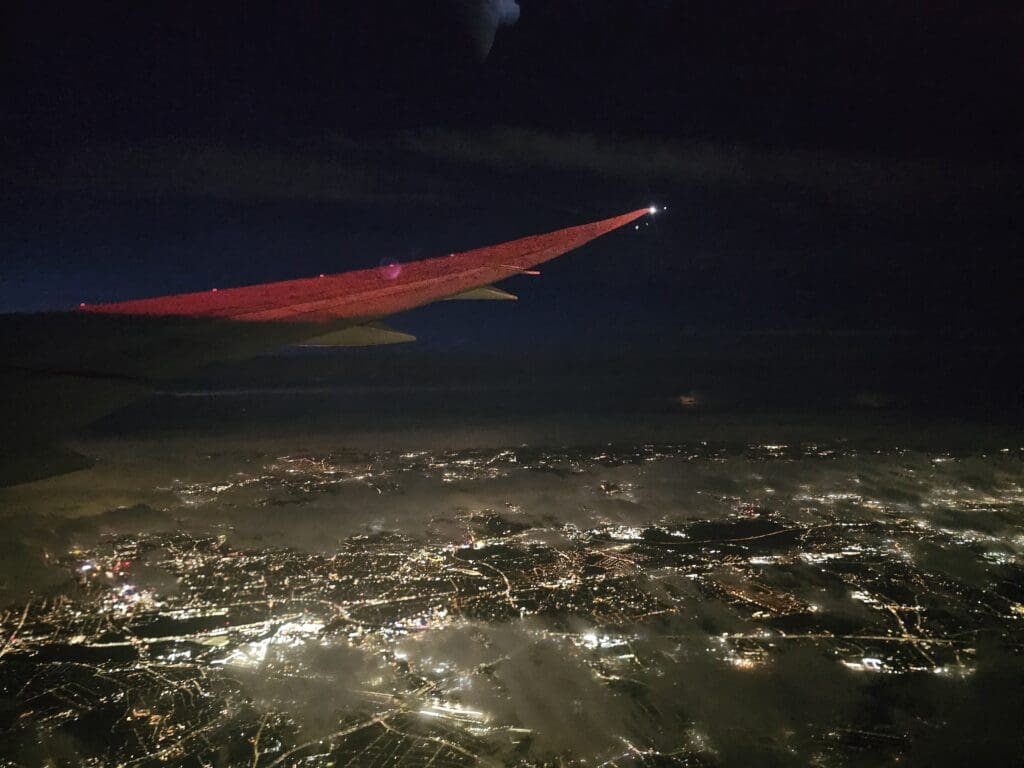
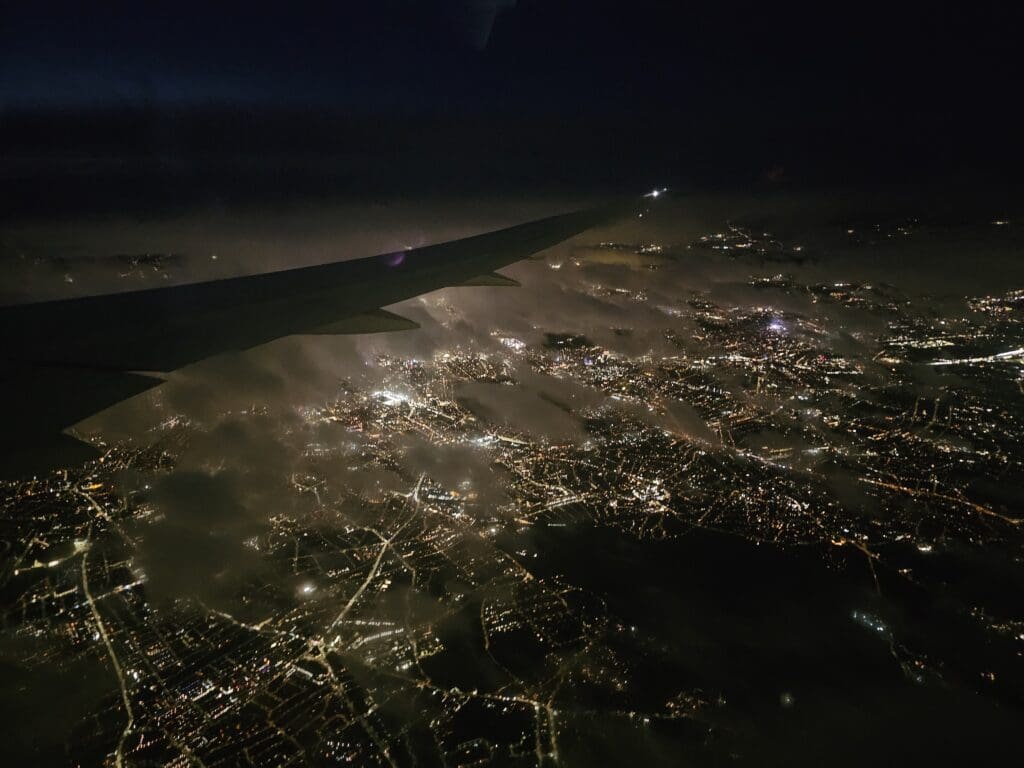
From the Essex coastline, the Dreamliner flew past the town of Chelmsford and continued on a westerly heading towards North London. Whilst arriving during the morning rush with plenty of services arriving from destinations across the world, no holding would be required. Instead, we flew in the standard S-shaped approach pattern before lining up for an approach to Runway 27L. Whilst low lying cloud covered much of North London and prevented any vistas of the likes of Enfield, Borehamwood, Edgware, North Finchley, Edmonton or Tottenham, upon reaching Stratford these cleared. As we descended, the first landmark I spotted was the Olympic Stadium which now serves as the home of West Ham United and was followed a short time later by the O2 Arena on the Greenwich Peninsula.
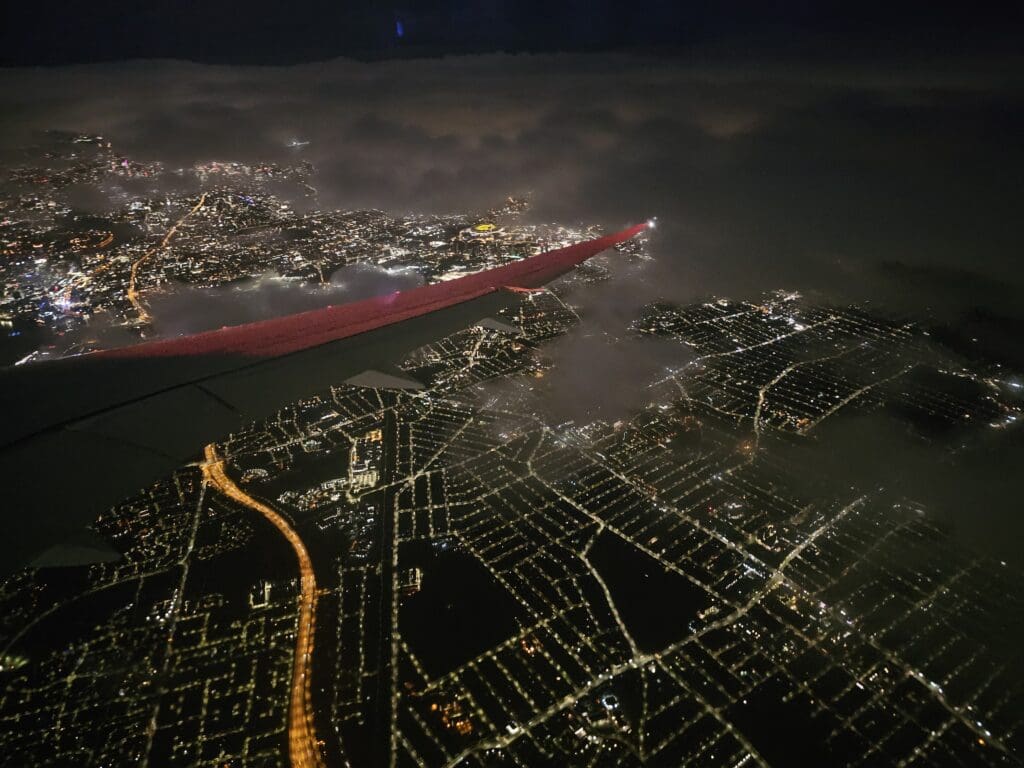
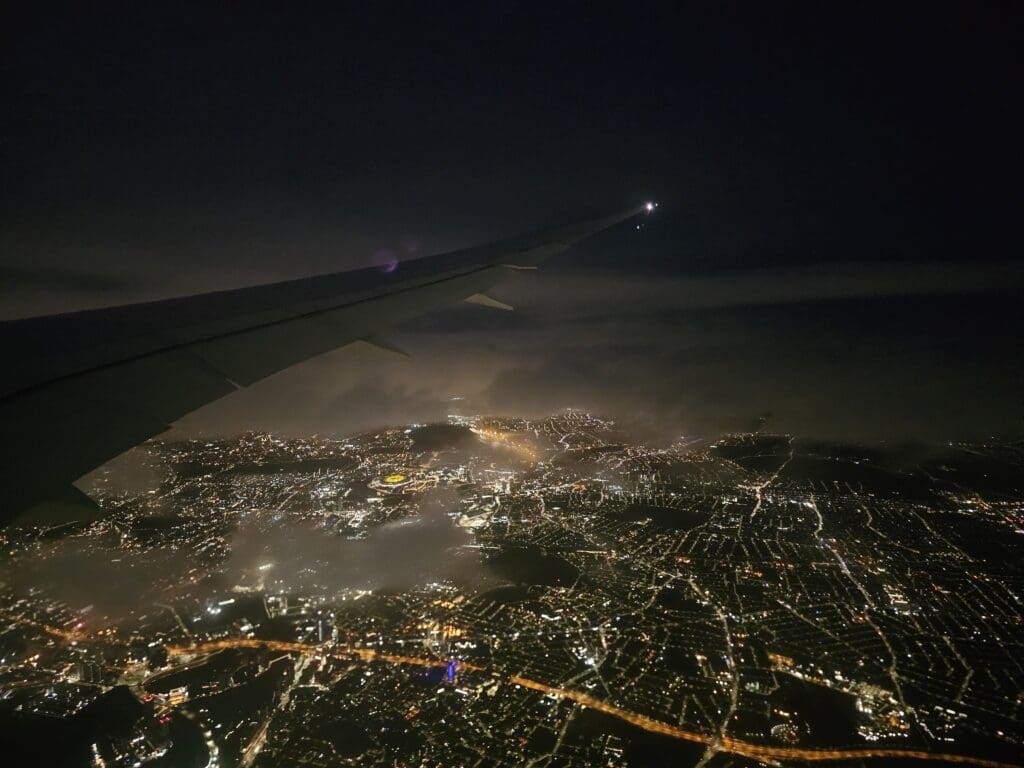
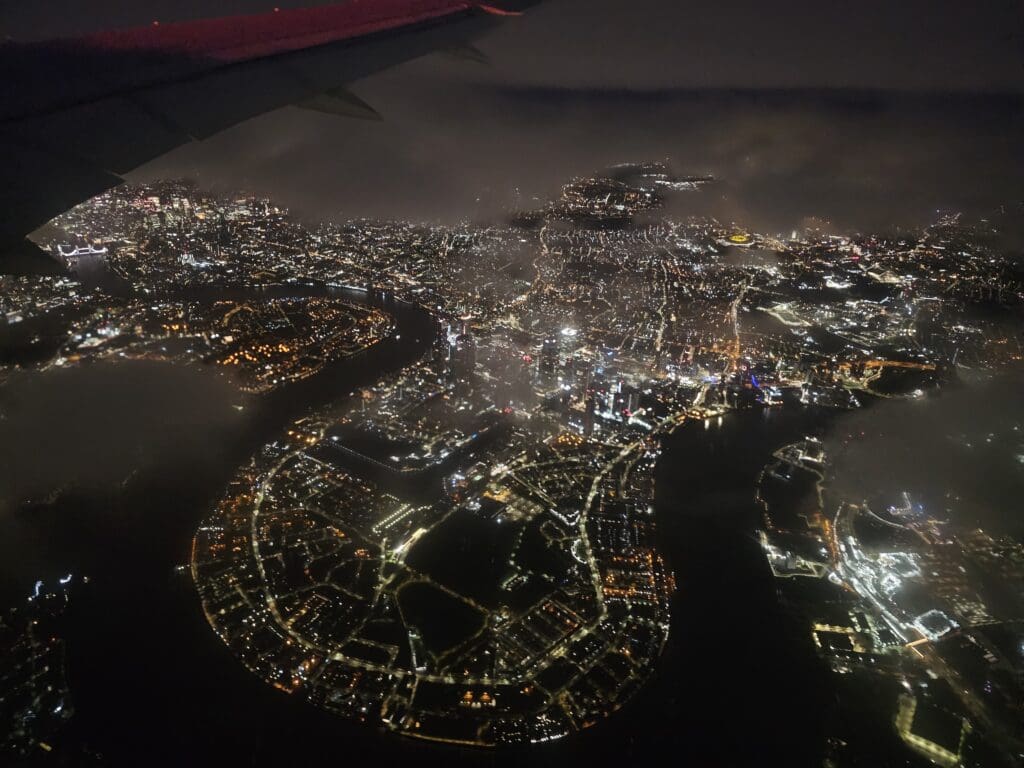
Flying west from Greenwich towards Central London, the tall buildings of Canary Wharf soon appeared and before I knew it the famous sight of Tower Bridge came into view, followed by the likes of the London Eye and Houses of Parliament. Whilst I will admit that approaches to Runway 27L/R are more scenic in daylight hours, it was still good to see the capital from the air once more as my recent flights into Heathrow have been accompanied by fog and low clouds, preventing any views of London. After passing Central London, the aircraft descended over the well-to-do neighbourhoods of Battersea and Putney, roughly following the course of the winding Thames as the flaps and landing gear fell into position in preparation for our arrival. Indicating that we were almost there, the bright lights of Kew Gardens came into view before we sank over the mostly low rise residential areas of Isleworth and Hounslow.
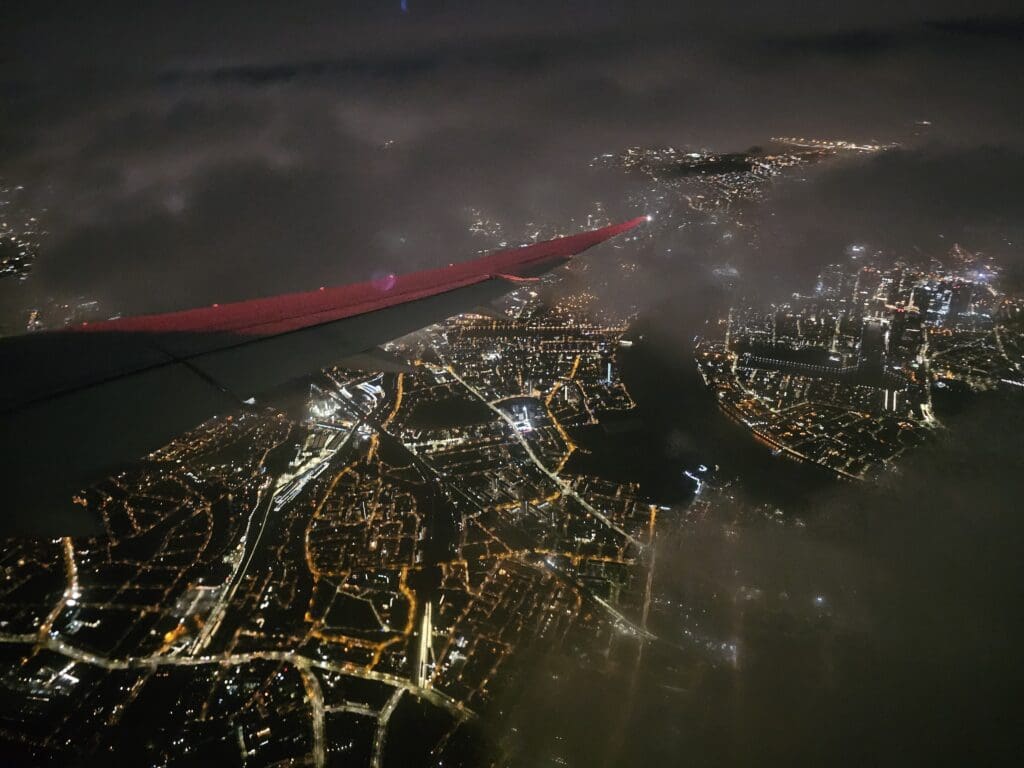
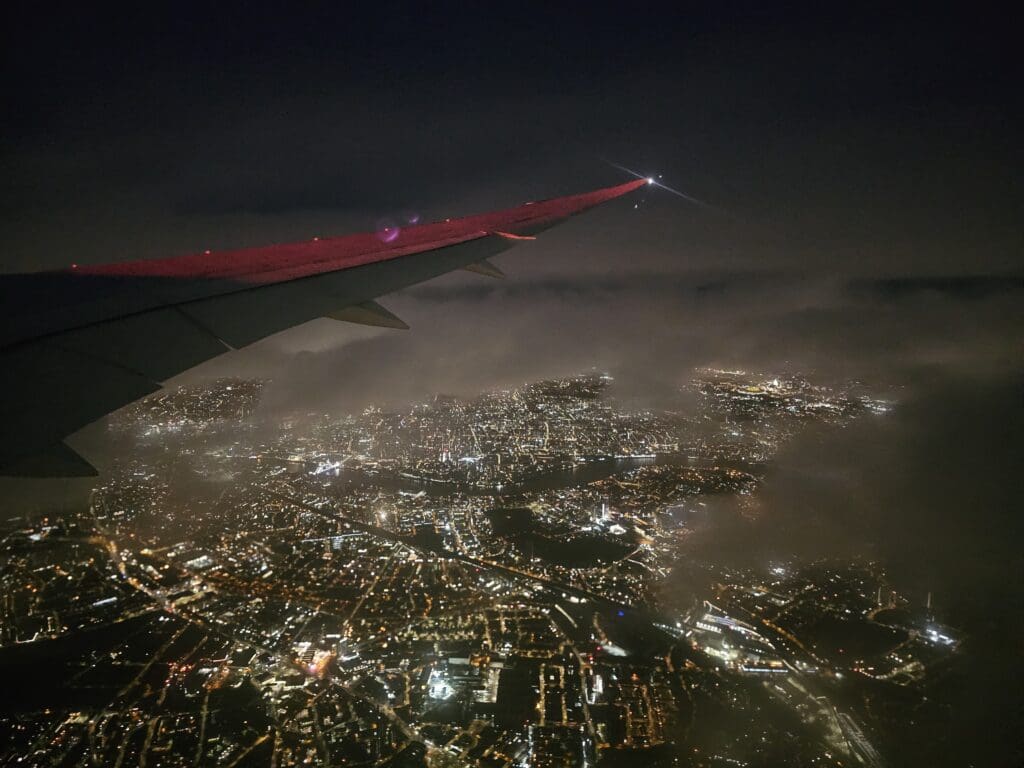
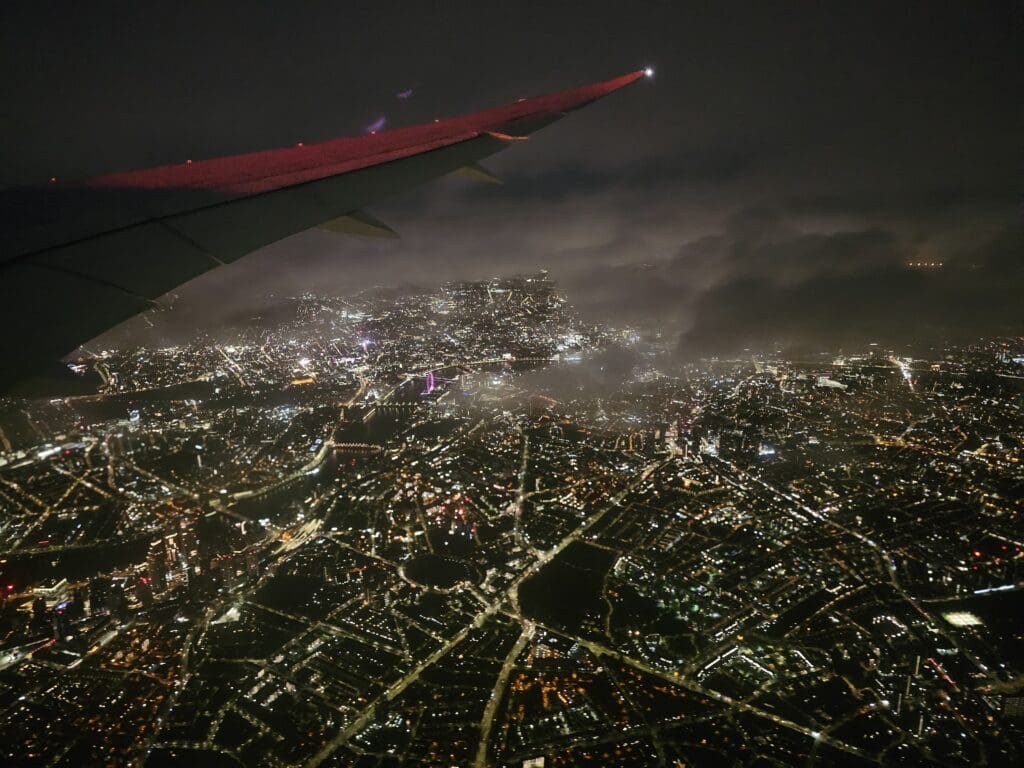
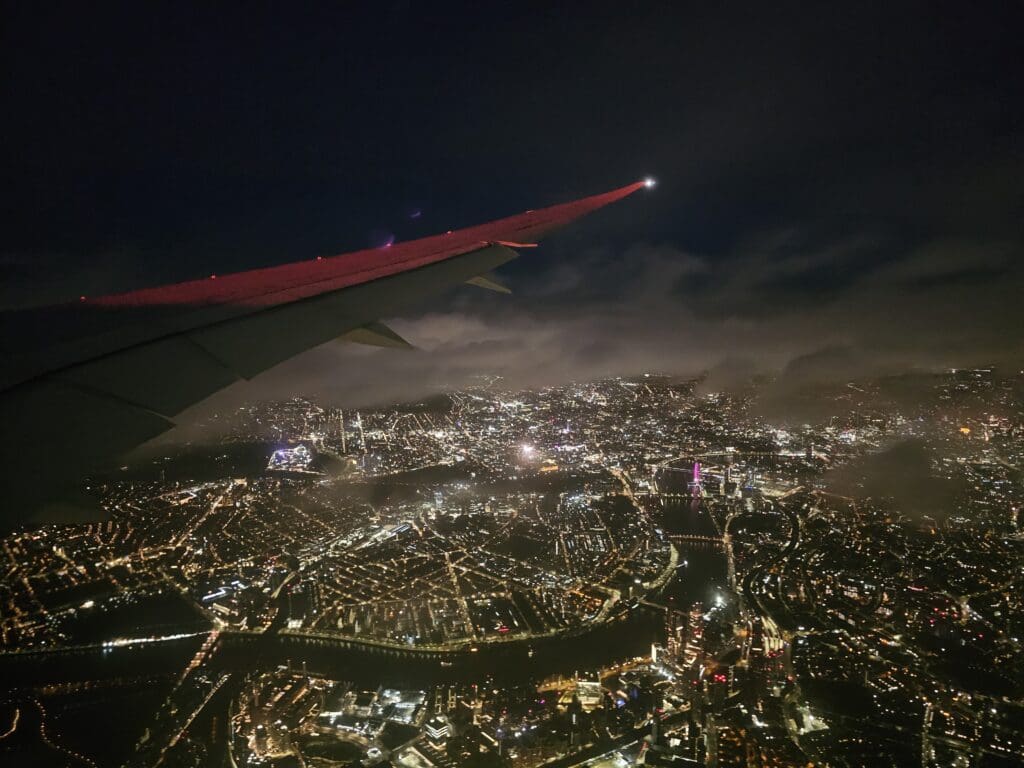
Soon, the sprawl of warehouses and car parks that surround Heathrow Airport could be seen, followed by British Airways’ maintainance areas before we crossed over the perimeter fence and made a barely noticeable touchdown on Runway 27L at 0709, a grand total of 7H59 after leaving Dubai. On this note, our flight was almost twenty minutes longer than the British Airways service that night which operates on a more ‘typical’ and direct routing. Whilst we had left this behind in Dubai, this aircraft touched down a grand total of five minutes ahead of us!
Once safely on the ground, some rather heavy braking took place and the aircraft soon exited the runway enabling an Emirates Airbus A380 to land at the end of its overnight slog from Dubai. As we vacated the runway, the Purser welcomed all to London and thanked passengers flying with Royal Brunei Airlines, ending their announcement with ‘We hope to see you again soon, God willing’. Once on the ground, no particularly long taxi was needed to reach Terminal 4 and a grand total of five minutes after touching down, the Dreamliner came to a gentle stop at Stand 414.
As soon as we came to a halt, the two engines spooled down and the seatbelt signs were extinguished. As is not always the case, perhaps feeling tired and weary, there was no urgent rush to exit the aircraft and thankfully, the jetbridge was positioned up to the L2 door in no time. Given the lack of passengers, it did not take too long for those in Economy to exit the aircraft and after gathering all my belongings, thanking the multiple crew members as I journeyed forwards, I stepped off the Boeing just after our scheduled arrival time. Once all passengers and bags had been offloaded, the aircraft would be towed to a remote stand and remain there before heading back to Dubai and then Bandar Seri Begawan around ten hours later.
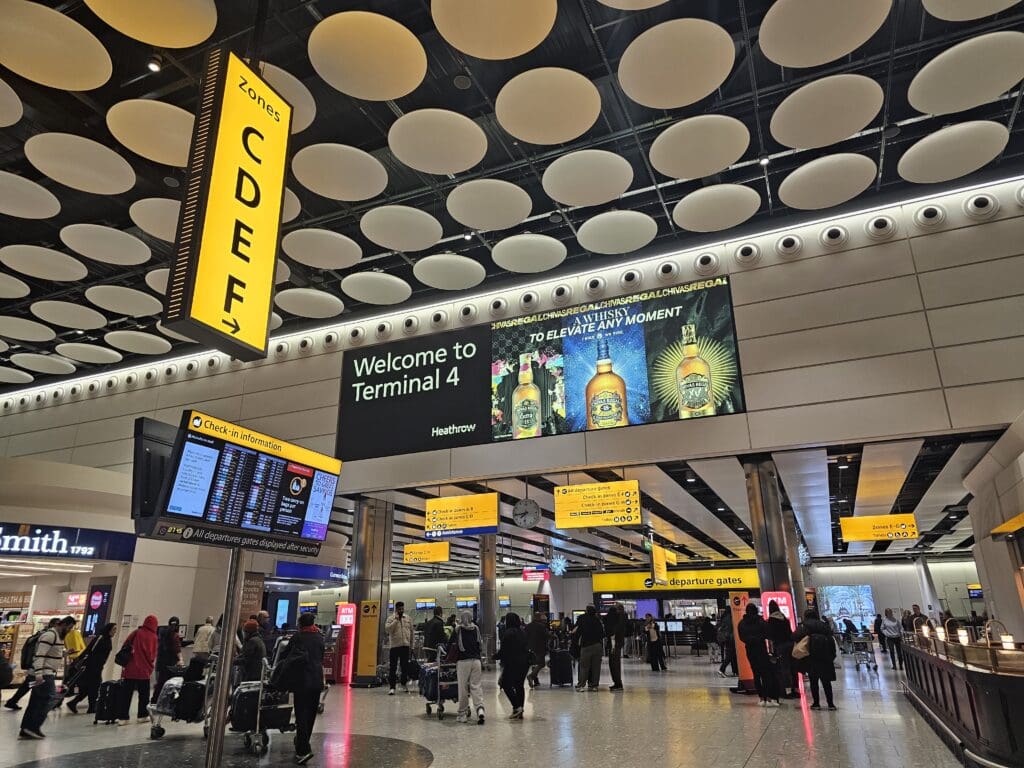
From the gate, a fairly long walk was in store to Terminal 4’s immigration hall. However, once there I was pleasantly surprised to find this to be almost entirely empty and thus no queuing was required at the e-gates. Passing through these without issue and lacking any hold luggage to collect, I was able to steam out of the terminal and continued on my way. Once upon a not too distant time when I had lived in the West London suburb of Ealing, I could have been in bed within thirty minutes of exiting the terminal. However, having returned to my homeland in Yorkshire, I would instead have a long and weary trek back up north!
Summary
To start, I will admit that there were a few things about my Royal Brunei Airlines experience that I thought could have been improved, including items as simple as providing headphones to passengers rather than simply placing these in the bulkhead literature compartments! Meanwhile, I thought the entertainment system could have done with an upgrade, the main meal service was unremarkable and the aircraft did seem a little tired in places. However, turning to the positives, I thought the crew were fantastic and I was left nothing short of very impressed by ever single member of crew that I had interacted with throughout the course of my flight. Furthermore, the aircraft was spacious and comfortable, and I arrived ahead of schedule and in one piece.
Ultimately, given the price I paid, I had enjoyed a fantastically value-for-money service and I am glad that Royal Brunei Airlines are back on the route between Dubai and London. Needless to say, I would be happy to fly with the airline again!