Sampling Air Canada’s New(ish) Jet: Montréal to Toronto A220 Review
This is the second edition of my three-part report of my journey from Québec City to Thunder Bay via Montréal and Toronto. You can read my report of the Dash 8 Q400 hop down from Québec City here.
The Journey
Consisting of a main pier and a small satellite terminal, with the two connected via a tunnel that runs under the apron, the domestic portion of Montréal-Pierre Elliot Trudeau Airport is relatively compact and easy to navigate. Enjoying the luxury of 54 minutes in Canada’s third busiest airport, whilst I would hardly have enough time to sample some local poutine, I was not particularly worried about missing my next flight. Furthermore, with no security check required and no hold luggage to worry about, this would be a fairly straightforward connection. Entering the terminal at 1200, I was left with a total of 25 minutes to make it to the next gate before the commencement of boarding for my next flight to Toronto and was thus left with an adequate amount of time to enjoy a saunter through the terminal.
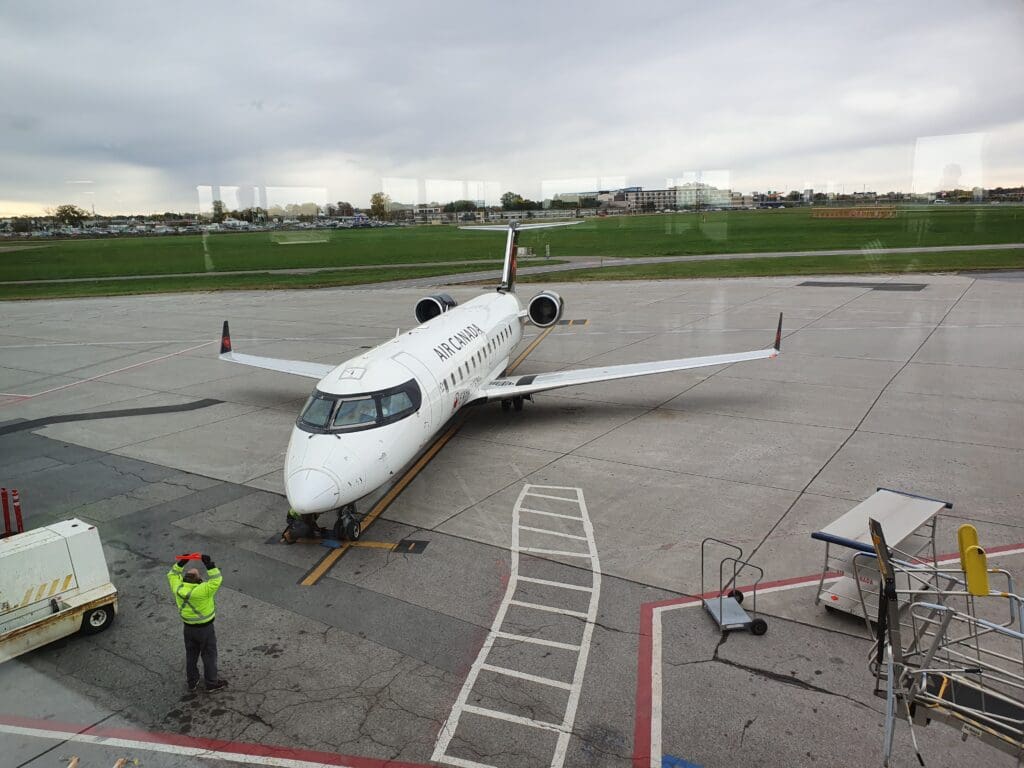
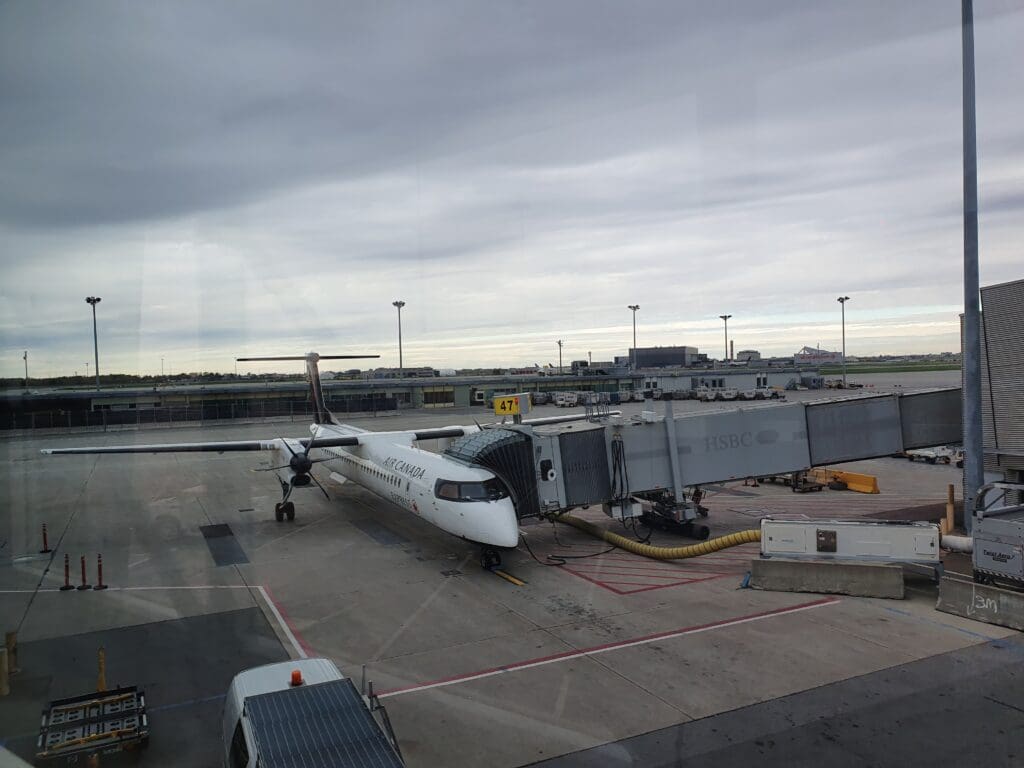
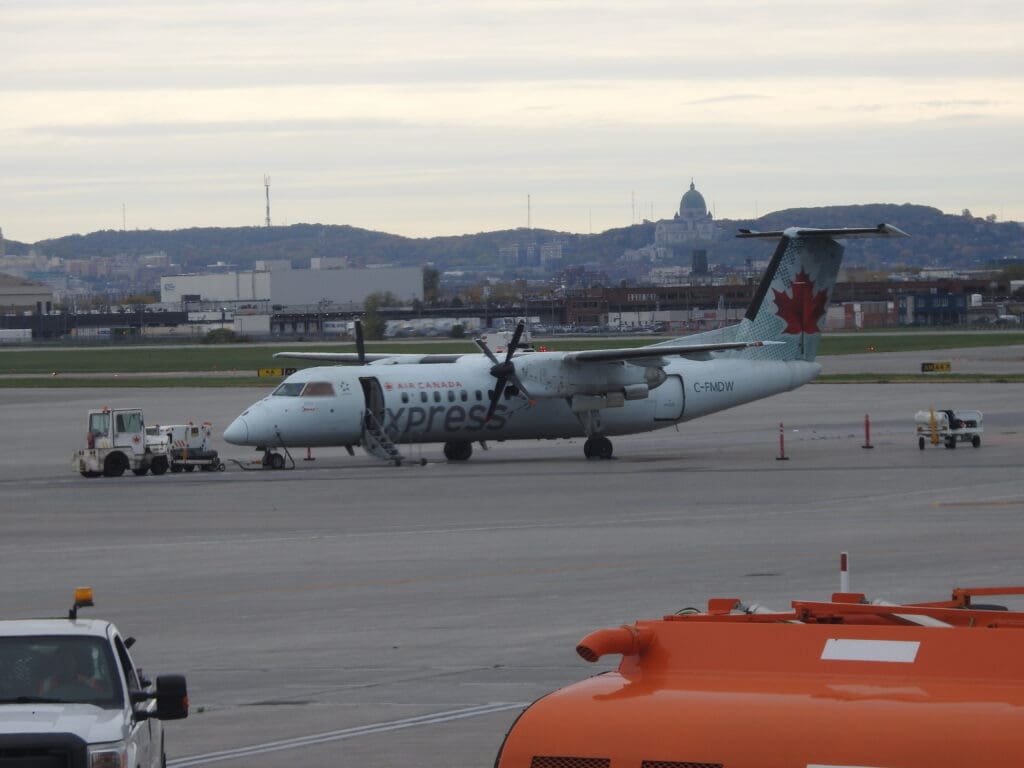
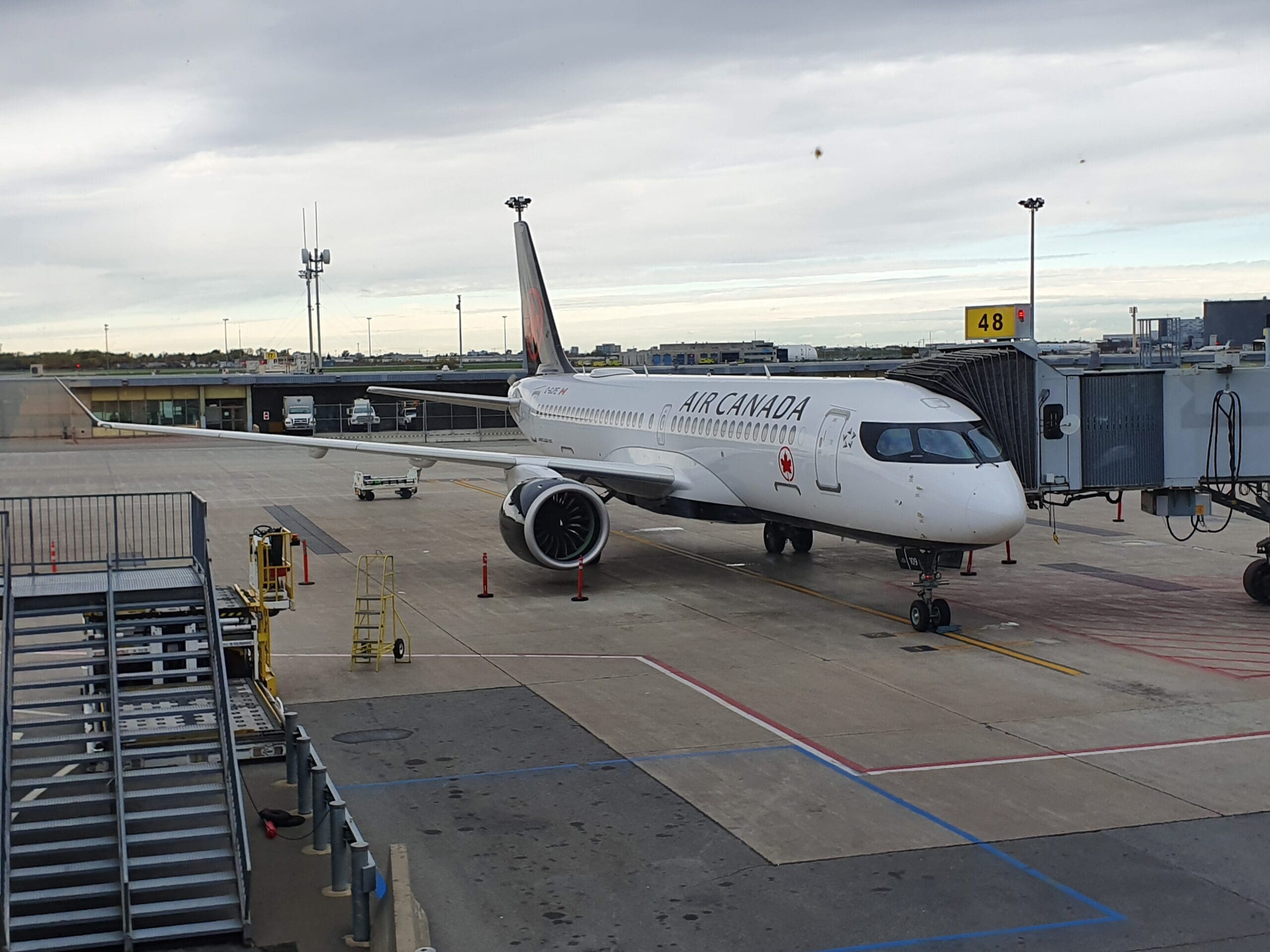
Once in the terminal, I checked the flight information display screens which confirmed that my next flight would depart from Gate 48 and following a quick pit stop, I made my way to the gate. Given Montréal’s status as one of Air Canada’s major hubs, that afternoon plenty of passengers could be seen rushing to and fro, with departures bound to plenty of destinations across the country, from St. John’s in the east to Vancouver in the west. As had been the case upon passing through the previous morning before my PAL Airlines Dash 8 Q300 flight, most of the terminal’s coffee shops seemed to have offputtingly long queues. Following a walk through the hectic terminal, I arrived at Gate 48 where Airbus A220-300 C-GJYE could be seen waiting to head off on its short flight. Assembled at Mirabel Airport, located around twenty miles to the northwest, this particular Airbus A220 had taken to the skies for the first time in September 2020 before being delivered to Air Canada later that month. This made the airliner around a year and a month old at the time of my flight. In the week before this, the jet had been working virtually non-stop across North America, visiting Edmonton, Halifax, New York La Guardia, St. John’s, Toronto Pearson, Vancouver and Winnipeg, covering at least 29,500 miles over a total of 23 sectors.
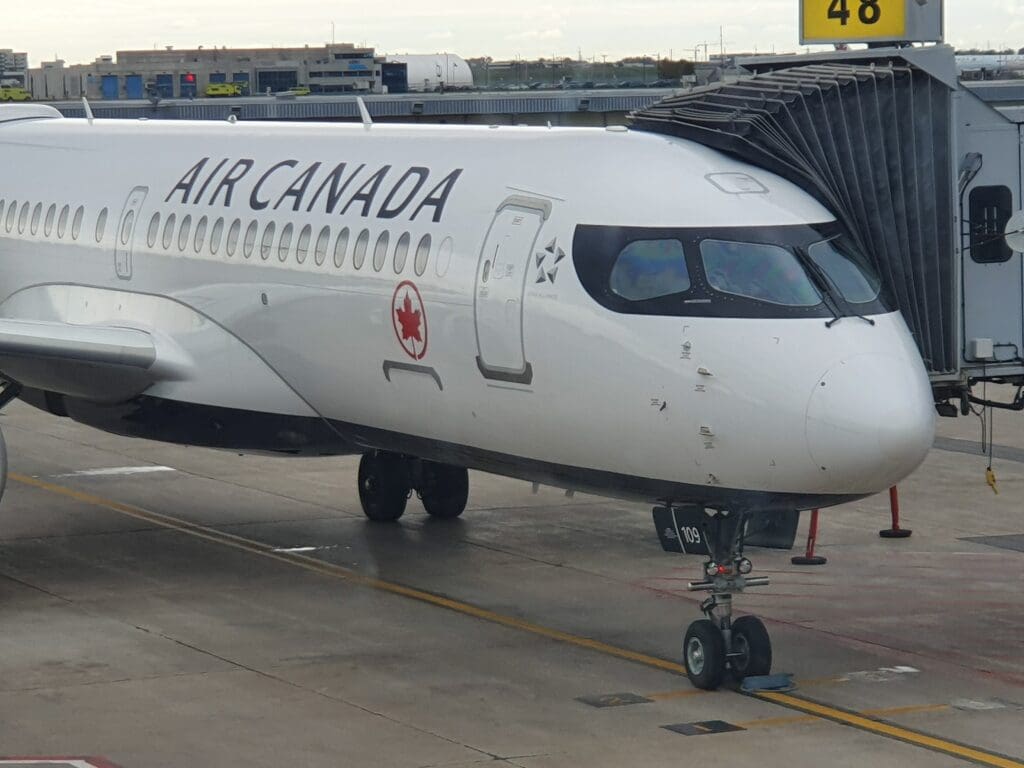
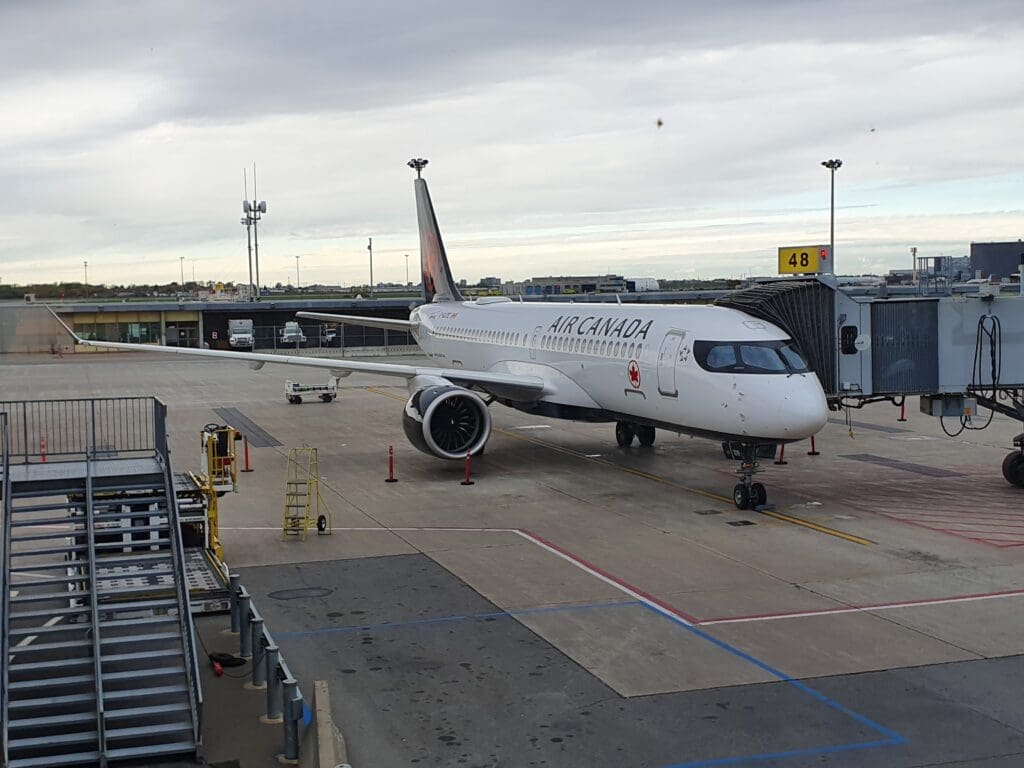
Taking a seat near the gate, I charged my phone and surfed the internet using the fast complimentary wifi whilst waiting for boarding to commence. That lunchtime, many passengers appeared rather eager to head off to Toronto, with a reasonable queue forming well before boarding was scheduled to commence. With thirty minutes to go until my flight’s scheduled departure time, at 1230 a pre-recorded announcement rang out in French and English inviting those in Zone 1 and Zone 2 to proceed forward for boarding. A few minutes later, this was followed by Zone 3 at which point I joined the short queue before having my passport checked and boarding pass scanned before I made my way down the jetbridge towards the waiting Airbus A220.
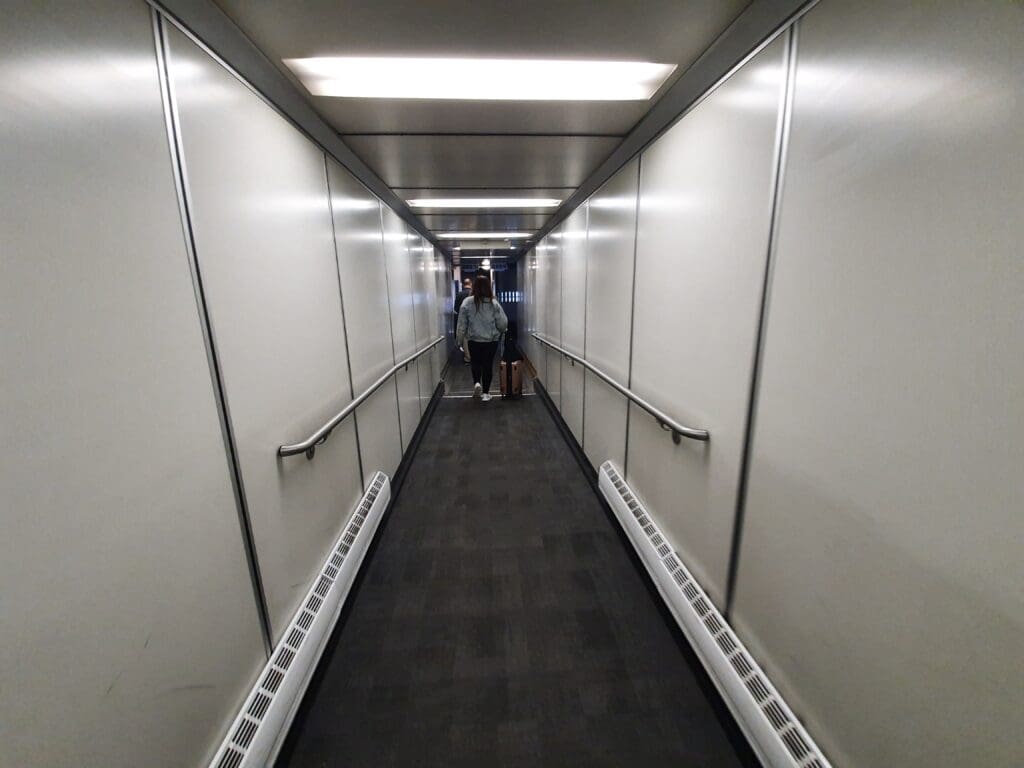
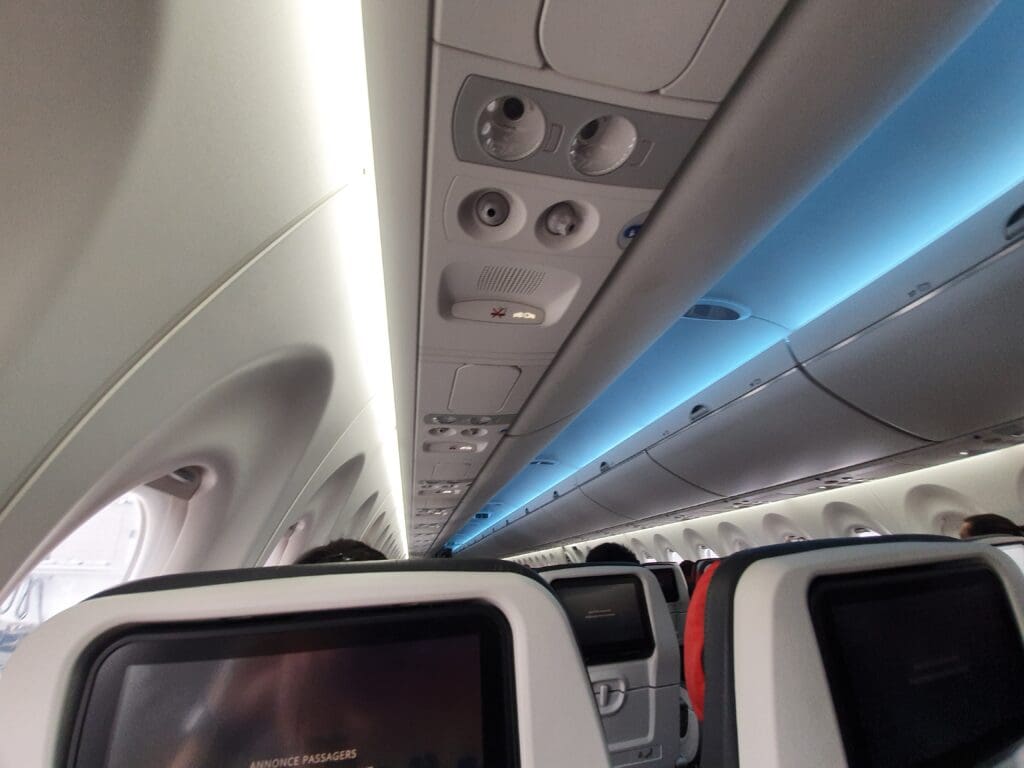
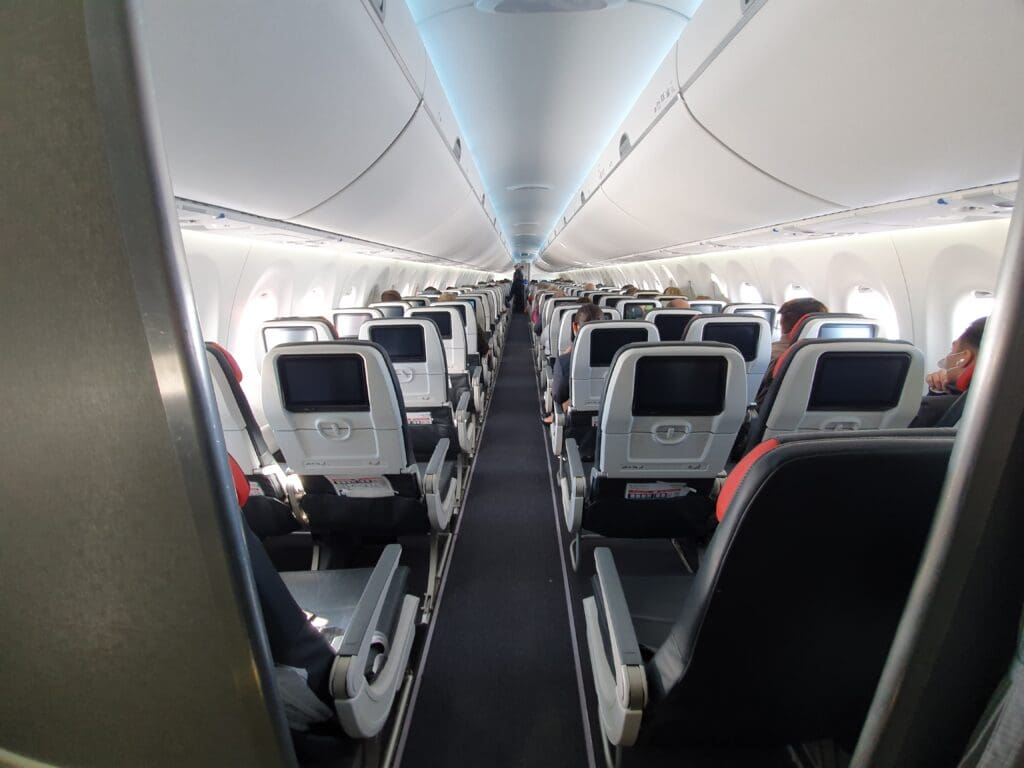
Several metres before reaching the aircraft, another short queue was in order however this moved along fairly quickly and it wasn’t long before I stepped into the Airbus A220’s forward galley, ready for my third flight on the type. Upon entering the aircraft, I received a very brief and lukewarm welcome from one of the flight attendants before turning right and entering the modern, bright and airy cabin, partially illuminated by icy blue-toned mood lighting. Upon boarding, most of the twelve recliner seats in Business class were filled, with deadheading Air Canada pilots appearing to make up the majority demographic in this cabin on the short flight to Toronto.
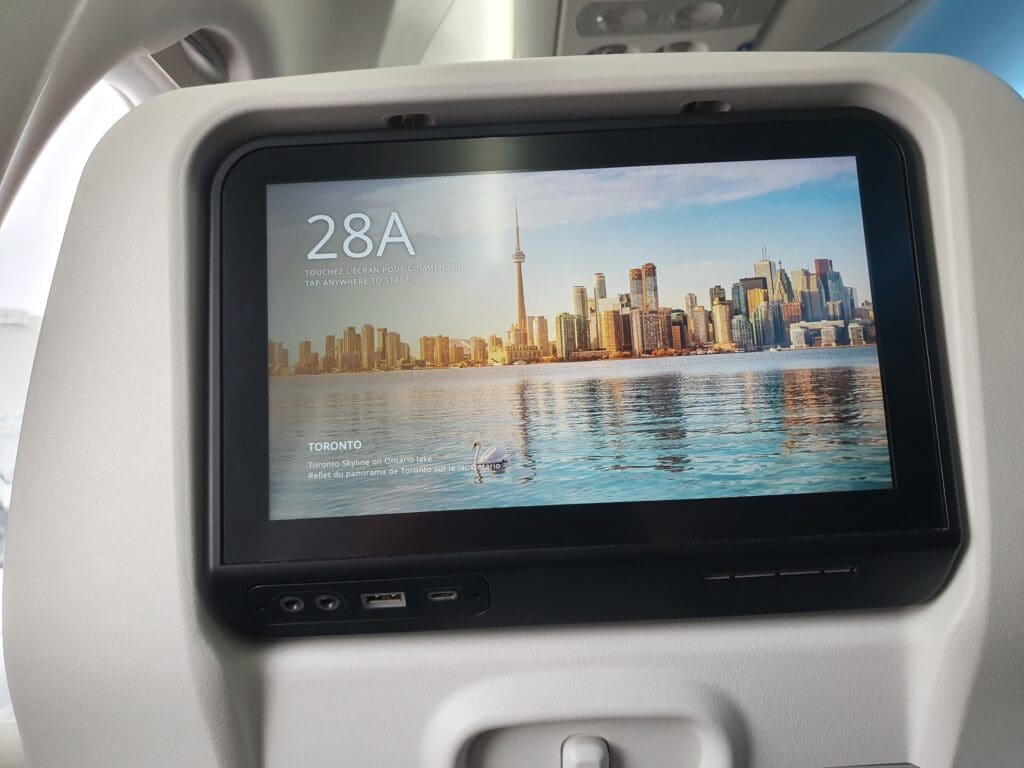
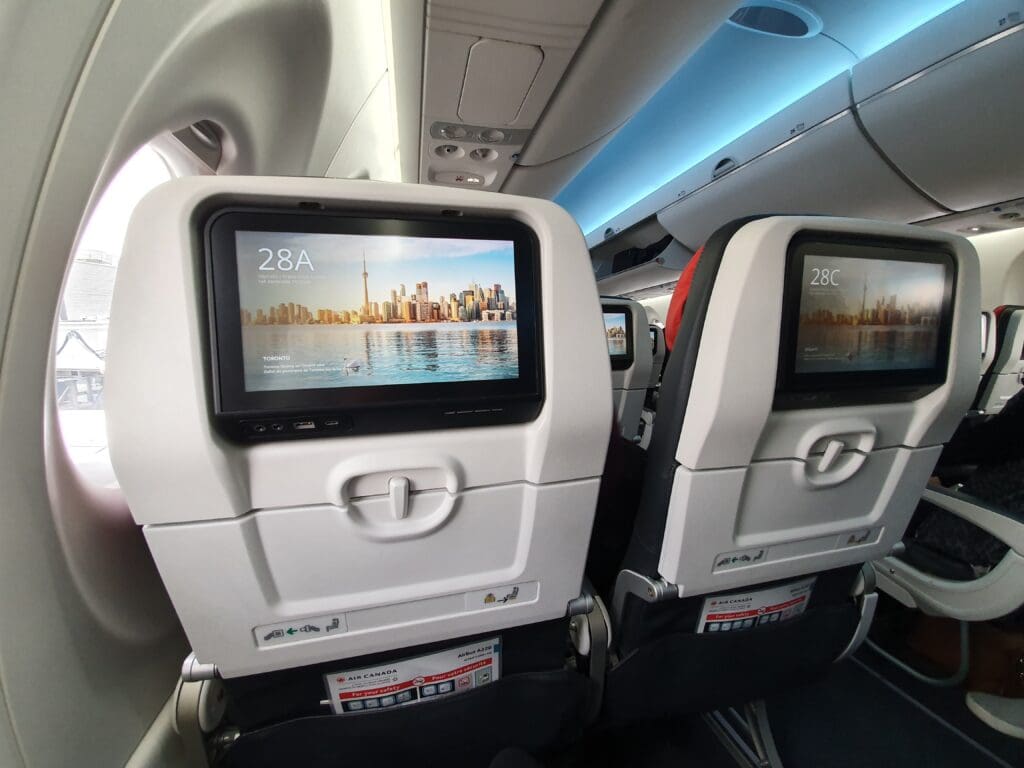
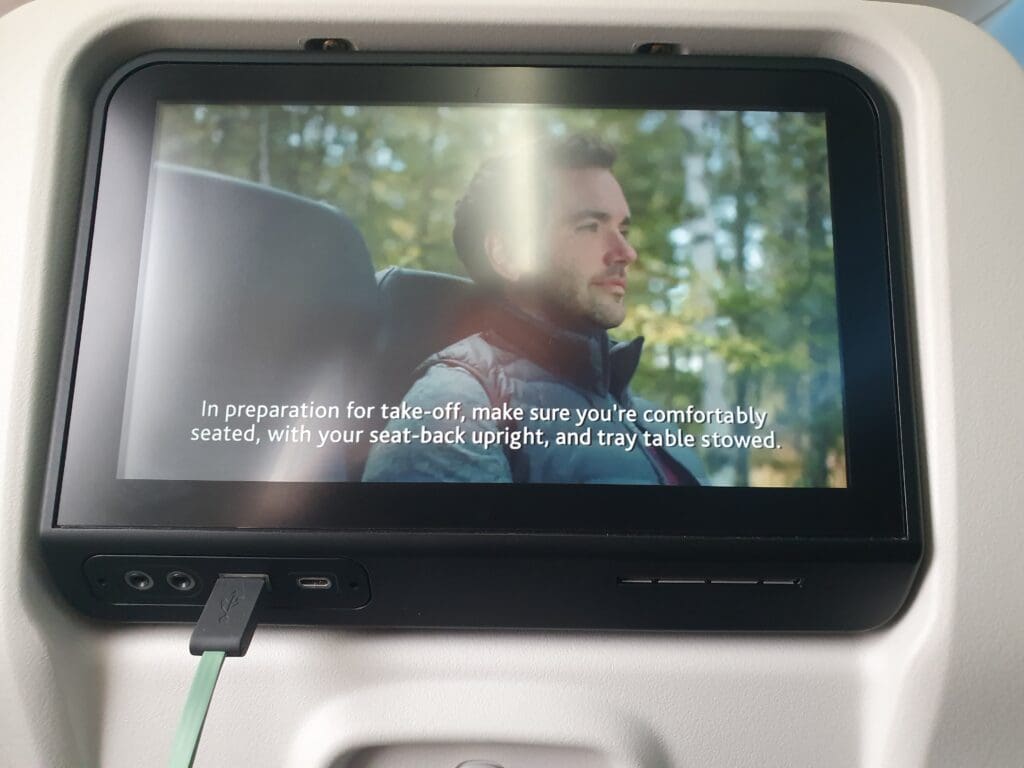
Air Canada opted to install the Collins Aerospace MiQ cradle seat in their Business cabins onboard their Airbus A220s and Boeing 737 MAX 8 aircraft. In my opinion, these are a sort of hybrid between a premium economy and business class recliner seat. Whilst those expecting the latter may have been slightly disappointed, this cabin was far more luxurious than what you could expect from a business class cabin on a one-hour flight back home in Europe! Each of these sported a grey fabric cover and was topped with a large headrest. Speeding through this, I soon arrived in the Economy cabin which is home to 125 Collins Meridian slimline seats (once again this being the same model of seat as is installed on Air Canada’s Boeing 737 MAX 8 aircraft). These are arranged in an Airbus A220 standard 2-3 configuration, each of which was covered in a dark faux leather cover and topped with a four-way adjustable headrest. Despite the recent trend of moving to wifi-based inflight entertainment, Air Canada opted to install 10-inch high-quality inflight entertainment screens on each seatback. Each seat also featured a USB-A and USB-C port, with universal plug sockets being shared between seats, and came complete with a device holder and a seatback pocket containing a safety card and a sickbag. Needless to say, at first glance, it appeared that Air Canada has invested a fair amount into their narrowbody cabins and this was a good cabin for what is widely considered to be a regional aircraft.
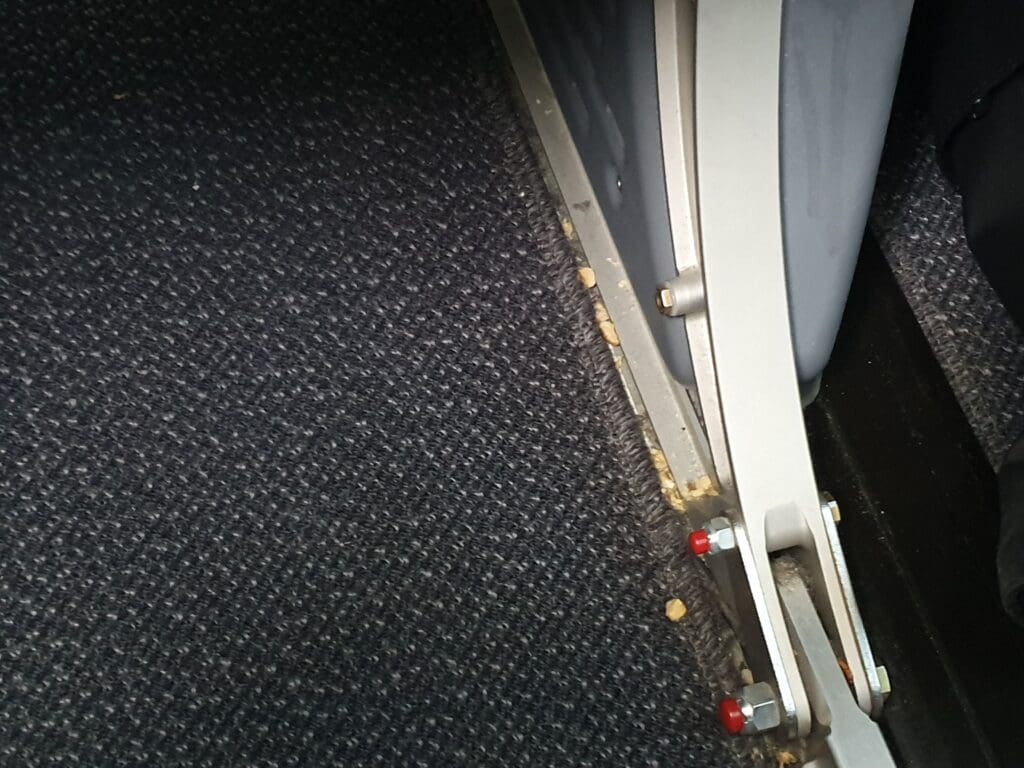
Once in the Economy cabin, I made relatively slow progress on my journey to the rear of the jet thanks to many passengers’ large amounts of luggage. Eventually, I arrived at Seat 28A where I was pleased to see that the neighbouring seat remained vacant. Upon sitting down, I found the slimline seat to be relatively comfortable and offered an ample amount of legroom. Given the aircraft’s age, I was slightly surprised to see a fair number of marks and scratches in the area around my seat, whilst continuing with the negatives, I did also notice a selection of crumbs and several pieces of rubbish which appeared to have gone unnoticed by the cleaners in Montréal.
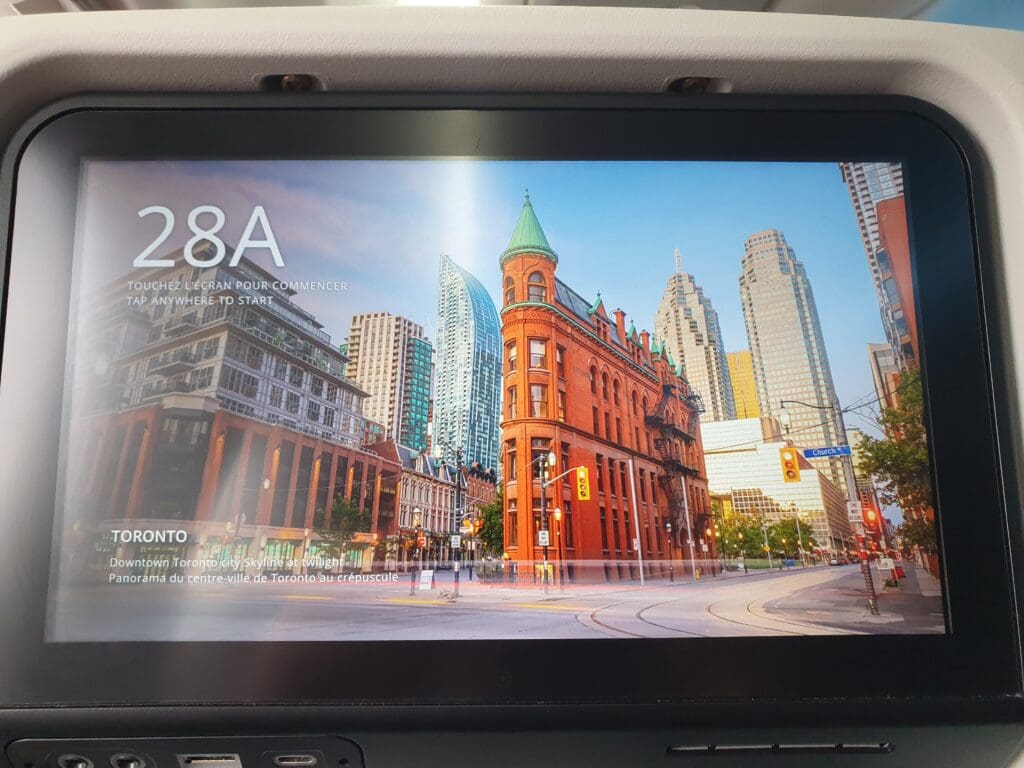
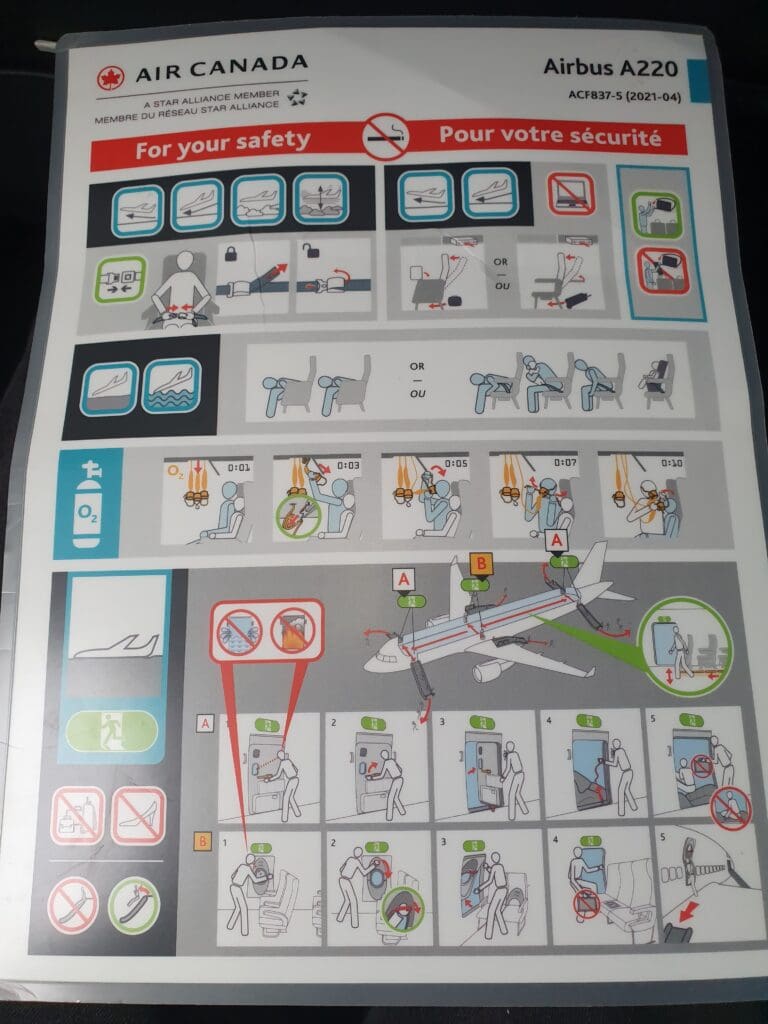
At 1239, the words ‘boarding complete’ rang out through the cabin and as had been the case on all flights during my Canada trip thus far, I was delighted to see that the neighbouring seat remained vacant. That lunchtime I would estimate the flight to have been around 65% full, with many of the seats at the rear of the cabin remaining empty. As briefly mentioned, of those onboard many took the form of deadheading Air Canada pilots and cabin crew. After boarding had been announced as having been completed, the Captain’s calm voice filled the cabin with the usual word of thanks, a mention of the good weather in Toronto, and the expected one hour and fifteen minute time from gate to gate. This was promptly followed by a long speech from the Cabin Director in French and then in English before the exits were pointed out as the aircraft commenced its pushback away from the gate. Following this demonstration, Air Canada’s long Ode to Canada safety video played as the two Pratt and Whitney PW1524G-3 engines began to hum, whir and whine into life.
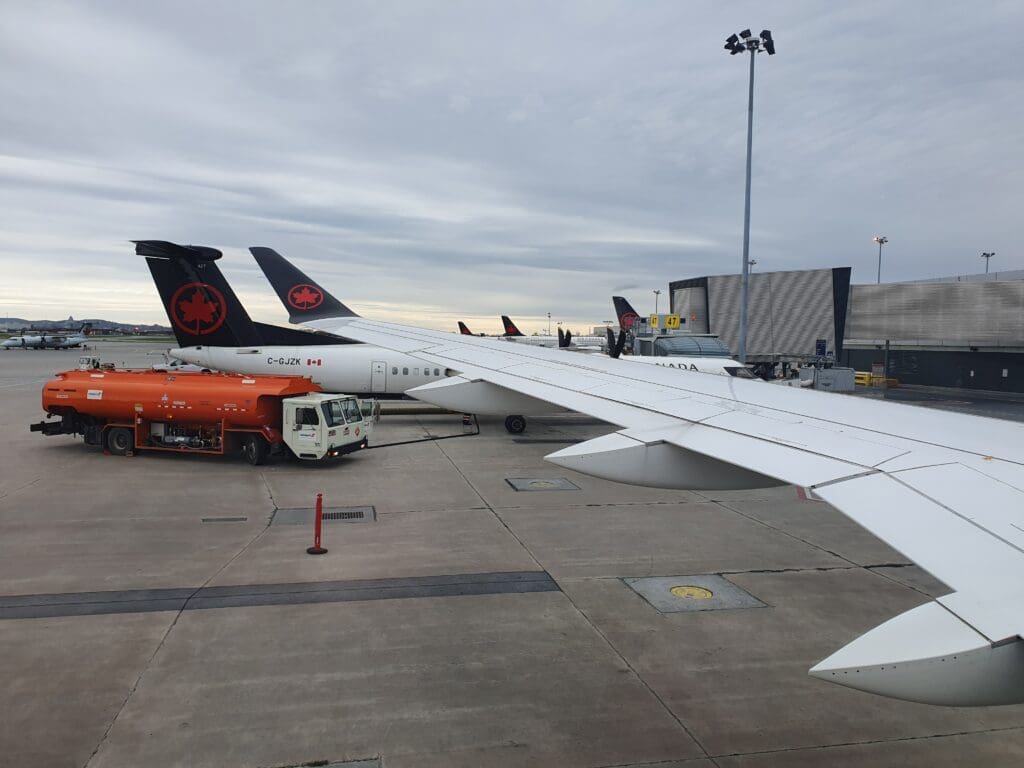
One minute ahead of schedule, the flaps were partially extended in preparation for our departure and the Airbus commenced its taxi to Runway 24L. Once away from the terminal, the Airbus passed by the end of Montréal’s disused runway before reaching Air Canada’s large maintenance facility. There, the Bombardier collection consisting of a CRJ-200, CRJ-900 and Dash 8 Q400 could be seen parked up outside the large red and white hangars. After this, the next stop was the Bombardier hangars where two recently manufactured luxurious Global 7500s could be seen, one being readied for its delivery to VistaJet and another destined for a wealthy private owner.
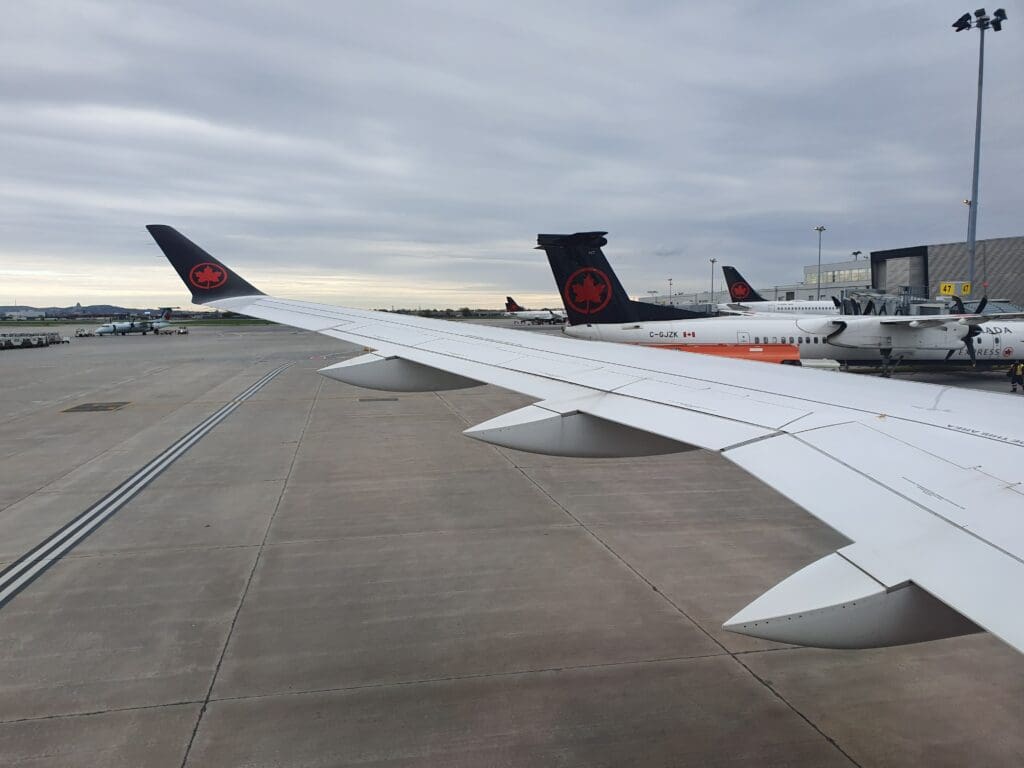
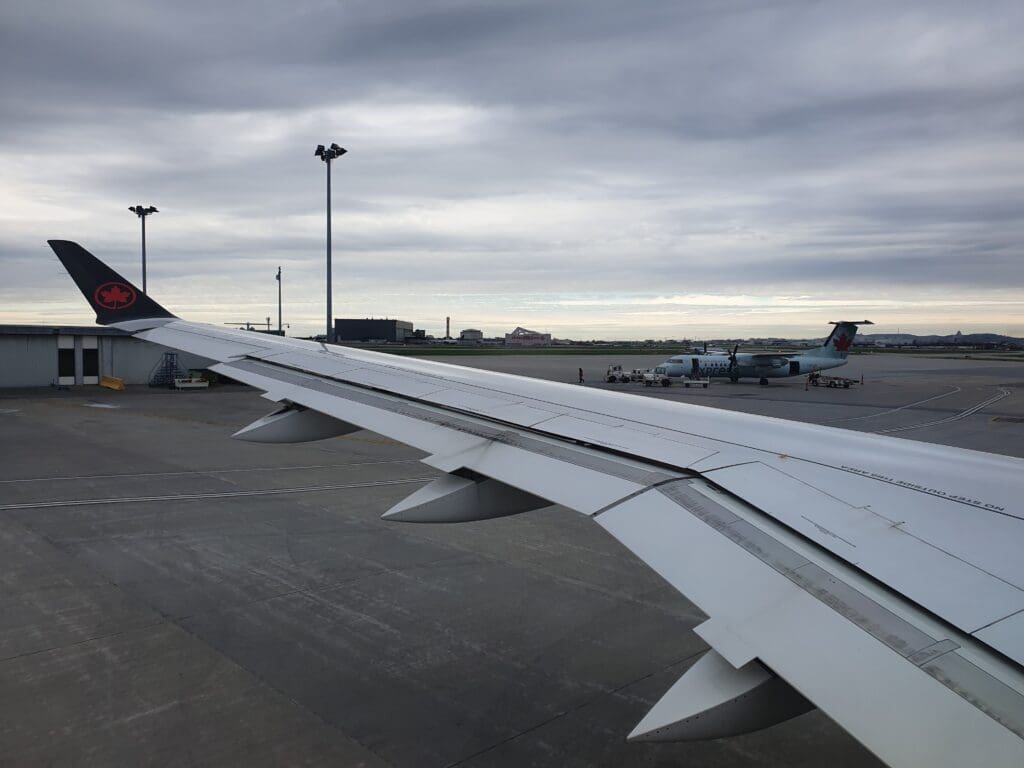
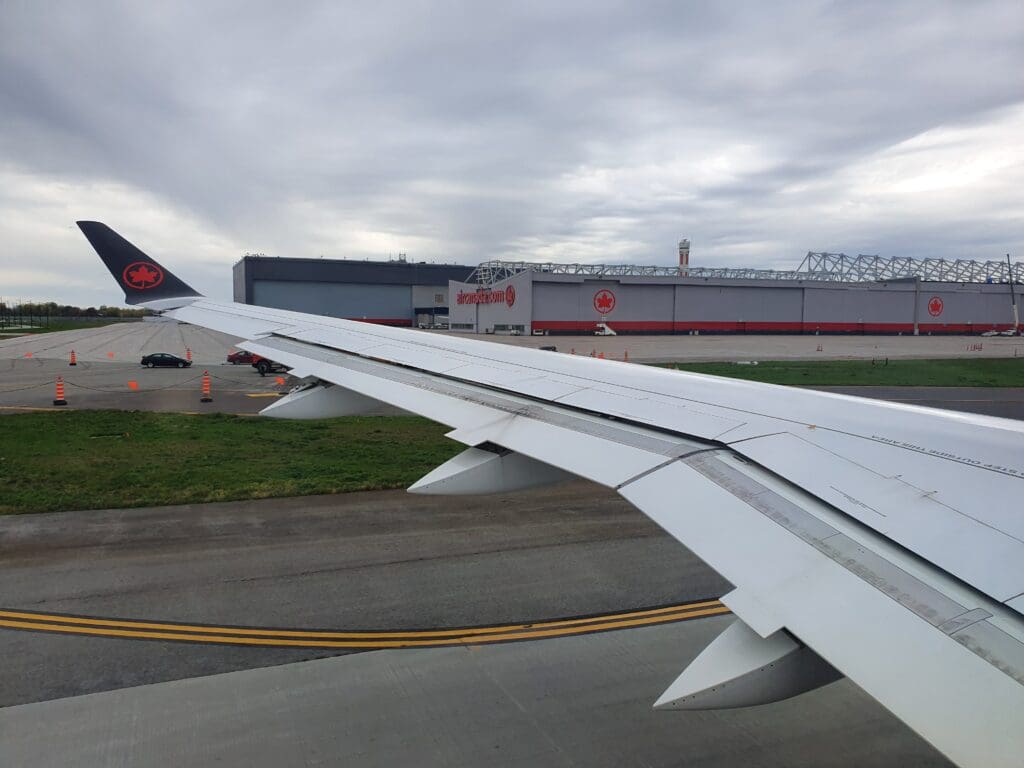
Without any holding, six minutes after commencing our taxi, the Airbus made its way onto Runway 24L and came to a short pause which temporarily allowed for a good view of the diverse collection of business aircraft parked to the south of the runway. These ranged in size from a Beechcraft 90 King Air to a Kaiser Air Boeing 737-500 which had taken the San Jose Sharks across North America for their fixture with the Montréal Canadiens the following day. Before I knew it, the two engines made their distinctive howl/whistle and our take-off roll commenced. Hurtling down the runway, we soon rotated upwards into the skies and I caught sight of Montréal Airport’s famous (at least for planespotters) park, Jacques-de-Lesseps Park. Other than this, during the first few moments of the flight, little could be seen except for the industrial areas that surround the airport.
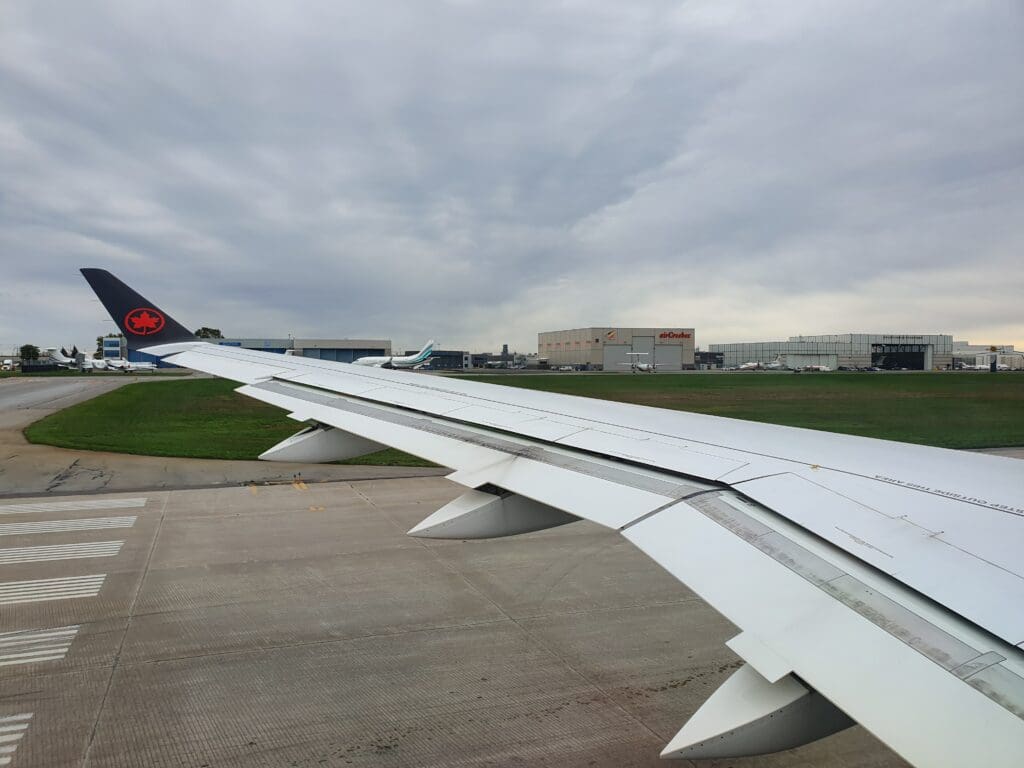
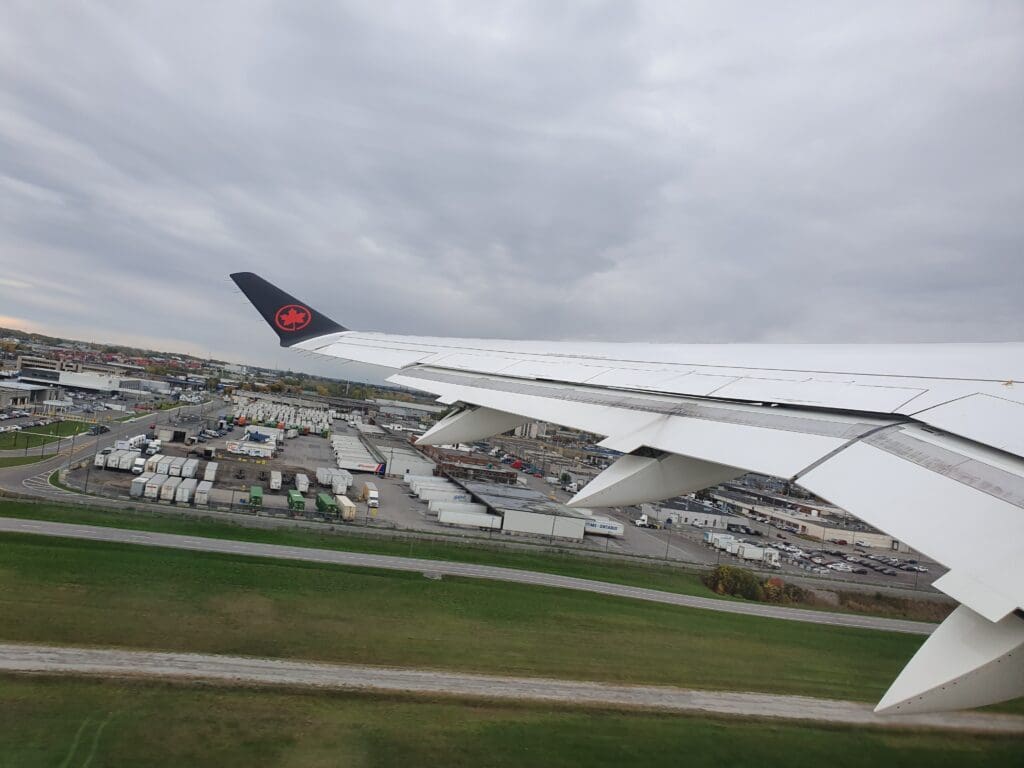
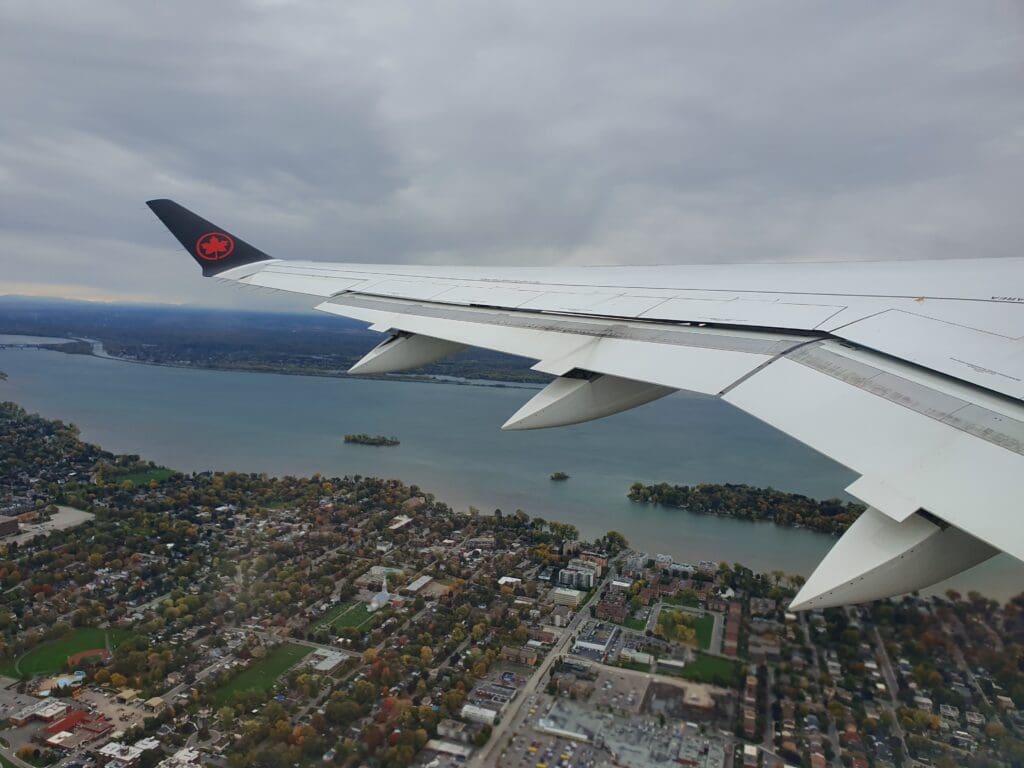
Once away from the airport, the Airbus climbed over Autoroute du Souvenir and its adjacent railway line which runs all the way to Toronto and beyond. At this point, the industrial areas transformed into Montréal’s leafy suburbs before the aircraft made its way out over the wide St Lawrence River. A couple of minutes after takeoff, the Beauharnois hydroelectric power station came into view on the river’s southern banks before the Airbus headed up into the clouds.
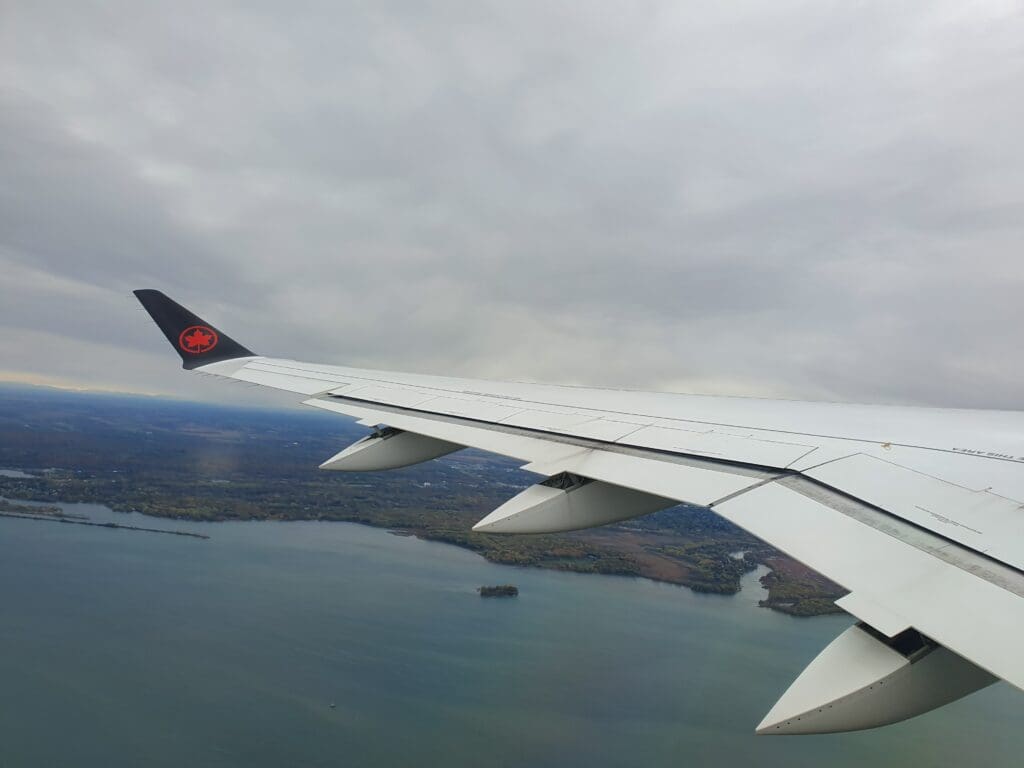
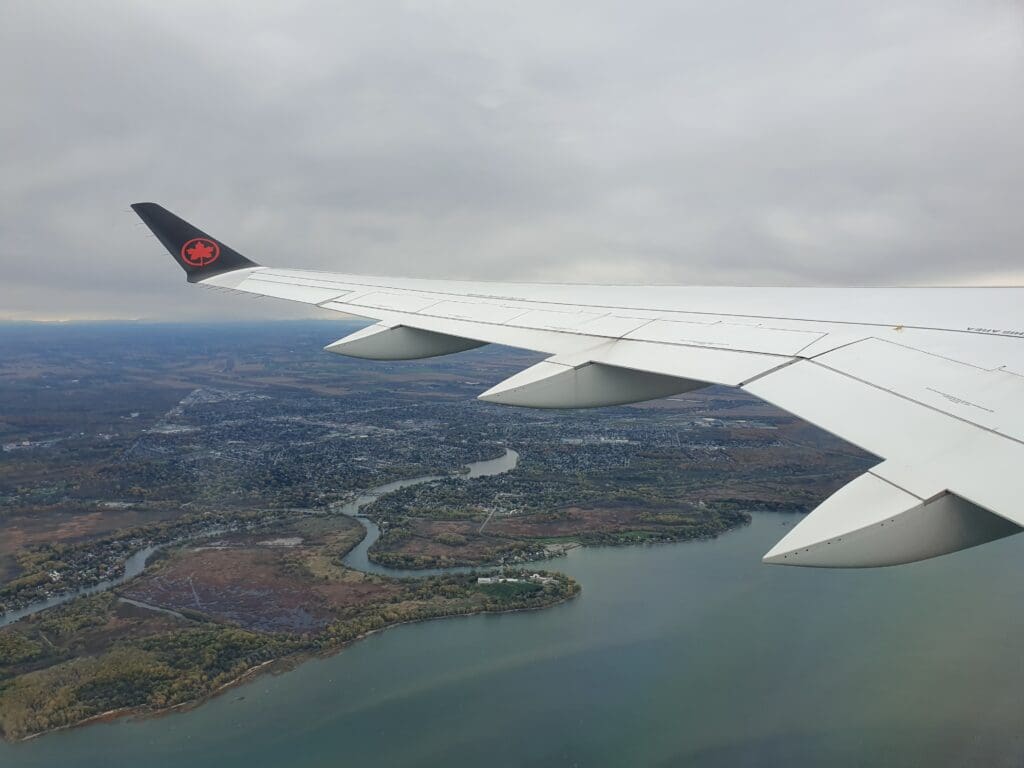
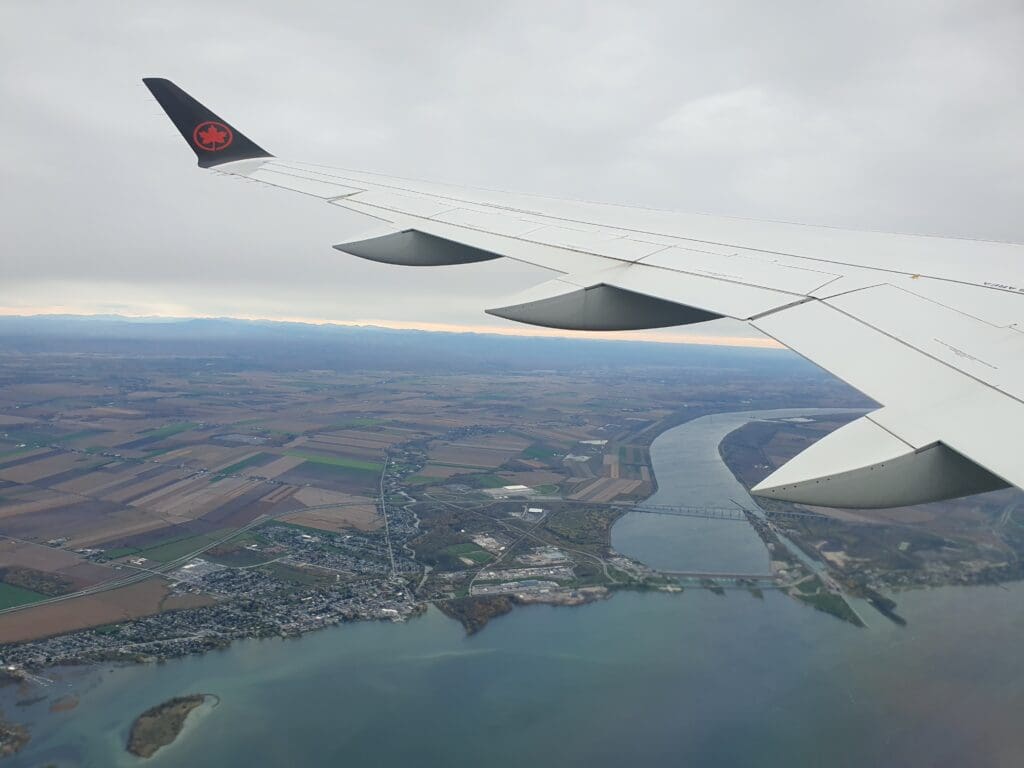
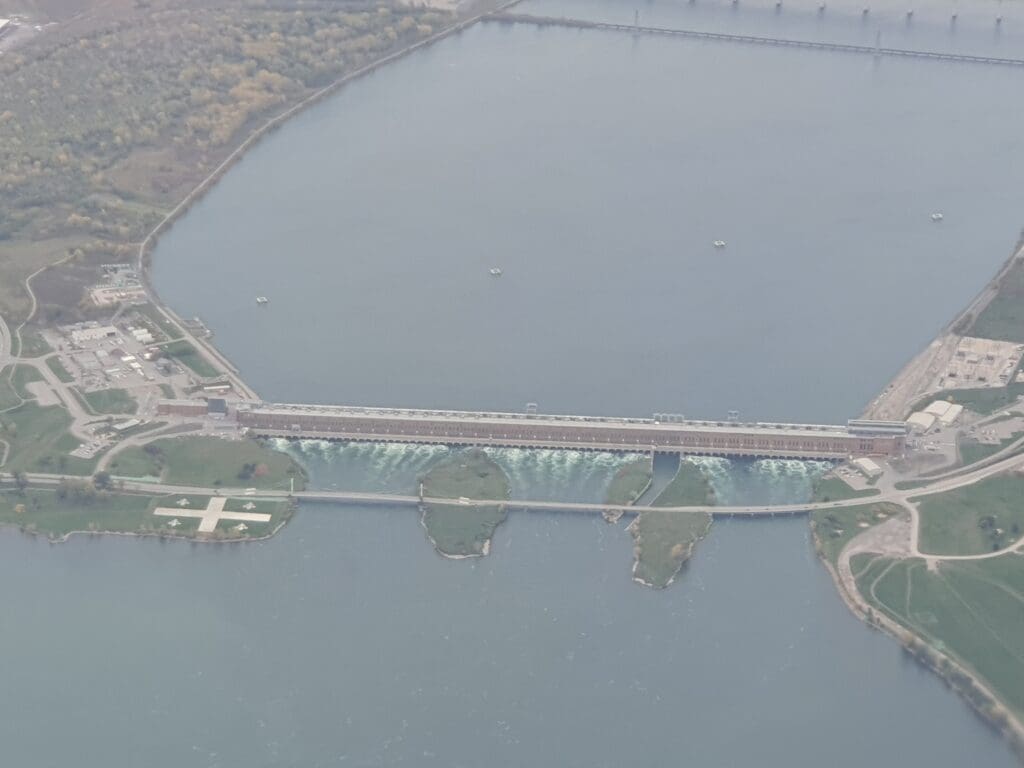
As the aircraft bounced through these, the crew performed the usual post-departure announcement, during which they advertised the inflight wifi, buy-on-board service and the sale of headphones. Once through the clouds, the seatbelt signs were switched off at which point the crew commenced their inflight service. This commenced with the handing out of Air Canada’s Cleancare+ kits – the same type as had been handed out on my flight from Frankfurt to Montréal. Once this was done, the trolley was rolled out to the front of the Economy cabin and the round of complimentary service commenced.
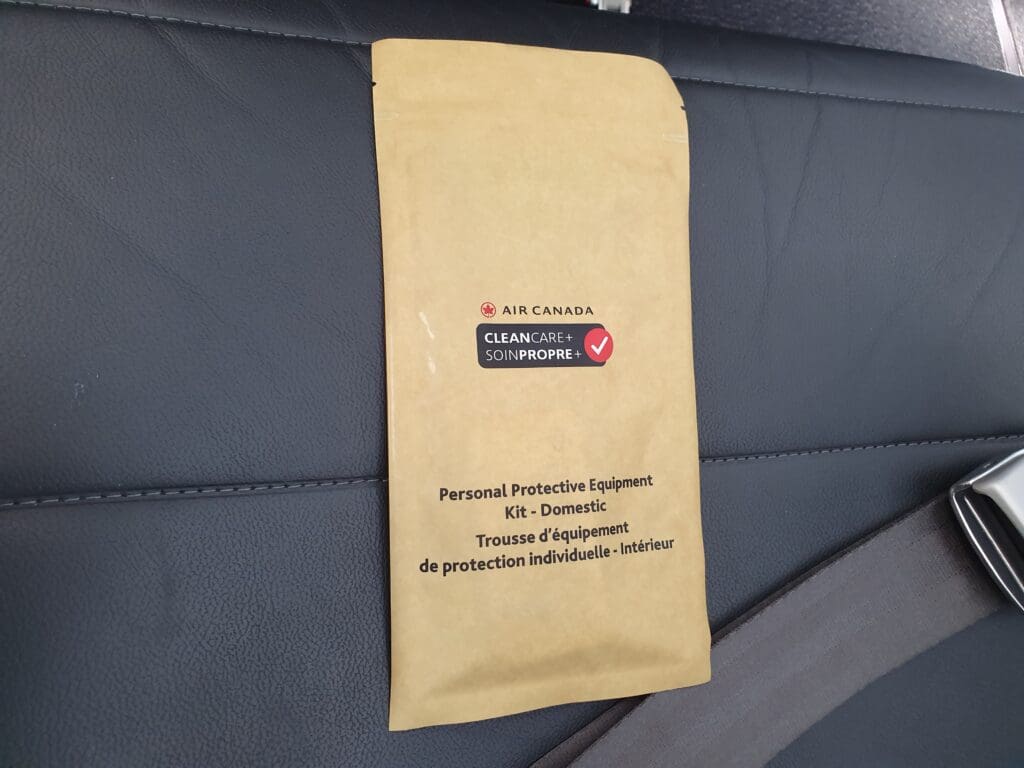
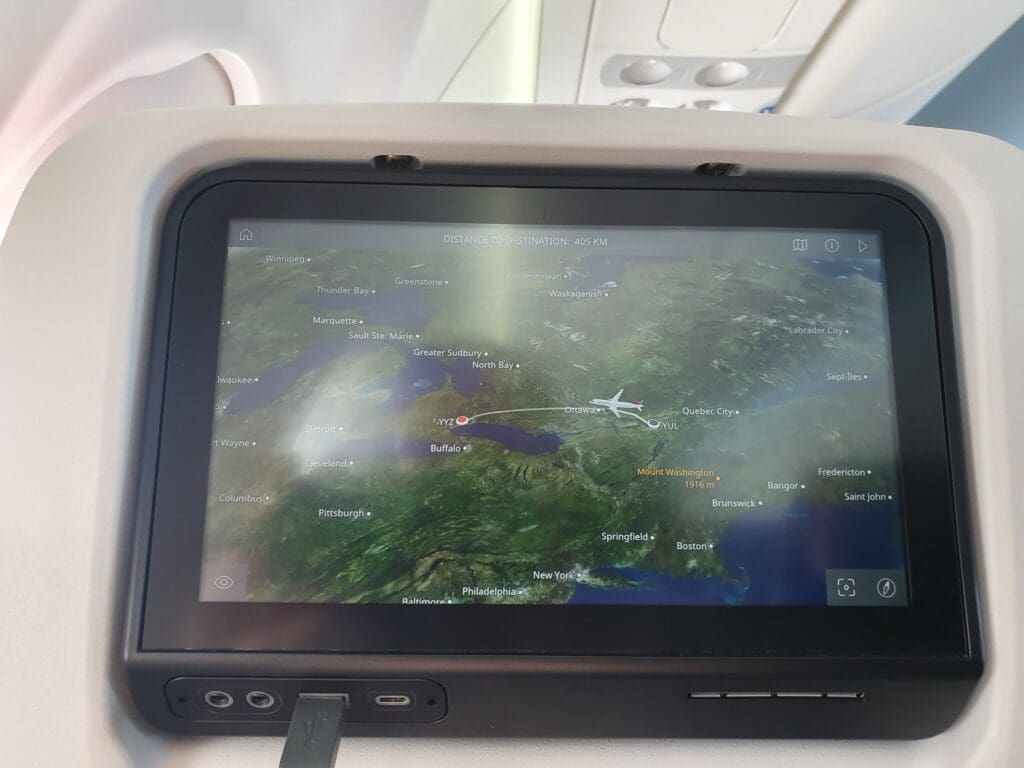
That lunchtime, whilst the flight was not particularly full, the trolley seemed to progress down the cabin rather slowly. Therefore, at this time, I decided to make a trip to the rear lavatories. Unlike on the previous Korean Air Airbus A220s that I had flown on domestic services in Korea, the lavatories on Air Canada’s jets are located in the rear galley and not at the rear of the cabin, and therefore lack the luxury of their own window. Whilst not the most spacious of aircraft lavatories, I was pleased to find this to be in good shape, clean and feature all the expected amenities. By the time I returned to my seat, the clouds had just dissipated below and the aircraft had levelled off at its cruising altitude of 32,000 feet.
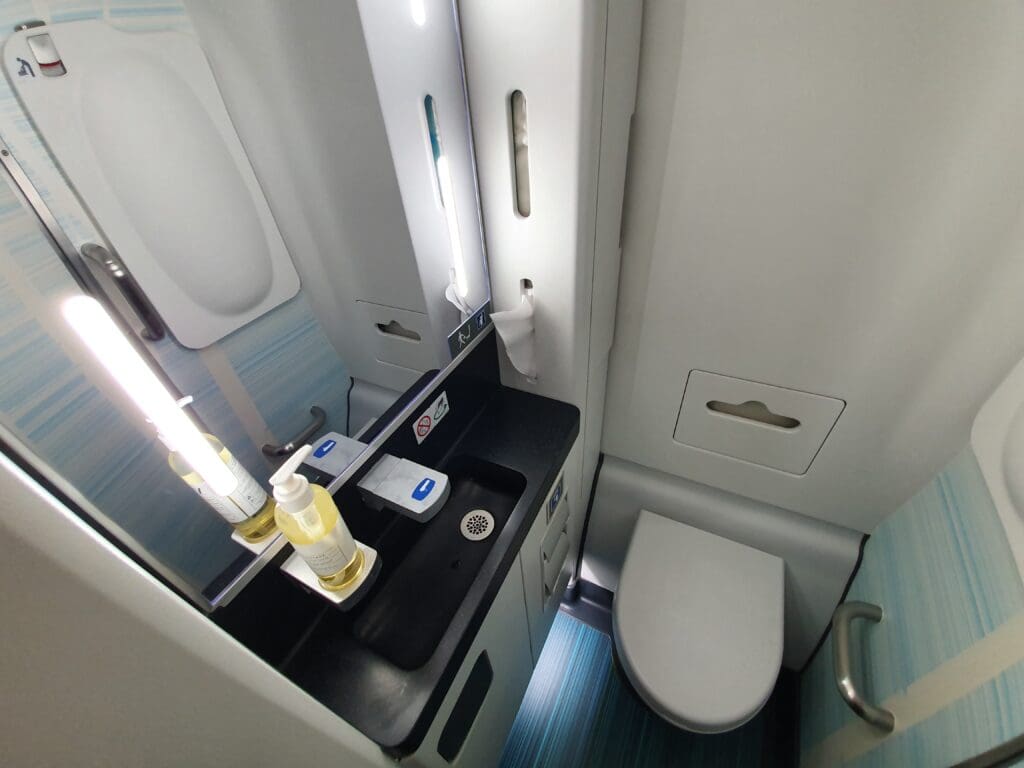
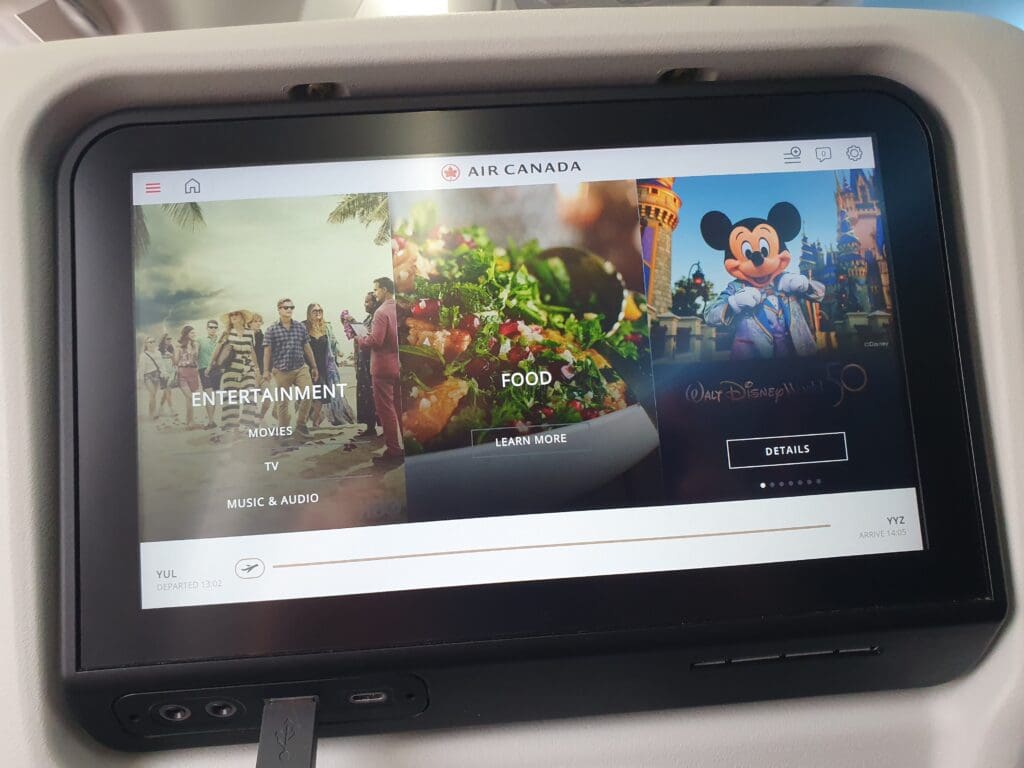
At this time, the aircraft had departed the skies of Québec and was now overflying Southern Ontario, passing just to the south of Ottawa. Sitting on the wrong side of the aircraft for any views of Canada’s capital, instead I spotted the Rideau Lakes as well as Lake Ontario shining in the distance. Briefly turning to the inflight entertainment system, whilst this was hardly needed on such a short flight, this is available in fifteen different languages and was the same modern and sleek system as is featured on Air Canada’s newer aircraft as well as their Boeing 777 fleet. This offers plenty of films, television programmes and music to keep all passengers entertained regardless of flight length. However, that afternoon I primarily used this to track the flight’s progress as we journeyed towards Toronto.
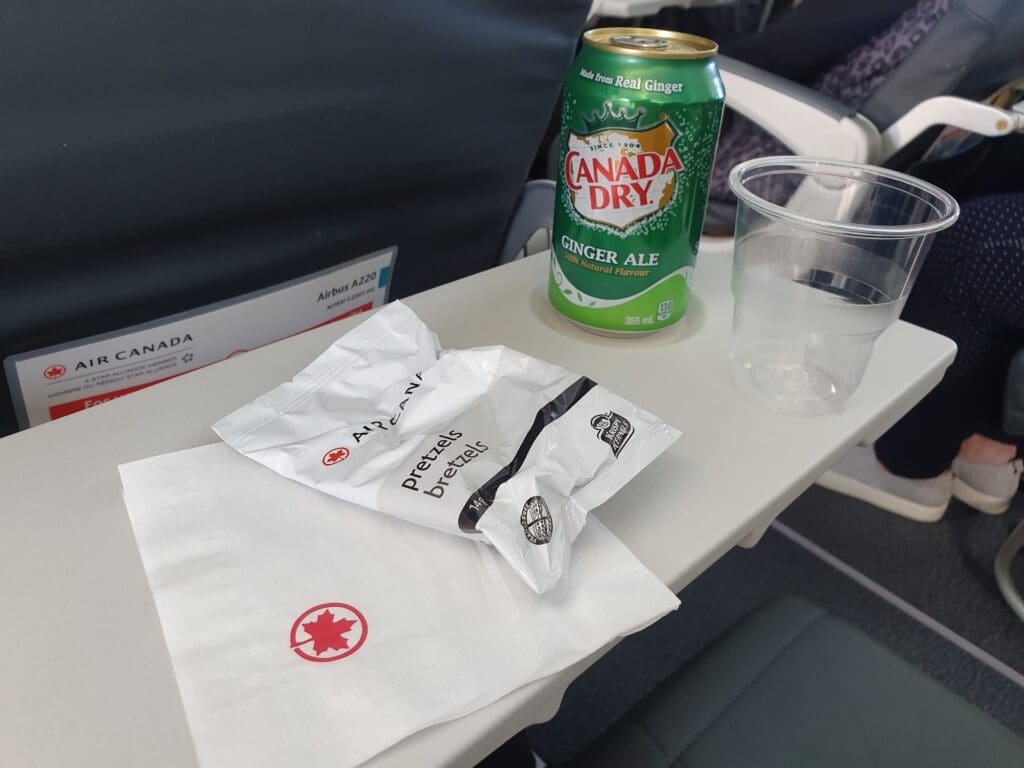
Just after passing Ottawa, the two flight attendants manning the trolley reached my row and asked for my choice of drink. That afternoon, I opted for the local brew and went for a Canada Dry ginger ale – to my delight I was offered the full 355ml can which I gladly accepted! This was served alongside a bag of Air Canada-branded salted pretzels and a serviette. Despite my lukewarm welcome to the flight, I found the flight attendant who served me to be polite and friendly, leaving me with no complaints.
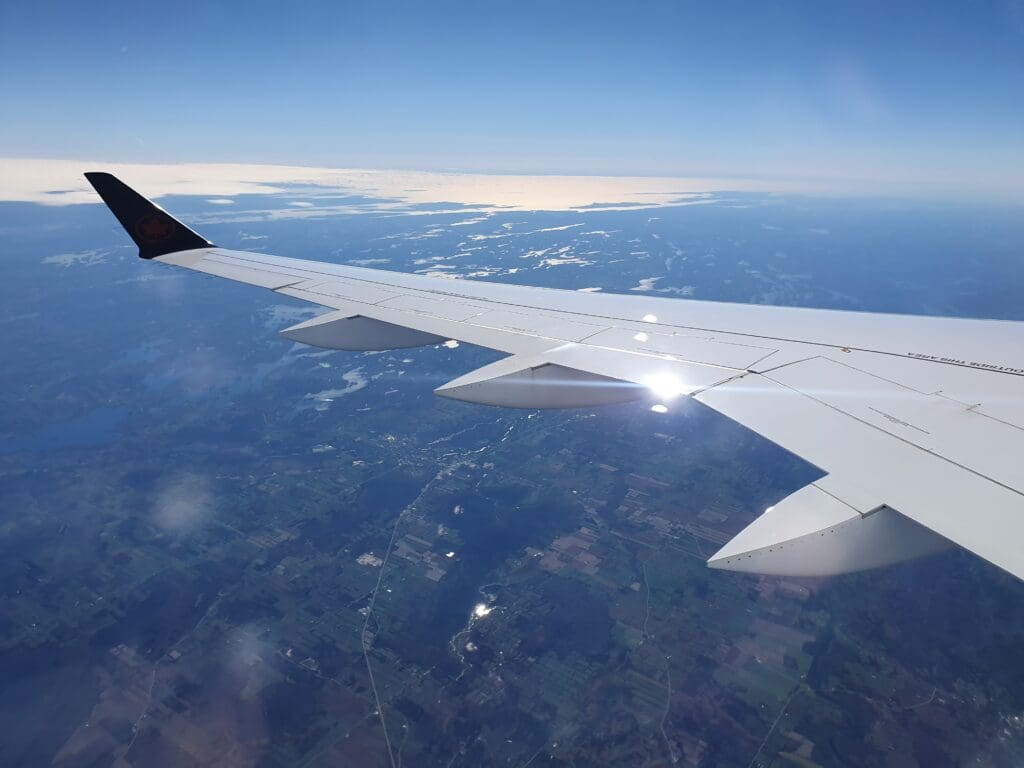
Almost as soon as these were passed to me, the First Officer announced ‘cabin crew, 26 minutes to landing’ and the aircraft could be felt commencing its descent. Sipping my Canada Dry as I admired the mostly flat rural landscape between Ottawa and Toronto, soon enough, the cabin crew passed through the cabin collecting passengers’ rubbish. Still with a decent amount of time to go, the seat belt signs were reilluminated and the usual warnings regarding seats, seatbelts, tray tables and window shades were made before the crew passed through the cabin ensuring all was in place for our arrival into Toronto.
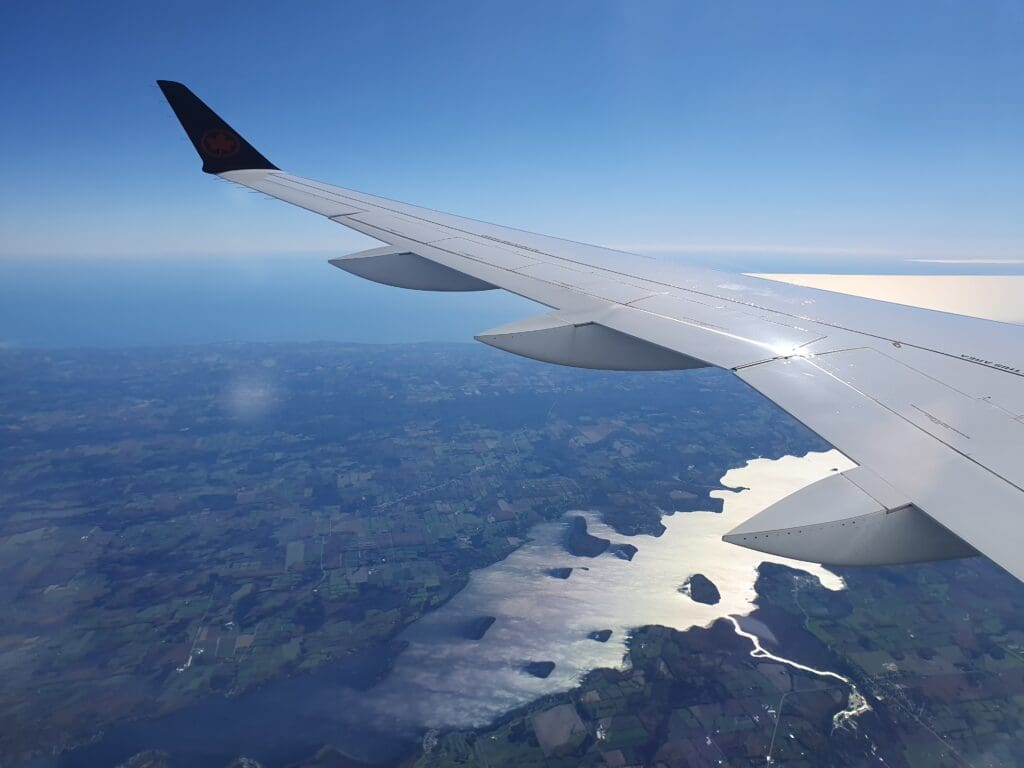
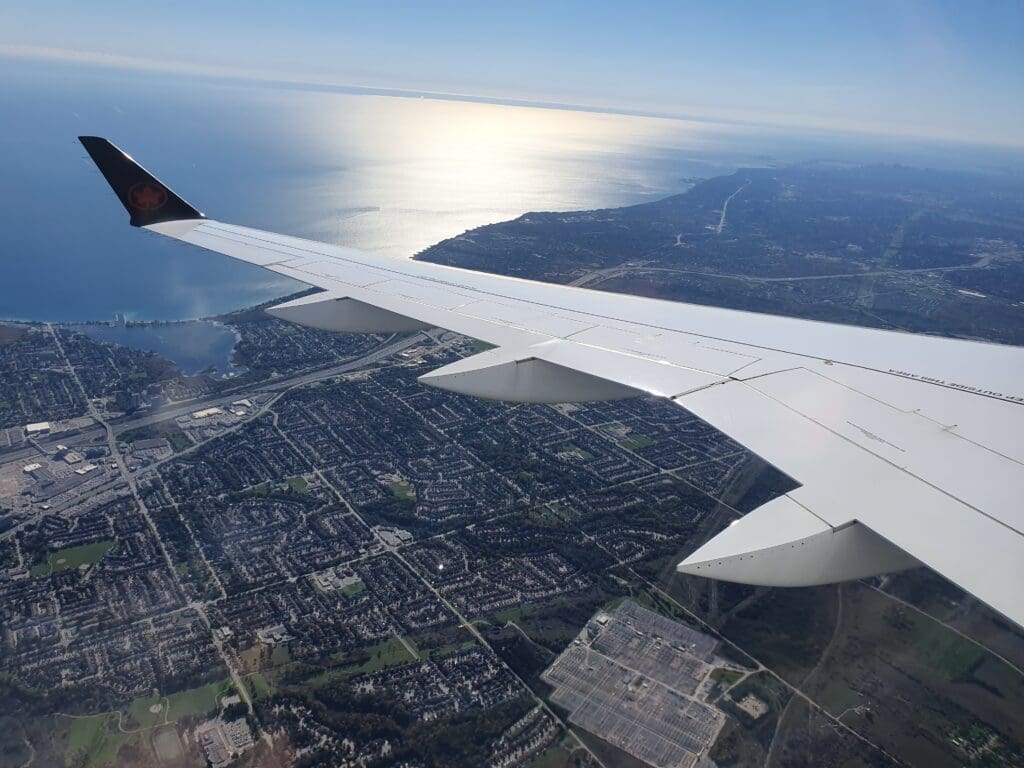
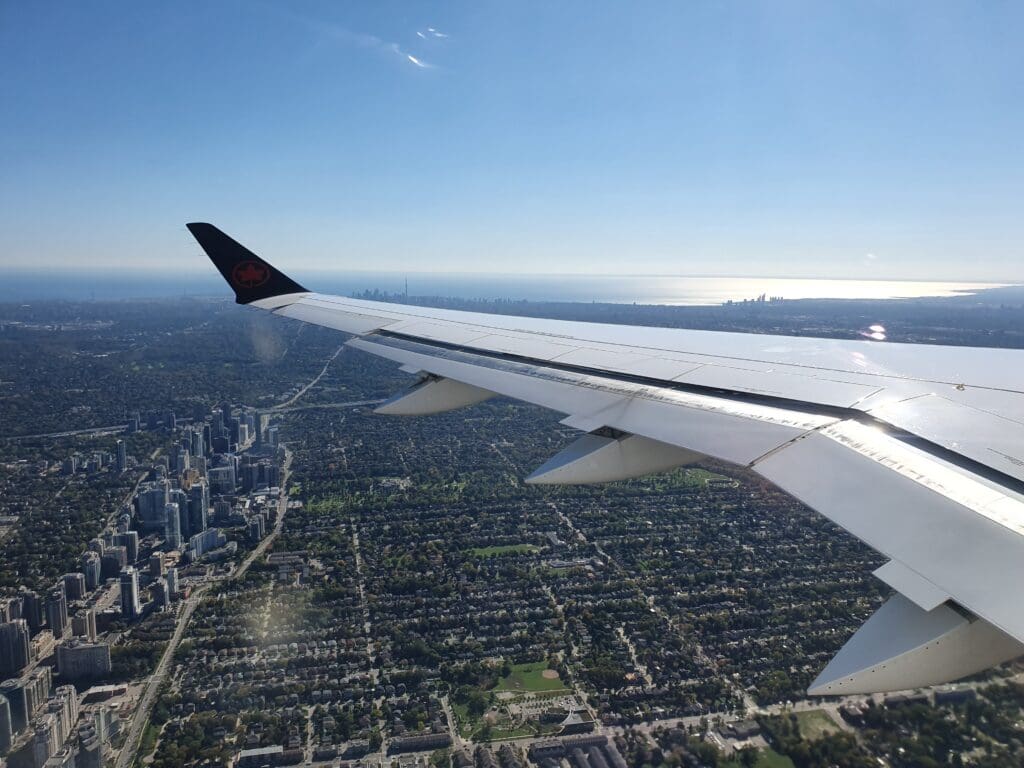
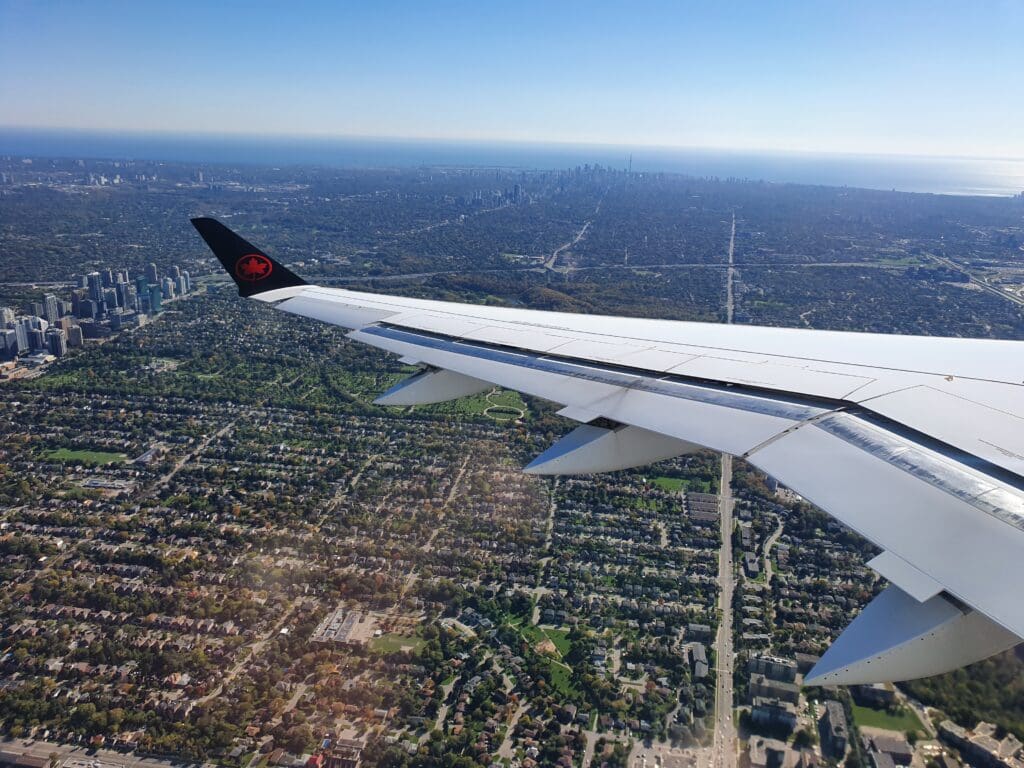
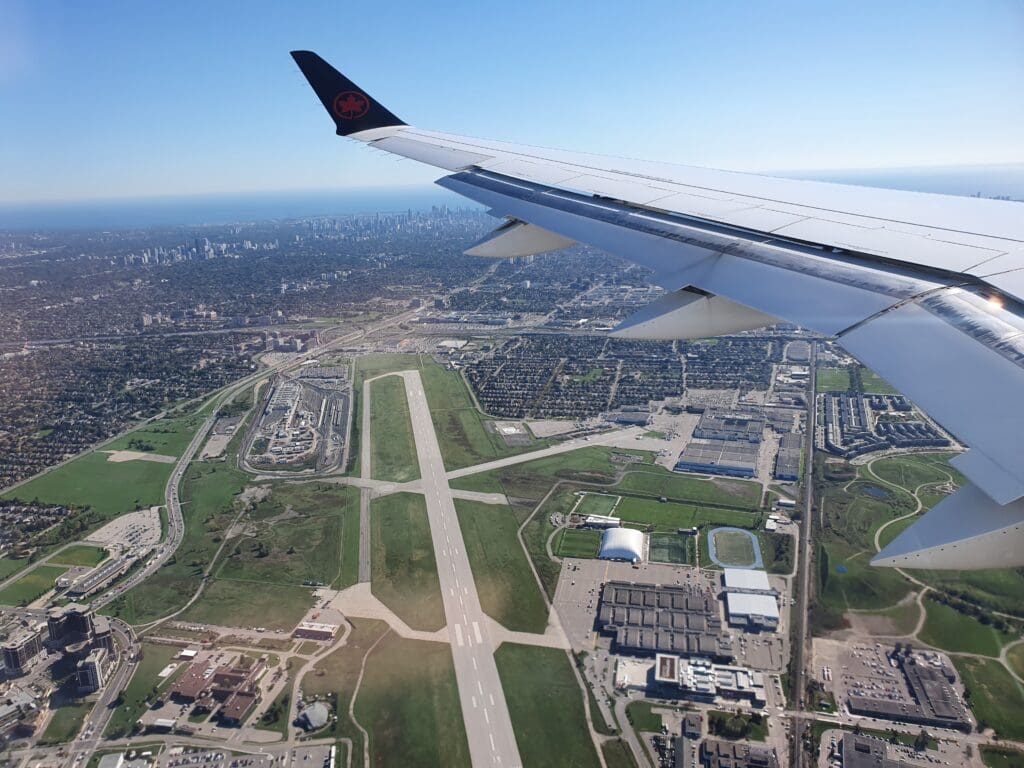
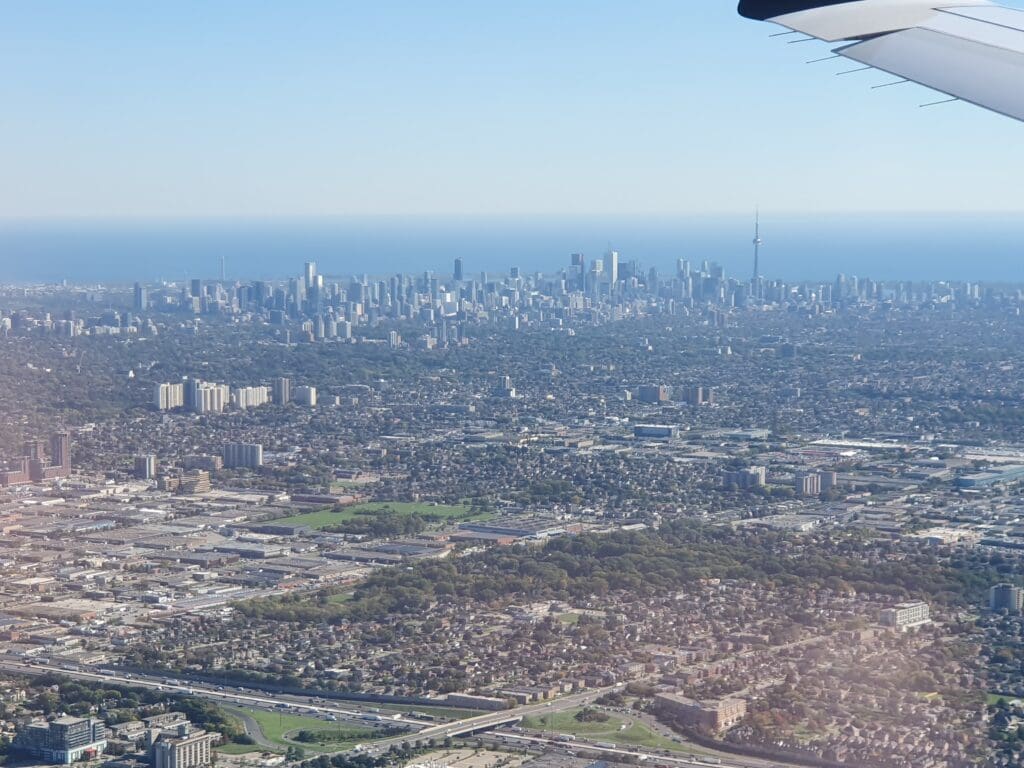
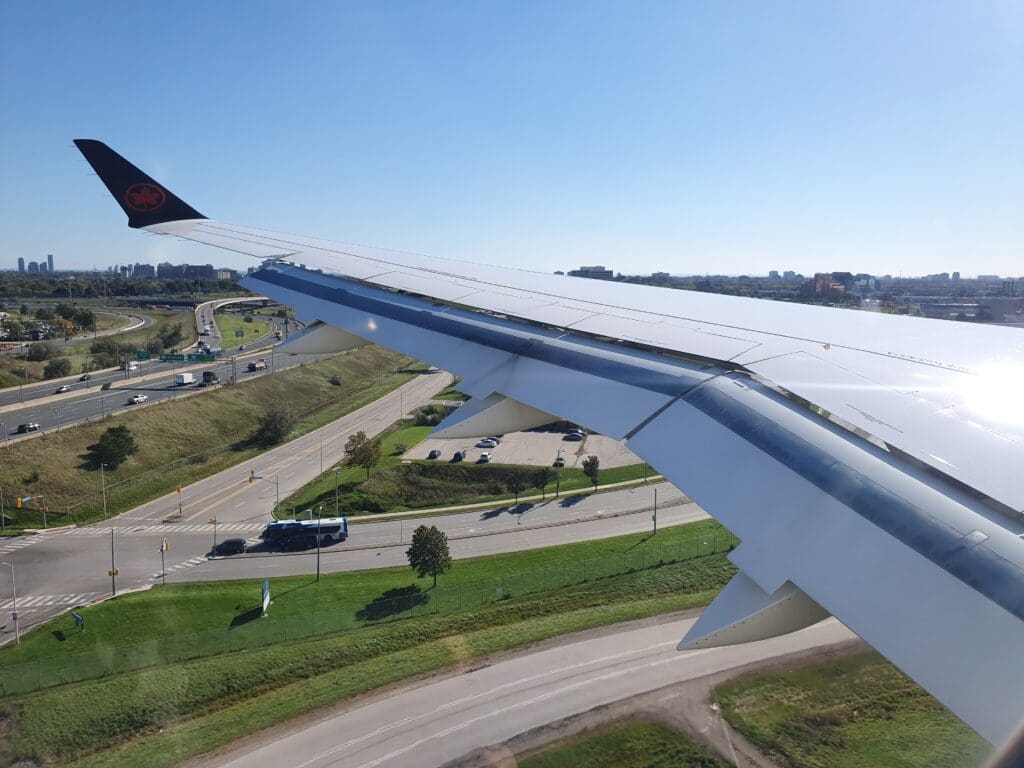
After passing Rice Lake and a cluster of small towns surrounding this, the city of Oshawa appeared as we left rural Ontario behind and the land below became increasingly filled. As Lake Ontario went off into the distance, the Airbus crossed over Toronto’s northern suburbs with Toronto Zoo and the nearby large and easily recognisable Canadian Pacific Railway yard visible below. A short time later, the flaps were partially extended as the tall buildings of Downtown Toronto, including the famous CN Tower appeared in the distance just before the aircraft initiated a slight turn to line up for an approach onto Toronto Pearson’s Runway 24L. A short time later, the Airbus cut across Toronto Downsview Airport where a couple of presumably brand-new business jets could be seen outside Bombardier Aerospace’s hangars
.
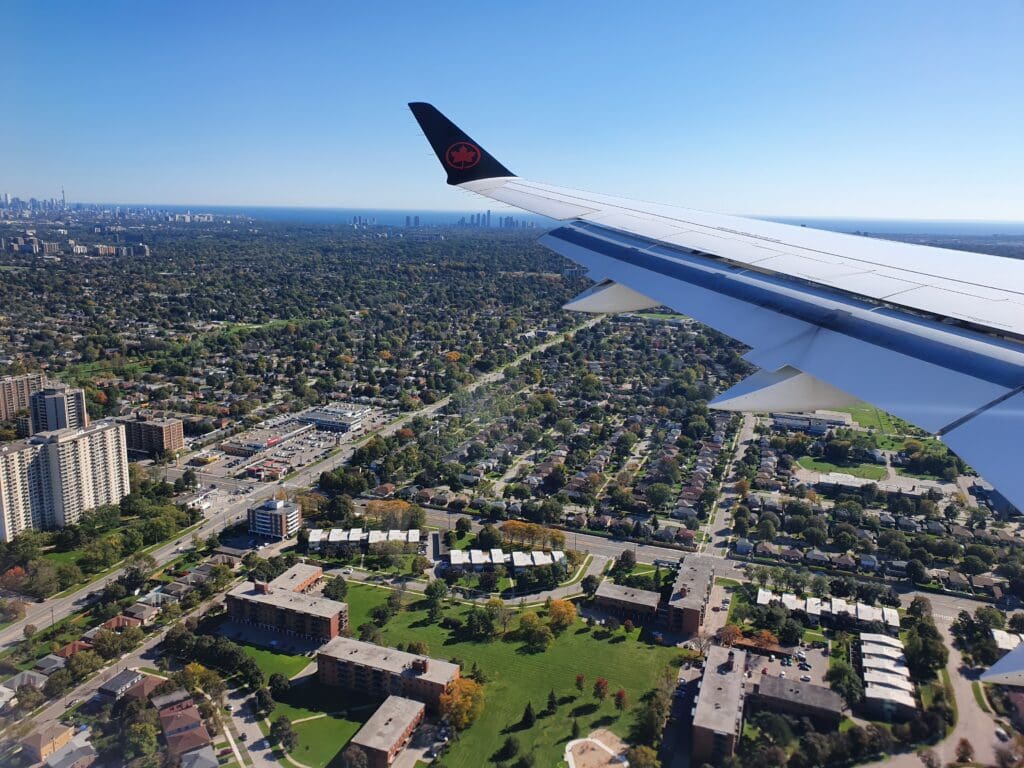
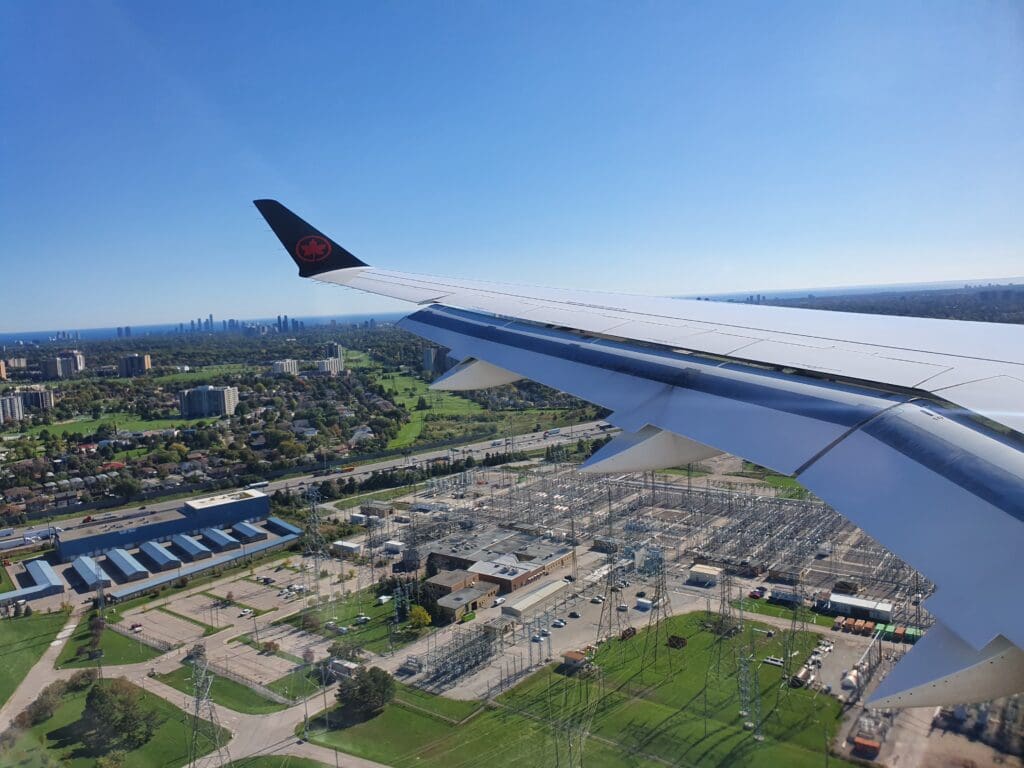
As with the majority of the flight, the aircraft’s final approach over the industrial areas around the airport was smooth and after whizzing over the perimeter fence, at 1401 the Airbus A220 touched back down on Canadian soil with a very gentle bump. Once on the ground, in no apparent rush to vacate the runway, the aircraft decelerated gently before vacating Toronto Pearson’s shortest runway near its end. In the usual manner, once the aircraft left the runway, the Cabin Director welcomed all to Toronto in French and then in English, thanking all for flying with Air Canada and advising passengers to keep their seatbelts fastened until the aircraft had come to a full stop at the gate.
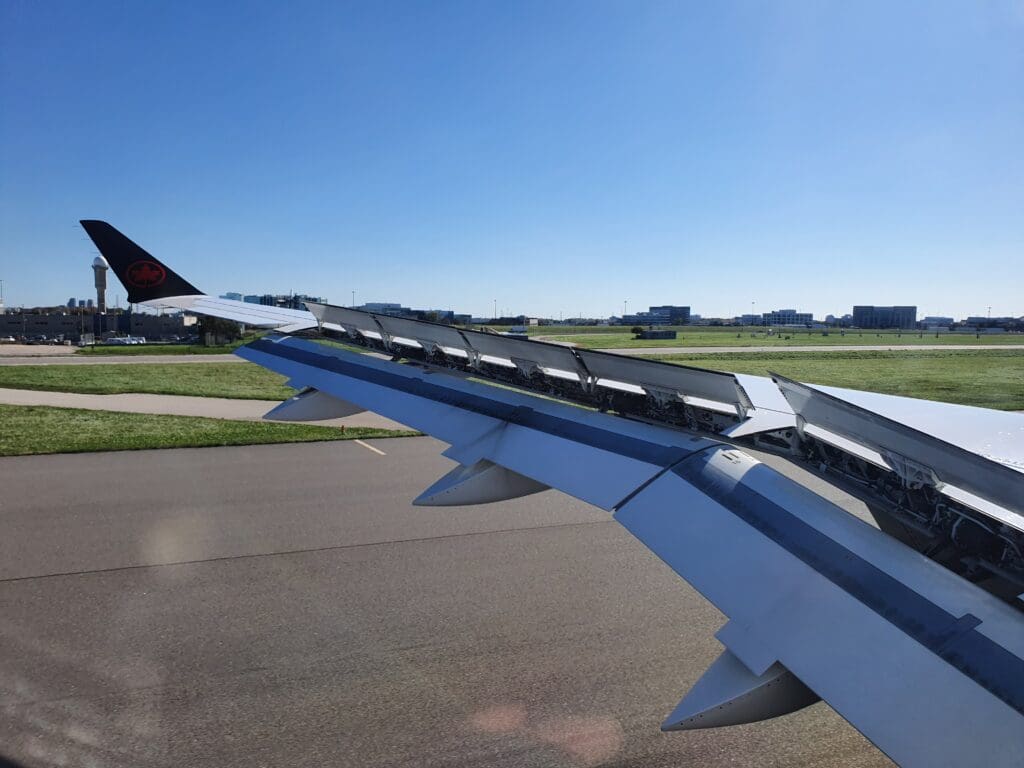
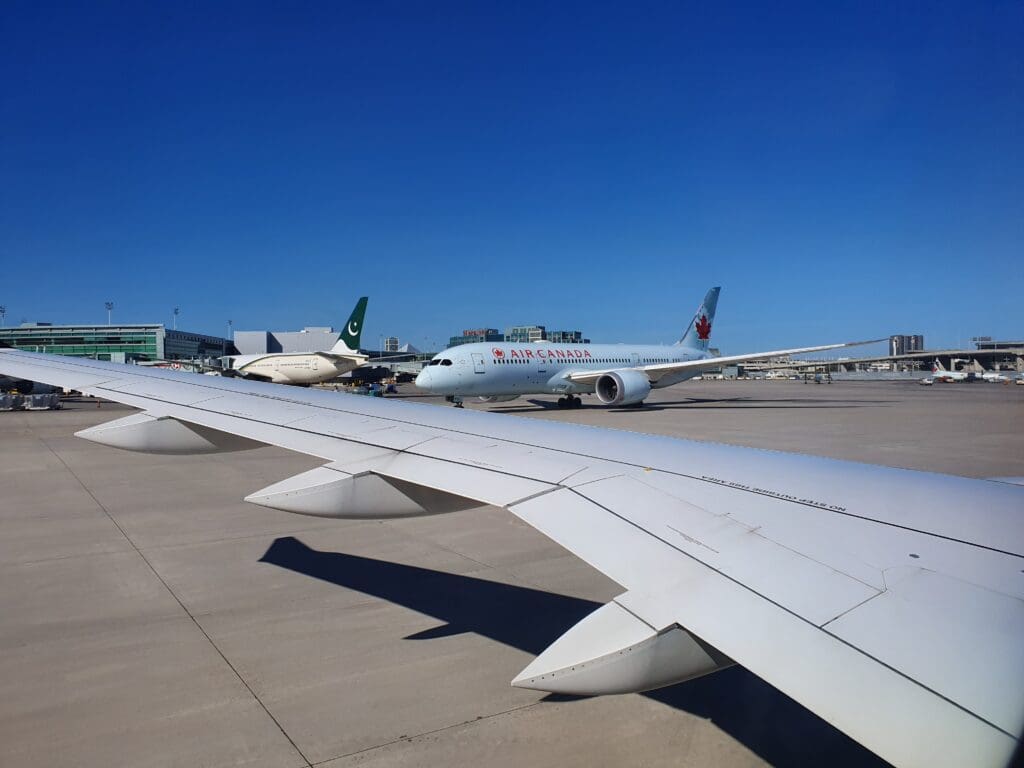
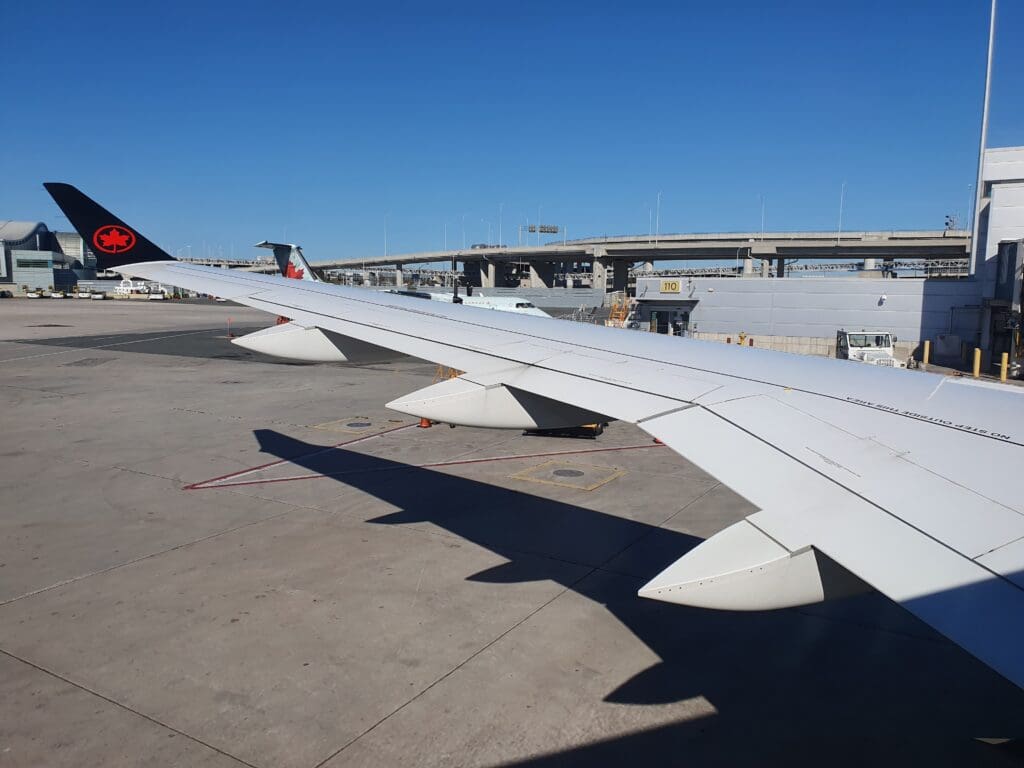
As the aircraft trundled over to the gate, a collection of both locally based and visiting private jets appeared, alongside which I was very surprised to see the familiar sight of an Air Pohang Bombardier CRJ-200. Still sporting its Korean registration, this aircraft has been in storage in Toronto for some time following the demise of the short-lived Korean carrier in 2018 – in fact I had previously flown that exact CRJ from Pohang to Seoul Gimpo! Around seven minutes after leaving the runway, the Airbus pulled into Stand 128 next to a somewhat battered-looking Air Canada Express Dash 8 Q300 being readied for its flight to Timmins. After coming to a halt, the engines spooled down accompanied by what seemed to resemble a winding noise. At this time, many passengers stood up, eager to exit the jet after the short flight over from Montréal, and, thankfully for them, the main cabin door soon opened and disembarkation commenced promptly. After shuffling to the front of the aircraft, I thanked a couple of the flight attendants and made my way up into Terminal 1, ready and raring to head off on my third and final flight of the day to Thunder Bay.