Sampling Albania’s National Airline: Tirana to London Stansted on an Air Albania A320
Background
Operating a grand total of just two aircraft from their hub at Tirana and having commenced services in April 2019, Air Albania is undoubtedly one of the world’s smaller and younger flag carriers. However, the airline can trace its roots back to Albania’s former national carrier, Albanian Airlines. With this carrier having flown its final service in 2011, the country was left without an airline until the formation of low-cost carrier Albawings in 2015 which commenced services to a host of cities across Italy. In 2017, the Albanian government announced its intention to re-establish a national carrier, with this being undertaken in partnership with well-established giant Turkish Airlines. A product of the amicable political relationship and strong ties between Albania and Turkey, Air Albania was established in 2018 with Turkish Airlines having a 49% stake in the new airline and owning the carrier’s two aircraft – an Airbus A319 and A320. In addition between September 2019 and October 2021, the carrier wet-leased a Boeing 737-800 from their parent carrier, with this sporting a hybrid Air Albania-Turkish Airlines colour scheme during this period. Since establishing operations, Air Albania has operated services to destinations across Europe, with a heavy focus on Italy where it serves Bologna, Milan and Rome, as well as London Stansted. Meanwhile, the carrier codeshares with Turkish Airlines on its daily services to Istanbul, allowing passengers to easily connect to the carrier’s global route network.
Needing to get back to the UK following a short break in Albania, I was pleased to find that Air Albania offered cheap tickets for my return to London Stansted and so I decided to fly with the carrier with little hesitation.
Booking
Upon touching down on Air Albania’s homepage, I was greeted by a brief welcome message and the sight of what appeared to be an Air Albania Boeing 737 Classic – a type that has never featured in the airline’s fleet. Beneath this stood the flight search engine and I wasted no time in scrolling through the dropdown route menu and selecting the carrier’s route from Tirana to London. Within seconds, I was presented with Air Albania’s early morning flight to Stansted, departing at 0645 and touching down three hours later at 0845, with three different fares available for this service. These are Economy Promo, Economy and Business Promo, priced at 9,000 Lek, 33,938 Lek and 53,938 Lek respectively.
As always, travelling on a budget, I went for the cheapest option before being taken to enter my details. After doing so, I then had the option of pre-reserving a seat and adding additional luggage to the already generous complimentary 30kg allowance included in the Economy Promo fare. Opening up the seat map, this revealed that the flight would be operated by Air Albania’s Airbus A320 and was nearly empty with only a miniscule number of unavailable seats. Much to my surprise, all seats in this cabin could be selected for no fee whatsoever! This, combined with the complimentary luggage allowance left me with a very positive first impression of Air Albania. From there, I made my way to the payment page where I paid quickly and without any issue, soon receiving my booking confirmation by email. It is worth noting that payment could only be made by either Mastercard or Visa.
On a side note, whilst Air Albania advertises online check-in, this seemed impossible to do, with no link provided to undertake this process anywhere on their website, even after logging in with my booking code and surname. I’m not entirely sure whether this issue is unique to their flights to London owing to additional checks, or whether all passengers cannot check-in online regardless of destination.
The Journey
Tirana International Airport Nёnё Tereza as it is officially known, or Rinas Airport as it is informally known, sits eleven kilometres to the northeast of the centre of the country’s capital. For those wishing to take a taxi, the price between the city centre and the airport is around 2,500 Lek (about £18), however a non-stop bus service also runs between the two for a much more economical 400 Lek. This departs from an assuming and easy-to-miss stop near Skanderbeg Square and heads off each hour, on the hour, from 0600 to 2300. Given my 0645 departure time, I had a slight dilemma when it came to reaching the airport in good time for my flight. Perhaps the most convenient option would have been to take a taxi from my Airbnb in central Tirana at around 0300. However, concerns over booking this, this showing up and the potentially high cost ended up dissuading me from taking a taxi and I instead turned to the airport bus. However, this meant that I would have to spend the best part of a night at the airport given the lack of buses between 2300 and 0600. Seeing this as a slightly better option than splurging out on a taxi, I decided to take the last airport bus of the day. There was however a slight risk to this, low on Albanian Lek, were this service not to turn up, I would have ended up frantically searching for an cash machine that would accept my British card and allow me to withdraw enough cash to make it to the airport by taxi.
My stay in Tirana had proven to be an enjoyable experience. Despite being somewhat chaotic and constantly busy, the Albanian capital had a welcoming charm and all those I interacted with were friendly and welcoming. As a history enthusiast, there were plenty of interesting sights for me to visit around the capital, including a couple of former bunkers that now serve as museums dedicated to Albania’s contemporary history, whilst I also thoroughly enjoyed taking the long cable car ride up to Mount Dajti. Importantly, my trip to Albania did not break the bank, and I found everything to be very reasonably priced, especially compared to London’s astronomical prices!
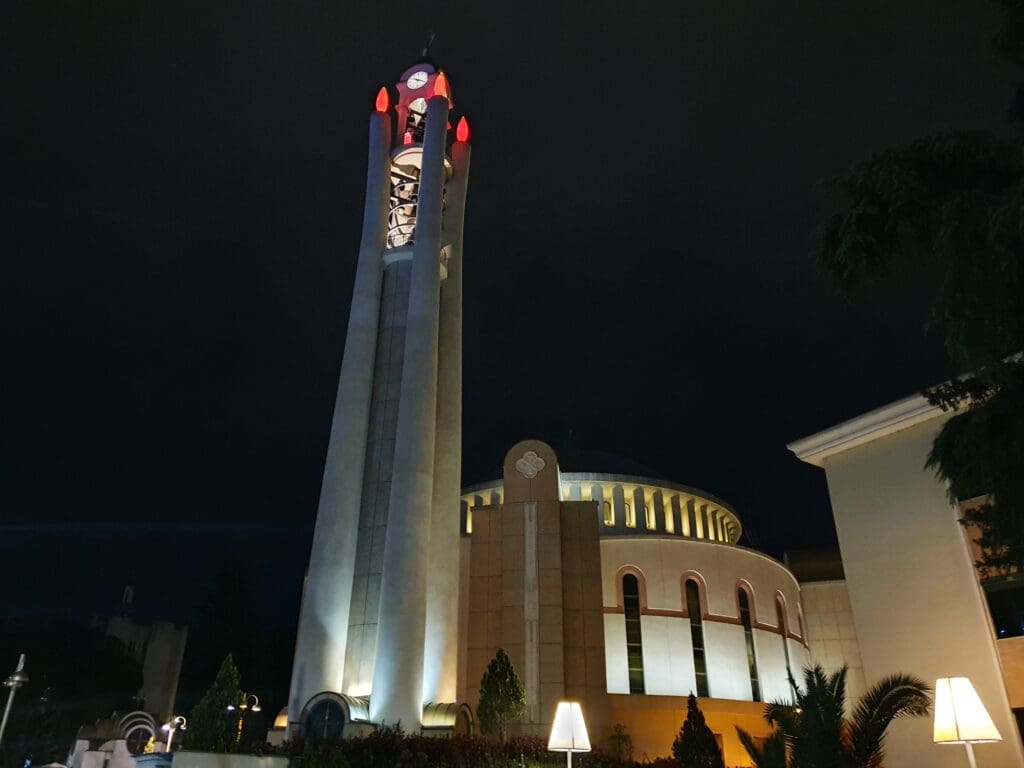
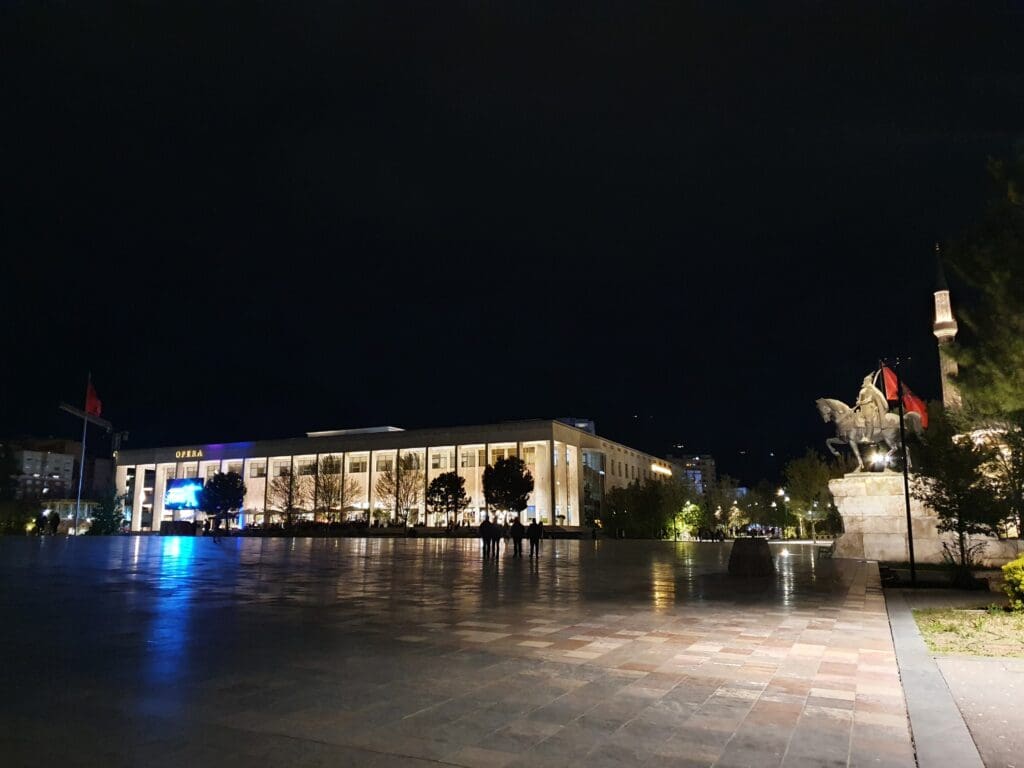
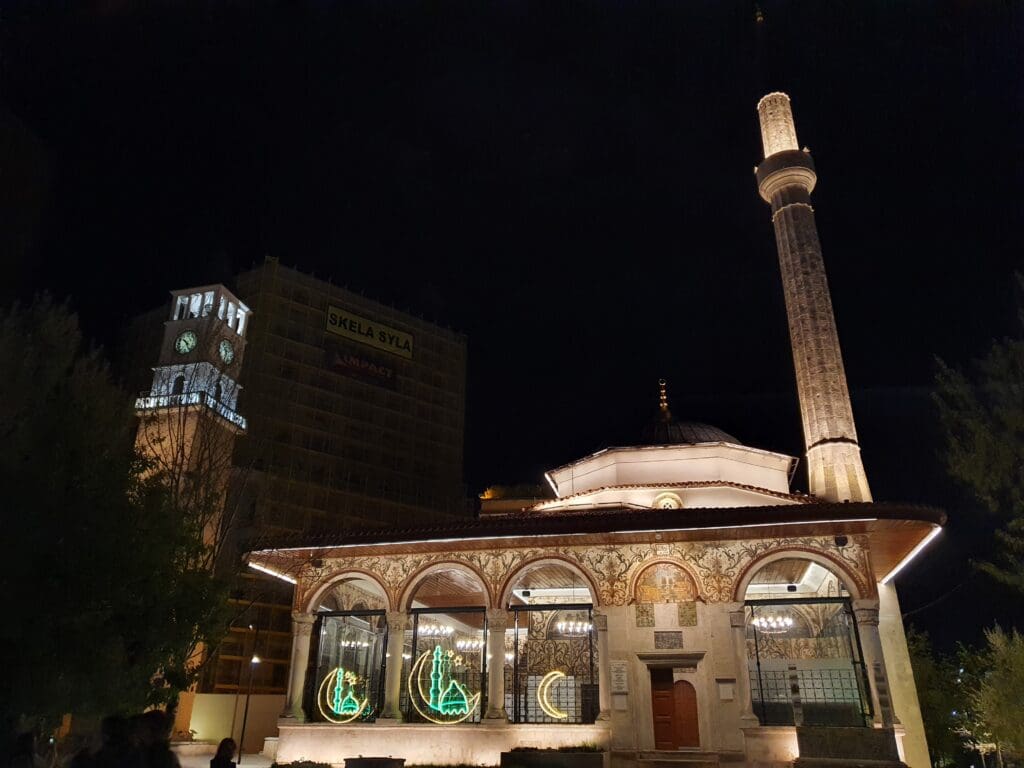
After a pleasant three days in the capital, my stay in Tirana reached its conclusion. By this time I was running low on Albanian Lek, and, realising that I had little way of reaching the terminal were I to miss the last bus service of the day, I opted to play things safe and vacated my Airbnb with plenty of time before the bus’ scheduled departure time. Once I had triple-checked that I had packed all of my belongings into my small rucksack, I closed and locked the apartment’s thick metal door and cautiously descended the unlit stone stairwell of the old Communist-era apartment block that I had called home for the long weekend. After making it to street level without tumbling down the uneven steps, I headed along Tirana’s dark backstreets before arriving at one of the city’s main arteries, Myslym Shyri Street. Whilst being late on a Sunday night, this was still fairly busy with plenty of patrons still occupying the street’s many cafes and restaurants. From there, I walked into Tirana’s central core where I passed a good number of the city’s sights. These included the Resurrection of Christ Orthodox Cathedral, Skanderbeg Square, the National Theatre of Opera and Ballet and Et’hem Bej Mosque. Around fifteen minutes later, I arrived at the airport bus stop just behind the theatre where one other passenger could be seen waiting for the bus to appear.
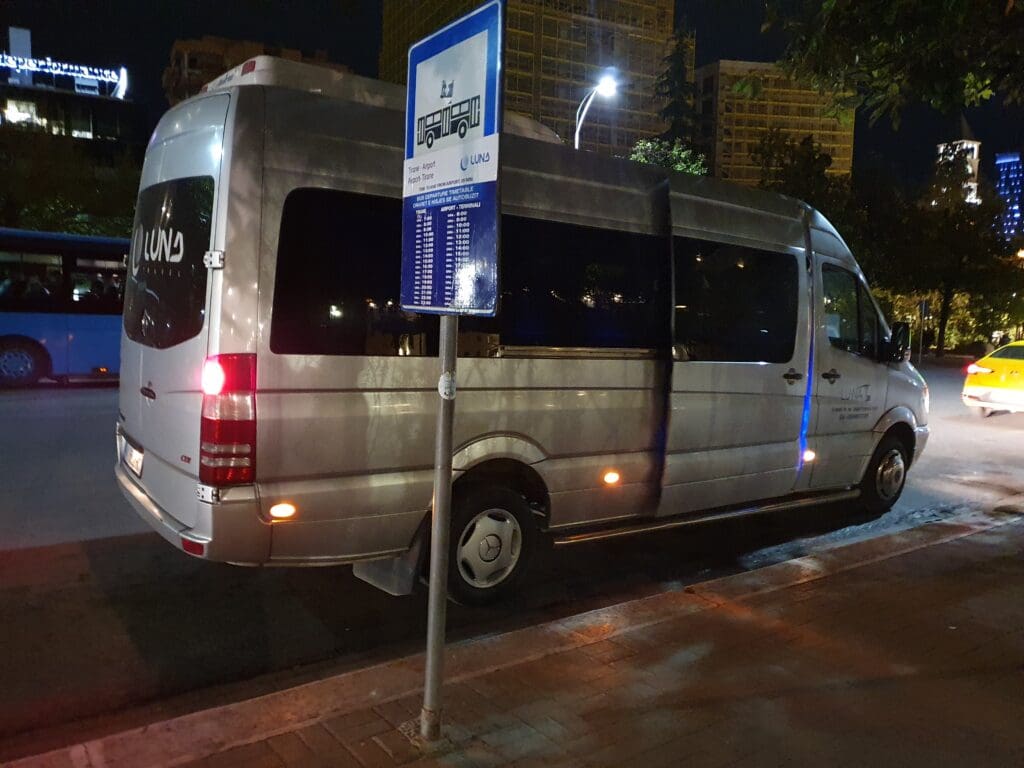
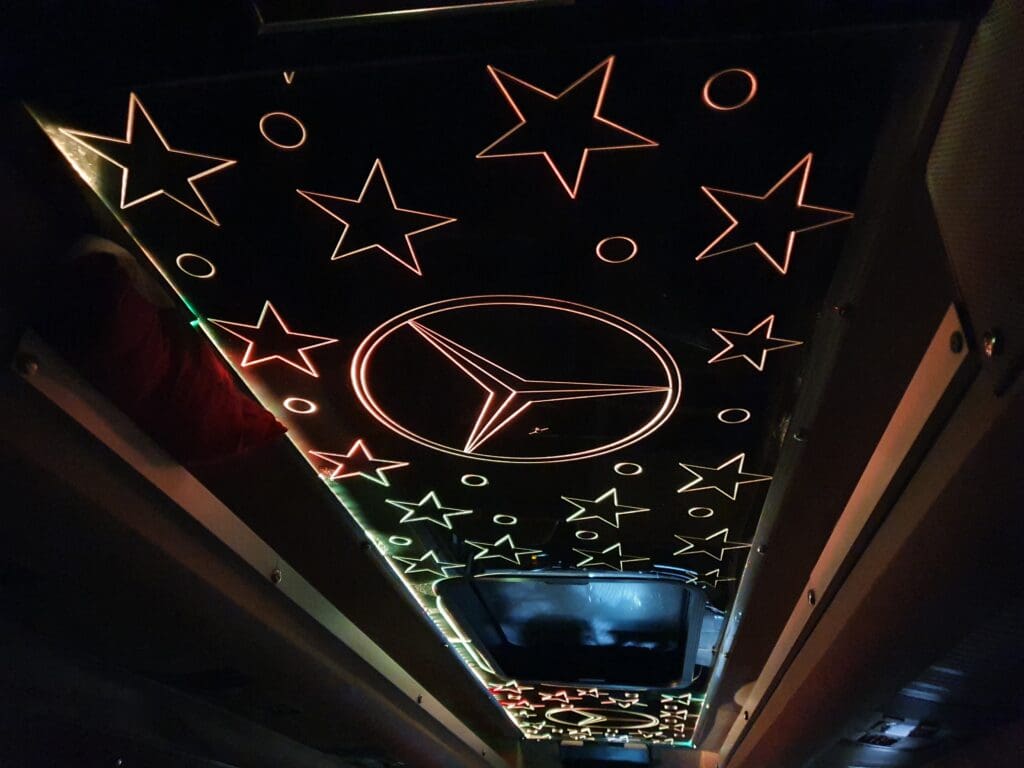
Whilst I had had a good time in Albania, not wanting to end up stranded with twenty minutes to go under the bus’ scheduled departure time, I was slightly relieved to see a small silver Mercedes minibus appear at the bus stop following a short wait. As with a good number of vehicles I had spotted on Tirana’s roads, this particular bus seemed to have a fair few scars in the form of dents and scratches which I assume had been gained throughout its career battling through the city’s often chaotic traffic. Yet, unlike the basic bus that I had taken into Tirana, inside this was pleasantly luxurious, complete with a fancy ceiling and bright blue floor lighting illuminating the aisle. Meanwhile, the bus’ well-padded seats arranged in a 2-1 configuration proved more than comfortable enough for the short ride to the airport.
As the minutes passed, several other passengers made their way onto the minibus however this ended up being far from full with a total of just four heading to the airport that evening. With several minutes to go until our departure, the conductor passed through the small cabin collecting passengers’ fares and so I handed over the 400 Lek in notes. Whilst this seemed to be fairly reasonable in price, comparing this to the usual 40 Lek fare charged for a journey on a regular city bus, this may well seem to be a little inflated. At 2300 on the dot, the bus pulled away and dashed along the bumpy roads of central Tirana at quite some speed. Despite there still being plenty of traffic on the roads, the bus made good progress with the journey taking much less time than the slow crawl into Tirana from the airport, speeding through the city’s suburbs before journeying out into the dark quasi-countryside that separates the city from the airport. Just 25 minutes after pulling away from the bus stop, the minibus sped past the selection of hotels that are located opposite the terminal before arriving at a bus stop located a short walk away from the airport’s arrival area.
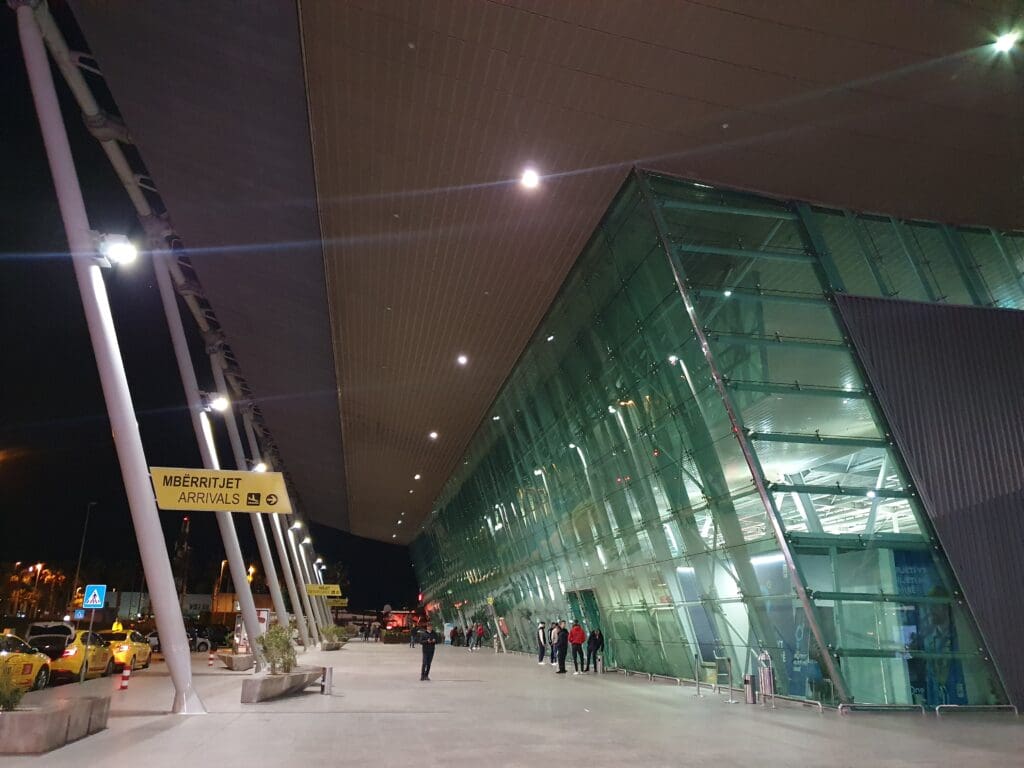
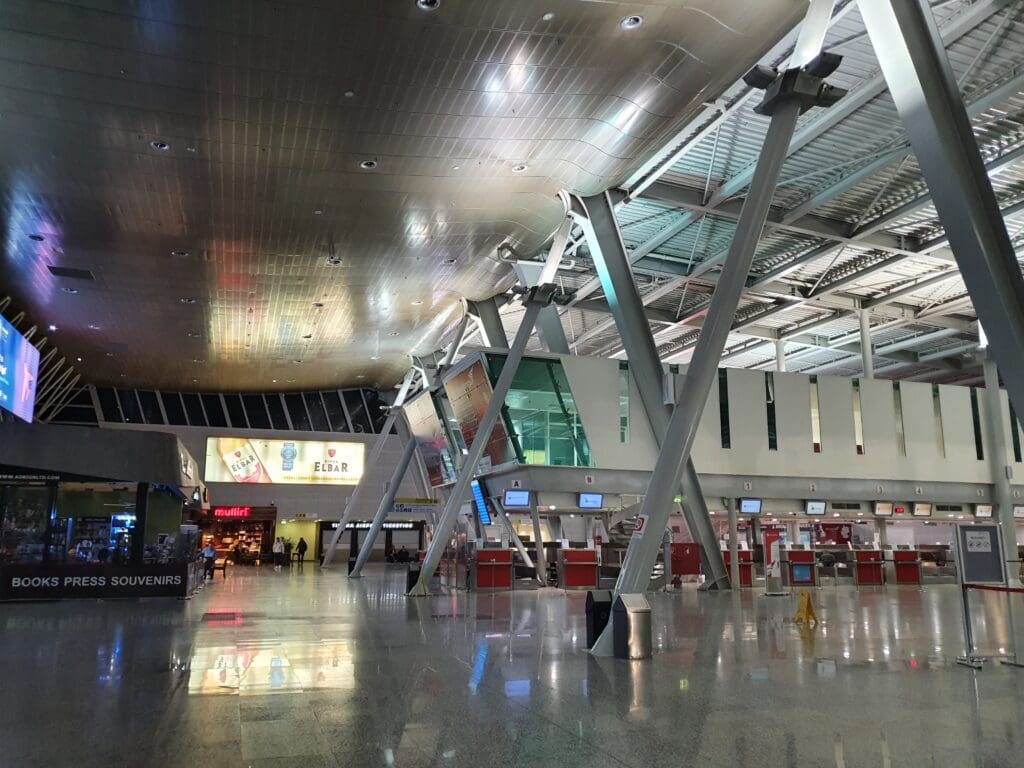
With Tirana Airport’s current terminal having opened in 2007, from the outside this still appears to be modern and takes the form of a large glass and metal structure, similar to those that can be seen at airports across the world. As I trundled towards the terminal, I passed two eateries that appeared to be open for the duration of my stay – a local branch of KFC and the more upmarket Runway35 Restaurant. Upon entering the terminal, with a stream of late-night flights set to touch down in Tirana over the next hour, unsurprisingly this was a hive of activity with plenty of family members, friends and taxi drivers waiting for passengers to filter through. Whilst the landside portion of Tirana Airport is neither massive nor its design particularly impressive, it does feature an array of shops and eateries that appear to be open all hours. These included two cafés – one regular and the other specialising in desserts, several currency exchange booths, a convenience store, a newsagent and two kiosks operated by rival SIM card providers – One and Vodafone. Impressively, all of these bar the currency exchange booths remained open for the duration of my stay. After strolling from one end of the terminal to the other, I arrived at the terminal’s check-in area which consists of a single island with 26 check-in desks. Upon arriving there, all of these were closed and so I had little to do other than sit and wait.
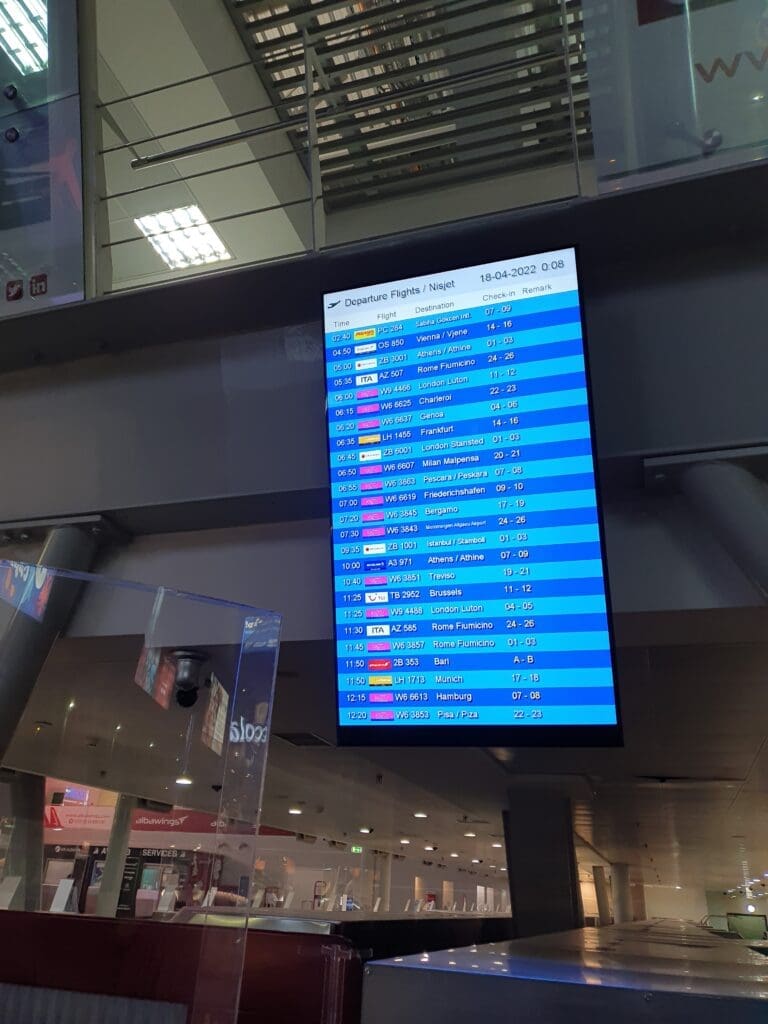
Examining my surroundings, I found the landside portion of the terminal to be clean and well-polished, with an army of staff appearing to be omnipresent chatting and cleaning the night away. As one would expect at a major airport, complimentary wifi was also offered although this seemed to work only sporadically throughout the terminal for the duration of my stay. Continuing with the slight complaints, I found the landside portion of the terminal to be filled with the stench of cigarette smoke, whilst this also lacked comfortable seating and a sufficient number of plug sockets (although these could be found in one of the cafés). I was however lucky enough to snag one of the two out-of-service massage chairs which provided me with a comfortable place to sit and wait for check-in to open.
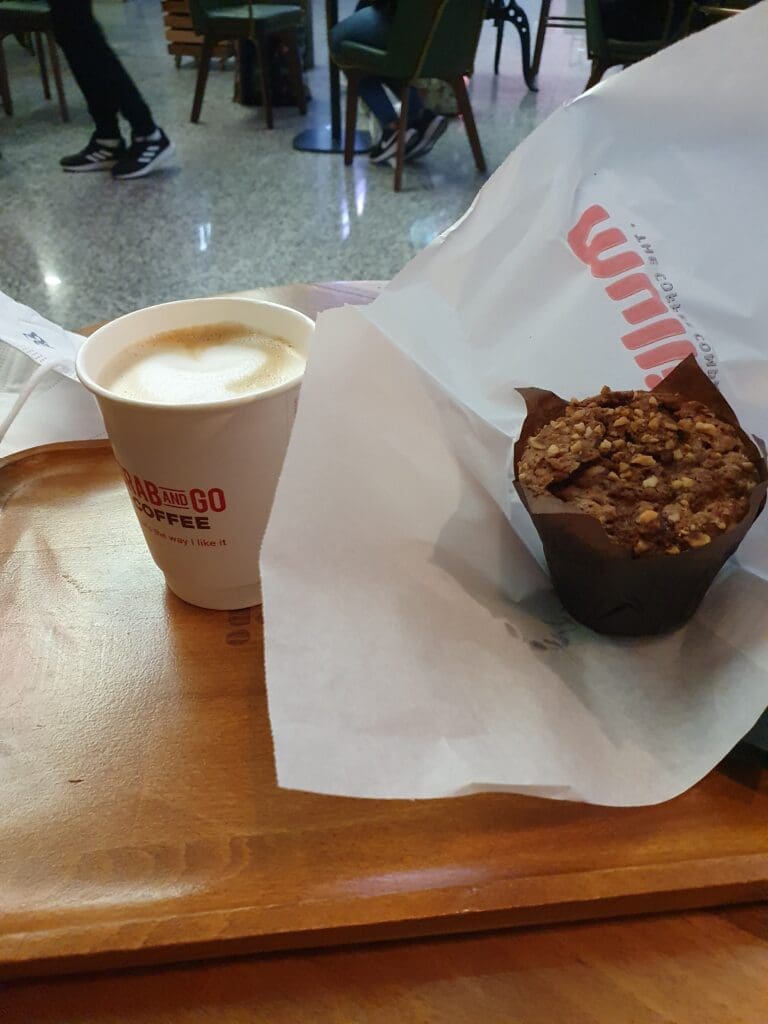
As time passed, the terminal became a little busier, first with those heading off to Istanbul onboard Pegasus Airlines’ 0240 service, followed by those bound for Athens, London Luton, Rome and Vienna. With Air Albania’s three check-desks opening up at 0300, at that time I hoped that I would be able to check in for my London flight. However, upon strolling up to one of the counters, I was advised that this would not be possible and told to return three hours before my flight’s scheduled departure time. Therefore, to pass the time I headed to the local branch of coffee shop chain Mulliri where I purchased a light breakfast consisting of a banana muffin and a cappuccino for 480 Lek.
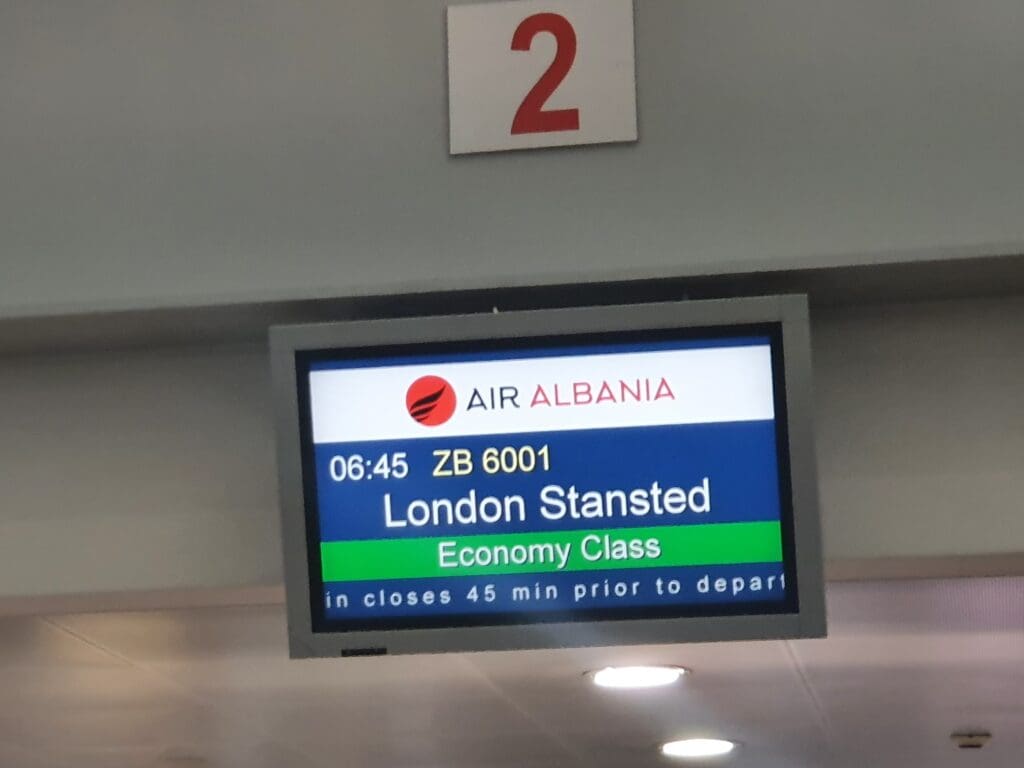
With a little under three hours to go until departure, I strolled back over to the three check-in desks in the hope that I would be able to receive my boarding pass. However, upon arriving there another check-in agent informed me that check-in for the Stansted service would not open until two hours before departure. Whilst I was not best pleased with this conflicting information, this was not of particular concern and so I retreated to the relative comfort of the still vacant broken massage chair located in one corner of the check-in area. With this allowing for a good view of the check-in desks, around thirty minutes after I had been sent away for the second time, a large crowd of Stansted-bound passengers could be seen waiting around Air Albania’s check-in desks. Seeing as the staff members behind these appeared to be readying their equipment to check passengers in, at this time I strolled over and joined the waiting crowd of passengers.
At 0420, the three check-in desks opened, with two reserved for those flying in Economy, and a third desk for those in Business. Following around five minutes of jostling in which I attempted to guard my position, I handed over my passport to one of the check-in agents. With minimal dialogue, this was soon returned to me along with a boarding pass that displayed the logos of Albsig, the Kastrati Group and Tirana Airport. Thanks to the twelve flights heading off that morning between 0500 and 0800, fearful of long queues I wasted no time in making my way over to security. Once the staff member guarding the entrance to this had checked my boarding pass, I was pointed in the direction of the two open checkpoints. Much to my surprise, both of these featured relatively short queues and so I passed through this in no more than a few minutes, having absolutely no dialogue with the fast-working security staff during this process. As soon as I had passed through this checkpoint, the next stop on my journey was passport control, where most of the booths appeared to be manned. With this considered, once again only a short wait was required before I handed over my passport to a typically stern-looking immigration officer. Without a word, this was passed back to me a few moments later after which I was free to explore the delights of the terminal’s airside area.
Given the number of flights departing that morning, with these bound for destinations across Belgium, Germany, Greece, Italy and the UK, this portion of the terminal was unsurprisingly busy and slightly chaotic. In terms of size, this was far from the largest terminal that I have passed through, nor was it the most stylish. However, despite the many passengers, I was pleased to find this to appear to be in a clean state and feature a good array of facilities considering its small size. Inside, a total of three cafés could be found consisting of two branches of Coli’s and a Segafredo. Those looking for some retail therapy could visit the duty free store – with this selling the usual selection of items in addition to a small range of local goods, a wine shop and a watch shop. However, this did appear to lack any sort of convenience store meaning that those seeking light snacks and refreshments were left with no other option other than to visit one of the three cafes. Meanwhile, as in the landside area, comfortable seating options and plug sockets were in short supply although having charged my phone up in the landside area, this was no major issue.
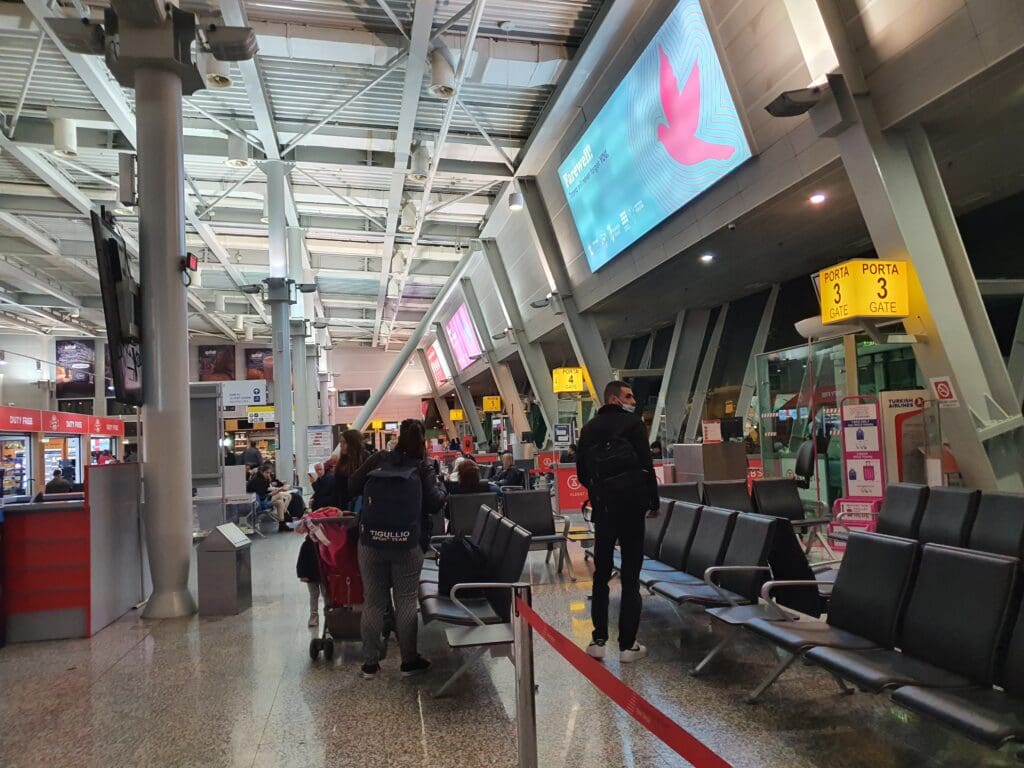
Aviation enthusiasts passing through Tirana will be glad to hear that large glass windows line one side of the terminal and offer a good view of the aircraft parked on the flight line outside. However, it is worth noting that almost all of the passenger sections of the terminal are located on ground floor level, and thus any decent photography may prove to be quite a challenge. Following a quick explore of the terminal, I took a seat next to one of the windows and watched as the skies gradually brightened, revealing plenty of Wizz Air jets, an Air Albania Airbus A320 and the tall mountains in the distance. Other than these, during my stay, I managed to spot a trio of mundane (for a European enthusiast) Airbus A320s operated by Austrian Airlines, ITA Airways and Lufthansa.
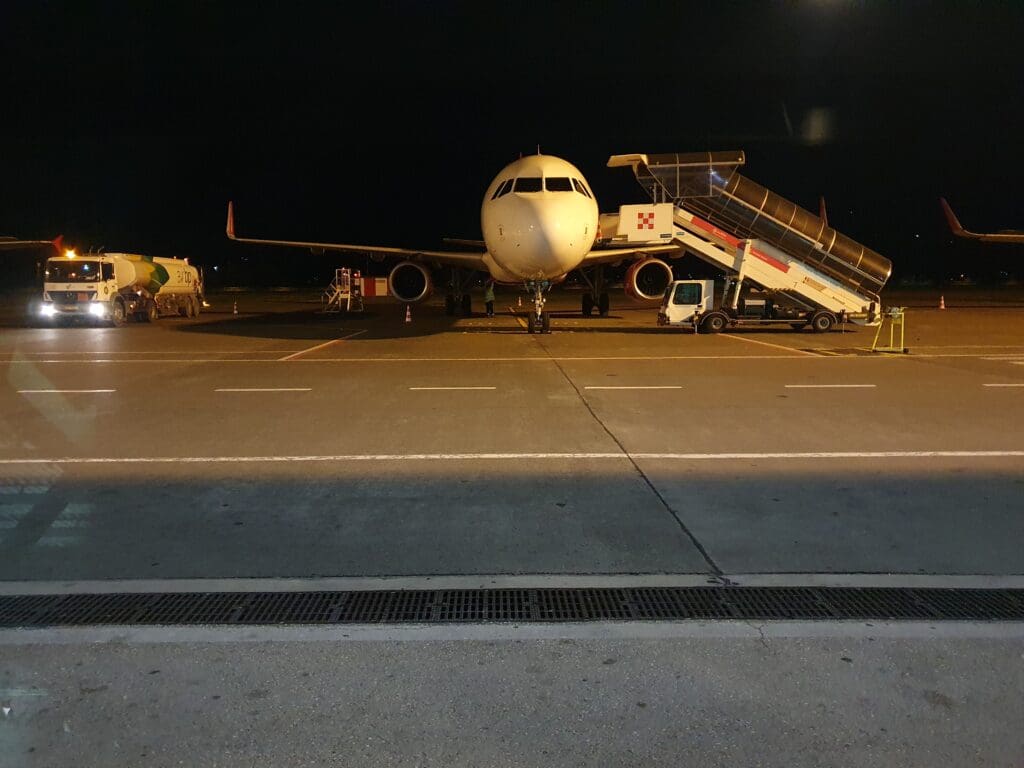
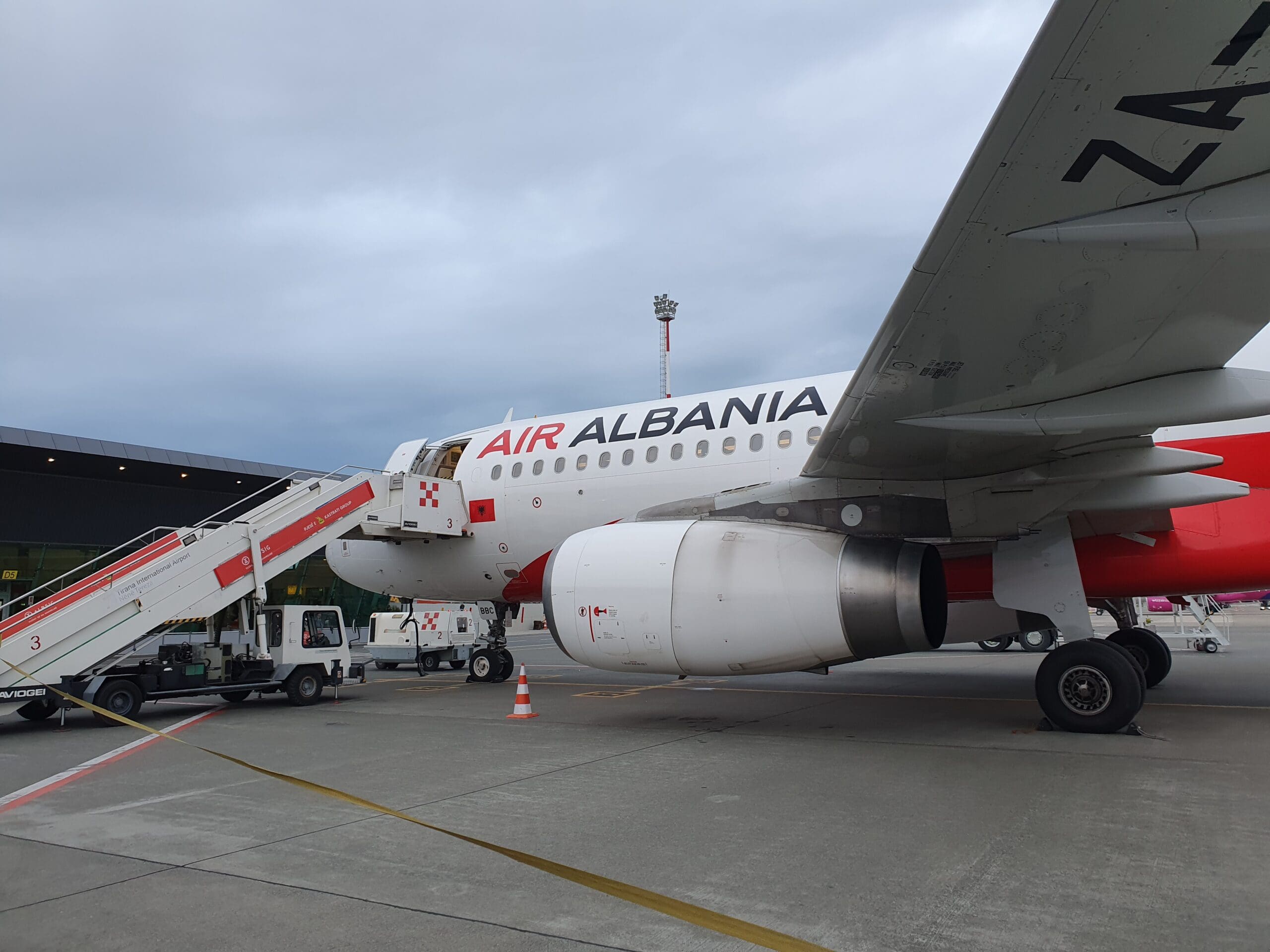
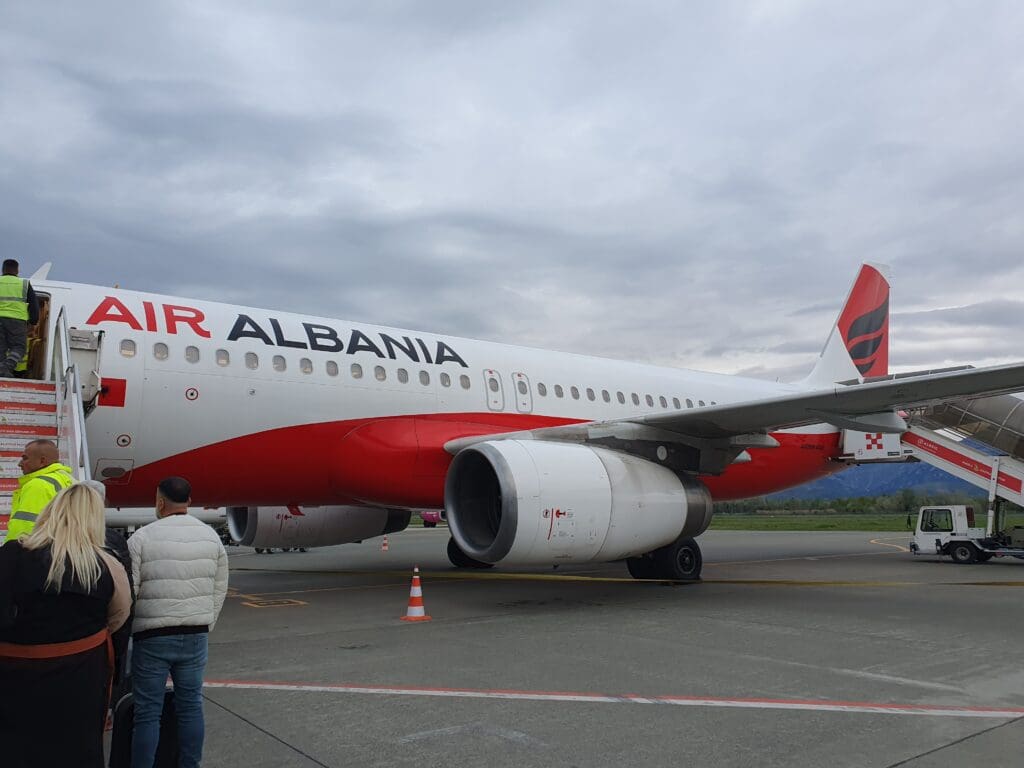
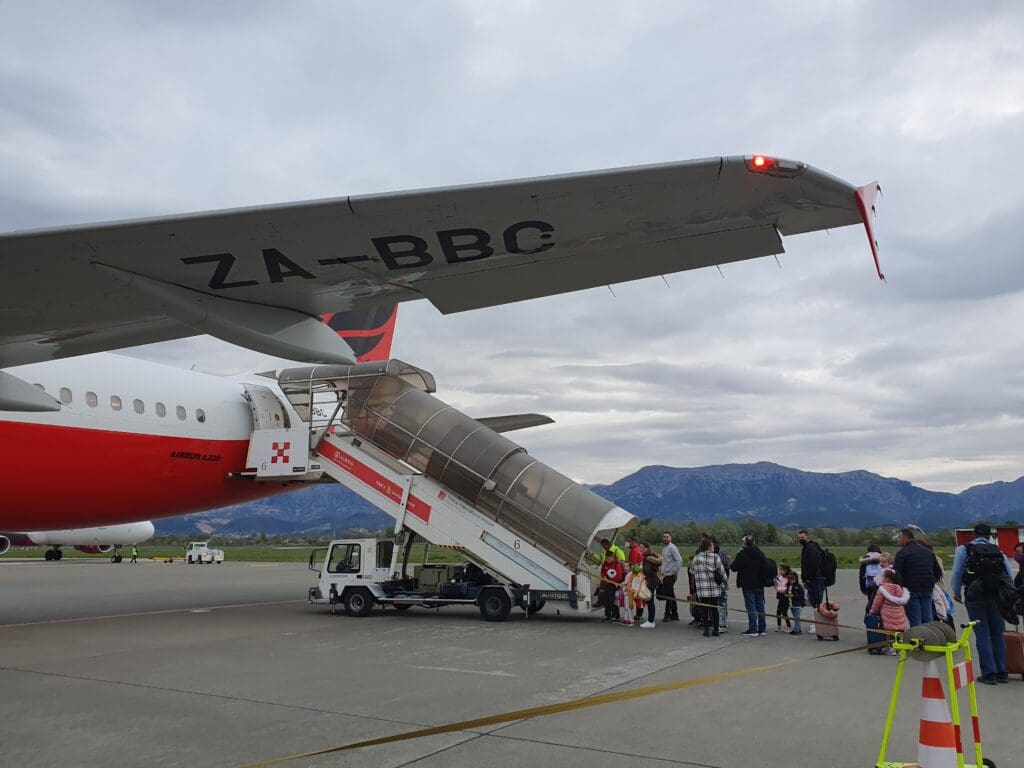
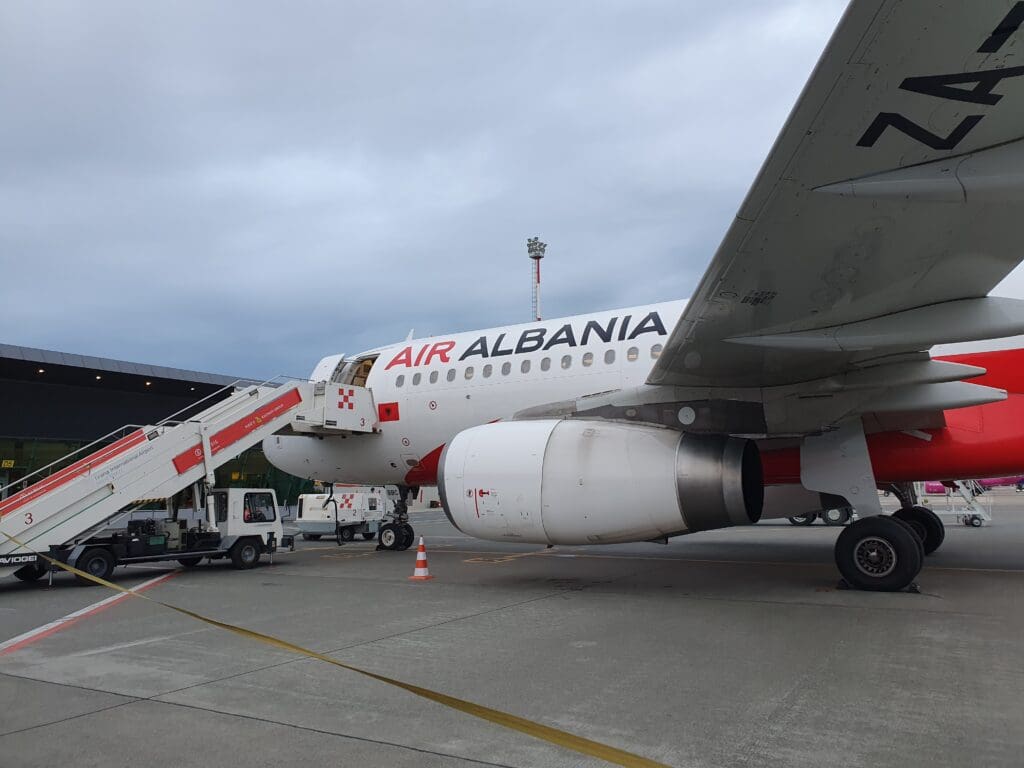
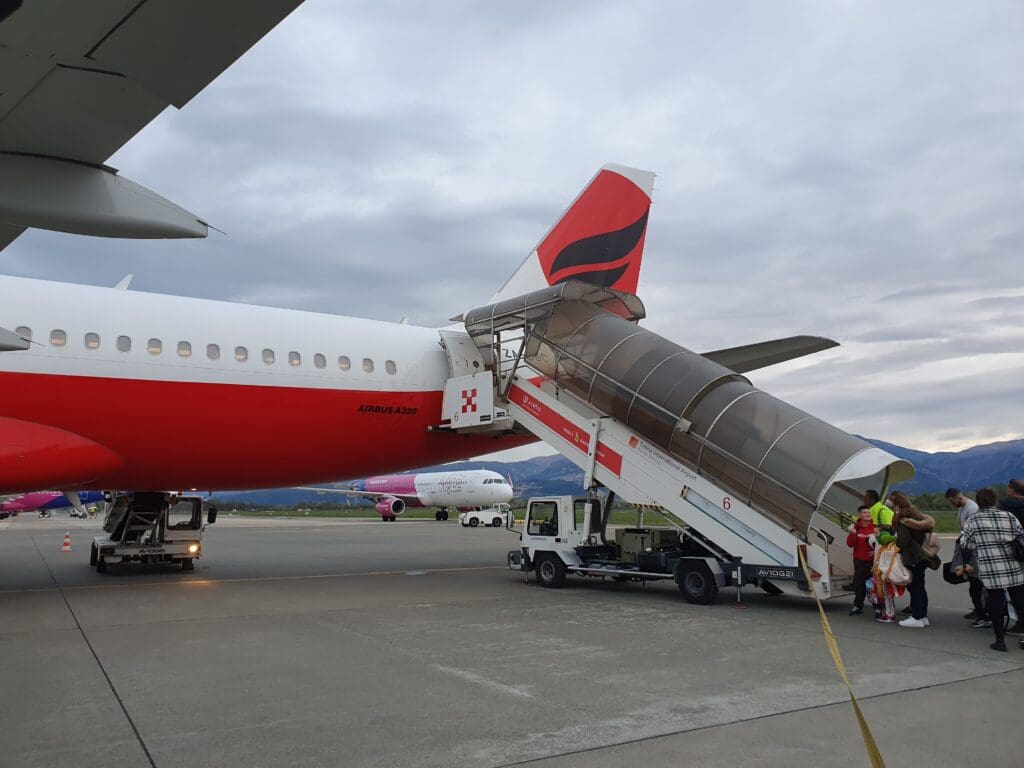
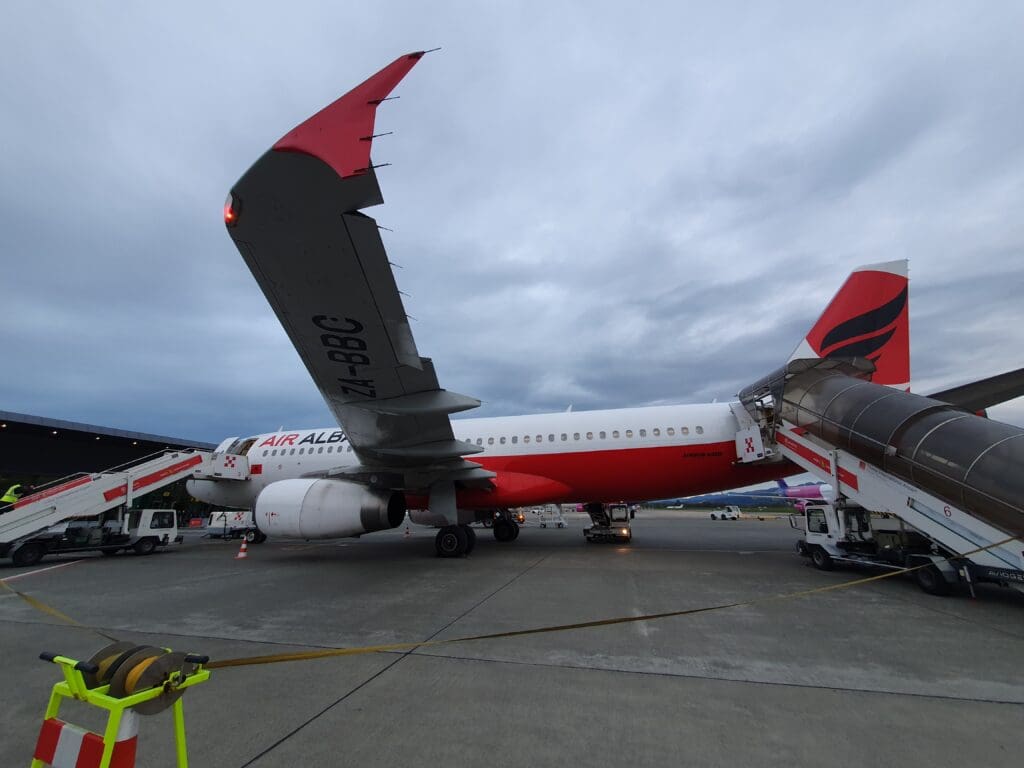
As I had deciphered from the seat map presented during the booking process, that morning Air Albania’s sole Airbus A320 would be operating the flight to London Stansted. This could be seen parked directly outside the terminal at Stand T4 and came in the form of Naimi, officially known as ZA-BBC, a rather appropriate registration given our final destination. Assembled at Airbus’ Toulouse Blagnac facility, this jet first took the skies in July 2008 sporting the test registration F-WWBP. Later in the month, wearing the registration TC-JPO and carrying the name of the Turkish coastal city of Kemer, the aircraft was ferried across Europe before touching down in its new home, Istanbul Ataturk Airport. From there, the aircraft spent the next thirteen years shuttling passengers to destinations across Europe and the Middle East. For some reason, in late 2013 the aircraft received the new name of Cankiri, a city to the north of Ankara. In July 2021, following in the footsteps of three other Turkish Airlines jets, the aircraft was sent to the paint hangar where it received Air Albania’s red, white and black livery before being placed on the Albanian aircraft register. In September 2021, the aircraft entered service with Albania’s national airline, relieving a Turkish Airlines Boeing 737-800 that was subsequently sent back to Istanbul. Since then, the aircraft had connected Tirana with destinations across Western Europe, and in the week before my flight, the aircraft had undertaken a total of 39 flights covering at least 24,400 miles. This had seen the aircraft pay visits to Bologna, Dusseldorf, Istanbul, London Stansted, Milan Bergamo, Milan Malpensa and Verona.
Having arrived in the very early hours from Milan, initially, there had been no sign of life around the aircraft although at 0550, a team of ground crew appeared and readied the jet for its day of flying. Meanwhile, by this time, a crowd of passengers could be seen around gate 4, even though there was still a fair amount of time left before the scheduled commencement of boarding at 0615. At 0605, one of the two Air Albania staff members manning the gate podium made an announcement inviting those bound for Stansted to make their way to the gate at which point I joined the rear of the long queue that had formed. However despite this hinting at the imminent commencement of boarding, there was plenty of lingering about in store before boarding commenced.
Finally, at 0620 those at the front of the queue were permitted to head out to the aircraft and a short time later I had my boarding pass torn and my passport checked before walking the short distance over to the waiting Airbus A320. As appeared to be standard procedure at Tirana Airport, that morning boarding was undertaken via both the front and rear doors, and seeing as I was seated near the rear of the aircraft I decided to sacrifice my glimpse of the jet’s small Business class cabin in exchange for the exterior photo opportunities that boarding via the rear door would offer. However, once out in the open, it soon became evident that the actual act of boarding was still yet to commence, with passengers queuing at ground level waiting to receive permission to head up to the airstairs and onto the aircraft. Admittedly, the somewhat chaotic boarding procedure that morning failed to give me the best first impression of Air Albania. That said, I was happier to wait out in the chilly morning air as opposed to being cooked up on some dark and dingy corridor as often seems to be the case when flying with EasyJet and Ryanair.
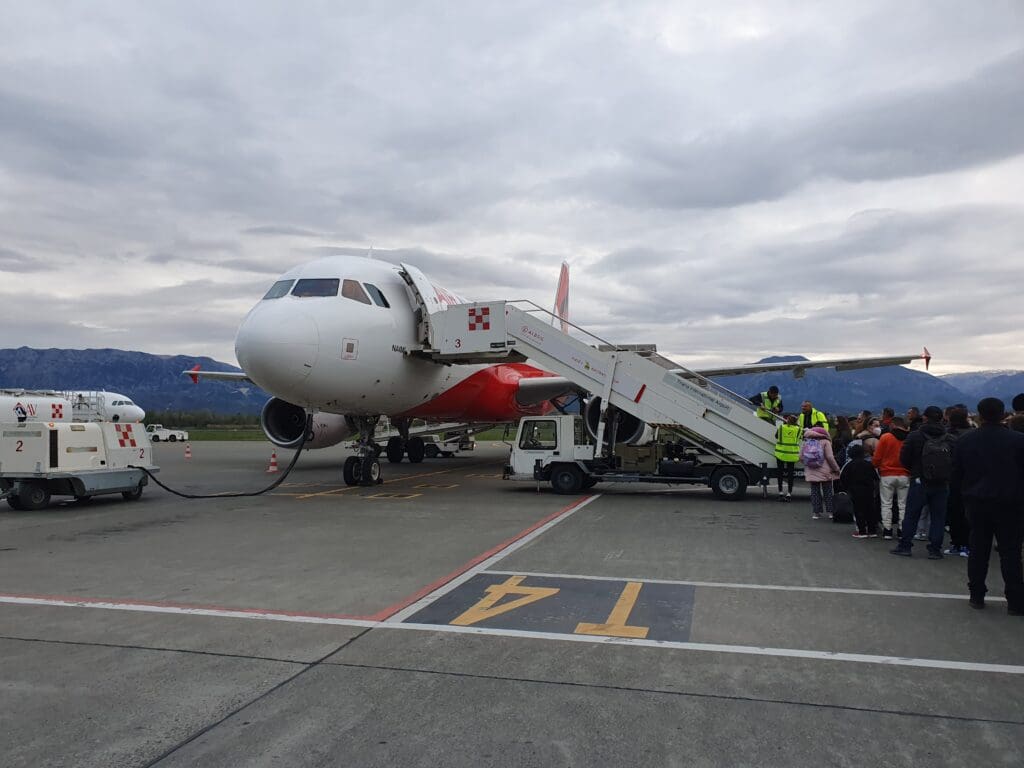
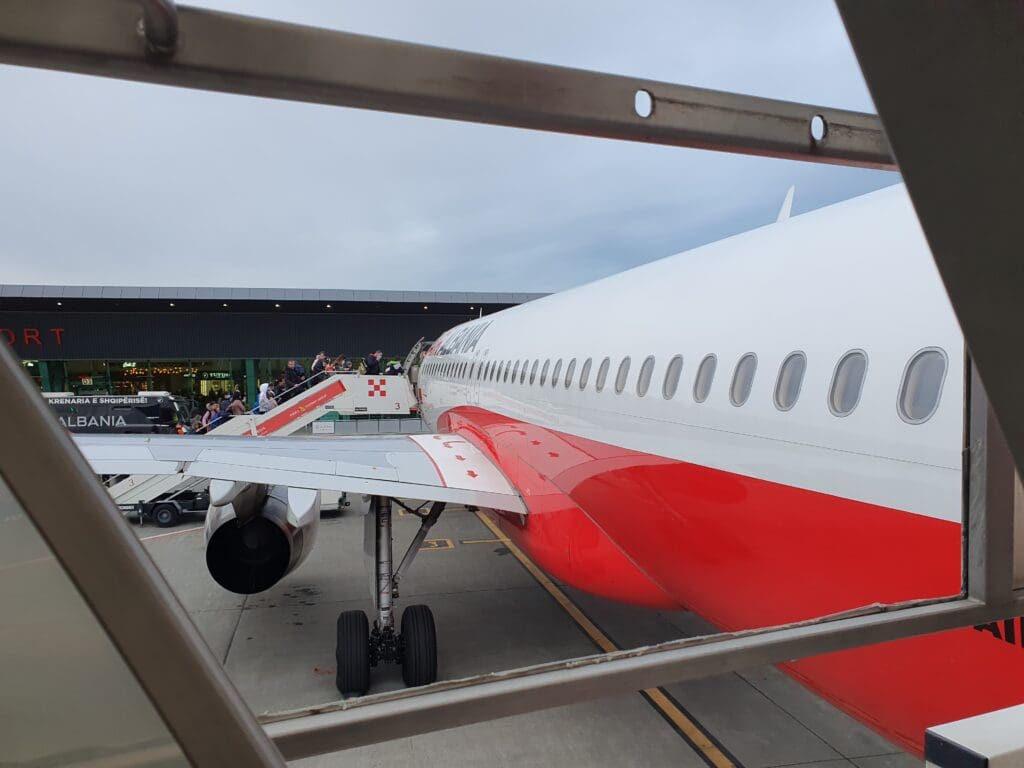
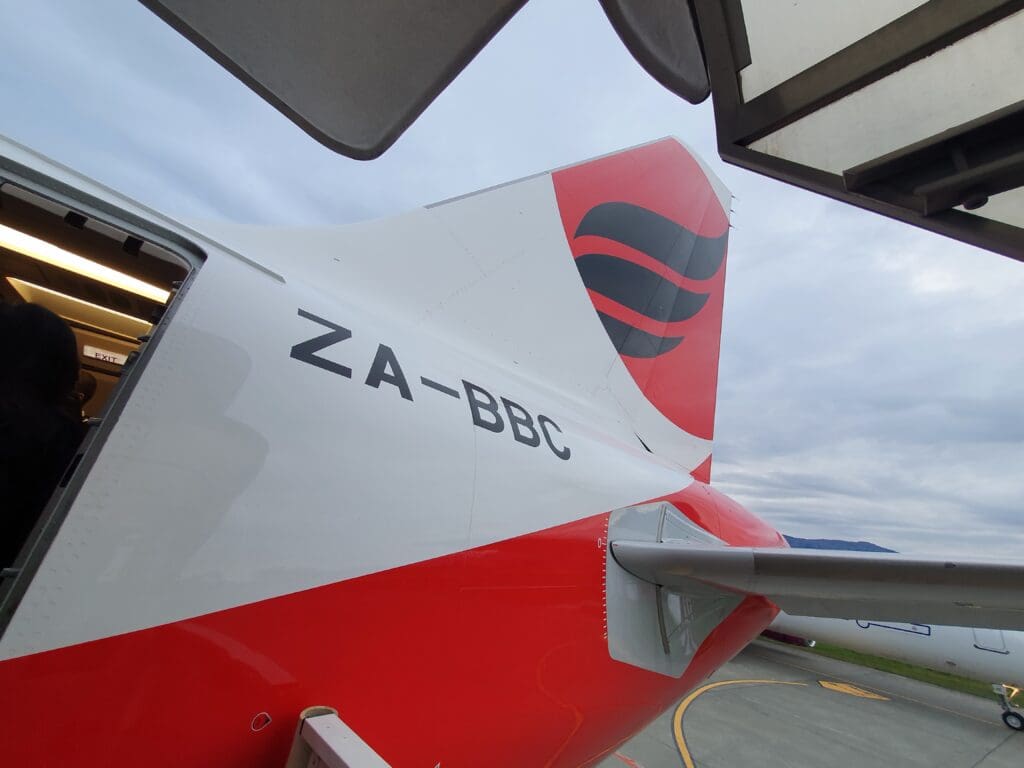
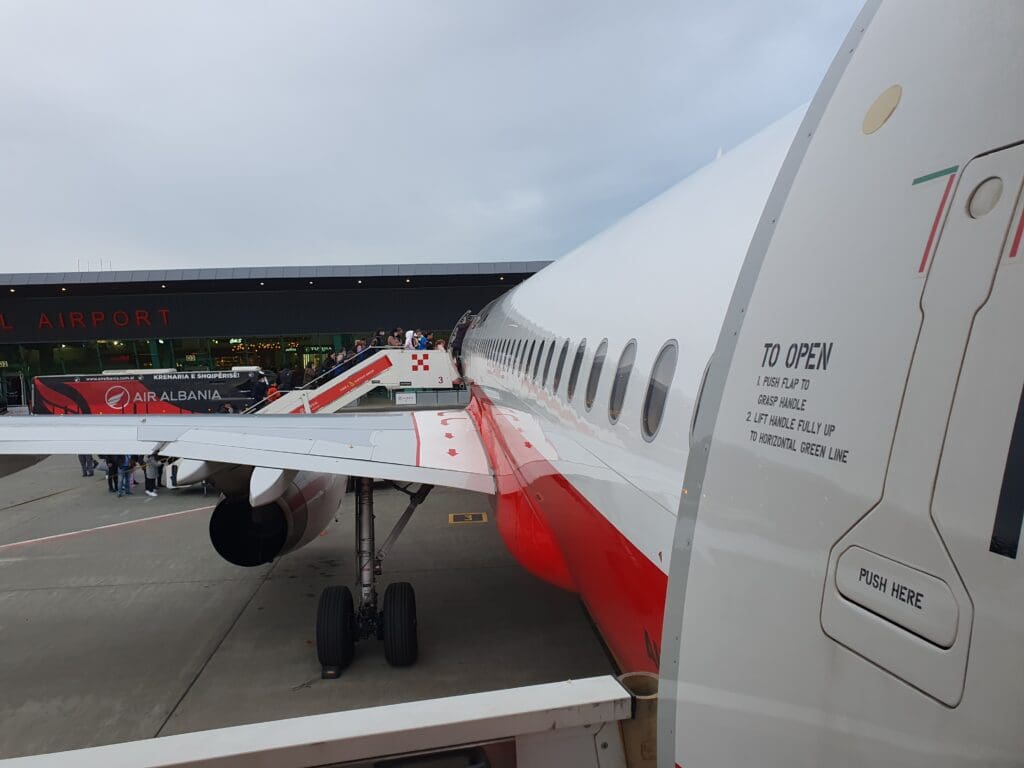
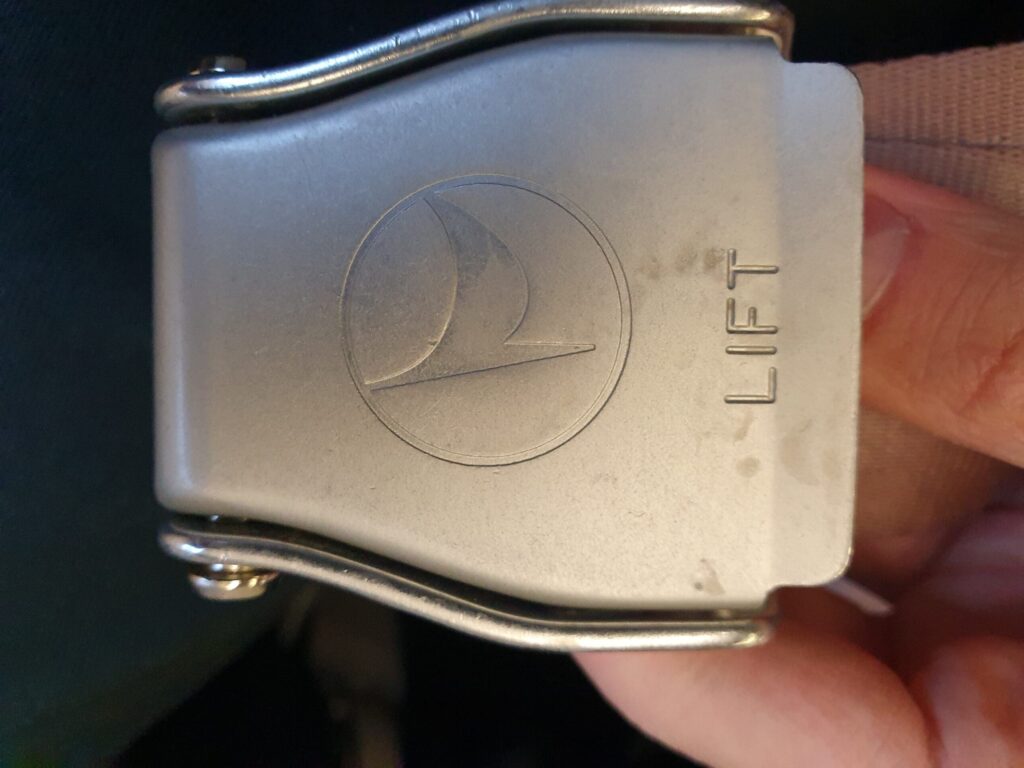
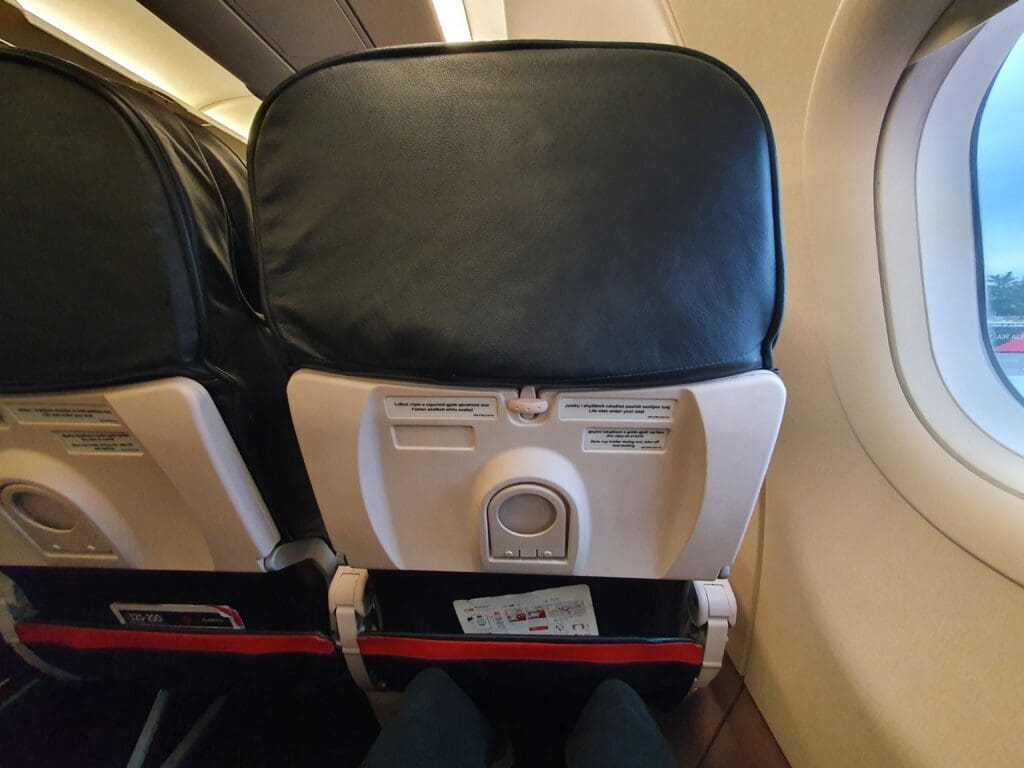
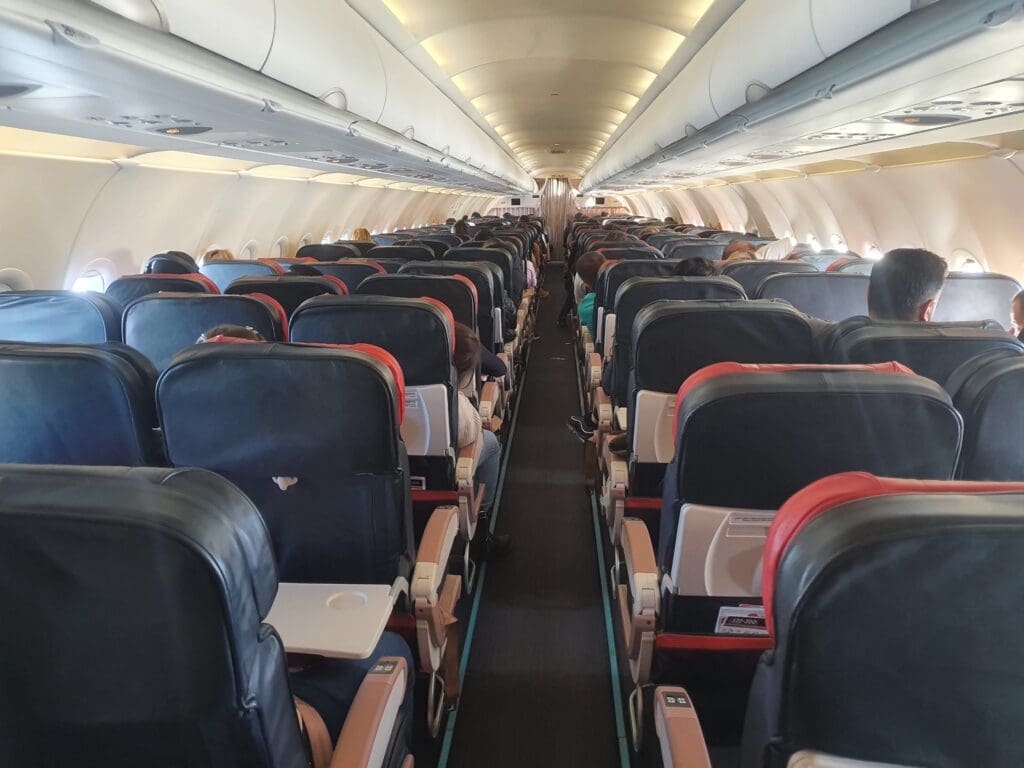
Following a few minutes of waiting, I made my way up the steps at the rear of the aircraft and headed into one of the Airbus’ two galleys. Upon arriving there, despite saying hello, I failed to attract a greeting from the flight attendant who instead simply stared blankly at the London-bound passengers as they entered the aircraft. Turning left, I was welcomed into the cabin by the faint pink tones of the panelling on the two toilets and crew storage compartments, with this colour also utilised on the armrests and the lower part of the cabin wall panels. As I entered the main part of the Economy cabin, other than replacing Turkish with Albanian on the cabin’s signs, this appeared to have not changed since its days with Turkish Airlines. Fortunately, each Economy class seat is covered in dark (faux?) leather with a few smatterings of bright red, and thus conveniently matches both Albania’s national colours and those of Air Albania. Turning to the seat itself, each of these sported a comfortable adjustable headrest – some of which were covered in red, and others in black, with all featuring a debossed version of Turkish Airlines’ iconic goose motif. This was also visible on the aircraft’s seat belt buckles, indicating that no expense had been spared in the cabin’s personalisation when initially delivered to Turkish Airlines.
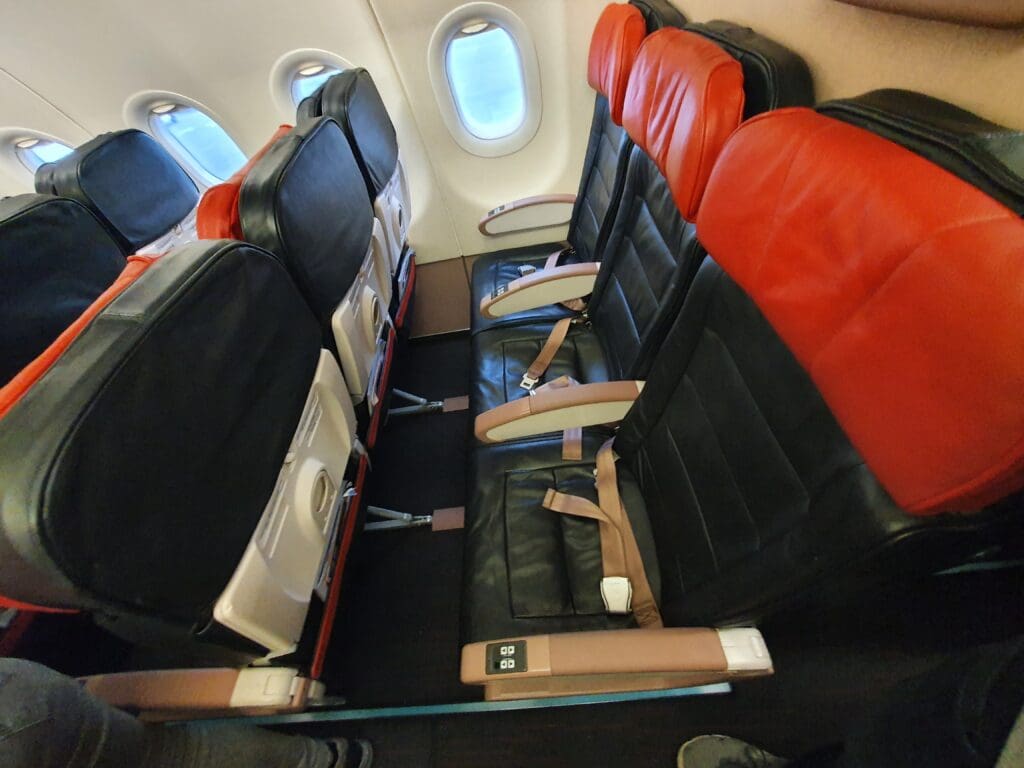
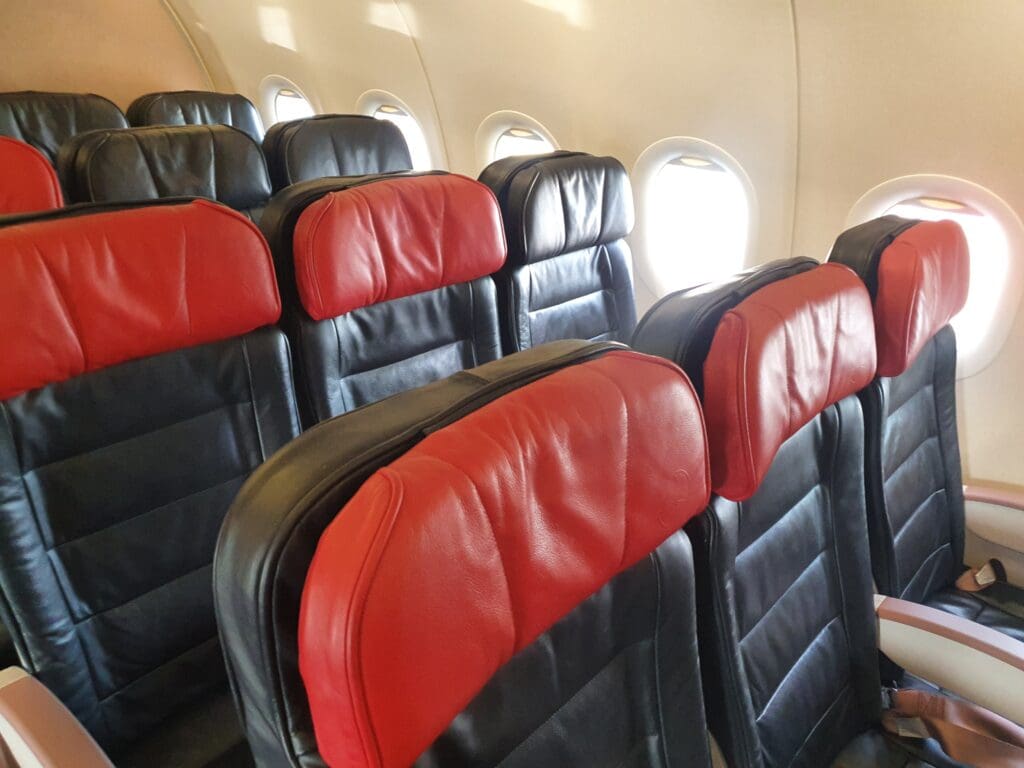
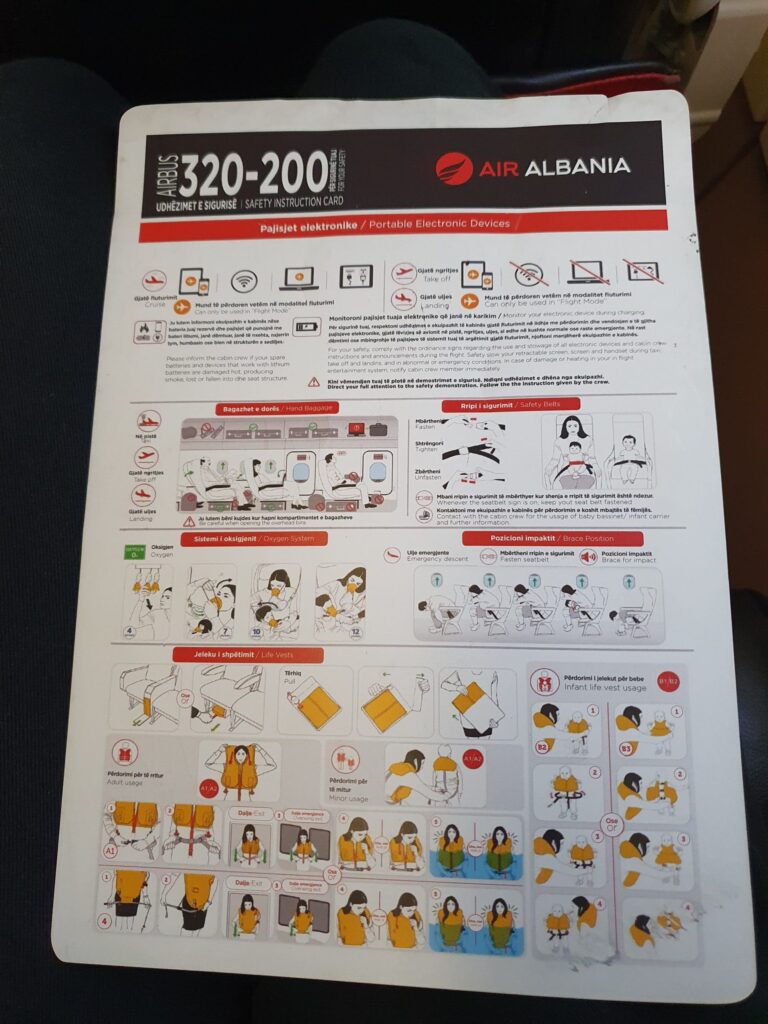
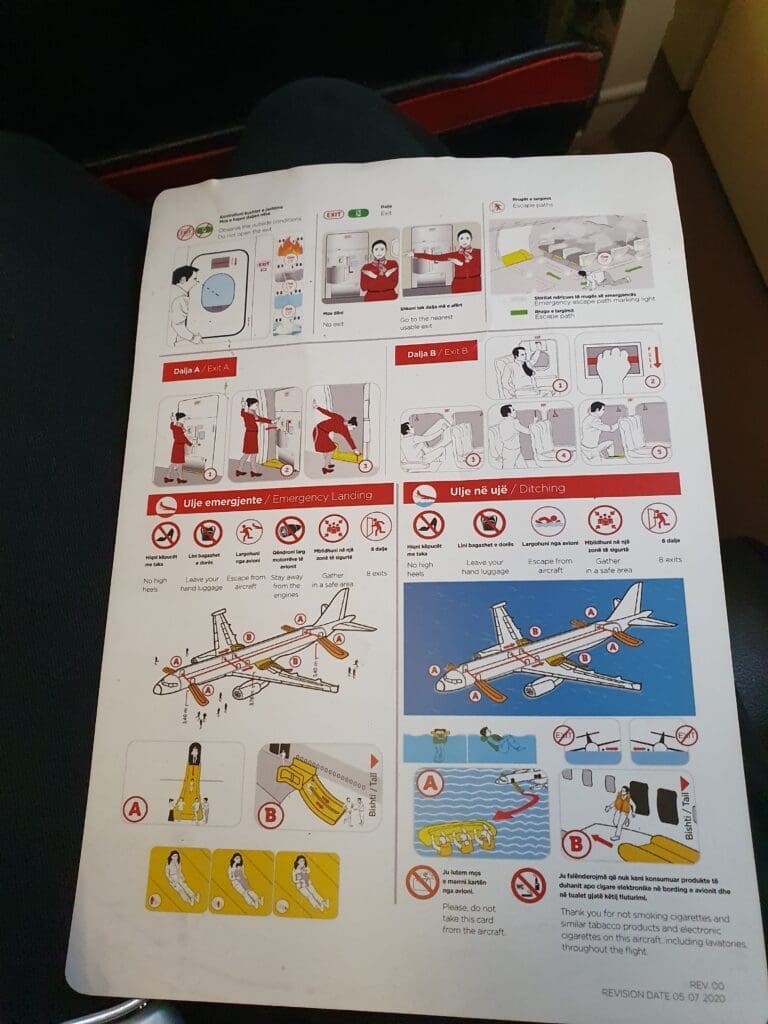
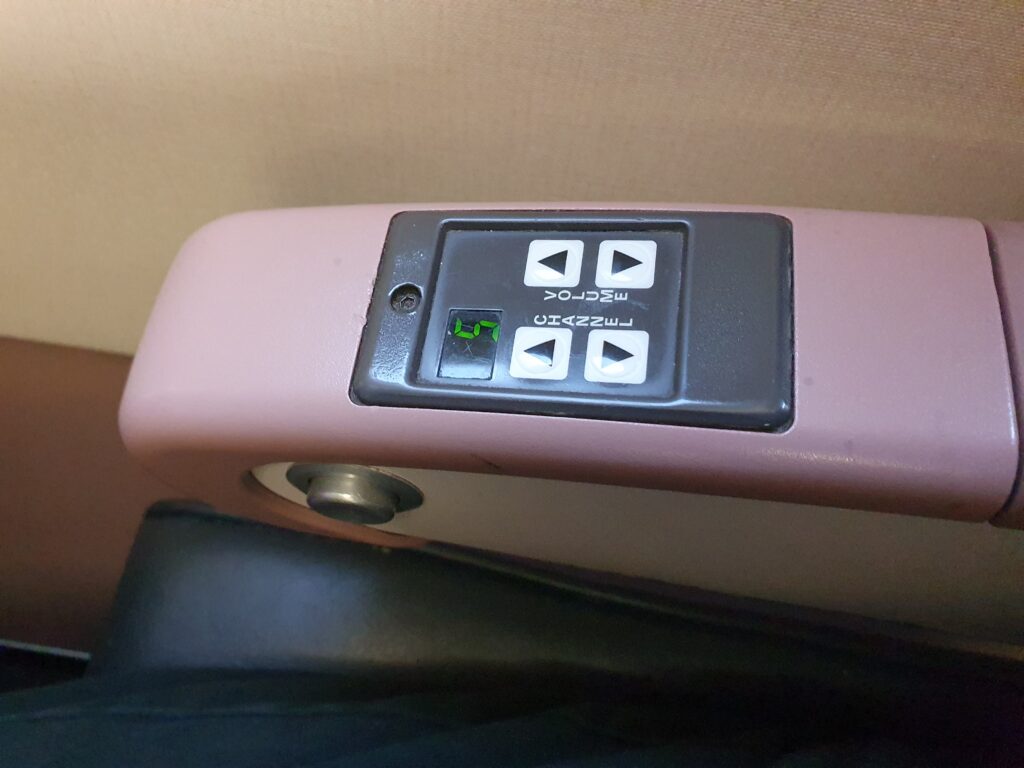
As I made the short journey to my seat, traditional music could be heard blurting out of the cabin’s speakers, something that I always think positively complements the boarding process. Upon reaching Row 19, I was slightly disappointed to see that Seat 19F was not fantastically aligned with a window although the view of course was still far better than that offered by an aisle seat. As I sat down, I was pleased to find that the seat was comfortable and offered an acceptable amount of legroom, however, I did notice that despite the lack of personal inflight entertainment screens, an inflight entertainment box could be seen underneath the middle seat adding another reason for this seat to be avoided where possible. On that note, the aircraft was fitted with overhead screens (although these remained retracted for the entire flight), and channel and volume buttons and a headphone port could be found in the armrest. Turning to the seatback pocket, this contained nothing bar a slightly dogeared safety card, although some others also featured an inflight magazine. Whilst the seat was comfortable, my first impressions of this were somewhat hampered by the omnipresent marks, scratches and well-ingrained dirt that hinted the cabin needed a refresh or at the very least, a deep clean.
Whilst boarding had proven itself to be a slightly chaotic experience, once onboard passengers took their seats and settled in for the flight relatively quickly, with the final passenger entering the cabin ten minutes before our scheduled departure time. These days Albania is fairly well connected to the UK and my flight that morning would be one of five that day between Tirana and London – the others operated by British Airways and Wizz Air. With that considered, I wasn’t entirely sure just how full my flight would be, however with its 0645 departure time proving to be the second most antisocial after Wizz Air’s 0600 service, I had some hope that this would not be completely packed. As it turned out, the flight ended up being around 70% full and I ended up with an empty middle seat separating me from my neighbour. Turning to demographics, with it being the Easter holidays in the UK, unsurprisingly there were plenty of British Albanian families returning home from a break, whilst most other passengers on board seemed to consist of Albanian solo flyers.
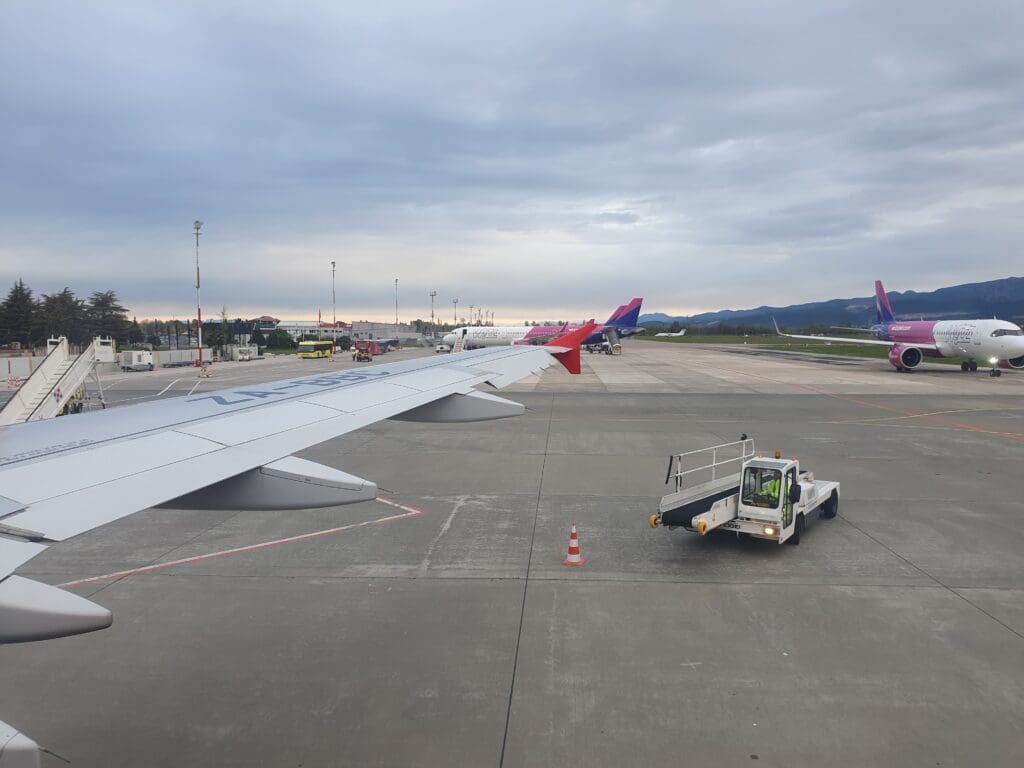
Once all passengers were on board, the final baggage loading ramp was backed up away from the aircraft and the cones around this were removed indicating that a punctual departure was likely. At 0640, the Captain performed their comprehensive welcome speech which contained a warning that we could expect some light turbulence after departure although reassuring all that the rest of the flight would likely be smooth, as well as an overview of the weather in London and the flight time of 2H45. Seeing as Air Albania currently utilises the pilots of its parent airline, Turkish Airlines, unsurprisingly this announcement was conducted in English only. This was immediately followed by the Purser’s welcome announcement which was conducted in both Albanian and English, and then followed by a safety demonstration which consisted of a manual demonstration by two crew members in the aisle whilst the Purser went through the safety instructions. As this was being conducted, at 0645 on the dot, the Airbus jolted back and commenced its pushback, with its two IAE V2527-A5 hairdryer engines quietly powering up after the jet came to a halt.
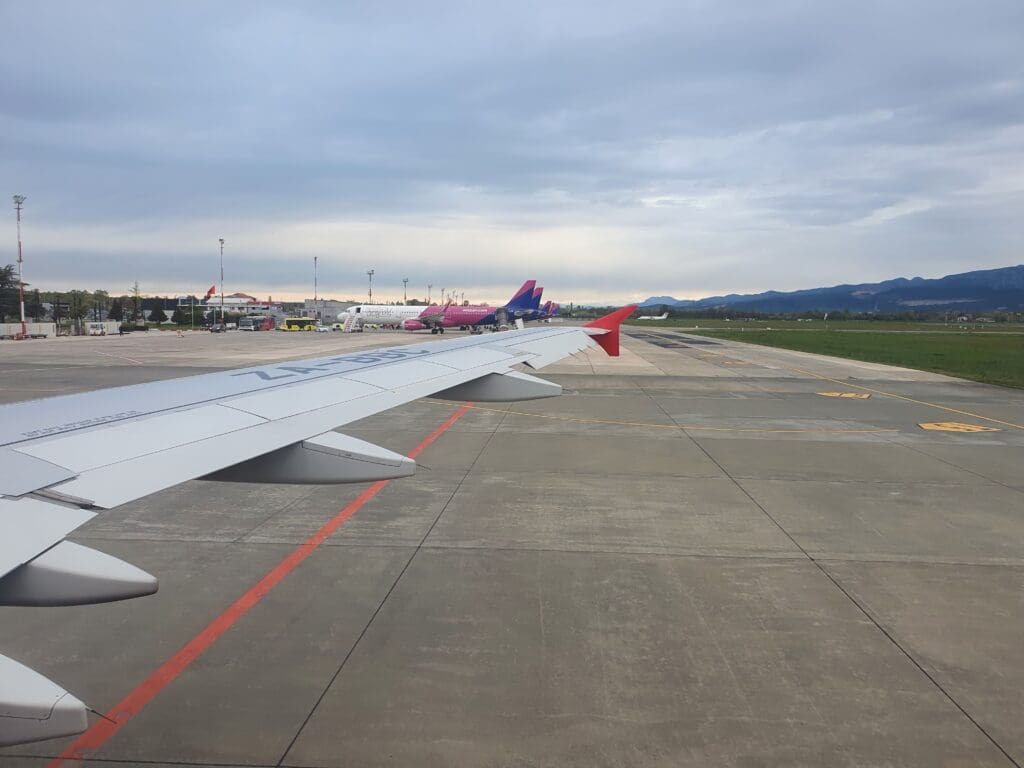
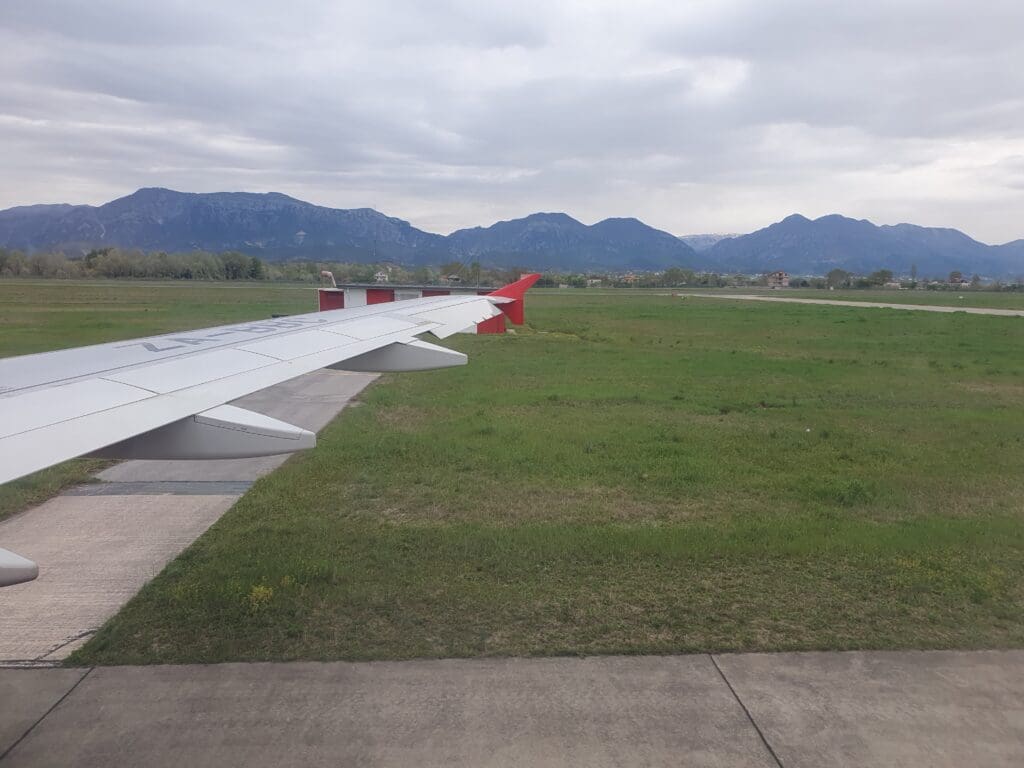
That morning, a very light breeze blowing across the runway meant that departing flights appeared to be taking off from both ends of Tirana Airport’s single runway. With the flight’s route to London taking us northwest, I hoped and expected that we would end up departing from Runway 35, allowing for a good view of the mountains to the east of the airport. However, I was slightly surprised to find that the aircraft instead trundled down the flight line and over to the northern end of the airfield in preparation for a departure from Runway 17. With Tirana Airport being relatively compact, that morning the taxi to the runway was short and the aircraft entered this without any holding before backtracking down to the end of the runway. After turning around, the jet came to a short halt which provided me with just enough time to admire the small collection of rather decrepit-looking aircraft in Tirana Airport’s ‘graveyard’. This featured a former Albanian Airlines BAe 146-300, an Embraer 110 operated by the short-lived Star Airways, an Antonov An-2 and a Socata TB20 Trinidad.
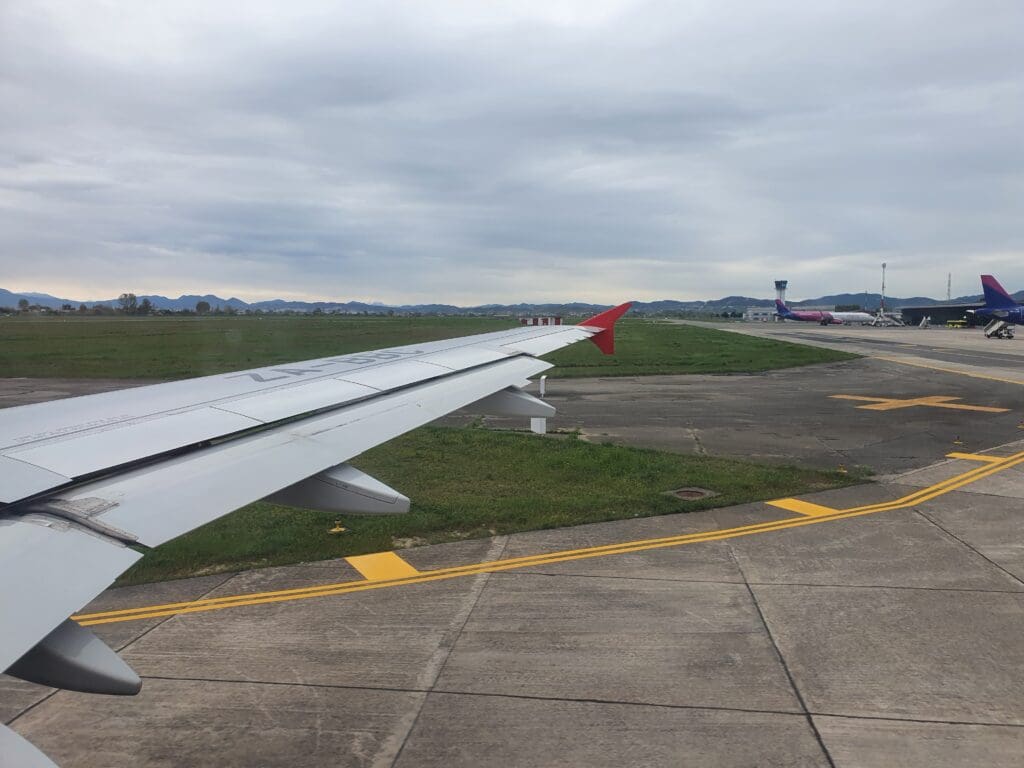

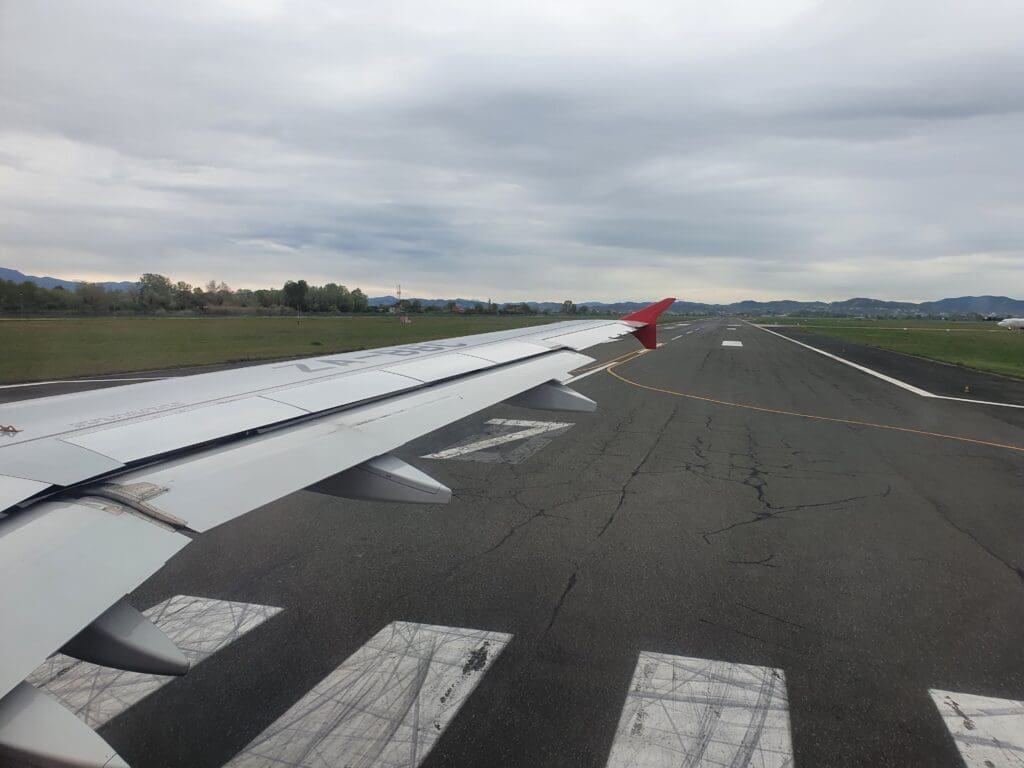
At 0653, the two engines spooled up and the Airbus commenced a powerful take-off roll, flying past the terminal before rotating up into the skies allowing for a view of the interesting collection of stored and preserved Chinese-manufactured aircraft that once served with the Albanian military. As the Airbus climbed away from the airport, whilst those on the left-hand side of the jet were presented with a view of Tirana, sitting on the opposite side I was treated to views of the hilly rural landscape below whilst the coastal city of Durrës could be seen in the distance, along with the blue waters of the Adriatic beyond this.
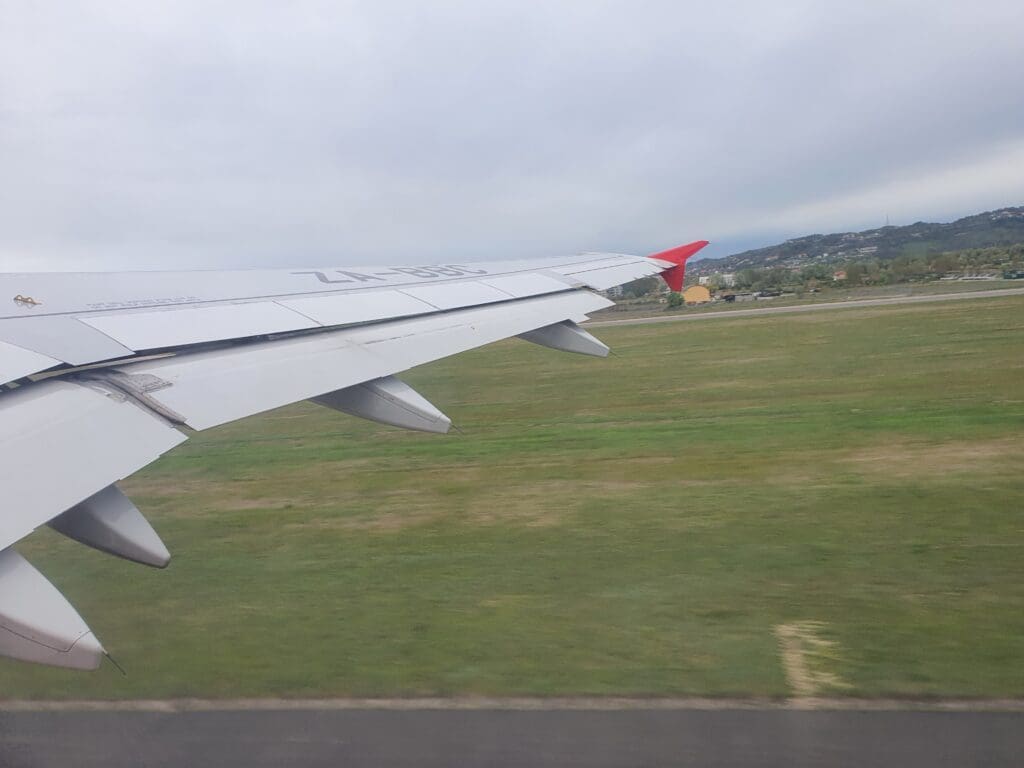
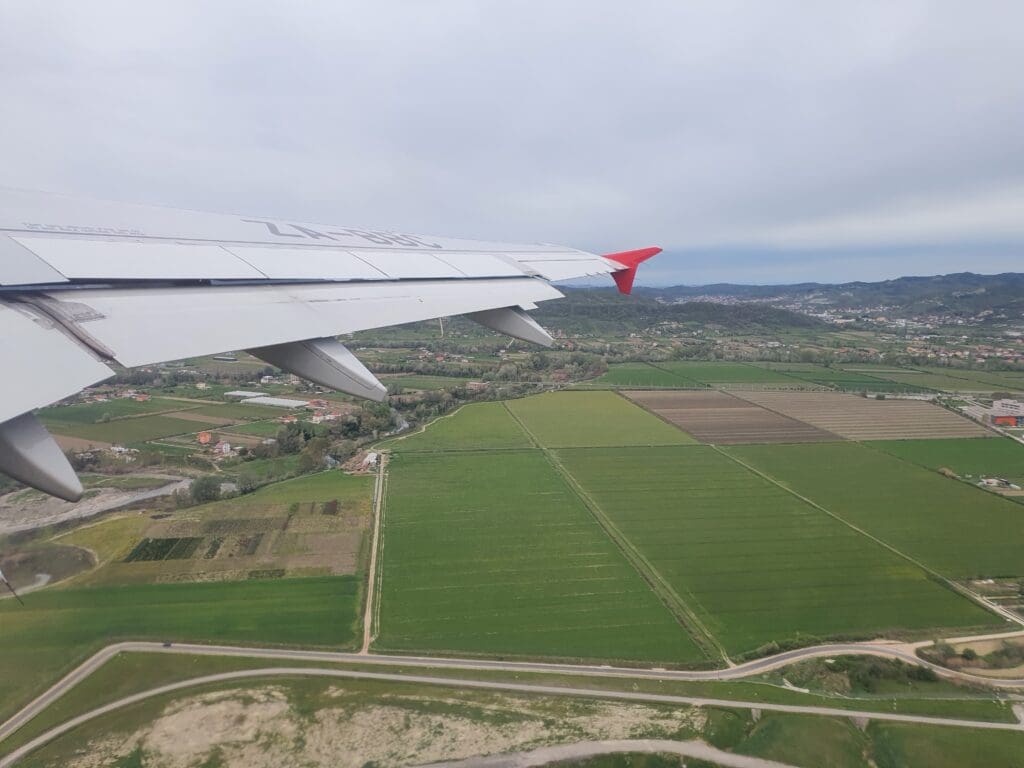
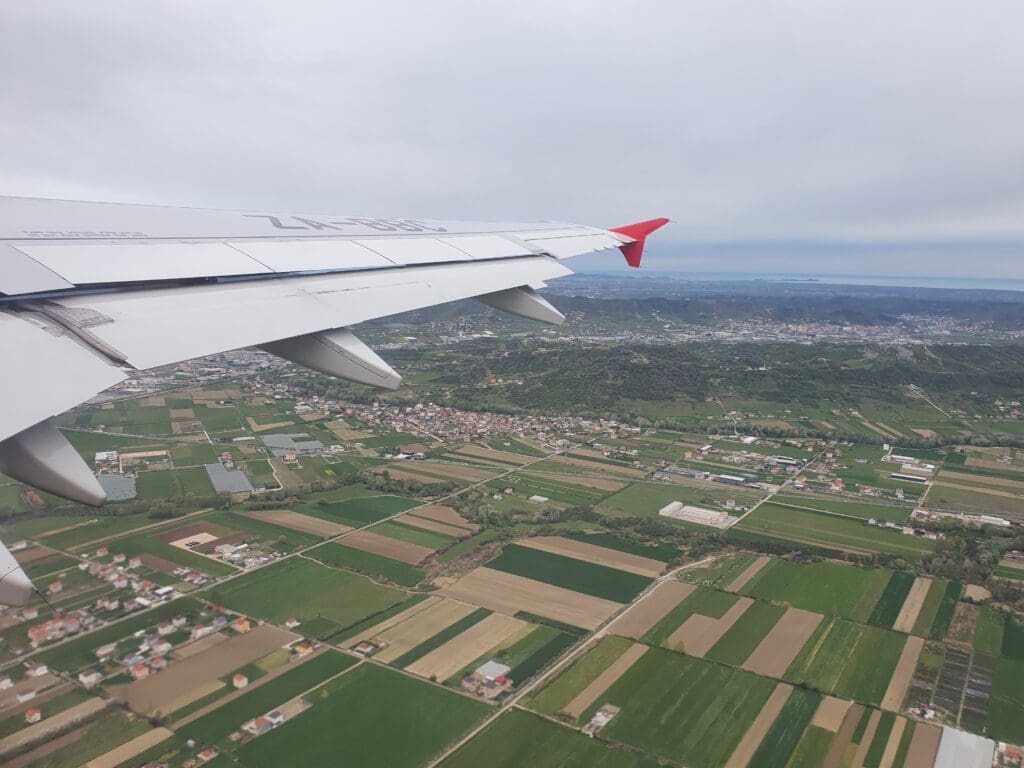
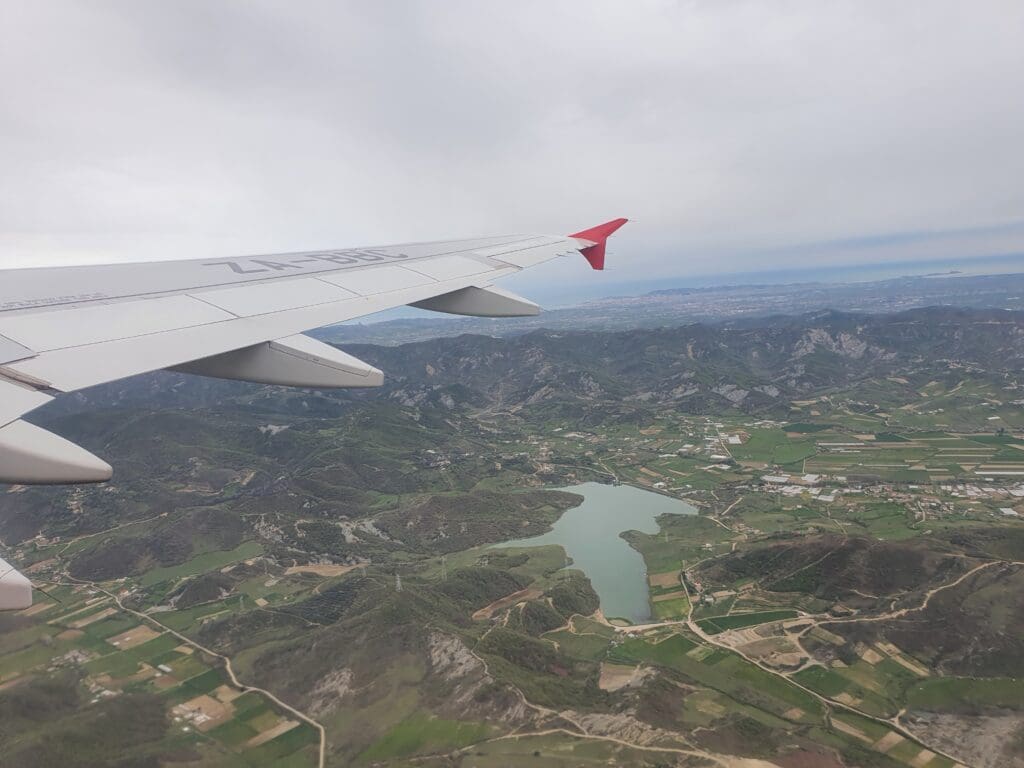
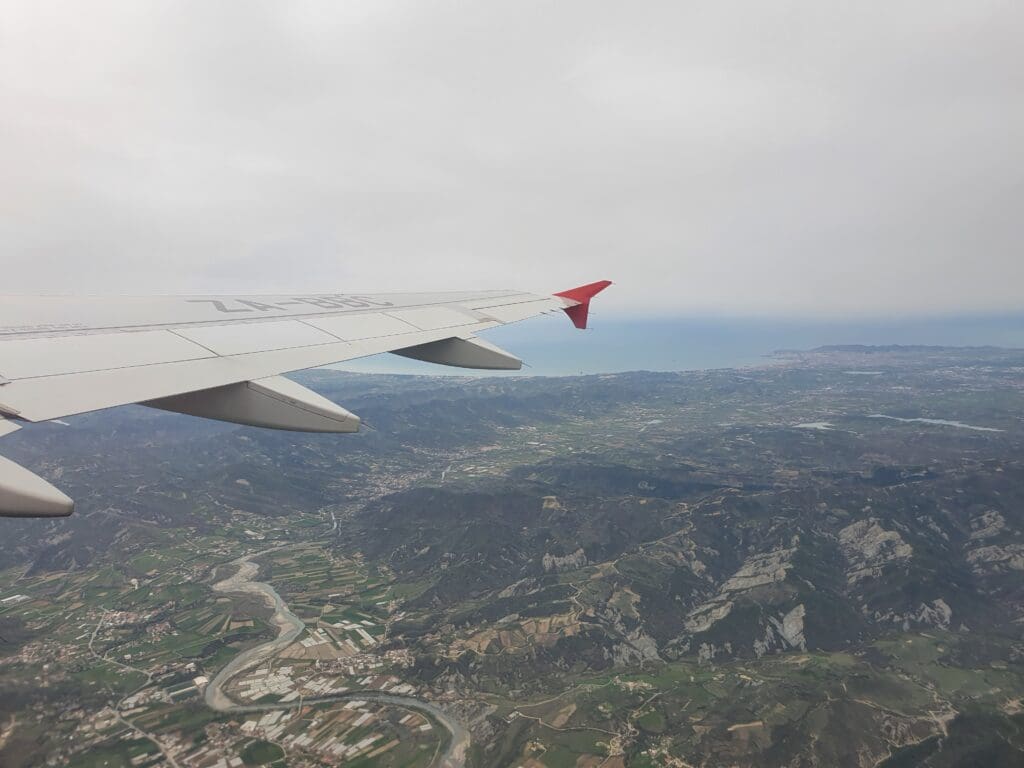
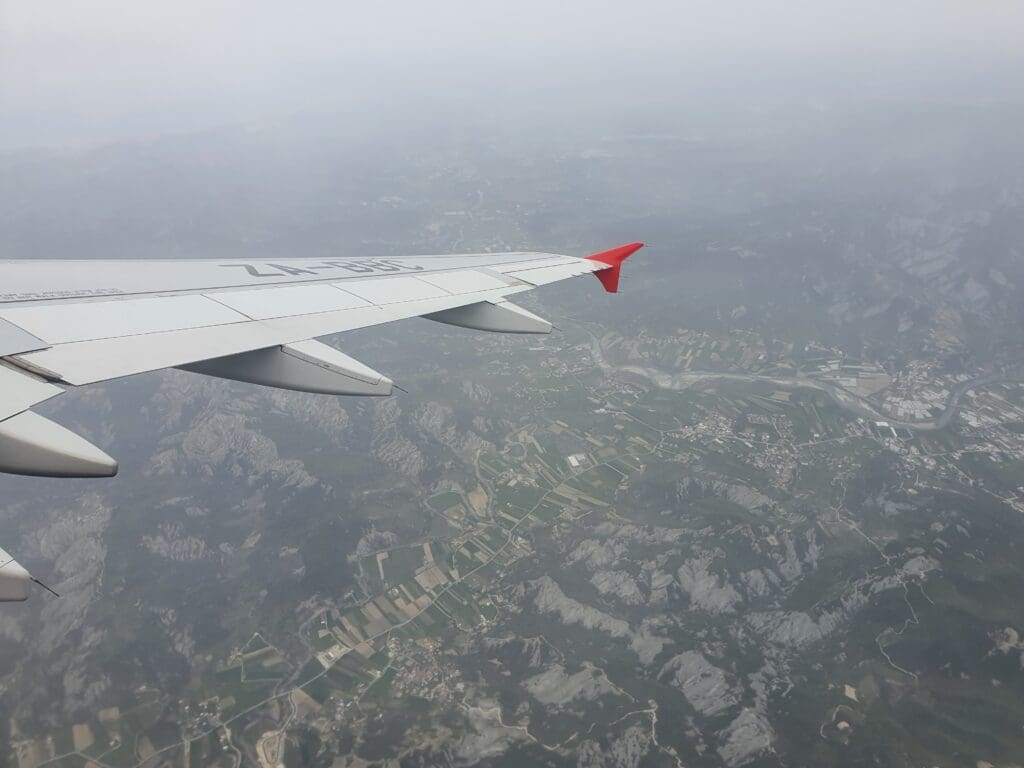
After flying southwards for a couple of minutes, the aircraft banked to the right and rose up into the clouds before rolling out on a northerly heading. Despite the Captain’s mention of turbulence during the initial stages of the flight, up until this point, the ride was smooth and once above the clouds, the crew were released from their seats. A few minutes later, the seatbelt signs were extinguished at which point the Purser made the usual announcement requesting passengers to keep their seatbelts fastened whilst seated. Once above the clouds, nothing could be seen of the hilly Albanian landscape as we sped northwards towards the country’s northern border with Montenegro. Eleven minutes after taking off from Tirana, the Airbus crossed into Montenegrin airspace where it flew along the country’s Adriatic coast passing Ulcinj, Bar, Budva and Kotor. However unfortunately the clouds below meant that nothing could be seen of one of Europe’s smallest countries. Nine minutes later, and just after reaching its cruising altitude of 38,000 feet, the aircraft entered the airspace of Bosnia and Herzegovina where we flew up the eastern side of the country and passed directly over the city of Mostar.
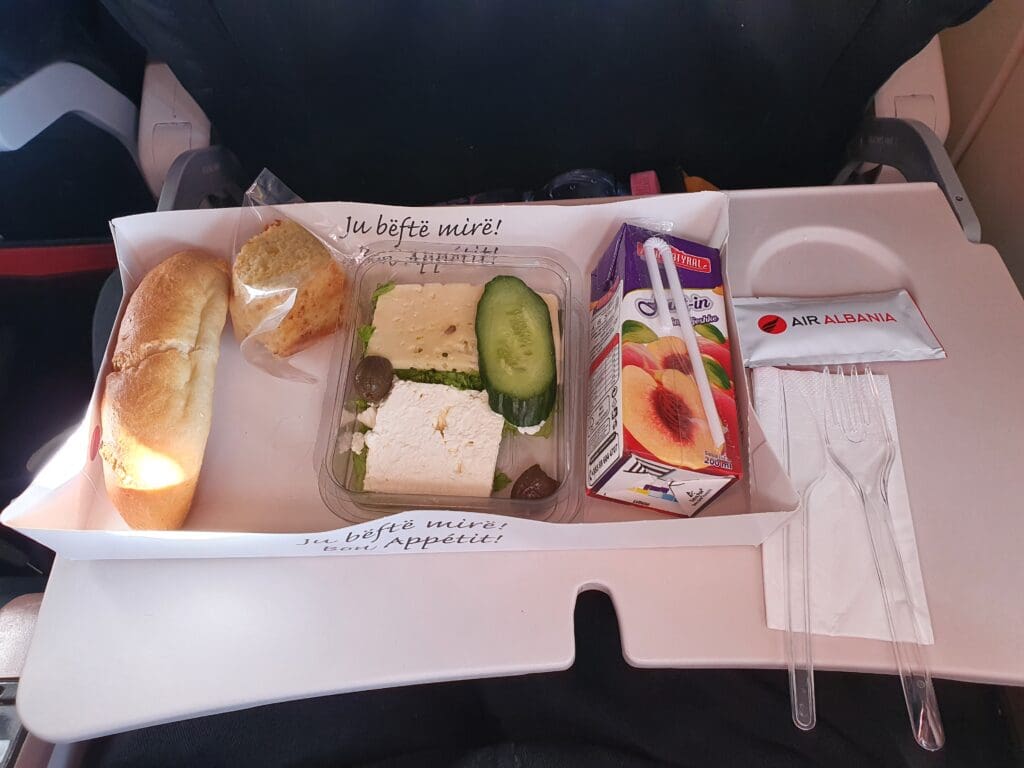
As a full-service airline, Air Albania provides passengers on all of its services with some form of complimentary offering and I was looking forward to seeing what would be in store on the carrier’s longest service. As we cruised over the Bosnian countryside, a flight attendant rolled out a Turkish Airlines trolley to the front of the Economy cabin and soon commenced serving passengers. A couple of minutes later, two additional flight attendants emerged with another trolley and began to serve those passengers seated in the middle of the aircraft before working rearwards. Upon reaching my row, one of the flight attendants handed me a 330ml bottle of Albanian spring water which was followed a few seconds later by an open cardboard box, passing these over without a single word. Examining its contents, this featured a small bread roll, a container with several lettuce leaves, two slices of different types of cheese and two olives, a small cube of cake and a carton of peach nectar juice. This also came with the usual packaged plastic cutlery, a serviette, a sachet of salt and an Air Albania-branded wet wipe. In terms of quality and quantity, this left me with nothing to complain about and far exceeded the offerings, or rather lack of these, onboard other flights between Albania and the UK. However, this service could have been improved by offering passengers a choice of drink, or at least tea or coffee.
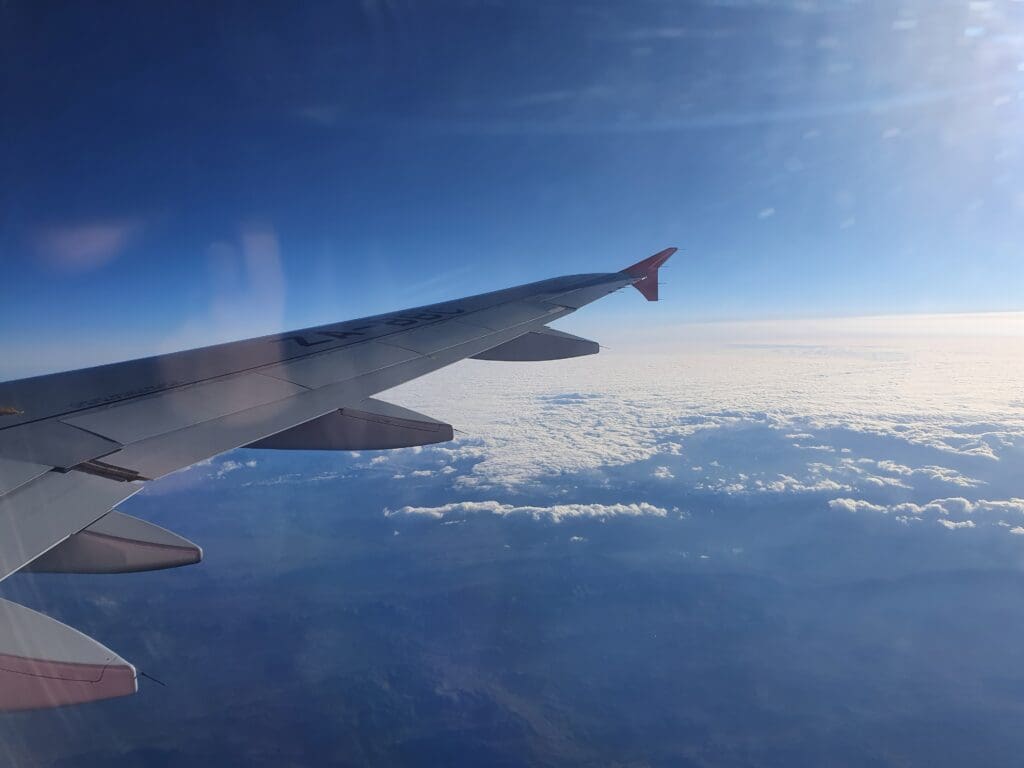
As I munched breakfast, the snow-capped mountains of the Blidinje National Park could be seen passing below at which point the Airbus experienced a fairly rough bout of turbulence which resulted in the re-illumination of the seat belt signs for around five minutes. After finishing breakfast, the landscape flattened out as the aircraft made its way towards Bosnia’s far northwestern border with Croatia. From there, the aircraft made a very quick six-minute crossing of Croatia, before heading into the skies above Slovenia and cutting across the country. At this point, having had minimal sleep, I drifted off for a while before waking up just as the aircraft passed over a very minuscule portion of northeastern Italy before proceeding into Austrian airspace just to the west of the city of Villach. Thanks to the clear skies over Austria that morning, I was relieved to have woken up at just the right time and was treated to superb views of the jagged snow-covered Alps as the aircraft sped northwest across the country.
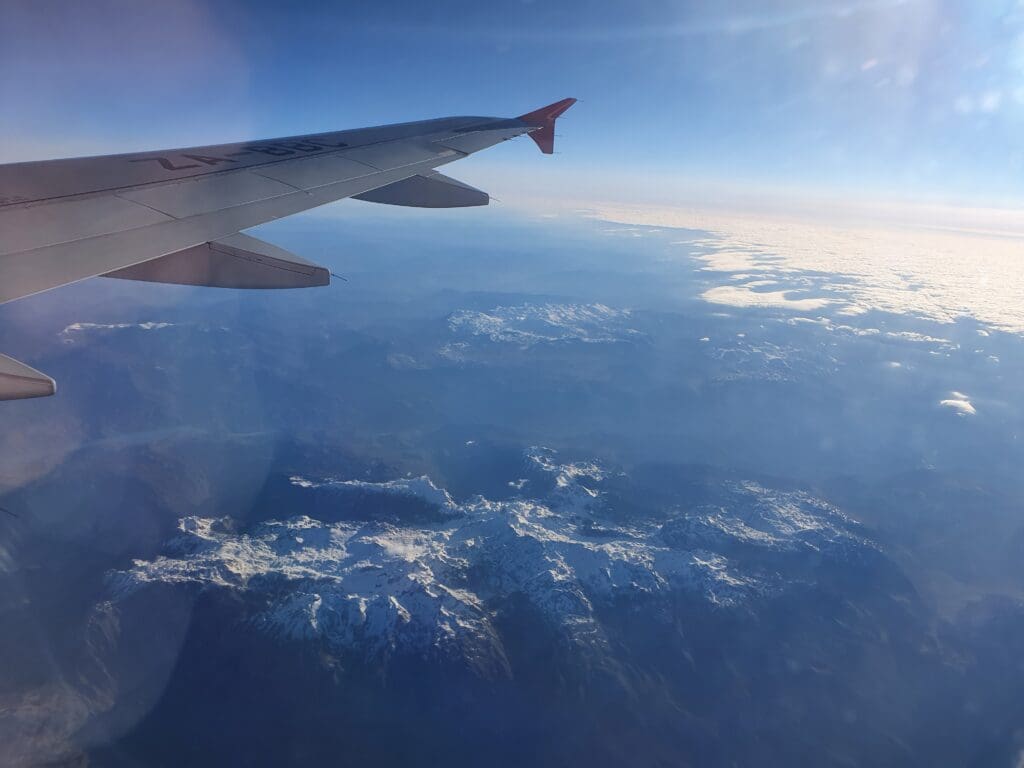
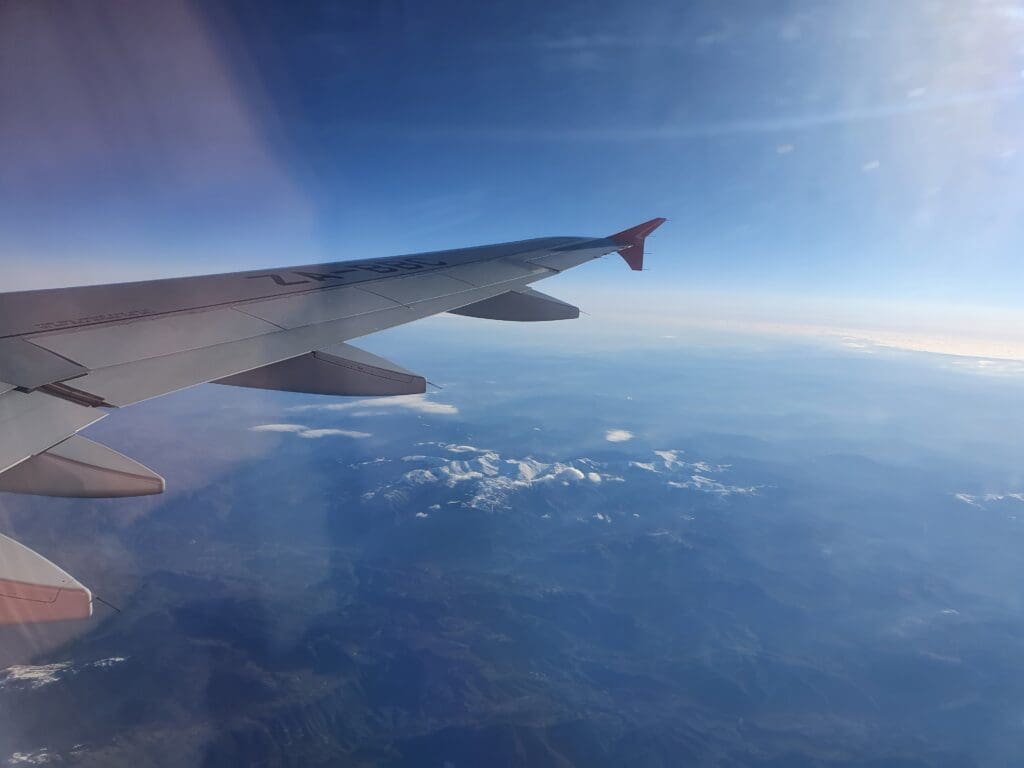
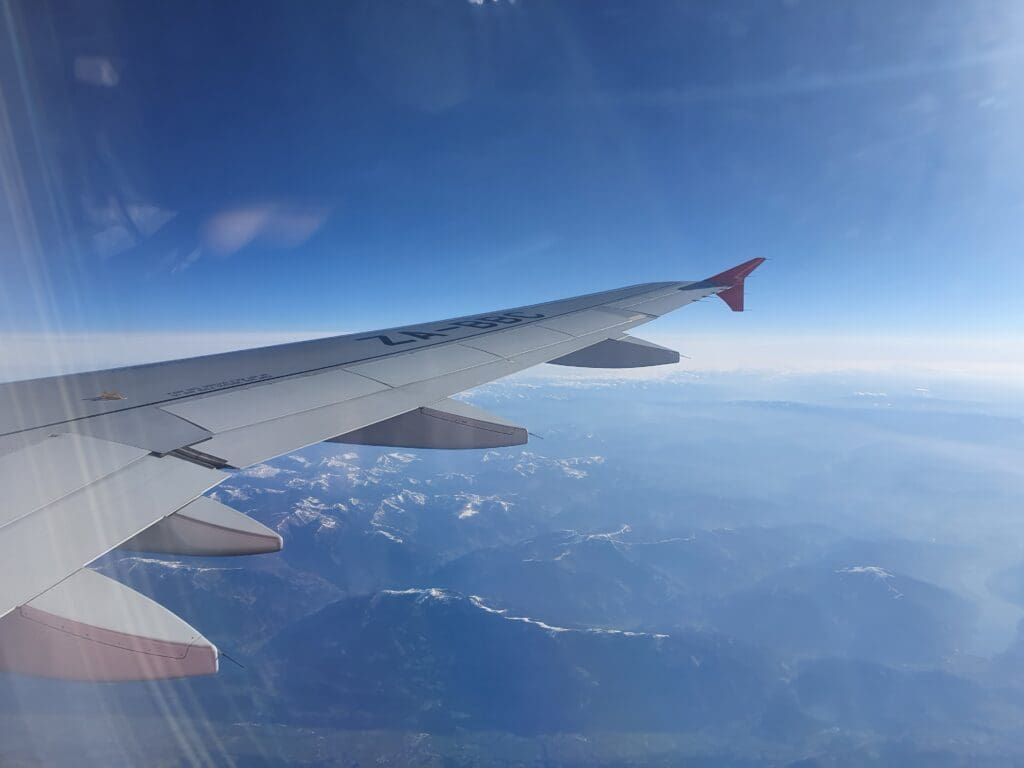
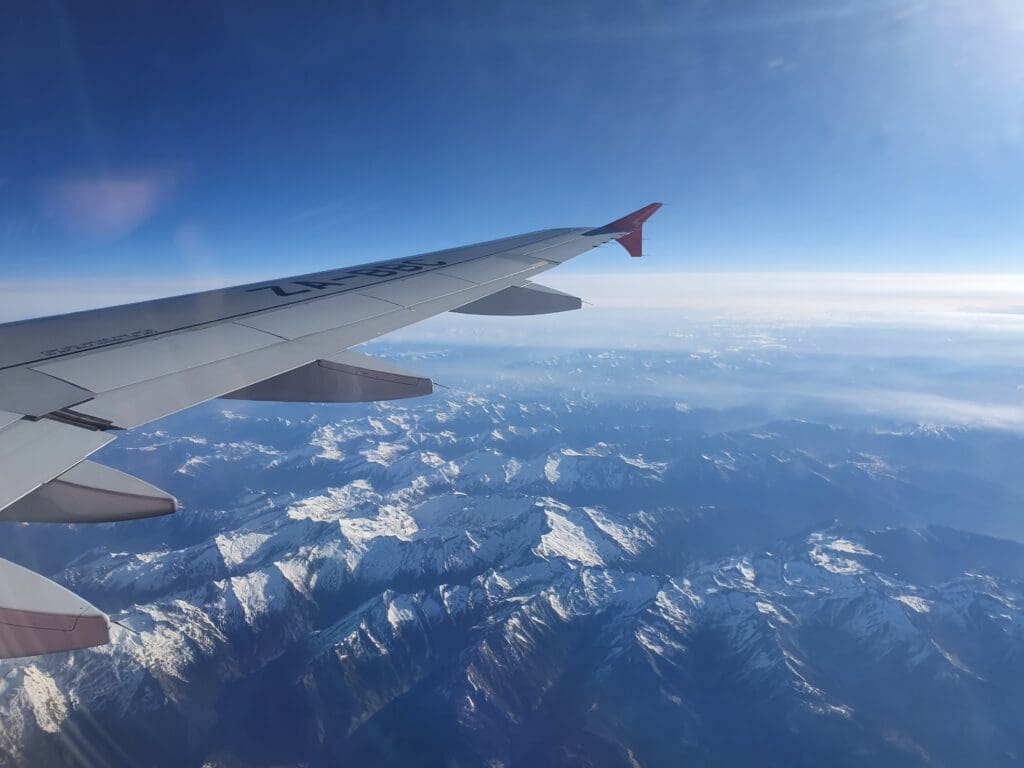
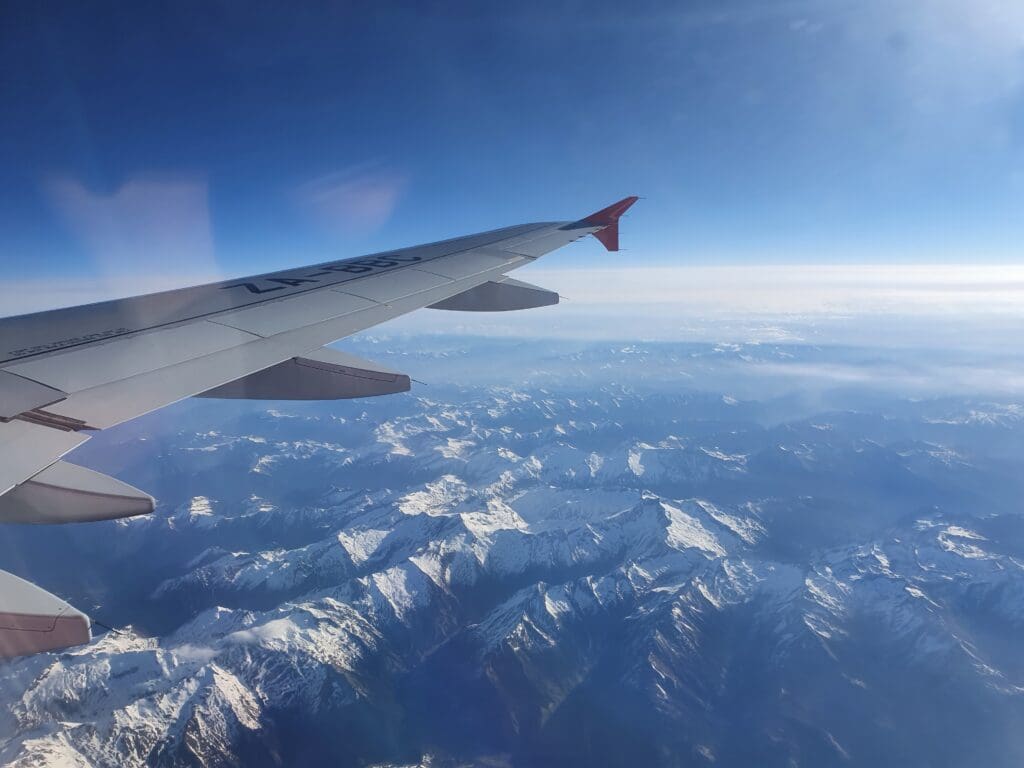
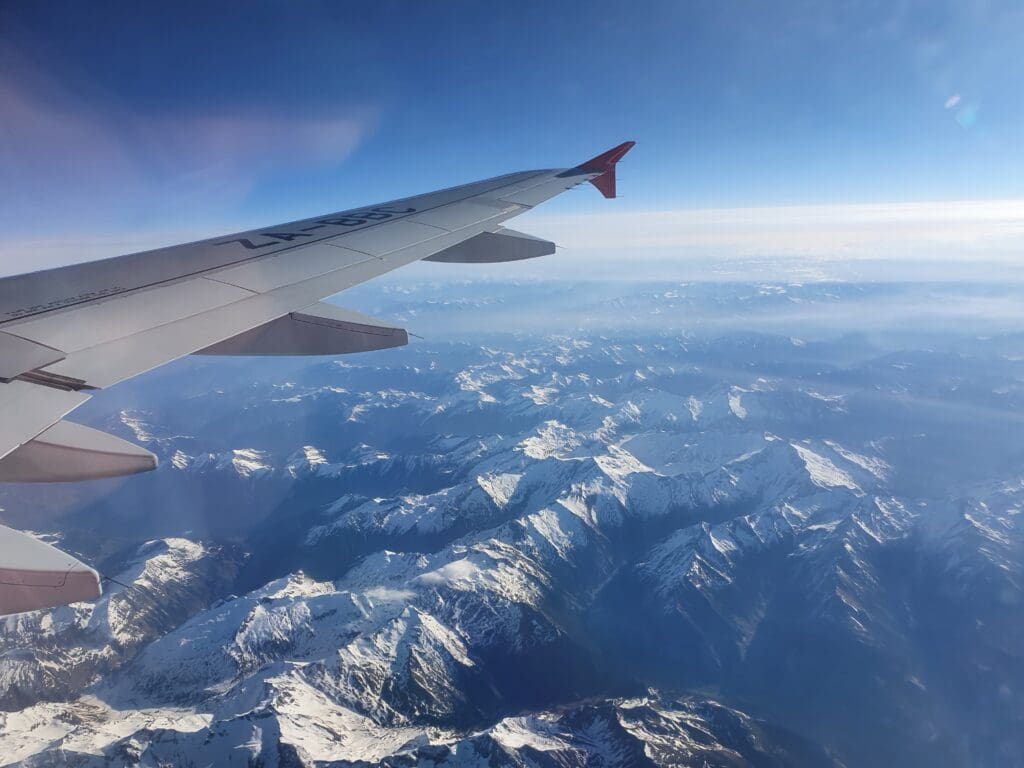
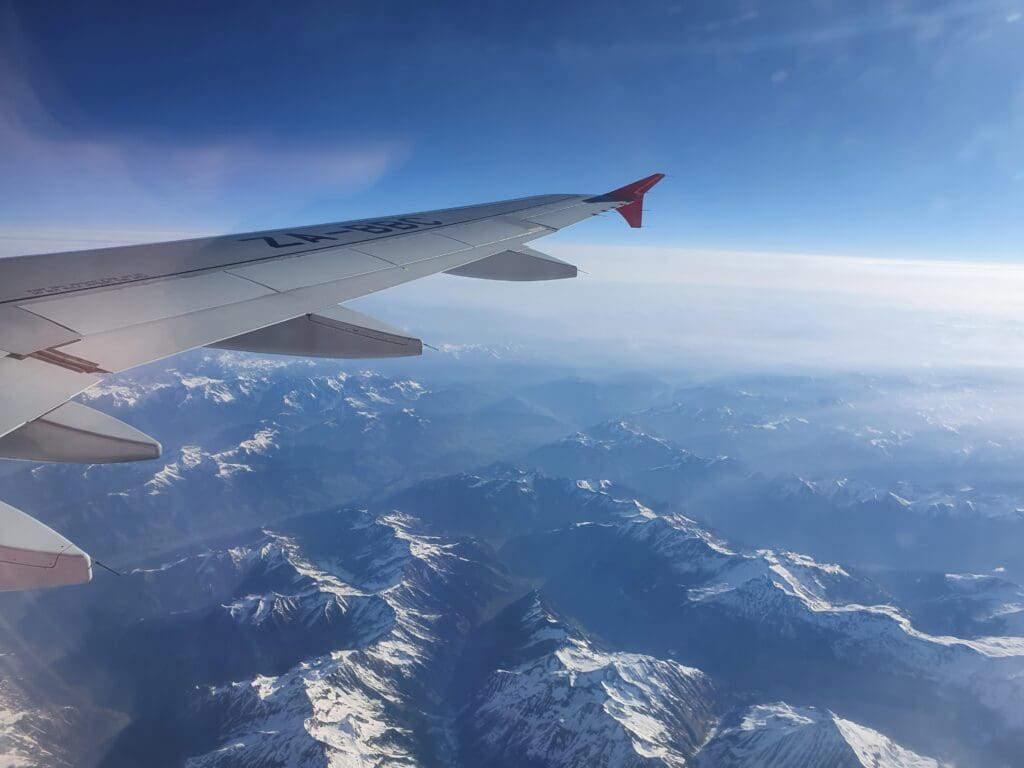
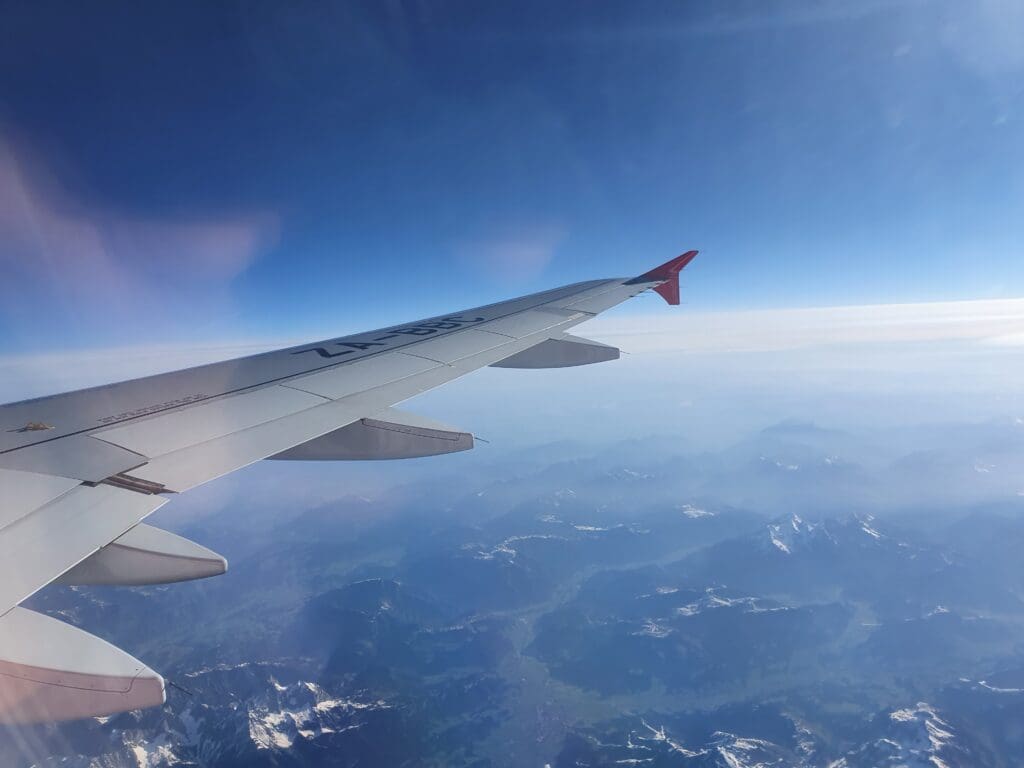
After around fifteen minutes of spectacular mountain views, the aircraft left Austria behind and cruised into German skies, with the land soon flattening before the outline of Munich appeared as we passed the city to the southeast. From there, the aircraft trundled towards the Baden-Württemberg cities of Ulm where the aircraft passed over the Danube, followed by Stuttgart. From there, the aircraft then headed across Rhineland-Palatinate and cruised towards the Belgian border. Turning my attention back inside the cabin, during my journey in April 2022, Air Albania still advocated a mask policy for all passengers over the age of six. During the boarding process, this had been heavily policed with those lacking these pointed in the direction of the duty-free store which had these for sale. Meanwhile, during the initial announcements, the Purser requested that passengers keep these on at all times other than when eating or drinking. However, onboard, I noticed that this was hardly policed, if at all, with plenty of passengers removing their masks and not being reprimanded for doing so, whilst one flight attendant set a poor example by wearing this so that their nostrils poked out above the mask!
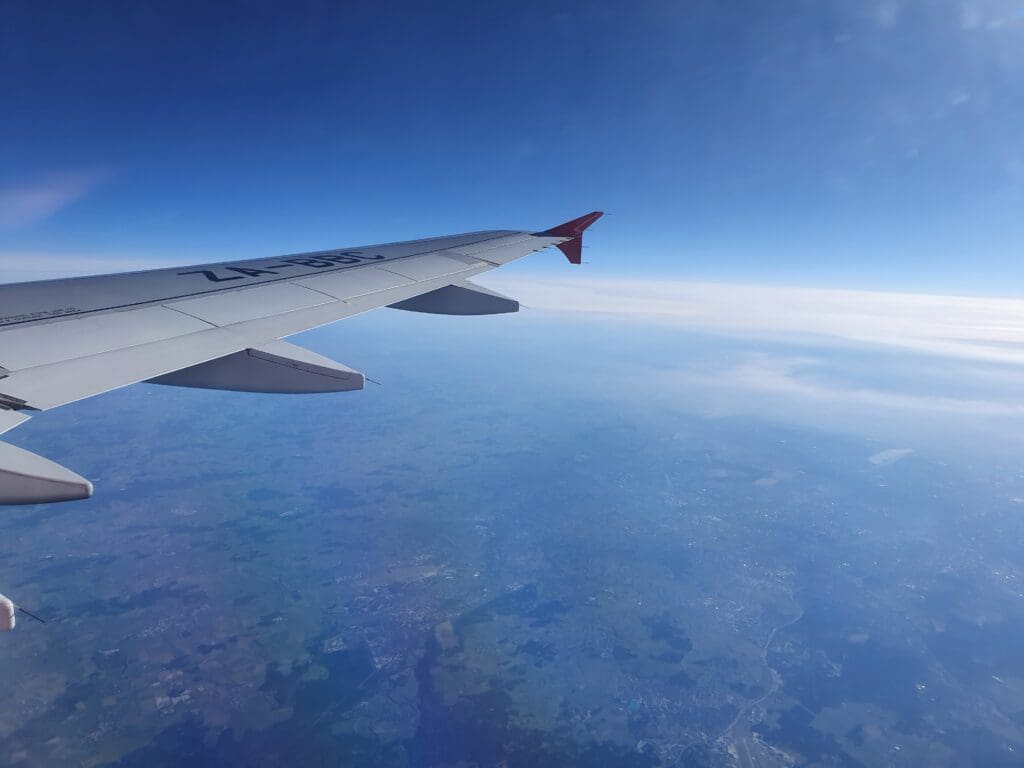
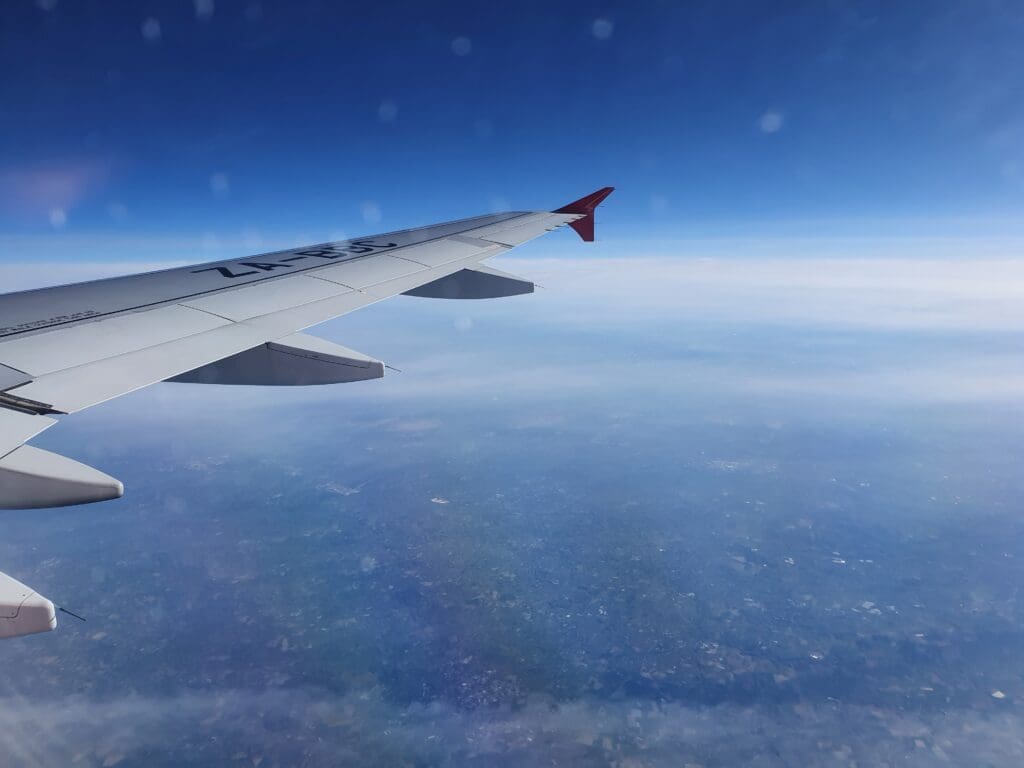
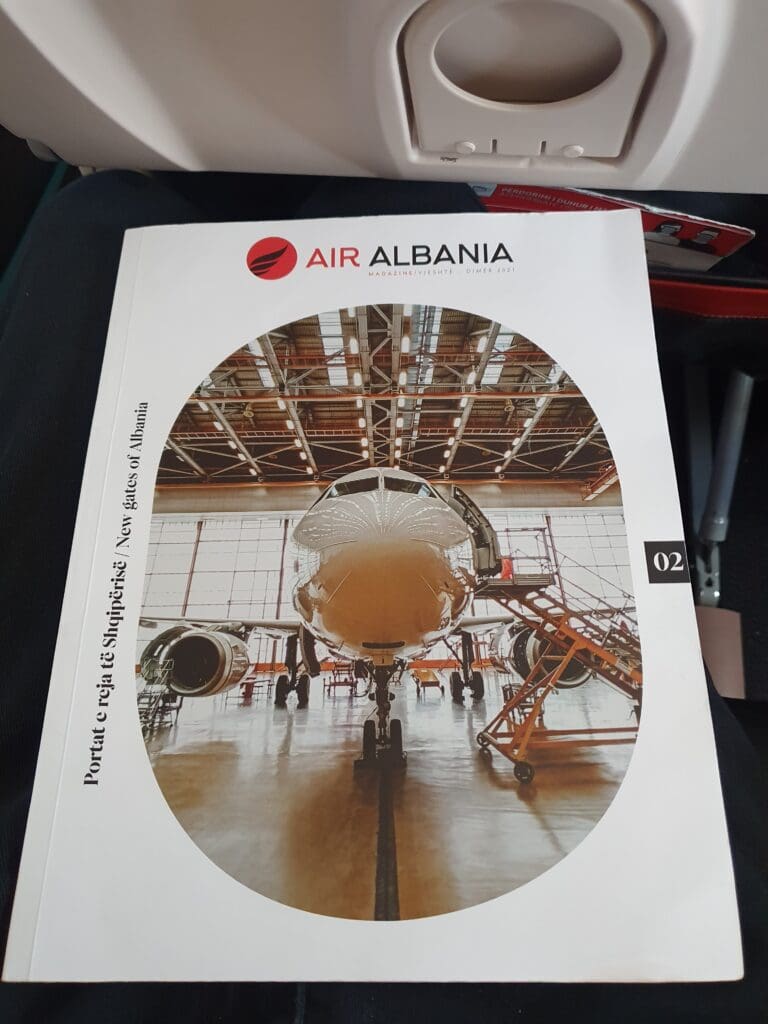
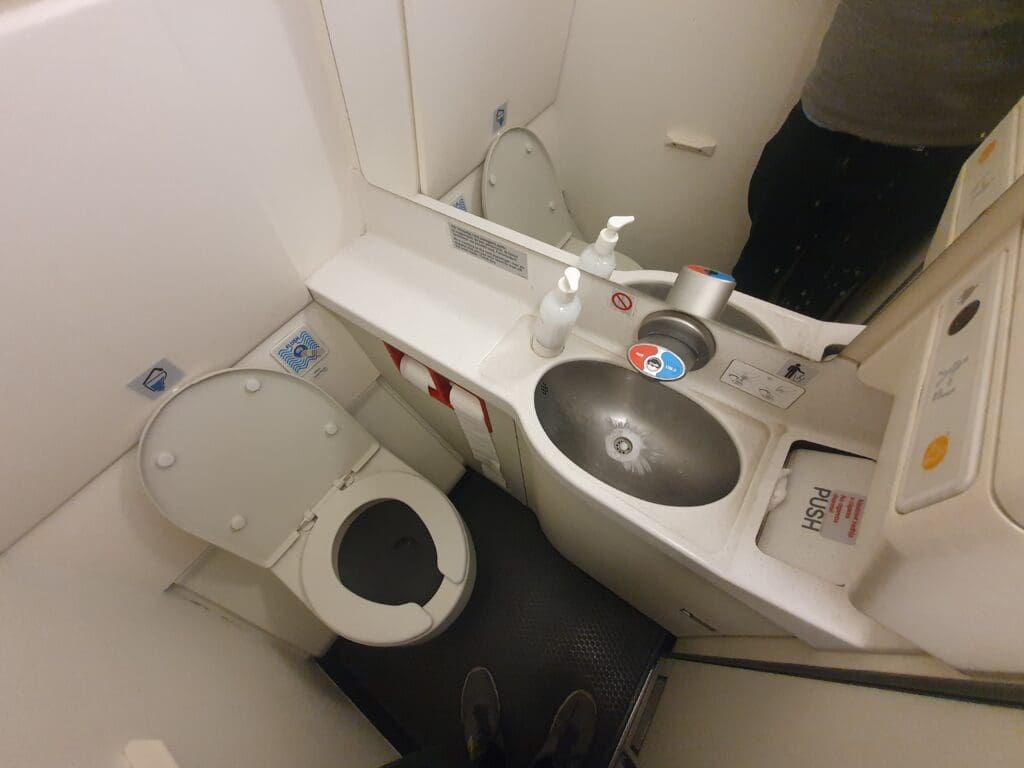
With little to see other than a host of towns popping out of the German countryside, after leaving the Alps behind I decided to make a trip to the toilets at the rear of the aircraft. After squeezing past the aisle seat occupier who sternly refused to stand up to let me out, I made my way to the rear of the aircraft and following a short wait entered one of the two lavatories. Seeing as a near-constant stream of passengers had been making their way to the rear of the aircraft ever since the seatbelt signs had been switched off, I was not entirely sure what state this would be in. However, to my delight, this still appeared to be relatively clean and was stocked with all the basics that you would expect to find onboard an aircraft lavatory. During my wait for this, I noticed that the seatback pockets at the rear of the aircraft featured a winter 2021 copy of Air Albania’s inflight magazine as well as a Covid information card and so as I journeyed back to my seat, I picked up the latter and took this back with me.
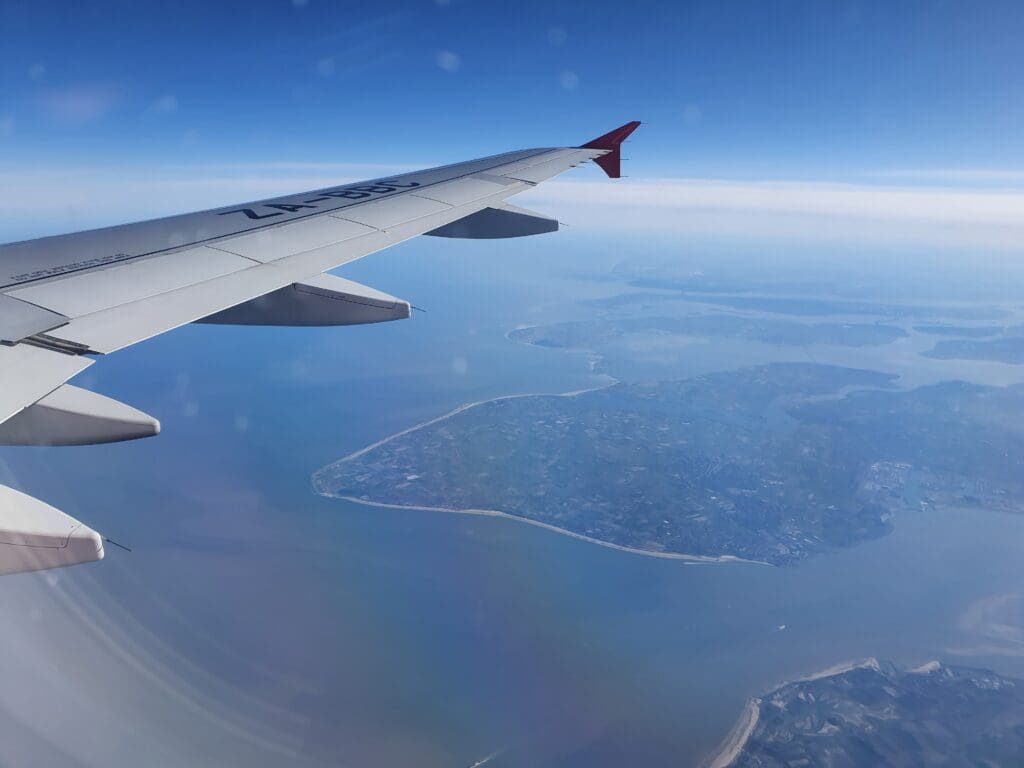
Crossing over the Belgian border just to the north of Luxembourg’s northernmost tip, the aircraft made its way towards Liege at which point I decided to have a quick flick through the inflight magazine. Other than the usual advertisements, of which there were many, this featured a range of articles on Albania-related subjects, as well as pieces on Istanbul, Milan and Rome, an introduction from Air Albania’s CEO and some pieces of information on the airline. Returning to the flight, from Liege, the aircraft then headed onto Brussels and then Ghent at which point the aircraft could be felt leaving its cruising altitude and commencing its descent back to the ground. A short time later, the aircraft passed over a very small portion of the Netherlands with the entirety of the Midden-Zeeland Peninsula visible before the aircraft passed over the Belgian port of Zeebrugge and made its way out over the North Sea at 0810 BST.
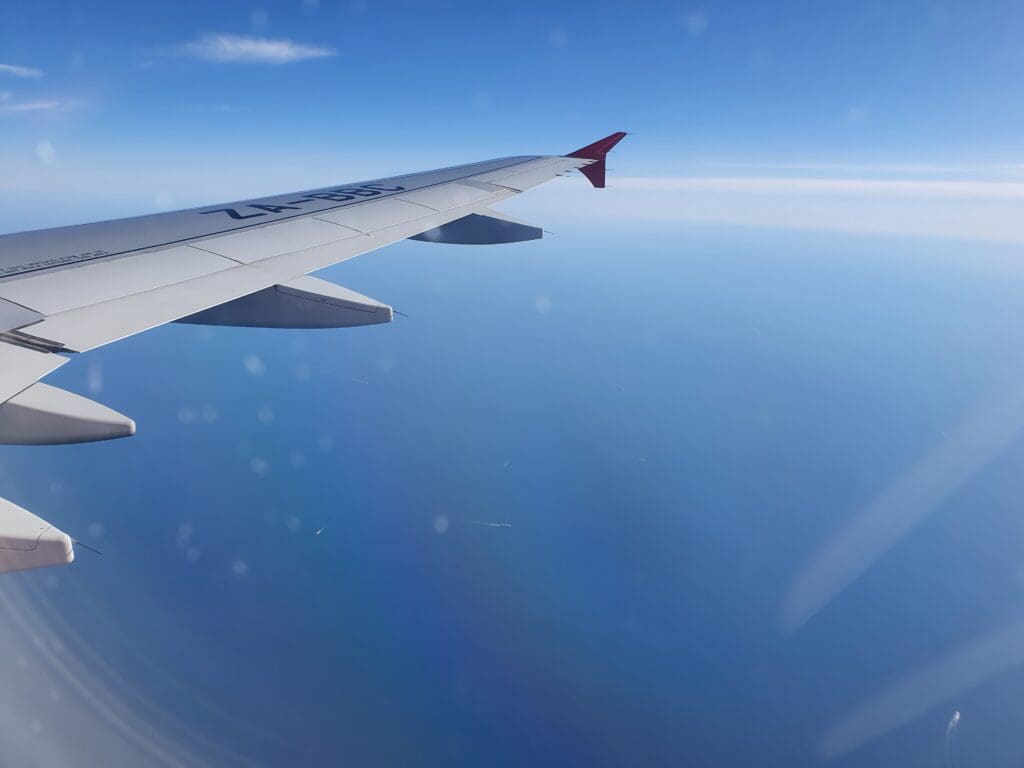
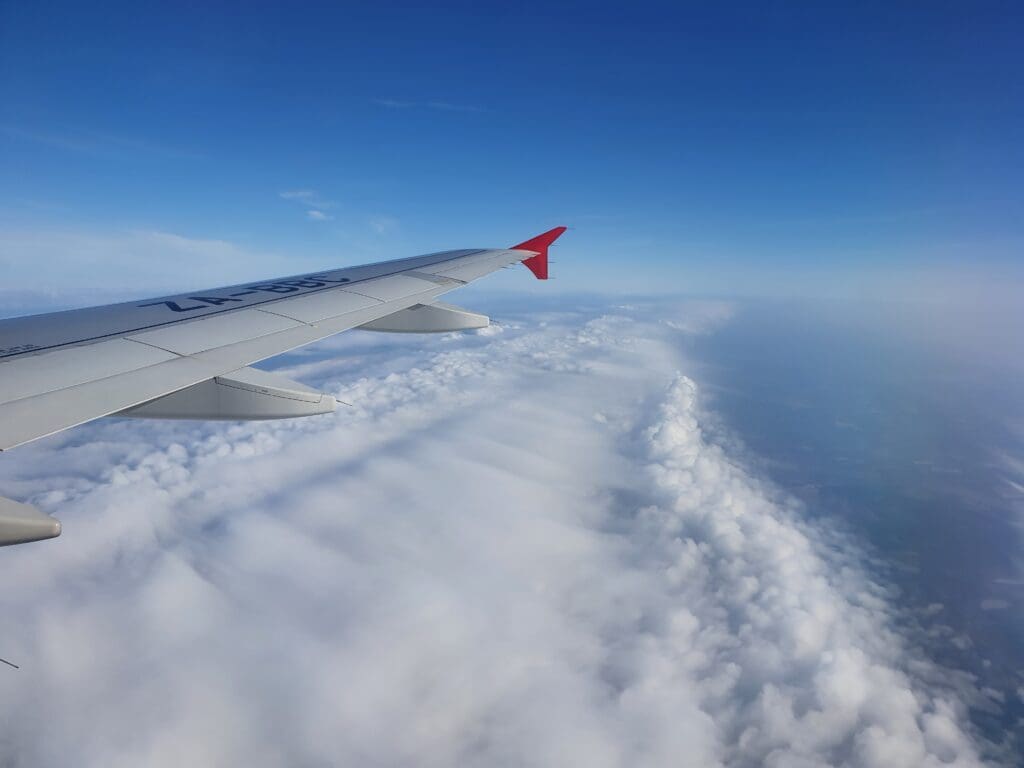
After leaving the coast behind, the sights of rows and rows of wind turbines could be seen, before being replaced by vistas of vessels ranging from small fishing trawlers to gigantic container ships. Meanwhile inside the cabin, at 0820 the Captain performed their second and final announcement of the flight during which they mentioned that the aircraft had commenced its descent into Stansted, updated us on the weather and wished us a good day in London. After this, the seatbelt signs were reilluminated which was followed by the usual pre-arrival announcement from the Purser before the crew passed through the cabin ensuring all was in place for our arrival into Stansted. That morning, the crew appeared to have some difficulty with getting some passengers back into their seats, with there being a small amount of commotion thanks to a passenger several rows ahead who appeared to want to spend the final moments of the flight standing up.
As the Purser made their pre-arrival announcement, Suffolk’s coastline appeared as the aircraft passed over more wind farms, before the aircraft made landfall over the Suffolk Coast and Heaths Area of Natural Beauty at 0823, thirteen minutes after leaving Belgium behind. Despite the chilly temperatures, the unusually clear and cloudless skies that morning allowed for good views of the southern portion of East Anglia. After passing the town of Ipswich, the Airbus descended over picturesque fields and villages of Suffolk, followed by Essex and Cambridgeshire.
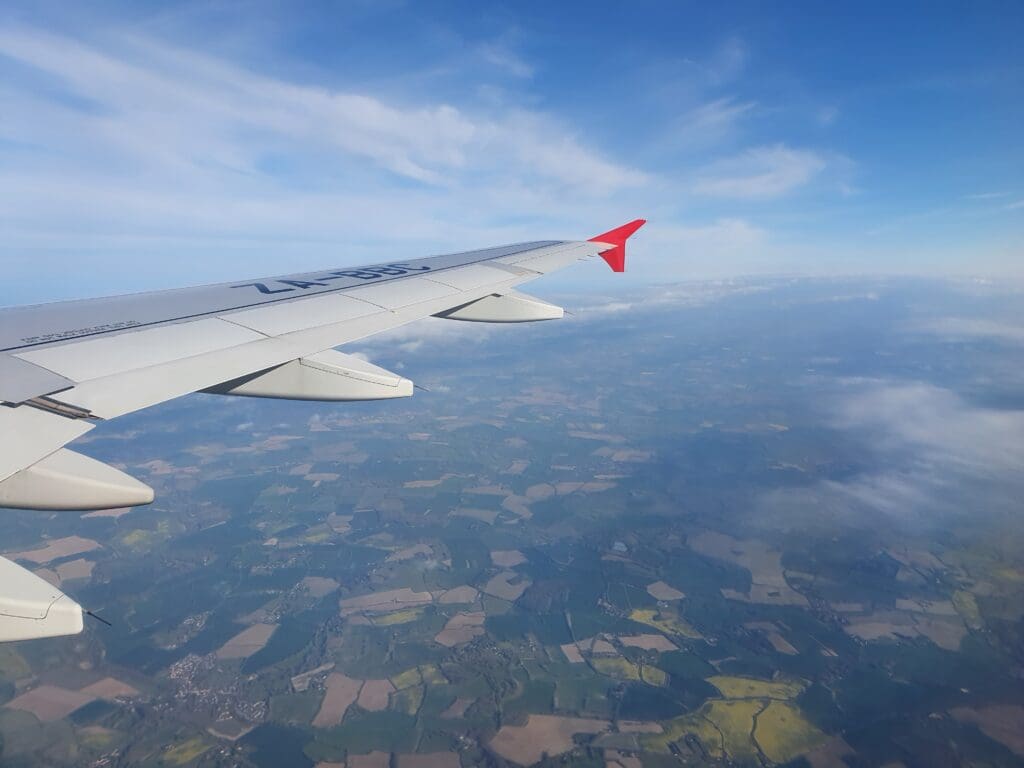
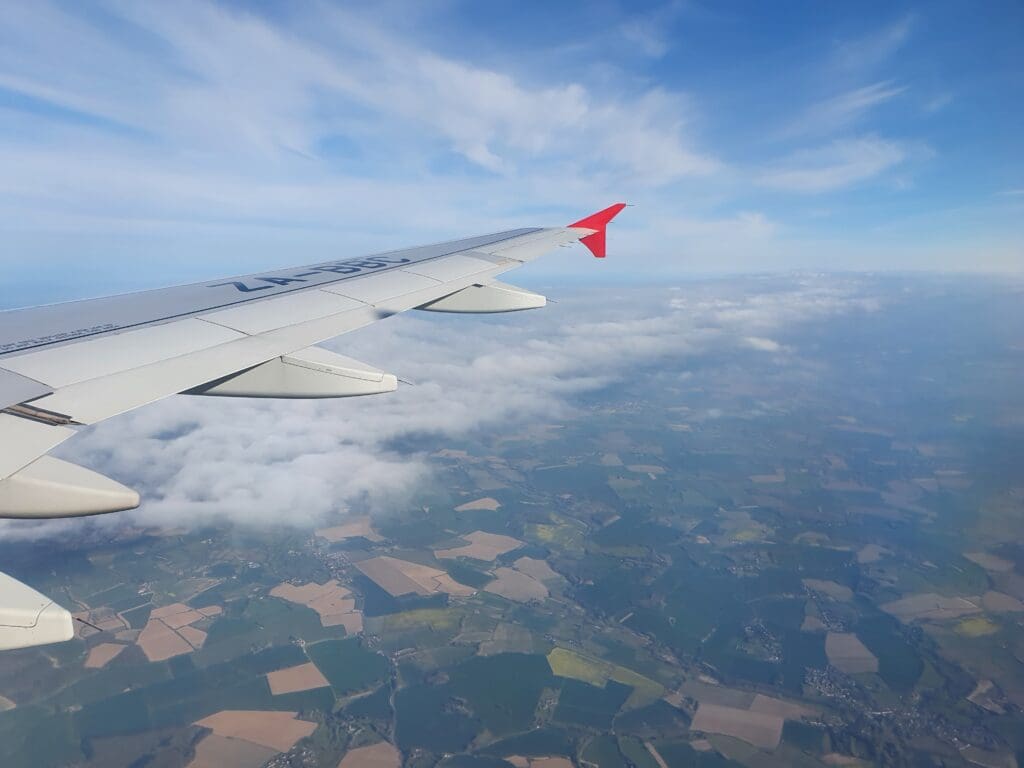
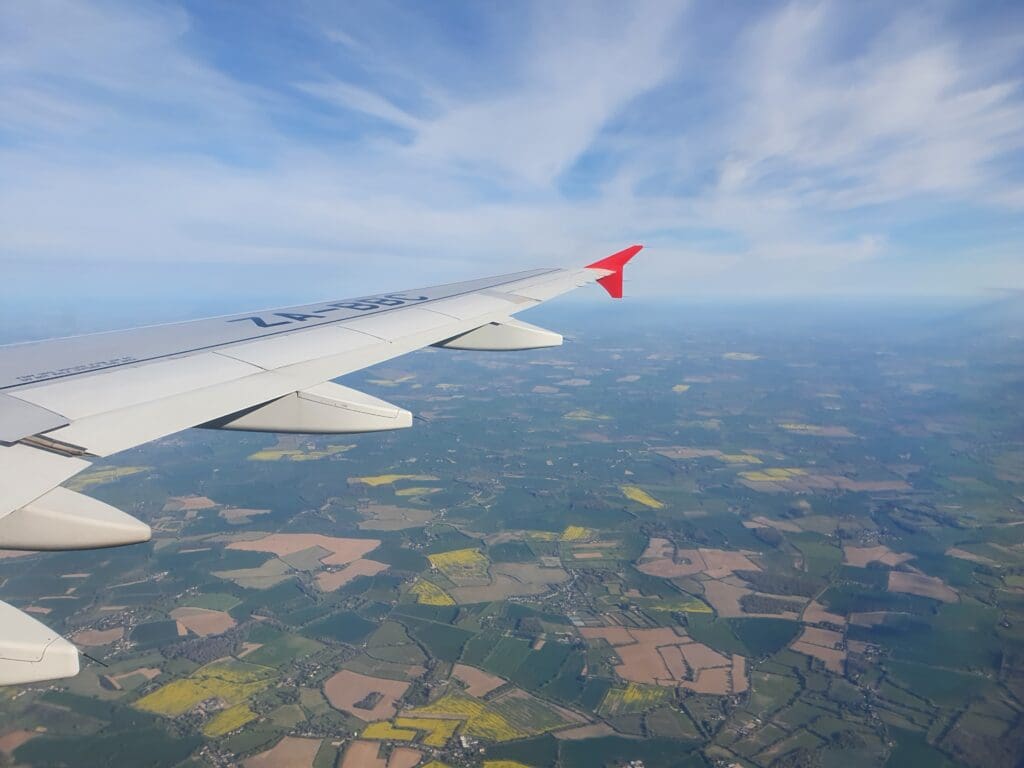
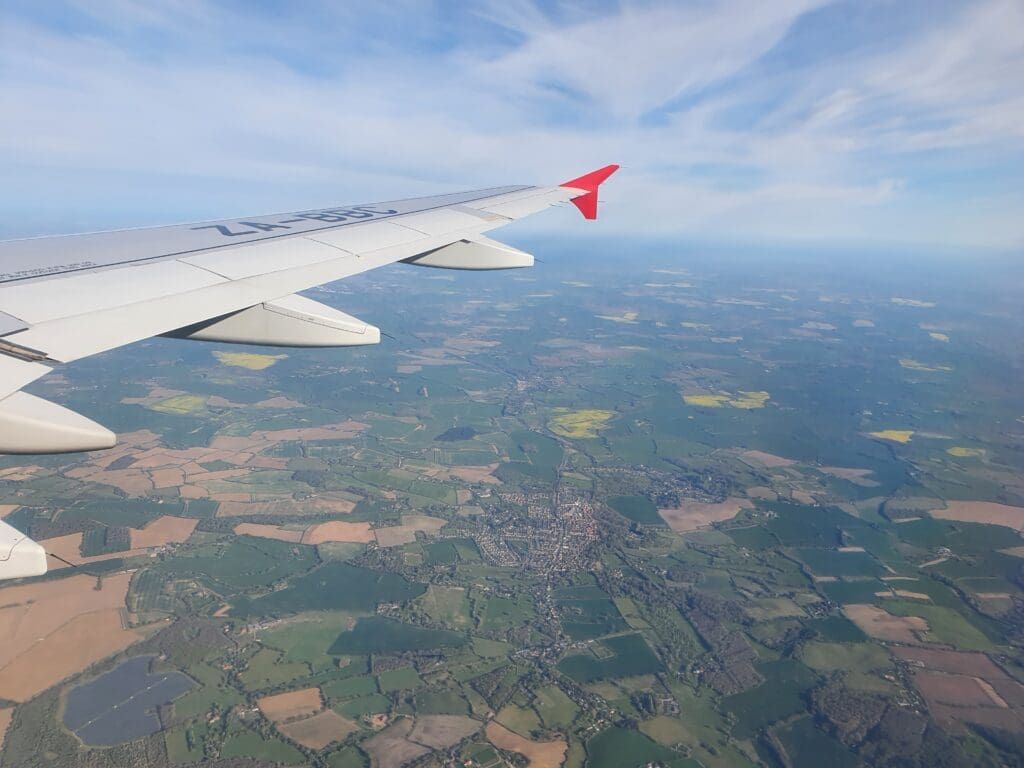
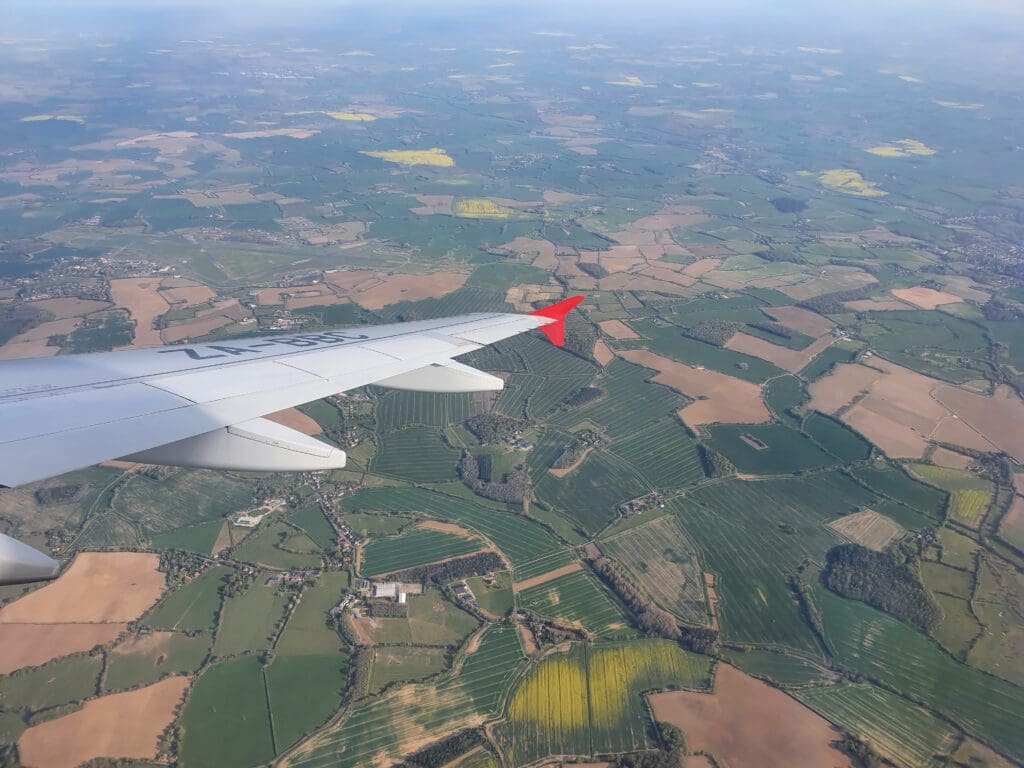
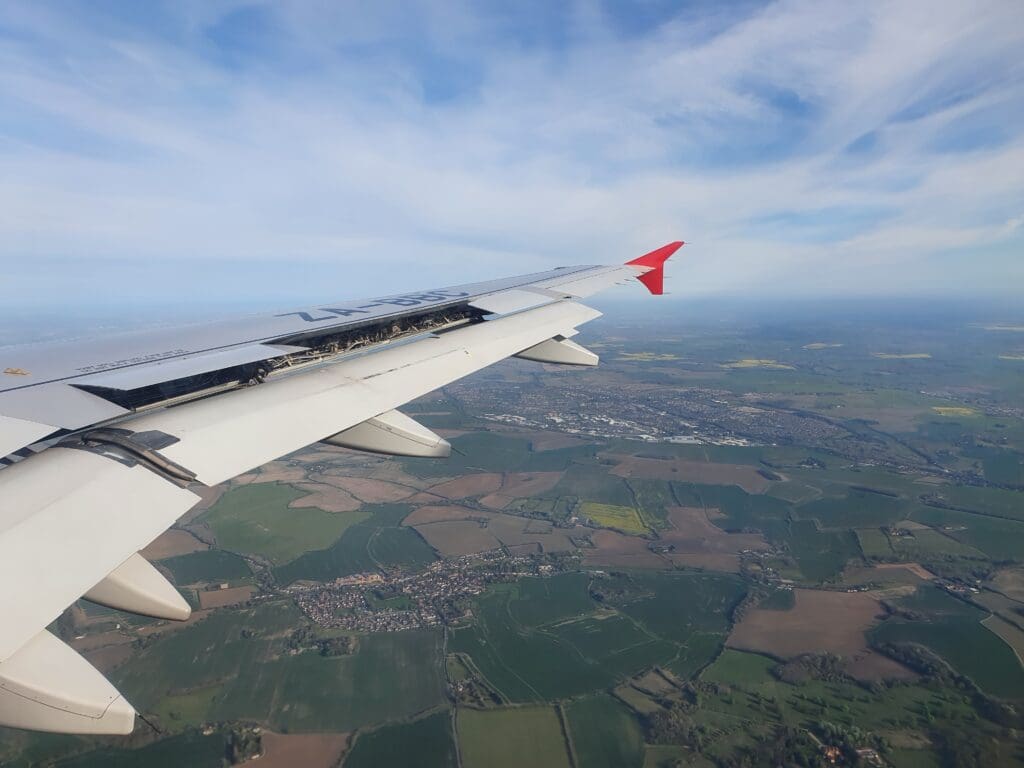
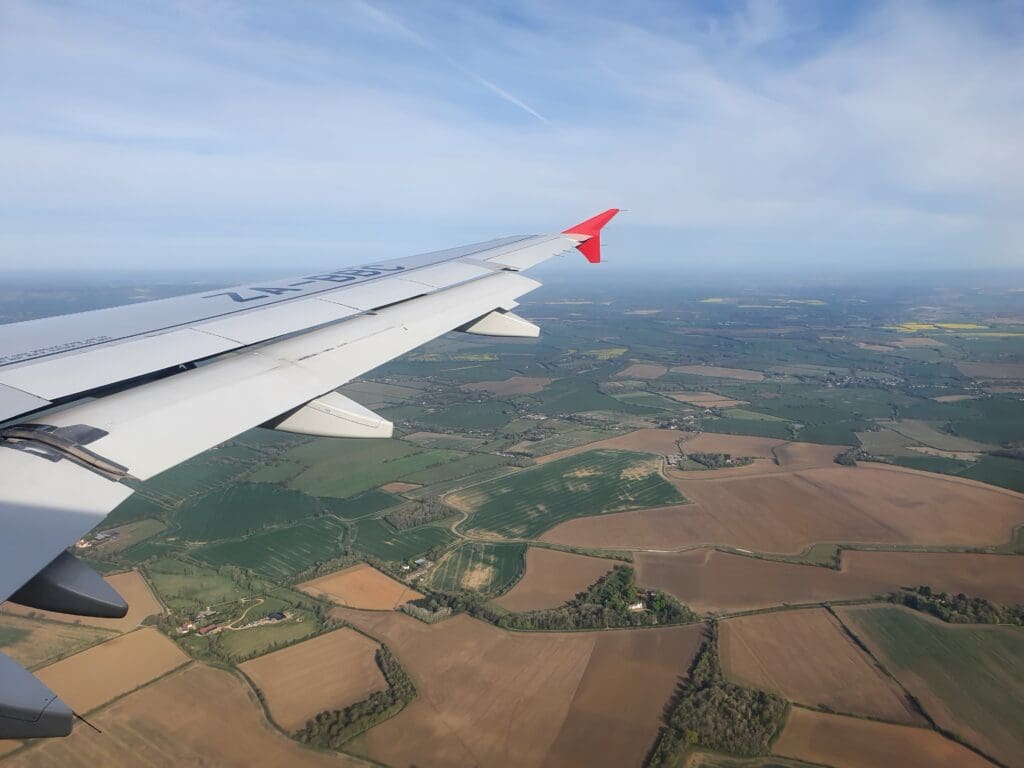
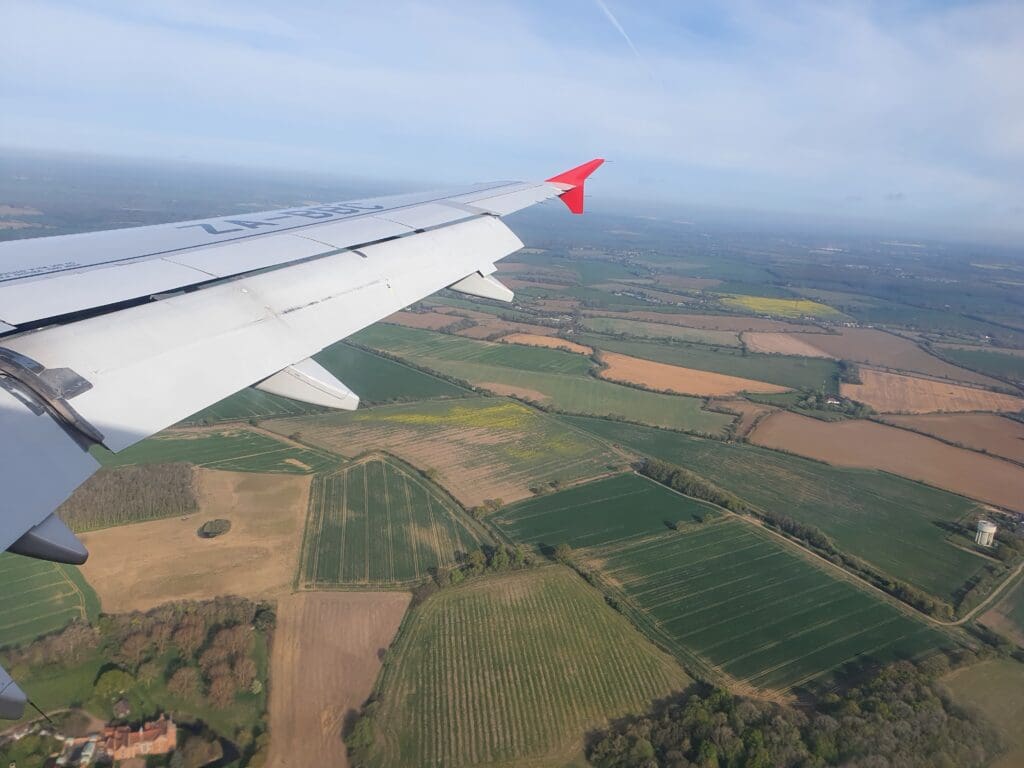
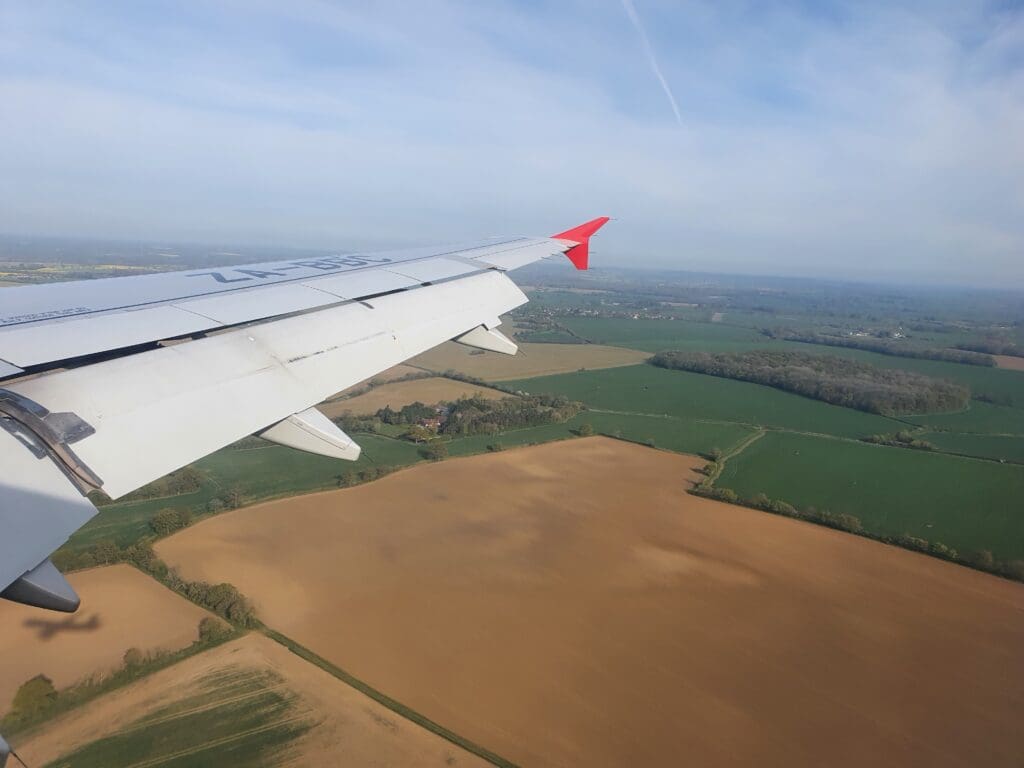
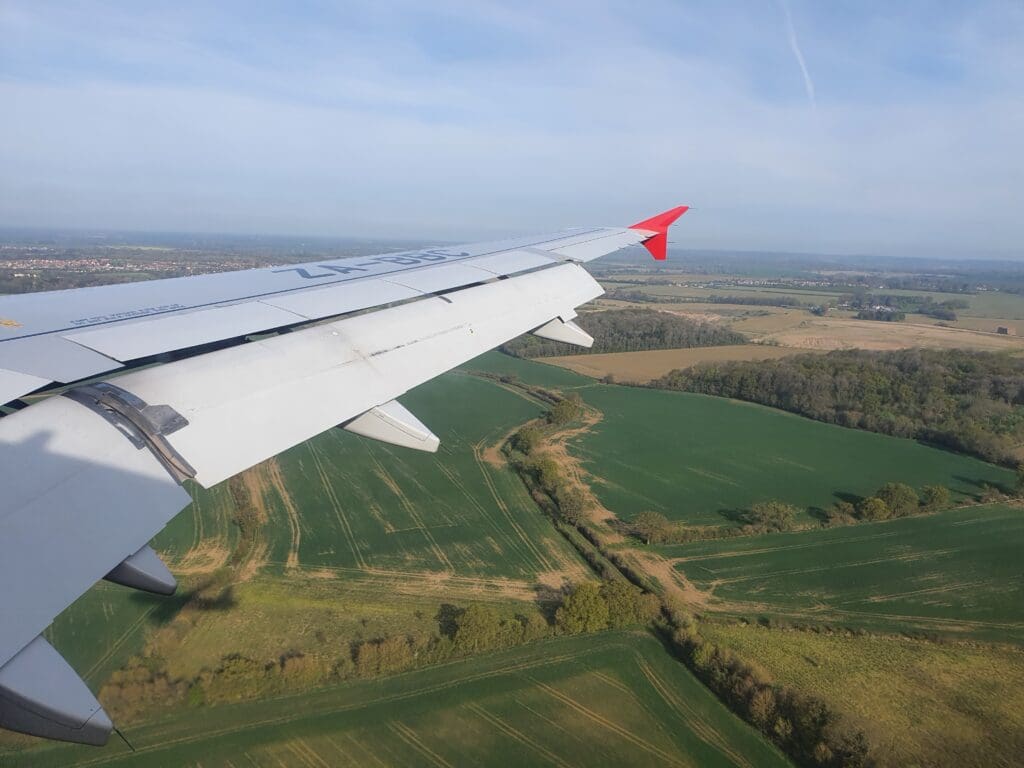
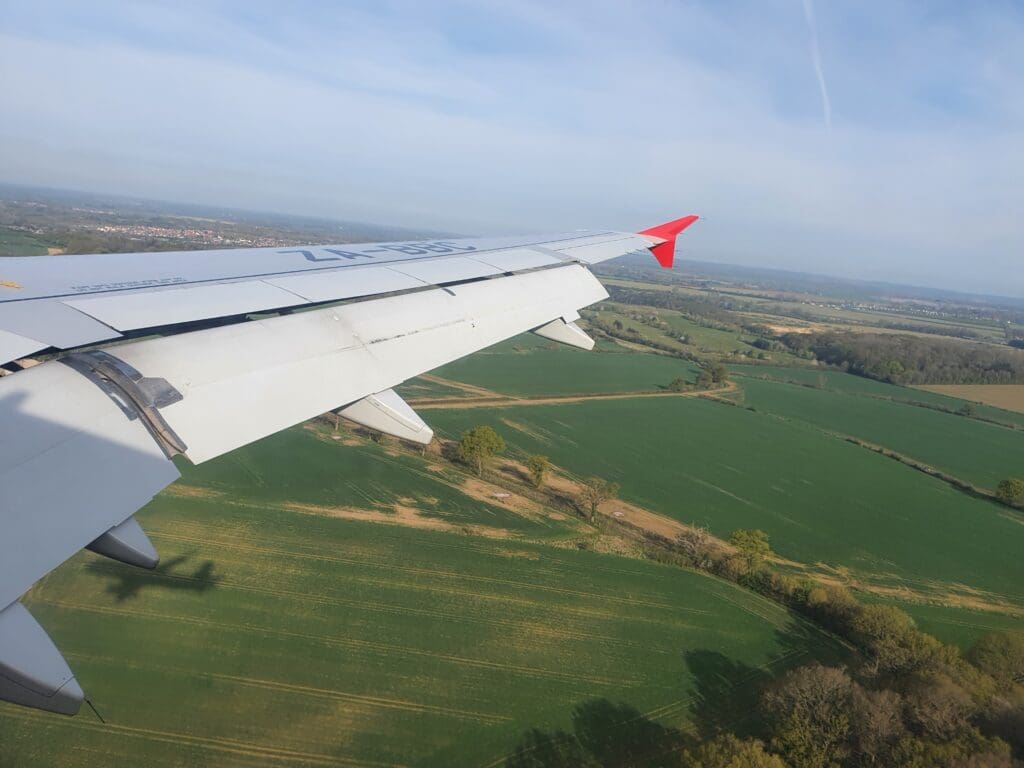
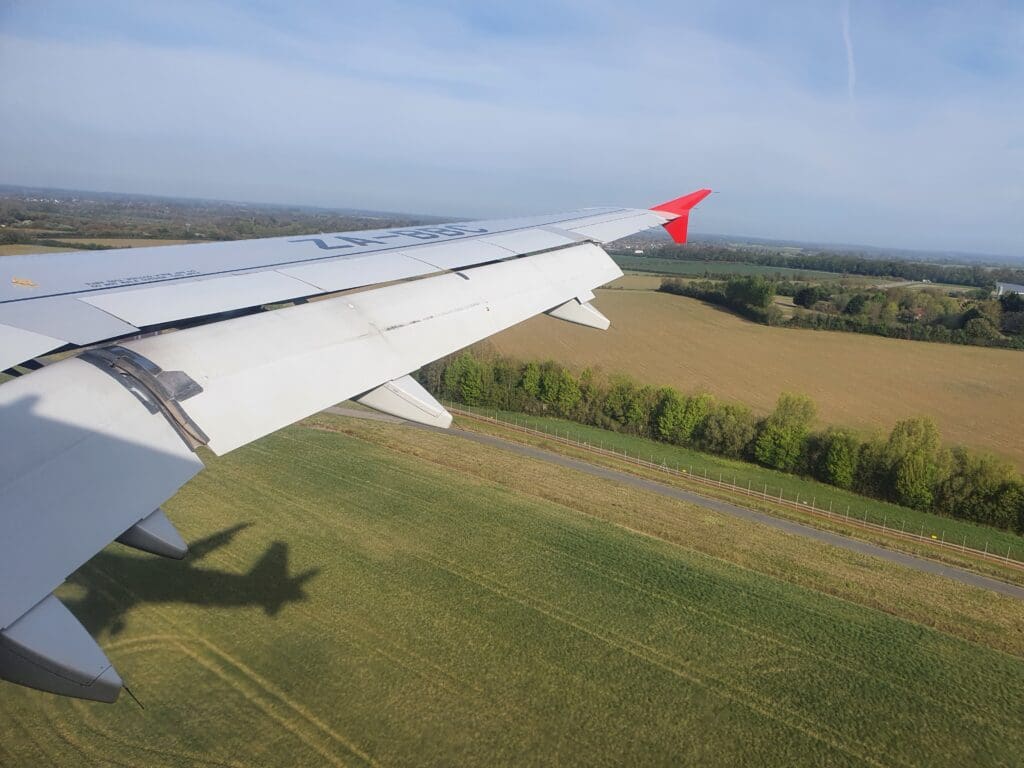
After a series of turns, the Airbus lined itself up for an approach to Stansted Airport’s Runway 22. Below, a mixture of fields, farms and quaint villages could be seen whizzing past, as well as the occasional mansion – the area around the airport being a popular area for those looking to escape from London and in possession of plenty of cash. At this point, the flaps and landing gear were extended as the aircraft continued its descent before crossing over the perimeter fence and touching down on British soil with a firm bump at 0839, before the aircraft decelerated with some vigour.

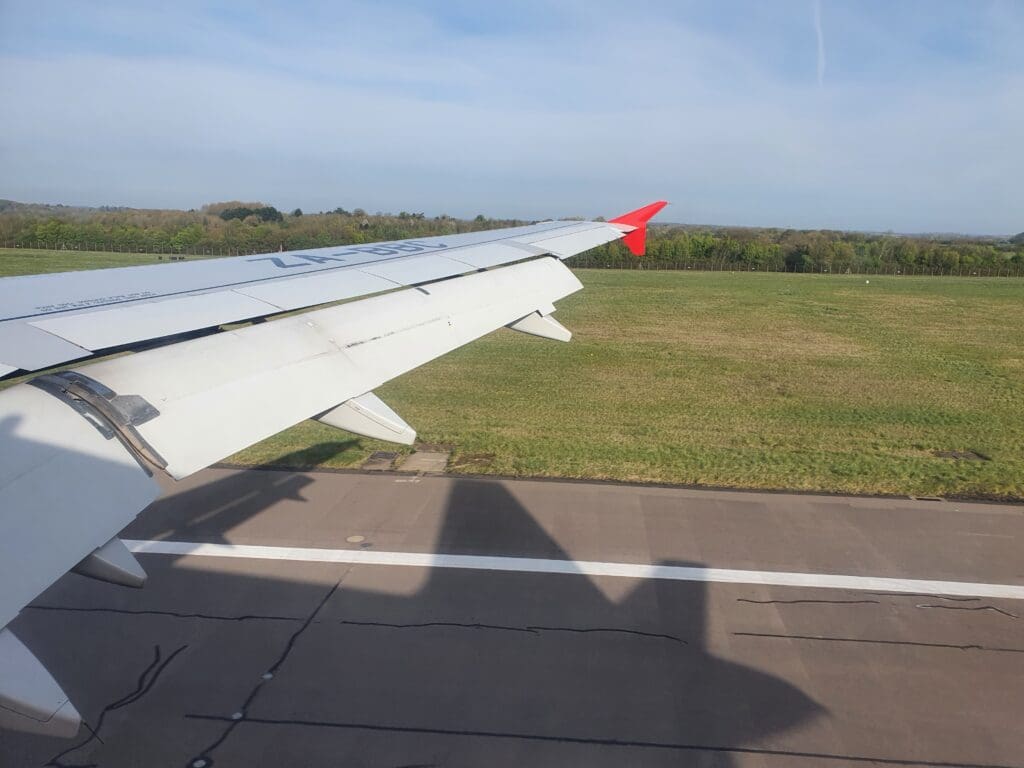
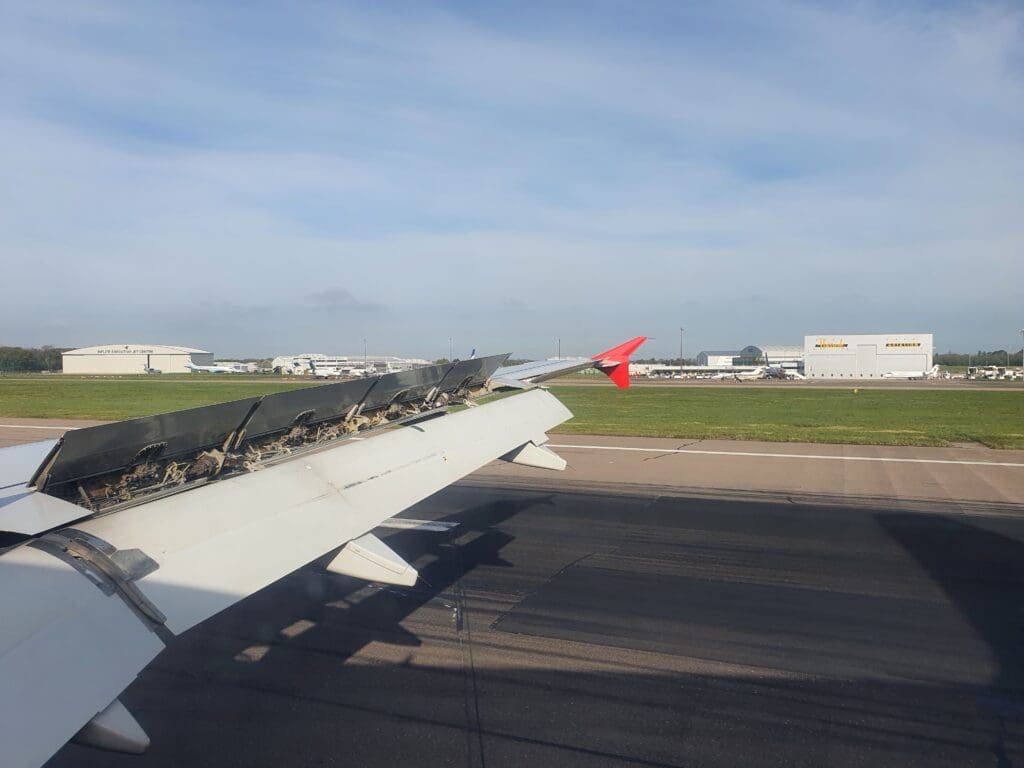
Thanks to the presence of multiple FBOs and maintenance centres, Stansted Airport often hosts a range of highly interesting and unusual visitors and that morning proved to be no different. As the aircraft slowed, aircraft to be seen on the northern side of the airfield included Hyundai’s luxurious Boeing Business Jet which had arrived the previous day from Newark, a US Marine Corps Beechcraft UC-12W Huron alongside a host of other corporate aircraft both large and small. Meanwhile, in the distance, the UK’s new government aircraft, Airbus A321neo G-GBNI could be seen waiting for its next mission outside the hangar of its operator, Titan Airways. As the aircraft exited the runway, the Purser welcomed all to London in Albanian and English and advised passengers to remain seated until the aircraft had come to a halt. Turning my attention back outside, after leaving the runway the aircraft then passed another group of interesting aircraft on the south side of the airfield. These included a former Dubai Air Wing Boeing 747-400, a Nigerian Bombardier Challenge and a Stansted-based South African-registered Boeing 767 operated by Aeronexus. From there, the next stop was the cargo stands where an ASL Airlines Austria Boeing 737, a FedEx Boeing 767 and a Qatar Airways Cargo Boeing 777 could be seen.
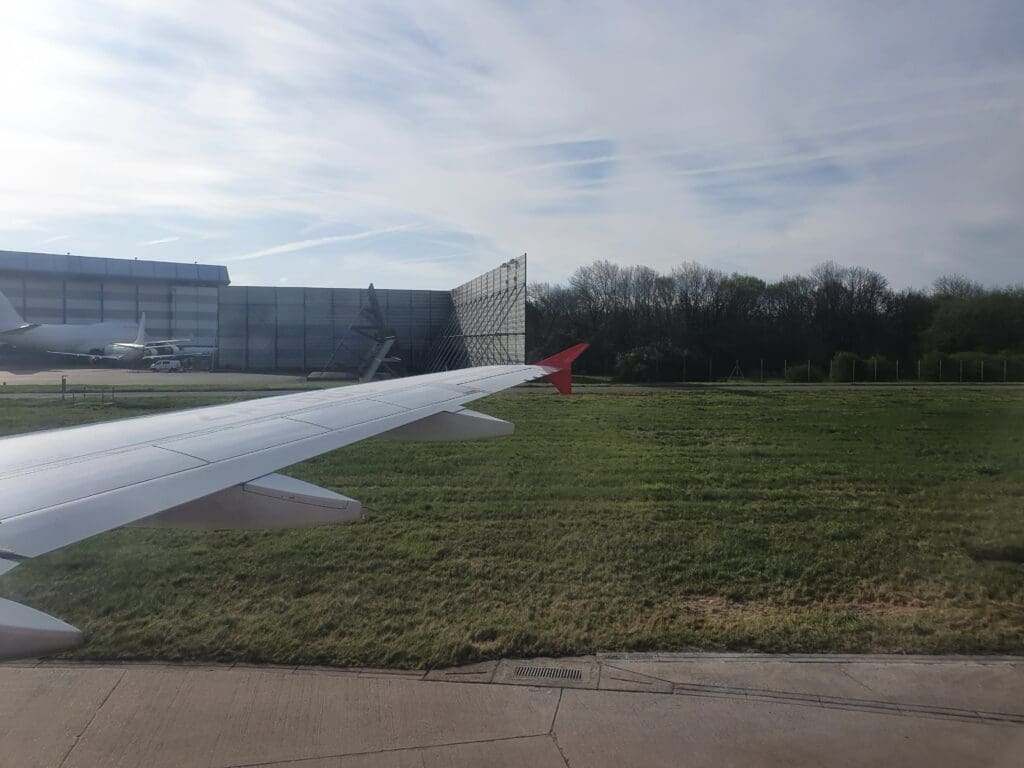
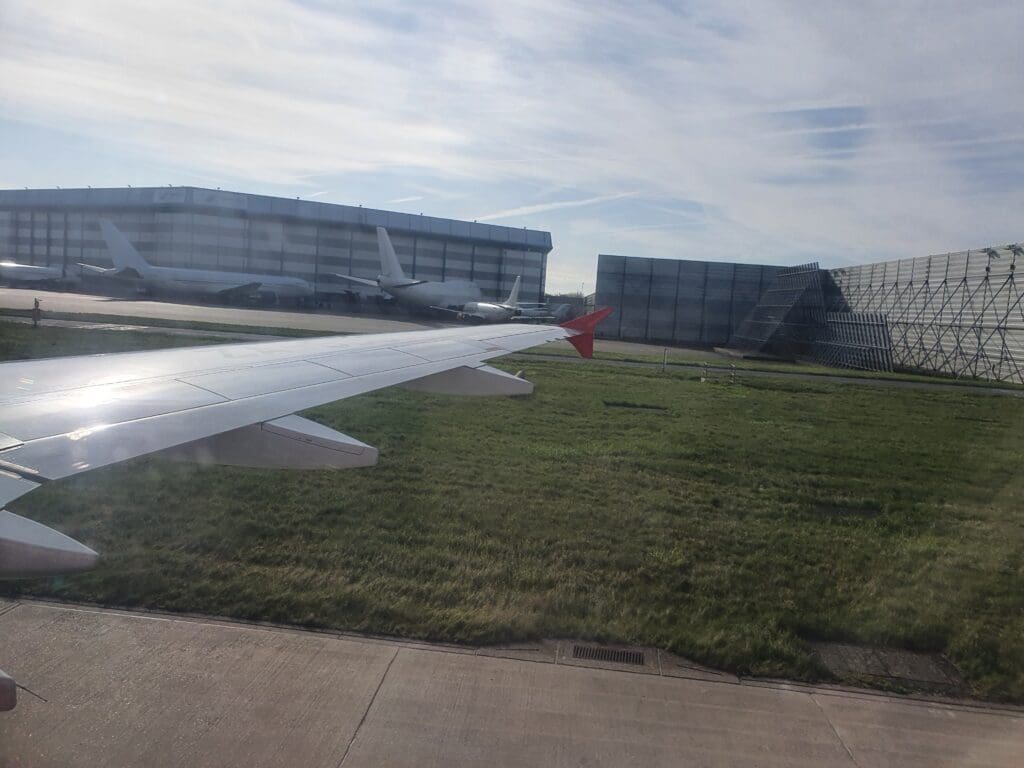
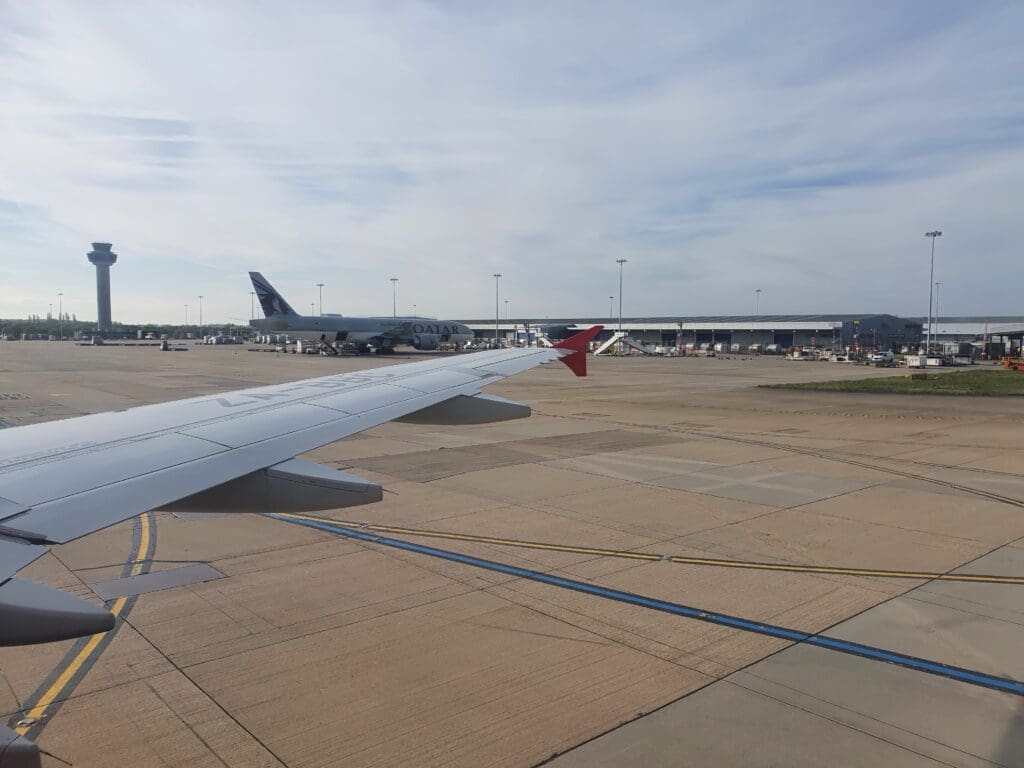
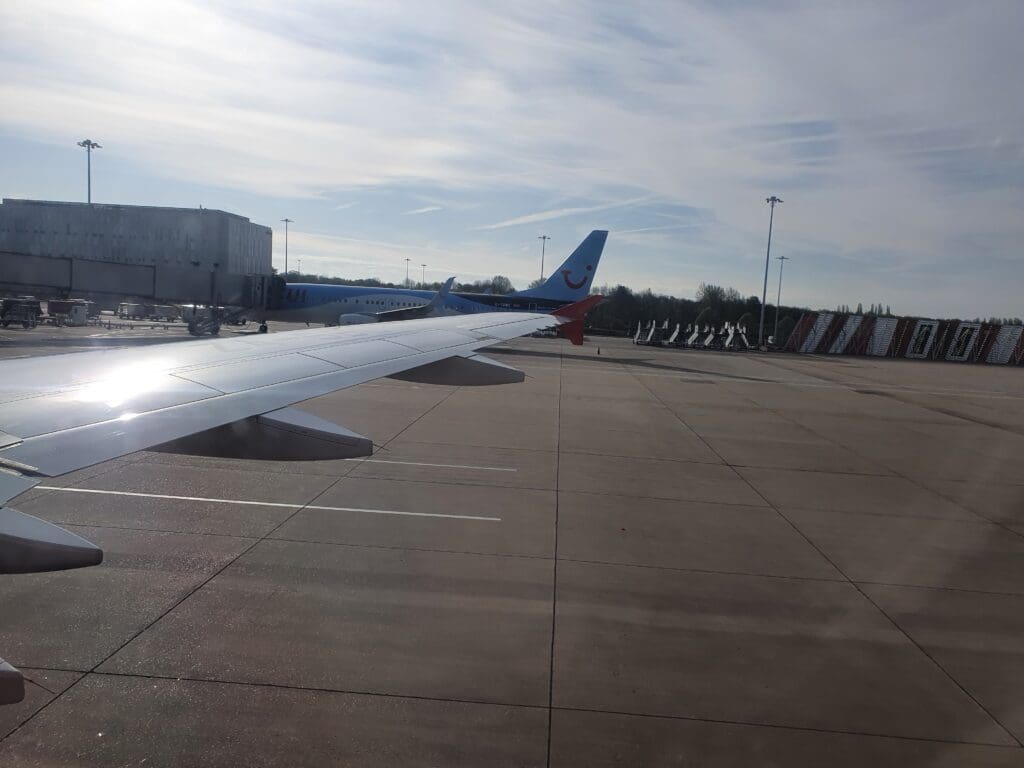
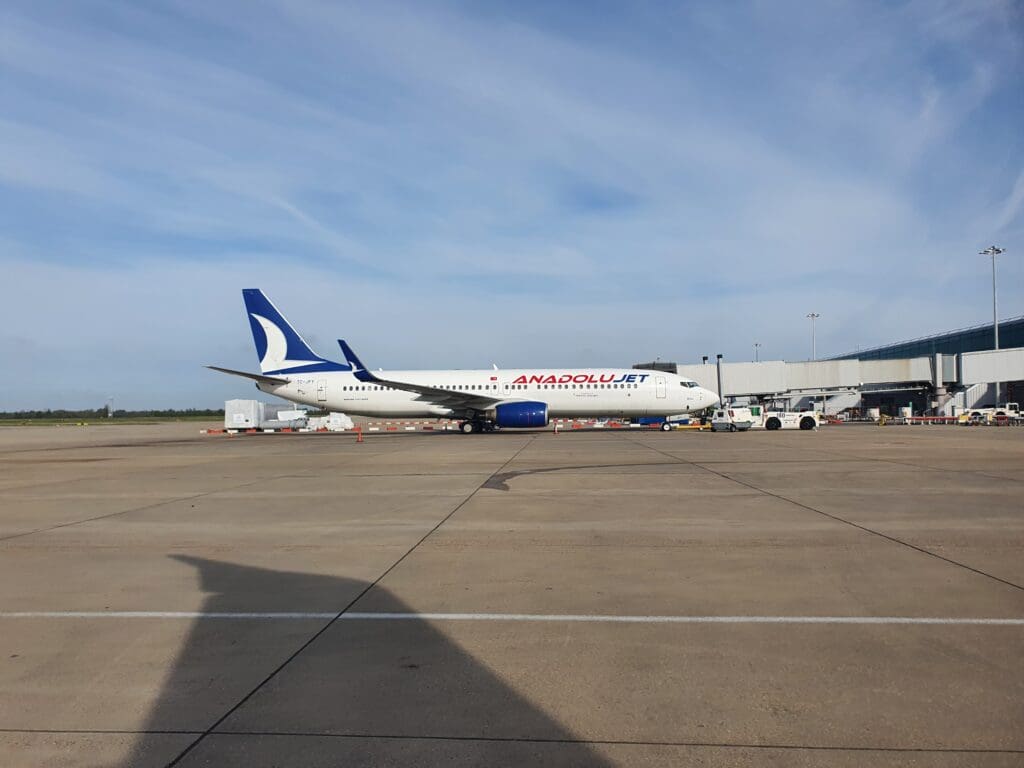
Following several minutes of taxying, the aircraft turned right onto the apron and passed a Hifly Airbus A321 operating on behalf of Jet2 and an AnadoluJet Boeing 737-800 before turning left and cautiously making its way into Stand 11L where it pulled up alongside a TUI Airways Boeing 737-800 that would later head to Gran Canaria. Once the engines spooled down, many passengers stood up in a rush to exit the aircraft although in no rush to disembark, and with my neighbour remaining seated, I also remained in my seat for a few minutes. Whilst that particular pier is fitted with jet bridges, that morning the Air Albania service did not use these and instead, airstairs were brought up to both the front and rear doors. Following a short wait, disembarkation commenced and being seated near the rear of the aircraft, I did not have to wait too long before I was able to head to the rear galley where I thanked two of the flight attendants before heading out into the cold morning air.
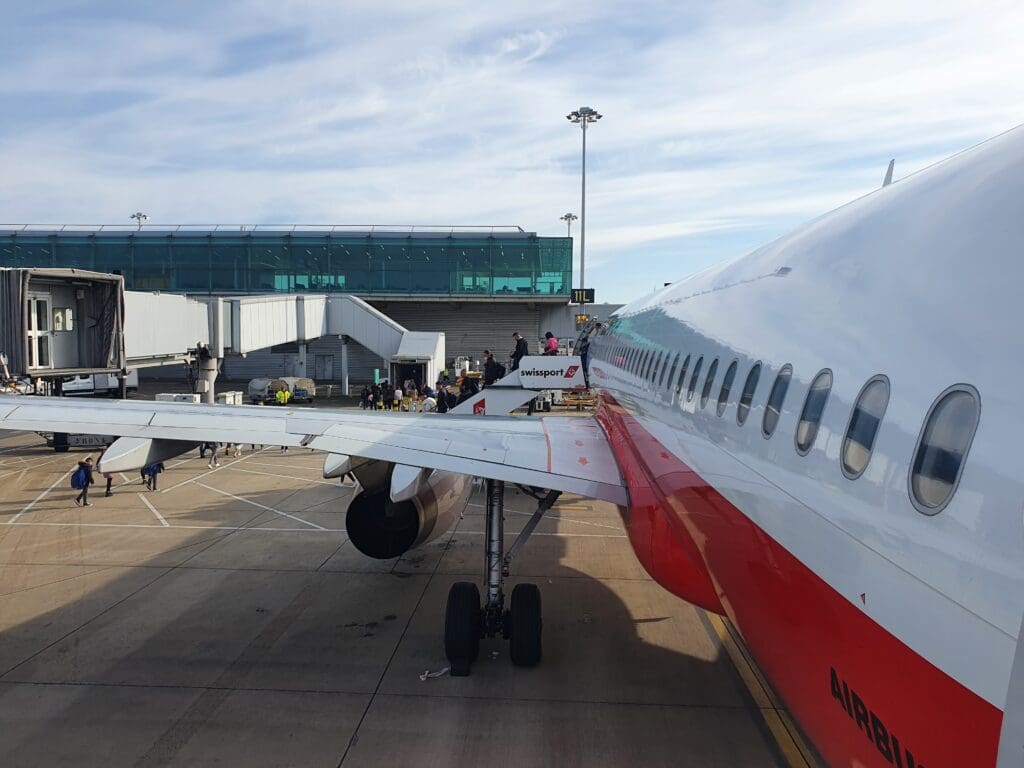
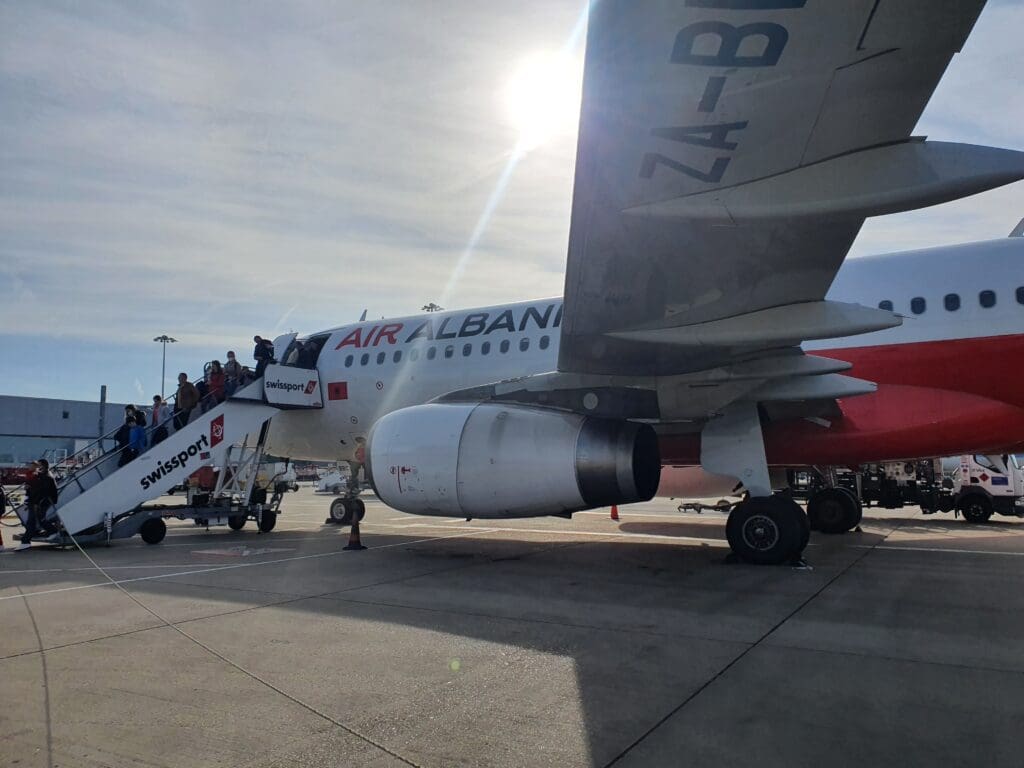
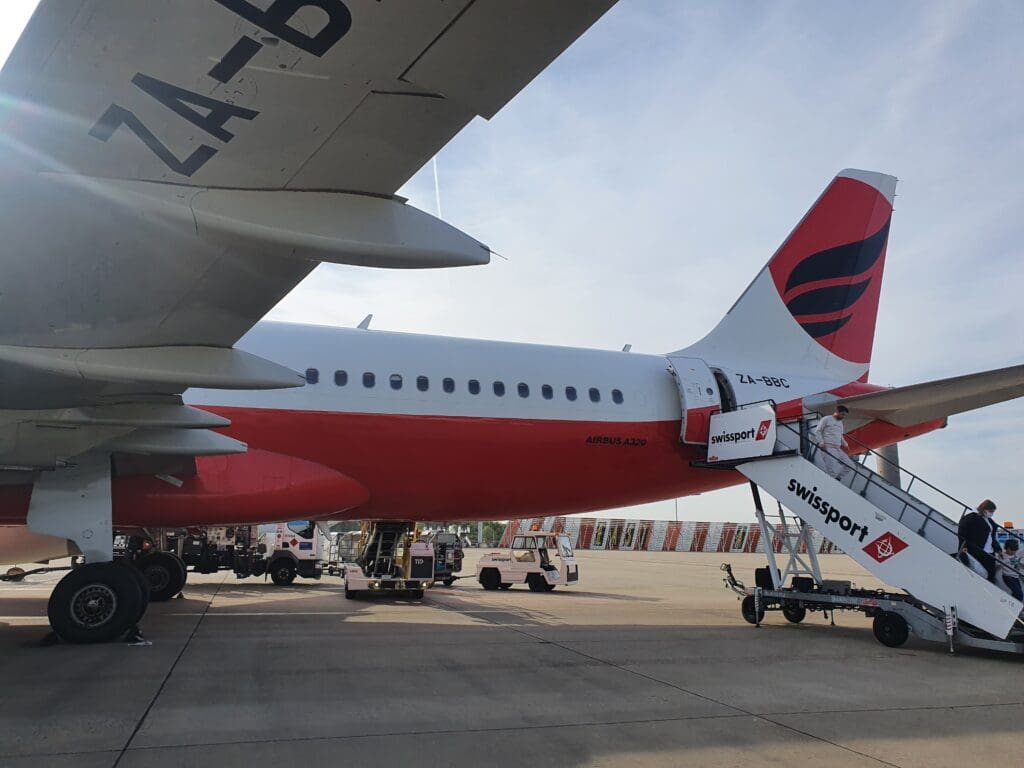
From the aircraft, I made a short walk around the wing before entering the terminal and heading up to the arrivals level on the first floor. Once there, I walked along a very dated-looking corridor and headed down a set of escalators before reaching the people mover station. Within a couple of minutes, a train appeared and I soon sped off before being deposited outside the entrance to Stansted Airport’s large immigration hall. Having arrived during the early morning rush of flights from destinations across Europe, a reasonable queue could be seen for the passport e-gates, however, this moved along fairly quickly and after several attempts, one of these gates let me through and I officially re-entered the UK.
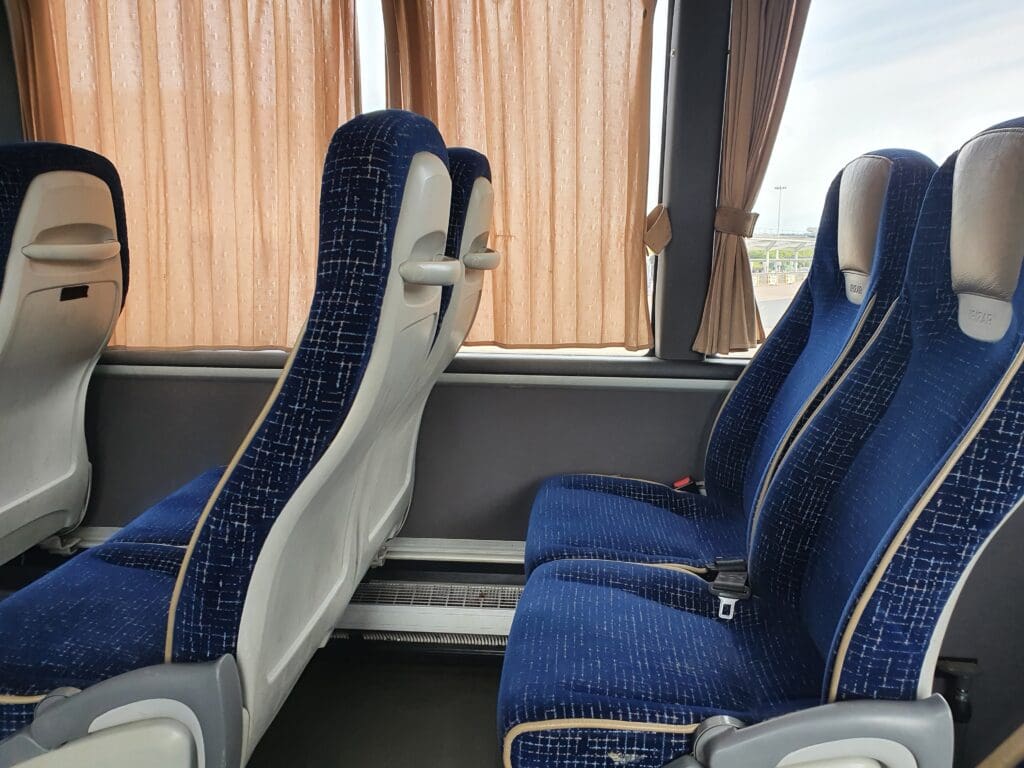
With nothing to collect, following a brief toilet stop and some rather battered and seemingly unclean toilets, I headed out to the landside area before making my way over to the bus station. Whilst I held a Stansted Express ticket, unfortunately, a rail replacement bus service was in operation as far as Waltham Cross thanks to engineering works. On the plus side, I arrived there just in time to catch the 0930 bus service, and made it back to my home in West London at 1130, shattered and in need of a rest.
Summary
Whilst I was glad that I had sampled Air Albania, and thankful for their complimentary light breakfast, I couldn’t help but note that the airline is a little rough around the edges. On the ground the conflicting information that I had received from the airline’s check-in staff as well as the chaotic boarding process had failed to get my journey off to the best of starts, whilst up in the air the crew did not leave a lasting impression – undertaking their duties coldly and distantly with as little dialogue as possible. Turning to the cabin, whilst this was comfortable, the area around my seat did appear battered and worn and was perhaps not of the standard that some may expect from a former Turkish Airlines aircraft. However, ending on a positive note, Air Albania managed to get me from Tirana to London cheaply, ahead of schedule and in one piece and thus any major complaint may be seen as somewhat invalid.