Sampling Finnair’s Flagship A350 Without Leaving Europe: Helsinki to London Heathrow
Background and Booking
Prior to this trip, whilst never having had the pleasure of sampling a ride with Finnair, Finland’s national carrier is one that I know relatively well. In July 2019 I graduated from university in London with a degree in Korean language and soon found myself on a six-month internship in Paris. Spending much of this time looking for more permanent roles once this expired, and seeking to combine my language skills with my passion for aviation, I ended up applying for a flight attendant position at Finnair! Successfully making it past the online assessments, in November 2019 I was invited to an assessment morning at their headquarters at Helsinki Airport and thus became well-versed in the airline’s culture, history, operations and values. Following a trip up with Lufthansa, I successfully passed the assessment morning and was awarded a position scheduled to commence training in 2020. However, unfortunately, the pandemic had other plans and the job vanished into thin air (or should I say, Finnair). Nevertheless, despite this rocky start to my relationship with Finnair, I still wanted to sample their service as a passenger and take a glimpse of what life may have been like had the pandemic not occurred.
Given Finnair’s well-established role as a hub between East Asia and Europe, Finnair has long deployed widebody aircraft on a number of their services between Helsinki and London Heathrow to meet demand. Once upon a time, these took the form of the airline’s Airbus A340-300s and McDonnell Douglas MD-11s, whilst today Finnair’s Airbus A330-300s and Airbus A350-900s can be seen on this schedule alongside the airline’s Airbus narrowbodies. Having ended up in Helsinki at the end of my nine-day trip across Sweden and Finland, being a typical aviation enthusiast, it was only natural that I sought to end up on one of Finnair’s widebody aircraft on my way back to the UK. Following a quick browse of Finnair’s website, I found that on the Sunday that I would return to the UK, two of Finnair’s five daily flights would be operated by widebody aircraft – an early morning flight with an Airbus A350 and an afternoon flight with an Airbus A330.
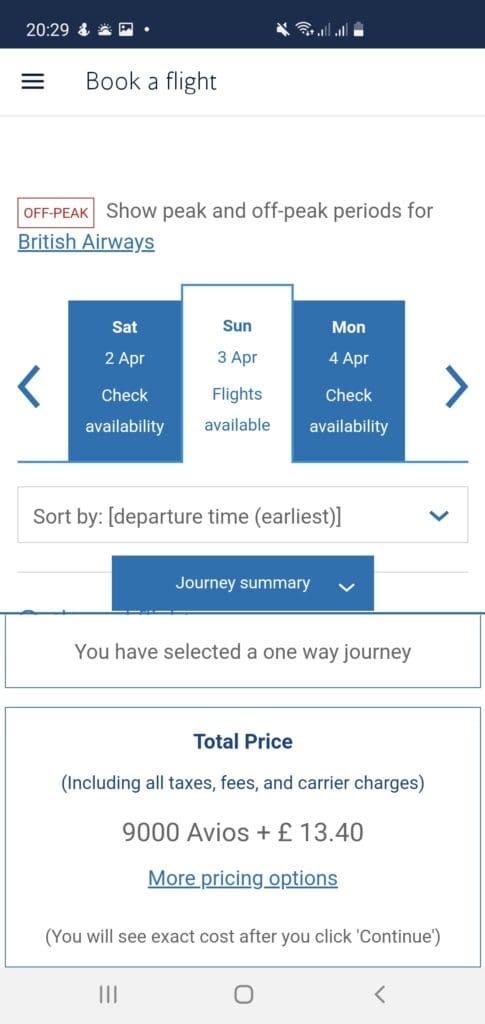
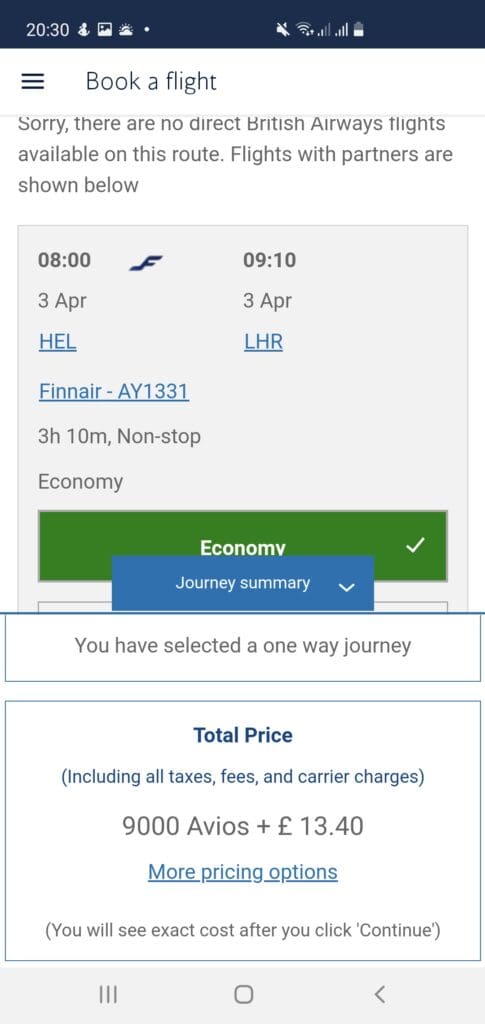
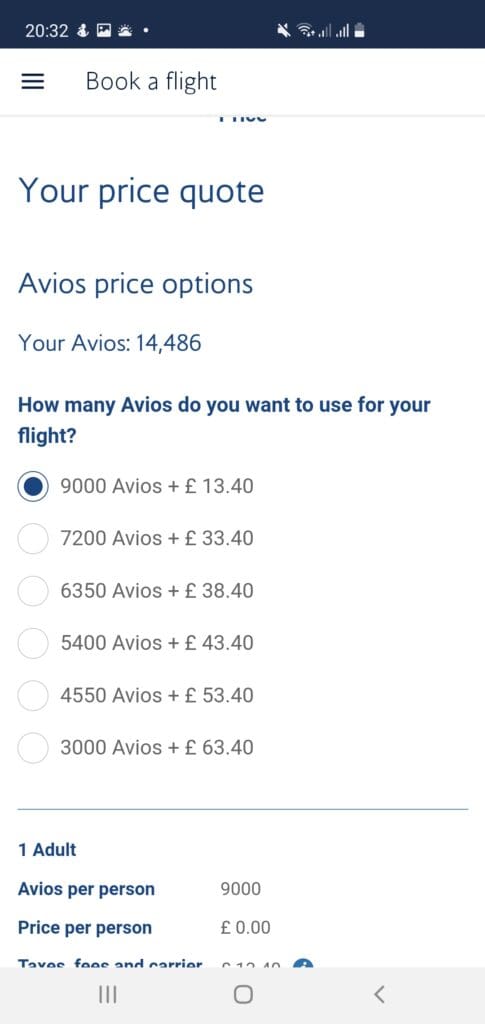
Needing to be back home in West London by the early afternoon, I was left with the Airbus A350 option which would depart Helsinki at 0800 and arrive in London three hours and ten minutes later at 0910. Examining Skyscanner, the cheapest possible ticket for the flight would set me back a reasonable £50. However, willing to part with some Avios, I logged in to my British Airways Executive Club account and soon discovered that there was reward flight availability on this service. This would cost 9000 Avios plus £13.40 in fees. With little hesitation, I decided to go for this and passed on the other options that would allow me to part with fewer Avios in exchange for a higher fee. From there, I was then presented with the option of donating to British Airways’ Changing Lives: One Child at a Time programme and Pure the Clean Planet Trust. Once I had agreed to the terms and conditions, I confirmed my details and was taken to the payment page where I entered all my payment information and received confirmation of my booking several minutes later. This revealed that I had been automatically assigned seat 29A for the flight to London.
Whilst I was unable to modify my seat on British Airways’ website, this was possible on Finnair. Fortunately, my reward ticket allowed me to move this to virtually any seat in the Economy cabin free of charge. The exceptions were those seats at the very front of the cabin, labelled as ‘Comfort Seats’ that could only be reserved in exchange for a hefty €40.50 fee, or an exit row seat at the front of the rear Economy cabin coming in at €45. Rather than paying, I shifted across to Seat 38L at the rear of the forward Economy cabin. Aside from seats, the only other optional extra came in the form of additional luggage, with this charged at €25 per 23kg bag.
Check-In
Online check-in for most of Finnair’s scheduled services opens up 36 hours before departure. Seeing as I had already selected a seat, I was in no particular rush to do this; however, with about 33 hours to go until the flight, I found myself with some time on my hands so I decided to check-in for the flight. To make boarding pass arrangements a little simpler, I decided to install Finnair’s app and within a few moments of this being downloaded, I retrieved my booking without any issues. Upon commencing the check-in process, this revealed that I had been shifted back to Seat 53L and whilst other seats could be selected, only a few of these remained, all of which were further back so I settled with this. Other than this, the check-in process was quick and easy and left me with little to complain about.
The Journey
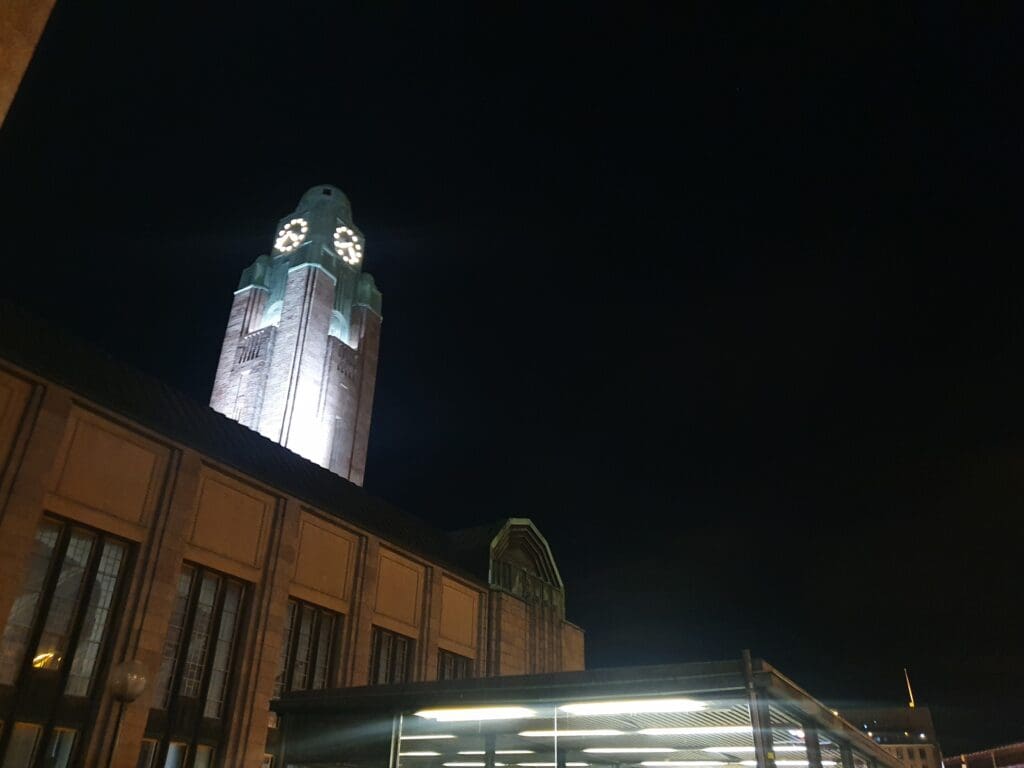
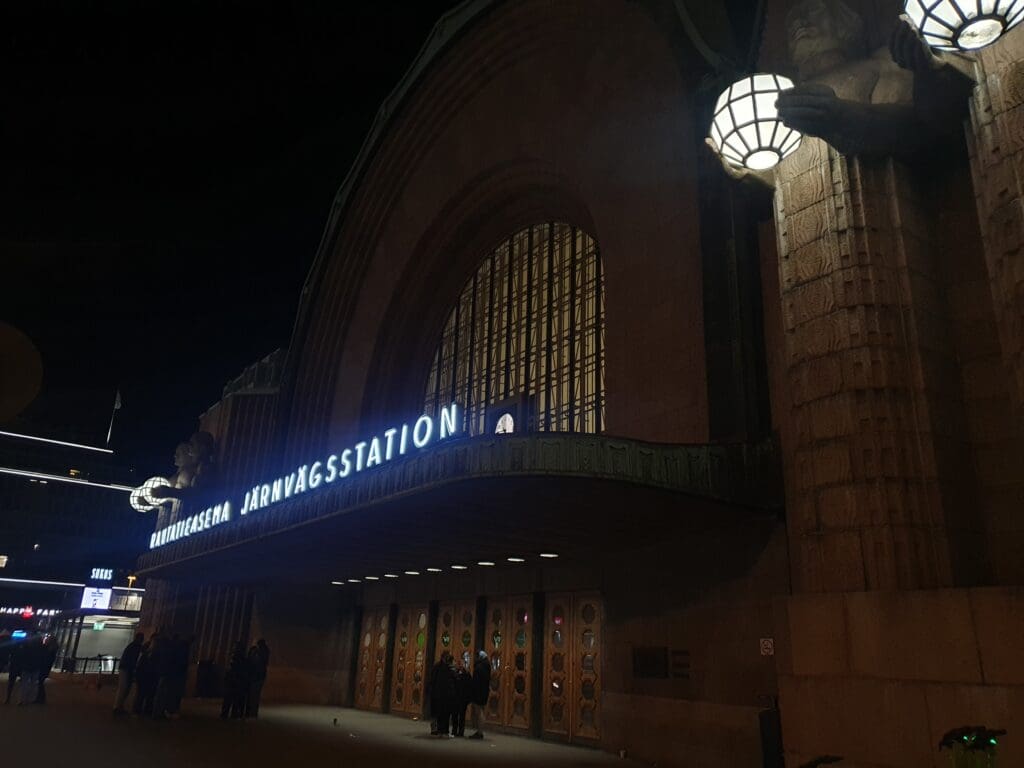
Helsinki Vantaa Airport is located around seventeen kilometres to the north of the centre of Finland’s capital city and is conveniently connected to this by regular commuter trains at most times of the day. Meanwhile, buses also plough this route during the approximately four-hour gap in this service in the middle of the night. Staying in the centre of Helsinki, and given my 0800 departure time, I realised that an early wake-up would be in store to give me plenty of time to get to the airport before my flight. Having done some research, I aimed to catch the first airport-bound rail service of the day from Helsinki Central Station at 0506. Therefore, following a short night’s sleep, I awoke at 0410 and undertook my final preparations before heading out into the subzero temperatures and walking the short distance to the station. At that time on a Sunday morning, the streets were fairly busy with intoxicated revellers looking a little worse for wear, with plenty gathered outside the station waiting for the first trains of the day. With some time to spare, I stopped at one of the few places open at that time, an S-Market supermarket where I grabbed a pastry and a cup of coffee before continuing to Helsinki’s impressive granite-clad station that dates back to 1919.
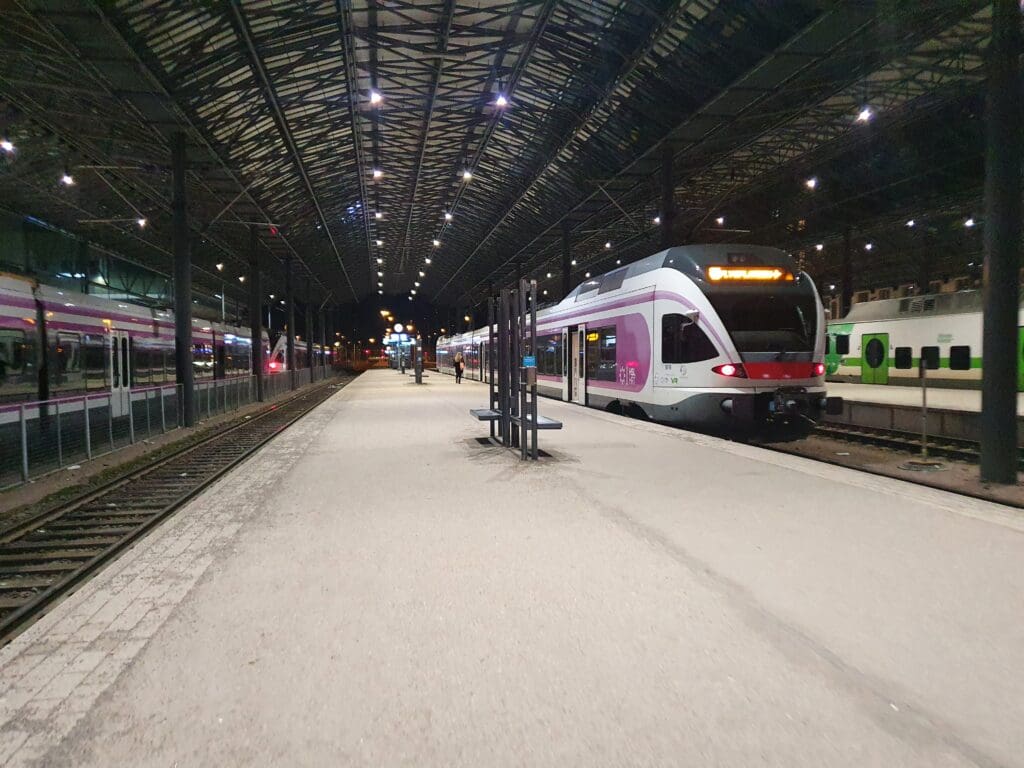
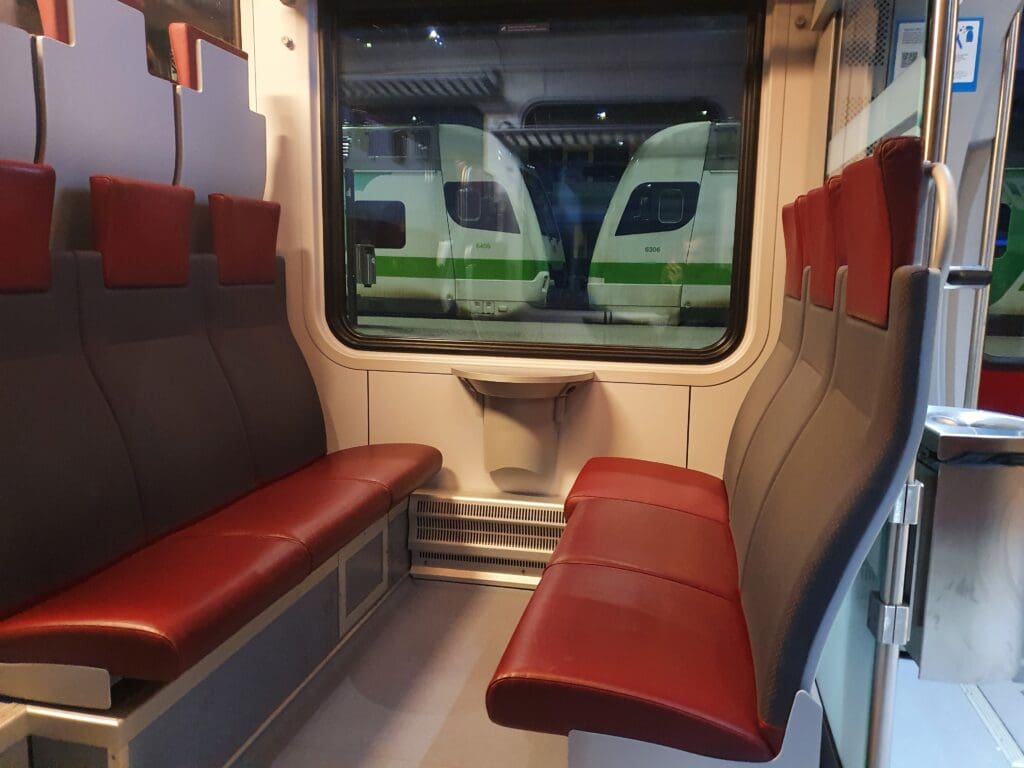
With the station doors not opening to passengers until 0500, a short wait in the morning cold was required before I could head through and onto the waiting train. However, unfortunately, it appeared that I had been waiting at the wrong entrance, with this not opening until 0505, and by the time I entered, the airport-bound train could be seen pulling away. Fortunately, with another airport service departing twelve minutes later, this was not too much of a disaster and I made my way straight over to this train and boarded with plenty of time to go until its departure. As commuter trains go, I found Helsinki’s Class Sm5 electric multiple units, the trains that operate the city’s commuter services to be very good – with these being clean, offering plenty of comfortable seating and coming complete with plug sockets. Pulling out of Helsinki Central Station right on time, the train made plenty of stops as it headed north through the suburbs of the Finnish capital, before finally reaching the airport at about 0550. By this time, the late-night revellers had mostly disembarked and the train was instead full of airport staff and suitcase-wielding passengers at the start of their journeys.
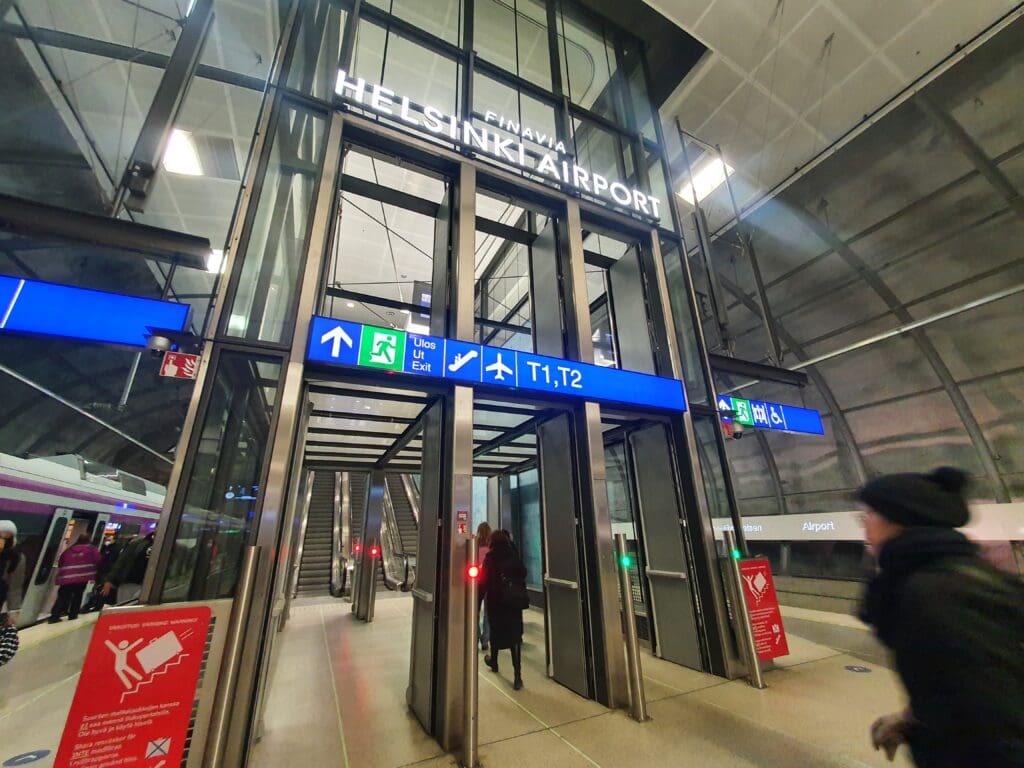
Upon heading up the first set of escalators, those heading to Terminal 1 are signposted right, and those to Terminal 2 are signposted left. Seeing as Finnair utilises Terminal 2 in Helsinki, I headed in the latter direction. However, admittedly this is slightly misleading as the airside portions of the airport’s two terminals are conjoined with nothing, as far as I am aware, that implies them to be two different terminals. Taking the lift, I soon arrived in the small and busy landside arrivals hall of the terminal before I continued upwards and arrived in Finnair’s main check-in hall. Located in a newly renovated part of the terminal that opened up in November 2021, I found this to be modern, spacious and airy although I did not spend a particularly long time there that morning. Once in this hall, I made my way over to a baggage tag printing machine, printed one of these off and attached it to my bag without any issue before following signs for the automated baggage drop-off desks which led me to Terminal 2’s unrenovated check-in hall and the security entrance.
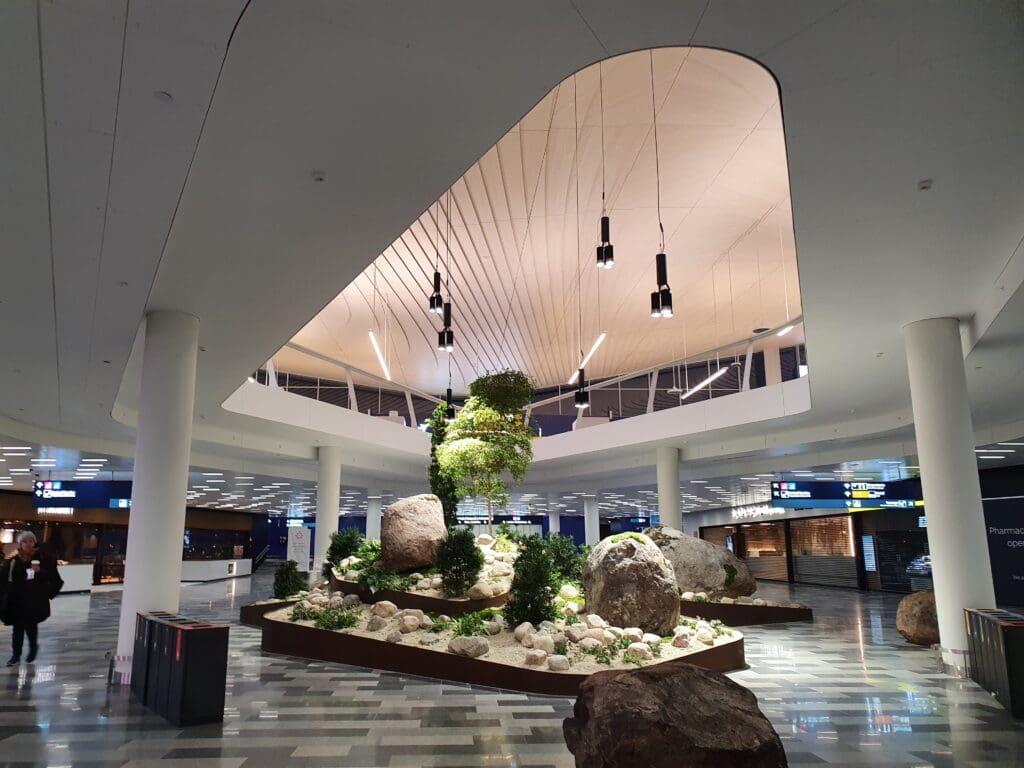
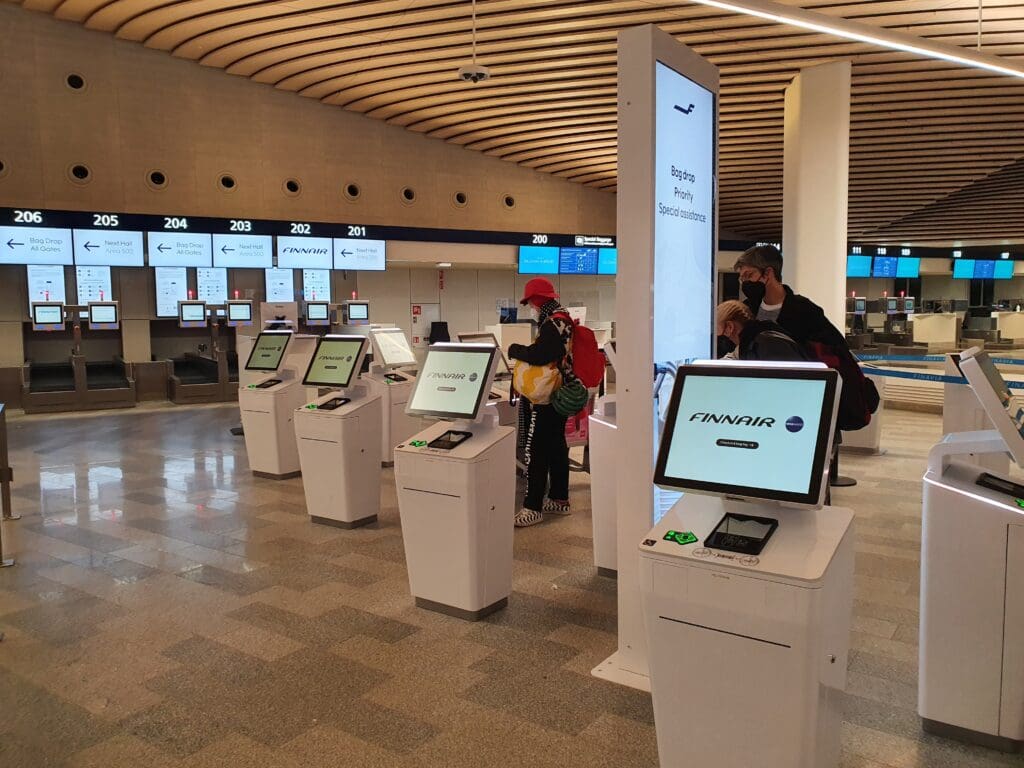
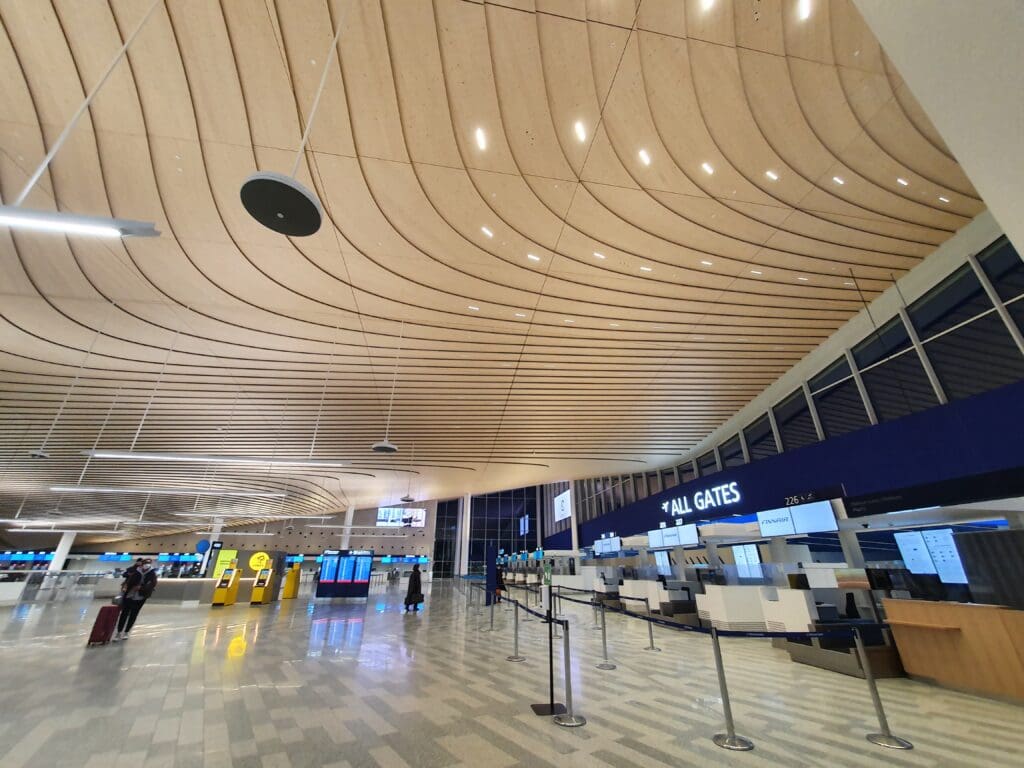
Seeing as a total of twenty Finnair flights would be departing Helsinki between 0600 and my departure at 0800, upon arriving in the hall I was not greatly surprised to see a long snaking queue leading up to the security check. After joining a much smaller queue for the automated bag drop-off counters and sending my bag on its way, I headed straight to security and joined this queue at 0610. Given its length, unsurprisingly I was in for quite a wait, with it taking a total of forty minutes to reach one of the five open checkpoints. Thankfully, once there the security staff were all friendly and worked efficiently, and so the actual act of passing through the checkpoint took almost no time at all.
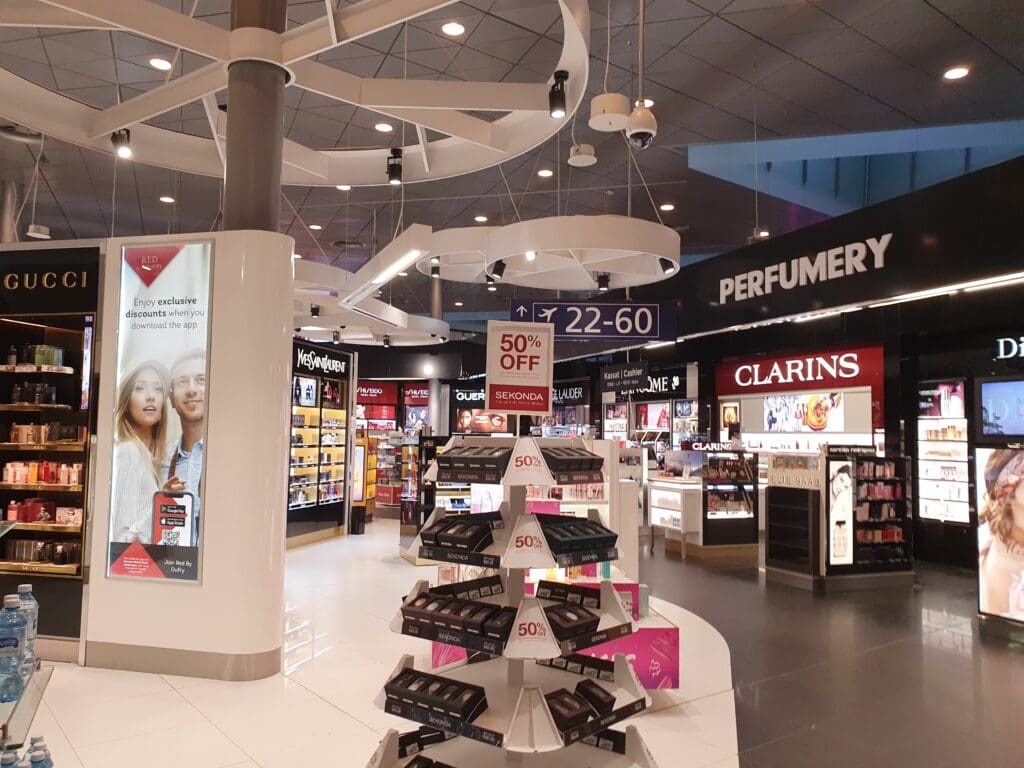
As with many airports across Europe, in Helsinki, as soon as security has been passed through, passengers must trundle through a large duty free store before reaching the gate area. Not needing to buy any last-minute gifts or souvenirs, I made my way straight through this and soon arrived at the main airside portion of the terminal. There, large windows that run the length of the terminal allowed for a good view of the selection of Finnair Airbus and Norra Embraers getting ready to head to destinations across Europe, whilst the latter carrier’s smaller ATR-72 and an Amapola Fokker 50 could be seen at remote stands across the taxiway. Not having a massive amount of time on my hands before the scheduled commencement of boarding at 0720, after snapping a few photos I followed signs for gates 39 to 60, these being those that are located behind the airport’s passport control area. Once I had walked across the airport’s unusual and somewhat wooden floored area, I arrived at the empty passport control hall where a total of four desks could be seen open for those lacking a European Union passport. After handing over my passport and showing the immigration official my boarding pass, I received the usual suspicious looks and was asked a few questions about my ten-day stay in Finland and Sweden. Satisfied with my answers, after a minute or so whilst the official searched through the pages of my passport attempting to find the entry stamp into Sweden that I had been given at the start of my trip, my passport was stamped with vigour before I was free to roam the terminal.
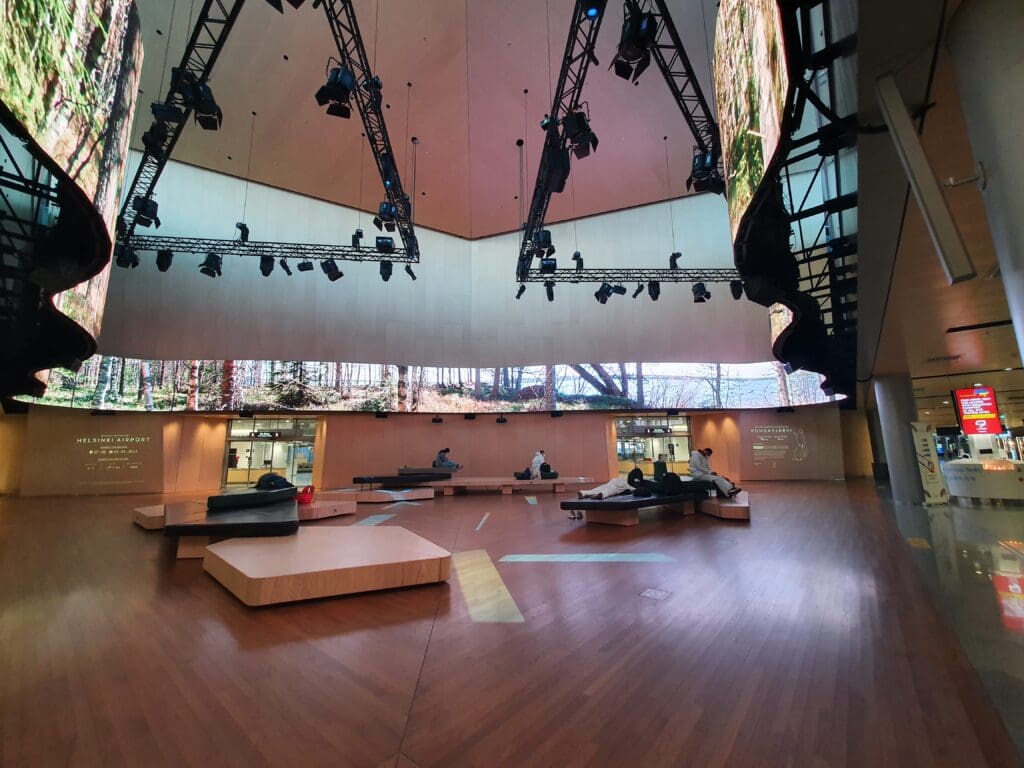
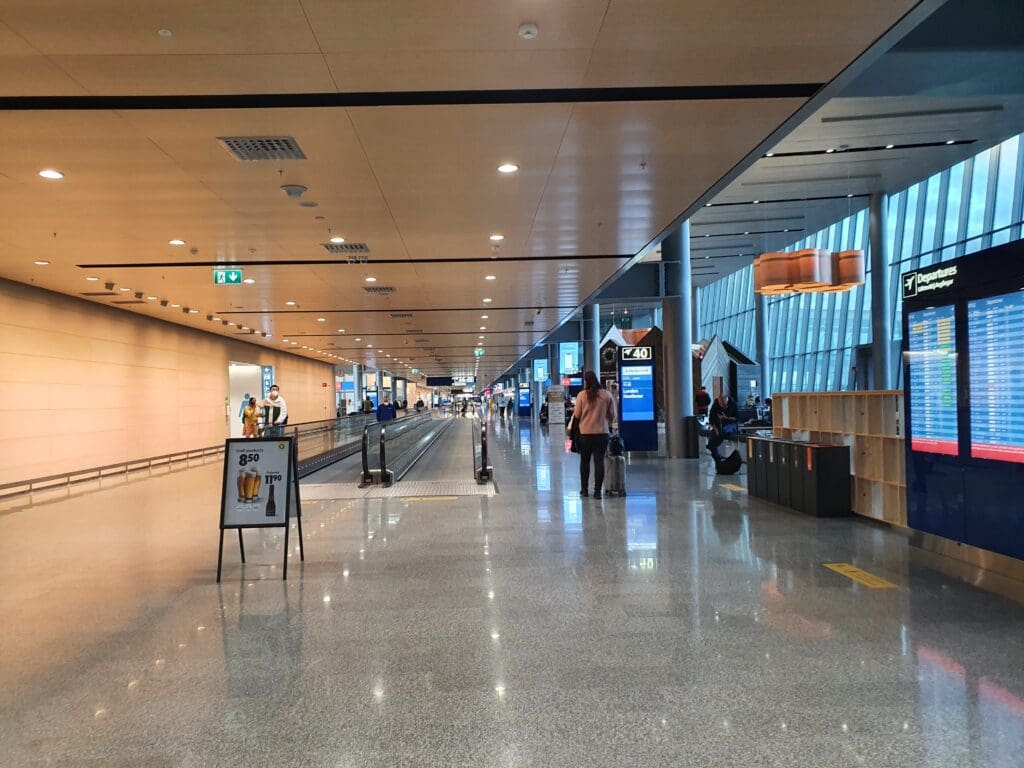
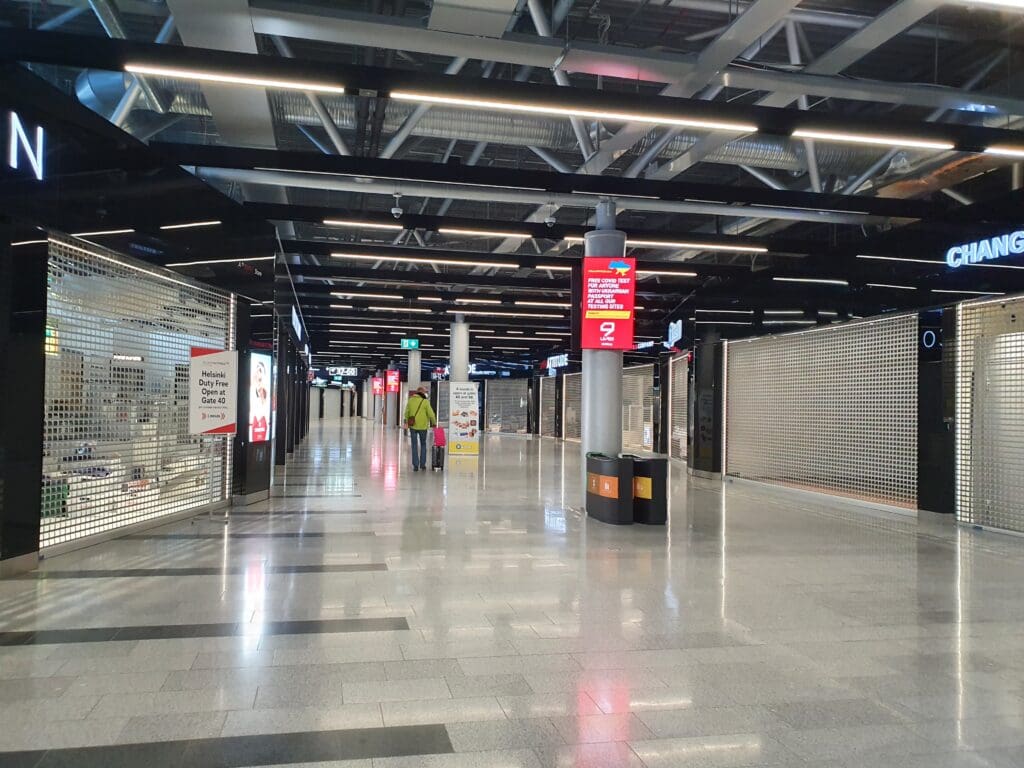
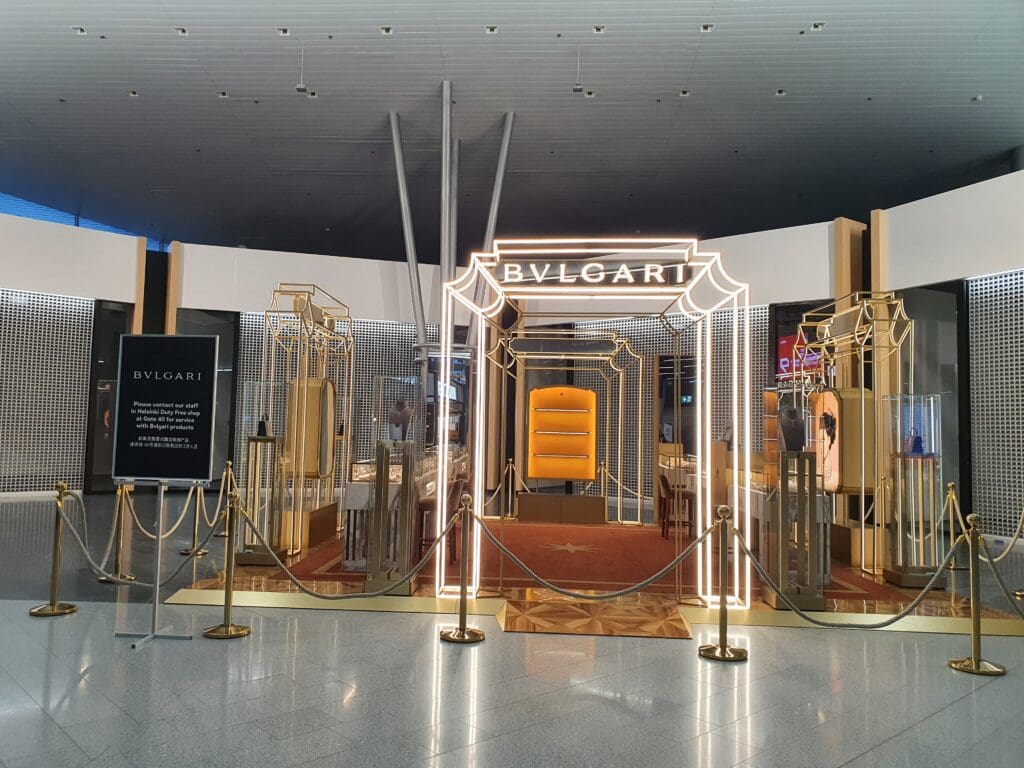
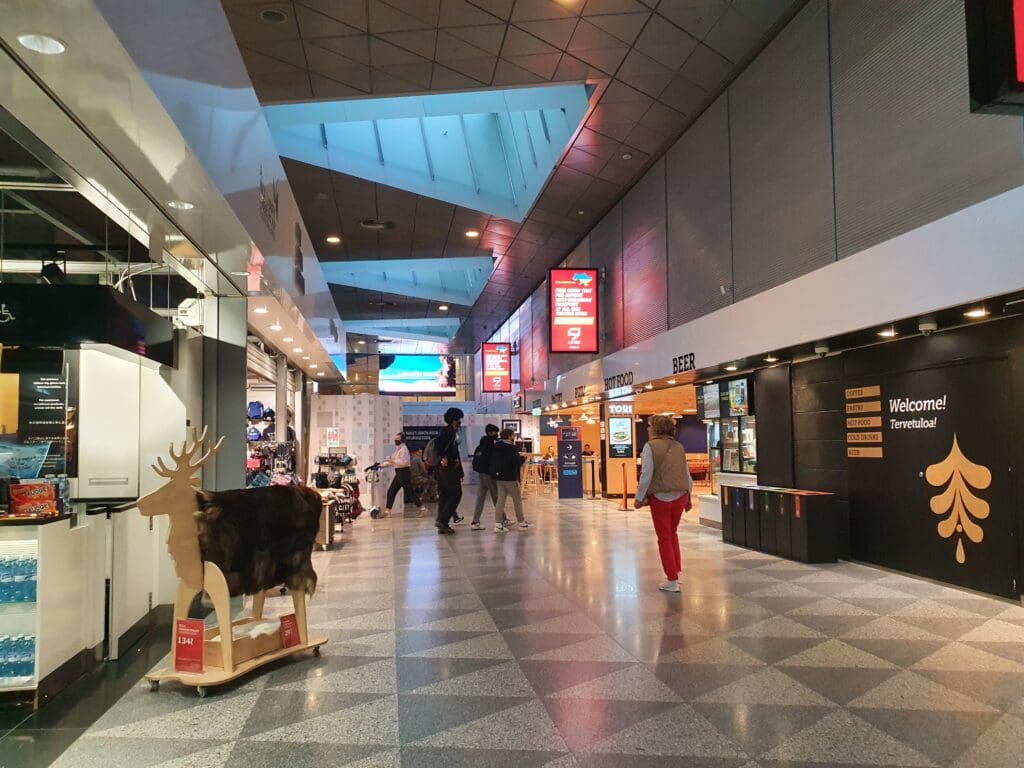
With Helsinki Airport’s non-Schengen area having been recently expanded, I found this part of Terminal 2 to be bright, clean, modern, airy and spacious. Given Finnair’s emphasis as a connecting airline offering the ‘shortcut to Asia’, unsurprisingly this portion of the terminal appears to be well designed for connections both long and short. Other than being designed with a fairly straightforward layout to allow for easy connections from gate to gate, this features plenty of seating of various types from comfortable-looking recliners and chaise longues, to more traditional bench-type seating. In terms of facilities, a wide range of shops are offered in this part of the terminal, ranging from convenience stores to luxury brand stores, although all of the latter seemed to be closed. Importantly for an aviation enthusiast, as in the Schengen area of the terminal, large windows allowed for superb views of the aircraft waiting outside the terminal, which at that time consisted of mostly Finnair Airbus A350 jets, plus a Juneyao Airlines Dreamliner that had arrived from Shanghai Pudong the previous day.
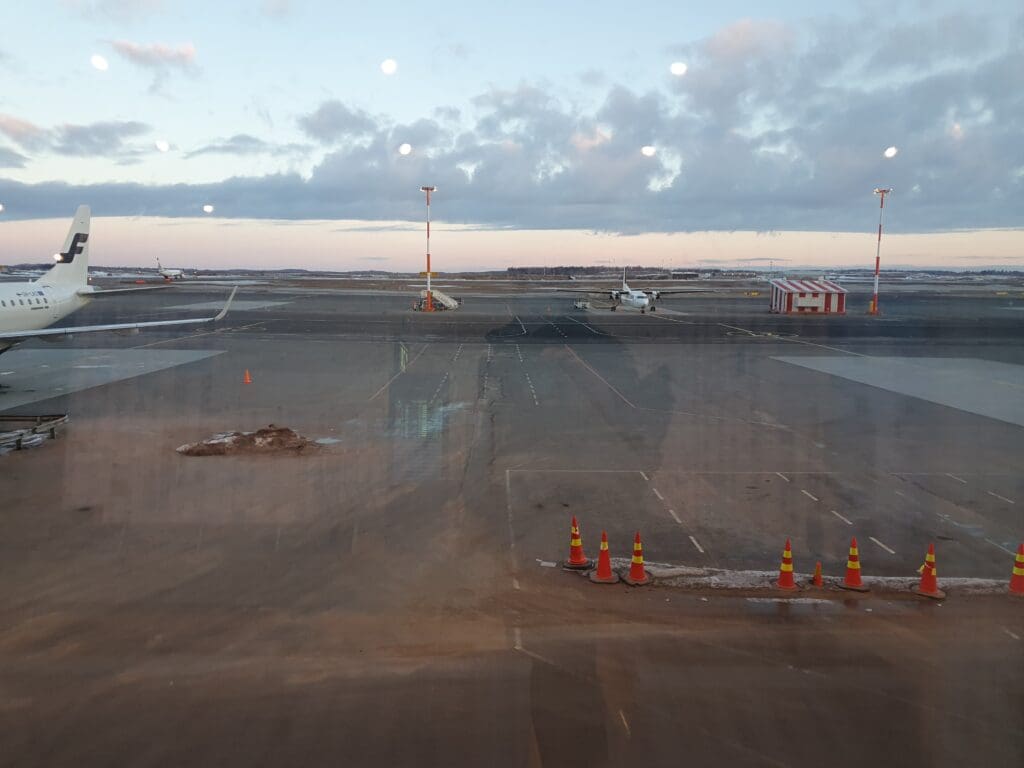
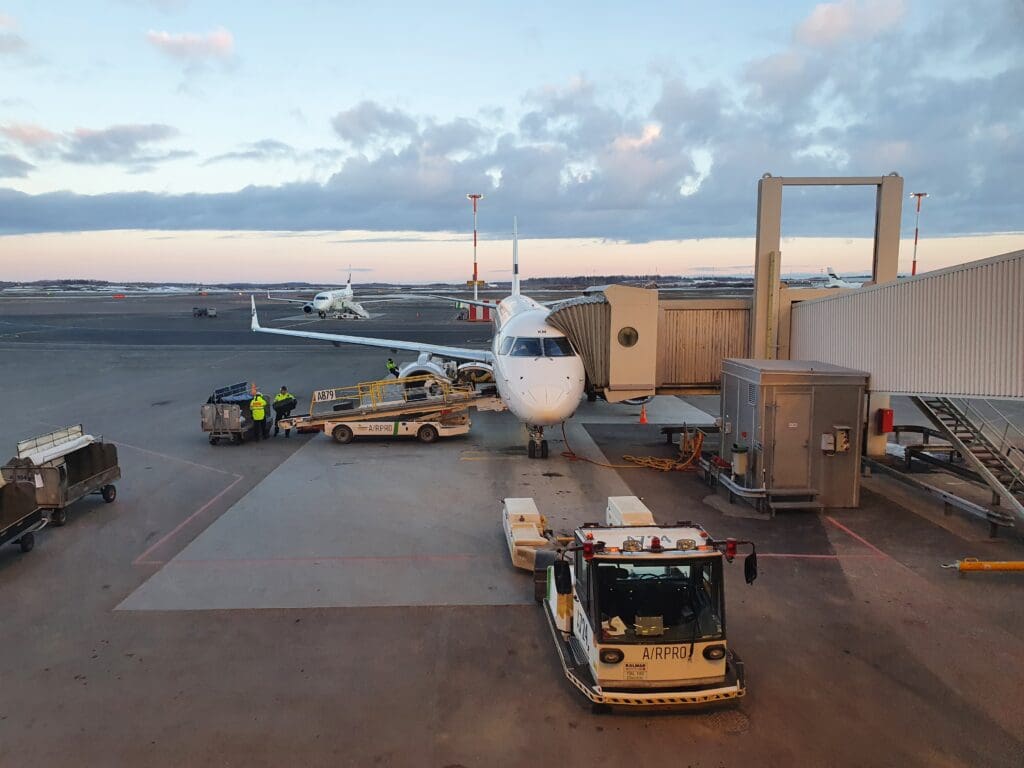
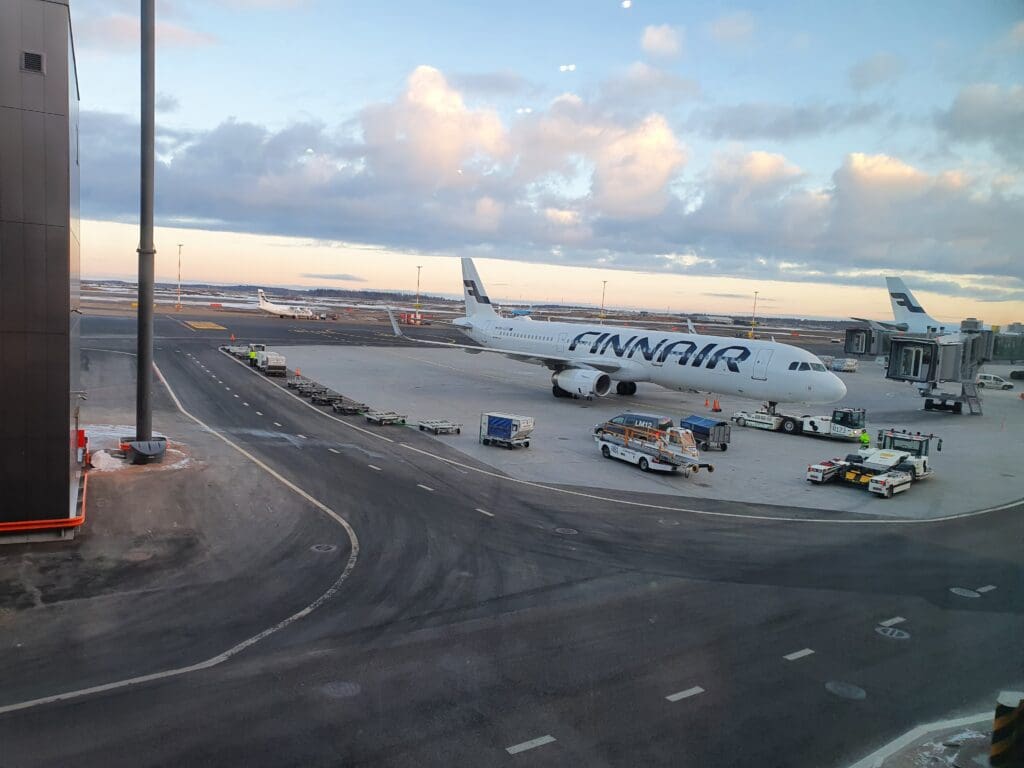
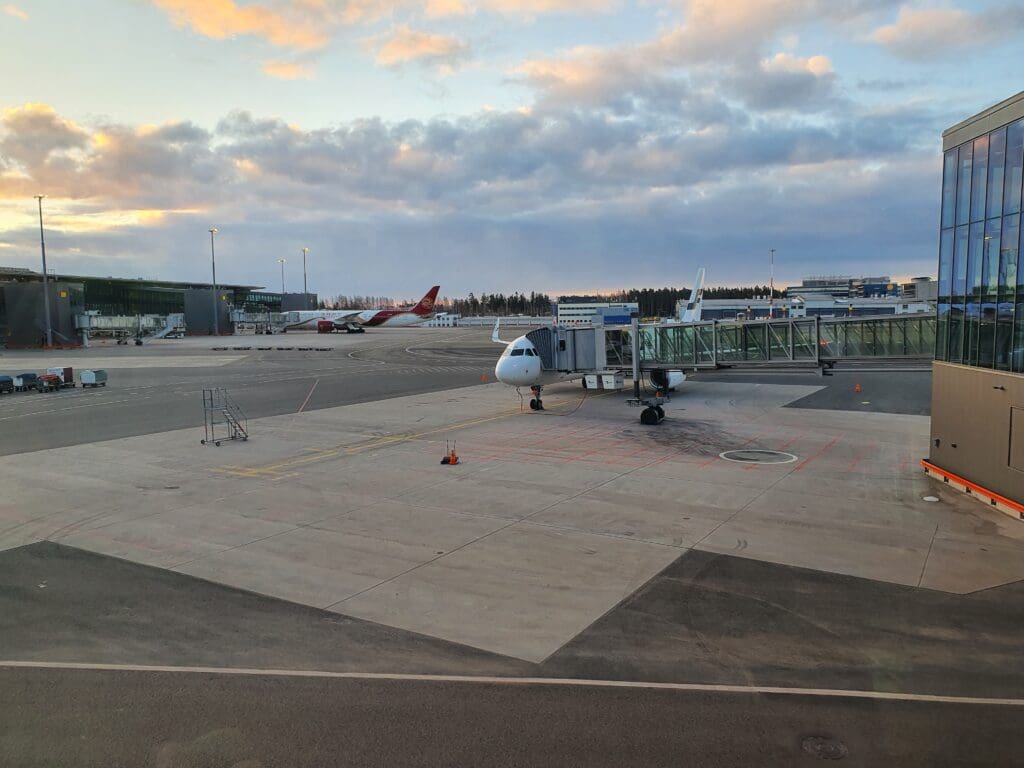
With the flight to London Heathrow being the only flight to a non-schengen destination until the next London flight at 1125, beyond immigration the terminal was rather quiet with most milling about having arrived on Finnair’s three arrivals from East Asia earlier that morning – Bangkok, Singapore and Tokyo. Interestingly, a good number of passengers sported full white overalls adding perhaps an extra layer of protection from the virus. Following another quick toilet stop, I made my way over to Gate 40 where my boarding pass was scanned and my passport checked before I arrived in the reasonable-sized waiting area at this gate.
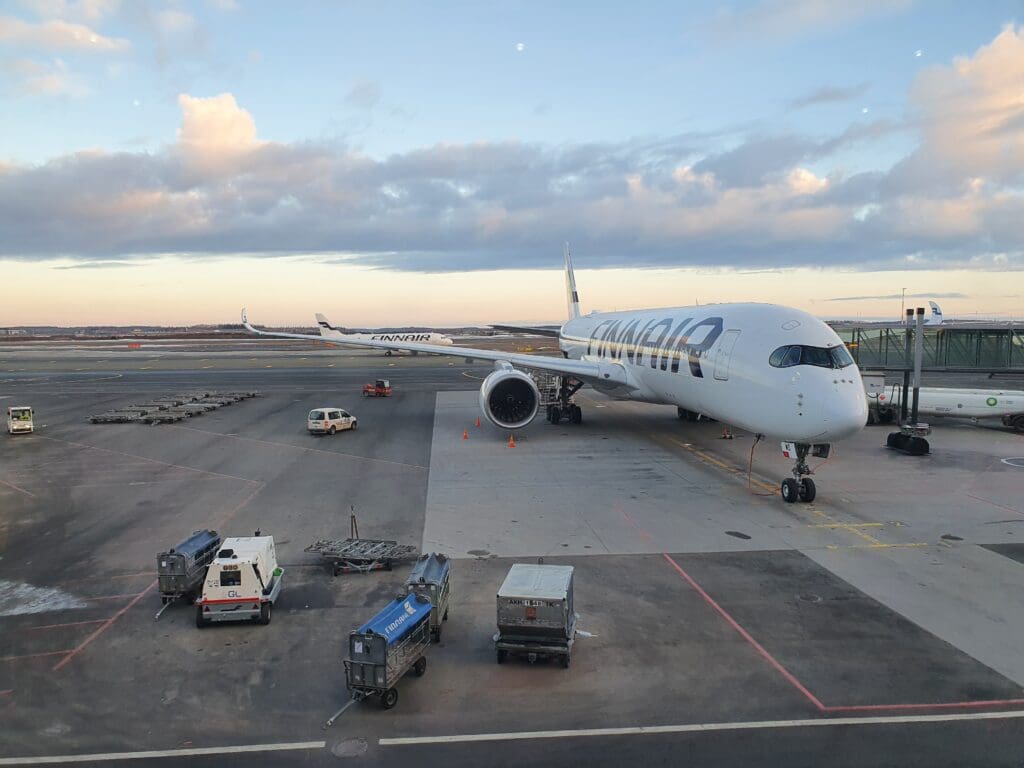
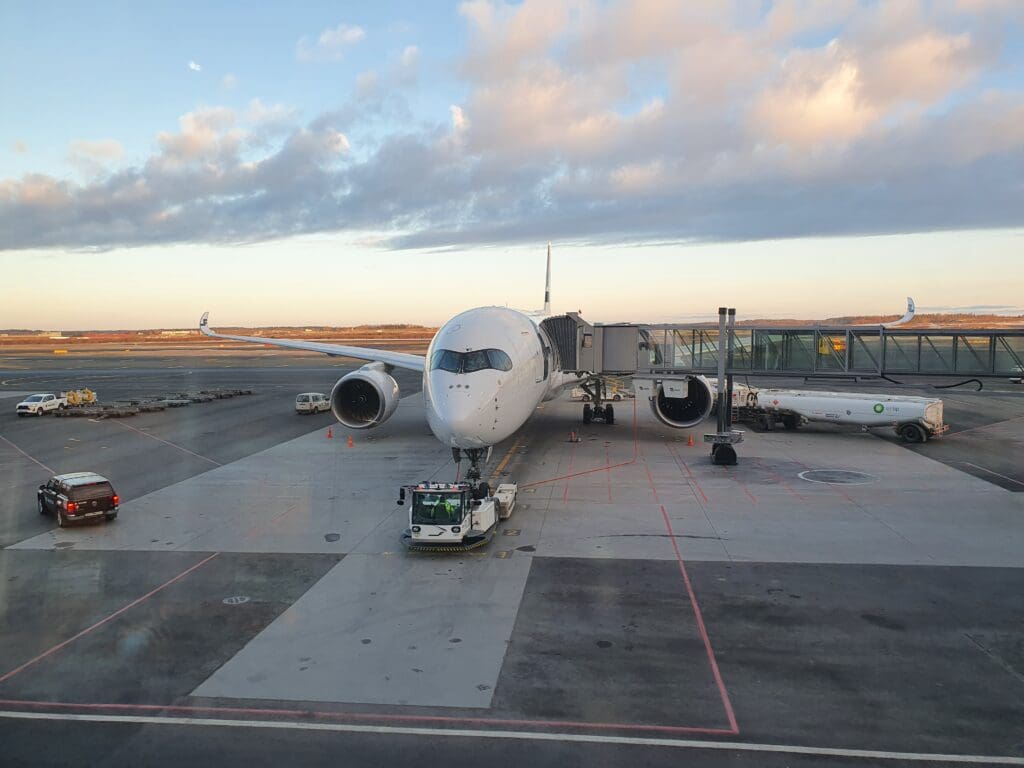
At that time, Airbus A350-941 OH-LWD could be seen standing outside at Stand W42, this having arrived from Singapore earlier that morning. With the construction number of 22, this is one of the earlier examples of the Airbus A350 and first took to the skies of France with the test registration F-WZFQ in December 2015. In March 2016 this was delivered to Finnair in Helsinki, and as the aircraft’s registration would suggest, this was the fourth Airbus A350 to be received by the airline. Since then the aircraft has had a largely uneventful life, flying to Finnair’s far-flung destinations as well as making the occasional trip to airports a little closer to home as it would do that morning. In the week before my flight, the aircraft had flown a total of twelve sectors, flying between Helsinki and Amsterdam, Dallas, London Heathrow, Singapore and Seoul Incheon. The Dallas rotation was particularly noteworthy, with this having been Finnair’s inaugural flight to the Texan city.
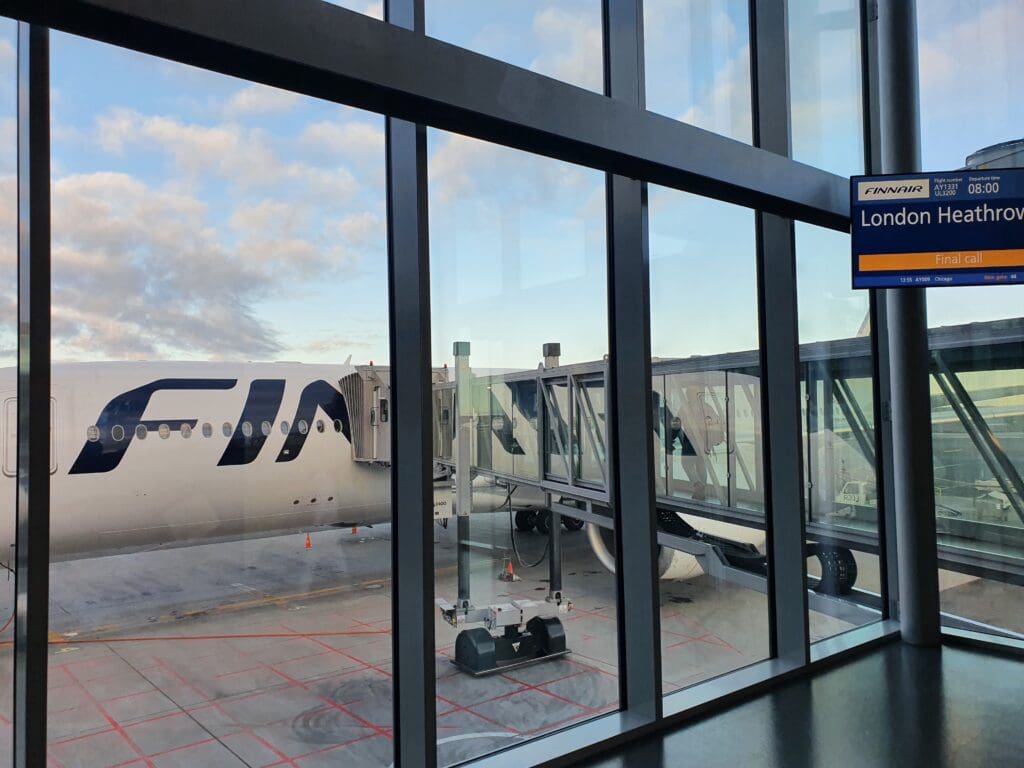
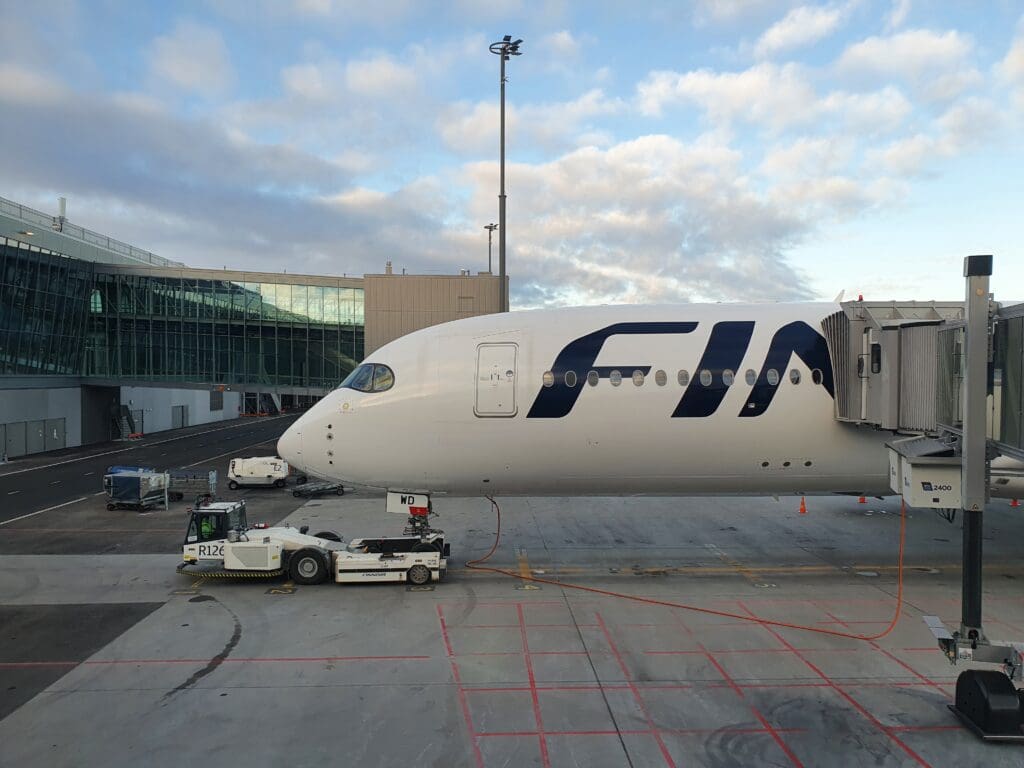
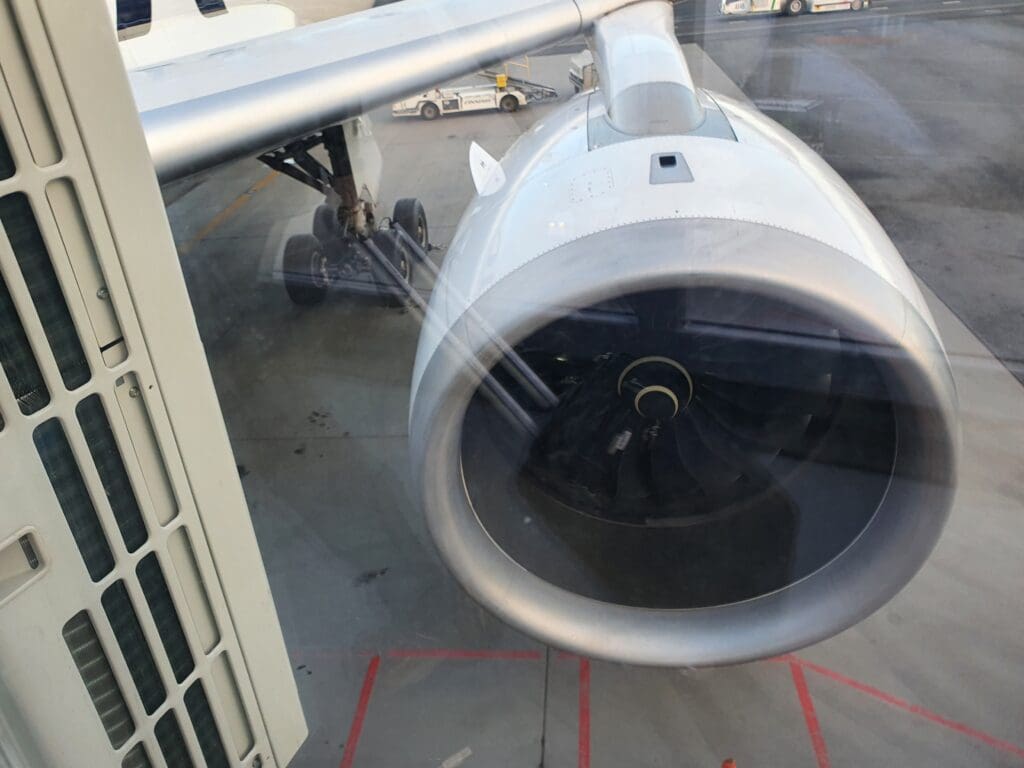
As time passed, the gate waiting area soon filled up and at 0730, those priority passengers in Group 1 were invited to head down to the aircraft. Five minutes later, this was followed by an announcement for all other passengers at which point I made my way towards the waiting aircraft. That morning boarding took place via a single jetbridge, and as is often the case with the Airbus A350 and similarly sized aircraft, this was connected to the L2 door. Following this towards the waiting jet, taking my time to admire the mammoth-sized Rolls-Royce Trent XWB engines, I soon arrived at the cabin door. As soon as I stepped into the galley, I received a friendly ‘huomenta’ from one of two flight attendants standing there welcoming passengers onboard who checked my boarding pass before advising me in Finnish to head right down the second aisle.
As I trundled down the aircraft to the rear Economy cabin, I first passed through the smaller of the aircraft’s two Business Class cabins. Seeing as it had only been introduced less than a couple of months before my flight, I was surprised to find that this particular Airbus featured Finnair’s new dark blue fabric-covered Business Class seats. Taking the form of Collins Aerospace’s AirLounge seats, have received a fair amount of attention owing to the controversial fact that they do not recline. Heading through this, next up was Finnair’s premium economy product, their Economy Comfort cabin. This featured 24 comfortable-looking Haeco Vector Premium seats arranged in a 2-4-2 configuration, each sporting a dark blue fabric and topped with a large (faux?) leather headrest. As I trundled down the aircraft, I received several friendly greetings in English and Finnish, which combined with my friendly welcome left me with a good first impression of the crew.
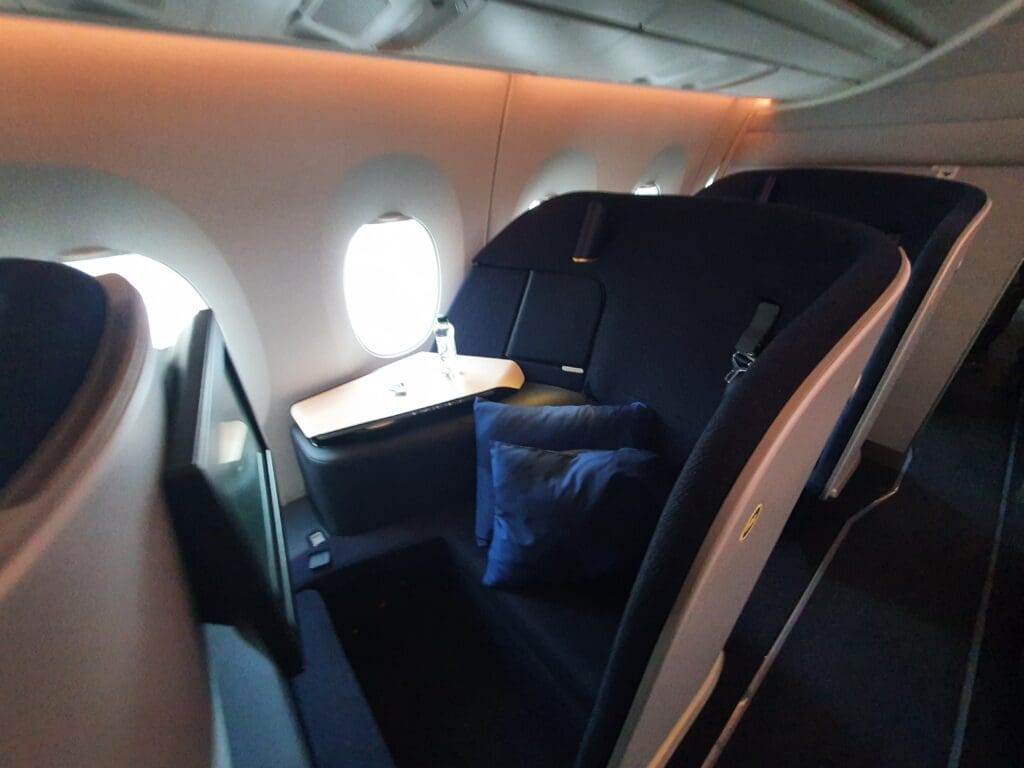
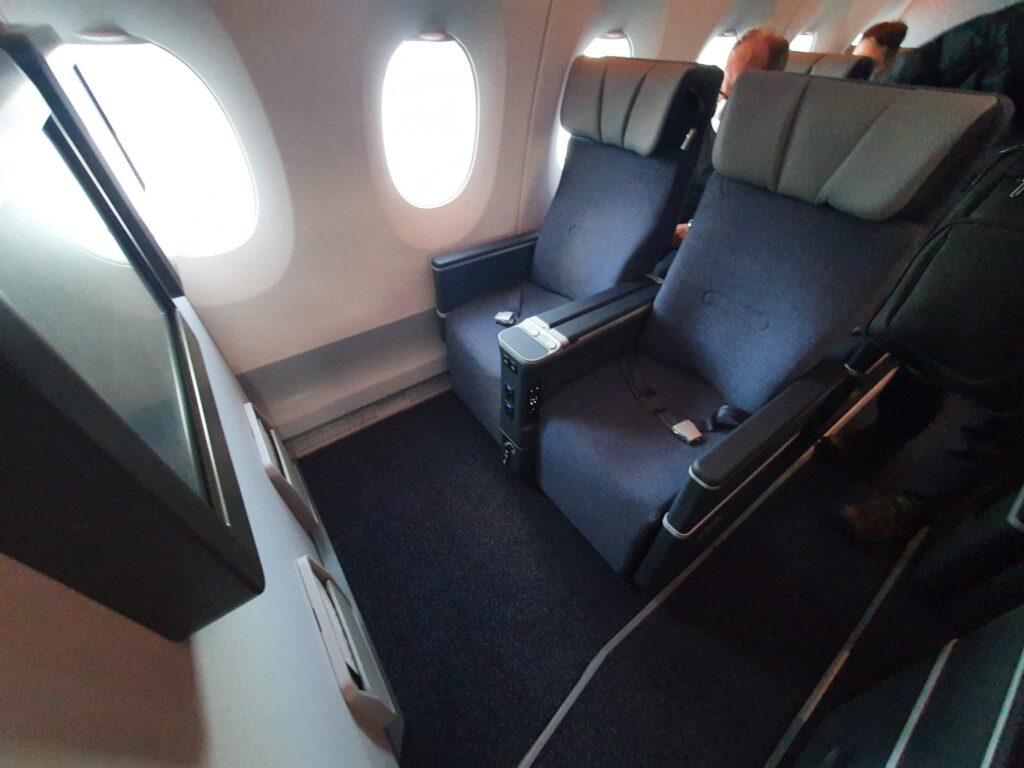
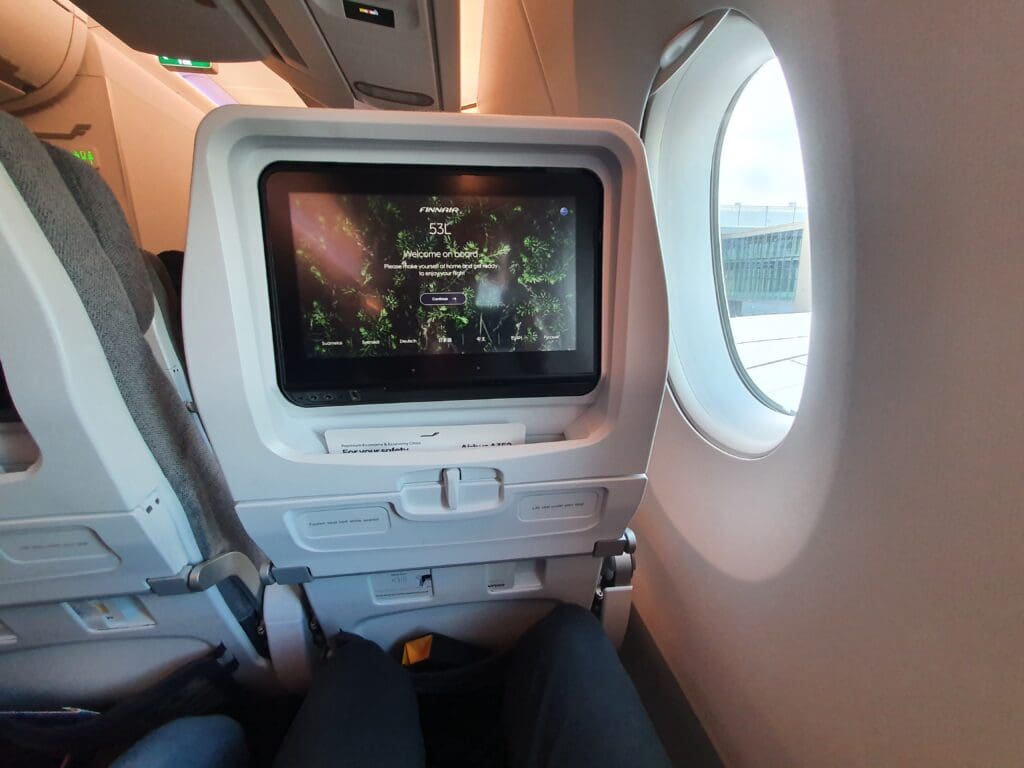
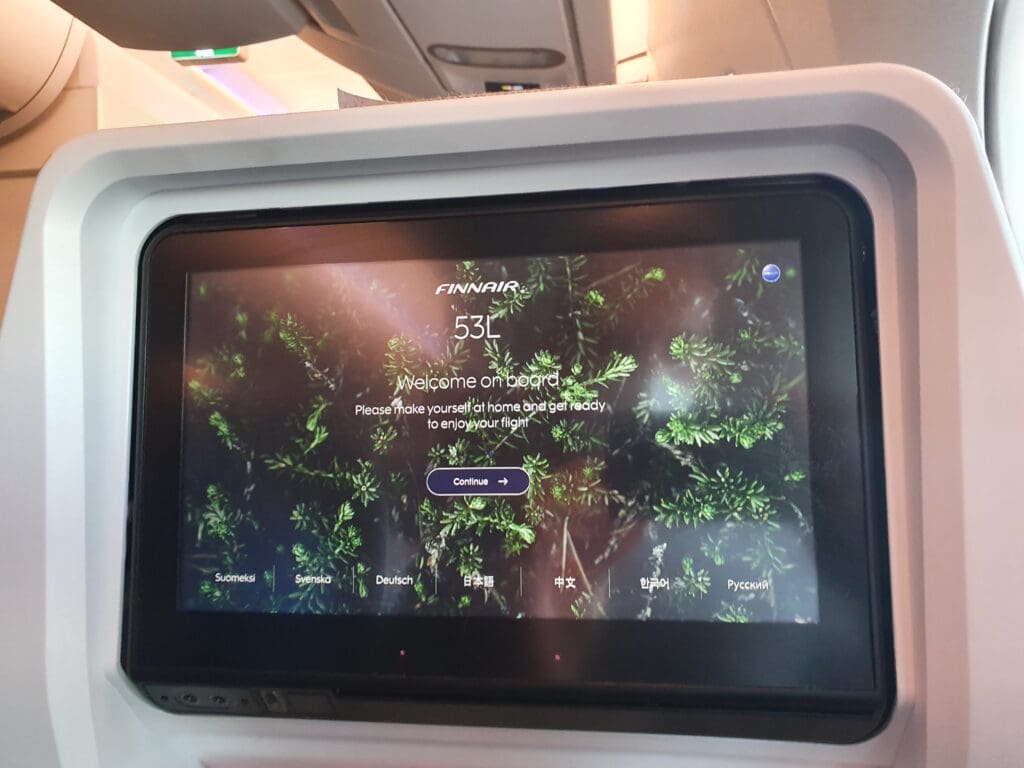
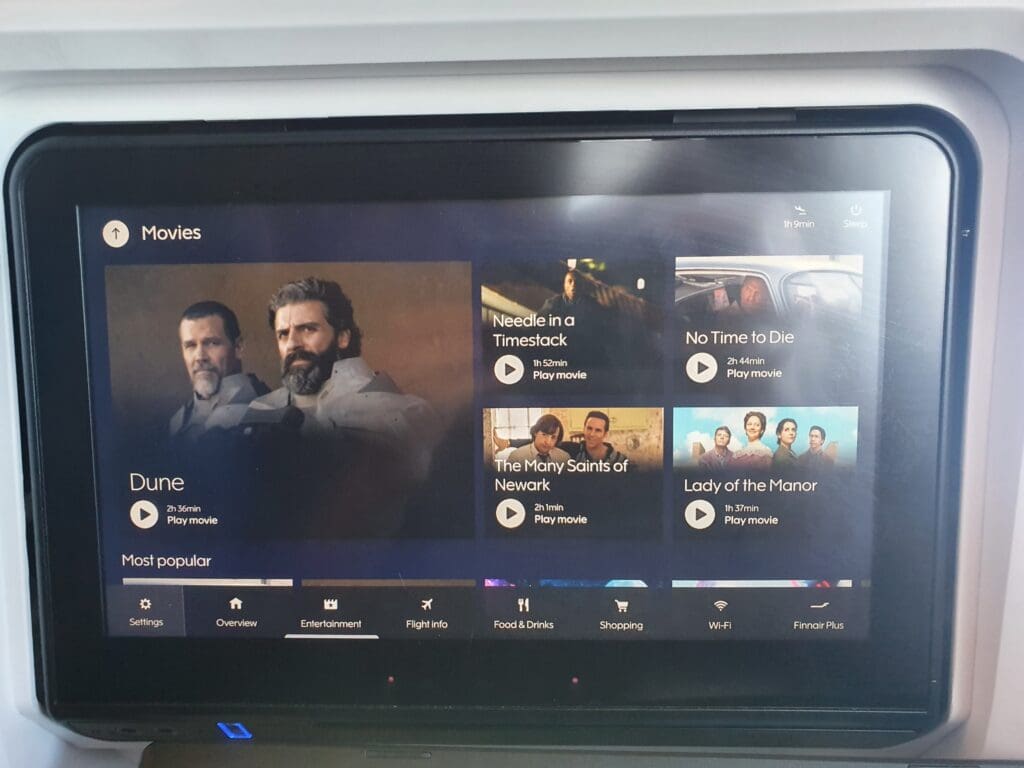
Not having to stop too often to make way for passengers, I managed to make it to the Economy section of the aircraft within a minute or so. In this, all Zodiac Z300 seats are covered in a very smart and clean-looking light grey fabric, and as one would hope for on a long haul aircraft these all feature an adjustable headrest, covered by a disposable fabric antimacassar featuring Finnair’s motif tucked away in one corner of this. On the rear of each Economy seat, the most notable feature is arguably the large and high-quality 12 inch wide inflight entertainment screens, with these powered by the popular Panasonic eX3 inflight entertainment system. Meanwhile, these also feature a seatback pocket and a literature compartment which on my flight contained a safety card and a sickbag.
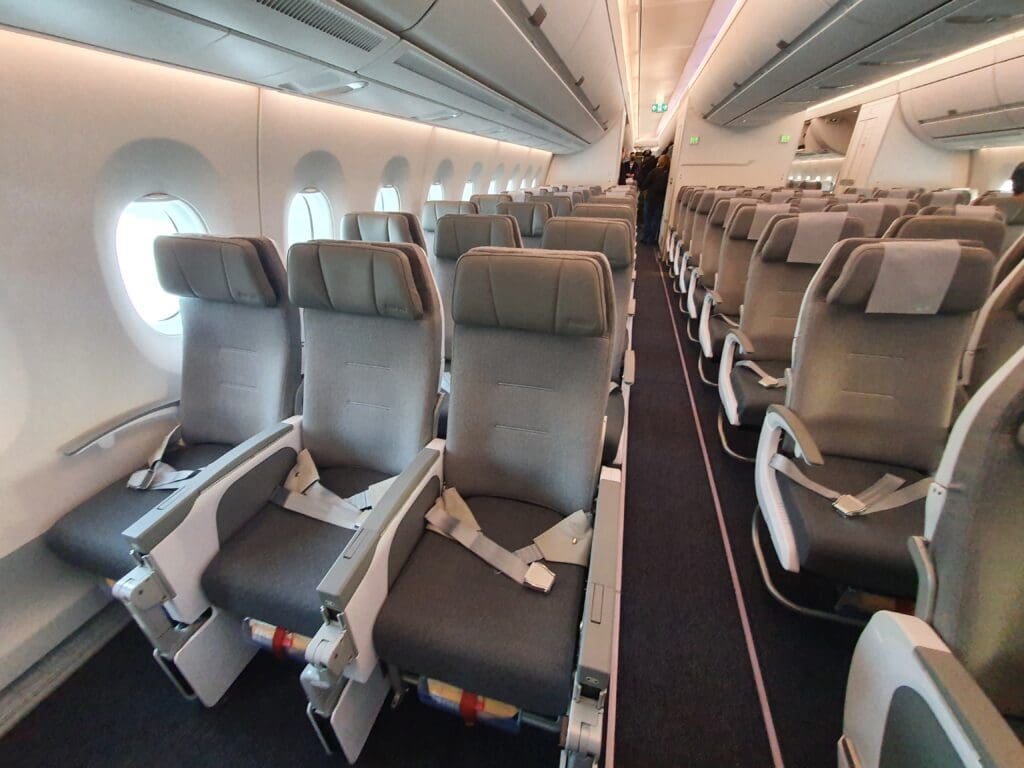
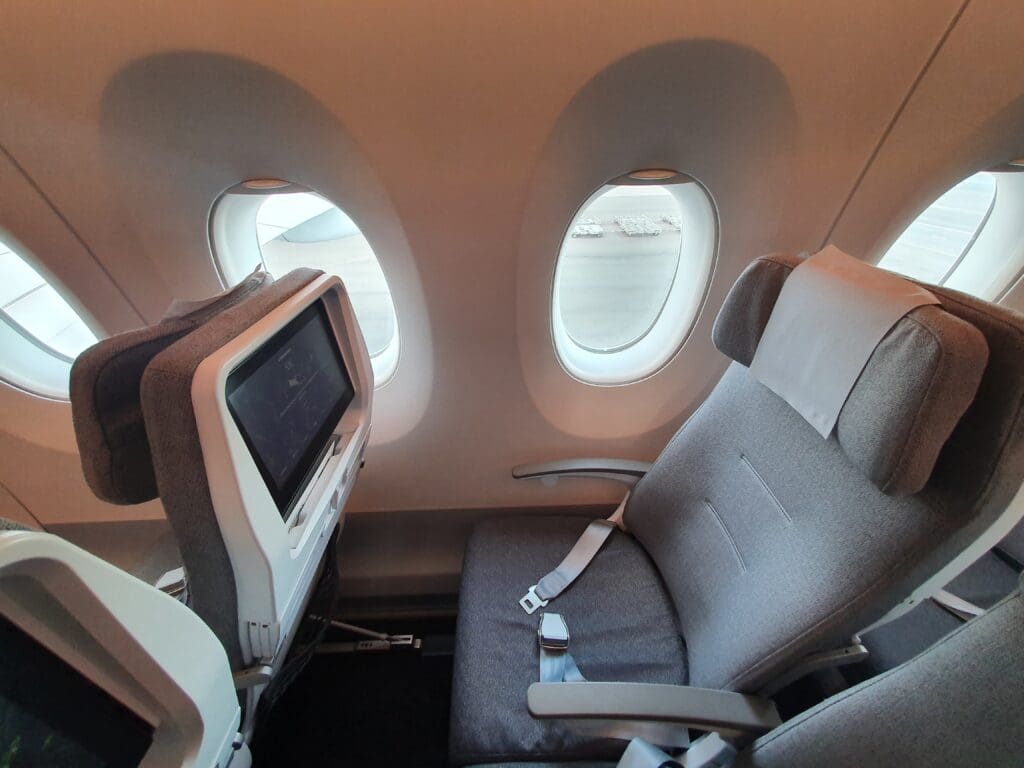
Upon arriving in the rear cabin, I soon made it to Row 53, located in the third row of this cabin. At that time I was pleased to find that my two neighbours were yet to arrive and so I managed to slide into this seat without any hassle, soon strapping myself in and noticing the Finnair branded seat belt buckle. At that time, my first impressions were very positive, the seat offered what seemed to be a good amount of legroom whilst this was soft and comfortable. As one would hope, the area around my seat appeared to be clean and in tip-top condition, failing to spot any signs of wear and tear around my seat. Around a minute after sitting down, I was joined by two neighbours – a pair of Finnish friends who appeared to be in a jovial mood, spending much of the flight chatting and giggling, perhaps heading off on holiday.
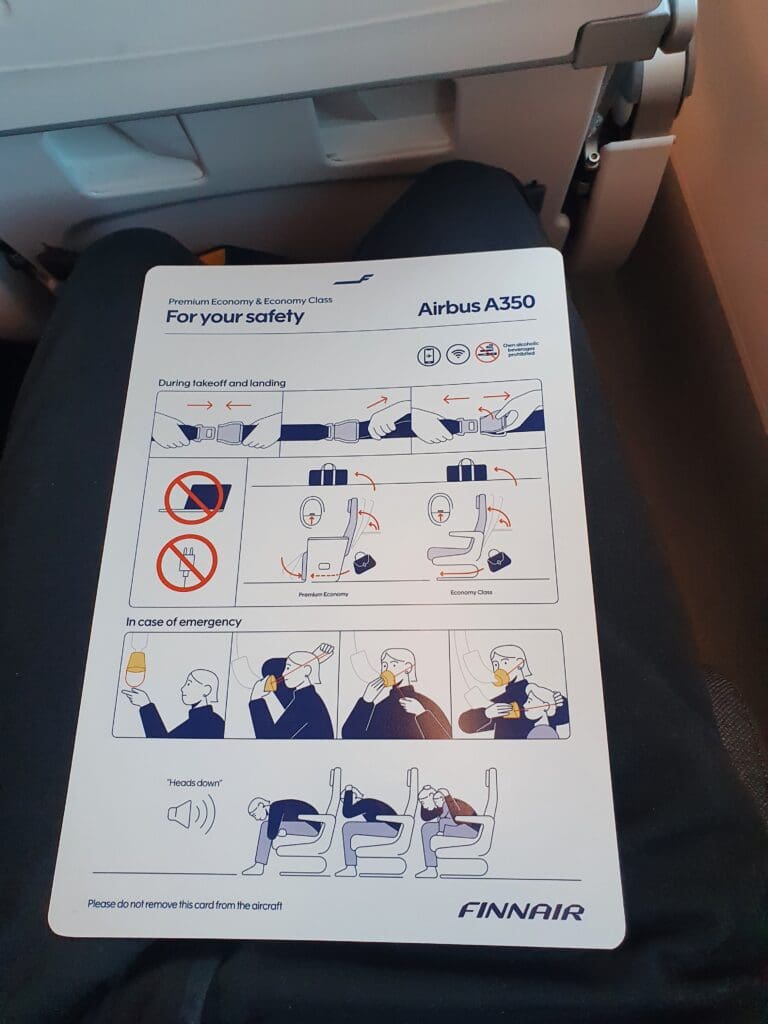
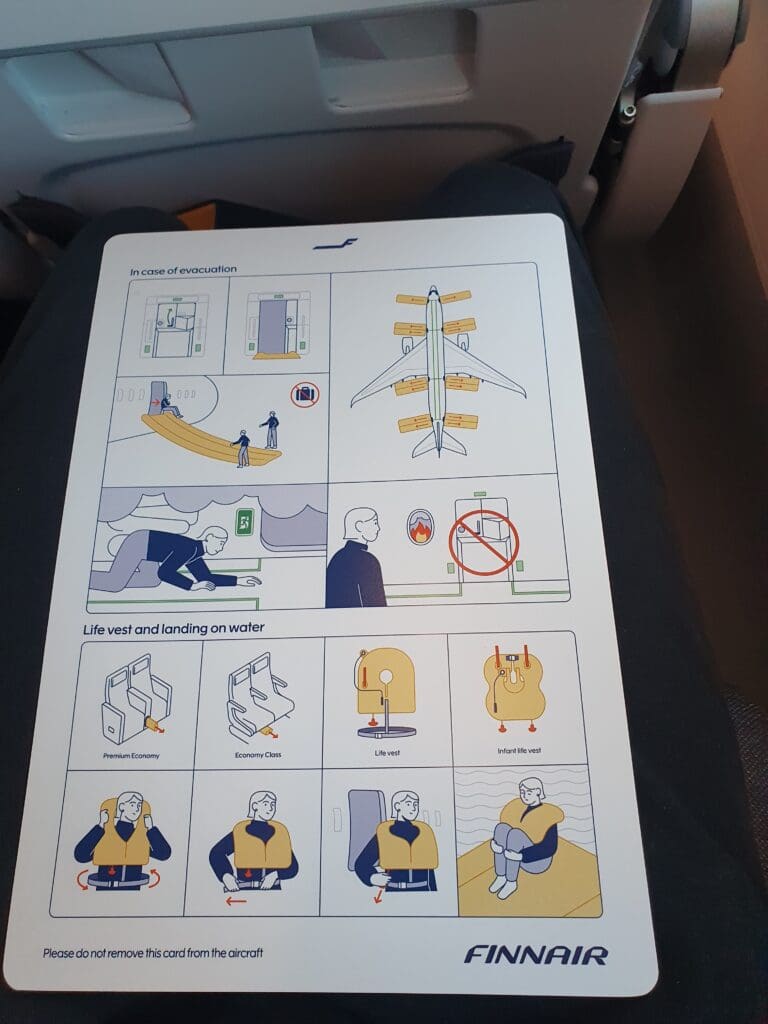
That morning, the flight was not to be full and the words ‘boarding complete’ were announced at 0743. This was then followed by a pre-recorded announcement in English that asked passengers to store cabin bags underneath the seats wherever possible and to ensure that they wore their facemask at all times during the flight. As I had expected, it appeared that many passengers had not commenced their journeys in Helsinki, but were instead in the final stages of their journeys from East Asia and even Australia, with several passengers having connected in Singapore and Helsinki – many onboard appearing tired, groggy and ready to reach their destination. Whilst the crew passed through the cabin undertaking their final preparations before departure, the Captain’s calm and reassuring voice filled the cabin as they began their welcome speech first in Finnish, and then again in English. During this, they welcomed passengers aboard and thanked them for flying with Finnair, introduced the two First Officers present in the cockpit and advised passengers that the flight time down to London would be a quick two hours and twenty minutes. This was then followed by the Chief Purser’s welcome announcement which was undertaken in Finnish, Swedish and English. That morning, the flight was codeshared with a variety of OneWorld airlines – specifically American Airlines, British Airways, Malaysia Airlines, Qantas and SriLankan Airlines – indicating that several passengers could be continuing to all corners of the world.
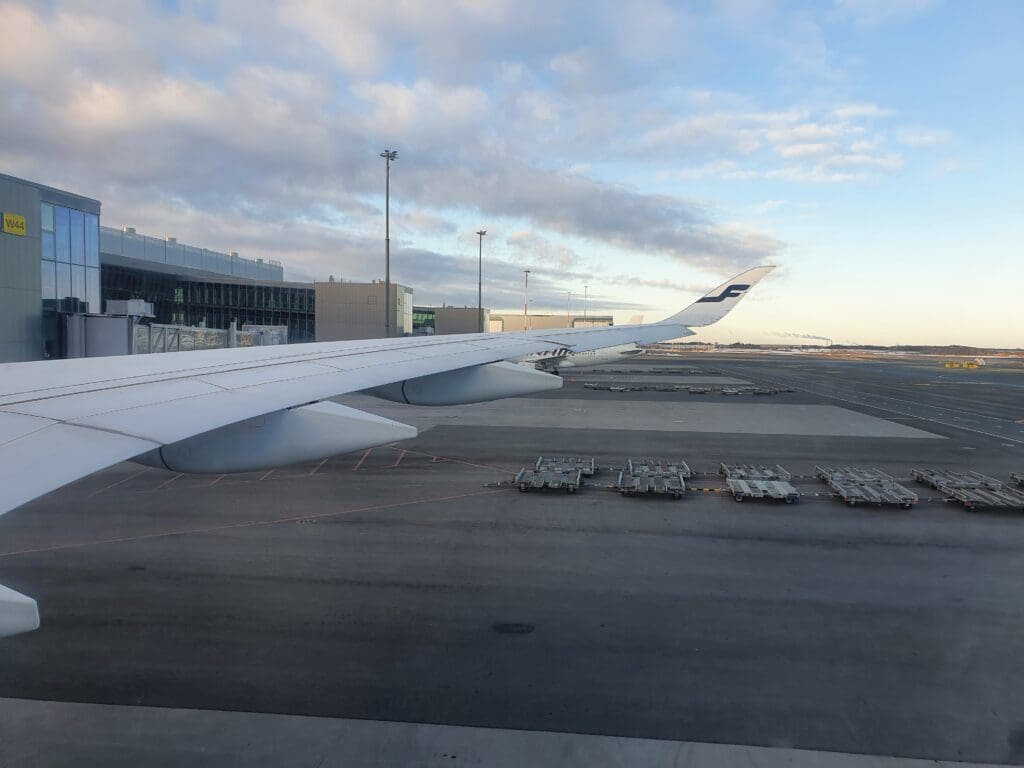
That morning, the aircraft made a very punctual pushback from its stand, with this occurring at 0754 during which the left-hand Rolls-Royce Trent XWB engine hummed and whirred into life, ready to carry us all across to London. Inside the cabin, the inflight entertainment system became temporarily inoperable as Finnair’s safety video was broadcast, with the crew standing in the aisles ready to point out the Airbus’ exits. Whilst recognising the fact that many Finnish people speak a very good level of English, I was a little surprised to see that this video was played in English only with English subtitles.
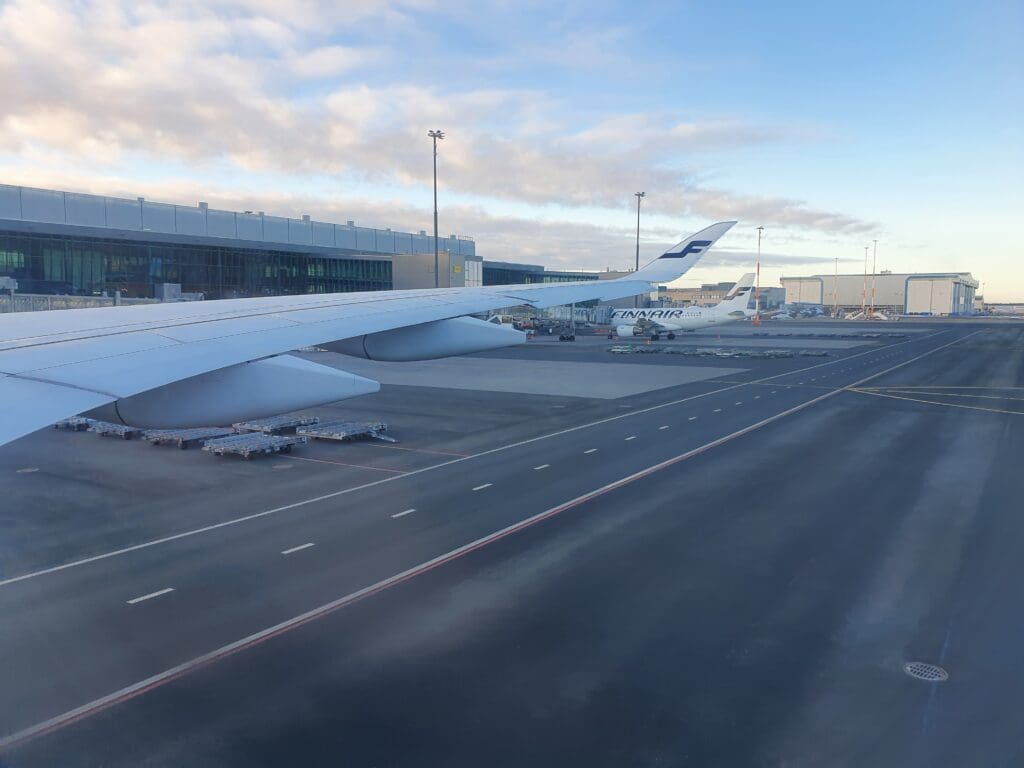
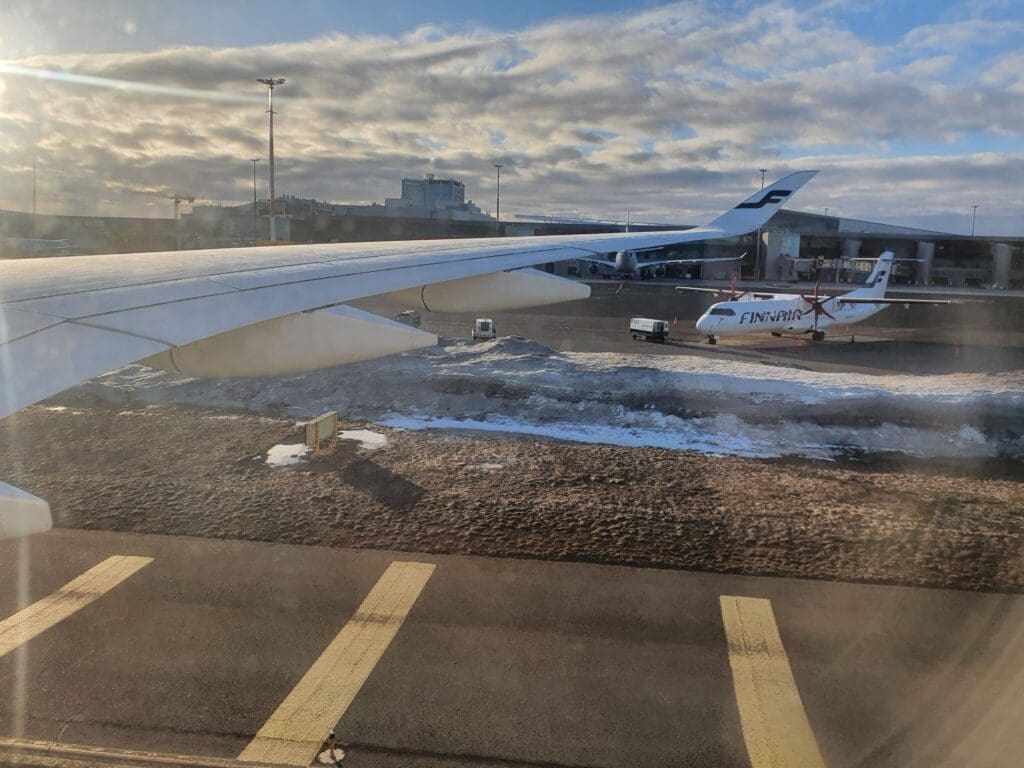
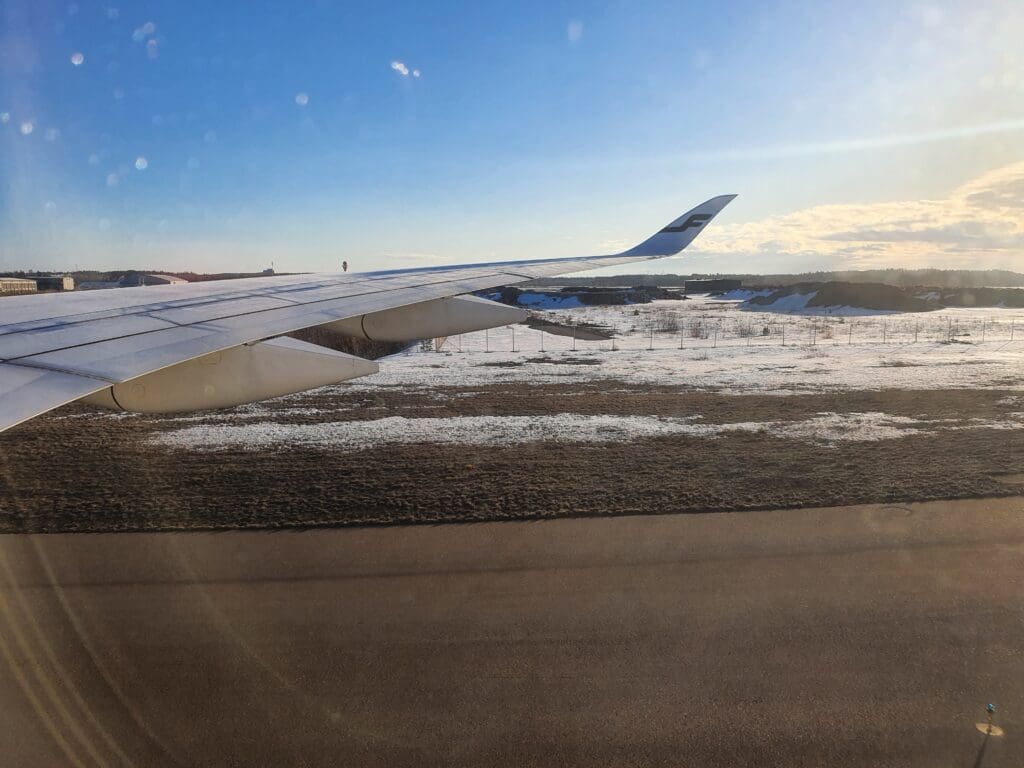
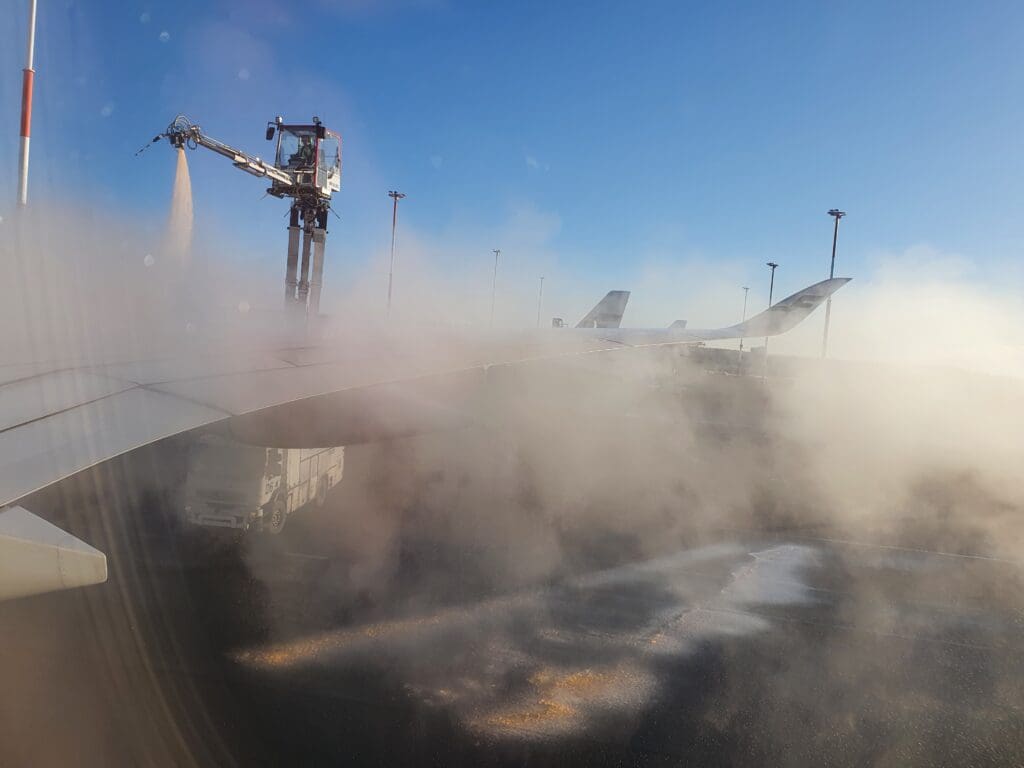
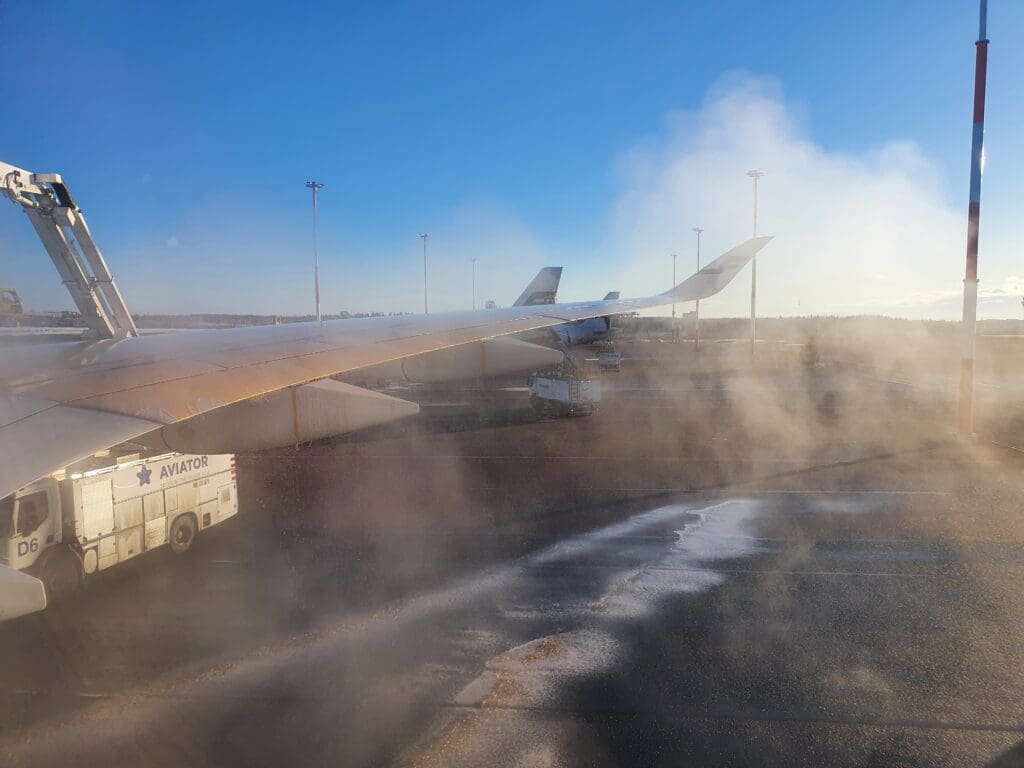
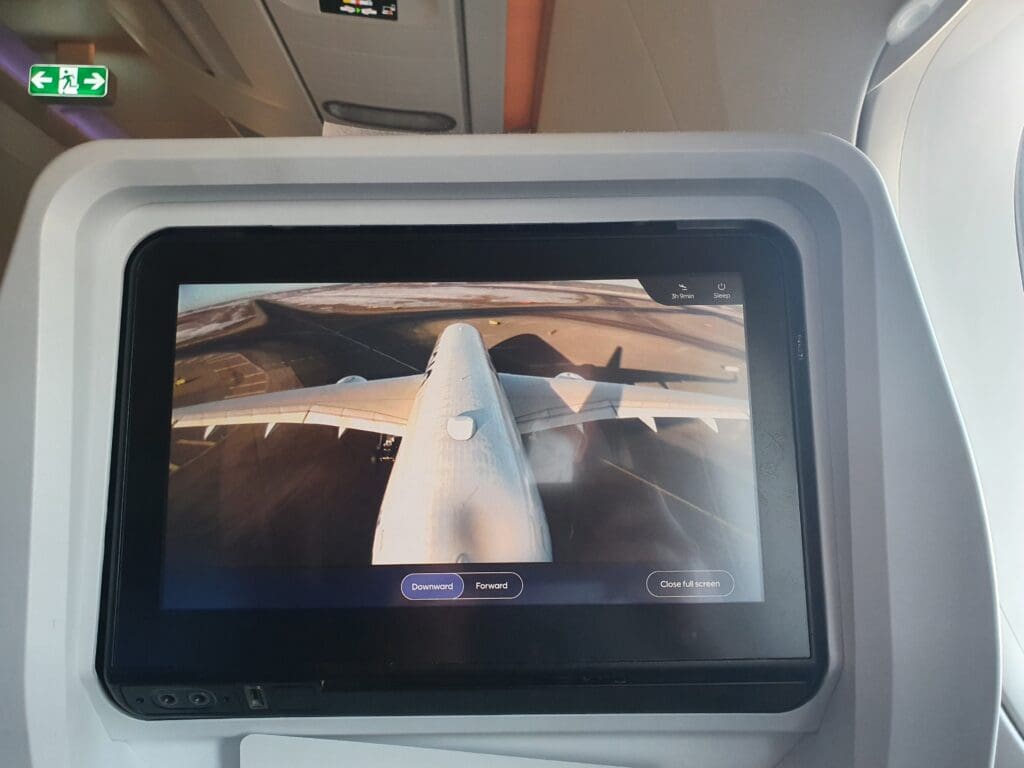
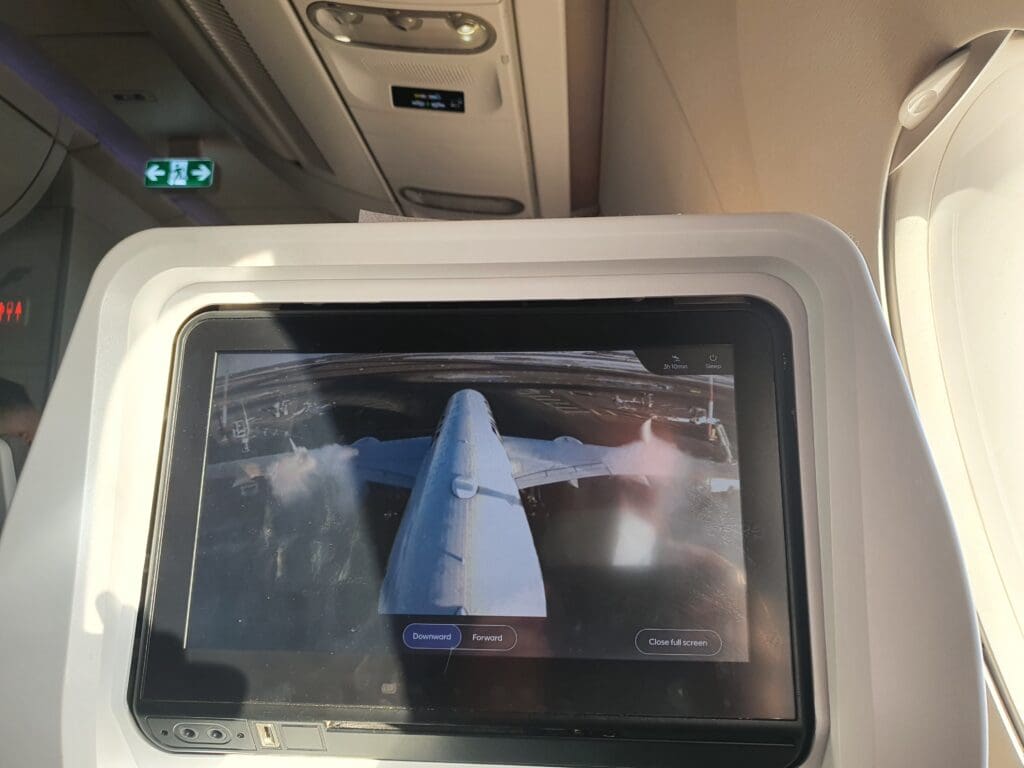
After coming to a halt, it was not too long before the tug was disconnected and the aircraft taxied off under its own power, with the right-hand engine making a smoky start-up during this. With the Airbus A350’s sleep wings twinkling thanks to a layer of ice that had formed since its arrival from Singapore earlier that morning, it did not come as much of a surprise to find that the aircraft would need to be de-iced before its departure. Heading off amid the early morning rush, as the aircraft pulled into one of the de-icing bays, two Italy-bound Airbus narrowbodies could be seen being sprayed down – one bound for Milan and the other for Rome. However, as one would hope given the Finnish winters, Helsinki Airport is well prepared for cold weather operations and several aircraft can be de-iced simultaneously. Thus, as soon as the aircraft came to a halt, a fleet of Star Wars-like vehicles manoeuvred into position around the jet and commenced their well-versed routine. As orange fluid was sprayed onto the aircraft, I did notice that a slight scent of this filtered through into the cabin although this did go away once deicing had been completed.
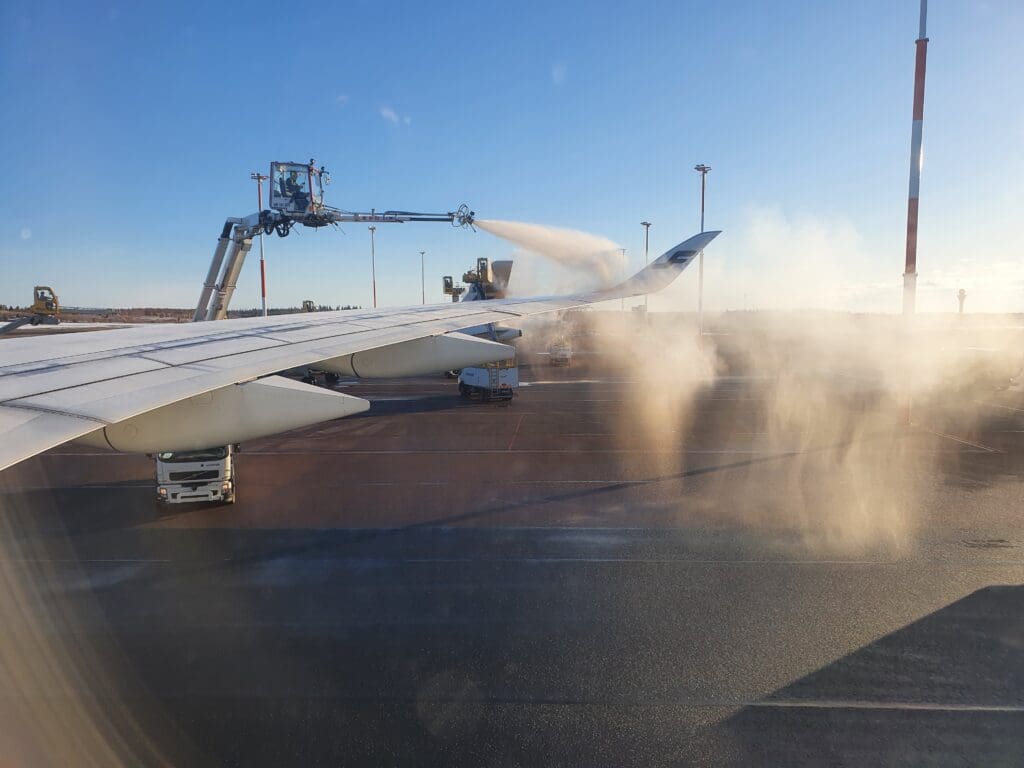
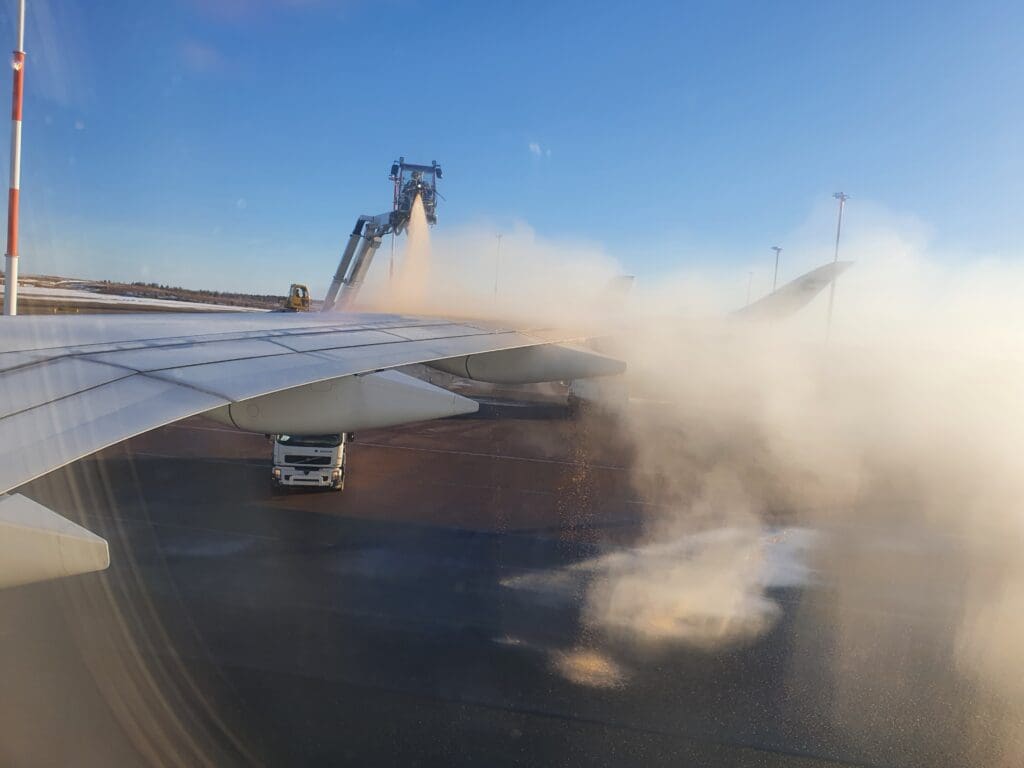
Wasting no time, once the de-icing process had been completed and the vehicles manoeuvred back into their starting position ready to welcome the next jet, the Airbus taxied forwards before turning left and making its way onto Runway 22R. Once on the runway, the two Rolls-Royce engines spooled up and the Airbus commenced what seemed to be a fairly gentle take-off, soon sunny skies of Finland. During the first minute or so of the flight, the industrial areas to the north of the airport could be seen before the aircraft banked right and then left, rolling out on a slight southwesterly course of about 258 degrees.
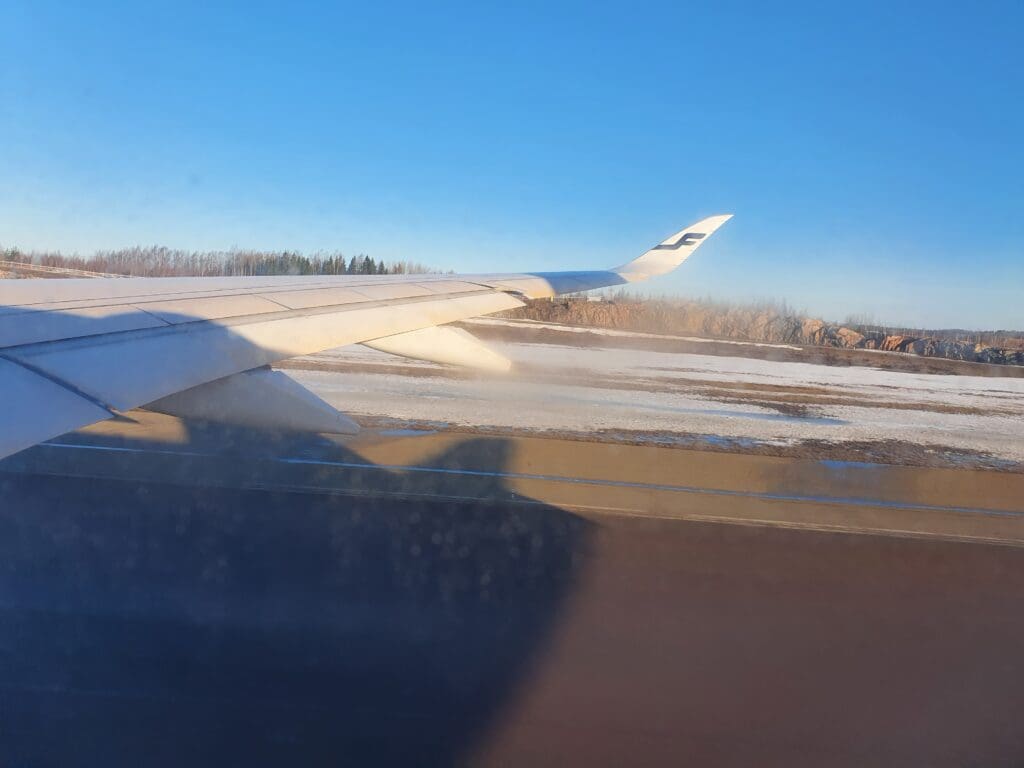
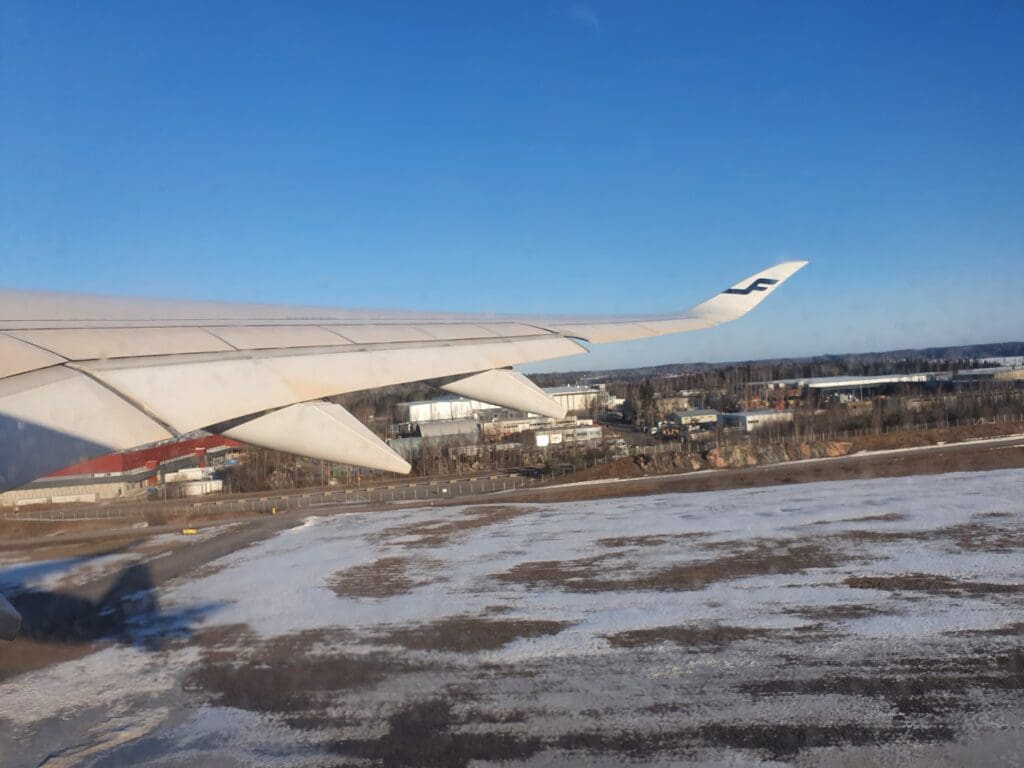
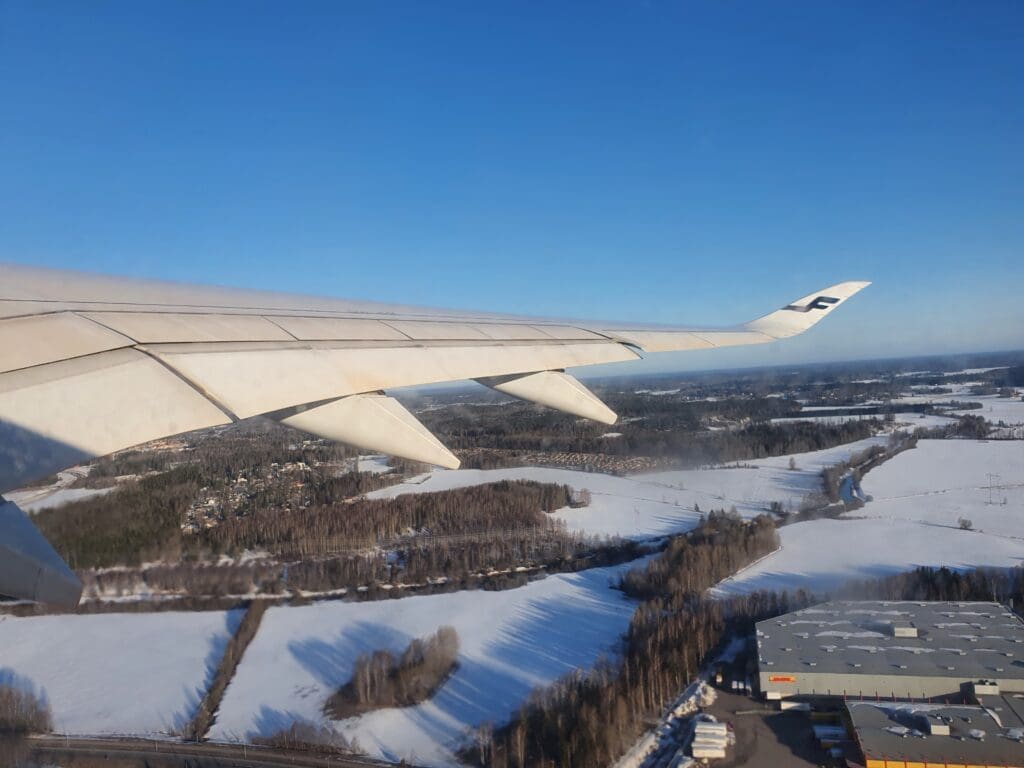
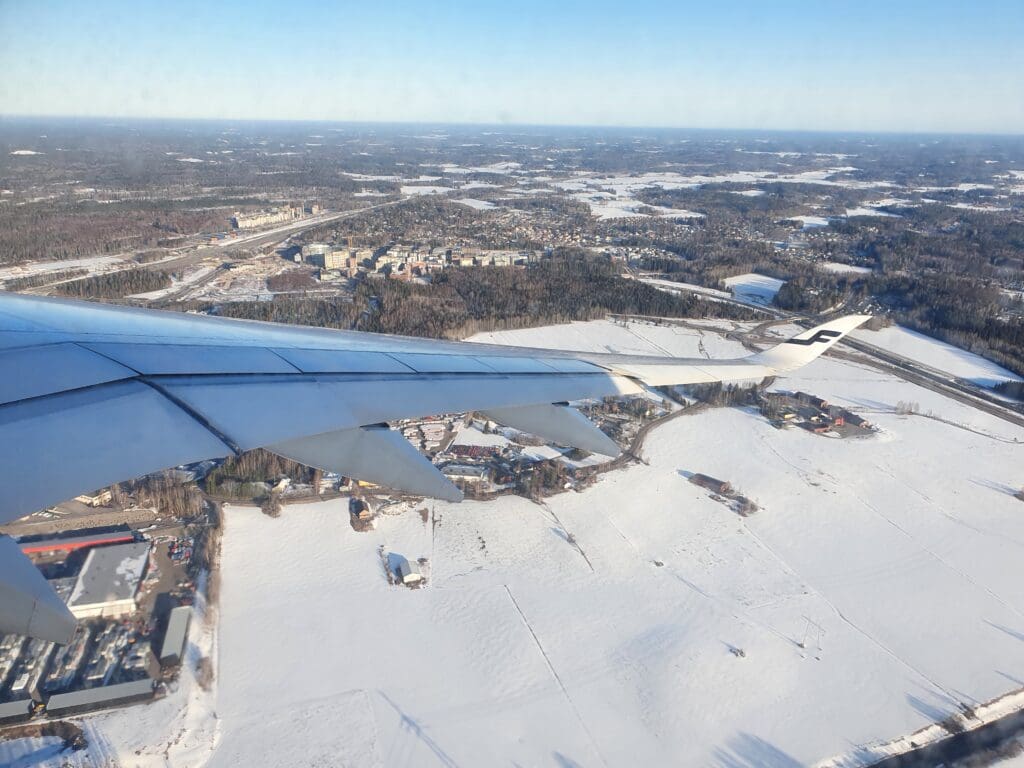
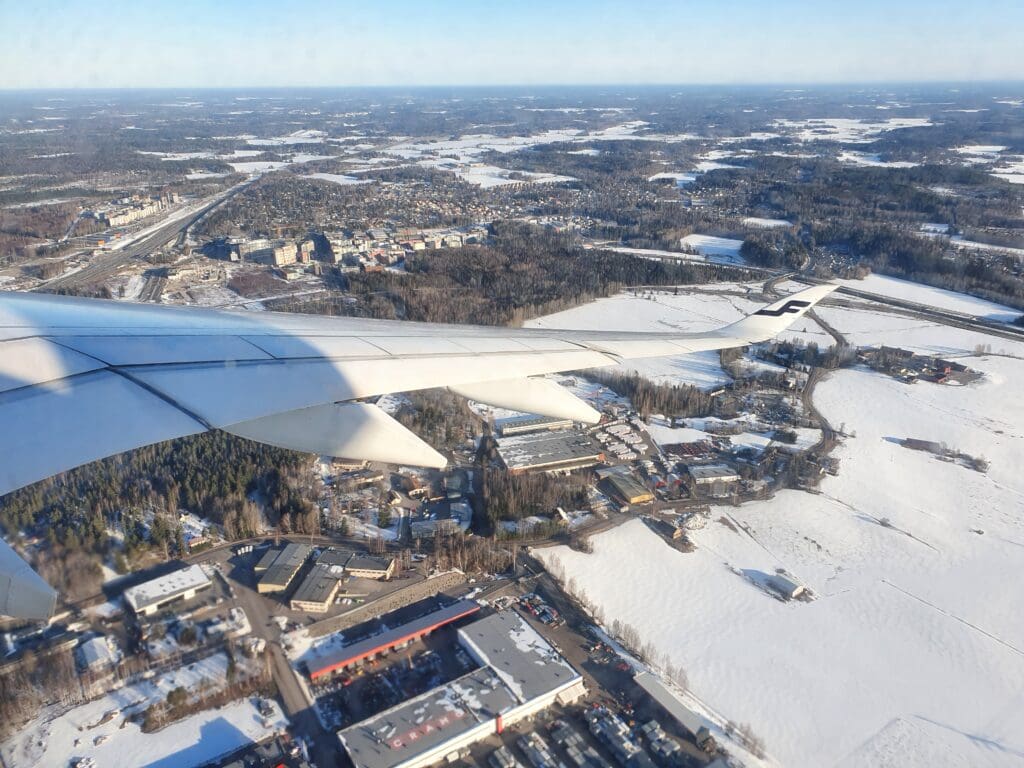
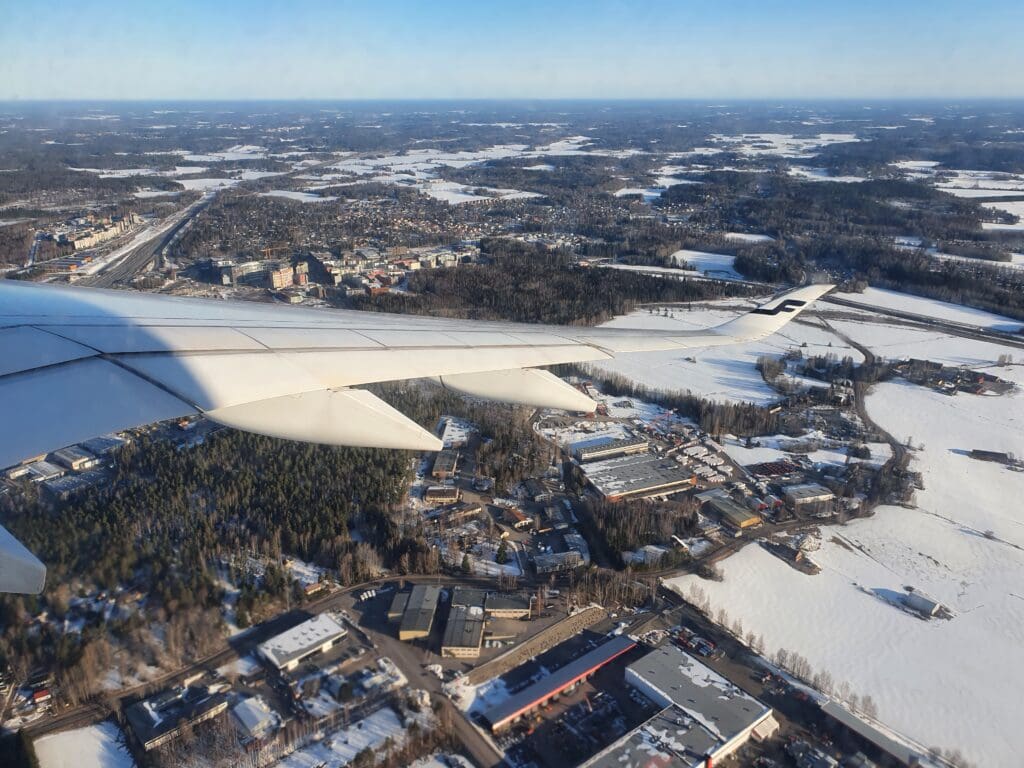
After passing over the fringes of Helsinki’s northern suburbs, the scenery below transformed and I was offered a stereotypically Finnish vistas of forests and snow-covered frozen lakes as the Airbus quickly jumped from county to county as it flew west over Southern Finland. With the climb proving to be incredibly smooth that morning, the seatbelt signs were extinguished only five minutes after the aircraft had taken to the sky. At this time, the crew passed through the cabin handing out typical economy-class quality packaged headphones to those who opted for these. From Helsinki, the aircraft climbed over the Lohja, Karjalohja and Pernio before reaching its high cruising altitude of 43,000 feet during which the many islands that sit to the south of Turku, Finland’s oldest city, could be seen.
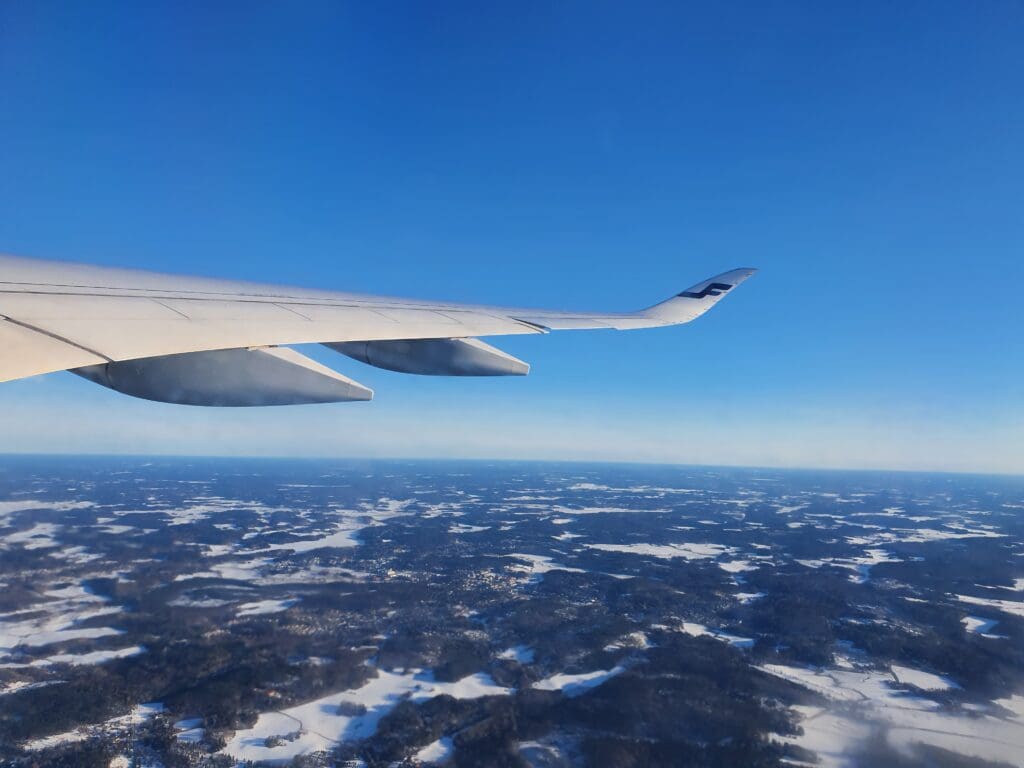
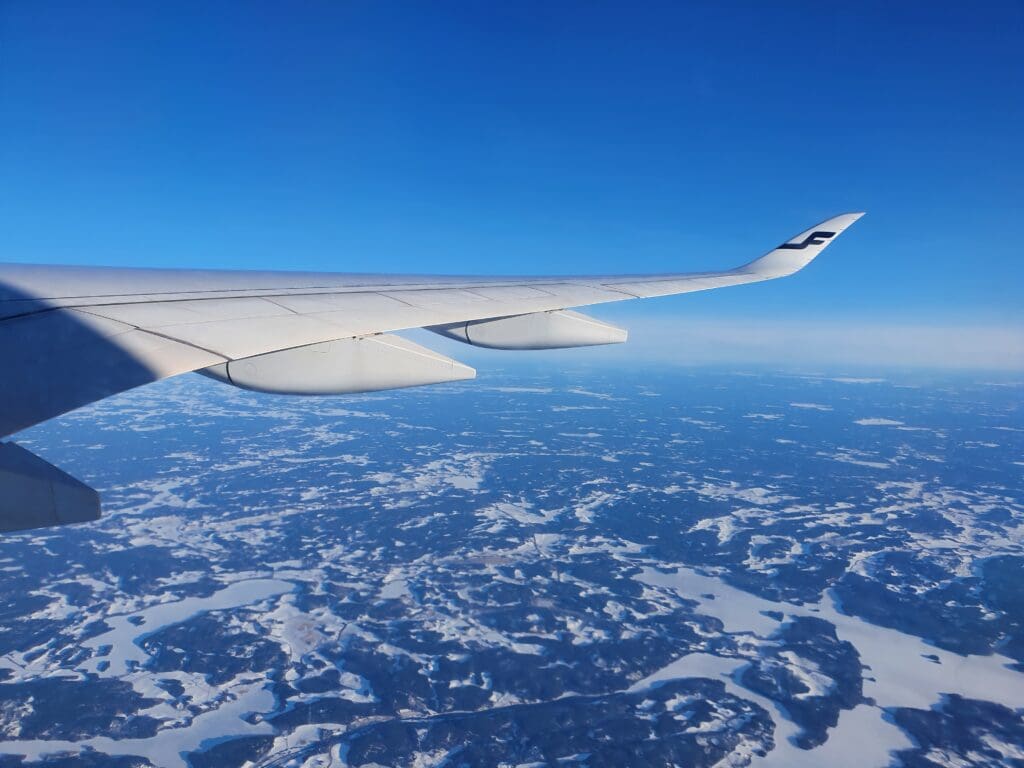
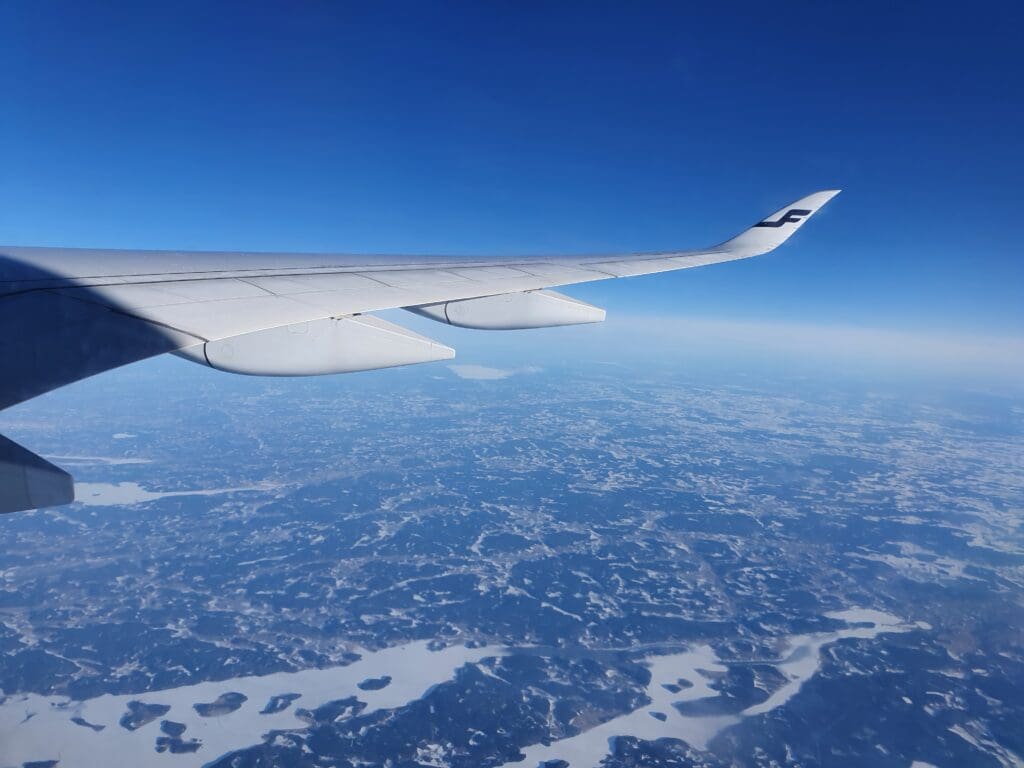
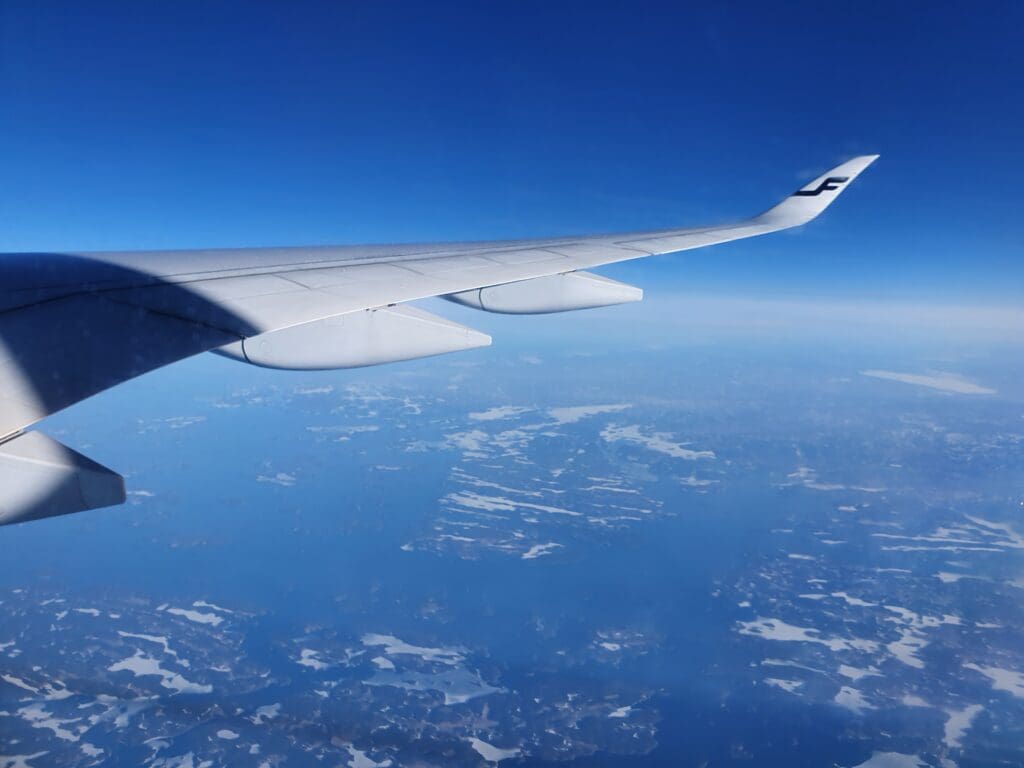
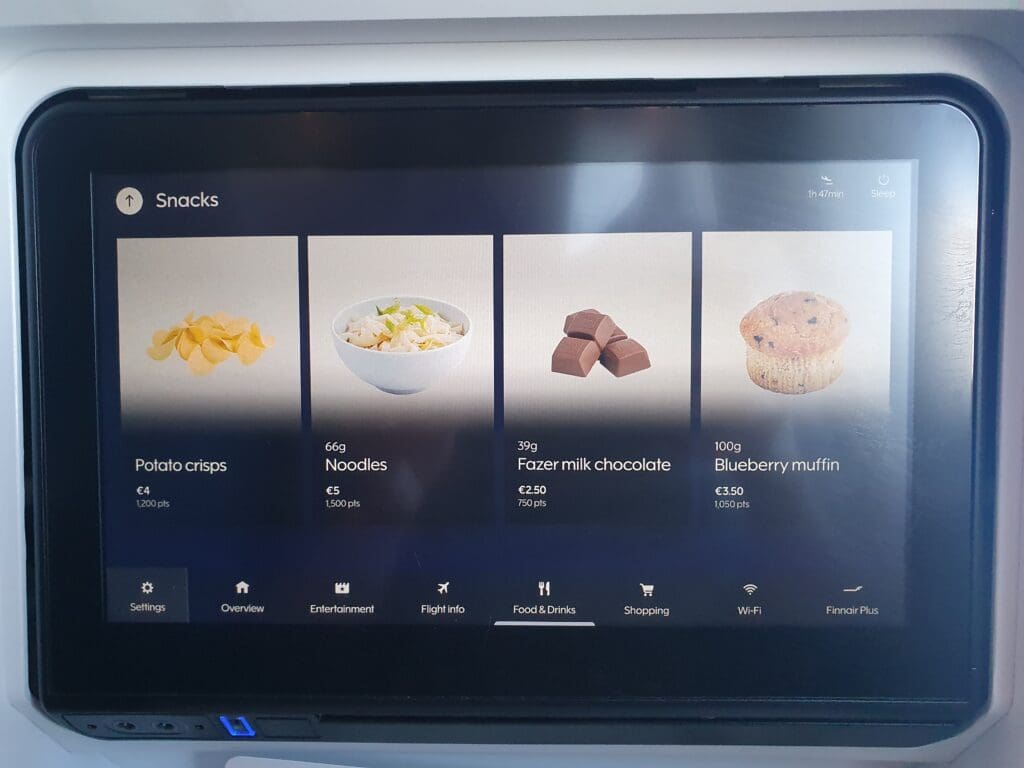
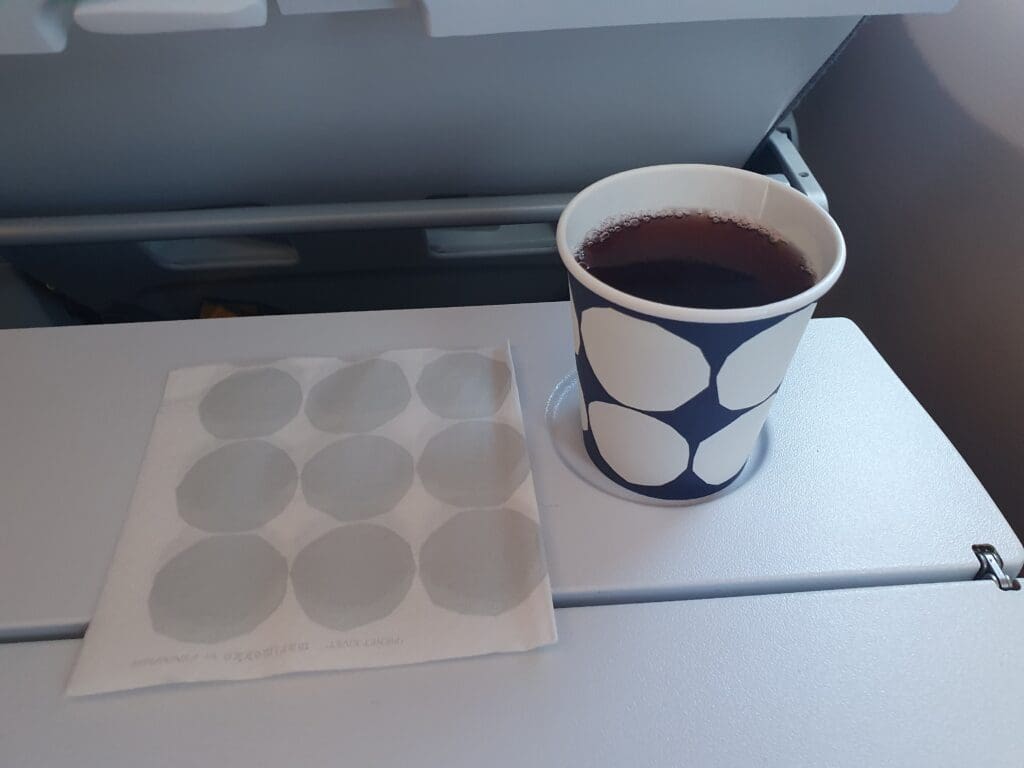
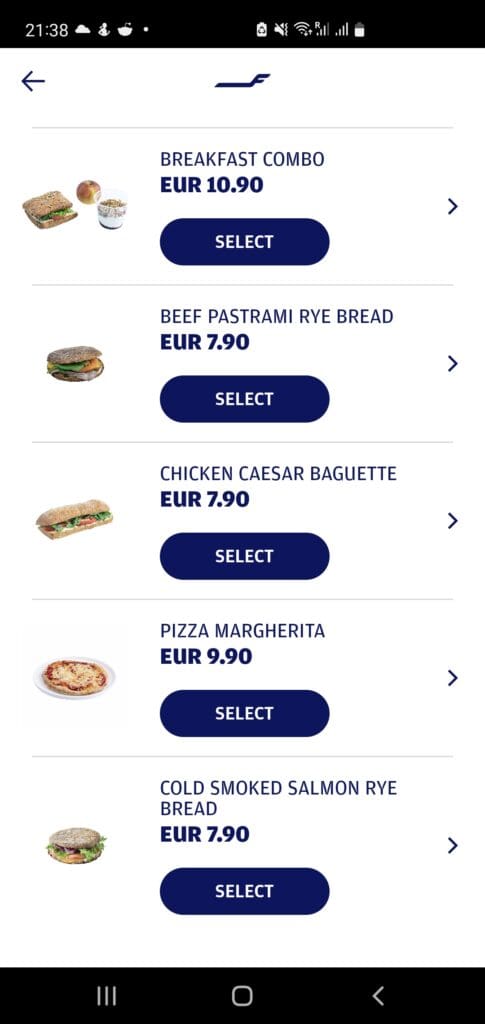
As the Airbus made its way out over the Baltic Sea, the next sight that could be seen was Åland, the autonomous group of islands that are a region of Finland and sit in the Baltic between Finland and Sweden. Down below, the islands’ small capital, Mariehamn could be seen passing as could its airport which is connected to both Stockholm and Turku by a regular Saab 340 operated service. Turning my attention to the happenings inside the cabin, at this time, the crew rolled out trolleys to the front of the cabin and commenced the onboard service. On their services to Europe and the Middle East, Finnair’s complimentary offering consists of nothing more than a cup of still water or blueberry juice. Meanwhile, a range of other drinks, chocolate, instant noodles, crisps and blueberry muffins can be purchased onboard, whilst their more comprehensive menu of sandwiches can only be pre-reserved before departure. Whilst it would have been nice to have been offered a little more, perhaps a cereal bar or similar, or have had the option to choose a coffee or tea, given the length of the flight, I couldn’t complain. However, were I to have been on one of Finnair’s services to say Gran Canaria or Dubai, I may have been left a little dissatisfied with the lack of options. Once the crew reached my row, I was served by a very friendly flight attendant and opted for a blueberry juice which was passed to be in a paper cup along with a serviette – both of which were adorned in a Marimekko pattern.
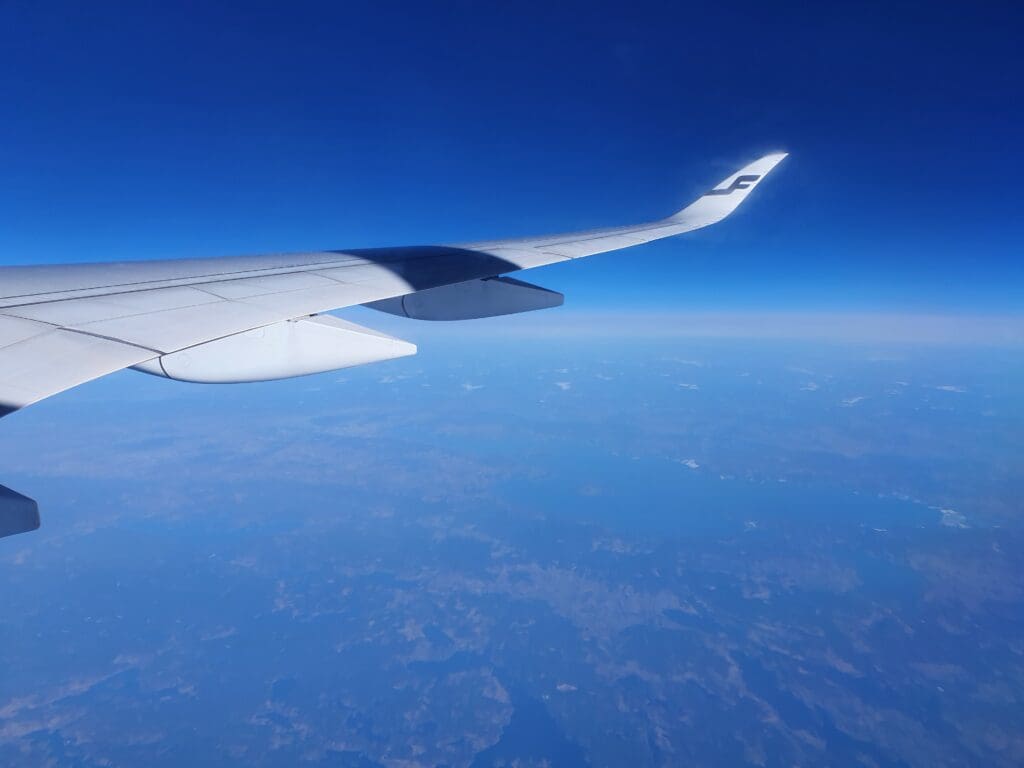
As I sipped on the blueberry juice, the aircraft was crossing over the Swedish capital, although I was on the wrong side of the aircraft for any views of this and instead spotted the town of Sollentuna which sits to the north of Stockholm Arlanda Airport. This was then followed by views of Sweden’s third largest freshwater lake, Mälaren before clouds rolled in and blocked views as we cruised southwest across the southern portion of the country. However, these did part as we neared the end of the twenty-minute crossing of the country, allowing for good views of Sweden’s second-largest city, Gothenburg, located on the country’s southwestern coastline.
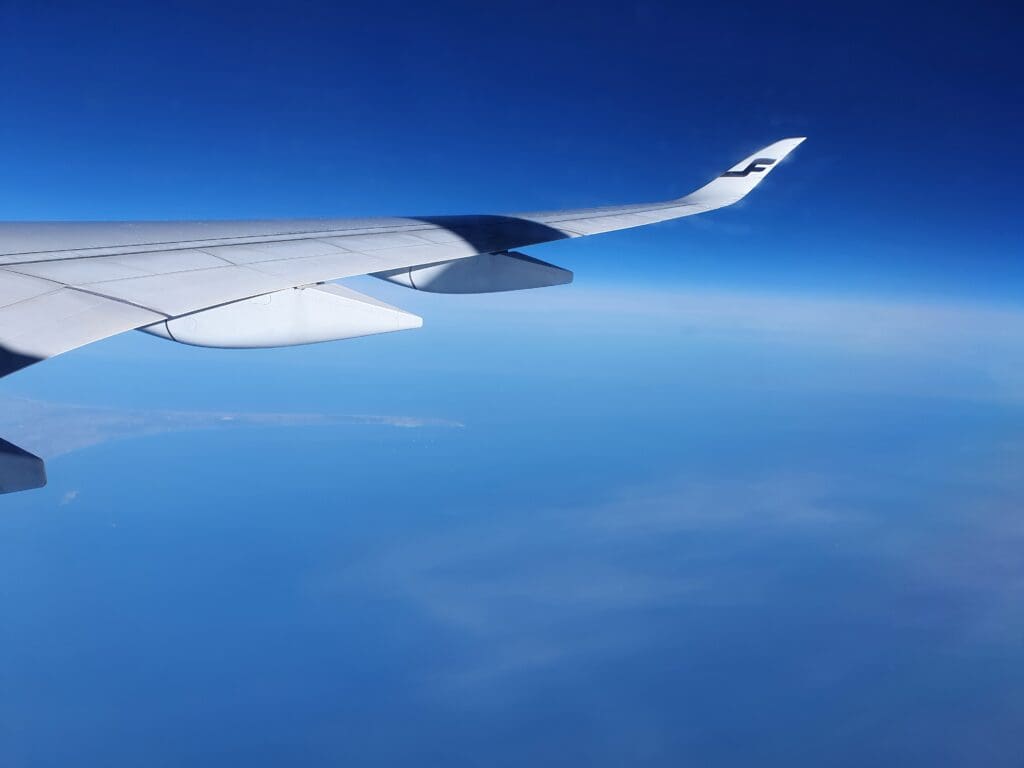
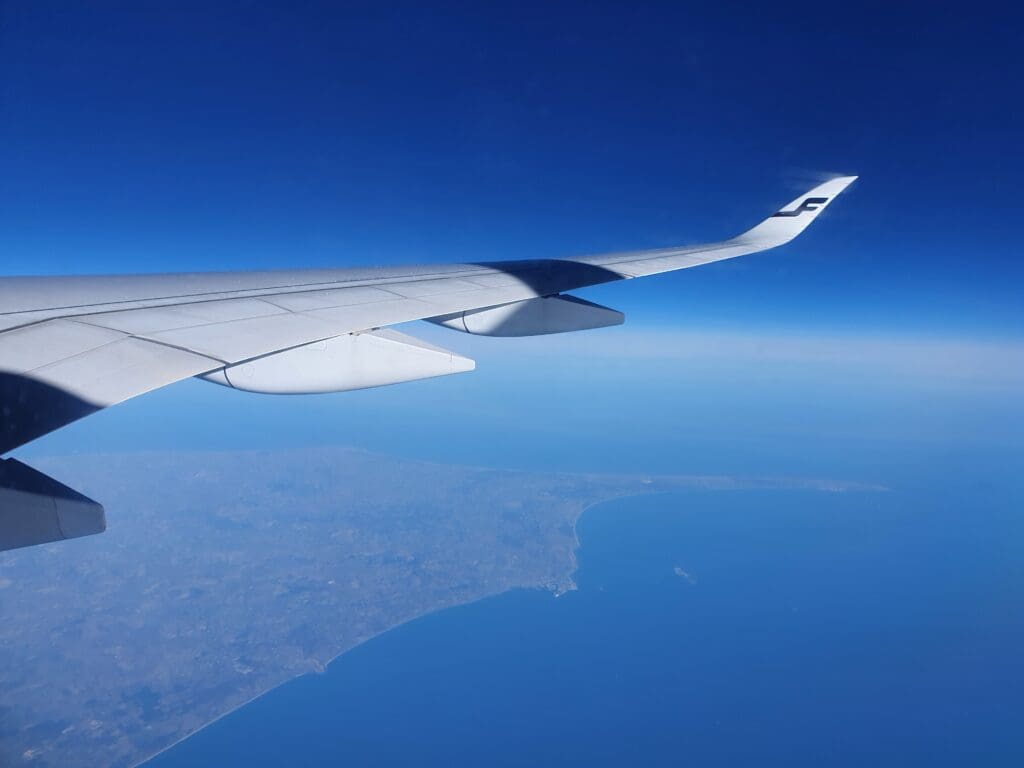
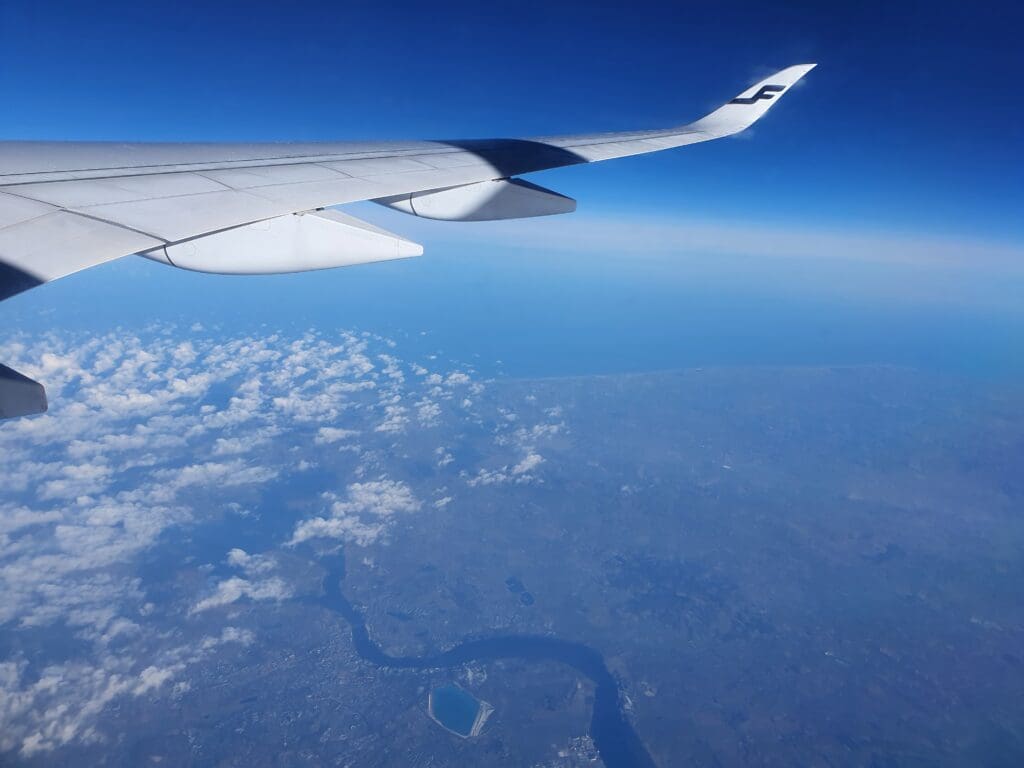
From Gothenburg, the aircraft crossed over the Kattegat, and a very short time later, the Skagen Odde Peninsula, Denmark’s northernmost point could be seen which was soon followed by the city of Aalborg as we made our way over Jutland. Crossing over Jutland within about ten minutes, soon, the sandy western coastline of Denmark came into view as the aircraft crossed this between the towns of Lemvig and Ringkobing, leaving Scandinavia behind and heading out over the North Sea. As we crossed this, whilst clouds filled up much of the view below, the occasional boat could be seen crossing this, leaving behind a long wake, whilst I also managed to catch sight of a Boeing 737-800 operated by Norwegian carrier Flyr making its way from Oslo to Malaga.
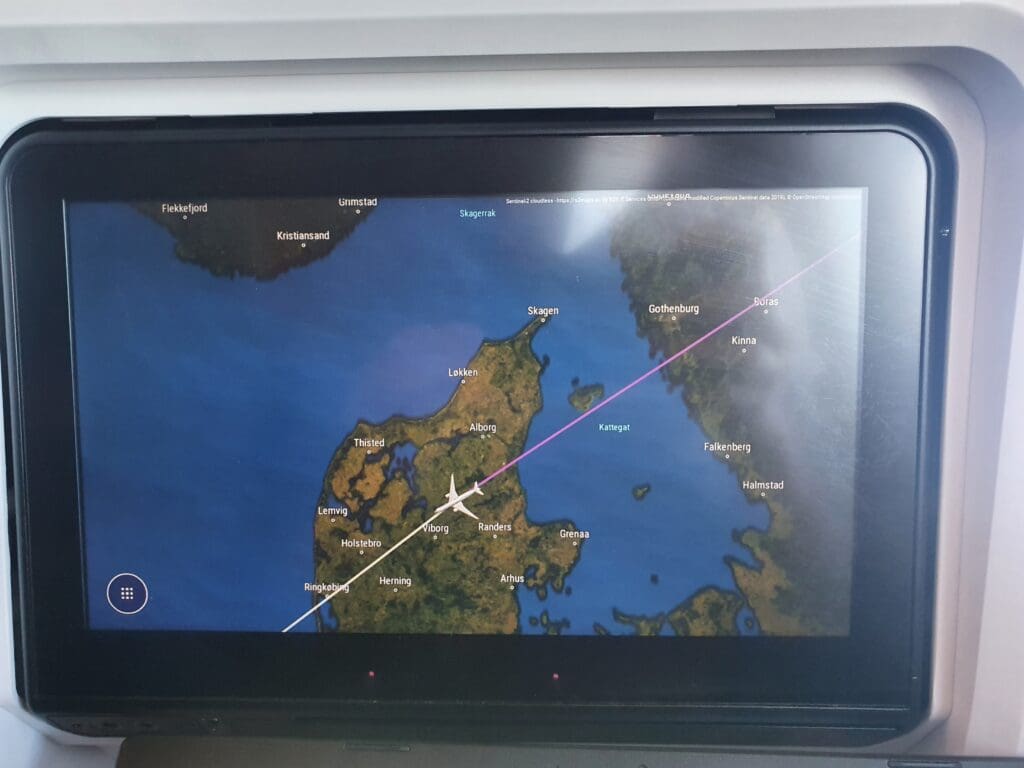
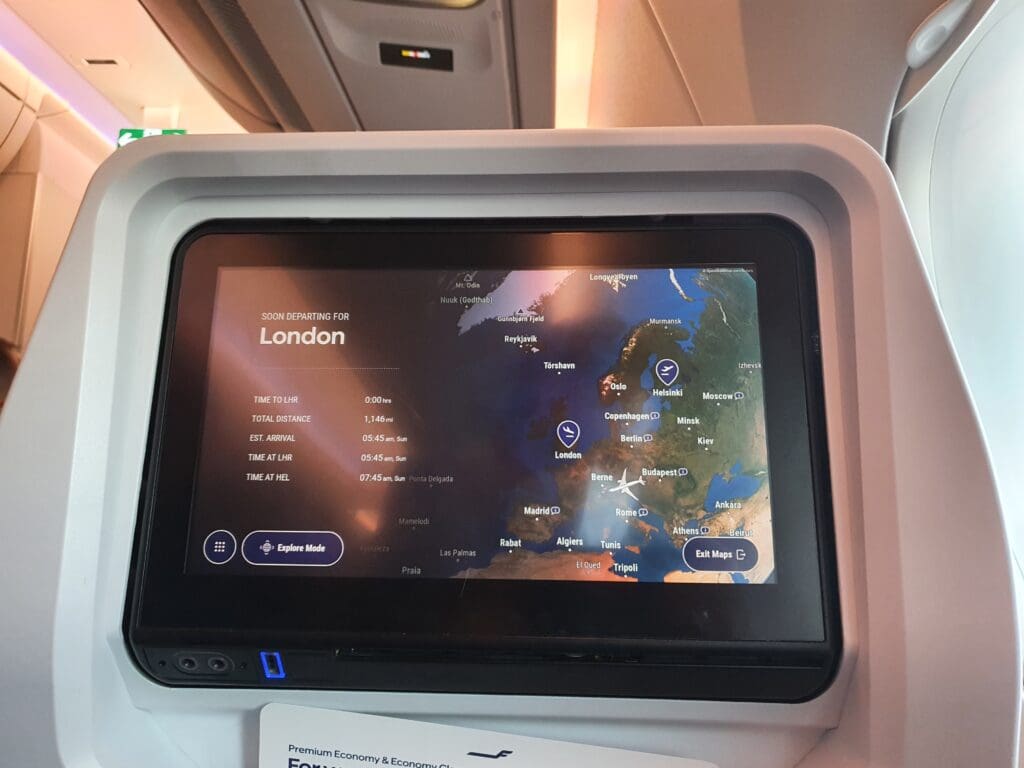
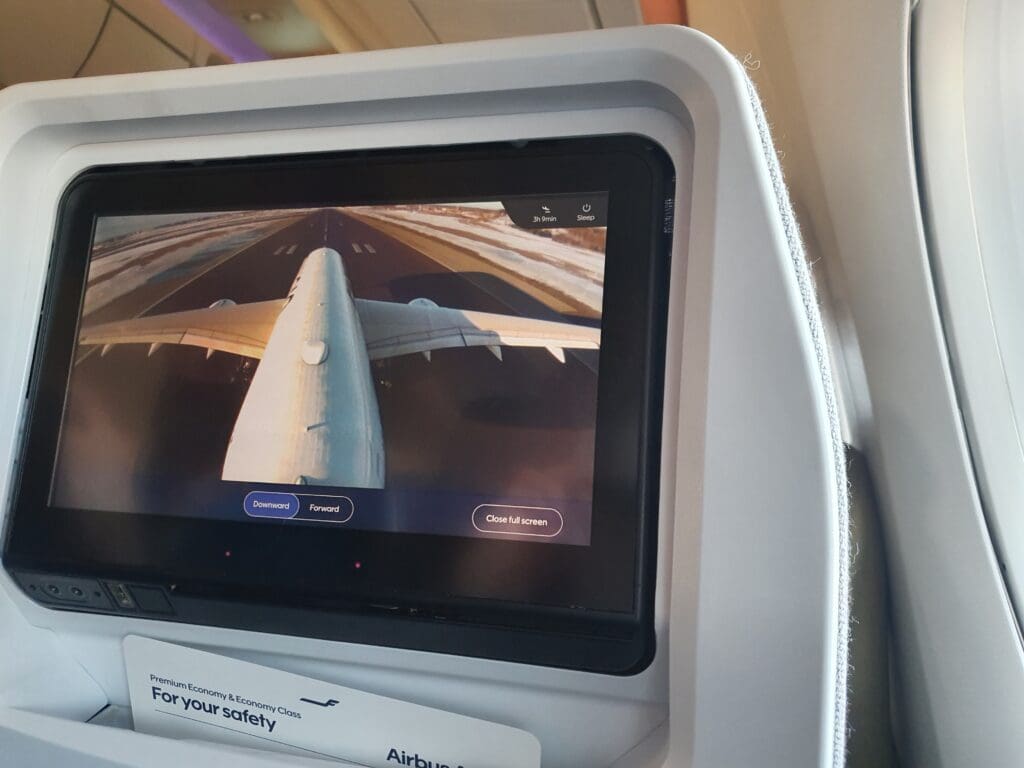
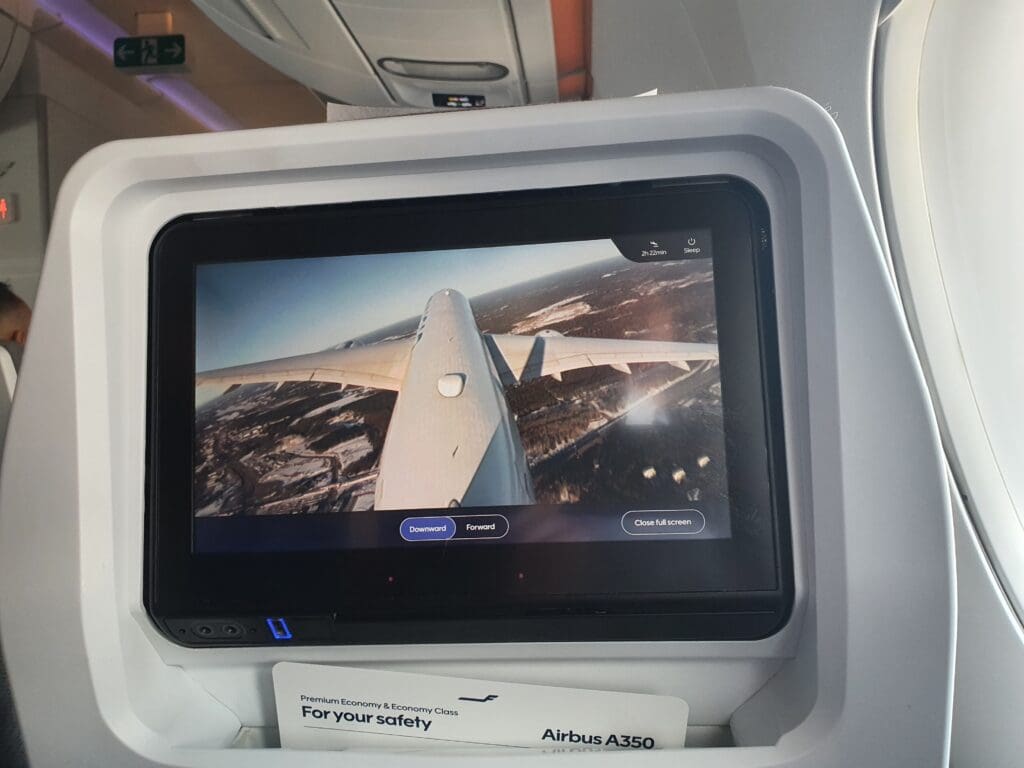
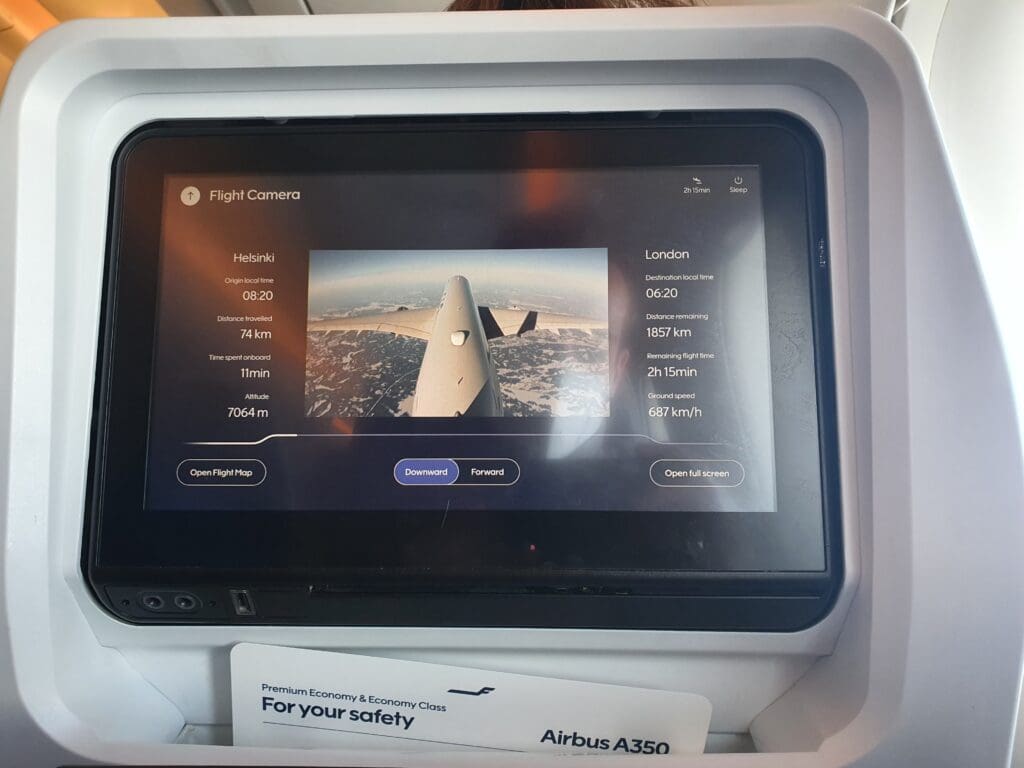
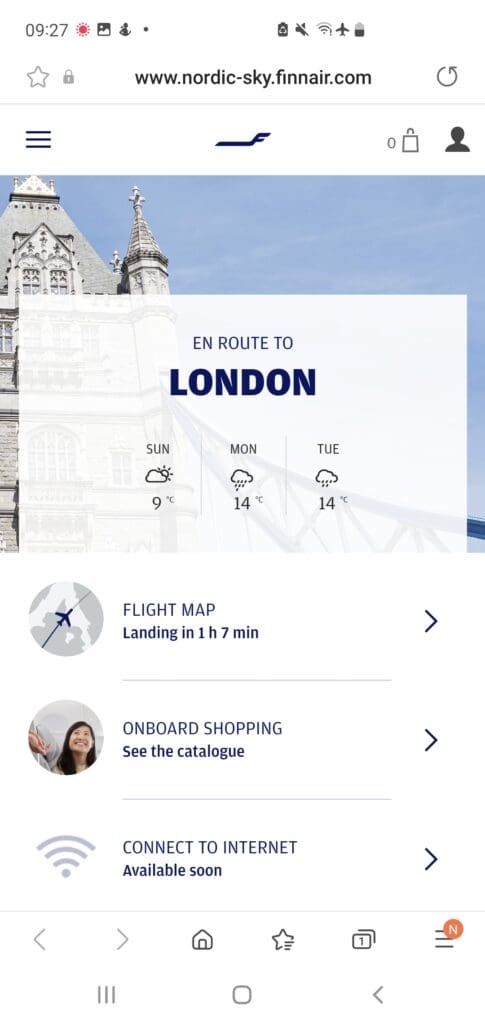
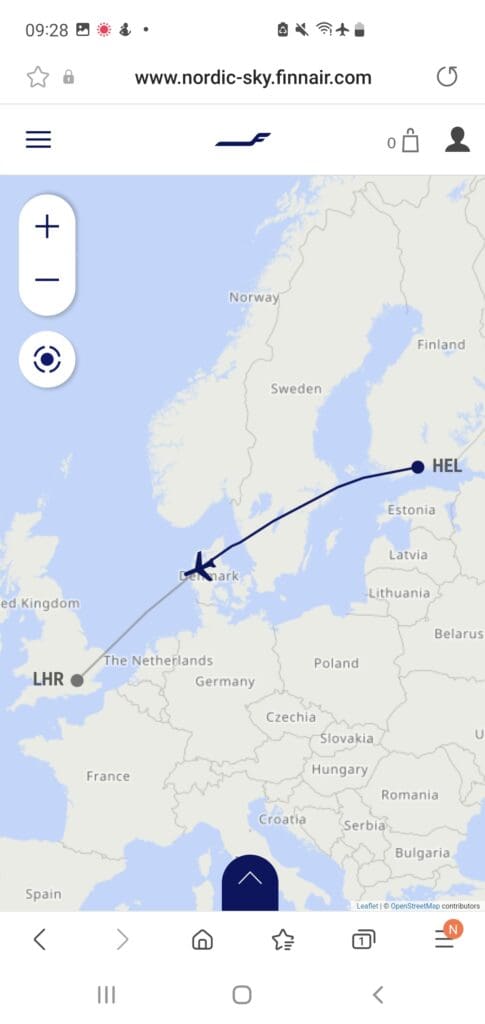
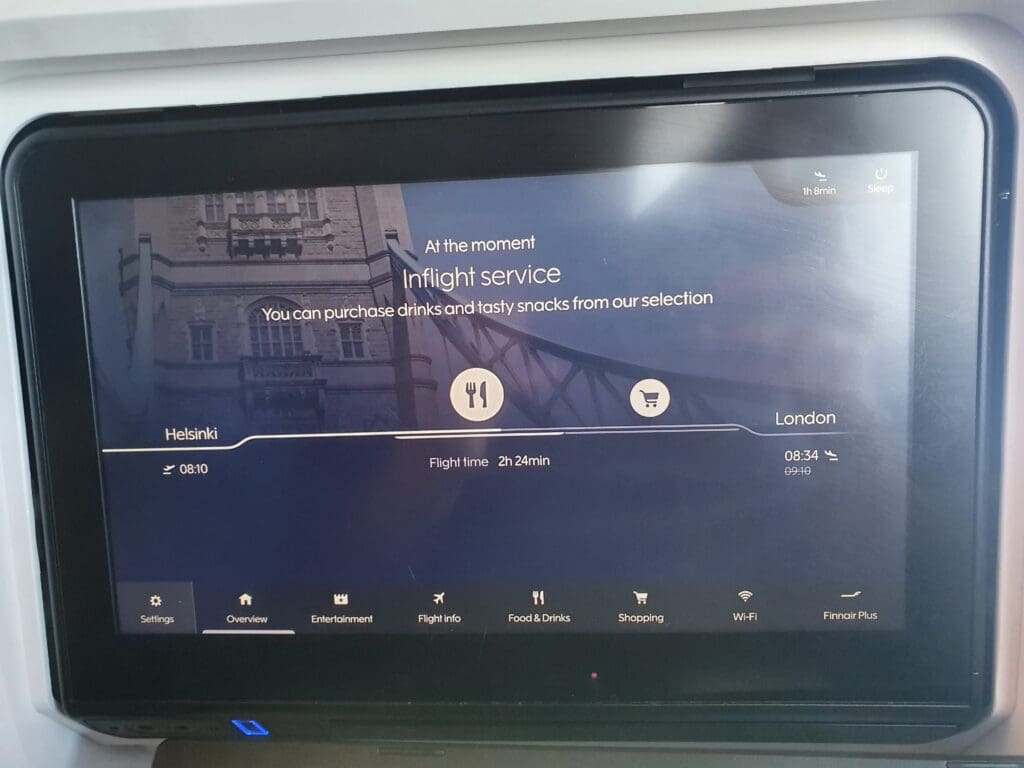
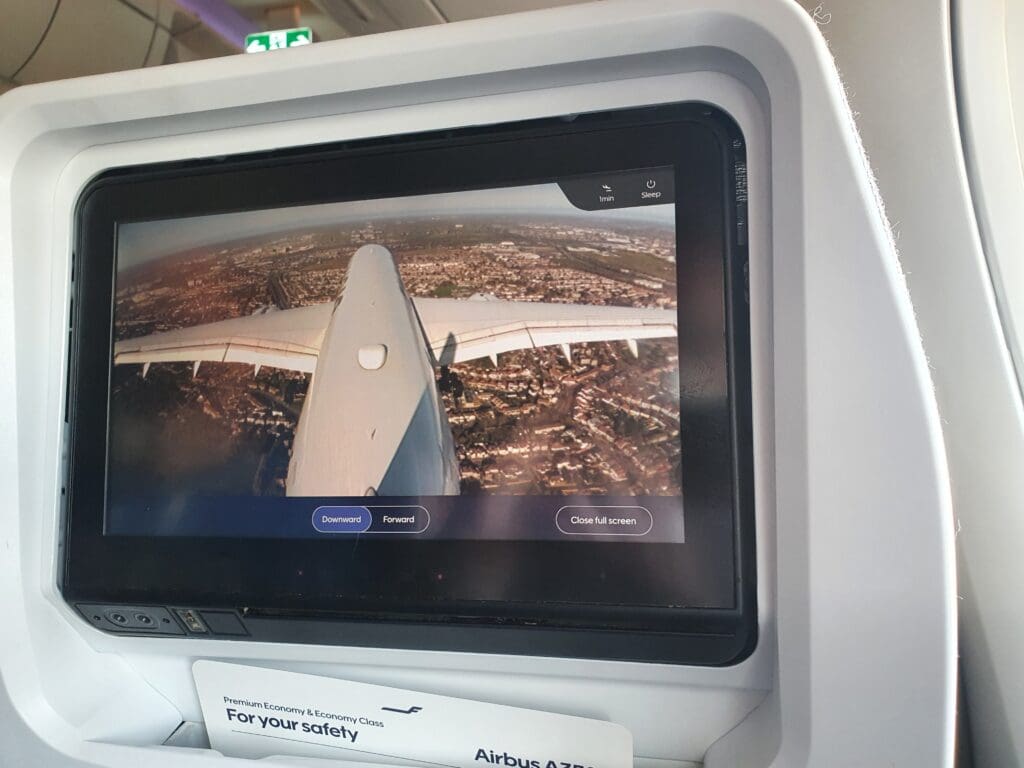
With little to see outside as we journeyed across the sea, I decided to turn to the inflight entertainment. As with many airlines, Finnair has halted the printing of its Blue Wings inflight magazine, with the articles from this having migrated to the digital world. However, onboard their Airbus A330 and Airbus A350 aircraft, passengers can keep themselves occupied by what I found to be a rather top-notch inflight entertainment system. As I explored through the various pages, I found this to offer pretty much everything you could want, including a good moving map page powered by Panasonic Avionics’ new ARC map system, a tail-mounted camera, plenty of videos and information regarding the airline and a buy-on-board menu. However most passengers will likely be more interested in the selection of films, music and television programmes offered, and I am pleased to report that this was very expansive, with all sorts of content from across the world offered. Meanwhile, the screen itself was high quality and very responsive to touch. For those needing to connect to the outside world, Nordic Sky wifi was offered onboard, with various packages sold to allow passengers to surf the internet and send messages during the flight. Although the internet function of this was not offered on the flight to London that morning. However, this did allow me to track the flight’s progress, use the Finnair website and browse a wide selection of magazines and newspapers from China, Finland, Germany, India, Japan, Korea, Singapore, Thailand, the UK and the US.
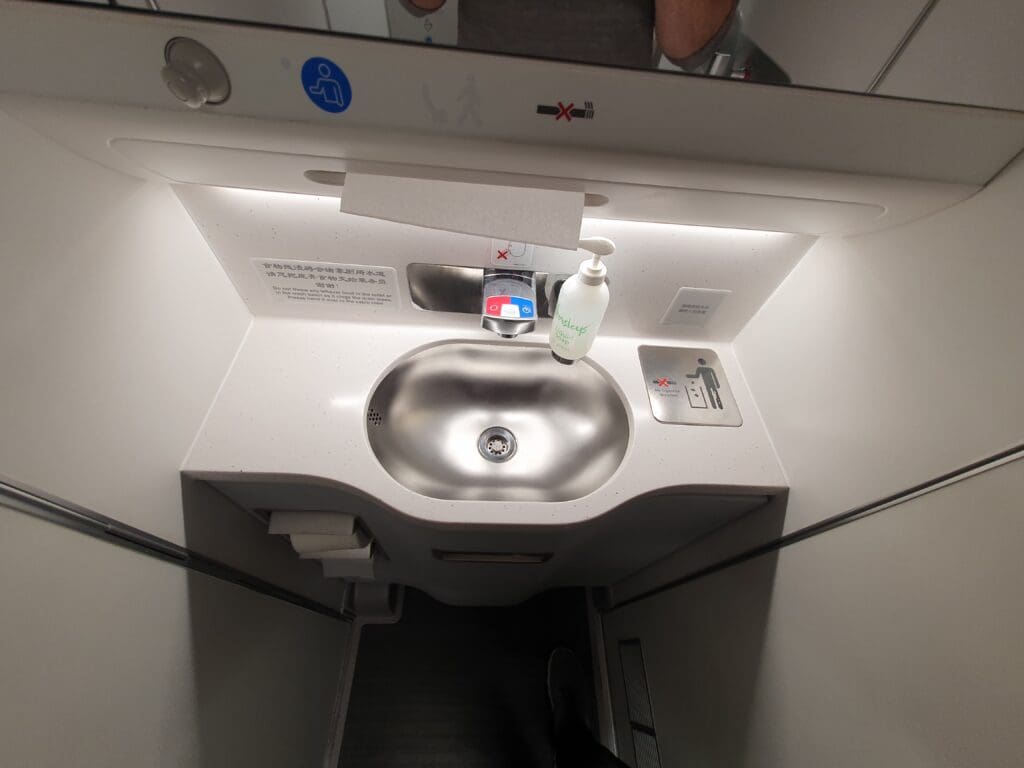
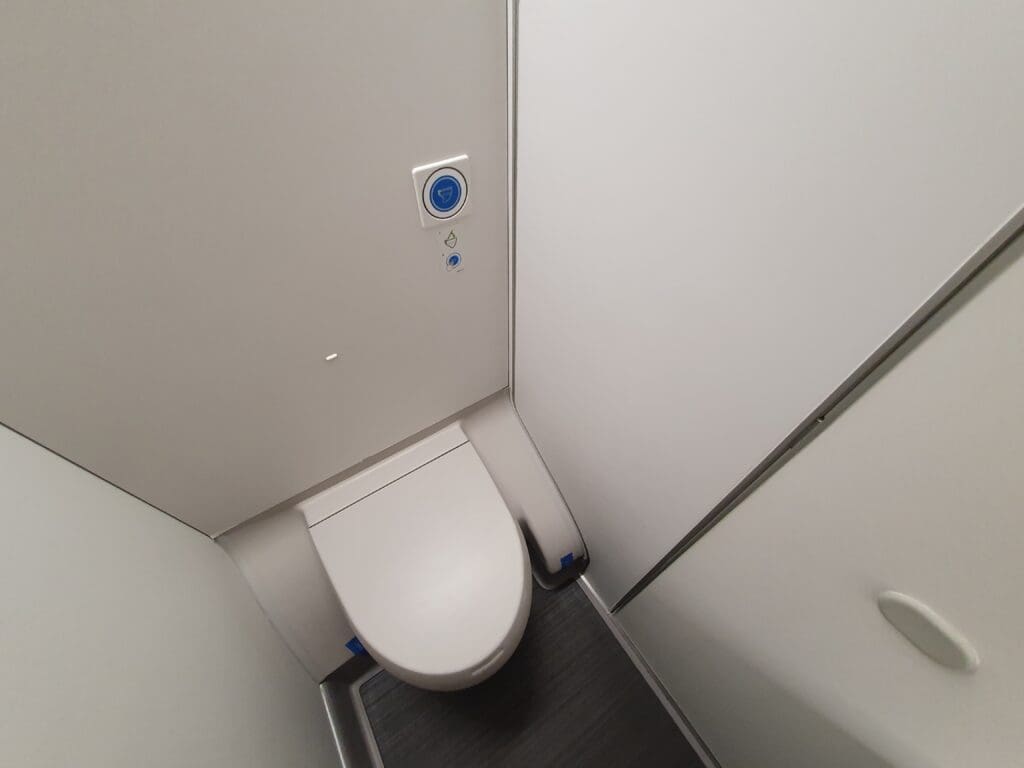
Once I had browsed the delights of the inflight entertainment system, with little to see outside, I decided to make a pre-arrival trip to one of the lavatories at the rear of the aircraft. At that time, with no queue, I was able to walk straight into one of these and found it to be modern, clean and spacious – however, the latter was perhaps assisted by the fact that my previous flights had all taken place on small airliners with minuscule bathrooms. Interestingly, the signs in this were not in Finnish and English as one may expect onboard Finnair, but instead in English and Chinese, with some signs appearing to be in Chinese only. One of the more unusual signs in this was a warning not to put any food items down the toilet and instead hand these to the crew!

A short time after returning to my seat, at 0752 BST as I shall use from now on in the report, the Airbus could be felt leaving its cruising altitude at which point the engine noise decreased slightly. A few minutes later a pre-recorded announcement rang out advising passengers that we had commenced our descent, although passengers were free to move about until the seatbelt signs were switched back on. This was then followed by an announcement by the Captain, who advised that we could expect to be on the ground in about 45 minutes, before moving on to provide an update on the weather – that morning the weather in London would be a chilly zero degrees and sunny, ensuring this to be not too dissimilar from the weather that we had left behind in Helsinki.
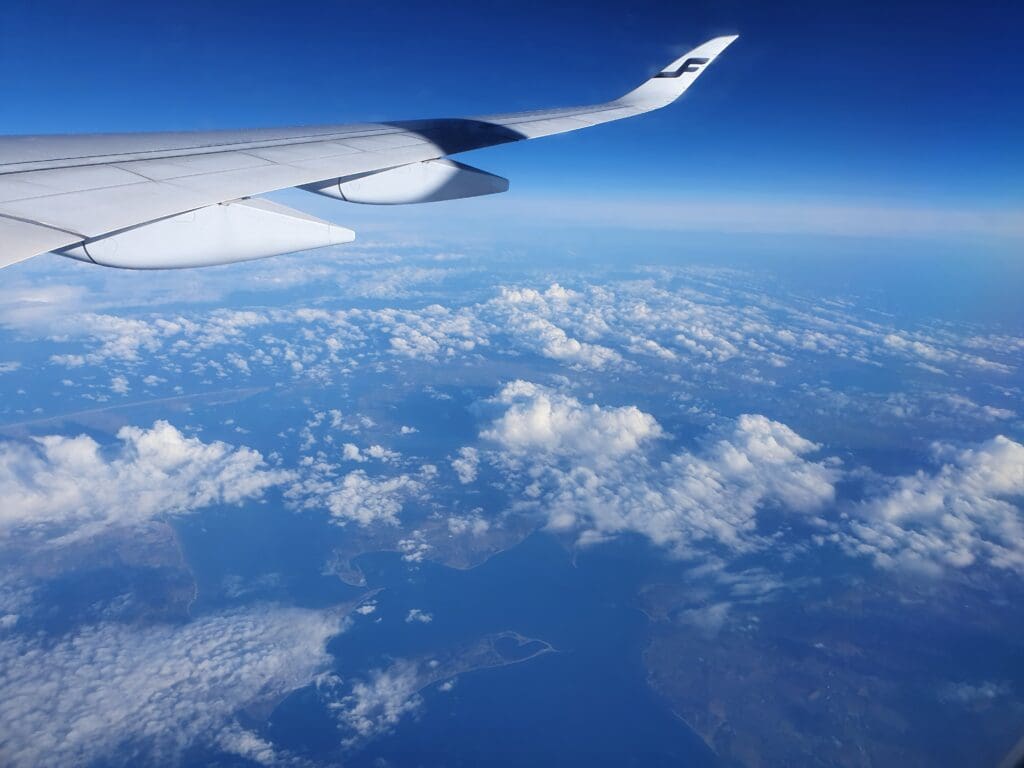
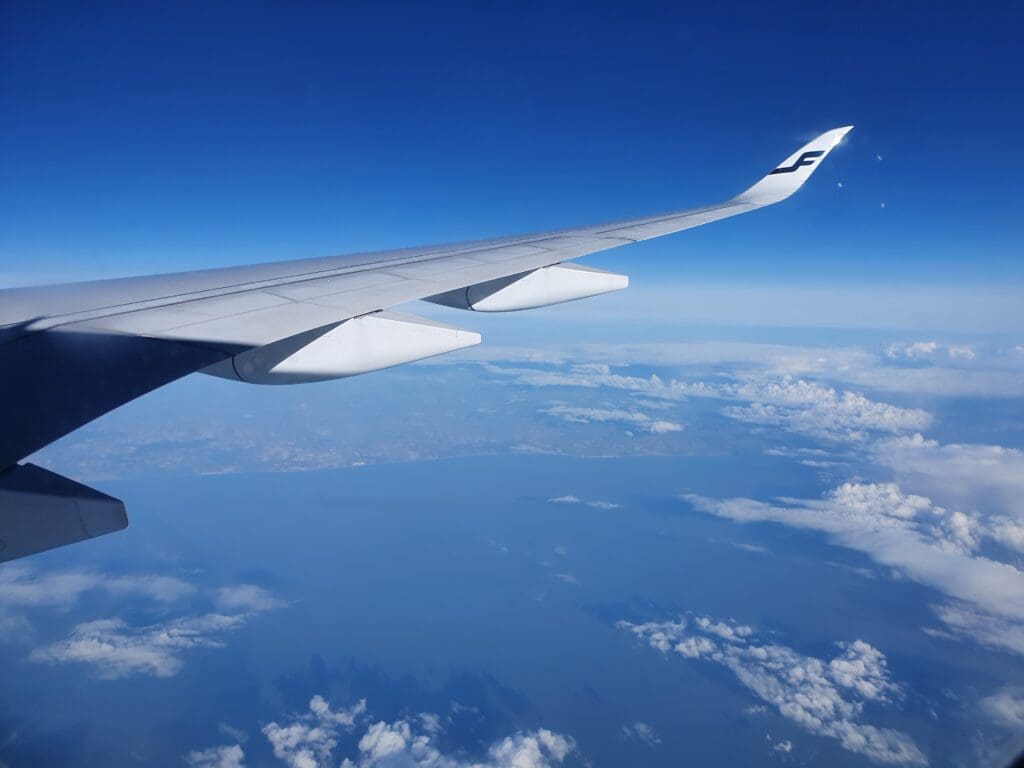
Upon reaching 36,000 feet, the aircraft levelled off for eight minutes before continuing its descent. Following a 35-minute crossing of the North Sea from Denmark, the East Anglian coastline of Norfolk could be seen – with the beaches around the town of Lowestoft coming into view as the aircraft flew very roughly parallel to this for a while. Flying south, Norfolk transformed into Suffolk before the aircraft turned inland and made its way towards the coastline. At this point in the flight, the winding River Alde appeared with what appeared to be an airbase behind this. Initially incorrectly identifying this as the Army Air Corps’ airfield of Wattisham, this was the former RAF Woodbridge. This airfield had been constructed 1943 to primarily serve as a landing strip for damaged Allied bomber aircraft returning to the UK. Following the war, in the early 1950s this served as an American base and was home to several fast jet aircraft including the Republic F-84 Thunderstreak, the McDonnell F-101 Voodoo, the F-4C Phantom II and the Fairchild Republic A-10 Thunderbolt II before the USAF withdrew in 1993. Still remaining in a military role, today this site is occupied by the British Army. This was then followed by the neighbouring ports of Felixstowe and Harwich on either side of the Orwell and Stour estuaries, at which point the seatbelt signs were reilluminated.
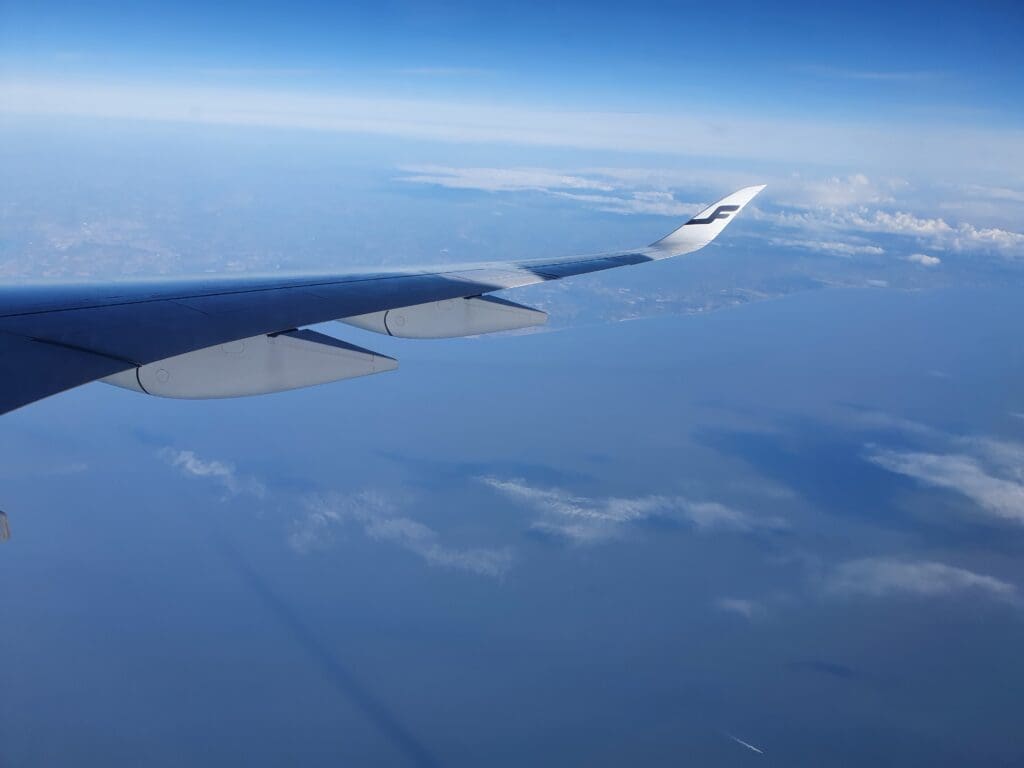
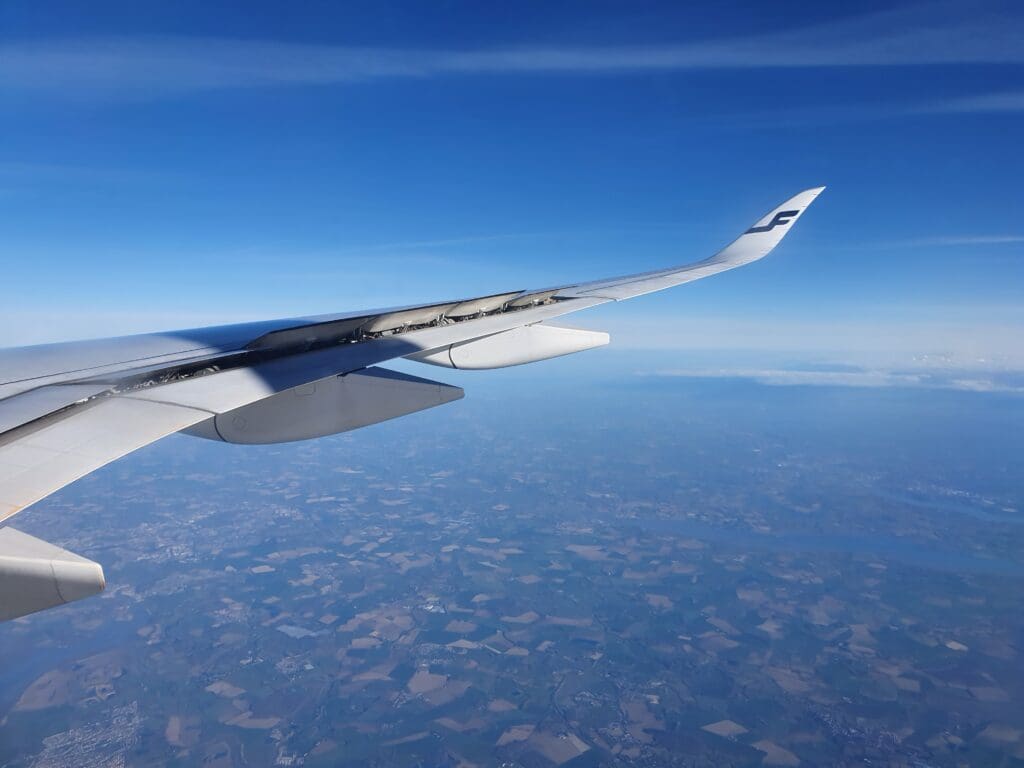
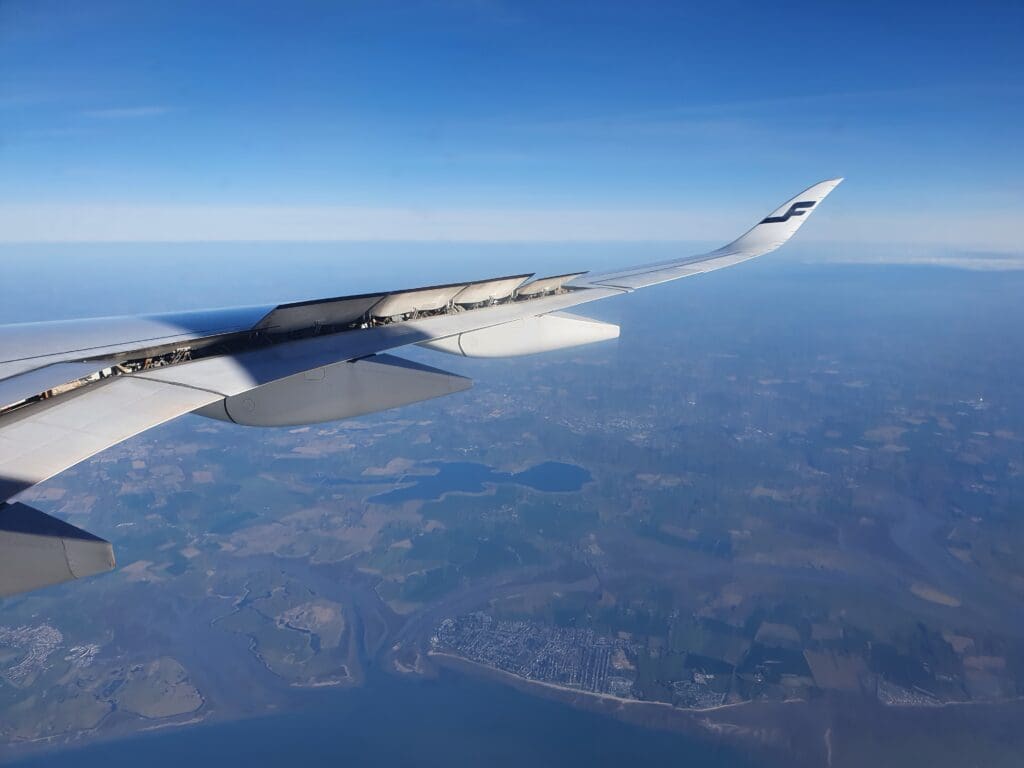
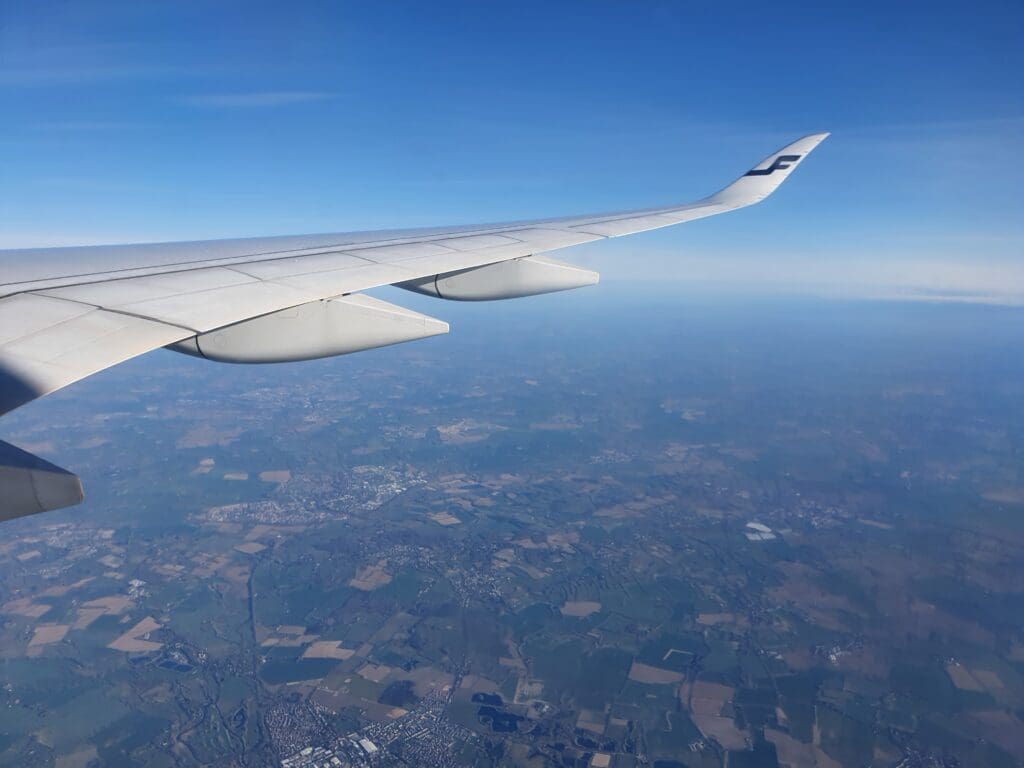
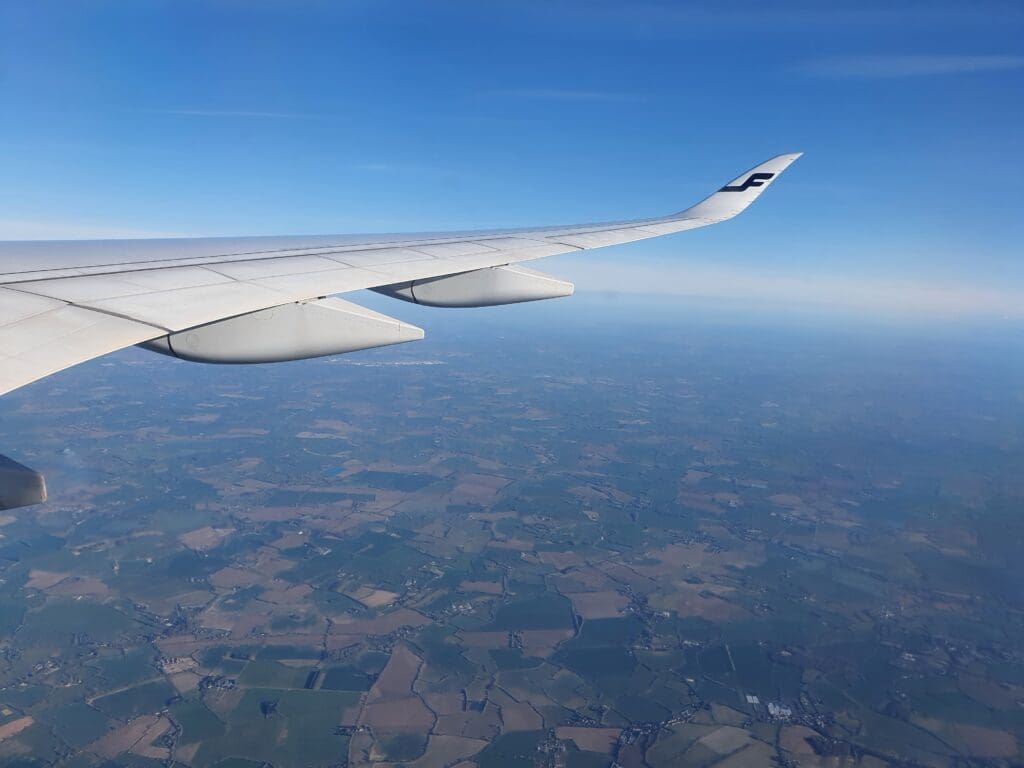
That morning, the skies were unusually cloudless which allowed for a superb view of the coast, towns and countryside of the southern portion of East Anglia. A short time after passing Harwich, the Essex seaside resort town of Clacton-on-Sea could be seen, easily distinguishable thanks to its pier jutting out 360 metres into the North Sea. A very short time later, the aircraft made landfall over the Dengie Peninsula where the remains of RAF Bradwell Bay, a military airfield that closed in 1946 could be seen. Heading into Essex, the next identifiable town took the form of Chelmsford to the north. Thanks to the clear skies that day, a relatively good view of Stansted Airport could then be seen a short time later, followed by North Weald, one of the few general aviation airfields within easy reach of London.
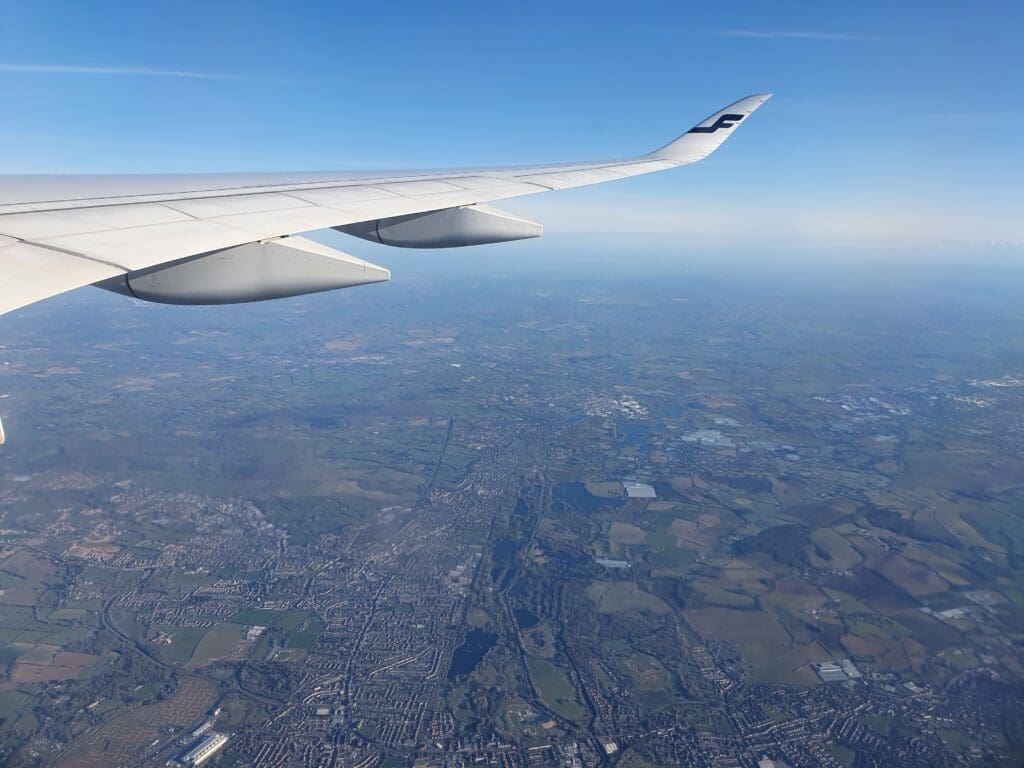
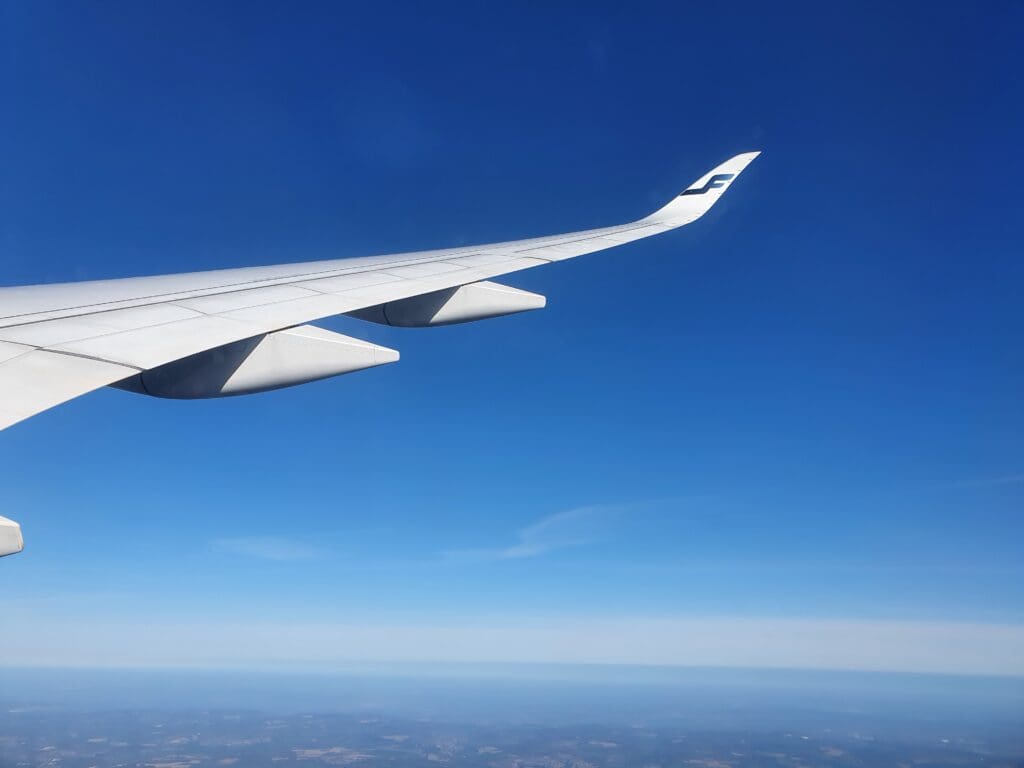
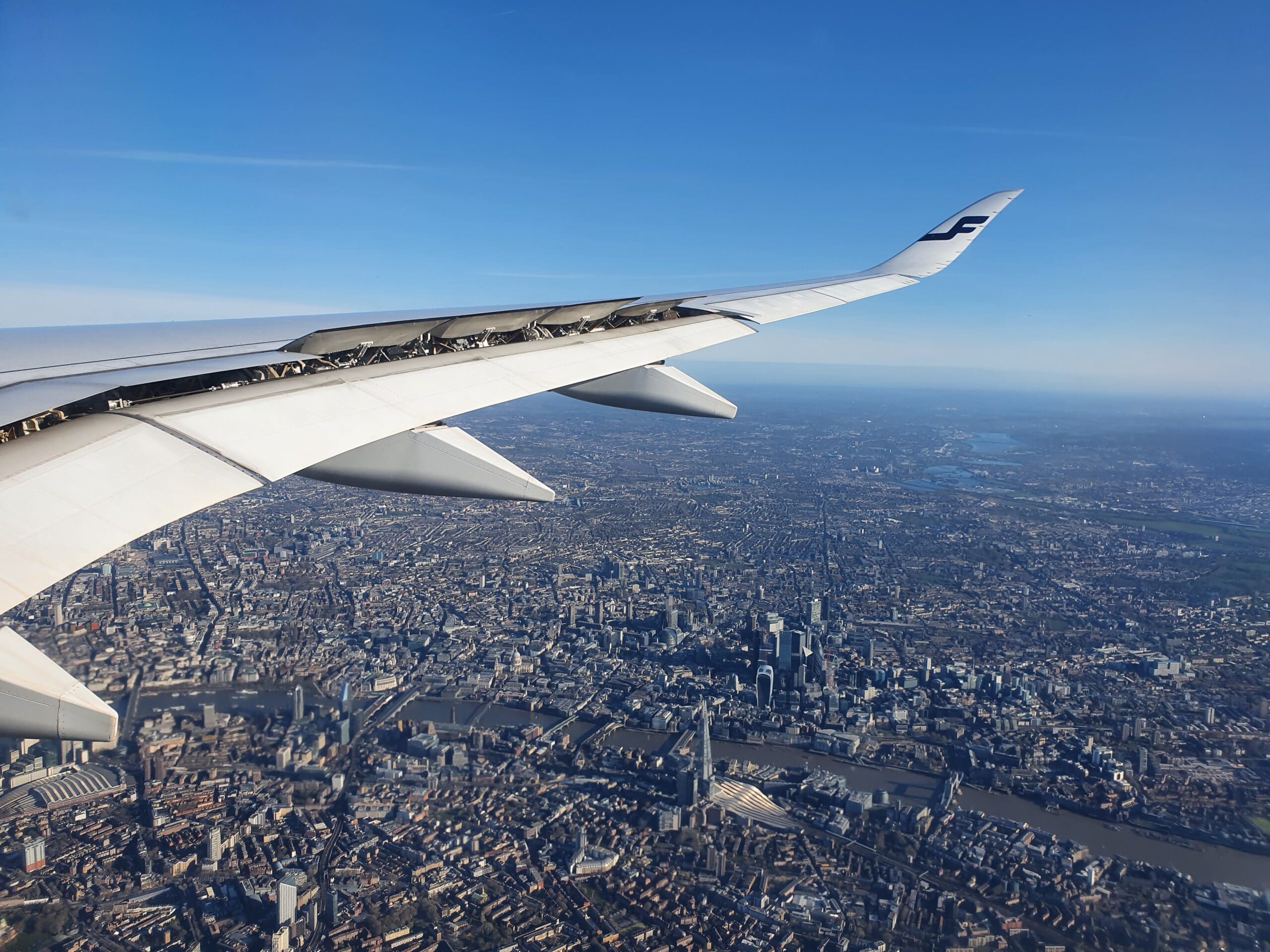
After crossing the motorway that circles Britain’s capital, the M25, and the Essex towns of Loughton and Enfield, the aircraft flew into the skies of Greater London and passed over Barnet. With a gentle breeze blowing in from the north, I wasn’t too sure whether the aircraft would land on one of the airport’s 09 or 27 runways, although offering superb views of the capital, I hoped for the latter. Whilst I have flown into Heathrow plenty of times in recent years, and despite the prevailing wind blowing in from the west, the last time I had been successful in getting good daytime views of London whilst on approach was back in 2016. Much to my delight, just before the Airbus reached the Hertfordshire town of Watford, the aircraft tipped its wings as it banked to the left, commencing a backwards ‘S’ shape to line it up for an approach to Runway 27R.
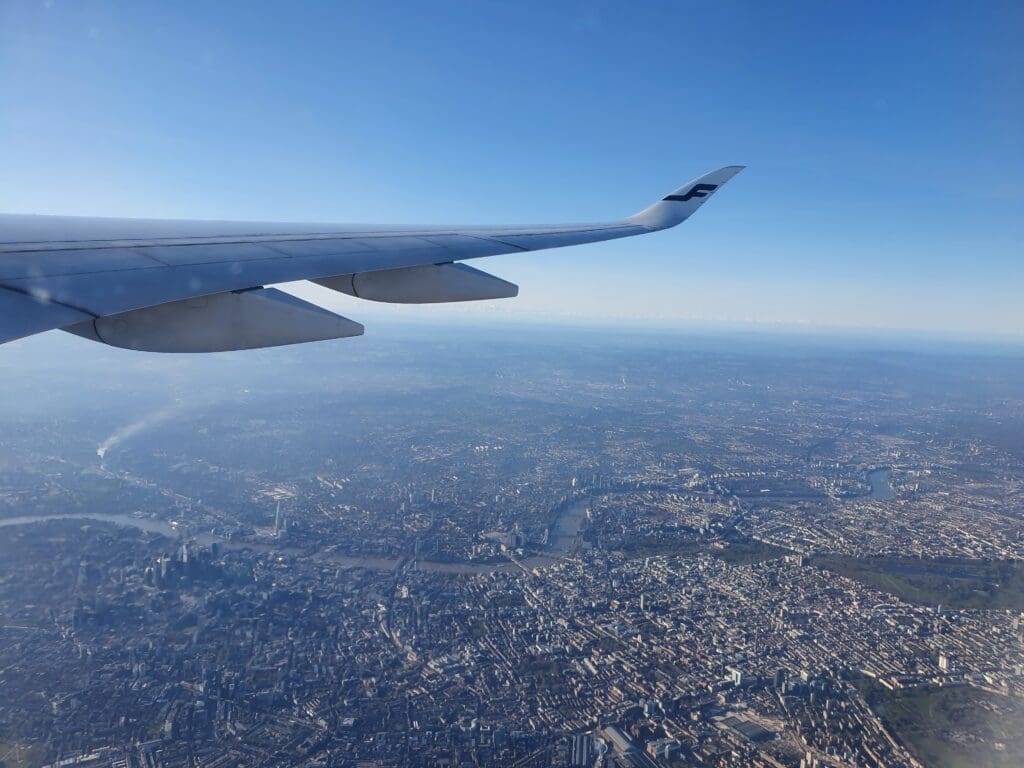
As the aircraft banked, Heathrow Airport could be seen to the south whilst I was also able to make out RAF Northolt, an air force base and an increasingly popular business jet hub, a little closer to the aircraft, hiding amidst West London suburbia. From there, the leafy suburb of Ealing, followed by Wembley with its stadium and North Acton with its small cluster of recently constructed tall towers, could be seen.
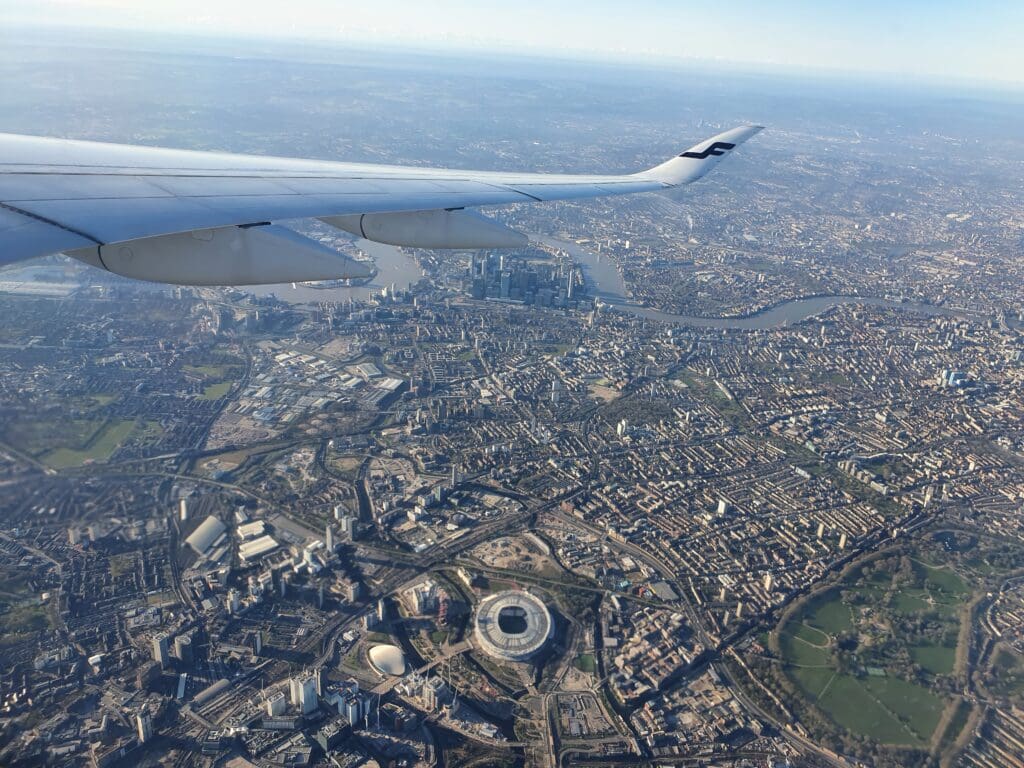
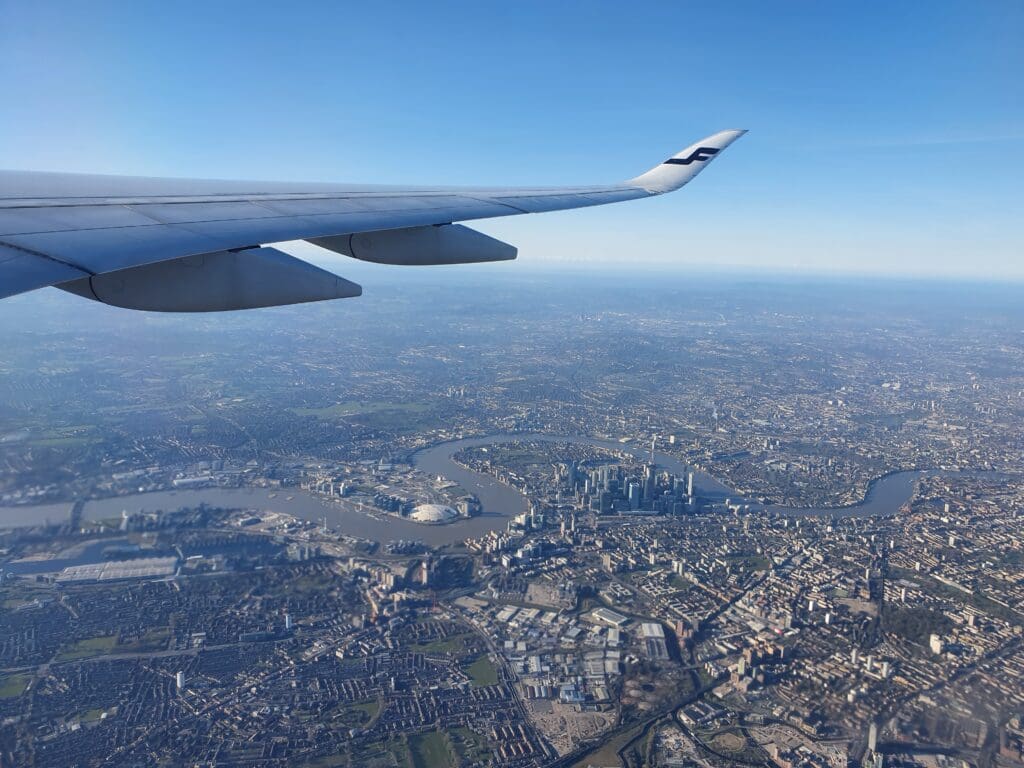
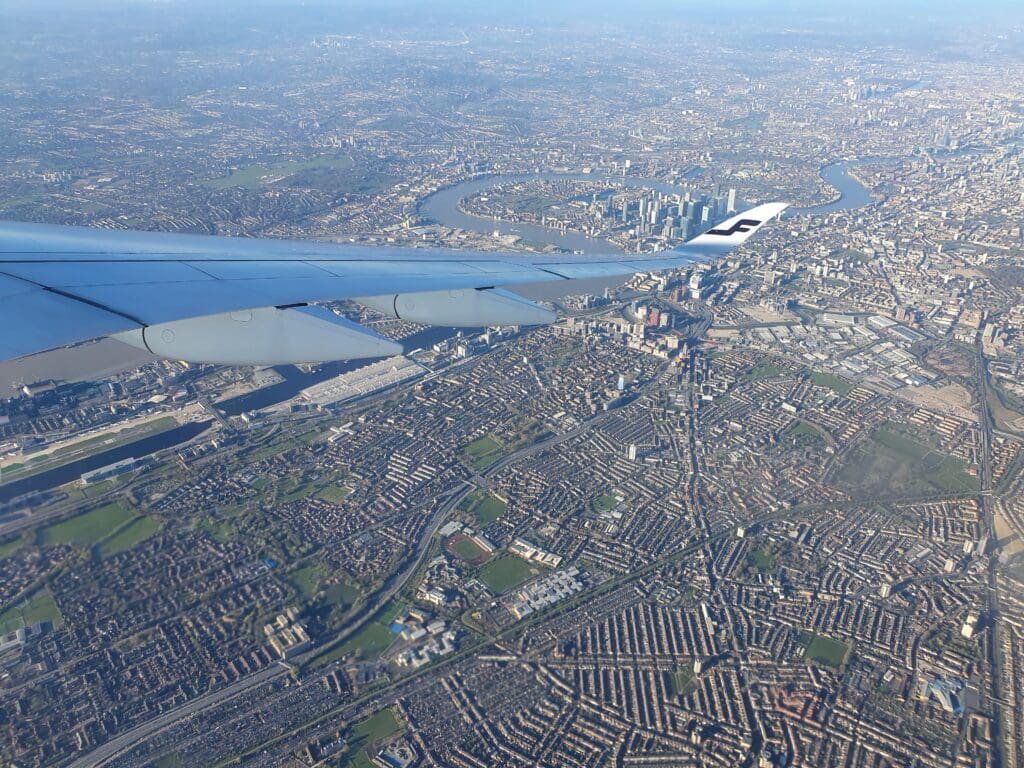
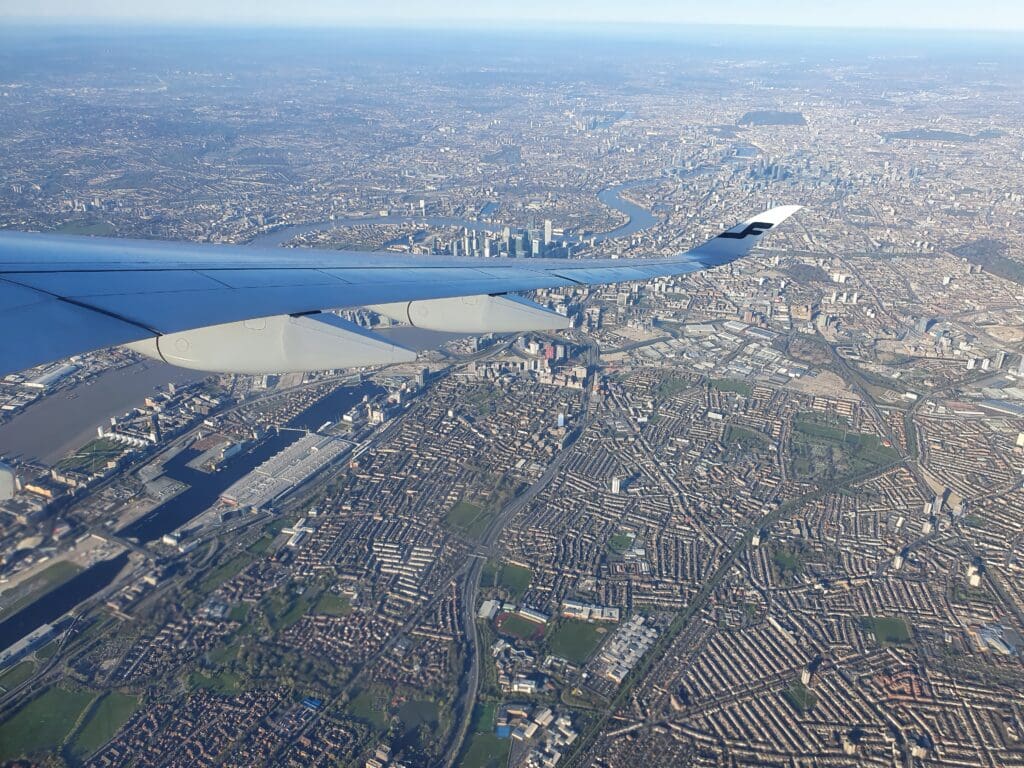
From there, the aircraft passed directly over Hampstead Heath, Archway and Finsbury Park at an altitude of just over 6,000 feet, which allowed for a good view of the northern parts of Central London, including the famous and easily identifiable stations of Euston, Kings Cross and St Pancras, whilst on a more personal level I spotted my university halls of residence. Soon enough, the aircraft headed over Stoke Newington and made its way towards East London, arriving at Stratford and its Olympic Park before banking to the right. As the aircraft banked, a good view of Canary Wharf, the O2 Arena and London City Airport could be had where a total of eleven BA CityFlyer Embraer 190 jets could be seen waiting for their next flights.
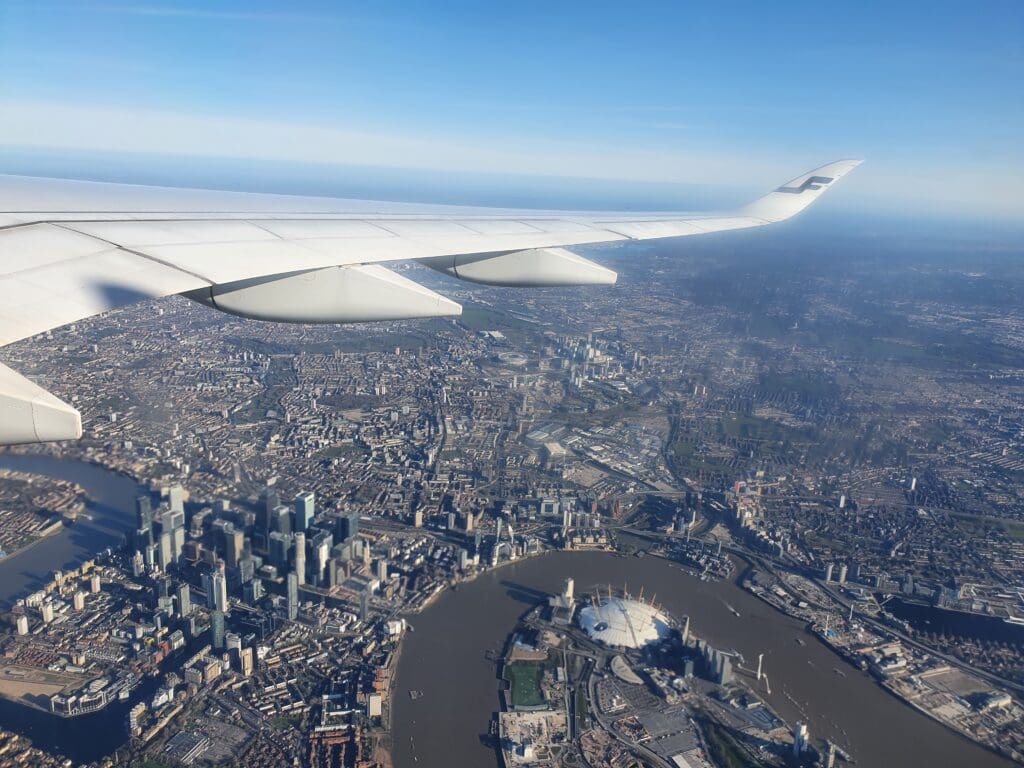
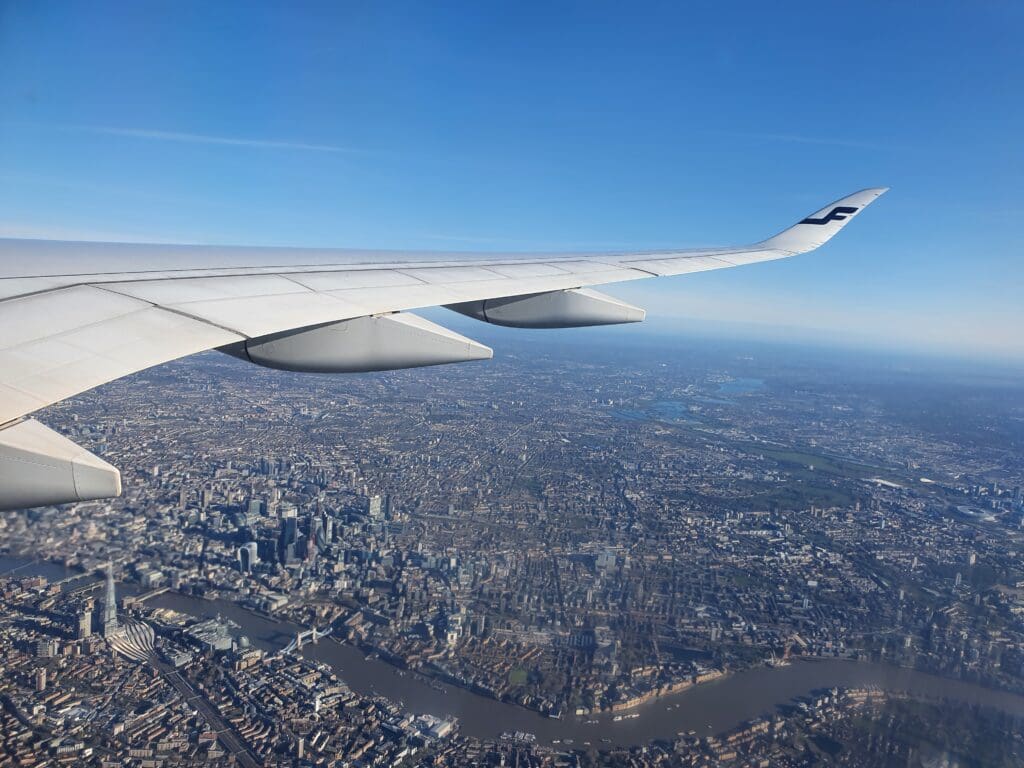
From London City Airport, the Airbus roughly followed the course of the Thames as it meanders towards Central London with the old sights of Tower Bridge and the neighbouring Tower of London, and the more modern Shard and other tall buildings welcoming us all to the capital. This was then followed by London Bridge and Waterloo Stations, and then Big Ben and the Houses of Parliament. As the aircraft continued westwards, Buckingham Palace, Green Park and the Royal Albert Hall could all be seen sitting amongst London’s most affluent neighbourhoods, before the jet arrived back over West London, with the flaps and gear falling into position indicating our imminent arrival.
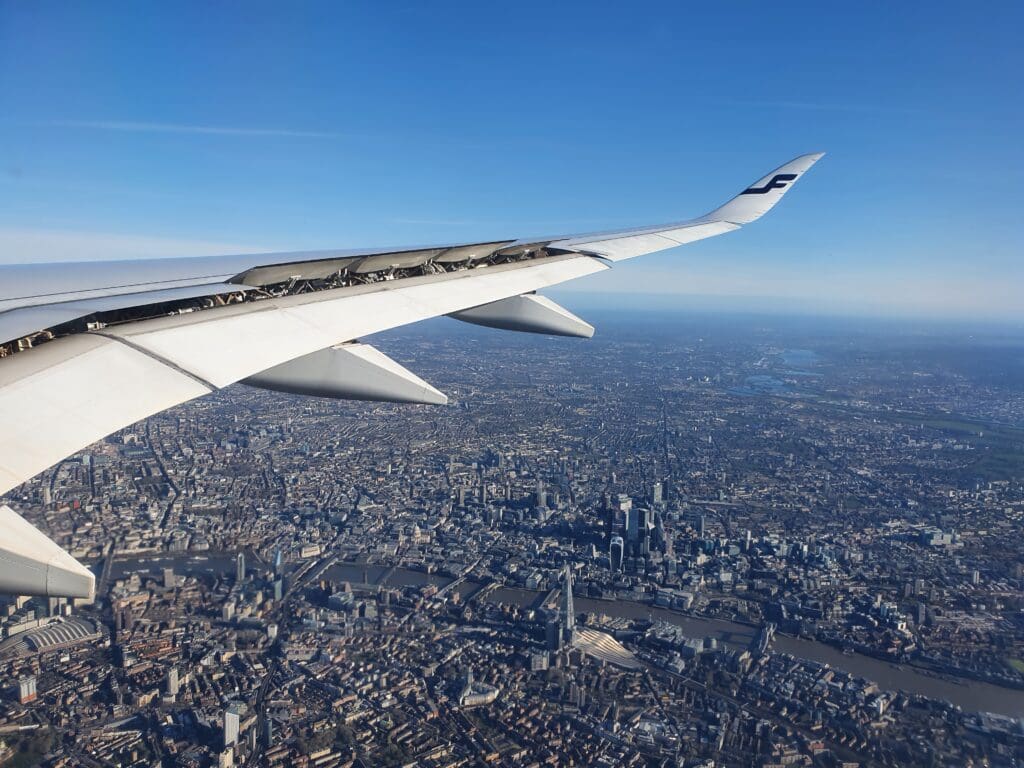
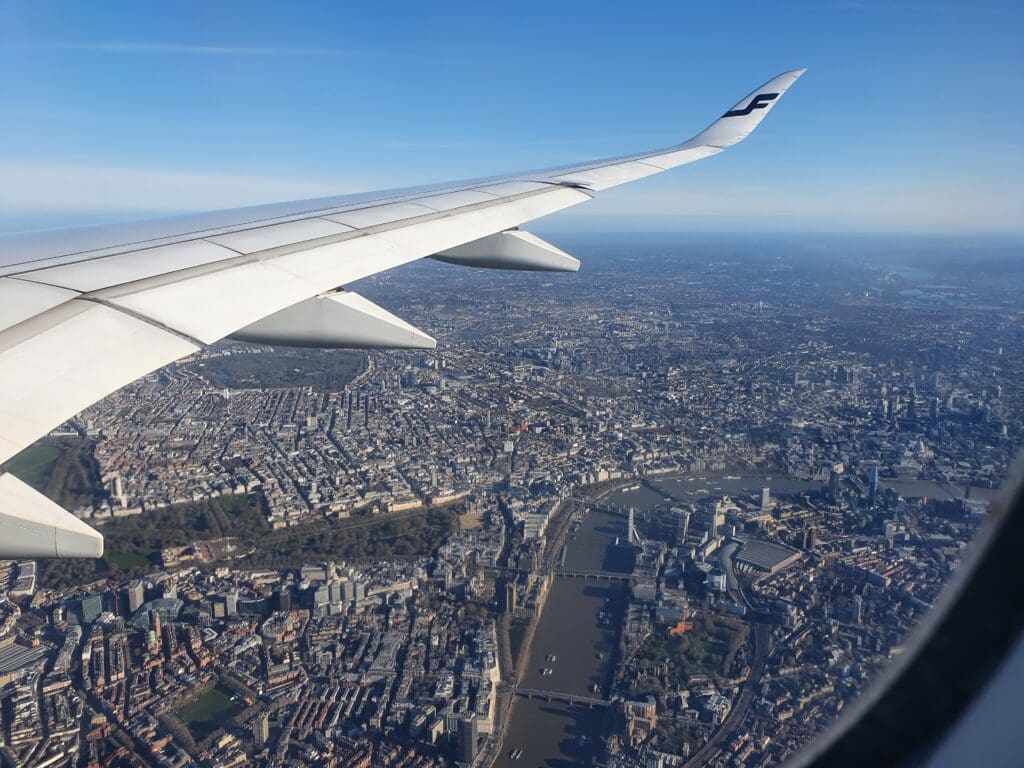
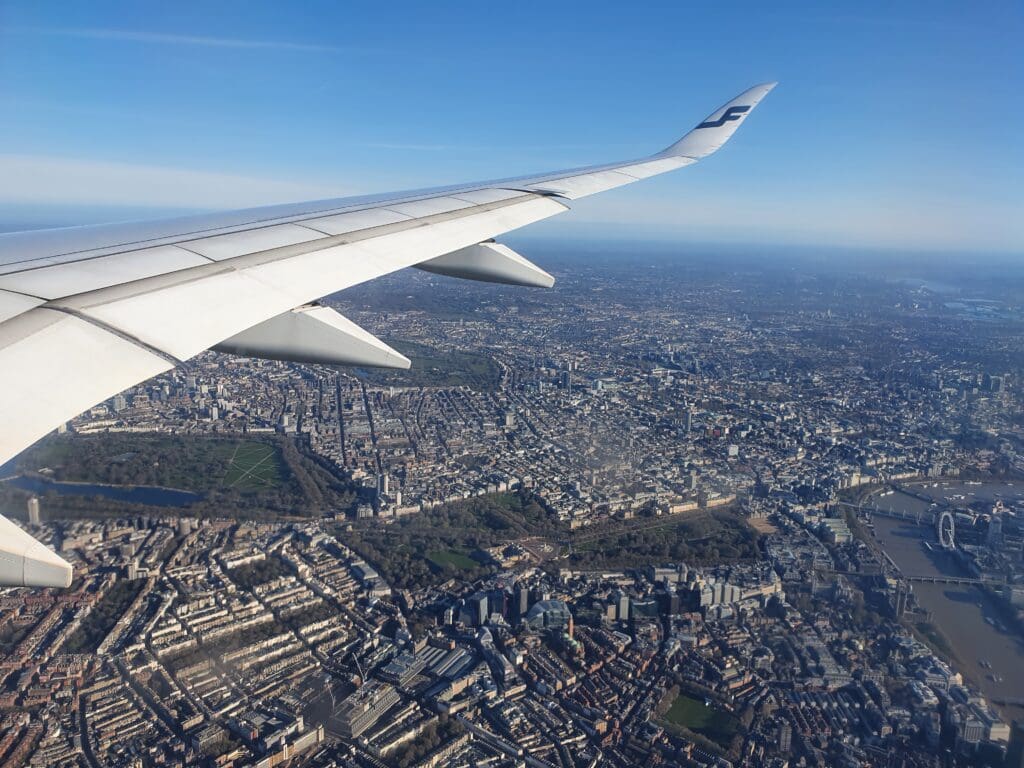
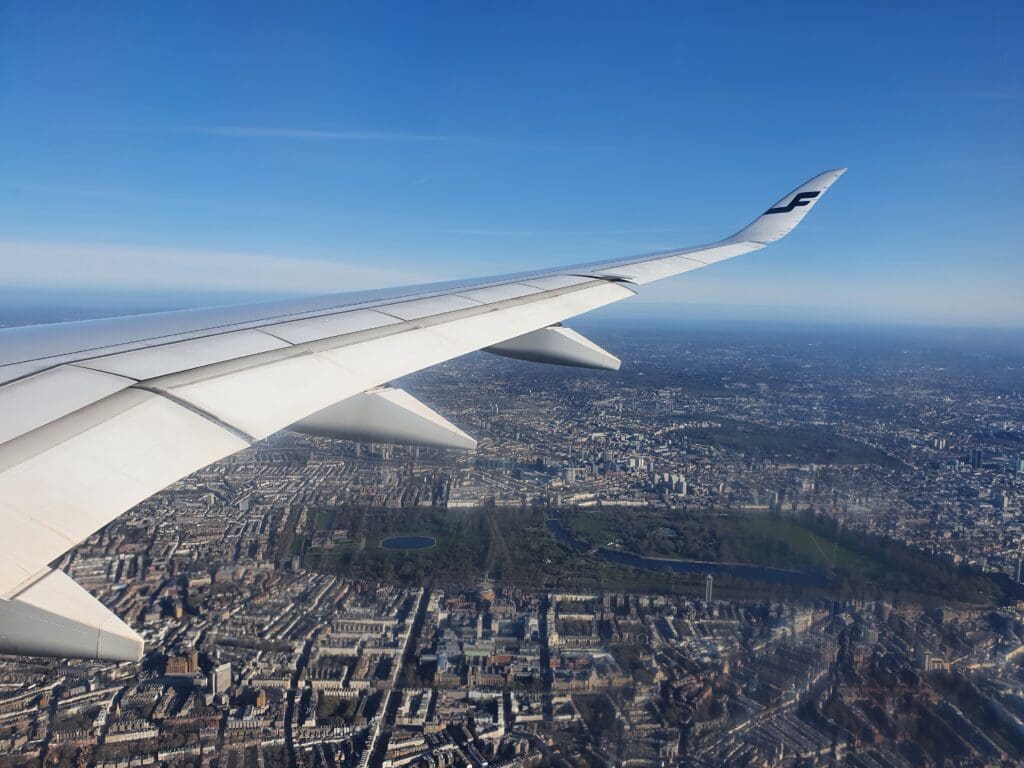
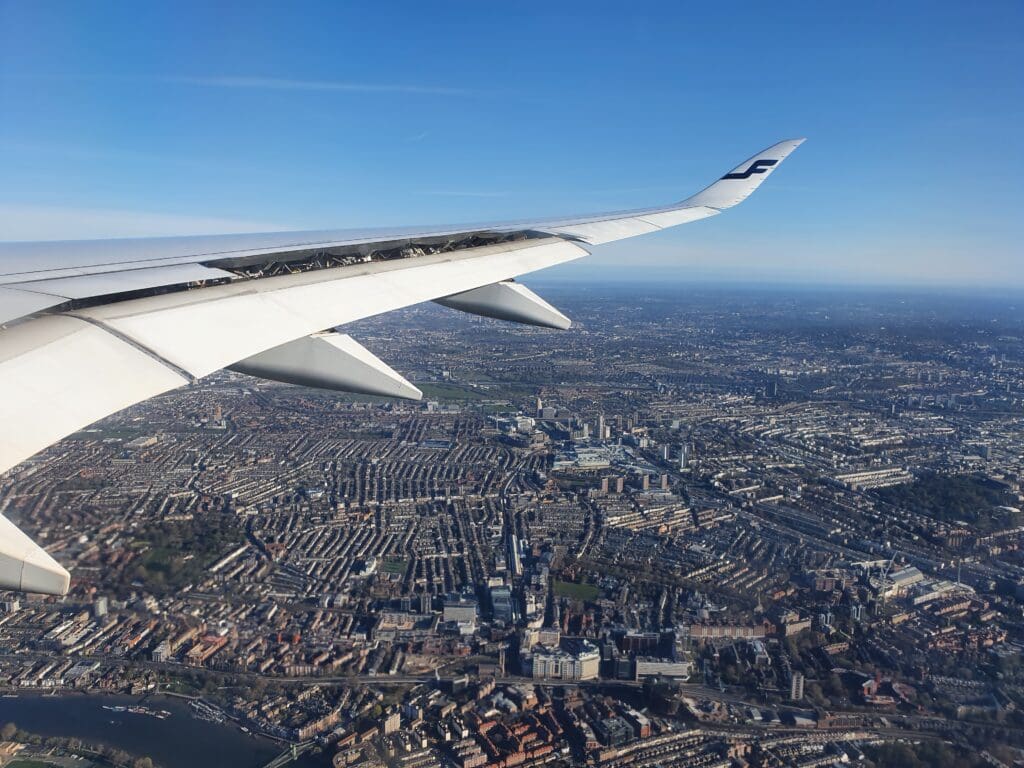
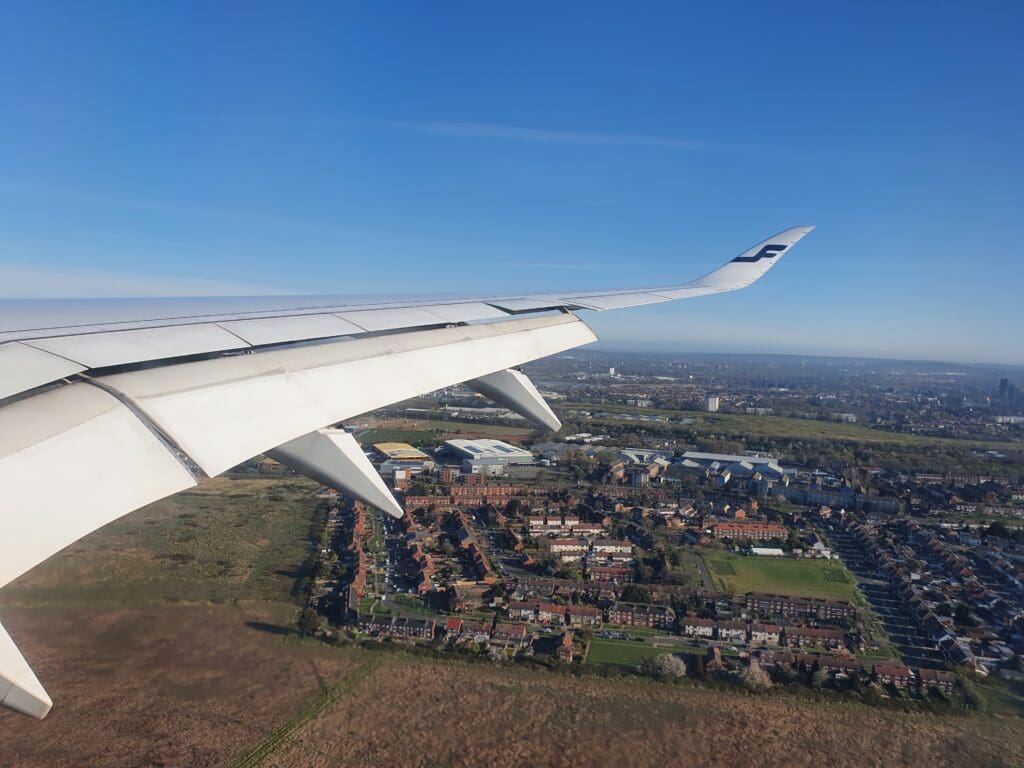
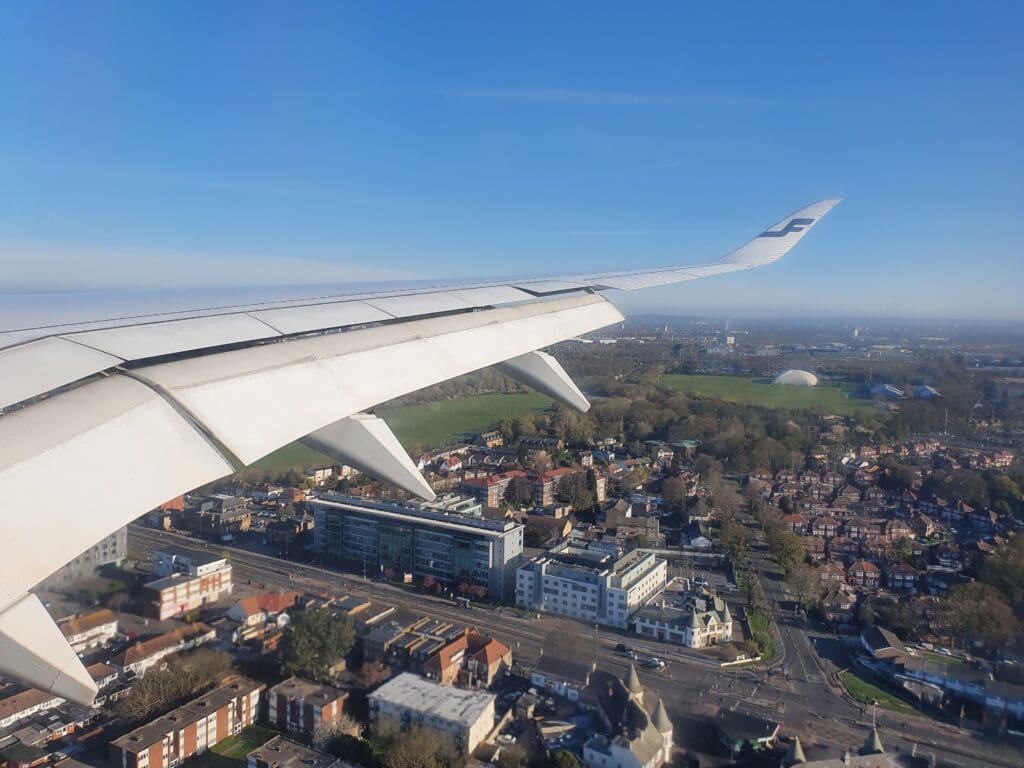
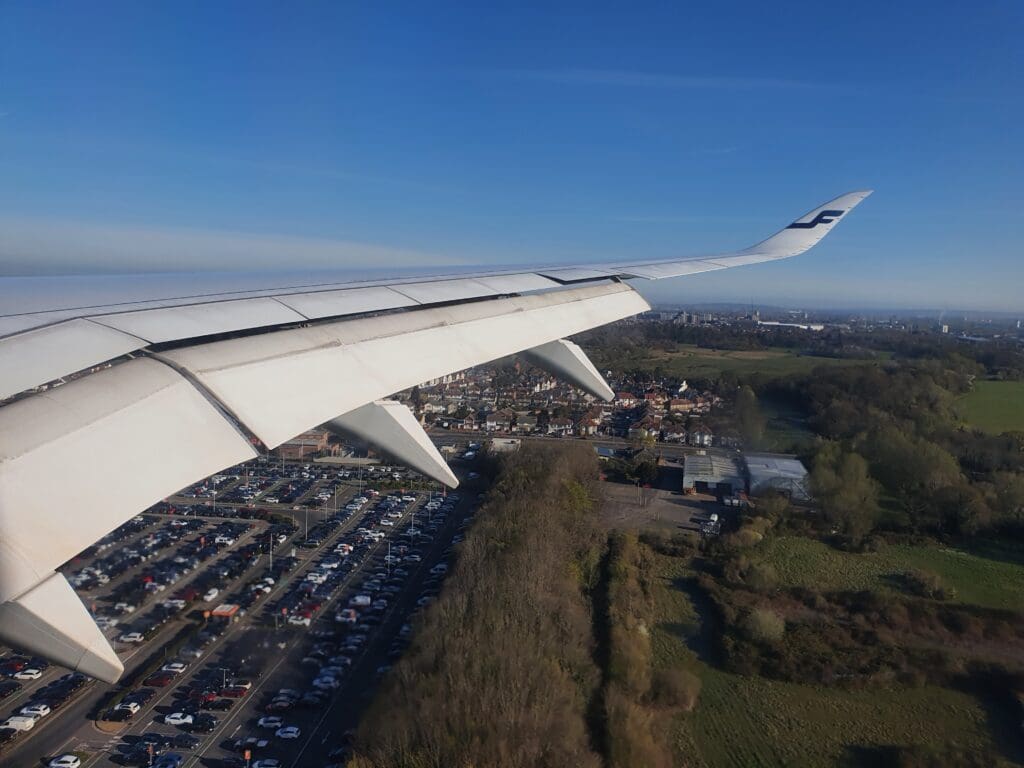
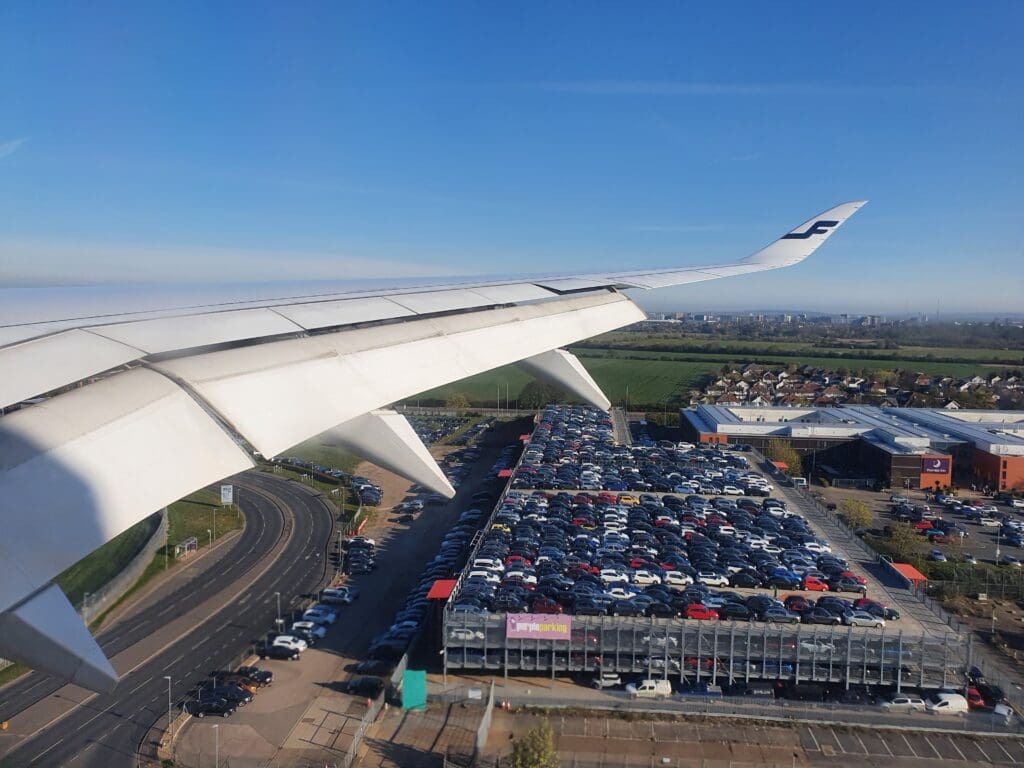
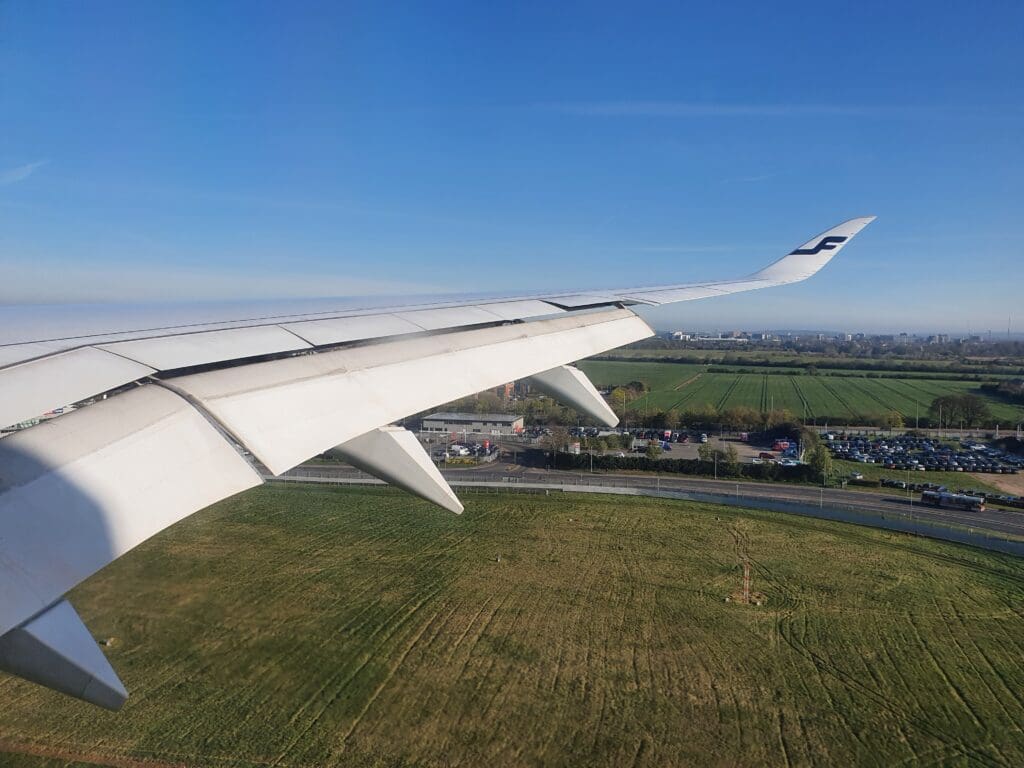
Heading towards Heathrow, the neighbourhoods of Notting Hill and Shepherds’ Bush could be seen to the north whilst the Thames-side area of Hammersmith could be seen below, soon followed by Chiswick and Brentford. Following the course of the London Underground’s Piccadilly Line, the aircraft continued to sink down over West London, passing over Osterley Park followed by Hounslow.
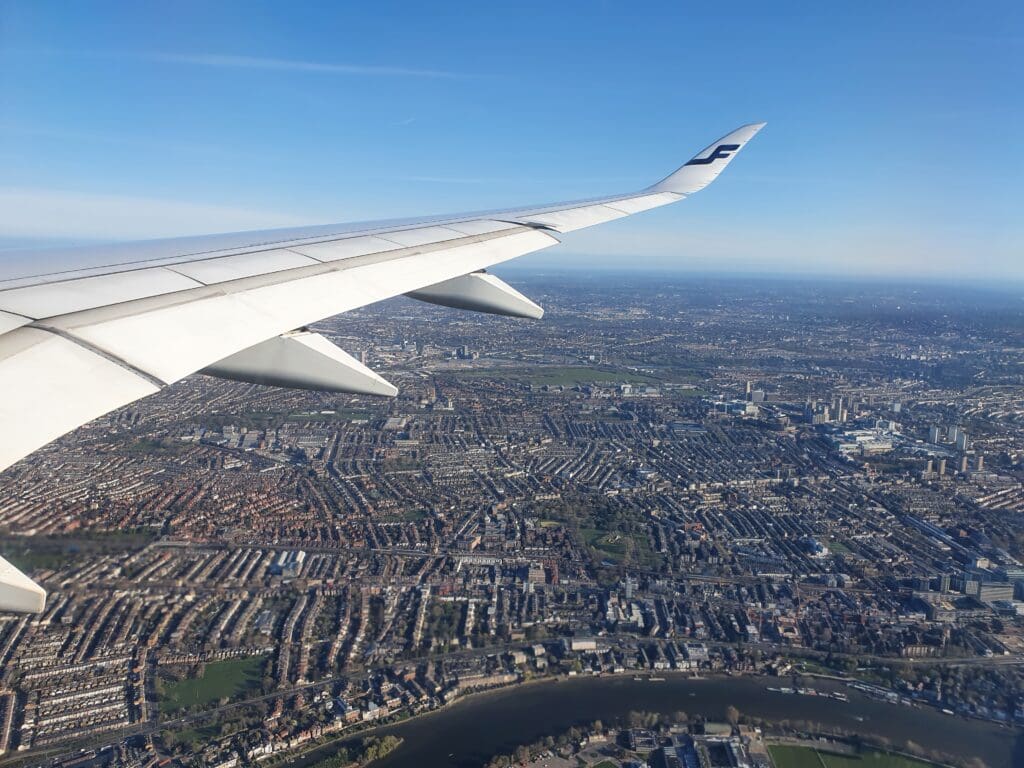
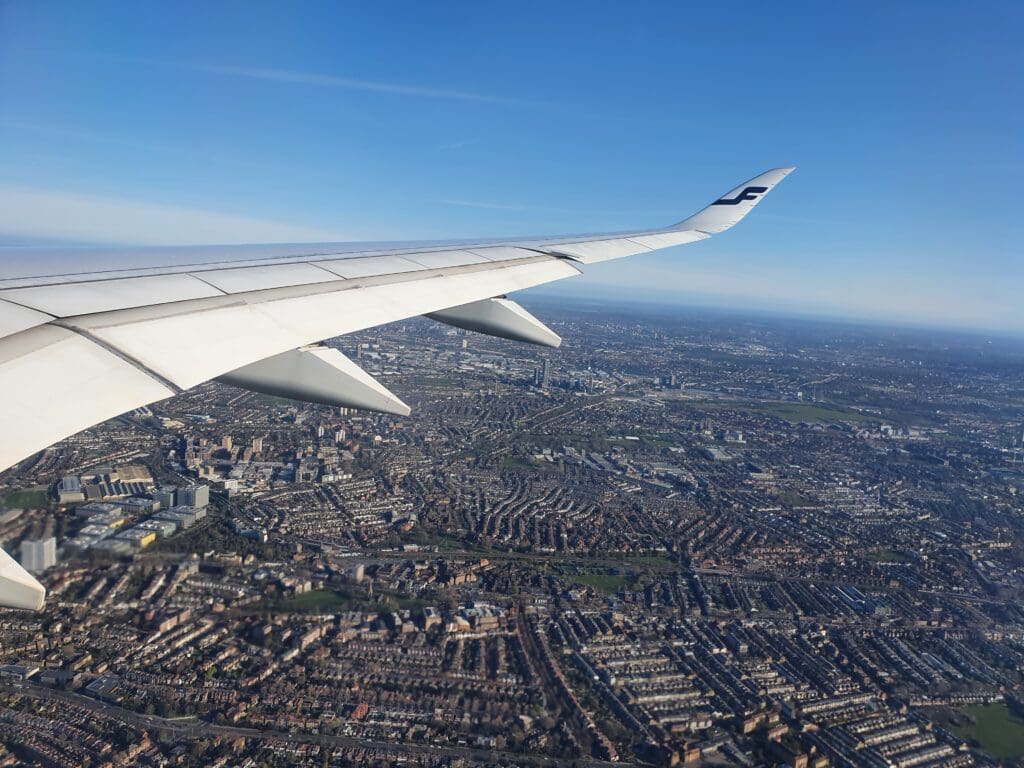
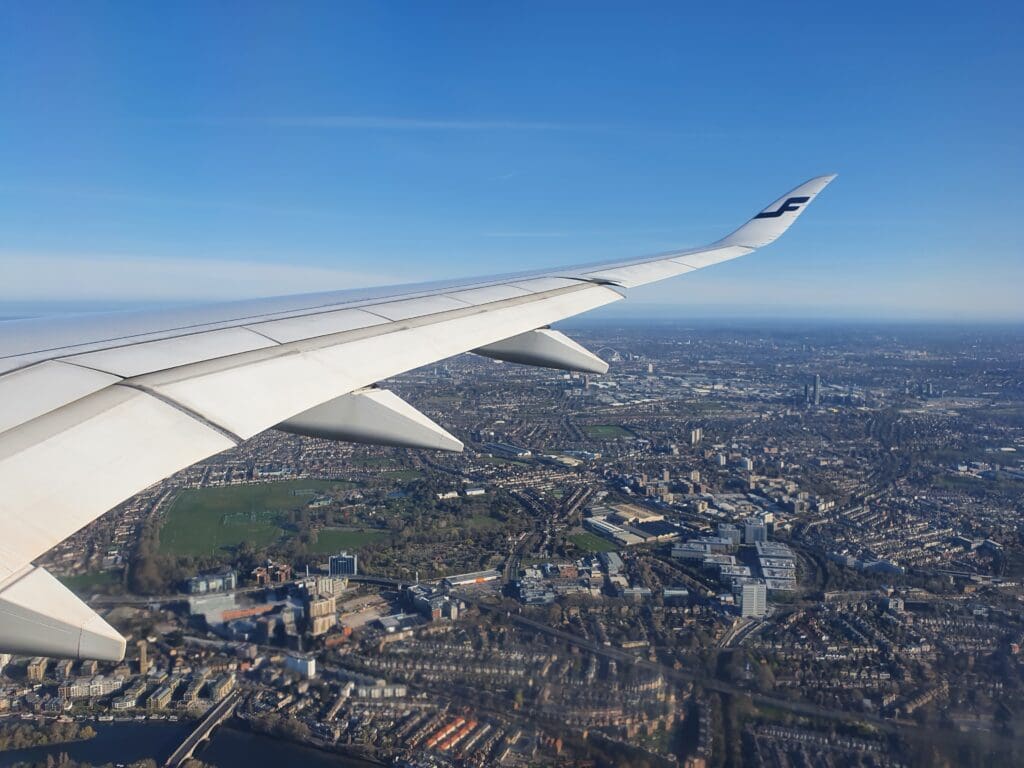
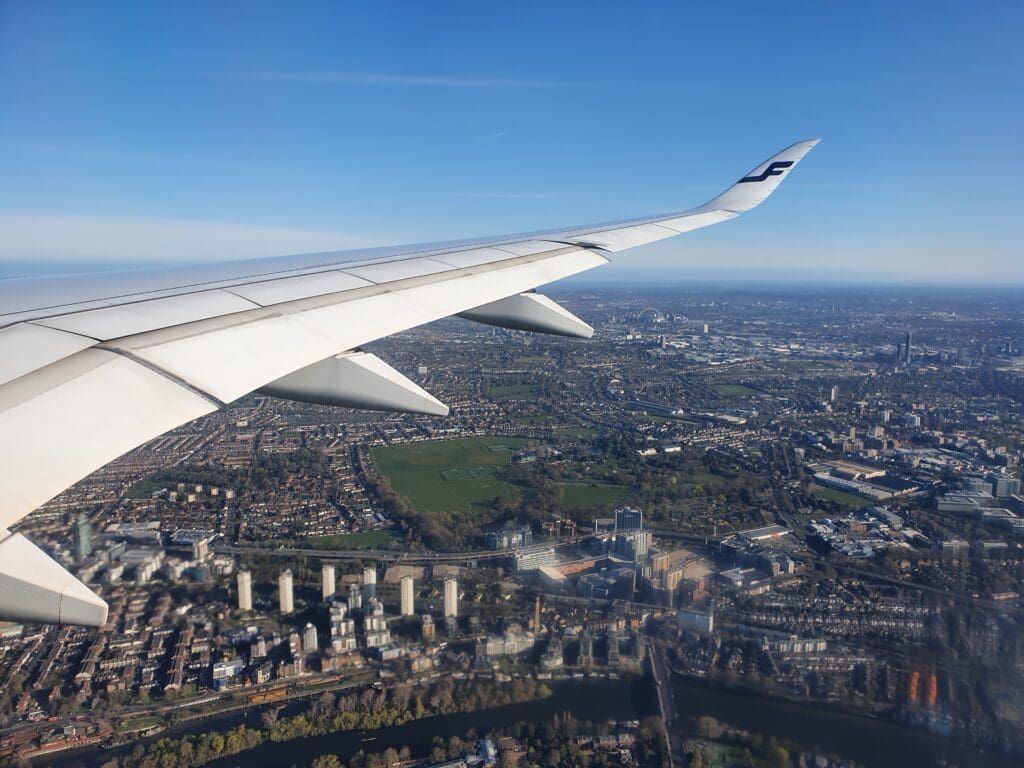
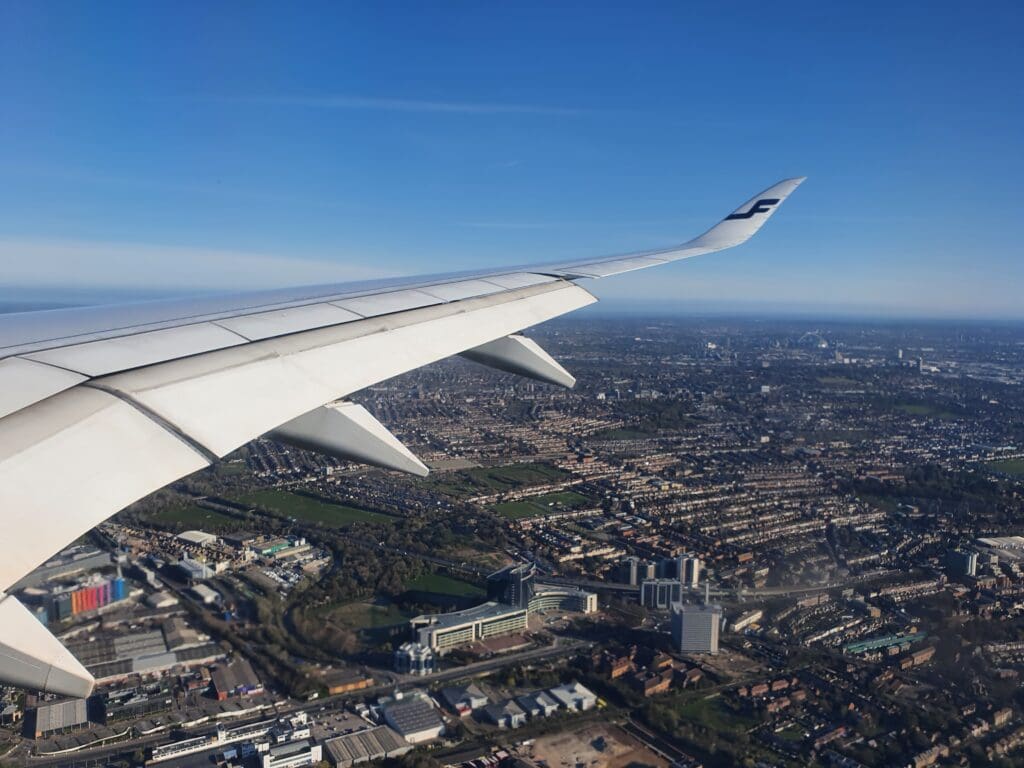
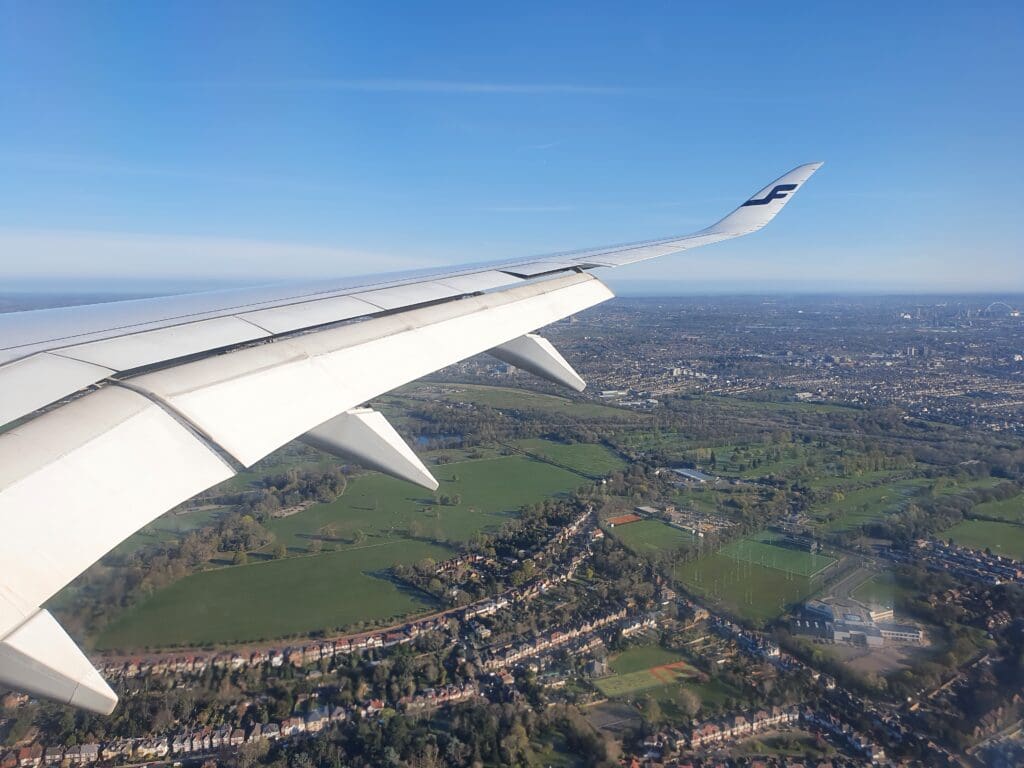
Before I knew it, the sight of expansive airport car parks could be seen and the aircraft whizzed over the Northern Perimeter Road where a group of enthusiasts could be seen spotting the morning arrivals. At 0839, a little under two hours and a half after departing Helsinki, the Airbus returned to earth with a gentle bump before decelerating rather quickly and soon vacating the runway to the left. In the usual manner, once off the runway all on board were welcomed to London by the Chief Purser in Finnish, Swedish and English and the Airbus commenced what seemed to be a fairly long taxi over to its stand at Terminal 3.
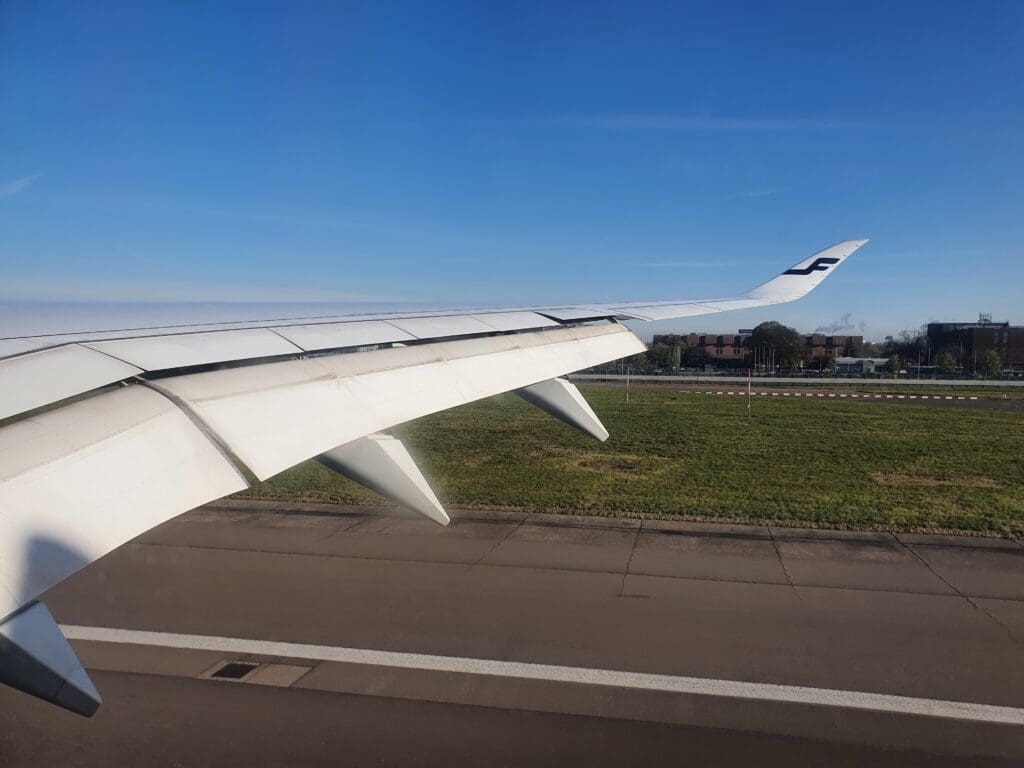
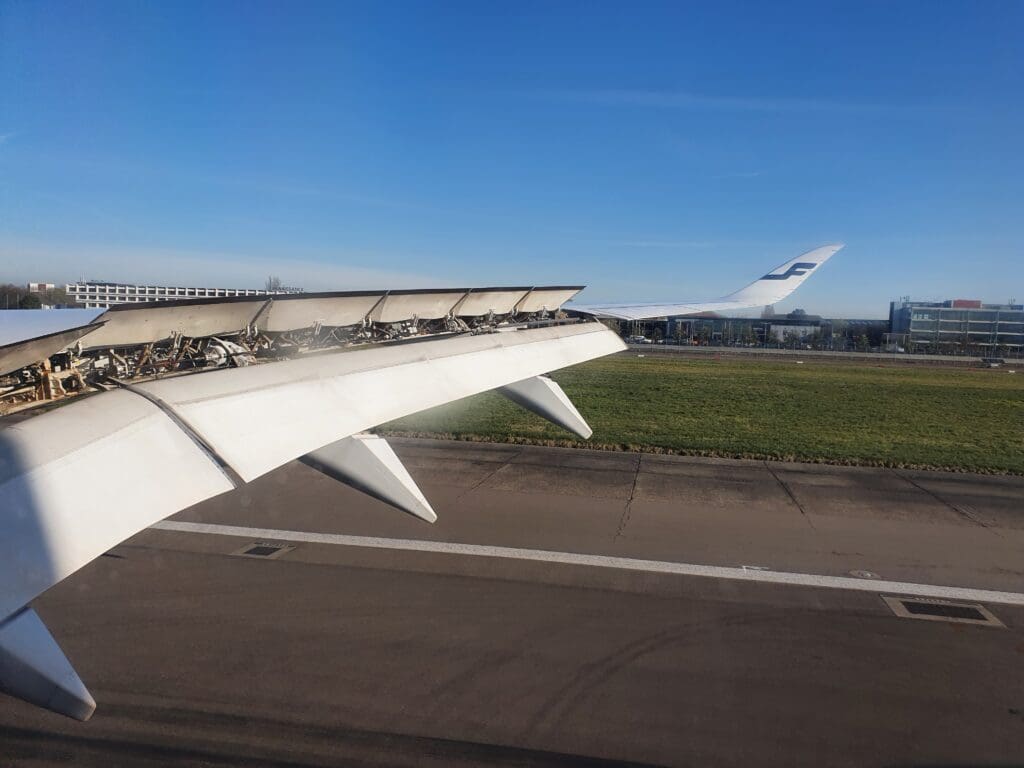
That morning, the usual smorgasbord of airliners could be seen sitting about, other than the locally based masses of British Airways and Virgin Atlantic aircraft, these included plenty of visitors from across the Atlantic, as well as from Africa, Asia and mainland Europe. The award for greatest distance flown to get to London that day undoubtedly went to the pair of Qantas Boeing 787-9 Dreamliners on the ground at that time, both of which had arrived from Darwin. From the runway, the aircraft made its way around Terminal 3, to the side that faces Runway 09R/27L at which point a more unexpected visitor could be seen, this took the form of Longtail Aviation’s Boeing 747-400 Combi, which still wears the basic livery of its former operator, KLM. This jet had been on the ground for several days and would depart that evening to New York JFK.
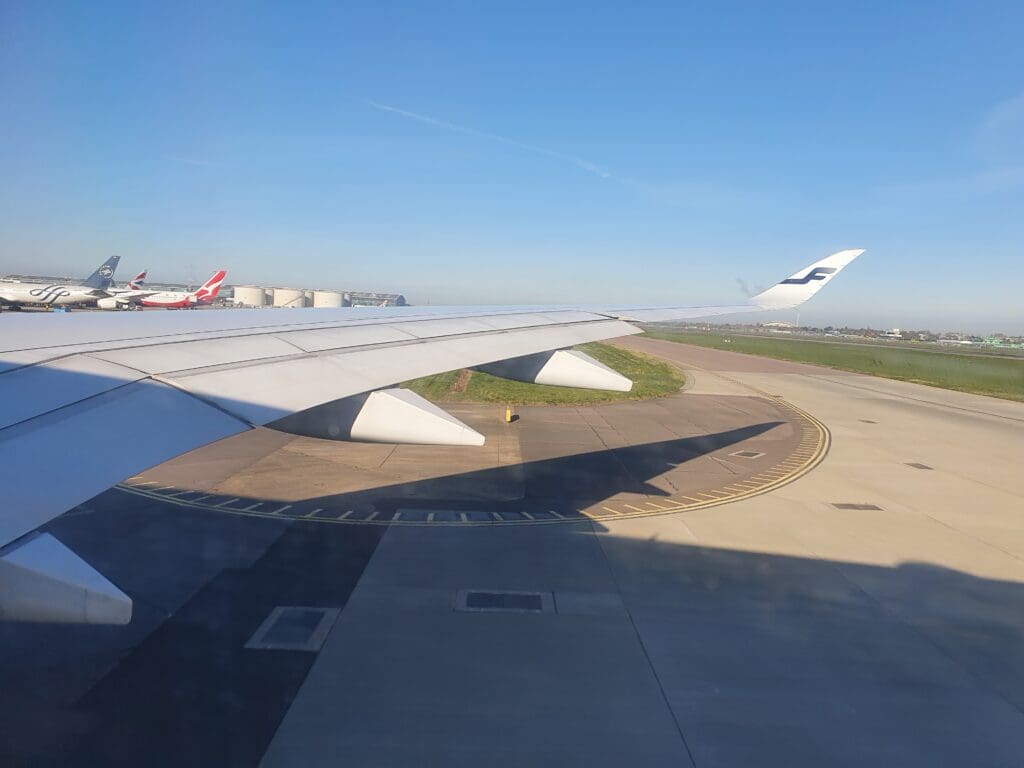
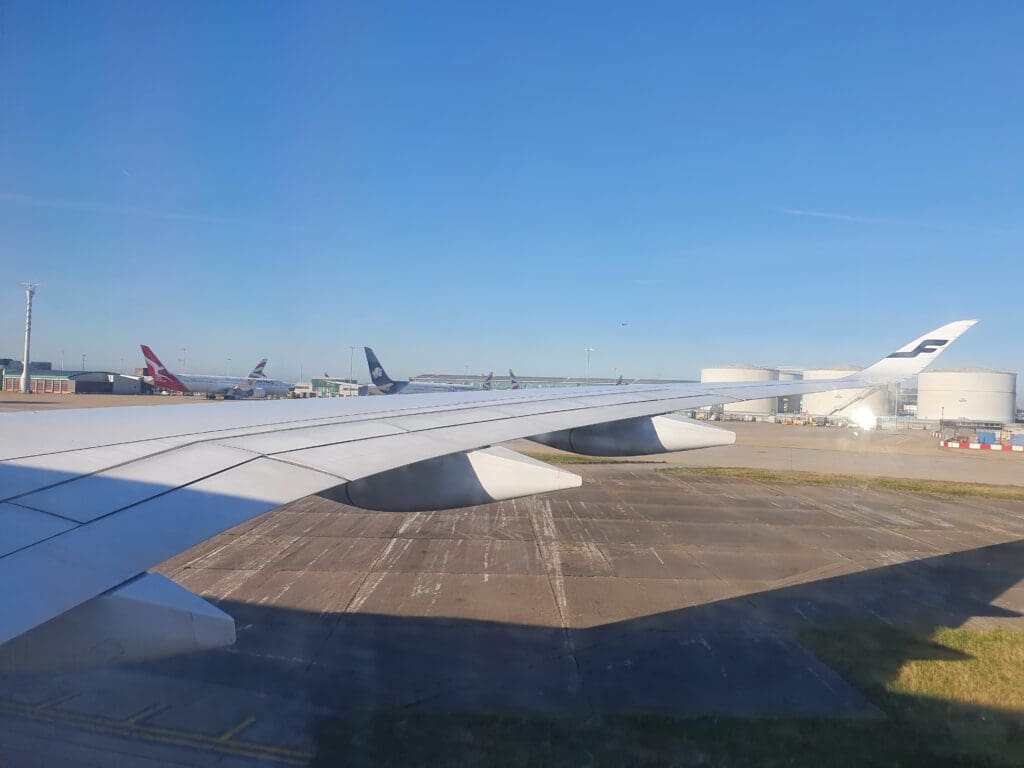
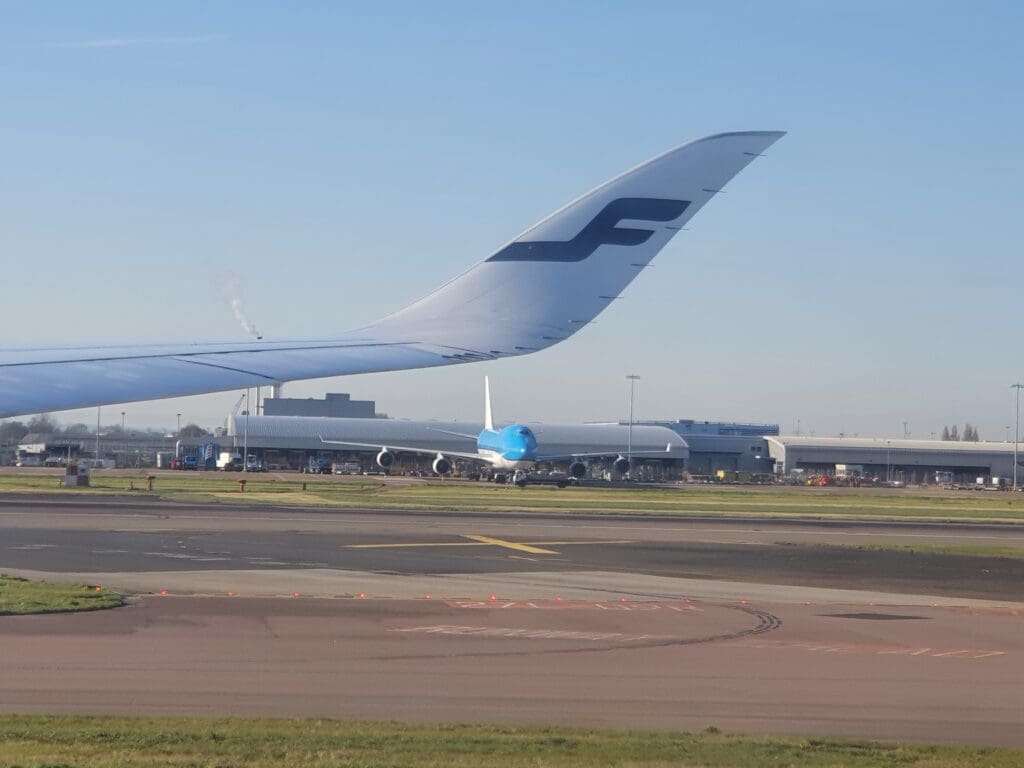
Seven minutes after touching down, the aircraft turned left into Stand 303 where it came to a gentle halt and the engines spooled down. At that time, many appeared to be in a hurry to leave the aircraft and aisles soon became clogged with passengers. However, as is usually the case, it took a few minutes for the jetbridge to be connected into position and for disembarkation to commence, with this taking place via the L1 door only. Eventually, the queues in the two aisles subsided a little and I made my way to the very front of the aircraft, thanking the crew and being thanked multiple times as I headed to the exit, I soon stepped off the aircraft and headed up the jetway into Terminal 3.
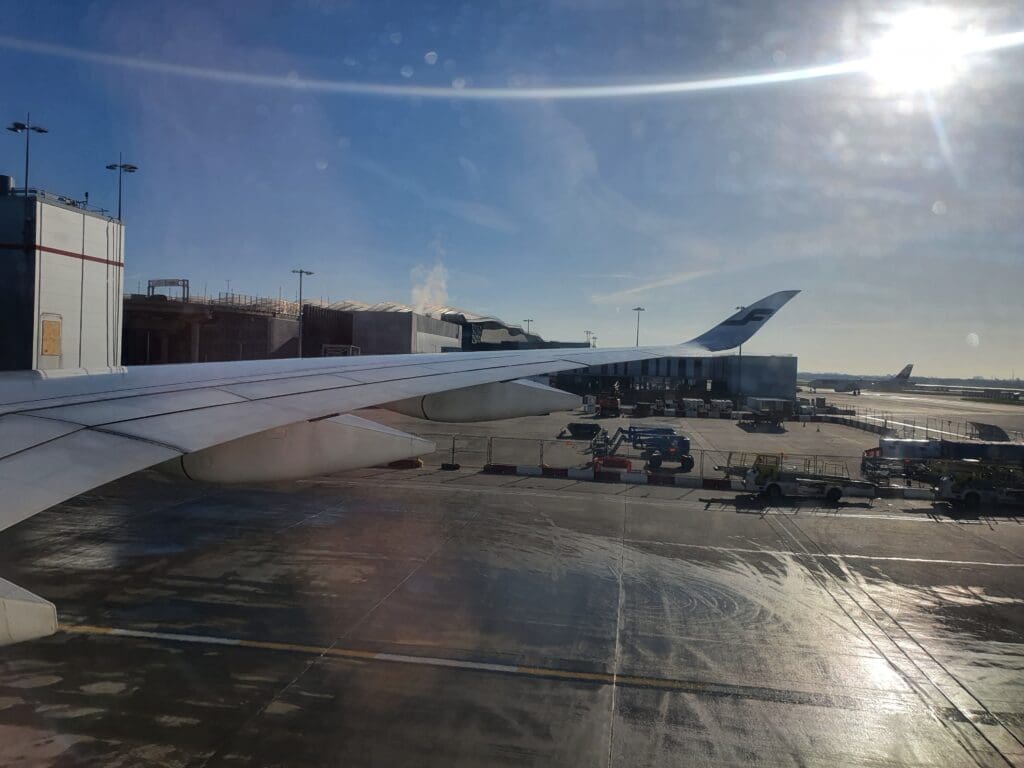
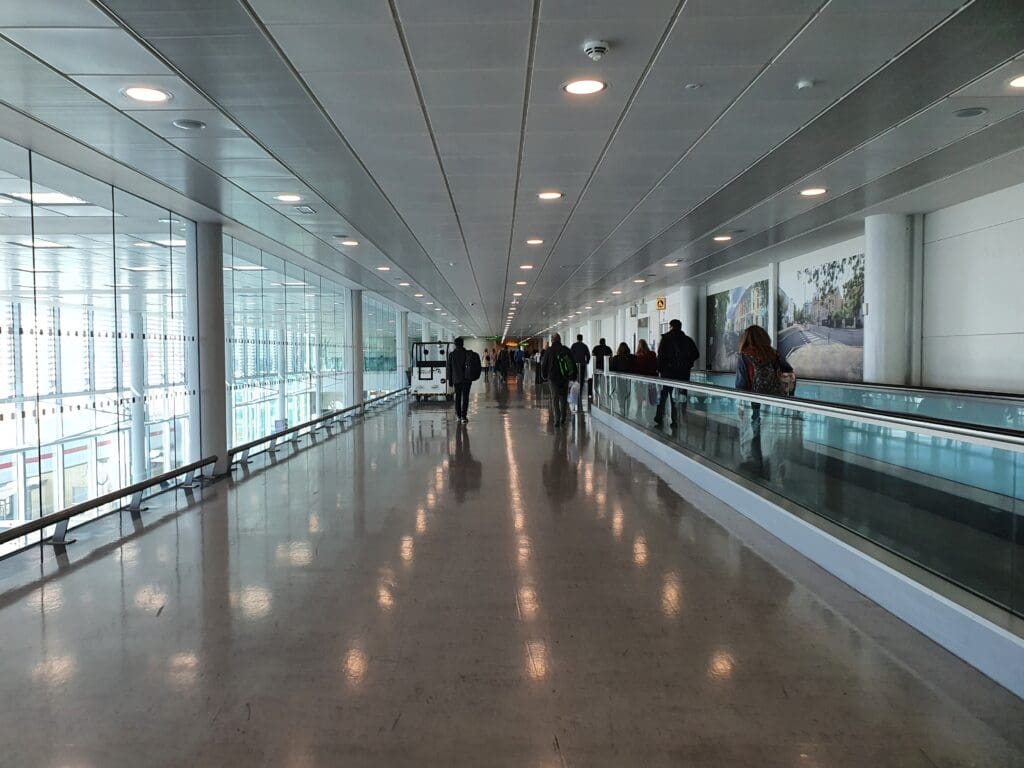
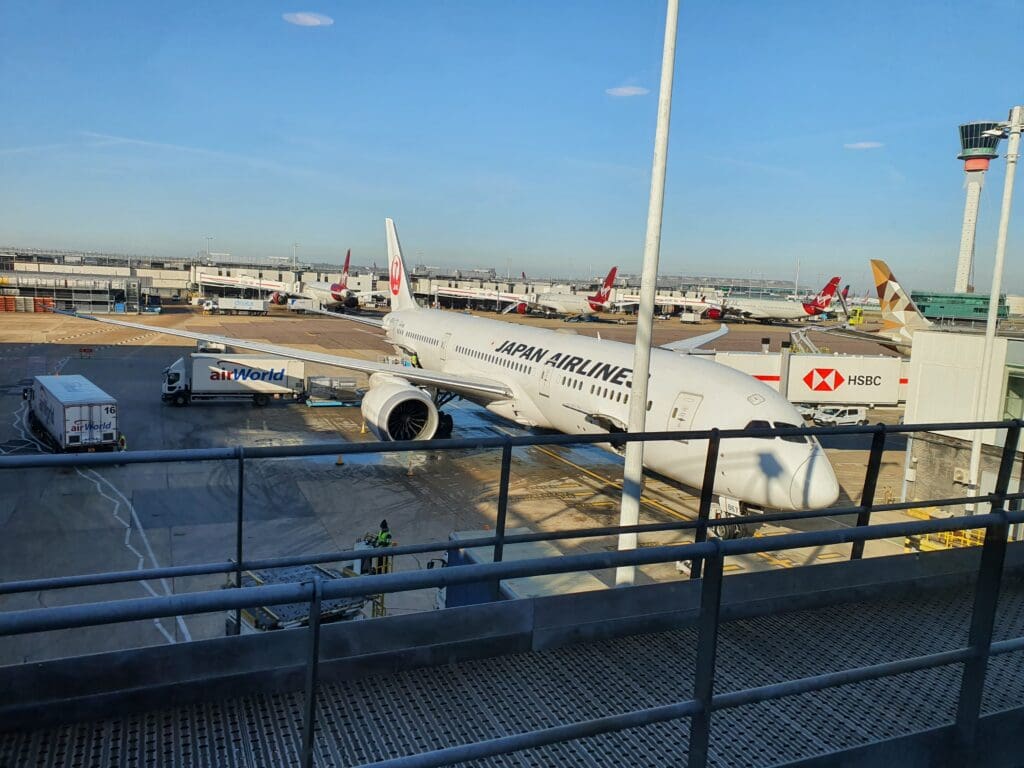
Compared to Terminals 2 or 5, the arrivals pathway in Terminal 3 does appear to be a little dated, even 1990s in style and doesn’t serve to offer a particularly warm or modern welcome to the UK. Furthermore, from the aircraft, a fairly long walk was in store to the terminal’s large immigration hall. Eventually, I arrived there and found this to be the busiest immigration hall that I have seen in the UK since the start of the pandemic. However, with most automated checkpoints being open, no queuing was needed and I soon scanned my passport and officially entered the UK without any waiting or issues. From there, I made my way to the baggage collection hall, and, despite the wait for disembarkation to commence and the long walk to immigration, it took quite some time for bags to appear – over thirty minutes after the engines had shut down to be precise. Thankfully, my small suitcase appeared to be one of the first to appear and after grabbing this, I commenced another long walk to the Piccadilly Line station to commence my journey home.
Summary
Focusing on Finnair, overall the airline left me with little to complain about other than perhaps their slightly lacklustre complimentary offering. Importantly I found the Economy cabin onboard their Airbus A350 to be smart, modern, comfortable and in tip-top shape, and their entertainment system proved itself to be of a very high quality, offering plenty of content. Meanwhile, the crew were all friendly and welcoming and left me with no reason not to fly with the Finnish carrier again. What I was not too pleased about was the state of affairs at Helsinki Airport that morning with the long queue for security, although that issue lies with Finavia and not Finnair.