Sampling KLM Cityhopper’s Sleek Embraer E2: Amsterdam to Copenhagen

Background and Check-In
Whilst the Embraer E2 entered commercial service in April 2018, I had inadvertently managed to avoid flying the type for several years. Based in the UK, I had seen plenty flying about for Helvetic Airways, KLM Cityhopper and the type’s launch customer, Widerøe. Whilst I had not gone out of my way to fly on one of these brand-new Embraers, flying on one would not have proven to be particularly difficult were I to have made the effort to do so. However, even this ride on the Embraer E2 came about as a result of a rather welcome equipment change when the Boeing 737-800 scheduled to operate my flight from Amsterdam to Copenhagen (and the London Heathrow to Amsterdam leg the evening before this) was substituted for KLM Cityhopper’s Embraer E2. This being part of my journey from London to the Faroe Islands via Amsterdam and Copenhagen.
Check-in for most of KLM’s flights opens thirty hours before the departure of the first flight in a passenger’s itinerary. Once this opened, I made my way over to KLM’s app to check-in. After entering all the required API data, I was presented with a range of additional options – skipping past these, I soon received my boarding passes for my two flights with KLM. In line with many airlines, passengers cannot choose a seat without paying a fee and having not elected to pre-select this, I ended up with aisle Seat 12D on the flight from Heathrow and window Seat 17F on the flight to Copenhagen. Given the fact that I would be seated in an aisle seat and that the flight would take place in darkness, I opted against writing a report for my first-ever Embraer E2 journey.
The Journey
Following my first-ever ride on an Embraer E2, a quick and pleasant hop over from London Heathrow with KLM Cityhopper, I entered Amsterdam Schiphol Airport at 2330, leaving me with a total of just under eight hours before my 0720 departure to Copenhagen. Despite my long connection, given Schiphol’s recent reputation for long security queues, I did not see the point in paying at least £140 for a one-night hotel stay for what would likely be a very short night of sleep. However, with the last flight to a destination in the Schengen area departing before my arrival time, I was unsure as to whether I would be able to pass through the Schiphol’s airside transit immigration checkpoints, or whether these would be closed for the night by the time I arrived in the terminal. After a fairly long walk from the Heathrow flight’s arrival gate, I arrived at the immigration checkpoint and was greeted by the sight of unmanned booths and closed e-gates, indicating this to be shut. After questioning a nearby security guard on the best course of action, they reassured me that the airside transit immigration checkpoint would open at 0500, and so I decided that it would be easiest to stay in the airside portion of the non-Schengen portion of Schiphol before heading through immigration early in the morning. The alternative to this would have been to head to the landside area and wait there before heading through security.
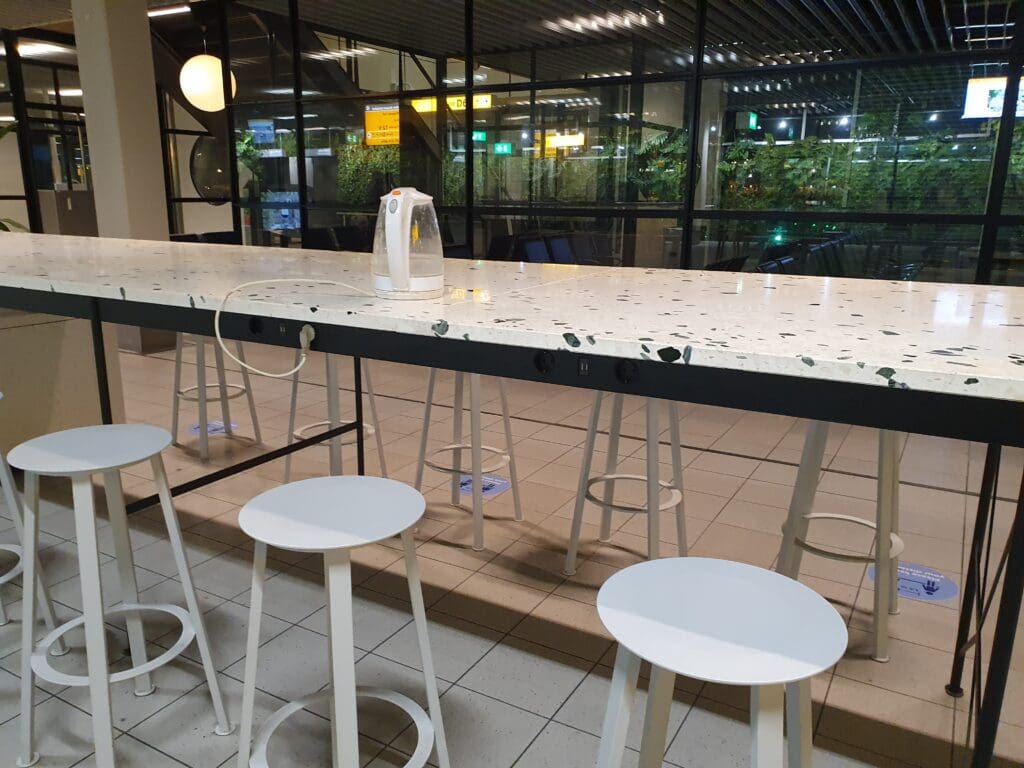
That evening, there appeared to be few passengers opting to spend the night in the airside non-Schengen portion of the terminal building. Meanwhile, with no flights set to depart until early the next morning, all facilities were firmly closed with the only sustenance on offer limited to a small selection of snacks and soft drinks in the terminal’s vending machines. Needing something to quench my perishing thirst, I headed over to one of these and was soon shocked by the extortionate prices. Fancying water, a 500ml bottle set me back an eye-watering €3.40! Meanwhile, a sugary Coca-Cola would have cost me an even pricer €4.15. With this in hand, I then made the long journey down the terminal’s quiet E pier where just two aircraft could be seen at the gates outside through the pier’s floor-to-ceiling windows. These took the form of two TUI fly Netherlands jets – a Boeing 737-800 and a Boeing 767-300ER.
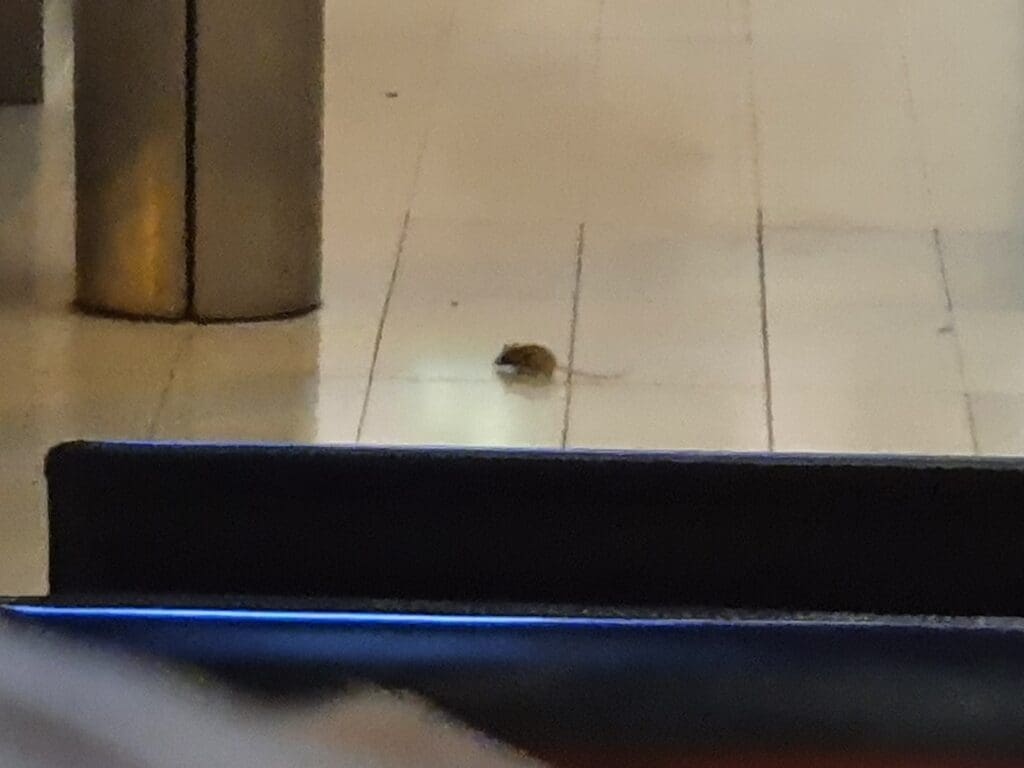

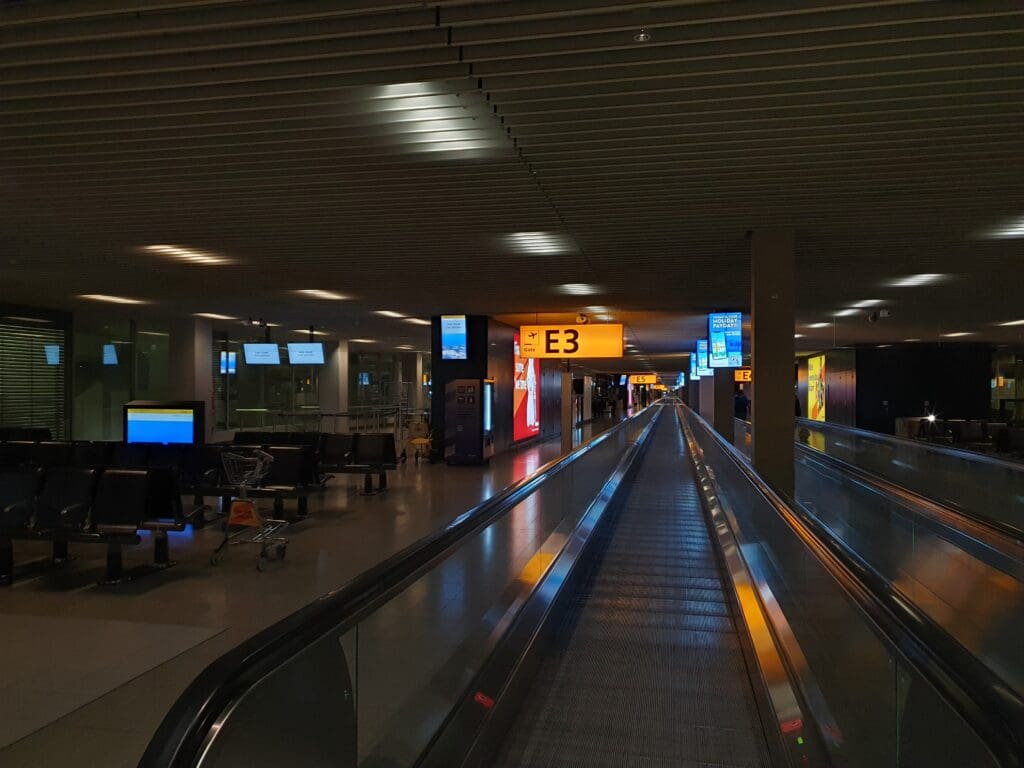
Settling down for the short night towards the end of the pier, there, other than the extortionate vending machine prices, I was taken aback by the number of mice I saw scurrying about. Whilst not particularly afraid of the little creatures, seeing them running about around the kitchen area of one of the closed restaurants on the pier was a little unnerving. However, other than the mice and the prices, this part of the terminal did not provide me with too much to complain about. I found this to be quiet and spacious, with a good number of working plug sockets available, whilst plenty of seating options ranging from comfortable stools to well-padded sofas could also be found. Meanwhile, large windows provided good views of the occasional late-night arriving jet taxiing past outside. These took the form of aircraft operated by Corendon Airlines, KLM, Pegasus and Transavia, all arriving from sunshine destinations. Meanwhile, aircraft from Bulgarian and Croatian ACMI specialists, Fly2Sky and Trade Air, operating on behalf of TUI fly Netherlands could also be seen.
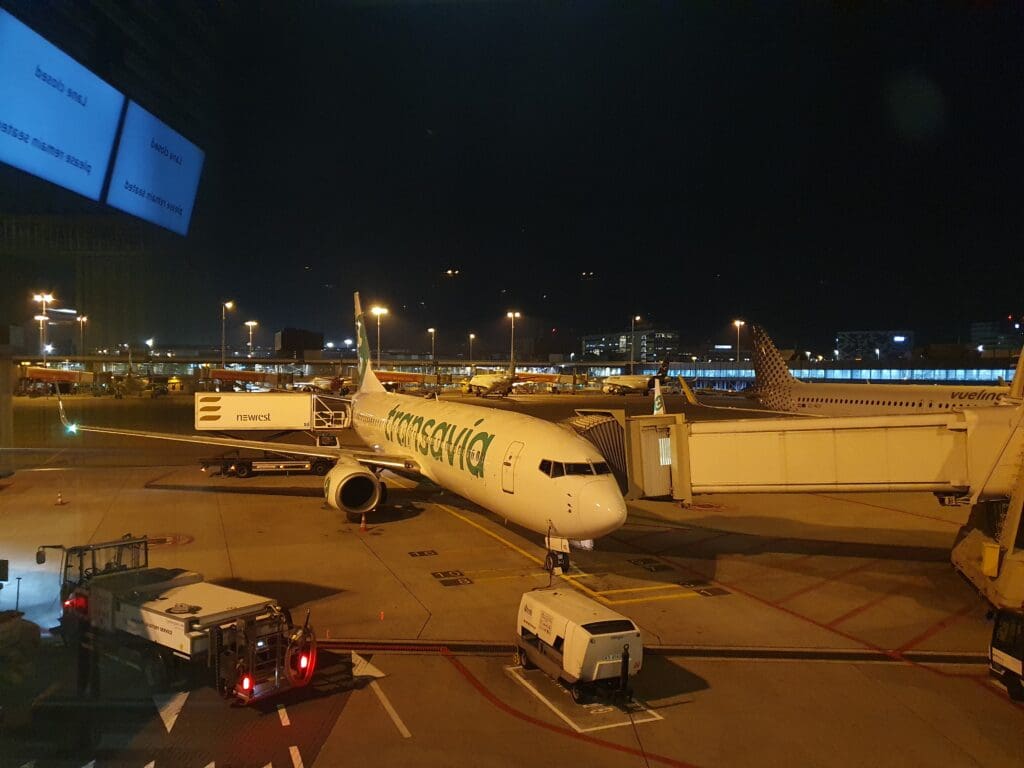
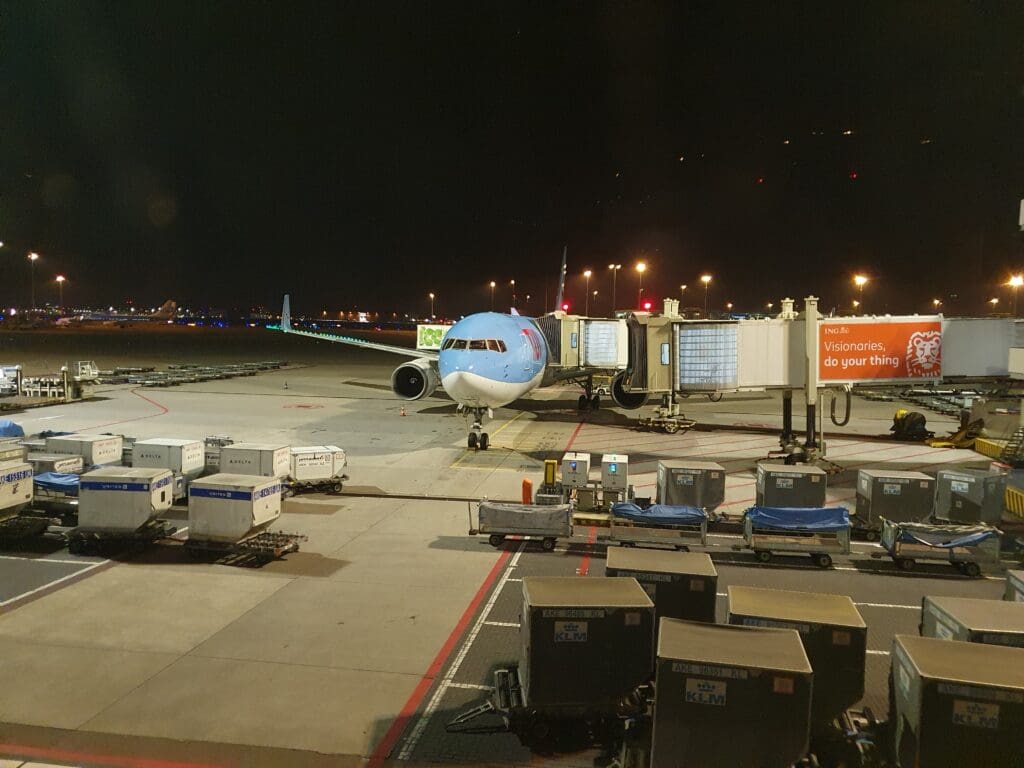
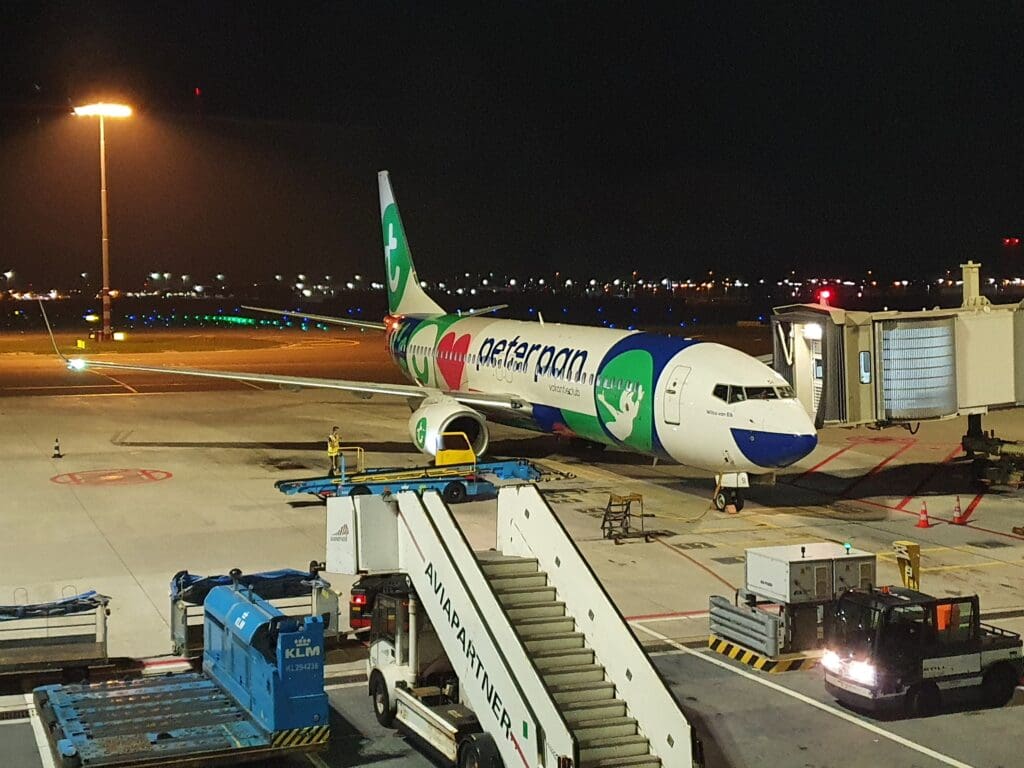
After around a couple of hours, the peace and quiet that I had been enjoying at the end of the pier came to an abrupt end when two segway-riding police officers appeared out of nowhere. Requesting to see my passport, I handed this over to one of the friendly officers who then asked me where I was going. After informing them that I was heading to Copenhagen and that I was waiting for the immigration checkpoint to open, they advised me that despite its closed appearance, the office is open although I might have to bang on the window to get an officer’s attention.
Seeing as the officer encouraged me to move along, I soon packed up my things and began the long walk back to the central hub of the terminal. From there, I trundled over to the immigration checkpoint, and following the police officer’s advice, I made my way over to the office on one side of this. Upon arriving there, an officer suddenly popped up from behind the glass and, having sadly lost my status as an EU citizen (thanks Brexit), I was given a brief quizzing on my travel plans in the EU. On that note, of all the EU countries that I have visited since Brexit, the Netherlands seems to have the most inquisitive immigration officers, having received a similar grilling during my previous visit to the country to fly on DDA Classic Airlines’ Dakota! Satisfied with my answers, without any scanning, my passport was stamped and then handed back to me.
After officially entering the European Union, I arrived in the main atrium area for Amsterdam Schiphol’s Schengen B and C piers. As one would expect from a major airport, this appeared to be home to a decent number of shops, restaurants and cafes however at that time most of these were closed. The exception to this was the Mediterranean Sandwich Bar which was the place to be that morning, with plenty of passengers seen hanging about the eatery. Contrary to its name, the café sold more than sandwiches, with a selection of light food and drinks on offer. Stopping by, I purchased a regular cappuccino and a slice of almond boterkoek which set me back a pricey €8, although the latter proved to be highly delicious. Once I had polished these off, I then began to explore the terminal’s two piers. That night, I can’t say that I was particularly impressed with this part of the airport, with the two piers appearing to be rather dirty and complete with a fair amount of rubbish strewn about the floor and across some of the terminal’s seating areas.
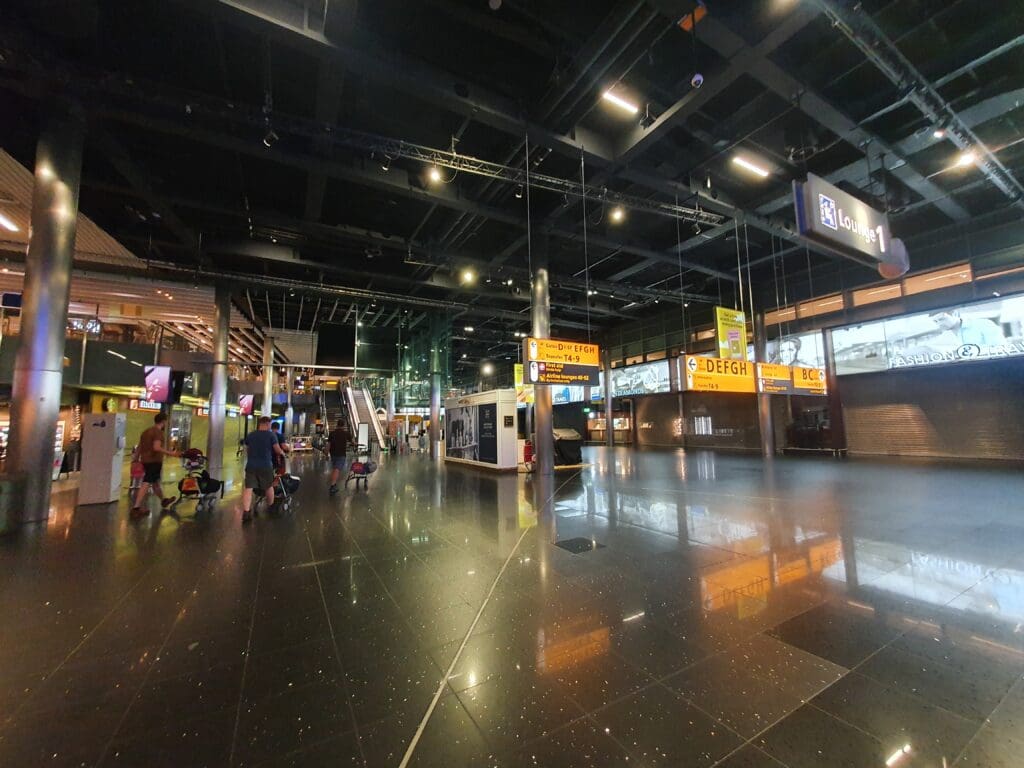
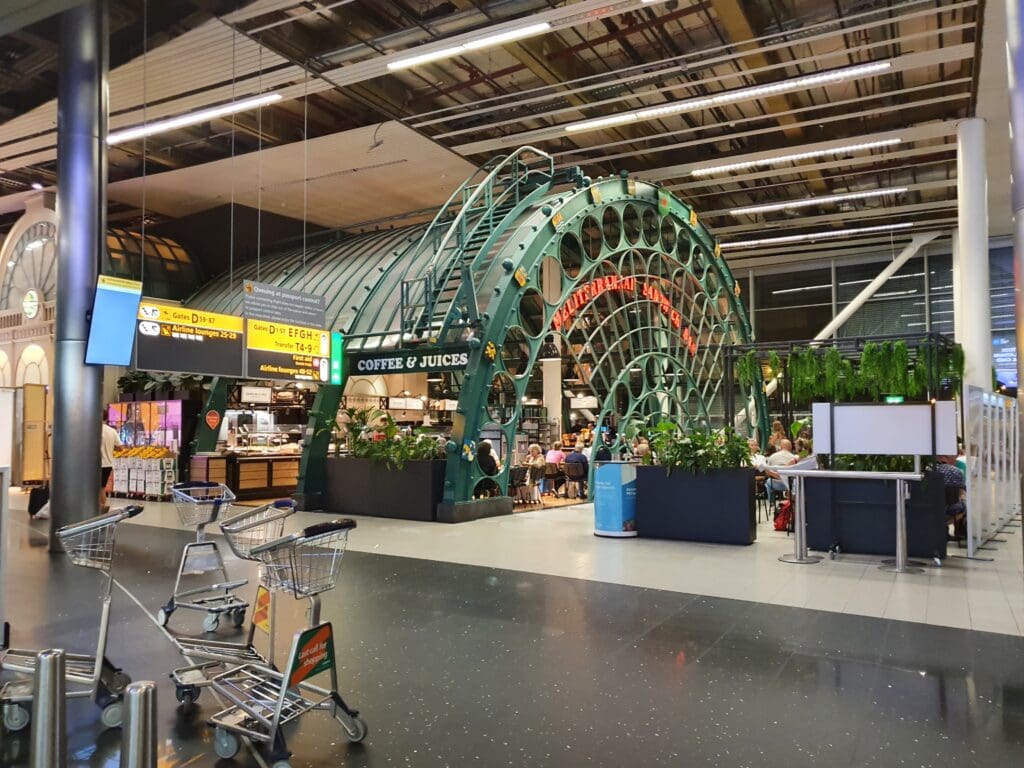
As with the non-Schengen portion of the terminal, I managed to spot plenty of mice scurrying about during much of my stay, and later research revealed the presence of mice to be a well-known problem at Schiphol. However, having never spent a night at the airport before, this was my first time encountering these four-legged creatures that call one of the world’s major airports home. In terms of design and comfort, this part of the terminal appeared to be a step below the non-Schengen area, with the B and C piers appearing to be rather spartan and dated in their design, and lacking in the same array of comfortable seating and charging points as the other part of the airport. Furthermore, whilst dark outside, many of the window blinds in the terminal had been lowered, preventing views of the action outside from many parts of the terminal.
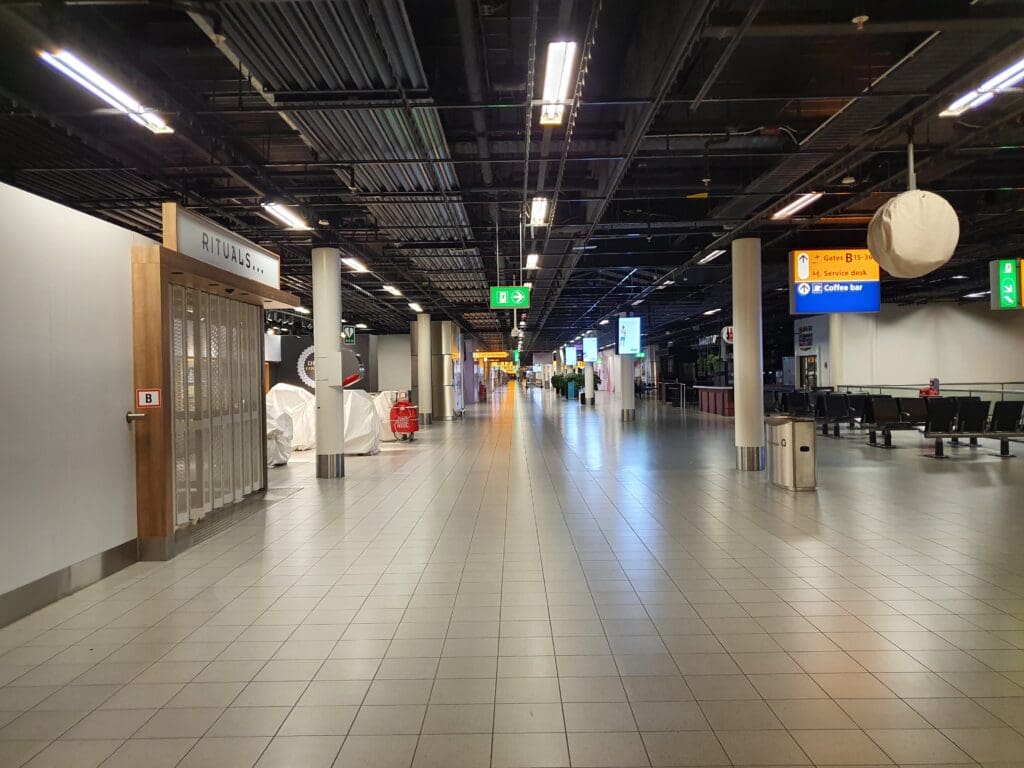
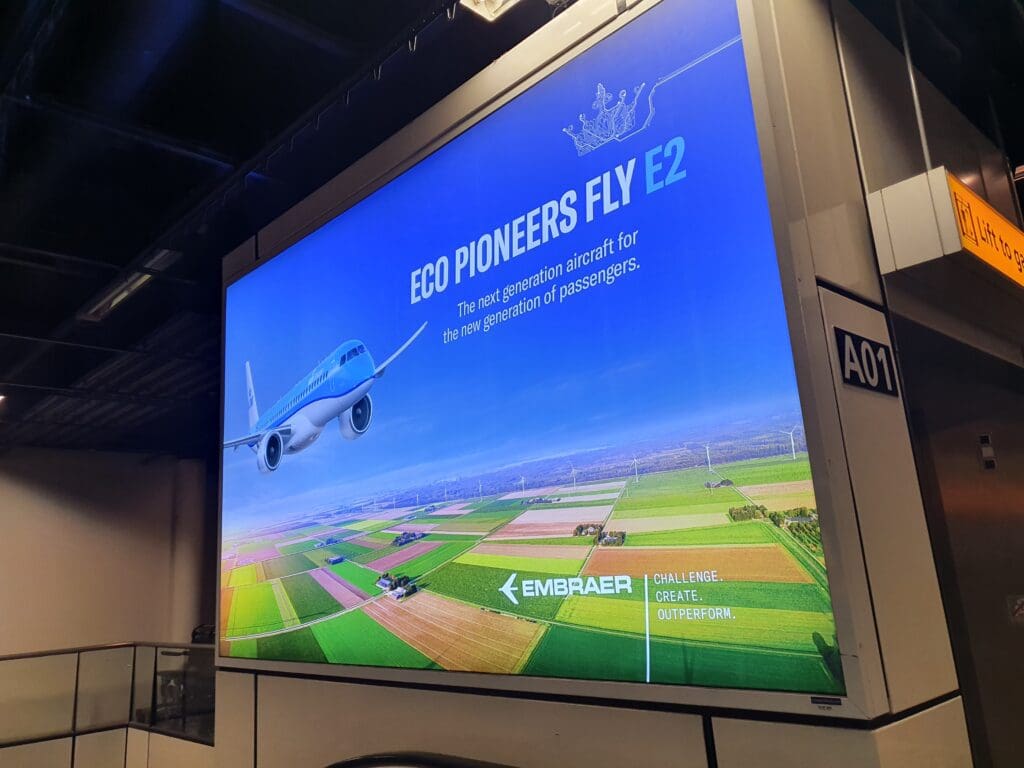
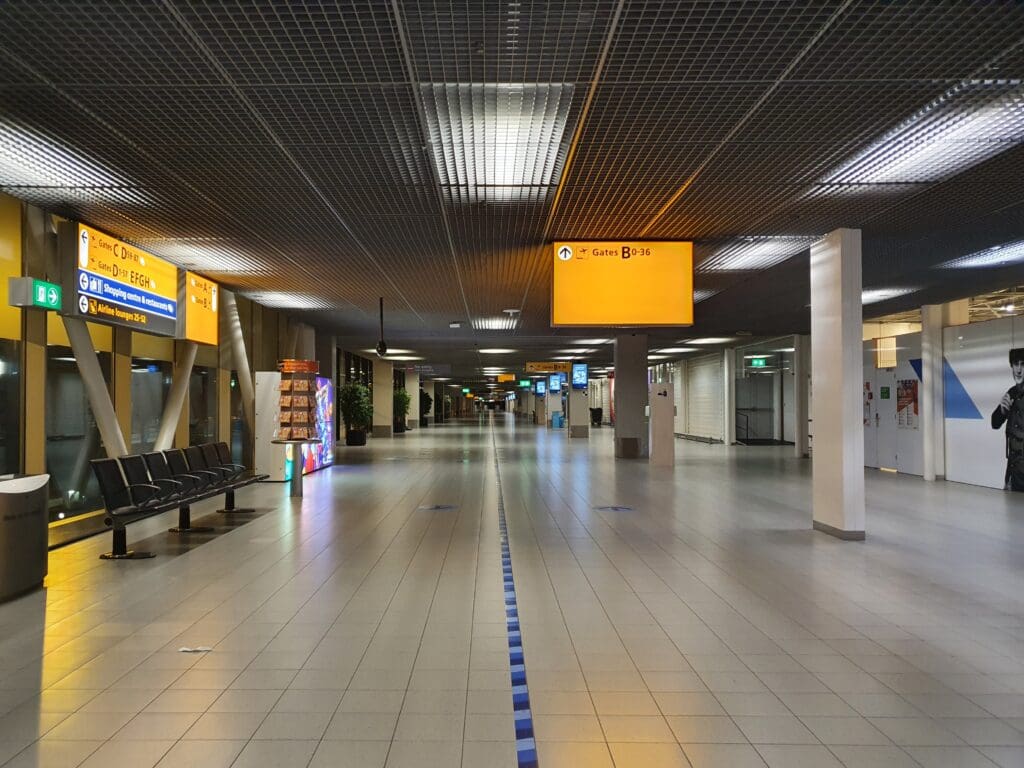
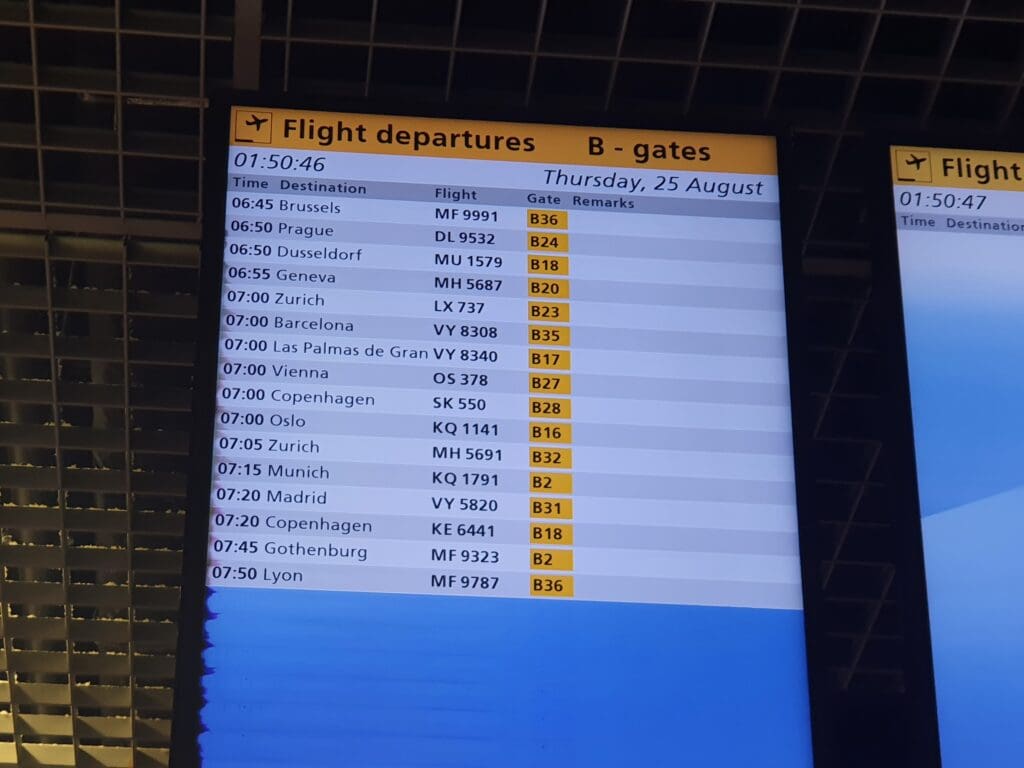
That morning, the first ten departures or so heading off from Schiphol took the form of Transavia and TUI fly Netherlands-operated services to holiday destinations across Greece and Spain. Unsurprisingly, many of those spending the night in the terminal appeared to be heading off on these flights, many of whom already appeared to be in the holiday spirit, accompanied by many cans of Heineken and were rather loud and lively in contrast to some of the more sleepy and subdued passengers waiting for their flights. As time passed, more and more passengers arrived in the terminal and by the time of the first departure, a 0500 Ibiza-bound Transavia service, the terminal was rather busy. Whilst I still had plenty of time left until departure, having positioned myself near a plug socket at the end of the C pier, at this time I decided to trek across to the B pier from where my flight would depart.
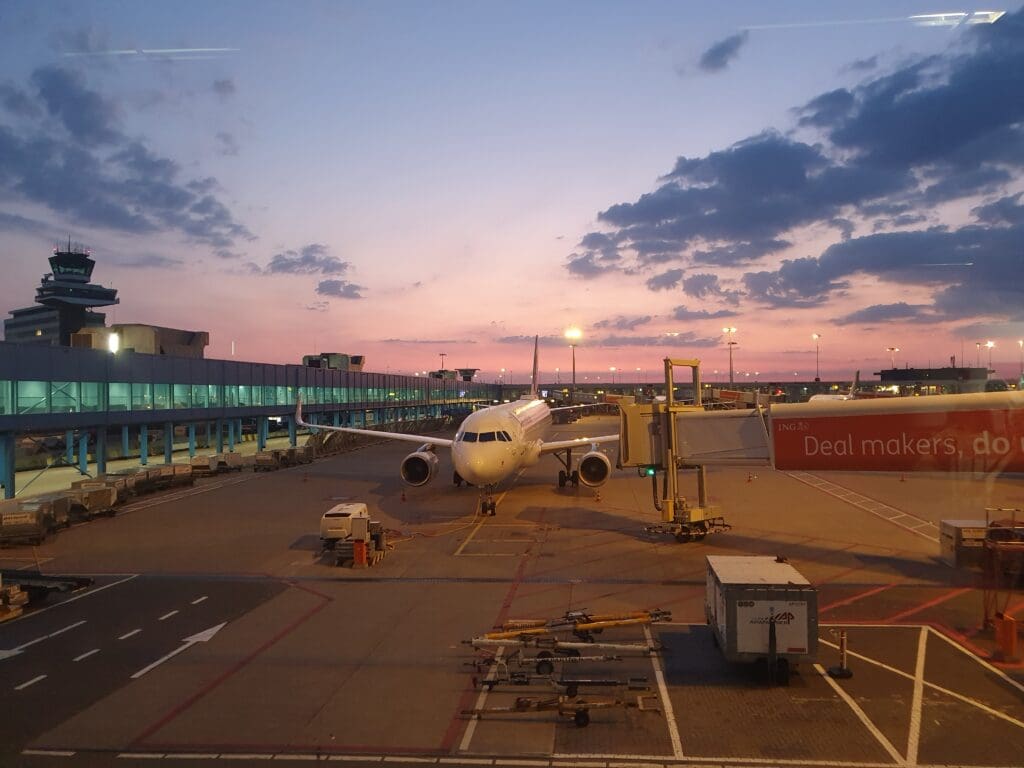
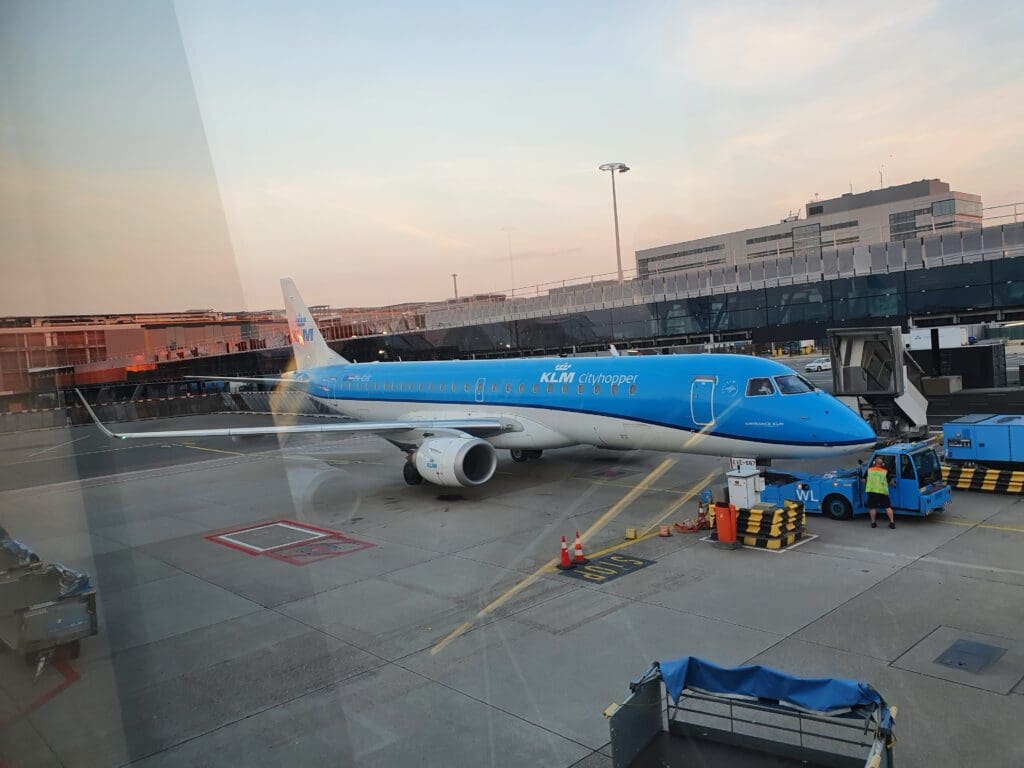
Whilst far from quiet, I found the B pier to be slightly less busy, with this serving to be the starting point of several KLM-operated services to destinations across Europe. At that time, other than a café near the entrance of the pier, no other facilities were open – although this was also home to a shop selling a variety of Dutch produce for those looking for some last-minute souvenirs. Walking around the B pier, this shared the tired-looking shabbiness of Pier C, plus this had the added ‘bonus’ of a lack of charging points and plug sockets.
Outside, it wasn’t too long before night transformed into day, illuminating the collection of narrowbody aircraft waiting outside the terminal. By this time, I had had enough of Schiphol and was ready to head onward to Scandinavia. That morning, my flight to Copenhagen would depart from Gate B18 – whilst this is not a ground floor gate, given the fact that a Dusseldorf-bound KLM Cityhopper service would depart from the gate just thirty minutes before the Copenhagen service’s scheduled departure time, it was clear that those bound for Denmark would be bussed out to the aircraft that morning. With both those heading to Copenhagen and Dusseldorf waiting at the gate, by 0600 no vacant seats remained there and so I passed the time by waiting at a nearby gate.
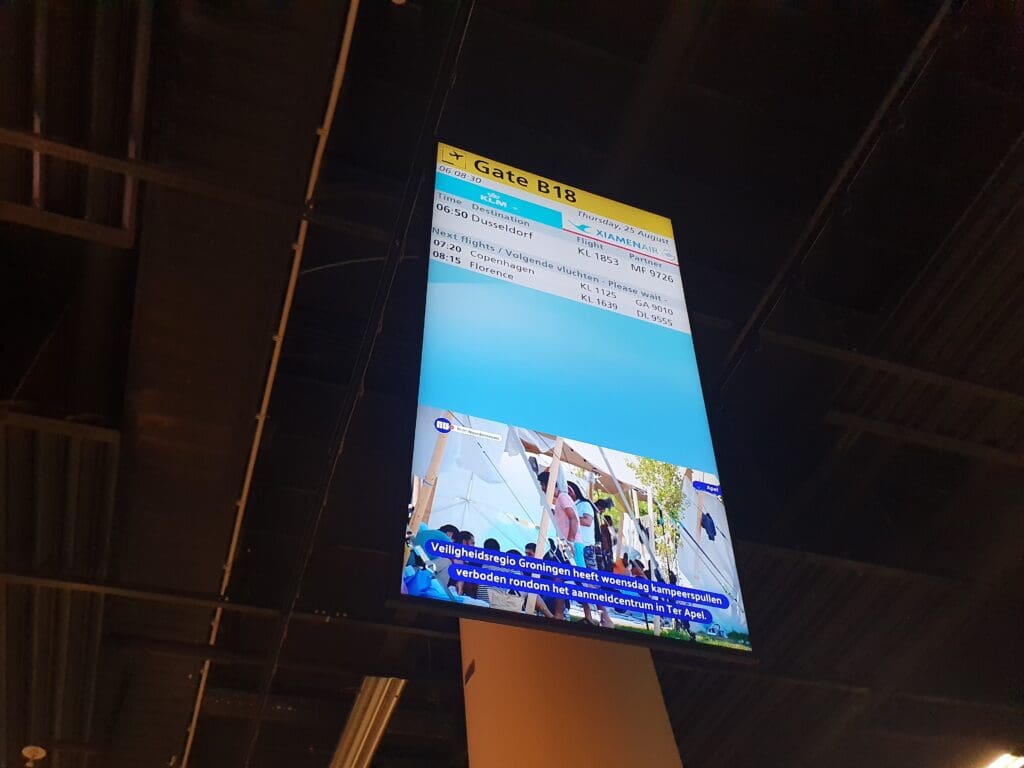
Thirty minutes before the flight’s scheduled departure time, at 0650 boarding was announced for those in Group 1 (i.e. passengers in Business and those requiring assistance). A short time later, boarding for all other passengers was announced at which point I scanned my boarding pass on the automated gates before making my way down a set of stairs to ground level. Following several seconds in the open air, I headed onto the waiting Cobus and took one of the last remaining vacant seats. Once the bus was comfortably full, at 0657 the doors slid closed and the bus pulled away from the terminal, commencing its journey to Schiphol’s ‘Embraer Farm’. After journeying along the edge of the pier, the bus headed out to the remote stands where a mixture of KLM Cityhopper Embraer 175s, 190s and E2s could be seen being readied for their morning flights to destinations across Europe.
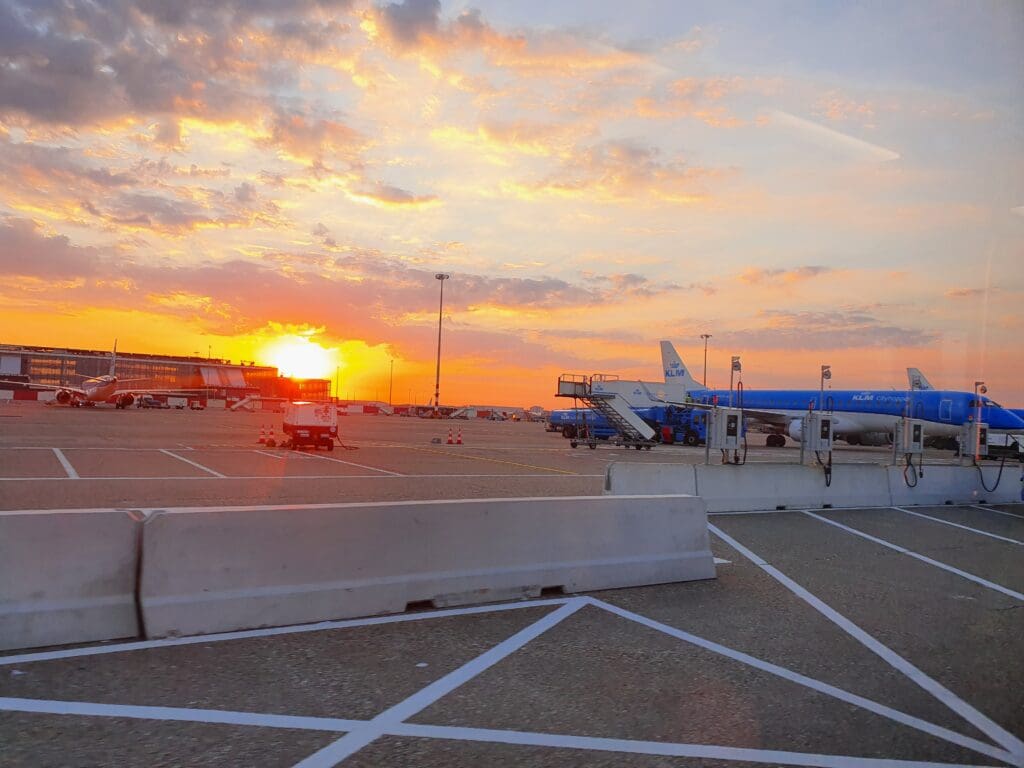
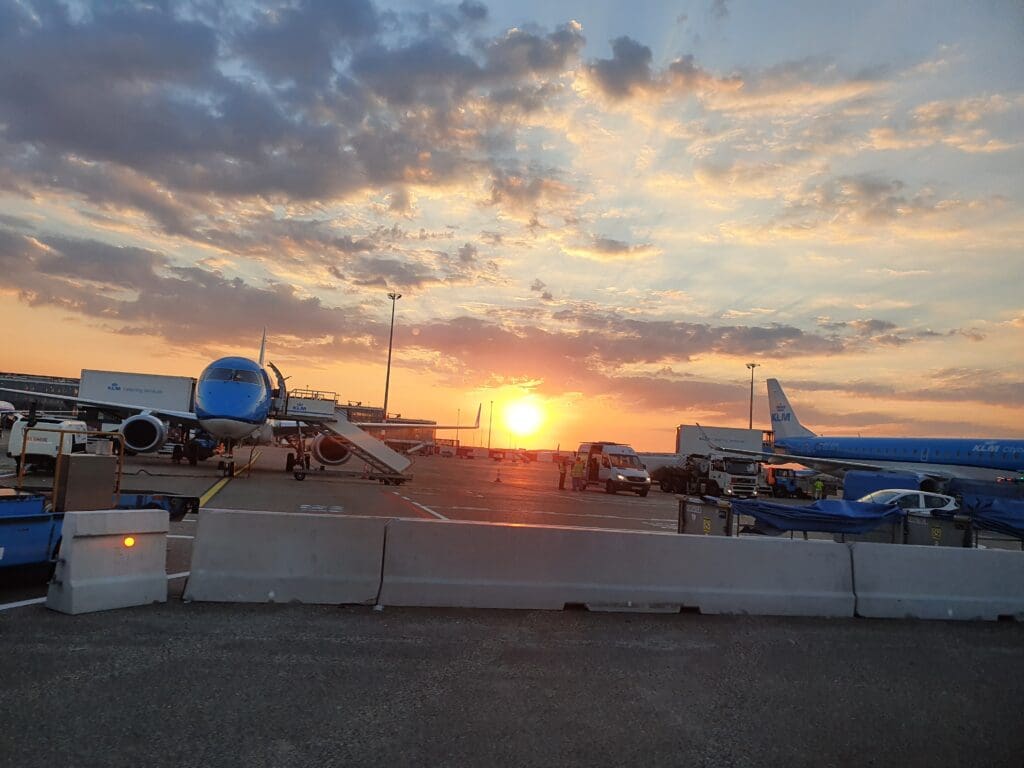
Four minutes after pulling away from the terminal, the bus came to a halt at Stand A41. There, a sleek-looking Embraer E195-E2 could be seen glistening in the morning sunlight – with this taking the form of PH-NXF. Manufactured at Embraer’s plant in São José dos Campos in Brazil’s São Paulo state, this aircraft first took to the skies in late October 2021 with the test registration PR-ECA, making it just ten months old at the time of my flight. In late November, the aircraft was shuttled to its new home in Amsterdam via Recife and Tenerife Sur, and has been based there ever since. Despite its young age, the aircraft has already experienced one notable incident during its lifetime. This occurred in May 2022 when upon almost reaching cruising altitude on a flight between Amsterdam and Venice, the pilots diverted to Dusseldorf due to the smell of smoke onboard the aircraft. Meanwhile, during the descent, the aircraft’s Mode-S transponders stopped sending data. Fortunately, in the week before my flight, the Embraer’s 35 flights seem to have gone to plan, with the aircraft making visits to Bergen, Berlin, Bologna, Bordeaux, Bucharest, Edinburgh, Gothenburg, Hamburg, London Heathrow, Lyon, Milan Linate, Nice and Venice. During these, the aircraft covered at least 18,400 miles.
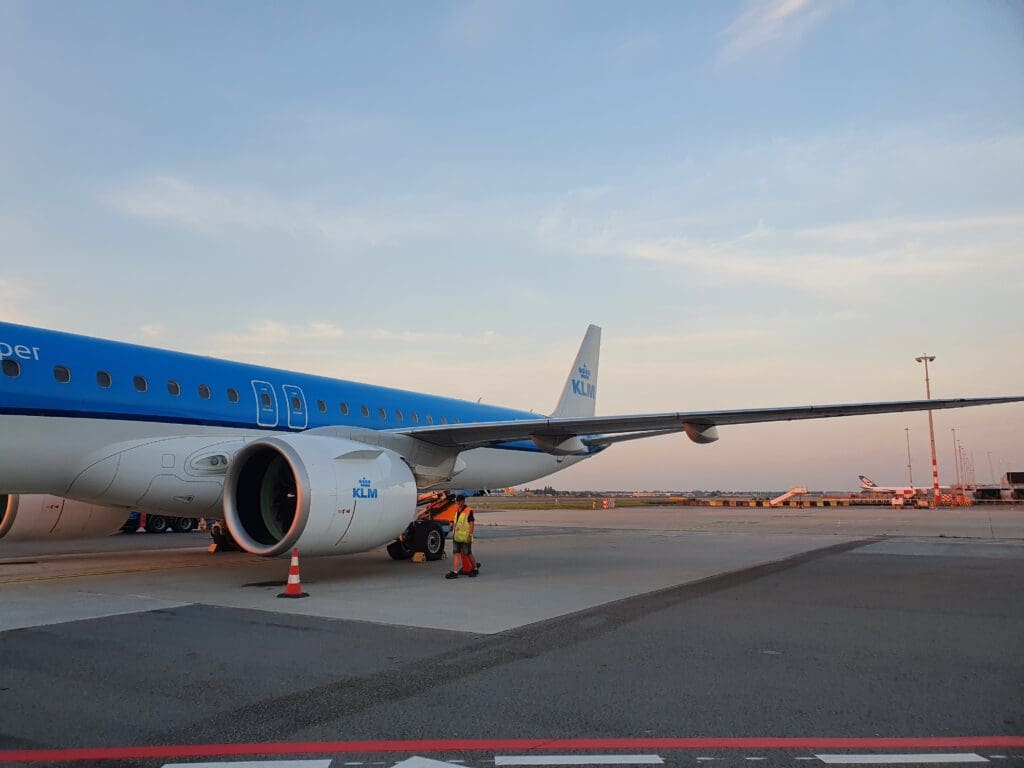
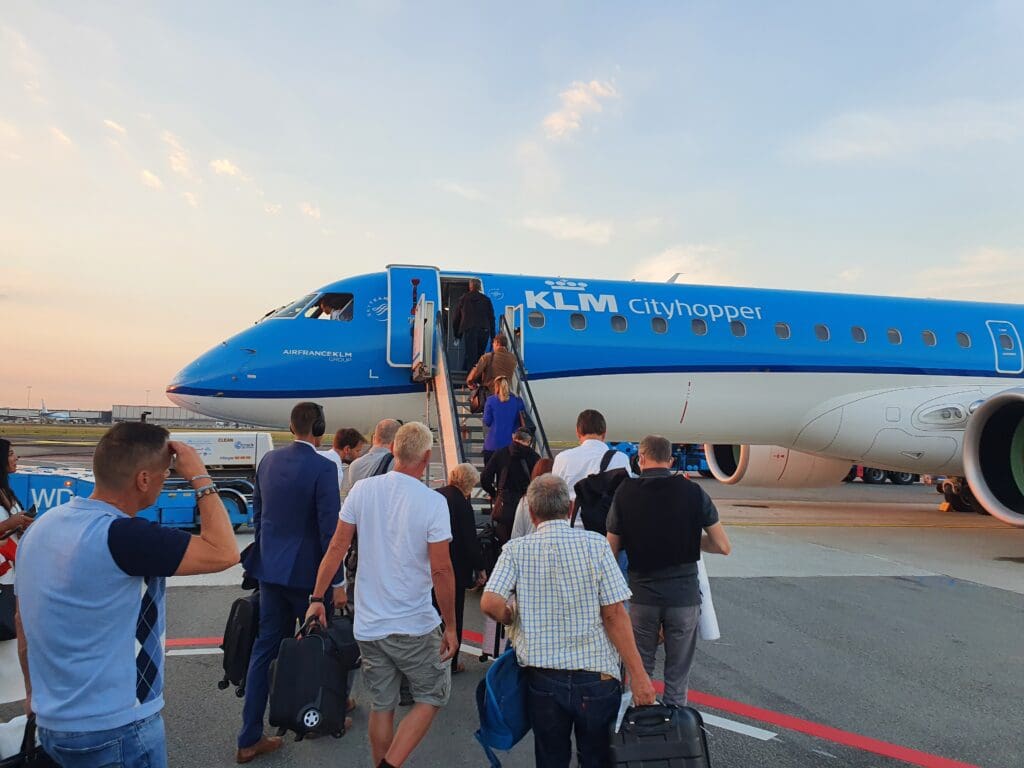
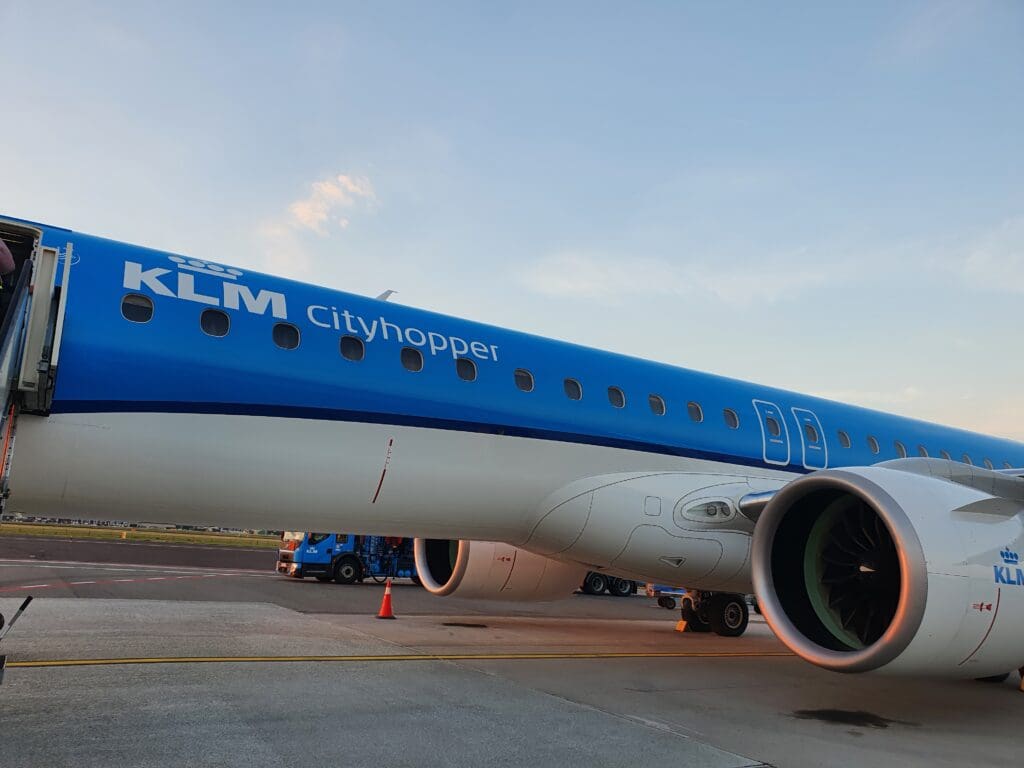
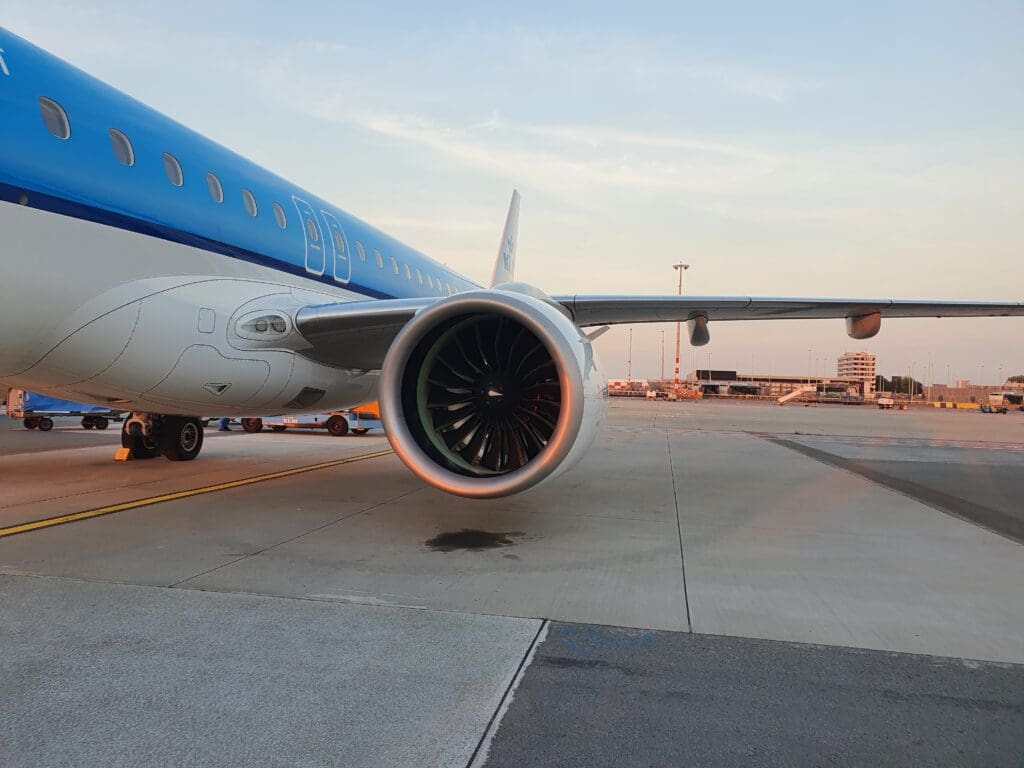
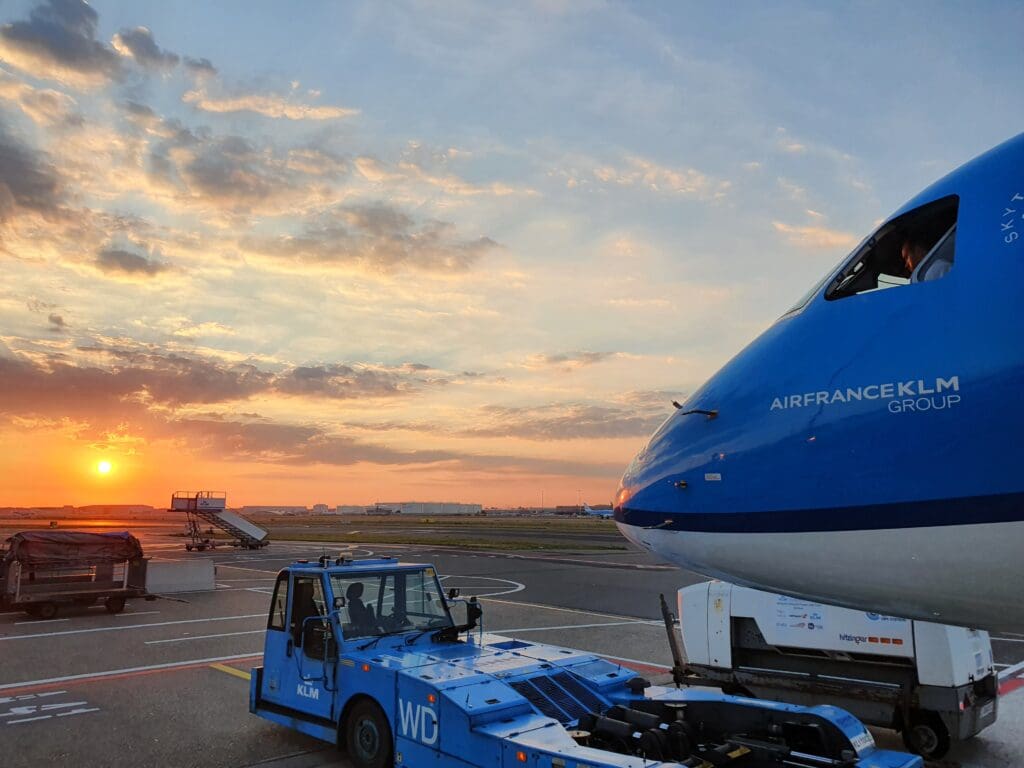
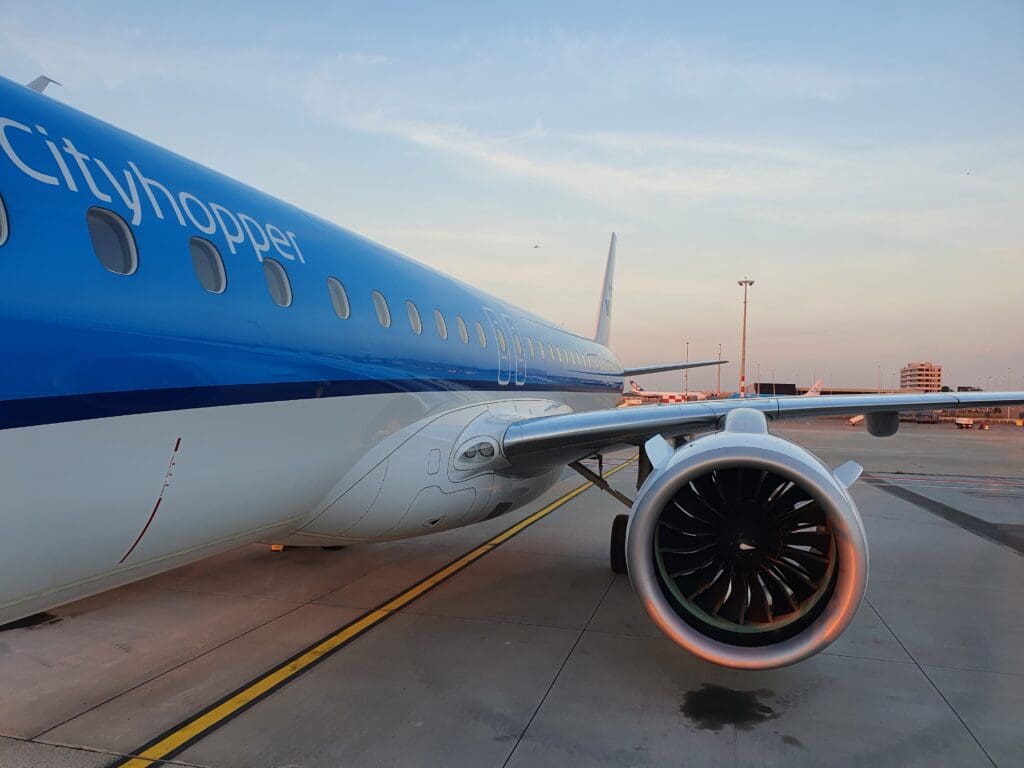
Following the usual scramble as passengers rushed to exit the bus, I made my way out into the pleasantly warm Dutch summer morning air. With a queue soon forming on the airstairs, I joined this and snapped away at the waiting jet. After a couple of minutes or so of waiting, I stepped off the airstairs and made my way into the stylish faux wooden flooring of the Embraer’s forward galley. As soon as I entered the jet, I received a warm and friendly welcome in both Dutch and English before turning right and entering the Embraer’s 132-seat cabin. As I entered this, faint blue and yellow mood lighting beamed down and illuminated the cabin, whilst upbeat tunes rang out and accompanied passengers as they journeyed to their seats. As with many European airlines, KLM’s short-haul aircraft feature a ‘Eurobiz’ style Business Class which features identical seats to those in Economy. On that morning’s flight, the first four rows of the Embraer were dedicated to Business, with a curtain separating these from the main Economy cabin. Inside, all of KLM Cityhopper’s Embraer E2 jets feature the carrier’s new short haul Economy seats which can also be seen on the carrier’s newer Boeing 737-800s and are set to be retrofitted to their older aircraft. These come in the form of modern and stylish lightweight Recaro SL3710 seats which sport a faux leather covering featuring two tones – a dark blue and a light blue alongside some appropriately orange stitching. Meanwhile, those sitting in Business and the aircraft’s Economy Comfort seats are also provided with an adjustable headrest whilst the backs of these seats also feature a fold-down device holder. Further back, the regular Economy seats just feature a seatback pocket, tray table and cup holder. In addition, each seat comes complete with its own USB-A port to allow for the charging of devices during the flight.
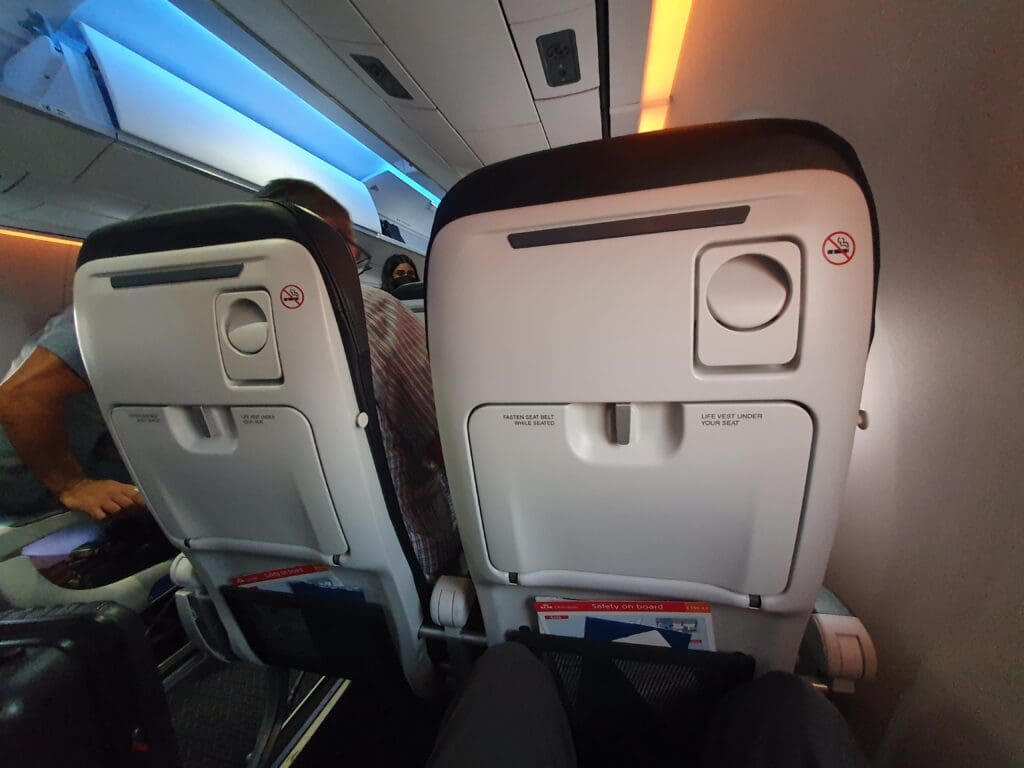
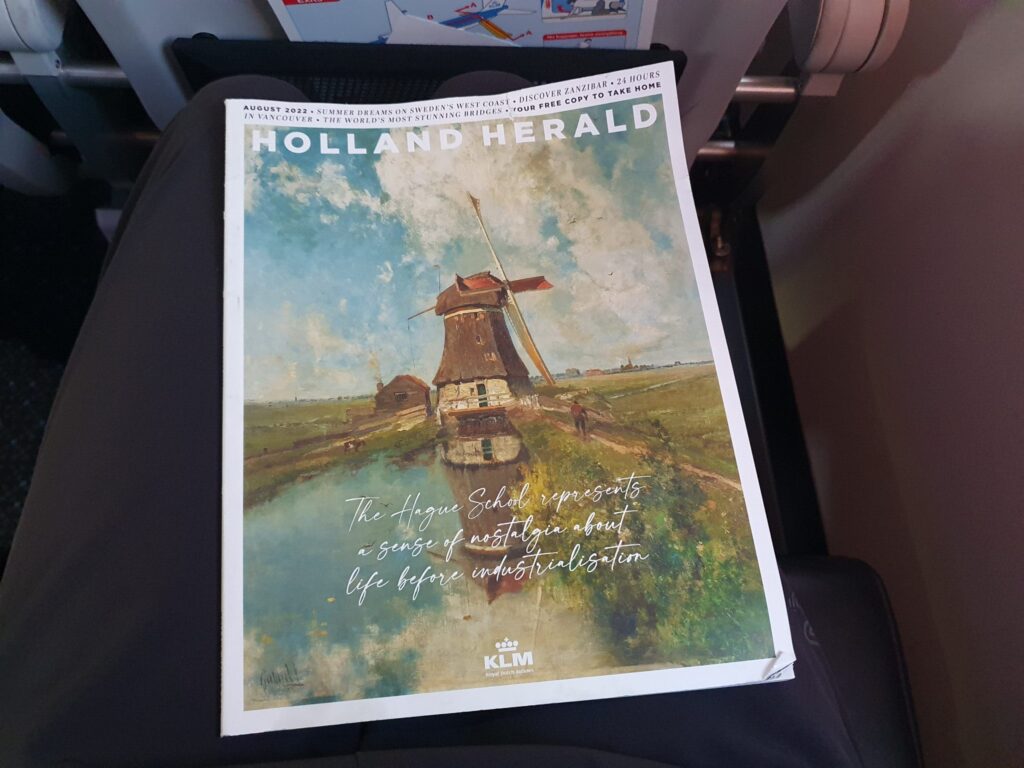
Making my way down the aircraft, I soon arrived at Row 17 where I was delighted to see that Seat 17F aligned well with one of the aircraft’s large windows. Yet to be joined by a seatmate, I slid into my seat with ease before settling in for the short flight to Scandinavia. Whilst the seat appeared to be thin, upon sitting down I was pleased to find this to be soft and comfortable, whilst also offering a good amount of legroom – especially for the short flights that the jet typically undertakes. As was to be expected given the age of the aircraft, the area around my seat seemed to be in tip-top condition and I would have failed to spot any signs of rubbish or dirt were it not for a close inspection of the seatback pocket which revealed a few crisps leftover from the jet’s previous flight over from Heathrow. Turning to the seat back pocket, this contained a safety card, a KLM branded sickbag and, as is not all too common in 2022, a paper copy of the August 2022 edition of KLM’s inflight magazine, Holland Herald. Looking above, each seat was accompanied by a reading light and air vent positioned in a rather interestingly shaped passenger service unit.
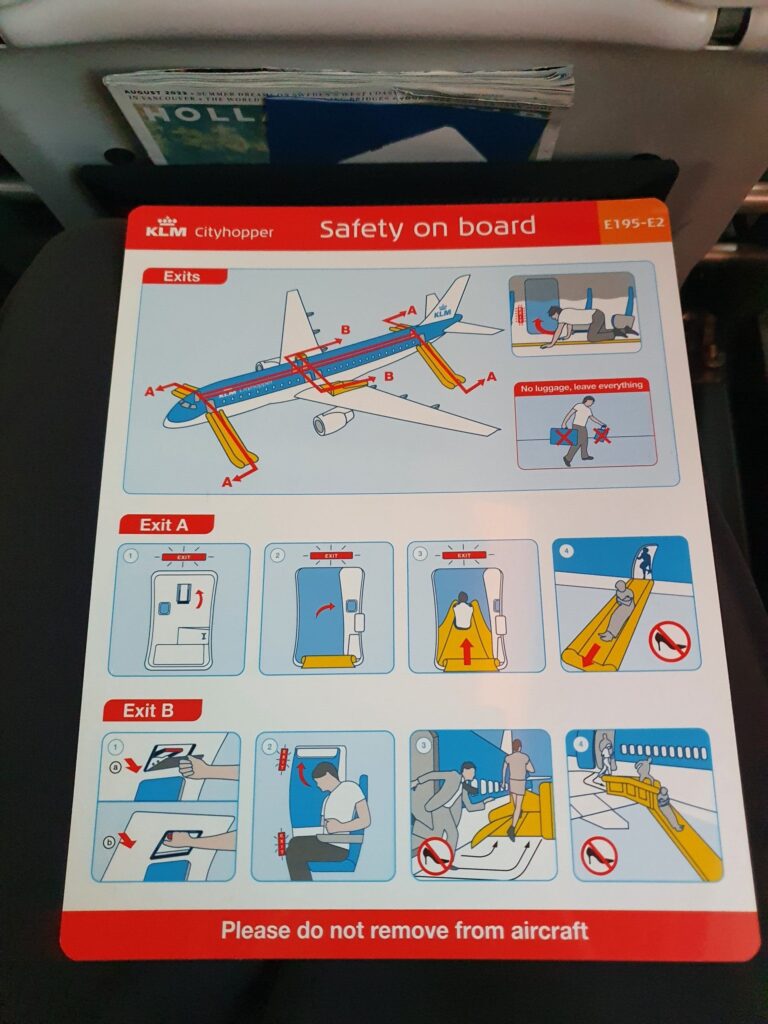
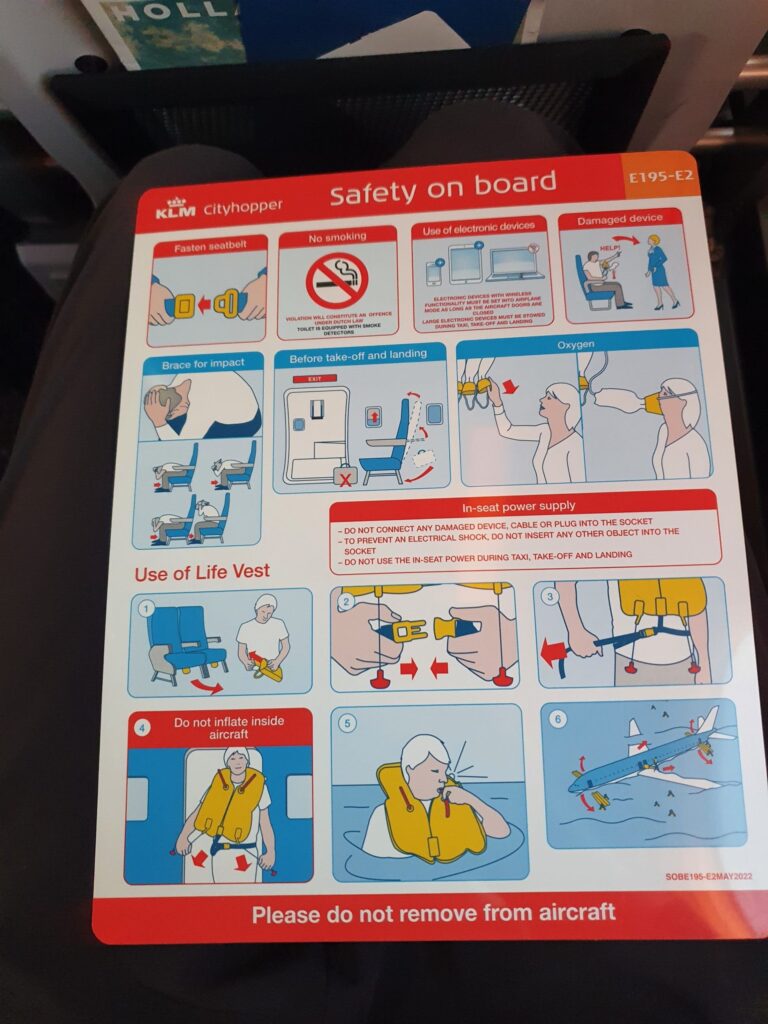
Once I had taken my seat, the Purser performed a quick announcement in Dutch and English, welcoming all passengers and advising that a second bus was still on its way to the aircraft and thus more passengers were still to board. With all passengers appearing to have made it to the gate on time, this pulled up a short time later at which point I was joined by a neighbour in the aisle seat. At 0711, boarding was announced as complete and the Purser announced that owing to weight and balance reasons, passengers should not switch seats. That morning, I would estimate the flight to have been around 70% full, with many smartly dressed and suited passengers appearing to be flying on business. Meanwhile, a fair number of leisure passengers could also be seen, many of whom appeared to have connected from Delta and KLM overnight services from North America. With things running like clockwork, the doors were closed a short time after the last passenger had made it onto the aircraft and at 0720 the Purser performed their full welcome announcement during which they welcomed all passengers onto the Copenhagen bound service, thanked them for flying with KLM and went through the usual advice and warnings. At 0722, the aircraft could be felt being pushed back out of its stand, whilst in the cabin the pre-recorded safety announcement rang out in English only whilst several of the crew members took to the aisles and accompanied this with a demonstration.
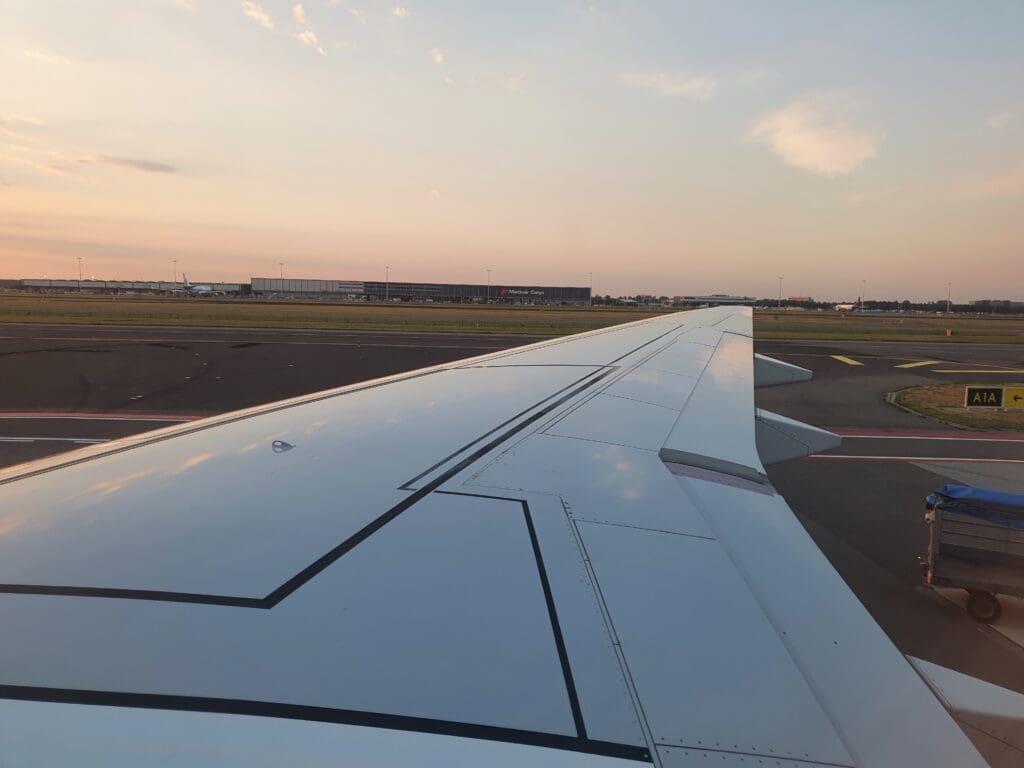
Upon coming to a halt, the Embraer’s two comparatively large Pratt & Whitney PW1900G engines quietly spooled into life, accompanied by the usual whirs and hums synonymous with modern jet engines. Following a short pause during which the tug was disconnected, the flaps fell into position in preparation for our departure and at 0727 the aircraft commenced its taxi to the runway. As the aircraft made its way along one of Schiphol’s many taxiways, I caught sight of what was undeniably the most interesting aircraft I spotted in Amsterdam during my long stay at the airport. This took the form of Iraqi Airways’ only Airbus A330, parked up near the KLM hangars and presumably visiting Amsterdam for maintenance.
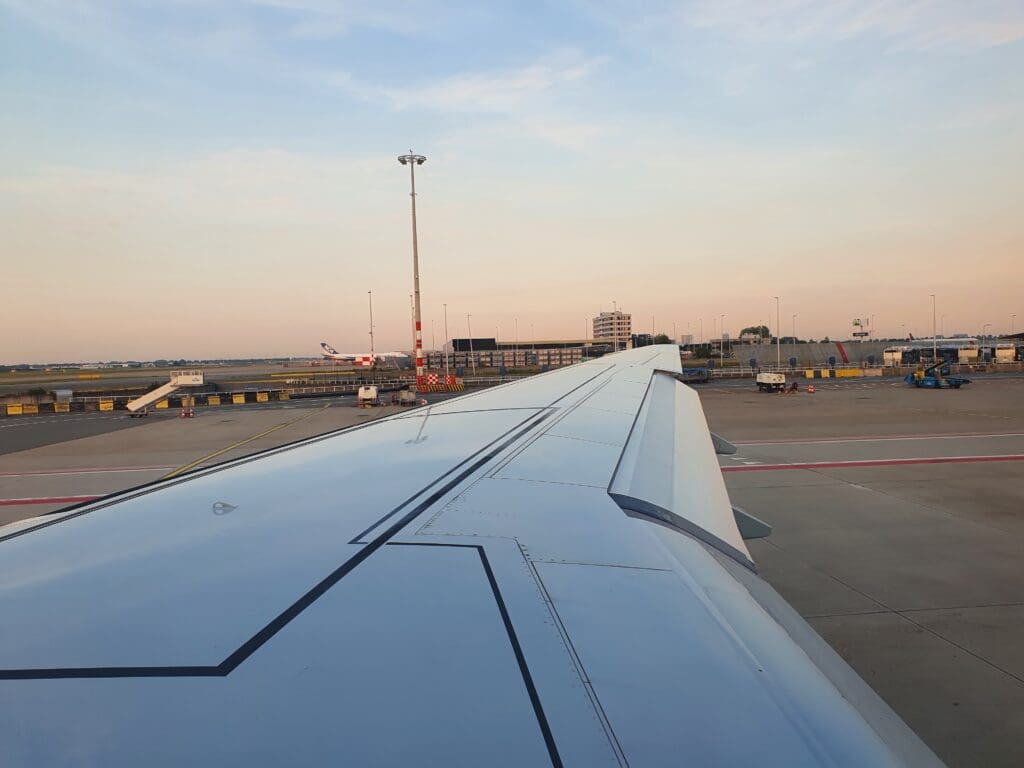
Amongst passengers, with its many runways, Amsterdam Schiphol is synonymous with long taxi times at the start and end of flights. For example, after touching down on the airport’s infamous Polderbaan after a quick flight from Gatwick back in June 2022, the aircraft’s taxi to the gate seemed to be almost as long as the flight itself! However, that day, the Embraer would be departing from the nearest runway to our starting position, Runway 24, also known as the Kaagbaan. Following just a three-minute taxi, at 0730 the Embraer made its way onto the runway without any holding and once there, a ‘howl’ could be heard for a few brief moments as the aircraft’s two engines spooled up before propelling us rather gently down this. Accelerating past the terminal and the ‘Embraer farm’, the jet seemed to rotate upwards into the clear Dutch skies rather quickly, allowing for a good view of a Boeing 747-8 freighter belonging to Japanese carrier Nippon Cargo Airlines which was in the process of being readied for long voyage back to Tokyo Narita via Milan and Anchorage. Smoothly climbing upwards, moments after taking to the skies, Schiphol’s Zwanenburgbaan came into view before the Embraer left the airport behind.
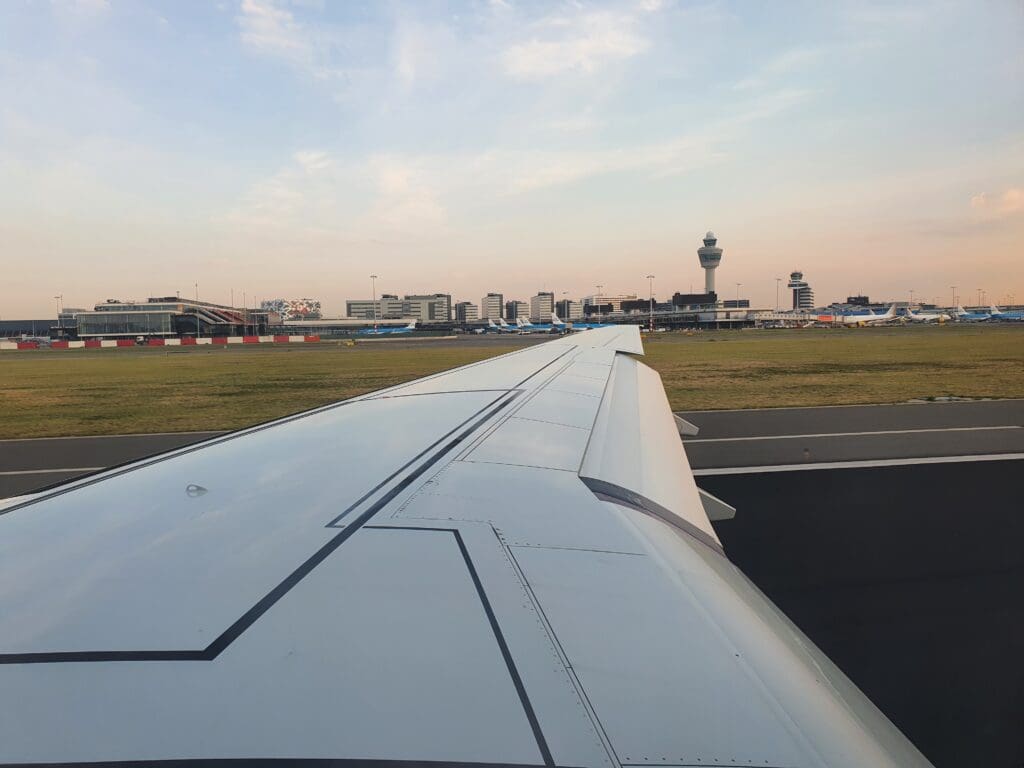
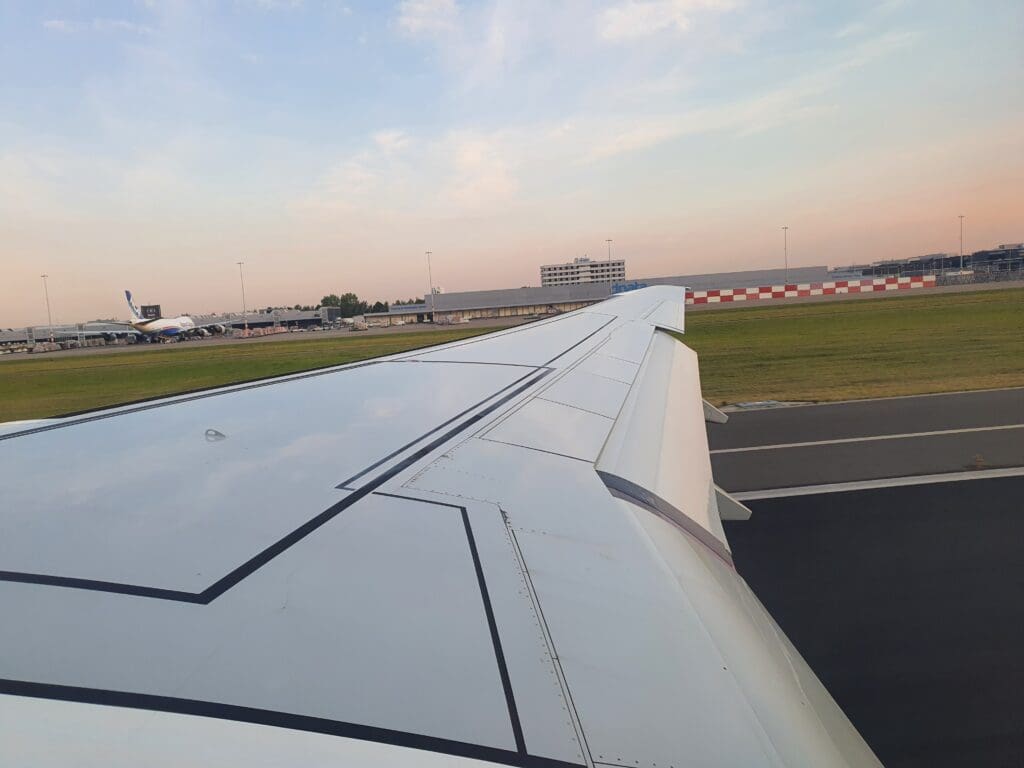
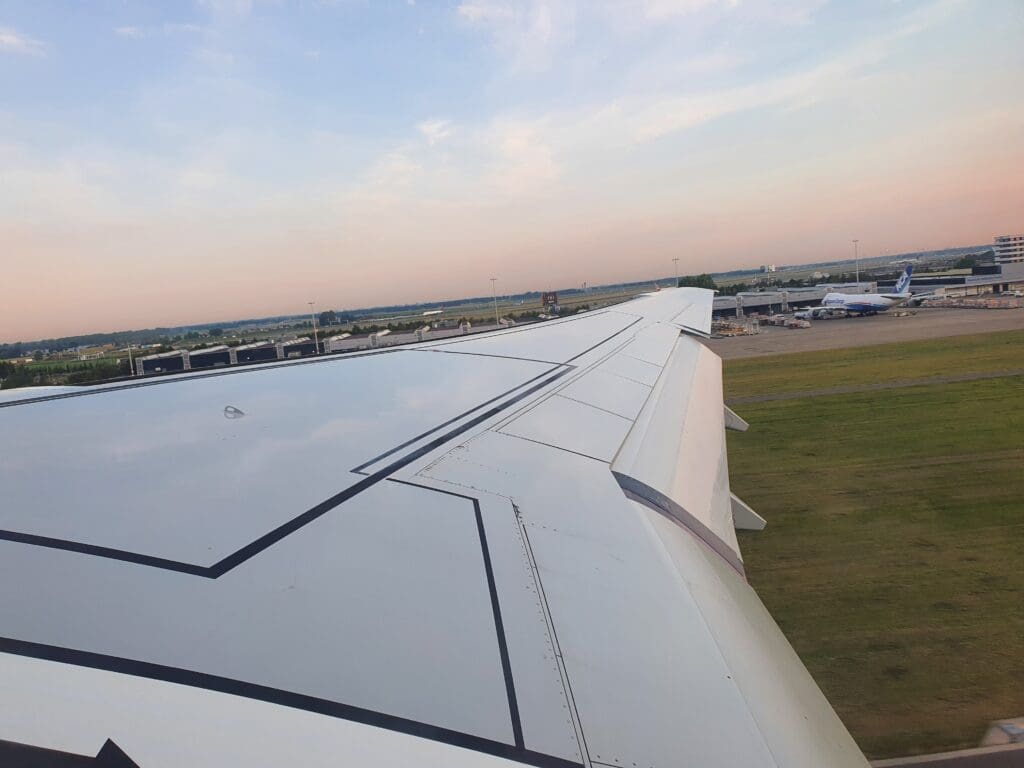
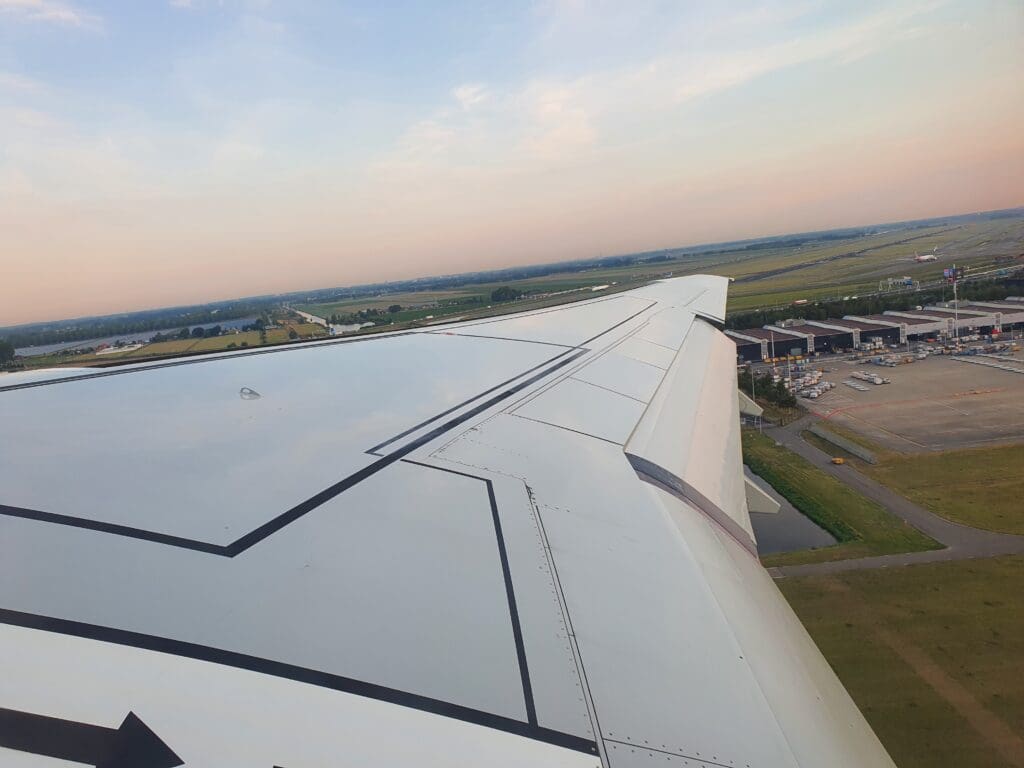
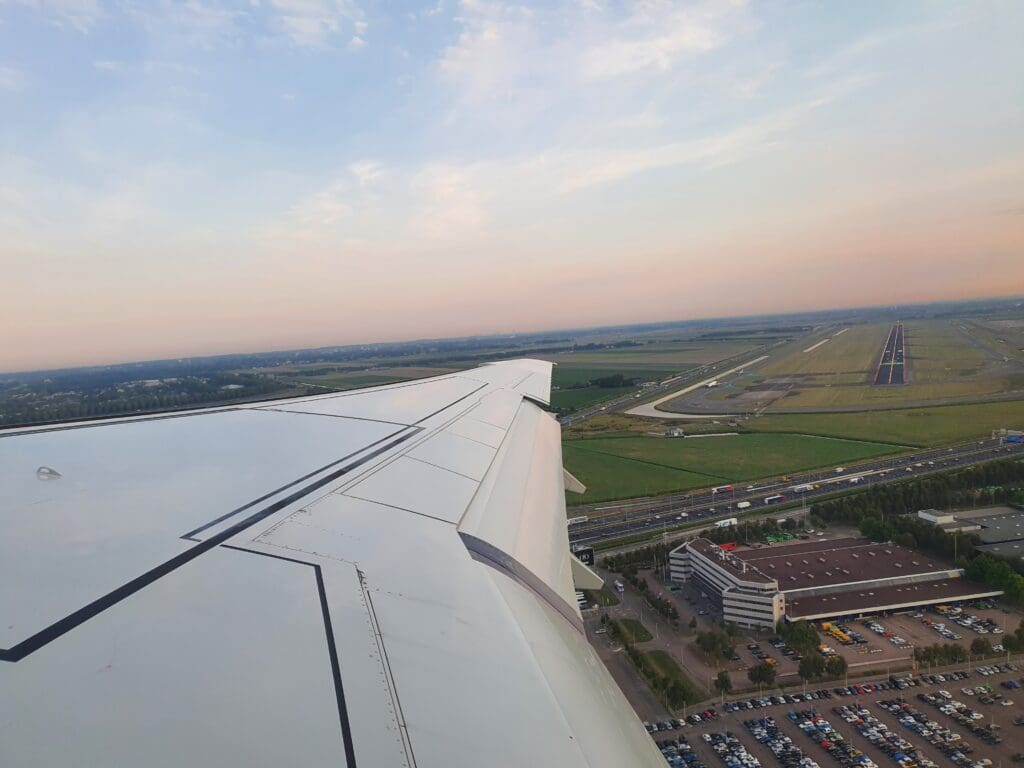
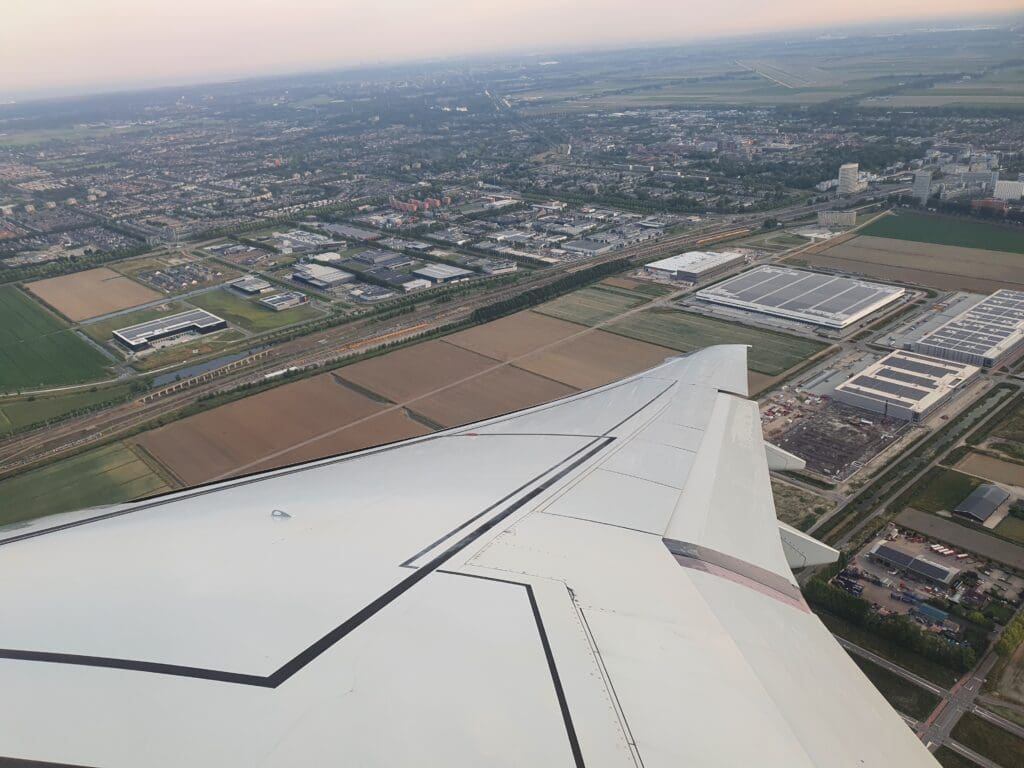
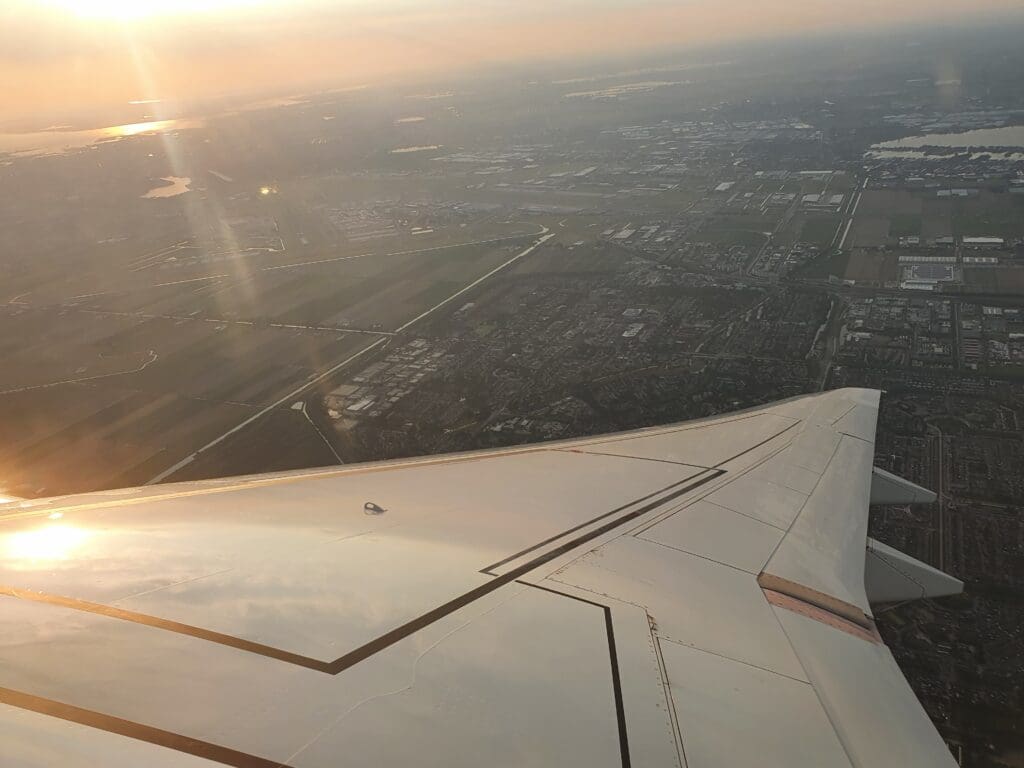
From Schiphol, the aircraft climbed out over the nearby town of De Hoek before turning right and gently baking around Hoofddorp, Toolenberg, Weberbuurt and Floriande. From there, the aircraft rolled out on a northeasterly heading and a short time later the buildings of Central Amsterdam could be seen alongside the glistening waters of the Noordzeekanal. Once safely up in the air and pointing in the general direction of Denmark, the Captain’s voice filled the cabin. Conducting a welcome announcement in English only, this featured an introduction of both themselves and the flight’s First Officer, a mention of our hour-long flight time and a promise to make another announcement once nearing the Danish capital. Given the short flight time, the flight attendants soon got to work serving passengers and at this time two flight attendants rolled a trolley uphill from the rear galley before beginning to serve passengers.
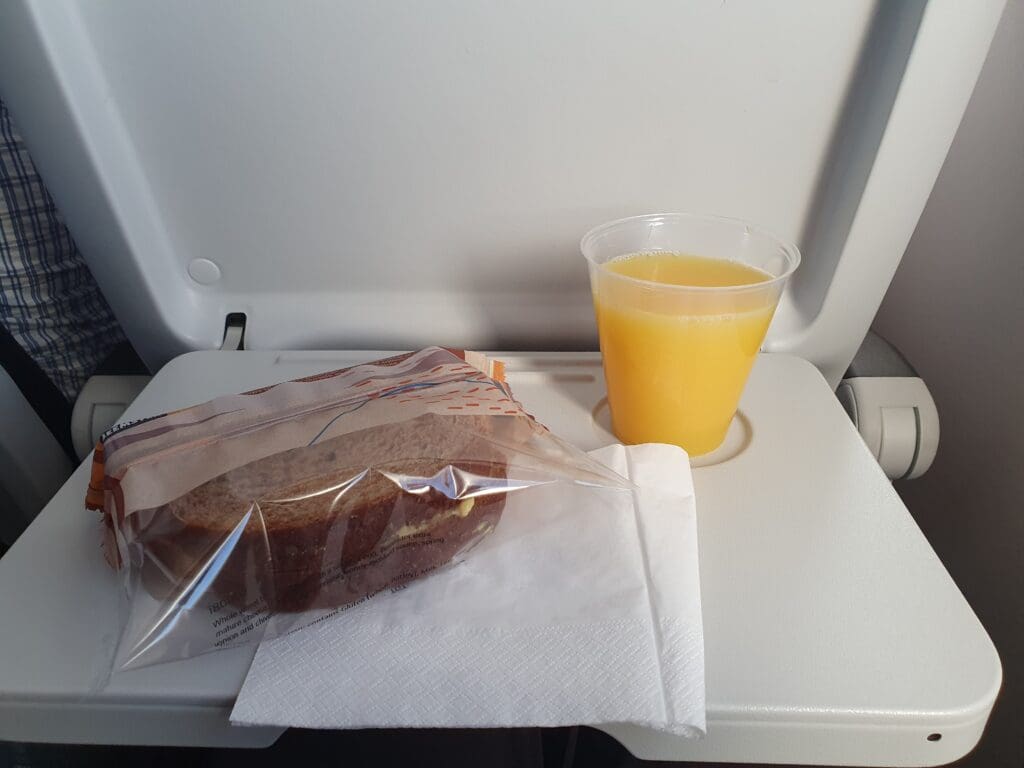
Whilst many ‘full-service’ European carriers have reduced or even eliminated their complimentary offerings in recent years, KLM still provides passengers with a complimentary drink and snack, even on their shortest flights. A few minutes after this service commenced, a very friendly flight attendant greeted me with a lively ‘good morning’ before handing me a serviette and a substantially sized packaged sandwich with a Beemster cheese and an egg salad filling. Then asking for my choice of drink, I requested an orange juice which was quickly poured and cautiously handed over to me in a KLM-branded plastic cup before asking if I would like anything else. Rejecting this offer, the two crew members continued onward down the cabin. Without delay, I got to work on this light breakfast which I found to be rather delicious and left me with no complaints whatsoever.
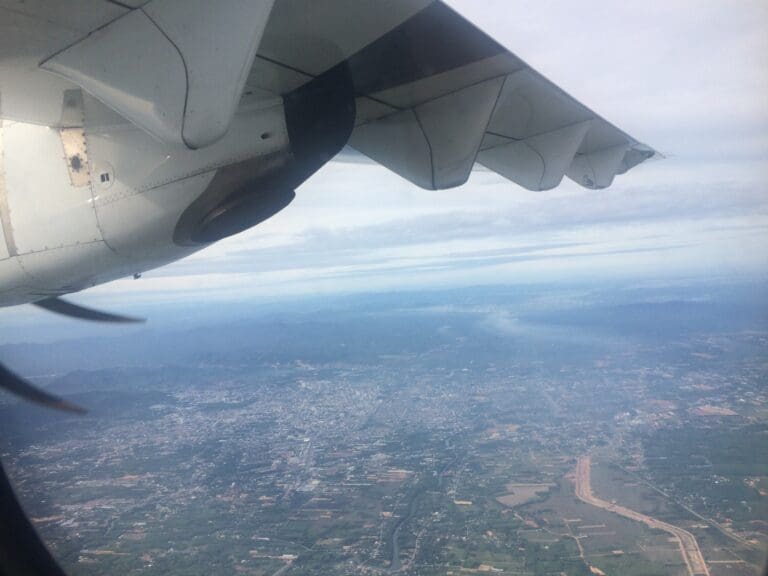
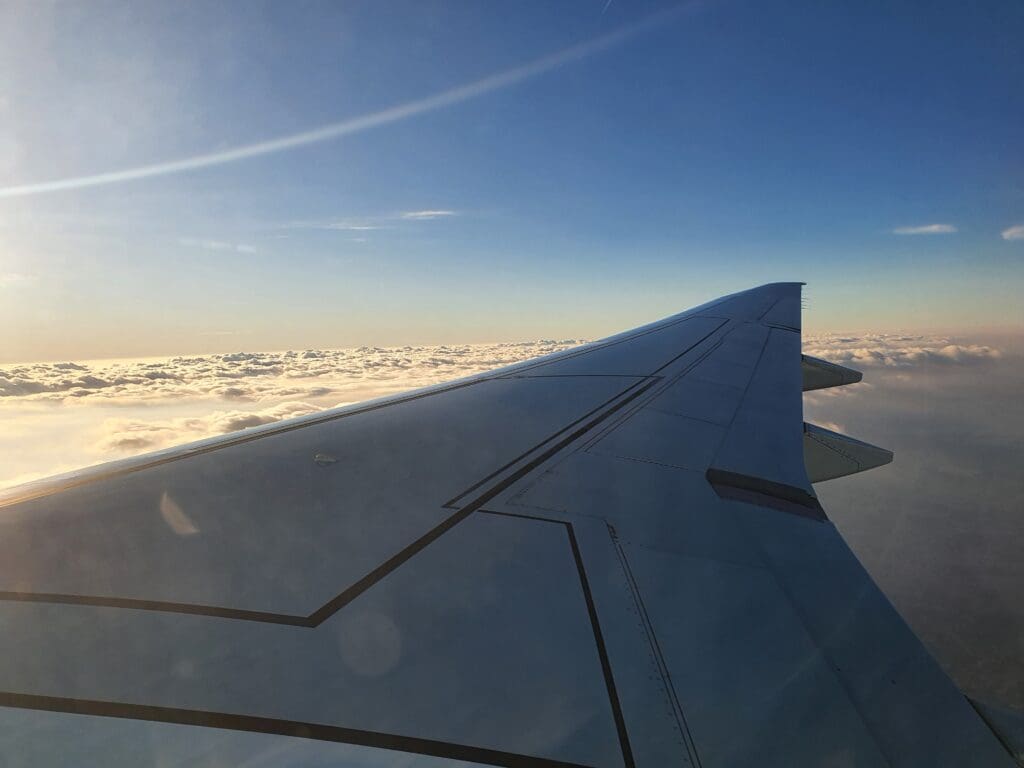
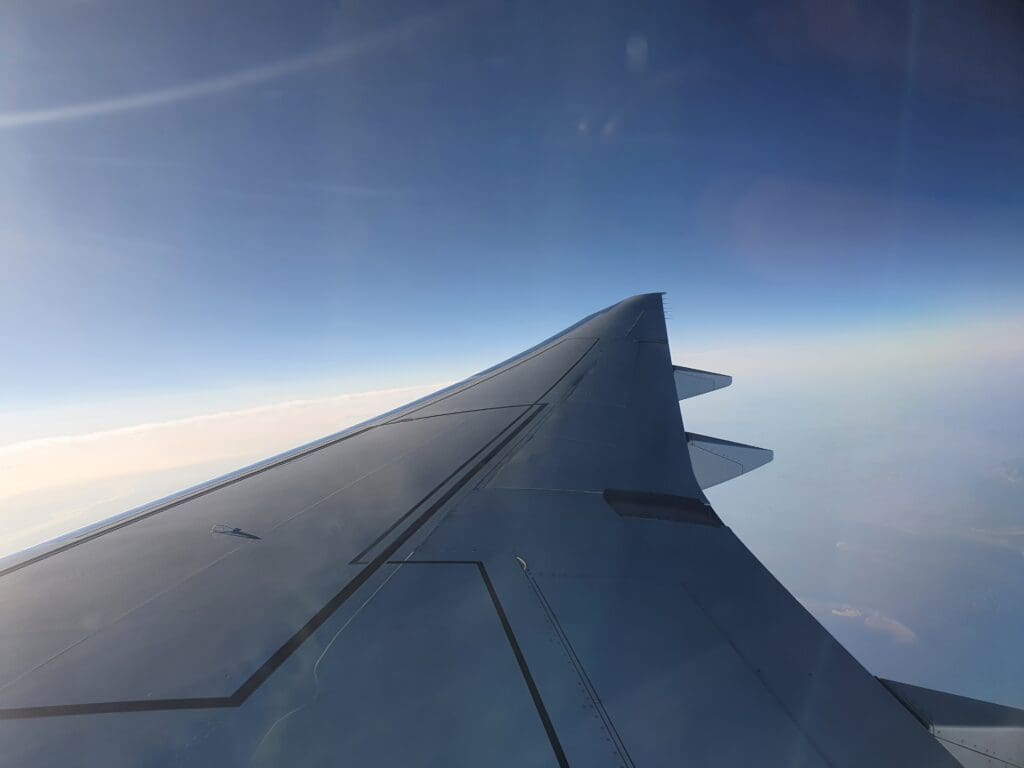
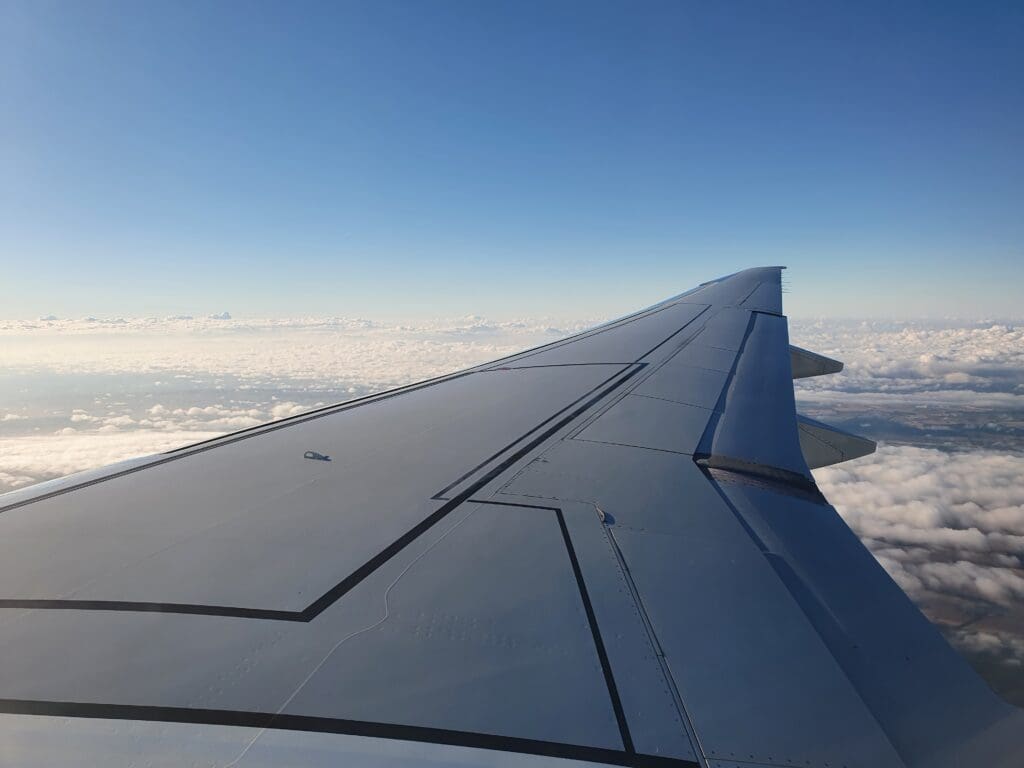
That morning, unfortunately, thanks to the haze below and my position right over the wing, little could be seen of the Netherlands’ flat landscapes below. Giving an overview of our route, once away from the Dutch capital, the Embraer journeyed northeastwards and passed over the North Holland towns of Hoorn and Enkhuizen. After passing the latter, the aircraft continued to climb over the Netherlands’ large inland bay, the IJsselmeer before levelling off at its cruising altitude of 36,000 feet somewhere over the small province of Friesland. That morning, the aircraft took around twenty minutes to cross the Netherlands from west to east, and following a quick crossing of the country’s northeasternmost province, Groningen, the aircraft left Dutch airspace behind. From there, the Embraer crossed over the Ems Estuary and passed just to the south of the small German North Sea islands of Borkum and Juist before cutting across the island of Norderney. At this stage, I did manage to catch a quick glimpse of Germany’s northern coastline somewhere around the East Frisian town of Norden in the far northeastern corner of the country.
Given the short length of the flight, I would imagine that few passengers would have required entertainment. However, for those that did, the August 2022 edition of KLM’s inflight magazine was on offer in the seatback pocket to pass the time. Whilst not the chunkiest of inflight magazines, this seemed to lack the same incessant advertisements on every other page that many other carriers’ inflight magazines seem to feature. That month’s edition featured travel articles on a range of destinations including Alicante, Singapore, Southern Norway, Vancouver, Western Sweden and Zanzibar. In addition to these, passengers could also learn about the Hague School art movement and read interviews with Dutch astronaut André Kuipers and the founder of Amsterdam-based company, Plastic Whale – an organisation dedicated to removing plastic from the world’s oceans. Last but not least, a decent portion at the end of this came complete with the usual airline-related information and news. All-in-all, this proved to be a decent short read and seemed to be a cut above the inflight magazines of several other airlines.
From the small German island of Norderney, the Embraer then spent a very short time cutting across a small corner of the North Sea before crossing over the German coastline near the town of Husum on Schleswig-Holstein’s western coastline. Cutting across Germany’s far northern region that sits just below Denmark at 0806 the Embraer neared the region’s eastern coastline near Westerholz. A short time after leaving Germany behind, the Embraer could be felt commencing its descent and at 0817 the Captain performed their pre-arrival announcement in English and Dutch. During this, they noted that we would be back on the ground by 0835 before giving a quick update on the pleasant weather conditions in Copenhagen that morning. As soon as this announcement came to an end, the seatbelt signs were reilluminated at which point the Purser began their short pre-arrival announcement containing the usual warnings regarding seatbacks, tray tables and window shades before the crew then passed through the jet to ensure that all was secure and in place for our arrival into Denmark.
As the aircraft made its way downwards, a few gaps in the clouds below revealed Denmark’s green fields somewhere to the south of the Zealand town of Køge. As we approached the coastline of Zealand, the clouds disappeared allowing for a good view of the region’s coastline as well as the blue waters of the Øresund – the stretch of water that separates Denmark from Sweden. Below, the offshore turbines of the Lillgrund Wind Farm came into view at which point the landing gear and flaps were extended in preparation for our arrival, resulting in a fair amount of noise and vibration at which point the cabin crew were requested to take their seats.
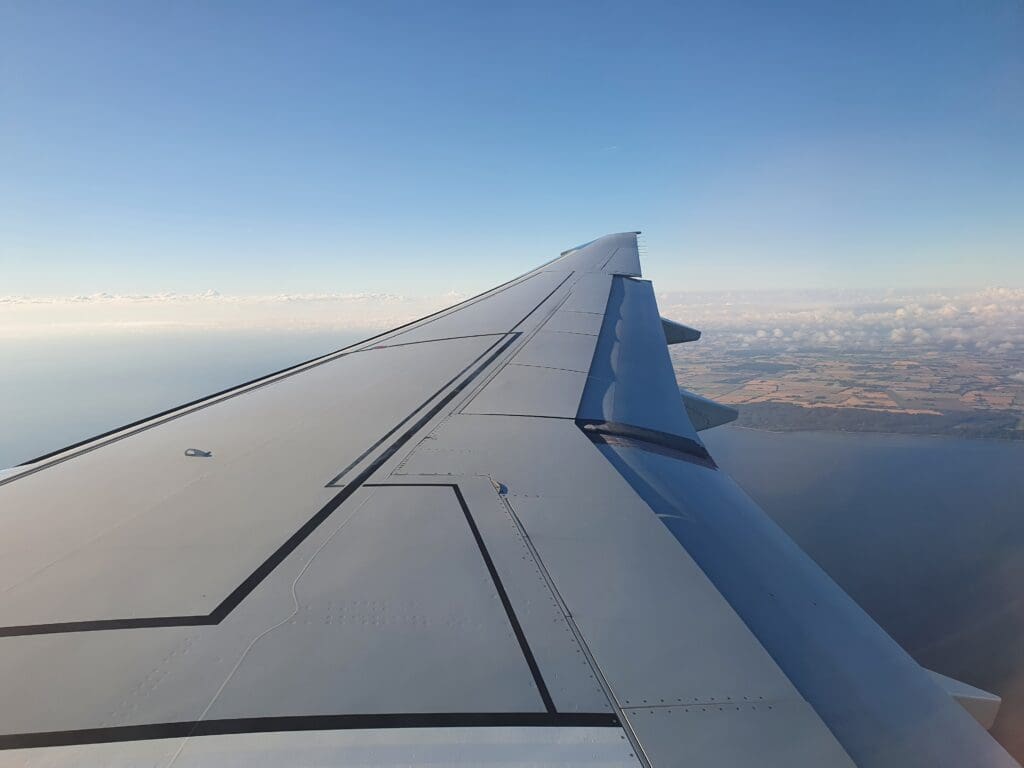
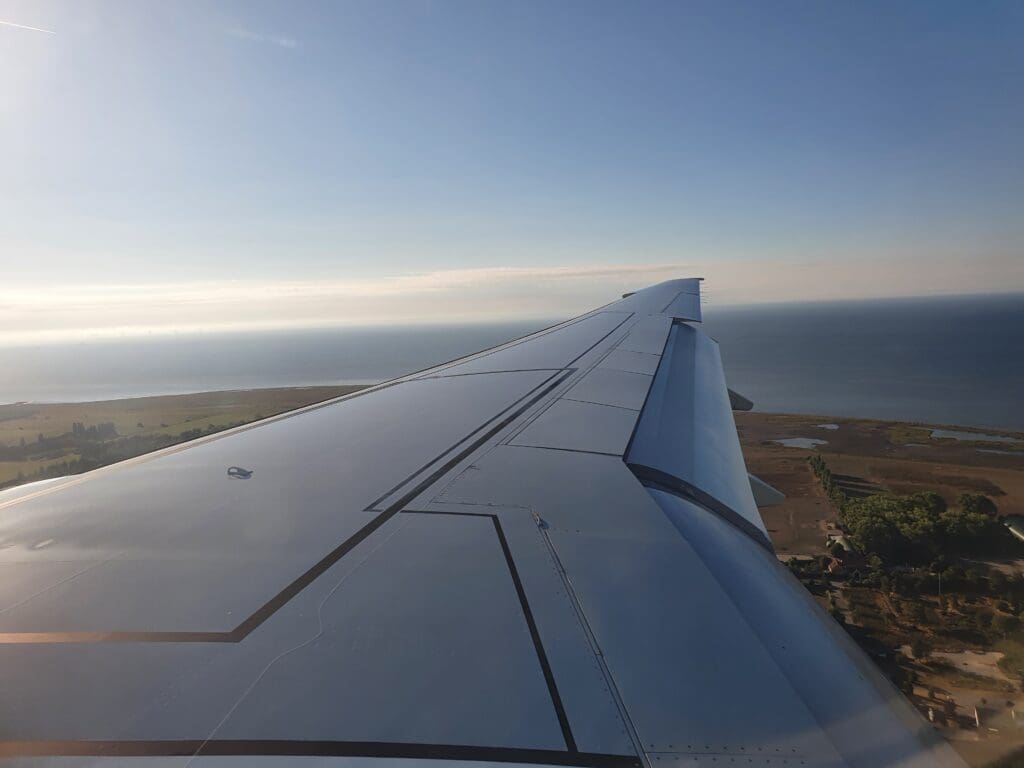
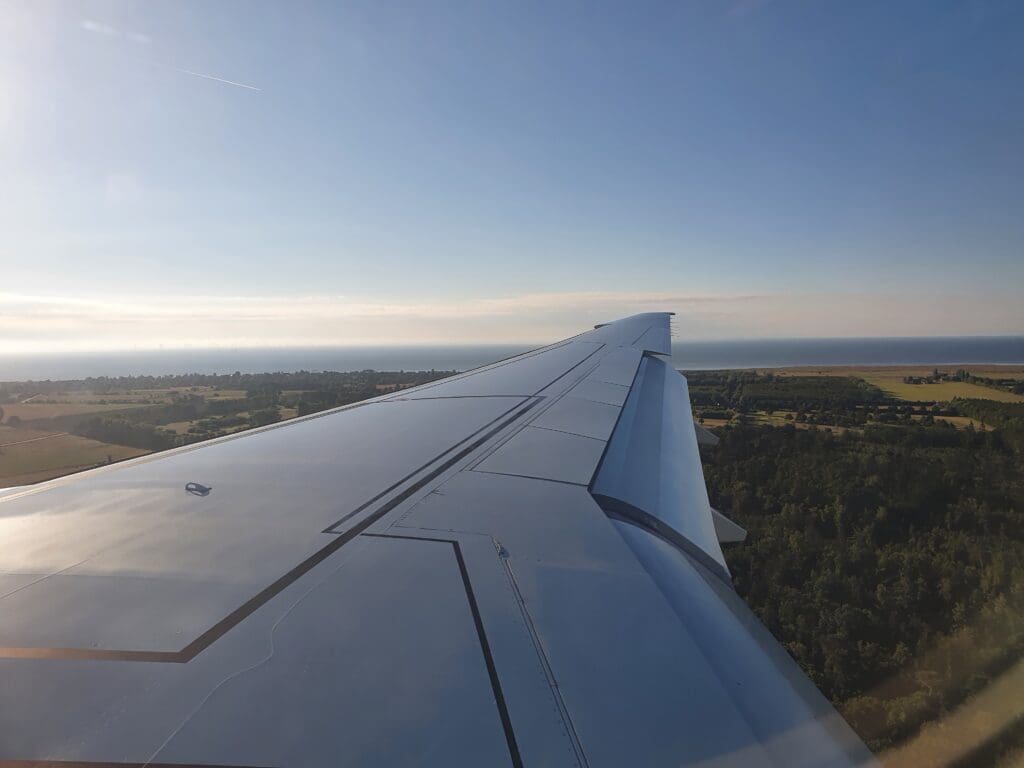
Following a short crossing of the Øresund, the Embraer headed over the coastline near the Kongelundsfortet, an old preserved fort that dates back to the early twentieth century and sits near the southern tip of the island of Amager. From there, the aircraft descended over the island’s rural landscapes consisting of a mixture of fields and woods before reaching the down of Ullerup, indicating our imminent arrival. After passing this town, the Embraer crossed over Copenhagen Airport’s southern perimeter fence before making a firm touchdown on Runway 04L a total of 57 minutes after rotating upwards into the Dutch skies. Once safely back on the ground, likely wishing to minimise taxi time, the Embraer decelerated rather gently before eventually vacating the runway to the left.
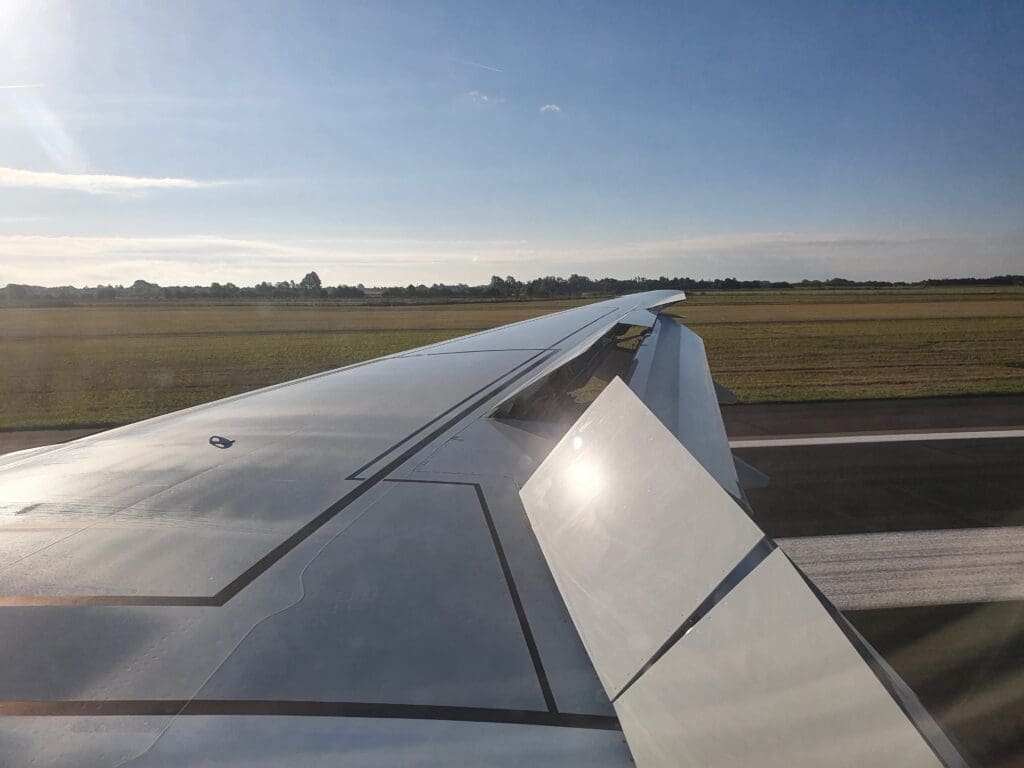
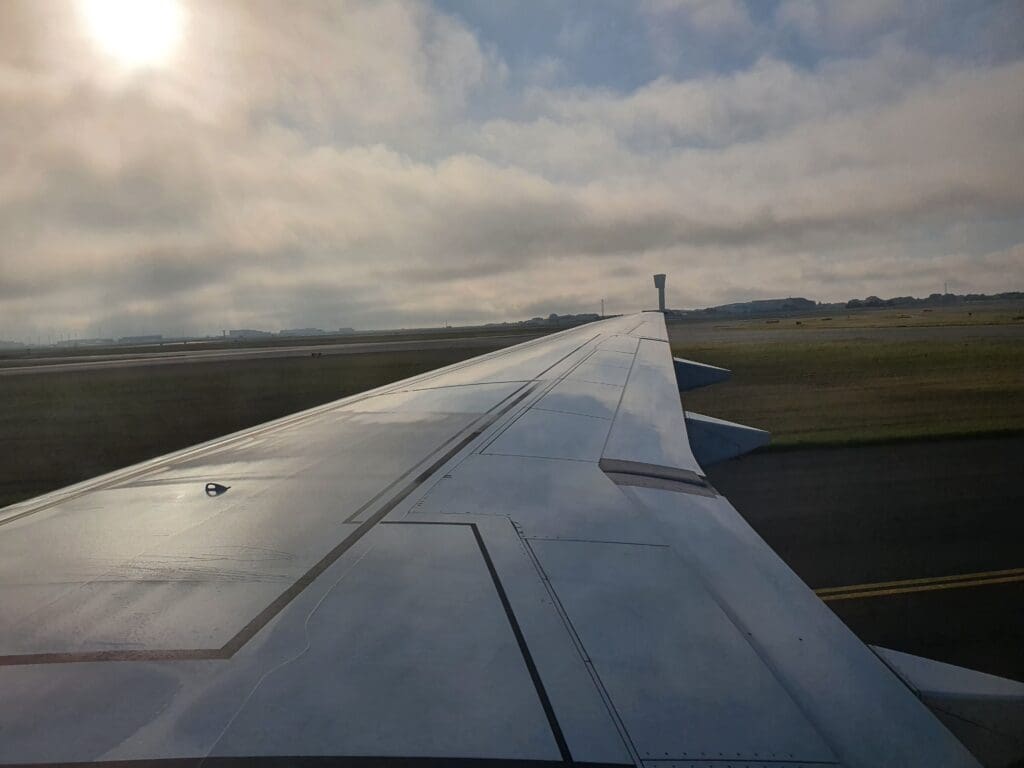
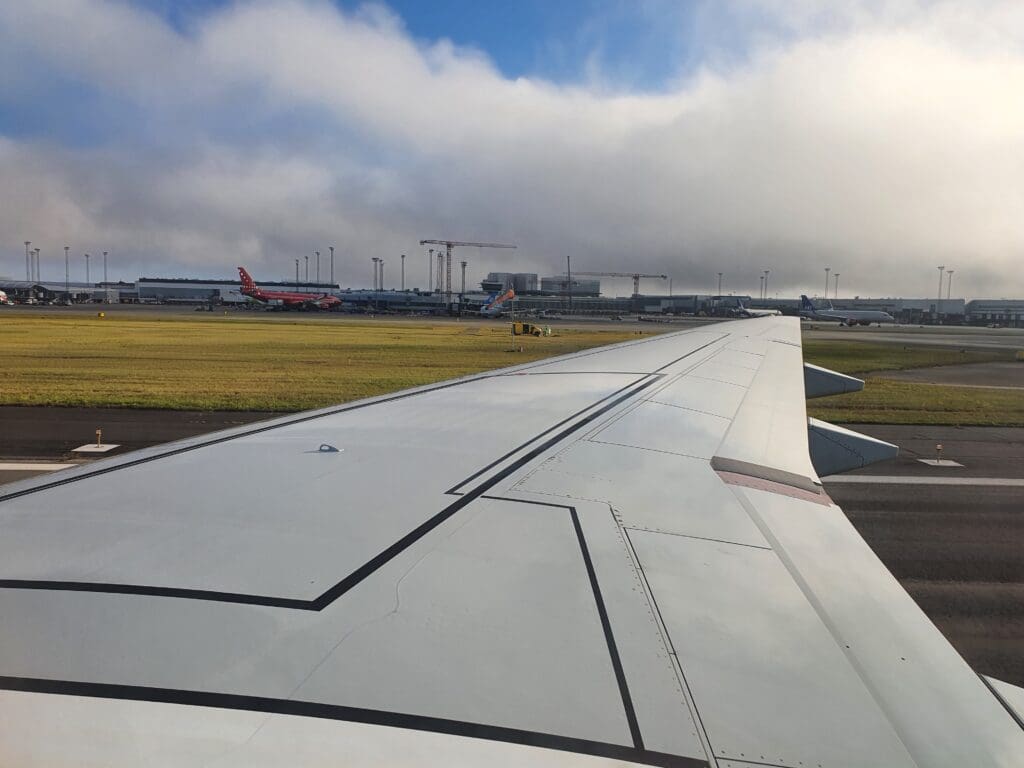
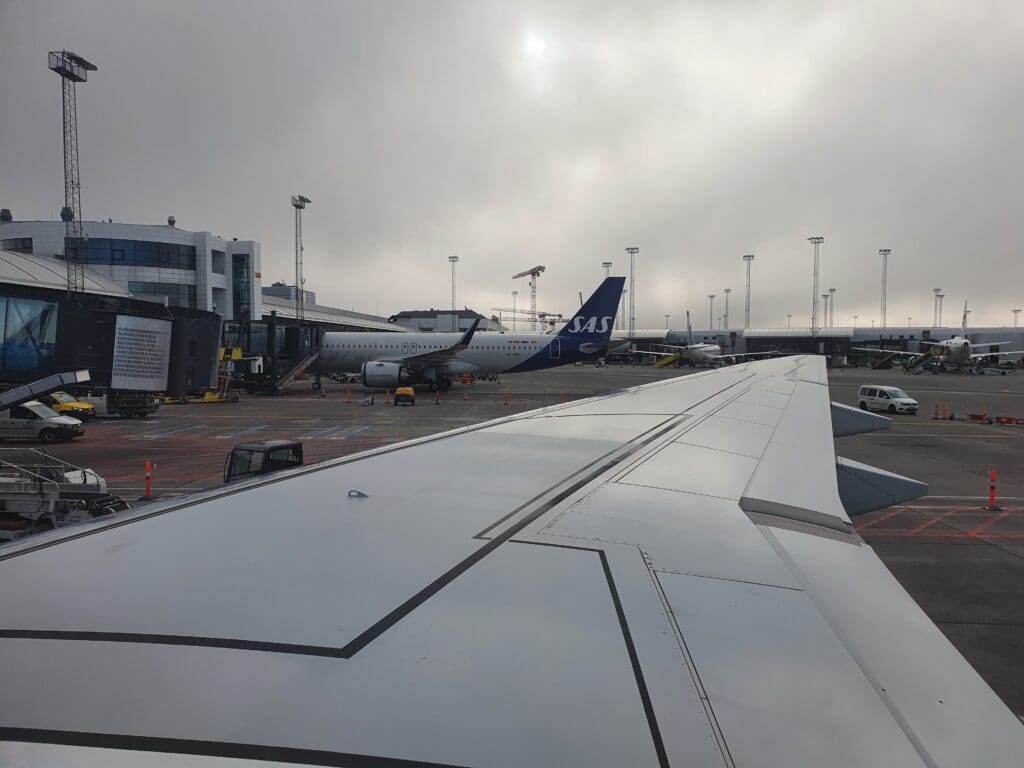
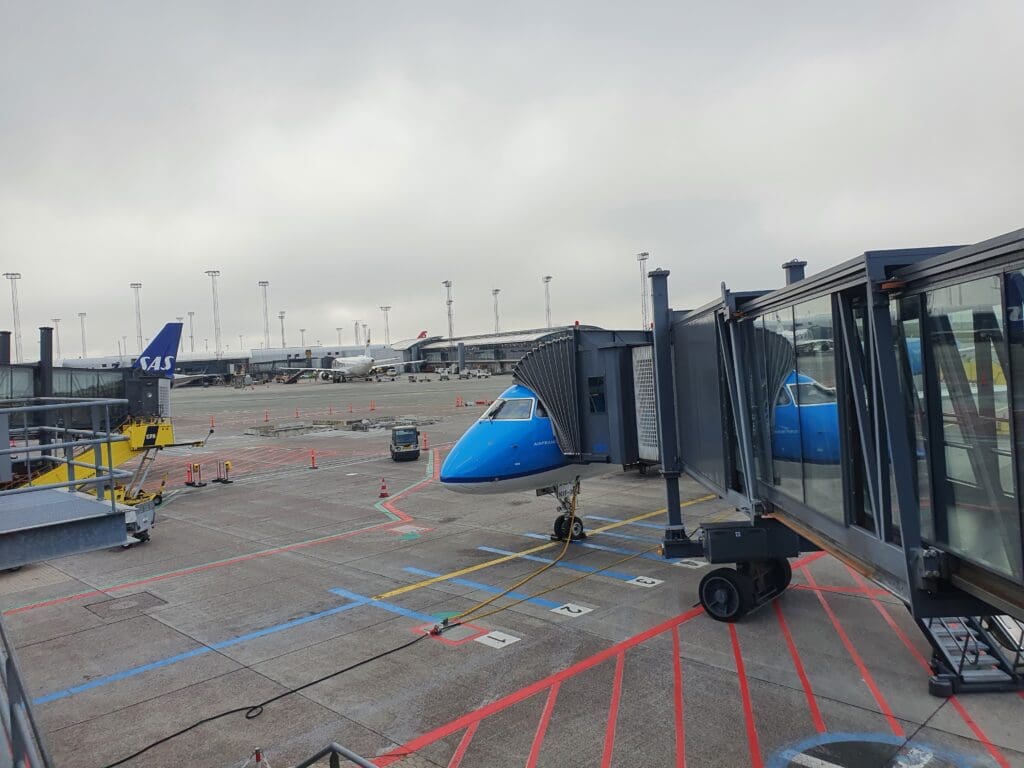
In the usual manner, once the aircraft had left the runway, the Purser welcomed all passengers to Copenhagen and advised passengers to remain seated. From the runway, the aircraft made its way past Copenhagen Airport’s piers before slowly pulling into Stand A21, slotting in between a Jet Time Boeing 737-800 and Scandinavian Airlines Airbus A320neo bound for Heraklion and Keflavík respectively. Coming to a halt at 0832, the engines remained powered for around a minute before these spooled down at which point the seatbelt signs were switched off and calming music filled the cabin. As is often the case, that morning many of my fellow passengers appeared to be in a rush to exit the aircraft and luckily for them, the jetbridge was connected in what seemed like no time at all. Given my long connection in Copenhagen, I was in no particular hurry to exit the aircraft and so, after waiting for the queue in the aisle to move, I stood up and retrieved my backpack from the overhead locker before trudging to the front of the aircraft. After thanking the two cabin crew members standing at the front of the aircraft, I stepped off the aircraft at 0838 and began my transit in Copenhagen Airport – this can be read about in my Atlantic Airways report here.
Summary
Throughout my multiple short and long-haul trips with KLM, the carrier is one that I have never had a particularly bad experience with, and I was left highly impressed with my two short hops with KLM Cityhopper. On both of these, all members of the crew that I had interacted with were polite and friendly, taking the time to interact with passengers. Meanwhile, the sandwich provided on this short flight as well as the flight attendant’s offer of multiple drinks was very much appreciated. Turning to the aircraft, I was very happy with the levels of comfort provided by the Embraer E2 as well as its modern and stylish interior. Needless to say, I would not hesitate to fly with KLM Cityhopper again!