Saudia Boeing 787 Review: Amazing Crew, Good Entertainment, but a Battered Dreamliner – Jeddah to Paris
Seeing as I would spend well over three hours in Jeddah’s King Abdulaziz Airport, before departure, I thought it wise to browse the internet in search of the best ways to pass the time during my Saudi Arabian transit. Whilst Jeddah’s new terminal was yet to fully open at the time of my trip, many of the pieces that I came across online detailed the otherworldly experience that this terminal would offer. In stark contrast to this, most items I found regarding the old terminal were scathingly negative and thus it was fair to say that I was not expecting an incredibly pleasant experience!
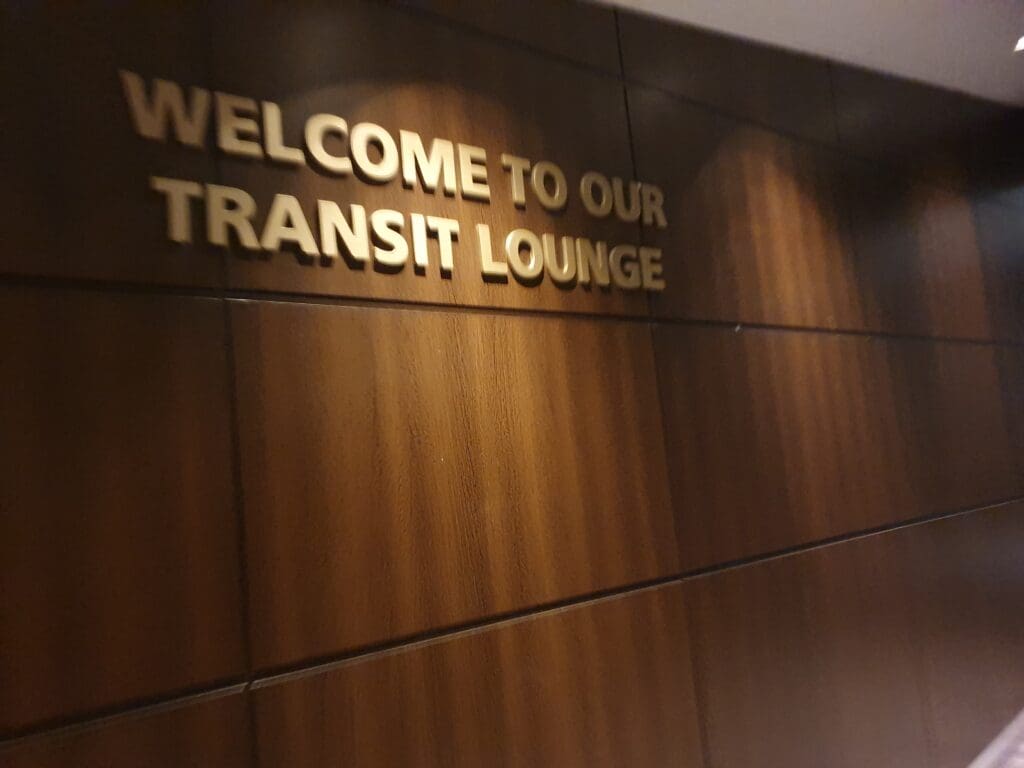
Shortly after stepping off the silver Skyteam-liveried Airbus A320 that had safely delivered me from Dubai, I found myself on a very long bus ride through the airport grounds that eventually deposited all passengers at the small and nondescript building that houses the airport’s South Terminal. Once inside I was met by the sight of two camouflaged security guards who appeared to be guarding the door to the apron and joined a long queue which led up to the compulsory temperature checks. At that time, these were being conducted by just one nurse who, donned in scrubs and a surgical mask made them seem as if they had just walked out of an operating theatre. As I waited in line, I admired the design of the arrival hall, which was spacious yet undeniably old fashioned. As I shuffled forwards, I was pleased to see that the majority of my fellow passengers’ temperatures were all within limits and eventually it was my turn, fortunately, this was conducted without any issue and as soon as this was done, I walked over to Saudia’s transit desk. Once there, I was warmly greeted by a pleasant and friendly staff member, who, after briefly checking my passport and boarding pass, stamped the latter before advising me to head up the escalators towards the ‘transit lounge’. This lounge was nothing but a dimly lit room with wooden panelling and contained nothing bar an x-ray machine guarded by a napping staff member. Thankfully, an apparent light sleeper, waking up this staff member was not a difficult task and, like their colleague, they were incredibly friendly. Once my bag passed through the x-ray machine, presumably looking for contraband, I was sent on my way and wished a ‘nice life’ by the friendly staff member.
After this friendly farewell, I passed through a small door which led to the old fashioned yet spacious atrium that is home to the terminal’s security area. Despite my quick bag check in the transit lounge, as with all departing passengers, I was required to pass through the main security check before being allowed into the airside area. Whilst only two checkpoints were open for males, there was not a particularly large number of passengers present and so passing through this took no more than a couple of minutes. Once again, the friendliness of the staff members was a welcome surprise, especially given the fact that unfortunately, it isn’t all too common to encounter friendly security staff! Whilst I had encountered a cornucopia of negative reviews of the terminal, up until that point, ignoring the terminal’s retro vibes, I had few negative things to say about the airport and made it airside within about five minutes of arriving in the terminal.
As with many airports across the world, once through security, I was required to head through a duty free shop before reaching the main airside waiting area. Aside from being on the smaller side and obviously lacking alcohol, this was very similar to any other airport duty free shop anywhere in the world. Once through this, my positive experience with the airport came to a screeching halt. When compared to other major international hubs, eight departures over the space of three hours may not seem like a particularly high number of flights. Nevertheless, capacity-wise, the terminal seemed to be at its very limit with not a single free seat visible anywhere in the terminal and instead weary passengers could be seen strewn out across the terminal floor. Not only was there a clear lack of suitable seating, the terminal appeared to be in an incredibly worn and dirty state with stray pieces of rubbish visible throughout, not to mention the fly infestation with these small creatures buzzing around virtually everywhere. Moving on, with only two toilet blocks in the airside area, some queuing was needed for those who wished to use the facilities. Once inside, I stumbled upon some of the worst airport toilets I had ever encountered, bearing far more resemblance to those facilities I had visited in rural service stations when trekking through the Georgian mountains rather than those one would expect to visit at a major international hub. These were a nauseating combination of dirty, battered and outdated – needless to say, if you can help it, wait until you get on the plane!
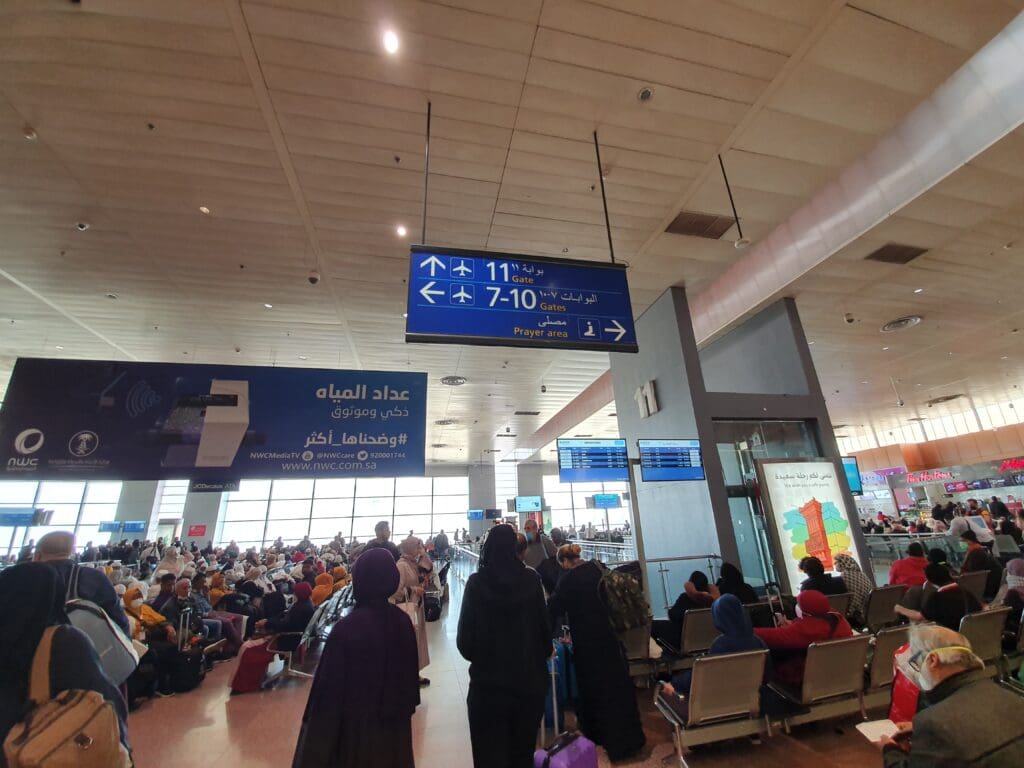
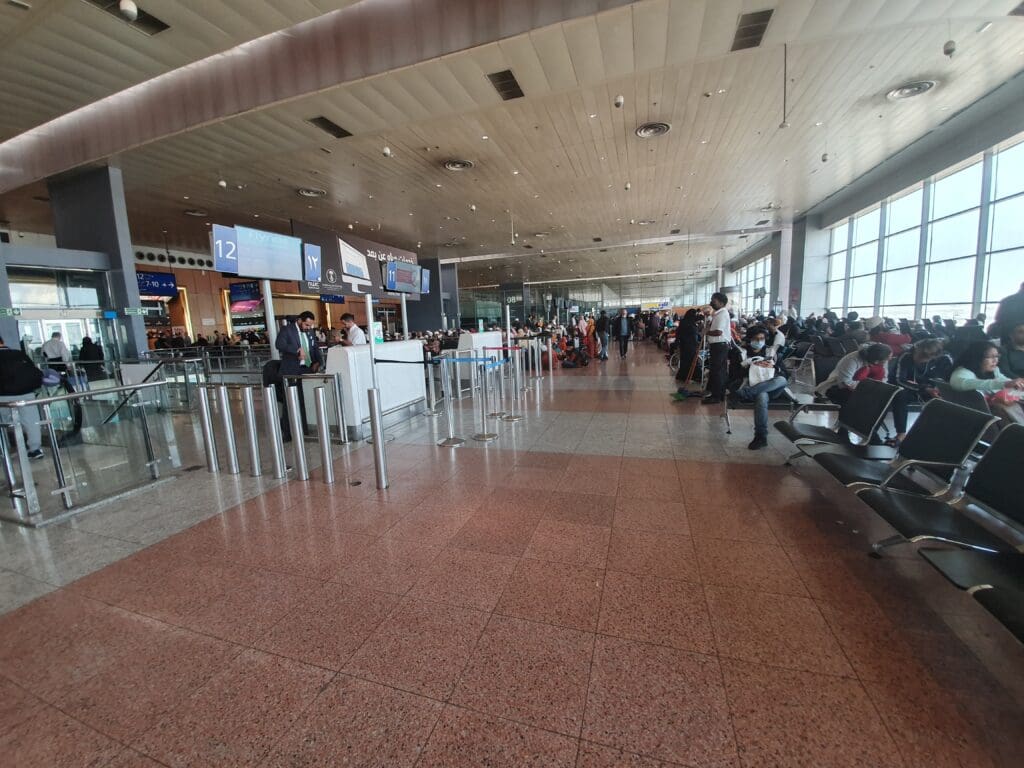
For those looking to fill their wait with food and drink, fortunately, the terminal is home to multiple cafés including branches of Baskin-Robbins and Tim Hortons, however, I did fail to spot any ‘real’ restaurants. Seeing as I was not incredibly hungry after my inflight biryani on the way over to Jeddah, nor did I want to be charged an extortionate amount for using my card, I decided not to purchase anything in the terminal and instead focused on attempting to find a vacant seat. Eventually, I noticed one of the best seats in the entire terminal to be free – a recliner seat with a superb view of the apron and made a beeline for this. With large windows offering good views onto the aprons opposite the terminal as well as acceptable views of some of the airport’s runways, from an aviation enthusiast’s perspective, the terminal does provide some okay spotting opportunities. However of course, with Saudi Arabia not known to be an incredibly understanding nation when it comes to this hobby plus seeing as Jeddah Airport is also home to a military base, extreme caution is advised. In addition, whilst providing good views, the windows were incredibly dirty and so decent photographs would have been impossible.
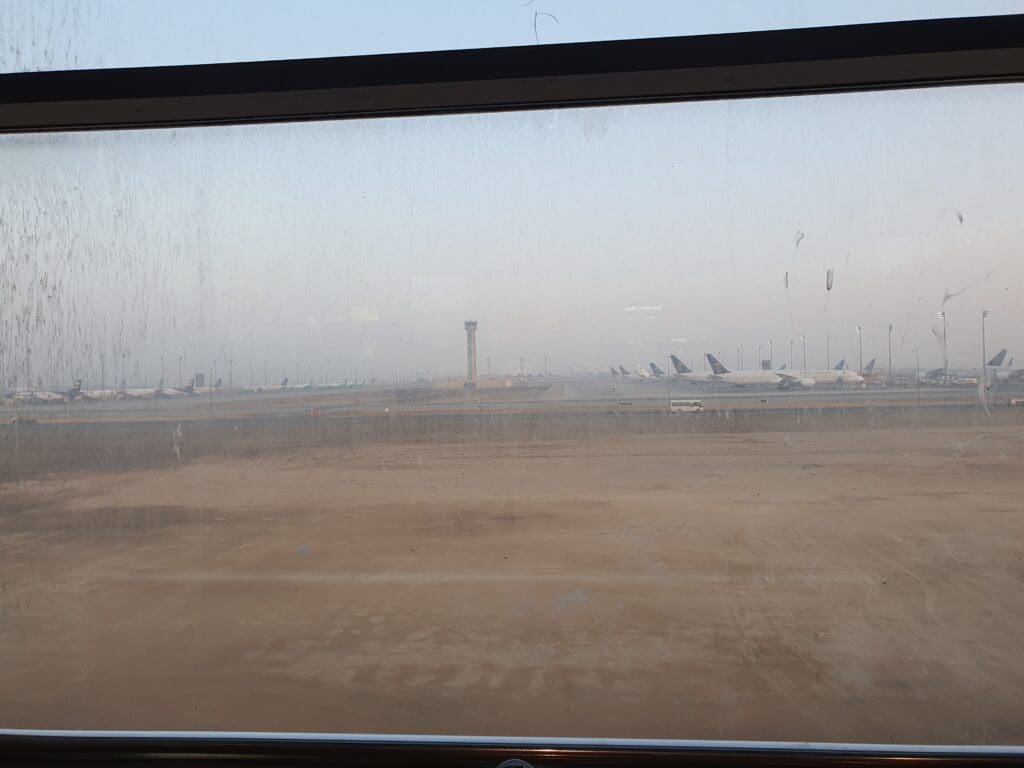
With a couple of hours to go until my flight’s departure, I connected to the terminal’s fast complimentary wifi network and spent the remainder of my wait surfing the web and looking out at the near-constant stream of movements outside. As one would expect, the majority of movements took the form of Saudia jets however, there were also a fair few aircraft operated by Saudi LCCs Flyadeal and Flynas, with a number of the former airline’s services actually operated by some less interesting (at least for me) Vueling A320s. Whilst Saudi Arabian LCCs are not something I come across all too often, the real highlights for me came in the form of the airline’s foreign visitors. The more interesting of these came in the form of a FlyBaghdad Boeing 737-800 painted in some rather discreet, almost business jet like colours as well as a trio of Egyptian aircraft – two Airbus A320s operated by Air Cairo and Nesma Airlines and a rare AlMasria Universal Airlines Boeing 737-500. The award for the least interesting aircraft went to a comparatively mundane British Airways Boeing 777-200ER. As my stay neared its end, I concluded that I had made the correct decision flying on Saudia from Dubai to Europe rather than the other way round. I had been initially considering flying from Manchester to Dubai with Saudia, a trip which would have seen me spend six hours in Jeddah’s dilapidated South Terminal. Fortunately, with this set to be replaced in the coming months, the chances are that I will never find myself in the terminal again, and, judging by the photos, I am confident that the new terminal will provide an incomparable experience for all.
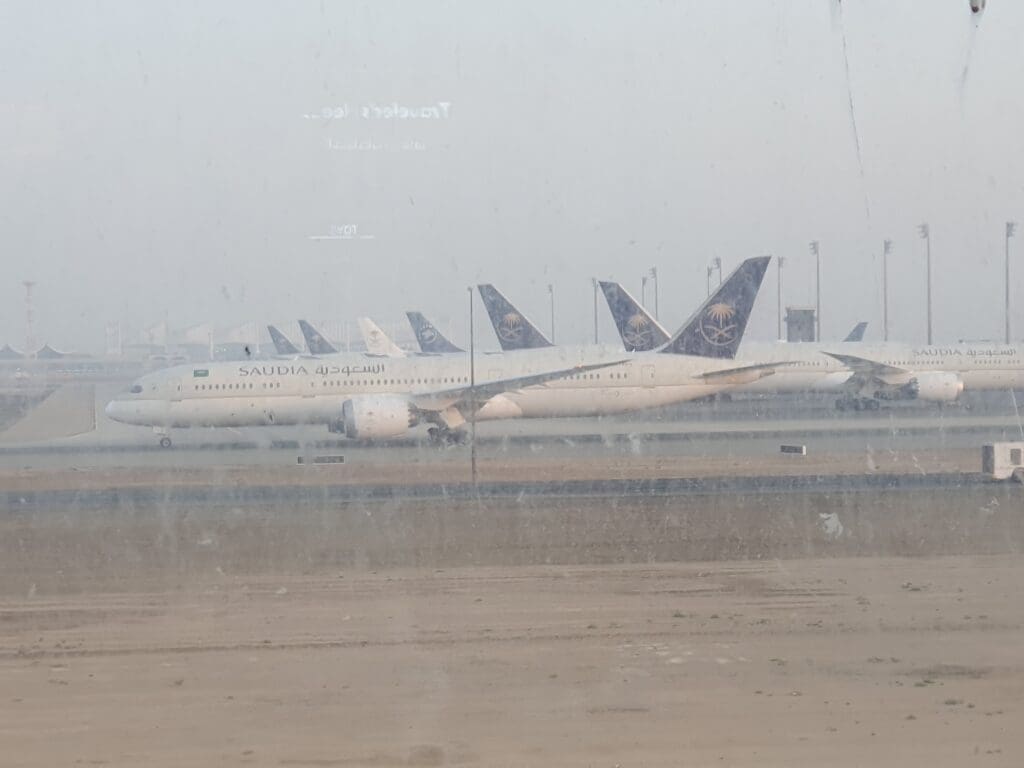
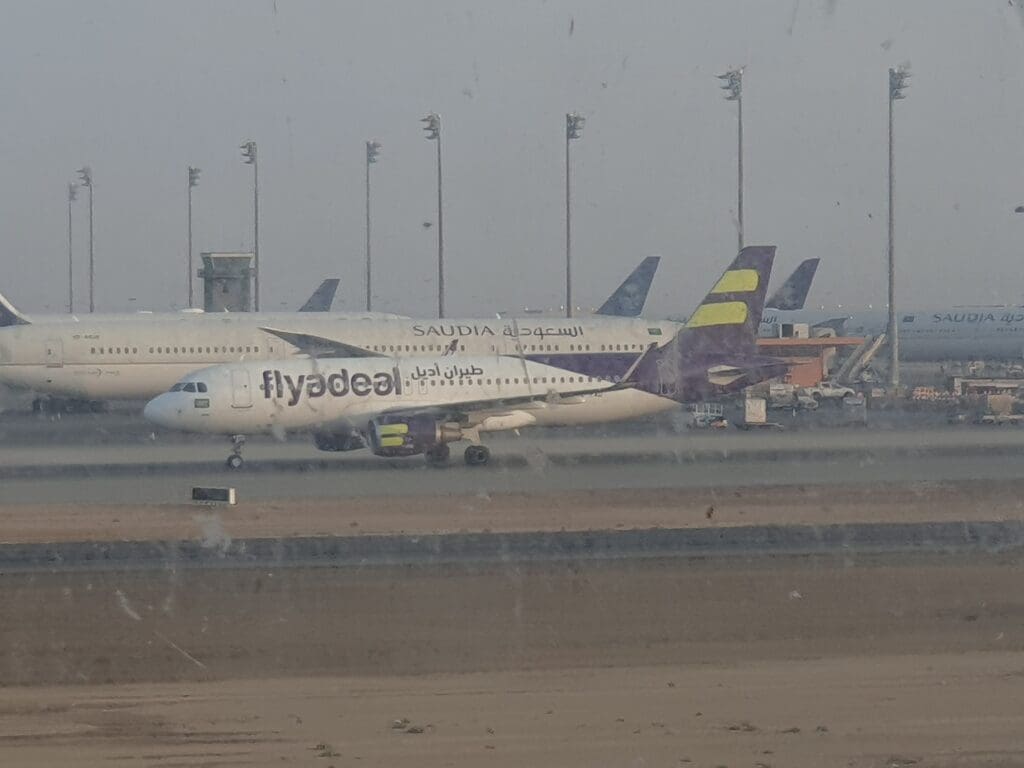
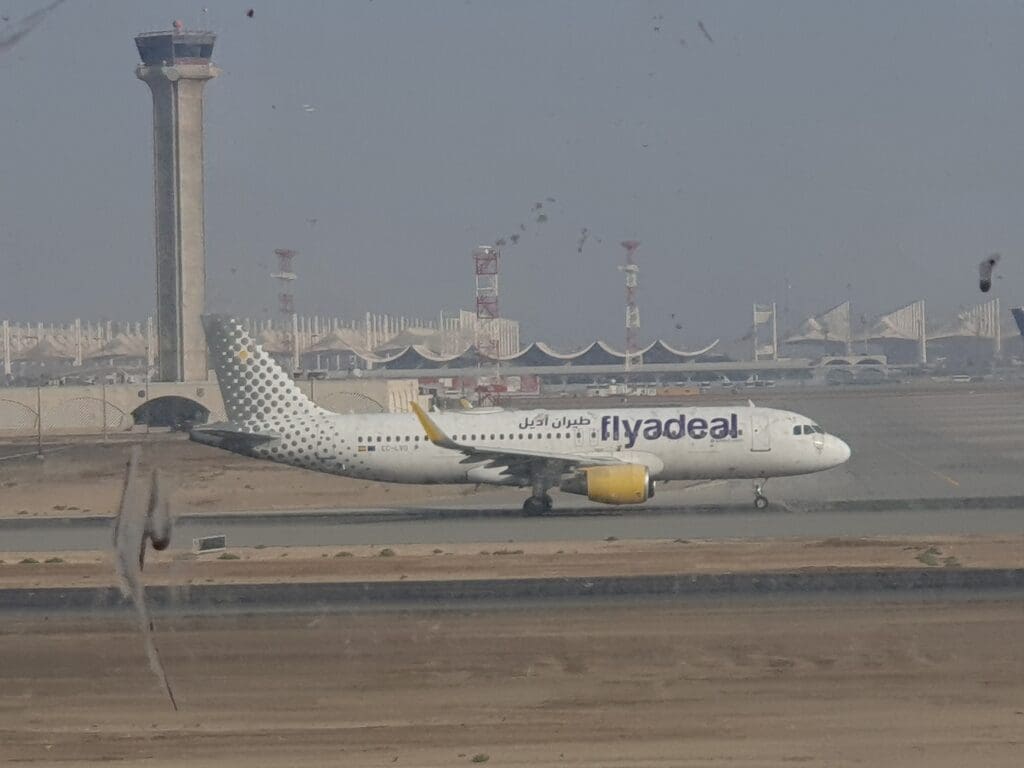
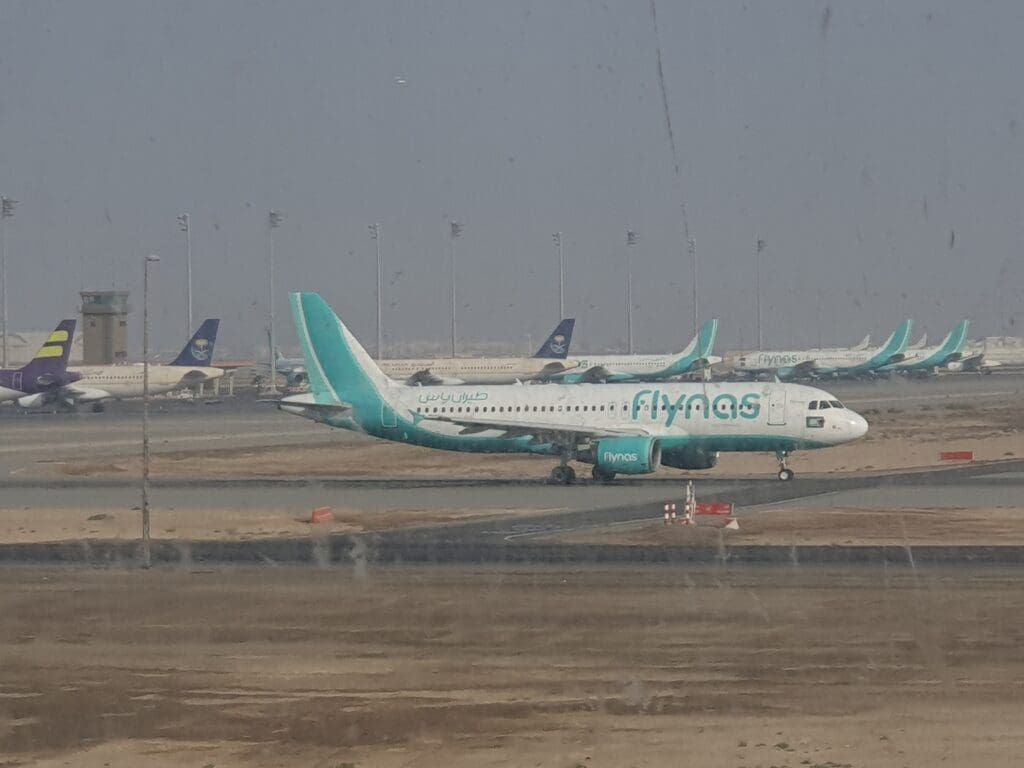
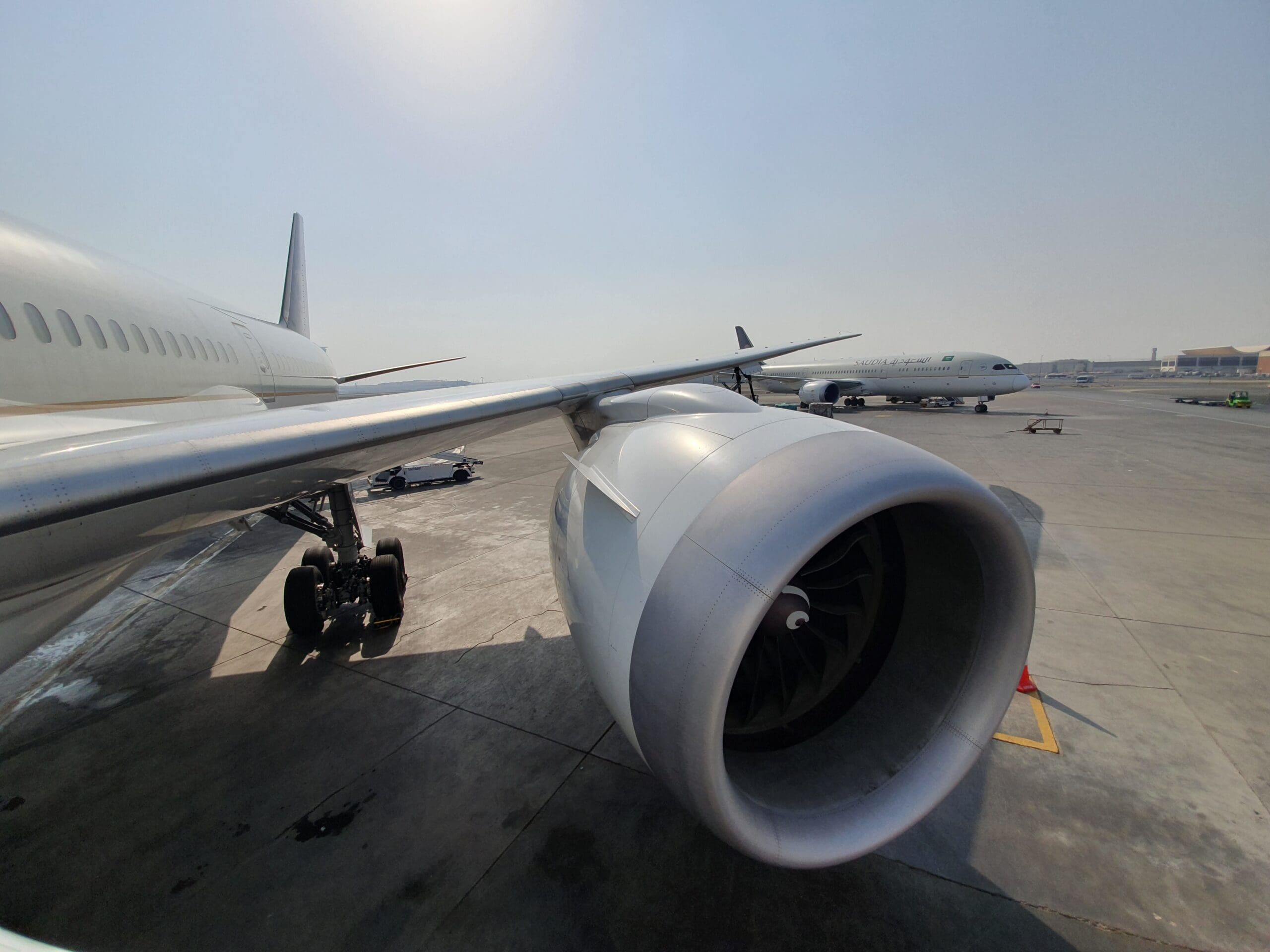
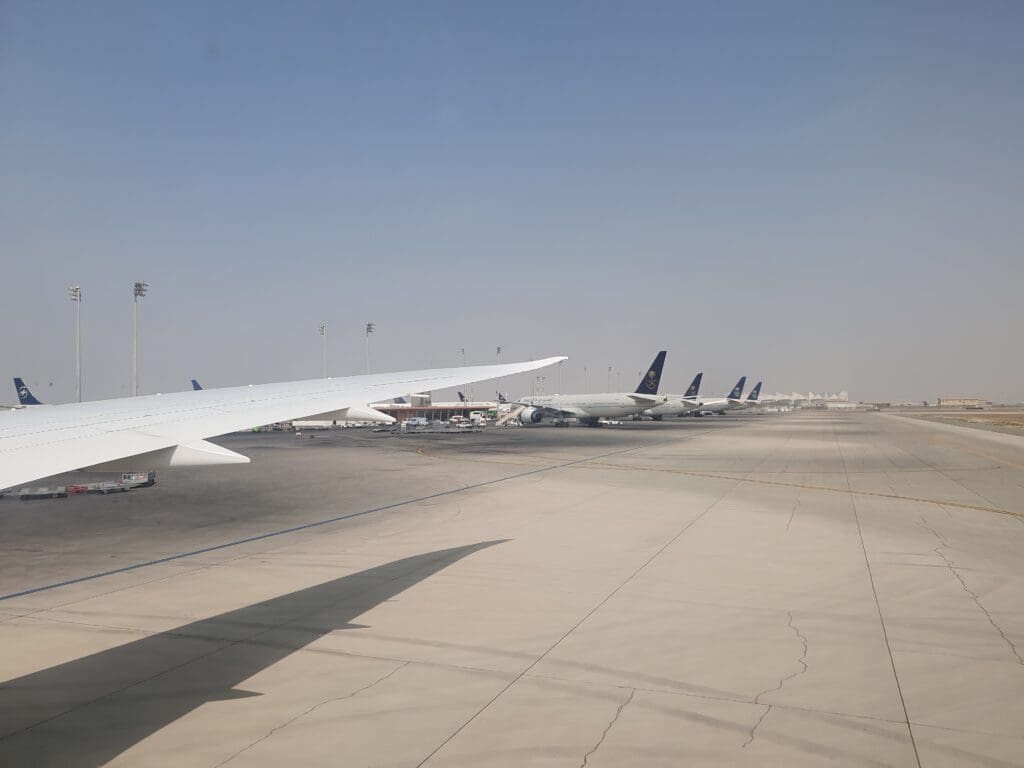
As time passed, the terminal remained busy however eventually, following several widebody departures, this seemed to empty a little. With a departure time of 1000, according to my boarding pass, boarding would commence 45 minutes before departure at 0915. I was thus a little surprised to hear an announcement at 0905 inviting all passengers to head over to gate 9. With no reason not to head over to board, I walked the short distance to the gate where I had my boarding pass scanned and passport checked before being allowed to head down to ground level and out onto an awaiting Neoplan bus. Whilst this appeared to be only half full when I stepped onboard, the doors were closed almost immediately after I had stepped onto this and the bus pulled away from the terminal. As I had expected, once the bus left the terminal behind, we headed the short distance over to the collection of Saudia widebodies sitting opposite the terminal consisting mostly of Airbus A330s, Boeing 777s and Boeing 787s waiting to take passengers to destinations both near and far. After passing a fellow sleek Saudia Dreamliner that would later head off to Madrid, the bus slowly pulled up to Boeing 787-9, HZ-ARD.
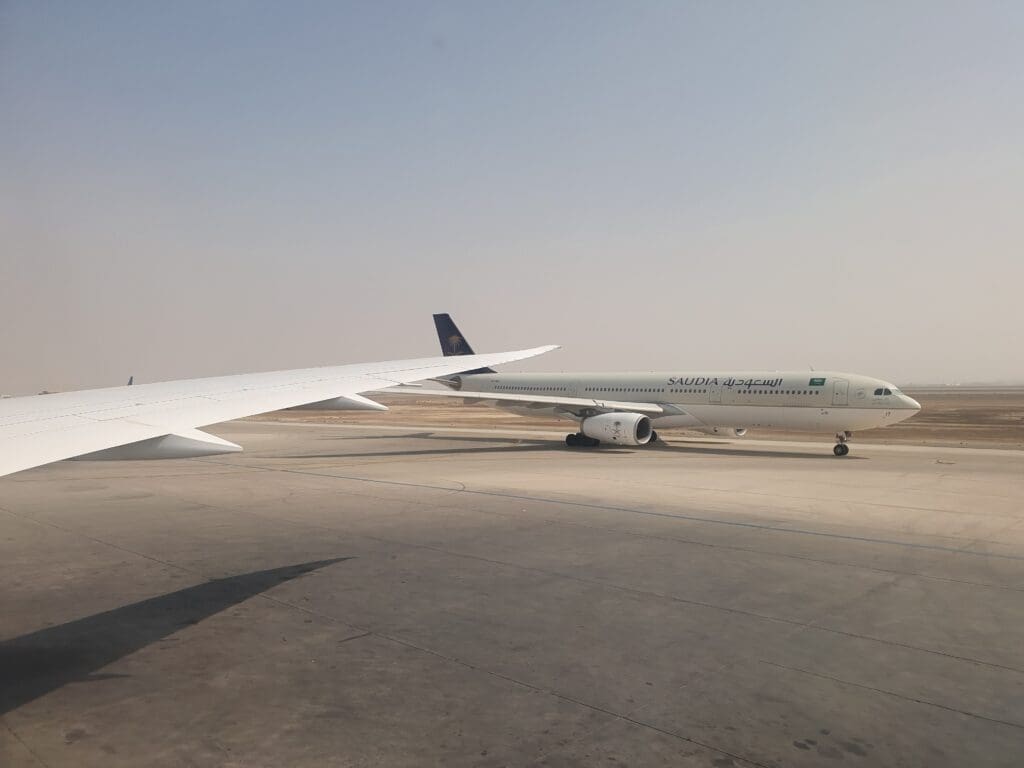
Manufactured at Boeing’s Charleston plant, Saudia’s fourth Dreamliner first took to the skies in early April 2016, thus making it a little under four years old at the time of my flight. After receiving the updated version of Saudia’s distinctive livery at Acadiana Regional Airport in Louisiana, the aircraft was flown across to Jeddah to commence its commercial career. Whilst Saudia send their Dreamliners to destinations across Africa, Asia and Europe, having spent several days on the ground, this particular Boeing 787’s list of destinations over the past week was somewhat limited. In total, the aircraft had made three round trips to Jeddah, with each flight being either a long medium-haul or a short long-haul flight depending on your definition of this. Visiting Casablanca twice and Manchester once, in the week before my flight the Dreamliner had flown a total of over 18,000 miles. Having sampled the Boeing 787-9 Dreamliner on a number of East Asian carriers (ANA, Japan Airlines, Korean Air, Scoot and Vietnam Airlines), this was to be my seventh flight on this subtype and eleventh on a Boeing 787 altogether. Capable of carrying 298 passengers in a two-class configuration (274 in Guest Class and 24 in Business), the aircraft carries an additional 29 passengers in its Economy cabin compared to the only other two-class Boeing 787-9 Dreamliner that I have sampled (this operated by Korean Air, whose Dreamliners are also fitted with 24 business seats).
Upon pulling up to the aircraft, the doors remained closed and outside plenty of things could be seen going on around the aircraft including refuelling, whilst several engineers shuttled up and down the aircraft’s steps as if to indicate there was some last-minute technical glitch. However, having arrived at the aircraft with plenty of time to go until the flight was scheduled to depart, whilst some other passengers appeared to be getting annoyed at being kept on the bus, this did not derail our progress as we still had plenty of time to go until departure. Unlike the time that I had flown from Istanbul to Urumqi on China Southern Airlines back in 2016 and had ended up trapped on the ramp in a crowded airport bus for an hour, after about 10 minutes of waiting, the doors slid open and the passengers spilt out into the boiling hot Saudi Arabian sunshine.
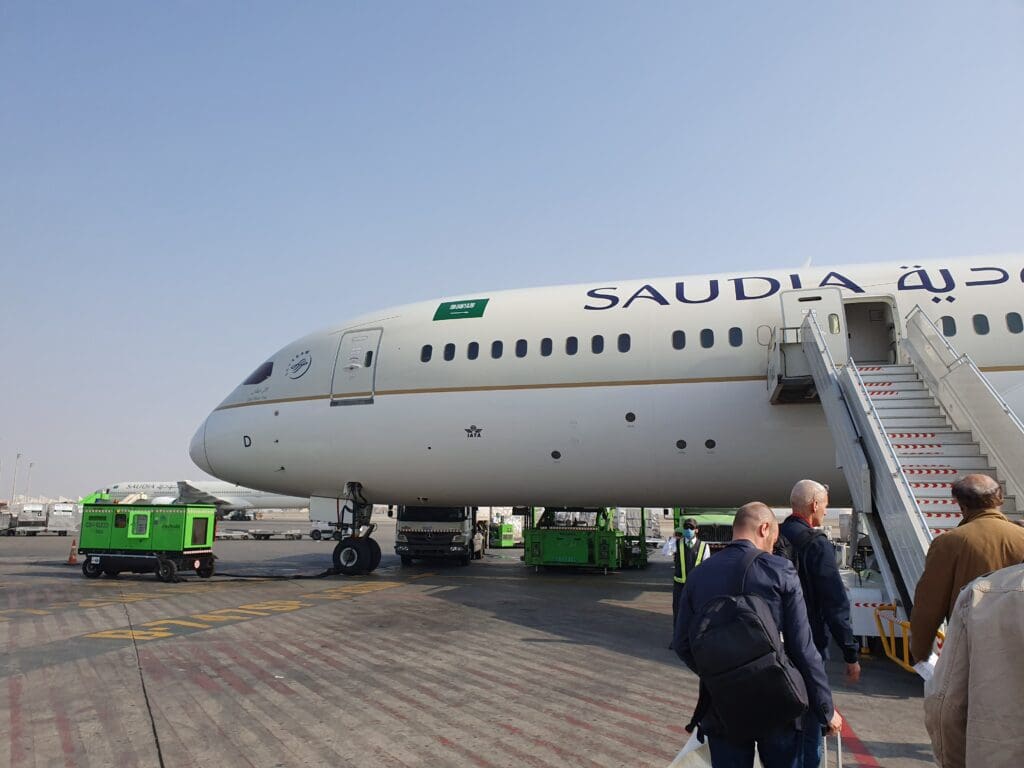
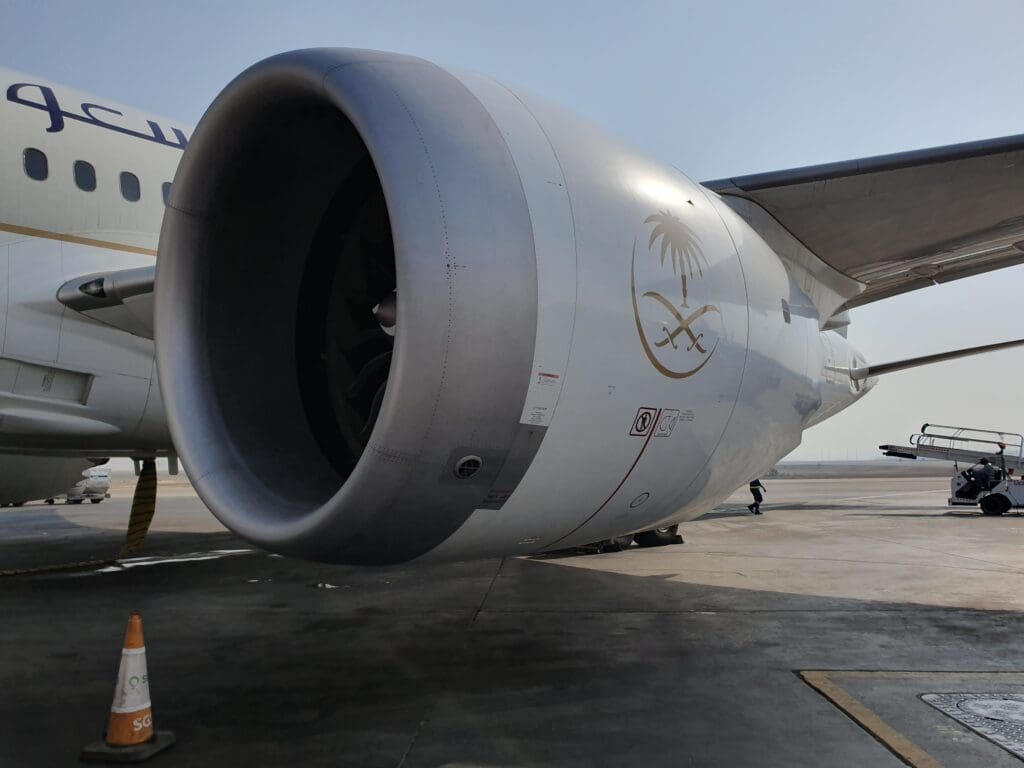
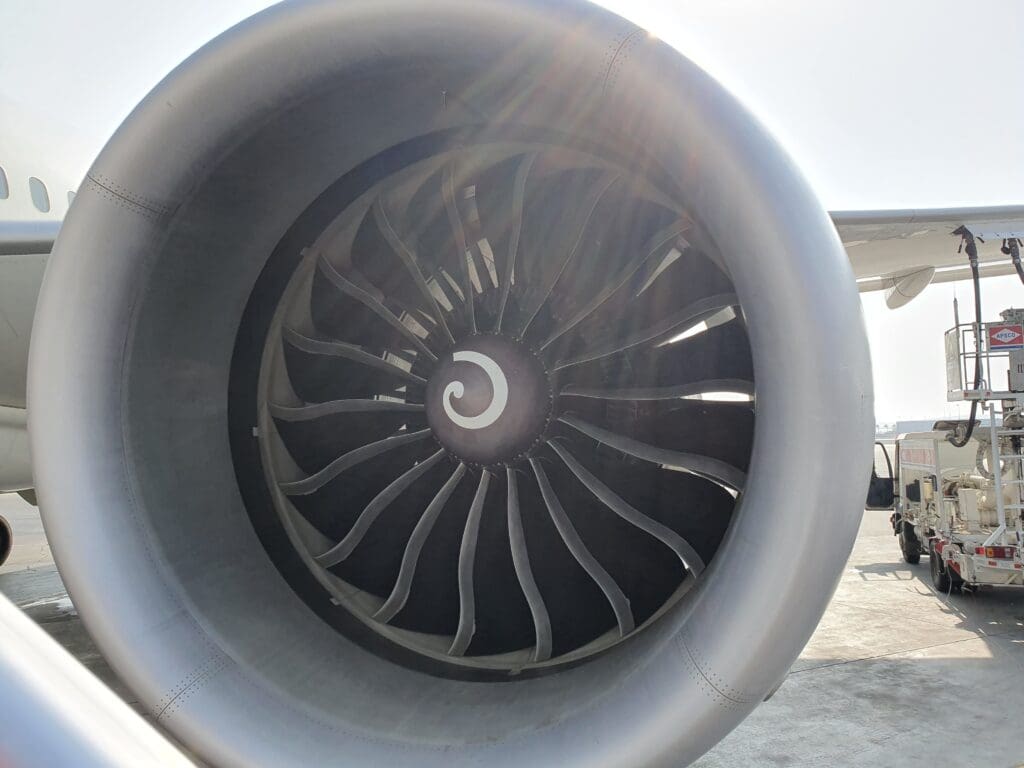
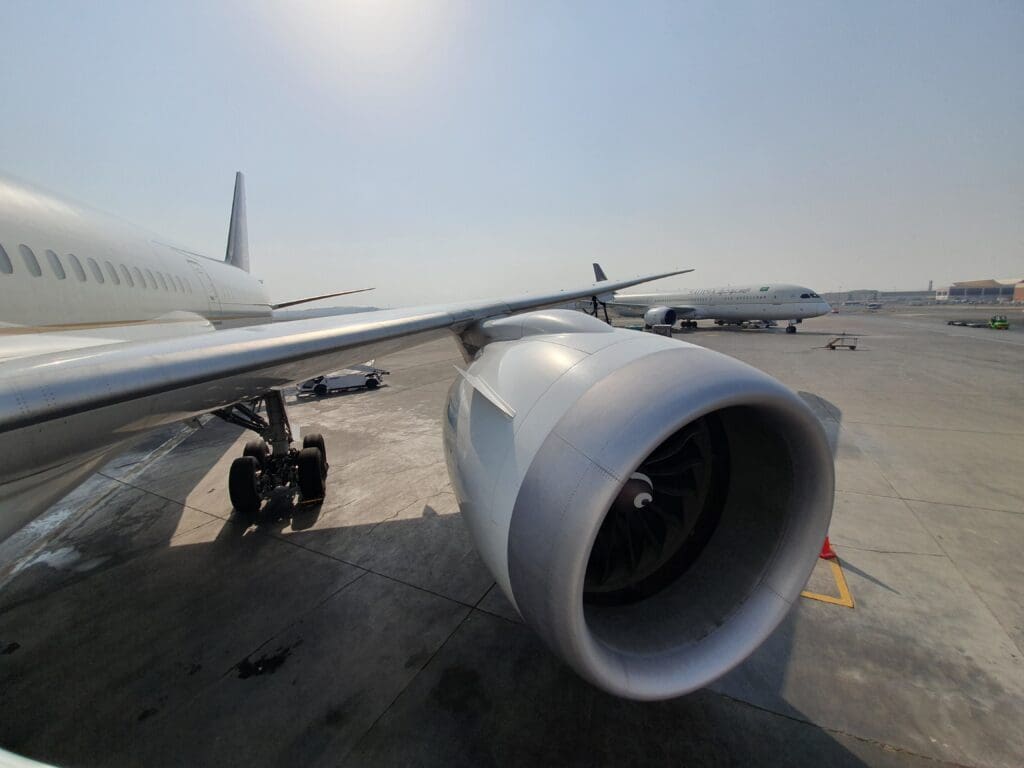
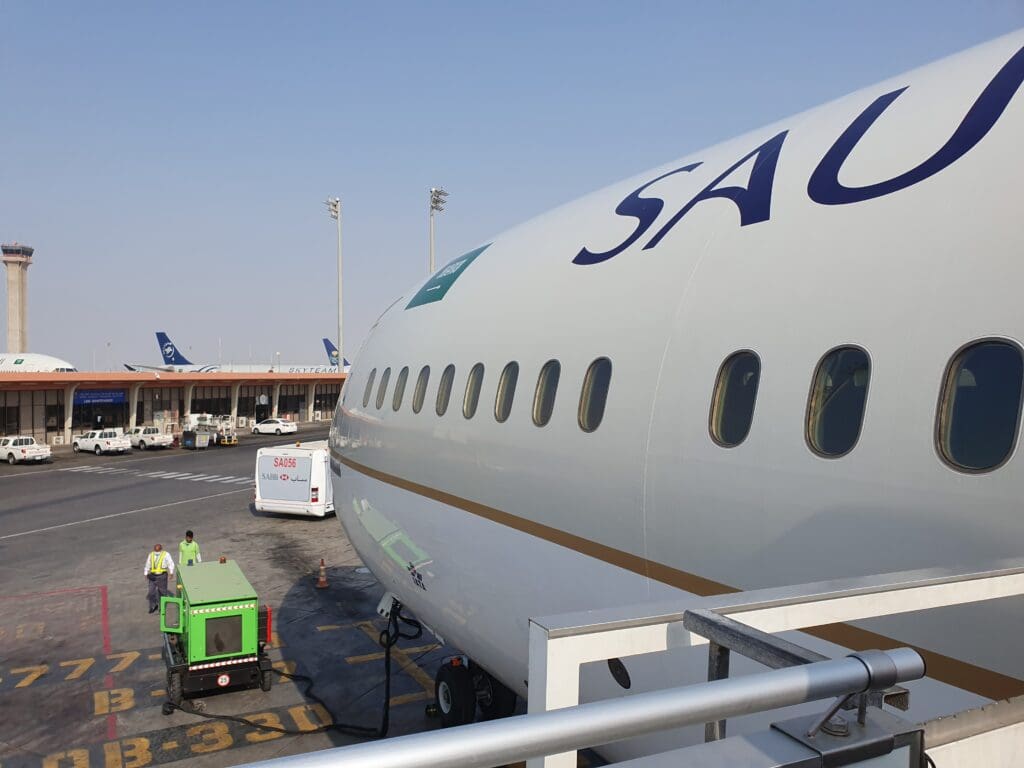
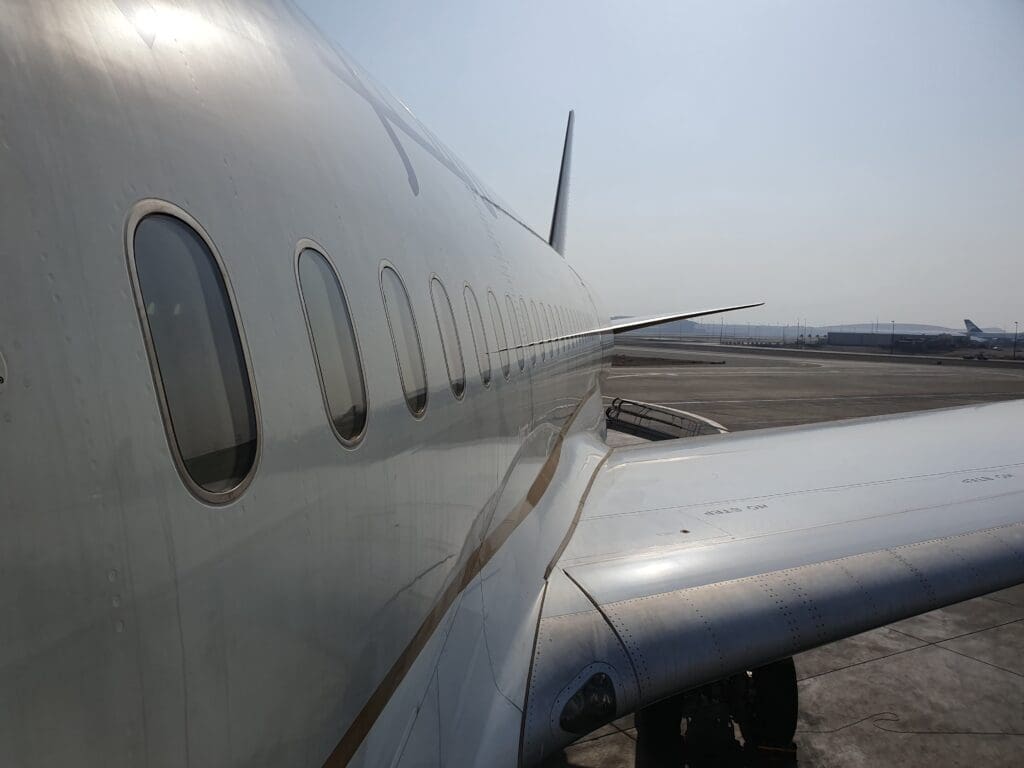
Given the good weather and the great views of the aircraft, I saw no point in rushing and ended up near the back of the queue as passengers trekked up the airstairs. As I waited, I caught sight of one of the few aircraft that I would have rather been flying on – an Air Atlanta Icelandic Boeing 747-400. This particular aircraft had been wet-leased by Saudia and was exclusively operating Hajj charters to destinations across Africa and Indonesia, therefore despite my best efforts I was unable to work this into my itinerary!
After a few minutes of admiring the sleek Dreamliner and soaking up the morning sunshine, I boarded the aircraft via the 2L door where I received another warm and friendly greeting from one of the flight’s cabin crew members. Upon displaying my boarding pass, I was pointed down the second aisle and made my way across the galley before turning right. Seeing as Saudia does not offer any premium economy product and with their Boeing 787-9 Dreamliners only featuring a relatively small Business cabin that is squeezed into the forwardmost section of the aircraft, upon turning right I immediately entered the forward Guest Class cabin. Briefly talking of Business, Saudia’s Boeing 787-9 Dreamliners are fitted with Collins Aerospace Super Diamond reverse-herringbone seats in a 1-2-1 configuration, with these offering more privacy that the Business seats onboard their Boeing 777 jets.
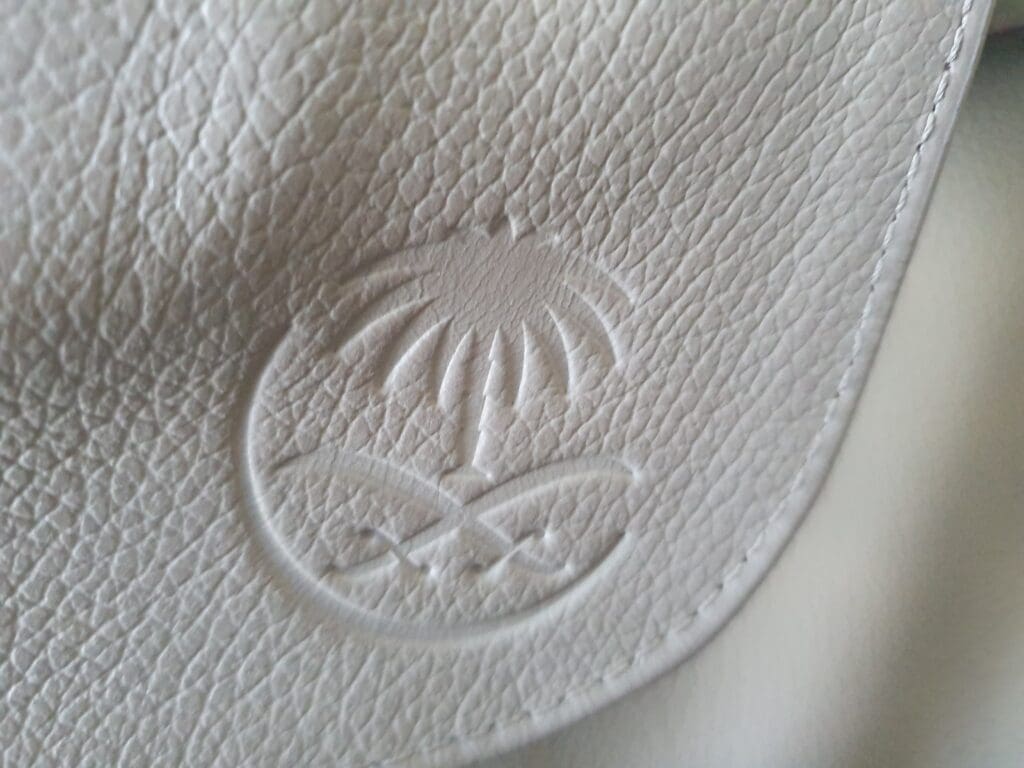
In Guest Class, seats are arranged in the Dreamliner-standard 3-3-3 layout and take the form of the common Collins Aerospace Pinnacle seat. As with the Airbus A320 that I had flown earlier that day, all seats were covered in a beige faux leather and featured an adjustable headrest. The latter were covered by a headrest cover featuring Saudia’s House of Saud motif. However, unlike the Airbus, each seat featured a 9 inch wide high-definition inflight entertainment screen, alongside a USB-A outlet and a universal power socket.
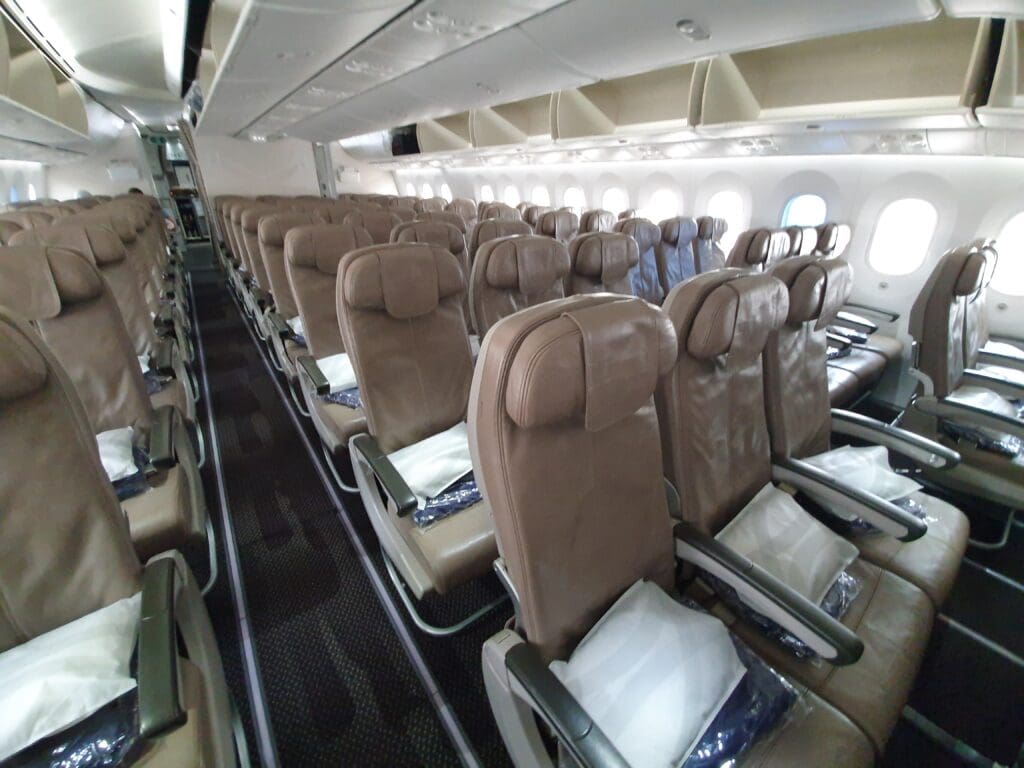
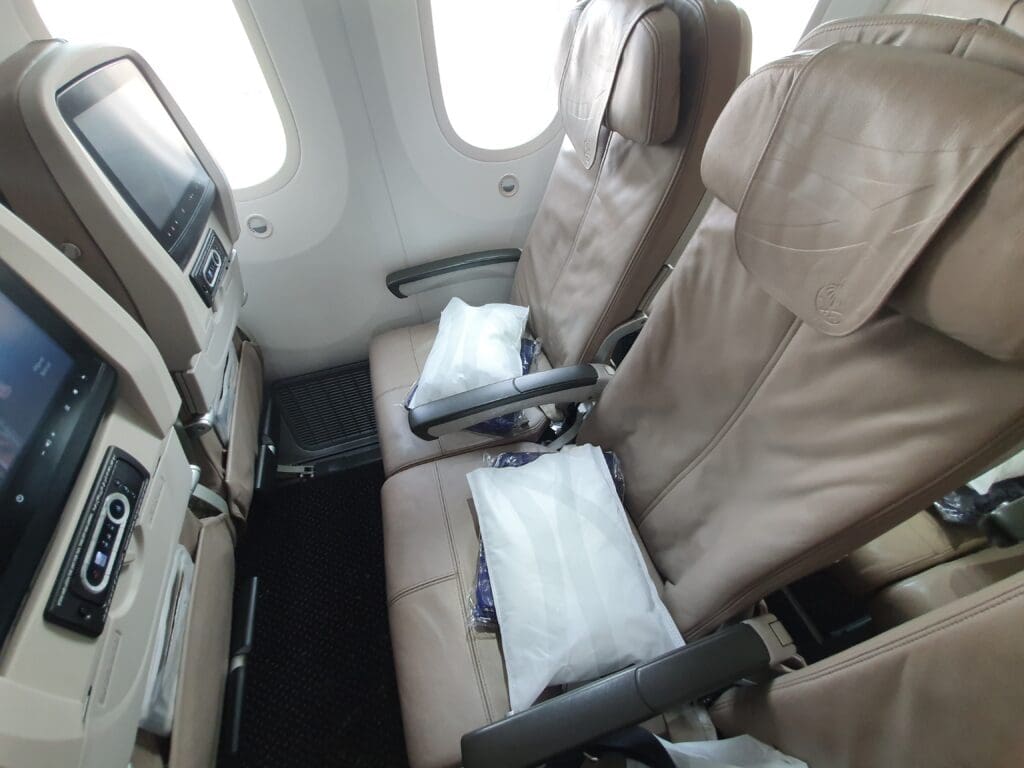
Almost immediately after I entered the forward Guest Class cabin, another flight attendant warmly welcomed me onboard, soon followed by another two greetings as I trekked down the cabin to my seat. Perhaps looking slightly confused, one flight attendant even asked me if I needed help finding my seat, although I rejected this offer! Being almost entirely empty, I made it to Row 51 in no time and slid into Seat 51L with ease before making myself comfortable for the flight ahead.
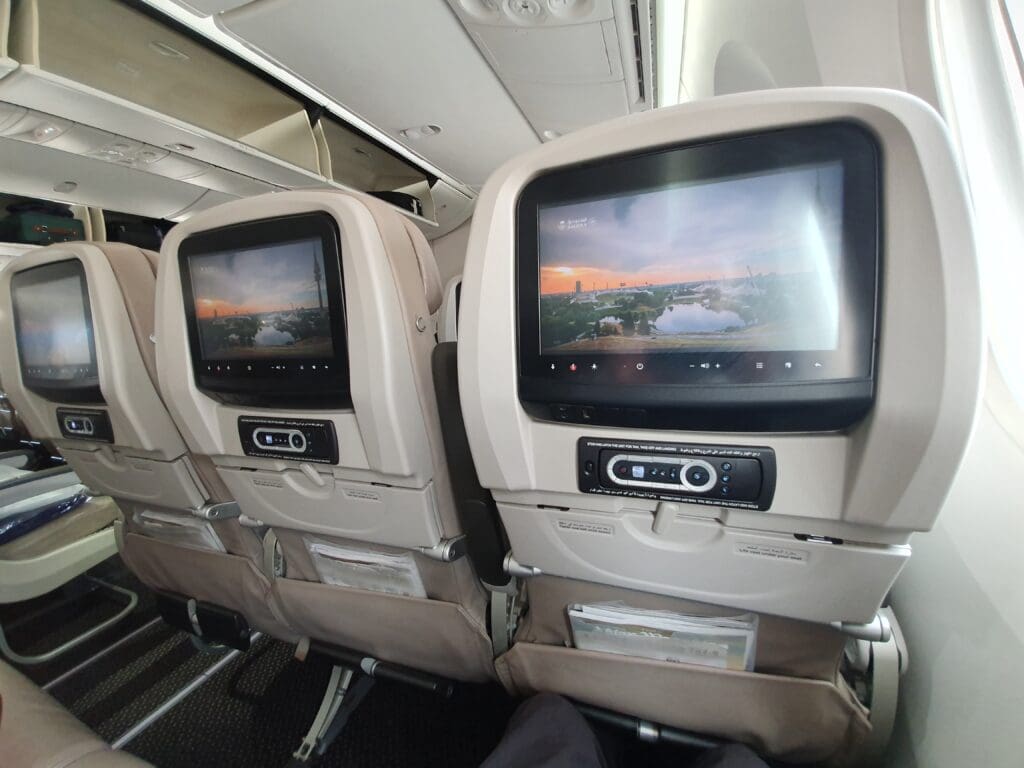
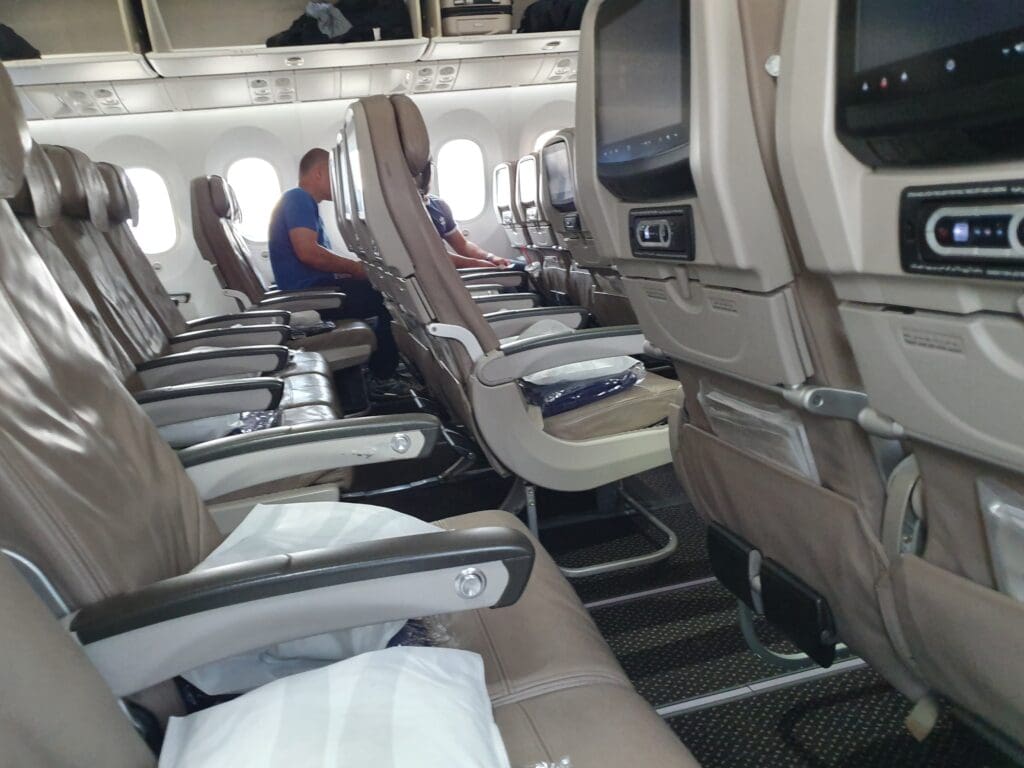
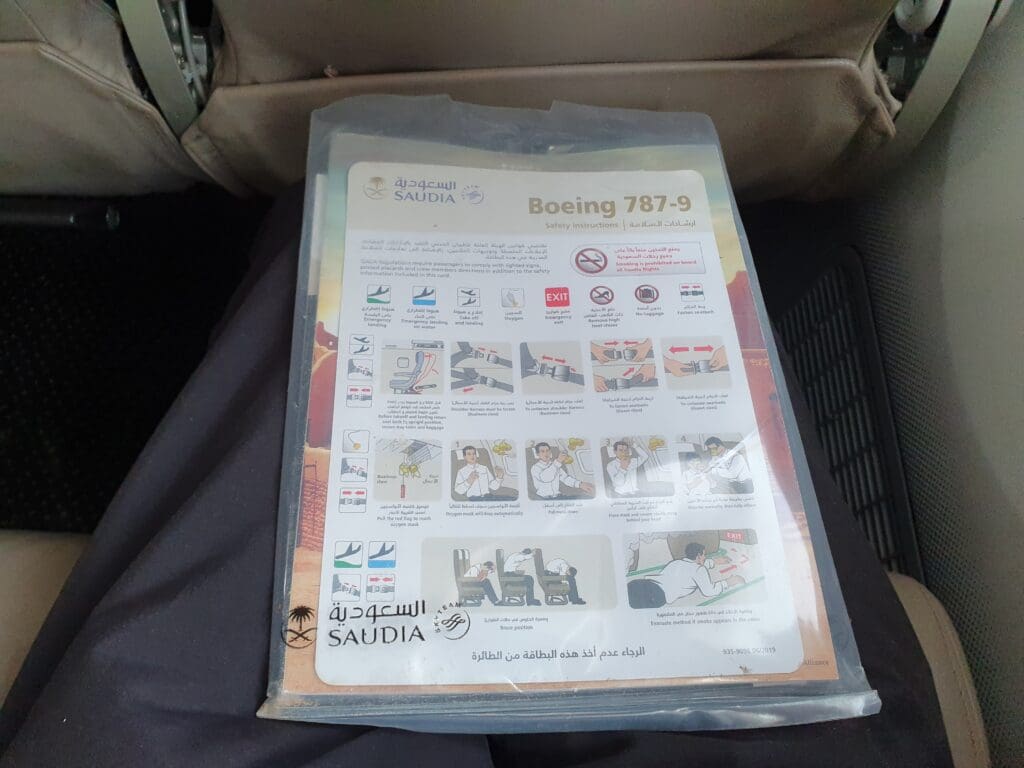
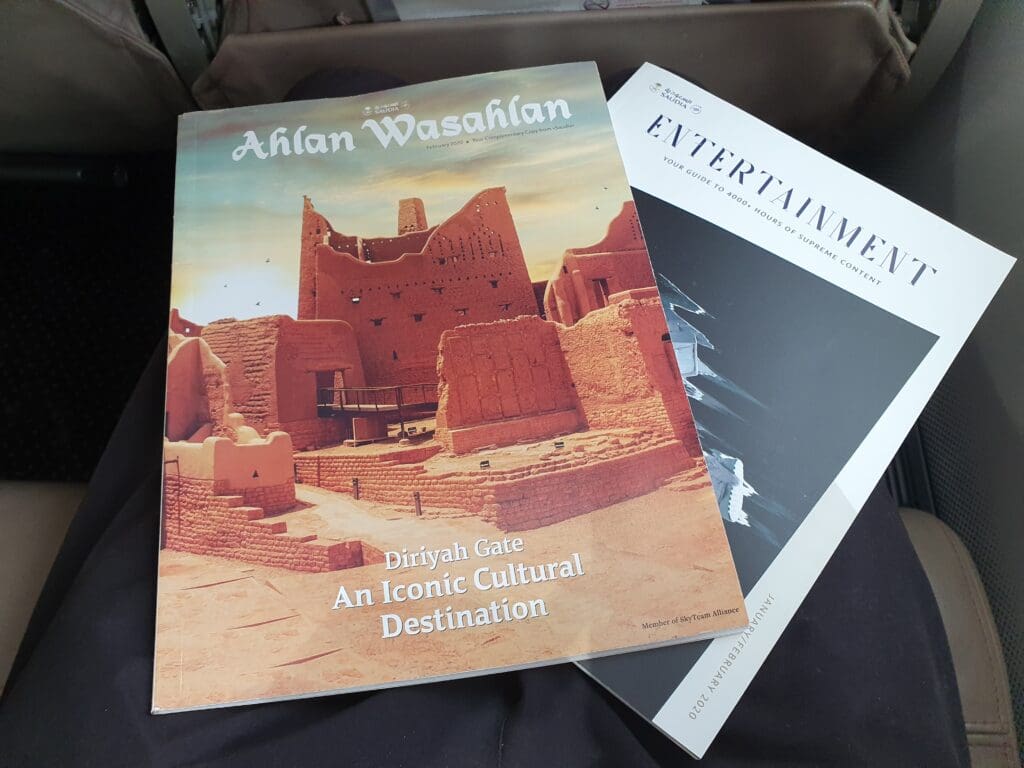
Once I took my seat, I was pleased to find this to be well-padded and comfortable, although I should mention that the legroom seemed to be rather mediocre for a long haul widebody jet and was hindered by the presence of an obtrusive footrest. Moving to the seatback pocket, aside from the safety card, this was home to the Skysales inflight catalogue, a copy of the February 2020 Ahlan Wahsahlan inflight magazine (even though we were already a week into March) and a copy of the entertainment guide – all of which were in near mint condition and had been neatly placed into a plastic folder.
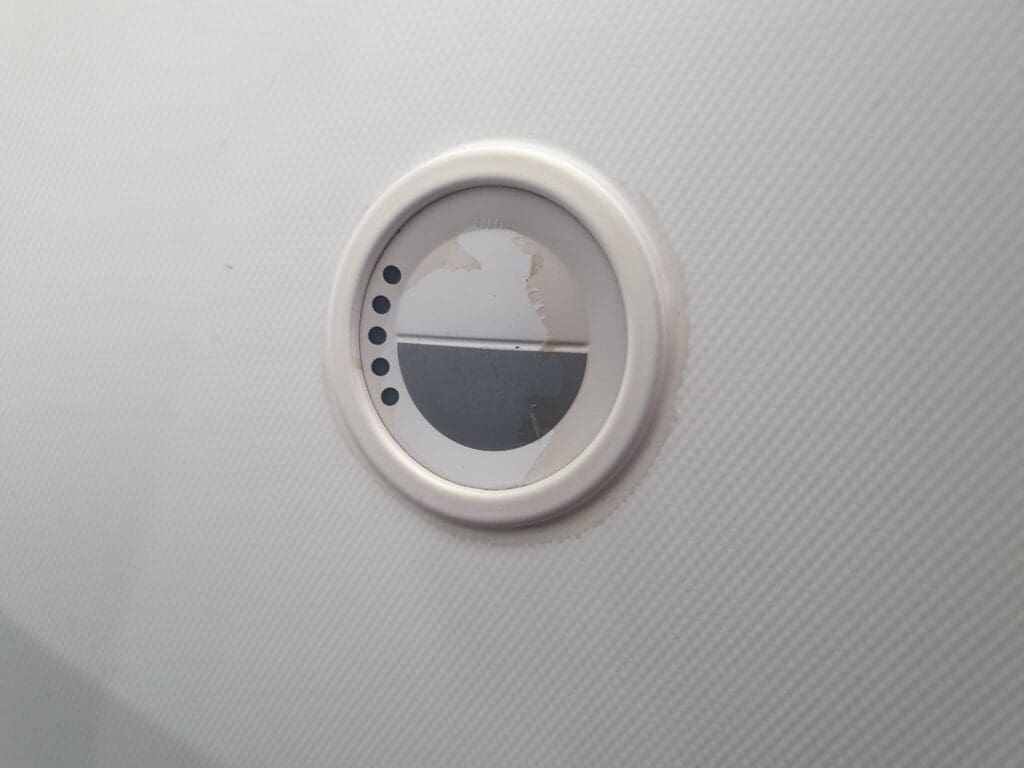
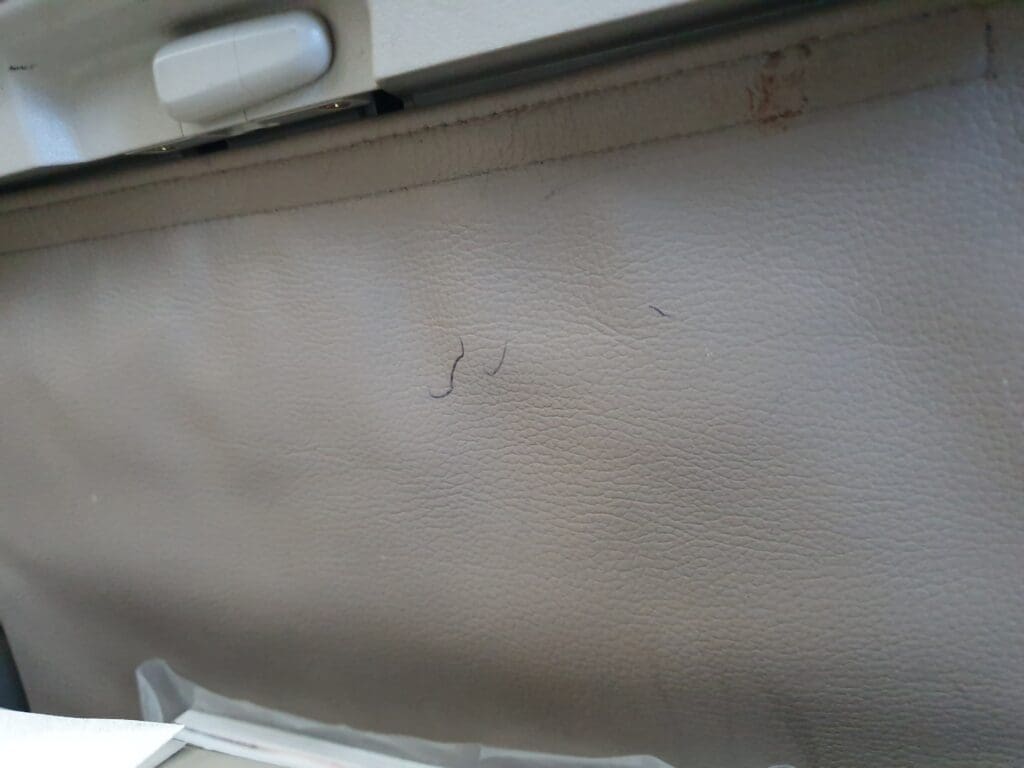
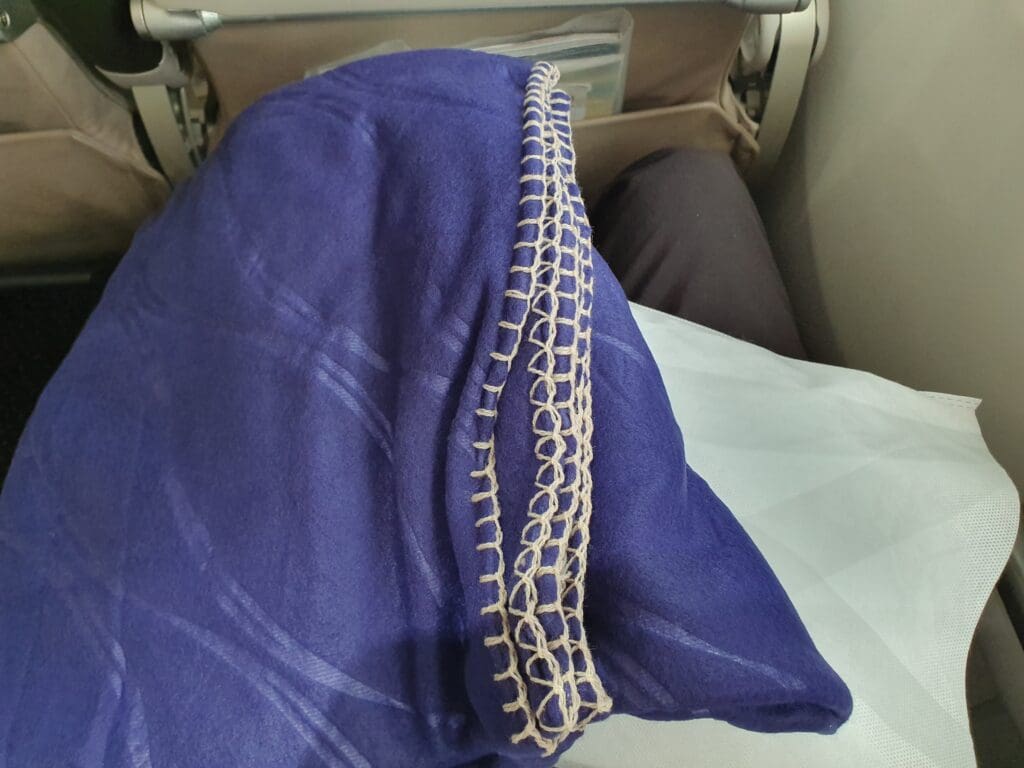
Ignoring the impressive warm welcomes from the crew, which served to get the flight off to a good start, my impressions of the seat were rather neutral. Despite being a reasonably new jet, it was impossible to ignore the very high levels of marks and scratches in the area around my seat. Taking into account the similar state of the cabin of the Airbus A320 that I had taken earlier that day, I was left questioning the amount of effort that Saudia invests into the upkeep of its cabins! However, returning to the positives, the Dreamliner appeared to have been thoroughly cleaned during its time on the ground in Jeddah, and both pillows and packaged blankets had been placed on all seats. Furthermore, the latter seemed to be of above-average quality and thus left me with nothing to complain about.
Once seated and settled, I was left with little to do except soak up the atmosphere as I waited to depart. At this time, the inflight entertainment screens were locked and broadcast the same montage of Saudia destinations that had been displayed on the overhead screens of the Airbus A320 before departing Dubai. Looking outside, I was given a good view of the mountains of cargo of all shapes and sizes being loaded into the hold as well as the occasional aircraft taxiing past behind the Dreamliner. As time passed, a further two buses arrived at the aircraft, however, each of these appeared to contain nothing more than a small handful of passengers, and, much to my delight, by the time boarding was announced as complete at 0945, I still had two empty seats next to mine. That day, the flight to Paris was no more than 25% full in Guest Class with plenty of entirely empty rows visible throughout the cabin. Having overheard several conversations, it appeared as if around half of those onboard were French engineers all working at the same company in addition to a fair few passengers from Pakistan and of course Saudi Arabia alongside passengers from a smattering of other countries. Moving onto the crew, all males onboard the flight appeared to be from Saudi Arabia whilst the female crew members were from Eastern Europe, Indonesia and the Philippines.
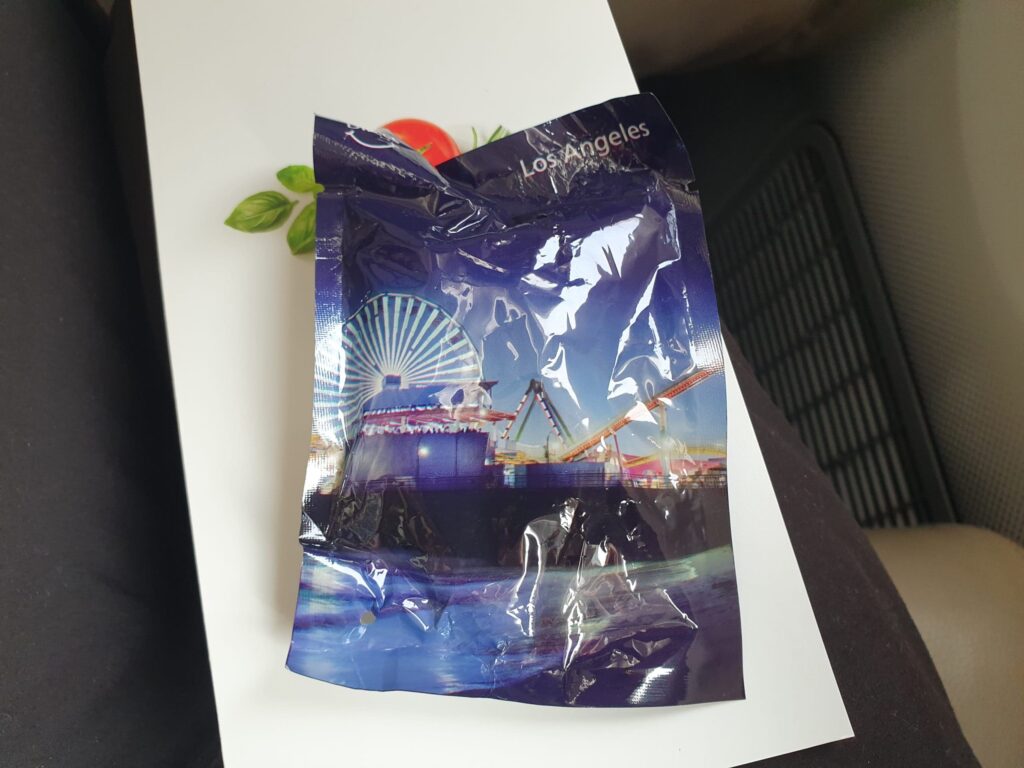
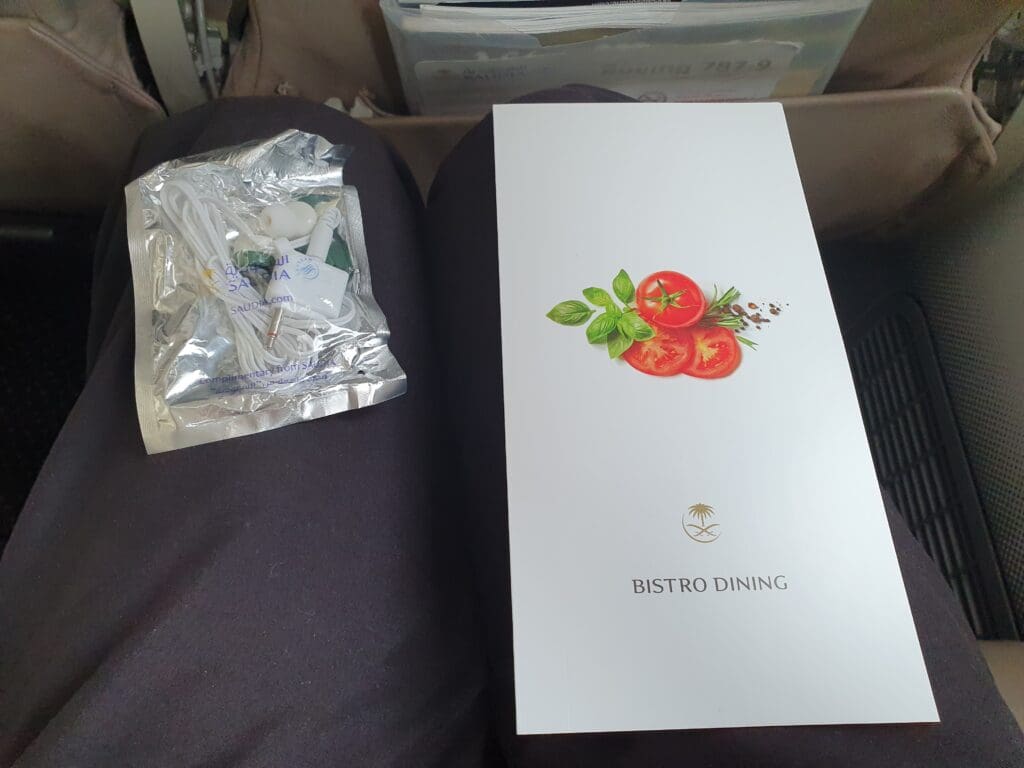
Immediately after the ‘boarding complete’ announcement was made, the first round of service commenced. As with the flight from Dubai, this involved the handing out of packaged wet wipes. This was done in a friendly manner, with the crew appearing to make brief conversation with several passengers as they passed through the cabin distributing these. Once this had been completed, another flight attendant distributed smart paper menus and earbud headphones in nicely designed packets which highlight Saudia’s destinations across the world – I ended up with Los Angeles, Saudia’s furthest destination. With 10 minutes to go until our scheduled departure time, at 0950 the Purser performed their welcome announcement in Arabic and English which featured the usual thanks and welcomes, alongside a mention of our cruising altitude of 38,000 feet before ending this with a remark regarding Saudia’s 75th anniversary. Outside, our gate neighbour, a Saudia Boeing 777-300ER, could be seen being pushed back in preparation for its long flight to Jakarta. However, moments after being pushed back, this was pulled back into the stand where it was met by an awaiting ambulance indicating some sort of medical issue onboard.
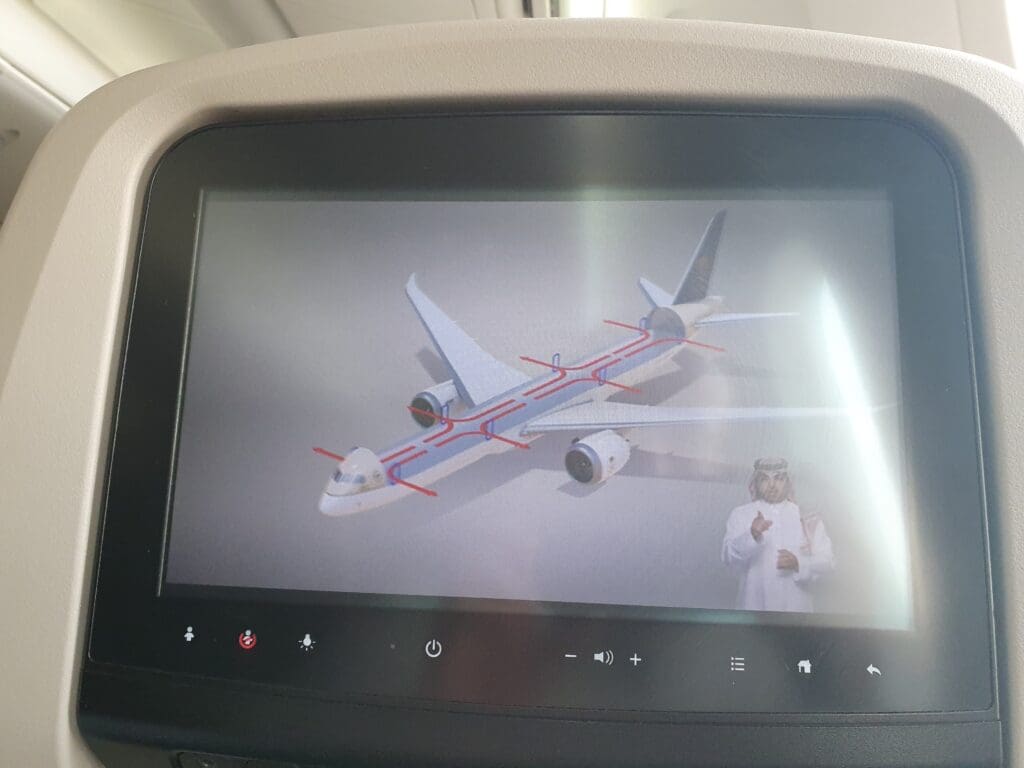
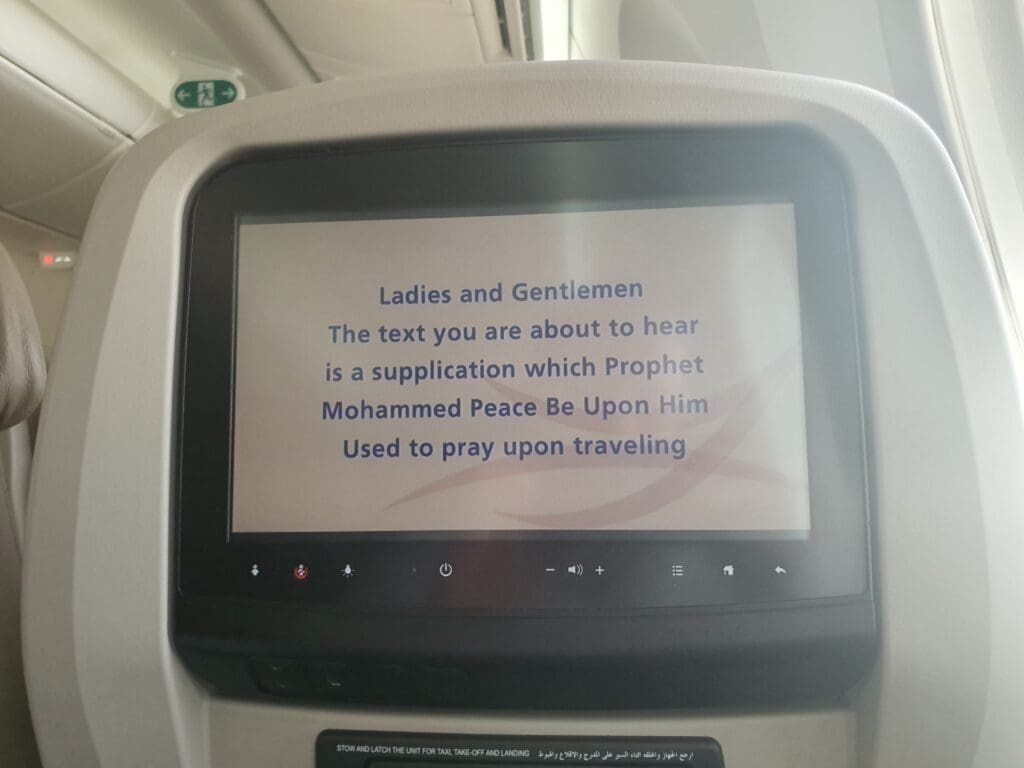
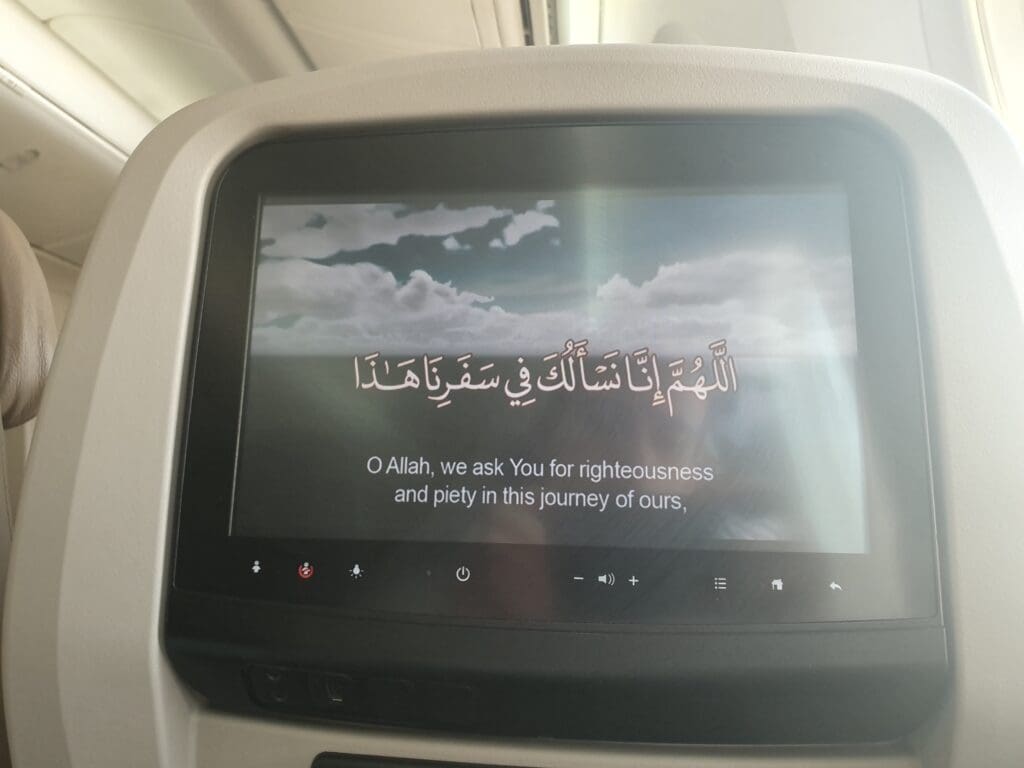
At 1000, the flight’s scheduled departure time came and went with no sign of movement. However, thanks to my position, I was able to see that the final two containers were still in the process of being loaded onto the aircraft, likely providing some explanation for the slight delay to our departure. As the last of this cargo entered the hold, inside the montage of Saudia’s destinations was replaced by the airline’s long and unremarkable safety video played first in Arabic and then again in English. Despite the fact that we were bound for France, neither French subtitles nor a French version of the safety video were offered. As these two long videos played, the crew passed through the cabin, collecting the rubbish from the pre-flight service and ensuring that all was secure for our departure. Five minutes after our scheduled departure time, the aircraft could be felt jolting backwards as we were pushed back before being carefully lined up on the taxiway centreline. During our pushback, a typically Dreamliner-esque symphony of electrical whirring and whining commenced before the aircraft’s two large GEnx-1B engines quietly powered into life. Following a short pause whilst the tug was disconnected, our aircraft left the bank of Saudia widebodies and began its journey to Jeddah’s Runway 34C. As we made our way to the runway, the preflight prayer rang out throughout the cabin, following which the inflight entertainment screens displayed a welcome screen and could be used.
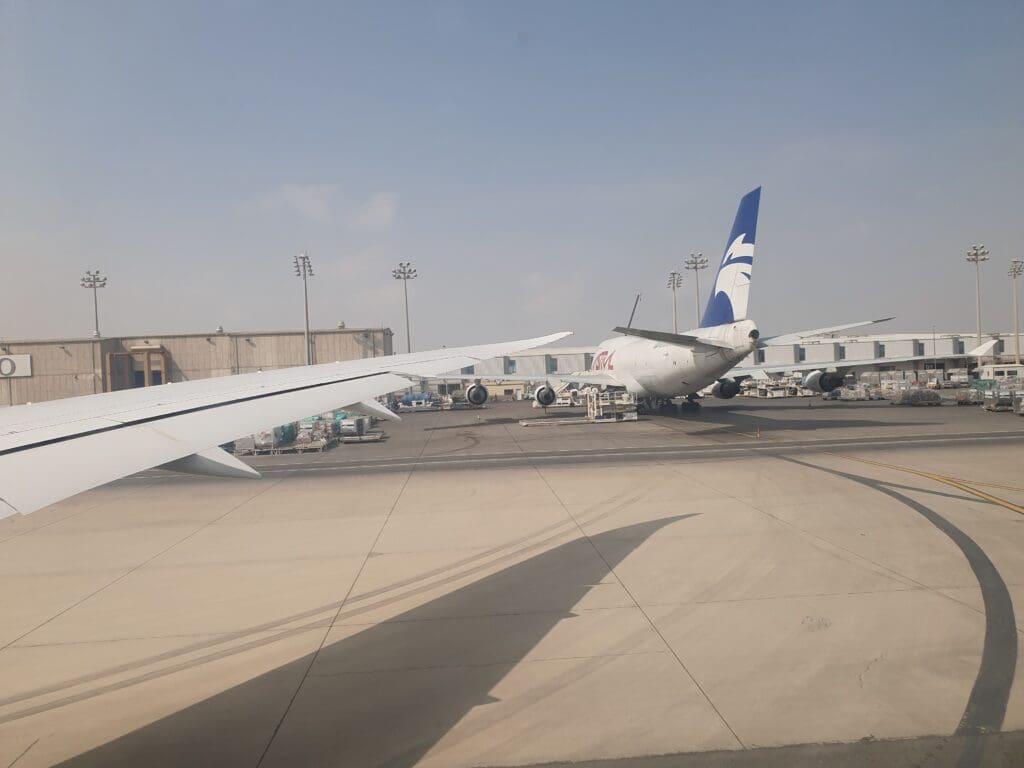
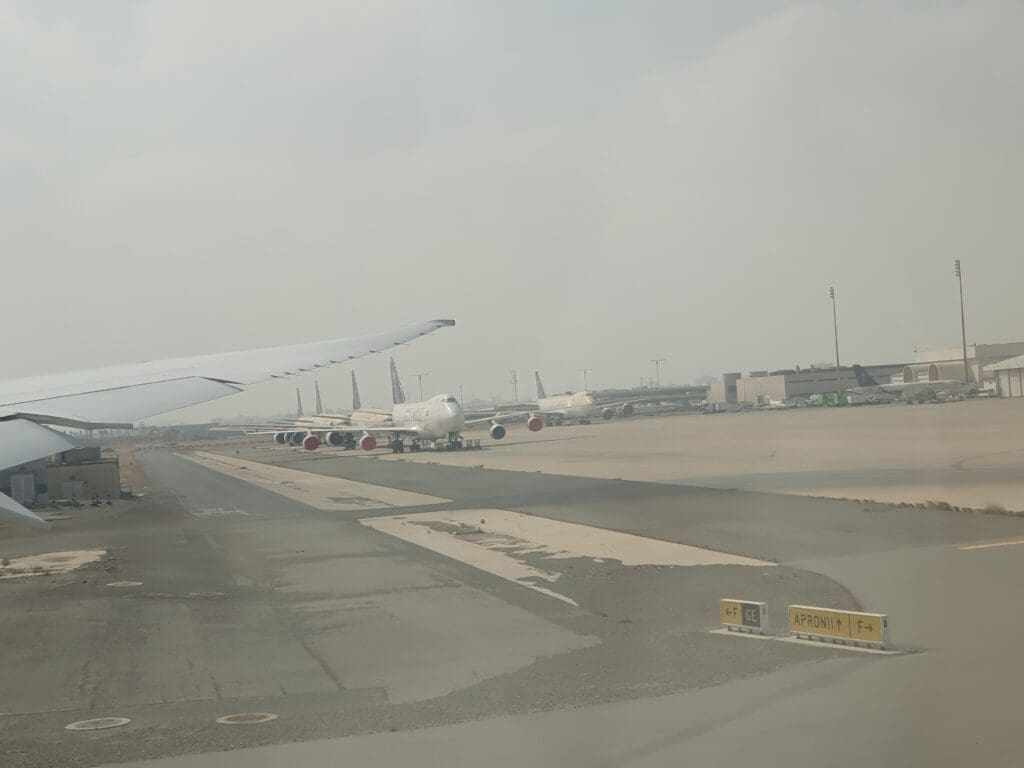
From my seat on the right-hand side of the aircraft, as we made our way to the runway I was given a decent view of a range of both active and stored aircraft. The first highlight of the journey came in the form of a pair of East Africa-bound aircraft waiting at the airport’s cargo area. These consisted of a weathered registered Boeing 747-400 freighter bound for Addis Ababa, with this operated by Air Atlantic Icelandic on behalf of Astral Aviation, whilst the other was a much newer Saudia Cargo Boeing 777F that would later jet off to Nairobi. The next stop on this short airport tour was Saudia’s maintenance area where a selection of Saudia widebodies could be seen before we reached one the airport’s storage areas. Whilst Jeddah’s other ‘boneyards’ are home to some interesting and classic types such as the Boeing 747SP and Lockheed Tristar, this one featured aircraft that have recently been retired from Saudia’s fleet. There four Boeing 777-200ERs, an Icelandic Boeing 747 freighter as well as an all-business PrivatAir Germany Airbus A319 that had previously operated for Saudia could be seen gathering dust, alongside a pair of Saudia Cargo Boeing 747-8Fs in short-term storage.

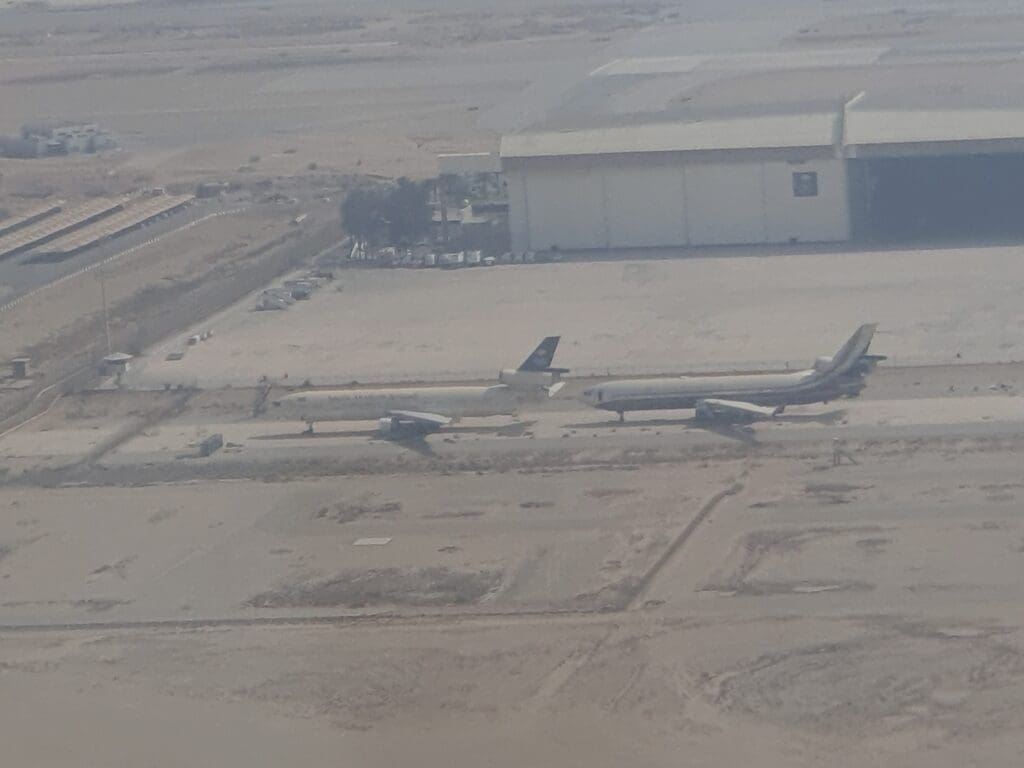
Ten minutes after commencing our taxi, the Dreamliner arrived at Runway 34C and came to a gentle halt. A few moments later, the Captain’s voice filled the cabin, apologising for the delay to our departure and noting that the aircraft was third in line to use the runway and ‘inshallah’ (god willing) the aircraft would depart as soon as possible. However just as he said this, the faint voice of air traffic control could be heard in the background and the Captain suddenly changed his tone and corrected himself noting that we would depart immediately, ending this by informing the crew to take their seats. The aircraft then quickly taxied onto the runway and commenced a powerful rolling takeoff, first speeding past the new terminal before soon rotating into the hazy skies. Whilst those on the left hand side would have been given a decent view of much of the airport, as we climbed up I caught sight of only a few aircraft. These consisted of a pair of ex-Saudi Royal Flight McDonnell Douglas MD-11s that will almost certainly take to the skies again alongside the faint outlines of the Royal Saudi Arabian Air Force Herculeses in the distance.
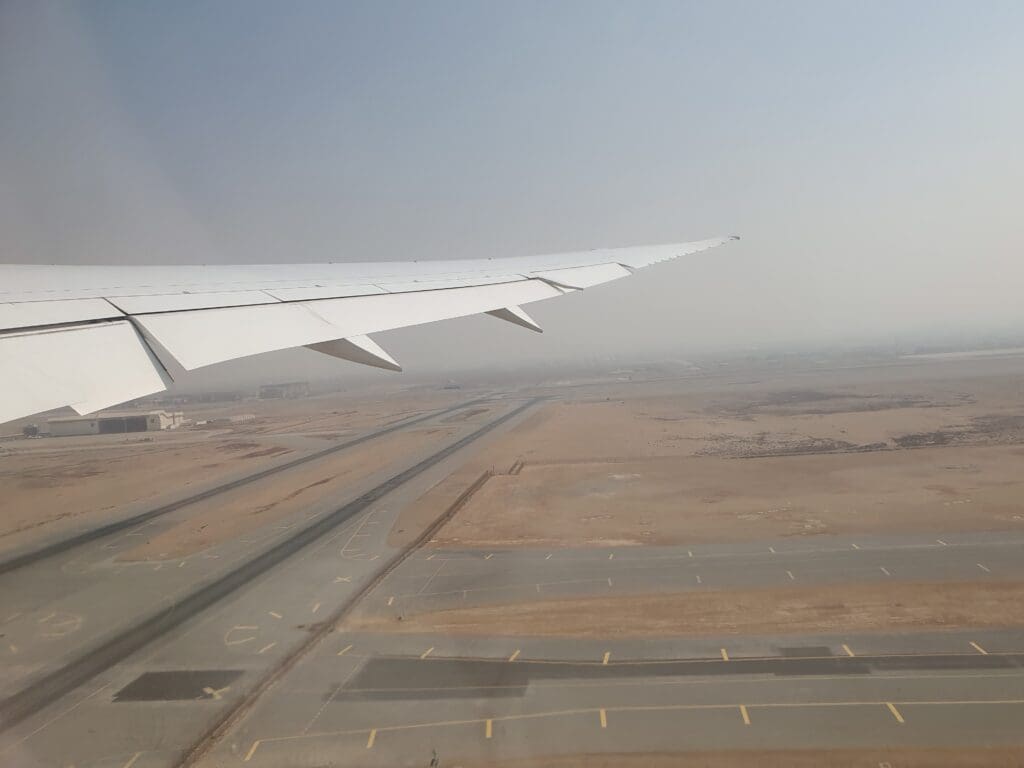
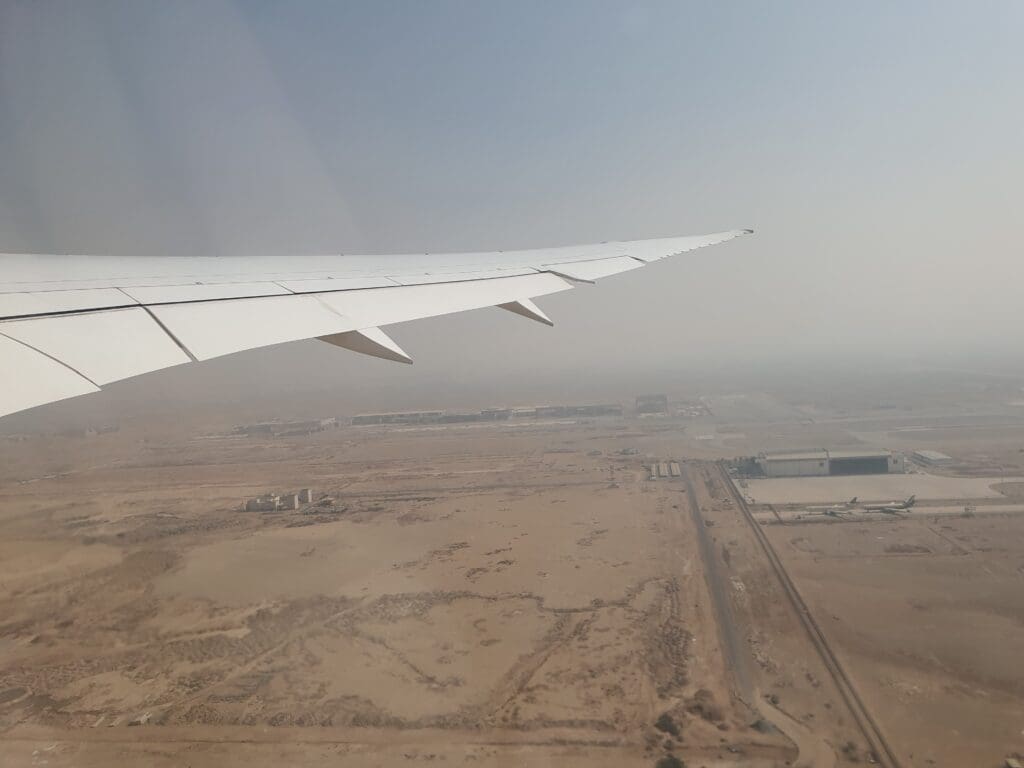
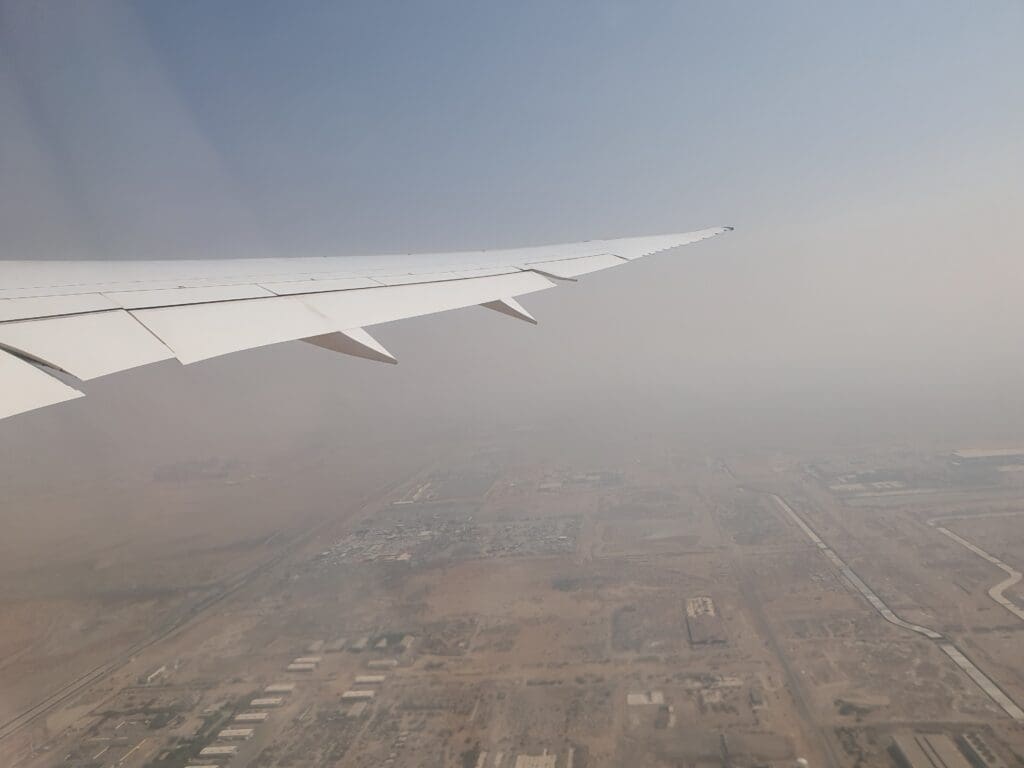
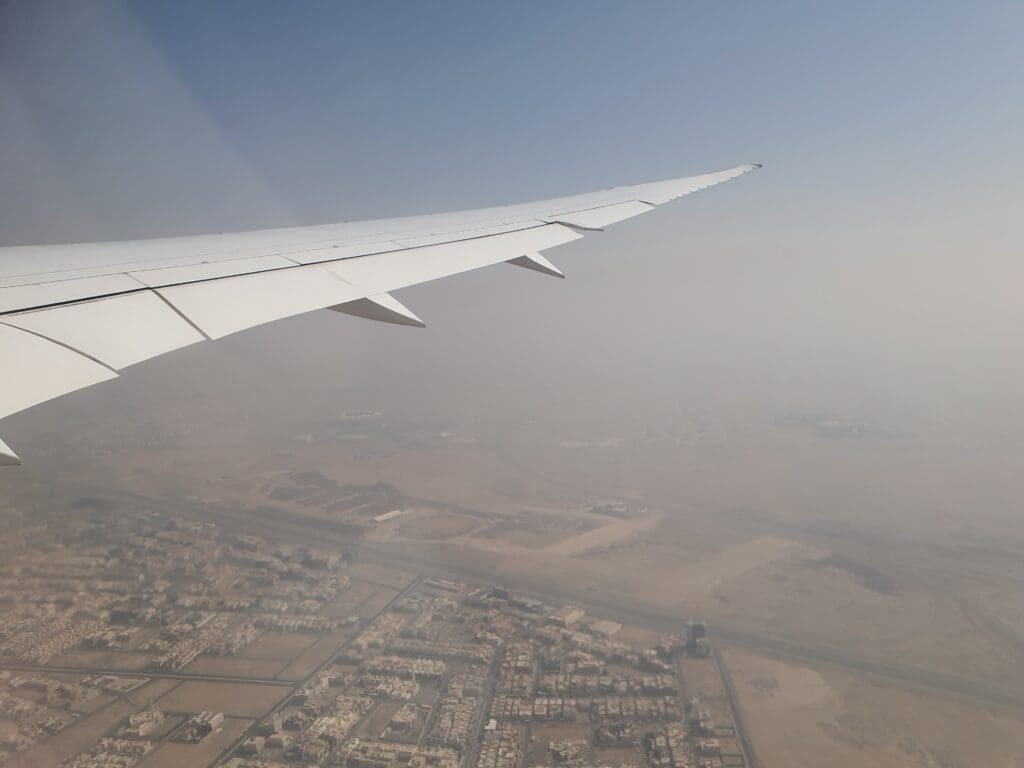
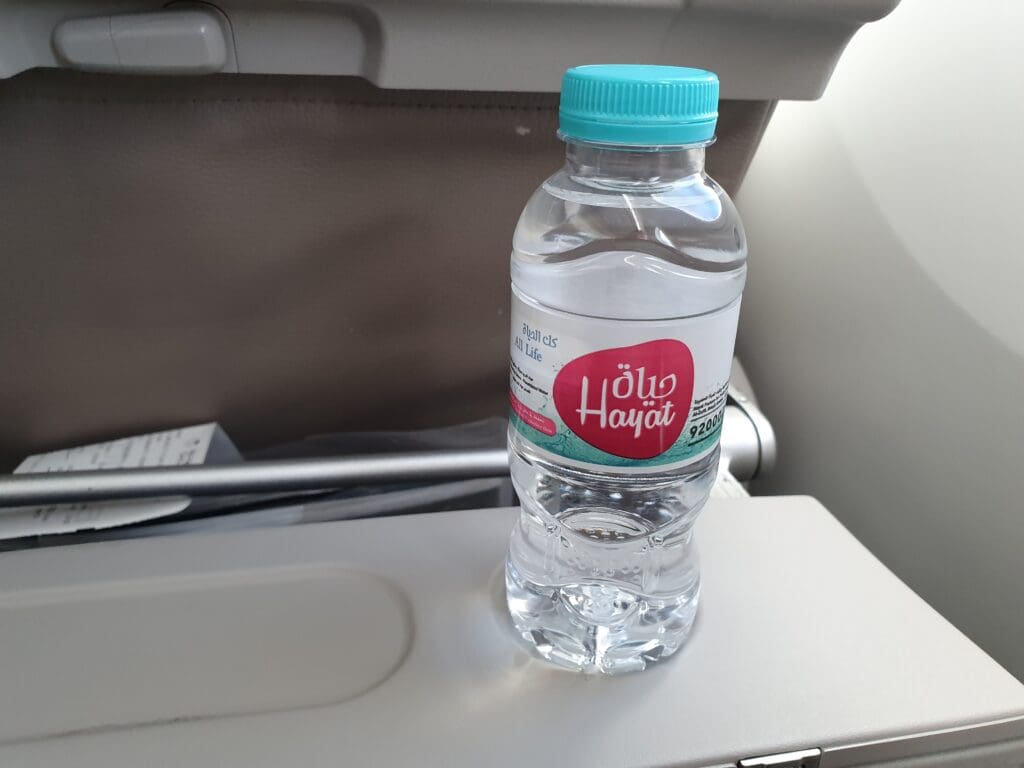
Once the grand expanse of Jeddah Airport slipped out of view, the aircraft gently climbed over the low-rise residential areas that surround the airport. A few moments later, Saudi Arabia’s second largest stadium came into view, the King Abdullah Sport City Stadium, home to football clubs Al-Ahli and Al-Ittihad. This was followed by a glimpse of the end of Obhur Creek before the haze below temporarily prevented any views of the country as we headed towards the coastline. As we passed through 10,000 feet our aircraft crossed the coastline and headed out over the Red Sea, at which point thanks to the smooth climb, the seatbelt signs were extinguished. As soon as these pinged off, an announcement was made giving the usual advice regarding keeping seatbelts fastened as well as informing passengers that the crew were to pass through the cabin spraying insecticide, reassuring all that this would be entirely harmless. Once this compulsory task was finished, the crew passed around handing out 200ml bottles of water to all passengers. As this was being done, the Dreamliner’s famous window dimming feature was utilised by the crew who set this to the darkest shade possible. Fortunately, this could be overridden and the crew did not seem to take any issue with those who wished to look at the outside world.
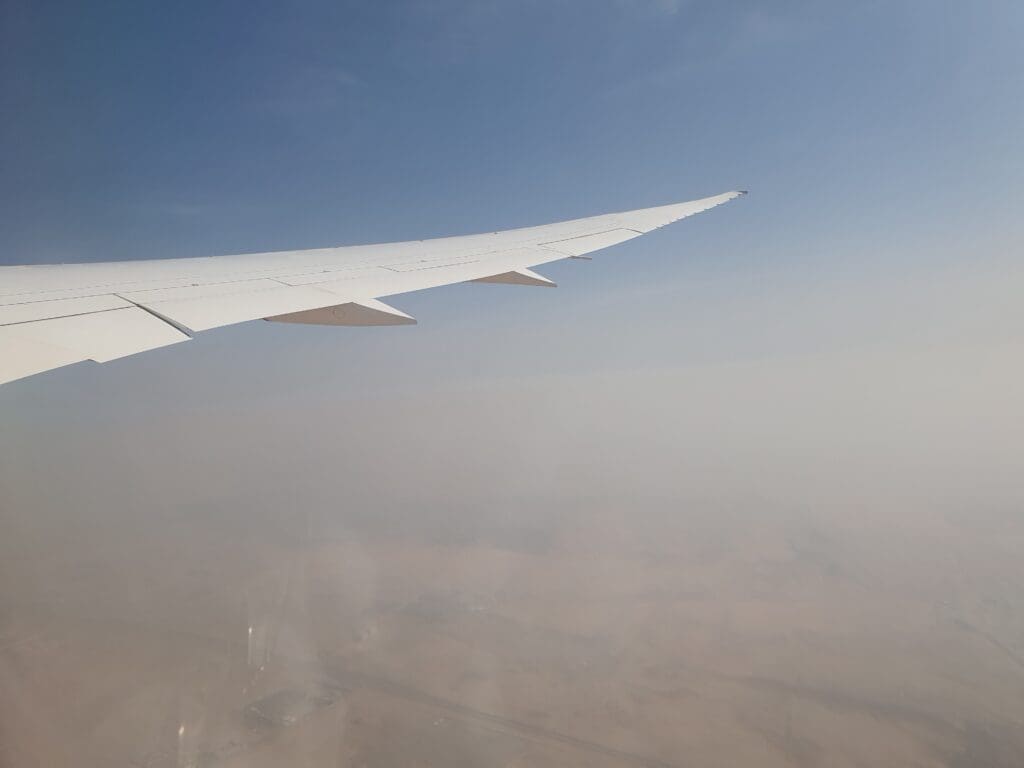
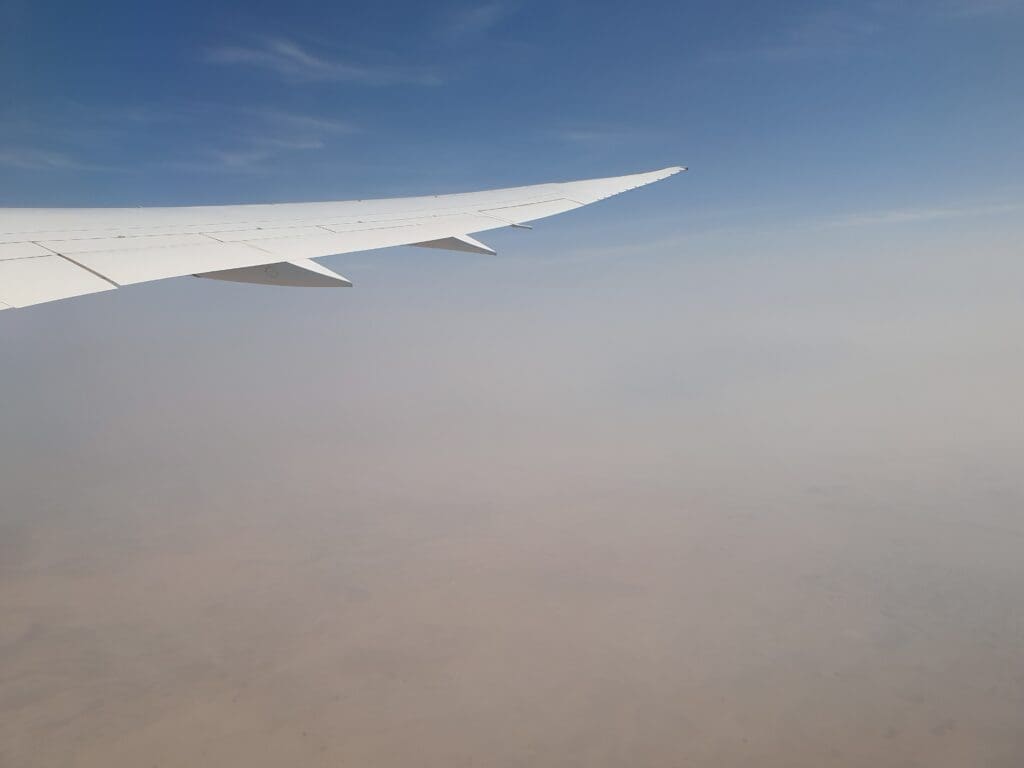
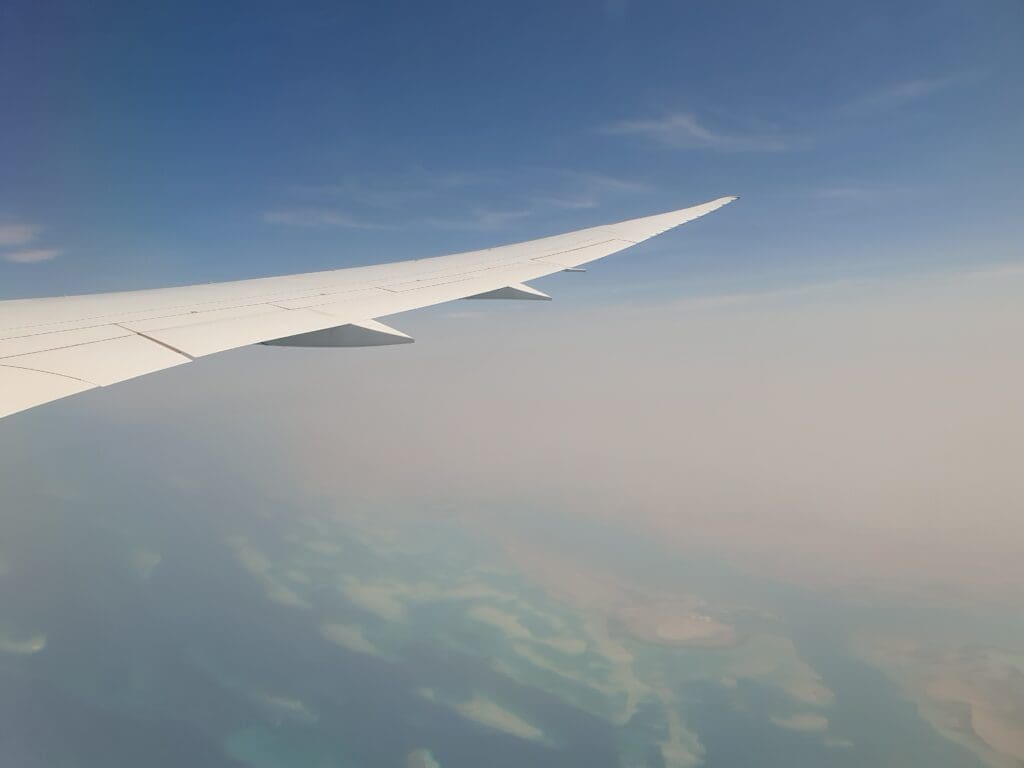
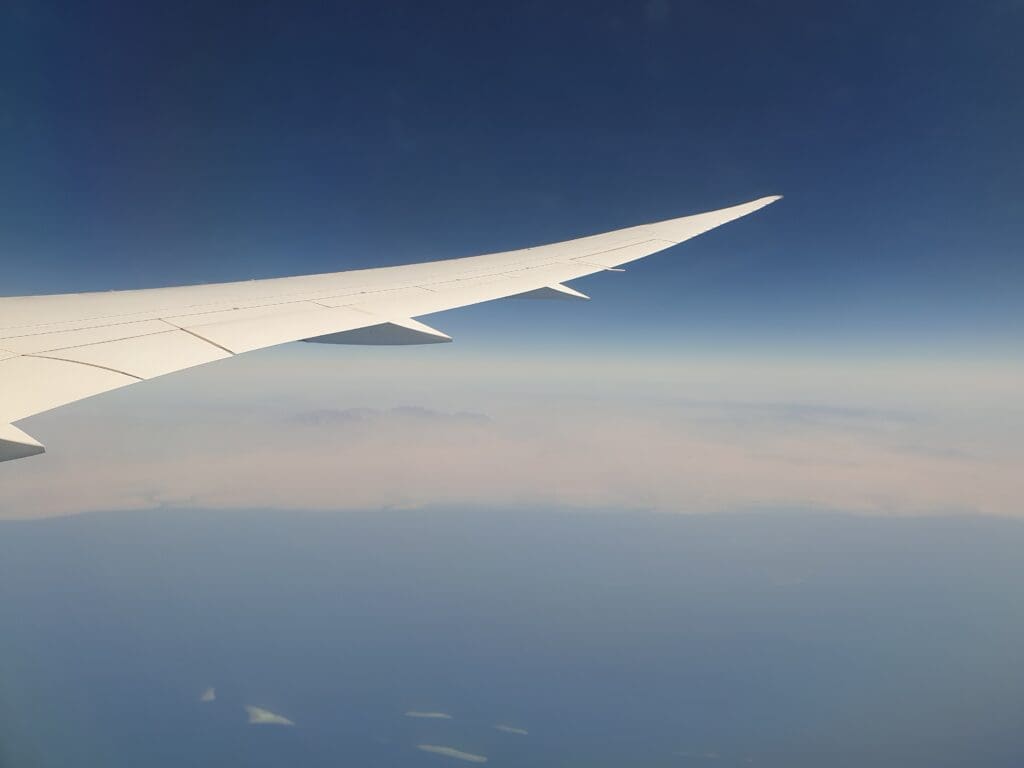
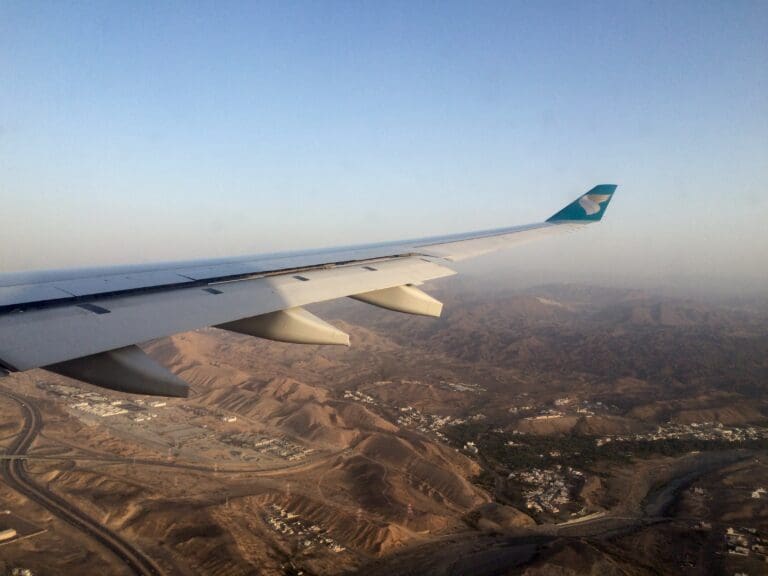
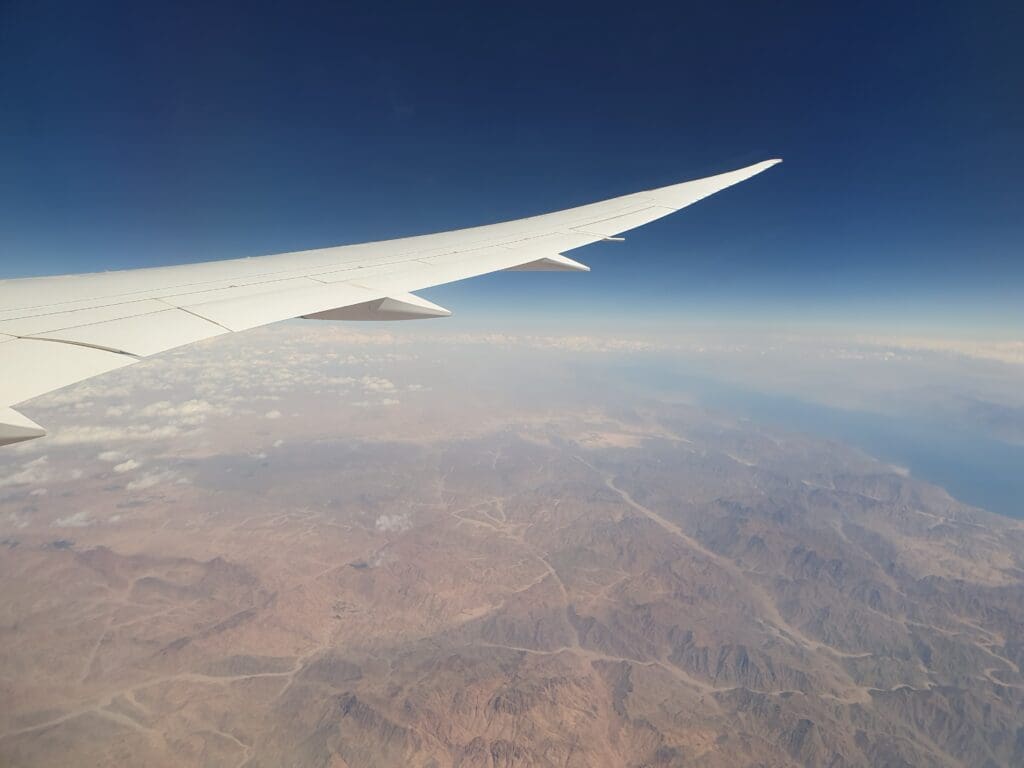
As we climbed towards our initial cruising altitude over the Red Sea, the Boeing 787 flew parallel with Saudi Arabia’s western coastline. Seeing as the intense haze had initially prevented any decent views of the coast, instead ensuring that the border between the sandy-coloured landscape and turquoise waters of the Red Sea was only just visible, I was pleased to find this magically dissipate as we arrived at 38,000 feet. This allowed for absolutely superb views of the coastal areas of Medina Province consisting of sandy deserts, rocky mountains and clusters of coastal islands plus the occasional town.
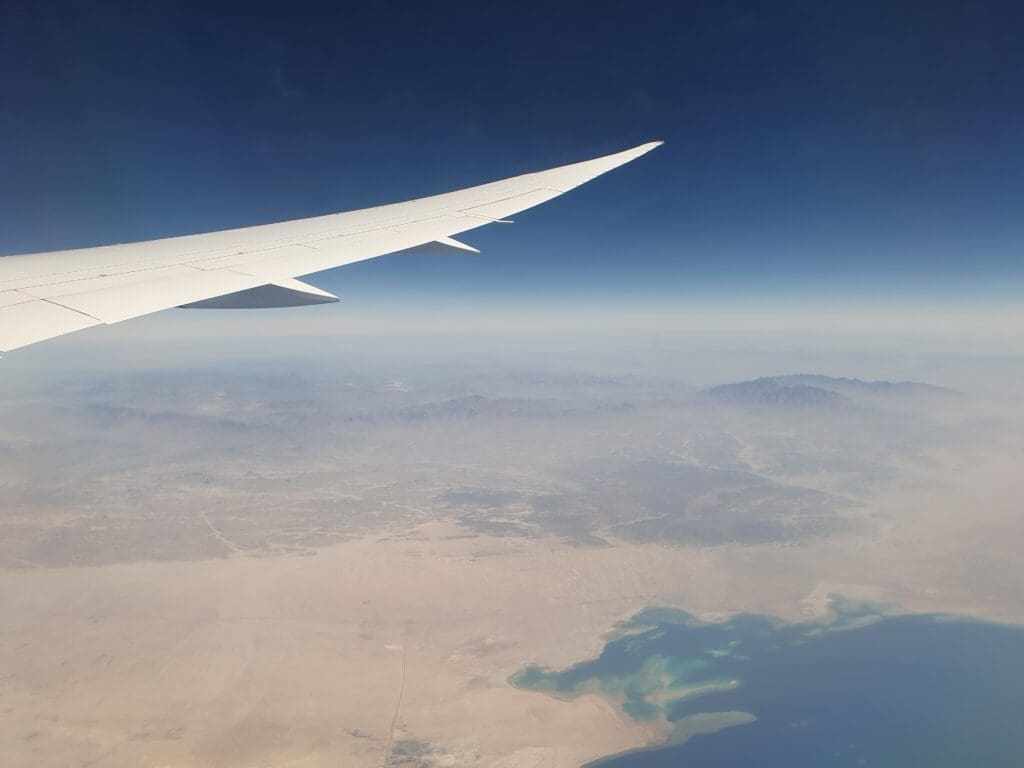
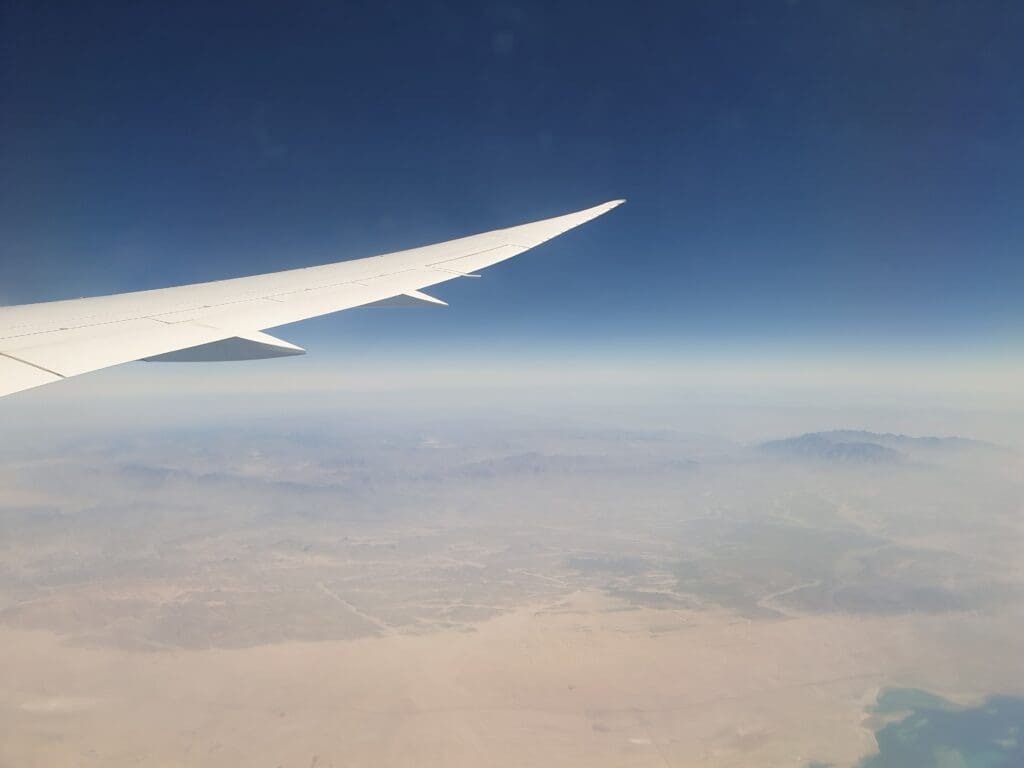
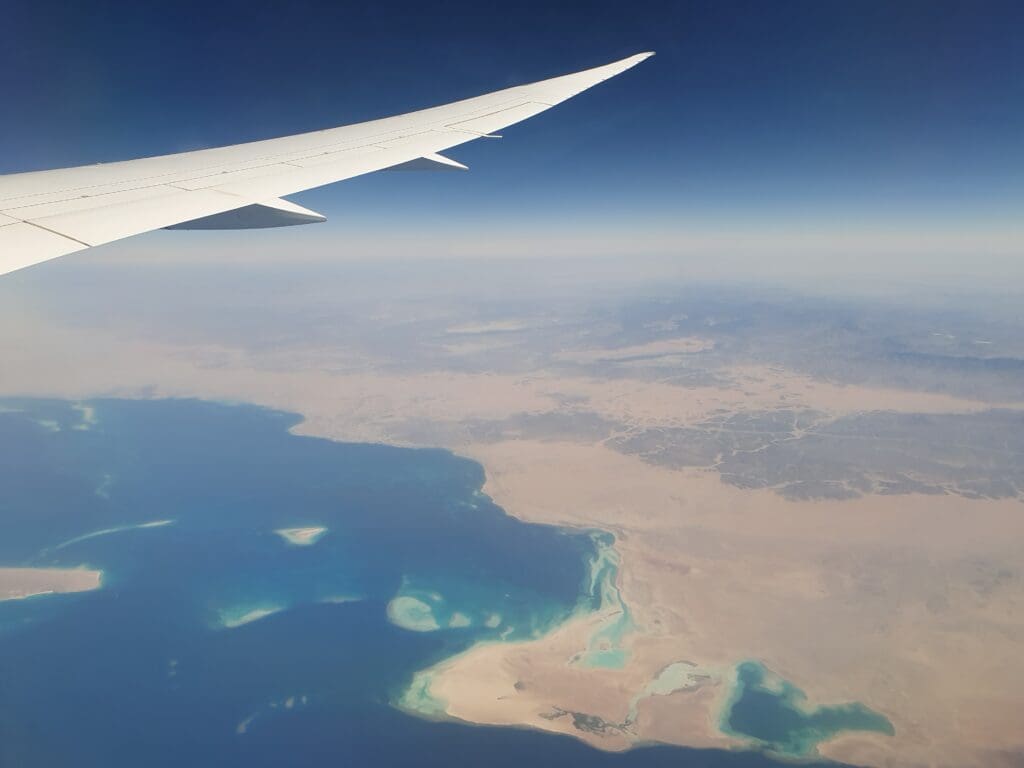
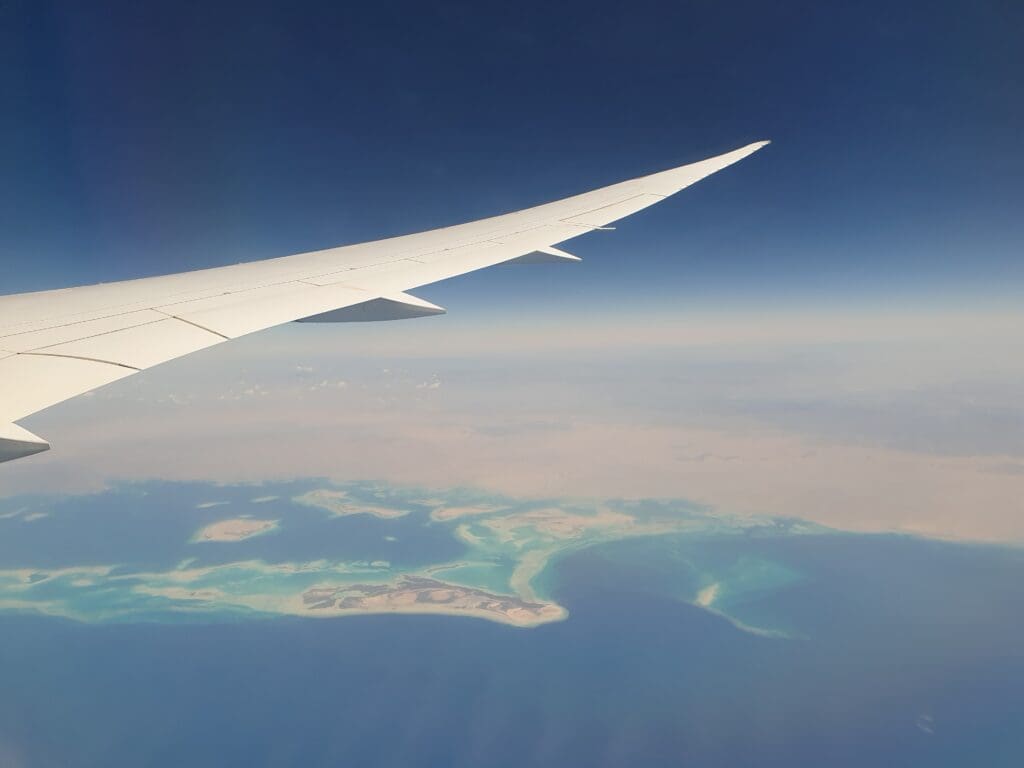
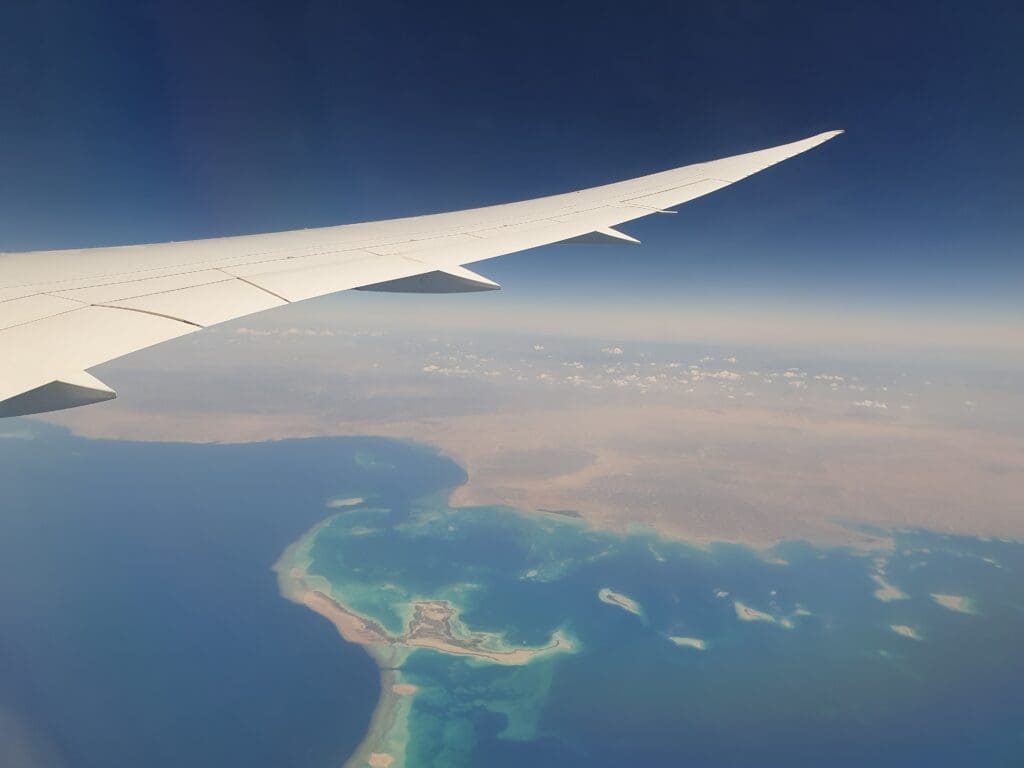
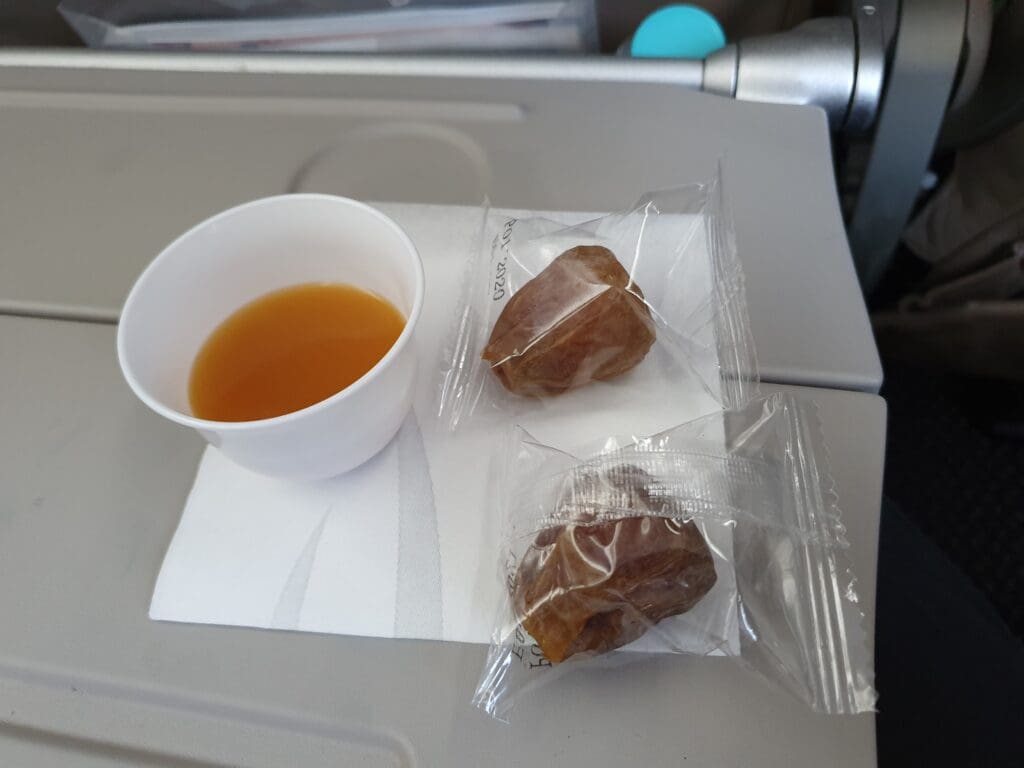
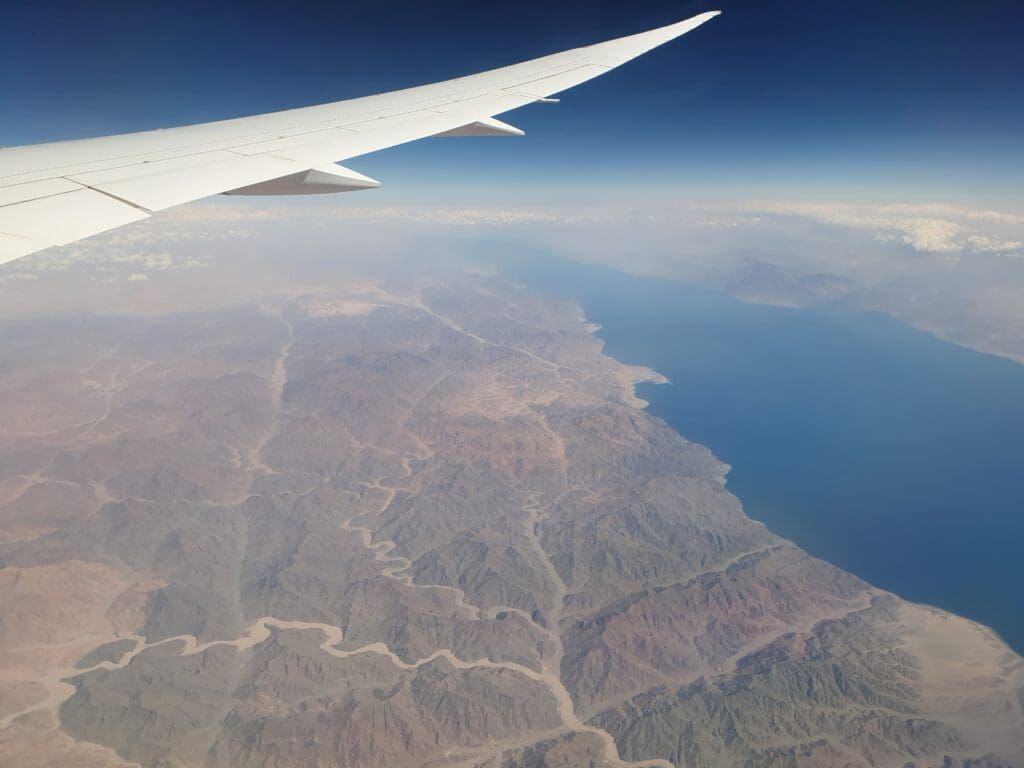
Despite being glued to the window for much of the flight’s early stages, I noticed the rolling out of two drinks carts to the front of the cabin at 1100. These worked their way rearwards with one steward assigned to each cart. As these two crew members entered the rear Guest Class cabin, I was impressed that rather than just serving passengers with a smile, each appeared to be making an effort to engage passengers in light-hearted conversation in both Arabic and English. Upon reaching my row, like virtually everybody else in front of me, I opted for an Arabic coffee which was poured into a small plastic cup from a traditional-style metal jug. As the crew member cautiously passed this to me, I was asked whether I had sampled Arabic coffee before. Whilst it was my first time sampling this drink, I was a little too embarrassed to admit this and claimed it wasn’t, after which I was handed two packaged dates and the response of ‘I hope you enjoy!’. Not only was I impressed by the warm and friendly service, but both the coffee and dates were delicious and a nice change from the more common offering of crackers or nuts. Not too long after I had finished this delicious first offering, the Dreamliner left the Saudi coast behind before the islands of Sanafir and Tiran popped into view as we crossed over the Gulf of Aqaba and headed into Egyptian airspace. Just over an hour after our departure from Jeddah, the aircraft made landfall to the north of the popular resort city of Sharm El Sheikh before heading out over the mountainous Sinai Peninsula.
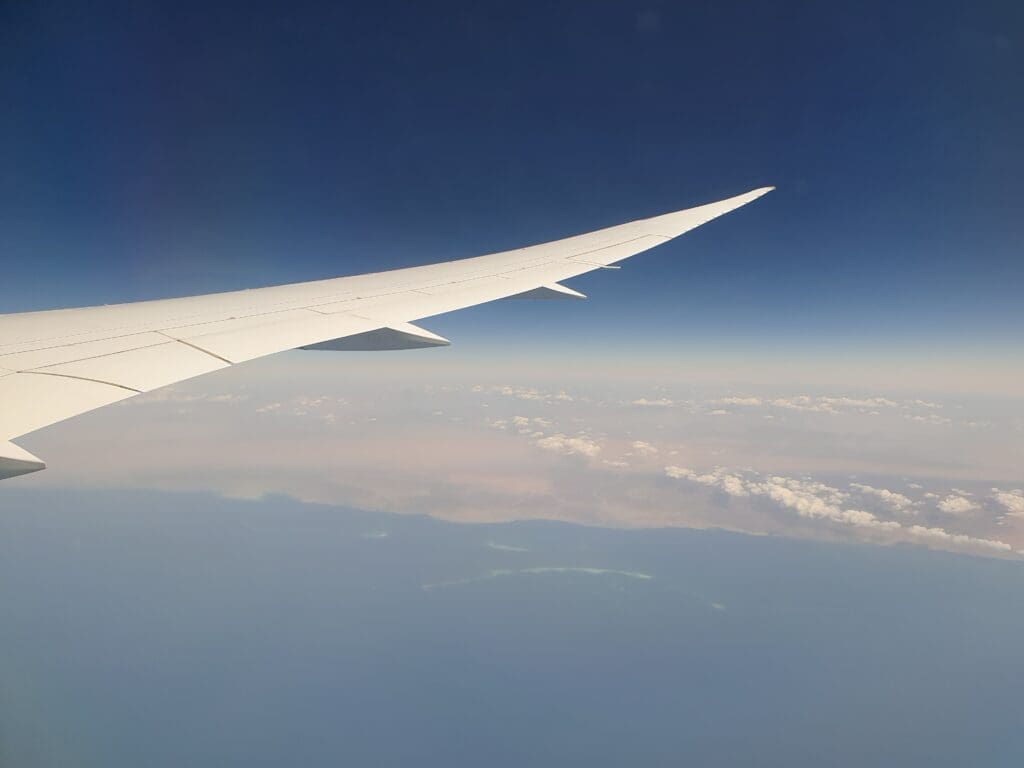
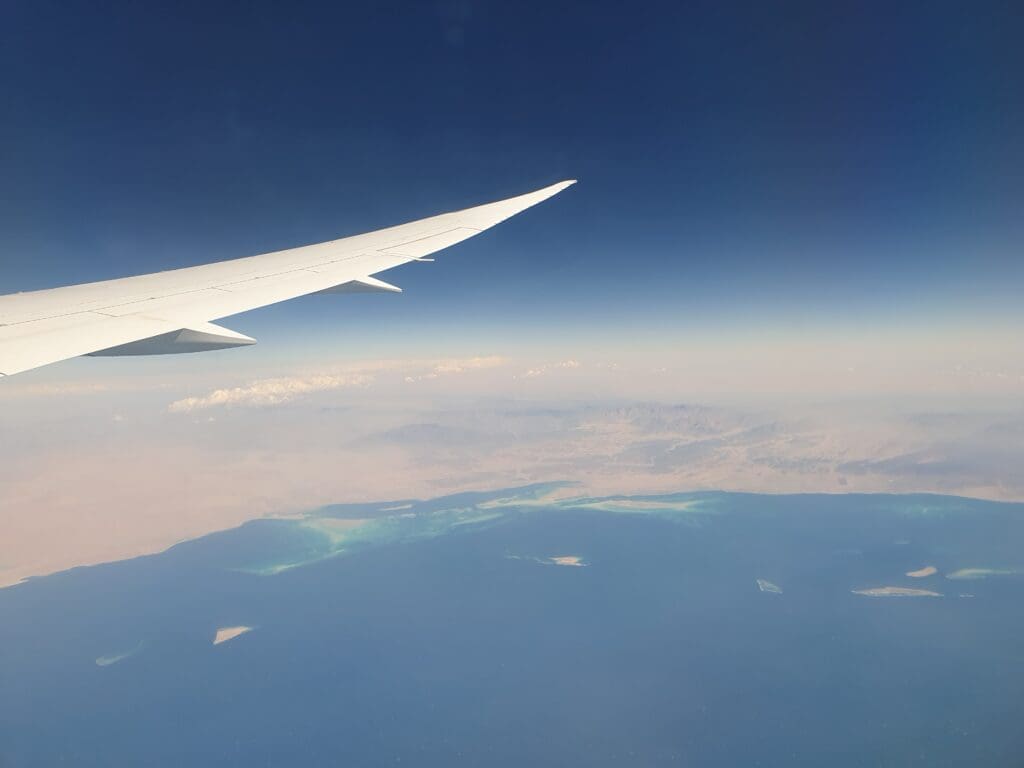
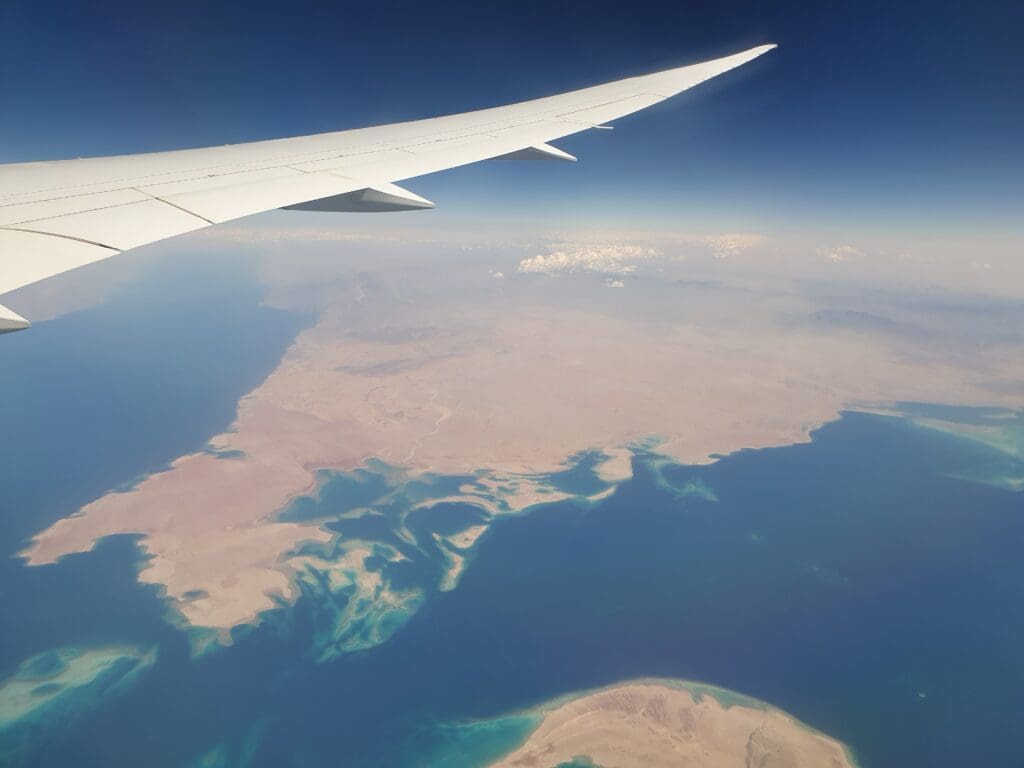
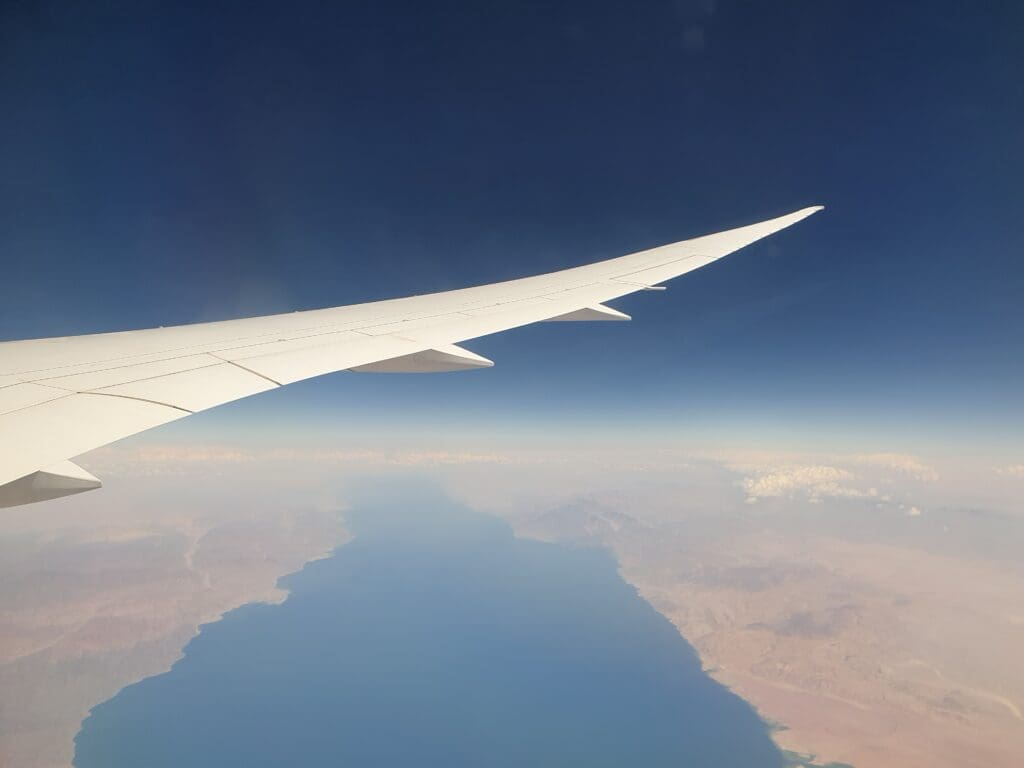
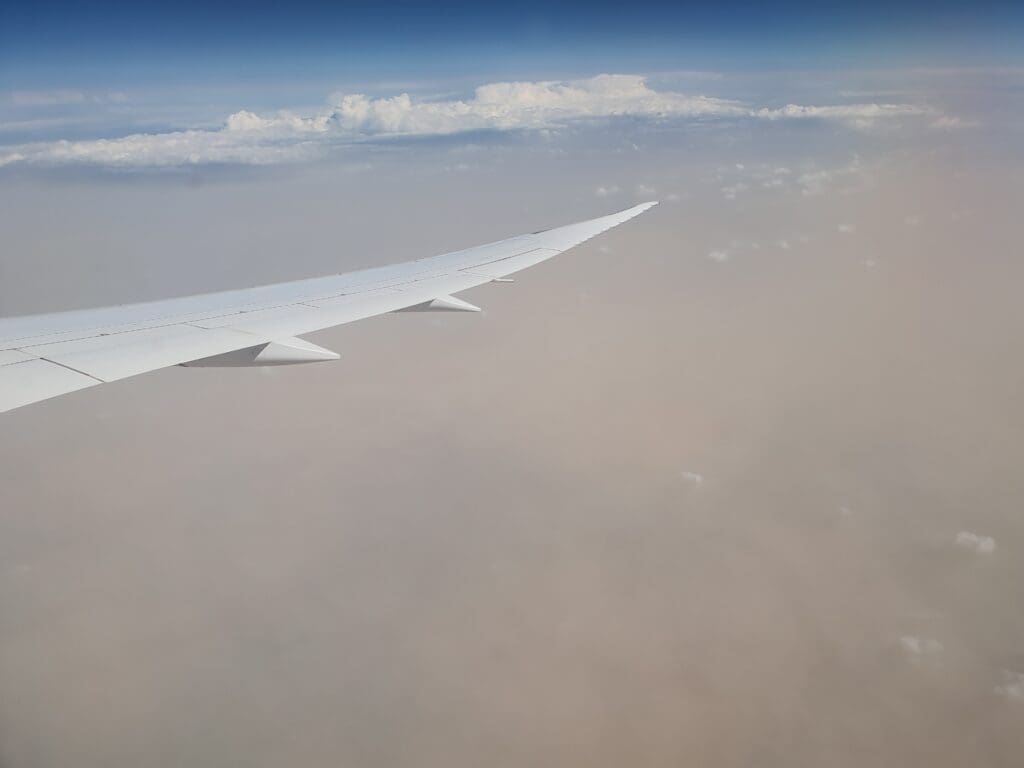
Not too long after we arrived in Egyptian airspace, the mountains of the Sinai Peninsula flattened and a thin cloud layer appeared preventing any views of the country as we crossed the Gulf of Suez. Whilst this meant that I was no longer able to occupy my time by admiring the views below, the commencement of the lunch service gave me something else to focus on.
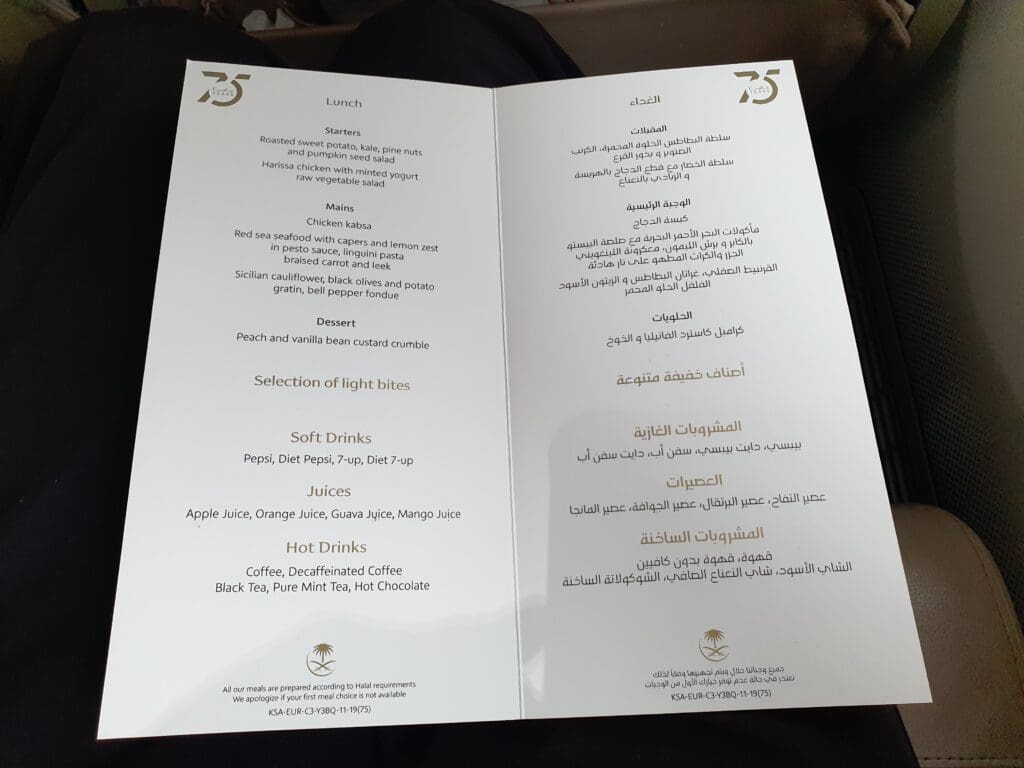
According to the menu, three different options were available that lunchtime, consisting of Saudi Arabia’s national dish, Chicken Kabsa, alongside seafood (Red Sea seafood with pasta) and a vegetarian (vegetables and potato gratin) dish. By the time the flight attendant reached my row, I had already made my mind up and requested the chicken dish. After asking for this I was a little surprised when a tablecloth was placed over my tray table before the crew member pulled out two ‘starters’ from the cart and asked for my preference. Opting for the harissa chicken, this was placed on the tray table followed by the main which had been placed on a dish. I was then handed a packet of three small round pitta breads and a packet containing plastic cutlery. Lastly, I opted for a Pepsi which was poured into a plastic cup and placed on my tray table.
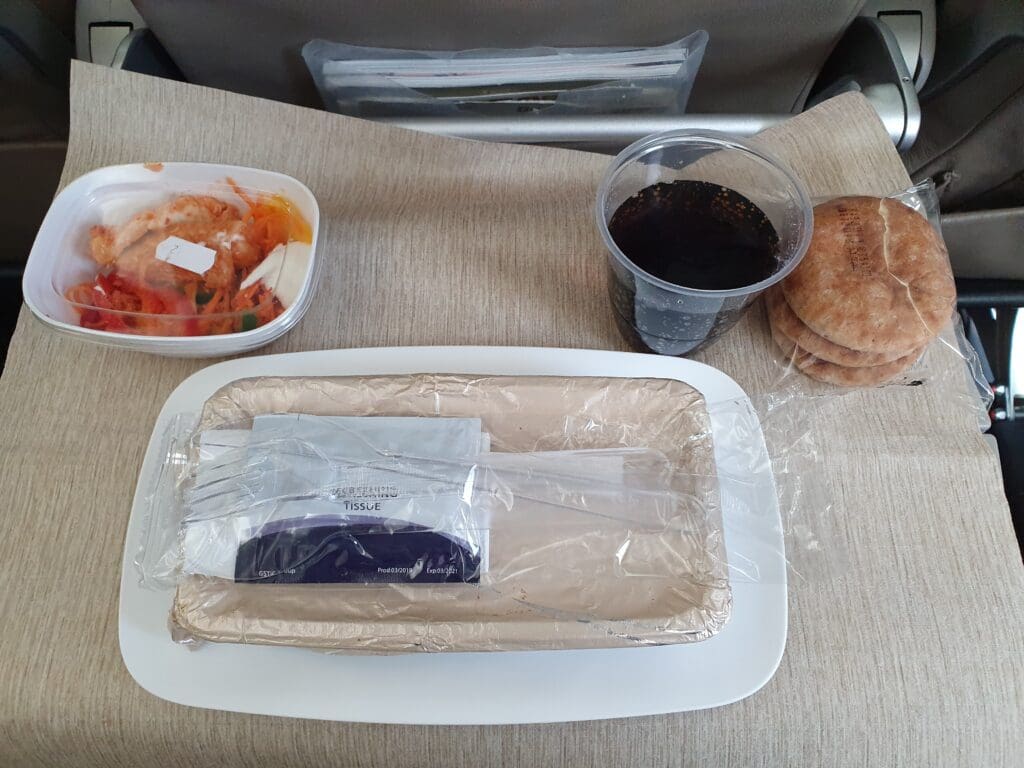
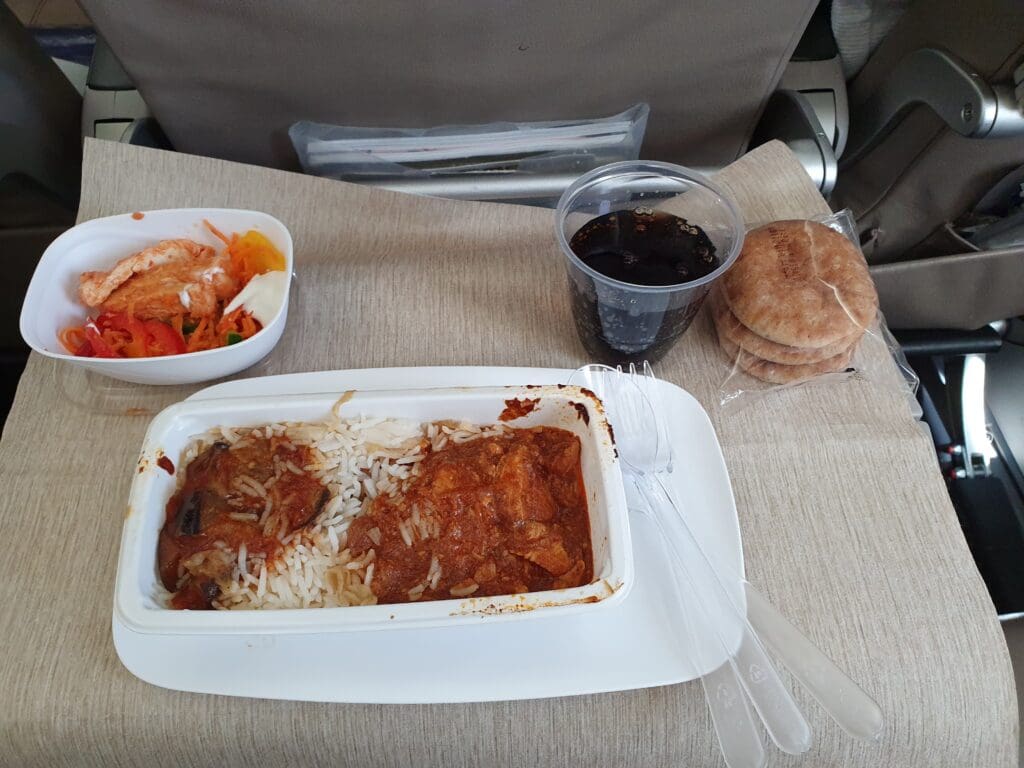
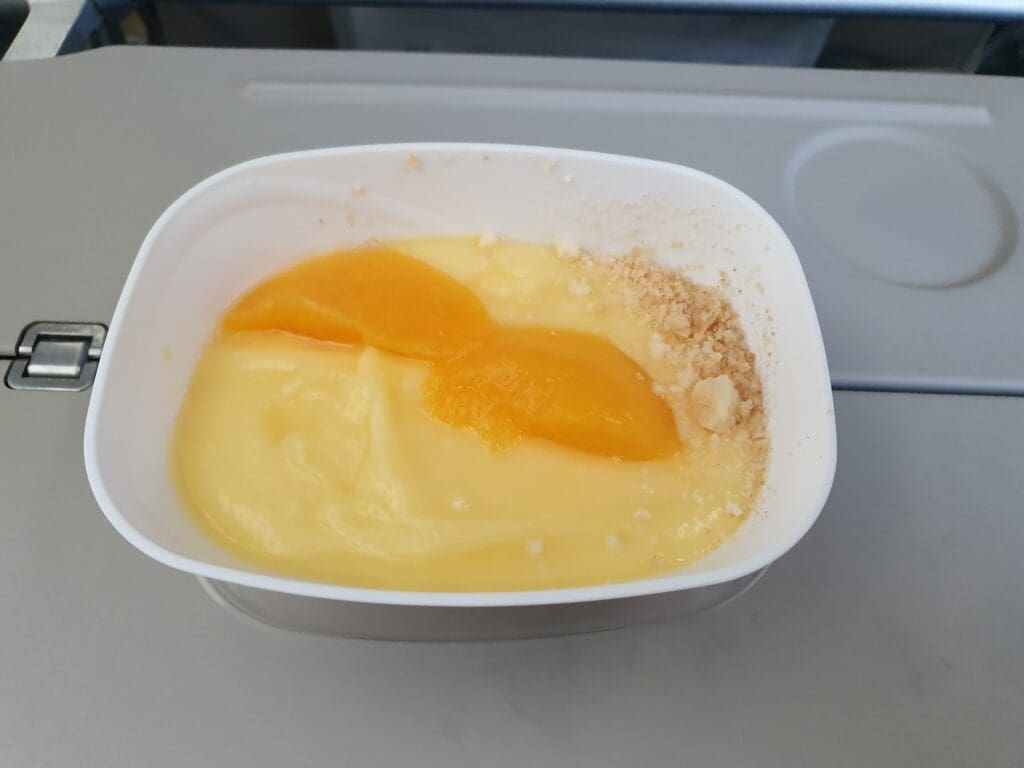
Seeing things in a positive light, the ‘non-standard’ service allowed for some personal touches to be given, allowing the passenger to select their starter and encouraging dialogue between the crew and passengers. Plus, compared to the simple handing out of a tray, I cannot deny that the table cover did make things seem a little fancier than usual. Yet, overlooking this, the meal seemed a little lacking when compared to the offerings of many other full service airlines. In addition, whilst until recently Saudia appeared to hand out metal cutlery to Guest Class passengers, this appears to have been entirely scrapped with only plastic cutlery handed out. Slight complaints over, the quality of the main dish and the starter were pretty good, as was peach and vanilla custard crumble which was handed out about fifteen minutes after the main meal. Utilising all available space, once I had polished everything off, I moved the remains to the tray table of the aisle seat and passed out for a solid thirty minutes or so.
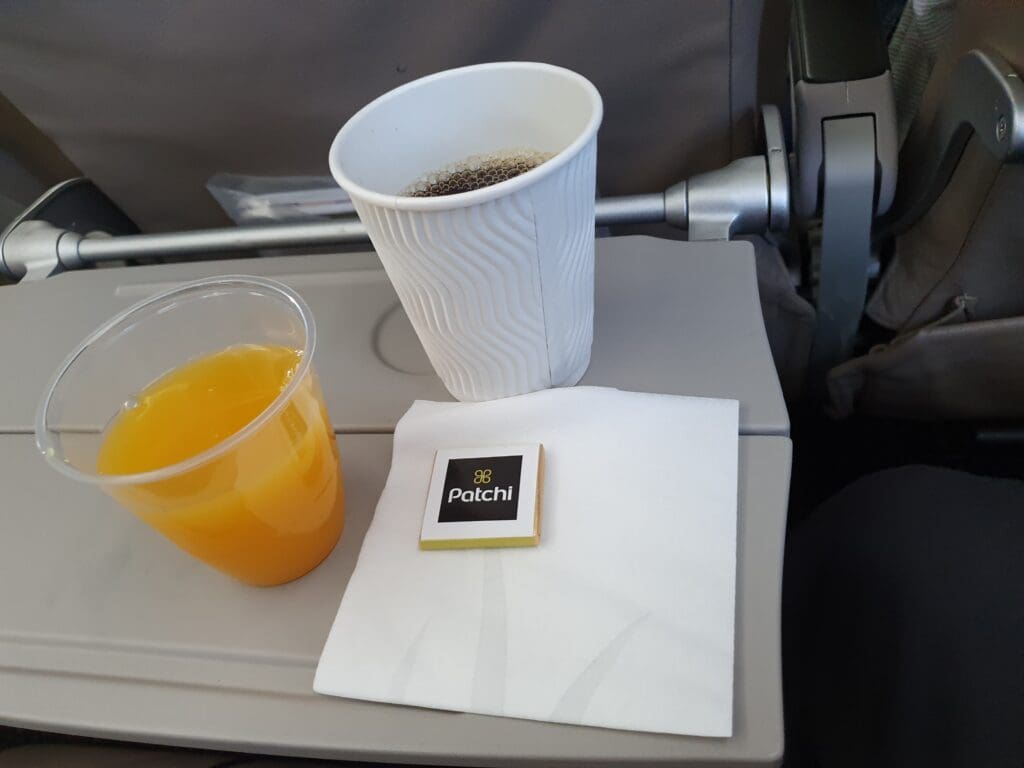
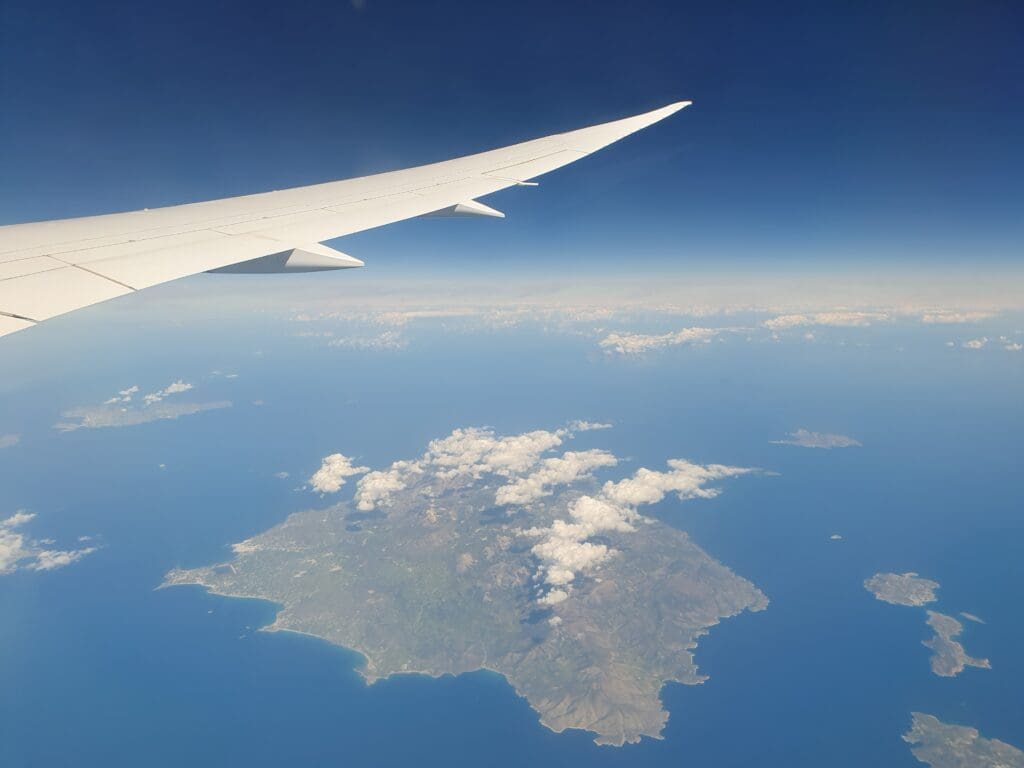
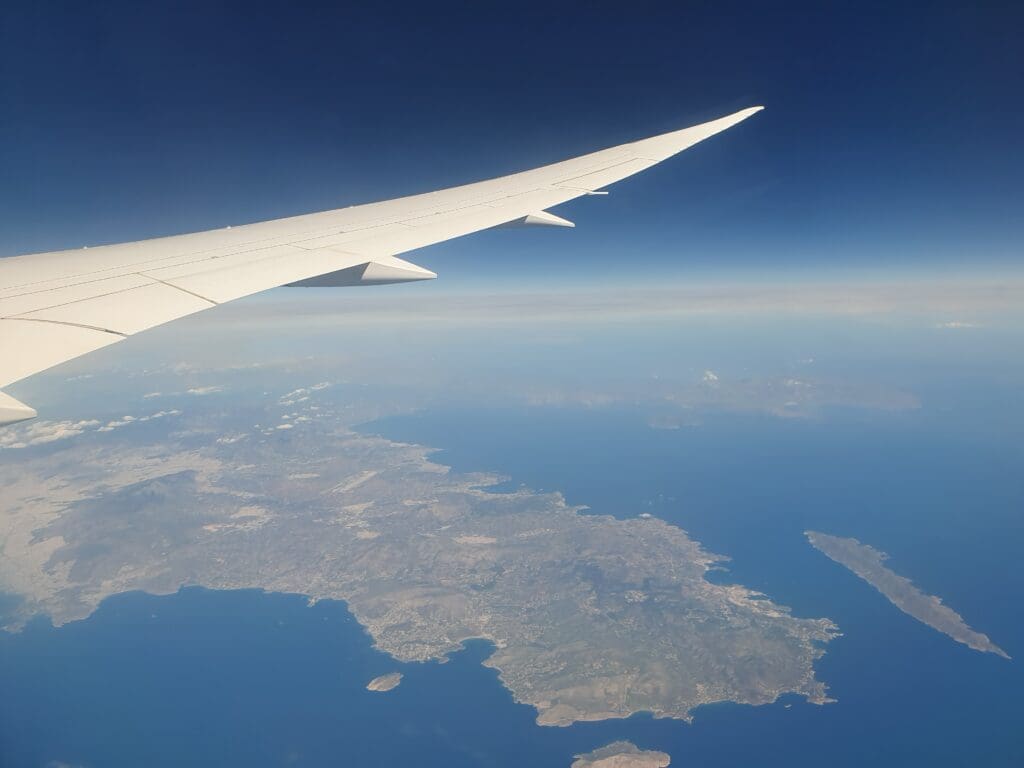
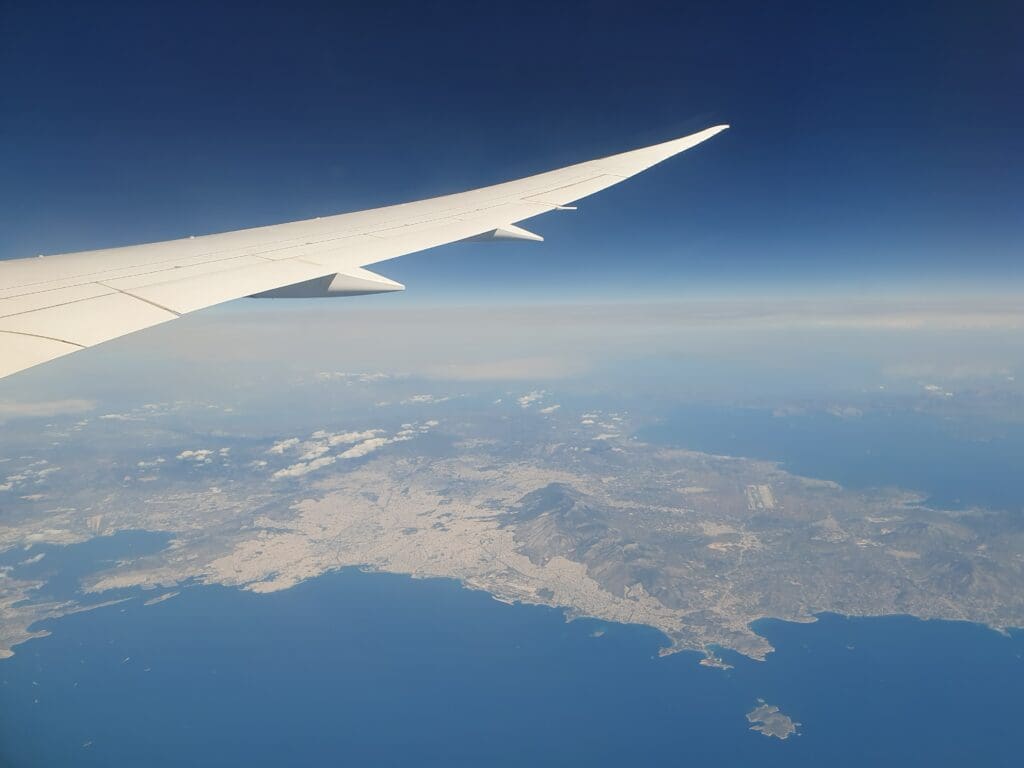
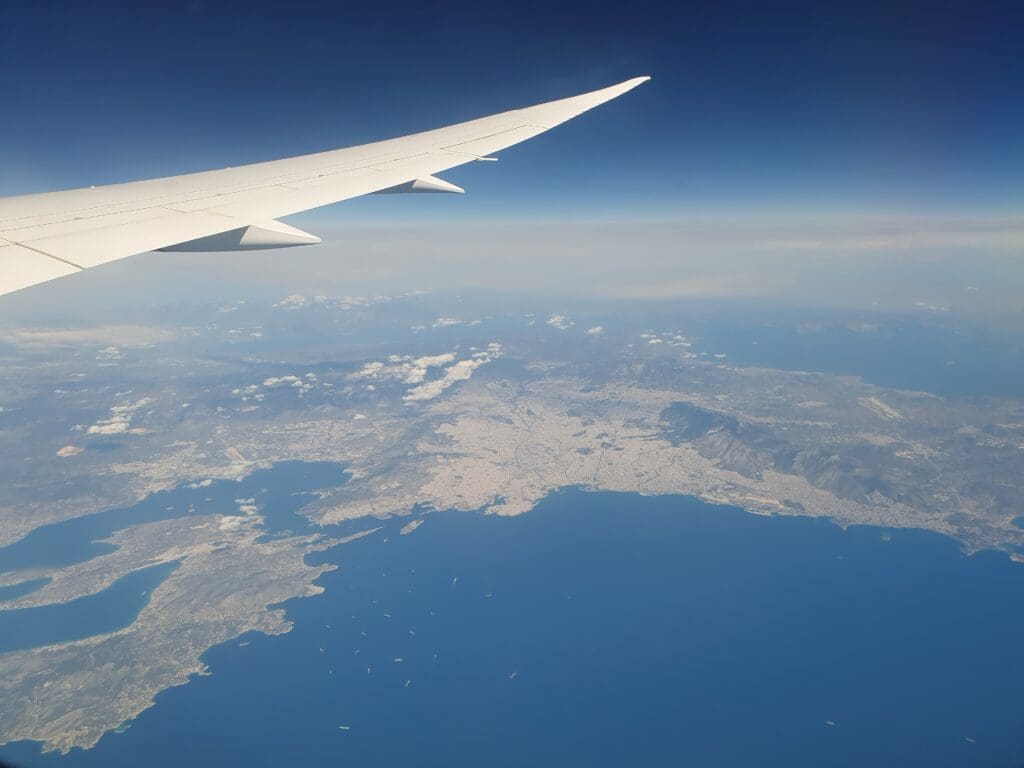
By the time I awoke, the aircraft had risen up to 40,000 feet and was now cruising northwards over the Mediterranean. By complete chance, I had been fortunate enough to wake up just as the post-lunch drinks round reached my row. During this, I opted for a mango juice and a black coffee which were handed to me with a smile alongside a small square of chocolate. As I sipped these drinks, I noticed that the thin layer of cloud had parted, revealing the scenic small Dodecanese Islands that sit in the Aegean Sea between Greece and Turkey. As we sped northwards towards the Greek mainland, these transformed into the larger islands of the Cyclades group, popular with archaeologists and summer sunseekers alike and included Amorgos, Naxos and Paros. At 1320 Saudi time, almost three hours after our departure, Greece’s mainland popped into view which was almost immediately followed by the urban sprawl of Athens. Unfortunately, unsure where to look, I failed to spot the city’s most famous site, the Parthenon, however, I did manage to note five different airfields dotted around the city.

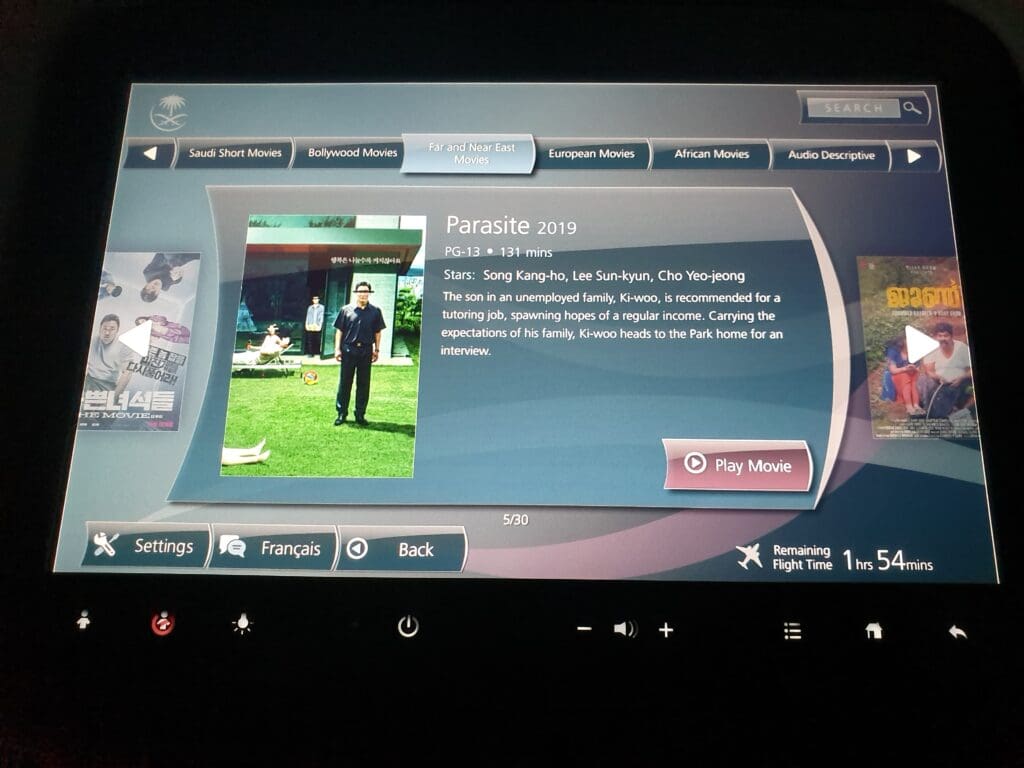
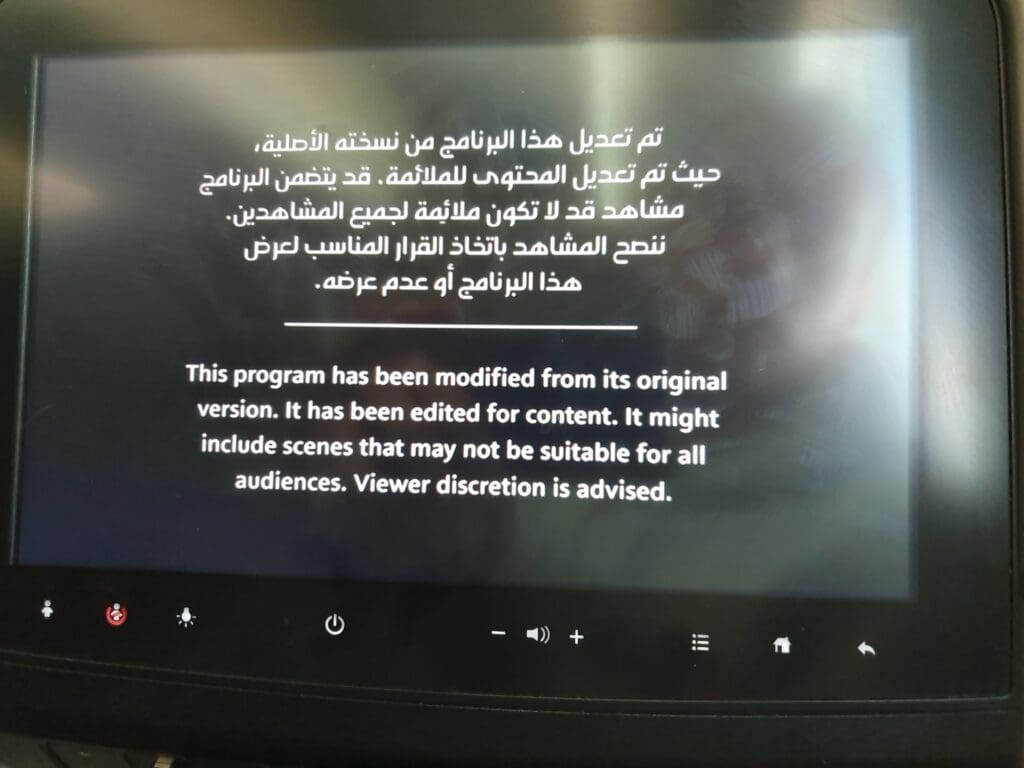
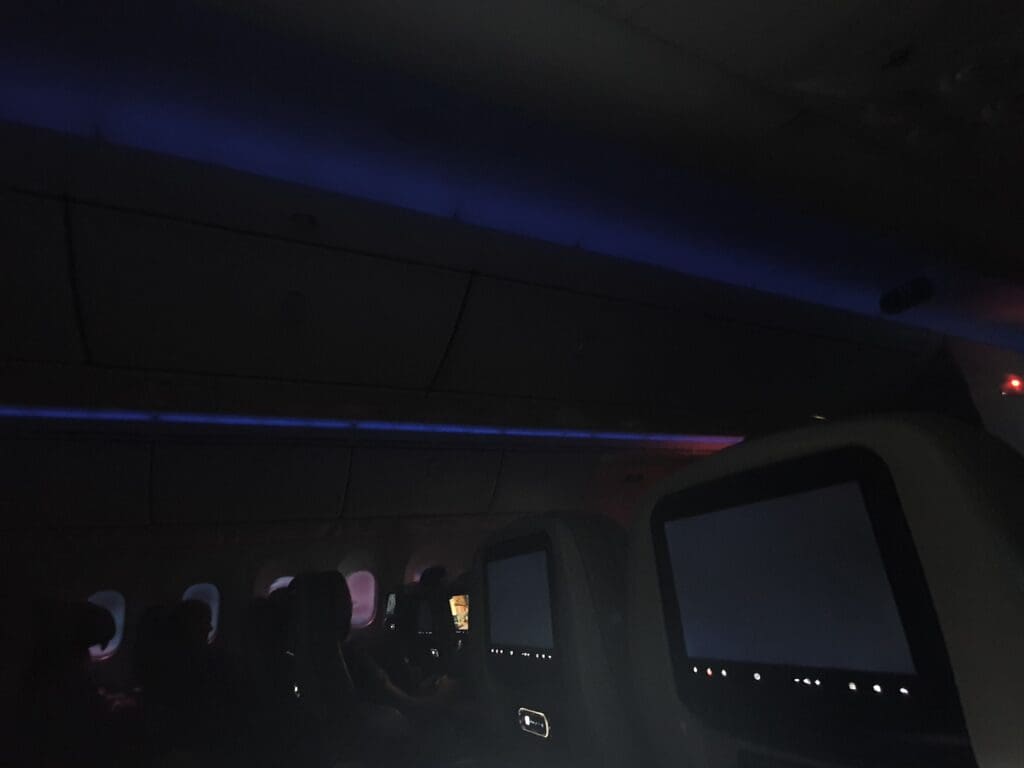
By the time I had a brief flick through Saudia’s magazine and an even briefer nap, there were only two hours to go until we arrived in Paris. At this point in the flight, the lights were dimmed to dark blue and purple tones and the windows were set to their darkest setting. Considering that it was late morning in Paris and mid-afternoon in Jeddah and with not too long to go until our arrival, I thought this to be a rather awkward point in the flight to darken the cabin. Not wanting to upset the general vibe of the cabin and with clouds still lingering below the aircraft, I decided not to override this window setting and instead turned to the inflight entertainment system. As is usually the case with Panasonic’s eX3 system, I found the screen quality to be good, however, when using both the remote control and touchscreen function, the system seemed to be a little slow to respond. Continuing with minor complaints, whilst Saudia may have a global route network, the system was only available in a trio of languages – Arabic, English and French. Minor complaints over, Saudia proudly boasts in multiple places that their entertainment system features over 4000 hours of entertainment. Indeed, I can confirm that content-wise, the system was fantastic with a wide selection of films, music and television programmes from across the world. This included a high number of Arabic, Bollywood and Hollywood films which included the latest releases. Of course, if you wish to discover more about Islam, then Saudia is a good airline to take given the plentiful audio guides and programmes regarding the religion in a wide selection of languages. Moving on, given the fact that the hit Korean film Parasite was still in the cinemas at the time of my flight, I was very surprised to see this featured as one of the two Korean films on the system. However, unsurprisingly, like much of the content shown, a warning was shown informing viewers that the content of this had been edited. This warning came in addition to a two-minute skippable reel of the onboard entertainment highlights.
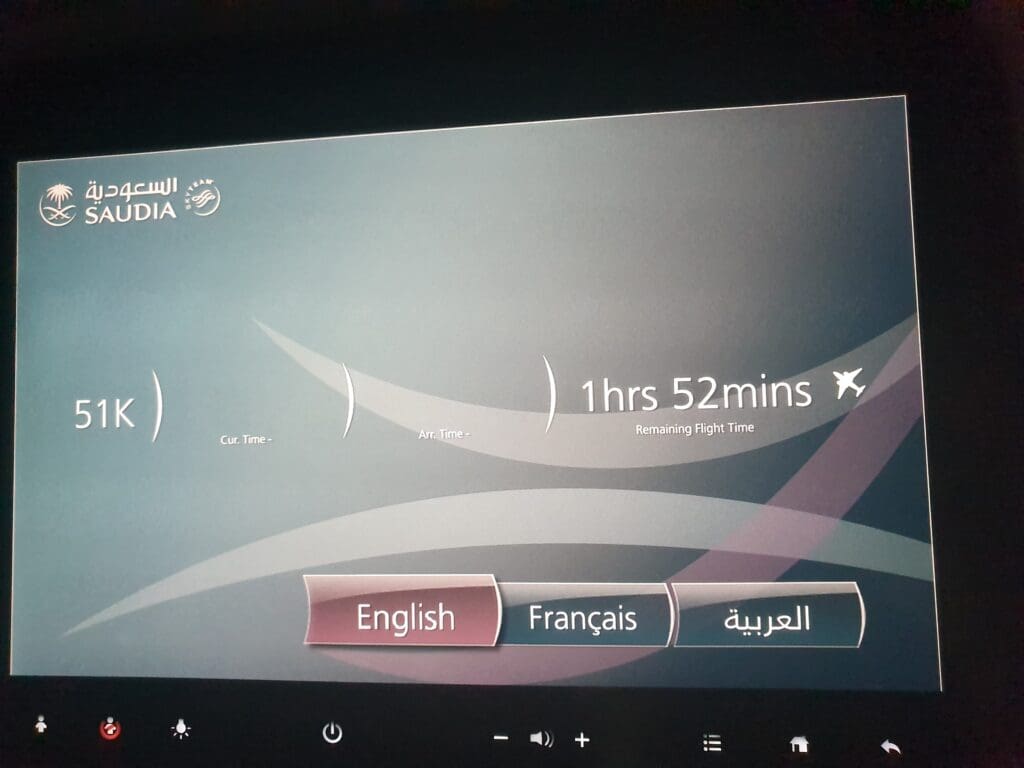
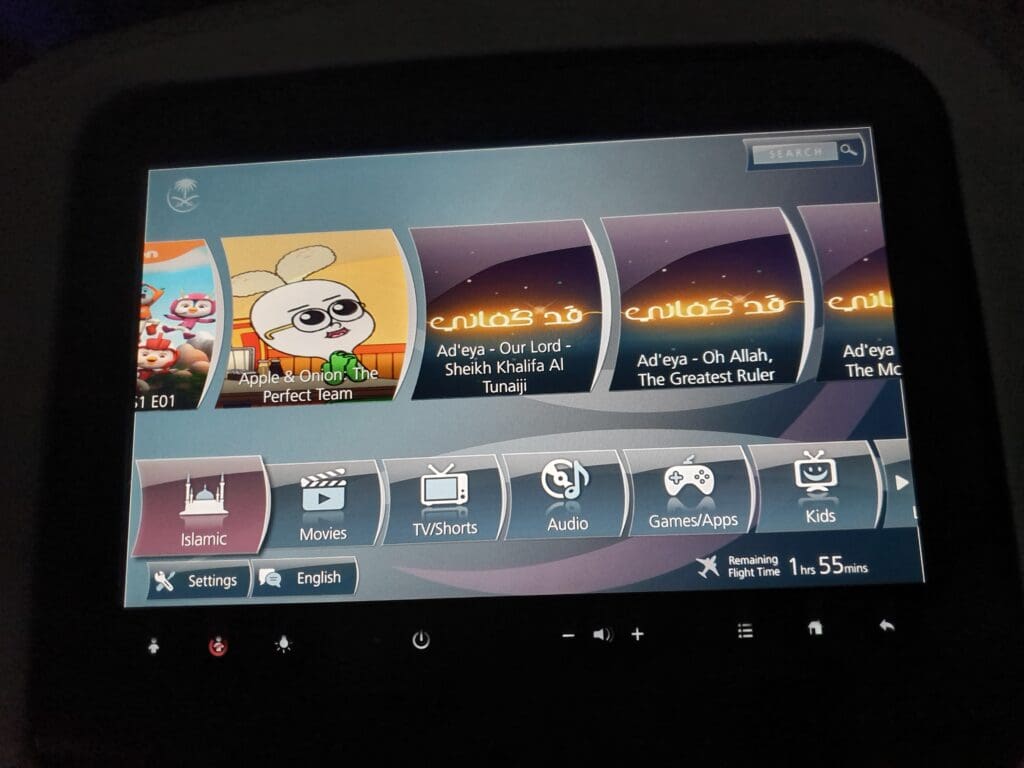
In addition to the system, wifi, or ‘Skyfi’ as the airline calls it, is provided. Alongside the usual paid packages, passengers can use up to 10MB for free on messaging apps. Having noticed several adverts for this in the inflight magazine and entertainment guide, boasting about this winning Inflight Middle East’s ‘Best Inflight Connectivity Experience Award’ in 2019, I was expecting this to work without any issue and I was happy to report that this was the case. However of course, seeing as the flight lasted only a little over five and a half hours, had the wifi network not worked well, I wouldn’t have complained.
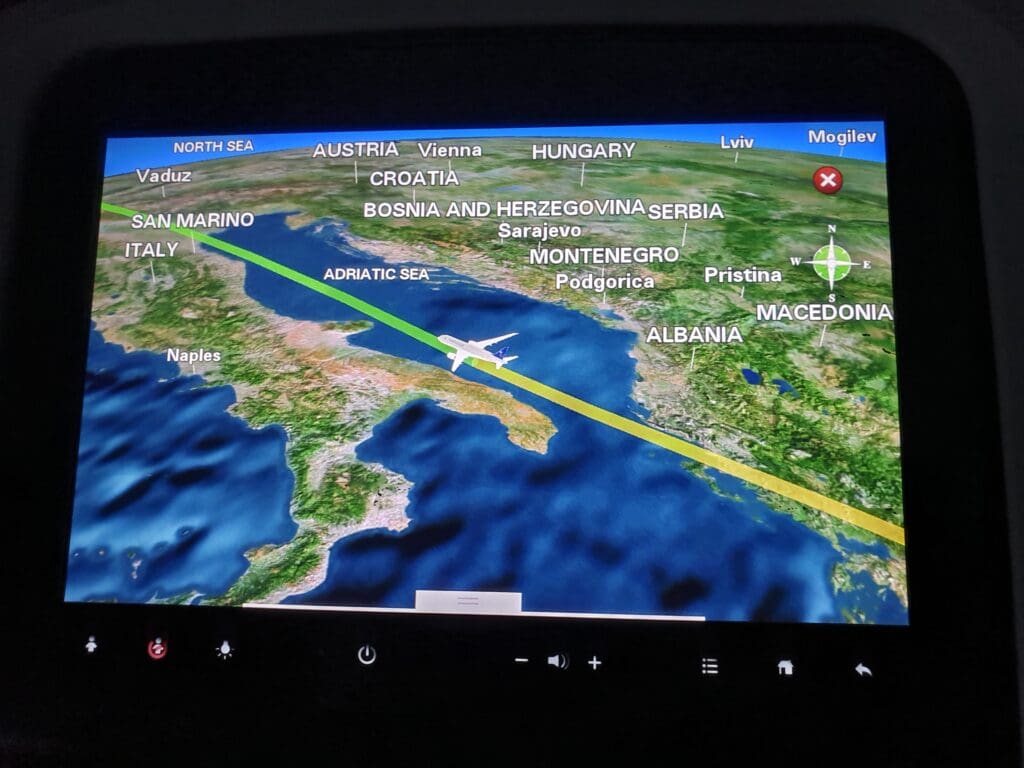
After sending a couple of messages to test the wifi out, I turned my attention to the moving map. Whilst I had been able to see little outside since leaving Athens, this revealed that after crossing Greece, the Dreamliner had made a short crossing of the Adriatic before arriving at the Italian region of Apulia. After making landfall to the north of the city of Pescara, from there the aircraft flew up the middle of Italy following the Apennine Mountains.
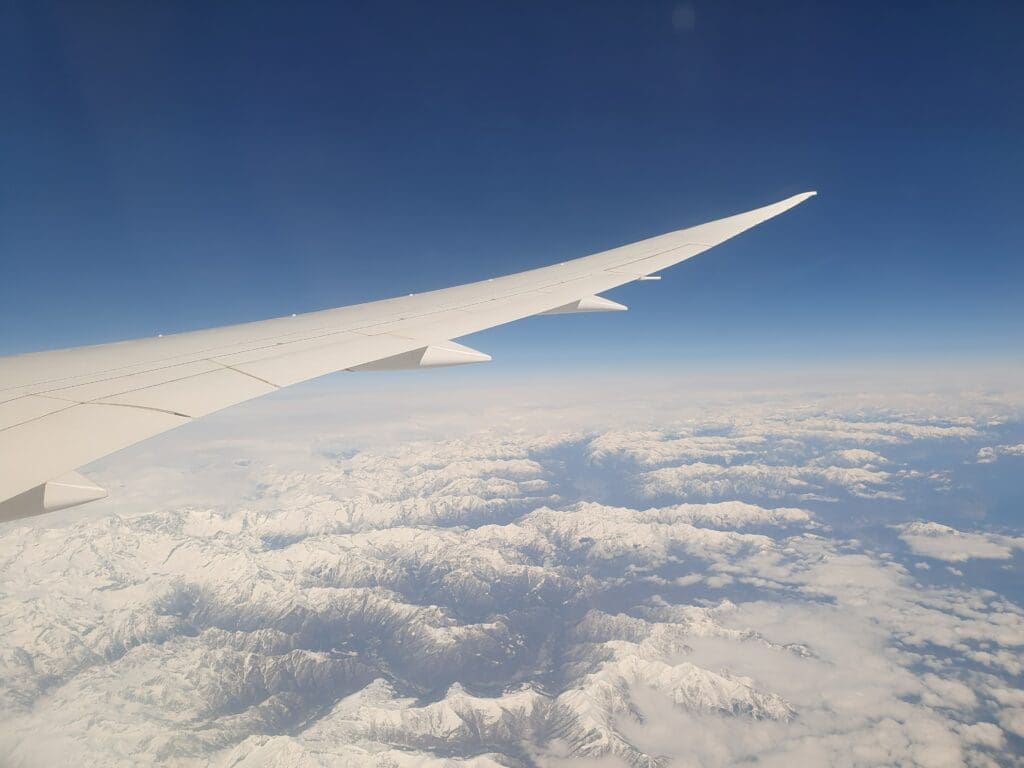
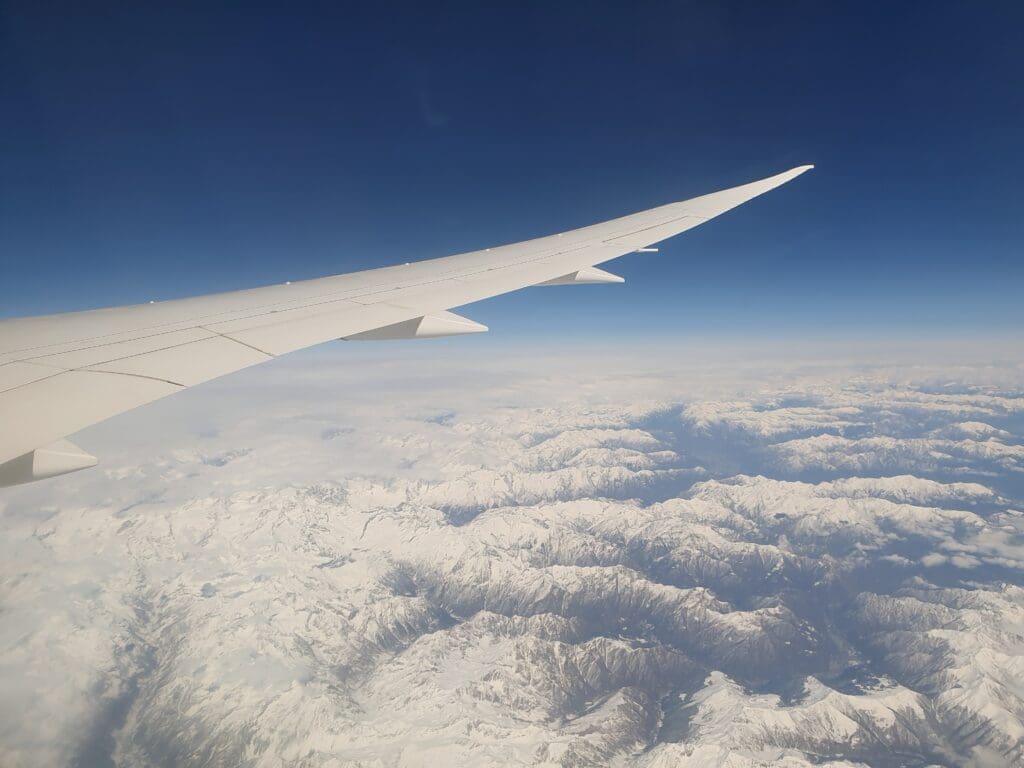
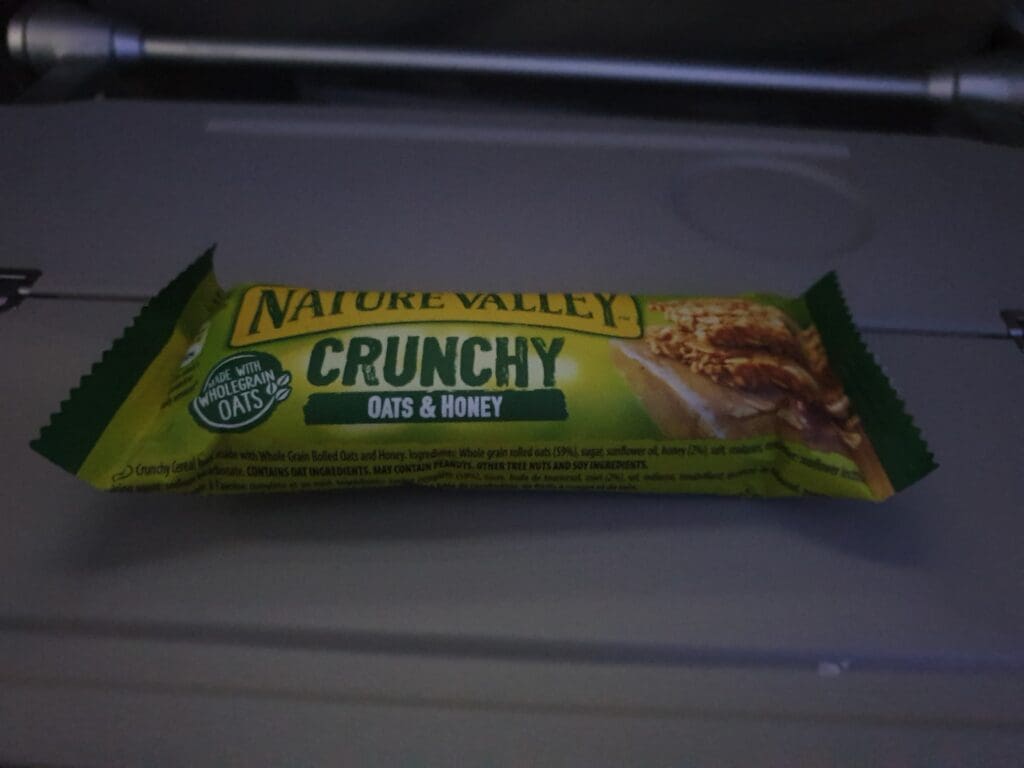
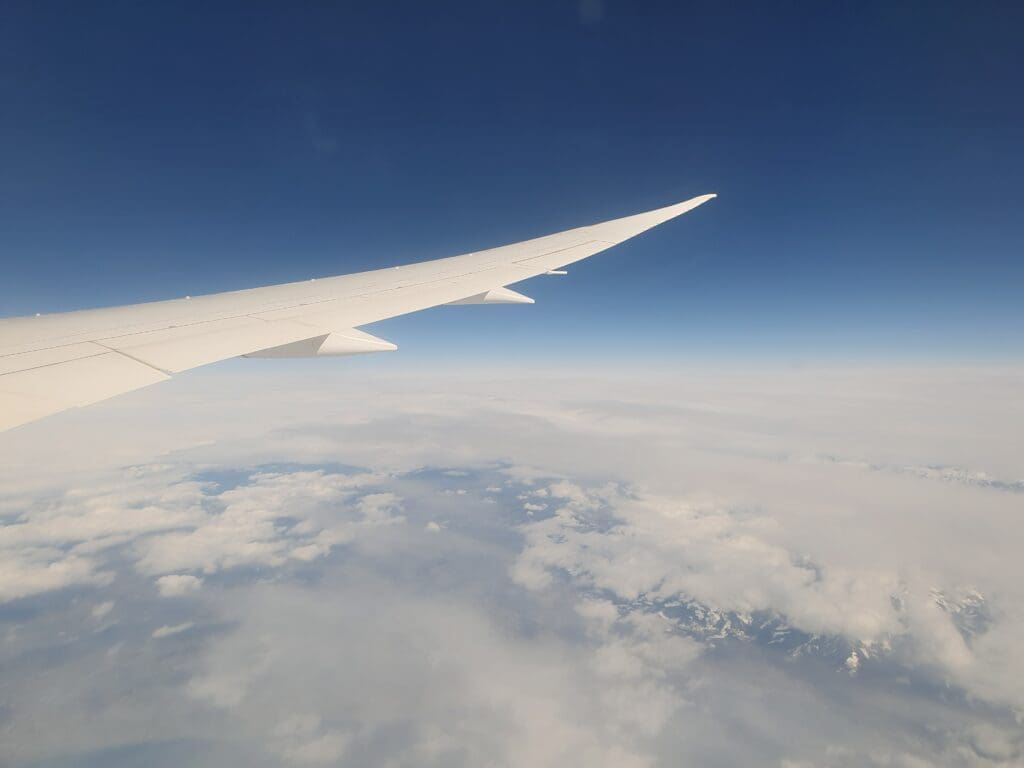
With a little over an hour to go until Paris, the aircraft neared Milan and the snow-capped peaks of the Italian Alps came into view to the north. Meanwhile, three hours after the main meal service, the crew passed through the cabin armed with a basket of light snacks, namely fruit, small packets of Sunbite crisps and Nature Valley cereal bars. Whilst not particularly hungry, I first grabbed a cereal bar before opting for mango juice from the drinks tray that was passed around immediately after this. As I enjoyed these, seeing as the Alps were approaching at a rather rapid pace, like several others I brightened my window to examine the spectacular landscape below. Despite some pesky clouds covering some of the range’s peaks, the sight of the snow-capped mountains below near the confluence of France, Italy and Switzerland did not fail to impress. Unfortunately, our crossing of the Alps was brief and almost as soon as the ground sunk back down, the view was once again taken by cloud cover, with one last view of Switzerland offered thanks to a gap in these revealing Lake Geneva.
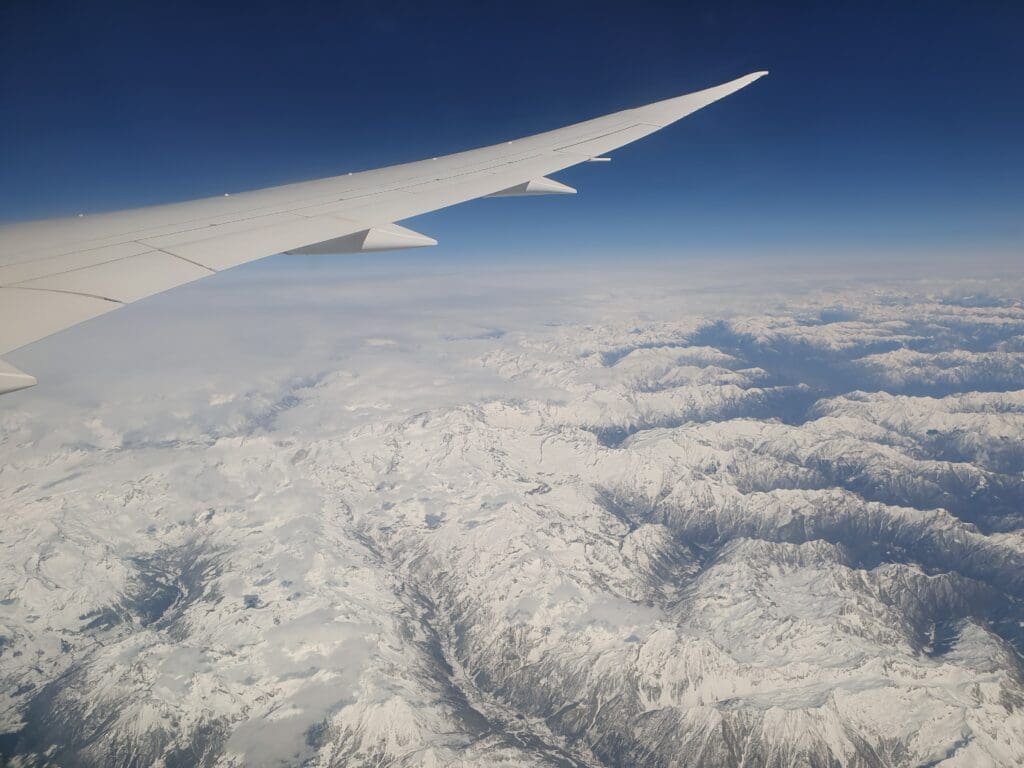
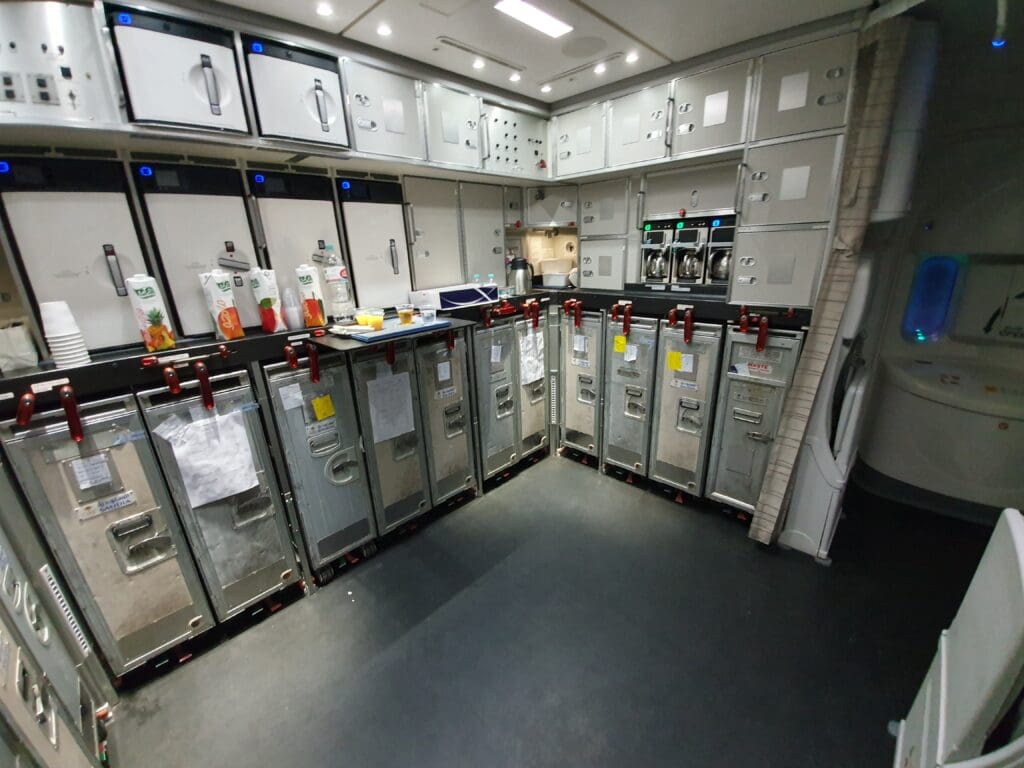
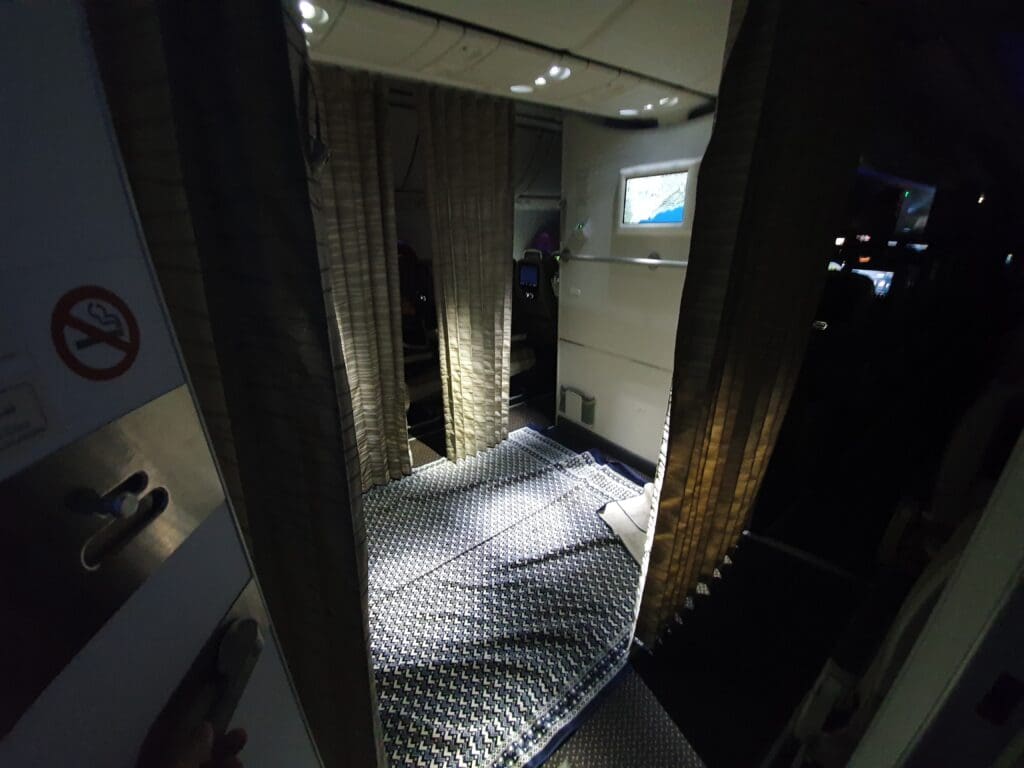
At 1320 French time, as we quickly crossed Lake Geneva, the Boeing 787 could be felt gently commencing its descent. Seeing as I would likely not get the opportunity to do so again, I decided to head to the rear of the aircraft, passing the aircraft’s prayer area to make a quick visit to the bathroom. Earlier during the flight I had been satisfied with my first visit to the facilities, finding these in a clean state not too long after our departure. However, as the flight neared its end, it appeared as if little effort had been made to keep these in a decent state during the flight, appearing in a messy state and in need of a clean. That said, I have visited worse aircraft lavatories and, alongside the usual soap, I did notice this was stocked with a couple of different creams.
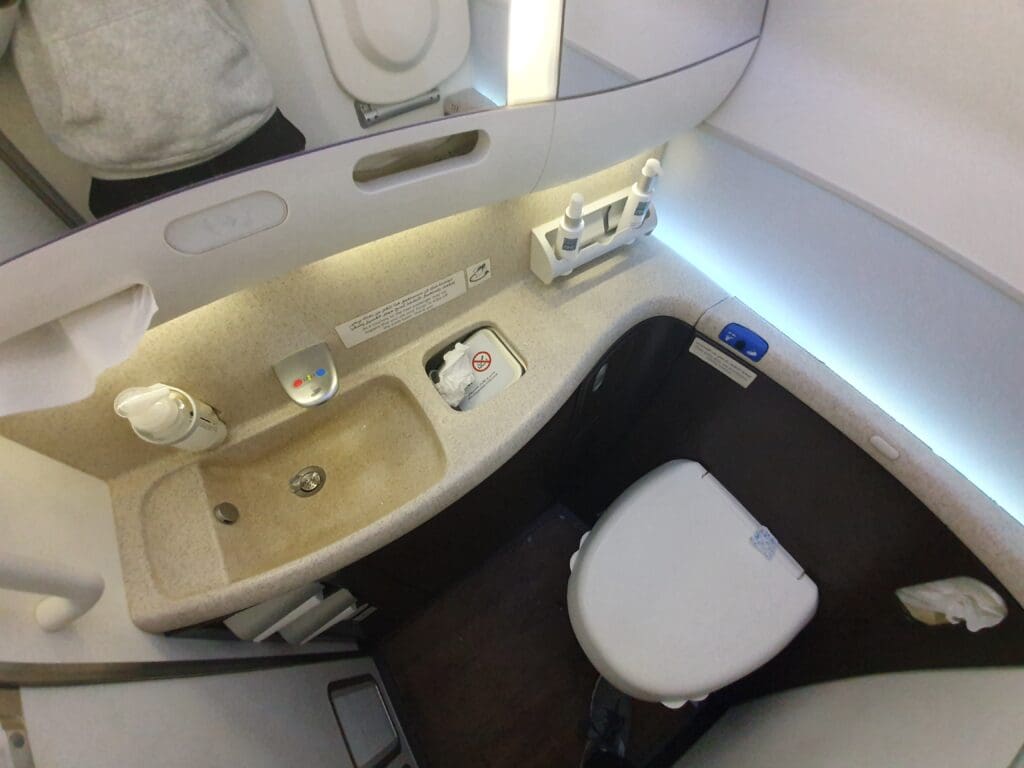
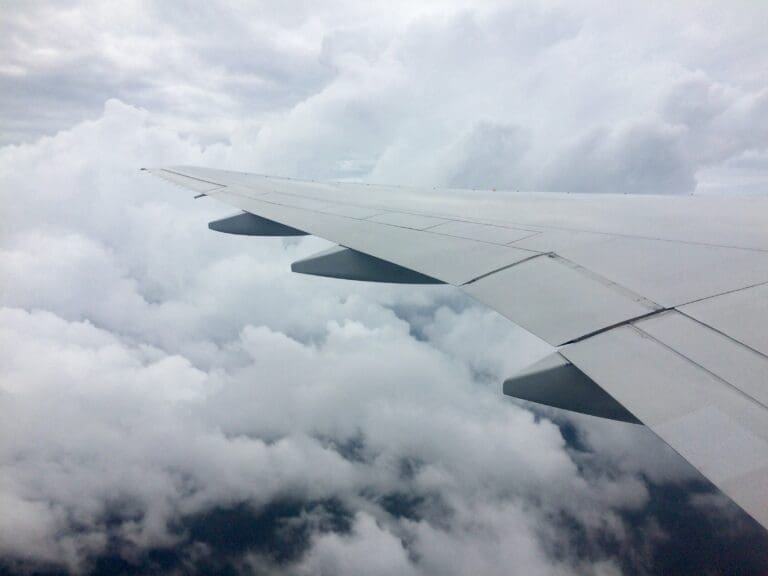
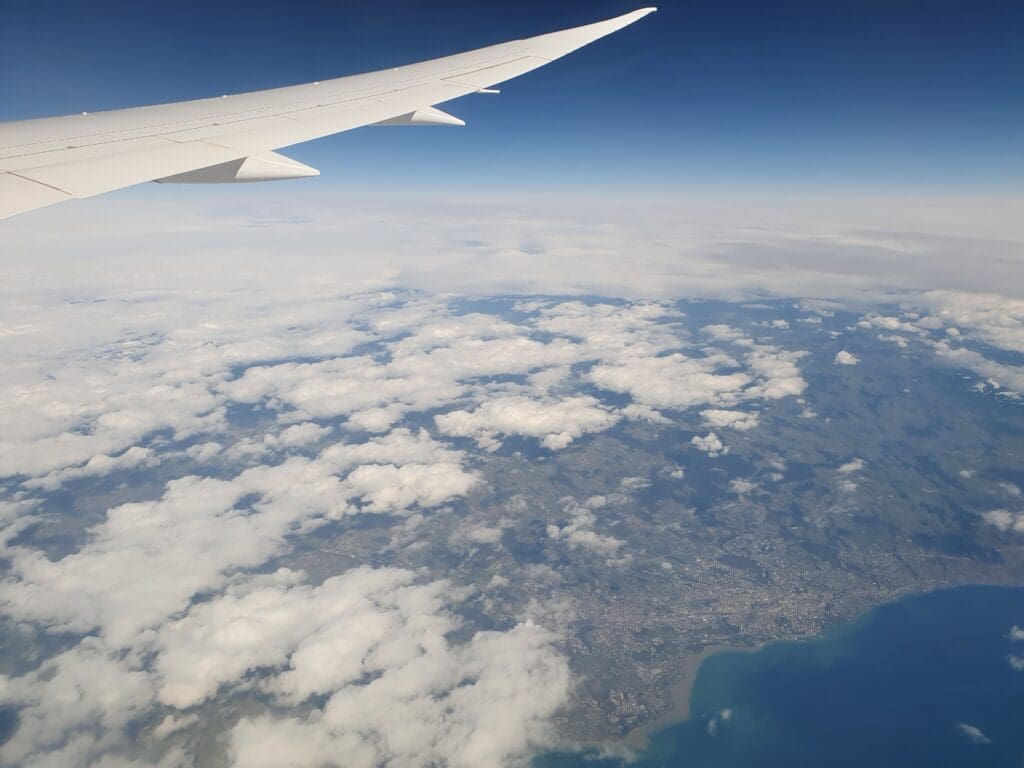
Having inadvertently timed things well, just after returning to my seat, the aircraft hit its first patch of turbulence during the flight and the seatbelt signs were switched back on. Within a few moments, this was followed by an announcement in Arabic and English with the usual pre-arrival instructions after which all windows automatically reverted to their clearest setting and the cabin brightened up. Within a few minutes, the crew passed through the cabin conducting their final checks, ensuring all was in place for landing. Looking out, after leaving scenic Switzerland and commencing our descent, absolutely nothing could be seen of France’s Burgundy region as we headed downwards back to earth. However, following the flight’s progress on the moving map, despite the lack of landmarks below, I was able to see that the Boeing 787 had powered over Dijon before heading towards the major town of Troyes in France’s Grand Est region. After descending through 10,000 feet several minutes after leaving this town behind, the aircraft passed through some impressive cloud formations bringing with them some moderate turbulence as we bumped downwards.
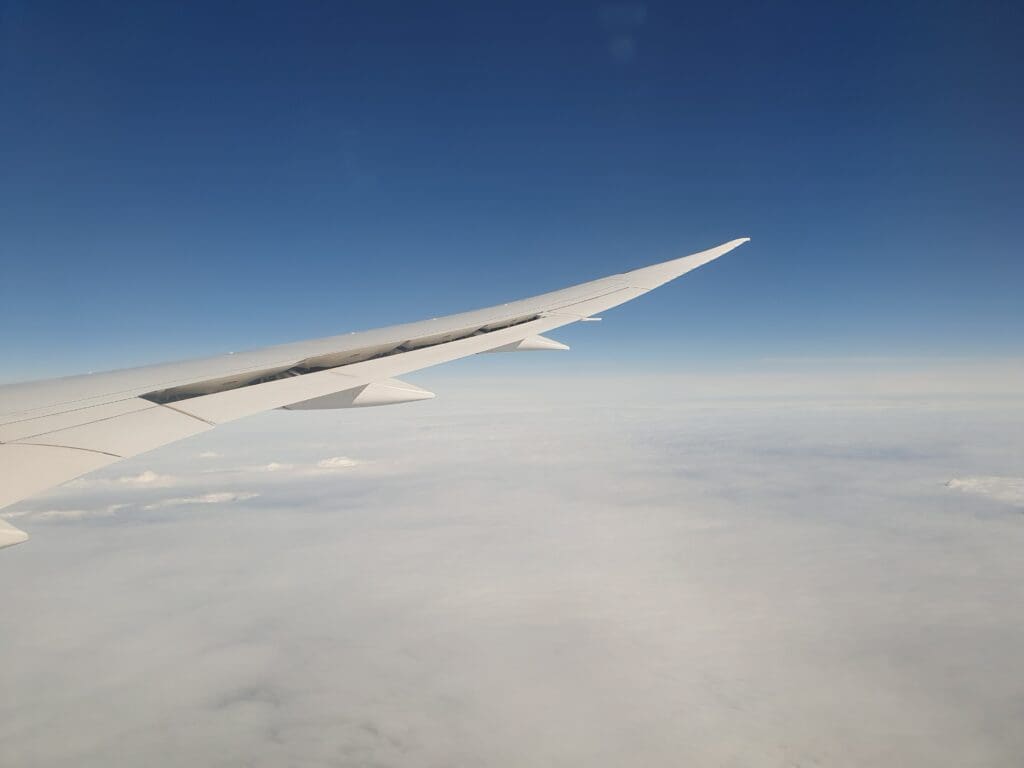
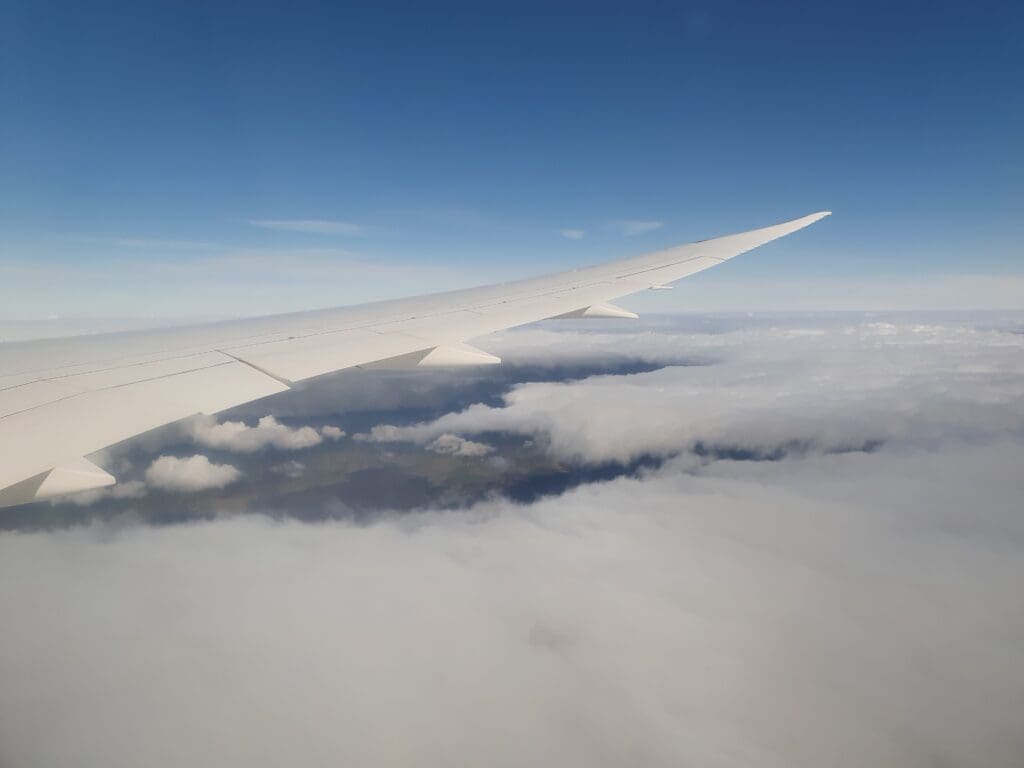
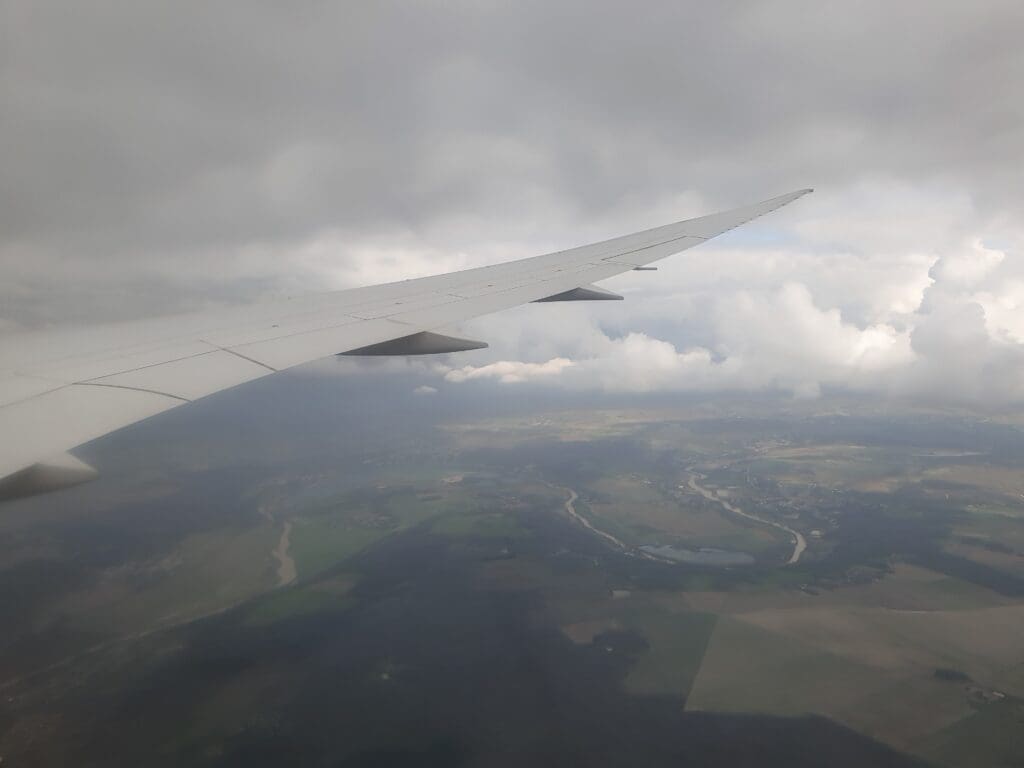
Eventually, the green rural landscape of Northern France appeared some way below the aircraft before we passed through more clouds, resulting in a palette of grey, blue and green colours appearing outside the aircraft. As we continued heading downwards, I noticed the purser pass through the cabin thanking each and every crew member for their hard work during the flight. As we neared Paris CDG, the speedbrakes were momentarily partially extended, slowing the aircraft down with some vigour before the gradual extension of the flaps. Below, the distinctive shape of the Dreamliner popped up in shadow form speeding across fields before two crossing motorways appeared. Moments later we crossed over the perimeter fence and what appeared to be a VOR beacon appeared followed by the sight of two widebodies waiting for departure from Runway 26R.
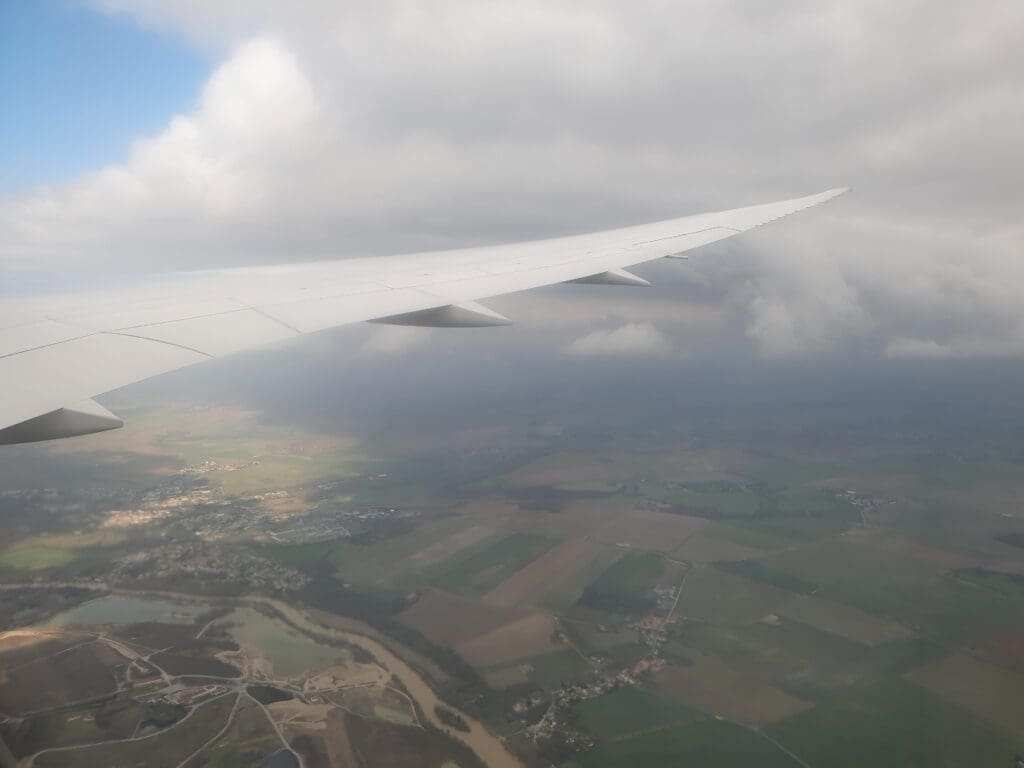

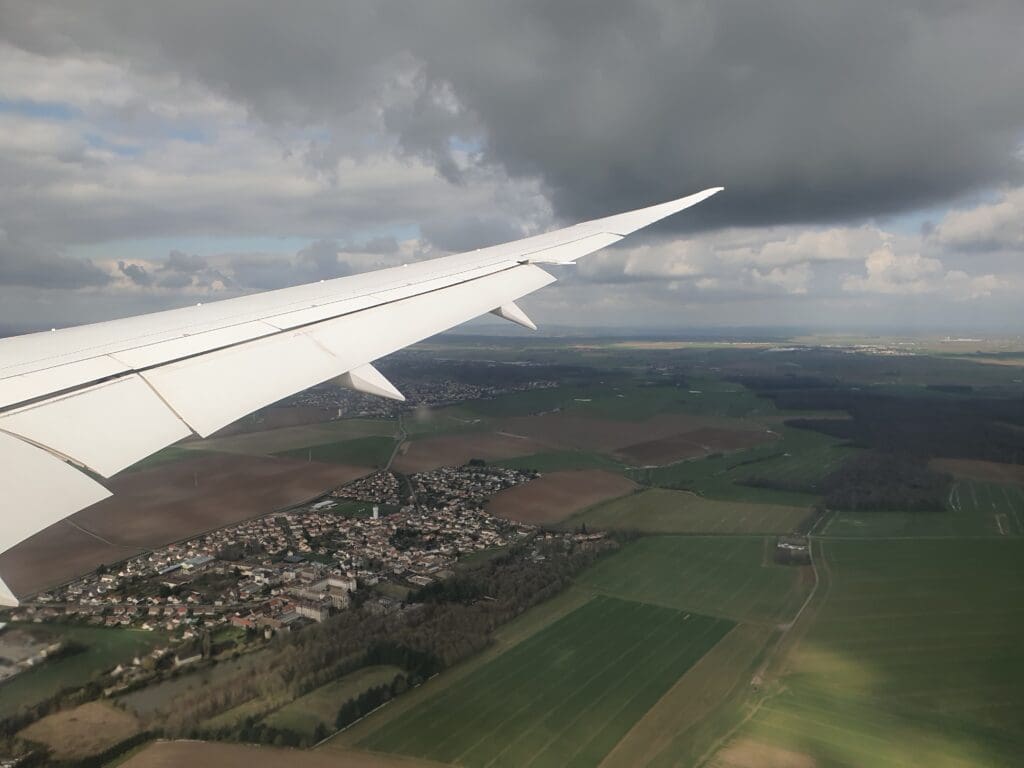
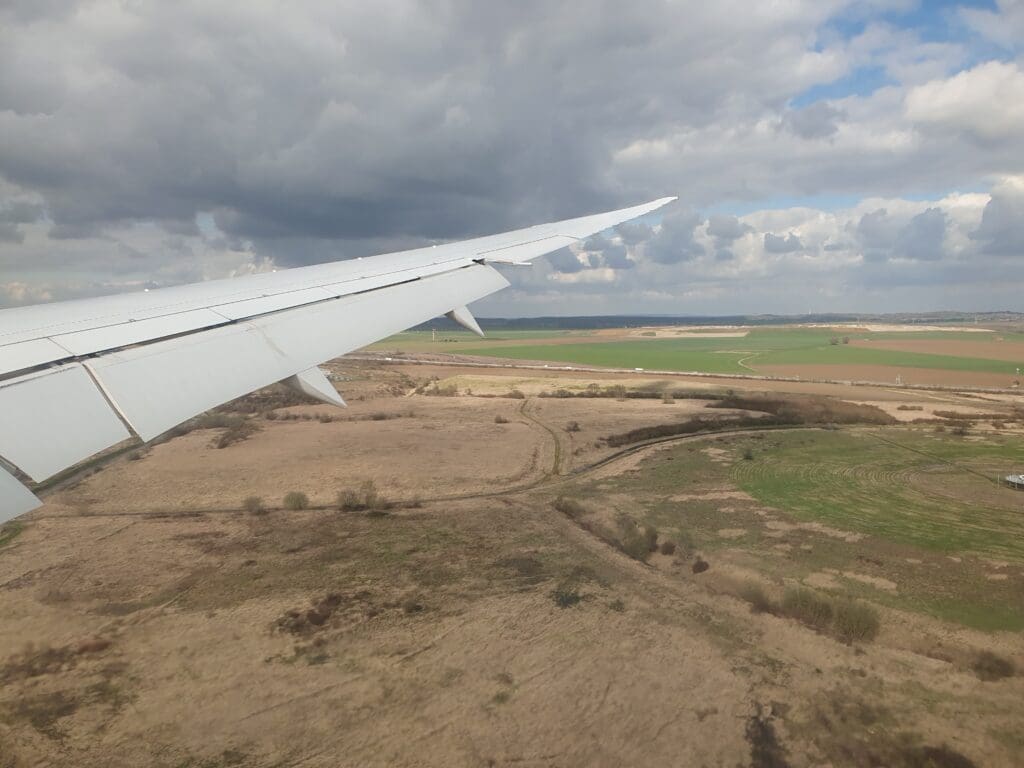
At exactly 1400 French time or 1600 Saudi time, a little over five and a half hours after leaving Jeddah, the aircraft returned to Terrafirma, touching down on Paris CDG’s Runway 26L with a large thud. With a length of 2700 metres or 8858 feet, this particular runway is the joint shortest at Paris CDG and so, unsurprisingly some very heavy braking then followed. This resulted in me having to hand back a small handbag to a passenger two rows behind after the aircraft came to a halt at the gate. As the aircraft slowed, a half hearted applause rang out through the cabin and the aircraft turned right off the runway before coming to an immediate halt. At this time, the purser welcomed us all to Paris in Arabic and English before ending this with a word of thanks for choosing to fly with Saudia. As Runway 26R was in use for departing aircraft, a short wait was required whilst a Skytime liveried Vietnam Airlines Airbus A350 departed at the start of its long journey to Ho Chi Minh City and an MEA Airbus A330 rocketed off on its comparatively short journey to Beirut.
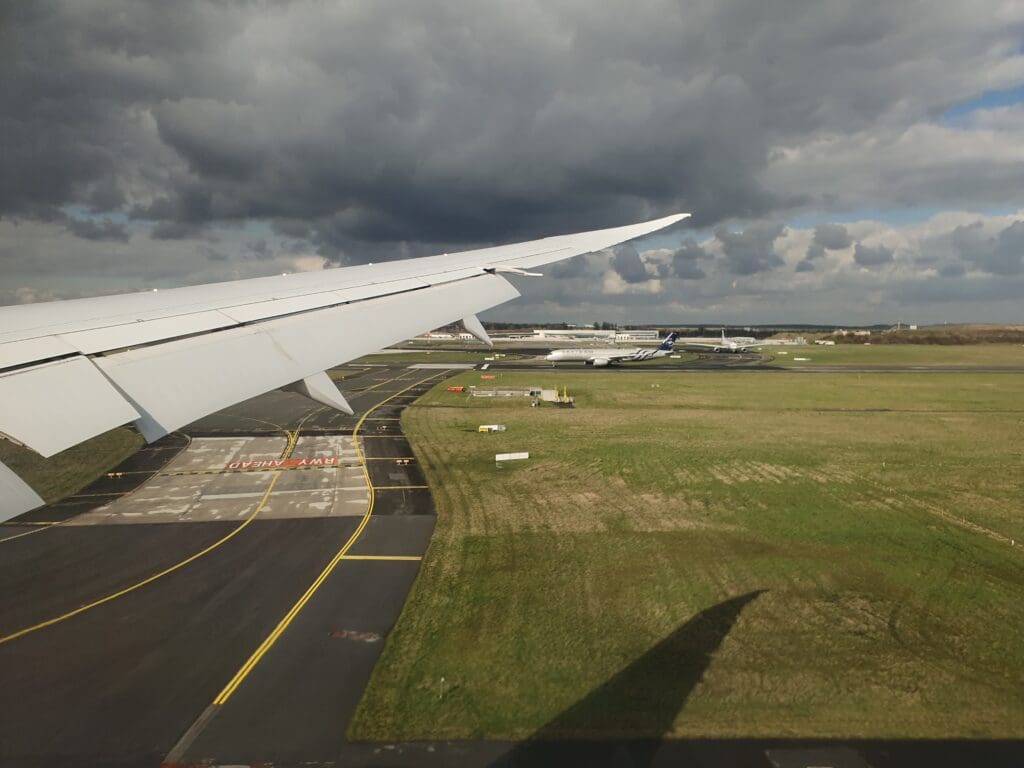
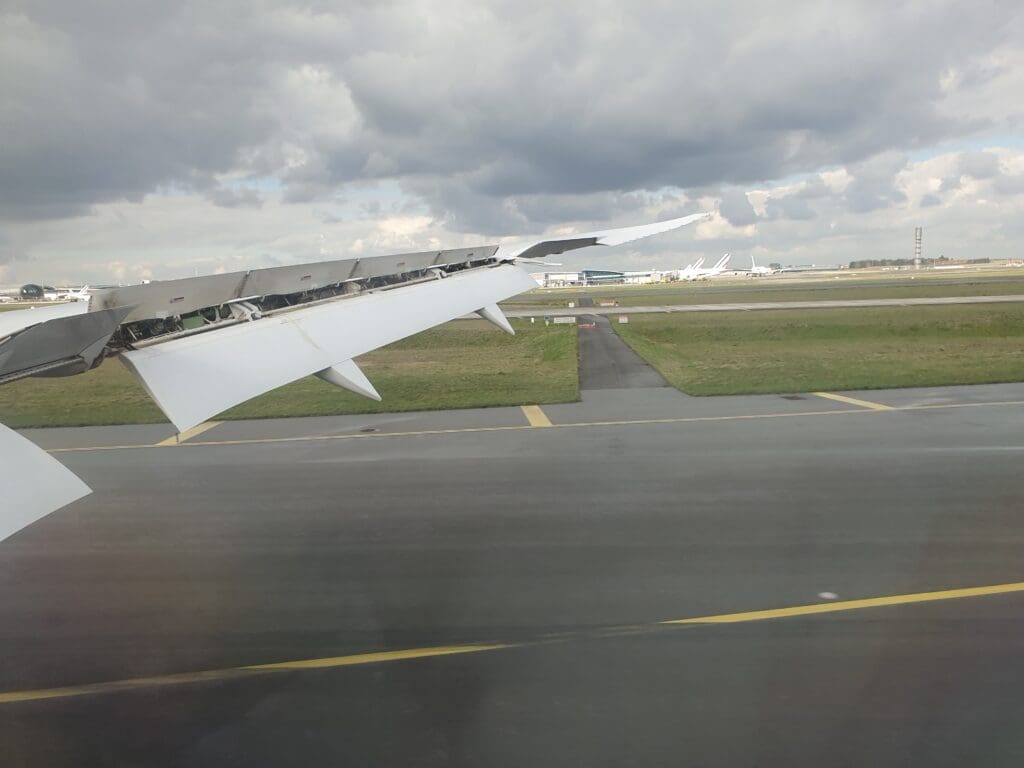
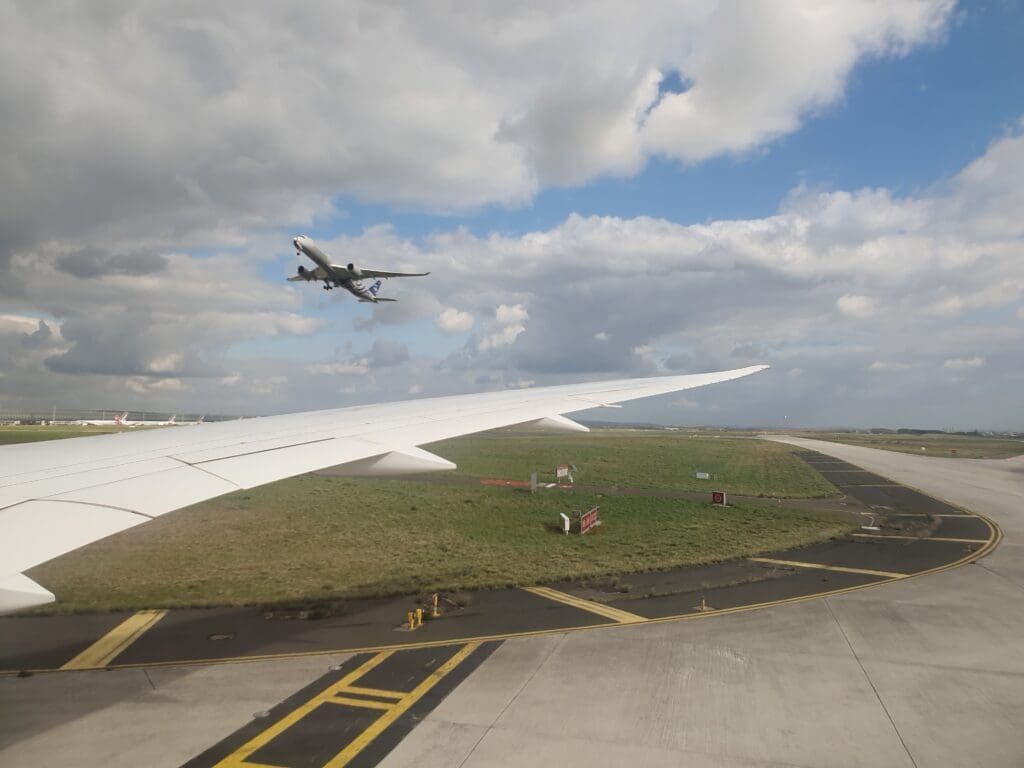
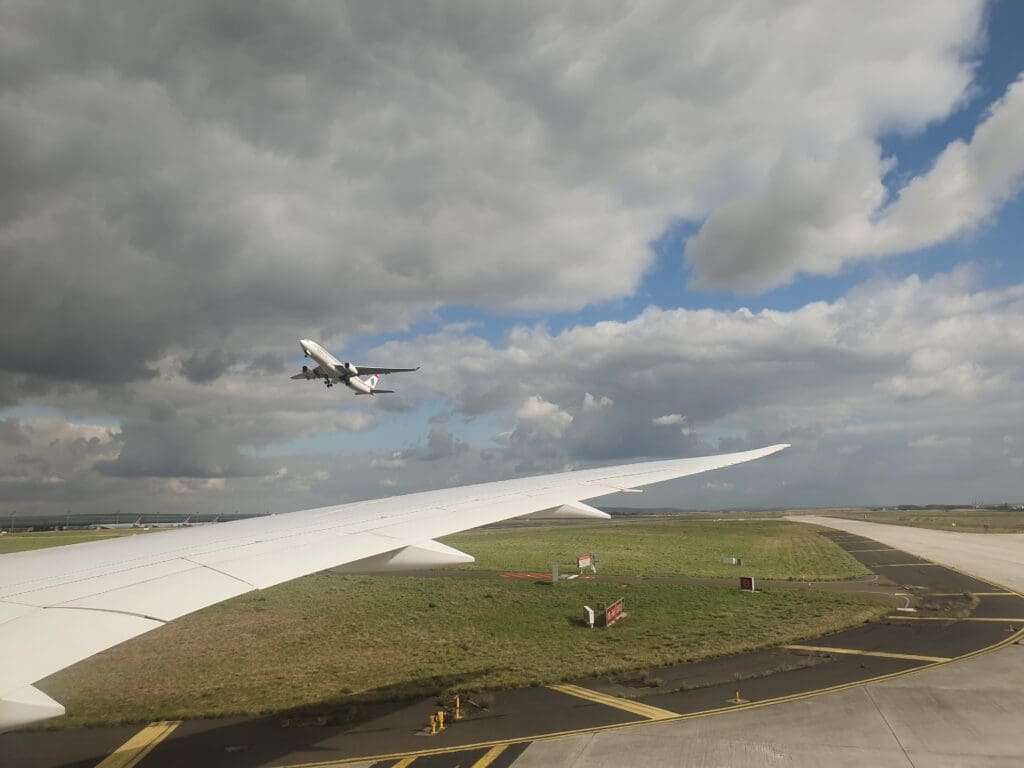
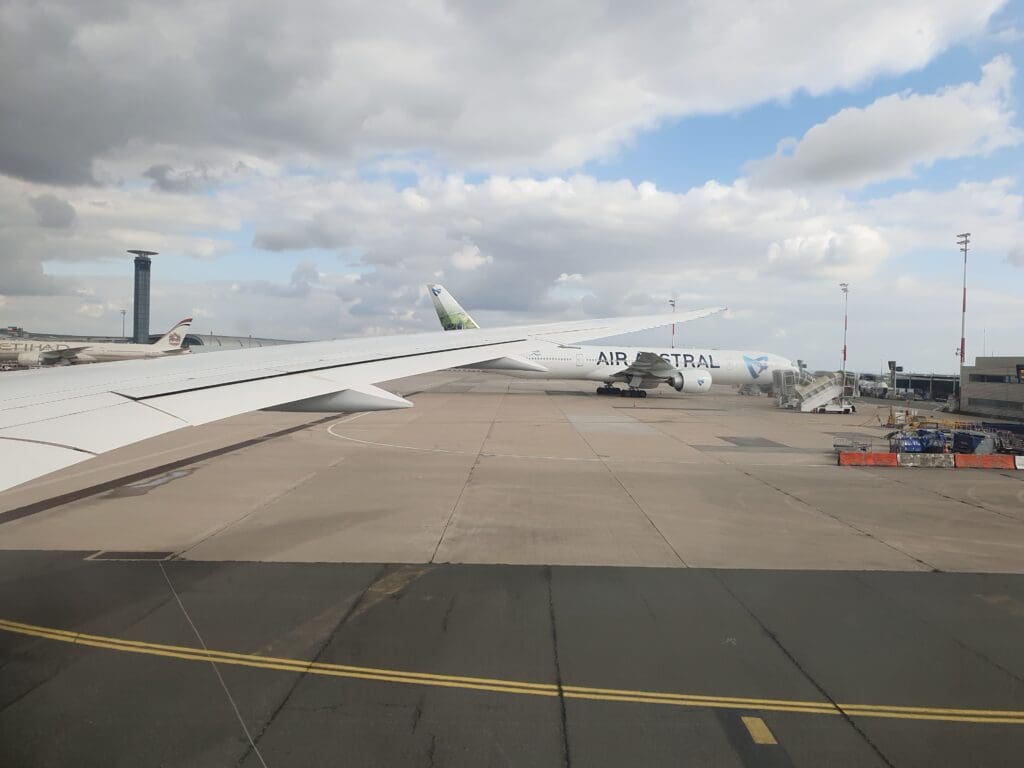
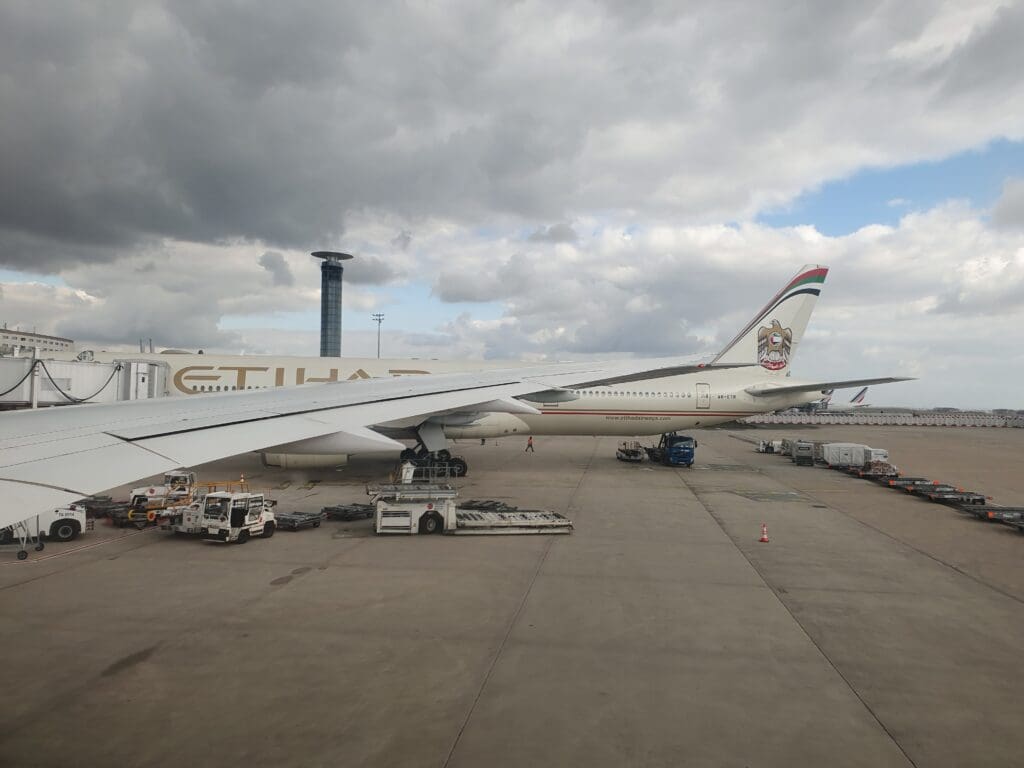
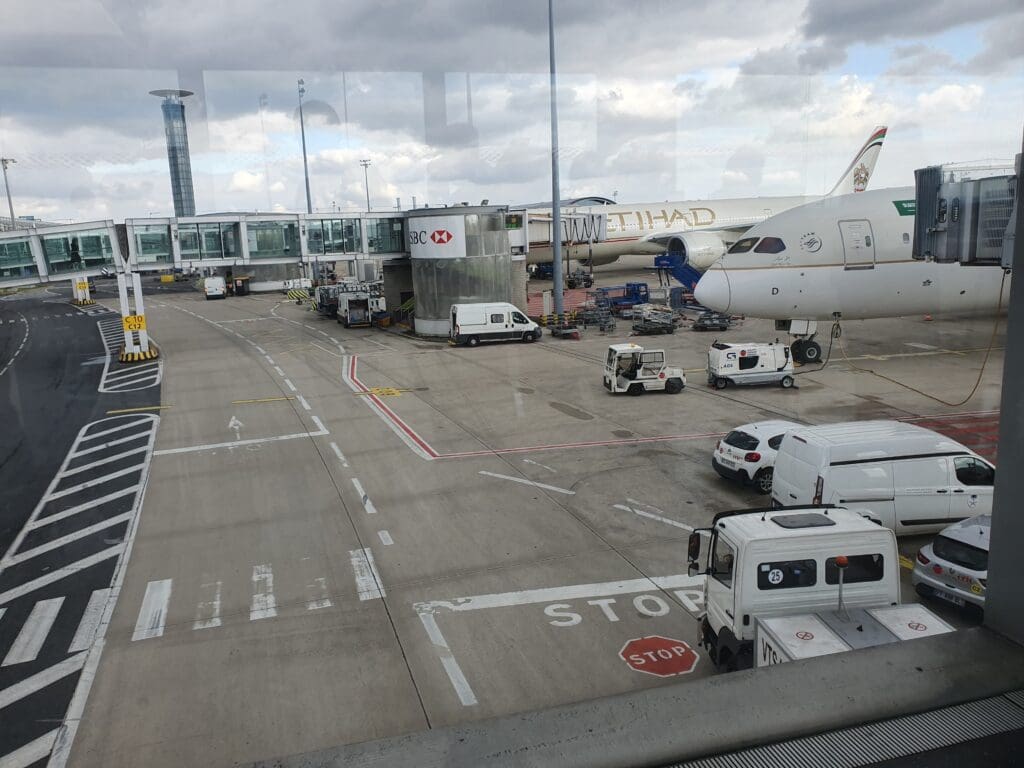
Home to four runways and spanning over a massive area, taxi times at Paris CDG can occasionally be rather lengthy. However, once moving again, the taxi to Terminal 2C took no more than a few minutes and the aircraft soon turned onto the ramp. After passing an Air Austral Boeing 777-300ER the aircraft turned left into Stand C08, slotting in between two fellow visitors from the Middle East, an Emirates Airbus A380 and an Etihad Boeing 777-300ER. Eight minutes after landing and seven minutes ahead of schedule, the aircraft came to a halt and its two engines powered down. As is often the case, many on board seemed to be desperate to escape and immediately stood up once the aircraft stopped, making a beeline for the overhead lockers to retrieve their bags. Fortunately for those who wished for a hasty exit, it did not take too long for the jetbridge to be connected to the 2L door and given the light load, the queues in the aisles went down promptly after disembarkation commenced. Carrying only a laptop bag, my exit through the aircraft was rather quick and after thanking several of the crew members, I stepped onto the chilly jetbridge.
Whilst I had made a quick escape from the aircraft, my progress soon came to a halt. Within about twenty seconds of stepping off the Boeing 787, I arrived at a slightly disorganised queue. As is sometimes the case when arriving from certain non-EU countries, a pre-immigration check was in place with several police officers briefly checking the passports of all arriving passengers and asking questions if necessary. Fortunately, seeing as many of those in front of me were French citizens, the queue went down quickly and after a quick look of surprise once the police officer realised I was not French, I was permitted to proceed to immigration. Seeing as the arrival gate was virtually directly opposite the immigration hall, I arrived in moments. Here I was greeted by the sight of several staffed counters with moderate queues alongside a selection of queueless automated immigration gates. In spite of the UK’s sad withdrawal from the European Union, fortunately, I was still able to use these gates to enter France. Without any issue, I soon made it through one of these gates and entered the terminal’s seemingly small baggage collection hall.
Given the fact that I had made it through to the baggage claim area no more than fifteen minutes after the aircraft had pulled onto the stand, at this time no bags could be seen spinning around the flight’s allocated carousel. After about five minutes of waiting, the first bags emerged and perhaps for the first time in my life, my suitcase appeared to be one of the first to emerge. As soon as I spotted this, I picked it up and headed straight out through the empty customs area bringing an end to my trip with Saudia.
Summary
If forced to rate Saudia, based on my two flights with the airline, I would award the carrier a solid four stars. Aside from simply getting me from A to B on time and in one piece, I was taken aback by the fantastic levels of customer service that all the crew members I interacted with demonstrated. Indeed, I can safely say that the crew of the second flight were the best crew I have flown with for several years, managing to balance politeness and professionalism with friendliness. Aside from this I was particularly impressed with the expansive entertainment system as well as the wifi’s complimentary 10MB for messaging which I am sure would prove useful for keeping those on the ground updated about any delays. Despite my slight complaints about the recent removal of metal cutlery and the second flight’s slightly lacking meal, overall the catering on both flights was definitely above average. In particular, I appreciated the small touches such as the Arabic coffee and date round and the mini chocolates. However, when it came to comfort levels, for a full-service airline these were rather average and failed to stand out in any way. Aside from Jeddah’s soon-to-close old terminal, the only major disappointing element of the trip came in the form of the battered state of both the Airbus A320 and Boeing 787 however on the plus side each aircraft appeared to be clean upon boarding.