Starting My Greenlandic Adventure: Copenhagen to Kangerlussuaq on an Air Greenland Airbus A330-800
Background
If you’ve ever flown between Europe and the West Coast of North America, there is a decent chance that you will have soared high above Greenland. Even from 35,000 feet, Greenland’s majestic mountains, fjords and ice caps provide Transatlantic travellers with a welcome respite from the endless waters of the North Atlantic. Sandwiched between Iceland and the Canadian province of Nunavut, Greenland stretches from the 60th parallel right up to the high Arctic and is the nearest landmass to the North Pole. Famously, the country is one of the world’s largest and most sparsely populated, with it being home to around 56,000 residents spread across an area which is almost nine times larger than the United Kingdom!
For those who wish to visit, even just getting to Greenland can be a costly adventure, with just a handful of flights connecting the territory to the outside world and typically coming with a high price tag. At the time of my trip, Air Greenland operated its sole Airbus A330 on a daily roundtrip from Copenhagen to Kangerlussuaq. Alongside carrying many of those travelling to and from Greenland, this long-standing flight also serves to be an important means by which perishables and other time-sensitive cargo can be transported to the territory. Home to around five hundred residents and located almost 200 miles to the north of Greenland’s capital, Nuuk, Kangerlussuaq may seem to be have been an odd entry point. However, this is explained by the fact that the settlement is home to a former American air base and is one of the very few runways in Greenland capable of handling widebody aircraft. At the time of my trip, this was one of Air Greenland’s main hubs, with the vast majority of passengers then shuttled across the country on a fleet of Dash 8 Q200 turboprops. However, this arrangement changed in November 2024, when Nuuk’s extended runway opened for business, thereby enabling Air Greenland to operate its Airbus A330 directly between Copenhagen and Greenland’s capital, eliminating the need for services to Kangerlussuaq.
In addition to Air Greenland’s Airbus A330 service, both Air Greenland and Icelandair operate a Dash 8 service to Iceland’s main hub at Keflavík throughout the year. Last but not least, perhaps the least known year-round route is operated by Icelandic carrier Norlandair, who fly both the Beechcraft King Air and Twin Air from Akureyri to the small settlement of Nerlerit Inaat on Greenland’s eastern coastline. Once in Greenland, limited by its topography, few settlements across the territory are connected by road, so air travel plays an important role in shuttling locals, visitors and freight around the territory.
So how did I end up travelling to Greenland?
Despite long having wanted to visit Greenland, the prohibitive cost of flights meant that I had not envisaged doing so until I had won the lottery. However, after doing some experimentation, in September 2023, I stumbled upon a comparatively cheap Air Greenland fare from Copenhagen to Greenland’s third-largest town, Ilulissat. Coming to a total of £349.90, this was around a third of the regular fare price for this route. The catch would be that I would have to spend a long overnight layover in Kangerlussuaq, although this was by no means an issue. Several weeks later, my relatives chipped in and we purchased a ticket for my father to accompany me, making this a father-son holiday.
In addition, such cheap flights were rather limited and I would have to visit Greenland over a long weekend in January or February 2024. In the end, I decided to depart Copenhagen on the first Friday of February, spend a night in Kangerlusuaq and then head onwards to Ilulisaat on Saturday morning. Returning, I would travel back on Tuesday and have a shorter connection in Kangerlussuaq. Aware that the fare was unlikely to last long, I soon snapped this up and booked via the online travel agent, Trip. In the weeks and months that followed, Air Greenland’s schedules changed very frequently and in the end, I had to confirm that I was happy with schedule changes ten times! With the final change being made less than a week before departure. However, thankfully, each time, the schedules only changed by an hour or so, and thus, my plans did not end up being disrupted.
Check-In
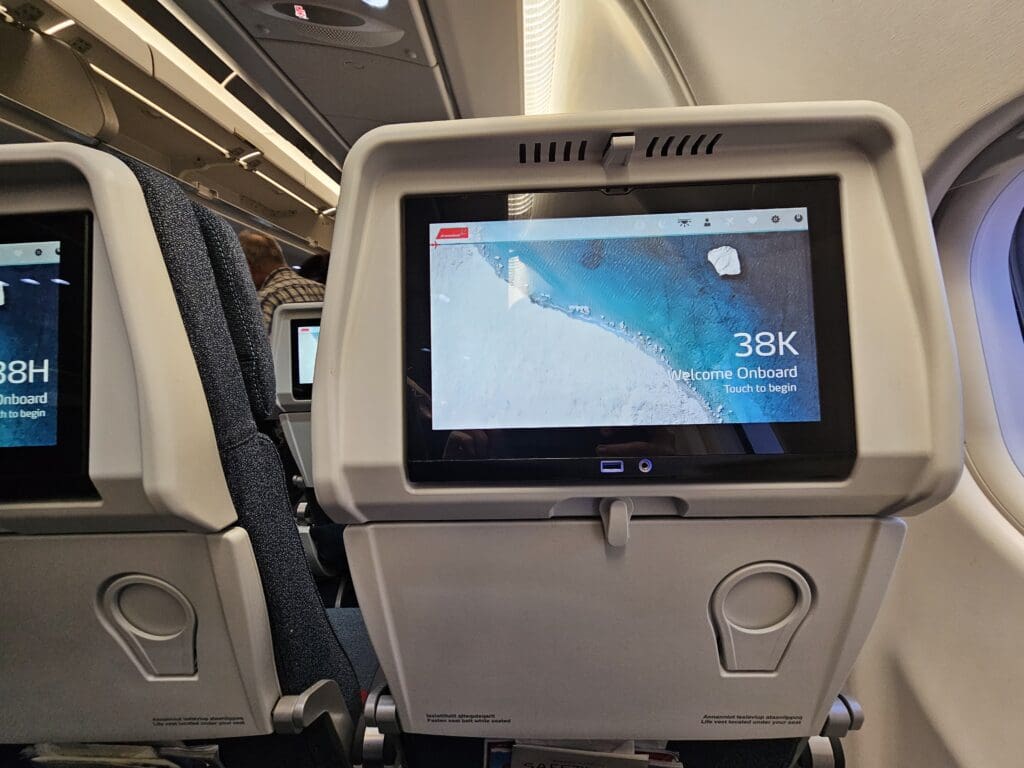
Barring a few limited exceptions, Air Greenland passengers can check in online for the flight up to 22 hours before departure. Seeing as I had been unable to pre-select a seat thanks to the fact that I had booked through a third party, as I hit this window, I opened up the Club Timissa app and commenced check-in proceedings. Fortunately, this was a quick and easy affair, assisted by the fact that the flight between Copenhagen and Kangerlussuaq is officially a domestic service. This meant that there was no need for me to enter any passport details. As it turned out, I had been automatically assigned an aisle seat for the ride to Greenland; however, eager not to miss out on the picturesque Arctic scenery, I swapped this for one of the many vacant window seats and settled for Seat 38K. Unlike many airlines these days, I was delighted to find that I was not required to pay any sort of fee to do so. Within a few taps, I was checked in for my flight and received my boarding pass in the app and by email.
On a side note, members of Air Greenland’s loyalty program, Club Timissa, can download several digital magazines and newspapers up to two days before departure. Admittedly, whilst Air Greenland’s digital literature library is not as expansive as many of those of larger carriers, this was still appreciated. This library consisted of six magazines: Greenlandic publication Arnanut, Danish gossip magazines Se og Hør Billet-Bladet and Se og Hør, the English language publication Newsweek and Danish and English versions of a magazine entitled Greenland – Investment and Development in the Arctic Region. In addition, two Danish and three Greenlandic newspapers were available for download, whilst a further two – Børsen and Jyllands Posten could only be downloaded by those in Premium Class. Last but not least both the onboard shopping catalogue and the latest edition of Suluk, Air Greenland’s inflight magazine, could also be downloaded.
The Journey
After much anticipation, the first day of my Greenlandic adventure arrived. Although this was to be a bit more mundane than the second! Waking up bright and early in Leeds, I packed up everything that I would need for my time in the Arctic and lugged this over to the office. Having booked the afternoon off, as soon as the clock struck twelve, I darted out of the office and made my way to the train station to commence the long journey to Stansted Airport. Several hours and an acceptably average Boeing 737 MAX 8-200 flight later, I touched down on Danish soil at around 2200. With my father having arrived that lunchtime on British Airways, I trekked over to the budget GO Hotel and arrived to find my father enjoying his last reasonably priced pint for a few days. Concluding that it would have been rude not to join him, I ended my day with an icy-cold and refreshing Tuborg before heading to the room.
After no more than four hours of broken sleep, at 0510 my phone alarm buzzed, indicating that it was time to commence our adventure. Following a quick shower and a change of clothes, with no breakfast included at the hotel, we made our way straight down to the reception desk and returned the key before heading out onto the dark February morning streets. From the hotel, we had two ways of reaching the airport: a short train ride or a thirty-minute walk down the quiet back streets around the northern fringes of the airport. Seeing as we had a suitcase in tow, it only made sense to catch the train. Thus, a few minutes after leaving the hotel, we arrived at Tårnby Station. Having inadvertently timed things just correctly, almost as soon as we had purchased tickets for 12 Krone a piece (around £1.37/€1.60/$1.73), the train rumbled into the platform. This took the form of a modern and clean electrical multiple unit operated by the Swedish company Øresundståg on its international trip from Copenhagen to Gothenburg.
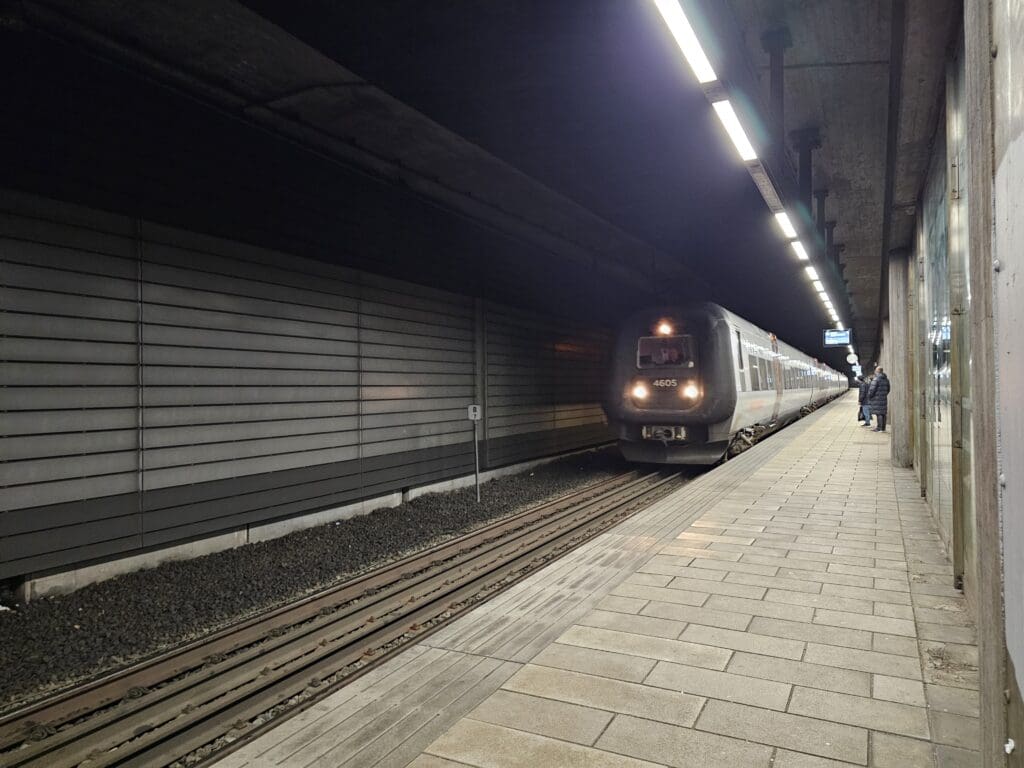
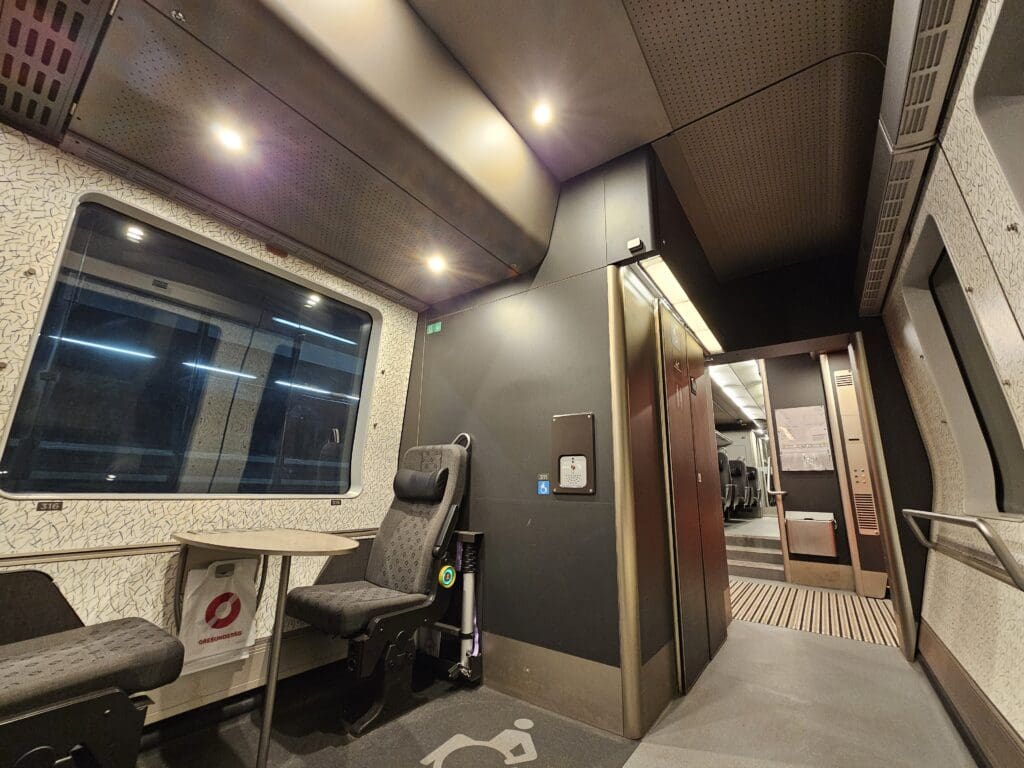
Two minutes and one stop later, the train pulled into its final station in Denmark before crossing the Øresund Bridge, Copenhagen Airport. There, we disembarked along with a small number of suitcase-wielding passengers and staff and made our way up into the terminal building. Perhaps unsurprisingly, seeing as Copenhagen Airport is Denmark’s main international air hub, this is well connected to the country’s transportation network. From there, passengers can travel across Copenhagen and the surrounding area by Metro, whilst a network of suburban and intercity services connect this with towns, cities and villages across Denmark and parts of Sweden. In fact, from the airport, thanks to Europe’s interconnected railway network, many Western European capitals can be reached in no more than two changes of train! However, until some expensive underground transatlantic tunnel is constructed, the only way for me to reach Greenland without spending days on a ship is to fly!
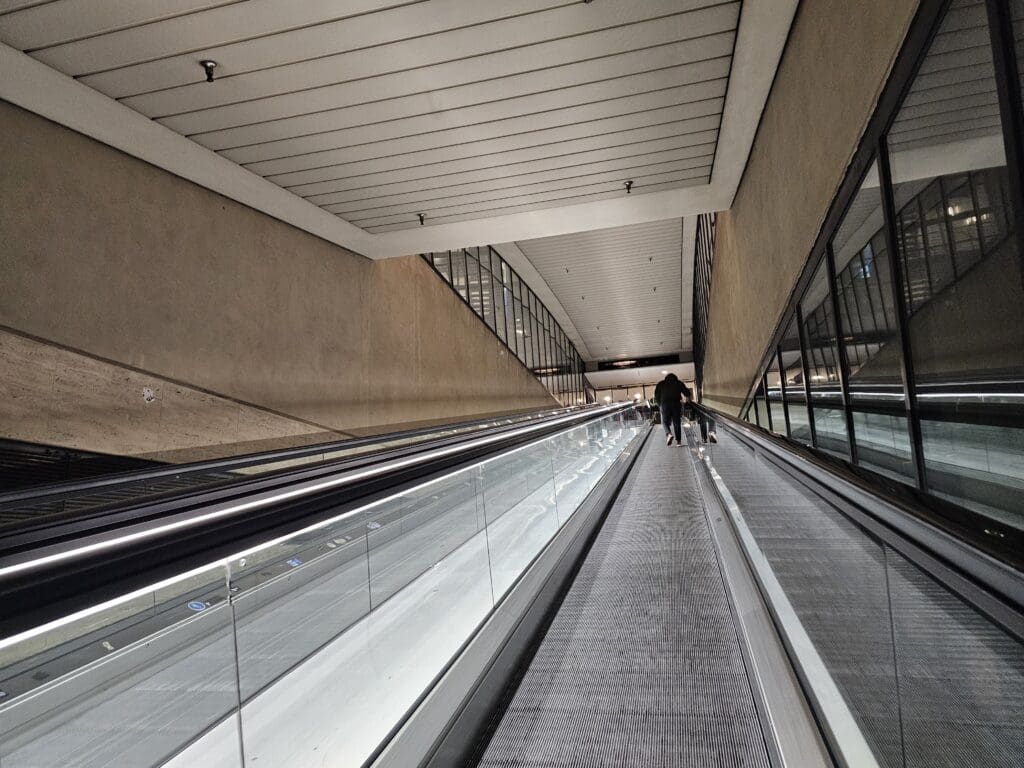
As airport stations go, that of Copenhagen Airport is very conveniently located, being positioned in the basement of the terminal and thus nothing more than a short walk from the check-in halls. No more than a minute after disembarking the train, we arrived at Scandinavian Airlines’ check-in area. Unsurprisingly serving as the airport’s largest user, this was well-branded, and plenty of the airline’s staff could be seen ready and waiting to assist passengers. Looking around, with morning services heading to destinations across Europe and beyond, this was rather busy, with passengers scurrying about in all directions as they searched out their airline’s check-in desks. Once airside, Copenhagen Airport consists of a single shared area with no separate terminals; however, somewhat confusingly, the landside area is divided into two conjoined halls – Terminal 2 and Terminal 3. Both of these appeared to be stylish and modern, and despite the busyness that morning, these were clean and tidy, whilst plenty of places to sit and wait were offered, not to mention the fast complimentary wifi and plentiful charging points. In terms of facilities, as I wandered around, I spotted plenty of shops, cafés and eateries, including multiple 7-Elevens selling a range of drinks, snacks and other items without the usual inflated airport markup. However, with Scandinavia being Scandinavia, nothing was particularly cheap!
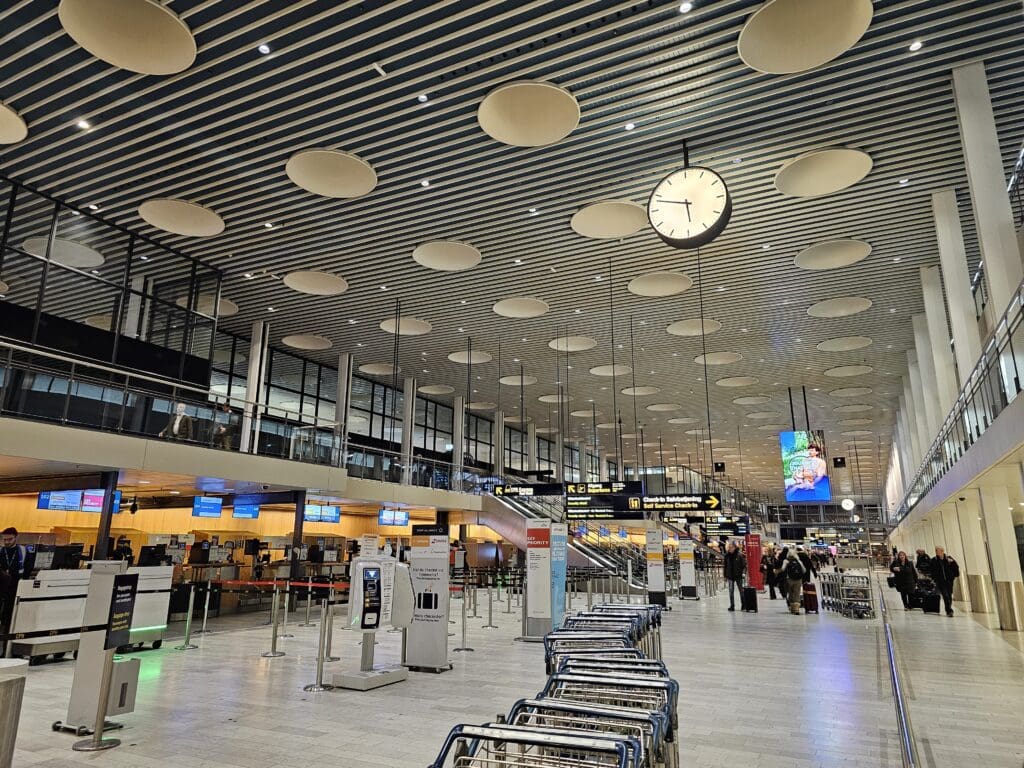
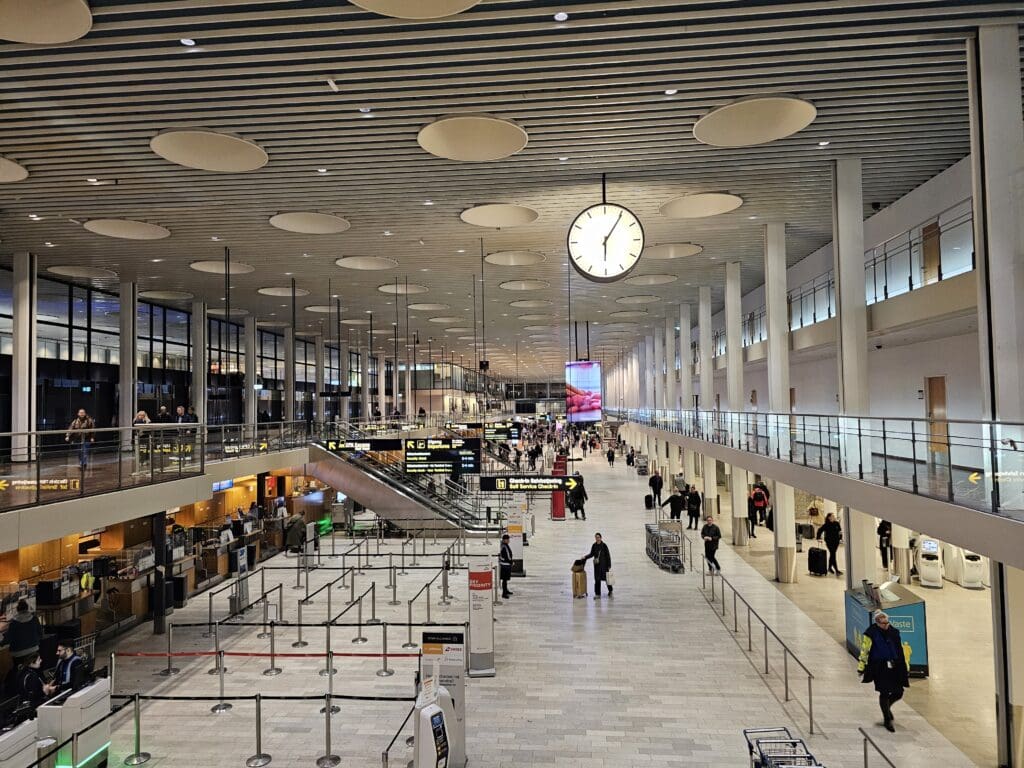
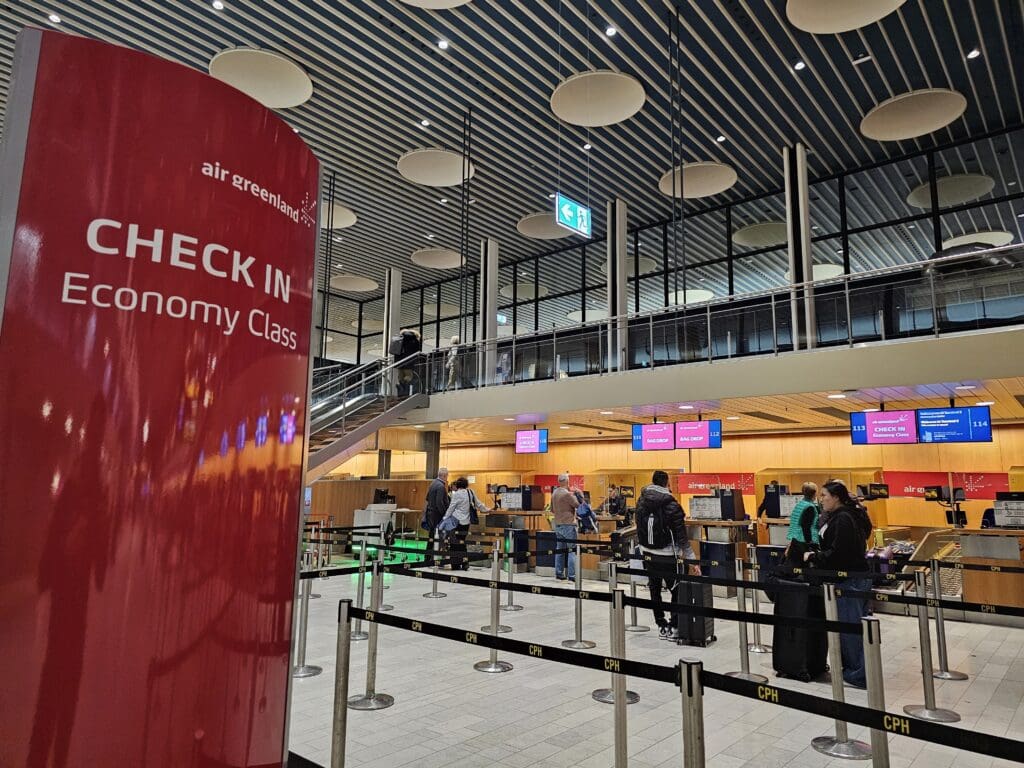
Air Greenland utilises Terminal 3 in Copenhagen, and eventually, we decided to wander over to this. Upon making it to this busy hall, it wasn’t long before I spotted several staff members setting up the airline’s red signage in preparation for the commencement of check-in. Further reassuring us that we were in the correct place, a fair number of passengers decked out in their finest winter gear could be seen huddling around, waiting for the desks to open. A few moments later, with three hours to go until departure, these opened, and we soon joined the short queue to drop off our suitcase. That morning, four desks were offered (one for those in Economy, one for Premium passengers and two for bag drop-off only). Alongside these, plenty of self-service check-in machines were provided, which also could print off passengers’ baggage tags. After waiting for a few minutes, we reached the desk where we were greeted first in Danish and, after realising we weren’t locals, again in English. Following a quick and painless procedure, our suitcase was dropped off, and paper boarding passes were issued, with this stage of the journey leaving me with nothing to complain about.
Once we had parted with our suitcases, we did not need to remain in the landside portion of the terminal. We thus headed up the escalators and soon arrived at the entrance to the terminal’s security area on the first floor. With just a single security area, this is shared by both check-in halls, and even though these halls were rather busy that morning, I found security to be quiet and calm. This was undoubtedly assisted by the fact that plenty of staff were on hand, and all checkpoints appeared to be open. Overall, this was a quick and easy process, and whilst the staff there seemed to be on the more unfriendly side of things, ultimately, they worked efficiently and I was able to pass through this within about a minute.
Just like many terminals in Europe, once through security, I was required to undertake a route march through a large duty free store, which, in Copenhagen, was operated by German multinational Heinemann. This appeared to be your typical large duty free outlet, selling all the usual alcohols, spirits, local products and souvenirs, and there was little to distinguish this from any other large duty free store at any other major airport in the world. Not wanting to make any purchases, we sped through this and soon made it to the main airside area. Airside, Copenhagen Airport seems to cover a rather large area and is split across five conjoined zones – four fingers and CPH Go. The latter serves as the airport’s low cost carrier pier and serves the likes of EasyJet, Ryanair and Wizz Air. Given its size, I would caution passengers against cutting things too fine, as walking from security to the furthest reaches of the terminal can take quite some time. Fortunately, with buckets of time on my hands before jetting off, I could enjoy a leisurely explore of all the nooks and crannies of Copenhagen Airport.
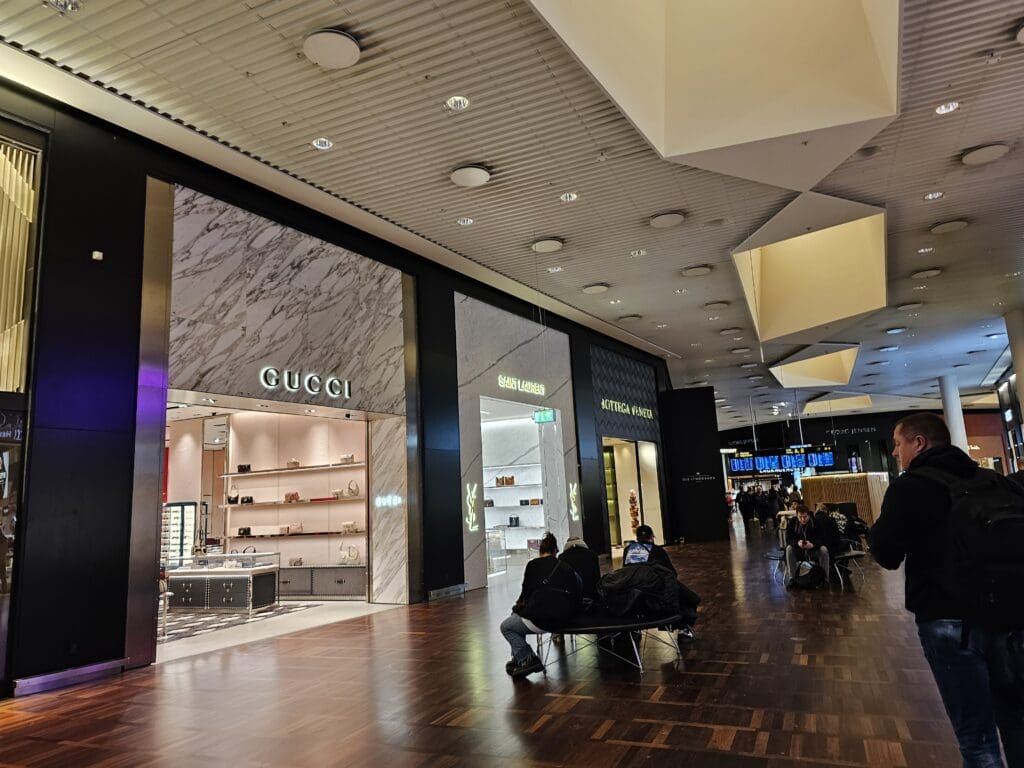
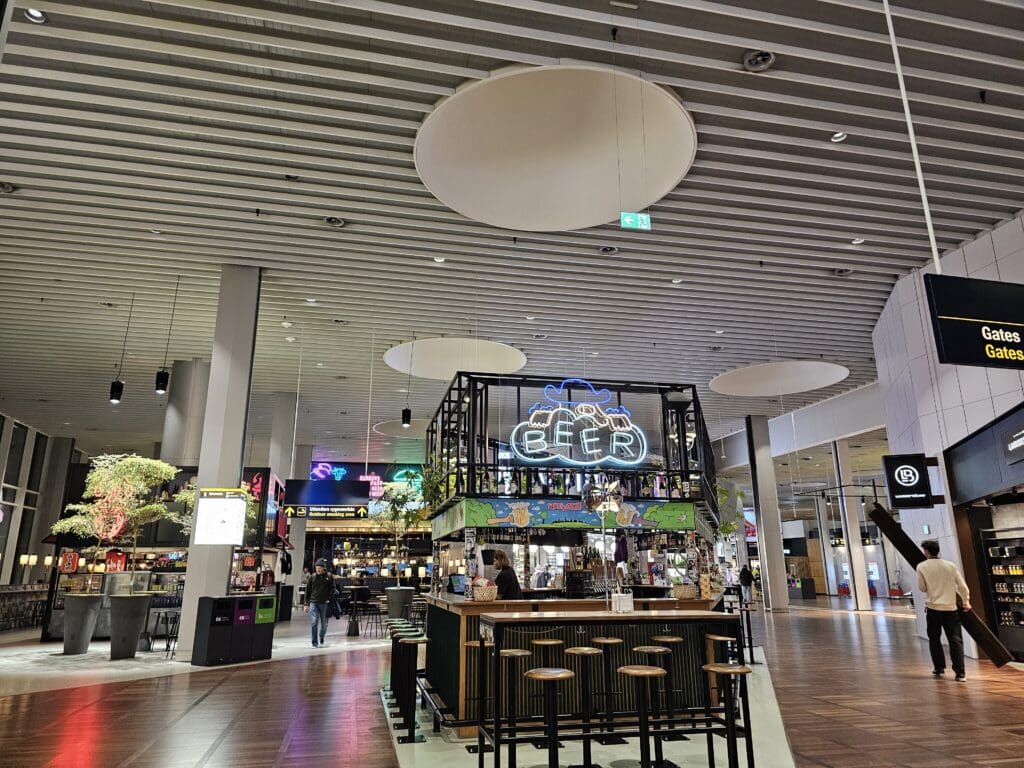
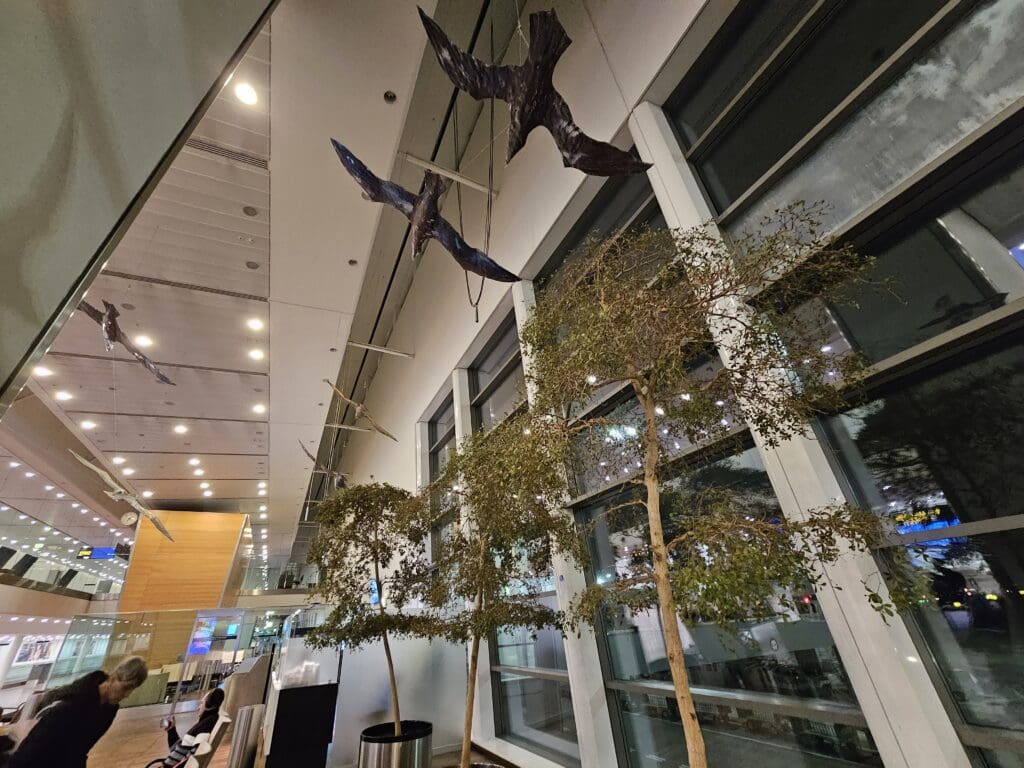
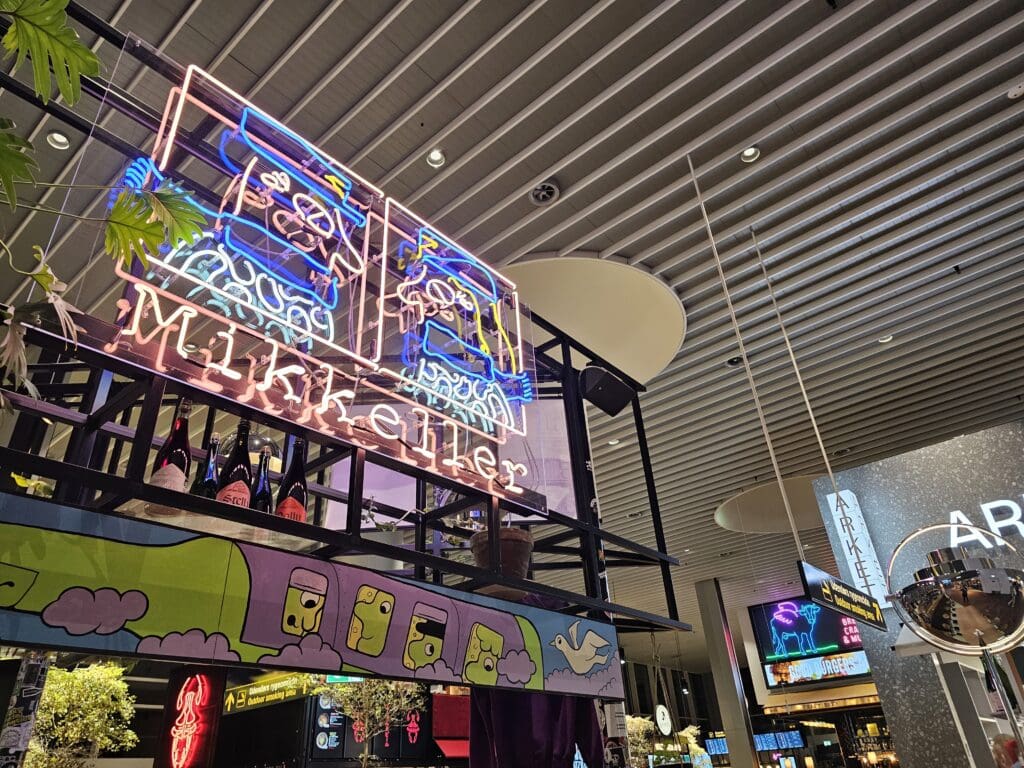
Having passed through Scandinavia’s busiest airport a fair few times, I can comfortably say that it is one of my favourite European hub airports. Not only was security quick and easy, the terminal itself is, for the most part, modern, stylish and clean. Despite the busyness, plenty of seating options were available in the airside area, and those needing to charge their devices did not have to wander far in search of a plug socket. For those looking to do some last-minute shopping or wanting to grab something to eat or drink, a near-endless number of facilities are on offer, albeit cheaper options are largely limited to the items on sale at the terminal’s many branches of 7-Eleven. For those wanting something a bit more substantial, the airport perhaps has the highest concentration of Danish bakery Ole & Steen outlets anywhere in the world. That morning, across much of the terminal, there seemed to be a lighthearted atmosphere, and many passengers took the form of groups and families heading off on holiday. Furthermore, it seemed that early morning pints were not just a stalwart of British holiday culture, with many of the terminal’s bars already making a roaring trade.
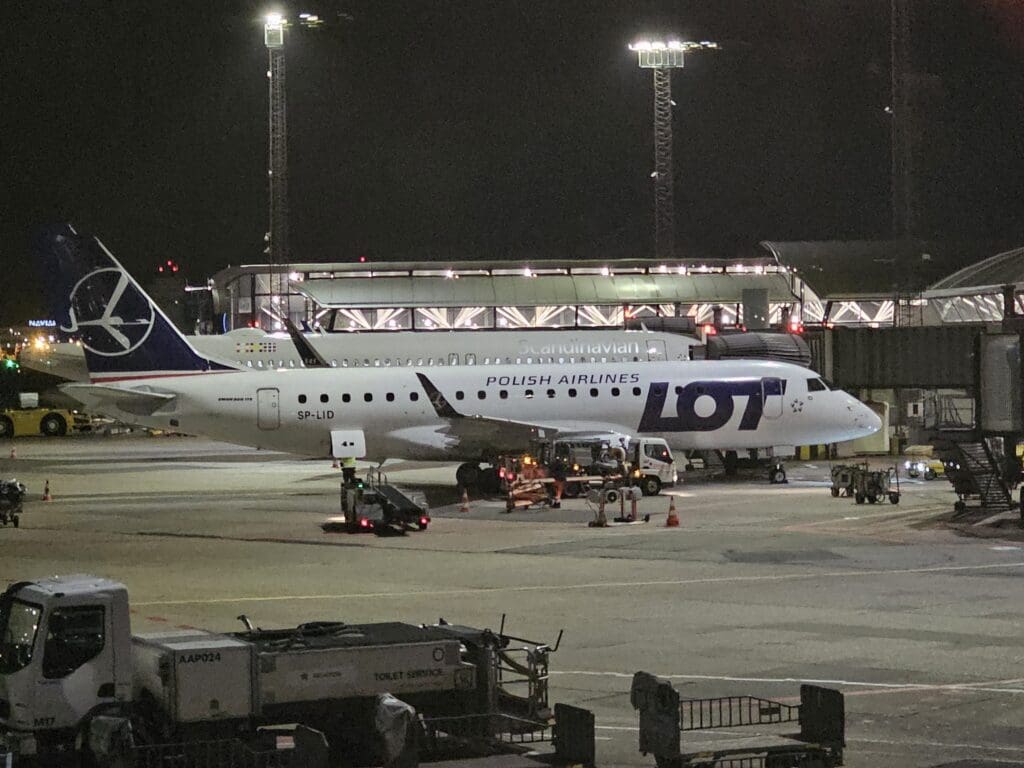
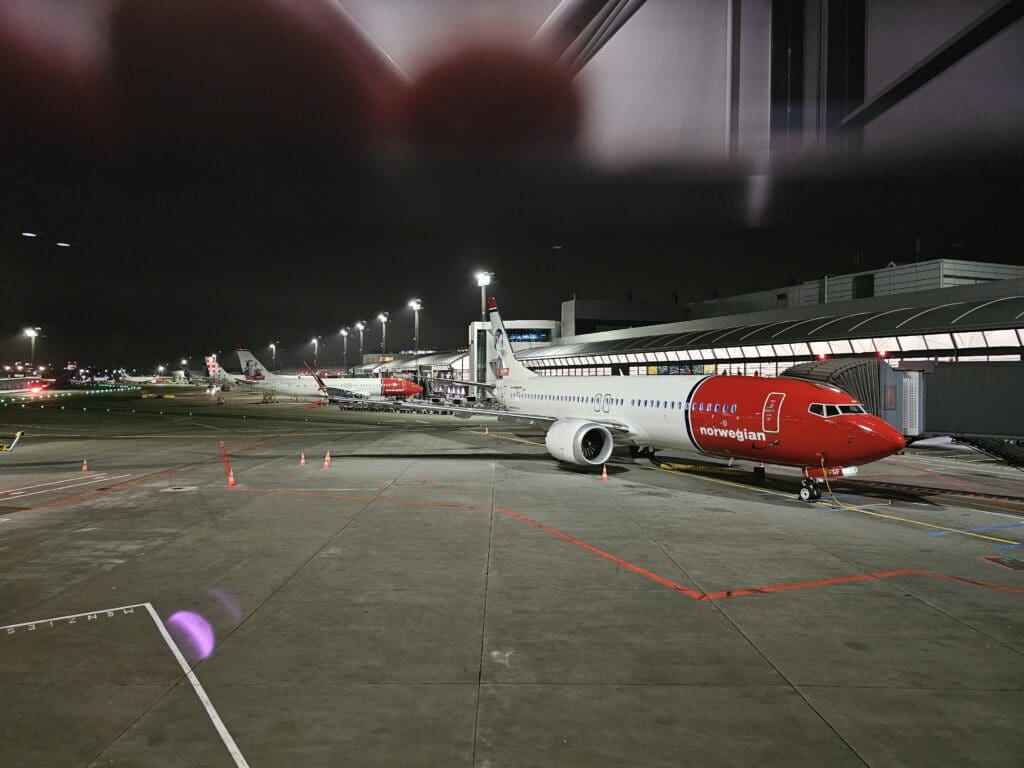
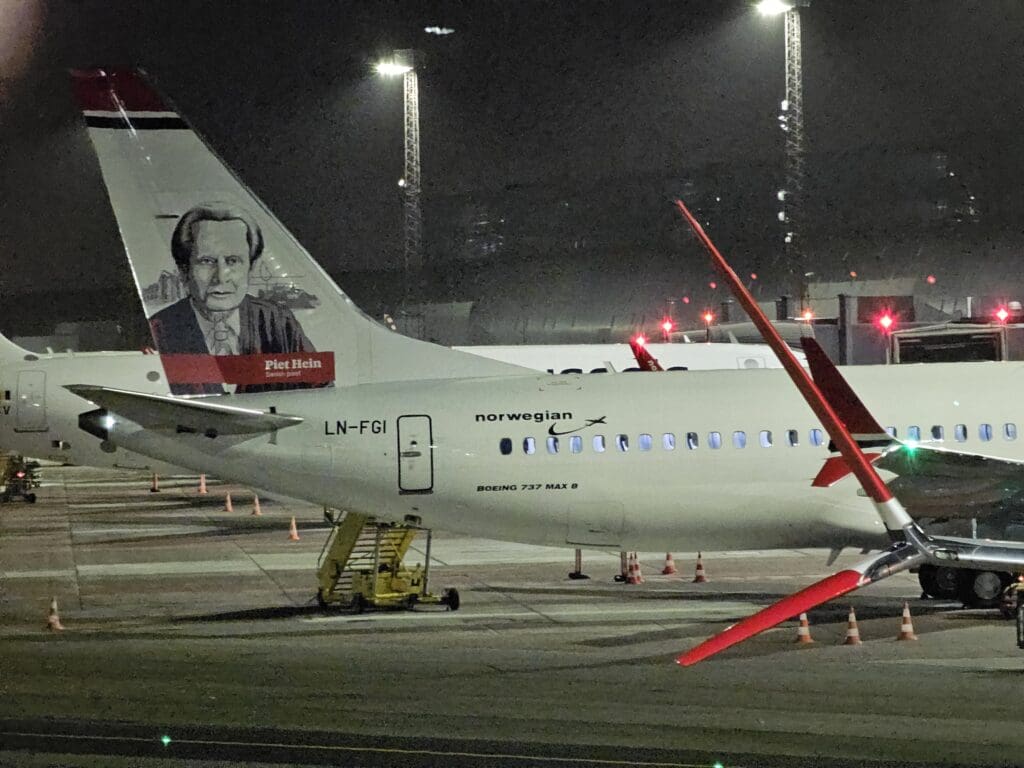
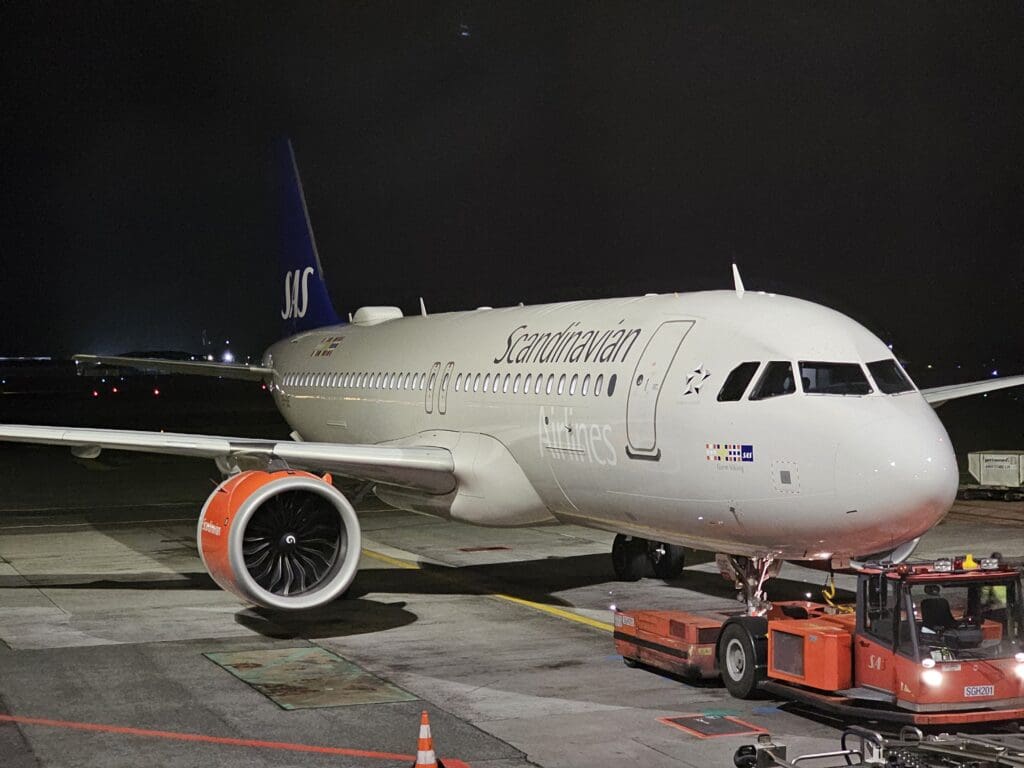
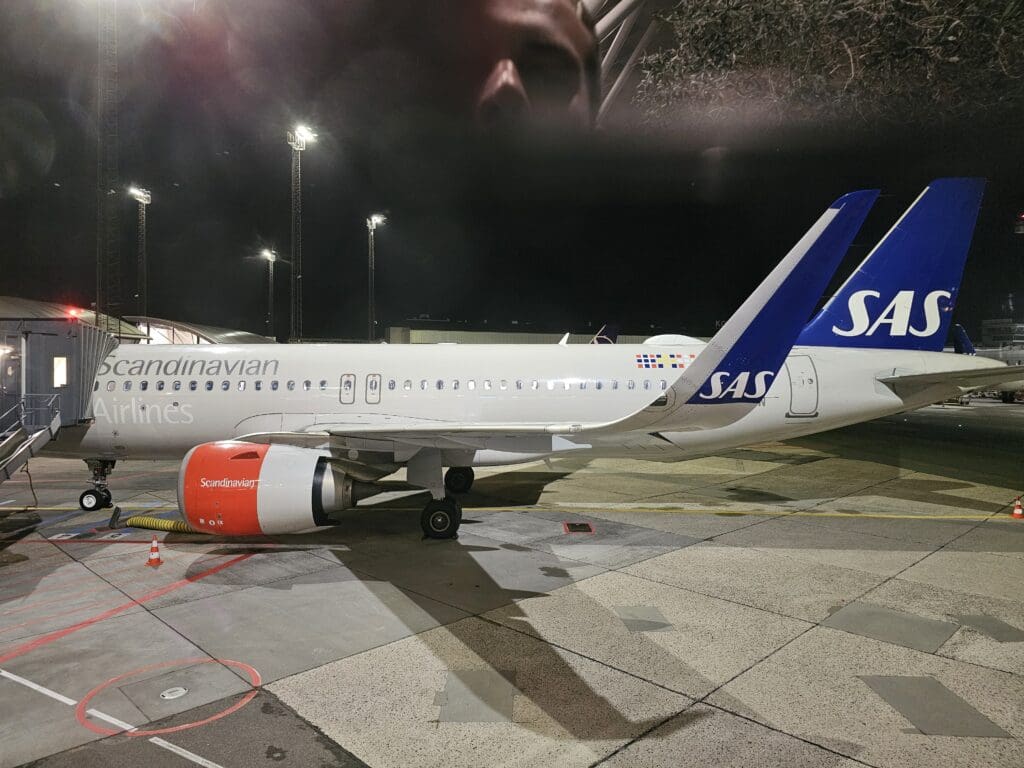
With the sun not scheduled to rise that day until 0802, outside, it was dark for much of my stay, with the skies yet to brighten. However, it is worth noting that the terminal is a great place for enthusiasts, as many of the stands offer superb unobstructed vistas of the happenings outside on the apron. Being based in the UK, admittedly, there weren’t too many exciting movements that morning, with most aircraft types and airlines also being visible at many other places across Europe. However, that is not to say that Copenhagen Airport is not an exciting place to do some plane spotting as this features a regular stream of traffic and a relatively diverse array of carriers. During the few hours that I spent in the terminal, I managed to catch sight of aircraft ranging in size from the minuscule BAe Jetstream 32, which Dutch carrier AIS Airlines operates on the short 145-mile flight between Copenhagen and Midtjyllands Airport in the heart of Jutland, right up to the modern Airbus A350-900. Whilst many airlines took the form of European carriers, I also spotted aircraft from Etihad Airways, Ethiopian Airlines, Qatar Airways, Singapore Airlines and Thai Airways International. As was to be expected, that morning, many movements were provided by Norwegian and Scandinavian Airlines Boeing 737 and Airbus A320 Family aircraft, with both carriers maintaining large bases in the Danish capital.
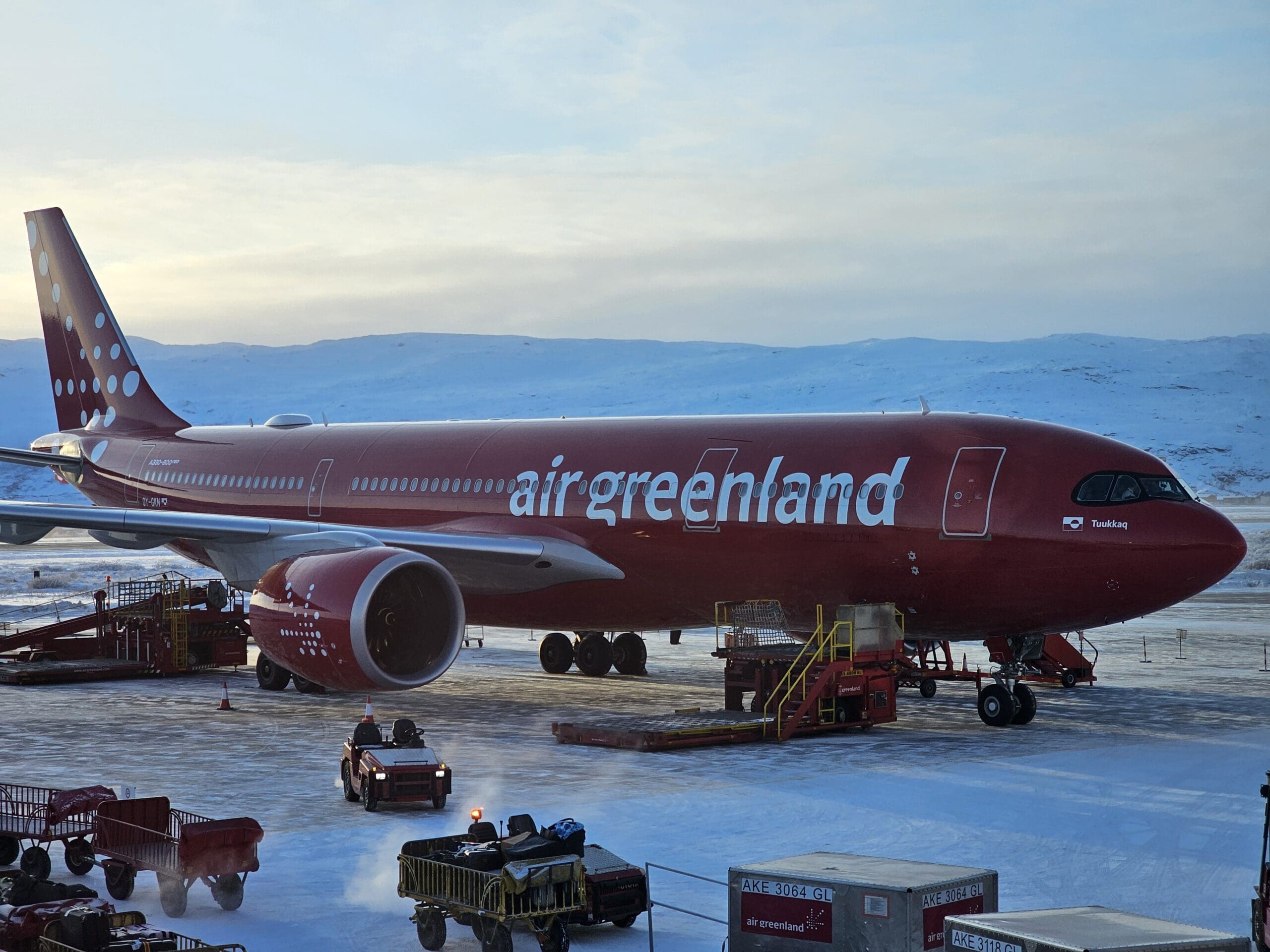
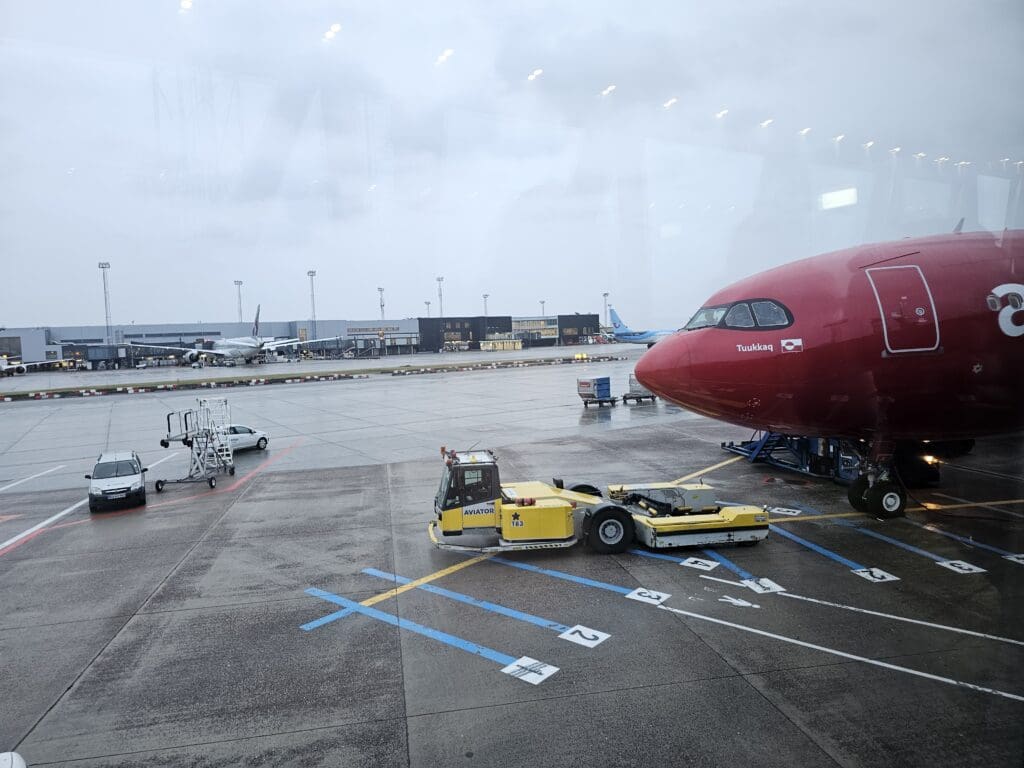
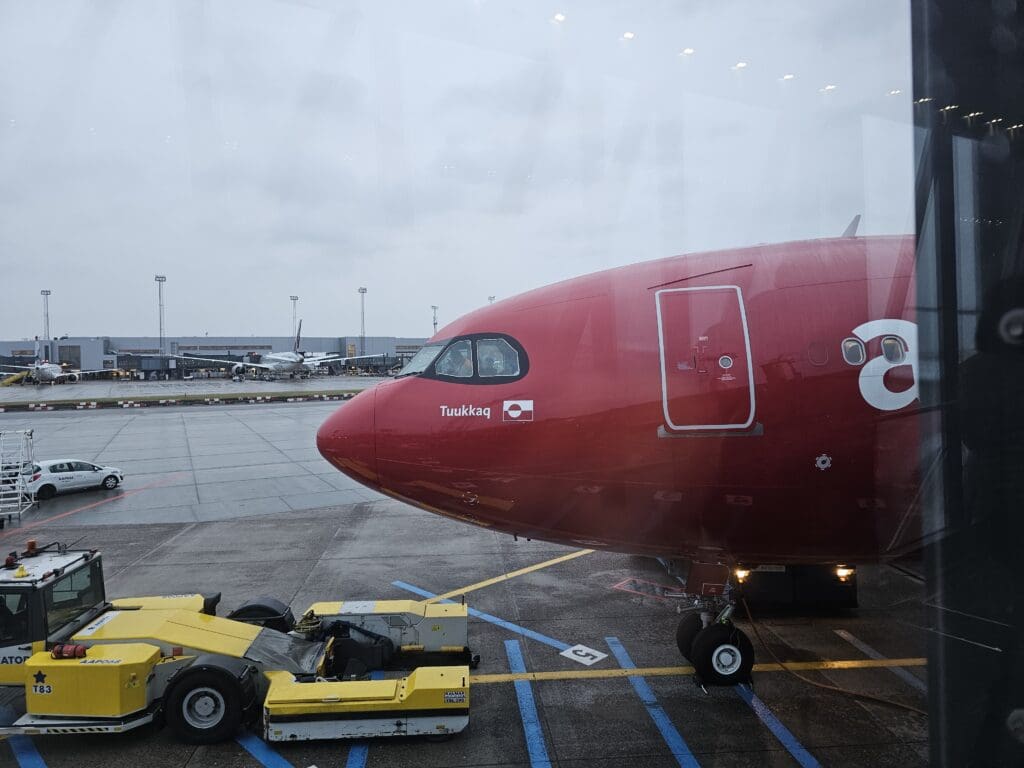
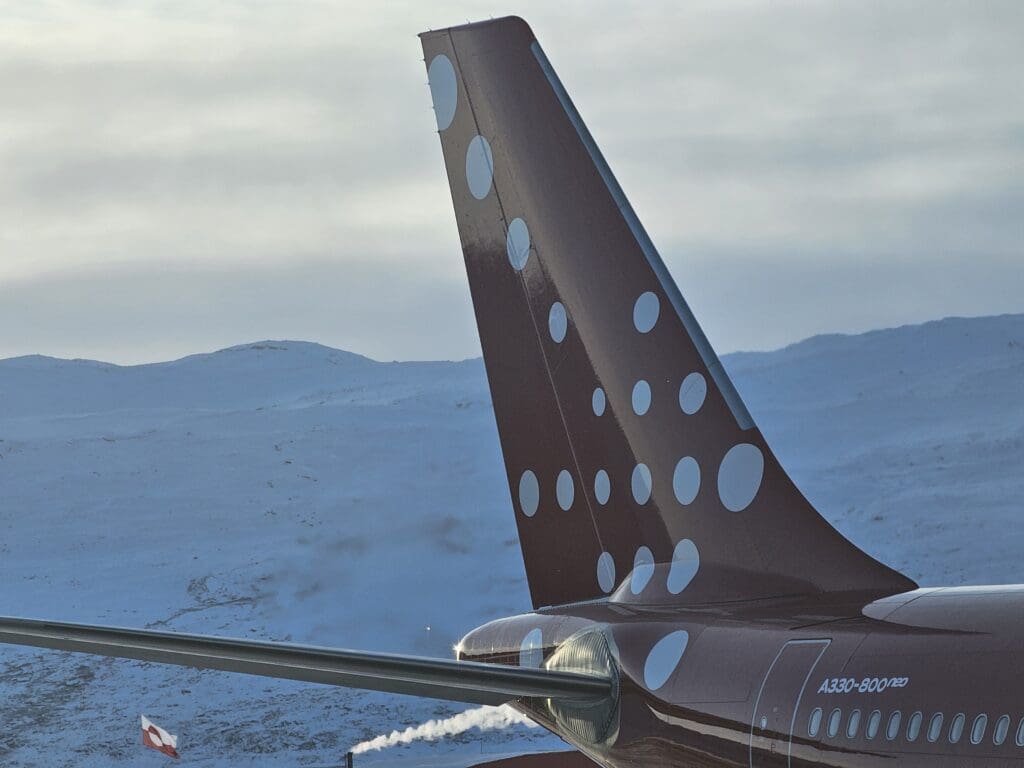
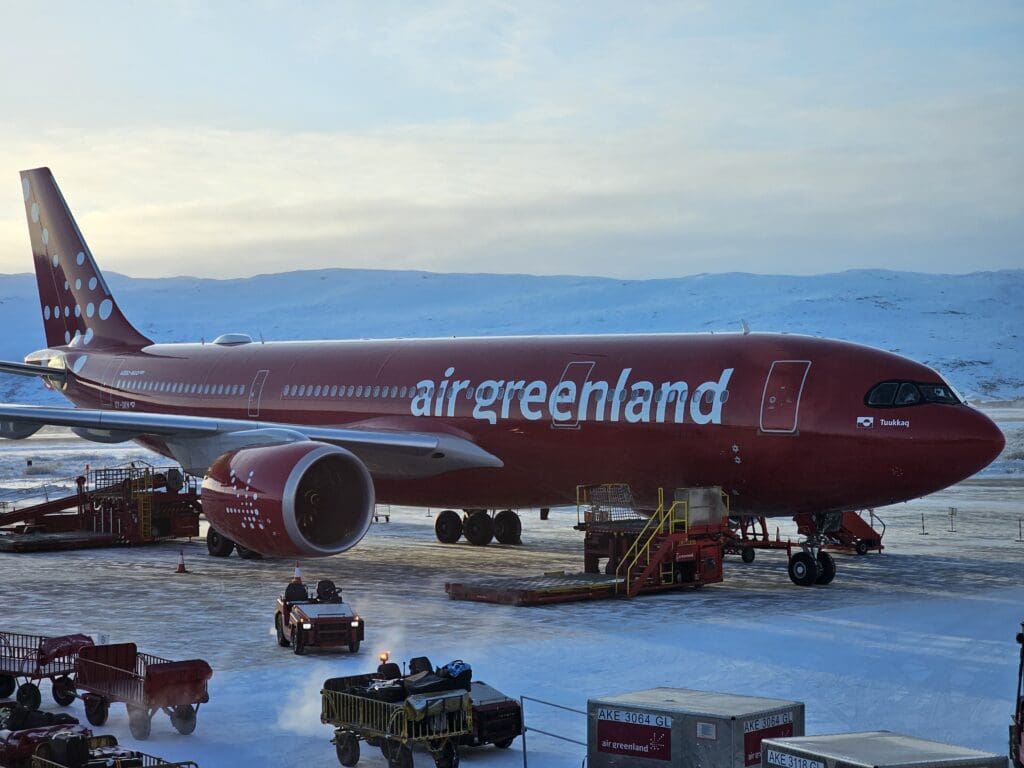
Seeing as Air Greenland operates a single Airbus A330, it wasn’t difficult to guess the aircraft that would be operating that day’s service over to Kangerlussuaq. Unlike the other aircraft in Air Greenland’s fleet, its Airbus A330 is based in Copenhagen rather than Greenland. In between flights, this sits at Copenhagen Airport’s remote stands at the northern end of the airfield or is parked up at a gate. With this having spent the night on the ground in Copenhagen, as I wandered around, I soon spotted the distinctive bright red Airbus basking in the orangey glow of the apron floodlights, ready to head to Greenland. Assembled at Airbus’s Toulouse Blagnac plant, this particular Airbus A330-841N carries the manufacturer serial number of 2020 and first took to the skies in late October 2022, making it just 1.3 years old at the time of my flight. Following testing, in early December 2022, the aircraft was given the registration OY-GKN and named Tuukkaq before entering service and replacing the 1998 model Airbus A330-200 that had operated Air Greenland’s Copenhagen service since 2002. Serving an important role in connecting Greenland and Denmark, Tuukkaq serves as Air Greenland’s flagship aircraft and even enjoys its own page on Air Greenland’s website detailing some of the features of the aircraft. Operating a predictable schedule of flights, the aircraft rarely visits anywhere other than Kangerlussuaq and Copenhagen and in the week before my flight, the aircraft had operated four round trips from Copenhagen to Kangerlussuaq and back, equating to a distance of at least 17,100 miles.
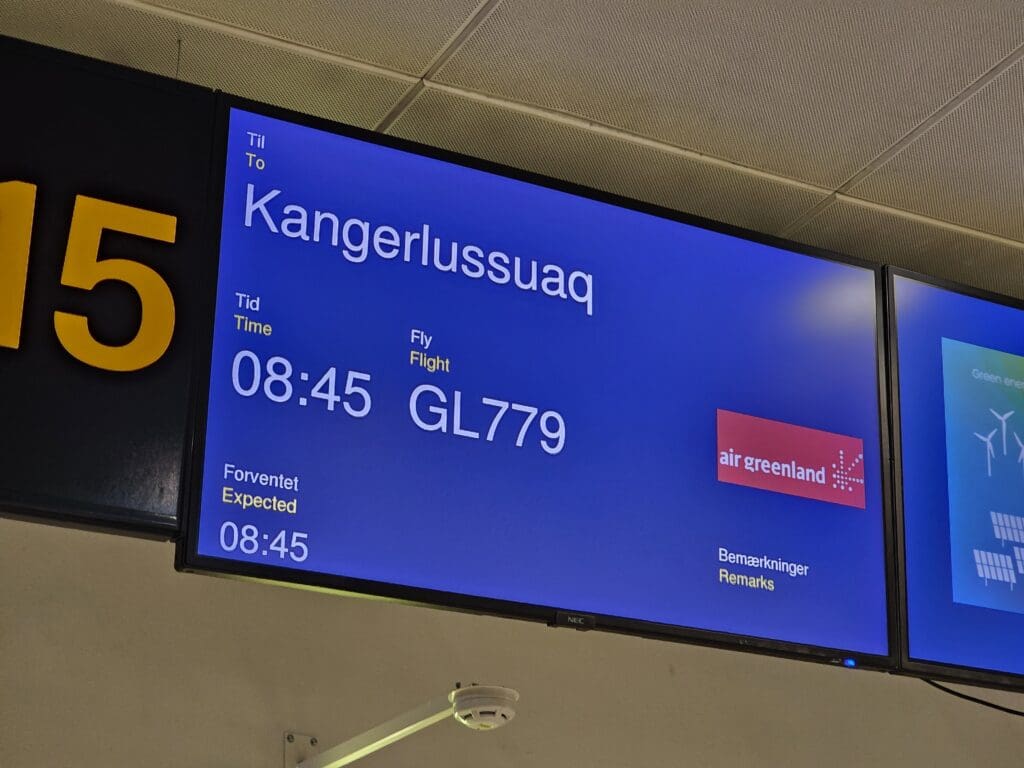
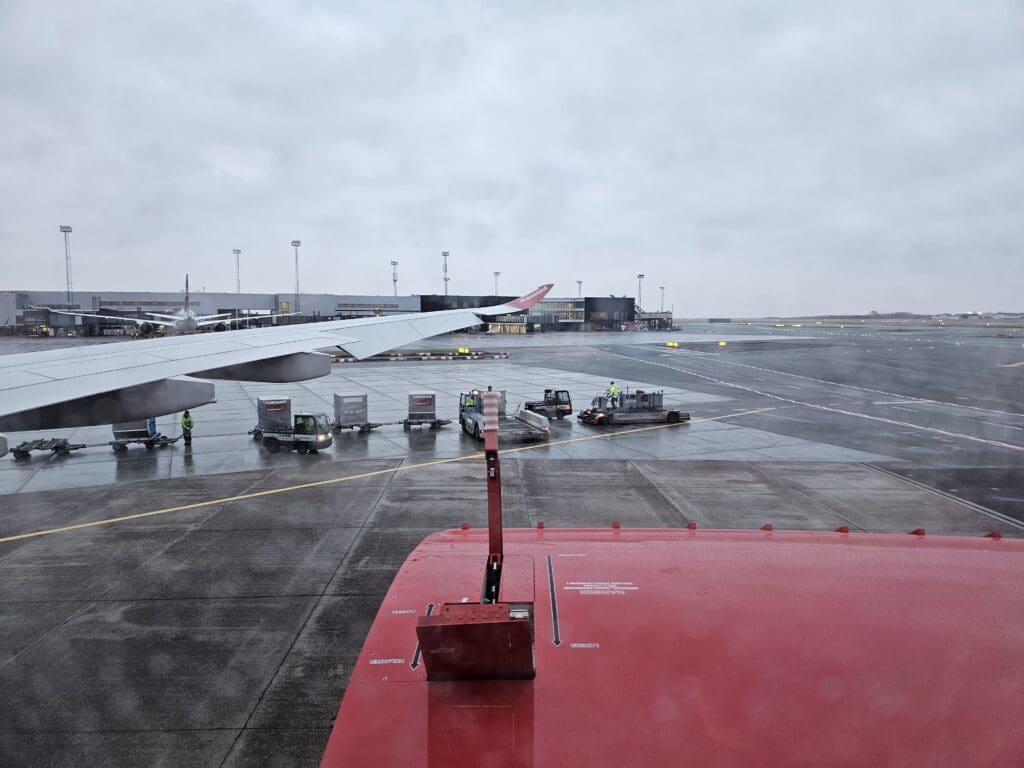
Following a long wander around, a coffee and a real Danish pastry, feeling worn out, I decided to plonk myself down at Gate B15 with around an hour and a half to go until departure. This is located in the annexe at the very end of the B ‘finger’, with the Airbus parked outside at Stand B17. At that time, a small cluster of warmly dressed passengers could be seen waiting, with the gate area becoming expectedly busier as time passed and our departure neared. At 0735, the cabin crew began to arrive at the gate in drips and drabs, with the airline’s Airbus crew presumably based in Copenhagen with the aircraft. At our scheduled boarding time of 0800, the two pilots arrived, with one soon donning a reflective jacket and heading out into the grim morning drizzle to undertake their pre-departure walkaround and the other heading straight to the cockpit.
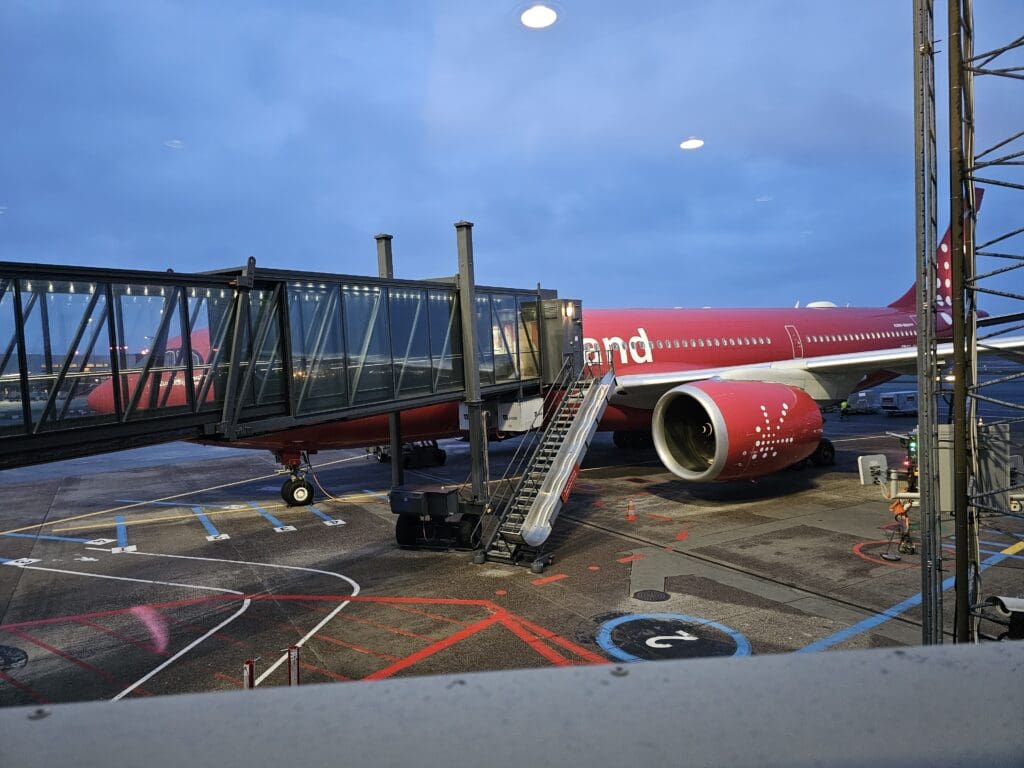
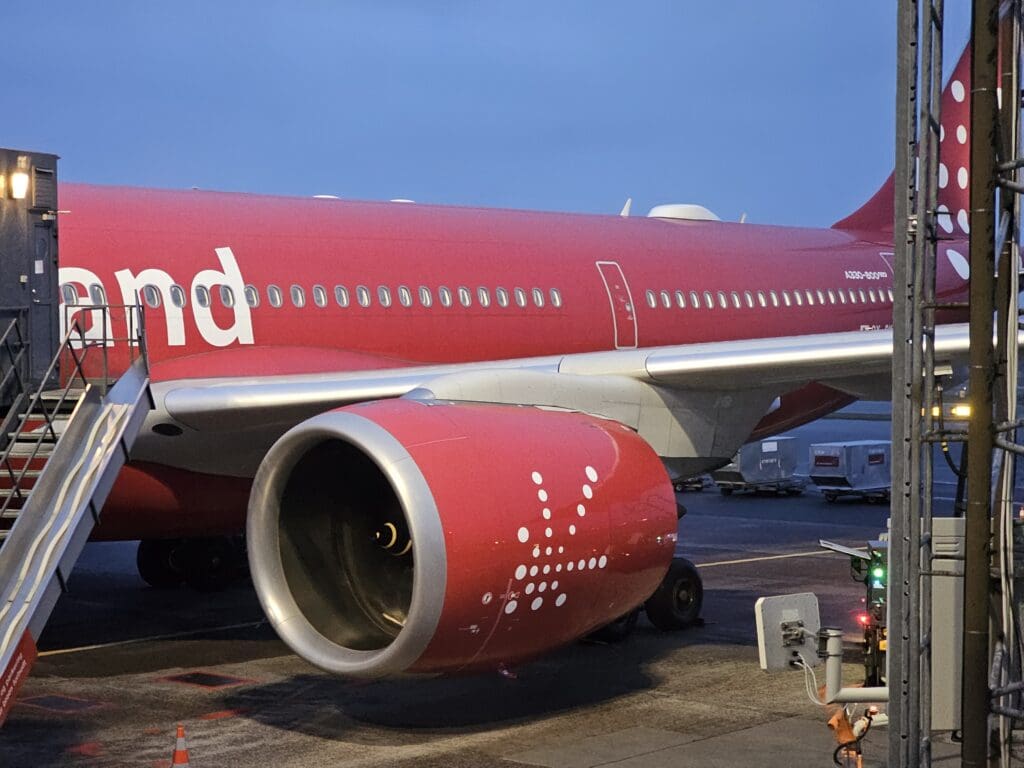
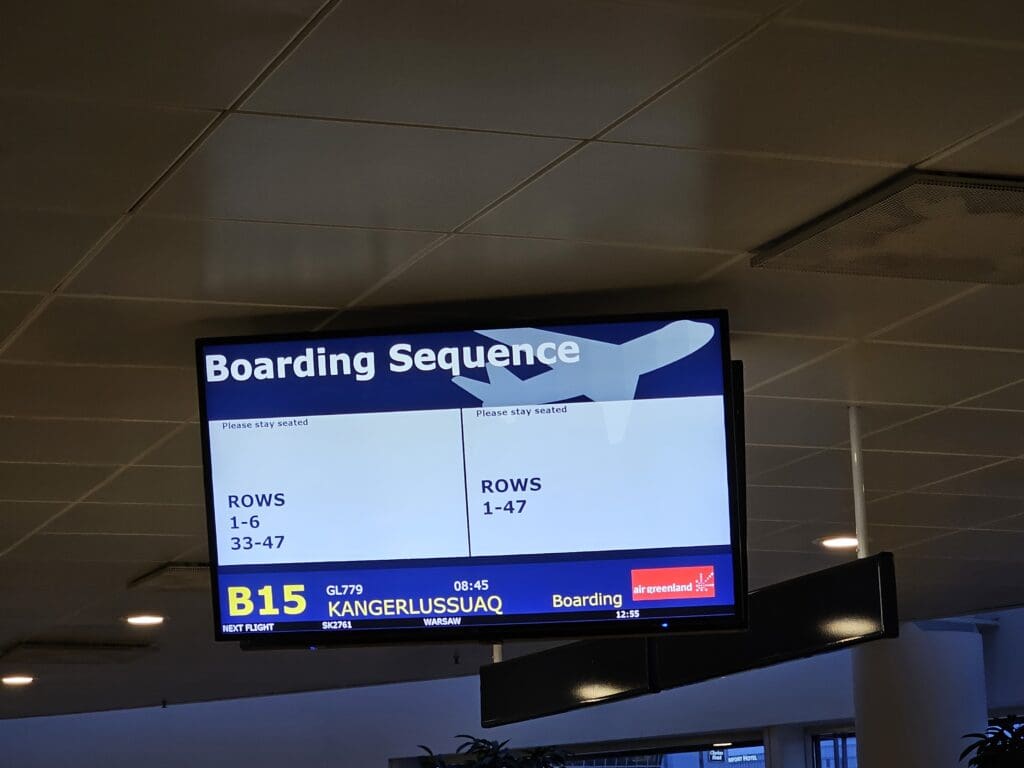
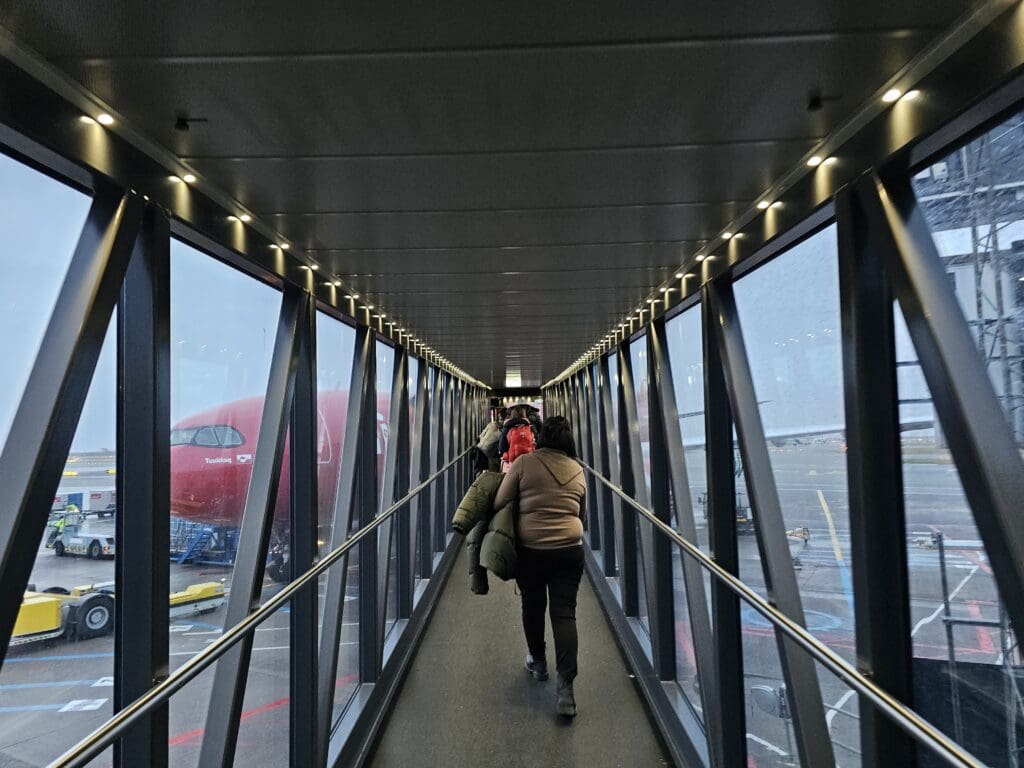
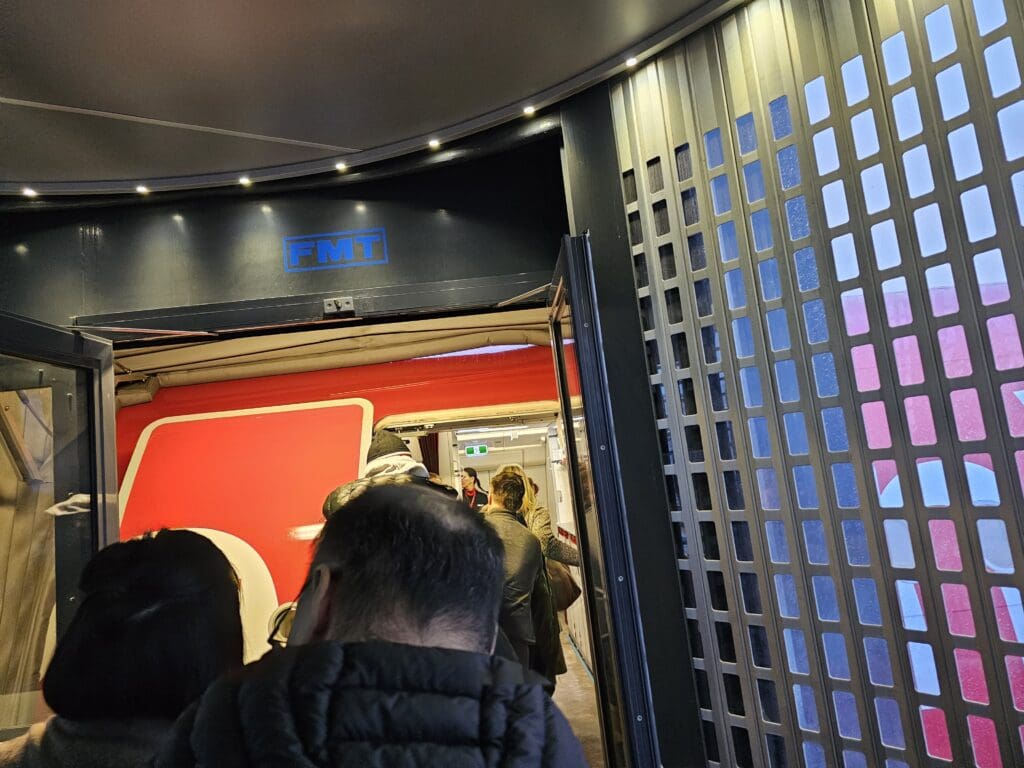
Nine minutes after boarding had been scheduled to commence, one of the gate agents performed an announcement in Greenlandic, Danish and English, inviting those in Premium and seated in Rows 36 and above to form a queue, with boarding set to commence in five minutes. Following their instructions, I soon joined the rear of this, and a few minutes later, passengers were permitted to board the aircraft. Upon reaching the gate podium, my boarding pass was scanned and my passport was checked before I headed up the glass jetbridge connected to the Airbus’ 2L door. As I neared the aircraft, I soon came to a halt as the actual act of boarding was yet to commence, although this was nothing to complain about as it enabled me to get a good gander at one of the aircraft’s two impressive Rolls Royce Trent 7000-72 engines.
No more than a few minutes later, boarding commenced, and I soon stepped into the galley that separates the Premium cabin from the forward Economy section. As I entered the aircraft, I received a friendly ‘god morgen’ from one of the crew members, followed by another welcome from another crew member who stood on the far side of the galley as I passed through this and headed right down the second aisle. Before entering Economy, I caught a glimpse of the small Premium cabin at the front of the aircraft. For those with the cash to spend, it is worth noting Air Greenland’s most luxurious cabin features 42 seats in a 2-3-2 configuration. Whilst decidedly fancier than any narrowbody ‘Eurobiz’ seat, some may be disappointed to find that these bear a far greater resemblance to premium economy recliners rather than to traditional business class seats.
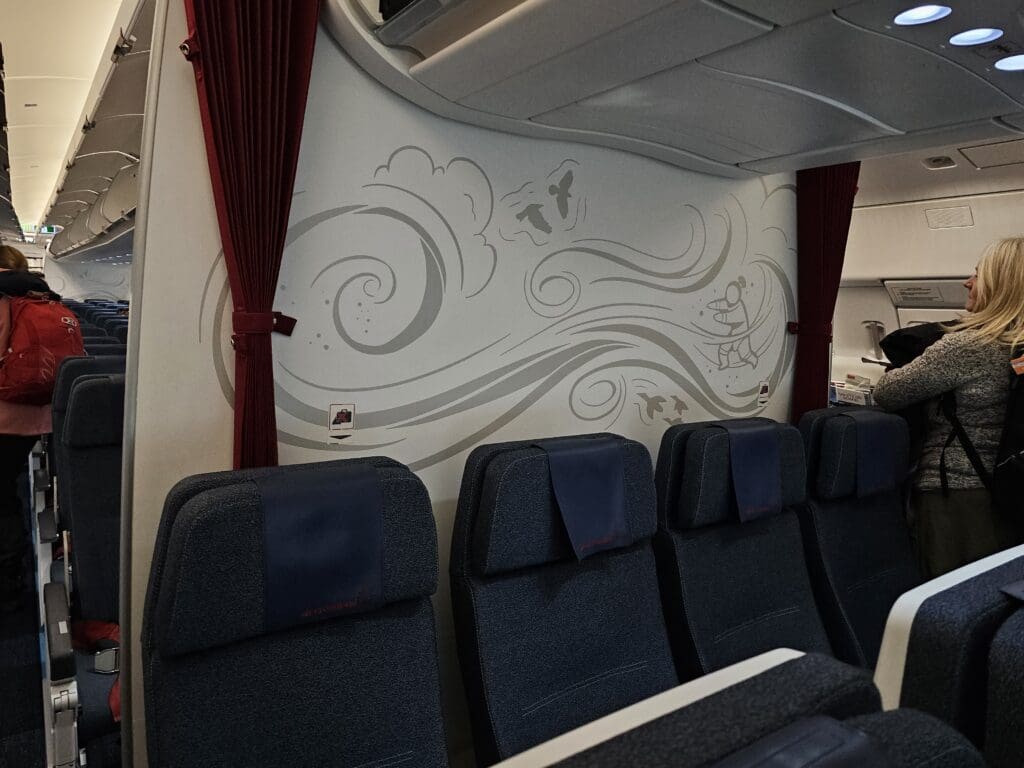
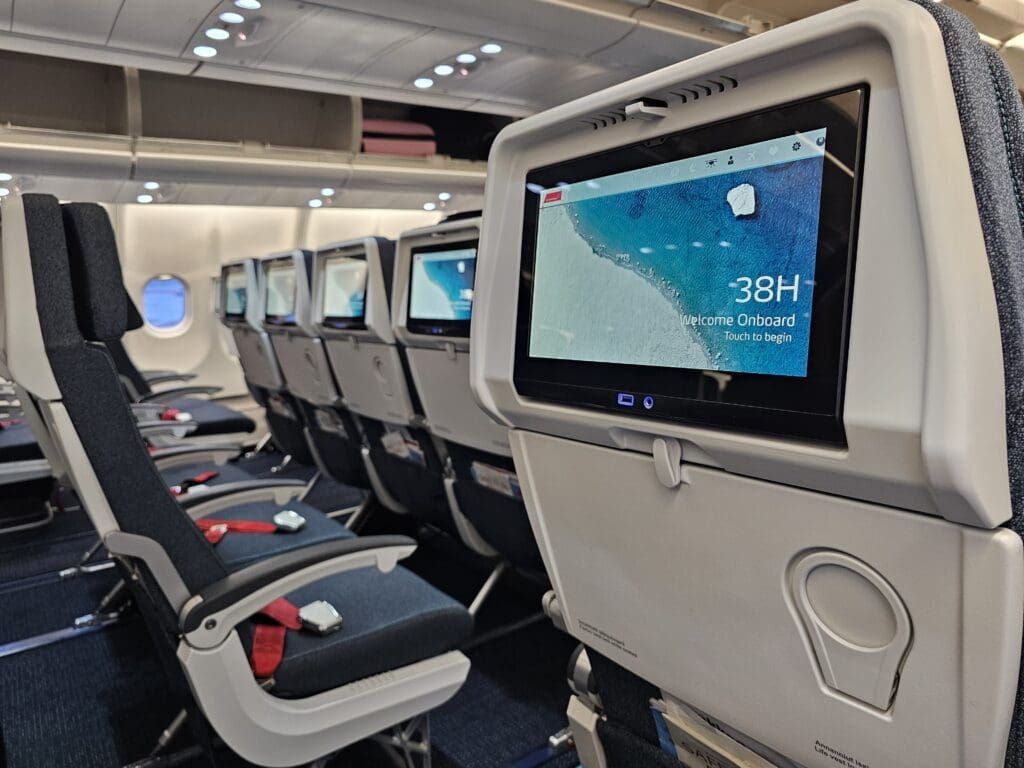
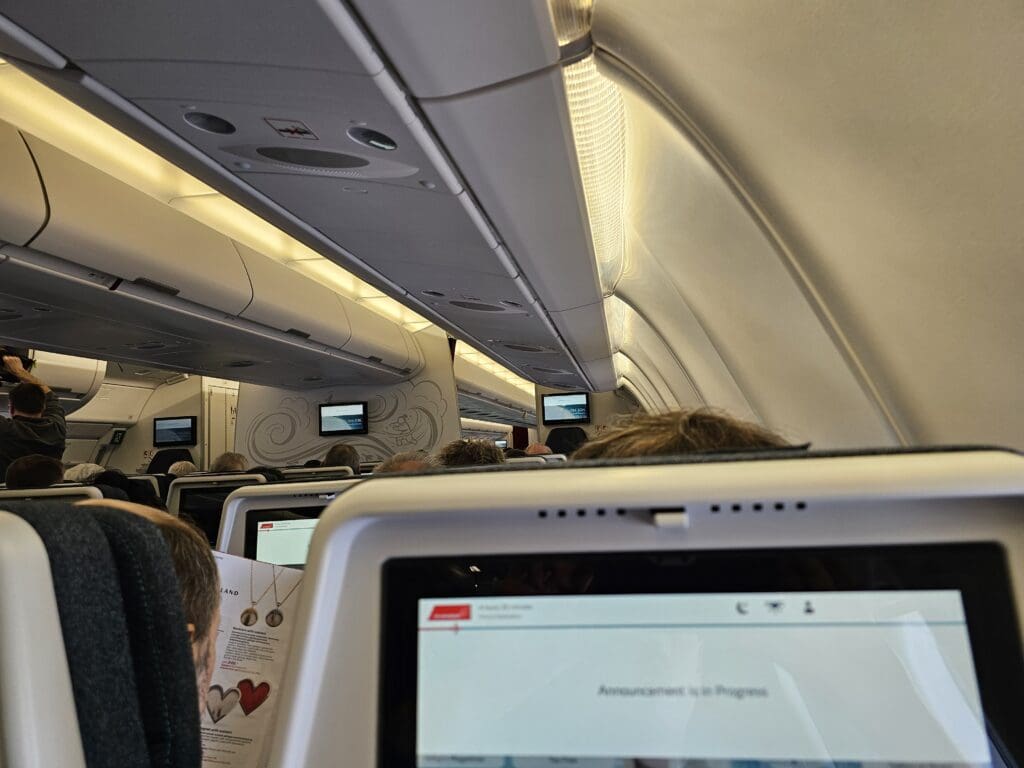
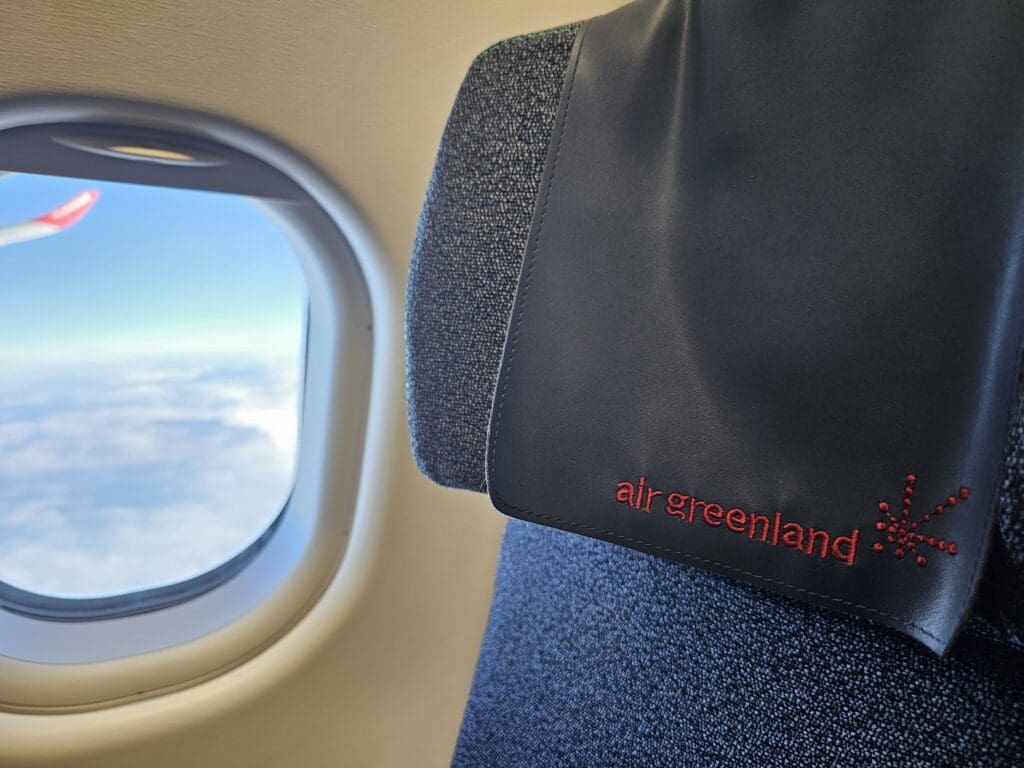
In Economy, Air Greenland’s Airbus A330 features 263 sleek and modern Safran Z316 seats. These are arranged in a standard 2-4-2 configuration and are upholstered with a plain yet smart dark grey fabric and are topped with an adjustable headrest that is partially covered by a small leather antimacassar on which Air Greenland’s logo is embroidered. Despite rarely being in the air for longer than five hours, each passenger can enjoy the luxury of their own high-definition 11.7-inch wide inflight entertainment screen – powered by Safran’s RAVE 3 system. As is always a pleasure to see, beyond the seats, Air Greenland has further customised the aircraft’s cabin and utilised elements of Greenland’s culture and history in its design. For example, the ‘Myths of Asiaq, the spirit of wind and weather’ adorn the cabin bulkheads, providing a rather unique interior.
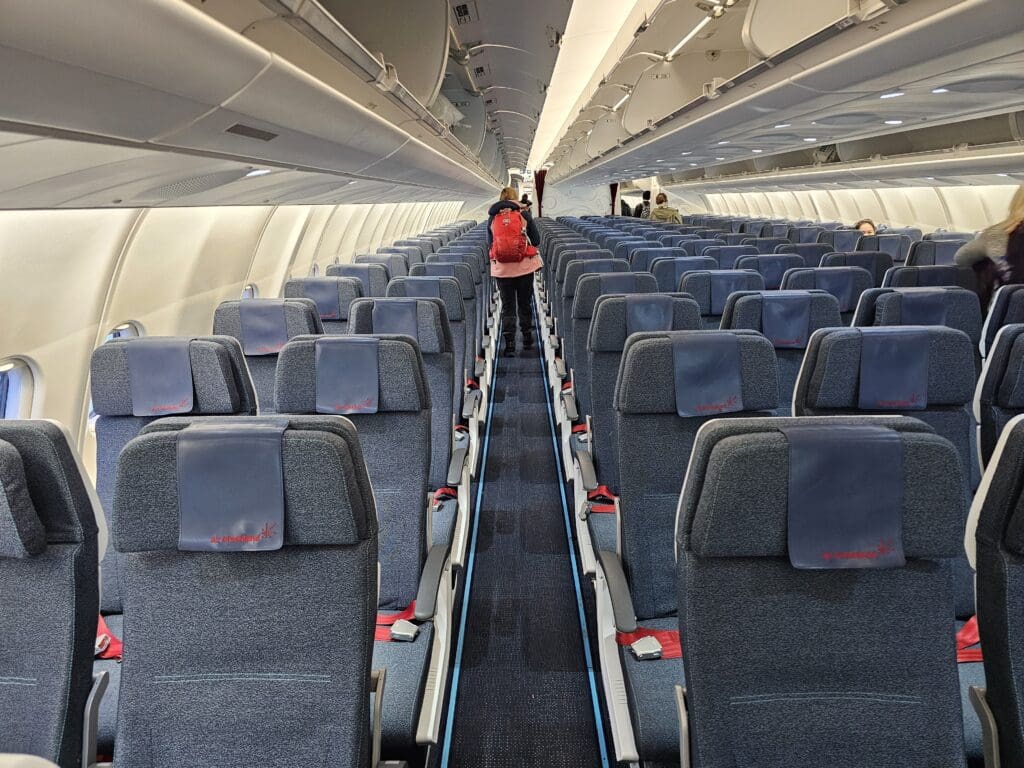
As passengers made their way down the aircraft, calming music rang out and was occasionally interrupted by announcements advising passengers to store their luggage in the correct place and advising about the prohibition of smoking onboard. Making my way through the forward cabin, I received a couple of greetings before reaching my seat in the rear Economy section. Once I had slid my backpack into the large overhead locker, I sat down and settled in for the journey ahead. Looking around, my first impressions of the seat were very positive. This was soft, comfortable, and complete with a very decent amount of legroom. Needless to say, I would have had no issue sitting in this on a much longer long-haul slog. Beneath the screen, a USB-A port could be found, which I later discovered was capable of charging my phone. However, no universal power sockets could be found onboard. Meanwhile, the seat also featured a cup holder alongside the usual tray table and seatback pocket. Examining the contents of the pocket, this featured the latest copy of Air Greenland’s Suluk magazine, a battered safety card, a sick bag, the onboard shopping catalogue and an information card detailing the Tuukaq Wifi service. Considering the age of the aircraft, I was hardly surprised to find this to be in tip-top condition, with very few marks and scratches visible. Meanwhile, having spent the night in Copenhagen, I was also pleased to find that this had been cleaned to a high standard, with no crumbs or rubbish remaining from previous passengers. Upon boarding, neither blankets nor pillows had been placed on the seats, however, given the length of the flight, this was not something that I could make much of a complaint about.
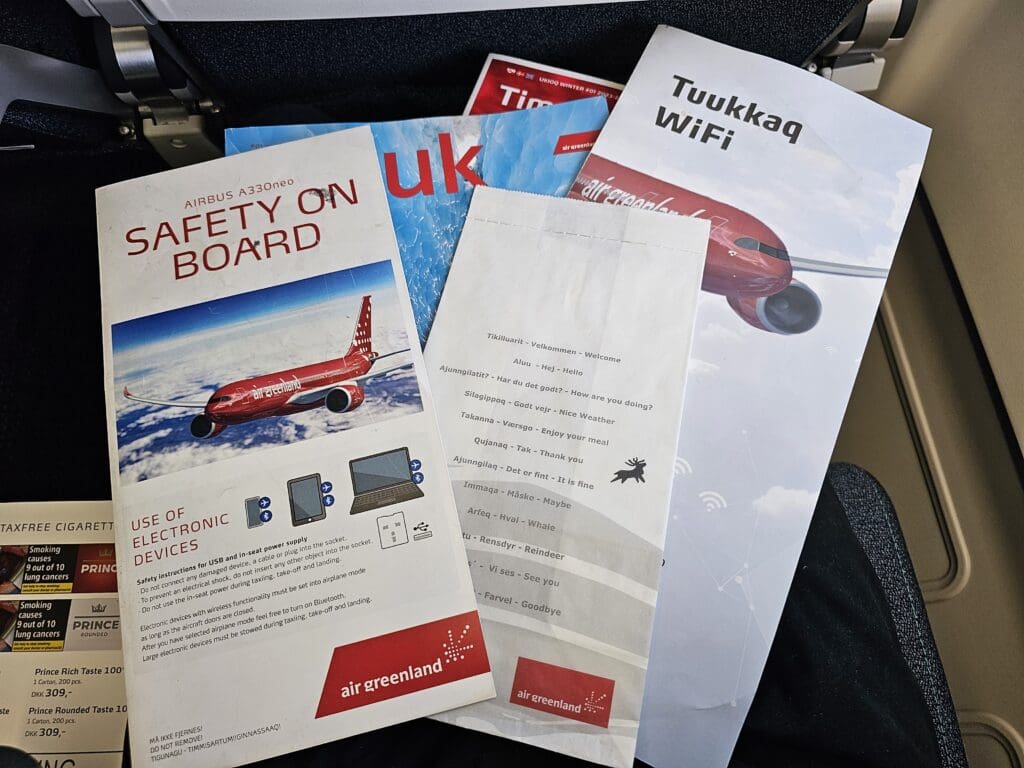
Once seated, with passengers boarding quickly and efficiently, it wasn’t long before the flow of passengers transformed to a trickle. That morning, I would estimate the flight to have been no more than three-quarters full, and I was lucky to end up with an empty neighbouring seat, giving me direct aisle access. In terms of demographics, many of those onboard were unsurprisingly Danish and Greenlandic, although I did overhear a small number of German, Filipino and Thai passengers. Hinting at the important nature of this flight, a stretcher was set up at the rear of the cabin, presumably transporting a Greenland-based patient back home following hospital treatment in Denmark. In the normal manner, once all were onboard the crew passed through the cabin closing all the overhead lockers whilst below, the last of the containers could be seen being fed into the holds before the cargo door was closed with a whine and thud.
At 0843, the calming tones of the Captain filled the cabin as they performed their welcome announcement in Danish and English. This consisted of the usual welcomes and thanks before giving a brief overview of the route – with our journey to Kangerlussuaq expected to take 5H05, they then moved on to detail the chilly yet otherwise good weather in Kangerlussuaq and mentioned that we could expect some light turbulence immediately after departure before things would smooth out for the rest of the flight. This then ended with a mention that we were still waiting for two passengers to arrive from a connecting flight, however, they were expected to join the aircraft very shortly. This was then repeated in Greenlandic by a member of the cabin crew.
At 0851, the missing passengers appeared, at which point the Purser performed their welcome announcement in Danish, Greenlandic and English. This featured all the usual welcomes, thanks and warnings before the crew took to the aisles and commenced the safety demonstration. Even though Air Greenland has a safety video, which can be watched through the inflight entertainment system, this took the form of a full manual demonstration, whilst the Purser went through the safety instructions in English and Greenlandic only.
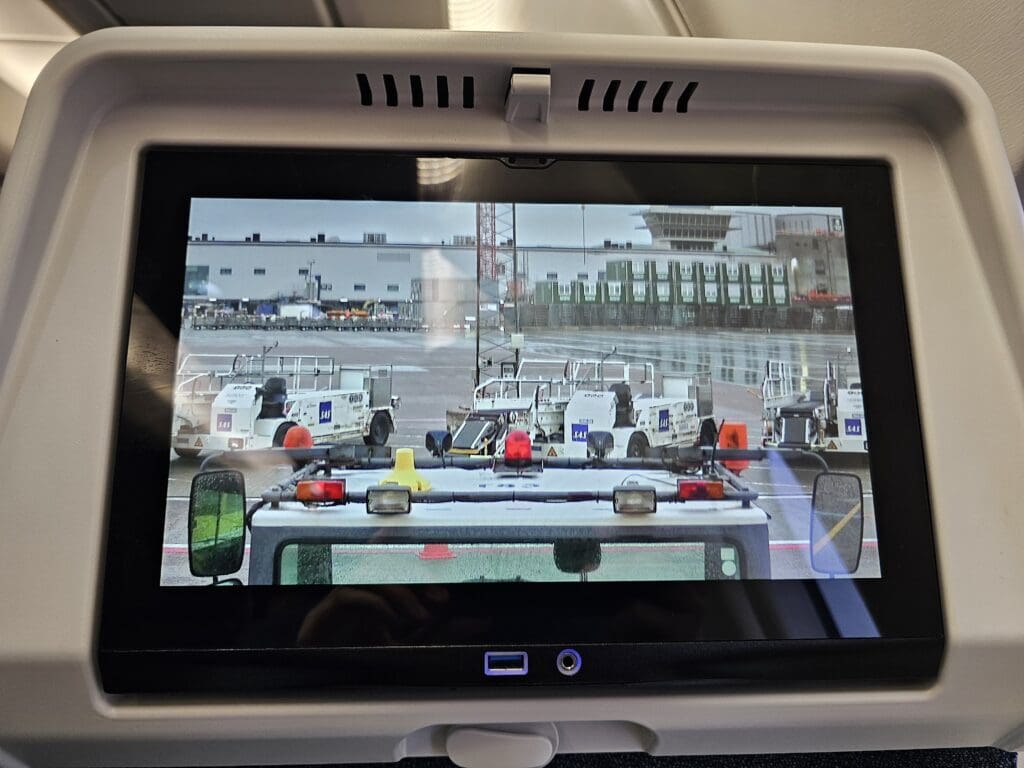
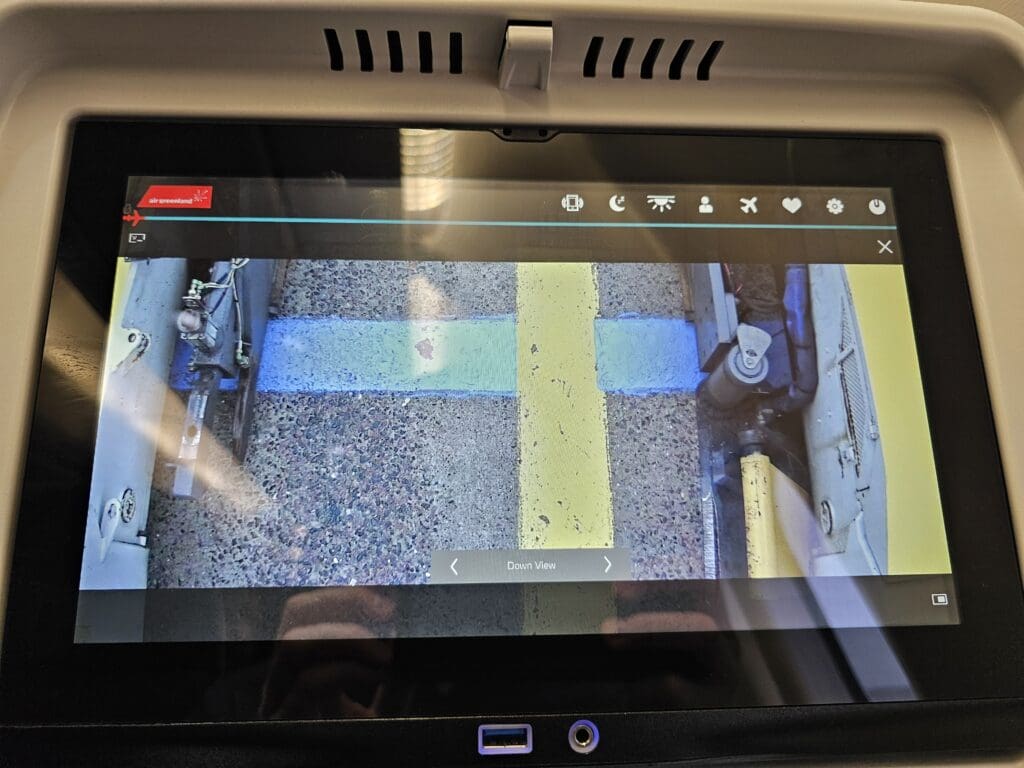
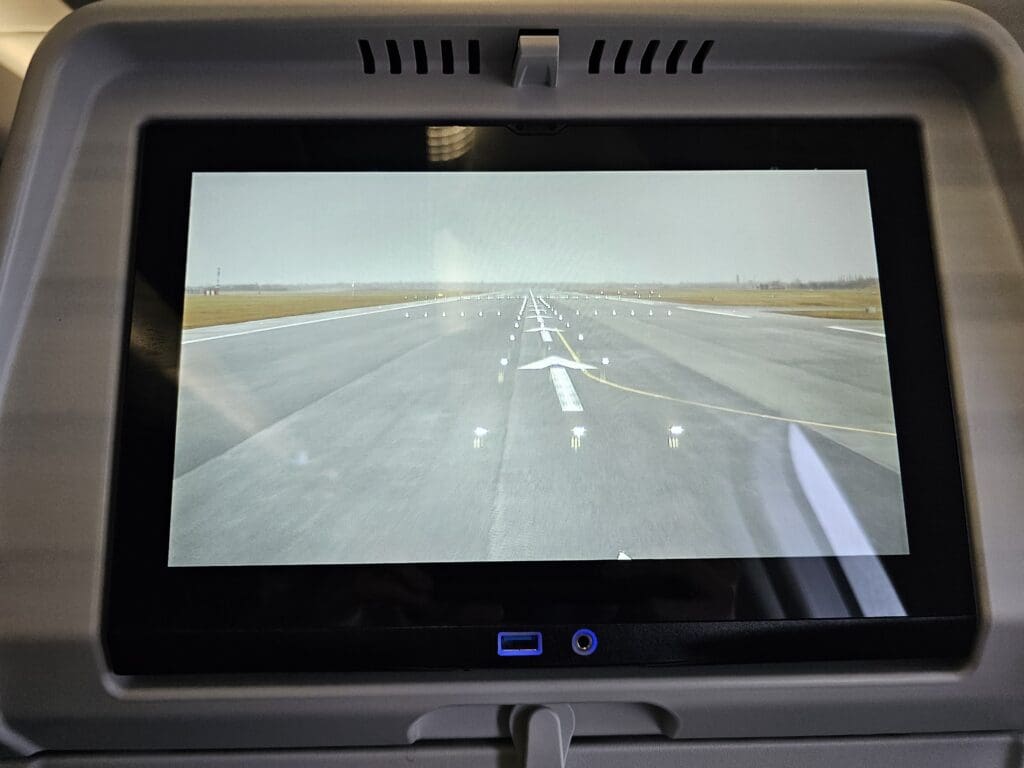
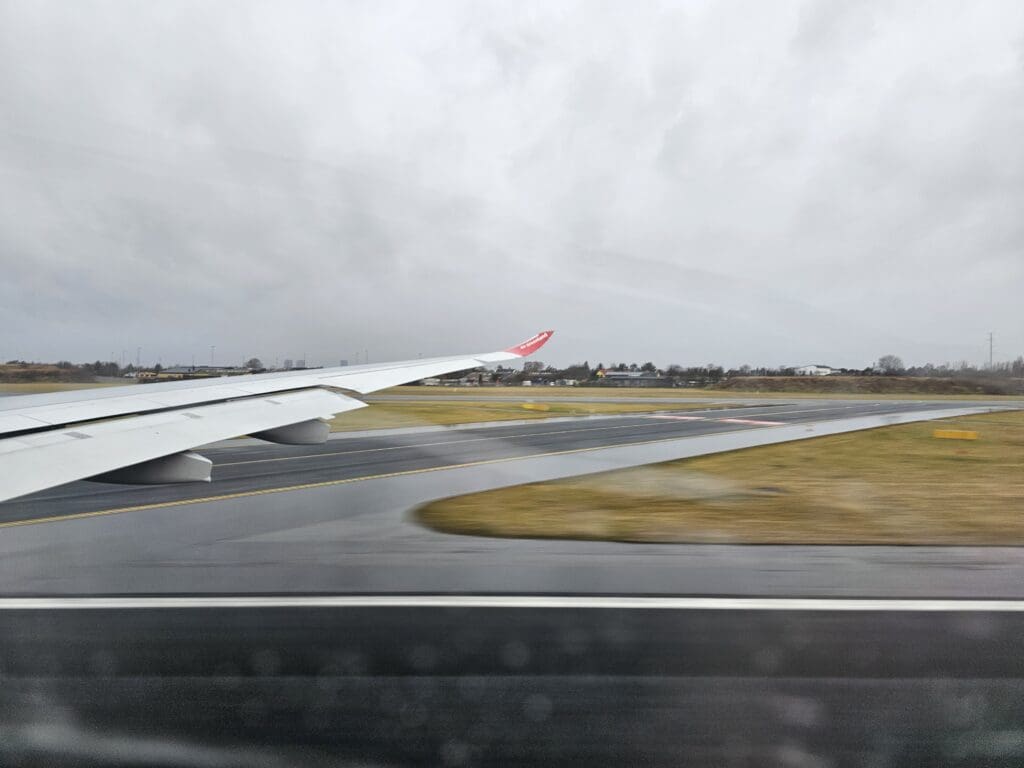
As the crew neared the end of the safety demonstration, the aircraft was pushed back away from Stand B17 and the two Rolls Royce engines soon powered into life in preparation to propel us across the Atlantic. As with most modern engines, the start-up was accompanied by plenty of whirs, whines, hums and some vibration, but was overall not a particularly noisy affair. Back inside the cabin, once the demonstration had finished, several crew members passed through the cabin, ensuring that all was secure and in place for our departure. Making the most of the high-definition forward-facing camera, I watched as the tug was disconnected and positioned away from the aircraft before we powered forward under our own steam. With Copenhagen Airport hosting three runways, taxi times at the airport can be both short and long. Minimising the slight delay, that morning, we would be departing from the end of Runway 22R, and thus, only a short taxi was required to reach this.
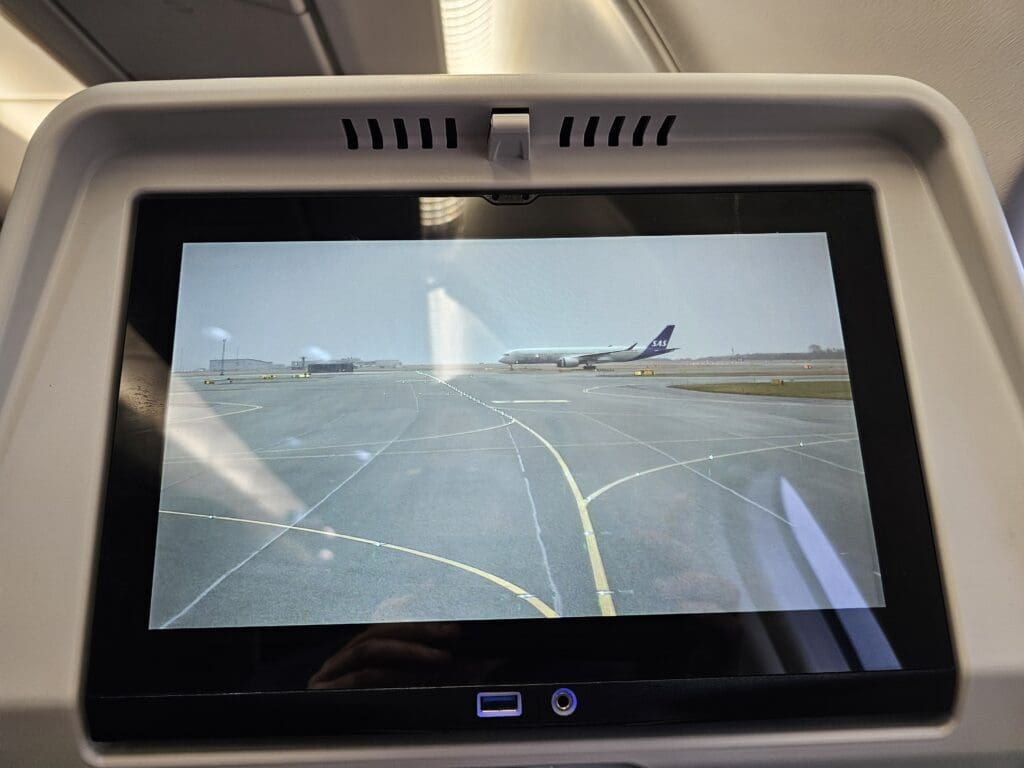
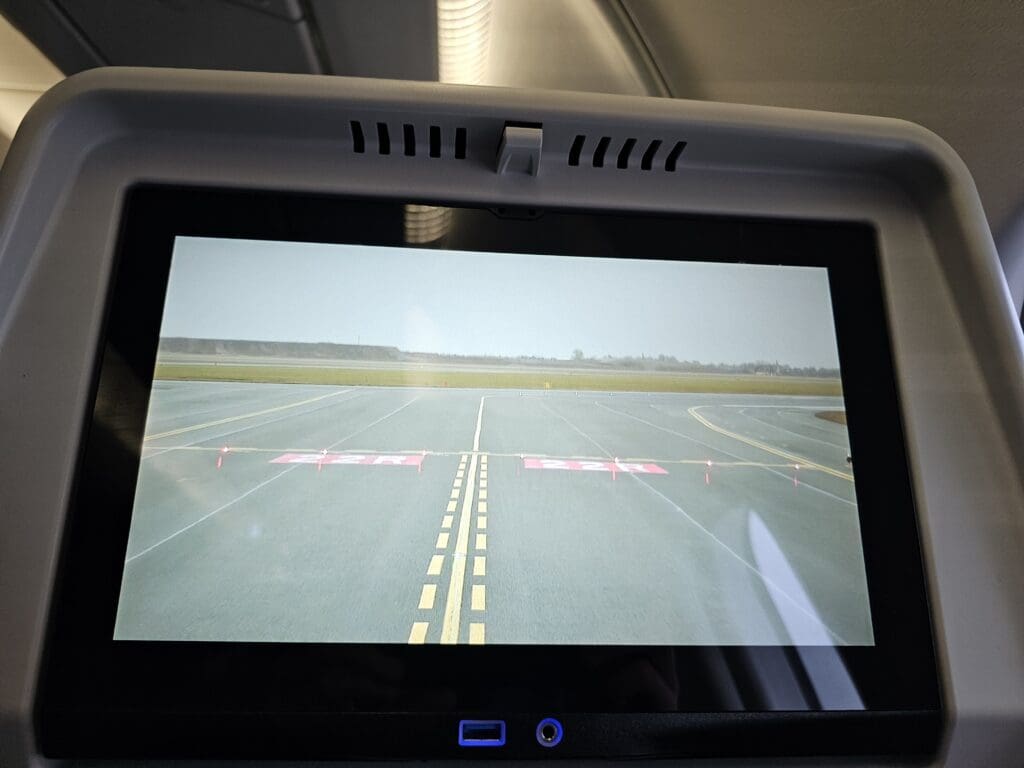
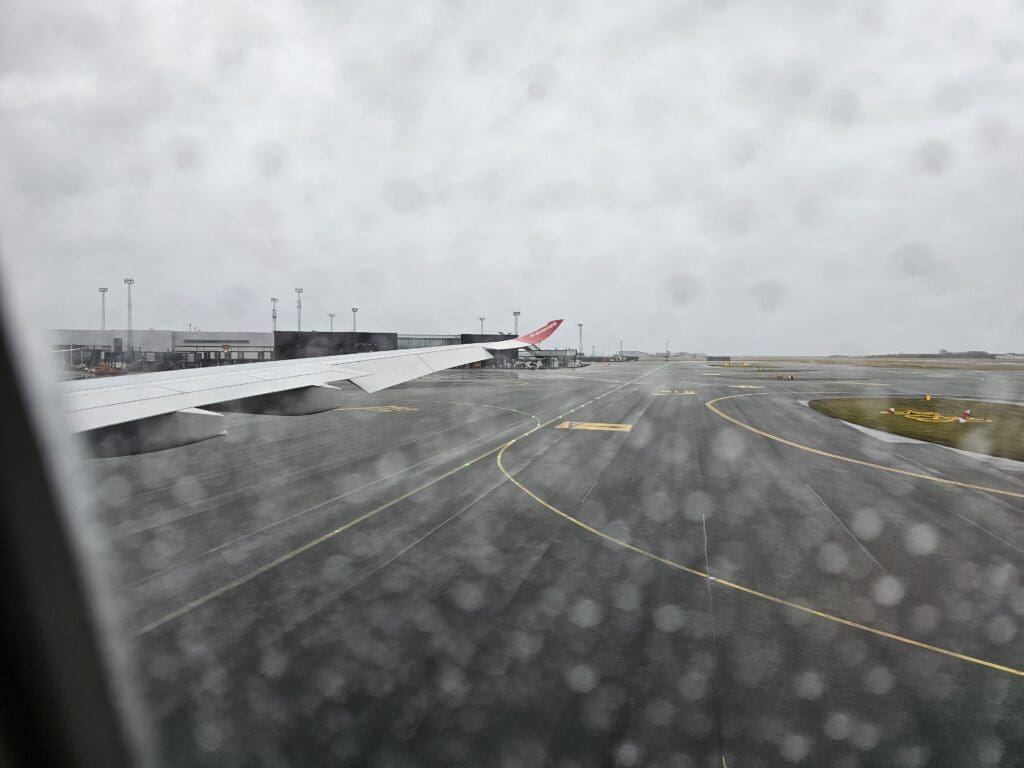
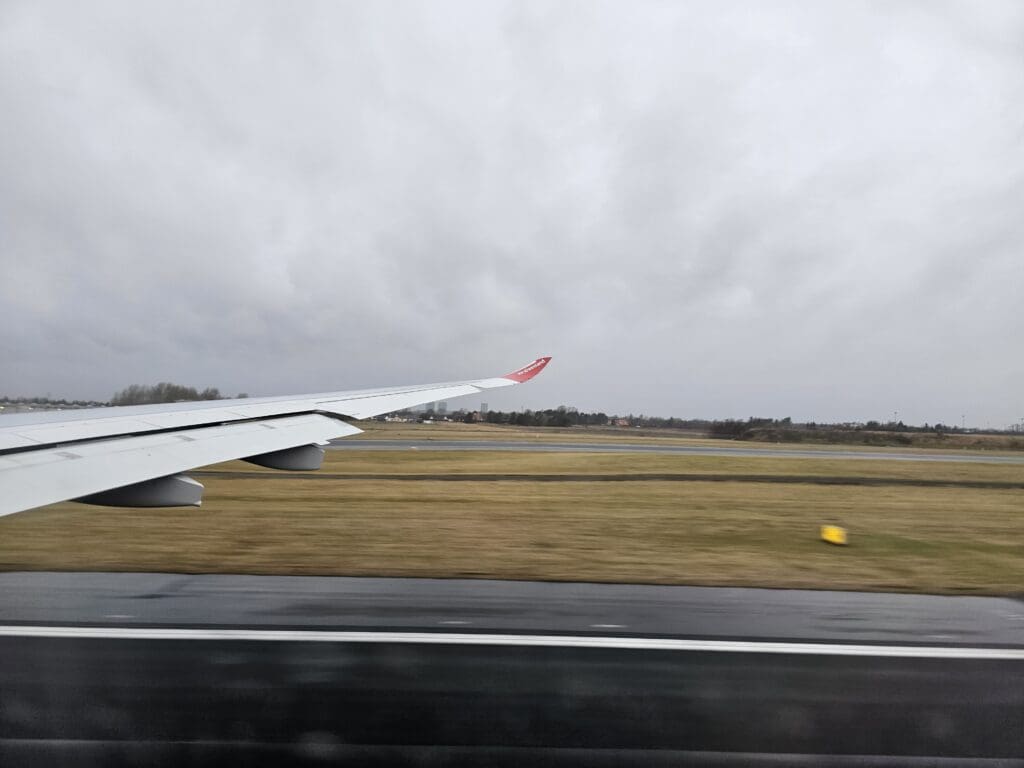
A few short moments after making our way past the empty de-icing area, the Airbus reached the end of the runway, and following a brief pause, ‘Greenland 779 heavy’ was cleared for departure and made its way onto this. At 0906, the aircraft performed a gentle rolling takeoff. Perhaps being heavily loaded with cargo, we seemed to trundle along the runway for quite some distance before the nose was pointed skywards, and we rotated upwards into the cloudy February skies. As we climbed, the nearby town of Viberup could be seen although vistas of Denmark were not to last for long as we entered the clouds no more than a minute after taking to the skies.
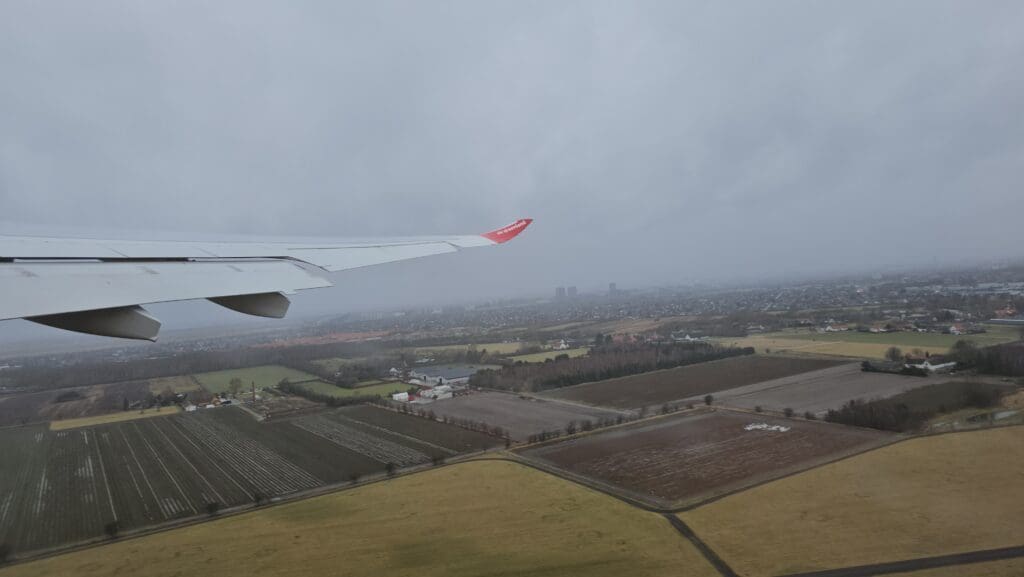
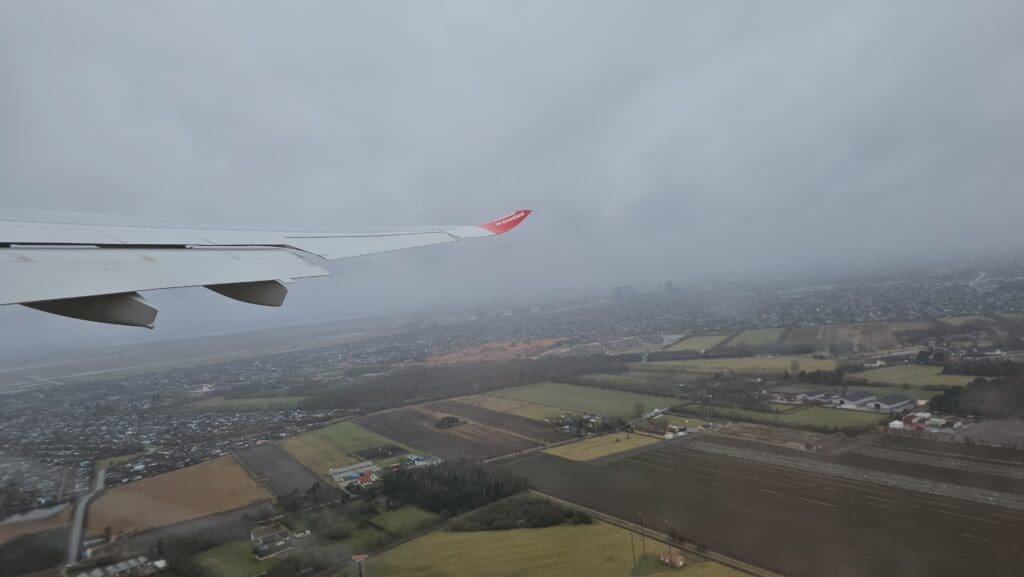
From Copenhagen Airport, the Airbus soon left the island of Amager behind and headed westwards across the Køge Bay before crossing the coastline in between the Copenhagen commuter towns of Ishøj and Mosede. Once back over land, the aircraft turned to fly northwestwards and passed Roskilde. This serves as the home of Copenhagen’s ‘other’ airport, which is popular with both light and executive aircraft. Those who fancy passing through this without spending a fortune on a private jet can do so by embarking on Britten-Norman Islander and Partenavia P68 operated services to Ærø, Anholt, Læsø, Ringsted and Svendborg, with these operated by Copenhagen Air Taxi and Starling Air. From there, we crossed over the island of Zealand, taking around five minutes to do so before climbing over the Hesselø Bay and voyaging out over the Kattegat.
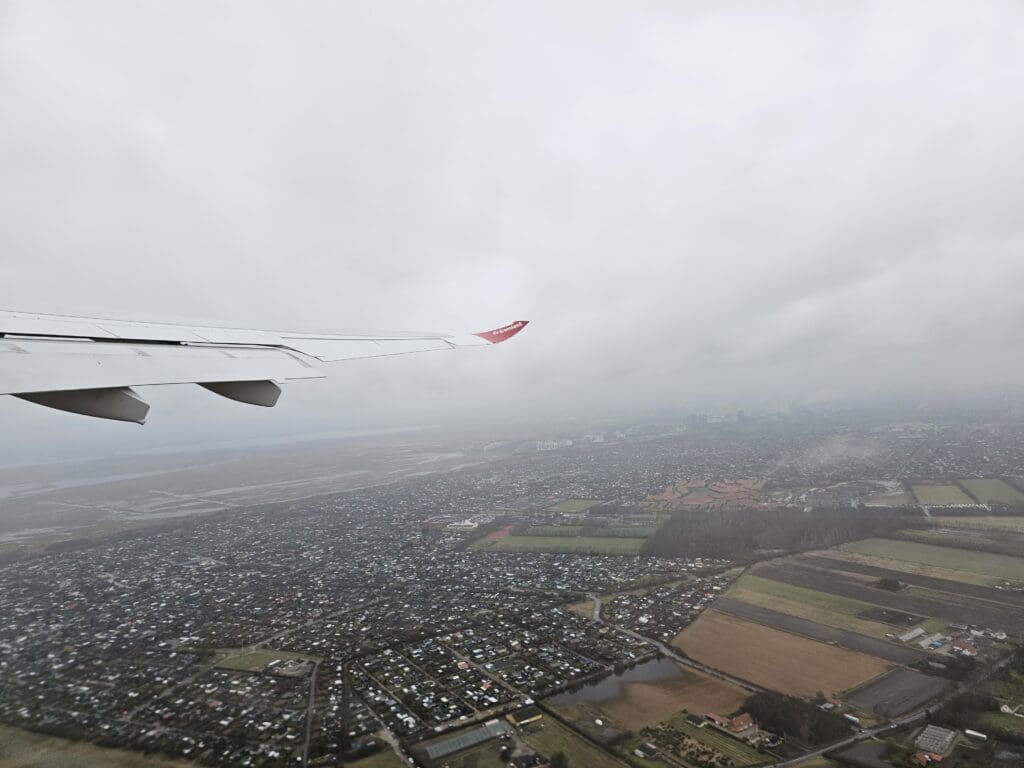
That morning, it took quite some time to pass through the thick layer of clouds; however, contrary to the Captain’s speech, turbulence was, for the most part, very minimal. Around twelve minutes into the flight, the seatbelt signs were extinguished as we climbed through 20,000 feet, and the usual announcement requesting passengers to keep these fastened whilst onboard was made in Danish, Greenlandic and English. This was then followed by another announcement from the Purser who went over the onboard service – for those in Premium this would consist of a hot lunch, whilst a cold lunch would be served to the masses in Economy, following which there would be a duty free service. This ended with a warning to passengers to neither smoke nor consume their own alcohol onboard the aircraft. As this announcement was underway, several members of the cabin crew passed through the cabin with baskets containing headphones and a card reader. For those lacking headphones with a standard 3.5mm headphone jack, these can be purchased onboard for 35 DKK (around £4/€4.70/$5.06).
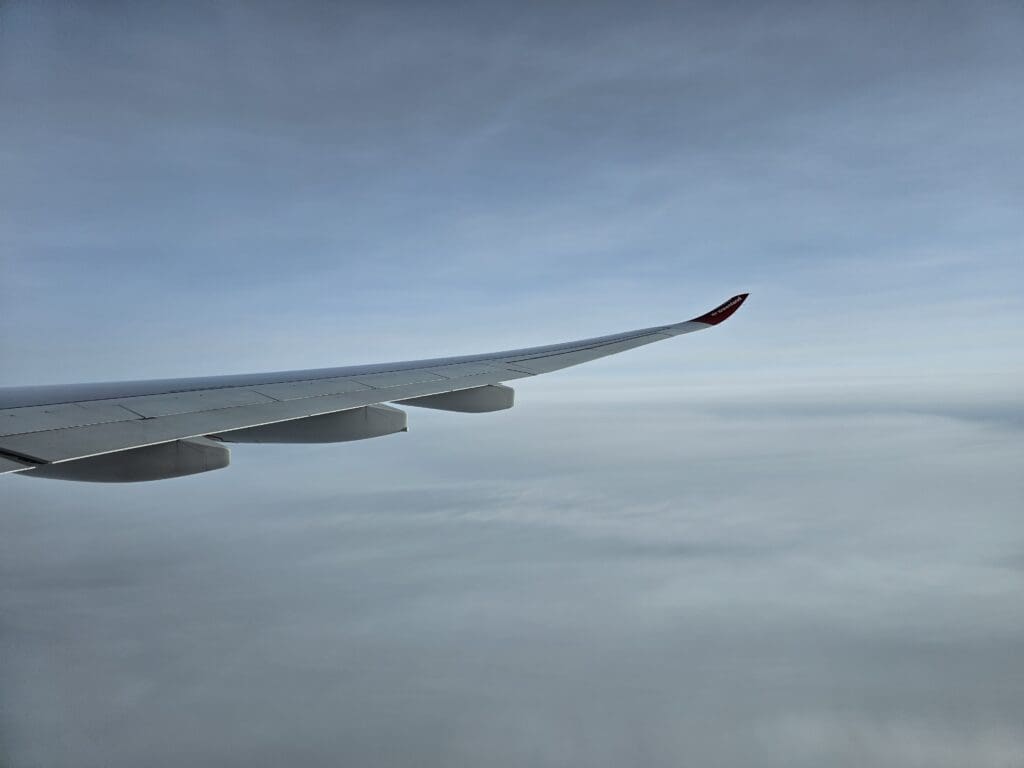
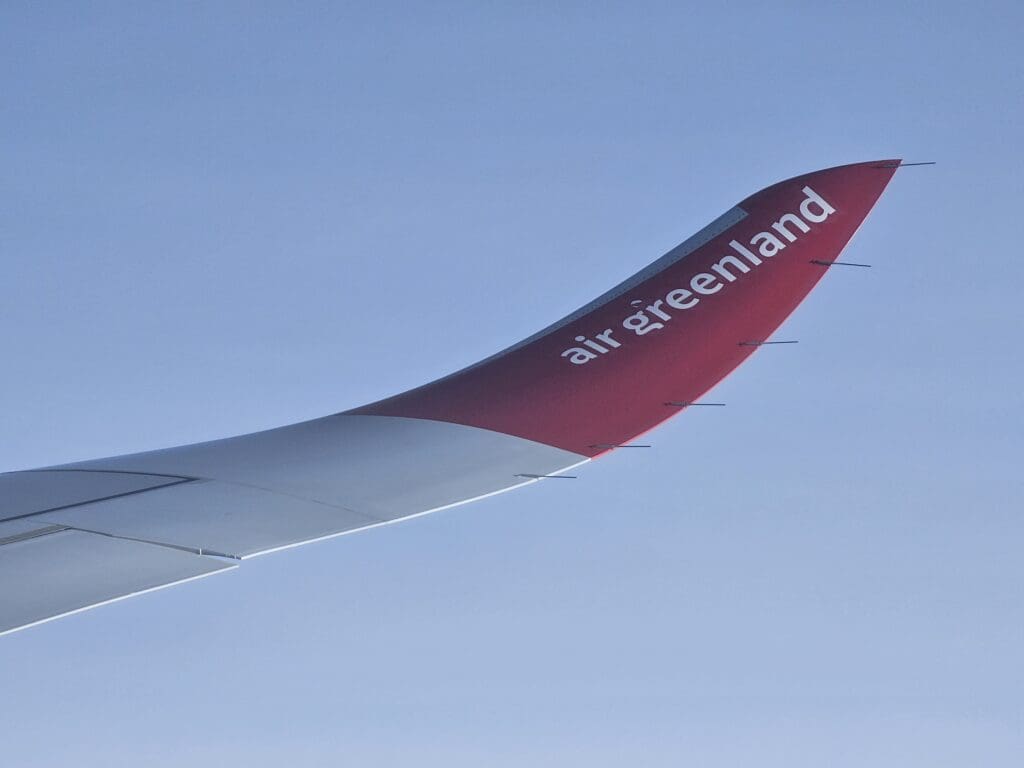
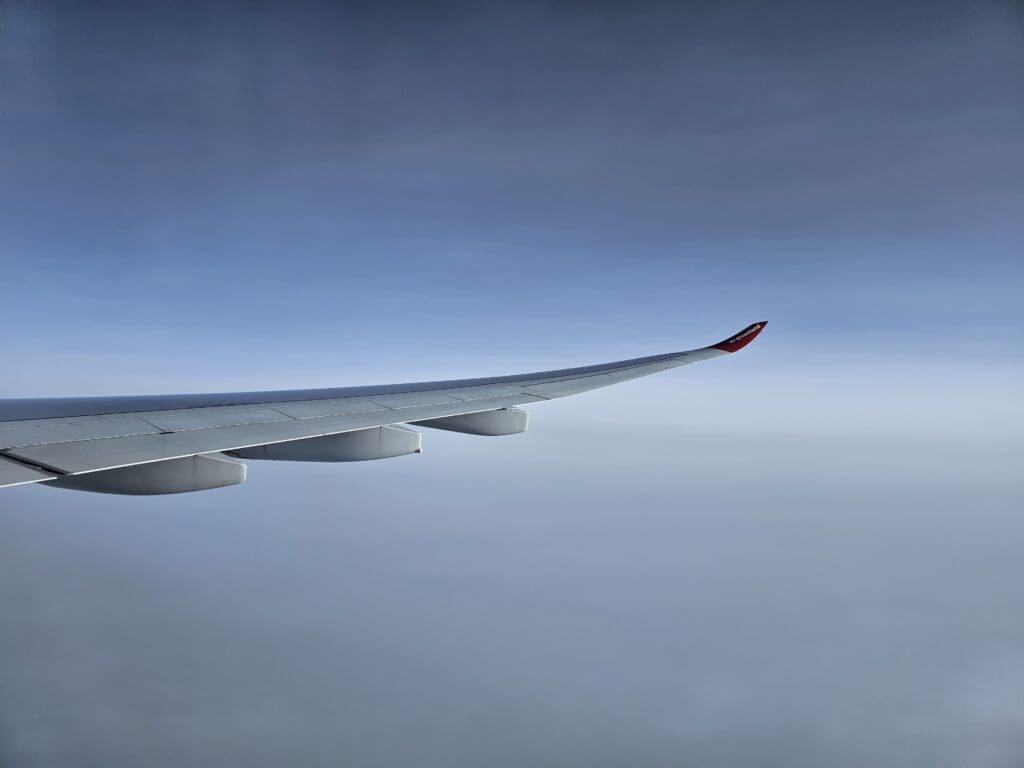
Returning to the route, around eighteen minutes into the flight, the aircraft made landfall near the Jutlandic coastal town of Grenaa and continued flying northwestwards, passing the city of Aalborg before leaving Denmark behind and reaching our cruising altitude of 38,000 feet. Following a quick crossing of the Skagerrak, the aircraft cruised over the Norwegian coastline near the Agder town of Mandal before spending the next twenty minutes over the country. Unfortunately, thanks to the clouds below, nothing of Norway’s impressive fjords or mountains could be seen before we left the coastline behind at Stavanger and headed out over the North Atlantic.
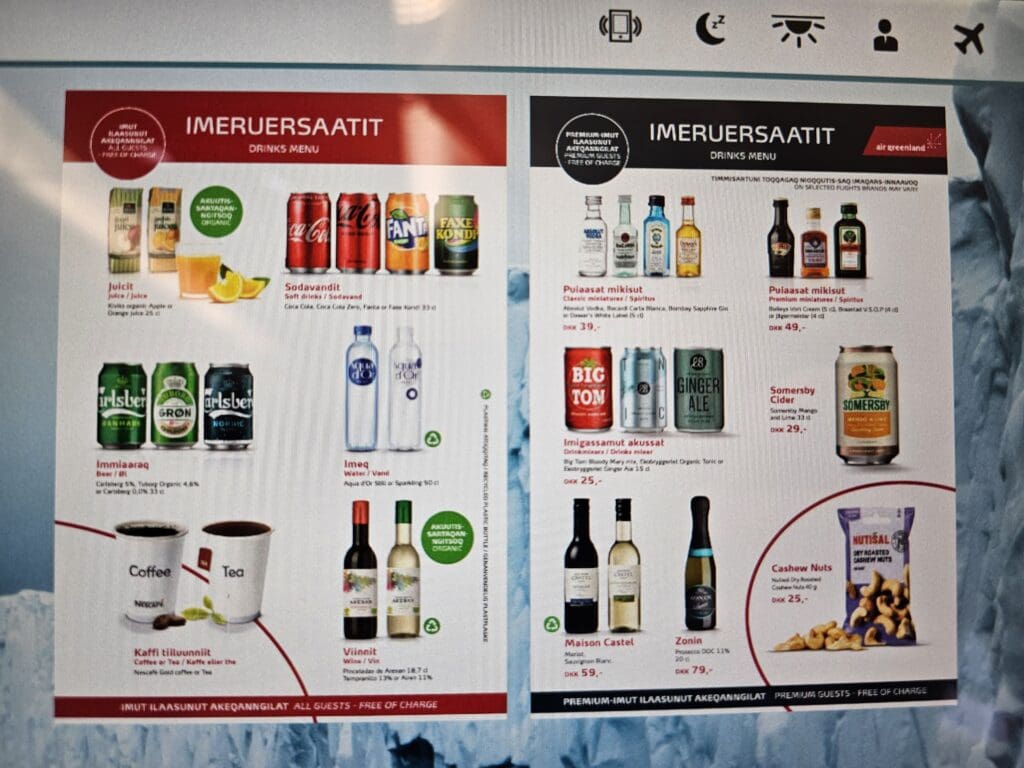
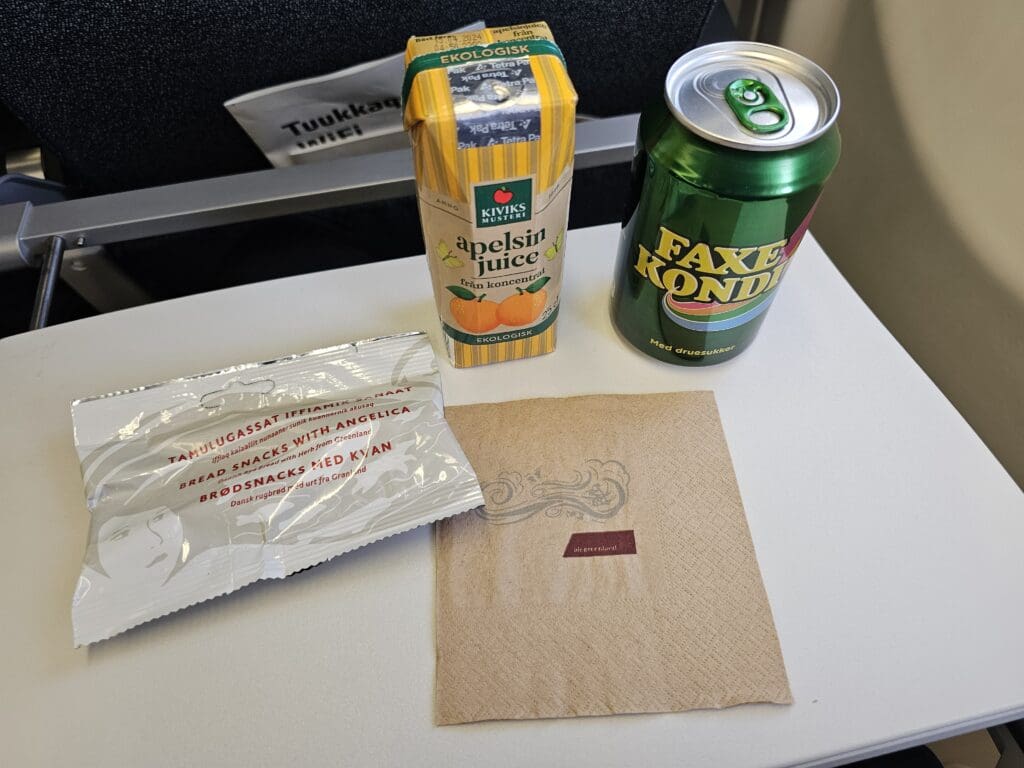
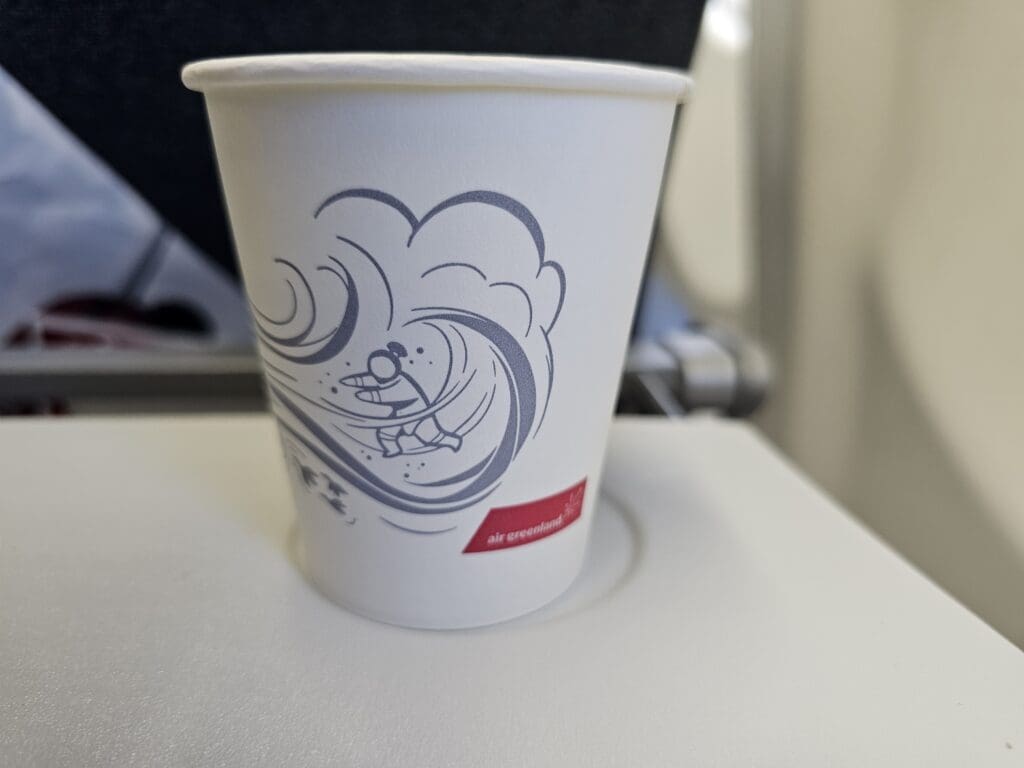
As we left Continental Europe behind and commenced our crossing of the North Atlantic, the service carts were rolled out from the Airbus’ spacious rear galley and the first round of service commenced. Manned by two flight attendants, one of these carts soon reached me, at which point one flight attendant impressively rolled off all the complimentary drink options. That morning, a fair selection of drinks was offered, including 500ml bottles of water (still, sparkling and lemon flavoured), 330ml cans of Coca-Cola, Diet Coke, Faxi Condi and Fanta, and apple and orange juice. Meanwhile, those fancying a morning tipple could opt for red or white wine, and 330ml cans of Carlsberg (regular and non-alcoholic) and Tuborg. Opting for the Danish soft drink, Faxe Kondi, a 330ml can was placed on my tray before the flight attendant insisted that I have a second drink so I opted for an orange juice before being given a rye bread and herb-based snack. This came in a nice Air Greenland branded packet with a depiction of Sassuma Arnaa (Mother of the Sea) as well as a serviette. Ignoring the fact that cups were only handed out to those who had opted for wine (although these would have probably been handed over had I requested them), both the friendliness of the crew and the fact that two drinks were offered left me with a very positive impression.
From Norway, we soon passed just to the north of the northernmost of Scotland’s northernmost islands, specifically the Shetland Island of Unst. At this time, the crew commenced the meal service, first handing out special meals to those who had pre-ordered them. As soon as these had been handed out, rather unattractive plastic boxes, varying significantly from the Air Greenland ones that I had seen on other reports, were distributed. With no drinks round made with the main meal, and with the meal almost entirely contained in this box, the flight attendants were able to distribute this quickly and with minimal fuss. Soon, I was handed a plastic box along with a warm bread roll and a piece of rye bread. Wasting no time, I delved inside the box and found this to contain a tray of cold cuts of meat and cheese, half a boiled egg, a mini frittata and a sachet of Lurpack butter – a highly valuable commodity back home in the UK! Meanwhile, dessert was provided in the form of a small Punschrulle, whilst eating utensils came in the form of sustainable wooden cutlery.
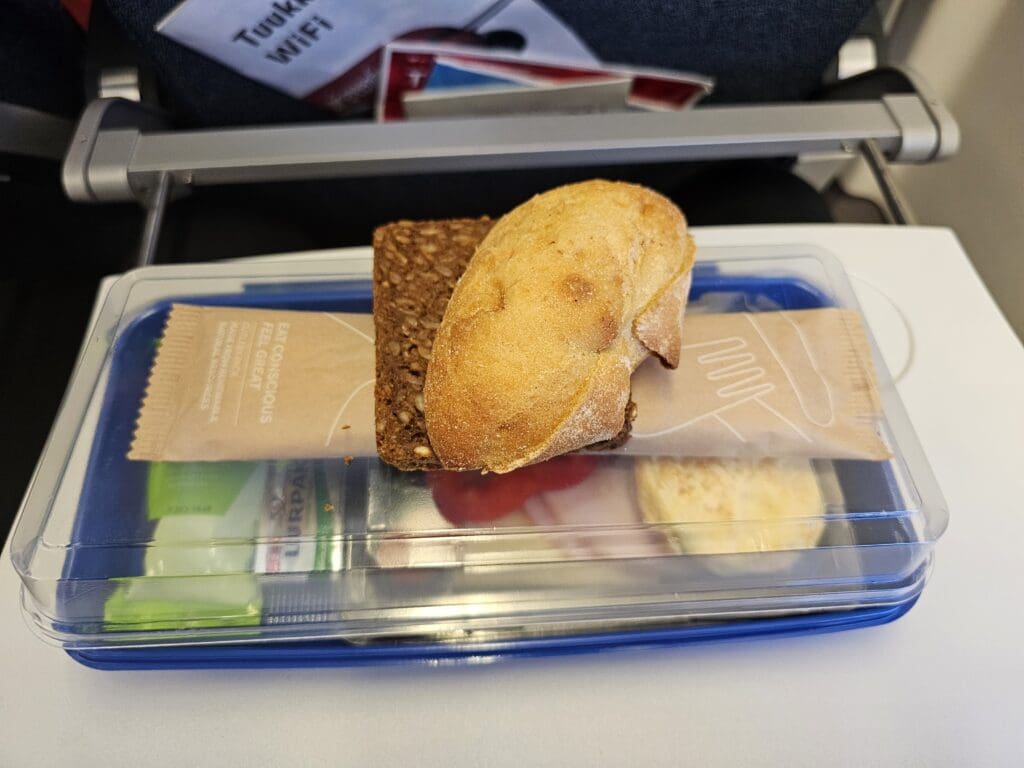
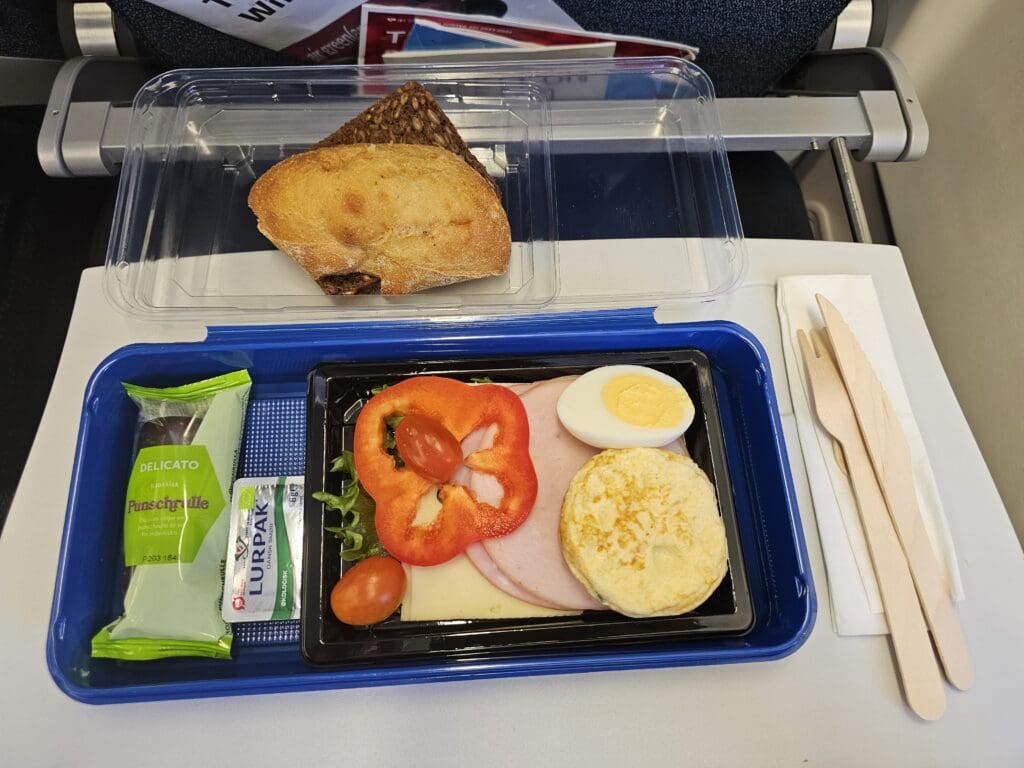
Of course, whilst it would have been nice to receive a full hot meal, ultimately I wasn’t left with too many complaints about this light meal service. This was of decent quality and sufficient quantity for a five-hour flight and was followed by no fewer than two rounds of hot tea and coffee. Around forty minutes after being handed a meal, the remains of this were collected as we sped over the vast expanse of the Atlantic Ocean.
When it comes to onboard offerings in Economy, Air Greenland operates a hybrid model, with certain drinks and additional snacks available for purchase. Those who remain hungry after the main meal can choose from six snacks – namely, cashew nuts or crisps for 25 krone (£2.82) two sorts of peanuts for 39 krone (£4.40), a regular Fazer dark chocolate bar for 15 krone (£1.69), or a chocolate bar with chilli for 49 krone (£5.53). Comparing this to Scandinavian Airlines, who operate a similar model on their long haul services, prices are surprisingly slightly lower on Air Greenland! Meanwhile, additional paid-for drinks include mixers, miniature bottles of spirits, cider, Merlot, Sauvignon Blanc and Prosecco, which are also offered on board, with prices ranging from 39 krone (£4.40) to 79 krone (£8.91).
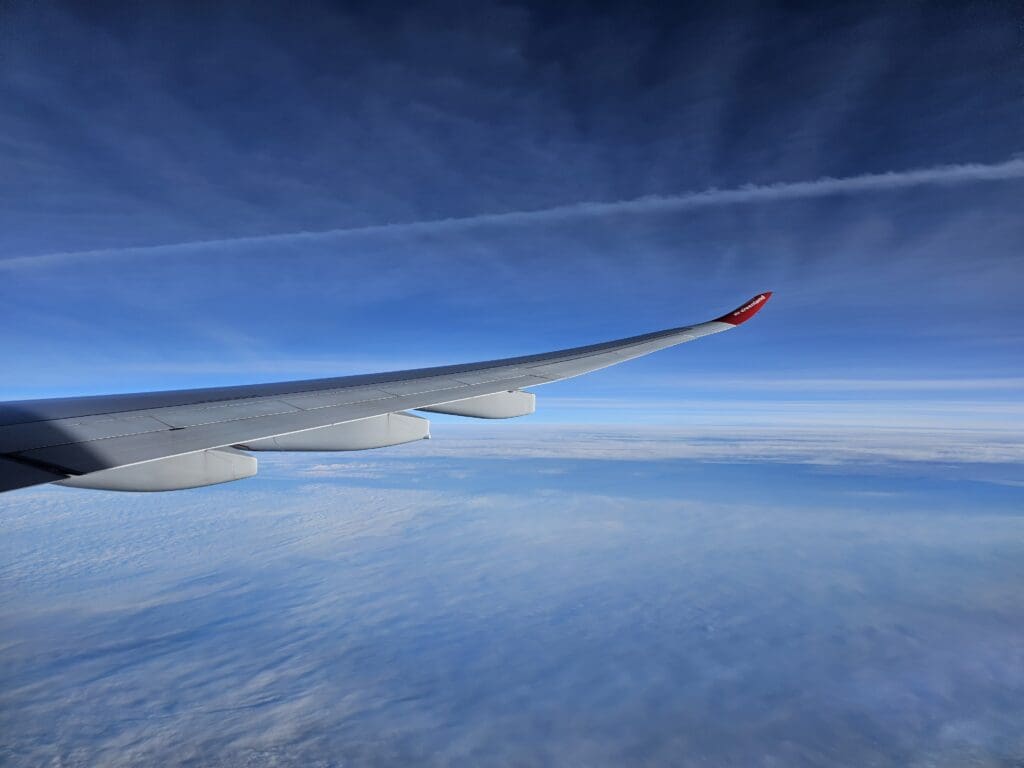
Cruising over the North Atlantic, we soon passed to the north of the Faroe Islands and continued onwards towards Iceland. With the clouds having thinned a little, once in a while, I caught a glimpse of the blue waters below; however, with this not being the most exciting view in the world, I soon turned to explore the inflight entertainment system. To start, this was available in the three languages that you would expect to find on Air Greenland – Danish, English and Greenlandic, and had both a regular and a kids mode. Navigating my way through this, I found the system to be well laid out and quick to load, whilst the screen was very responsive to touch with very little lag. In terms of content, whilst the system was not as expansive as the likes of many major airlines, considering the size of Air Greenland and the fact that just one of their aircraft is fitted with inflight entertainment, I was very pleased with the selection of content on offer. In total, the system was home to 78 films, with the majority taking the form of Hollywood productions, both new and old, in addition to three Greenlandic films. For those wishing to listen to something, 32 music albums could be found, all of which were by Greenlandic artists. What was lacking, however, was television programs, with not a single one on the system. In addition, this featured five games and plenty of content related to both Greenland and the airline, including destination guides for many of the airline’s destinations. Last but not least, the FlighPath3D interactive moving map could be found on the system, along with cameras looking both forward and down.
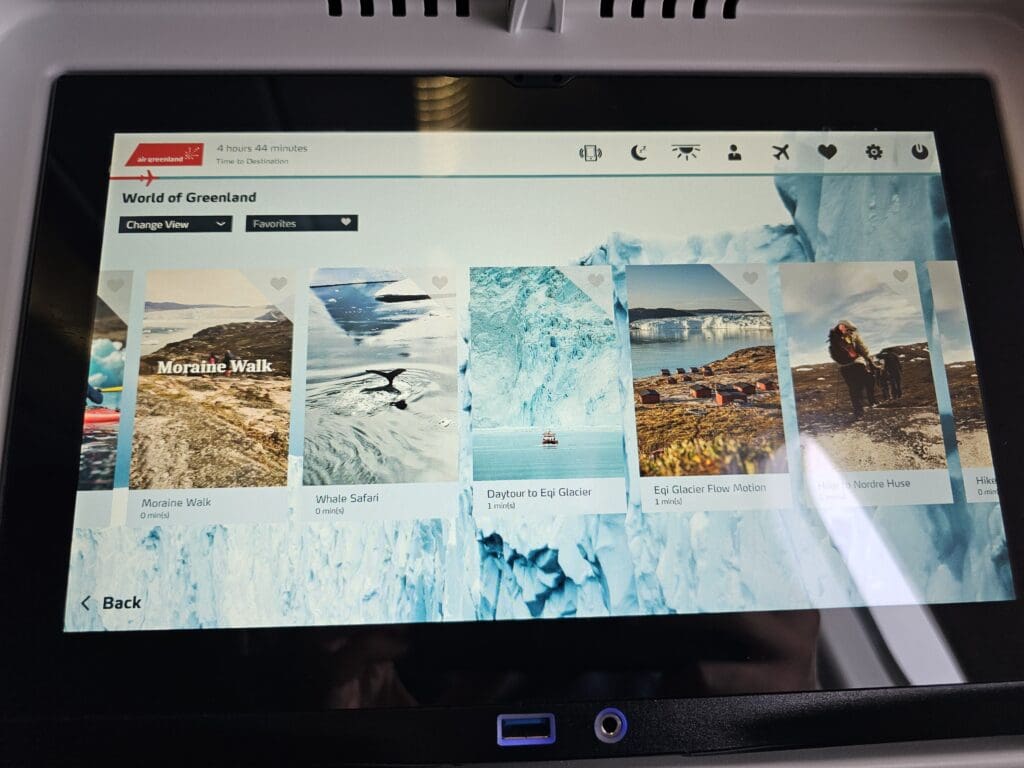
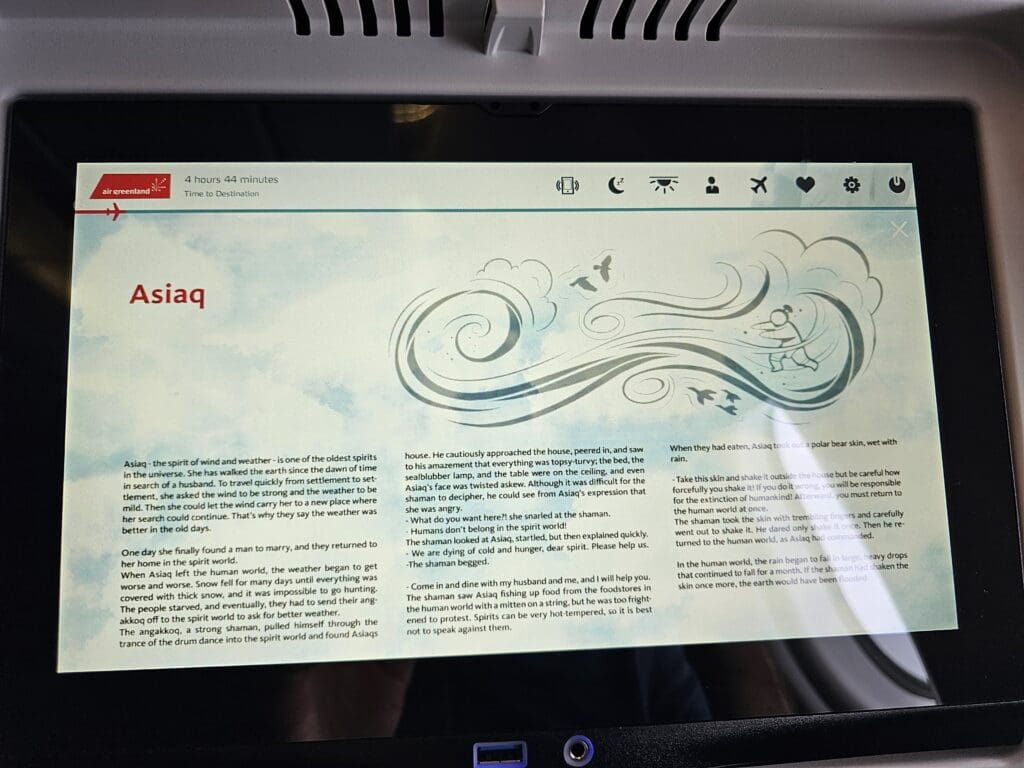
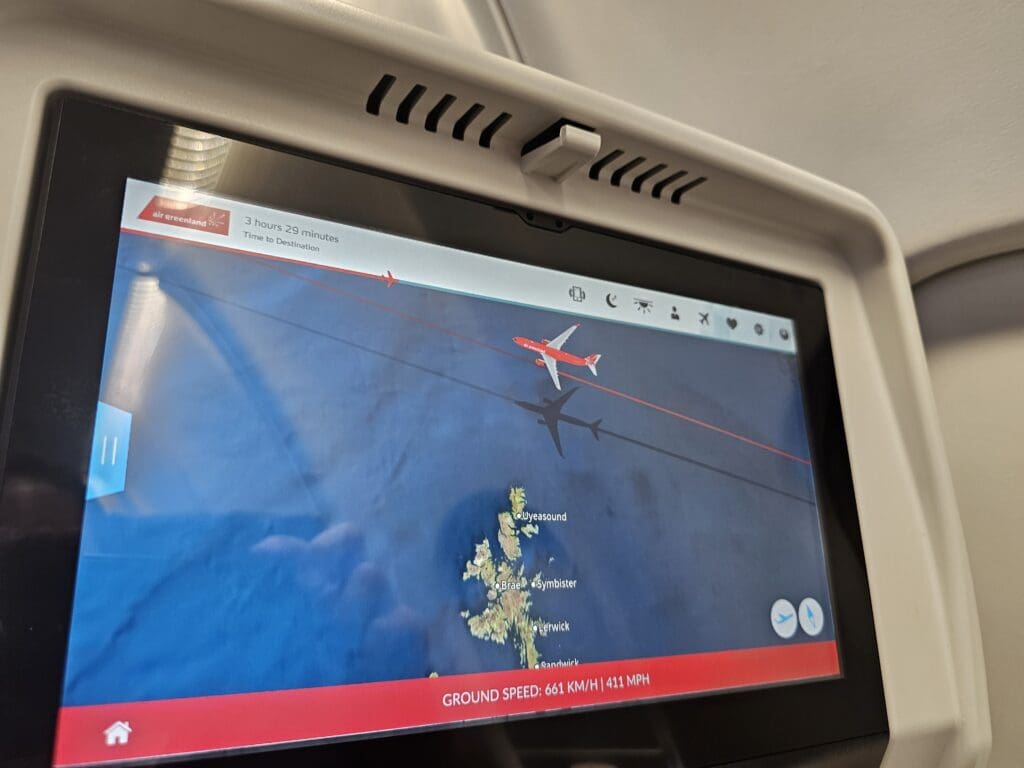
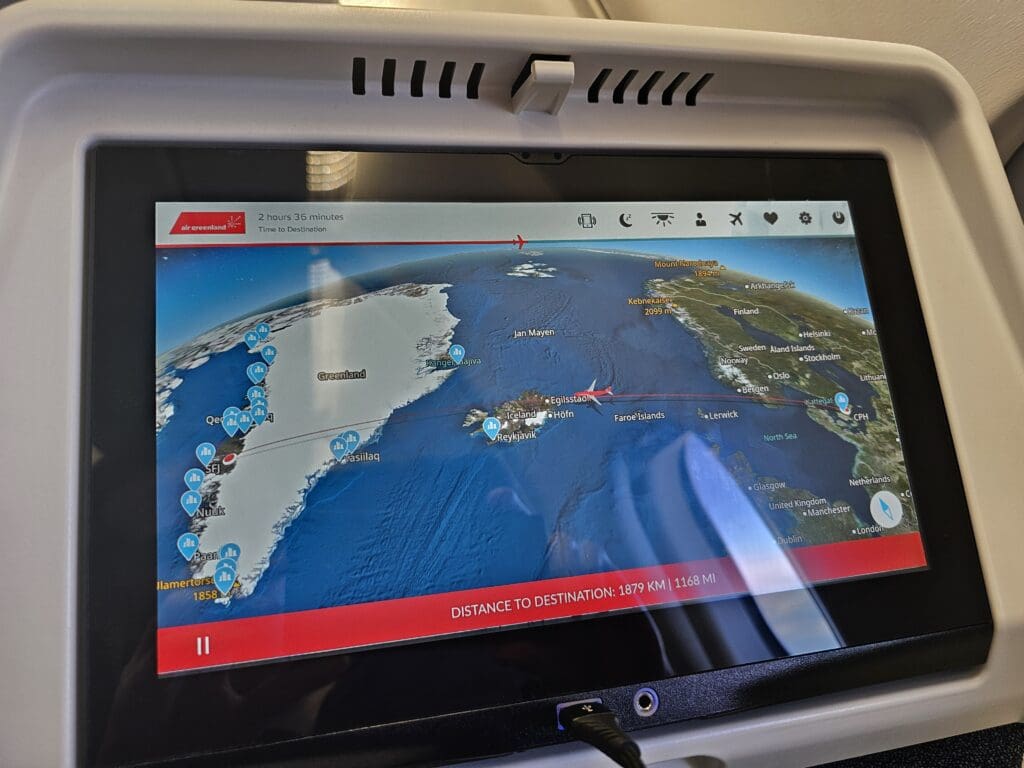
Lacking any headphones and not wishing to purchase them onboard, I had no intention of watching anything, although to test the system out, I selected a film at random and found this to load instantly, with no advertisements played before this commenced. In addition to the inflight entertainment screens, wifi is provided for those needing to stay connected whilst onboard. This is complimentary for those in Premium Class and can be accessed for a flat fee of $6 for all others to remain connected for the entire flight. Whilst I did not need to connect to the internet, assuming that this worked, this seemed to be a very good deal and significantly cheaper than five hours of wifi on many other airlines.
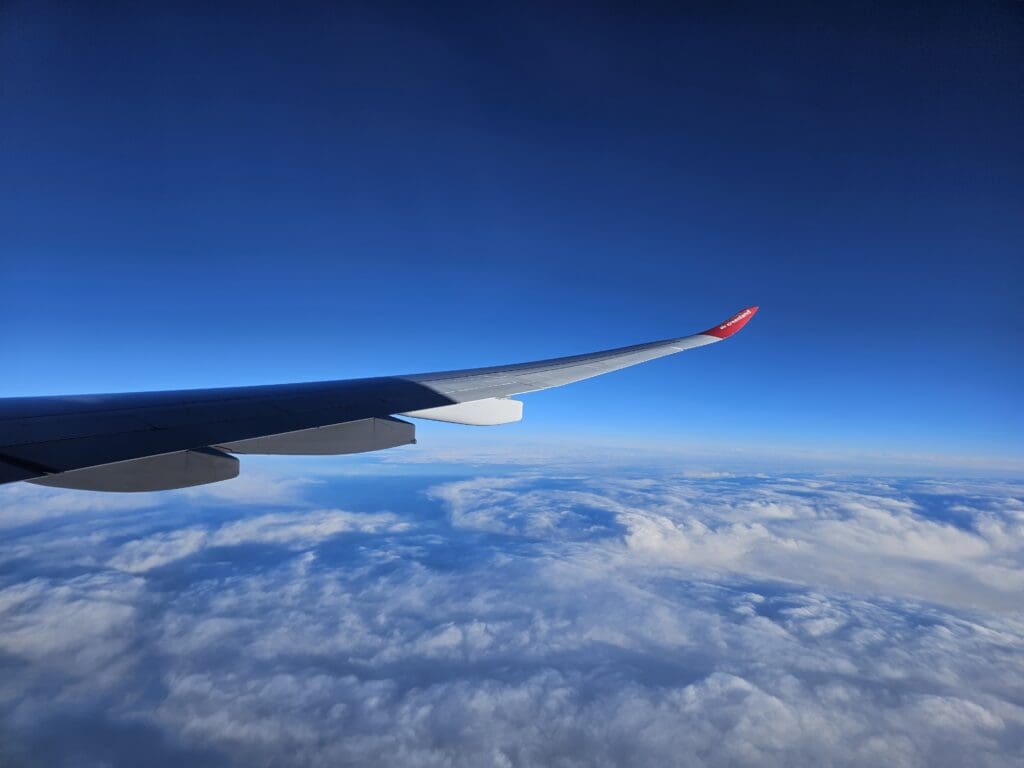
As we neared Icelandic shores, the crew rolled out the carts and commenced the duty free service. That morning, this proved to be a popular affair, and it seemed that the crew stopped at every other row to make a sale. Likely owing to their expensive cost on the ground in Greenland, cigarettes proved to be a top seller onboard!
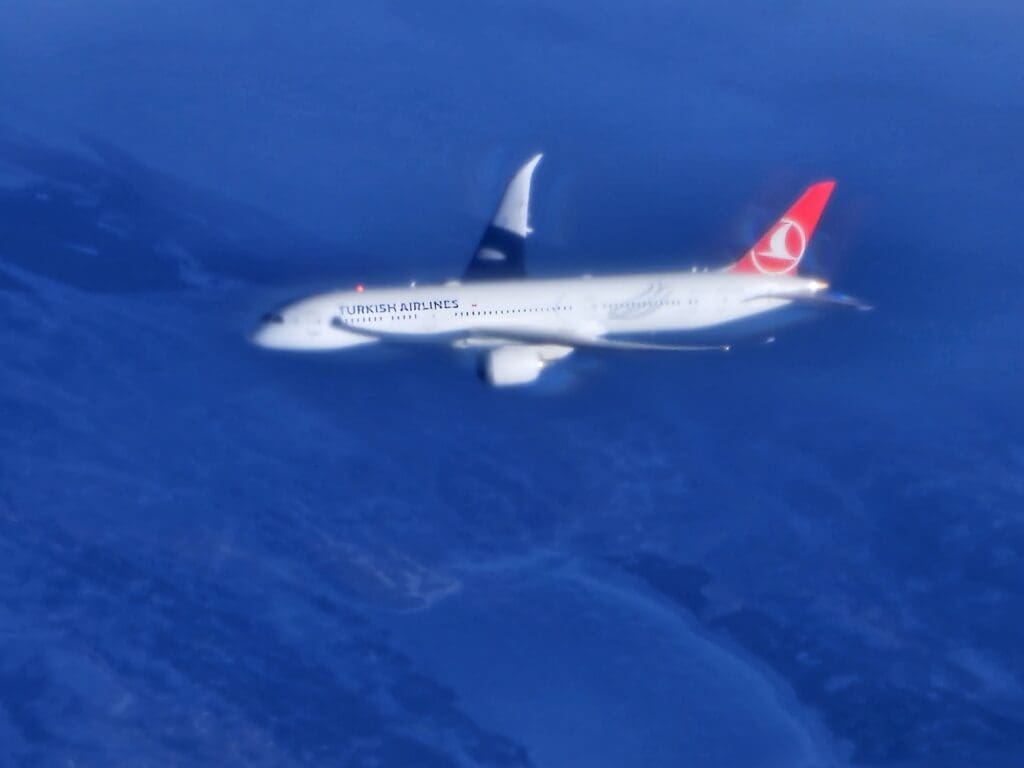
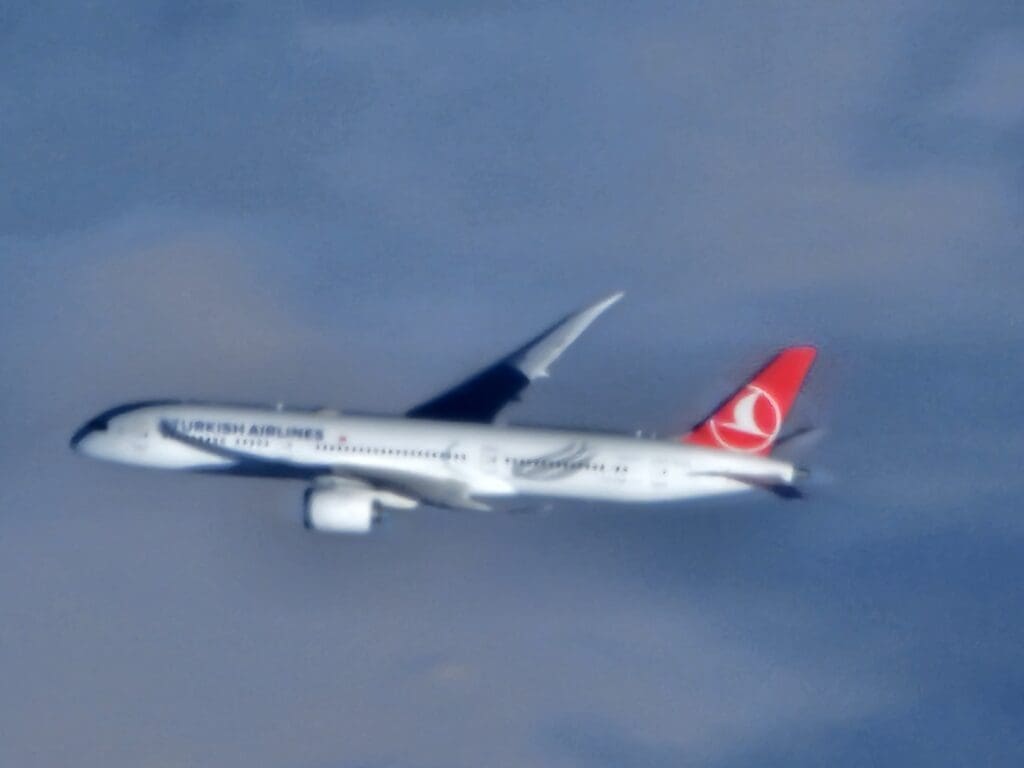
A little under three hours into the flight, the aircraft made landfall near the village of Stöðvarfjörður on Iceland’s eastern coastline, and a short time later, glimpses of the impressive snowy landscape below could be seen as we headed inland and cut across the northeastern corner of the country. As we passed over Iceland, other than the landscape below, some entertainment was provided in the form of a Turkish Airlines Boeing 787-9 Dreamline,r which slowly approached from behind and overtook us, flying 2,000 feet below on its long flight from Istanbul to San Francisco. This seemed to cause plenty of excitement, with many of those on the right-hand side of the aircraft snapping away at the passing Dreamliner.
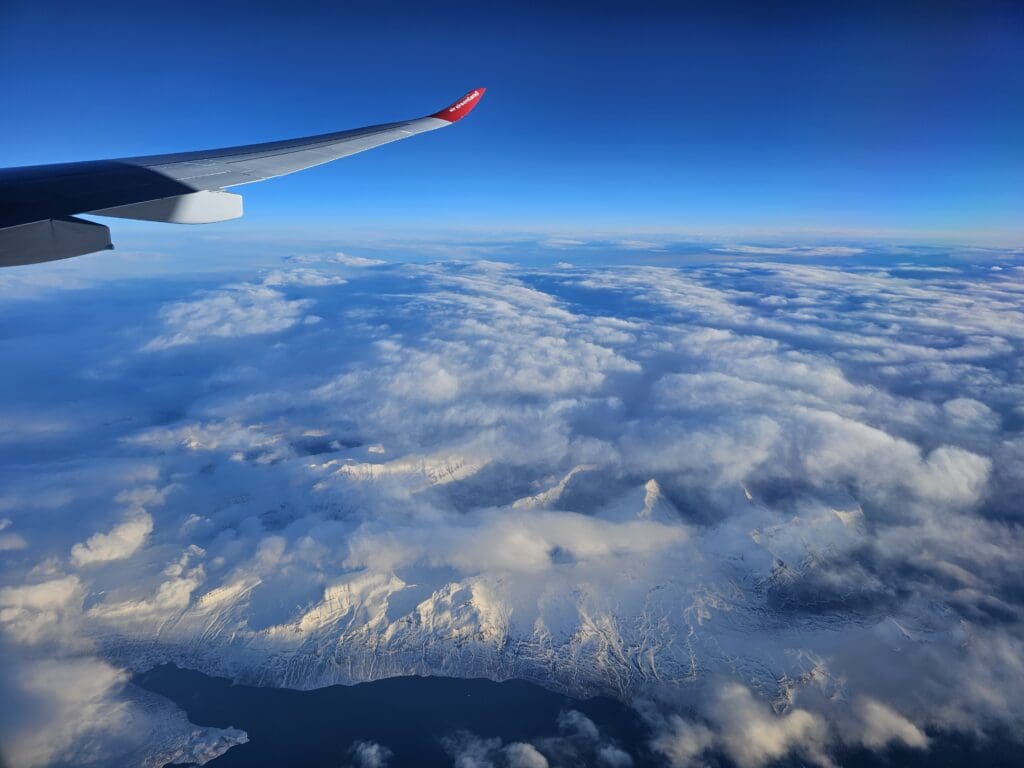
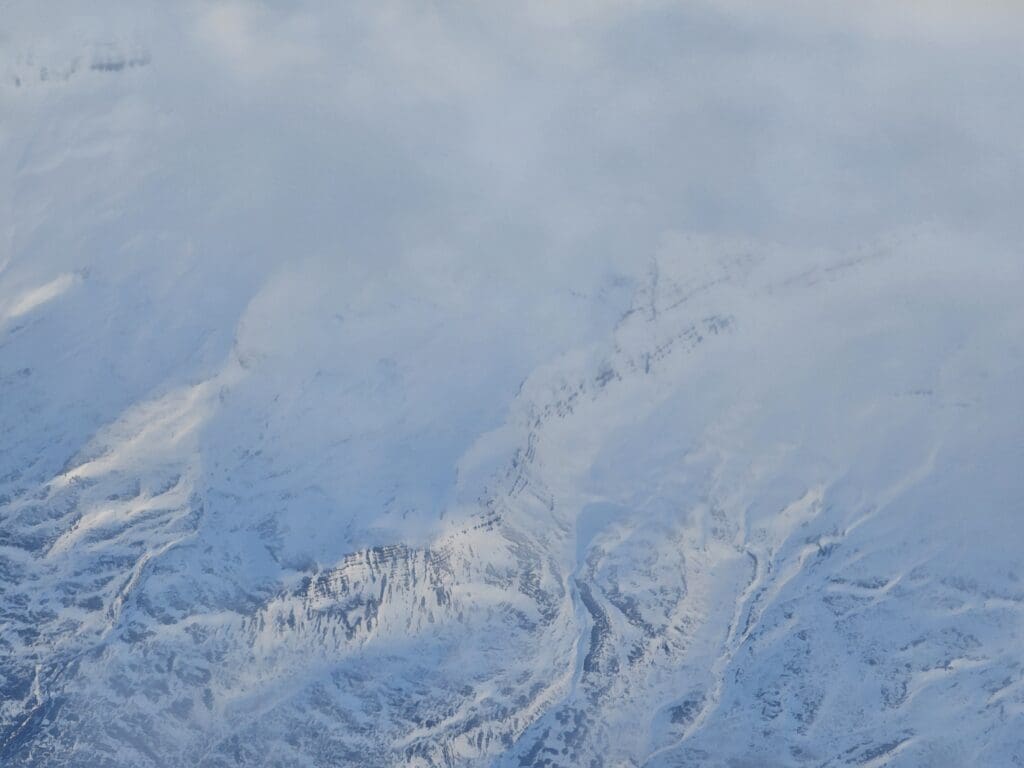
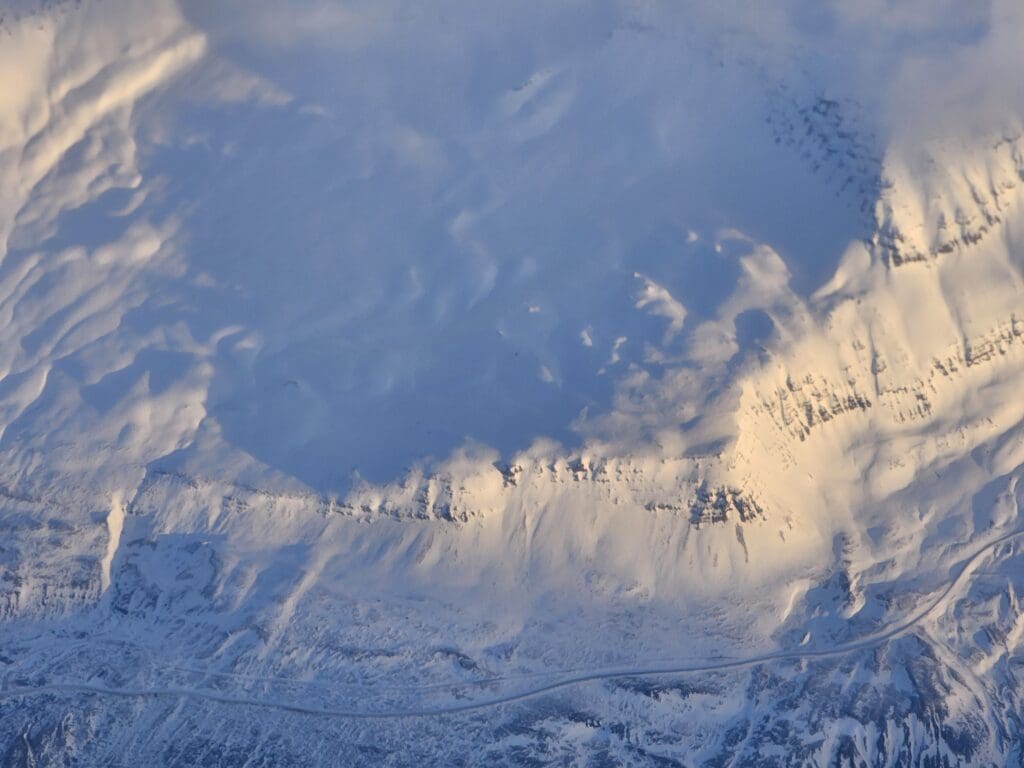
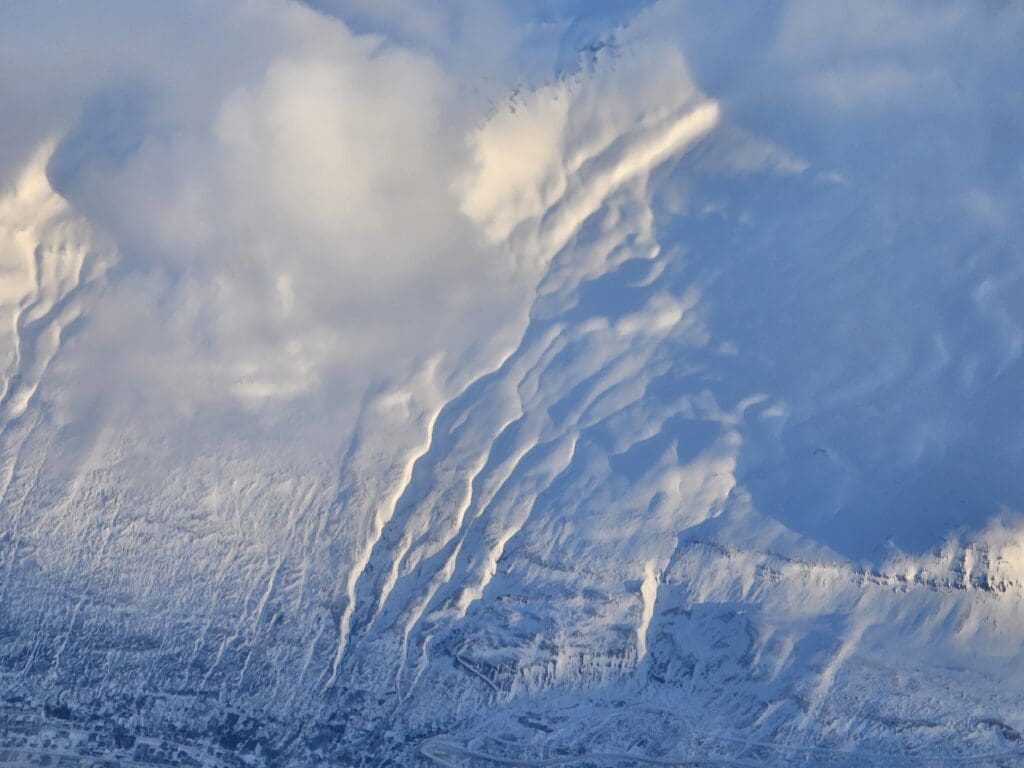
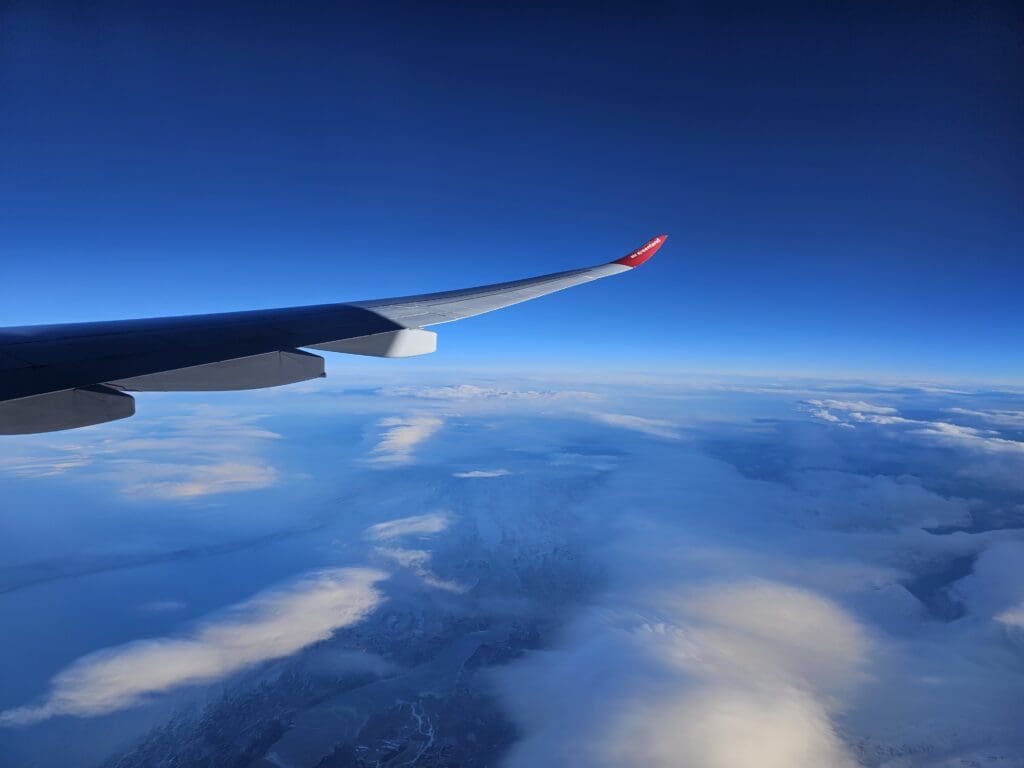
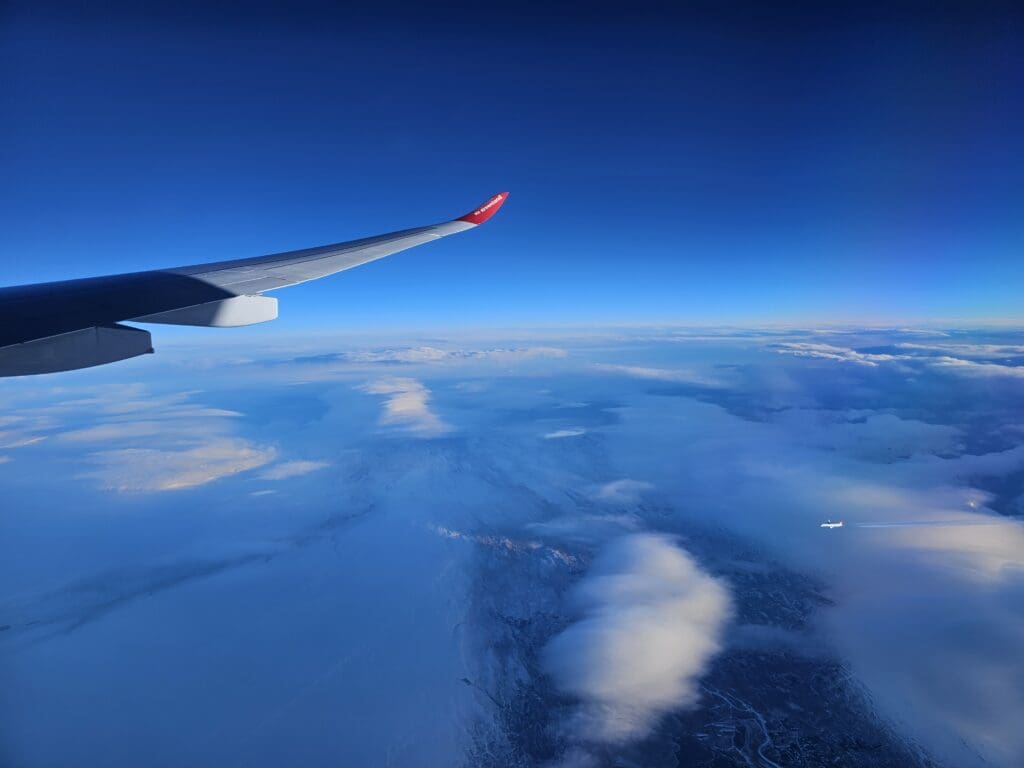
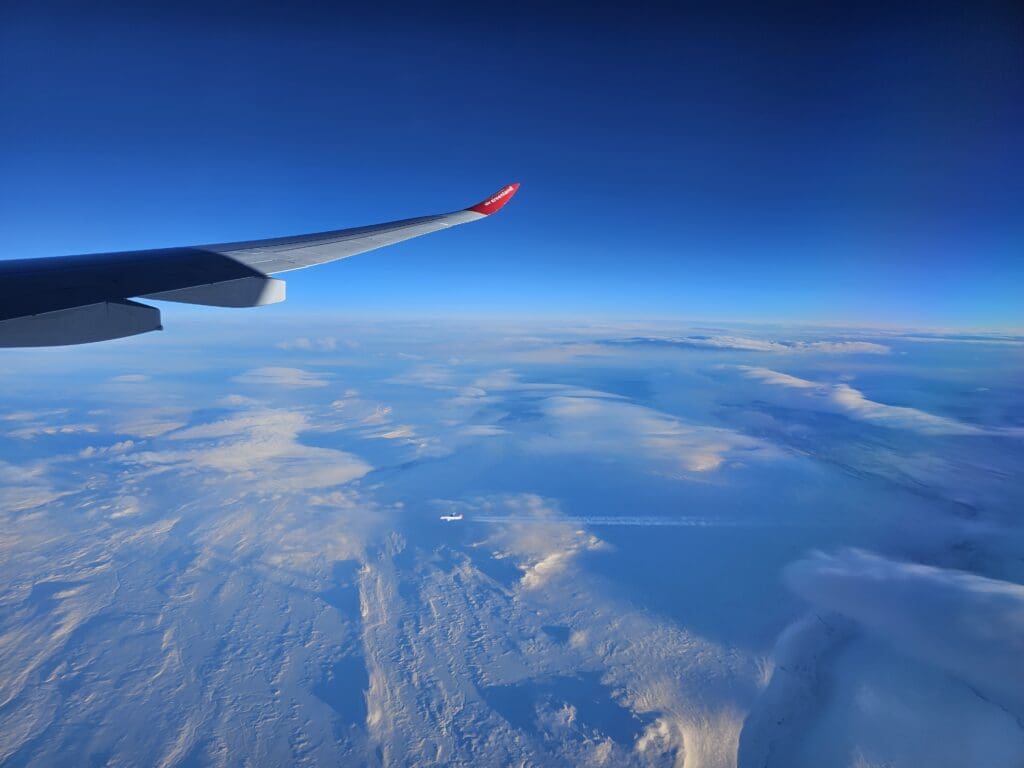
After around twenty minutes, the aircraft passed Akureyri and headed out to sea once again, although soon passed over the northernmost tip of Hornstrandir, the peninsula in the far northwest corner of Iceland. Outside, the skies slowly decreased in brightness as we flew further and further north, giving the false impression that we were heading towards the evening, despite it being mid-morning. As we crossed the ocean between Iceland and Greenland, I drifted off and had a short nap before waking up as we neared Greenland. Upon waking up, it seemed that I had missed out on another drinks round, however, this was not an issue, having hydrated myself earlier on in the flight. Almost four hours after departing Copenhagen, the aircraft crossed over Greenland’s eastern coast between Kuummiit and Ittoqqortoormiit and headed inland over Sermersooq. Unfortunately, with clouds lingering below, nothing could be seen of Greenland until we approached Kangerlussuaq.
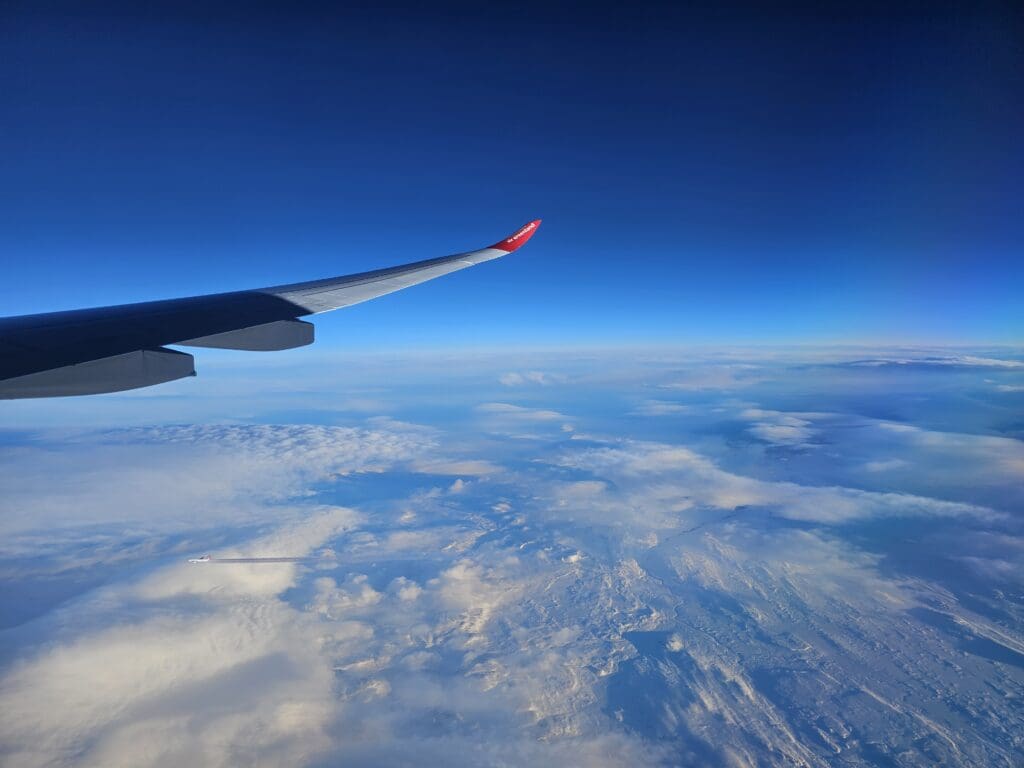
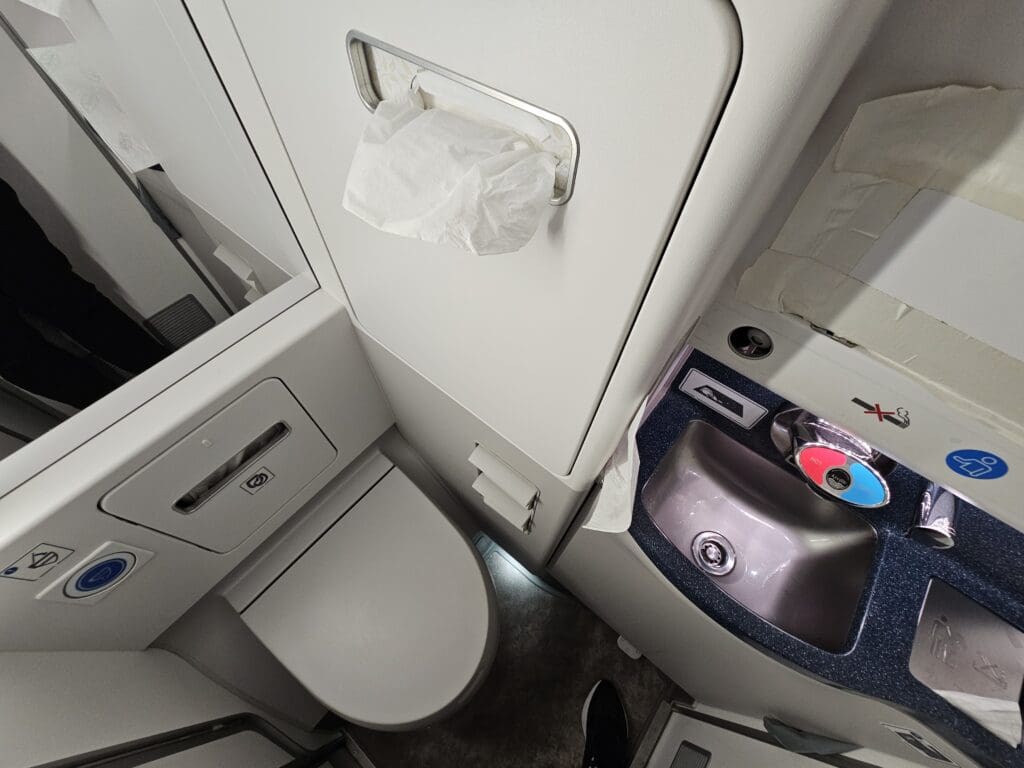
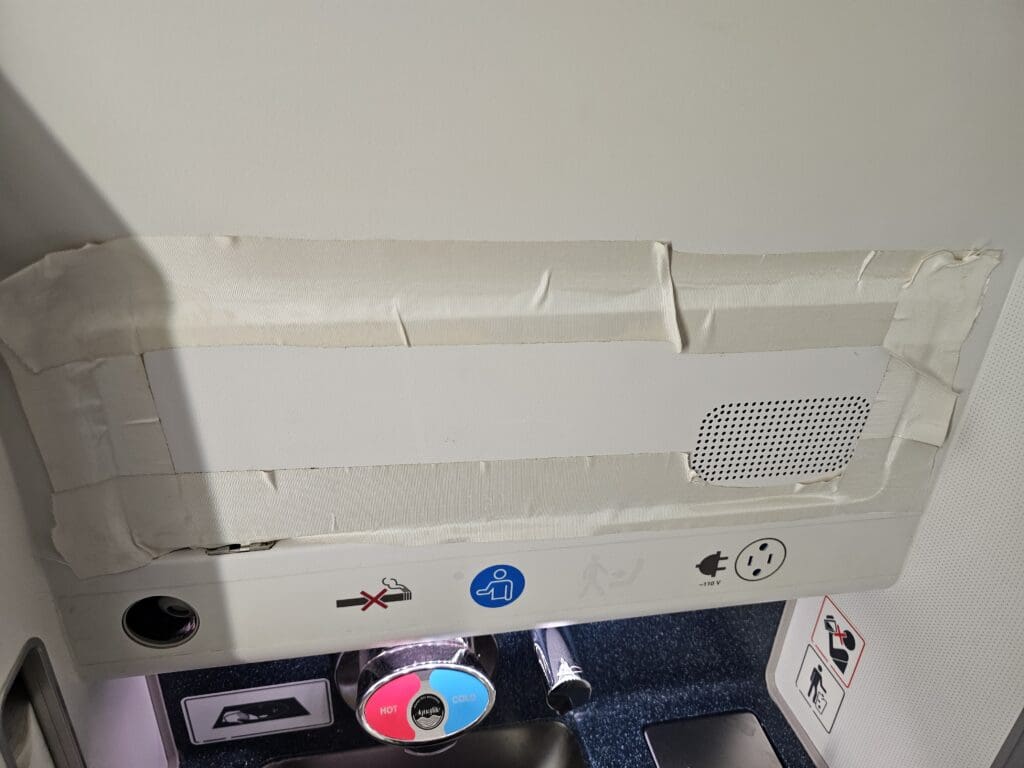
Realising that the flight was nearing its end, high above the ice caps, I decided to head to one of the two lavatories at the rear of the aircraft. Upon entering this, I was left with few complaints, with this being in a clean and tidy condition, and stocked with all the basic items you would expect to find.
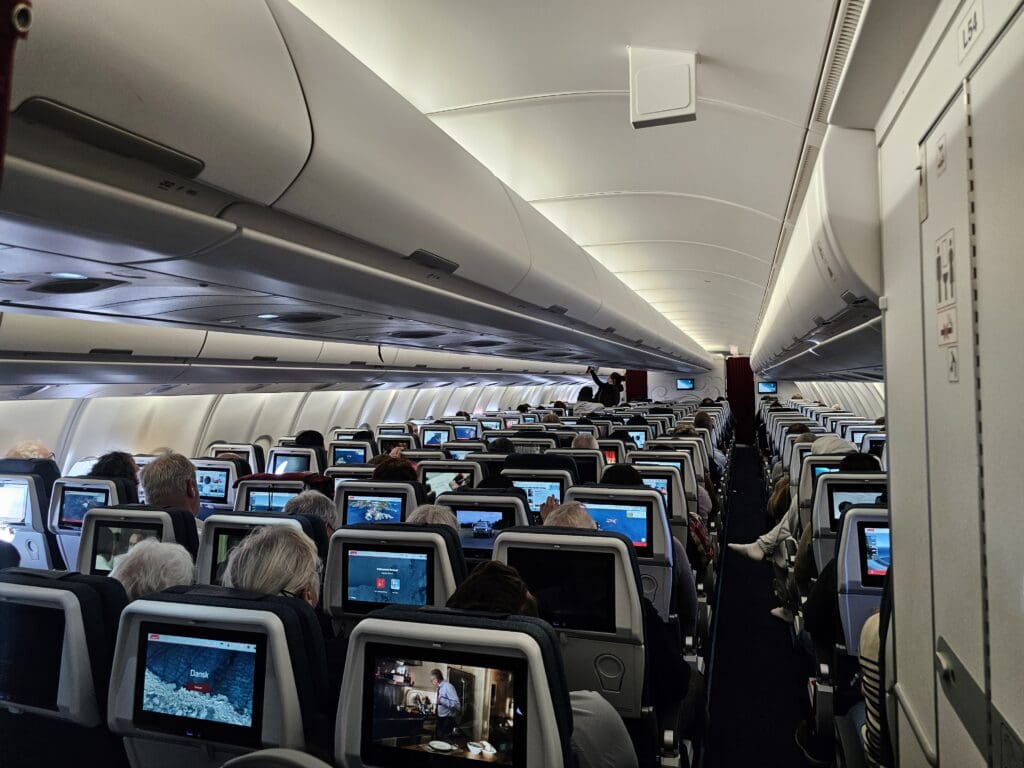
Once back in my seat, I strapped myself in and had another very quick nap before our arrival. After entering the skies of Qeqqata, with around thirty minutes to go until landing in Kangerlussuaq, the aircraft could be felt commencing its descent and almost immediately after this, the First Officer’s voice filled the cabin as they advised passengers that despite the chilly -31 degree temperatures, the weather looked ‘promising for the approach’, and also briefly detailed the weather in Ilulissat and Nuuk for those heading onwards on connecting flights. After this had been made, one of the flight attendants repeated this in Greenlandic before an announcement was made with the usual pre-arrival warnings and instructions and the seatbelt signs were illuminated.
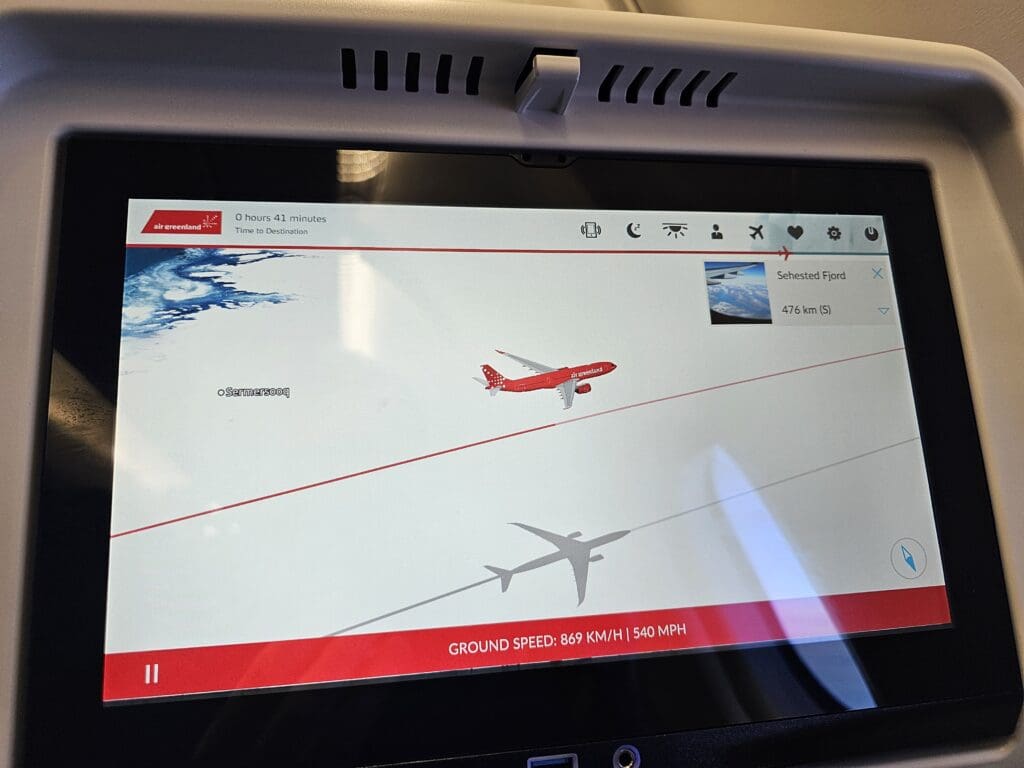
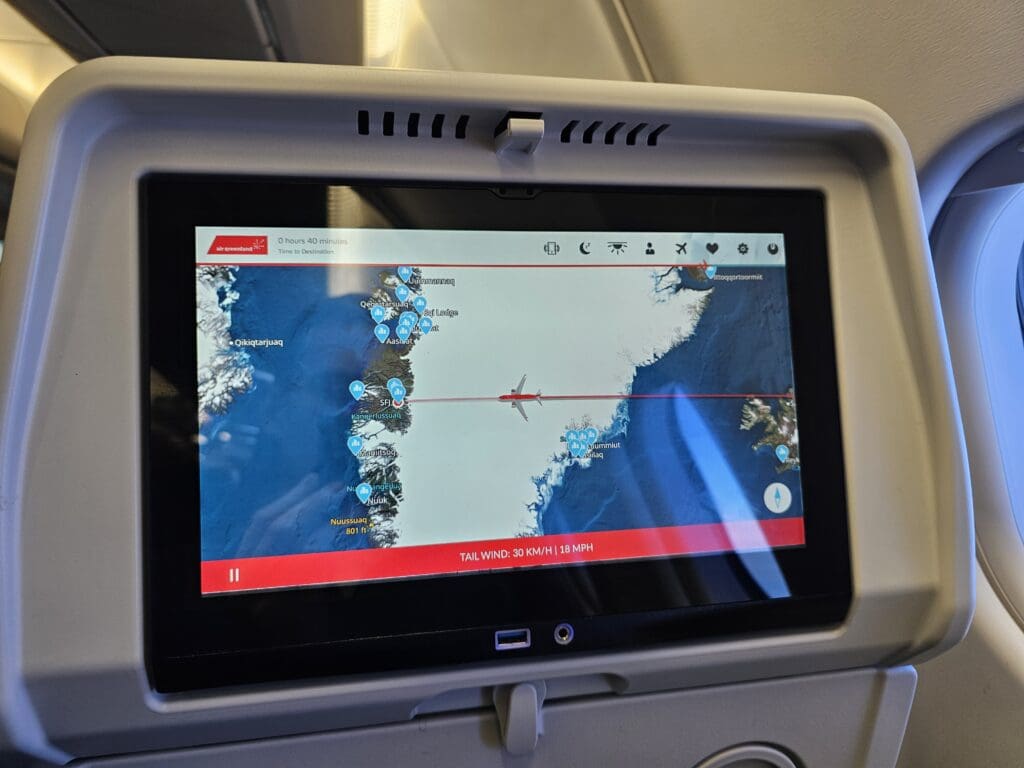
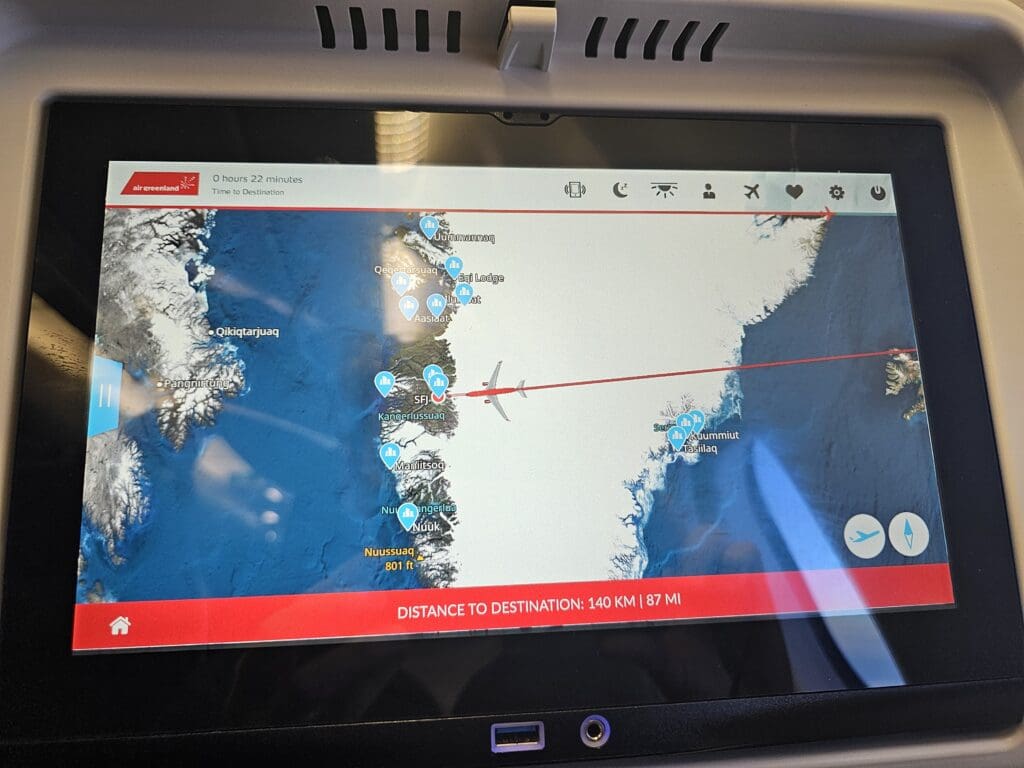
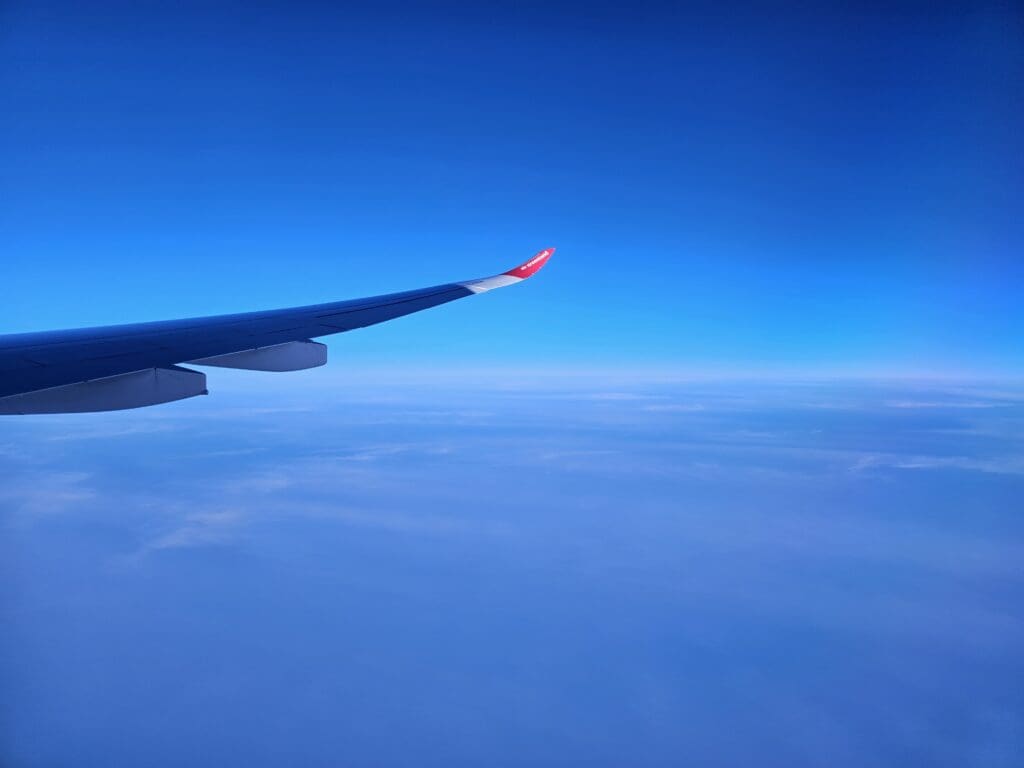
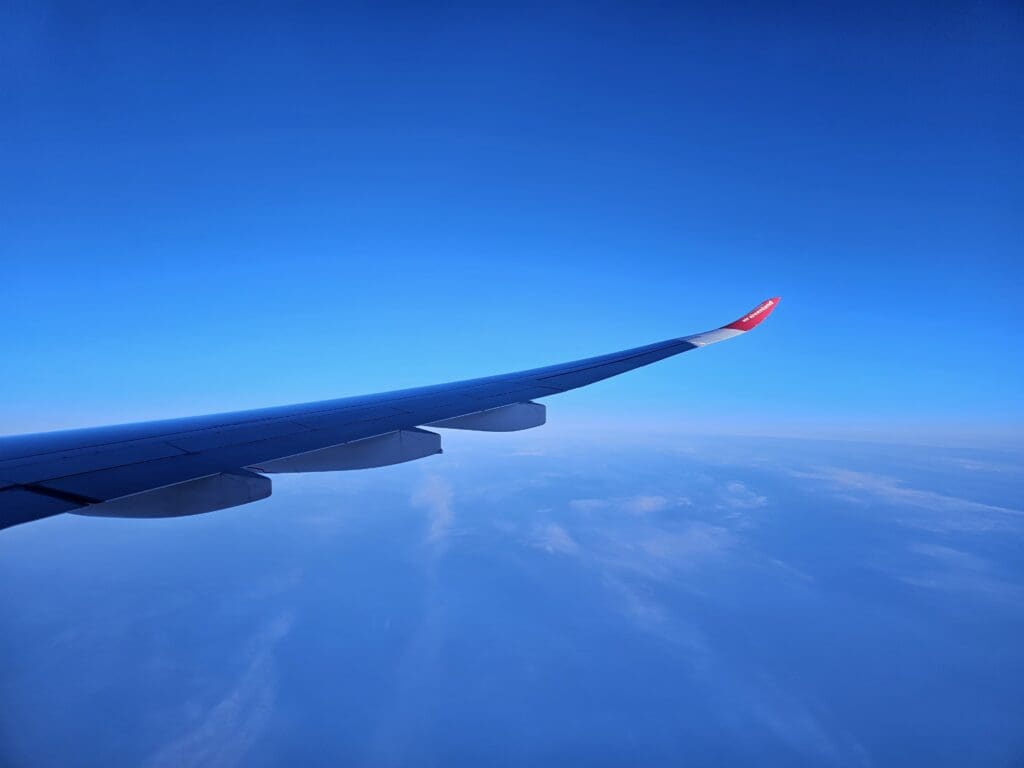
As we sank lower and lower, eventually Greenland’s snow-covered ice caps appeared below the aircraft, and the flaps were partially lowered into position in preparation for our arrival. Soon, Kangerlussuaq Fjord popped into view, with the fjord itself frozen over and blanketed in snow. As we turned towards the airport’s 2810-metre-long runway, the gear fell into position and I caught a glimpse of this up ahead as we lined up for an approach to Runway 09. Smoothly descending, I looked out at the enchanting Greenlandic landscape as this became clearer and clearer.
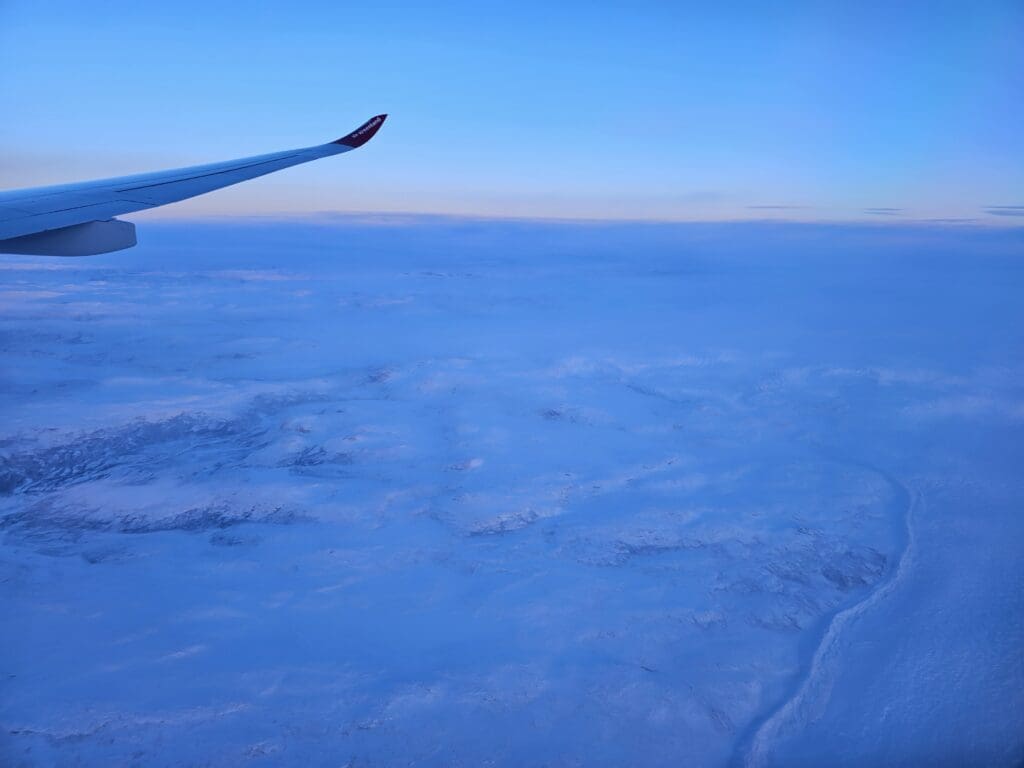
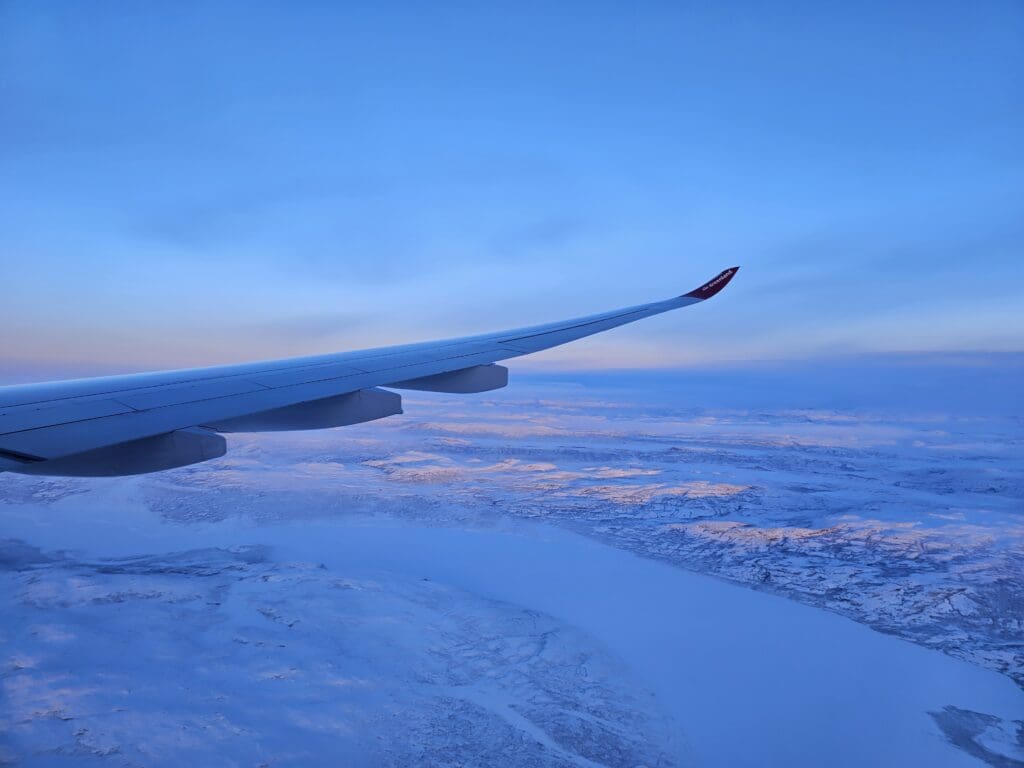
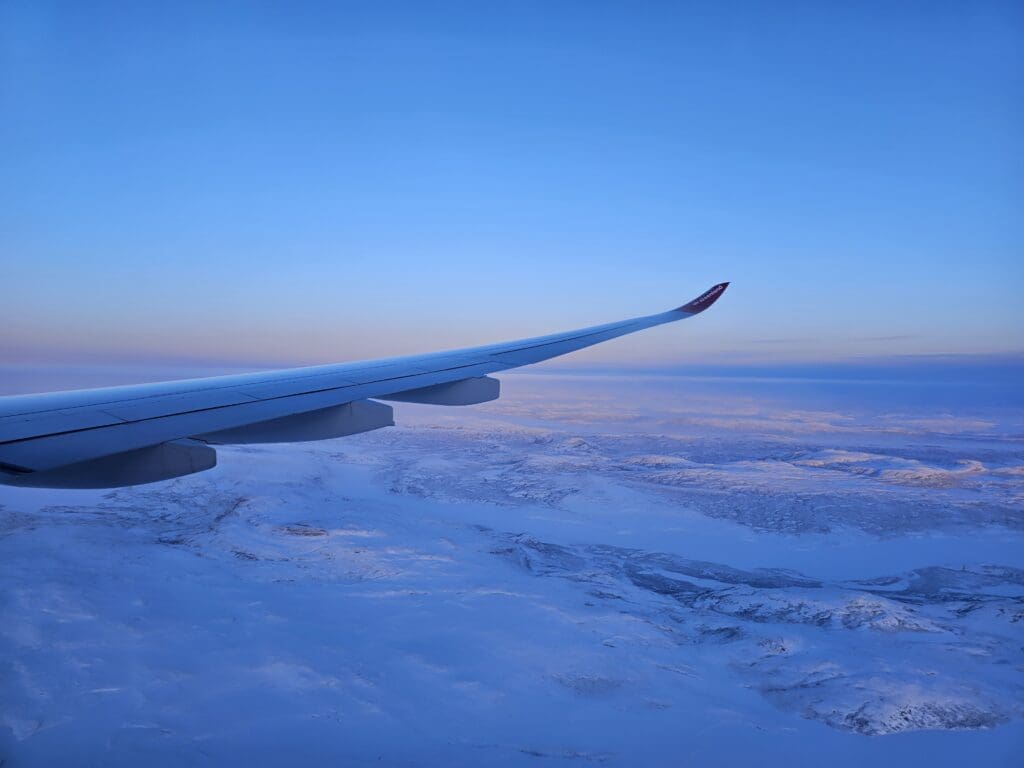
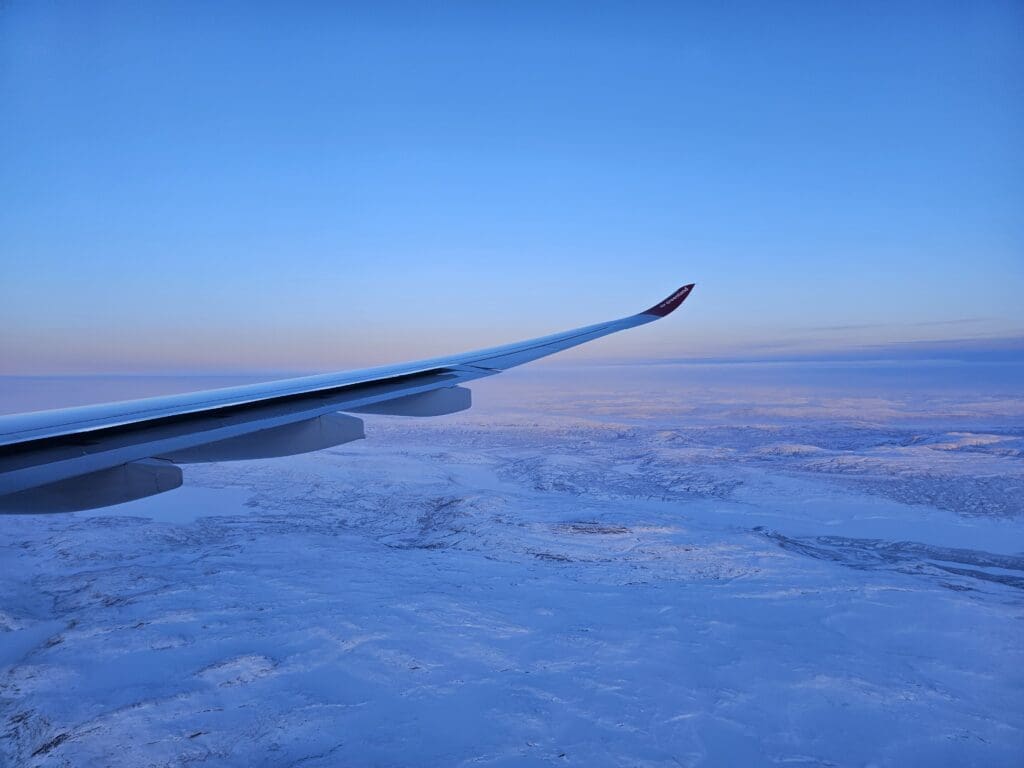
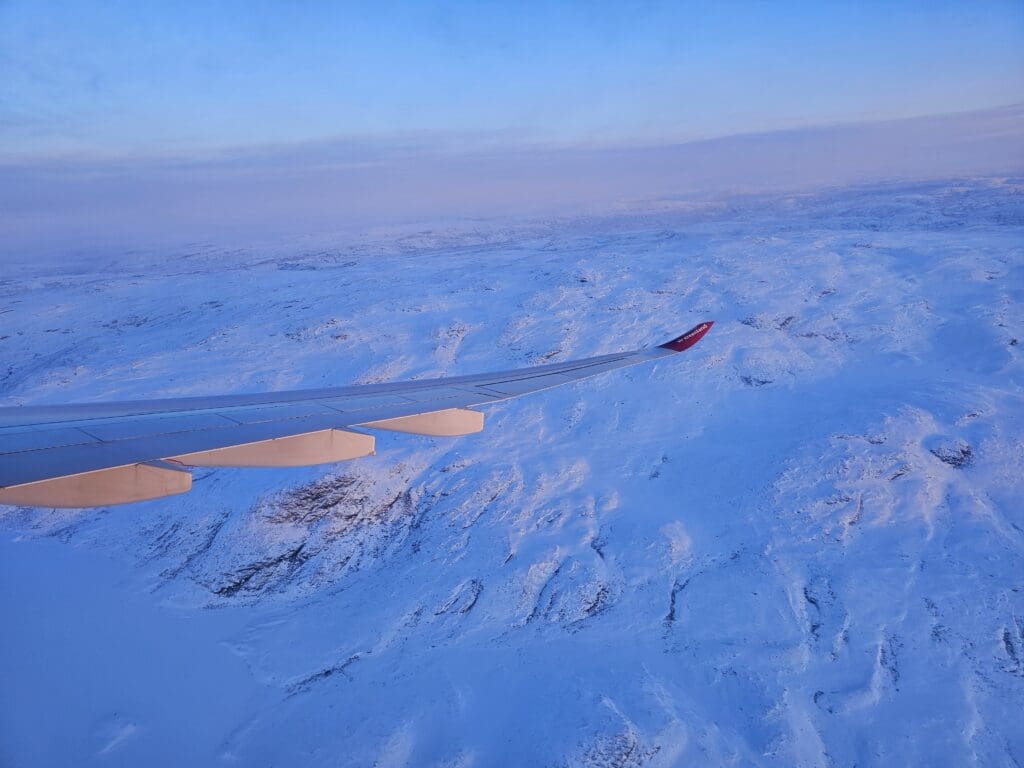
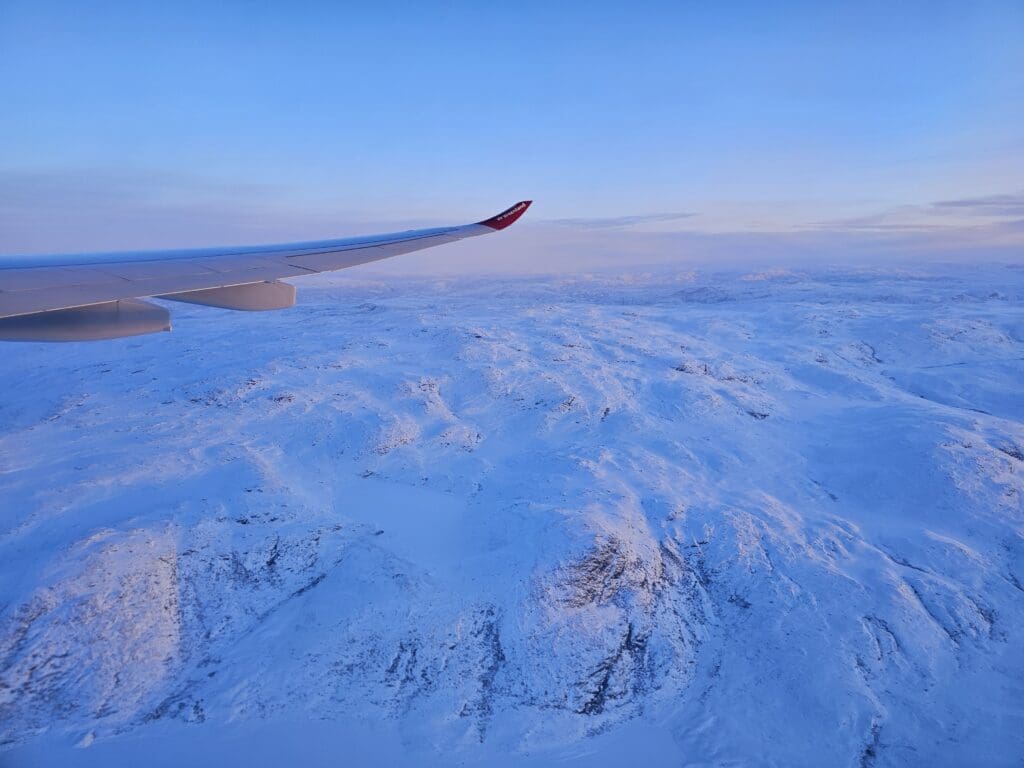
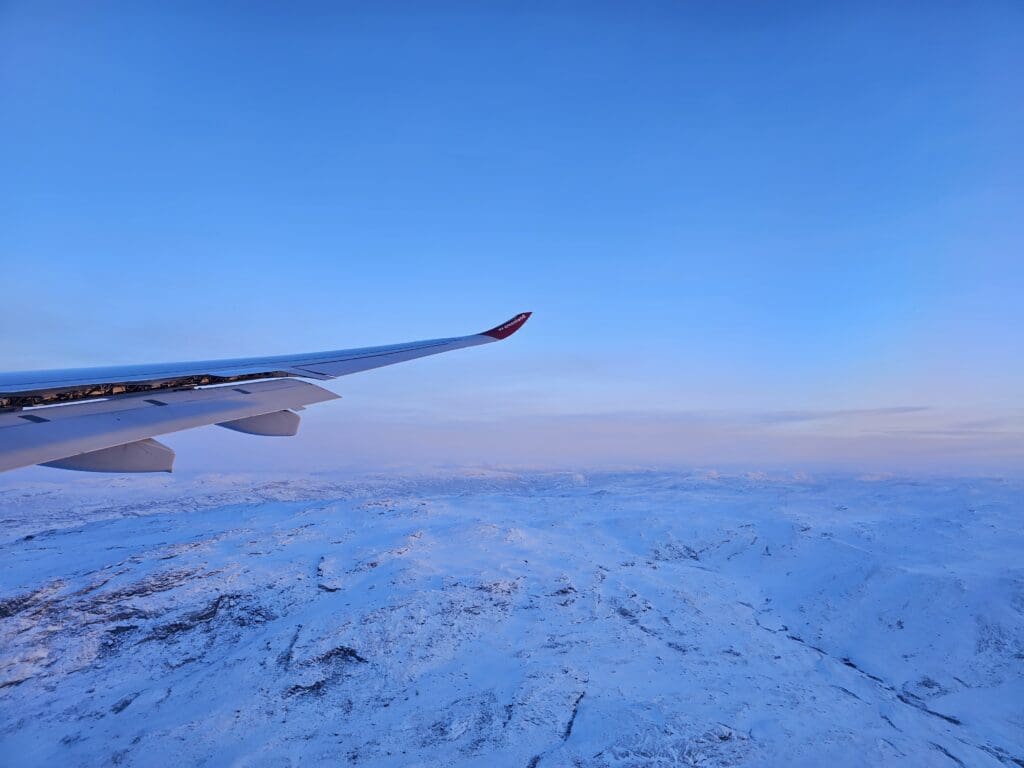
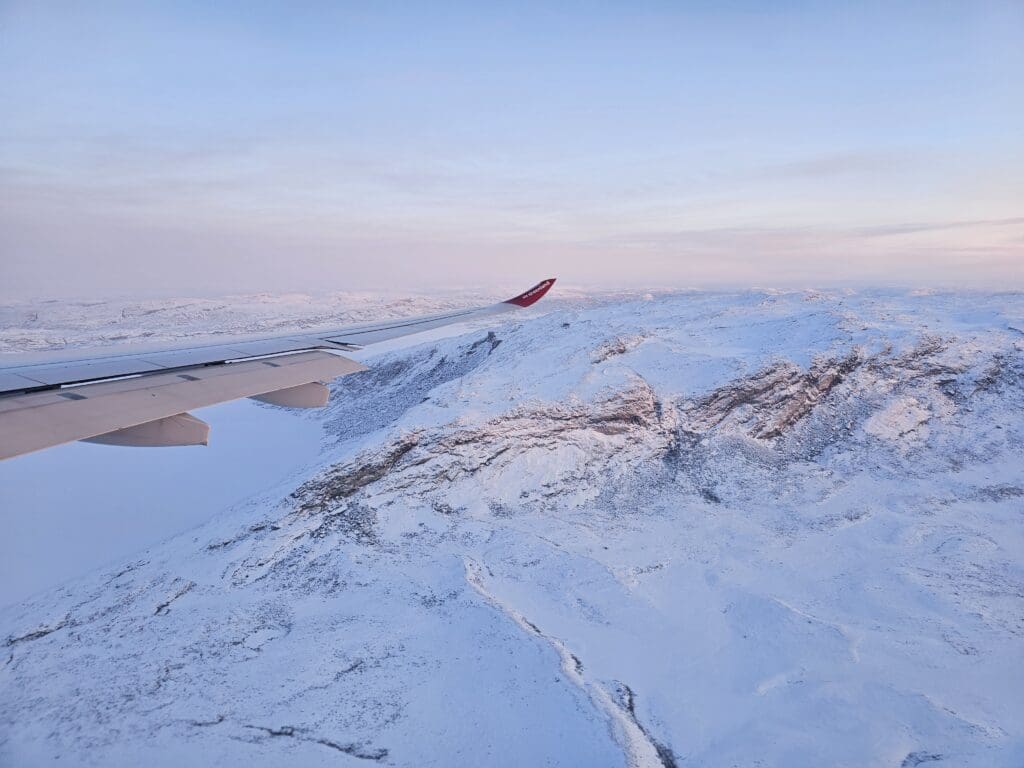
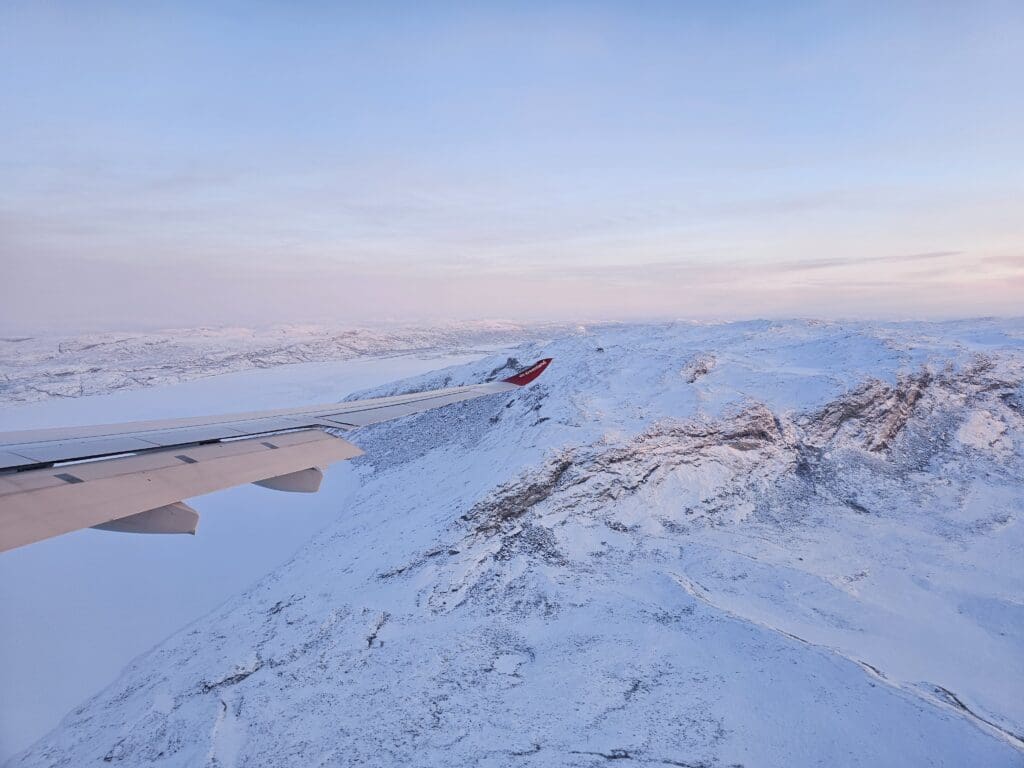
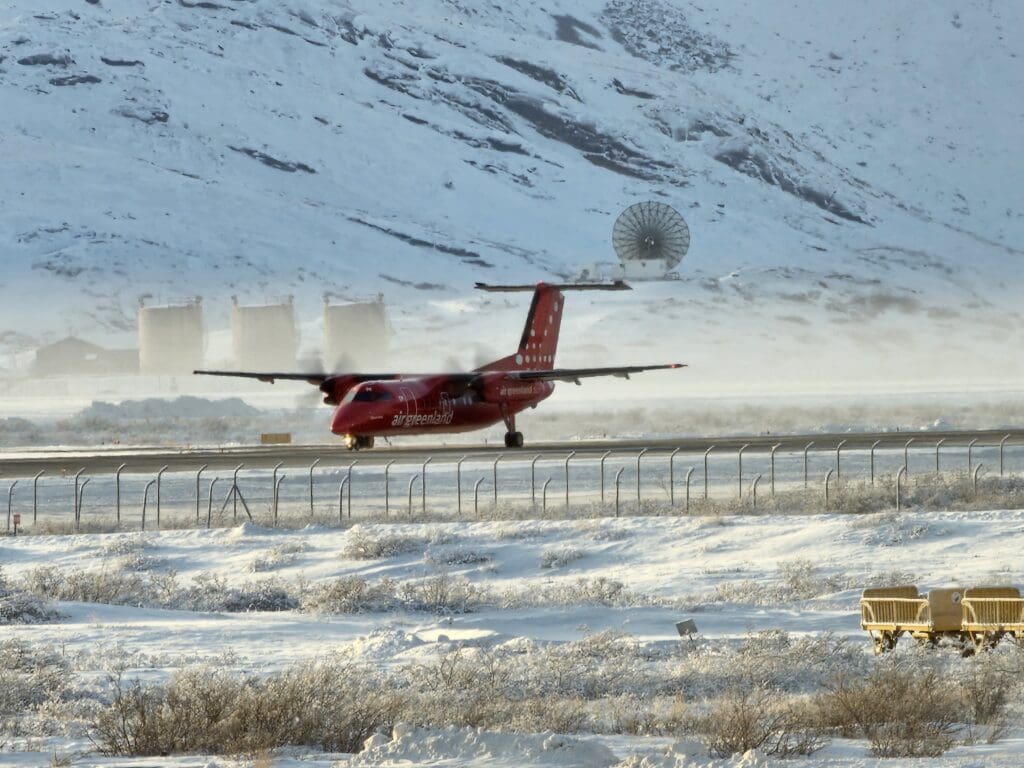
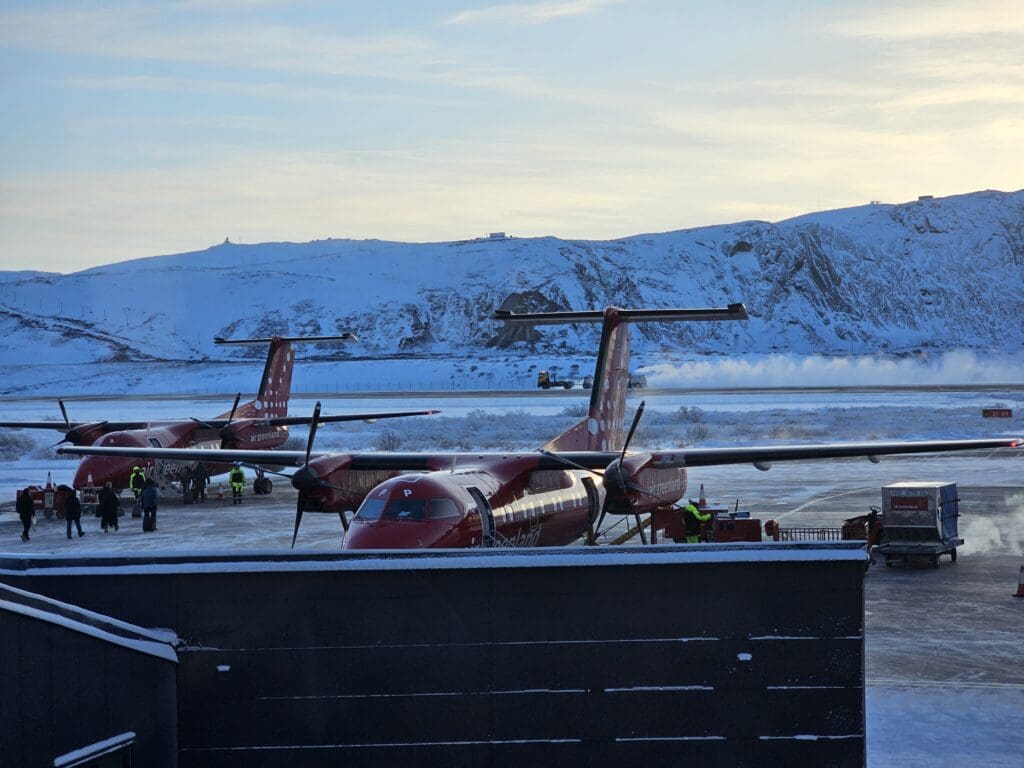
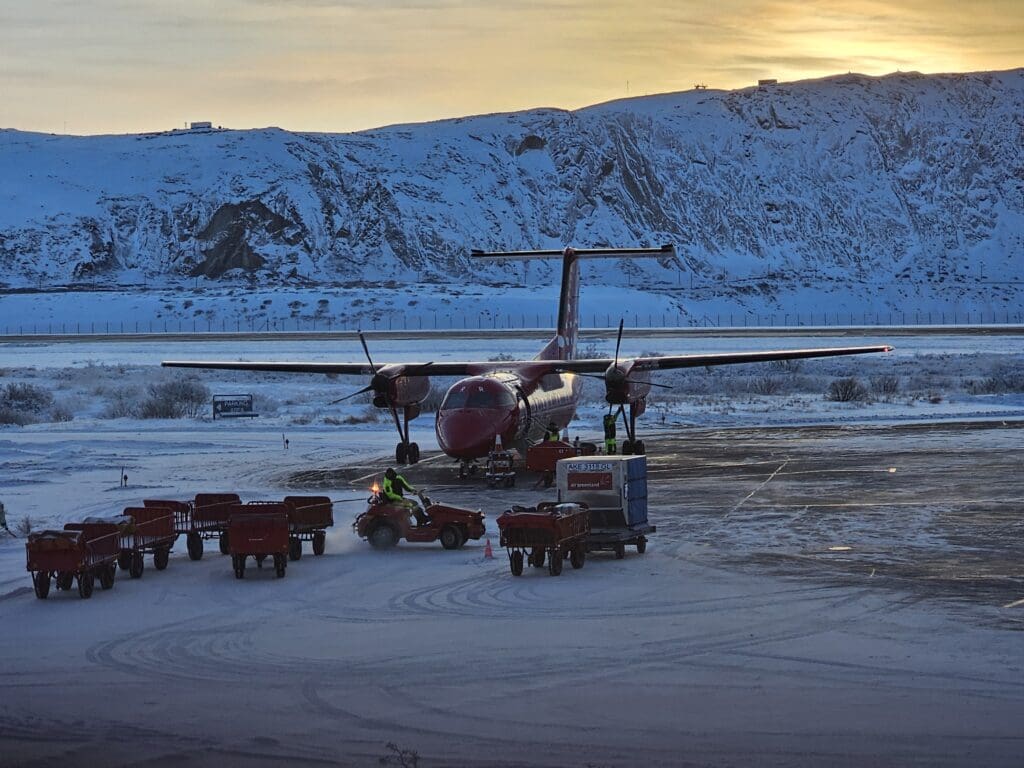
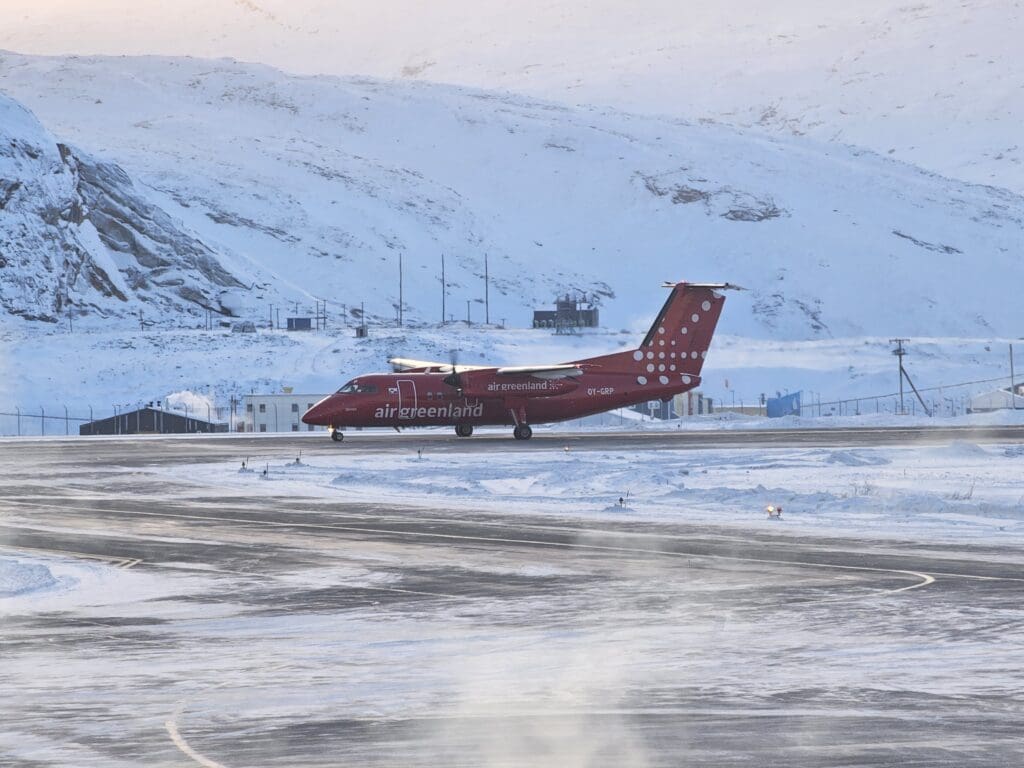
Following a grand total of 4H47 in the air, the Airbus made a smooth touchdown on Greenlandic soil and gently decelerated. With the terminal located in the far northeastern corner of the airfield and connected to the runway by a short single taxiway, there was no rush for the pilots to exit the runway. As we slowed, the local Air Greenland hangar as well as the Danish military’s Joint Arctic Command facility. However, understandably, given the intense cold, the hangar doors were firmly shut, and nothing of the aircraft inside could be seen. Soon, the Airbus took a left and vacated the runway near its end. As we slowly and cautiously began the seconds-long taxi to the ramp, an Air Greenland Dash 8 Q200 could be seen waiting at the end of the runway about to buzz off to the nearby coastal town of Sisimiut. Whilst Kangerlussuaq is a ferry flight stop, no such aircraft could be seen on the ground that day. In fact, for a while, once the aforementioned Dash 8 had departed, our Airbus A330 was the only aircraft that could be seen on the ground.
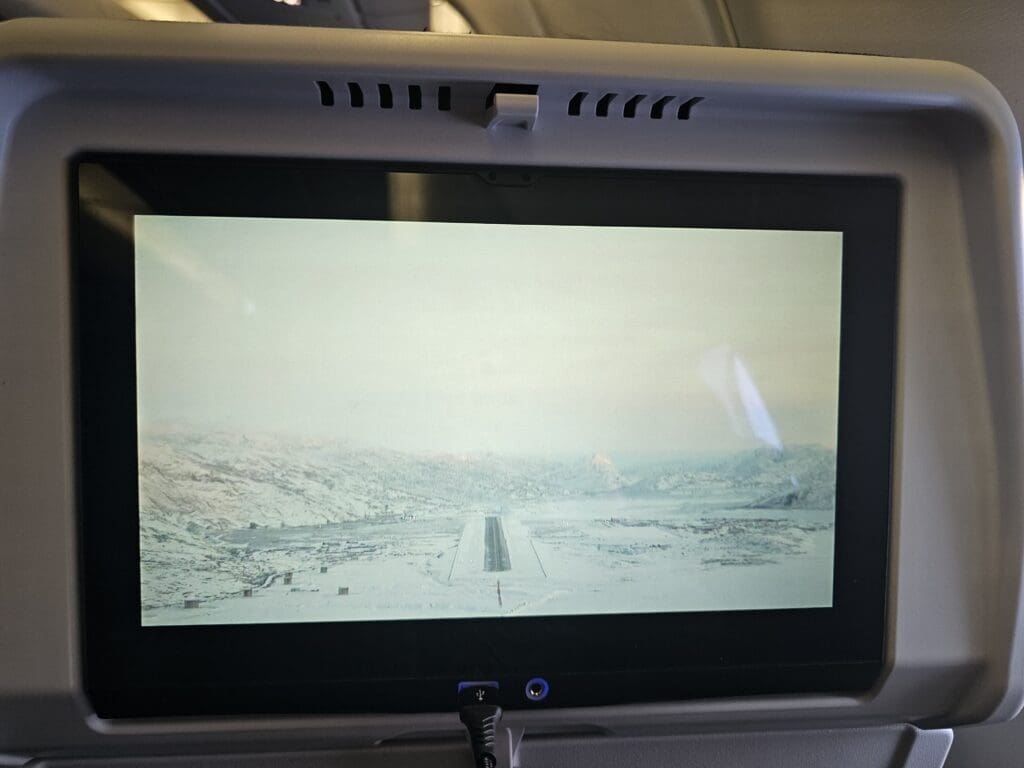
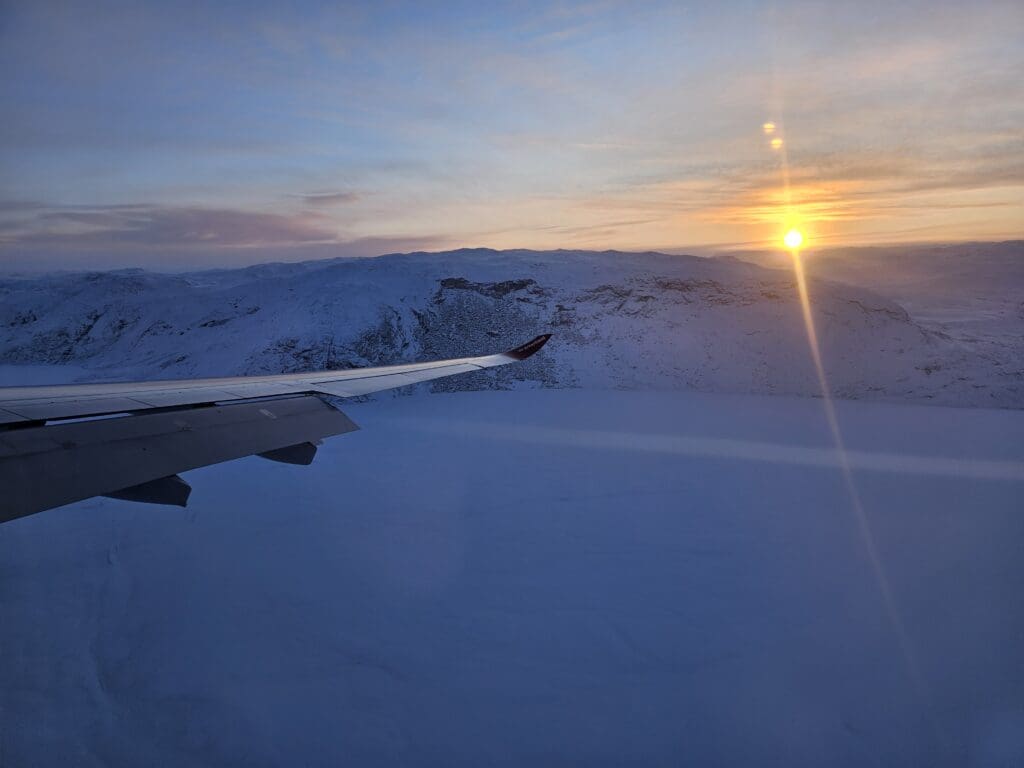
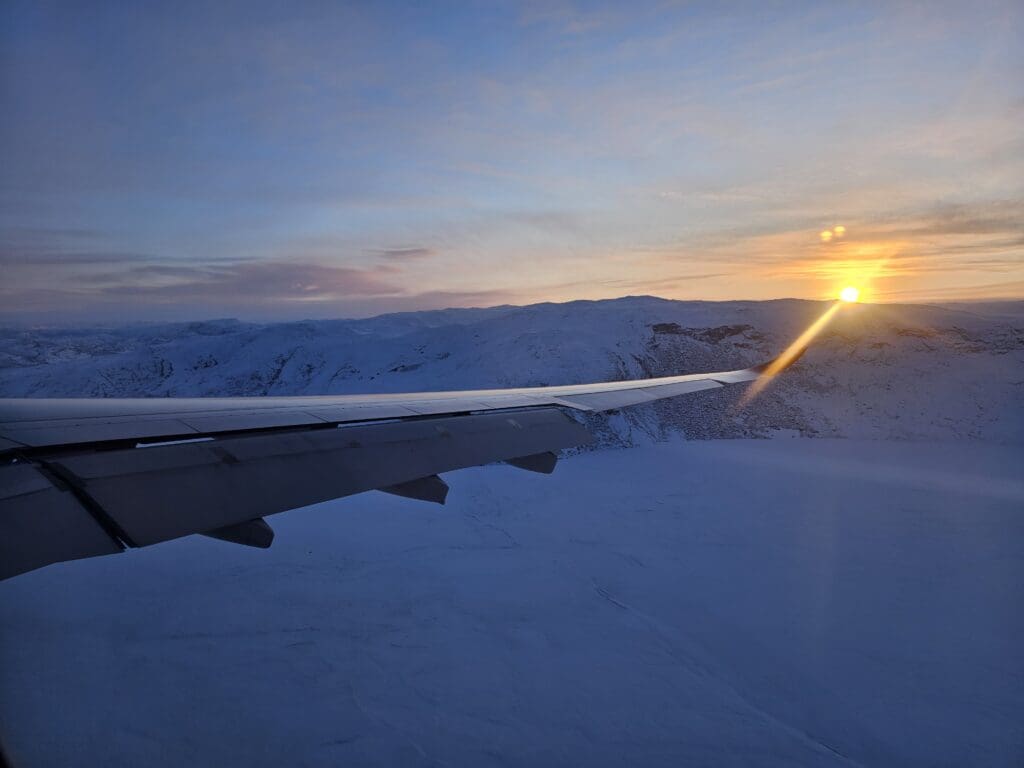
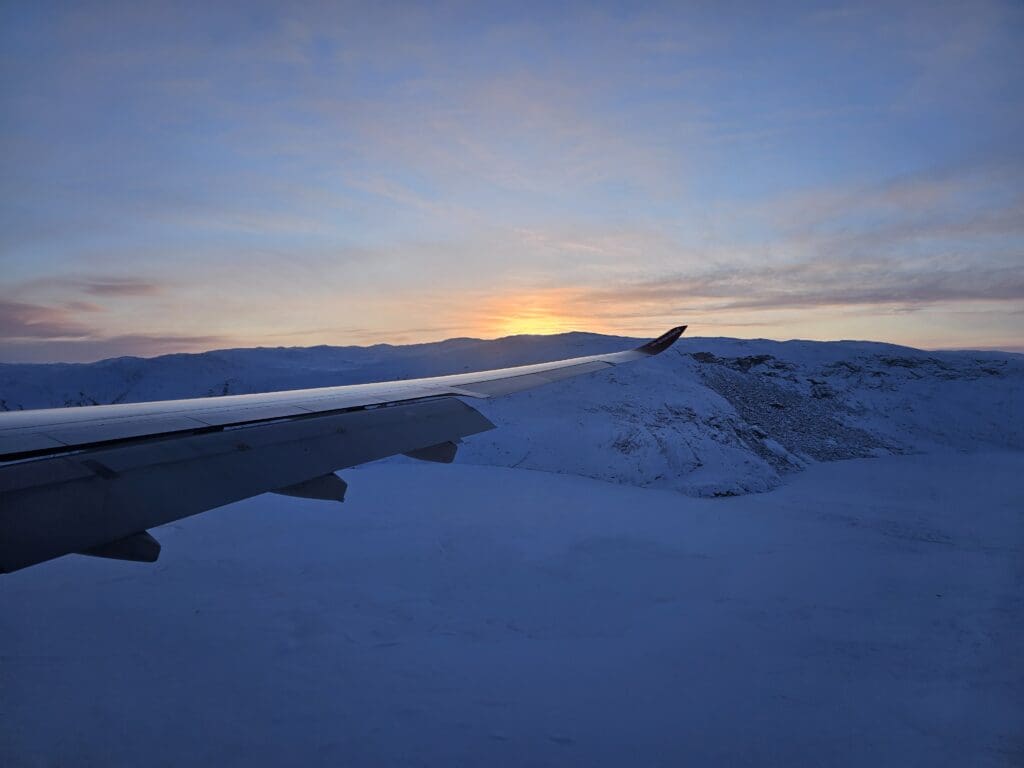
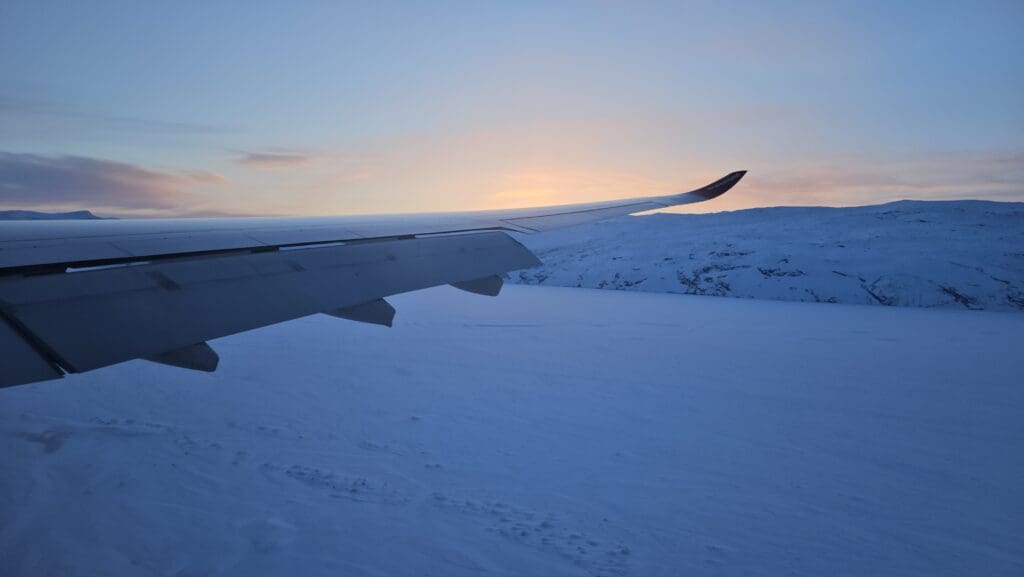
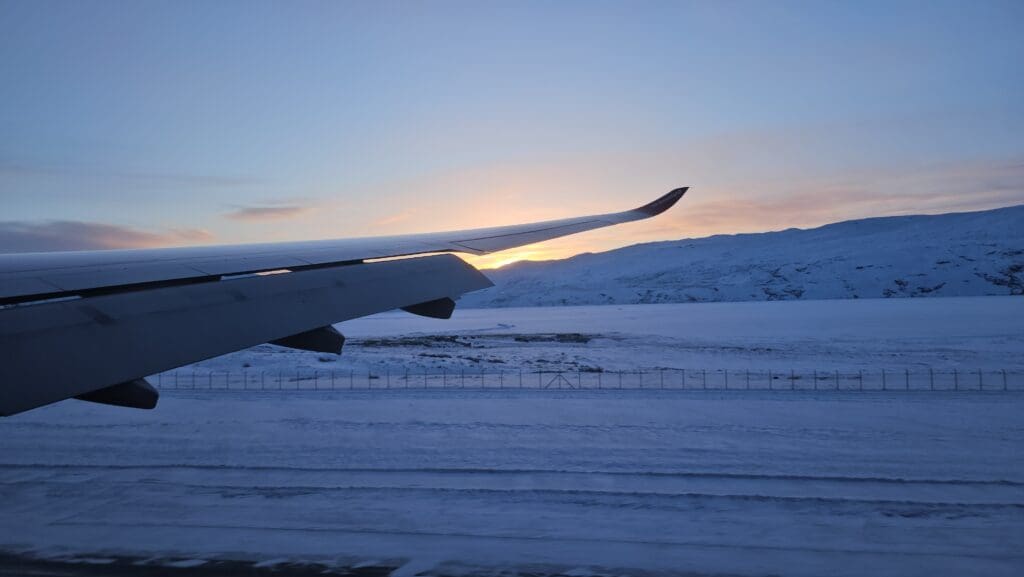
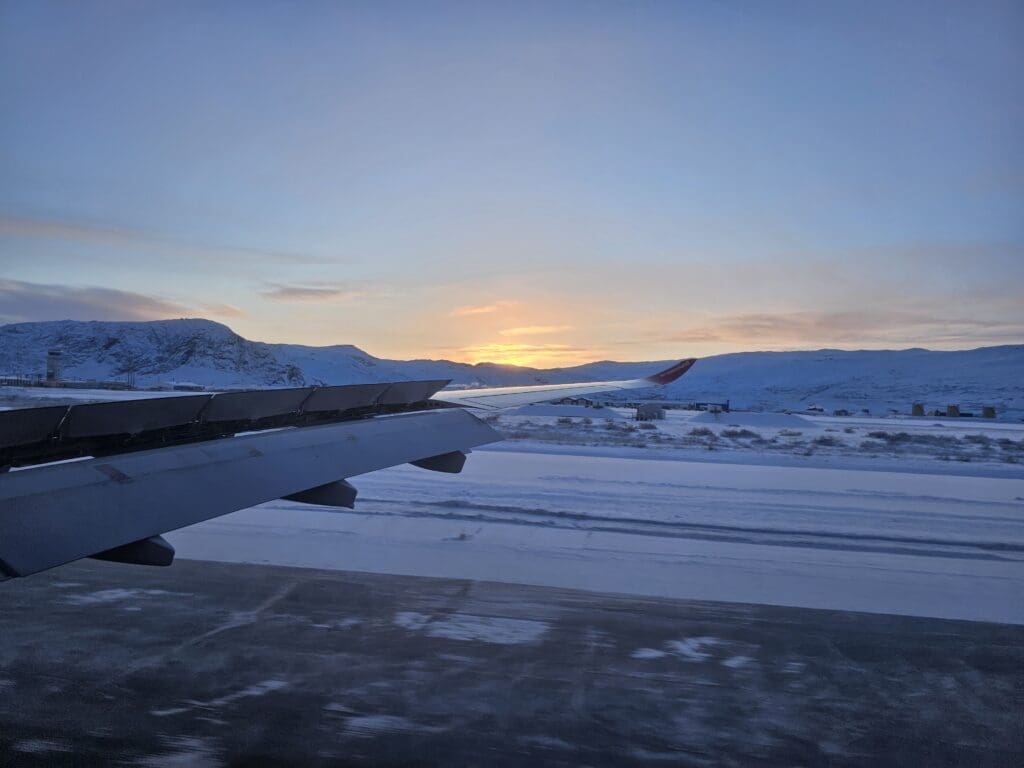
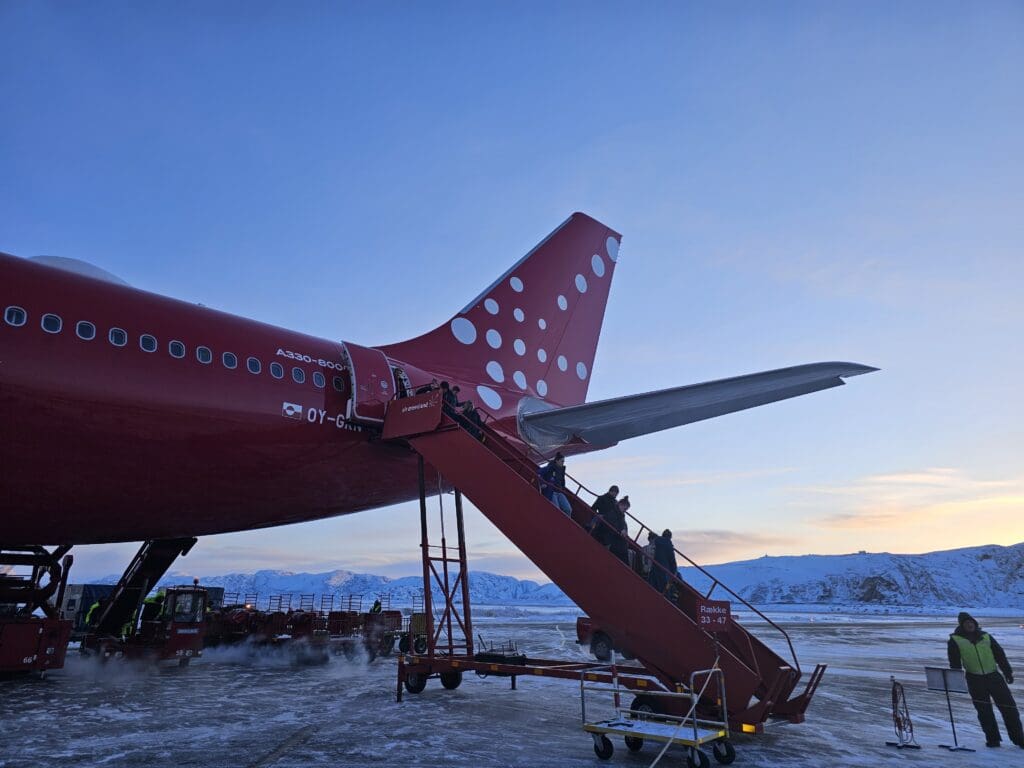
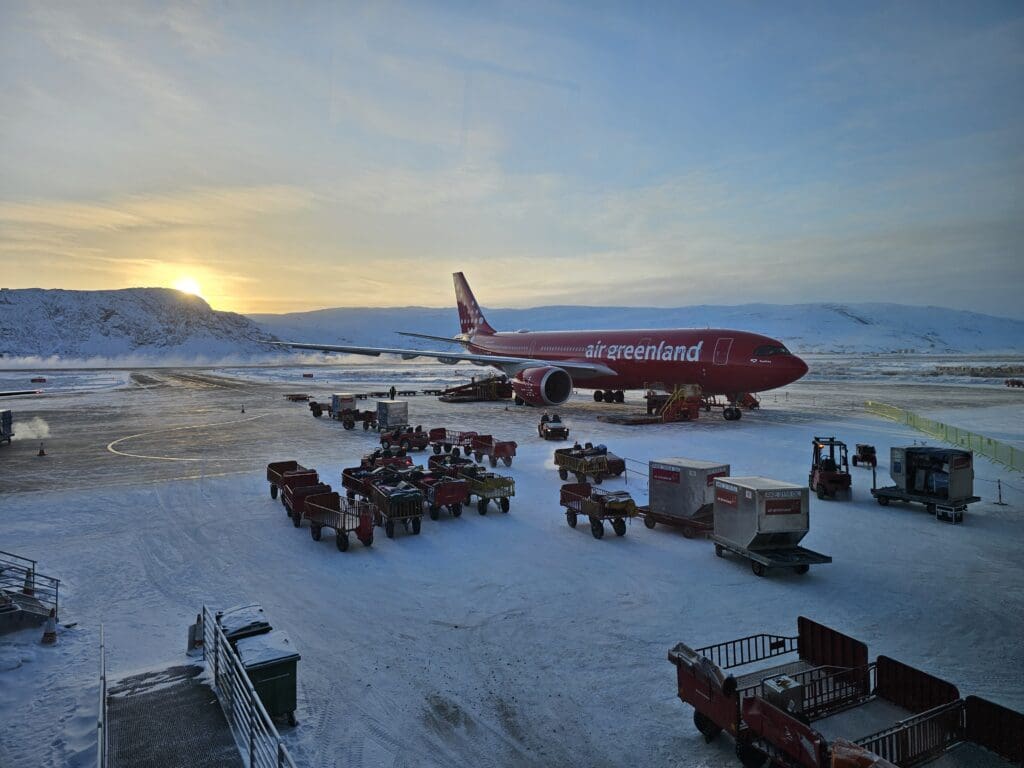
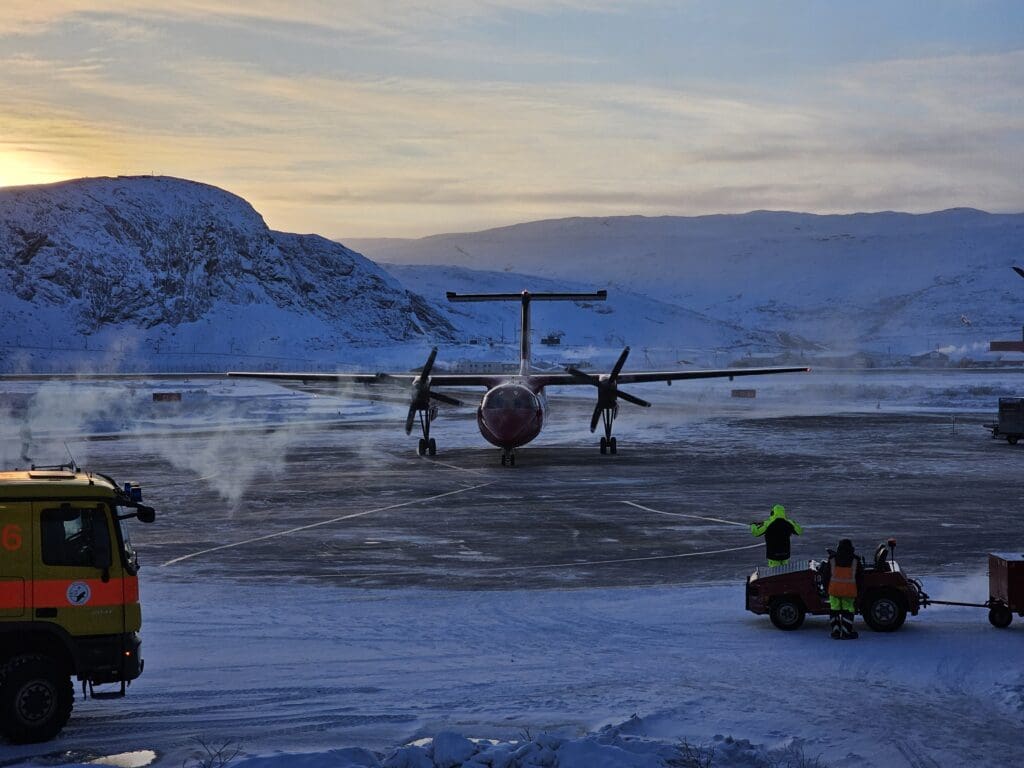
With the Airbus A330 being a major movement in Kangerlussuaq and carrying plenty of passengers and cargo needing to make quick connections, unsurprisingly, an army of ground crew and equipment could already be seen waiting to meet the aircraft. As soon as we came to a halt, the army of staff outside sprung into action and it wasn’t too long before the 2L and 4L doors were opened and disembarkation commenced. Seated in the rearmost cabin, it only made sense that I disembarked via the rear door, even if this did mean a slightly longer trundle through the freezing Arctic weather to reach the terminal. A short time after disembarkation commenced, I stood up, retrieved my backpack and headed to the rear of the aircraft, where I thanked the two flight attendants there before heading outside into the chilly air.
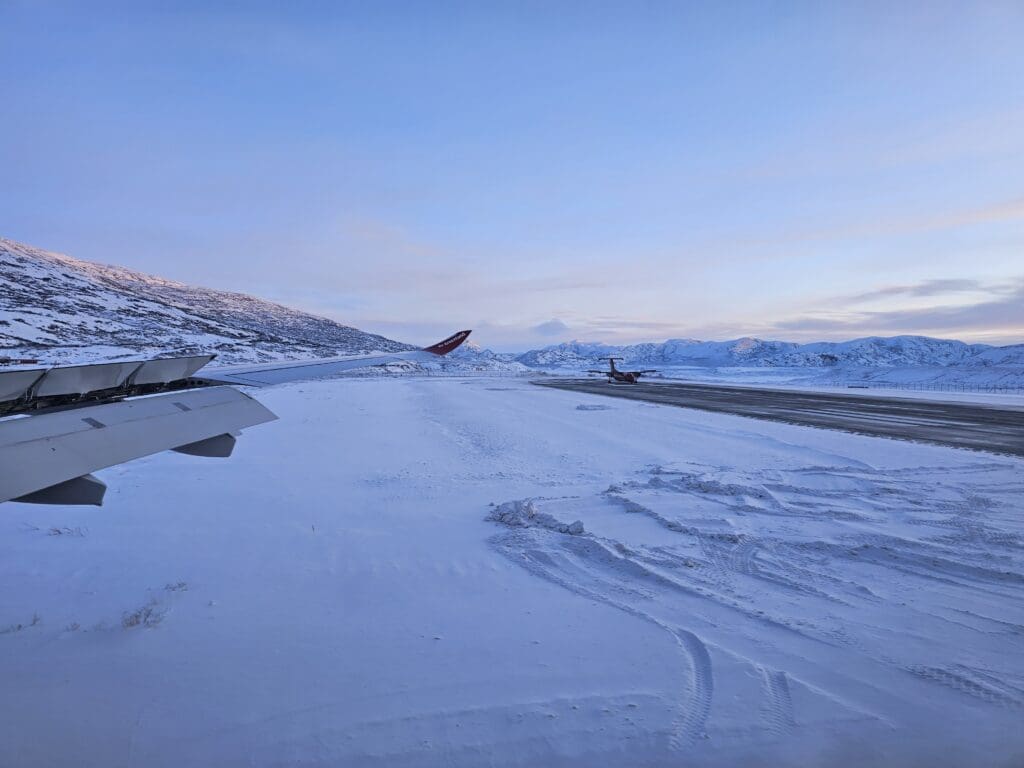
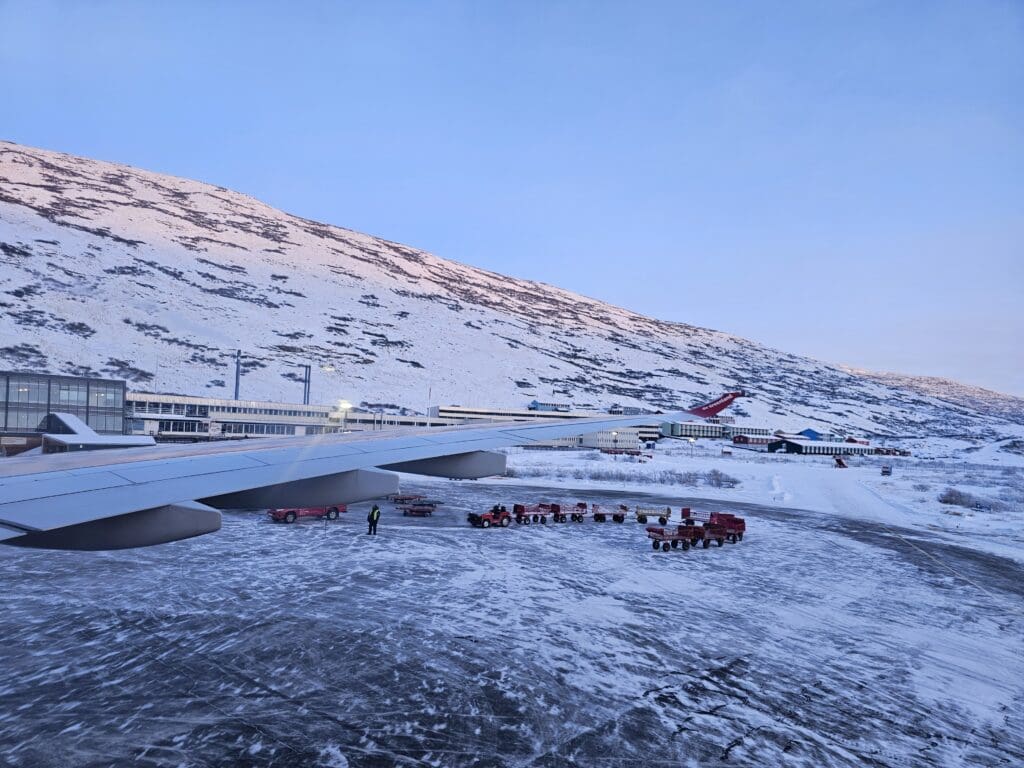
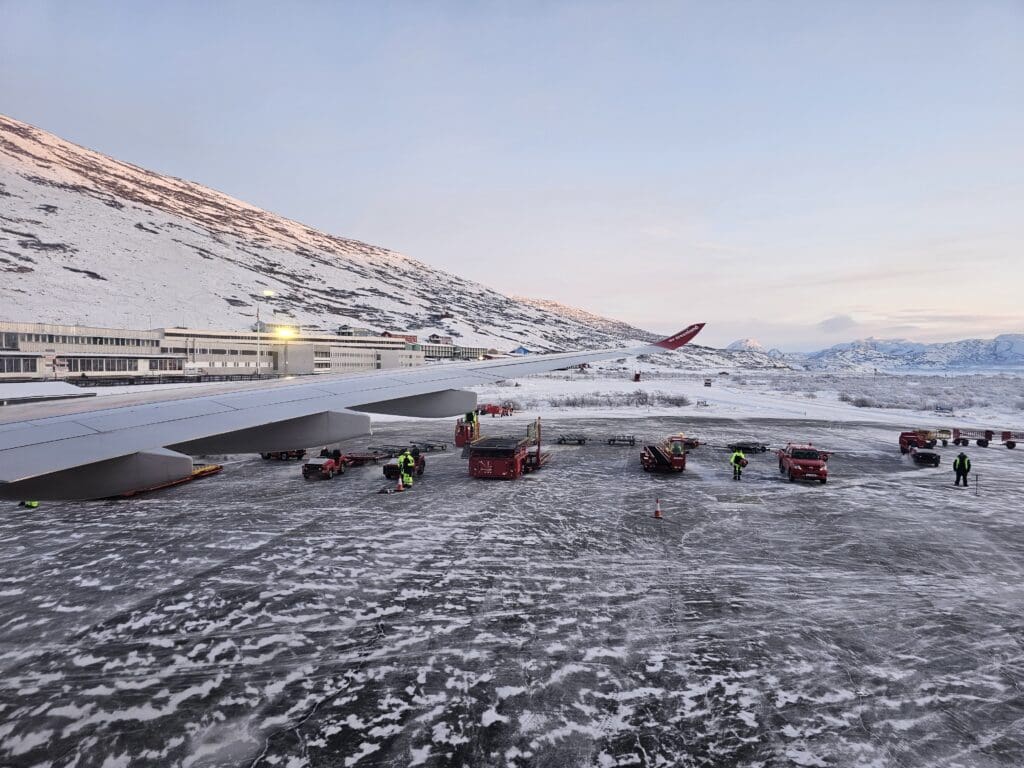
Heading down the long set of steps that had been positioned up to the rear of the jet, I stopped to take a few photos of the bright red Airbus glistening in the low sunshine. However, with the temperature hovering around a bitterly chilly -30 degrees, this was the coldest temperature I had ever experienced and yet to change into my Arctic gear, it wasn’t long before I hurriedly scurried off into the terminal building.
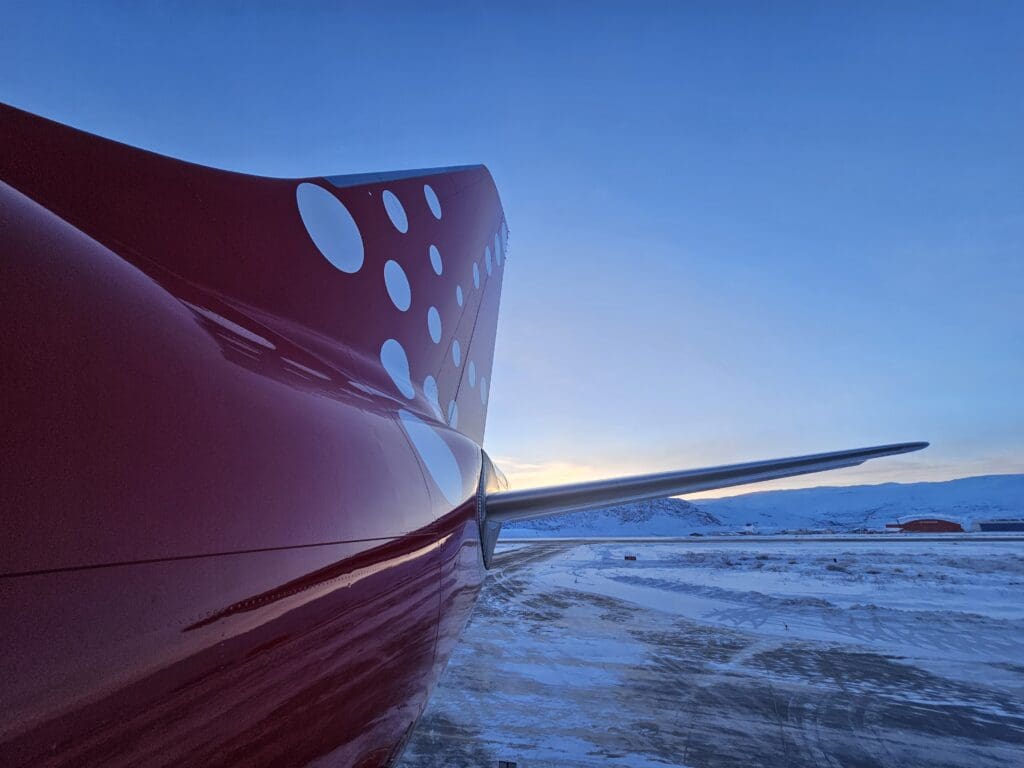
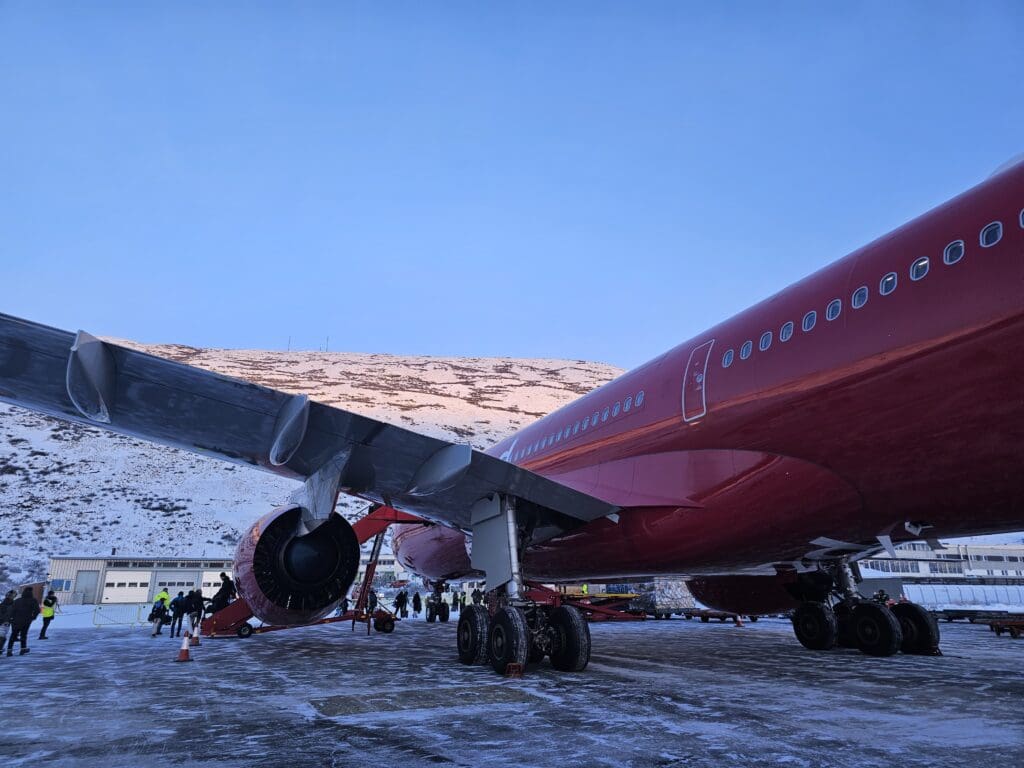
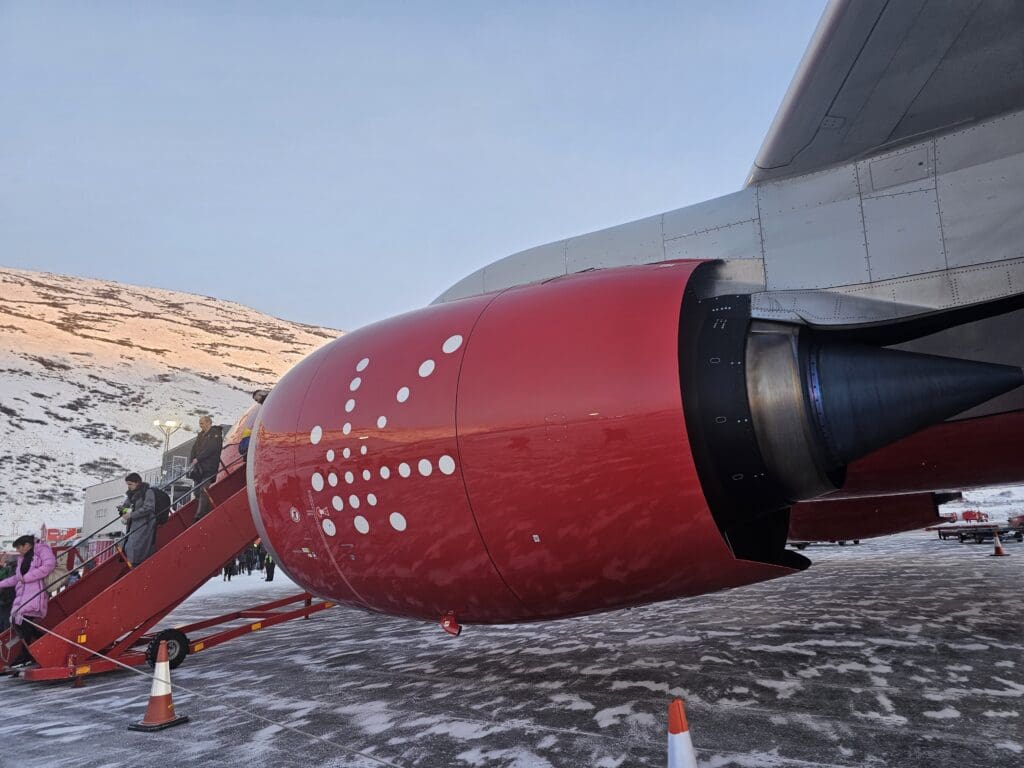
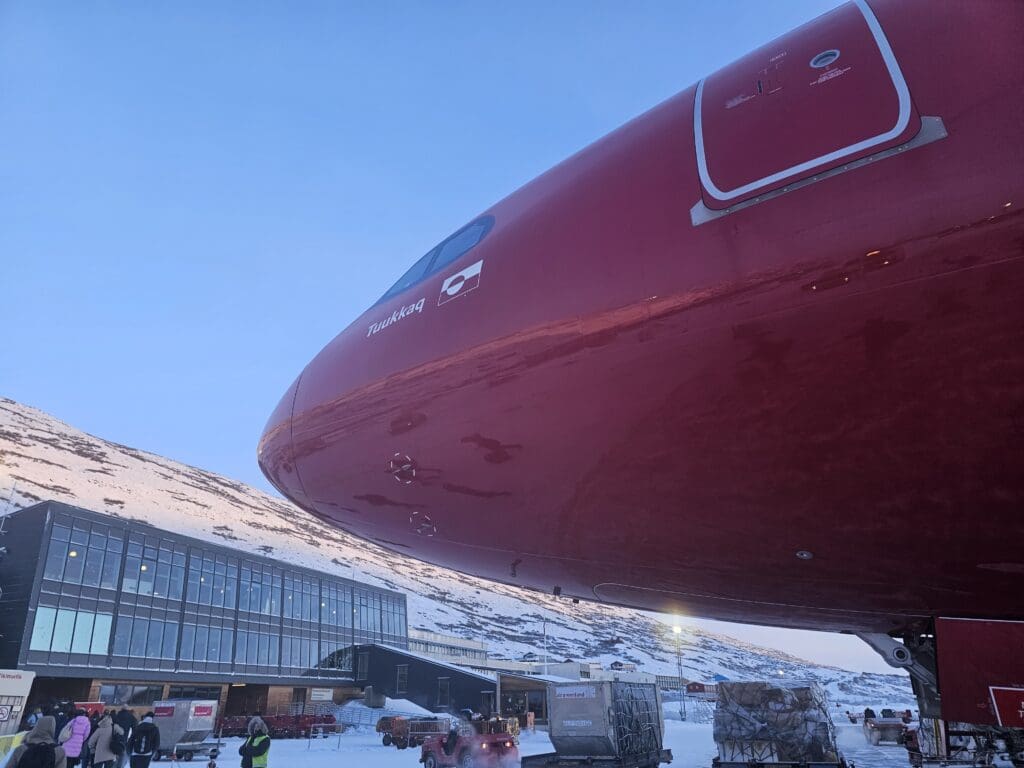
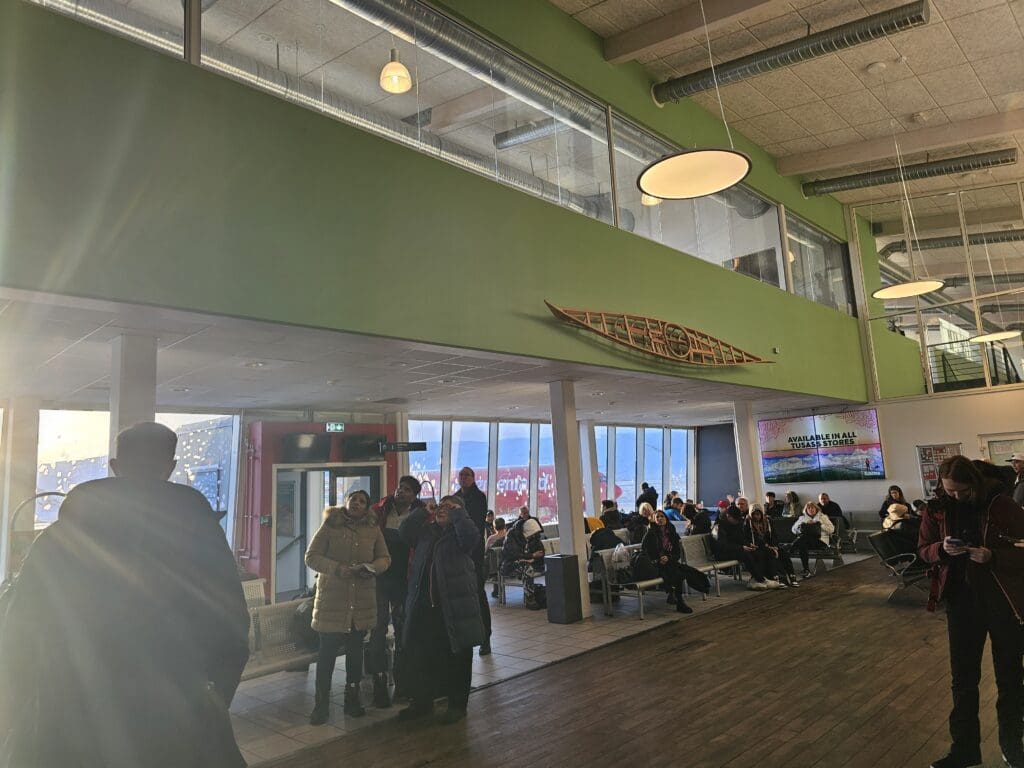
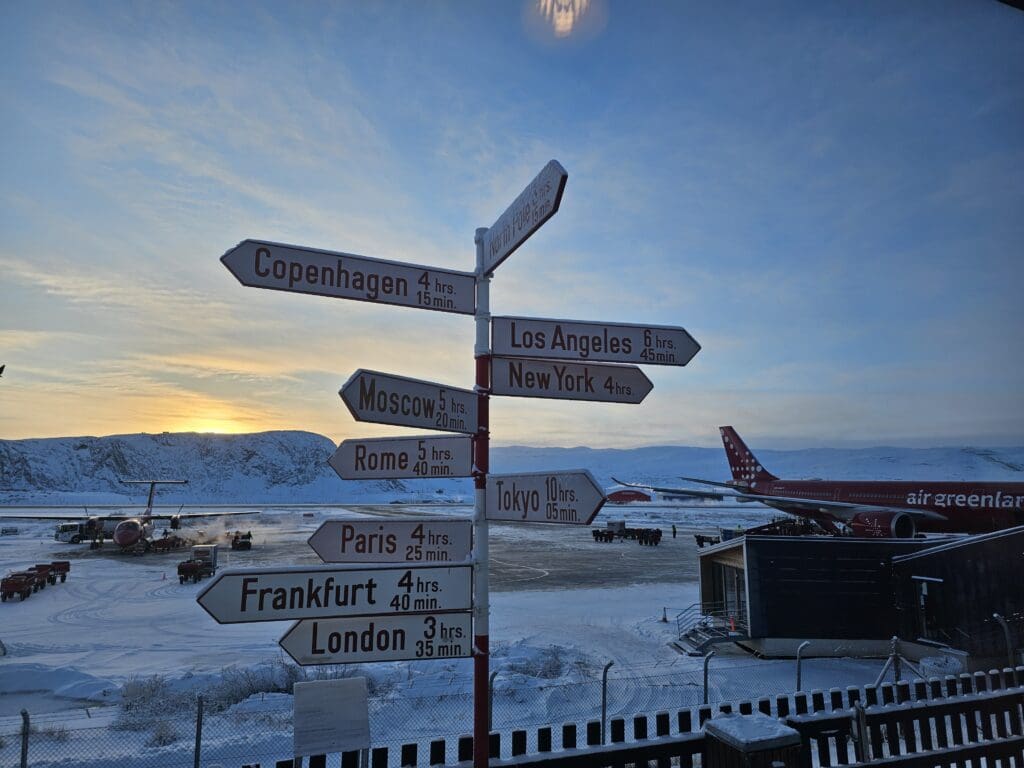
Despite being Greenland’s main air hub, Kangerlussuaq Airport’s terminal is miniscule and it was a little novel to see such a large Airbus A330 parked next to such a small terminal! Once inside, I soon reached the small and rather rudimentary baggage collection hall before continuing onwards into the main atrium which also doubles as the check-in hall and airside waiting area! Unsurprisingly, this was rammed, with passengers scurrying about in all directions – some heading straight off on connecting Dash 8s to destinations across Greenland, whilst others were bound for local accommodation to rest up before continuing their journeys. However, before calling it a day, my father and I would be heading off on a tour up to the ice cap above Kangerlussuaq!
Summary
Overall, Air Greenland left me with very few complaints. The aircraft was clean, comfortable and modern, whilst the crew were reasonably polite and friendly. Not to mention the generous drink offering as well as the good quality complimentary light meal! Needless to say, there was absolutely nothing about this experience that left me with any concerns about my next few flights with the airline over the following days.