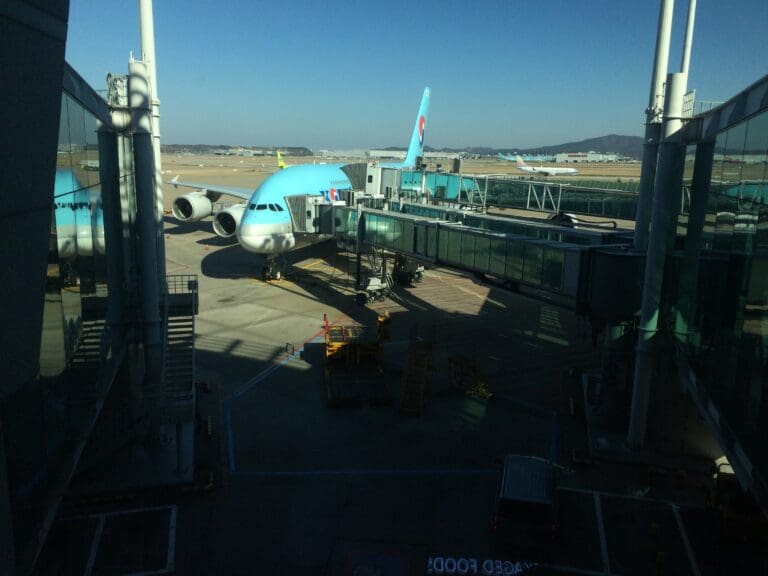
The Cheapest Ever Helicopter Ride? Vágar to Klaksvík on an Atlantic Airways AW139
Booking
Whilst those who enjoy having firm plans may wish to have solidified their travel arrangements months in advance, this is simply not possible when it comes to Atlantic Airways scheduled helicopter services. Most of these can only be booked seven days prior to departure, with the exception of flights between Froðba and Skúvoy which can only be booked two days prior to departure. In order to avoid disappointment, especially during the peak summer season, it is advisable to book helicopter tickets as close to the booking window opening as possible. For most, the easiest way to book tickets is via the helicopter section of Atlantic Airways’ website – with this providing a range of useful information for those heading off on the carrier’s choppers, including a comprehensive table listing the carrier’s fixed-price fares which range between 85kr (£9.71) and 360kr (£41.14).
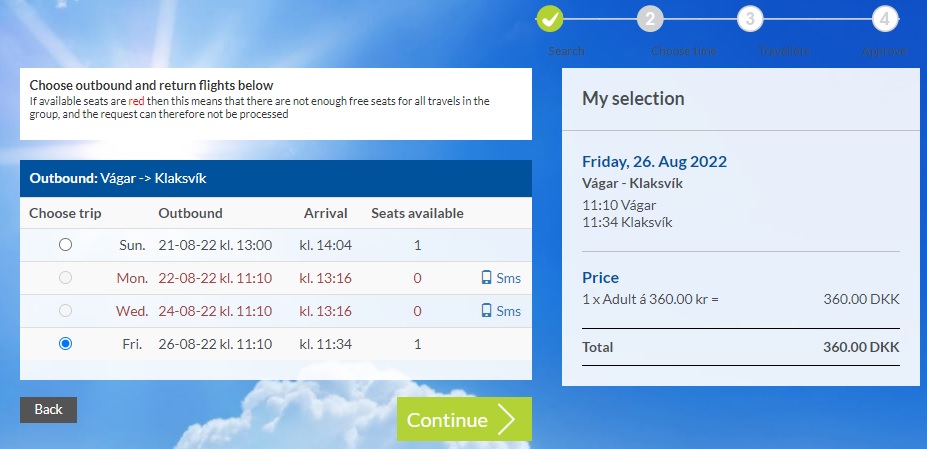
Just after midnight seven days prior to my flight, I made my way over to Atlantic Airways’ website and journeyed over to the separate search engine for their helicopter services. Once I had entered Vágar and Klaksvík into the relevant fields, I was presented with a list of the carrier’s four flights over the coming week. Indicating the route to be in high demand, two of these were sold out and one had just one seat remaining, whilst there appeared to be ten bookable seats on my chosen departure day. Without delay, I picked my flight and made my way onwards to the next page where I entered my personal details before reaching the payment page. Whilst the page features the American Express logo, for some reason this refused to accept my Amex card and so, following the second failed attempt, I reverted to a Visa which allowed me to make payment without issues at which point I received an email confirmation of my booking.
The Journey
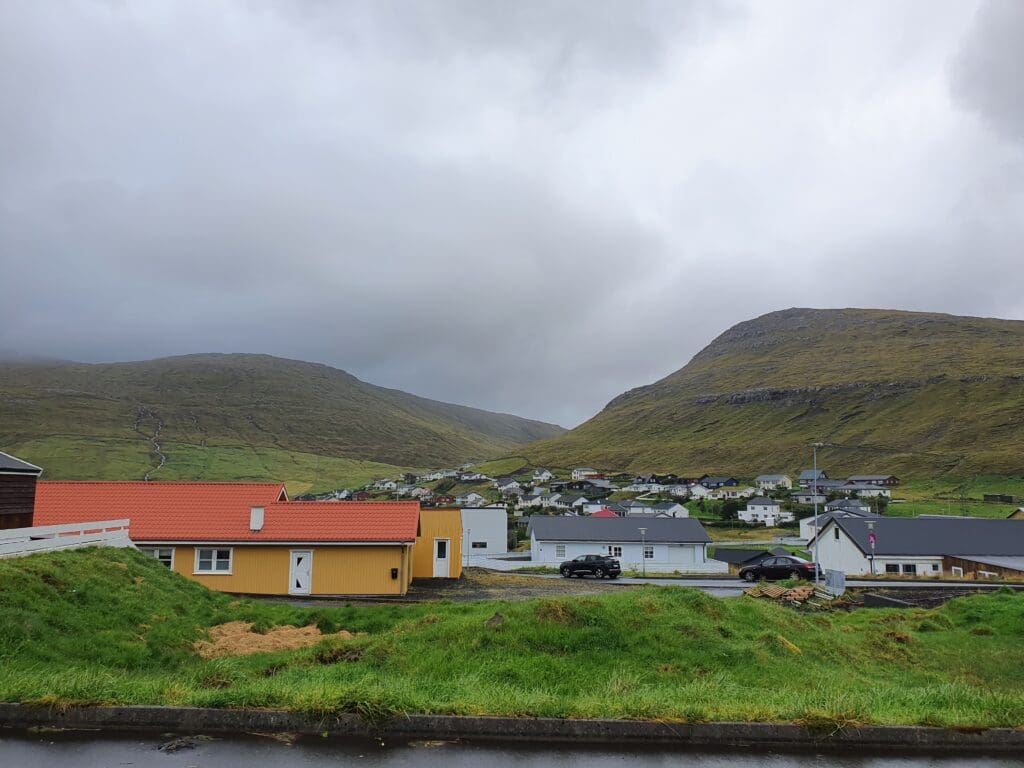
Following a long and peaceful sleep, I woke up bright and early at 0700 on the morning of my flight. Making my way from the bed to the small square window, I raised the blackout blind and was treated to views of some typical Faroese weather. Looking out, the tall hills positioned a short distance away on the other side of the Sørvágsfjørður were barely visible thanks to the thick morning fog, whilst a fine drizzle lingered in the air – the sort that doesn’t seem like too much yet still results in you getting soaked within a matter of minutes. Hailing from the UK, I was rather au fait with such bleak meteorological conditions, although for a few moments, I did begin to wonder whether my ride up to Klaksvík would be disrupted, dare I say cancelled. However, the fact that such weather is far from rare in the Faroes and that Atlantic Airways helicopters are deployed in almost all weather conditions on their vital search and rescue missions left me with some confidence that I would still be able to hover up to the Northern Islands that morning.
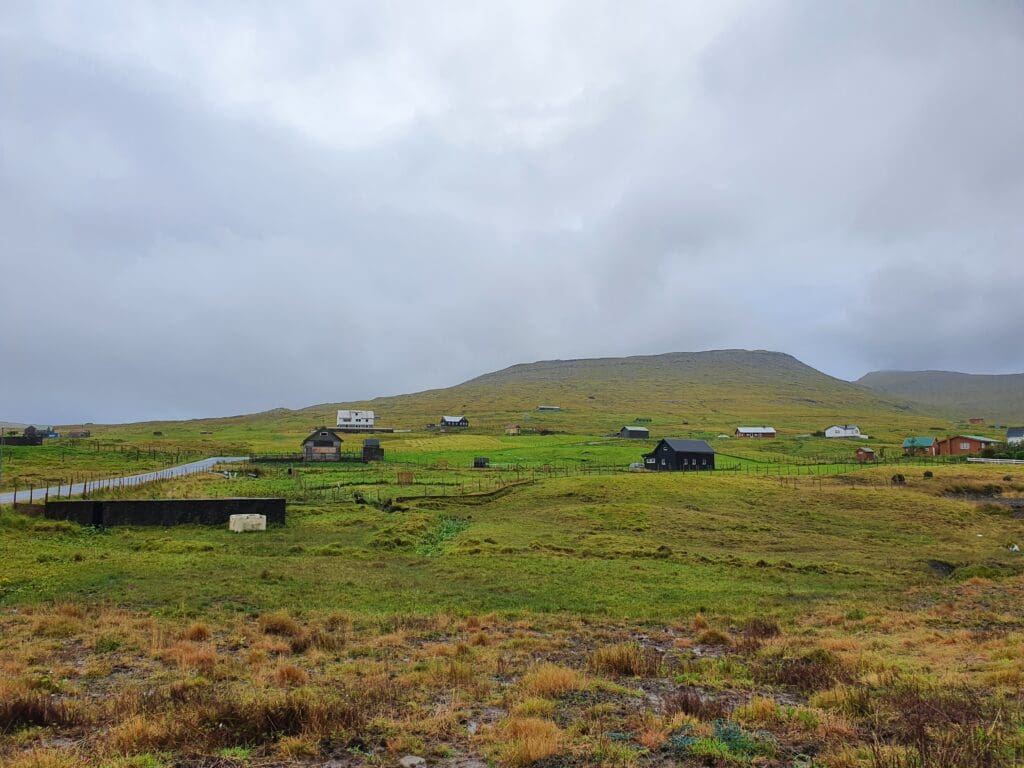
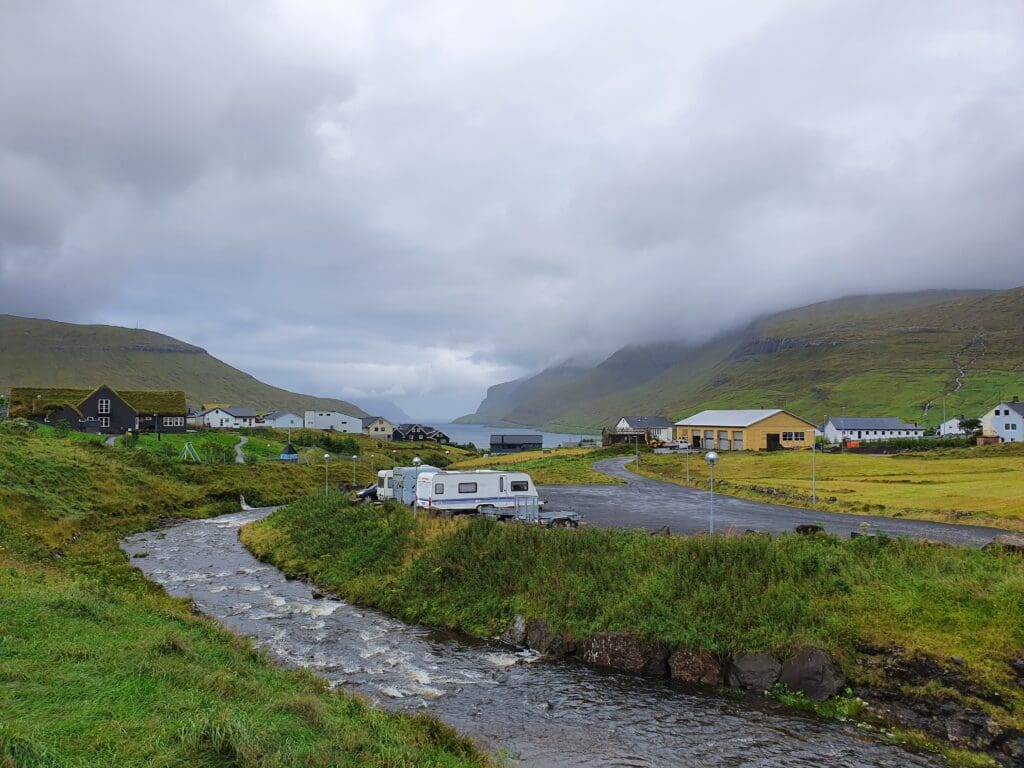
Those heading off on Atlantic Airways’ helicopter services are requested to be at their departure point thirty minutes before departure. With this considered, I could have left my guesthouse in the nearby town of Søvágur at 1000 and made it to Vágar Airport in good time for my 1114 flight. However, given my early wake-up time, following a shower and some breakfast, I saw no point in hanging around and thus left the guesthouse at 0850. From Søvágur, I had several options for getting to nearby Vágar Airport. One was to catch the Tórshavn bound bus for one stop before disembarking at the terminal, whilst the other was to journey to the airport on foot. Travelling on a budget, I opted for the latter means of transportation and soon walked past the tall runway approach lights for Runway 12 before heading uphill and walking towards the airport complex.

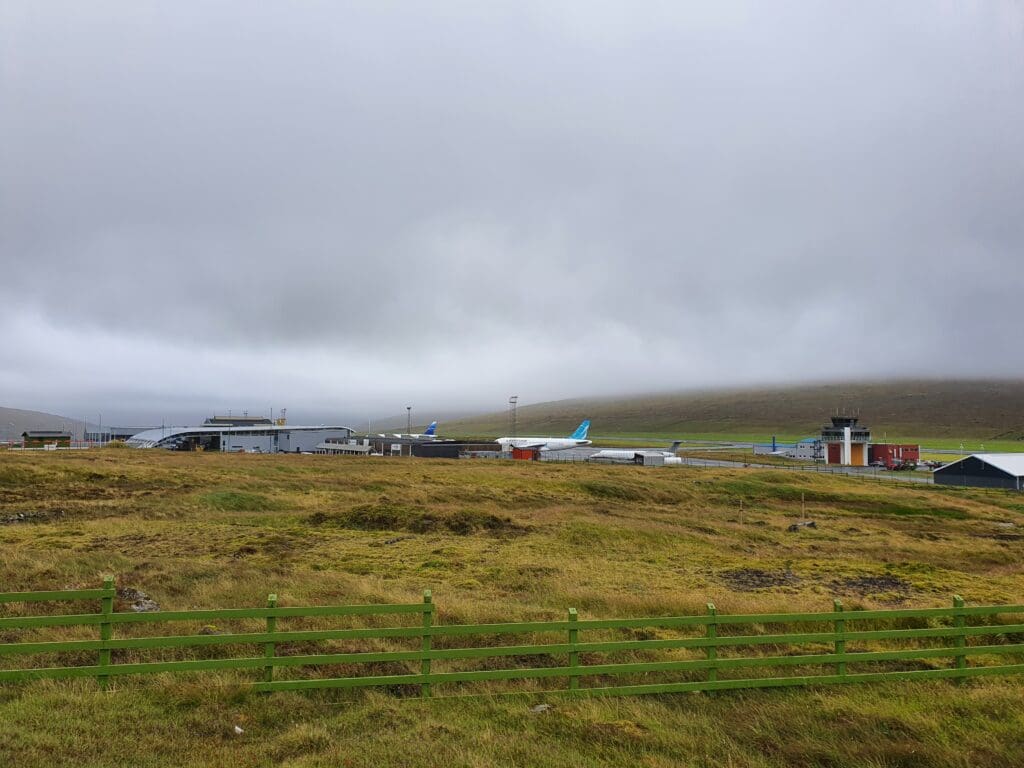
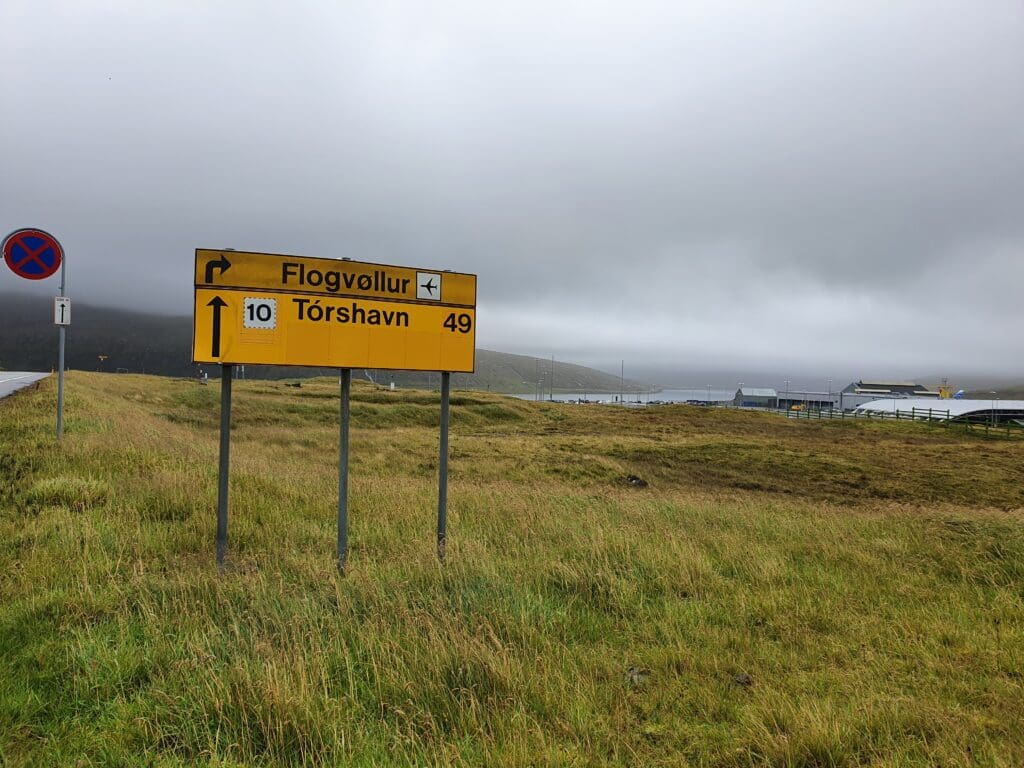
By the time I left the accommodation, the weather had thankfully cleared up a little and as journeys to airports go, this one was particularly scenic. As I approached the airport, the odd remaining British building from the Faroes’ Second World War occupation could be seen, as could the airport’s ramp. At that time, a small collection of aircraft could be seen – a Brazilian Banco Daycoval Embraer Legacy 650 and a stored Lattitude Hub livered Airbus A319, both of which I had spotted the previous day, as well as an Atlantic Airways Airbus A320neo. After walking along the backstreets near the airport’s perimeter fence, I trundled along the main road for the last couple of minutes of my journey before turning right and making my way down the airport’s driveway.
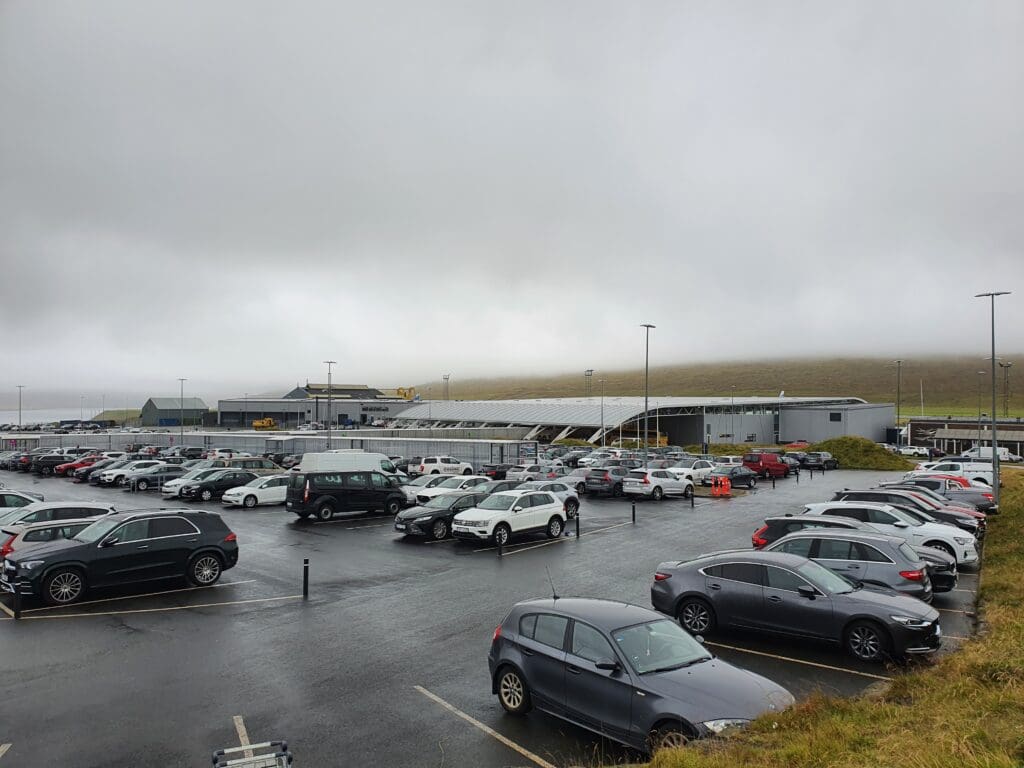
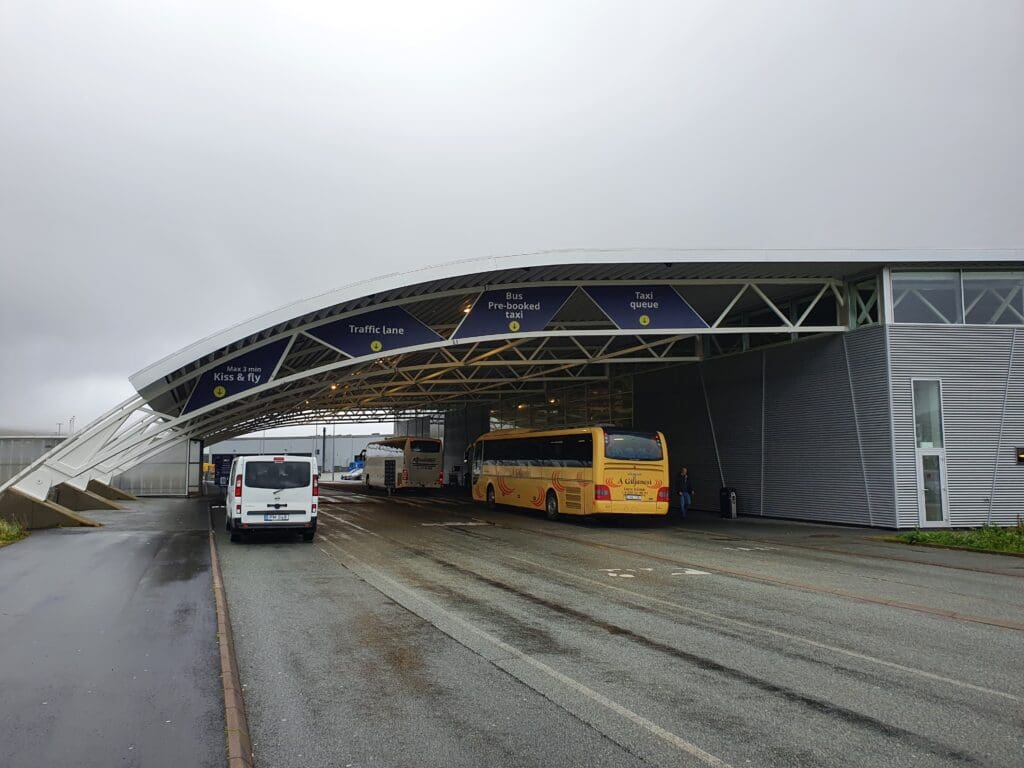
Around twenty minutes after leaving my accommodation, I arrived outside Vágar Airport’s modern yet compact terminal building. Whilst I had received a text the day before my flight requesting me to be at the airport at least thirty minutes before my flight, no other information had been provided and I was uncertain as to whereabouts I was required to rendezvous before my flight. Fortunately, I arrived in good time for my flight, and with Vágar Airport being one of Europe’s smaller commercial airports, I was not particularly worried about missing this. Walking into the terminal at 0920, I was greeted by the sight of a long queue leading up to the check-in desks – with this made up of those heading off to Copenhagen on Scandinavian Airlines’ 1150 Airbus A320neo operated service. Once inside, I made my way over to Atlantic Airways’ counter where I was greeted first in Faroese and then again in English by a friendly staff member. After asking about arrangements for those heading off by helicopter, a meeting point was pointed out and I was advised to be there thirty minutes before departure in order to watch the safety video. After this, I was asked for my name and final destination in what I assume was some sort of informal check-in procedure, after which I was free to explore the delights of Vágar Airport’s landside area.
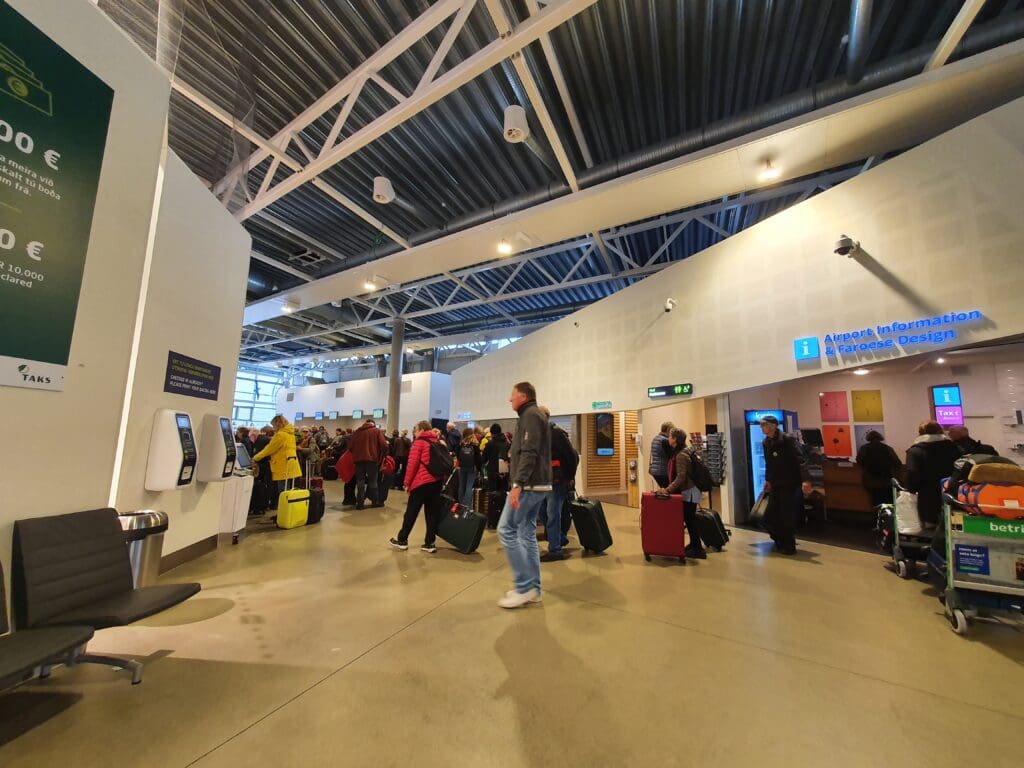
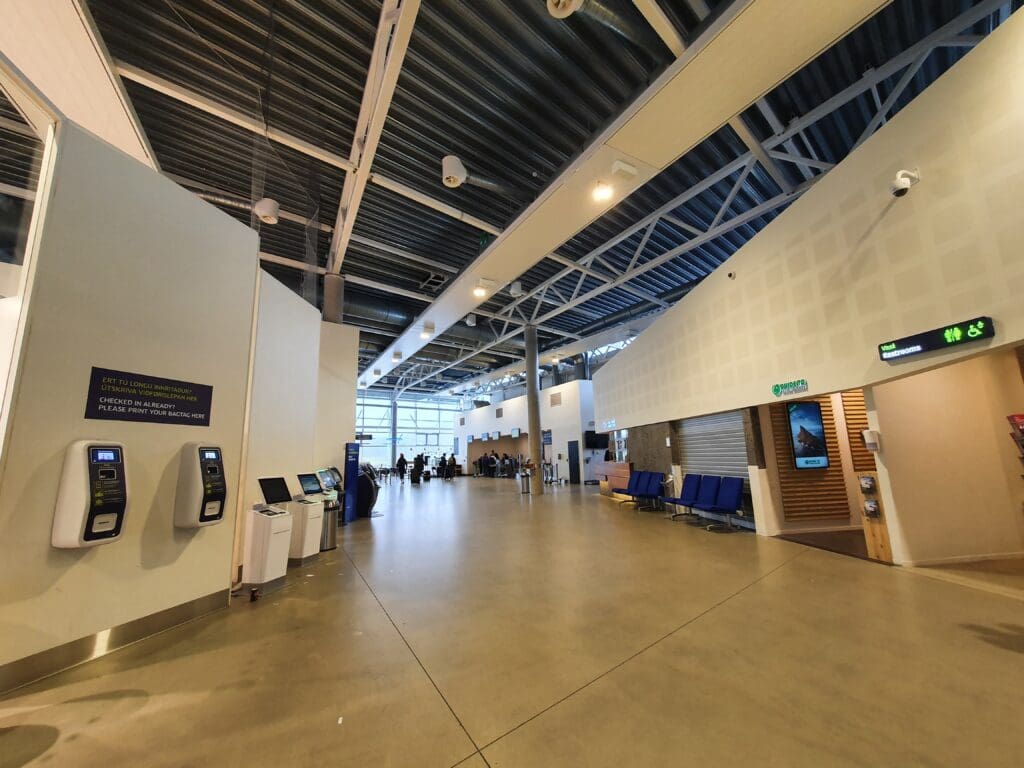
Inside, I found Vágar Airport to be modern and fairly clean, however, it is fair to say that the terminal is compact and most certainly not designed for any sort of long wait in mind. There, facilities were limited to a few check-in counters, a tourist information desk and a car hire counter. On the far side of the landside area, floor-to-ceiling windows offer a good view of the action outside on the ramp where tables, stools, chairs and plug sockets can be seen next to a closed café – with this replaced by a single hot drinks machine. Glancing at the terminal’s departure boards, I noticed that Atlantic Airways’ helicopter services were not listed on these, although interestingly a Royal Danish Air Force flight arriving from Aalborg and heading to Kangerlussuaq that evening could be seen on these.
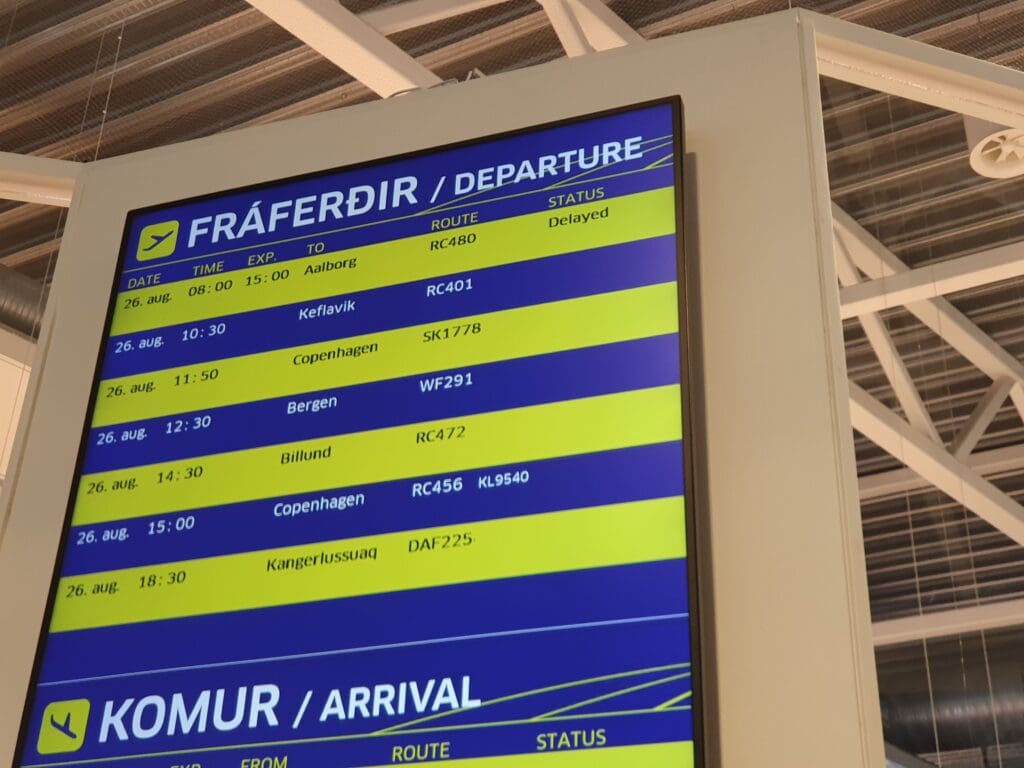
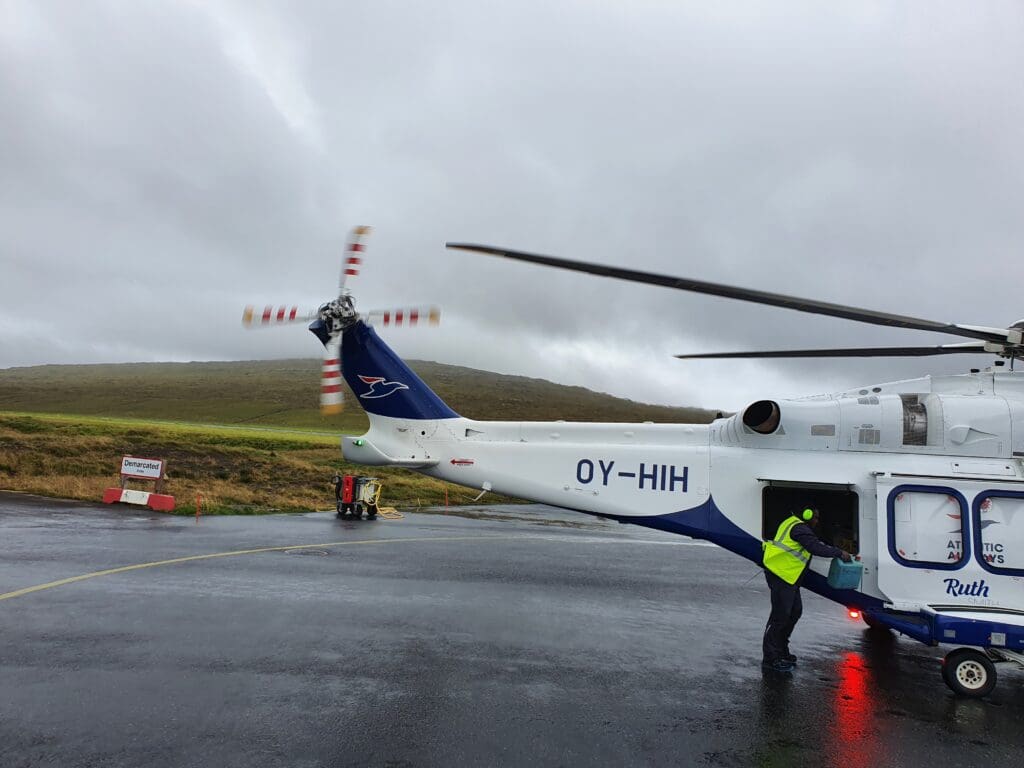
As time passed, a long queue formed at the terminal’s small security checkpoint as passengers bound for Copenhagen made their way from the check-in desks to the airside area. However, that was not to say that the terminal emptied out and as time passed, new passengers arrived – consisting of both those heading out on Atlantic Airways’ helicopter service and those bound for Norway on Wideroe’s 1225 Dash 8 Q400 service to Bergen. At 1005, boarding for Atlantic Airways’ flight to Keflavik could be seen commencing, with passengers making the short journey from the terminal to the waiting Airbus A320 that I had arrived on the previous day. However, perhaps more interestingly, behind this one of Atlantic Airways’ two AW139 helicopters could be seen being readied and fuelled up for its day of flying.
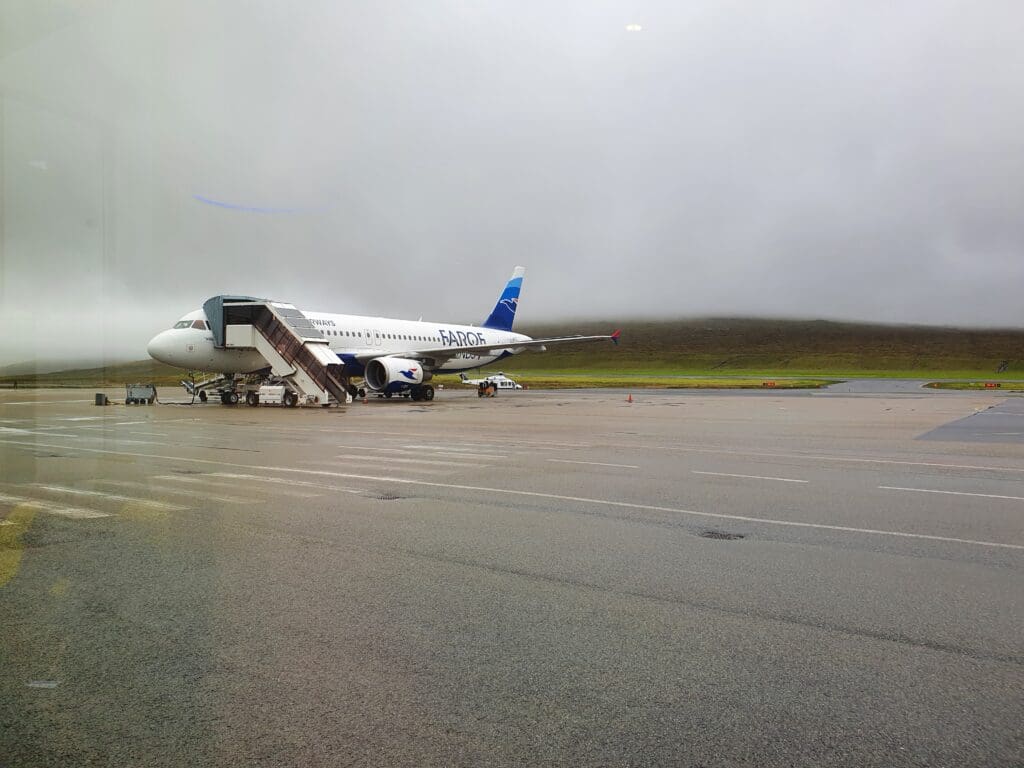
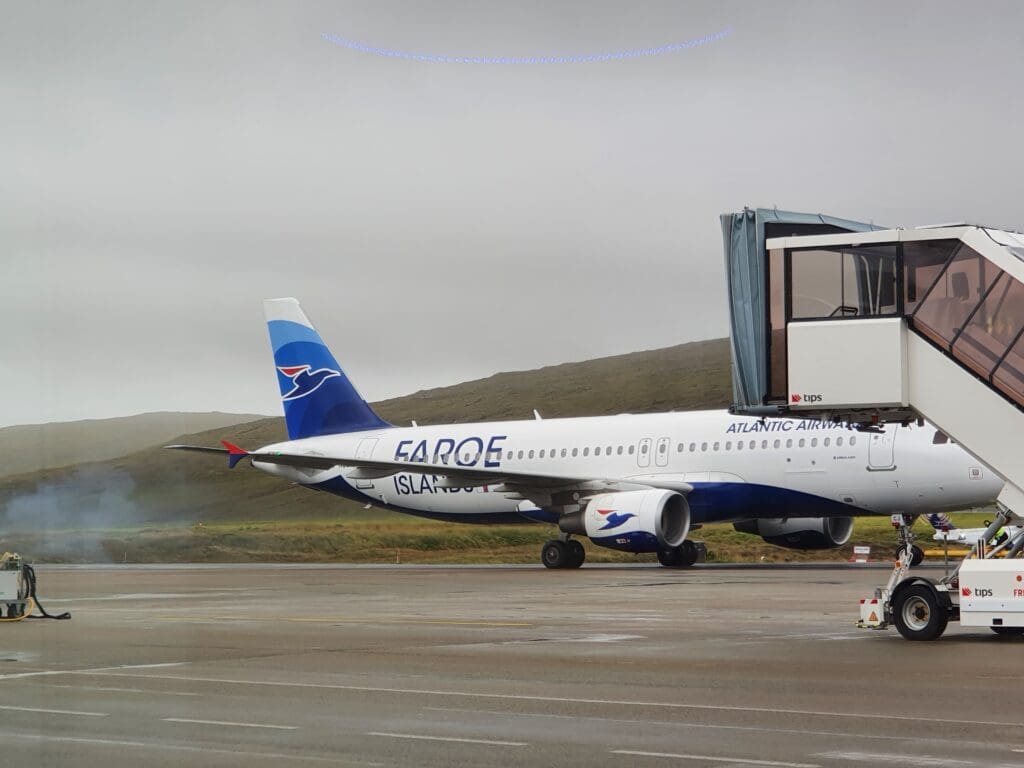
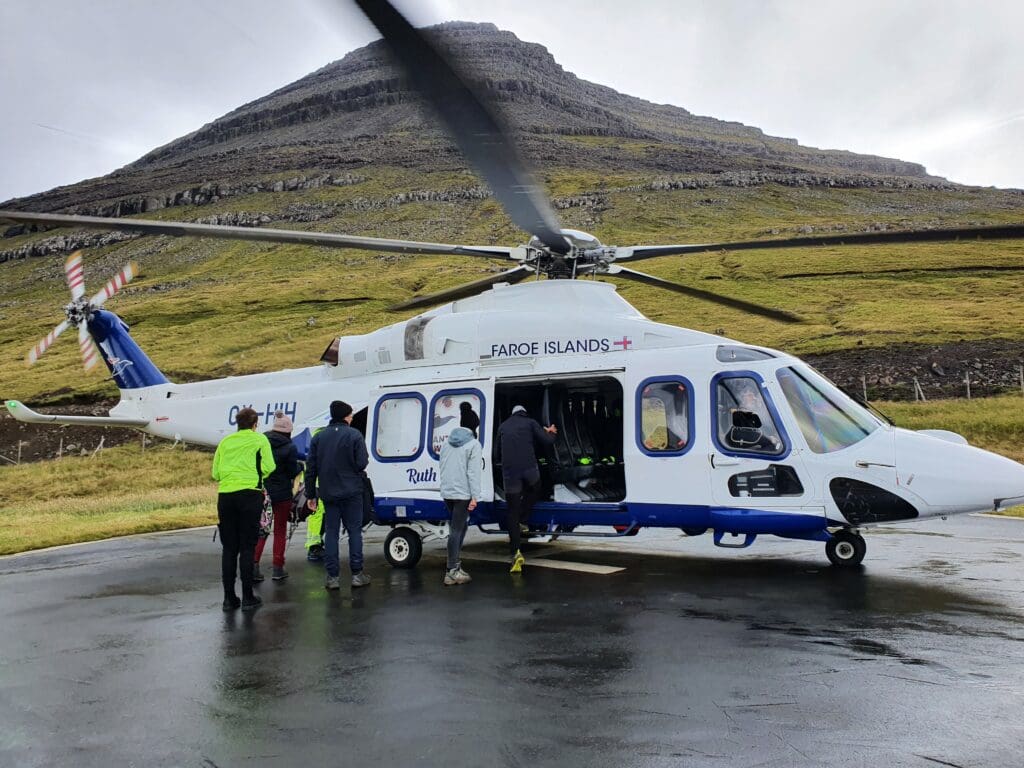
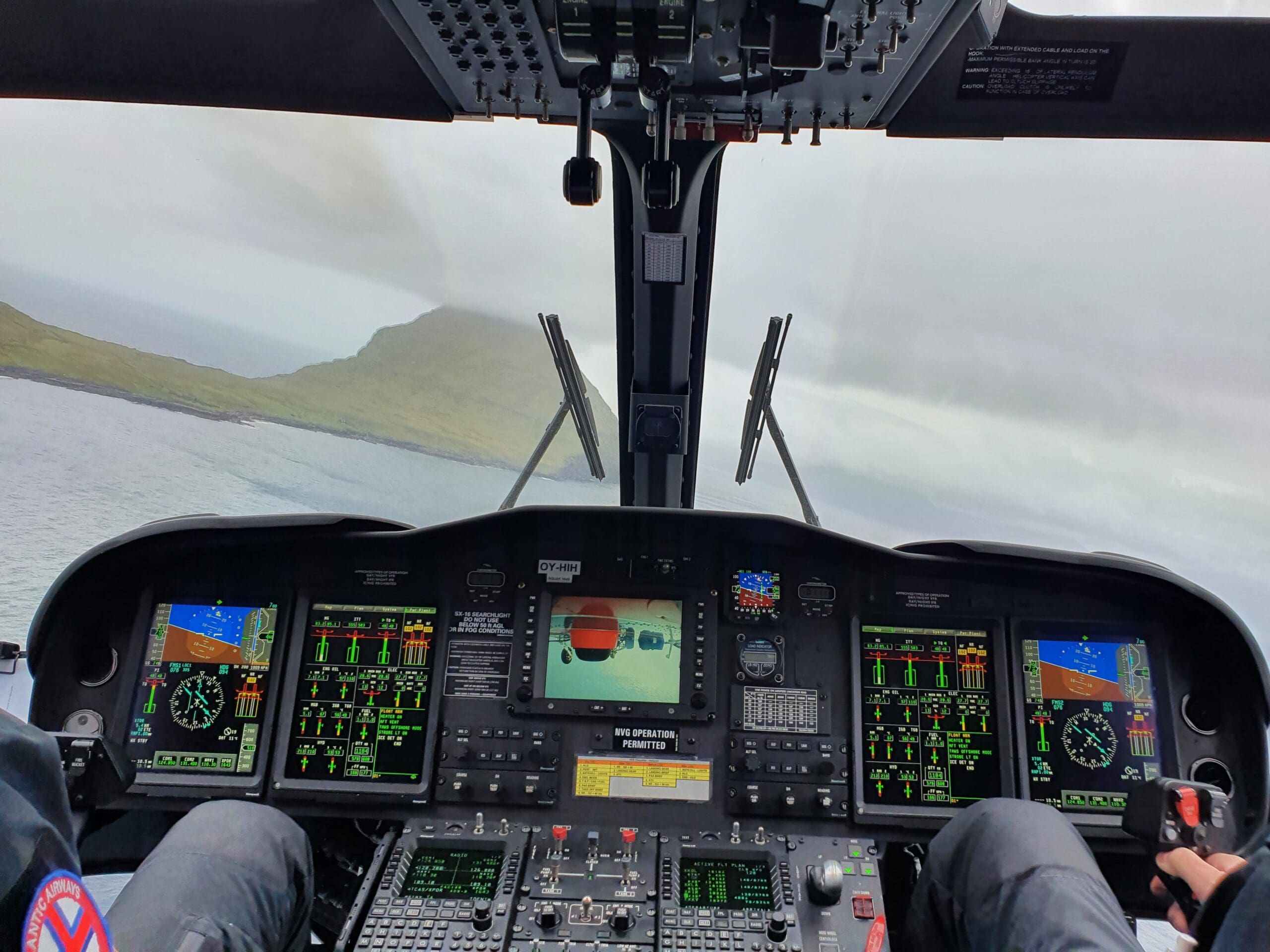
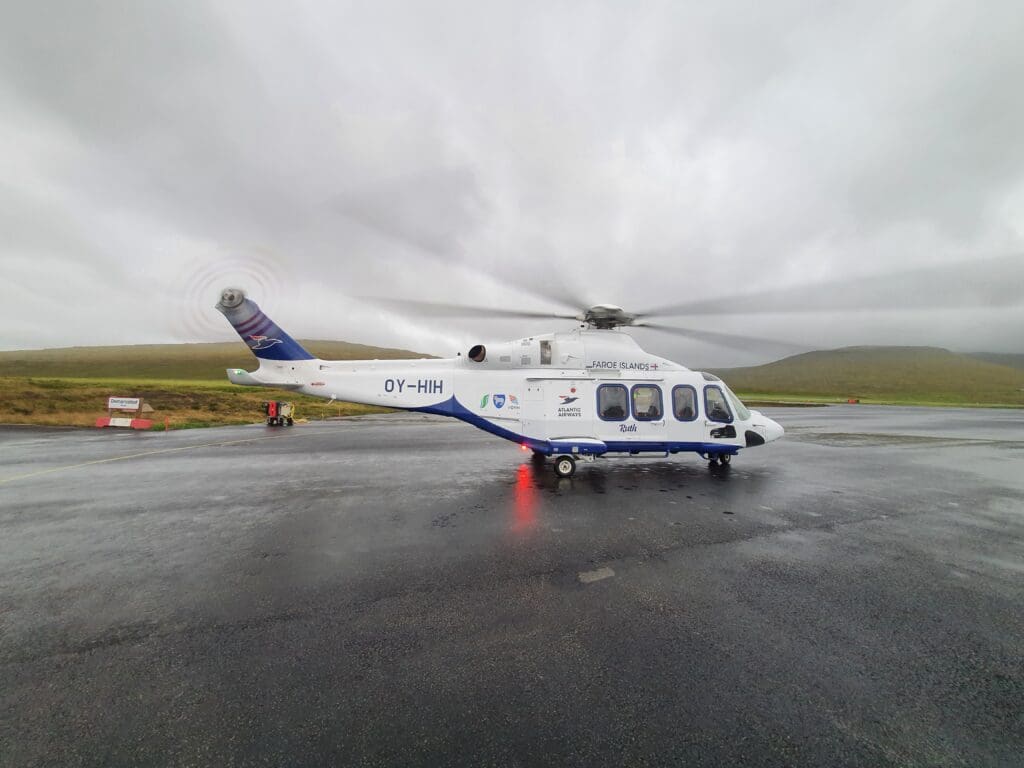
That Friday, AgustaWestland AW139 OY-HIH, named after the late Faroese expressionist painter, Ruth Smith, would be operating Atlantic Airways’ scheduled helicopter services, whilst OY-HIL would be waiting on standby as the islands’ air ambulance and search and rescue helicopter. Manufactured in Northern Italy, the helicopter first took to the skies in December 2015 with the test registration I-EASG before soon being handed over to Atlantic Airways. From Italy, the helicopter was ferried up to the Faroes, making multiple stops in France and the UK before reaching its home in Vágar where it has been based ever since. That morning, the helicopter would make a quick rotation to the nearby island of Mykines prior to its service up to the Northern Isles. Just before 1030, passengers bound for the island could be seen heading into the waiting helicopter and a short time later this fired up its engines in preparation for its 12-mile hop. Once the Atlantic Airways Airbus A320 had jetted off for its flight to Keflavik, the AgustaWestland lifted off and journeyed off into the distance down the Sørvágsfjørður.
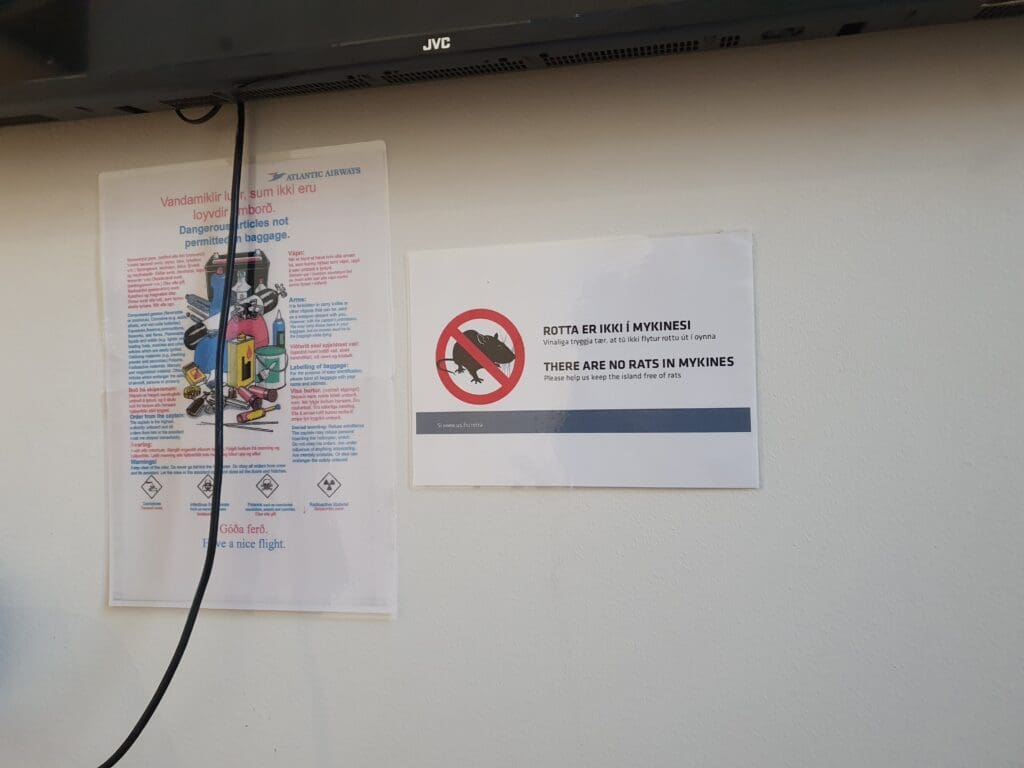
Following a quick toilet stop, I made my way over to the helicopter passenger rendezvous point, arriving there as instructed thirty minutes before departure. At that time, a cluster of passengers could be seen waiting and a short time later a ramp agent appeared requesting those bound for Klaksvík to make themselves known. Following them to the Atlantic Airways counter, a label was affixed to my backpack before I was free to return to Atlantic Airways’ AW139 safety video which had begun being shown on the large flatscreen television near the counter. With plenty of instructions to go over given the non-standard nature of helicopter operations, this video seemed to be longer than most safety videos and some of my fellow passengers appeared to watch this with total concentration whilst others appeared not to take notice.
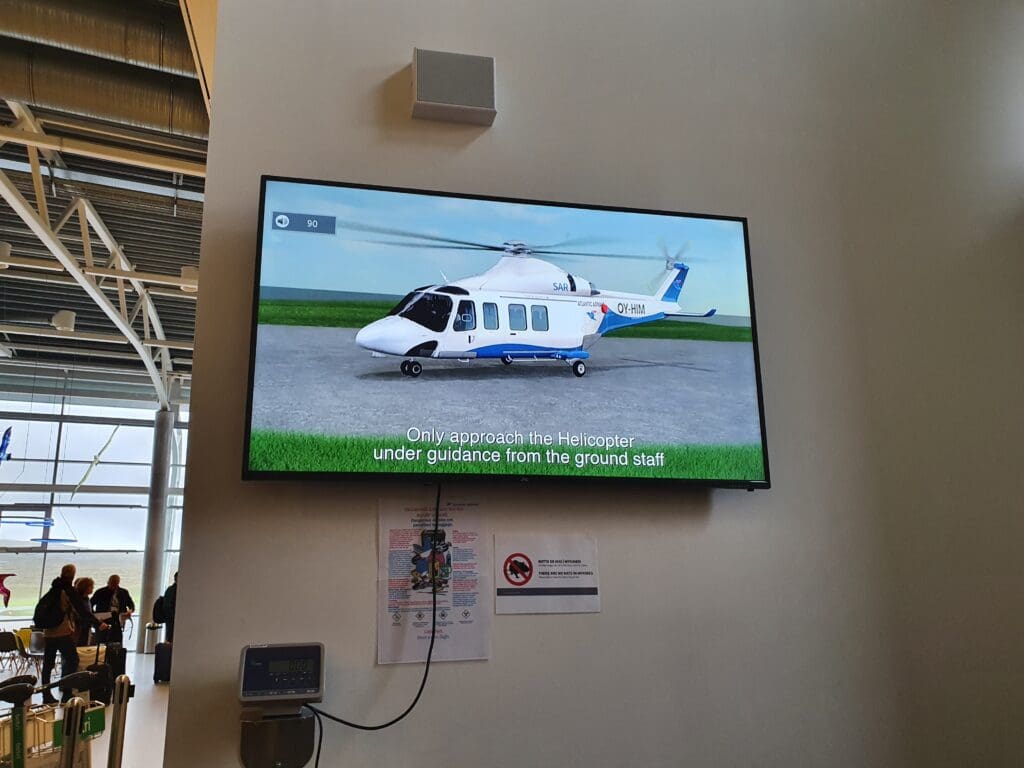
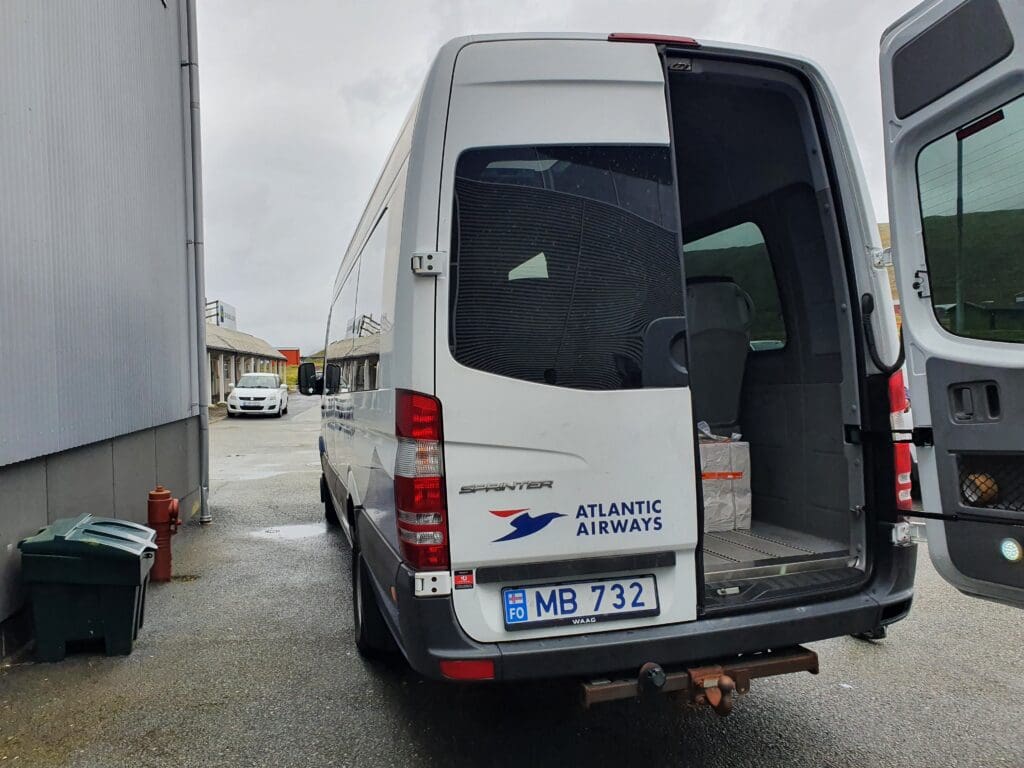
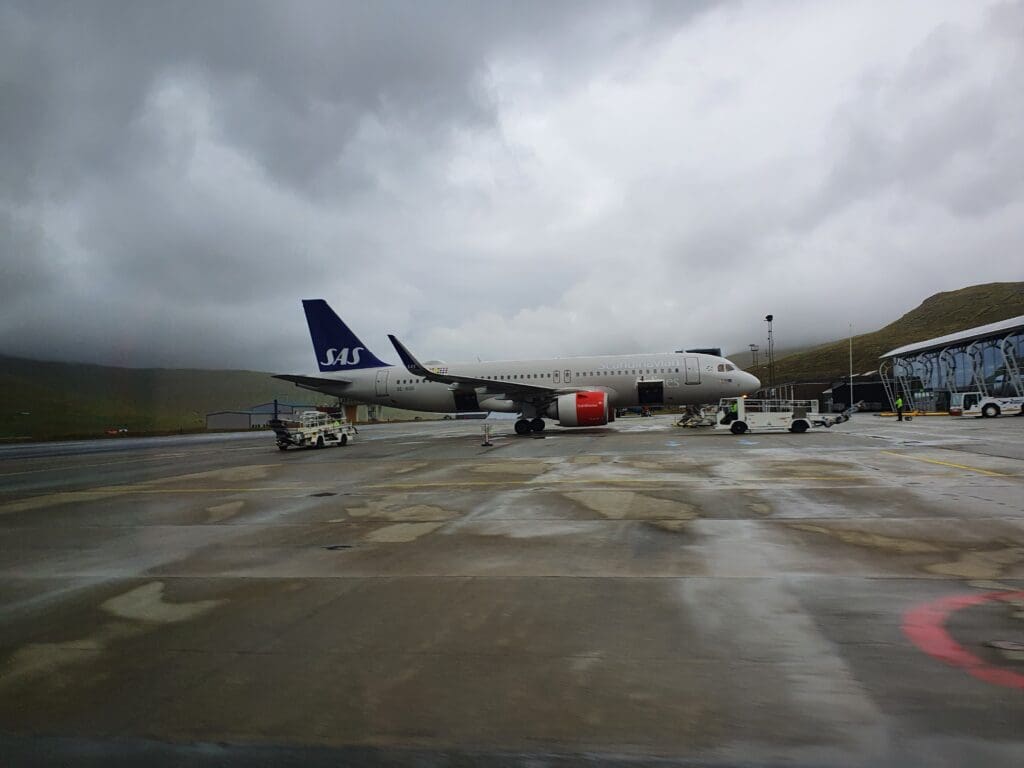
After the safety video had reached its end, at 1055 passengers were escorted out to the Atlantic Airways branded Mercedes Sprinter minibus waiting outside. As I boarded this, the AW139 could be seen choppering overhead following its short flight from Mykines. After taking my seat, it didn’t take too long for all eleven passengers to board the minibus at which point the door was closed and the journey over to the helicopter commenced. Focusing on my fellow flyers, it seemed that most of these were like me, tourists from abroad, armed with cameras ready to snap away at the passing landscape below. Once away from the terminal, the bus journeyed around the edge of the landside car park before passing through a gate and entering the ramp. By this time, a Swedish registered Scandinavian Airlines Airbus A320neo had arrived by Copenhagen, and after passing Atlantic Airways’ other helicopter, the minibus pulled up to our AW139 just as this arrived at its stand.

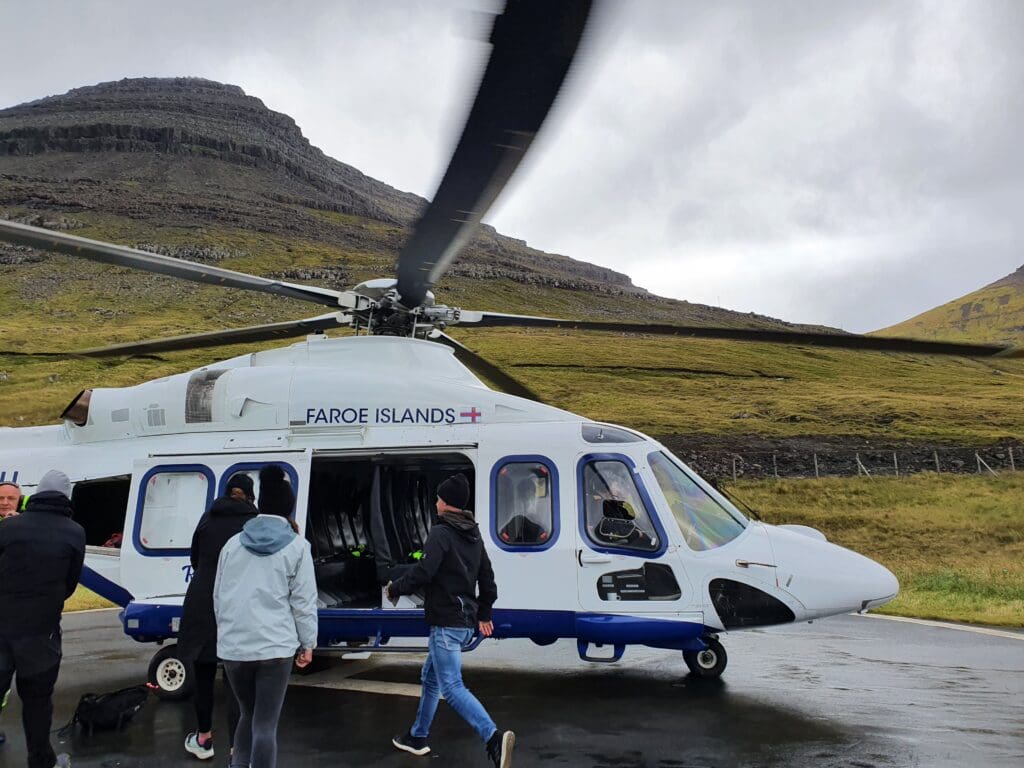
Upon coming to a halt, the driver got out and opened up the rear luggage hold of the AW139 before sliding open the cabin door. As would be the case at all stops, the helicopter would make a quick turnaround in Vágar that morning with its engine still running and the rotor blades whirling up above as disembarkation of the inbound passengers commenced. Once these two passengers had made their way out of the helicopter and collected their bags, we were permitted to make our way outside and over to the helicopter. Upon jumping out of the minibus, I was hit by the deafening roar of the helicopter’s two Pratt & Whitney PT6C-67C engines although I still managed to snap some pictures before diving into the helicopter’s small cabin.
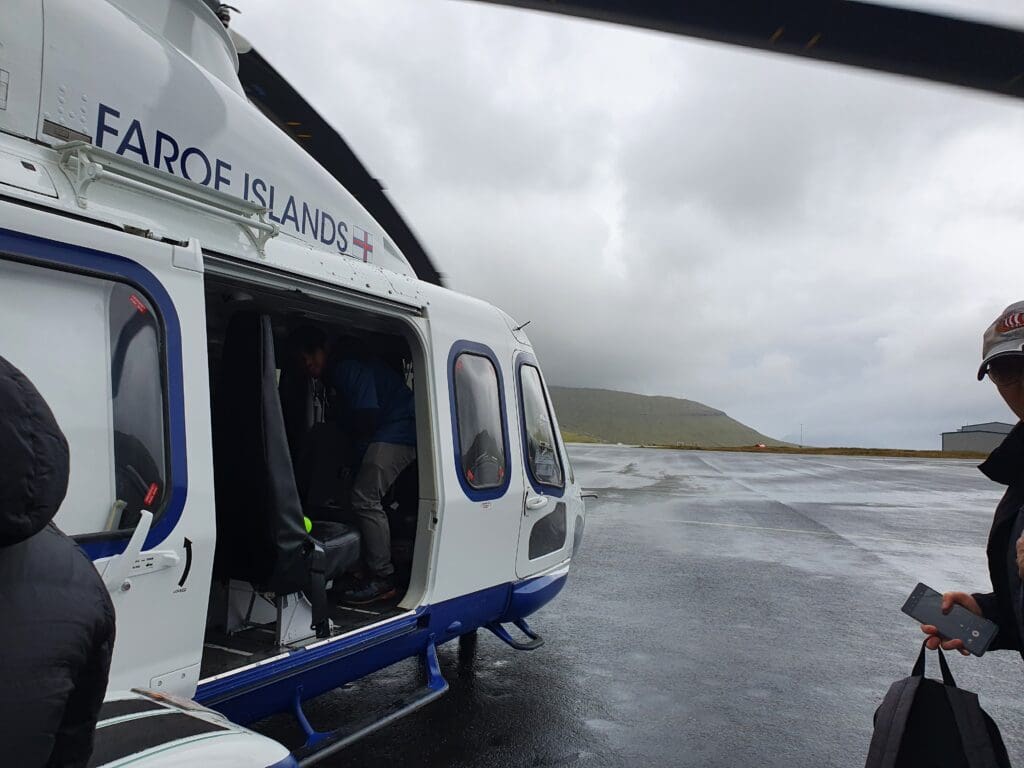
Inside, Atlantic Airways’ AW139s feature a total of twelve passenger seats arranged in three rows. The first row features four rearward-facing seats, whilst the second row faces forward introducing the potential for awkward eye contact for those in the forward part of the cabin, meanwhile, the rearmost row is complete with four forward-facing seats. By the time I had disembarked the bus, ‘good’ seats were at a premium with no window seats left. I thus plonked myself down on what would be 1C were the aircraft to have seat numbers as when turned around, this would provide me with a good view of the action up ahead. Whilst I was not flying the Faroes’ helicopter service for comfort, those who were perhaps expecting an executive helicopter level of luxury would have likely ended up very disappointed. Inside, the seats were firm, thin and narrow, with each of these covered in a dark (faux?) leather covering. Meanwhile, all passengers were in for a rather cosy ride, with not much provided in the way of personal space! Other than the seats, as with a more ‘orthodox’ airliner, the AW139 comes complete with seatbelt and no smoking signs, along with reading lights and personal air vents overhead. Finally, whilst the cabin appeared to be clean, a few scratches and marks could be seen – although this was to be expected given the rough and ready nature of the operations that Ruth partakes in.
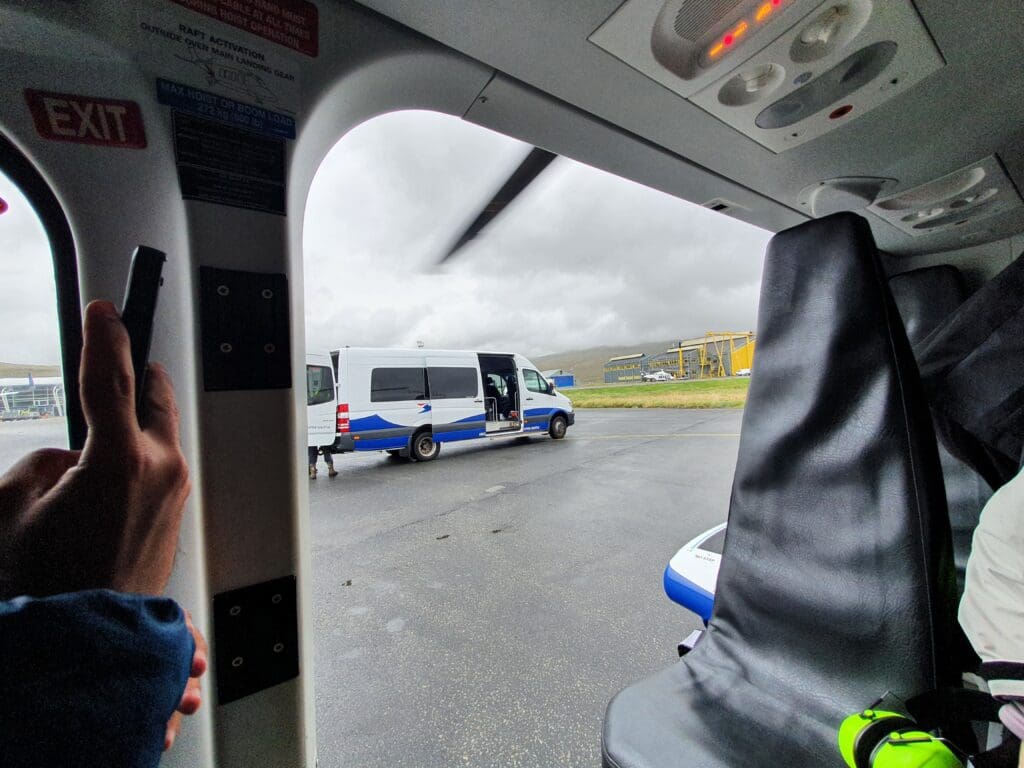
Once safely in my seat, I put on the large pair of ear defenders that were provided for all passengers before fastening my seatbelt. Whilst it would be a full flight across to Koltur, it did not take long for all passengers to enter the helicopter and strap themselves in for the short flight. After verifying that all was set in the cabin for departure, the ground agent slid the helicopter door shut at which point one of the pilots up ahead performed a quick welcome announcement in Faroese, English and Danish. This commenced with a welcome before moving to note that the next stop would be Koltur and we could expect some slight turbulence on approach thanks to a fairly gusty wind.
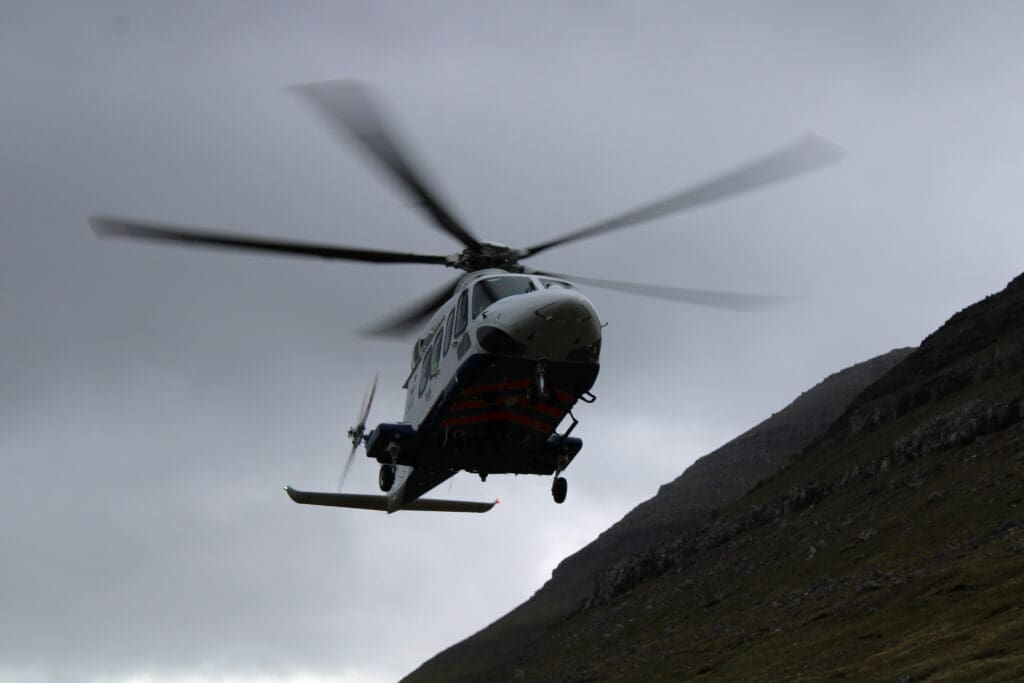
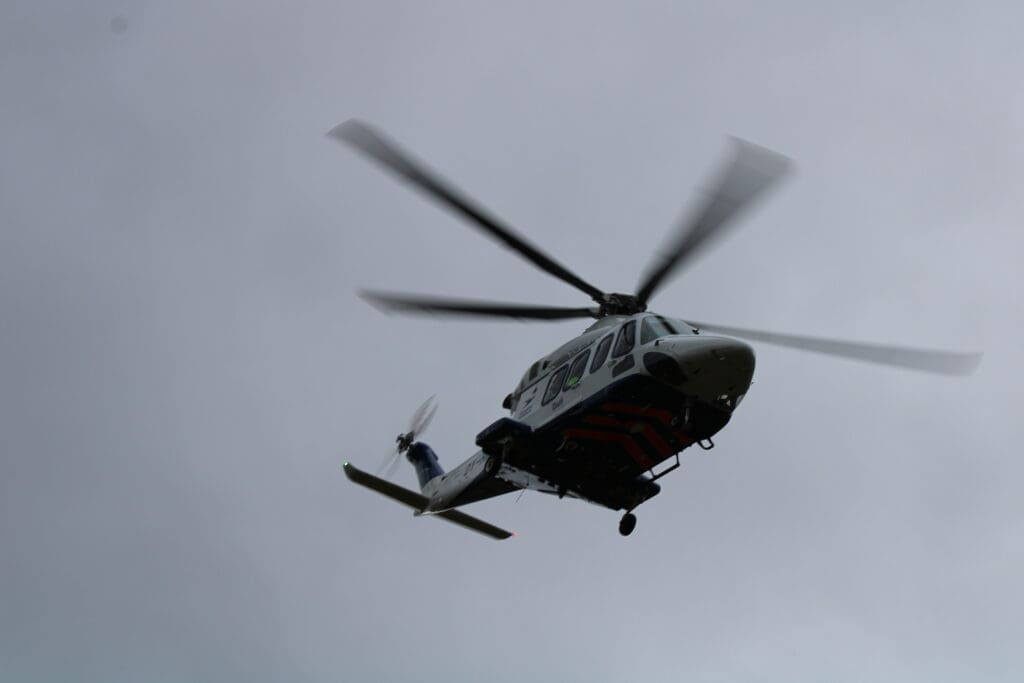
After the Danish version of the pilot’s announcement had come to an end, following a fair amount of switch flicking, calculations and form-filling by the first officer, the aircraft commenced its journey to the runway. Given the small size of Vágar Airport, this was reached in a matter of seconds and with no backtrack needed, the helicopter turned right before coming to a halt. Once there, unlike the Sikorsky S-76 that I had taken the previous year from Victoria to Vancouver, there was surprisingly little vibration when the pilot pulled up on the collective. Taking to the skies at 1103, the helicopter seemed to come to a hover for a few moments, before continuing to rise into the overcast Faroese skies and picking up speed.
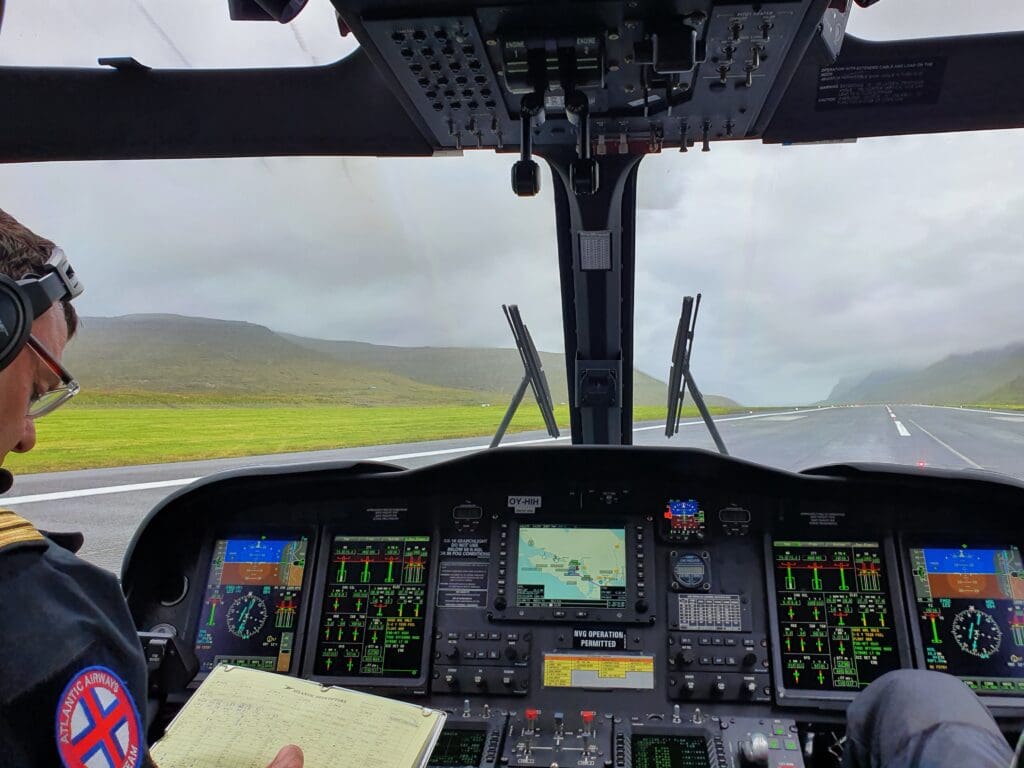
Once in the skies, the helicopter gently banked to the right, allowing for a good view of the airport, passing this a short distance to the north. From there, the helicopter travelled a short distance down the Sørvágsvatn before levelling off at a cruising altitude of 1,000 feet and flying at a speed of 105 knots, although we did reach up to 130 knots later on in the flight. Upon reaching the village of Sandavágur, the helicopter banked once more before setting a southeasterly course. This took us out to sea, crossing over the choppy waters of Vágafjørður, with the helicopter descending slightly at this point of the flight to keep out of the low-lying clouds.
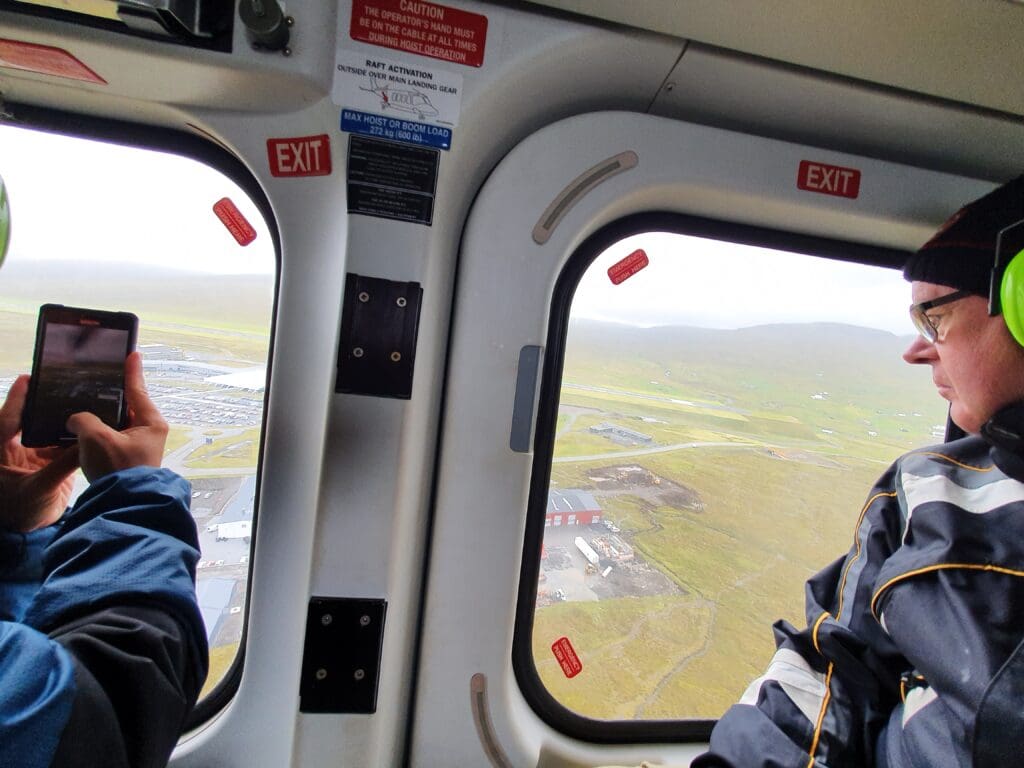
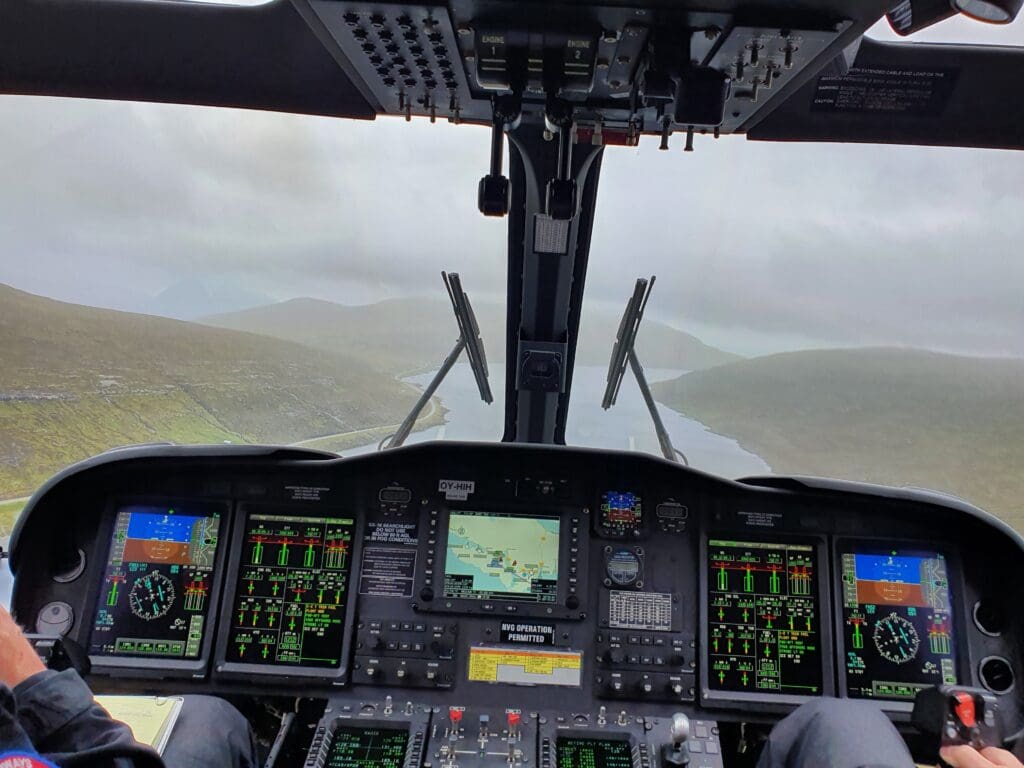
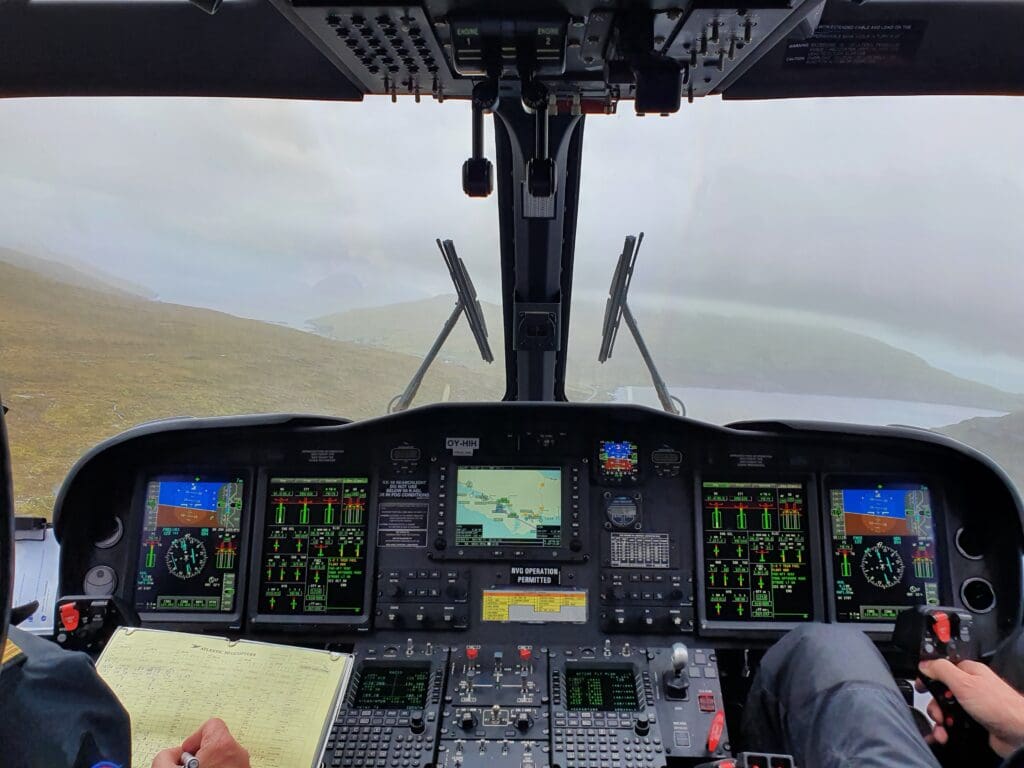
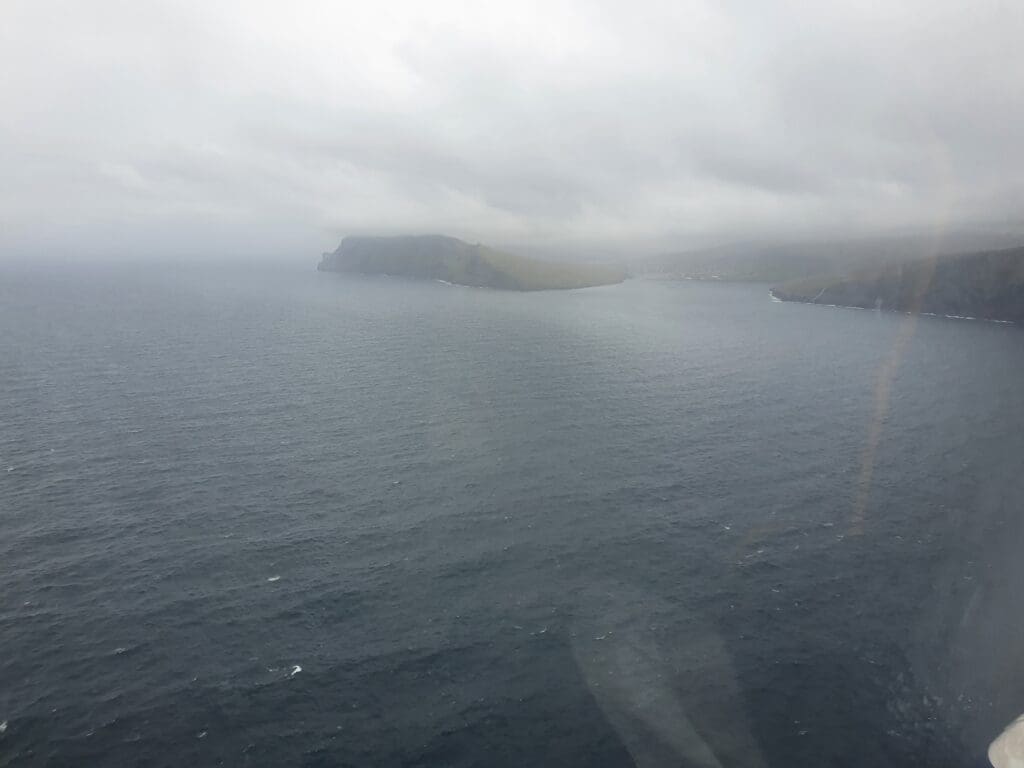
Up ahead, the small island of Koltur, the first stop on the helicopter’s journey could be seen through the cockpit windows and it wasn’t long before the island’s spectacular tall cliffs appeared, resulting in all those on the port side of the aircraft to snap away on their phones and cameras. At this point, the pilot could be heard once again as they announced that we were approaching the helipad in Koltur and advised that we would be landing in around a minute. As expected given the pre-flight announcement, as the aircraft descended towards the helipad, it shook a little in the wind and then vibrated significantly as the nose was pointed up and this decelerated in preparation for touchdown.
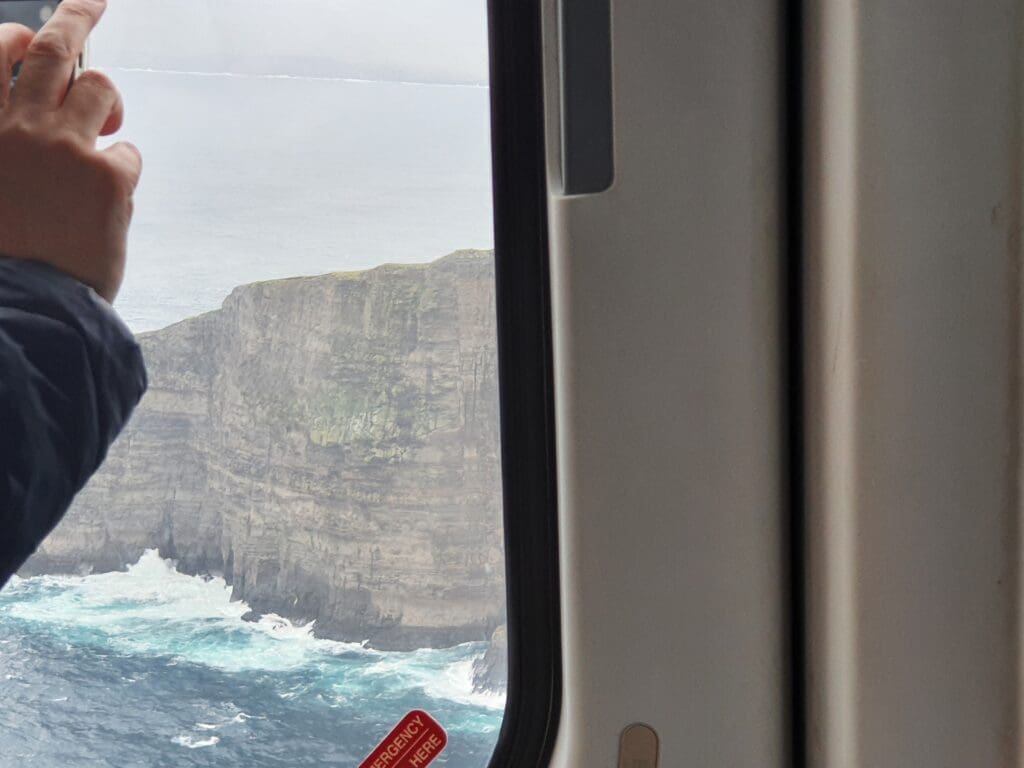
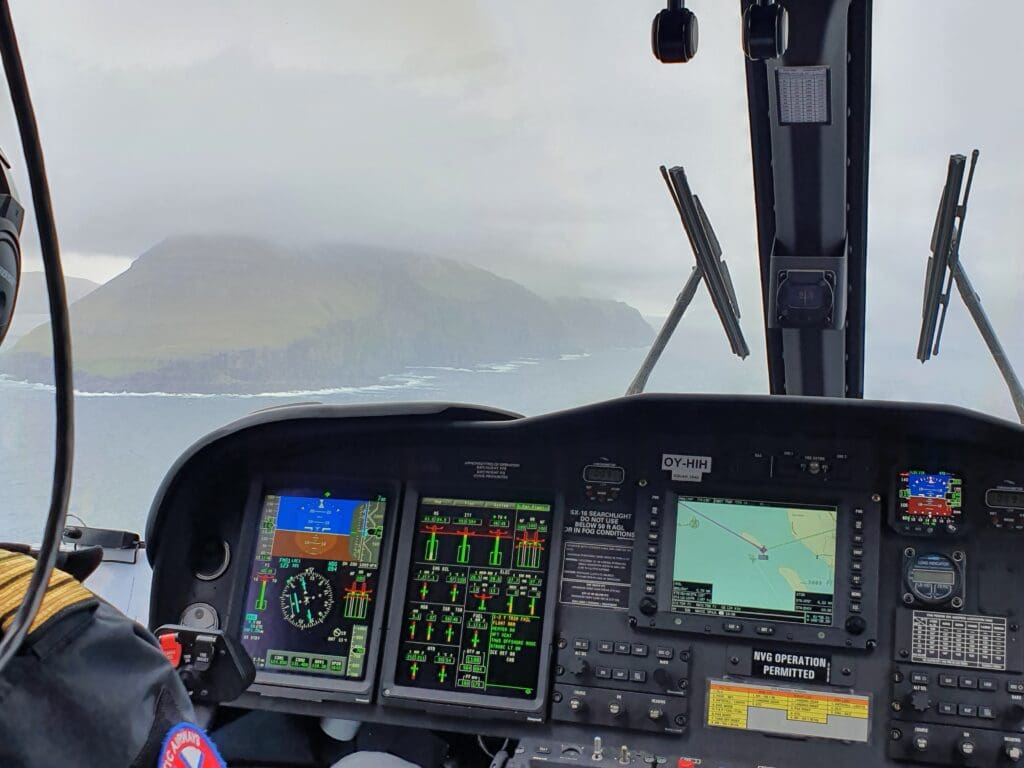
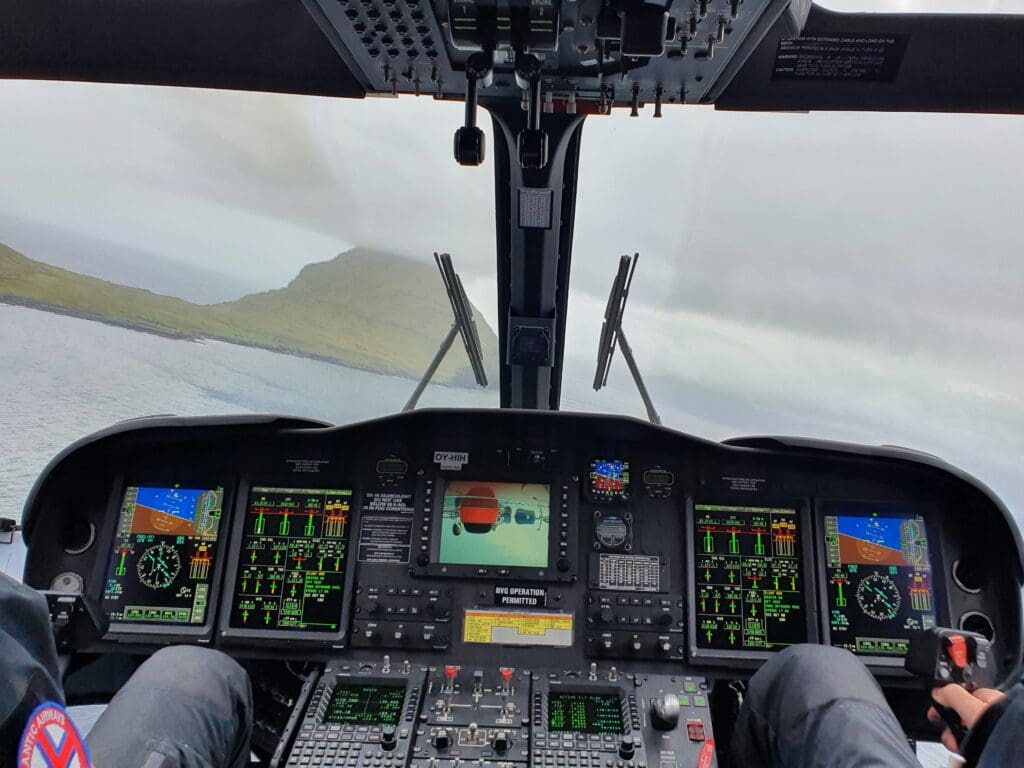
Flying just a very short distance above the waves, the helicopter crossed over the rocky shoreline before gently touching down seconds later on the island’s small helipad which sits sandwiched in between some traditional turf-roofed buildings and the choppy seas. With Wikipedia advising me that the island is home to just two residents (as per 2020), despite its natural beauty I suspected that most would remain onboard the helicopter to the Faroese capital. Indeed, once the helipad attendant dressed appropriately in a Faroese jumper opened the door, just two passengers disembarked, whilst nobody would join the flight on the island. Once these passengers had collected their baggage, the jumper-wearing ground agent poked their head into the cabin and gave a farewell wave to the passengers before sliding the cabin door shut. On a side note, positioned on the route between Vágar and Társhavn, and with all helicopter services between the two stopping off there, Koltur is one of the more frequented heliports in the Faroes despite being one of the Faroes’ smallest inhabited islands. As per summer 2022 schedules, the heliport saw eight flights per week popping in.
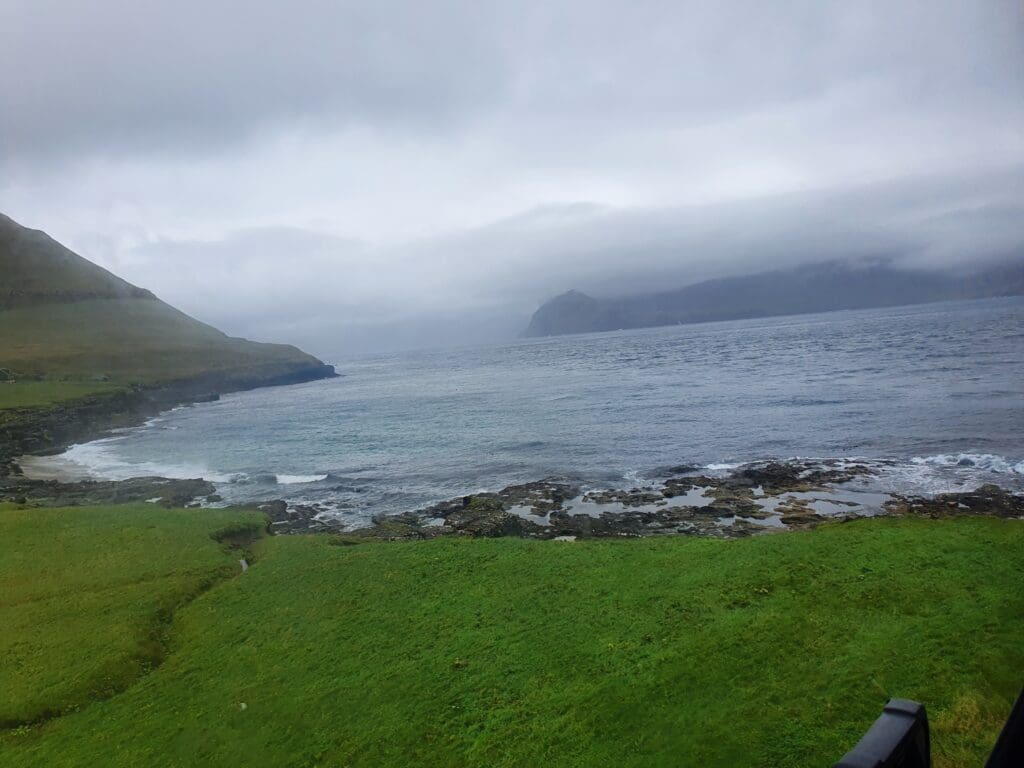
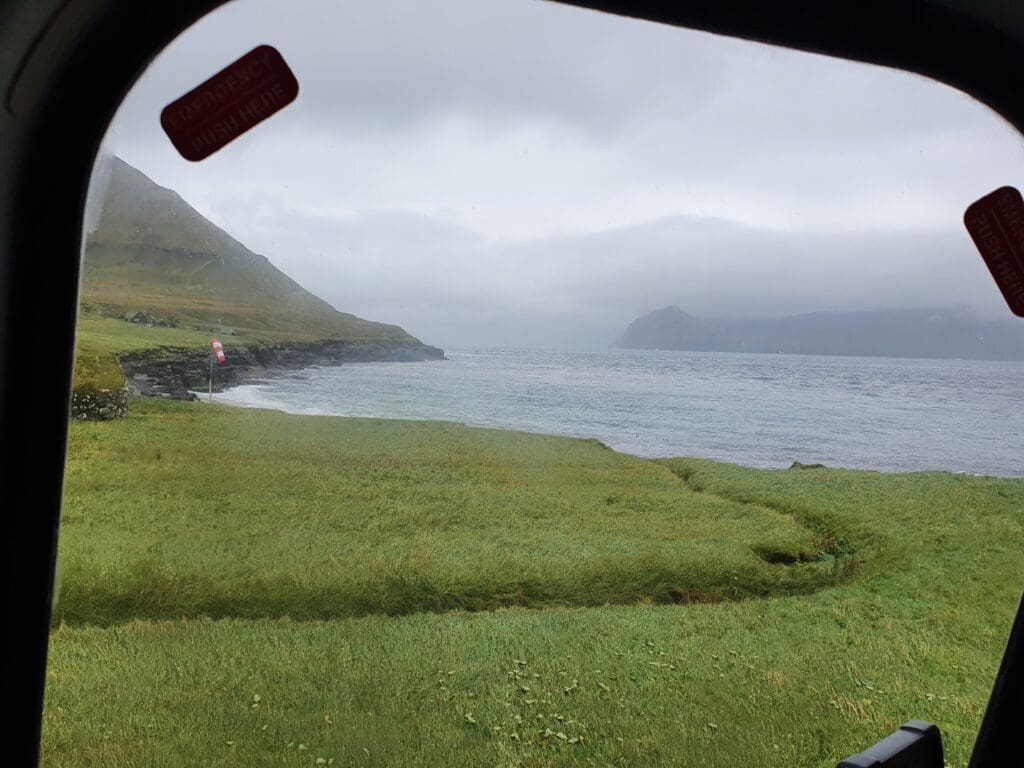
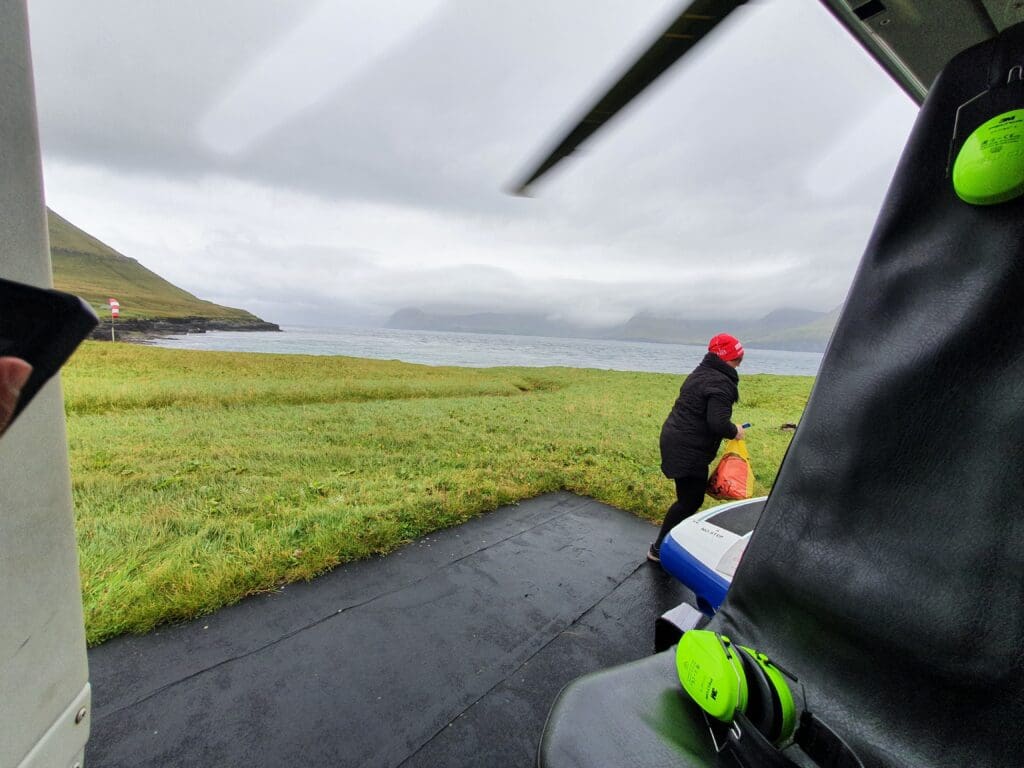
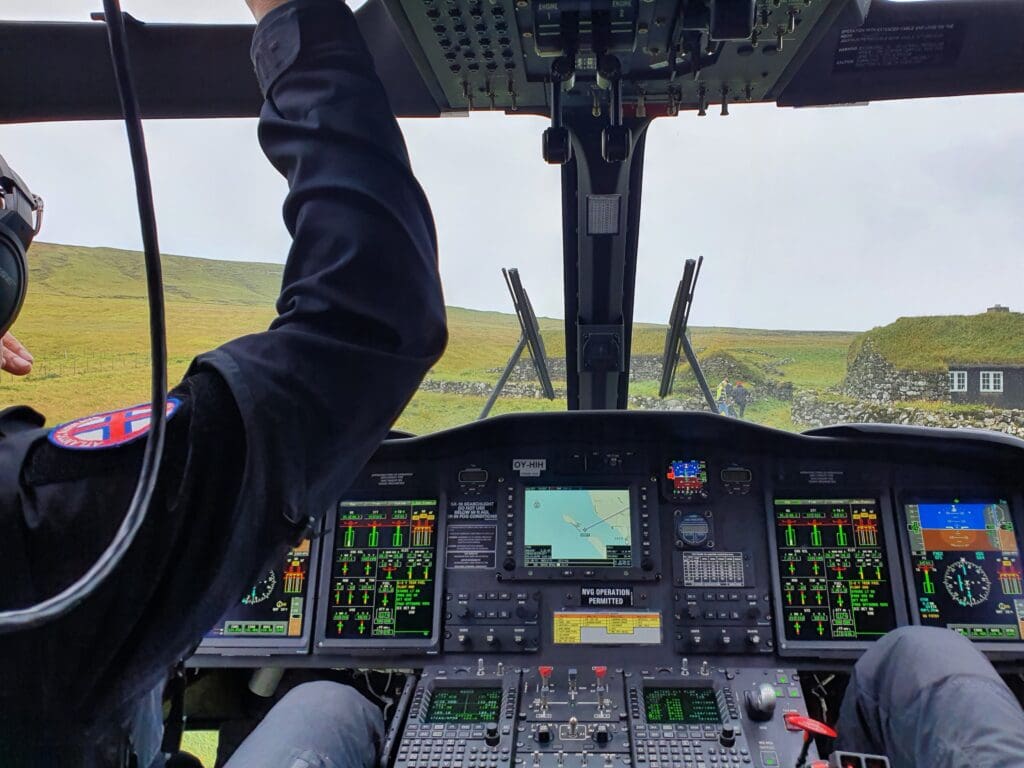
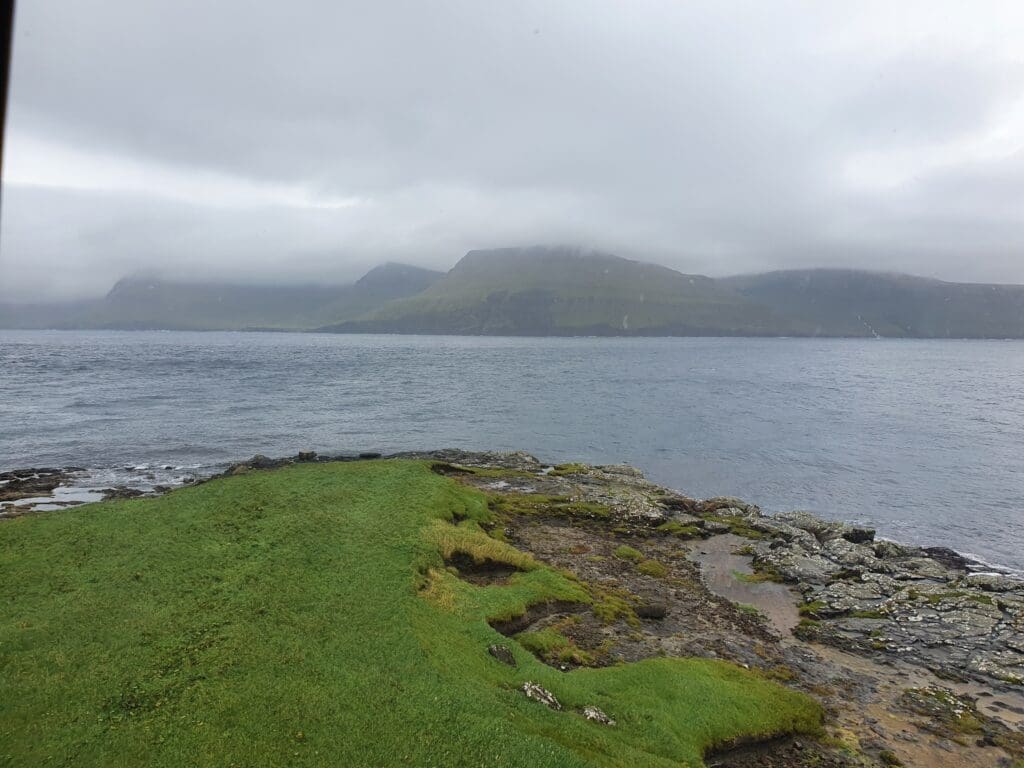
Returning to the flight, once the cabin door had been closed, the pilot made another trilingual announcement informing passengers that we could expect a smooth five-minute ride over to Tórshavn. After a very short two-minute stay on Koltur, at 1114 the helicopter powered up into the Faroese sky and made its way out to sea once more, this time for a quick crossing of the Hestfjørður. Travelling eastwards over the choppy waters, it wasn’t long before the helicopter reached the island of Streymoy, the Faroes’ largest and most populous island, home to its capital, Tórshavn. After passing over the island’s cliffs near the village of Velbastaður, the helicopter continued its journey over the rough, rugged, rocky and green landscapes of the island as it roughly followed the course of the Sandá River towards the capital.
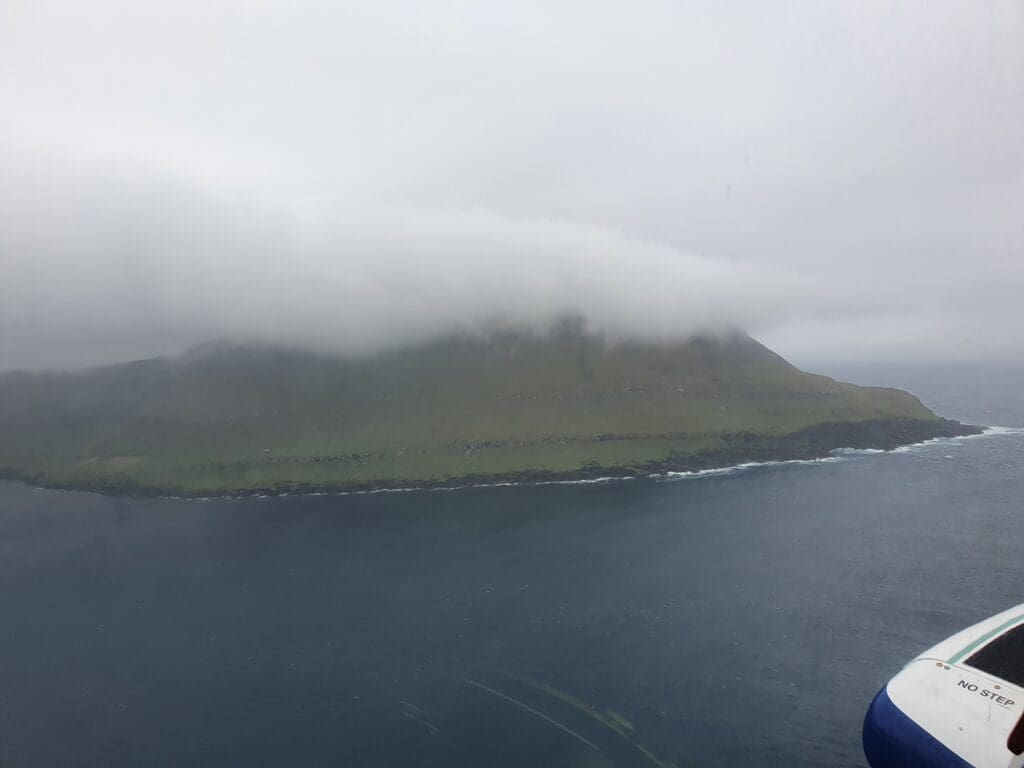

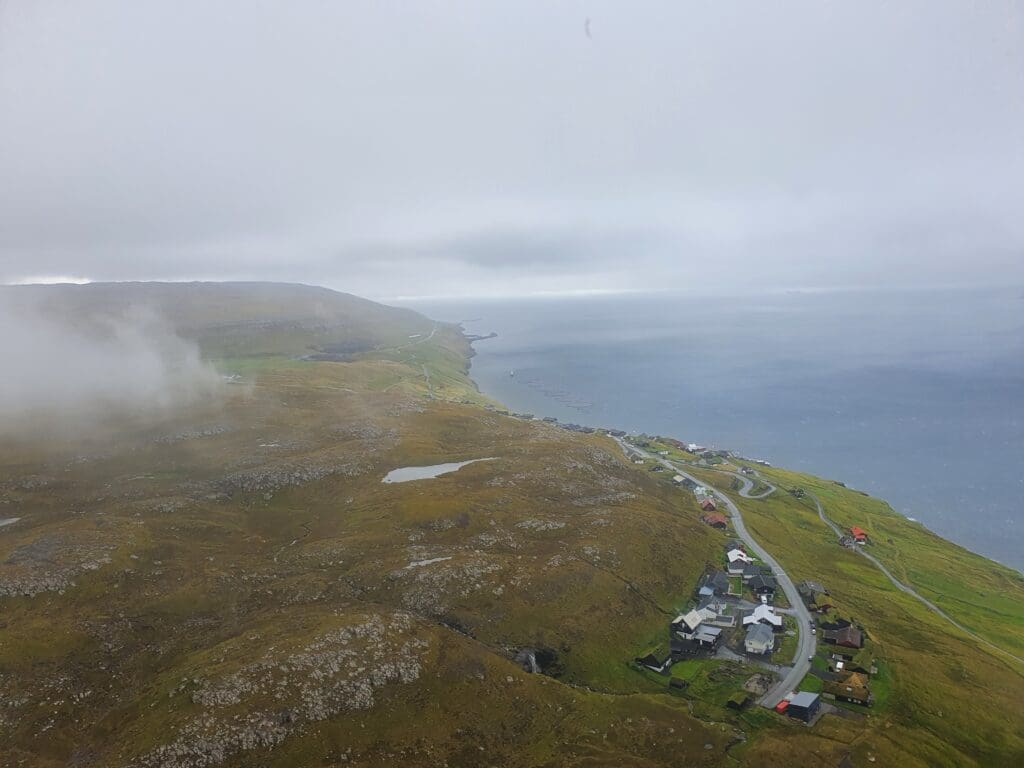
Despite our proximity to the Faroes’ capital, for a few moments, the only signs of life below took the form of clusters of sheep and the odd farmhouse poking out of the landscape here and there. However, not too long after, all of a sudden buildings rose out of the land below as we reached the outskirts of Tórshavn. As we passed over the city centre, the captain announced that we would be landing in a minute and the helicopter made its way out to sea before turning back towards the coastline and decelerating in preparation for our arrival.
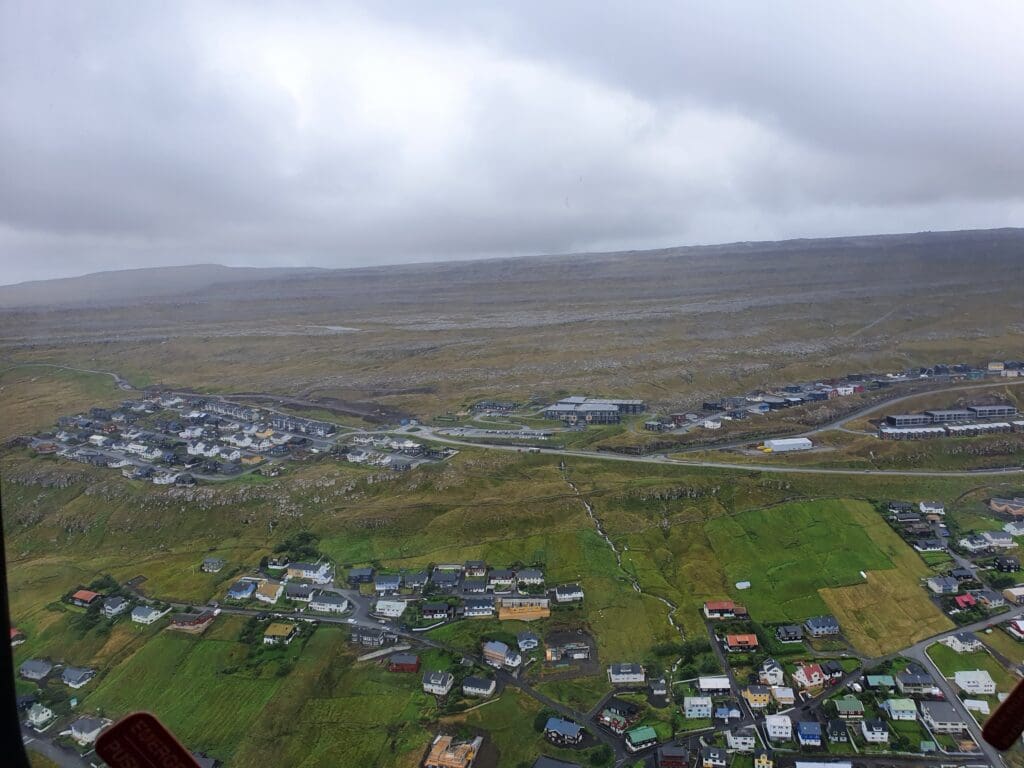
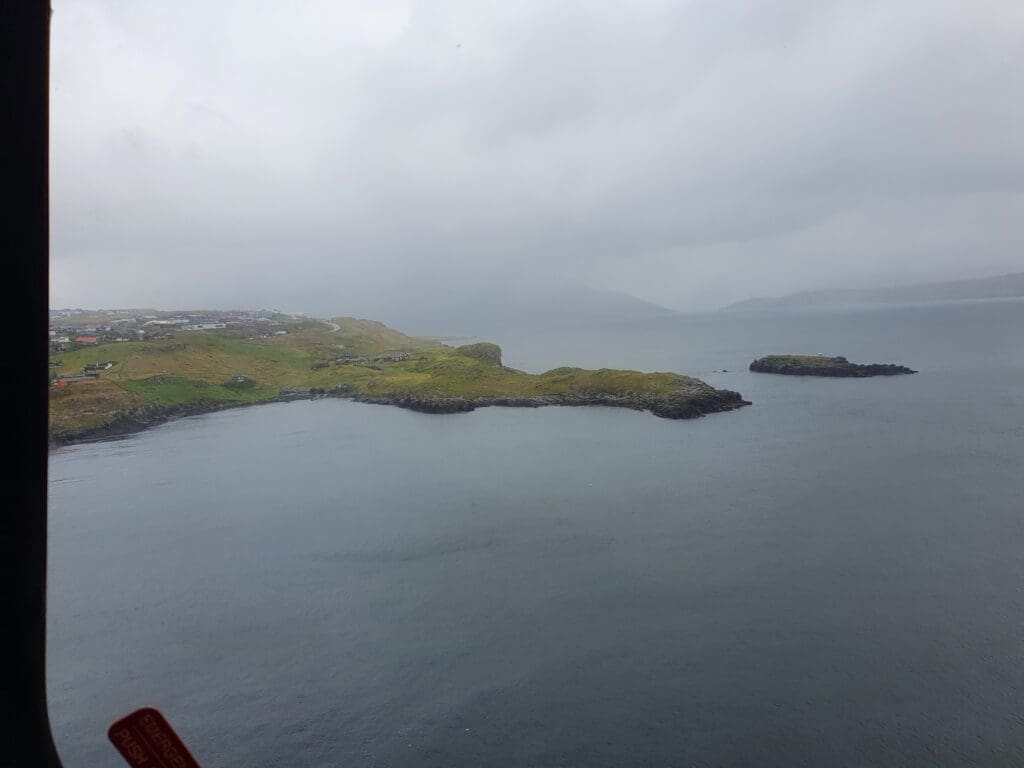
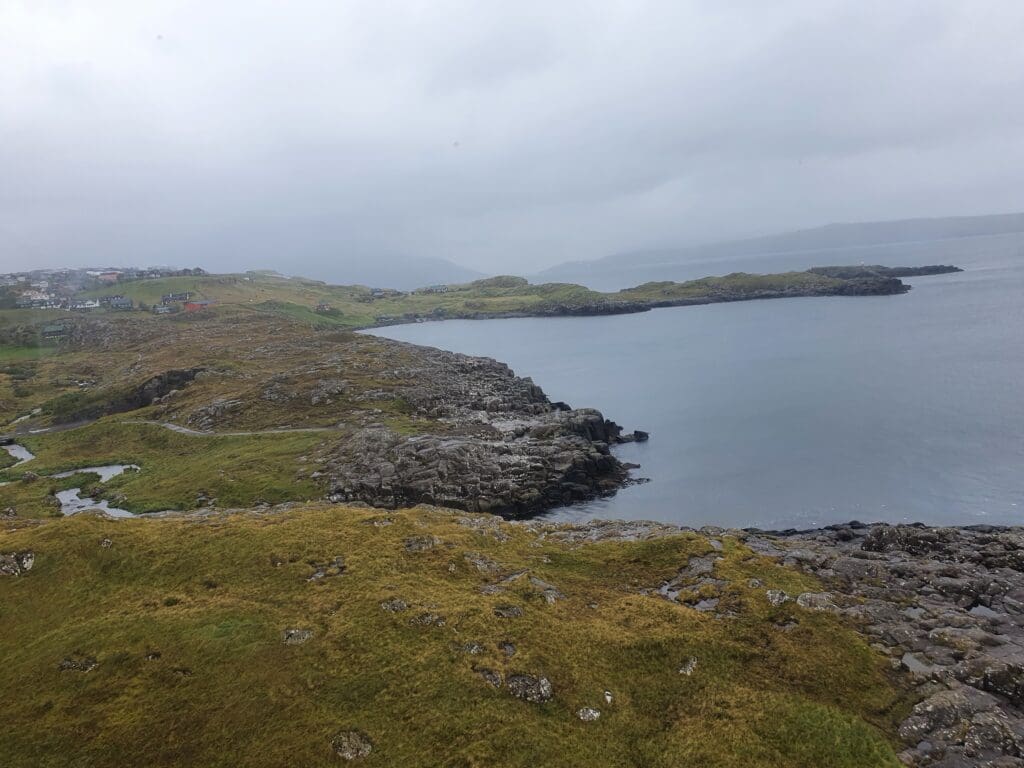
As with the helipad in Koltur, and indeed on many Faroese islands, Tórshavn Bodanes Heliport is located right on the coastline and thus the helicopter flew low over the waves of the Atlantic before crossing the cliffs and almost immediately arriving at the helipad. Following a smooth seven-minute ride, the helicopter touched down with a fair bump, whilst inside many of my fellow passengers could be seen preparing to leave the aircraft. Once the cabin door slid open, most of those who had boarded in Vágar exited in Tórshavn, with just four passengers remaining onboard for the flight up to Klaksvík. With plenty of empty seats, at this time I shifted across a couple of seats to 1A which I hoped would allow me a good view of the Faroese scenery as we journeyed north.
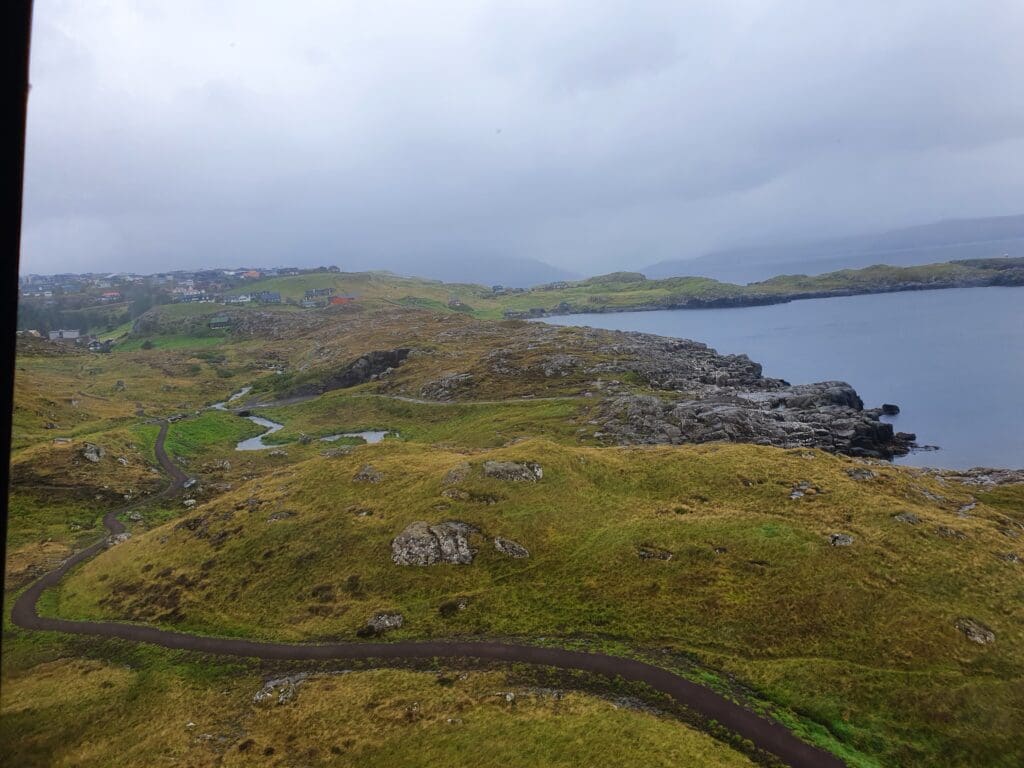
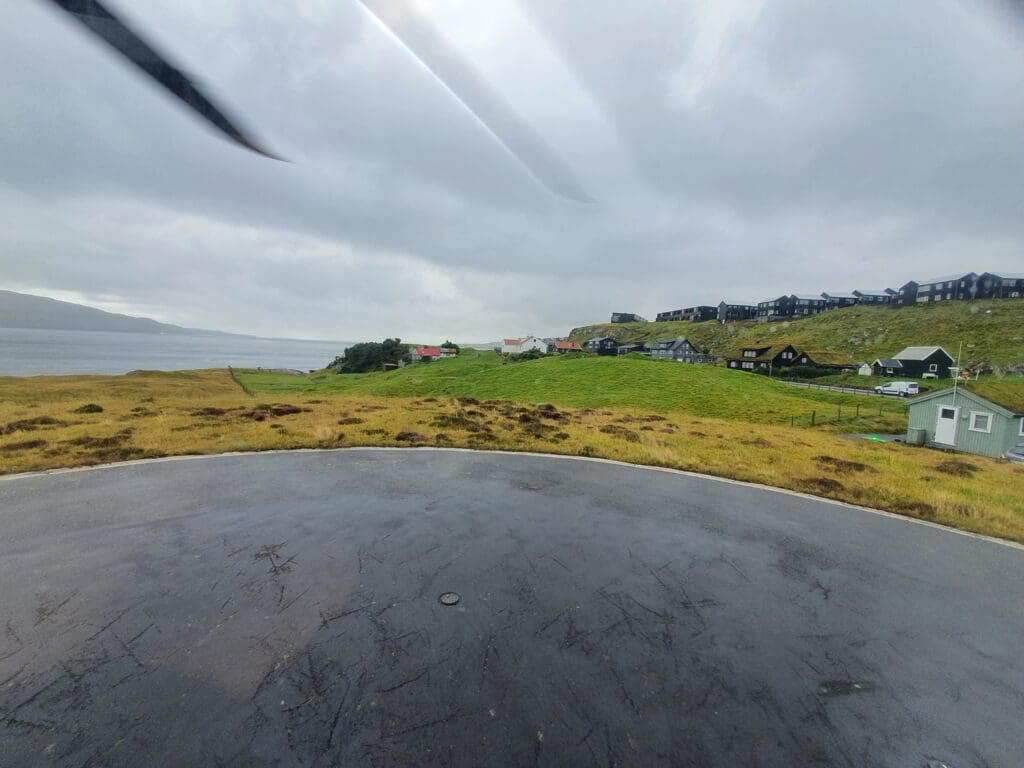
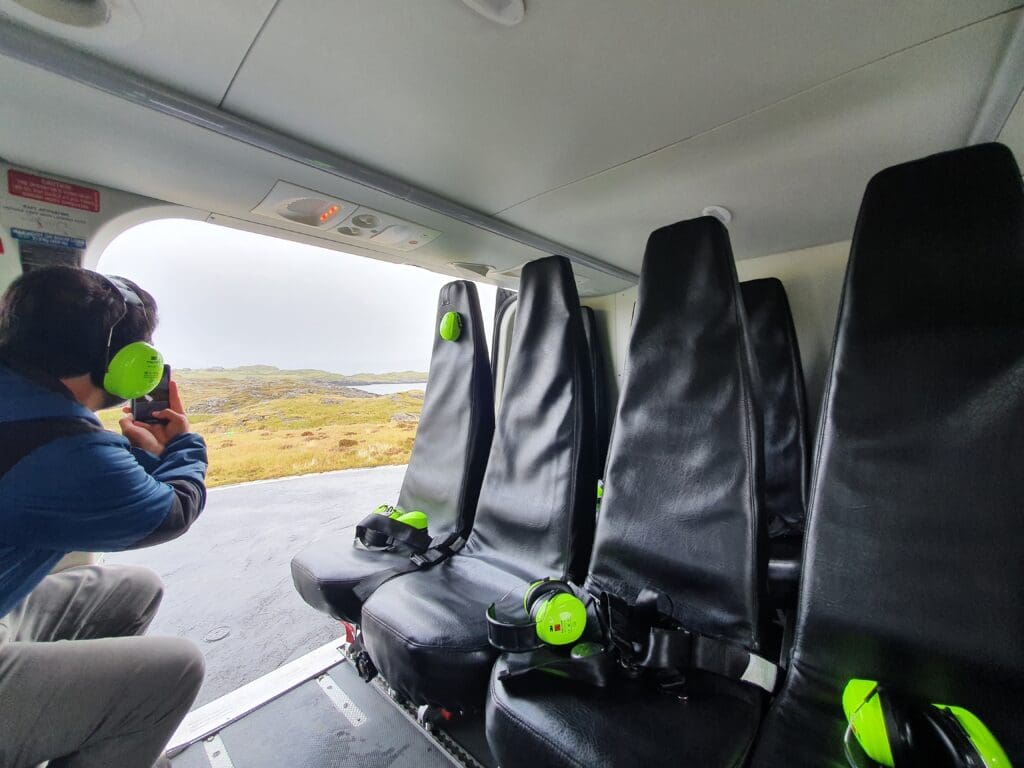
After the luggage of those ending their journeys in Tórshavn had been unloaded from the helicopter, a new load of passengers appeared and once again, the next leg would be full, with eight passengers joining the flight. As had been the case at the other stops during the flight, the rotors continued to whirl as passengers clambered up into the helicopter, with those not taking photos covering their ears to protect them from the deafening racket. As soon as all passengers were safely onboard and the doors to the luggage compartment and cabin had been shut, the pilot performed another trilingual welcome announcement. Taking the same format as the other welcome announcements, the pilot commenced with a welcome message before moving on to mention that the flight time would be ten minutes and that the journey would likely be smooth although we could expect a few bumps on the approach to Klaksvík.
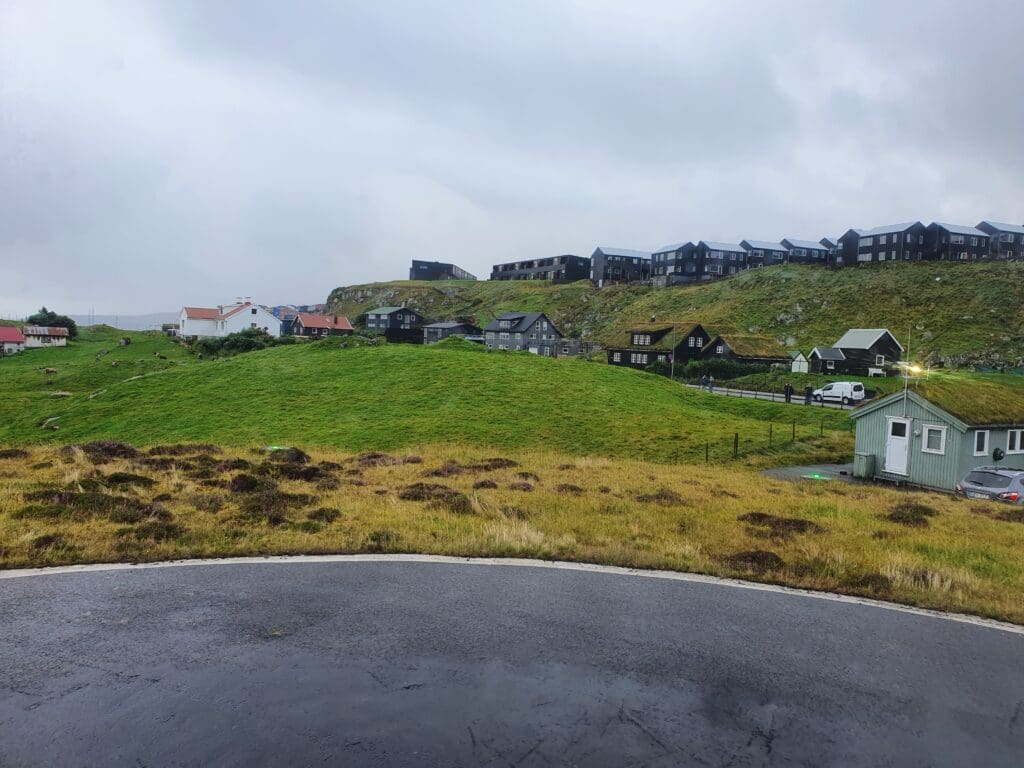
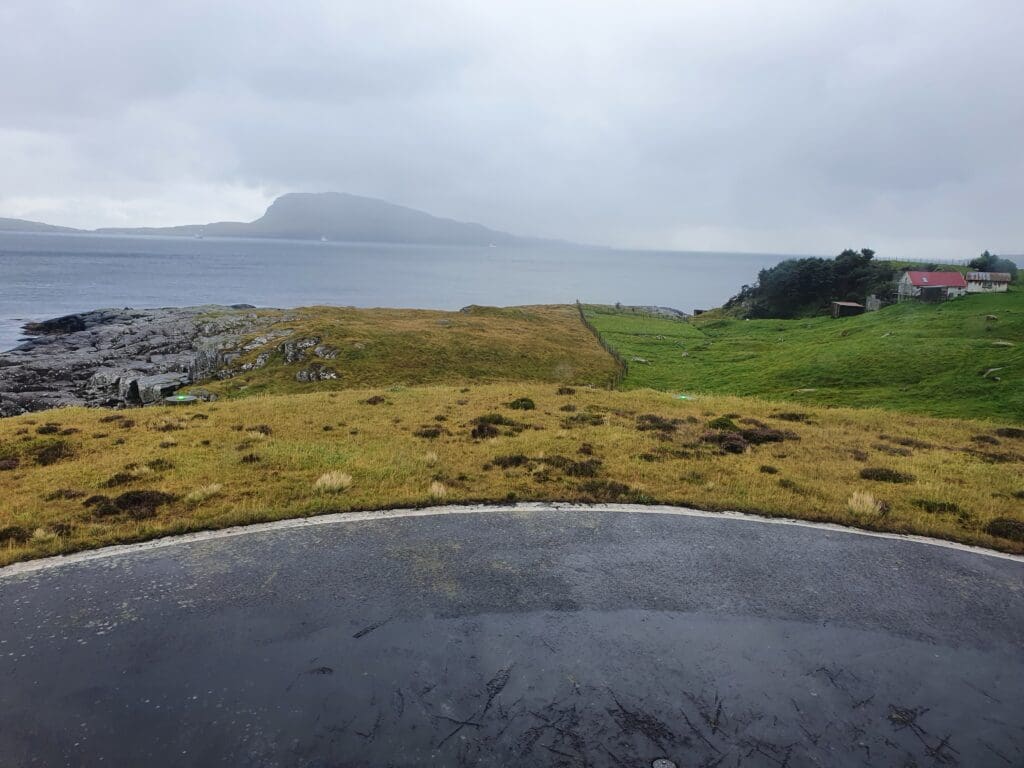
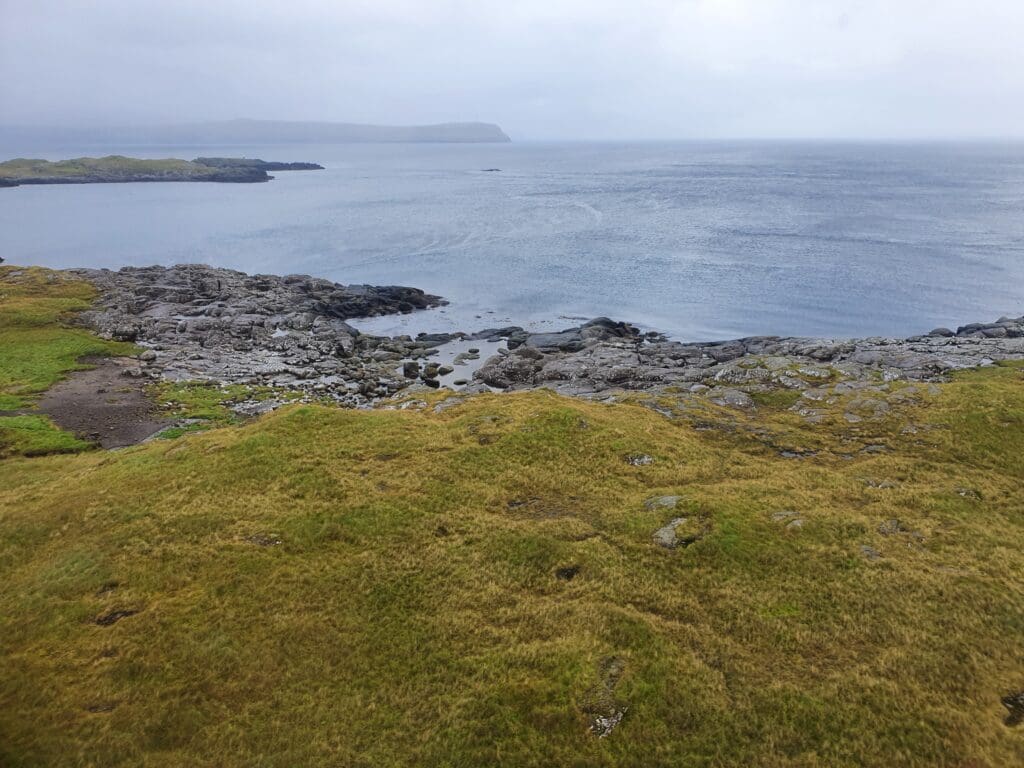
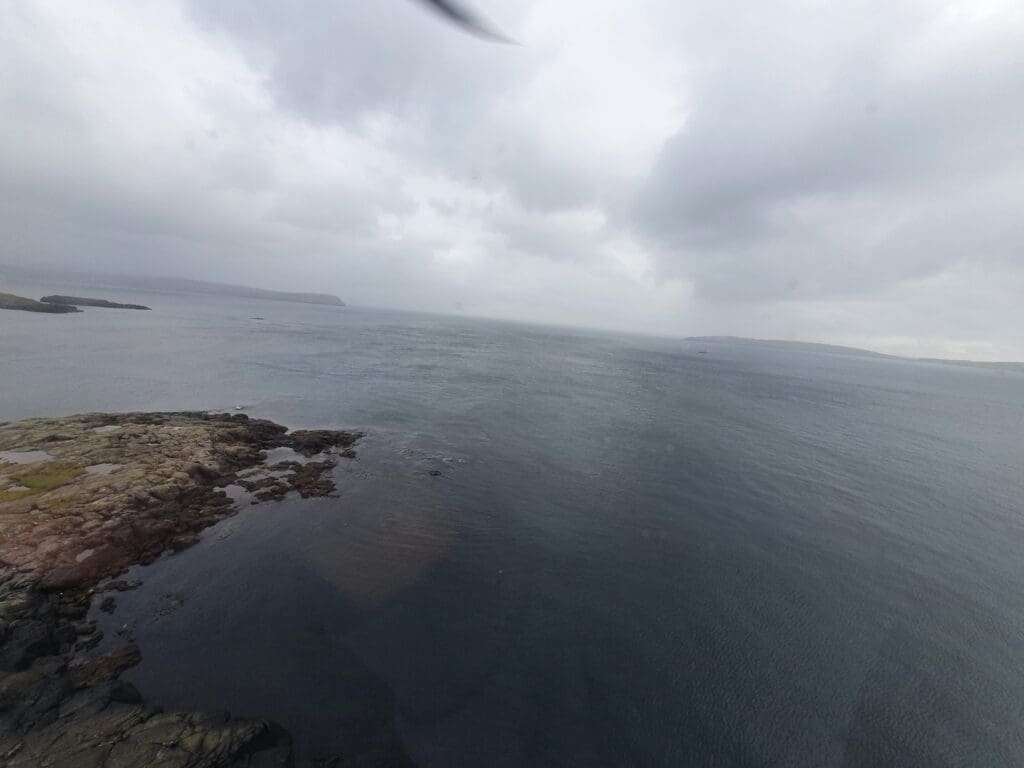
Outside, once all bags had been loaded into the hold at the rear of the aircraft, the door slid shut and the helicopter soon journeyed upwards into the cloudy skies. After leaving the helipad, the helicopter flew along Tórshavn’s coastline before crossing over its harbour and heading inland. Whilst those on the opposite side of the helicopter received views of the city’s historic sights such as Skansin fortress, the old cathedral and the quaint red wooden parliament buildings, sitting on the right I was treated to views of the docks, the city’s hospital and the football stadium, Tórsvøllur.
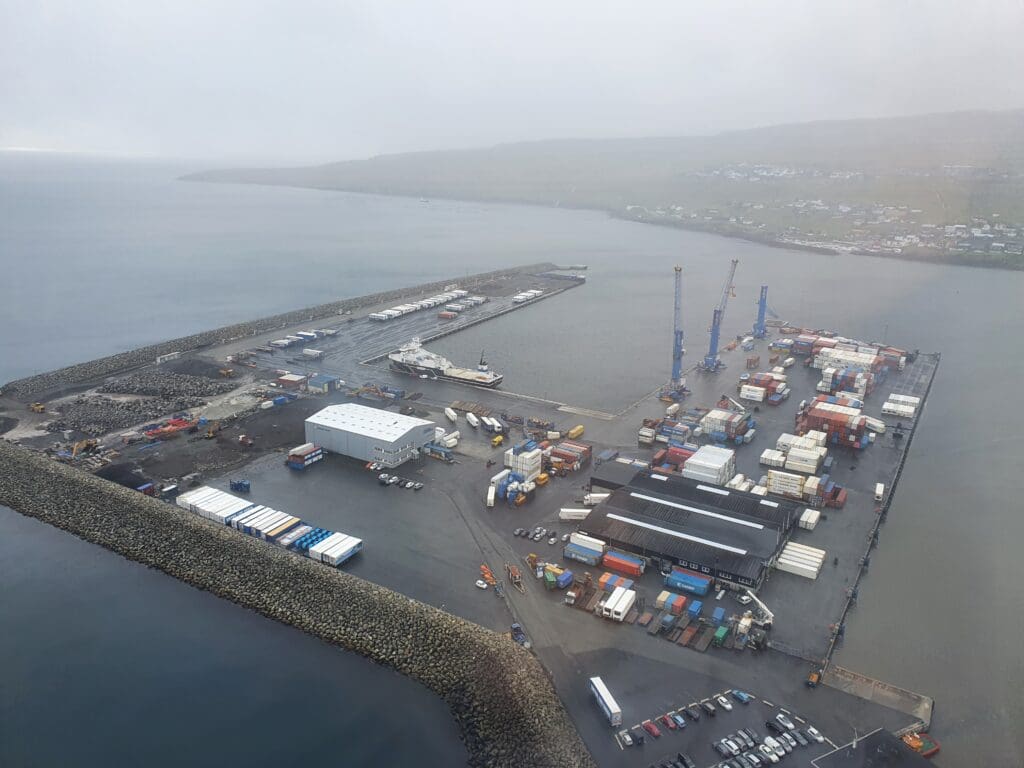
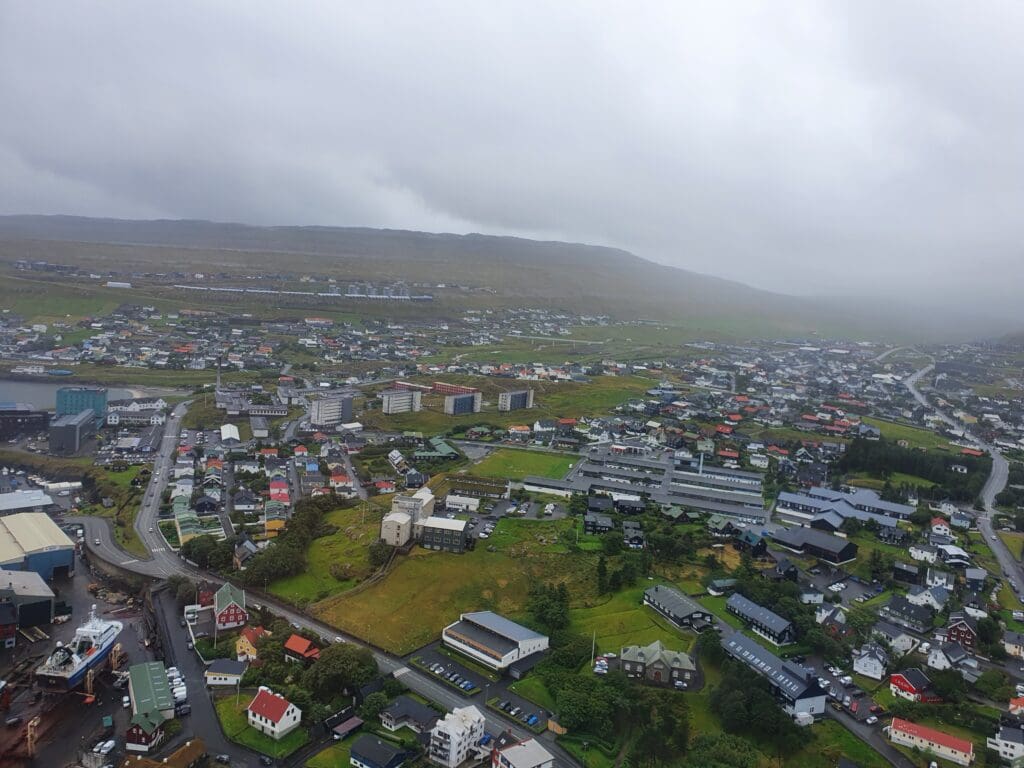
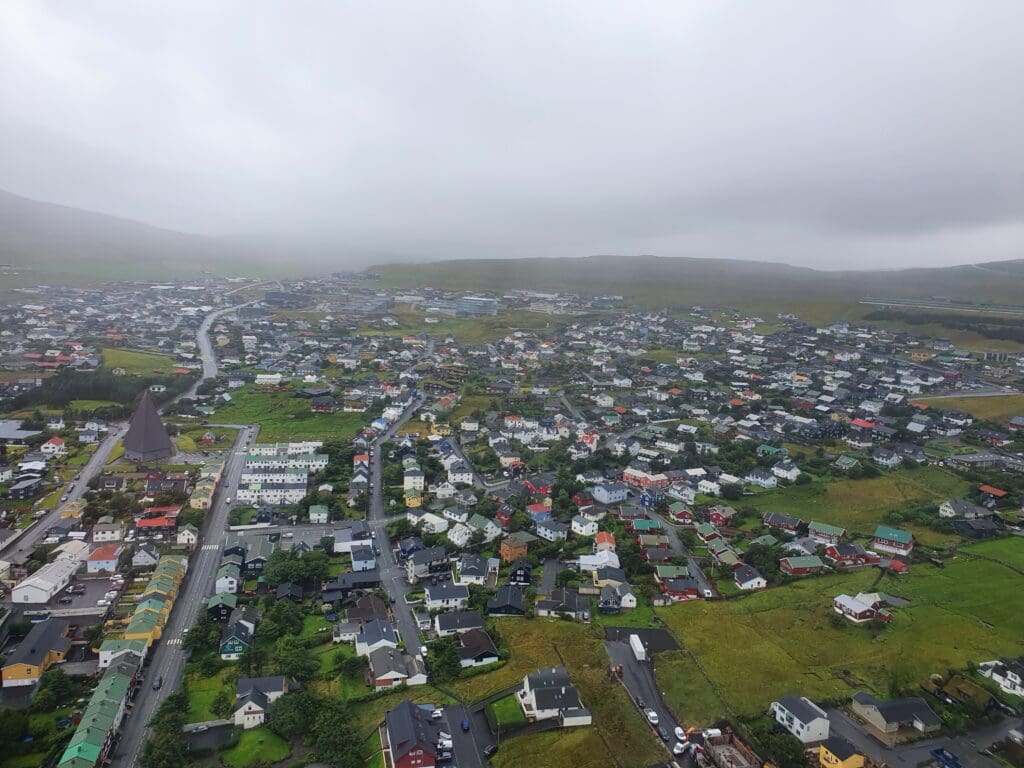
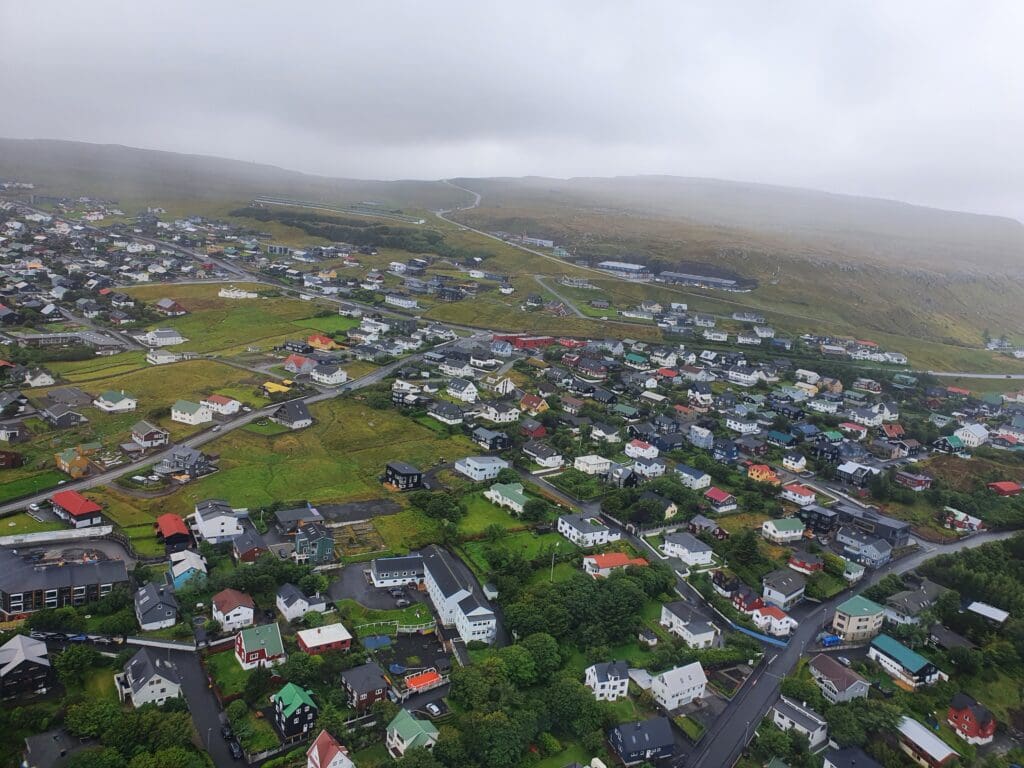
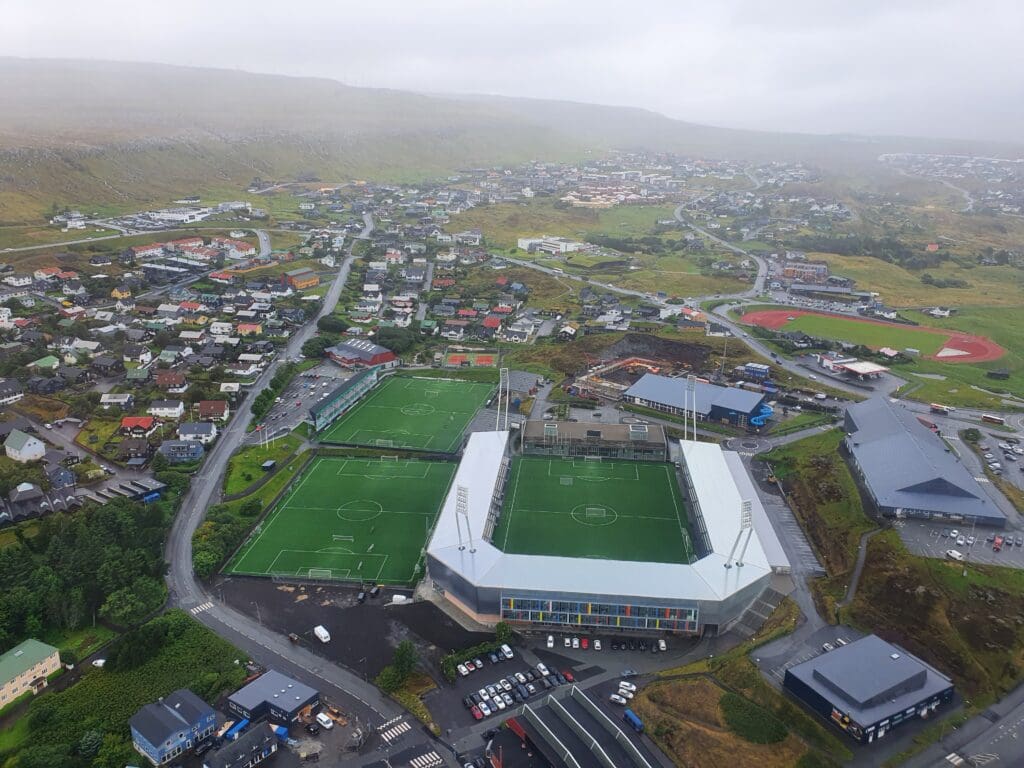
After leaving Tórshvan behind, the helicopter made its way towards the coast and after passing the village of Hoyvík, the aircraft headed out to sea. As the aircraft left the island of Streymoy behind, the southern tip of the island of Eysturoy and its cluster of wind turbines could be seen as the helicopter journeyed up the island’s western coastline. At this point, the pilot’s voice filled the cabin once more as they announced that after Klaksvik, the aircraft would journey onwards to Svinoy and Kirkja. Reminding passengers of the peculiarities of Faroese helicopter operations, the captain mentioned that whilst they had been set to also head to Hattarvík, as a local farmer was harvesting and they had not heard yet whether they had finished, this would not be possible and thus those bound for Hattarvík would have to disembark in Kirkja and made the last part of the journey by road.

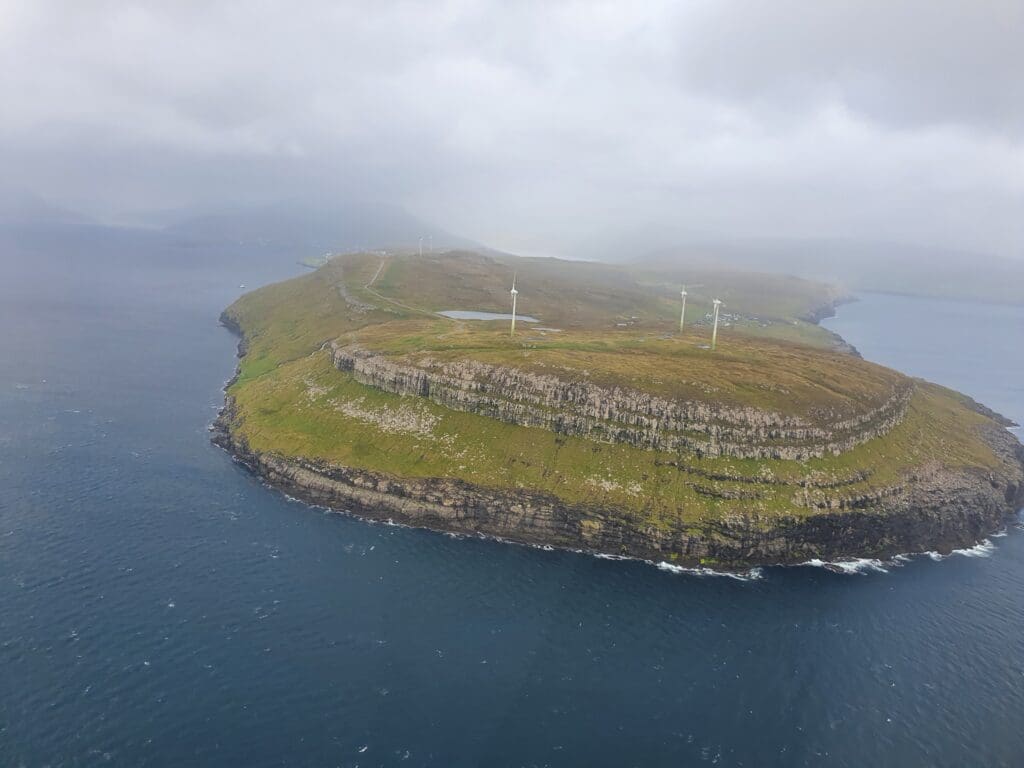
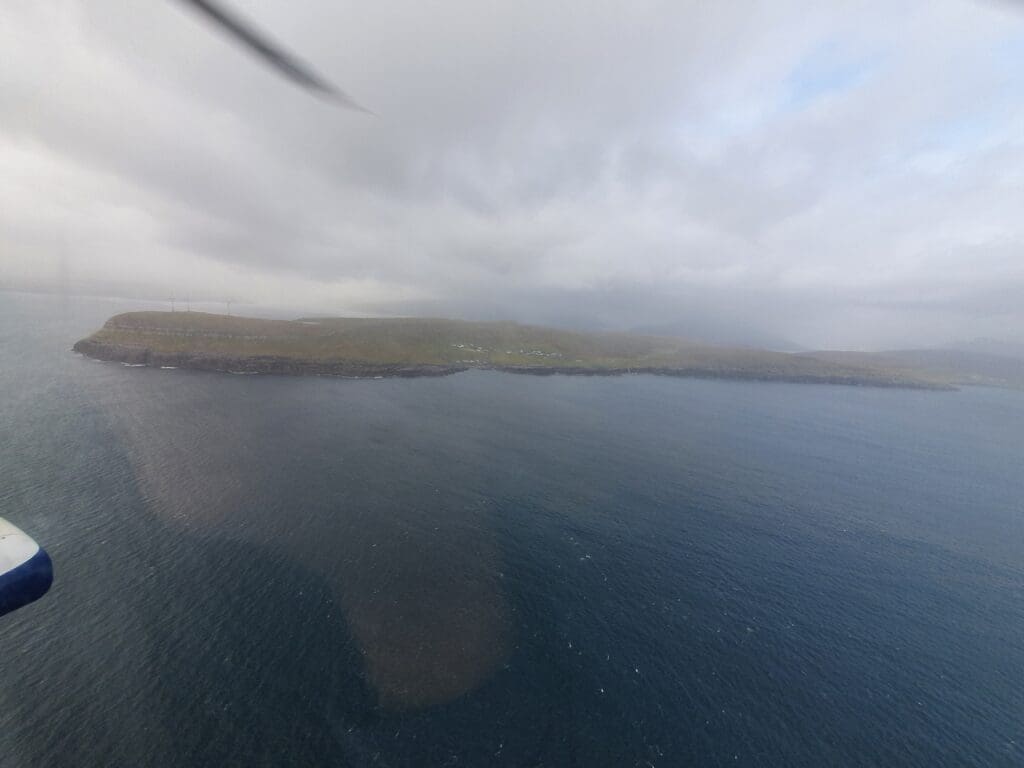
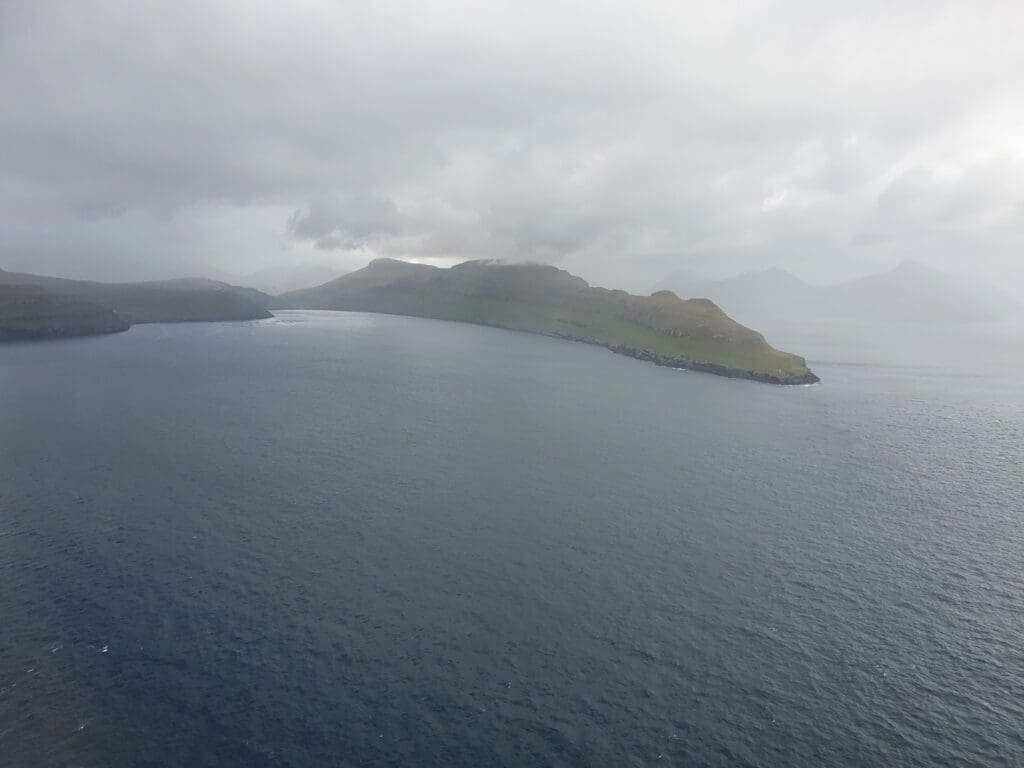
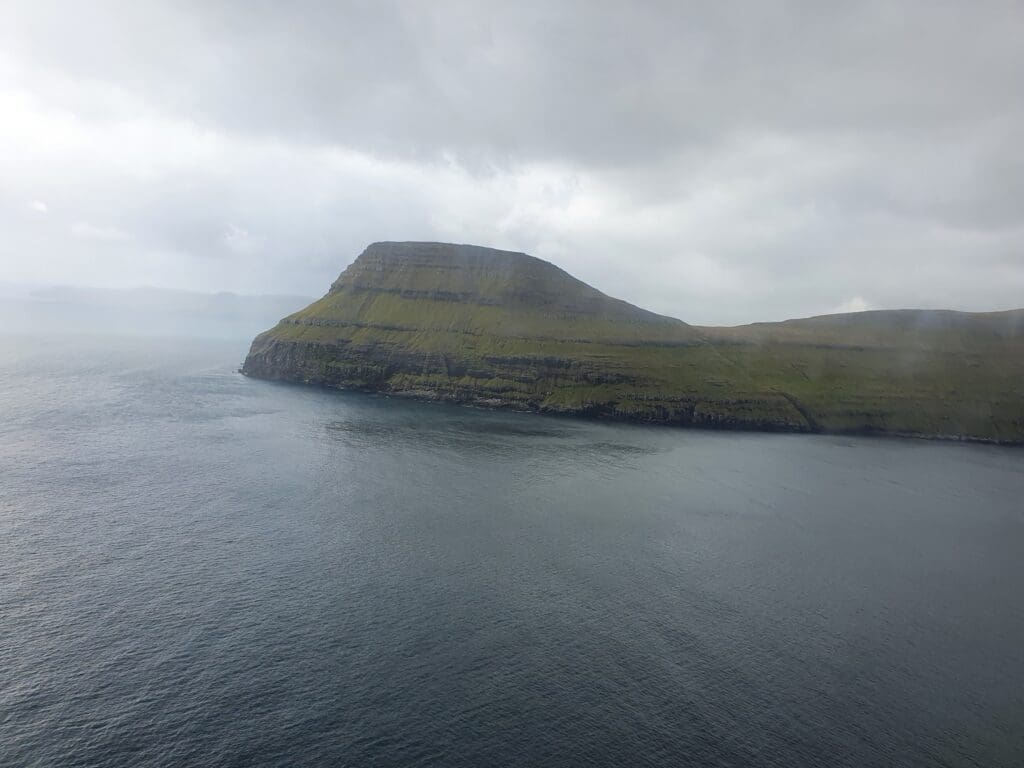
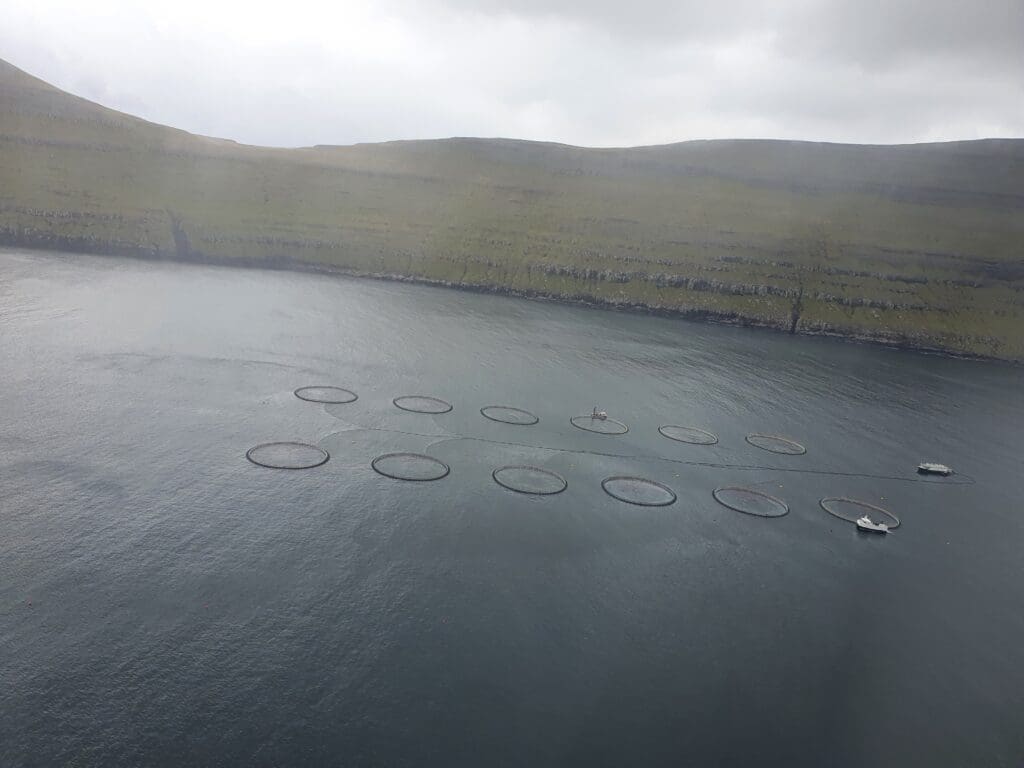
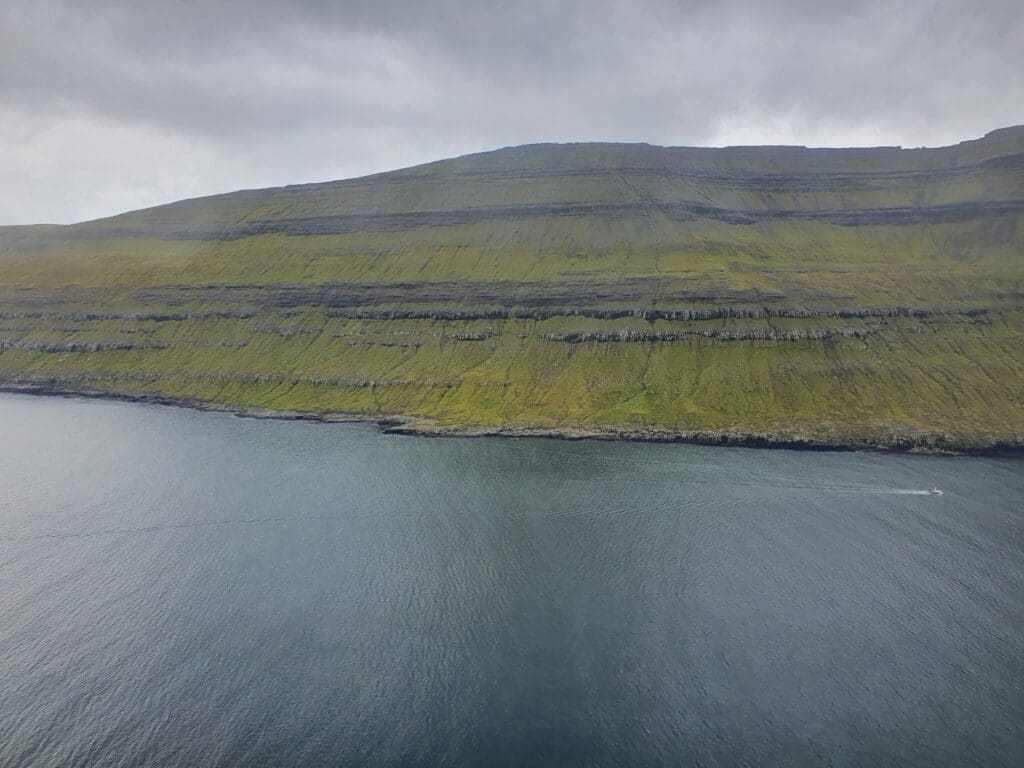
Trundling up Eysturoy’s coastline, it wasn’t long before the helicopter left this behind with Borðoy and the mountain on its southwestern tip, Borðoyarnes soon appearing. Heading around the later, the helicopter flew down Borðoyarvík sound towards Klaksvík, during which the tall mountains of Miðfjall and Háfjall could be seen on the western shores of this, whilst fish farms could be seen directly below. Flying down the sound, the pilot announced that we would be landing in one minute in the same trio of languages. Soon crossing over the coastline, before I knew it the helicopter made a gentle touchdown on Klaksvík’s helipad following our 10-minute journey up from Tórshavn. Rather impressively, this returned to earth exactly on time at 1134!
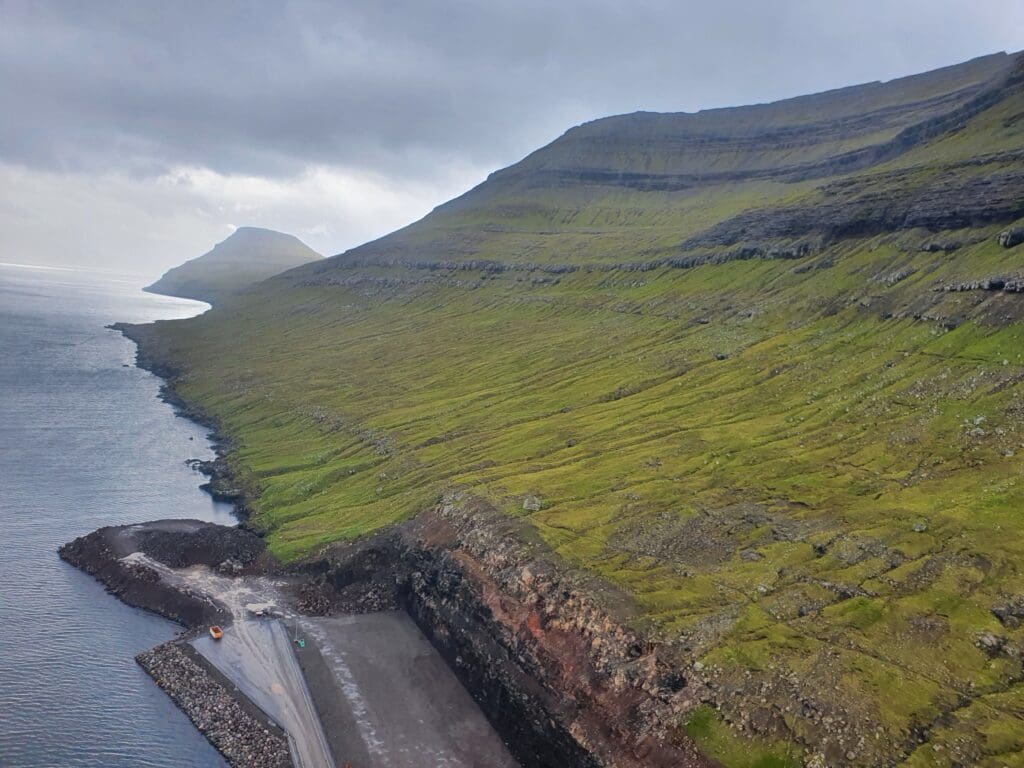
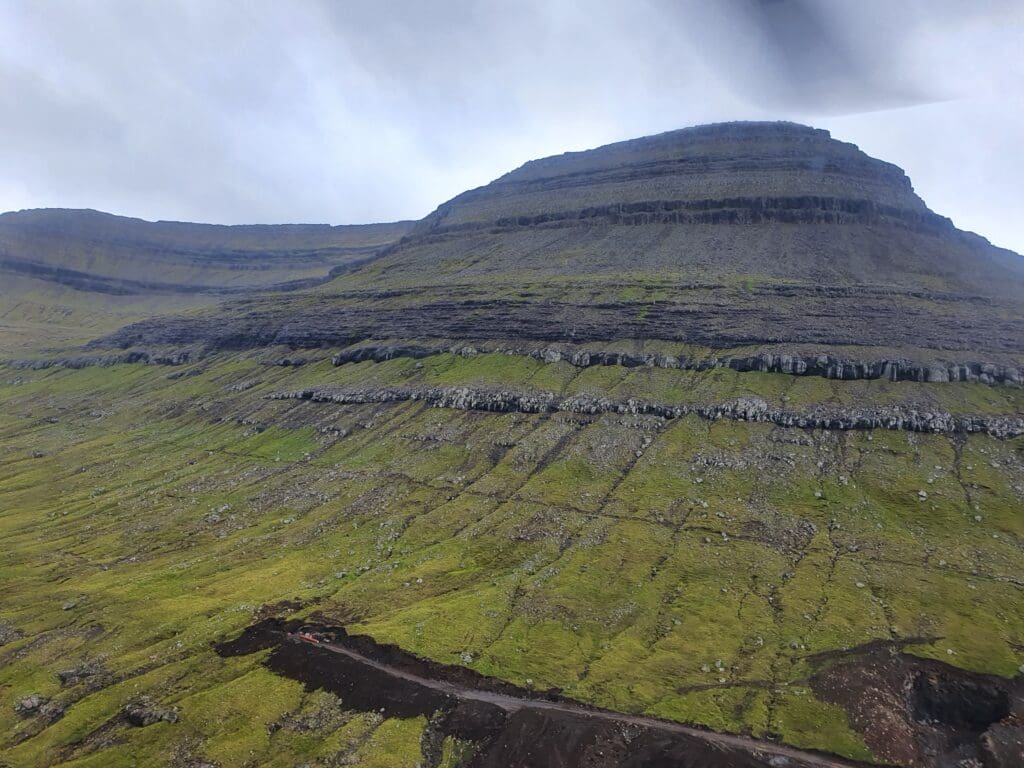

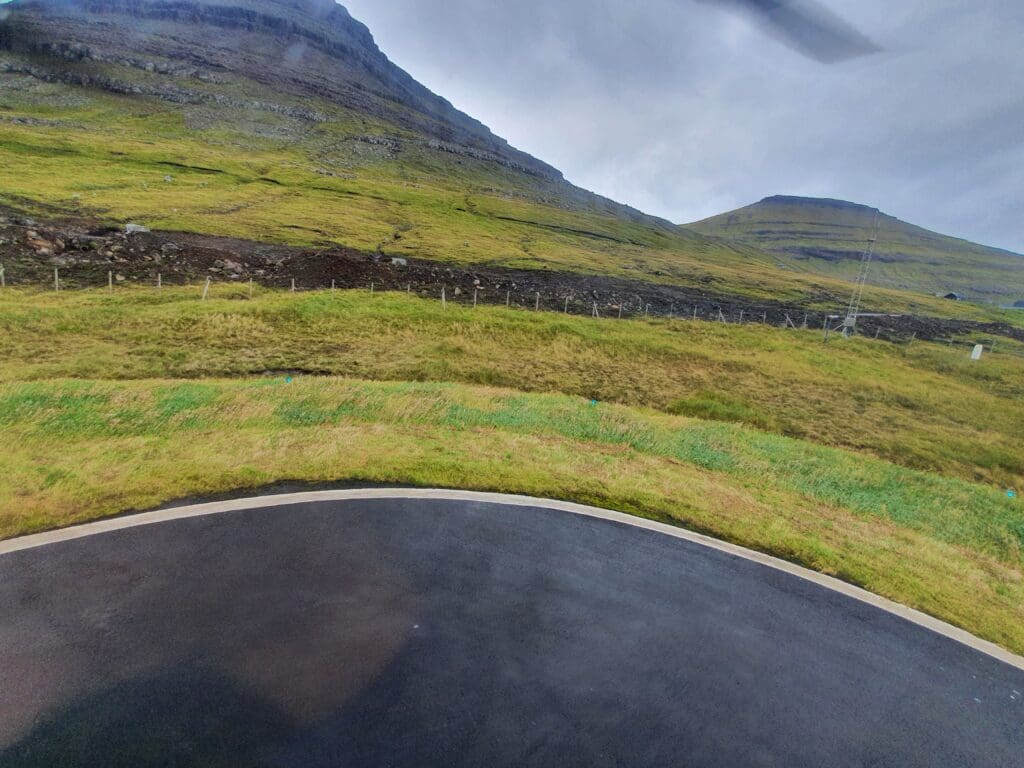
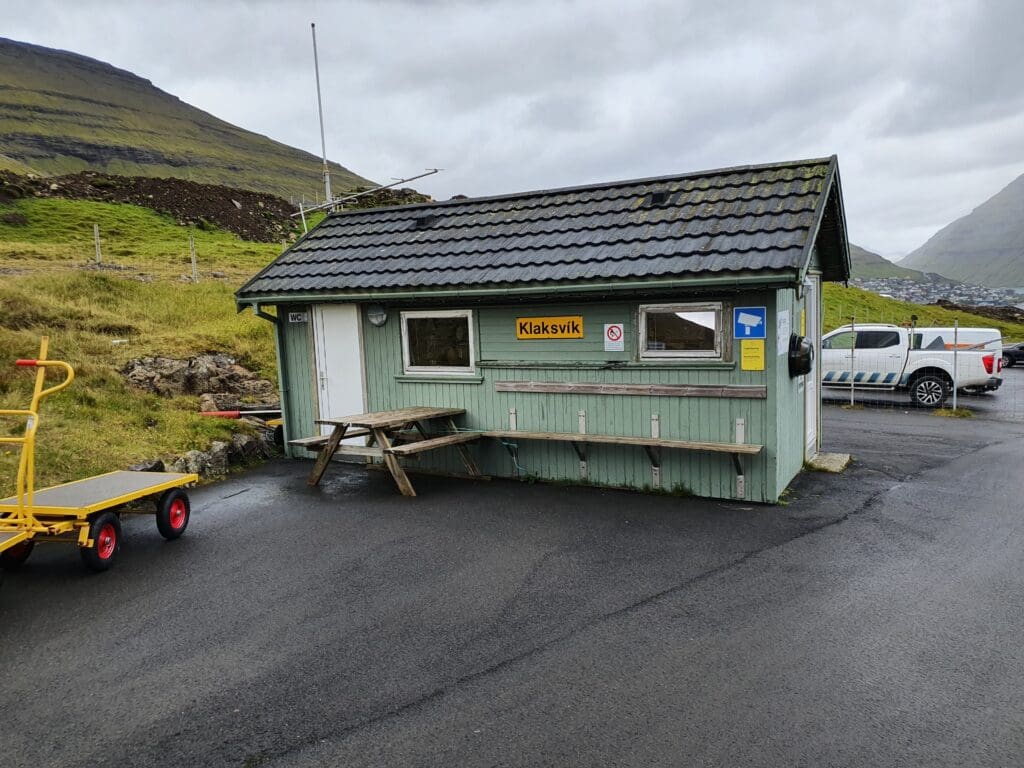
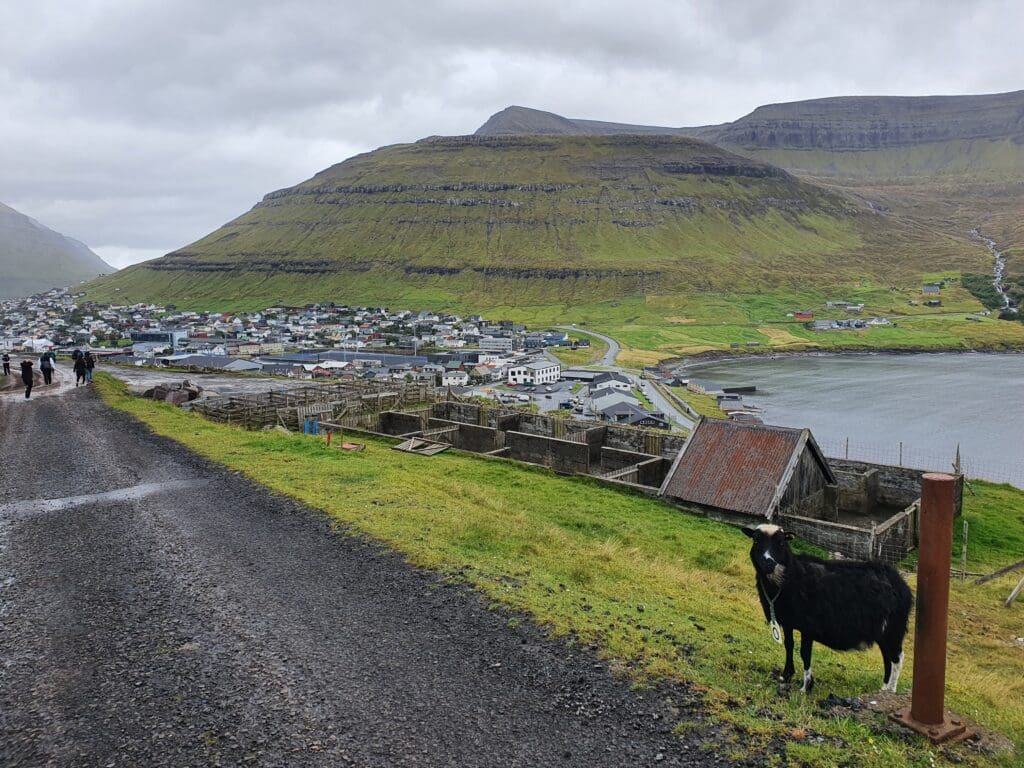
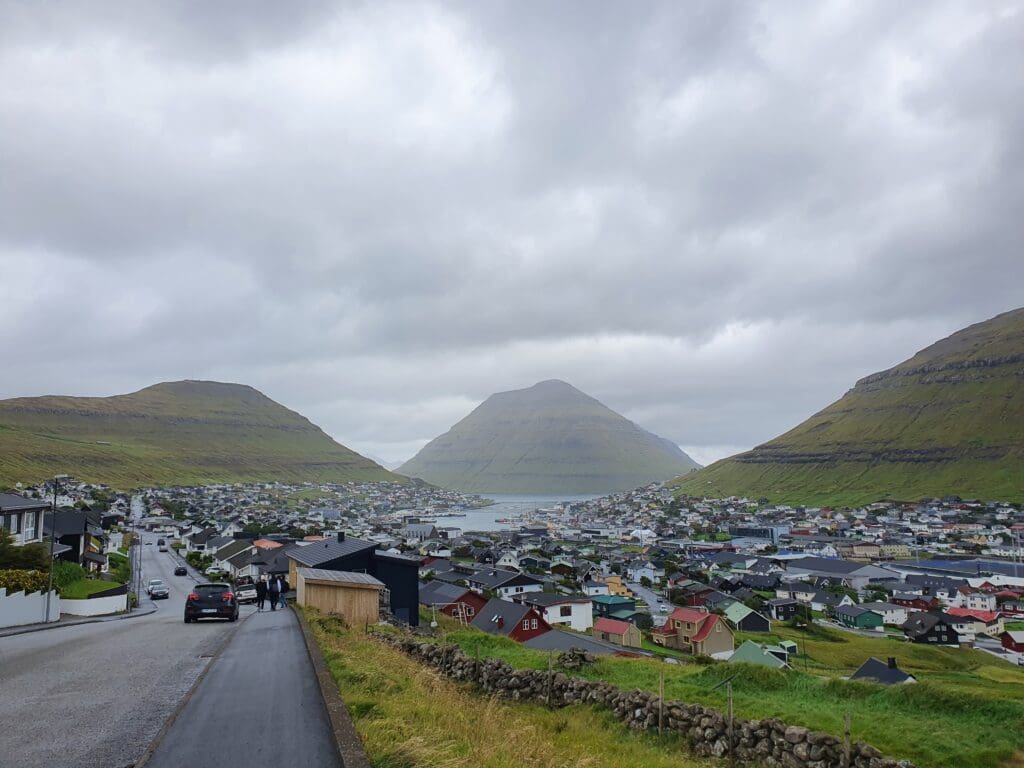
As expected, that morning, most passengers disembarked in Klaksvík and following the crowds I jumped out of the helicopter and picked up my bag which had been placed at the rear of the helicopter. Once outside, indicating my fellow passengers’ status as tourists, most snapped away at the helicopter, taking plenty of photos before being shooed away by one of the two members of ground staff to allow the helicopter to depart off to the remote Northern Isles. Sitting above the town, unable to check in to my accommodation until 1600, once off the helicopter I decided to head up rather than down and hike to the 413-metre-tall peak of Klakkur. Whilst proving to be a slightly arduous walk with plenty of slipping and sliding, once I reached the summit, I most certainly did not regret this, with this allowing for fantastic views of Klaksvík and the surrounding mountains and fjords!