The Uzbek Sleeper Train Experience: Tashkent to Bukhara
Background
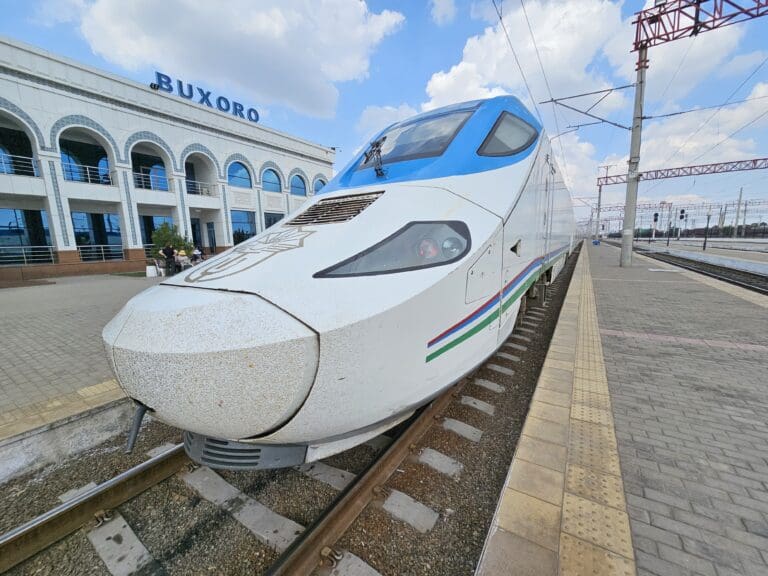
Around 275 miles (443 kilometres) to the southwest of Tashkent sits the ancient Silk Road city of Bukhara, famous for its grand preserved bazaars, madrassas and mosques. Being one of Uzbekistan’s largest cities and a key tourist hub, unsurprisingly, there is no shortage of transportation options for those who wish to explore Bukhara. Owing to its speed, convenience and relatively low cost, many tourists who visit this ancient city opt to take one of Uzbekistan Railways’ high-speed Afrosiyob services, which take a little under four hours to travel between the two cities. However, seeing as I would be taking the Afrosiyob back to Tashkent at the end of my weekend in Bukhara (you can read my report on this here!), I decided to be a little more adventurous.
Being an aviation enthusiast, it was only natural that I examined potential flight options between Tashkent and Bukhara. At the time of my trip, the route between the two was well-served with Uzbekistan Airways, along with newcomer carriers Centrum Air, Qanot Sharq and Silkavia all offering services on this. However, with none of these operating any particularly exciting aircraft type nor offering flight times that aligned well with my schedule, I decided to explore other options.
Other than the fast Afrosiyob services, the slower seated Sharq service also operates between Tashkent and Bukhara and takes around six hours to complete this journey. In addition, several sleeper train services operate between the two – with some originating in Tashkent and others in the eastern city Andijan, all terminating in either Khiva or Urgench. Seeing as most of the westbound sleeper services are either not overnight or deposit passengers in Bukhara in the very early hours, these are not particularly popular options. However, living in Britain, a country with just two sleeper train services, I couldn’t resist the opportunity to experience the joys of a ride on a Soviet-era Uzbek sleeper train!
Whilst in the not-too-distant past, tickets for Uzbekistan Railways’ services had to be purchased via either a travel agent or in person, today, these can be purchased quickly and easily through the state-owned company’s easy-to-use app or website. With tickets for most train services going on sale 45 days before departure, with around a month-and-a-half to go until departure, I opened up the app and searched for trains between Tashkent and Bukhara. Moments later, I was presented with eight options on my chosen departure day (a Friday) – three Afrosiyob services, three sleeper trains and two Sharq services. Without hesitation, I selected the last train of the day from Tashkent to Bukhara, with this scheduled to depart at 2100 and arrive almost seven hours later at 0357.
Once I had selected this, I was then presented with three accommodation options. Unlike sleeper trains in many other countries, those in Uzbekistan do not have a seated option, and instead, the cheapest tickets are for berths in the train’s ‘platzkart’ carriages. These are like dormitories, with plenty of bunks but no individual cabins and were priced at 120,940 S’om (£8.30/€9.61/$10.49). The next level up was a berth in a ‘cupe’ – with these being four-bed cabins, priced at 153,370 S’om (£10.53/€12.19/$13.31). Meanwhile, the most expensive tickets were those for berths in one of the ‘spalny’ wagons, which feature nine cabins with just two berths – with one berth in these costing 278,500 S’om (£19.12/€22.14/$24.16). Whilst some may laugh at my lack of a sense of adventure, not wanting to share, I ended up booking two berths in one of these cabins, making a quick and easy payment before receiving my e-ticket.
The Journey
Unlike the many train services that serve Tashkent Main Station in the heart of the city, my train that evening was to commence its journey a little further down the line at Tashkent South Station. This sits around five miles or so away from the city centre and, slightly annoyingly, is a fair distance away from the nearest Tashkent Metro station. Lacking a local SIM card and thus unable to use any taxi app, and with my Russian and Uzbek language abilities falling far below the standard required to arrange this with the hotel staff, I decided that the best way to reach the station would be to take a bus. As dusk fell, I made my way out of the hotel that I had called home for two nights and headed down one of Tashkent’s busy streets, ending up at a bus stop near the crossroads at Ming O’rik Station. Having done my research, I knew that there were several buses I could have taken to get to the station, and reassuringly, around two minutes after I had arrived at the bus stop, a modern and packed bus appeared. Feeling slightly underdressed, once onboard, I noticed that most of those inside the bus took the form of smartly dressed workers commuting home. As we pulled away, I was soon approached by the conductor, who, loyal to their duty, appeared to make it to each passenger even though we were all packed into the bus like sardines in a can. After they said a few words to me in Russian, I handed over the 1400 S’om fare before they continued on their way down the bus.
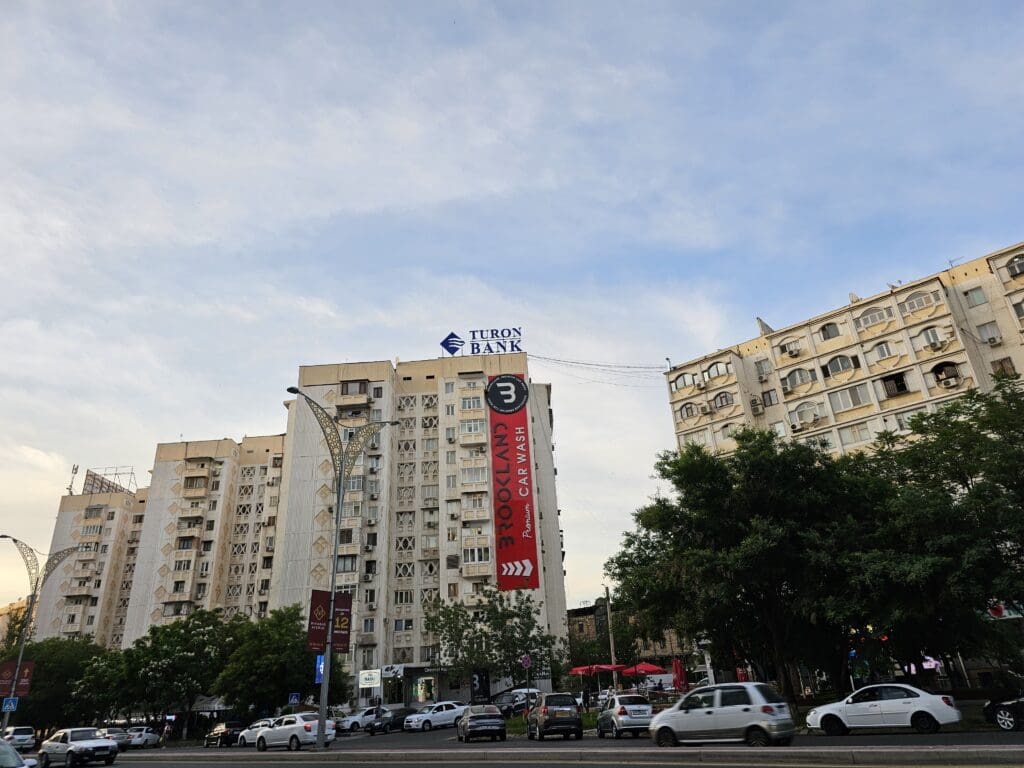
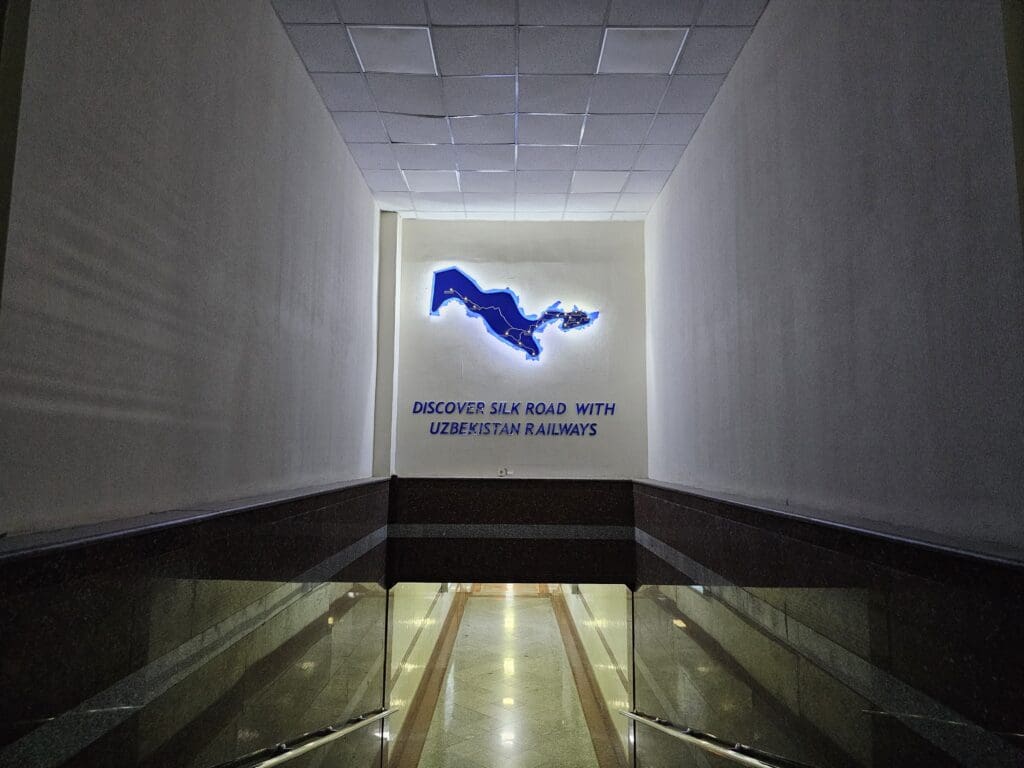
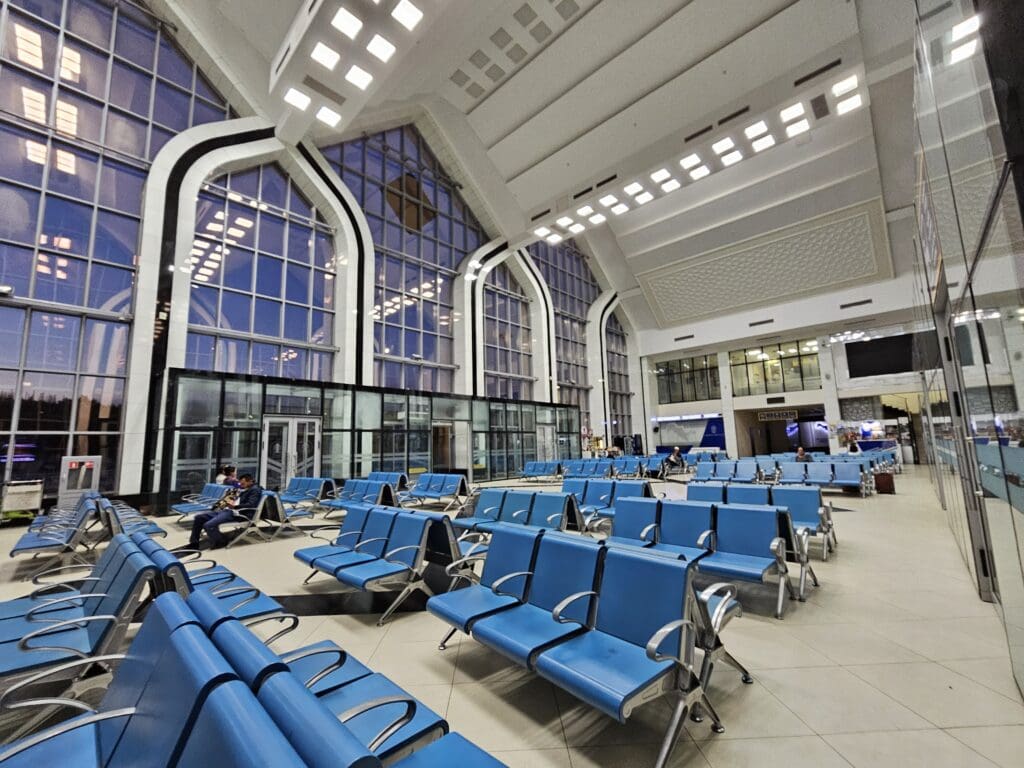
Being rush hour, we spent the entire journey to the station stopping and starting, often rather abruptly, causing no fewer than three fellow standing passengers to almost fall over as the bus crawled along the main road. Eventually, around thirty minutes after leaving the city centre, I disembarked and walked the last 300 metres or so on foot, passing over a busy main road before the welcome sight of Tashkent South Station appeared like a mirage in the desert. As with many major railway stations in Uzbekistan, this came in the form of a grand and well-polished building which combines elements of traditional Uzbek design with modern architecture. In front of this, a well-manicured garden could be found, complete with a colourful fountain providing passengers with a relaxing place to wait before heading to catch their train.
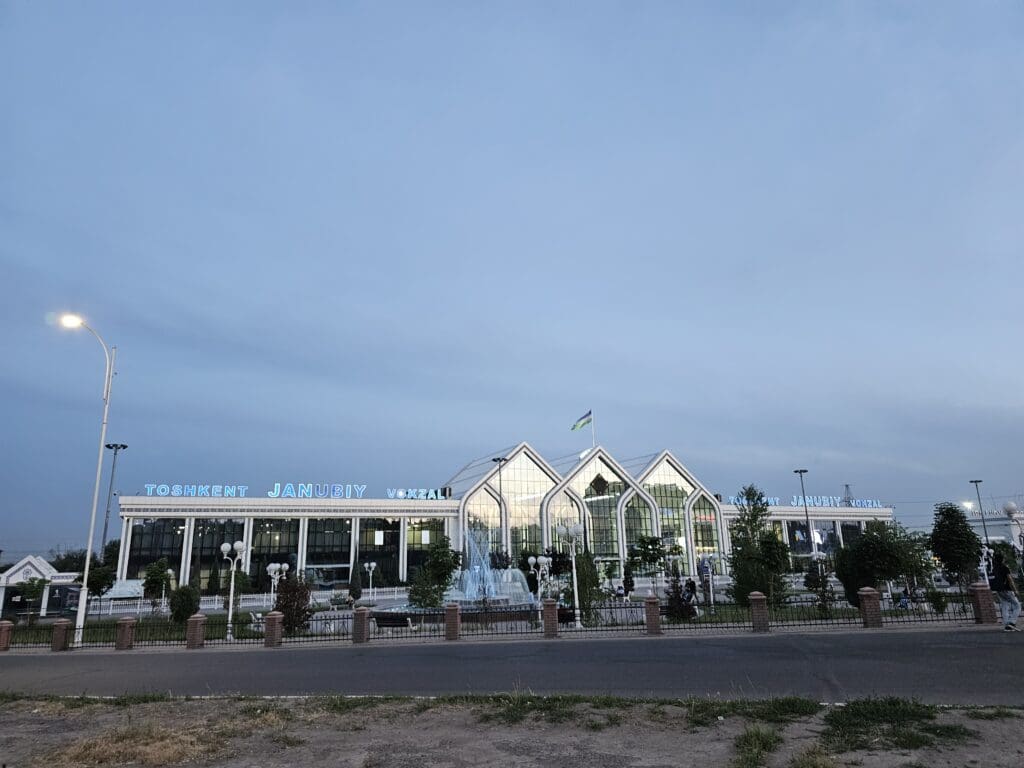
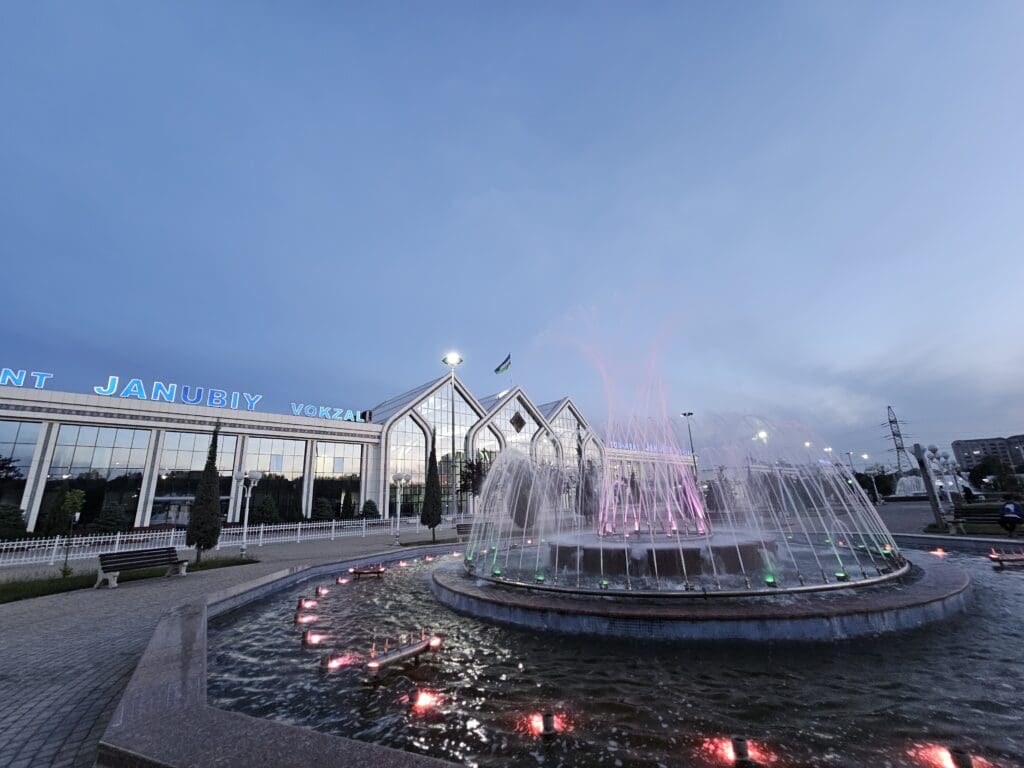
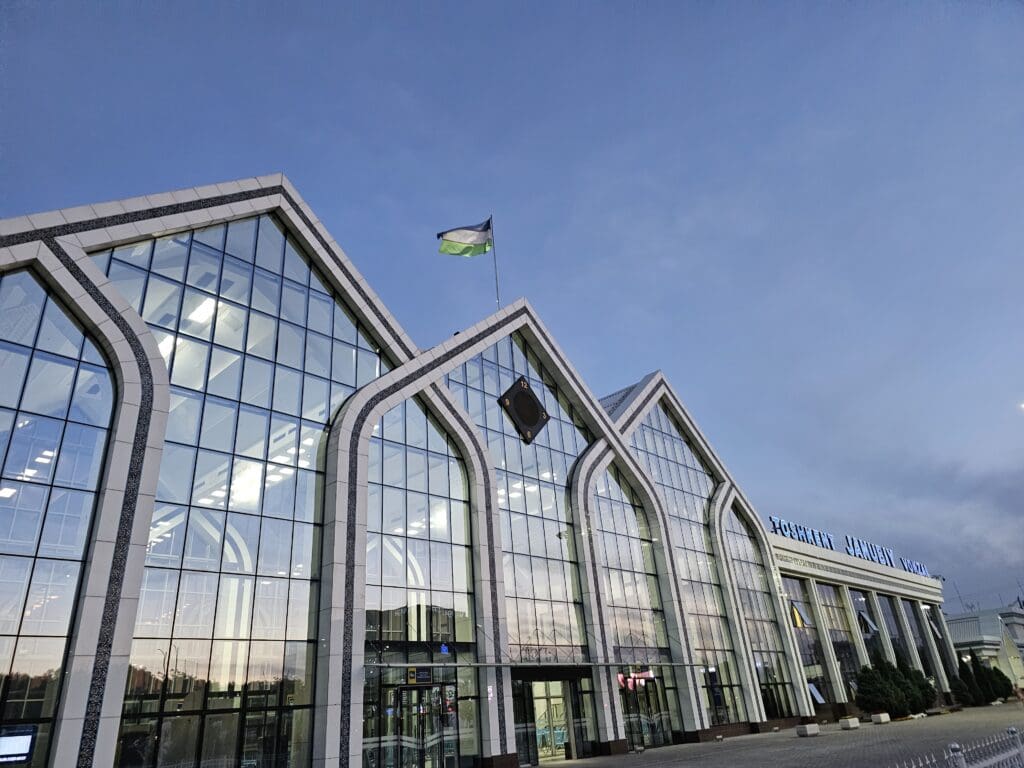
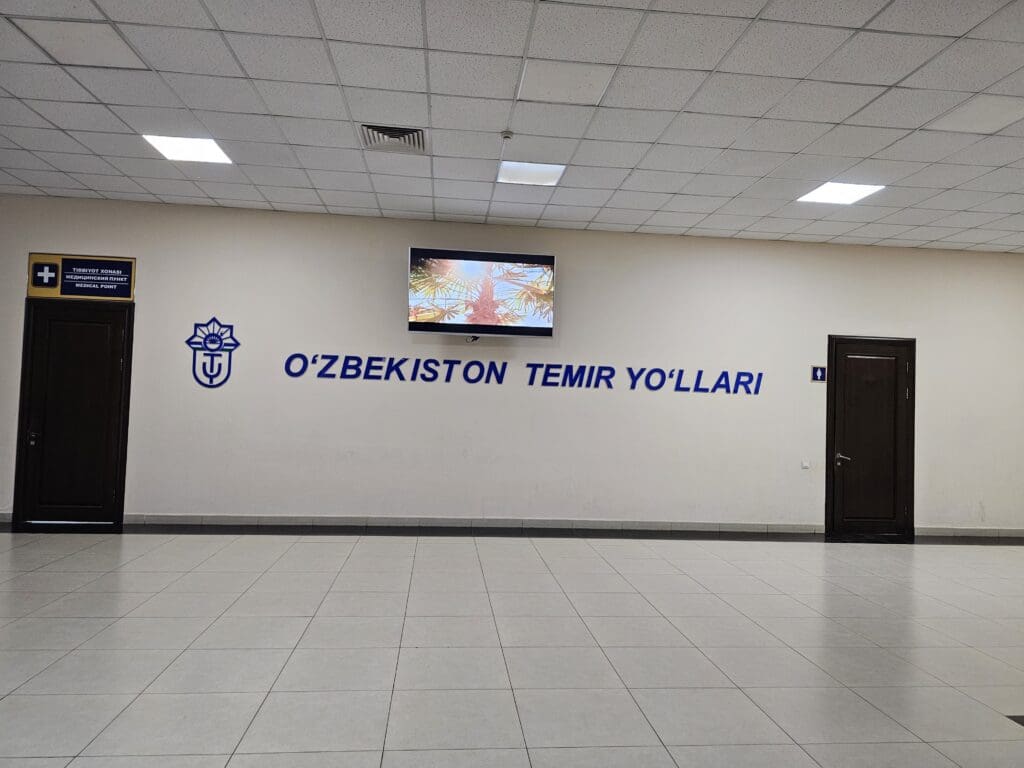
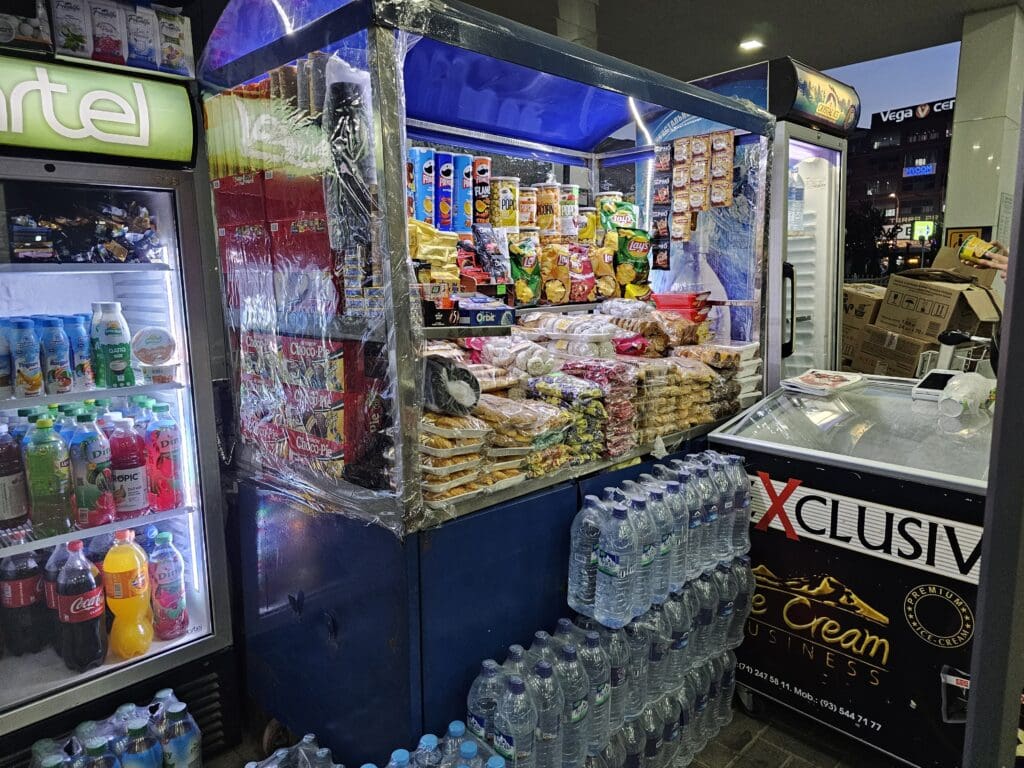
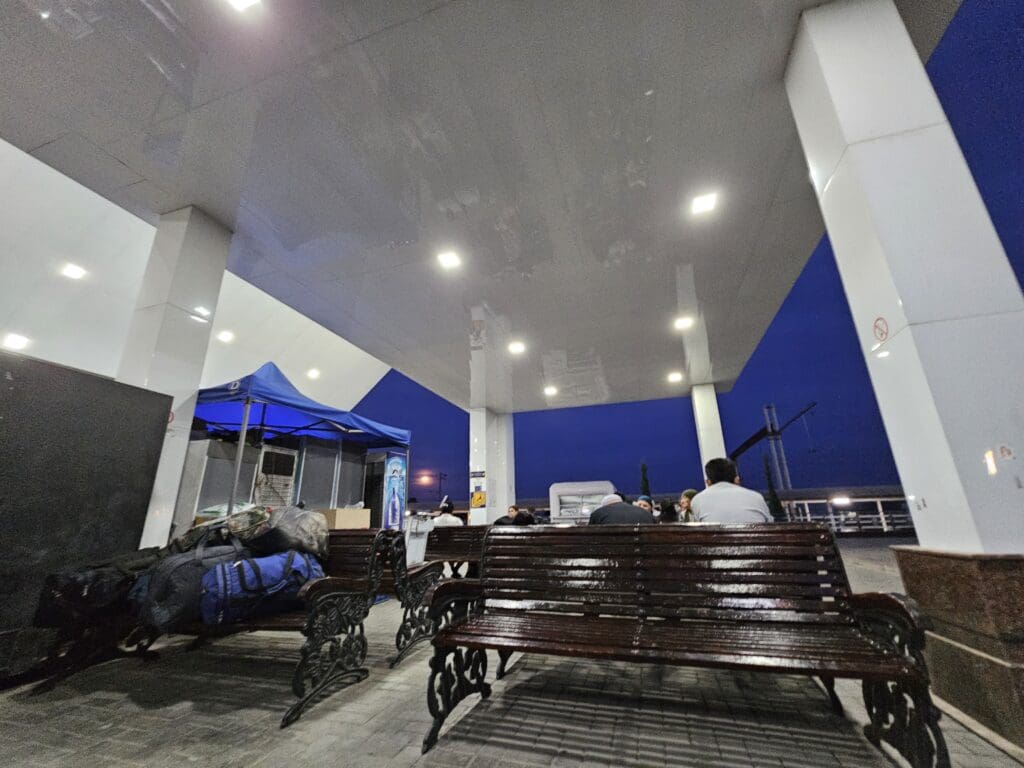
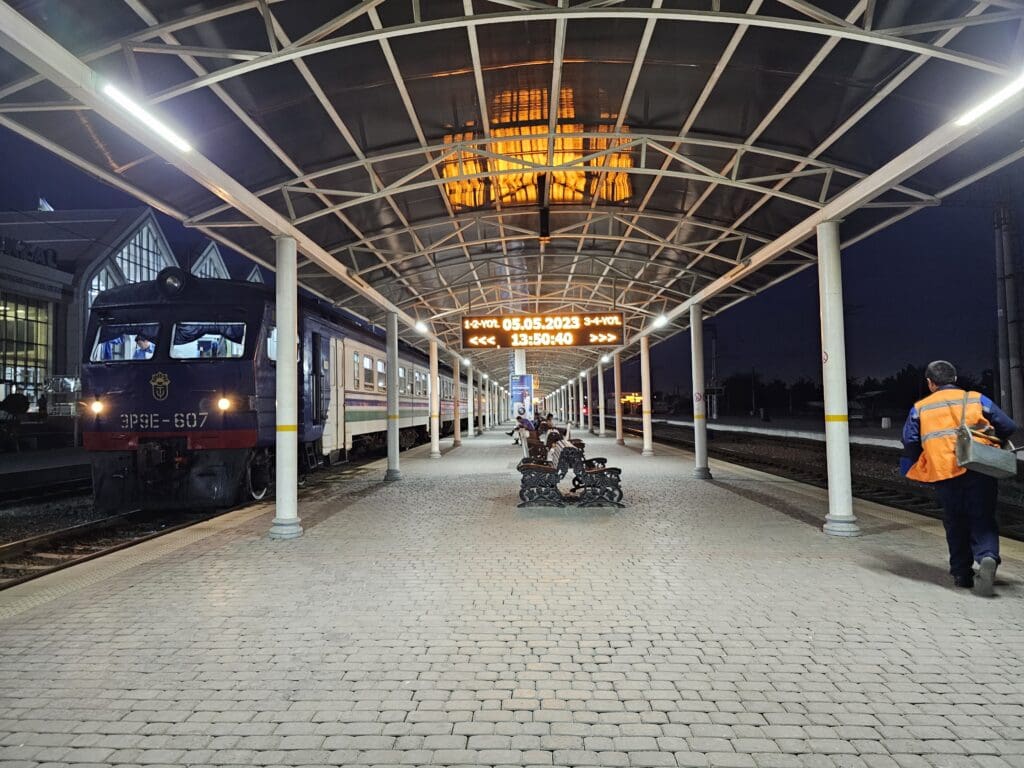
As with most transportation facilities in Uzbekistan, only those with a ticket are allowed inside the station building, and it wasn’t long before I reached the gate line and small security hut. Once inside, I was promptly greeted in Russian by a large security guard dressed in semi-military attire who checked my ticket and passport before I had my bag x-rayed and passed through a metal detector. Making it through without any issues, I continued onwards and entered the grand station building. Having arrived with an hour and twenty minutes until my train’s scheduled departure time and with just one other departure before this, unsurprisingly, the station was near empty, with far more station staff dressed in Uzbekistan Railways’ almost military-like uniform than passengers. Inside, I found the station to be clean, modern and tidy, and this left me with little to complain about. For those wanting to buy snacks for their journey, multiple counters could be seen, whilst several stalls could be found outside on the platform and in the open-air waiting area.
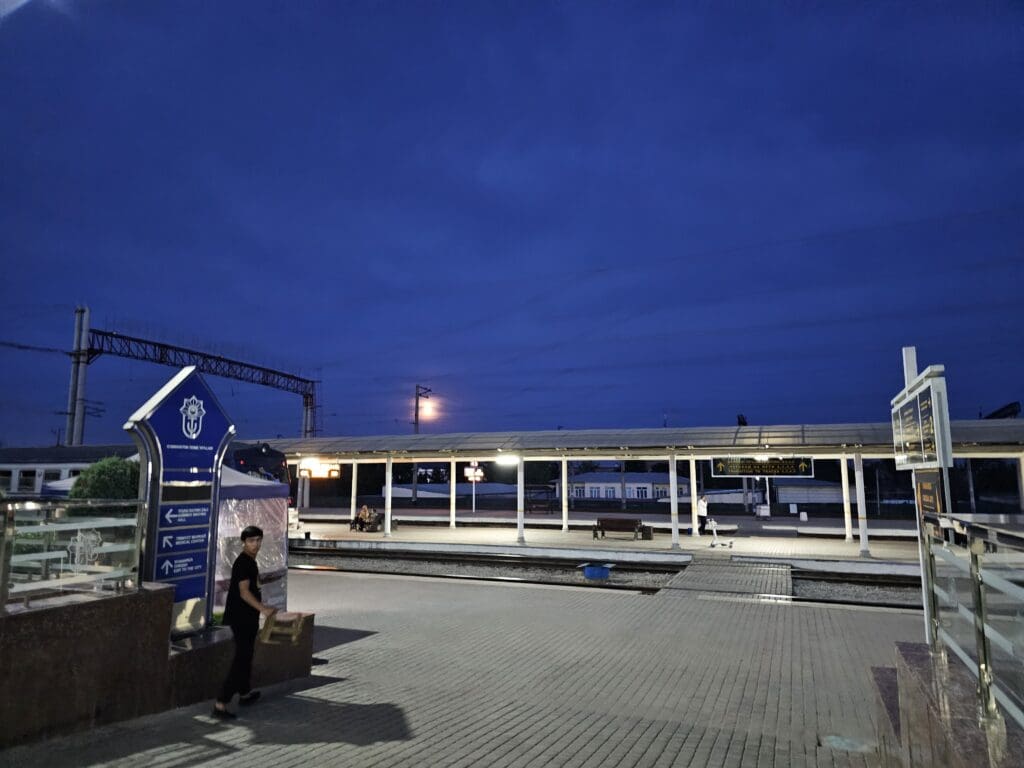
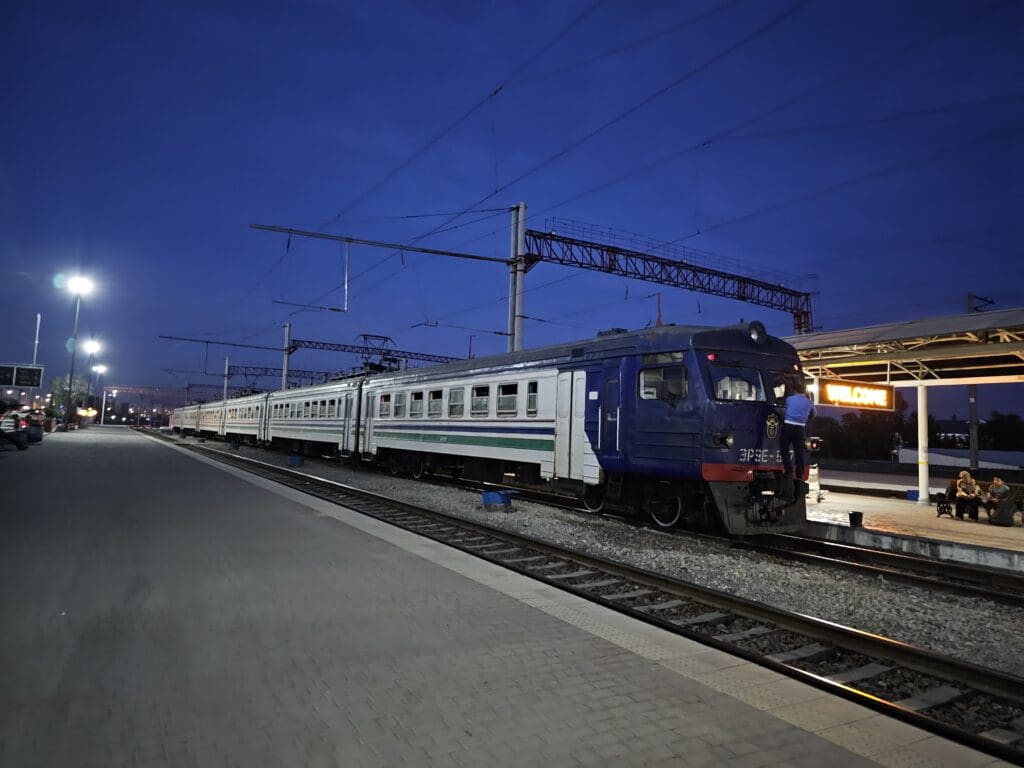
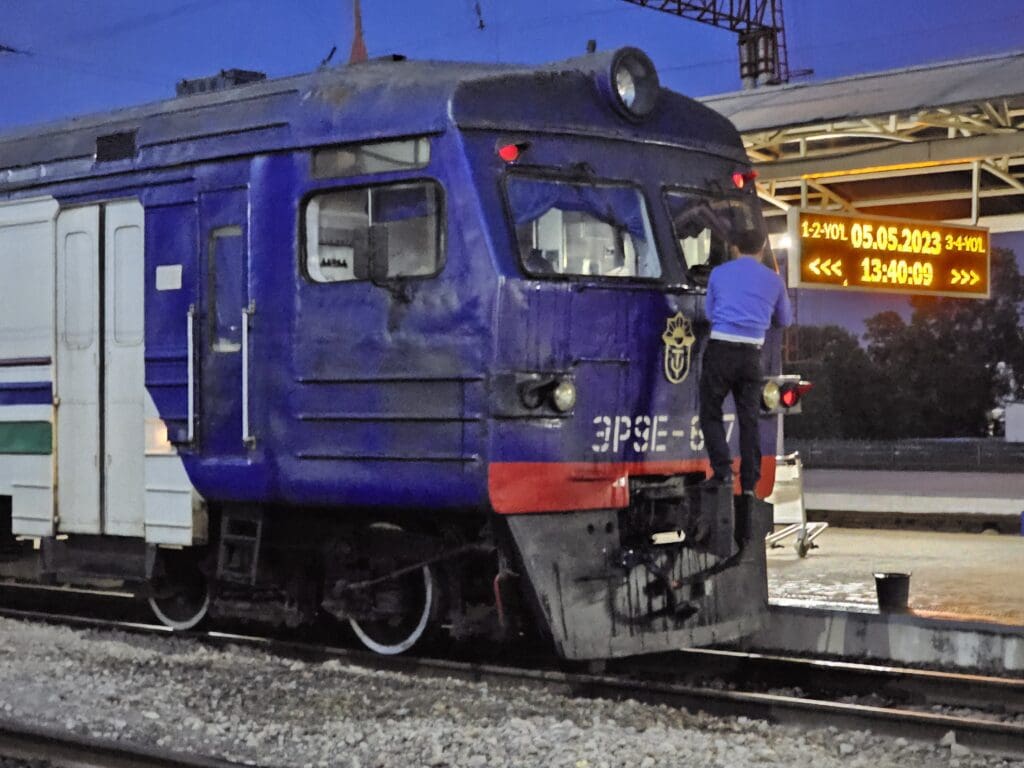
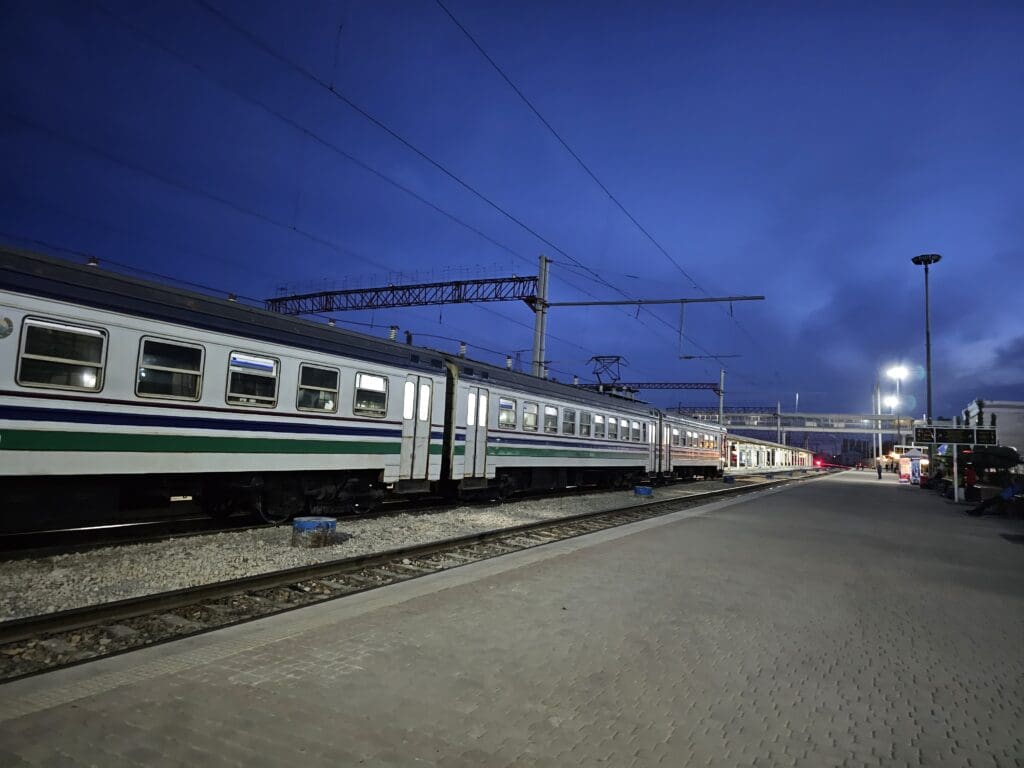
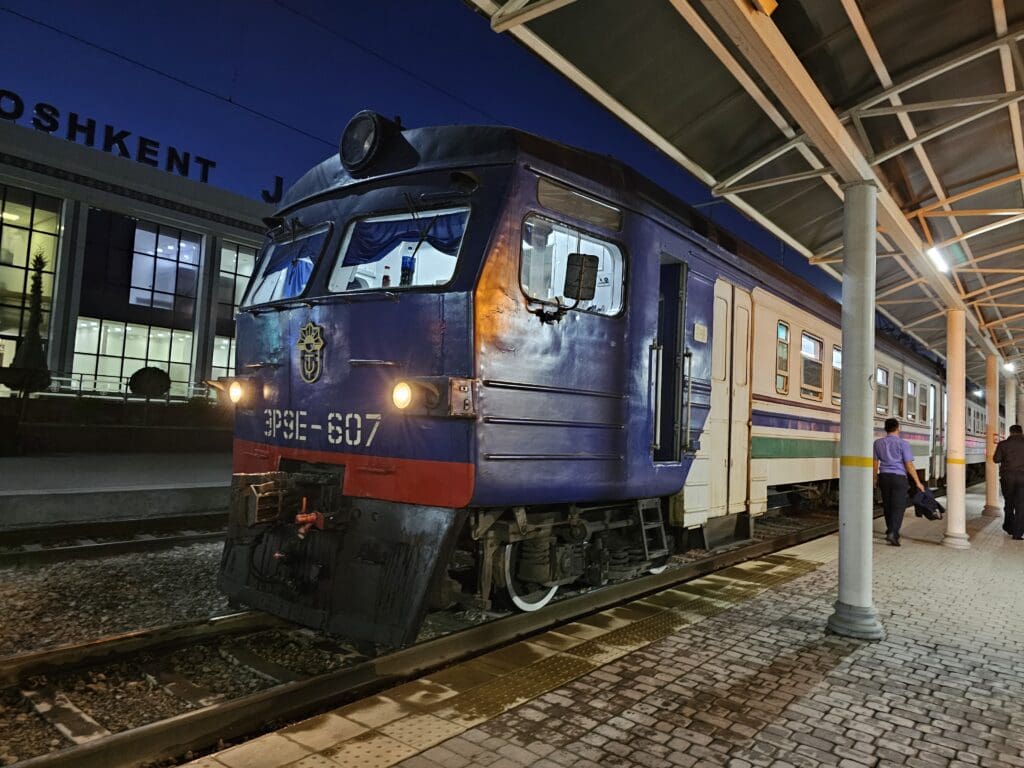
Whilst darkness had fallen, seeing as it was still relatively warm, I decided to get as much fresh air as possible before locking myself away in my cabin and thus headed outside to the platform. Far from being the world’s busiest station, at that time, just one train could be seen waiting across the tracks. This came in the form of an old and slightly rusty-looking ER9 electric multiple unit. Manufactured in Riga during the Soviet era, these trains remain commonplace on short commuter routes across the former Soviet Union.
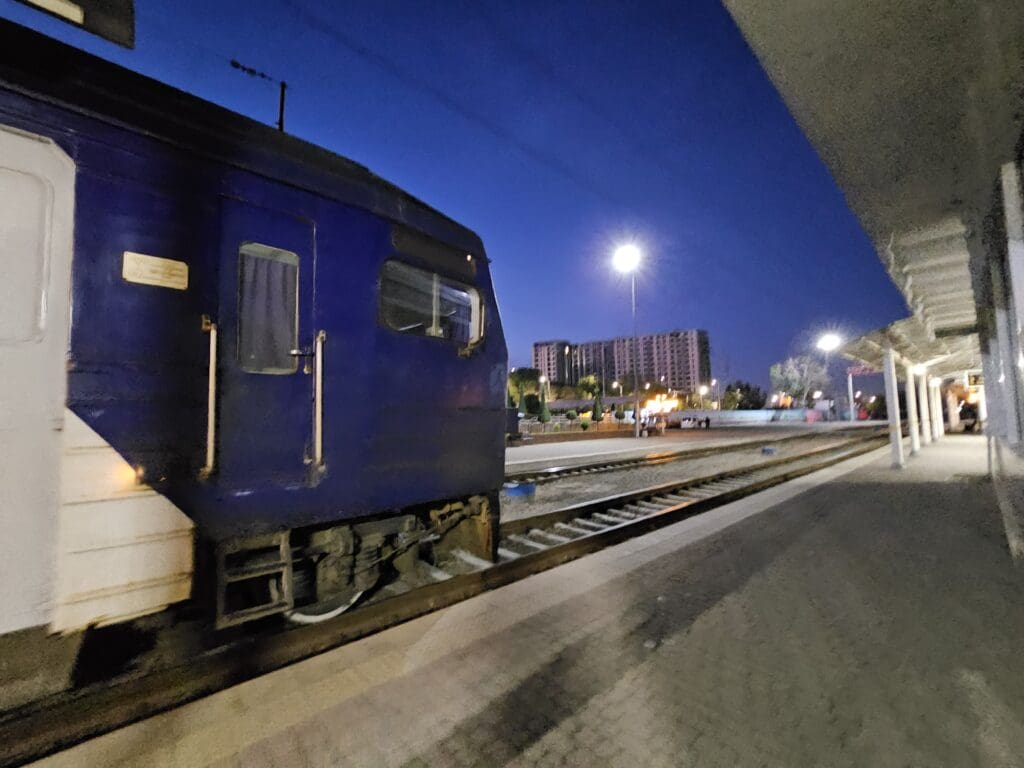
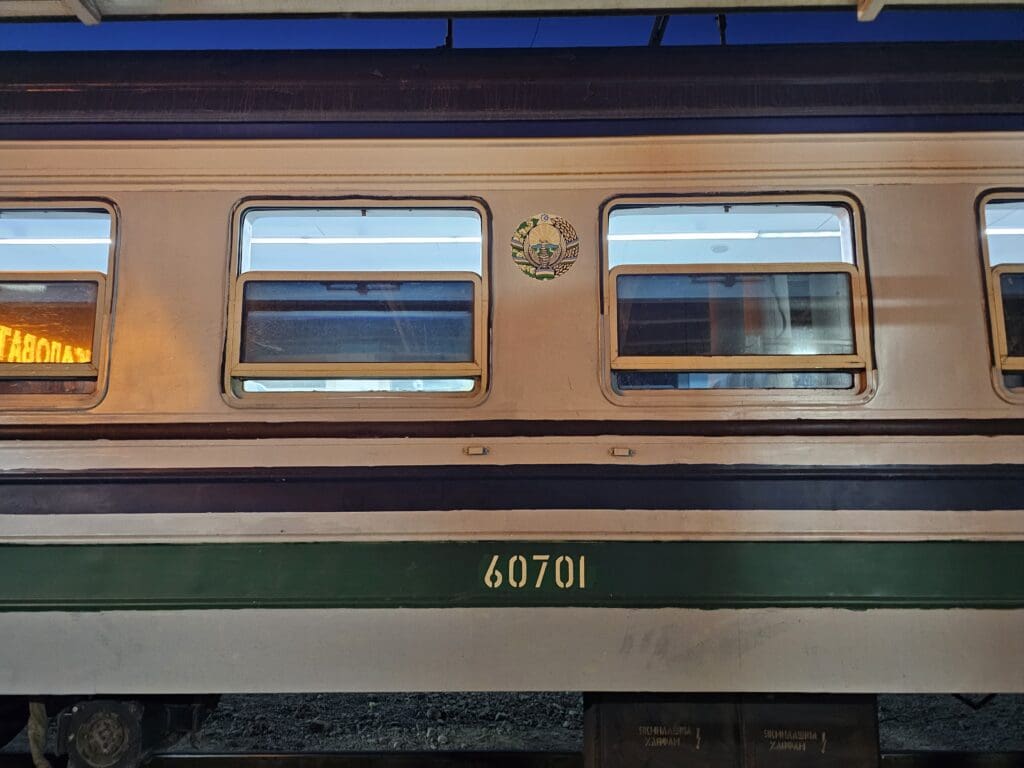
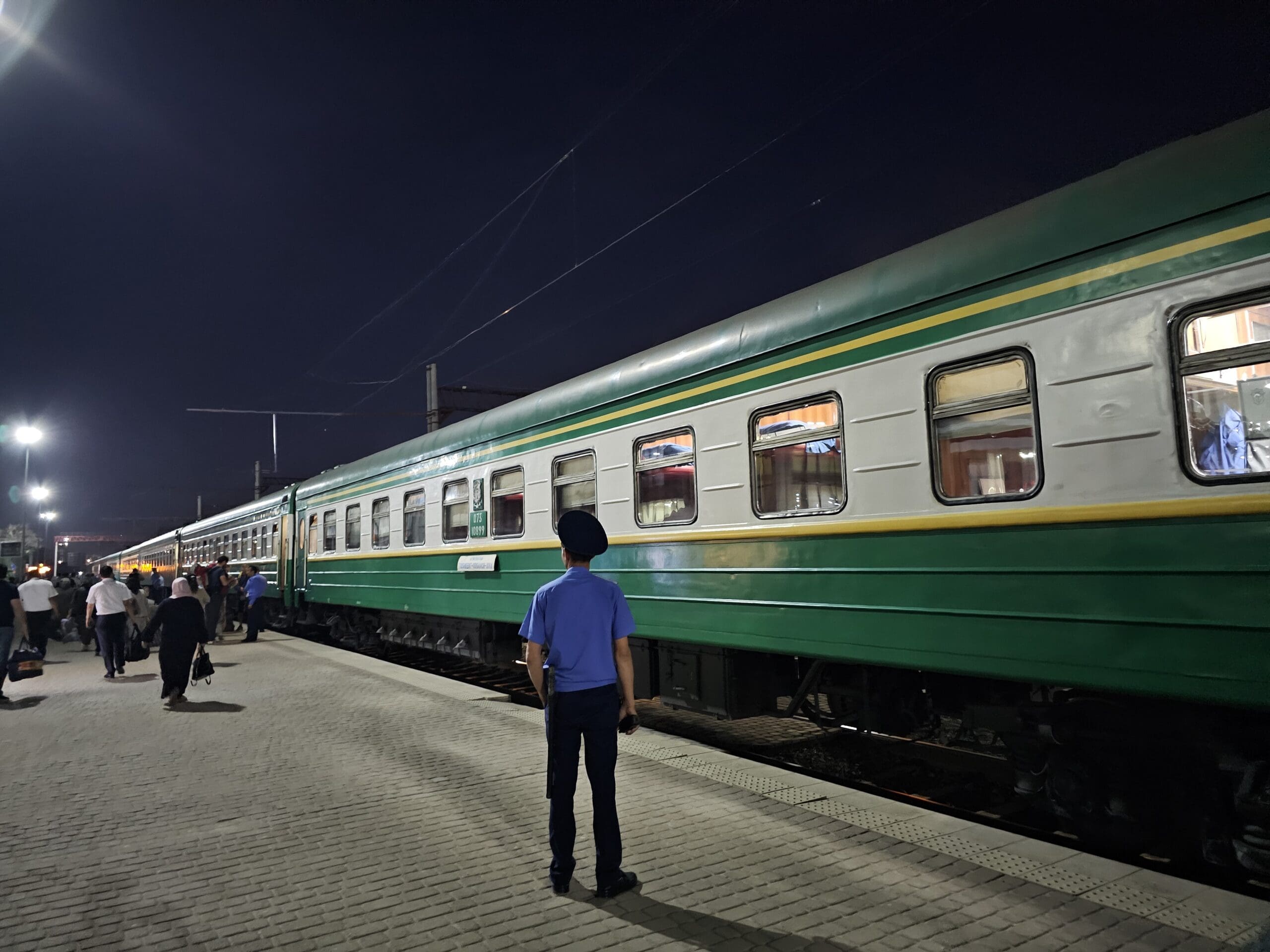
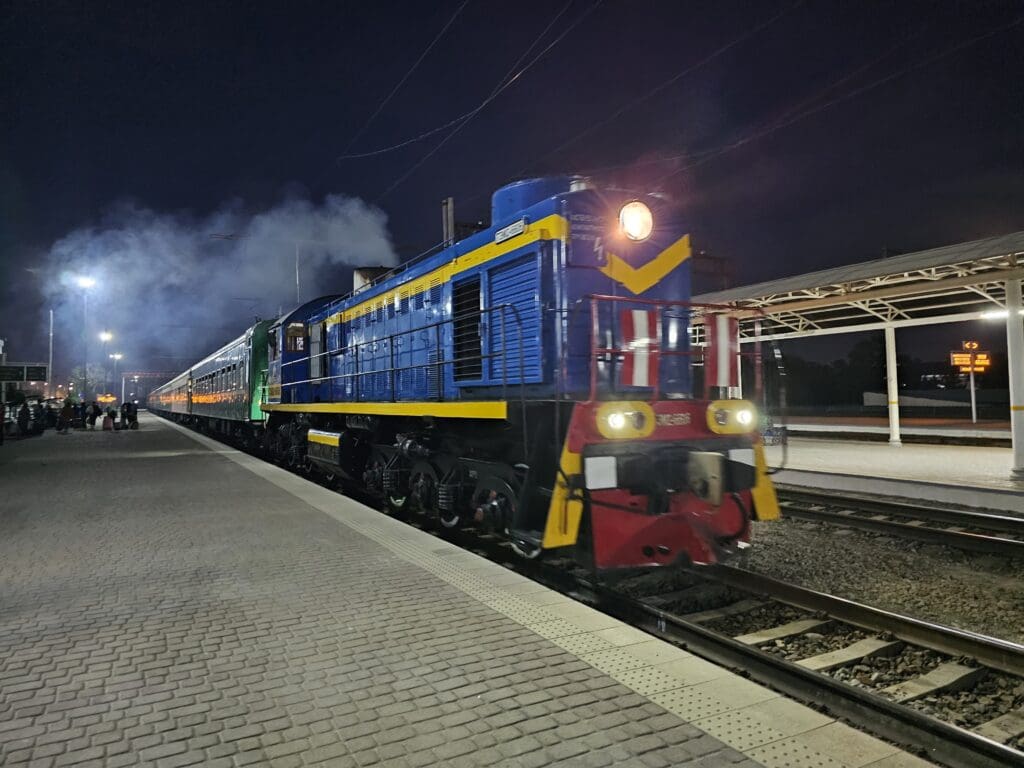
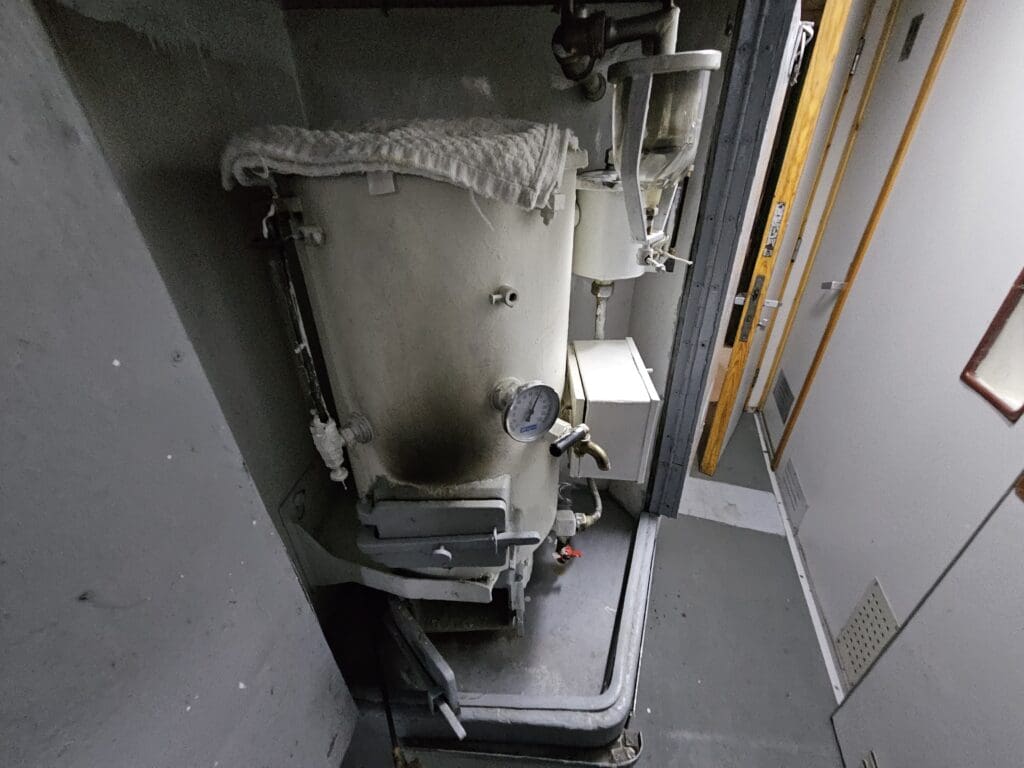
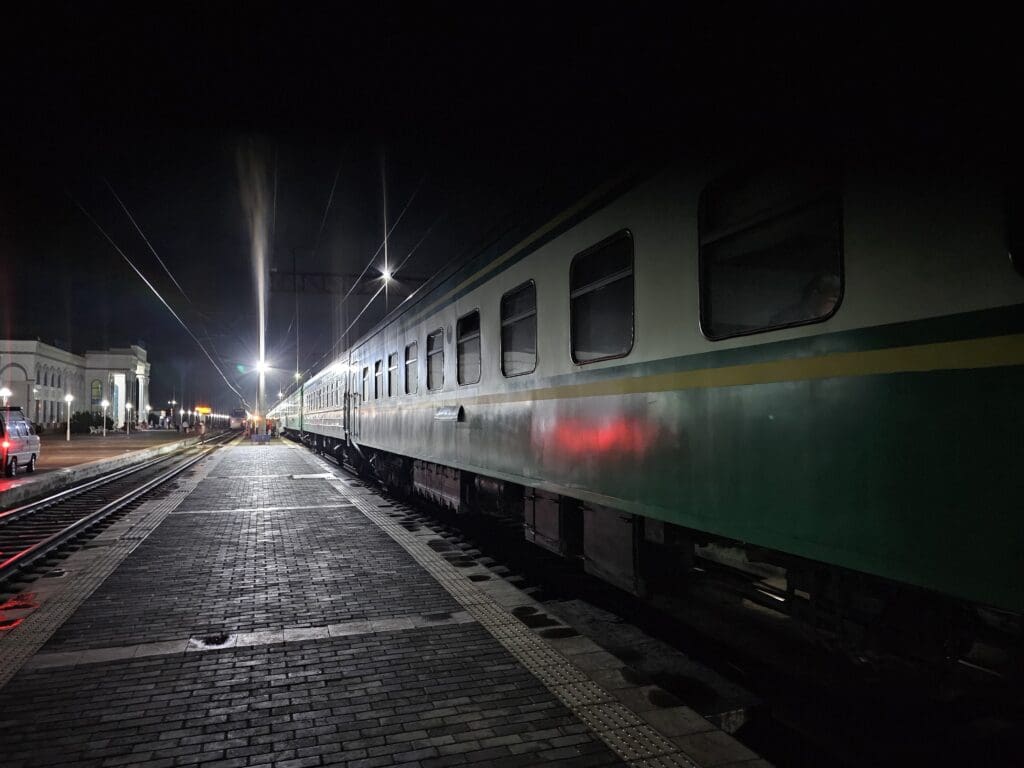
In spite of my early arrival, seeing as the train would commence its journey in Tashkent rather than in the far east of the country, I didn’t have to wait long until the train arrived. With fifty minutes to go, I watched as an old and very smoky diesel shunter pulled a long rake of sleeper carriages into the platform. These seemed to wear a mishmash of various liveries, however, all took the form of old Soviet-era carriages, and each was complete with the novel sight of small chimneys from which smoke could be seen billowing. This originated from the coal-fired boilers used to heat the samovars at the end of each carriage!
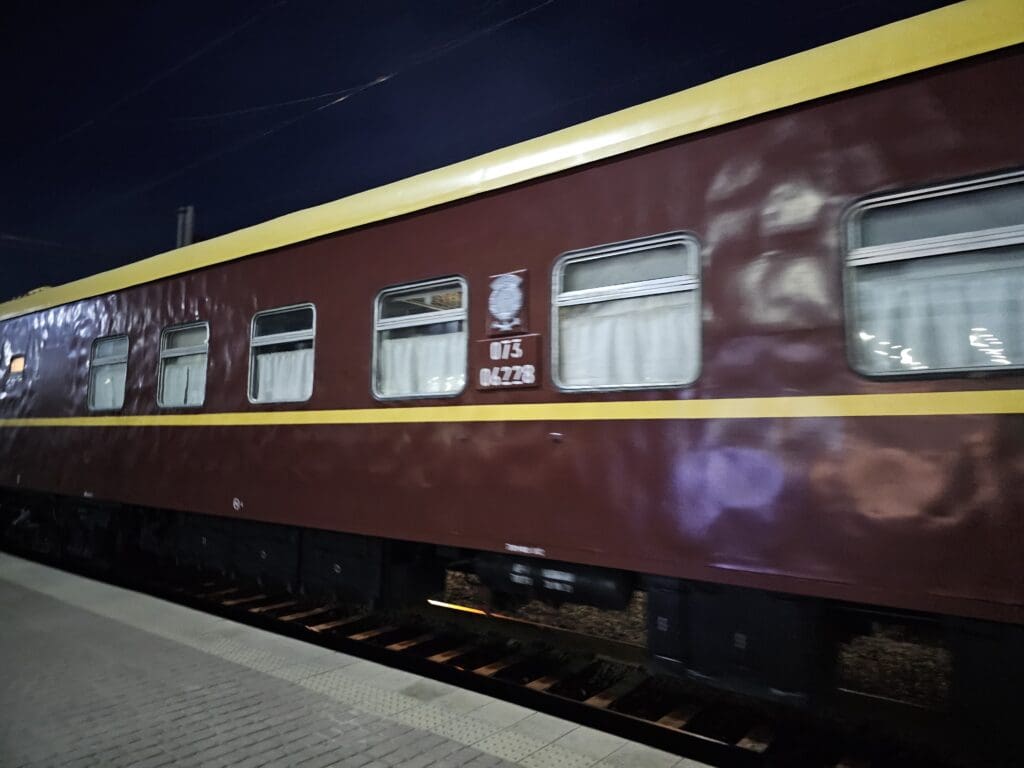
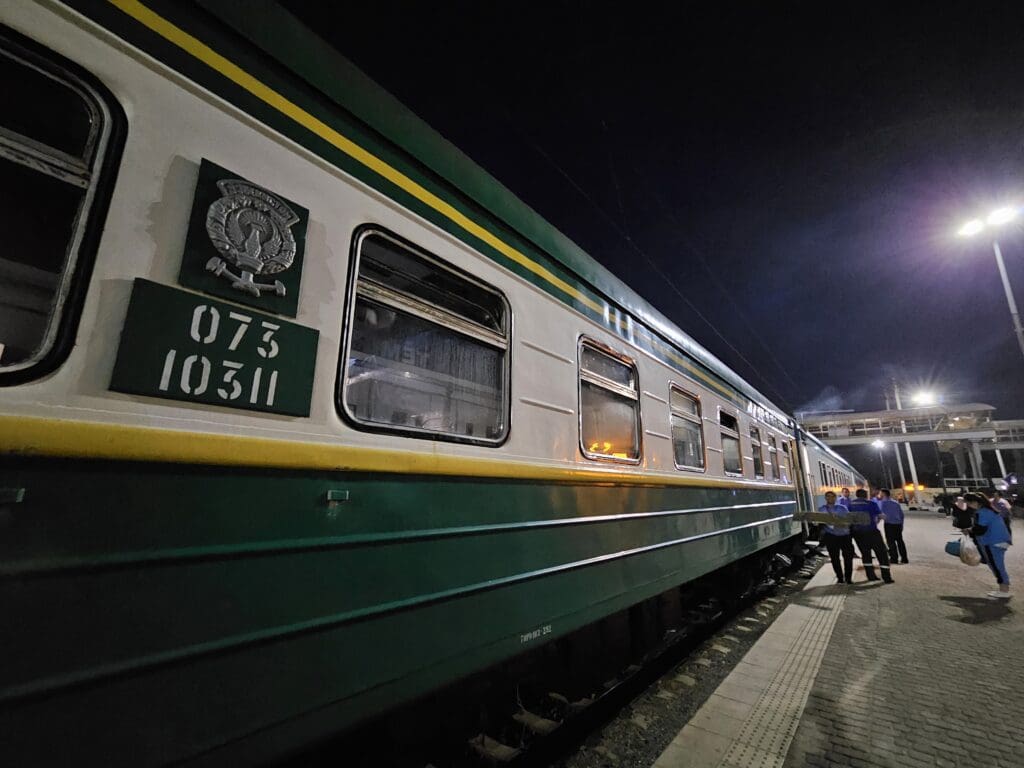
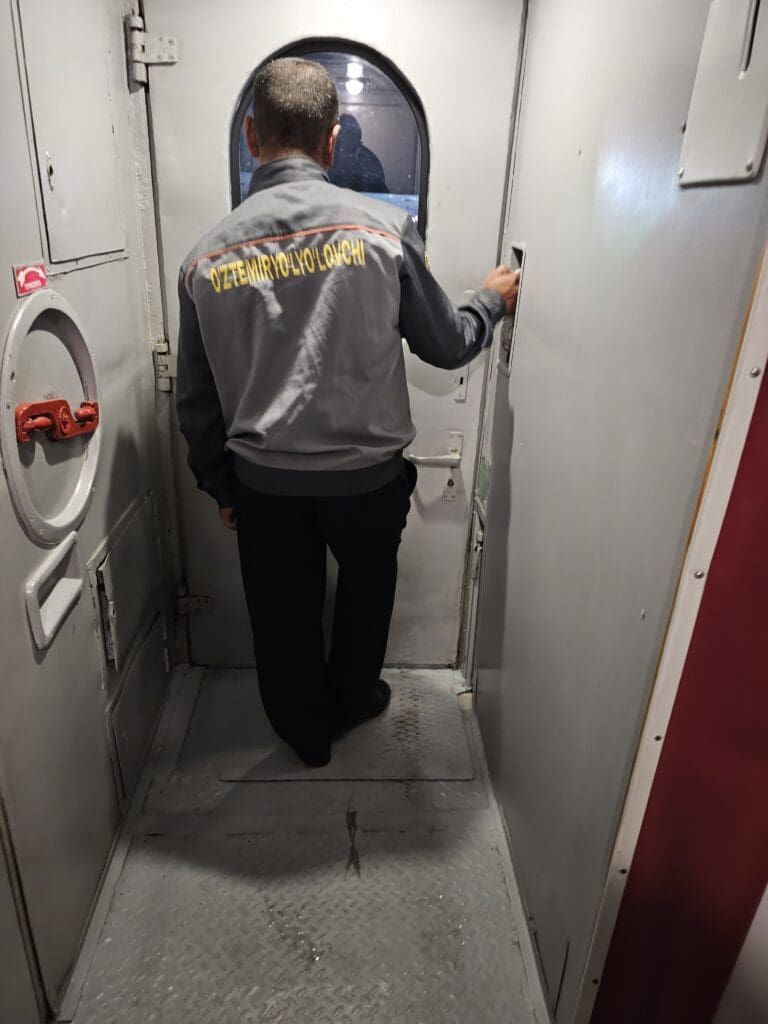
As soon as the train came to a squeaky halt, an army of Uzbekistan Railway workers dressed in their military-esque uniforms descended from the train and began to welcome passengers. As far as I could tell, it seemed that most carriages enjoyed the luxury of their own attendant whose responsibilities included looking after passengers and unlocking and opening the doors at each station. It is worth noting that with the carriages’ toilets depositing waste directly onto the track, one of the attendant’s duties involved locking the toilets as we approached each stop and unlocking them afterwards.
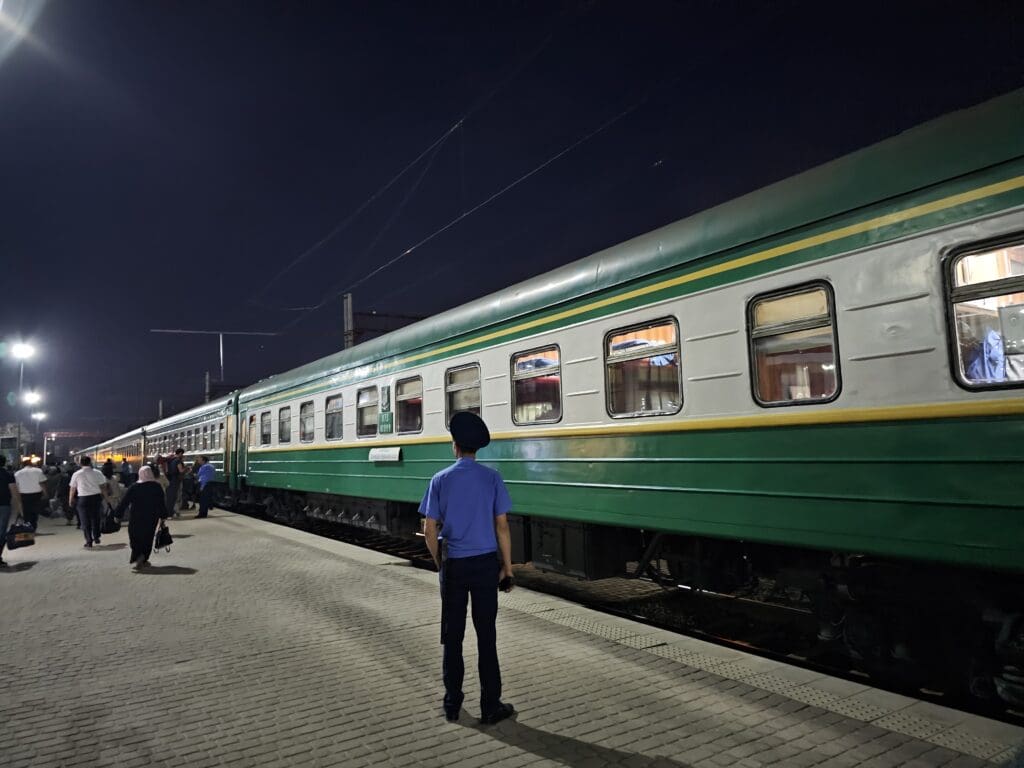
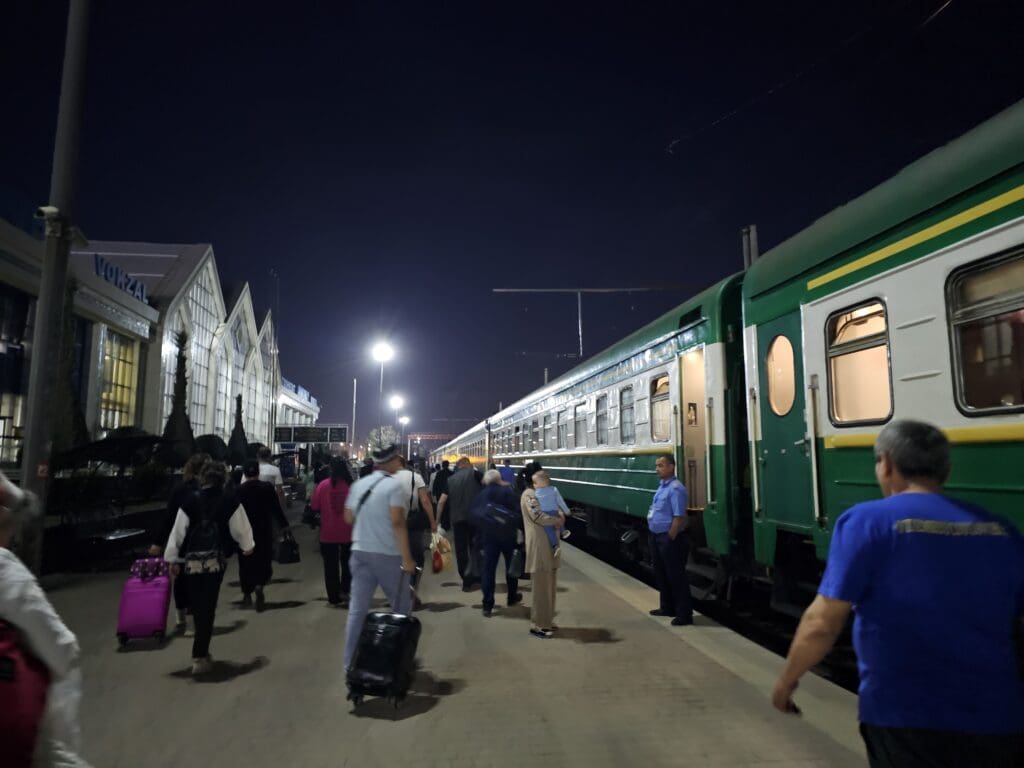
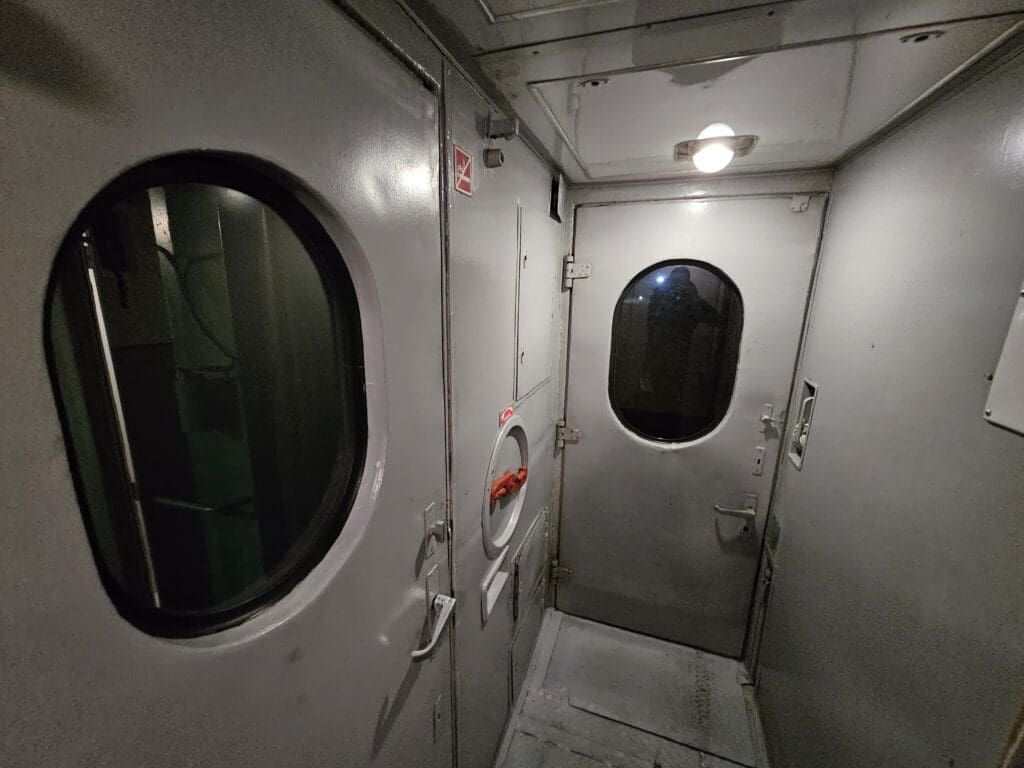
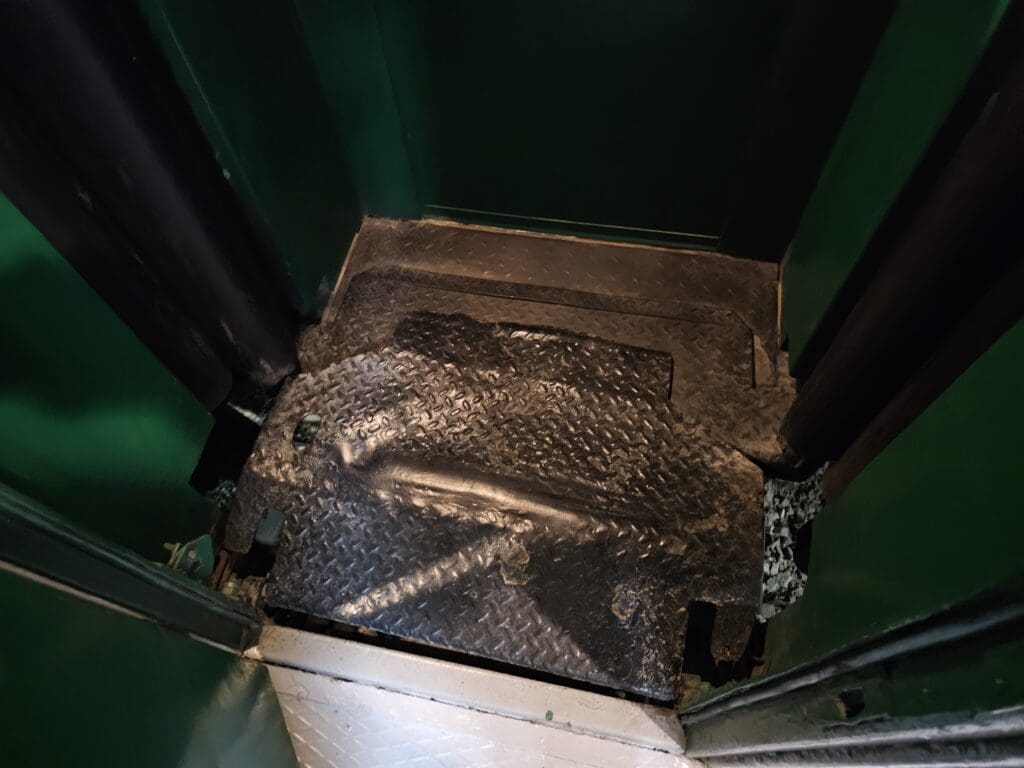
Ready and raring to embark on my Uzbek sleeper train experience, I soon headed down the platform and found my carriage. As I neared the door of this, a tough-looking yet friendly middle-aged railway worker smartly dressed in Uzbekistan Railways’ uniform greeted me in Russian, at which point I showed my ticket and passpor,t at which point they seemed to be rather surprised at both the fact that I had booked the entire two-berth cabin. Fortunately, not taking issue with this, I was soon allowed to climb up into the Soviet-era time capsule. With the exception of the non-functional television screens in each cabin, the carriage appeared to have undergone nothing other than minimal renovation during its long career on the rails. In fact, to a non-expert, there was probably little inside this that would have surprised a passenger in the seventies or eighties. Once out of the vestibule, I turned left and passed the samovar, as well as the attendant’s cabin and toilet – one of two in the carriage. I then headed down the narrow corridor that runs down the left-hand side of the carriage before arriving at my cabin, which was located roughly in the middle of this.
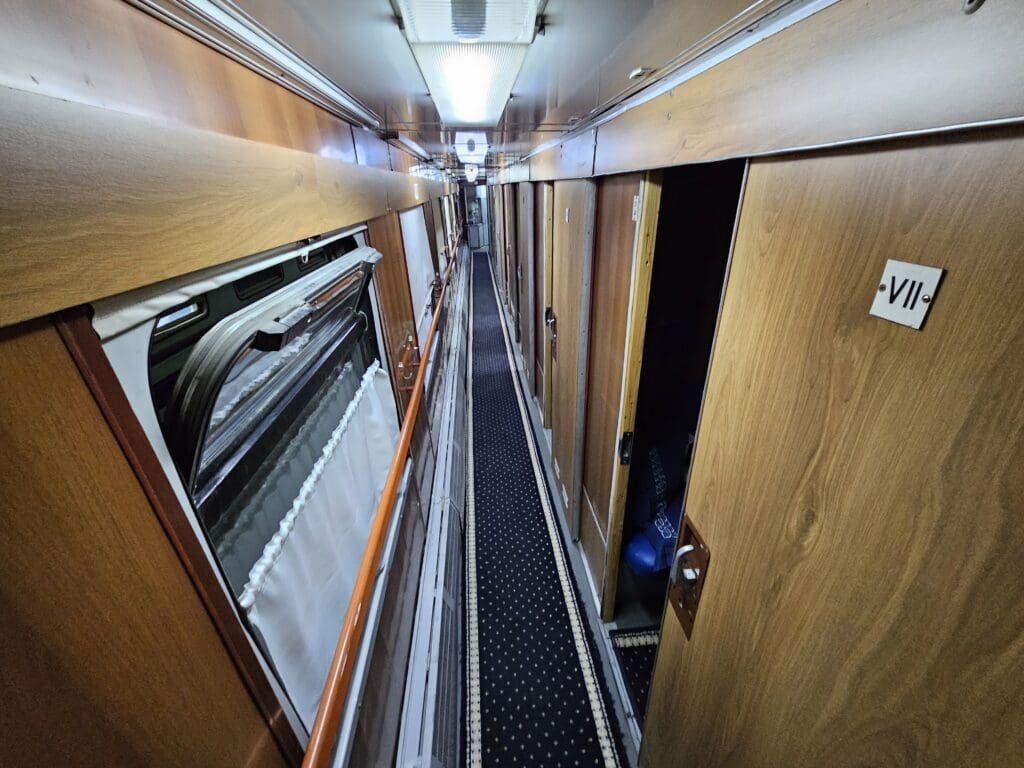
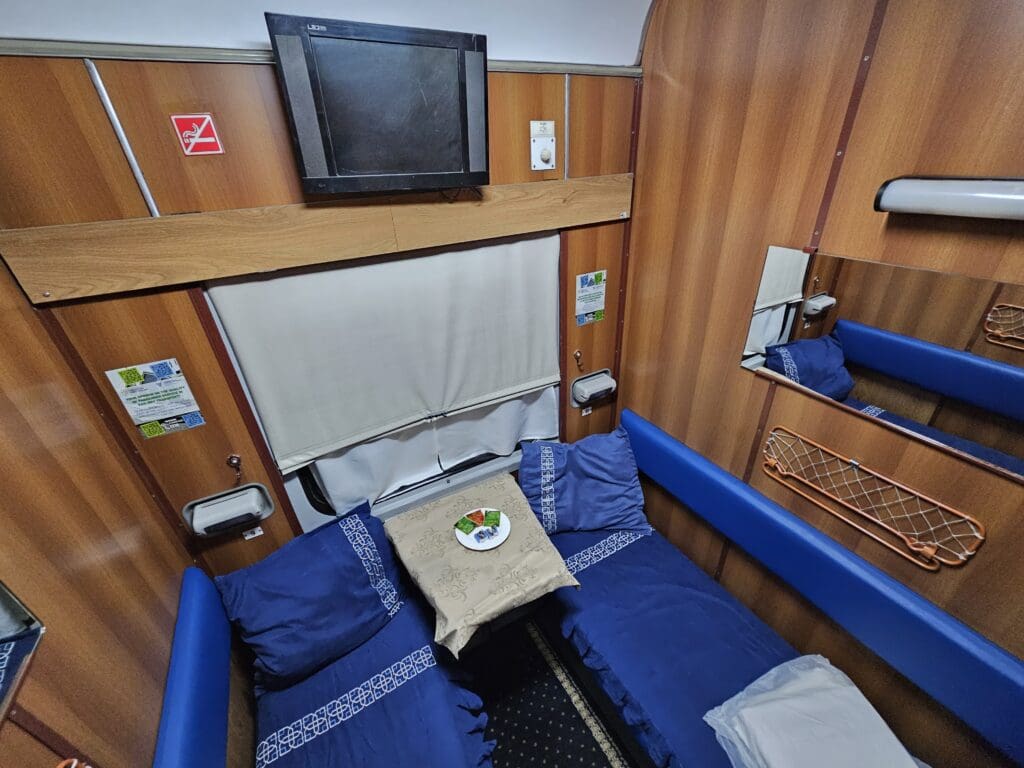
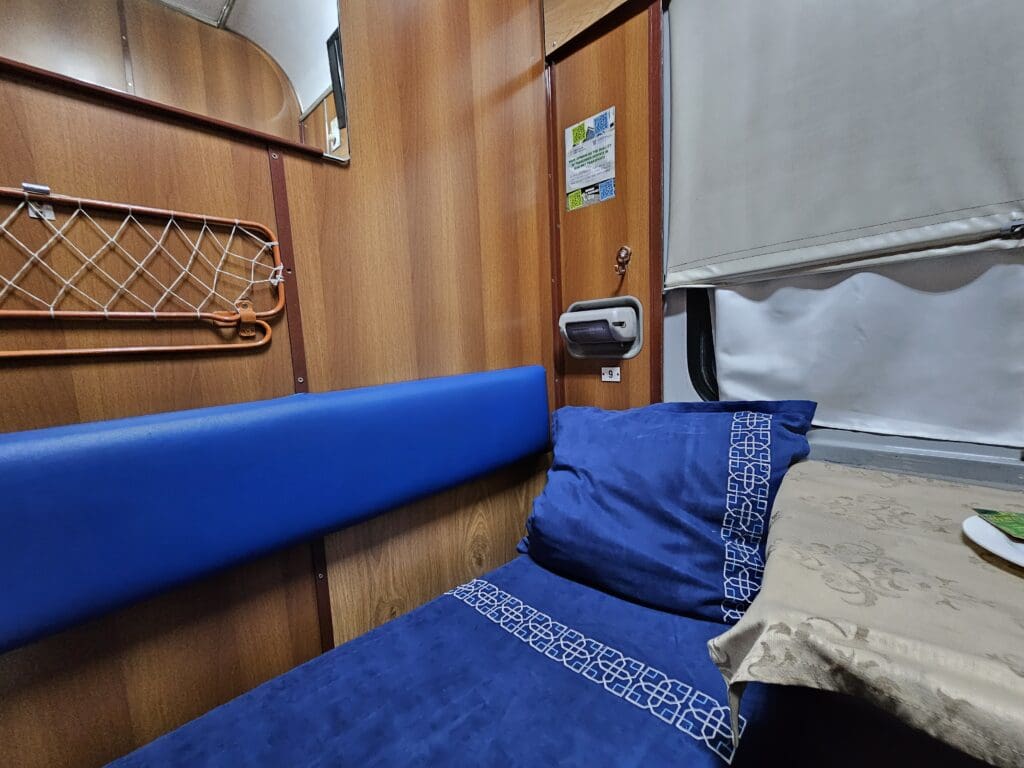
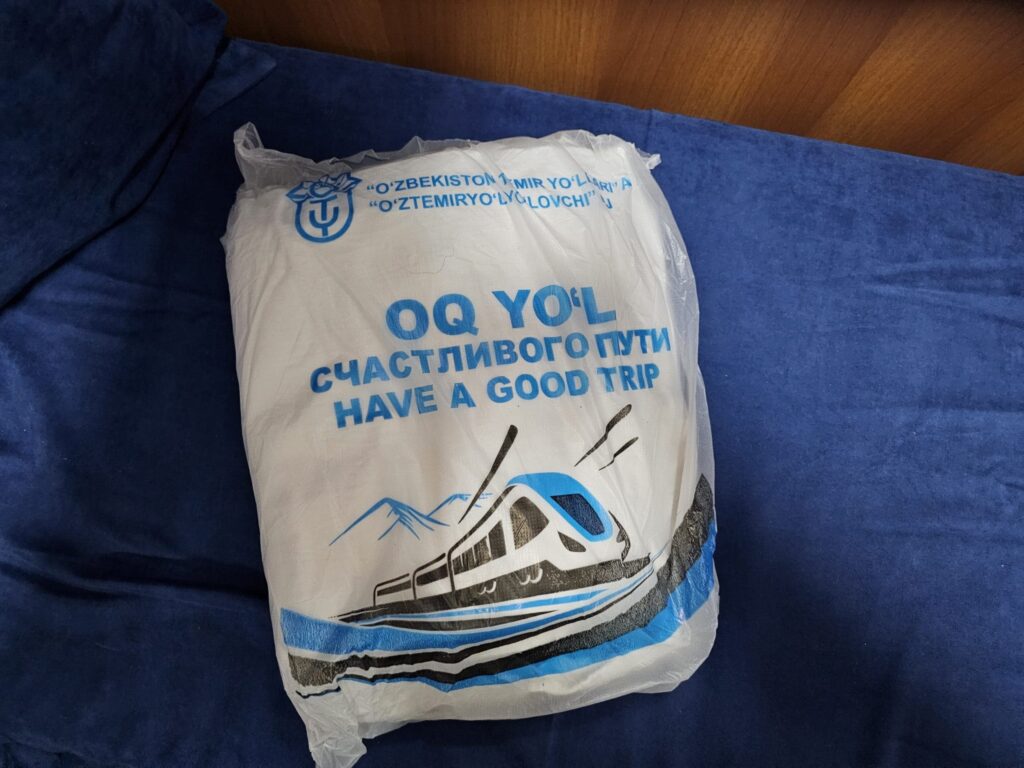
Upon entering through the sliding cabin door, in spite of its retro aesthetics, I found my cabin to be clean and tidy. This consisted of two firm beds on either side of this, separated by a small table jutting out from underneath the window – with this covered in a table cloth and featuring a paper plate on which snazzy Uzbekistan Railways branded teabags and sugar cubes had been placed. Meanwhile, bedding had been placed out on the bed ready to be made, and far from the likes of Emirates or Singapore Airlines, I am almost certain that the attendant would not have been best pleased to be called out to any of the cabins to make this up! For those with large bags and the muscles to lift them up, a storage area could be found just above the sliding cabin door. Finally, no working plug sockets could be found anywhere in the cabin or indeed the carriage and so I would advise those on longer journeys to bring battery packs with them.

After exploring the nooks and crannies of the room, I made my bed and settled in for the journey ahead. Whilst I had been one of the first to board the carriage, it wasn’t long before this was a hubbub of activity, with many of the rooms ending up being filled before leaving Tashkent. As one would likely expect, most of my fellow passengers hailed from Uzbekistan, although I did have a brief conversation with an Australian couple a couple of cabins down who were equally amazed by the novelty of the train! As we waited to depart, several jolts could be felt as the shunter was decoupled from the carriages, and a ‘proper’ locomotive was added, ready for the overnight haul to Khiva. Unfortunately and disappointingly for rail fans, I didn’t manage to get up close to this, so I’m not too sure whether this was an old Soviet-era locomotive or one of the many more modern ones that plough Uzbekistan’s railways.
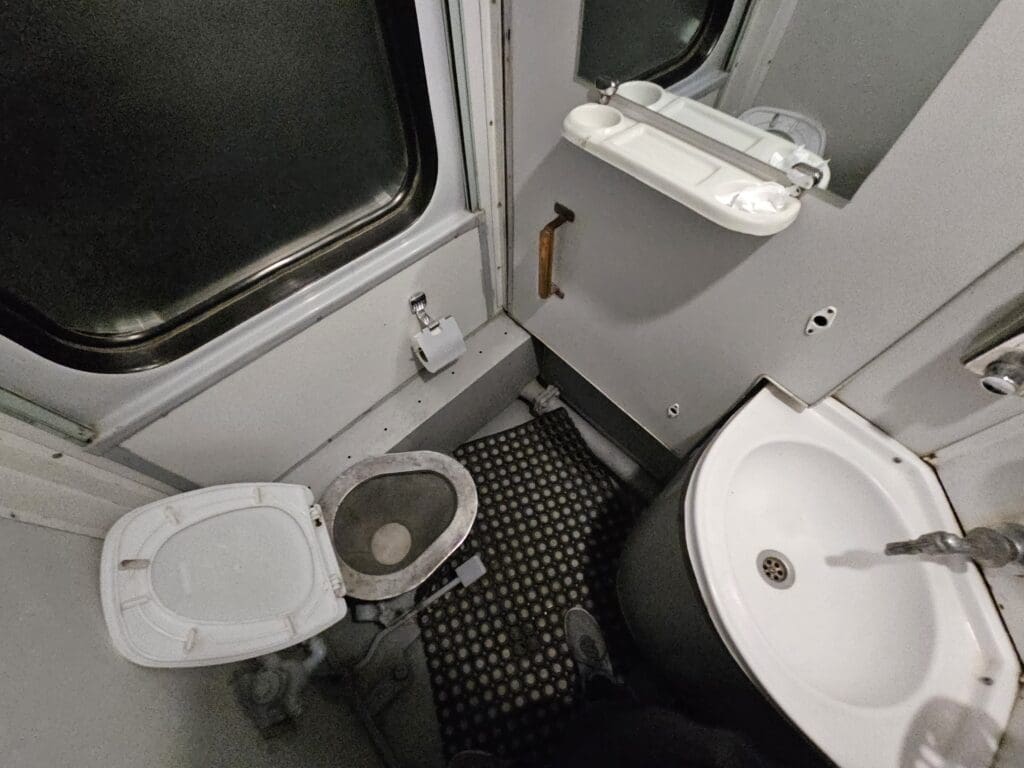
Keeping to schedule, at 2100, the train jolted forward as we began to rattle away from the platform, making a slow and rather rickety exit from Tashkent before picking up speed as we journeyed southwestwards out into the dark countryside. Several minutes into the journey, a vendor passed through the carriage with a bucket of ice containing a selection of alcoholic and non-alcoholic drinks as well as a plastic bag of various snacks. Passing on these, it wasn’t too long before my cabin door slid open, at which point the attendant appeared with another passenger in tow. As it happened, it seemed that the attendant had offered this passenger an unofficial upgrade, giving my second bed to another passenger! Bearing some resemblance to a film or drama where a new prisoner arrives in their cell and meets their cellmate for the first time, the guard then slammed the door shut. Given my poor Russian and non-existent Uzbek skills, as well as their lack of English, we exchanged few words and sat around awkwardly for a while before I decided to make a temporary escape in the form of a trip to the bathroom. Whilst relatively spacious, I have to say that this was far from the nicest train toilet that I have had the pleasure of visiting and did not seem to be in the best of states.
By the time I returned to the cabin, my new cabinmate had turned off the main light and was now laying down on their bed listening to a selection of upbeat and high-tempo electronic music. Holding the belief that they were going to turn it off before they decided to sleep, unfortunately, I was proven wrong as this continued to ring out once they had fallen asleep and remained playing at full blast for the entire journey to Bukhara.
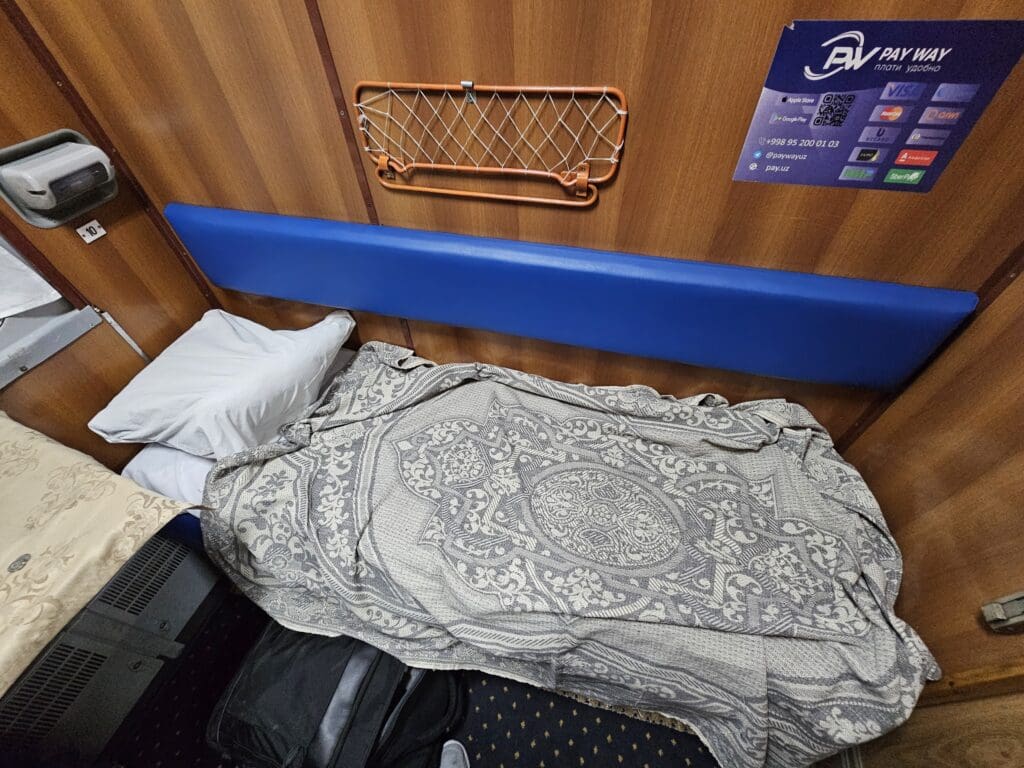
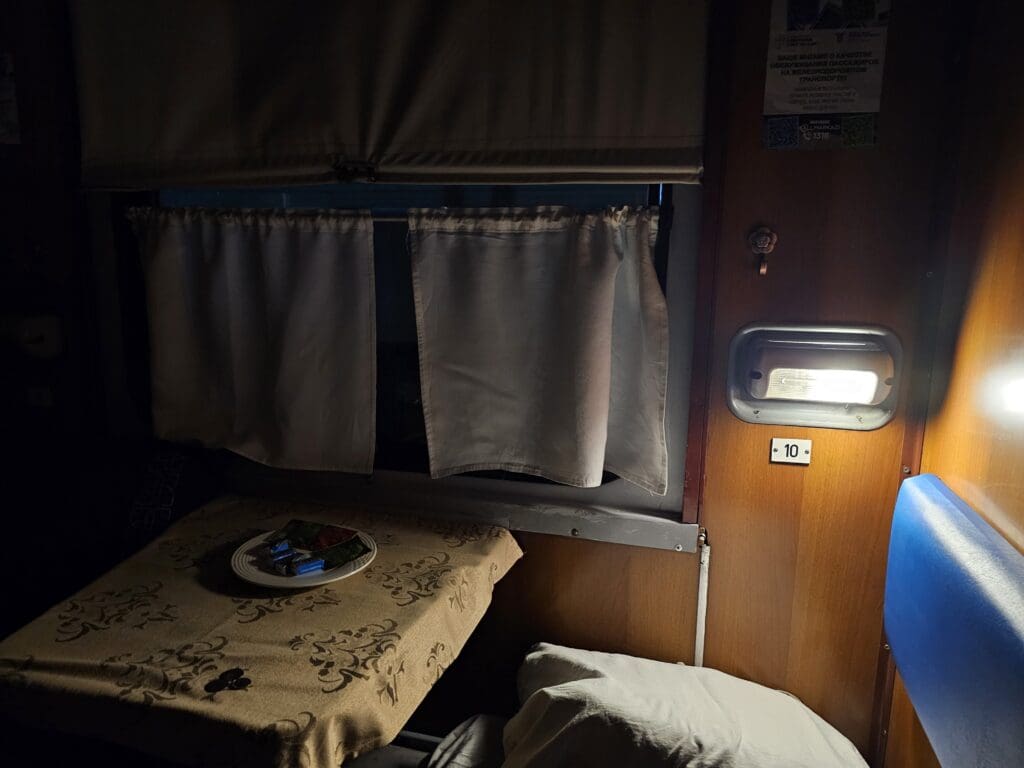
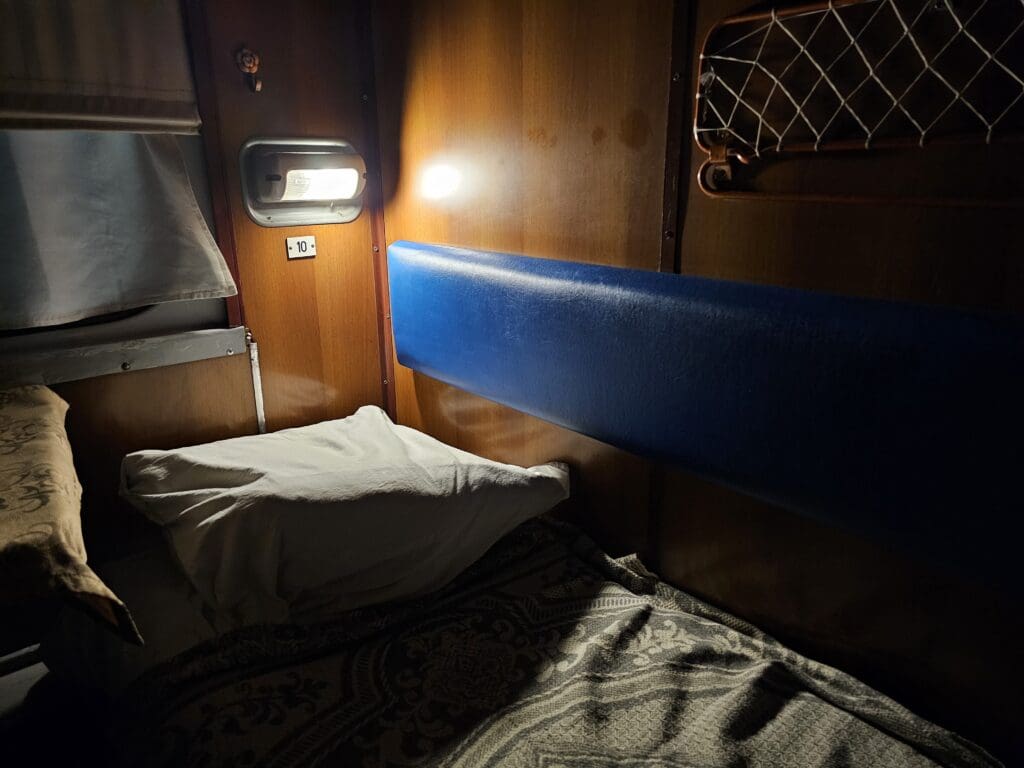
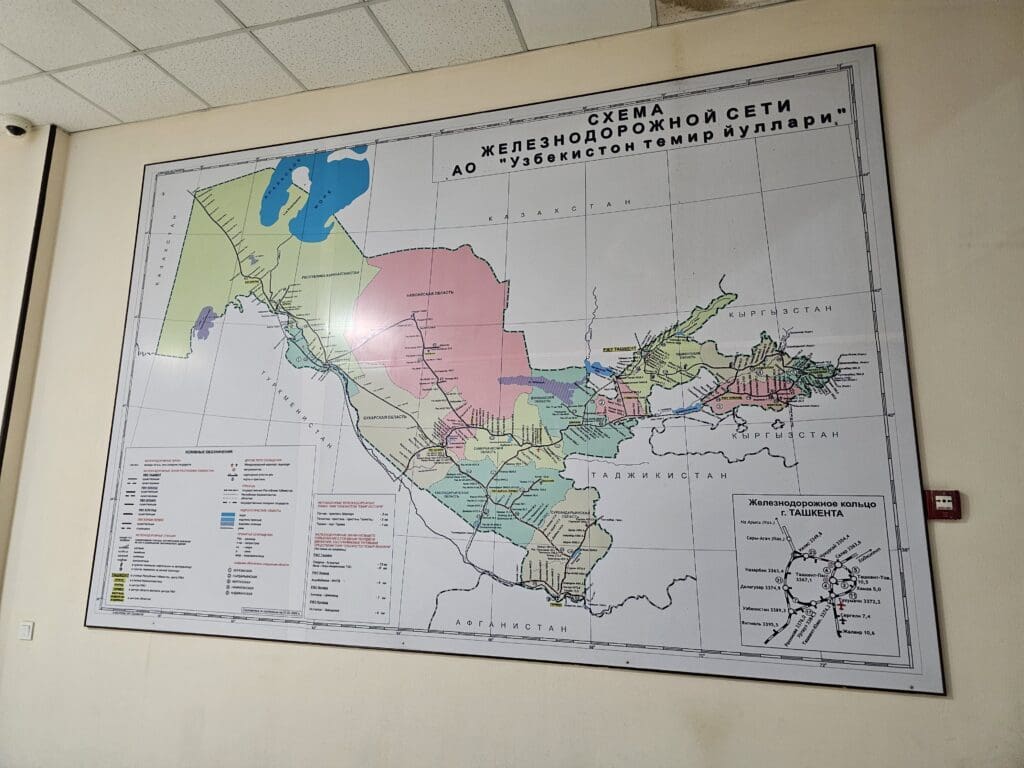
Turning to the route, after leaving Tashkent, the train made its way southwestwards, travelling roughly parallel with the country’s border with Kazakhstan and coming within about a mile and a half of this before leaving the Tashkent Region behind. A little over an hour after we had left Tashkent South Station, the train could be felt decelerating with a few rough jolts and soon we pulled up to our first stop, Guliston. Home to fewer than 100,000 residents, this is a small city that sits around 75 miles (120 kilometres) from Tashkent in Uzbekistan’s Sirdaryo Region. As we pulled into the platform, few passengers could be seen waiting although those that did seemed to be carrying vast quantities of cargo with them.
Following our short station stop, the train pulled away and we sped almost directly southwards until we reached Hovos. This is a small town located on Uzbekistan’s border with Tajikistan. Unable to continue any further south without crossing this, the train took the line that branches off to the west although continued to travel parallel to and in very close proximity (around 300 metres) to this border. After a while, city lights appeared outside and the train could be felt slowing down as it neared the city of Jizzakh. This is slightly larger than the first stop and is home to around 179,000 inhabitants. There, a fair number of passengers joined the train before we continued onward into the night.
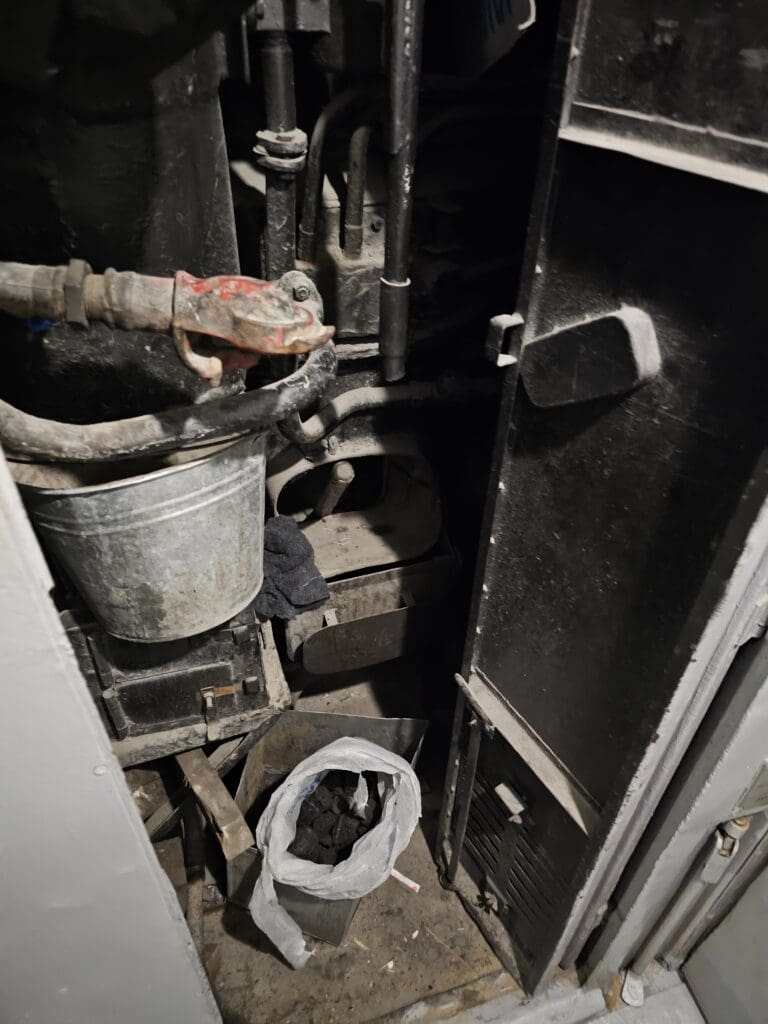
In spite of the noise coming from my cabinmate’s phone, as we rattled through the Uzbek countryside, I managed to successfully get about twenty minutes of sleep. Around an hour and a half after leaving Jizzakh, the train pulled into Uzbekistan’s second-largest city and one of its tourist hubs, Samarkand. There, once again plenty of passengers joined the train and this seemed to wait for quite some time before continuing onwards. Eventually, a train on its long journey from Termez, a city which sits on Uzbekistan’s border with Afghanistan, to Andijan on the far eastern side of the country pulled up to the opposite platform. Presumably having had to wait for this train to clear the line ahead, a short time later we were on the move again and soon the lights of Samarkand faded off into the distance.
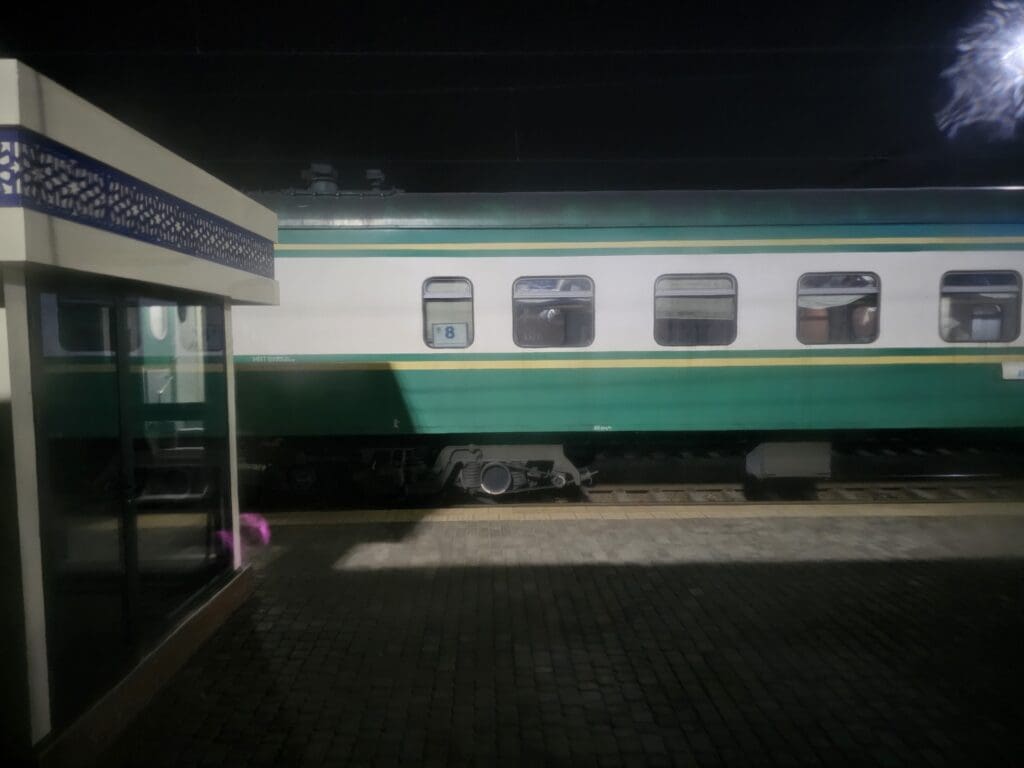

Around an hour after leaving Samarkand, the train came to a halt at what seemed to be a small station in a very small town – this turned out to be Zirabulak. Soon enough, we were on the move once more heading towards the city of Navoi. Whilst this is not the most visited city in Uzbekistan, aviation enthusiasts may know this for its status as an air cargo hub, with its airport hosting the largest freight terminal in Central Asia! Following another short stop, the train continued onwards through the night and around an hour and a half later, the train could be felt decelerating once again. By this time, I was rather looking forward to getting tucked up in a proper hotel bed and away from all the noise of my cabinmate’s phone and the rattling of the train. After ensuring that I had everything with me, I slid open the cabin door and slipped out, making my way to the end of the carriage ready to disembark. Upon reaching the end of the carriage, the attendant could already be seen waiting to open the door as we pulled into Bukhara-1 station before the train came to a squeaky halt. After coming to a stop, the door swung open and I headed down the steps before setting foot in Bukhara. Unsurprisingly, few passengers seemed to disembark there and I was the only person to do so from my carriage. Contrasting with our old and clunky-looking train, on the neighbouring platform a modern Afrosiob high-speed train could be seen ready to depart to Tashkent.
Heading down the dark platform, I followed signs for the exit where a crowd of unofficial taxi drivers could be seen waiting to shuttle passengers to Bukhara. Unfortunately, Bukhara-1 Station is located a fair distance (around 15 kilometres) from the city centre, and at this time, the only way to reach this was to take a taxi. In spite of arranging a ride beforehand with the hotel that I was to stay in, unfortunately, following my arrival, this driver was nowhere to be seen. With no working SIM card and no proficient knowledge of Russian or Uzbek, I had little choice but to succumb to an overpriced unofficial taxi ride. After being quoted a price of $40, I managed to halve this before getting into the back of the driver’s old and battered car. Once away from the station, they hurdled down the bumpy streets of Bukhara at worrying speeds, although thankfully, around fifteen minutes later, we arrived at the Old Town without any damage or injury. Finally, at around 0430, I made my way into my hotel room, ready for a good night’s sleep after my sleeper train journey.
Summary
Whilst not the most relaxing of journeys, I was glad to have experienced an Uzbek sleeper train at least once. Would I do it again? I’m not too sure, and if I do travel between Tashkent and Bukhara again in the near future, I think I would probably opt to take one of the Afrosiyob services instead.