Trying Out One of Canada’s Best Airlines: Sudbury to Toronto on Porter Airlines
Background
Needing to get from Sudbury to Toronto following my ride over from Thunder Bay in a Bearskin Airlines Metroliner, I had two options – flying on an Air Canada Express Bombardier CRJ-200 to Toronto Pearson, or travelling with Porter Airlines to Toronto City. Considering Porter Airlines’ good reputation, and with with this proving to be the cheaper and more convenient option, with a suitable departure time, I decided to make the journey down to Toronto on Porter Airlines.
Booking
Booking my flight in mid-September 2021, upon landing on Porter Airlines’ homepage, I was presented with a banner advertising the recommencement of the airline’s service following a long Covid-induced hiatus. Beneath this, the flight search engine could be found and I thus wasted no time in searching for flights. With only two flights scheduled that morning – a 0750 and an 1105 departure, I had little choice but to go for the latter seeing as I would not arrive in Sudbury until 0915. Of these, both had identical fares across all four fare classes: Basic, Standard, Flexible and Freedom, ranging in cost from $144 to $746. Selecting the cheapest option, I confirmed that I was aware of the fare rules and rejected the opportunity to update to the Standard fare for an additional fee. I then entered my personal information before being given the option to add travel insurance, following a long pause I was then presented with various other ‘Bundles’ – namely the StarterPak and PlusPak for an additional $44 and $79 respectively. After rejecting these, I was then presented with another add-ons page, this giving me the option to add a seat for between $20 and $43. Hoping to select a seat at check-in, I rejected this and was then presented with the option to add hold luggage and refundability. Eventually, I was taken to the payment page where I parted with $143.65 and soon received confirmation of my booking.
Check-in
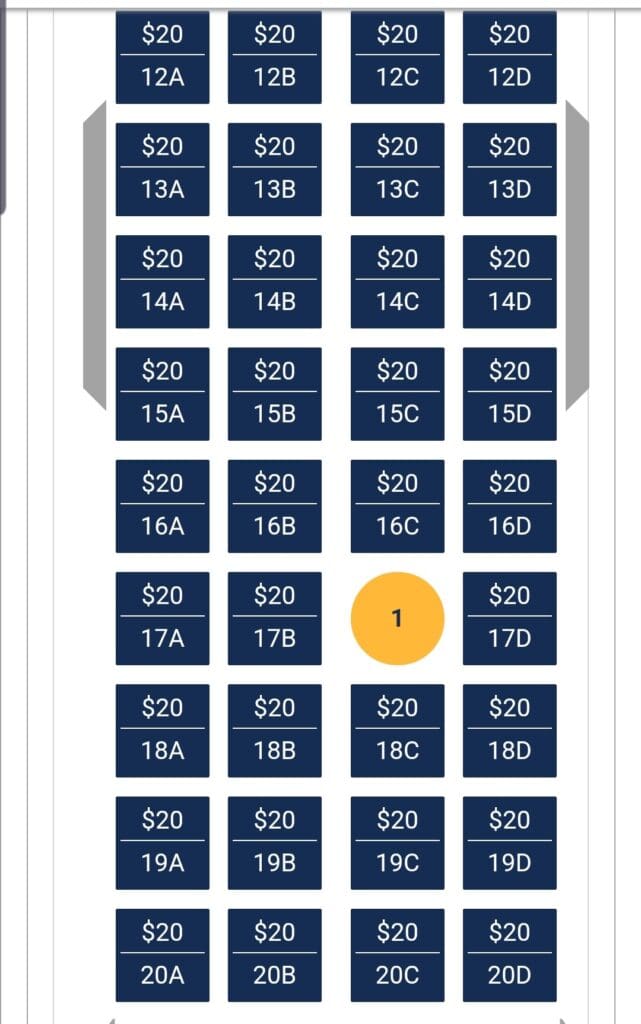
As with many airlines across the world, check-in for Porter Airlines’ scheduled services opens up a standard 24 hours before departure. With 22 hours to go before my flight, I navigated my way over to the airline’s website once again and retrieved my booking without any issues. Upon reaching the seat map, this revealed that I had been automatically assigned aisle Seat 17C. As is the case with several low-cost airlines, this could not be adjusted without paying an additional fee, $20 to be precise. Whilst I had hoped for a window seat on the right-hand side of the aircraft to be treated to superb views of downtown Toronto as the aircraft approached Billy Bishop Airport, I decided against paying any extra and instead hoped that a few vacant window seats would remain. Once I had rejected the opportunity to pay this additional fee, I skipped ahead but soon hit a roadblock. As it happened, travelling on the cheapest fare, I was unable to receive a digital boarding pass and would have to receive this at the airport. Although travelling with hold luggage and therefore needing to visit the check-in desks, this was not an issue.
The Journey
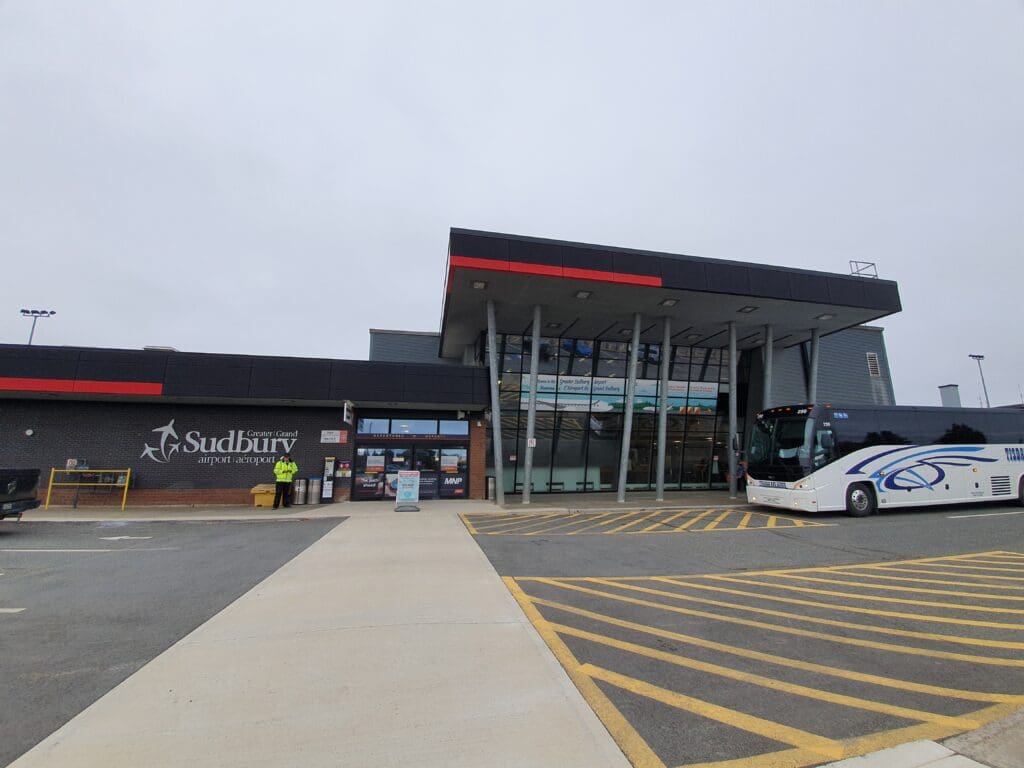
On the morning of my hop down to Toronto, I had touched down in Sudbury at 0920 onboard a rare Bearskin Airlines Metroliner after an early morning flight from Thunder Bay via the border city of Sault Ste. Marie. Seeing fewer than ten scheduled passenger services that day, unsurprisingly Sudbury Airport’s passenger terminal is small and compact so I was not overly concerned about having to rush through the airport during my almost two-hour stopover. After collecting my small suitcase from the terminal’s sole baggage carousel, I walked a short distance to the check-in area located at the opposite end of the terminal. Whilst by no means a major air transportation hub, the landside area of Sudbury Airport is relatively modern, bright, clean and relatively bright. In terms of facilities, those arriving, departing or simply visiting can visit the terminal’s cafe-restaurant, the Clear Sky Bistro which claims to offer panoramic views of the airport. However, at the time of my flight, this was closed and therefore the only outlets offering food or drink took the form of vending machines.
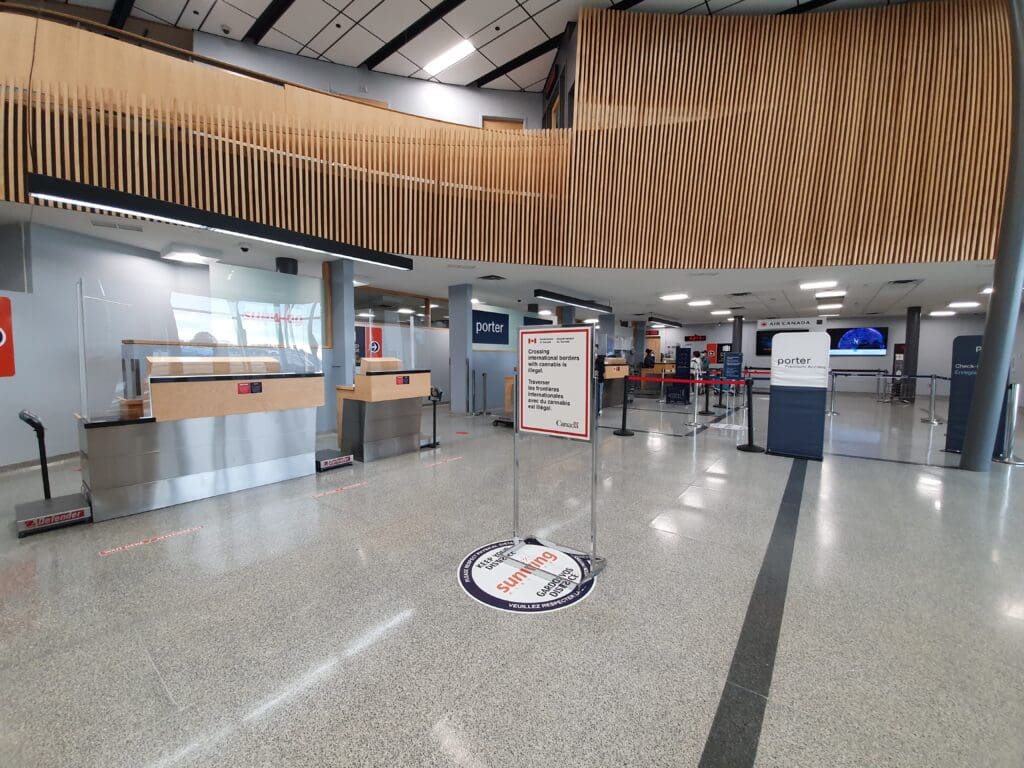
Upon arriving at the terminal’s small check-in hall, I found this to feature dedicated check-in desks for Air Canada, Bearskin Airlines, Porter Airlines and Sunwing Airlines, the latter carrier set to return to the airport in December 2021 with flights to the Cuban resort city of Varadero. At the time of my arrival, a small line of passengers could be seen at Air Canada’s desks, waiting to check in for the carrier’s 1105 service to Toronto Pearson, whilst only one fellow passenger could be seen at Porter Airlines’ desks. Walking straight up to the vacant desk, as soon as I approached this I was given a very friendly greeting and handed over my passport. Placing my small suitcase on the scale, a baggage tag was printed off and affixed to this, after which my Porter Airlines branded boarding pass was printed off. Once this had been done, I was advised to head to the checked baggage drop off point which is located next to the check-in hall. This consists of a room with an x-ray machine that was manned by a single security staff member. Following a short wait, my small suitcase was sent through this machine and I was soon given the go-ahead to make my way to the airside area.
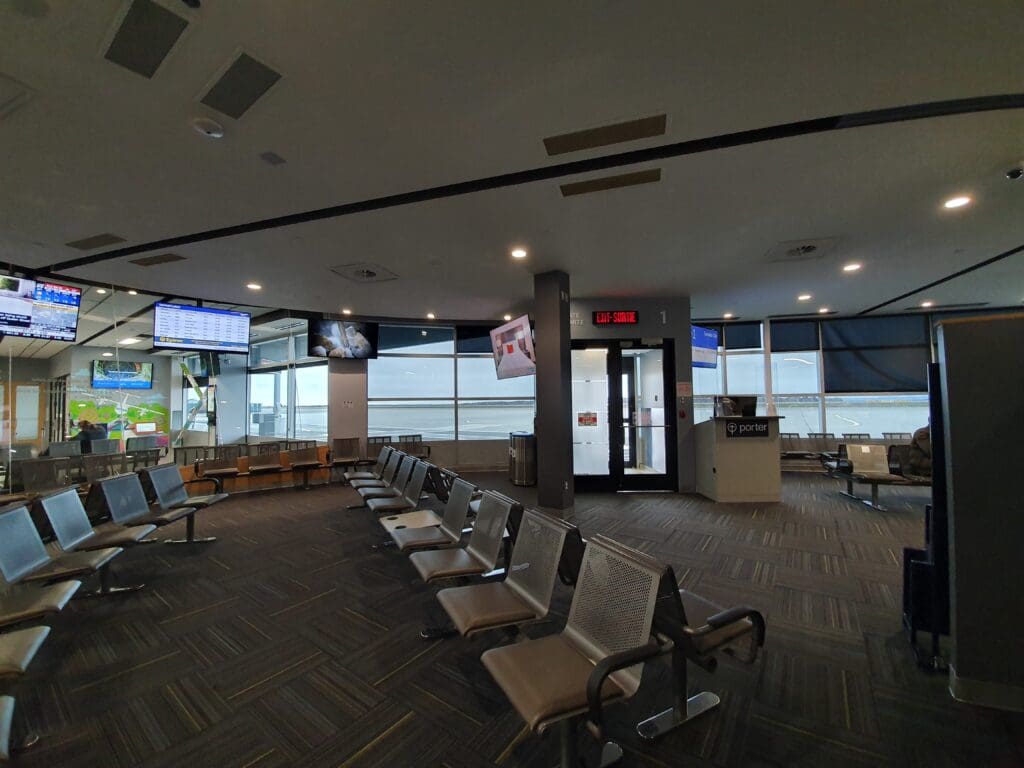
Once I had parted with my bag, I decided to go for a short walk outside before I returned to the terminal and headed over to the security area. There, I joined another short queue before I was greeted by one of the airport’s two friendly security staff members manning the checkpoint that morning. Without any issue, I passed through this checkpoint and promptly arrived at the terminal’s small airside waiting area. Not designed for passengers to spend any significant amount of time, this consists of a relatively small room, with a decent amount of seating, several televisions, two toilets and three vending machines – one each selling snacks, cold drinks and hot drinks. In addition, this is also home to several workstations with plug sockets and USB ports, whilst fast complimentary wifi is provided throughout the terminal. Meanwhile, large windows offer views of the stands outside the terminal, as well as of one of the airport’s two runways. That morning, it appeared that movements at the airport were minimal, and until the inboard Porter Airlines Dash 8 arrived from Toronto, the only other aircraft that could be seen outside took the form of an Air Canada Express Bombardier CRJ-200 that would fly down to Toronto Pearson.
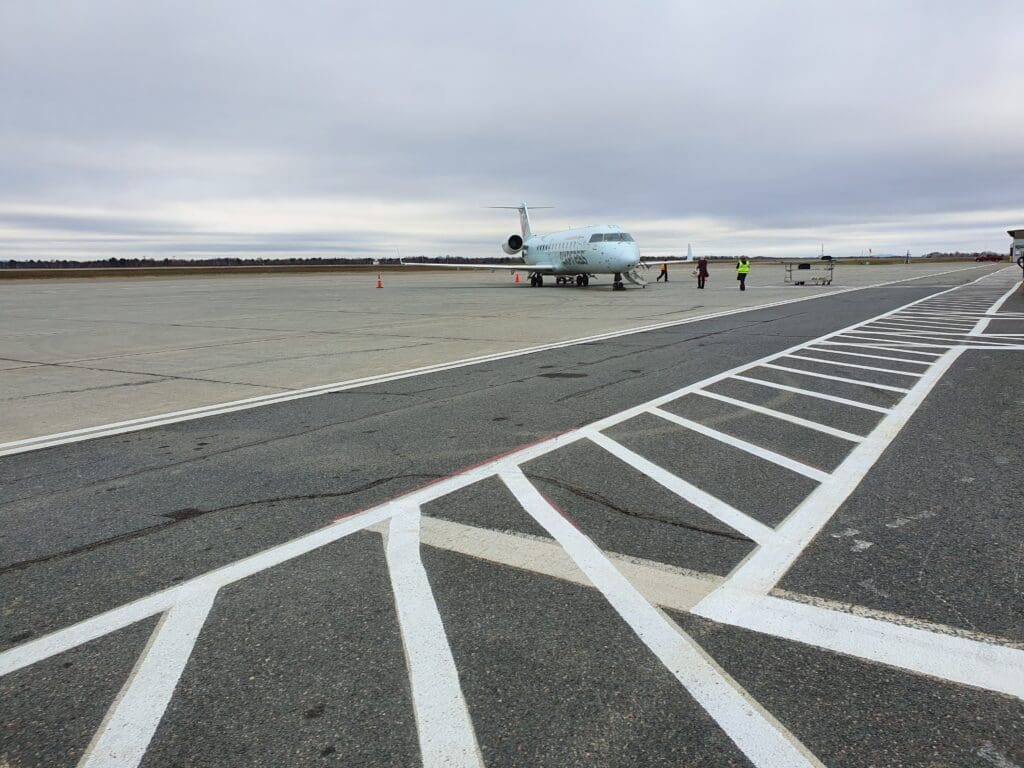
Whilst I had been one of the first passengers to arrive in the airside area, as the clock edged towards 1105, this portion of the terminal began to fill up and became slightly busy. However, even at its busiest, I still managed to spot a few vacant seats and the waiting area was far from being uncomfortably full. At 1025, I watched as the sleek Porter Airlines Dash 8 touched down on Sudbury Airport’s Runway 04 and made a short taxi over to Stand 2, temporarily filling the terminal with noise as it came to a stop directly outside the waiting area.
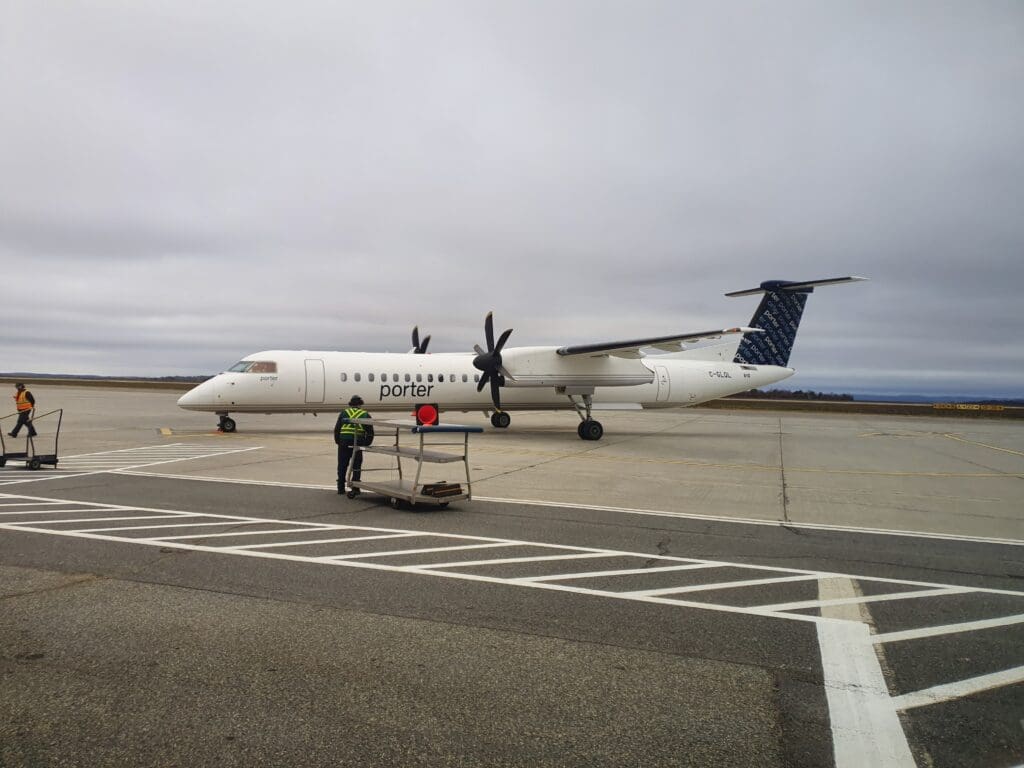
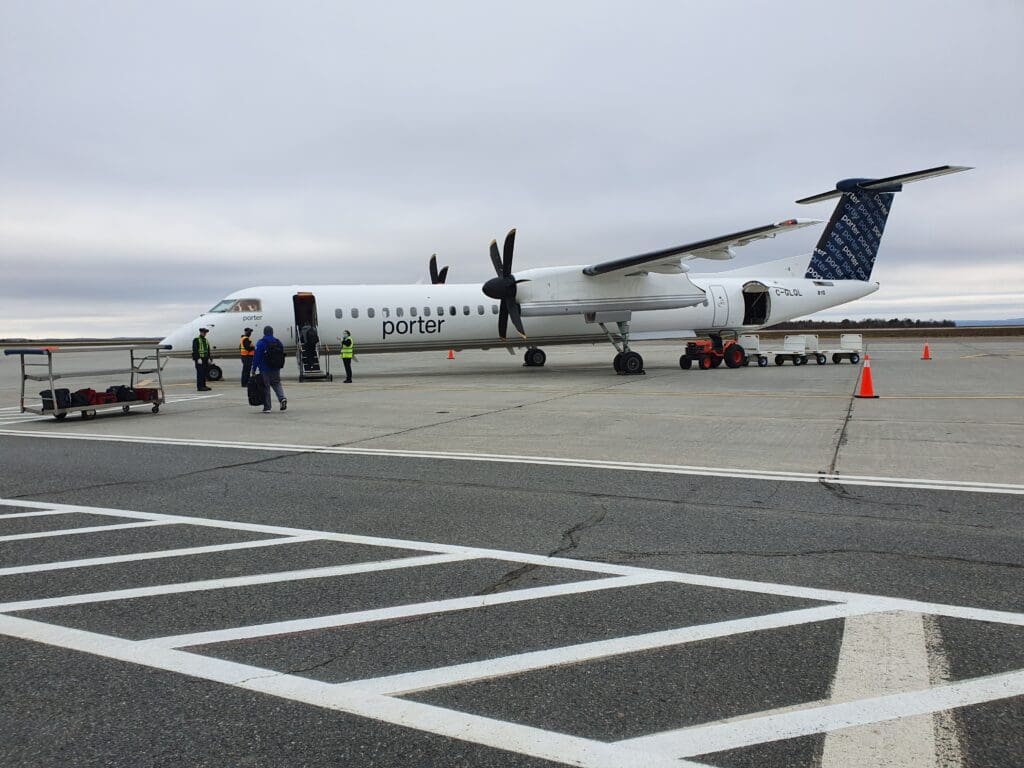
That morning, the flight down to Toronto City would be operated by C-GLQL, a Bombardier Dash 8 Q402 that sports the fleet number ‘810’. Serving to be neither the youngest nor oldest Dash 8 in Porter Airlines’ fleet, this particular turboprop was manufactured at Bombardier’s Toronto Downsview plant in early 2009. Following the usual bouts of pre-delivery testing, the aircraft made the nine-mile hop to Toronto Pearson, before flying to Toronto Billy Bishop Airport several days later where it officially entered service with Porter Airlines. Since then, the aircraft has shuttled passengers across Porter Airlines’ route network, connecting Toronto’s Billy Bishop Airport with destinations across the east of Canada and the US. Whilst initially capable of carrying seventy passengers, in 2013 the aircraft was reconfigured to squeeze in an additional four. During Porter Airlines’ total halt of scheduled services from March 2020 to September 2021, the aircraft’s cabin was refurbished and seats replaced to allow this to carry a total of 78 passengers.
According to the AvHerald, the aircraft suffered one significant incident in the course of its life operating for Porter Airlines. This occurred in November 2016 when the aircraft almost collided with an unmanned aerial vehicle whilst on approach to Billy Bishop Airport. The evasive manoeuvre the aircraft was forced to take resulted in both flight attendants being transported to hospital after landing. Fortunately, in the week before my flight, all sectors appeared to have gone smoothly and the aircraft undertook a total of 41 flights, covering at least 14,500. These had seen the aircraft connect Billy Bishop Airport with Chicago Midway, Fredericton, Halifax, Montréal, New York Newark, Ottawa, Québec City, St John’s, Sudbury and Washington Dulles.
A short time after the Dash 8 came to a halt, its two engines spooled down and a small team of ground staff could be seen readying the aircraft in preparation for its departure. Inside the terminal, at 1045, an automated announcement rang out through the terminal inviting those needing assistance and those travelling with children to make their way to the gate for boarding. With no passengers appearing to fall into this category, boarding for all other passengers commenced a couple of minutes later and a short queue of Toronto City bound passengers formed at the gate podium. A short time later, my boarding pass was scanned and my passport checked by a very friendly member of Porter Airlines’ Sudbury team and I headed outside into the chilly air, making a very short walk over to the waiting aircraft. As I reached the bottom of the steps, another two Porter Airlines ground staff members thanked me for flying with the aircraft and wished me a nice flight before I clambered up into the Dash 8’s small forward galley area.

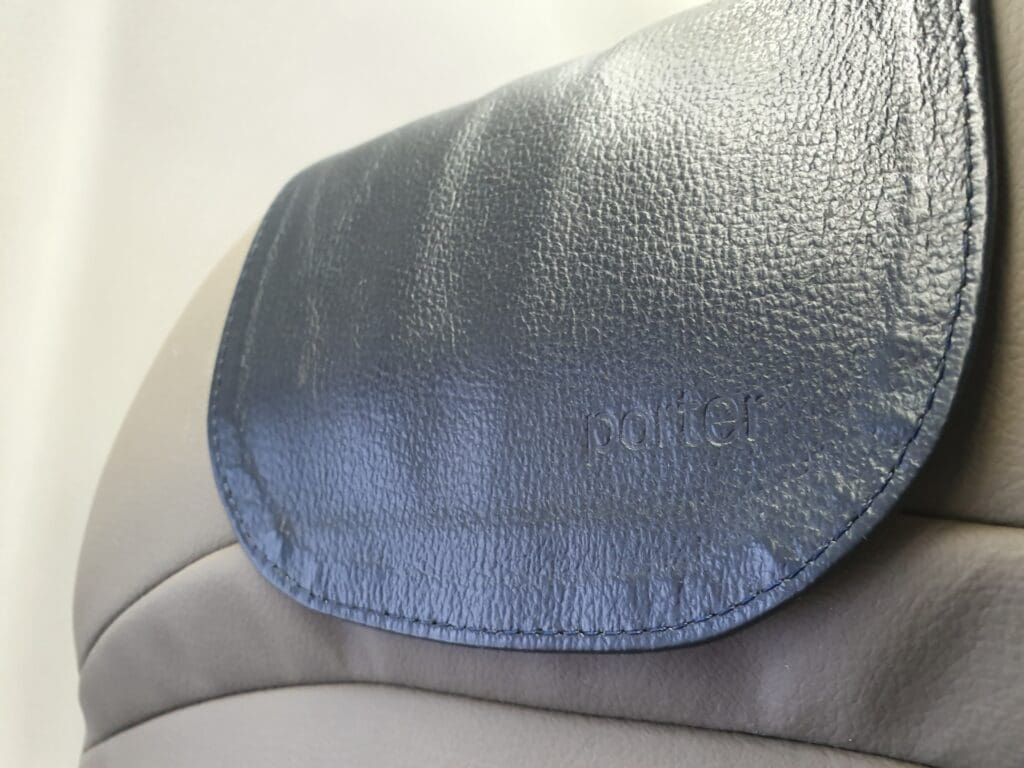
Continuing my positive first impressions of Porter Airlines, I received another very friendly greeting from one of the two flight attendants onboard the aircraft that morning before I turned right and made my way down the cabin until I reached Row 17 near the rear of the turboprop as a selection of songs rang out through the aircraft. Inside, the cabin is home to 78 modern and sleek yet noticeably thin Expliseat TiSeat E2, installed during the pandemic grounding. Each of these seats is covered in a beige/elephant grey (faux?) leather covering and topped with a small black leather antimacassar on which the airline’s logo is imprinted. Having recently been refreshed and with the aircraft only having returned from service a little over a month before my flight, the cabin was smart, bright and modern, and I failed to spot any noticeable signs of wear and tear throughout the aircraft.


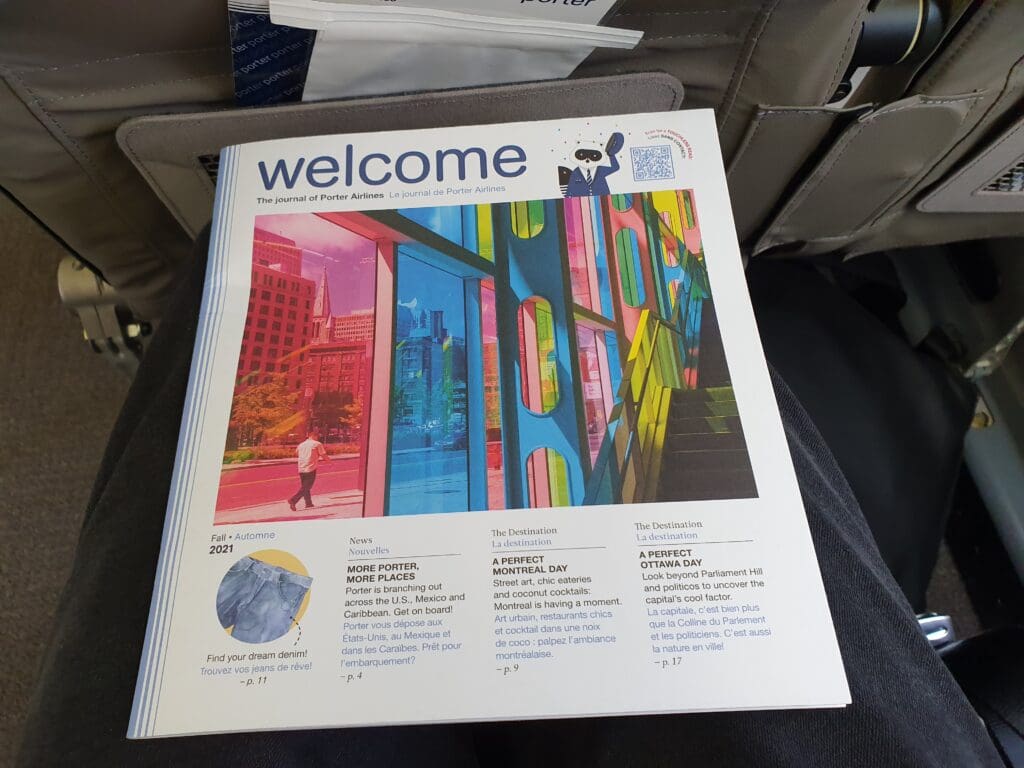
Upon taking my seat, as I had expected given their apparent thinness, I found the seat to be fairly firm although these did provide a decent amount of legroom. Turning to the seatback pocket, this contained a sick bag, safety card and a copy of the autumn 2021 edition of Porter Airlines’ inflight magazine entitled Welcome. Interestingly, this was the first time I had seen an inflight magazine in the flesh since the start of the pandemic.


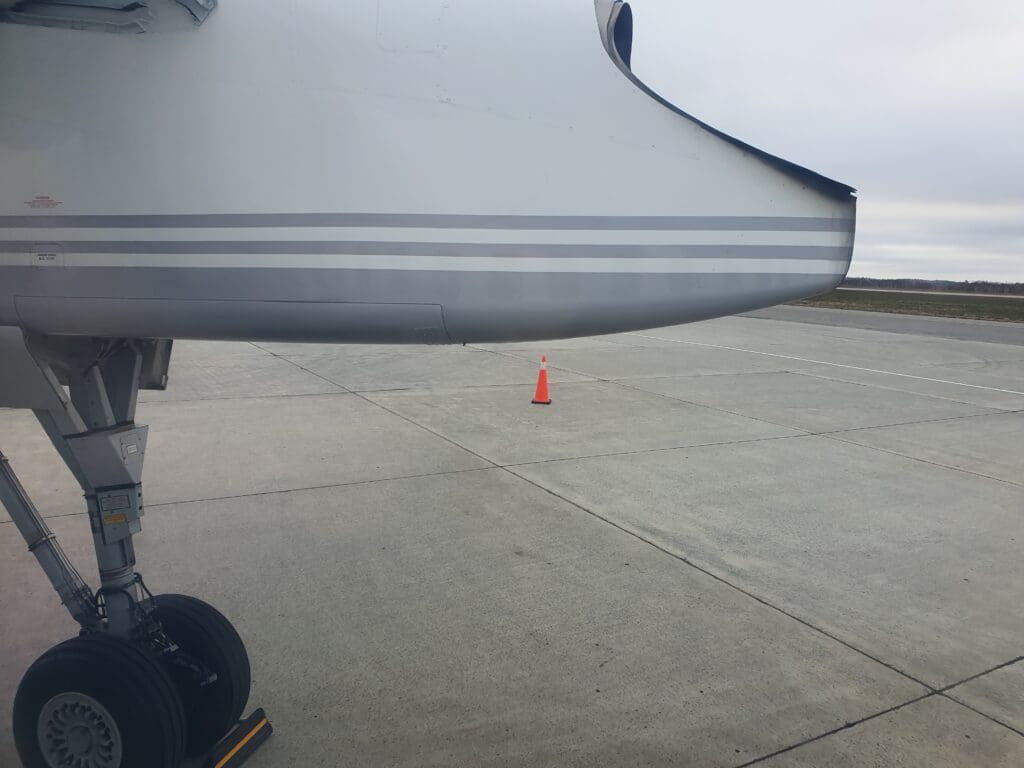
Only a couple of minutes after I had taken my seat, it appeared as if all the passengers had made it to the aircraft. That morning, the flight would be lightly loaded, with a meagre total of just 22 passengers making their way down to Toronto equating to a load of 28%. At 1055 the Captain performed their short welcome announcement whereby they thanked all onboard for flying with Porter Airlines before moving on to give a short overview of the weather in Toronto where the temperature hovered around a balmy 16 degrees Celsius. Ending this, the Captain noted that as the aircraft would need to be refuelled, pushback would unlikely commence for a further fifteen minutes. Indeed, looking out of the window I could see a team of three ramp workers in the midst of refuelling the aircraft. Back inside the cabin, the purser performed a lively welcome announcement, with the usual greetings and now common (and important) message regarding the compulsory wearing of face-covering whilst inside the aircraft.
After several minutes, the refuelling hose was disconnected and the truck soon disappeared whilst the dispatched could be seen disembarking before the cabin door was closed with a thud. Moments later, the Dash 8’s two Pratt & Whitney Canada PW150A engines spooled up as a pre-recorded safety announcement rang out through the cabin in English and French. As the clock struck 1110, the aircraft cautiously pulled forward out of its stand before performing a u-turn and making a slow and seemingly bumpy taxi over to Runway 04. As the Dash 8 trundled over to the runway, those on the left-hand side of the airport were offered views of the collection of aircraft on the ground waiting for their next flights. That morning, these included a pair of locally based Ornge AW139 air ambulance helicopters, a handful of light aircraft, a King Air and a visited Bombardier Challenger. However sitting on the opposite side of the aircraft, these could not be seen until after the aircraft had commenced its takeoff roll.

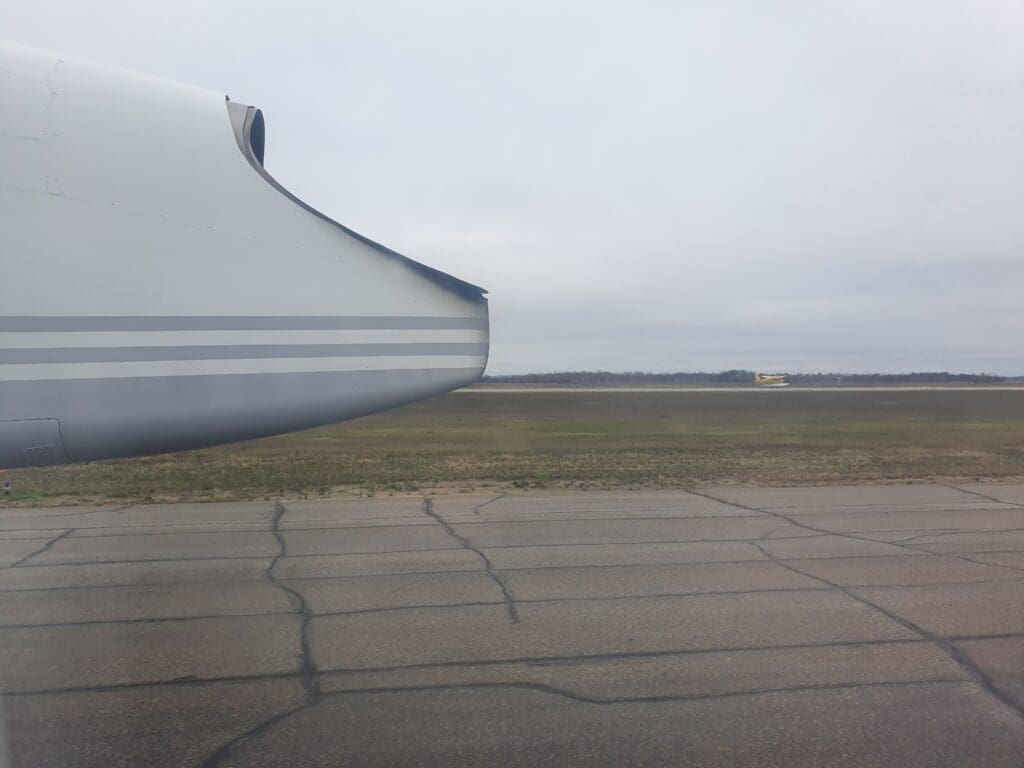

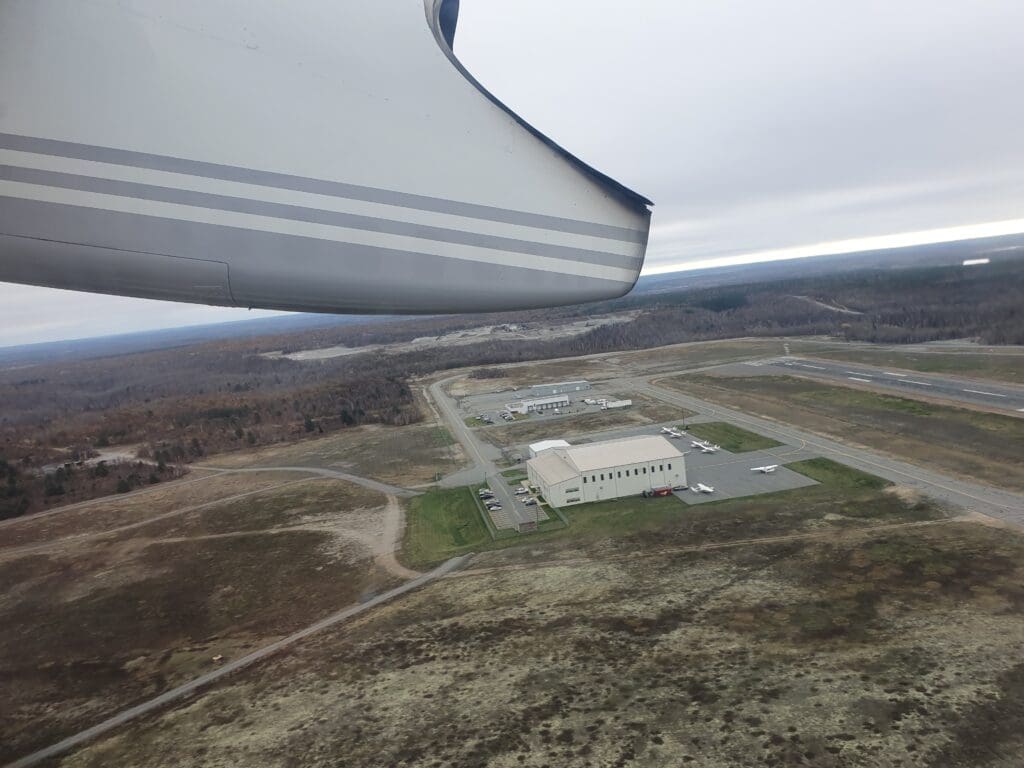
Eventually, the Dash 8 arrived at the end of the runway where it came to a temporary halt as a rare bright yellow De Havilland Canada DHC-2 Mark III Turbo Beaver floatplane (with wheels) floated off the runway. A short time later, the Dash 8 turned right onto the runway and without pausing, at 1116 the two turboprop engines spooled up and the aircraft rocketed down the runway, performing a powerful takeoff before quickly rotating up into the cloudy Ontarian skies. As the gear was retracted, a good view of the airport’s small terminal could be had, followed moments later by the sight of MAG Aerospace’s hangar after we had crossed Runway 12/30. Outside this hangar, a host of the company’s Cessna 337 as well as a couple of Aero Commanders and a single Diamond DA-42 could be spotted.
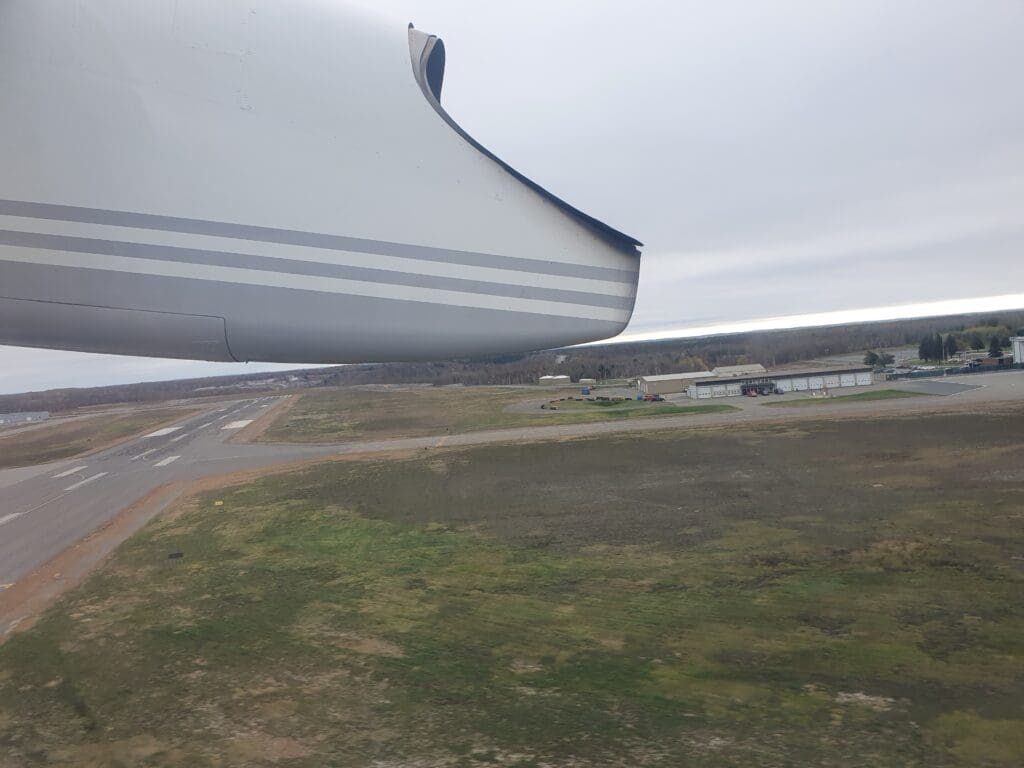
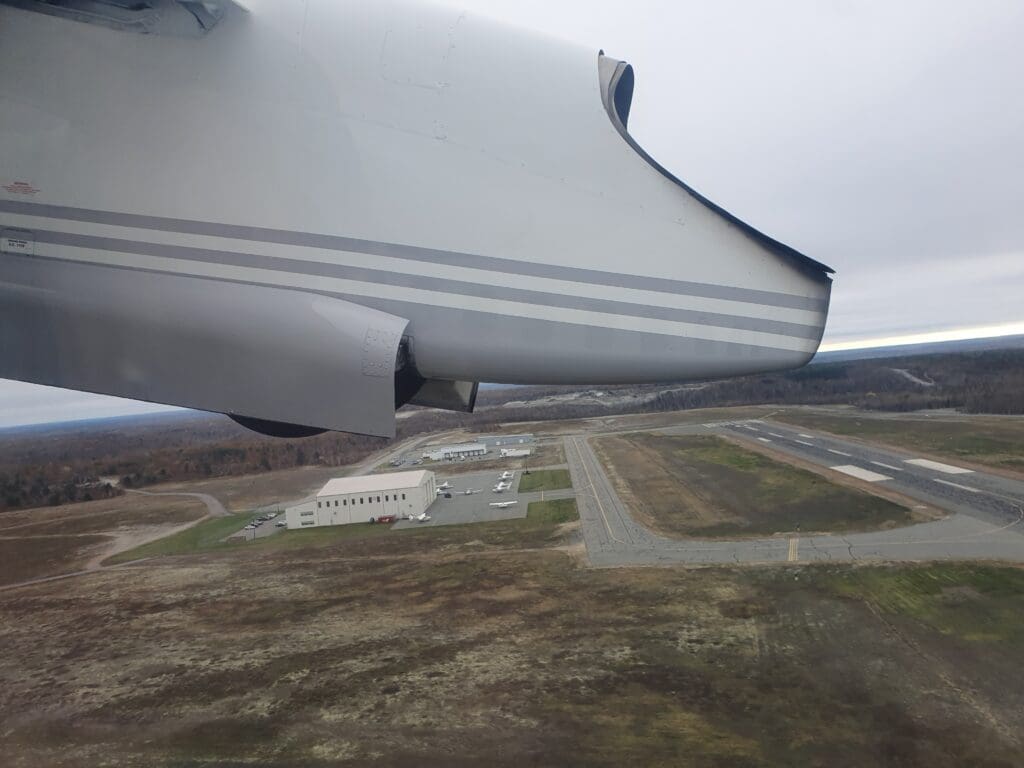
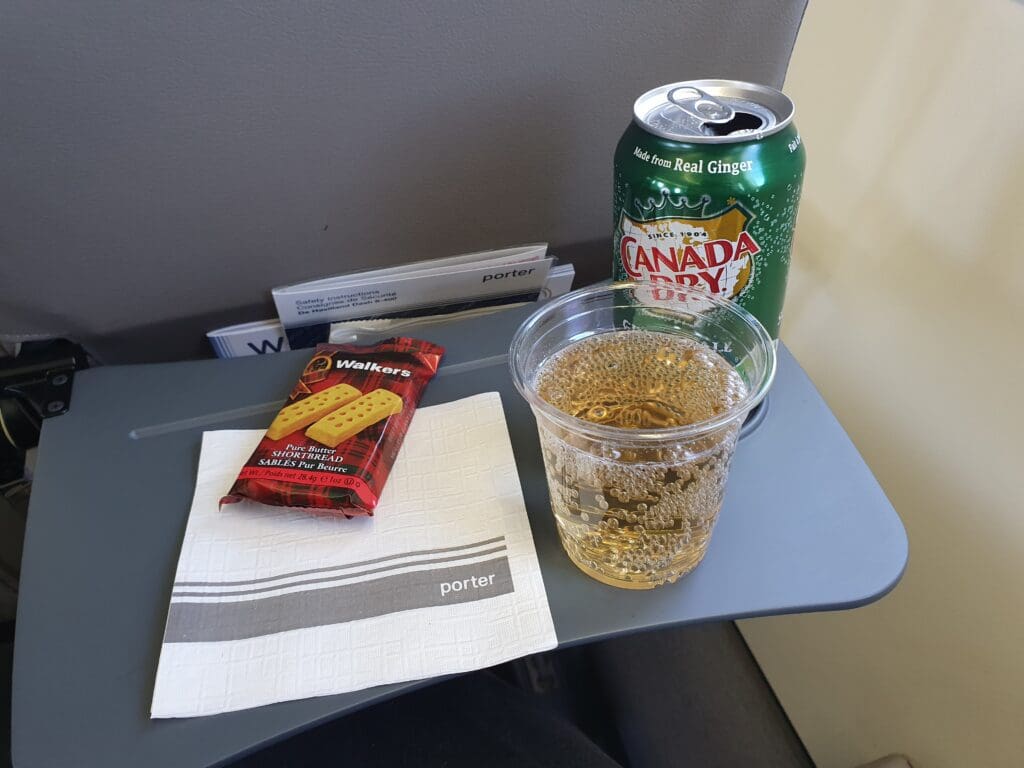
After a quick journey through the clouds, blue skies appeared above the aircraft and the crew were soon released from their seats. Given the short flight time to Toronto, the two flight attendants soon commenced the onboard service. Onboard all flights, Porter Airlines offers passengers a round of complimentary service which is far more comprehensive than that offered by Air Canada or WestJet. This includes coffee, a selection of teas, soft drinks, Canadian red and white wines, and two different beers brewed by Ontario’s Beau’s Brewing Company. Meanwhile, almonds, crisps and biscuits are also offered to accompany this. With both crew members taking plenty of time to interact with passengers, it took some time for the trolley to reach my row near the rear of the aircraft, however, this was of course much better than the crew speeding through the cabin with minimal interaction. Whilst tempted by Beau’s Porter Porter beer, as it was still the morning I restrained myself and instead went with a large can of Canada Dry Ginger Ale and biscuits, which came in the form of Walkers shortbread.
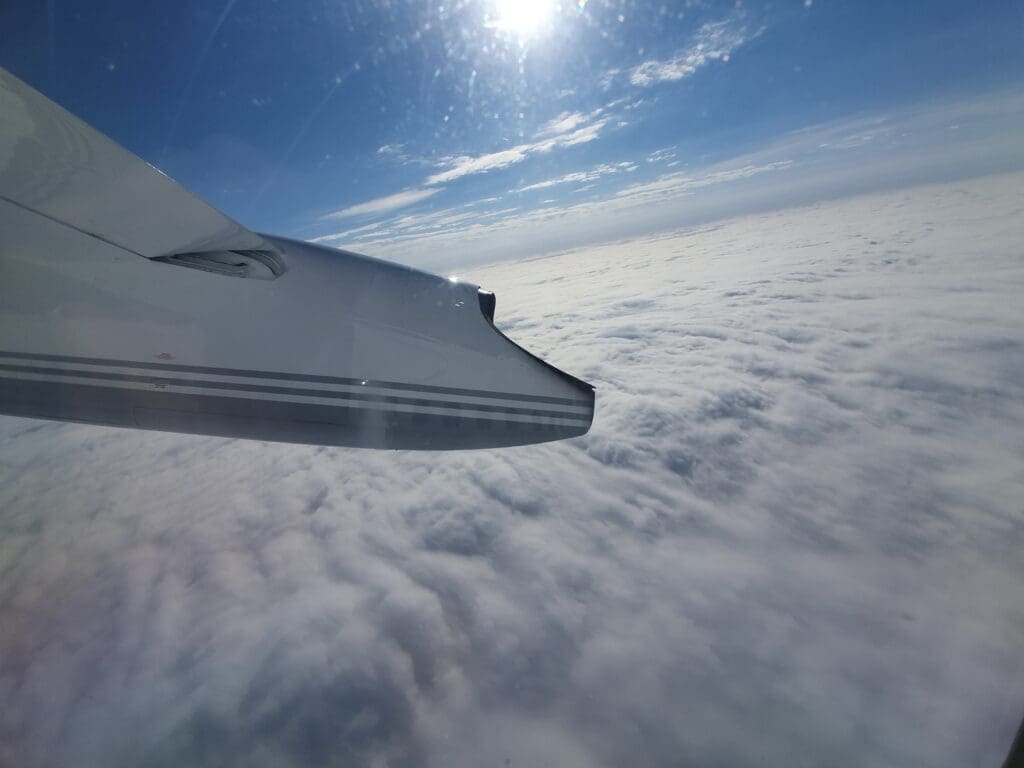
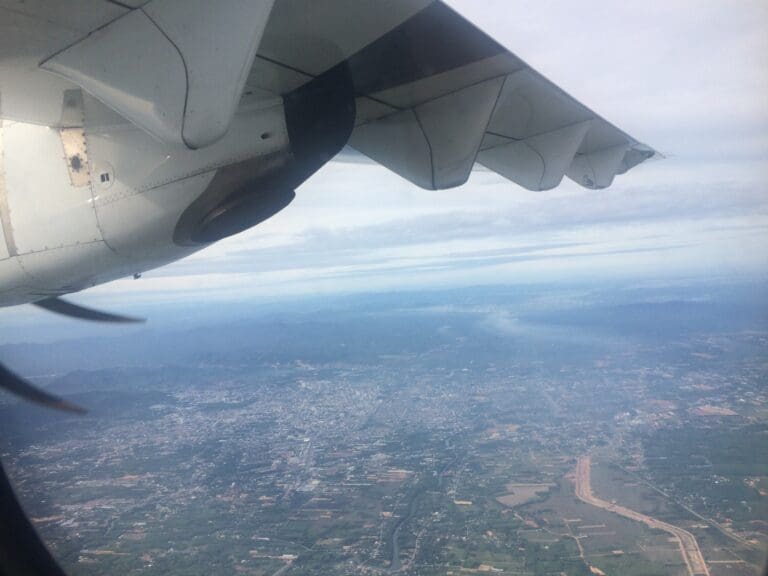
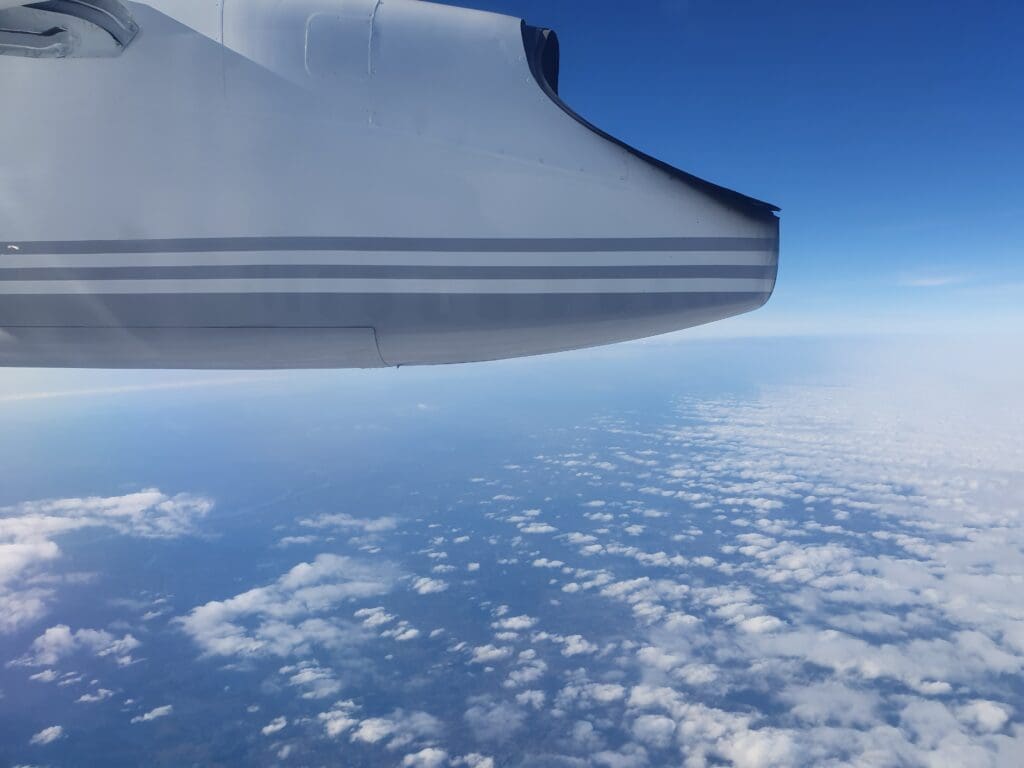
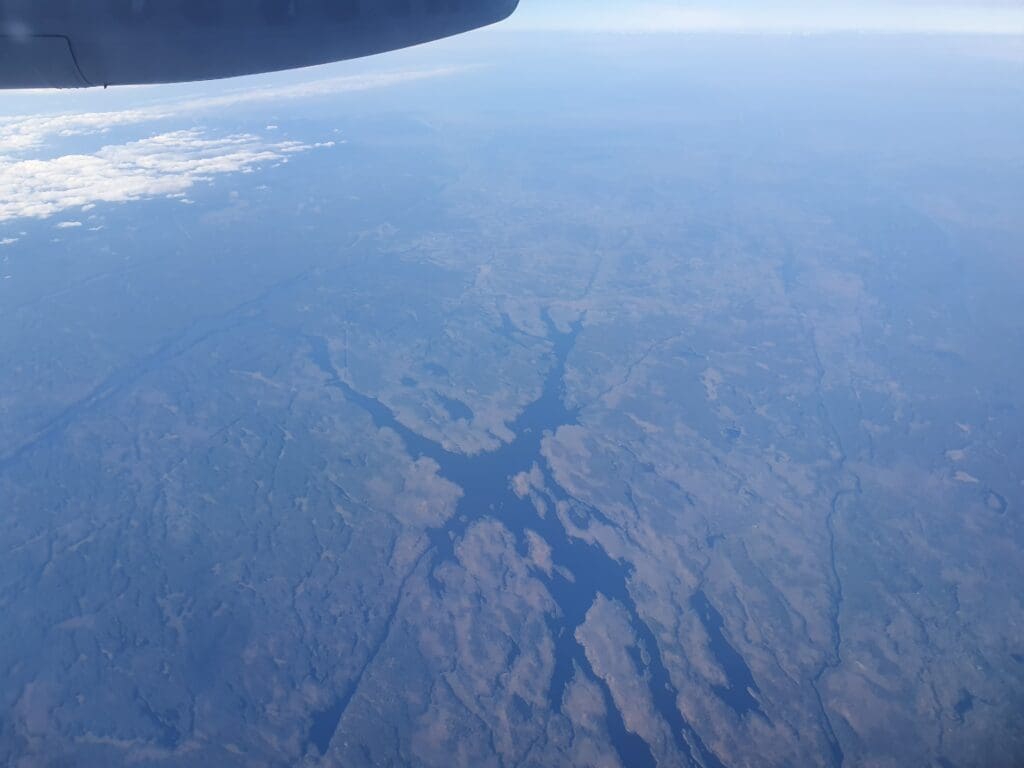
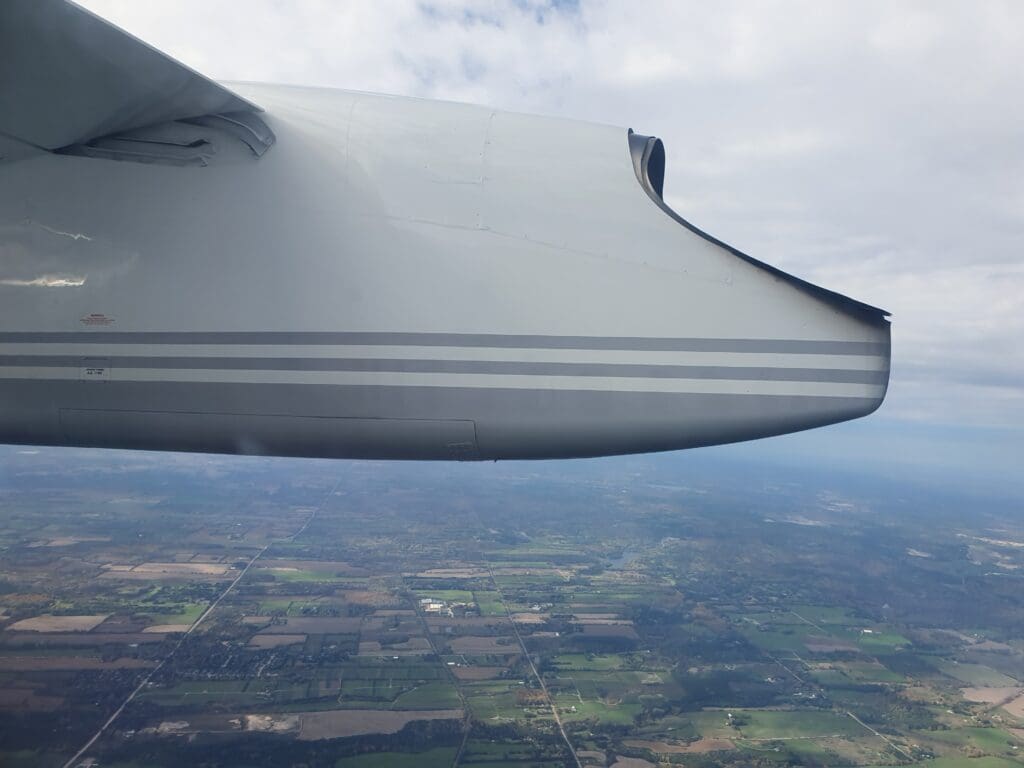
That morning, the Dash 8 soon levelled off at 19,000 feet, at which point the seat belt signs were extinguished. By this time, the clouds below had largely cleared and the mostly flat landscape around the municipality of French River, located on the Trans-Canada Highway between Sudbury and Toronto. That morning, the aircraft flew in virtually a straight line from Sudbury until it neared Toronto, with a host of small towns that sit between the two cities visible during the flight including Britt, Pointe au Barill and Parry Sound.

For those less interested in watching Ontario pass by beneath the aircraft, Porter Airlines’ small yet welcome ‘welcome’ seasonal bilingual inflight magazine is offered to pass the time. Quickly flicking through this, the autumn 2021 edition featured a ‘welcome back’ speech from the airline’s president, Michael Deluce, an overview of Porter’s ambitious Embraer expansion plans and details regarding these aircrafts’ interiors and the destinations they will likely serve, as well as travel articles on Montréal and Ottawa.
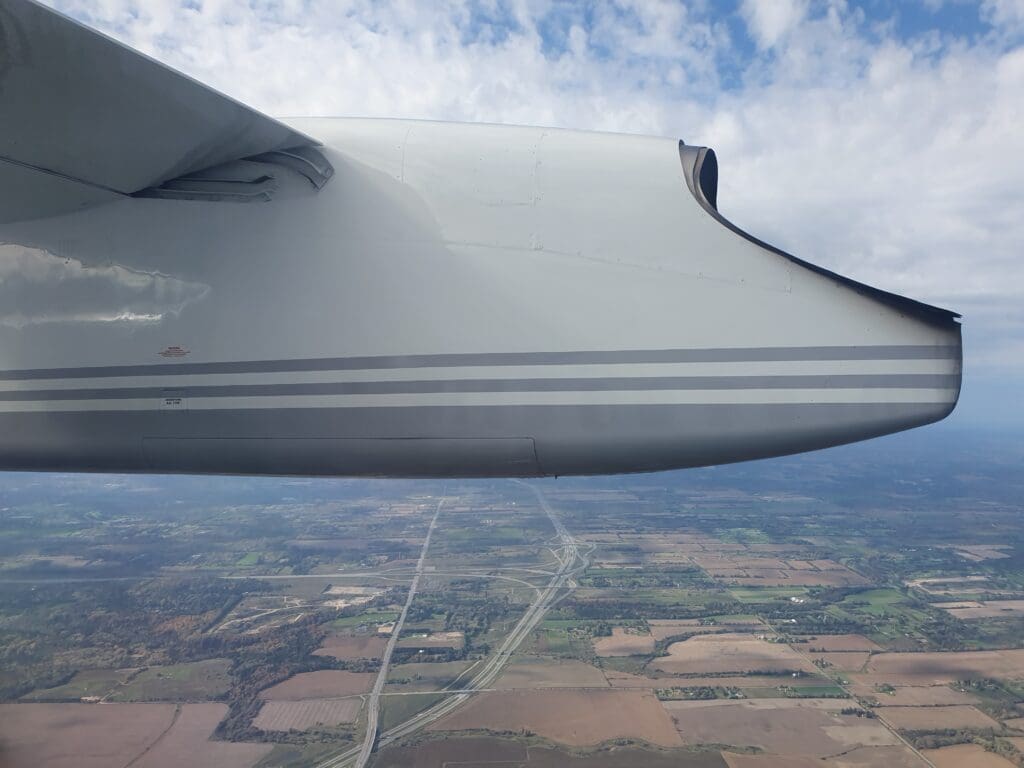
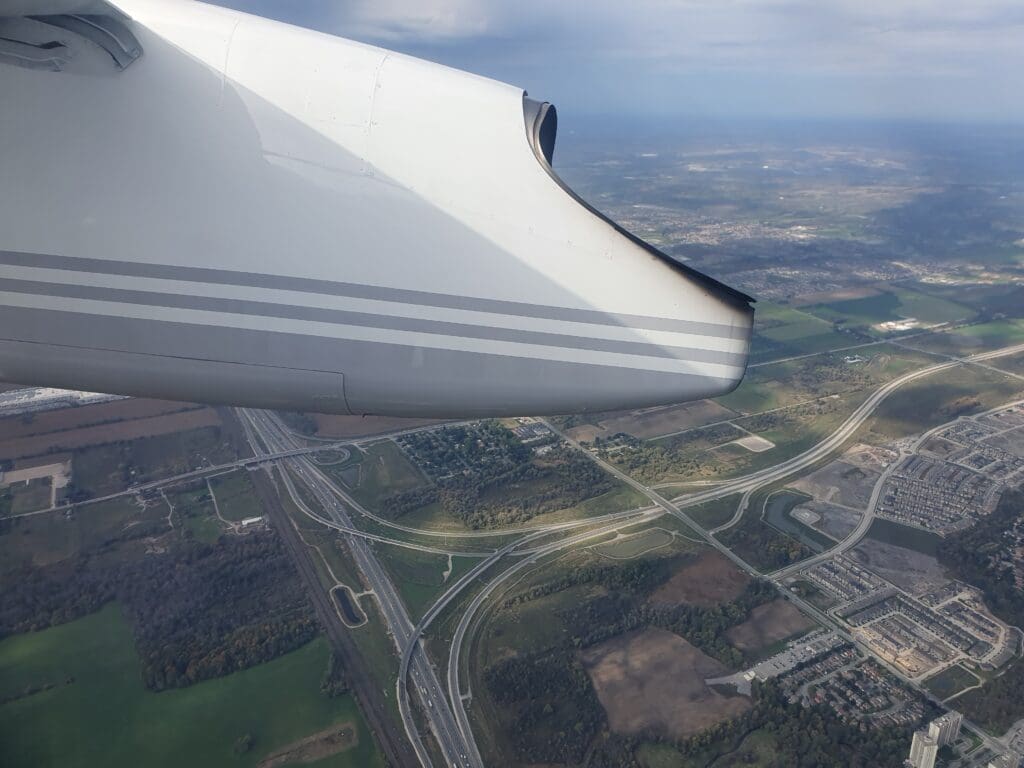
As I sipped on my ginger ale, at 1142 the Captain’s voice filled the cabin once again with an update on the flight’s progress. During this, the Captain informed all that the flight would shortly commence its descent and hoped that the aircraft would touch down in Toronto at 1200. True to their word, almost immediately after this announcement had been made and just before the aircraft reached the shores of Lake Simcoe, the Dash 8 could be felt sinking back towards earth. From there, the aircraft sank down over the flat landscapes of southern Ontario with large fields, forests and the occasional town passing by beneath the aircraft as the crew passed through the cabin undertaking two rubbish collection rounds before strapping themselves in in preparation for landing.
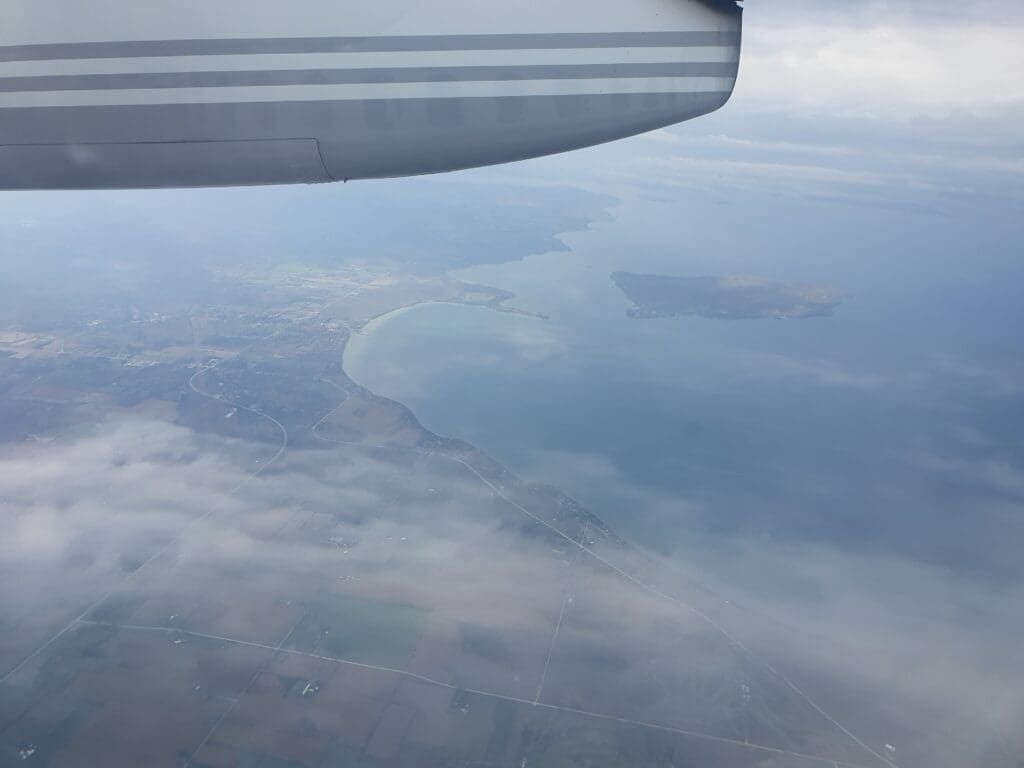
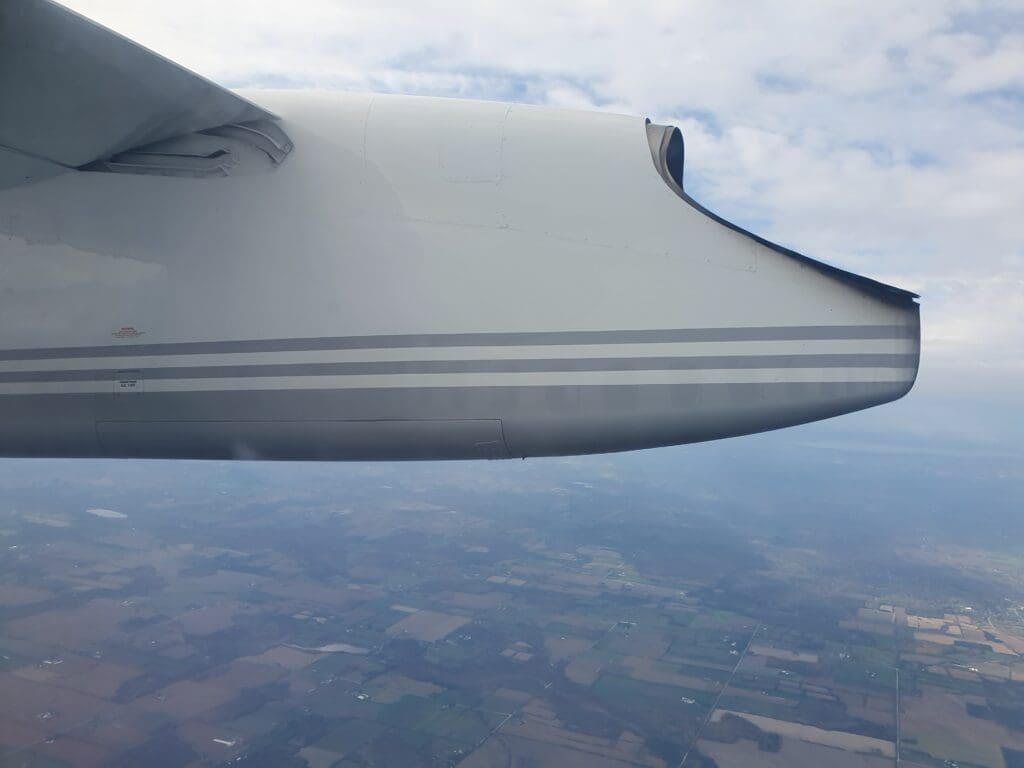
Outside, the aircraft passed between the small cities of Oshawa and Pickering before crossing over the shoreline and over Lake Ontario, soon banking and flying roughly parallel with the shoreline to downtown Toronto. During this stage of the flight, the white cliffs of Scarborough Bluffs could be seen along with the historic R.C. Harris Water Treatment Plant, also known as the ‘Palace of Purification’ at which point the landing gear fell into position and the flaps were partially extended.
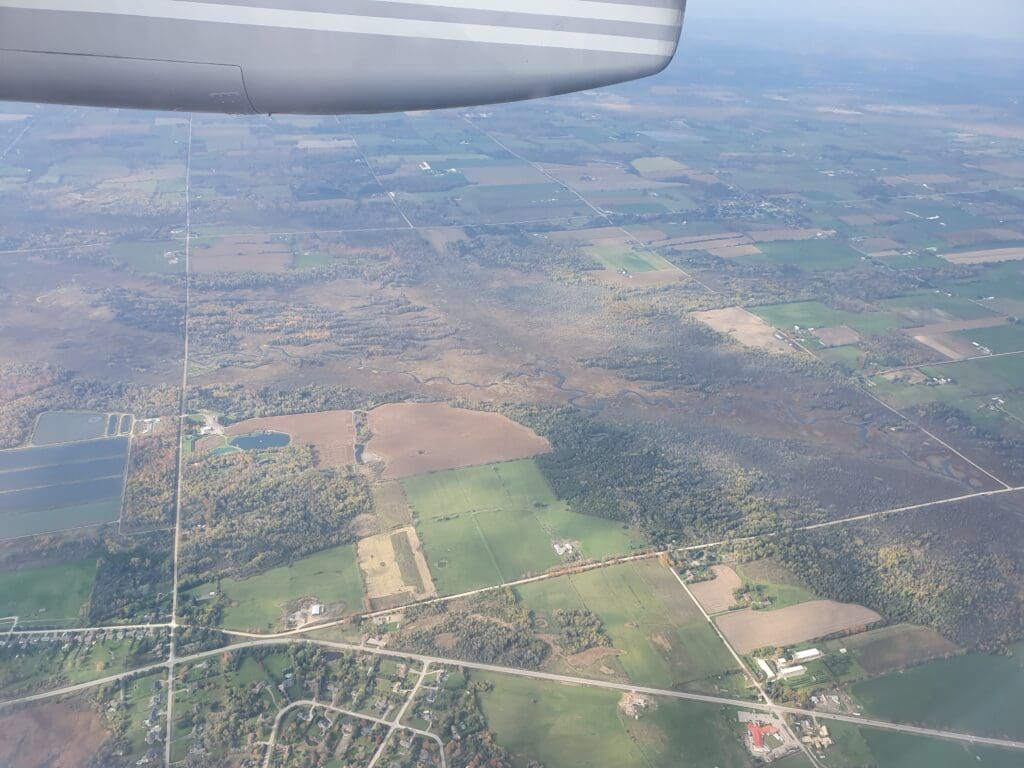
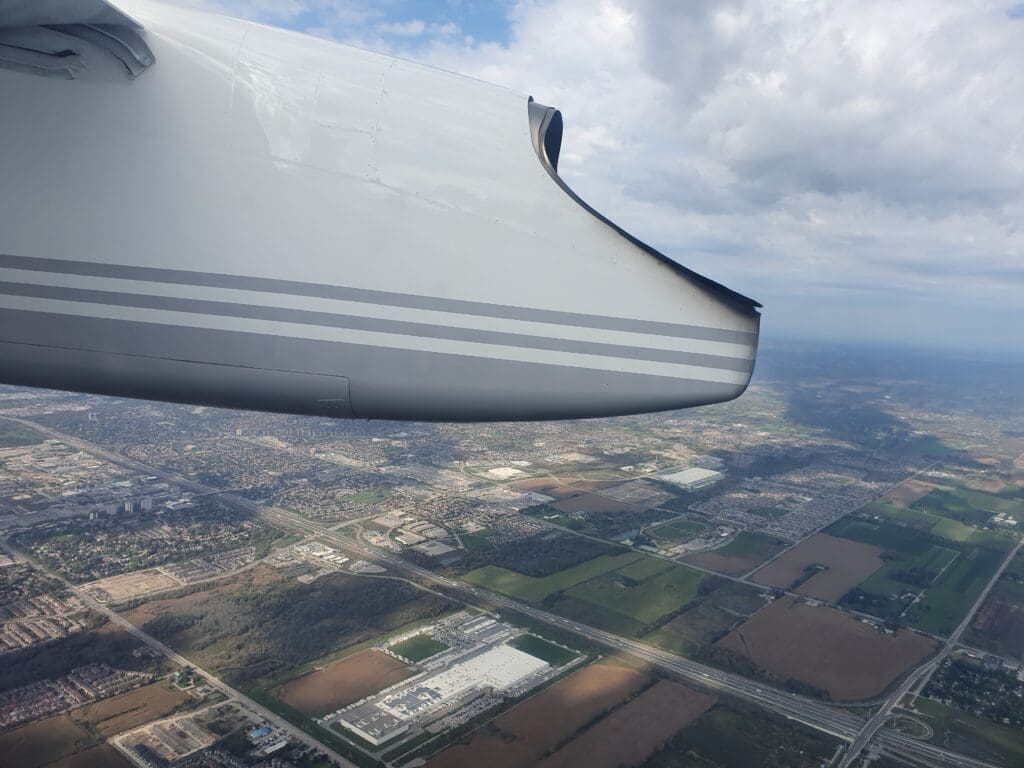

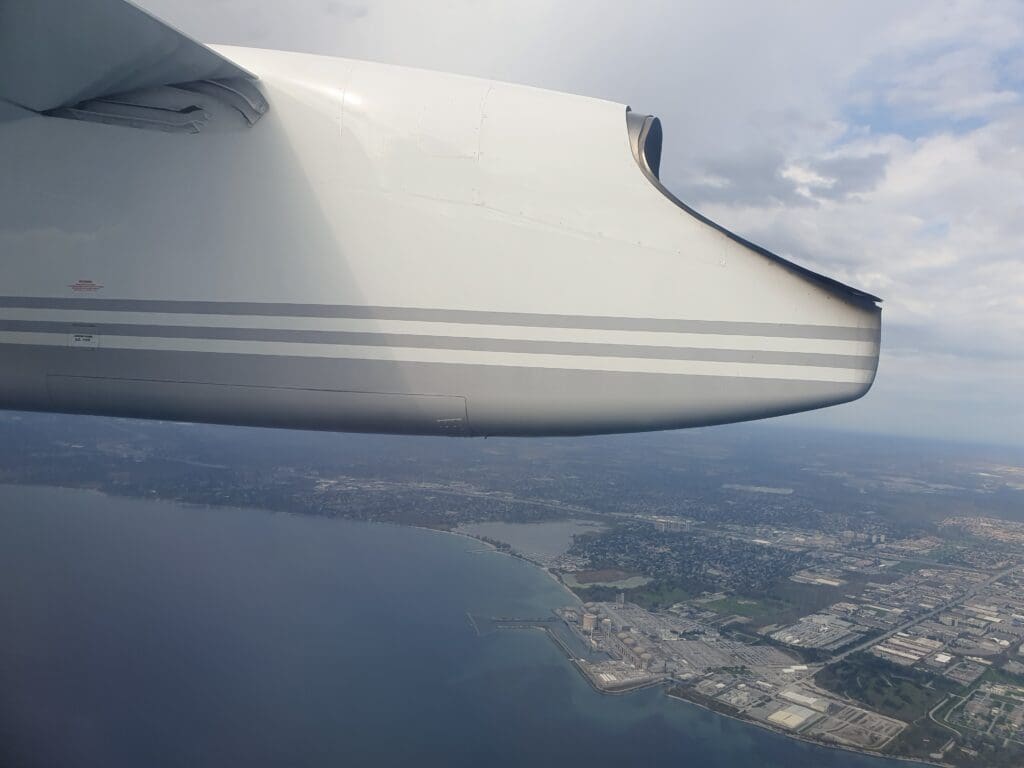
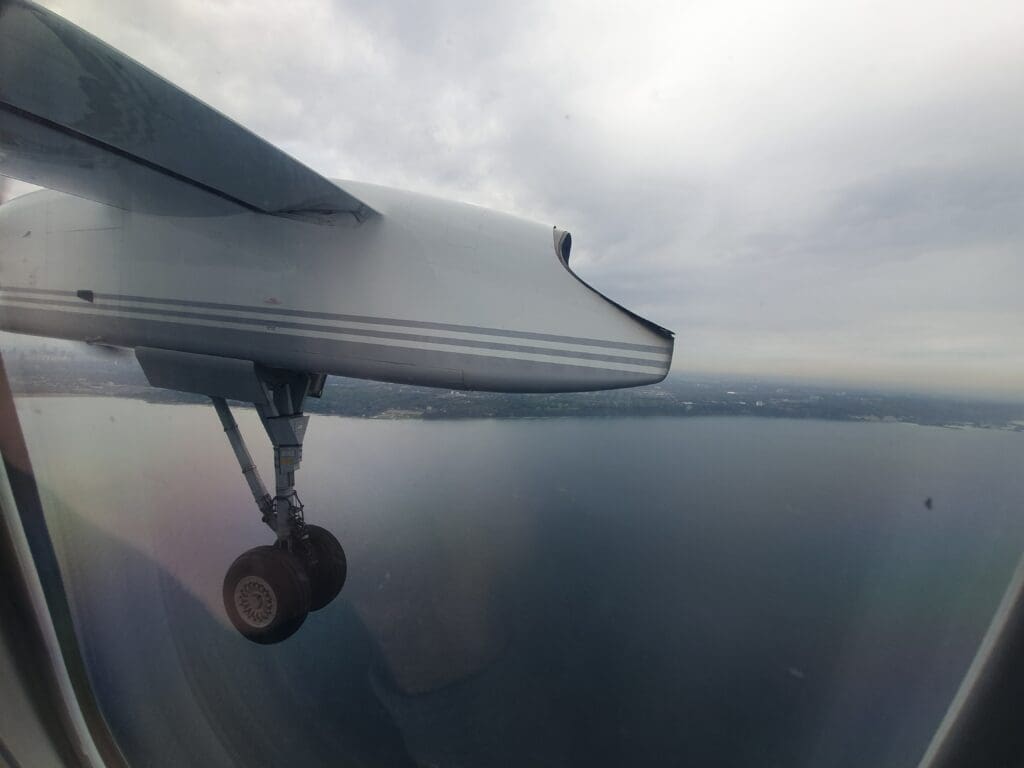
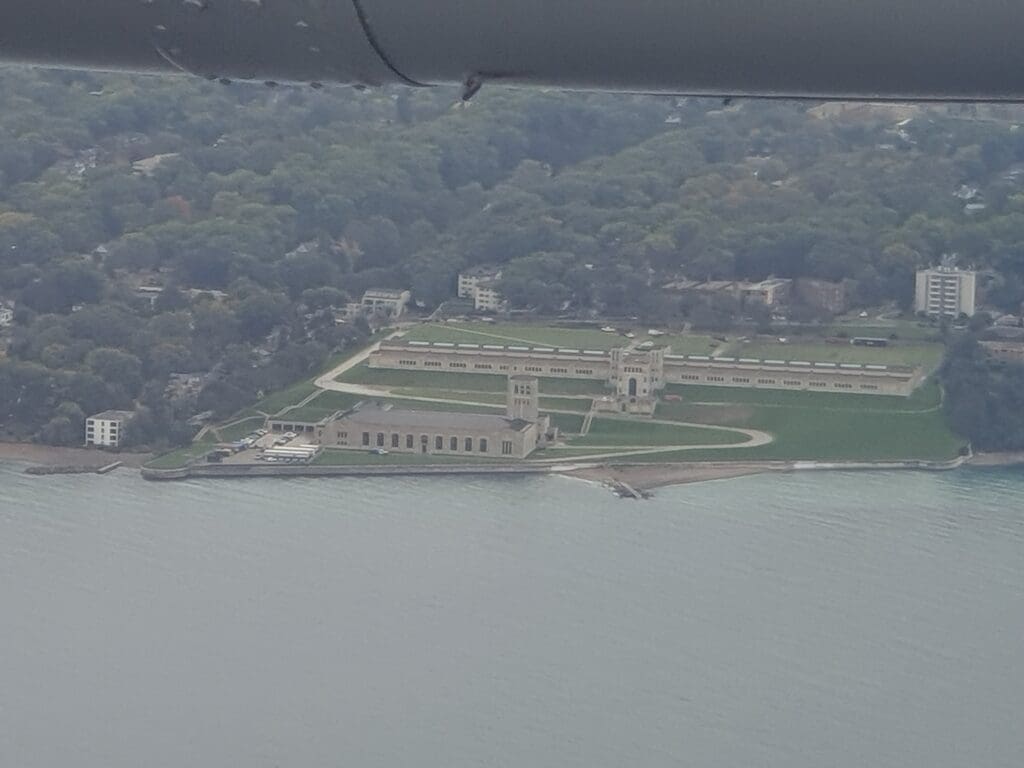
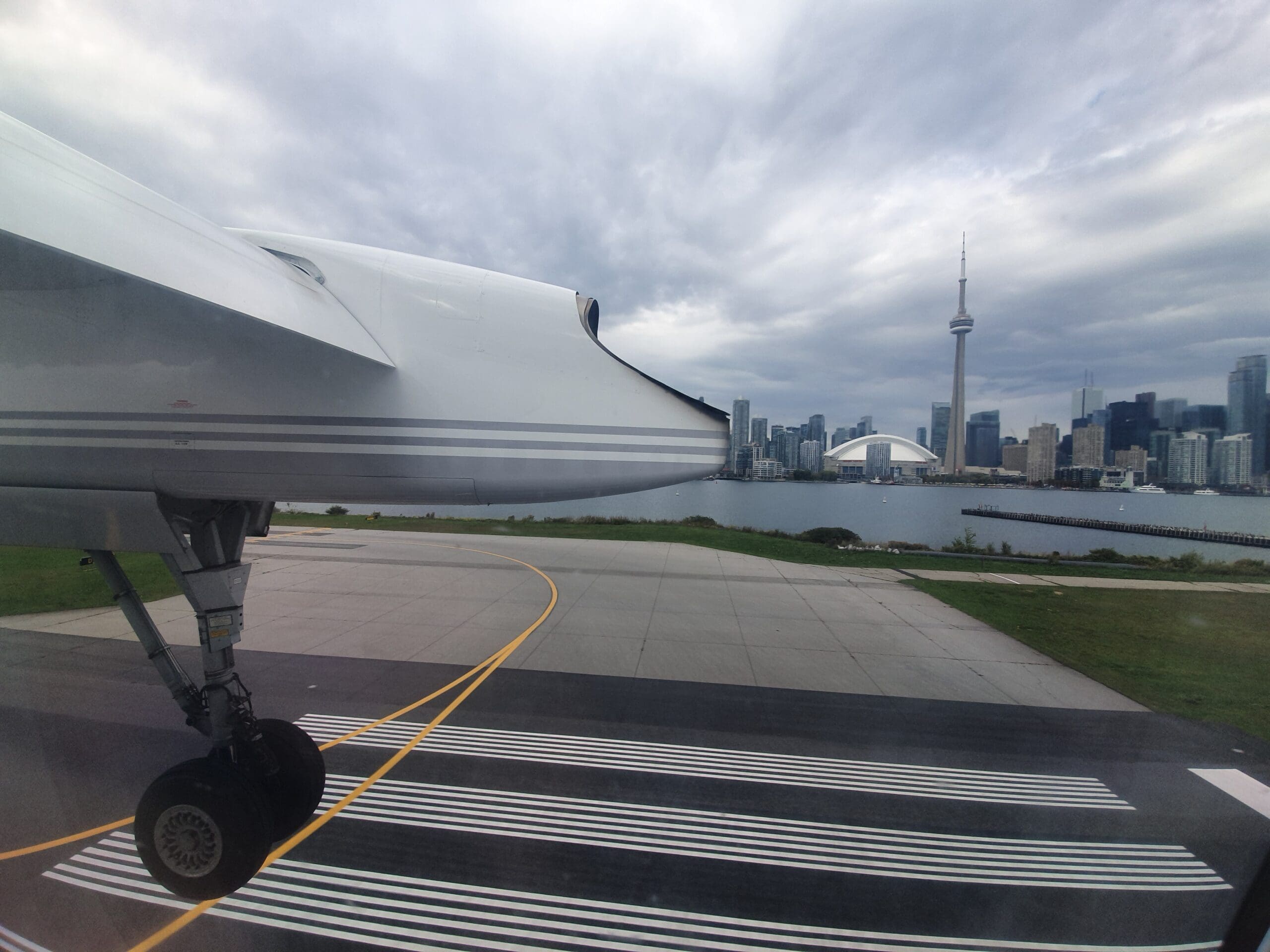
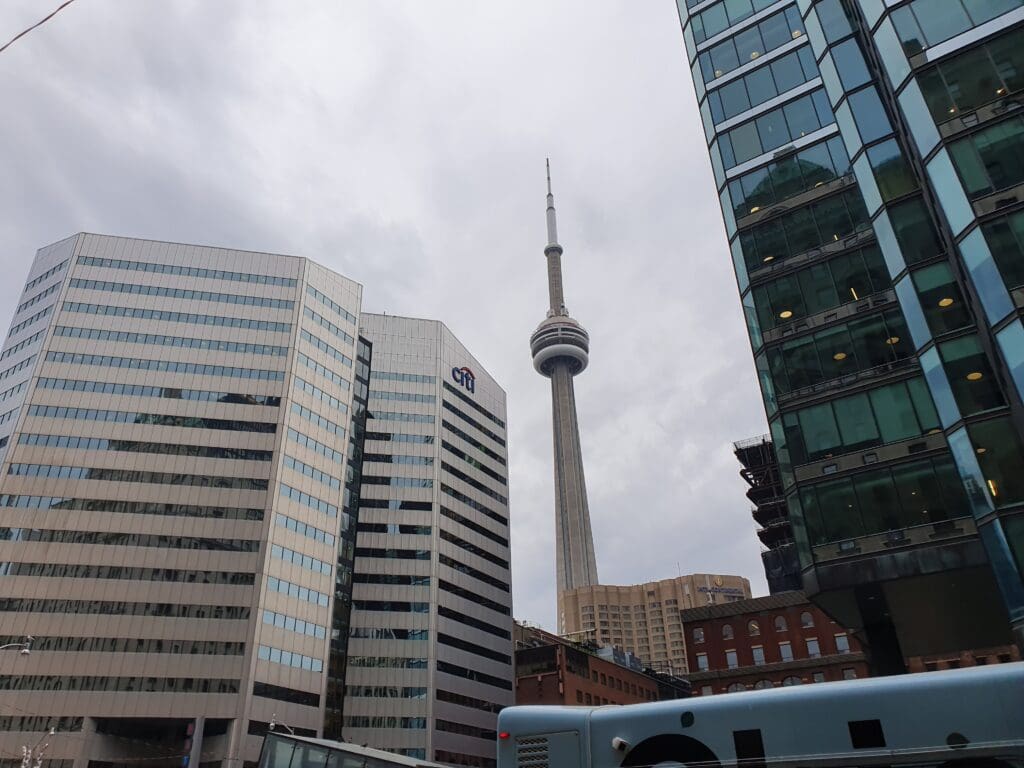
A minute or so later, the aircraft approached the shoreline near Ashbridges Bay, allowing for a good view of the myriad of industrial facilities that sit to the east of central Toronto as the aircraft commenced a steep descent towards Toronto City Airport. A short time later, the tall buildings of downtown Toronto appeared, with many of the city’s famous sights, including of course the CN Tower and neighbouring Rogers Centre coming into view, the approach serving as a scenic start to my short two-day stay in Canada’s largest city.
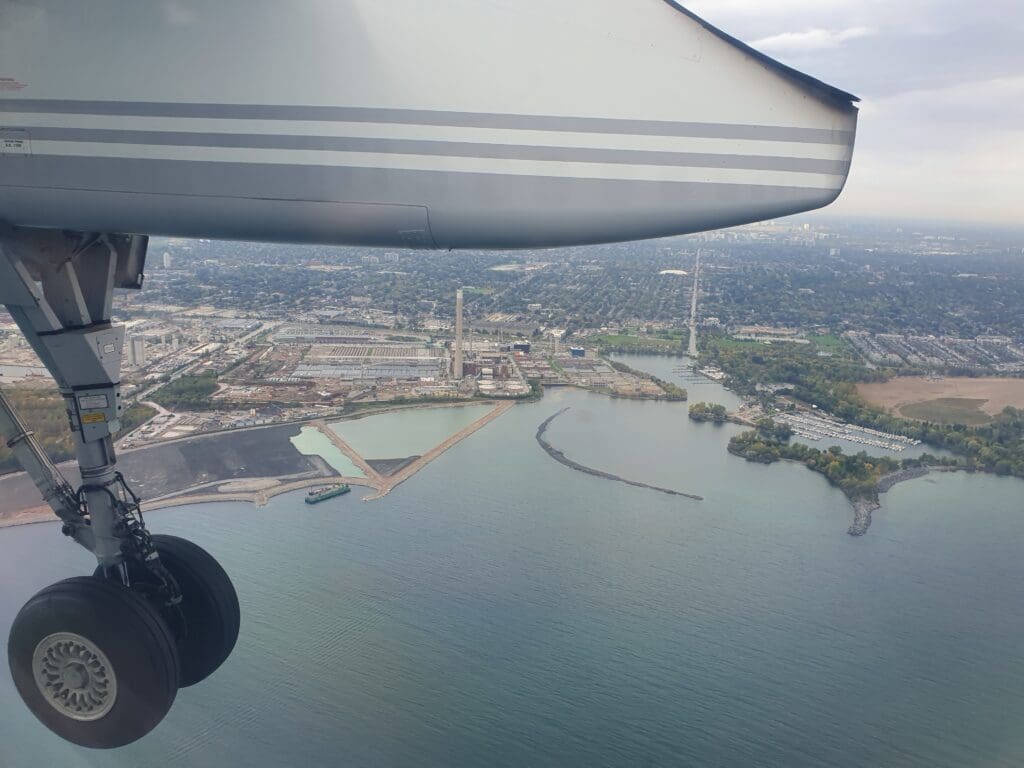
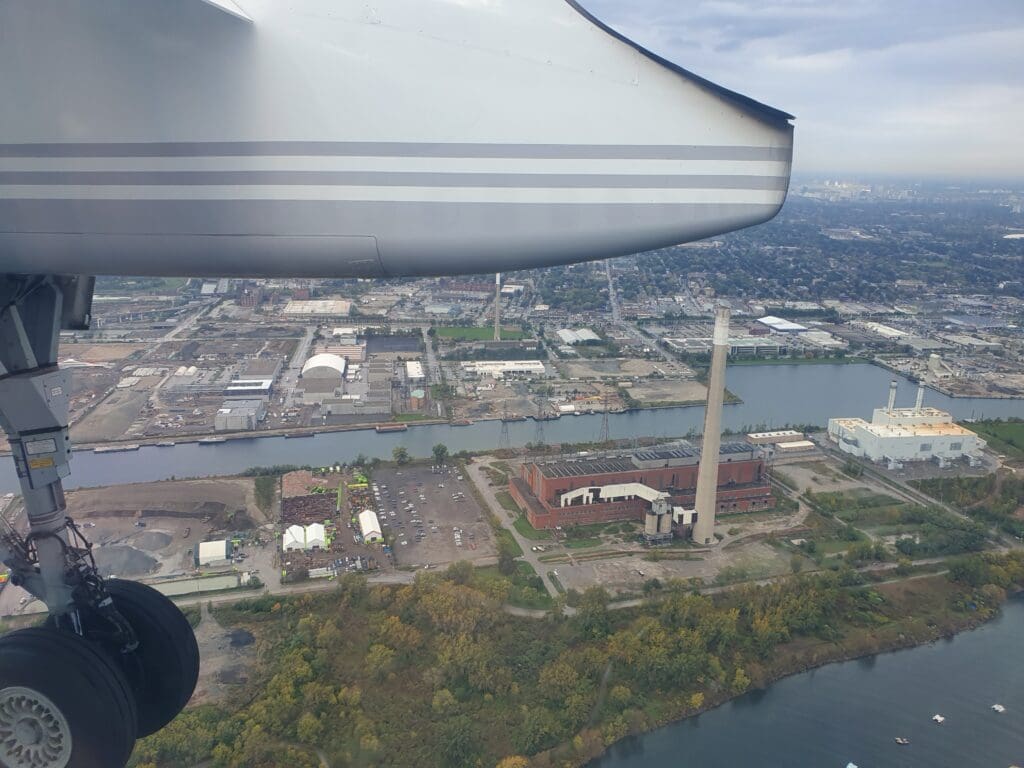
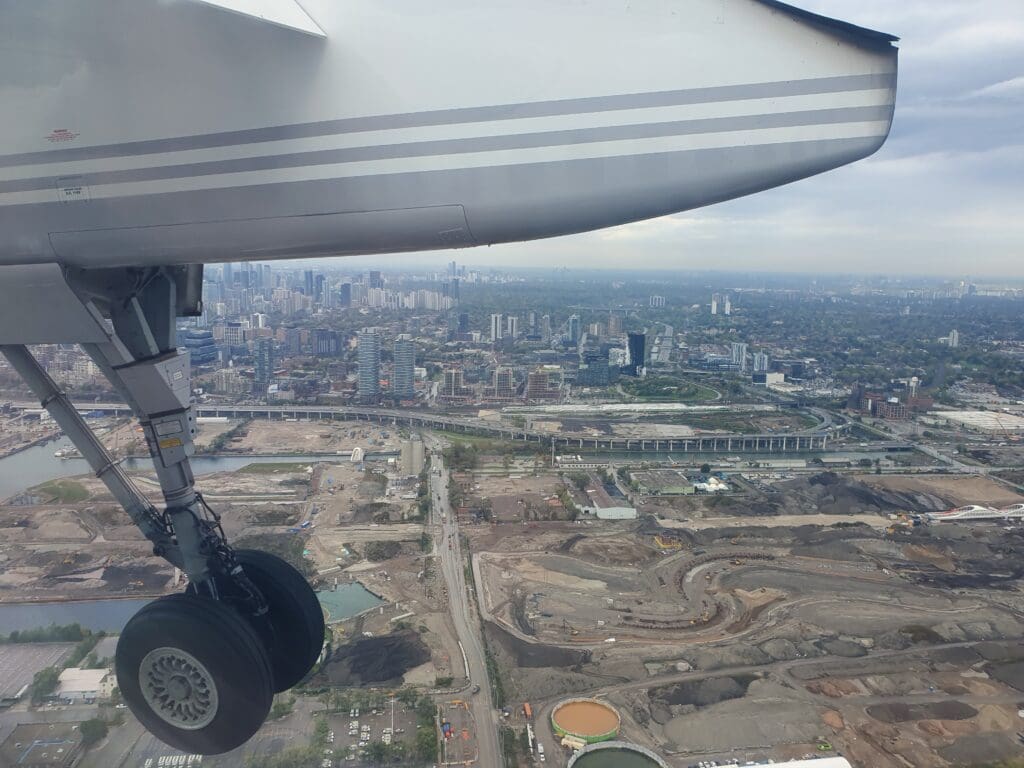

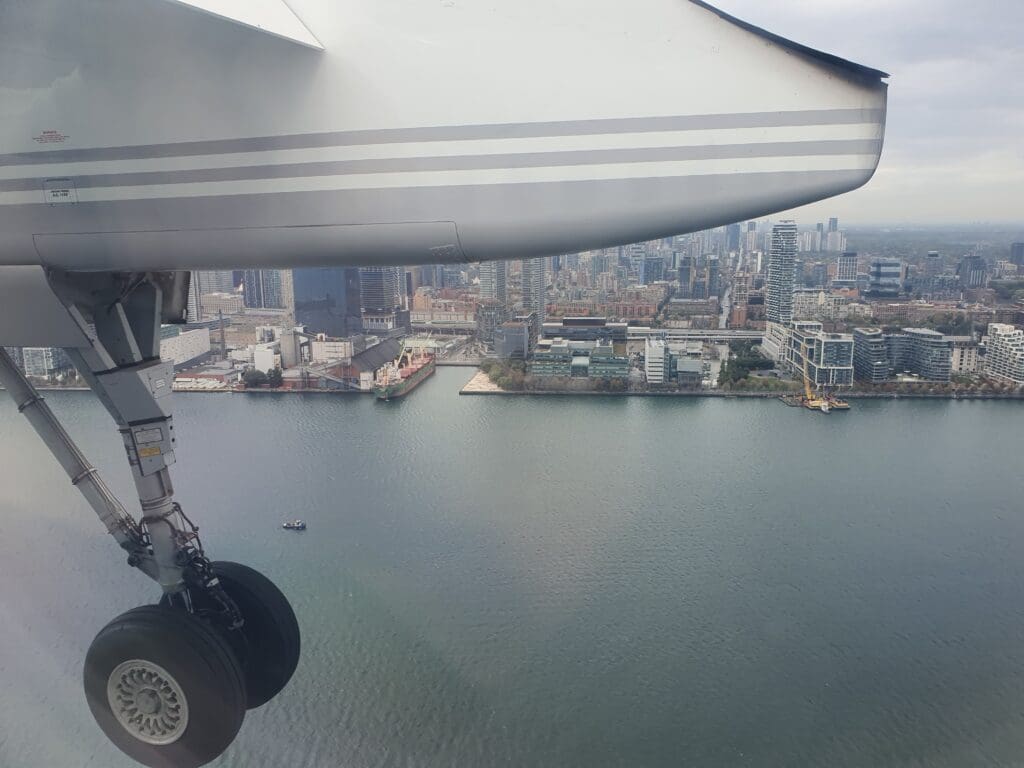
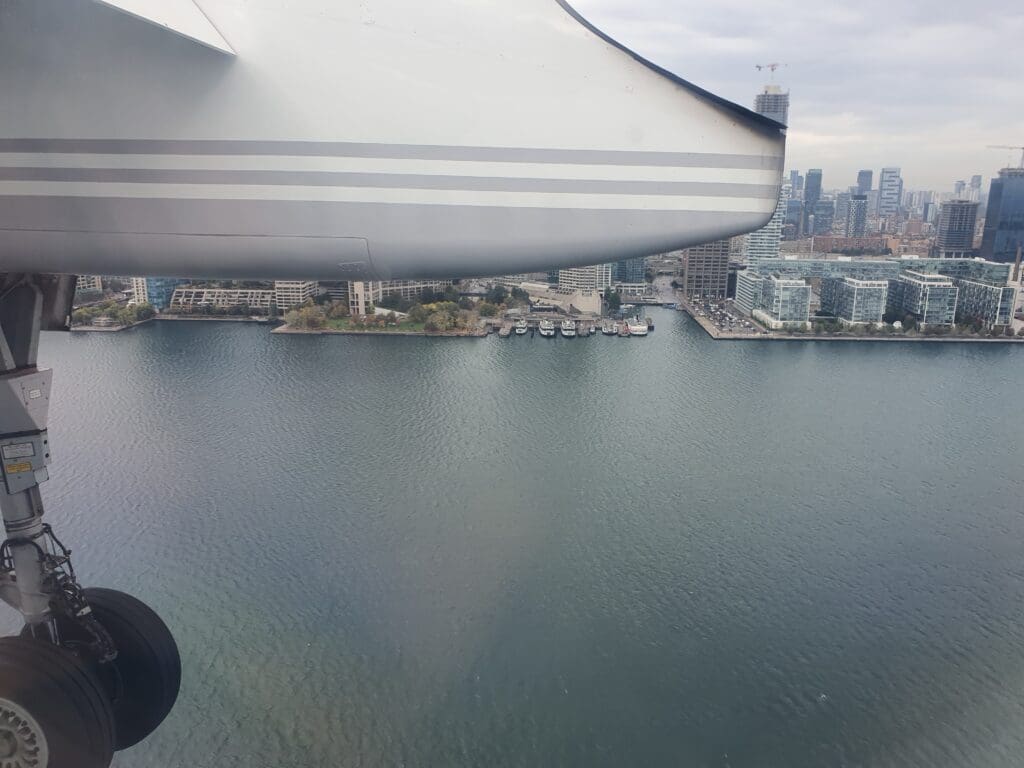
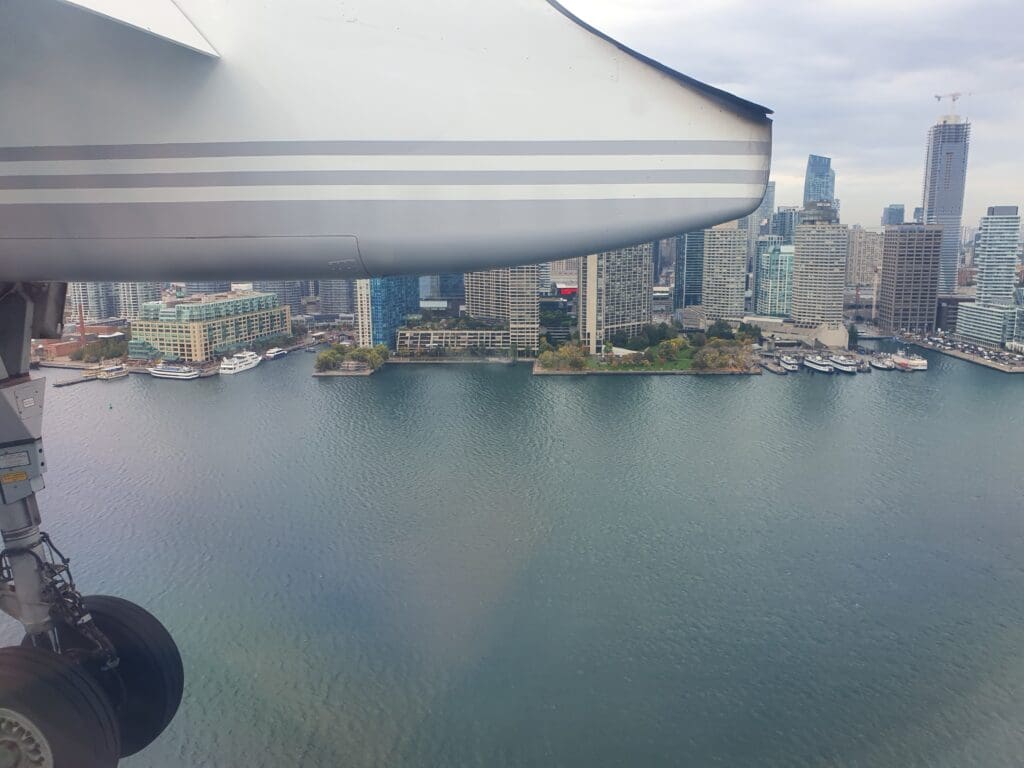

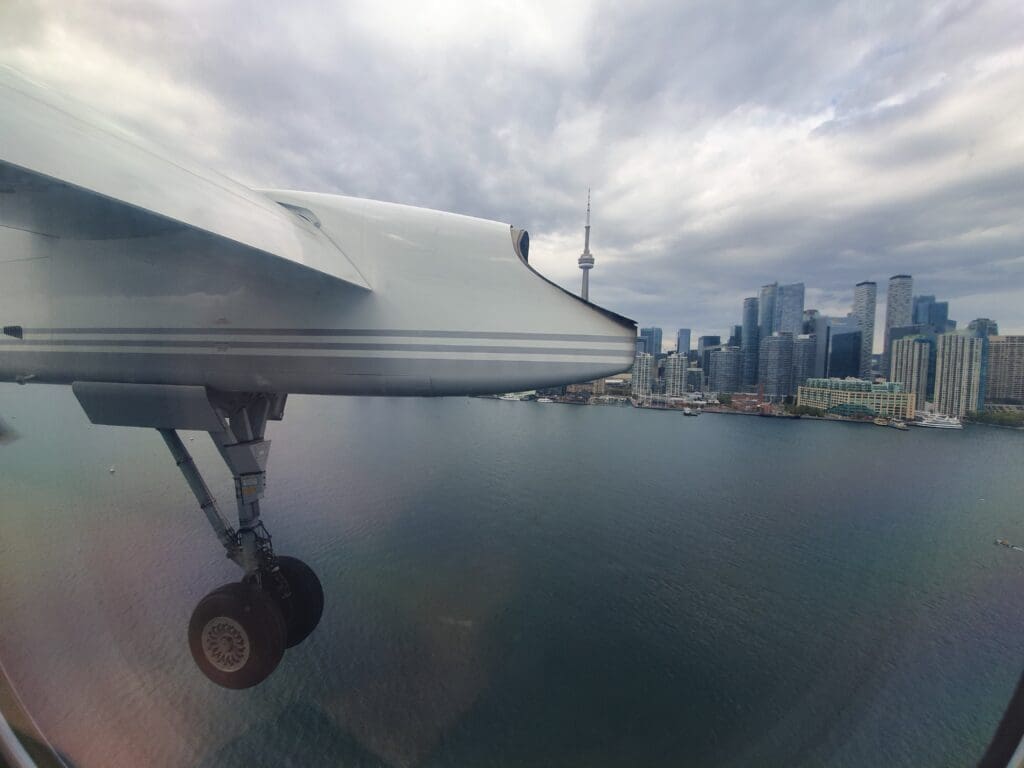

At 1205, Toronto City’s Runway 26 appeared below and moments later the Dash 8 returned to earth with a very firm bump and the cabin soon filled with noise as the aircraft decelerated rather rapidly before vacating near the end of the 3988-foot-long runway. On the ground at that time, as expected a squadron of Porter Airlines Dash 8 Q400 turboprops could be seen at the terminal alongside a single Air Canada Express Dash 8 Q400 – the same aircraft I had flown the previous day from Québec City to Montréal. In addition, plenty of light aircraft and helicopters of all shapes and sizes could also be spotted.
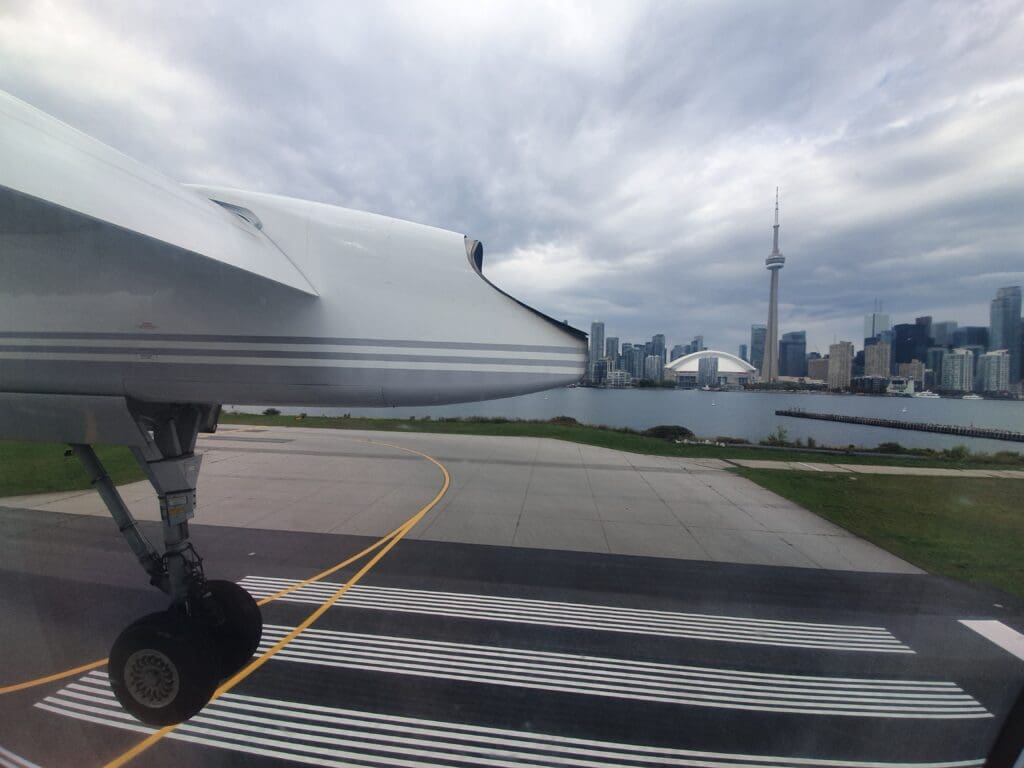
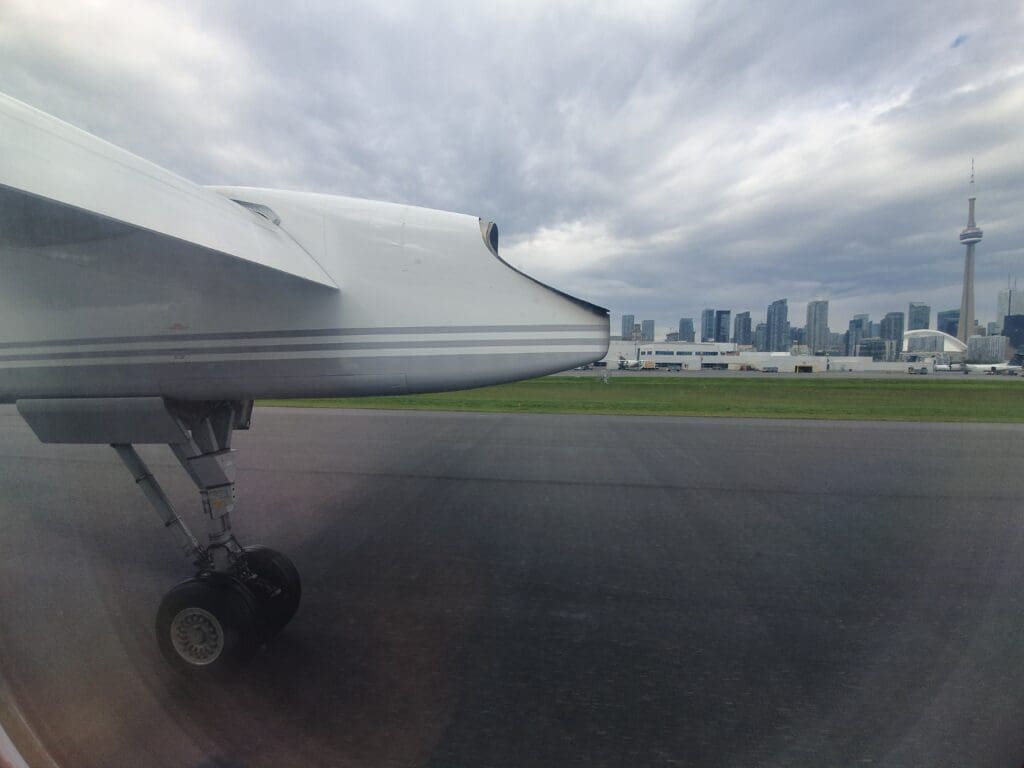
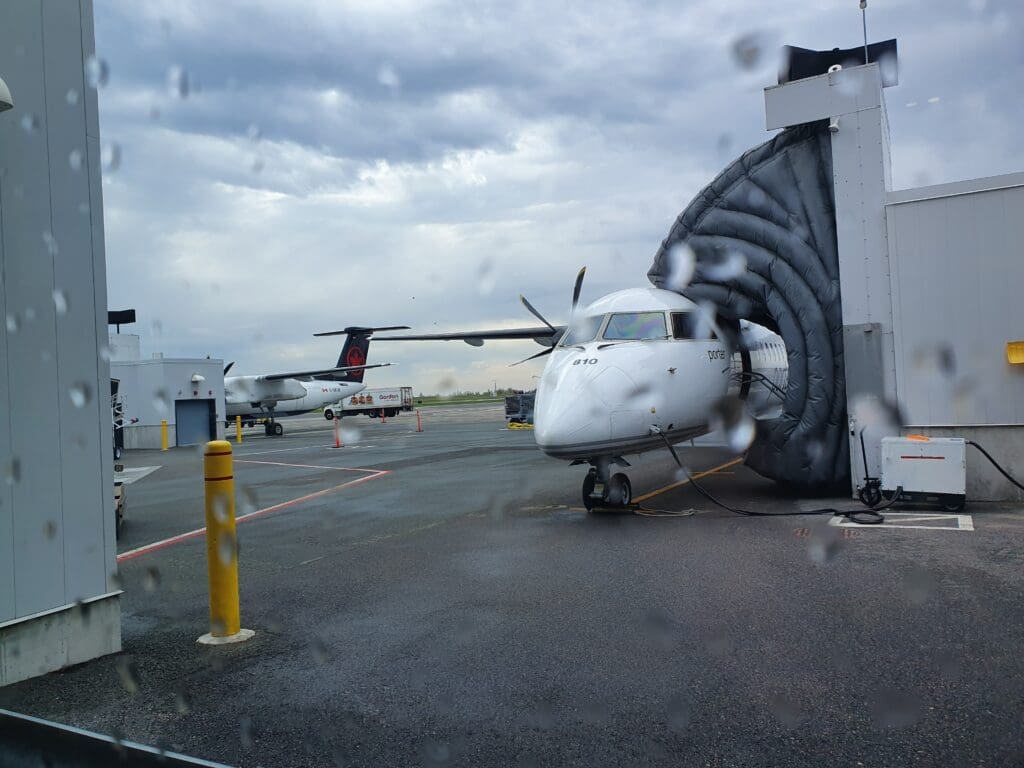
Once off the runway, the purser made a lively announcement, welcoming all to Toronto, thanking passengers for flying with Porter Airlines and advertising the free bus shuttle service that runs to Union Station. Given the small size of Billy Bishop Airport, the taxi over to the gate was short and the Dash 8 pulled in to Stand 1 around a couple of minutes after touching down in Toronto. Once the engines spooled down, few passengers appeared to stand up which was a good job as it seemed to take a while for the very interesting-looking quasi-jetbridge to be connected with the main cabin door.
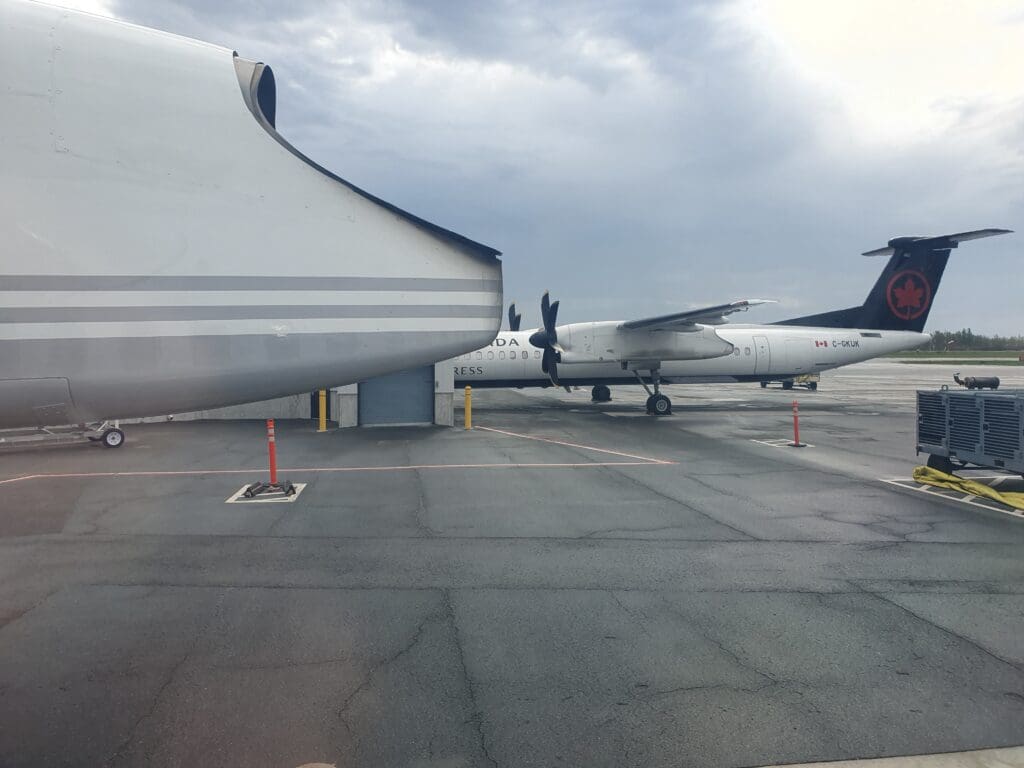
Eventually passengers were free to make their way off the aircraft and given the light load, it did not take long until I reached the forward galley where I was wished a good day and thanked for flying with Porter Airlines before I headed down to ground level. Once inside the terminal, a Porter Airlines staff member pointed me in the direction of the small baggage claim hall which was located a fair way away from the gate. Interestingly, judging by the interactions between the passengers and ground staff, it seemed that many of those arriving from Sudbury were only connecting in Toronto, with a good number of passengers heading off to Thunder Bay, where I had started my journey that morning. By the time I had arrived at the baggage claim hall, it was not too long before the small collection of bags arrived and I soon picked my small suitcase off and commenced my journey to downtown Toronto.

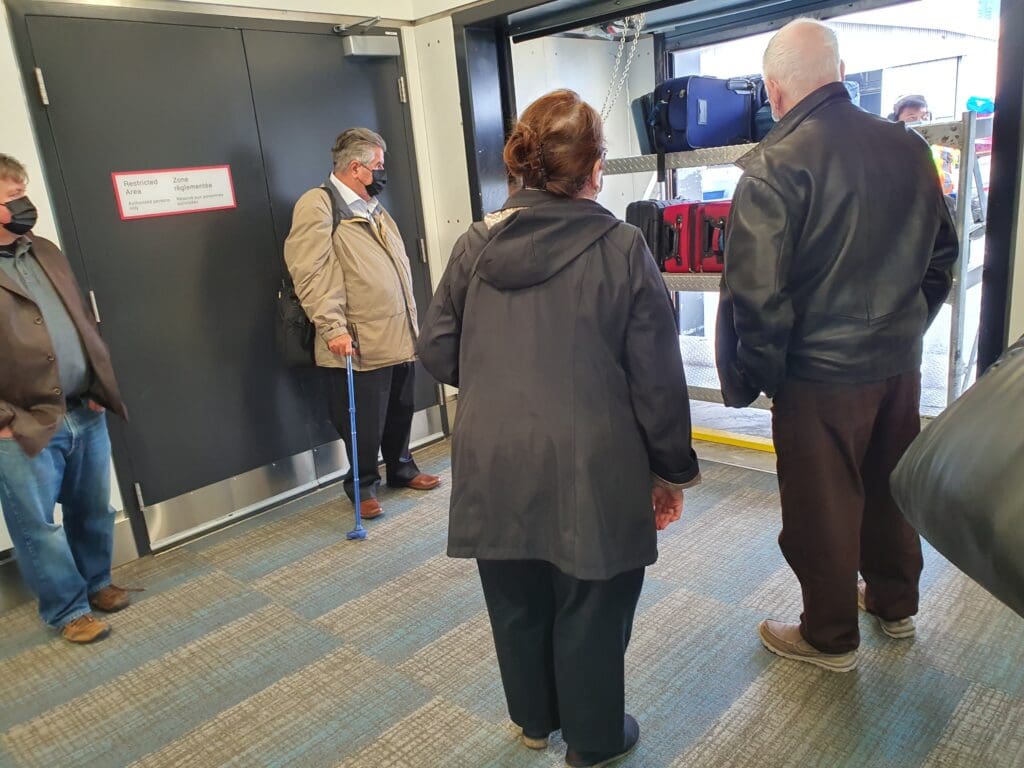
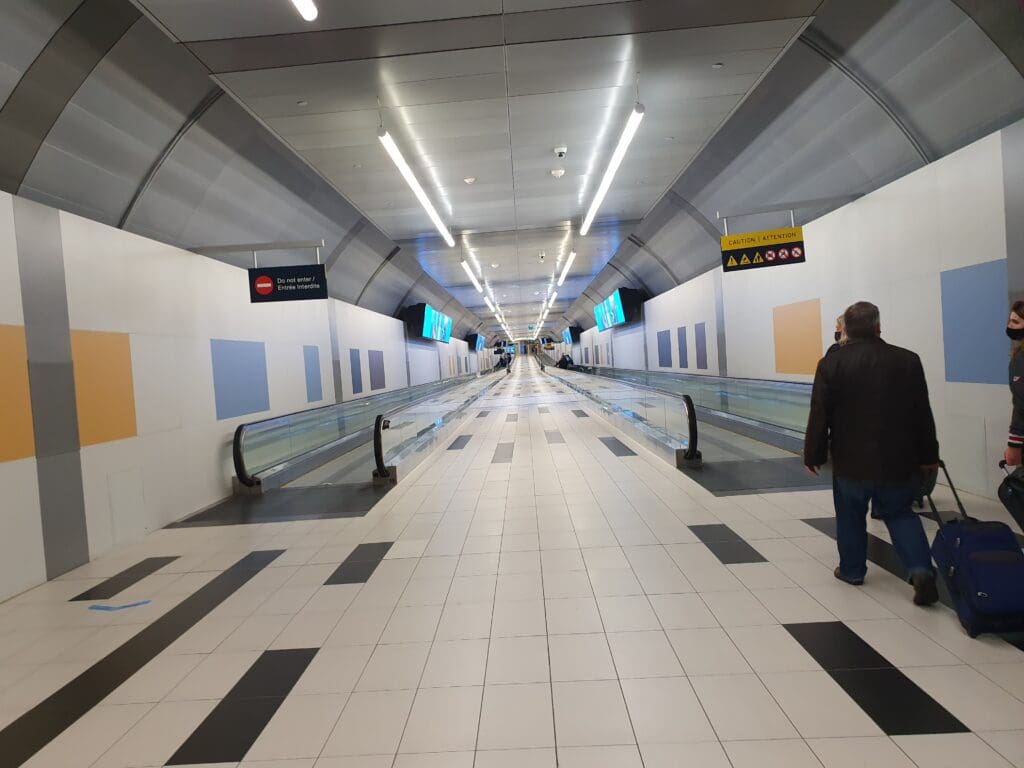
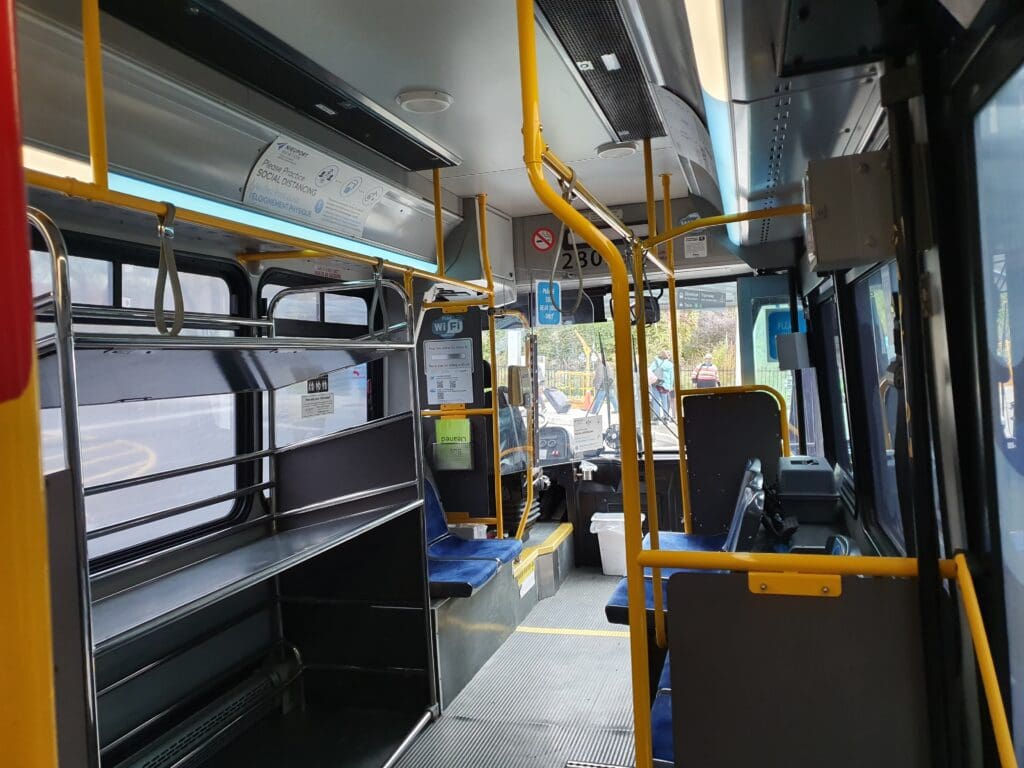
Rather than opting for the ferry service, I headed down several escalators and made my way along the underwater tunnel that crosses the Western Channel and emerges at Bathurst Quay. Upon emerging on the other side, the complimentary shuttle bus could be seen waiting which I hopped on and was soon transported along Toronto’s busy streets towards Union Station.

Conclusion
Having read plenty of good things, I had high expectations for Porter Airlines and I can say that they most certainly did not disappoint during this short hop from Sudbury to Toronto. The aircraft was in tip-top condition and proved to be relatively comfortable, the crew were by far the most friendly and welcoming I had encountered on a Canadian airline up until this point, and the comprehensive and complimentary offerings were most certainly a very welcome addition that other airlines in the region lack. Whilst I could complain about the price of optional extras, all-in-all I was very pleased with my experience and would not hesitate to fly with Porter Airlines again.