Trying Out the Faroes’ National Airline: Copenhagen to Vágar with Atlantic Airways
Background
Prior to this trip, I had wanted to visit the Faroe Islands for quite some time. Not least because of Vágar’s famous approach or the heavily subsidised network of helicopter flights across the islands, but also for the country’s world-renowned scenery and the many hiking opportunities. Eventually, I decided that I would head off to the islands over a long weekend in late August 2022 and upon reaching this decision in February of that year, I soon began planning a suitable itinerary. Despite being based in one of the geographically closest countries to the Faroe Islands, the UK, unfortunately, travel to Vágar is not always particularly cheap with only a limited number of carriers serving the country. Other than the Faroese national carrier, Atlantic Airways, at the time of my trip, the Faroes are served by Scandinavian Airlines and Widerøe who operate services to Vágar from Copenhagen and Bergen respectively. Seeing as I would be travelling during the peak tourist season, I wasted no time in searching for suitable flight options; however, being an aviation enthusiast, I held the belief that a trip to the Faroes Islands would not be complete without at least a flight in or out of Vágar on Atlantic Airways.
Booking
As one would expect, tickets for Atlantic Airways’ services can be purchased directly via the Faroese carrier’s website as well as through a range of flight booking sites. Furthermore, since 2019, a partnership with Air France and KLM has meant that seats on several Atlantic Airways’ services can be included as part of wider itineraries by the two European giants, allowing for easy connections between the Faroe Islands and destinations across the world.
Commencing my journey in London, the most geographically direct route would consist of taking a flight or train up to Edinburgh from where I could catch Atlantic Airways’ shortest international route up to Vágar. A quick search revealed that this flight would depart the Scottish capital at 0955 and would be priced at a reasonable £90. However, seeing as I held a total of £102 in KLM travel vouchers, I saw no harm in opening up KLM’s app and doing a quick search for flights. After entering London and the Faroe Islands into the relevant fields and selecting my departure date, I was presented with an impressive total of twenty itineraries. Most of these departed from Heathrow and the majority of these involved two stops – one in Amsterdam and another in Copenhagen, with the last hop across the Atlantic operated by an Atlantic Airways Airbus A320. A few involved a stop in Paris CDG followed by an Atlantic Airways ride up to Vágar, whilst the most geographically illogical option involved heading to Amsterdam and then back to Edinburgh from where I could catch the aforementioned flight to the Faroes. In terms of pricing, these ranged from £135 up to £238, with most options towards the lower end of this spectrum.
Seeing as I would have to be in the office for much of my departure day, I decided on an evening flight from Heathrow to Amsterdam where I would spend the night before heading north to Copenhagen the next morning before heading onwards to Vágar. Two itineraries matched this description, a 2025 KLM Cityhopper departure from Heathrow, and another at 2055 by a mainline KLM Boeing 737. These involved waiting overnight in Amsterdam before flying up to Copenhagen early the next morning. With both priced at £135, seeing as I had yet to fly onboard a KLM Cityhopper Embraer, I decided on the slightly earlier departure from Heathrow. Once selected, I entered my details and reached the ‘Enrich Your Trip’ optional extra page – this featuring the CO2ZERO payment of £1.60 as well as seats for the first two legs starting at £8 on each KLM sector. After skipping past this, I then entered my voucher which brought the total for my ticket to a reasonable £32.80 before making a quick and easy payment.
Check-In
Those heading off on Atlantic Airways’ scheduled fixed-wing services can check-in for their flight up to 48 hours before departure. However, having booked my ride from Copenhagen to Vágar through KLM as part of a larger itinerary from Heathrow via Amsterdam, I was a little uncertain as to whether this would work. Seeing no harm in trying, a short time after check-in opened I navigated my way to Atlantic Airways’ website where I entered my surname and KLM booking number. Much to my delight, this seemed to work and I was taken to a page where I could check-in. After agreeing not to transport any prohibited items, I was presented with a seat map which revealed that I had automatically been assigned an aisle seat, 5D. Fortunately, unlike many carriers, Atlantic Airways does not charge passengers to change their pre-assigned seat at check-in, nor does it charge for any seat at all and I could select any vacant seat for free – including those in the very first row, as well as the two exit rows in the middle of the aircraft! Whilst a ‘regular’ passenger may have gone for the latter, hoping to get a view of the world outside I decided to opt for a seat further back. Having done my research, I concluded that a seat on the right-hand side of the jet would likely offer the best views of the Faroes on approach so I settled for Seat 22F. Once done, I completed the check-in process and after entering my email address, I promptly received my boarding pass.
The Journey
Following a very pleasant flight, I disembarked the KLM Cityhopper Embraer E195-E2 that had ferried me up from Amsterdam with just under four hours until my flight to Vágar. With Denmark, the Faroe Islands and the Netherlands all located within the Schengen Area, no passport checks would be required during my stay at Copenhagen Airport so my connection would be a fuss-free experience. Having had two long layovers in Copenhagen Airport in the months leading up to my flight, by this time, I was fairly well acquainted with Denmark’s busiest airport and I was thus well aware of all the best places to pass the time before the departure of my flight to the Faroes.
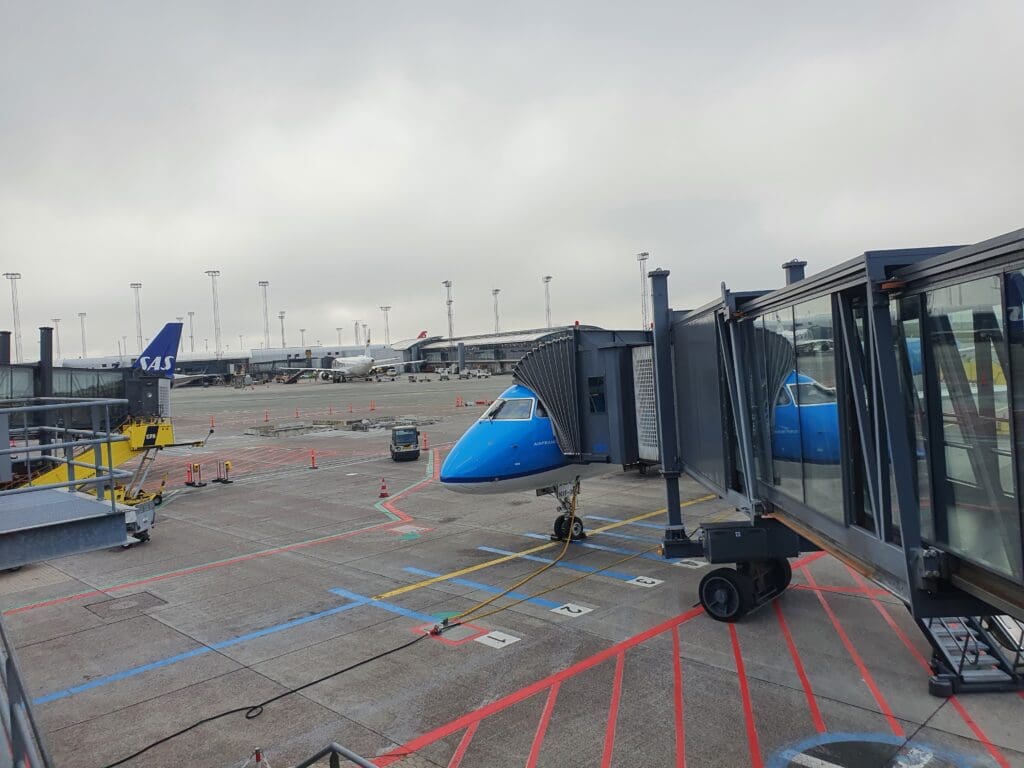
Excluding the time that I had very nearly missed my Jetstream 32-operated flight to Torsby thanks to Stockholm Atlanda’s long security queues, at this point I was yet to have any sort of majorly negative experience in a Scandinavian airport. As with its Norwegian counterpart, Oslo Gardermoen, plenty of wood and glass appears to have been used in Copenhagen Airport’s construction and furnishing, giving it a stylishly Scandinavian aesthetic whilst all passengers are likely to appreciate the plethora of seating options – with a good range of options from comfortable recliners to hard wooden stools provided throughout the terminal. As many passengers expect in 2022, complimentary wifi was also on offer which I found to work quickly and without issue for the duration of my stay, with a good number of plug sockets and USB charging points also found throughout the airport. Briefly examining the airport’s layout, Copenhagen Airport is officially split into two terminals – Terminal 2 and Terminal 3, with Terminal 1 having closed in 2015. However, connecting passengers may not realise the fact that there is more than one terminal given the fact that these are conjoined in the airside area.
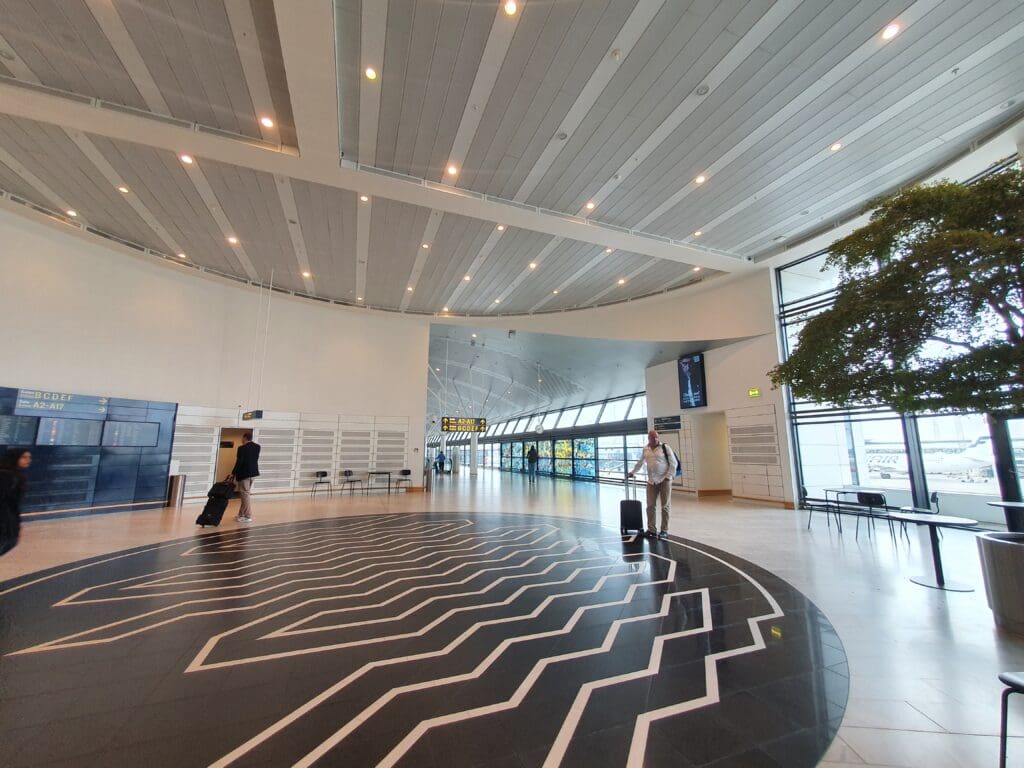
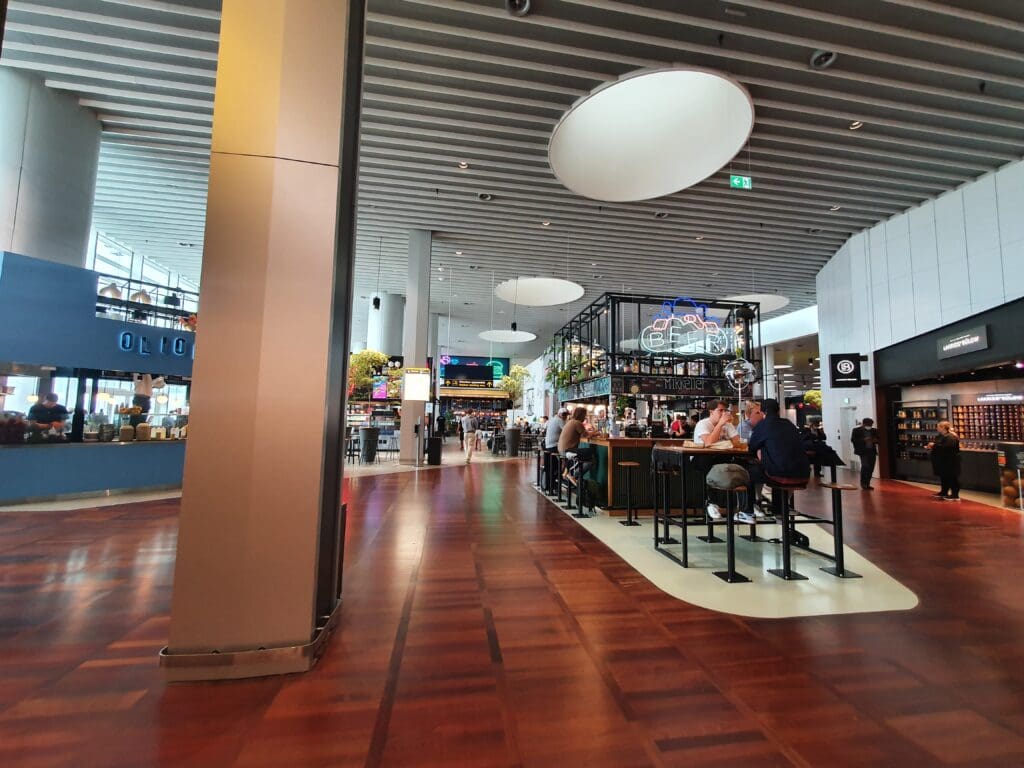
As a major international airport and Scandinavia’s second busiest as per 2021 statistics, unsurprisingly Copenhagen Airport’s airside area is home to the usual plethora of shops, cafes and restaurants. Most of these are concentrated in the central portion of the airport, however, several outlets can also be found down the airport’s five piers around the gates. These range from branches of 7-Eleven to high-end fashion boutiques, however even at the lower end of the scale, it was fair to say that prices were particularly steep for someone on a measly British wage! Those fancying some baked goods will likely be happy to hear that no fewer than five branches of Ole and Steen can be found in the airside portion of the terminal, whilst such repetition continues amongst other chains including four Joe and the Juices and three Espresso Houses plus several other cafés. With plenty of flights heading off to destinations across Europe and North America, that morning the terminal was rather busy and long queues could be seen at the terminal’s eateries. Not wanting to wait in line, after a quick wander around I spent my life savings in exchange for an unhealthy breakfast consisting of a machine-made cappuccino and a packet of unhealthy but delicious caramel-filled Marabou chocolate which came to a total of 58kr (£6.74).
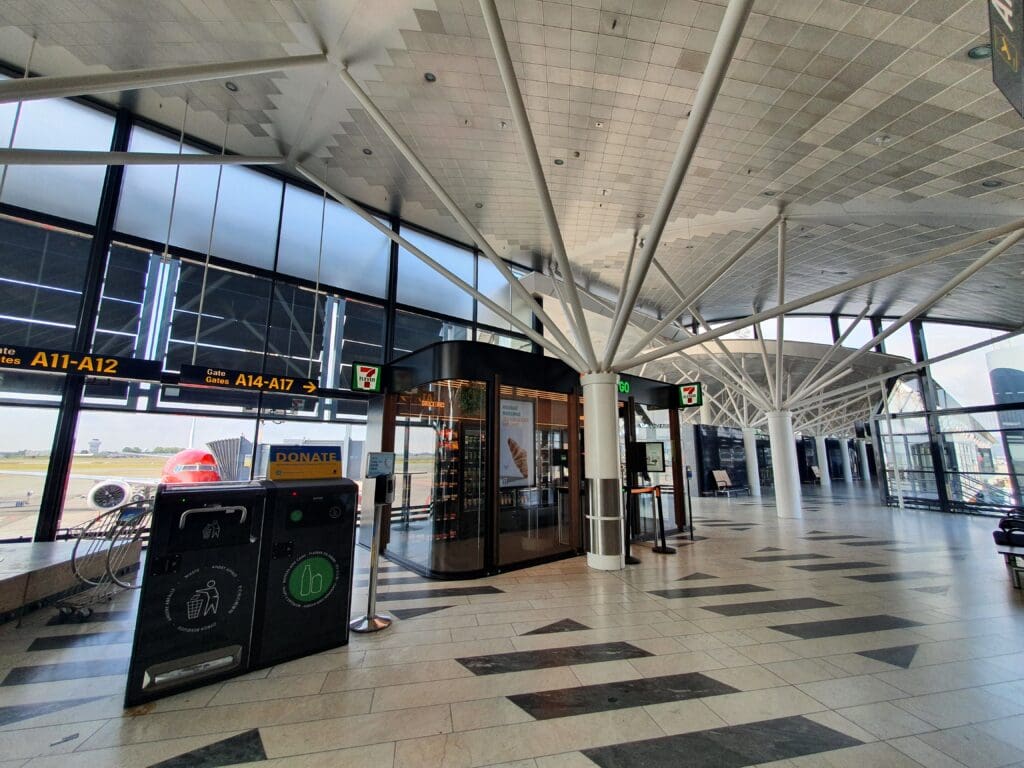
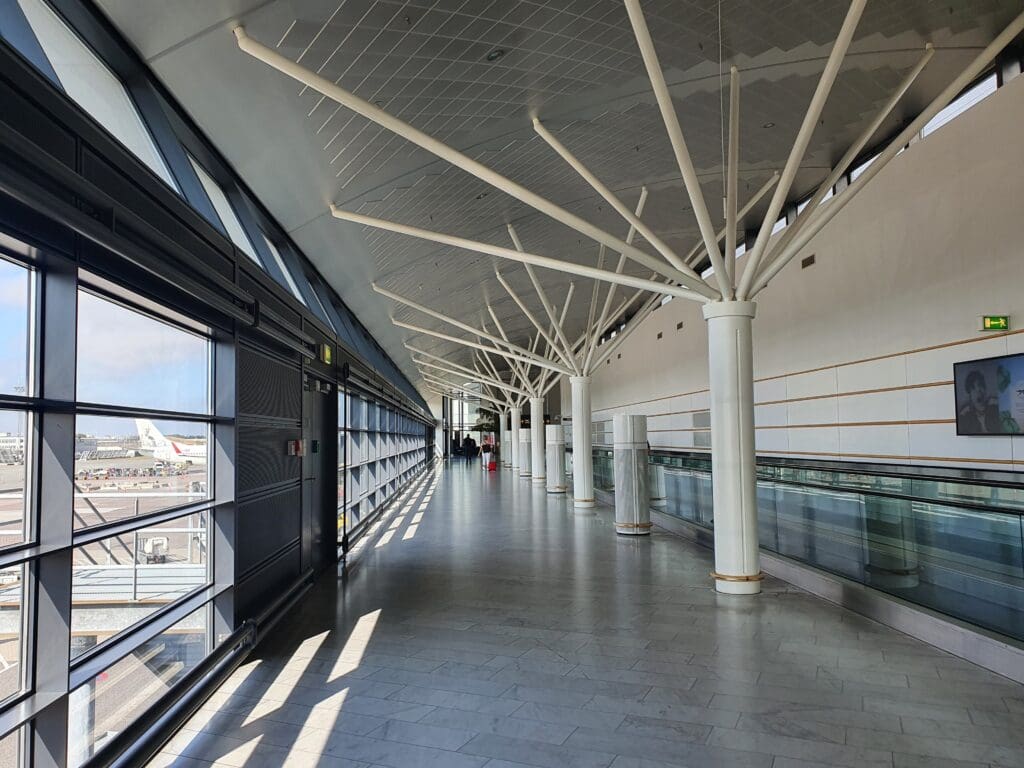
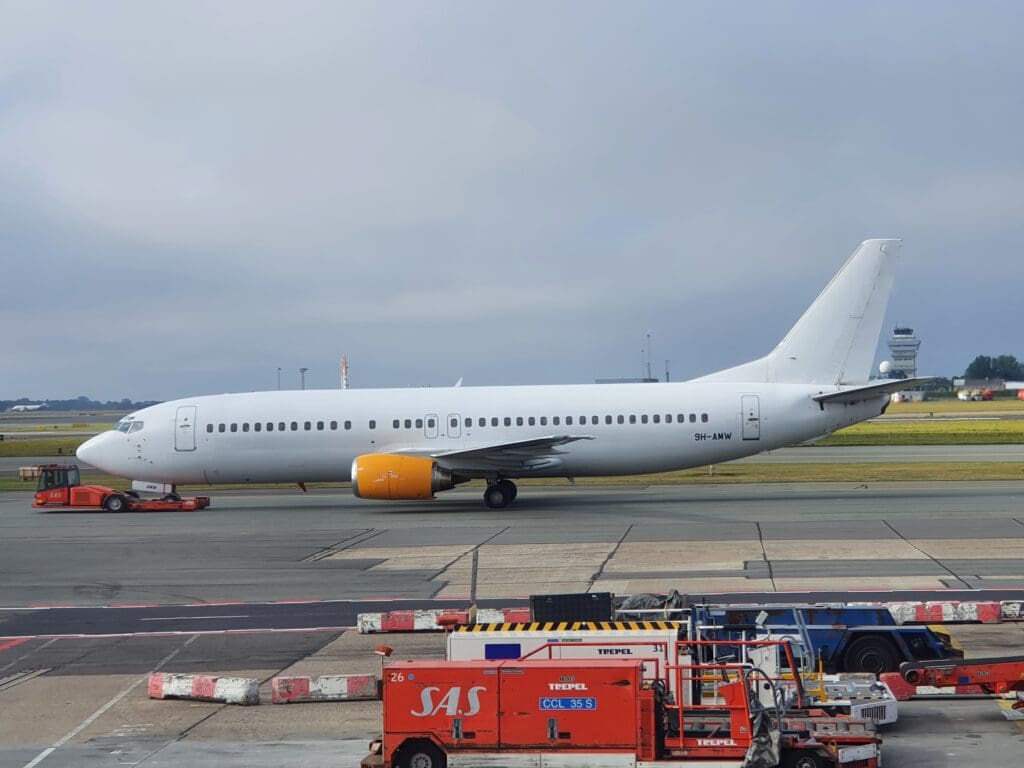
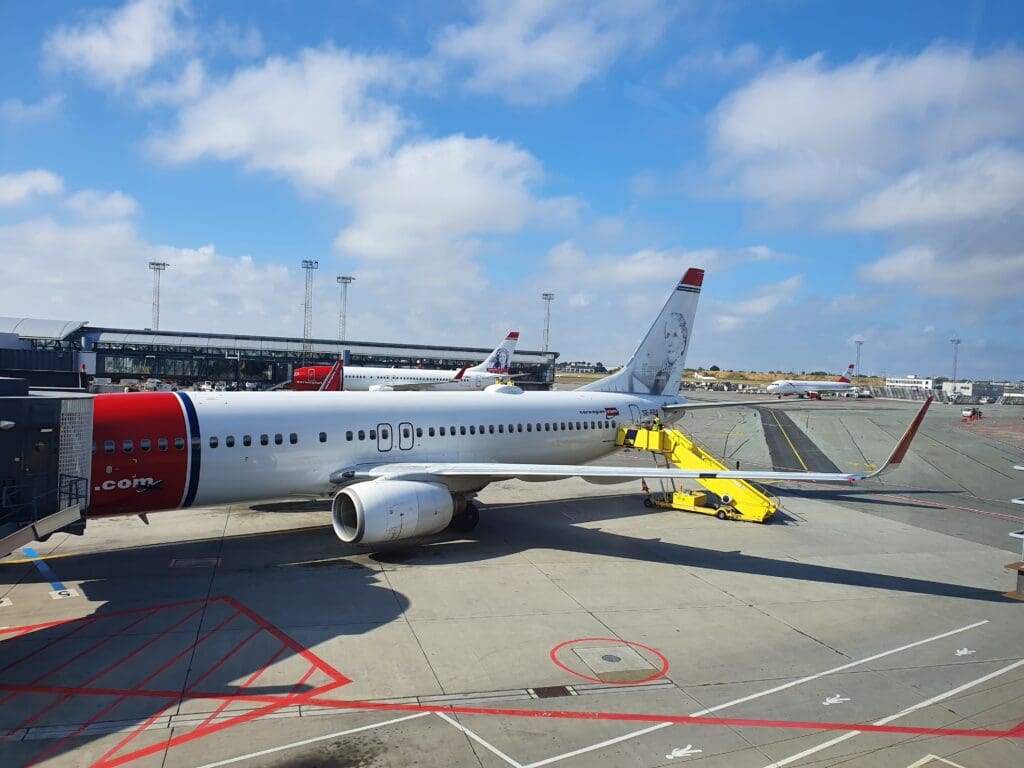
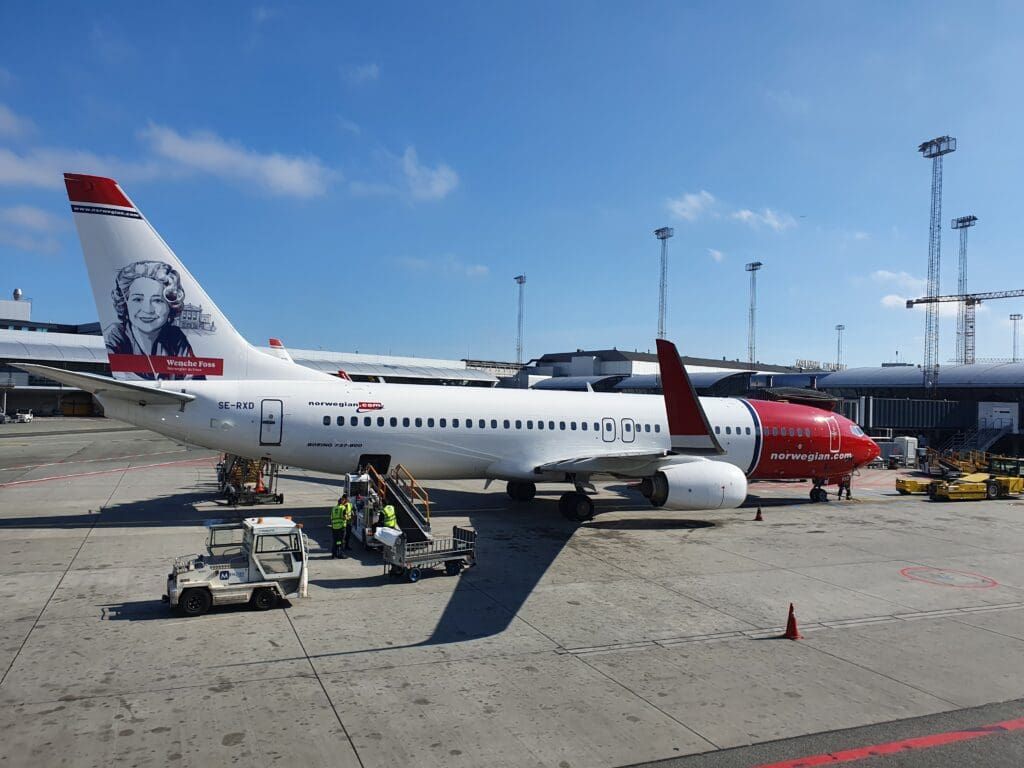
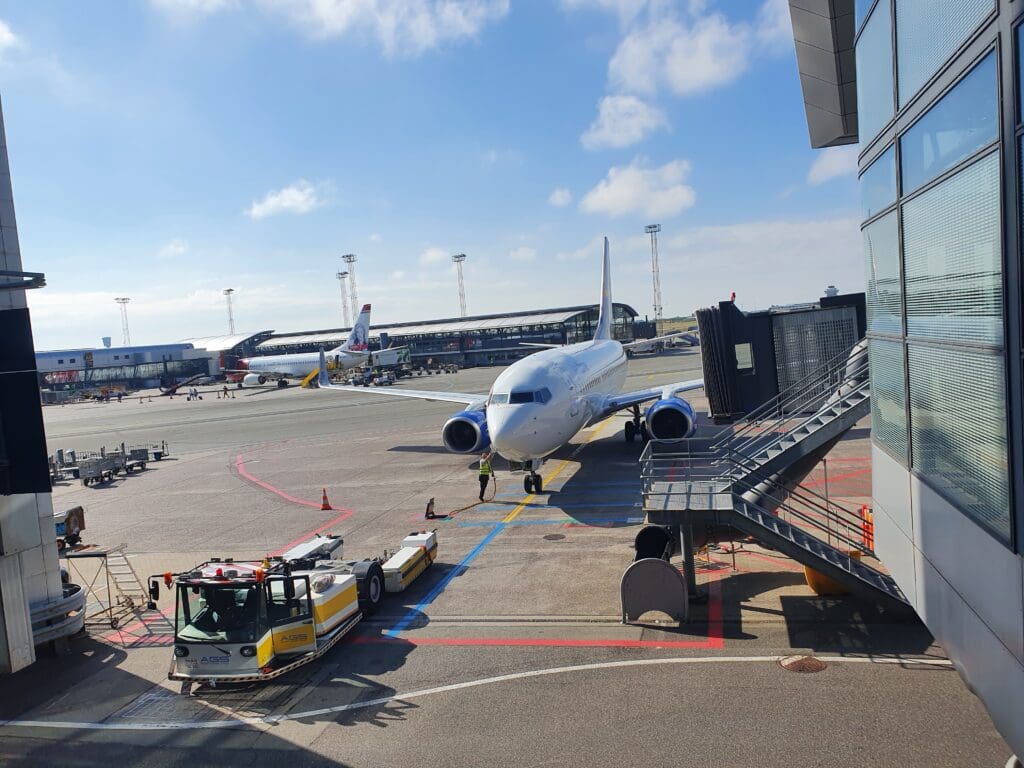
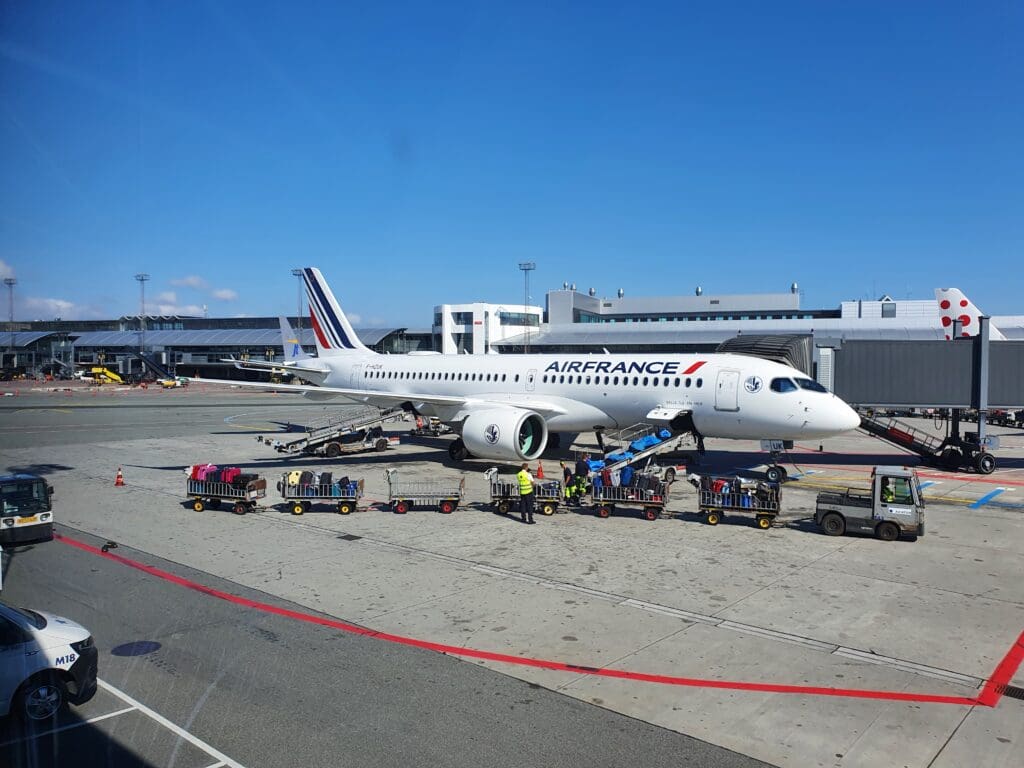
Whilst Copenhagen Airport may not be good on the wallet, thankfully it is enthusiast friendly and good views of the action outside could be had through large windows at most of the terminal’s gates. Needing some aviation therapy to recover from my purchase, I took a seat near one of the windows and watched as a near-constant stream of aircraft came and went. Between 0900 and my flight’s scheduled departure time, there was an impressive total of 54 flights listed on the departure boards. Admittedly few movements proved to be particularly interesting for a UK-based planespotter, with a very small handful of aircraft that I would have not been able to see back in the UK. As one would expect, many of these were operated by Scandinavian Airlines and their subsidiaries as well as Norwegian, whilst most other movements were operated by a host of carriers from across Western Europe. Had I been seeking to get as far away as possible from Copenhagen on a direct flight, I would have taken Scandinavian Airlines’ Airbus A350 operated service to Los Angeles whilst at the opposite end of the spectrum the shortest flight of the morning went to Danish Air Transport’s ATR 42 service to the island of Rønne, located just 91 miles away! Meanwhile, my own personal favourite movement that morning took the form of Air Greenland’s Airbus A330-200 which departed off to Kangerlussuaq.

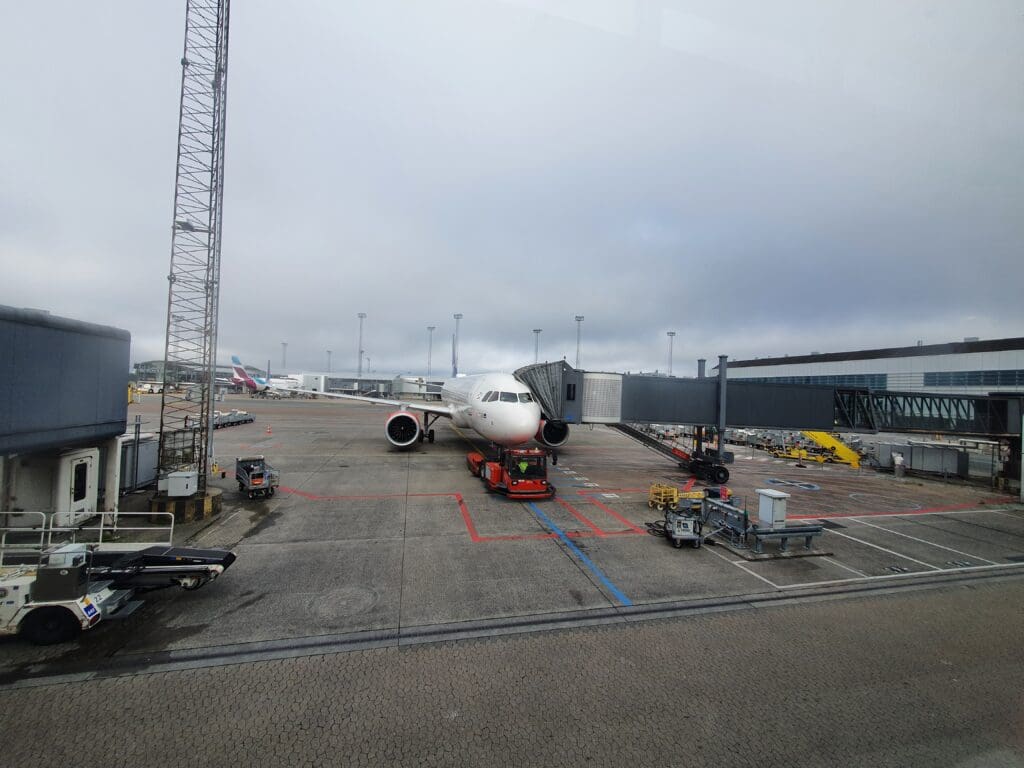

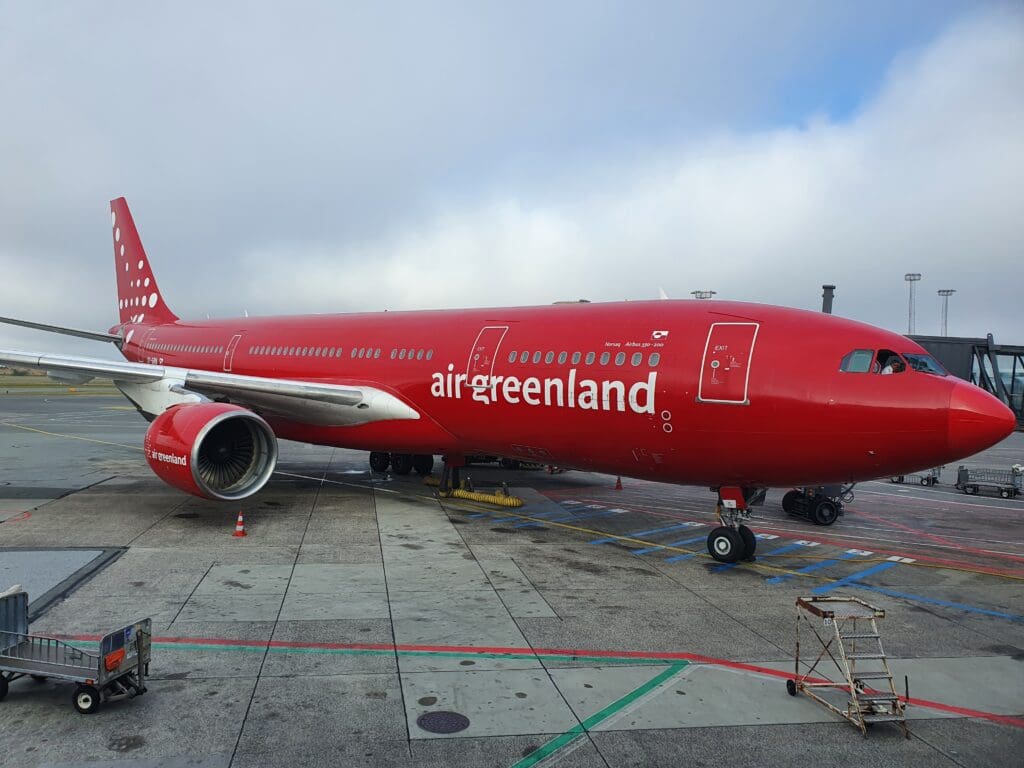
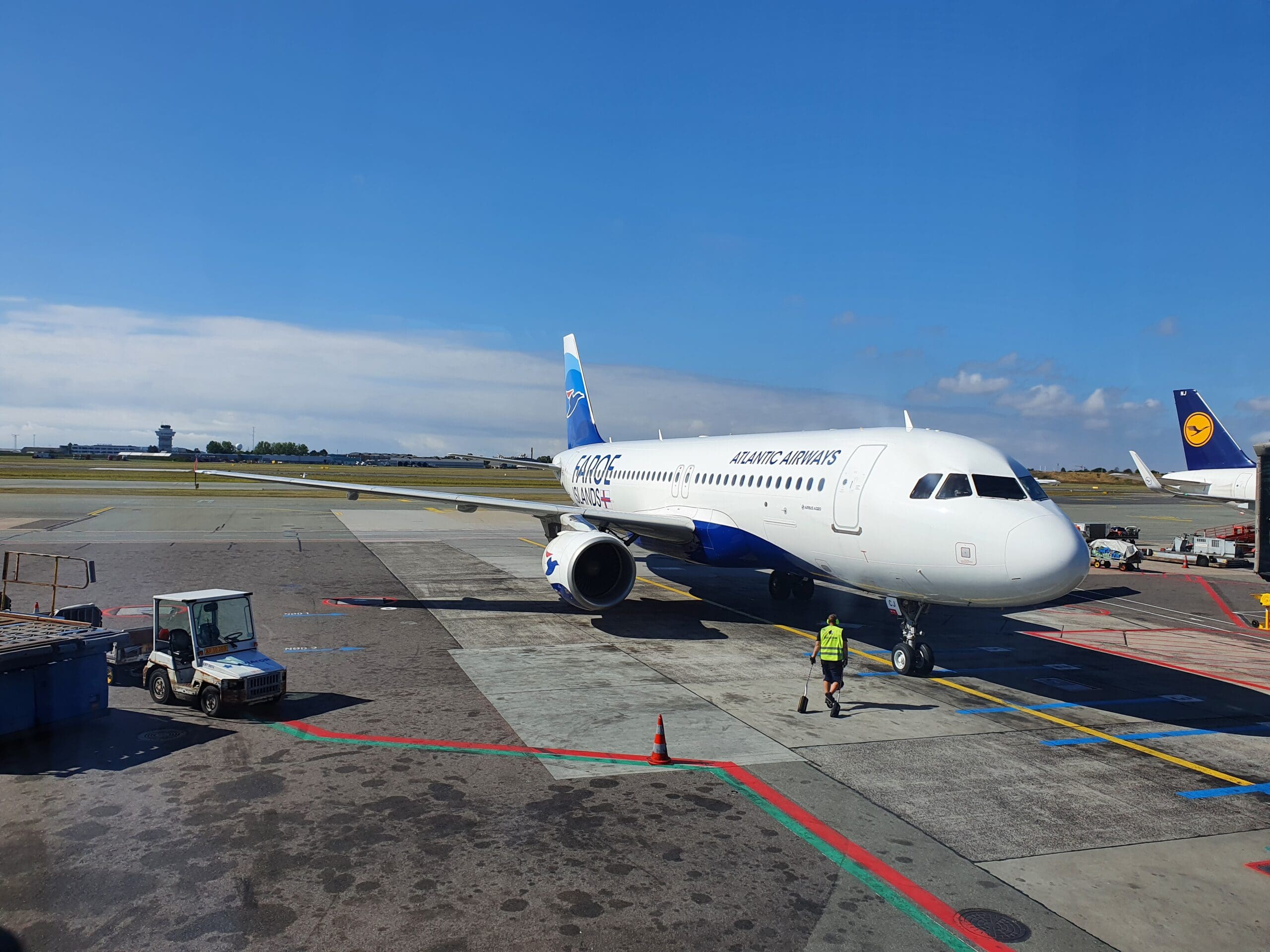
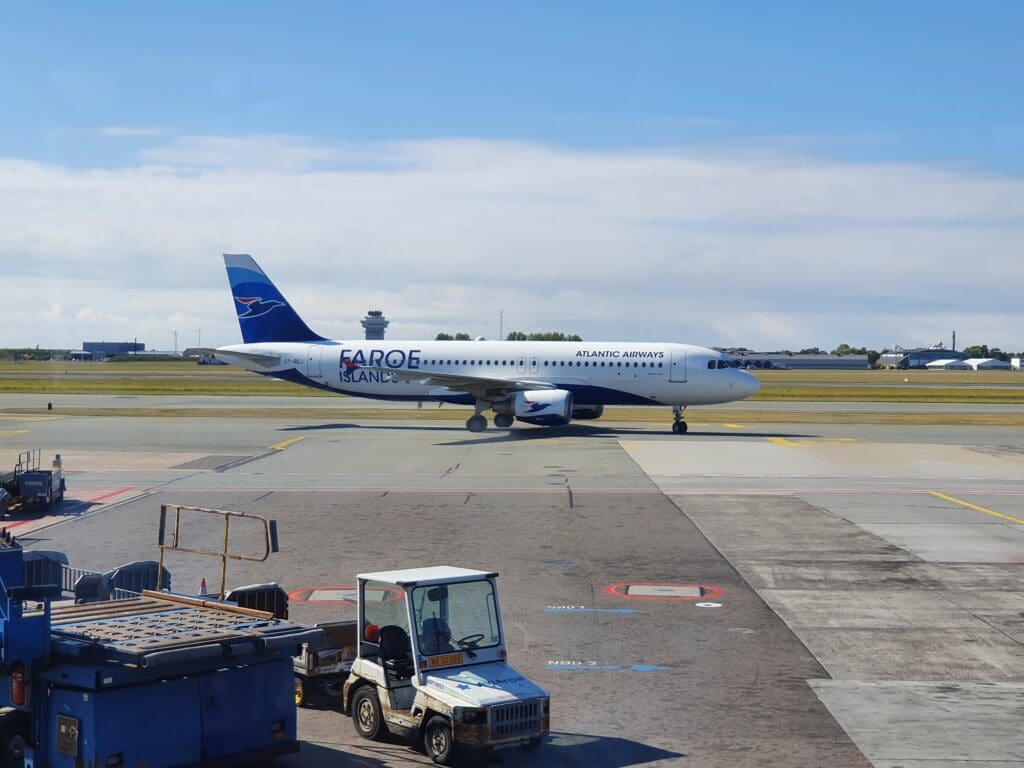
During my wait, I turned to Flightradar24 to track the inbound flight as it journeyed towards mainland Europe. That morning, the Copenhagen bound had departed Vágar on time, with the aircraft operating this service taking the form of Airbus A320-214, OY-RCJ. Assembled at Airbus’ factory at Hamburg Finkenwerder, this jet took to the skies for the first time in December 2016 with the German test registration D-AVVI. This made the aircraft well over five and a half years old at the time of my flight. Following two test flights, the aircraft received its current registration and was handed over to Atlantic Airways for whom it has operated ever since, shuttling passengers and cargo between the Faroes to destinations across Europe. All of Atlantic Airways’ aircraft are named after renowned Faroese artists and writers, with this particular Airbus named after the famous multi-talented author, composer, painter and poet, William Heinesen. In the week before my flight, the aircraft had connected Vágar with Aalborg, Billund, Copenhagen, Edinburgh and Oslo, whilst also operating holiday flights between Billund and Malta, Karpathos and Samos.
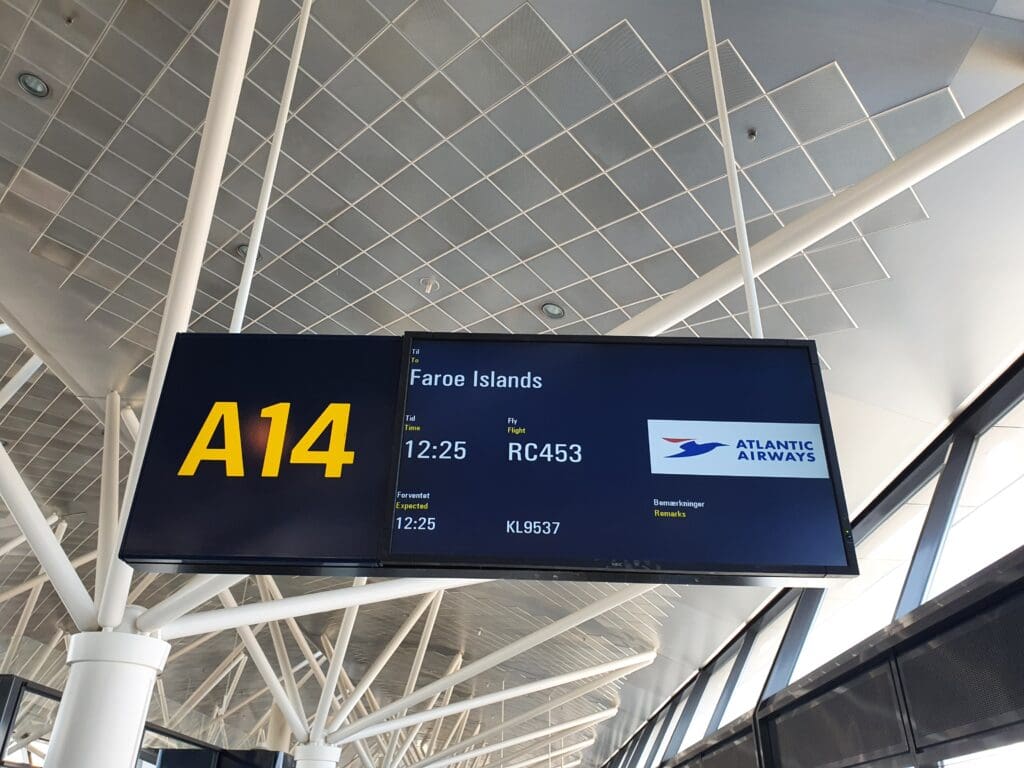
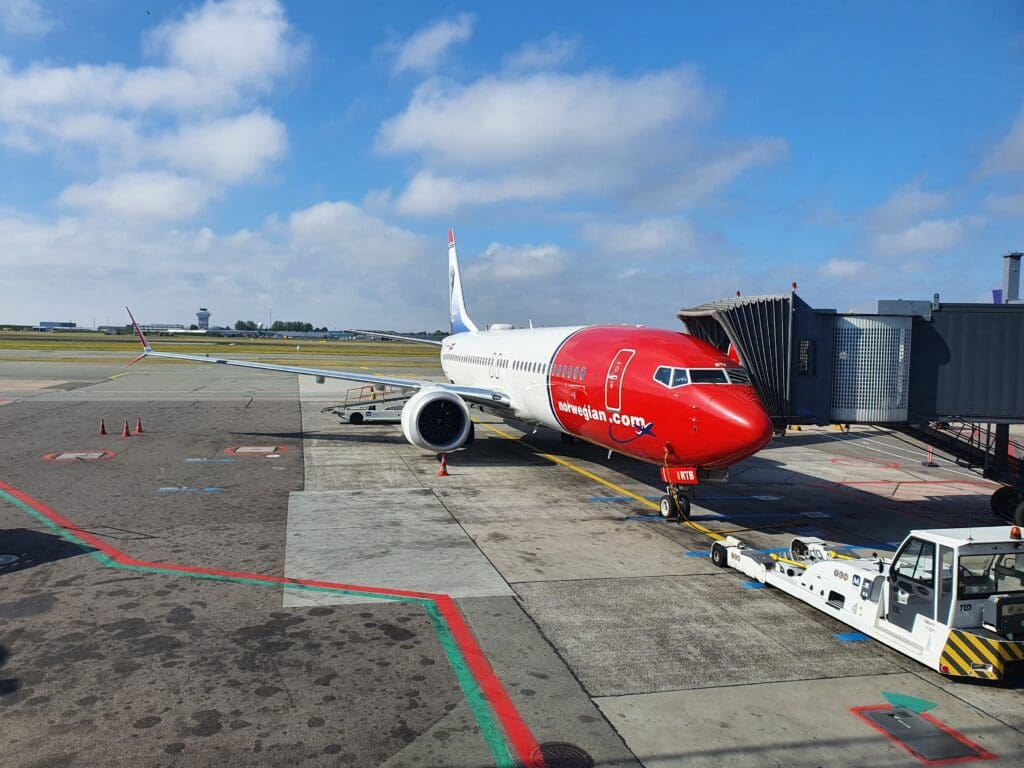
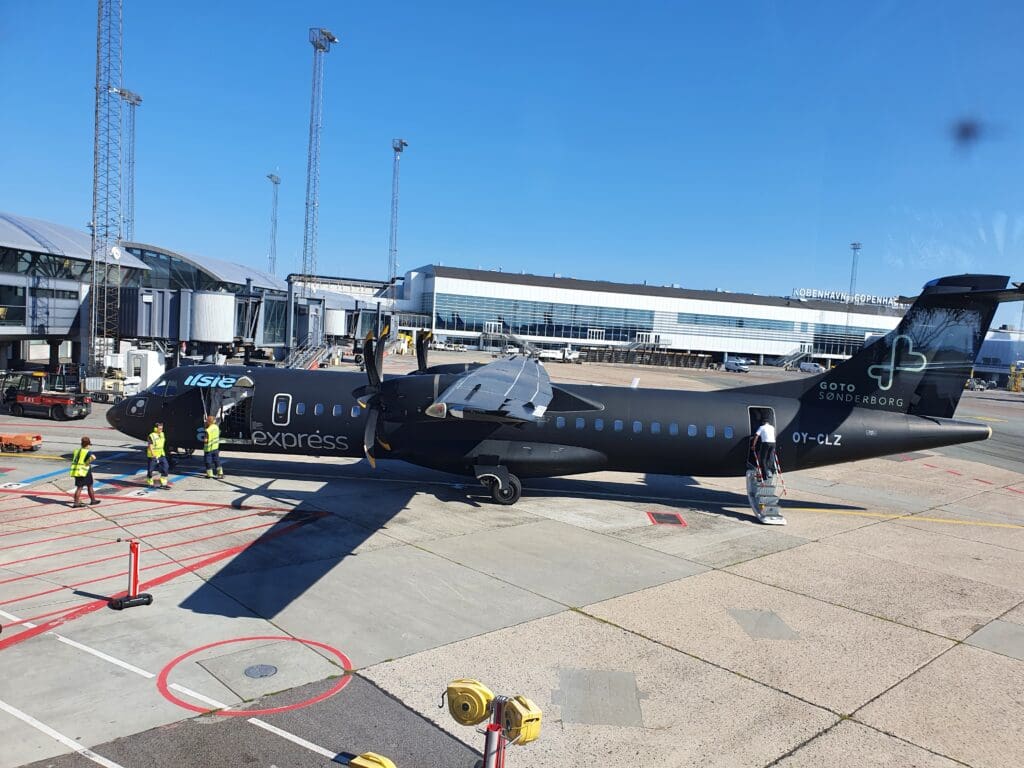
At 1030, the departure boards inside the terminal updated to show that my flight would depart from gate A14. Following a quick final walk around the airport, I journeyed down the A pier which at that time featured a selection of Norwegian Boeing 737-800s being readied for flights to destinations across Europe in addition to an Alsie Express ATR 72 that would depart to Sønderborg. Soon arriving at the empty gate, with plenty of glass, this part of the terminal was nice and bright, allowing for good views, although it did feel a little like a greenhouse with sunlight pouring in. Following some more waiting, at 1120 I watched as the Airbus cautiously pulled into Stand A14 five minutes ahead of schedule before coming to a halt.
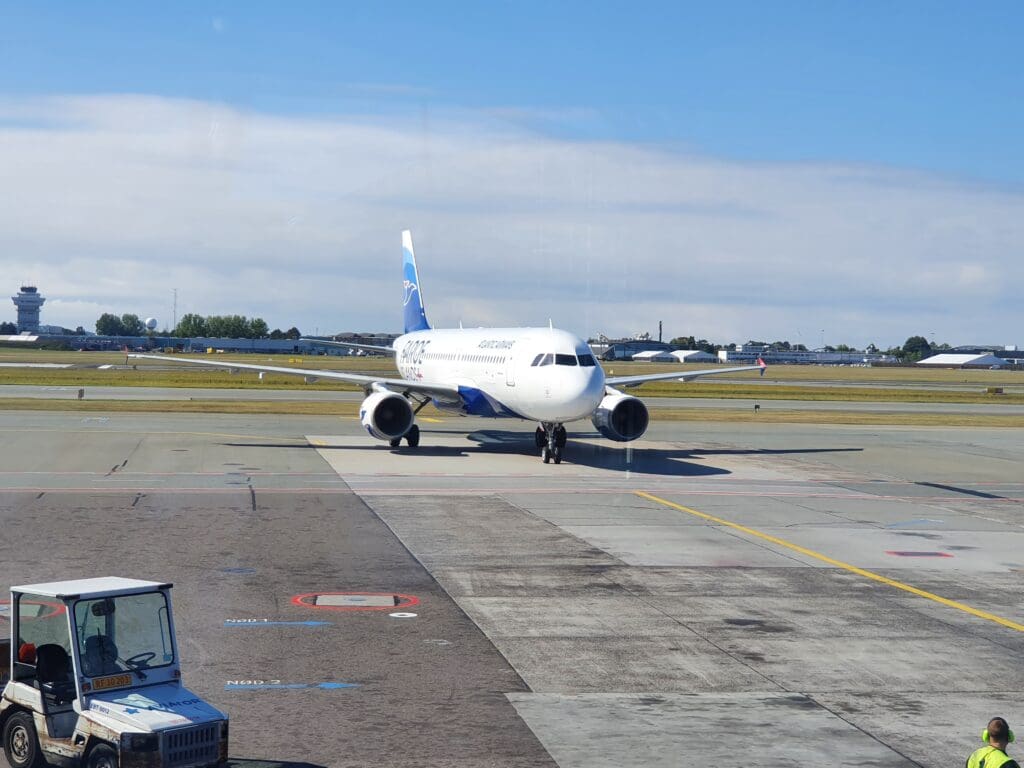
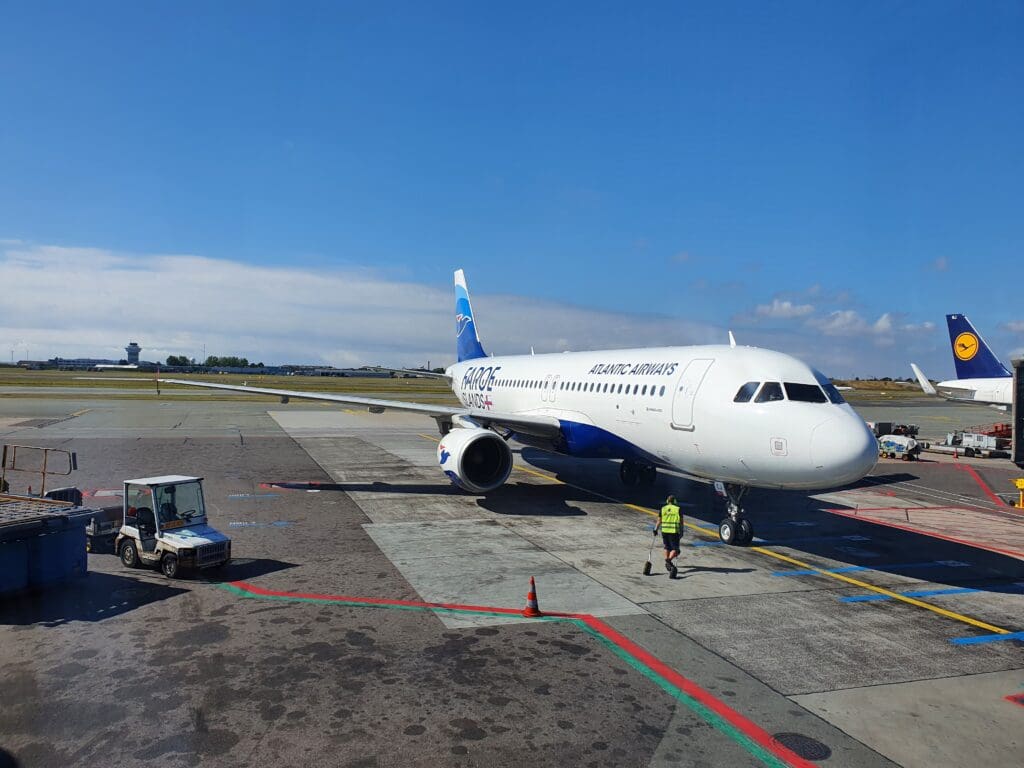
As the service’s departure time approached, more passengers began to arrive at the gate, although the number of passengers waiting appeared to be far from enough passengers to fill an entire Airbus A320. Once all pre-flight preparations in the cabin had been completed, the flight’s sole gate agent performed an announcement just before 1200 inviting all passengers to proceed forward for boarding – with this not being undertaken in any particular order. A few moments later, I scanned my boarding pass on one of the gate’s two automated barriers before continuing onward down the jetbridge. Following the usual short wait as passengers made their way onto the aircraft, I stepped into the Airbus’ forward galley where I received a friendly greeting from two flight attendants standing there welcoming passengers. Onboard, Atlantic Airways operates their aircraft in an all-economy configuration and upon turning right and entering the cabin I was greeted by the sight of 174 comfortable-looking Recaro seats. Each of which is covered in a dark blue (faux?) leather covering and comes with an adjustable headrest that is partially covered by an Atlantic Airways branded fabric antimacassar. Keeping up with the Faroese national colours as well as those of the airline, the seatbelt straps alternated between red and blue.
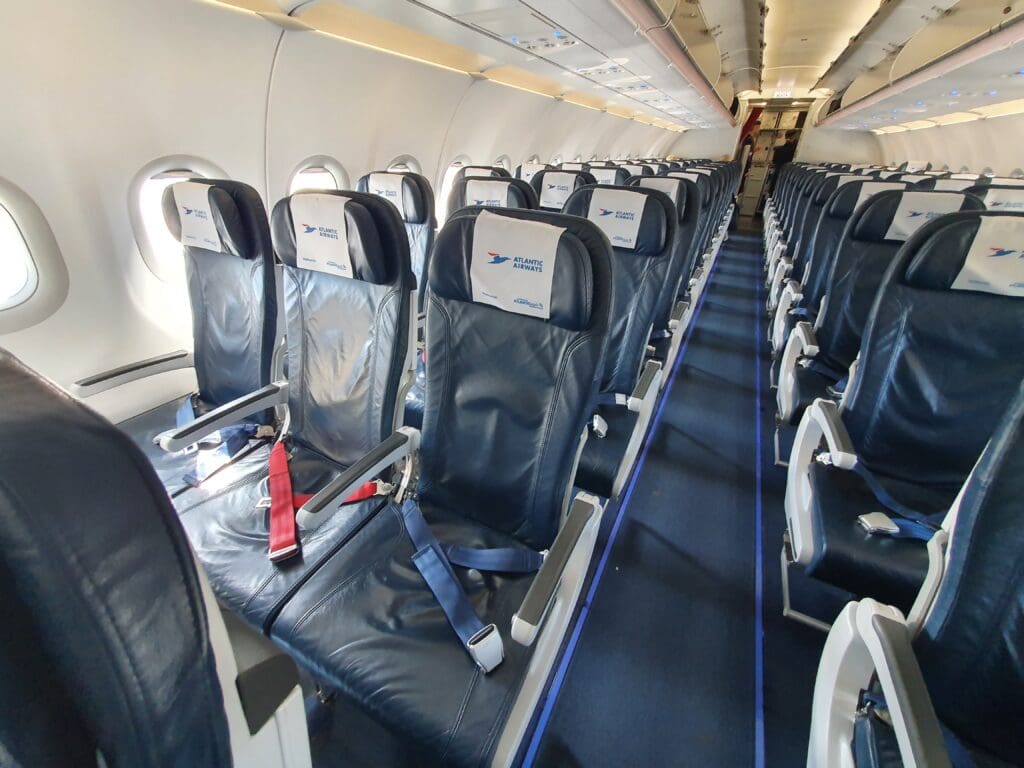
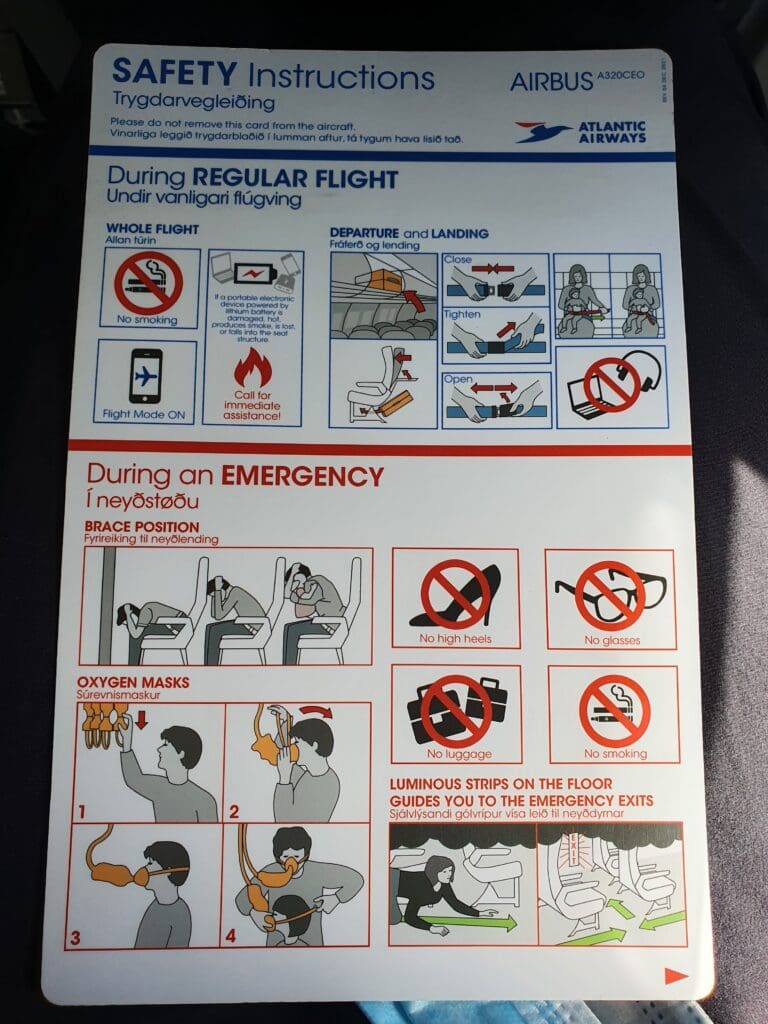
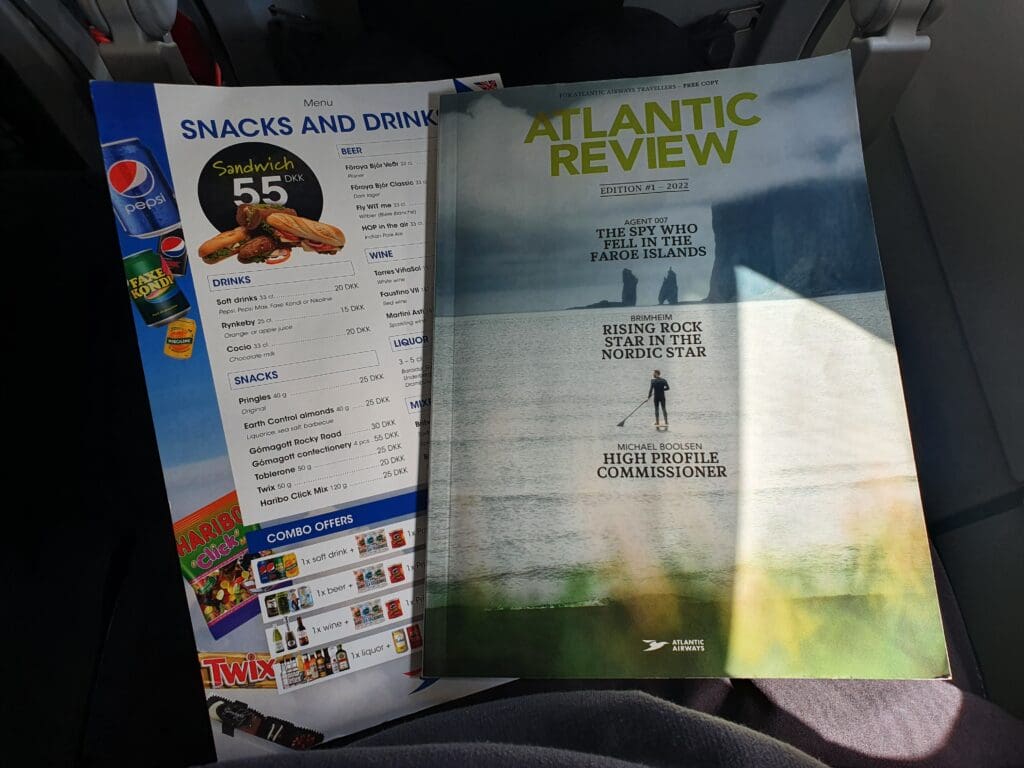
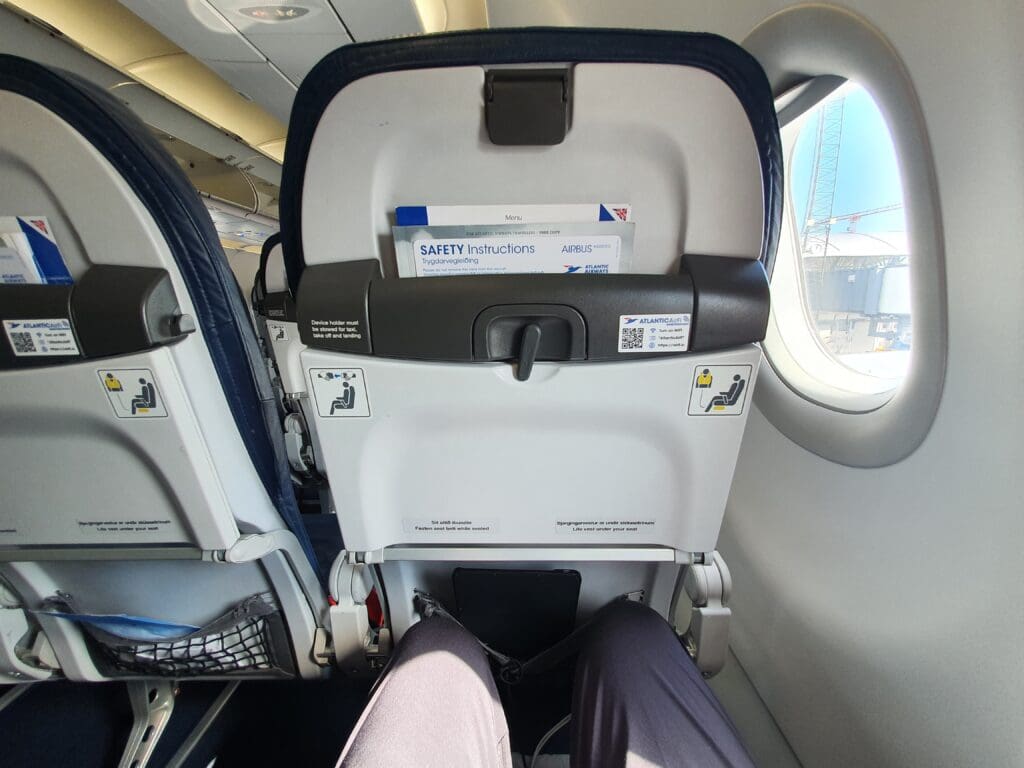
As I journeyed towards the rear of the aircraft Faroese songs blared out over the cabin speakers and received another friendly greeting from one of the flight attendants before arriving at Row 22. Being in the first cohort of passengers to board, at that time I was still to be joined by any neighbours so I slid into the seat with ease and settled down for the journey ahead. Upon sitting down, I was pleased to find the seat to be nice and comfortable – being reasonably well-padded and offering a fair amount of legroom. Inspecting the seat, the area around this appeared to be in good condition, with only minimal marks and scratches, however, I did notice some well-ingrained dirt and pen marks. Meanwhile, the seat came complete with the usual literature compartment and seatback pocket as well as a device holder. Whilst Atlantic Airways’ two Airbus A320neos feature USB-A ports allowing for inflight charging, these are unfortunately absent from their Airbus A320. Turning to the literature compartment, this contained a safety card, a buy-on-board menu and a copy of the airline’s Atlantic Review magazine.
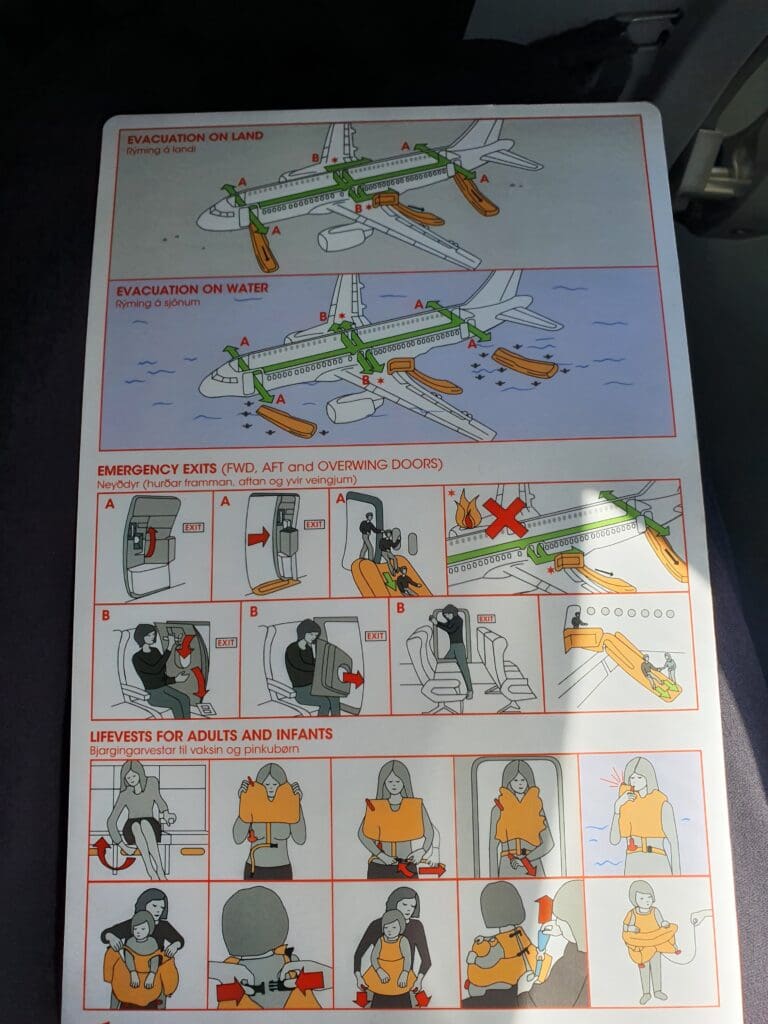
A short time after sitting down, a passenger joined me in the aisle seat and at 1215 boarding was announced as complete. That lunchtime, I would estimate the flight to have been around 75% full and it seemed that most other passengers were Danish tourists and foreign workers, and I failed to hear much Faroese spoken both at the gate and onboard the aircraft. Following a five-minute wait with little movement inside the cabin, at 1220 the Captain’s voice filled the cabin as they performed their welcome announcement in Faroese and English. During this, they mentioned the flight time and the weather en route before requesting passengers pay attention to the safety demonstration. This announcement was immediately followed by the Purser’s welcome announcement and the safety demonstration. Whilst Atlantic Airways does have a safety video, the latter took the form of the Purser reading through the safety instructions whilst several crew members performed a demonstration in the aisle.
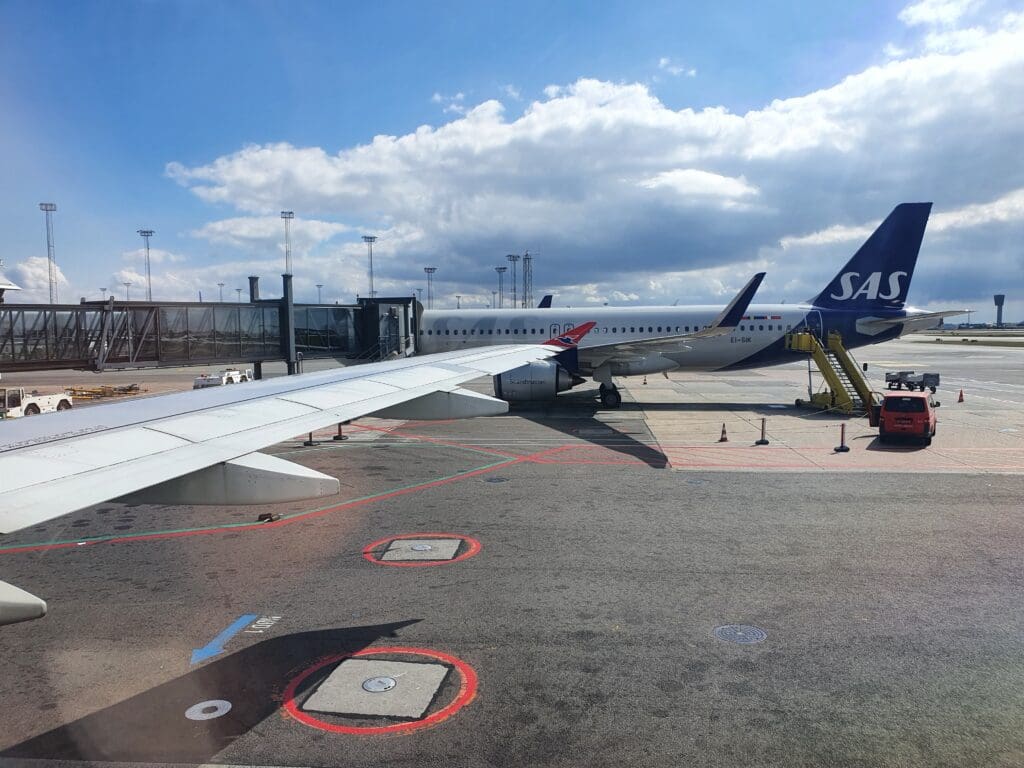
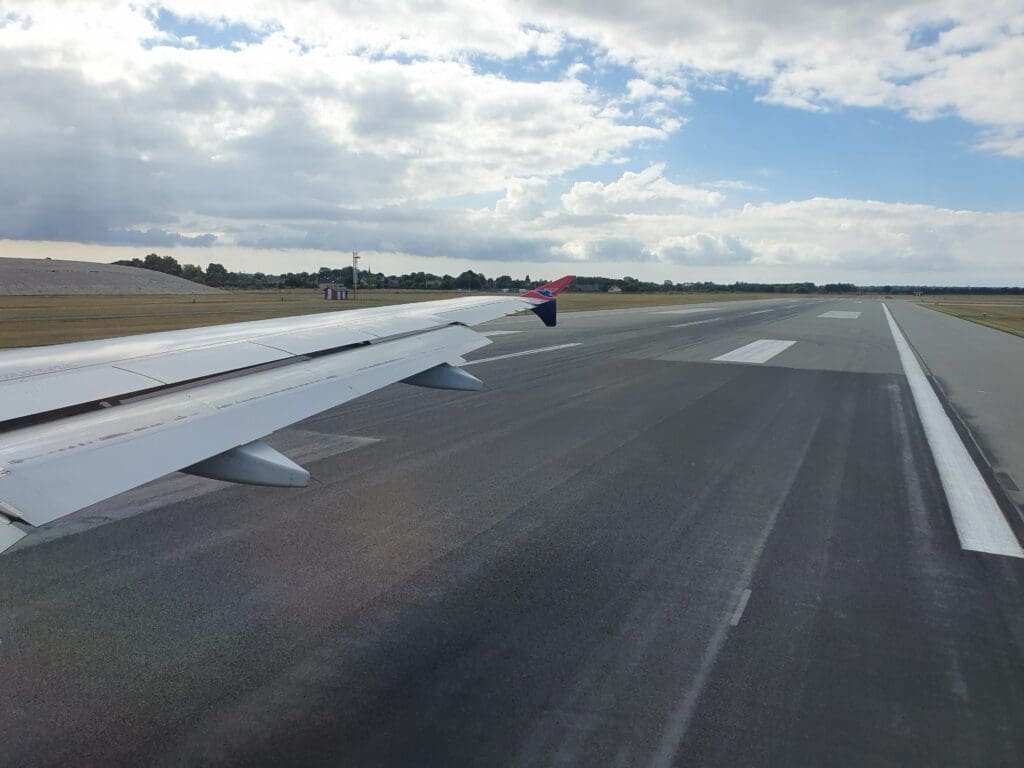
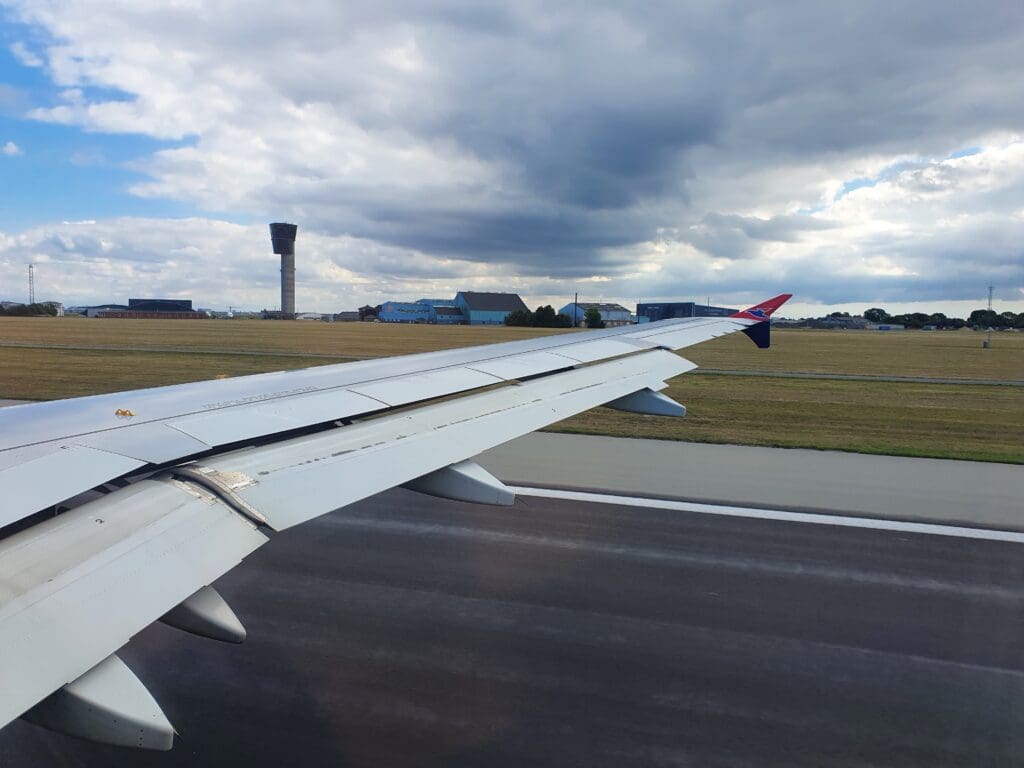
As the safety demonstration was underway, at 1223 the aircraft could be felt being pushed back away from the gate, during which the Airbus’ two CFMI CFM56-5B4/P engines quietly hummed into life. Following the usual pause whilst the tug disconnected from the aircraft and retreated to a safe position, with ‘flaps 1’ selected at 1226 the Airbus began its taxi to Runway 04R. During the initial stages of our taxi, several flight attendants passed through the cabin ensuring all was in place for our departure before strapping themselves into the jumpseats in the Airbus’ forward and rear galleys. Following an uneventful taxi, the Airbus arrived at the end of the runway at 1232 and made its way onto this without any holding. Once there, the aircraft came to a brief stop before the engines were spooled up as the brakes were held. A short time later, these were released, sending the Airbus shooting off down the runway and soon rotating upwards into the sunny Danish skies, allowing those on the right-hand side of the aircraft a good view of the airport’s quiet cargo apron.
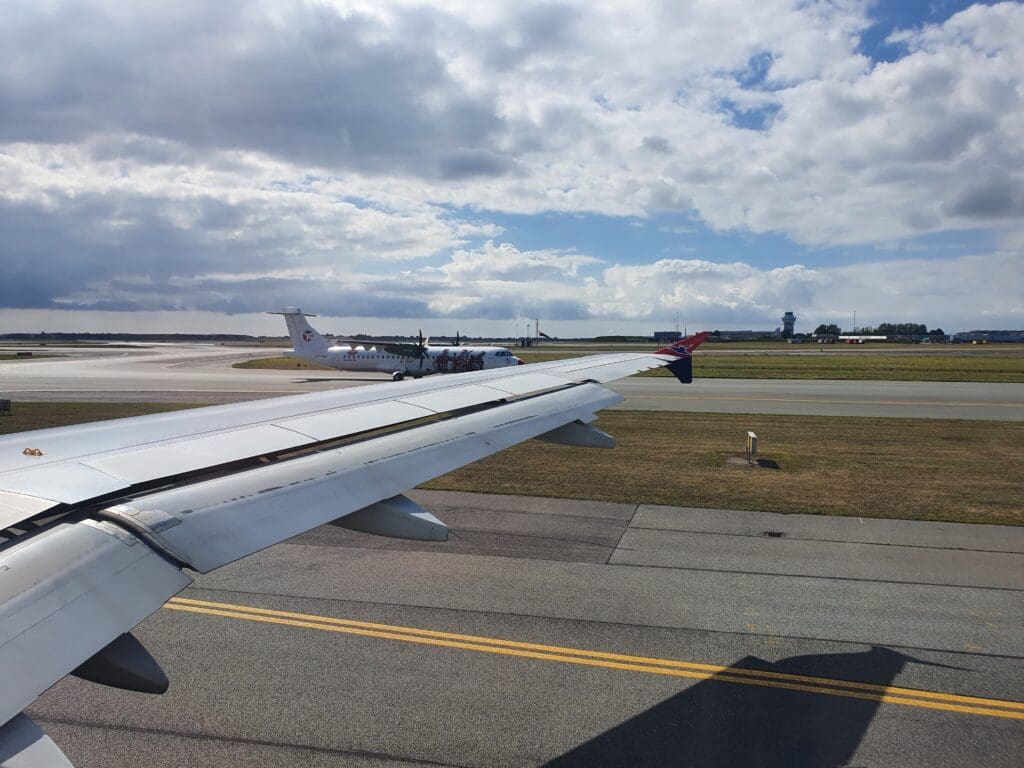
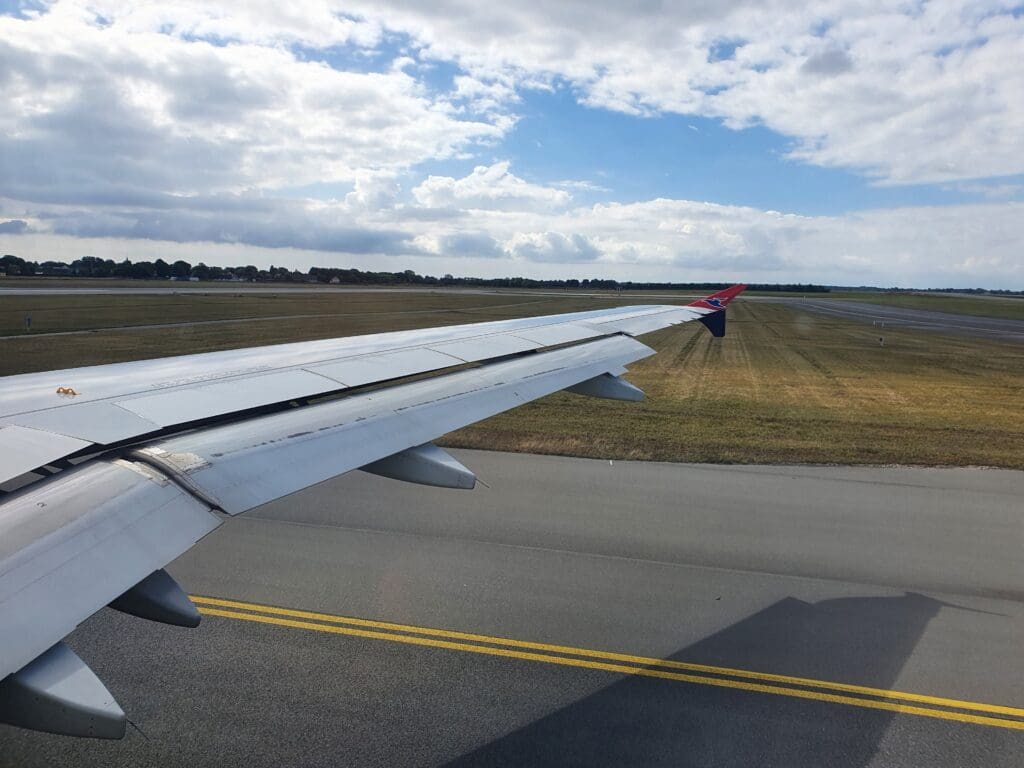
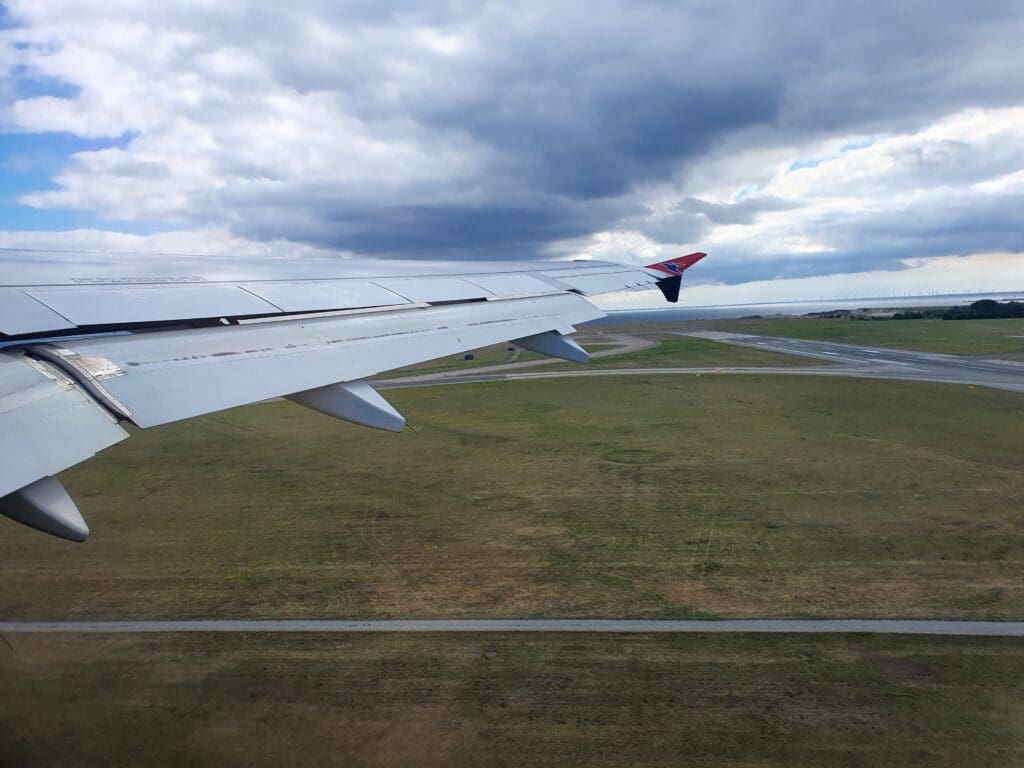
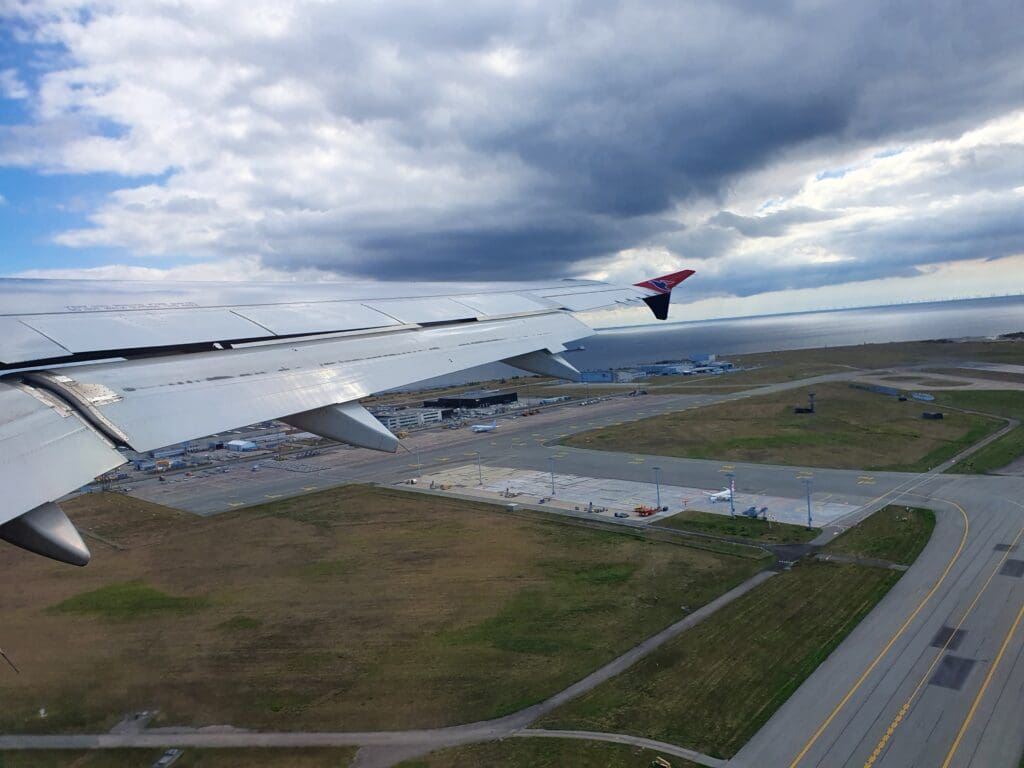
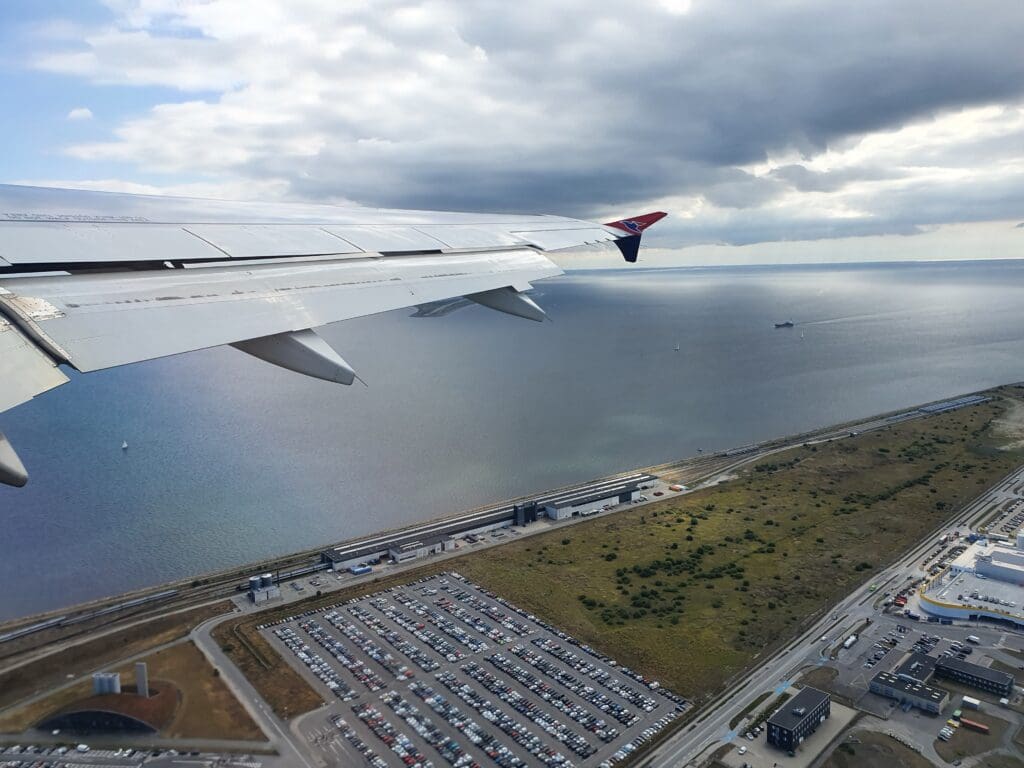
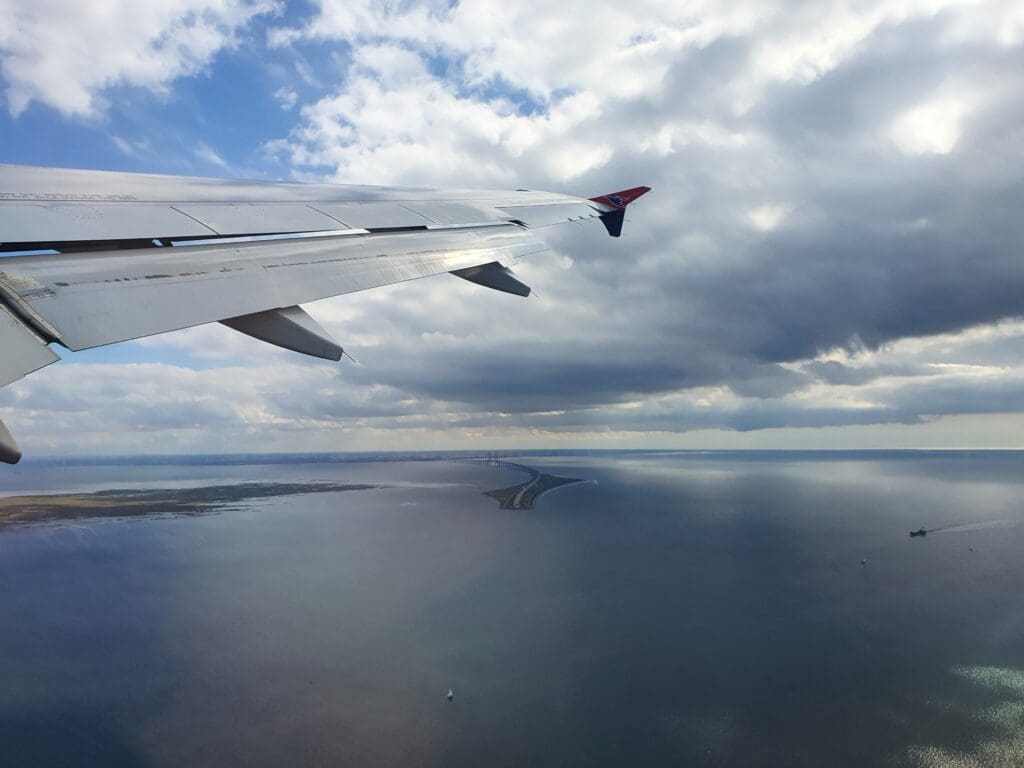
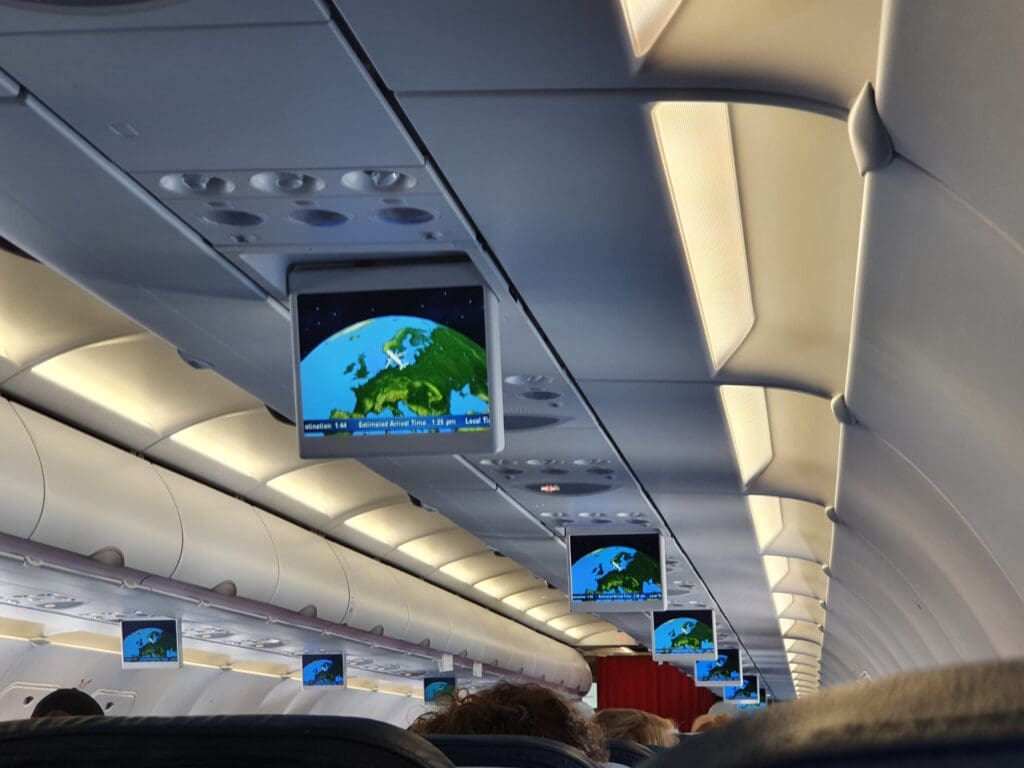
Seconds after leaving Copenhagen Airport and the island of Amager behind, the famous Øresund Bridge that connects Denmark with Sweden as well as the eastern portal of the Drogden Tunnel portal emerging from the sea could be seen. This was immediately followed by the island of Saltholm whilst Malmö and the Swedish coastline could be seen several kilometres away in the distance. Soon turning to fly northwest, it wasn’t long before the Airbus crossed over the Danish coastline and climbed over Copenhagen’s far northern suburbs, namely Hellerup, Gentofte and Lyngby. Inside the cabin, at 1238 the seatbelt signs were switched off as we climbed through 10,000 feet at which point an announcement was made advising passengers to keep these fastened whilst seated, before moving on to mention the soon-to-commence inflight service and Atlantic Airways’ Atlantic AirFi entertainment streaming. Ploughing onwards through the skies above North Zealand, the aircraft passed over the towns of Lillerød, Hillerød and Helsinge before leaving the Capital Region behind and crossing the blue waters of the Kattegat. After this announcement had been made, the overhead screens positioned at intervals of every few aisles on each side of the cabin dropped down and began broadcasting the moving map.
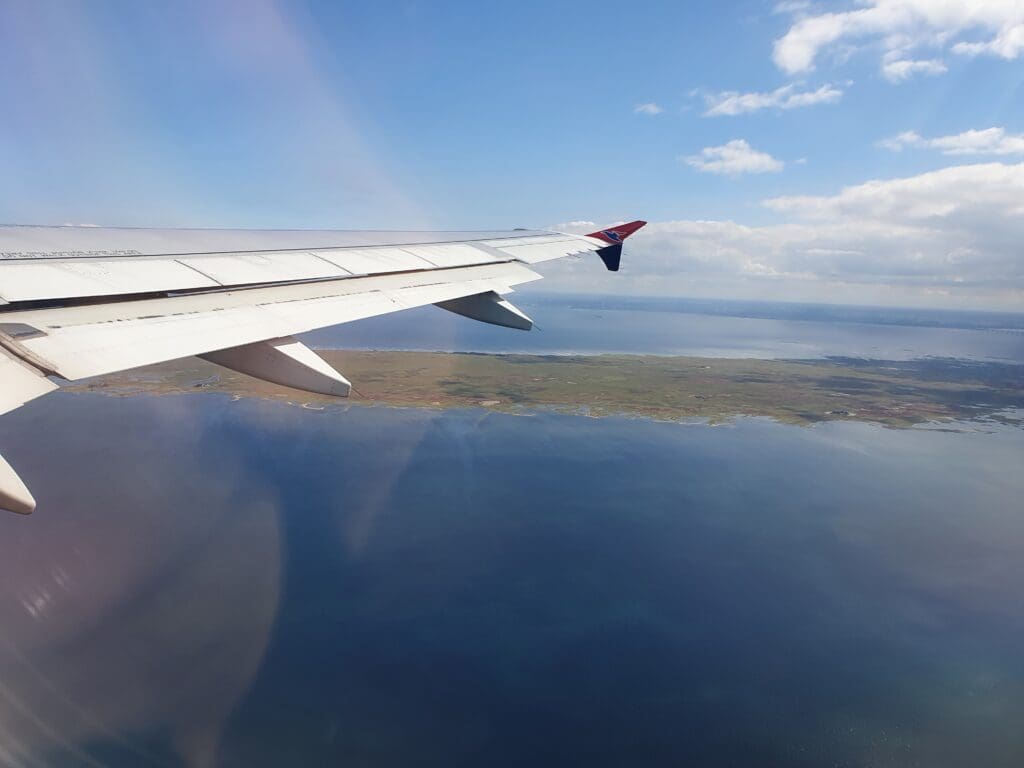
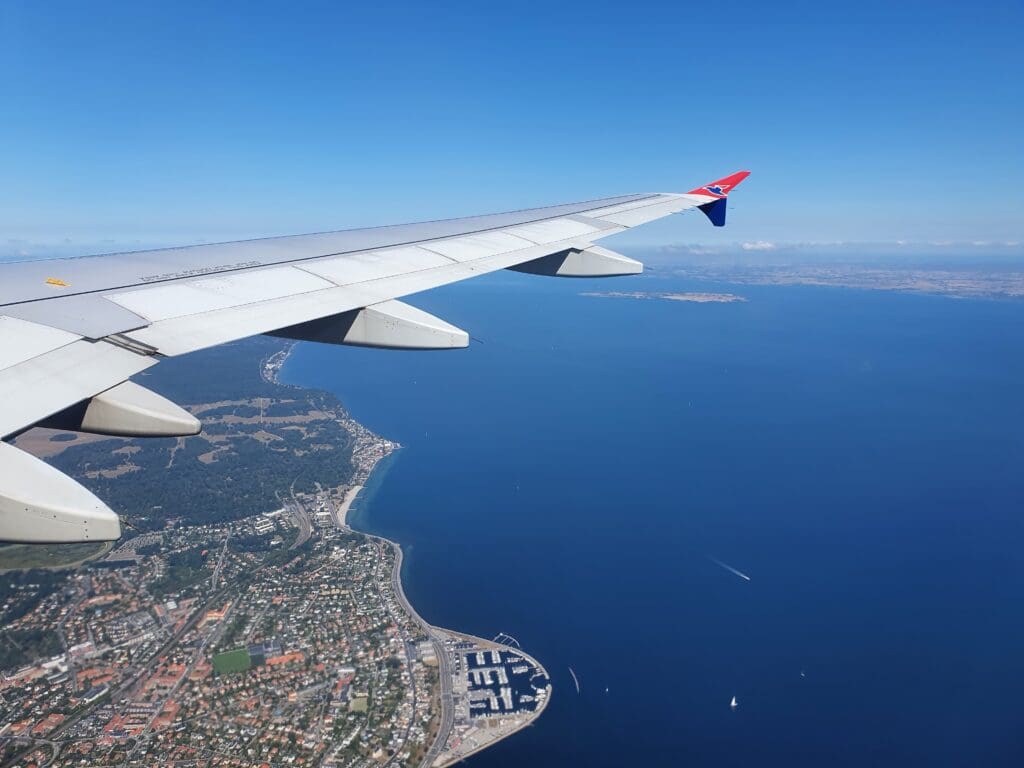
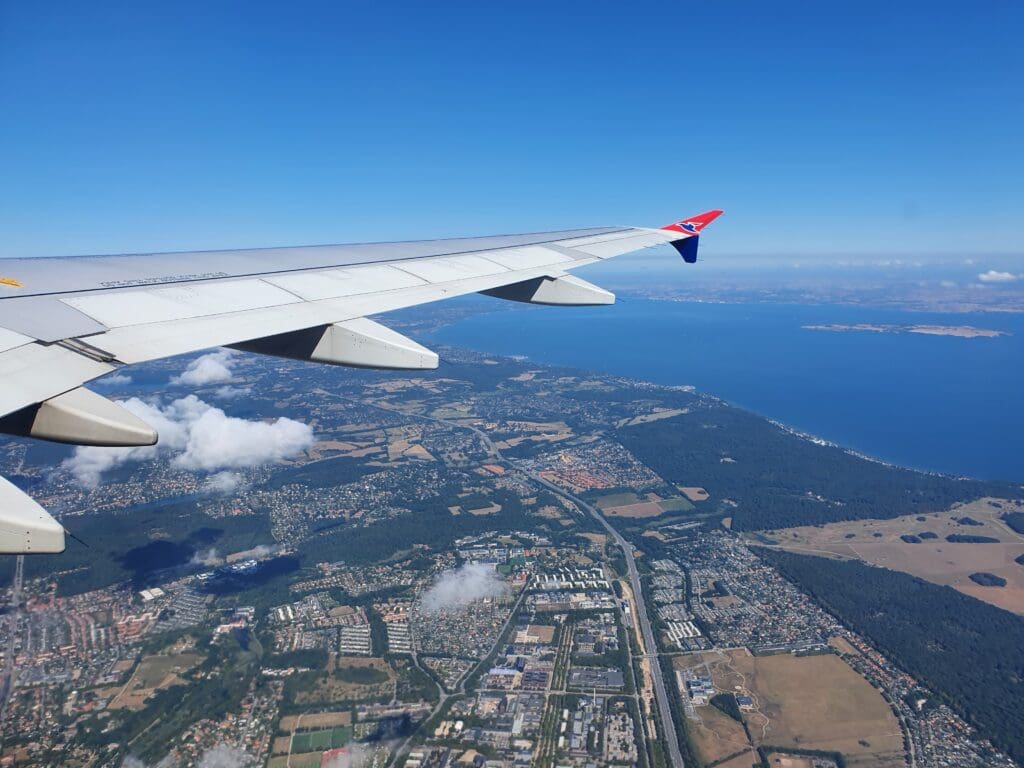
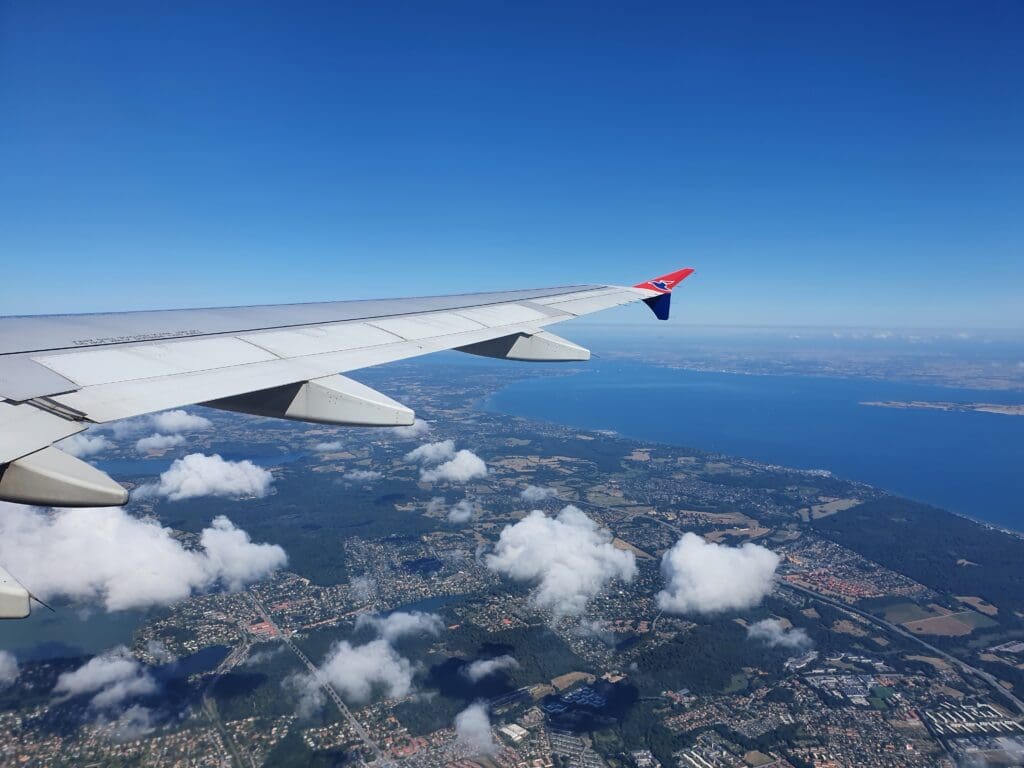
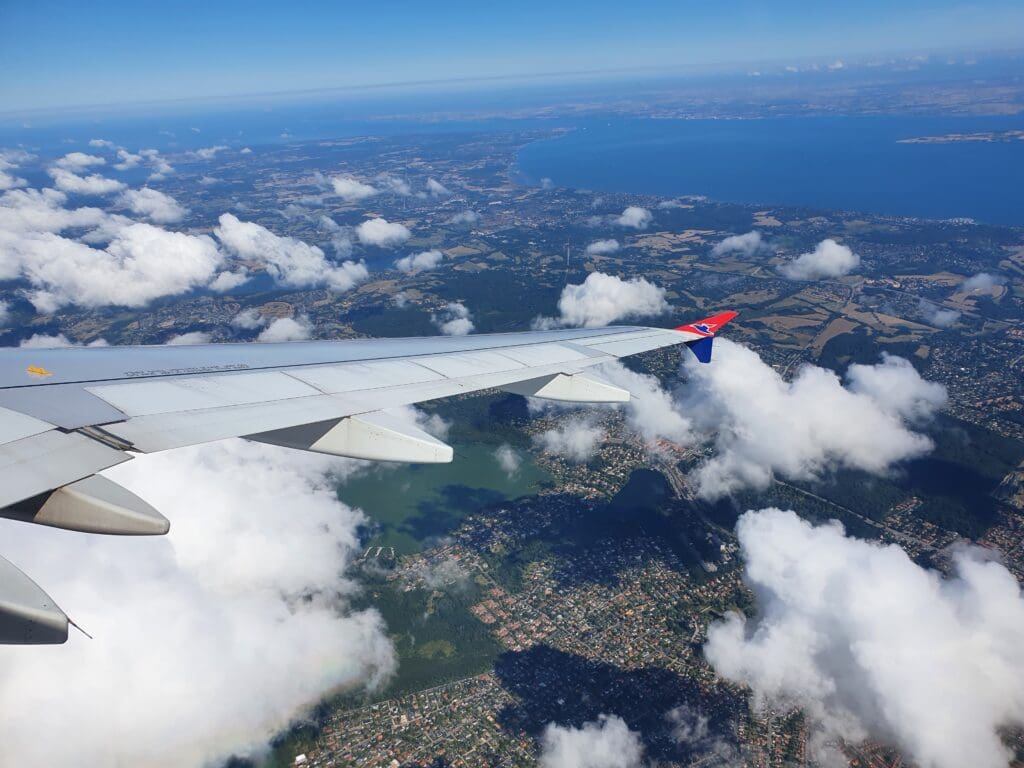
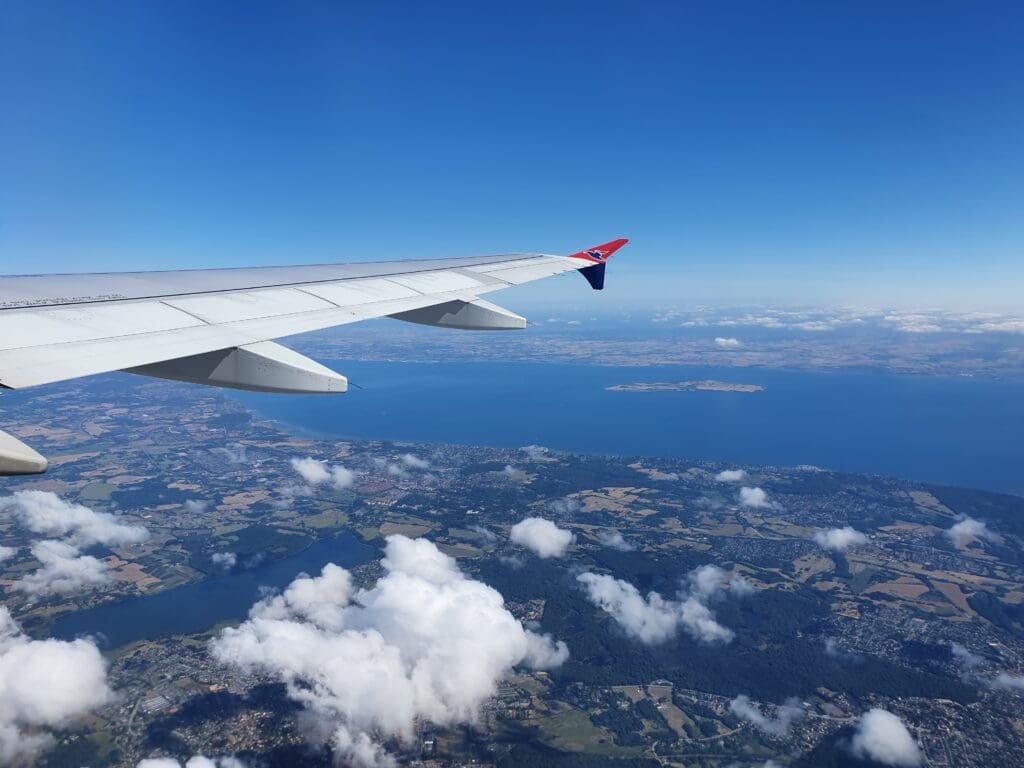
Returning my attention to the outside world, a few short minutes after leaving the beaches of the Capital Region, a small and picturesque beach-lined island could be seen. Passing to the south of this at an altitude of 34,000 feet, I managed to spot a small harbour, a settlement, a lighthouse and an airfield. This turned out to be the island of Anholt – a small island home to no more than 150 residents that sits approximately halfway between the coastlines of Denmark and Sweden. The airfield there is served by Copenhagen Air Taxi who operate a Britten-Norman Islander service from Copenhagen’s ‘other’ airport, Roskilde. This was followed a short time later by the larger island of Læsø, although sitting a fair way to the north of our flightpath, I wasn’t able to make out any of the island’s sights.

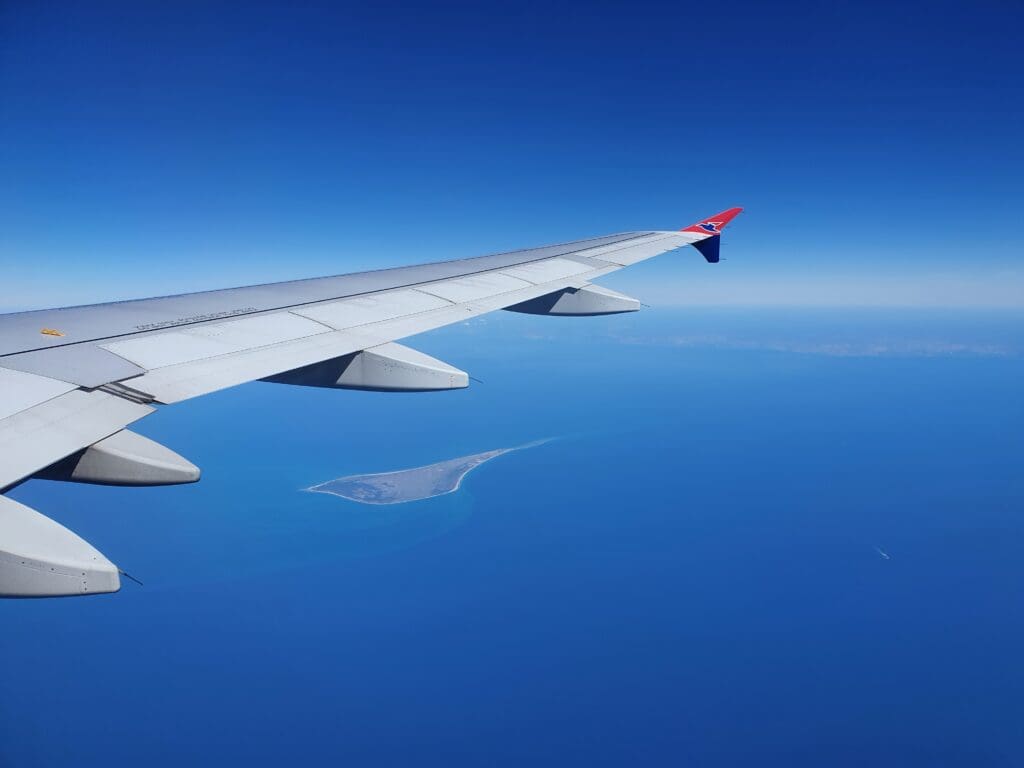
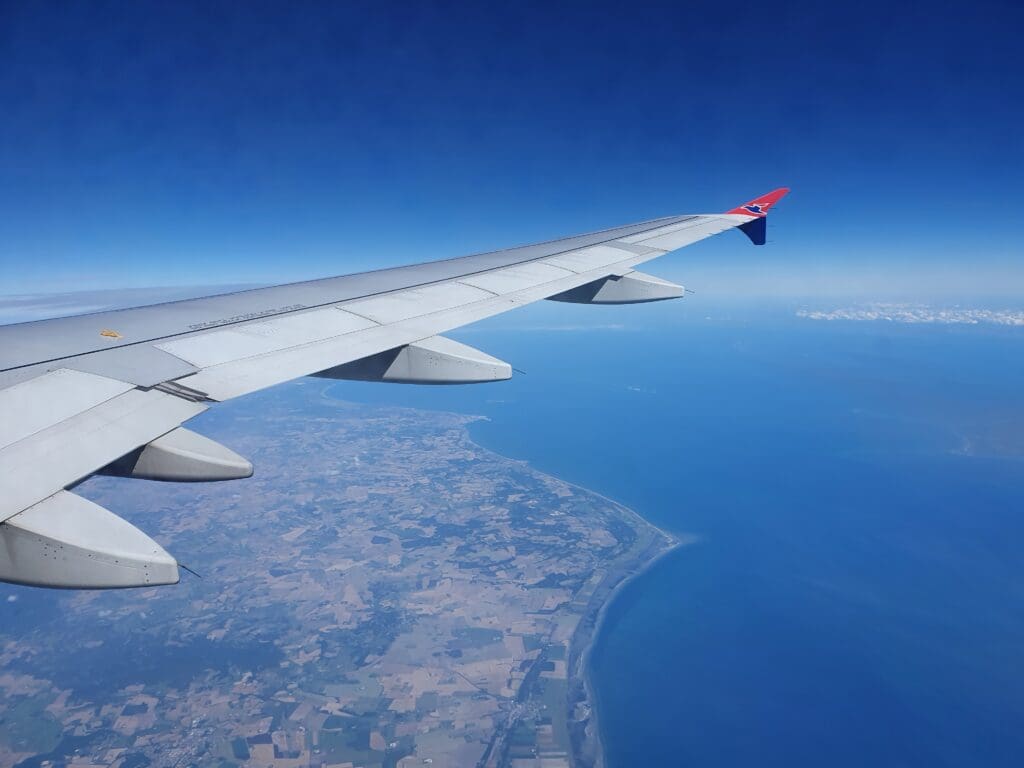
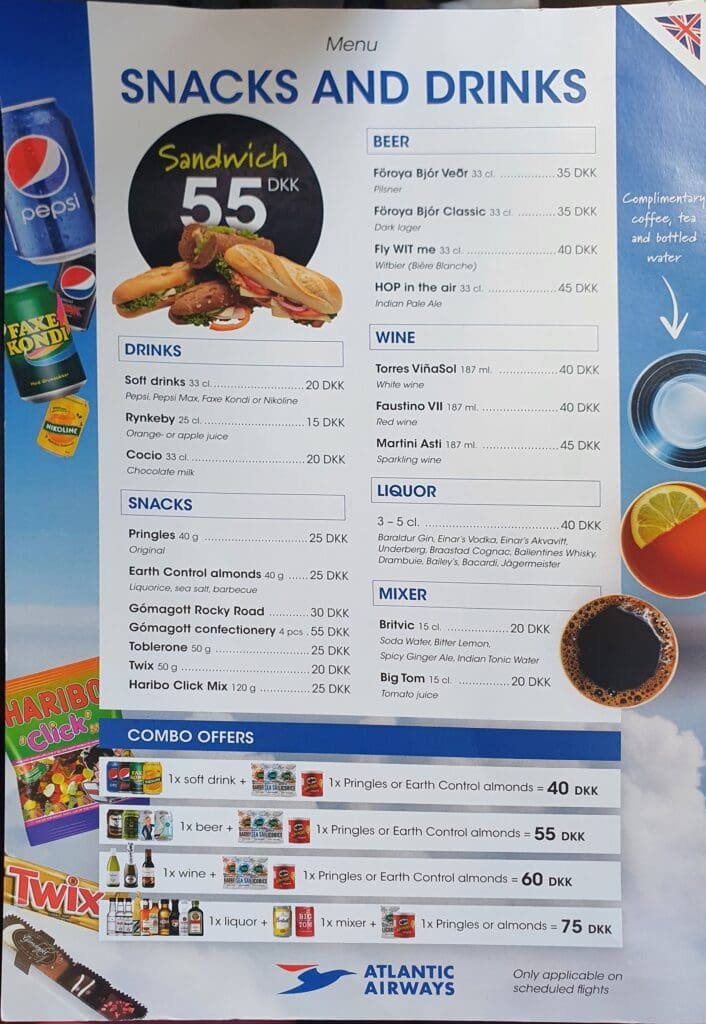
Following a 12-minute crossing of the Kattegat, the aircraft reached the Jutland Peninsula and crossed over its sandy shores near the mouth of the Limfjord. Crossing over the far north of the peninsula, the northern tip of Denmark could be seen in the distance as well as a cluster of towns rising out of the flat countryside. At this time, the onboard service commenced with two trollies rolled out – one from the front of the cabin and another from the rear. Whilst no free snacks are offered, those flying onboard Atlantic Airways’ Airbus-operated services are treated to complimentary tea, coffee and water, with a buy-on-board service provided for those looking for something a little more substantial. Whilst not intending on splurging out on any drinks or snacks, I did have a quick browse of the compact menu. Onboard, Atlantic Airways sells a reasonable selection of drinks, both alcoholic and non-alcoholic, alongside a few snacks and sandwiches – with cheese and ham, and chicken and bacon stocked on the service that day. Given the Faroes’ reputation for high prices, I wasn’t expecting the items on this to be particularly cheap. However much to my surprise, these were sold at fairly reasonable prices that were cheaper than comparable items for sale at Copenhagen Airport. For example, a 330ml can of Faroese beer would have set me back 35kr, whilst a Twix bar that would have cost 30kr in the terminal only cost 20kr onboard! Meanwhile, the most substantial items on the menu, sandwiches, came in at 55kr. Rejecting any paid options, when a friendly flight attendant reached my row I opted for a black coffee which was passed to be in a small Atlantic Airways branded paper cup alongside a serviette. Meanwhile, once the service had reached its end, a couple of crew members passed through the cabin offering top-ups of tea and coffee. Whilst I rejected this offer, I nevertheless thought this to be a nice touch.
Returning to the route, ten minutes after leaving Denmark behind, the Norwegian coastline appeared where a good view of the city of Kristiansand was offered. Unfortunately, after passing this, little could be seen of Norway’s famous picturesque fjords as a thick layer of clouds rolled in below. With nothing but clouds to see below, I decided to explore the inflight entertainment options onboard. Passengers flying onboard Atlantic Airways’ Airbus services are treated to the carrier’s Atlantic AirFi streaming service and so high above Norway, I decided to connect to this. Initially taking some time to connect, once I was in, I was left rather impressed by the breadth of content offered by the system. Those looking to pass the time could watch one of 29 Hollywood hits, 28 television programmes or watch and listen to a wide array of other videos and podcasts, with all video content commencing with an advertisement for Vágar Airport’s duty free shop. Meanwhile, a selection of the latest magazines and newspapers from Denmark, the Faroe Islands and the UK was also offered. These came in addition to the buy-on-board menus, information about the airline, a feedback form and one of the more novel features of the system, a page of videos of locals saying Faroese phrases of varying levels of appropriateness! Last but not least, an interactive moving map was provided allowing passengers to track the progress of the flight. Whilst inflight entertainment was not a necessity on the relatively short flight across to Vágar, I can imagine this may be a welcome feature on some of Atlantic Airways’ longer services to Southern European sunshine destinations and I was left very impressed with the system. Other than this, the Atlantic Review magazine is also on hand for passengers to pass the time.
Trundling westwards across the northern portions of the North Sea, after leaving Norway behind it wasn’t long before the jet began to be thrown about a fair bit to the extent that I ended up puzzled as to why the seatbelt signs hadn’t been switched back on. However, around ten minutes after the bumps had started, the seatbelt signs were turned back on and the Captain performed an announcement advising that we could expect a particularly bumpy ride for around twenty minutes as we were crossing a jetstream. Whilst not the roughest patch of turbulence that I have encountered (that award goes to my King Air ride from Stockholm to Sveg), this was particularly bumpy and several of my fellow passengers let out audible gasps as the Airbus shooked and swayed high over the ocean.
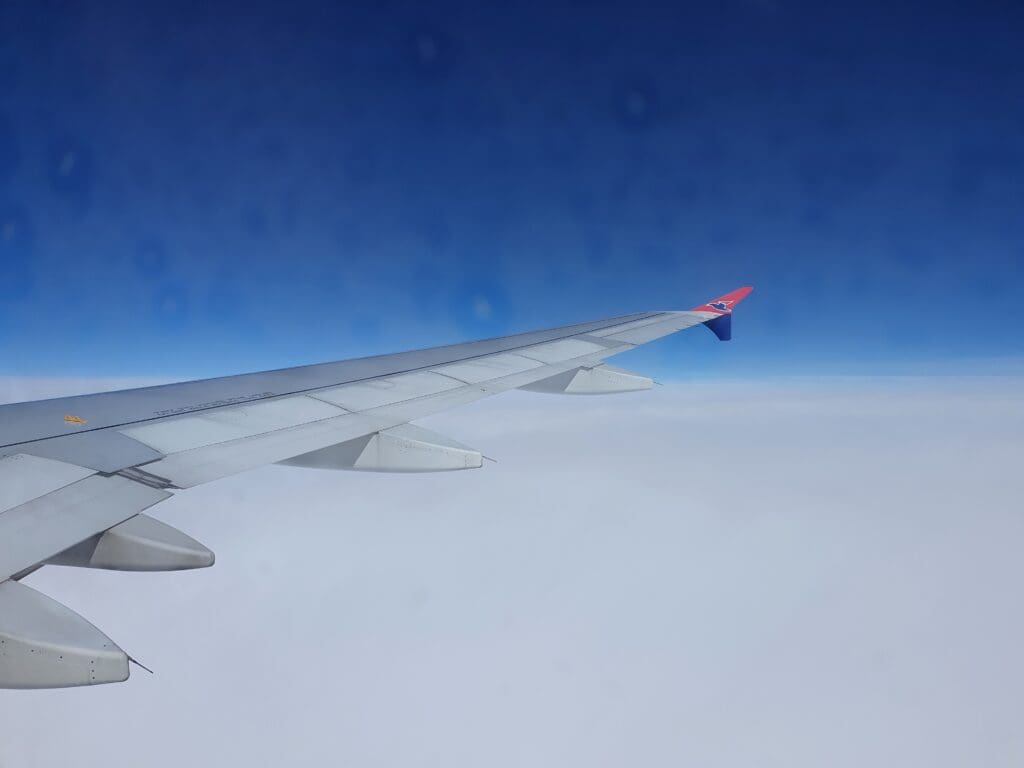
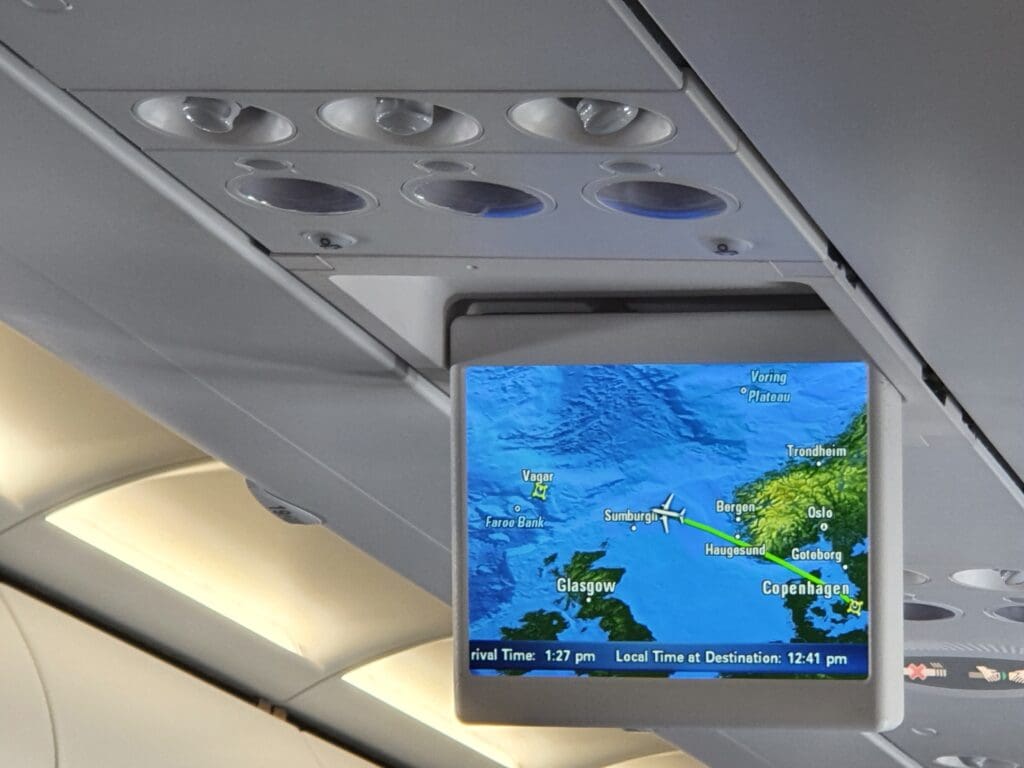
As if by magic, after around 15 minutes of some fairly heavy turbulence, the ride suddenly smoothed out and all would remain calm until we passed through the clouds on approach to Vágar. At this time, the aircraft was passing just to the north of the Shetland Islands’ northernmost isle, Unst, and after around five minutes of turbulence-free flying, the seatbelt signs were switched off. At this point, like many of my fellow flyers, I decided to pay a visit to one of the three lavatories onboard – with one located at the front of the cabin and two on either side at the rear of the cabin. Making my way to the back of the jet, after a few minutes of waiting I made my way into the toilet which I found to be in a clean condition, functional and stocked with all the basics that you would hope to find in an aircraft toilet.
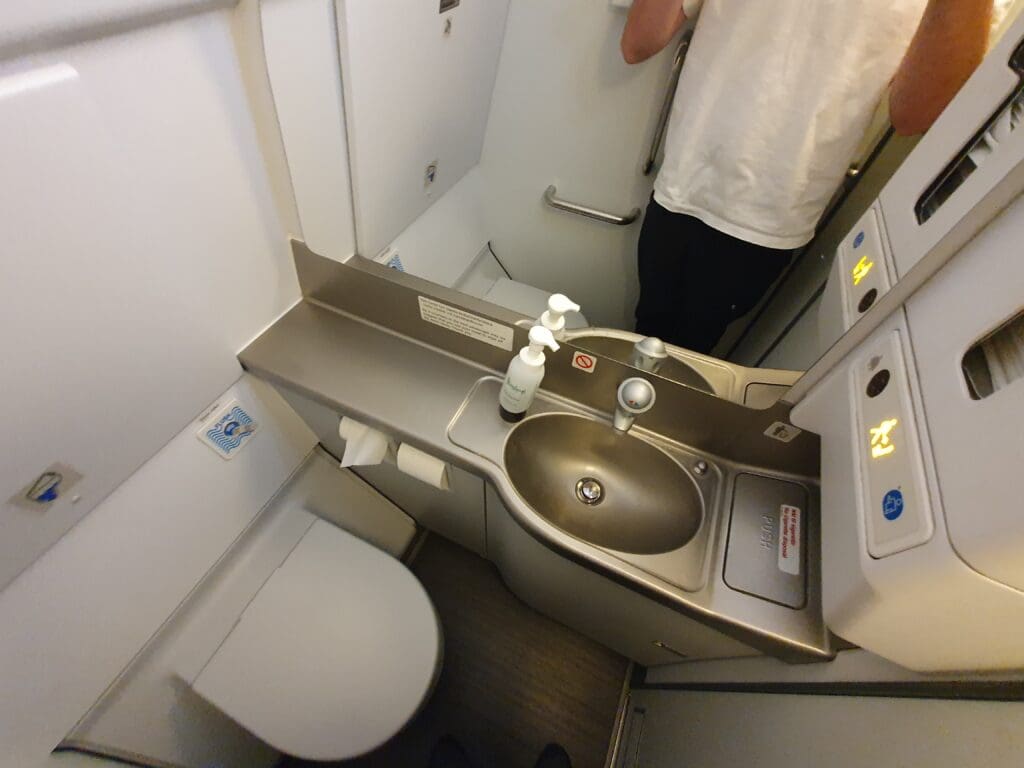
Around halfway between the Shetlands and the Faroes, at 1302 local time the aircraft could be felt leaving its cruising altitude and beginning its journey back to Earth. At this time I spotted an aircraft whizzing past in the opposite direction which thanks to the magic of modern-day flight tracking apps I later worked out to be an Icelandair Boeing 737 MAX 8 making its way from Keflavík to Bergen. As the Airbus approached the islands, the clouds below temporarily parted revealing the blue waters of the North Atlantic and gave me hope that a picturesque cloud-free introduction to the Faroe Islands would be in store. At 1308 the Captain performed their pre-arrival speech in Faroese and English during which they mentioned that we could expect to be on the ground by 1325 before noting that as the wind was blowing from the south (and thus across Vágar Airport’s runway), we would likely be subject to some turbulence during the last few minutes of the flight. Several minutes later, the Purser performed a standard pre-arrival announcement which contained the usual warnings regarding seatbelts, tray tables, seatbacks and tray tables.
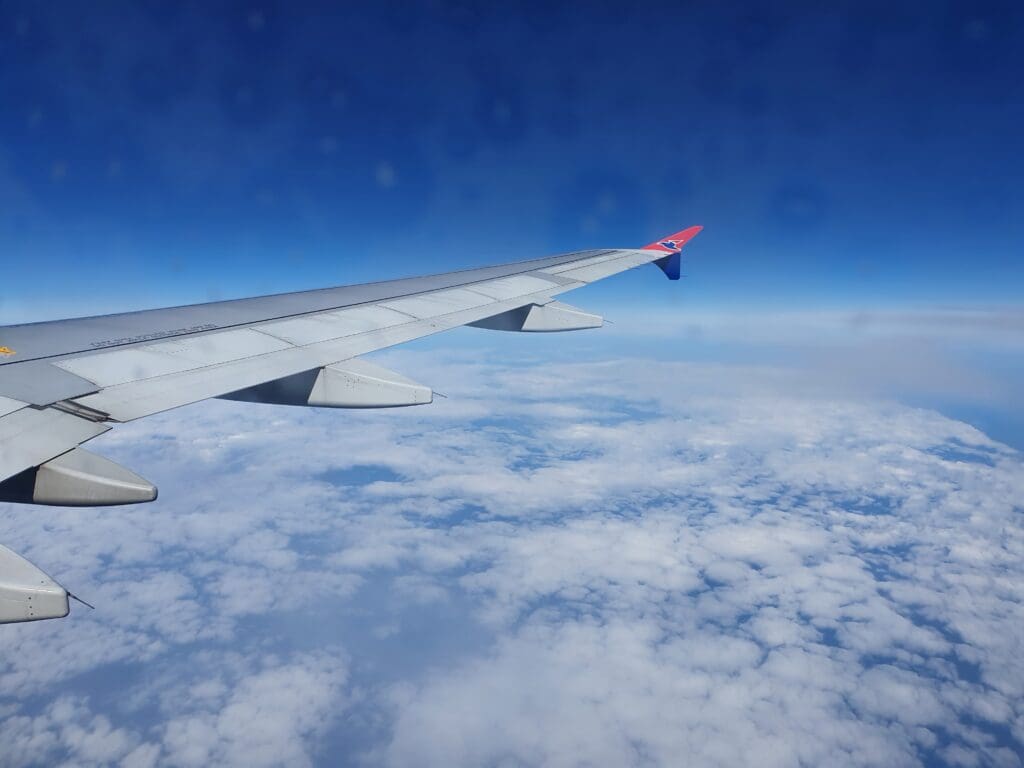
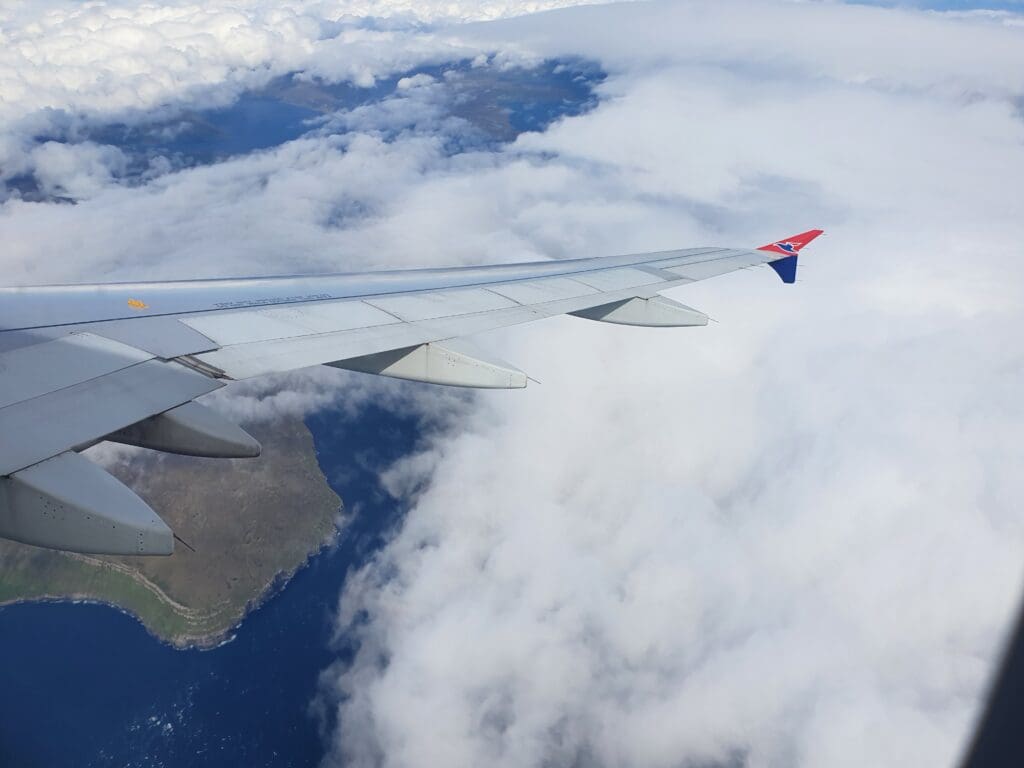
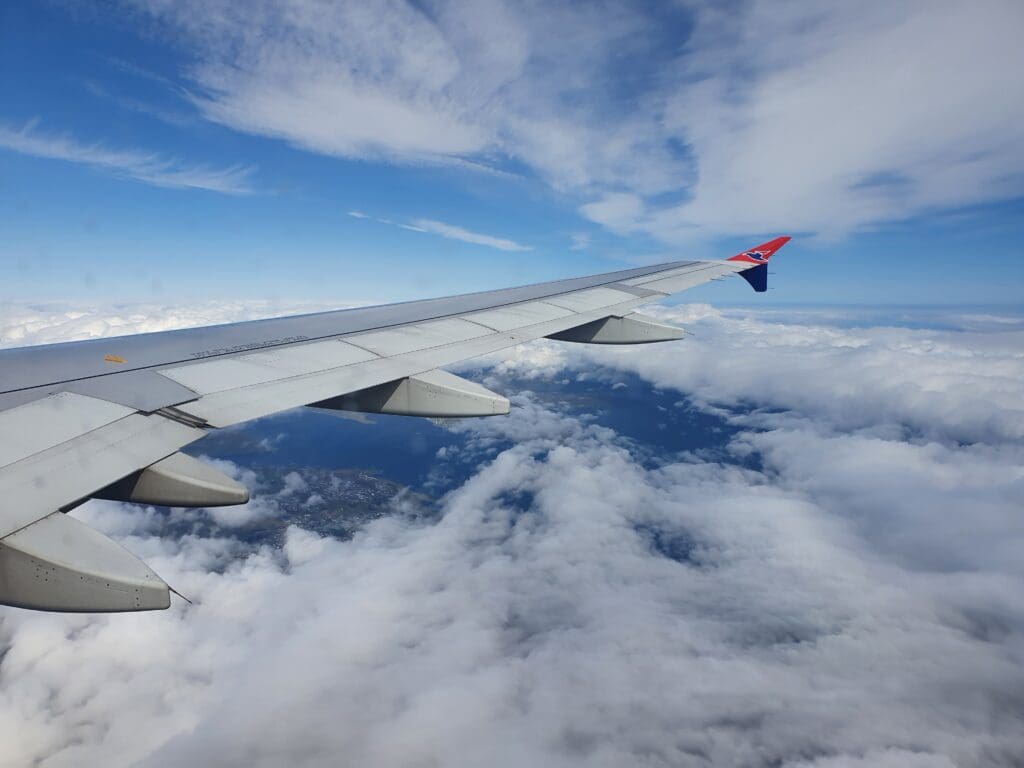
As the aircraft edged towards the Faroes, my hopes of a cloud-free approach were dashed when clouds rolled in below and blocked the view of the Atlantic and at 1315 I caught my first view of the country through a small gap in these which revealed a portion of the island of Nólstoy, followed a short time later by a few very quick glimpses of the capital, Tórshavn. Unfortunately, after this, the clouds below meant that almost nothing of the islands could be seen until the aircraft was just a short distance away from its final destination. Passing to the south of the Faroes’ most populous island, Streymoy, the Airbus performed a single racetrack pattern before continuing onwards as the flaps were partially extended in preparation for our arrival.
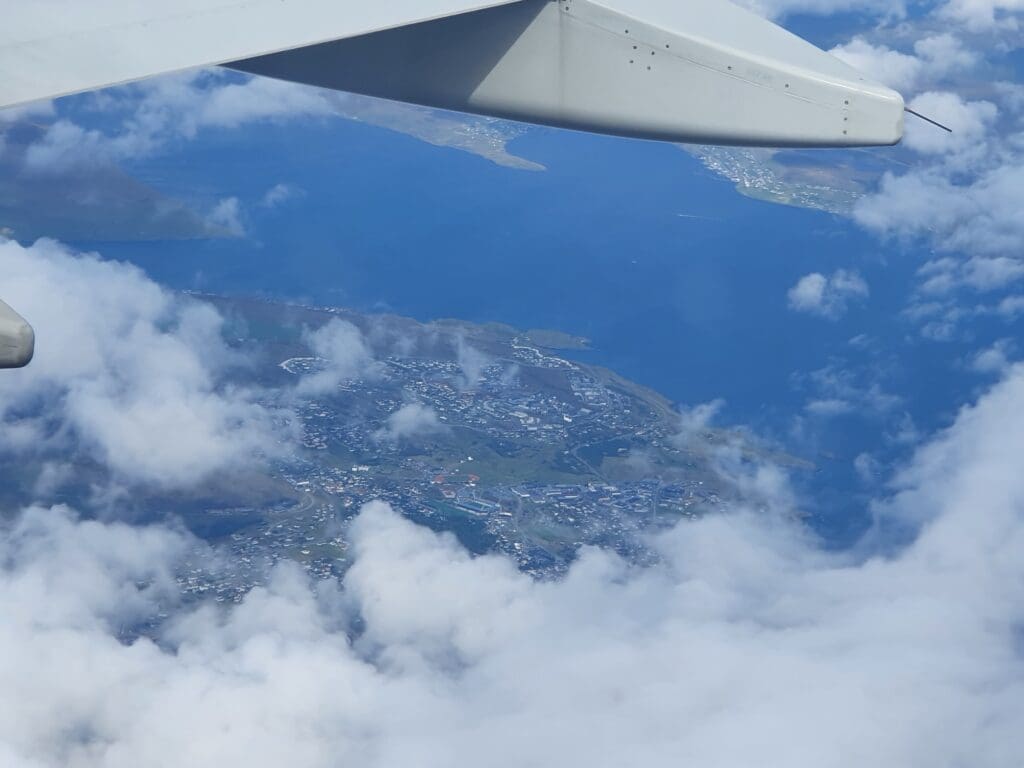

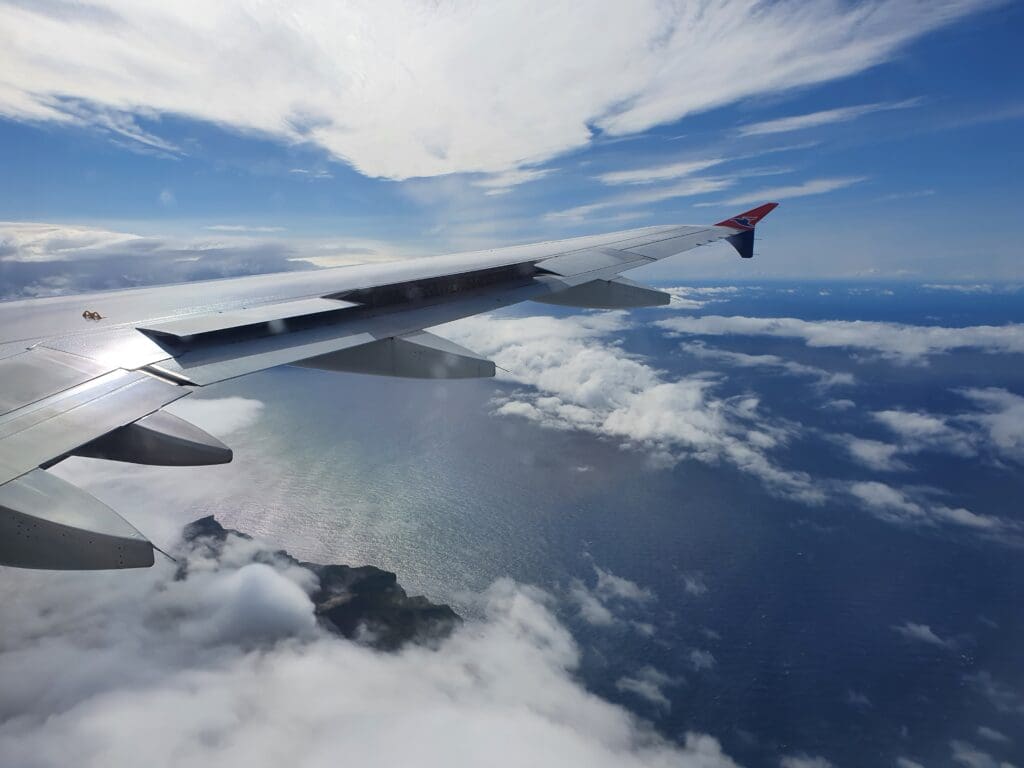
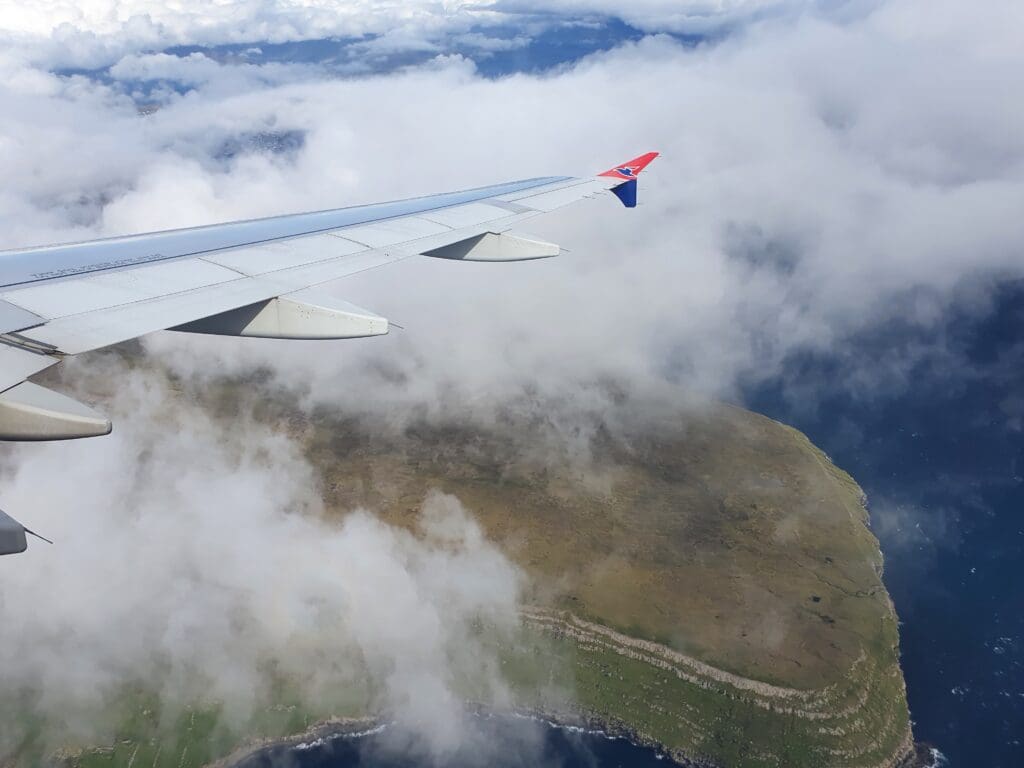
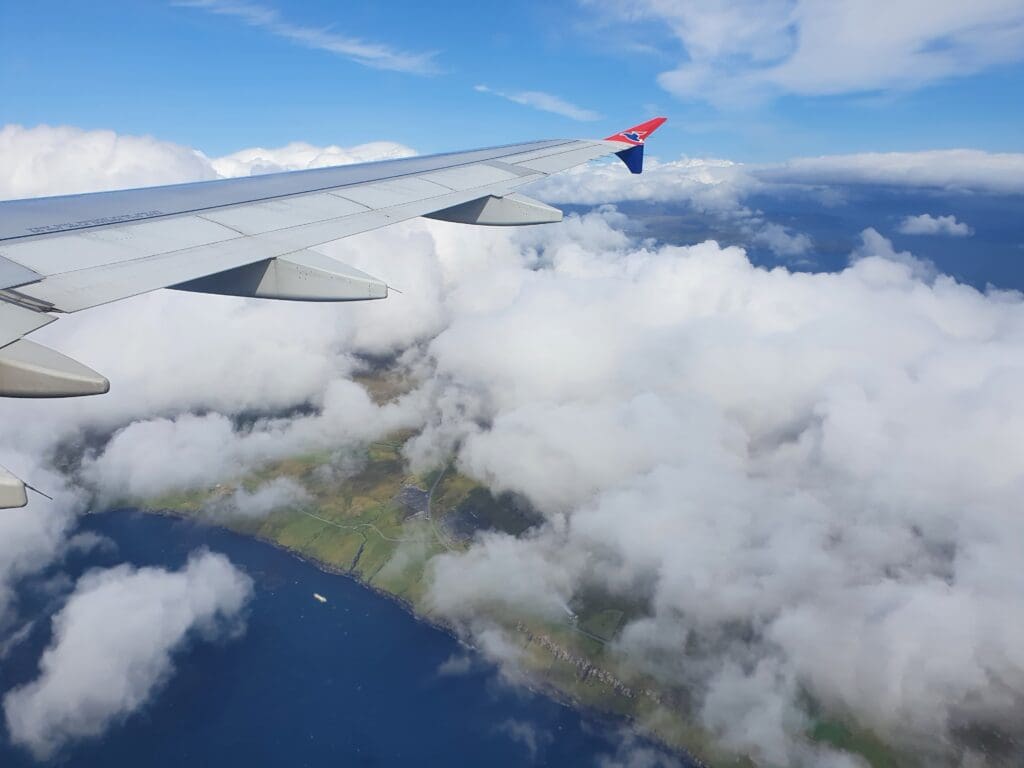
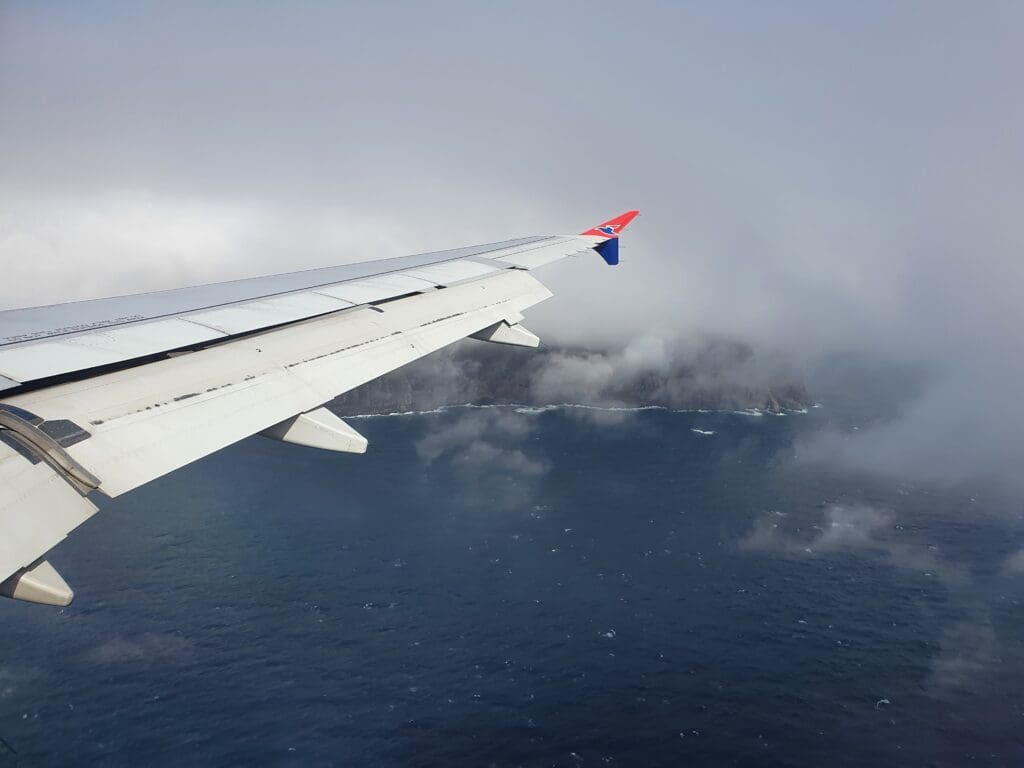
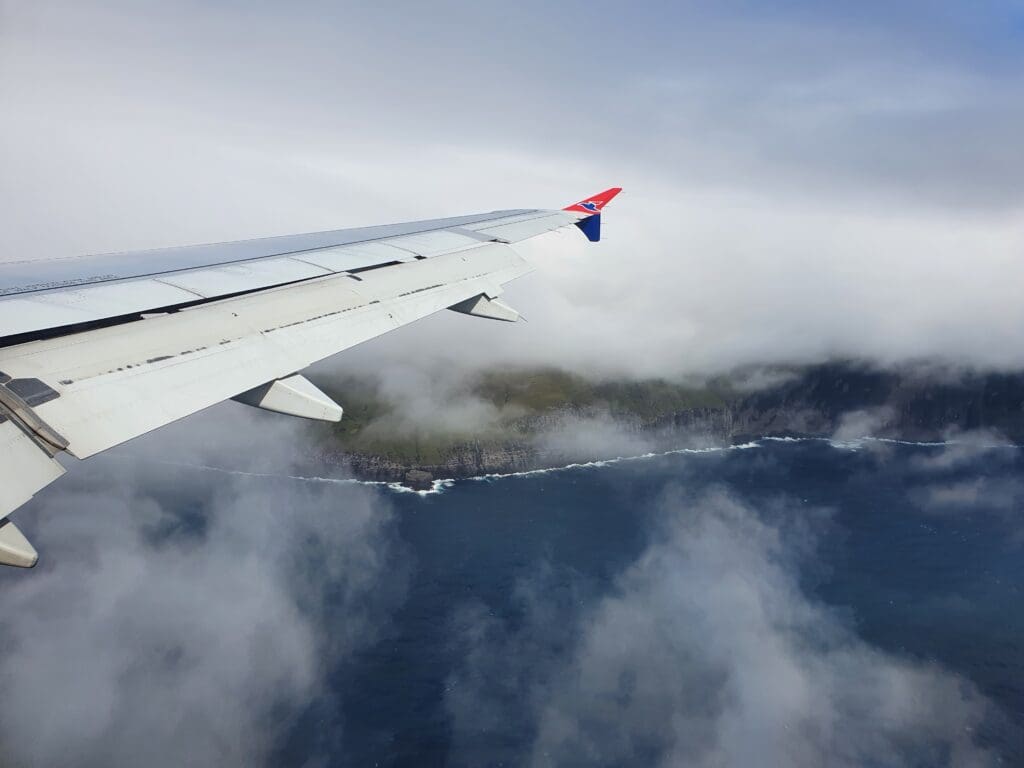
As the Airbus neared its final destination, full flaps were applied and the landing gear was extended into position as the jet sank over the small islands of Hestur and Koltur. Crossing the waters of the Vágafjørður, the Airbus then sank below the cloud base at which point the dark rocky cliffs of Vágar’s coastline came into view followed by the houses of the settlements of Miðvágur and Sandavágur. Seconds after passing the former, the aircraft crossed over the Sørvágsvatn before the mound that the Vágar Airport’s sole runway sits on rose and met the aircraft.
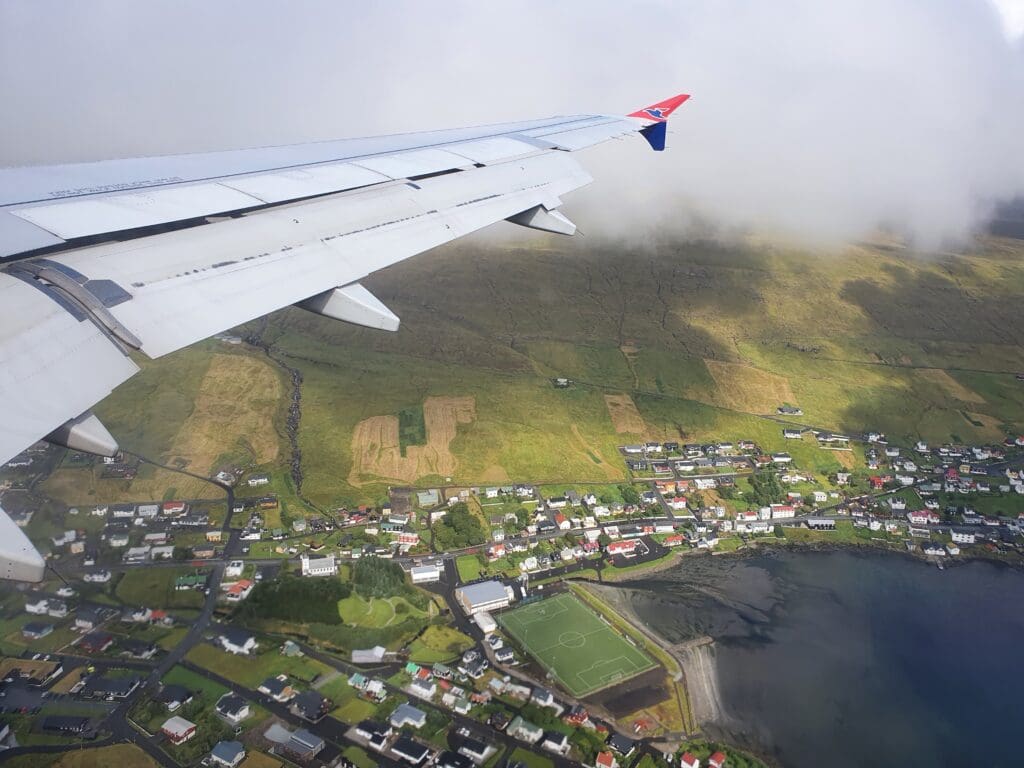
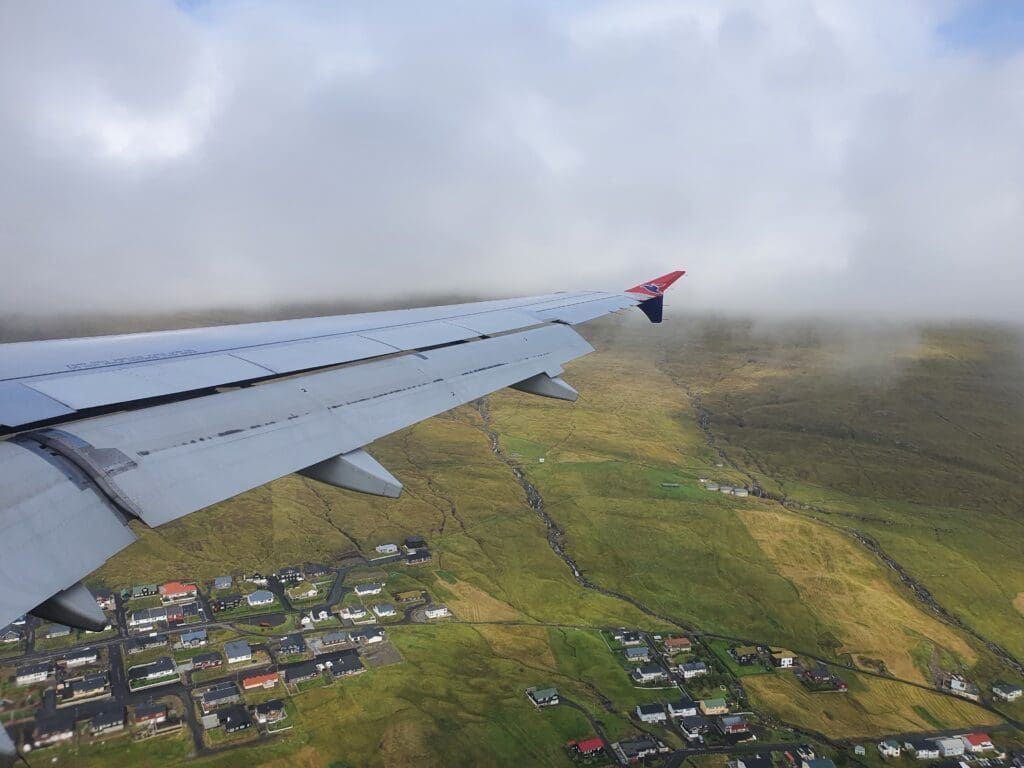
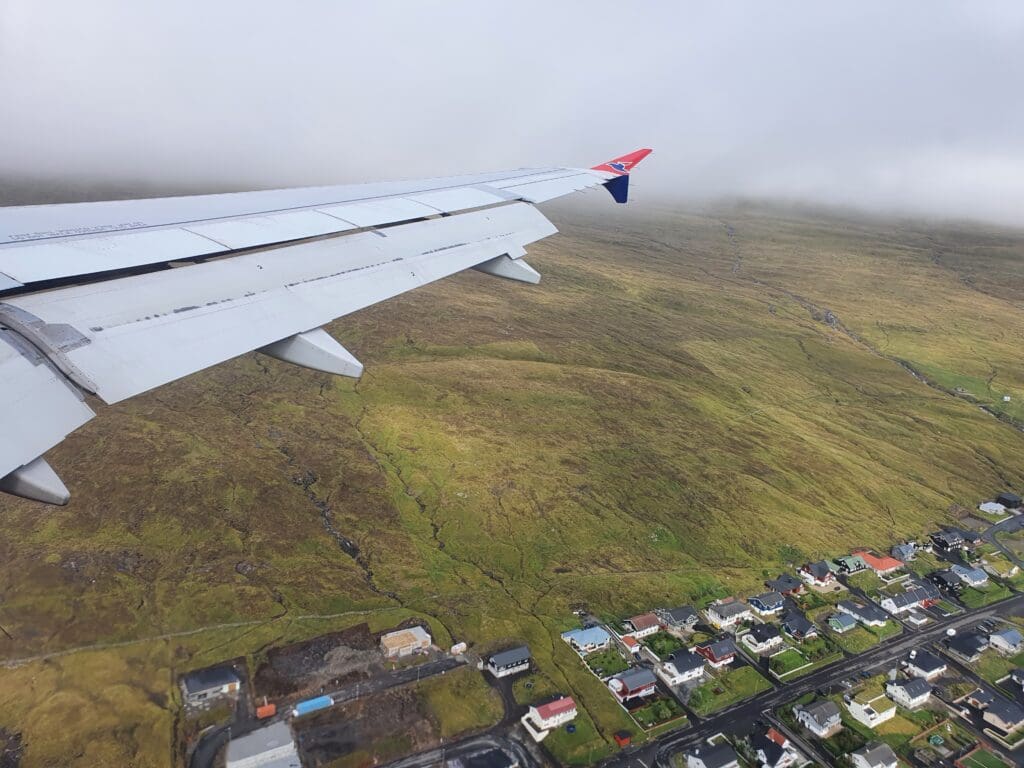
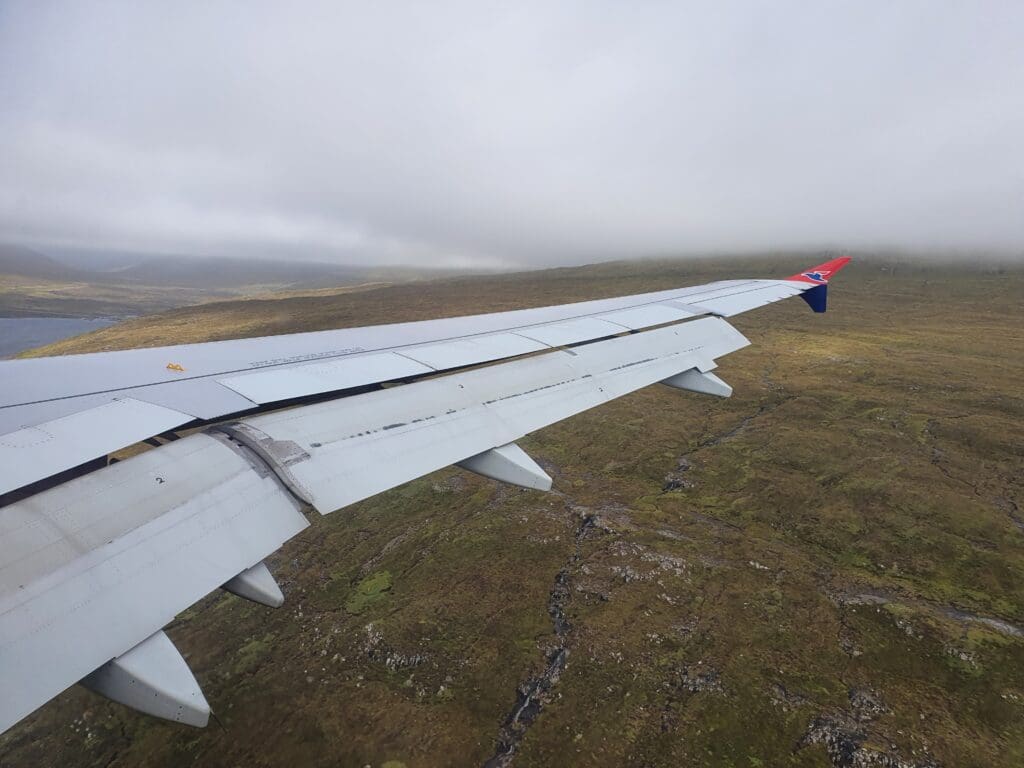
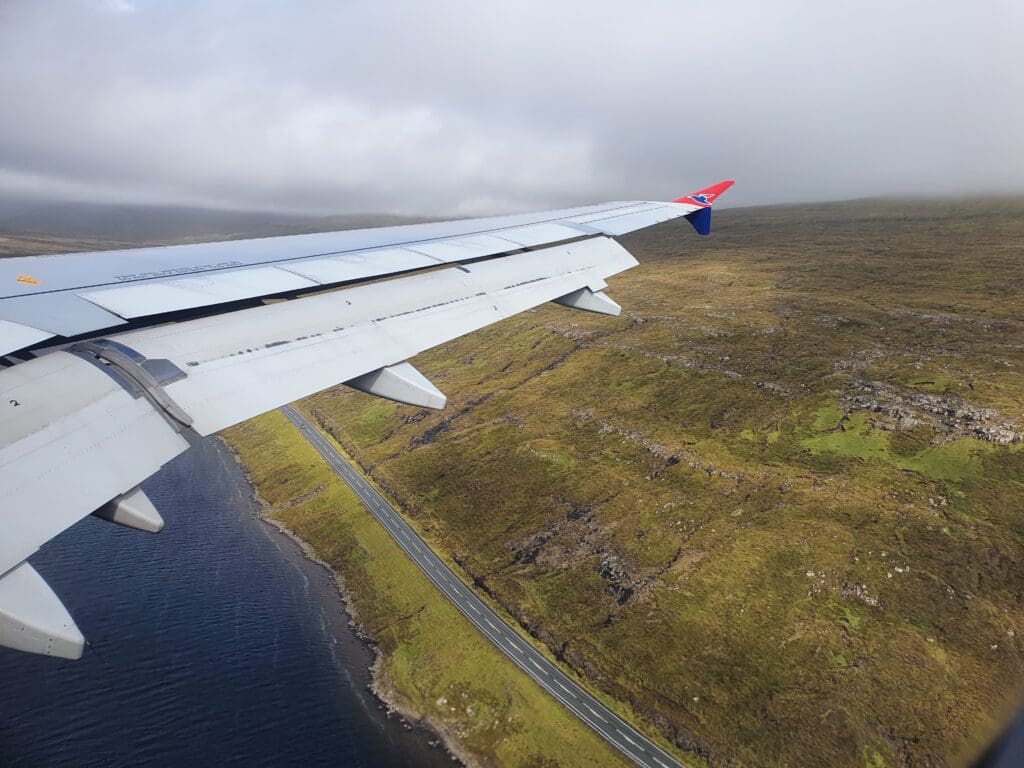
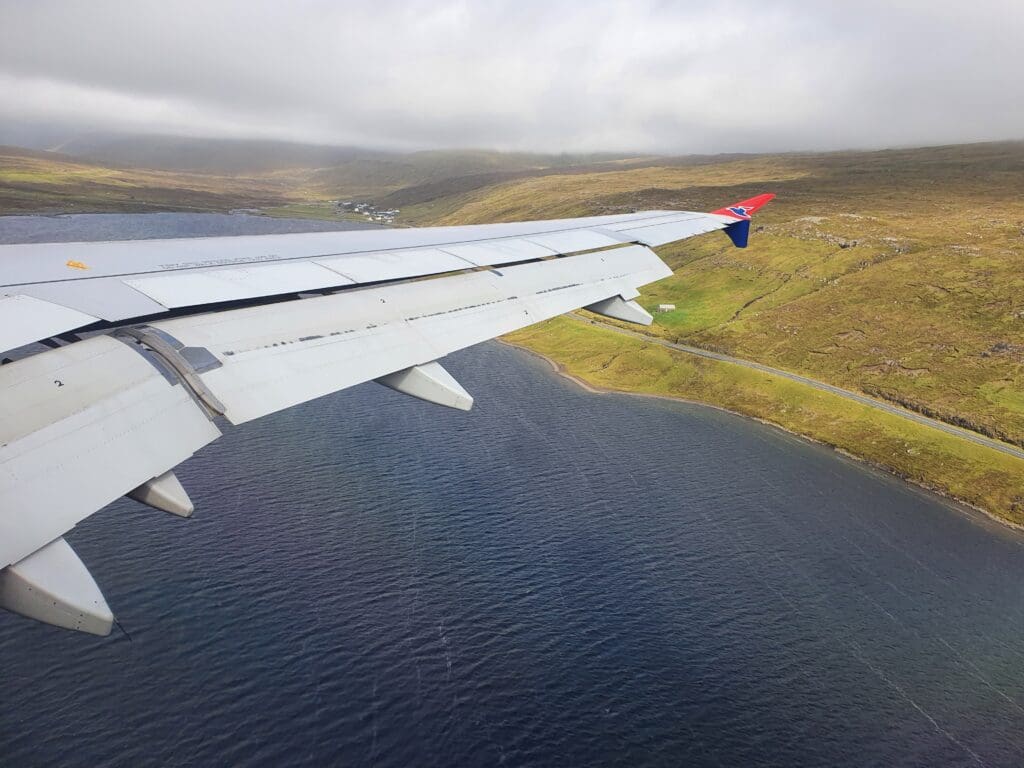
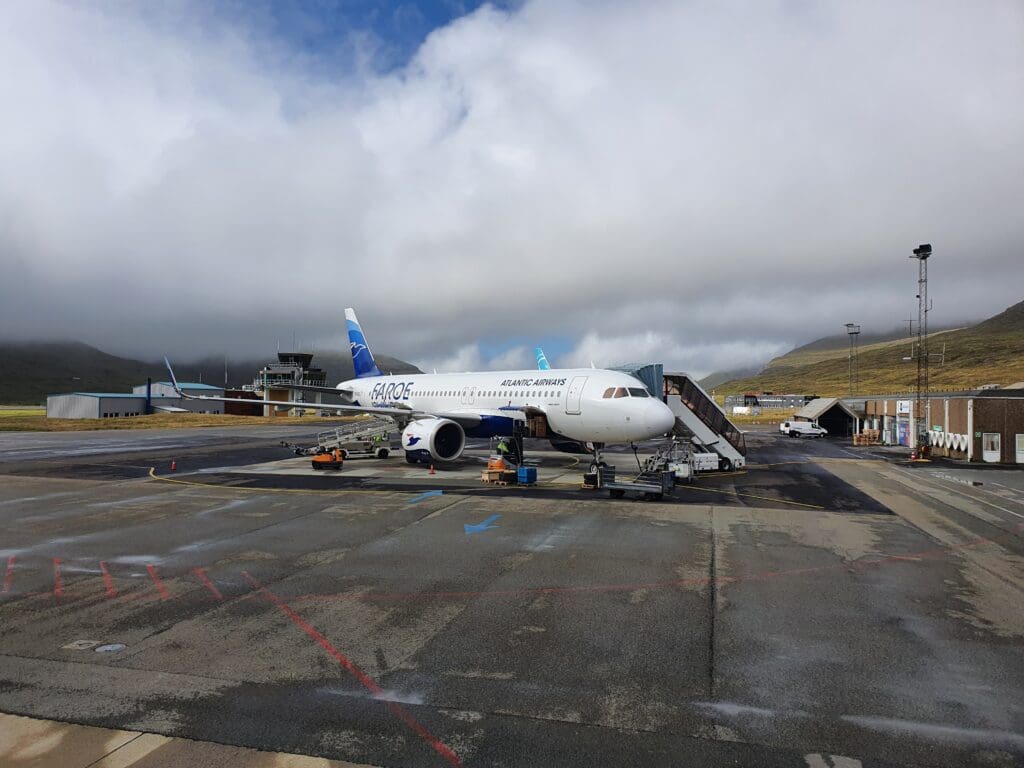
Following a pleasant 1H55 in the heavens, at 1327 the Airbus touched down on Runway 30 with a firm bump before decelerating rather rapidly as the pilots attempted to stop the jet on Vágar’s wet and relatively short runway. Moments after touching down, Atlantic Airways’ yellow hangar appeared, near which the airline’s two AgustaWestland AW139 helicopters could be seen resting in between flights. This was followed by the terminal where a single Atlantic Airways Airbus A320neo could be seen next to a former Atlantic Airways Airbus A319 painted in the colours of the short-lived Spanish carrier, Lattitude Hub. Finally, one other aircraft could be seen on the ground at that time which took the form of a rather surprising visitor, a Brazilian registered Embraer Legacy 650 which further research revealed to be operated by the bank Daycoval. With just one taxiway leading off Vágar Airport’s runway, the Airbus was required to make its way to the end of the runway before cautiously turning around and heading back along the runway. As the aircraft backtracked along the runway the Purser thanked passengers for flying with Atlantic Airways and welcomed those onboard to the Faroes.
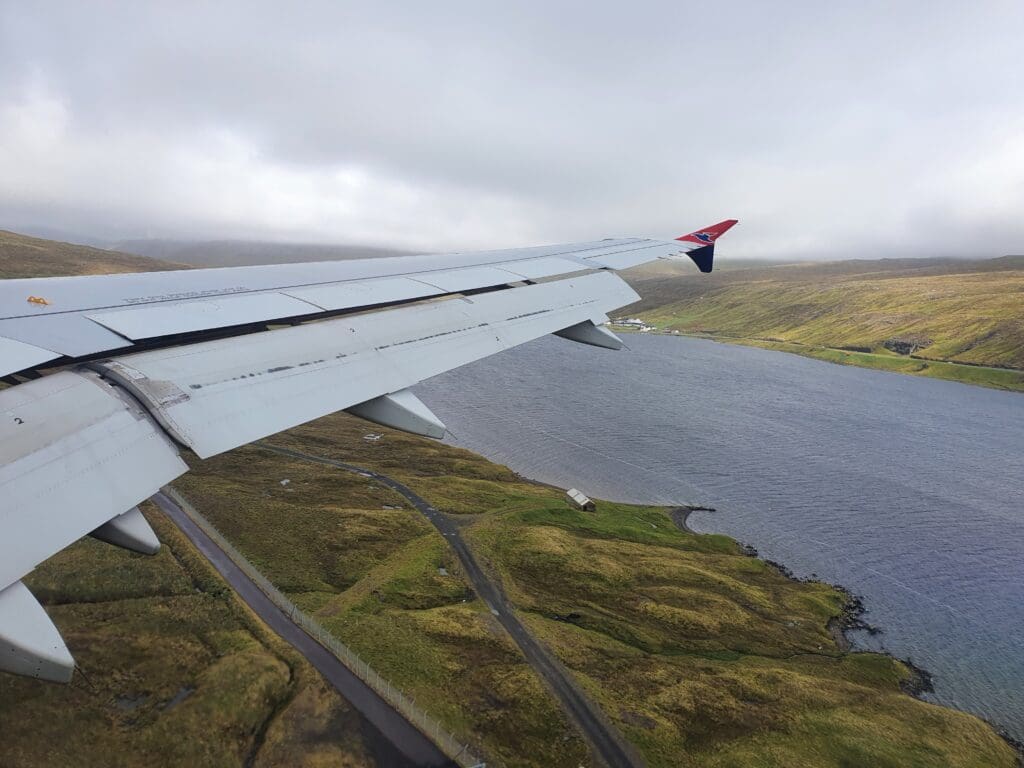
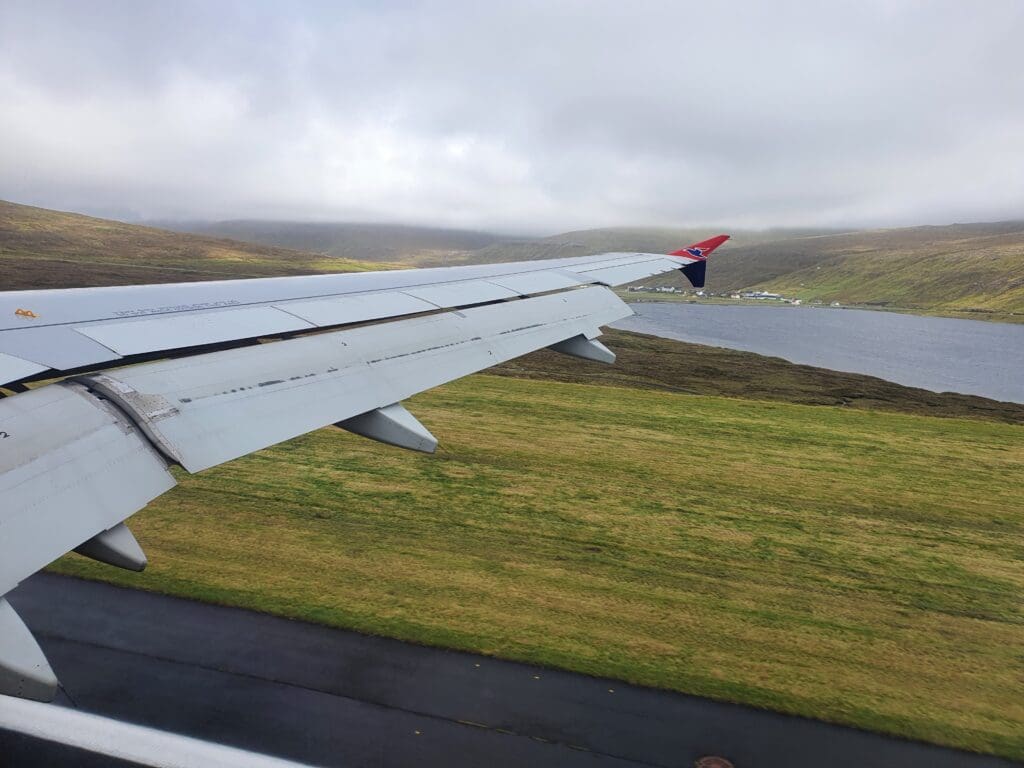
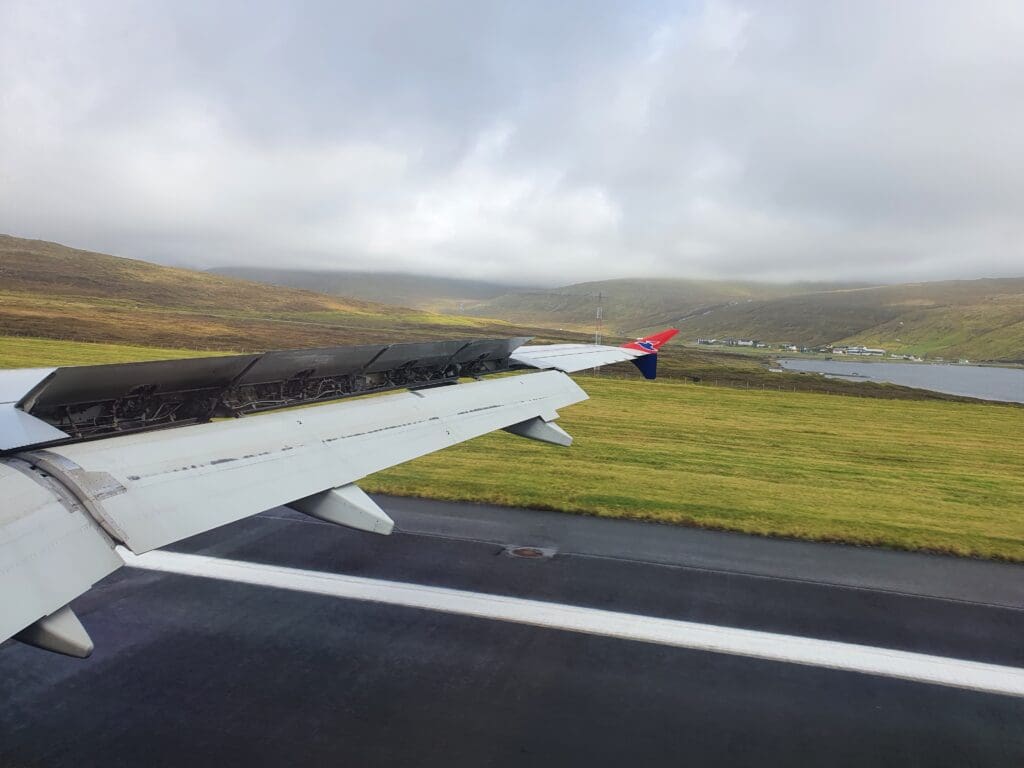
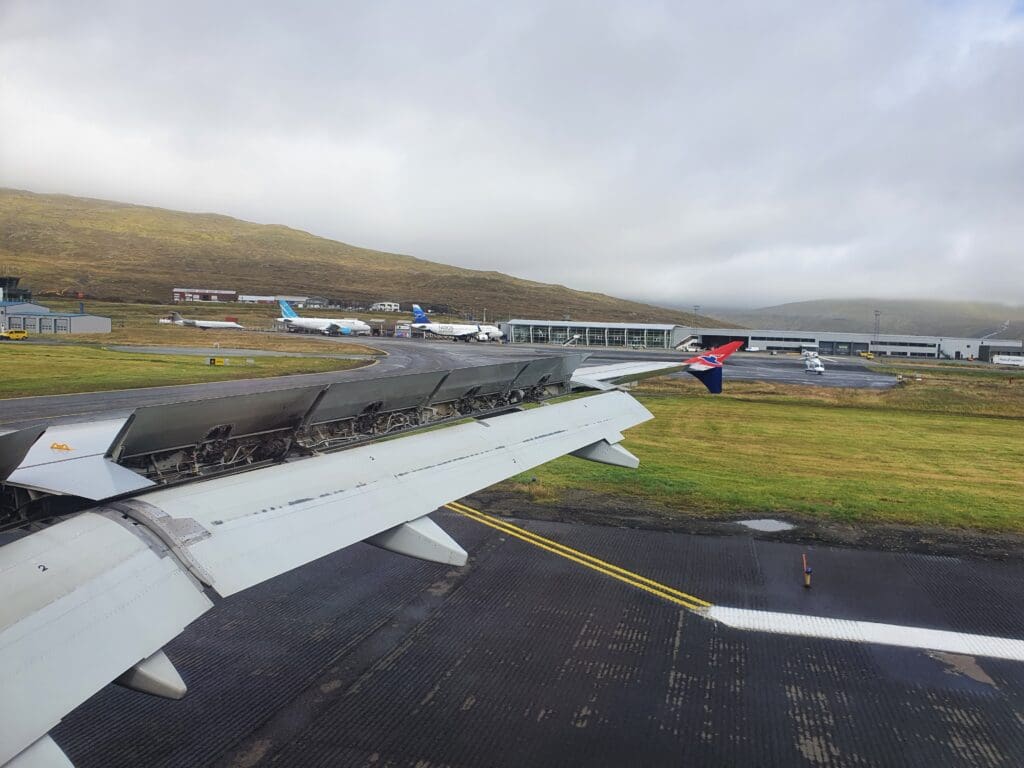
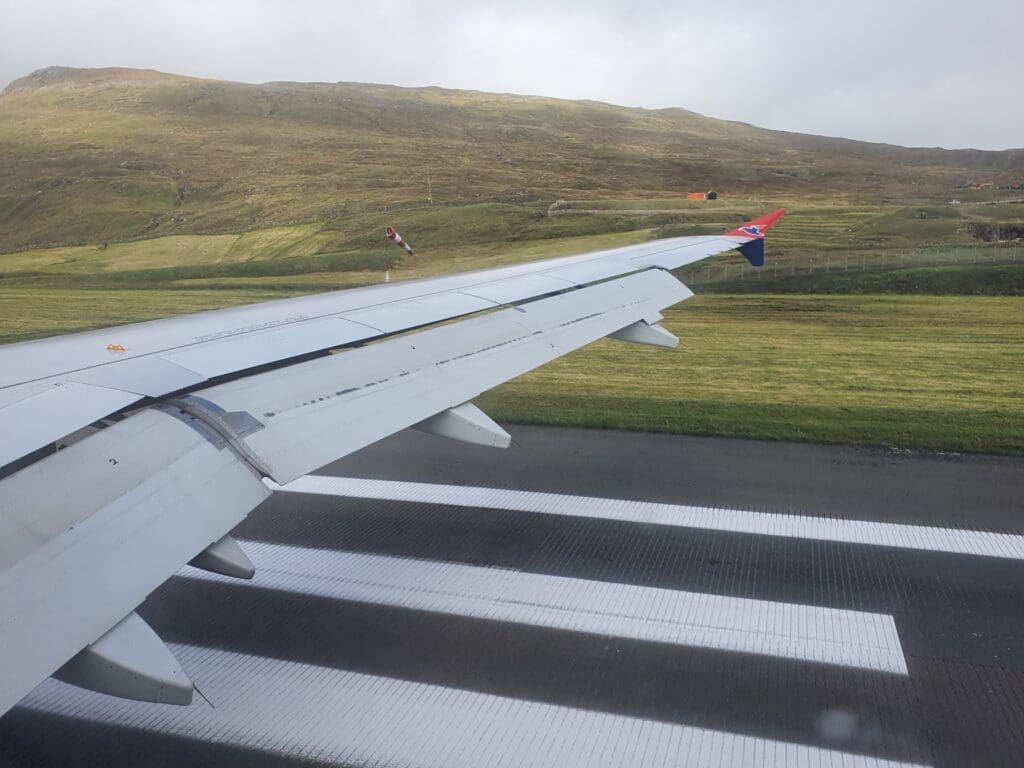
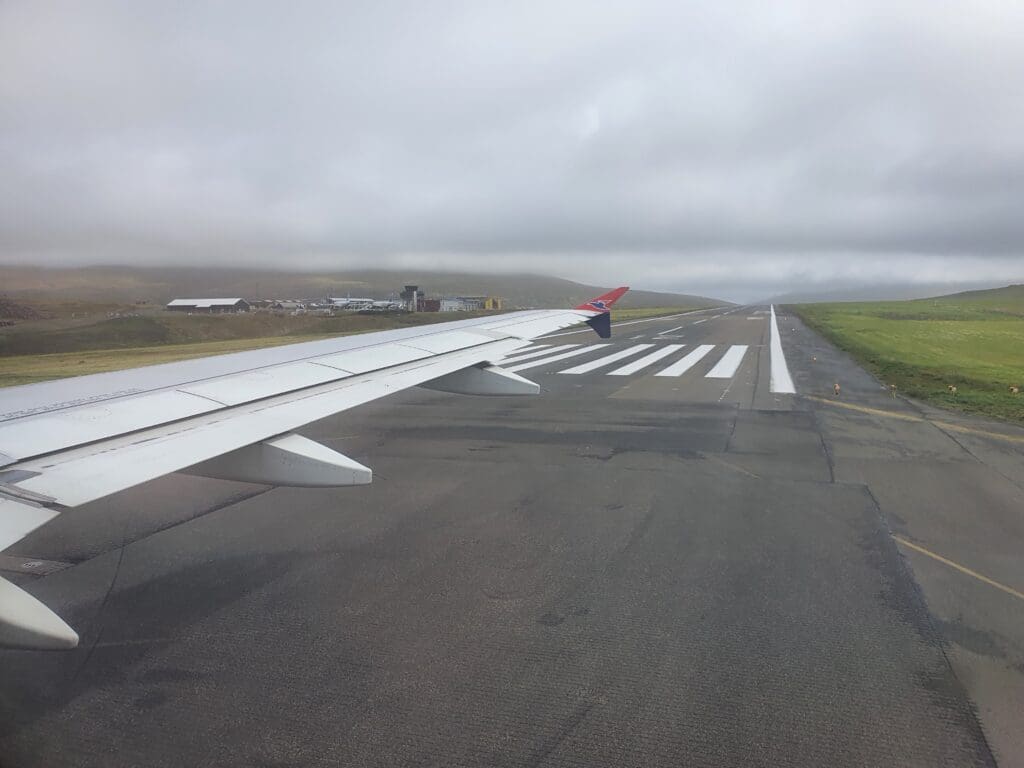
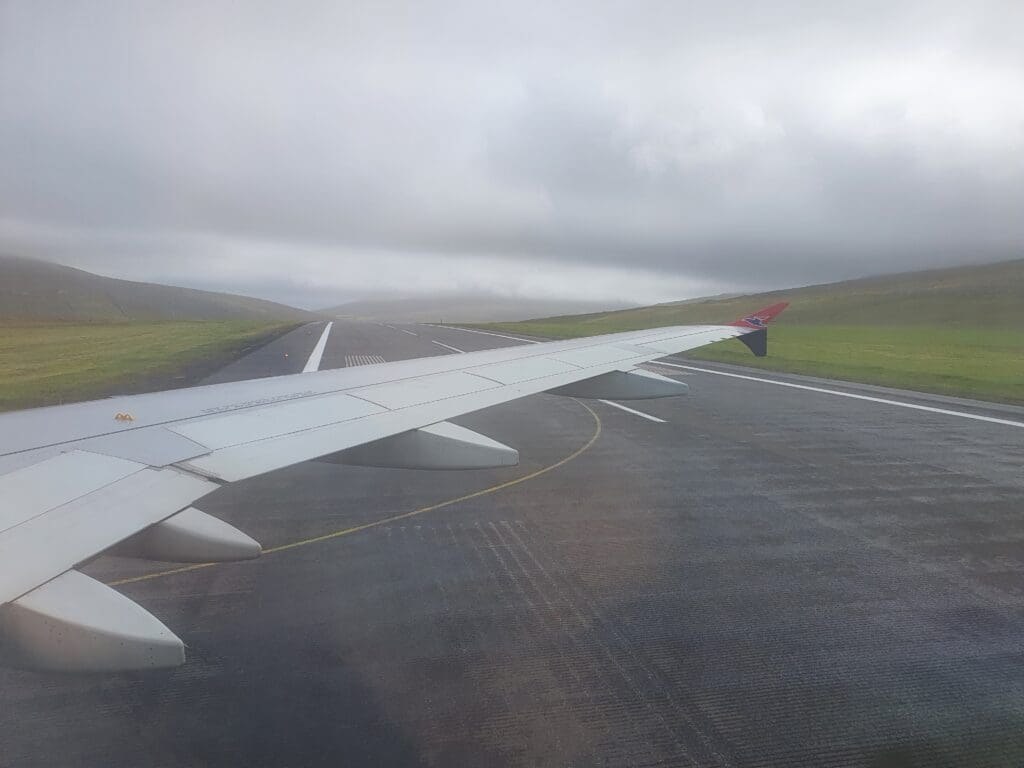
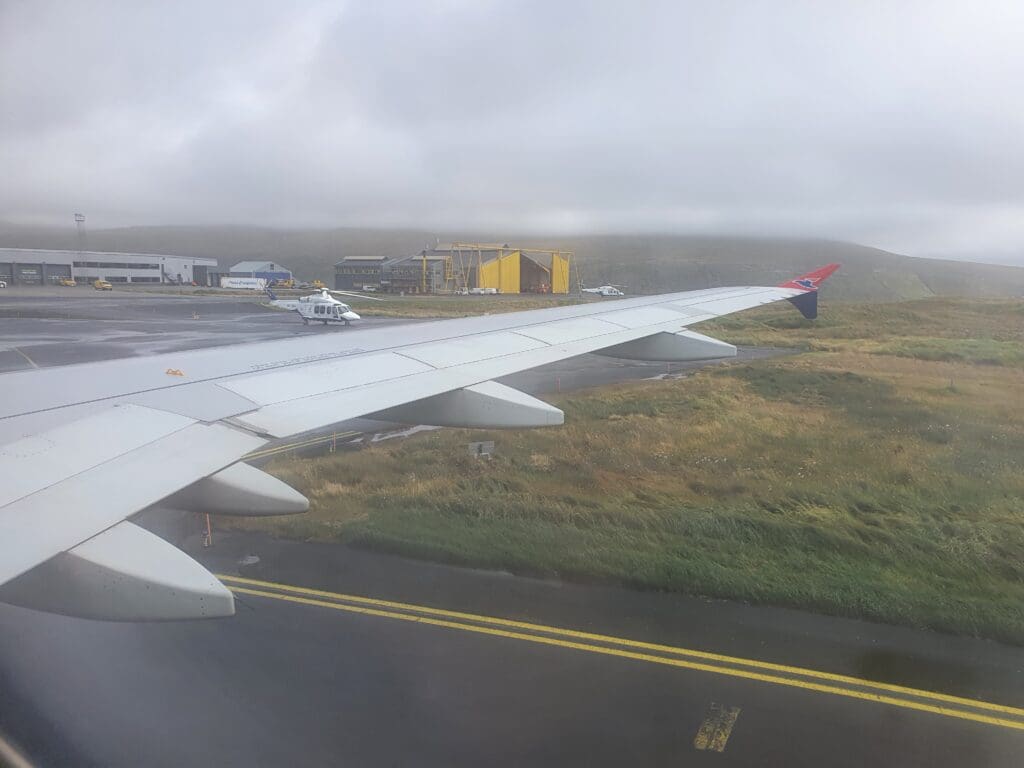
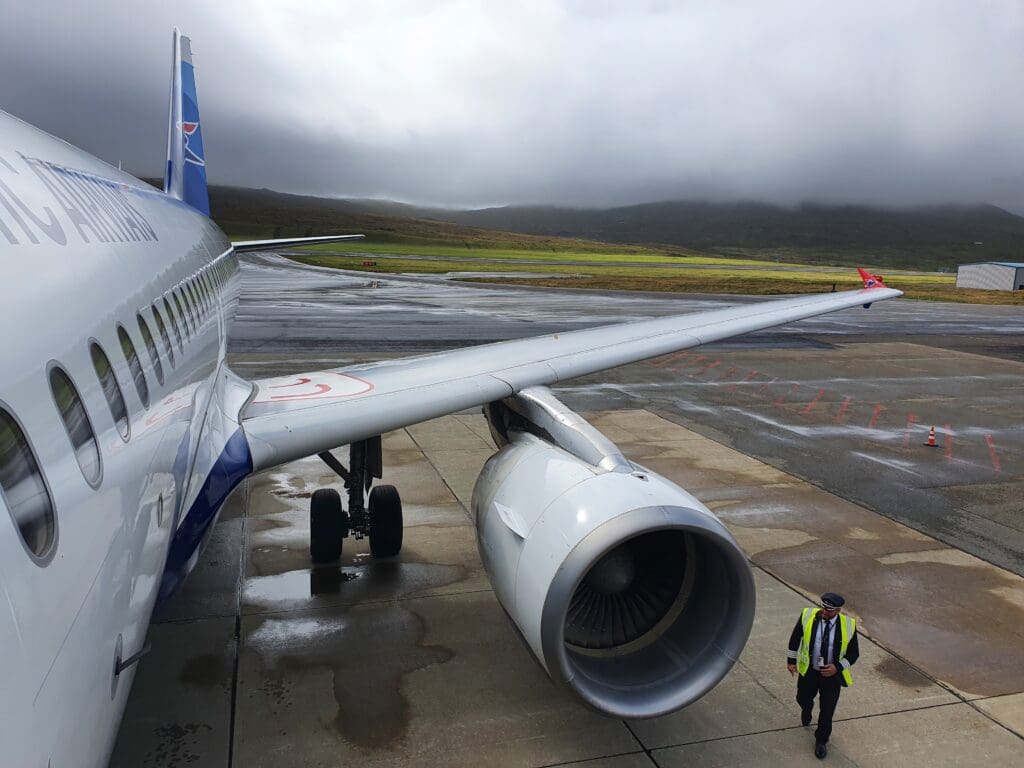
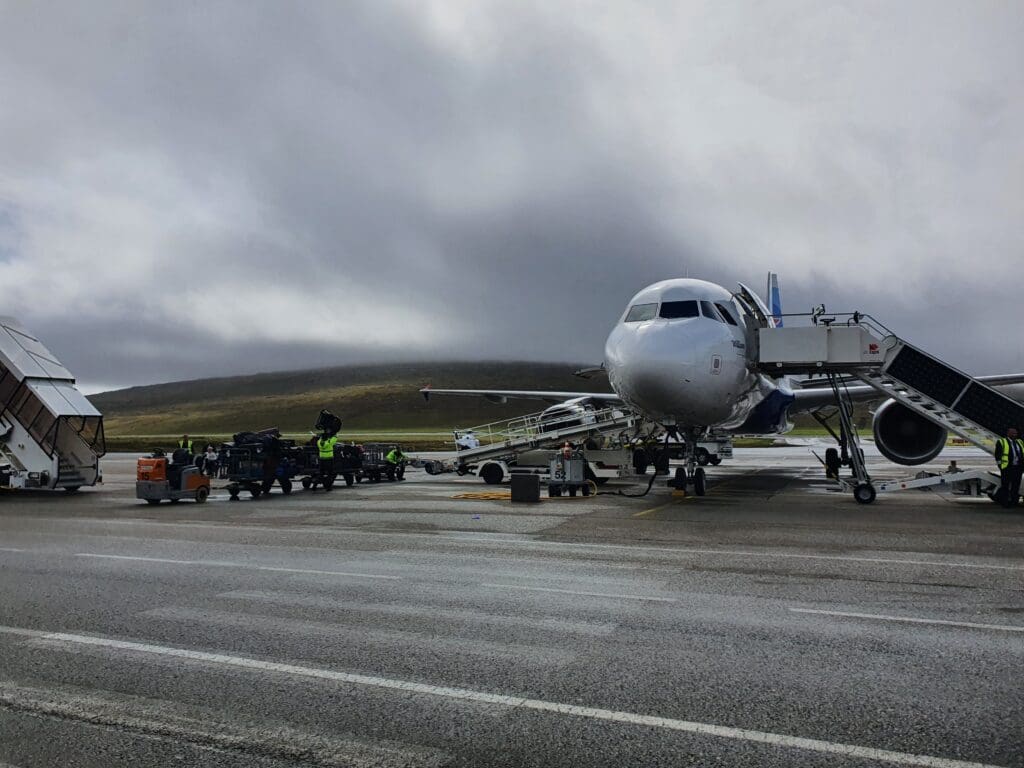
Far from Europe’s largest airport, once off the runway, the Airbus came to a halt at Stand 2 in a matter of seconds at which point the engines spooled down, the seatbelt signs were extinguished and a Faroese rock song blurted out over the cabin speakers. Perhaps in a rush to disembark and see the sights of the Faroes, once the jet had come to a halt, many passengers jumped up and a queue in the aisle soon formed. Fortunately, airstairs were soon positioned up to the cabin door at the front of the aircraft and disembarkation commenced. After waiting for a few minutes to let the jam in the aisle dissipate, I stood up and journeyed to the front of the aircraft. Upon arriving in the forward galley, I gave a ‘takk fyri’ to the two flight attendants standing there before making my way down the airstairs and out into the cold Faroese air.
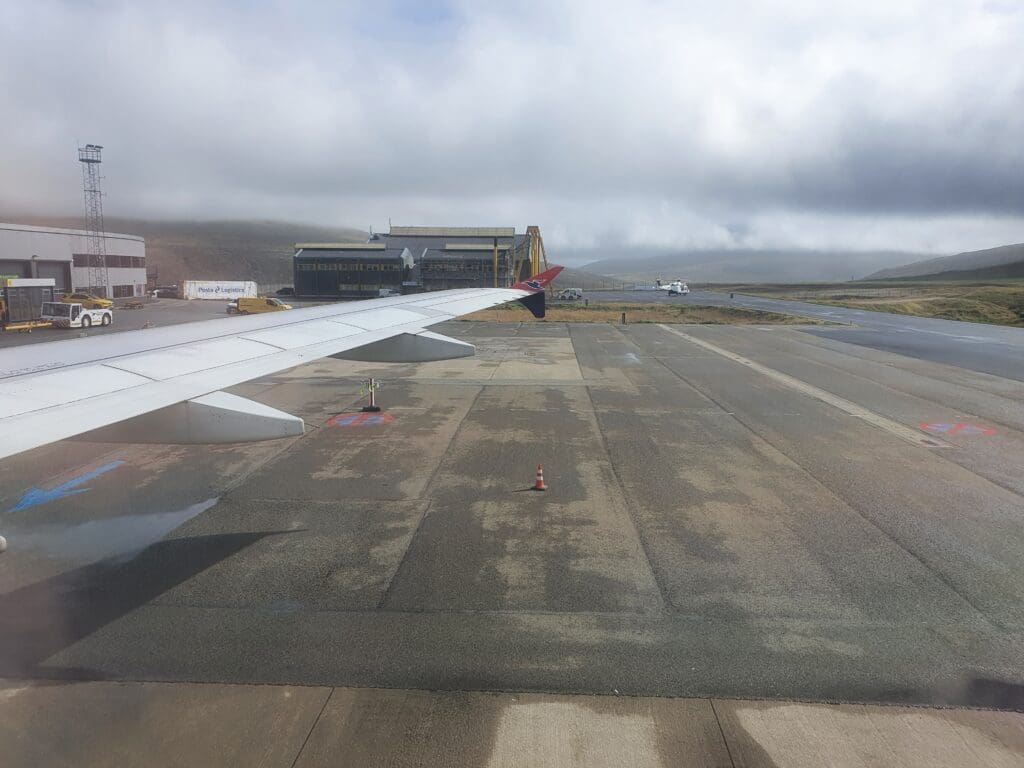
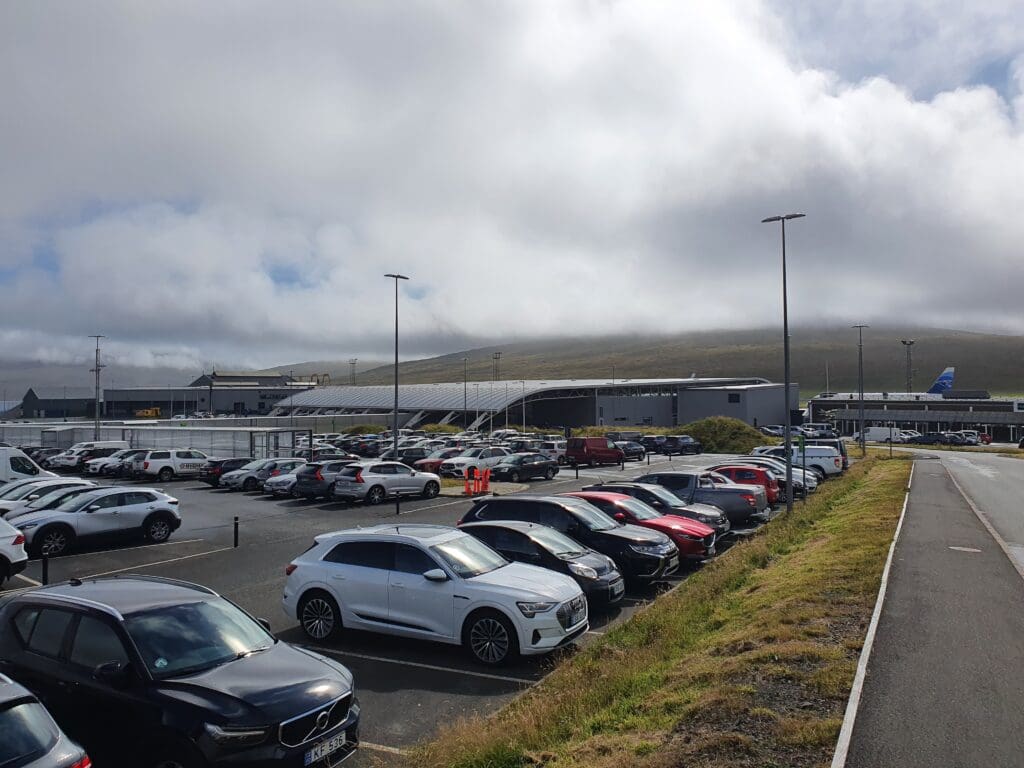
From the aircraft, I followed the crowds and in a matter of seconds, I arrived in the airside portion of Vágar Airport’s small terminal which at that time appeared to be very busy with passengers waiting to head off to Billund and Copenhagen. There, many of those who arrived from Copenhagen appeared to make a beeline for the duty free store however, not wishing to purchase any booze for the walk to my guesthouse, I followed signs for the exit and after passing through the small baggage claim hall, I arrived in the busy landside portion of the terminal where plenty of people could be seen waiting to greet friends and family arriving from Copenhagen. From the airport, I then began the 20 minute or so walk to the nearby village of Sørvágur where I would spend a night before heading up to Klaksvík by helicopter the following day.