What’s Belavia Like? Minsk to Amsterdam Onboard an Embraer 195
Background
At the time of my trip in May 2019, getting between Belarus and Britain was not particularly difficult. The most direct option taking the form of national carrier Belavia’s services between Minsk and London Gatwick – with these operated by the Boeing 737-800, Embraer 195 and once in a while, by their Boeing 737 Classics too. In fact, I had previously lucked out and ended up flying onboard a Belavia Boeing 737-500 to London just under two years before this trip. However, with direct flights on my departure day being a little pricey, I instead went for the cheapest regional operation, with this offered on KLM’s website and involving a Belavia operated service to Amsterdam where I would then connect onto a KLM service.
Upon landing on KLM’s homepage, I was presented with a list of reasonably cheap fares from airports across the UK to far-flung destinations across the world, from Jakarta to St Maarten and everywhere in between. Given KLM’s status as one of the world’s major airlines, as one would expect, I found the airline’s website to be simple and easy to use. Almost immediately after entering the required details into the flight search engine, I was presented with a calendar that detailed the cheapest fares between Minsk and London – something that would have been a useful feature had my plans not been so rigid!
Once I had selected my departure day I was then presented with several options, all bar one of which involved departing Minsk on a Belavia Embraer 195 before heading onwards to Britain’s capital, with a plethora of KLM and KLM Cityhopper options to both London City and London Heathrow offered for the short second hop. Seeing as I would start my shift in a North London supermarket at 1700 that day, I needed to touch down in London by mid-afternoon at the latest. Fortunately, thanks to KLM’s highly regular flights between Amsterdam and Heathrow, assuming no delays, this would not be an issue. I thus opted for the combination of flights with the shortest connection time in Amsterdam (2H10), which also happened to be the cheapest. Deciding not to pay an additional €10 to reserve a seat or bring any hold luggage, I was soon whisked away to the payment page where I paid €189.84 and soon received confirmation of my booking.
The Journey
Separated from Minsk’s grandiose centre city by almost forty kilometres of countryside and only accessible by road, it is highly unlikely that Minsk National Airport will win any awards for its convenience. Fortunately, those lacking a car and not wanting to part with a small fortune to reach the airport by taxi, a regular stream of airport buses runs throughout the day. These connect Minsk’s bus station in the heart of the city with Belarus’ sole international gateway with a one way ticket coming to a total of 8 Belarusian Roubles (£3.10/€3.50). Not wanting to cut things too fine, the previous evening my father and I decided to take the 0555 bus to the airport. Seeing as this departure would fall slightly before the first metro service of the day, this would mean a short walk across the city centre. Thankfully, as had been forecast, the weather was pleasant with no rain and a cool, yet not too chilly, breeze wafting through the city centre’s streets. Having planned the route, after leaving the AirBnb where we had spent the night, we proceeded down some of the city’s quiet backstreets and eery grand boulevards where few people could be spotted bar several street cleaners. Managing not to get lost mid-journey, we arrived at the city’s bus terminal with approximately fifteen minutes to spare before the bus’ departure time. Within five minutes of our arrival, a modern coach pulled up and we hopped aboard, paying the service’s small fare to the driver before taking our seats.
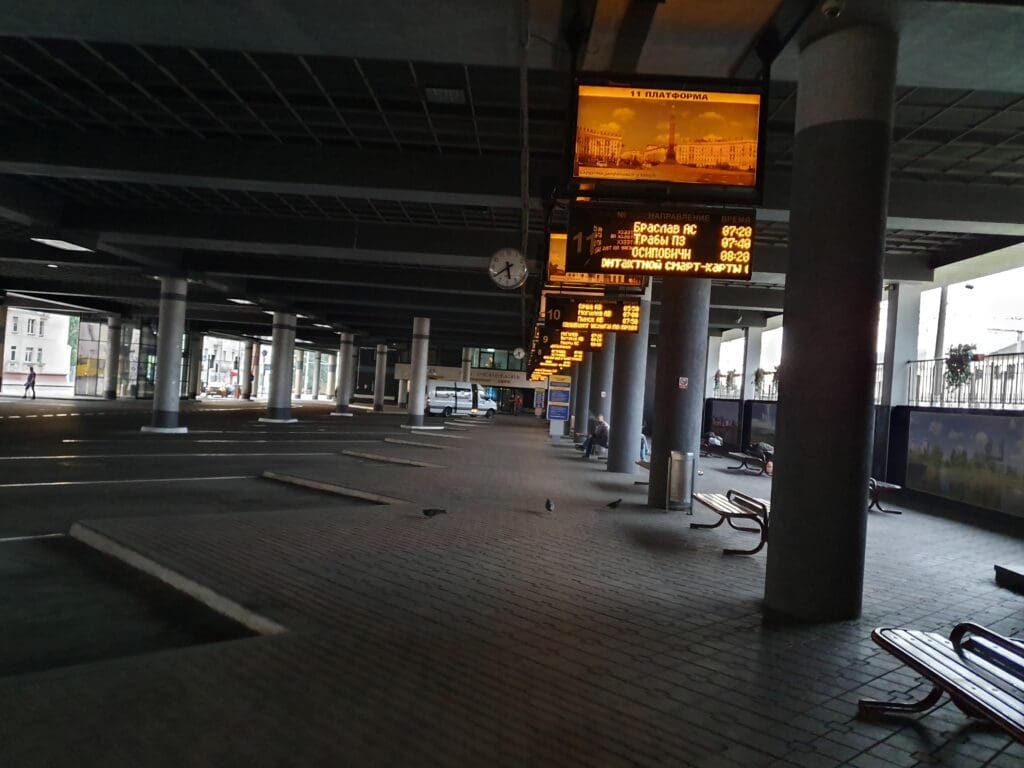

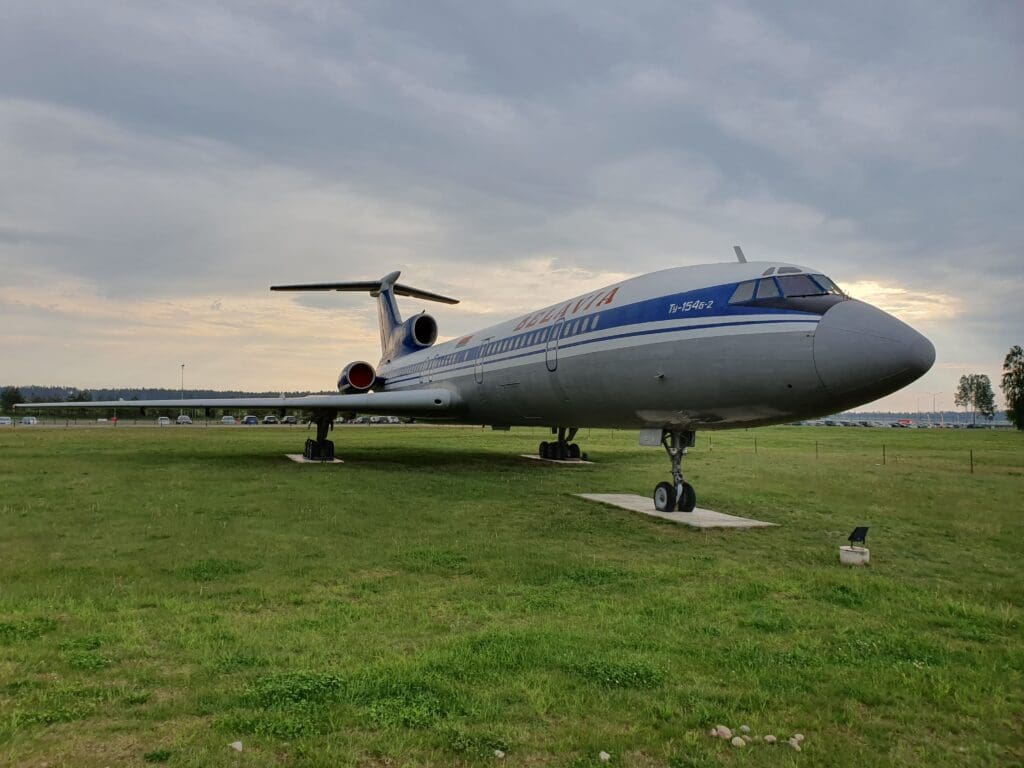
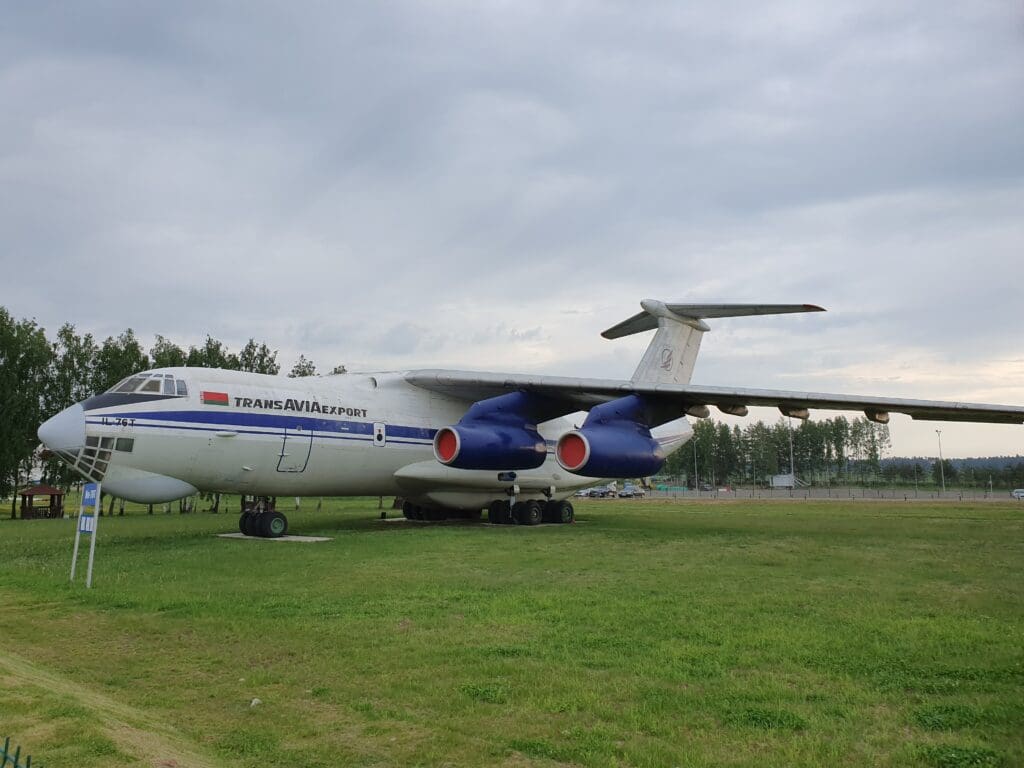
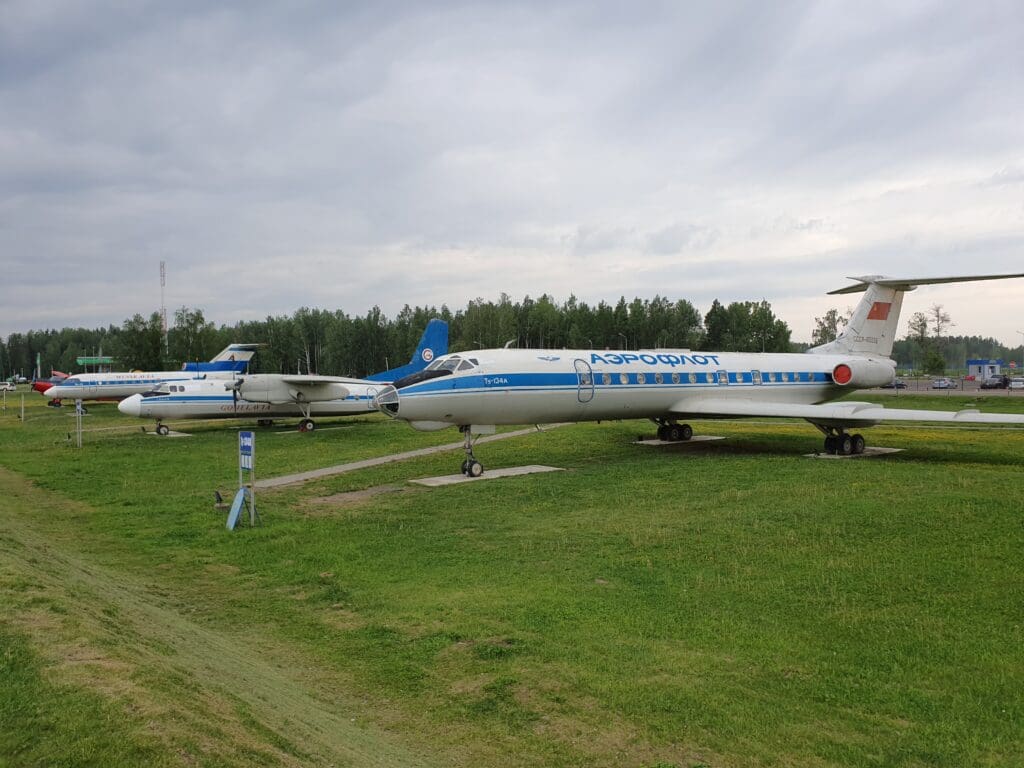
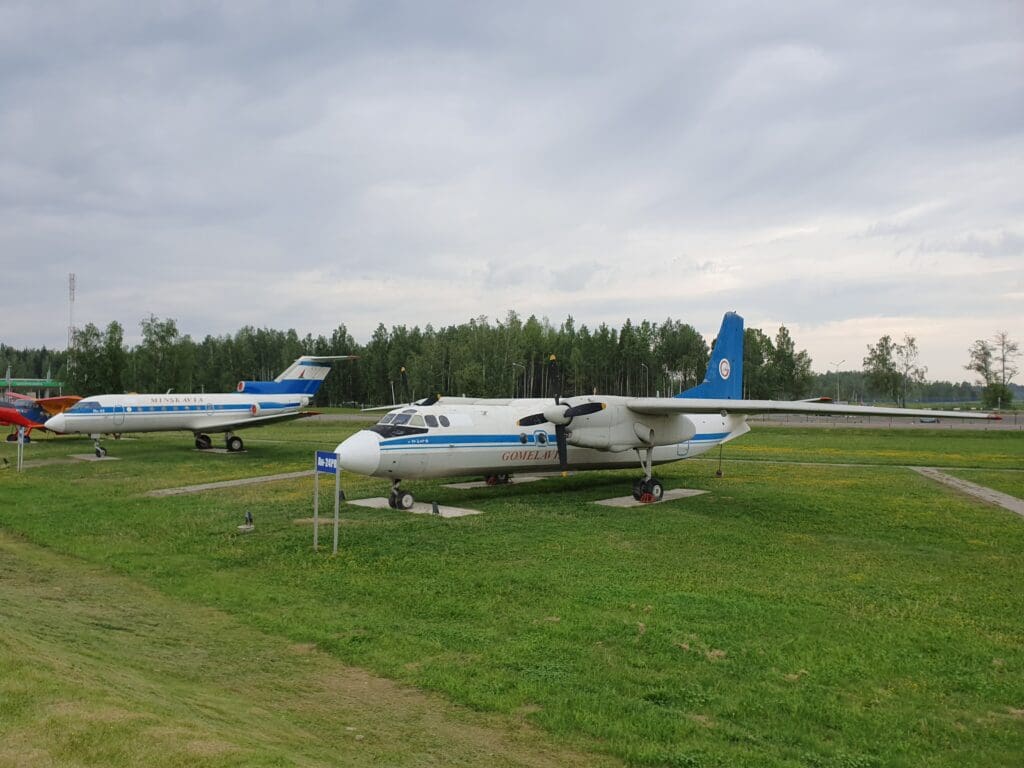
Given the reasonable number of morning departures from the airport, I was a little surprised to see that there were very few other passengers onboard the bus that morning. At 0558, with just three other passengers onboard the bus pulled out of the bus station and headed down Minsk’s main thoroughfare, Independence Avenue. For those with little time to explore the city, this journey allows for a condensed sightseeing tour of some of Minsk’s main sights. Once we had passed the famous National Library of Belarus, the bus headed out into the countryside that surrounds the city. As we whizzed along the main road to the airport, the Mound of Glory, a monument dating back to the late sixties dedicated to those Soviet soldiers who fought in the Second World War came into view on the horizon as we neared the airport. With virtually no traffic holdups at that time in the morning, the bus journey took significantly less than the timetabled hour this was set to take and around 45 minutes after leaving the city centre, the airport’s distinctive concrete spaceship terminal appeared. As we approached, the airport’s more unusual but welcome features came into view, namely the open air museum which features five interesting aircraft. This collection consisting of a colourful PZL-Mielec Antonov 2R that had previously flown with Grodno Aviakompania, a more traditional liveried Gomelavia Antonov An-24, an Aeroflot Tupolev Tu-134A, a Belavia-liveried Tupolev Tu-154B2, a Minskavia Yak-40 and the largest of them all, a former Transaviaexport Ilyushin Il-76TD. After passing these, the bus soon pulled up to the entrance doors of the check-in hall where we disembarked and headed straight into the terminal.
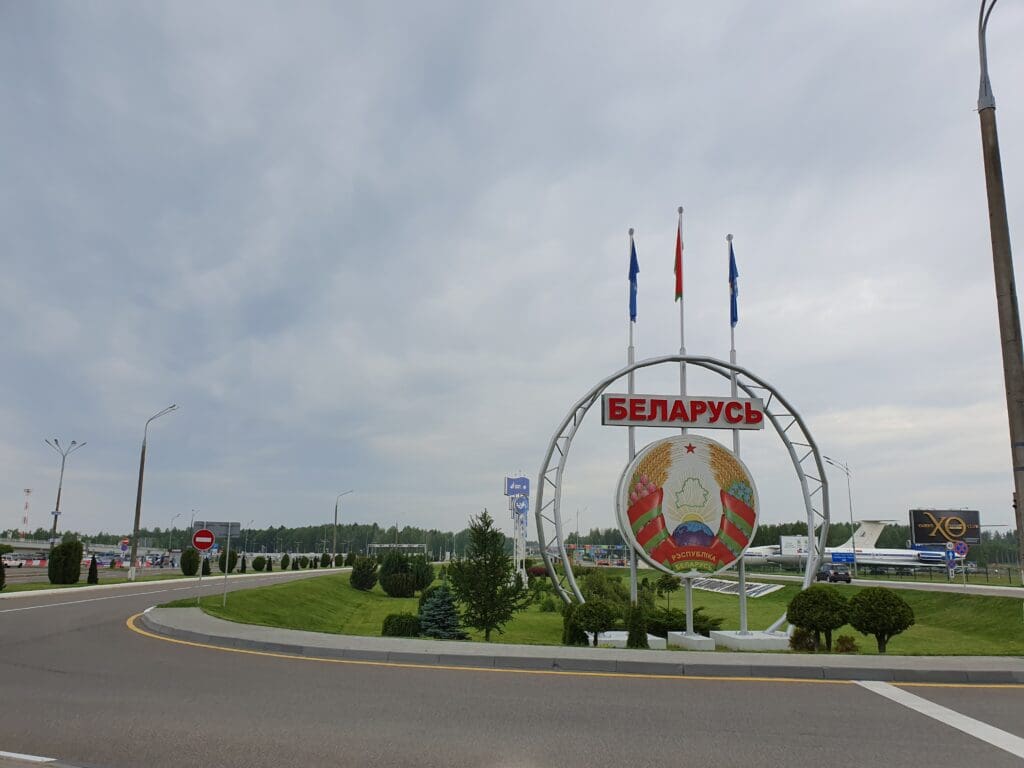
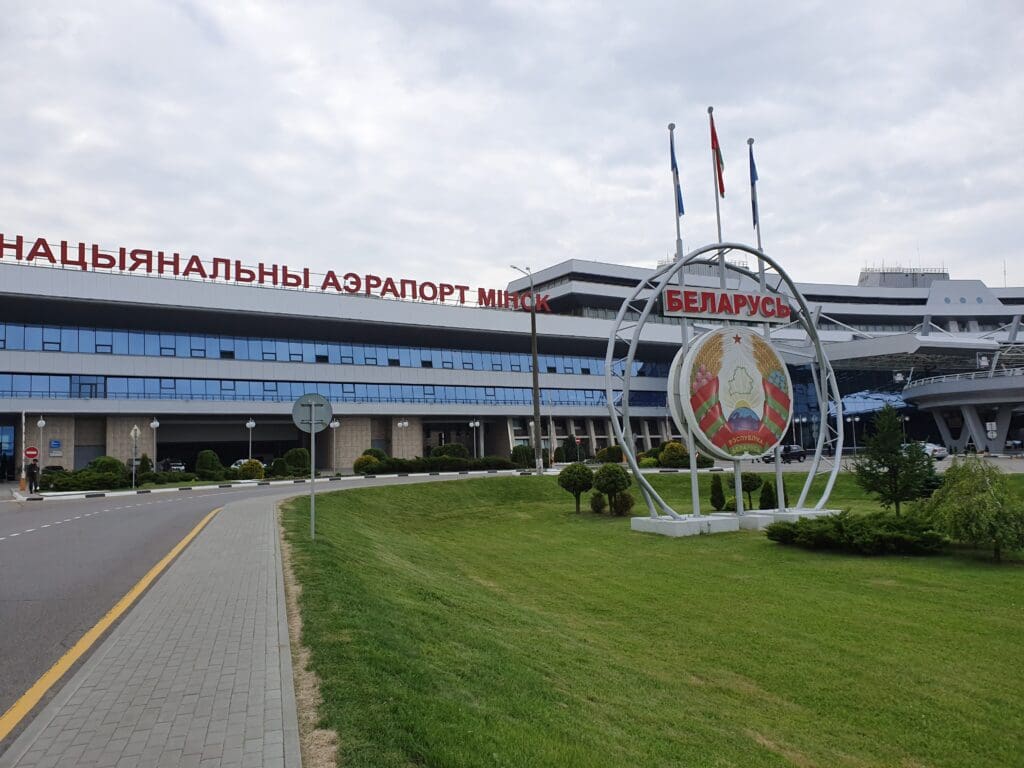
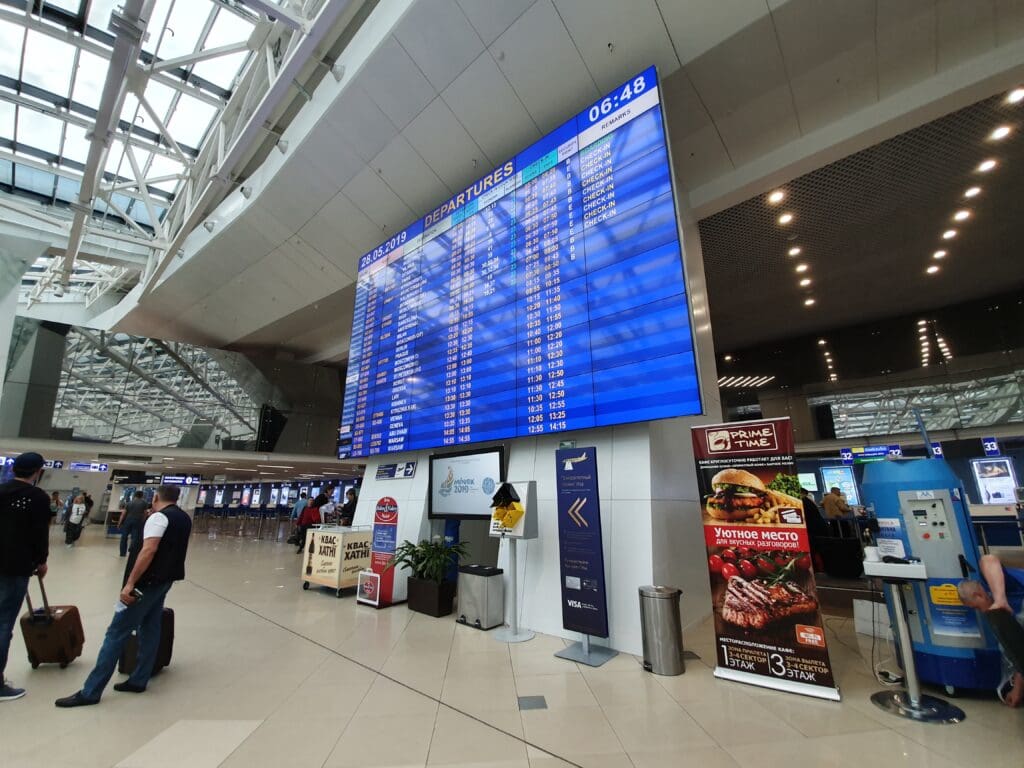
Resembling a giant concrete spaceship, the exterior of Minsk National Airport’s sole terminal is most definitely unique, if not somewhat dated. However once inside, the landside area was modern, well-polished, clean and bright. For those unable to read the Cyrillic alphabet, all signs and airport information were translated into both Chinese and English. After a quick check of the departure boards, we headed over to the two check-in counters dedicated to checking in all Belavia’s Economy passengers bound for Amsterdam. However, as we had partially expected given our early arrival, these were empty with neither a single passenger nor airport worker in sight. Lacking a great deal to do and given the good weather that morning, rather than wait inside we decided to head outside for a wander around the aforementioned aircraft lined up next to the road leading to the terminal. Despite the presence of plenty of police cars and security staff on the approach to the airport, thankfully nobody seemed to take an issue with us having a closer look and taking photos of these. Without any problems whatsoever, we eventually retreated back into the terminal by which time a small queue of passengers could be seen at the Amsterdam desks whilst two workers appeared to be completing their final preparations prior to opening these.
Almost immediately after joining the check-in queue, those at the front were permitted to head up to the counter and check-in for the flight and approximately five minutes later it was our turn to do so. Given the early hour, perhaps understandably, the staff member who we approached did not appear to be too pleased to be at work that morning and completed the check-in procedure stony faced and with minimal dialogue. However, fortunately they did manage to complete the check-in procedure efficiently, without any issues and heeded to my request for a window seat. Within a minute or so we were handed our four colourful Belavia branded boarding passes, two to Amsterdam, mine to Heathrow and my father’s to Manchester. With these in hand we had absolutely no reason to remain airside and so we headed over to the far end of the terminal where a small queue for the security checkpoint could be seen. Despite the fact that only a single checkpoint appeared to be open, the queue moved along at a fair pace and after around five minutes of waiting I was met by some unusually friendly security staff. Following a quick check with no issues I was allowed to head onwards to the immigration area which featured plenty of booths, virtually all of which appeared to be manned. This meant that absolutely no queuing was required as I was able to walk straight up to a booth and hand over my passport to one of the immigration officers dressed in semi-military attire. Following some scanning and intense checking of my passport to confirm its authenticity alongside the usual suspicious glances, this was returned and I was able to head into the airside area of the airport.
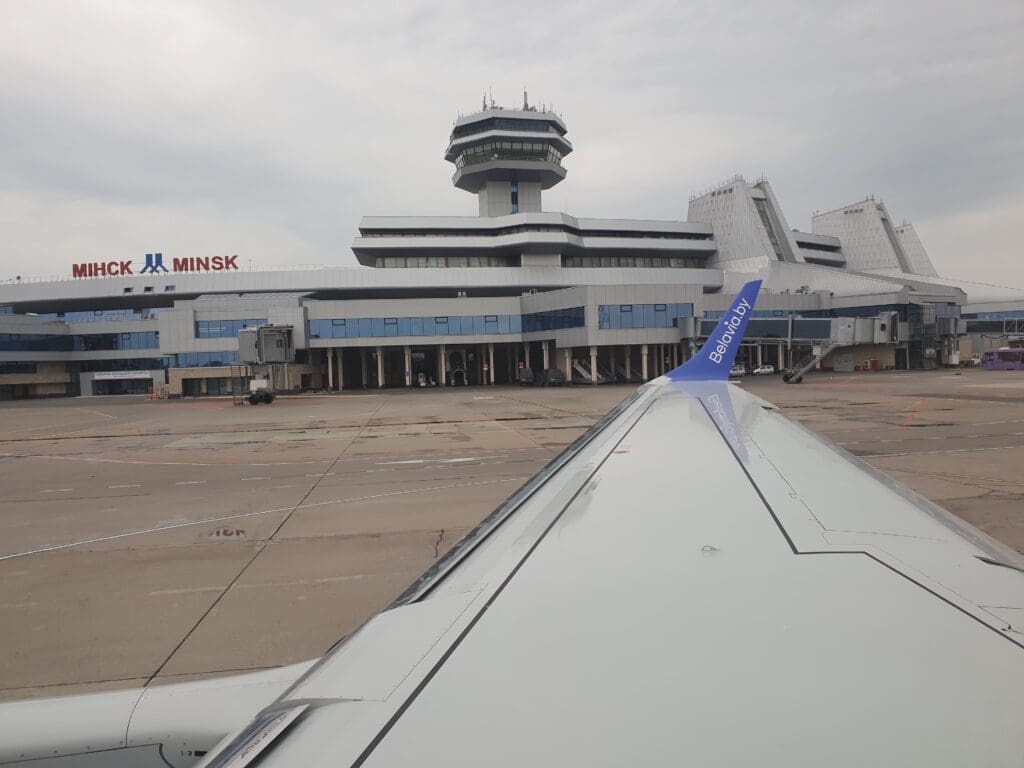
As with the landside area, once through immigration, the terminal appeared spotlessly clean and slightly more modern than the last time I had passed through this in August 2017. However, when it comes to facilities, with a duty free shop, a couple of half café-half bar establishments and a Burger King, the list of things to do for those lacking an interest in the action outside is hardly endless. With Belavia occasionally providing reasonable fares between Central Asia and Europe, I can imagine passengers with a long transit may end up somewhat bored during their stay. Fortunately, complimentary wifi is on hand which I found to work well that morning plus plug sockets could be spotted at multiple locations in the terminal. Meanwhile aviation enthusiasts will be pleased to hear that large windows offer good views out onto the airport’s runways and main apron at various points throughout the terminal. In addition, following my last visit, the no photography signs that were once stuck to these appeared to have been removed; however I would still advise some caution for those who wish to take anything but discreet photographs of the aircraft outside.

Following a quick explore we decided to head to the airport’s Burger King for an unhealthy breakfast of greasy banana and caramel pies and coffee. Taking a seat next to the window, from there every single type of active aircraft in Belavia’s fleet could be seen waiting on the apron. Since my last visit when the majority of aircraft could be seen sporting the airline’s old classic livery, over the past couple of years new deliveries, re-paintings and retirements ensured that the majority of the aircraft that day sported Belavia’s new livery. However, for an aviation enthusiast, the undoubted highlights came in the form of the rows of Soviet built aircraft in the distance. The majority of these were a mixture of active and stored Genex, Ruby Star Cargo and TransAVIAexport Antonov An-12s, Antonov An-26s and Ilyushin Il-76s. In addition several long retired Belavia Tupolev Tu-154s could also be seen, unfortunately unlikely to ever take to the skies ever again. Away from these, more ‘regular’ yet luxurious types took the form of the Belarusian government’s Boeing 767-300ER, a San Marino registered Embraer Legacy plus two locally based BySky Pilatus PC-12NGs. As one would expect at Minsk National Airport, the majority of the movements that morning consisted of Belavia aircraft heading off to destinations across Europe alongside the occasional arrival. However, breaking the monotony of the Boeings and Embraers, as we waited, a noisy rumbling Antonov An-24 operating Motor Sich Airlines’ service from Zaporizhzhia touched down. This particular aircraft was the same airframe that took me and my father from Lviv to Kiev several days prior to this flight.
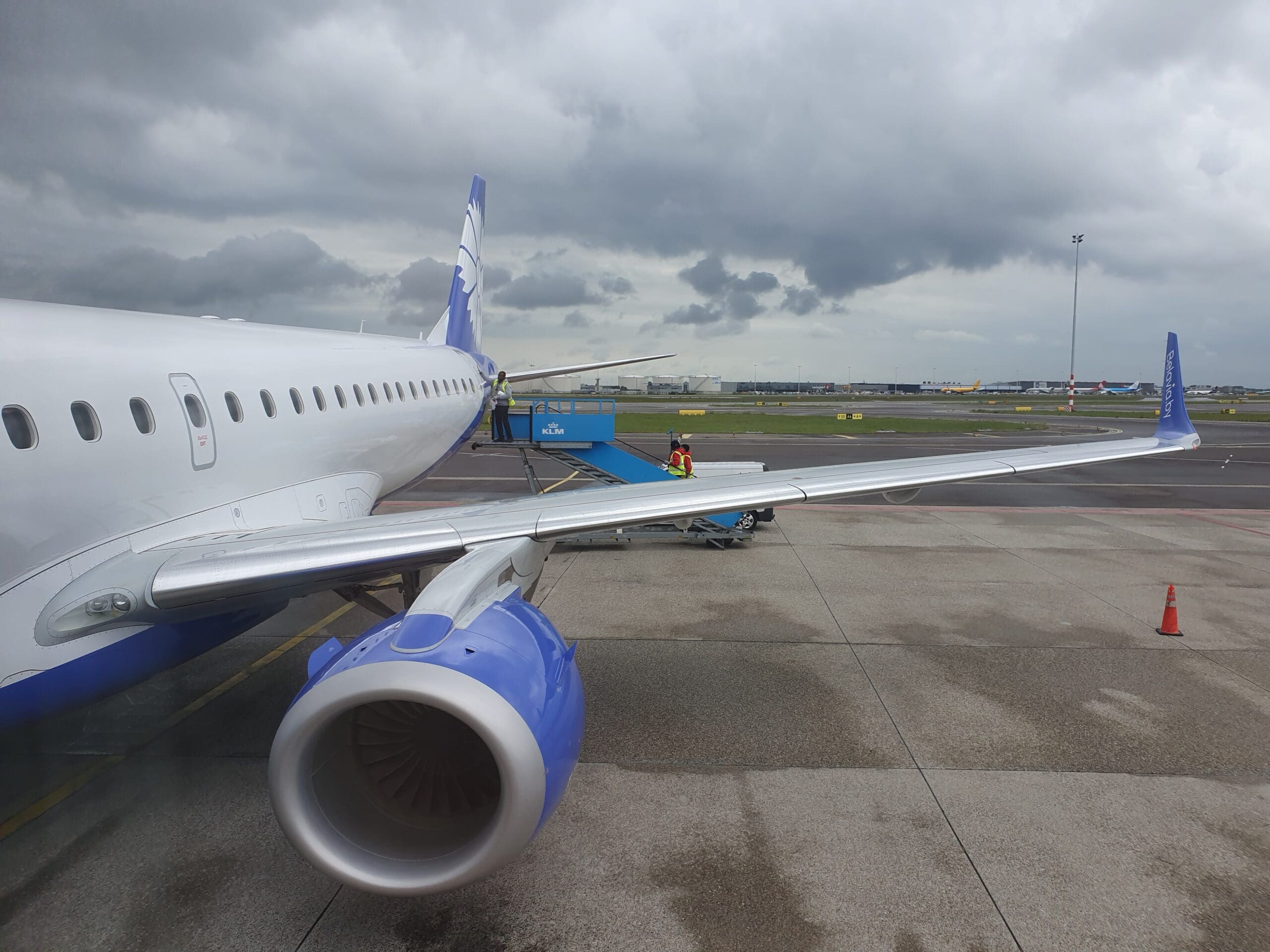
Directly in front of our seats in Burger King, a team of ground staff could be seen preparing a shiny and gleaming Embraer 195SR bearing the registration EW-532PO at Stand 13. Given the rather unweathered look of this particular airframe, unsurprisingly this was the second newest aircraft in Belavia’s fleet at the time of my flight. Manufactured at Embraer’s plant in São José dos Campos, this first took to the Brazilian skies with the test registration of PR-ETQ in February 2019 and was thus just three months old at the time of my flight. In April, the Embraer commenced its long delivery flight to Belarus, flying via Recife and Tenerife Sur before touching down in Minsk. Having spent much of May on the ground, the flight over to Amsterdam was to be this particular Embraer’s 53rd revenue flight. As one would hope given the aircraft’s young age, according to the AvHerald there were no registered incidents for this aircraft prior to my flight. Meanwhile in the week prior to my flight the aircraft had covered in excess of 15,500 miles over 22 flights, connecting Minsk with Berlin Schönefeld, Brussels Charleroi, Kyiv Boryspil, Moscow Domodedovo, Moscow Sheremetyevo, Paris CDG, Sochi, Tbilisi and Warsaw.

As per the time noted on our boarding passes, at 0855 announcements were made inviting Amsterdam bound passengers to head to Gate 9 and no more than a couple of minutes later boarding officially commenced. In the usual manner those in Business as well as those requiring assistance were invited to board the aircraft first, however general boarding commenced only a very short time after the gate opened. Following several minutes spent standing in line, my boarding pass was scanned and passport briefly checked before I made my way down the jetway and towards the brand new jet.
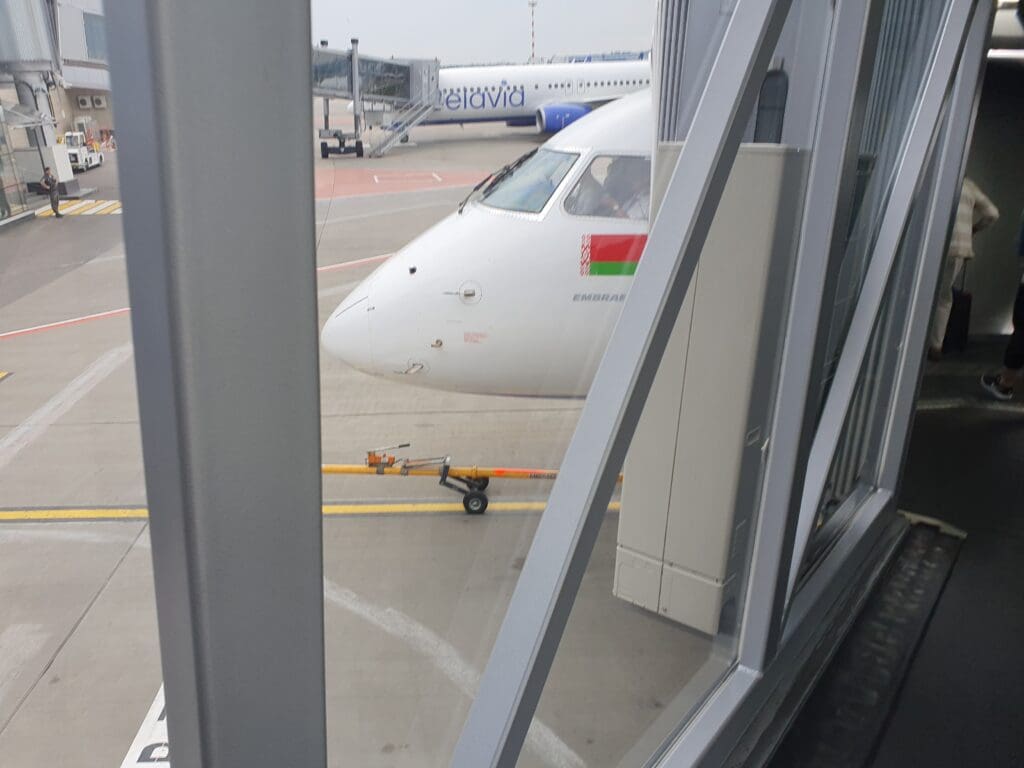
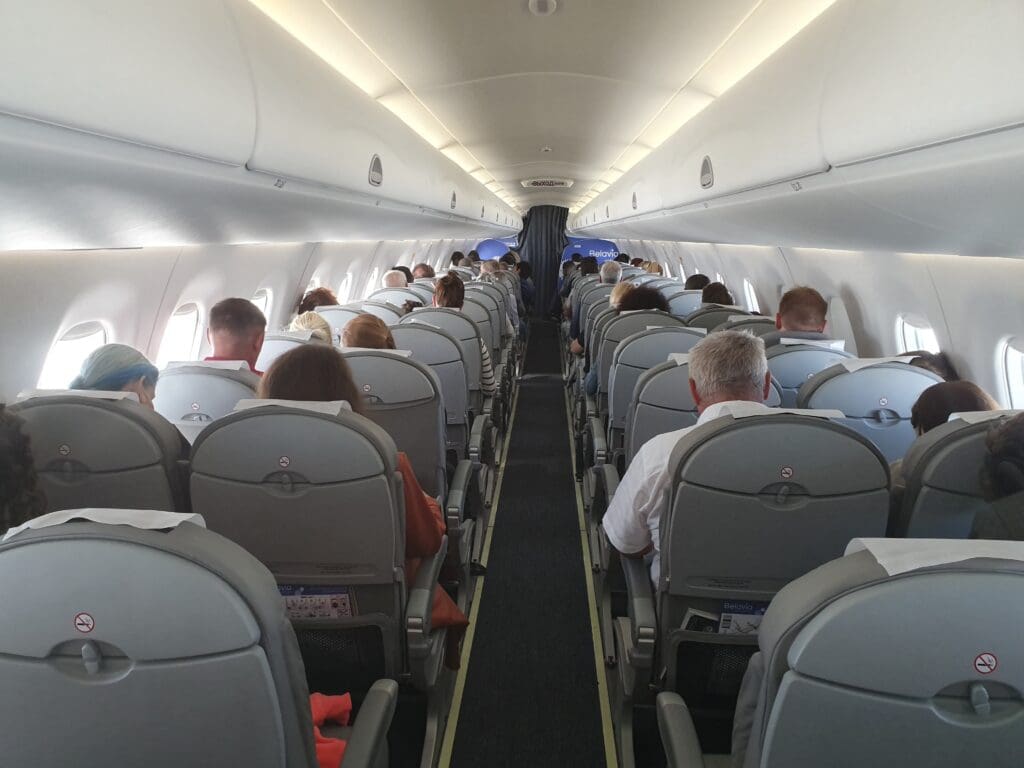
After another short queue I stepped into the small forward galley where I was warmly greeted by the Purser before I turned right and entered the Business cabin. Unlike most European carriers, Belavia’s Embraers feature a ‘real’ Business cabin which comprises four rows of comfortable seats in a 2-1 arrangement. Steaming through this, I arrived in the Economy section of the aircraft. There, 96 Embraer seats could be seen in a 2-2 layout, each of which was covered in a smart grey faux leather cover and featured a Belavia branded disposable antimacassar. Meanwhile, as I had discovered when flying on a Belavia Boeing 737-800, no expense had been spared when it came to customising the interior of the jet, with blue bulkheads featuring Belavia’s logo visible at the front and rear of the aircraft.
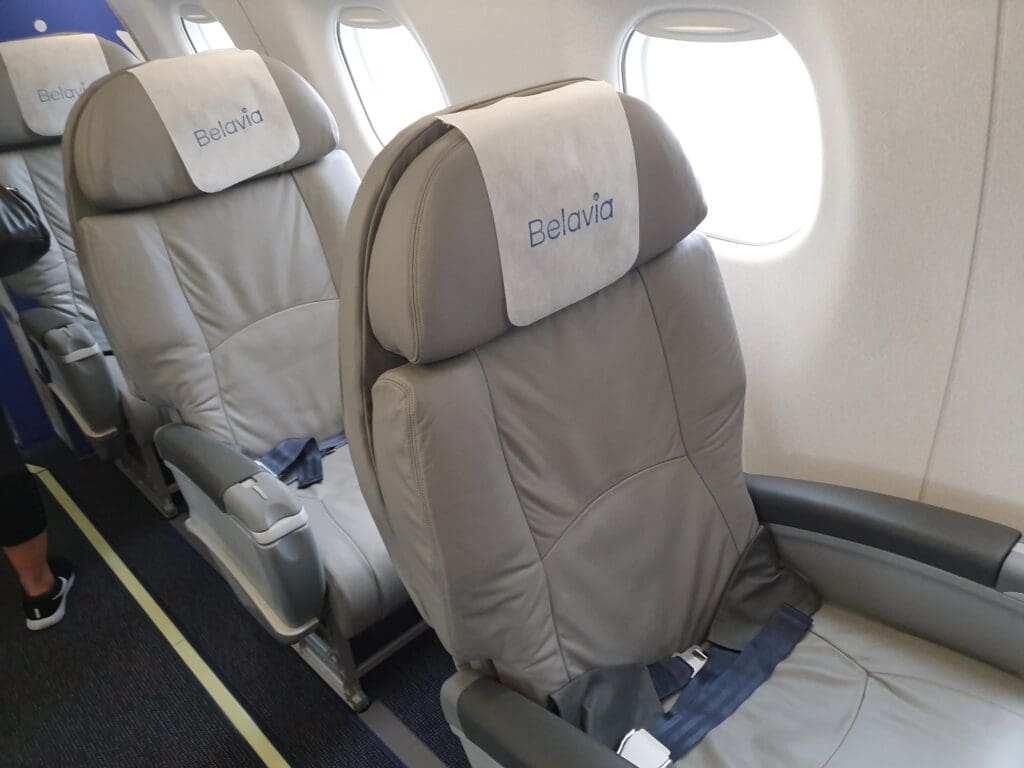
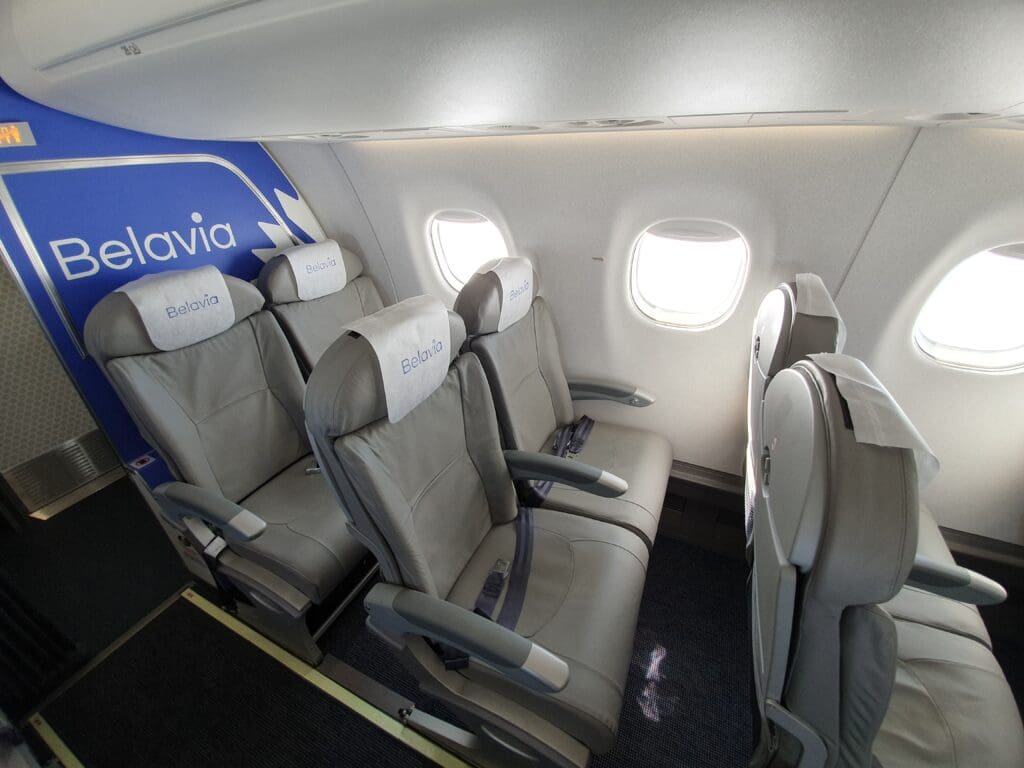
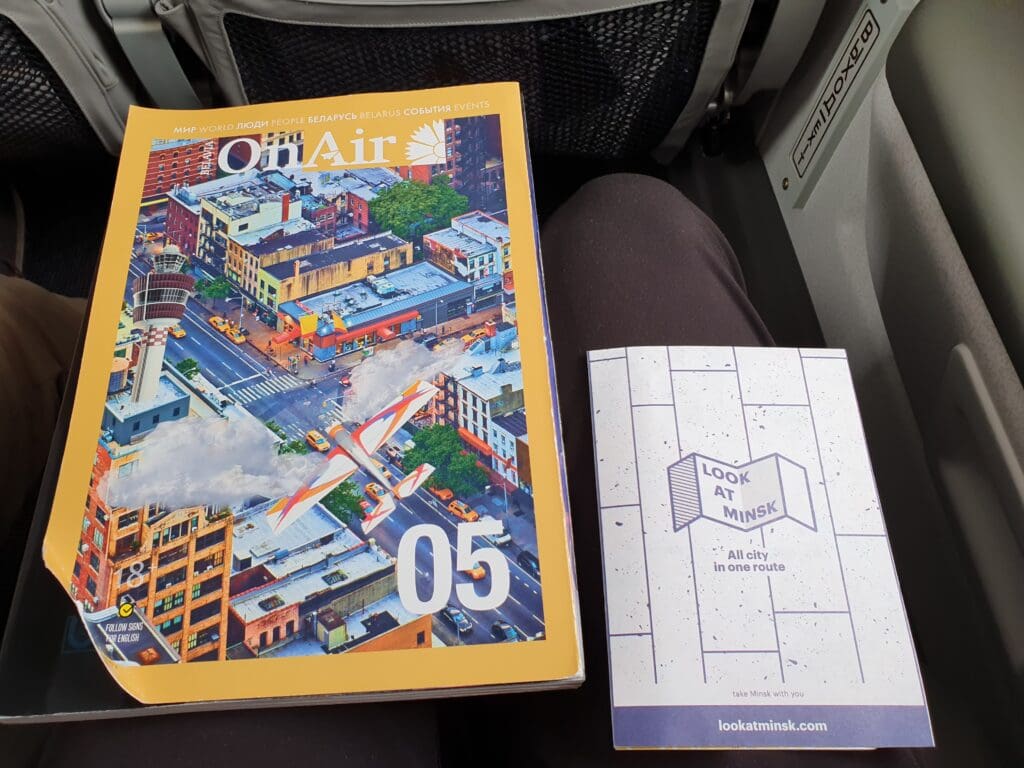
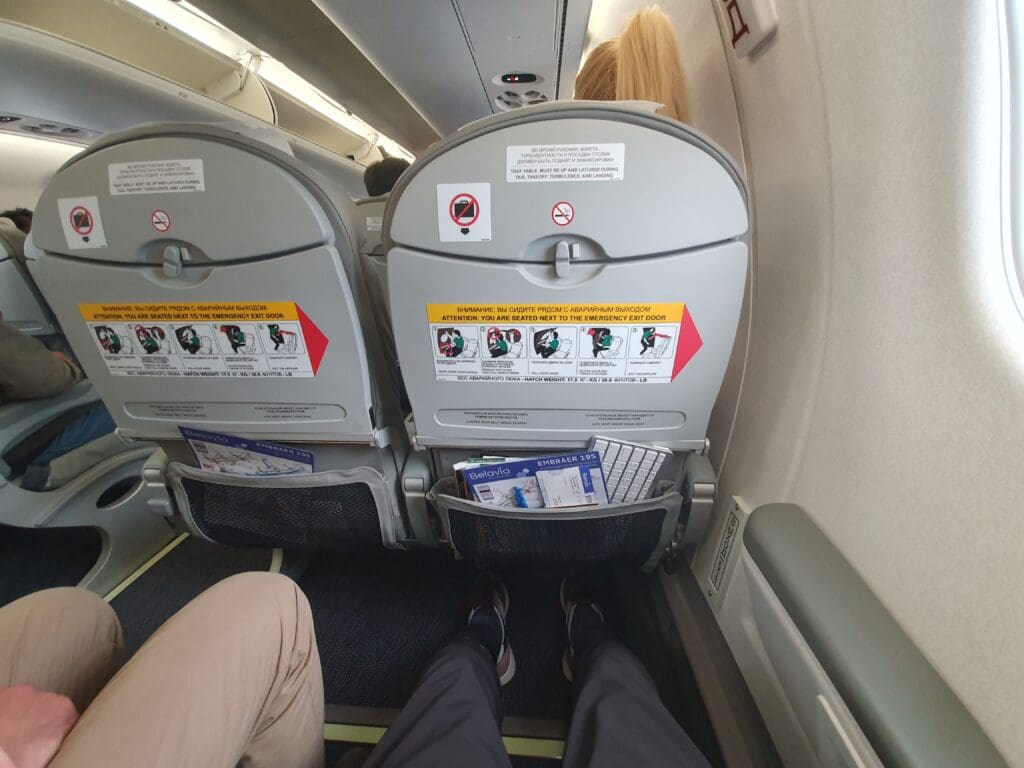
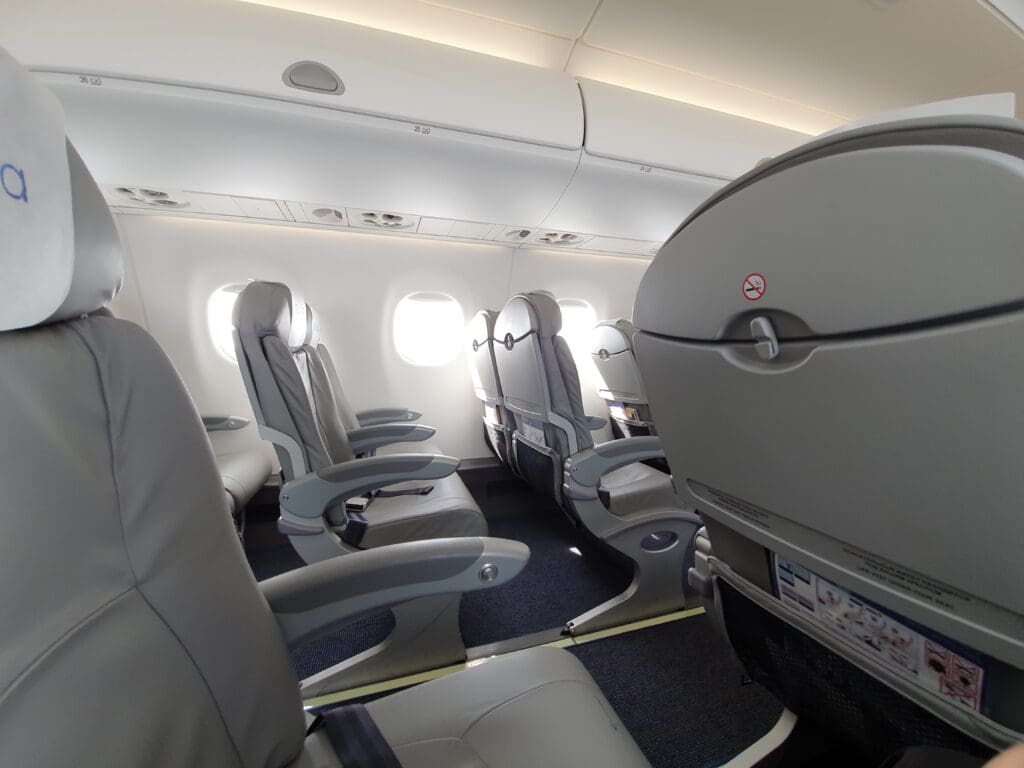
As we passed Row 10 and neared the centre of the aircraft, it became clear that we were to spend the flight in the spacious luxury of the emergency exit row. Upon sitting down, aside from the obvious superb legroom that these seats afforded, I found the seats themselves to be well padded and comfortable. However, I also ought to note that I sampled a ‘regular’ Economy seat later on whilst waiting for the bathroom and found these to be a little cramped. Having spent three hours on the ground after arriving from Georgia early that morning, the aircraft appeared to be spotlessly clean whilst unsurprisingly I failed to spot any signs of wear and tear. Turning to the seatback pocket, these contained a copy of Belavia’s OnAir magazine, a sickbag and a map of Minsk highlighting the city’s tourist attractions and sights. The latter being a rather nice and welcoming touch for those Minsk bound passengers from abroad visiting Belarus’ capital.
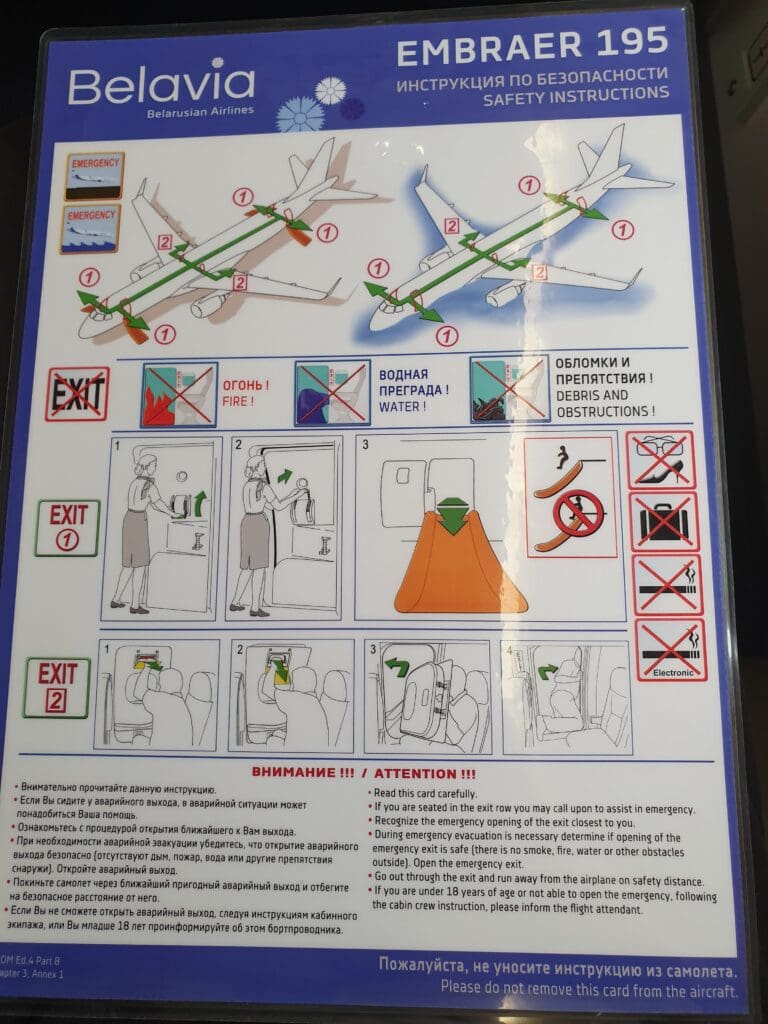
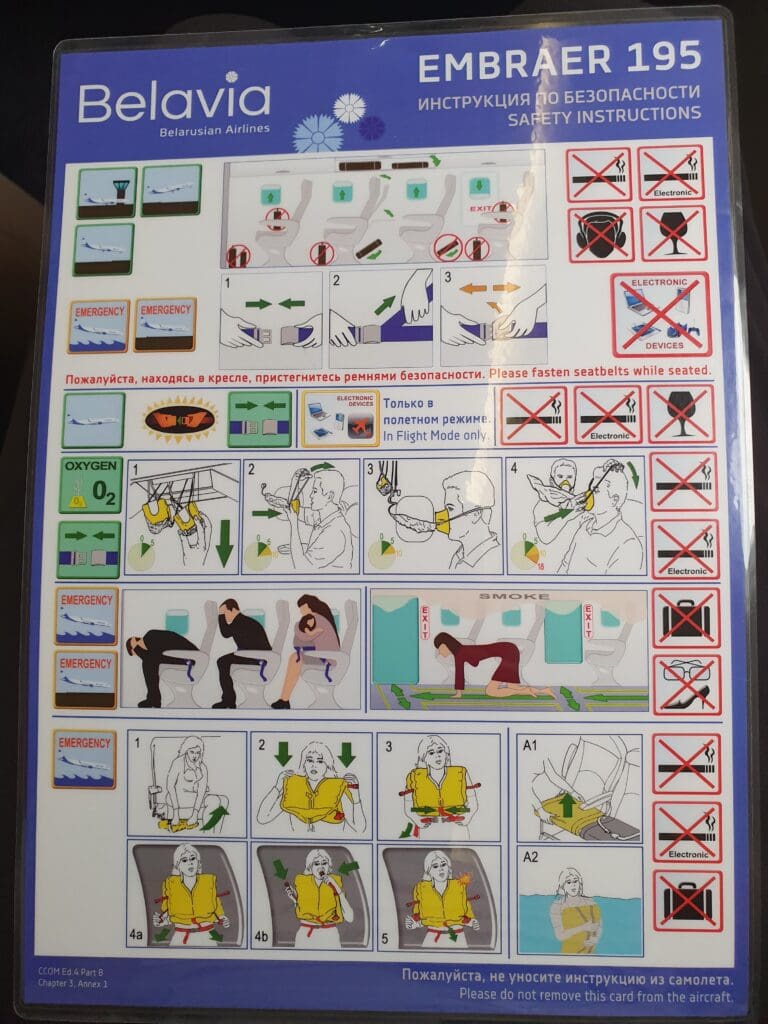
Given the relatively small size of the aircraft, boarding did not take too long, with all passengers making it onboard no more than 15 minutes after boarding had commenced. As far as I could tell, the small Business cabin was full, yet the load in Economy was a little less impressive, with this cabin being no more than 75% full. When it came to demographics, the majority of passengers seemed to hail from Belarus and Russia, with relatively few passengers from elsewhere, including the Netherlands. I did however notice a few passengers from Central Asia and the United States, with this being unsurprising given Belavia’s flight offerings between Central Asia and Europe that regularly undercut the fares of direct competitors, and the fact that KLM sells tickets between Minsk and the United States via Amsterdam.

As I have noticed is often the case on airlines across the former Soviet Union, the crew passed through the cabin with a basket of boiled sweets as we waited to pushback, with these wrapped in Belavia branded wrappers. Looking forwards, I spotted the Captain, a Leonard Cohen lookalike, was partaking in some rather serious conversation with one of the passengers before they retreated to the cockpit and undertook a long welcome announcement. During this they provided an overview of the route, a mention of our cruising altitude and speed of 11,000 metres 800 kilometres per hour, before announcing that we would not be departing for another thirty minutes due to severe traffic congestion at Amsterdam Schiphol. However this was rounded off with the somewhat contradictory promise that he would endeavour to deliver us to Schiphol on time – proving airlines’ inflation of flight times in order to counteract unforeseen delays!

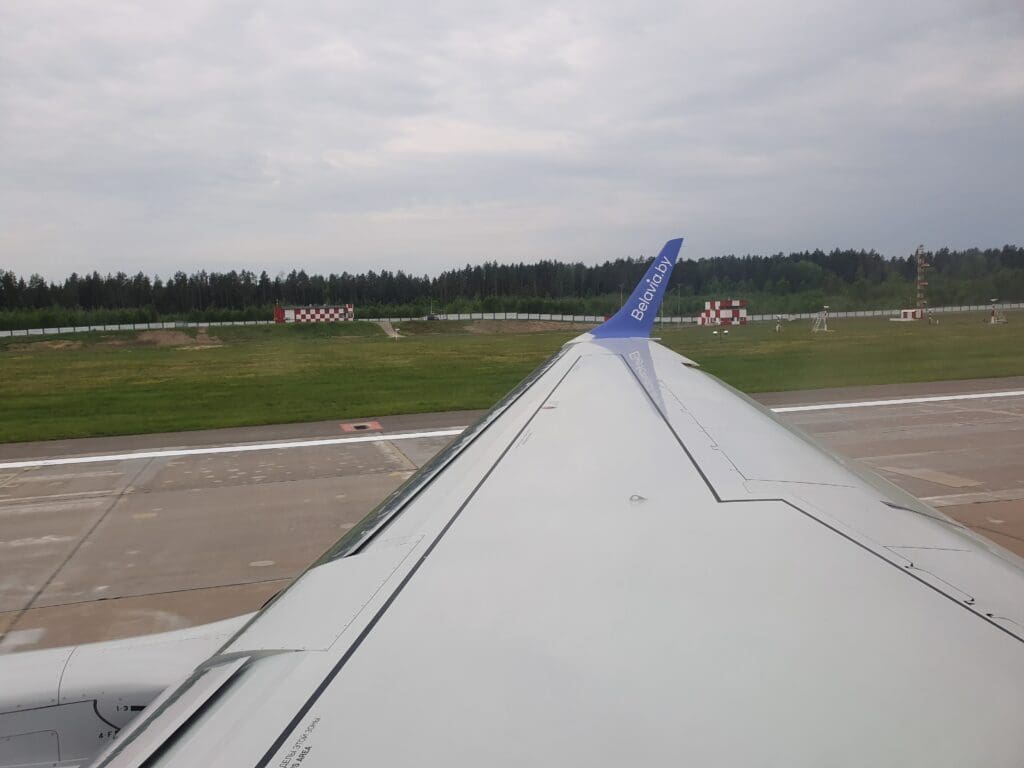
After the Captain had concluded their welcome announcement, the Purser welcomed all passengers onboard, with this announcement transitioning to the safety instructions during which two crew members took to the aisle to perform a demonstration. I ought to mention that despite sitting in the exit row, no additional briefing was provided with us, nor did the flight attendants visit us to confirm that we were happy to operate the exit in the event of an emergency. Despite the Captain’s mention of a thirty minute delay, in the end the aircraft jolted back at 0940, just ten minutes behind schedule. Upon coming to a halt, the Embraer’s two General Electric CF32 engines quietly spooled up into life and a few minutes later, we commenced our taxi to the end of Runway 13R. As we made our way to the runway, the aircraft passed a total of four Belavia aircraft – three Boeing 737 Classics and a single Embraer 175. Having perhaps overestimated the severity of the delay, sixteen minutes after our departure time, without any holding the aircraft taxied onto the runway at which point the Purser conducted an announcement regarding our imminent departure.
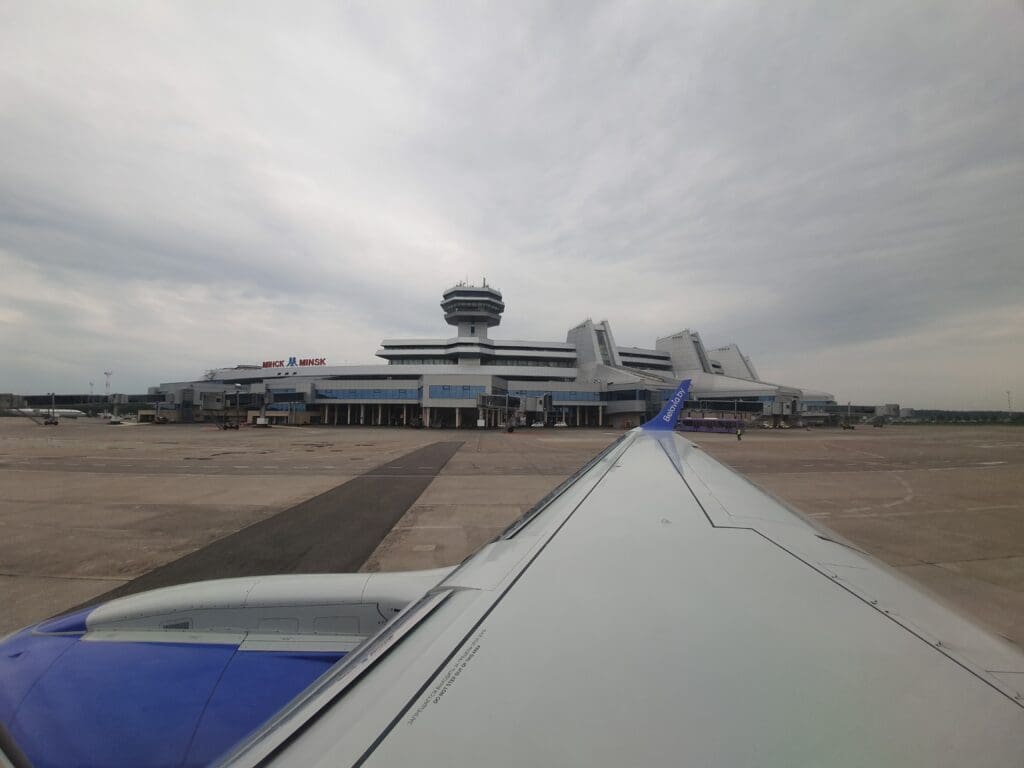
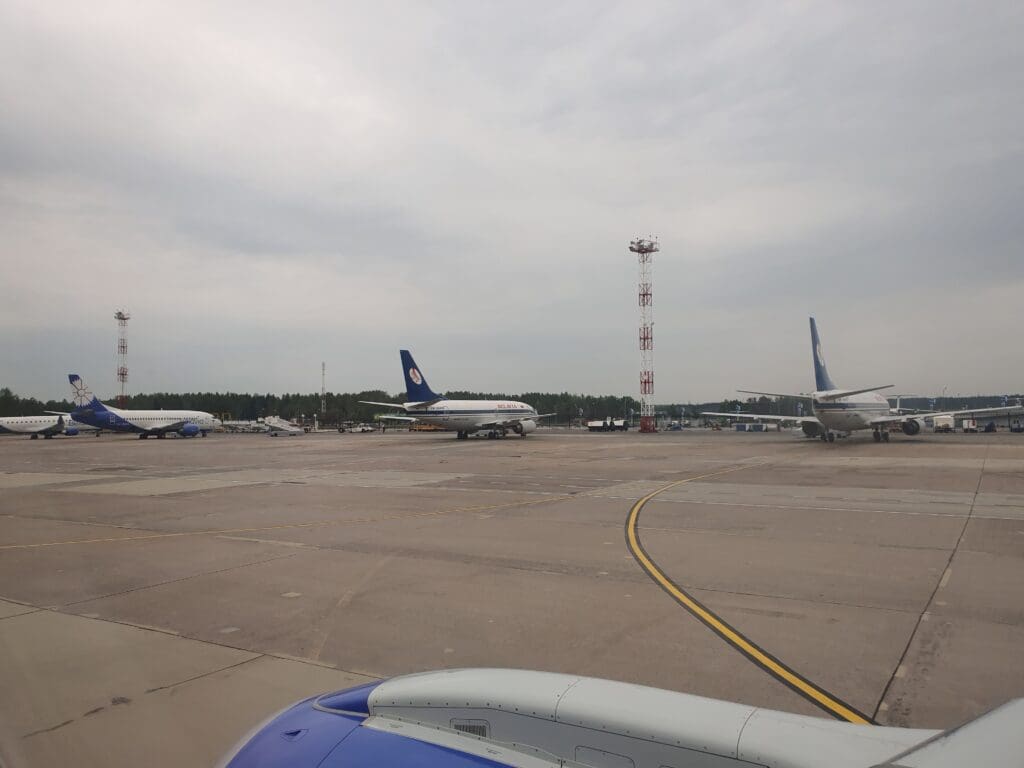
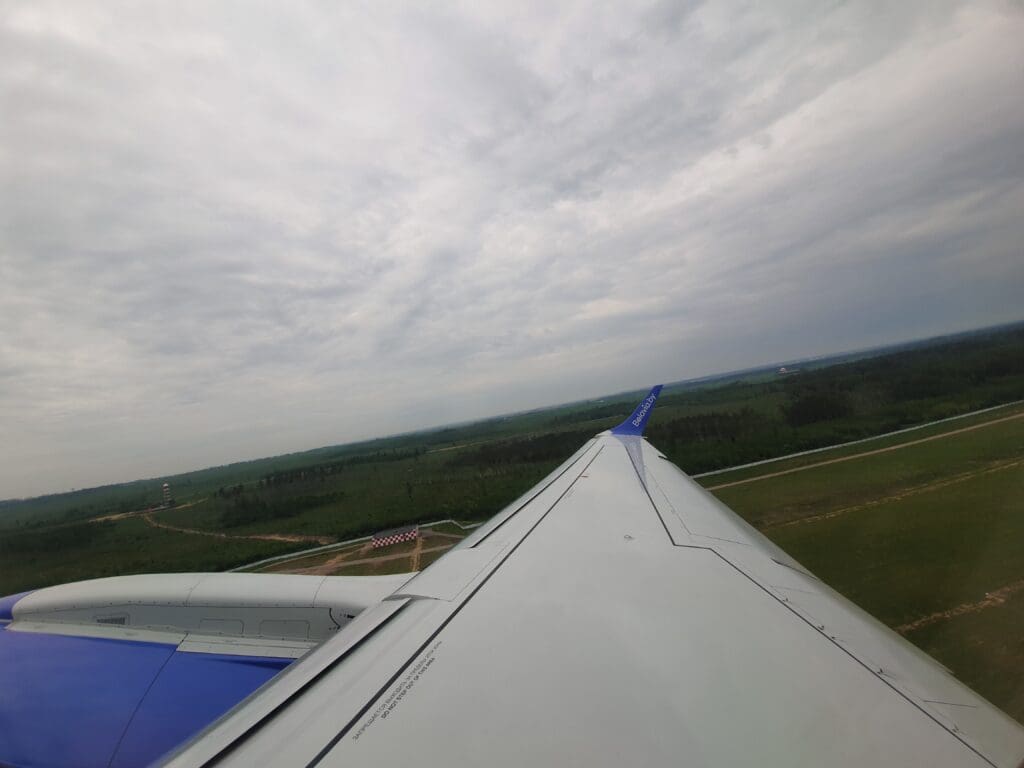
Following a very short pause on the runway, the aircraft’s two small engines powered up and the aircraft gently accelerated down the runway before rotating and making a shallow climb. At the time this felt somewhat reminiscent of the infamously shallow ascent we had experienced the previous day on Motor Sich Airlines Yak-40 that had delivered us to Belarus! As we left the airport behind, the green fields and woods surrounding this came into view before our aircraft banked to the right, rolling out on a westerly heading. At 0955 one of Belarus’ four air force bases came into view in the form of Minsk-Machulishchy which serves as the home of the military’s transport aircraft, however nothing could be seen on the ground at that time. This would serve to be my last glimpse of Belarus on the trip as moments later, the aircraft rose up into the thick layer of cloud.
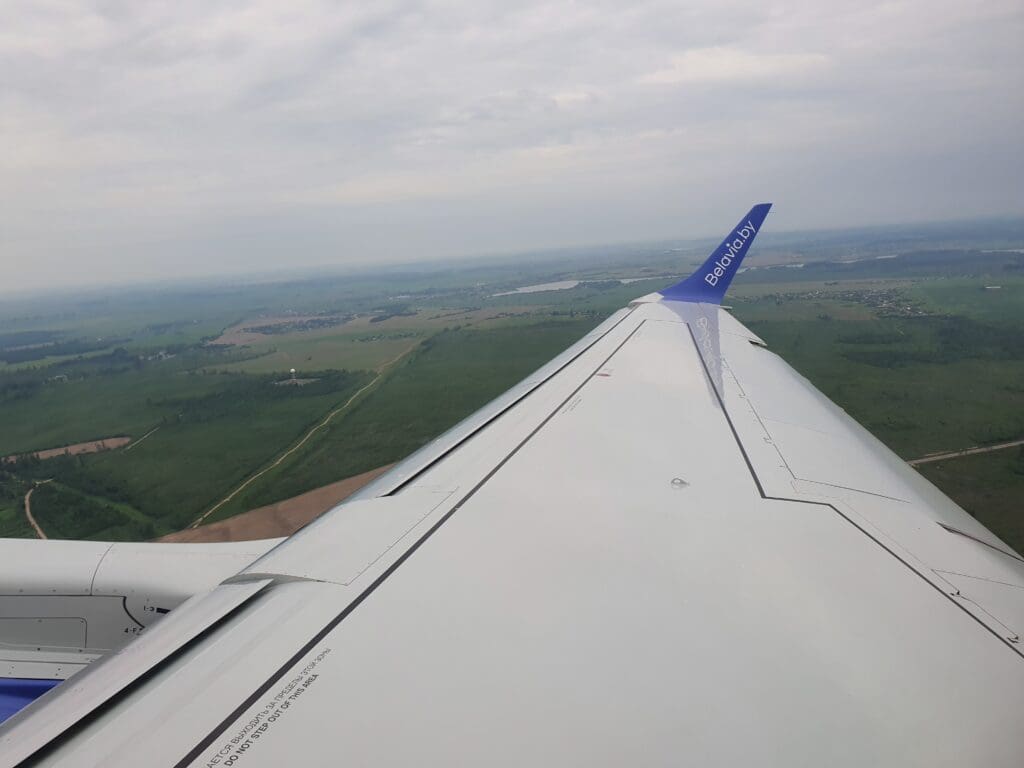
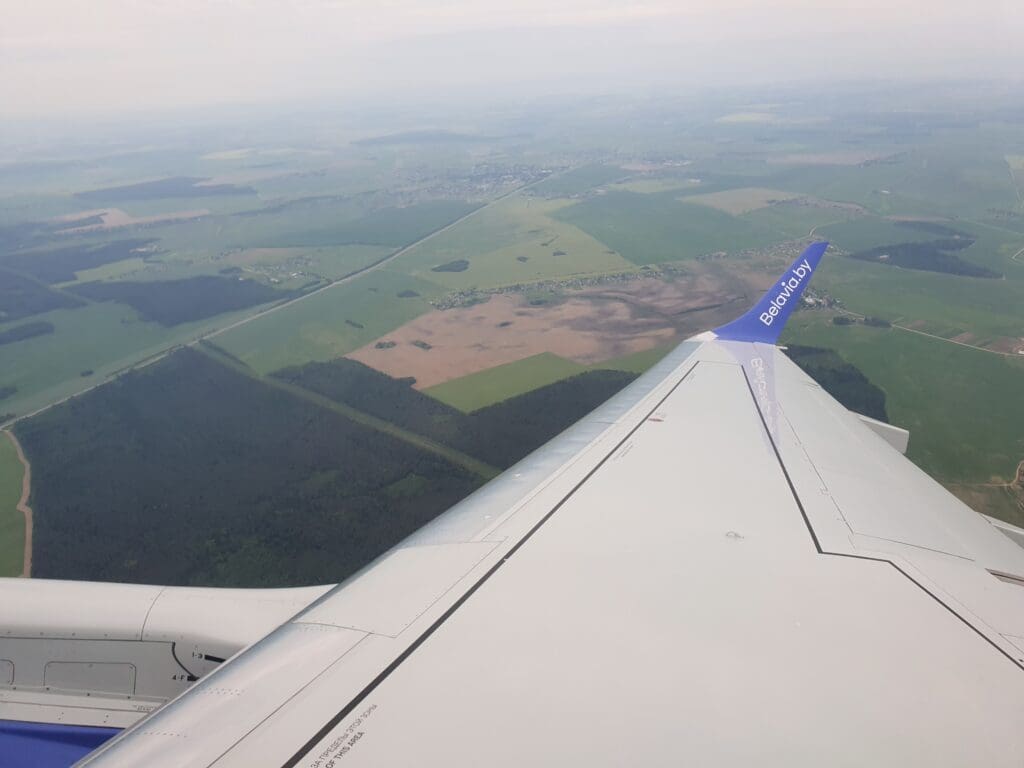
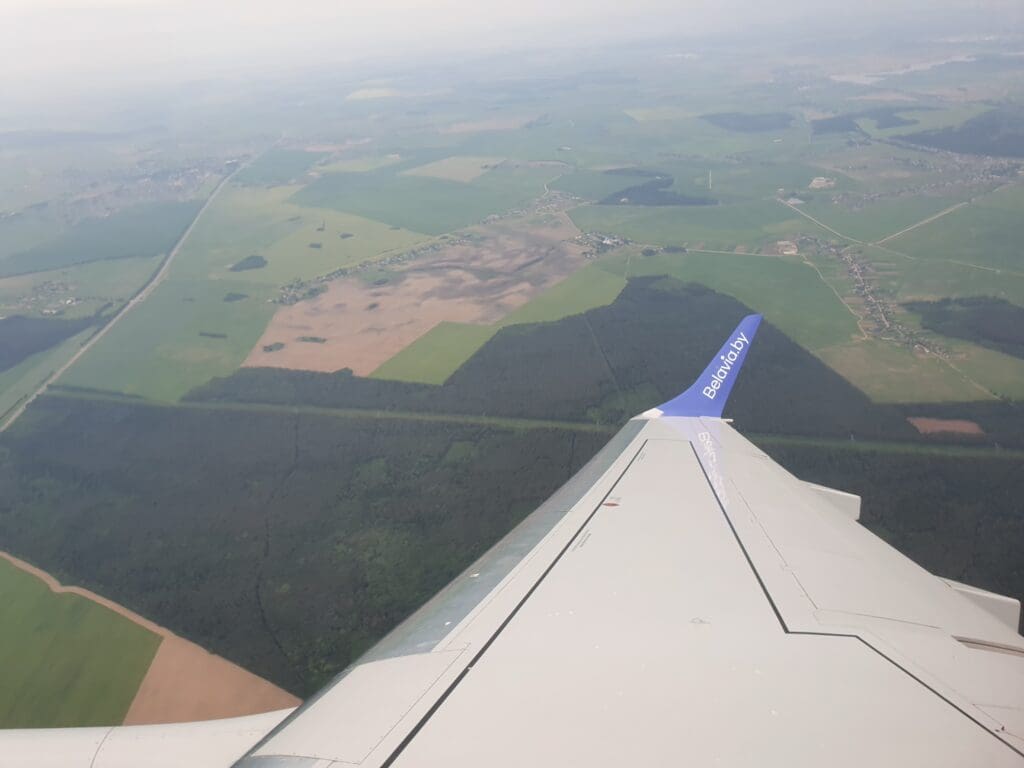
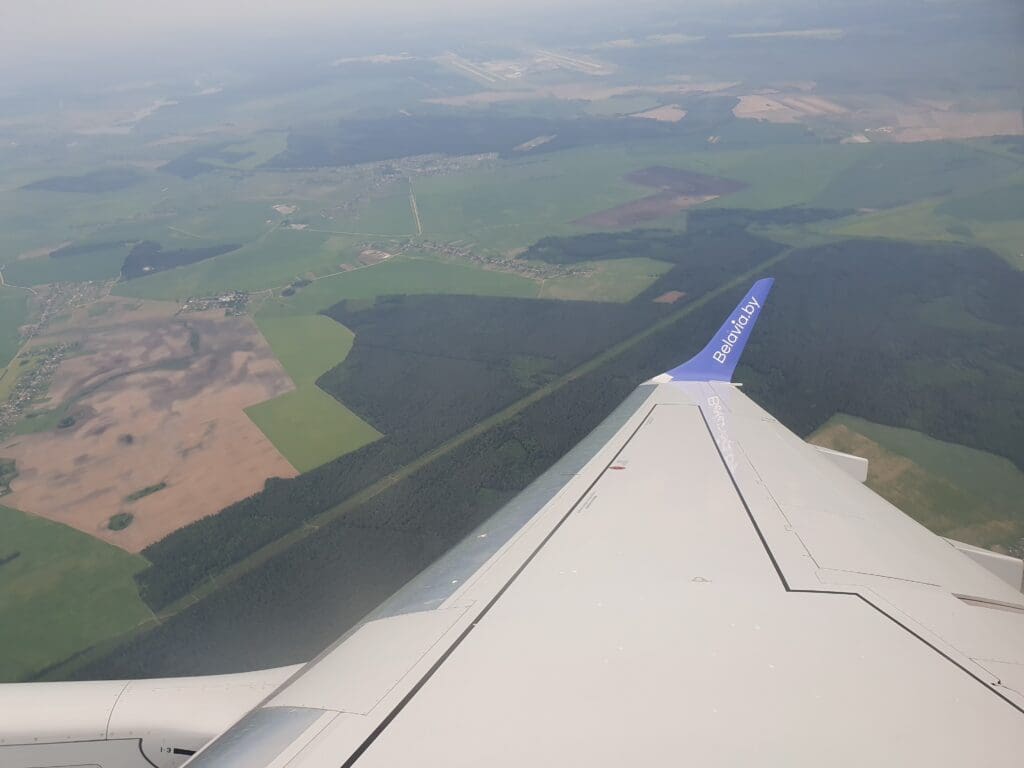
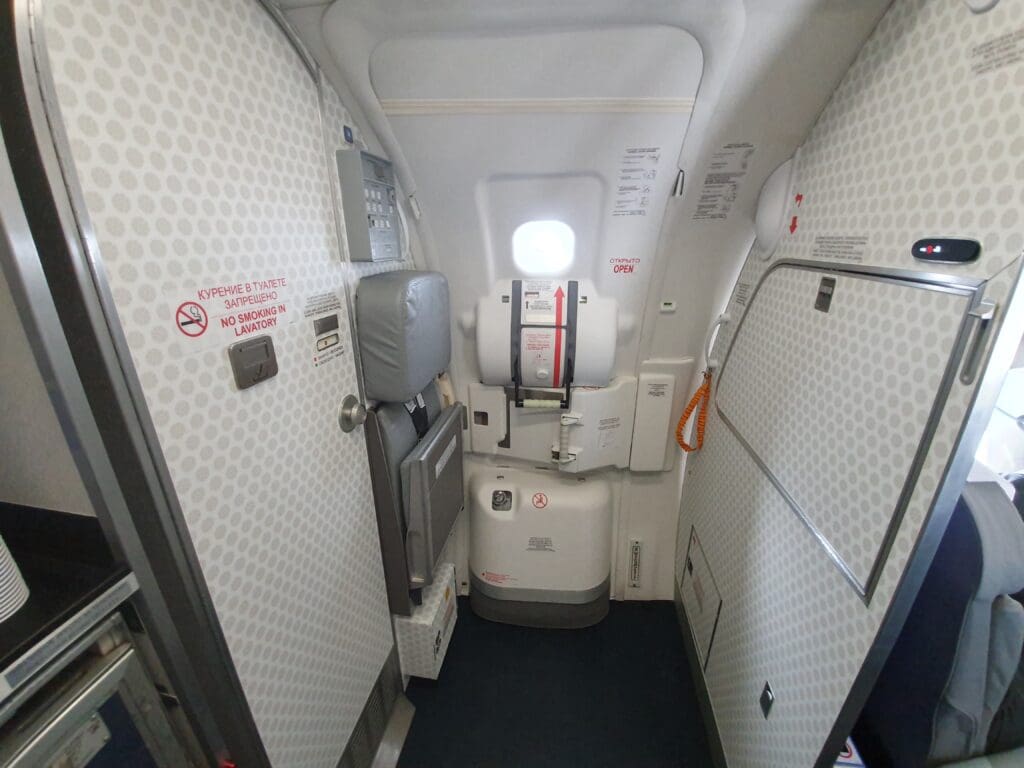
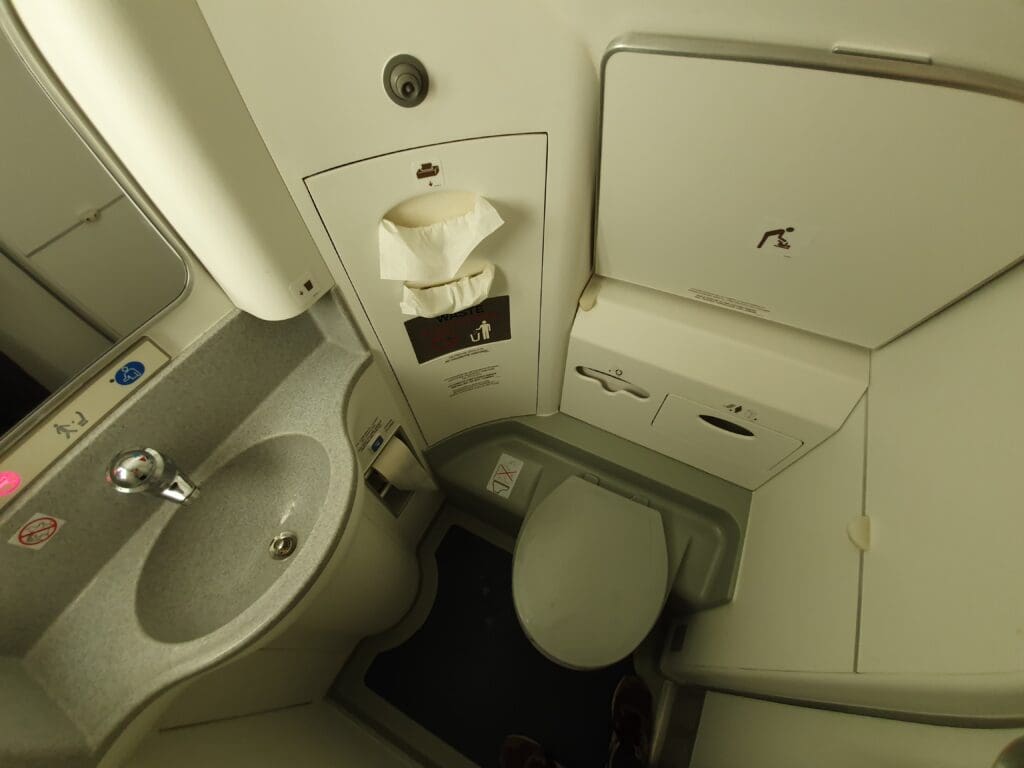
Following a long and bumpy passage through the clouds, after about ten minutes, the aircraft emerged from these and the seatbelt signs were extinguished. Now with the freedom to move around the aircraft, I decided to make a trip to one of the two lavatories onboard the aircraft – with just one, the rear lavatory, available for those travelling in Economy. Seeing as many passengers appeared to have similar plans, several minutes of waiting was required. As one would likely expect given the Embraer’s status as a regional jet, this lavatory was not the largest, however it appeared to be clean and in a good state, stocked with all the basics and lacking any notable signs of wear and tear. With no complaints, I soon returned to my seat and made myself comfortable for the flight.
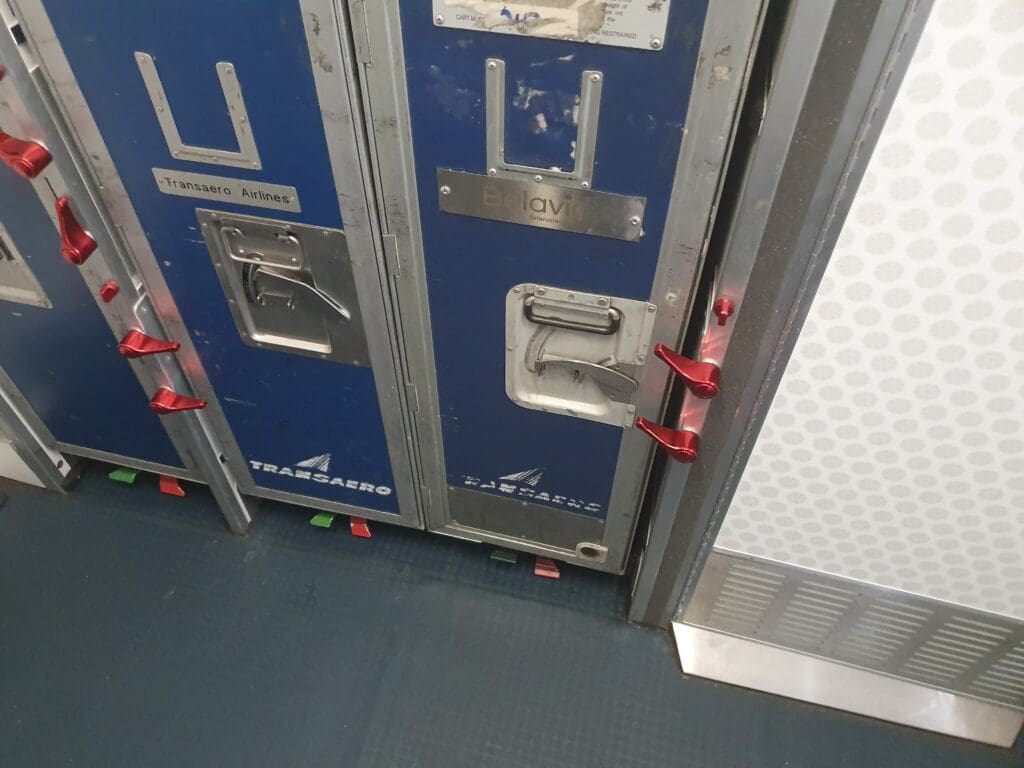
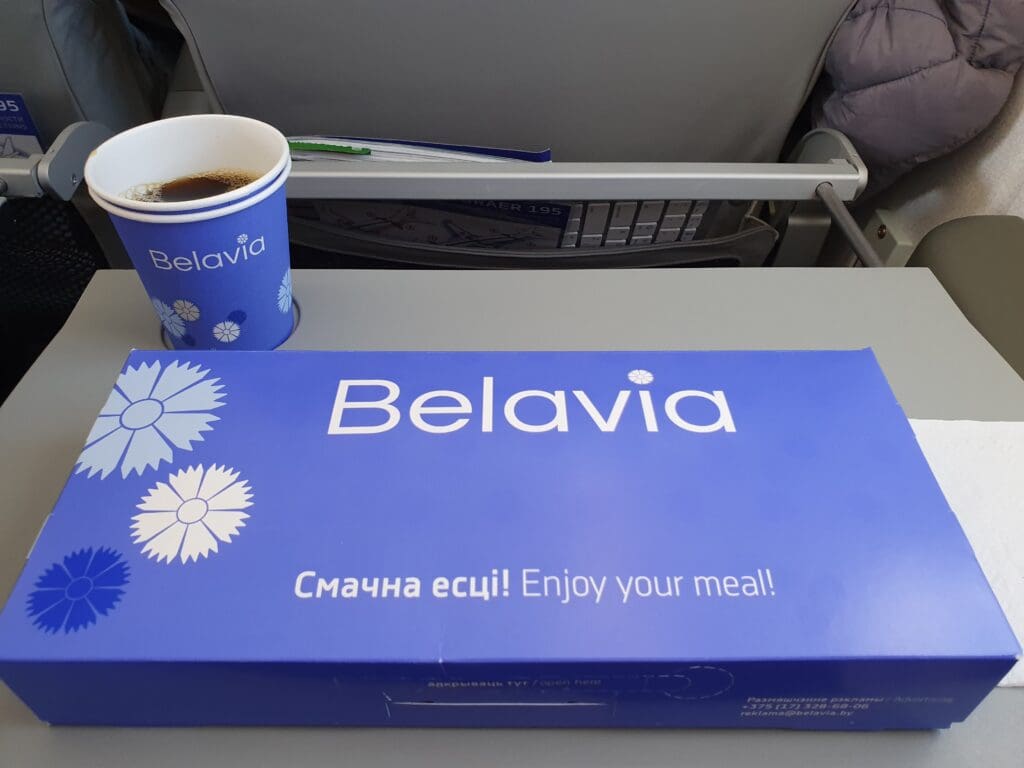
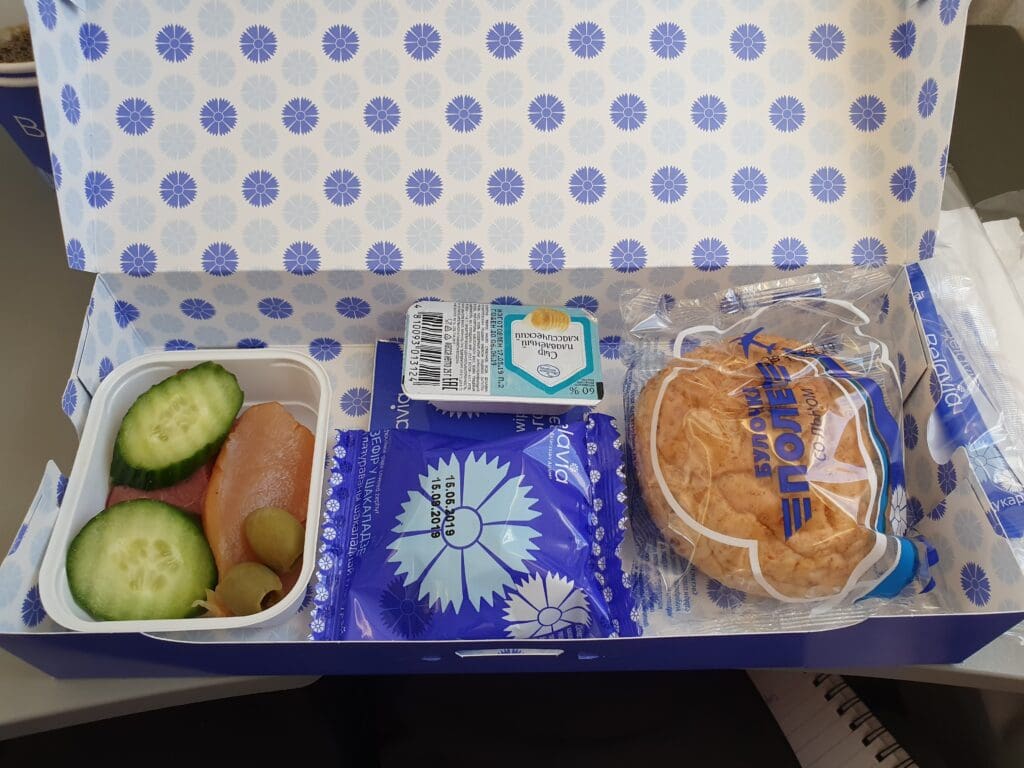
Moments after I returned, the Embraer levelled off at 36,000 feet as we neared Belarus’ western border with Poland. Much to my surprise, at this point, the Captain gave another welcome announcement during which they provided an even more in-depth summary of our route to Amsterdam and thanked us for flying with Belavia. As we crossed into Polish airspace near the city of Bialystok, two crew members rolled a trolley from the rear galley all the way through the cabin to the Business cabin indicating the commencement of the breakfast service. Approximately ten minutes later, the two cabin crew members approached my row and I was handed a Belavia branded box before being asked whether I would like coffee, tea or water in a cold and emotionless manner. Having received a warm main dish on my previous flights with Belavia, I was hoping for a similar meal on this flight. However, instead this box contained a small cold salad featuring several cuts of meat, olives, cheese and cucumbers, a bread roll, a container of cheese spread and a chocolate glazed zephyr for dessert. Whilst this was slightly lacking compared to the previous meals I received on Belavia flights, all in all, I could hardly complain. Indeed, this light breakfast proved to be far more substantial than the complimentary offerings on most intra-European flights.
As we cruised westwards, I soon polished off the breakfast and fifteen minutes after the boxes were handed out, the crew passed through the cabin quickly taking these away. As we flew over Poland, there was little to see outside bar blue skies above, thick clouds below and delicate ice crystals that had formed on the window. I thus turned to explore the aircraft’s inflight entertainment options. As with all aircraft in Belavia’s fleet, and, as one would expect from an Embraer, the aircraft lacks any form of inflight entertainment system, be it seatback screens, overhead screens or wifi. Thus, the sole form of airline provided inflight entertainment is provided in the form of Belavia’s bulky OnAir magazine – the May 2019 issue coming to an impressive total of 336 pages. However, those who are unable to speak Russian may be a little disappointed to hear that the majority of articles in this appeared to be in Russian only, with a relatively limited selection of articles published in English. In this edition, those articles in English consisted of travel articles focusing on an eclectic trio of destinations not served by Belavia – Bari, Utah and Uzhgorod. Meanwhile several interview style articles were also provided, these being with a former PR manager from Minsk who now resides in the French countryside, several Belarusian entrepreneurs and most surprisingly, with British actress Keira Knightly. As with most in-flight magazines, the final few pages of this contained information regarding the Belavia including the airline’s latest news, route map and fleet information.
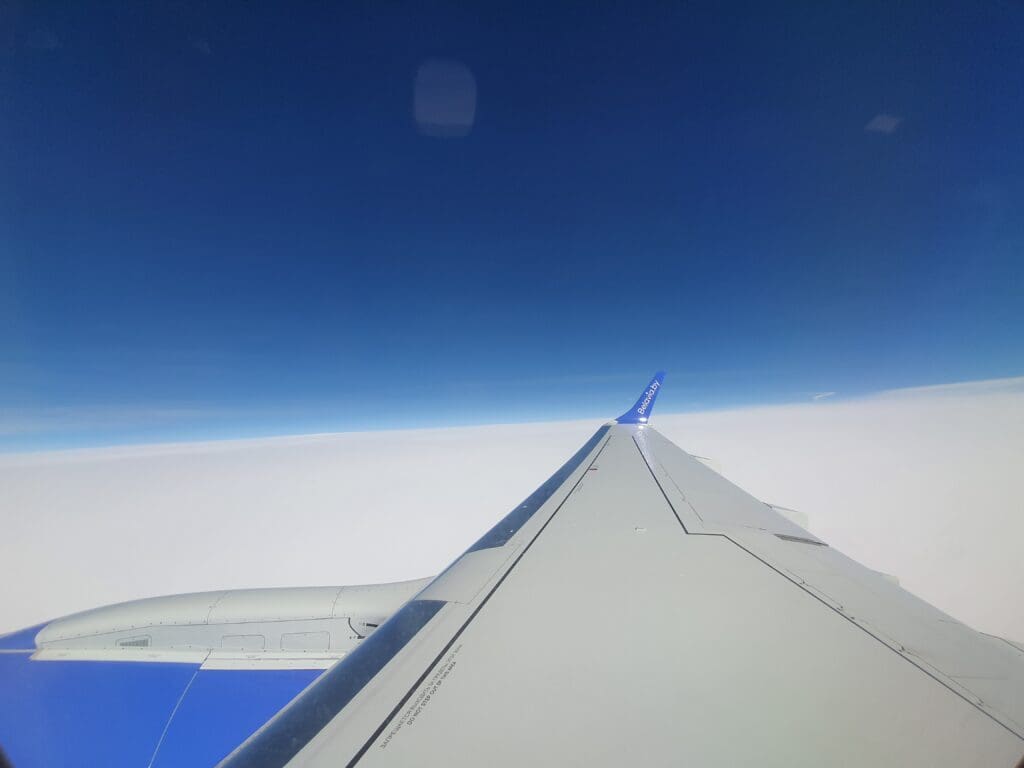
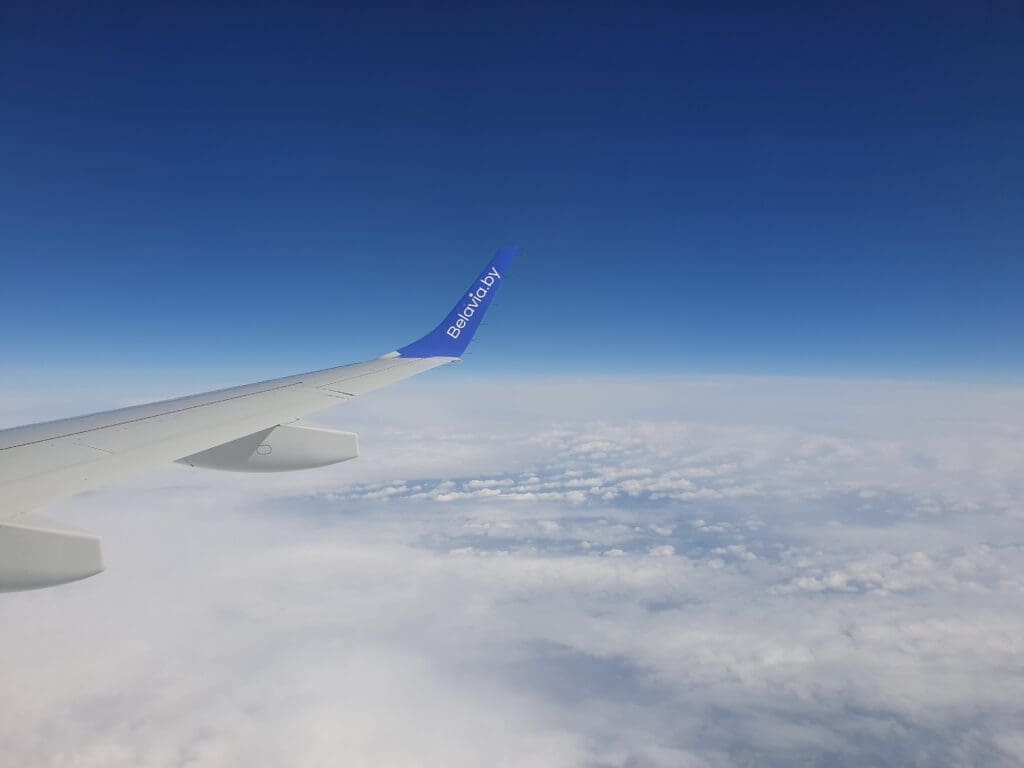
Following a quick crossing of Poland, around an hour after leaving Minsk, the Captain’s voice filled the cabin once again, this time informing us that the aircraft was soon to cross into German airspace to the east of Berlin. Given the clouds below and the lack of a moving map, the captain’s regular announcements provided the only way of tracking the progress of the flight, however, perhaps other passengers may interpret these to be a little unnecessary. As we crossed into German airspace a Swiss Airbus A320 whizzed by in the opposite direction and several minutes later, the aircraft encountered a rather strong patch of turbulence. As a result the seatbelt signs were reilluminated and one of the cabin crew members hushed all those worried looking passengers in the toilet queue back to their seats. Whilst nothing could be seen of Germany below, our route that morning took us over Berlin, Brunswick and Hanover before heading on to Osnabrück. During the flight over Germany, inside the cabin the turbulence continued with little break as we cut across the country resulting in the seatbelt signs remaining firmly illuminated until after our arrival.
As the aircraft flew over the German state of Lower Saxony and towards the Netherlands, at around 1045 local time the relatively quiet engines got even quieter and the aircraft could be felt sinking downwards. No more than five minutes later, the Purser performed their pre-arrival announcement with the usual instructions regarding tray tables, seatbacks, seatbelts and window shades. This was ended with a claim that the aircraft would land in ten minutes which seemed to be rather optimistic. This was soon counteracted by the Captain who informed us that we would land in fifteen minutes and the weather in Amsterdam was cloudy with a chilly temperature of 11 degrees. After entering Dutch airspace, the Embraer passed over the northeastern province of Overijssel and towards the small city of Zwolle before turning west over Flevoland. At this time one of the crew members passed through the cabin ensuring all was secure for our arrival and opening the curtain between Business and Economy allowing for glimpses of those lucky enough to be flying in the former cabin.
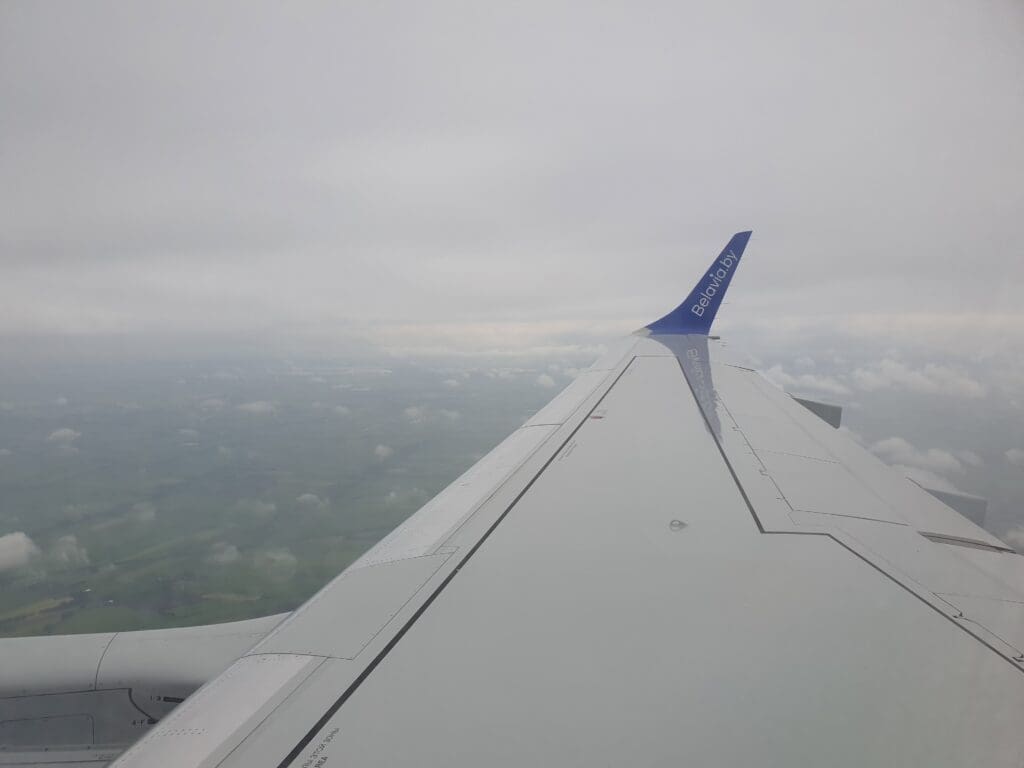
As we neared Amsterdam, the aircraft remained above the clouds, passing over Almere and Hilversum. As we headed over Utrecht the aircraft sank into the clouds before turning onto the base leg for Runway 36R, also known as the Aalsmeerbaan after the local municipality of Aalsmeer. At this time the aircraft sank below the clouds revealing the flat landscape where near endless rows of large green rectangular fields could be seen not too far below. Sinking downwards, the ice crystals which had partially hindered photography mid-flight melted away and the aircraft soon turned on to final. As the aircraft headed towards the runway, the rectangular fields were replaced by the industrial and residential areas to the south of the airport whilst the skyline of Amsterdam appeared on the horizon. Moments later, the aircraft sped past the airport’s historic Hangar 73 named after Antony Fokker before making a very smooth touchdown on the runway exactly 2H22 after departing Minsk. Contrasting with the aircraft’s gentle touchdown, heavy braking was applied as if the pilots were in a hurry to reach the gate.
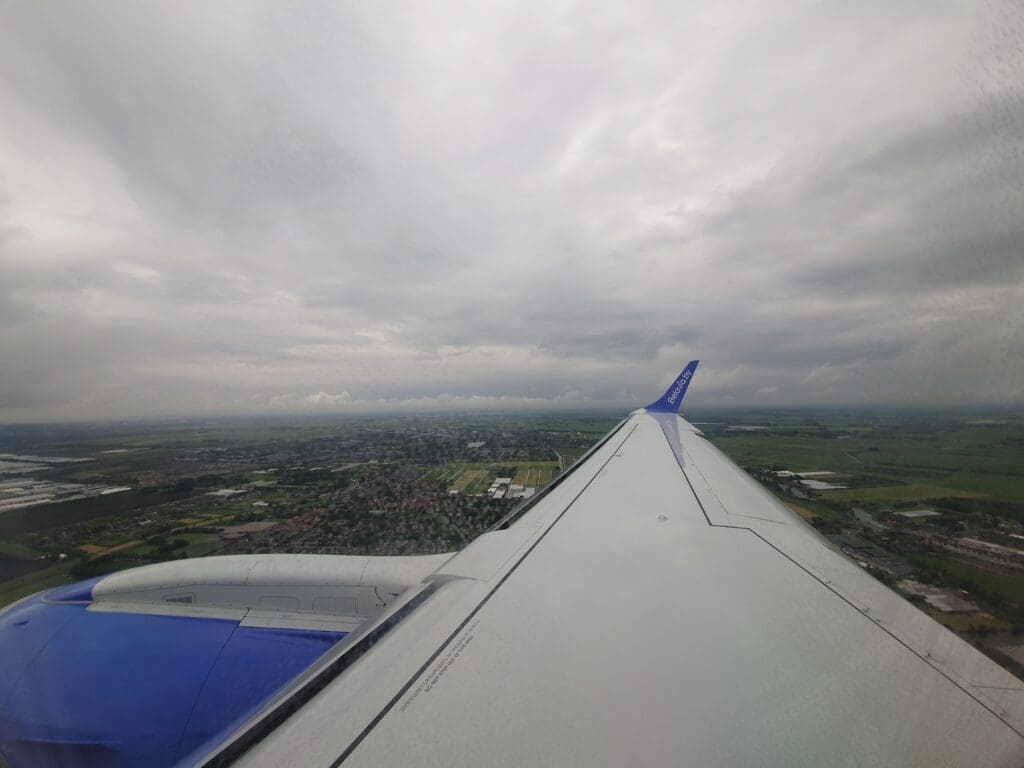
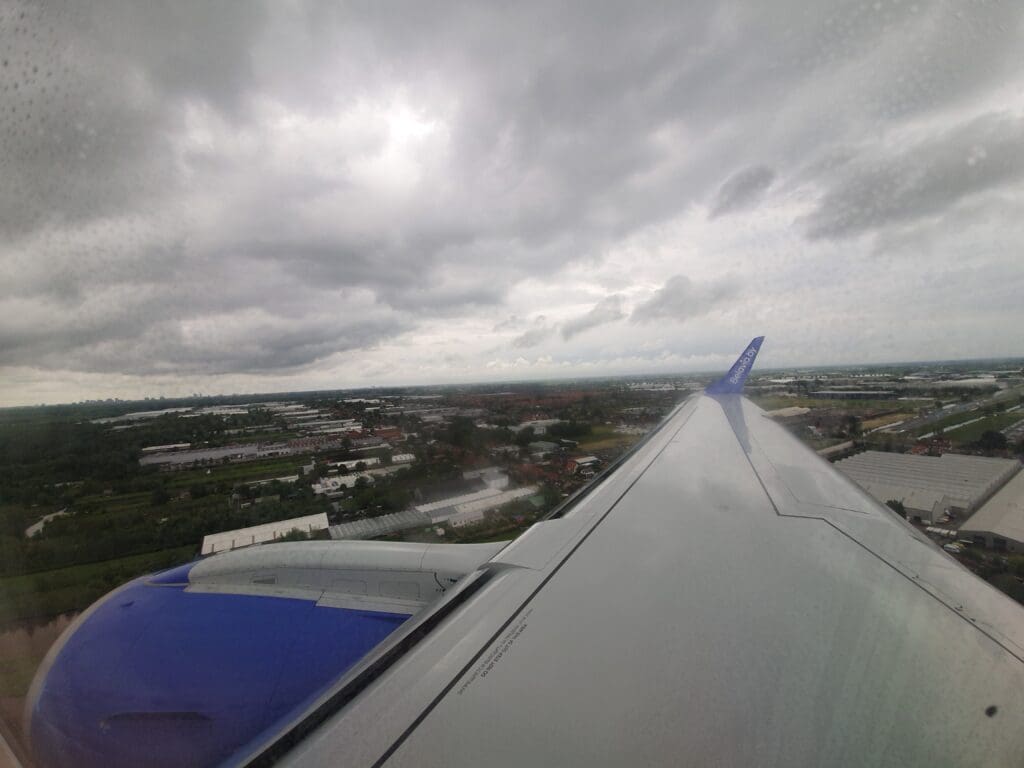
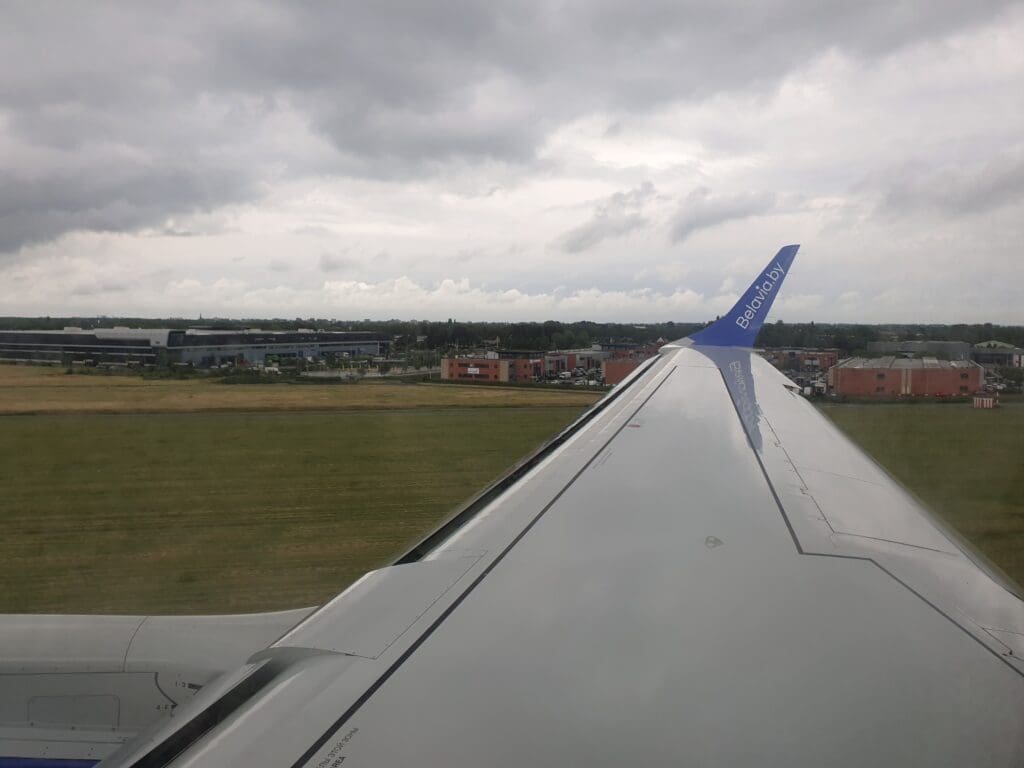
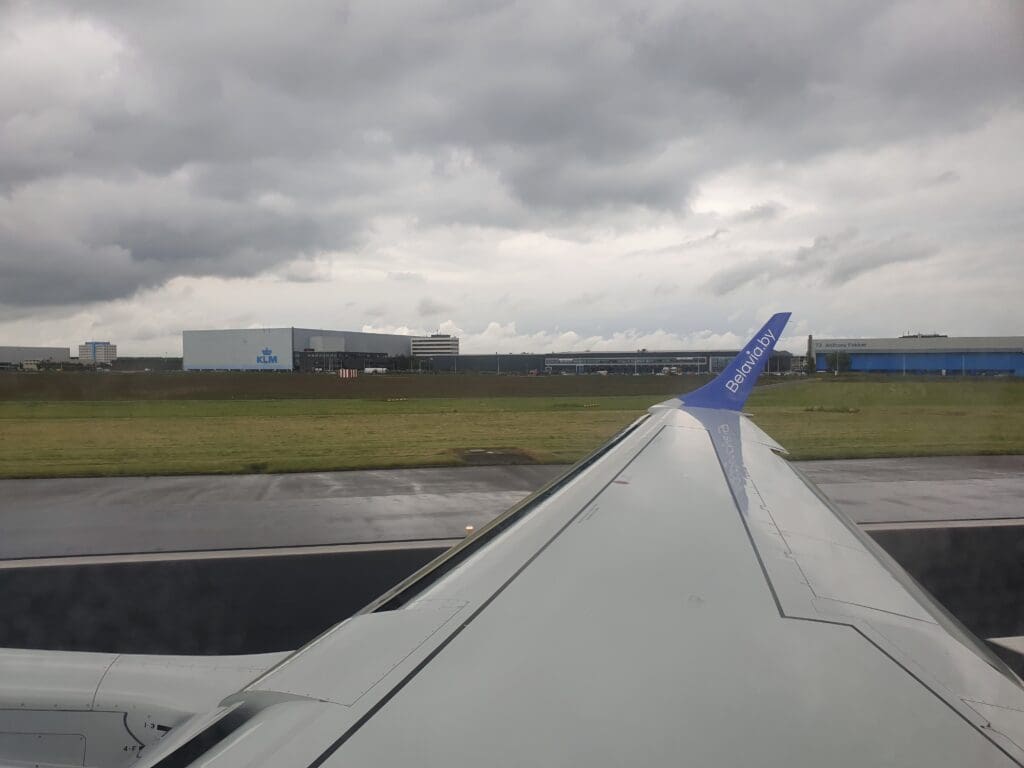
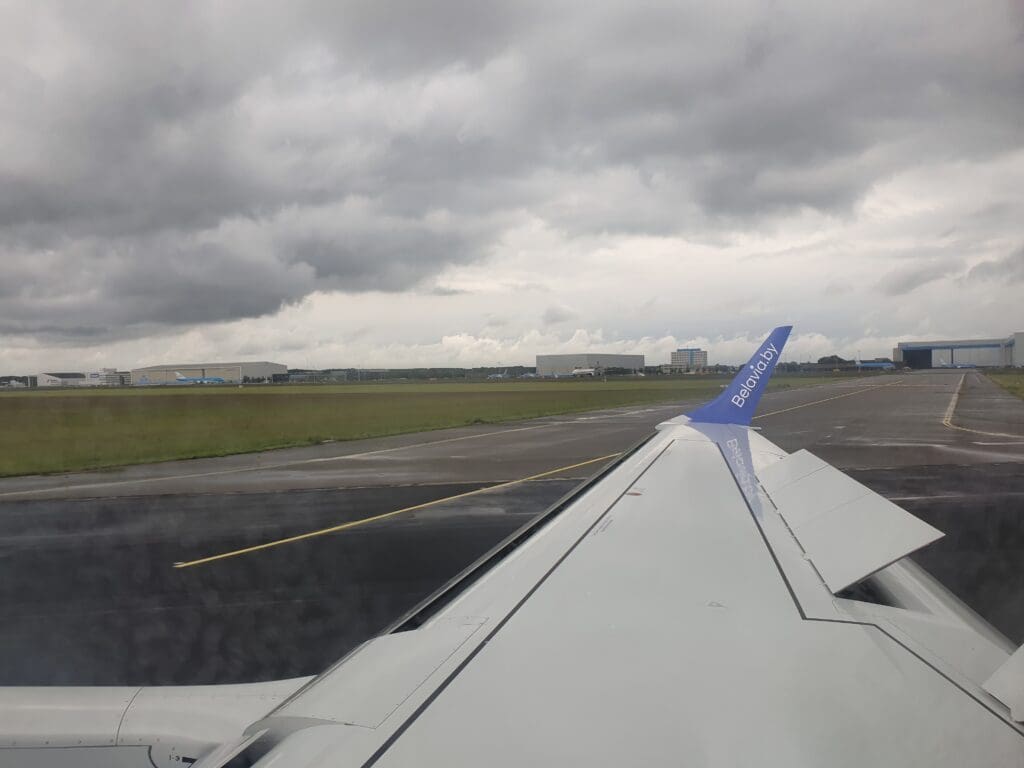
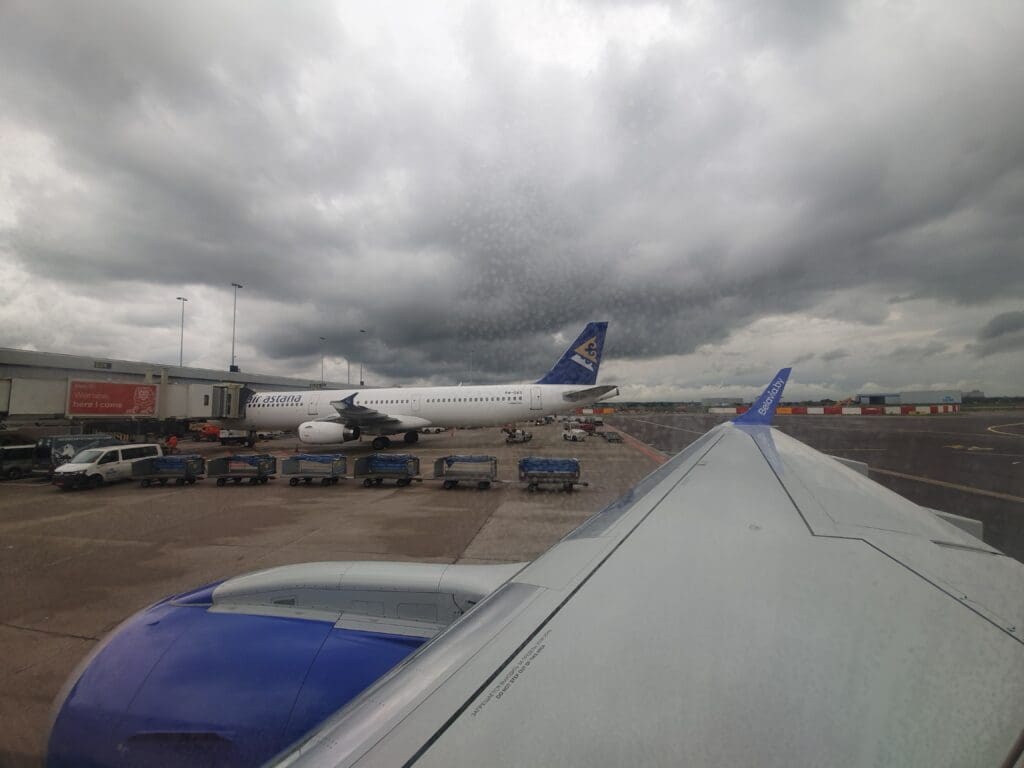
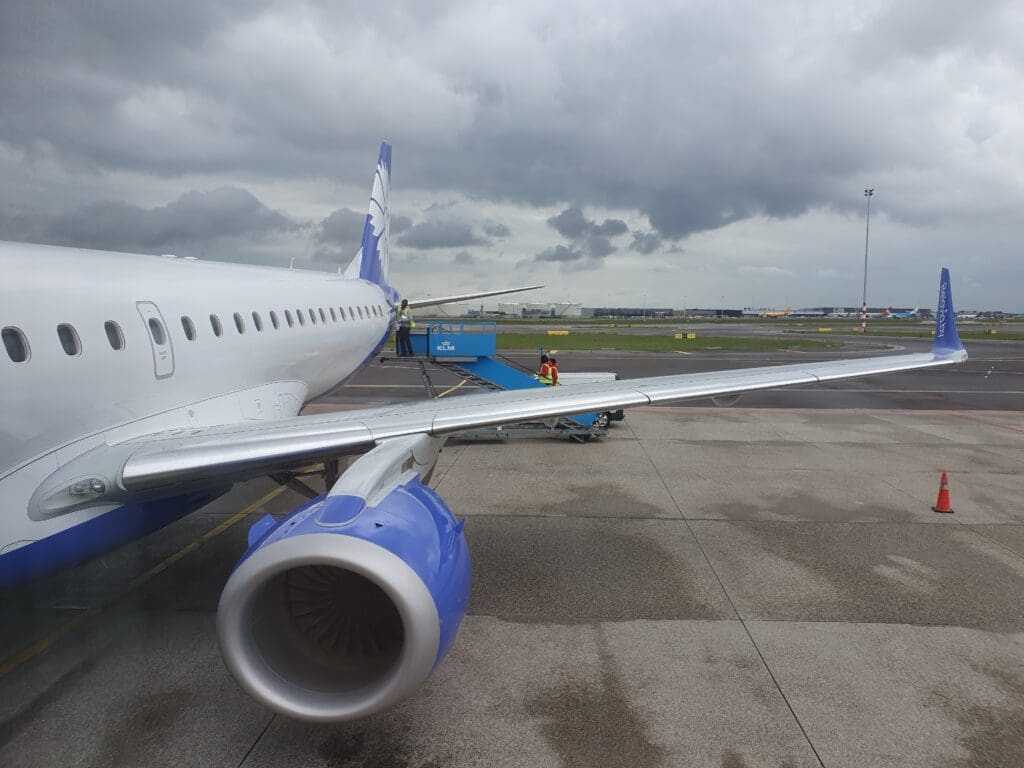
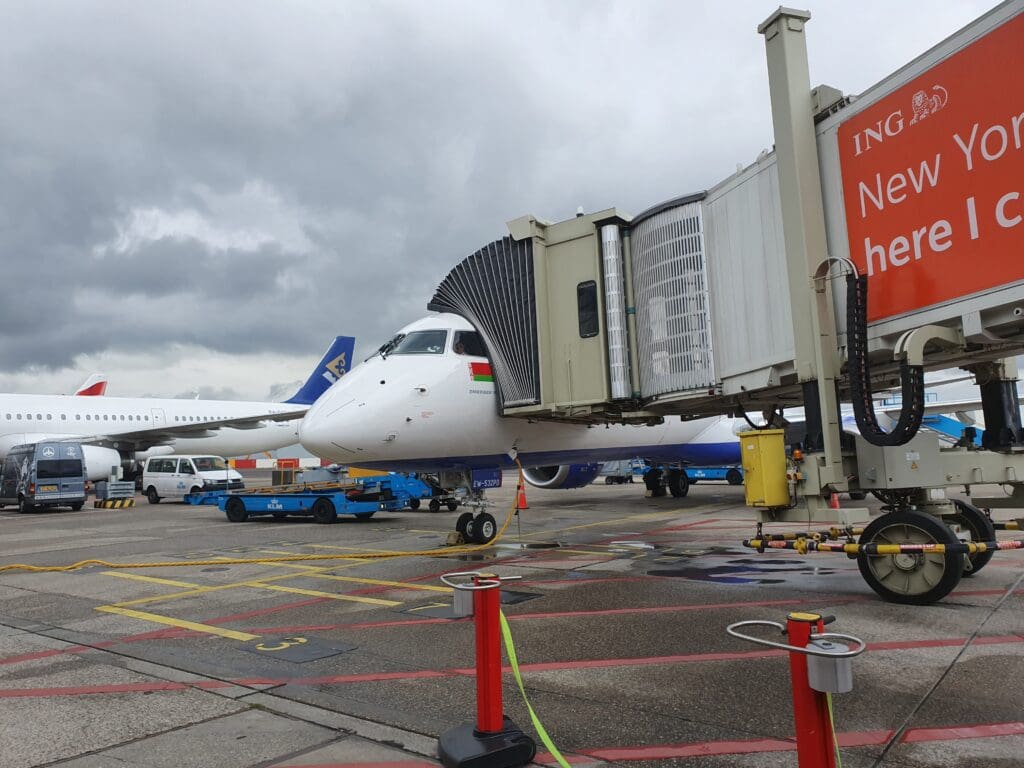
In no time the aircraft vacated the runway allowing a locally based KLM Cityhopper Embraer 175 to land a short time later. As the aircraft headed over to the terminal the Purser welcomed us to Amsterdam, noting the local time and outside temperature before thanking us for flying with Belavia. Whilst Amsterdam Schiphol is notorious for its long taxi times, having landed on one of the airport’s more centrally located runways, the journey to our arrival gate did not take too long that morning. After passing a selection of mostly narrowbody aircraft from across Europe waiting at the pier D gates, the aircraft pulled up Gate D22. There we joined a guest from Central Asia, an Air Astana Airbus A321 preparing for its return flight to Aktau. By coincidence I would stumble across this aircraft several days later in Almaty! After slowly pulling into the stand, the aircraft’s two General Electric engines spooled down and the seatbelt sign was extinguished Once again, the talkative Captain’s voice filled the cabin once again, making one final word of thanks for choosing to fly with Belavia and wishing us all a safe onward journey.
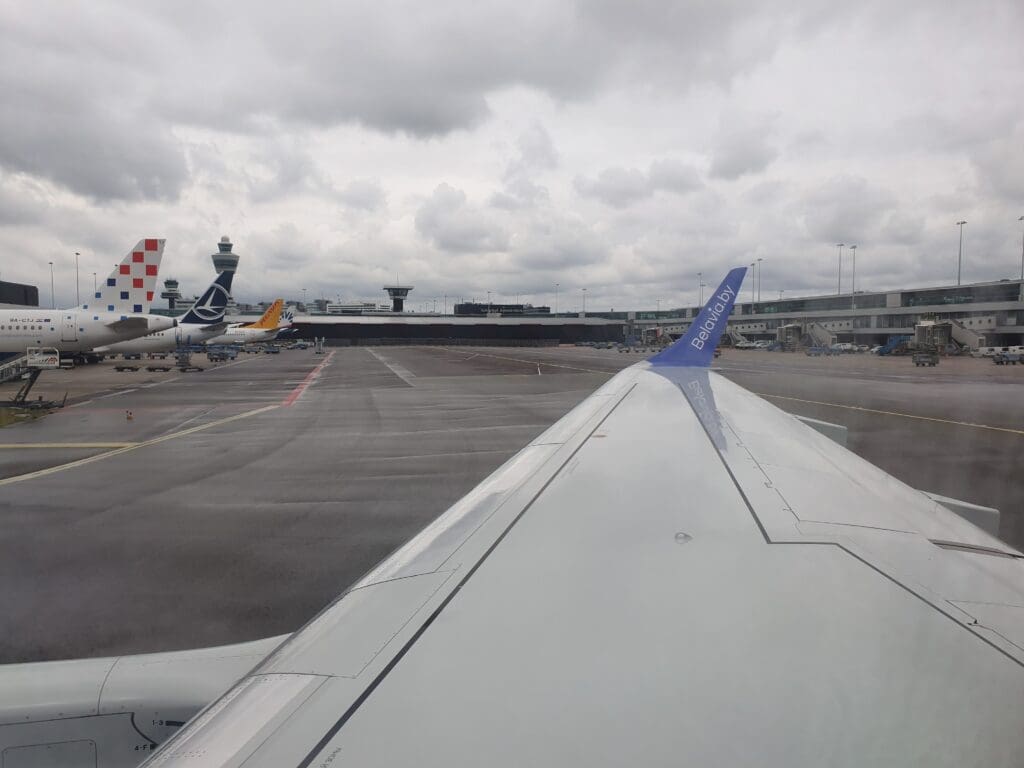
Thanks to the efficiency of the ground crew, the door was opened a short time after the aircraft had pulled into the gate and disembarkation commenced promptly through the L1 door only once this had been opened. After shuffling through the cabin, I thanked the crew before stepping off the jetway where I was greeted by the sight of an army of cleaners waiting to prepare the cabin for its return flight to Minsk. Despite the use of a jetway, having appeared to arrive at a gate reserved for flights flying to and from destinations within the Schengen area, a bus journey was in order to transport the arriving passengers to the non-Schengen arrival area. Therefore, after proceeding up the jetway passengers were then pointed down some steps and onto an awaiting bus. Having been one of the final passengers to disembark, only a couple of minutes of waiting was required before this pulled away and headed down the flight line eventually dropping us off at the arrivals area. Thanks to several widebody arrivals at that time, upon heading up into this, this seemed to be incredibly busy with police officers briefing checking the passports of all arriving passengers and making further enquiries if necessary. Fortunately, these queues moved along rather quickly and after around five minutes I handed my passport over to a seemingly disinterested officer who returned this to me following a very brief glance at the photo page of this. Once this check had been made, I was allowed to head towards the transit area thus bringing an end to my experience with Belavia.
Summary
In spite of my slight complaints regarding the coldness of the crew, all in all I was rather pleased with Belavia on this short flight from Minsk to Amsterdam. Whilst there were areas that could have been improved, the aircraft was clean, modern and relatively comfortable (although the latter point was largely down to having exit row seats!). Meanwhile the light breakfast was a welcome addition to the flight and far more substantial than the offering of many carriers across Europe. To summarise, if the price was right, I would have no issue with flying with Belavia again.