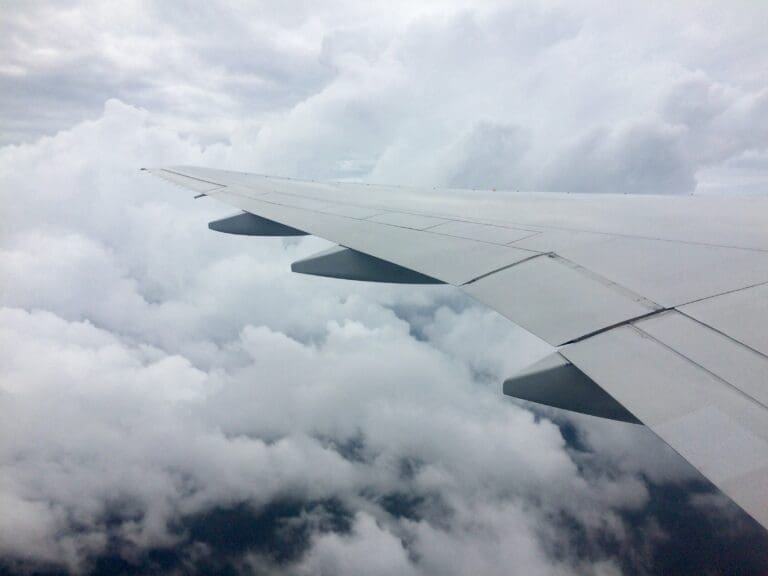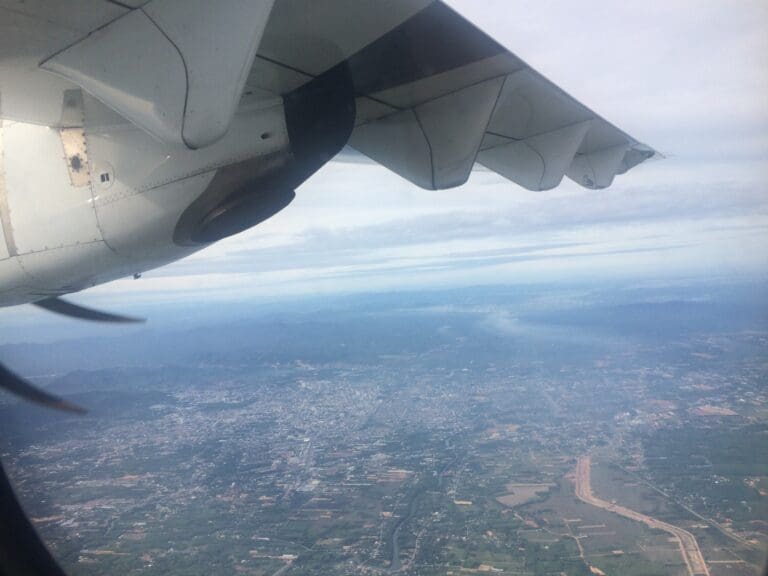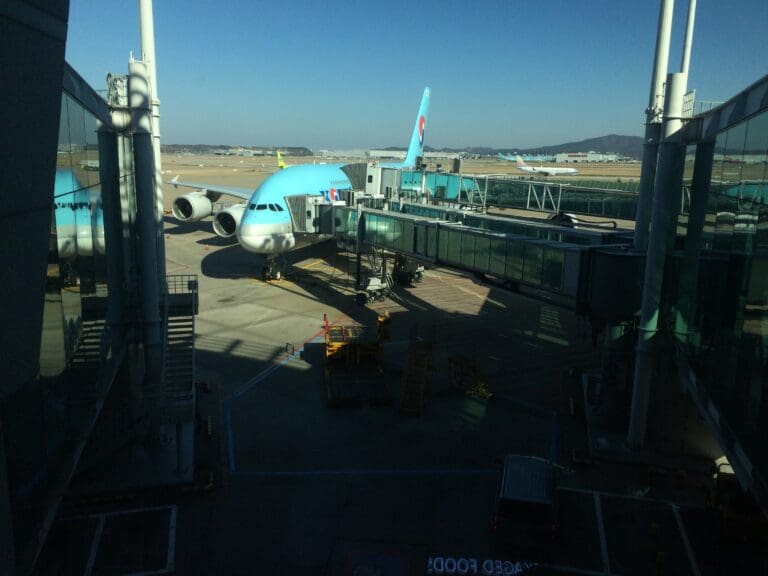
Flying to World Famous Lukla by Helicopter
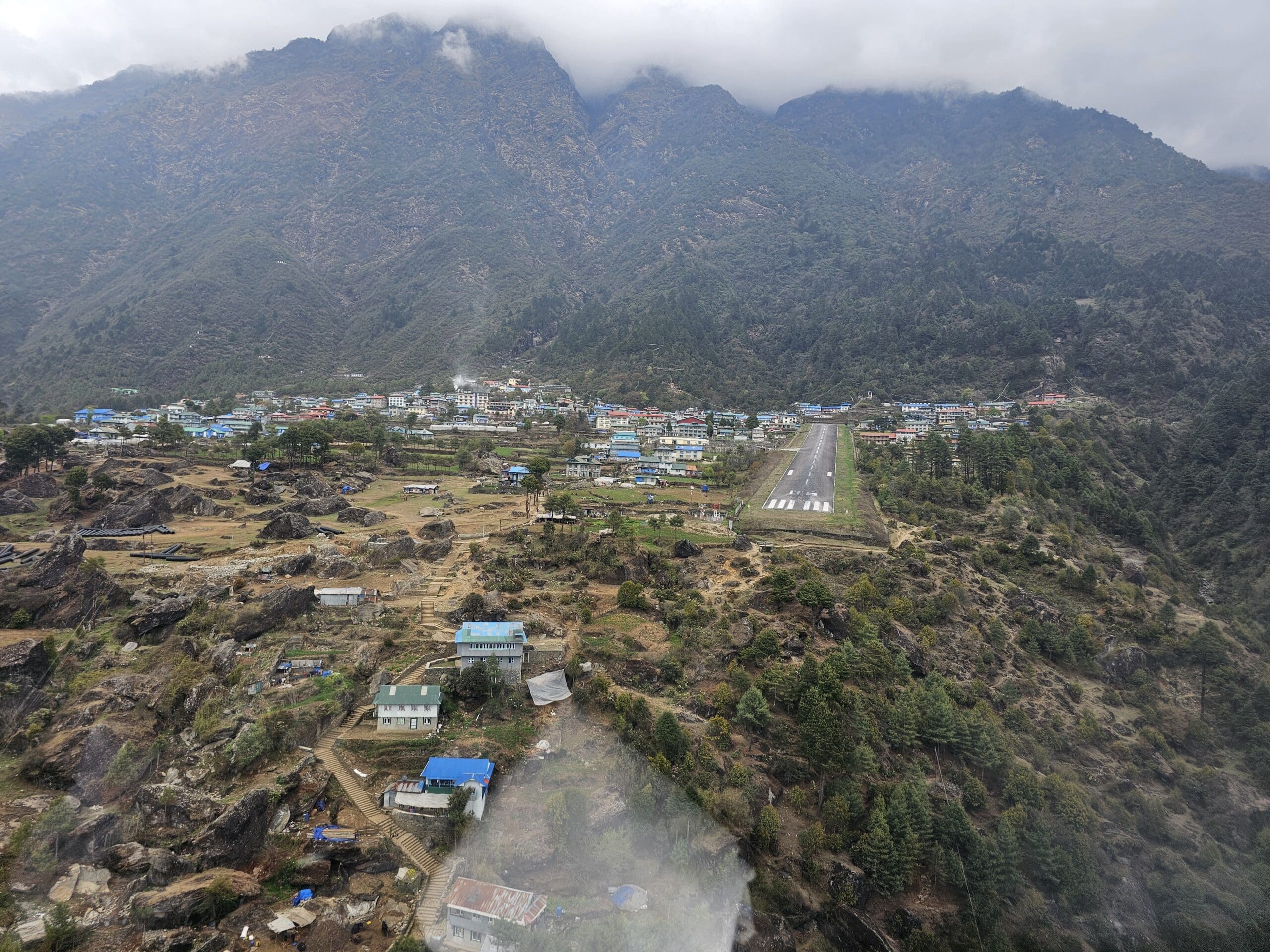
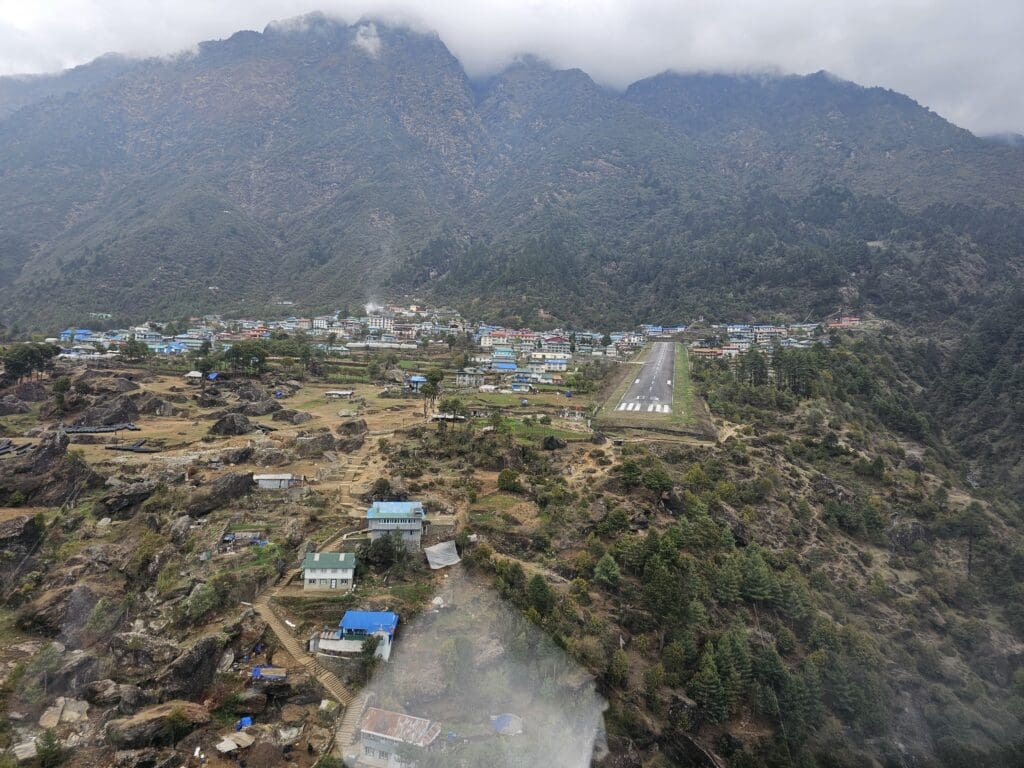
For a Himalayan village, Lukla has a big reputation and is known across the world for being the start and end point of most treks within the Sagarmatha National Park. With no roads connecting the Khumbu Region to the rest of Nepal, and Lukla sitting around a two-day walk away from the nearest road, most visitors fly in and out of Lukla Tenzing-Hillary Airport. Constructed in 1964 and named after Sherpa Tenzing Norgay and Sir Edmund Hillary, this airport is famous across the world for its short, sloping runway and precarious location on the side of a mountain. This means that there is only one way in and one way out, with very little possibility of a go around – something that has seen Lukla earn the moniker of being the ‘world’s most dangerous airport’. Indeed, since opening, there has been a slew of serious incidents and accidents, many of which have been fatal. The operational complications and challenges at Lukla mean that fixed-wing aircraft can only operate to and from Lukla in good conditions, which often means days of cancellations, and plenty of waiting around at the start and/or end of your trek. This is one of the reasons why tour providers insist you schedule several days in Kathmandu at the end of your journey so as to avoid missing your flight home!
Heading off on a trek in the Everest region, I was scheduled to fly to Lukla on Saturday morning, where I would meet my guide and hike to the village of Rimijung. Perhaps understandably, with comparatively few trekkers taking the form of aviation enthusiasts, there was no mention of which of the three fixed-wing operators I would be flying with to Lukla – and I could have ended up on Sita Air, Summit Air or Tara Air on the Dornier 228, Let L-410 or Twin Otter respectively. The only information that I had been provided with was that the trekking company was working to secure a seat on one of the relatively few flights from Kathmandu, rather than from Ramechhap, located around a five-hour drive to the east of Kathmandu.
As much as I love Nepal, it is fair to say that once in the country, things do not always go to plan and things can happen rather last minute. Indeed, this became evident when a day before I was set to head to Lukla, it was revealed that the trekking company was still attempting to secure a ticket for me to head to the Himalayas. At 2000 on the day before I was scheduled to head to the mountains, I received a call advising me that due to inclement weather conditions in Lukla, fixed-wing services from both Kathmandu and Ramechhap would likely be cancelled for at least two days. They thus gave me the option of waiting it out and delaying the start of my trek, or flying on a helicopter from Kathmandu the next morning for $110. Working in aviation safety, I have to say that I felt a little uneasy about jumping for the poor-weather helicopter ride, especially seeing as I was more than well aware of Nepali operators’ somewhat patchy safety record which means all of the country’s carriers are banned from the skies of EASA member states and the United Kingdom! However, being a rotary fan, and knowing that helicopter flights between Kathmandu and Lukla usually come with a premium of at least $600 – I decided to agree to this.
The Journey
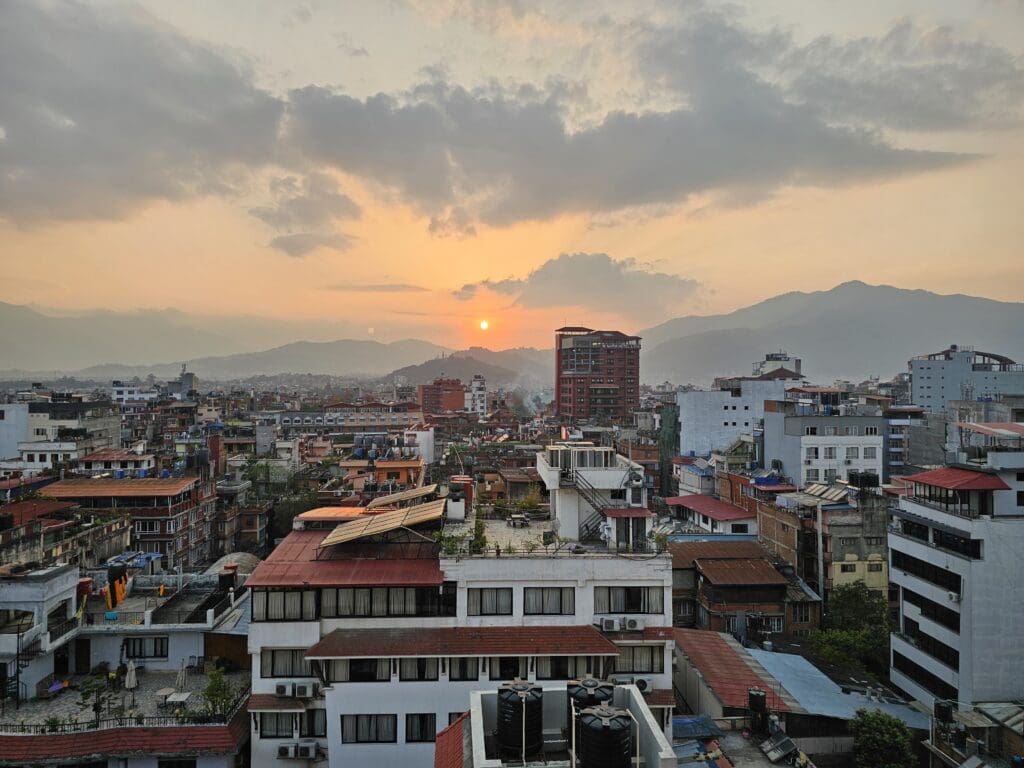
A combination of jetlag and late-night packing meant that I had nothing more than a short night’s sleep before waking up at 0600, ready and raring to head off to the Himalayas. However, concerningly, I awoke to the soundtrack of the pitterpattering of a torrential downpour that soaked the narrow streets of Thamel and led me to question whether I would indeed end up flying to the Himalayas that day. However, an hour later, I received a call from the trekking company owner who advised me that the helicopter flight would still be going ahead, and I was advised to be ready for a 0750 pick-up. With my trekking bag and suitcase in tow, I squeezed into the hotel’s small lift and made my way to reception where I would leave my suitcase until I returned to Kathmandu at the end of my trek. Plonking myself down on one of the sofas, following a short wait, the trekking company’s owner and his brother appeared and I was soon whisked through the rainy streets of Kathmandu.
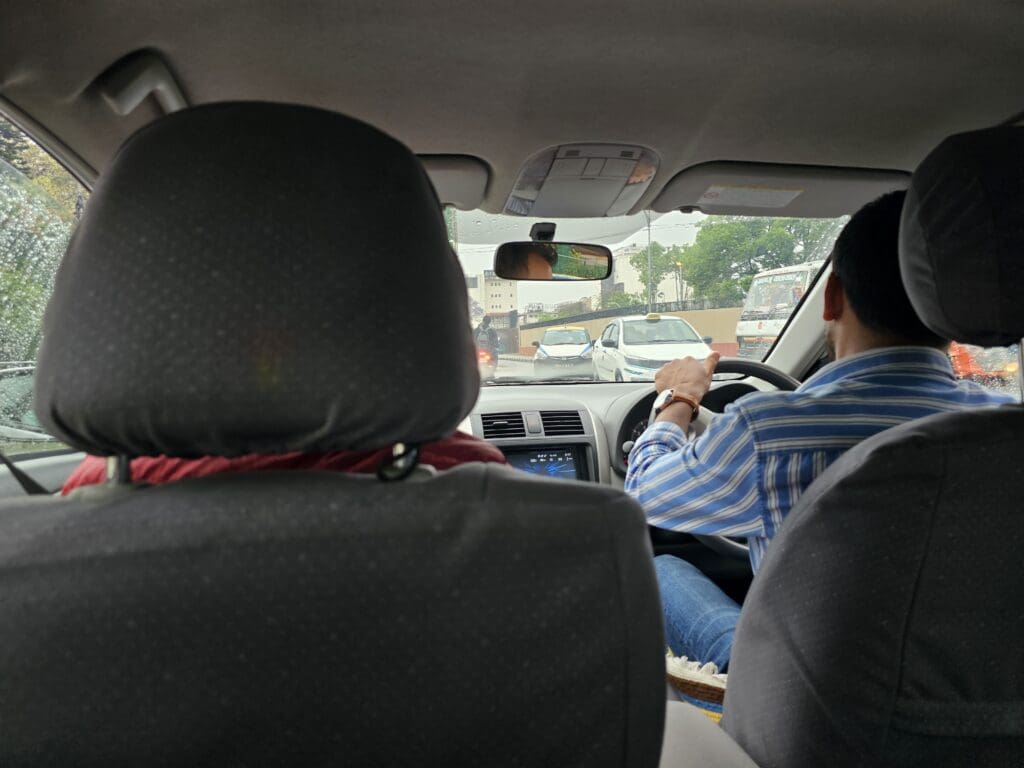
Anybody who has visited the Nepali capital will know that its streets are often chaotic, crowded and accompanied by the non-stop cacophony of hooting horns. That morning, this was no exception, although the journey to the airport ended up being reasonably quick thanks to the driver’s ability to slalom through the traffic, perhaps seeking to become Nepal’s first Formula 1 driver! Once we had passed Pashupatinath Temple, a UNESCO World Heritage site and one of the most sacred places for Hindus, we turned off the busy ring road and trundled up the airport’s driveway, with the international terminal and neighbouring control tower soon appearing.
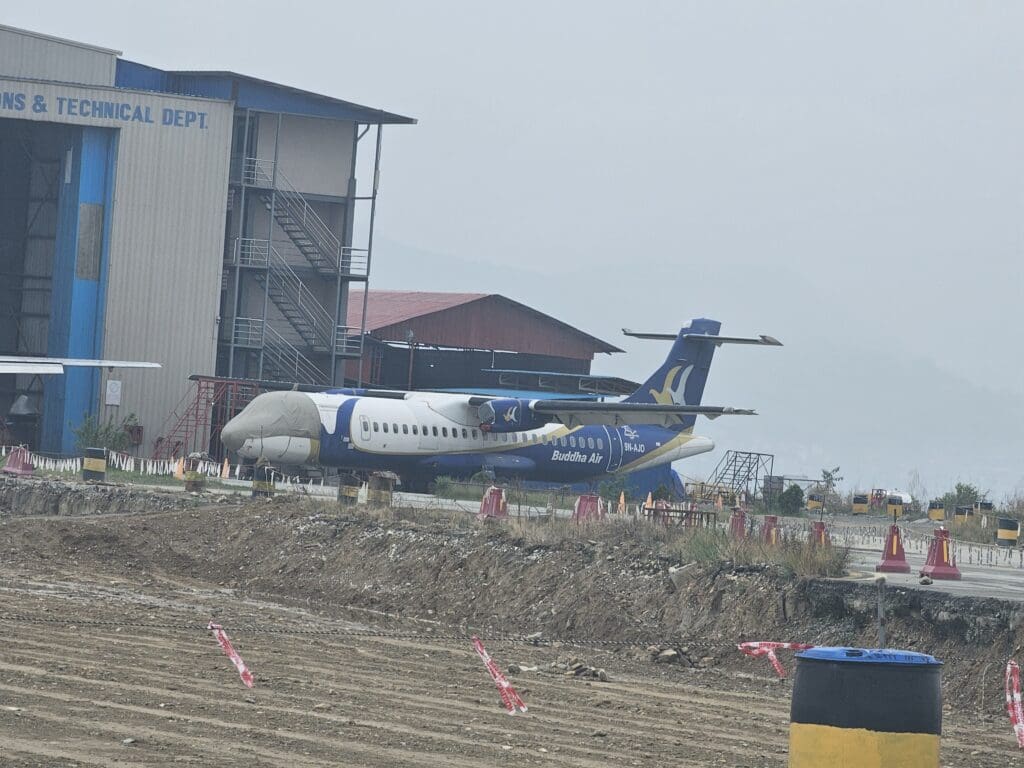
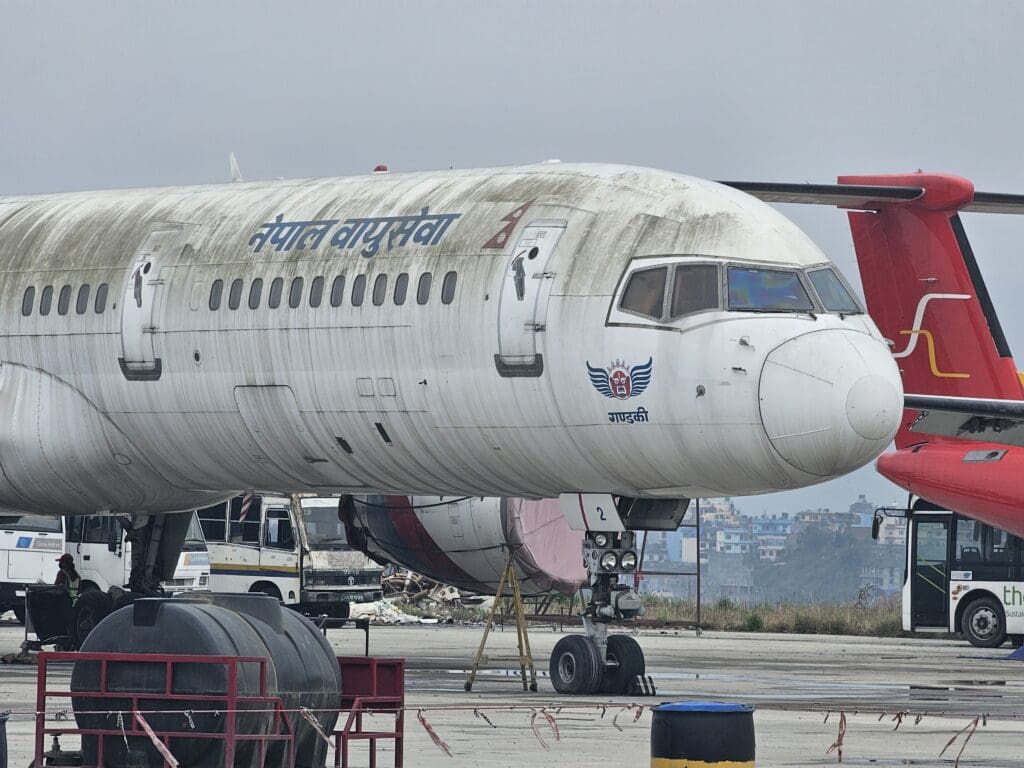
Nepal’s main international gateway consists of two detached terminals – the international terminal and the domestic terminal. Meanwhile, the airport’s rotary operations take place from an apron across the runway on the other side of the airfield near the Buddha Air hangar and collection of disused aircraft. However, all those departing on such services must pass through the domestic terminal. Thus, the car soon came to a halt outside Kathmandu’s fairly small domestic terminal where, not giving me too much hope of a relaxing journey through the airport, I was greeted by chaotic scenes as passengers scurryed about through the torrential downpour, shuttling plenty of luggage between cars and the terminal building without getting soaked.
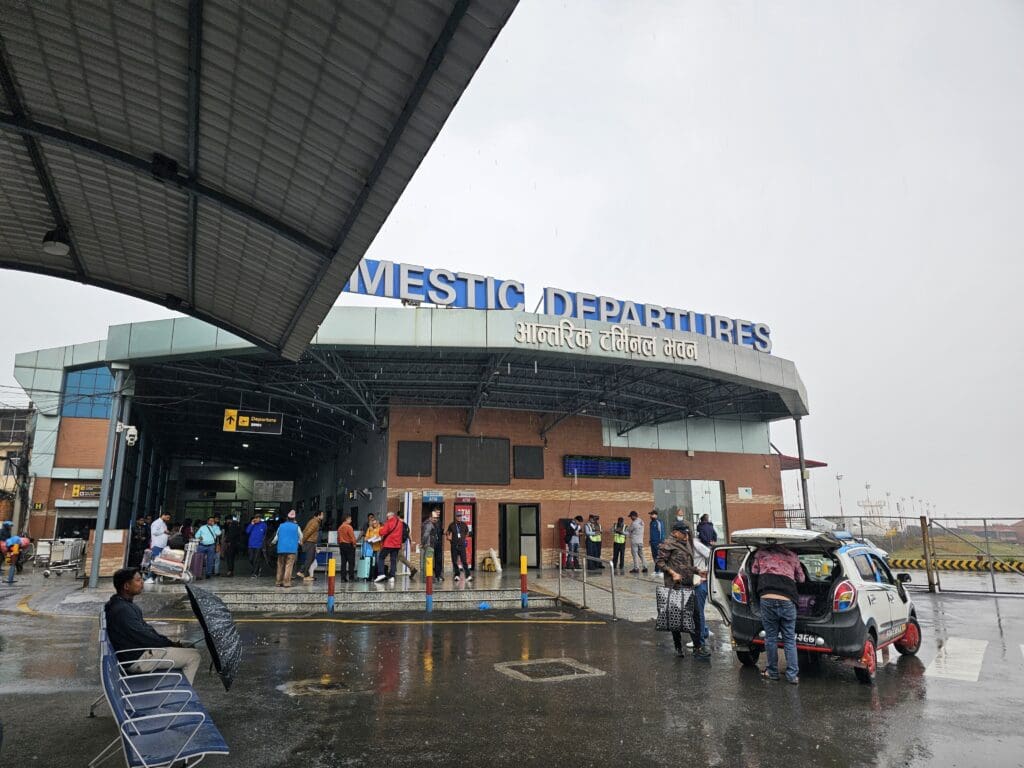
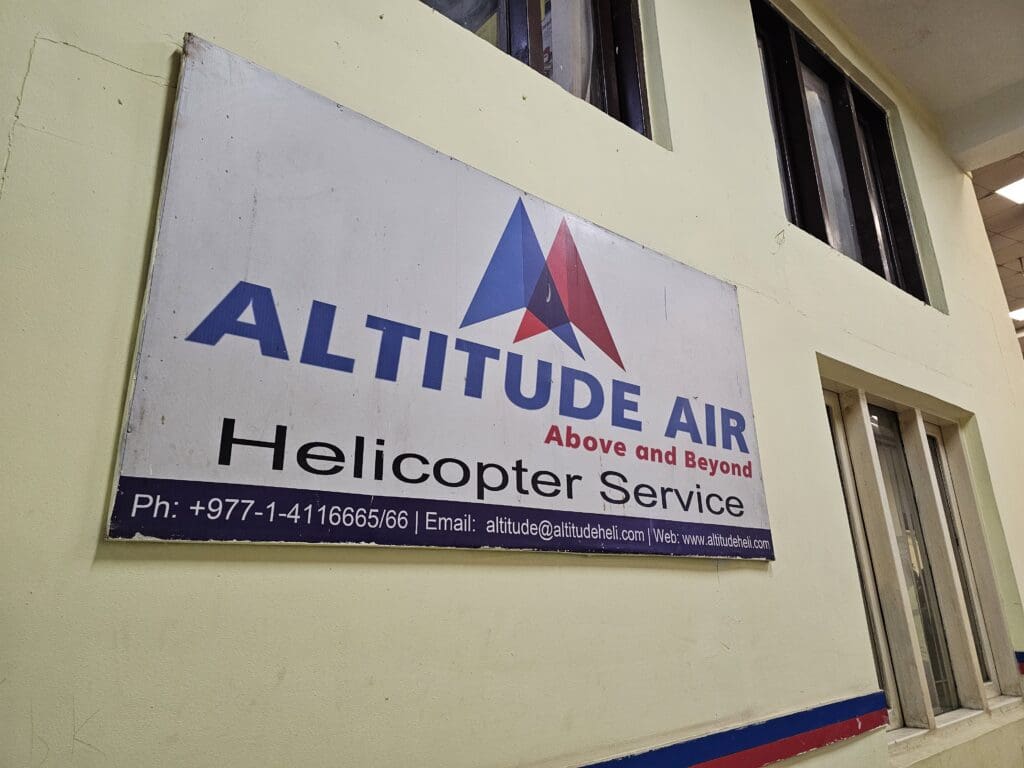
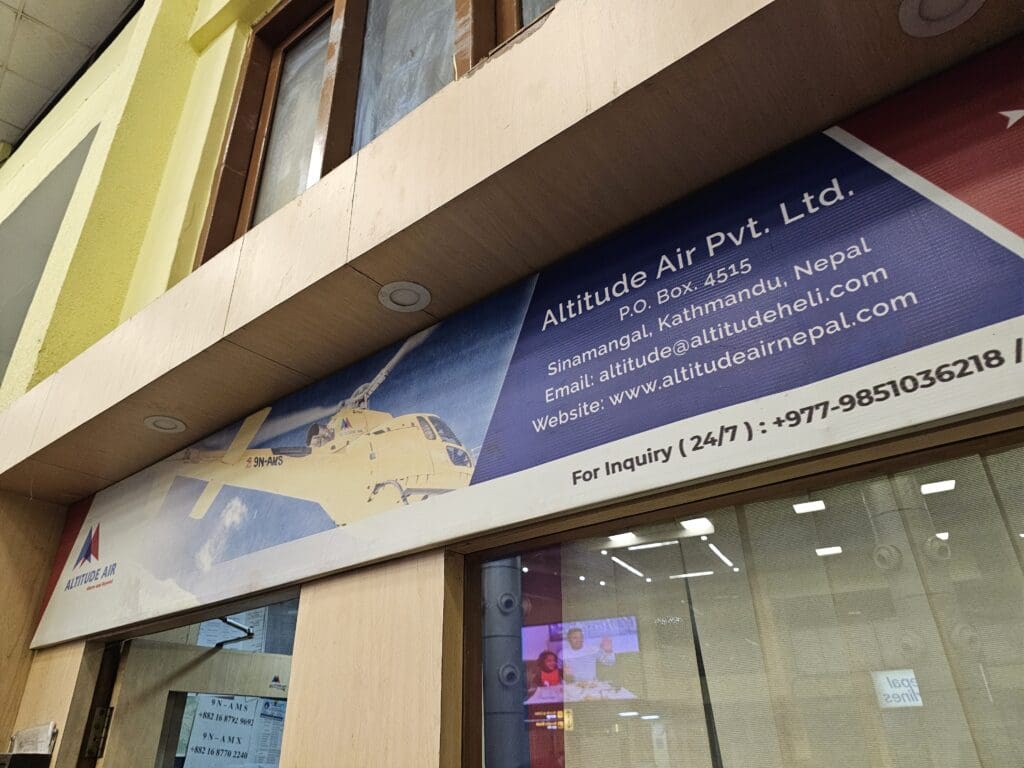
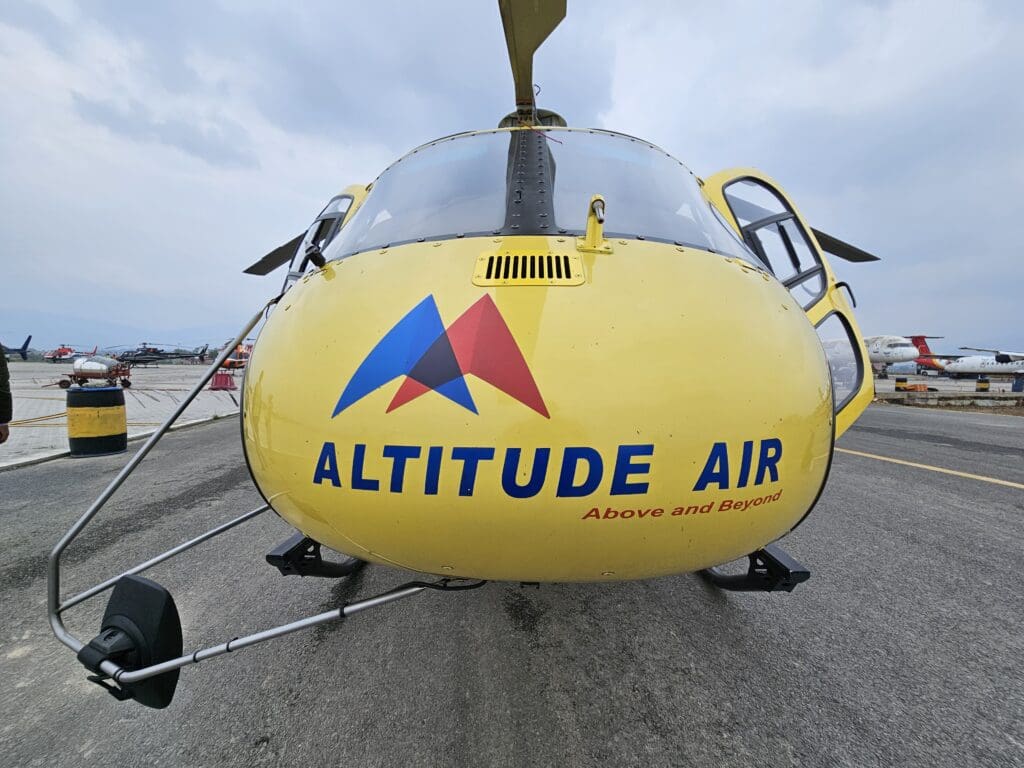
Once out of the car, the trekking company owner and I waited under a shelter for a few minutes, where I paid them for the helicopter ride and they made multiple phone calls in Nepali – some of which seemed to be a little heated! Up until this point, I had no idea which of Nepal’s helicopter operators I would have the pleasure of flying to Lukla. However, after a few minutes, all was made clear when two staff members dressed in casual clothes and Altitude Air lanyards appeared and handed me a handwritten boarding pass that lacked my name – although this would not prove to be an issue. Admittedly, Altitude Air was not a company that I had heard of before. Formed in 2015, this is one of Nepal’s younger operators and flies a fleet of two modern Airbus H125 helicopters. Like most helicopter operators in Nepal, these are multipurpose, and fly a mixture of missions in the Himalayas including passenger, cargo and medevac flights.
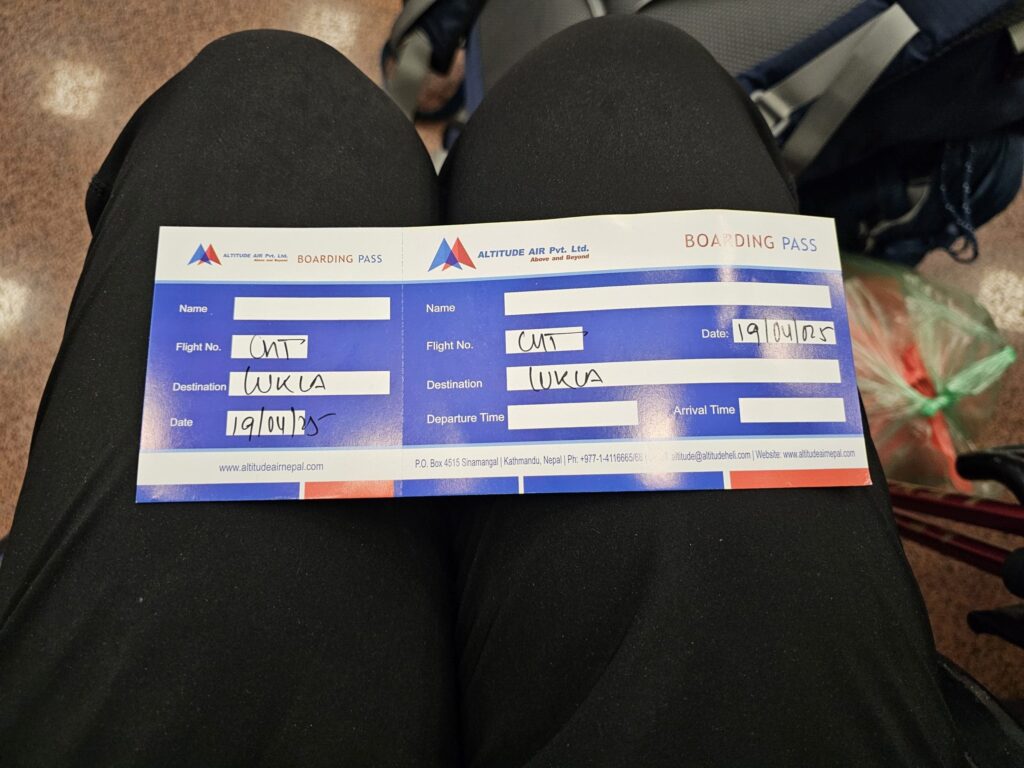
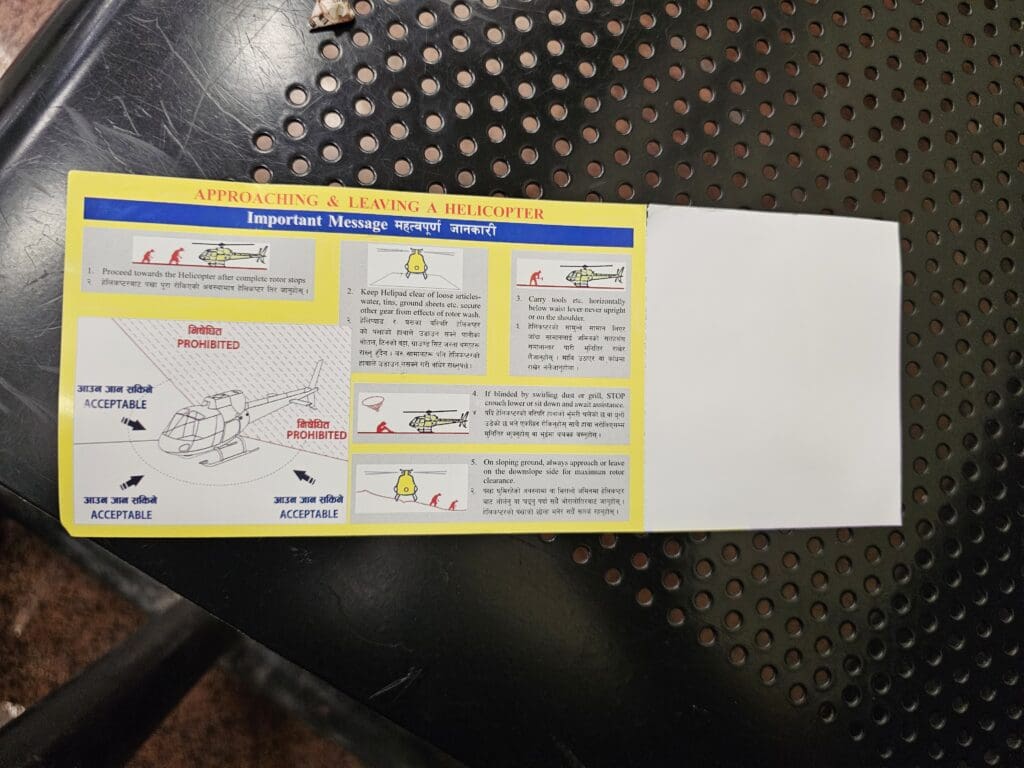
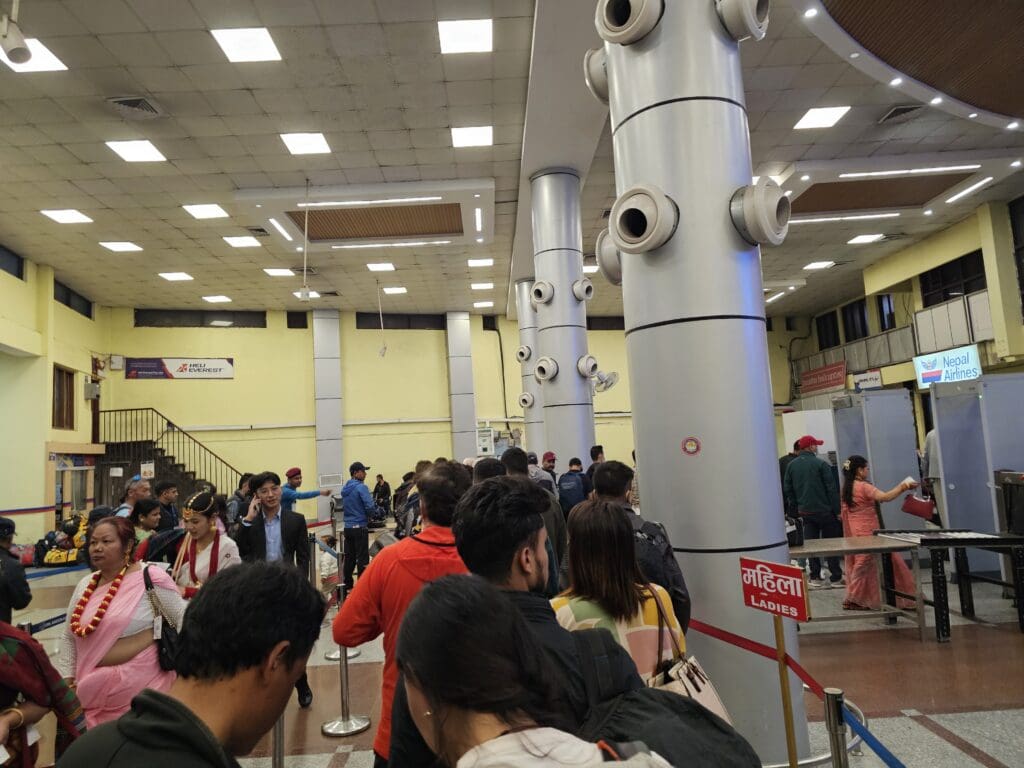
Once I had said my farewells to the trekking company owner, I joined the long queue of passengers waiting to enter the terminal. As in neighbouring India, only those with tickets can enter the terminal, and all must have their bags scanned before doing so; meanwhile, the two staff members went ahead and waited for me on the other side. Rather guiltily, as the only non-Nepali and carrying only a backpack and a bag of fruit to deliver to the guide, one of the security staff picked me out and escorted me to the front of the queue, where my boarding pass was checked and my bag went through the scanner.
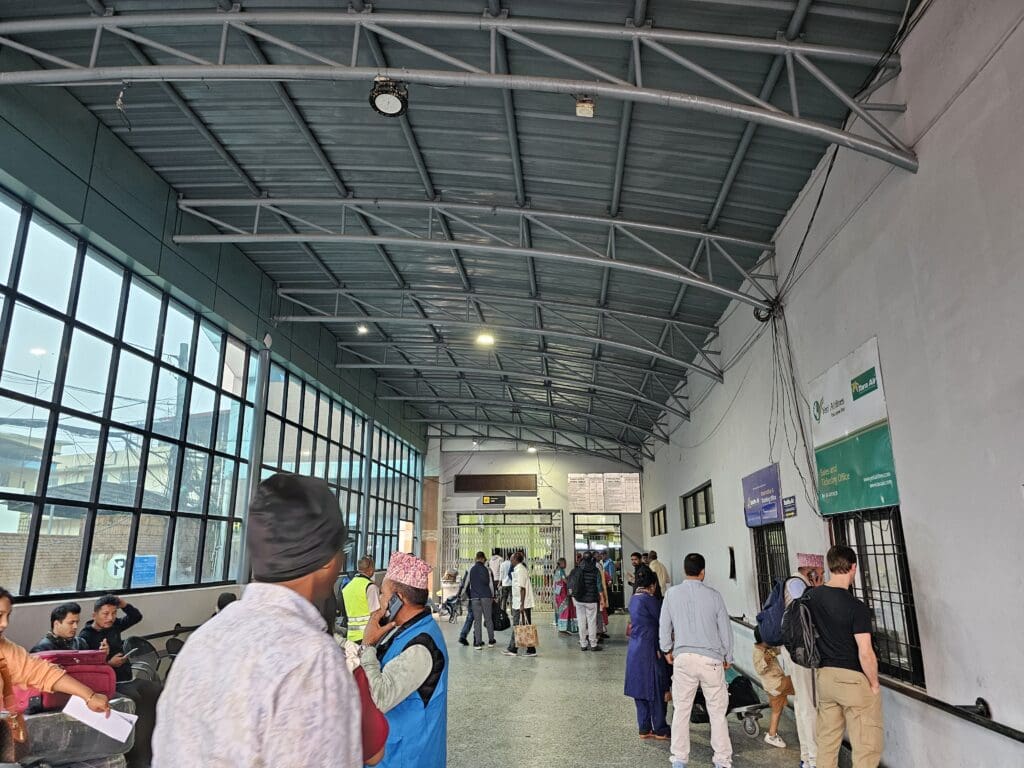
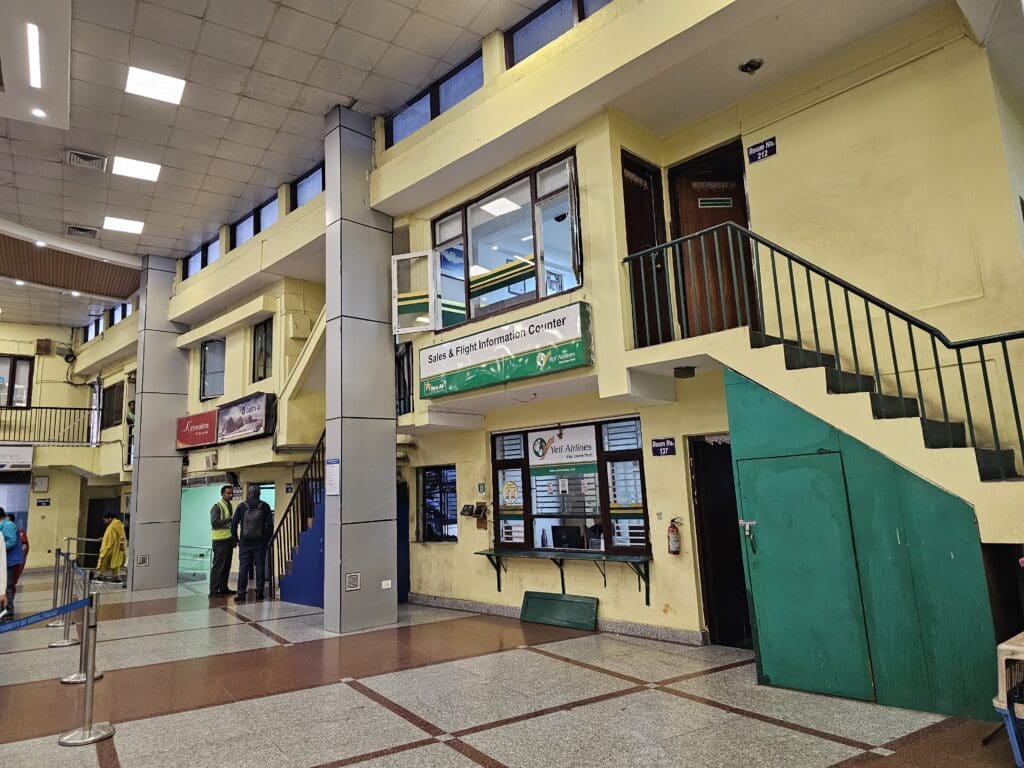
Once successfully through the initial checkpoint, I found myself facing hordes of passengers in the domestic terminal’s packed check-in hall. Added onto the domestic terminal in 2016, this part of the terminal is not particularly vintage, but it does have a slightly low cost feel, with its metal roof and the subsequent sound of rain ensuring that passengers were well aware of the inclement meteorological conditions outside! Inside the check-in hall, there are reasonably few facilities, with these limited to a filthy set of toilets, a charging station and a water fountain. Meanwhile, public wifi was non-existent and airside views from this part of the terminal were very limited, with passengers able to catch a glimpse of the international apron from the far side of the terminal. Inside the check-in hall, each of Nepal’s airlines offering domestic services enjoyed their own well-branded check-in area, with those of Buddha Air, Shree Airlines and Yeti Air being far larger than the rest, and featuring crowds of passengers eager to get away.
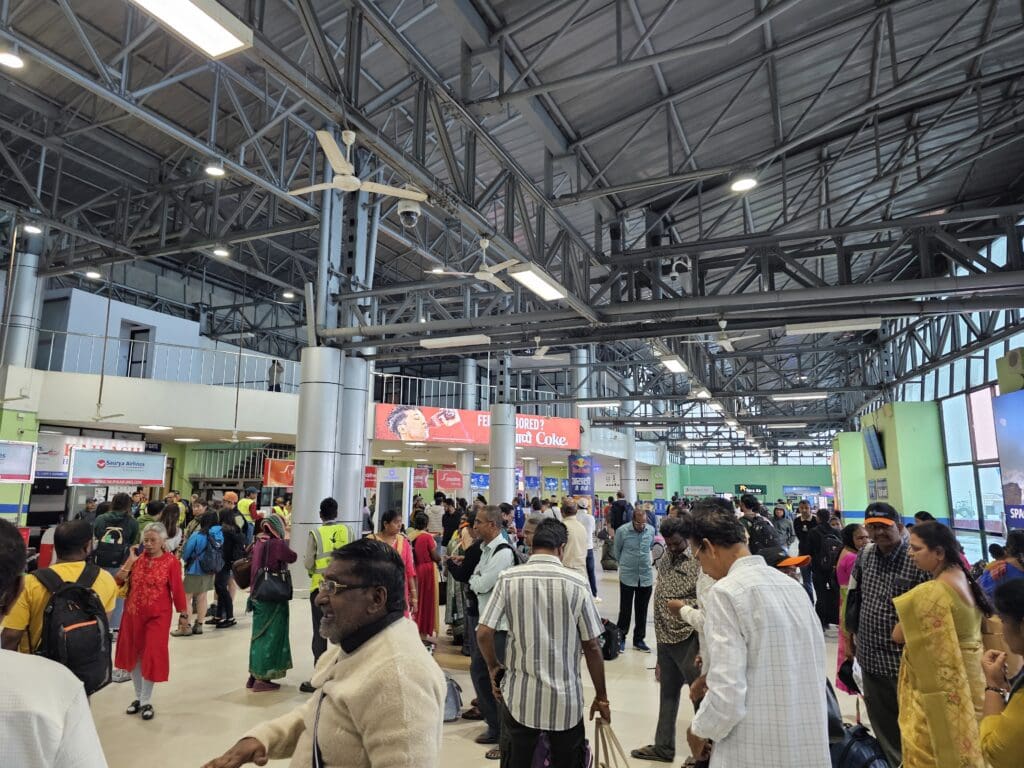
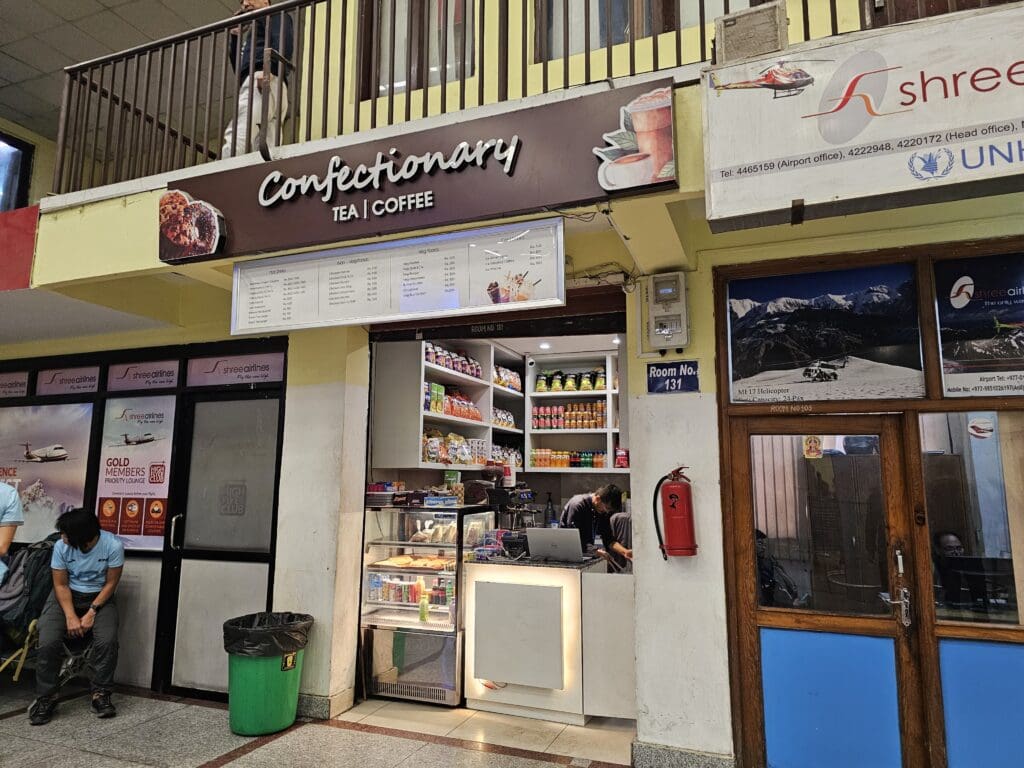
That morning, I had no reason to linger around the check-in hall and was instead escorted past the check-in counters to a smaller hall which sits in the original part of the terminal that dates back to the 1990s. This hall features a security checkpoint in the middle, which ensured a constant flow of passengers through this, whilst offices for each airline and helicopter operator, including the defunct Guna Airlines sat around the edge of this, alongside a few metal benches and a small cafe kiosk selling an array of drinks and light snacks at seemingly reasonable prices – although I decided to pass on any of these. Once there, I was advised to wait on the metal benches on one side of the hall, which seemed to be the rendezvous point for all those departing on helicopter services from Kathmandu. At that time, this was fairly busy, with most of my fellow flyers taking the form of groups of mostly American trekkers, many of whom seemed to have professional equipment and large trekking bags that put my comparatively small rucksack to shame! Other than these groups, I also spotted a Buddhist monk and their chaperone, whilst several solo trekkers and couples were also sitting around waiting to head to the mountains. Meanwhile, several boxes containing an array of items, including an electric whisk, a television and various other bits and pieces, could also be seen.
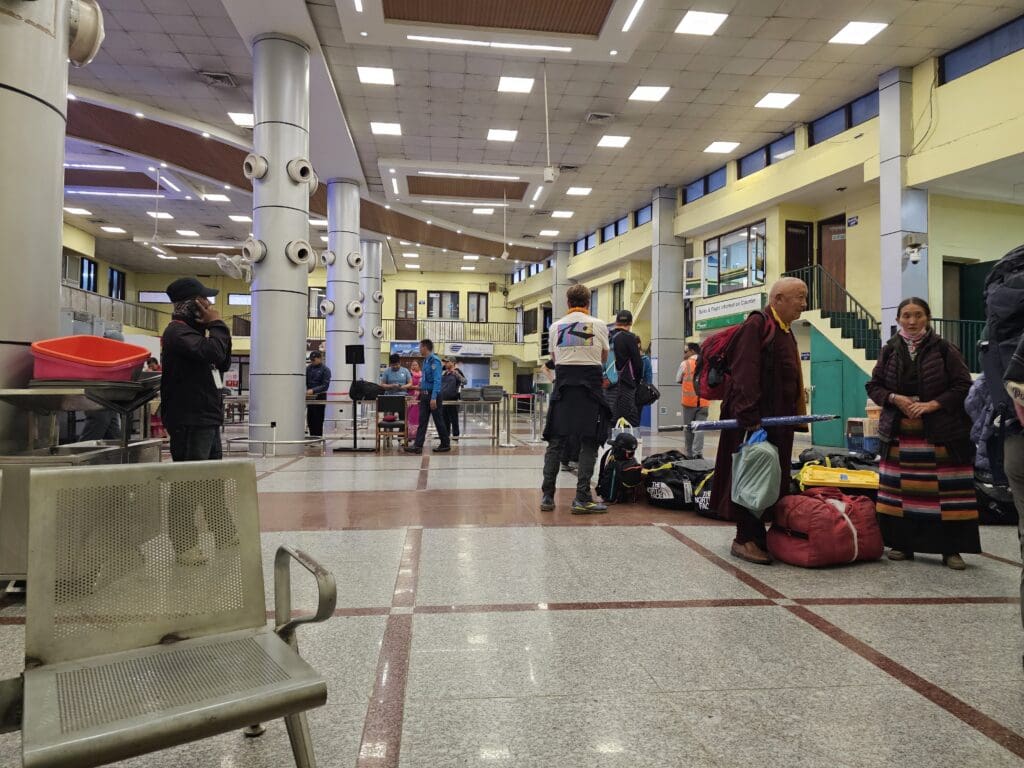
Given the rush to get me through security, I had not anticipated a particularly long wait. However, with rotary services not appearing on any departure boards, and with such services not appearing to adhere to any particular schedule, it was difficult to know just when I would be heading off. Not being in any major rush, I took a seat and waited, as slowly those around me had their luggage weighed before heading through security. As time passed, there was no sign of any movement, and with the rain pouring down outside, I began to become rather sceptical that I would indeed be heading off to Lukla that day.
After passing the time with a wander around and a toilet visit, eventually, over two hours after arriving, the Altitude Air agent that had handed me my boarding pass escorted me to a set of weighing scales where the weight of both myself and my luggage was taken and recorded, and the latter tagged before being placed in a pile with the trekking bags of my fellow passengers – wondering how all of it could fit into a H125! I was then handed what I thought was a 500 rupee (£2.69) coupon; however, it was in fact a receipt for the passenger service charge that I would have to pay. After handing the agent a 500 rupee note, I stood around along with the other passengers. Unsurprisingly, the helicopter would be full, with all five passenger seats taken. Alongside myself, that day I would be joined by two Czech trekkers, a solo trekker from Russia and their Nepali guide.
Standing around in a circle, we all paid our 500 rupee charge to the Altitude Air attendant and once all bags and passengers had been weighed, the agent said something in Nepali to the only Nepali passenger, who from that point onwards appeared to be responsible for ensuring that all of us foreigners made it to the helicopter! From the Altitude Air office, we were led to the security checkpoint – with this shared with passengers departing on all domestic flights, this has been busy for much of my stay, however thankfully, we seemed to pass through this at just the right moment, with no more than a couple of minutes of waiting required. Seeing as I had already parted with my bag, this check was quick and easy, and I only needed to take off my watch and remove my wallet from my pocket whilst these went through the scanner, and I passed through the metal detector. Interestingly, men and women pass through different checkpoints, and this was my first time seeing this outside of Saudi Arabia.
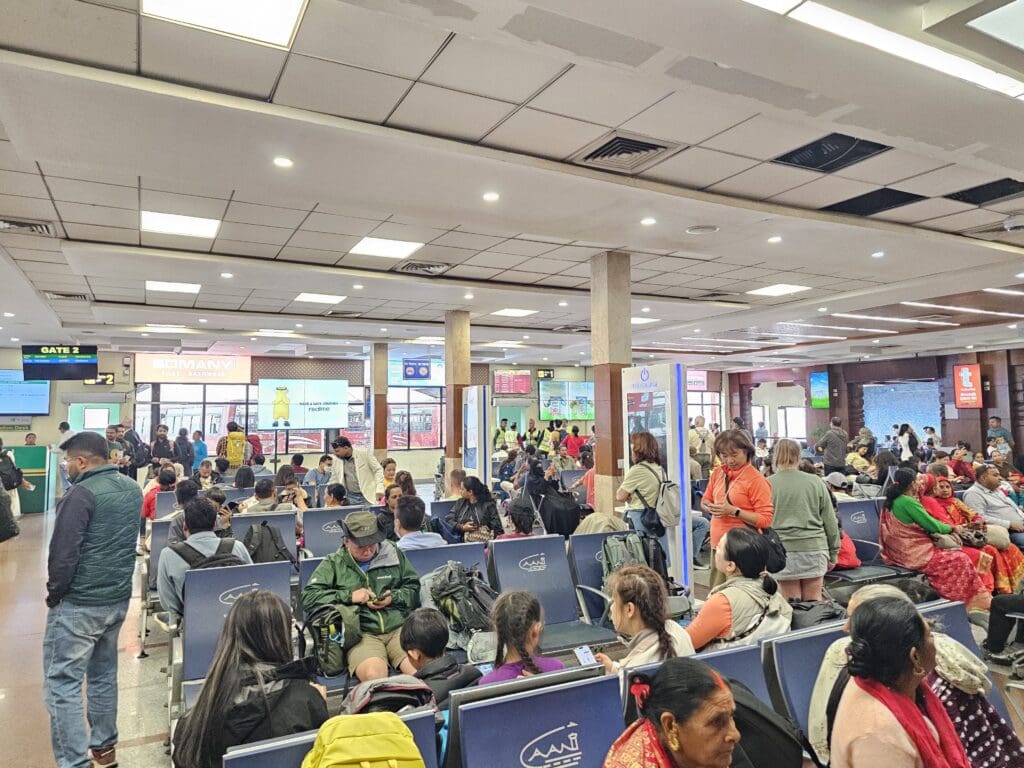
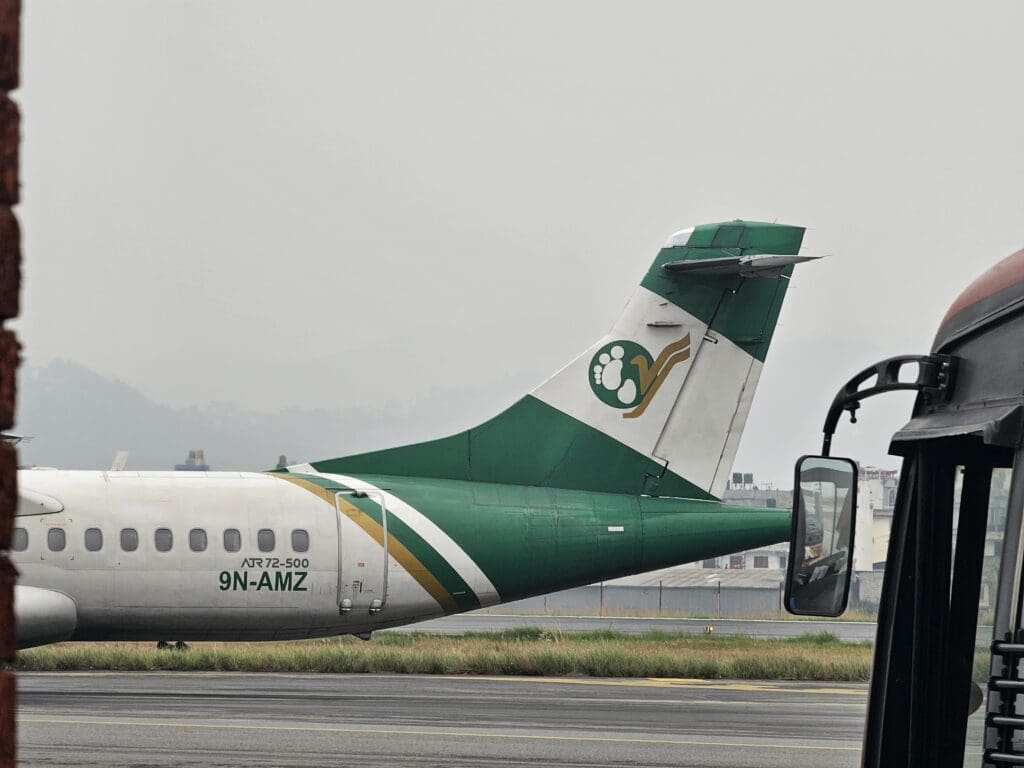
Following my painless security check, I made it to the packed airside area and was soon chaperoned to one of the terminal’s gates. Just like the landside area, the airside portion of the domestic terminal is not particularly big and is arguably undersized given the constant stream of flights that depart throughout the day, indeed, free seats were virtually non-existent and so all those on my flight ended up lingering near the terminal’s windows. Not too sure how long we would have to wait there and not wanting to either miss the helicopter, or cause the lead passenger to have to search the terminal for me, I did not explore and instead waited with the group of trekkers eager to head off to the mountains. As with the international terminal, all those departing on domestic services must take a bus to and from their aircraft, and outside a line of buses, most of which seemed to e a little worn and battered could be seen painted in each airline’s colours, with each airline appearing to undertake their own ground handling in Kathmandu. Unfortunately, unobstructed airside views are limited, with these blocked by the line of buses outside, although I did catch a few glimpses of turboprop aircraft as they taxied past outside on their journeys to and from the runway.
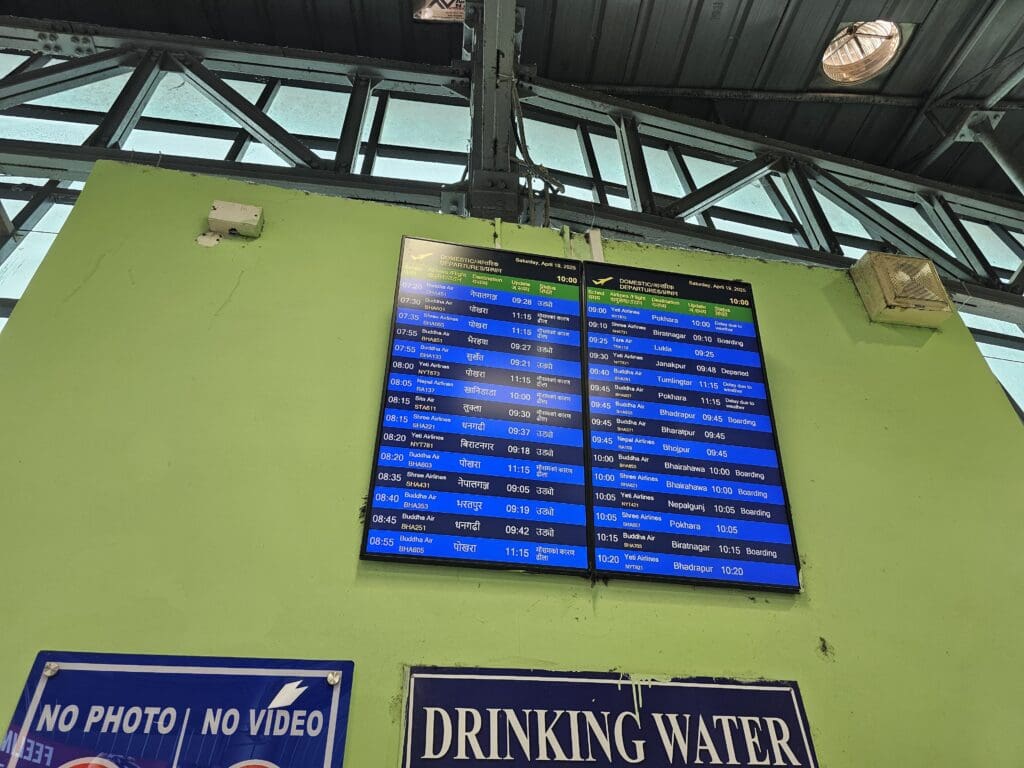
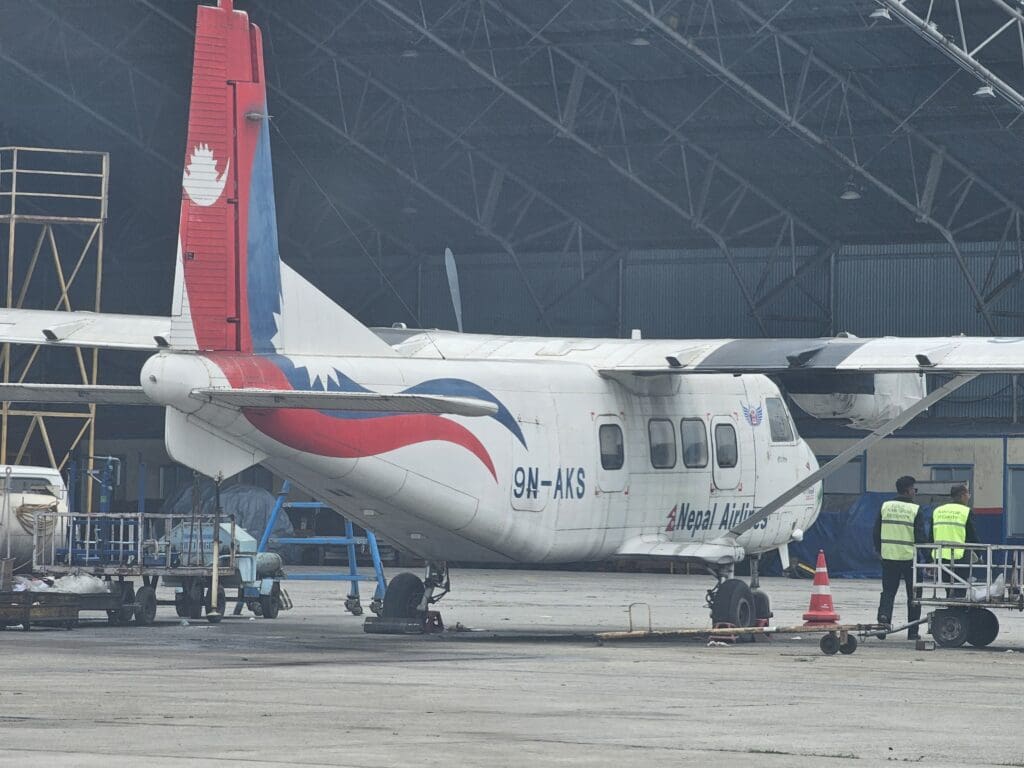
As it turned out, some more waiting was required, with about fifty minutes passing before the Altitude Air agent appeared and escorted us all out to the battered old Tata Winger minibus that would take us across the airfield to the helicopter ramp. This was already loaded with passengers’ bags, and I was reassured to see my backpack and plastic bag of fruit on the front row. Once all had squeezed onboard, the minibus headed off, passing the local military hangars that are home to the eclectic array of types that make up the Nepal Army Air Service’s fleet before passing the domestic apron where a mixture of Buddha Air, Shree Airlines and Yeti Air ATRs and Dash 8 Q400s could be seen being readied for their next missions across Nepal. From there, we made our way out along an unpaved and bumpy road around the end of the runway, eventually arriving at a shanty camp of portacabins and containers next to which sits Kathmandu’s hub of rotary operations.
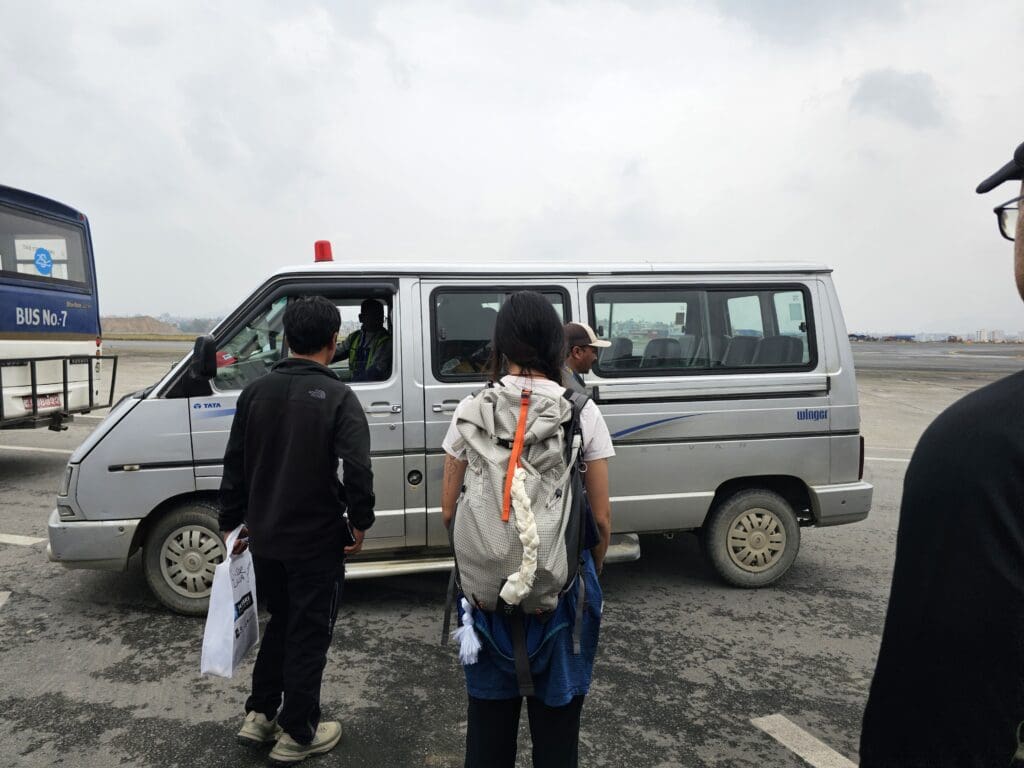
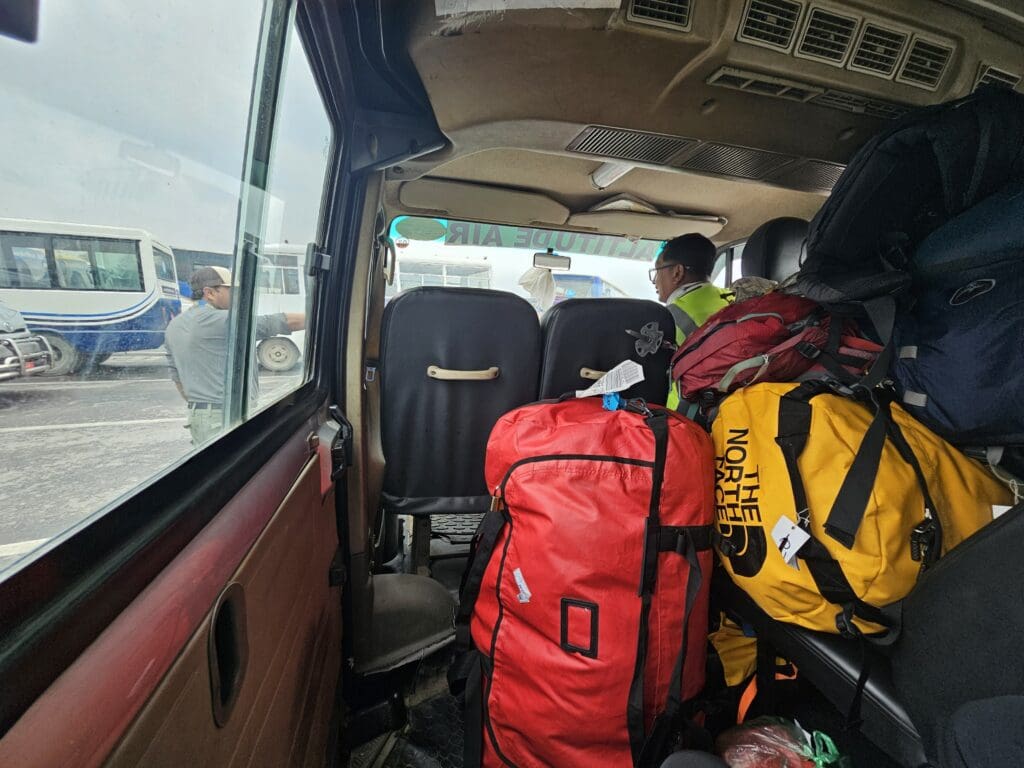
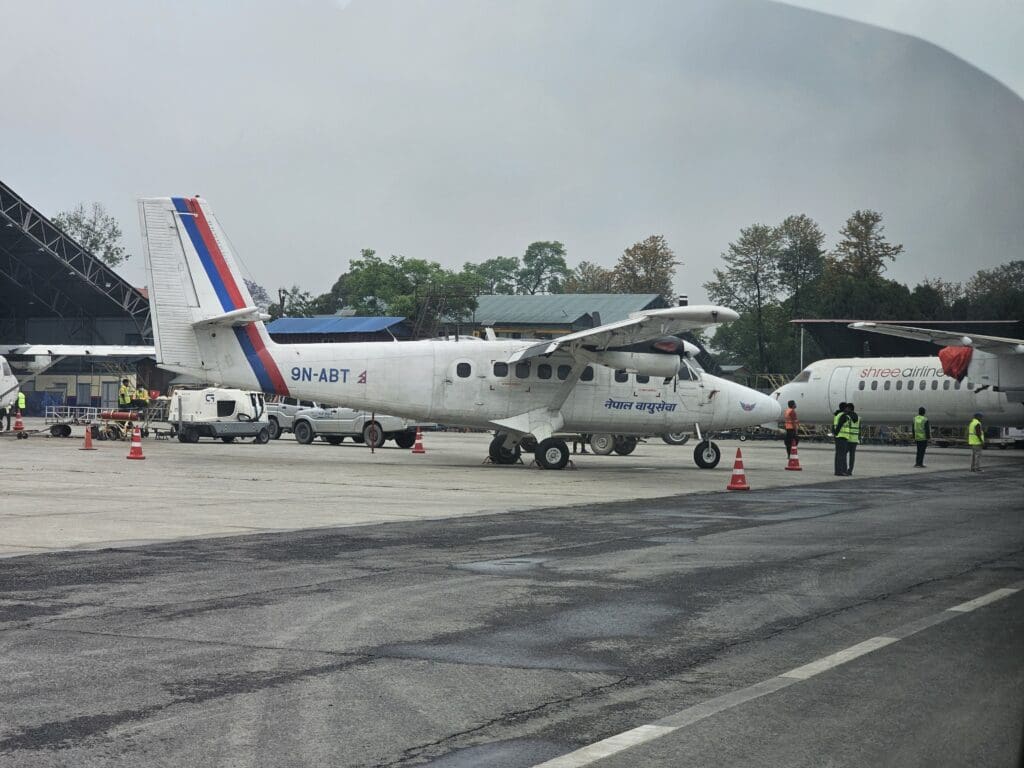
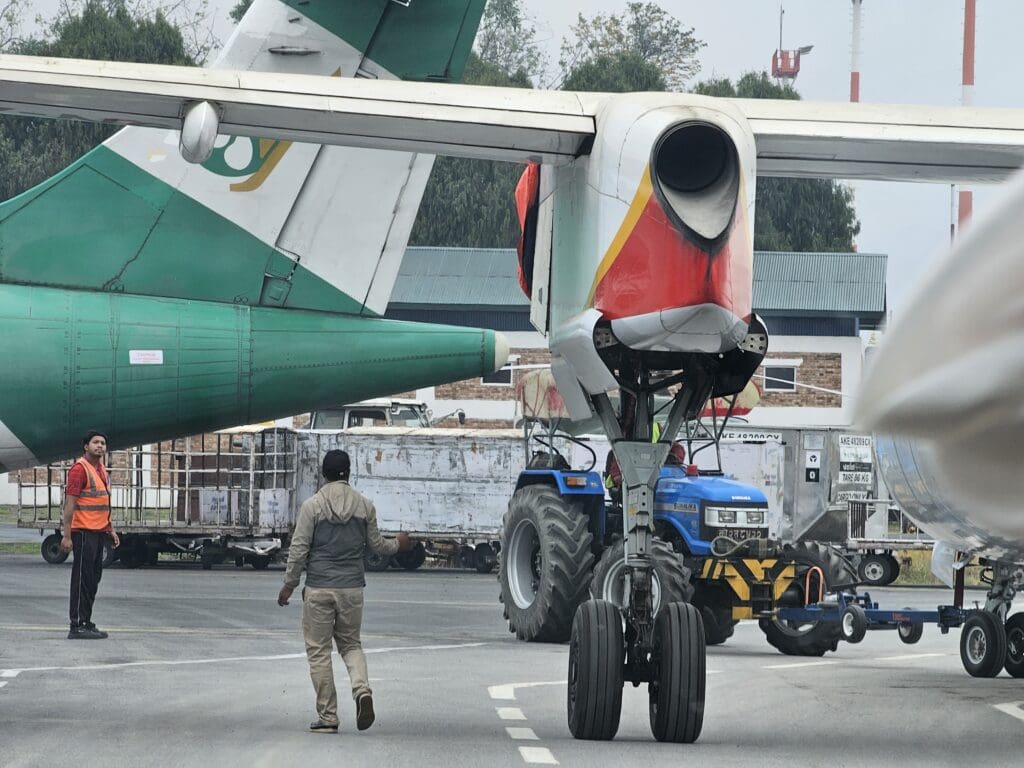
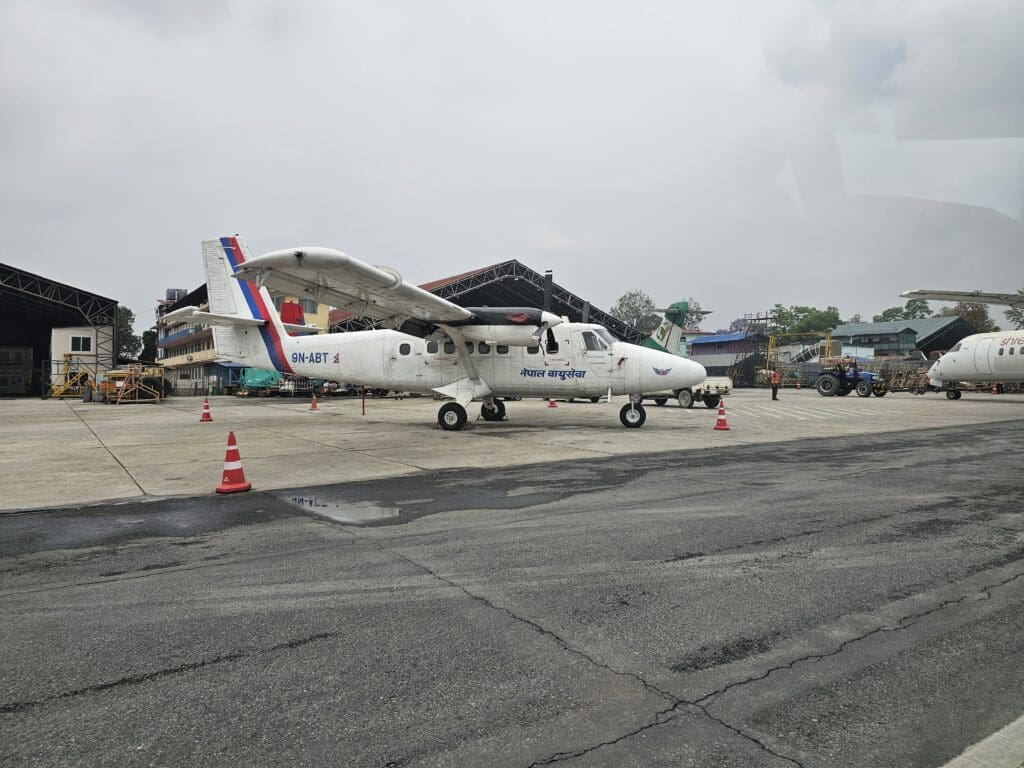
Once again, it wasn’t long before our journey ground to a halt, as the minibus paused for about ten minutes without any information before driving closer to the helicopter stands, where we paused again for another ten minutes or so. Eventually, Altitude Air’s dispatcher opened the minibus door and explained the delay, noting that due to poor visibility around Kathmandu, helicopters had to be sequenced further apart than usual, and there was a long list of helicopter services scheduled to depart before ours. We were thus given the option of waiting onboard the minibus or on the apron, and we unanimously decided to wait in the open air rather than on the stuffy and cramped bus where we risked being overpowered by the scent of diesel fumes.
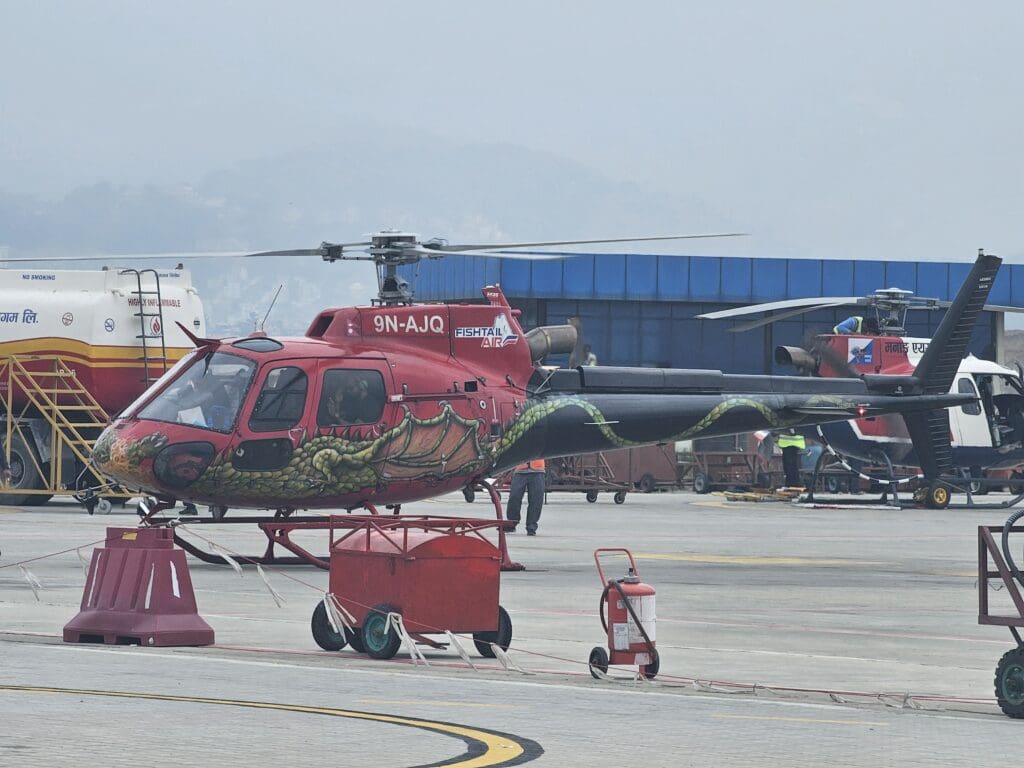
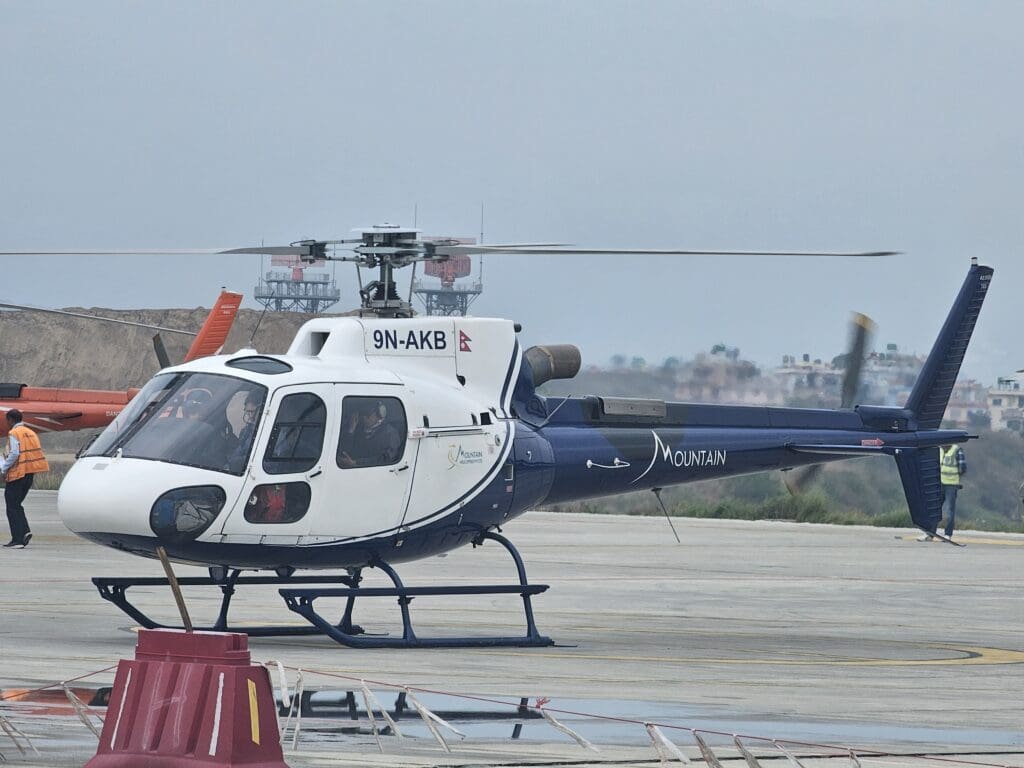
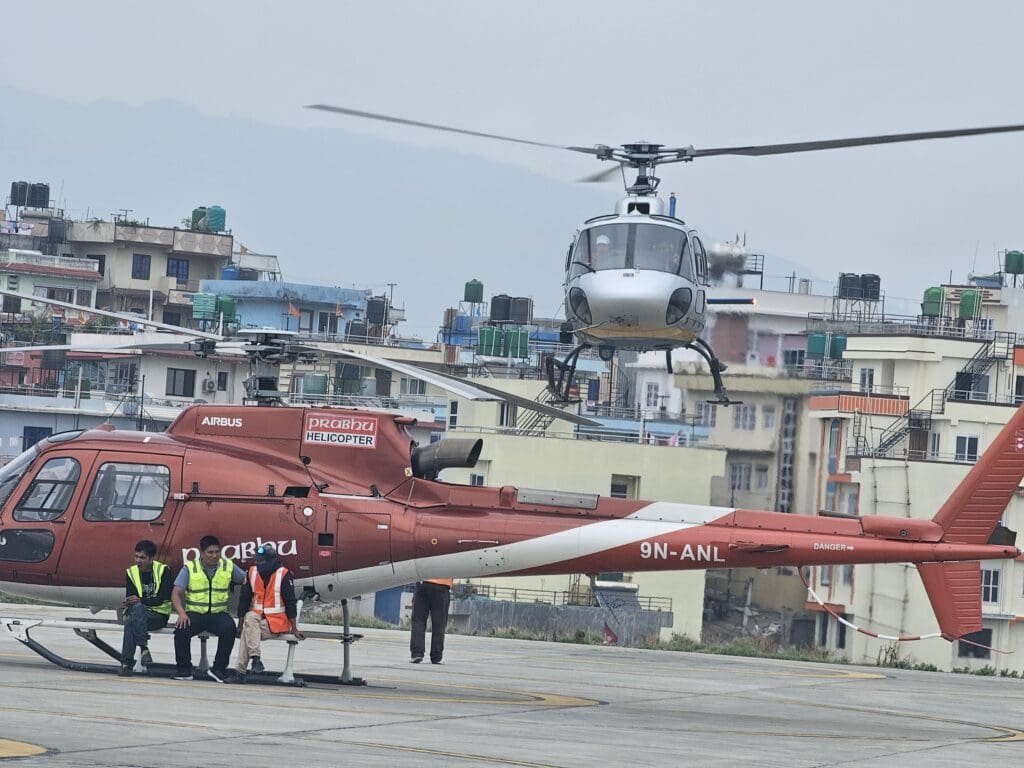
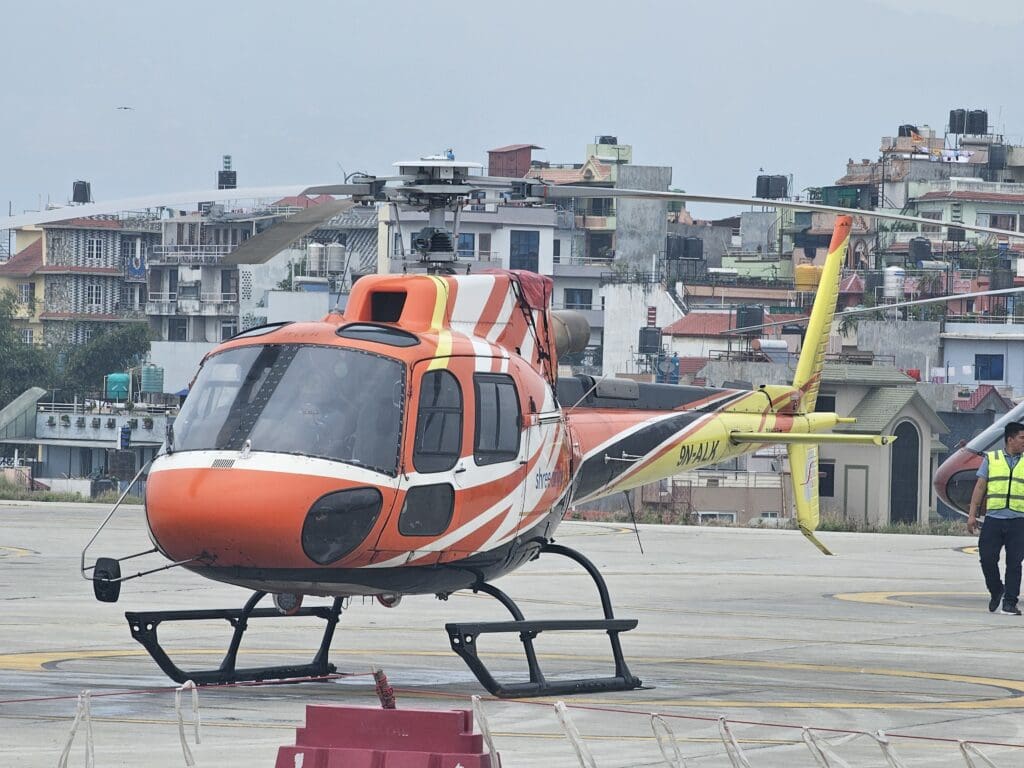
From an aviation enthusiast’s perspective, waiting on the apron was fantastic, and every few minutes or so, I was treated to the sight and sound of a helicopter arriving or departing just a short distance away, with examples from every single one of Nepal’s civilian helicopter operators present. Admittedly, in terms of type, there was not a great amount of diversity, with all helicopters taking the form of Aerospatiale/Eurocopter AS350 Ecureuil and its updated counterpart, the Airbus H125. The exception being Simrik Air’s single Bell 505. Most of these arrived from Lukla and could be seen carrying weary-looking trekkers at the end of their adventures, plus a few more unfortunate passengers on medevac flights and were greeted on arrival by ambulance.
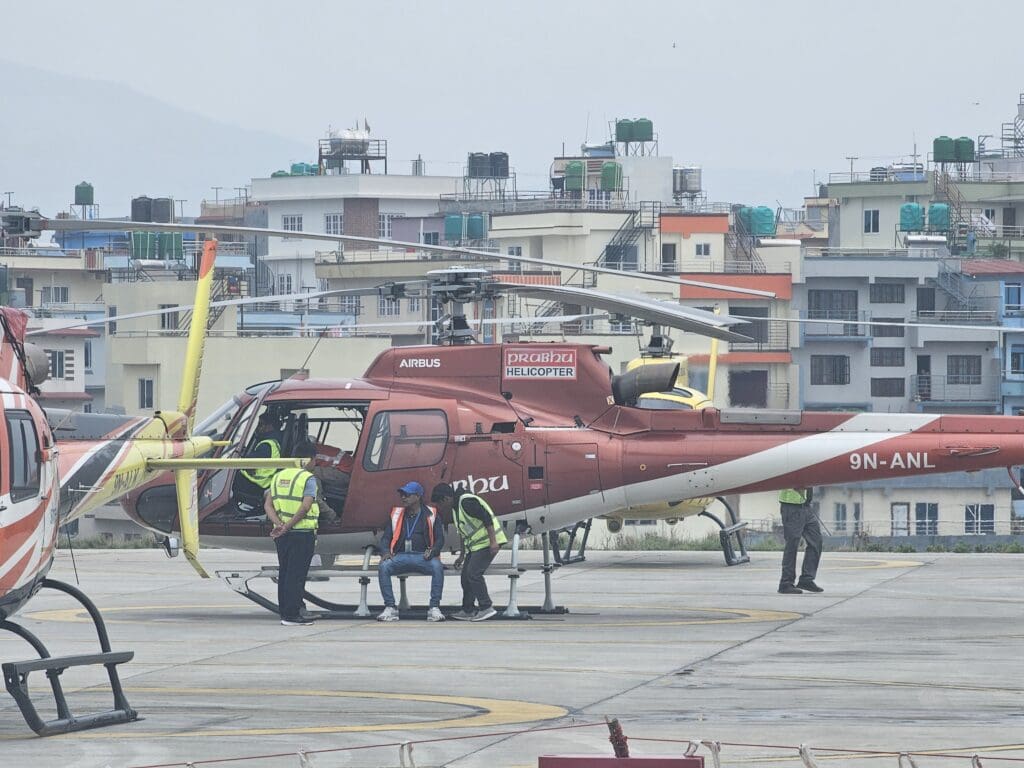
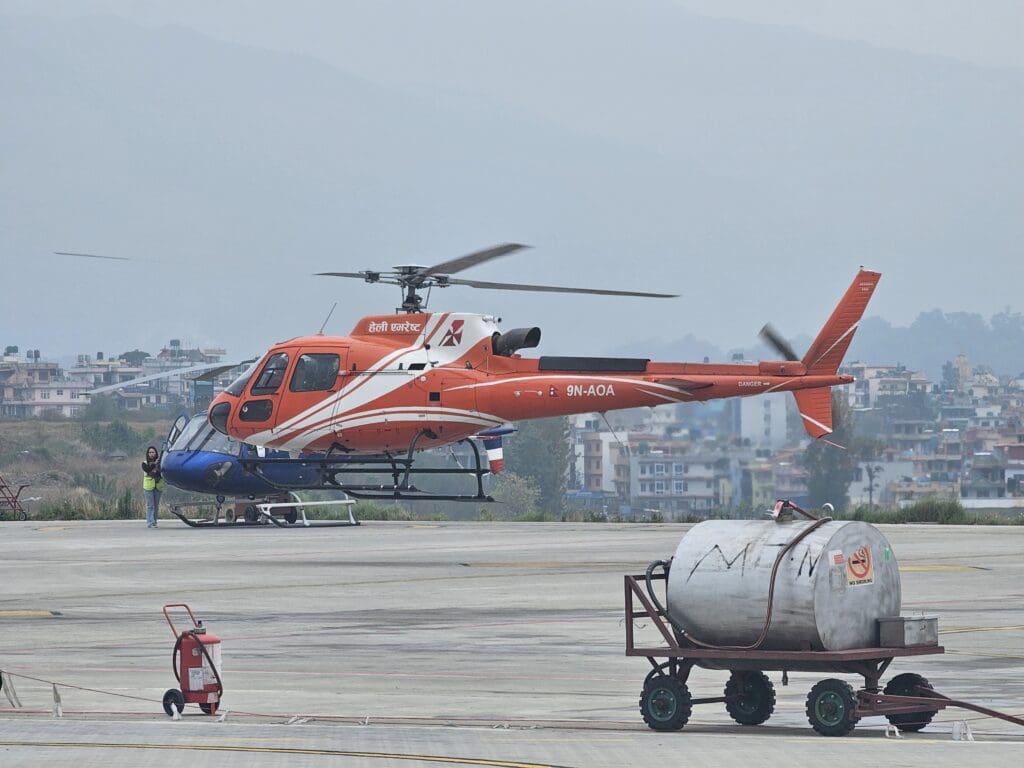
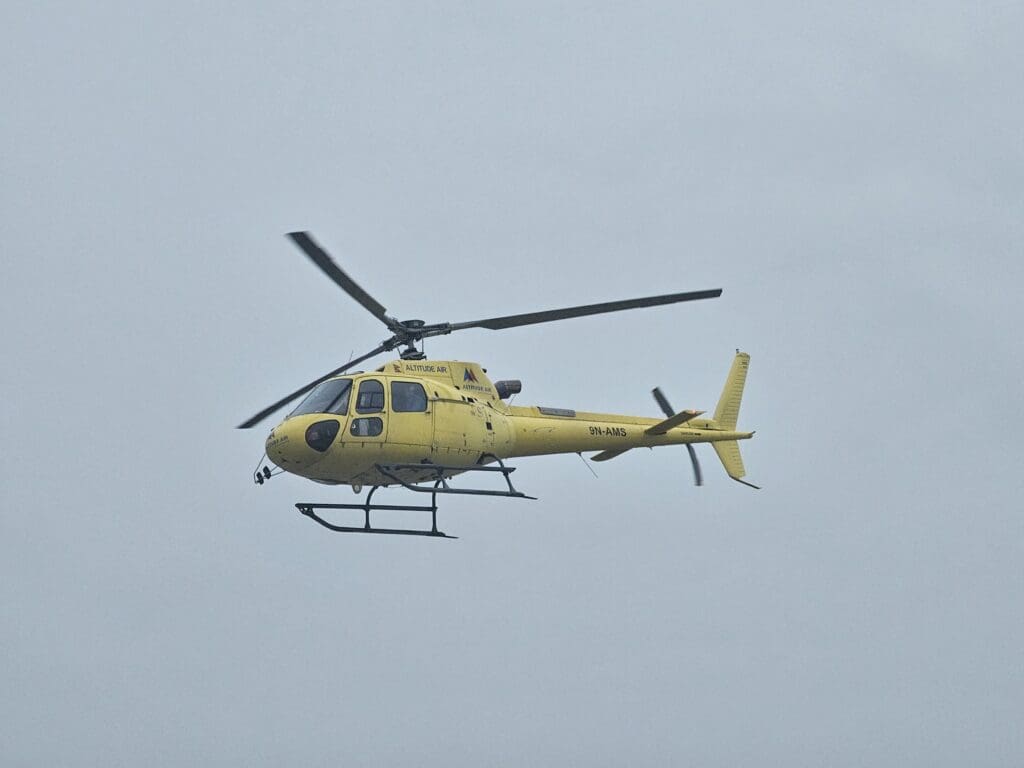
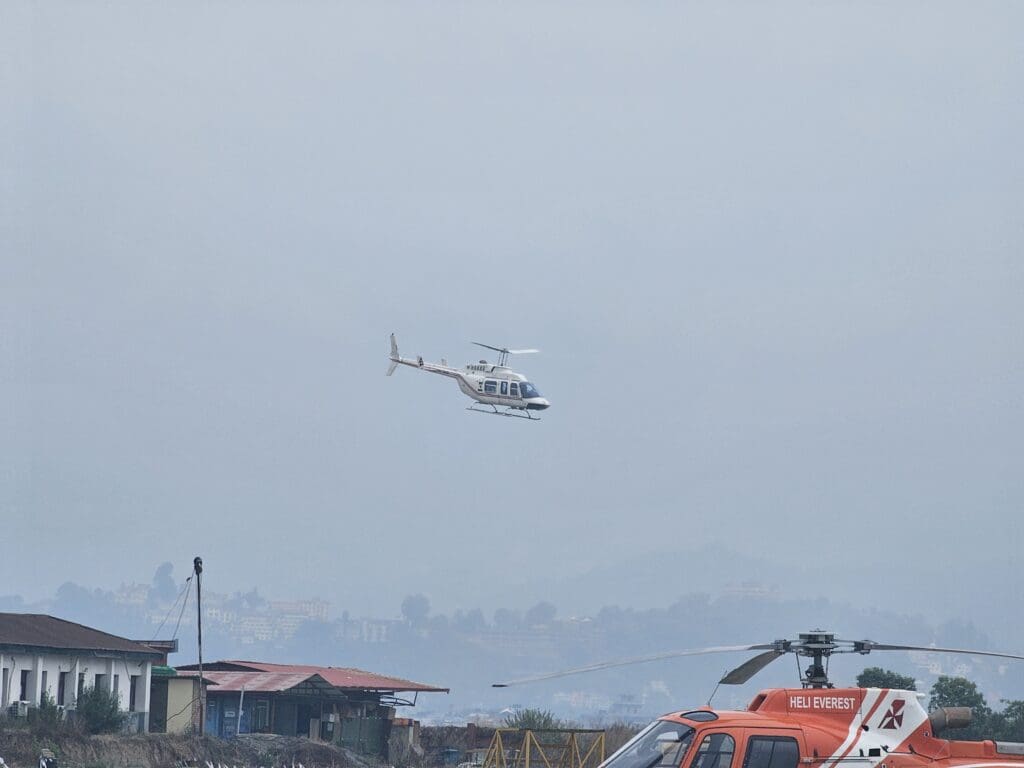
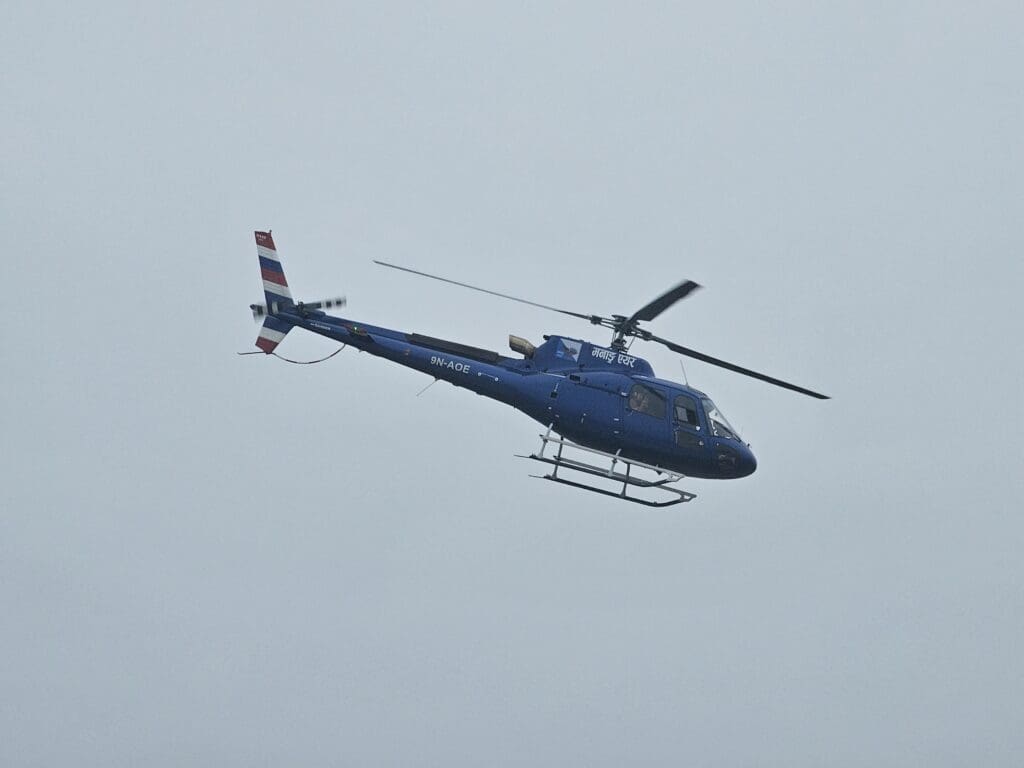
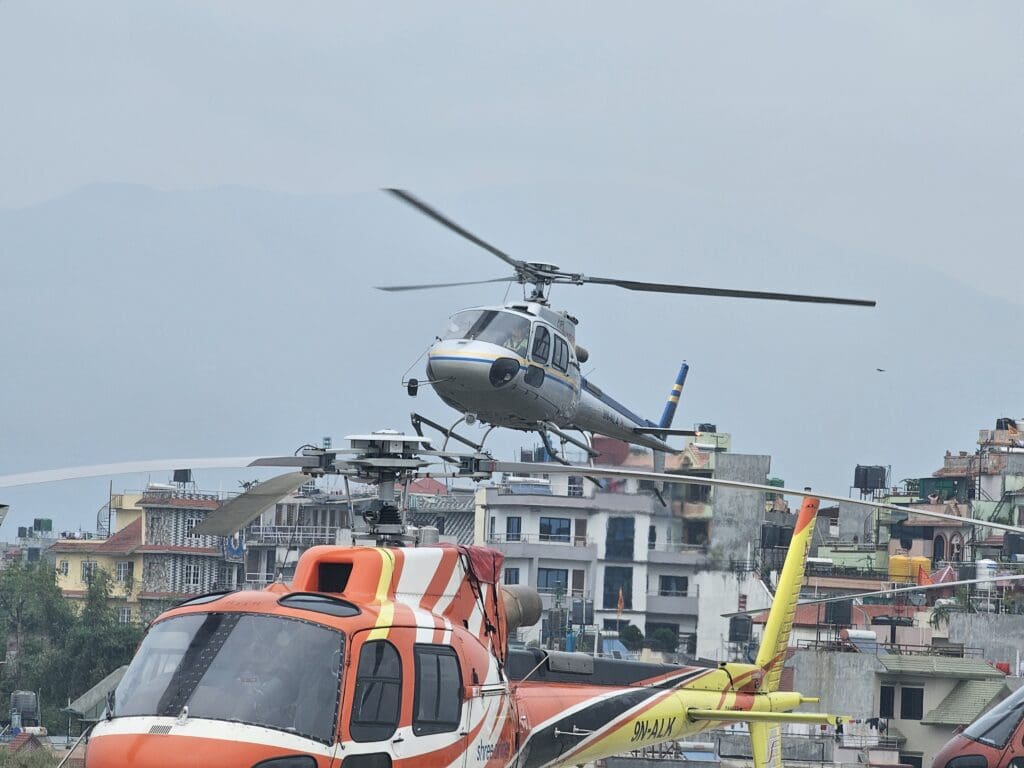
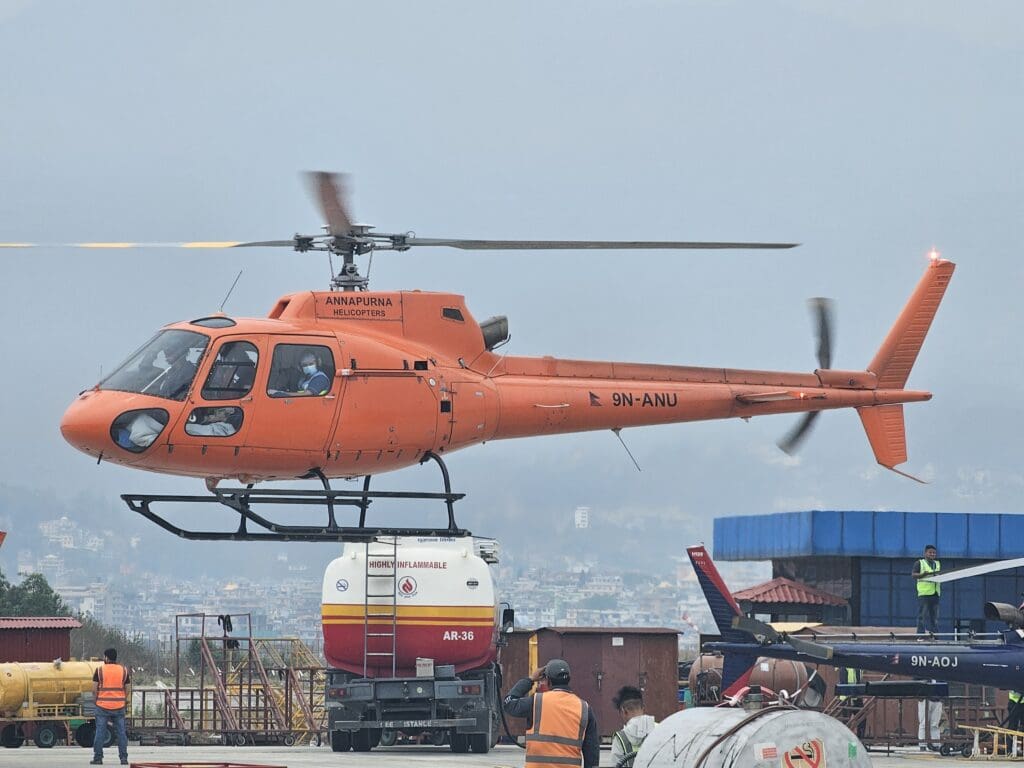
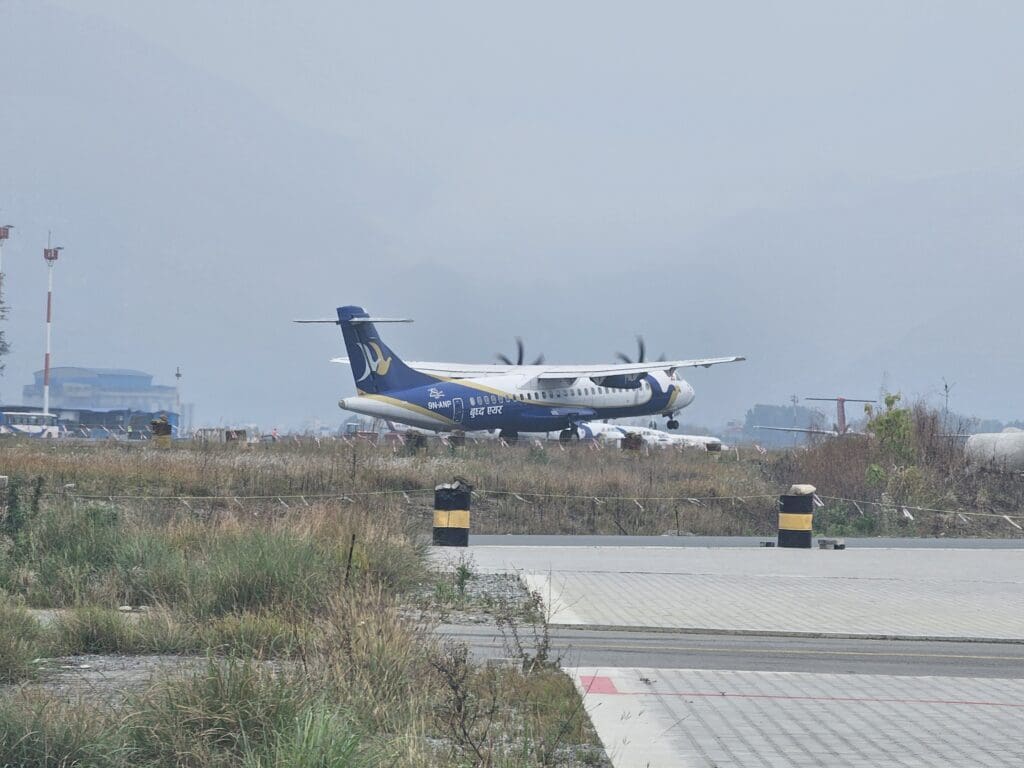
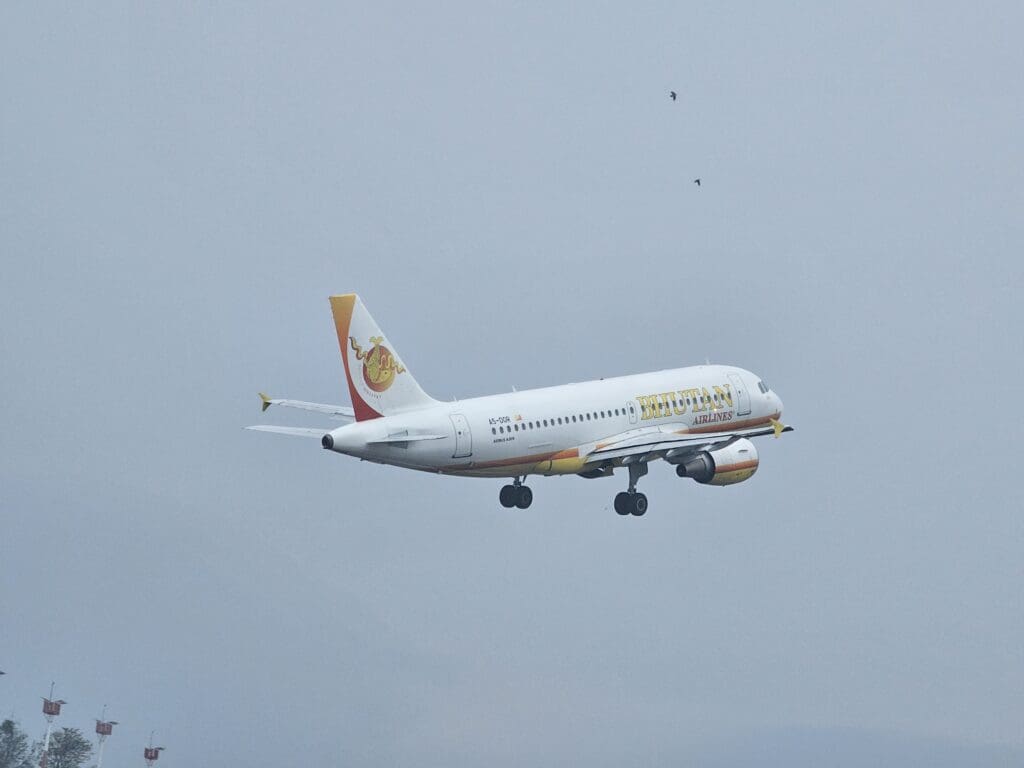
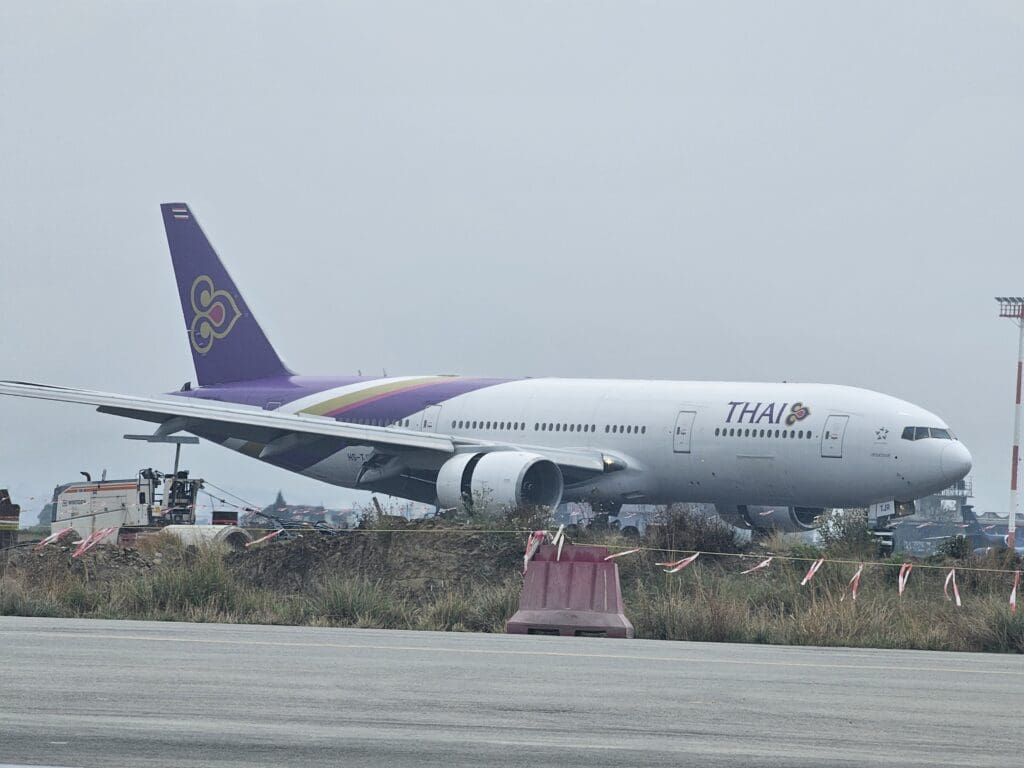
In addition to this, unobstructed views of the fixed-wing movements on the runway were also had, with types seen there ranging in size from Nepal Airlines’ Twin Otter, right up to Thai Airways’ Boeing 777-200ER, which could be seen touching down from Bangkok.
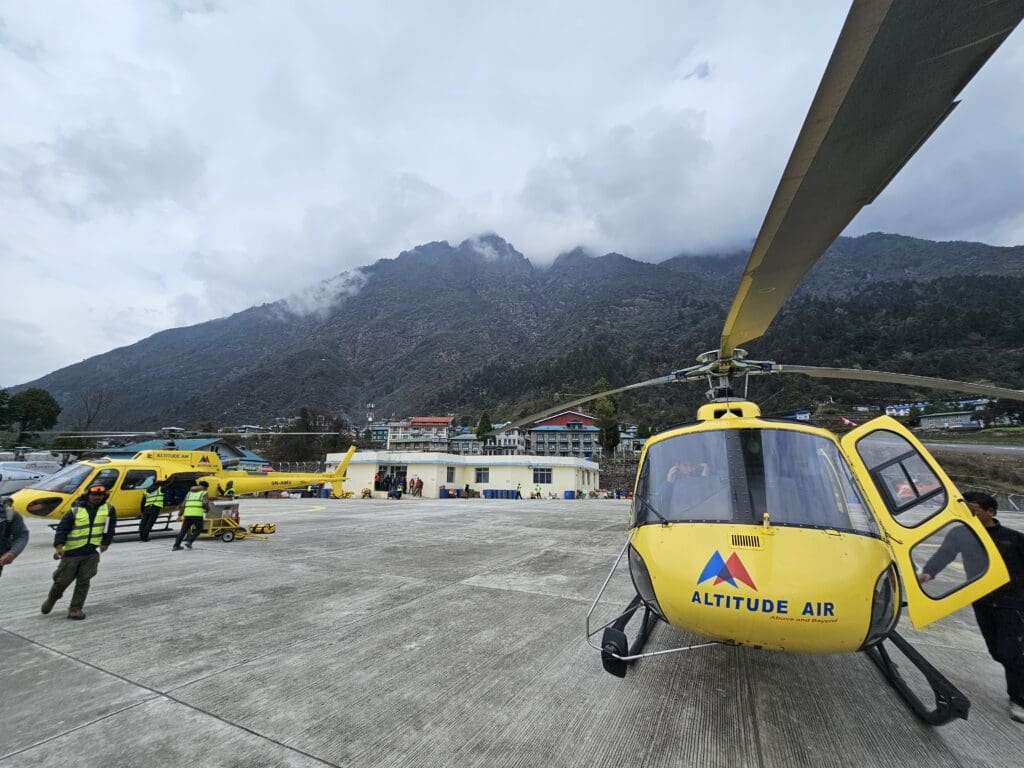
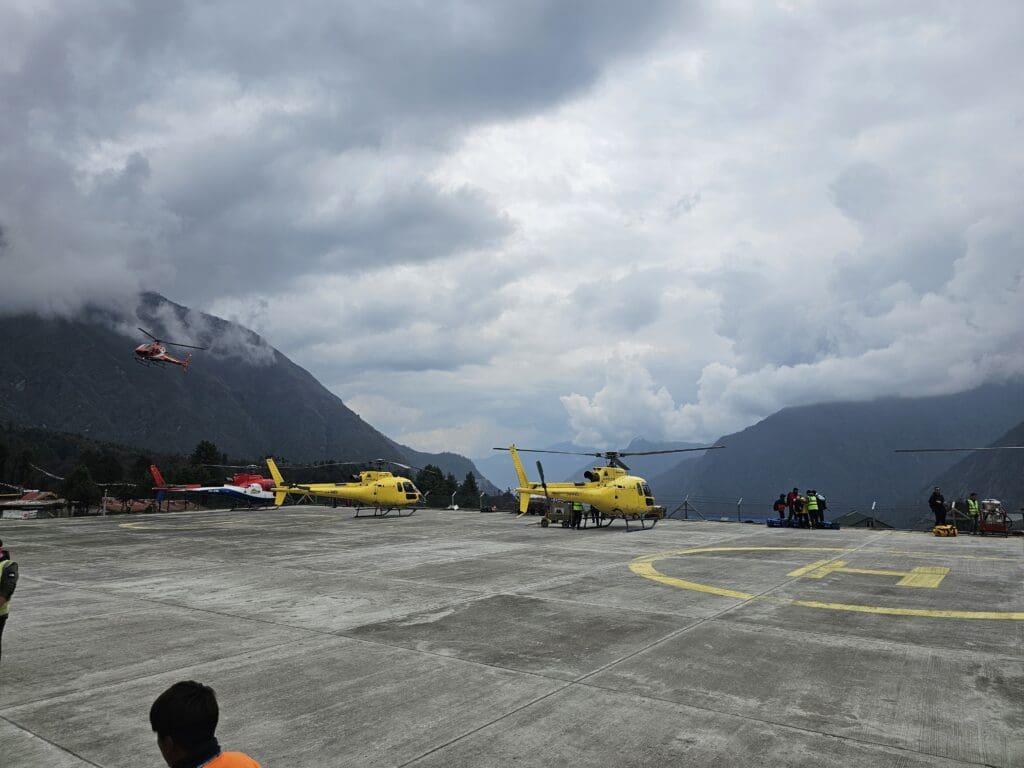
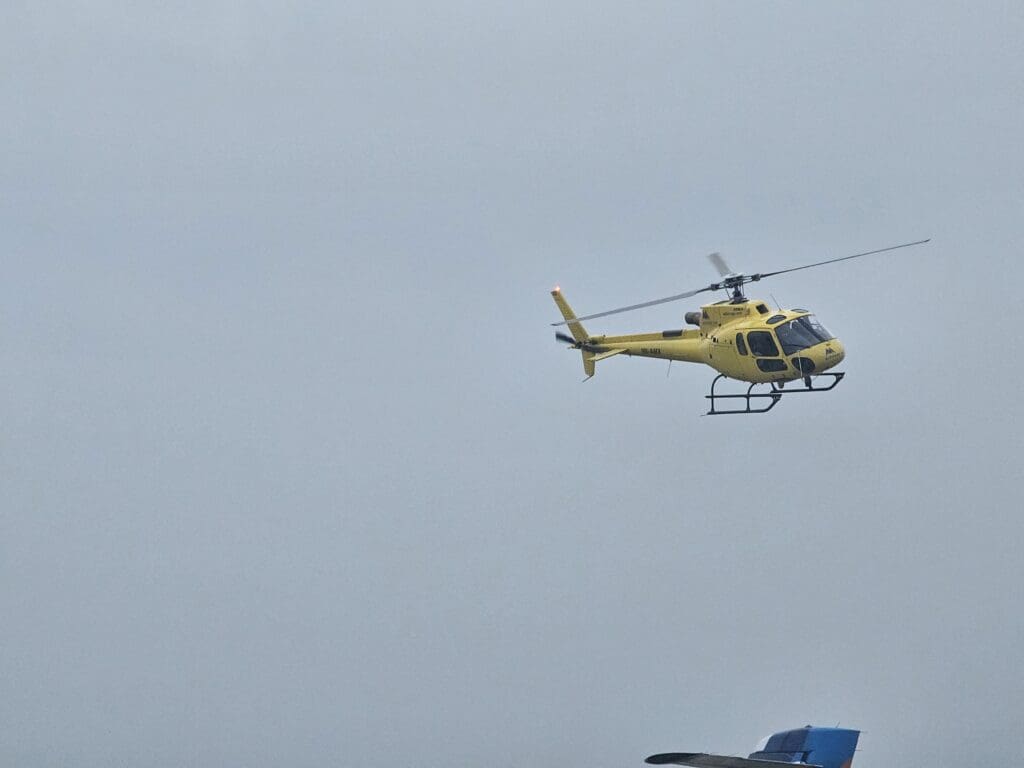
Altitude Air’s two helicopters are easily identifiable thanks to their bright yellow liveries, and after a while, the helicopter that would be taking us to Lukla touched down just in front of the minibus. This took the form of 9N-AMX, a modern Airbus H125 manufactured in Airbus Helicopter’s plant at Subang Airport in Kuala Lumpur in Spring 2019, this particular aircraft was around five years old at the time of my flight. In April that year, this was ferried up to Nepal, making stops in Thailand, Myanmar, Bangladesh and India before finally arriving at its home in Kathmandu.
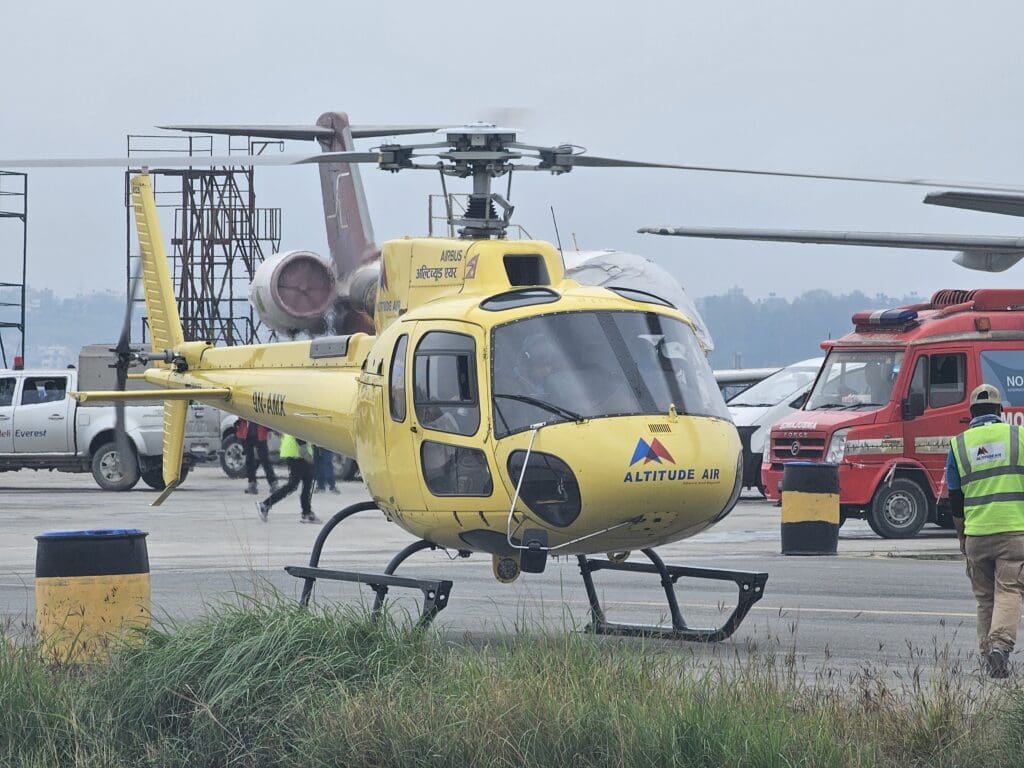
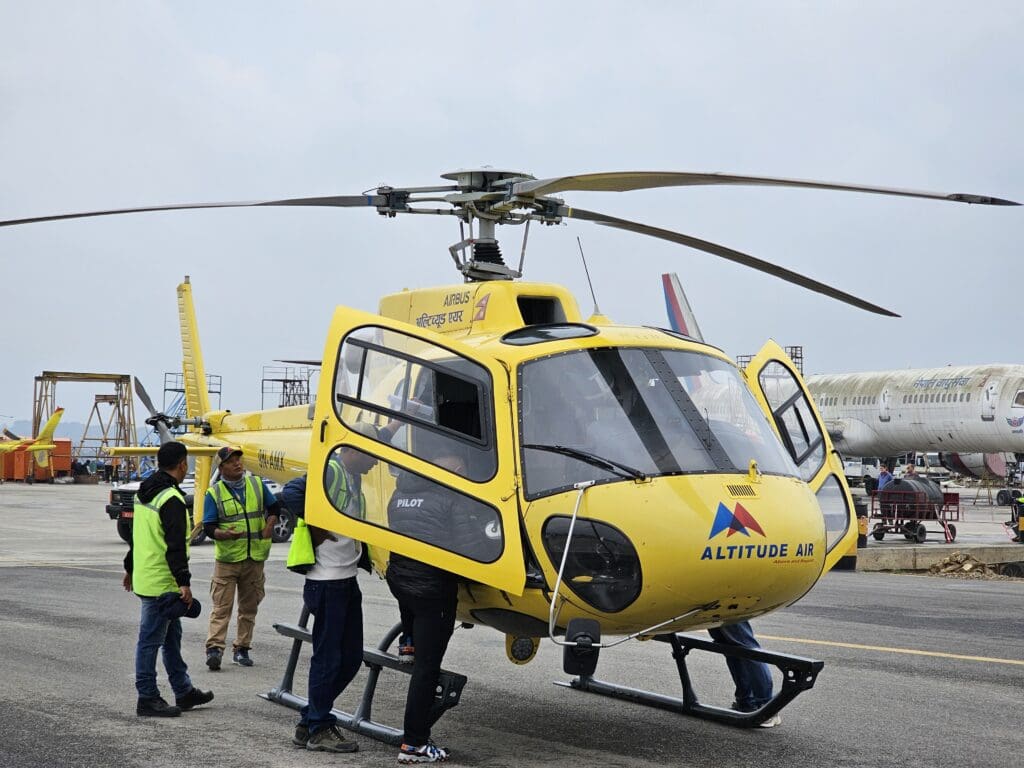
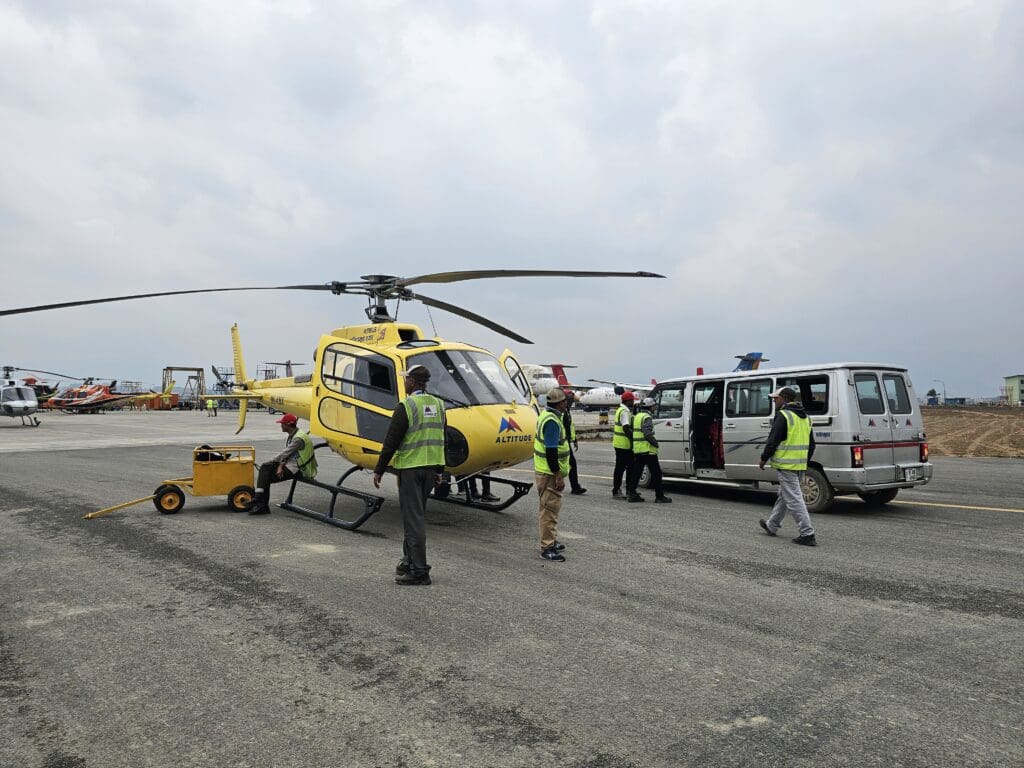
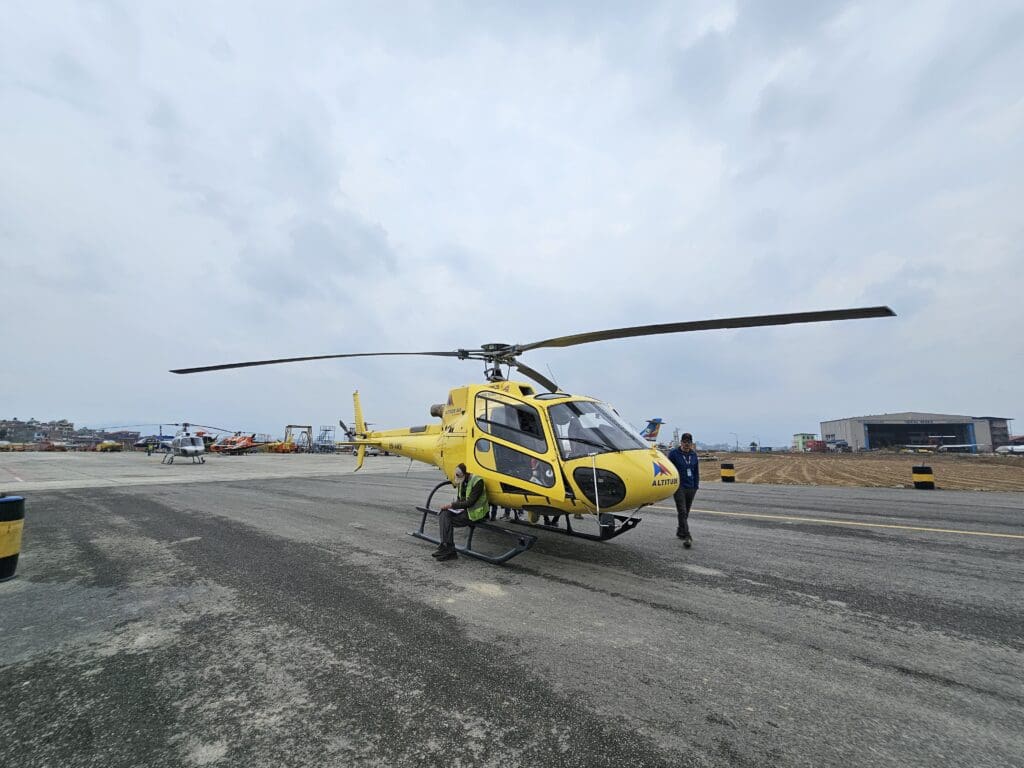
Once the inbound passengers had been ferried to the terminal, a team of Altitude Air staff descended on the aircraft and seemed to commence a comprehensive inspection of the cockpit. Meanwhile, a fuel bowser soon appeared in order to refuel the helicopter for its journey back to the Himalayas. Meanwhile, our pilot could also be seen and, hailing from Switzerland, was one of three contract pilots from overseas that I noted during my wait, with the others being from New Zealand and the United States. Eventually, passengers’ bags and a few boxes of cargo were loaded into the helicopter, however, with all of these failing to fir into the hold at the rear of the aircraft, plenty of bags ended up being stuffed into the footwells of the front left hand seat and the back row, ensuring a cramped ride for those onboard! Seeing as our helicopter would only be going to Lukla and back, there was no need for the aircraft to carry any fuel containers, as is the norm when these head to higher elevations and the camps further up towards Everest.
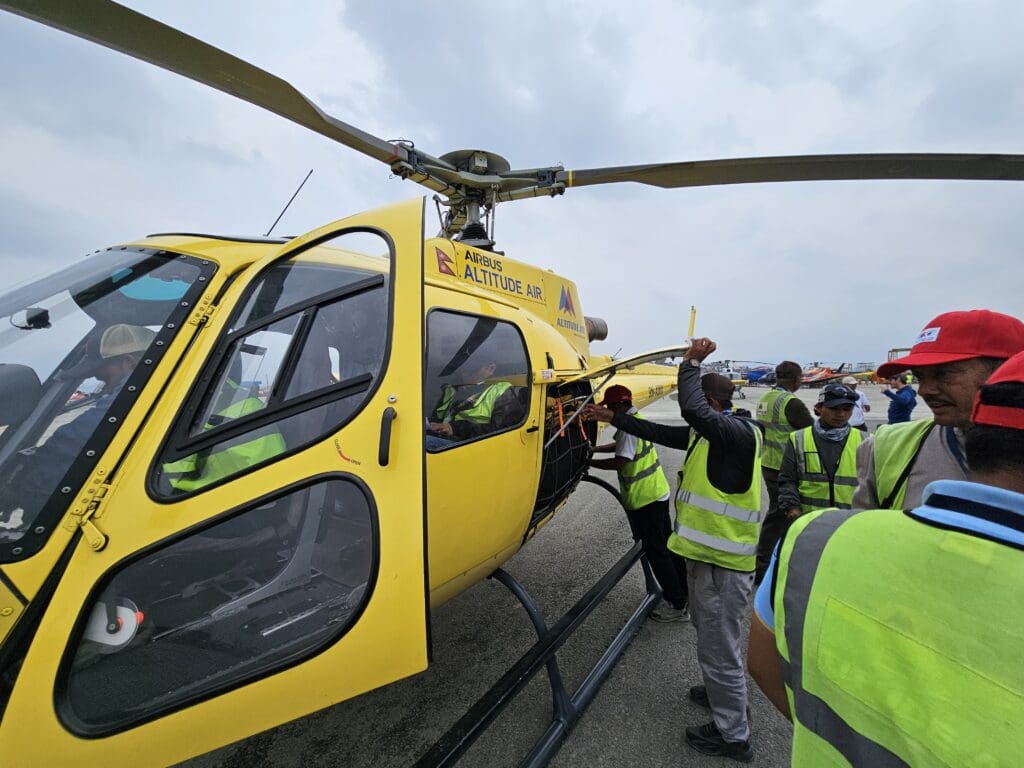
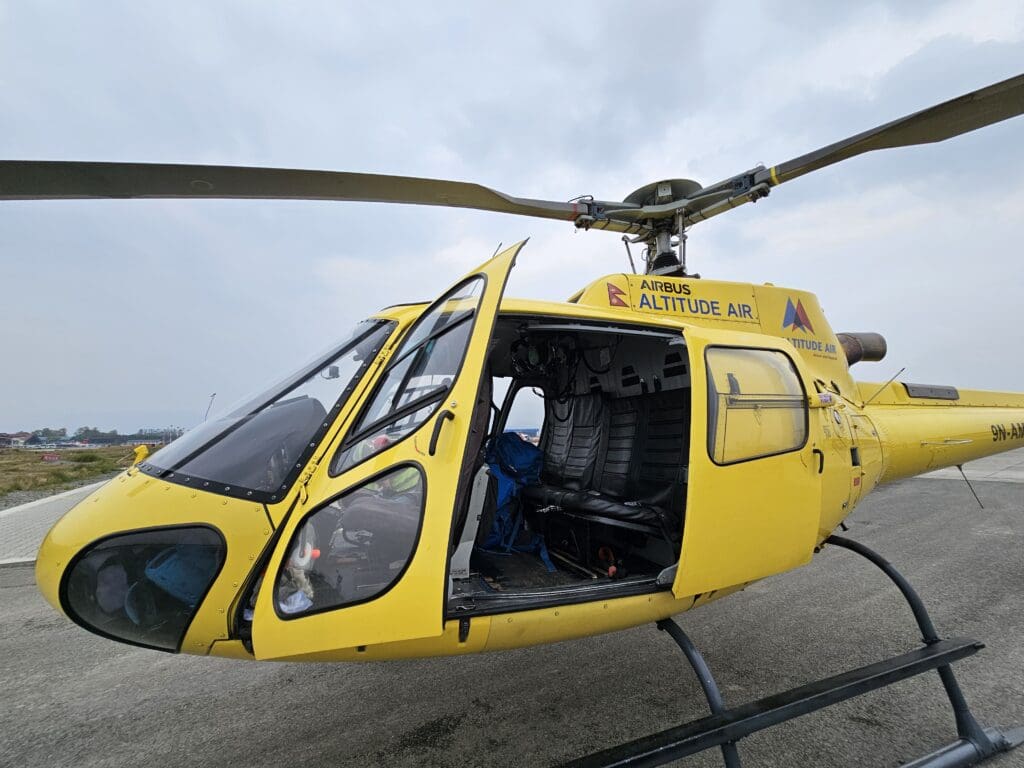
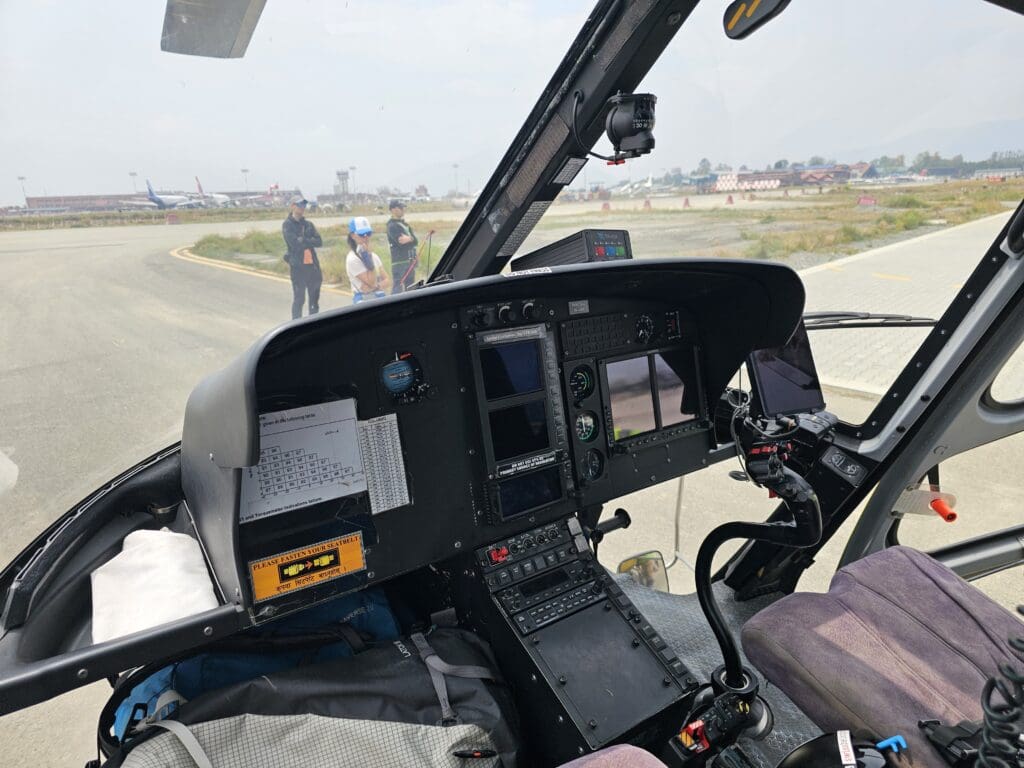
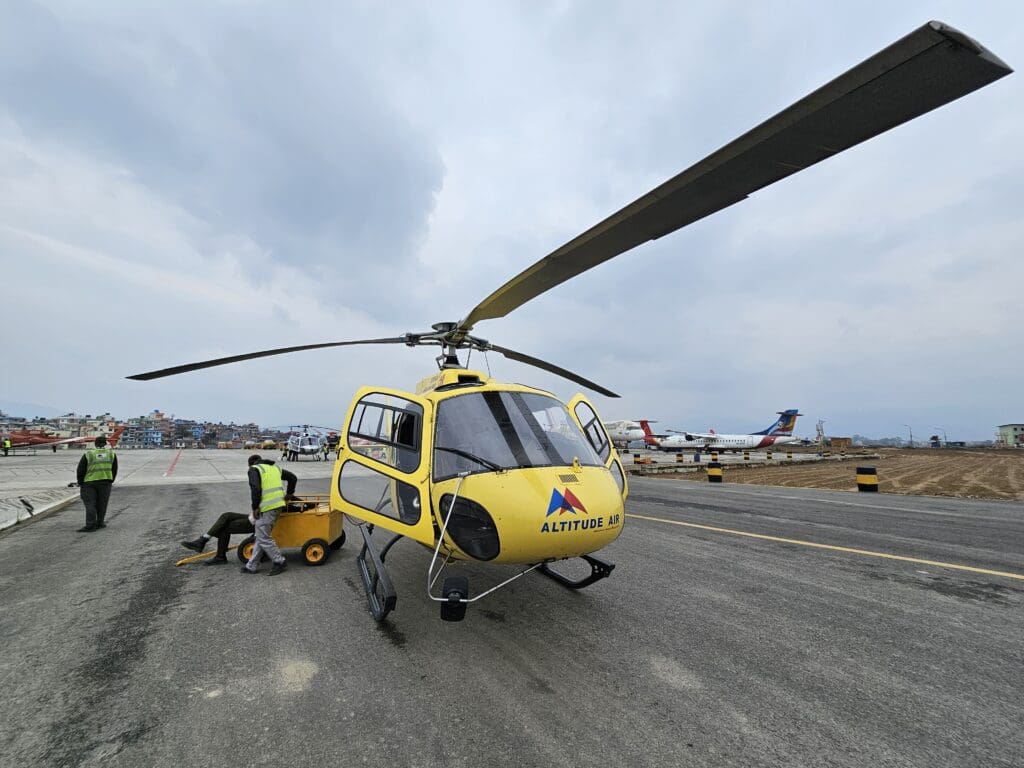
Eventually, it was time to board the aircraft. The H125 is not the largest of helicopters, and features four passenger seats in the rear of the aircraft, as well as one on the left hand side of the cockpit. Much to my delight, I was to have the luxury of sitting in the left hand seat, affording me the luxury of a fantastic view of the passing scenery as we made our way to Lukla. Soon squeezing in, thanks to the bags, I immediately found that I would be in for a cramped ride, although this would not be any major issue and I was certainly not expecting any significant amount of luxury during my ride to Lukla! Once seated, I strapped myself in and the doors were soon closed. That day, there was absolutely nothing by means of a safety briefing, nor did anyone check that passengers were strapped in!
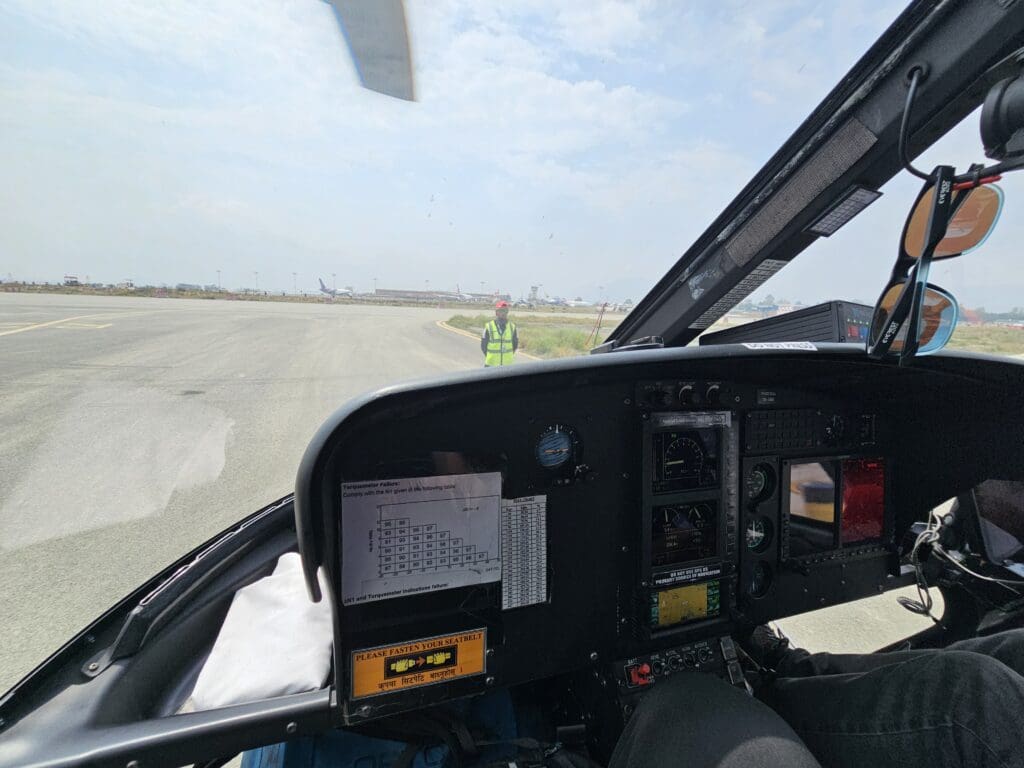
Soon, the Airbus’ engine powered up and the rotors began to whirl, accompanied by a fair amount of shaking, vibration and noise, which would have perhaps been a little unnerving to those less acquainted with the excitement of rotary operations. Following a short pause, the pilot made a call to air traffic control and slowly raised the collective, at which point we entered a hover a few metres above the ground. However, our initial flight was not to last for long as we soon returned to earth – the reason being that a warning light flashed up, indicating that the cargo door was not properly closed. Once back on the ground, the engine remained running as the pilot signalled to the ground staff to check this door – once they had verified that this was indeed closed, the helicopter soon took again and we whizzed off, over Kathmandu’s aircraft graveyard before leaving the tabletop airfield behind.
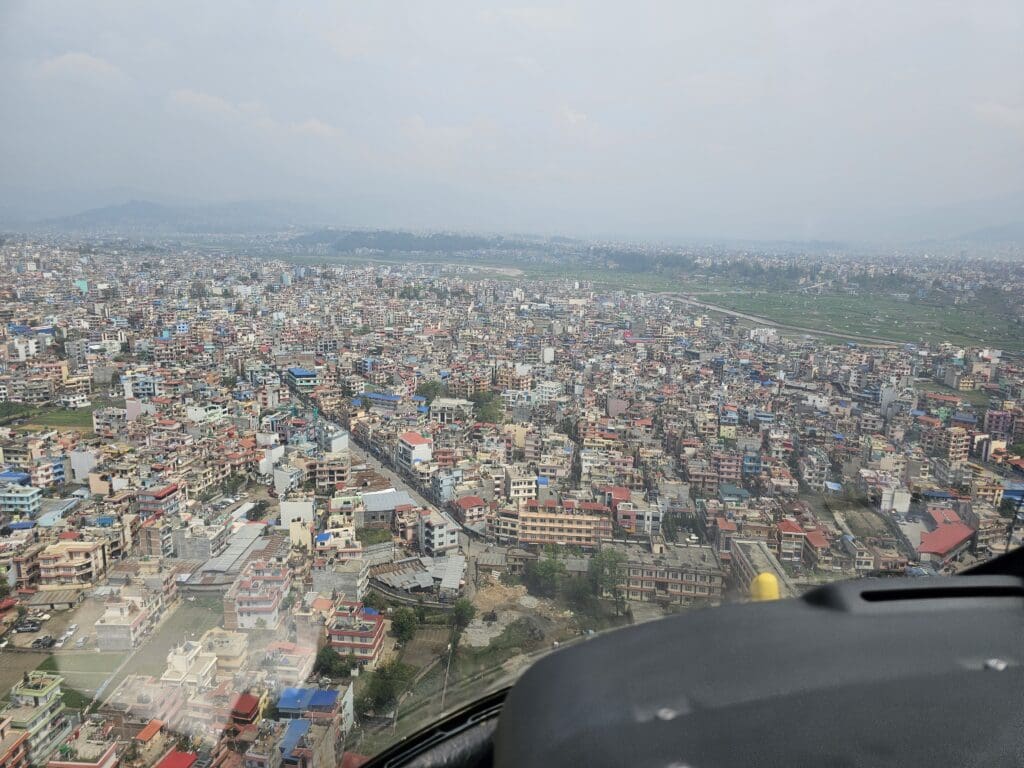
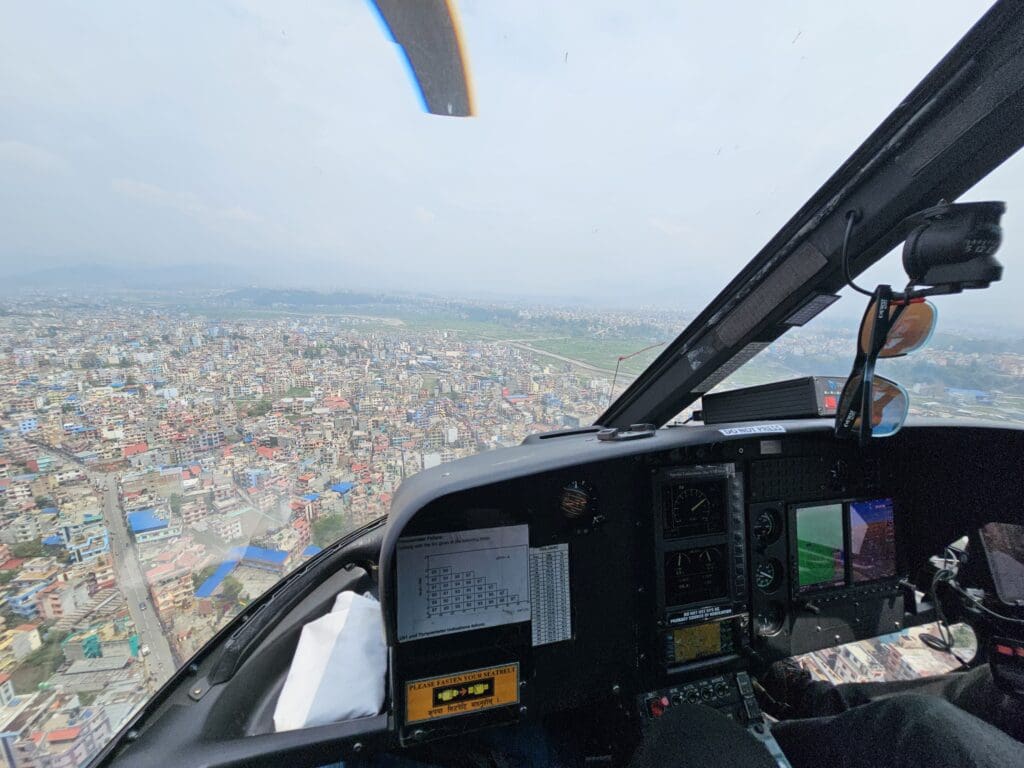
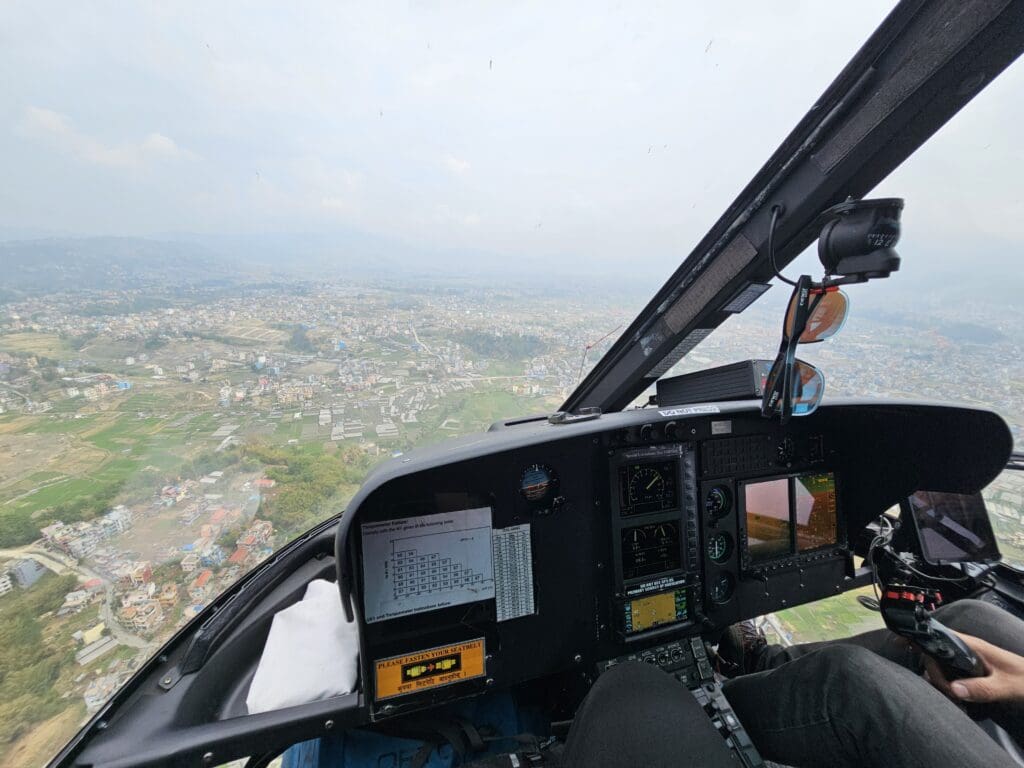
From the airport, the helicopter passed over the Bagmati River and the sprawl of Kathmandu’s northeastern fringes, soon replaced by the sight of green fields, hills and villages as we made our way northwards towards the mountains. As we trundled over the Nepali countryside towards the Himalayas, it wasn’t long before we soon spotted other helicopters, with these being a mixture of those both bound for Lukla, and ones heading in the opposite direction as they returned to Kathmandu. Wearing a headset, I spent much of the flight chatting with the pilot about their experience flying in Nepal and how this compared to flying helicopters in the Alps.
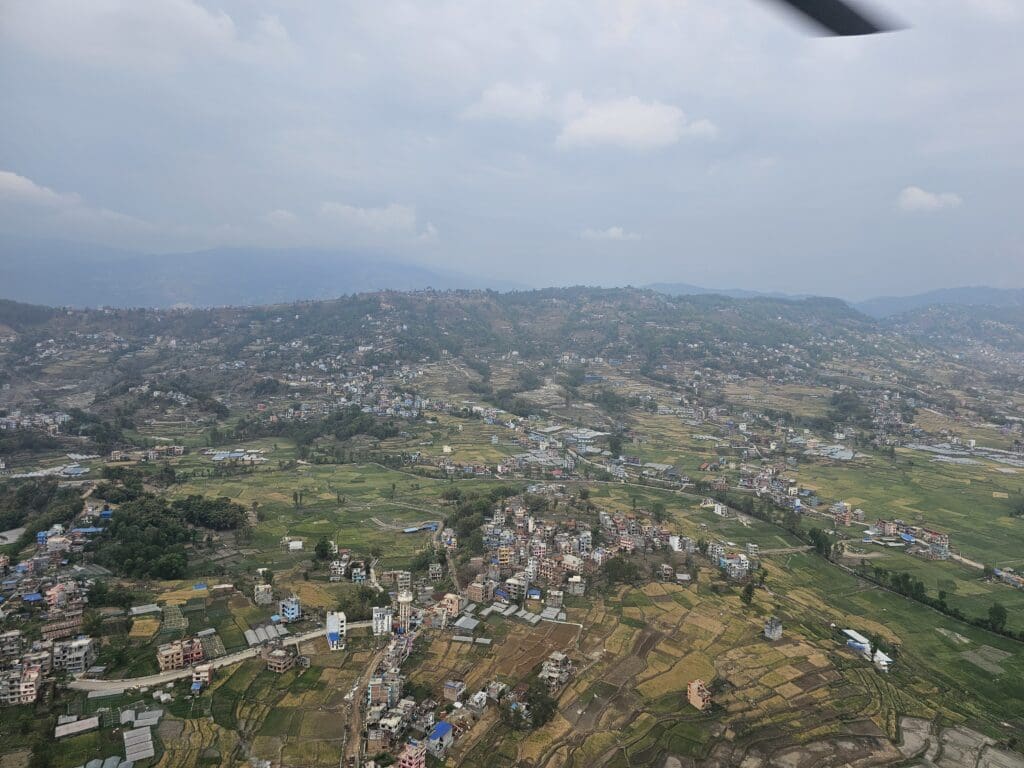
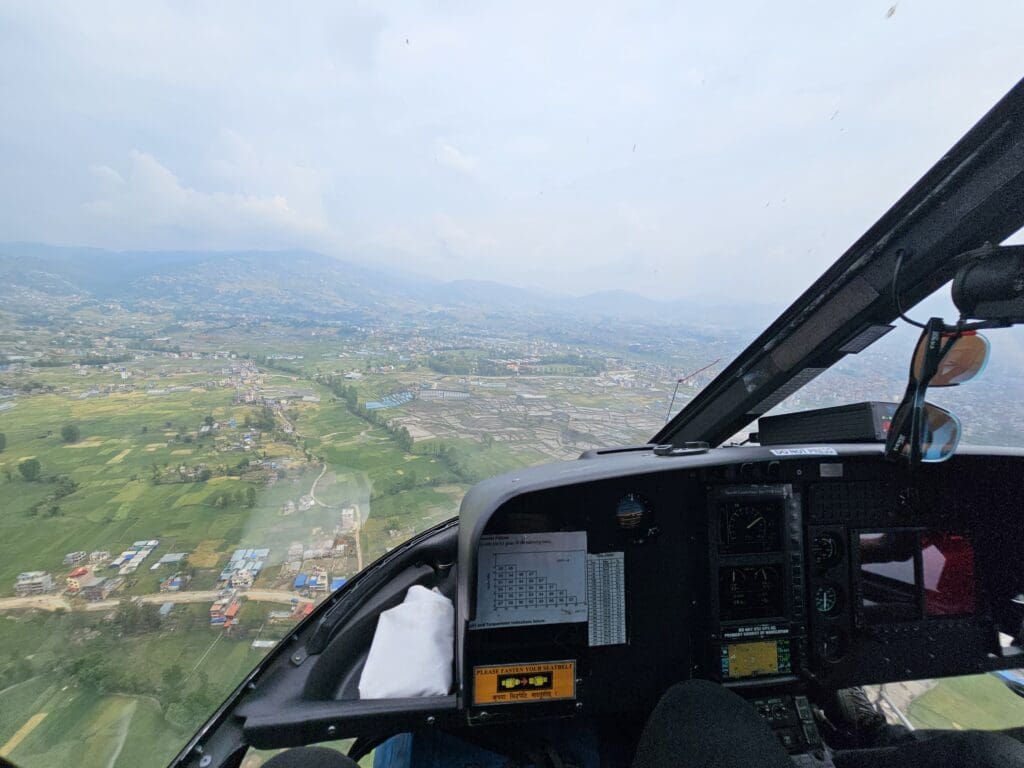
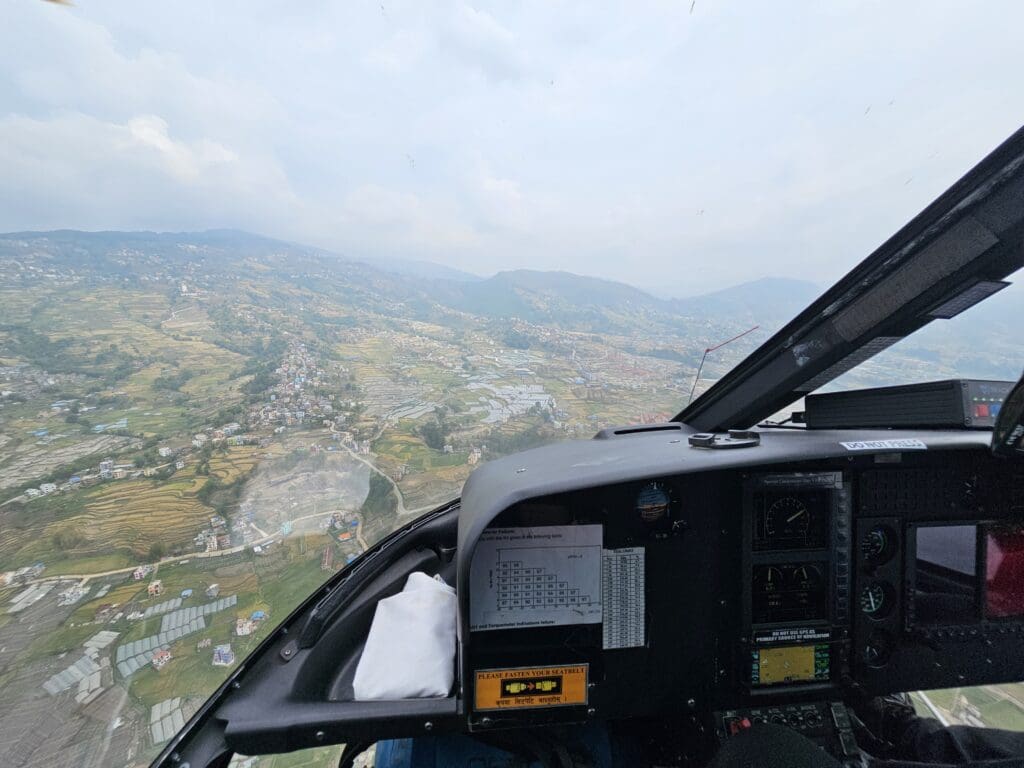
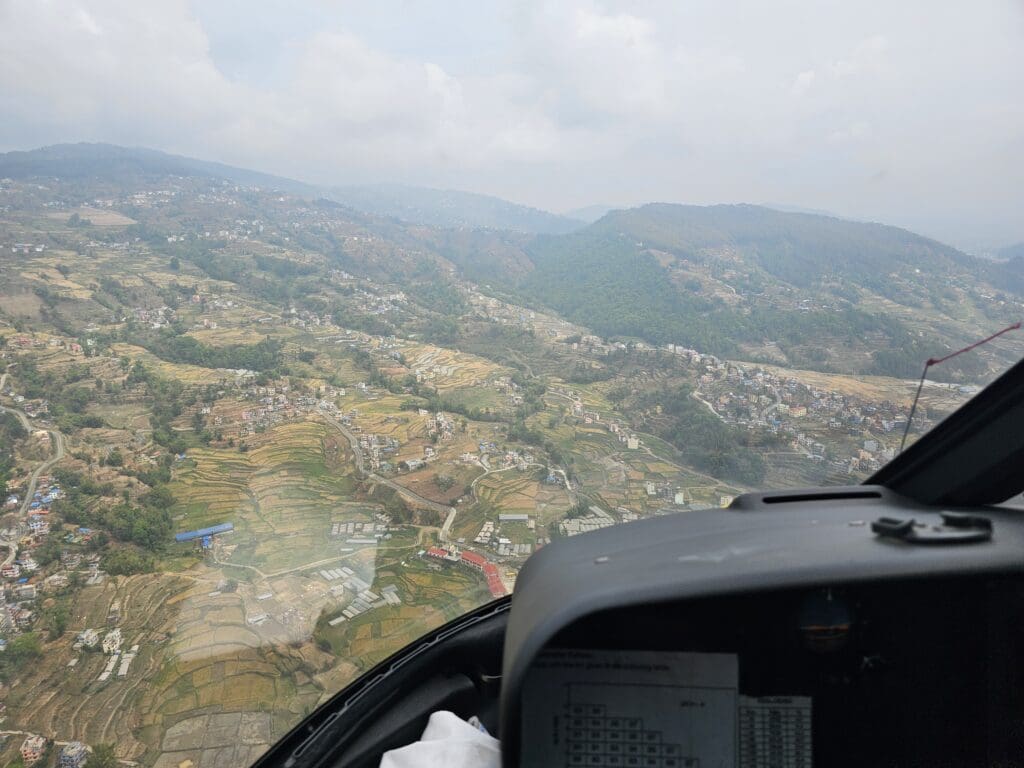
As we headed northwards, the landscape rose up and we passed low over the hills and mountains, enabling for a fantastic view of the scenery below, whilst several remote villages could be seen – most of which were connected to the rest of Nepal by winding dirt roads. Whilst we flew in and out of clouds, for the most part our journey was fairly smooth, with little by means of major lumps and bumps as we cruised towards Lukla.
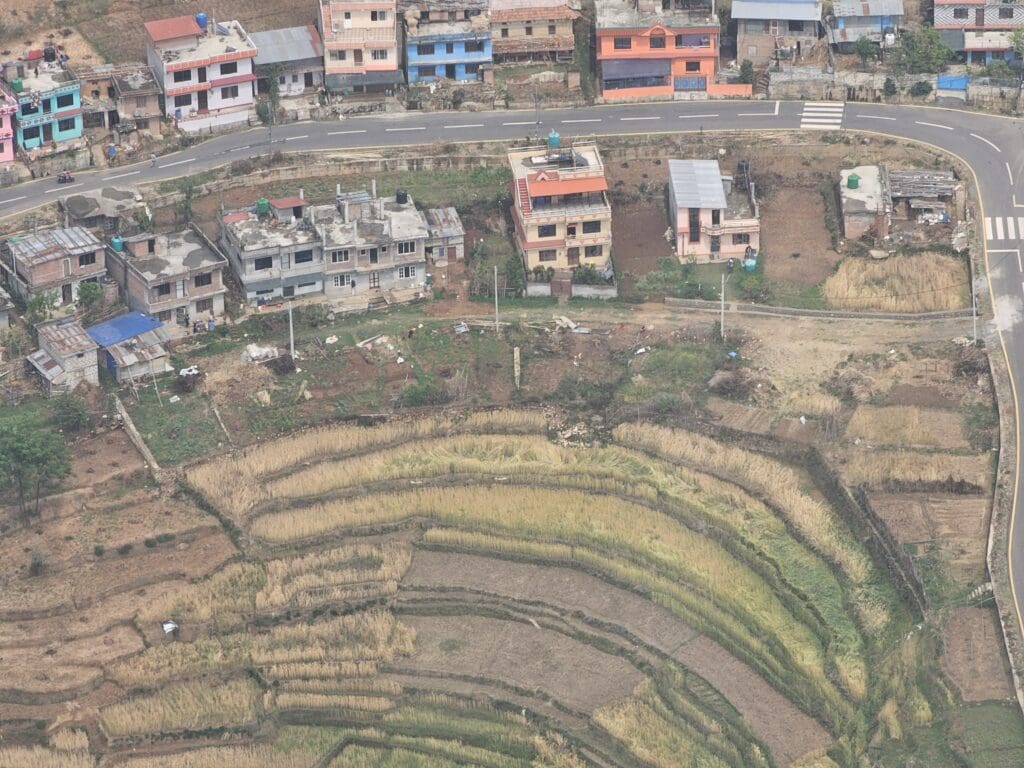
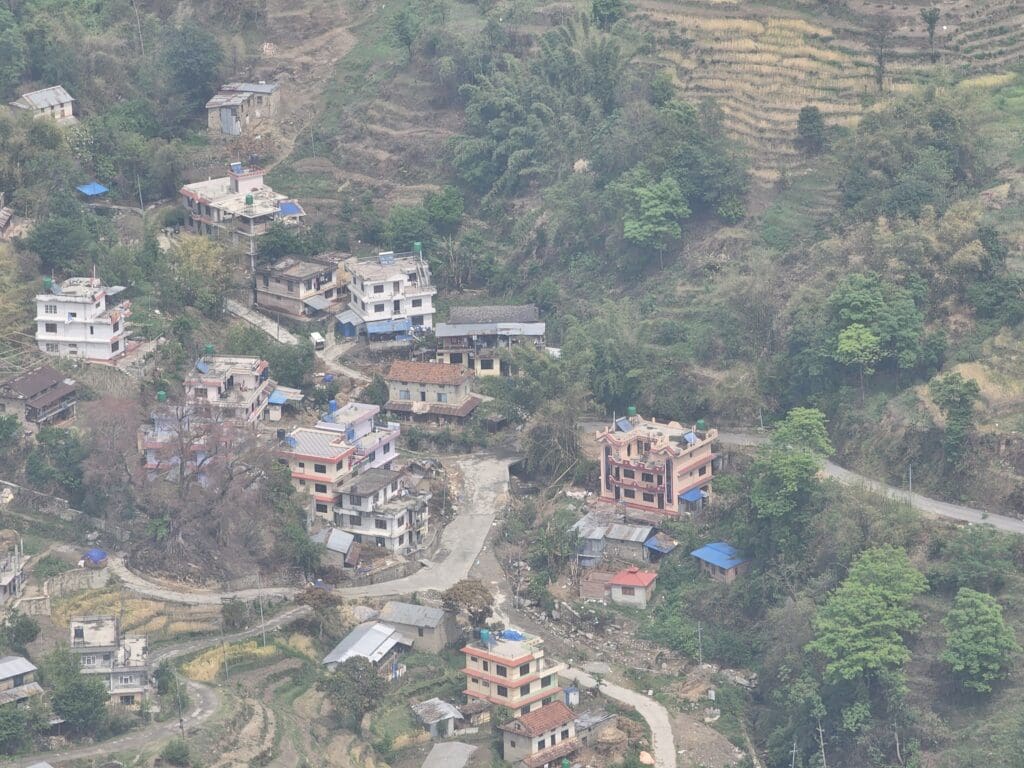
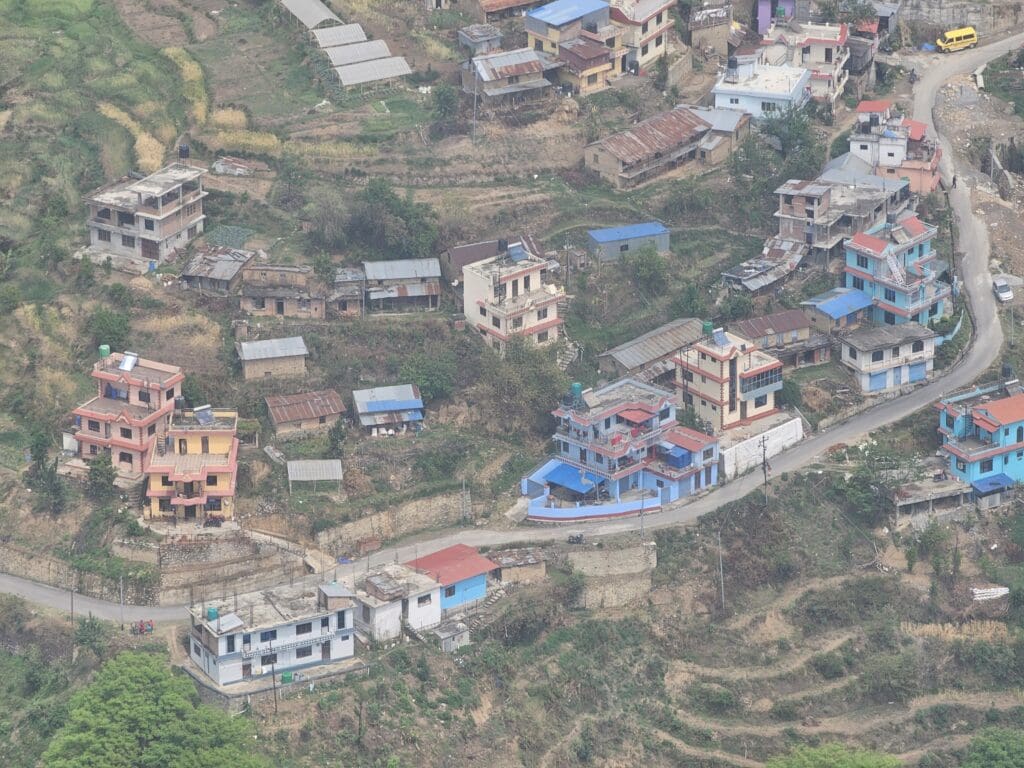
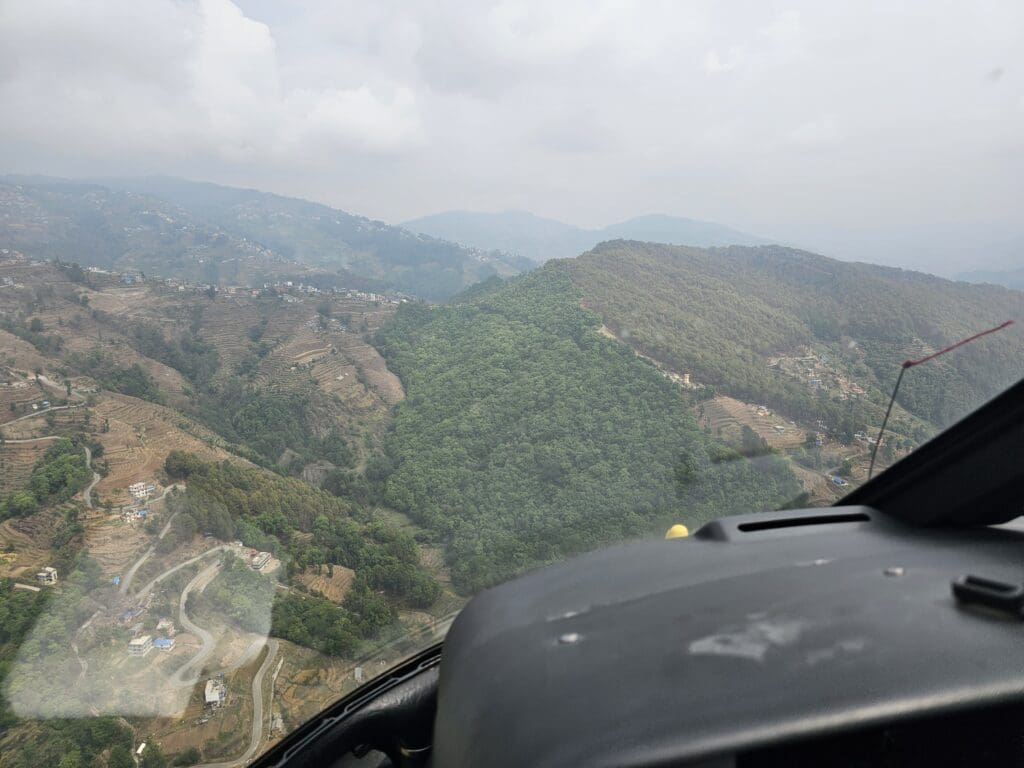
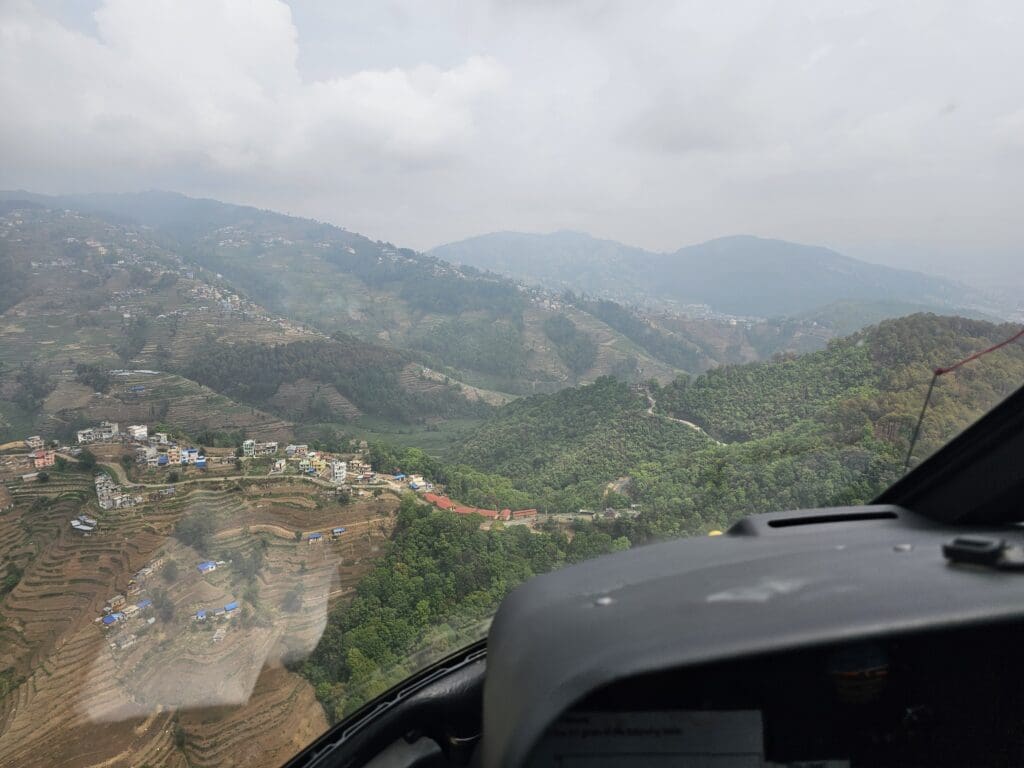
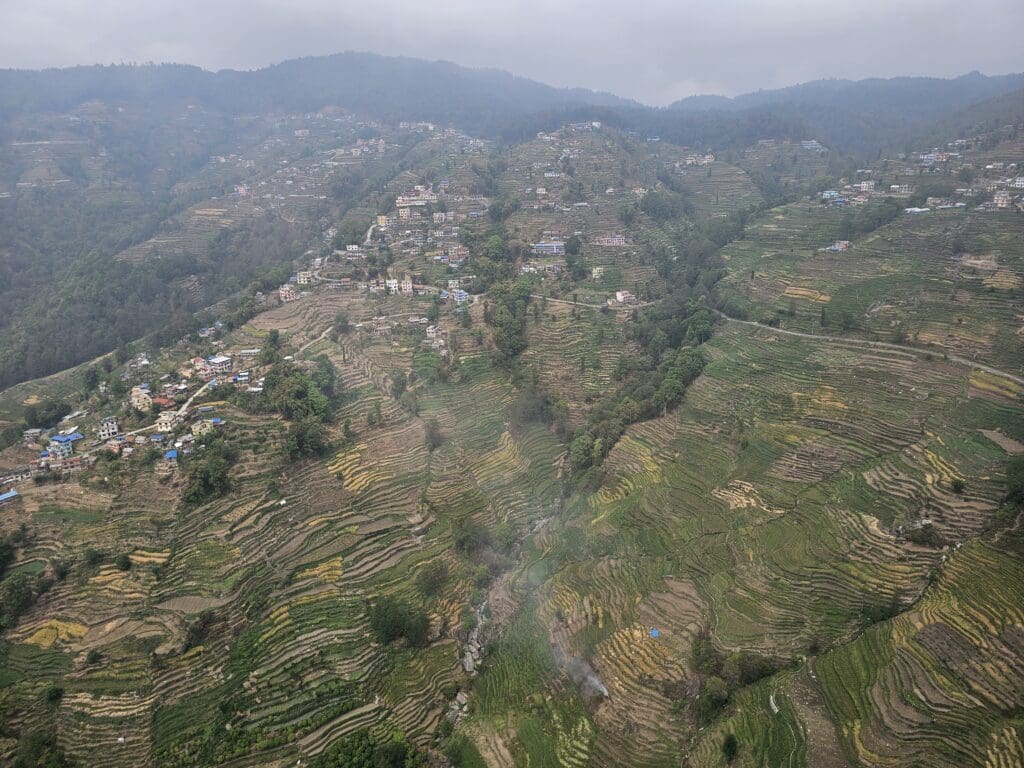
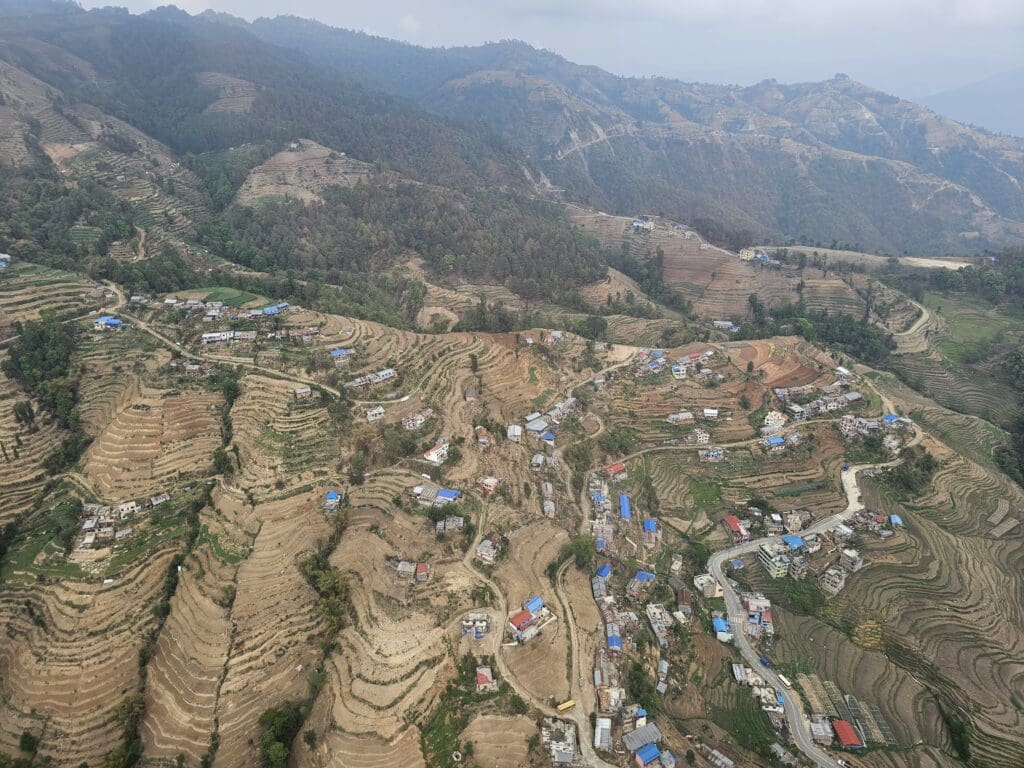
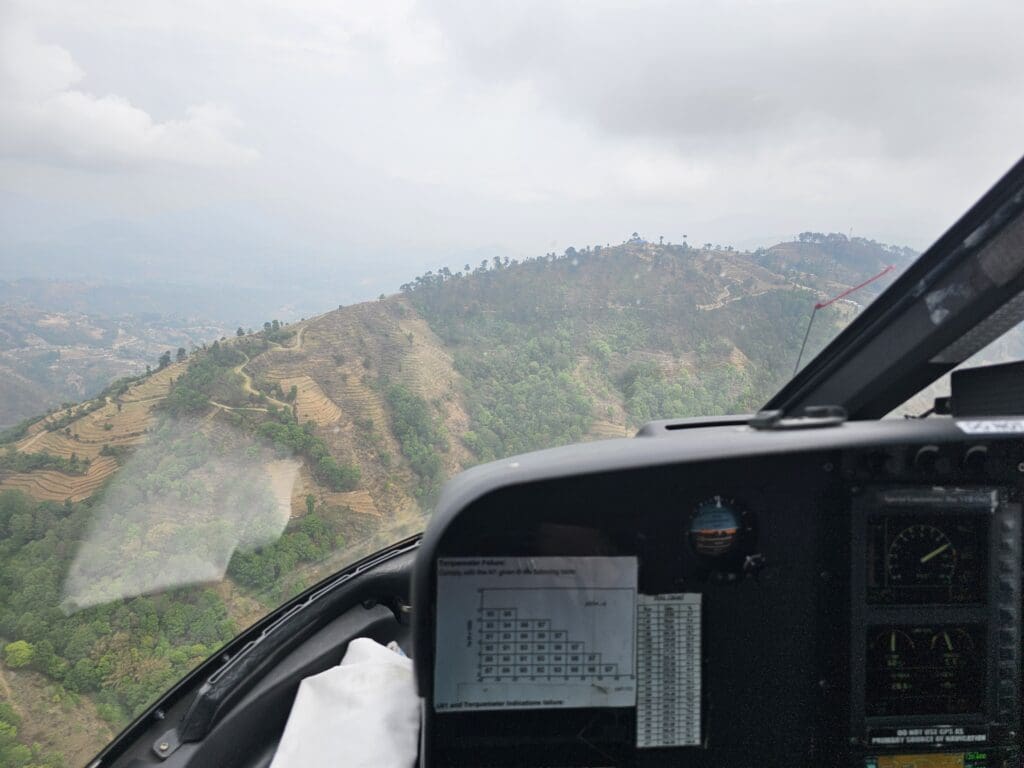
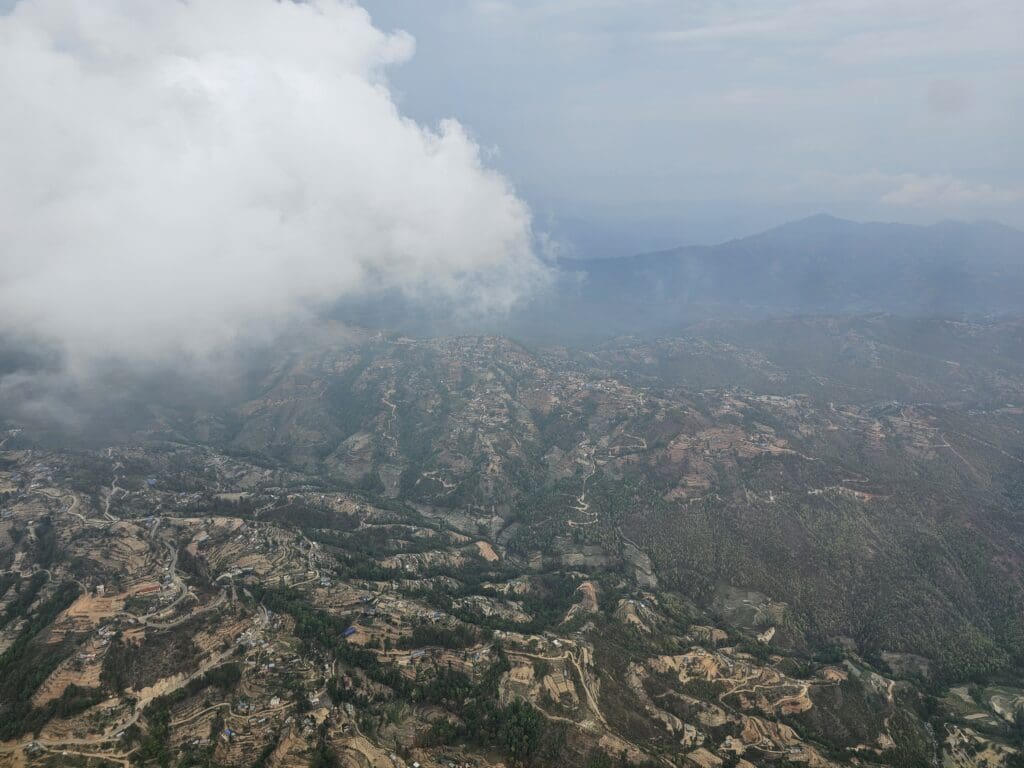
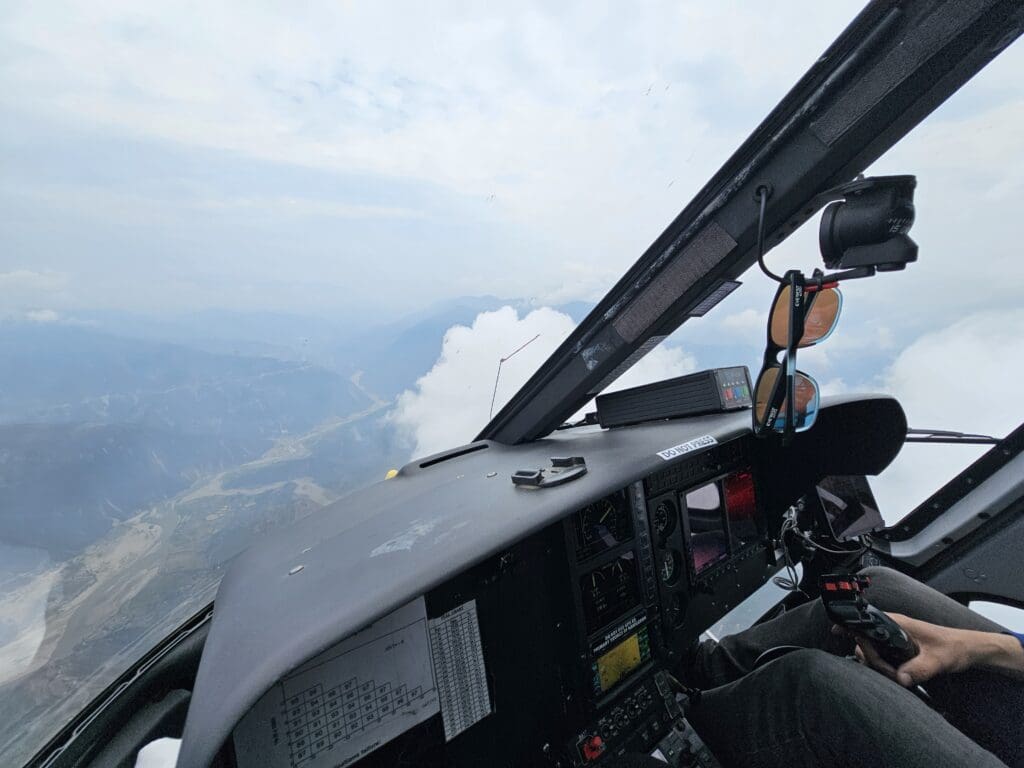
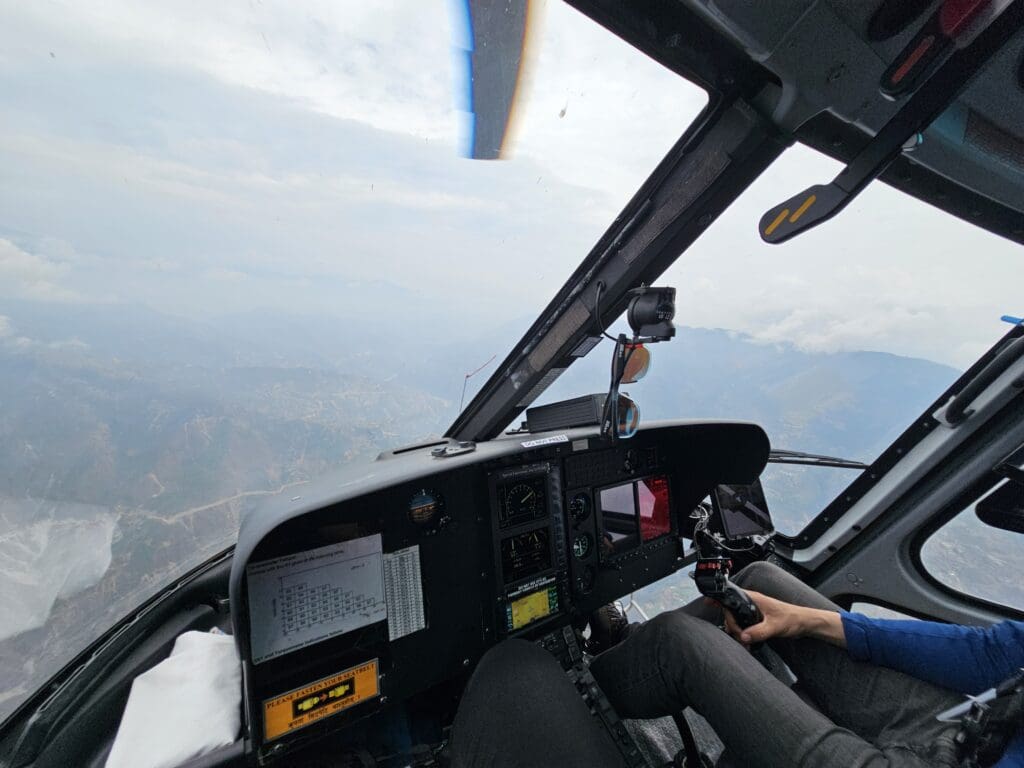
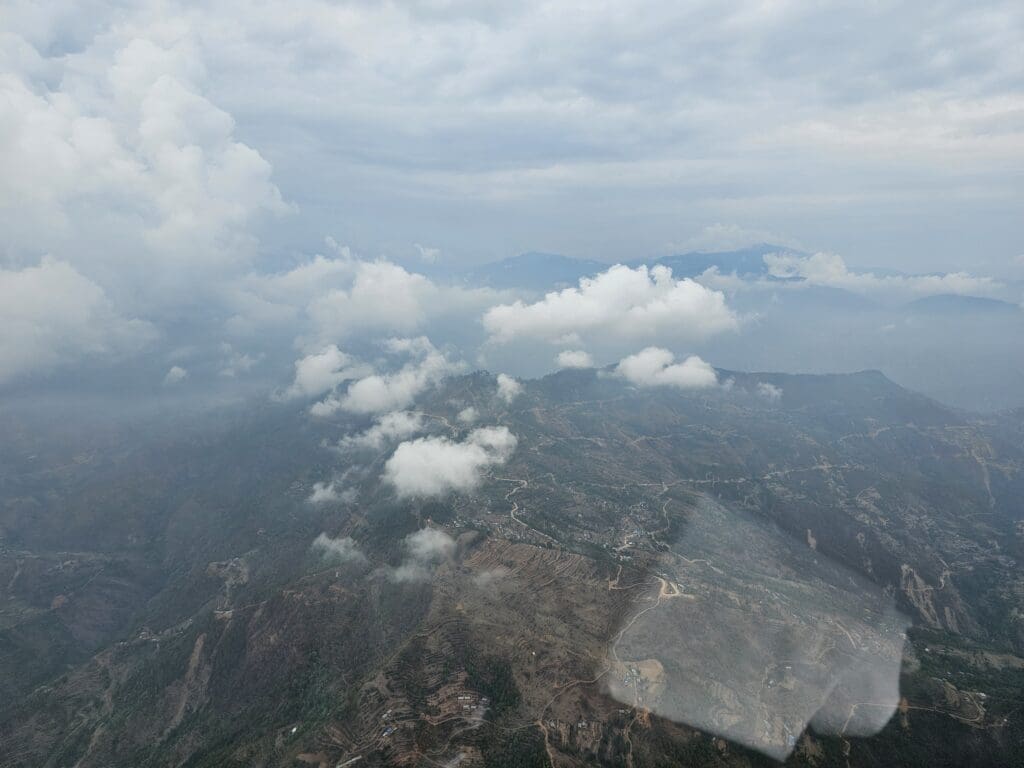
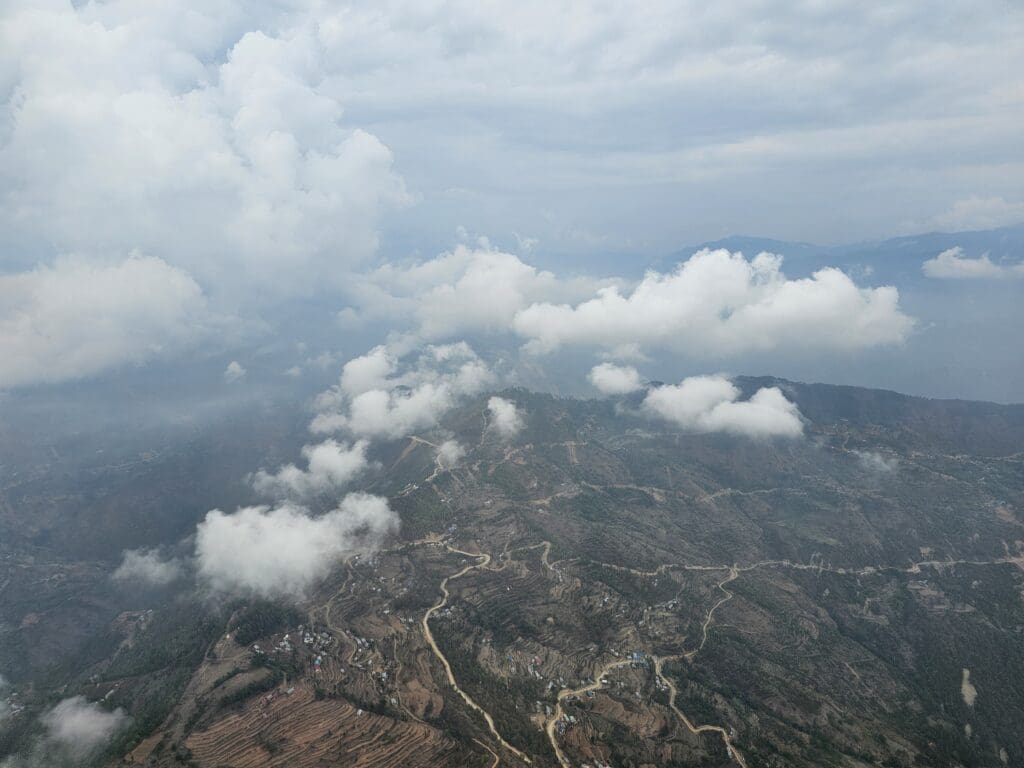
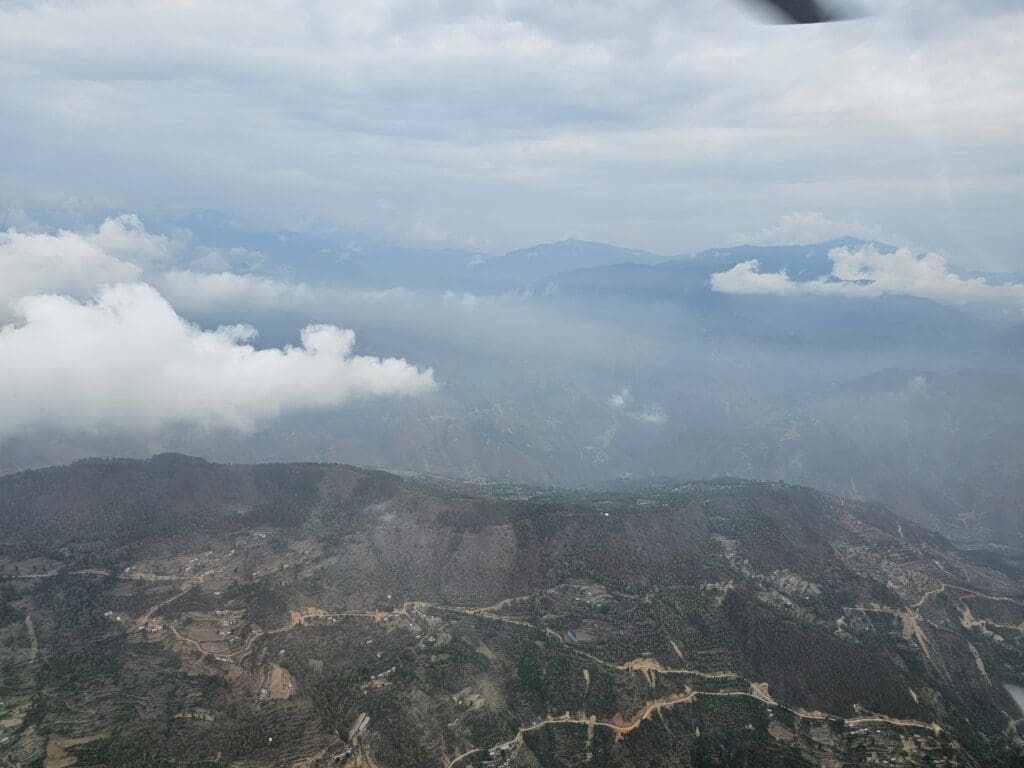
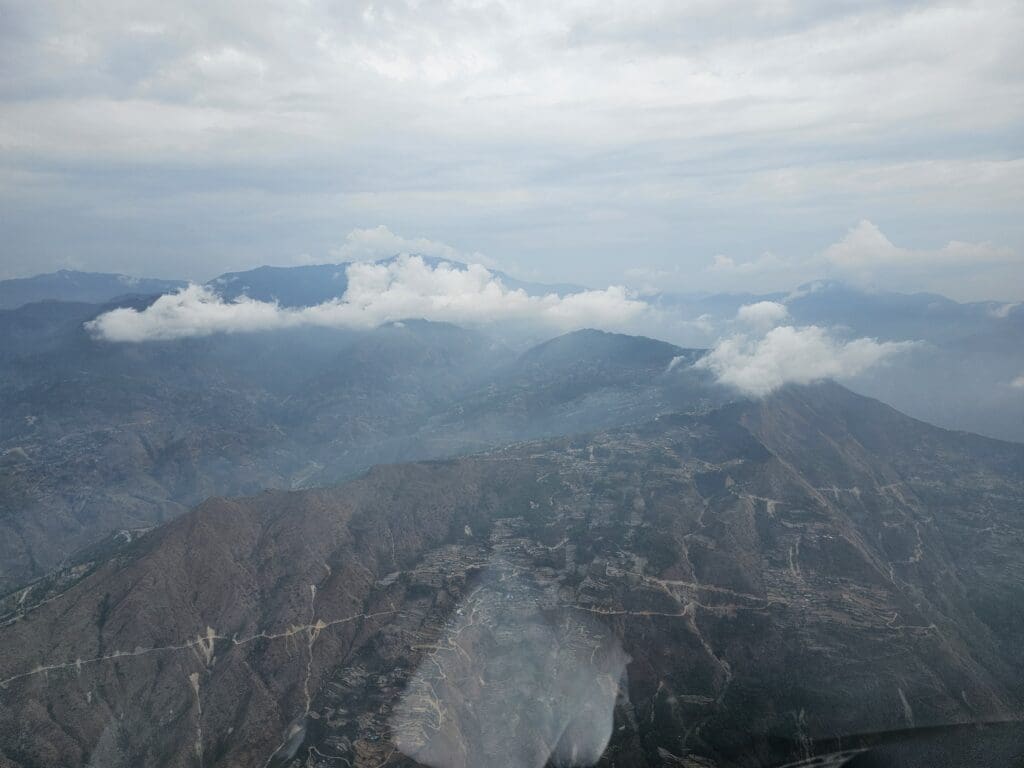
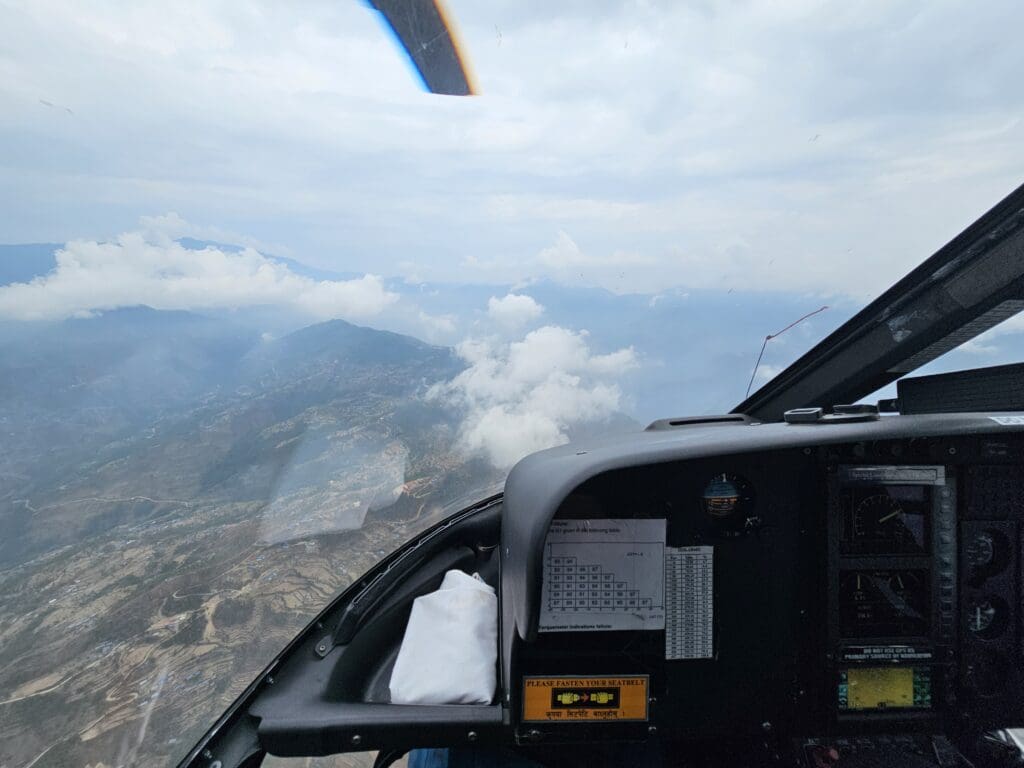
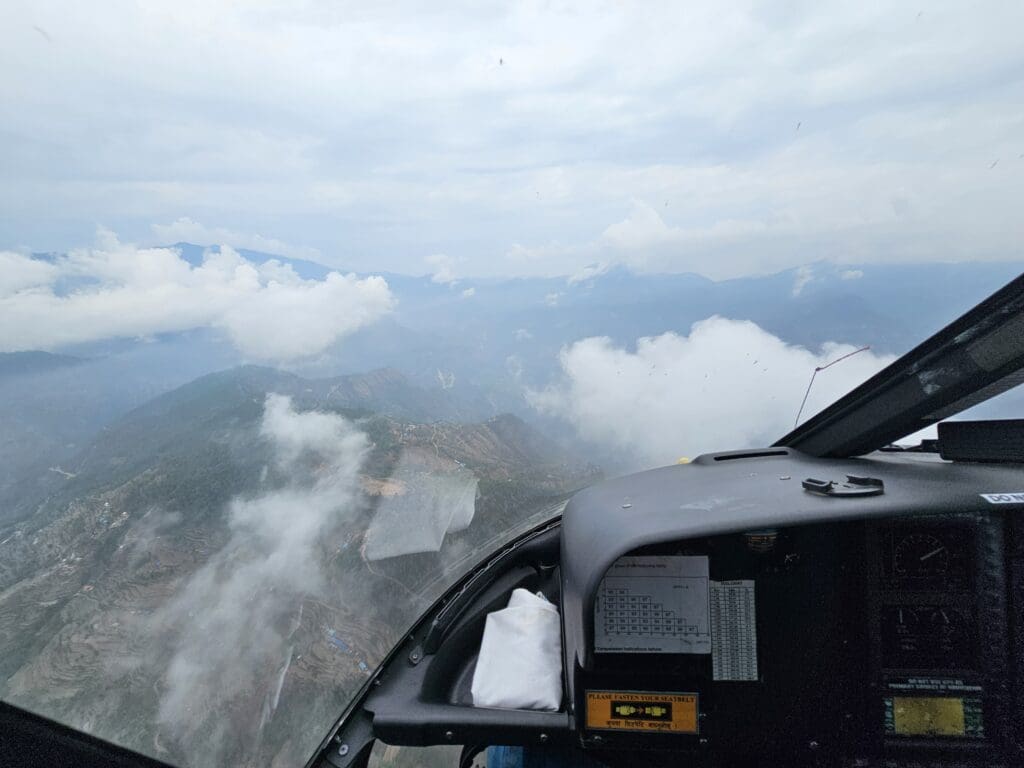
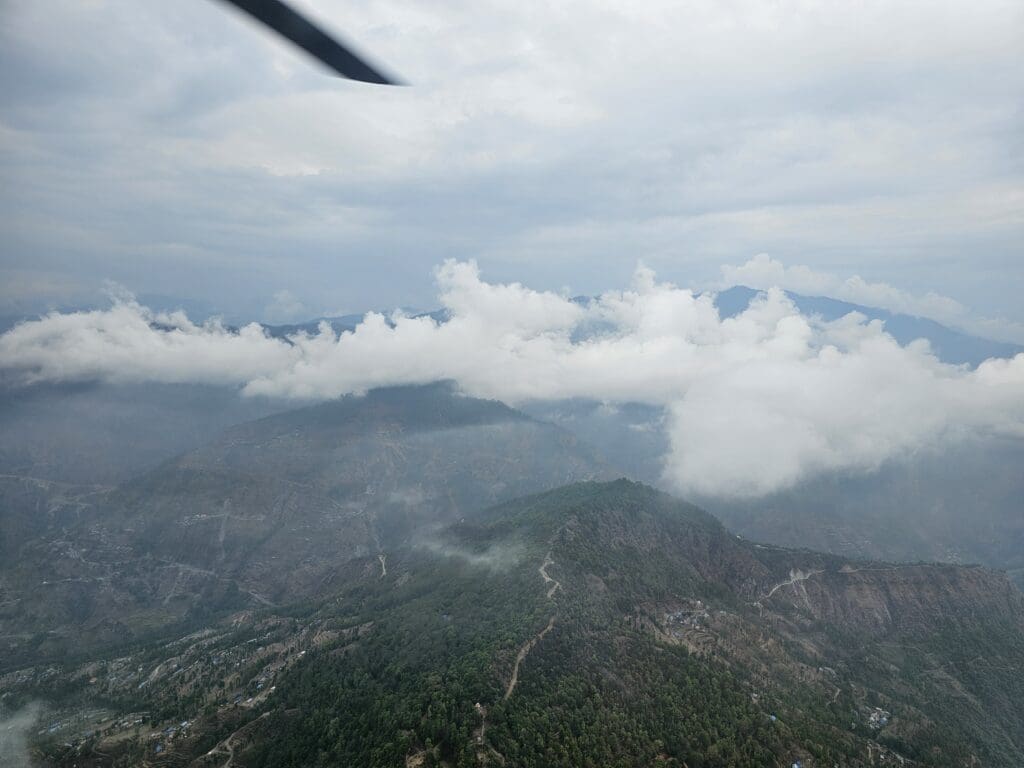
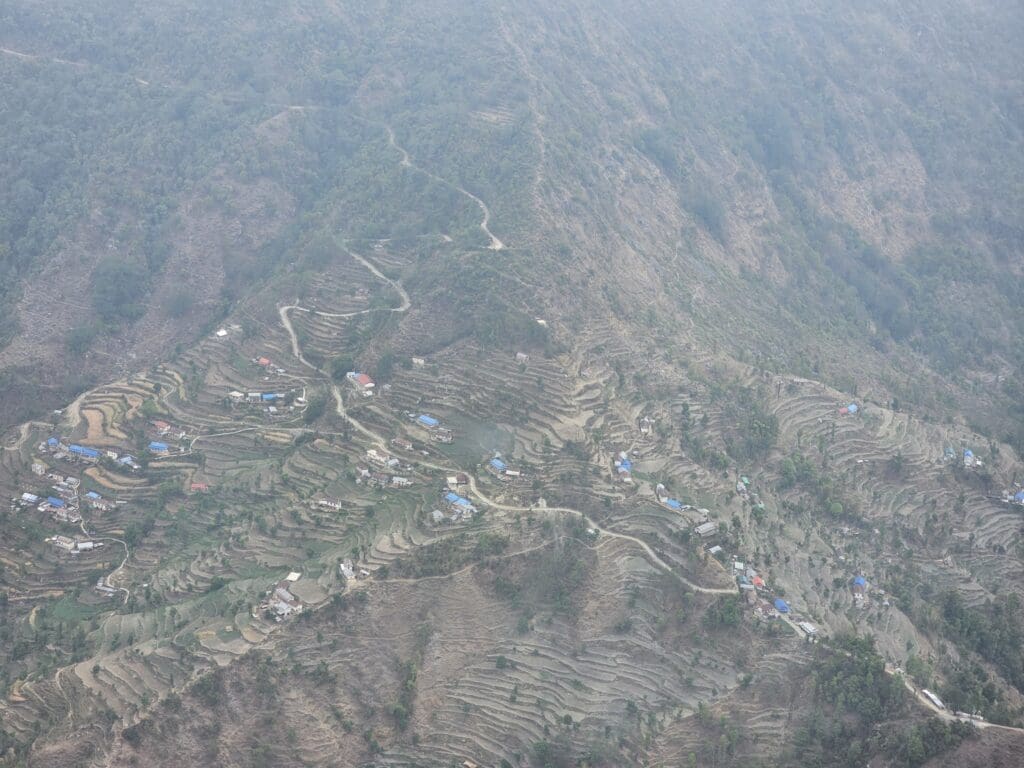
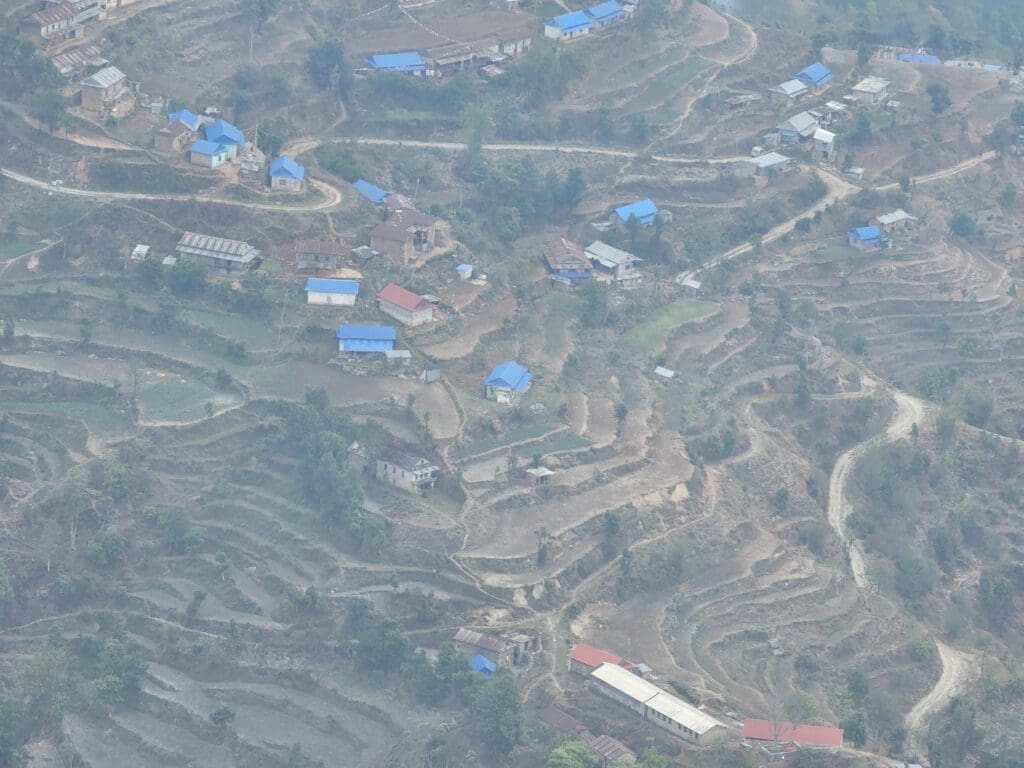
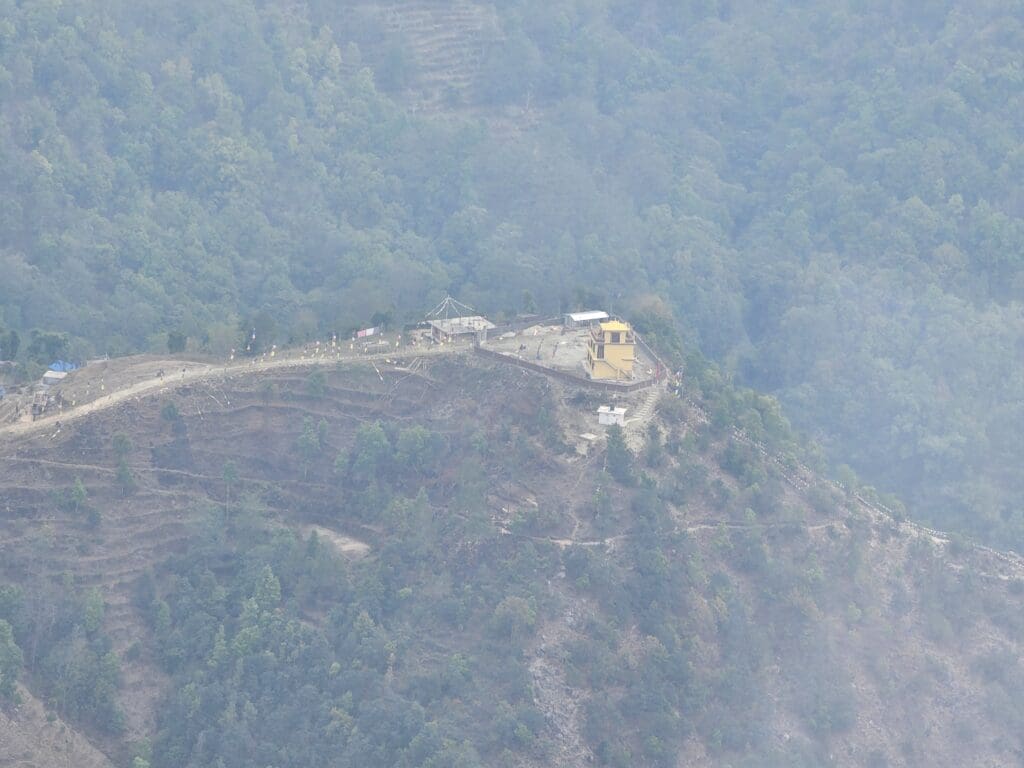
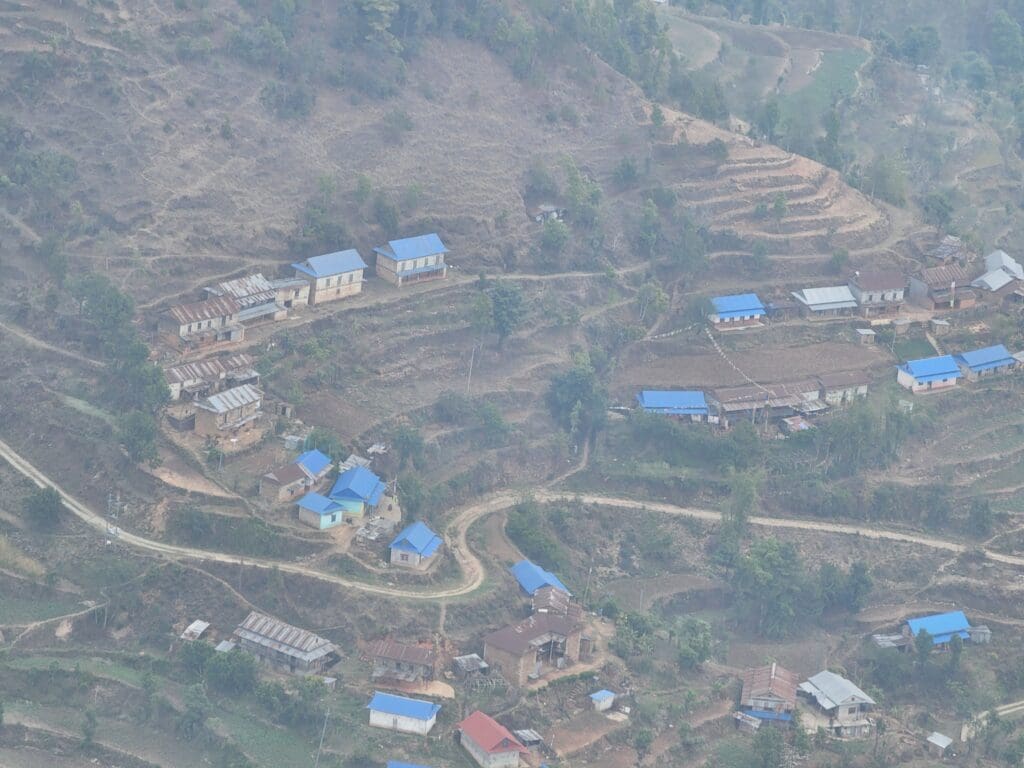
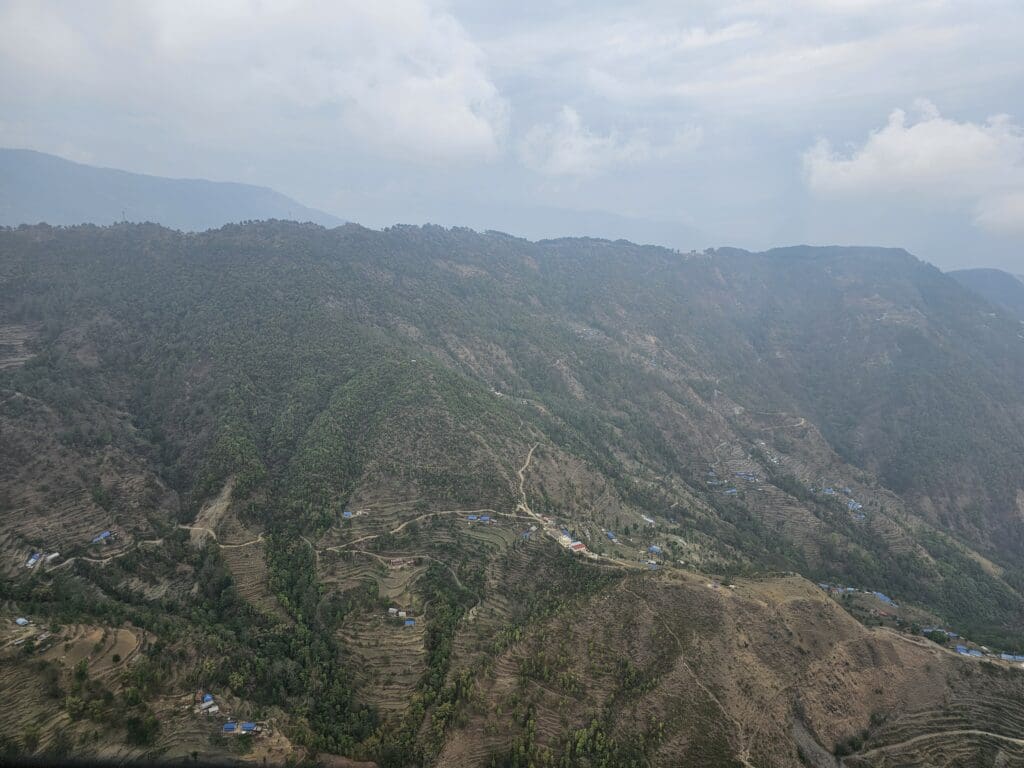
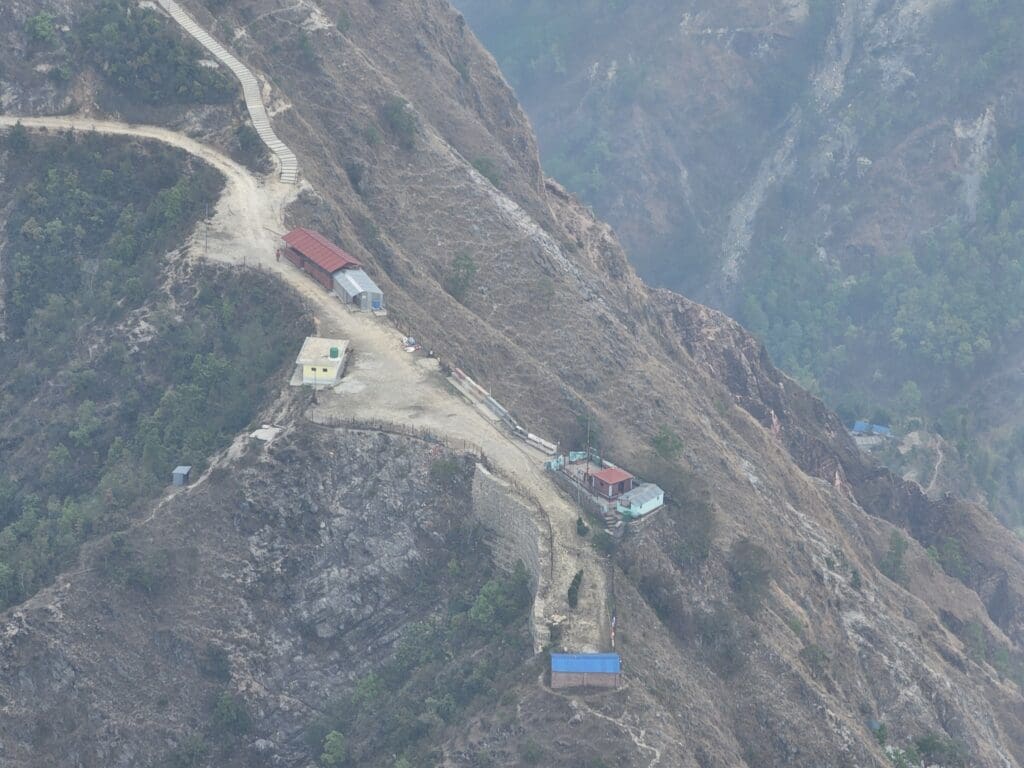
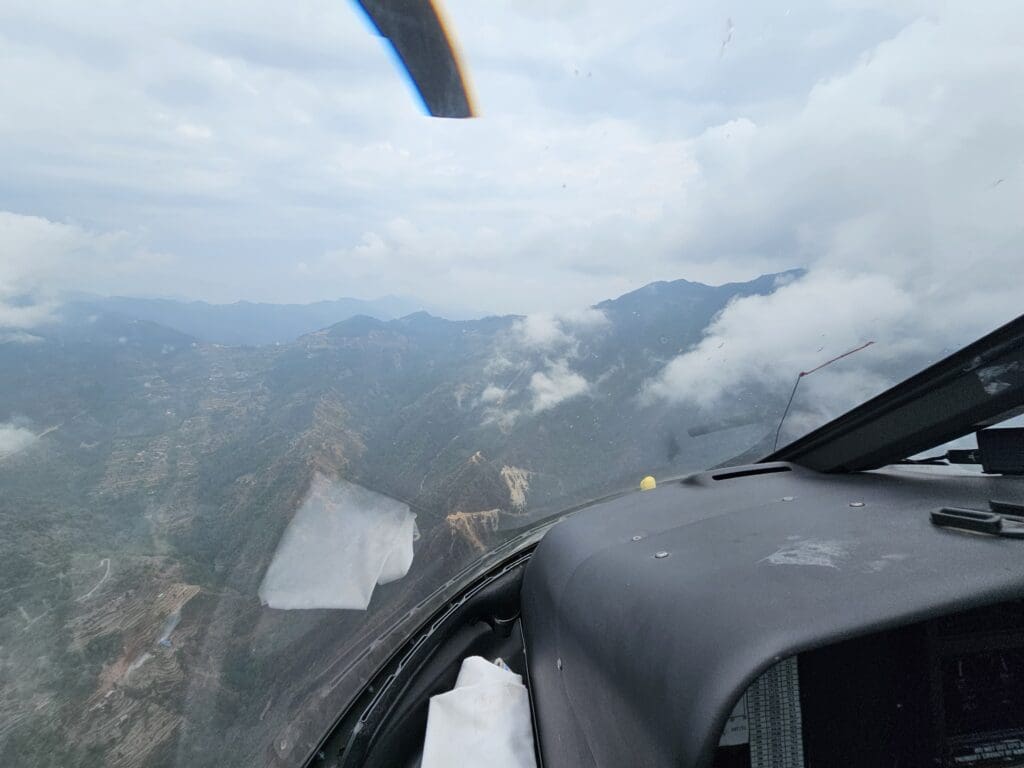
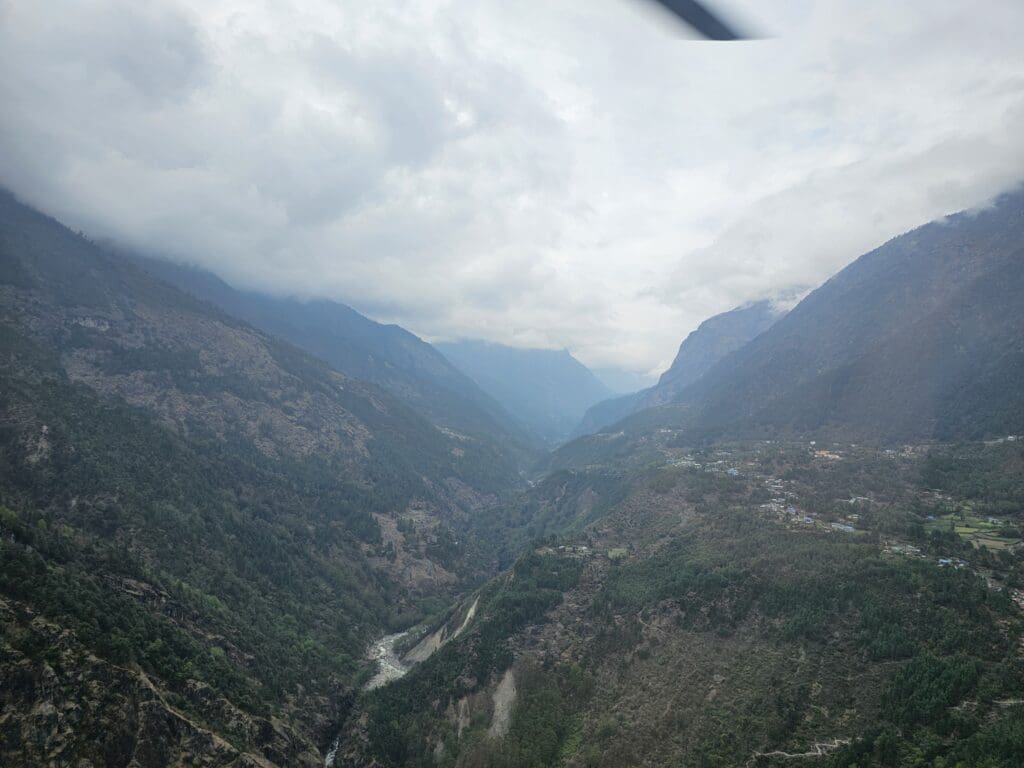
After a while, Ramechhap Airport appeared below where a host of Dornier 228s, Let L-410 Turbolets and Twin Otters could be seen – with few fixed-wing services operating to Lukla that day thanks to the slightly out-of-limits tailwind component in Lukla. Sitting about seventy kilometres to the south of Lukla, this indicating that we were around two-thirds of the way through the flight and from there, the hills rose into tall mountains and we spent the rest of the flight flying down valleys as if on some low level military mission.
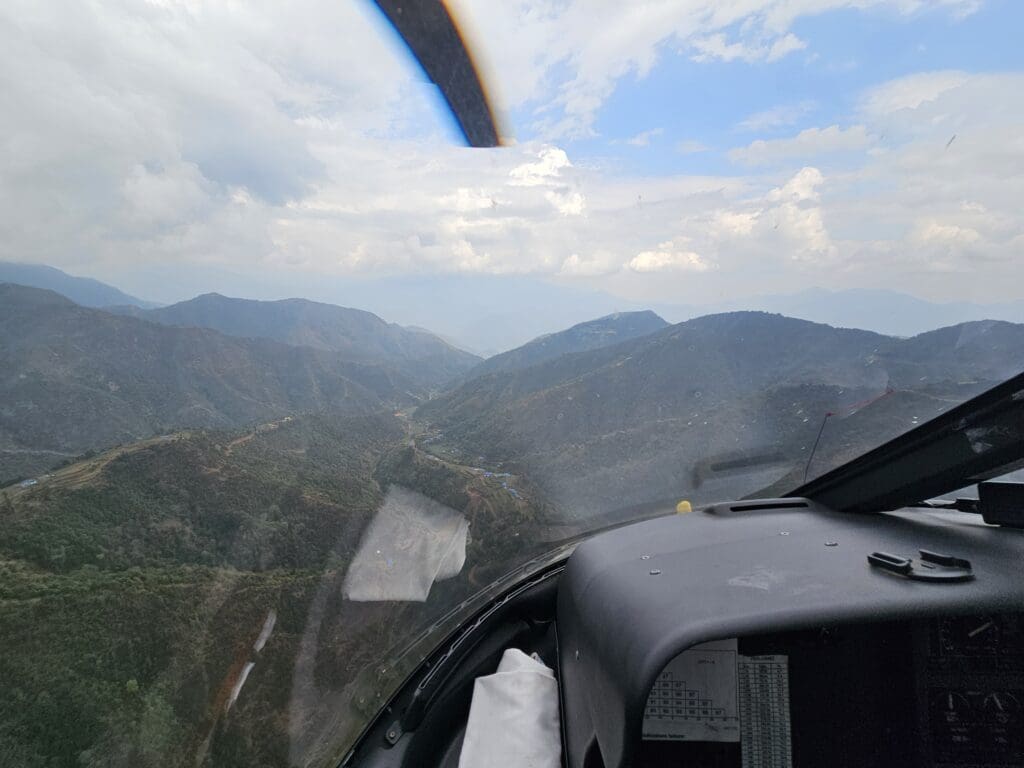
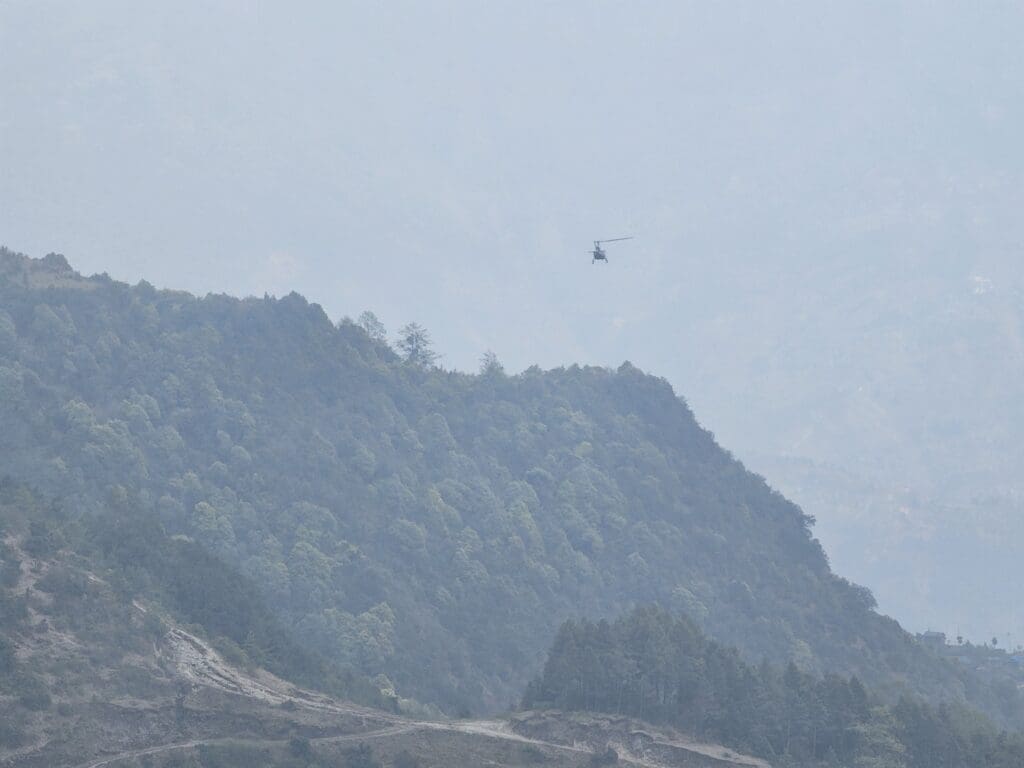
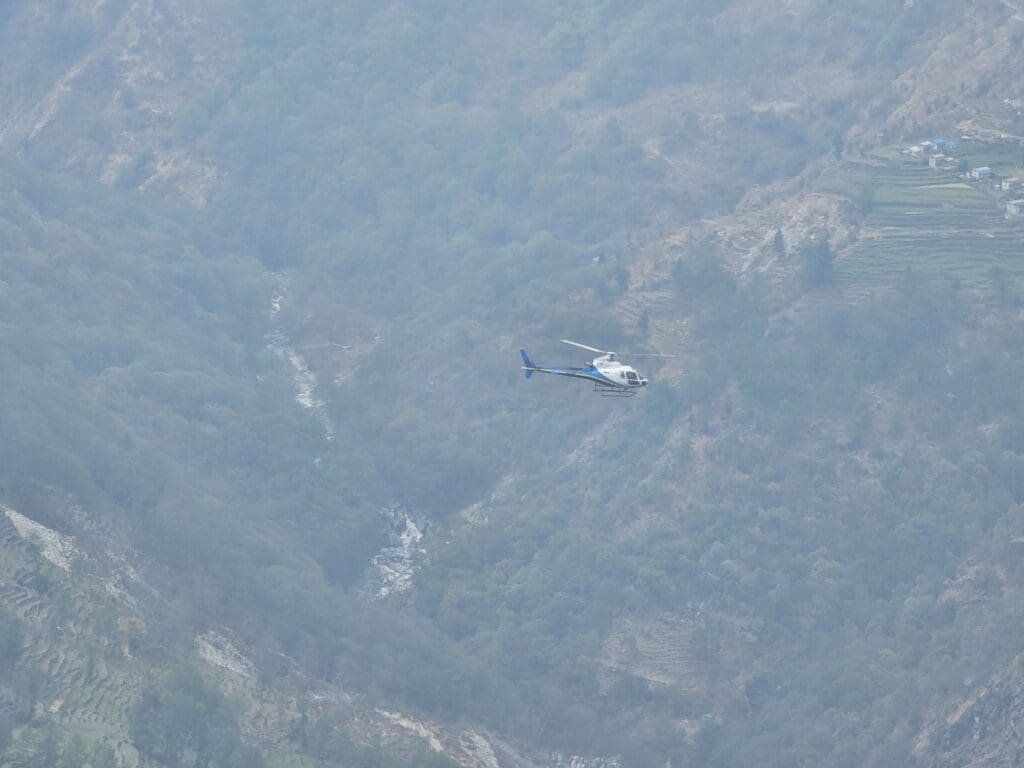
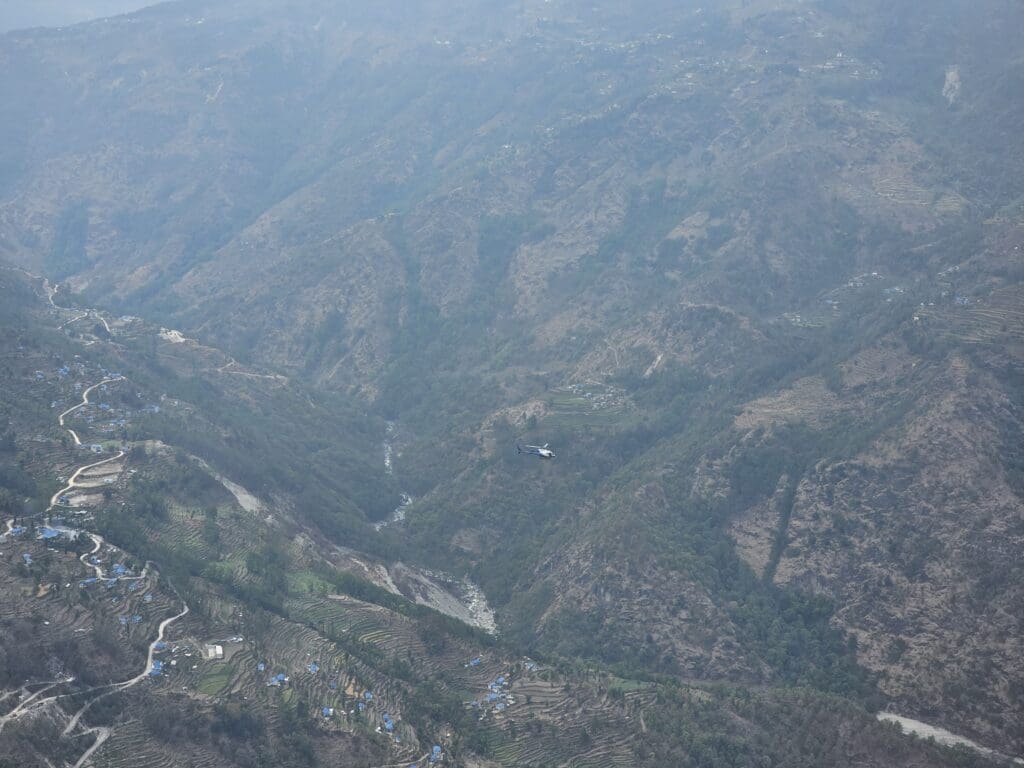
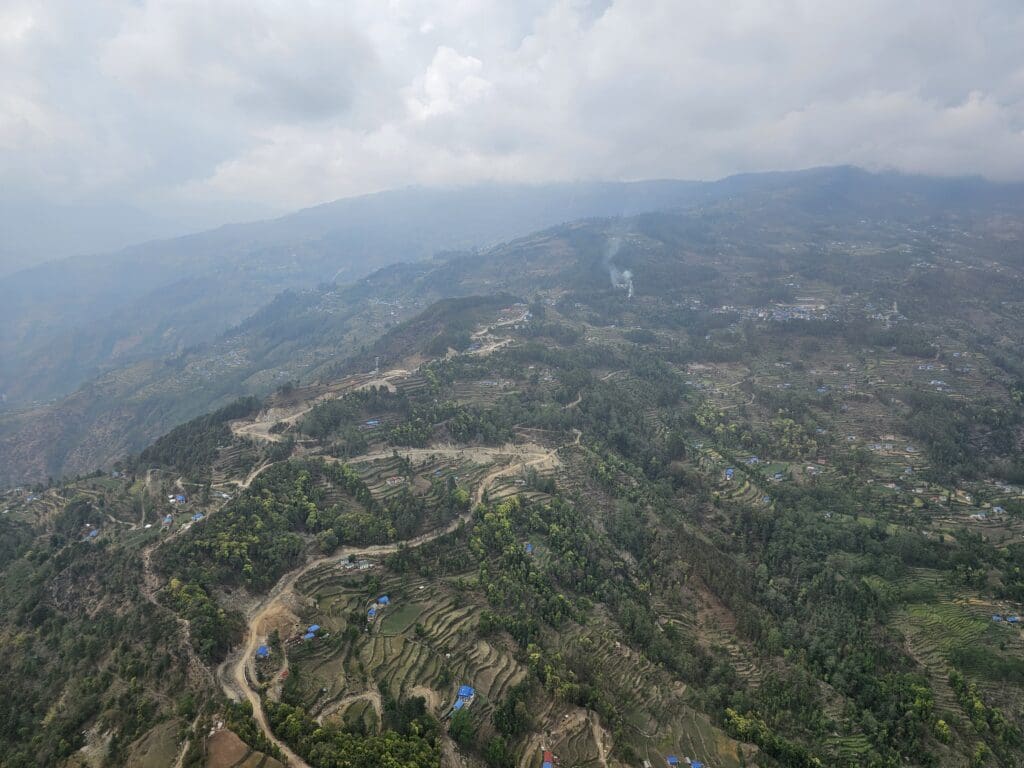
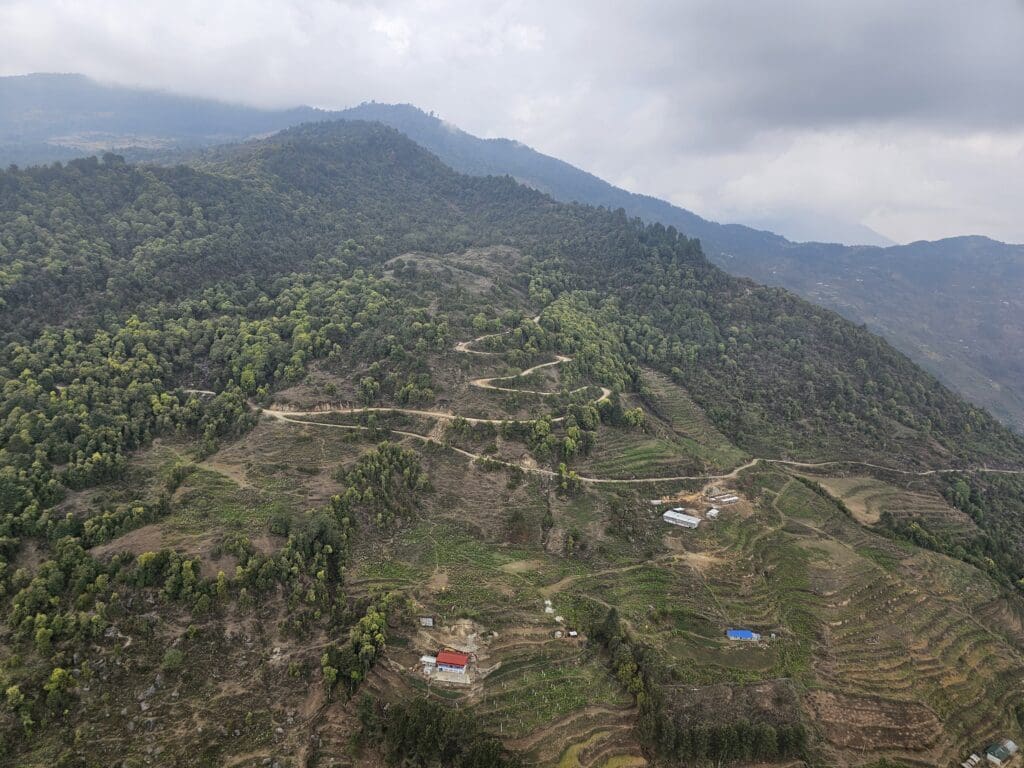
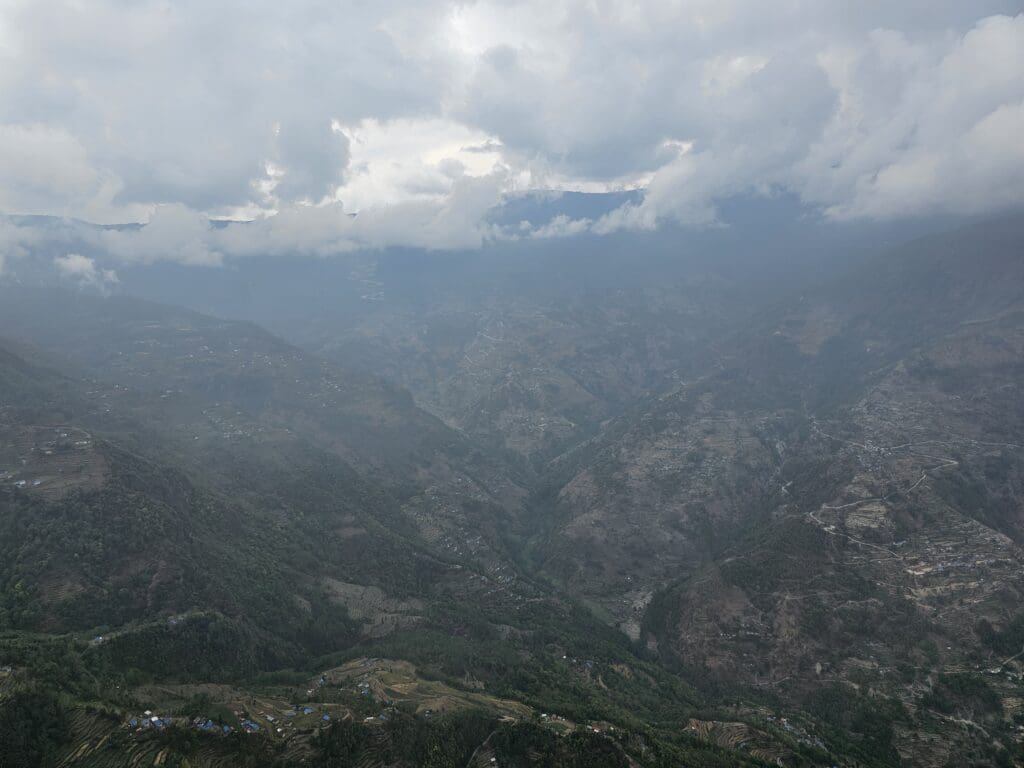
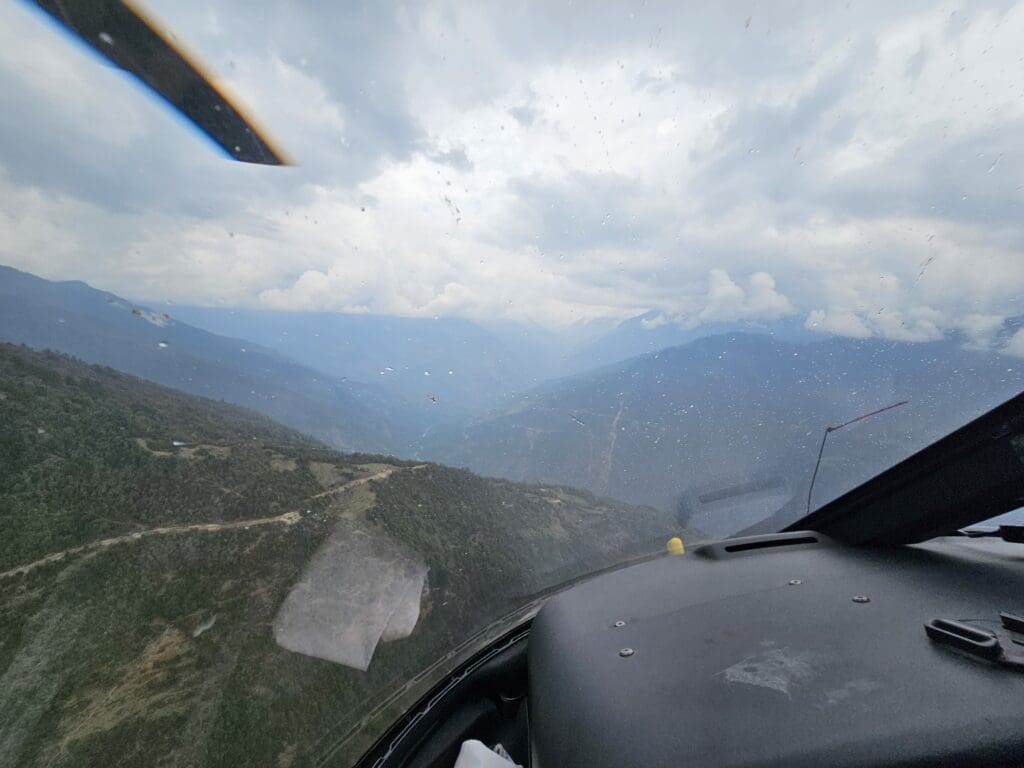
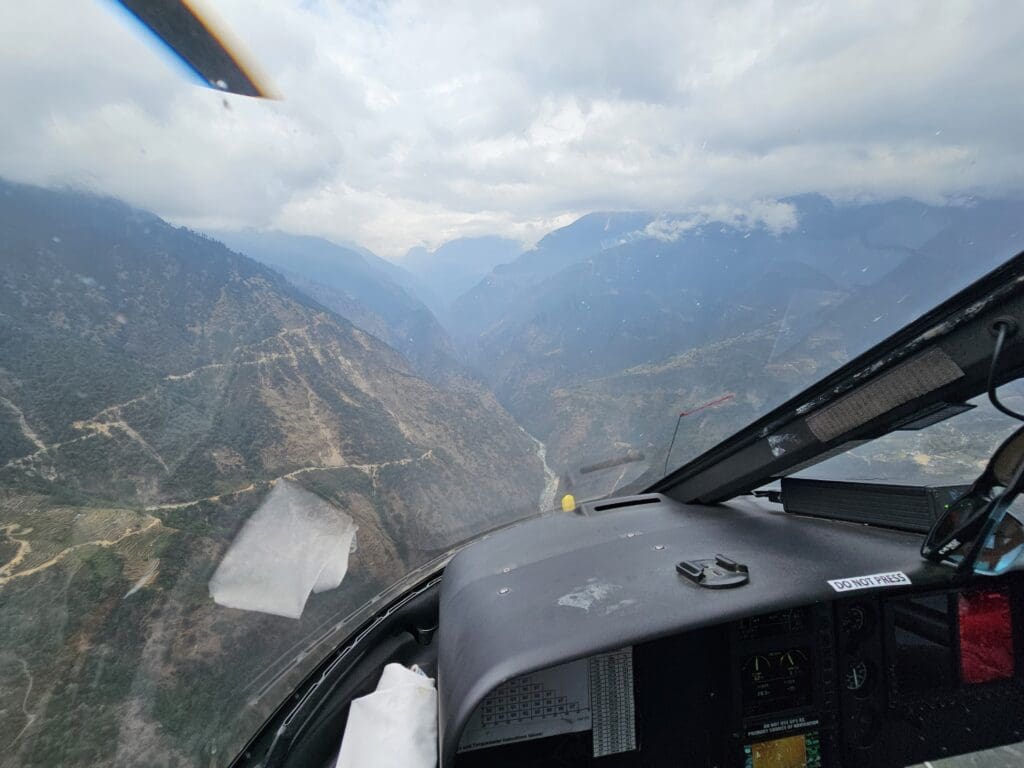
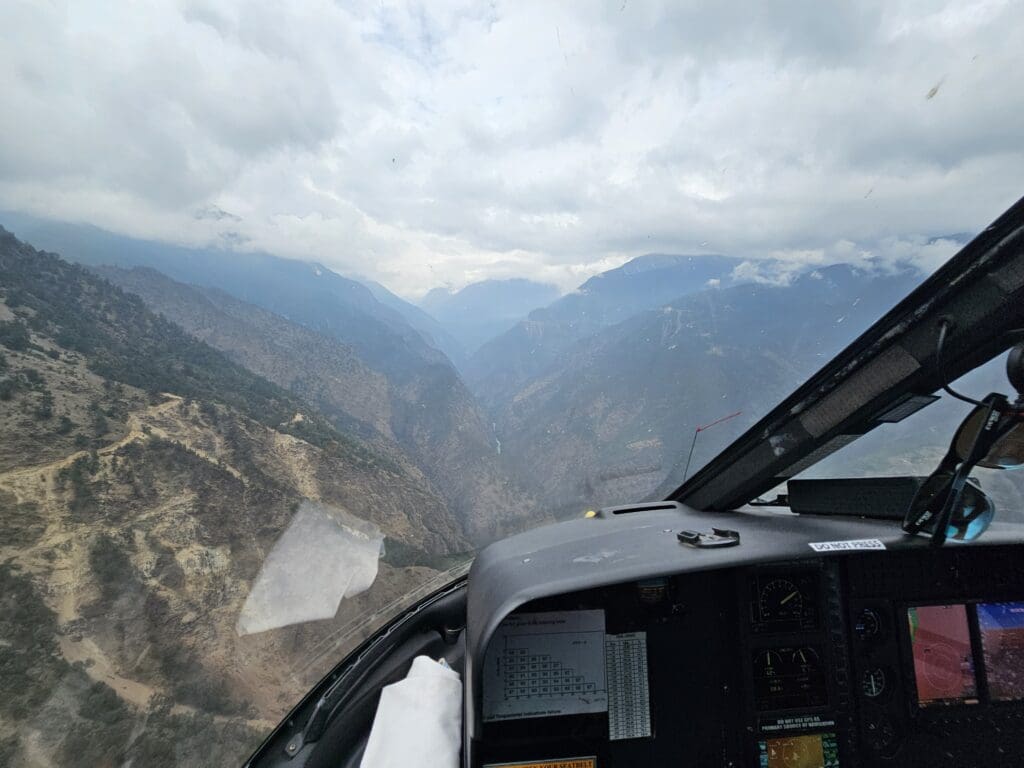
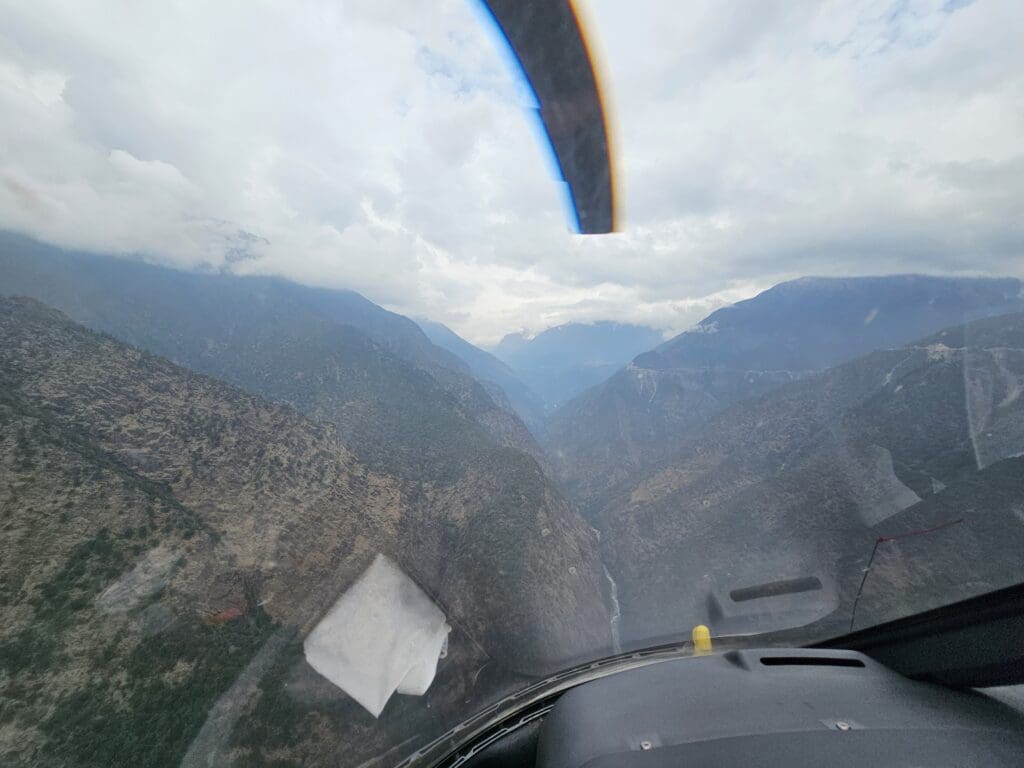
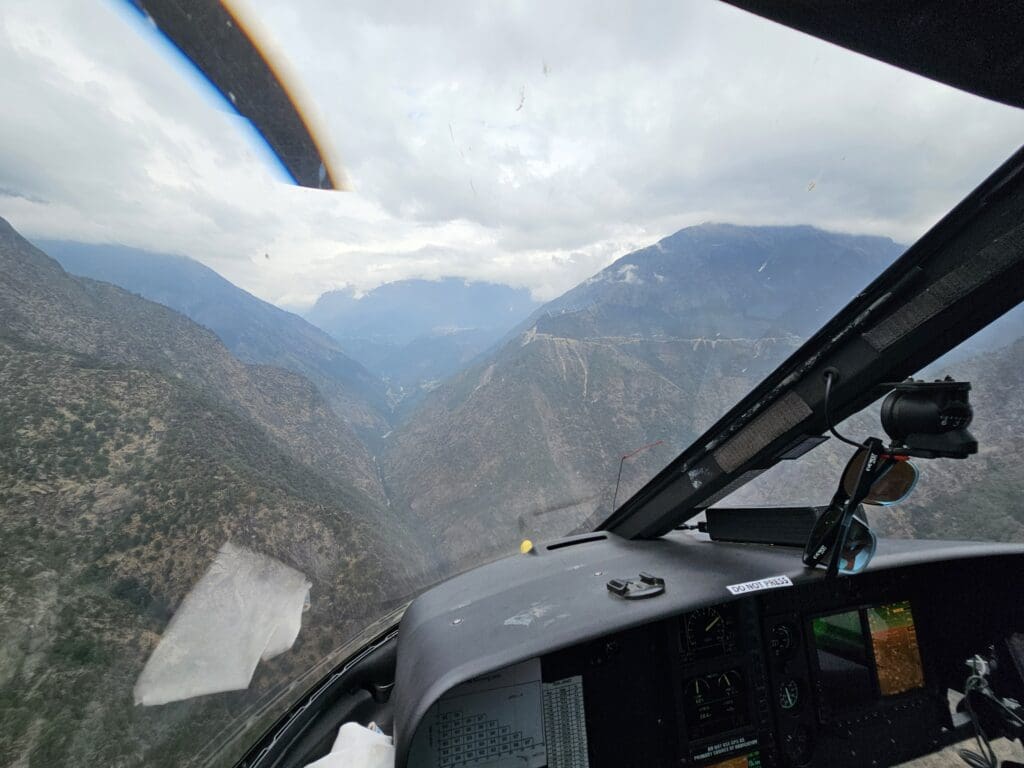
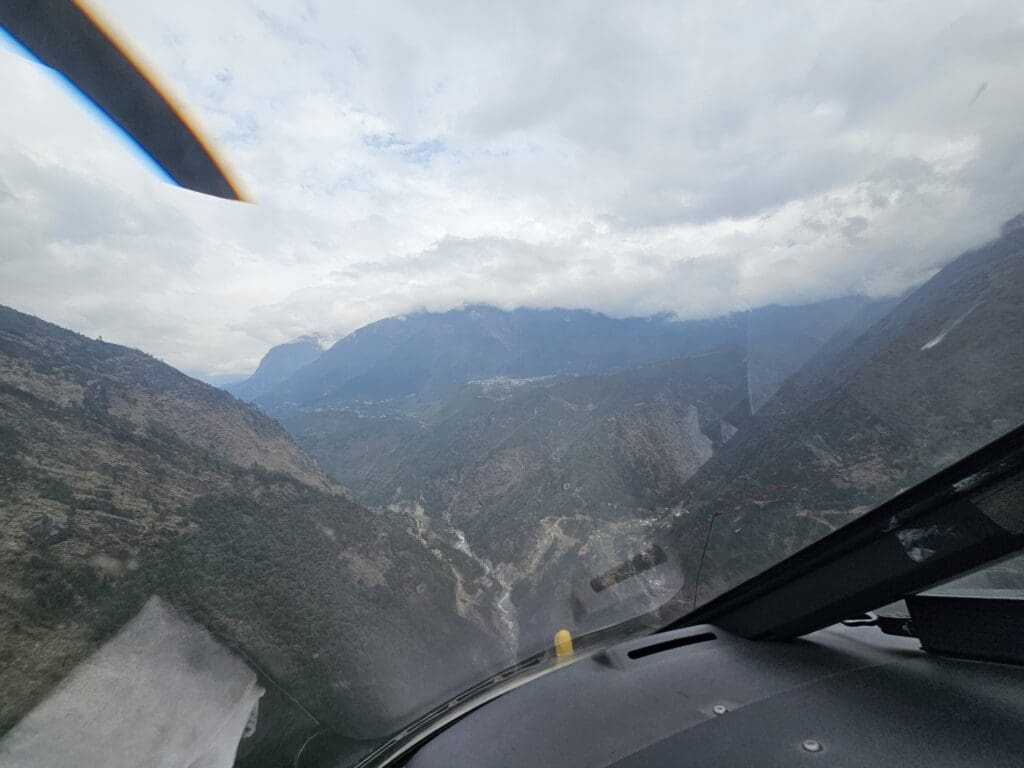
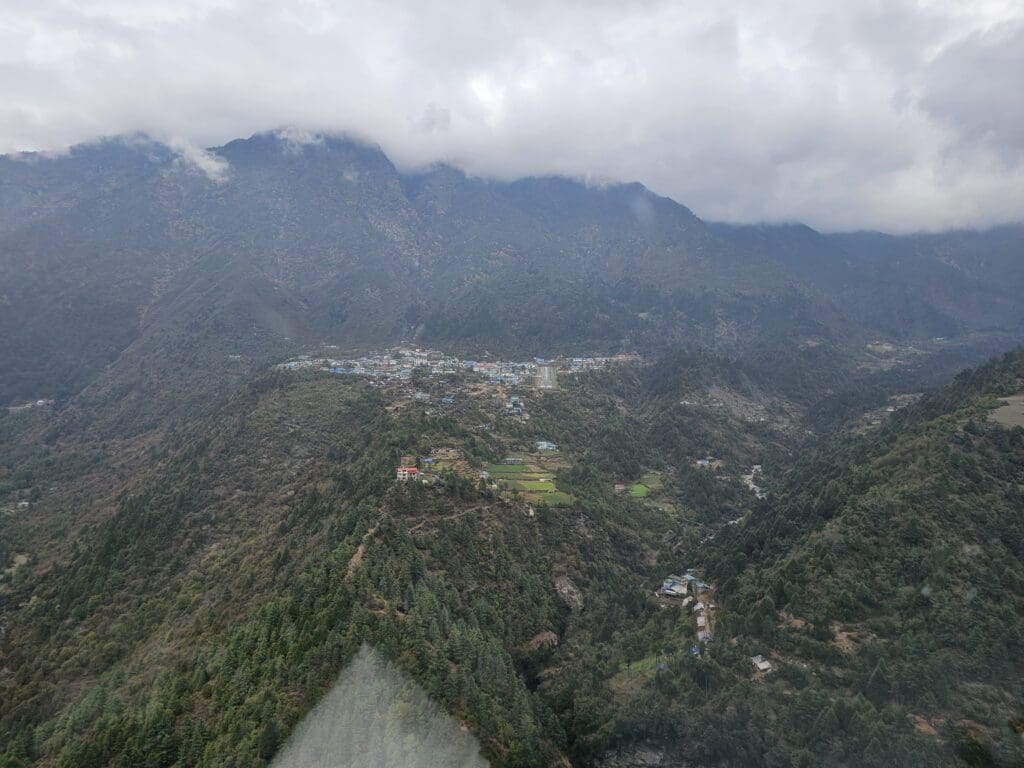
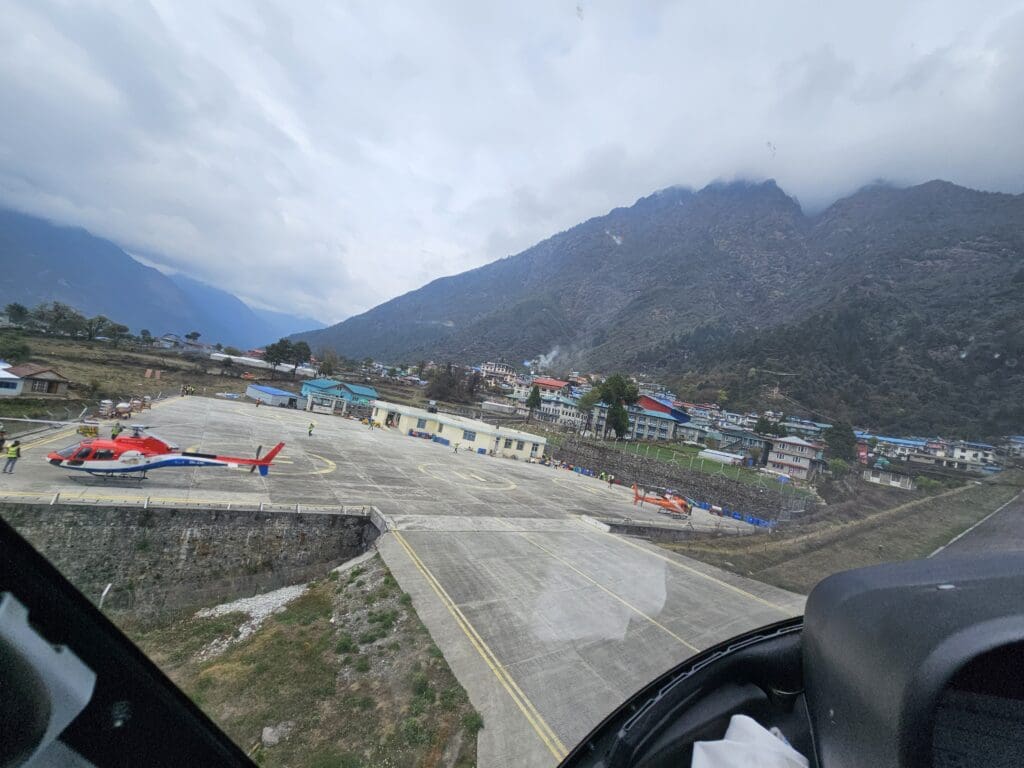
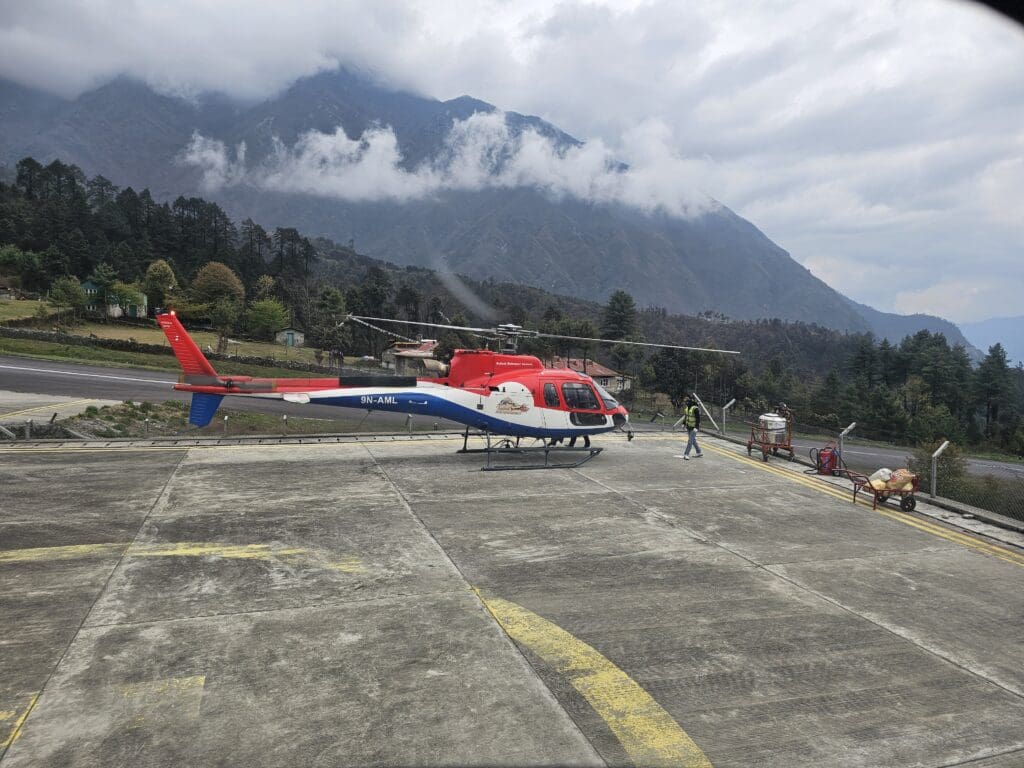
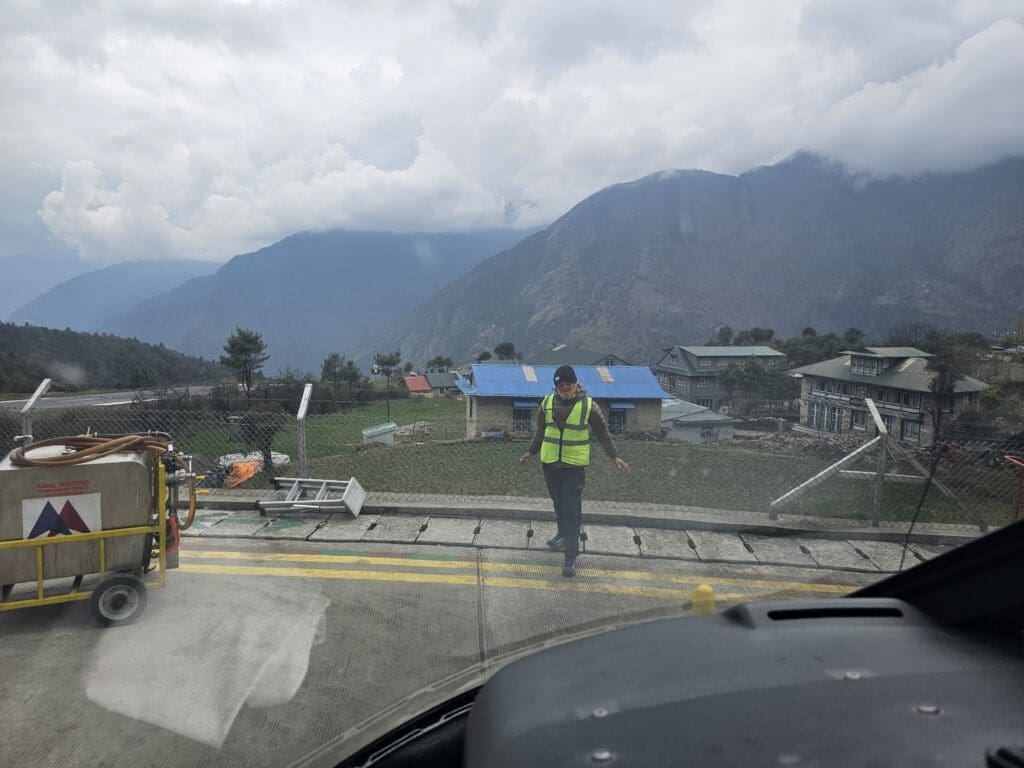
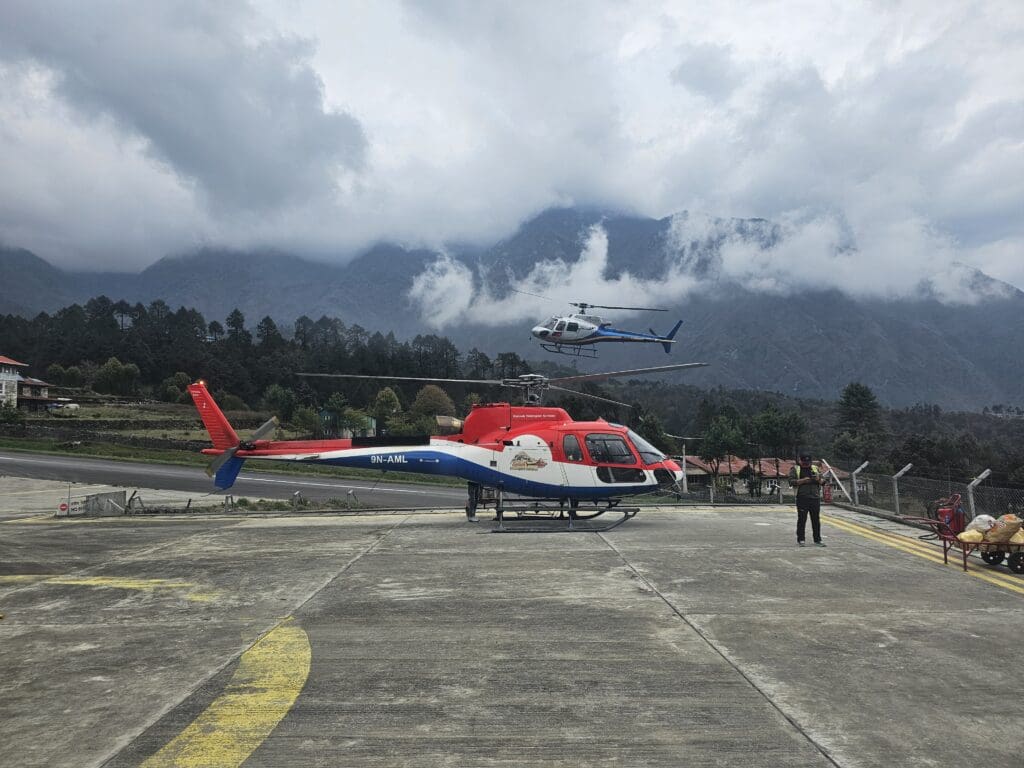
Soon, we reached the valley that Lukla sits in and before I knew it, the small yet busy airport popped into view. Flying towards the runway, the helicopter decelerated with plenty of vibration before turning off the runway and settling down on the busy helicopter apron where several helicopters could be seen on very short turnarounds. Once we came to a halt, the rotors remained spooled up and the ground attendant opened the doors, at which point I thanked the pilot, removed my headset and made my way out into the deafening roar – retrieving my bag from a luggage trolley before heading over to the helicopter terminal where I met my guide – ending a fantastic flight experience!