Trying Virgin Atlantic’s Brand New Route: Seoul Incheon to London Heathrow on the Dreamliner
Background
For the past couple of decades or so, demand for flights between London and Seoul has been reasonably high. Today, the United Kingdom hosts more Korean nationals than anywhere else in Europe, with a mixture of Korean university and language institute students spread across the country, as well as young working holidaymakers, and workers drafted in to staff the offices of the many Korean conglomerates that have a sizeable presence in Britain. Meanwhile, in recent years, the unignorable boom of Korean popular culture, the increasing trade ties between the two states and the rising popularity of Korea as a tourist destination have served to stoke demand for flights between Korea and the United Kingdom.
Korean passenger carriers have had a presence in the United Kingdom since 1988, when Korean Air commenced Jumbo Jet-operated services to London Heathrow, which, later on, were, for a short time, supplemented by a thrice-weekly Boeing 777-200ER-operated service to London Gatwick. Korean Air was then joined at London Heathrow by Asiana Airlines in 2002, which initially operated their Boeing 777-200ERs several times per week before upgrading this to a daily service in 2011. These two rivals were then joined in 2012 by British Airways, which deployed their Boeing 777-200ER and then Boeing 787-8 Dreamliner on a daily service between London Heathrow and Seoul Incheon, a revival of a service than once operated during the 1990s. However, with the onset of the pandemic and the early retirement of the Boeing 747-400, the airline ended up withdrawing this flight to free up its Dreamliner fleet.
As part of this merger, Korean Air has, and continues to face all manner of regulatory and anti-monopoly hurdles that have seen a flurry of changes to the Korean airline scene. One example is Korean Air’s transfer of several widebody Airbus A330s to low-cost competitor T’way Air, for them to provide competition with Korean Air on several European routes and thus satisfy European Commission antitrust demands. Whilst another example is the forfeit of Asiana Airlines’ cargo division to Air Incheon, with this now branded as AirZeta.
Within the United Kingdom, the government’s Competition and Markets Authority (CMA) identified the route between Seoul Incheon and London Heathrow as a competition problem. Once Asiana Airlines and Korean Air merged, the airline would have a total monopoly on passenger services between Korea and the United Kingdom. Thus, for the United Kingdom to approve the merger, the CMA requested that Korean Air sacrifice a slot pair and hand it to another carrier. Logically, Korean Air suggested fellow SkyTeam partner Virgin Atlantic to compete on this route, with this enabling the flight to be codeshared, enabling passengers to connect to and from Korean Air services at the airline’s Seoul Incheon megahub. Despite the perhaps slightly questionable monopoly implications of this, in 2025, this was approved on the condition that Virgin Atlantic would operate this for at least three years. This would be operated on a daily basis with the airline’s Boeing 787-9 Dreamliner. With the slots handed over, in March 2026, Virgin Atlantic commenced operations on the route to much celebration, with this being heavily promoted in both Korea and the United Kingdom.
How did I end up flying on the route?
Despite being from the South Yorkshire city of Sheffield, Korea is a country that I am very familiar with, having once lived and studied there, and continuing to visit on a semi-regular basis. Naturally, I was only delighted to see a new airline return to the market between Korea and the United Kingdom, especially seeing as I had had a reasonably good experience with Virgin Atlantic on an Airbus A350-1000 operated service between Delhi and London Heathrow in 2023. Needing to get back home in early May 2026 following several weeks spent in India and Korea, naturally, I looked at Virgin Atlantic’s new service.
Since joining SkyTeam in March 2023, Virgin Atlantic’s Virgin Red frequent flyer programme has become my programme of choice for accumulating SkyTeam miles. With plenty of Economy seats from Seoul Incheon to London Heathrow priced at just 7,500 miles and a small fee, this option was a no-brainer, and so I soon loaded up Virgin Atlantic’s app and booked a ticket delightfully quickly and easily, leaving me with nothing to complain about. Travelling on an Economy Classic fare, this came with 23kg of hold luggage, yet little else, and I would have had to pay a fee of at least £39 to select a seat anywhere in the Economy cabin; however, theoretically, this could be selected for free during the online check-in process.
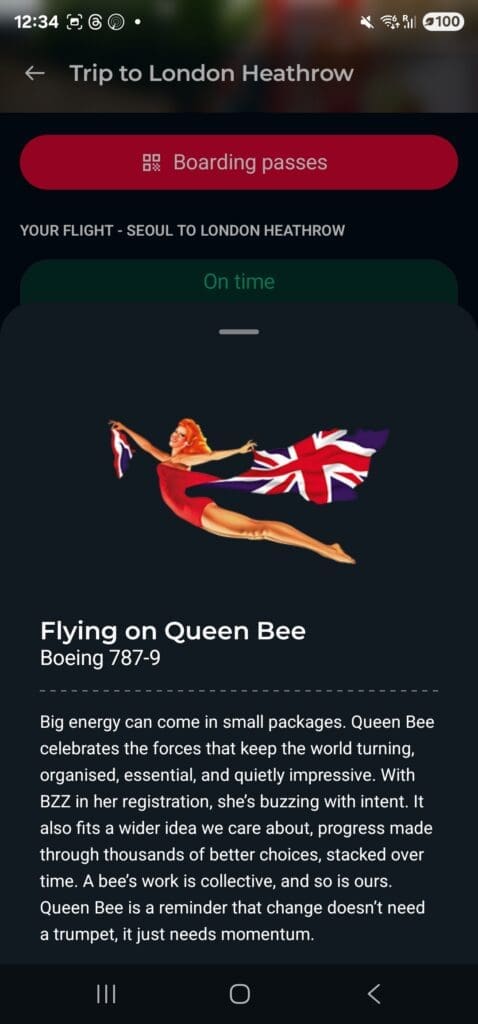
Wanting to secure an aisle seat and having been too stingy to pay the seat selection fee, with 24 hours to go until departure, I loaded up Virgin Atlantic’s sleek and modern app and began the check-in formalities. First up, I scanned my passport and verified that all of the information had been correctly populated before being taken to add my emergency contact details. Once done, I then selected how many bags I would check in before being presented with my mobile boarding pass, which revealed that I had been automatically assigned Seat 62C. Being an aisle seat, this was no cause for complaint, although I was slightly bamboozled at the lack of an option to amend this; I did, however, soon find this, although seeing as only Economy Delight and middle seats remained available, the former costing £49, I decided to accept my pre-assigned seat. Another nice feature of the app is that at this point, it advised me that I would be flying on Queen Bee, and provided me with a short splurge about the aircraft.
The Journey
In my time, both visiting and living in Seoul over the past twelve years, I have stayed in all manner of accommodation across the capital. With digs ranging from 10,000 won per night metal-framed bunkbeds in the party district of Hongdae, to luxurious hotel rooms in the more upmarket neighbourhood of Mapo. On this visit, whilst not as basic as a backpackers hostel, my accommodation was definitely towards the less glamorous end of the spectrum. Originally, I had planned to spend my final week in the mountains of Gangwon and head to Seoul a day before my flight. However, with a pair of aching legs after cycling around Jeju for a week, and with a questionable weather forecast, several days before I left Jeju for Gangwon, I opted to change my itinerary and spent my final week in Korea in Seoul.
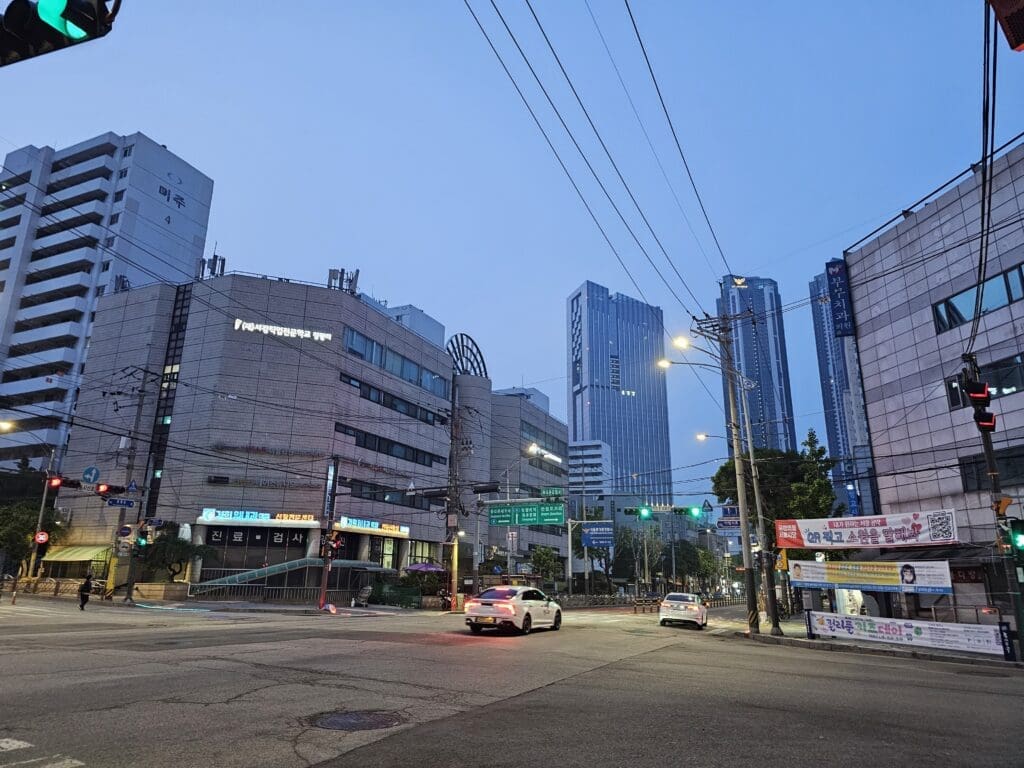
Given the last-minute nature of this swap, accommodation options were limited, and not wanting to part with a small fortune, I decided to go for the cheapest accommodation option that would give me the luxury of a private bathroom. In the end, I ended up paying just £62 for a five-night stay in a goshiwon – a complex of small, private rooms, originally designed as short-term accommodation for students but now widely used as budget compact urban housing for singletons. Located on a seedy backstreet near Cheongnyangi Station on the northeast fringes of Central Seoul, this particular goshiwon was old and battered, appearing to have undergone scant upgrades in decades, and accompanied by an overbearing, omnipresent stench of drains. Thus, by the time my departure day rolled around, I was eager to leave and looking forward to staying in my own bed back in Sheffield.
As most who have visited Seoul will know, Seoul Incheon Airport is not actually in Seoul, and is in fact, barely in Incheon! Instead, this sits over fifty kilometres to the west of the capital on a gigantic piece of reclaimed land between the islands of Yeongjeong and Yongyu. As you would expect, given the airport’s status as Korea’s main international hub, the airport is well connected with neighbourhoods across Seoul, and indeed towns and cities across the country. Throughout most of the day, Korail’s Airport Railroad Express trains plough between Seoul Station and both Terminal 1 and Terminal 2, with non-stop and all-stop trains available, taking 51 minutes and 66 minutes respectively. Whilst I am no stranger to this service, taking the train that morning would require me to lug my considerably heavy suitcase on the metro to reach Seoul Station, and, not wanting to end up sweatier than necessary, I decided against this. Fortunately, whilst a little pricier, there is an array of limousine bus services that run at all times of day from neighbourhoods across Seoul to both terminals. With Cheongnyanni Station serving as a major railway terminus for trains to and from Gangwon, this also serves as the start and end point for the Number 6002 airport limousine bus, with this allowing for easy transits to and from the mainline railway. Running an impressively frequent service, with departures at intervals of less than fifteen minutes throughout much of the day, I decided that the bus would offer the most sensible and comfortable means of reaching Incheon Airport.
Having packed up virtually everything the night before, when the morning of my journey arrived, I woke up bright and early, and darted into the shower to freshen myself up before the 24 or so hour journey back to Sheffield. Whilst I could have departed the goshiwon at around 0800 and still comfortably made my flight, being an aviation enthusiast and eager to escape the goshiwon, I set my alarm for 0500. By 0520, I hit the quiet and cold dawn streets of Cheongnyangi, heading down one of the main roads with my heavy suitcase in tow, at which point I was rather concerned that I was to be stung by overweight luggage fees at the airport! Temporarily putting this to the back of my mind, around seven minutes later, I arrived outside the modern facade of Cheongnyangni Station, where a gold and black Hyundai intercity bus could be seen waiting to operate the 0537 service to Incheon Airport. Standing next to this, the tough-looking cigarette-smoke scented ajusshi who was responsible for driving us safely to the airport could be seen waiting, and after informing them I was bound for Terminal 2, my luggage was slid into the underfloor compartment. Despite encouraging me to pay with cash or a T-Money transportation card, lacking the former, and with less than the 17,000 won fare on my T-Money card, the driver took my debit card and advised me that this would be returned at the bus’s first airport stop, Terminal 1.
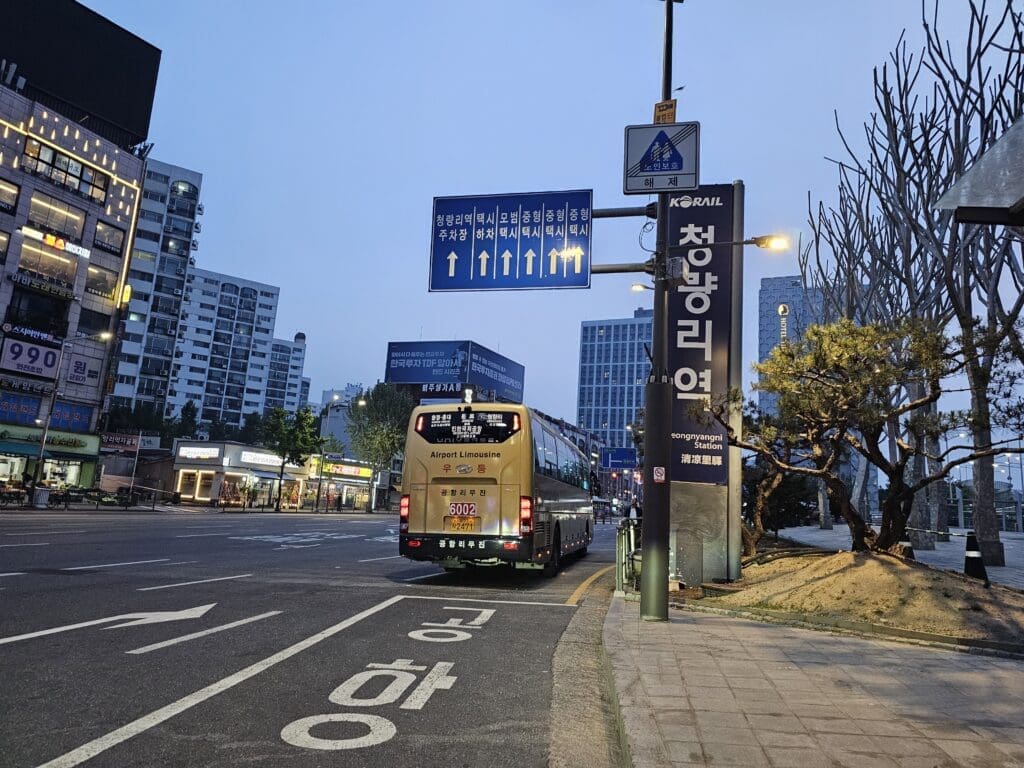
Climbing onboard, I soon plonked myself down and settled in for the ride ahead. As you would hope, the bus was modern, clean and comfortable, being akin to an intercity bus, featuring well-padded recliner seats in a 2-1 configuration. Each of these came with luxuries such as a USB-A port (although sadly this did not work) and a cupholder, and was able to recline quite a way. Soon, being joined by two fellow passengers, right on time, we hit the reasonably quiet streets of Central Seoul, making frequent stops at traffic lights as we slowly but surely trundled through the city. This particular service stops at many popular Seoul sights and tourist destinations, namely Dongdaemun, Sinseol Dong, Jongno, Sincheon, Hongdae and Hapjeong, meaning that whilst the bus was quiet, I was not confident that it would remain that way, especially being an early morning service departing around the time of the first Airport Express train of the day.
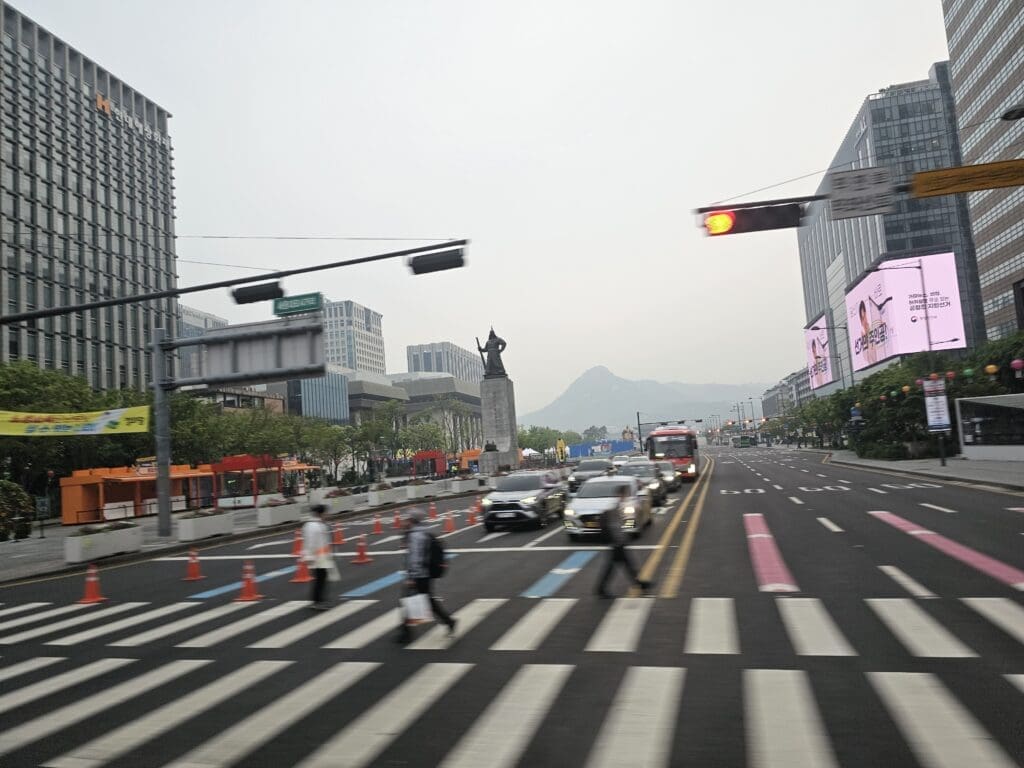
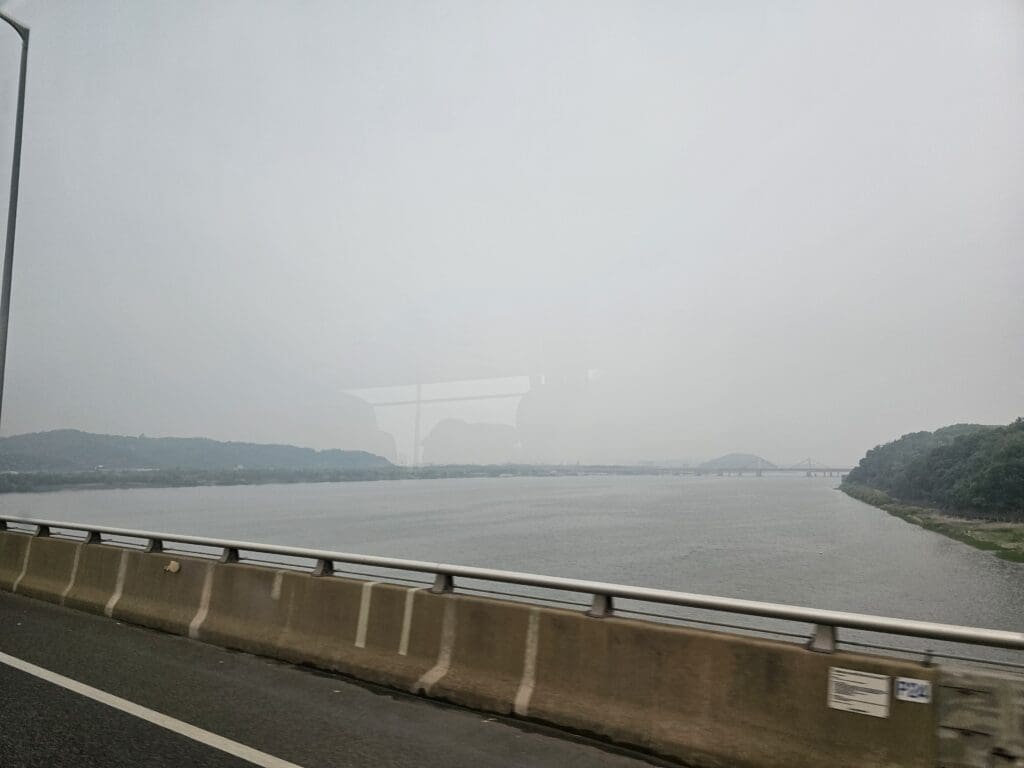
Whilst the bus can speed along in dedicated bus lanes, a slightly indirect route from Cheongnyangi meant that it took about twenty minutes to reach our first stop, despite this only being a four-minute subway ride away! From there, the bus made regular stops until we arrived at Hapjeong, and as I had expected, the bus ended up filling up at each one, leaving nothing but a few empty seats remaining by the time we left our final Seoul stop. From Hapjeong, the bus sped westwards out of the city, trundling along the Han River, and before I knew it, we soared out over the Yeongjeong Bridge, which connects the mainland with the island on which Seoul Incheon Airport sits. Whilst the bridge crossing usually offers fantastic views of Yanghwa Island and its mountains to the north, that day, Seoul and the surrounding area were plagued by an early morning haze, and thus nothing could be seen other than the murky waters below. Eventually, I spotted a Korean Air Boeing 777-300ER rocketing away at the start of a short ferry flight to the airline’s maintenance facilities in Busan, indicating that we were nearing the end of the journey.
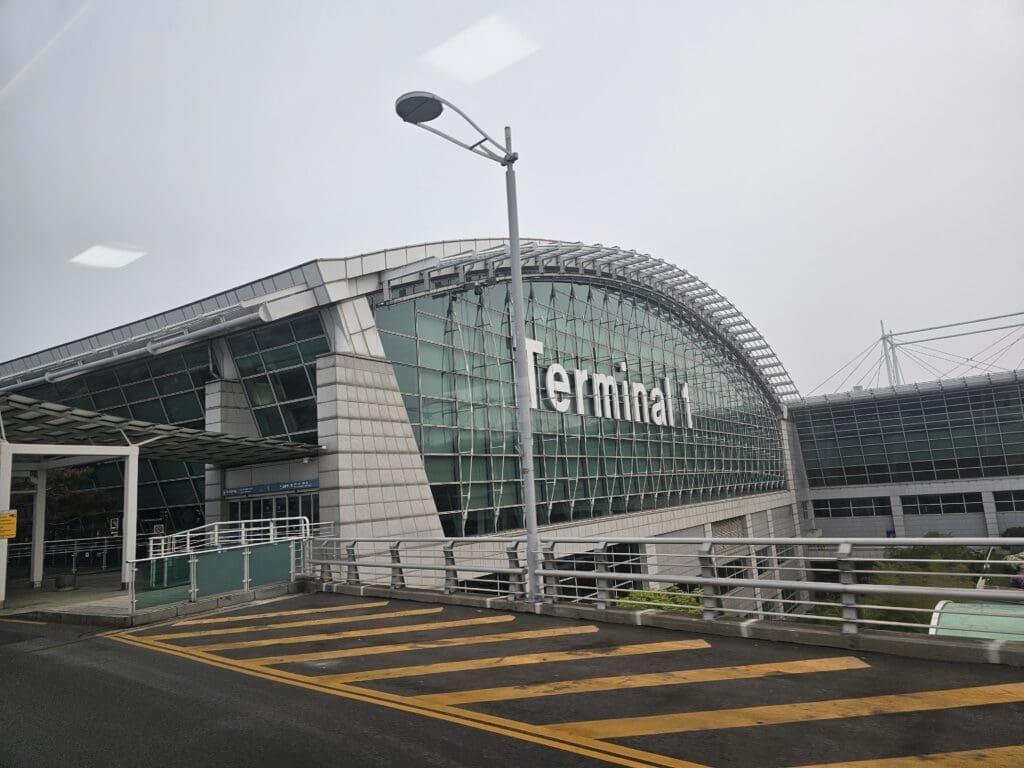
First up was Terminal 1, where all but two other passengers disembarked, at which point my debit card was returned along with a receipt for 17,000 won. After leaving the airport’s original terminal, the bus skirted around the airport’s western perimeter, and a diverse host of aircraft from both Korea and abroad could be seen before we made our way down the driveway that leads to Terminal 2. At this stage, a host of long-stored and rather weathered-looking Korean Air jets, plus a Jeju Air Boeing 737-800 Freighter, could be seen just before reaching the terminal. Following a long bus ride across Seoul, almost two hours after leaving Cheongnyangni, the bus came to an abrupt halt at Terminal 2, heralding the end of the first stage of my journey. After thanking the driver and collecting my luggage from the roadside attendant, I made my way into the terminal. One advantage of the bus over the train is that buses drop passengers off directly outside both terminals’ check-in halls, whereas the airport train stations are located in the basements of each terminal. Thus, once off the bus, I was able to stroll into the check-in hall in a matter of seconds, with no long escalator or moving walkway rides required.
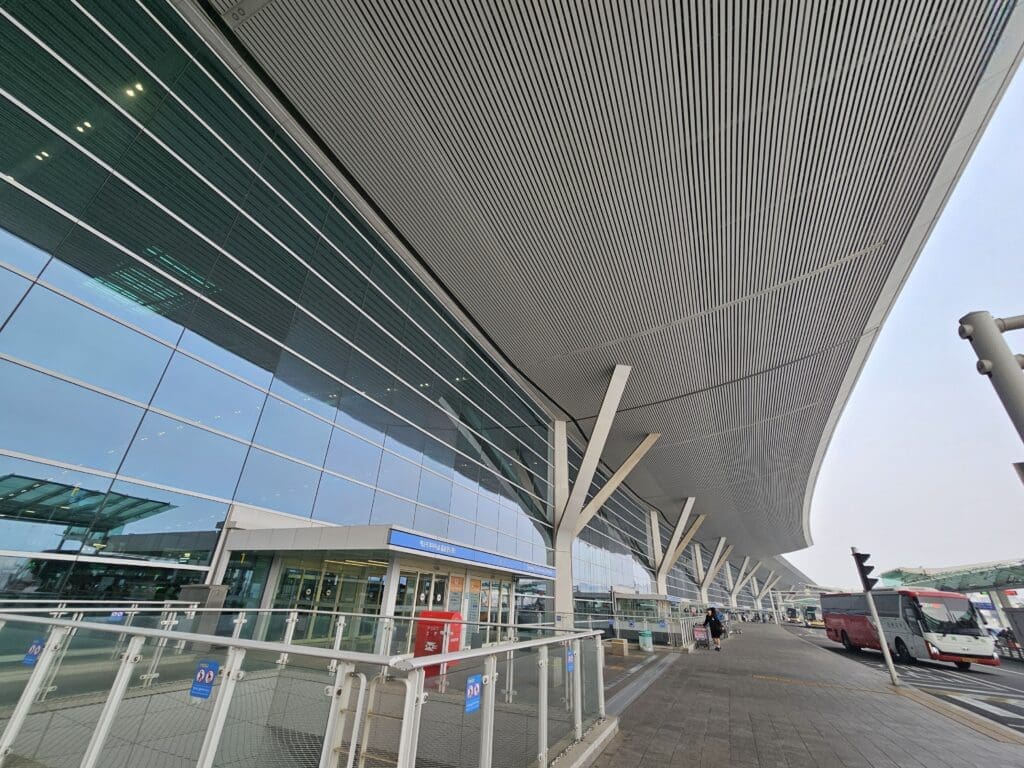
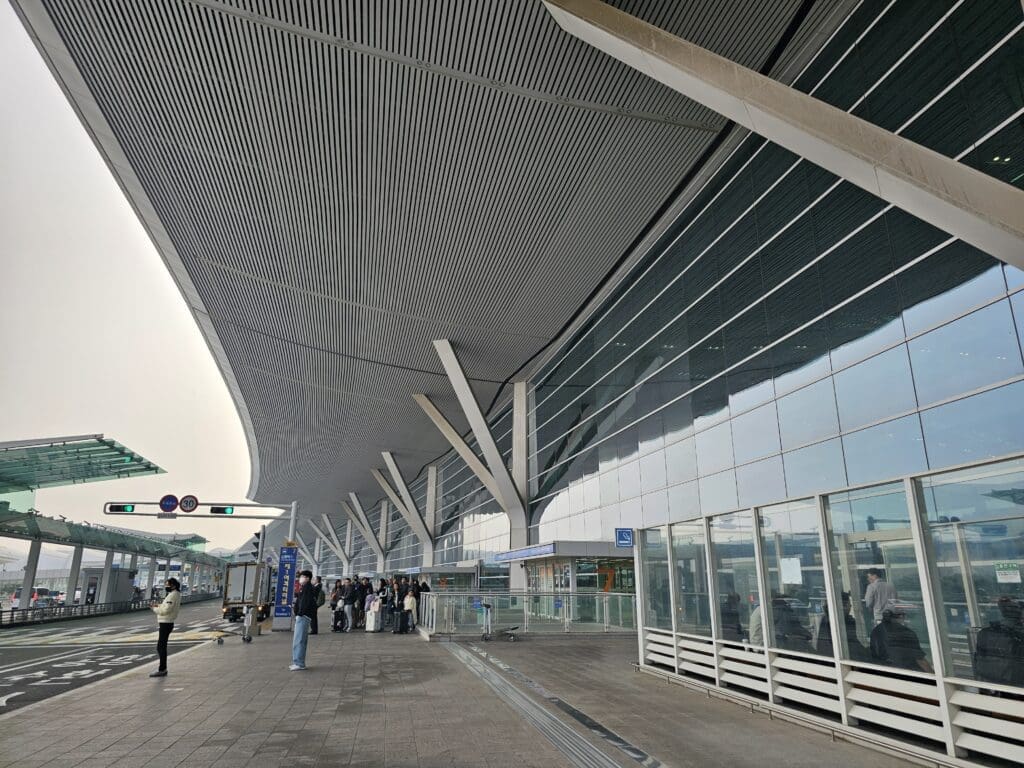
Seoul Incheon Airport is my third most-frequented airport outside of the United Kingdom, taking bronze to Seoul Gimpo and Jeju. However, despite passing through this nearly thirty times, this would only be my second time passing through Terminal 2. Seeing as I had sped through the landside area when departing for Amsterdam on a KLM Boeing 777-300ER two years prior (you can read my review of that flight here!), that morning, having plenty of time, I was eager to explore the terminal’s nooks and crannies.
From the moment that plans for Seoul Incheon Airport were conceived, a second terminal was always on the cards as part of the third phase of the airport’s development. Designed by San Francisco-headquartered architectural firm Gensler, construction on this terminal commenced in June 2009, with this being completed in December 2017, and welcoming its first passengers early the following year. This was then further expanded, and today the terminal covers an area of 347,000 square metres. Initially, Terminal 2 was intended to serve as the exclusive hub of Korean Air, however with the increase in the number of carriers serving Seoul Incheon Airport and the upcoming merger with Asiana Airlines, the terminal now serves a small selection of carriers. Specifically, this is a hub for Asiana Airlines and Korean Air, along with their low-cost subsidiaries Air Busan, Air Seoul and Jin Air. Meanwhile, all SkyTeam carriers serving Seoul Incheon Airport, bar China Eastern Airlines and Vietnam Airlines, utilise this.
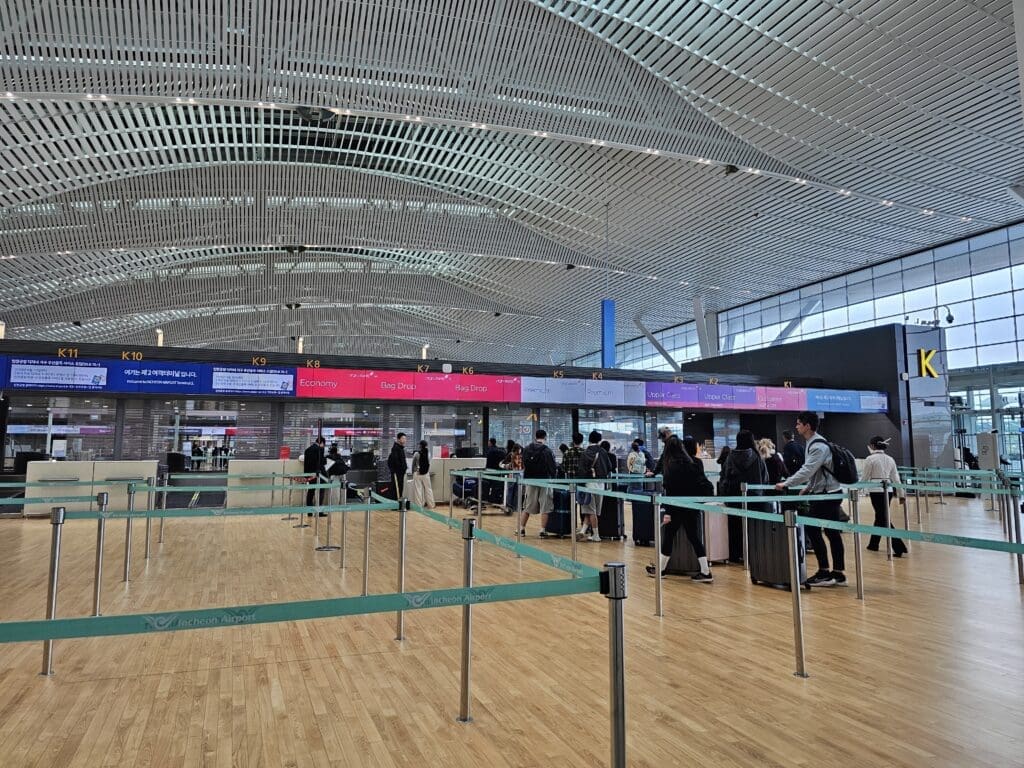
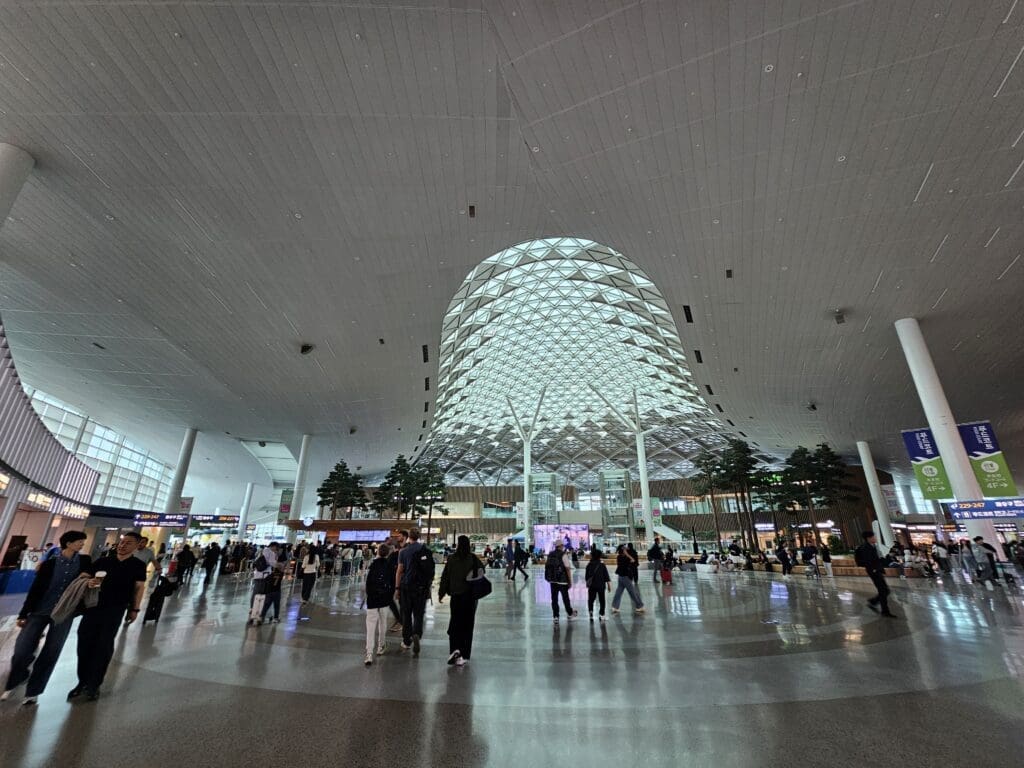
Wandering into the terminal, I immediately found myself in the massive curved check-in hall. There, desks are spread out across twelve islands, with plenty of self-check-in machines and self-bag drop-off desks, indicating a clear emphasis on automation and convenience. As you would expect, given the terminal’s relatively young age, this is modern in its design and aesthetic, featuring high ceilings and large windows that enable natural light to flood in and illuminate this space during daylight hours. For those who are either not flying or have plenty of time on their hands for check-in, this features a decent number of facilities, including nine coffee shops and nine restaurants, with a small food court located just above the check-in hall, plus a GS25 convenience store and a book and travel item store. As with Terminal 1, those who are looking to get one final or first Korean experience can head to the in-terminal jjimjilbang (Korean spa) for a soak, sauna and nap.
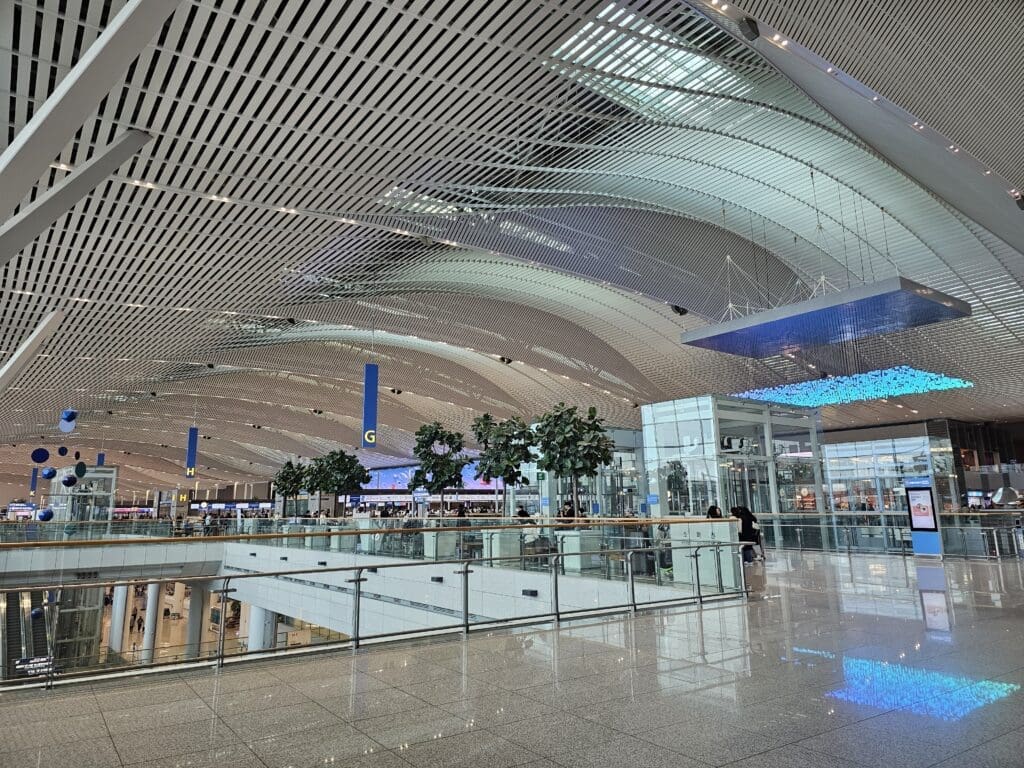
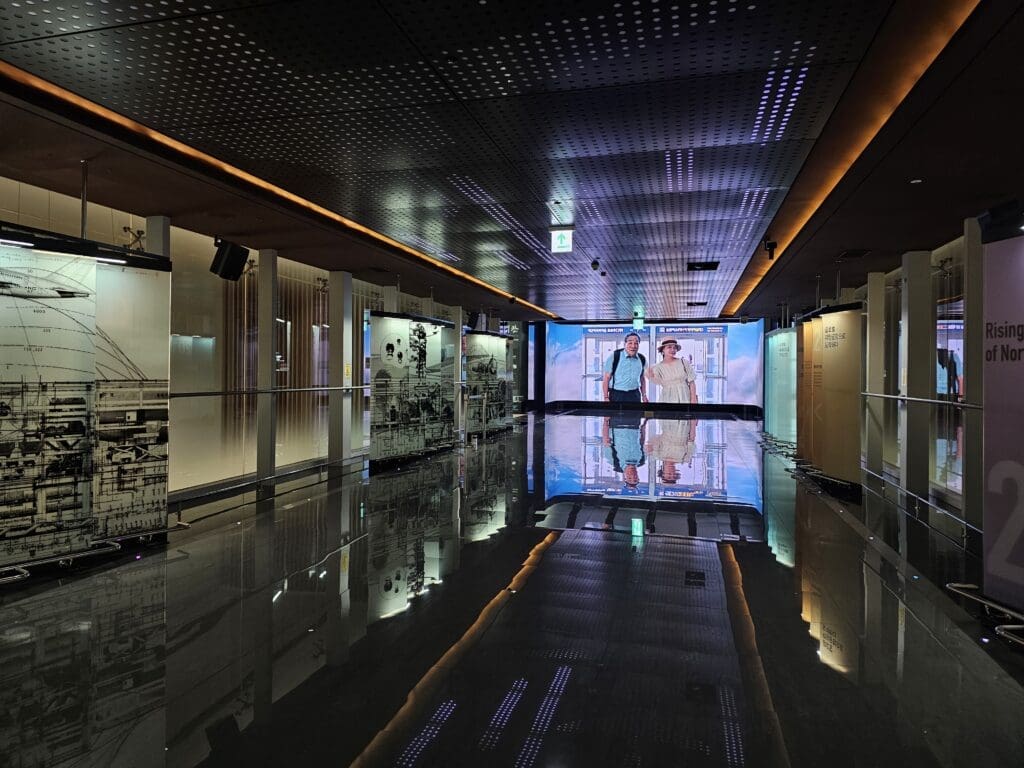
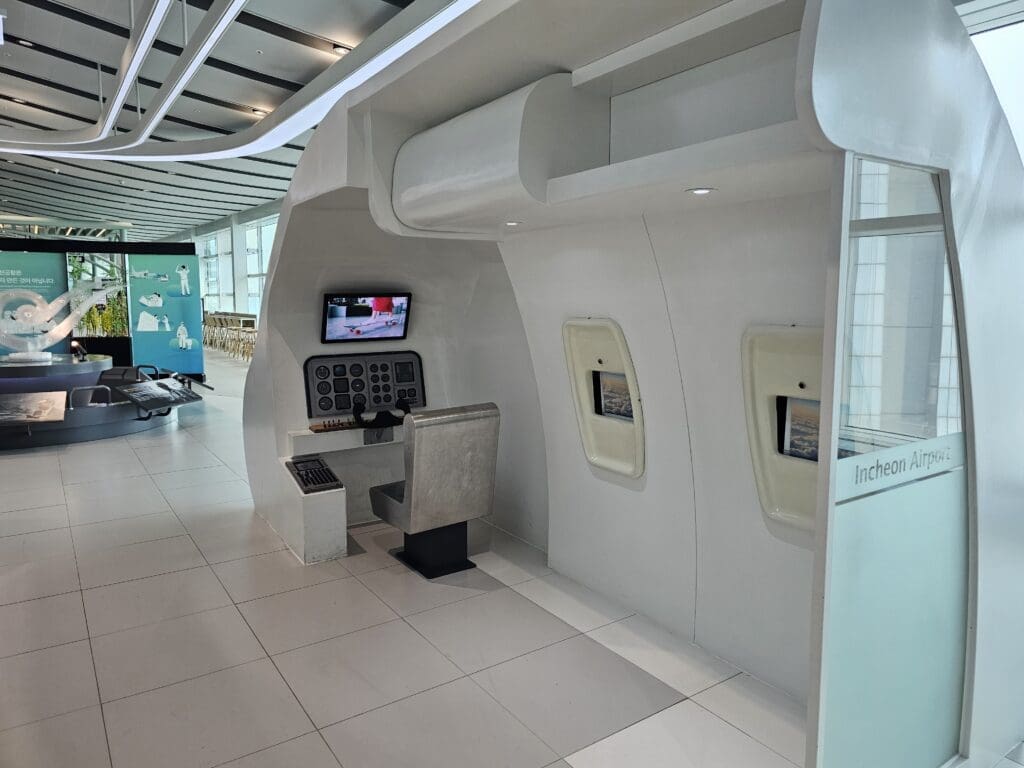
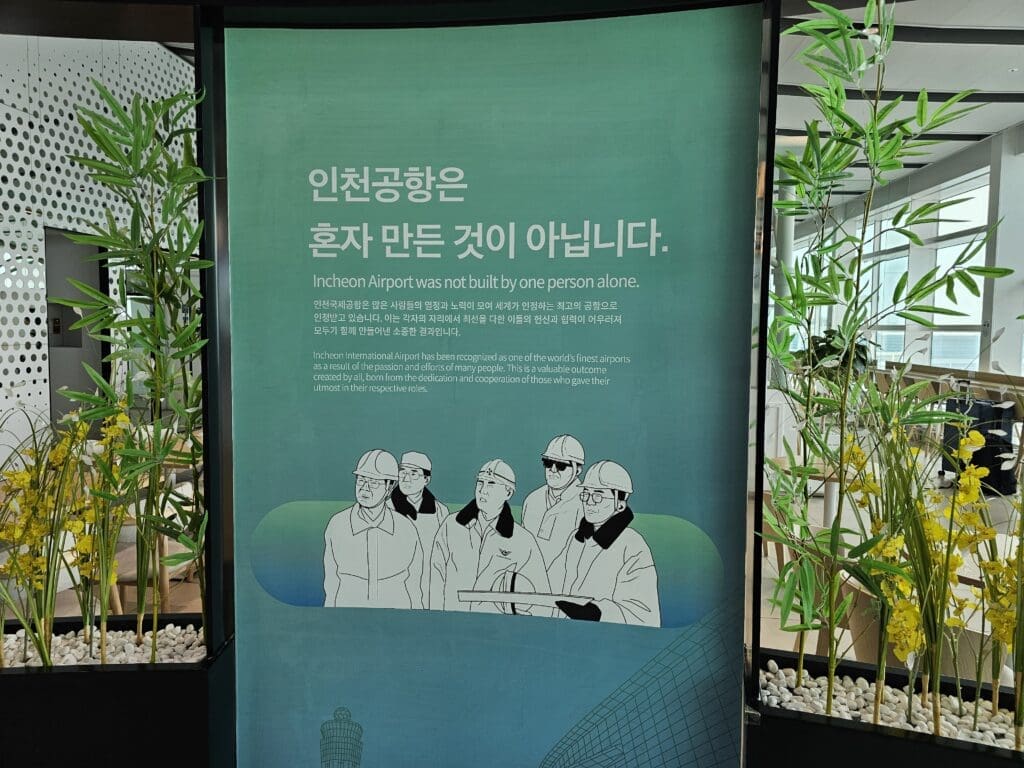
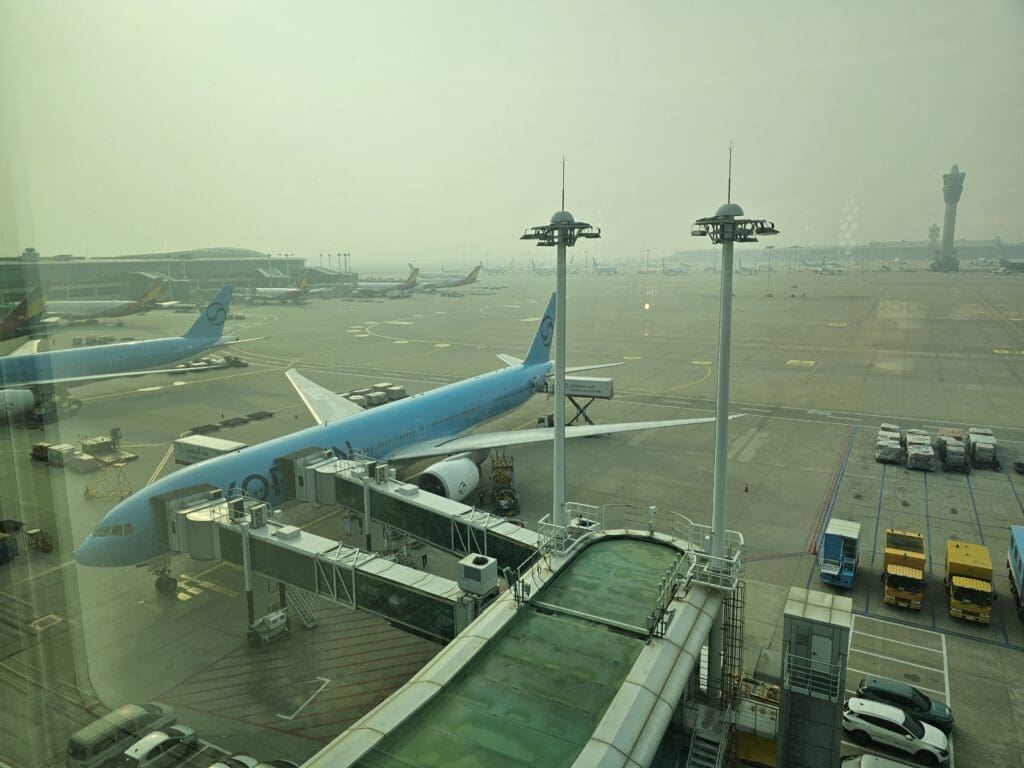
Despite being fairly early in the day, the terminal was awash with passengers thanks to a slew of morning departures to all corners of the world. As I had anticipated, since there were around five hours to go until my flight to London was scheduled to depart, check-in was yet to open. Thus, I decided to ascend two floors to the terminal’s exhibition space and observation deck, named after Kang Dong-seok, the lead official who oversaw the construction of Seoul Incheon Airport. This space features several exhibits on the airport and Korean aviation, as well as a café, whilst large windows offer views over Terminal 2’s main apron. Whilst this is not totally unobstructed, and the windows were not all too clean, given the increasing rarity of terminals whose landside portions feature good airside views, this was nevertheless an appreciated feature of the terminal and a great place to sit and pass the time.
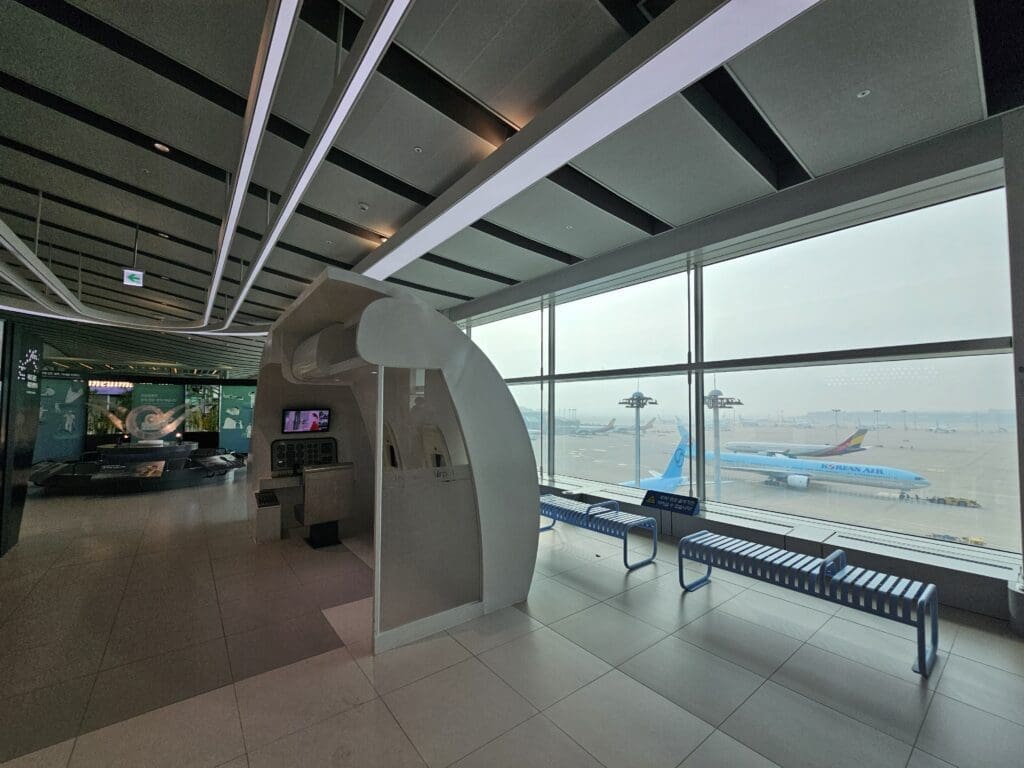
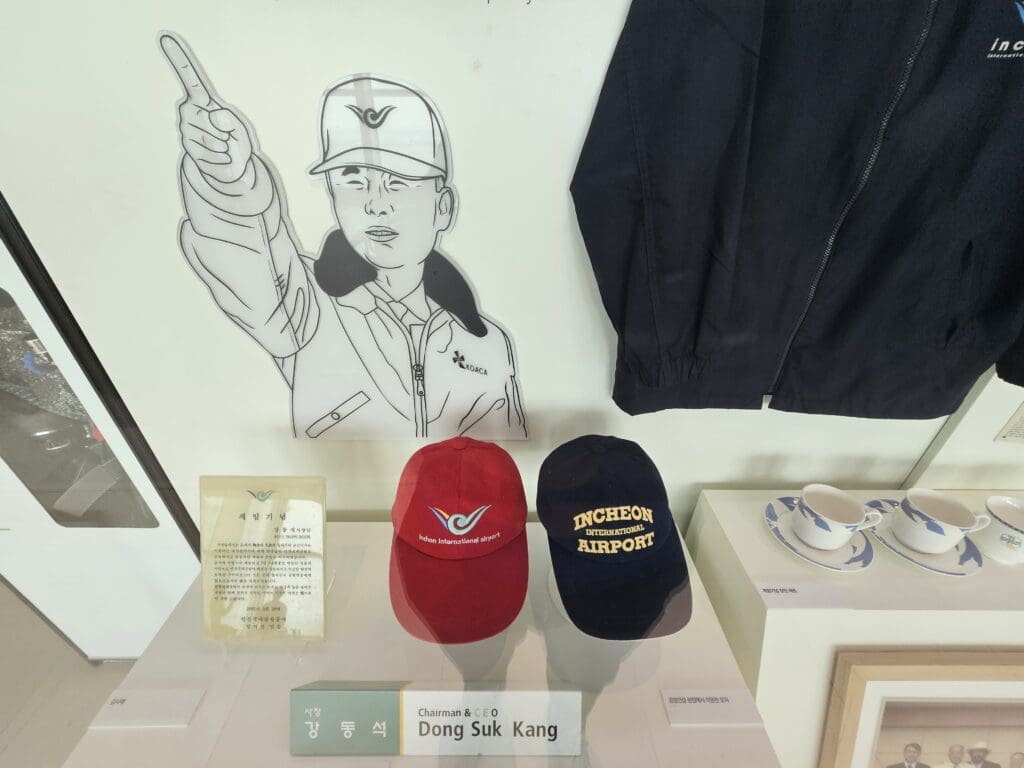
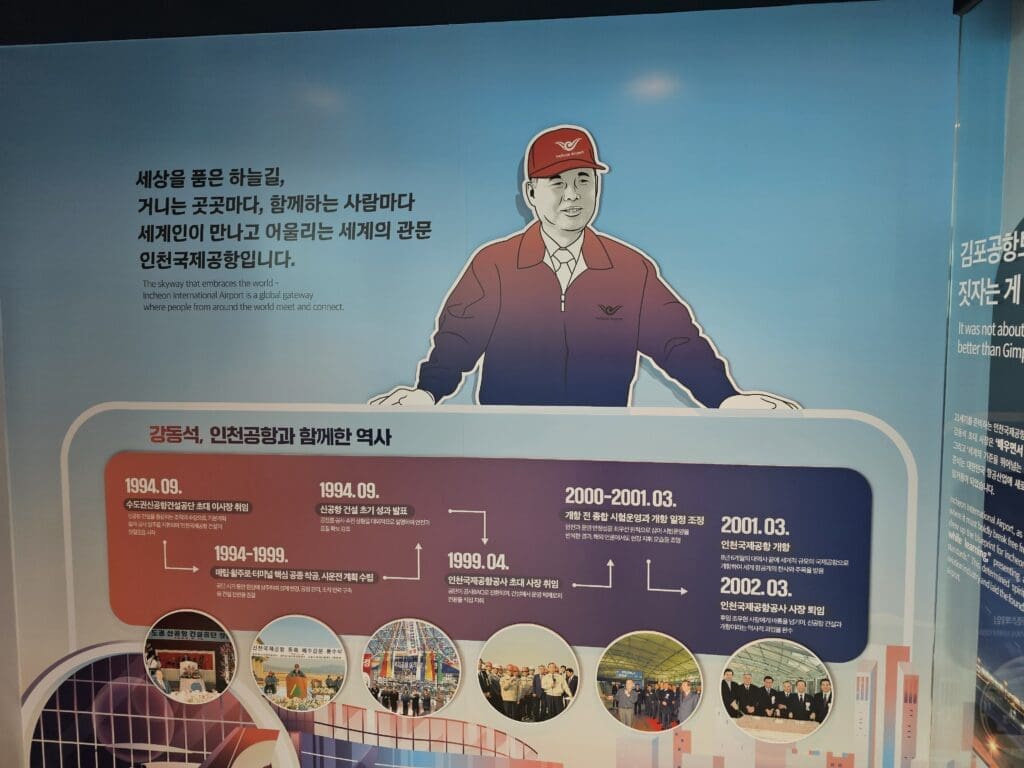
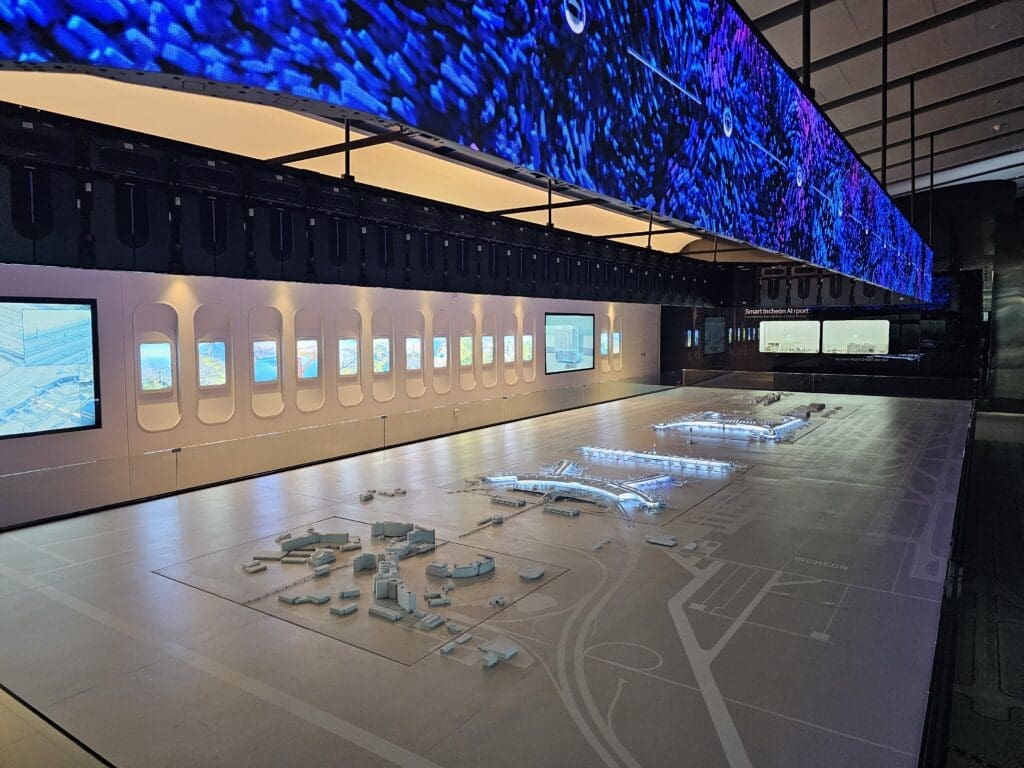
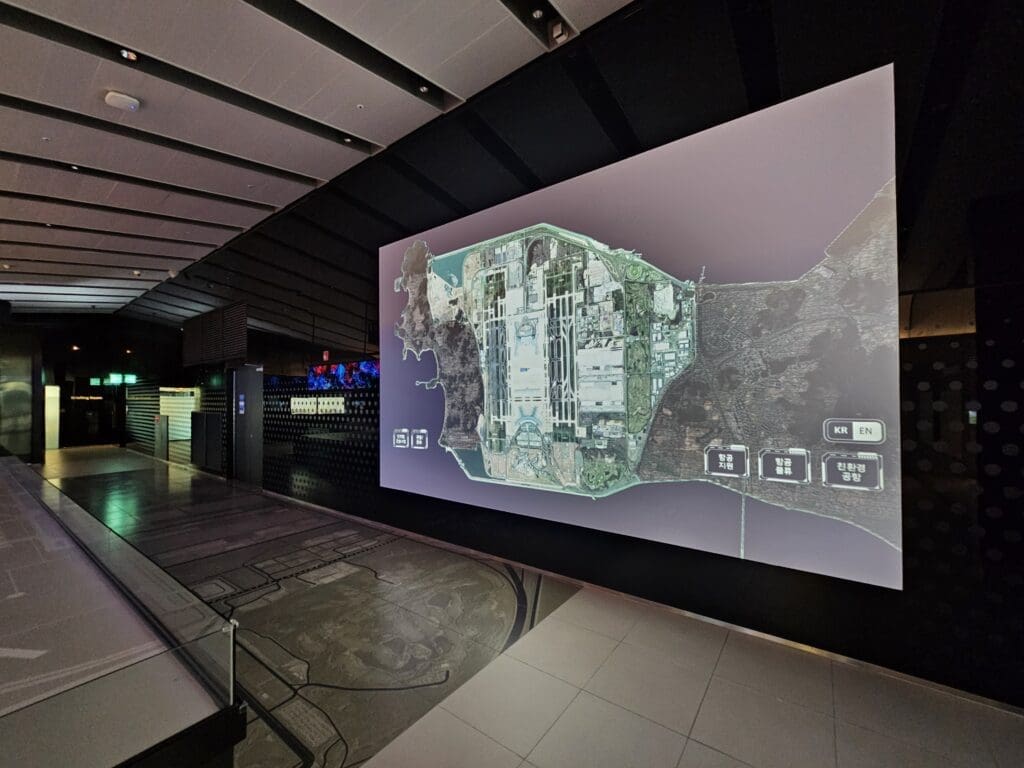
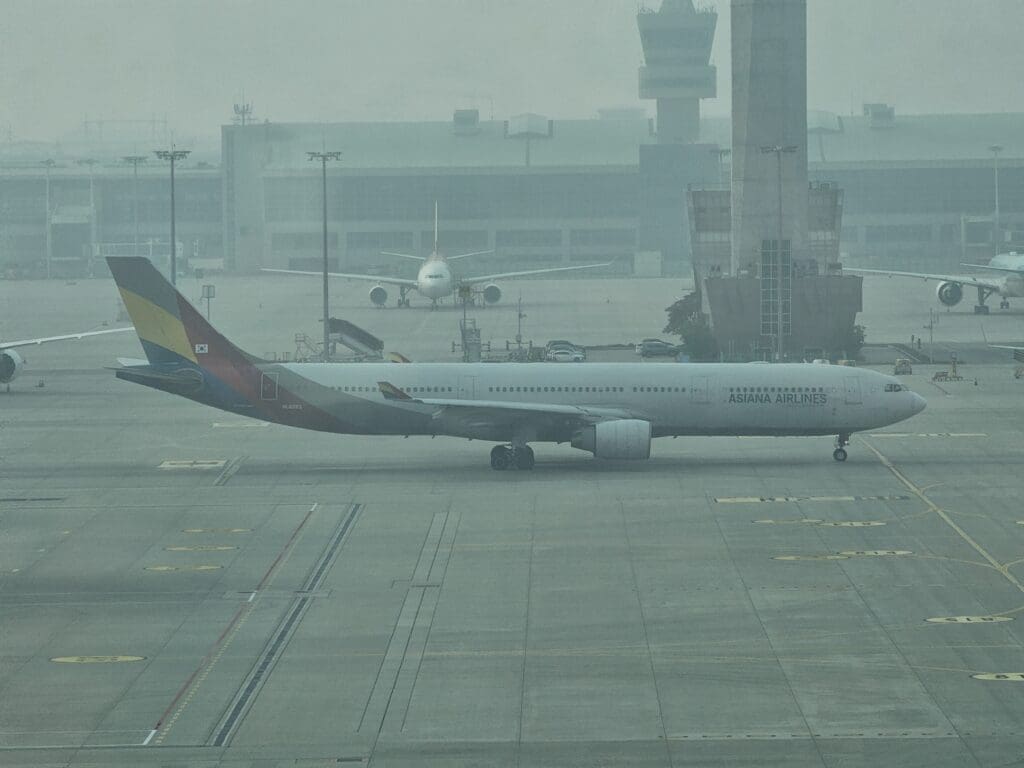
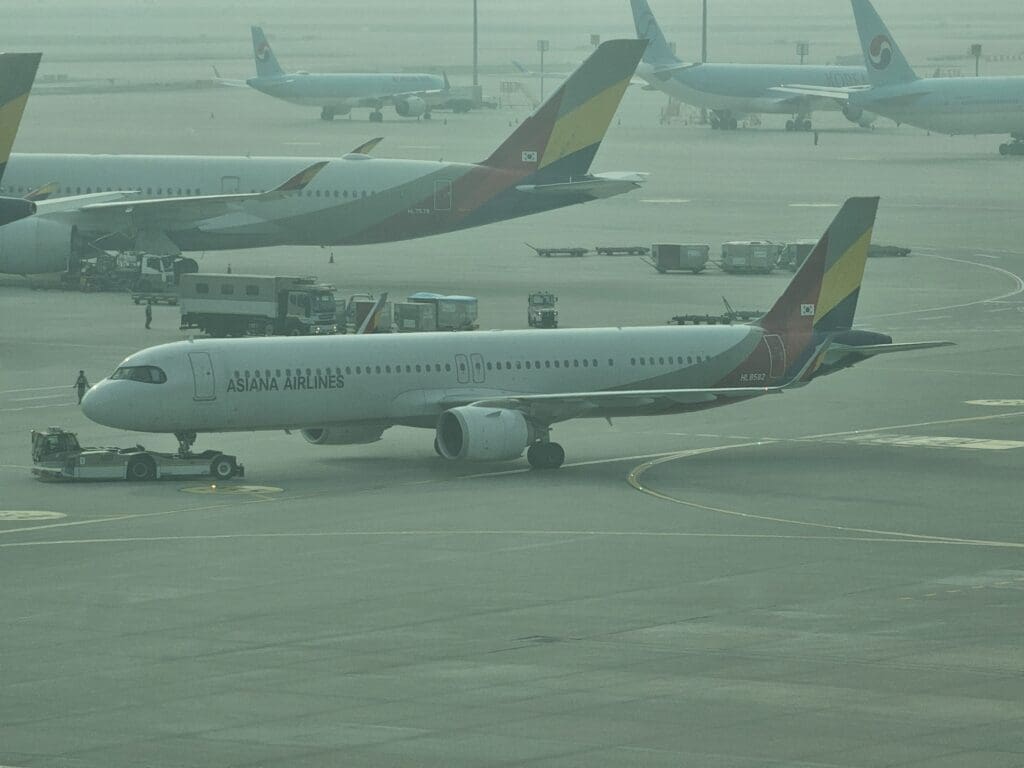
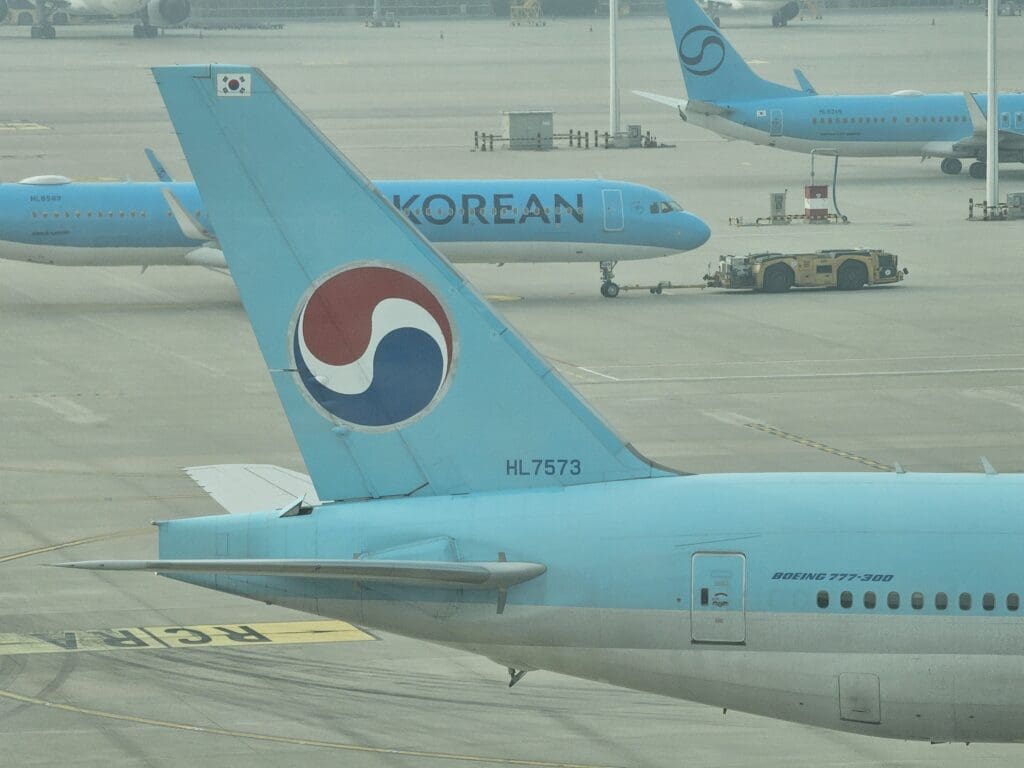
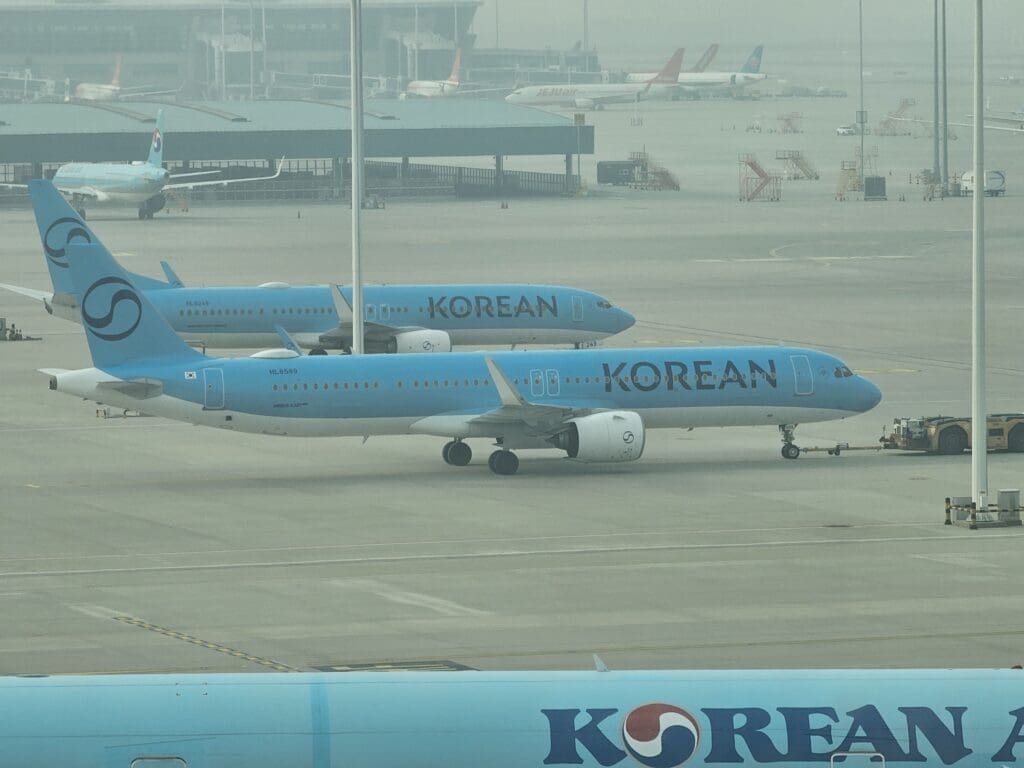
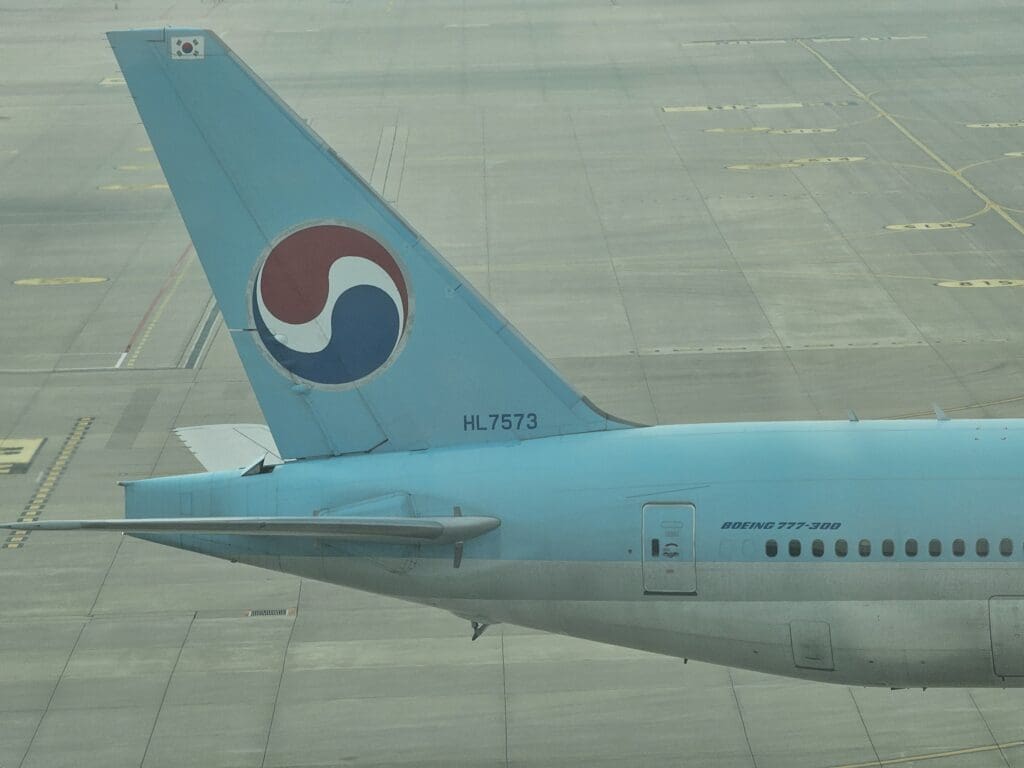
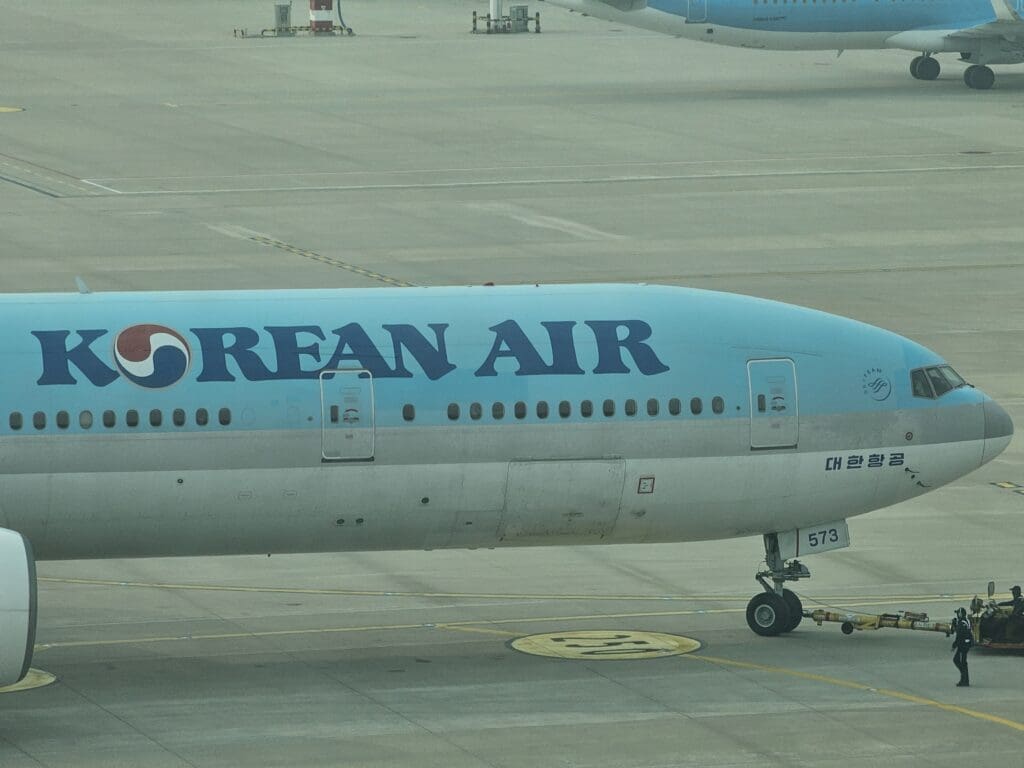
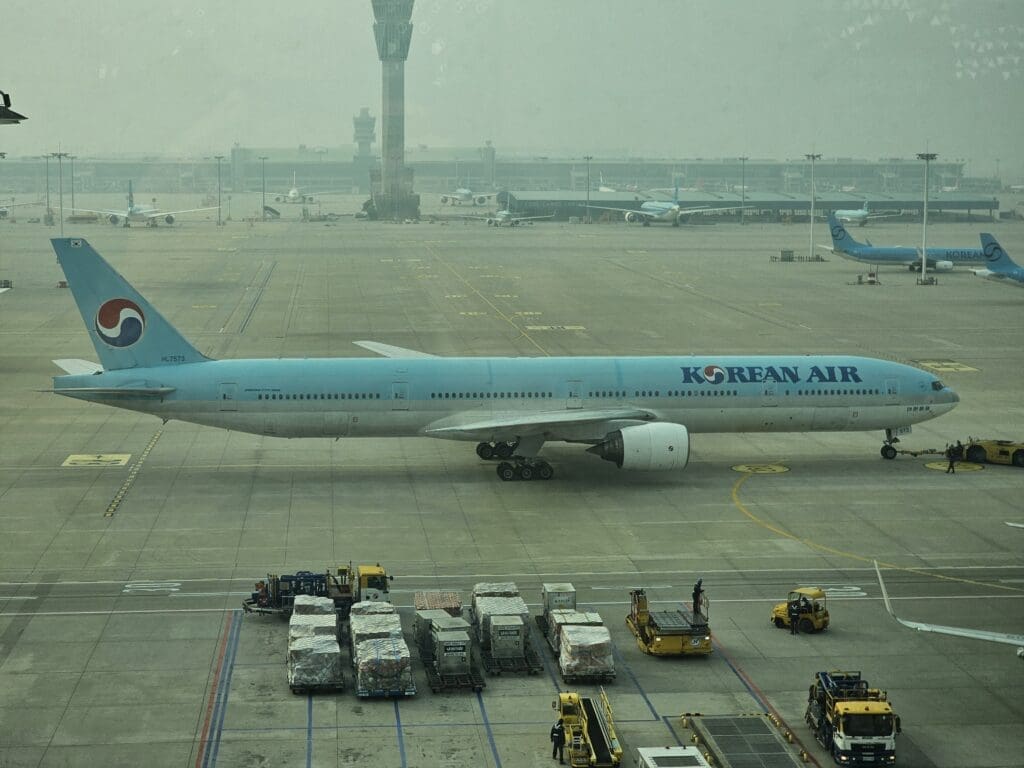
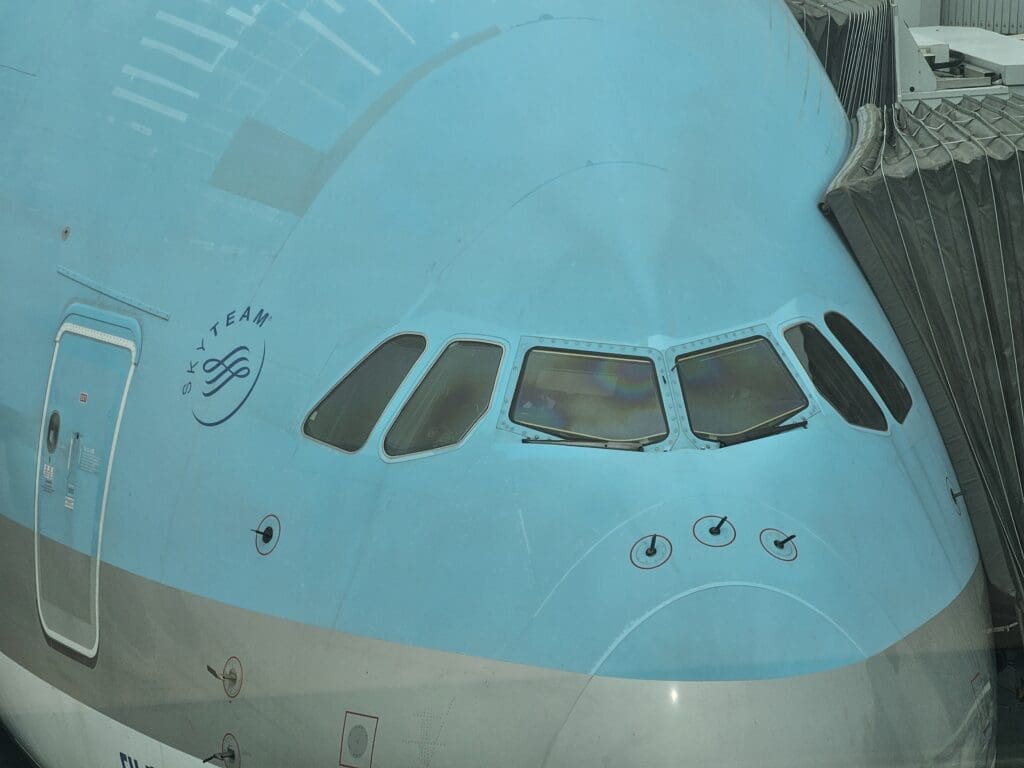
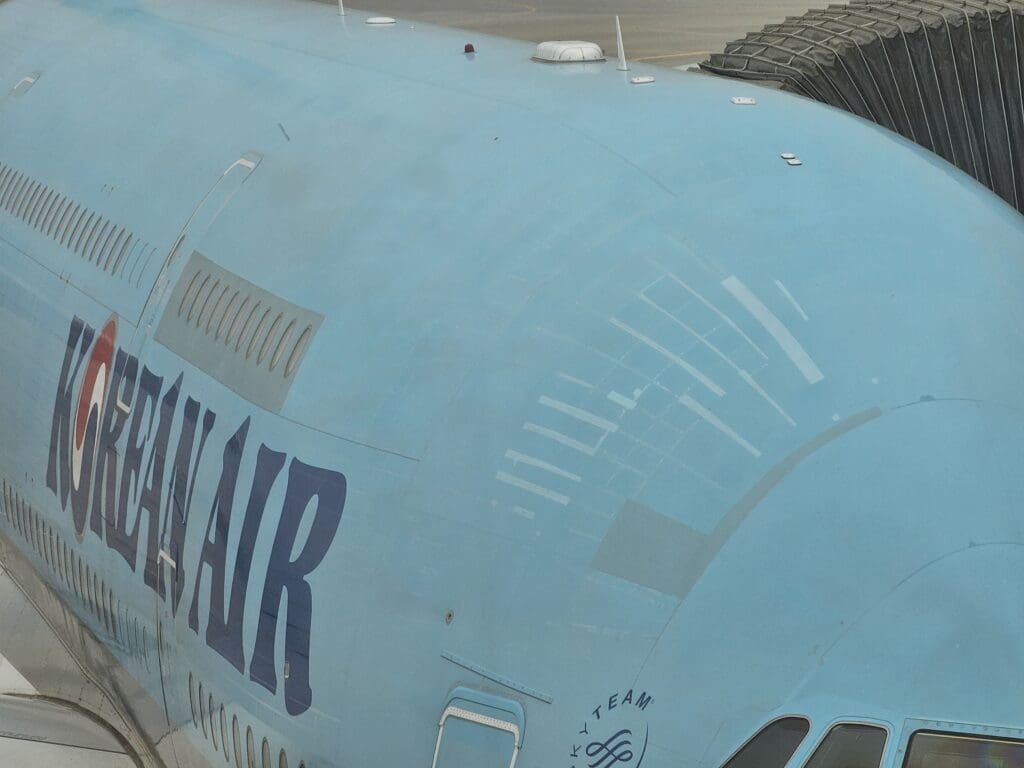
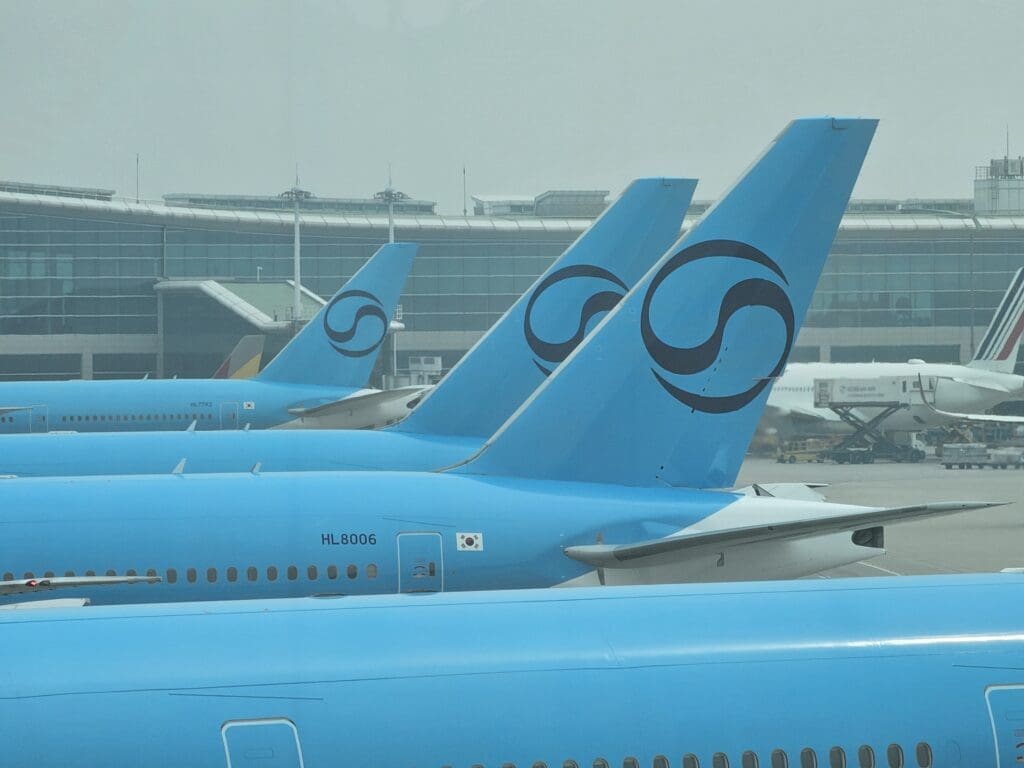
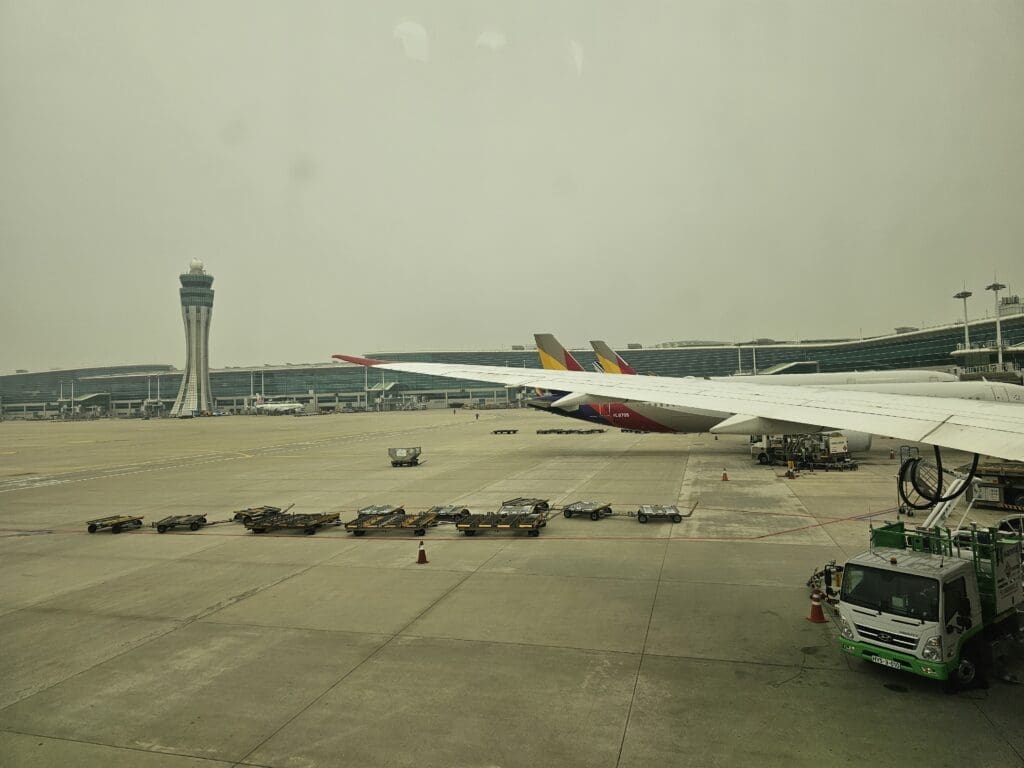
Once I had the first of many coffees that day, I sat and watched the constant stream of movements outside. At that time, plenty of Asiana Airlines and Korean Air aircraft could be seen being pushed back from the stands below. With these then replaced almost immediately by both arriving aircraft, as well as aircraft that had spent the night at remote stands. During this visit to Korea, I had been able to see Korean Air’s divisive new livery close up across the country. Whilst I was originally not the biggest fan of this, I have to say that having seen this in person, this has begun to rub off on me and is infinitely more modern than the airline’s old, although iconic, livery.
According to Virgin Atlantic’s website, airport check-in typically opens three to four hours before departure. Thus, just before 0900, I wandered back down to the check-in hall in the hope that I would be able to rid myself of my heavy suitcase. Heading over to check-in area K, which was shared with China Airlines and Delta Air Lines, fortunately, I was in luck, as upon making it there, I was greeted by the welcome sight of eight Virgin Atlantic-branded desks, as well as a customer service desk. These were staffed by a mixture of Virgin Atlantic agents, as well as those employed by Korean Air’s ground handling company, Air Korea. At that time, a fair queue of passengers could be seen and so about ten minutes of shuffling were required before I reached one of the desks. Getting my journey off to a good start, once there, I was served by a warm and friendly Virgin Atlantic agent who made friendly conversation about my time in Korea whilst undertaking all the check-in formalities. During this, they offered me the opportunity to move to another seat if I was not happy with the aisle seat that I had been automatically assigned, and overlooked my overweight bag, with this being one kilogram above the included 23kg luggage limit. Following this quick and pleasant check-in experience, my boarding pass was printed off, and I was free to continue on my journey.
By this time, having exhausted the delights of the landside area and eager to get a good gander at the planes outside, I made my way to the nearest of the two security and immigration halls. Without queuing, my boarding pass was scanned, and my passport was briefly checked before I was greeted by the slightly disappointing sight of a snaking line leading up to one of the open security checkpoints. That day, hinting at staff shortages, just three of the seventeen checkpoints appeared to be open, and I was thus in for one of my longest security waits at Incheon. After about fifteen minutes, I reached one of these, and thankfully, security was a quick and easy process, with no need for any additional checks. From there, I made the short walk to immigration, which consisted of a long line of immigration checkpoints as well as a couple of open manned counters. Theoretically, my passport should enable me to use these checkpoints, although, unfortunately, as I have found to be the case when departing Korea, this did not recognise my passport and thus I had no option other than to join the very short queue leading up to one of the counters. Once there, immigration was a quick and hassle free process, taking no more than about thirty seconds before I entered the busy airside area.
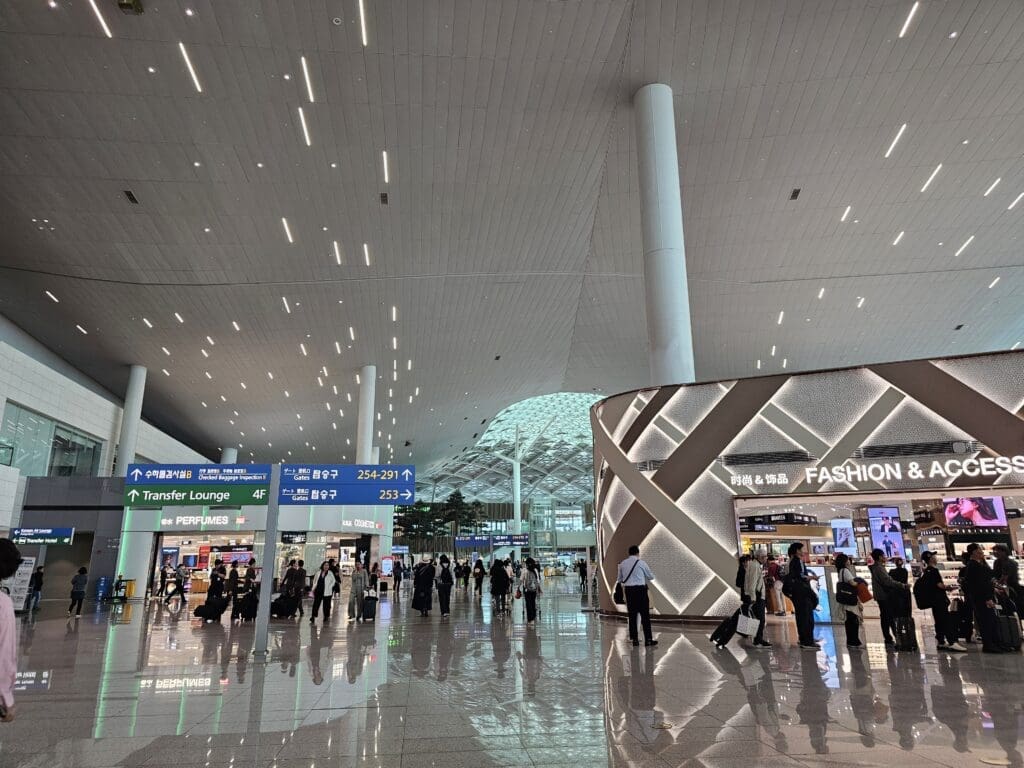
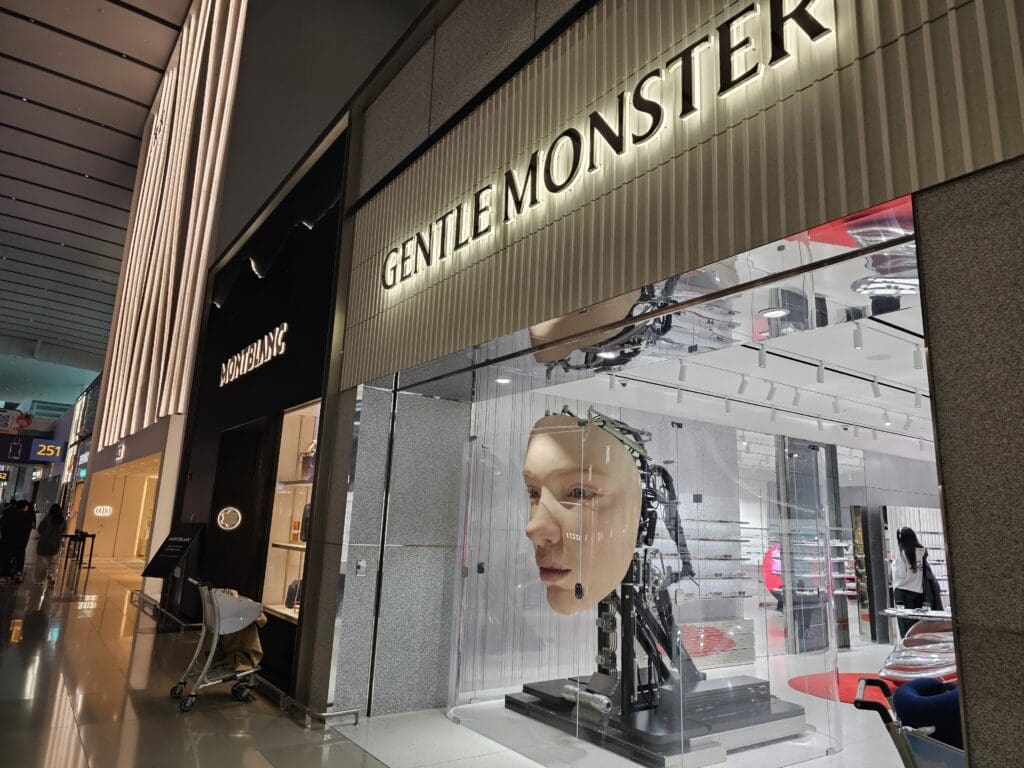
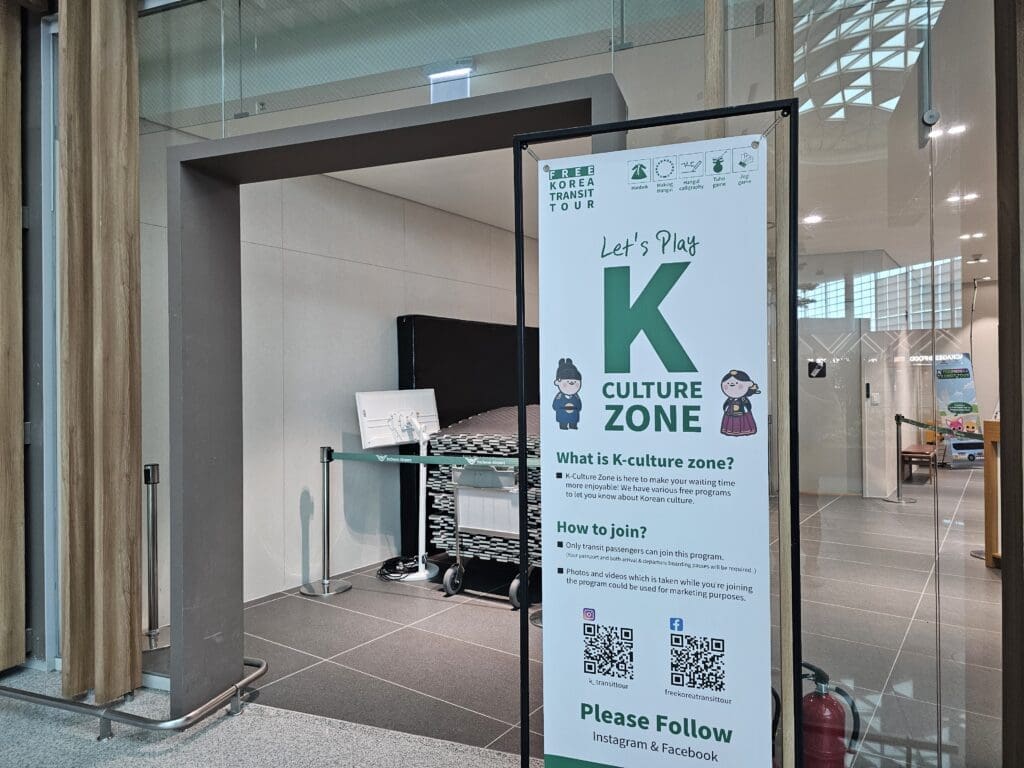
As I wandered around Terminal 2, I was left with nothing but good things to say about this. This terminal is definitely one of the more aesthetically designed terminals in the world, with plenty of space, natural light and greenery seen throughout. Meanwhile, a host of local artworks could be seen displayed in collaboration with several local museums and galleries. One thing that I have noticed during my trips through Terminal 1 is that Seoul Incheon Airport aims to provide a cultural experience to those passing through, and Terminal 2 is no different, with a K Culture zone for those looking to learn some Hangeul or try on a Hanbok before their flight, whilst I also came across a traditional dance performance. Importantly, the terminal appeared to be clean and tidy throughout, and whilst busy, there were plenty of places to sit and wait. For those needing to stay connected with the outside world, plenty of plug sockets and charging points could be seen, and I had no issues remaining connected to the airport’s complimentary wifi network – with 2.4G, 5G and 6G networks available.
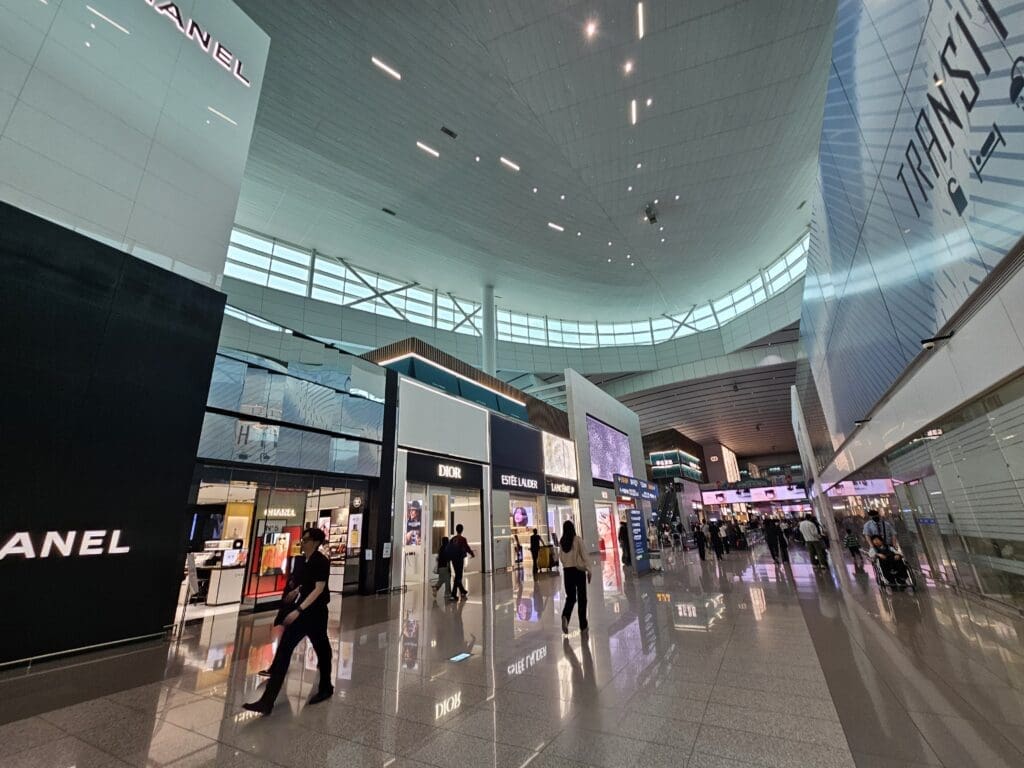
As you would expect for a terminal of its size, those in the airside area are not faced with any shortage of eateries, with an impressive total of well over twenty cafés and five restaurants offered for those fancying something to eat or drink. The majority of these took the form of big-name chains from both Korea and overseas. In terms of prices, whilst most eateries seemed to sell things with the usual airport mark-up, meaning that these were not the cheapest in the world, most food and drink options were not extortionately expensive. For those on a tight budget, two convenience stores, operated by chain rivals CU and GS25, could be found in the airside area, selling the usual array of snacks, drinks and other items at prices that did not seem to be any more expensive than at any other convenience store in Korea. Likewise, for those looking to do some retail therapy, throughout most of the terminal, shops could be seen everywhere you looked, with a variety of duty-free outlets provided by Hyundai, Lotte, Shilla and Shinsaegae, in addition to the usual smorgasbord of luxury brand outlets.
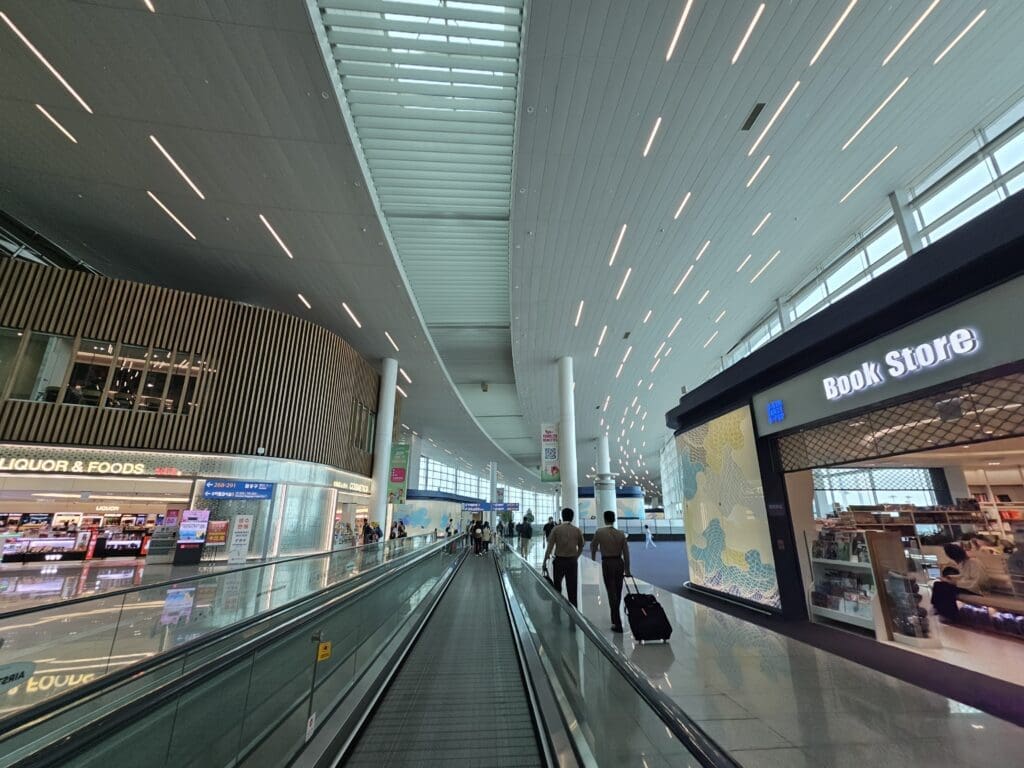
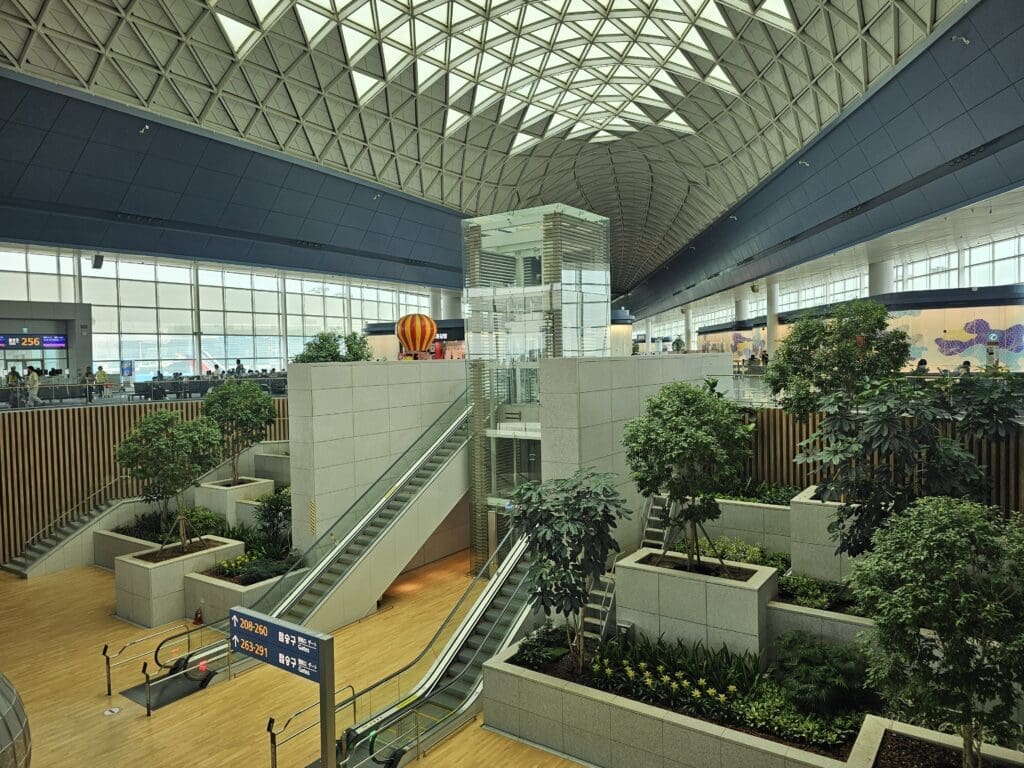
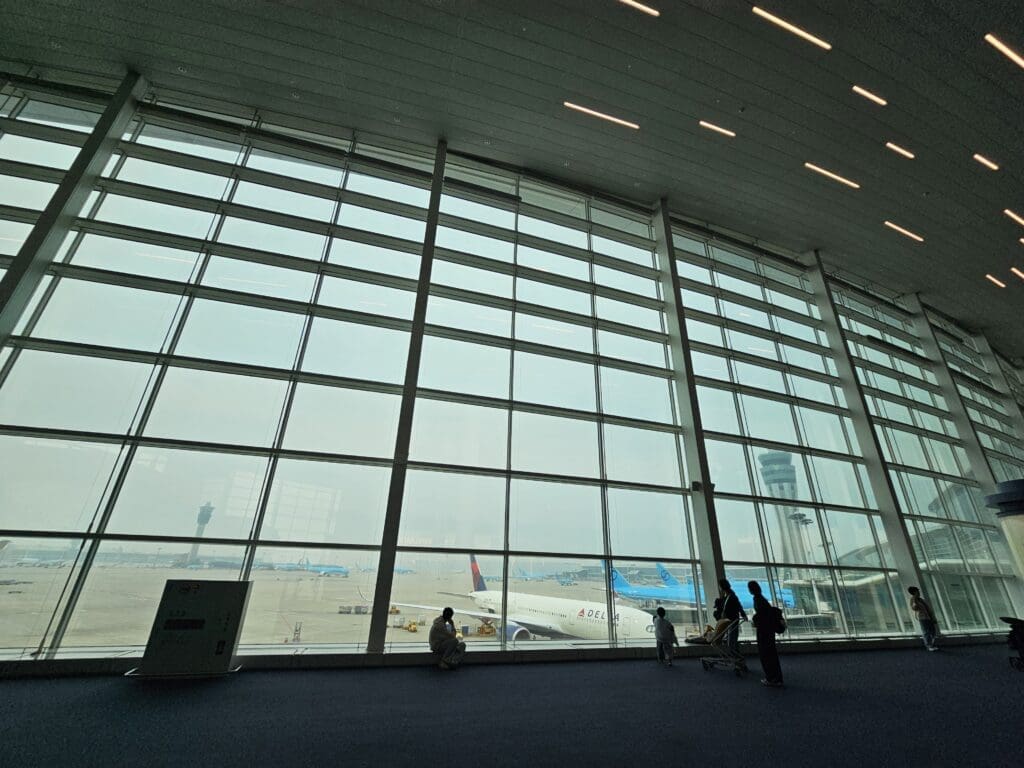
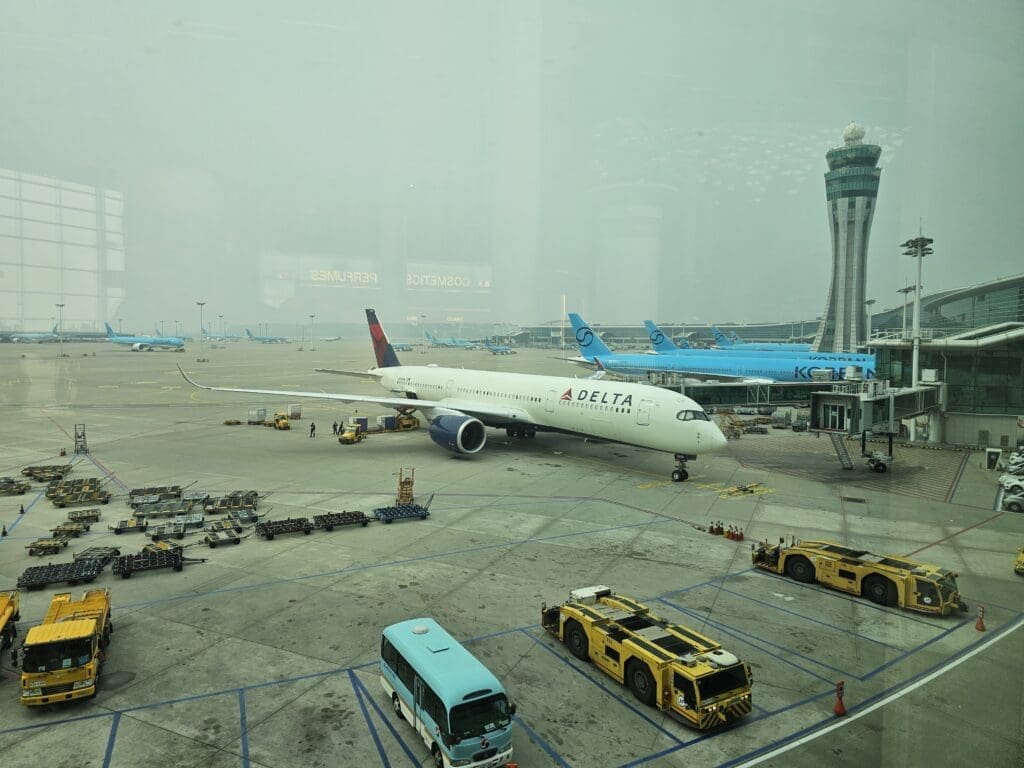
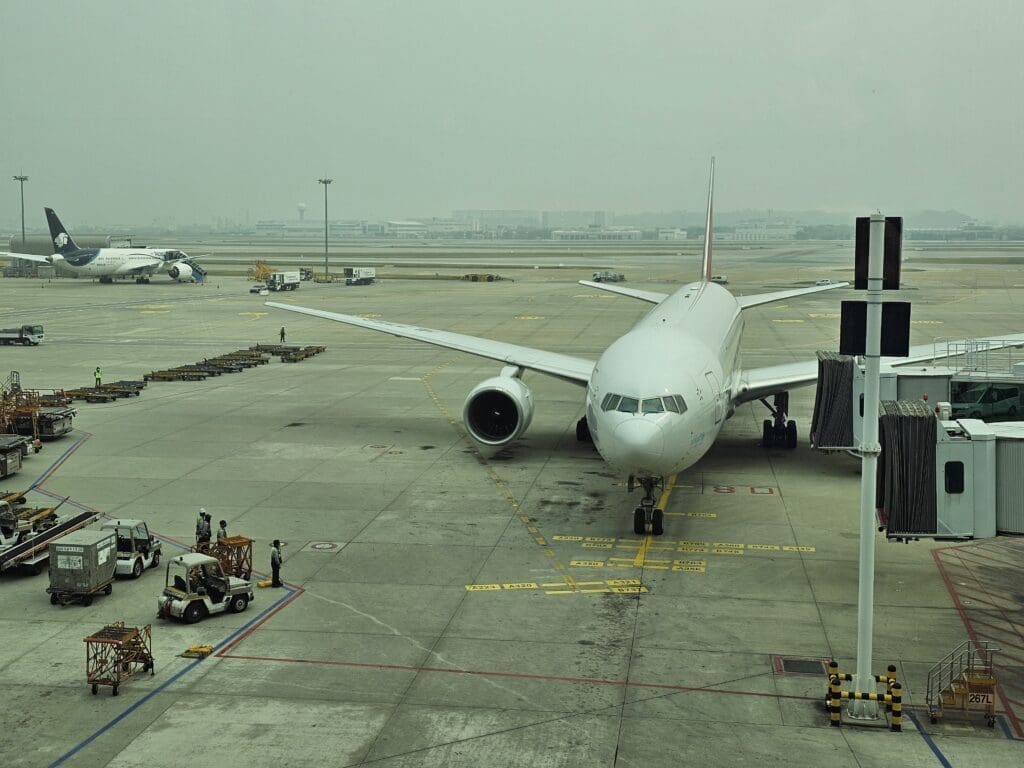
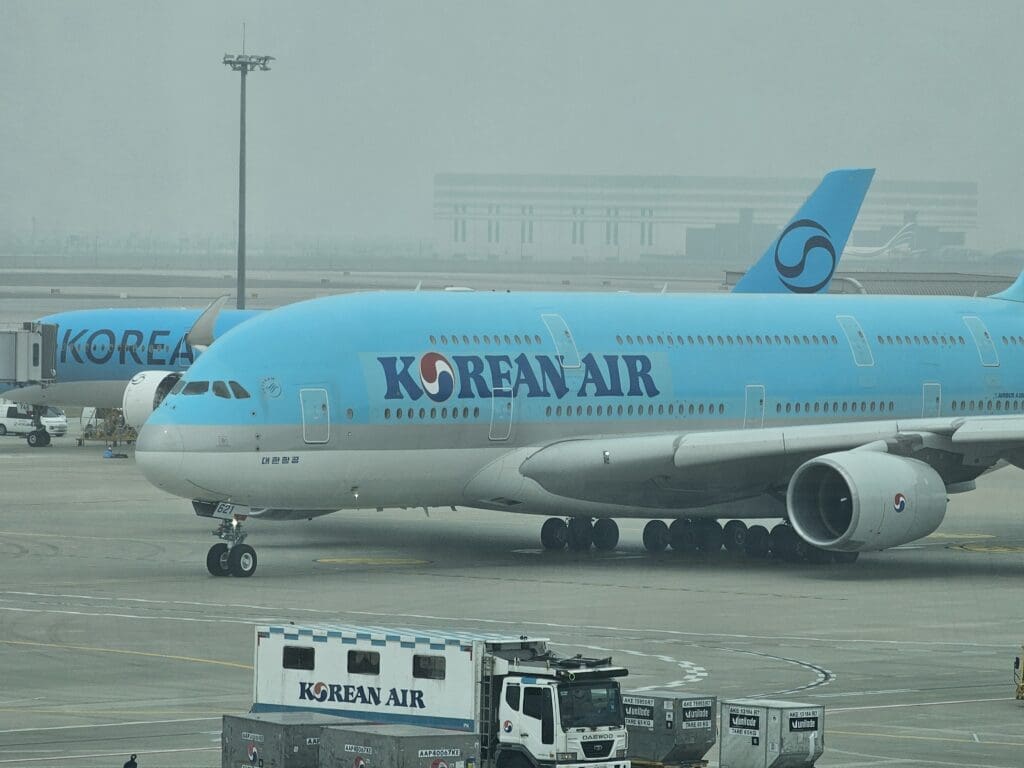
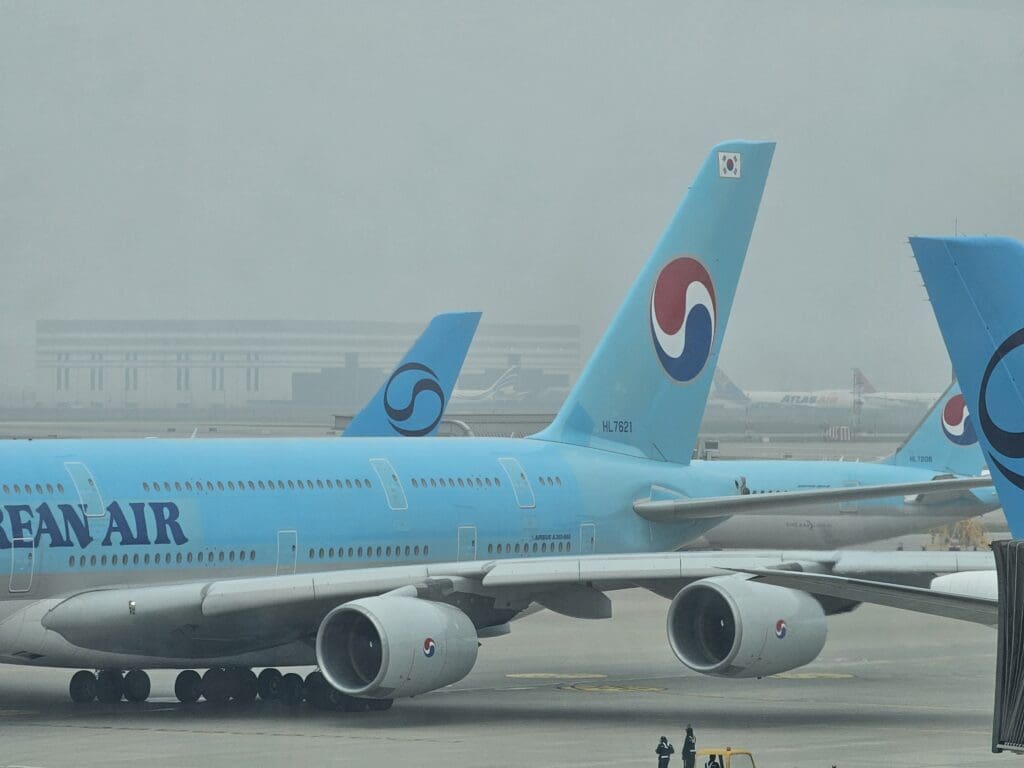
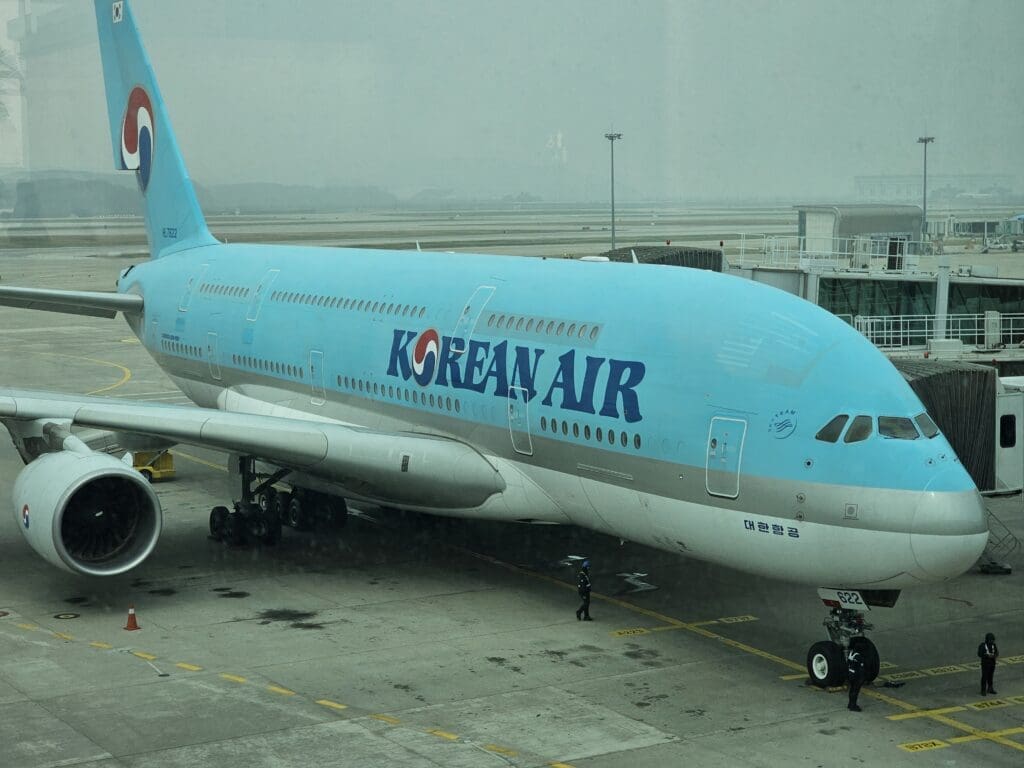
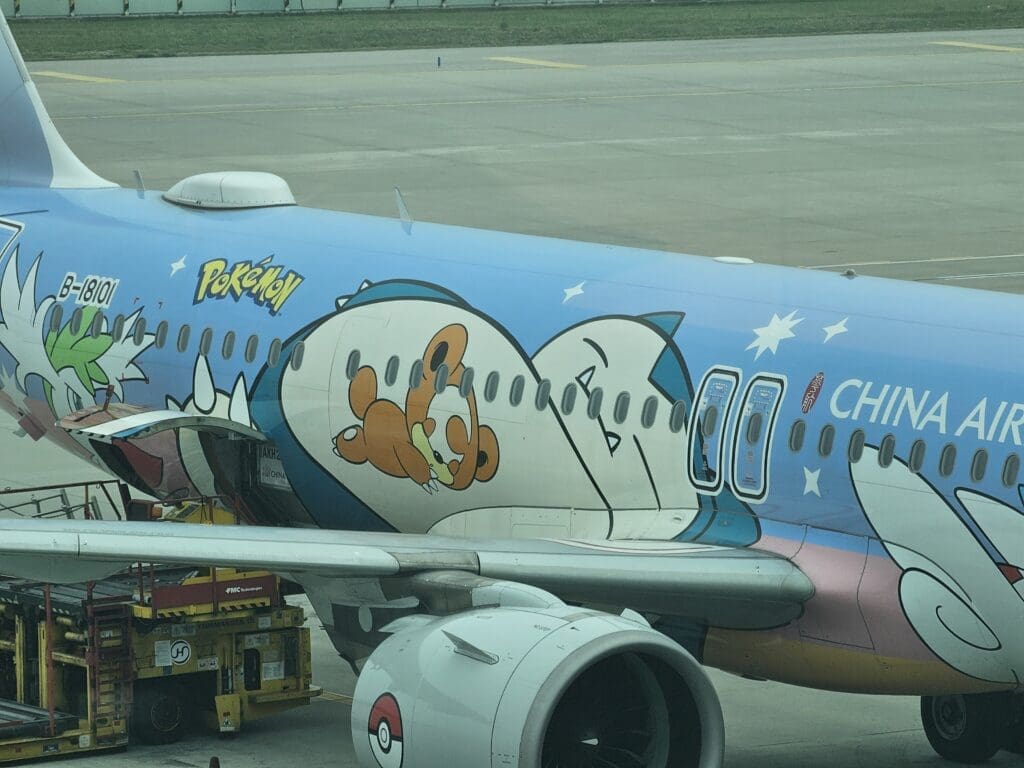
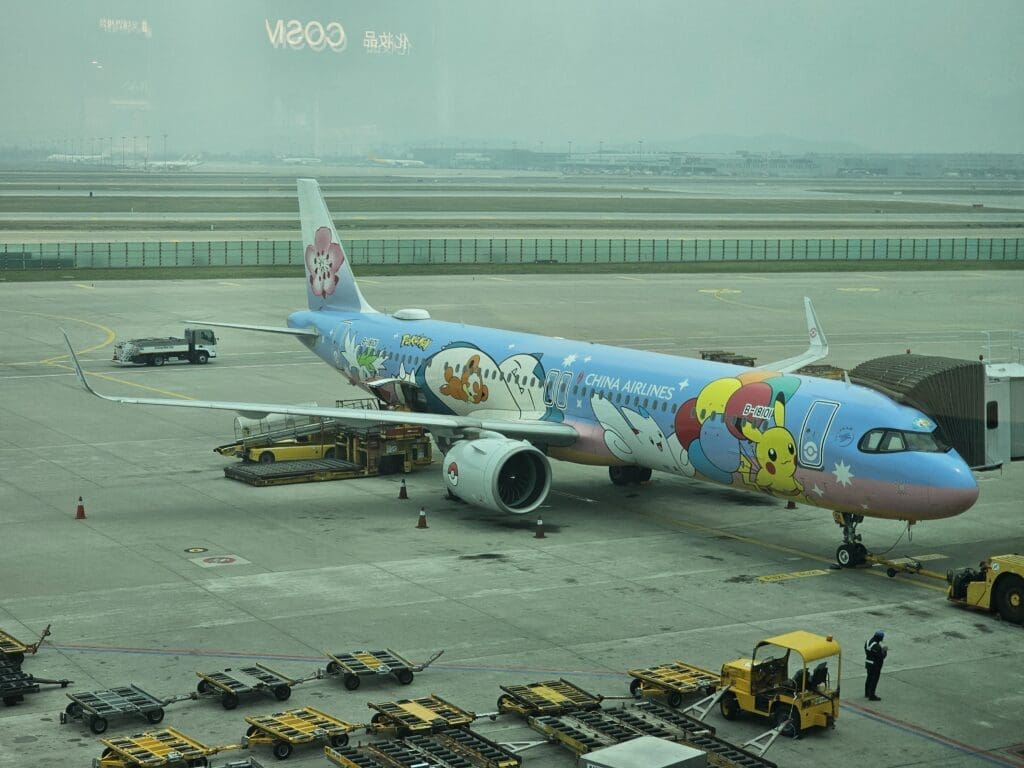
Moving on to the more important things, Terminal 2 features large glass windows that offer unobstructed vistas of the movements outside from most of the terminal’s gates. This means that the terminal is undoubtedly a great place for those aviation enthusiasts to sit and watch the diverse stream of non-stop movements at the world’s twelfth busiest airport. Marching from stand to stand, I was treated to views of a wide array of aircraft ranging in size from the Airbus A220, right up to the Airbus A380, and everything in between. Sadly, since my last visit to Seoul Incheon Airport in 2024, the number of local Airbus A380s and Boeing 747-8s seems to have dropped. Specifically, during this visit, I only saw two Korean Air Airbus A380s, which were jetting off for New York JFK and Taipei Taoyuan, and a single passenger Korean Air Boeing 747-8, with this being parked at a remote stand. Additionally, I have to say that many of the yet-to-be-repainted Korean Air jets appeared to be in a rather worn-looking and weathered state.
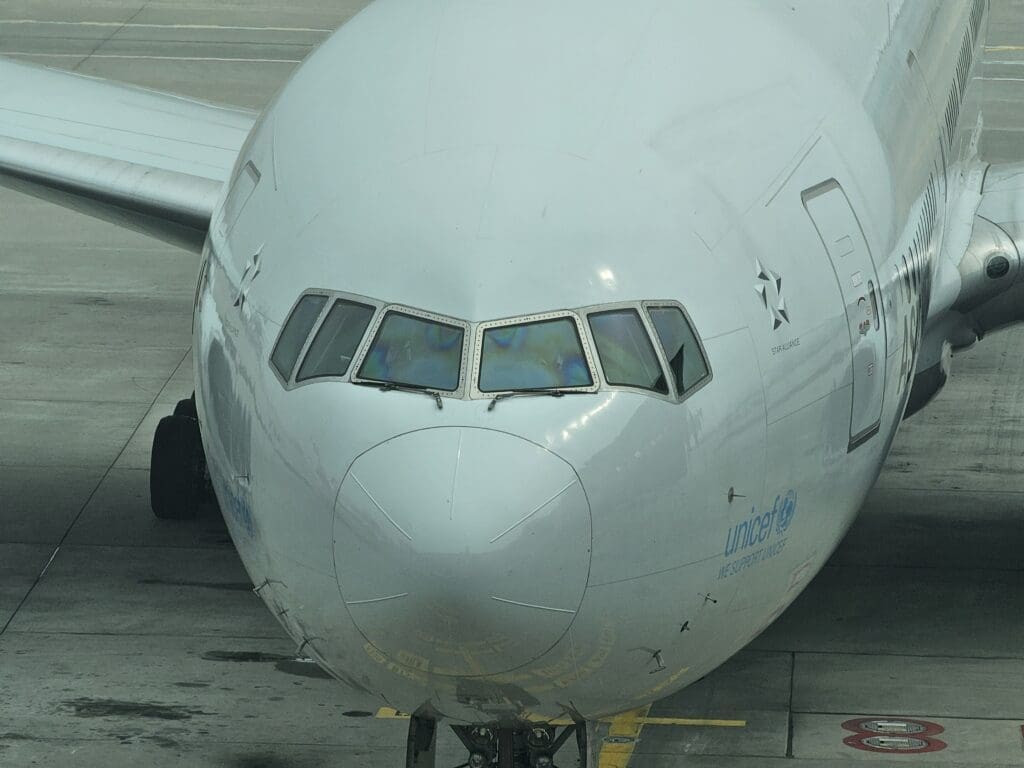
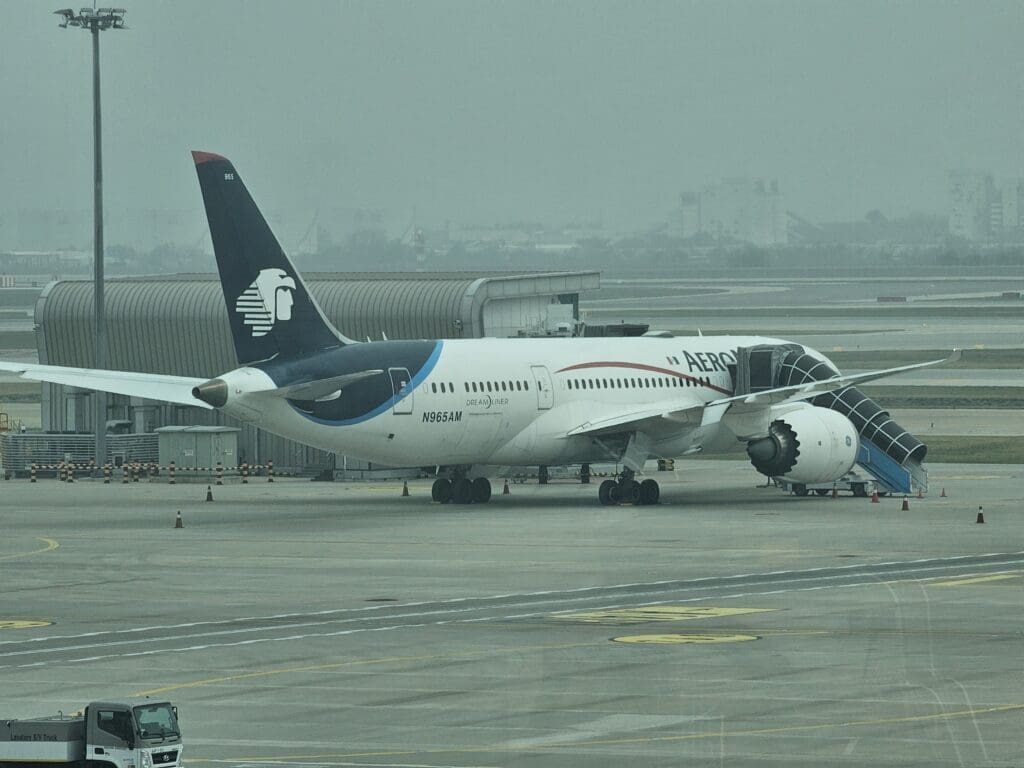
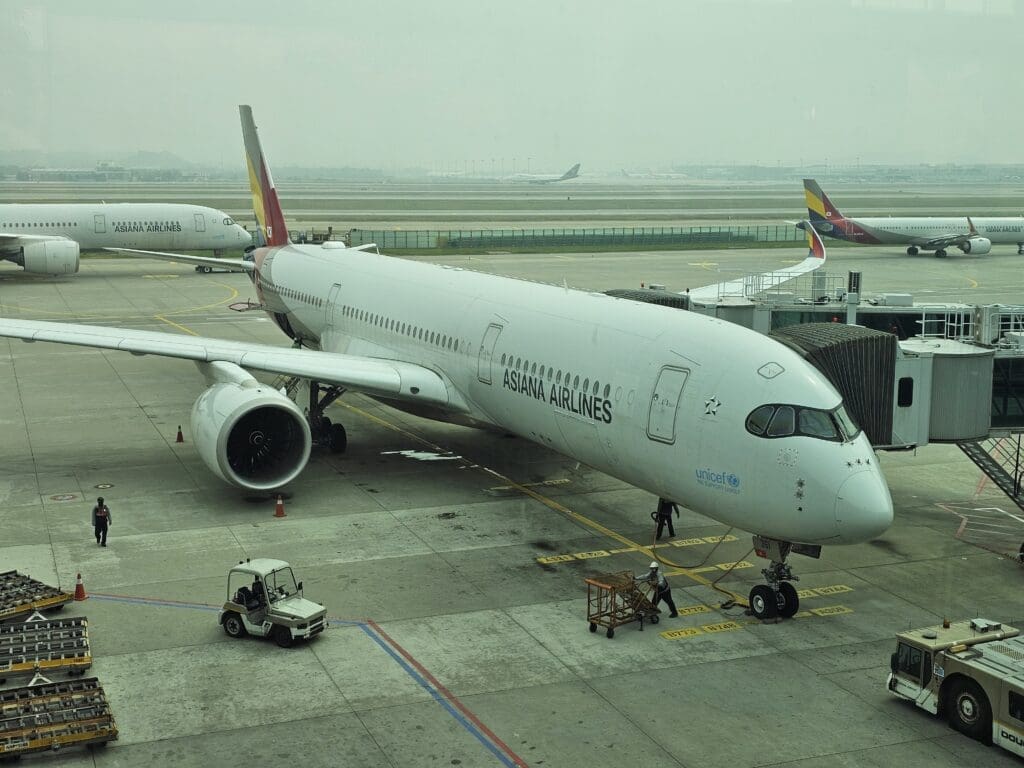

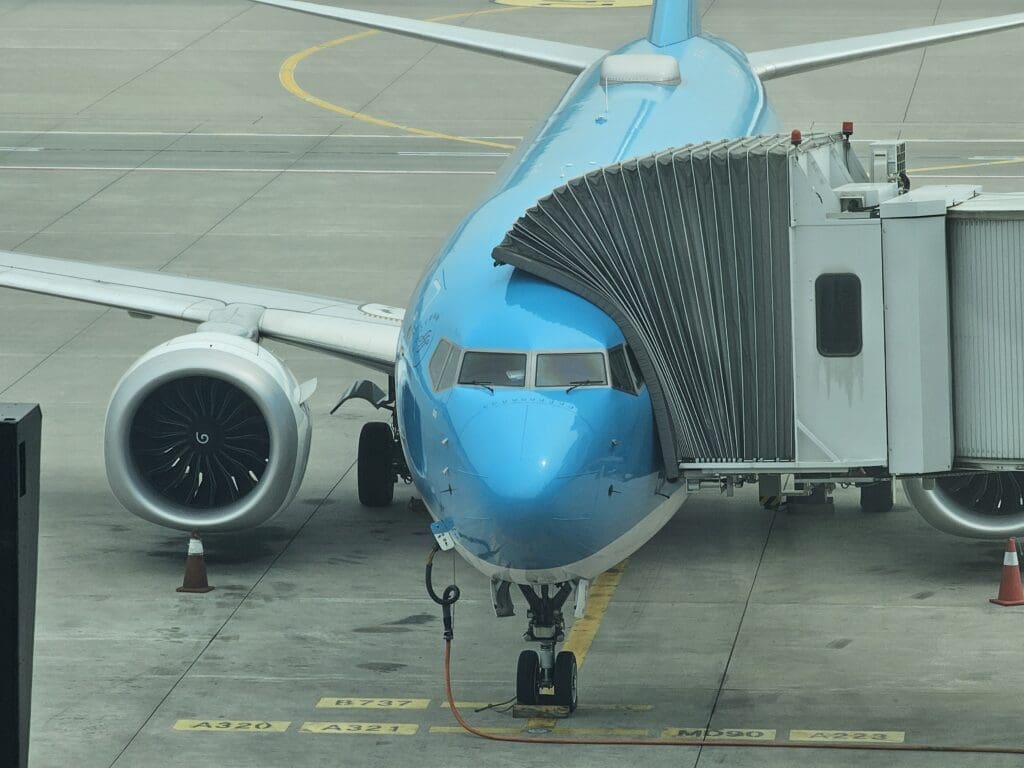
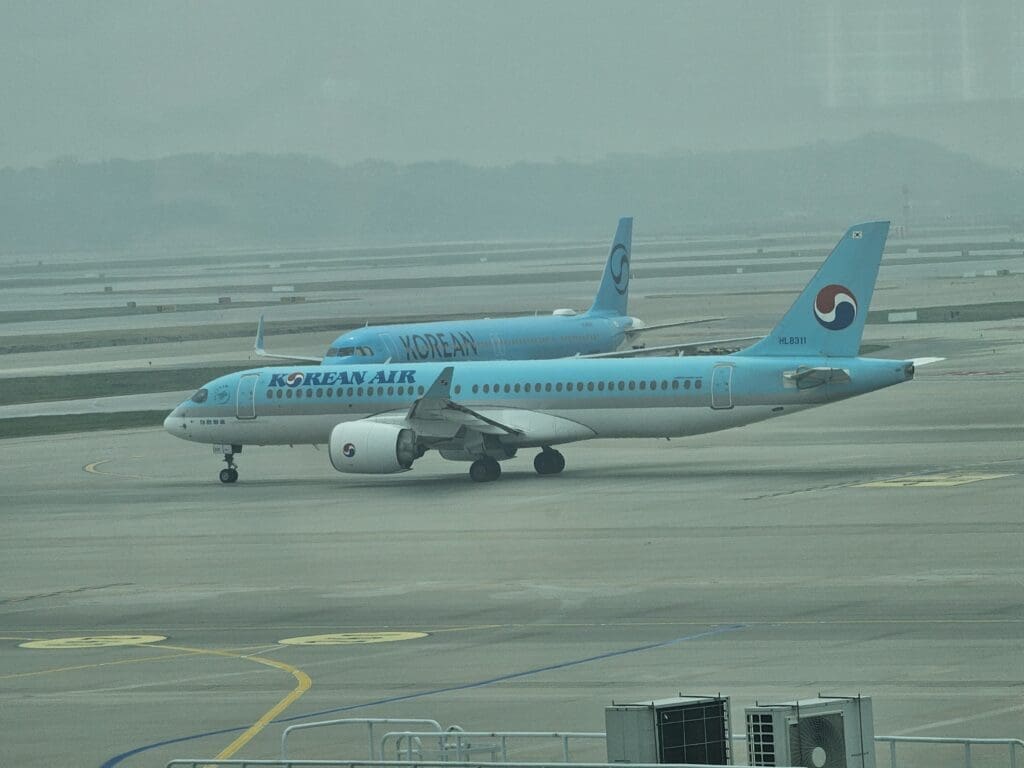
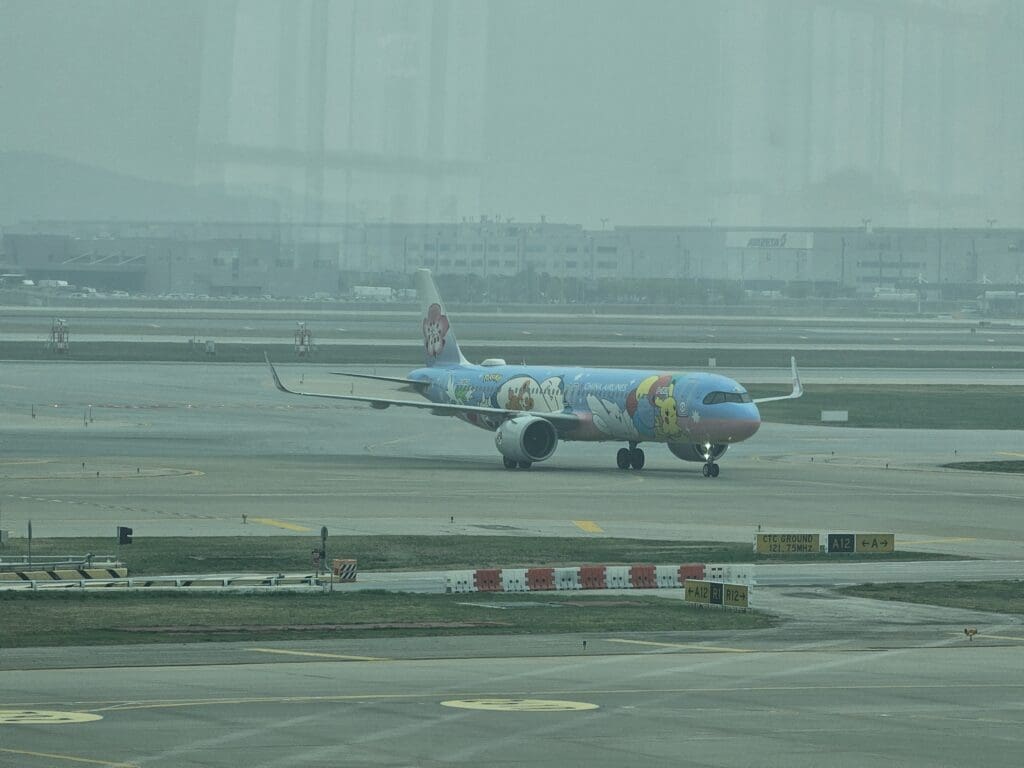
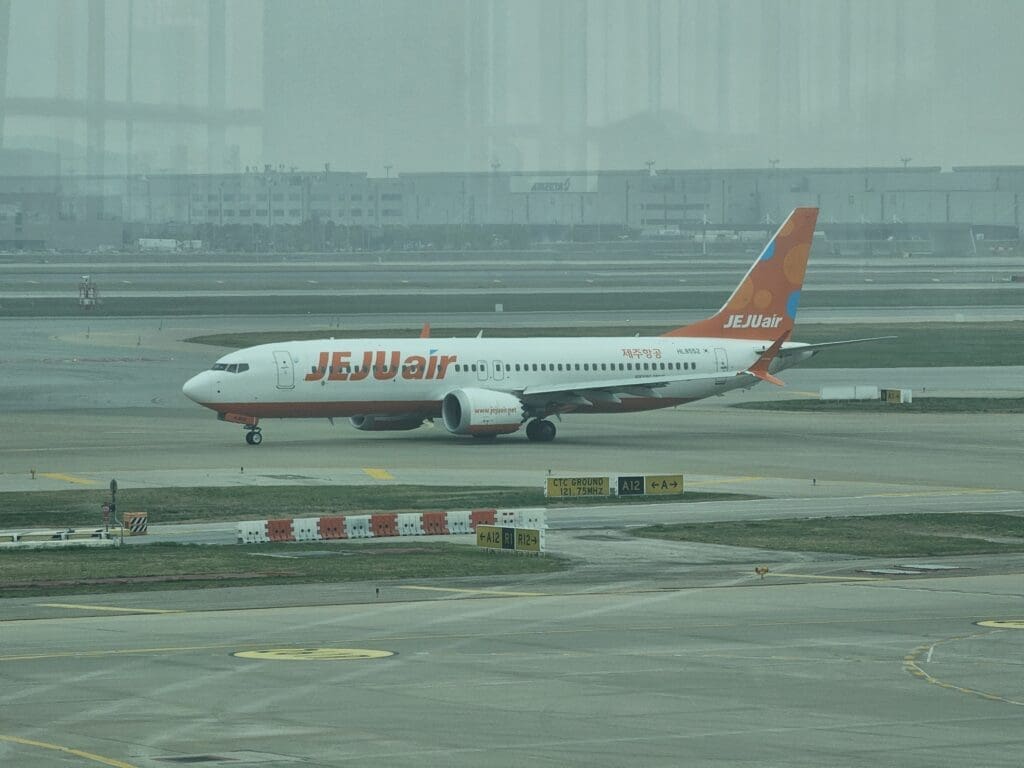
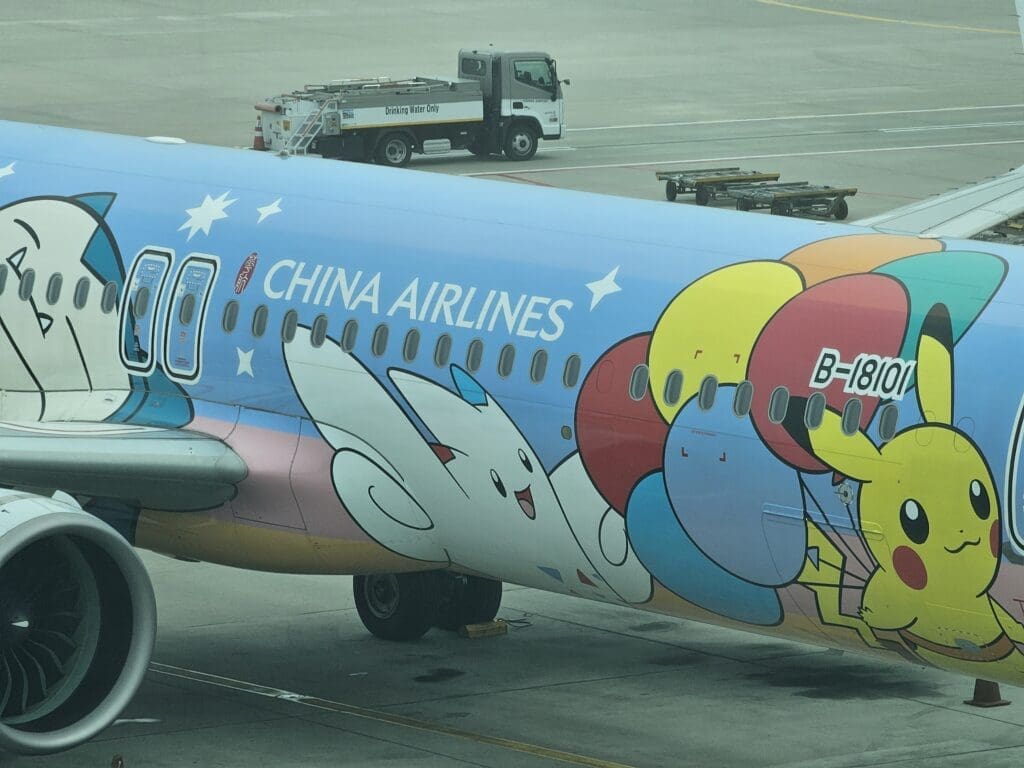
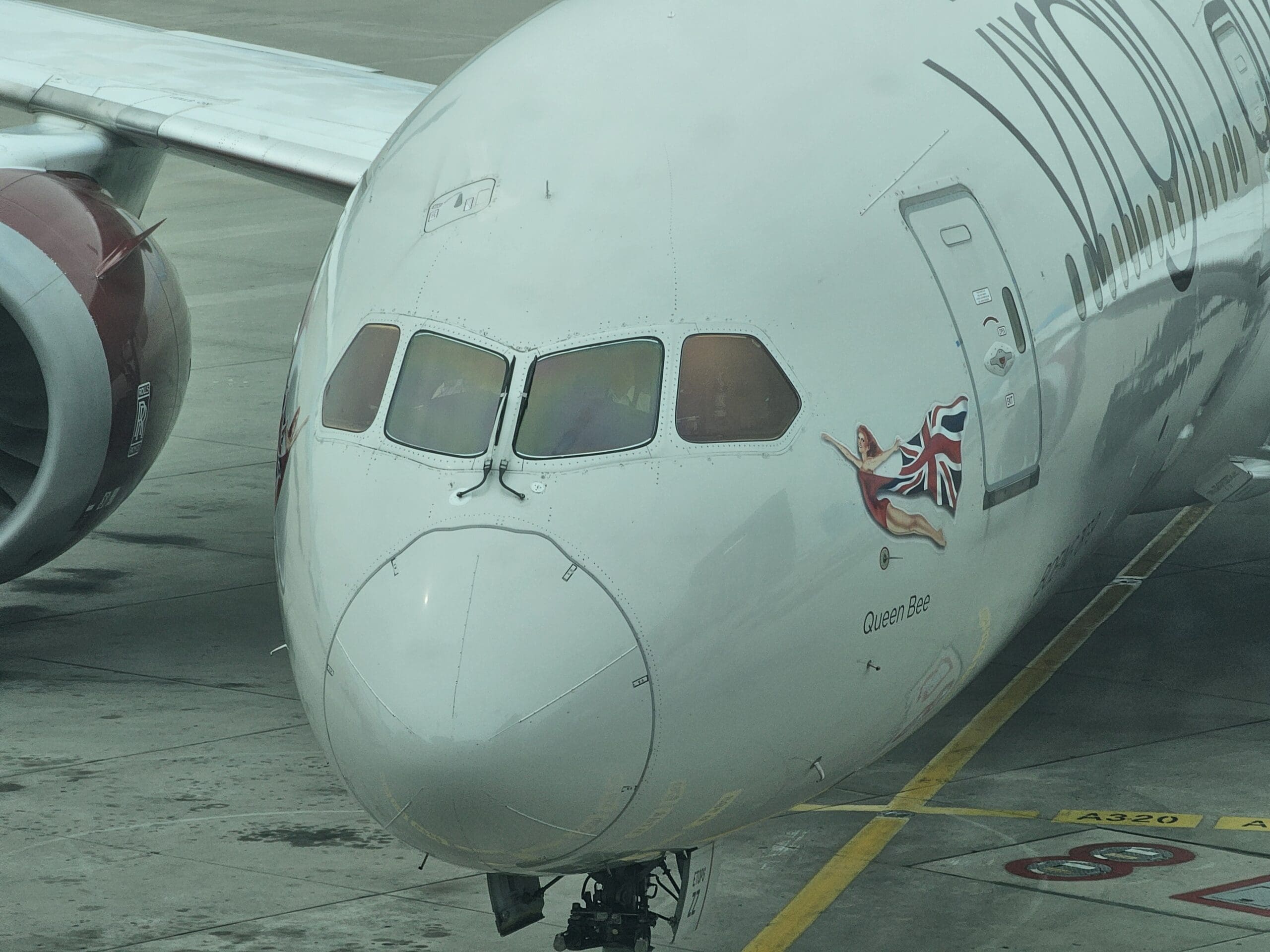
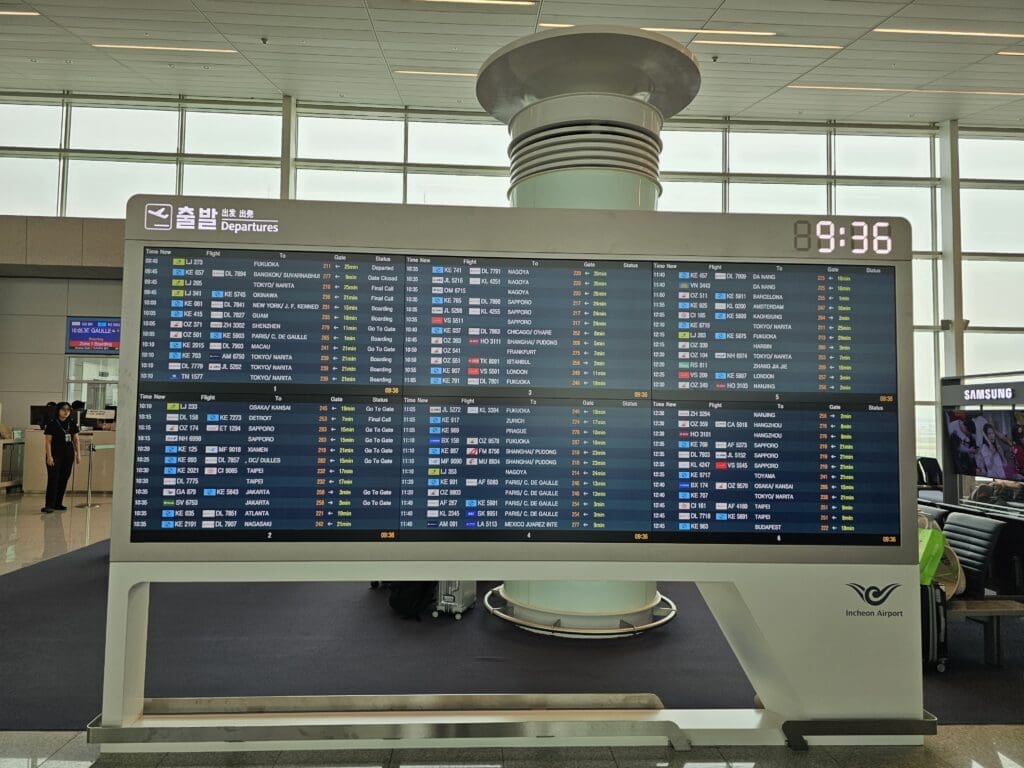
True to the information that I had received in Virgin Atlantic’s app the previous day, that day Boeing Boeing 787-9 Dreamliner G-VBZZ, or, Queen Bee, would be taking me back to the United Kingdom. Hoping to see this pull into its stand, once this was on final approach over the waters of the West Sea, I made my way over to Gate 257. Running a well-oiled machine, at that time, an army of ground crew could be seen ready and raring to turn the aircraft around, with the jetbridge soon connected, and disembarkation commencing around ten minutes before the flight had been scheduled to arrive in Korea.
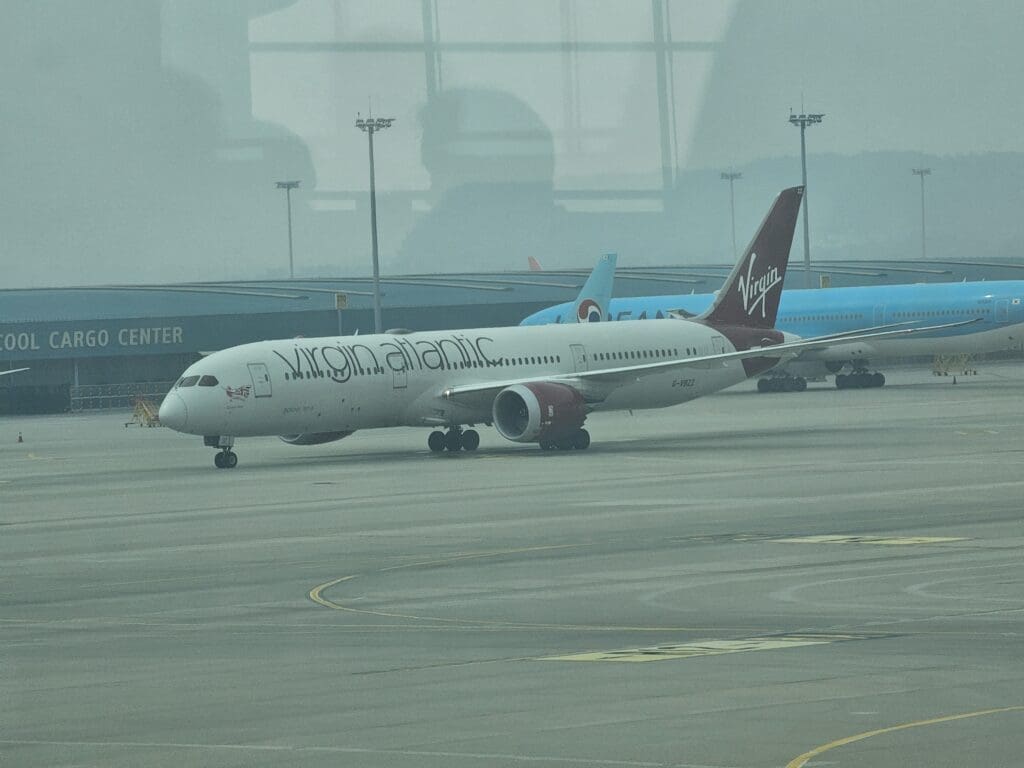
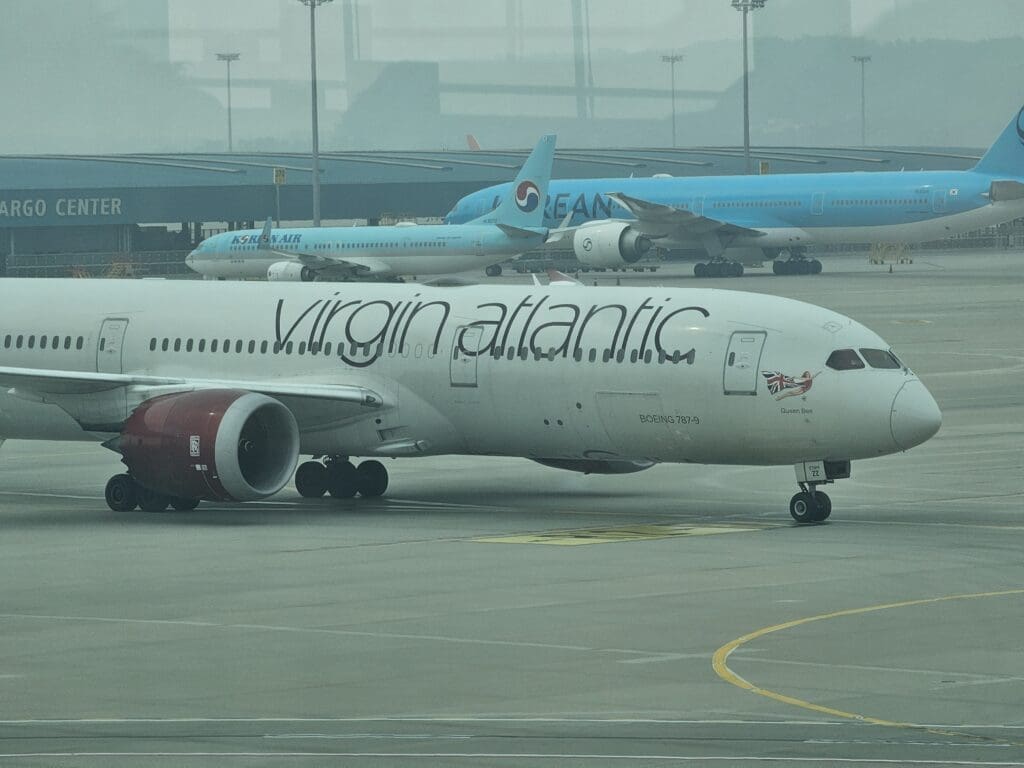
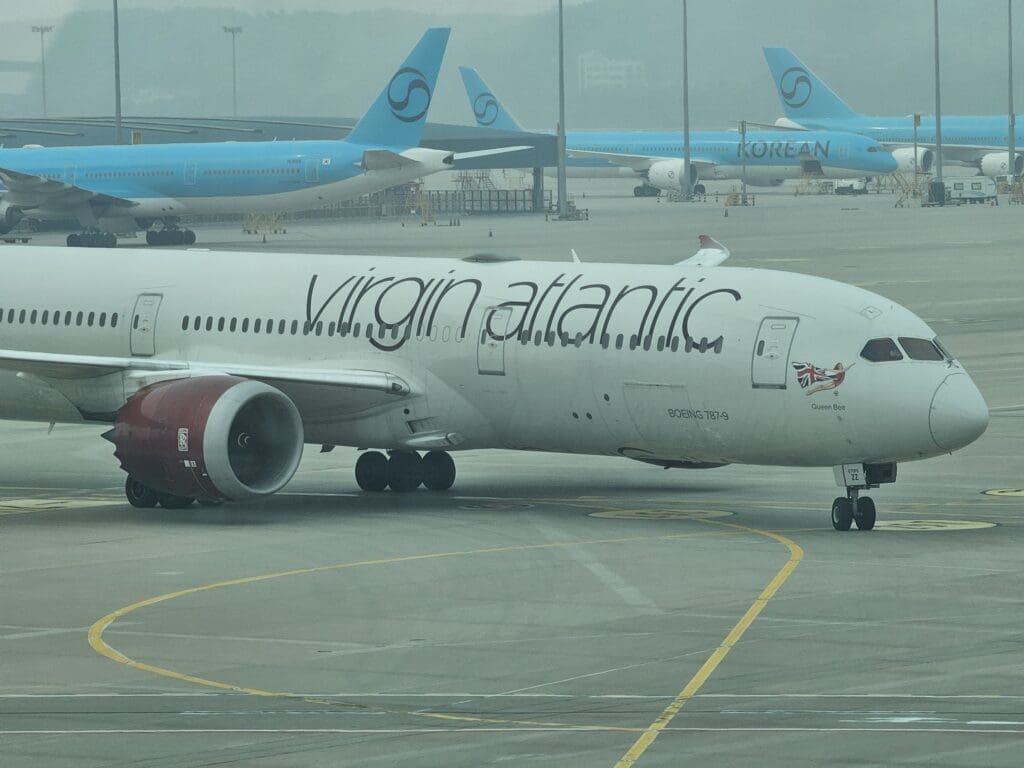
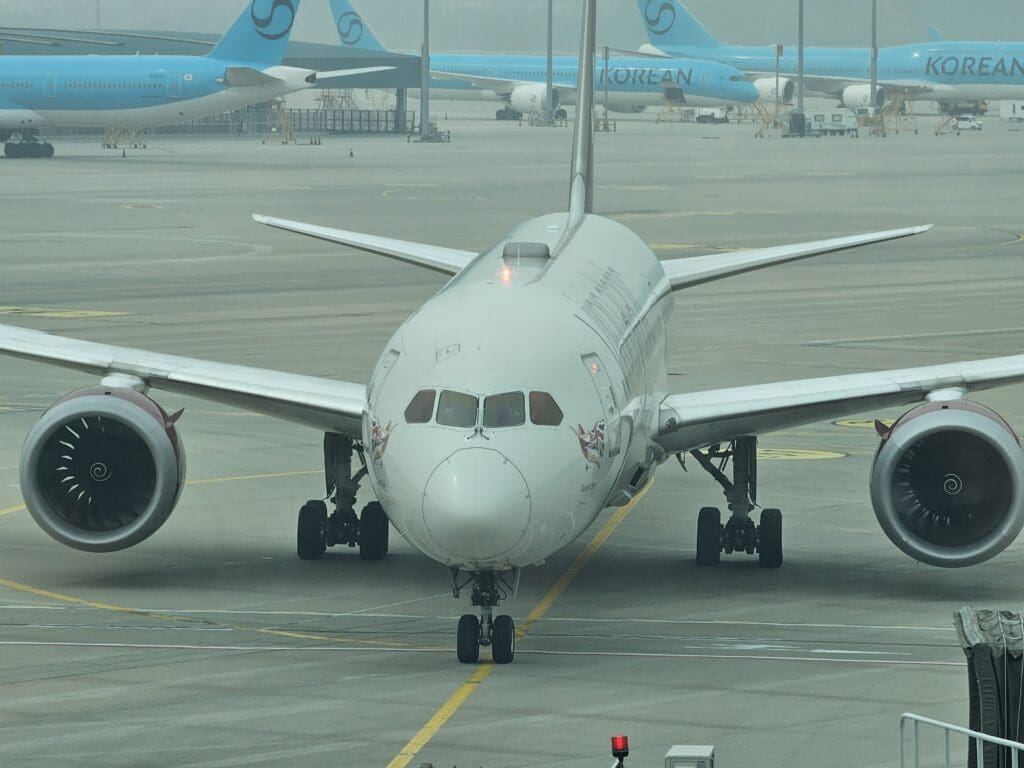
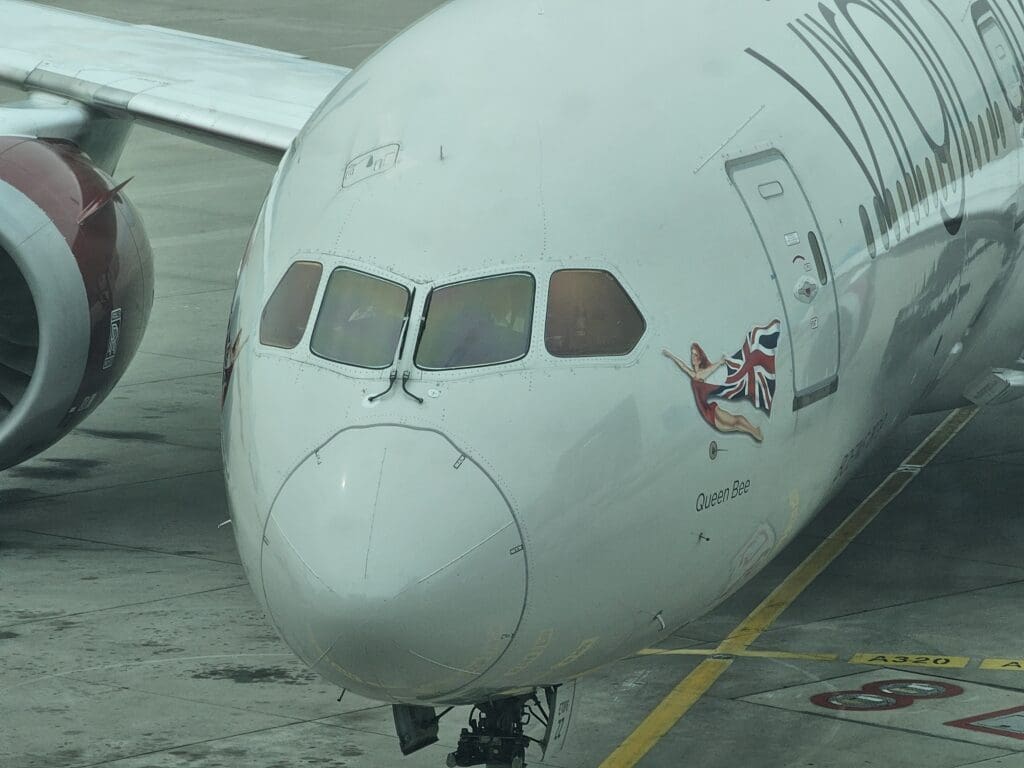
Assembled at Boeing’s Charleston plant and carrying the line number 401, this particular Dreamliner took to the skies for the first time in March 2016, thus making it just over ten years old at the time of my flight in May 2026. Following several test flights, Queen Bee was ferried across the Atlantic to its new home at London Heathrow at the end of March 2016 and has flown for the carrier ever since. Connecting London with destinations across Virgin Atlantic’s route network, in the week before my flight, the aircraft had been flying virtually non-stop, operating fourteen sectors between London Heathrow and Delhi, Los Angeles, San Francisco, Seoul Incheon and Washington DC.
Once I had watched the inbound flight pull into the stand, I had a long last stroll around the terminal, grabbing a kimbap and some coffee for some sustenance before returning to Gate 257, where I set up camp and waited. That day, my flight would be the last of three direct services to London Heathrow, and was preceded by an Asiana Airlines Airbus A350 heading off at 0750, a Korean Air Boeing 777-300ER at 1055. As this would suggest, there is a fair amount of demand for flights between Seoul and London; however, that day, I was not too sure how full my Virgin Atlantic service would be. Direct services on this route usually come with a hefty price tag, especially when compared to the bargain one-stop Chinese options that rarely seem to exceed £200 one-way. Furthermore, my flight failed to align with any holidays in either Korea or the UK. Meanwhile, whilst the flight is codeshared with Korean Air, this is not timed particularly well for connections from the airline’s expansive Northeast Asian network, whilst I would imagine those on earlier flights on overnight flights from Southeast Asia and Australasia would connect onto Korean Air’s 1055 flight.
With boarding scheduled to commence fifty minutes before departure at 1135, as time passed, the gate did not seem to get particularly busy, and just before this time, I decided to make a pre-departure lavatory visit. Much to my surprise, by the time that I arrived back at the gate at 1130, boarding was already underway and with my group, Group 5, having just been called, with no reason not to, I joined the small queue of passengers. Soon, a polite and friendly Air Korea staff member scanned my boarding pass and checked my passport before I was free to head down the escalators to the jetbridge.
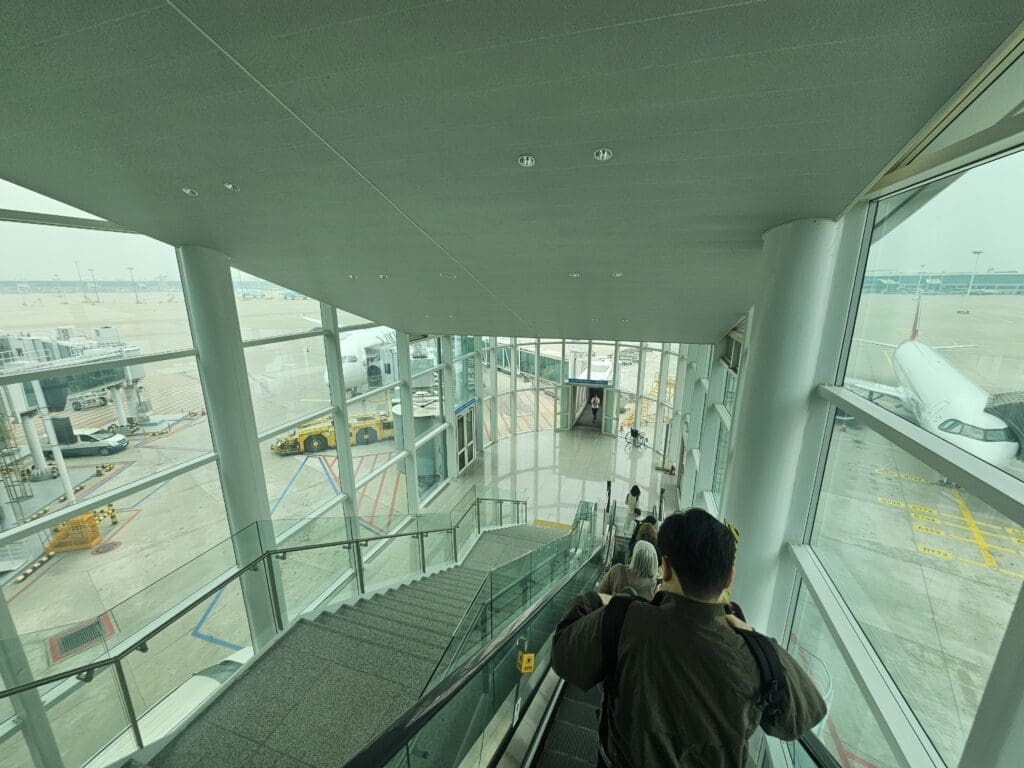
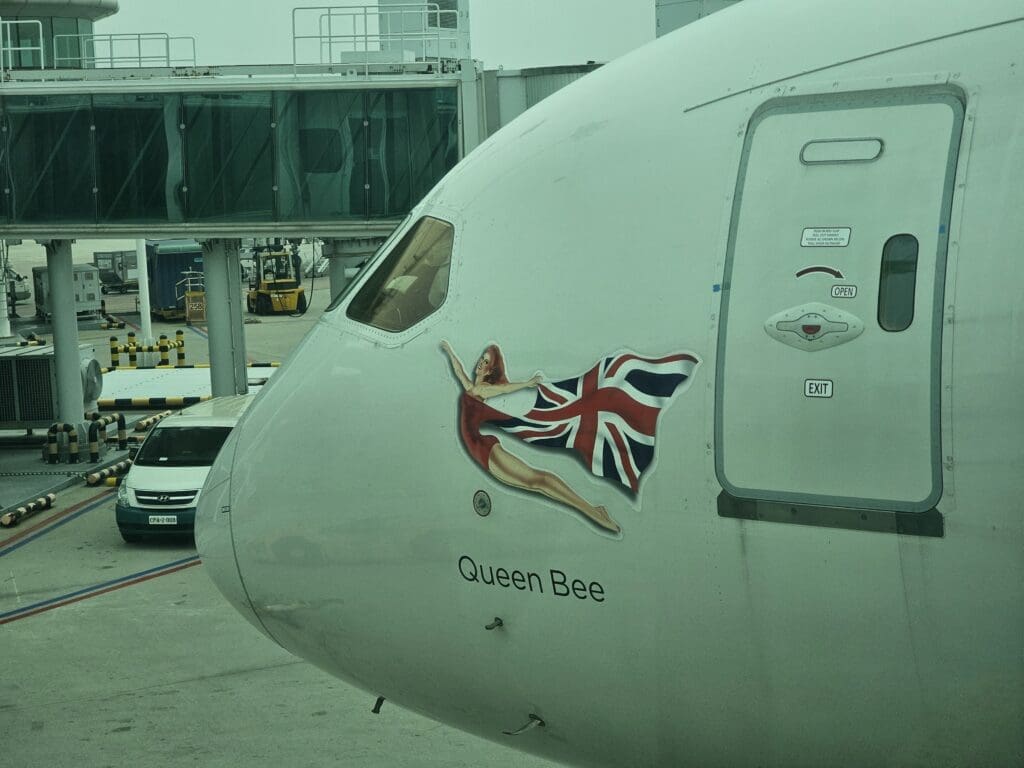
That day, just one jetbridge was connected to the aircraft, and in the usual manner, this was hooked up to the Dreamliner’s L2 door. Wandering down this, I snapped a few pictures of the jet and admired one of the two gigantic Rolls-Royce Trent engines that had the important task of powering us through the skies of Eurasia that day. Without waiting, I stepped into the very plush bar area that separates the Upper Class and Premium Economy cabins. However, sadly, as I understand this, Virgin Atlantic halted its Upper Class bar service in July 2025, and thus, at some point, this will be removed to make way for more Upper Class seats. Getting my journey off to a very positive start, as soon as I stepped into the aircraft, I received a warm and lively greeting from one of the eleven flight attendants who would be working the flight to London. Delightfully, this was followed by two comparably warm greetings from the two flight attendants I passed on the way to my seat.
Once the first flight attendant had checked my boarding pass, I was directed down the first aisle, and so I immediately turned right and entered the Premium Economy cabin. This is home to 35 ThreeSixty Aerospace recliner seats that are arranged in the standard 2-3-2 configuration, each of which was covered in a dark pleather cover. With these being well-padded, spacious and complete with a wider in-flight entertainment screen, I would most certainly not have had any qualms with being upgraded to Premium Economy for the long ride to London. Nevertheless, from what I could see, this cabin did not offer anything unique or revolutionary, and looked like just about any other widebody premium economy cabin on any other full-service airline anywhere in the world.
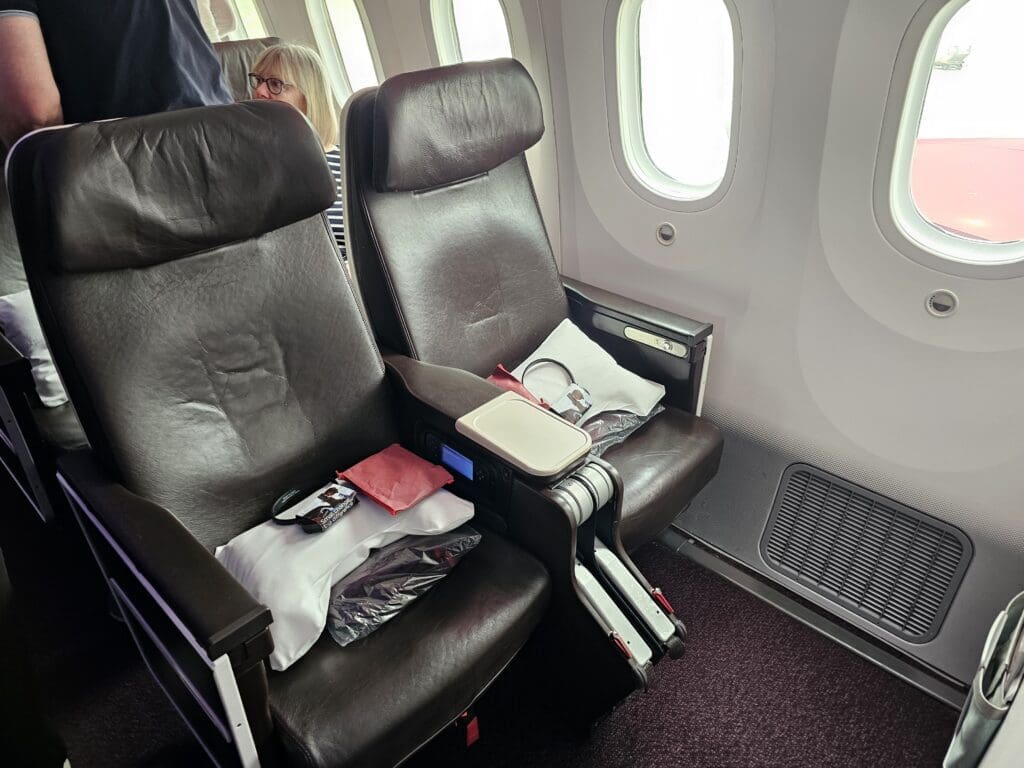
With Premium Economy taking up roughly half of the space between the second and third doors, steaming through this cabin, I soon entered the Economy Delight. This section of the aircraft features your bog standard Recaro 3620 slimline Economy seats, although with slightly more space, offering 34 inches of pitch as opposed to the standard 31 inches in Economy. Serving as a reminder of Virgin Atlantic’s cool and trendy image, I journeyed down the aircraft to the sound of Taylor Swift’s catchy hit Opalite blaring from the cabin speakers, which was followed by a similar array of upbeat pop hits by leading artists such as Chappell Roan, At The Disco, Olivia Dean, Hozier and RAYE. At this time, a montage promoting a selection of Virgin Atlantic’s destinations played on the entertainment screens, with these unusable until after the safety video had been broadcast. Meanwhile, Virgin Atlantic’s signature magenta moodlighting beamed down from above, remaining on until boarding had reached its conclusion.
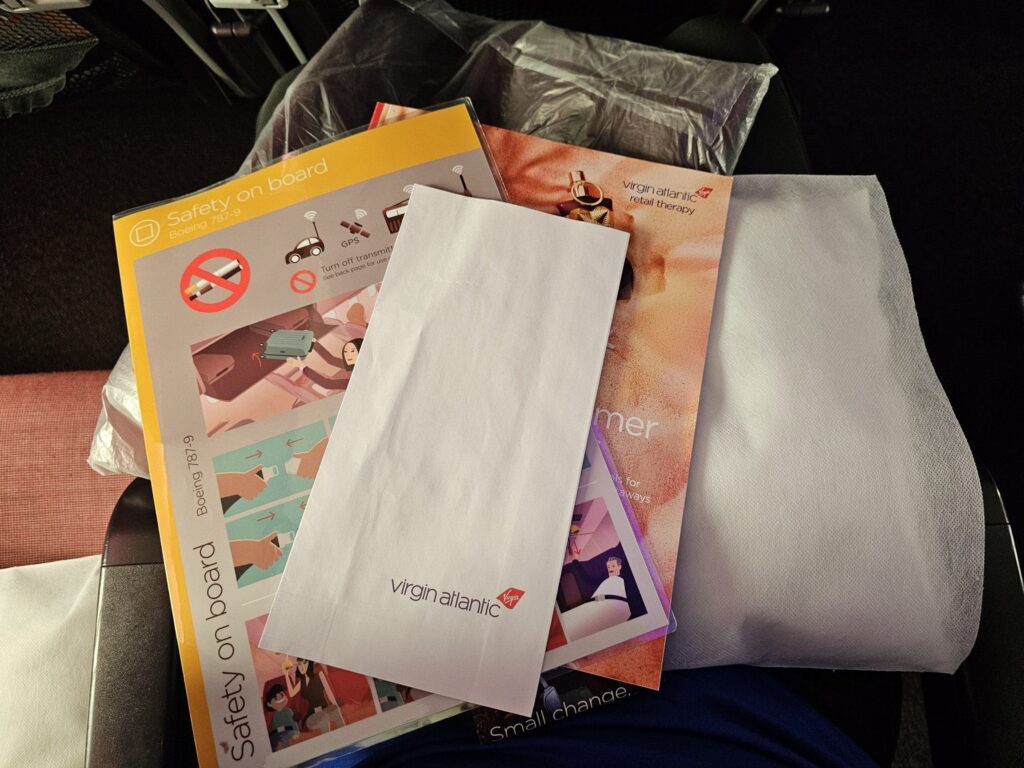
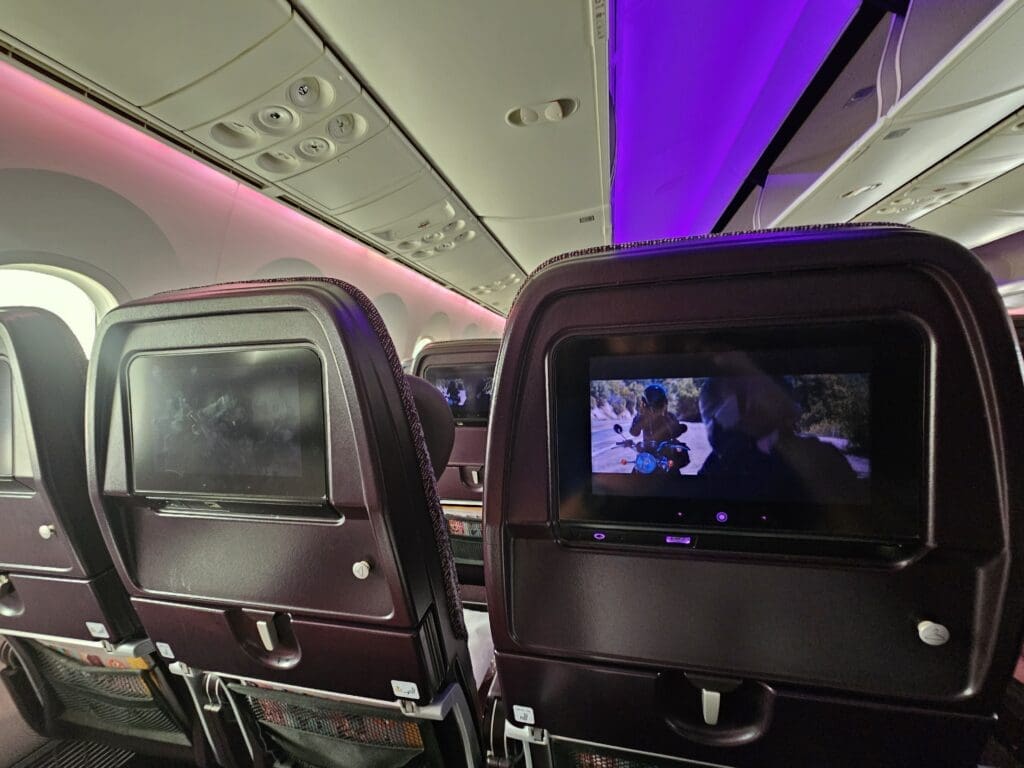
Soon, I reached the bank of four lavatories that separate the Economy Delight and Economy cabin, and made my way into the Dreamliner’s rearmost cabin, which features 156 standard Economy seats. In line with Virgin Atlantic’s brand colour palette, each seat is covered in a smart fabric cover which sports three sorts of red fabrics, whilst this is topped with a fairly large, adjustable dark burgundy pleather headrest. Each seat came with a bifold tray table, a coat hook, a small device pocket and a seatback pocket, which upon boarding contained a sickbag, safety card and Virgin Atlantic’s Retail Therapy duty-free catalogue. As you would expect from a long-haul widebody, each seat featured a personal in-flight entertainment screen, with this coming in the form of a 9-inch wide screen, powered by the Panasonic eX3 system. Meanwhile, each seat featured an underseat universal power outlet as well as a USB-A port located beneath each in-flight entertainment screen. Admittedly, the seat did not appear to be the most modern in the world, with this being a step behind those of Virgin Atlantic’s Airbus A330-900 and Airbus A350-1000 fleets. However, it is worth mentioning that these seats will be replaced with the upcoming refurbishment of the airline’s Dreamliner fleet.
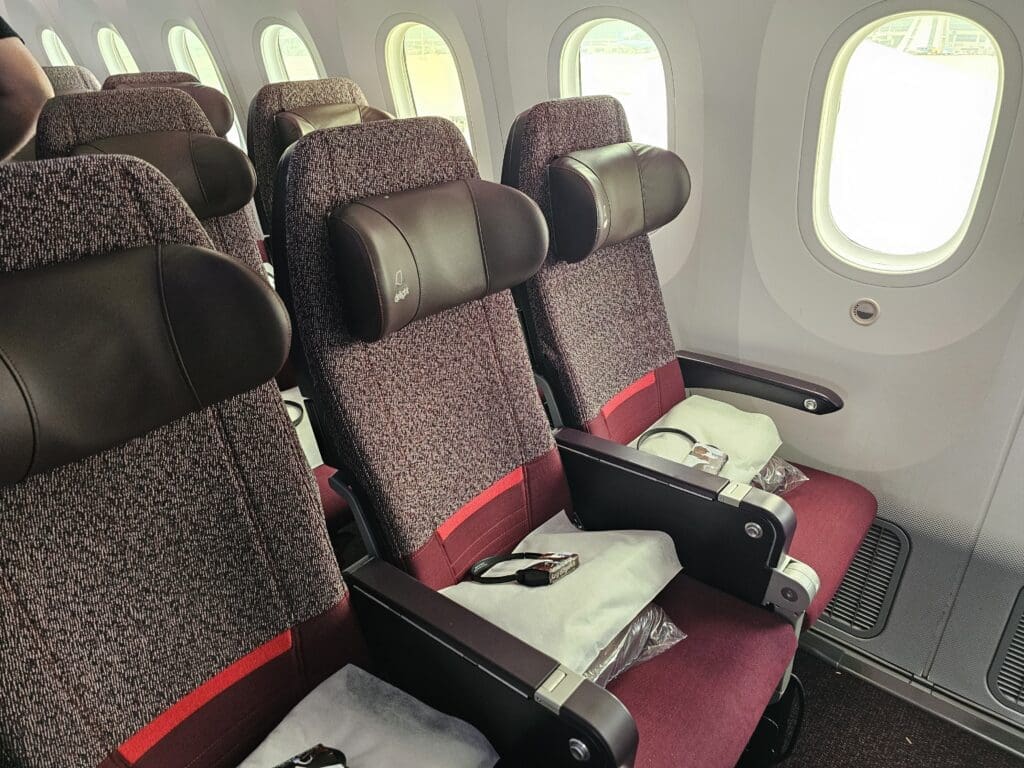
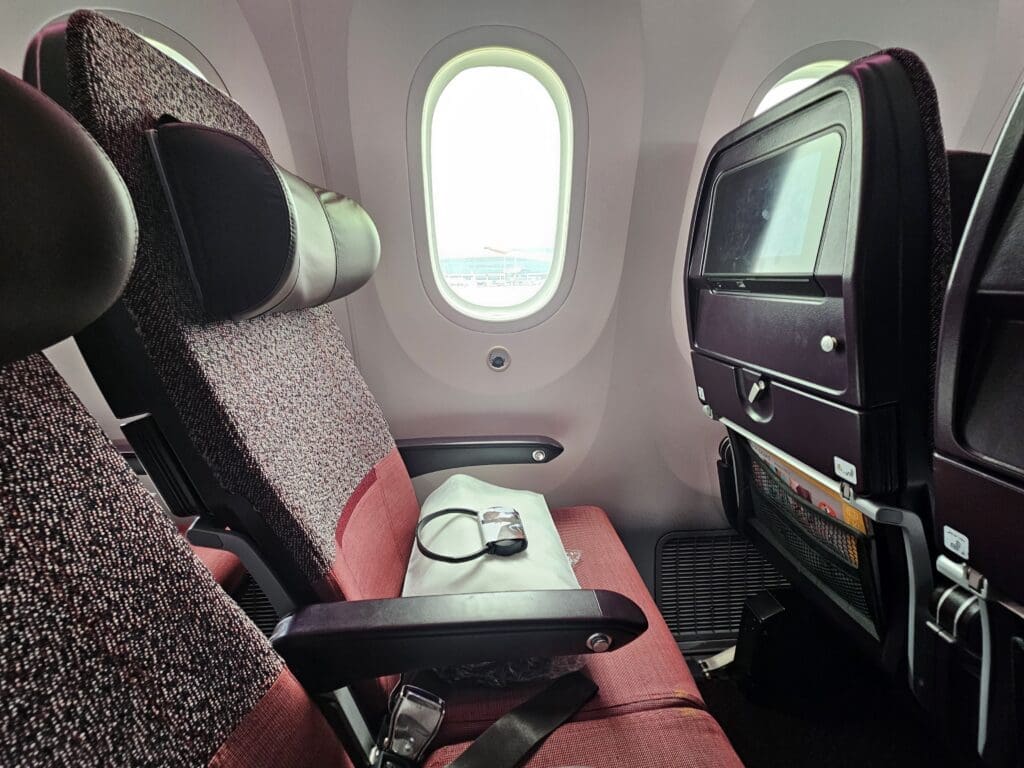
Upon boarding, a standard Economy-quality blanket and pillow, and a pair of headphones could be found on each seat. Sadly, despite the long flight time, nothing in the way of an amenity kit was provided. However, with these becoming an increasing rarity, the absence of this was no surprise nor great disappointment.
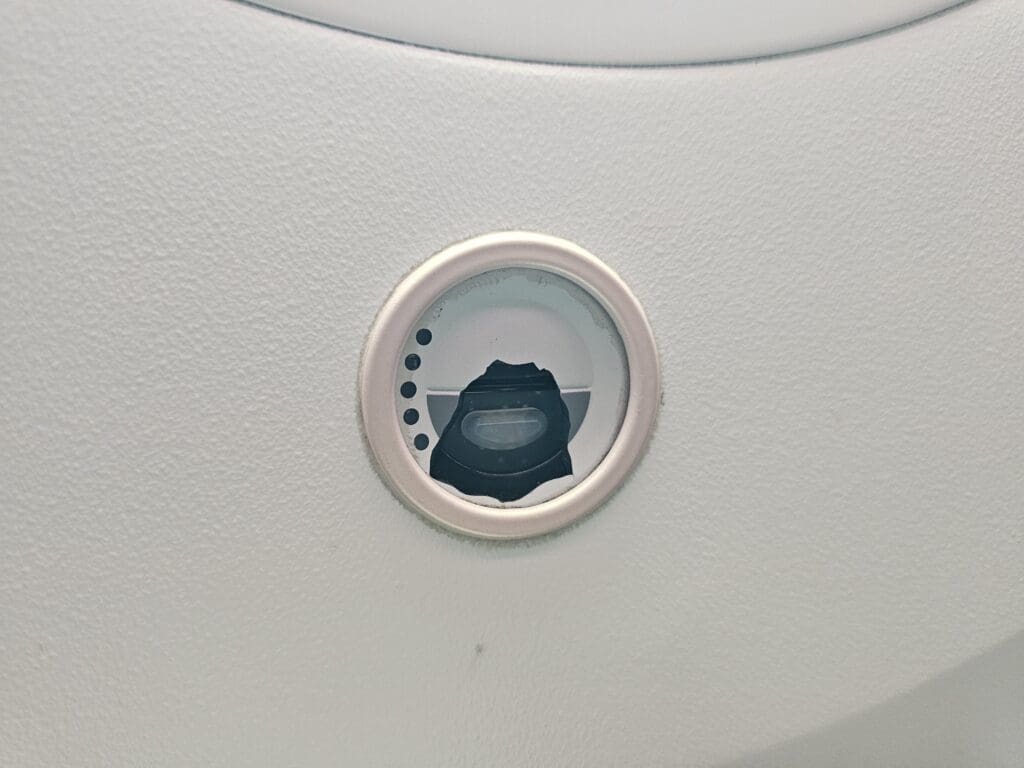
Soon making it to my seat near the rear of the cabin, I stowed my backpack into one of the Dreamliner’s large overhead lockers and settled in for the flight ahead. Inspecting my seat and the area around it, my first impressions were largely very good, with this appearing to have been cleaned to a high standard during its time on the ground in Korea, with no signs of any previous loads of passengers. Meanwhile, wear and tear was limited to a few scratches and a very battered window dimmer button, and thus, for the most part, the seat was in tip-top condition. Importantly, the seat was soft, plus the headrest seemed to be larger and softer than usual, making it a reasonably comfortable seat, despite featuring an average amount of legroom.
Once seated, there was little I could do except enjoy the upbeat pop tunes and wait in hopeful anticipation that the two neighbouring seats would remain vacant. As passengers filtered onto the aircraft, the Cabin Supervisor performed an announcement advising passengers to take their assigned seats and stow their luggage in the correct locations, before requesting passengers not to fasten their seatbelts as refuelling was underway, before ending this by noting that, in line with international regulations, the cabin would be sprayed with insecticide before departure. This announcement was then repeated in Korean by another member of the crew.
As time passed, more and more passengers trickled into the cabin, and slowly but surely, the Economy cabin became fuller and fuller. As the last cohort of passengers filtered onto the aircraft, the upbeat pop music was replaced by the dulcet tones of the Dreamliner’s Welsh Captain as they performed their welcome announcement. This opened with a warm word of thanks for flying with Virgin Atlantic, before introducing the three Senior First Officers, the Flight Service Manager and the Economy Cabin Supervisor. This then ended with a mention of our ‘quick’ 13H30 flight time, and a mention that we could expect good weather en route, although as always, we were advised to keep our seatbelts fastened whilst seated.
Much to my delight, the two neighbouring seats remained vacant for quite some time. However, sadly, I got my hopes up too soon, as, as often seems to be the case, my neighbours took the form of the very last stragglers to board the aircraft. Whilst this was disappointing, ultimately, had I been wedded to a window seat, I would have selected one during the check-in process! Taking the edge off this, my neighbours were very friendly, and took the form of two UK-based Ukrainian friends who shared their boiled sweets with me throughout the flight! With all passengers having made it to the aircraft on time, at 1200, an impressive total of 25 minutes ahead of our scheduled departure time, the Flight Services Manager announced, ‘boarding complete’, with four flight crew, eleven cabin crew, and 248 passengers onboard, equating to an impressive load factor of 94%. Indeed, later glancing around the Economy cabin, as far as I could tell, just two seats remained vacant in this.
Turning to examine the demographics of those onboard, I would estimate that around two-thirds of passengers hailed from Korea and were mostly tourists heading to Europe for a break, with a fair number of couples and younger solo travellers. The remaining third took the form of a diverse cohort of flyers from across Europe, a fair number of whom were, as you would expect, from the UK. Likewise, most of the crew hailed from Britain. However, since commencing operations to Korea, Virgin Atlantic has hired several locally based Korean-speaking flight attendants, and thus all announcements were repeated in Korean.
Being a rather Cymry flight, once boarding had reached its conclusion, the Welsh Flight Service Manager performed their welcome announcement, which consisted of the usual warm welcomes and thanks, before going over all the relevant warnings regarding seatbacks, power banks, smoking and vaping onboard, as well as a mention that peanuts would be prohibited on the flight owing to a passenger with a severe allergy. As this was in the process of being repeated by a Korean-speaking crew member, several crew members passed through the cabin spraying insecticide before the crew took to the aisles once again to close each overhead locker.
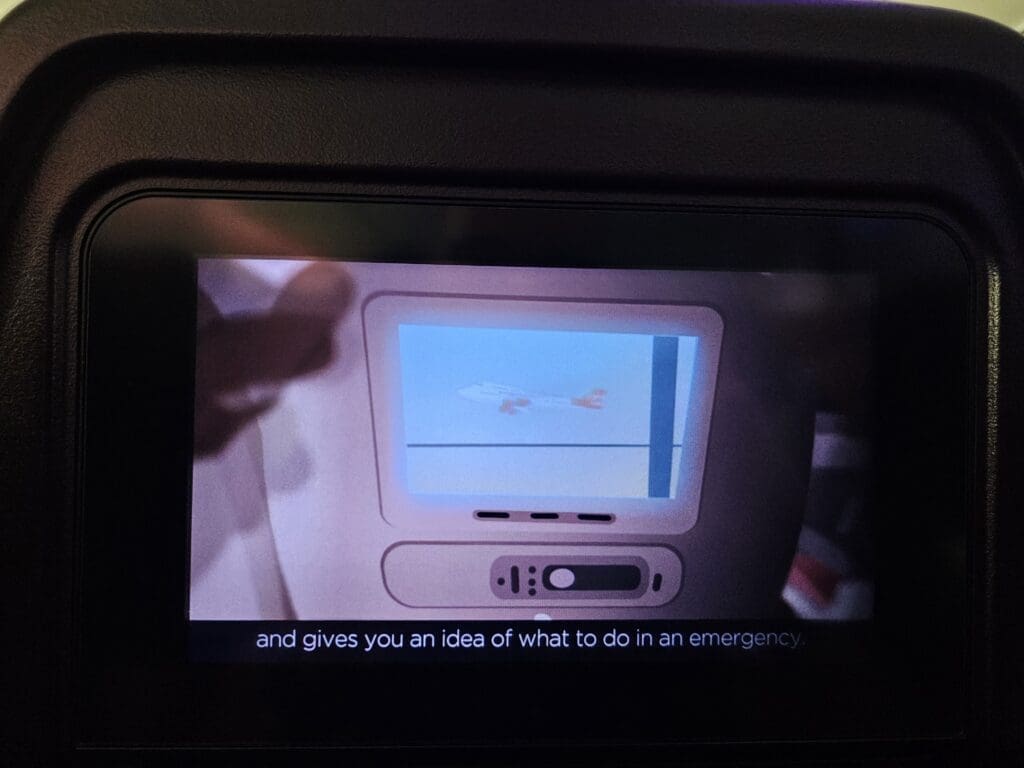
After a short wait, indicating that we would be making a punctual journey to London, a total of nine minutes before our scheduled departure time, the Dreamliner was gently pushed back from its stand. Whilst this was underway, the safety video was broadcast on the in-flight entertainment screens. Released in 2014, this vintage animated safety video is definitely rather quirky, and details the safety information whilst taking passengers on a journey through several cinema-inspired scenes. Whilst not my favourite safety video, this served its purpose; however, with this being broadcast in English and with English subtitles, given the route, it may have been slightly more appropriate for this to be accompanied by Korean subtitles.
Once the aircraft had come to a halt, a series of whines and hums filled the cabin as the Dreamliner’s two massive Rolls-Royce Trent 1000-K2 engines spooled into life. After a few minutes, the flaps were lowered with another whine before we commenced our short journey to the end of Runway 16L. In the usual manner, as we taxied over to this, the crew passed through the cabin, ensuring that all was secure and in place for our departure before strapping themselves into the jumpseats. Despite the constant stream of traffic at Seoul Incheon, our aircraft taxied onto the runway without holding. However, once there, a short pause was to allow a MIAT Mongolian Airlines Boeing 737-800 that had landed on the parallel runway to cross this as it made its way to Terminal 1. Once this aircraft was out of the way, ‘Virgin 209 Heavy’ commenced its long and gentle take-off roll, presumably being heavily loaded for the long trek to London.
Eventually, we took to the skies with plenty of shuddering and rose into the lunchtime haze almost immediately. Once in this, we spent the next twenty minutes or so bumping around with a fair amount of vigour, meaning that it was quite some time before the seatbelt signs were extinguished. During the initial stages of the climb, a slew of announcements was performed as the Flight Service Manager conducted their second welcome announcement during which they reiterated their welcomes, thanks and warnings, followed by the Cabin Supervisor, who detailed the service schedule and the location of the four lavatories in Economy, with each announcement then repeated in Korean.
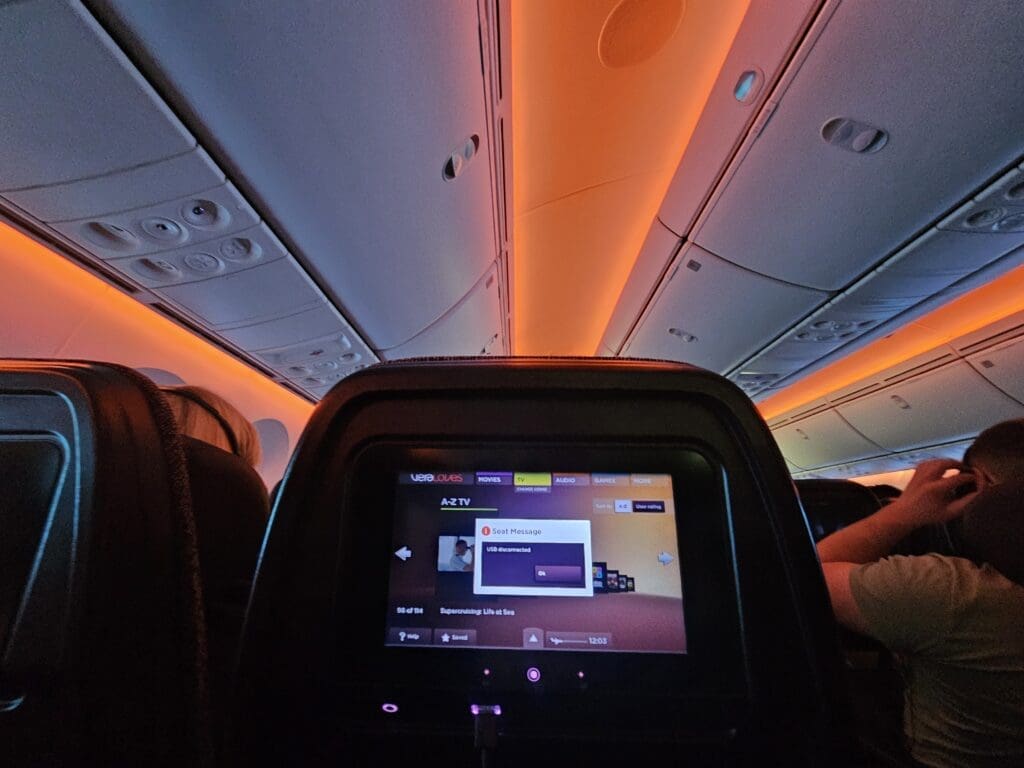
With my preflight coffee having caught up with me, once the seatbelt signs had been extinguished, I journeyed forward to the four lavatories in Economy. Upon opening this up, as you would expect at the start of the flight, I found the lavatory to be spotlessly clean and stocked with the basics, serving its purpose and leaving me with no complaints. Meanwhile, as with my seat, this was largely devoid of any notable signs of wear and tear.
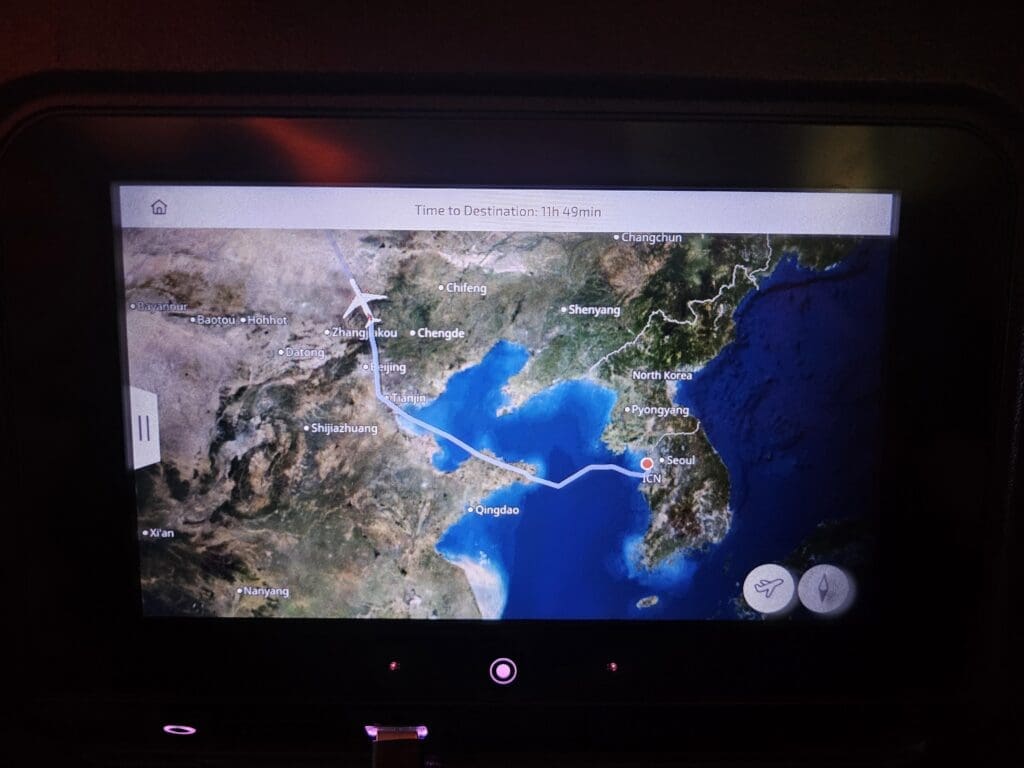
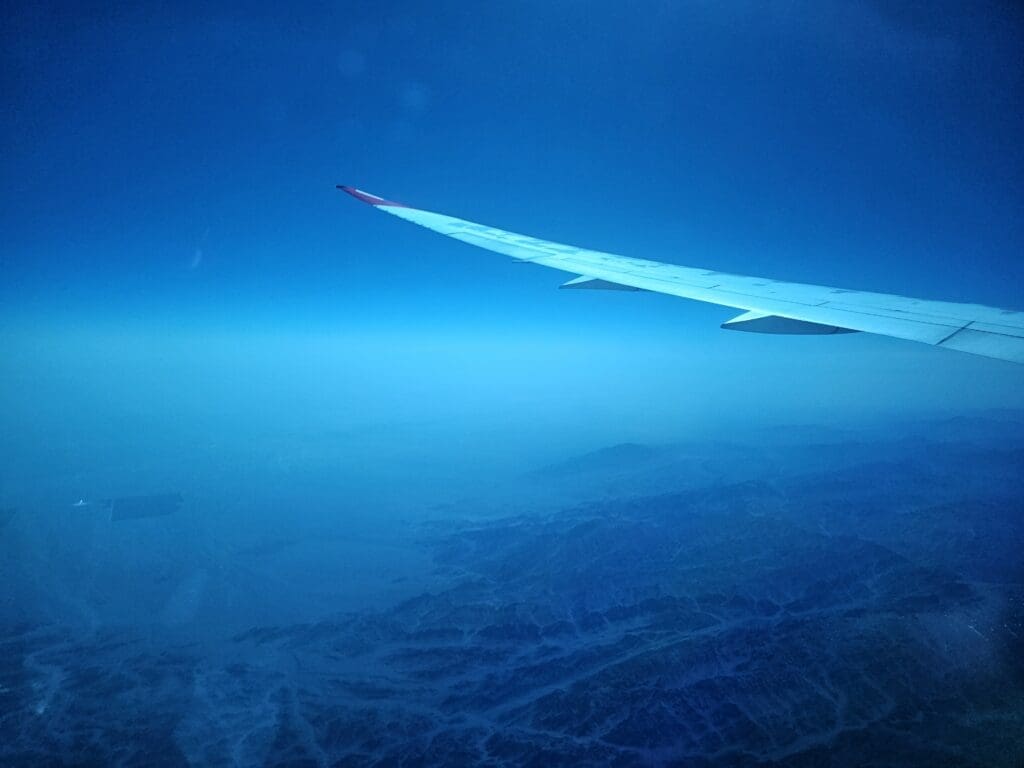
From Seoul Incheon Airport, the Dreamliner took a standard departure routing for flights bound for Europe and the Middle East. Specifically, a short time after leaving Yeongjeong Island behind, we had turned to fly westwards and cross the waters of the West Sea, skirting around the maritime border that separates the waters of North and South Korea. Around 35 minutes after departure, the aircraft made landfall over the Chinese province of Shandong near the city of Weihei. There, we cut across the Shandong Peninsula, before we made our way out over the waters of the Bohai Bay and journeyed towards the massive expanse of Tianjin.
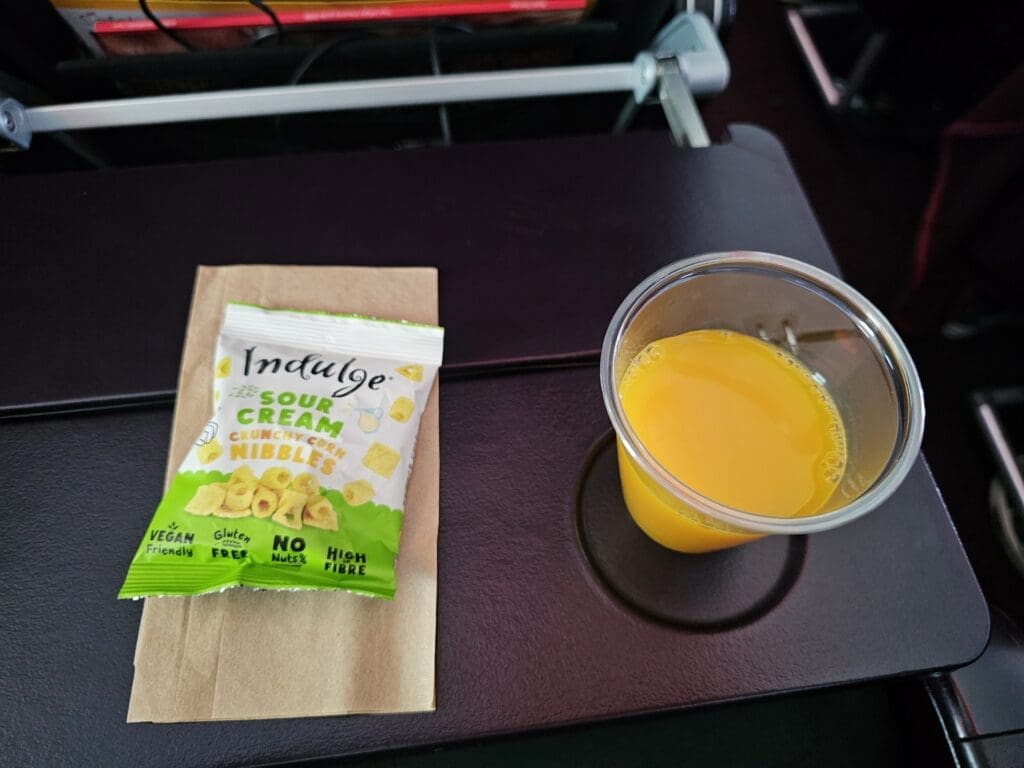
Around an hour into the flight, the service carts were rolled out into the aisles, indicating the commencement of the drinks service. Whilst the crew conducted this in a warm and friendly manner, I have to say that the service was slow and somewhat haphazard, with the crew missing out several rows, including mine. Although thankfully, they were more than happy to serve those passengers they had missed when this was pointed out. This was perhaps explained by the fact that many of those flight attendants working the Economy cabin were those who had been newly hired to operate Virgin Atlantic’s Incheon services, and many appeared to still be working under the supervision of more senior members of staff. However, we are all new to things at least once, and so this is not a complaint; however, it may have been beneficial for these crew members to have had more support from the more seasoned flight attendants. For example, during both this and the meal services, carts appeared to often be staffed by two new crew members. Eventually, I was handed a small bag of sour cream flavoured corn snacks and a serviette. Whilst a fairly decent array of soft and hard beverages was on offer, unlike many of my fellow passengers, I opted against alcohol on this long slog, and went for an orange juice, plain and simple. Being in the last cohort of passengers to be served, it wasn’t long before the crew then passed through the cabin collecting rubbish before handing out special meals for the lunch service.
As soon as the flight attendants rolled out a fleet of carts into the aisles, the Cabin Supervisor performed an announcement notifying passengers of the lunch options. Specifically, passengers could choose from a meat option, spicy chicken with fried rice, or a vegetarian option, ddeokbokki in a spicy sauce, although the latter was announced as ‘steamed vegetarian rice cakes’. Whilst they took their time to make their way through the cabin and serve passengers in what seemed to be a slightly illogical order, I cannot fault the level of service delivered by the crew, with all flight attendants that I interacted with during this service being polite, warm and friendly. Despite being amongst the very final passengers to receive their meal, thankfully, both options remained available, and so, like most around me, I decided to go for the chicken. At this point, a small tray that appeared to be near-overloaded with items was cautiously placed on my tray table before I was asked for my choice of drink. Once again, keeping things plain and simple, I decided to pair this with an orange juice, which was poured into a plastic cup and handed over to me.
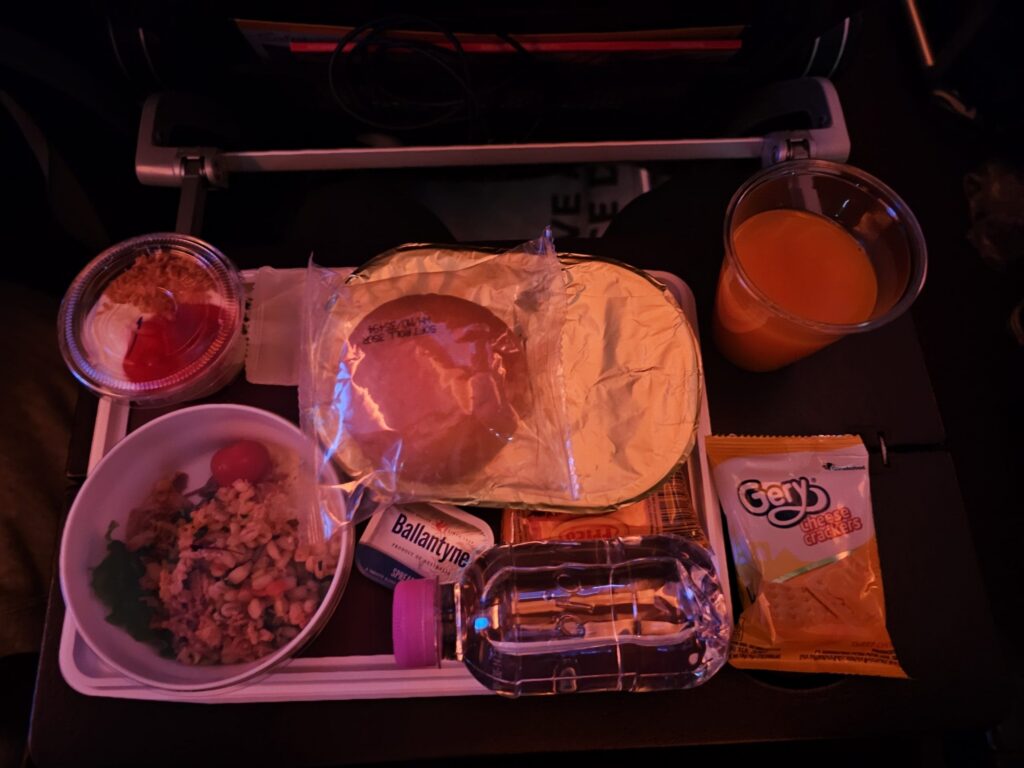
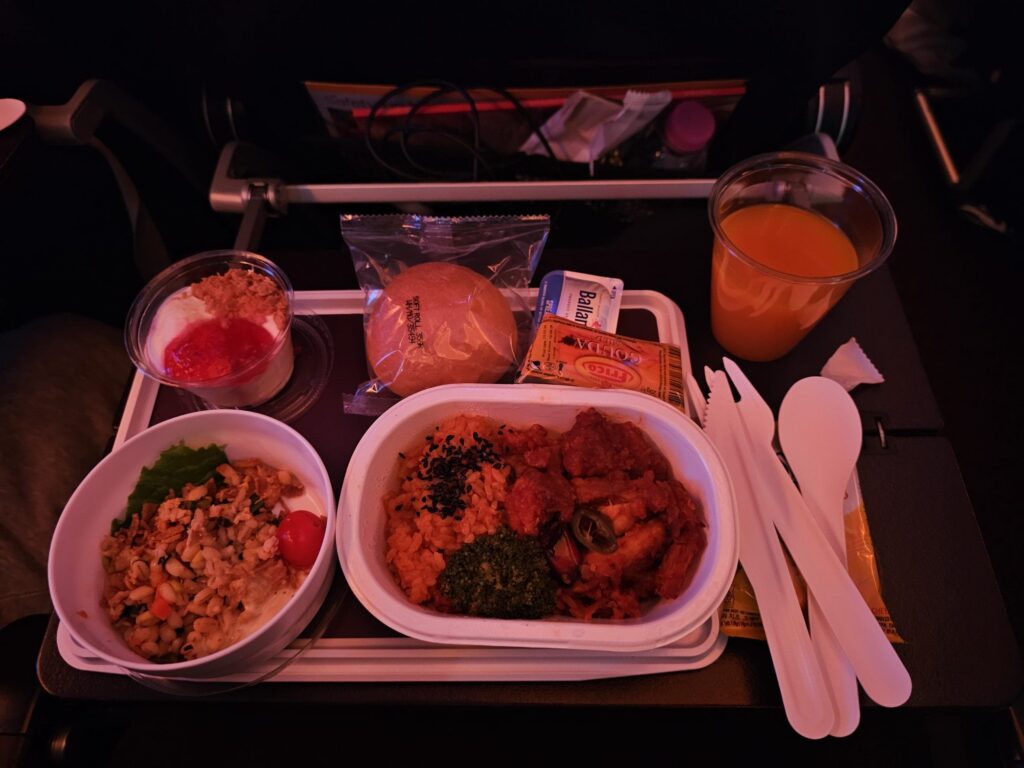
Being rather hungry, without delay, I began to get to work on lunch. Alongside the main dish, this featured a grain salad, a cold packaged breadroll accompanied by a small tub of butter and a block of Gouda, a packet of Indonesian cheese-flavoured crackers, a white chocolate and strawberry mousse for dessert, and finally a small bottle of still water. Eating utensils came in the form of sustainable cutlery, which, whilst a cut above flimsy plastic, was definitely not as good as the metal cutlery provided by route competitors Asiana Airlines and Korean Air. As I munched this, I was pleased to find the main dish to be of good quality, and whilst on the small side, this was no major issue considering all the accompaniments, which, after demolishing this, left me not wanting anything else. One advantage of being one of the last passengers to be served was that there was no long wait for trays to be collected, and following this, another drinks round was made, during which I opted for a black coffee.
By the time I had finished lunch, the Dreamliner had passed the sprawl of Beijing and was now speeding westwards through the skies of vast Inner Mongolia and spent the next few hours skirting around China’s border with Mongolia, yet never crossing this, eventually leaving this and crossing a tiny portion of Gansu before reaching the far western province of Xinjiang.
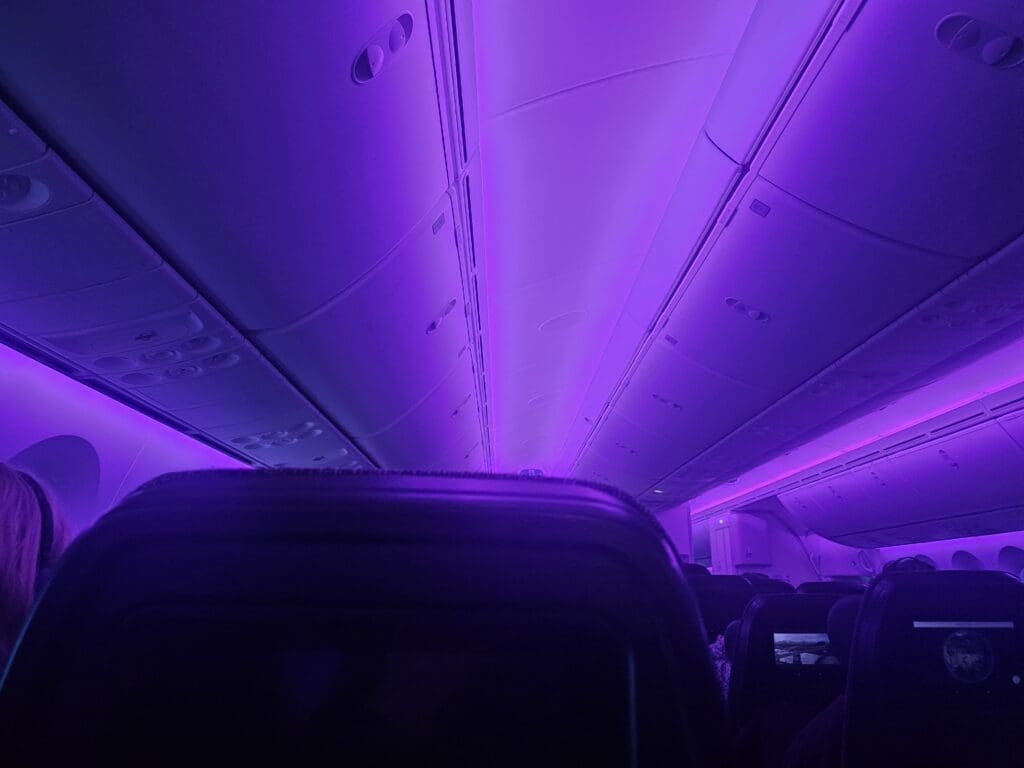
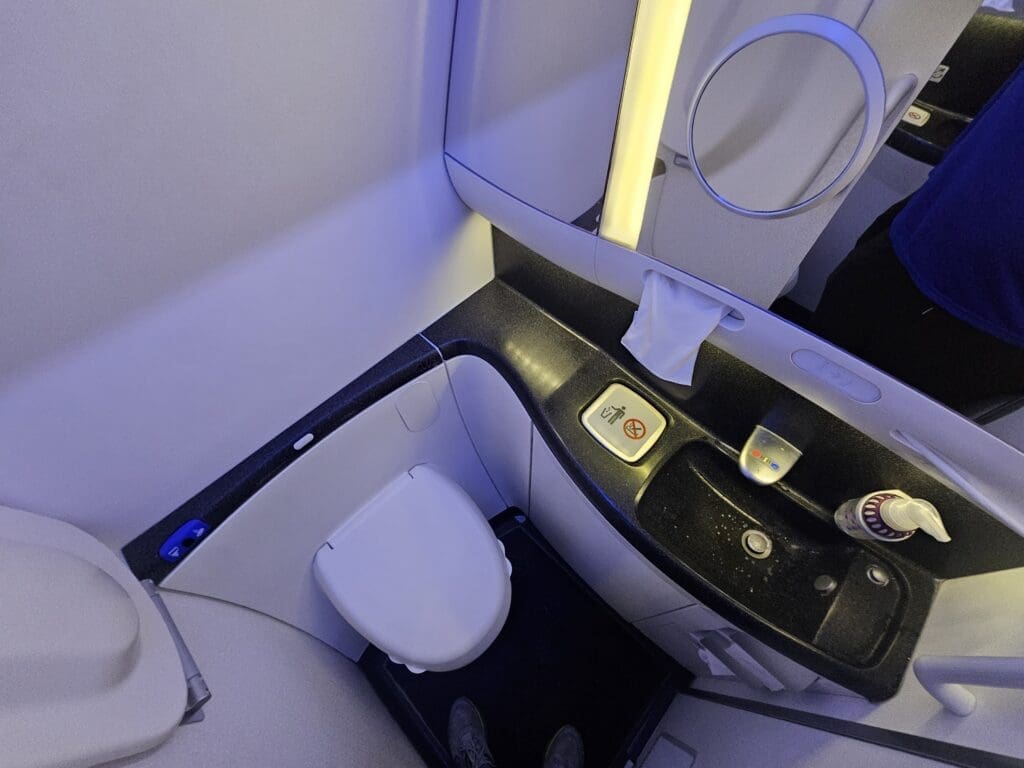
Once the crew had collected the remains of the meal service, the cabin lights and window shades were dimmed, although unsurprisingly, given our lunchtime departure time, most passengers remained awake. Following a short post-lunch power nap, I decided to explore the delights of Virgin Atlantic’s Vera inflight entertainment system. Focusing first on the very basics, the screen itself was not the most modern in the world; however, this was still of an acceptable quality and was responsive to touch and quick to load throughout the flight. Meanwhile, the system’s design was a little more dated than that of the Airbus A350-1000 that I had flown from Delhi to Heathrow back in November 2023. Furthermore, continuing with my slight complaints, the system could only be accessed in English and Chinese, which, considering Virgin Atlantic’s growing route network, was a little disappointing to see.
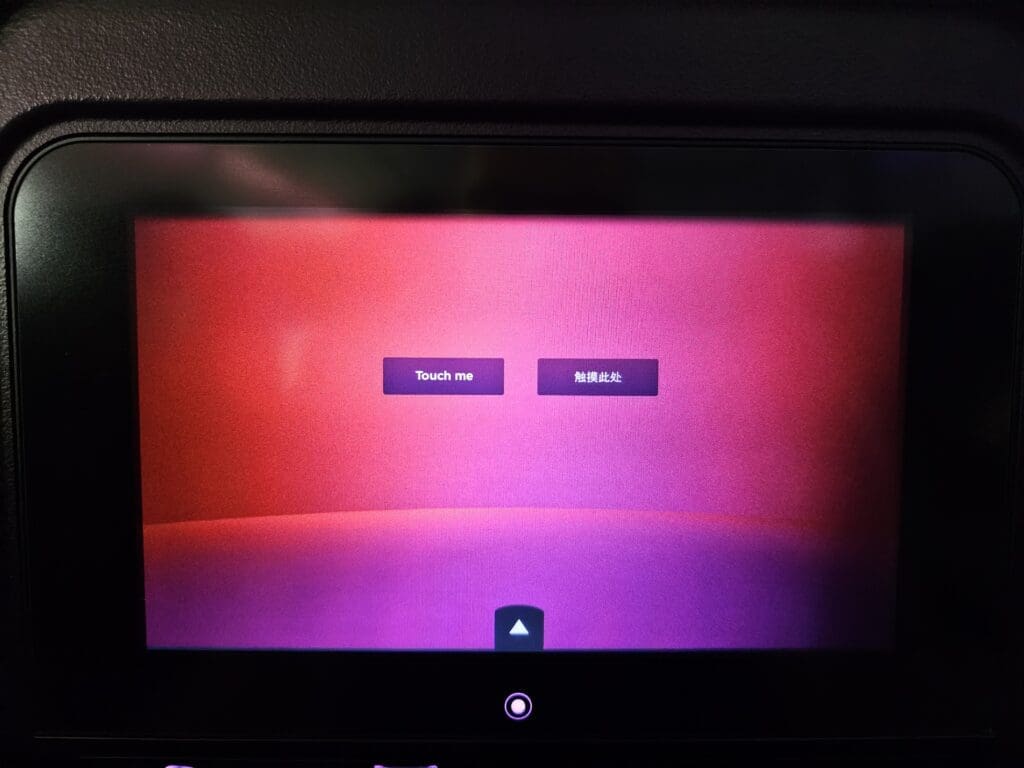
Without dwelling on the negatives, I selected the English option and soon began exploring the system. Focusing first on the content, this was acceptably expansive, with a grand total of 134 films offered, the vast majority of which took the form of Hollywood blockbusters, plus a few other films from India, Korea and the UK. A decent selection of television programmes was offered, with an array of 78 series and 34 individual programmes, which, like the films, mostly took the form of American items. Perhaps owing to Virgin Atlantic’s connection with Virgin Records, a fantastic number of well over one thousand albums and playlists were offered in the audio section, although sadly these were all a bit tinny in their quality owing to the middle-of-the-road economy headphones. Meanwhile, eight games were offered, whilst the FlightPath3D moving map allowed passengers to track our progress in a variety of ways.
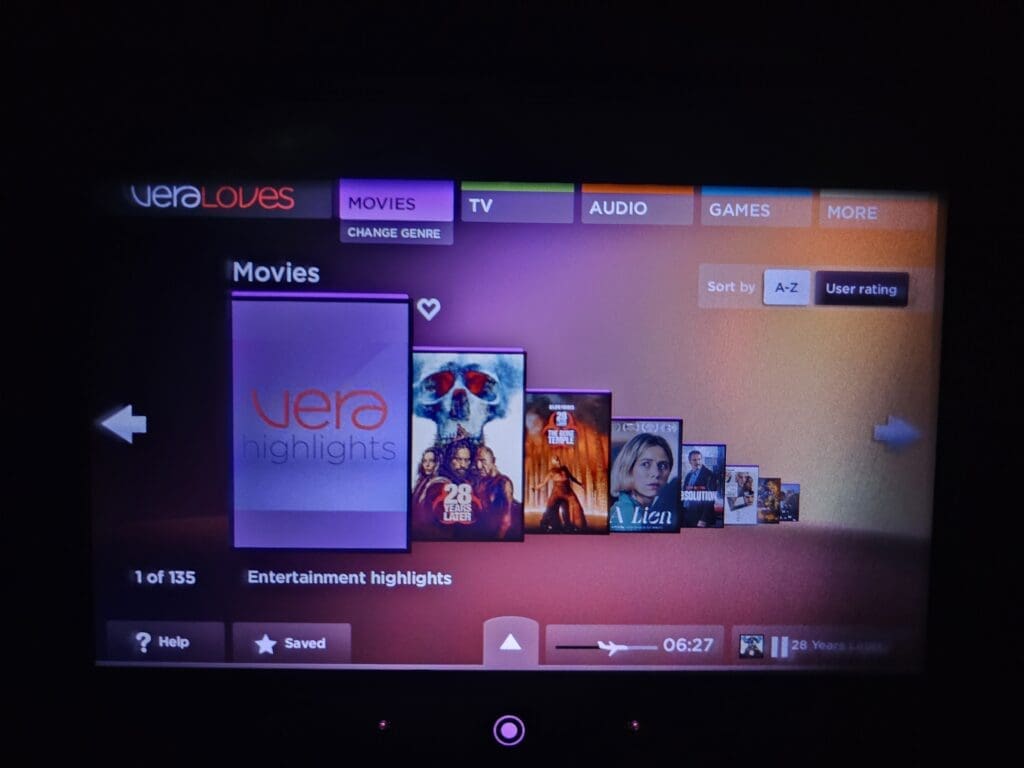
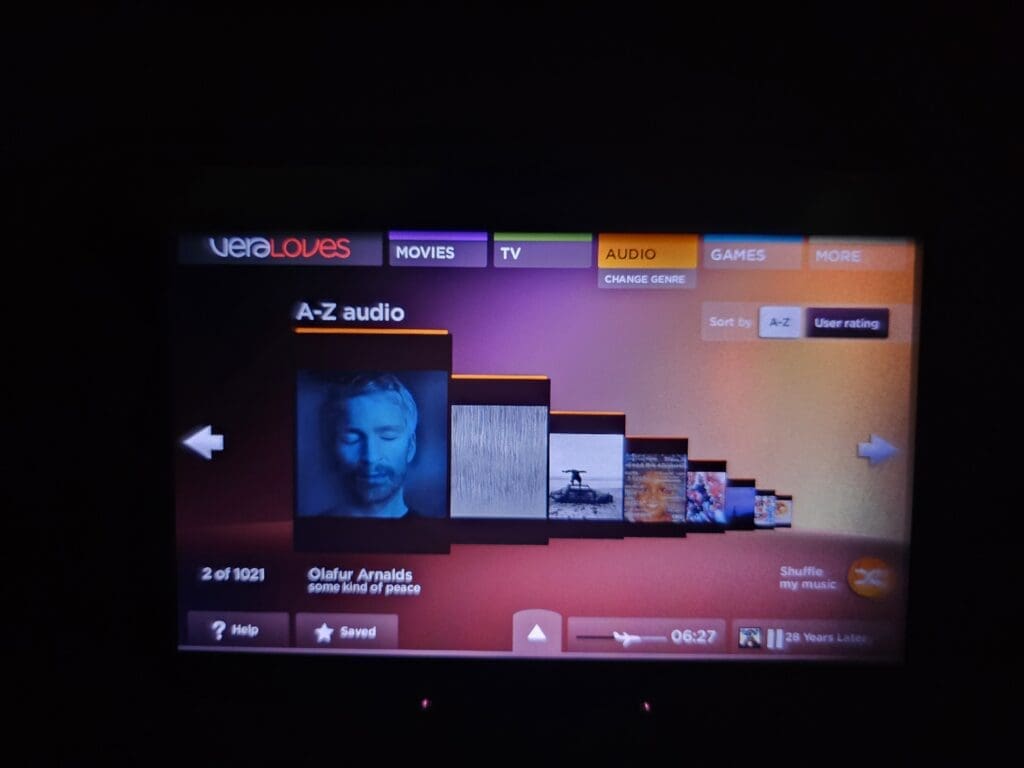
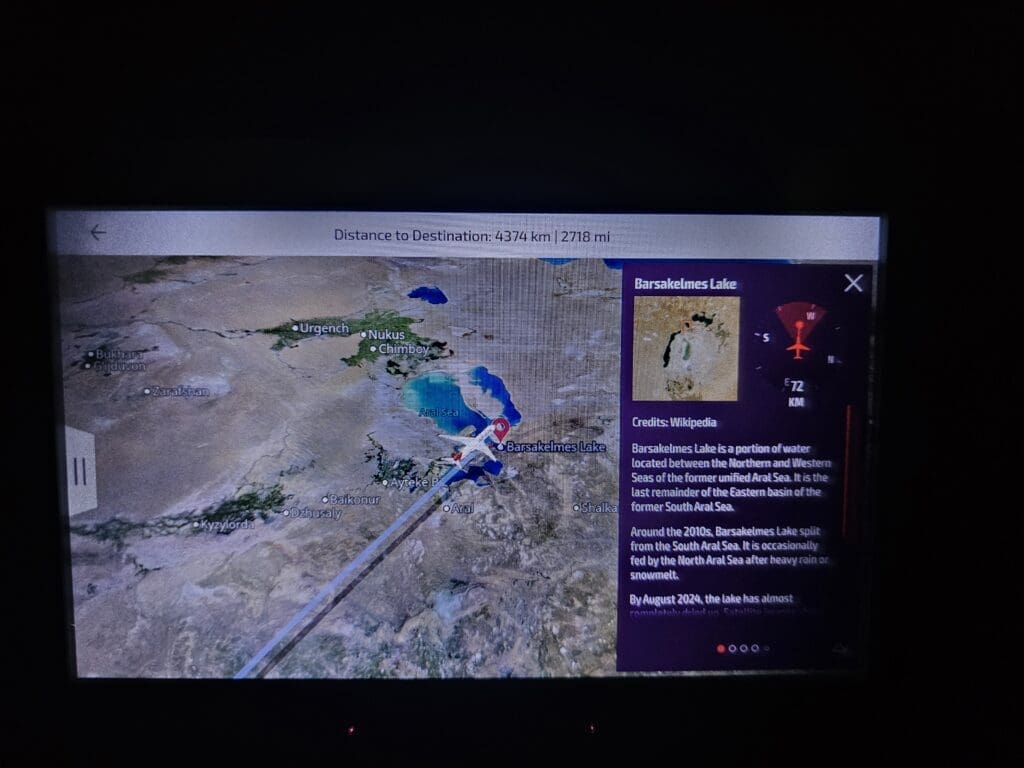
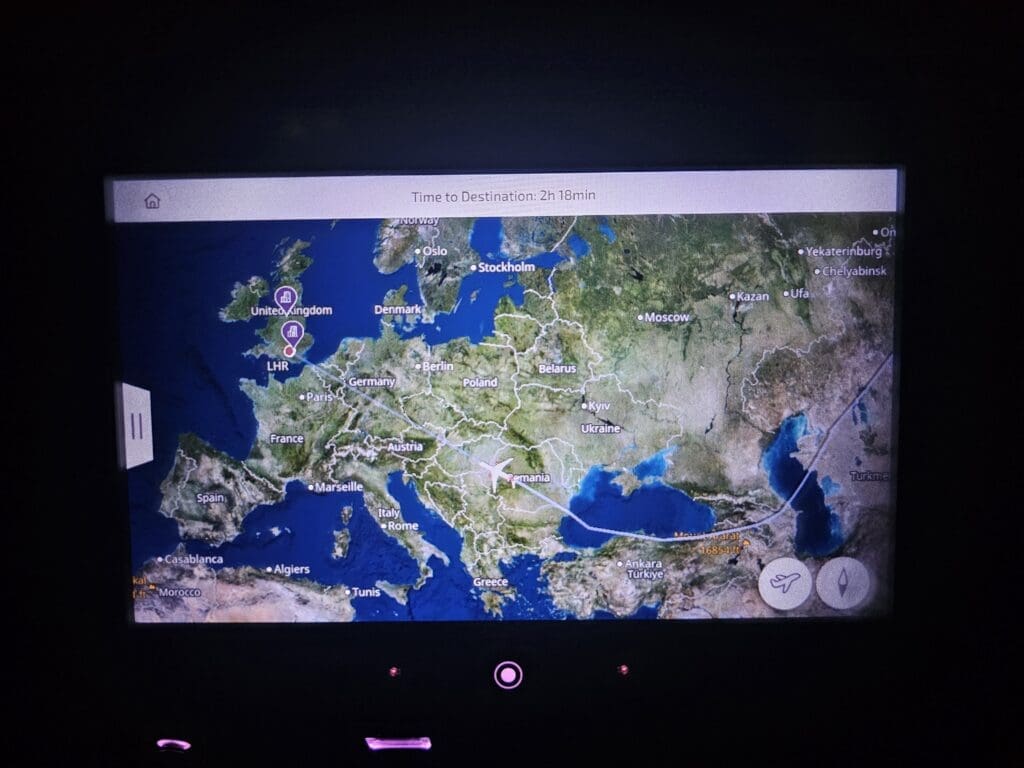
Returning to the slight negatives, items could be sorted by title or user rating. Unfortunately, there was no search function, and so if looking for a particular item, then you may end up having to scroll through tens, if not hundreds, of items before finding it. Furthermore, there were no live television channels, no seat-to-seat messaging and no cameras; thus, I have to say that the system largely lacked any particular features that made this a particularly memorable system. Meanwhile, each visual item commenced with about three minutes’ worth of advertisements for Bitdefender, Holafly e-sims, Uber Boat and St Kitts and Nevis, although these could be skipped. Finally, an array of wifi packages was offered, although there were no free messaging options or the like.
A grand total of four hours and ten minutes after crossing the Shandong Peninsula, the Dreamliner cruised from the skies of China and into those of neighbouring Kazakhstan, crossing the border between Karamay and Urzhar. Heading westwards at an altitude of 36,000 feet, the Dreamliner cut across the middle of the country, passing just to the north of Balkhash, a town that I had visited three years earlier on my Kazakh Antonov An-24 adventure (you can read about this here!). Reminding me that I was on a British airline, as we crossed from the skies of China to Kazakhstan, the crew came around with a big jug of water and orange squash! Opting for the latter, this was poured into a plastic cup and was a nice and refreshing interlude in our journey. In addition to this, a station containing an array of snacks and light drinks could be found in the galley – with the former tray initially containing sour cream corn snacks and Walkers shortbread, before small bags of mini Cadbury’s chocolate buttons and salt and vinegar crisps were added to this. Meanwhile, a little later on, as we cruised over Kazakhstan’s Ulytau region, the crew passed through the cabin with cinema-style carry trays filled with chocolate cookies, with this being another nice interlude to the flight.
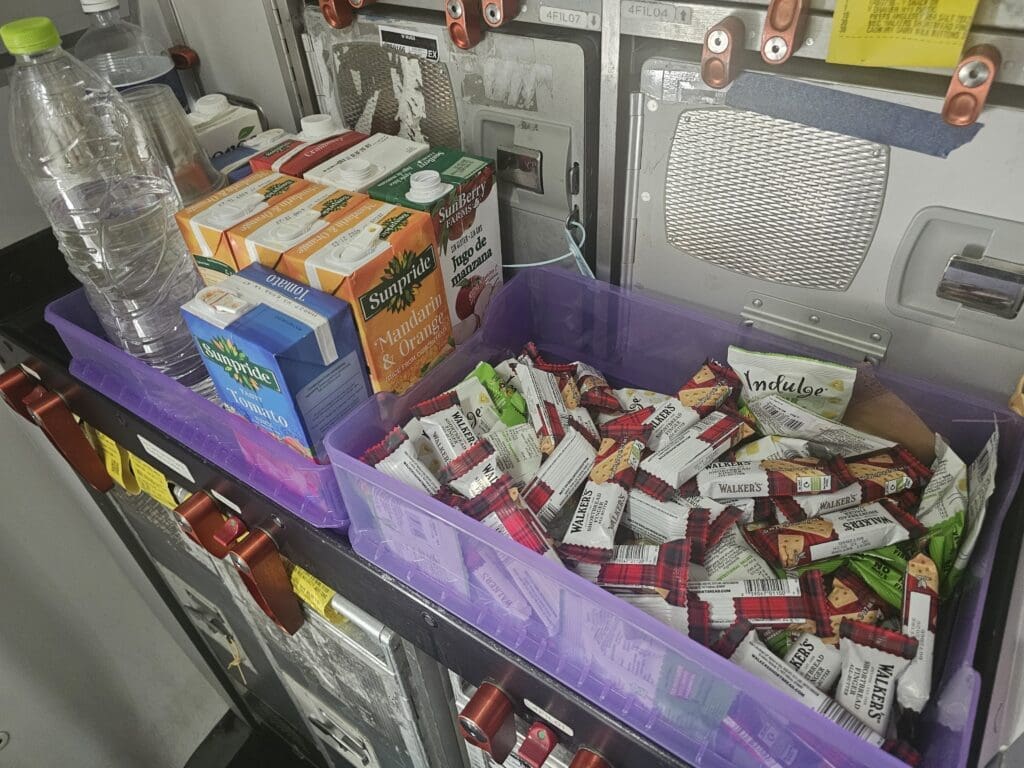
As we crossed the Kazakh steppe, the aircraft began to bounce around a little, which resulted in the illumination of the seatbelt signs for around thirty minutes. At this time, the crew passed through the cabin with torches, ensuring that all were safely and securely buckled up. As we bounced around, not feeling ready for sleep, seeing as it was only early evening in Korea, and not too interested in watching anything on the in-flight entertainment system, I cracked open my laptop and did some work to pass the time, which indeed, made the flight fly by! After three hours spent crossing Kazakhstan, the Dreamliner crossed the country’s Caspian Sea coastline just to the south of Aktau, spending about twenty minutes crossing this before reaching the shores of Azerbaijan near Quba, a few miles to the south of the Russian border.
At 2040 Korean time, as we crossed the Azerbaijani coastline, the service carts were rolled out once more, indicating the commencement of the in-flight snack service. Once again, this service took quite some time, and around twenty minutes after this commenced, the very friendly Cabin Supervisor handed me a warm vegetarian wrap, which I paired with a cranberry juice. Opening this up, whilst soggy, this wrap was delicious and most certainly filled a gap – leaving me with no complaints, although it was very difficult to pinpoint just what was in this! Indeed, I have to say that as I found on my flight from Delhi to London Heathrow, Virgin Atlantic most certainly keeps its passengers well-fed and watered during their long services.
Returning to the route, from Quba, the Dreamliner cut across Azerbaijan, taking around thirty minutes to cross this; however, instead of then heading to Georgia, the aircraft made its way to Armenia, marking the first time that I have ever passed through the skies of this West Asian state. Around eleven minutes after entering the skies of Armenia, the Dreamliner then reached the far northeastern fringes of Turkey and spent the next hour or so travelling along the country’s mountainous northern coastline before cutting across a small portion of the Black Sea and reaching the Romanian coastline.
As we trundled over southeastern Europe, I decided to go for a wander around, visiting the lavatory, which, despite seeing heavy usage, was in good condition, and visiting to the welcome snack basket in the rear galley. Adding to my positive impression of the crew, upon visiting the latter, perhaps looking for something to do, one of the flight attendants there insisted on pouring a cup of juice for me, rather than me doing this myself! With a juice and a small bag of chocolate buttons in hand, I returned to my seat and strapped myself in for our final sprint across Europe.
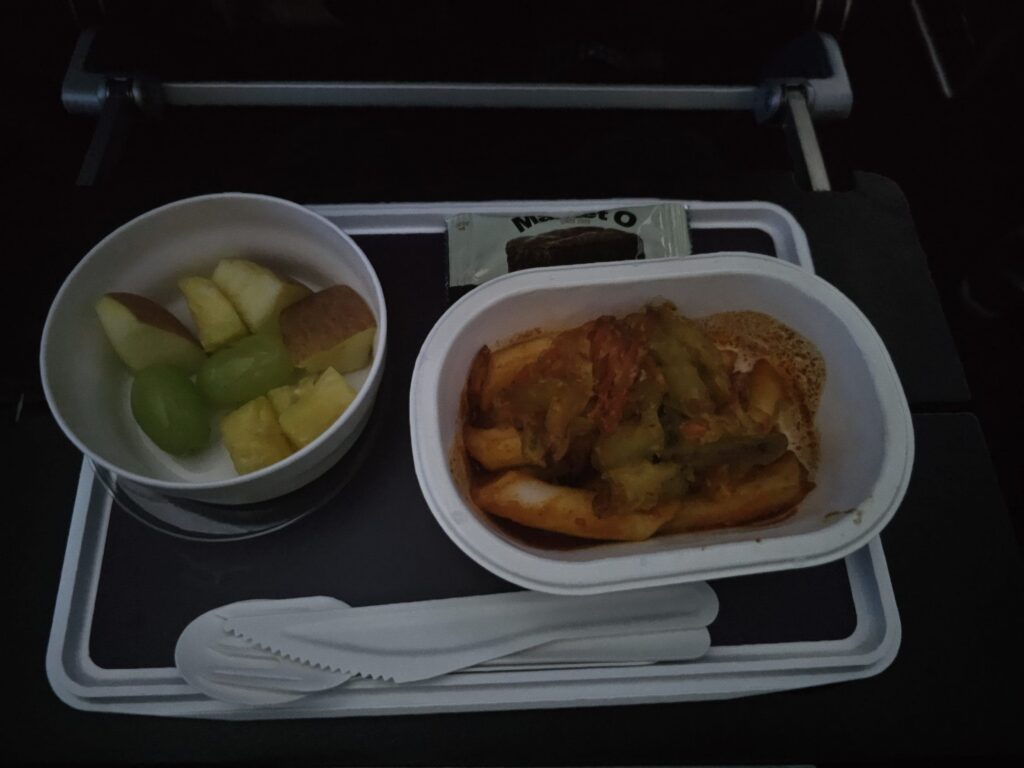
Cutting across Romania from the country’s far southeast to far northwest, the Dreamliner then entered the skies of Hungary, making a speedy crossing of the country before reaching the Austrian capital, Vienna. At this time, the lights were turned back on, and the crew took to the aisles, indicating the commencement of the flight’s dinner service. Once again, this was distributed in a fairly slow manner, and I was amongst the final passengers in Economy to be served. Upon reaching my row, a friendly flight attendant offered me the choice of pork or ddeokbokki, and, seeing as I had never been offered the latter on an aircraft before, I opted for this, which was soon handed over to me on a tray that also featured a compact meal, accompanied by a fruit salad and a small packaged brownie. I have to say that the portion size was rather small, and the quality was not fantastic either, with the deeokbokki being rather squidgy and soggy, and lacking any great amount of sauce. Nevertheless, that serves me right for opting for a street food dish on an aircraft! This was then followed by a round of cold drinks, and then a round of hot drinks, and once again, I found all flight attendants to serve passengers in a positively warm and friendly manner, thereby leaving me with no complaints.
By the time I had finished dinner, the Dreamliner was speeding through the skies of the German state of North Rhine-Westphalia, just to the south of Cologne, and, being well after midnight in Korea, by this time I was starting to feel a little weary, although I fought my tiredness in the name of mitigating the effects of jet lag. Seeing as the end of the flight was nigh, I decided that it was sensible to make one final trip to one of the lavatories. Once again, I found this to be in a good state, indicating that it had been tended to during the flight.
Returning to the route, from Cologne, the Dreamliner passed over a very small portion of the far southern part of the Netherlands before heading out over Belgium. As we neared Antwerp at an altitude of 40,000 feet, the Flight Service Manager performed an announcement asking for passengers to prepare for our descent by using the lavatories if they needed to before buckling their seatbelts. This was then followed by a message encouraging passengers to leave loose change in the charity envelopes, before informing passengers of the prohibition of meat and dairy products in the United Kingdom, and ending this with instructions for those in transit. Whilst I am not too sure how many passengers were continuing onwards on Virgin Atlantic flights, the service from Seoul is well-timed for passengers to connect to Virgin Atlantic’s overnight services to Nigeria and South Africa.
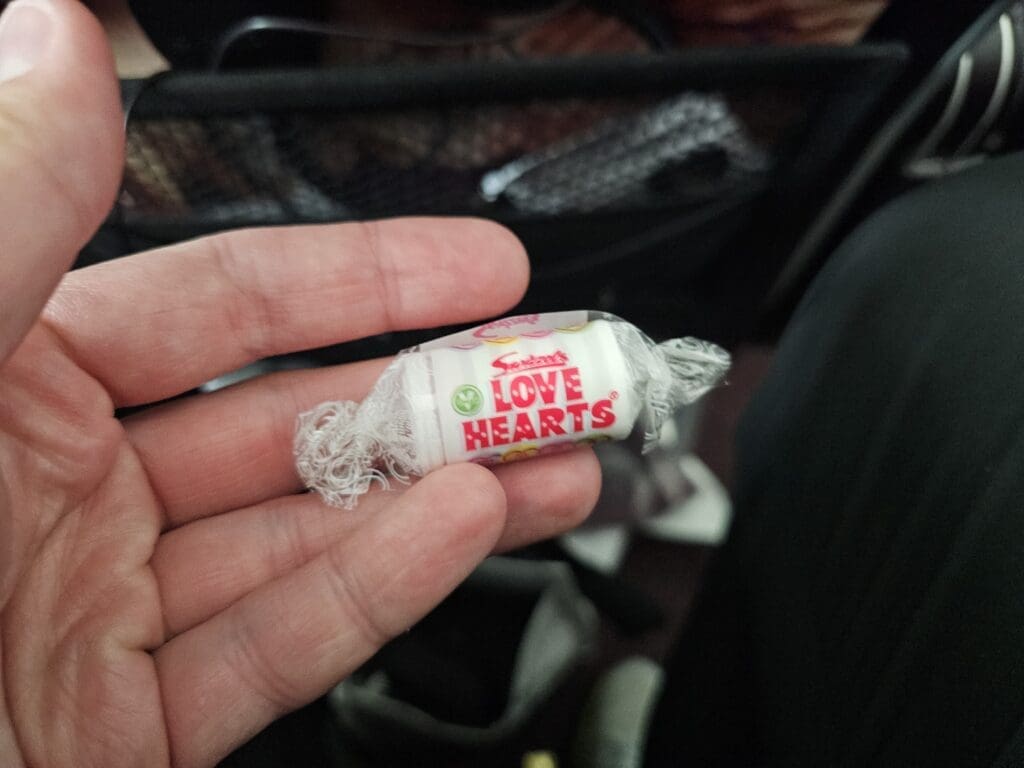
As this was underway, the aircraft could be felt commencing its descent, and once this long announcement had been repeated in Korean, the Captain performed their second announcement of the flight. During this, they advised of our impending arrival at London Heathrow, thanked passengers for flying with Virgin Atlantic and updated passengers on the weather in London, which was rainy and a balmy 22 degrees! At this stage, adding one final nice touch to the flight, the crew passed through the cabin with baskets of Love Heart sweets!
From Belgium, the Dreamliner made a fifteen-minute crossing of the North Sea before making landfall over the Essex coastline between Clacton-on-Sea and Southend-on-Sea. Once there, the crew passed through the cabin ensuring that all was secure and in place for arrival, and, with clouds welcoming me back home, it wasn’t long until we bumped around as we trundled towards London. With a light wind blowing from the east, that day, we would be landing on Runway 09L, thus meaning that I did not feel too bad about missing out on a window seat and the great views of London that usually accompany an approach to one of the westerly runways. Furthermore, with the aircraft not popping out of the clouds until the last couple of minutes of the flight, no views would have been had regardless.
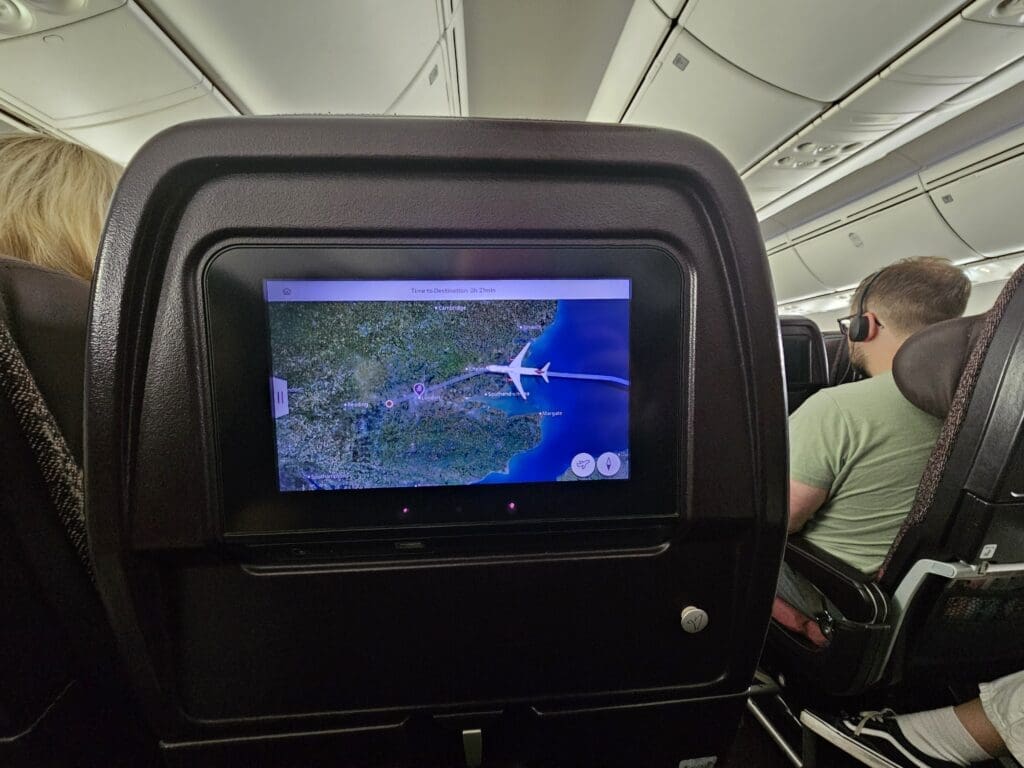
That day, no holding was needed, and the aircraft descended over the far northern reaches of London, passing over Chingford, Edmonton, Edgeware and Northwood, before crossing over the M25 motorway as it loops around London, at which point the landing gear and flaps were extended in preparation for our arrival. Before I knew it, a grand total of 13H24 after taking to the skies of Seoul Incheon, my second ever longest flight came to an end as we touched down with a firm bump on Runway 09L, throwing up plenty of spray as we noisily decelerated with a fair amount of vigour. Soon, we vacated the runway to the right, at which point the Flight Service Manager gave a final word of thanks and advised passengers to remain seated until we had come to a halt at our stand, something which thankfully all passengers obeyed.
Having landed almost an hour ahead of our scheduled arrival time, unsurprisingly, the Dreamliner soon came to a halt near Terminal 3. Fortunately, the Captain soon updated passengers and advised that due to our early arrival, our original stand was occupied and thus we would have to wait until either this aircraft departed or a new stand was found. Thus, around five or so minutes of waiting were in store until we continued on our journey, soon pulling into Stand 334 an impressive forty minutes ahead of our scheduled arrival time. Once there, the jetbridge was soon connected, and within a few minutes, disembarkation commenced.
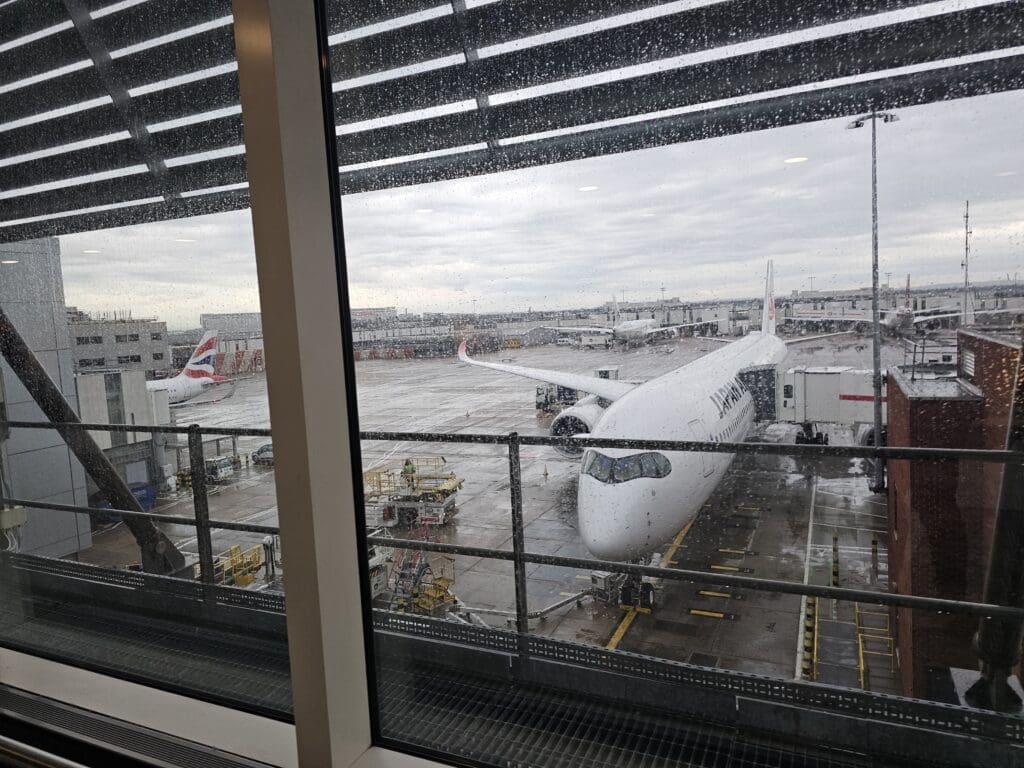
Despite being in no rush, seeing as my two neighbours stood up almost as soon as we had come to a halt, not wanting to delay their journey, I too stood up and waited in the aisle until the queue began to budge. Soon, making my way through the aircraft, I thanked the friendly crew as I trundled through the messy Economy and Premium Economy cabins before disembarking via the L2 door and heading up into Terminal 3. Being quite a large terminal, depending on your arrival gate, you can sometimes be in for a fairly long walk from the gate to the terminal’s immigration hall; however, thankfully, that day this was not too bad, and nothing more than a brisk four-minute walk was in store to reach the immigration hall. During this, I spotted plenty of Virgin Atlantic widebodies being readied for their next missions, as well as a sleek and modern Japan Airlines Airbus A350-1000 and one of Heathrow’s latest airlines, Air Peace, whose Boeing 777-200ER could be seen having just arrived from Abuja.
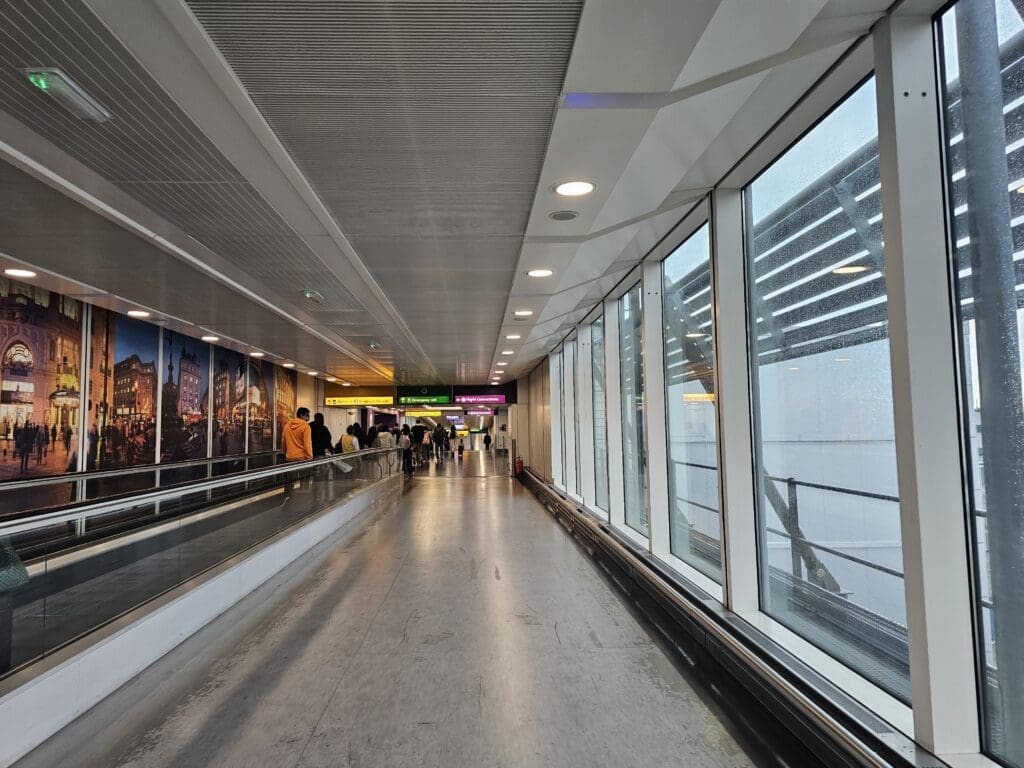
With all automated kiosks open, thankfully, immigration was a totally queue-less and quick experience, and within a minute of entering this hall, I had officially entered the UK and made my way down to the large baggage collection hall. Whilst baggage collection at Heathrow can sometimes take a fair while, that day, by the time I had returned from a post-landing lavatory visit, I was delighted to see that my suitcase was already spinning around on the carousel, for once having been one of the first bags to be delivered. Picking up my heavy suitcase, I steamed through customs and entered the busy and small landside area, and commenced my journey back home to the north, ending my Virgin Atlantic experience.
Summary
For the most part, I had a nice and enjoyable, if not very long, flight with Virgin Atlantic, and importantly, I made it to London in one piece (and ahead of schedule!). What really stood out were the warm and friendly crew, who were an absolute delight from start to finish. Whilst some areas could have been improved, such as the slow onboard service or my slight gripes with the in-flight entertainment system, overall, I enjoyed my long flight, and I would be more than happy to fly with Virgin Atlantic again.