To Spain on a Air-to-Air Tanker?! Riding one of the Most Unique Airbus A330s in the World
Background
Jet2 is currently the United Kingdom’s third-largest airline in terms of both fleet size and the number of flights that it operates, sitting behind flag carrier British Airways and low cost giant EasyJet. Whilst the airline has a growing fleet of Airbus A321neos, the venerable Boeing 737-800 remains the mainstay of the airline’s fleet, with over one hundred such aircraft operated from thirteen bases across the United Kingdom to destinations across Europe and North Africa. These come in addition to a number of Leeds Bradford-based Boeing 737-300s and a small fleet of Airbus A321ceos. For the past few years, each and every summer, Jet2 has leased additional aircraft from operators across Europe during the busy summer season to ensure that it has the capacity to meet the increased demand during this time. Such aircraft include Airbus A321s, Boeing 737-800s and widebody Airbus A330s. Such aircraft are operated on a damp leased basis, meaning that they are staffed by Jet2 cabin crew, with the operating carrier only providing the pilots and technical personnel. Investing a significant amount into maintaining service standards, Jet2 decals are applied to these aircraft, and often these are even fitted with Jet2’s standard interior.
Over the years, Jet2 has leased aircraft from a wide array of airlines, including AirEuropa, AirExplore, ETF Airways, Hi Fly, Privilege Style, SmartLynx, Smartwings, Titan Airways and World2Fly. For several years, the airline has damp-leased a pair of Airbus A330-200s from fellow British operator AirTanker, which usually seem to be based at Jet2’s largest base, Manchester Airport. From there, these are deployed on high-demand routes to the likes of Alicante, Palma de Mallorca and Tenerife, amongst other destinations. For enthusiasts, not only does this arrangement provide an opportunity to sample a widebody Airbus A330 flight on a short-haul intra-European route, but, for reasons I shall explain, these Airbus A330s and AirTanker’s operation are rather unique!
It is fair to say that AirTanker is not a name you may expect an operator operating airliners to have, and for good reason. By the late 1990s, Britain’s Ministry of Defence began to examine potential options for the replacement of the Royal Air Force’s ageing Lockheed Tristar and Vickers VC-10 tanker fleet. However, it was decided that to save costs, this fleet was to be owned, maintained and partially operated by a private company, whilst the Royal Air Force would crew and take responsibility for any military missions that this fleet undertakes. Under the Future Strategic Tanker Aircraft project, this was put out for tender and in response, two parties emerged – both being consortia of some fairly big-name players in the world of aerospace and defence. One was Tanker Transport Services Consortium – backed by BAE Systems, Boeing, British Airways, Marshall Aerospace and Serco. This company intended to convert British Airways Boeing 767-300s into tanker aircraft. The other was Air Tanker Limited, who were backed by the likes of Airbus, Babcock International, Cobham, EADS, Rolls-Royce and the Thales Group. At that time, the company proposed operating the then under-development Multi Role Tanker Transport version of the Airbus A330-200.
Following extensive testing, the Airbus A330 Multi Role Tanker Transport (MRTT) made its first flight in June 2007. In December 2011, the first example was delivered to AirTanker and placed in service with the Royal Air Force, with a further thirteen examples delivered up until 2016. However, there being no need for fourteen military tanker aircraft at any one time, four of these aircraft were placed on the civilian register, given ‘G-’ registrations and had their air-to-air refuelling equipment removed, although this can be reinstalled if required. Initially, one of these civilian aircraft was deployed on the South Atlantic Air Bridge route, shuttling passengers and cargo on the long slog between RAF Brize Norton, RAF Wideawake and RAF Mount Pleasant. Establishing a new operating model for AirTanker, in 2015, one such aircraft was leased to the ill-fated Thomas Cook Airlines, which was later followed by leases to Jet2 in 2017.
Given the unique nature of AirTanker, and the fact that these aircraft were once military registered and capable of air-to-air refuelling, it is no surprise that they are a popular choice amongst aviation enthusiasts hunting out flights on rare and unusual aircraft. Having wanted to fly on them for quite some time, in May 2023, I finally got around to doing so. Needing to head down to Palma de Mallorca, my schedules aligned with those of Jet2’s leased Airbus A330-200s, and so my choice to fly down to the Balearics on these was very much a no-brainer. Booking with Jet2 was a fairly straightforward process, although like many leisure airlines, I was required to sidestep past plenty of optional extras before being taken to the payment page. Opting against paying to reserve a seat, I lucked out at online check-in and received a window seat on both my outbound and return flights.
The Journey
Booking a short time before my flight, before I knew it, departure day rolled around, and I was all set to head off to Mallorca. Seeing as my flight was scheduled to depart Manchester at 0630, not fancying a long overnight stay in the terminal, I thought it sensible to book a night at the local Holiday Inn, located almost directly opposite Terminal 2. Whilst Jet2’s hub is located in Terminal 2, at the time of my flight, Jet2’s operations were split between Terminal 2 and Terminal 3, with a small number of flights operating through the latter. However, since then, Jet2’s operations have now moved in their entirety to Terminal 2. Following a short night’s sleep, I woke bright and early, ready to head off on my Airbus A330 adventure. Whilst my hotel cost included a complimentary breakfast, fearful of long waits at security, I regrettably had to skip this and leave before breakfast commenced.
After returning my key card, I made my way out into the chilly Manchester air and began the short walk over to Terminal 2. With much of the terminal undergoing upgrade works, the ground floor arrivals level looked a little ramshackle, with plenty of hoarding erected and the constant thud of hammering and banging, with workers appearing to be grafting away at all times of the day and night. However, things were a little calmer upstairs in the large check-in hall. At the time of my trip, the upgrade work in this appeared to be around half complete, with half of this appearing to be modern and stylish, and the other half a little nineties-esque in its design. Nevertheless, despite the number of passengers milling around, this seemed to be reasonably peaceful throughout and was in a clean and tidy state. With no bags to check-in and already in possession of a mobile boarding pass, I decided to make a beeline for security.
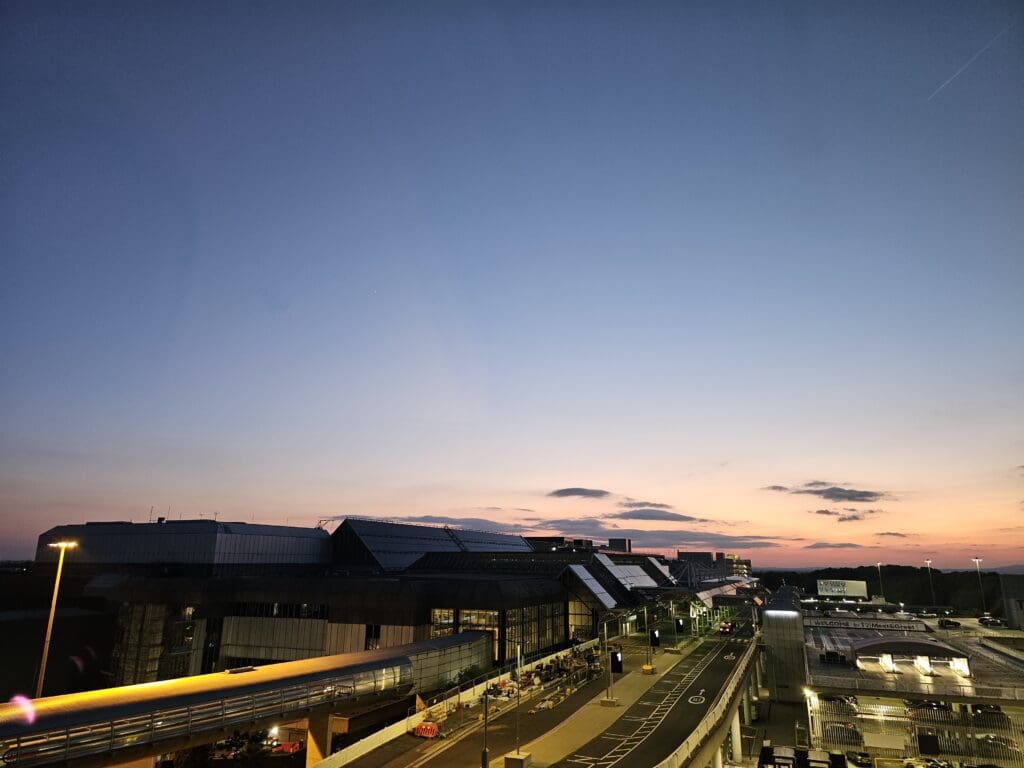
As I had expected, plenty of passengers could be seen at security, many of whom were dressed in their summer gear and heading off on Jet2 and TUI Airways services to warmer climes. Fortunately, most checkpoints seemed to be open, and I shuffled along at a reasonable pace, making it to one of these within no more than five minutes after entering the security area. That morning, I was lucky enough to encounter two fairly friendly security workers and, having already correctly decanted my items, I was able to pass through the checkpoint without the need for any additional searches.
Once in the airside area, I soon reached the terminal’s modern and main waiting area. This is fairly modern and stylish in its design, with plenty of bee-related designs seen throughout in honour of Manchester’s famous worker bee symbol. This is home to the usual smorgasbord of shops, cafés, eateries and bars as can be found at most British regional airports, although those looking for upmarket designer outlets would have probably been a little disappointed. Wandering around, whilst busy, I found plenty of places to sit and wait, with a good number of plug sockets and USB-A ports for those looking to charge their devices. Unfortunately, all was not totally positive, and as with my previous visit, I found toilet facilities to be limited, and these were far from in the best state that morning.
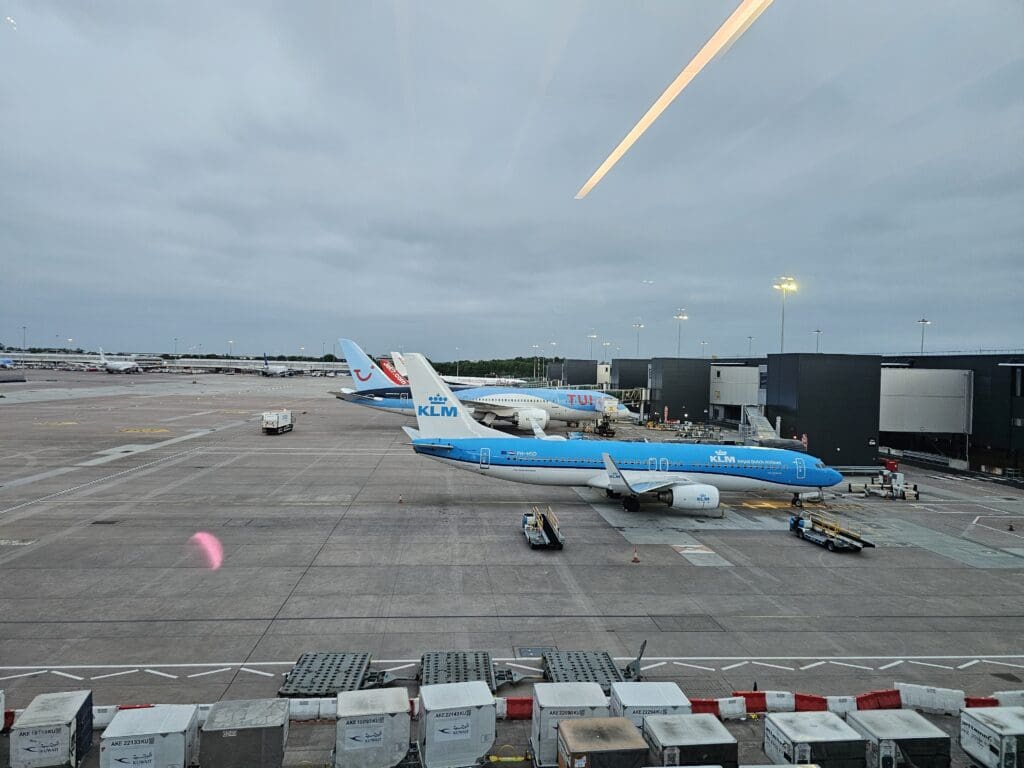
That morning, my flight would depart from Stand 112, located on the terminal’s new pier. This is located a fair walk away from the main airside waiting area; however, offering the best views of the action outside, I decided to wander down there with plenty of time to go until departure. There, floor-to-ceiling windows offer a great view of the aircraft waiting at the stands outside, which consisted of a mixture of narrow and widebodies from across Europe. After wandering around and examining the fine array of aircraft outside, I eventually plonked myself down at the gate, which became increasingly busy as our departure time neared.
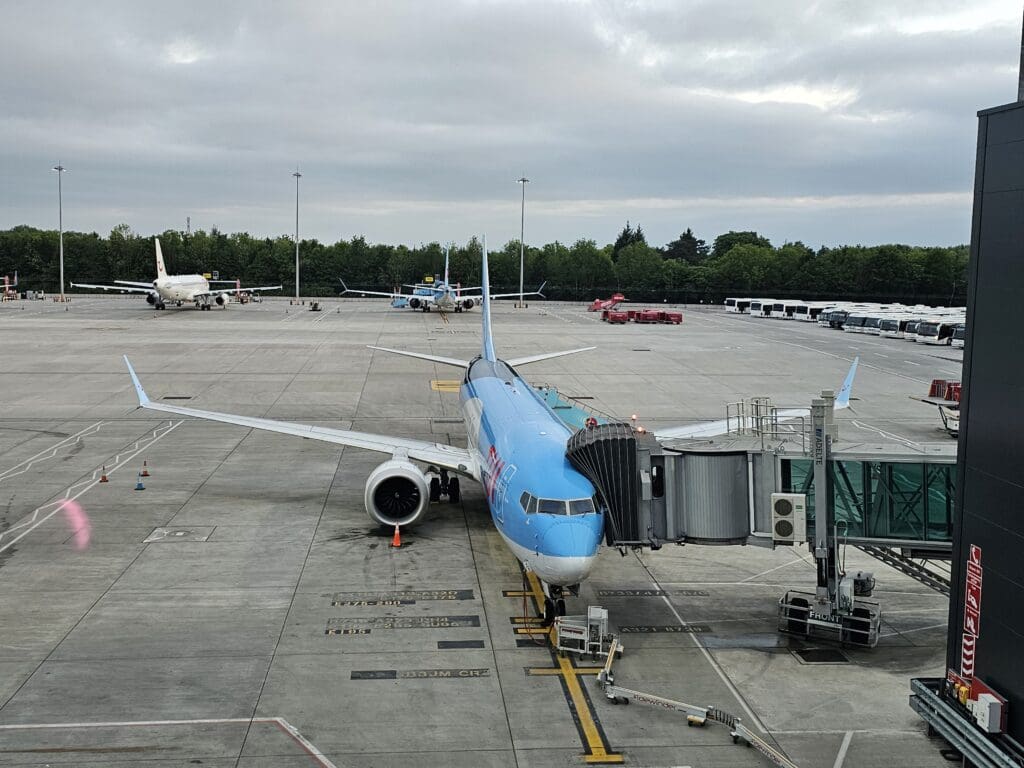
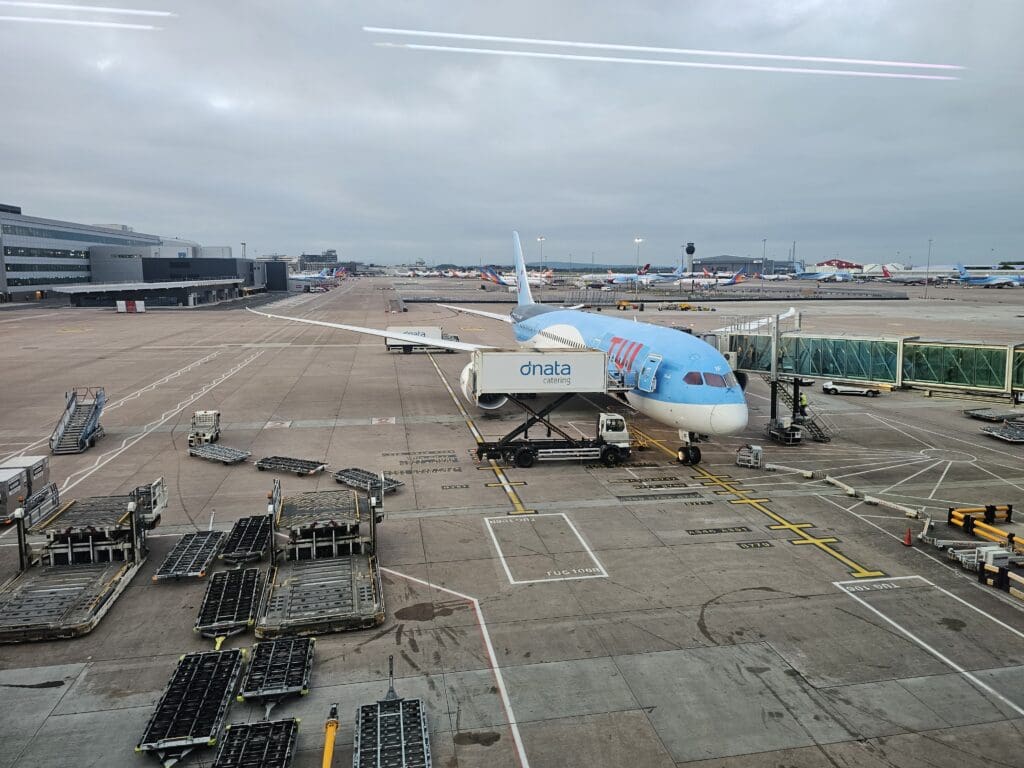
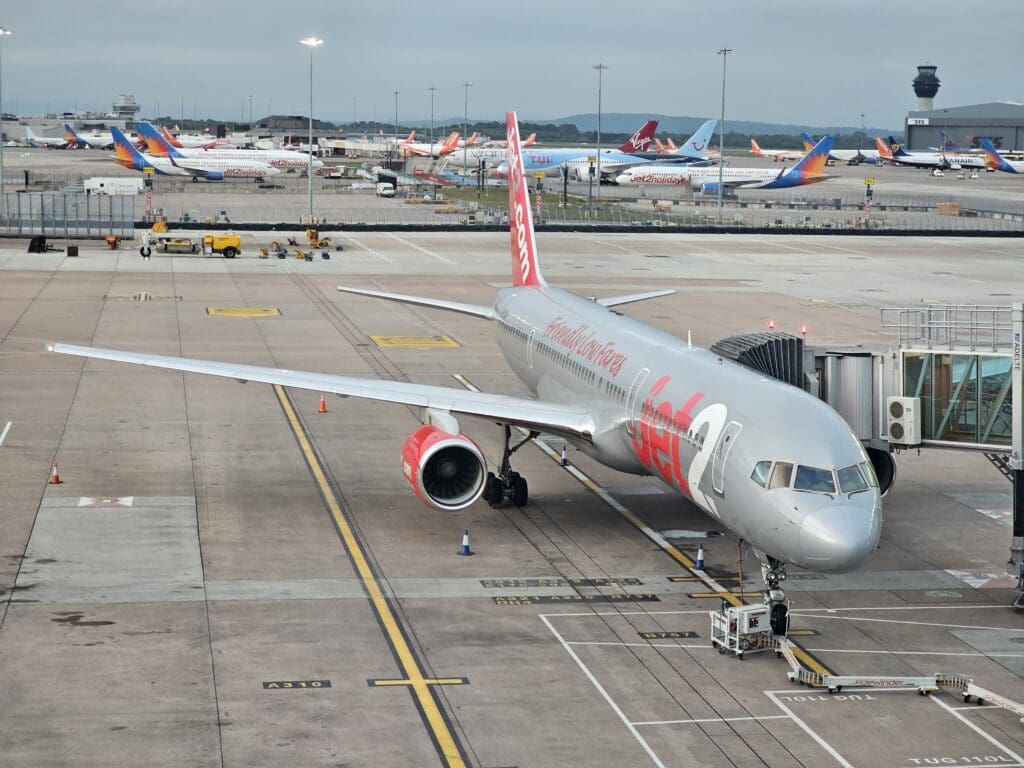
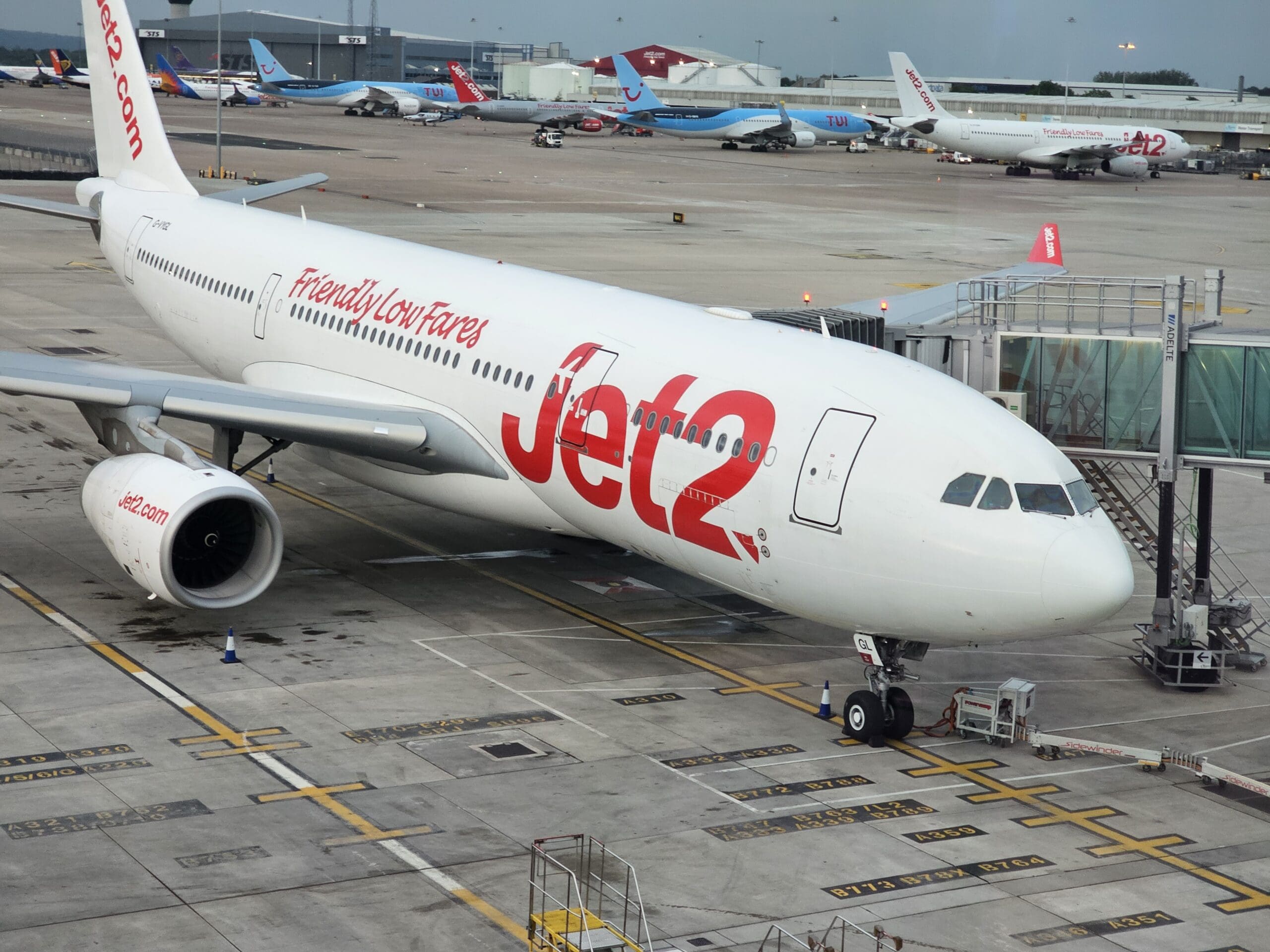
Outside, Airbus A330-243 G-VYGL could be seen waiting at the stand. Manufactured at Airbus’ plant at Toulouse Blagnac Airport, this aircraft first took to the skies in July 2014 with the test registration F-WWYI thus making it just under eight years old at the time of my flight. Painted in a military grey livery, in July 2015, this was ferried up to AirTanker’s hub at RAF Brize Norton as G-VYGL. However, the aircraft soon received a military registration of ZZ341 and commenced its life operating with the Royal Air Force. However, the aircraft’s stint in the military did not last all too long as in Spring 2016, the aircraft was re-registered on the civilian aircraft register and commenced wet-leased operations with Thomas Cook Airlines. Curiously, during this first summer season of airline flying, the Airbus retained its military grey livery, although its Royal Air Force titles were removed. In 2017, the aircraft was repainted into an all-white livery, and has operated a mixture of South Atlantic Air Bridge services to Ascension Island and the Falkland Islands, ad-hoc charters, and seasonal damp-leases for Jet2.
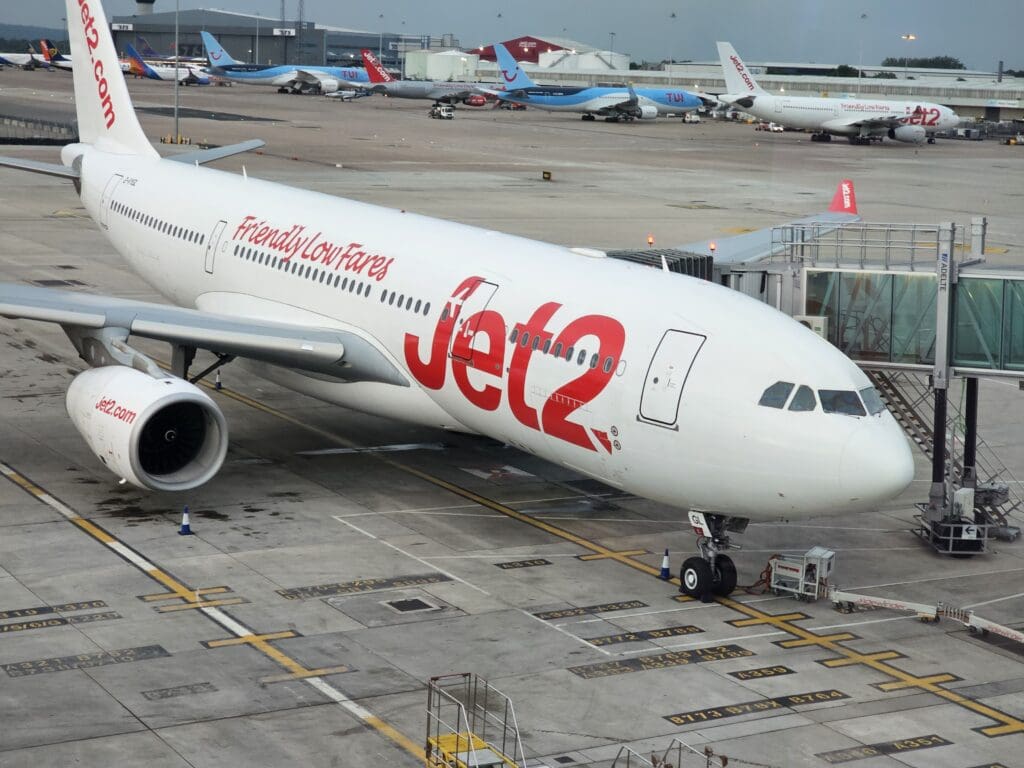
As seems to be the case with most Jet2 flights, boarding was scheduled to commence 45 minutes before departure at 0545, and as this time neared an army of staff wearing Jet2’s famous and distinctive red uniform assembled at the gate and began to ready this for boarding. A few minutes before this was scheduled to commence, an announcement was made inviting all those bound for Palma de Mallorca to prepare themselves for boarding, with this commencing as soon as the clock struct 0545. At that time, I joined the short queue of holidaymakers and I soon approached the podium where I was seen to by a very friendly and lively staff member who checked my passport, scanned my boarding pass and wished me a ‘lovely holiday’ before I was free to wander down the glass jetbridge to the aircraft.
With no queuing, I soon stepped into the cabin where I was warmly greeted by two Jet2 flight attendants. Boarding via the L2 door, once onboard the aircraft I immediately found myself in the forward Economy cabin. Onboard, the two AirTanker aircraft operating for Jet2 feature 327 seats in 2-4-2 abreast an all-economy configuration. These are almost identical to the seats onboard Jet2’s other aircraft are covered in either red or silver pleather seat covers. The most significant difference between these and the seats on other Jet2 jets is the fact that these lack an in-seat cup holder, whilst up above, there is no red trimming in the cabin, nor decals on the overhead lockers advertising Jet2’s destinations. Turning right, I voyaged down the first aisle and received multiple friendly greetings from the crew members, giving off a very positive first impression. That morning, as expected almost all cabin crew took the form of Jet2 staff, bar one AirTanker cabin crew trainer who appeared to undertake some of the safety and security procedures but did not get involved with the delivery of service. Whilst seated in 45A near the very rear of the aircraft, being one of the first passengers to board that morning, I did not have to wait for anyone ahead of me to stow their luggage and thus I soon made it to my seat without stopping.
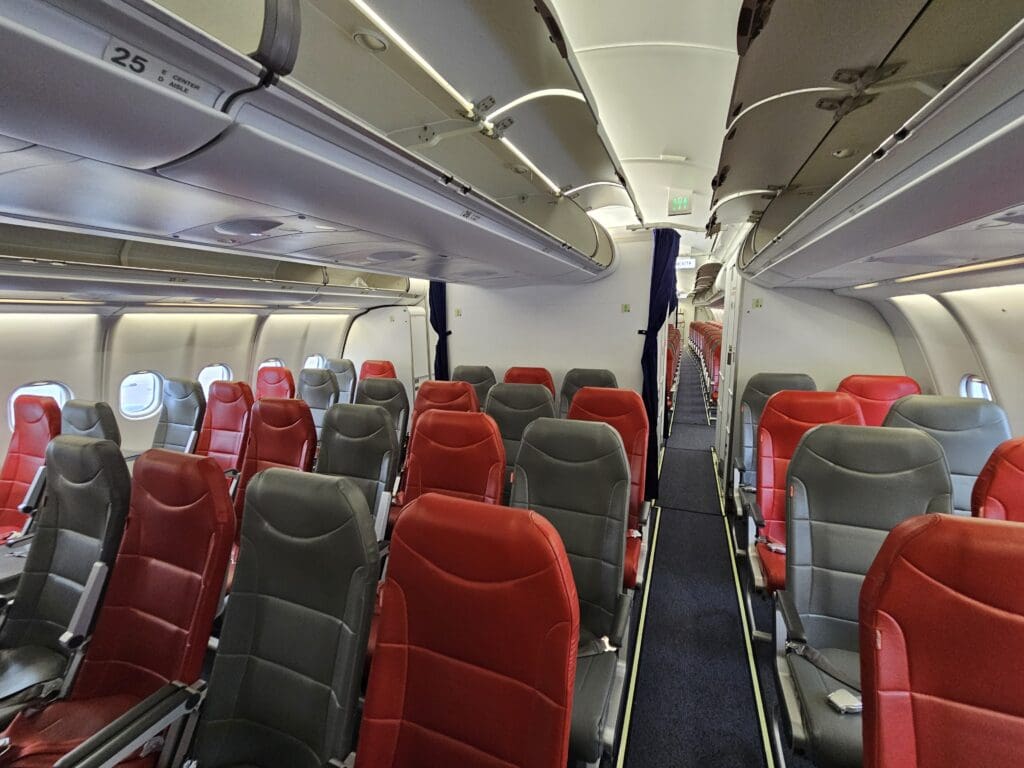
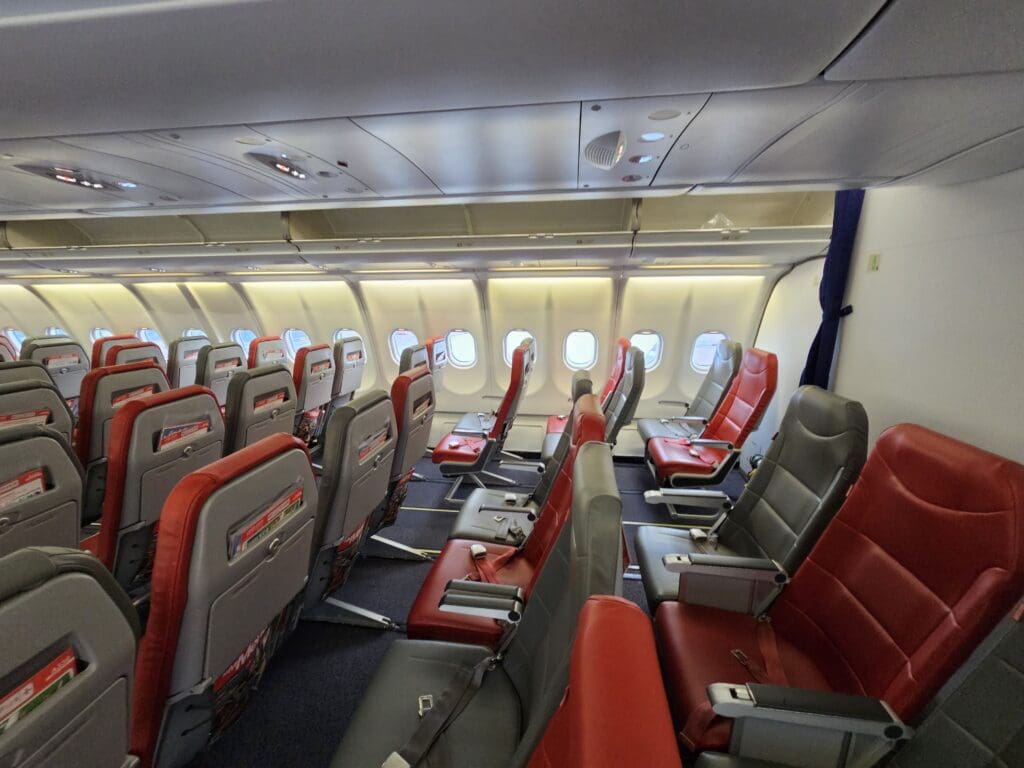
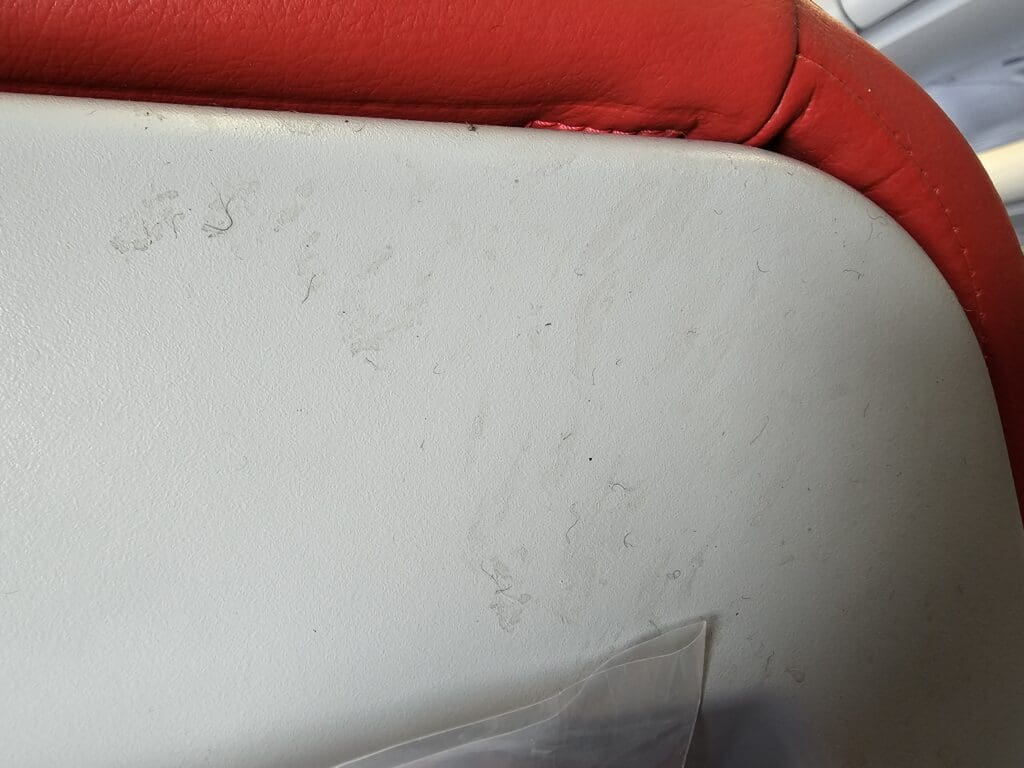
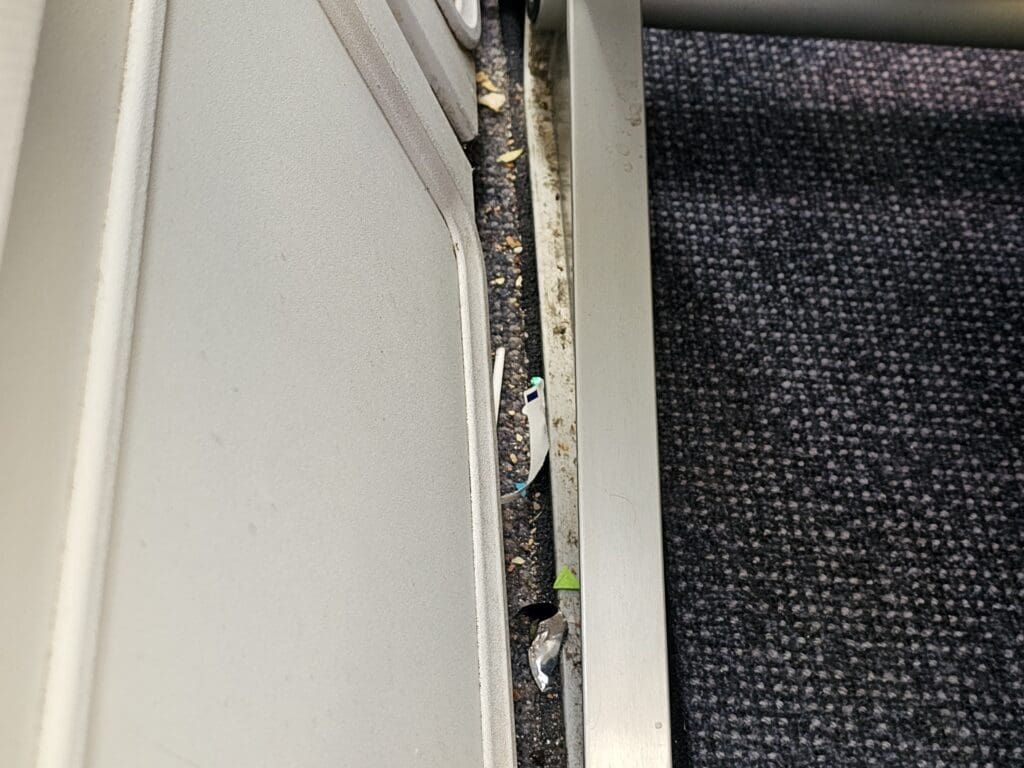
Once I had stowed my bag, I sat down and settled in for the ride ahead. Overall, my first impressions were fairly positive. The seat, whilst a little firm, offered a superb amount of legroom, especially considering the fact that I was travelling onboard a leisure carrier. Meanwhile, the seat and area around this appeared to be almost totally devoid of any signs of wear and tear. The only complaint that I did have, however, was that a few crumbs and stains could be spotted throughout the cabin, indicating that this had not been cleaned up to the high standards that I had experienced on all of my other Jet2 services. Turning to the seatback pocket, this contained a hybrid AirTanker-Jet2 safety card, the latest copy of Jet2’s JetAway inflight magazine, the shopping catalogue and the buy-on-board MMmenu.
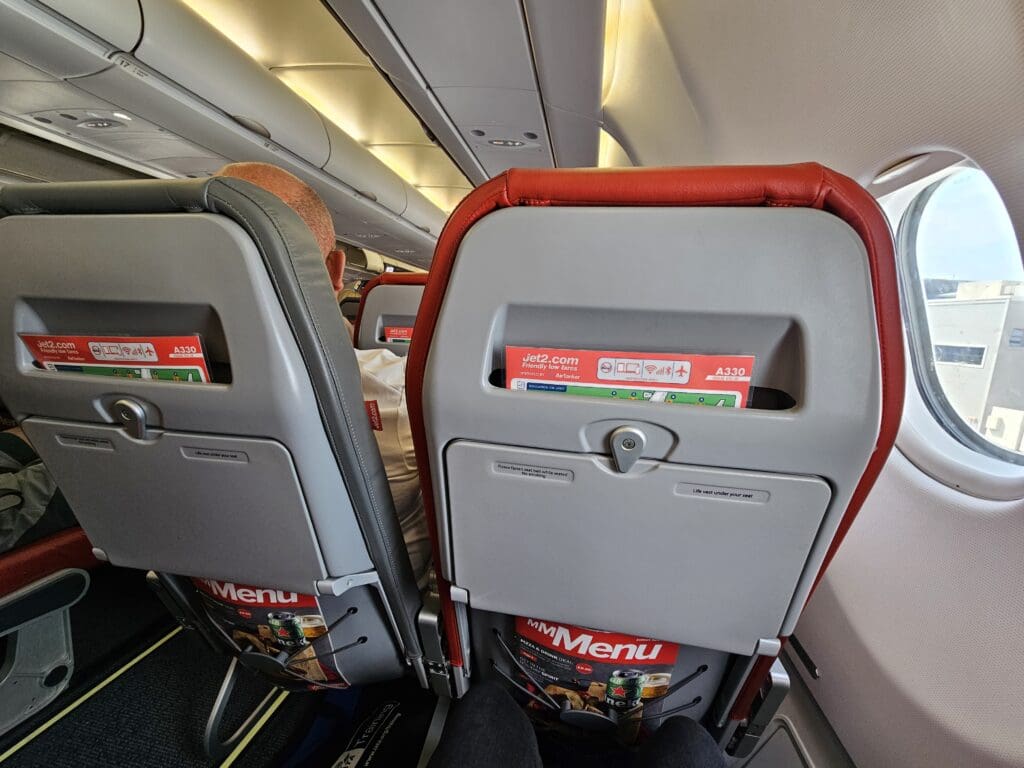
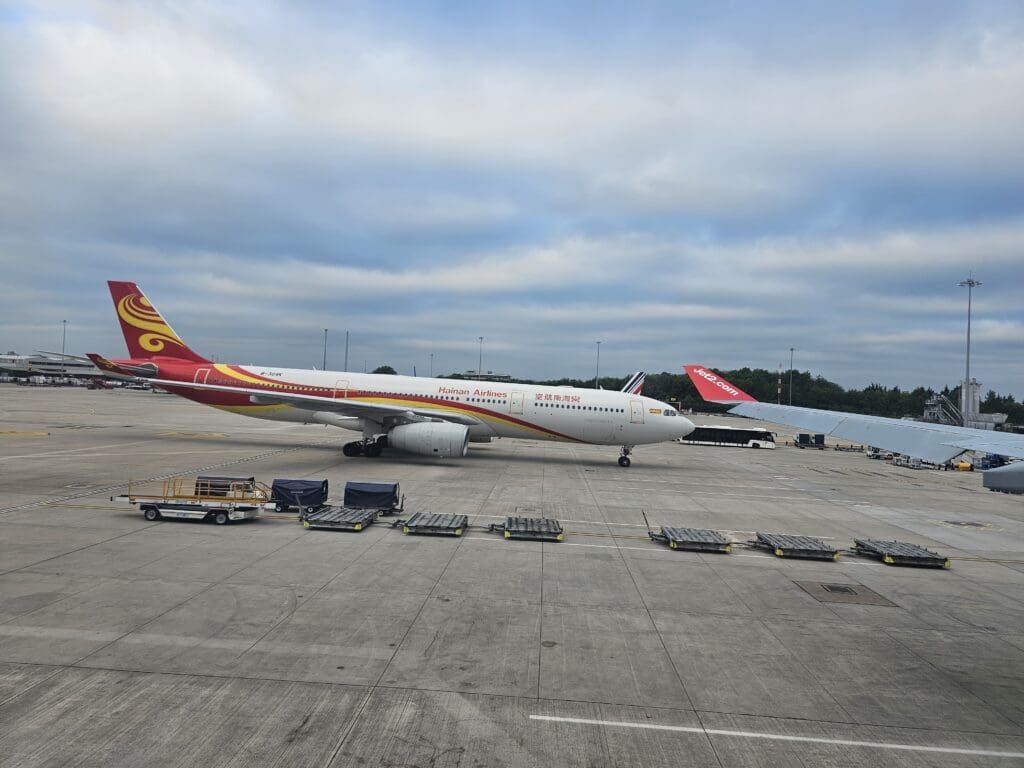
As passengers streamed onto the aircraft, upbeat boarding music rang out, interrupted by an occasional pre-recorded message about taking assigned seats, stowing luggage correctly and fastening seatbelts. Perhaps in a hurry to jet off to Mallorca, it wasn’t long before the final passenger boarded the aircraft, and I would say that that morning this was no more than two-thirds full. Many of my passengers took the form of older tourists, and judging by the accents I heard onboard, there seemed to be a fair mixture of people from Manchester, Liverpool and Wales. Up ahead, it seemed that the jetbridge was retracted with plenty of time to go until departure, giving the hope that we would be able to make a speedy departure. Meanwhile, I also got a good view of a Hainan Airlines Airbus A330-300 pulling into the neighbouring stand after its overnight journey from Beijing.
Even though all seemed ready to go, soon the AirTanker Captain performed a detailed welcome announcement that went through our route, the weather in Palma de Mallorca, and introduced the other two pilots present in the cockpit. Unfortunately, this ended with the message that, owing to congestion, we would not be able to push back until ten minutes after our scheduled departure time. However, perhaps wanting to get the cabin secured as soon as possible, once this announcement came to an end, one of the Jet2 cabin crew members performed their welcome announcement, which transitioned into the safety demonstration. Once complete, the army of cabin crew made their way through the cabin, ensuring that all was secure and in place for our departure that morning.
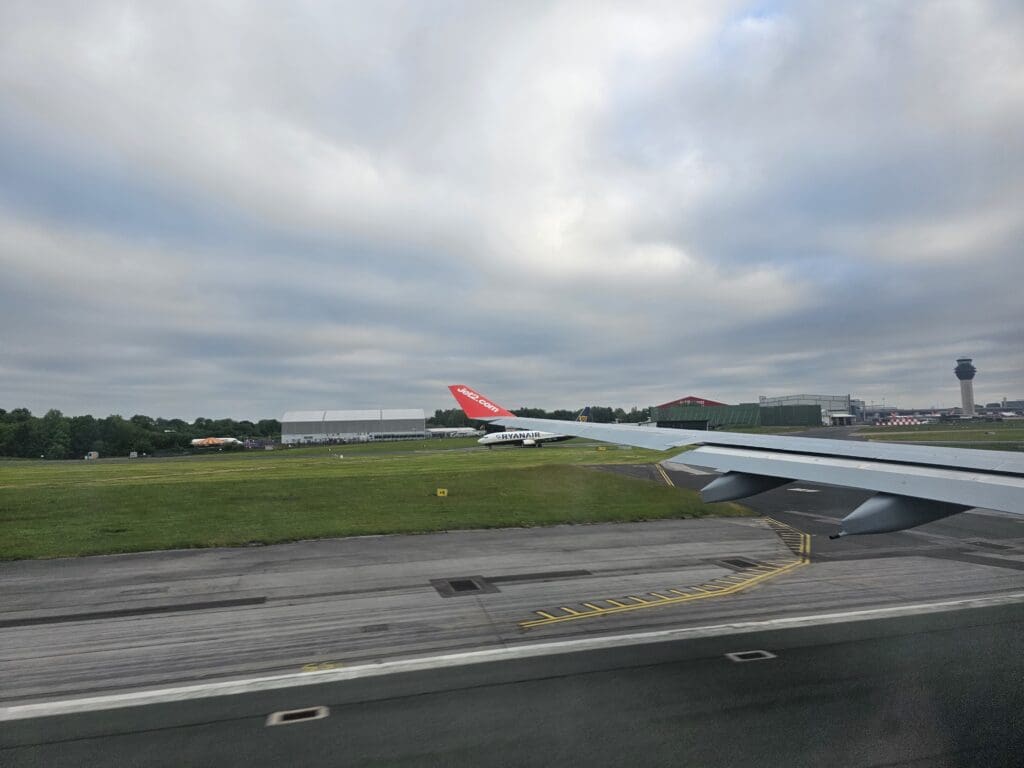
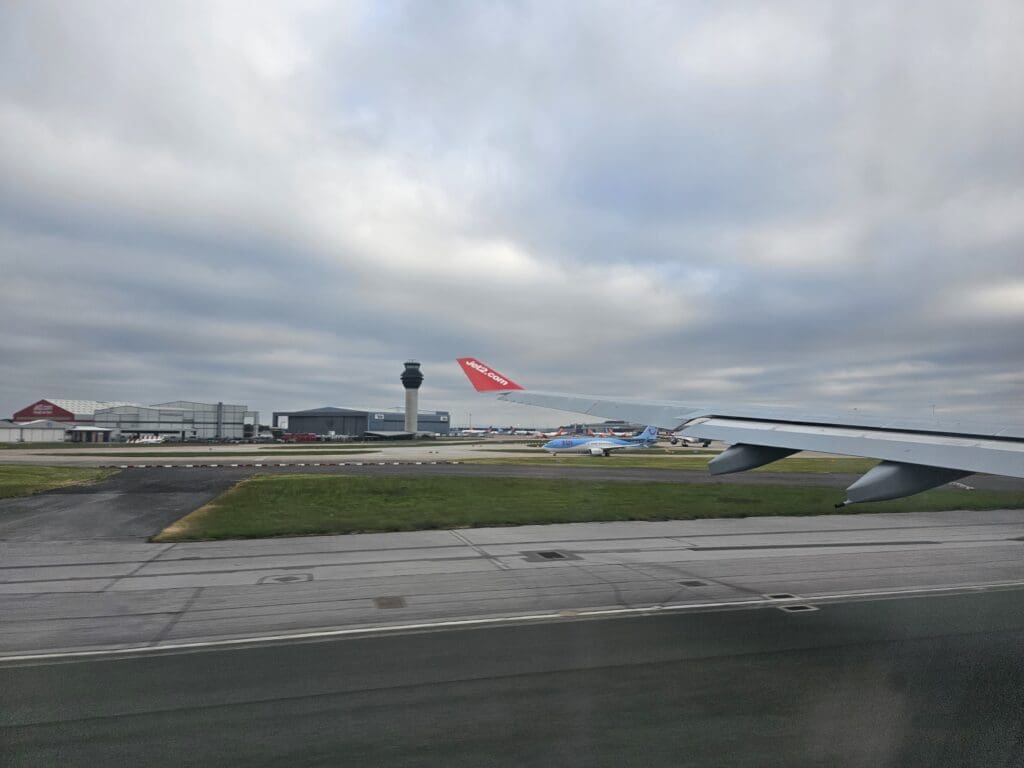
Eleven minutes after our scheduled departure time, the Airbus jolted backwards and soon, the jet’s two Rolls-Royce Trent 772B-60 hairdryer engines spooled into life with a fair amount of vibration before the flaps were partially extended in preparation for our departure from Manchester. After a few minutes, the tug was disconnected and the Airbus powered away under its own steam, cautiously heading down the apron and leaving the terminal complex behind as it journeyed out to Runway 05L. During this journey, we seemed to overtake a couple of EasyJet Airbuses, and sitting on the left-hand side of the aircraft, I was treated to a good view of the near-constant stream of aircraft departing from Runway 05L. Meanwhile, those on the other side of the jet would have been able to spot the private jet terminal and the Runway Visitor Park, home to several preserved aircraft, including an Avro RJX, Hawker Siddeley Trident 3B and most famously a British Airways Concorde.
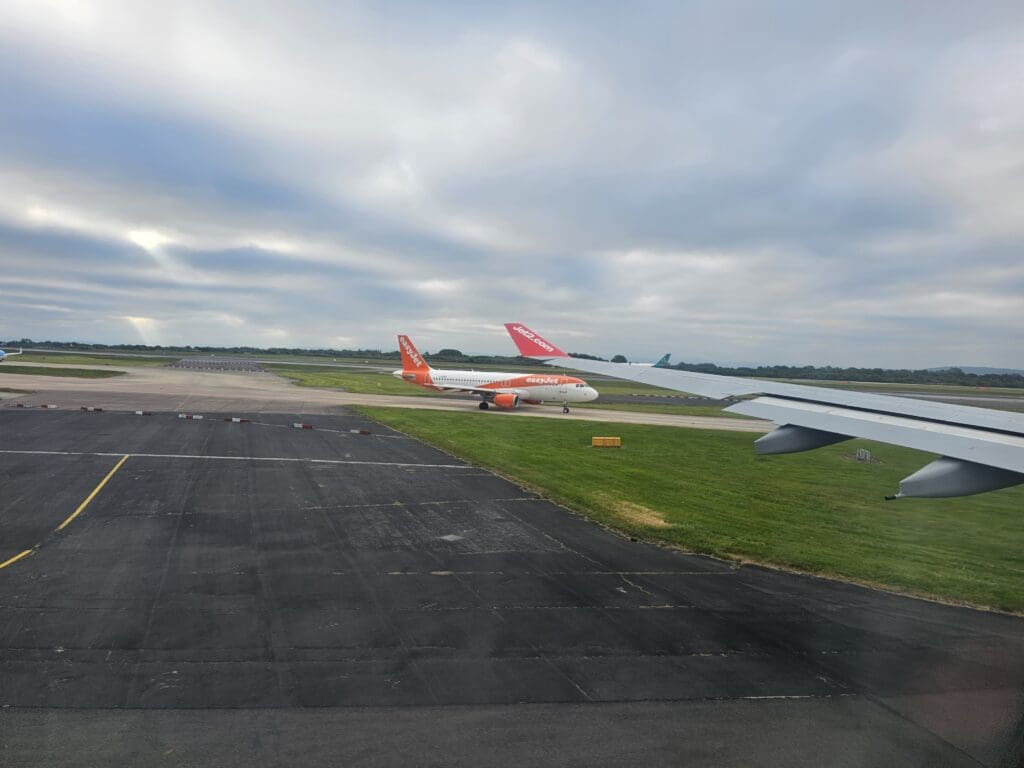
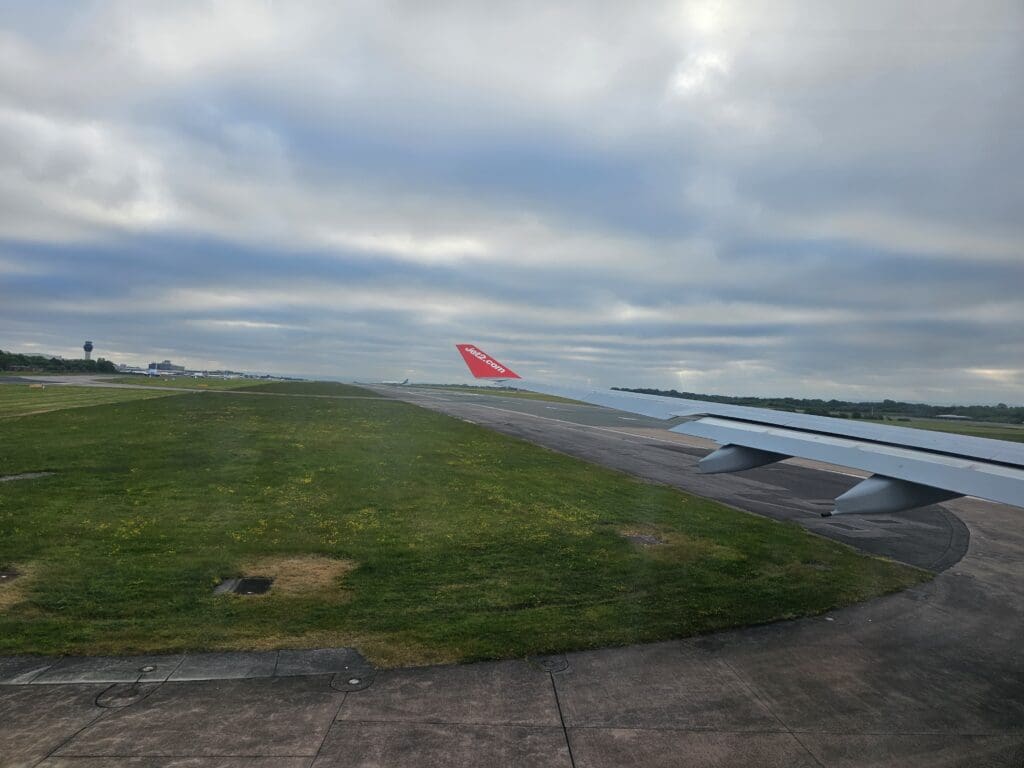
After a few minutes, the Airbus reached the end of the runway and taxied onto this before coming to a halt in order to allow for an Aer Lingus UK Airbus A330-300 to cross this some distance up ahead, having just touched down from Orlando. A grand total of 33 minutes behind schedule, at 0703, the Airbus’ two Rolls-Royce engines spooled up and created a fair amount of noise as we went flying down the runway, seemingly swaying from side to side in the process. Accelerating past the elephant walk of aircraft on their way to Runway 05L and the Runway Visitor Park, the Airbus’ nose seemed to be pointed skywards whilst very roughly parallel with the control tower and we took to the skies with a fair amount of shuddering. During the first few seconds of the flight, I was treated to a superb view of Terminal 3 and Terminal 1, where jets from British Airways, EasyJet, Jet2, Ryanair and TAP Air Portugal could be seen before the Airbus climbed over the perimeter fence.
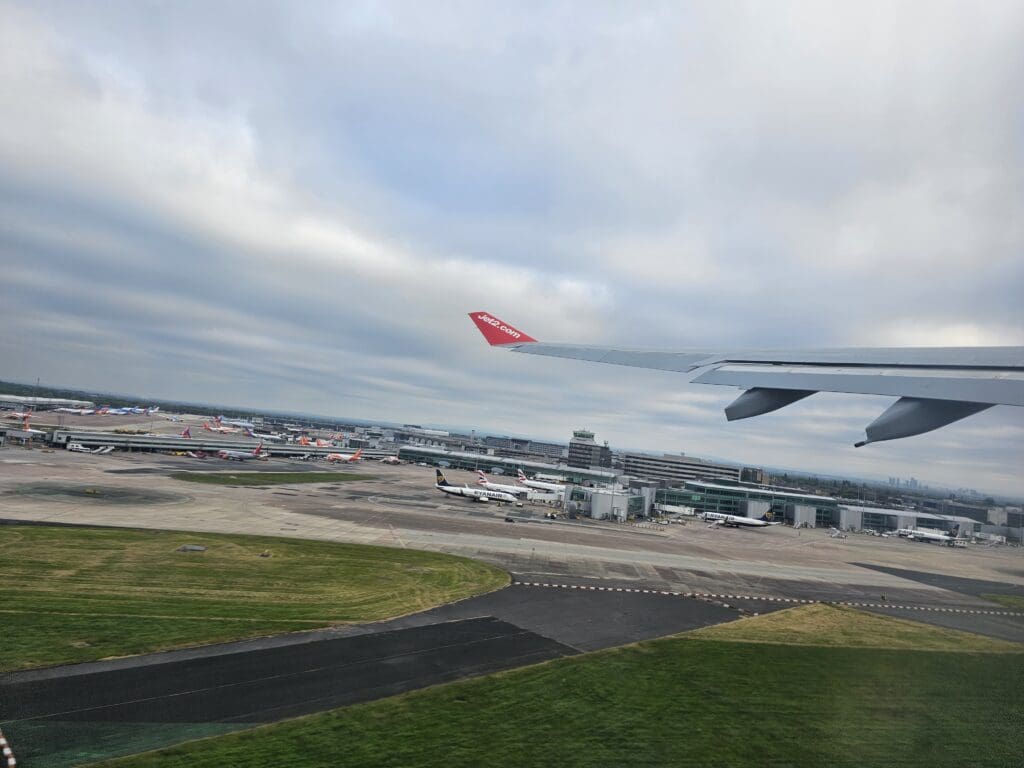
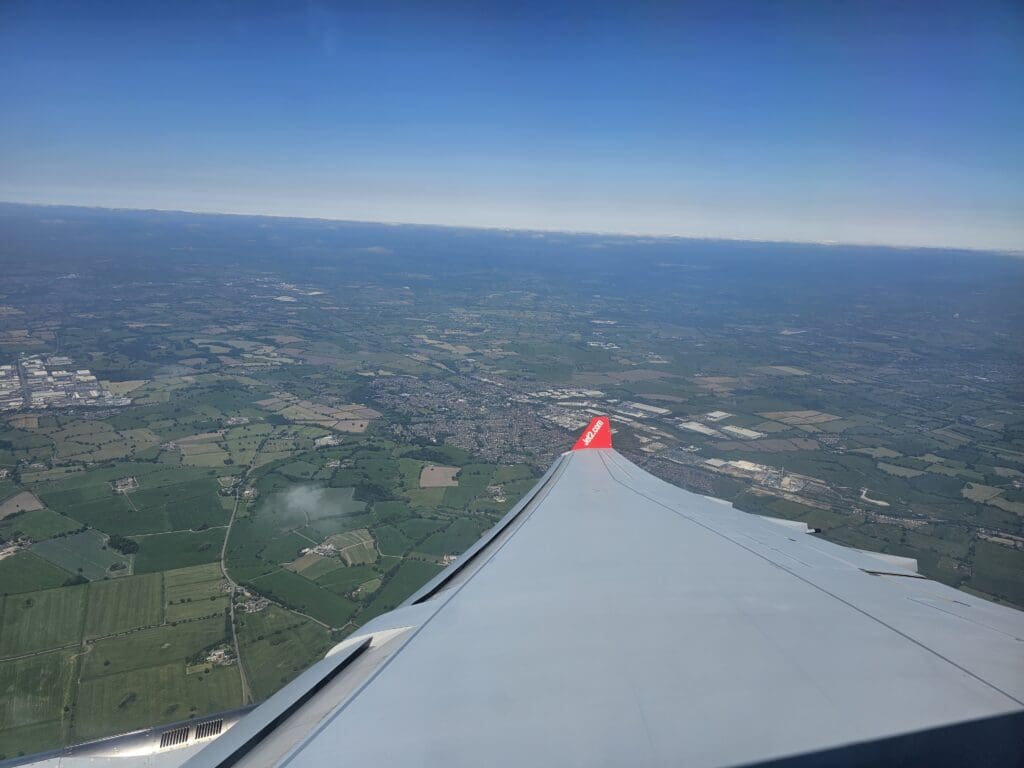
Whilst the skies above were fairly overcast, the cloud base was rather high, and so once away from the aircraft, a good view of Manchester’s southern suburbs, such as Wythenshawe, Cheadle and Didsbury, whilst the tall buildings of the city centre could be seen to the north. However, soon, the aircraft banked to fly on a southerly heading and soon climbed above the thin layer of clouds before blue skies appeared above. From Manchester, the aircraft took a very standard departure route, flying southwards past the likes of Stoke-on-Trent, Birmingham and Wolverhampton, before continuing onwards to Oxford, where we levelled off at our cruising altitude and passed almost directly over AirTanker’s headquarters at RAF Brize Norton.
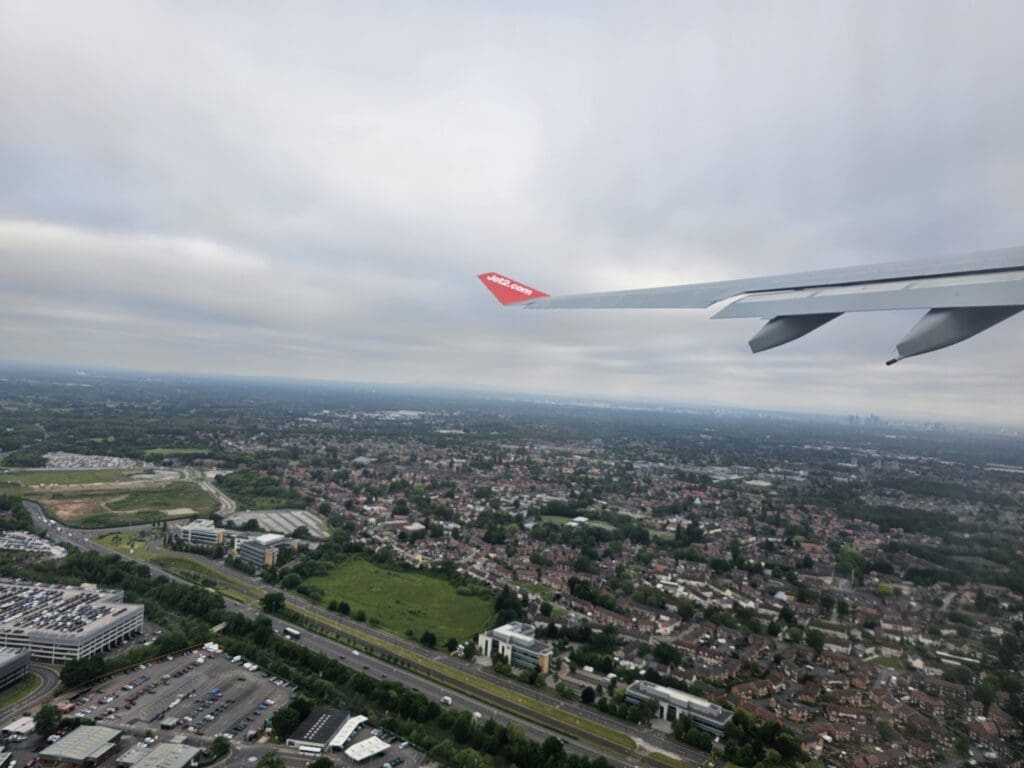
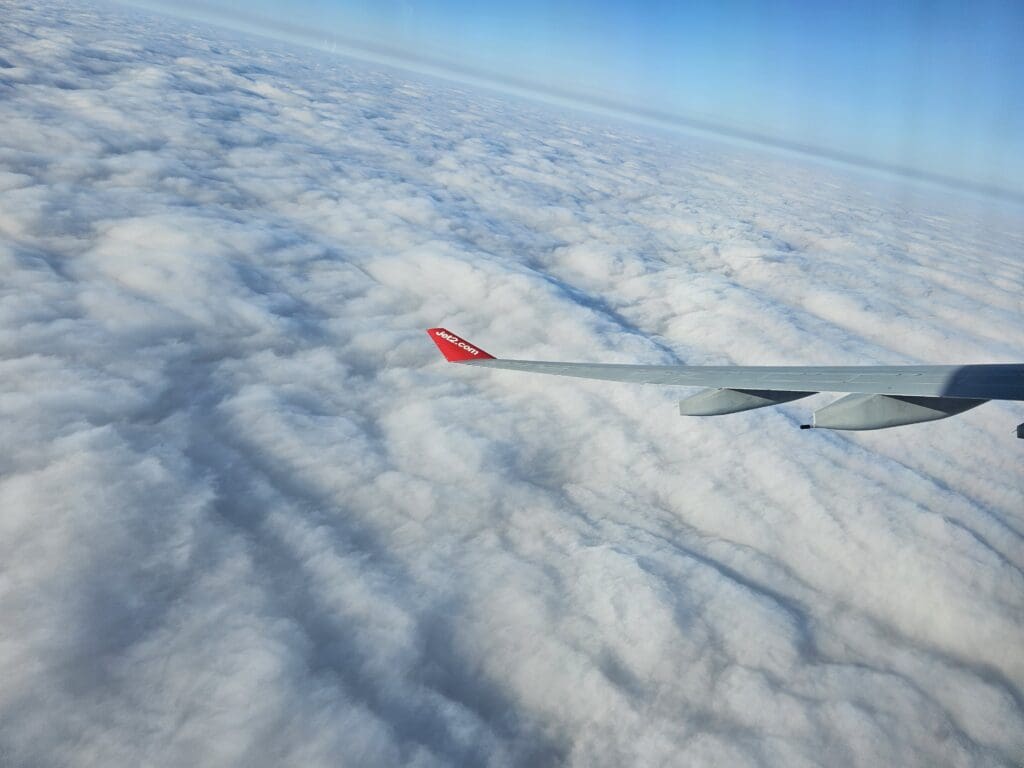
Once through the clouds, the cabin crew were released from their seats and the seatbelt signs were extinguished a short time later. Given Jet2’s status as a leisure airline, I wasn’t surprised to find that it wasn’t long before a pre-recorded announcement rang out advertising the buy-on-board service, with trolleys soon rolled out from the forward and rear galleys. Examining the MMenu, this contained the usual smorgasbord of snacks, sweets and drinks, as well as sandwiches and a small number of hot meals. It is worth noting that Jet2 does offer a reasonable number of hot meals for purchase; however, the majority of these can only be ordered on the airline’s website before departure, and cannot be bought onboard. When it came to prices, items seemed to be priced at very standard amounts for a Western European carrier, neither being eyewateringly extortionate nor particularly cheap. That morning, it seemed that almost all passengers wanted something to eat and/or drink, so it took quite some time for the crew to pass through the cabin and serve all passengers. Looking around, despite the early departure, it seemed that many passengers were already in the holiday spirit, with the crew selling plenty of alcoholic beverages on the journey south!
By the time the first buy-on-board service had concluded, the aircraft had passed the likes of Reading, Guildford and Worthing, crossed the Channel and was now flying southwards through the skies of Normandy, having made landfall near the coastal city of Le Havre. That morning, the aircraft cruised down the western side of France, however, much of the country appeared to be shrouded in clouds, so views were minimal as we trundled through the French skies. From Le Havre, the aircraft headed southwards and journeyed past the likes of Le Mans, Tours and Poitiers, passing over the regions of Normandy, Centre-Val de Loire, Limousin, Nouvelle-Aquitaine and Occitaine. During this journey, the clouds did part for about five minutes just as we crossed over the Garonne River.
Inside the cabin, there seemed to be little break for the crew, and as soon as the buy-on-board service came to an end, an announcement was made advertising an array of perfumes. Just like on my Jet2 Boeing 757 flight to Geneva several months earlier, the crew encouraged passengers to buy on the outbound sector as their desired products may be unavailable during their return journeys. However, unlike the buy-on-board service, the crew did not seem to make all too many purchases as they pushed the duty free carts down the aisle. With a clear emphasis on sales, once this had come to an end, the second and final buy-on-board round was undertaken, and once again, this took a fair amount of time as plenty of passengers seemed to make a purchase.
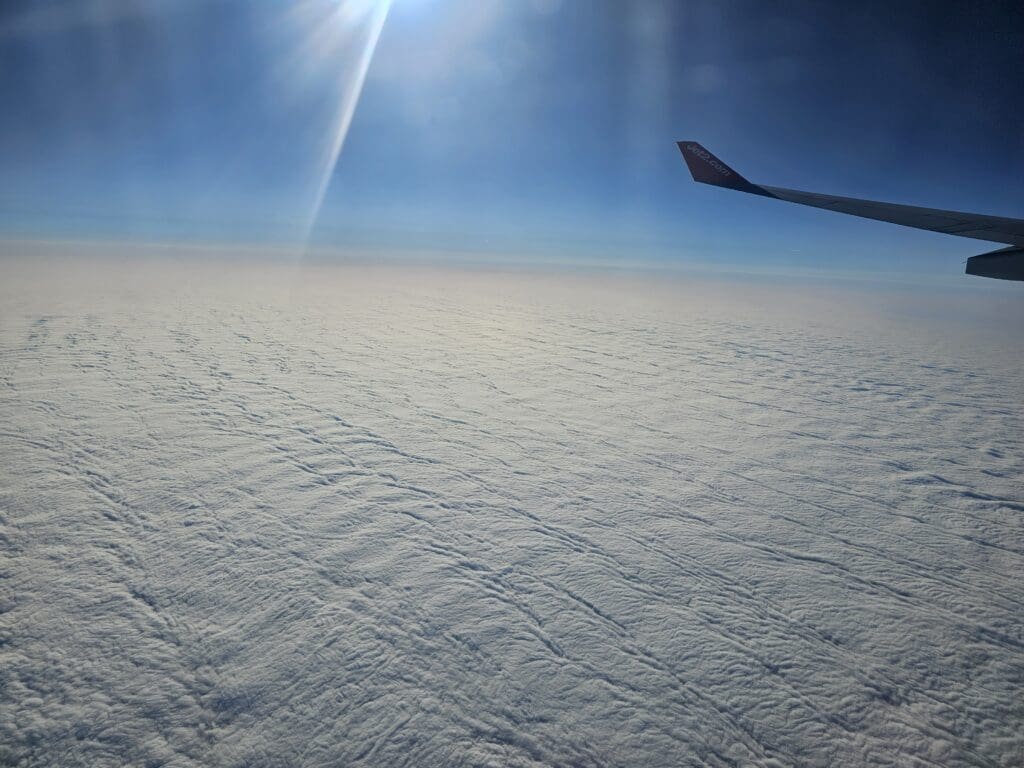
After just under an hour in French skies, the Airbus reached the Pyrenees, although sadly thanks to the clouds, nothing of these mountains could been as we crossed the border from France to Spain, passing just to the east of the small country of Andorra. From the border, the Airbus made a quick sprint through the skies of Catalonia, where we experienced a few lumps and bumps, although these were not severe enough to warrant the reillumination of the seatbelt signs. Recognising that there wasn’t a great amount of flight time remaining, I decided to make a trip to one of the onboard lavatories and found this to be in good condition, despite there having been a near constant queue of passengers waiting to use these throughout the flight.
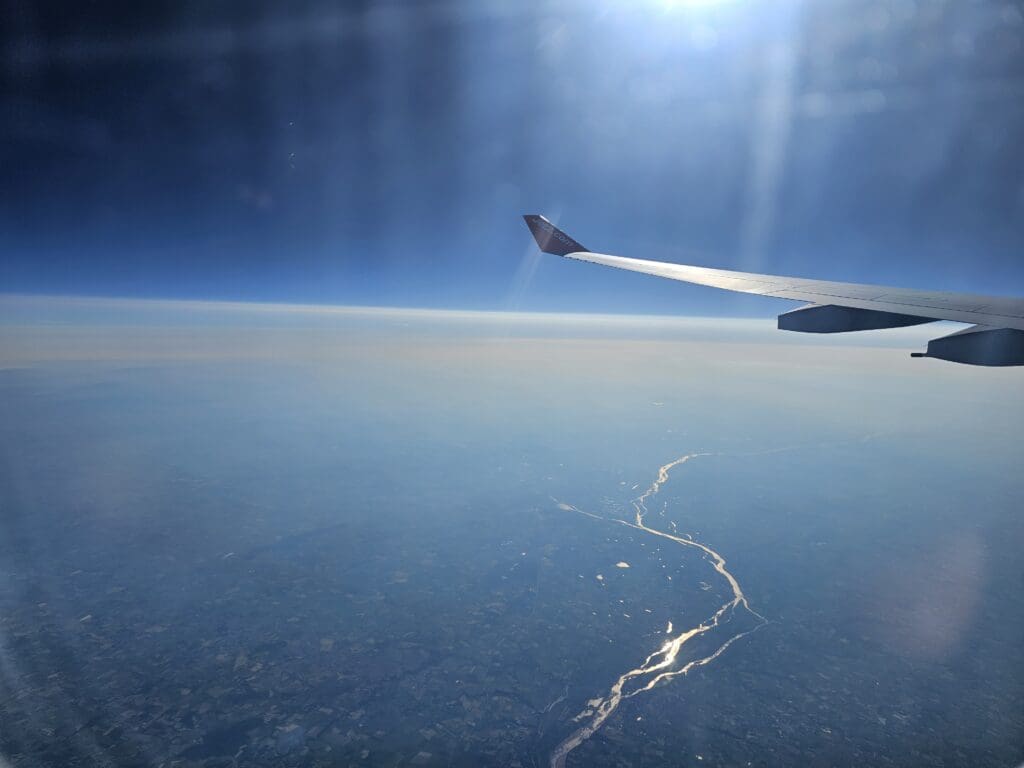
By the time I had returned to my seat, the aircraft had passed Barcelona and was now heading southwards over the Mediterranean. At this time, the Captain’s calm tones filled the cabin once again as they performed an announcement advising all onboard of our soon-to-commence descent, giving an update on the weather in Palma de Mallorca, before ending this with a word of thanks for flying with Jet2. Soon, the Airbus could be felt descending and the crew took to the aisles performing a rubbish collection round before an announcement was made regarding our impending arrival. After this, the crew took to the aisles again and ensured that all was safe and secure for our arrival, appearing to undertake this with few issues before strapping themselves into the jumpseats.
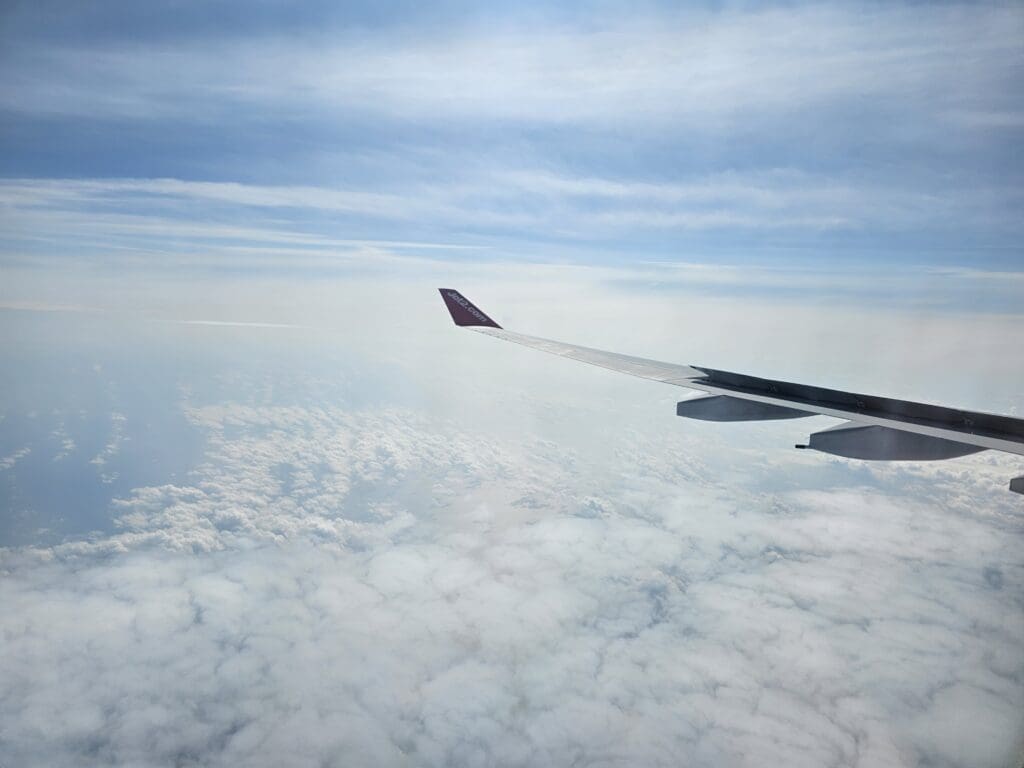
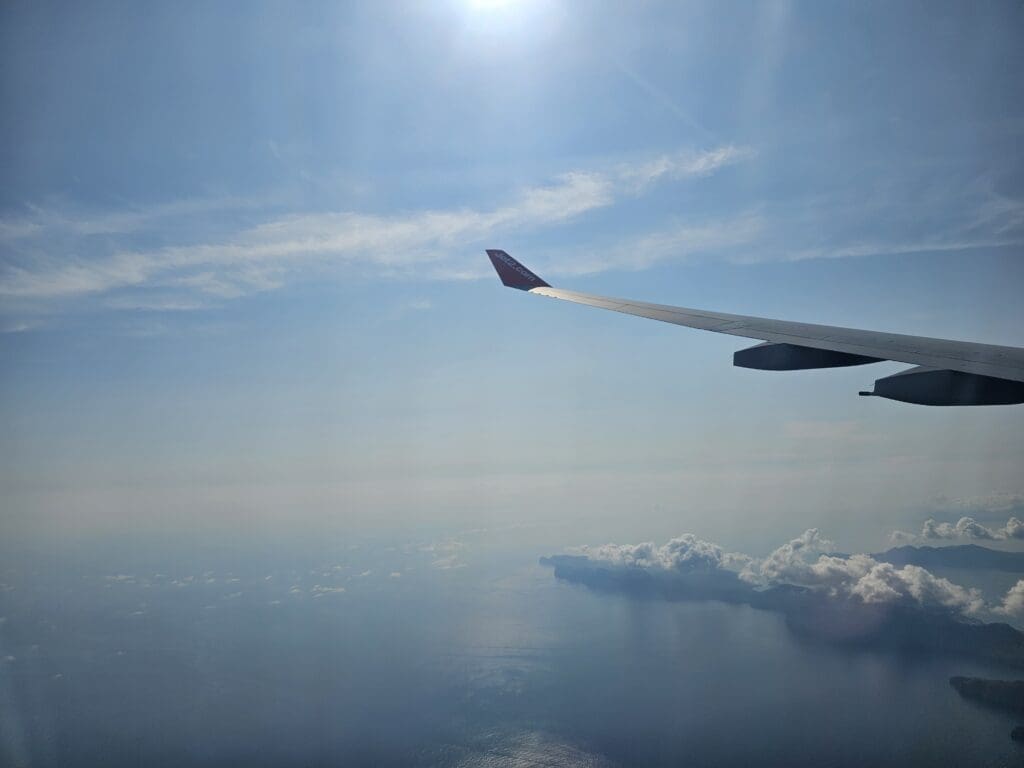
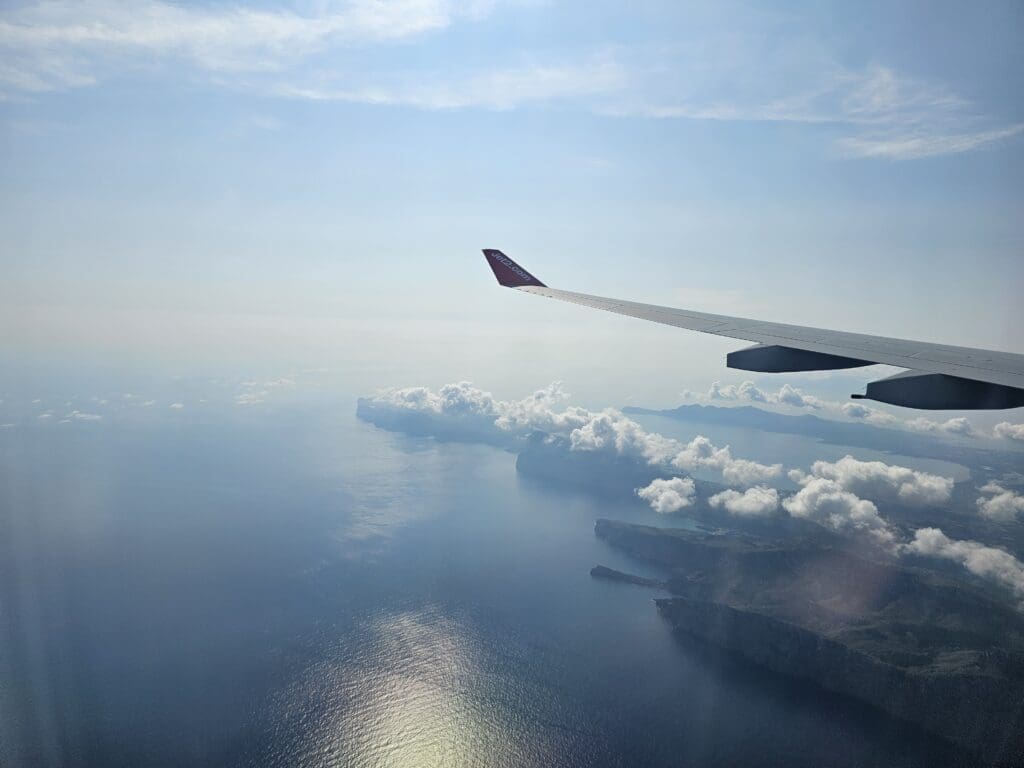
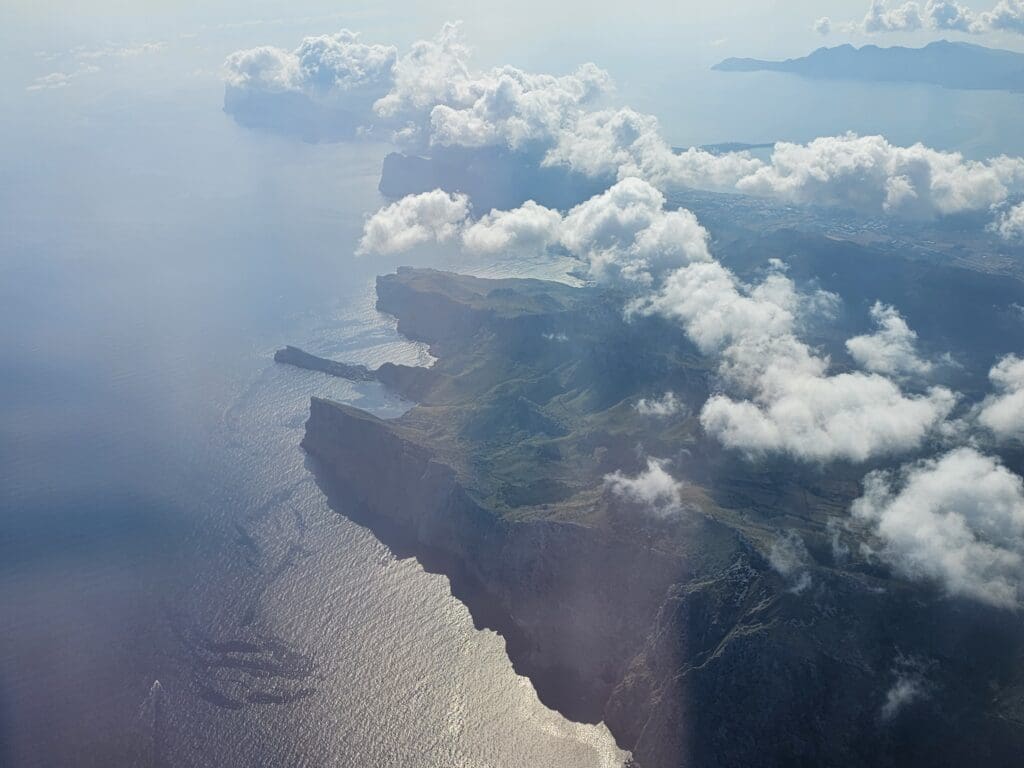
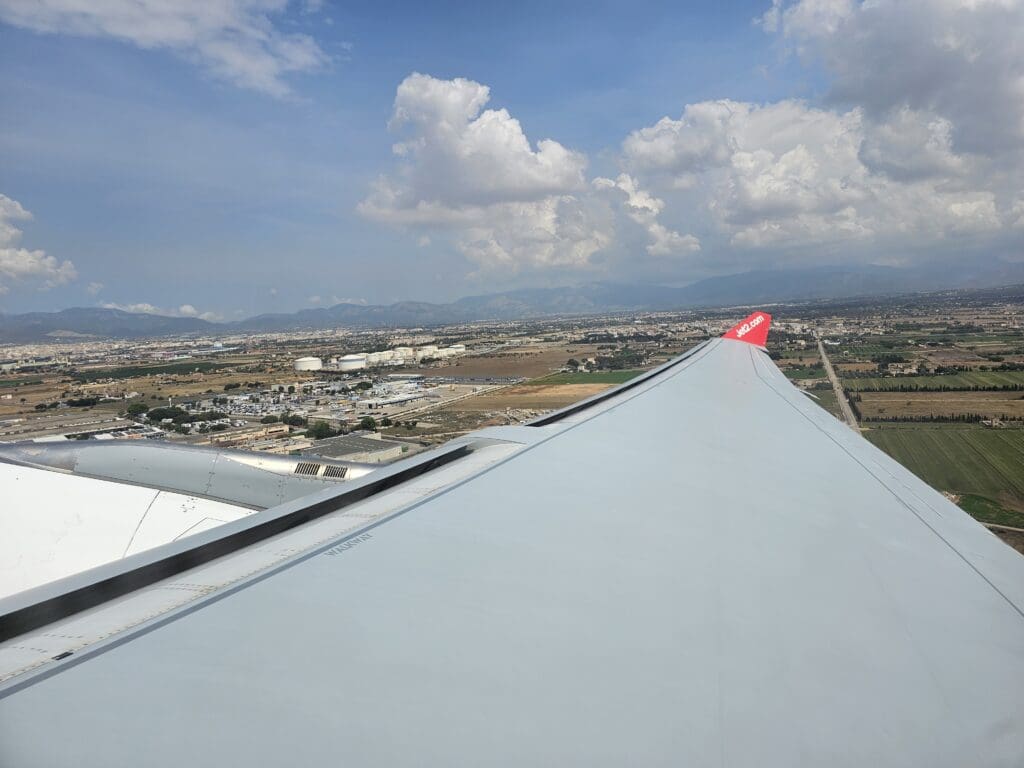
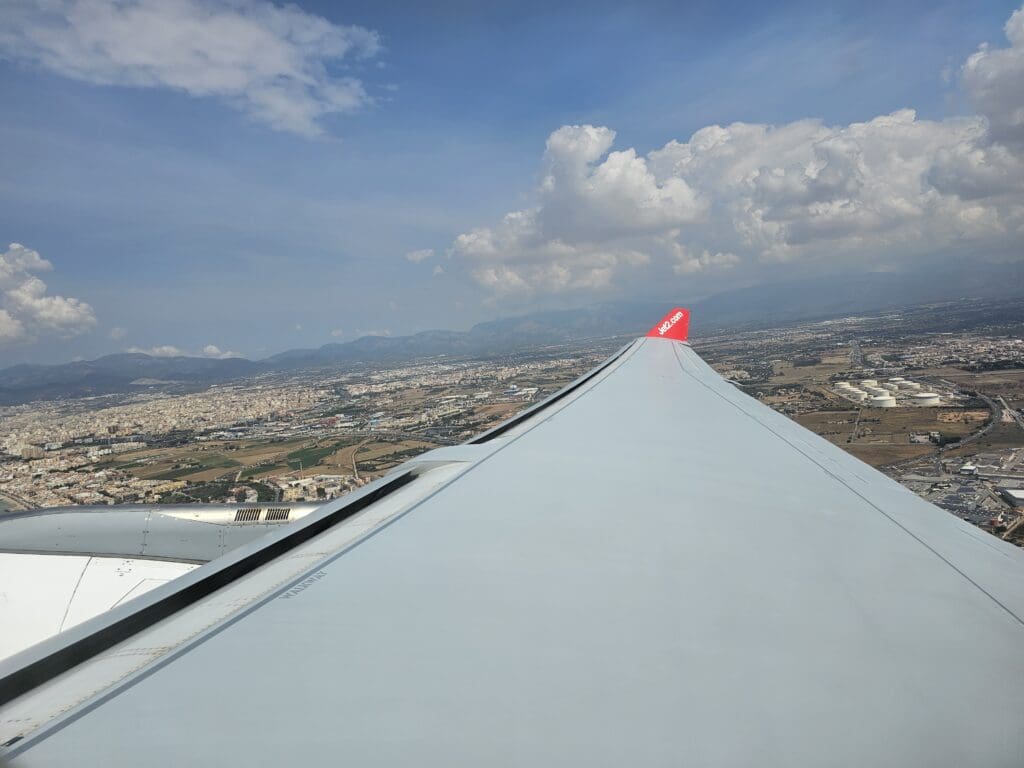
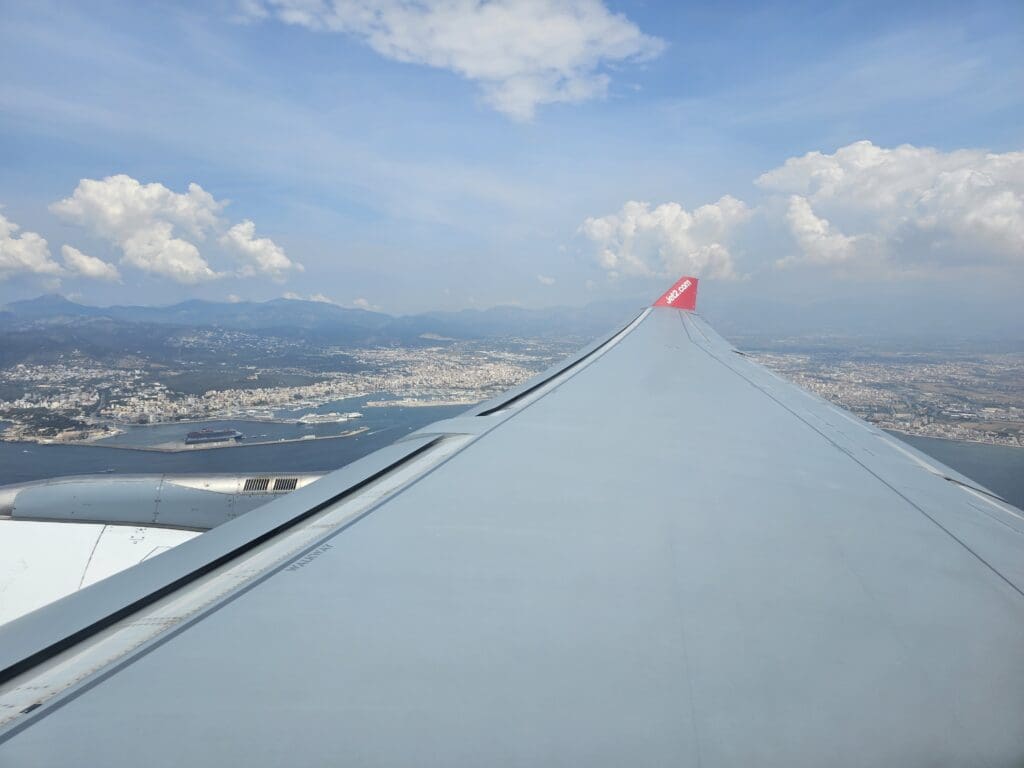
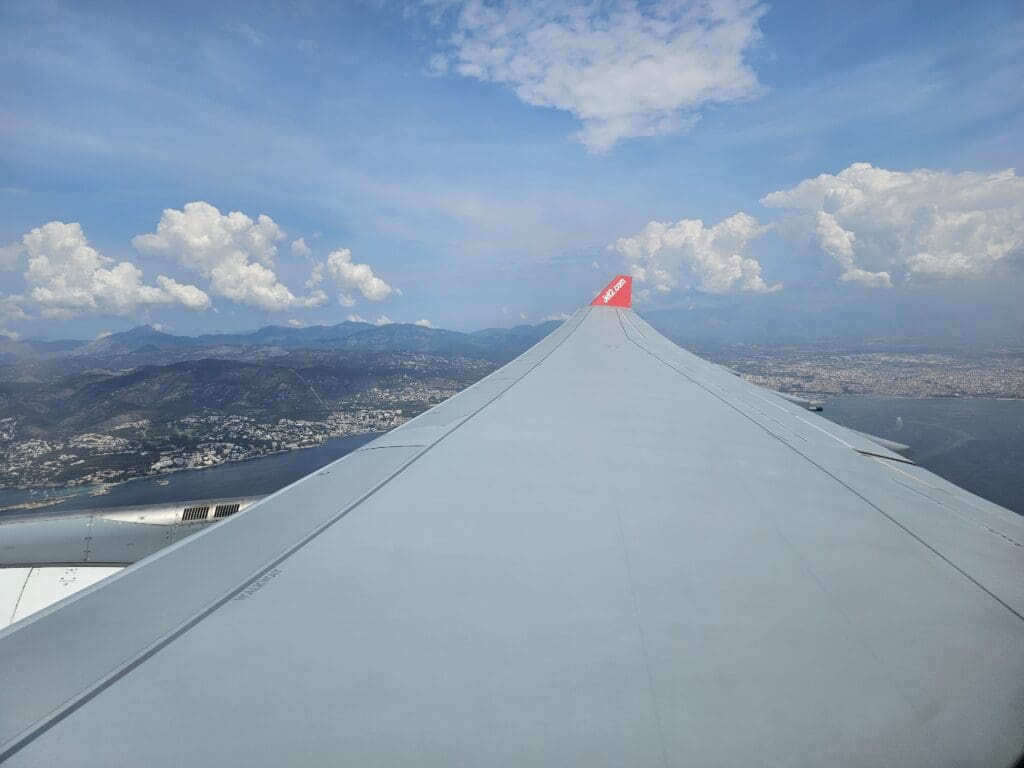
Before long, the seatbelt signs were reilluminated and the blue waters of the Mediterranean appeared below, whilst the spreedbrakes were partially extended, causing the aircraft to shudder a little as we decelerated. Making landfall over Mallorca’s hilly and scenic northern coastline near the town of Sóller, a good welcoming view of the island was offered as we continued our descent downwards before the flaps were lowered as we crossed over the beige-coloured fields that sit to the north of the airport.
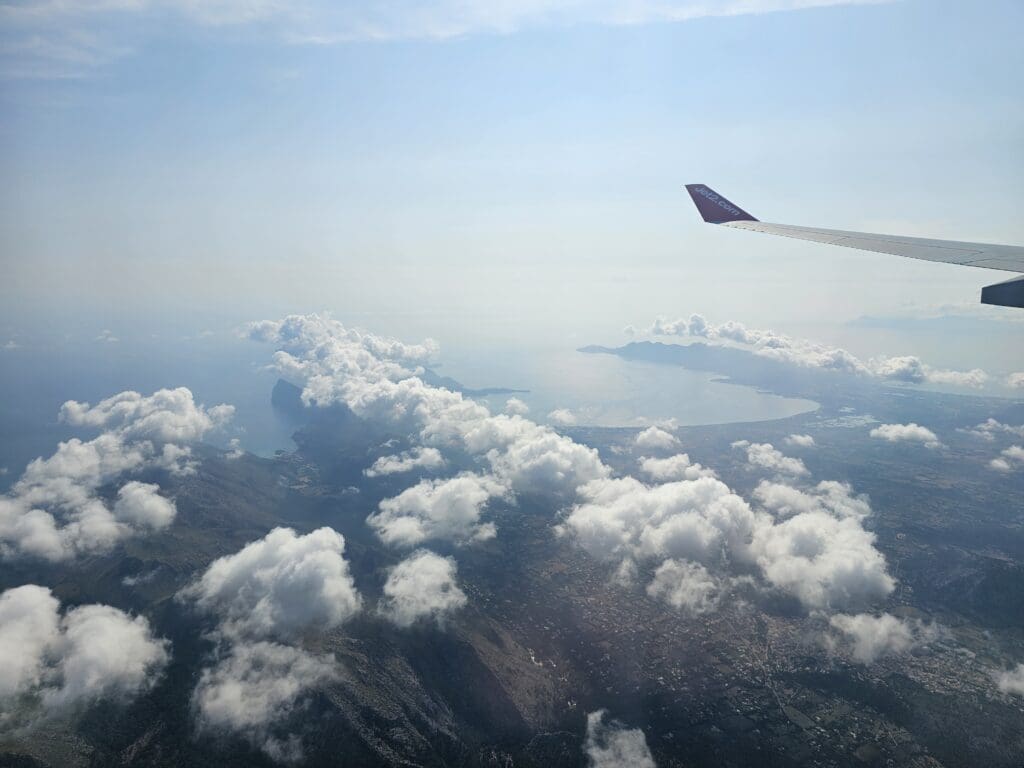
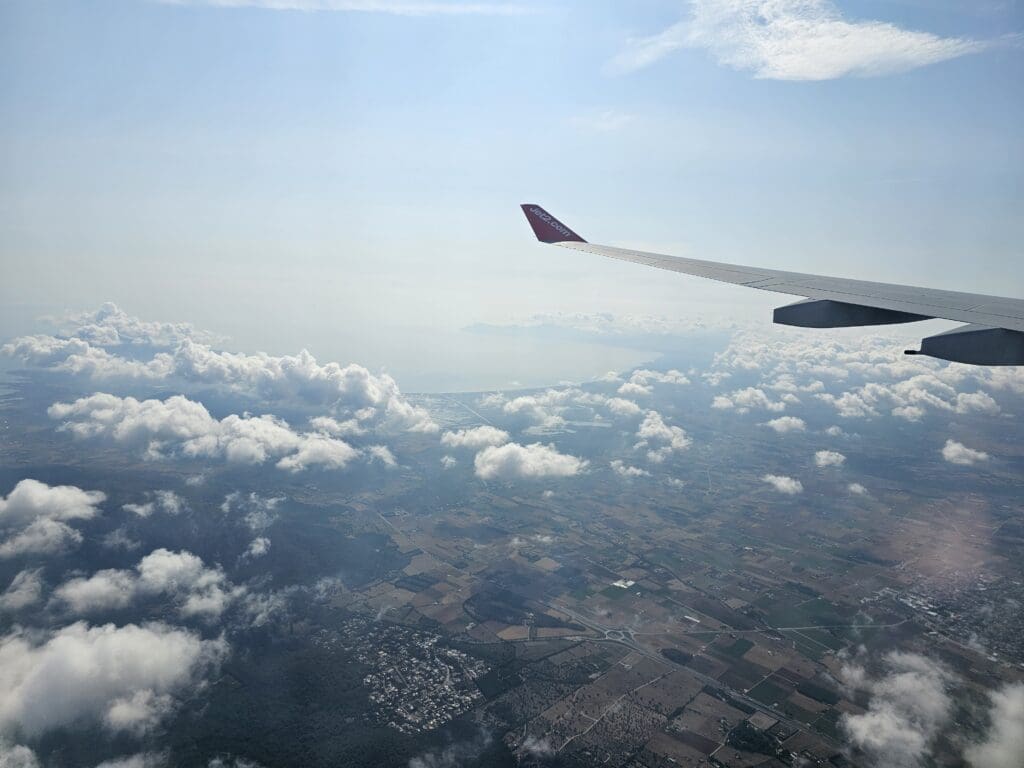
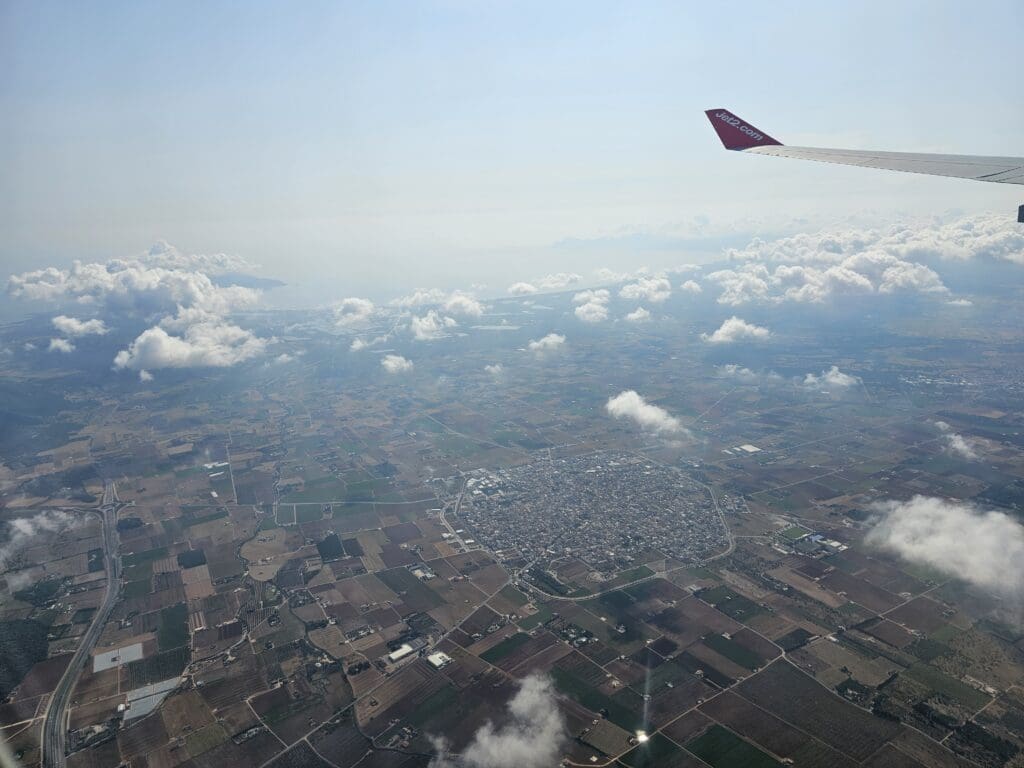
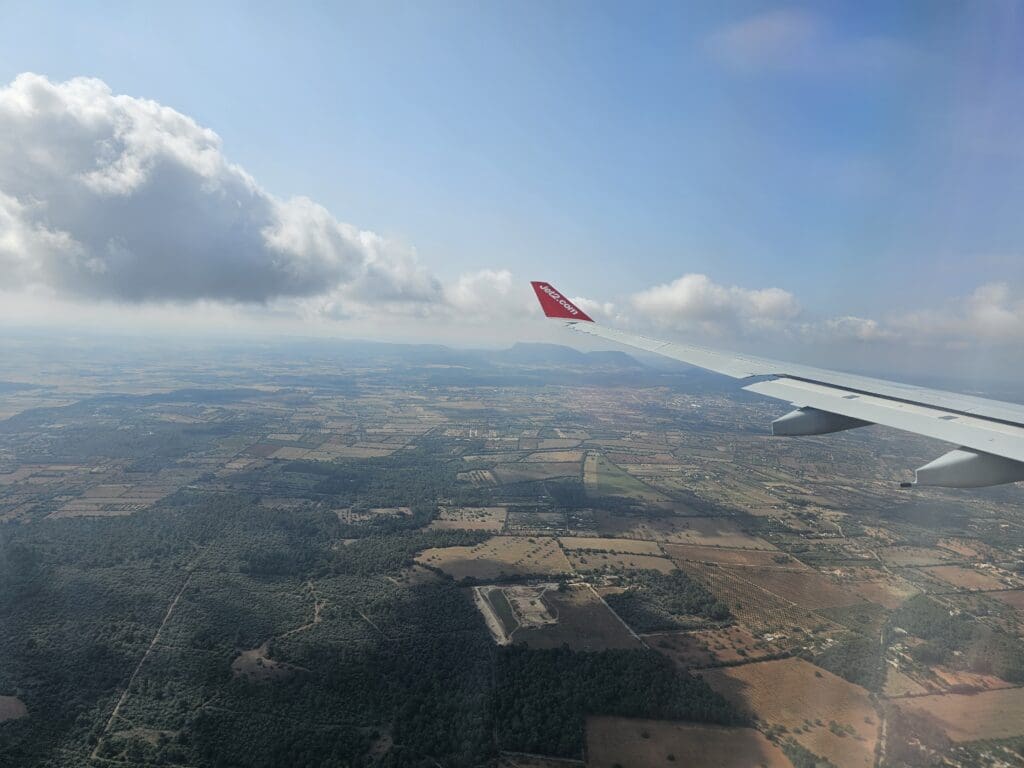
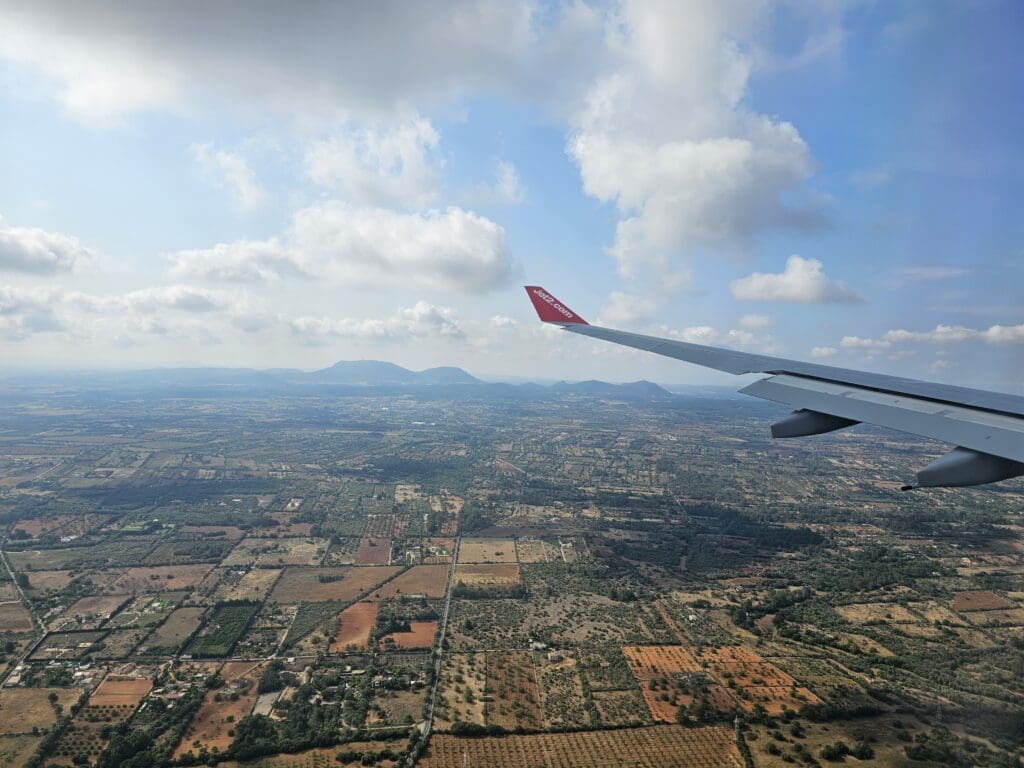
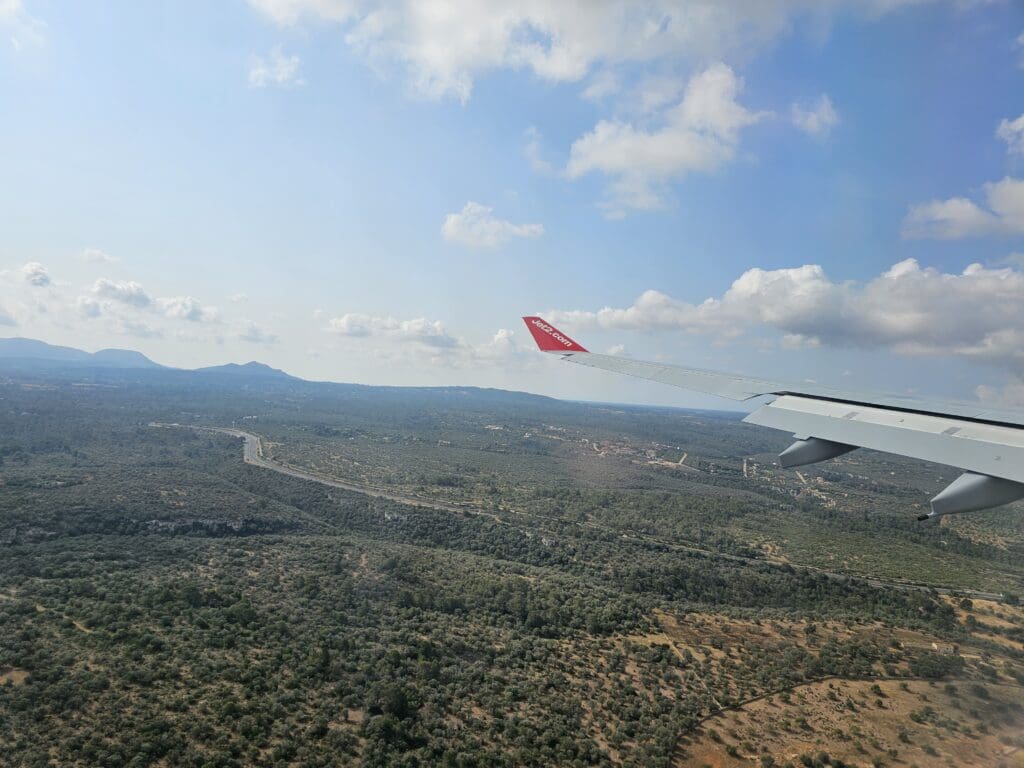
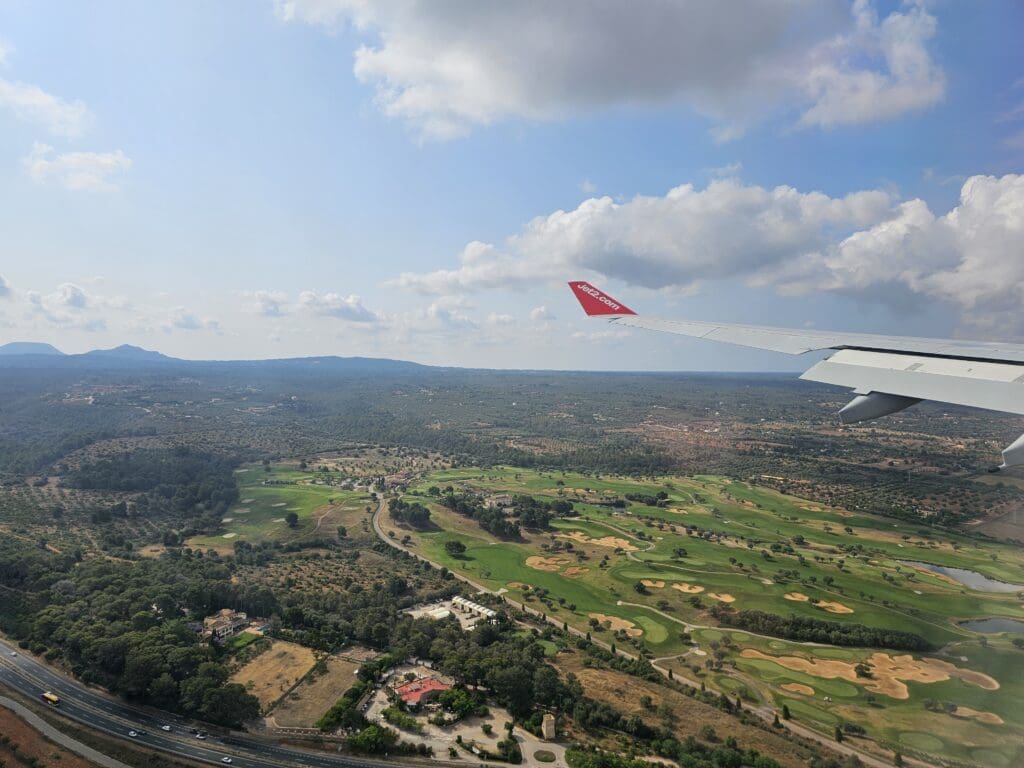
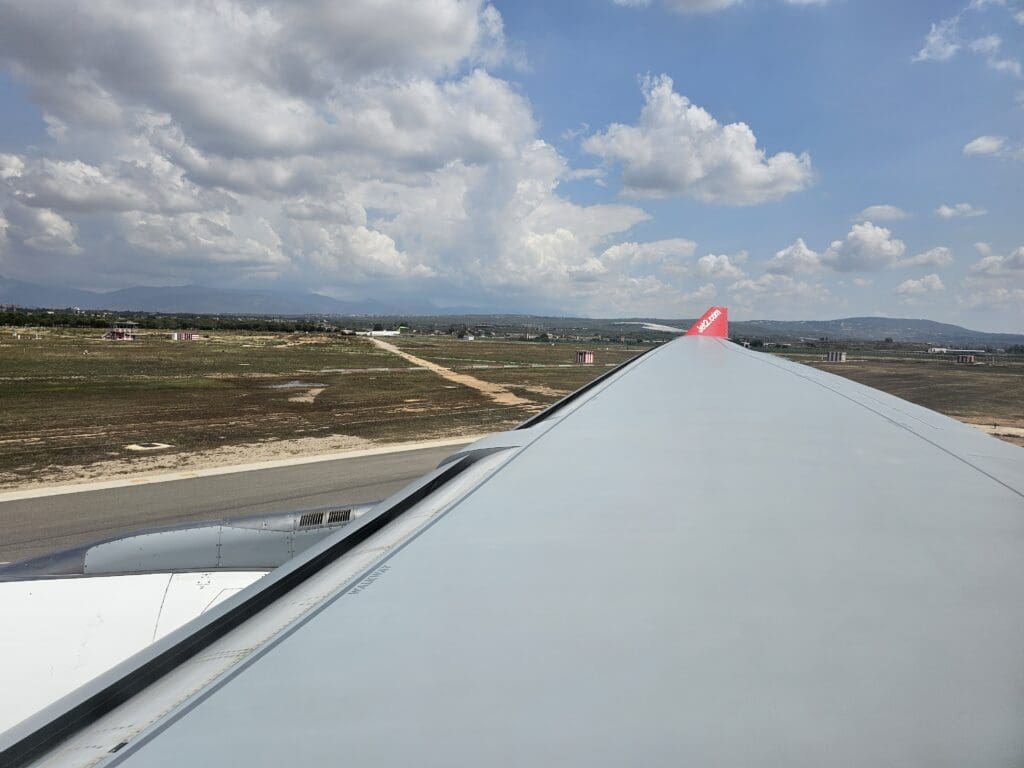
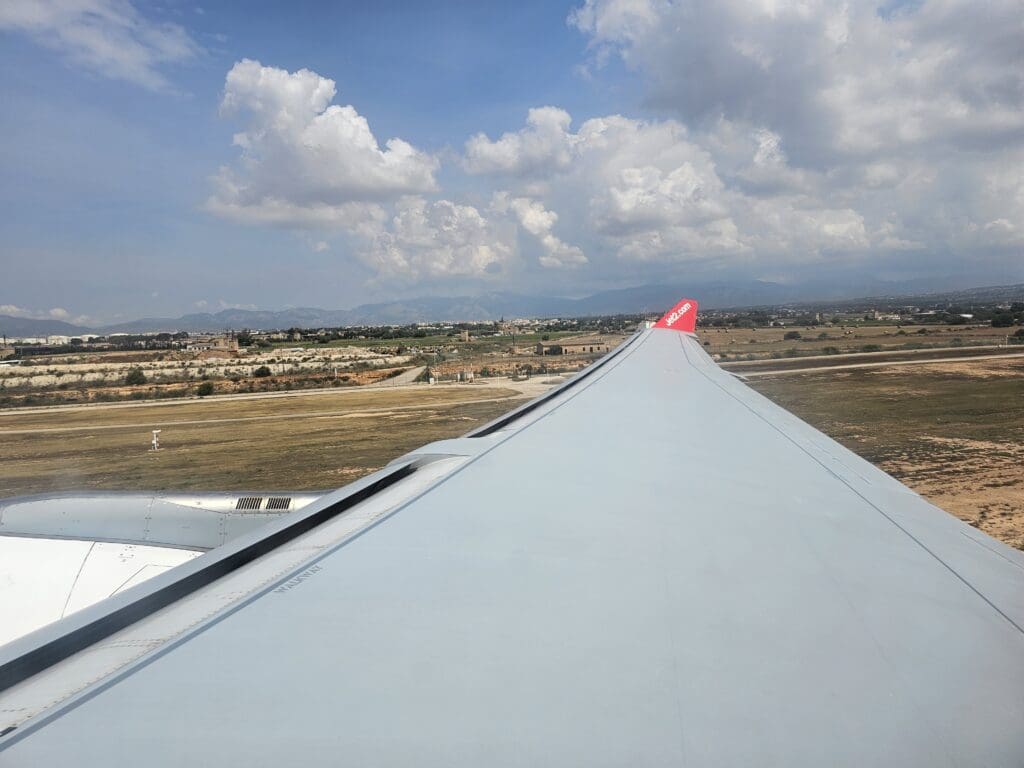
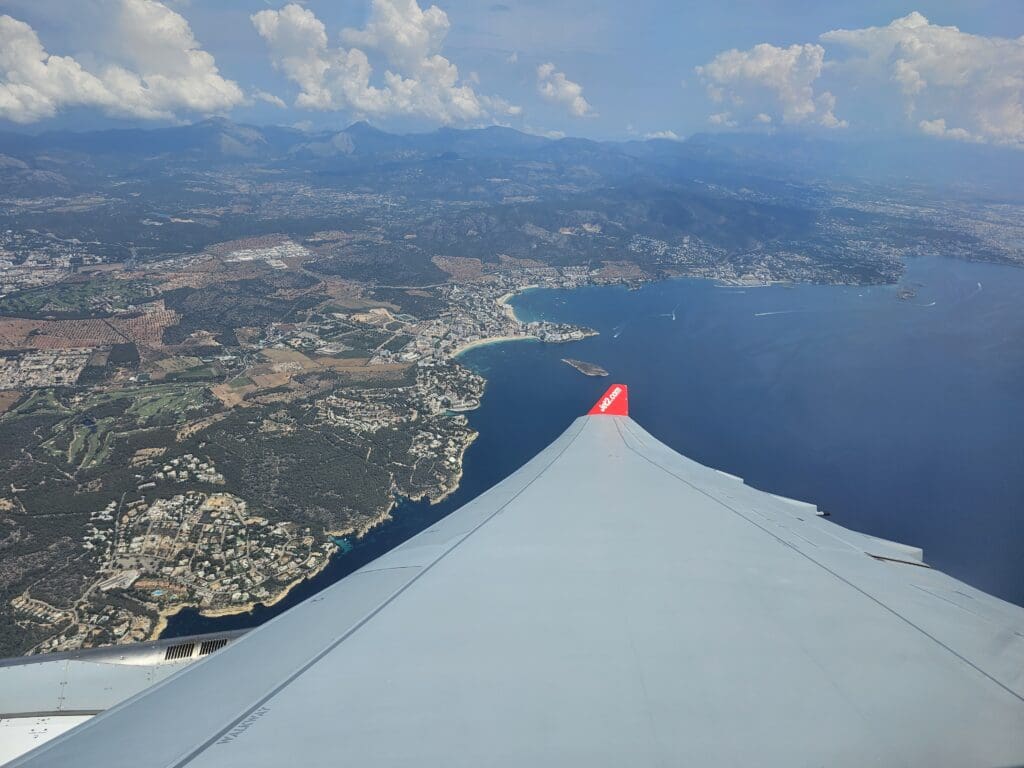
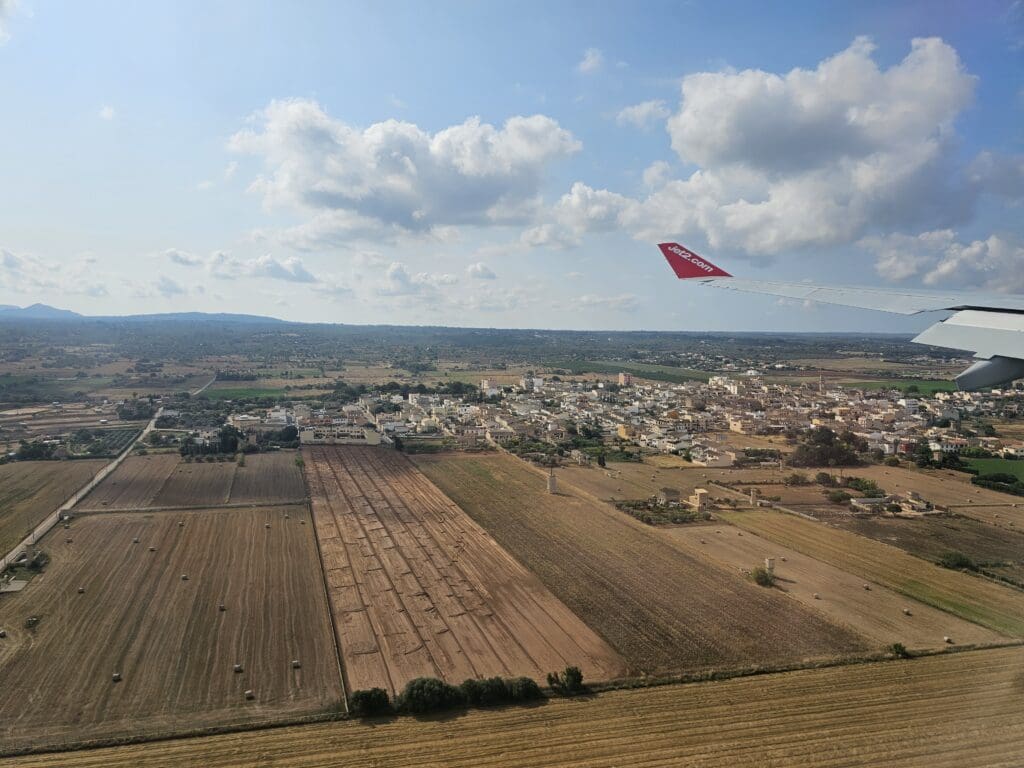
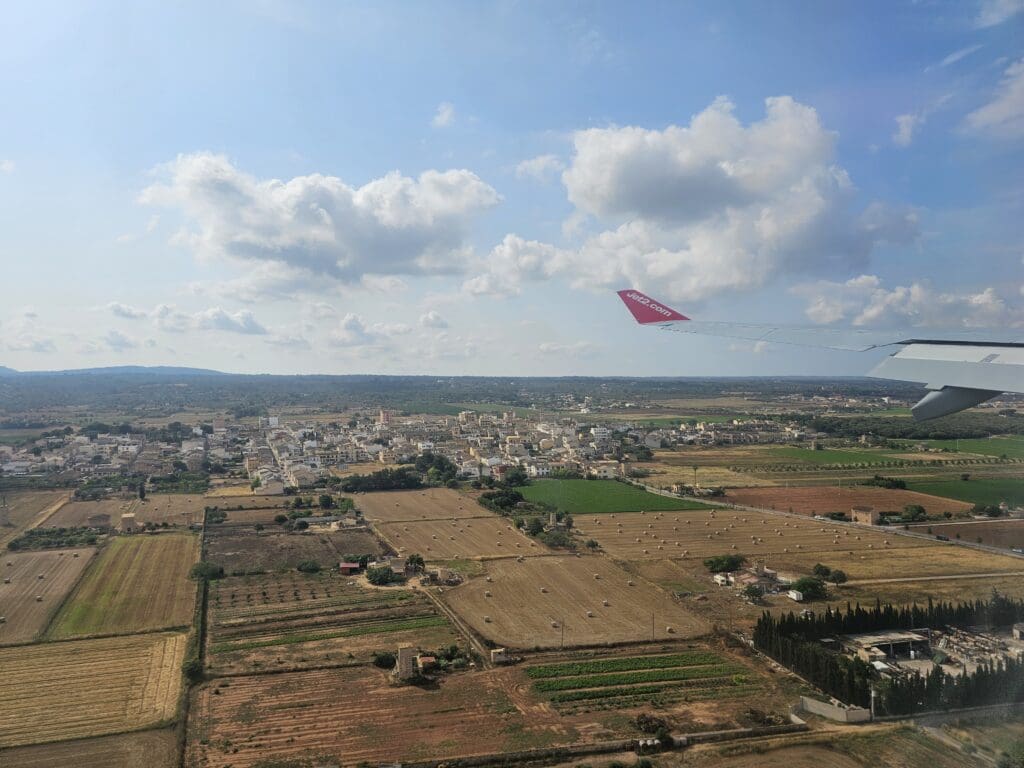
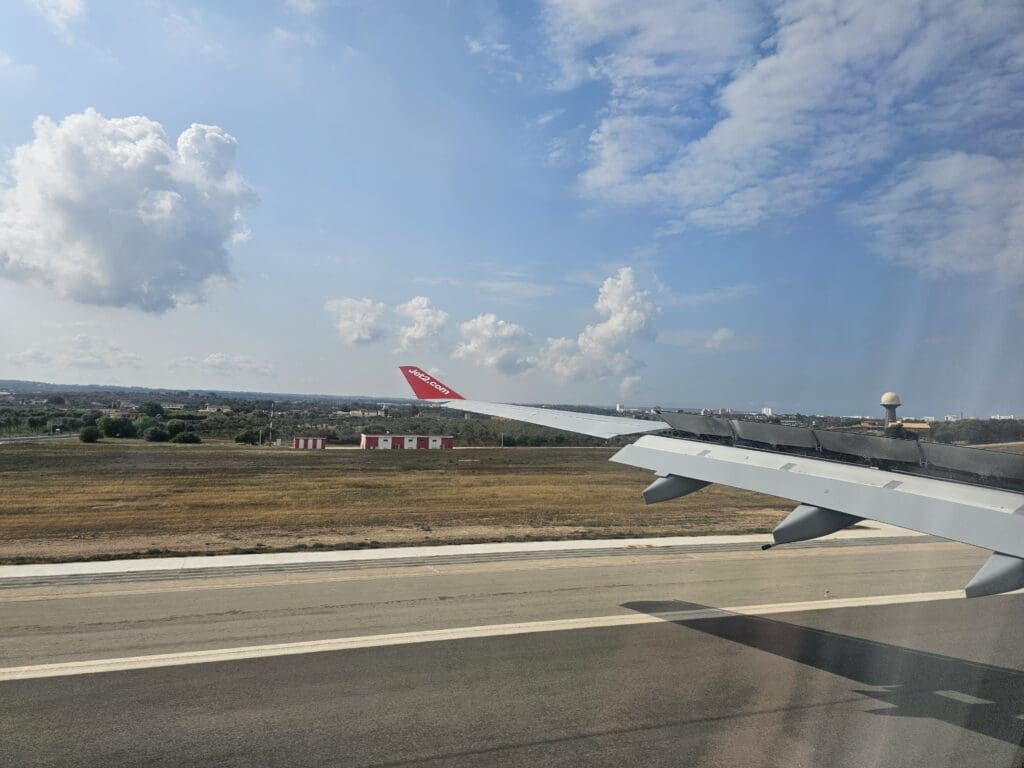
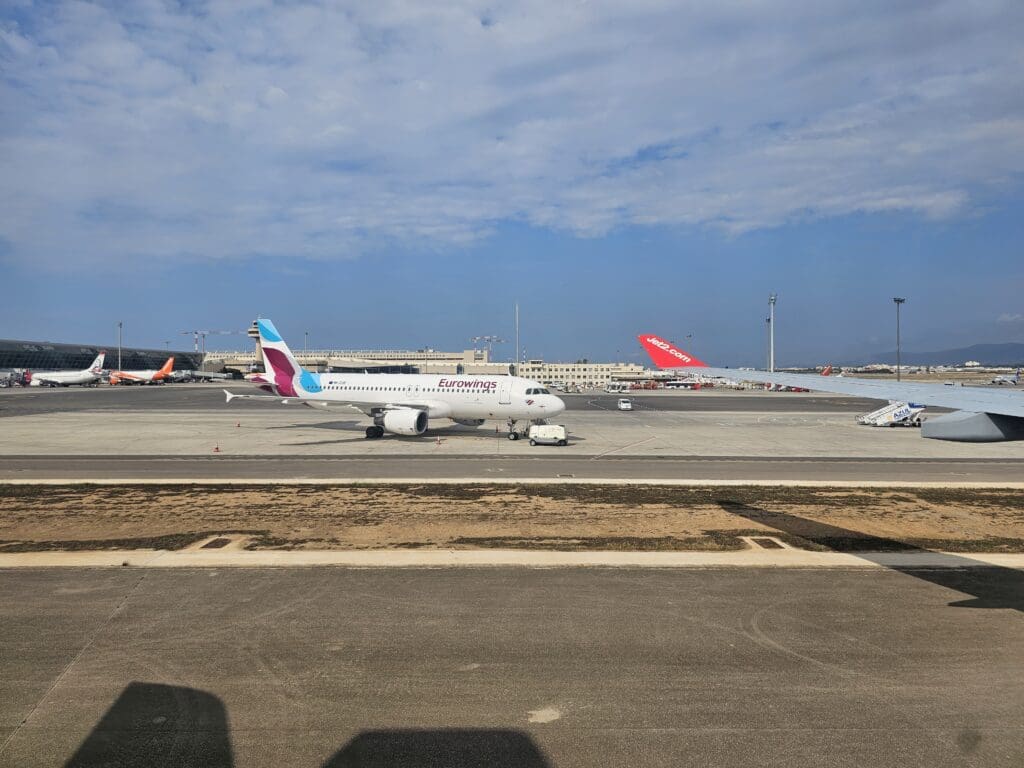
Making a smooth approach, the landing gear soon fell into position as the rural scenery below became increasingly clear as we edged towards the sprawl of the airport. After passing over a large golf course and the town of Sant Jordi, the aircraft crossed over the perimeter fence and made a firm touchdown on Runway 24L at 1012 local time, ending our 02:09 flight through the skies of Western Europe. 0nce firmly on the ground, the aircraft decelerated rather quickly and it wasn’t long before we vacated the runway to the right at which point a mixture of business jets and airlines from across Europe popped into view outside. Inside the cabin, the crew performed their usual post-arrival announcement and it took some time to taxi around the terminal before pulling into Stand 18 exactly ten minutes after touching down, and seven minutes behind schedule. Once there, it wasn’t long before a jetbridge was connected and disembarkation commenced, ending my first ride onboard an AirTanker Airbus A330.
Summary
For the most part, my Jet2 AirTanker experience left me with no complaints. The operation ran smoothly on the ground and in the air, and I found both the ground staff and cabin crew to be exceedingly polite and friendly. The seat itself was comfortable and spacious, with the only letdown about this being the clear lacklustre attempt at cleaning this during its overnight stay on the ground in Manchester. However, based on this experience and my return sector, I would happily fly with Jet2 again, be it on their own metal, or onboard an AirTanker Airbus A330.