A Short Hop on a China Southern A321: Beijing Daxing to Seoul Incheon
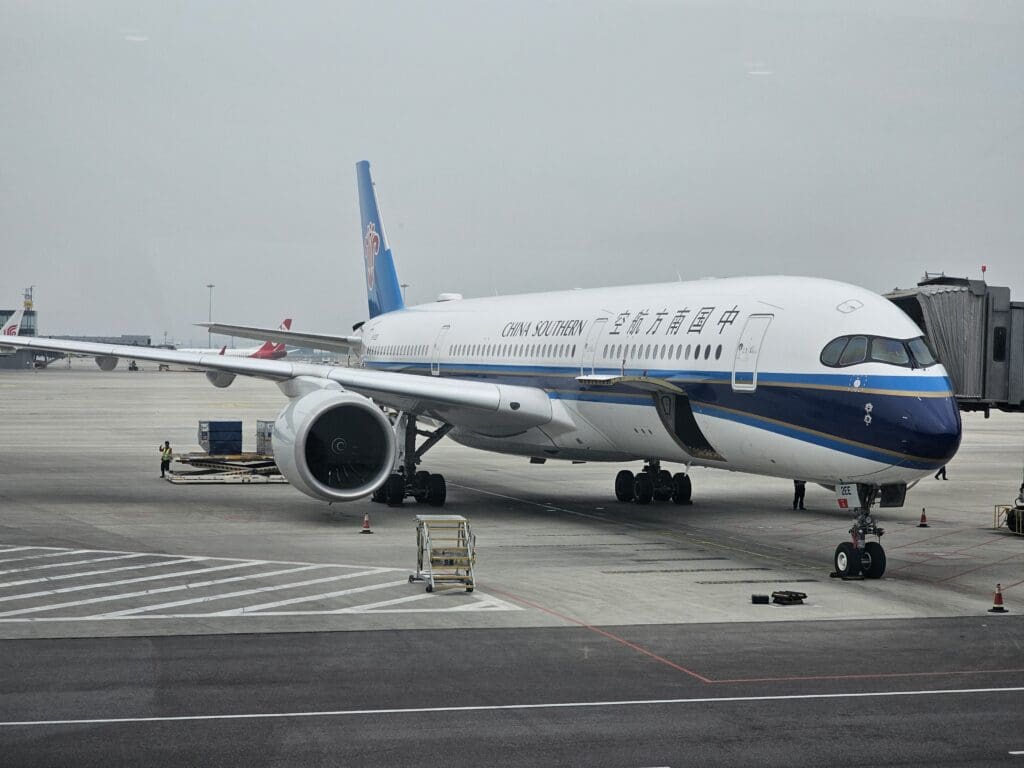
You can find all the background information regarding this flight on my trip report from London to Beijing Daxing onboard a China Southern Airlines Airbus A350!
Around ten hours after pushing back from the gate at London Heathrow, my first ride with China Southern Airlines since 2017 came to an end as the sleek and modern Airbus A350 cautiously pulled into Stand 195 at the international portion of Beijing Daxing Airport. Whilst there were areas that I felt could be improved, given the plethora of negative experiences that I had previously had with China Southern Airlines, I was left reasonably pleased with my experience which ultimately exceeded my expectations and left me looking forward to the delights of a ride onboard one of the airline’s Airbus A321s. With a long connection in Beijing, I was in no major rush to exit the aircraft, and eventually, I stood up, retrieved my bag, disembarked and headed into the shiny surroundings of Beijing’s latest airport. Having a little over five hours until my flight to Seoul Incheon was scheduled to depart, I would have an abundance of time to explore the nooks and crannies of the airport, and I was looking forward to seeing how this compared to China Southern Airlines’ old hub at Beijing Capital Airport’s Terminal 1.
To offer some background, Beijing Daxing Airport was born as a result of a dire need to alleviate the congestion at Beijing Capital Airport that came about through the rapid growth of China’s civil aviation industry throughout the 2000s and 2010s. With little room for further expansion of the already gigantic Beijing Capital Airport, China’s capital city required a new airport and in 2008, planners proposed a new hub around thirty miles to the south of the city centre. This was intended to be a mega-airport complete with no fewer than seven runways and connected to Beijing via both the Beijing Subway and high speed rail. However, with much umming and arring, it wasn’t until December 2014 that the National Development and Reform Commission approved the plans for a new airport. With everything ready to go, construction on this mega project commenced days later and was undertaken at an incredibly rapid pace. Soon, four runways were carved out of the flat rural landscape and a phoenix-inspired terminal sprung up. Less than five years after the construction of the airport commenced, in September 2019 Beijing Daxing Airport welcomed its first passengers, although its initial growth was of course halted by the pandemic.
Today, Beijing Daxing Airport is very much China Southern Airlines territory, with the airport serving as their Beijing hub after having completely vacated Beijing Capital Airport. In addition, Air China, Beijing Capital Airlines, China Eastern Airlines, China United Airlines and Xiamen Air also maintain a major presence at the airport. Despite Beijing Capital Airport still proving to be more popular with international carriers, at the time of my flight in May 2024, a decent number of airlines from abroad had already made the move to Beijing Daxing Airport. This is served by the likes of major carriers such as Aeroflot, AirAsia, British Airways, Etihad Airways, Malaysia Airlines and Qatar Airways, amongst others. Designed by Hadid Architects and Aéroports de Paris’ ADP Ingénierie, like most modern terminals, this was designed with convenience, comfort and hassle-free journeys in mind, and I had high hopes for Beijing Daxing!
Returning to my journey, once I had reached the top of the jetbridge, I turned right and began what ended up being a rather long trek to the terminal’s arrival area. Several minutes later, those passengers ending their journeys in China were syphoned off from those who were simply connecting to destinations abroad and I followed signs for international transfers. At this stage of the airport journey, I was pleased to see that plenty of airport staff were on hand to guide passengers to the right place. Seeing as most passengers on my flight hailed from China, I was not overly surprised to find that there seemed to be very few passengers following me into the transit area, and most of those who did appeared to be heading off on China Southern Airlines’ service to Hong Kong. Given the lack of passengers and the fact that my flight from London Heathrow seemed to be the only international arrival at that time, I was confident that I would be in for a quick and hassle-free transit at Beijing Daxing Airport.
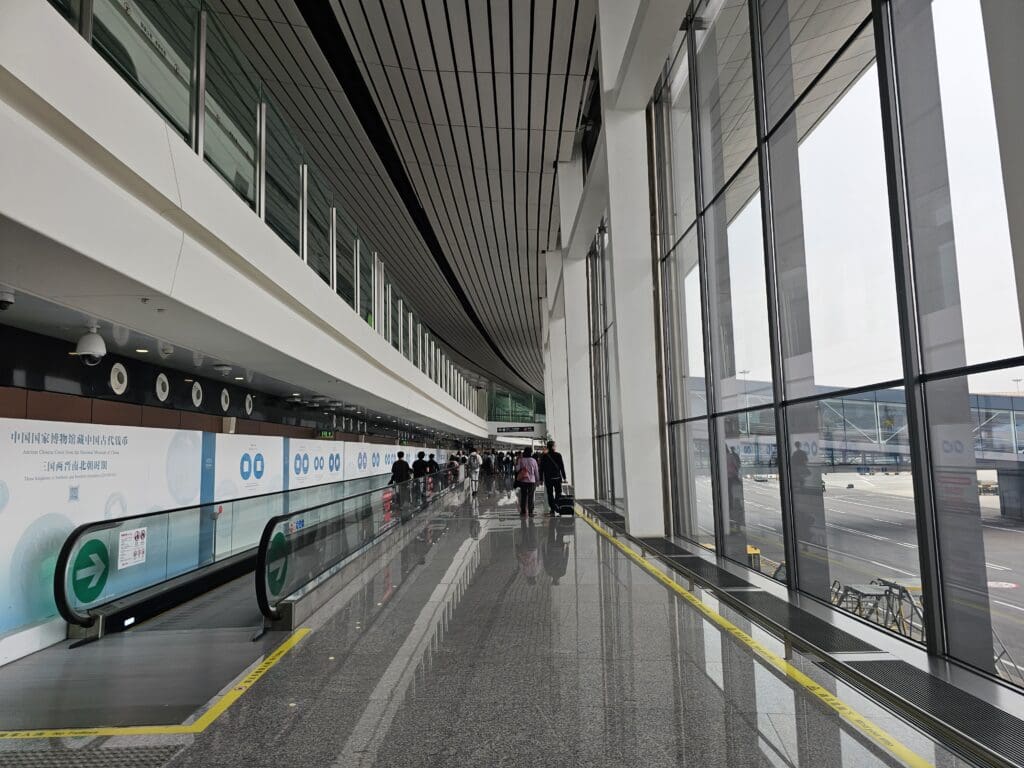
Upon arriving at the international transit area, a friendly and enthusiastic airport worker double checked my boarding pass to ensure that I was indeed in the correct place before pointing me in the direction of the health checkpoint where I was required to walk slowly past a line of cameras manned by an army of some rather serious looking staff. Hoping that I had not suddenly developed a fever, I was rather relieved when I successfully passed through this without triggering any alarms! Next up was the first of two boarding pass and passport checks. There, my boarding pass was stamped, my passport was checked and I had my photograph taken. Unsurprisingly, given China’s strict aviation safety and security regulations, all transit passengers must pass through security. With this being rather quiet, I made my way up to this checkpoint without queuing, separated my electronics and liquids, and had my photo taken for a second time before I passed through the metal detector. Whilst I did not set this off, I was thoroughly frisked and swiped with a magic wand before I was free to wait for my bags to emerge from the scanner. Fortunately, having correctly separated all my items, there was no need for any additional checks, and I was free to continue onwards to the last checkpoint. This consisted of another check of my passport and boarding pass by a stony-faced staff member who thoroughly checked the former before typing away on their computer. Finally, after around ten minutes of checks, I made it back to the airside portion of the terminal and was left with plenty of time to linger around and explore before heading off to Korea.
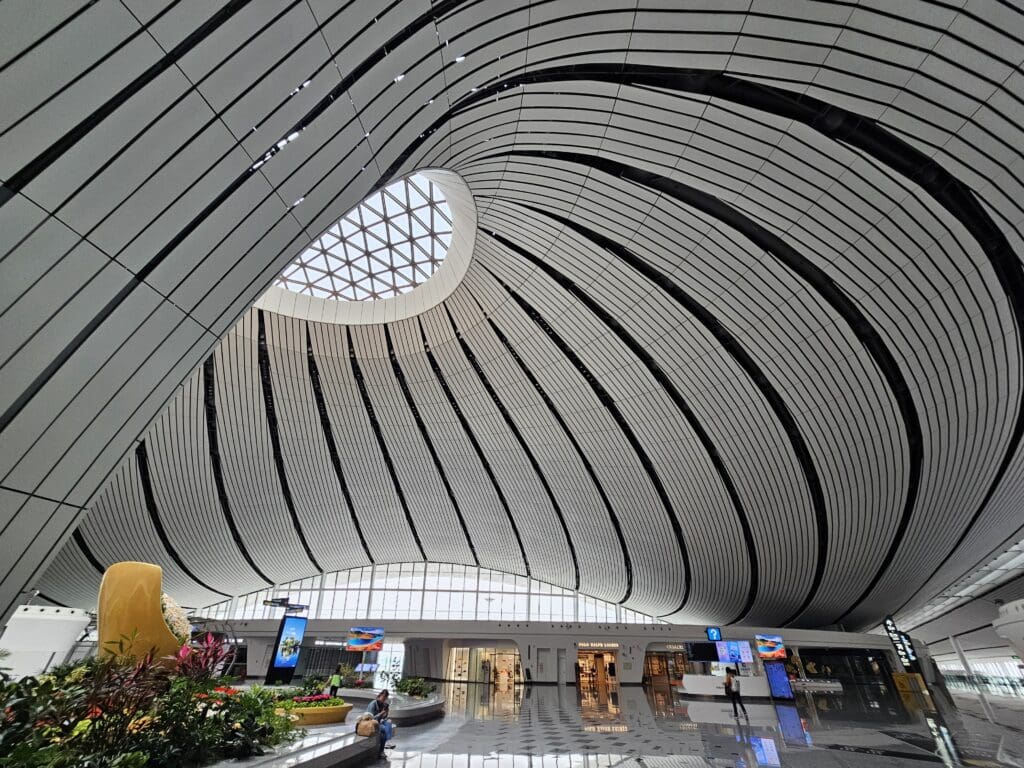
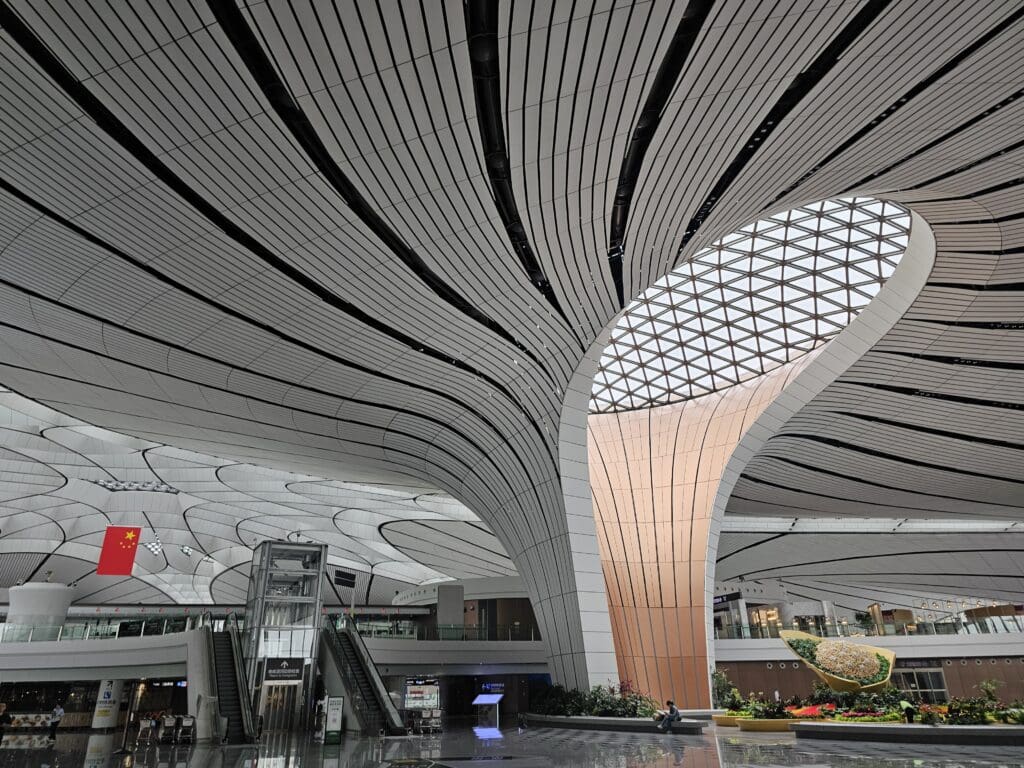
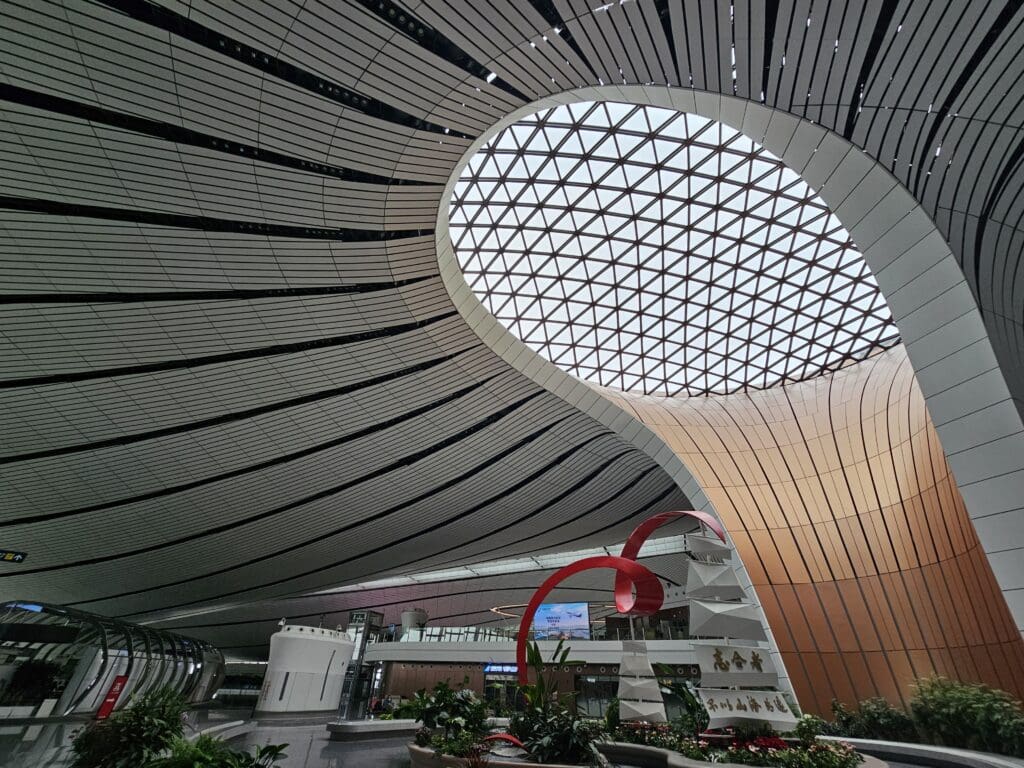
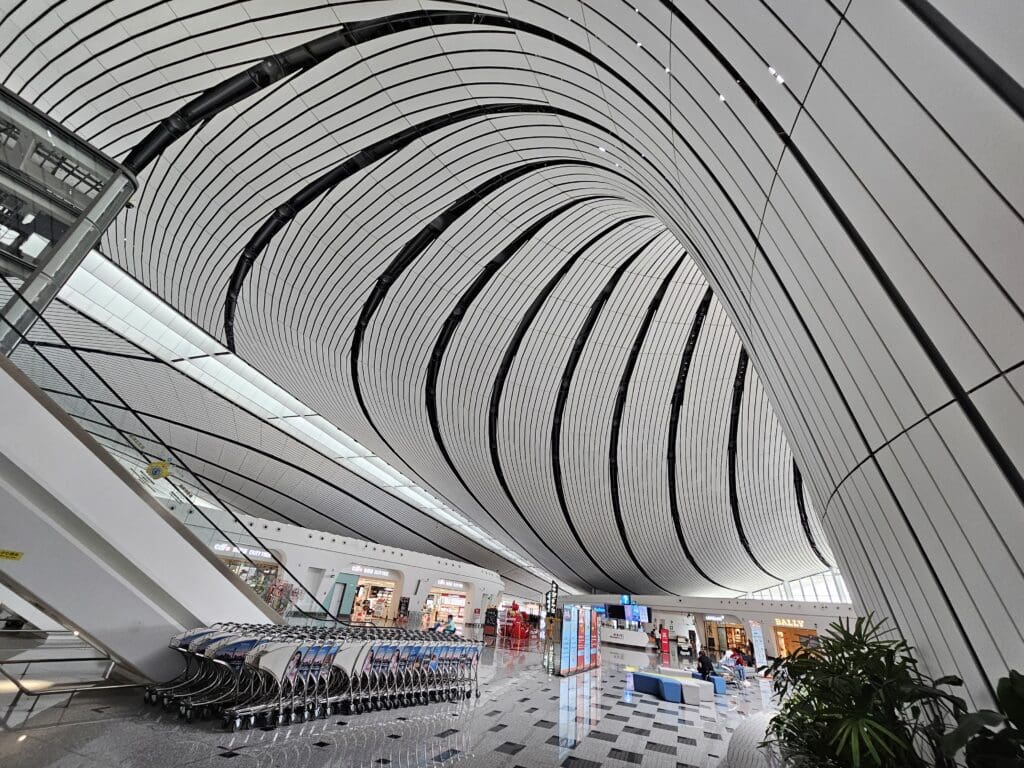
After heading up the escalators from the security checkpoint, I emerged in the terminal’s spacious, airy, modern and well-polished central hub, which gave off a very good first impression of the airport. There, many of the terminal’s shops, cafés and restaurants could be found, with these ranging from luxury outlets such as Boss, Coach and Mont Blanc to perhaps the terminal’s most wallet-friendly option, a Family Mart convenience store. Meanwhile, looking around, it wasn’t too long before I spotted one of the terminal’s more unique facilities – a barber shop for those looking to get a trim in between flights! When it came to eateries, the terminal was home to five chain outlets – an Ajisen Ramen, Hefu Noodle, KFC, McDonalds and a Starbucks. Whilst there did not seem to be that many food options for a major international airport terminal, it was clear that as this expands, so will the food and drink choices, with more outlets set to open. Looking to grab a hot coffee after my poor night’s sleep, I wandered over to Starbucks, where I parted with 33 Yuan (£3.65) for a cappuccino and took this with me as I explored the terminal.
As I wandered around, Beijing Daxing Airport left me nothing short of impressed. Not only was this spacious, modern, airy and architecturally impressive, this was also incredibly clean and well-polished. Indeed, almost everywhere I went, it seemed that there was a cleaner on hand working hard to keep their territory in pristine condition. Thankfully, this also extended to the toilets, which, having passed through many airports across China, I know is not always the case! Throughout the terminal, plenty of charging points could be found and seating was in abundance, ranging from typical airport seats to recliners and massage chairs. Meanwhile, complimentary wifi was offered throughout the airport, however, this could only be connected to by providing a photograph or scan of your passport’s photo page.
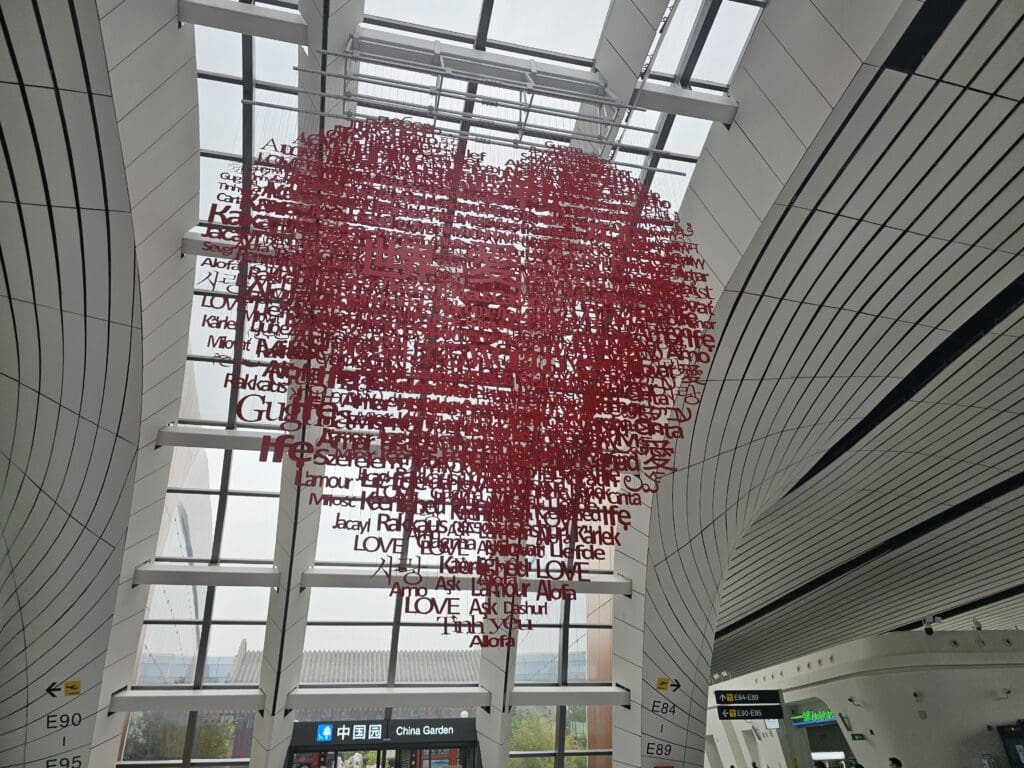
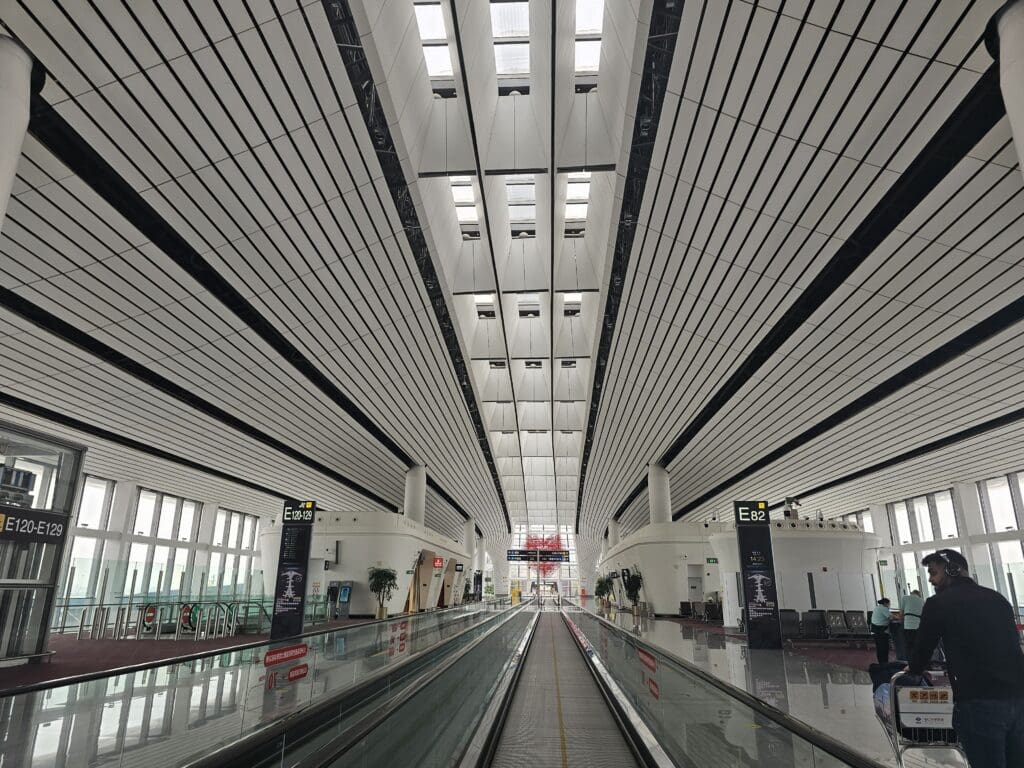
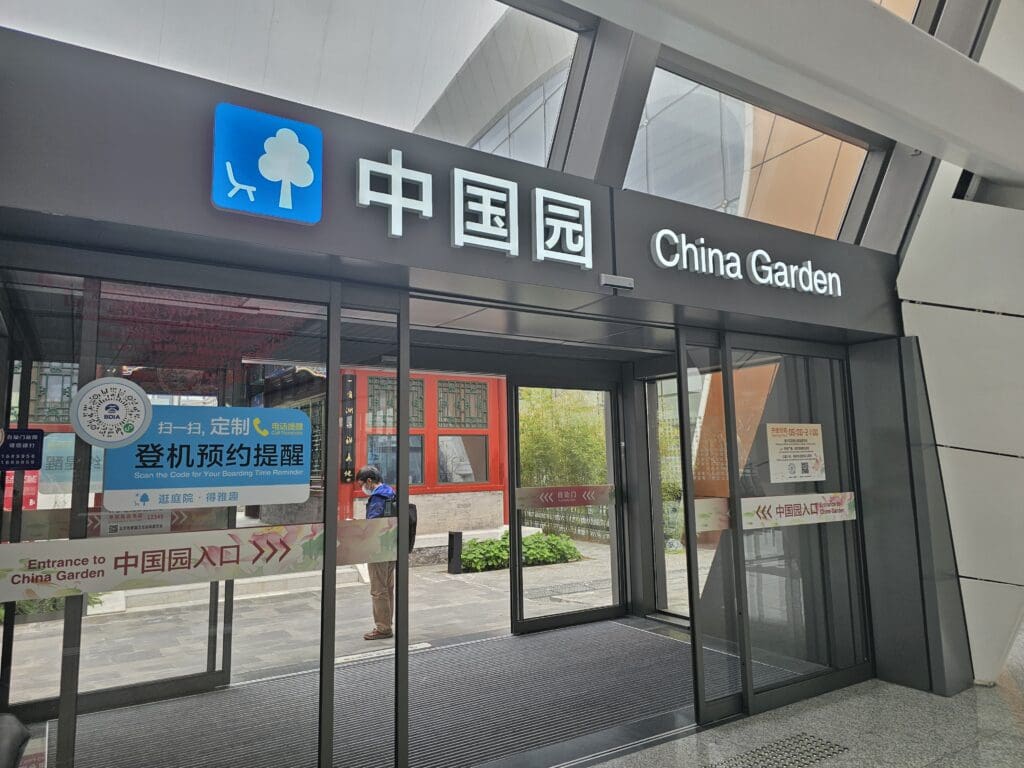
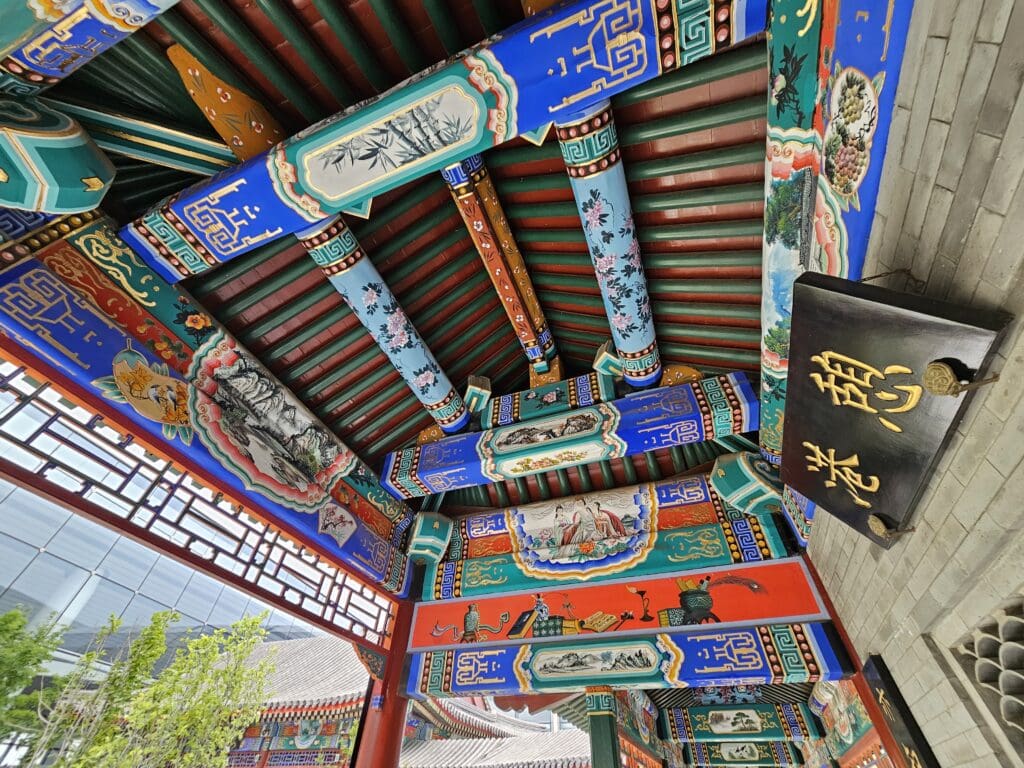
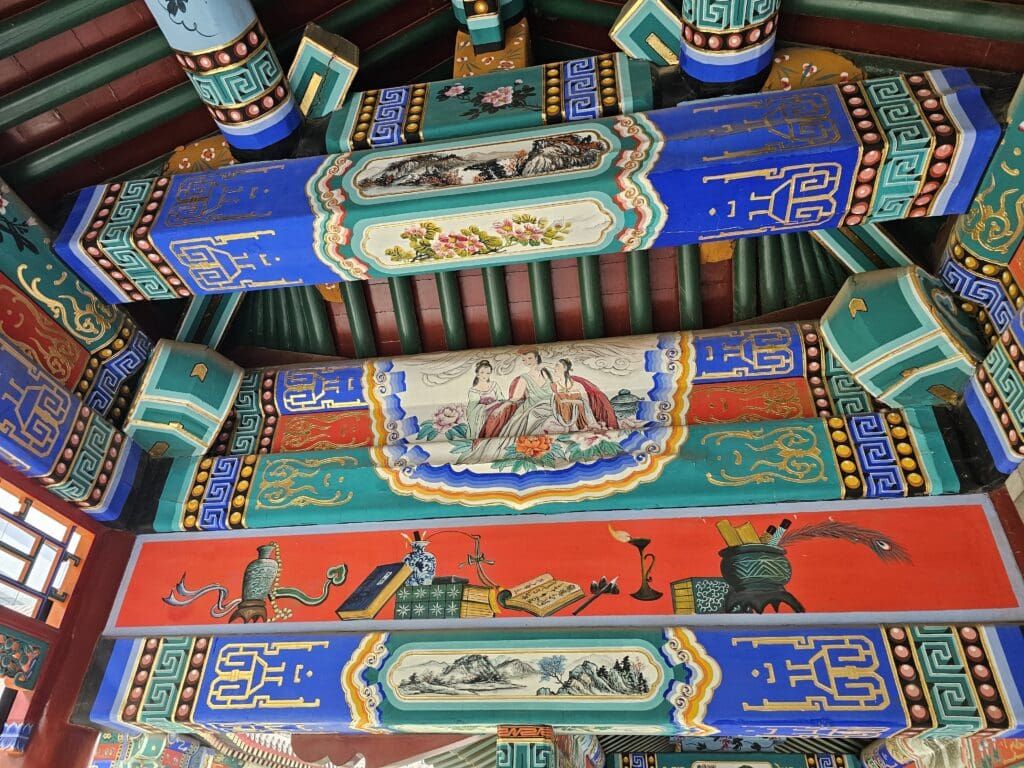
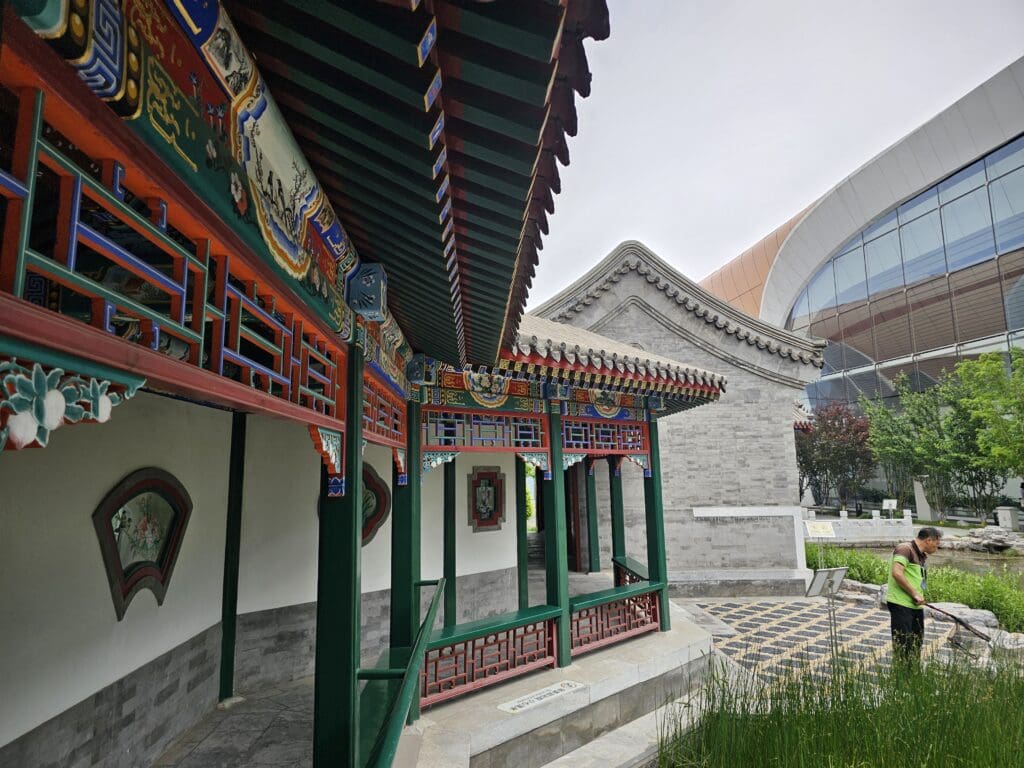
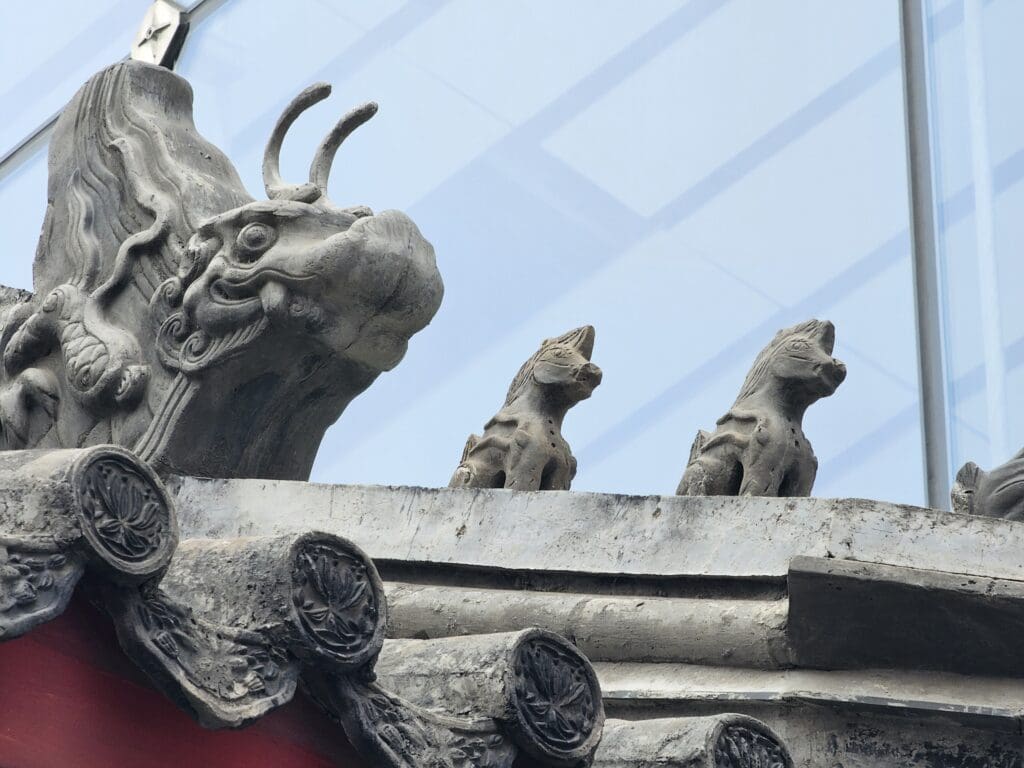
Once I had explored the central hub, I decided to move onwards to one of the terminal’s more unique features. Located towards the end of the long E pier, passengers can relax in an open air traditional Chinese garden which features a pond and several ornate pavilions. This was definitely one of my highlights of the terminal and I would recommend stopping by here if you happen to have some time to kill in between flights.
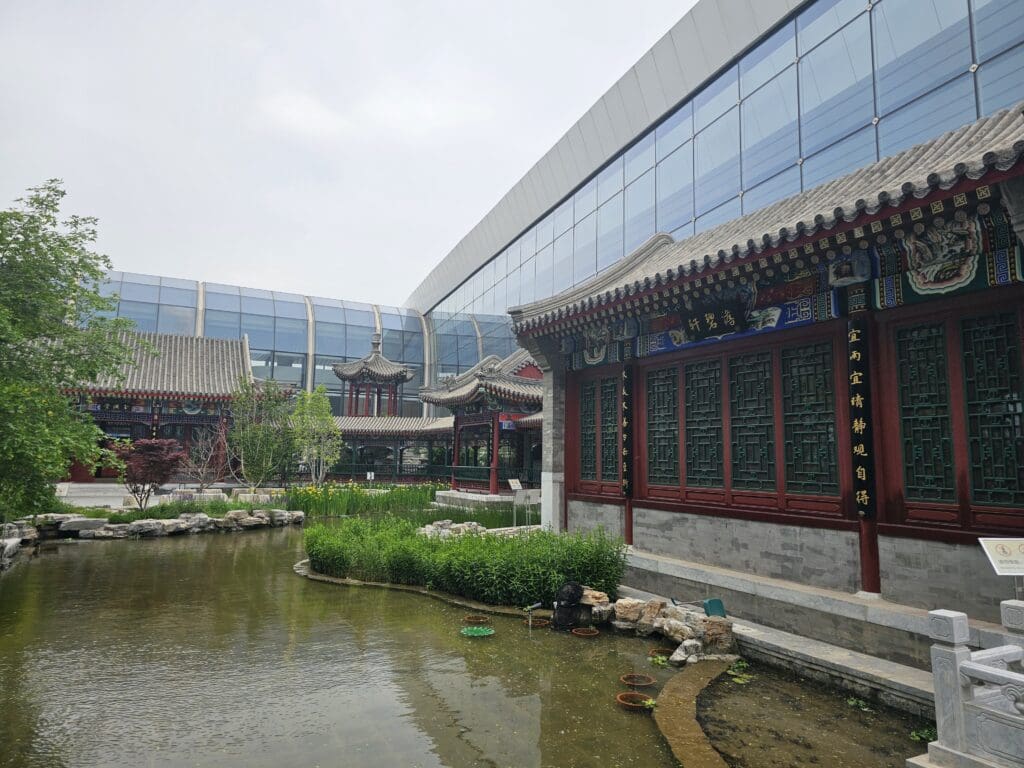
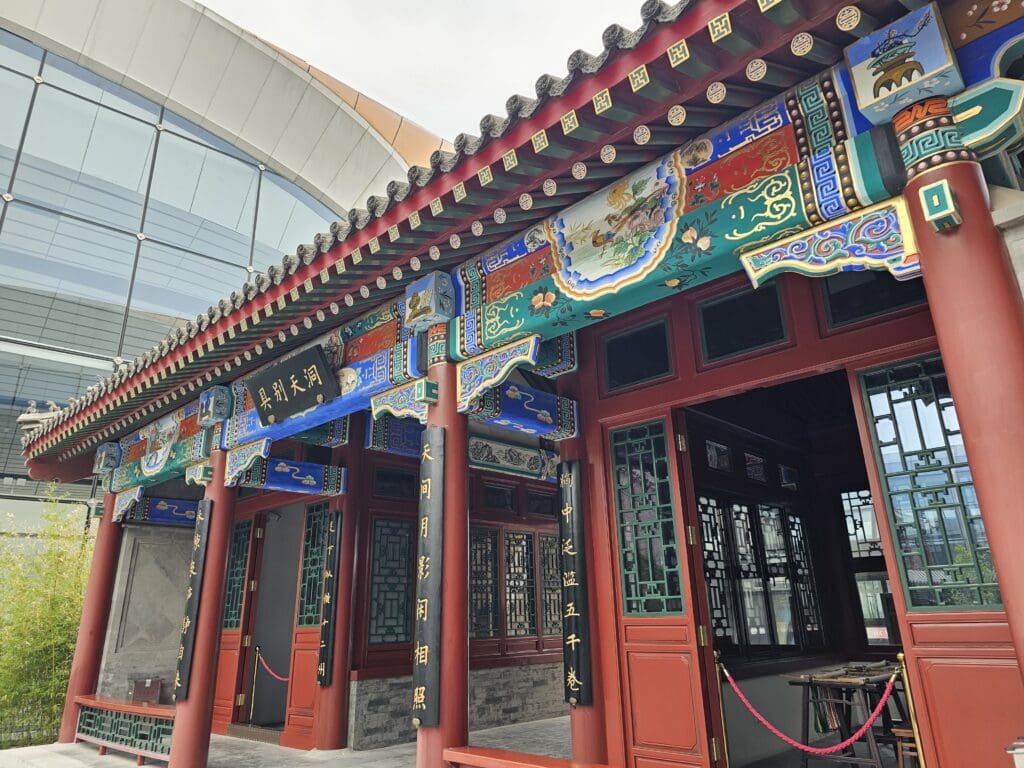
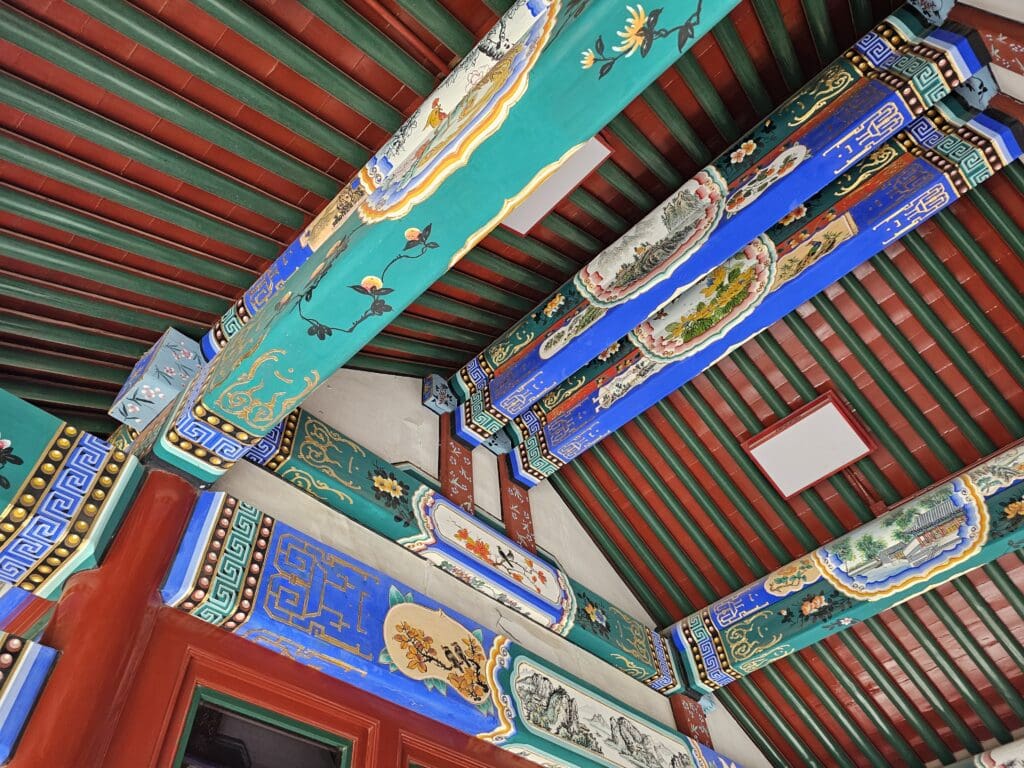
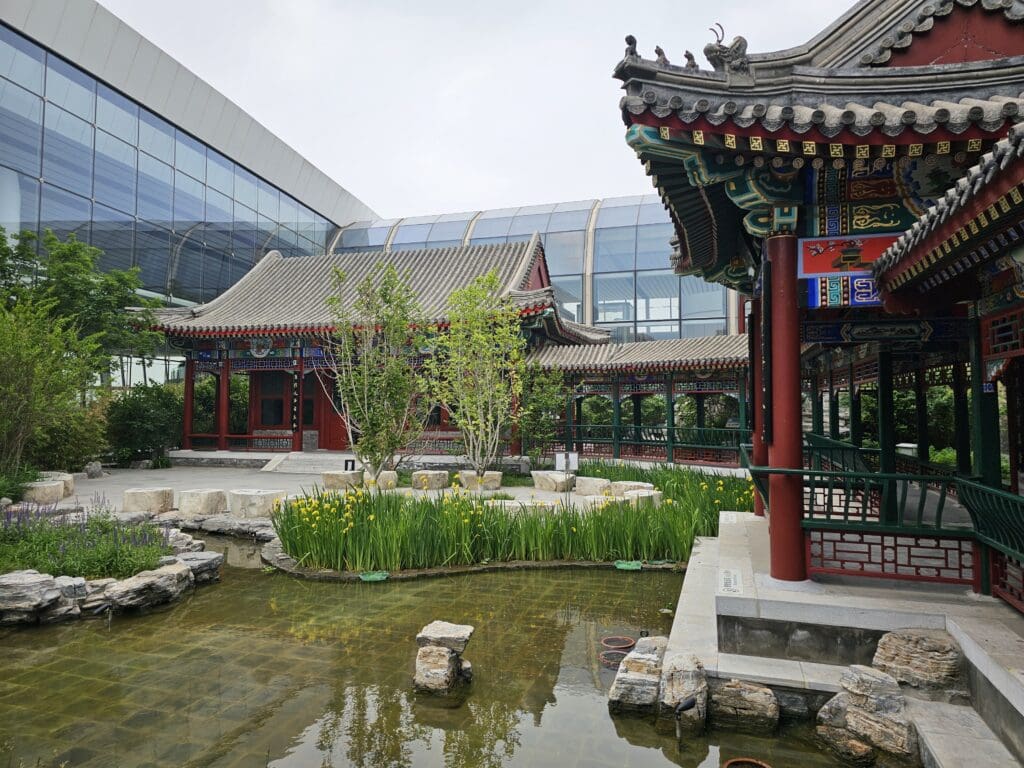
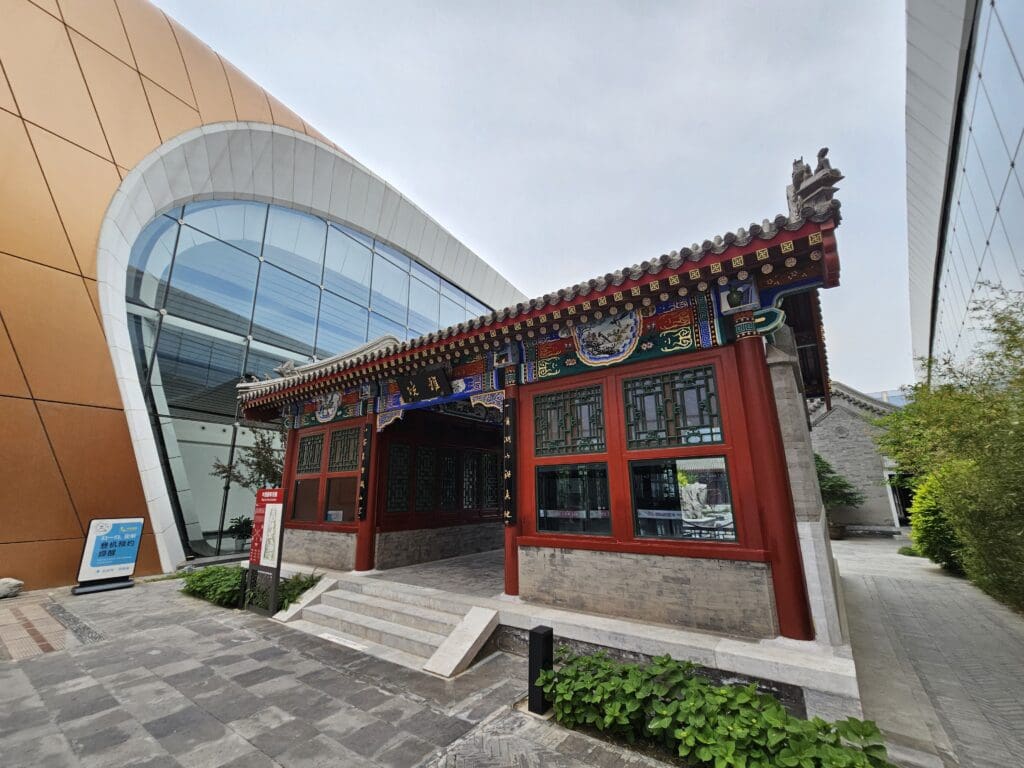
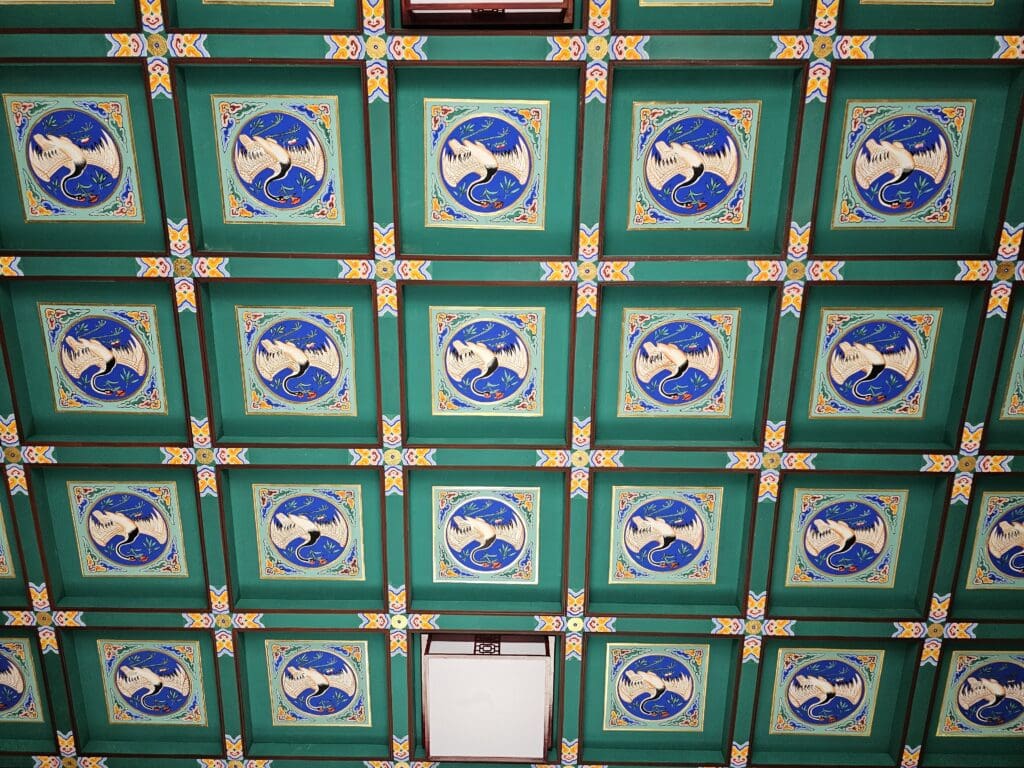

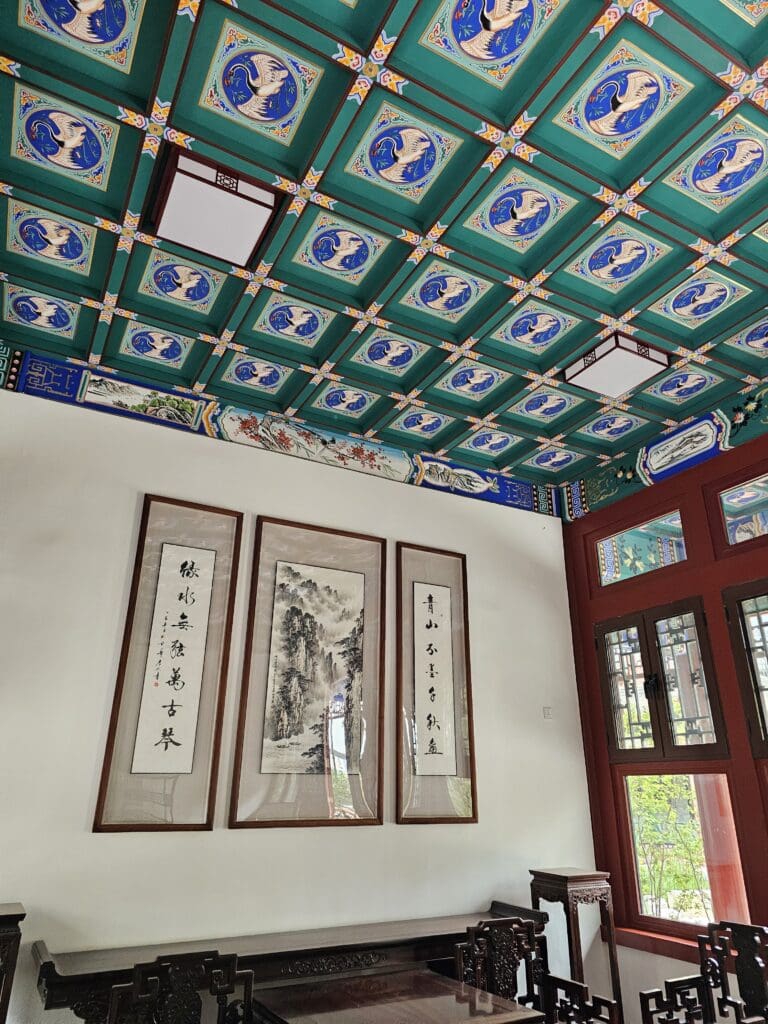
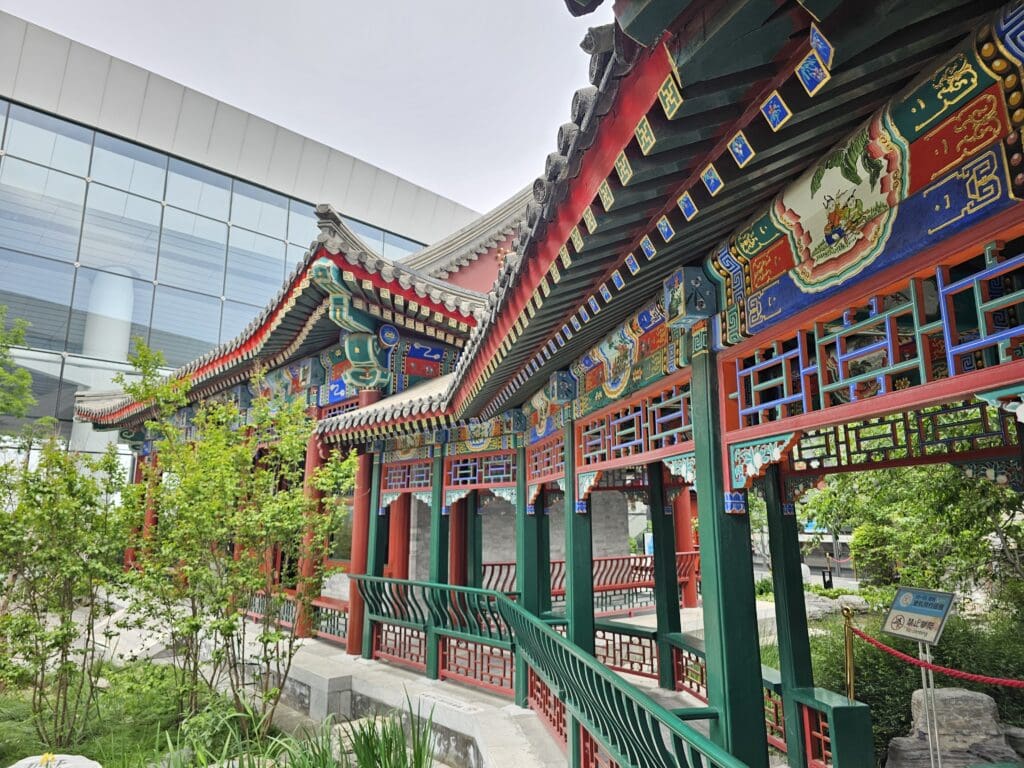
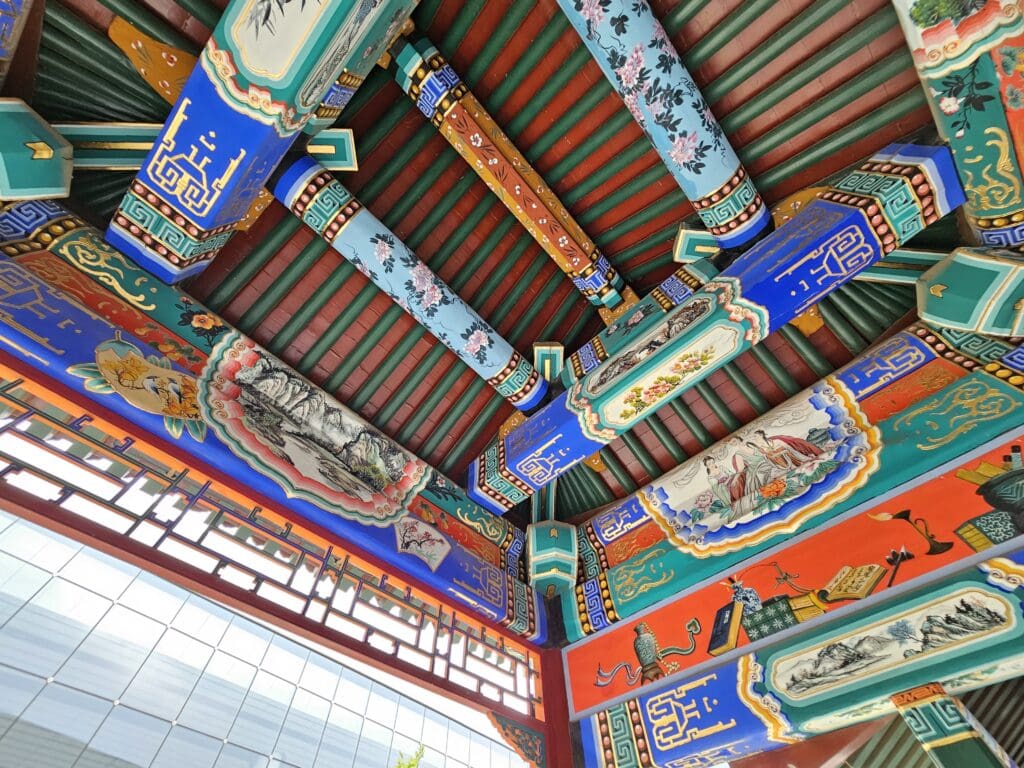
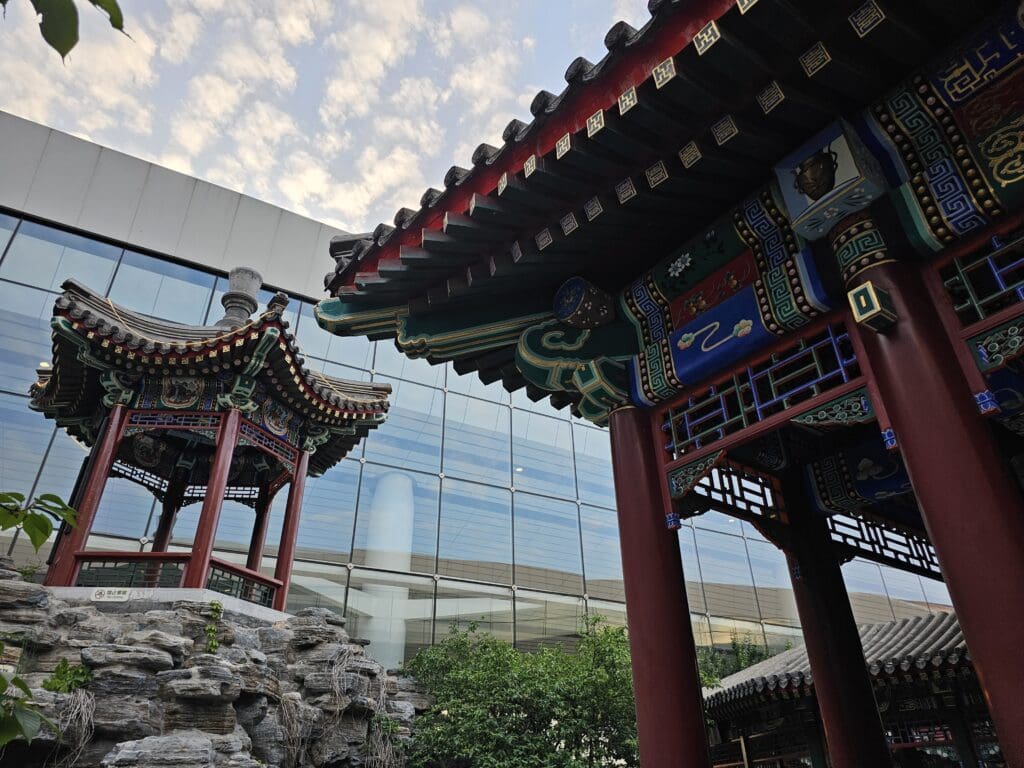
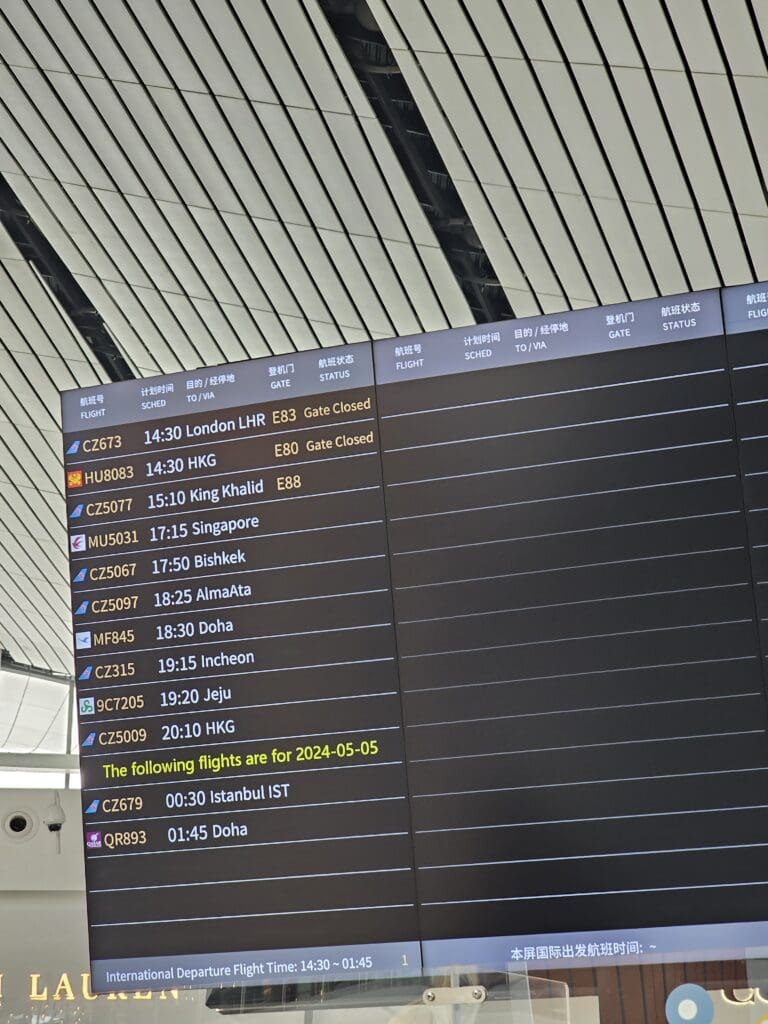
That afternoon, as I wandered around, I was a little surprised at the lack of passengers lingering around, and it was clear that the terminal was still operating well below its intended capacity. Looking at the departure boards, I saw that there were a total of just seven flights departing from the international portion of the terminal in the five-hour period before my flight to Incheon. These took the form of China Southern Airlines services to Almaty, Bishkek, London Heathrow and Riyadh, and flights to Doha, Hong Kong and Singapore operated by Xiamen Air, Hainan Airlines and China Eastern Airlines respectively.
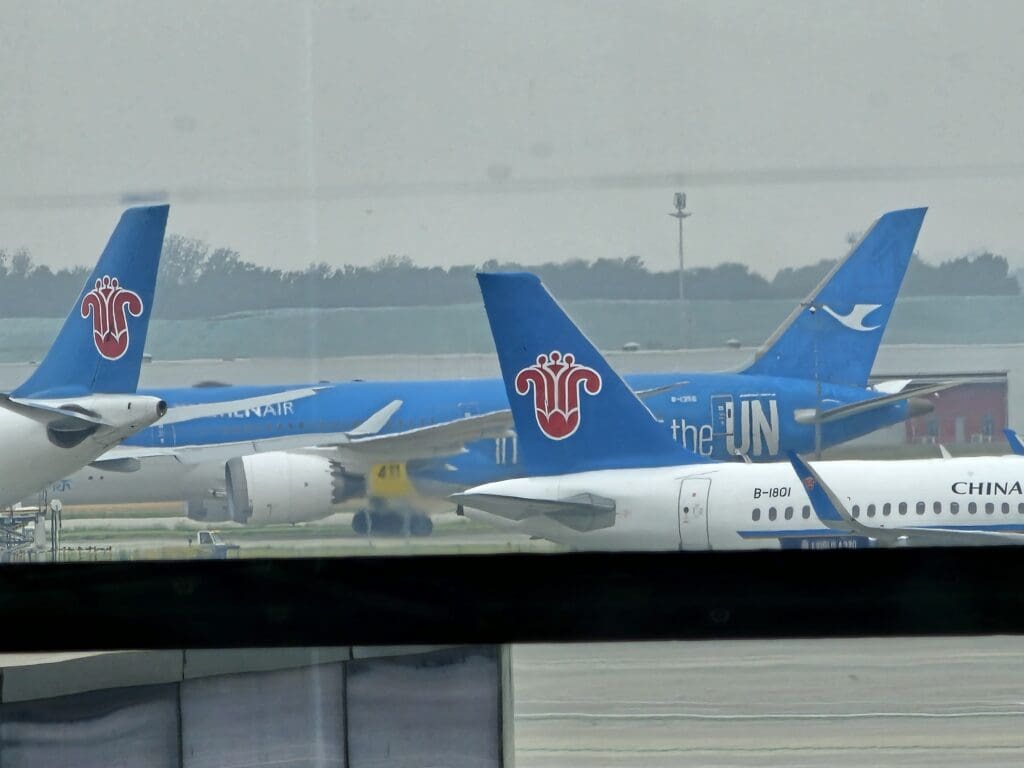
For aviation enthusiasts, views out onto the stands could be had from across the terminal. However, thanks to the terminal’s layout, any professional photographs of the movements would be nye on impossible as you are required to shoot through two layers of glass. Looking outside, the bulk of movements seemed to be provided by both China Eastern Airlines and China Southern Airlines. However, in addition to these, I also managed to spot a fair few aircraft from the likes of Air China, China United Airlines, Heibei Airlines and Xiamen Air. There were, however few aircraft seen that were not operated by Mainland Chinese airlines, with one aircraft each from Air Macau, HK Express and Qatar Airways.
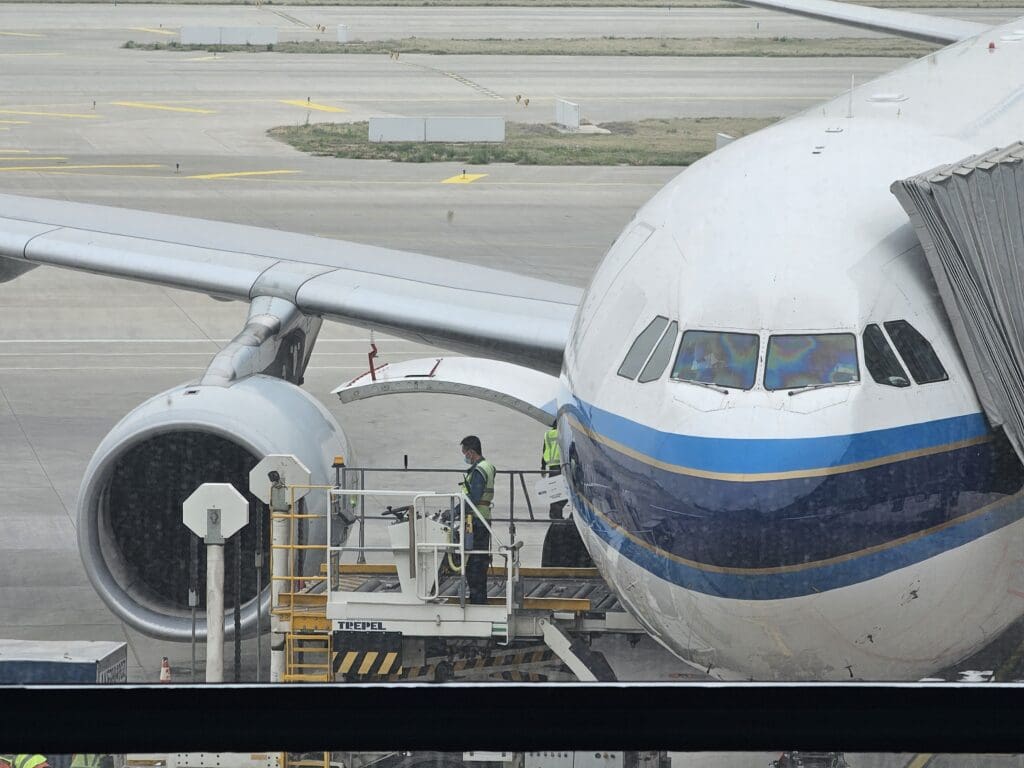
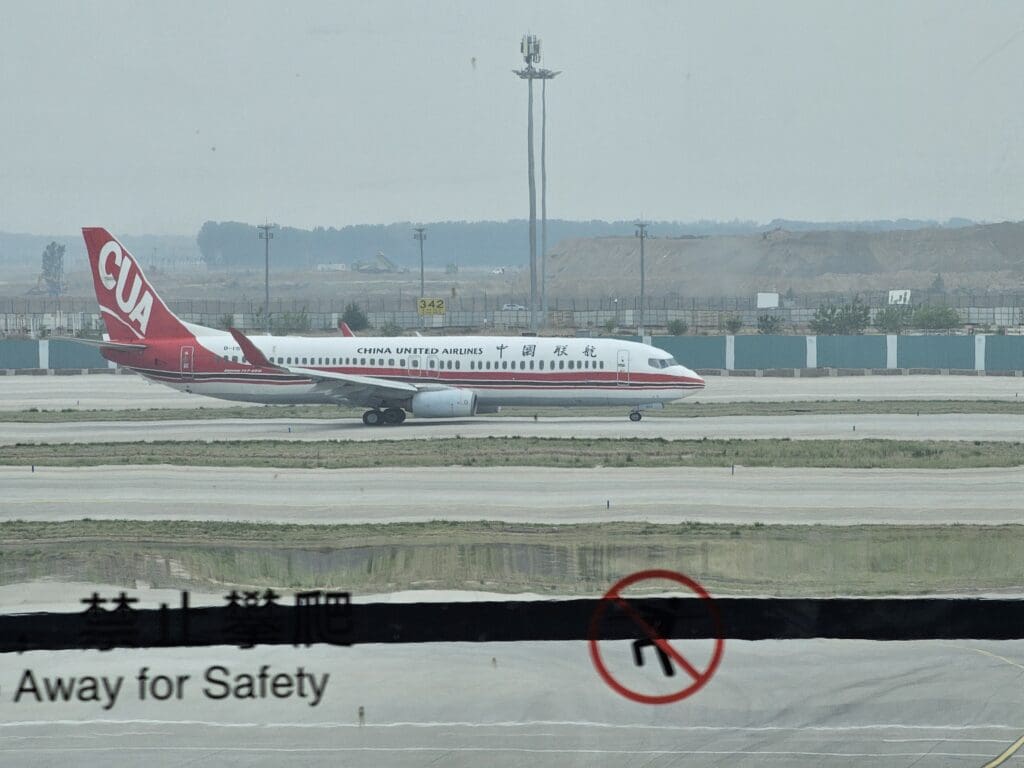
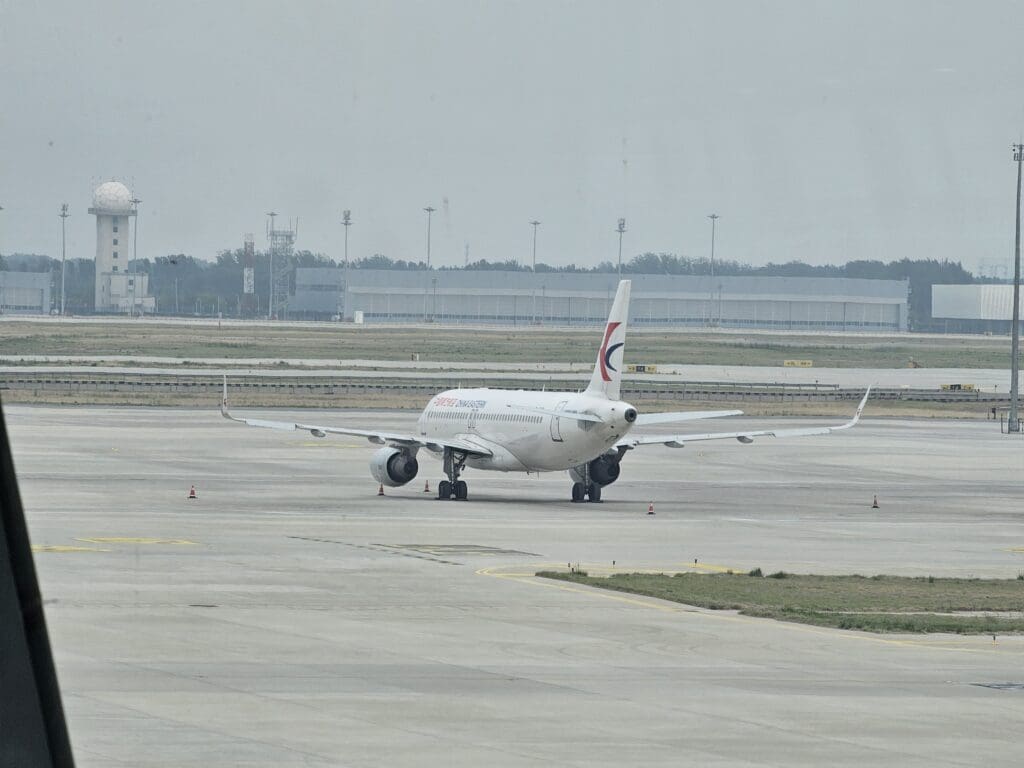
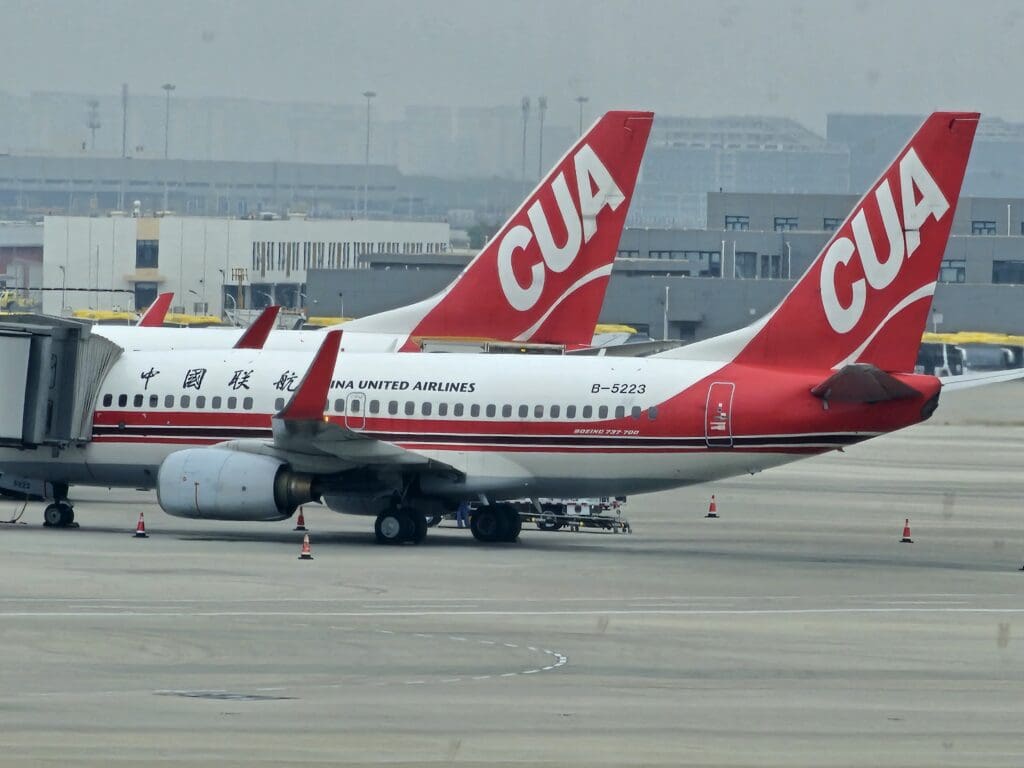
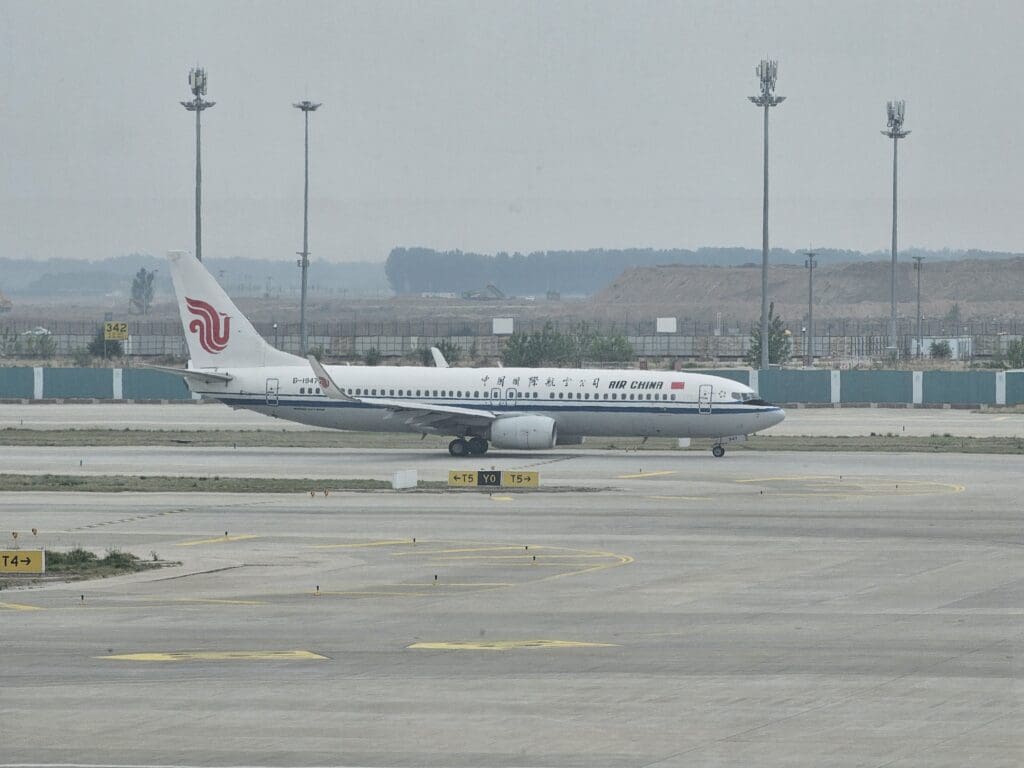
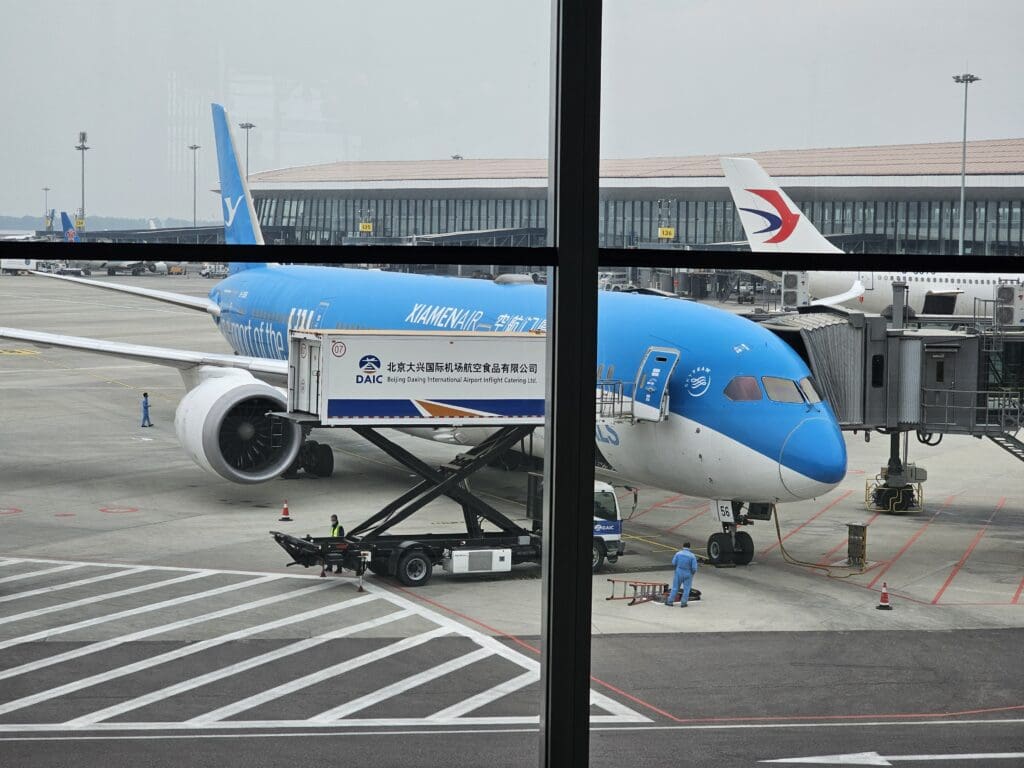
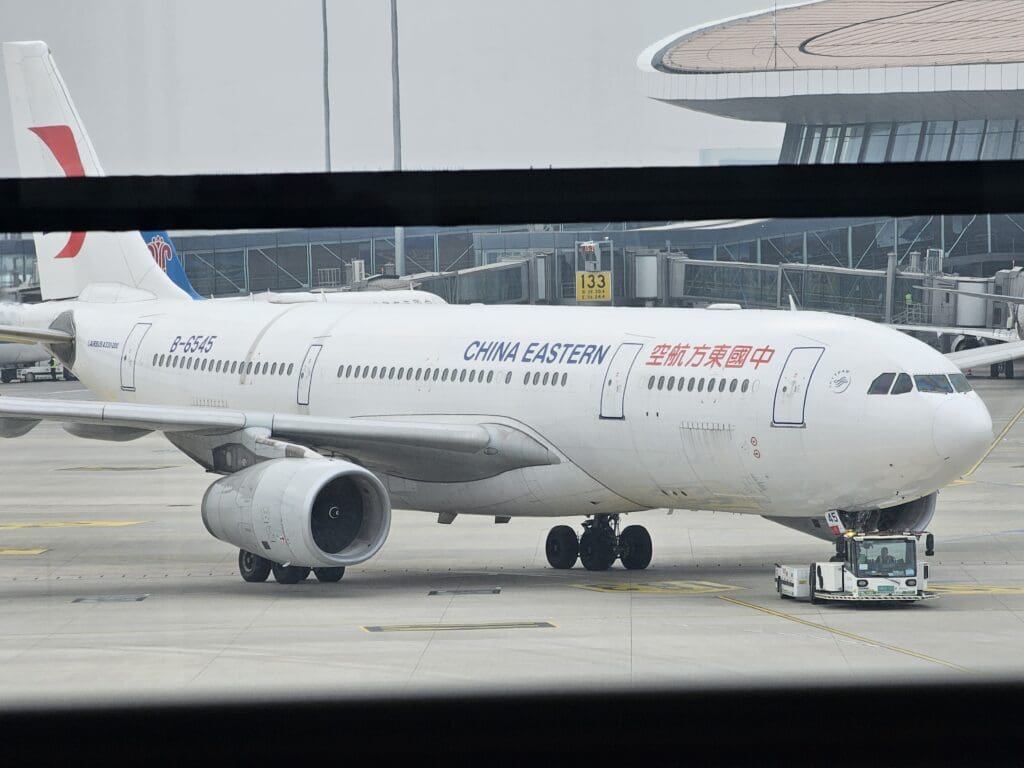
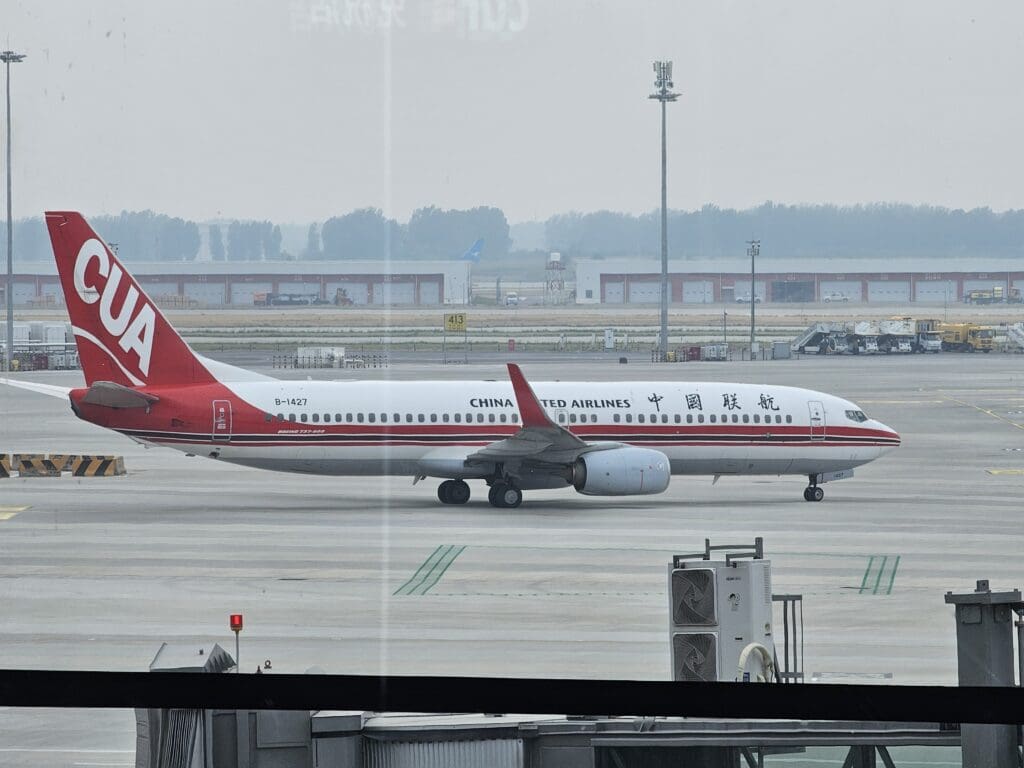
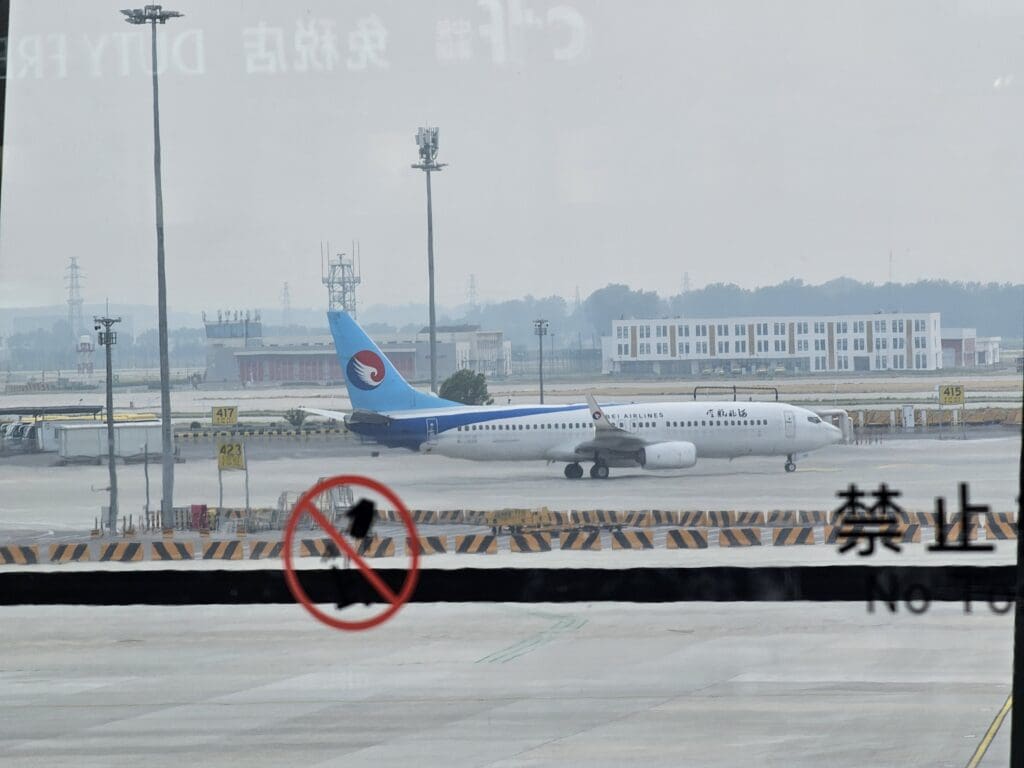
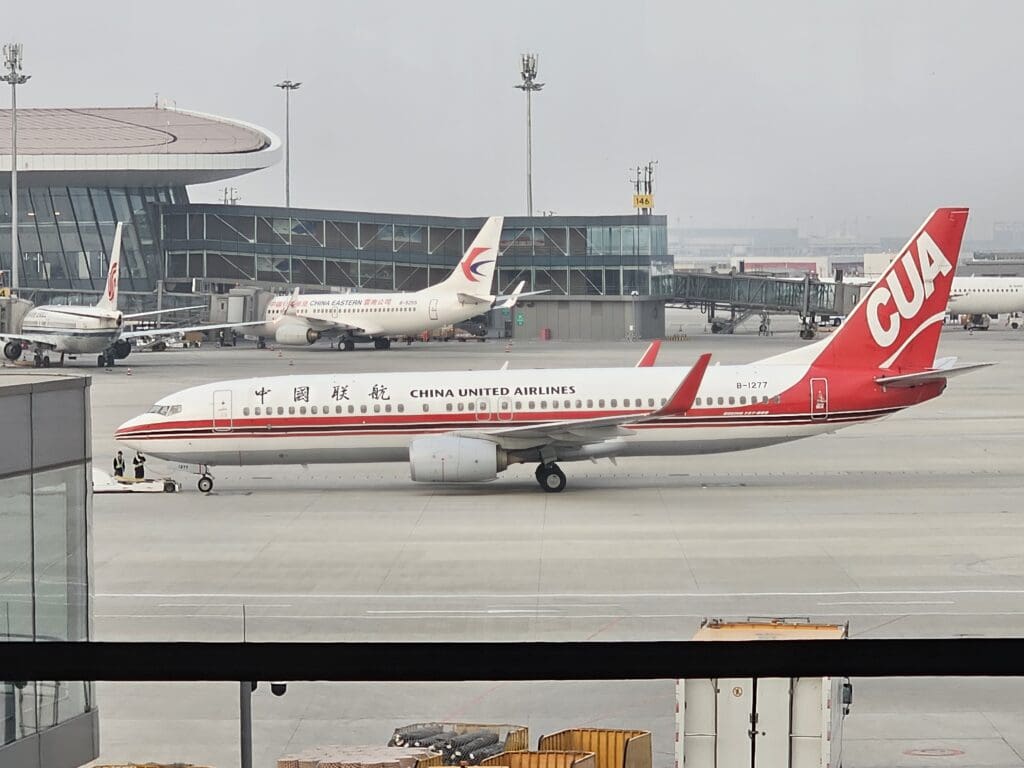
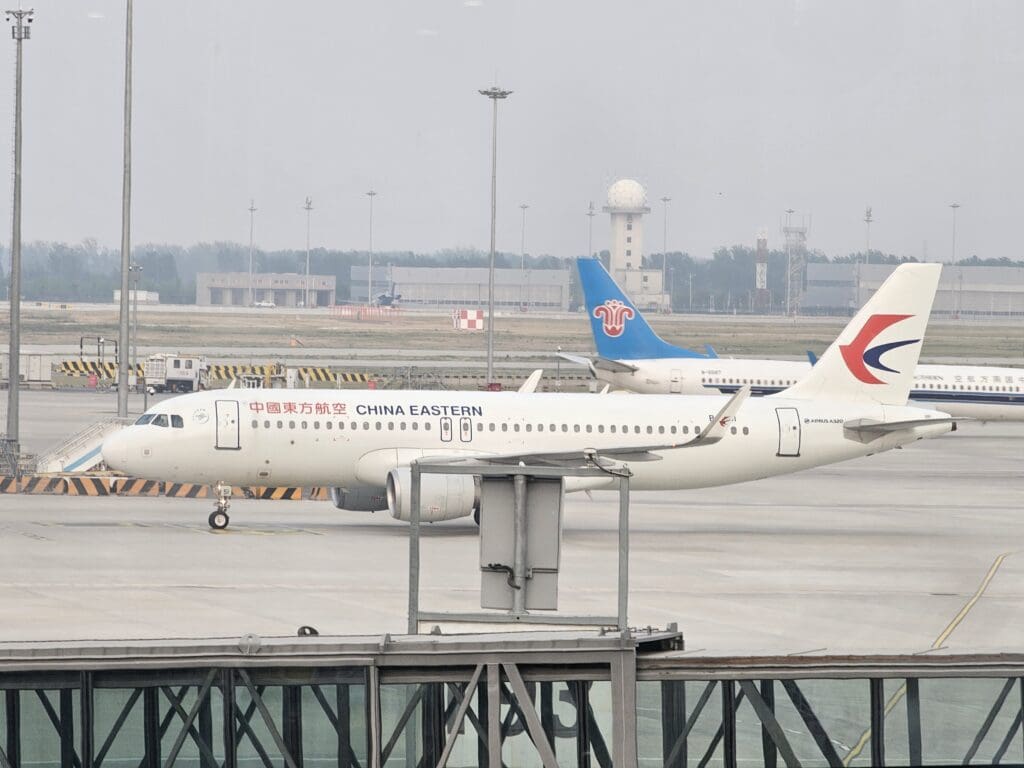
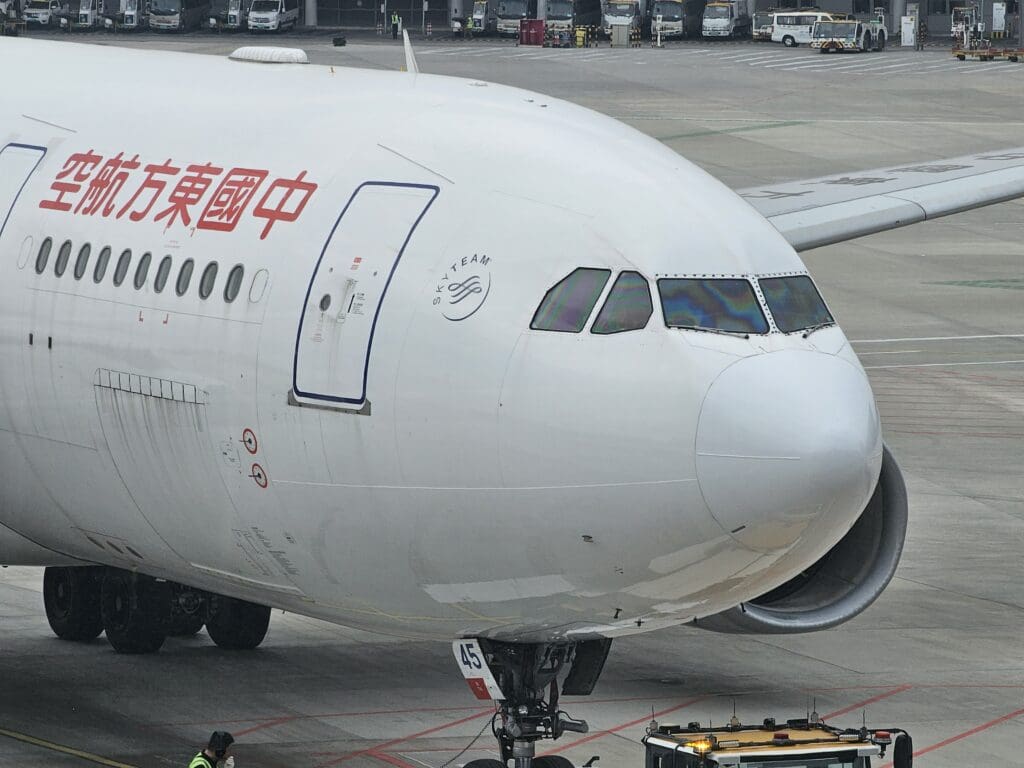
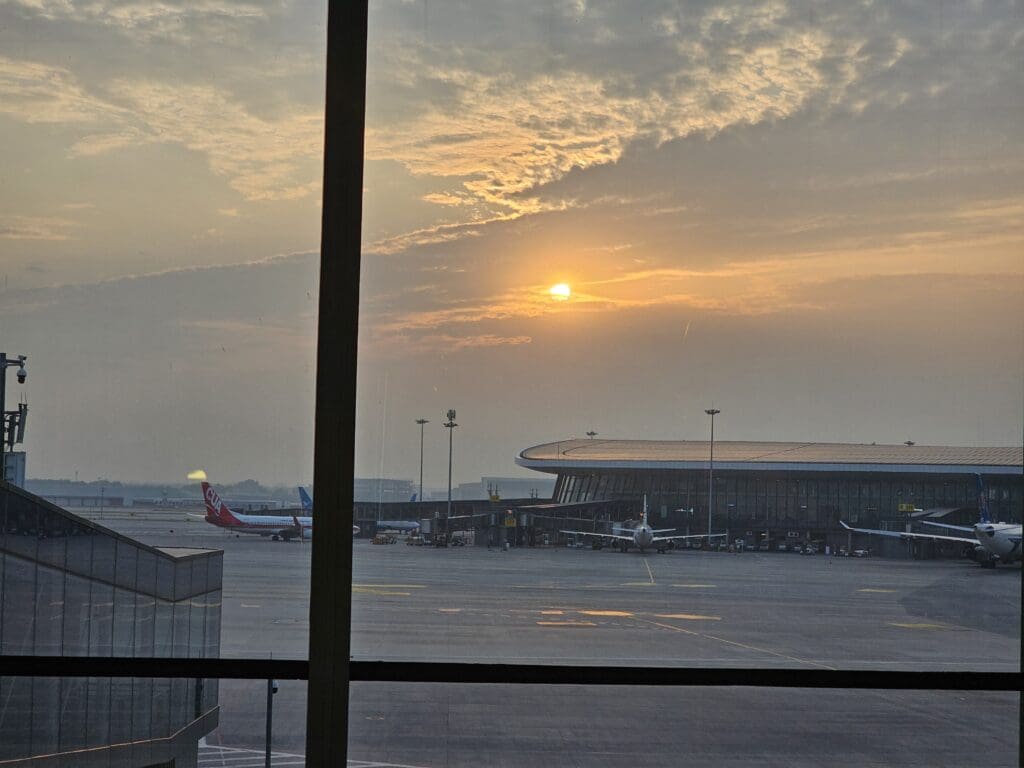
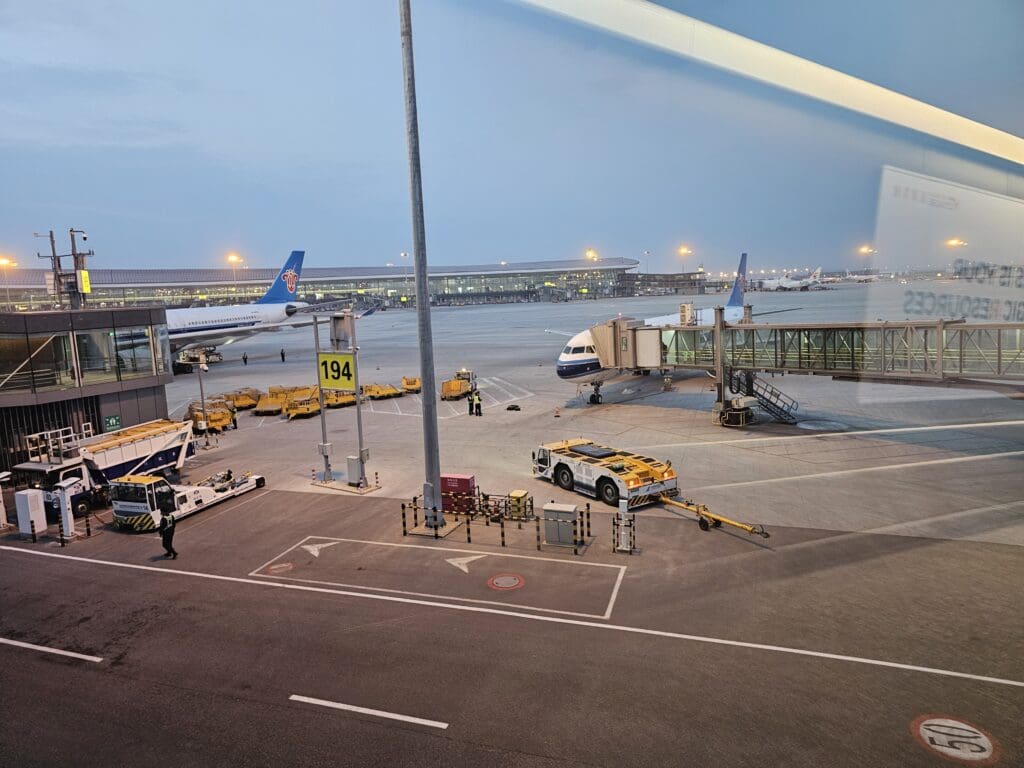
That day, it seemed as if most international flights departed between 1700 and 1900. Thus, as time passed, the terminal became a little busier, although, unsurprisingly, this remained far from full. After wandering around, I decided to set up camp at one of the many charging stations and spent my time working and planespotting to pass the time. Around two hours prior to departure, the departure boards updated to reveal that my flight to Incheon would depart from Gate E94, which translated to Stand 194. As dusk slowly approached and the skies began to change colour, I decided to make a leisurely wander over to the gate. Upon arriving there, a small cluster of passengers could be seen waiting and as time passed, few passengers joined, giving the impression that it would be a quiet ride over to Korea that evening.
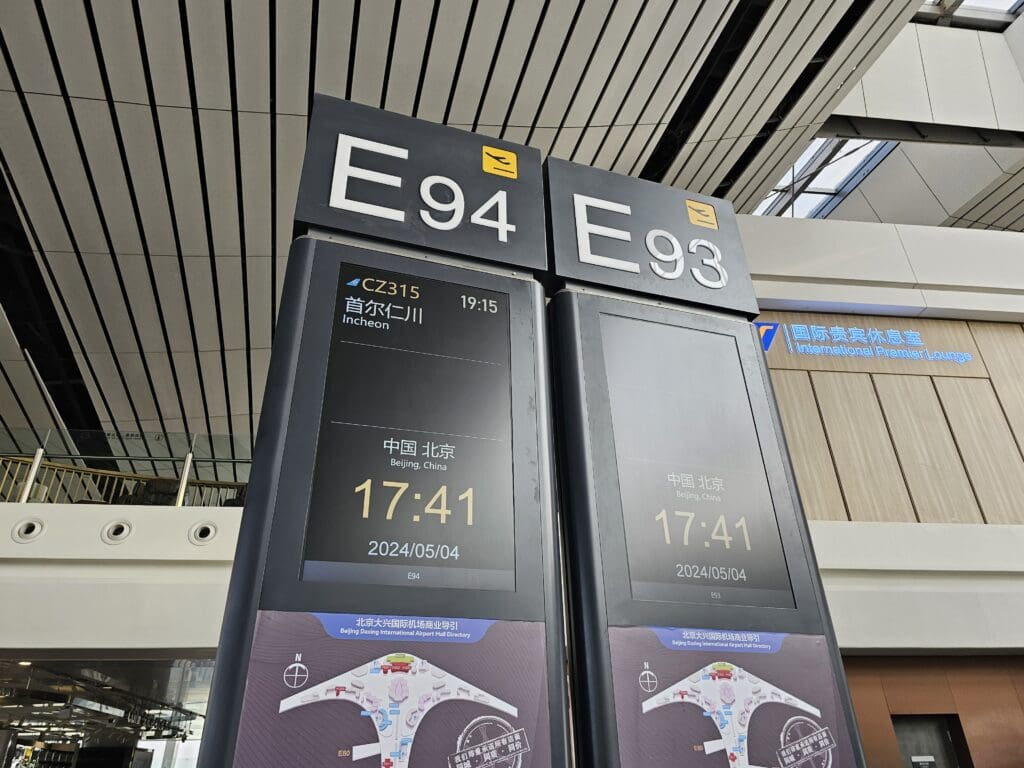
According to my boarding pass, boarding for the flight was scheduled to commence fifty minutes prior to departure at 1825. Looking outside, I watched as an army of ground staff appeared, undertaking a sweep of the stand so as to ensure that this was completely free of FOD before a series of carts carrying a small number of suitcases and many more boxes of cargo rocked up. Meanwhile, inside the terminal, three pilots, six flight attendants and a security guard appeared, and almost everything seemed to be in place for a timely departure. There was, however, one thing that was missing: the aircraft!
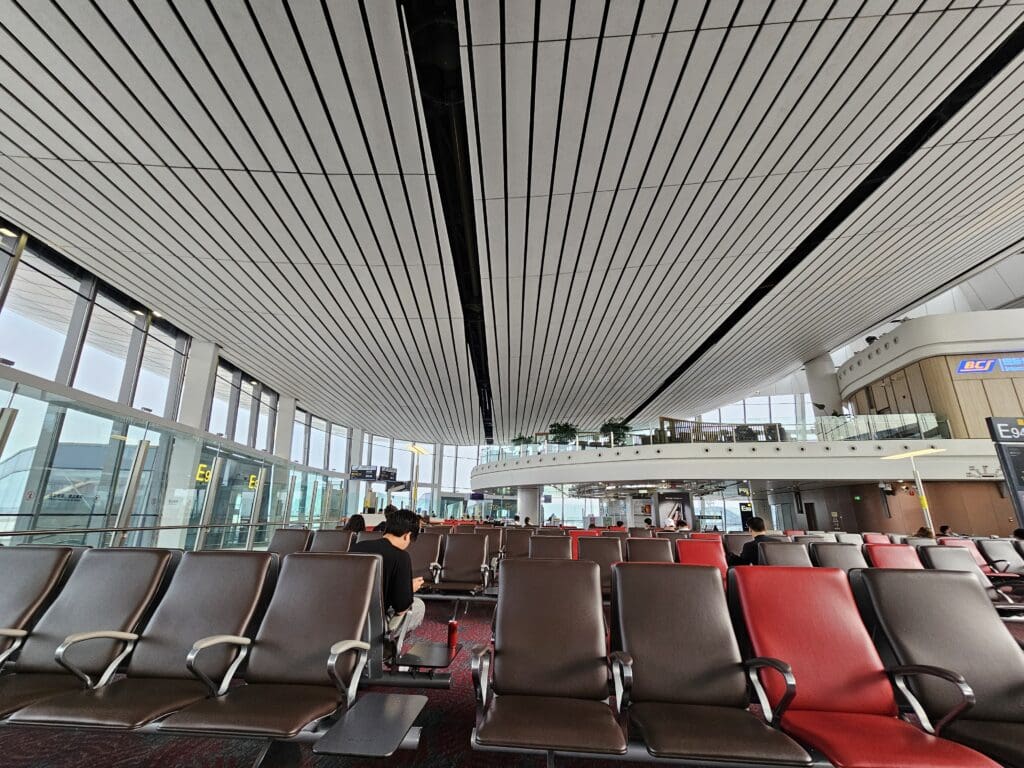
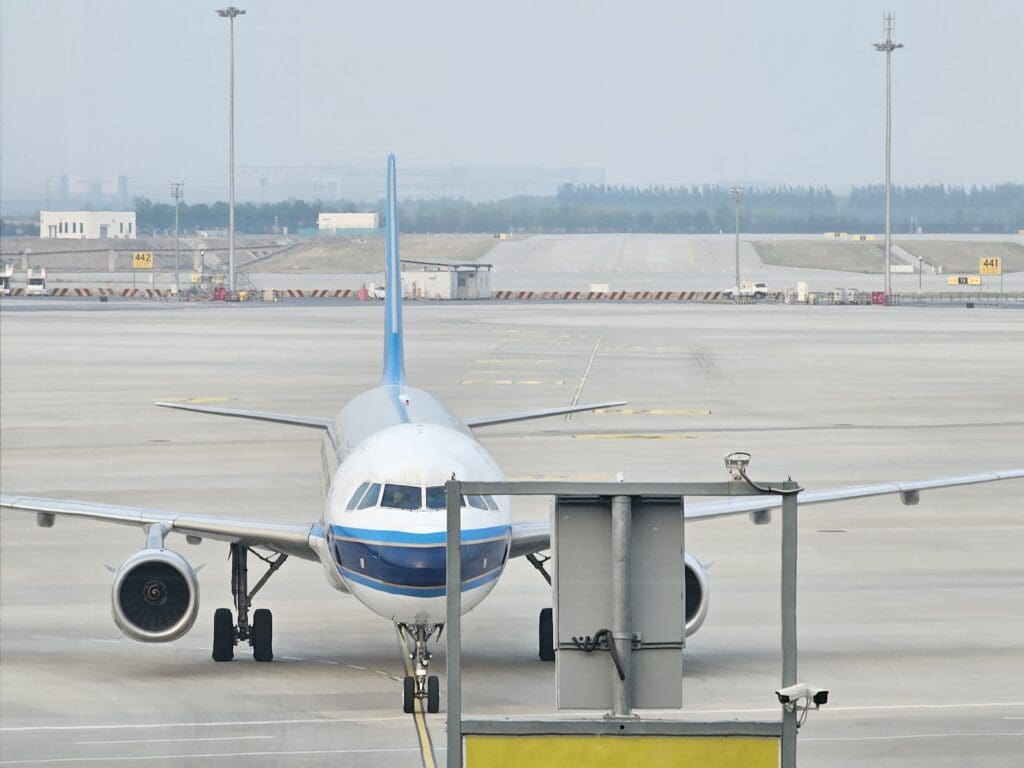
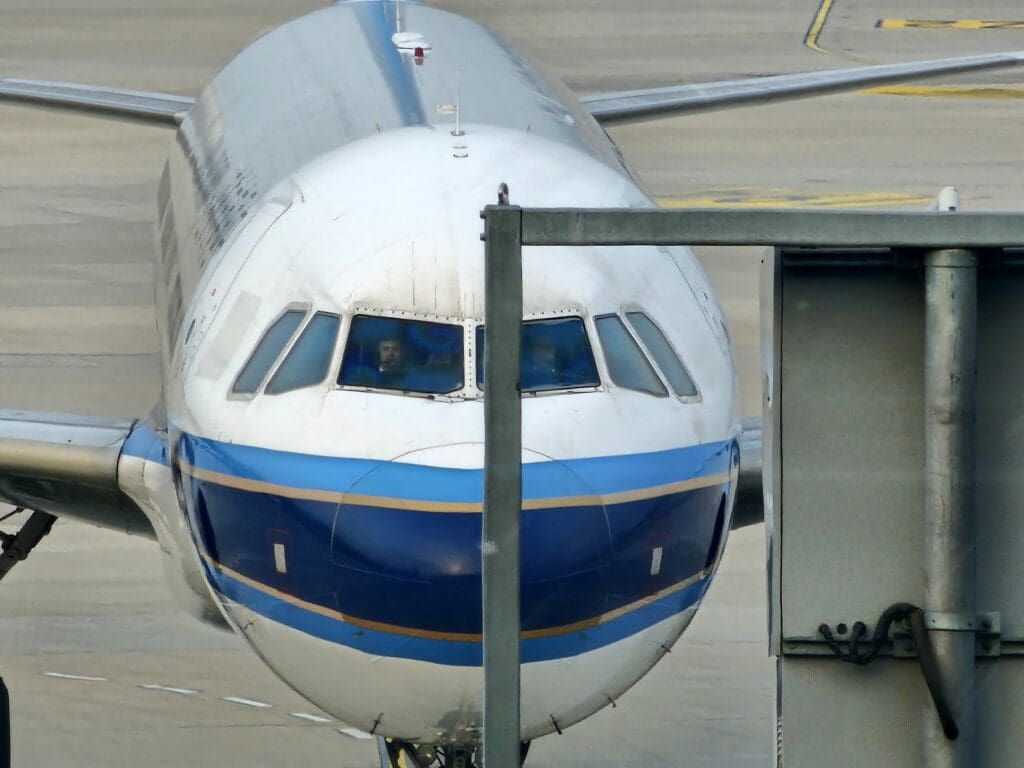
As time passed, there was no sign of a China Southern Airlines Airbus A321 outside and when the scheduled time of boarding came and went, with no aircraft, it became obvious that the flight was likely to be delayed. Rather disappointingly, none of the multiple members of ground staff at the gate made any announcement about a delay, nor did the departure boards update, with this continuing to be displayed as an on time flight. With thirty minutes to go until our scheduled departure time, a rather worn and mucky looking Airbus A321 pulled into the stand at the end of its journey from Kunming, and once the flashing beacons were turned off, the crew sprang into action.
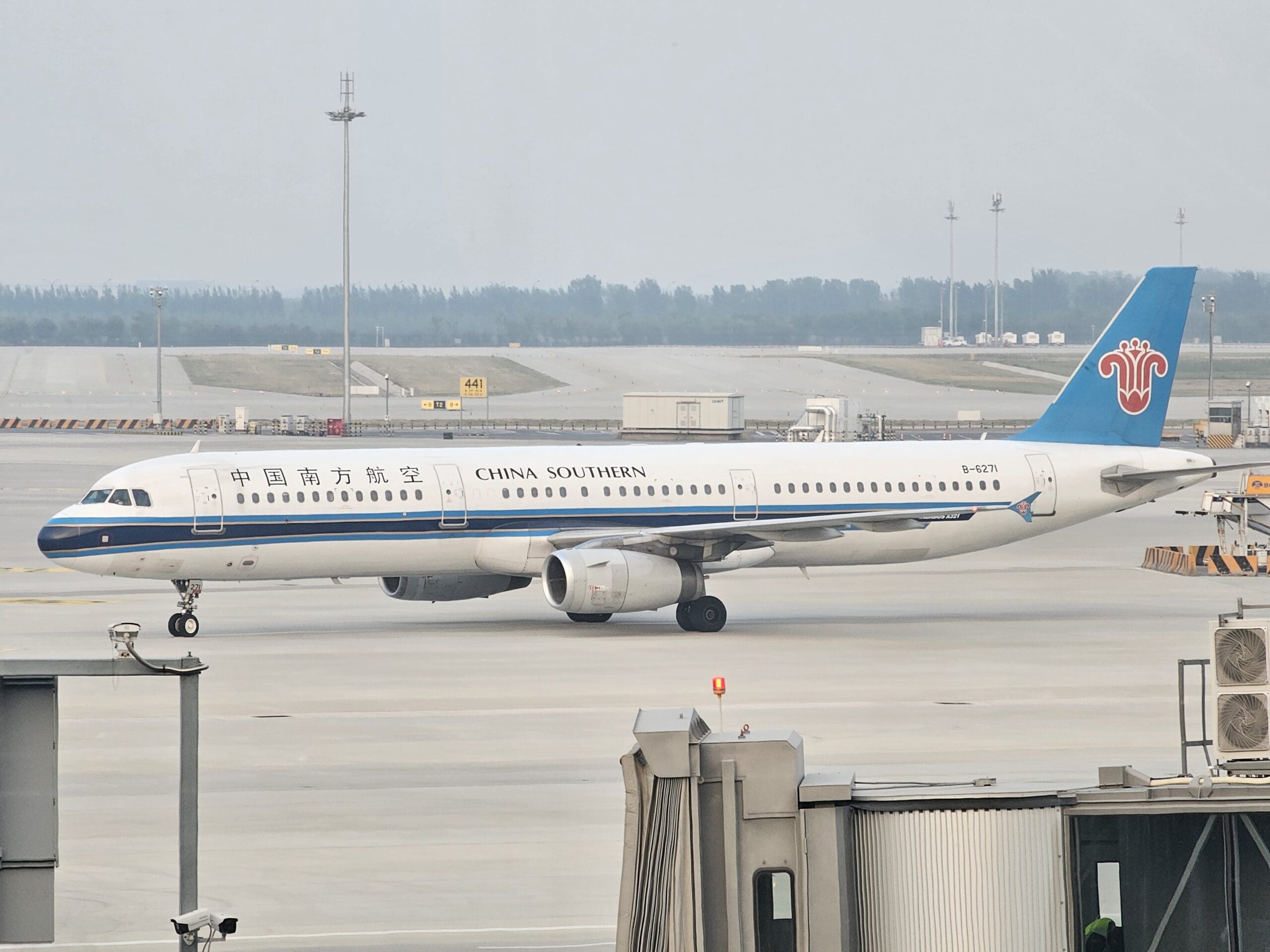
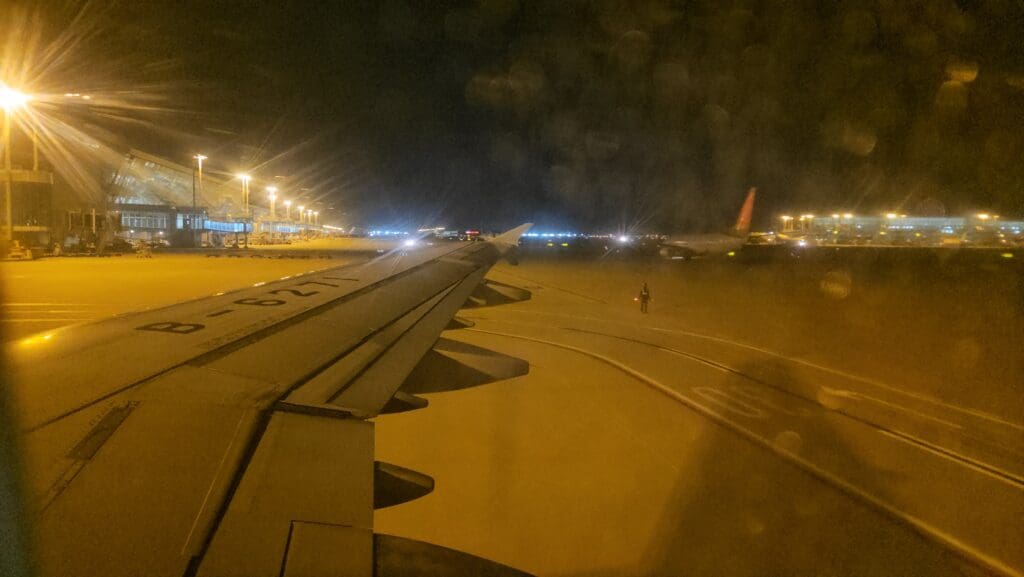
This particular aircraft came in the form of Airbus A321-231, B-6271. Assembled at Airbus’ Hamburg Finkenwerder plant, this aircraft made its maiden flight in June 2006 and was thus just shy of eighteen years old at the time of my flight. Despite not being a particularly old aircraft in the grand scheme of things, this was a fair way over China Southern Airlines’ average fleet age of 9.4 years and the eleventh oldest Airbus A321 in the airline’s fleet. In the week prior to my flight, the aircraft had operated almost non-stop, connecting Beijing Daxing to a host of destinations mostly across Mainland China. Namely Changchun, Changde, Chengdu, Daqing, Hangzhou, Kunming, Ningbo and Sanya. The aircraft also operated one rotation each to Hong Kong and Macao. This equated to a distance of at least 26,000 miles over the course of 26 flights, equivalent to over the distance of flying from Beijing to Buenos Aires and back!
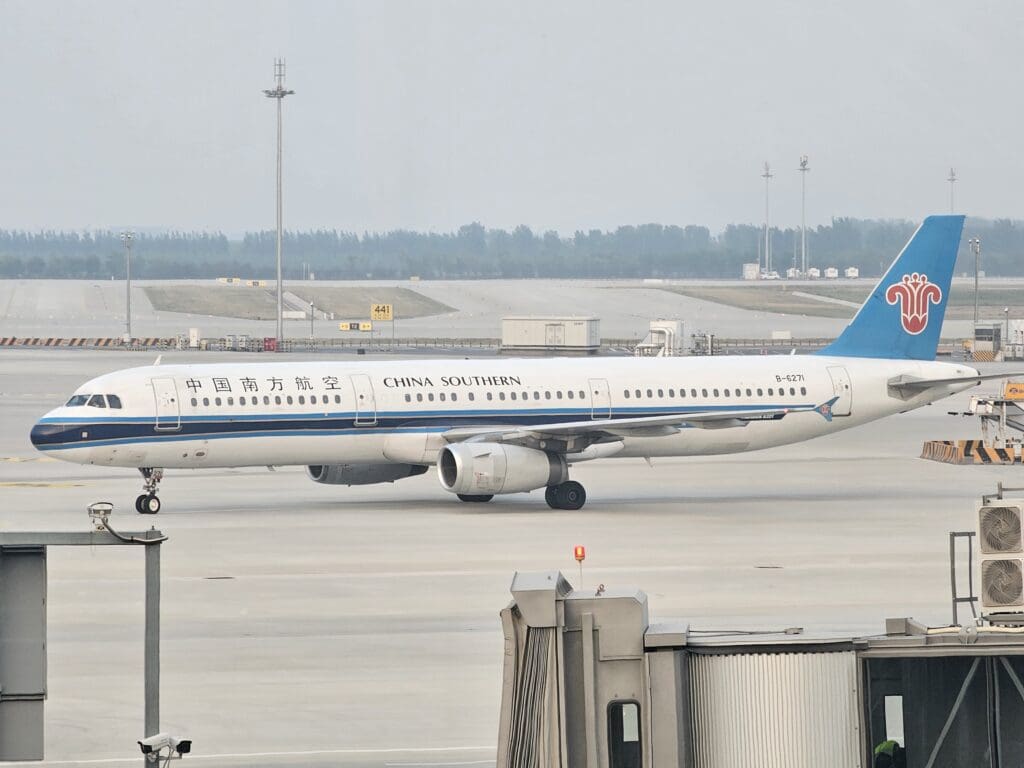
Once upon a not-too-distant time, China Southern Airlines was one of the few airlines to squeeze more than two classes into their narrowbody aircraft. Even the smallest type in their fleet, the Embraer 190 comes with Business, Premium Economy and Economy cabins. However, since my last ride with the airline in 2017, the airline has since removed Premium Economy from their narrowbody fleet, and these feature a standard 2-class configuration. Thus, this particular Airbus featured a total of 179 seats – 12 in Business and 167 in Economy, making it one of the least densely configured Airbus A321s in the skies today!
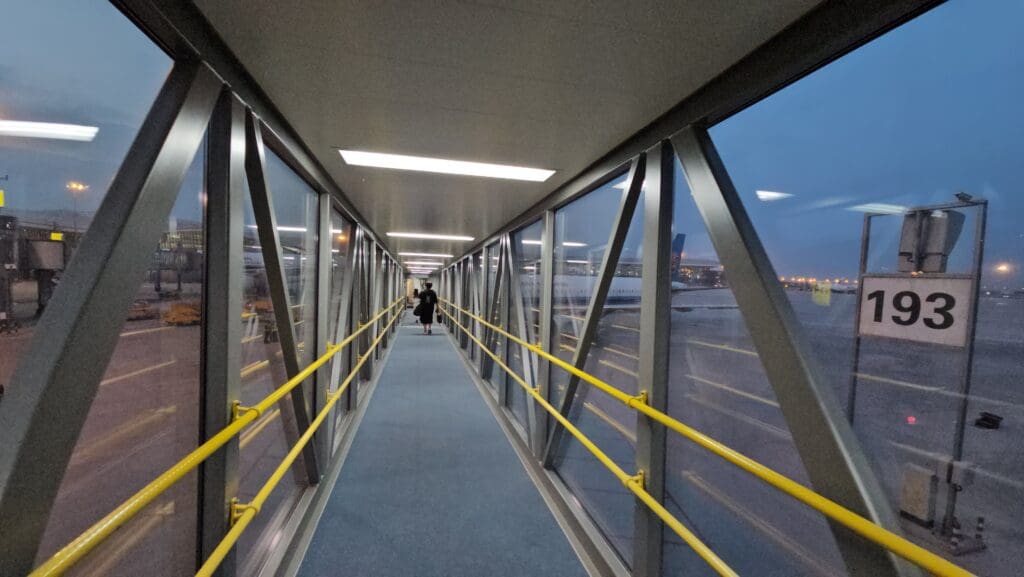
Back inside the terminal, at 1900 a pre-recorded announcement rang out in Mandarin and English advising passengers that the inbound aircraft had just landed and requested passengers to remain seated for the time being. This was repeated once more several minutes later, before passengers were invited to board at 1917. As had been the case at Heathrow prior to my flight to Beijing, whilst this was not a disorderly or chaotic process, no announcement was made at the gate advising of the commencement of boarding (instead one member of ground staff simply shouted this in Mandarin), nor was there any order to this, with all passengers invited to board at once. After waiting in line for a few moments, my boarding pass was scanned and torn and I made my way down the glass jet bridge.
Creating a positive first impression, as soon as I stepped into the Airbus’ forward galley I received a warm and friendly greeting from the Purser who checked my boarding pass before allowing me to continue onwards. As had been the case onboard the Airbus A350, as I boarded, the body-camera wearing security guard stood opposite the main entrance with folded arms and looked sternly at passengers as they boarded the aircraft, perhaps in an attempt to dissuade potential troublemakers from misbehaving onboard! Turning right, I immediately entered the Airbus A321’s Business class cabin. This consisted of three rows of your standard chunky recliners in a 2-2 configuration. These were covered in a blue mesh fabric cover and topped with a large adjustable headrest, accompanied by a pillow and blanket. With no passengers there at the time, I steamed through this and entered the forward Economy cabin. Consisting of just four rows, this is a compact cabin that once served as the Premium Economy section. The seats in this section feature a different fabric cover from China Southern Airlines’ standard Economy blue and gold striped fabric covers, thus leading me to believe that this remains unchanged since the official removal of Premium Economy on the aircraft. Indeed, if this is the case, this would go some way to explain the Airbus A321’s low density layout.
After passing the half-galley and toilet that sit behind the Premium Economy cabin, I entered the aircraft’s Economy section which stretches from the second set of doors to the rear of the aircraft. As I wandered down the cabin, the crew gave off a very good first impression. Not only did they welcome passengers in a friendly and polite manner, they were also proactive in helping passengers store their luggage and escorted many passengers to their seats. Soon, I reached Row 44 and after storing my bag in the overhead locker, I slipped into Seat 44L and settled in for the short ride ahead.
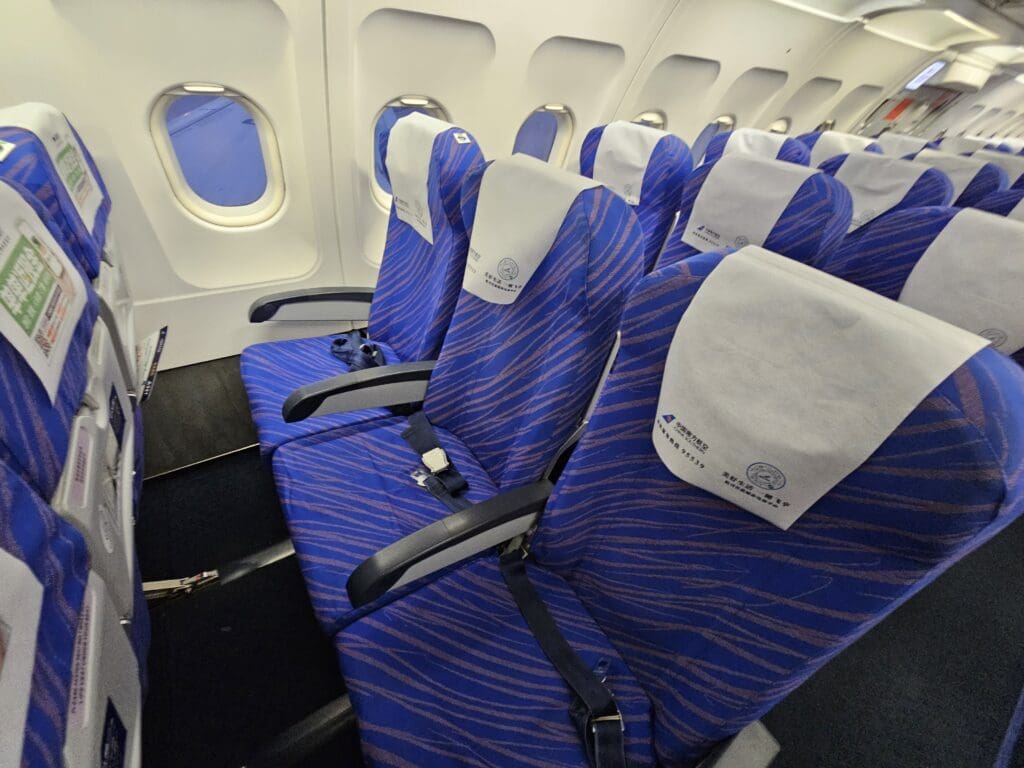
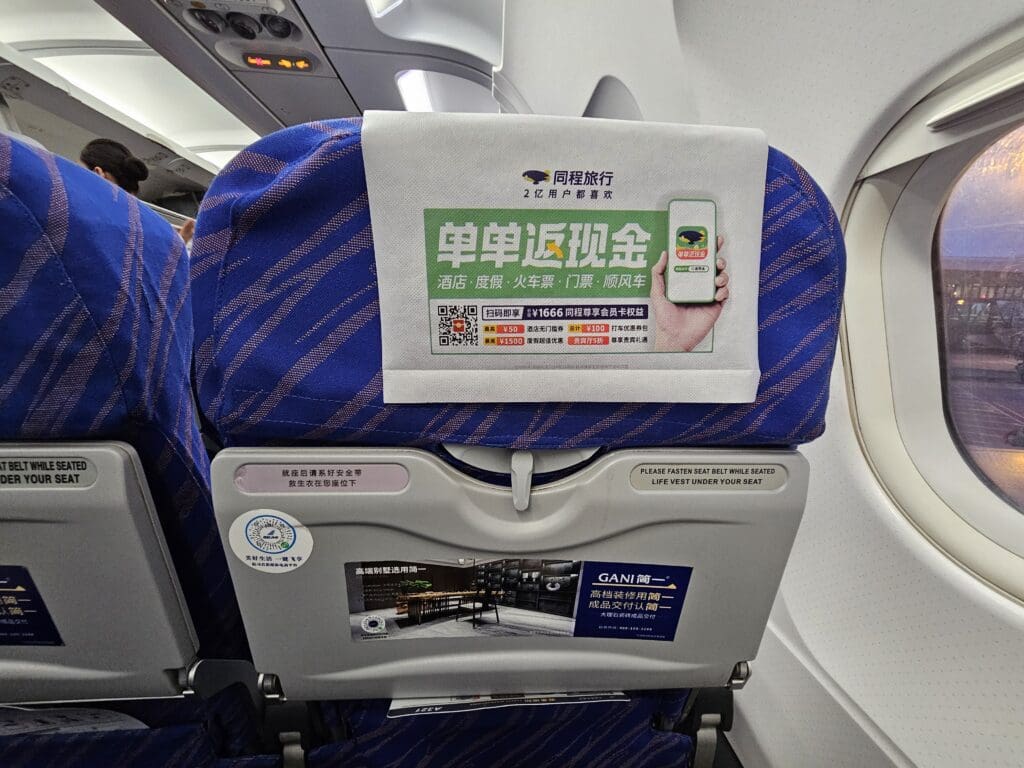
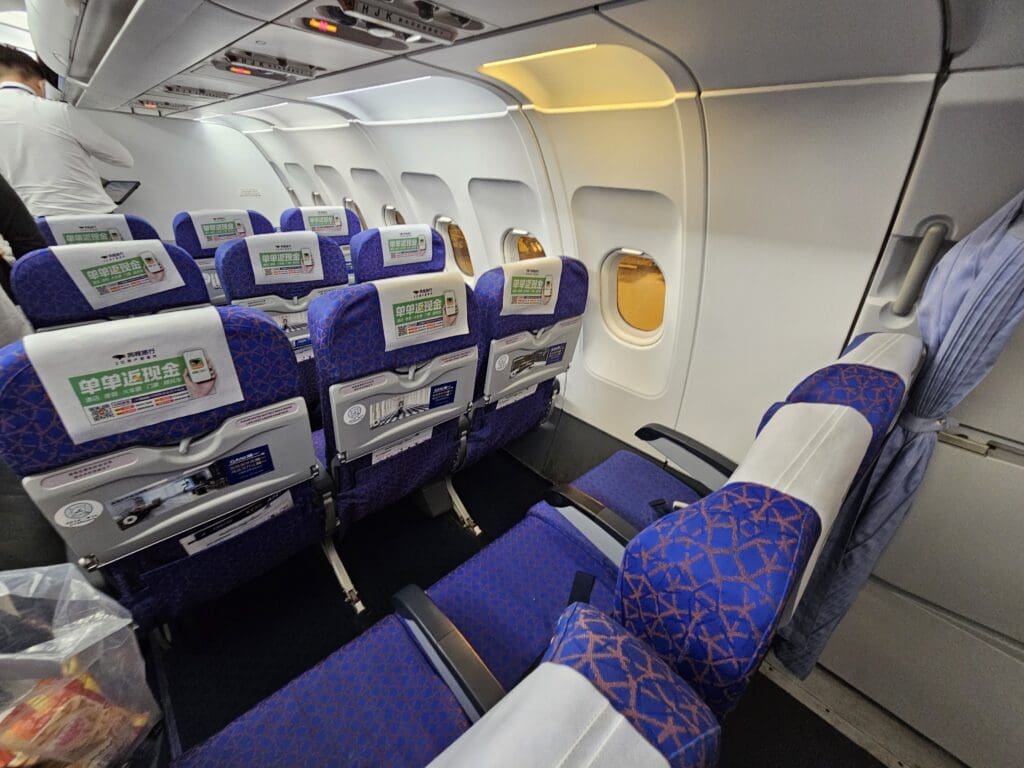
Despite the positive first impression created by the crew, unfortunately this did not extend to the cabin. Once seated, I discovered the area around my seat to be in an incredibly tired state, with plenty of marks and scratches visible around this, along with plenty of stains and significant amounts of well-ingrained dirt. In addition, several cabin lights had been replaced and failed to match the pre-existing tones, creating a very mish-mash impression. Despite China Southern Airlines’ status as a full-service carrier, advertisements could be seen on the backs of the disposable fabric antimacassars and on seatbacks, with these advertising a marble tile store and Tongcheng Travel, an online travel agency.
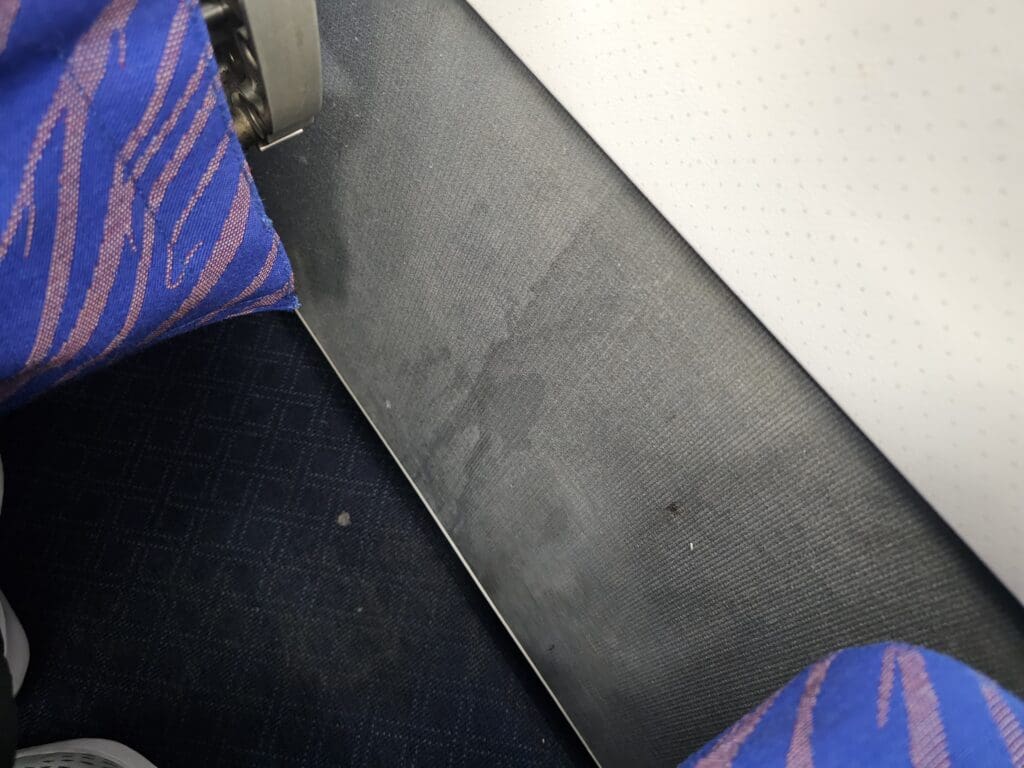
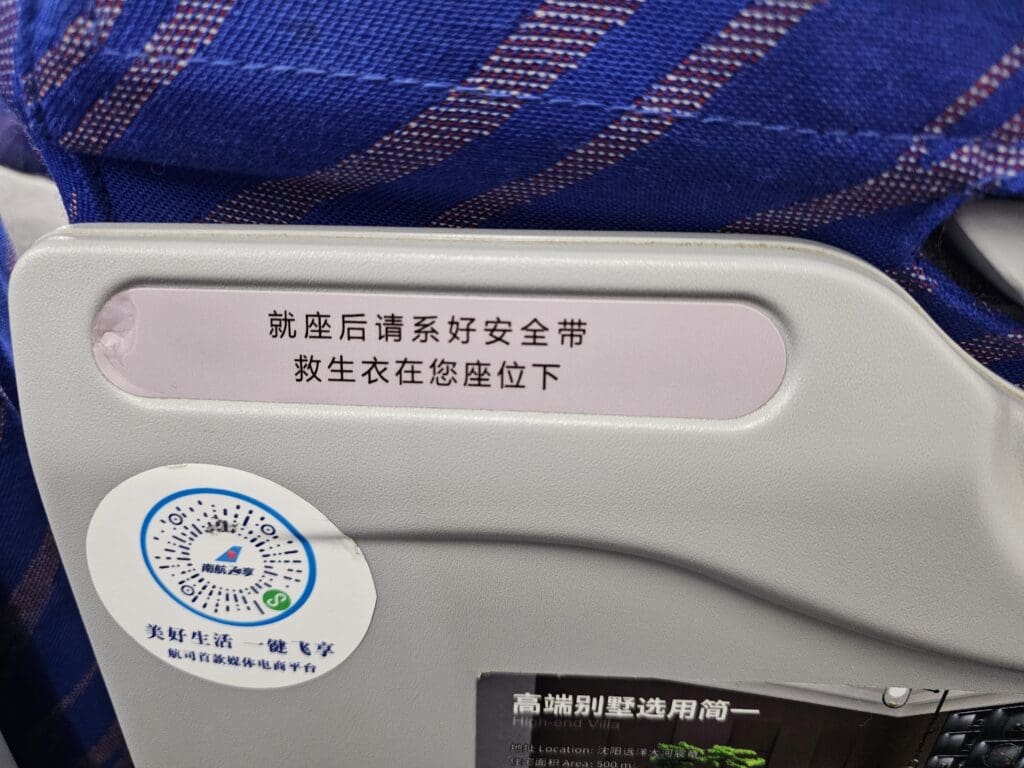
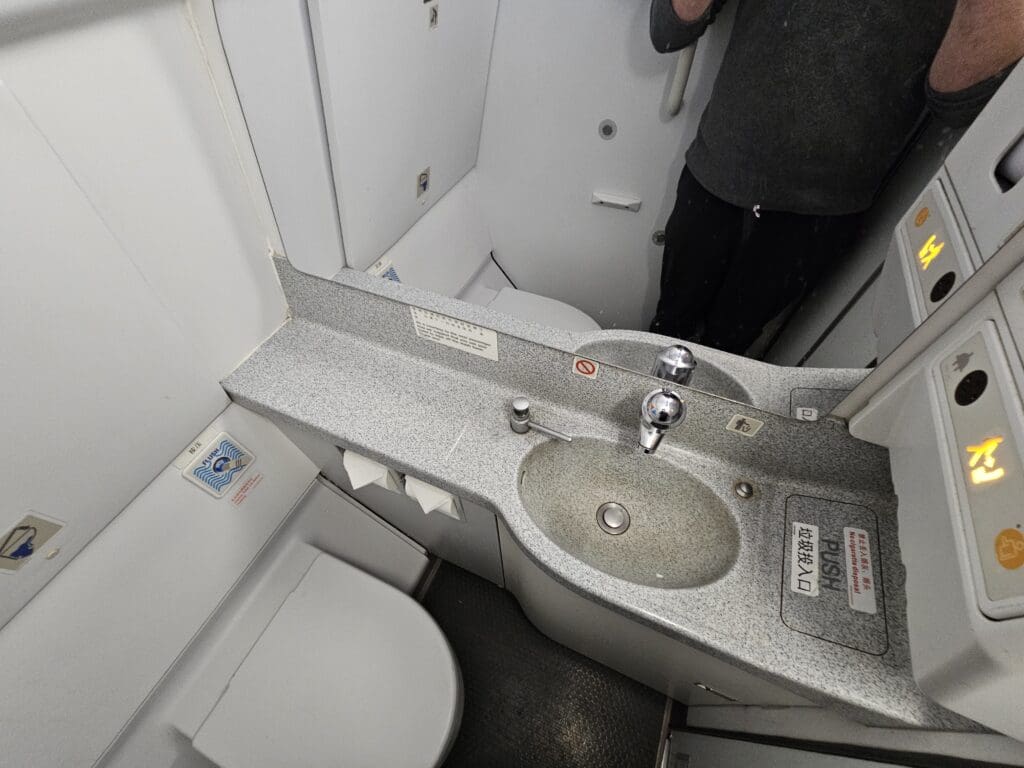
However, not all was negative, and I should note that in spite of its shortfalls, I found the seat to be comfortable, spacious and most certainly more than adequate for the short flight that evening. Meanwhile, whilst the aircraft was in need of a deep clean, this seemed to have been well cleaned during its very short turnaround in Beijing, and I failed to spot any crumbs, rubbish or other remnants left by previous passengers. Finally, as was to be expected given the age of the jet, this lacked any sort of in-seat power, and turning to the seatback pocket, these contained a safety card and a sickbag. Soon stowing my things, realising that I may be trapped in for the duration of the flight, I decided to head to the lavatory that sits in between the middle and rear Economy cabin. This was reasonably clean and stocked with the basics, although like the rest of the aircraft was rather tired looking. Nevertheless, serving its important purpose, I couldn’t really make too many complaints.
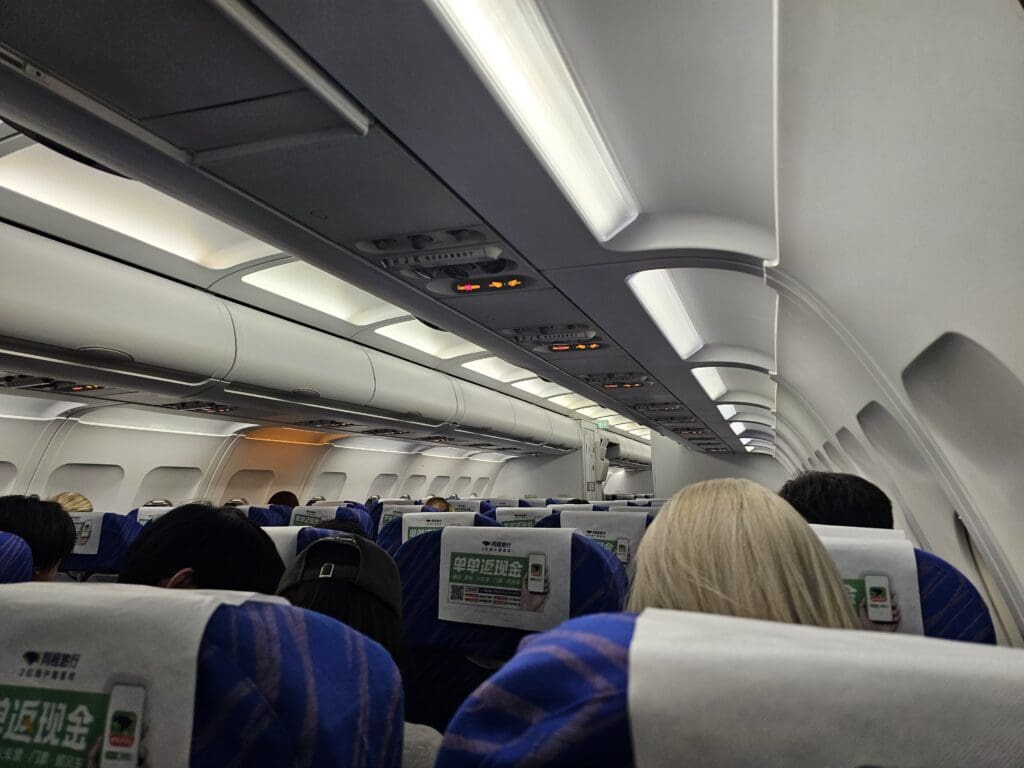
That evening, boarding was a quick affair and it soon became clear that it would be a quiet flight to Korea. Looking around, I would estimate the flight to have been no more than 50% full, and interestingly the vast majority of my fellow flyers hailed from China with virtually no Korean passengers and just a small handful of travellers from elsewhere. Once the last passenger had made it onto the aircraft at 1930, our pre-departure preparations commenced right away, with the traditional music that had accompanied boarding soon coming to an end as the Captain performed their welcome speech in Mandarin and English. This consisted of the usual thanks and welcomes, a mention of our 1H25 flight time and an overview of the weather in Seoul. Ending this, they requested passengers to keep their seatbelts fastened for the duration of the flight as there would likely be some light turbulence once up in the air. This was then followed by a slightly longer welcome announcement from the Purser in Mandarin and English. I should note that despite China Southern Airlines’ many flights to Korea, there were no Korean-speaking crew members onboard, nor were any pre-recorded Korean announcements broadcast through the cabin during the flight.
Almost as soon as the Purser’s announcement came to an end, the overhead screens fell into position and began to broadcast China Southern Airlines’ safety video. Other than the removal of the ‘no phones even in flight mode’ rule, this remained unchanged since my previous flights with the airline back in 2017 and consists of a pilot and flight attendant going through the safety instructions whilst an eerie soundtrack plays in the background. Despite the late start to boarding, with all having worked efficiently to minimise the delay, somewhat impressively, the aircraft pushed back just twenty minutes behind schedule at 1935. As we headed rearwards away from our parking position, the Airbus’ two IAE V2533-A5 engines spooled into life, resulting in a fair amount of vibration whilst the scent of aviation fuel temporarily filled the cabin. Meanwhile, inside, the cabin crew passed through the cabin, taking their time to ensure that everything was secure and in its correct position for our departure. After a few minutes, the tug was disconnected and the flaps were partially extended, whilst inside the cabin lights were dimmed before we commenced our journey to the end of Runway 11L.
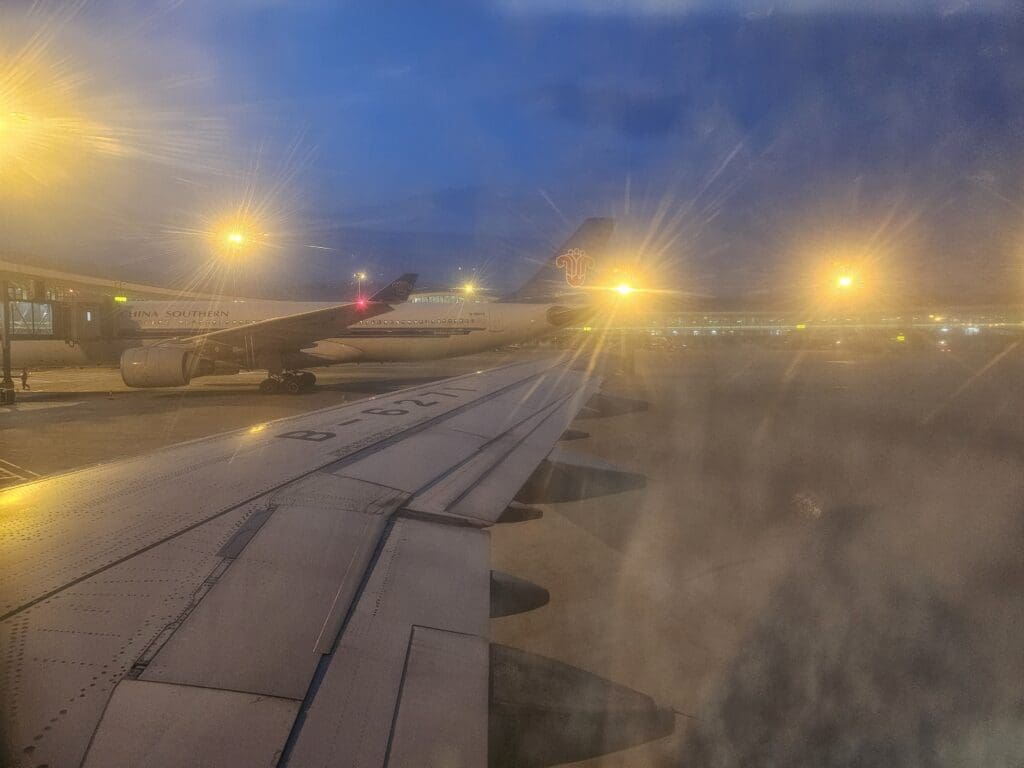
That evening, our journey to the end of the runway did not take too long and after a few minutes, we joined a China Southern Airlines Airbus A330-300 that would soon be heading off to Shanghai Hongqiao. After cheekily overtaking this widebody jet, the Airbus made its way onto the runway and came to a halt before the two engines whined into life, heralding the commencement of our short and powerful take-off roll. Rocketing upwards into the night sky in a matter of seconds, the Airbus soon left the sprawl of Beijing Daxing Airport behind, and the orange glow of the various towns and villages that sit to the south of the Chinese capital could be seen through my heavily scratched window.
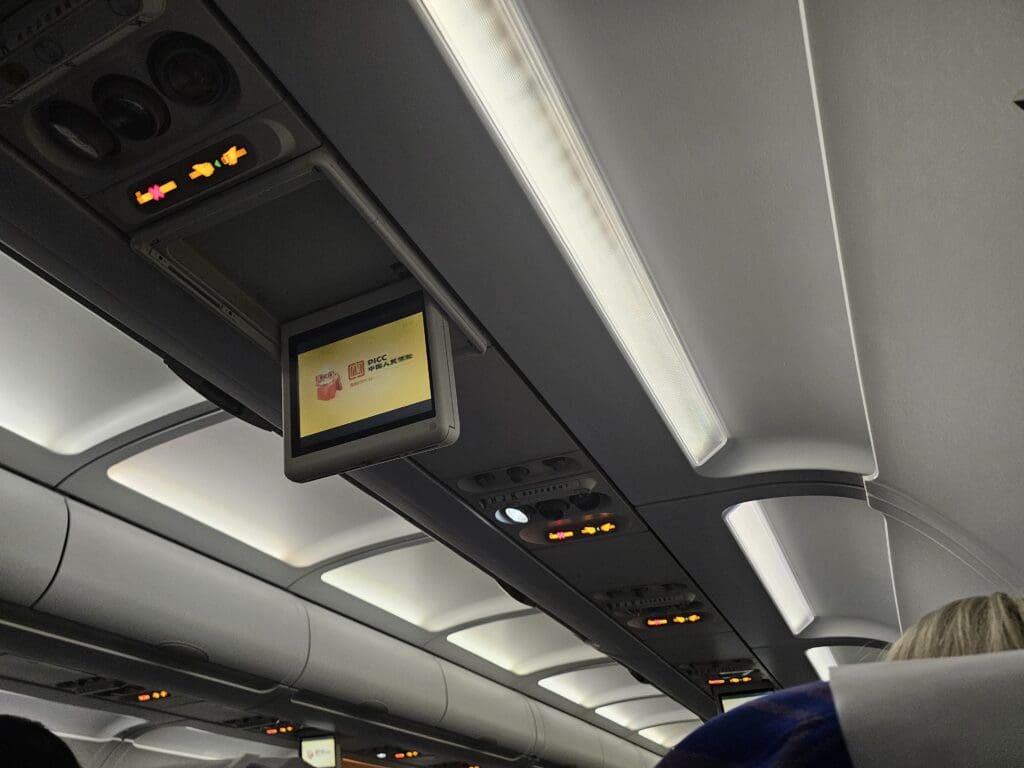
After a couple of minutes in the sky, the Airbus turned onto a southeasterly heading and the jet made a beeline for China’s seventh largest city, Tianjin. Reaching this in a few short minutes, by this time, the aircraft had risen above the clouds and thus nothing of the city’s tall skyscrapers or its near endless sprawl of ports could be seen before we left land behind and made our way out over the Bohai Sea. As is standard practice on Chinese carriers, the crew remained strapped into their seats until the aircraft had levelled off at its cruising altitude. Finally making it to 26,000 feet around thirty minutes after departure, at this point, the cabin lights were turned back on at full blast and the crew were released from their seats. Meanwhile, up above, the overhead screens dropped into position and broadcast a series of advertisements followed by a cartoon show. By this time, the Airbus was passing through the Bohai Strait between Dalian and Yantai and was approximately halfway into its flight between China and Korea. Indicating that there was some problem with the aircraft’s lighting system, the cabin was plunged into total darkness on no fewer than three occasions during the cruise and remained pitch black for around a minute before the lights were turned back on!
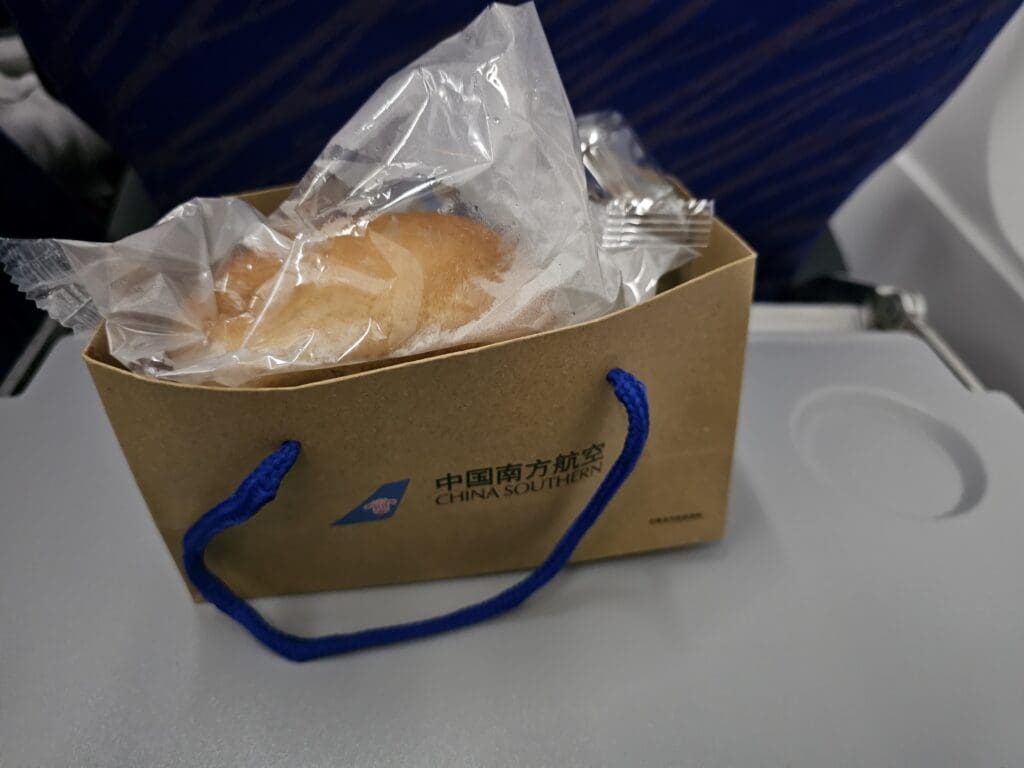
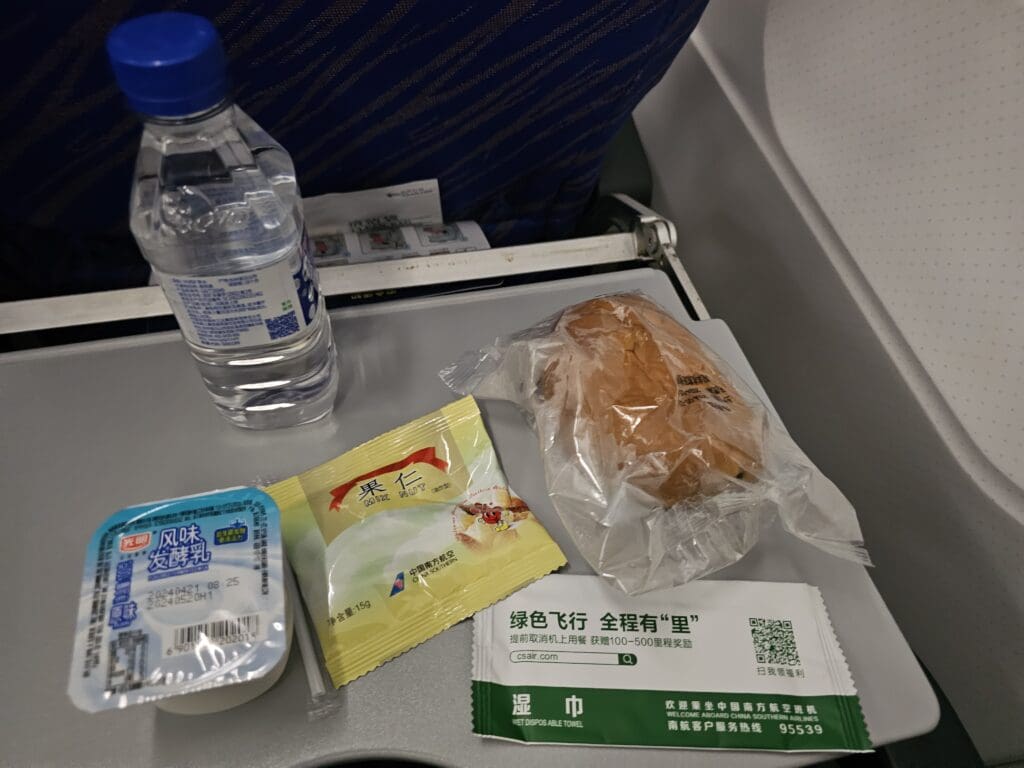
Despite the short flight time, once safely in the cruise, the crew took to the aisles to commence a complimentary round of service. As I had found was the case on my flight from London, this was distributed in an efficient yet brash manner. However, given the flight time, this was completely understandable given the number of passengers that needed to be served and the limited time to do this. After a few minutes, a sturdy China Southern Airlines branded cardboard-backed bag was handed over to me, which contained an antibacterial wet wipe, a warm chicken hot dog bun, a bag of salted nuts, a tub of fermented milk and a 350ml bottle of still water. In terms of quality and quantity, I found the offering to be perfectly sufficient given the short length of the flight and I was left with little to complain about. However, this paled in comparison to the full meal service that I have been treated to when flying between Beijing and Seoul on Korean Air.
By the time the meal had been handed out, the aircraft had left China behind and was now cautiously skirting around North Korean airspace. Literally two minutes after receiving the complimentary offering, the Purser performed a pre-arrival announcement with the usual warnings and instructions just before the aircraft could be felt commencing its descent. As we sank downwards, the Airbus bounced around a fair bit, although this was far from the worst bout of turbulence that I have ever experienced. Nevertheless, the crew did have to cling onto several seats as they journeyed through the aircraft, first collecting the remnants of the meal service, followed by their pre-arrival safety check.
With Incheon Airport sitting off the Korean mainland on the island of Yeongjeong, the approach to the airport is not particularly exciting at night as little can be seen other than the lights of fishing boards and the occasional island below. As we approached the Korean coastline, the flaps were partially extended before reaching the sprawling industrial works that sit to the north of the Gyeonggi town of Ansan.
After passing the bright lights of Ansan, the Airbus turned to fly north and commenced its journey over the dark waters that separate Yeongjeong Island from the mainland. At this time, the flaps were fully extended and the gear fell into position with a clunk whilst outside, the tall buildings of Korea’s third largest city, Incheon, could be seen alongside the long bridge that connects the city with Yeongjeong Island. As we descended lower and lower over the dark waters below, the Airbus bounced around a little and before I knew it the sprawl of Seoul Incheon Airport appeared, and we floated down over the island’s southern shoreline and the perimeter fence. Moments later, the Airbus made a very gentle return to earth, touching down on Runway 33L with a barely noticable bump ending our 1H21 journey through the skies of Northeast Asia.
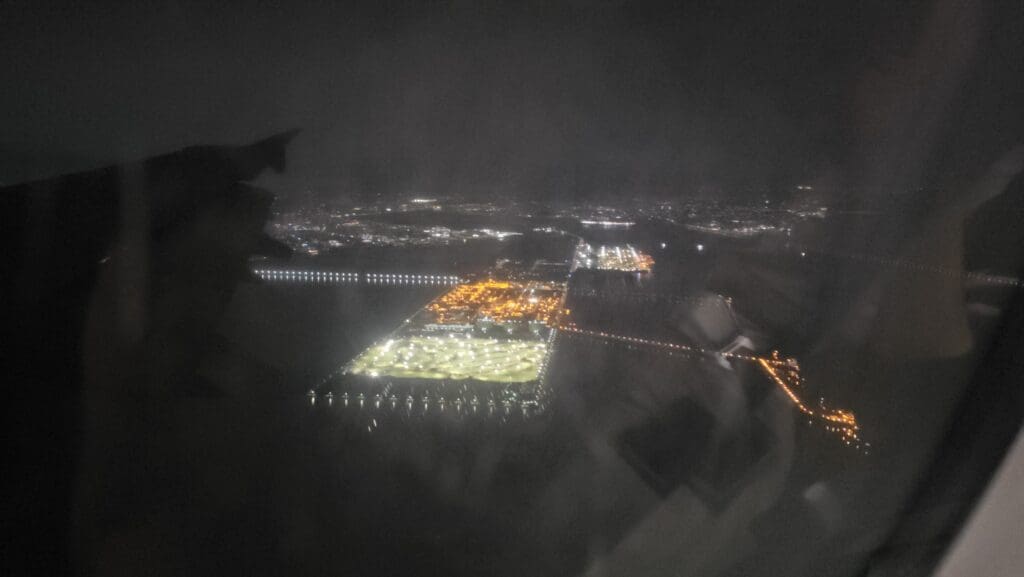
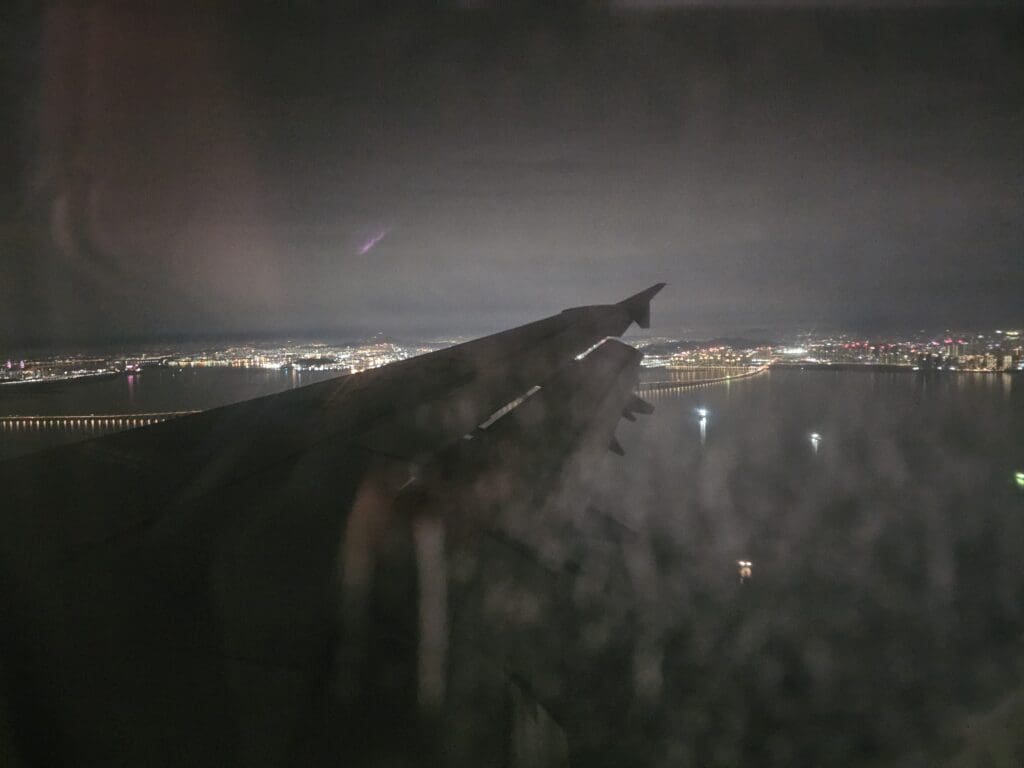
Contrasting with our smooth touchdown, the aircraft decelerated fairly rapidly and as we slowed rows and rows of Boeing 747 Freighters could be seen waiting for their next missions at Seoul Incheon Airport’s massive cargo terminals on the east side of the airfield. These were provided by local operators such as Asiana Cargo and Korean Air Cargo, alongside American carriers such as Atlas Air, Kalitta Air and UPS. Soon, the Airbus vacated the runway to the left, at which point the Purser welcomed all passengers to Seoul Incheon Airport, thanked passengers for flying with China Southern Airlines and advised passengers to remain seated until the aircraft had arrived at the gate and the seatbelt signs had been extinguished.
From the runway, the aircraft slowly trundled past Terminal 2, where masses of Korean Air jets could be seen, followed by the remote parking area that is sandwiched in between this terminal and Terminal 1’s satellite terminal. Being rather shattered after my long journey from Yorkshire, by this time, I was eager to head to my local Airbnb and was thus hoping that we would end up at the main terminal, thus alleviating the need to catch the people mover to immigration. However, that day, I was not in luck and a few minutes after touching down, the Airbus cautiously made its way into Stand 125 at the satellite terminal where we joined a cluster of jets operated by various Chinese carriers, alongside a melange of Boeings and Airbuses operated by low cost carriers from both Korea and abroad.
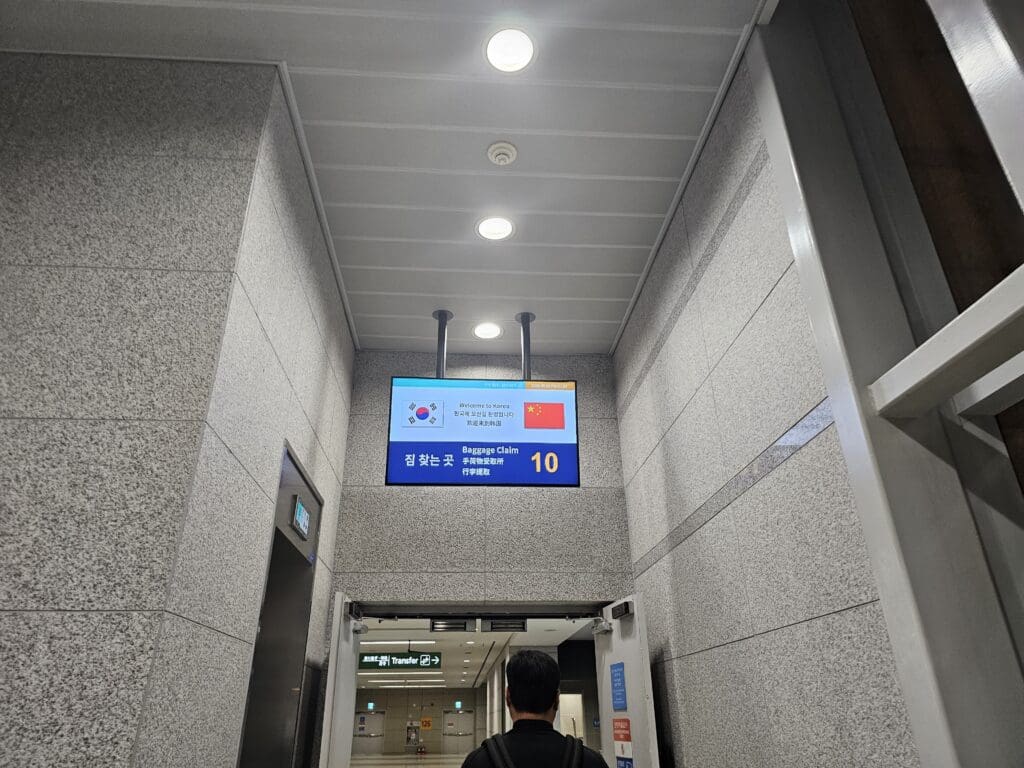
Once the engines spooled down, it wasn’t long before a jetbridge was connected to the aircraft and disembarkation commenced. Perhaps eager to end their journeys, upon coming to a halt, many passengers stood up and it wasn’t long before disembarkation commenced. Soon, I stood up and made my way through the cabin, receiving few polite thank yous and farewells before stepping up onto the jetbridge and commencing my journey into the modern and clean terminal building. From the gate, I had a fair walk to the people mover station, which is located in the basement of the terminal. Having inadvertently timed things just right, upon arriving there I boarded the train before its doors closed and was soon whisked to the main terminal. Once there, a short walk to Terminal 1’s sole immigration checkpoint was in order, however, I was delighted to find that this was not particularly busy and thus made it through in about four minutes before I entered the terminal’s large baggage collection hall. Despite having arrived at the gate no more than fifteen minutes earlier, by the time I made it to the baggage collection hall I was delighted to find that my suitcase could already be seen spinning around on one of the carousels. Thus, I soon picked this up and made my way through the customs checkpoint before entering the busy landside arrivals area, ending my twelfth ever ride with China Southern Airlines and bringing my long journey from Yorkshire to Korea to a close.
Summary
Despite the battered and worn state of the aircraft and the slightly brash service, this short haul hop left me with no major complaints. I found the seat to be comfortable and spacious, whilst the snack bag was appreciated given the short length of the service. Thus, overall, I was left with no major reason not to fly with China Southern Airlines again.