What’s Air China Like? Seoul Gimpo to Beijing on a Boeing 737-800
Background
Once I had booked my one-way outbound flight from the UK to Korea, my mind turned to booking the return portion. Seeing as I would need to end up in Dubai rather than the UK, after some experimentation, I deciphered that it was cheaper to buy two one-way tickets rather than a multi-stop itinerary on a single airline. For those looking to travel between Korea and the UAE, there are a fair number of options, with Emirates and Korean Air flying directly between Seoul Incheon and Abu Dhabi, and Etihad Airways operating to Abu Dhabi. Meanwhile, plenty of one-stop options can also be had, with the most geographically direct and usually cheapest being those via China’s hub airports. Upon taking to Google Flights, the direct options were expectedly expensive and the cheaper services were those offered by Air China, China Eastern Airlines and China Southern Airlines via Beijing Capital, Shanghai Pudong and Guangzhou respectively. Of these, Air China and China Southern Airlines came out cheapest; however, with a very short transit in Guangzhou and seeing as I would be flying to Korea with China Southern, I decided to go for a new airline for me, Air China.
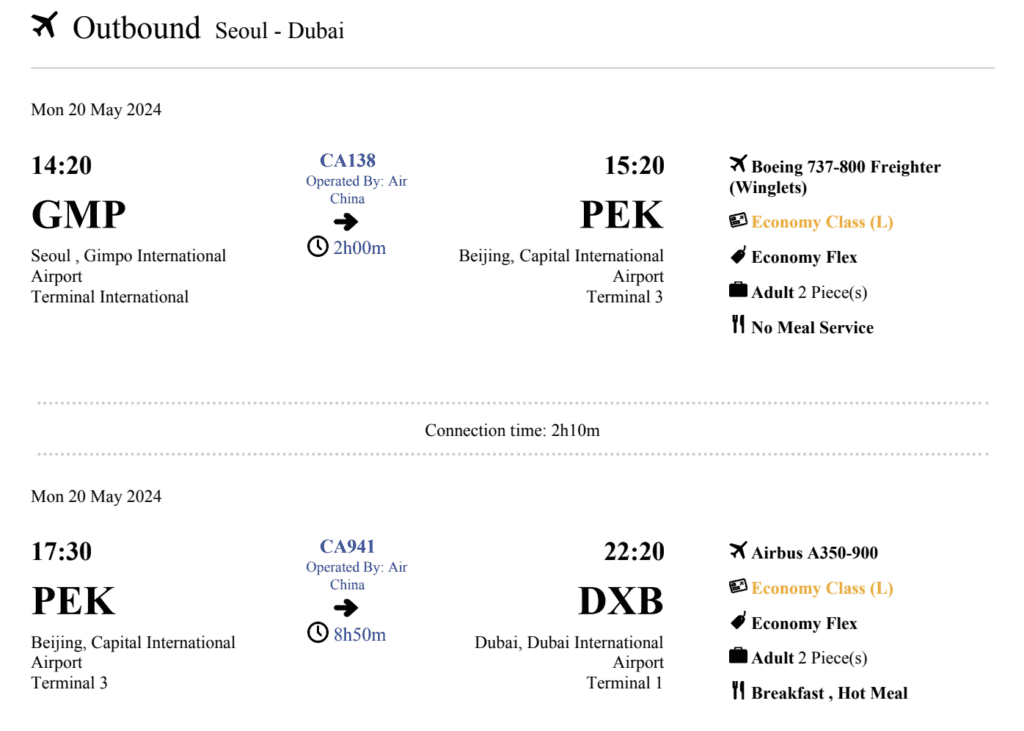
Seeing as prices on Air China’s website were priced equally to those on the plethora of flight booking websites, I decided to book directly with the Chinese carrier. Despite starting my journey in Korea, booking from my apartment in Leeds and seeking to pay in Pounds, I used the British version of Air China’s website. Thus, upon reaching this, I was not surprised to find an advertisement for the increased frequencies of Air China’s services to Europe, atop of which, the flight search engine could be seen. Wasting no time, I made a quick search for flights and was soon presented with the sole option between Seoul Gimpo and Dubai that day. As expected, this departed Korea at 1420 and I would hurtle across the skies to Beijing, arriving two hours later. Following a 2H10 connection, I would then head off on an eight hour slog to Dubai onboard an Air China Airbus A350.
With all in order, I clicked on the flight and was presented with two options – Economy Flex or Economy Latitude, priced at £208.80 and £564.80 respectively. Of these, both options included a generous hold luggage allowance of two bags of up to 23kg a piece, with the distinguishing feature of the more expensive fare being the ability to change your flights and request a refund without a free, as well as occurring 100% Phoenix Miles for the itinerary as opposed to 25%. Seeing no point in going for the more expensive fare, I continued onwards, and after ticking a box indicating that I was happy with the fare rules, I entered my details before being delivered to the optional extras page. Much to my delight, for both flights, many standard seats on both flights could be selected without paying an additional fee. Not wishing to pay for extra legroom seats nor wishing to add an additional 23kg bag for £109, I continued onwards and made it to the payment page. As one would hope for one of the world’s largest airlines, payment was a quick and easy process, and I soon received my e-ticket via email.
About the Airline
Like its other ‘big three’ counterparts, China Eastern Airlines and China Southern Airlines, Air China was formed in 1988 and can trace its roots to the early 1950s. In 1952, the Civil Aviation Administration of China opted to form an airline that was to have a total monopoly on the state’s commercial aviation industry. Established as the People’s Aviation Company of China, it soon became known simply by the abbreviation of its parent organisation, CAAC. Given its diverse spectrum of operations ranging from short hops to long haul slogs, the CAAC came to operate a diverse fleet that included Chinese, Soviet and Western-manufactured aircraft, from the Harbin Y-11 to the Boeing 747-200. After over thirty years of operation, in 1984, the State Council opted to decentralise the rather powerful Civil Aviation Administration of China. In its new role, this was to focus on regulating and overseeing all matters related to civil aviation in China, whilst its airline arm was to be broken up into six state-owned carriers, with their headquarters and operational focus in six different regions of China. As a result, in 1988 Air China, China Southwest Airlines, China Eastern Airlines, China Northwest Airlines, China Southern Airlines and China Northern Airlines. Thanks to several mergers in the early 2000s, just Air China, China Eastern Airlines and China Southern Airlines remain and have grown into mega-airlines, being the second, fourth and first largest airlines in Asia respectively.
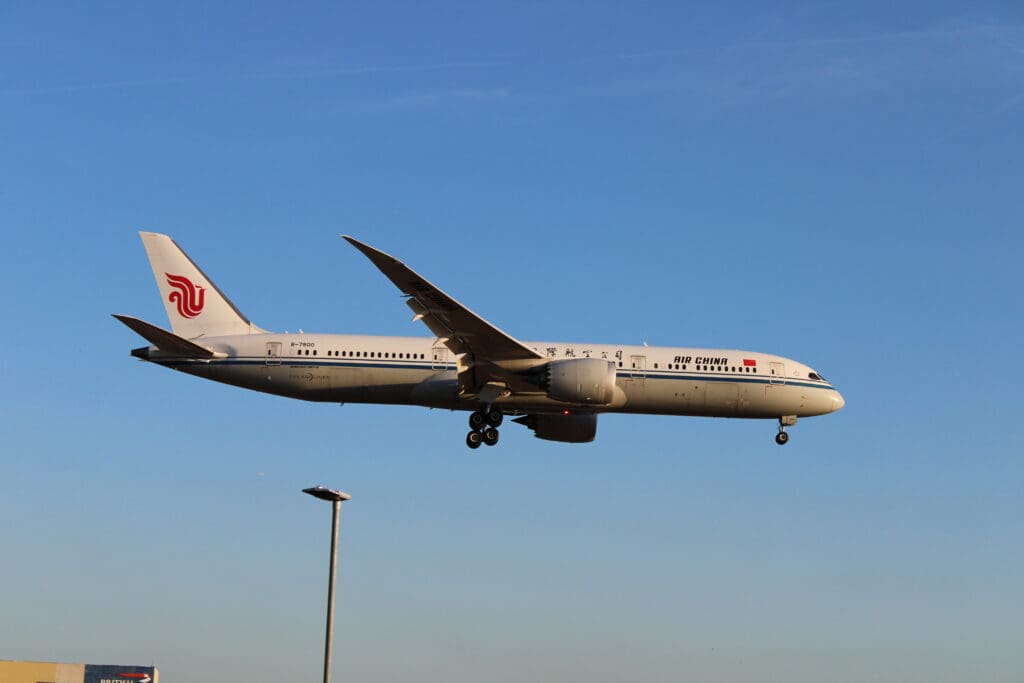
Headquartered in Beijing, Air China was given the privilege of taking over the CAAC’s long haul routes and inherited a fleet of mostly Boeing aircraft that enabled them to undertake this role. These included Boeing 707s, Boeing 747s and Boeing 767s, plus a few smaller aircraft such as Boeing 737s, BAe 146s and Hawker Siddeley Tridents for their short-haul and domestic services. Throughout the 1990s, Air China was able to capitalise on the fact that they remained unchallenged on many of their international services and the increasing demand for flights to and from Beijing. Since then, in spite of new competition and external pressures, Air China has continued to grow. Today the airline enjoys a global presence, and their plain yet distinctive blue and white jets can be seen at airports across all continents bar Antarctica (for now!).
The Journey
Following a jam-packed weekend in Busan, I arrived back at Seoul Station well after midnight and upon waking up at 0900 on Monday morning, I ended up being rather thankful that I had opted to take Air China’s afternoon service from Seoul Gimpo rather than one of the airline’s earlier flights from Seoul Incheon Airport. Once up and about, I packed my bags and divided my clothes and other possessions in an attempt to ensure that neither my backpack nor suitcase was too heavy. Once this was complete, I made my way down to the ground floor of the officetel block that I had called home for a couple of weeks to grab breakfast. Not opting for anything too fancy, my last Korean breakfast of the trip consisted of a cheap convenience store donkatsu and sweet potato kimbap and an iced Americano from the neighbouring café. Once back in the officetel, I made one final check to ensure that I had everything with me before descending the fourteen floors to street level and commencing my long journey across Asia.
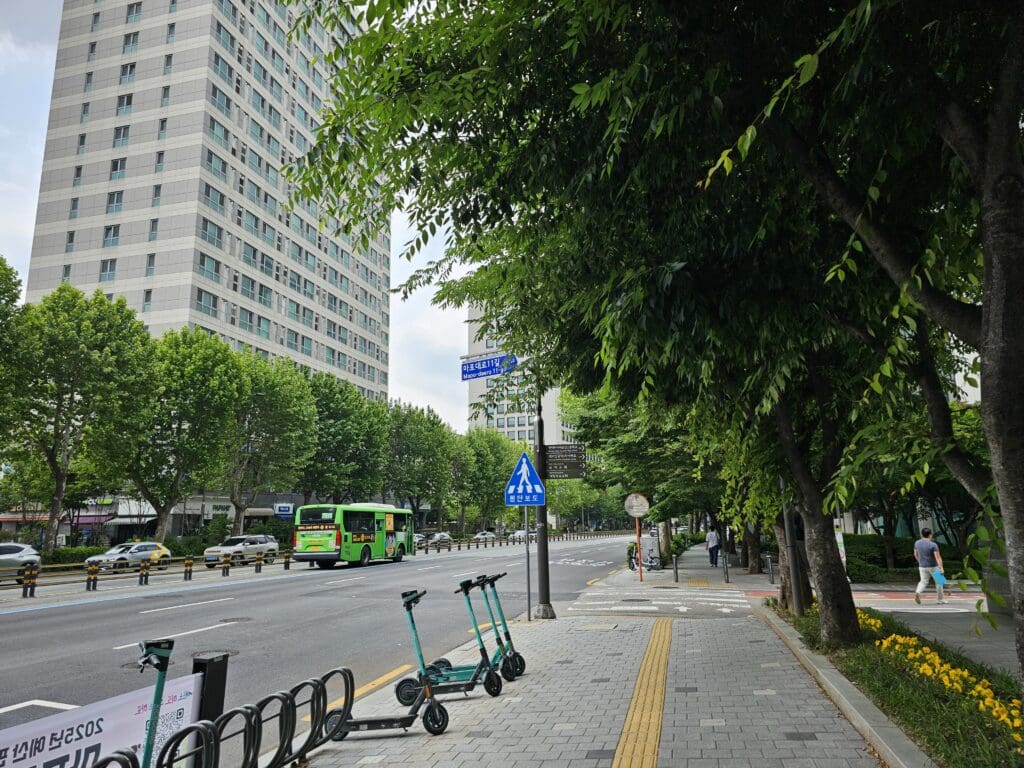
Starting my long journey in the neighbourhood of Gongdeok on the western fringes of Central Seoul, getting things off to an easy start, I wouldn’t have far to trek to reach Seoul Gimpo Airport. As is well known, Gimpo Airport sits far closer to the Korean capital than the country’s main international gateway, Seoul Incheon Airport. Specifically, I would have around thirteen kilometres to trek to reach the airport’s international terminal. As you would expect, just like Seoul Incheon Airport, Gimpo is well-connected to Seoul’s extensive public transportation network and enjoys the luxury of its own station, connected to no fewer than five mass transit lines. Following a leisurely start to the morning and a second coffee, I lugged my three-wheeled suitcase out into the warm late spring air and headed down the busy eight-lane road towards the centre of Gongdeok. A few minutes later, I arrived at the busy skyscraper-surrounded crossroads that sit above Gongdeok Station and descended into Seoul’s subterranean world. Making my way into the crowded hive, I zigzagged through the late-morning hustle and bustle before eventually arriving at the westbound platform of the all-stop Airport Express (AREX) service.
As its name would suggest, the AREX service links Seoul with its two airports; however, beyond this, it provides a key route for travelling between western Seoul’s neighbourhoods and between the capital and the satellite towns that sit between Seoul and Incheon Airport. Thus, being more than simply an airport train, despite running at a frequency of around every six minutes, I often find these services to be busy, and they don’t always provide a comfortable ride if making the full journey to Incheon Airport. Having inadvertently timed things just right, no more than two minutes after joining the masses on the platform, an Incheon Airport bound Hyundai Rotem Class 2000 train came hurtling into the station, and upon coming to a halt, the platform’s glass screen doors opened. Seeing as I was travelling with a heavy and unstable suitcase, I decided to make the journey to Gimpo standing up rather than attempting to squeeze myself into one of the train’s few remaining seats.
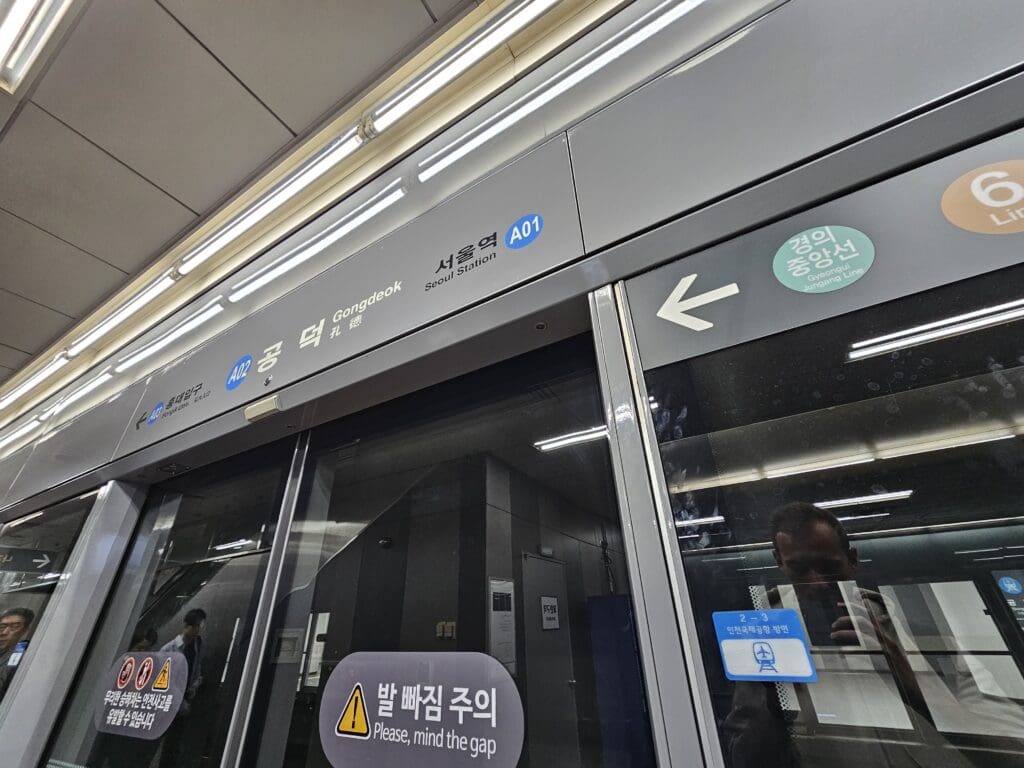
After a few quick moments, the doors beeped closed, and the train sped off down the dark tunnels under Seoul, although it wasn’t long before we reached the first stop, Hongdae. Next up was my old neighbourhood of Digital Media City before we temporarily headed out into the open air and sped across the wide Han River. Afterwards, the train headed back underground and made a short stop at Magongnaru Station before pulling into Seoul Gimpo Airport Station around sixteen minutes or so after leaving Gongdeok. Once there, I piled off with a mixture of Jeju-bound suitcase-wielding passengers, airport staff and others. From the platform, a long ascent is required, either via lifts or a series of escalators. Eventually, I tapped my T-Money card on the barriers and exited the station.
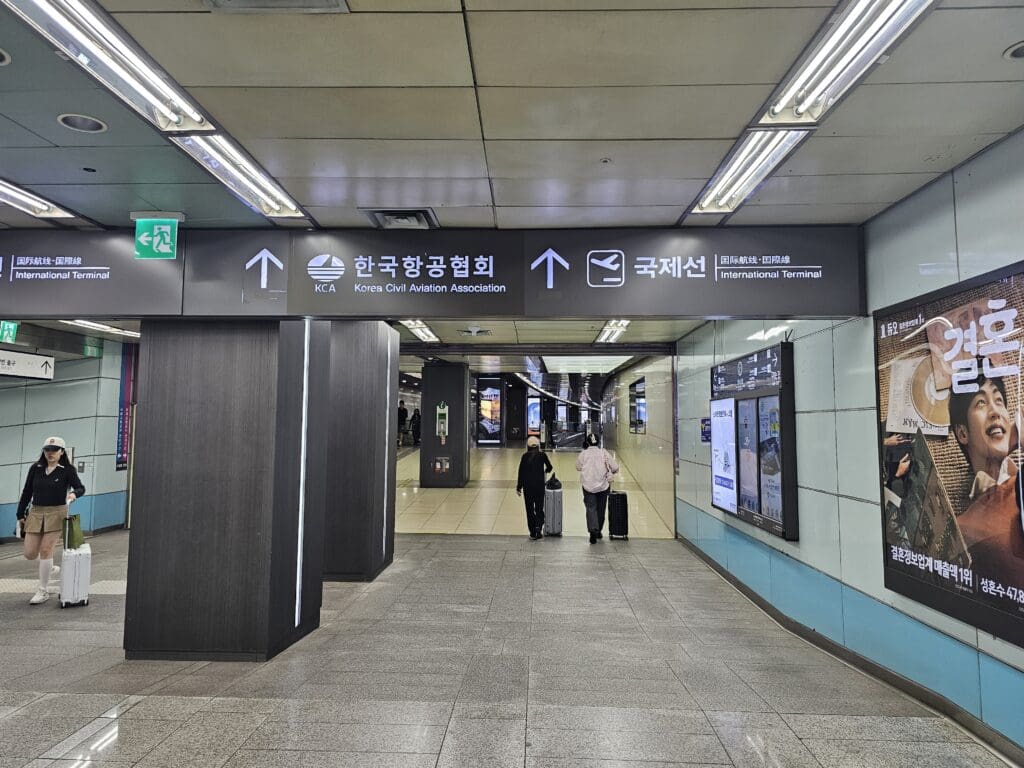
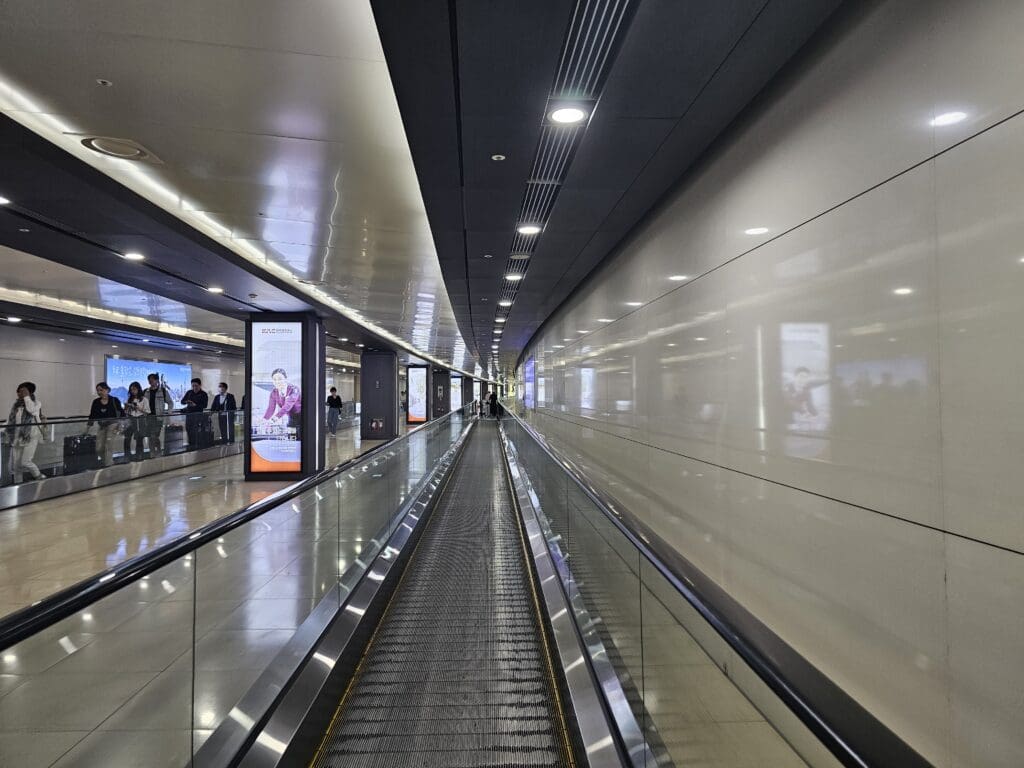
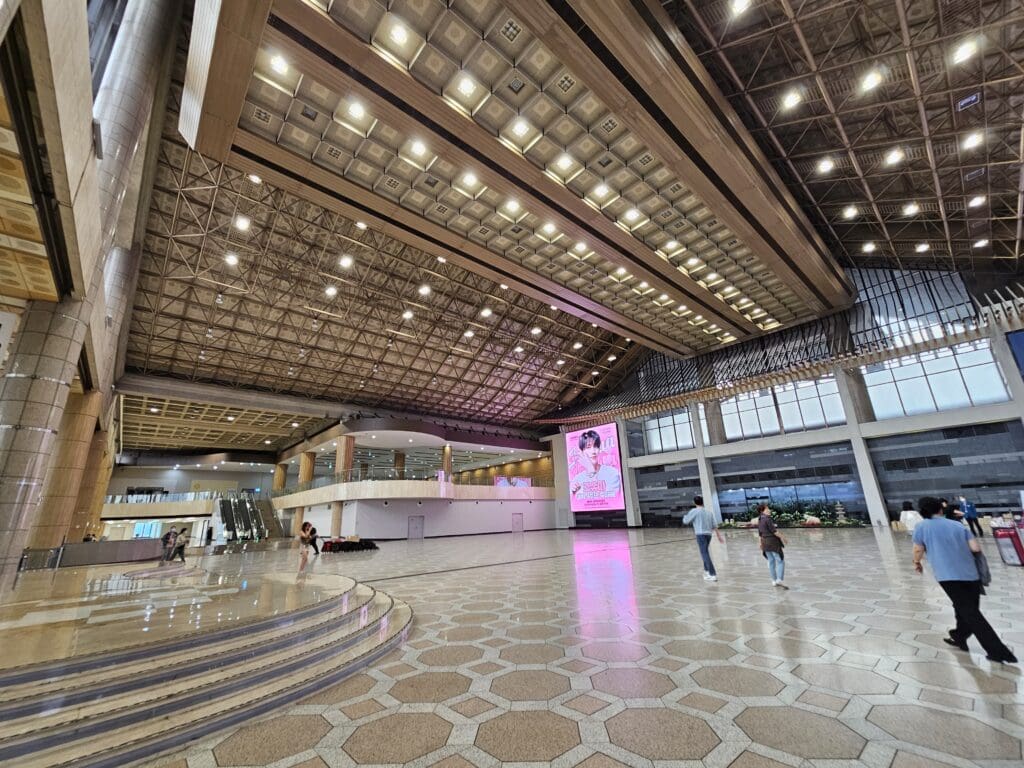
Gimpo Airport Station conveniently sits roughly halfway between the detached international and domestic terminals and is connected to both via a series of underground passageways. Upon exiting the station, I turned right and began my journey along the nearly totally deserted and well-polished corridor that, after a series of long travelators, leads to the international terminal. Several minutes after leaving the station, I headed up an escalator and arrived in the international terminal’s modest landside arrivals area, which undoubtedly provides inbound passengers with a much less grand first impression of Korea than those arriving at Incheon Airport! Continuing onwards, I then made it to the large, spacious and fairly quiet check-in hall.
Constructed in the 1980s, Gimpo Airport’s international terminal welcomed its first passengers in the run-up to the 1988 Seoul Olympics and preceded the liberalisation of travel for ordinary Koreans in 1989. Following its grand opening, the terminal served as Korea’s main international gateway, which goes some way to explain the terminal’s still-existent air of grandeur. Looking around, the landside area features high ceilings, well-polished floors and large windows, whilst the pointed roof takes some inspiration from a traditional Korean hanok. However, despite its grand design, the terminal was not to serve as Korea’s main gateway for long as Seoul Gimpo Airport’s limited room for expansion saw planners look west to construct a brand new international airport. Indeed, in the 1990s, work began to reclaim land between the islands of Yeongjong and Yongyu, on which Seoul Incheon Airport was to be constructed. Opening in 2001, since then, Seoul Gimpo Airport has been served by just a small handful of international scheduled flights to a select number of business-orientated destinations across East Asia.
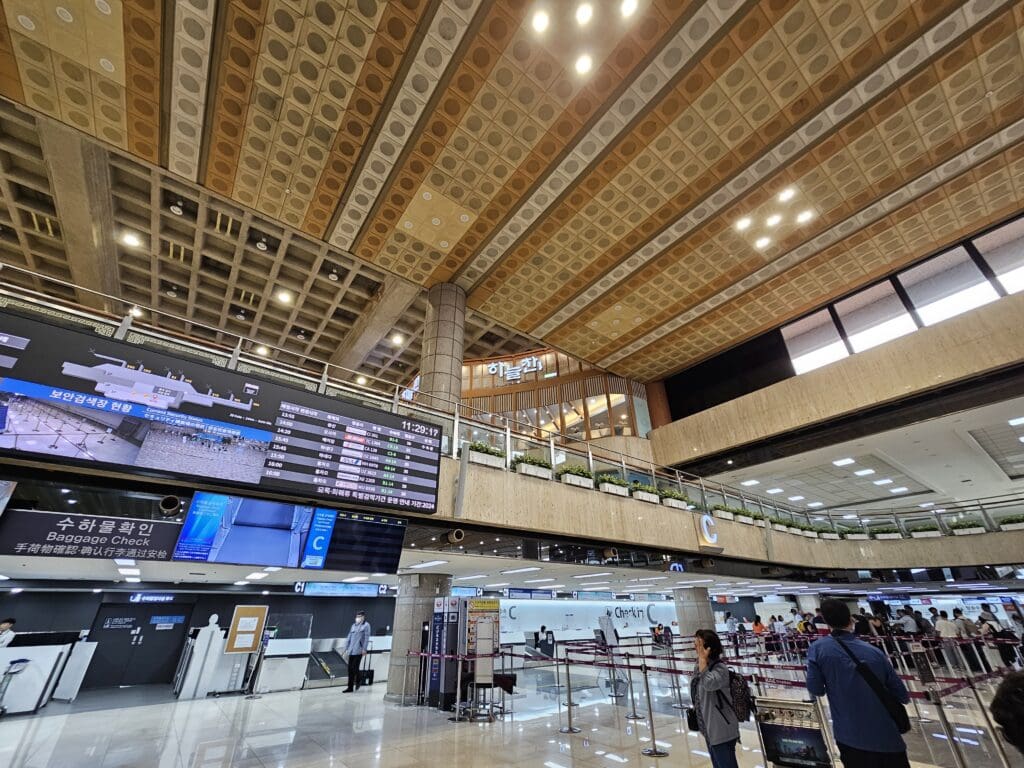
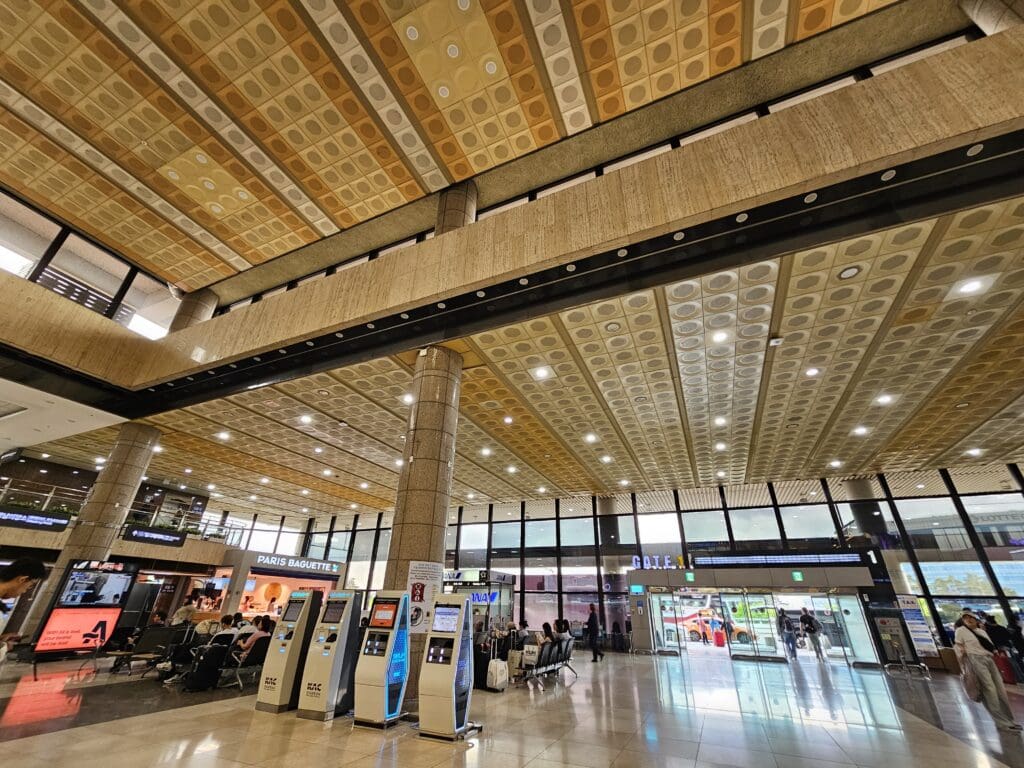
Returning to the journey, as I walked through the spacious check-in area, I was left with an excellent first impression. This appeared to be spotlessly clean, whilst plenty of seating was offered, alongside plug sockets for those needing to charge their devices. Additionally, fast complimentary wifi was offered which I found to work well throughout the terminal for the duration of my stay. When it came to facilities, four cafés, two restaurants, a convenience store and a pharmacy were offered before security, which seemed to be a decent array given the relatively quietness of the terminal. In terms of its layout, the terminal’s check-in desks are split across four zones and from what I could see, it seemed that each airline enjoyed its own dedicated zone. Meanwhile, those heading off on local giants Asiana Airlines and Korean Air could also check-in using one of the reasonable number of self-check-in machines available in the check-in hall.
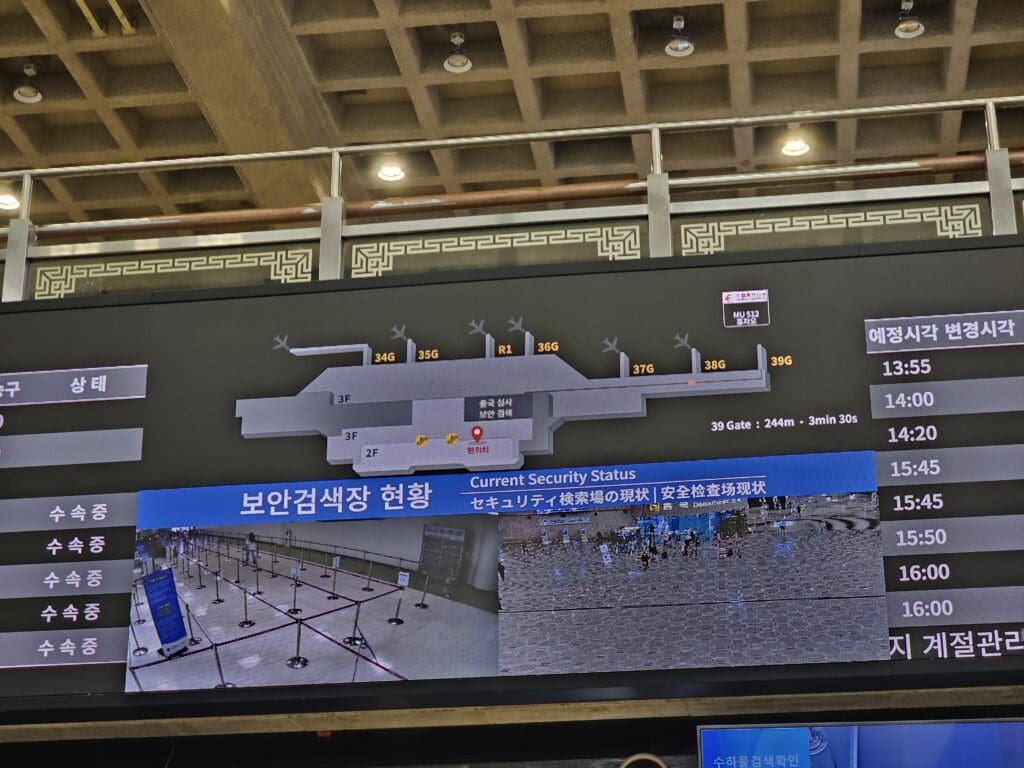
Seeking to rid myself of my three-wheeled suitcase as soon as possible, following a quick explore, I checked the departure boards, which revealed that check-in for my flight to Beijing would take place in the C-zone. Upon arriving there, I was greeted by the sight of a fair queue whilst the army of ground staff could be seen readying the check-in desks in preparation to welcome that afternoon’s passengers. This was primarily staffed by members of Korean Air’s handling company, Air Korea, although a single Mandarin-speaking Air China supervisor could also be seen hovering around the desks in anticipation of issues. Considering that the flight was operated by a Boeing 737-800 with a total of 176 seats, I was reasonably impressed with the number of check-in counters available. Specifically, four desks had been assigned to those in Economy Class, whilst a dedicated Business Class desk and a ‘Corporate Customer Counter’ were available. With a fair line of passengers already waiting, with nowhere else to go, I joined this and a few minutes later at 1130, a pre-recorded announcement rang out in Mandarin, Korean and English. This advised passengers of Air China’s baggage rules before moving on to work through the long list of prohibited items per the Civil Aviation Administration of China’s strict rules.
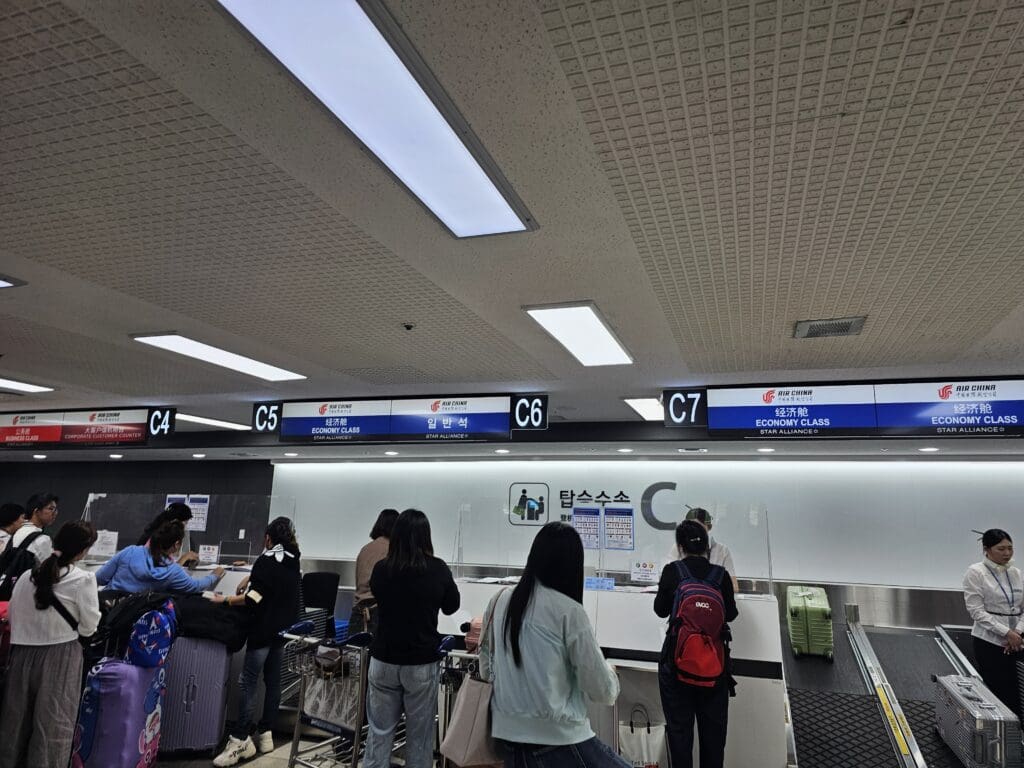
Following a short wait, at 1135 check-in opened and thanks to the many desks and the army of staff on hand, the line shuffled along at a decent pace. After about five minutes, I reached the front of the queue and was soon pointed towards the next available desk where I received a friendly greeting in Korean. Once there, I handed over my passport, e-ticket and proof of onward travel from Dubai. In exchange, I received an Air China form which featured the phone numbers and seat numbers of all those who had checked in at the desk before me, and was asked to write my phone number next to my seat number. Whilst I suspect this was likely a breach of multiple data protection laws, I dutifully filled this in and placed it back on the counter, at which point, judging by the expression on the check-in agent’s face, something was awry. Revealing the issue, the agent politely asked me whether I had an e-visa for the United Arab Emirates. However, as a Brit, just as with a South Korean, this would not be required as I could prove that I would be leaving the country within thirty days. Unfortunately, the agent stood steadfast in their position and advised me to apply for an Emirati e-visa online. After claiming multiple times that I had entered the UAE on multiple occasions without any visa, the agent went to speak to their supervisor, and after multiple phone calls, thankfully, I was cleared to be checked in for the flights. Once my bag had been tagged, two Air China-branded boarding passes were printed off before the agent profusely apologised for the delay. Whilst this was not my smoothest check-in experience, as an airline worker myself, I am aware of the tough penalties that would be levied on Air China were I to be refused entry to Dubai and the likely repercussions on that individual staff member, so I wasn’t left with any hard feelings!
Once I had checked in, I saw little point in remaining in the landside portion of the terminal. I thus made my way up the escalators and reached the short queue for the identity and boarding pass check that precedes security. After a couple of minutes of shuffling along, I was permitted to enter the small security hall. There, only around half of the checkpoints seemed to be open, however, this was by no means an issue and with nothing more than minimal queueing, I was pointed to one of these and had a quick and easy security check. Afterwards, I walked several steps over to the immigration checkpoint. Since my last international departure from Gimpo Airport in April 2017 (which was coincidentally to Beijing, albeit on a Korean Air Boeing 777-200ER), it was clear that there had been a move to automation, with six automated passport checkpoints and just one manned counter. Unfortunately, being a tourist rather than a resident, I had no other option than to join the short queue for the manned counter. Thankfully, nothing more than a minute-long wait was required, and I was soon free to explore the airside area around ten minutes after receiving my boarding passes.
Despite the spacious grandeur of the landside area, once airside, Gimpo Airport’s international terminal is compact, and it is difficult to imagine that this was once Korea’s main international gateway! This is fairly straightforward in its layout and is roughly rectangular in shape and home to just seven gates. Examining the facilities, those looking to do some retail therapy can head to either the Lotte or Shilla Duty Free stores; however, beyond this, no other shops could be found, and I was slightly disappointed at the lack of budget options such as convenience stores or vending machines. Turning to the eateries, this part of the terminal was home to a Café Pascucci, a Japanese restaurant, a Korean restaurant and a Korean street food counter. Whilst this was not the greatest selection of food outlets, I felt that this was more than adequate given the size of the terminal and importantly, the price of items in these did appear to be overly inflated. Other facilities included a small lounge, a massage chair lounge and a currency exchange counter.
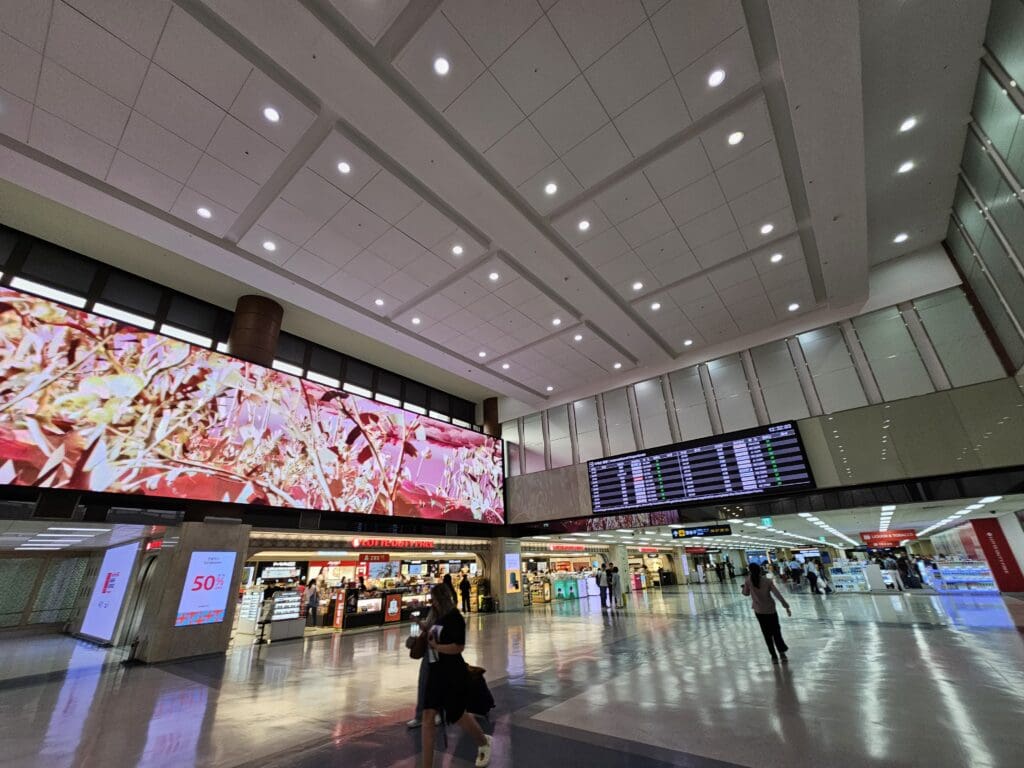
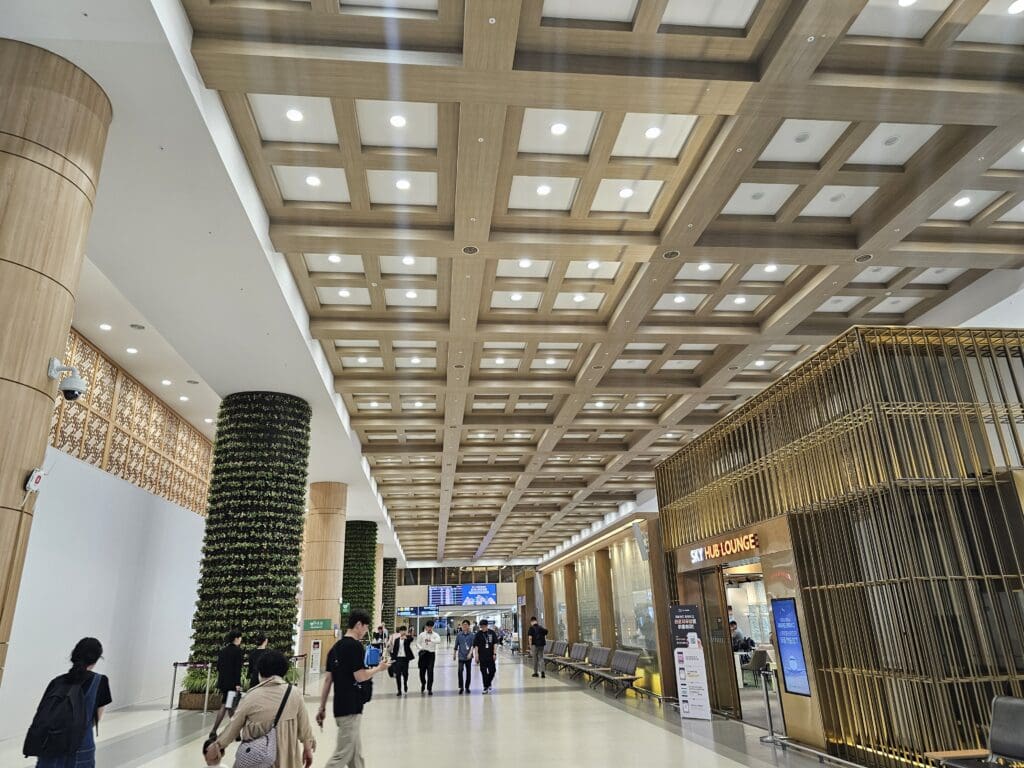
Wandering around, I found the terminal to be pleasant and comfortable for a short stay, if not slightly dated in appearance. However, given the terminal’s small size and the lack of facilities, I would advise passengers against arriving hours before departure, as you would likely end up getting rather bored. Additionally, plenty of seating could be spotted, whilst a good number of charging stations could be seen. For aviation enthusiasts, views out onto Gimpo Airport’s northern apron could be had through windows at several of the terminal’s gates. However, it should be noted that these seemed to be slightly tinted and thus, any serious aviation photography would have likely proven to be difficult. In addition, thanks to the layout of the airport, the runway cannot be seen from the terminal, so views of the action are limited, with the northern apron primarily used for business jet parking, storage and international flights.
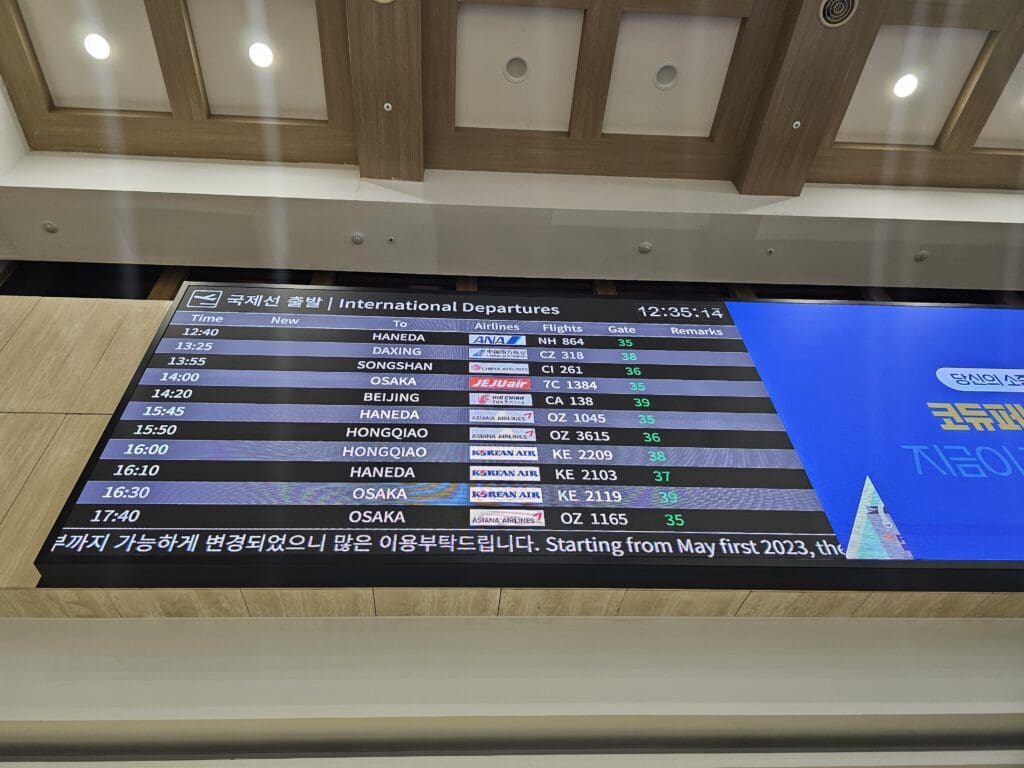
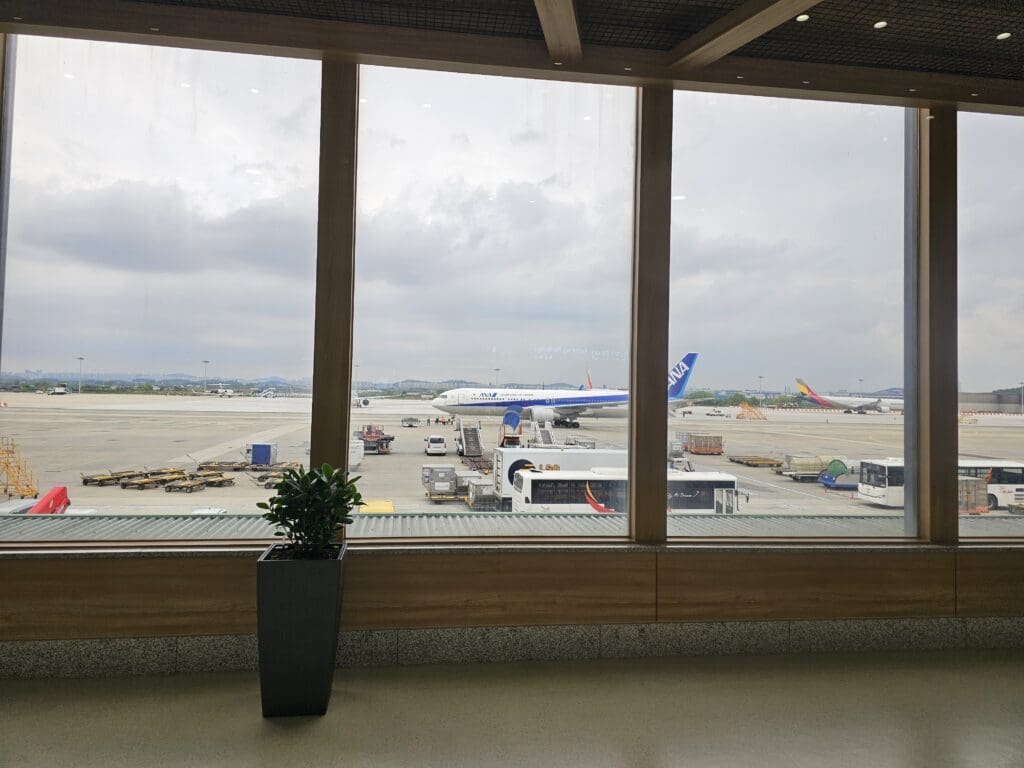
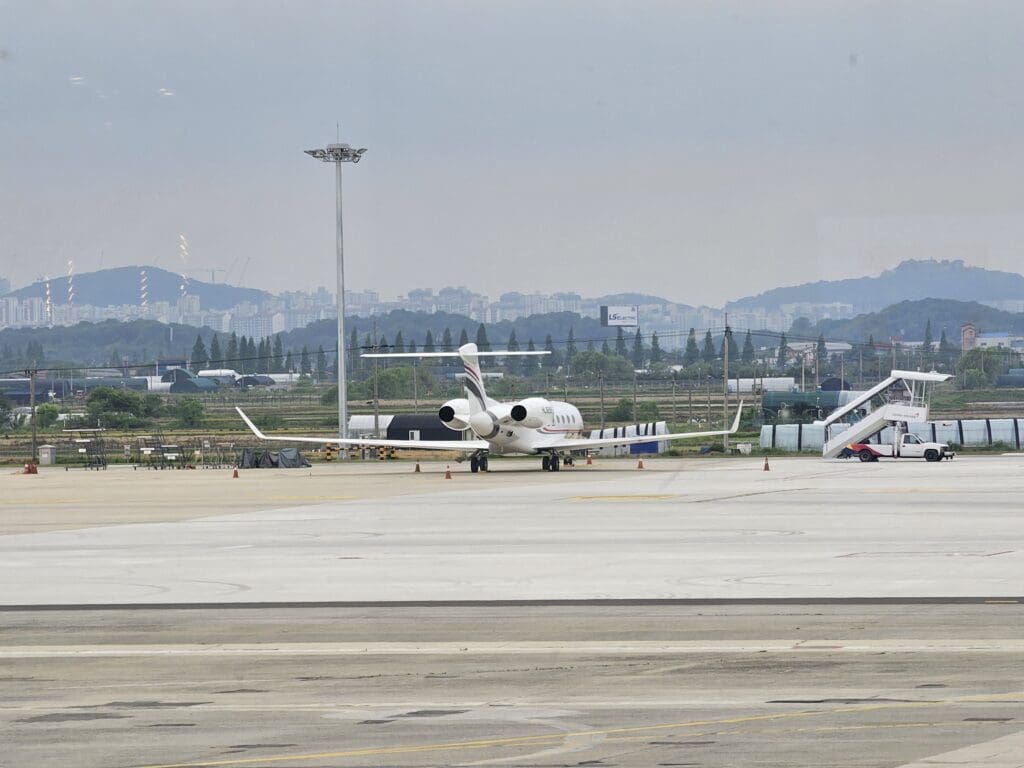
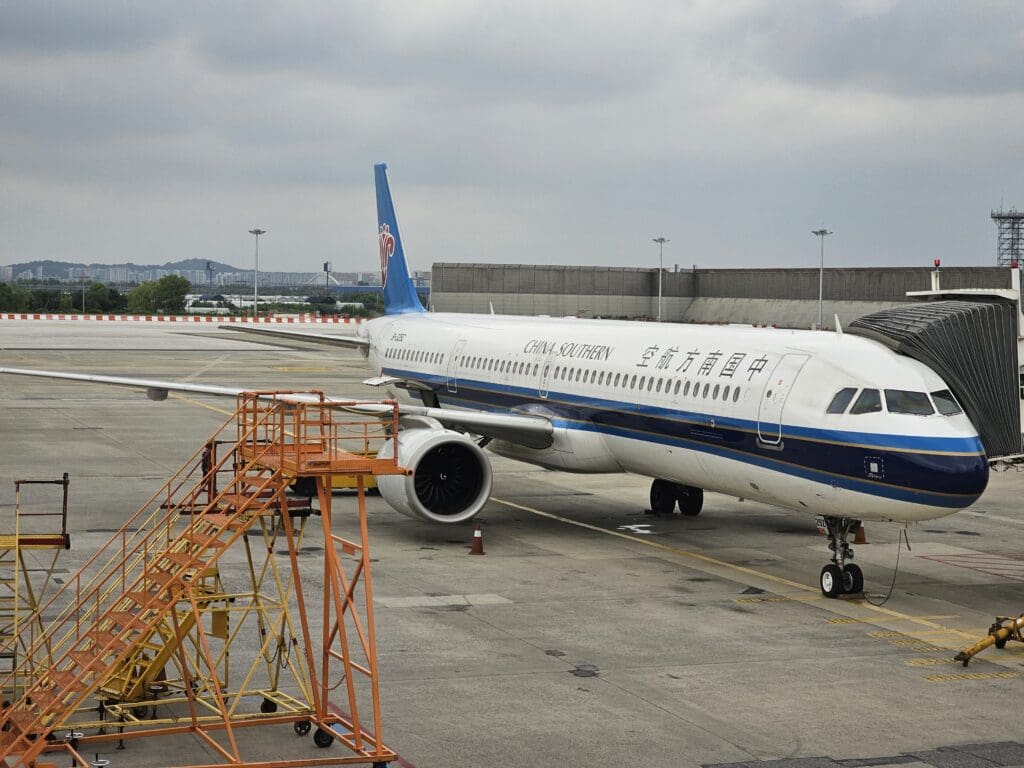
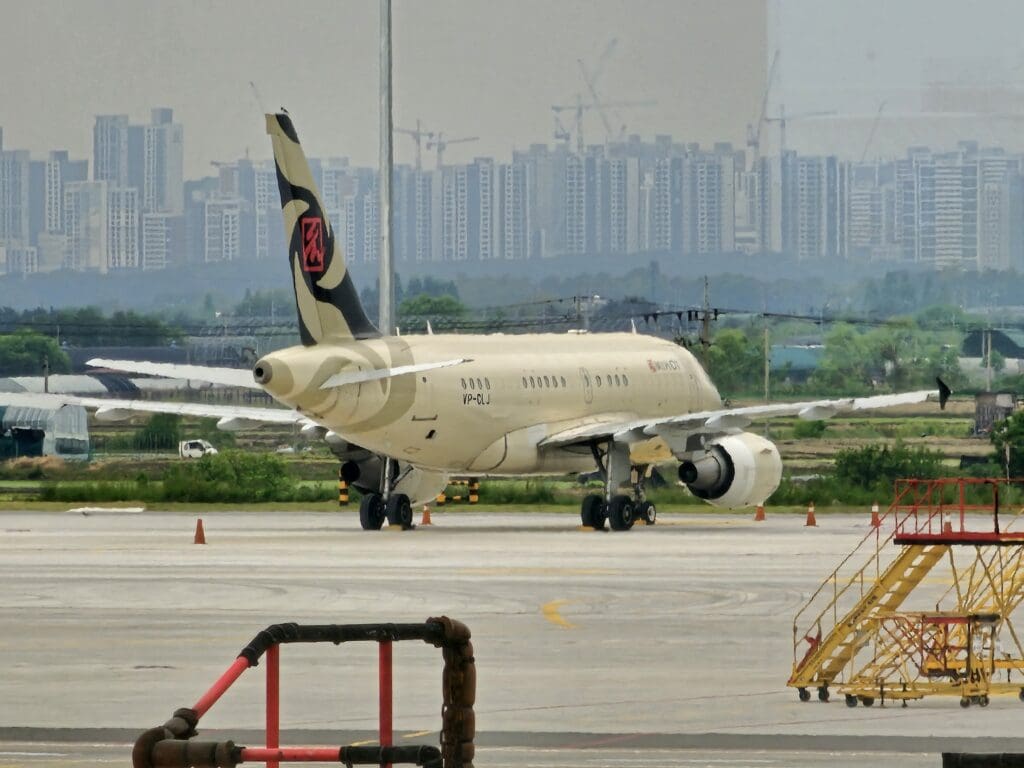
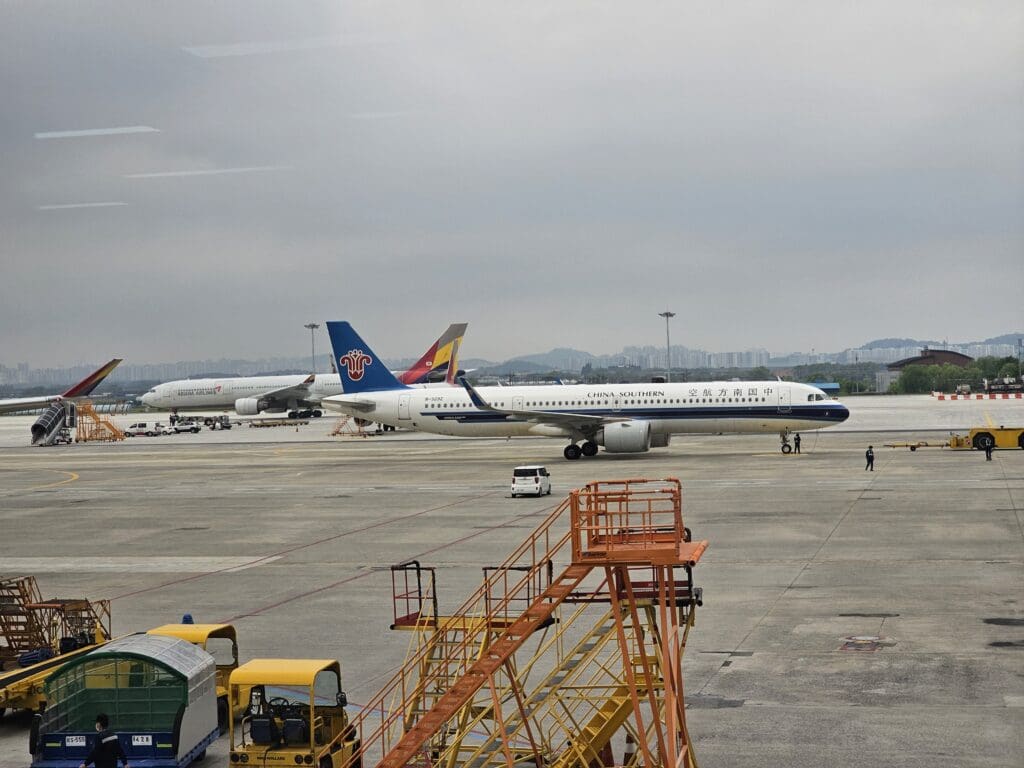
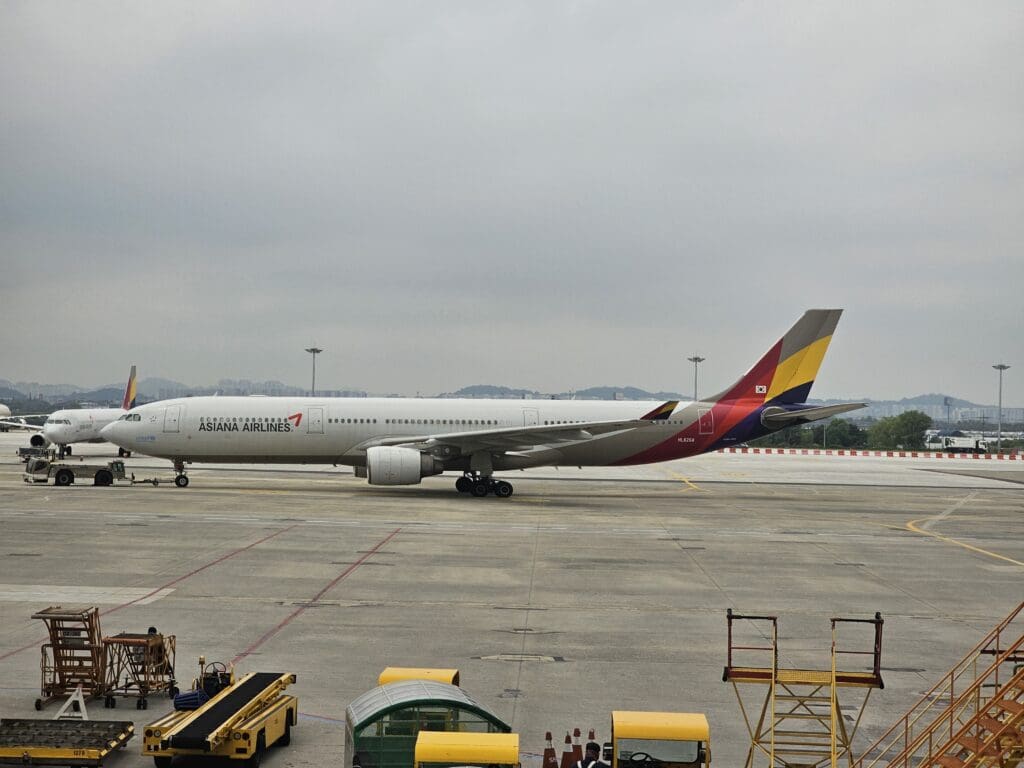
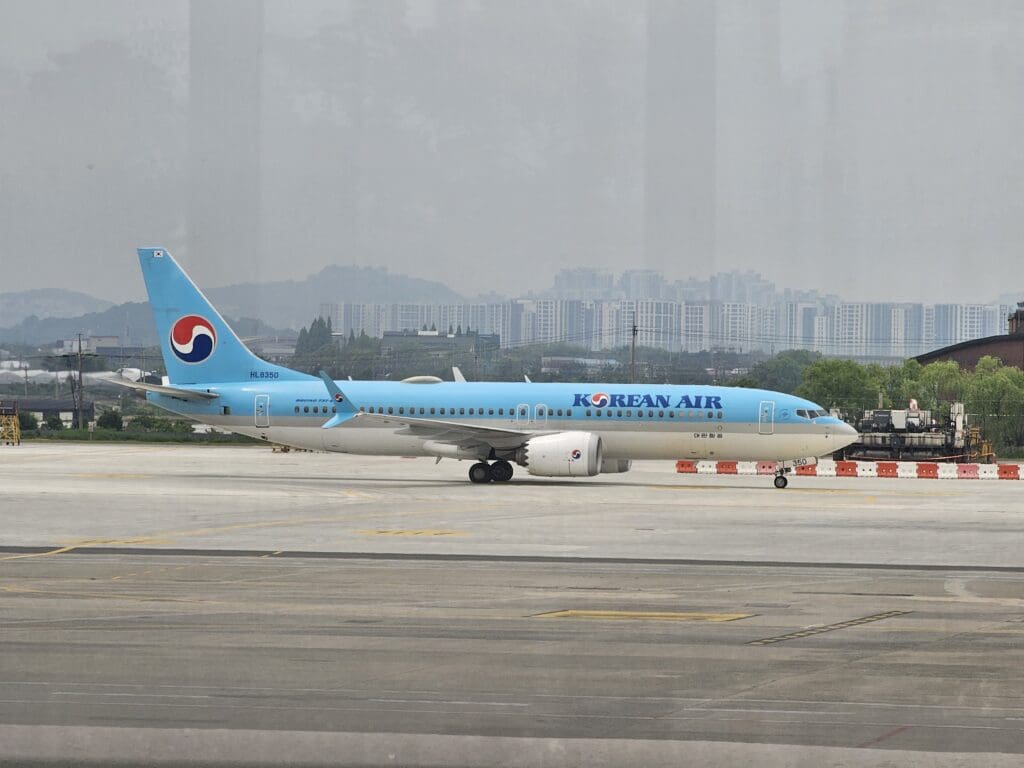
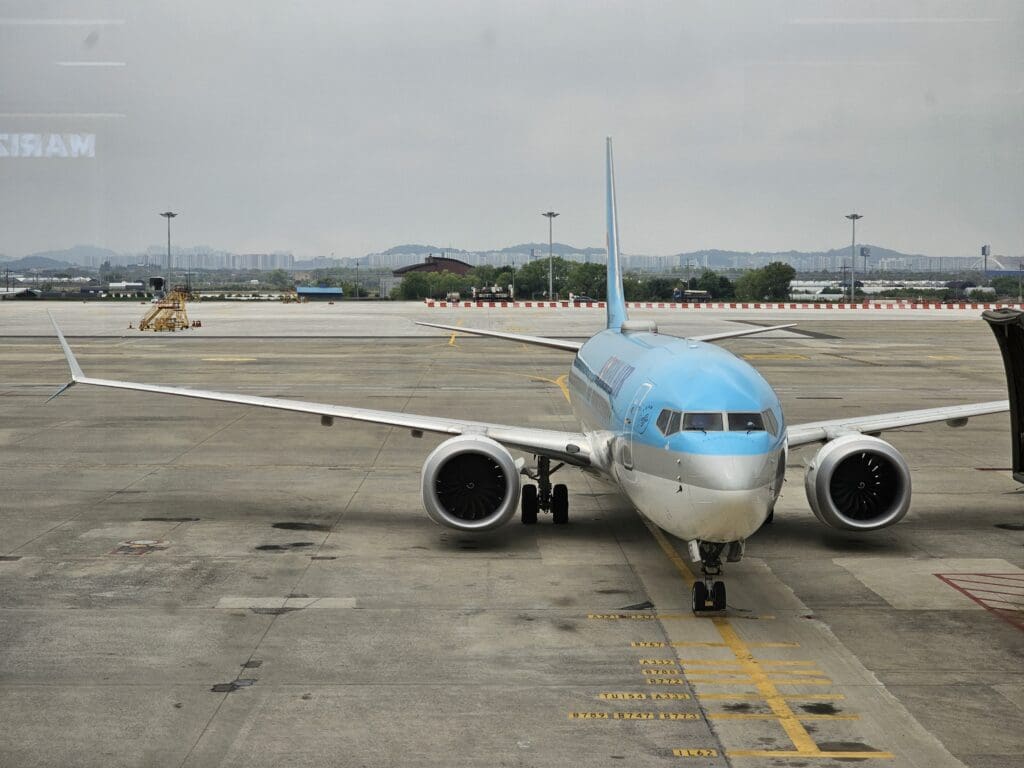
Had I not wished to head off to Beijing Capital, with Gimpo being Gimpo, my options were limited and I could have instead headed to Beijing Daxing, Osaka Kansai, Taipei Songshan or Tokyo Haneda, on services operated by ANA, China Southern Airlines, China Airlines, Jeju Air and Korean Air. Considering the limited number of flights, these were operated by a reasonable selection of aircraft, namely the Airbus A330-300, Boeing 737-800, Boeing 737 MAX 8 and Boeing 767-300ER. Looking out, the aircraft of the rich and famous, both visiting and based in Seoul, can often be seen parked on the ramp adjacent to the international terminal. That afternoon, I spotted a sleek Gulfstream G650ER operated by world-famous chaebol LG Electronics. Sitting nearby was an even more luxurious Airbus A318-112CJ Elite operated by HK Bellawings Jet. In addition to these, a trio of more down-to-earth, colourful ATR 72s could be seen. These had previously operated for the short-lived Korean regional carrier Hi Air, and were sitting in storage.
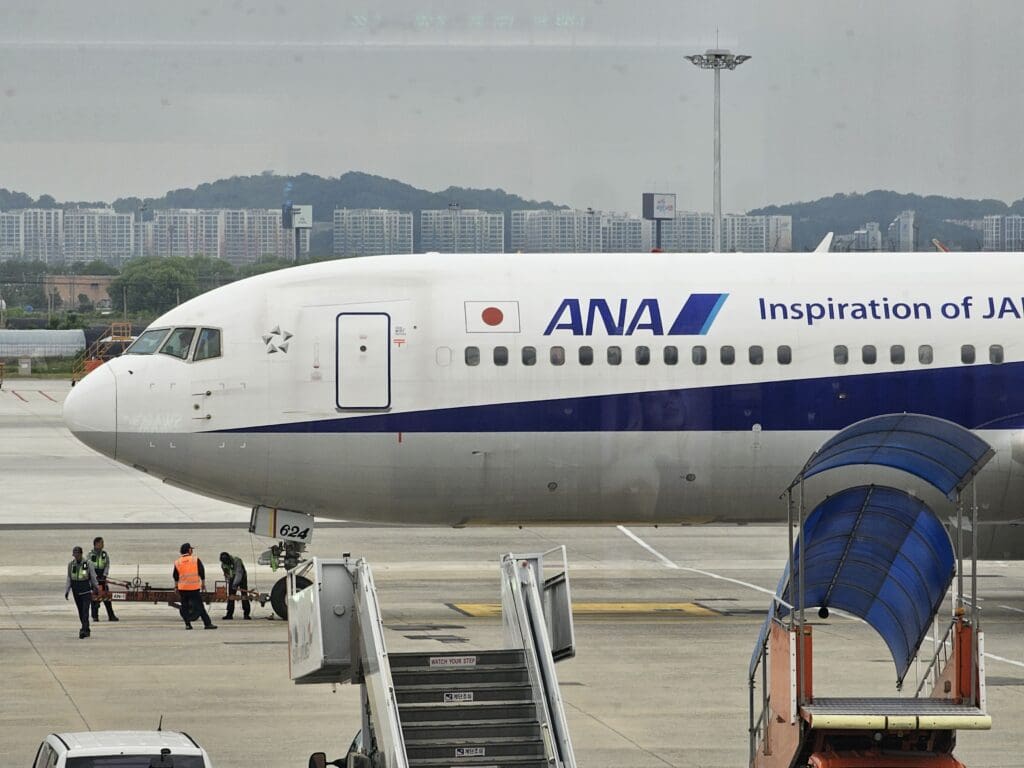
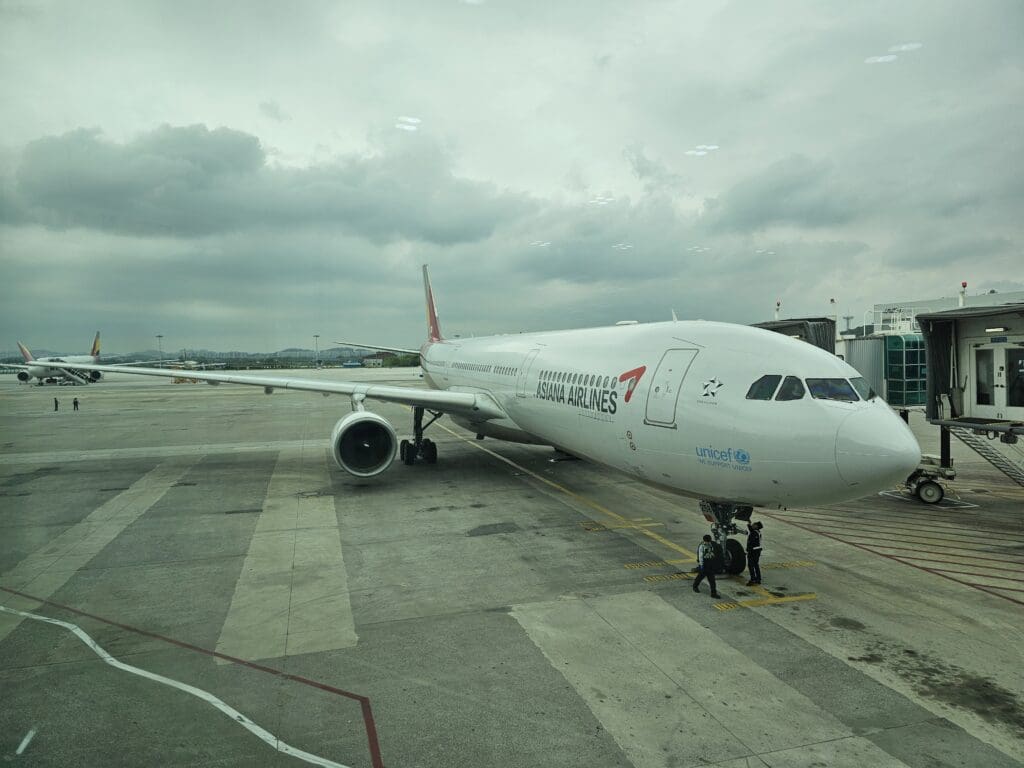
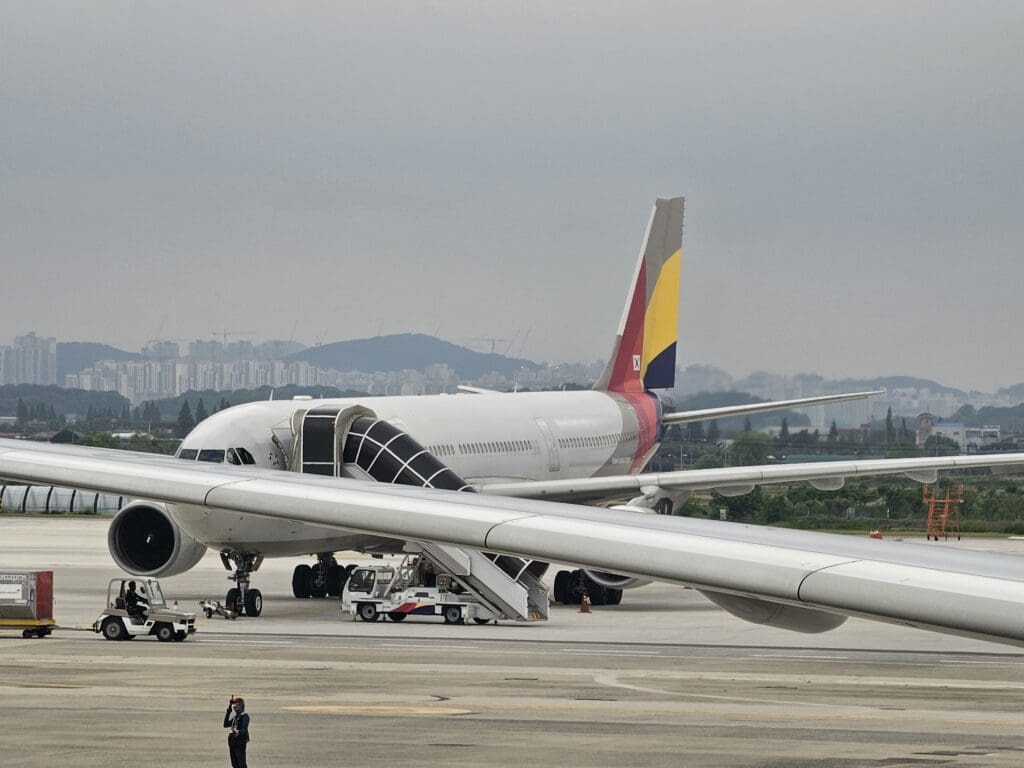
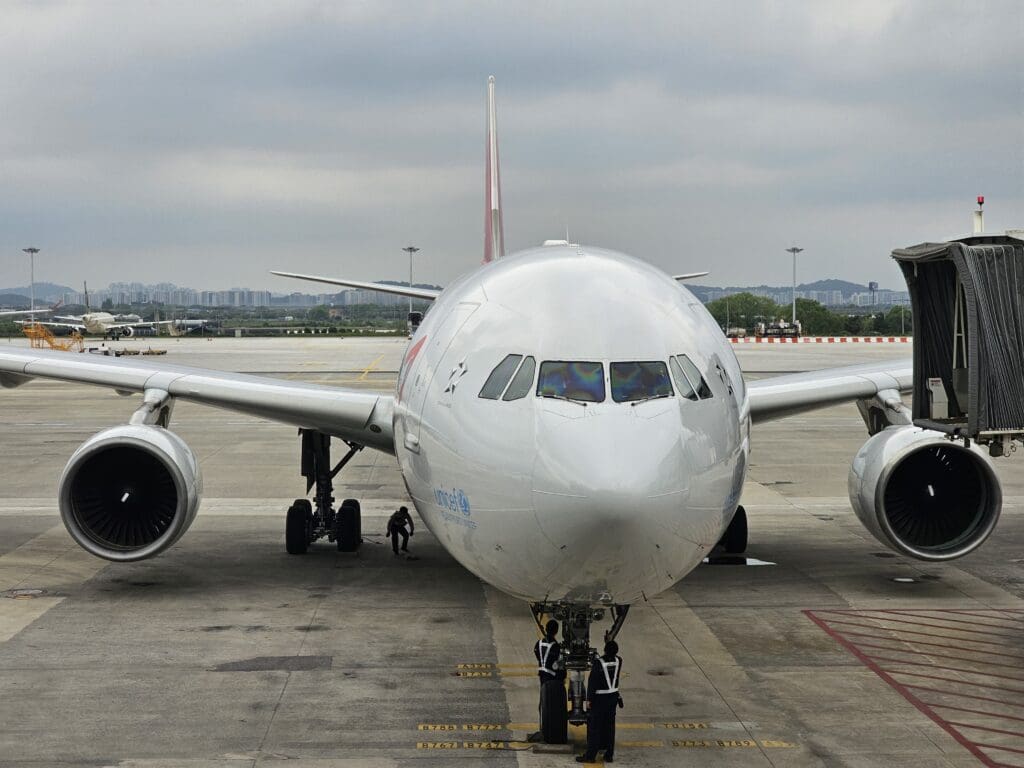
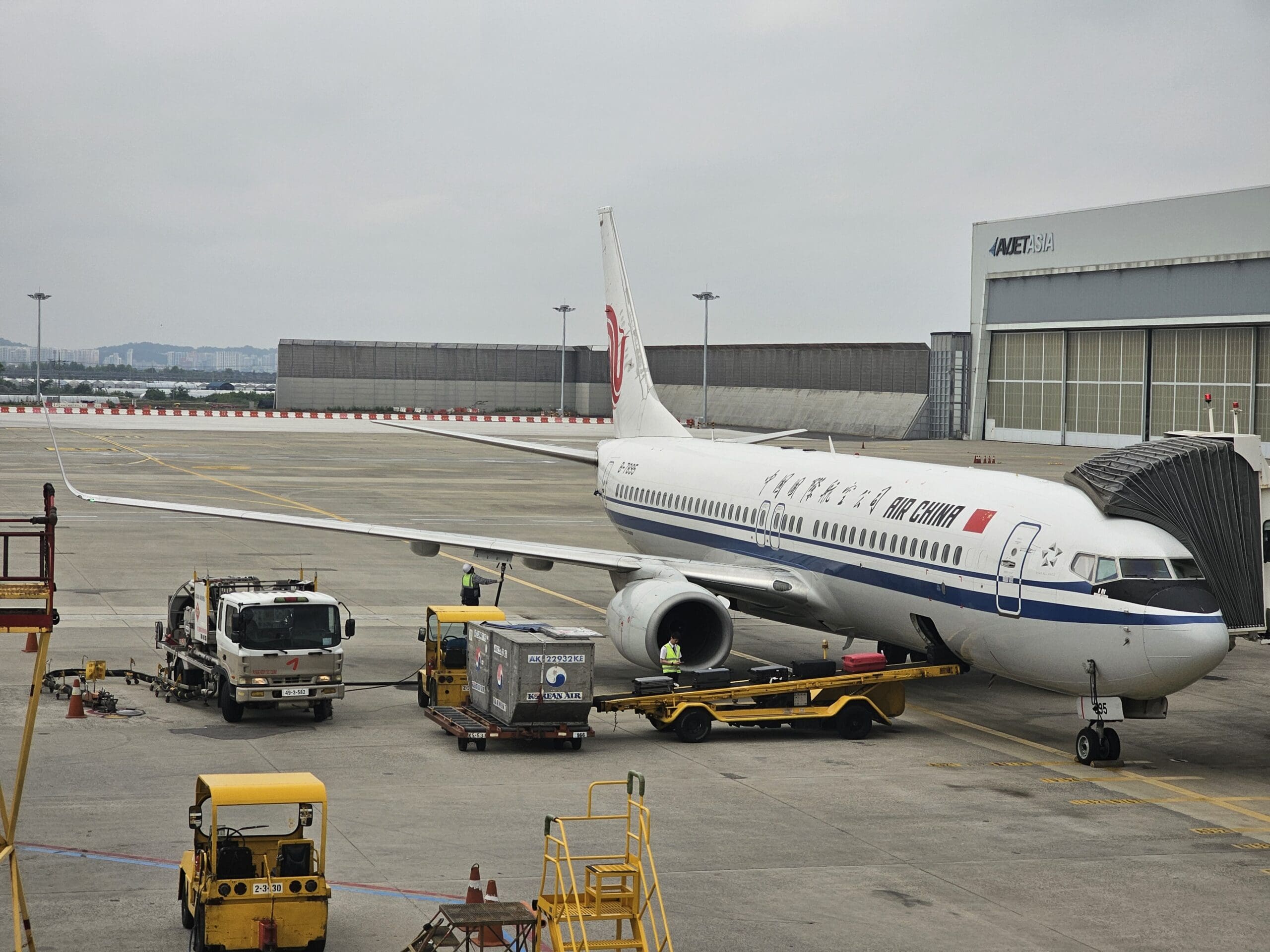
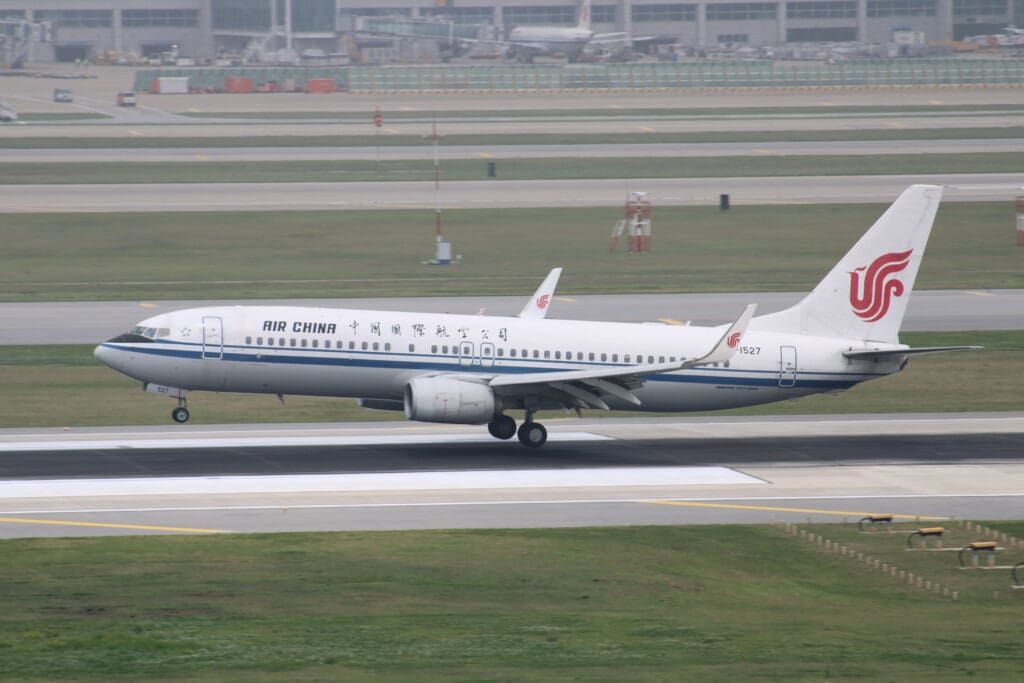
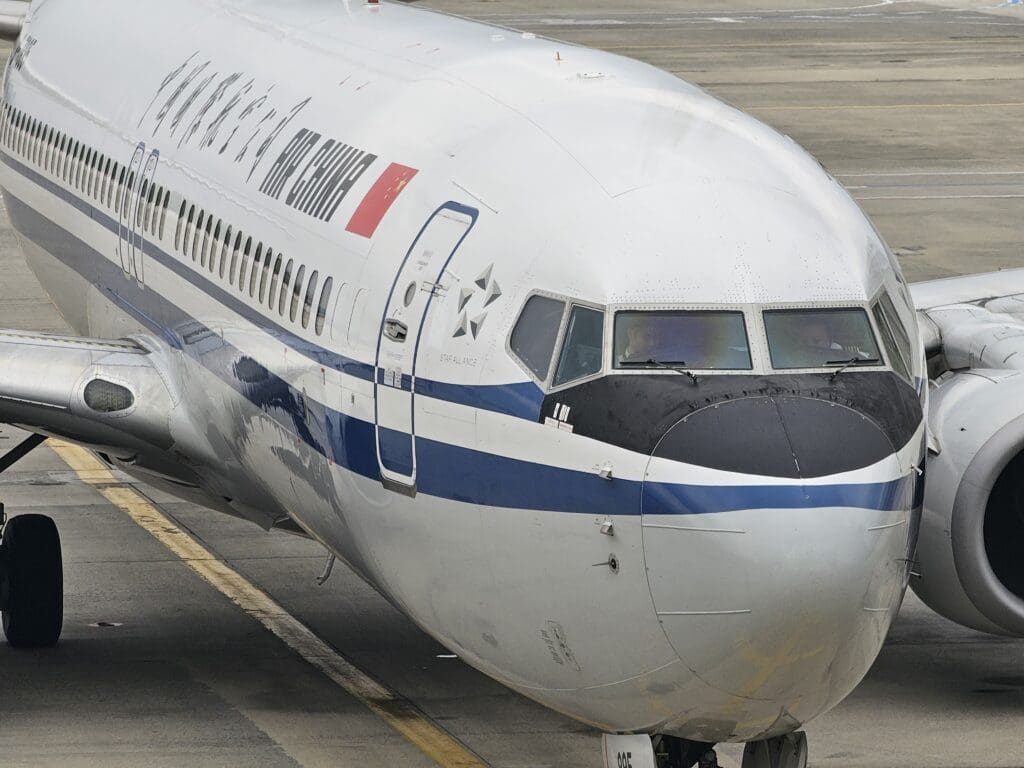
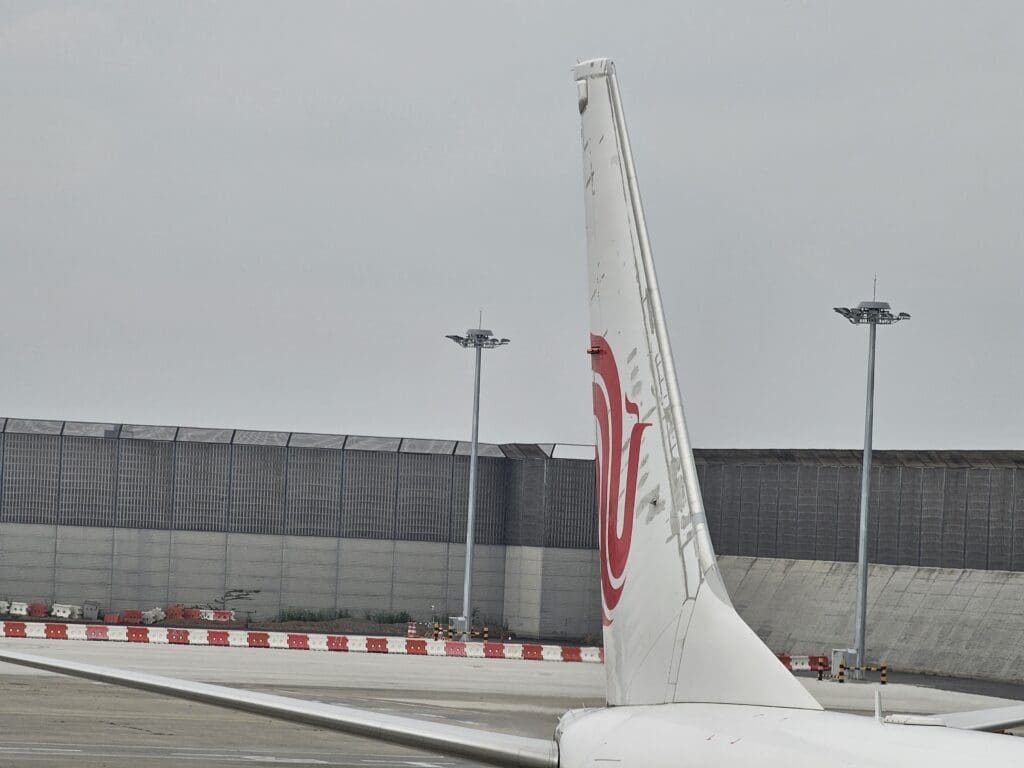
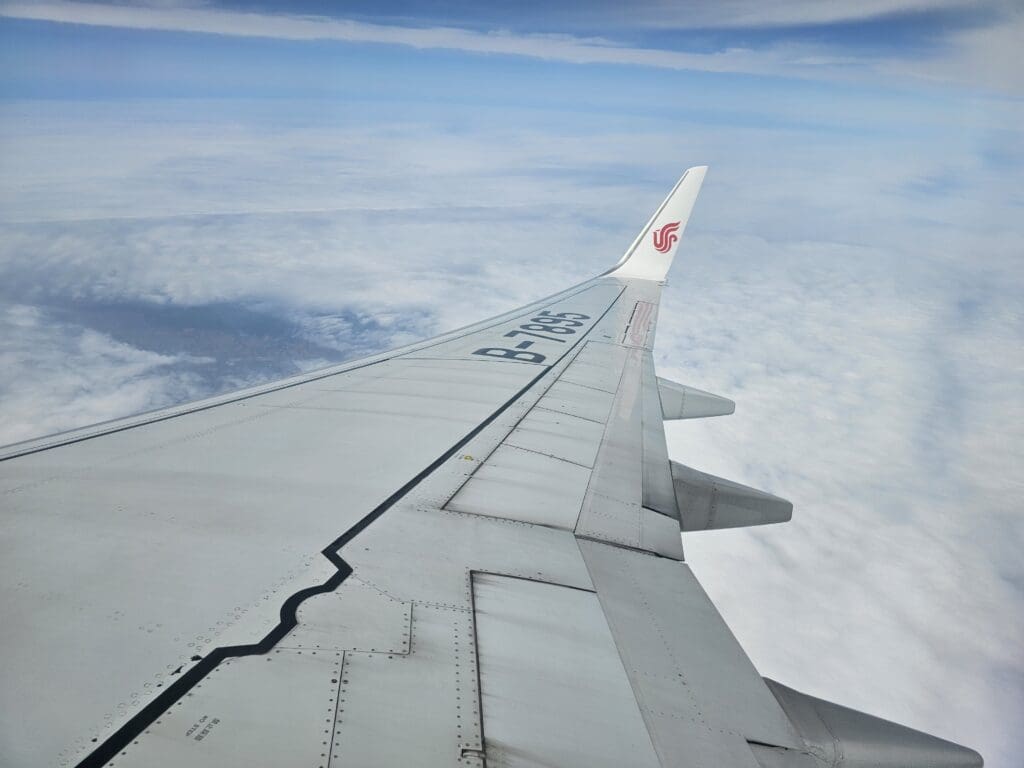
Eventually, I plonked myself down in the waiting area for the Beijing flight at Gate 39 and a few minutes later, I watched as a slightly weathered-looking Air China jet came to a halt at the stand outside. Contrary to my ticket, which claimed that a Boeing 737 Freighter was scheduled to operate the service, this aircraft came in the more expected form of B-7895, a Boeing 737-89L. Like most Boeing 737s, this particular aircraft was assembled in Renton, just south of Seattle. According to its line number, this is the 6134th Boeing 737 to be manufactured and took to the skies for the first time in October 2016. Thus, at the time of my flight, the aircraft was still relatively young at around 7.5 years old. At the end of the month, the aircraft was handed over to Air China and commenced its long slog across the Pacific Ocean to its first base, Chongqing. This saw the aircraft make stops in Honolulu, Pohnpei, Guam and Tianjin before reaching its new home. Since then, the aircraft seems to have had a rather uneventful life and has spent this flying across the skies of East Asia, with no incidents listed on the Aviation Herald. Keeping busy, in the week prior to my flight, the aircraft had flown at least 20,000 miles over 29 sectors. This saw the jet connect Beijing Capital Airport with Chongqing, Fuzhou, Hailar, Huangyan, Lianyungang, Nanjing, Sapporo, Seoul Gimpo, Shenyang, Yancheng, Yuncheng and Zhuhai.
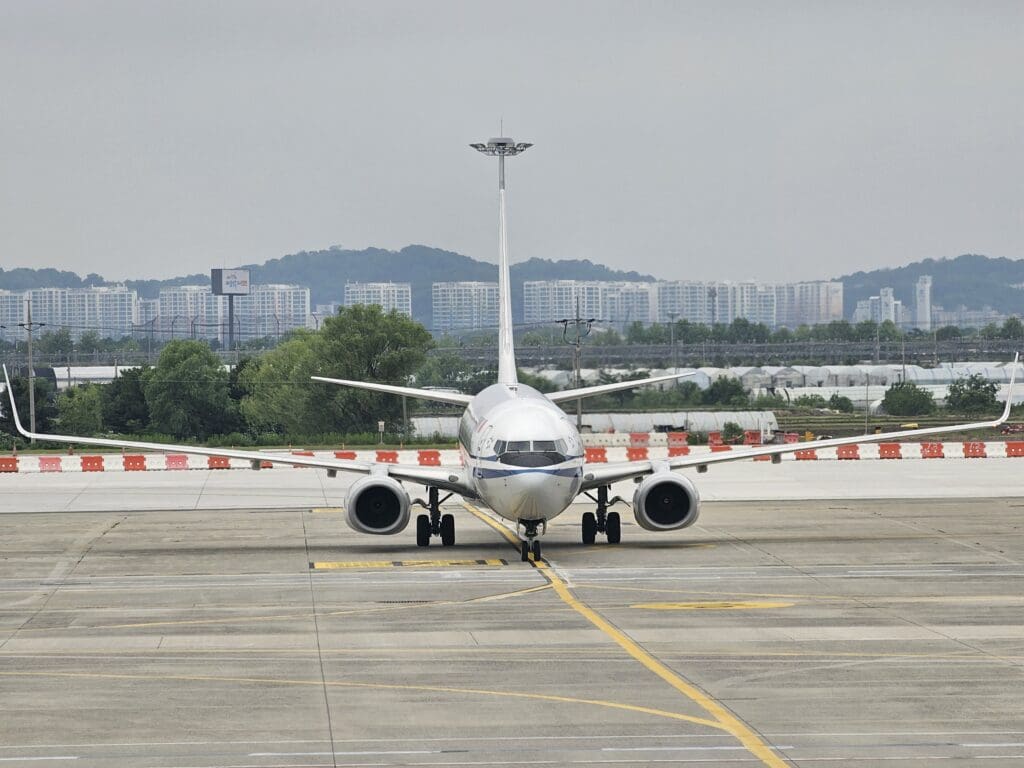
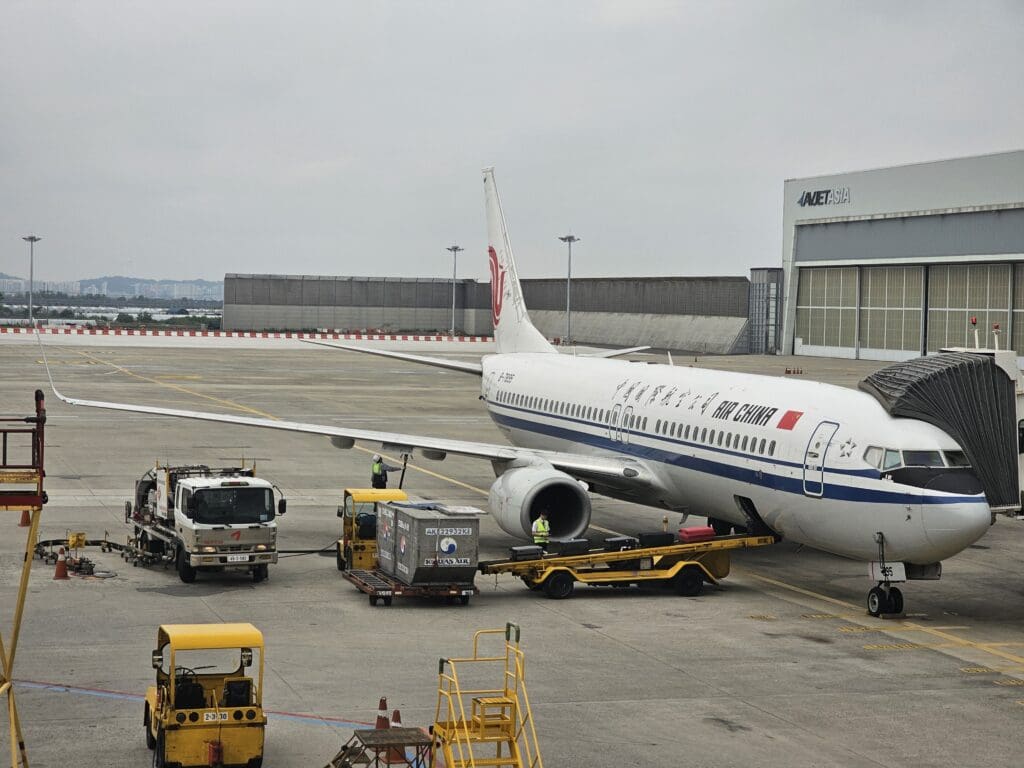
Once the aircraft came to a halt, an army of Korea Airport Service (the Hanjin KAL Group’s back-of-house handling company) staff swarmed around the Boeing and began to prepare the jet for its return flight, with a fuel truck soon arriving too. Inside the terminal, by this time, a fair number of passengers could already be seen lingering around the gate, despite there still being some time to go before the scheduled boarding time of 1340. By 1330, a long line of eager passengers had already formed, indicating that it would likely be a busy hop over to China that afternoon, and with a few minutes to go until boarding, a series of pre-recorded announcements rang out in Mandarin, English and Korean. These were followed by several announcements in Mandarin in search of passengers who had presumably not taken prohibited items out of their checked luggage and would have to remove these and have their bags rescreened.
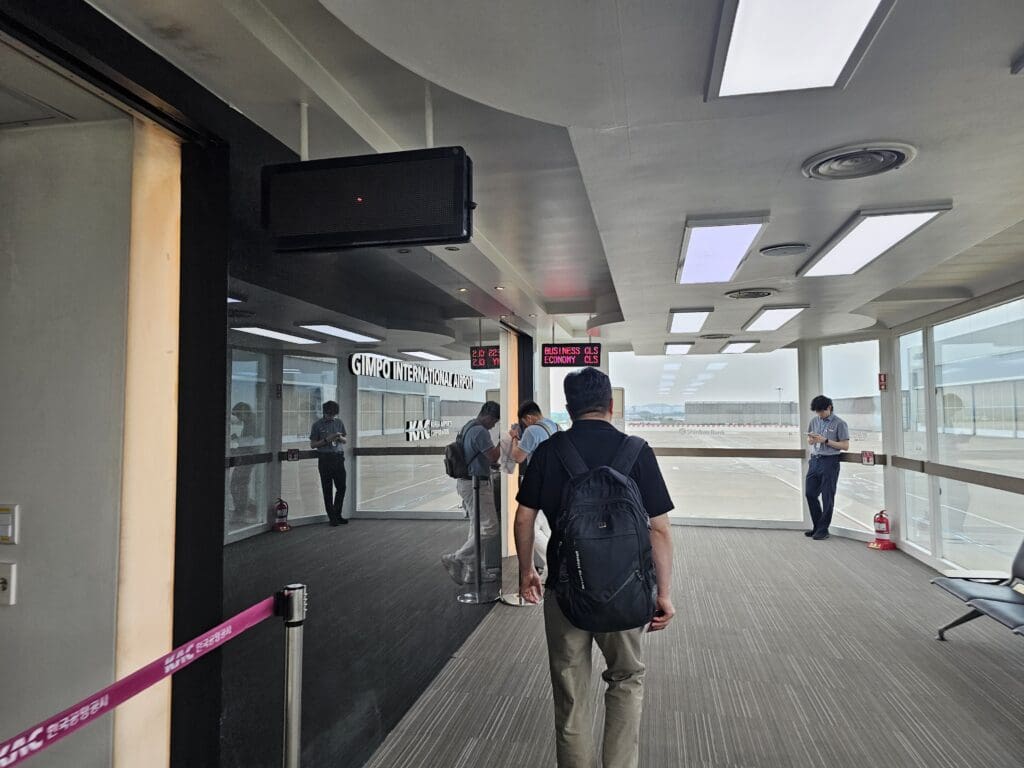
With the Boeing having pulled onto stand ahead of schedule, and with the army of ground crew appearing to work diligently and efficiently, boarding commenced at 1340 on the dot. As I had noticed was the case with China Southern Airlines two weeks earlier, this was not undertaken in any particular order and instead, all passengers were invited to board at once, regardless of travel class, seat location and additional needs. After shuffling along, my boarding pass was scanned, and my passport was checked before the friendly agent wished me a nice flight in Korean and English. After this, I excitedly toddled off down the glass jetbridge and made my way towards the aircraft.
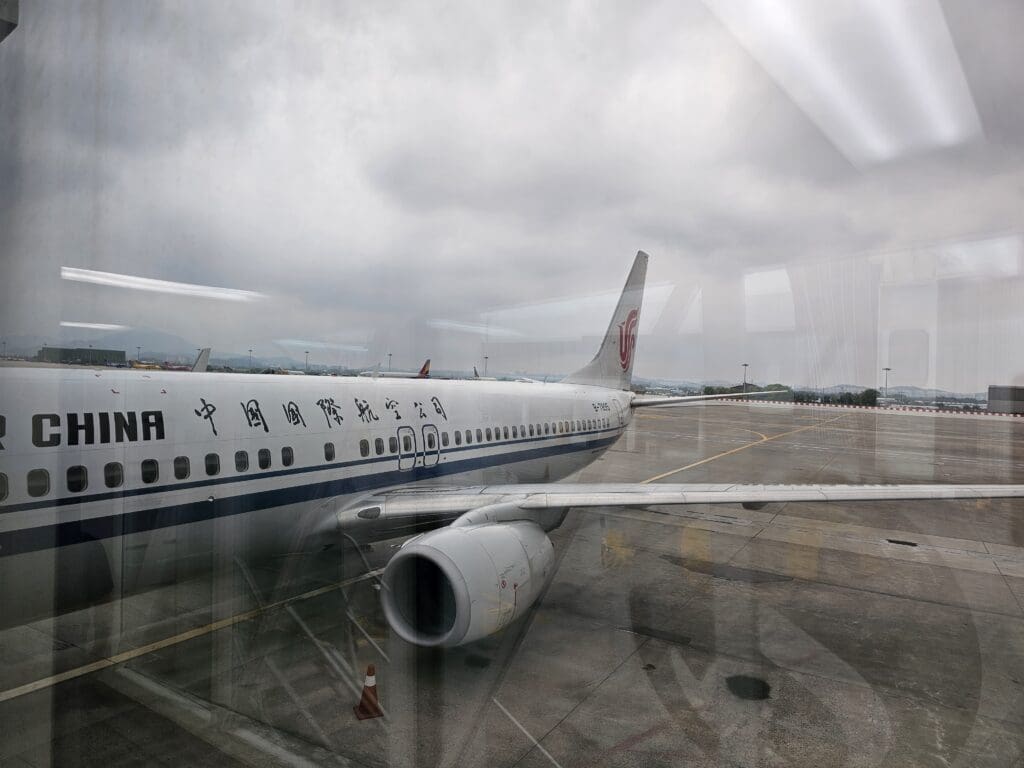
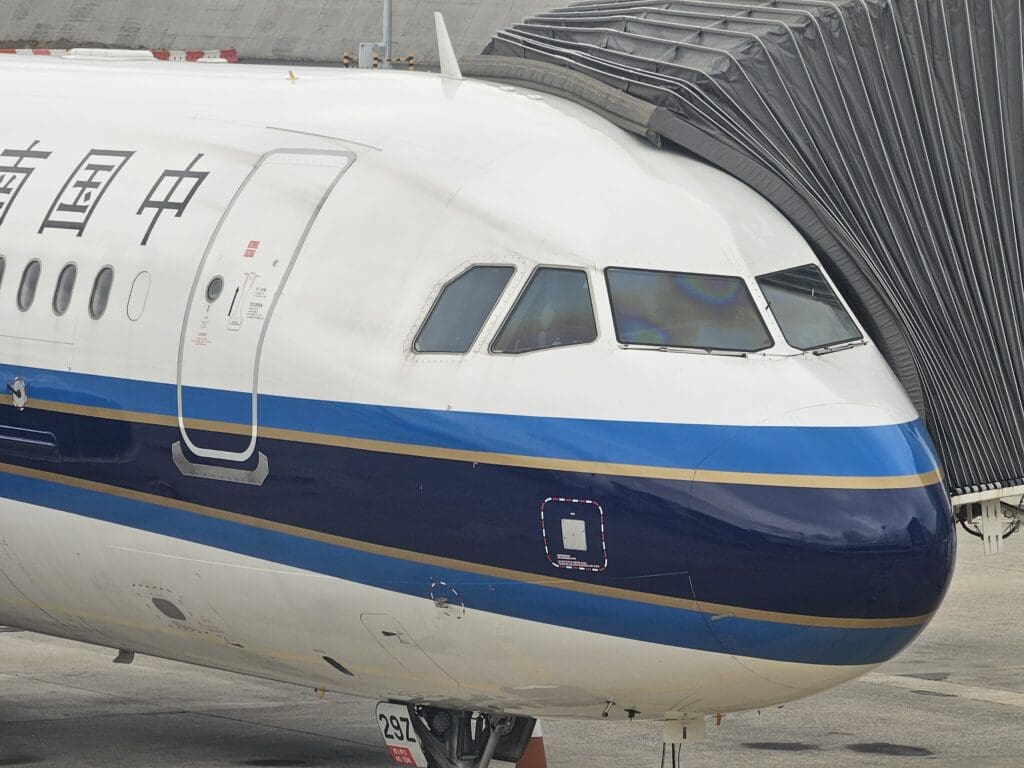
Following a short queue, which enabled me to gain a close-up view of the Boeing 737’s weathered fuselage, which seemed to need both a clean and a repaint, I neared the cabin door. As is standard on Chinese airlines, this flight came with its own body camera-wearing security guard who stood at the end of the jet bridge during boarding, perhaps as a warning for passengers not to misbehave onboard. Next to them, a tray of complimentary newspapers could be seen, however, with all of these being in Chinese, I had little reason to take one of these before entering the jet. Soon, I stepped into the bright forward galley of this Sky Interior fitted Boeing where I received a warm greeting from the Purser who would be leading the army of flight attendants onboard. That afternoon, this was quite literally an army, as there seemed to be far more flight attendants working the flight than I had ever seen operating onboard a Boeing 737-800-operated flight.
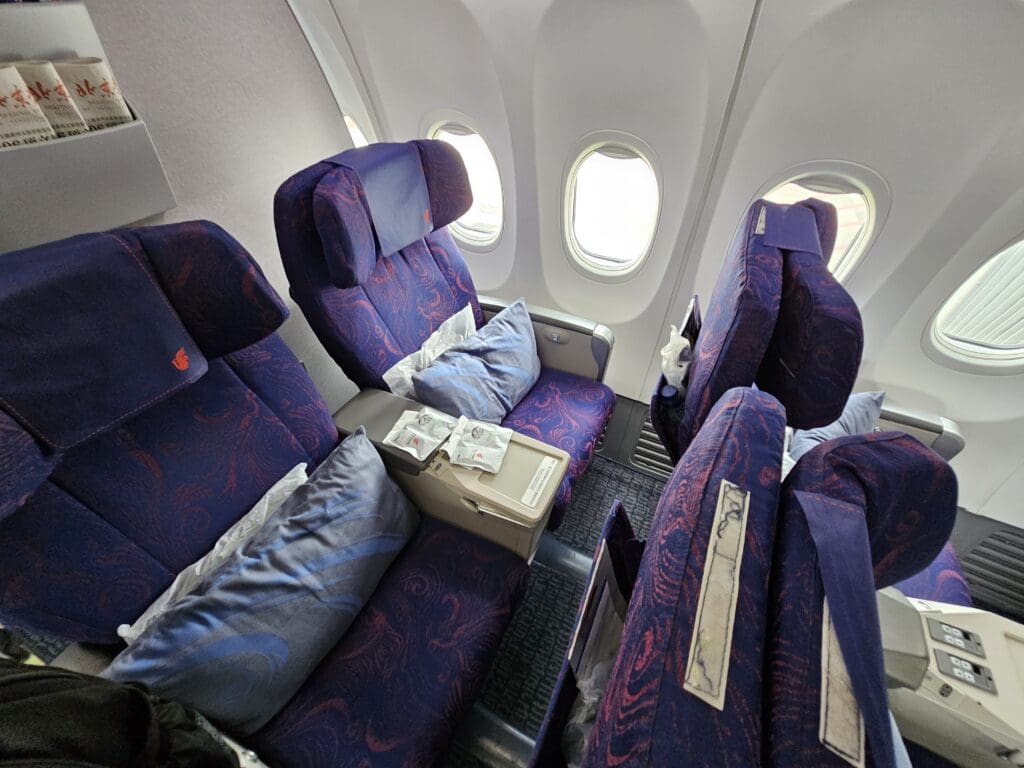
With no need for a boarding pass check, I turned right and immediately entered the Boeing’s small Business class cabin. From a non-expert opinion, this seemed to be very similar to most non-European narrowbody premium cabins and consisted of two rows of comfortable-looking headrest-topped recliner seats in a 2-2 configuration. Each of these was covered in a deep purple fabric cover that sported a swirling pattern, whilst both blankets and pillows had been placed on these. Continuing onwards, I entered the 168-seat Economy class section of the aircraft where I received a quiet and subdued welcome in English from another crew member, although this could barely be heard over the soundtrack of easy-listening music that filled the cabin throughout boarding.
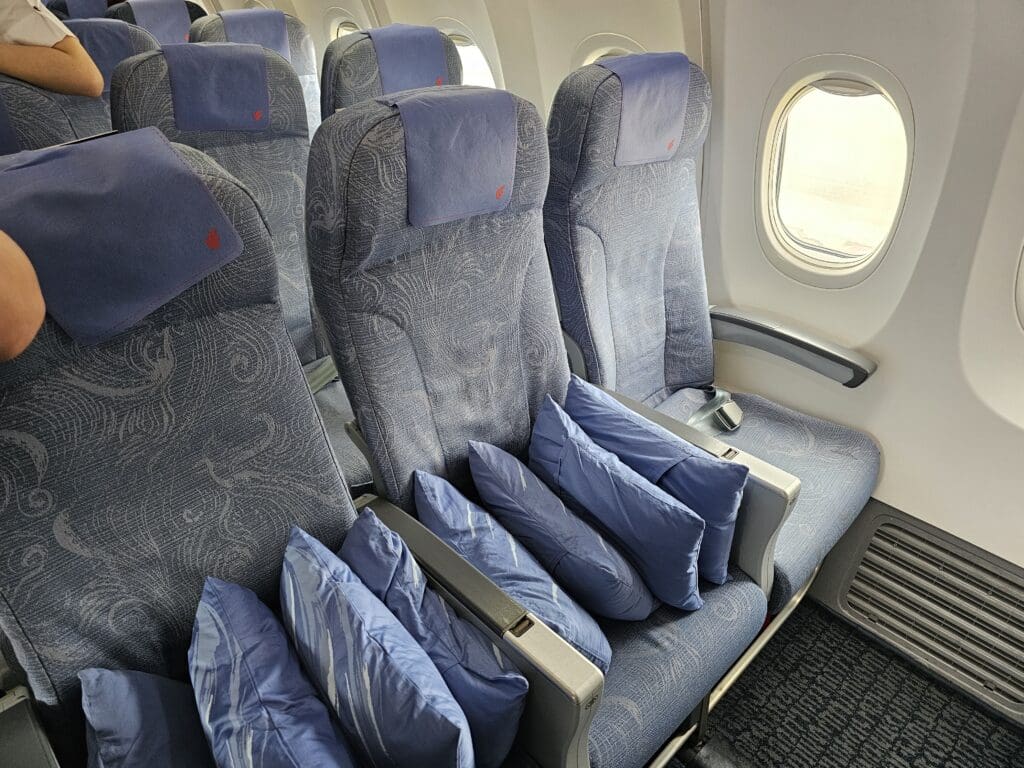
Onboard, Air China’s Boeing 737-800 fleet features the fairly common Collins Aerospace Pinnacle seat in Economy. Each of these sported Air China’s standard blue fabric, which featured a repeating pattern of black swirls. Meanwhile, each seat was topped with a disposable fabric antimacassar. As seats go, these were fairly spartan in their design and lacked frills such as a headrest, inflight entertainment screen, or any form of in-seat power. Nevertheless, given the short flight time to the Chinese capital, such features were neither expected nor particularly missed. As I trundled down the cabin, I received a greeting from each flight attendant that I passed before arriving at Seat 25L (Air China uses ABC and JKL for seat numbering on their narrowbody jets, rather than ABC and DEF). After stowing my bag in the large overhead locker, and once my two neighbours had let me in, I sat down and strapped myself in for the journey ahead.
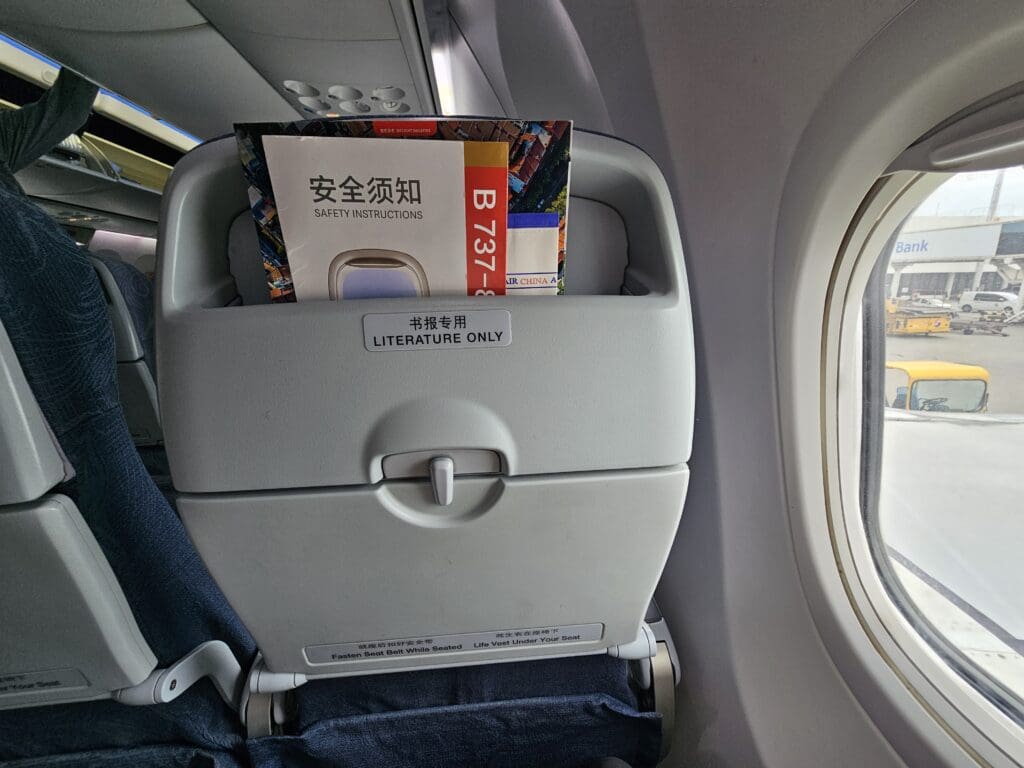
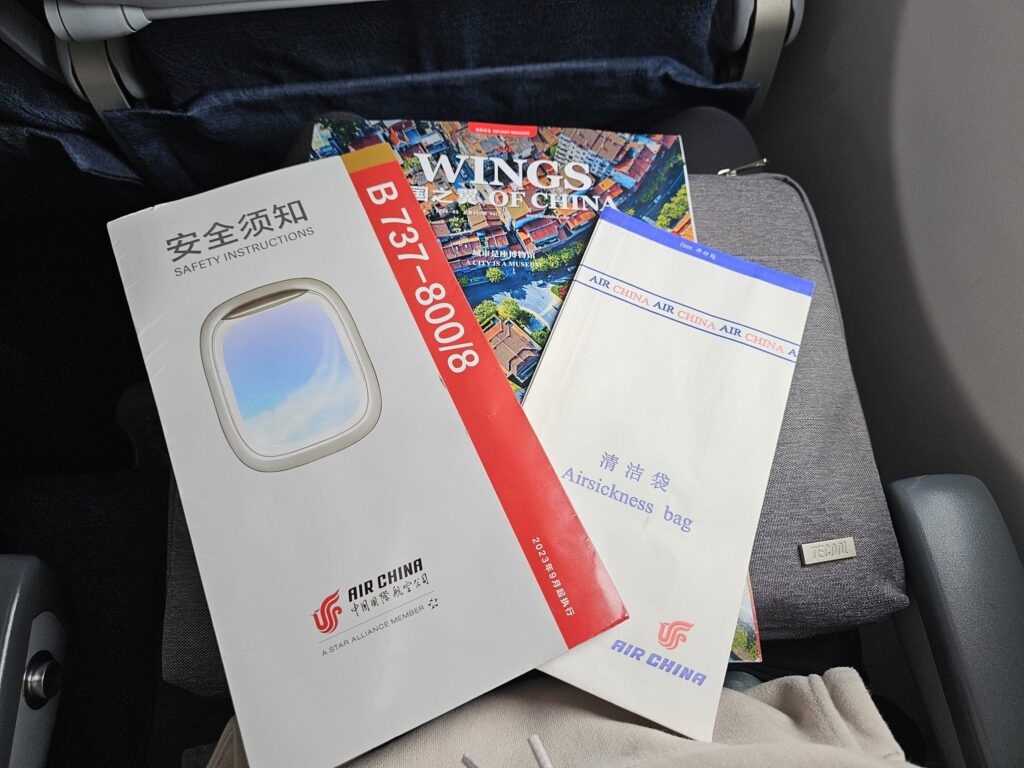
Looking around, I wasn’t left with a particularly fantastic first impression of the area around my seat. Whilst the seat itself was reasonably soft, the legroom was not great, and I most certainly wouldn’t have liked to have been sat in the seat on one of Air China’s longer Boeing 737-800 services across the vast expanse of China. Furthermore, despite being a reasonably young aircraft, I was disappointed to find the area around my seat to be filled with countless marks and scratches, whilst this also seemed to be in dire need of a deep clean! Finally, examining the contents of the seatback pocket, this contained a safety card and a sick bag, along with the all-important Wings of China inflight magazine.
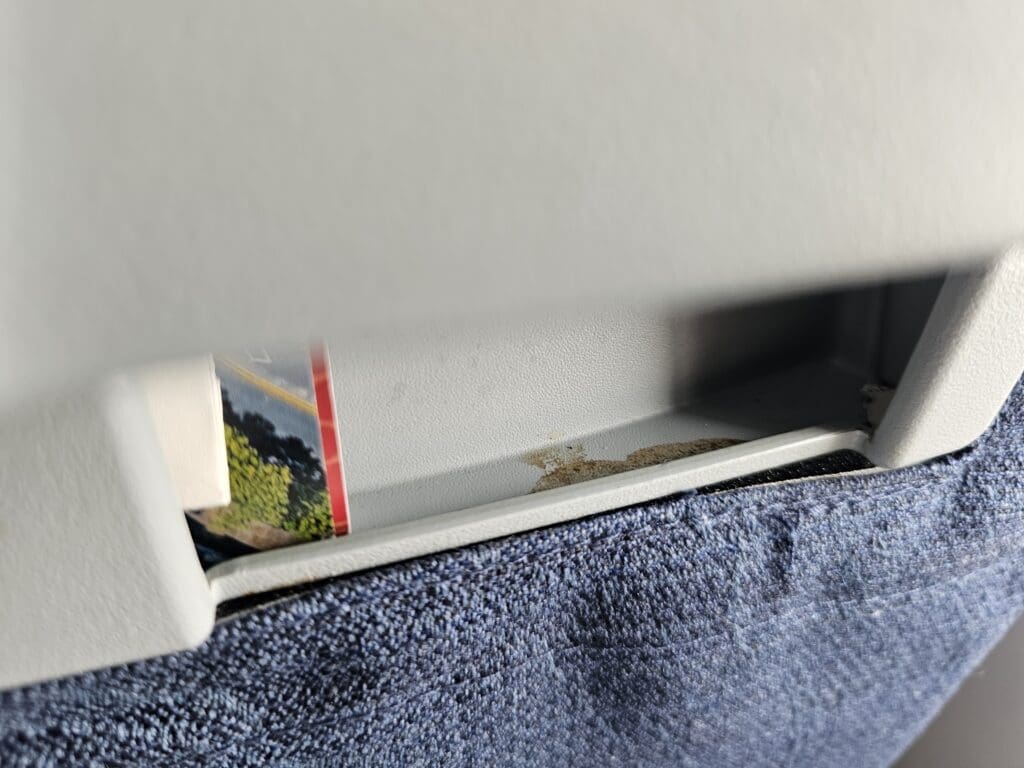
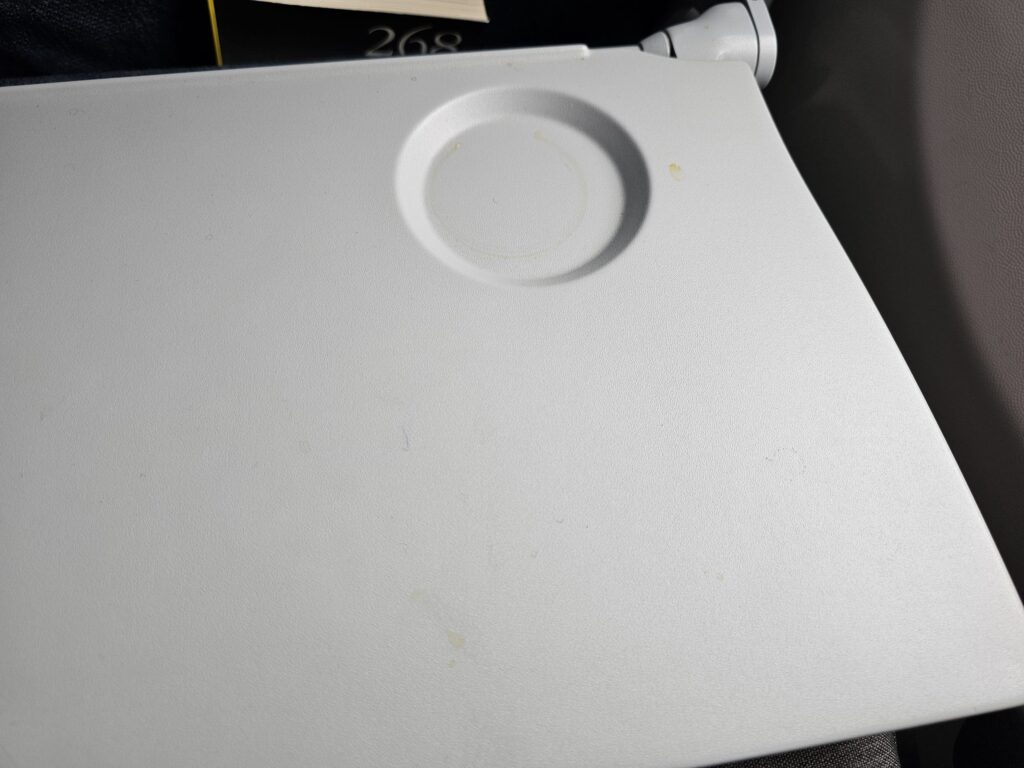
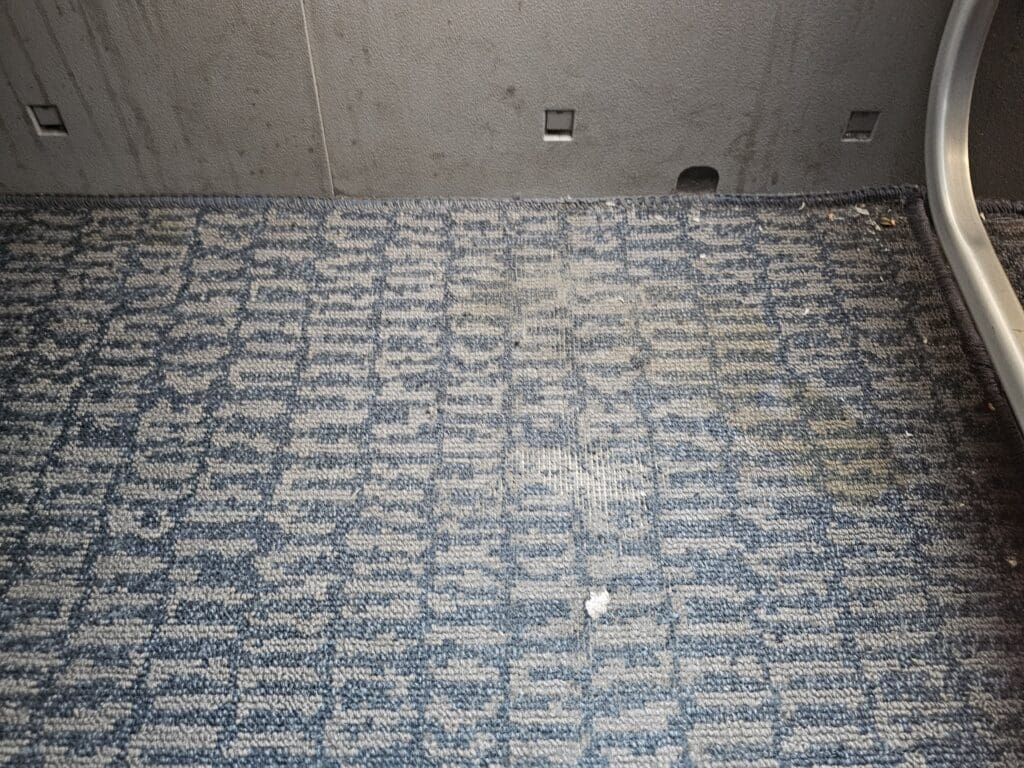
Despite being a virtually full flight, thankfully, passengers had made it to the gate on time, with the final passenger boarding the aircraft around ten minutes ahead of our scheduled departure time. Looking around, virtually all passengers onboard hailed from China and took the form of tourists returning home, with seemingly few passengers from Korea or elsewhere. Wasting no time, almost as soon as all were onboard, the dispatcher vacated the aircraft, and the main cabin door was closed before the Purser undertook their welcome announcement in Mandarin and English which went through the usual welcomes, warnings and thanks. With no Korean-speaking crew members onboard, that afternoon all announcements were made in Mandarin and English only, and I was surprised about the lack of any pre-recorded announcements in Korean.
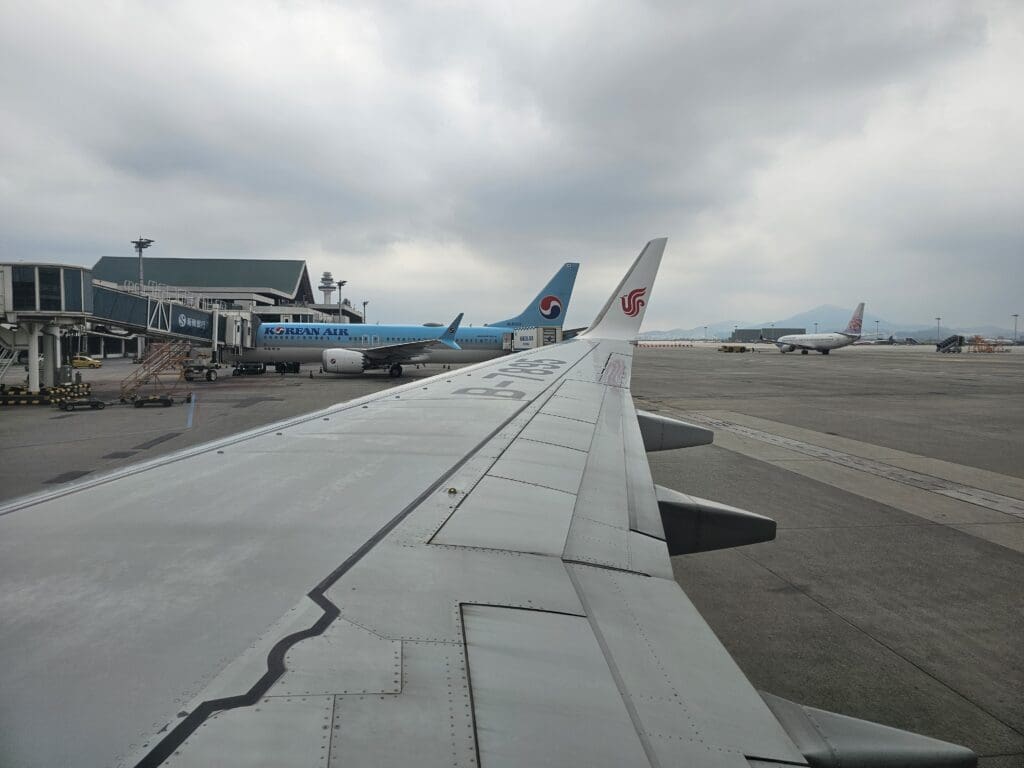
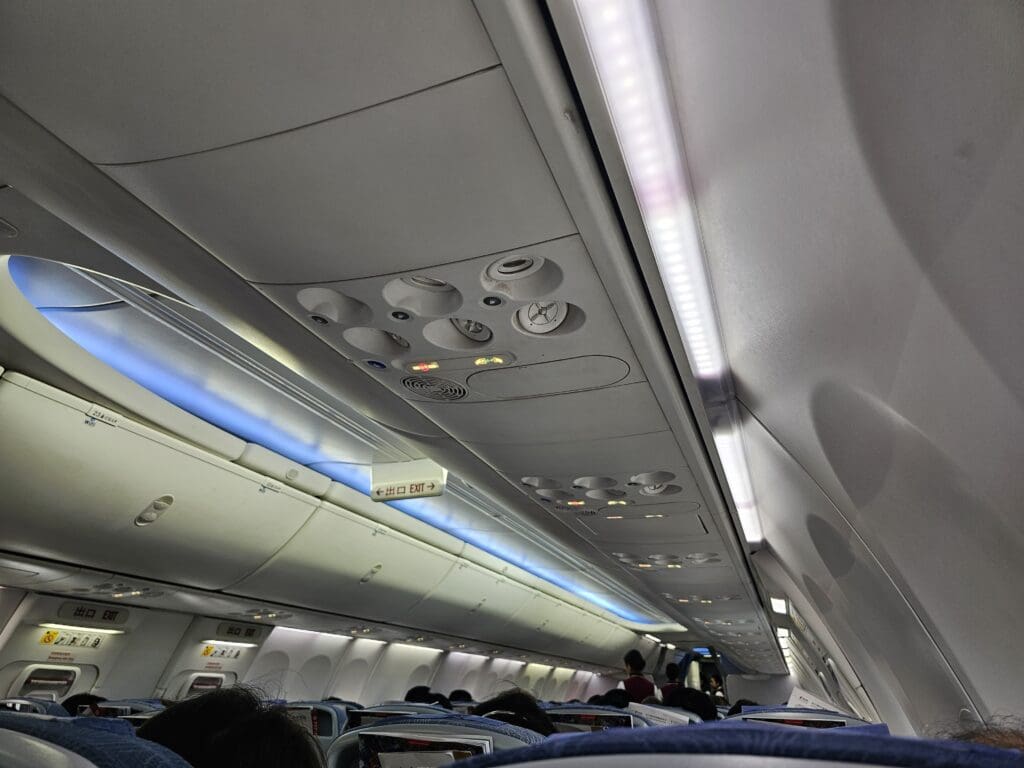
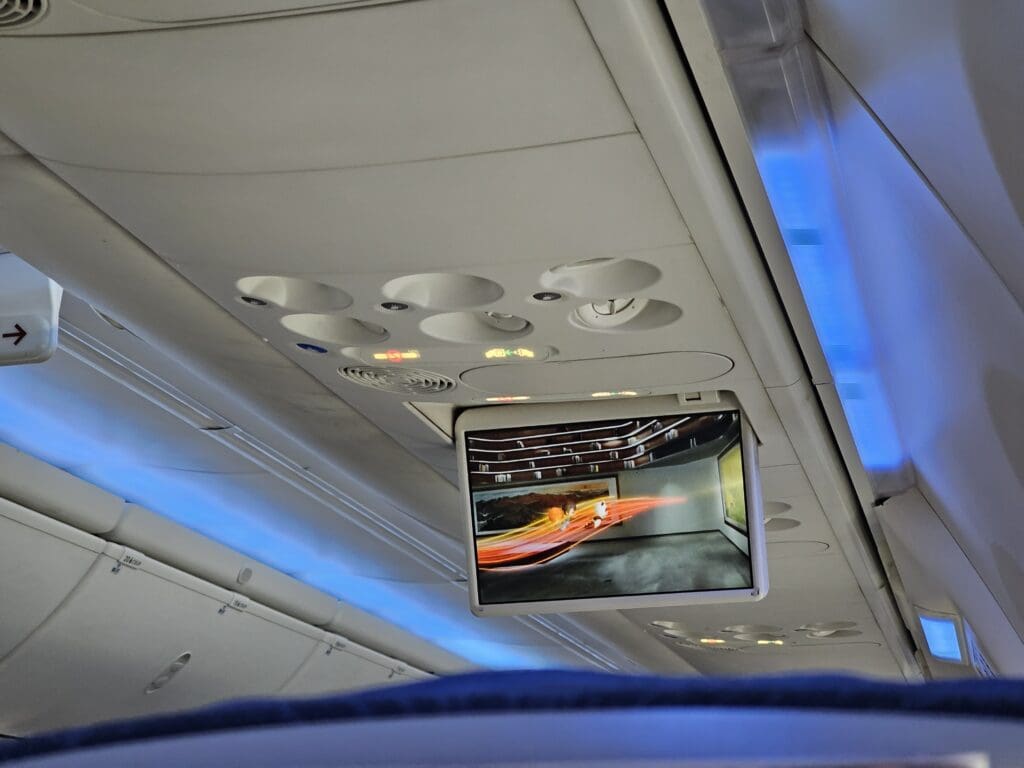
Indicating that we would be making a punctual pushback, soon, all remaining ground equipment was removed from around the Boeing. Following a short pause, at 1402 the aircraft jolted rearwards as we commenced what seemed to be a long pushback away from our parking position and onto the taxiway. As this was underway, the Boeing’s two CFM56-7B26 engines powered up into life, temporarily resulting in a reasonable amount of vibration and the scent of jet fuel to fill the cabin before this dissipated as we journeyed to the runway. At this time, the overhead screens fell into position and broadcast Air China’s high-budget mixed animated real-life safety video, which was played in Mandarin and English and accompanied by Korean subtitles. Once completed, the flight’s ‘Head of Security’ performed an announcement cautioning passengers against misbehaviour and detailing the potential criminal consequences of this (although in reality, this was a pre-recorded announcement). As this was underway, the cabin crew passed through the cabin, undertaking their final checks and appearing to have their work cut out as many passengers had already reclined their seats and closed their window shades.
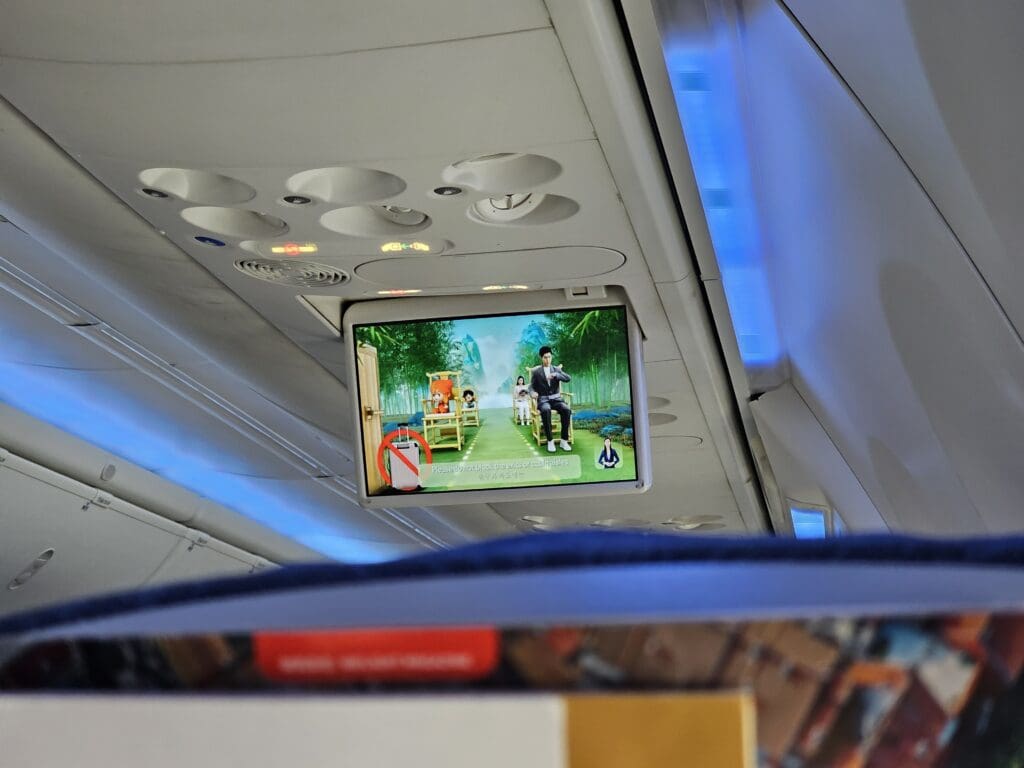
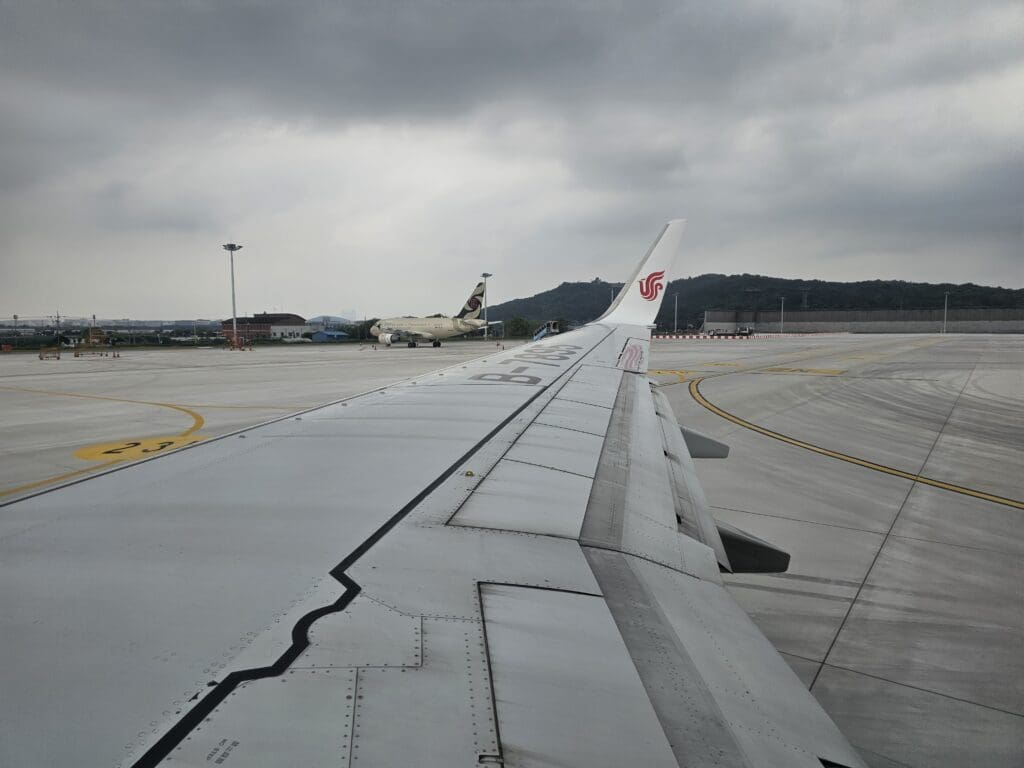
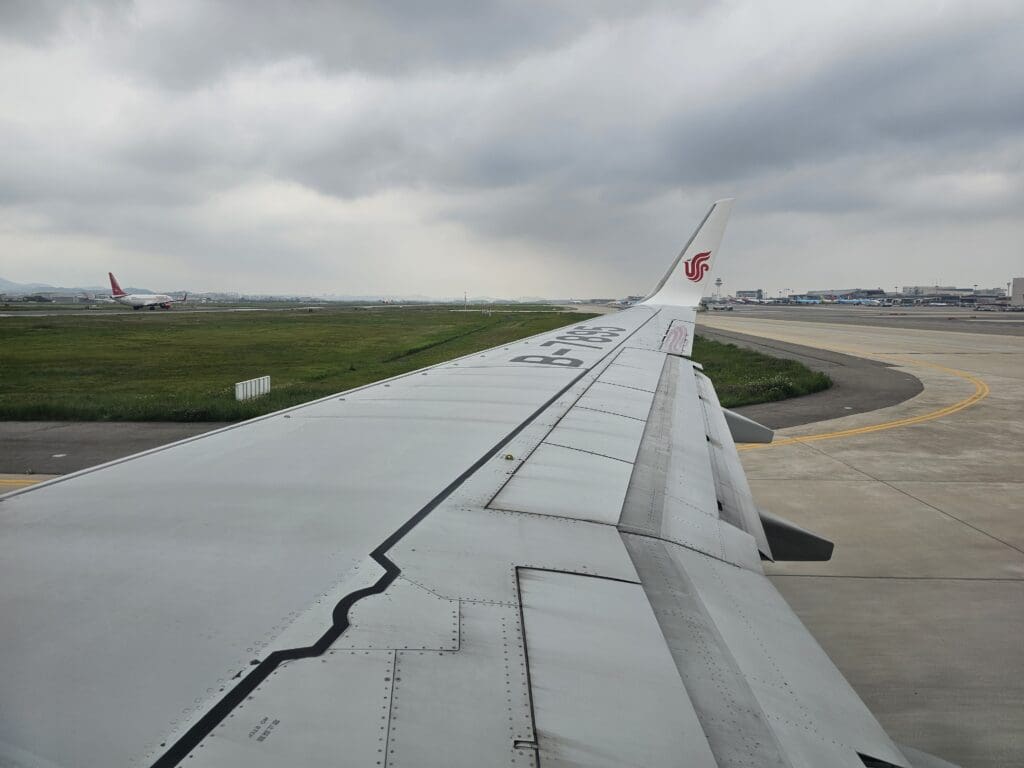
By the time the safety video had come to an end, the Boeing had commenced its taxi to Runway 32R and left the northern apron behind. Turning left, the aircraft trundled down the taxiway and voyaged past the domestic terminal. However, sitting on the right hand side of the aircraft, during the taxi I could see little other than the incredibly interesting and diverse selection of aircraft based on the opposite side of the runway as well as the regular steam of departures and arrivals provided courtesy of Air Busan, Asiana Airlines, Eastar Jet and Korean Air. Eventually, the Boeing arrived at the end of the runway and came to halt in order to allow for an Eastar Jet Boeing 737 MAX 8 to rocket off to Jeju. Once this commenced its take-off roll, the Air China jet taxied onto the runway and came to a halt. Once there, we waited for a couple of minutes in order to allow for an Asiana Airlines Airbus A330 to land on the parallel runway, and after this was safely down, at 1420, the two engines powered up, and the Boeing commenced its powerful take-off. After whizzing past the domestic terminal, the jet rotated upwards into the cloudy Korean skies and soon left Seoul Gimpo Airport behind.
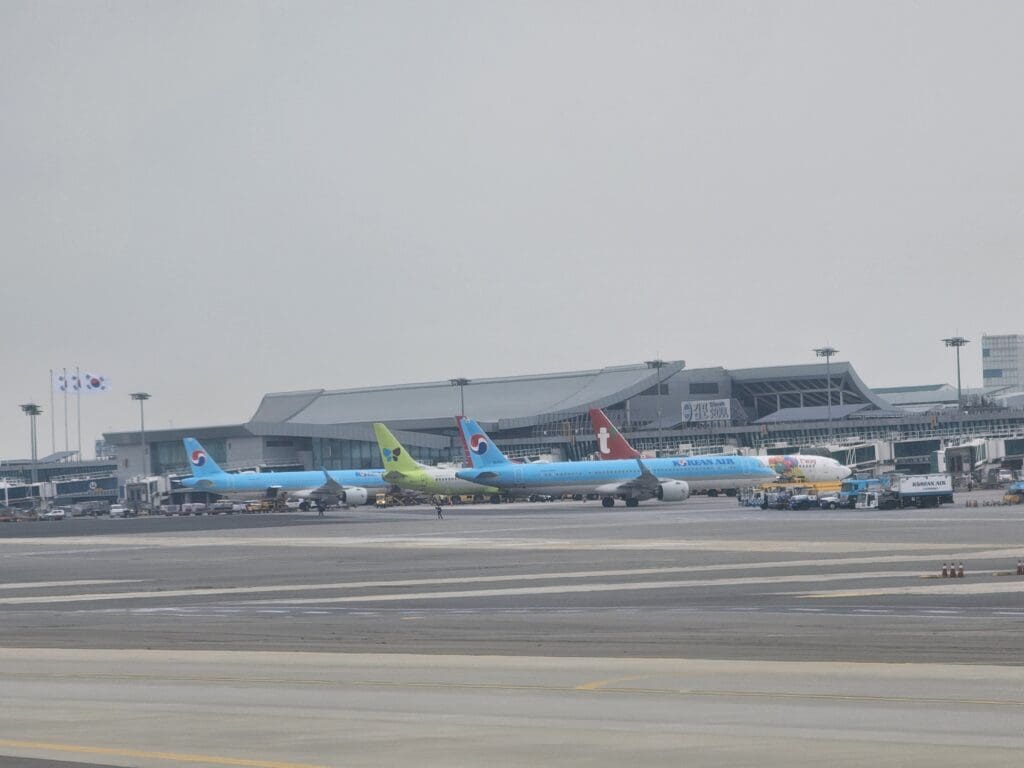
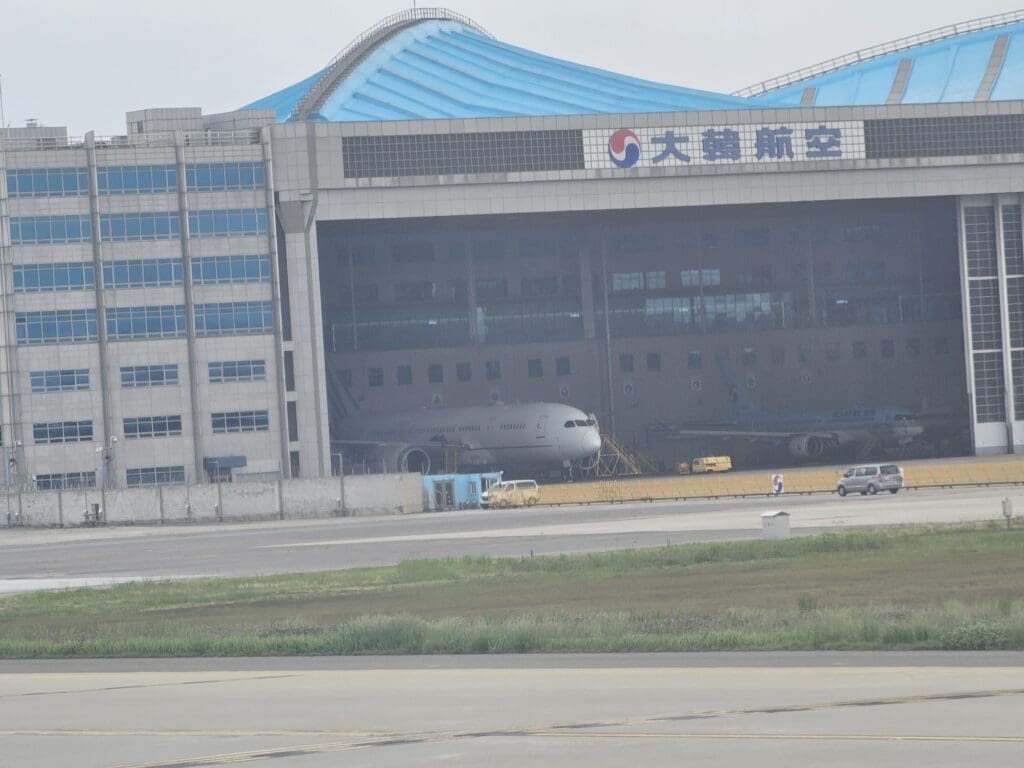
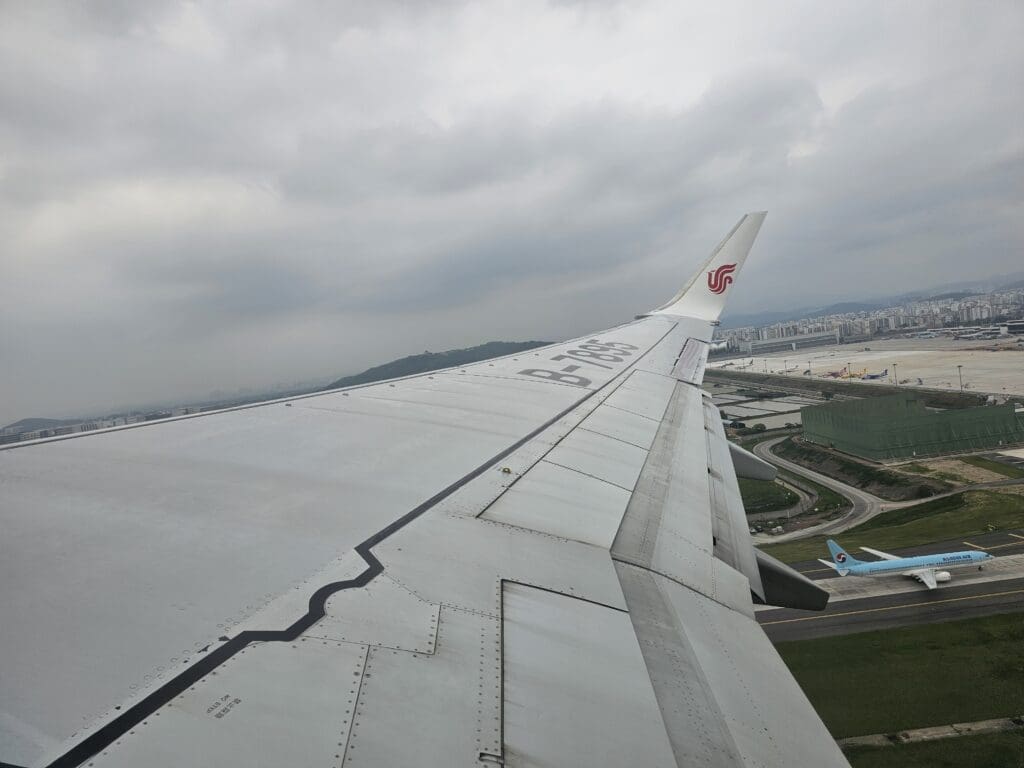
Thanks to that day’s afternoon haze, the fields, industrial estates and apartment blocks that sit in between Gimpo and Incheon faded away before blue skies appeared above the aircraft. No more than four minutes after taking to the skies, the Boeing crossed Korea’s western coastline and left the Korean mainland behind. At this time, the overhead screens dropped into position and began to broadcast the moving map, whilst the Purser performed an announcement in Mandarin and English requesting passengers to remain seated before moving on to mention the soon-to-commence onboard service. Briefly examining our route away from Korea, once over the waters of the Yellow Sea, the Boeing passed to the north of Yeongjong Island and Seoul Incheon Airport before continuing westwards and passing to the south of South Korea’s border islands such as Baengnyeongdo and Yeonpyeongdo before leaving Korea behind. Despite our smooth climb, as per Chinese regulations, not only did the seatbelt signs remain firmly illuminated, but the crew remained strapped in until we reached our low cruising altitude of 28,000 feet.
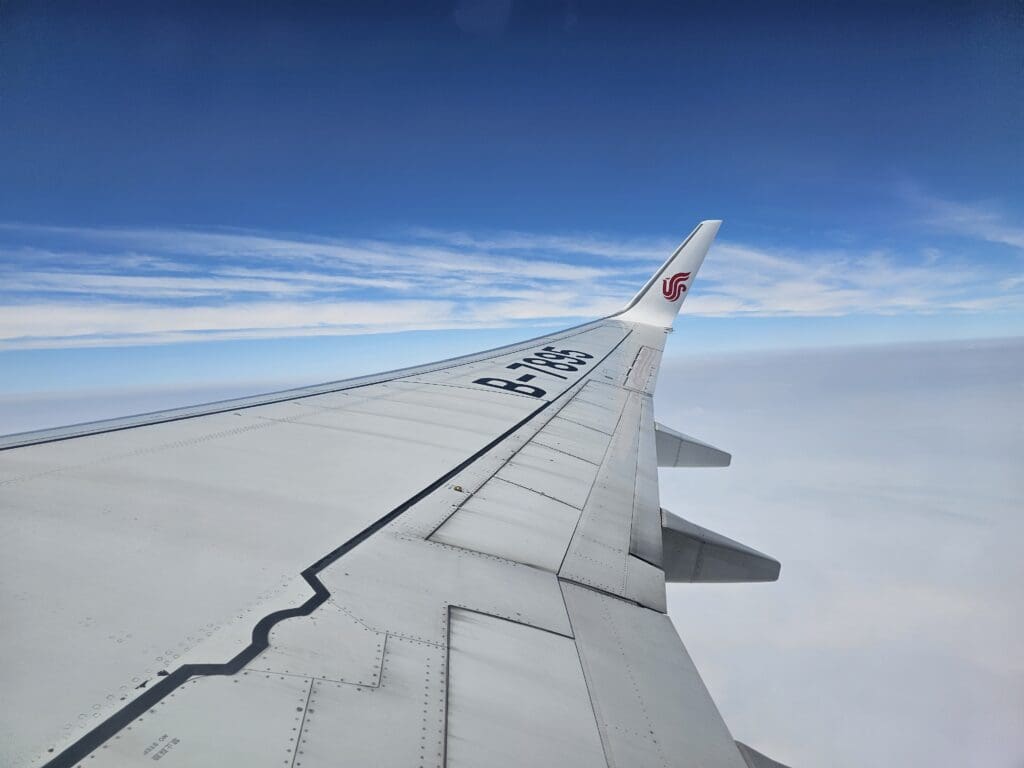
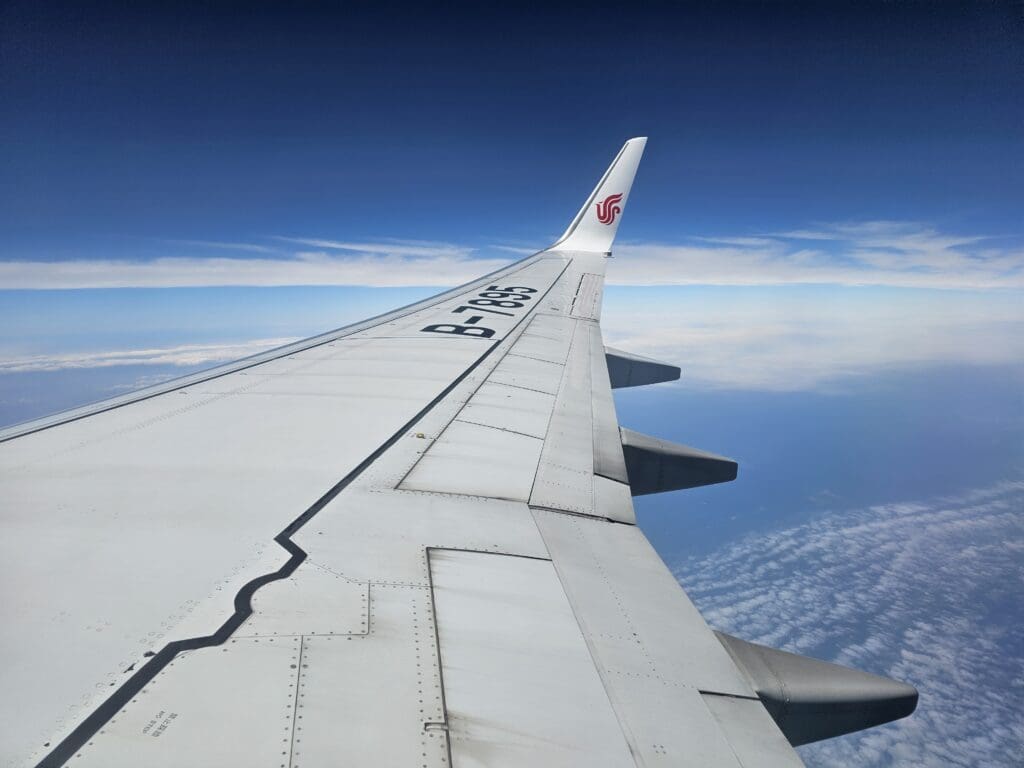
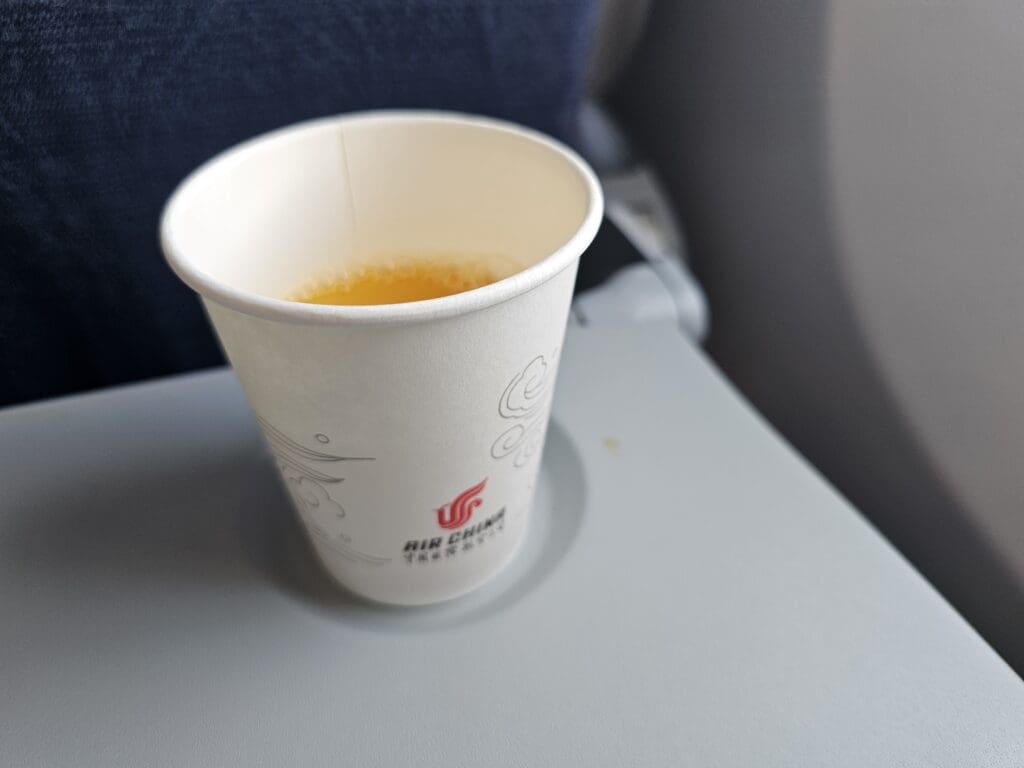
Having flown between Korea and China plenty of times, I am somewhat well-clued up on the catering offerings on flights between the two countries. Previously, when flying between Seoul and Beijing, I had received a full meal with metal cutlery on Korean Air and a decent snack bag on China Southern Airlines. Whilst both China Eastern Airlines and Shandong Airlines offered me a small meal on very short flights between Seoul Incheon and Qingdao and Yantai. Thus, at the very least, I expected a snack. Once at our cruising altitude, the crew rolled out the service carts, with one starting from the front of the Economy cabin and the other from the rear. Taking their time to reach my row in the middle of the aircraft, eventually, they reached my row and I was rather cooly and quickly offered a drink. Opting for an orange juice, which was poured into an Air China branded paper cup thus ending the service. Admittedly, whilst this was marginally better than the non-existent complimentary offerings on short haul intra-European flights with some full service carriers, this offering was well below those of other full service airlines operating between Korea and China and I was thus left a little disappointed.
By the time I had received my orange juice, the Boeing was nearing the end of its trek across the Yellow Sea and was approaching the coastline of the Chinese province of Shandong. Around 35 minutes after departing Seoul Gimpo, the jet made landfall to the southeast of the city of Weihei and cut across a small portion of the Shandong Peninsula. A few short minutes later, the Boeing cruised over the city of Yantai before heading out over the Bohai Bay in the direction of Tianjin. With little to see outside, I decided to turn my attention to the inflight entertainment onboard. Whilst several cartoons were playing on the overhead screens, headphones were not provided and inside the cabin, many passengers seemed to be enjoying an afternoon nap. Not too interested in what was going on on the screens above, I had a flick through the latest edition of Air China’s Wings of China magazine. Starting with the positives, this was in pristine condition and did not seem to contain the same barrage of non-stop advertisements as is the case with many airline publications. This appeared to contain the usual smorgasbord of articles that mostly related to things to do in a selection of Air China’s destinations, however, disappointingly given Air China’s status as one of the world’s major airlines, this publication was almost entirely in Chinese, with just a single article on Xi’an and some information about the airline having been translated into English.
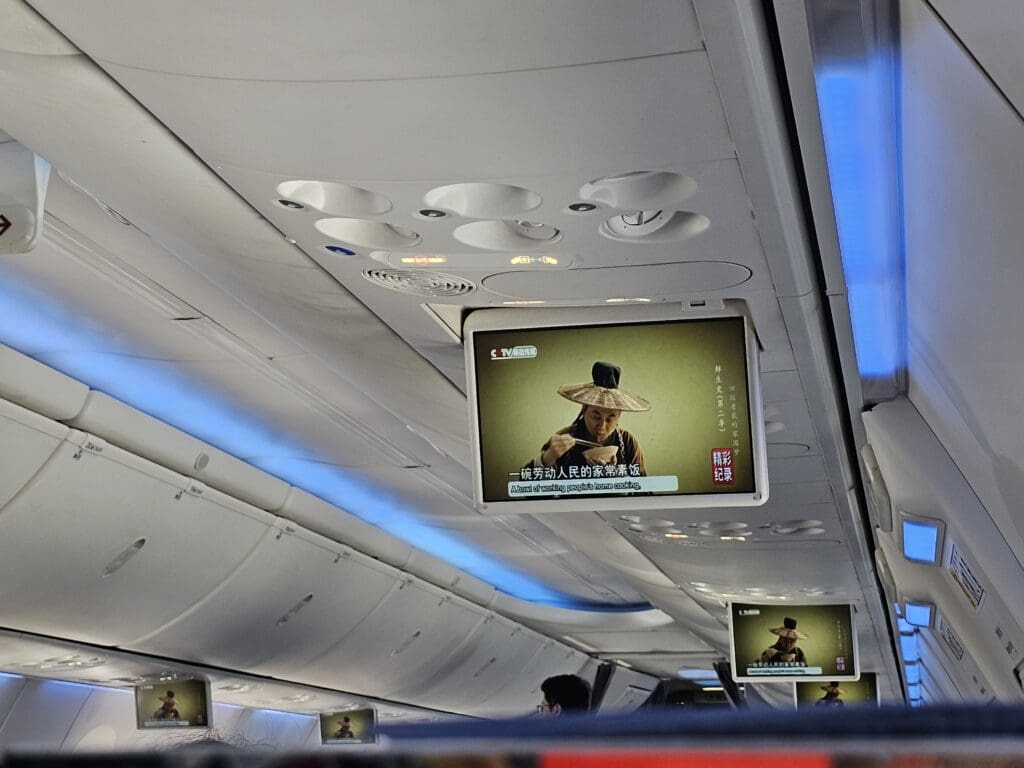
Throughout the cabin, stickers could be seen advertising the presence of wifi onboard the aircraft, however, in reality, this was non-existent and no wifi network could be found onboard. However, it is worth noting that for those aircraft with functional wifi, Air China are starting to roll out a complimentary wifi-based inflight entertainment streaming service onboard those aircraft that lack inflight entertainment screens.
As we crossed over the Bohai Sea and cruised towards Tianjin, the clouds parted below and revealed the blue waters where several ships could be seen lingering, waiting to enter the city’s massive port. Indicating that the flight was nearing its end, the Purser’s voice filled the cabin once more as they performed an announcement regarding our impending descent with the usual information and warnings. Wasting no time seeing as they needed to be strapped in by the time we reached the top of our descent, the cabin crew soon took to the aisles, collecting rubbish and ensuring that all was secure and in place for our arrival into Beijing.
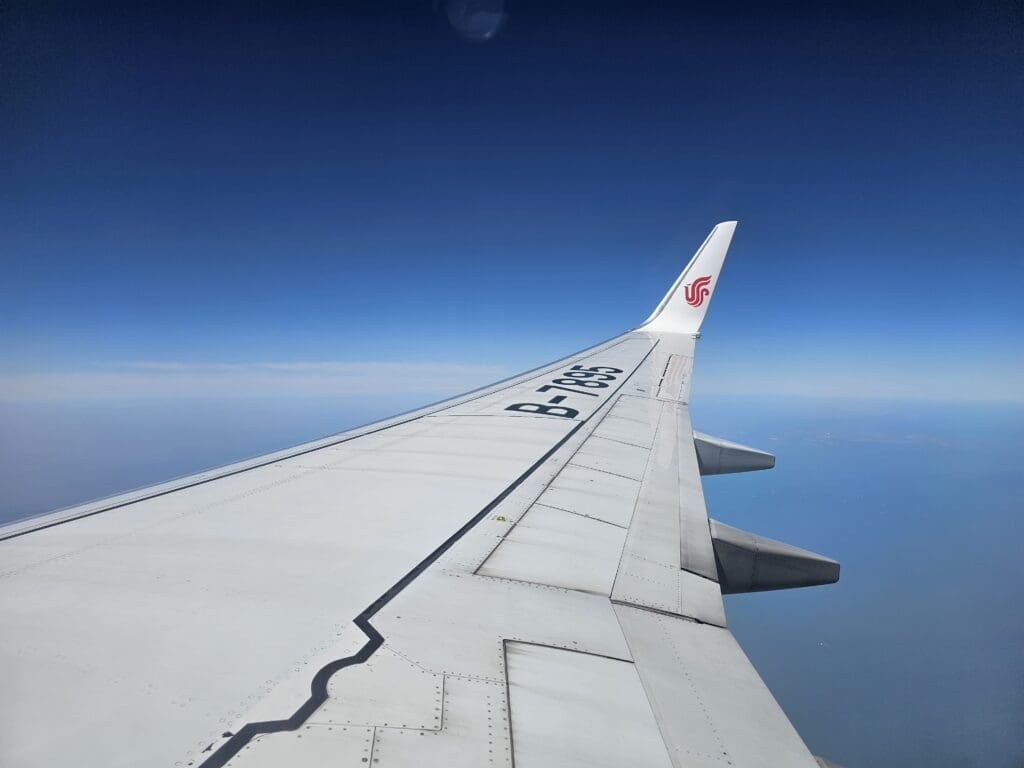
A few minutes after the Purser’s announcement, the Boeing could be felt commencing its long step descent and soon headed down to 26,000 feet where we lingered for a few minutes. Just before crossing the Chinese coastline and crossing over the sprawl of Tianjin’s nearby ports, the aircraft continued its descent before settling at 18,000 feet. From this altitude, a superb birds eye view of China’s seventh largest city could be had as we passed over the endless tall buildings and the winding Haihe River. As we sank lower, the aircraft left Tianjin behind and the scenery below was replaced by a mixture of the towns, villages, semi-rural areas and large industrial complexes that sit to the east of the capital city.
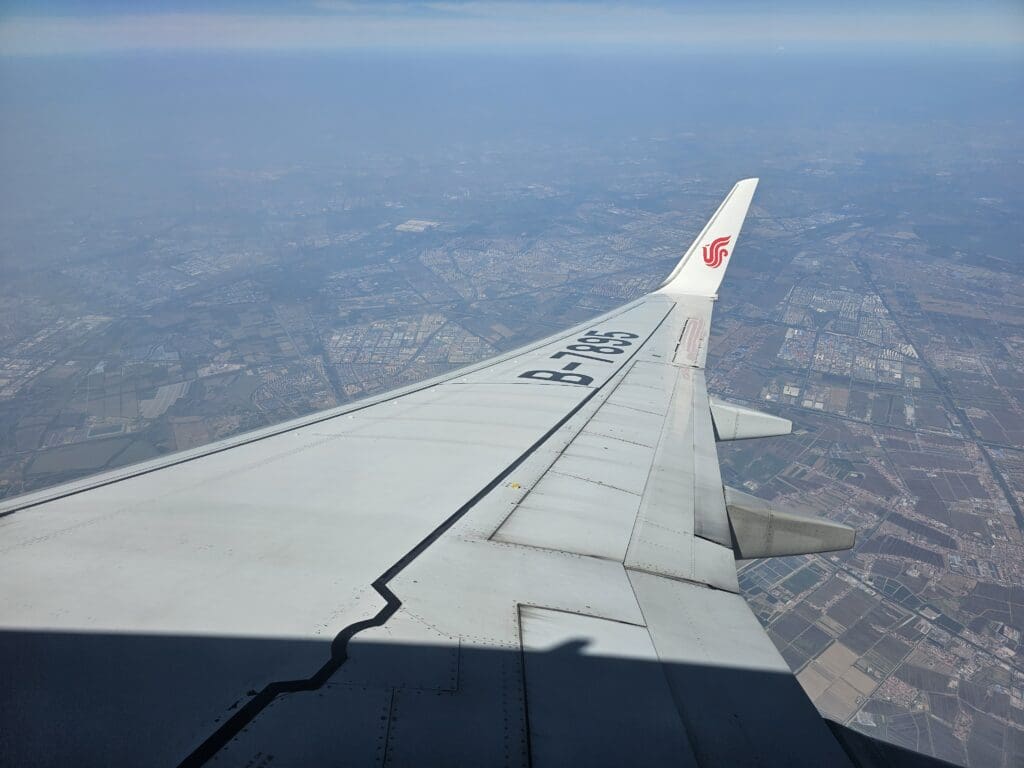
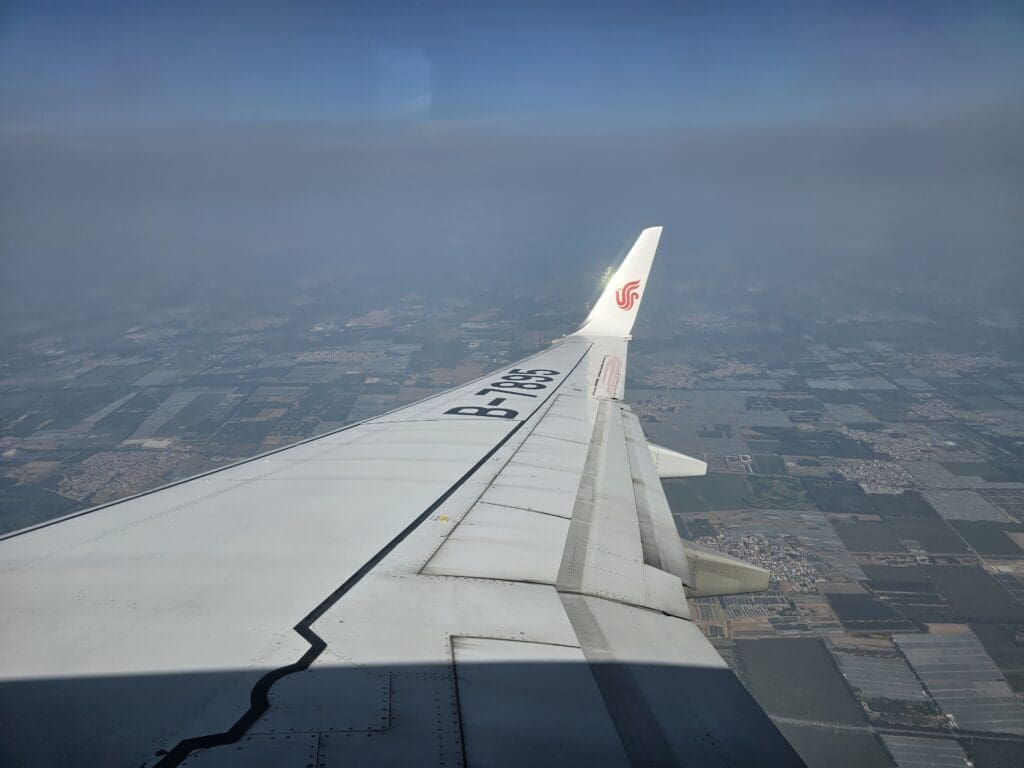
Soon, the Boeing turned northwards and began to head towards the eastern fringes of Beijing. As we flew north, the Boeing bumped around a little, although this was far from the worst turbulence that I have ever experienced. As we made our way northwards, eventually, those on the left-hand side of the Boeing would have been treated to a good view of the sprawl of Beijing Capital Airport, however, seated on the right-hand side, little other than a seemingly endless sprawl of factories could be seen before we turned southwards and lined up for an approach to Runway 19. Sinking lower and lower, the Chinese landscape became increasingly more visible and before I knew it the landing gear was extended.
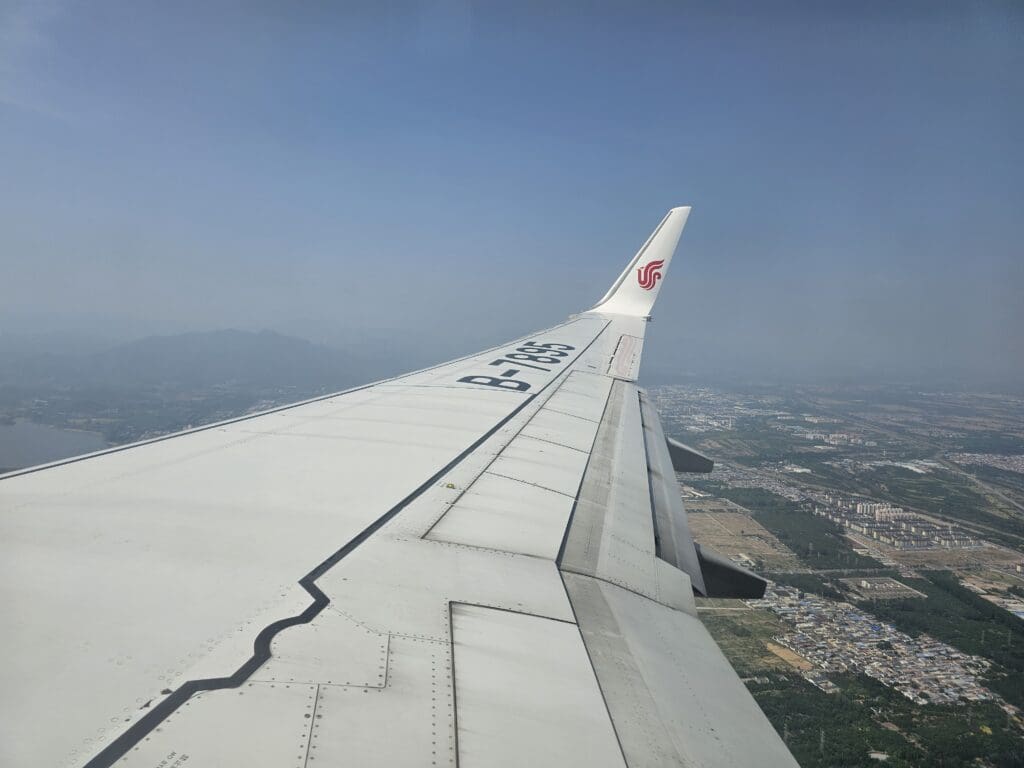
Heading back towards Earth, the aircraft bumped, shook and swayed a little before Beijing Capital Airport appeared. That afternoon, the first of many aircraft seen took the form of several stored Air China jets, alongside a mixture of both locally based and visiting freighters waiting for their next missions. A few seconds later, the Boeing touched down on Chinese soil with a firm thud, and almost immediately upon touching down, upbeat neoclassical music filled the cabin, only to be temporarily interrupted a few seconds later by the Purser as they performed their post-landing announcement in Mandarin and English. This consisted of the usual thanks and a warning for passengers to remain seated. Following some rather intensive braking, the aircraft made a quick exit from the runway and began its taxi to Terminal 3.
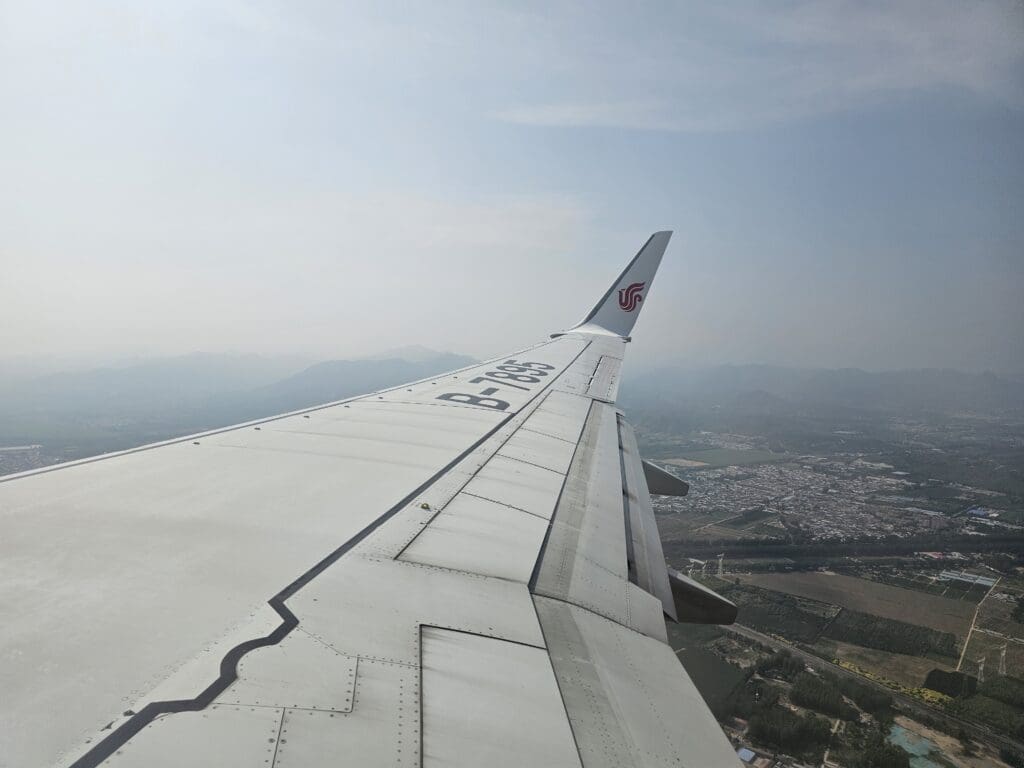
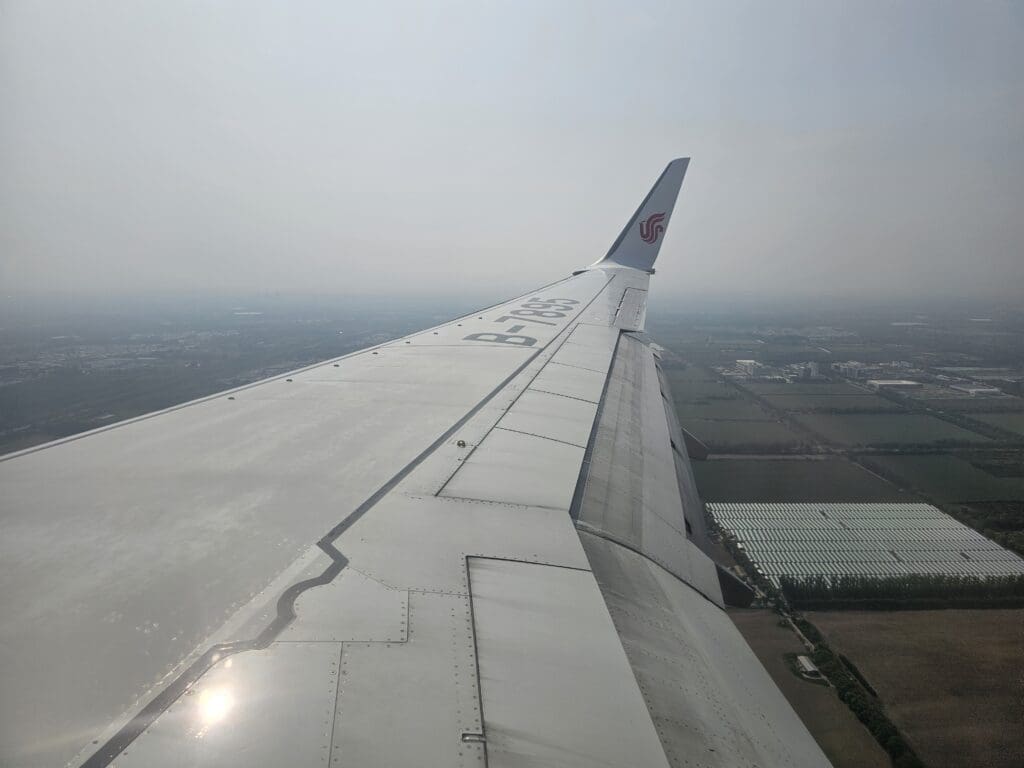
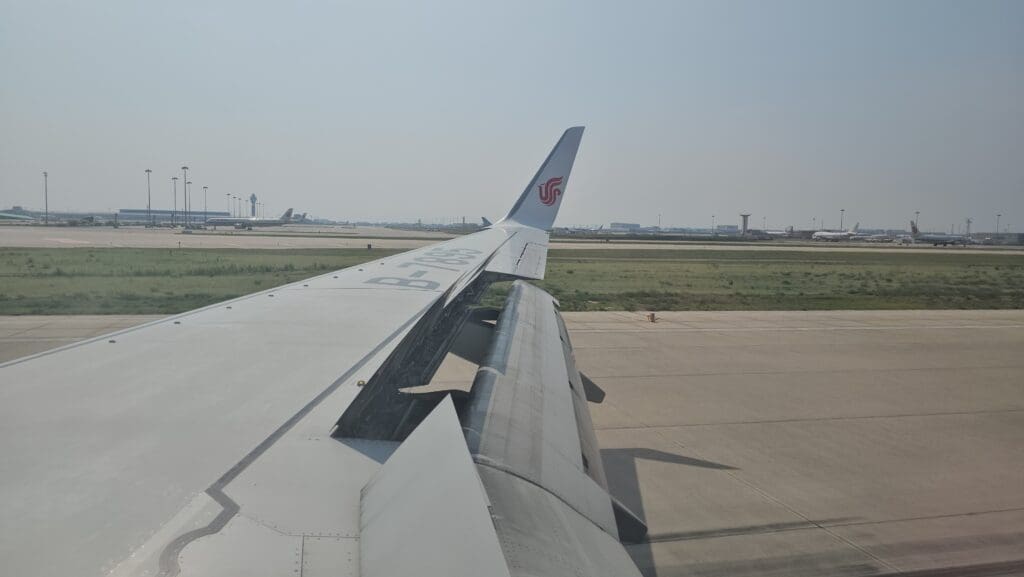
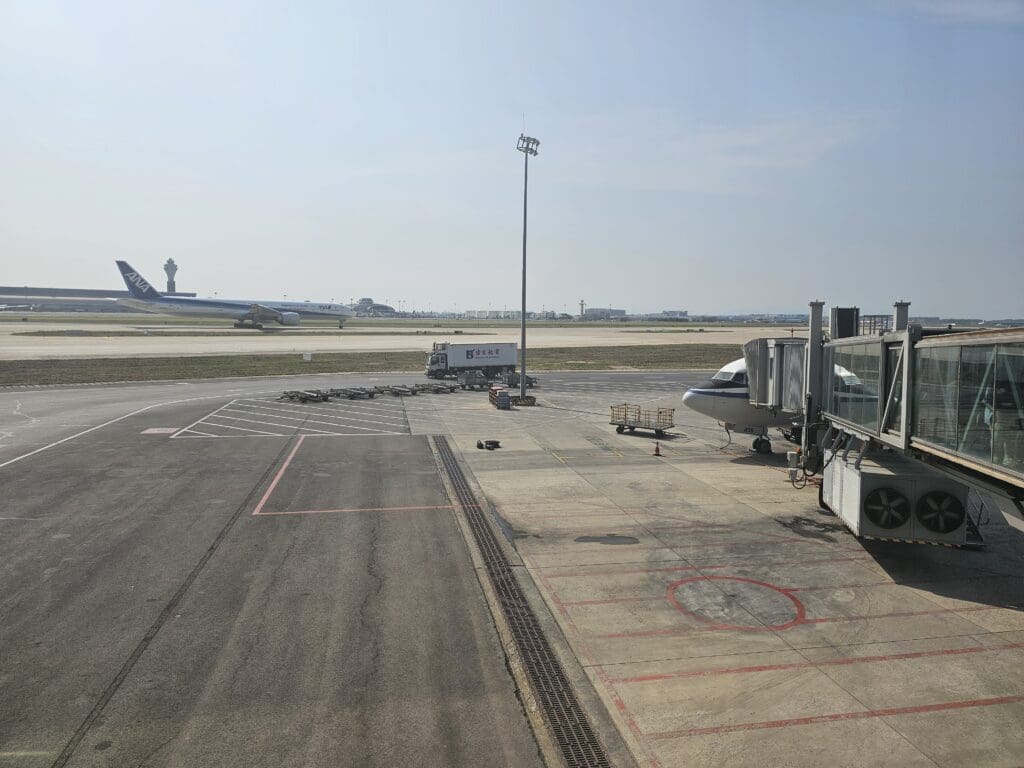
Given the sheer size of Beijing Capital Airport, mammoth taxis are not all that uncommon; however, fortunately, we did not have to travel too far to reach Stand 524, a contact stand at the terminal. Soon, the Boeing cautiously edged forward into the gate and came to a gentle halt a grand total of twelve minutes ahead of schedule. At this point, it seemed like the entirety of my fellow passengers jumped up in a rush to disembark; however, fortunately for them, it didn’t take too long for the jetbridge to be connected to the aircraft and for disembarkation to begin. After no more than five minutes, I stood up and slowly made my way through the cabin, receiving a polite ‘bye bye’ from the Purser and their colleague in the forward galley before stepping onto the jetbridge and commencing my transit in Beijing.
Summary
Air China is not typically considered to be a five star airline, and despite supposed improvements in their service quality and performance in recent years, I was not expecting an overly top-class experience. Nevertheless, I was still left rather disappointed and found the aircraft to be dirty and worn, the seat to be rather cramped and the lack of any real catering to be a letdown given other airlines’ offerings on the route. Needless to say, I hoped for a much better experience on my Airbus A350 operated service to Dubai!