Flying Malaysia’s ‘Other’ LCC: Kathmandu to Kuala Lumpur on a Batik Air Malaysia 737 MAX
Background
Separated by around 3,300 kilometres, the capital cities of Nepal and Malaysia are well-connected by multiple flights operated by several airlines each and every day. At the time of my flight in May 2025, Nepali carriers Himalaya Airlines and Nepal Airlines, alongside Malaysian carriers Batik Air Malaysia and national carrier Malaysia Airlines all ploughed this route with a mixture of Airbus A320 and Boeing 737 MAX 8 jets. This equates to a total of 29 flights per week, making the route to Kuala Lumpur one of the busiest international flight routes from Kathmandu. This is justified by the significant point-to-point demand stemming from the large Nepali diaspora in Malaysia, whilst Batik Air Malaysia and Malaysia Airlines’ services also cater for passengers connecting to and from services to destinations across Asia and Australasia.
Hoping for some rest and relaxation in Malaysia after my trekking holiday in Nepal, I had initially booked to fly with Himalaya Airlines from Kathmandu to Kuala Lumpur. However, this plan fell through when the airline revised its schedules a little over a month before departure and cancelled my flight. Looking at other options, ticket prices for Malaysia Airlines proved extortionate, whilst seeing as I would sample the delights of Nepal Airlines on my way to Nepal, I sought a little more variety. Meanwhile, the only cheap one-stop option came in the form of Air India via Delhi, however involving a long stopover in the Indian capital, I soon passed on this. In the end, I settled on one of Batik Air Malaysia’s twice-daily flights, opting for the 2155 departure primarily owing to its much cheaper cost when compared to the airline’s afternoon service. With the cheapest tickets for this service sold via Trip, I decided to purchase these via the online travel agent’s app, doing this quickly and easily without issue.
Seeing as I booked through the Trip app, I can’t comment all too much on Batik Air’s booking process. However, I did use the airline’s app to manage my booking once I had received my reservation number. This gave me the option of reserving a meal, snacks or refreshments, purchasing additional luggage, purchasing a one-way ticket on the KLIA Ekpres train from Kuala Lumpur Airport to KL Sentral, or adding ‘Delayed Baggage Service’ which would enable me to claim $1,000 should my bag go missing for over 96 hours. Interestingly, there was no option to pay to pre-reserve a particular seat!
Seeking to get the full Batik Air experience, and with no complimentary snacks offered otherwise, I decided to splurge out on an inflight meal – six of which were offered. All of these came in at $3.80 bar the vegetarian nasi lemak for $2.60 and the Fish Curry Nasi Kandar for $4.60. These prices are 20% cheaper than when purchased onboard. Seeking an appropriately Malaysian start to my trip, I decided to purchase the Nasi Lemak Ayam Rendang.
Online check-in for Batik Air Malaysia’s services opens up 24 hours before departure, and whilst I would still need to visit a desk in Kathmandu to drop off my bag, seeking to select a seat, I decided to check in online a short time after this window opened. After re-entering my booking details on Batik Air’s app and selecting which of the constituent Lion Air Group airlines that I would be flying with, I was taken to enter my passport and emergency contact details before being presented with a mostly empty seat map. I opted for a window seat towards the front of the cabin which would hopefully enable me to make a speedy exit upon arrival in Kuala Lumpur, namely Seat 5A. Once selected and I had agreed not to transport any prohibited items, I was presented with my boarding pass.
About Batik Air Malaysia
It cannot be disputed that Malaysia’s low cost airline scene is dominated by the red and white jets of AirAsia, whose pioneering success has seen their jets become nearly omnipresent at airports across Southeast Asia and beyond. However, Batik Air Malaysia’s size, scale of operations and strong backing cannot be underestimated, with the airline being Malaysia’s third largest and a subsidiary of Indonesia’s gigantic Lion Air Group.
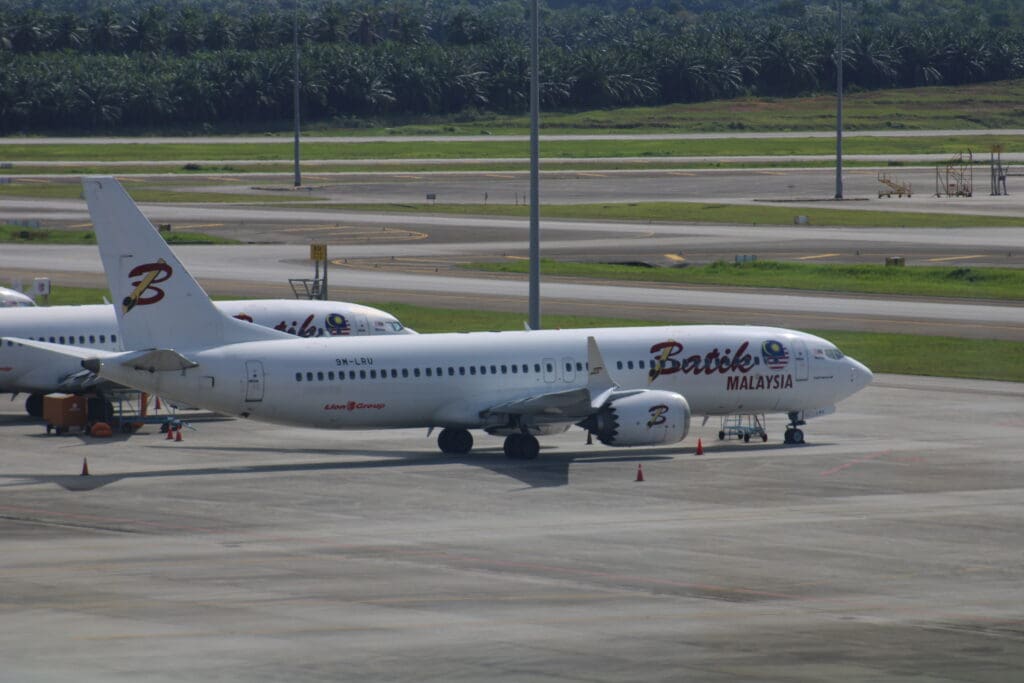
Batik Air Malaysia has not been around for any lengthy period, operating its first service in April 2022, just over three years before my trip. However, the airline is a direct successor of Malindo Air, which was created as a joint venture between Malaysian defence conglomerate the National Aerospace and Defence Industries and the Lion Air Group who sought to enter the lucrative Malaysian low-cost market and challenge the dominance of AirAsia. Operating its first service in 2013, Malindo Air’s Boeing 737-800 and Boeing 737-900ER jets soon came to be seen at airports across East Asia, whilst the airline also operated fourteen ATR 72s which were based at Sultan Abdul Aziz Shah Airport (also known as Subang) and operated services to destinations across Peninsula Malaysia.
In 2016 I had the pleasure of flying on a Malindo Air Boeing 737-800 on an early morning service from Kuala Lumpur to Bangkok Don Mueang and found the airline to be a cut above your typical low-cost carrier, offering complimentary inflight snacks and refreshments, as well as personal inflight entertainment screens. Indeed, it is possible to argue that the airline was a hybrid or even full-service carrier. This led me to sample the airline again on ATR 72 and Boeing 737-800 services the following year between Kuala Lumpur and Penang. With all experiences leaving me with no complaints.
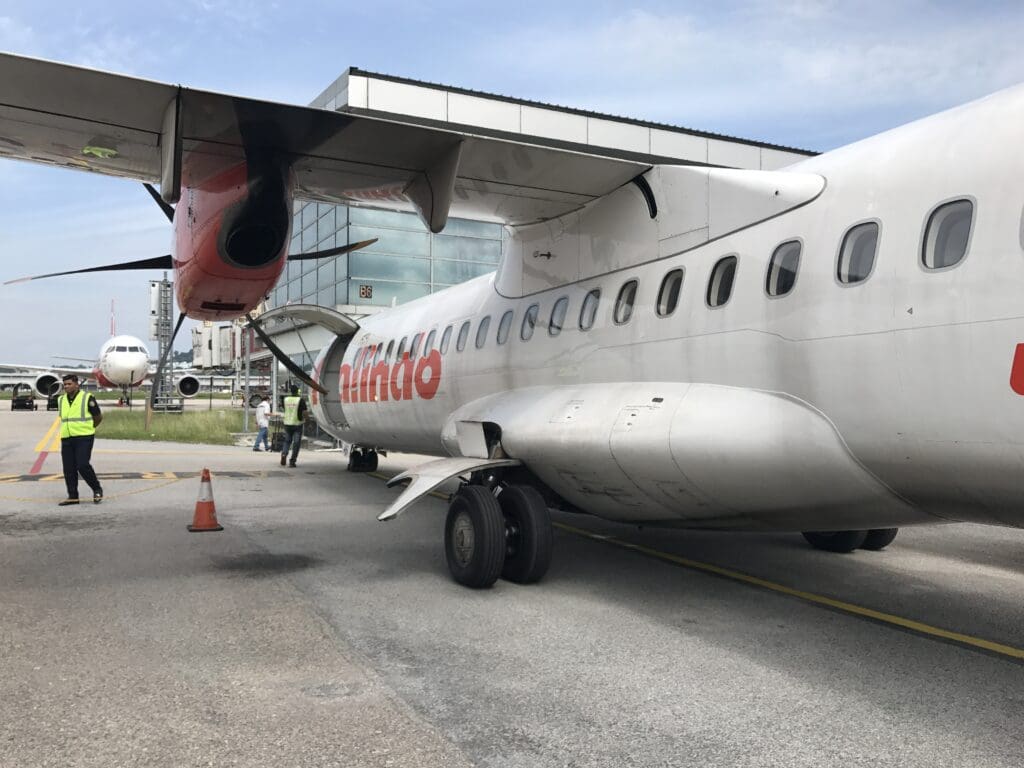
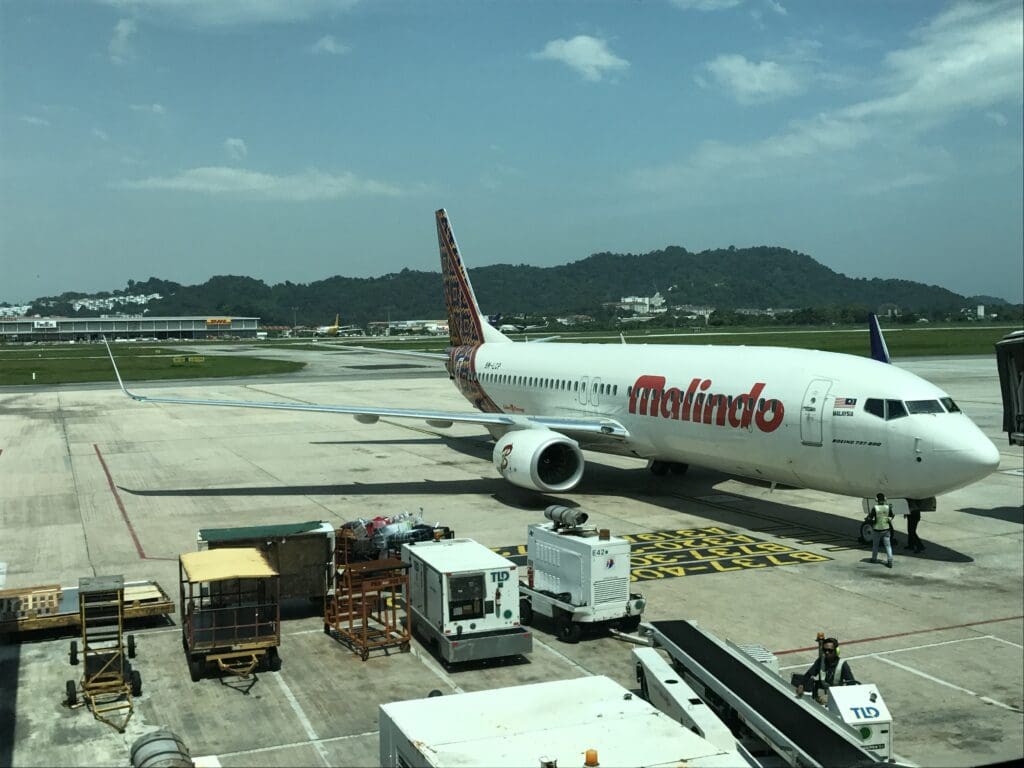
With Malindo Air being a stand-out brand within the Lion Air Group portfolio, it was eventually decided to rebrand Malindo Air as Batik Air Malaysia, to unify its operations with its Indonesian counterpart, Batik Air. This also implied a move to solidify its status as a full-service carrier given Batik Air’s status in the Indonesian market. However, with no complimentary inflight offerings and no inflight entertainment currently offered, I am not too certain how appropriate it would be to label Batik Air Malaysia as a ‘real’ full-service carrier.
Today, Batik Air Malaysia operates a fleet of Airbus A330-300, Boeing 737-800 and Boeing 737 MAX 8 aircraft, and the bulk of the airline’s operations take place within East Asia. However, the airline also deploys its Boeing 737 MAX aircraft on long routes to the likes of Dubai, Karachi, Kathmandu, Perth, Seoul, Tashkent and Tokyo, operating services of up to around seven hours in duration.
The Journey
Following a busy two weeks in Nepal, when my final day in the country rolled around, I decided to take things easy and wandered no further than the boundaries of the chaotic streets of Thamel, Kathmandu’s main tourist area. Indeed, waking up to hot drizzle, the rain and humidity were not particularly conducive to sightseeing. Instead, following a hearty Indian-style breakfast of achar, paratha and yoghurt which, given the size of the boutique hotel, was delivered to my room, I made my way to a hole-in-the-wall laundrette and paid 1,500 rupees for a four-hour service before going to grab a coffee. I then spent the rest of the day indulging in Nepali culinary delights, namely steamed momos and a massive thakali, having a couple of naps, collecting my laundry, converting my final rupees into ringgit, and packing my bags. Fortunately, having paid 1,500 rupees for the luxury of checking out 1800, I did not have to leave the air-conditioned comfort of my hotel room until it was time to catch my ride to the airport.
Before I knew it, evening arrived and following a short nap, I wandered down to reception and returned my key before plonking myself down and waiting for my ride to the airport which I had arranged through my trekking company. Ten minutes later, the rather eccentric gent and owner of the trekking company appeared and escorted me out onto Kathmandu’s dusty streets to the waiting Nissan four-by-four that would battle through the evening traffic of Nepal’s capital. After lugging my suitcase into the boot, I settled down on one of the seatbelt-less back seats. Whilst Kathmandu Tribhuvan International Airport is located fairly centrally within Nepal’s capital city, sitting just five kilometres or so to the east of Thamel, the city’s traffic means that journeys to and from the airport can take quite some time, and seeing as I would be travelling amid the evening rush, I was not anticipating a particularly quick journey to the airport. Opting to take the route with the least traffic rather than the most direct journey, the driver made a beeline for the ring road, joining a scrum of just about every single vehicle imaginable as I watched the towering buildings of the city pass by as the sun set into the horizon, savouring my last few moments in the midst of Kathmandu’s chaos.
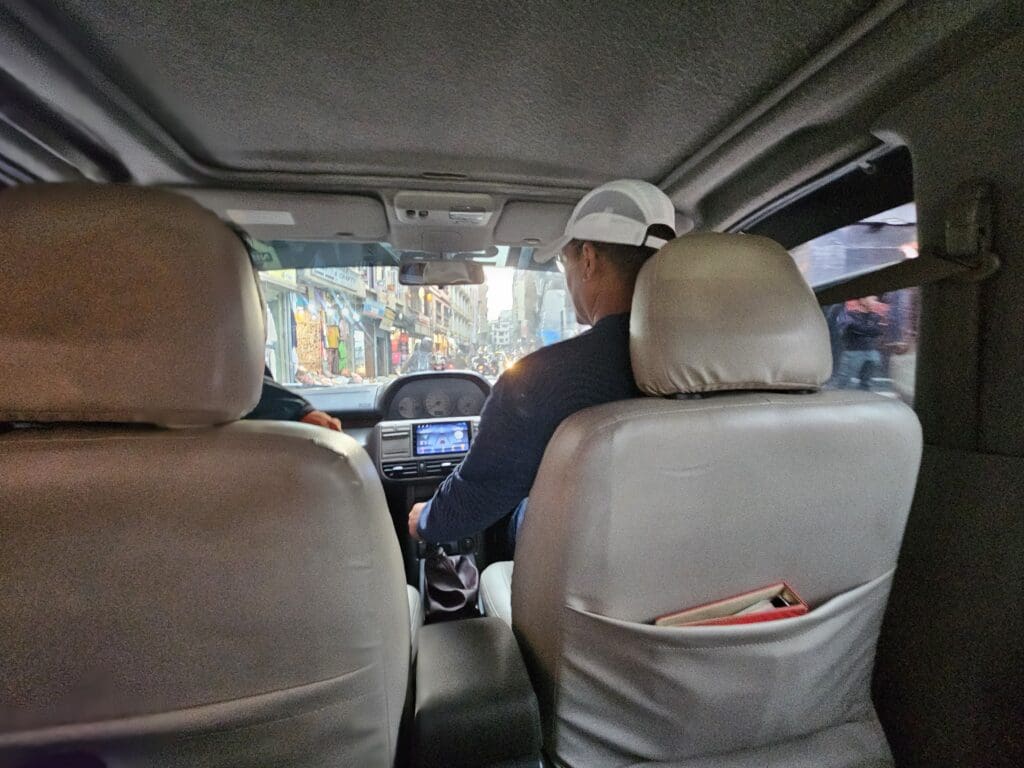
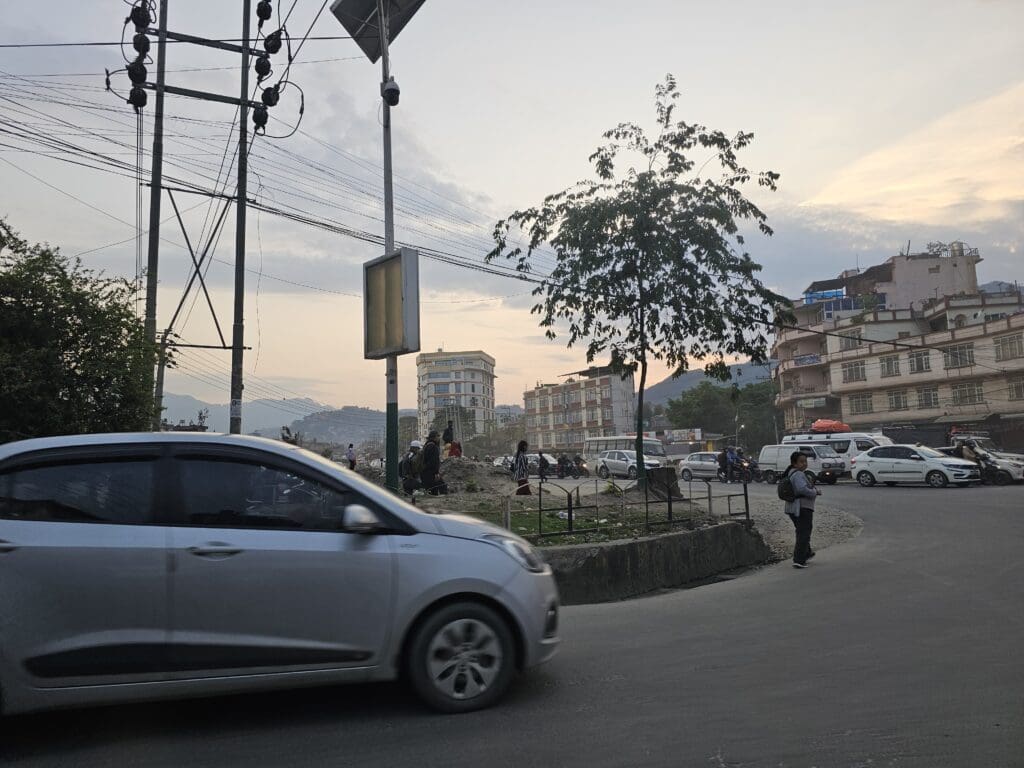
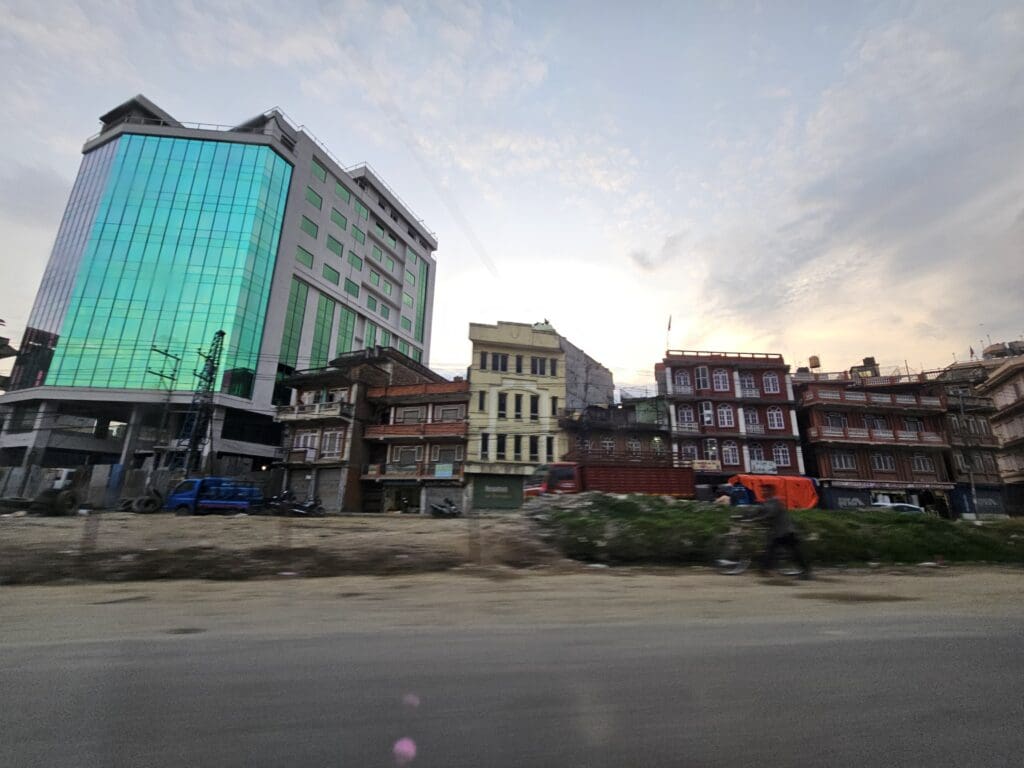
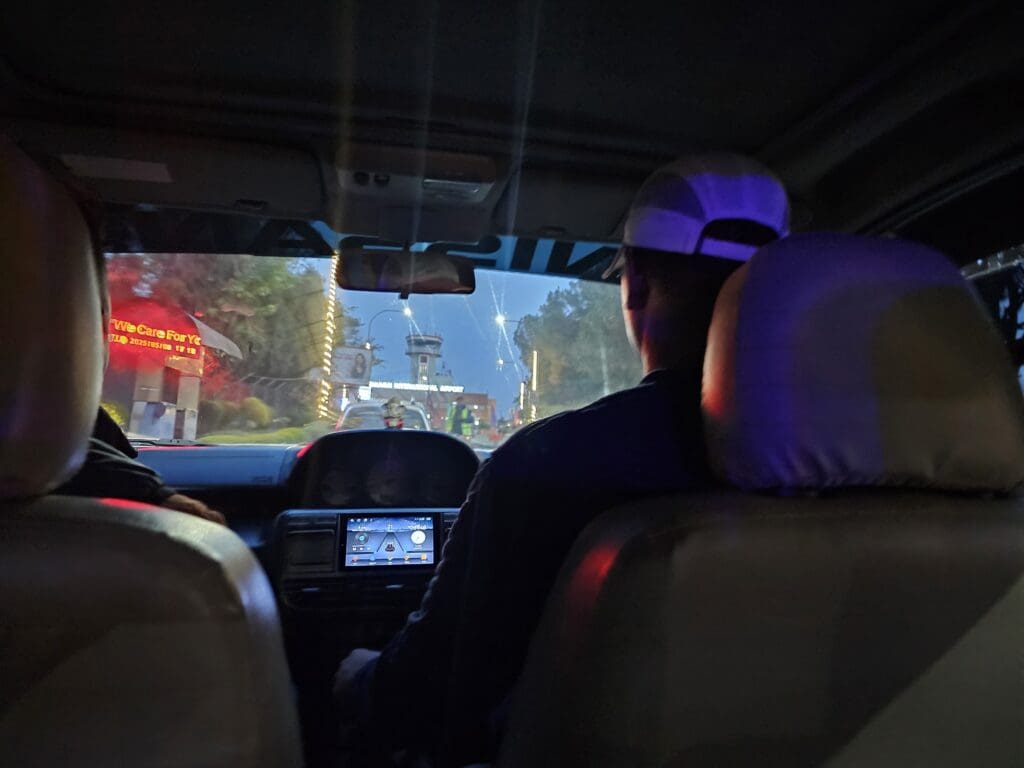
Despite the driver’s attempts to beat the traffic, much of the journey to the airport was stop-start in nature. After about three-quarters of an hour on the road, the car sped past Kathmandu’s Pashupatinath Temple, a UNESCO World Heritage Site and one of the most sacred Hindu sites in Nepal, before we turned up the airport’s driveway at which point the control appeared, sandwiched in between the detached international and domestic terminal buildings. Eventually, the car came to a halt outside the busy facade of the airport’s international terminal where plenty of families could be seen bidding teary farewells to their relatives, consisting mostly of young lone males working abroad in the Middle East.
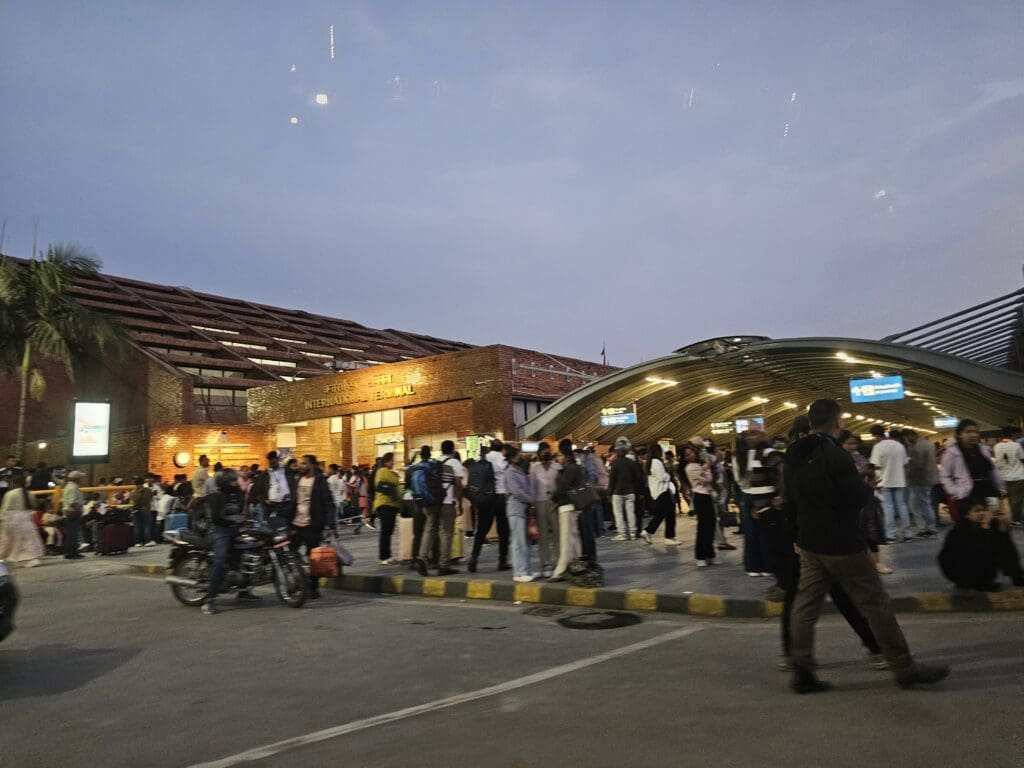
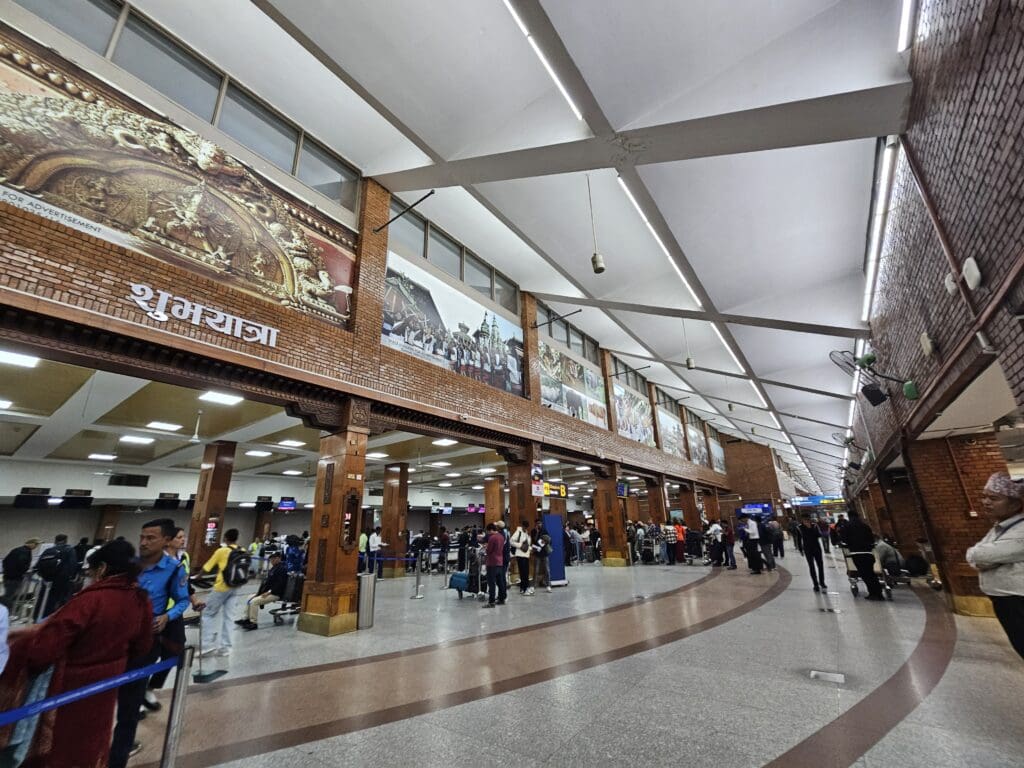
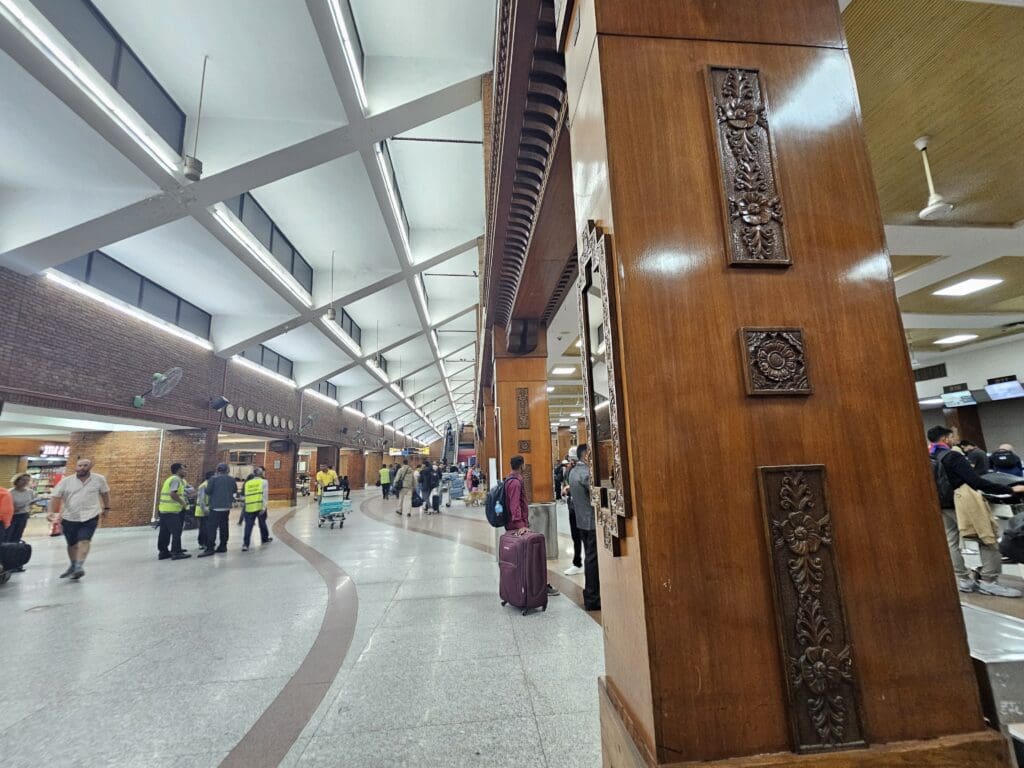
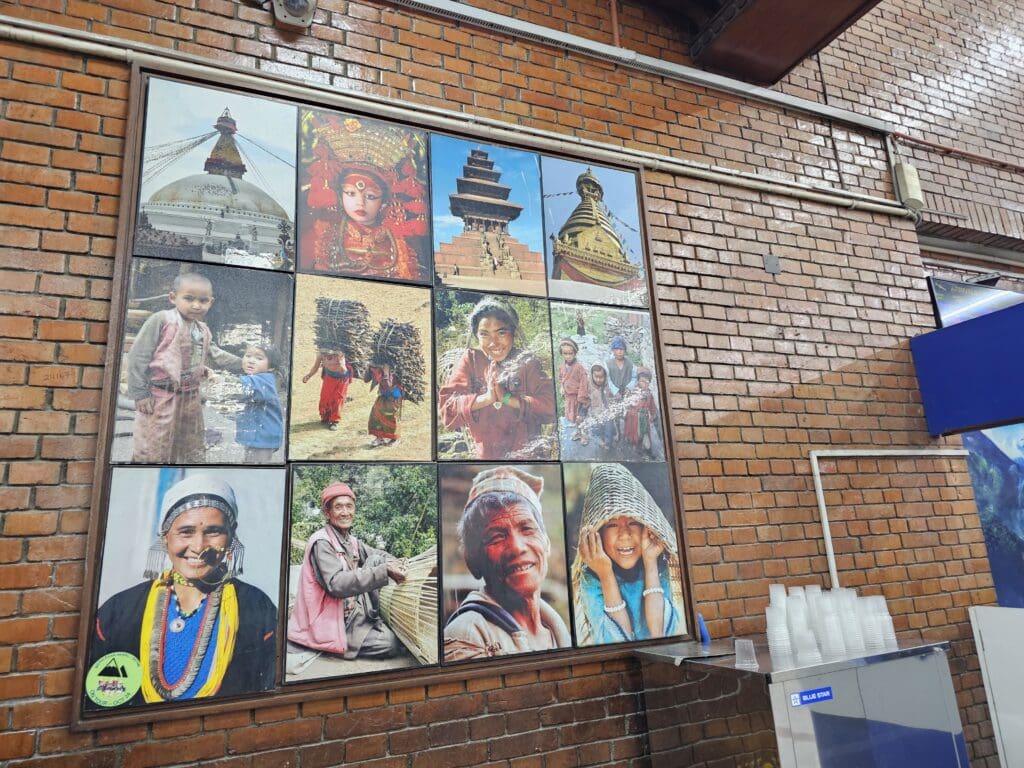
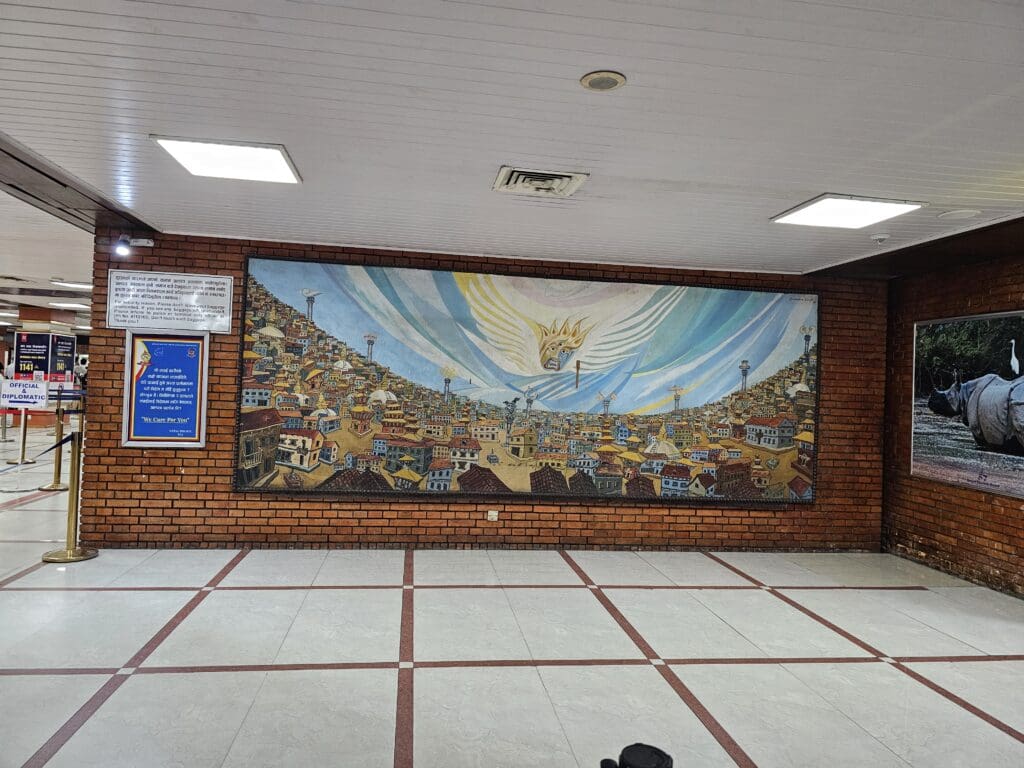
Having opened its doors to passengers in 1990, Kathmandu Tribhuvan Airport’s international terminal is not particularly modern or sleek. However, this does have a certain charm about it and is certainly one of the more distinctive terminals in the world, clearly incorporating elements of Nepali design into its architecture. Meanwhile, expansion work is currently underway to modernise this and boost the airport’s capacity. As is the case at many South Asian airports, only those with a valid ticket are permitted to enter the terminal and so after bidding my farewells, I joined the scrum of passengers waiting at one of the terminal’s entrances. There, my ticket was checked, and I was required to pass through a checkpoint where my bag was scanned and I passed through a metal detecting arch before I entered the landside departure area on the ground floor of the terminal.
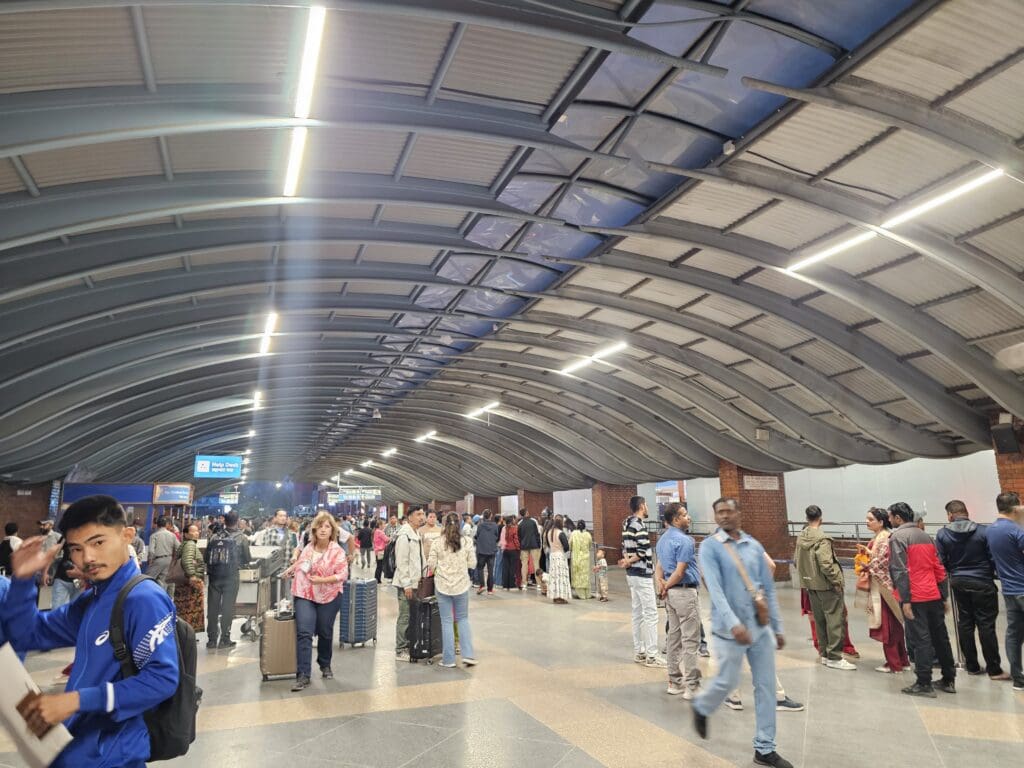
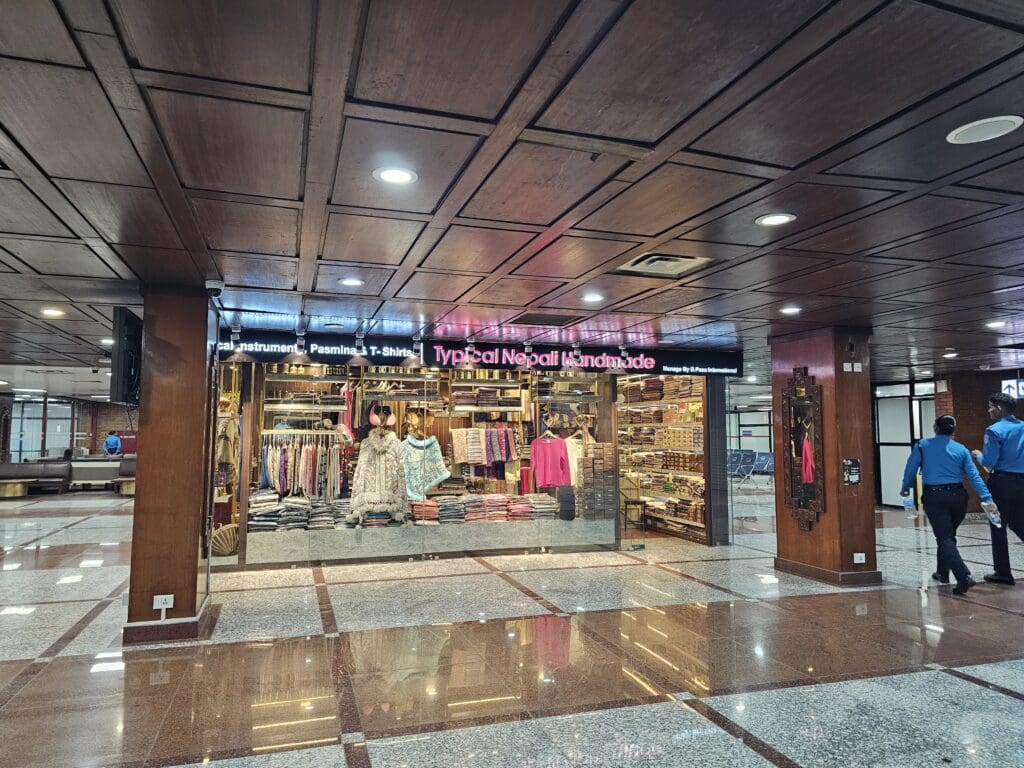
Examining the landside portion of the departures area, I found this to be small, with check-in desks spread out across two halls – A and B. At that time in the evening, many of the check-in desks were awash with passengers and thus failed to instil much confidence that I would be in for a short wait that evening! Inside, facilities are rather limited with a small gift shop that also sells a limited array of refreshments, a baggage wrapping service and a closed post office. Meanwhile, as I wandered around, I spotted just four self check-in machines, with these only usable by those departing on Malaysia Airlines.
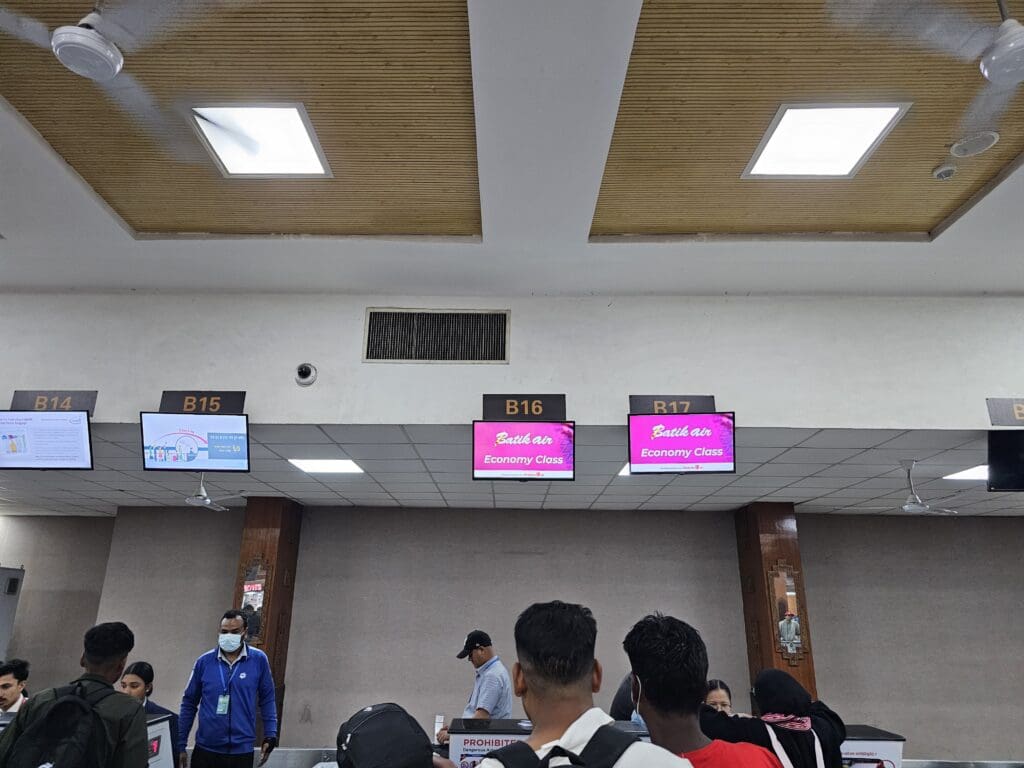
Following my short explore, I spotted Batik Air Malaysia’s three check-in desks, and, much to my delight, these were comparatively quiet compared to the massive crowds seen at the neighbouring Air India desks where passengers were checking in for the evening Airbus A320 flight to Delhi. Each of Batik Air Malaysia’s desks was manned by a Nepal Airlines agent, however a Lion Air Group supervisor could be seen lingering around and ensuring that check-in went smoothly. Hoping to rid myself of my suitcase as quickly as possible, I joined one of the three short queues and within about five minutes I walked up to the counter and handed over my passport. Whilst I would not describe the agent as being unfriendly, my interactions with them were minimal and were limited to them asking me if my final destination was Kuala Lumpur and whether I had any power banks in my hold luggage. I should however give them credit for turning a blind eye to the fact that my suitcase was 0.6 kilograms over the hold luggage allowance. Once my Batik Air branded boarding pass was printed out, I was advised to wait by the ‘Pass Holders Only’ door for five minutes, presumably whilst my hold luggage was scanned in case this needed to be subject to an additional search by hand.
Playing it safe, I lingered around for about ten minutes in a crowd of mostly Air India passengers before I made a quick trip to the landside toilets which were in a filthy state. After this, I headed up the escalators and entered the large immigration hall where most desks were manned. With almost all passengers taking the form of Nepali overseas workers, the two desks for foreign nationals were completely devoid of passengers, so I was able to walk straight up to a desk. Once there, I handed my passport over to the stern officer who gave me the usual suspicious glances up and down before taking my photo, after which I was stamped out of Nepal. Steaming onwards, I was a little surprised to find that a duty free store, gift shop and lounge were all sandwiched between immigration and security, however not needing to visit any of these, I continued onwards to one of the two security checkpoints. This ended up being a chaotic yet quick experience, with passengers constantly pushing in front of one another and barging people out of the way, yet ignoring this annoyance, security was a very quick process, with no need to remove liquids or electronics from bags. Afterwards, I had my boarding pass stamped, ending my journey from the landside to the airside portion of the terminal building. Overall whilst the pushing and shoving was not for the fainthearted, my journey through the terminal was much quicker than I had anticipated and I made it through to the airside area no more than fifteen minutes after arriving in the terminal, leaving me with no major complaints.
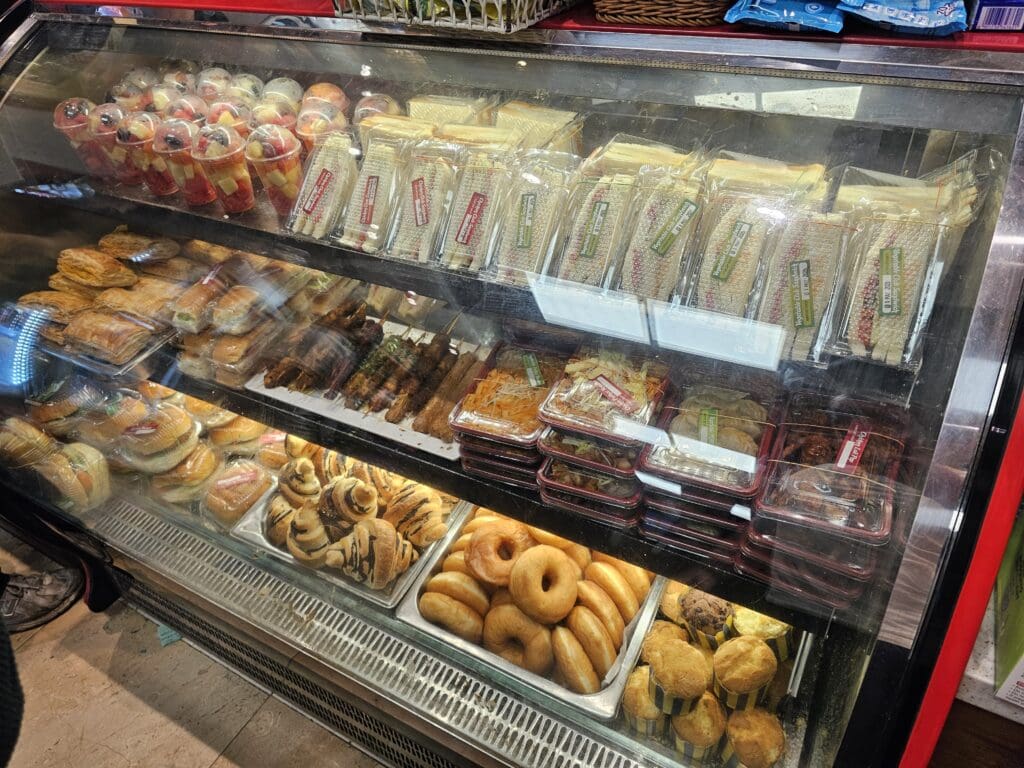
One downside to my speedy journey through the terminal was that I ended up with an abundance of time on my hands in the surprisingly small airside area. This is shaped like the letter ‘T’, with the terminal’s seven gates located at the top of this letter. Inside, this features plenty of seating, the most luxurious of which consists of several private workstations which feature their own built-in (and working!) plug sockets. As you would expect from an international terminal, a complimentary wifi network is offered however still with a working Nepali SIM card, I decided not to try this out. In terms of facilities, the terminal features a single small souvenir shop as well as a café-shop that sells a range of drinks and snacks, with this being the extent of the terminal’s facilities. Ultimately, I can’t say I was left particularly impressed by the airside area, furthermore, I cannot fail to mention that the toilets were in a disgustingly filthy state.
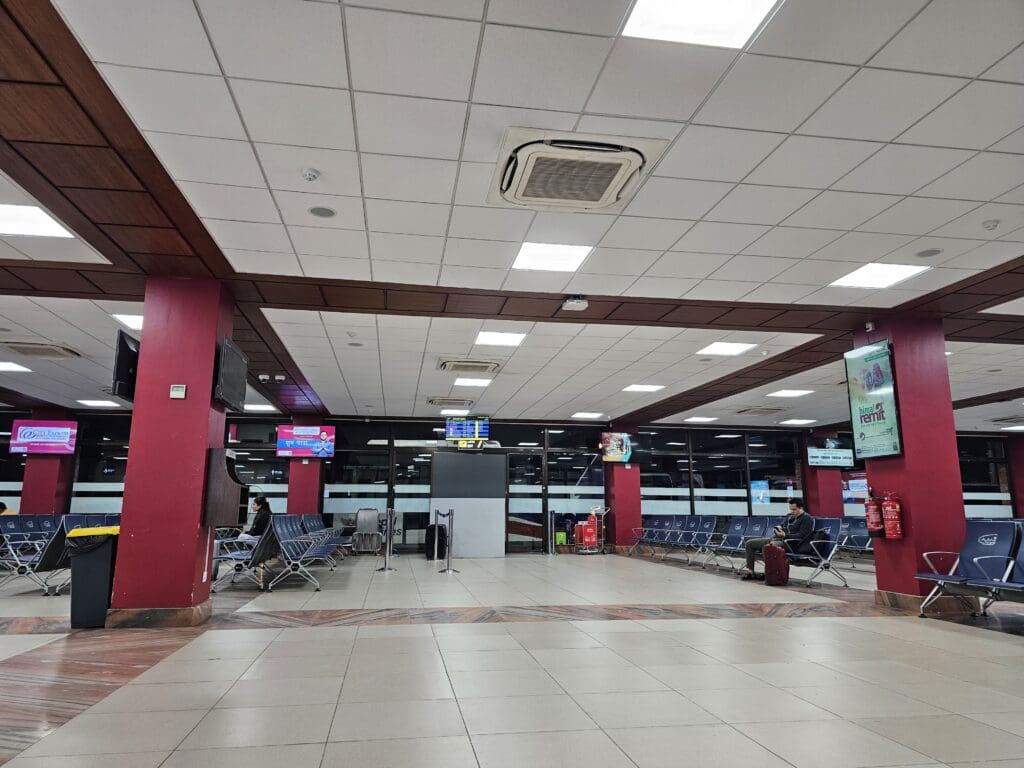
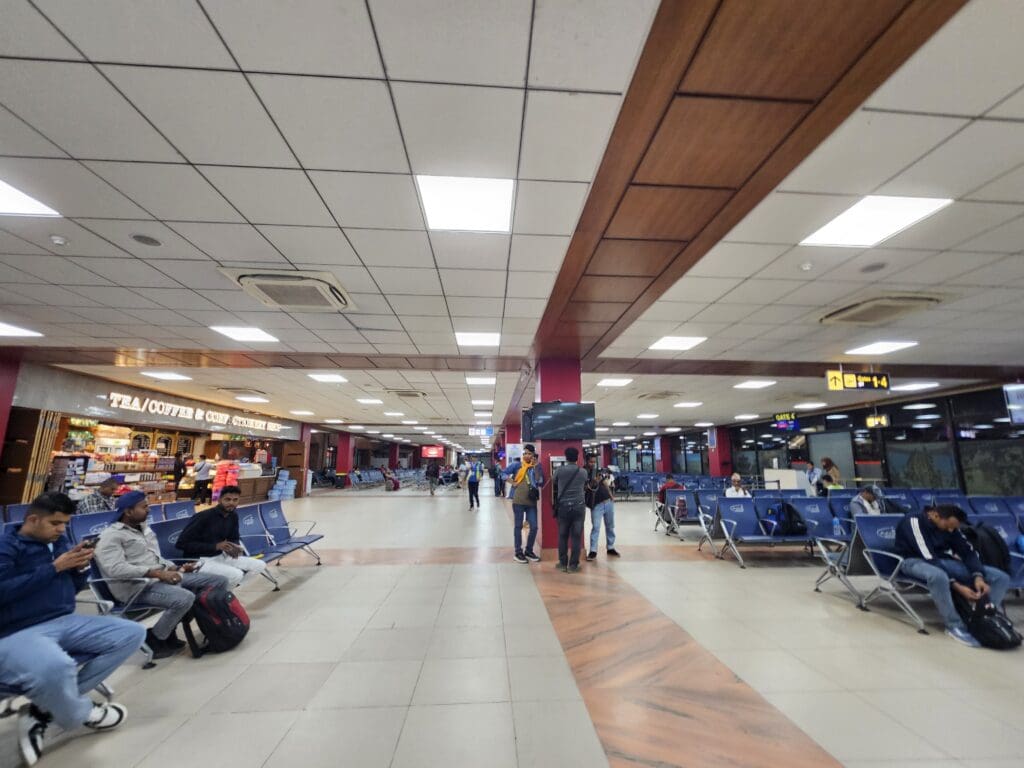
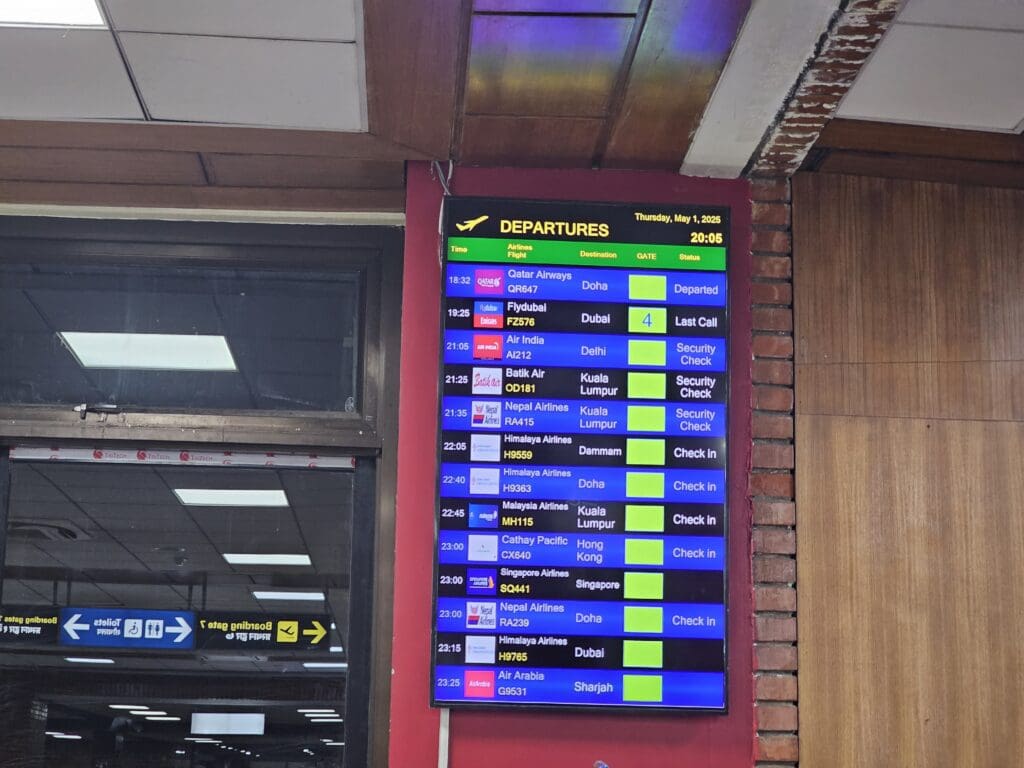
Throughout my stay, the terminal was rather busy, and more and more passengers appeared as the evening progressed. Looking at the departure boards, a slew of flights to destinations across Asia could be seen on these, and had I not wanted to head to Kuala Lumpur, I could have instead journeyed to the likes of Bangkok, Dammam, Delhi, Doha, Dubai, Guangzhou, Hong Kong, Sharjah or Singapore. In total, fourteen flights could be seen on these, operated by Air Arabia, Air India, Cathay Pacific, China Southern Airlines, FlyDubai, Himalaya Airlines, Malaysia Airlines, Nepal Airlines, Singapore Airlines and Thai Airways. Indicating the busyness of the route between Kathmandu and Kuala Lumpur, my flight would be one of three heading to the Malaysian capital that evening, with a Nepal Airlines Airbus A320 service departing twenty minutes before my flight, and a Malaysia Airlines Boeing 737 MAX 8 departing fifty minutes later!
According to my boarding pass, boarding was scheduled to commence fifty minutes before departure at 2105. However, seeing as the inbound aircraft was not scheduled to touchdown in Kathmandu until this time, I was sceptical that this would indeed be the case. In fact, Batik Air Malaysia does not have a fantastic on time performance from Kathmandu, and in the week before my flight, it seemed that this service usually departed at least forty minutes late each night. Tracking the inbound progress of the aircraft, I was happy to see that this had departed Kuala Lumpur virtually on time and was making good progress as it sped towards the Himalayas.
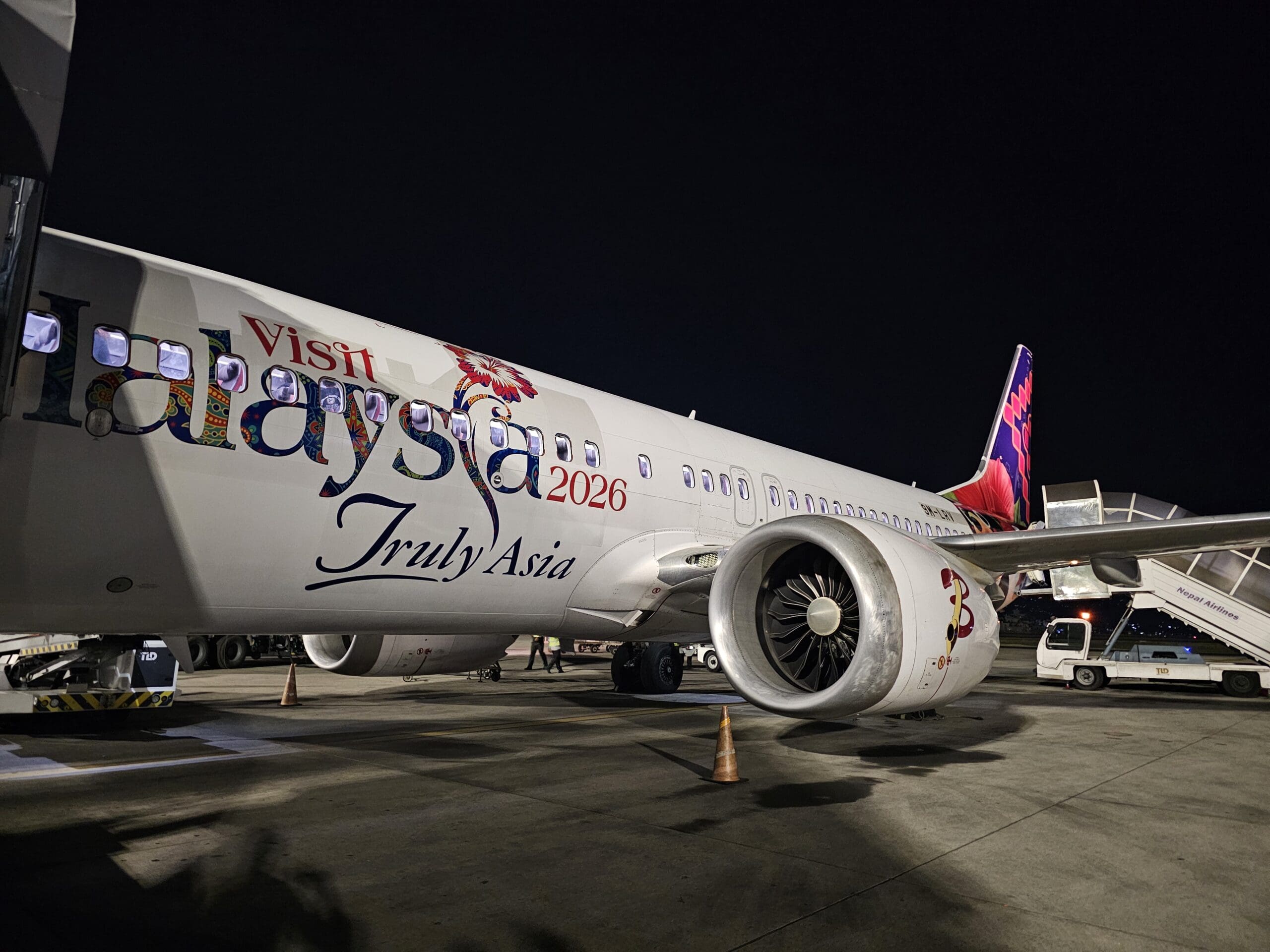
That night, I would have the pleasure of flying onboard Boeing 737 MAX 8 9M-LRV, which carries the line number 6911. Assembled at Boeing’s Boeing 737 production line in the Washington city of Renton, this aircraft took to the skies for the first time in early May 2018, making it just three days shy of exactly seven years old at the time of my flight! Following testing, the aircraft was delivered to Indonesian low cost giant Lion Air, being ferried across the Pacific via Honolulu and Guam before arriving at its new home in Jakarta. Commencing its operational career as PK-LQO, the aircraft did not operate for particularly long, entering long-term storage in Denpasar in March 2019 following the tragic accident involving a Lion Air Boeing 737 MAX. The aircraft remained in storage for well over three years, spending this time in Denpasar, Batam and Jakarta, before finally returning to the skies for good in July 2022. In September 2022, the aircraft was passed to Lion Air’s Malaysian subsidiary, Batik Air Malaysia where it has remained ever since, flying passengers from Kuala Lumpur to a wide array of destinations across East and South Asia, the Middle East and Australasia. In the week before my flight, this aircraft had shuttled between Kuala Lumpur and Amritsar, Brisbane, Danang, Denpasar, Haikou, Hanoi, Kathmandu, Kuching, Lahore, Melbourne, Perth and Sydney, operating flights between around two and seven hours in duration.
At the time of my flight, Batik Air Malaysia’s Boeing 73 7 MAX jets seemed to wear a smorgasbord of liveries. Some are painted in the airline’s full livery complete with a colourful batik-inspired pattern on the tail, whilst others are in an all-white livery with basic Batik Air Malaysia titles, and some, such as my ride, wear neither. More specifically, in January 2025 the aircraft was painted into a colourful livery that promotes Malaysia as a tourist destination to be visited in 2026 – officially the Visit Malaysia Truly Asia 2026 special livery.
At 2051, fourteen minutes ahead of schedule, the inbound aircraft touched down on Nepali soil and soon came to a halt at Stand 8. By that time, plenty of passengers could already be seen lingering around Gate 5 and I assumed that it would be a busy flight down to Malaysia that evening. Much to my surprise given the fact that the aircraft had only just arrived, at 2105 the doors to the outside world opened and an announcement was made in Nepali and English inviting all those heading off on the Batik Air Malaysia service to board. Kathmandu Tribhuvan International Airport lacks any jetbridges, with most aircraft parking directly outside the terminal. Despite the short distance between the building and the aircraft, all departing passengers must be bussed to their aircraft, and a Nepal Airlines Cobus could be seen ready and waiting to shuttle the first load of passengers to the aircraft.
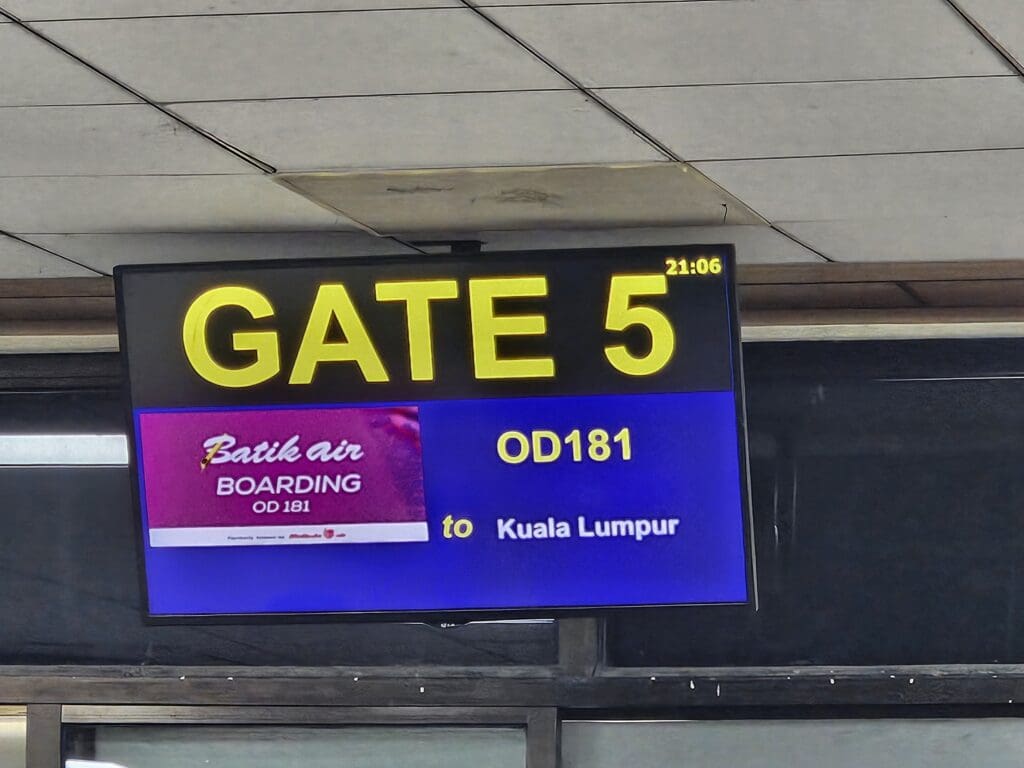
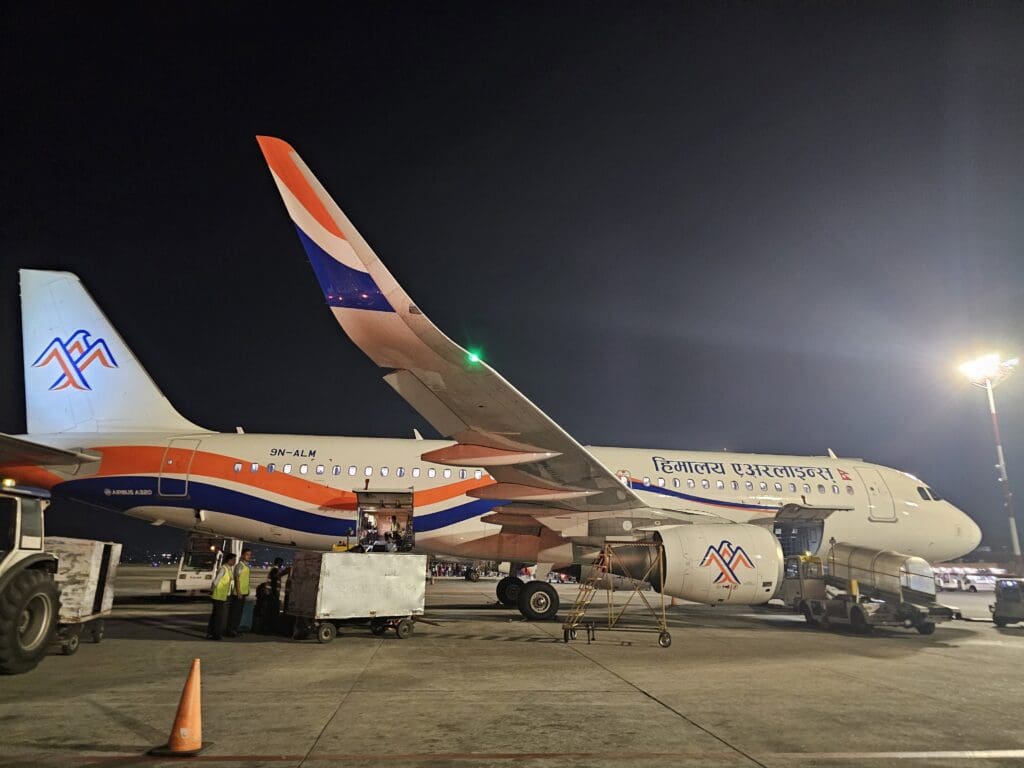
Joining the scrum, I slowly shifted forward and it appeared that many of those in front of me were instead bound for Kuala Lumpur on the Malaysia Airlines and Nepal Airlines services and were thus rejected. Soon, an unenthusiatic Lion Air Group staff member scanned my boarding pass before returning the stub to me without a word before I headed onto the waiting bus. A few minutes later, the doors of this closed and we trundled down the flight line to the Malaysia bound Boeing 737 MAX 8, with this sandwiched in between a Dammam bound Himalaya Airlines Airbus A320 and a Singapore Airlines Boeing 737-800. Once we came to a halt, the doors opened and the army of ground staff strictly enforced a single file queue leading up to the forward airstairs. Perhaps unsurprisingly given the fact that the aircraft had only touched down less than thirty minutes earlier, a few minutes of waiting was required before the cabin was ready for boarding, however, having been cooped up in the stuffy terminal, I was happy to be out in the open and breathing fresh keroscene-scented air.
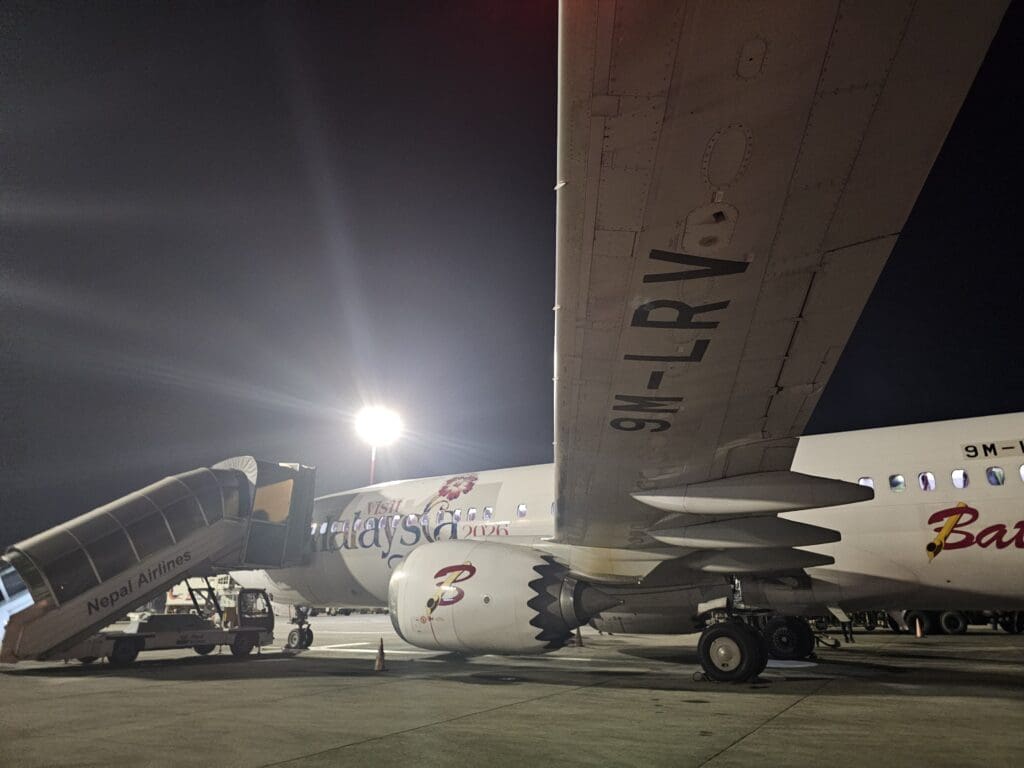
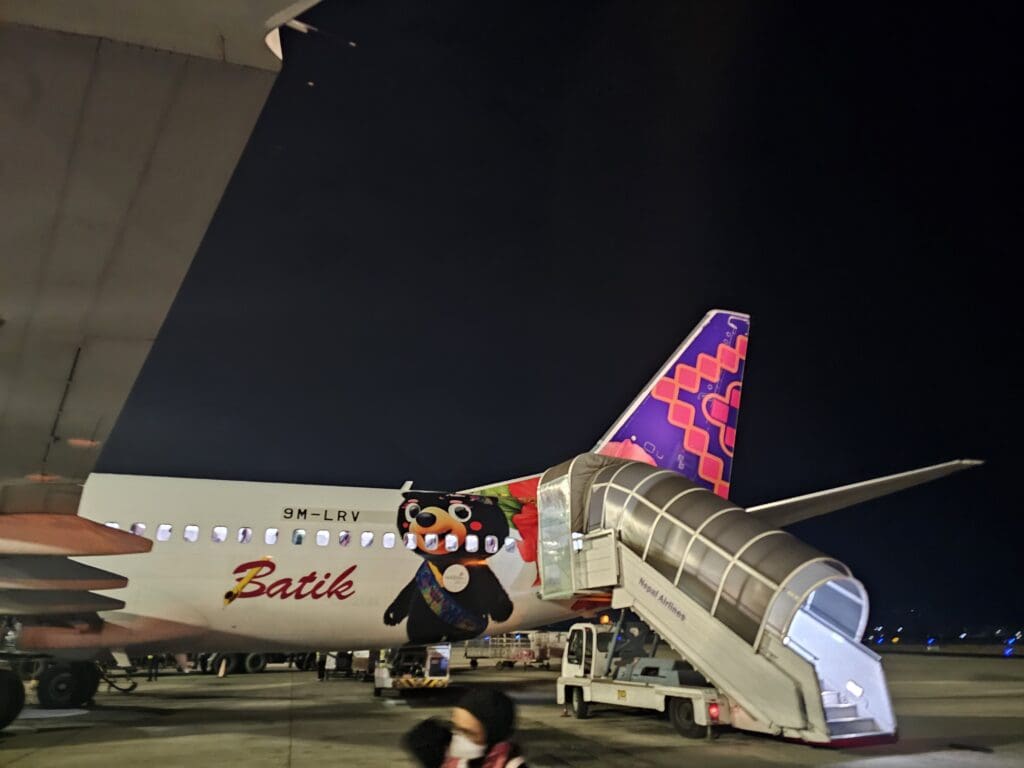
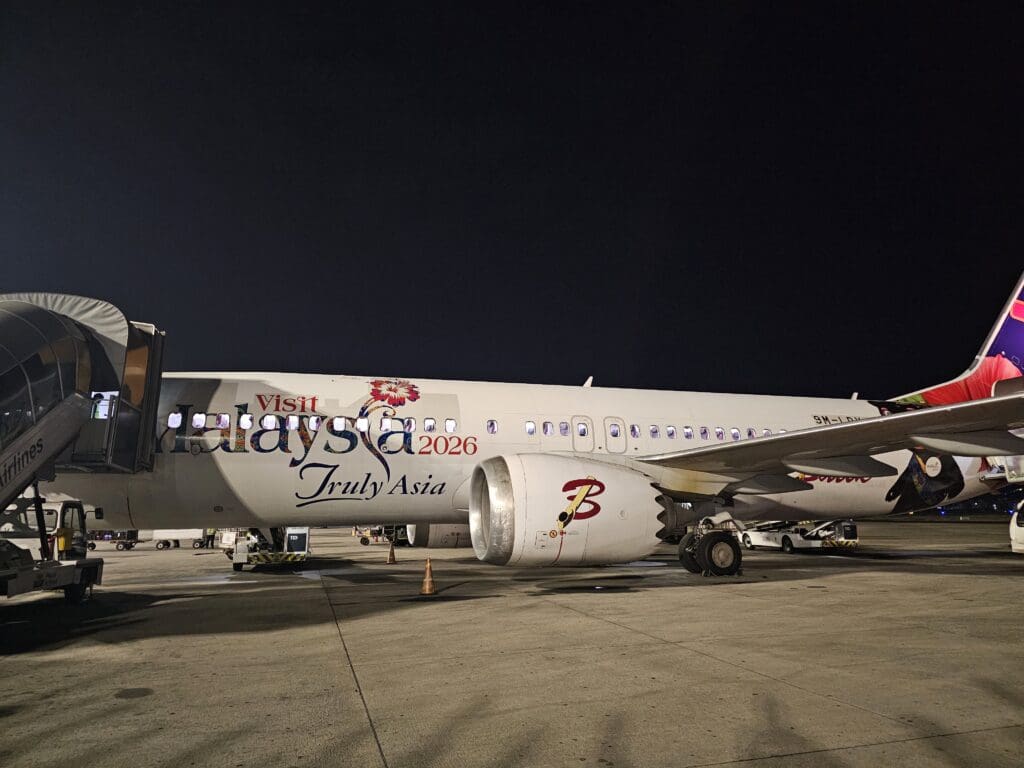
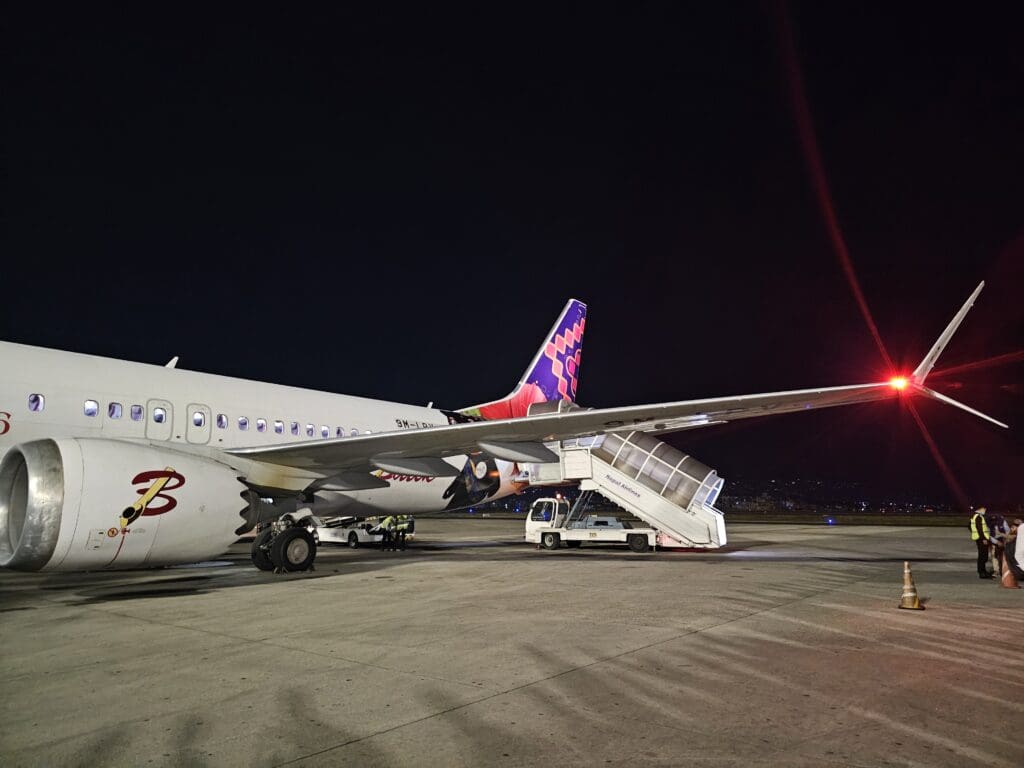
Following the short wait, boarding commenced, with a Nepal Airlines ground staff member standing at the foot of the forward airstairs and checking passengers’ boarding passes, directing those in the second half of the cabin towards the airstairs at the rear of the Boeing. Seated in Seat 5A, I was soon permitted to climb up the forward airstairs and upon stepping into the Boeing’s forward galley, I received a quiet and subdued welcome in English from one of the two flight attendants standing there, both dressed in Batik Air Malaysia’s smart uniform which is inspired by elements of Malay design.
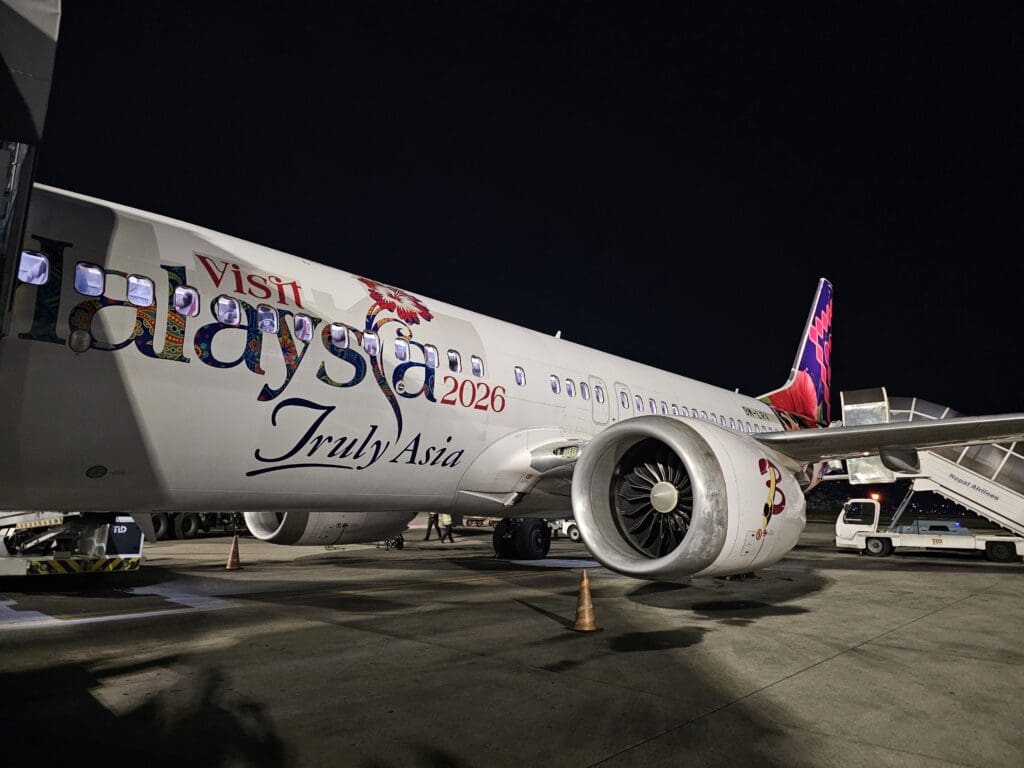
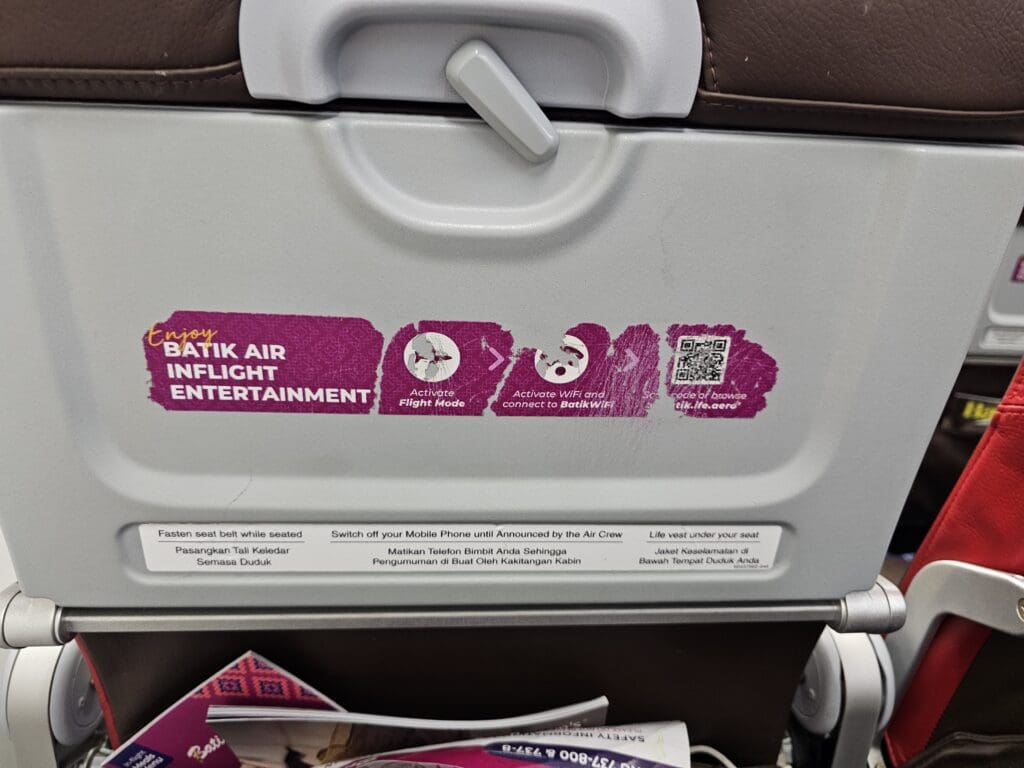
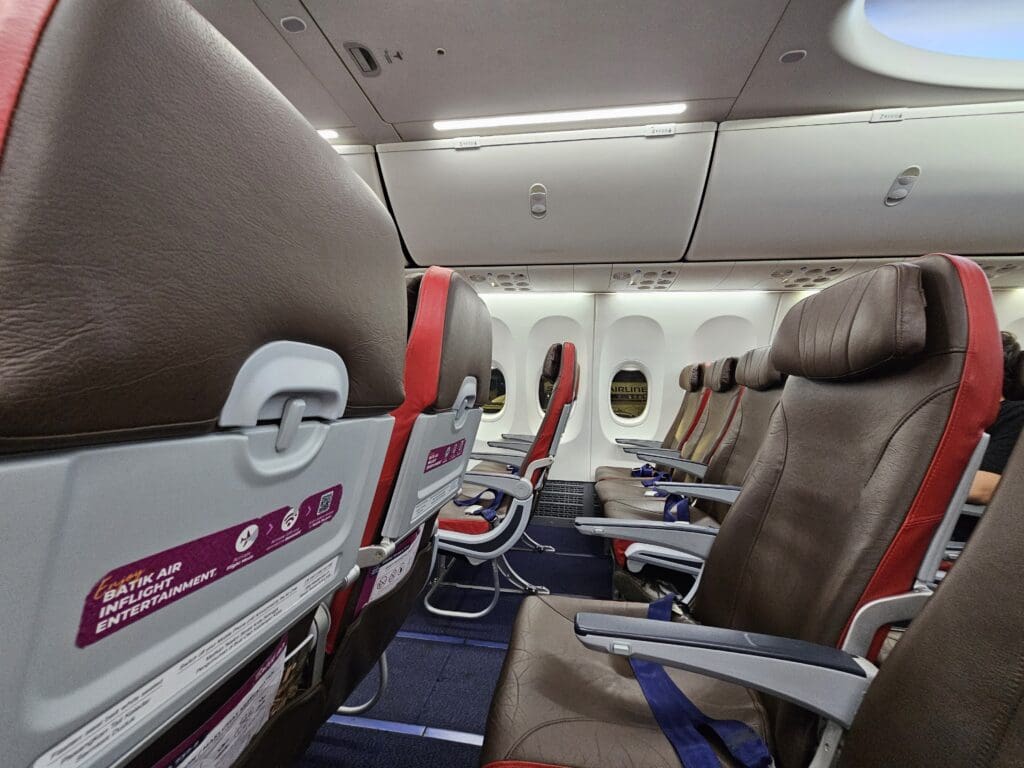
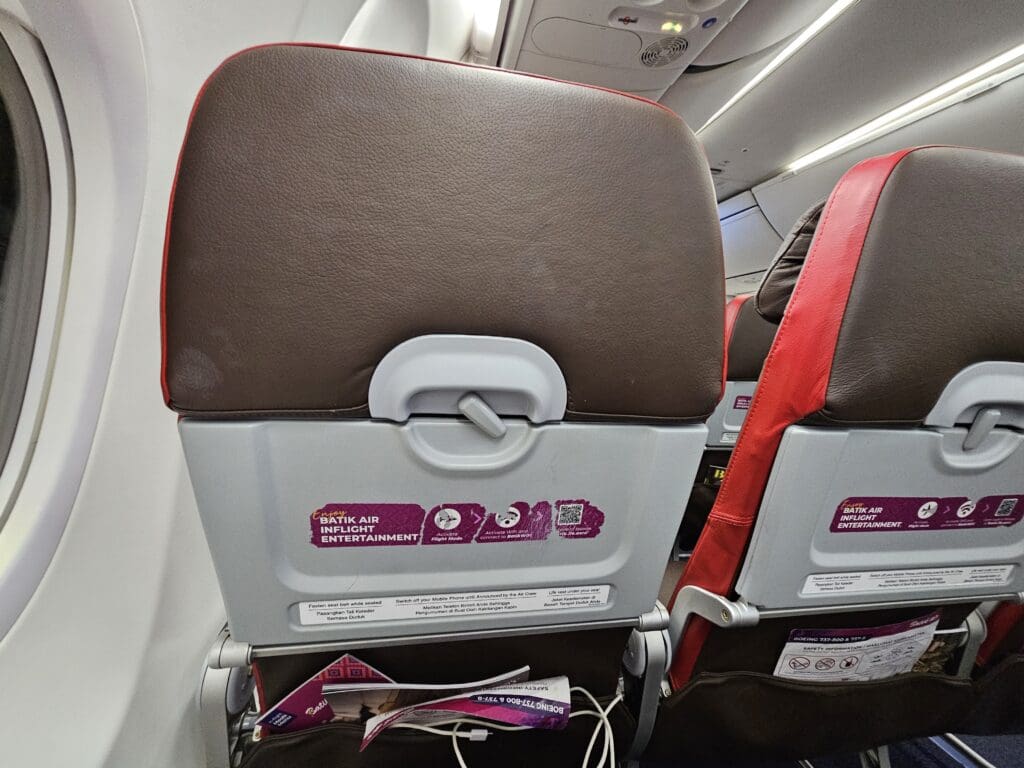
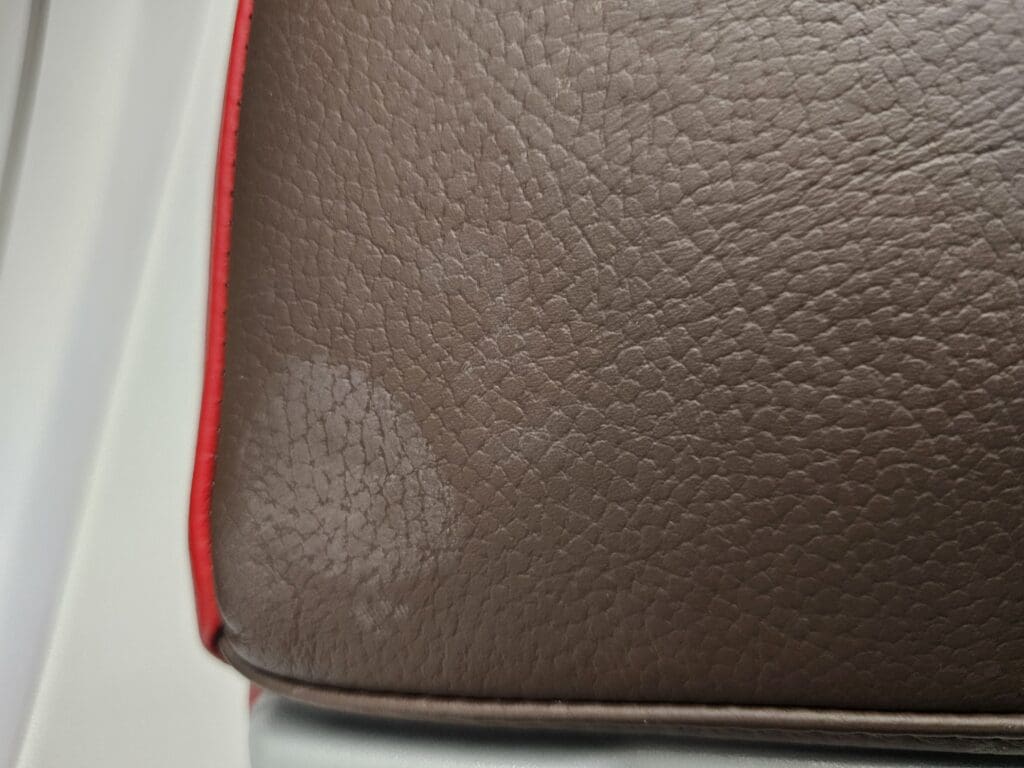
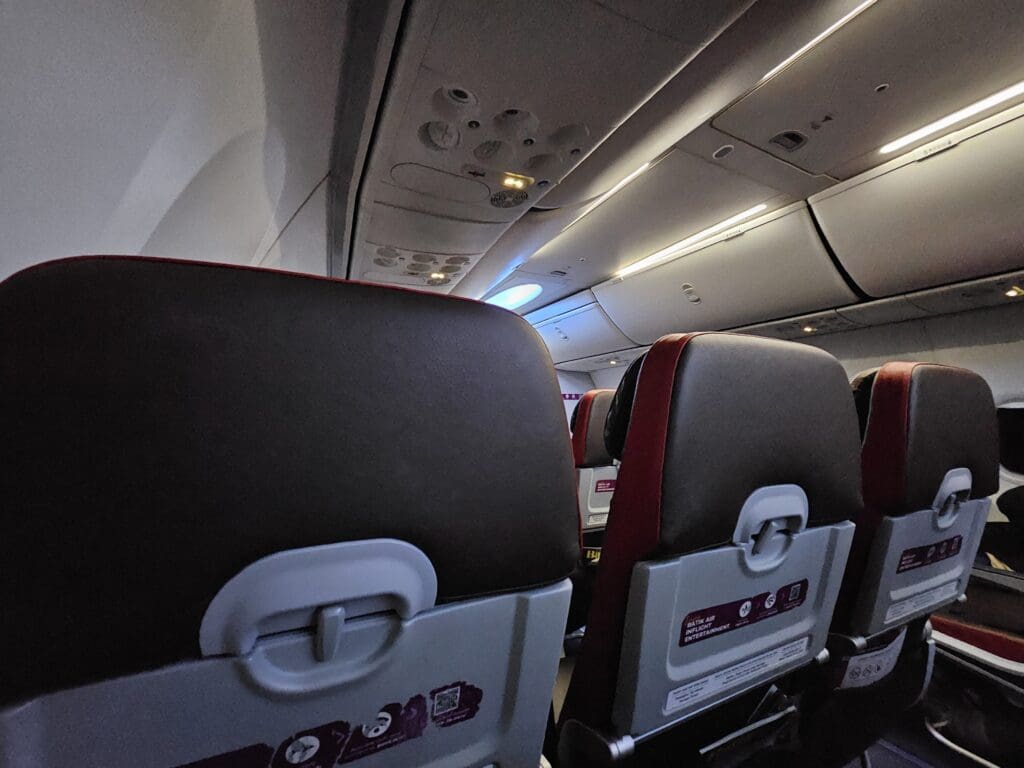
Batik Air Malaysia operates two configurations of Boeing 737 MAX 8 – with some featuring a Business Class cabin, and others in an all-Economy configuration. That night I would be flying on the latter type and so upon turning right I immediately entered the Boeing’s 189-seat cabin. There, each seat appeared to be modern and thin, and was covered in a dark brown leather cover with red sides and complete with a seatback pocket containing a safety card, the latest copy of the monthly inflight magazine and a combined buy-on-board menu and inflight shopping catalogue. Appearing to be a slight cut above your standard low-cost carrier seat, each also featured an adjustable headrest, however they did lack any sort of at-seat power. Unlike Indonesian Batik Air’s fleet, Batik Air Malaysia’s Boeing 737 MAX fleet lacks any sort of inflight entertainment screens in Economy, although stickers could be seen on the undersides of the tray tables advertising the wifi-based streaming service. Unsurprisingly being a low-cost carrier, despite being an overnight flight, no pillows or blankets were offered, although these could be purchased for 55 ringgit as part of the Fly Comfort Kit.
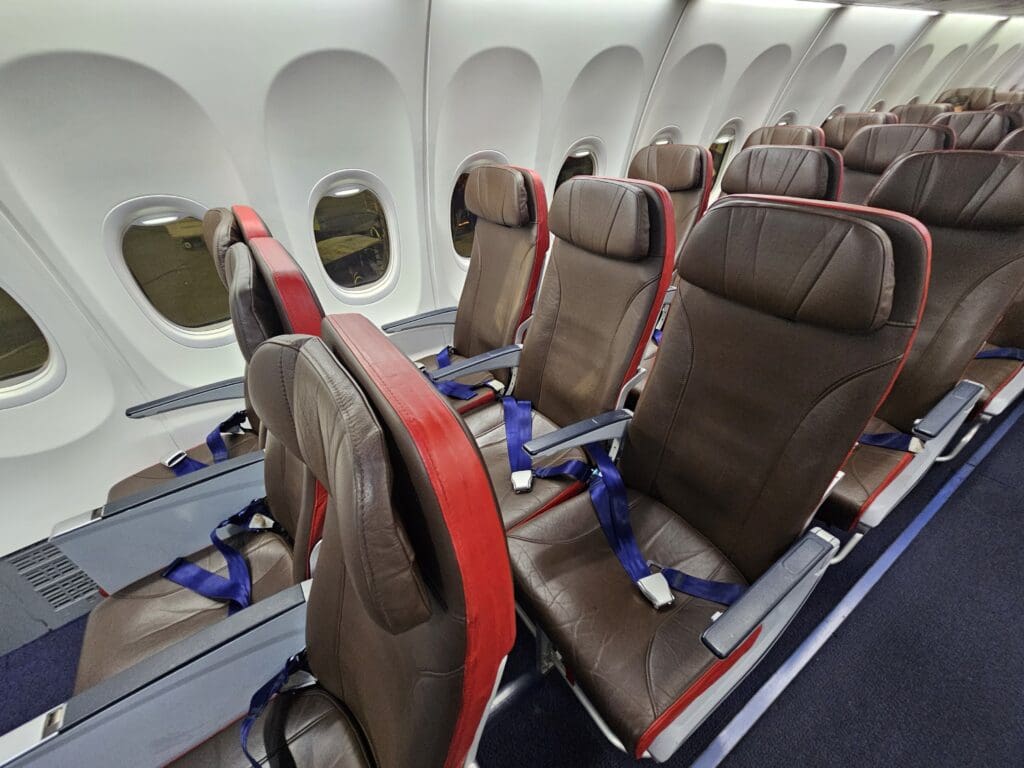
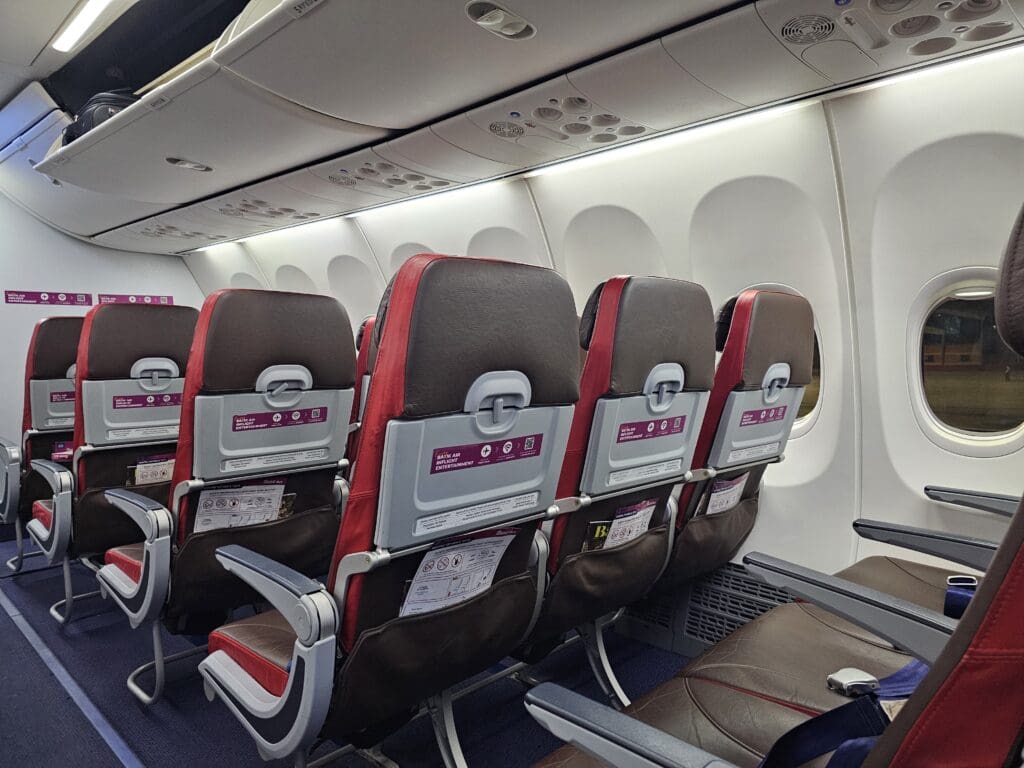
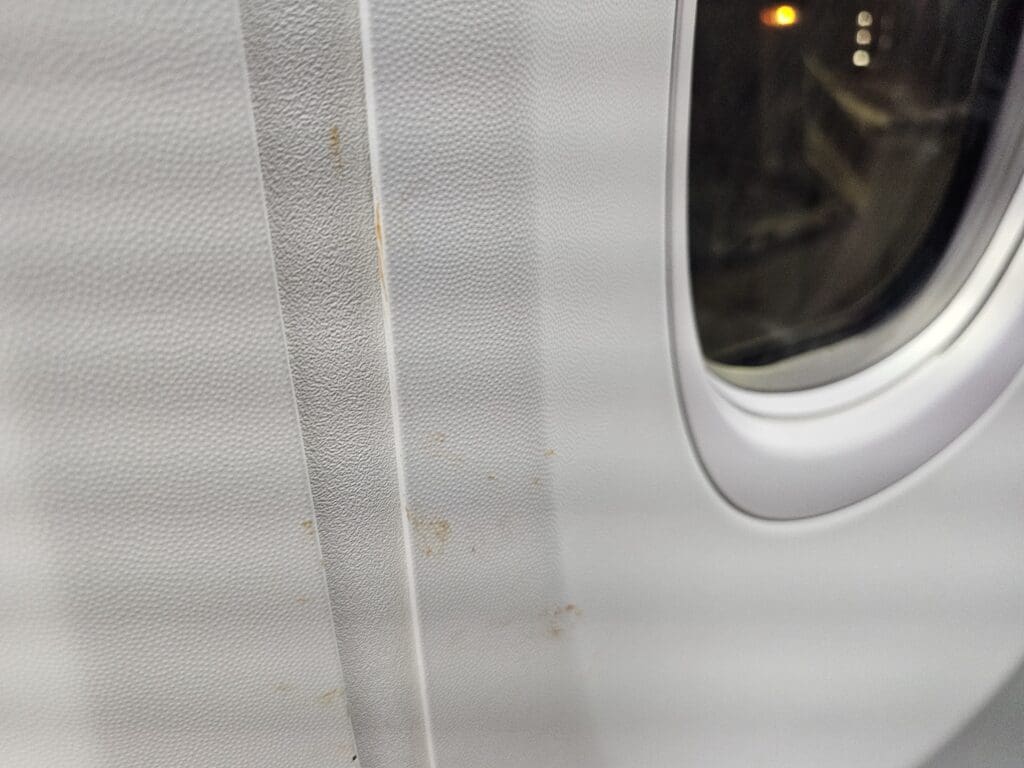
Seated in Row 5, it took almost no time to reach my seat, and after stowing my bag in the large overhead locker, I sat down and settled in for the ride ahead. When it came to comfort, whilst the adjustable headrest was appreciated, the rest of the seat was mediocre, with the seat neither being particularly cramped nor spacious. However, I was disappointed to find this to be in a rather worn and battered state, with plenty of signs of wear and tear, along with a fair amount of well-engrained dirt and stains. Thus, with both the cool crew and the worn seats considered, my first impressions of Batik Air Malaysia were not particularly positive. That said, the cabin crew appeared to be rather weary, being halfway into a long overnight shift.
A few minutes after sitting down, the final passengers from the first bus boarded the aircraft at which point the forward section remained almost empty. However, not getting my hopes up too much, I anticipated that I would be joined by some neighbours once the second bus arrived. Following a few minutes, the second bus arrived and much to my delight, this featured no more than a small handful of passengers who promptly boarded the aircraft. Soon, the crew passed through the cabin closing the overhead lockers and at 2135, the cabin doors were closed and the airstairs were backed away from the aircraft. That night, the flight cannot have been more than around 40% full, with many passengers, myself included, enjoying the luxury of a bank of three seats to themselves. Turning to the demographics of those onboard, I would estimate around two-thirds of the flight took the form of mostly young solo Nepali workers, whilst the other third were tourists, the majority of whom appeared to hail from either Australia or Indonesia and were presumably only connecting in Kuala Lumpur.
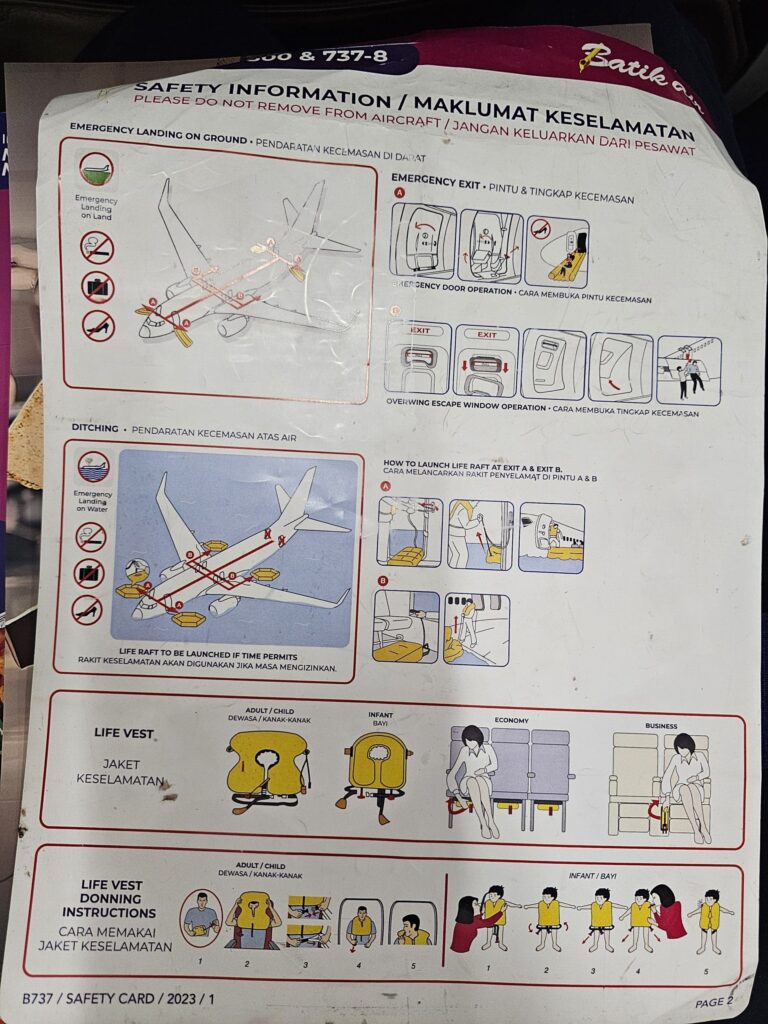
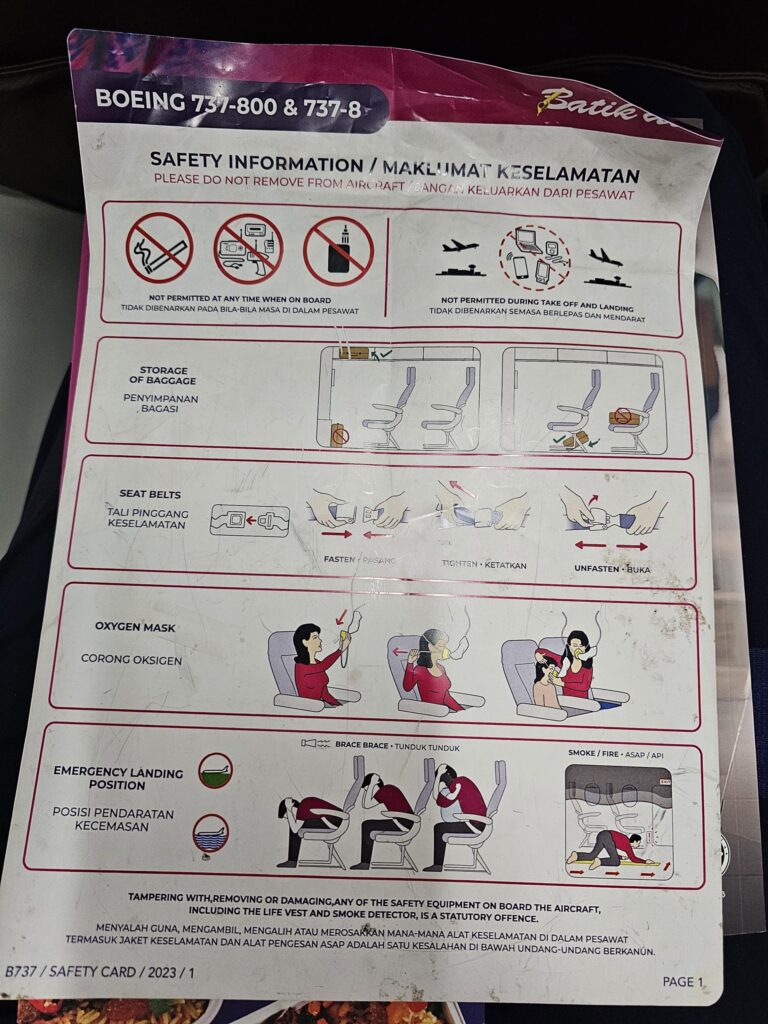
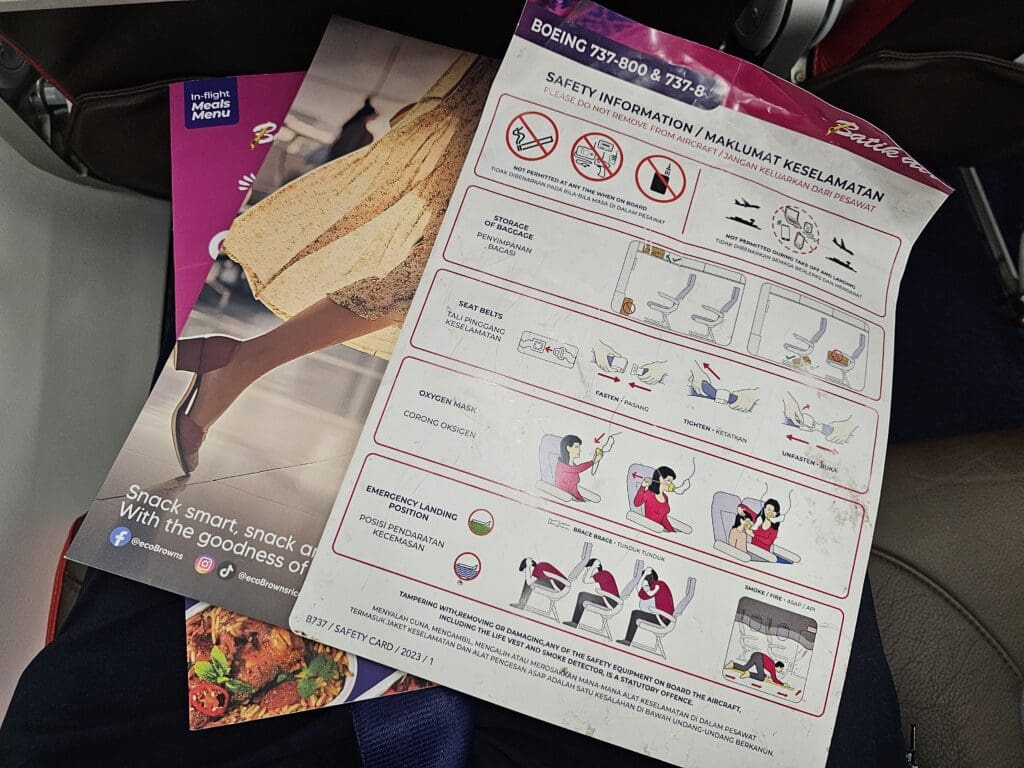
Once the cabin doors had been closed, the Purser began a short welcome announcement in English only. Whilst Batik Air Malaysia does have a safety video, which I later found to be accessible via the wifi-based inflight entertainment system, the lack of screens onboard meant that the Purser went through the safety instructions in Malay and English, which was accompanied by a demonstration from the other three crew members at various points throughout the aisle.
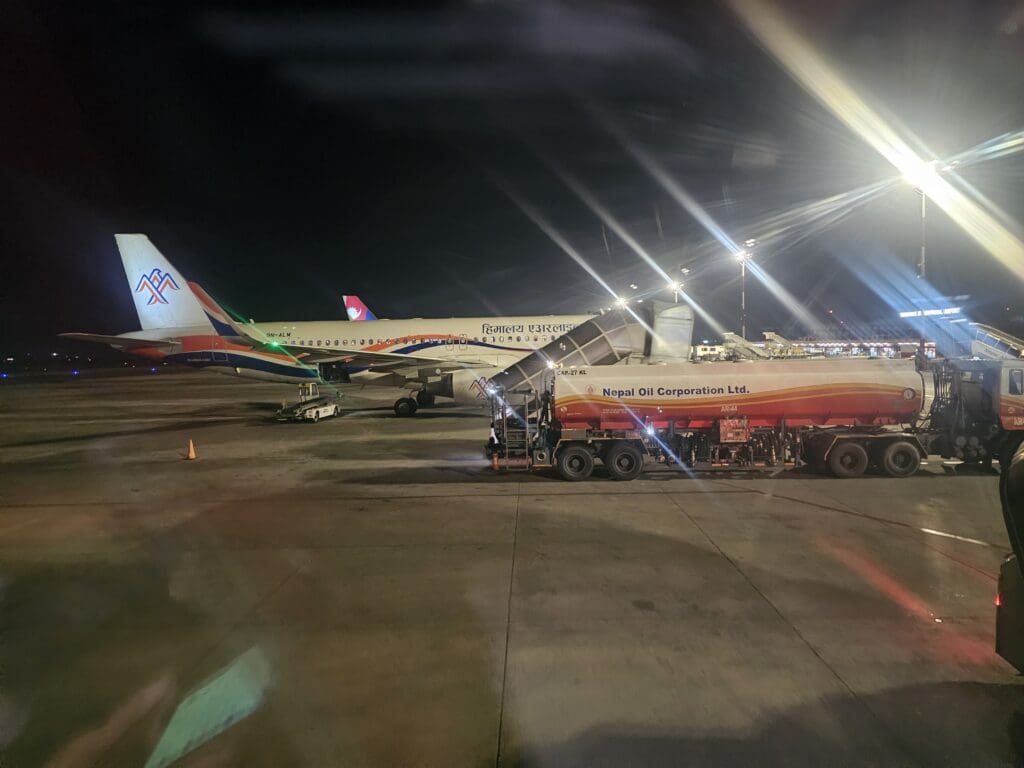
Having examined the on-time performance for this particular service, I was not particularly hopeful of a punctual departure from Kathmandu. However, I was delighted to find that at 2143, a whopping twelve minutes ahead of our scheduled departure time, the aircraft was gently pushed back away from its stand, whilst inside the cabin, the crew passed around ensuring that everything was secure and in place for departure before the cabin lights were turned off. Once we came to a halt, a long drawn-out whine could be heard as the Boeing’s two modern CFMI LEAP-1B engines spooled into life ready for our journey to Malaysia, with this lasting several minutes. With it being peak time in Kathmandu for international flights, as our two engines fired up, I watched as a Nepal Airlines Airbus A320 took our stand following its flight from Bengaluru.
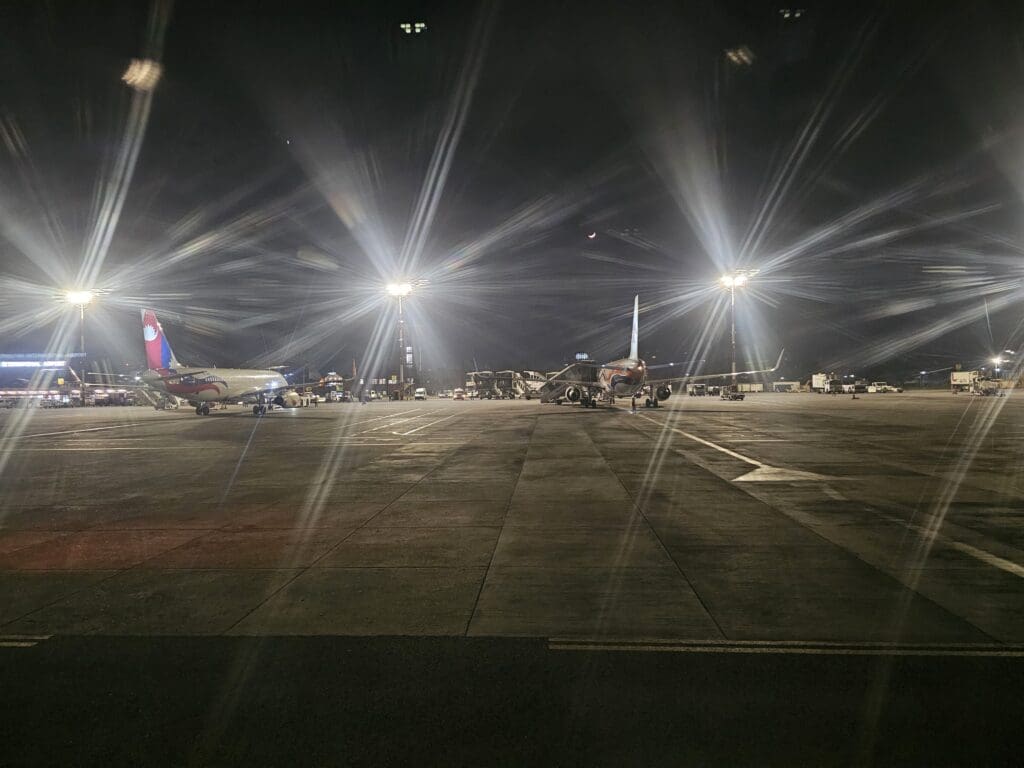
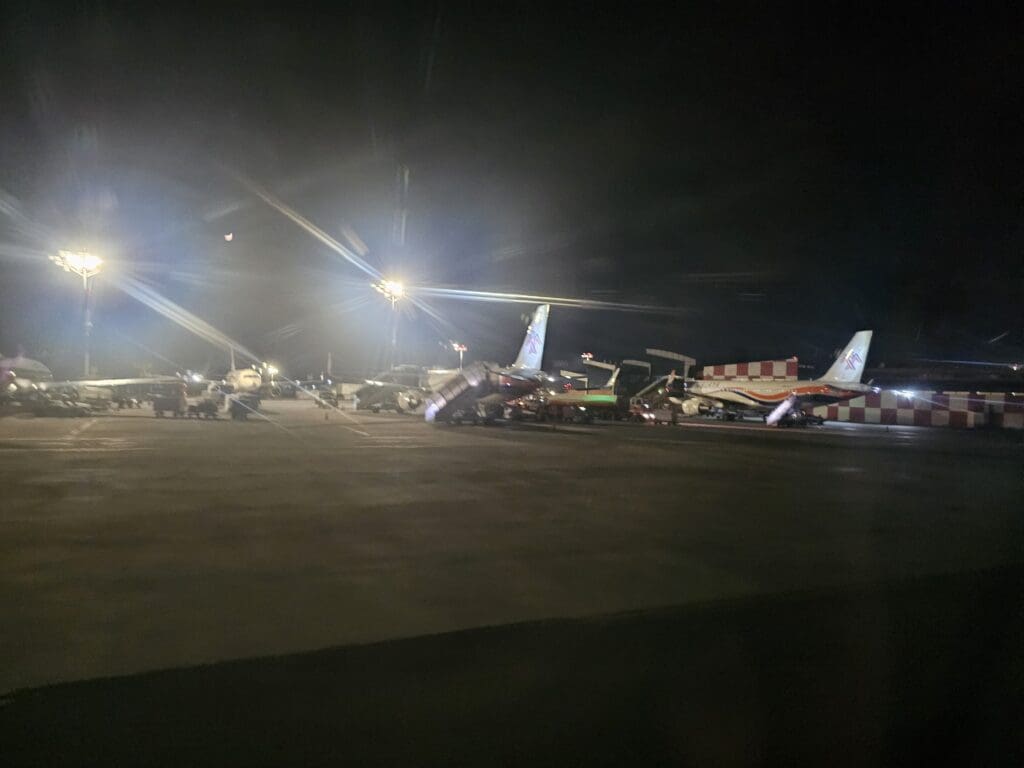
After a few minutes, the flaps fell into position with a loud whine before the Boeing powered forward under its own steam and soon passed the busy domestic ramp. There, amongst the sea of ATRs and Dash 8 Q400s, I spotted the Sita Air Dornier 228 that had ferried me from Lukla the previous week. Interestingly, despite the fact that all aircraft that evening had utilised Runway 02, our Boeing seemed to be heading for the opposite end of the runway, and that evening we seemed to be the only flight to depart from Runway 20. Following a very short taxi, without pausing, the aircraft made its way onto the runway and performed a short backtrack during which the brightly illuminated stupa at Bouddenath could be seen before we slowly and cautiously turned around and lined up to depart.
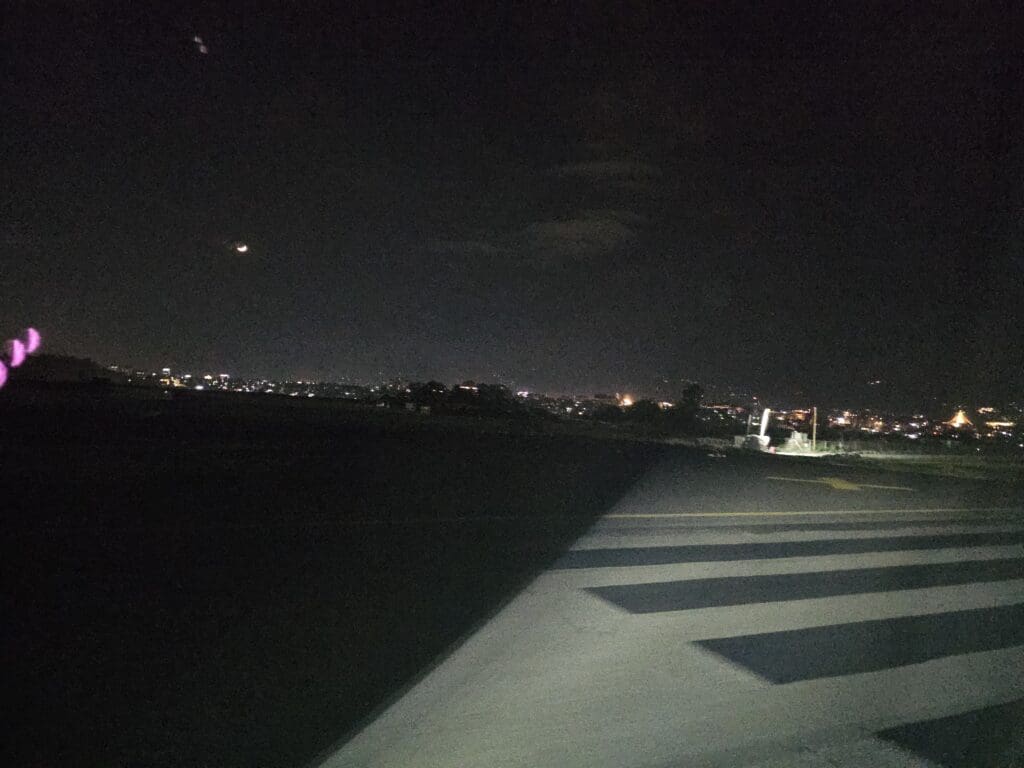
Once pointing in the correct direction, without stopping, at 2157, the two CFMI engines quietly whined into life and the Boeing performed a long and gentle take-off roll. Whilst the darkness sadly meant that little could be seen, I did manage to make out the sea of helicopters, stored aircraft and Buddha Air hangar on the east side of the airfield, before we finally and reassuringly rotated upwards into the Nepali night sky.
As we climbed, a sea of lights from various neighbourhoods around the capital city could be seen and we soon banked to the right, which limited my view slightly seeing as I was seated on the opposite side of the aircraft. Most departing flights have to take a loop around Kathmandu before continuing on their journey and our flight was no exception, spending several minutes undertaking a clockwise circle around the city before finally leaving this behind, by which time we had climbed almost 10,000 feet.
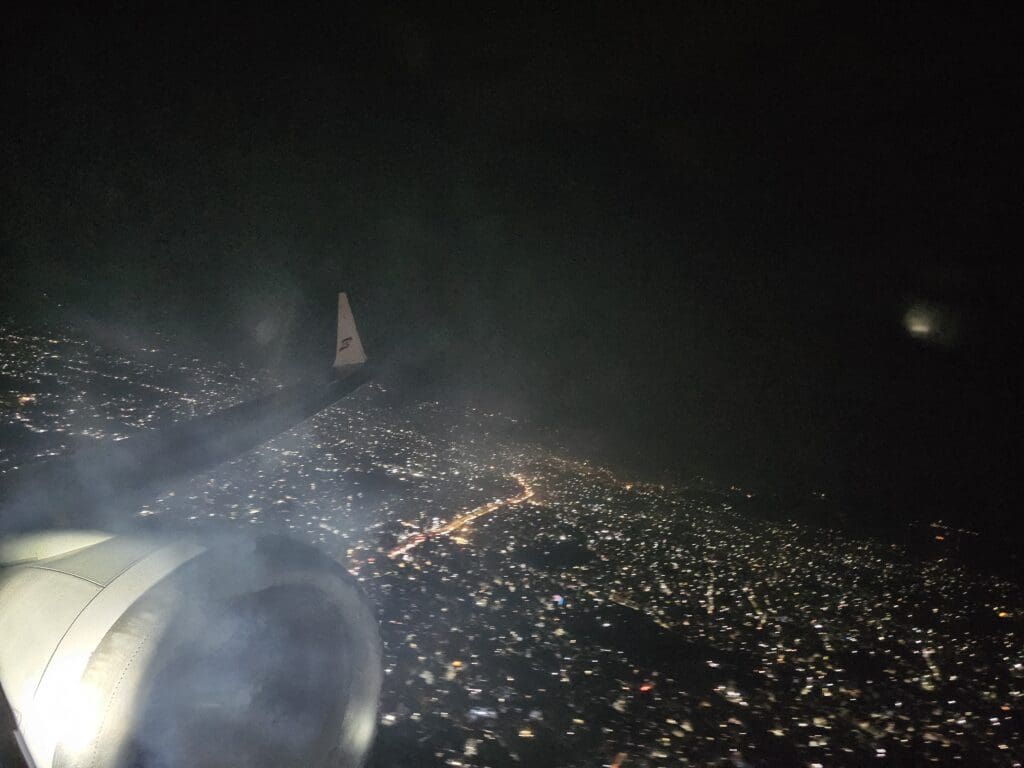
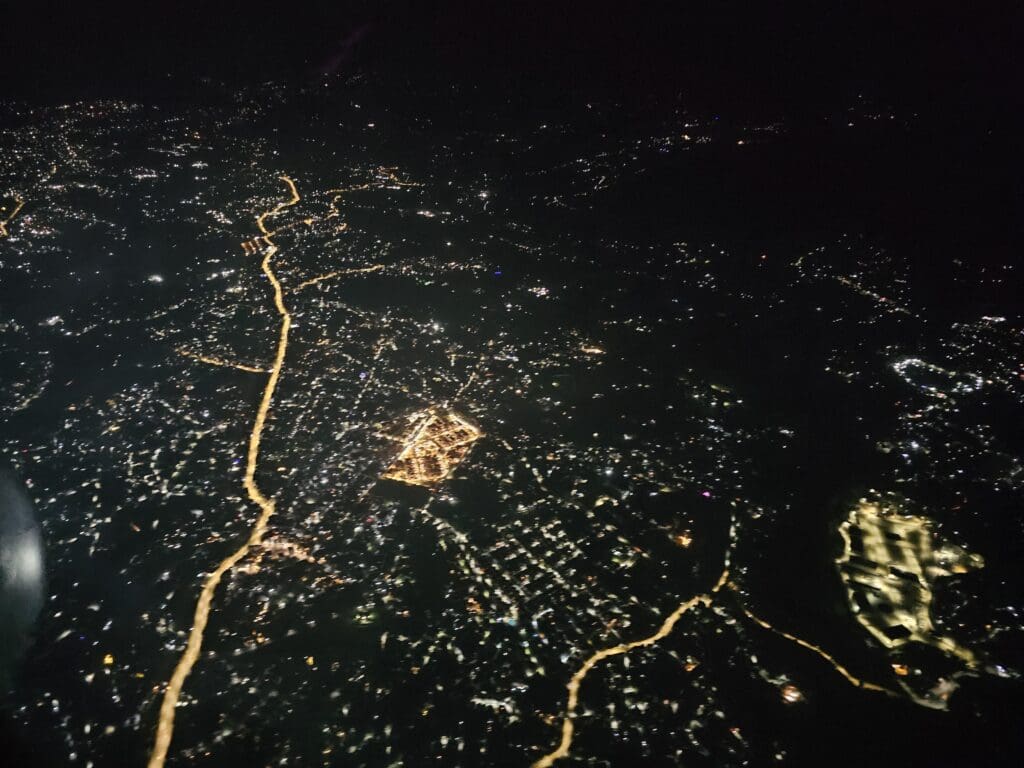
During the initial few minutes of the flight, our aircraft was jolted a little by a few lumps and bumps which remained a constant feature of the flight. This meant that the seatbelt signs remained illuminated, however, the crew seemed to take no issue with passengers moving around, other than during the odd short-lived patch of notable turbulence during which all passengers were requested to remain seated. As we climbed higher and higher into the night skies, the cabin lights were turned back on to their orange dawn/dusk glow in preparation for the commencement of the onboard service.
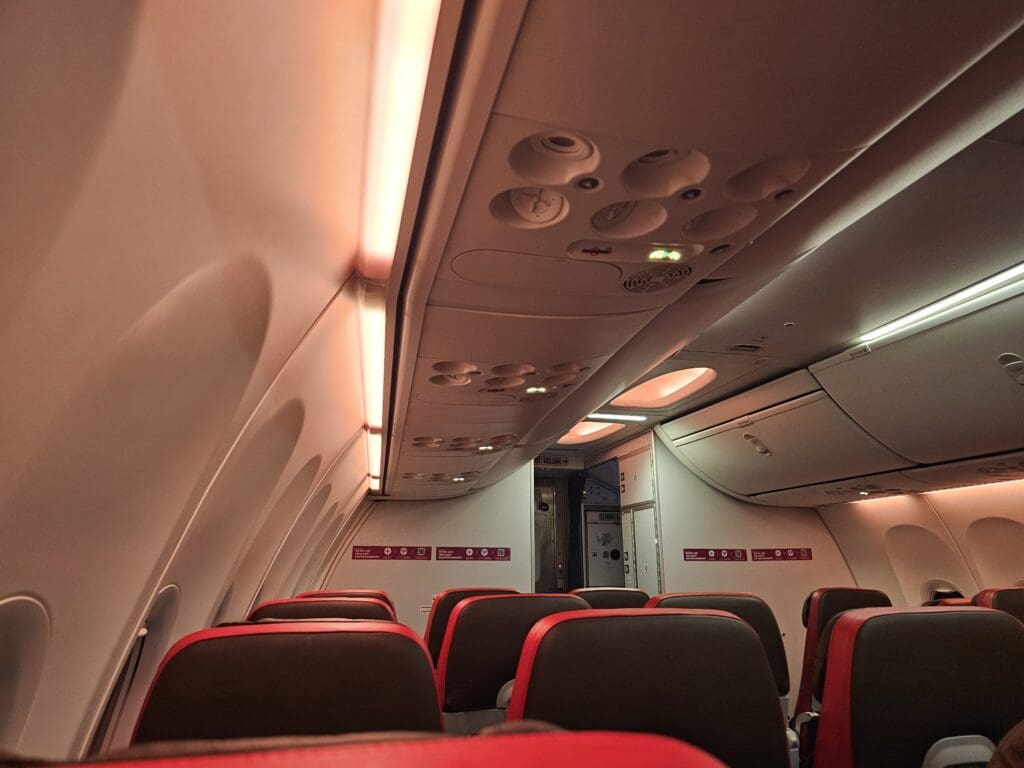
Perhaps realising that most passengers simply wanted to sleep, the crew wasted no time in commencing the onboard service. Once we had reached our initial cruising altitude of 37,000 feet, an announcement was made advising passengers of the buy-on-board service and the distribution of meals to those who had pre-ordered these. Unfortunately, unlike its predecessor Malindo Air and its Indonesian counterpart, Batik Air Malaysia does not offer any sort of complimentary refreshments to those in Economy. Instead, those fancying some sustenance can either pre-reserve this online or purchase this on board, with the most filling options taking the form of six hot meals for $8.00. Other items seemed to be priced at a fairly standard amount for a Southeast Asian low-cost airline, with prices advertised in ringgit, yen, yuan, rupiah and dollars (American, Australian and Taiwanese). For example, a hot drink would have set me back 10 ringgit. Interestingly, Batik Air Malaysia does not offer any sort of duty-free or extensive onboard shopping service, with just six items, all being airline merchandise offered. However, as someone who does not usually partake in such rounds of service, this was no issue for me.
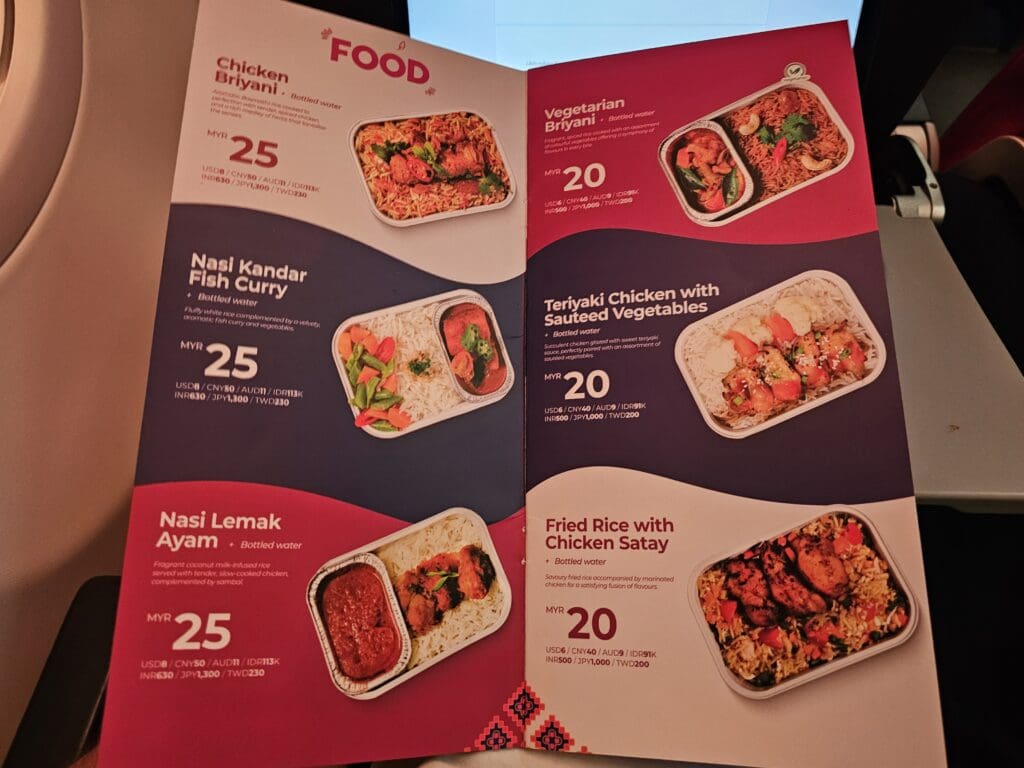
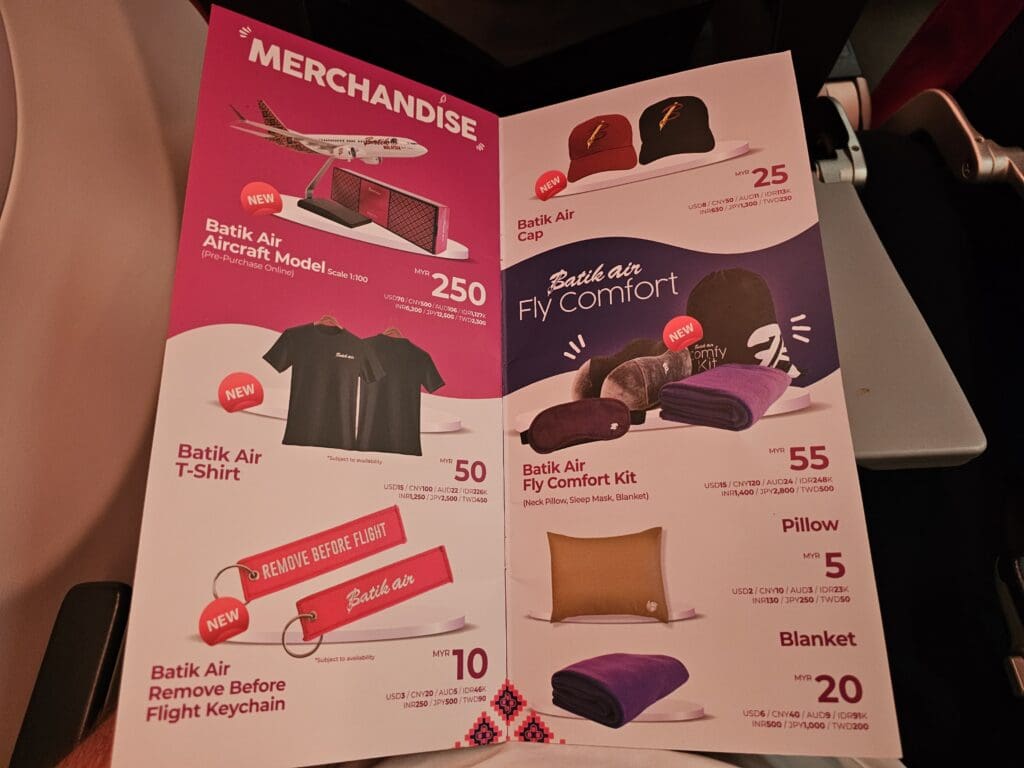
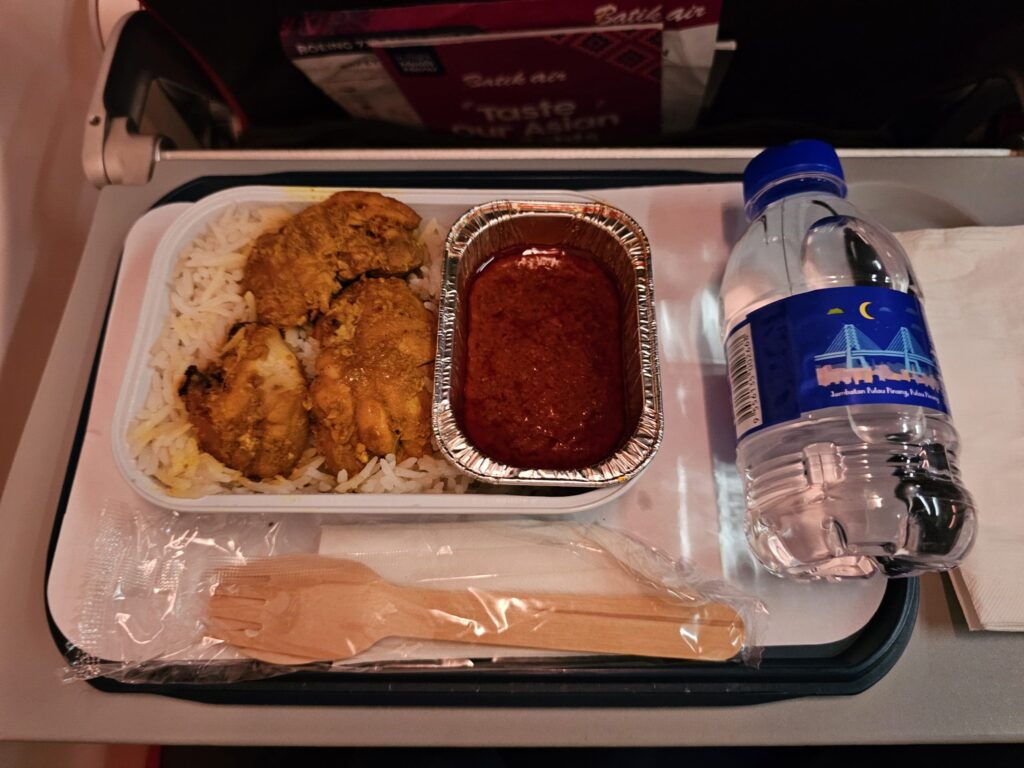
Having pre-ordered the Nasi Lemak Ayam Rendang for $3.80, I was looking forward to sampling my first Malaysian meal of the trip. A short time after the service commenced, one of the cabin crew members requested to see my boarding pass in a rather cool manner before handing me a small tray without a word. This contained the main dish, a sachet containing a serviette and wooden cutlery, and a small 250ml bottle of still water. Soon getting to work, whilst a little dry, I found the main dish to be certainly edible, filling a gap and leaving me with no major complaints, especially given the cheap price that I had paid for this.
With few takers for the buy-on-board service that night, the crew sped through the cabin and once the service was complete, they made another pass through the cabin collecting passengers’ rubbish. Around eighteen minutes after departure, the Boeing cruised out of Nepali airspace and entered the skies of the Indian state of Bihar, heading down the easternmost side of the region near the border with Bangladesh, before cutting over a small portion of Jharkhand and West Bengal. Around fifty minutes after departing Kathmandu, the aircraft cruised just to the west of Kolkata, before heading out over the Bay of Bengal. As we headed out over the Indian Ocean, things became a little bumpy, with the cabin crew requested to take their seats. Knowing that this part of the world has a reputation for turbulence skies, I was uncertain as to just how long this roughness would last, however in the end, things calmed down after a few short minutes.
With nothing to see outside and not quite yet ready to attempt to have a short nap, I decided to sample the delights of Batik Air Malaysia’s wifi-based inflight entertainment system. Upon connecting to the onboard wifi and entering the URL for this platform, I was delighted to find that this quickly loaded up without issue. This was easy to navigate and quick to transition between pages. Furthermore, this was available in an impressive array of languages that largely aligns with Batik Air Malaysia’s route network – namely Arabic, Bahasa, Chinese, English, Hindi, Japanese, Malay, Tamil and Turkish. Alongside the entertainment content, this also featured the airline’s inflight magazine, information about the airline, and a video version of Batik Air Malaysia’s safety video.


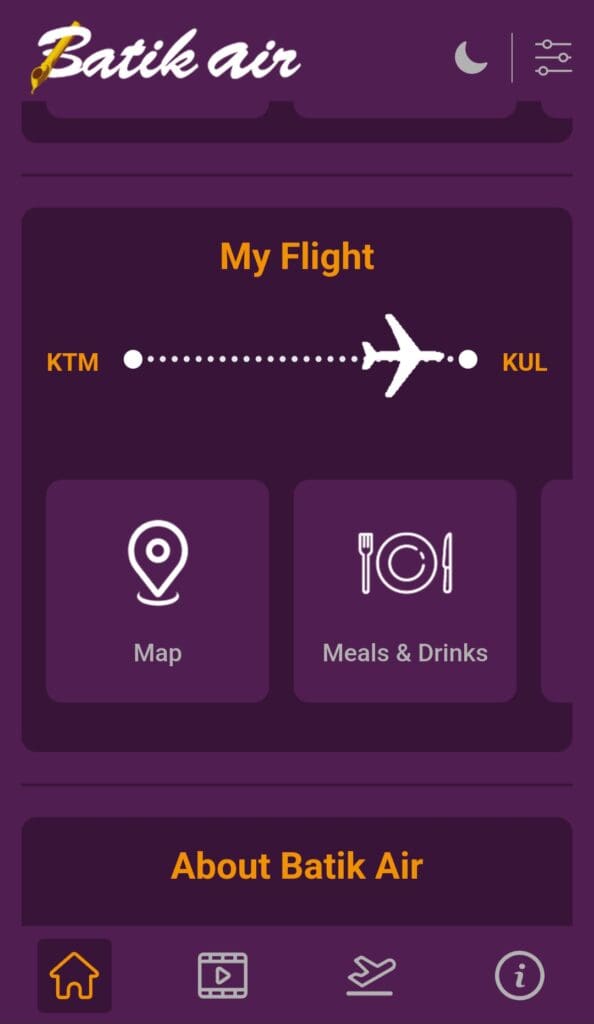
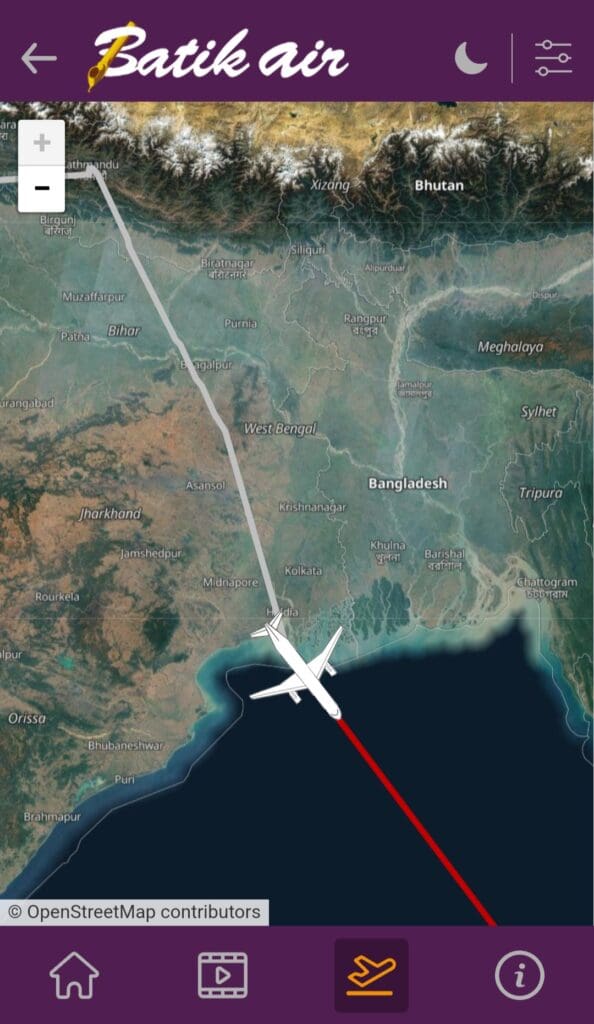
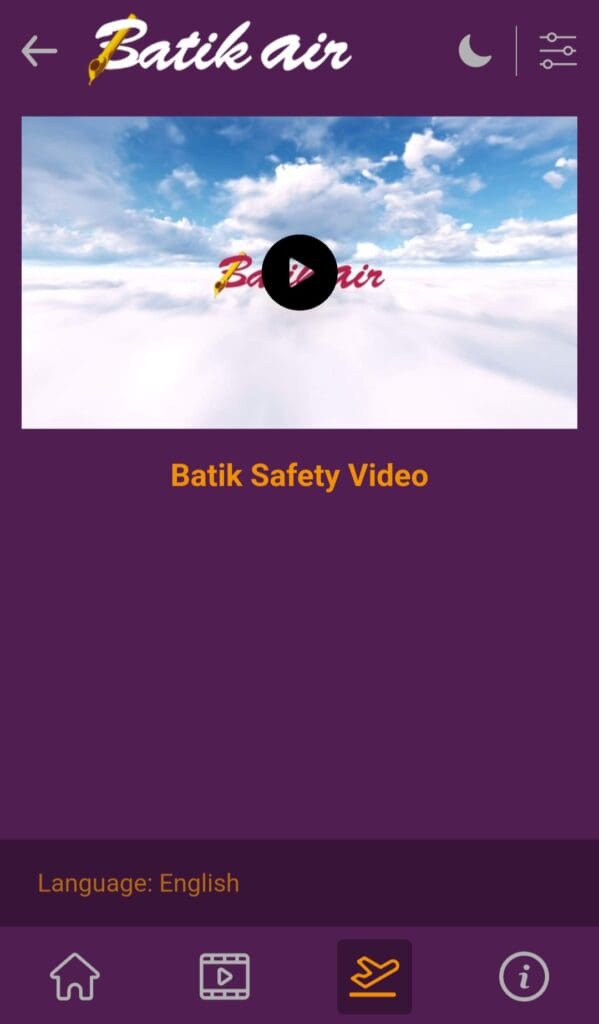
Turning to the available content, a total of 48 films were offered – consisting of 27 Indian films, many of which were from South India and 16 Hollywood productions, alongside three films from Malaysia and two from Indonesia. The television content was a little more limited, with nine options provided, all bar one, a Japanese cartoon, was either a documentary or a travelogue. Whilst I had no desire to watch anything, experimenting with the system I found visual content to play without issue and commence without any form of advertisement. Finally, seven gaming streams were offered alongside an impressive total of 28 games. To summarise, whilst an actual inflight entertainment system would have been preferred, I found the system provided to be a reasonable substitute for a low-cost airline, even though the content was slightly lacking.
Examining the inflight magazine, this was compact and contained the usual slew of advertisements that you would expect to find in such a publication. This was published in English only, and the May 2025 edition featured a fairly wide array of articles and information about the airline.
Around eighty minutes after we had taken to the skies, the cabin lights were turned off and many passengers appeared to drift off to sleep. At this time, I opted to head to one of the aircraft’s three onboard lavatories. Wanting to stretch my legs, I headed to one of the two lavatories at the rear of the aircraft. Upon opening this up and squeezing in, whilst reasonably clean, I was disappointed to find this to be in a very worn and battered state, with a slew of marks and scratches visible throughout thus leaving me with a rather poor impression of the onboard facilities.
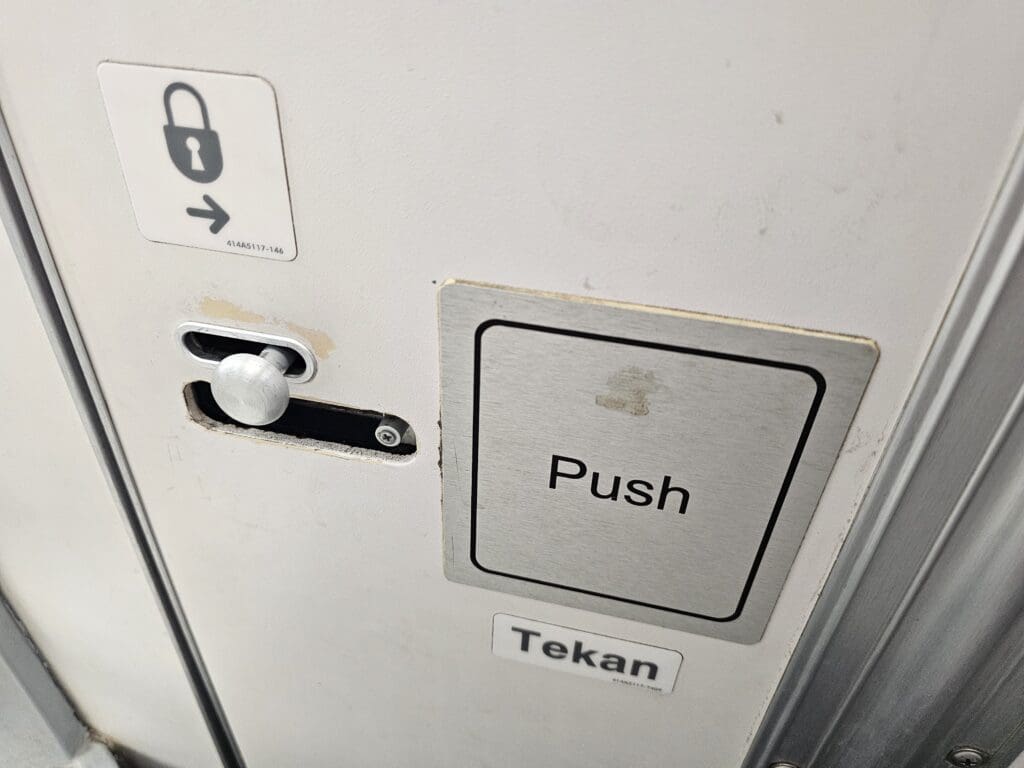
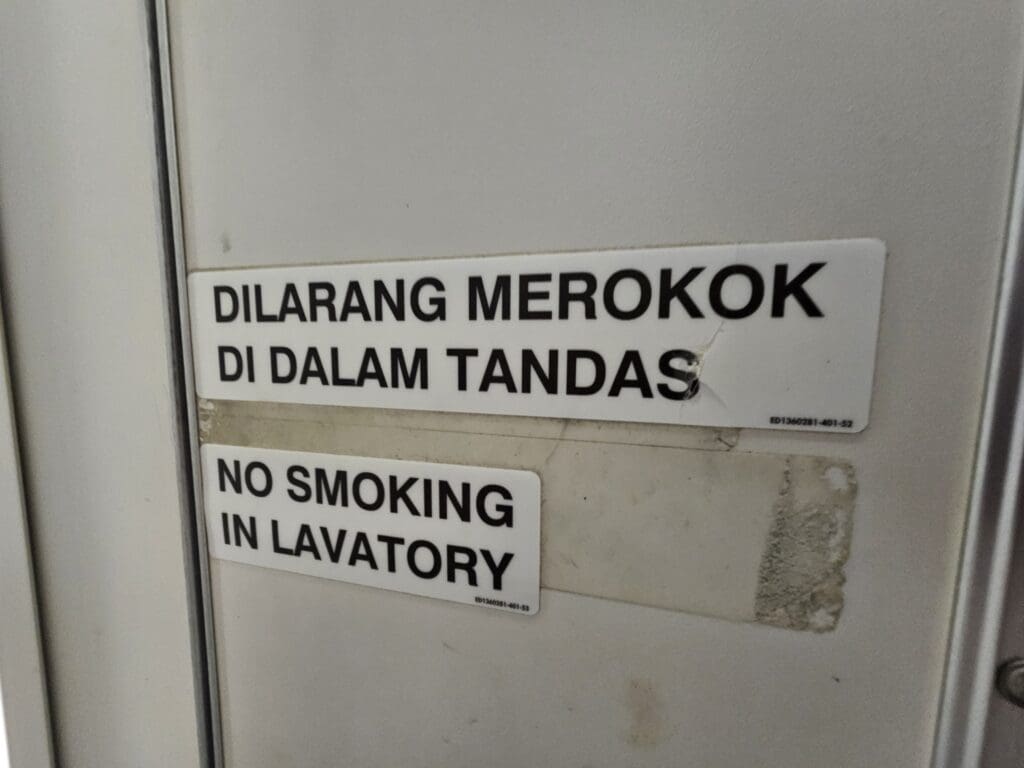
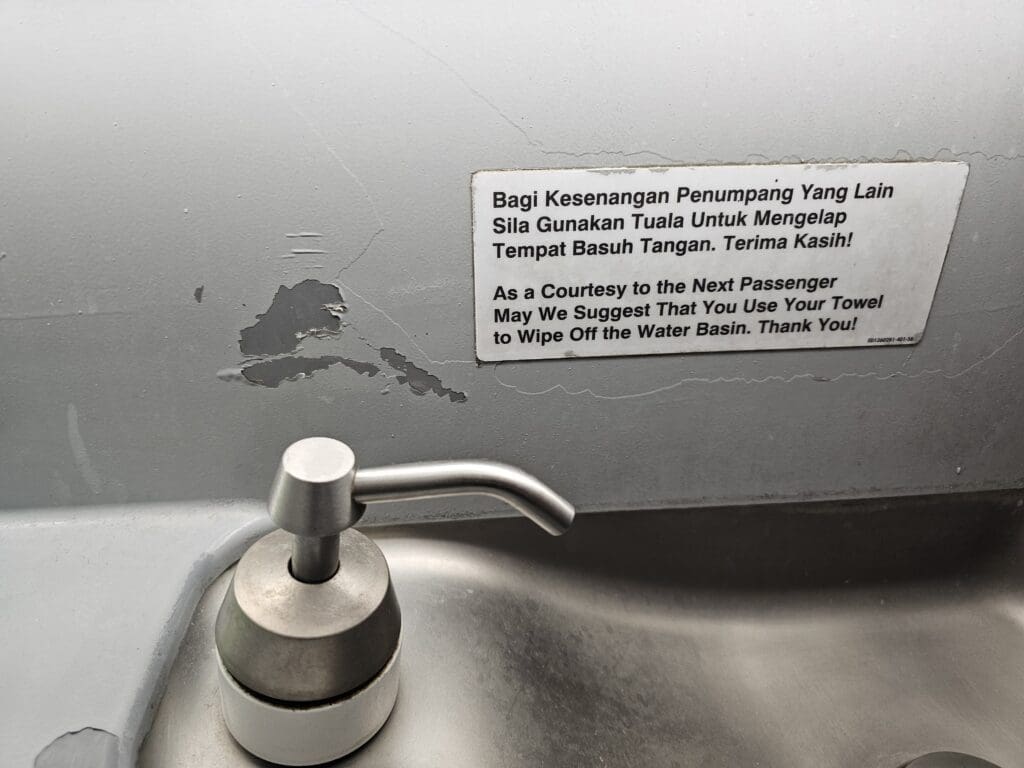
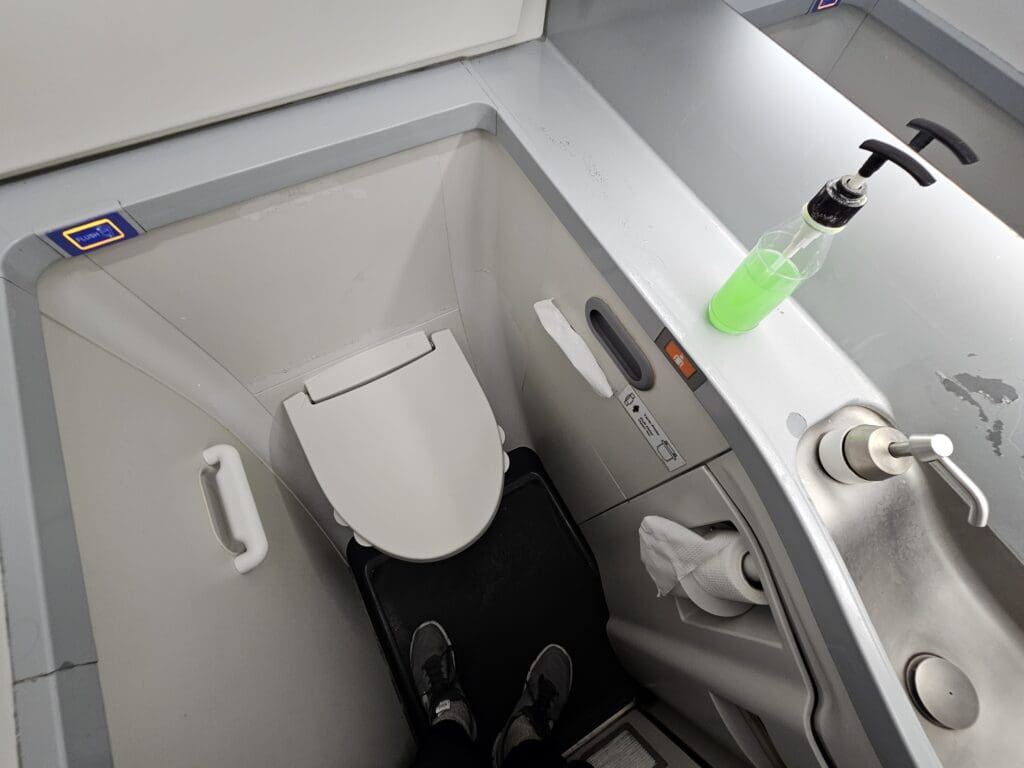
Upon returning to my seat, with a long day ahead in Malaysia, I closed my eyes and attempted to drift off to sleep. Experiencing mixed success, I had a few broken clusters of sleep and was finally woken up for good thanks to some fairly significant lumps and bumps around three hours into the flight. By this time, the Boeing had reached the skies of Southeast Asia and the aircraft was flying down Thailand’s western coastline somewhere near Phuket, where down below, little could be seen other than a sea of mysterious green lights. Meanwhile, I also caught sight of the lights of a Scoot Boeing 787 Dreamliner whizzing past in the opposite direction as it operated the airline’s longest service from Singapore to Athens.
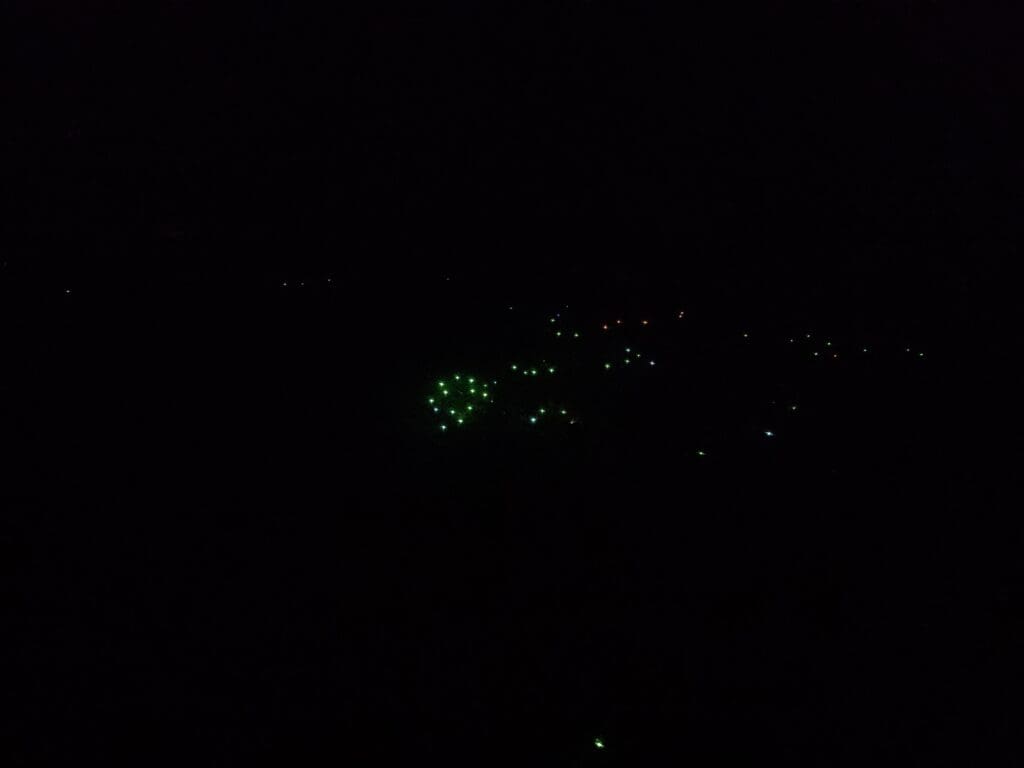
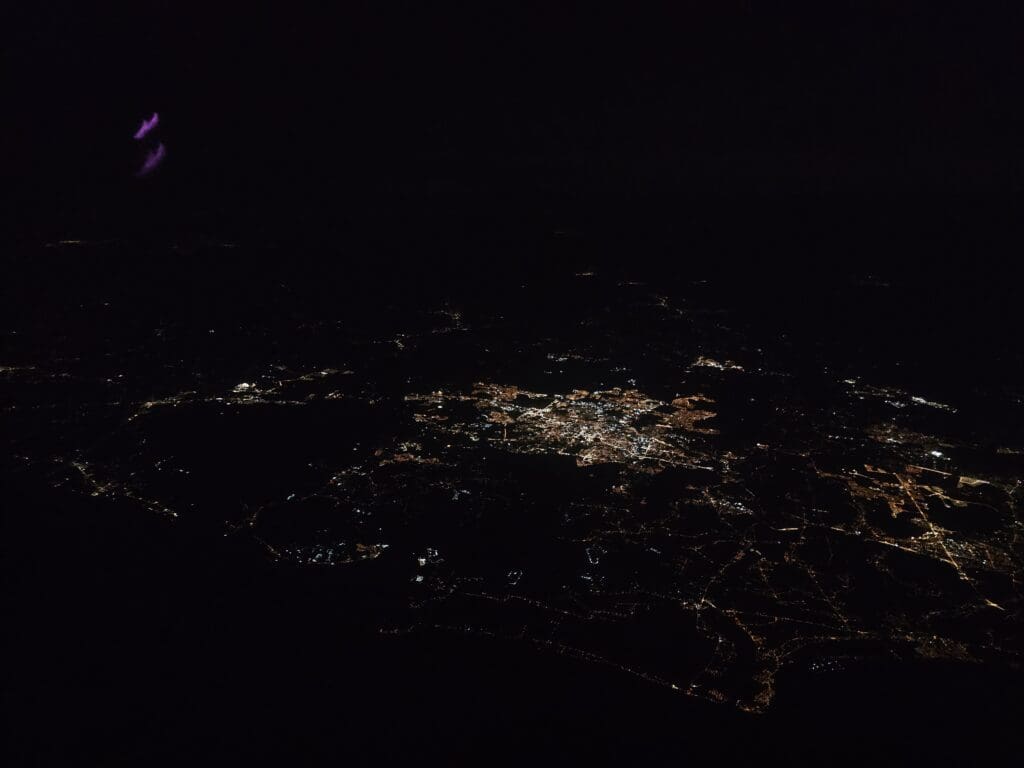
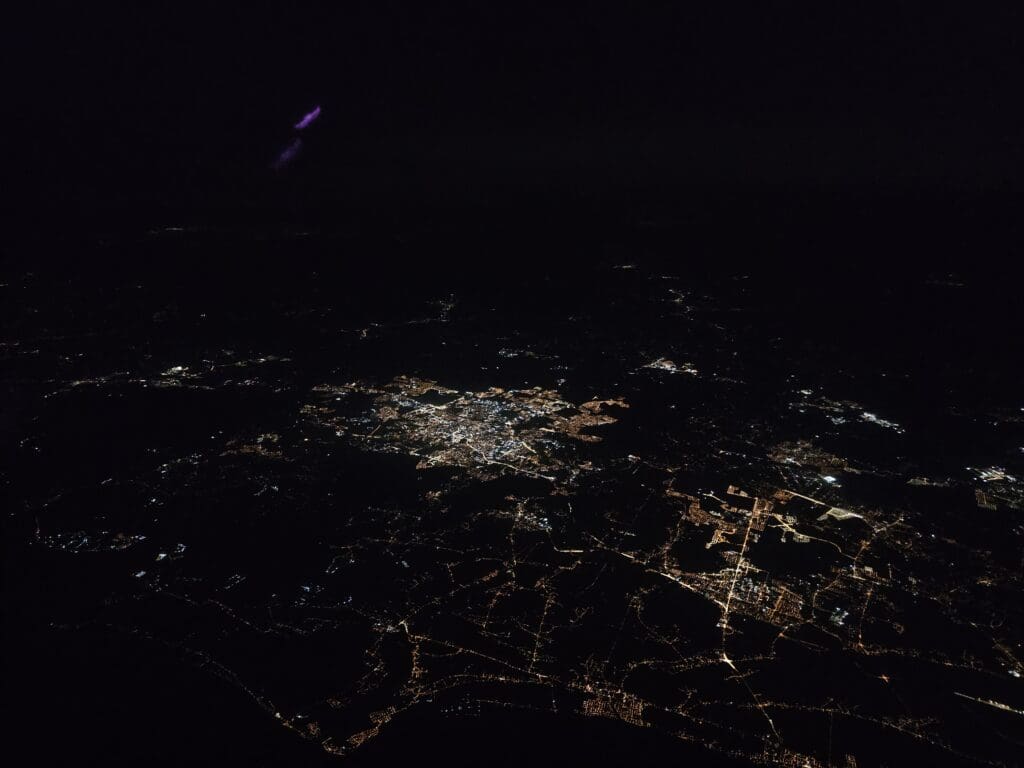
Heading southwards, the aircraft trundled down the coastline of Southeast Asia and reached the Malaysian island of Langkawi. Recognising that there was not a great deal of flight time remaining, I decided to head for my second lavatory visit of the flight and opted to visit the toilet at the front of the aircraft sandwiched in between the forward galley and cockpit. Once I had squeezed myself into this reasonably small space, I found it to be in slightly better condition that the rear lavatory, although this was still far from perfect and lacked soap.
Returning to my seat, the dark cabin and clear skies outside allowed for a good view of the towns and cities that sit around the coastline of Peninsula Malaysia such as Alor Setar, Kuala Perlis and Sungai Petani, and we headed straight over Penang, where I would end my journey later that day. Making landfall just to the south of Butterworth, the aircraft cruised into the skies of Perak and as we neared Ipoh, at 0355 Malaysian time, the First Officer undertook the first cockpit announcement of the flight. During this, they thanked passengers for flying with Batik Air Malaysia, provided an update on the hot and humid weather in Kuala Lumpur and noted that we would commence our descent in around five minutes’ time. This was immediately followed by a brief announcement from the Purser in English with the usual pre-arrival instructions, after which the cabin lights were turned on at full blast, likely waking up many of the slumbering passengers.
As we commenced our descent, the crew took to the aisles, first undertaking the second rubbish collection round of the flight before a flight attendant walked down the aisle and sprayed the cabin with insecticide. Returning to the route, from Ipoh, the Boeing flew southwards and trundled roughly parallel with the AH2 motorway before reaching the state of Selangor. As we reached the northern fringes of Kuala Lumpur, with the pre-arrival checks having been completed, the cabin lights were turned back off once again, although sadly thanks to lingering cloud below, relatively little of the Malaysian capital could be seen.
From Kuala Lumpur, the Boeing made its way southwards past Putrajaya and Seremban, performing a long downwind leg before finally turning back towards the airport once very roughly two-thirds of the way between Kuala Lumpur and Malacca. Soon, the aircraft lined itself up for an approach to Runway 32L as we bumped our way thorugh the clouds before the sight of Port Dickson and its large chemical works appeared whilst the flaps and landing gear were extended.
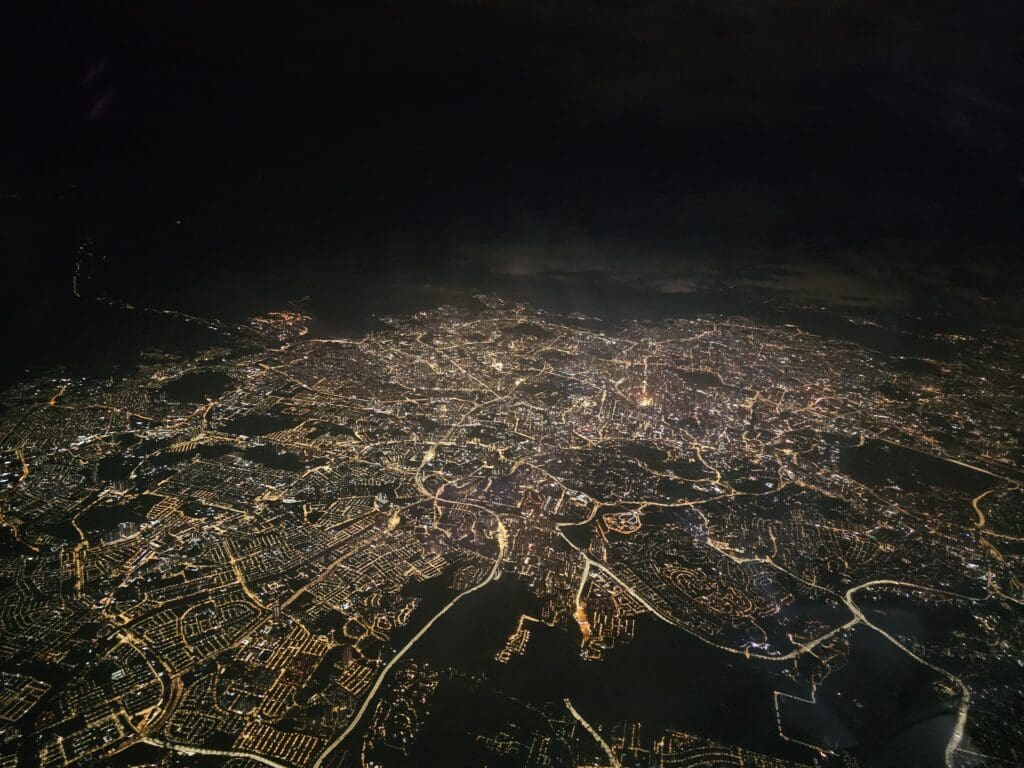
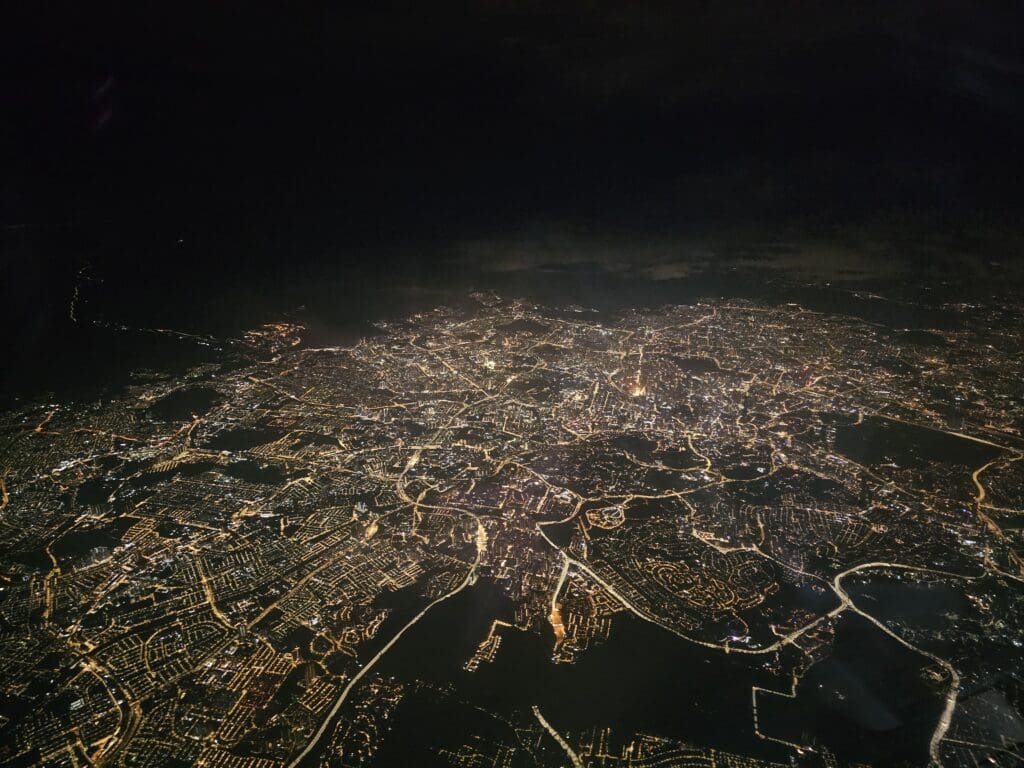
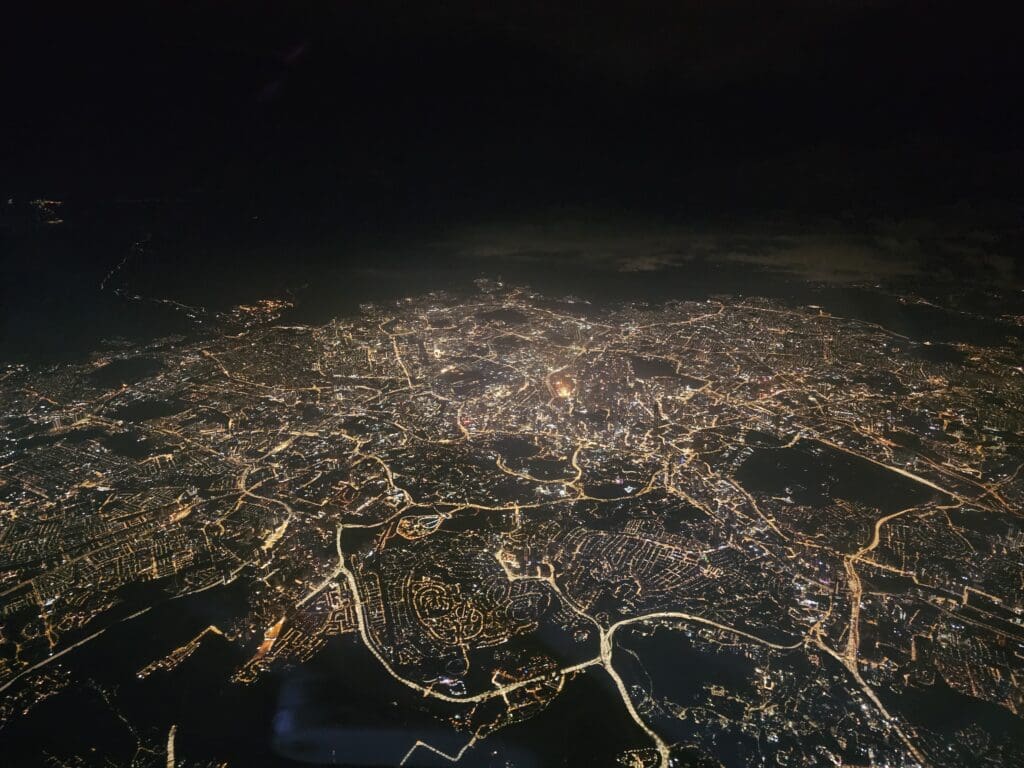
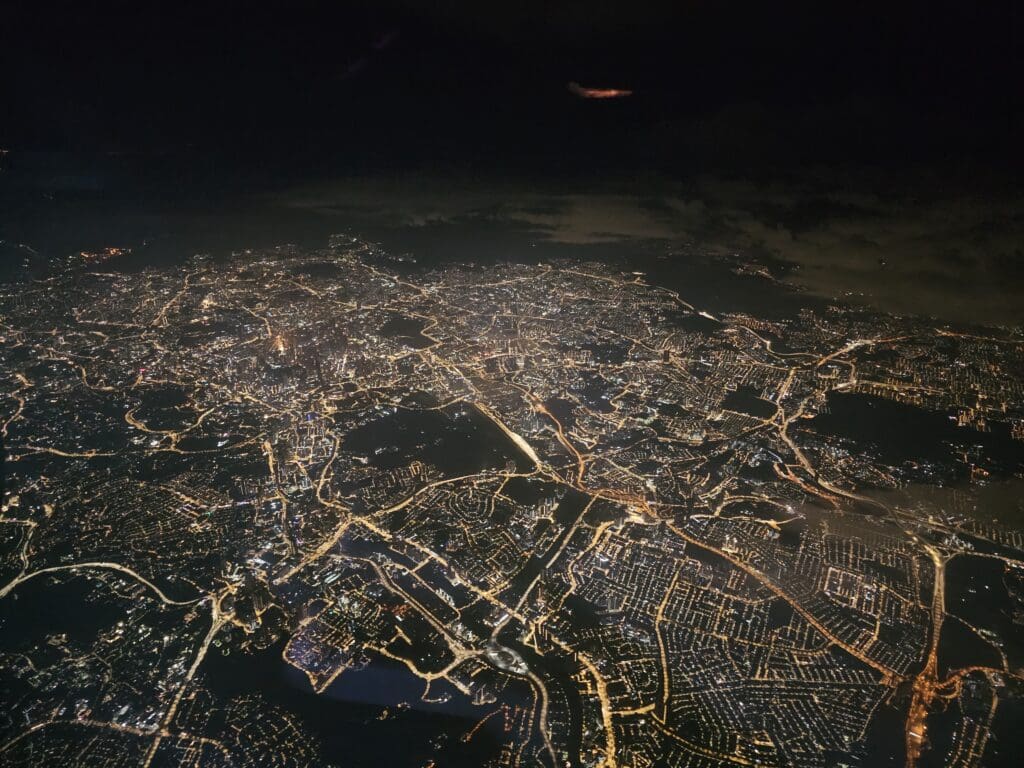
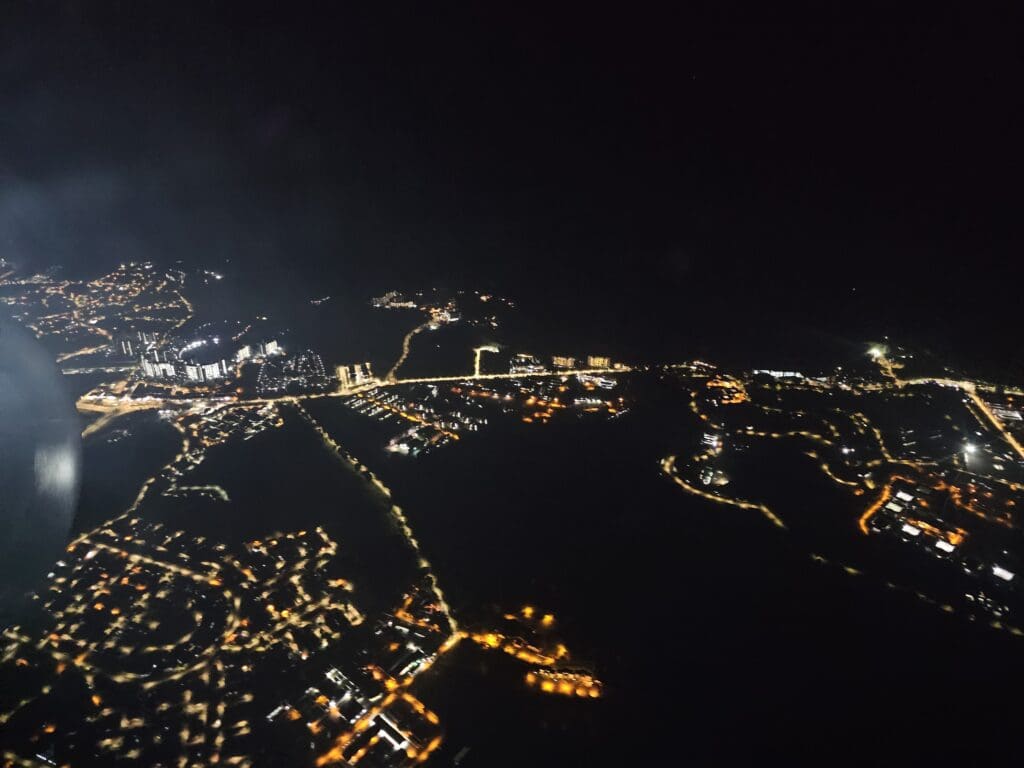
Sinking lower and lower over the rows and rows of palm trees that sit to the south of Kuala Lumpur International Airport, before I knew it, the lights of the massive sprawl of this came into view as we crossed over the perimeter fence. At 0429, 04:18 after taking to the Nepali skies, the Boeing touched down on Malaysian soil with a gentle bump which was followed by some light braking before we finally vacated the runway to the right. In the usual manner, our arrival was immediately followed by an announcement from the Purser with the usual welcomes, thanks and warnings as we commenced our reasonably short taxi over to Terminal 1.
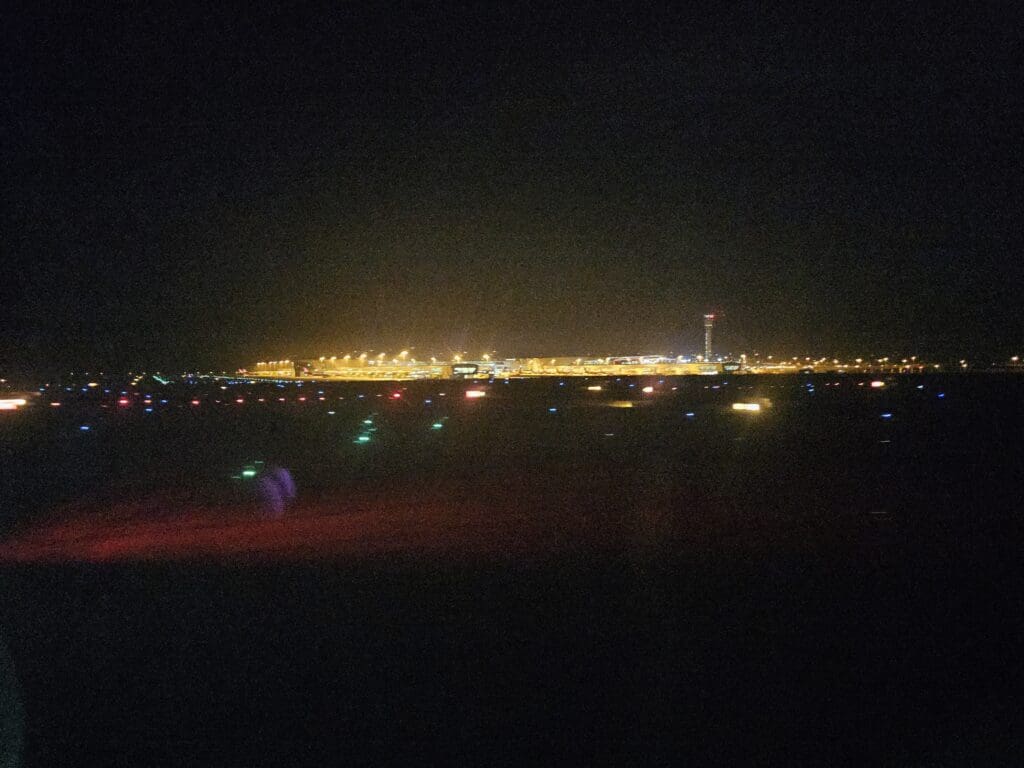
A few minutes after our arrival, the Boeing cautiously pulled into Stand A8R, where we joined a host of mostly Malaysia Airlines Boeing 737-800 and MAX 8 jets, arriving a delightful fourteen minutes ahead of schedule. With an army of ground staff already waiting and ready to spring into action, the jetbridge was soon connected and given the lack of passengers and my position near the front of the aircraft, I soon made my way to the forward galley where I thanked the two flight attendants standing there and received a lukewarm farewell in response, before I headed up into the bright and modern terminal. Unlike in many parts of the world, those arriving on international flights at Kuala Lumpur International Airport arrive in the airside departures area, thus making for a very quick and convenient transit process.
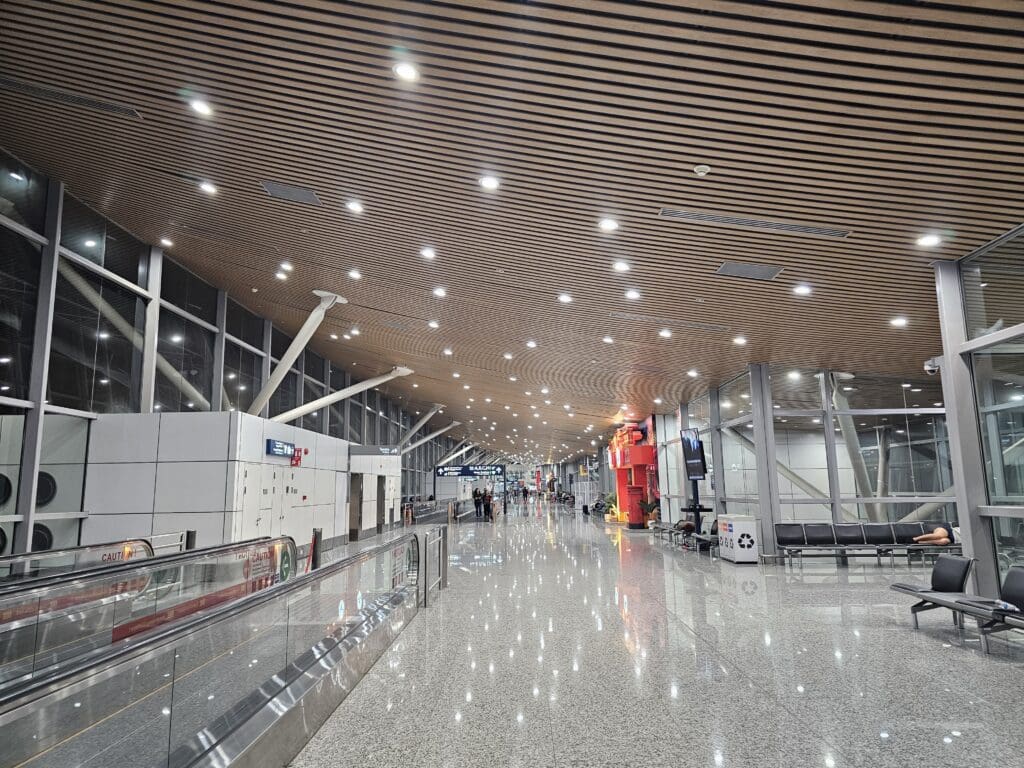
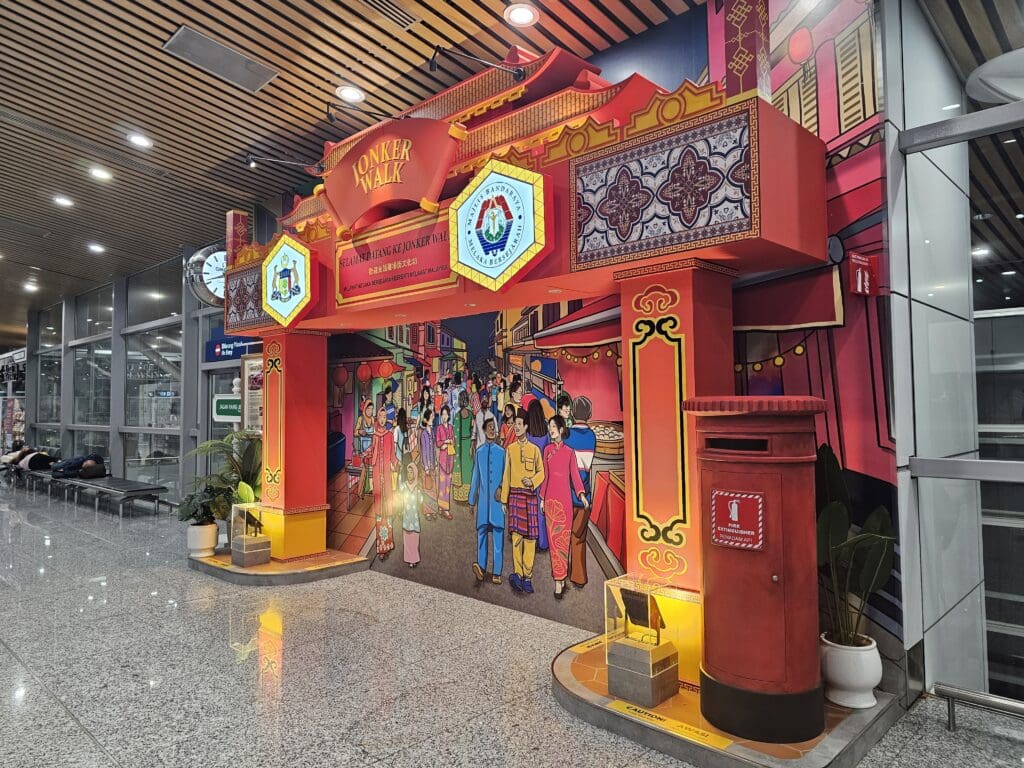
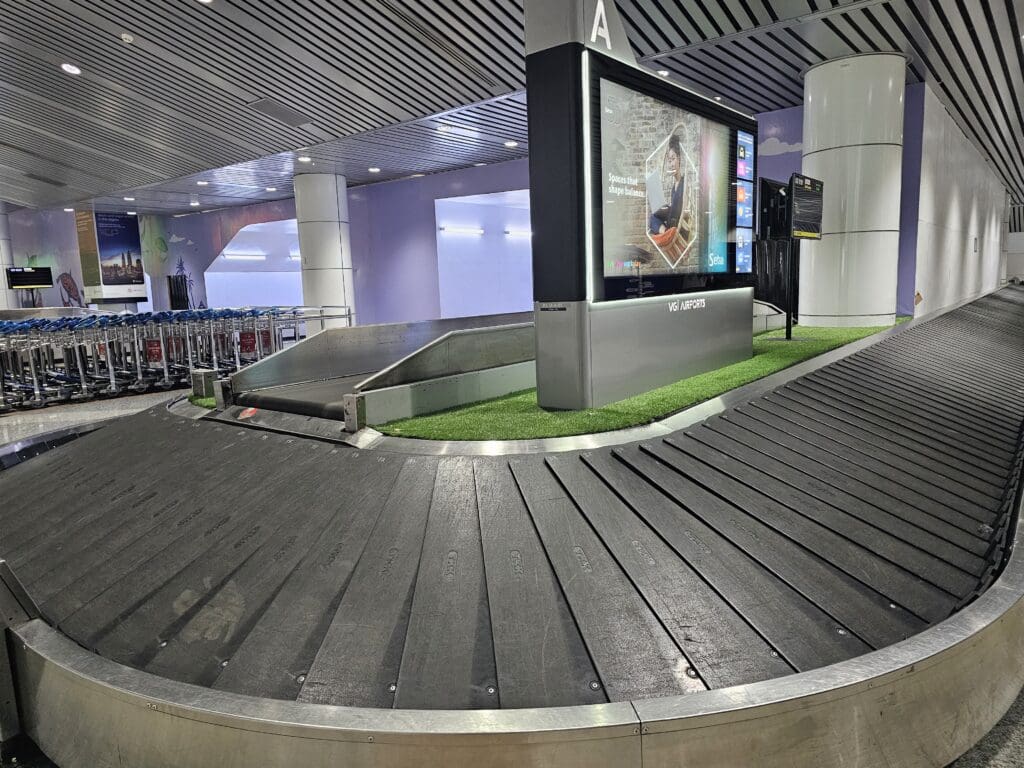
Following signs for immigration, following a reasonably long walk down the pier, I reached the immigration checkpoint. Being near empty at that time and able to use the e-gates, entering Malaysia was a very quick and easy process, and within no more than a minute, I arrived at the baggage collection hall. Having made a quick journey through the terminal, unsurprisingly a small amount of waiting was required before my suitcase appeared. Once this did, I picked this up and passed through customs before entering the landside arrivals area, thereby ending my overnight Batik Air Malaysia experience.
Summary
In all honesty, I did not find Batik Air Malaysia to be anything special. The aircraft was battered and worn, the crew were cold and distant, and the seat was so-so. Not to mention that, for a low-cost airline, my flight from Kathmandu to Kuala Lumpur was not particularly cheap. The only two redeeming factors were the complimentary 20kg baggage allowance and the reasonable device-streaming inflight entertainment system. With all things considered, I probably wouldn’t fly with Batik Air Malaysia again on a long international service unless they were significantly cheaper than their competitors or the only operator on the route.