Flying the Nepal Airlines Flagship Airbus A330: Delhi to Kathmandu
Background
At the age of seventeen, I had been fortunate enough to head to the Himalayas on a three-week school trip to Nepal. During this time, I hiked up Poon Hill, undertook a safari in the Chitwan National Park, and visited my school’s partner school in the Kathmandu Valley.
Unfortunately for my wallet, this trip kickstarted my penchant for adventure, and there are plenty of places across the globe that I probably would not have visited had it not been for this trip. Ever since then, I had longed to return to The Land of the Gods, and twelve years later, in 2025, I finally got around to doing so. Successfully securing a nice bank of annual leave in Spring 2025, I booked myself onto a trek in the Sagamartha National Park and would spend almost three weeks in Nepal. With virtually all transport and accommodation sorted once in the country, the only thing that I had to do was arrange flights to and from Nepal.
Despite being home to Europe’s largest Nepali diaspora, it has been quite some time since there were regular direct flights between the UK and Nepal. Fortunately, there is a cornucopia of reasonably priced one-stop options, with the likes of Air India, Emirates/FlyDubai, Kuwait Airways, Qatar Airways and Turkish Airlines often offering the cheapest combination of flights via their respective hubs. However, as an aviation enthusiast seeking some adventure and hoping to kick my trip off with an appropriately Nepali start, I thought it only right to fly to Kathmandu on the state-owned flag carrier, Nepal Airlines.
To do so, geographically logical options included flying via one of Nepal Airlines’ Middle Eastern or Indian destinations. However, my desire to fly their flagship Airbus A330 would limit me to the airline’s services from either Delhi or Doha. In the end, I picked Delhi. Whilst this would be a significantly shorter flight than from Qatar, overall, this would be a slightly cheaper option when combined with a ride on the mysterious Turkmenistan Airlines from London Gatwick to Delhi via Ashgabat.
Booking
According to several online accounts, in the not-too-distant past, booking tickets with Nepal’s national carrier was quite a challenge. However, today, tickets can be purchased through the usual avenues, including a smorgasbord of online ticket sites, as well as through Nepal Airlines’ website. Seeing as there was no major price discrepancy between the booking engines and Nepal Airlines, I concluded it was sensible to book directly with the airline and soon navigated my way to Nepal Airlines’ website.
Nepal Airlines’ website cannot be argued to be the most modern or stylish in the world. However, this was functional and offered just about everything that a prospective passenger may need before embarking on their adventures. This includes information about Nepal Airlines, its board and history, onboard service information and timetables. As soon as I touched down on the carrier’s homepage, I was greeted by a scrolling montage of what seemed to be heavily edited photos of the pride of Nepal Airlines’ fleet, their Airbus A330s, alongside advertisements for the carrier’s services to Bangkok and Dubai.
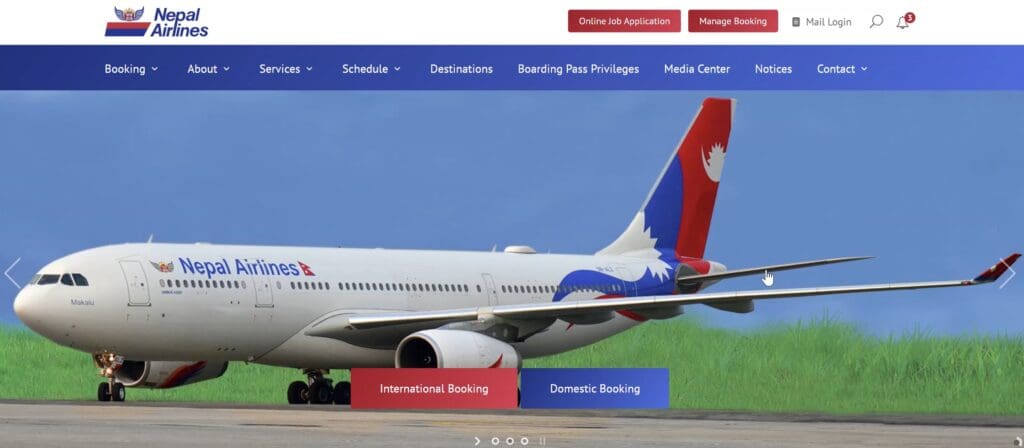
Highlighting the importance of the Indian capital in Nepal Airlines’ route network, Delhi is the airline’s only destination served daily, with the Airbus A330-200 deployed on this route. As per 2025 schedules, this was followed by Doha and Dubai with four, Bangkok, Kuala Lumpur and Tokyo Narita with three, and Bengaluru, Dammam, Hong Kong and Mumbai with two weekly flights. At this time, Nepal Airlines’ widebodies were only deployed on routes to Delhi, Doha and Tokyo Narita, with all other services operated by their two Airbus A320s.
Wasting no time, I soon filled all the details into the search engine and was presented with Nepal Airlines’ sole flight from Delhi to Kathmandu on my chosen departure day. Unlike many airlines, there did not seem to be much in the way of fare classes, with just one option each for Economy and Business, priced at $70.74 and $262.44, respectively. Selecting the Economy fare, I steamed onwards and entered my details before being presented with the optional extras page. This included the option to pre-select any seat (including bulkhead and exit rows) for just $5.00. Meanwhile, I could also top up my 25kg hold luggage allowance with up to an additional 30kg.
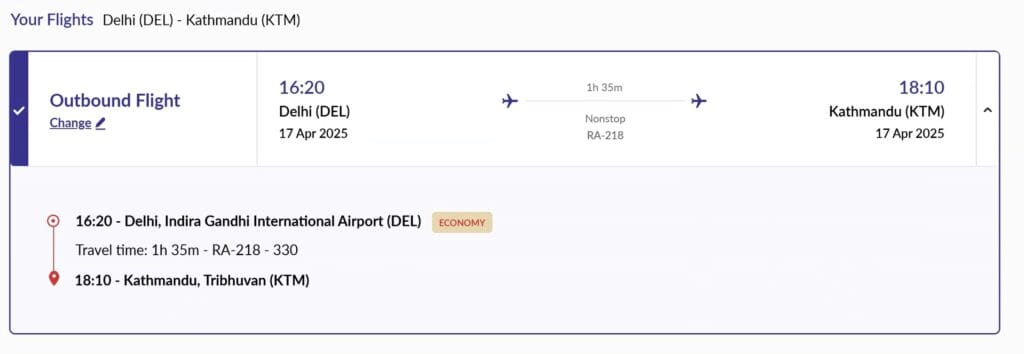
Wanting to bag a window seat, I selected one near the rear of the forward Economy cabin before being taken onwards to the rudimentary payment engine. Whilst not particularly slick in its appearance, this was functional and I was soon able to make payment before receiving no more than three confirmation emails – a receipt, an e-ticket and confirmation of my pre-reserved seat.
About Nepal Airlines
As its name would suggest, Nepal Airlines is the state-owned flag carrier of Nepal and its main international airline. Formed as Royal Nepal Airlines in 1958, the carrier initially operated a single Douglas DC-3 on domestic services before expanding with services to several cities across the Indian Subcontinent. However, Nepal’s famous topography necessitated proper STOL-capable aircraft, and so in the early sixties, Royal Nepal Airlines added the then state-of-the-art Pilatus PC-6 Porter, as well as the Feng Shou-2 Harvester – an Antonov An-2s built under licence in China. Like many airlines across the world, during this decade, Royal Nepal Airlines replaced its Douglas DC-3s with modern turboprop airliners and opted to procure the Dutch Fokker F27 Friendship.
In what would be a questionable move today, by the early seventies, Royal Nepal Airlines opted for another total fleet renewal. This time, the airline replaced its Fokkers with the British-built regional turboprop, the Hawker Siddeley HS748, and added the first of many de Havilland Canada Twin Otters for its domestic services to serve remote and mountainous parts of Nepal. However, perhaps the airline’s most significant addition during this era was the Boeing 727-100, several of which were added in 1972, and enabled the airline to expand its route network to encompass destinations further afield.
The Boeing 727 remained Royal Nepal Airlines’ flagship aircraft until 1987, when the first of two modern Boeing 757 Combis were added as part of a fleet expansion. This enabled the airline to expand to far-flung destinations with a single stop, including the likes of Amsterdam, Frankfurt, London and Paris. However, by the nineties, unfortunately, Royal Nepal Airlines began to struggle and was rocked by a number of corruption scandals. This was worsened by the Nepal Civil War, which raged from 1996 to 2006, and saw the number of tourists in the country drop.
With Nepal transitioning to a republic, Royal Nepal Airlines became Nepal Airlines. By this time, its fleet consisted of just a handful of Twin Otters and its two Boeing 757 Combis. Unfortunately, plagued by technical and other operational issues, during this time, Nepal Airlines came to suffer from an unfortunate reputation, with frequent cancellations and long delays. Furthermore, citing safety issues, the airline’s aircraft were banned from the skies of the European Union, with this still in effect. Meanwhile, increased competition was provided by a growing number of overseas carriers to serve Kathmandu, as well as increasing competition on domestic services with the deregulation of Nepal’s airline industry.
With Nepal Airlines’ aircraft not getting any younger or more reliable, understandably, the airline sought to refresh its fleet. Thus, in 2014, Nepal Airlines received its first new aircraft since its Boeing 757s. Enjoying positive relations with its northern neighbour, China, Nepal Airlines was provided with five Chinese-manufactured turboprops at favourable rates. Namely, three Harbin Y-12s and two Xian MA60s. However, these aircraft lacked the capabilities and reliability that Nepal Airlines expected, and both types had short lives before being retired at Kathmandu Airport, where they remain today. Undoubtedly, Nepal Airlines’ most significant additions came in the form of two Airbus A320s and two Airbus A330-200s. Whilst the procurement of these types remains mired in scandal, the airline hoped that this would enable it to offer a reliable and regular international operation, whilst the Airbus A330 would enable it to offer long haul services.
Despite attempts at modernisation, Nepal Airlines continues to have a lukewarm reputation amongst its passengers. Specifically, the airline continues to be known for its long delays, whilst its domestic network is infrequent and unpredictable, thanks to the regular issues faced by the carrier’s two elderly Twin Otters. Nevertheless, despite this, I was eager to sample the delights of Nepal Airlines and looked forward to my trip!
The Journey
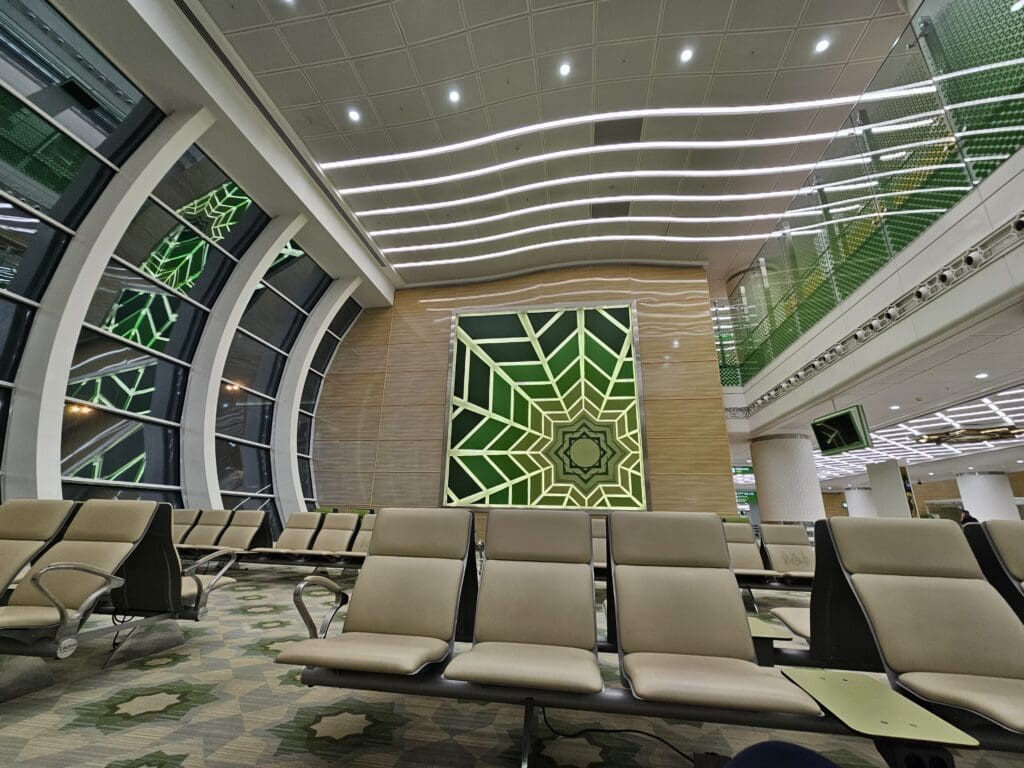
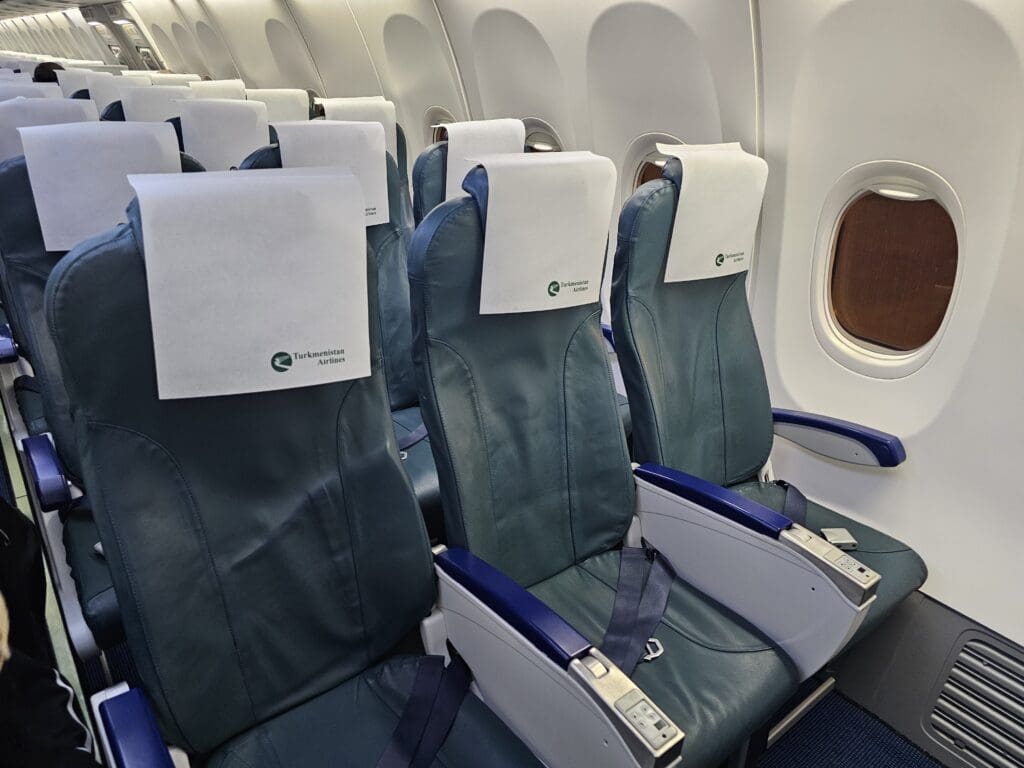
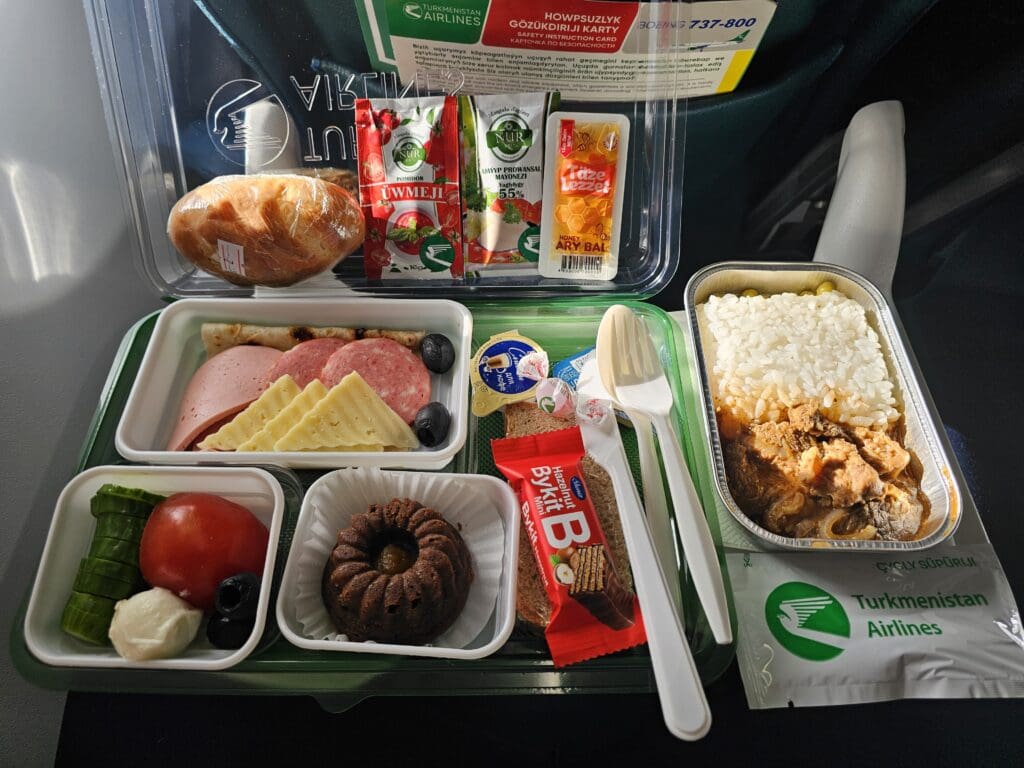
At 1112, my long overnight slog from London via Ashgabat came to an end when the Turkmenistan Airlines Boeing 737-800 that had carried me down from the Turkmen capital touched down on Indian soil with a gentle bump (review here!). Having had minimal sleep throughout my first two flights and my three-hour stay in Ashgabat International Airport, by the time I reached Delhi, I was simply eager to get to Kathmandu and have a good night’s sleep. However, I still had plenty of time to go until I could bed down for the night. Following a long taxi, the Turkmen Boeing pulled into its stand, and once off the aircraft, I made the long trek to immigration, stopping mid-way to fill out an immigration form – admittedly, given my unusual itinerary and the fact that I would not even be spending a night in India, I was a little concerned that my shortstop would invite some curiosity. Eventually, I passed Indira Gandhi International Airport Terminal 3’s famous hasta mudras beneath which sits the terminal’s large immigration area. Fortunately, dedicated desks were provided for those in possession of Indian e-visas and were at that time, totally devoid of passengers and so I was able to wander straight up to one of these.
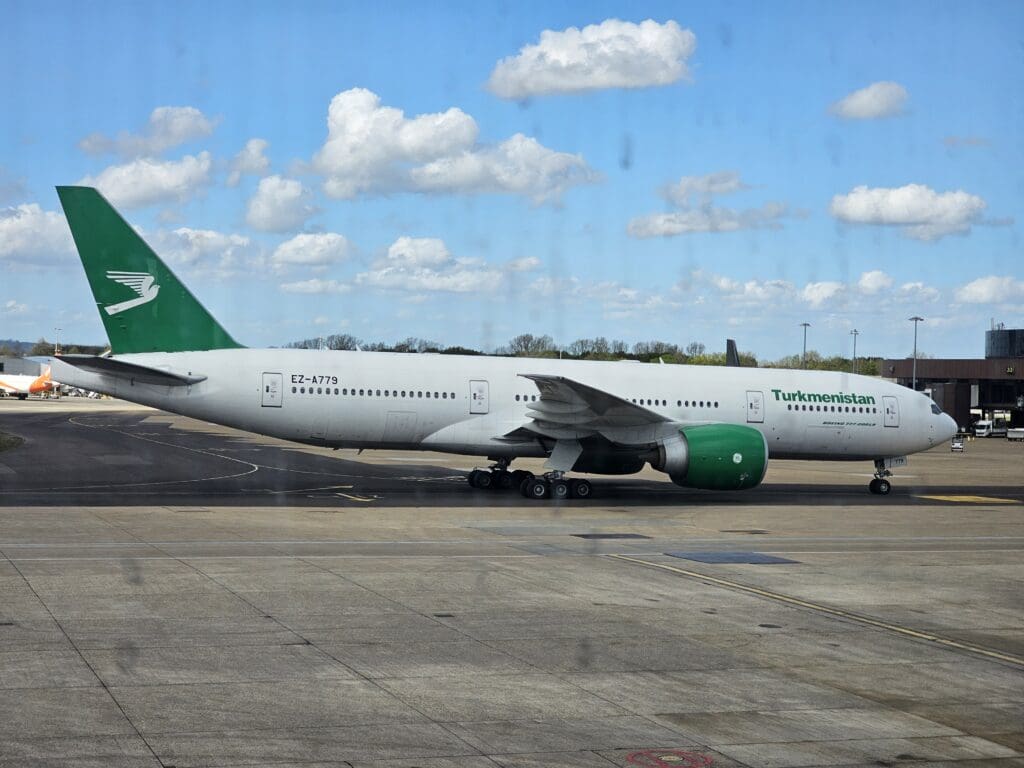
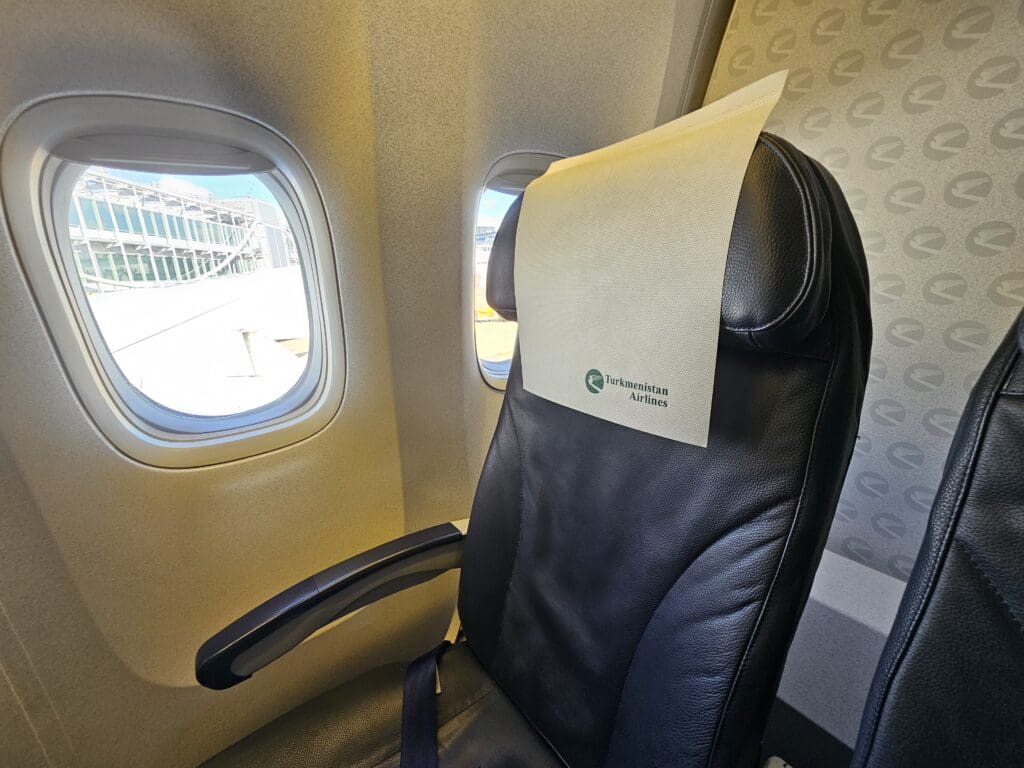
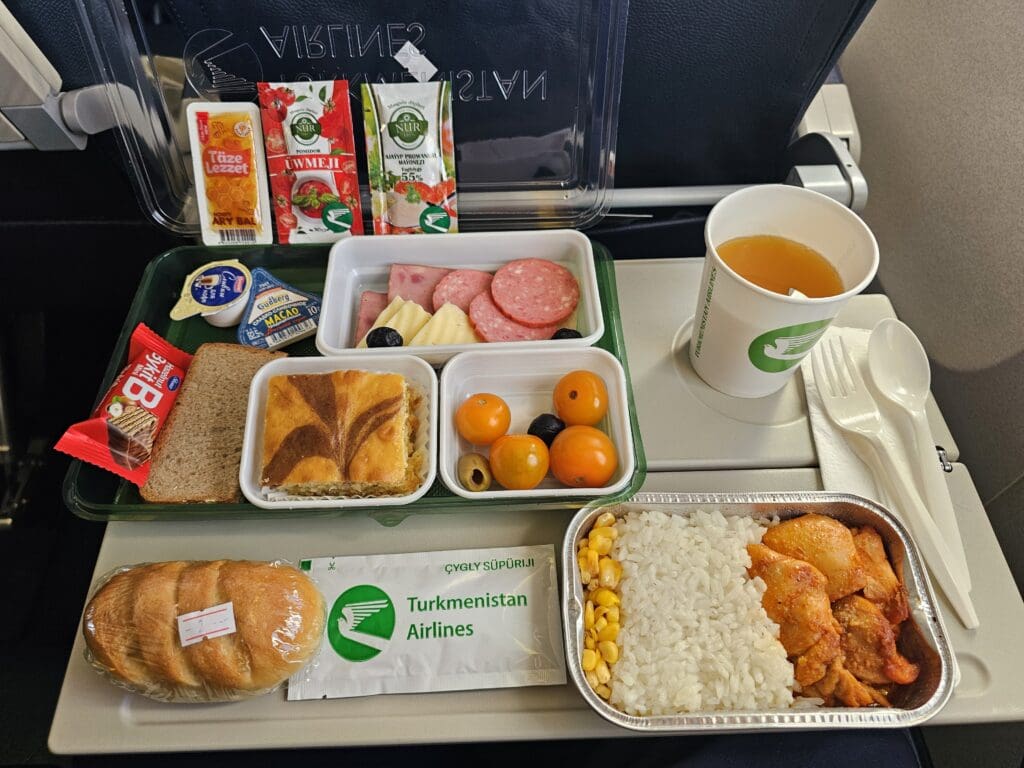
Once at immigration, I handed over my passport, e-visa, disembarkation card and flight ticket onwards to Kathmandu. Fortunately, the officer was not too interrogative about my short stay in India and pressed me more on the reasons that I was heading to Nepal, although I was unable to decipher whether this was done out of curiosity or suspicion. Fortunately, all went without a glitch and after a few minutes, I officially entered India. By this time, my suitcase could already be seen next to one of the many carousels, with a dedicated team picking suitcases off this and carefully lining them up. With this in tow, I passed through the customs checkpoint and entered the landside arrivals area. Seeing as only those with a flight ticket can enter the terminal building in Delhi, the landside arrivals area was calm and quiet, and I was only very slightly hassled by a couple of representatives from official taxi companies looking for their next customer. Alongside plenty of desks catering to services that tourists may need, a few eateries could also be seen for those desperate for their first meal on Indian soil, although understandably these seemed to be more popular with airport staff than inbound passengers.
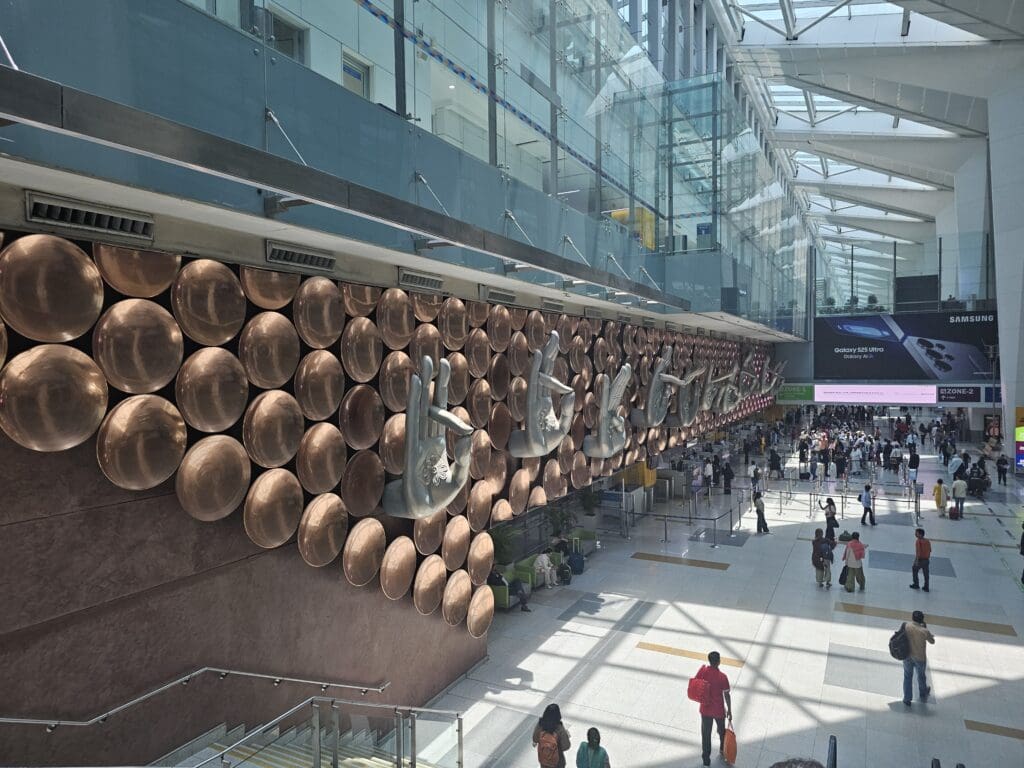
Being likely one of the very few passengers who make an unprotected international transit through Delhi, I found the escalator up to Terminal 3’s check-in hall to be hidden away in one corner of the arrivals floor and was not particularly well signposted. Given India’s strict security regulations, the entrance to this was guarded by an armed officer in camouflage who demanded to see my ticket and passport. Once they had thoroughly checked this and given me a good look up and down, I was permitted to head upstairs to the check-in area.
At the time of my trip, Terminal 3 served all international flights alongside domestic services operated by Air India and its low-cost subsidiary Air India Express, and a few by Indian giant IndiGo. As a result, a non-stop slew of departures ensures an eternal buzz throughout the terminal, with this being the busiest airport terminal in India and indeed, one of the busiest in the world. Unsurprisingly, this features a gigantic rectangular check-in hall, with seven ‘I’ shaped check-in islands spread throughout along with four cafés and light eateries and a newsagent. Meanwhile, several statues of Indian elephants served to remind me of where I was in the world. Wandering around, I found the terminal to be modern and for the most part clean, although I did find that places to sit and wait were difficult to come by, as were plug sockets or other charging points.
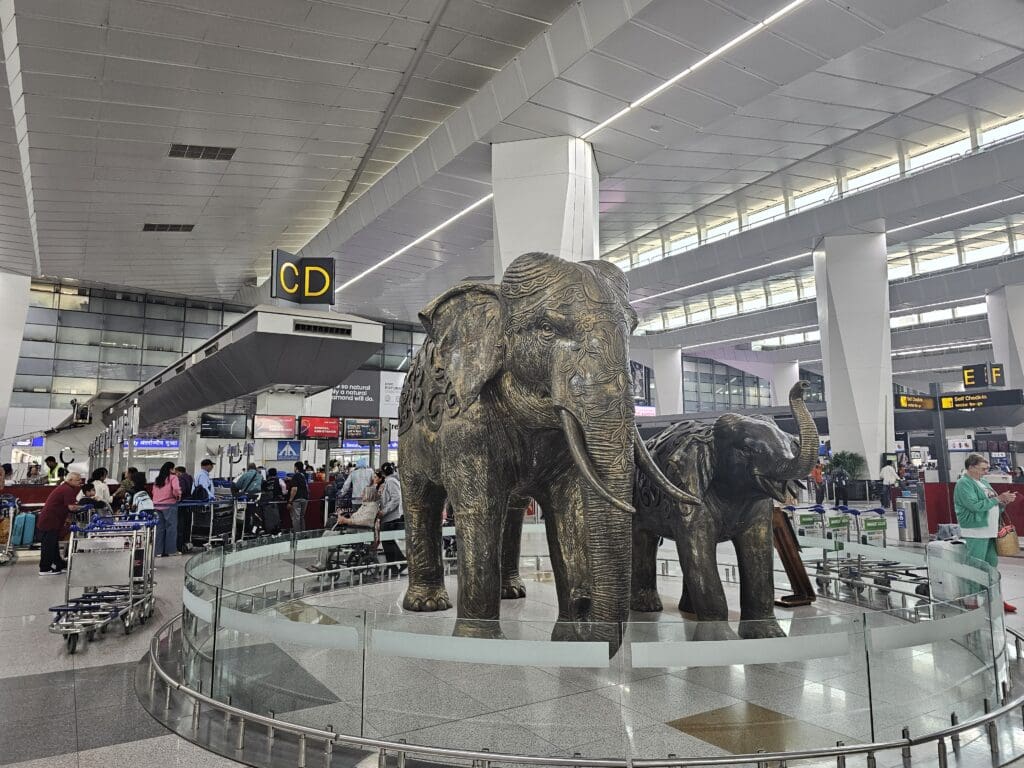
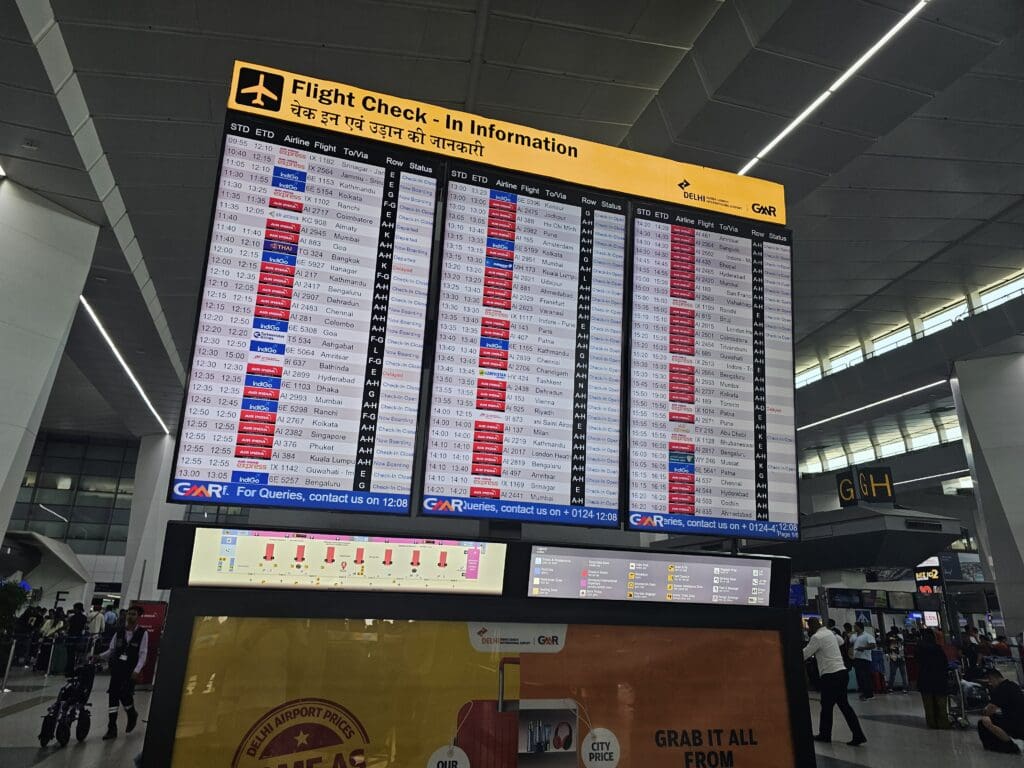
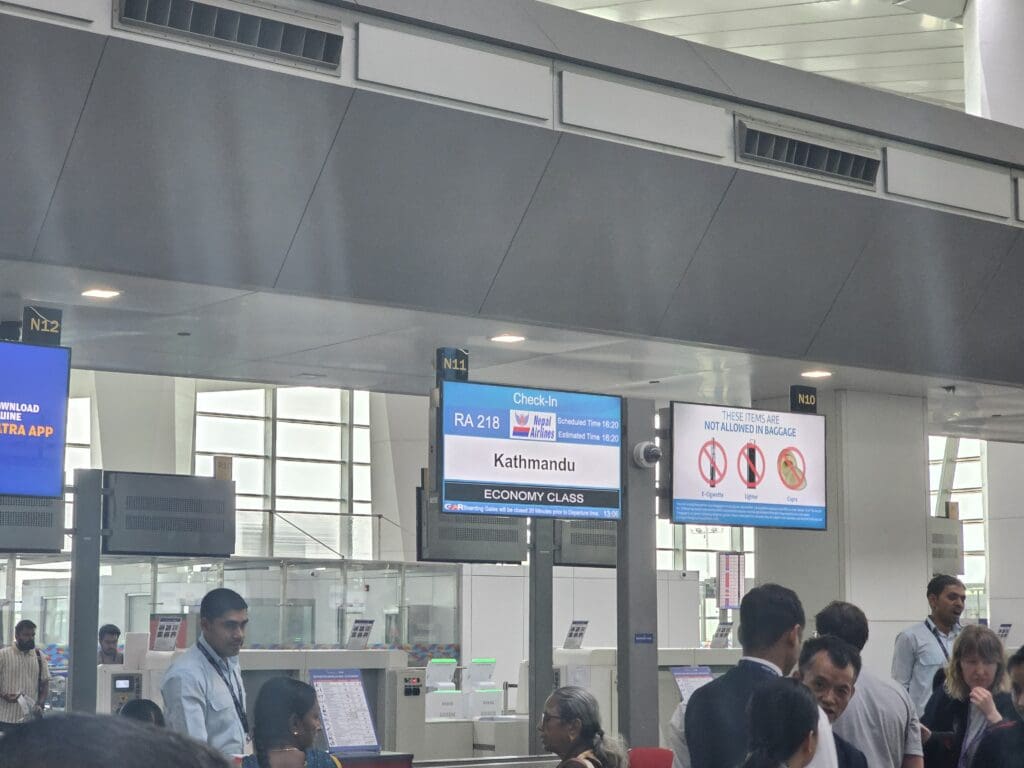
Once inside the check-in hall, I checked the departure boards which revealed that check-in for Nepal Airlines’ service to Kathmandu would be undertaken at the ‘N’ counters at the far end of the terminal and I soon received an automated email from the carrier that informed me that these were open. However, with four hours to go until my flight, these were still assigned to Uzbekistan Airlines and checking in the final stragglers for the airline’s service to Tashkent. I thus decided to head to the terminal’s branch of Costa Coffee where I indulged in an overpriced Spanish latte before wandering around a little more and attempting to find somewhere to sit and wait. Aviation enthusiasts may be a little disappointed to hear that views of the action outside could not be had from the landside portion of the terminal.
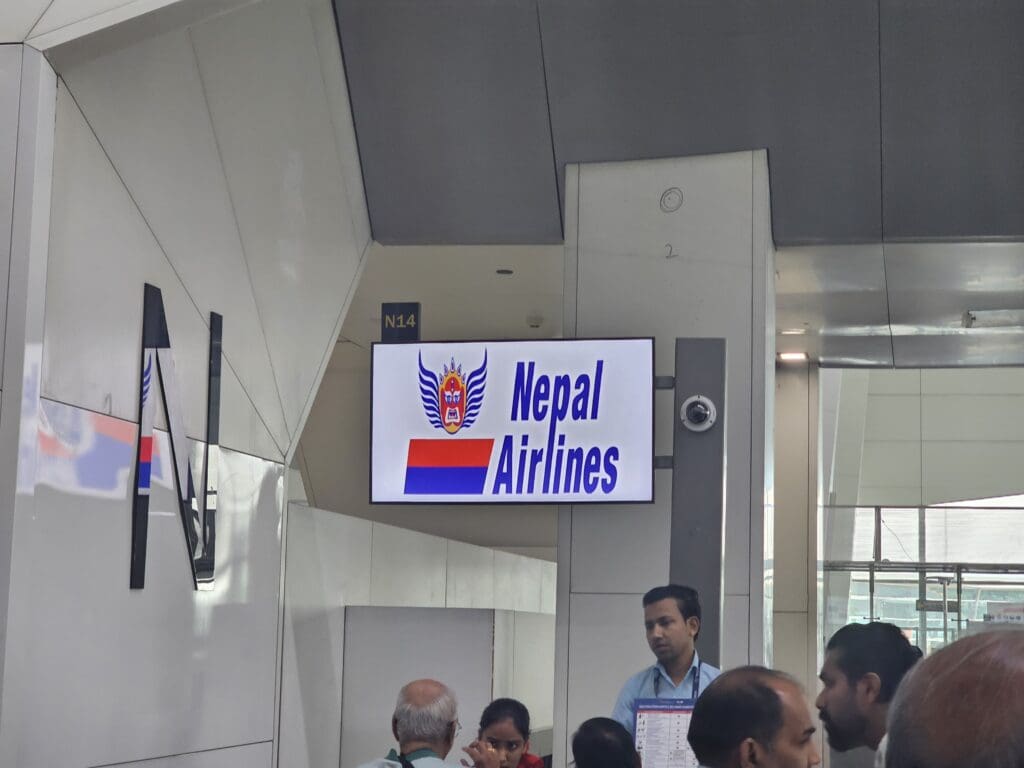
At 1245, I decided to wander back over to the desks where I was greeted by the sight of a chaotic scrum of passengers consisting of several large groups of passengers making pilgrimages to Nepal’s sacred Hindu sites, families, couples and solo travellers. With nowhere else to be, I saw little reason not to join the crowd and spent the next half hour attempting to guard my position in the queue to varying levels of success, slowly shuffling forwards towards the bank of desks. This was a slow process thanks to the fact that most of my fellow passengers seemed to be travelling with heaps and heaps of luggage. To Nepal Airlines’ credit, a reasonable number of desks were open – specifically five for those in Economy and one for those in Business, with these manned by outsourced handling agents and a single Nepal Airlines supervisor. Eventually, I reached the front of the queue and was pointed to a desk, where the check-in agent checked me in quickly and efficiently, albeit in a rather cool manner. Once my bag had been sent into the depths of the terminal, my Nepal Airlines branded boarding pass was printed out and handed to me, at which point I was free to continue on my journey.
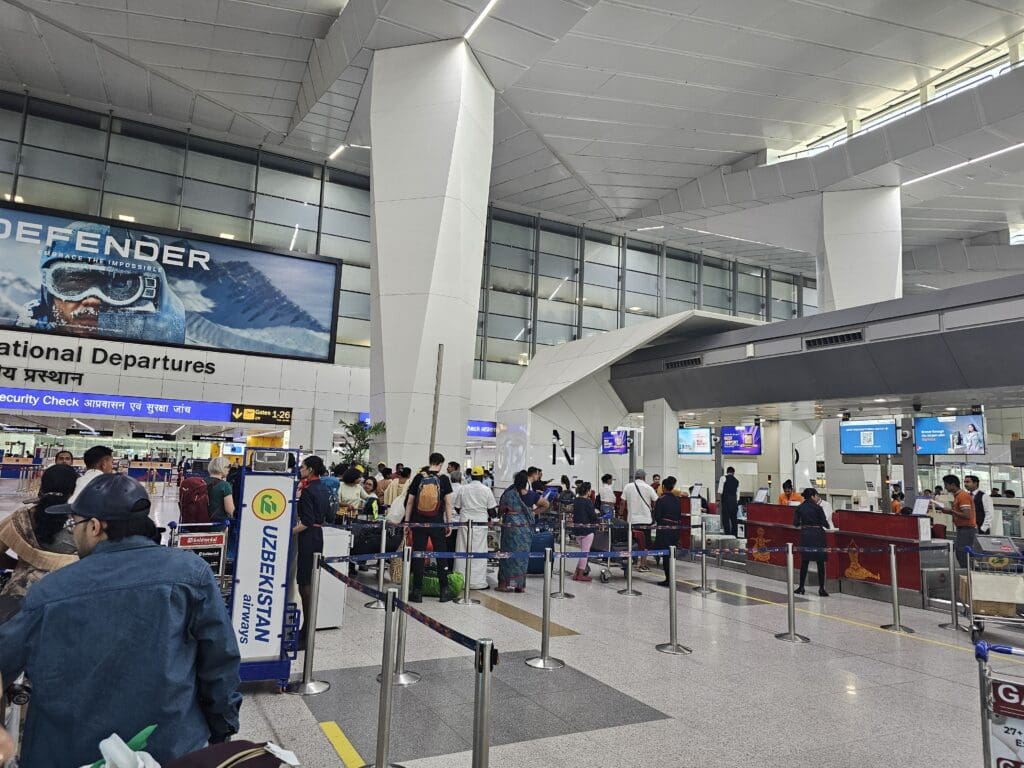
During my previous international departure from Delhi, I had departed through the main security and immigration checkpoint which sits right behind the check-in desks on the long side of the hall. However, I found this to be a slow and frustrating experience. Since this trip, I was pleased to see that the terminal now features a second immigration and security checkpoint which is slightly hidden away at the far end of the terminal next to the crew security and immigration area. Decided to try my luck with this checkpoint, upon entering this I was incredibly pleased to find the checkpoint to be devoid of passengers, with the only others there at the time taking the form of Air India cabin crew who were set to operate an Airbus A350 service to London.
First up was immigration where there was just a single counter available and the officer manning this appeared to be fast asleep and enjoying his afternoon nap. Fortunately, once they had noticed my presence, their colleague at the nearby crew immigration desk woke them up. Despite this, I found them to be polite and friendly, wishing me a good trip in Nepal before I was stamped out of India. Next up was the single security checkpoint, which, having correctly decanted my items, I found to be a painless experience, and once my boarding pass was stamped, I was free to continue onwards. Overall, my entire journey from the landside to airside portions took no more than four minutes – this being much better than the hour it had taken the last time I departed Delhi!
As is the case with many airports across the world, once passengers are through security they must undertake a route march through a large duty free store, which in Delhi, appears to be no different from most duty free stores at large major airports. This contains all the usual array of items including alcohol, cigarettes, perfumes and overpriced souvenirs for those who have forgotten to stop by Chandni Chowk before departure. Once I had successfully made it through this store, I reached a large, spacious and modern atrium, around which sit a plethora of luxury brand outlets including the likes of Hugo Boss, Mont Blanc and Versace just to name a few. Above these sits a small food court, where a mixture of Indian and international chains can be found including Domino’s Pizza and McDonalds. In terms of its design, two long piers stretch out from this main atrium. Down these, a mixture of kiosks, cafés and vending machines can be found, along with plenty of seating.
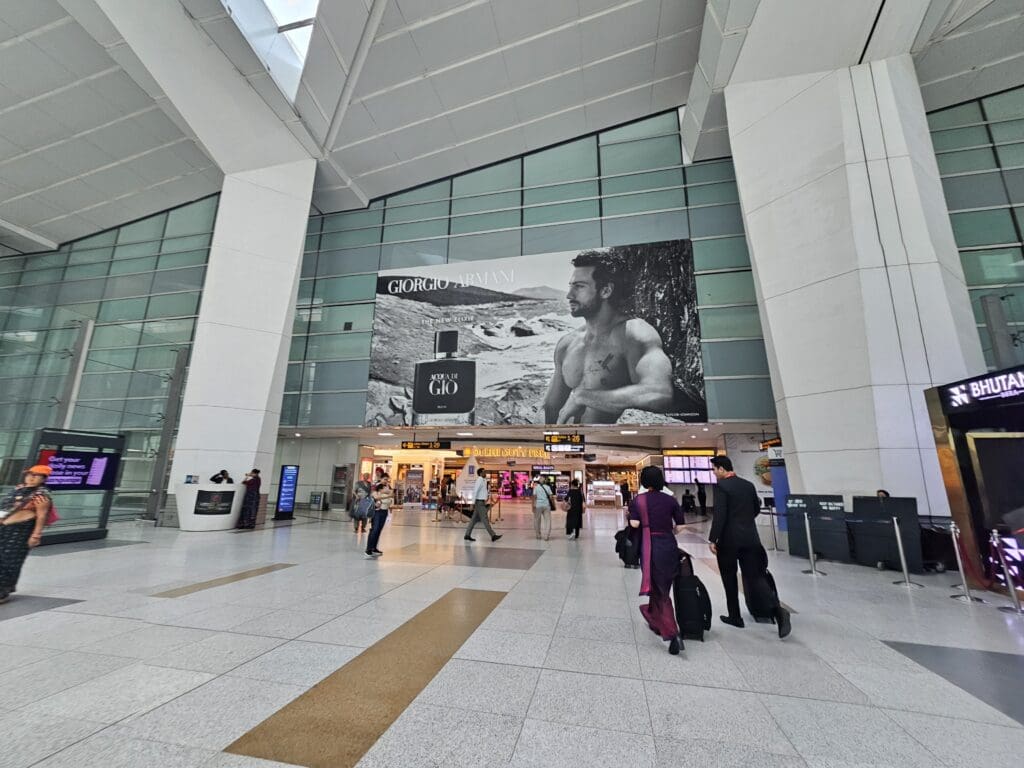
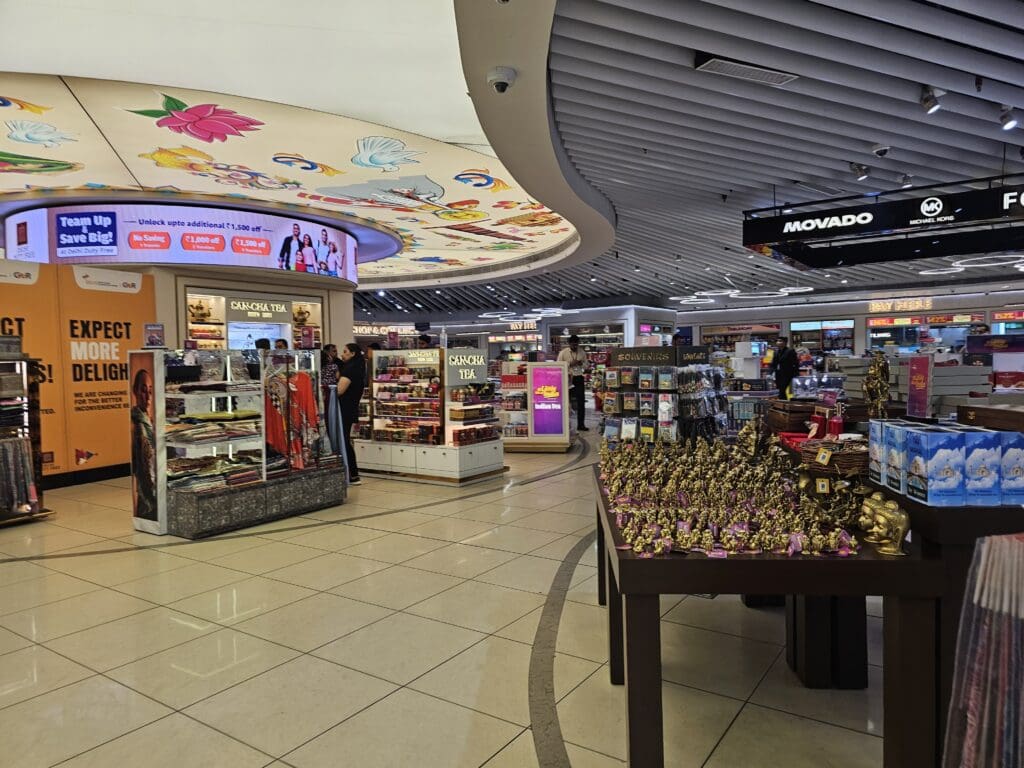
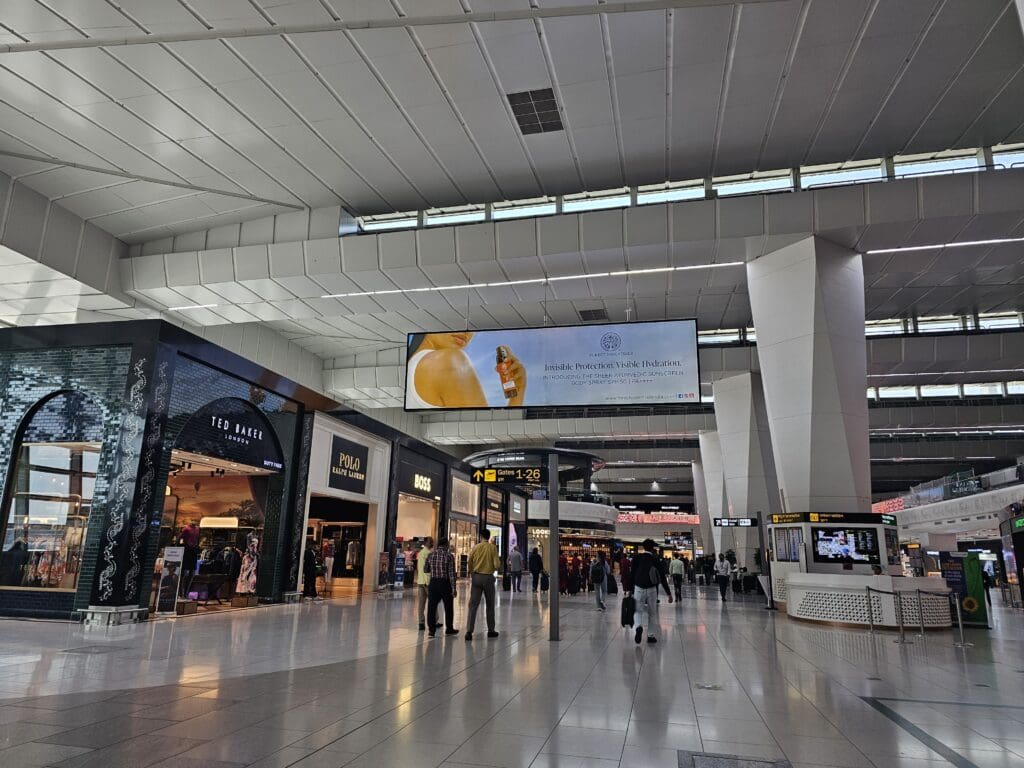
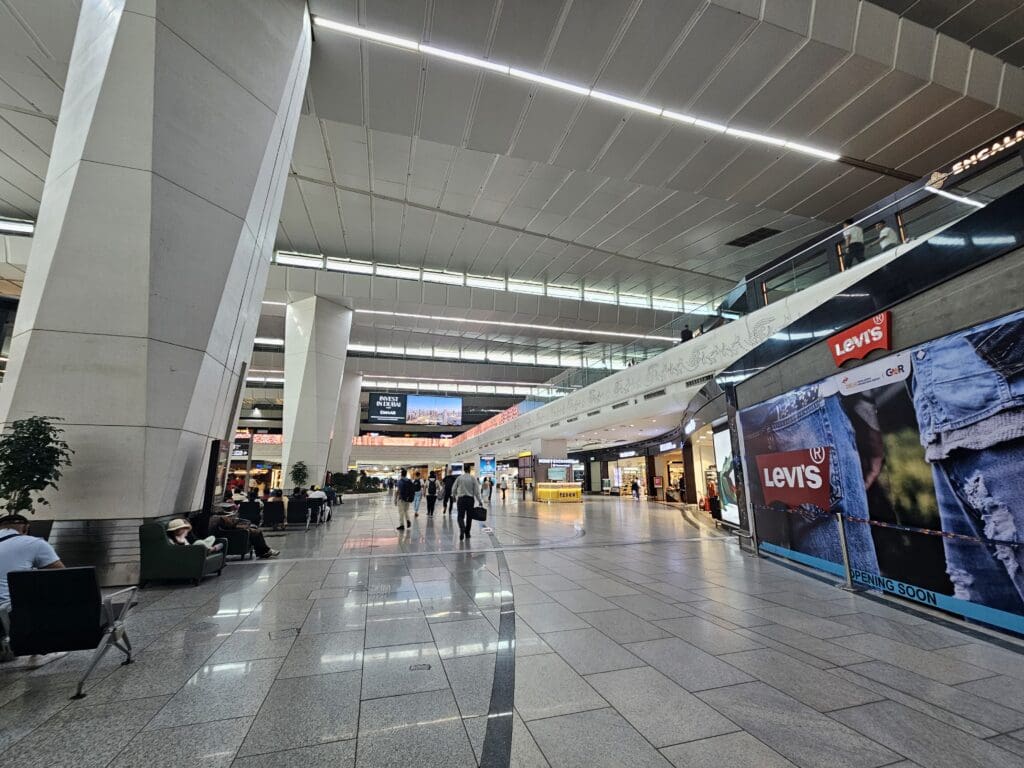
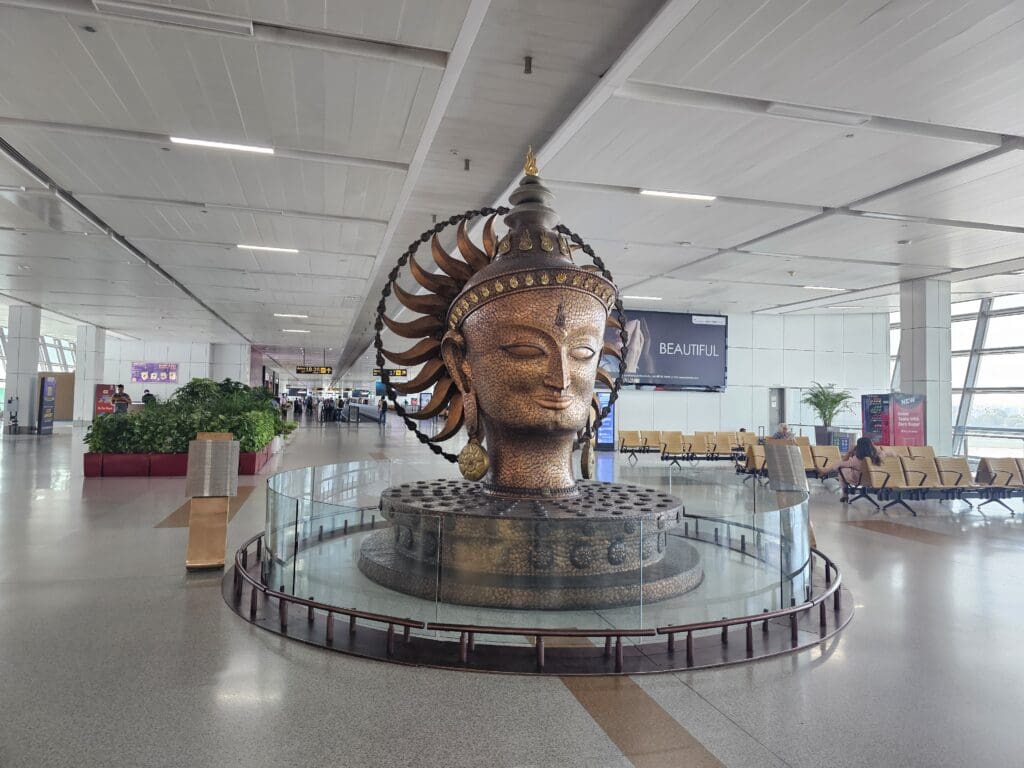
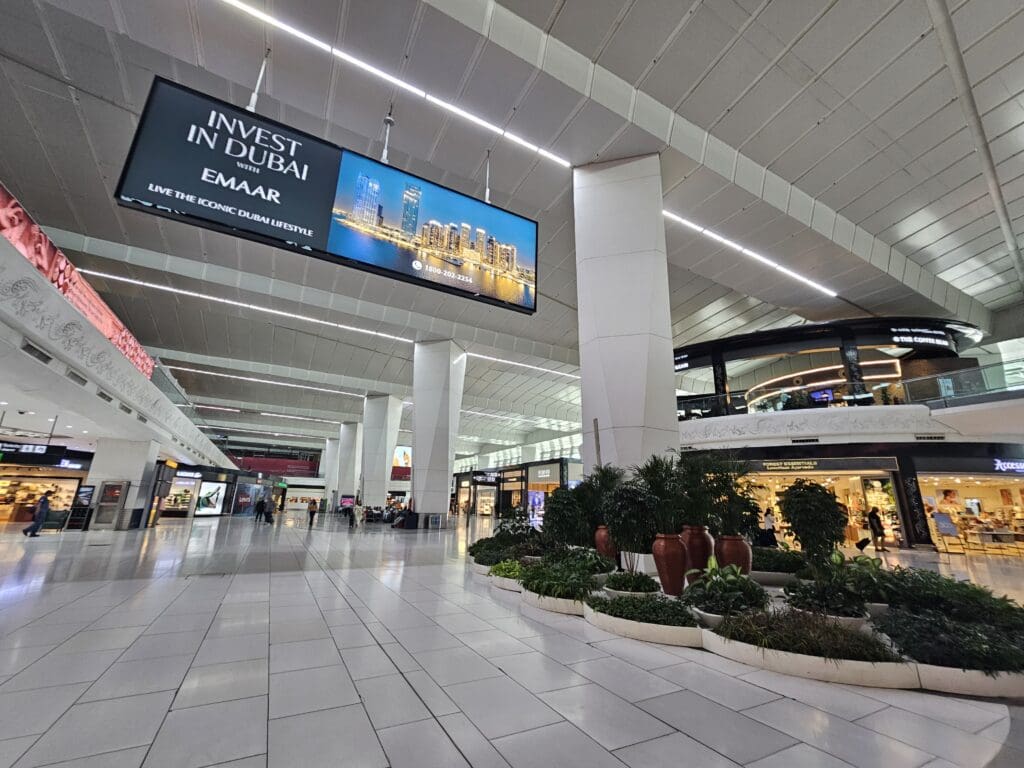
Wandering around, I was rather pleased with the airside portion of Terminal 3. This was bright, spacious and modern, and as is always a delight to see, elements of local design and culture had been integrated into the design of the terminal, for example through the large statue of the Hindu solar deity Surya. Additionally, for the most part, the terminal was in a clean and tidy state (bar a few of the toilets that I stumbled across), whilst seating was plentiful and charging points were easy to find. Meanwhile, the wifi worked without issue, although lacking an Indian phone number, this could only be connected to by obtaining a code from a machine.
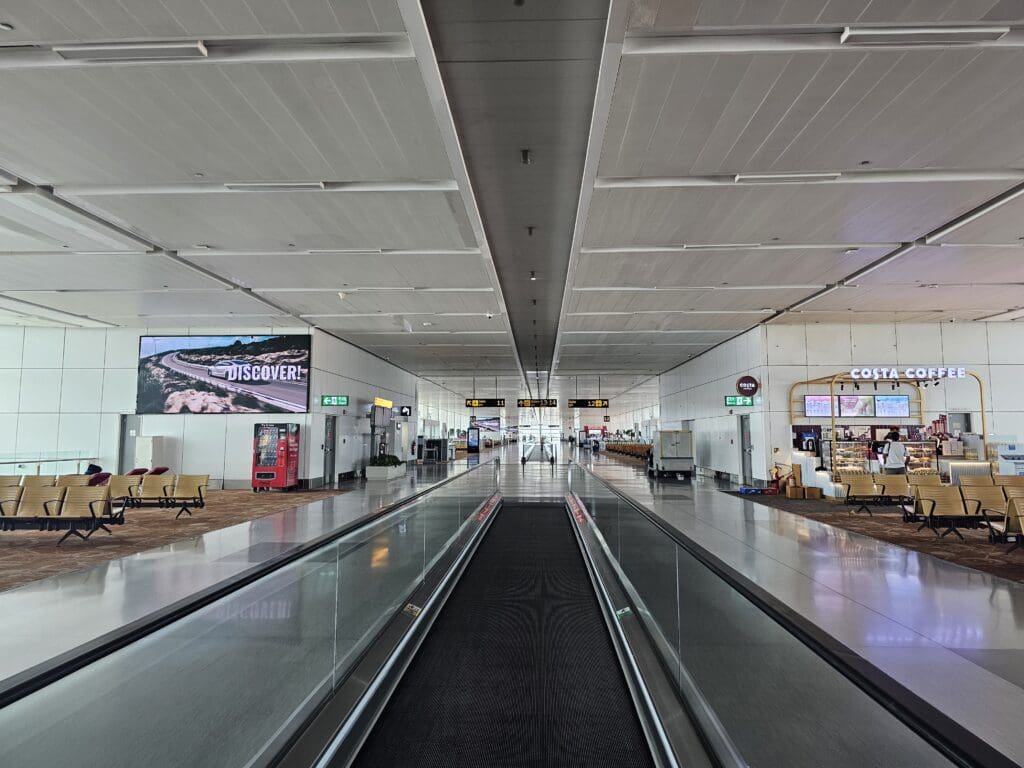
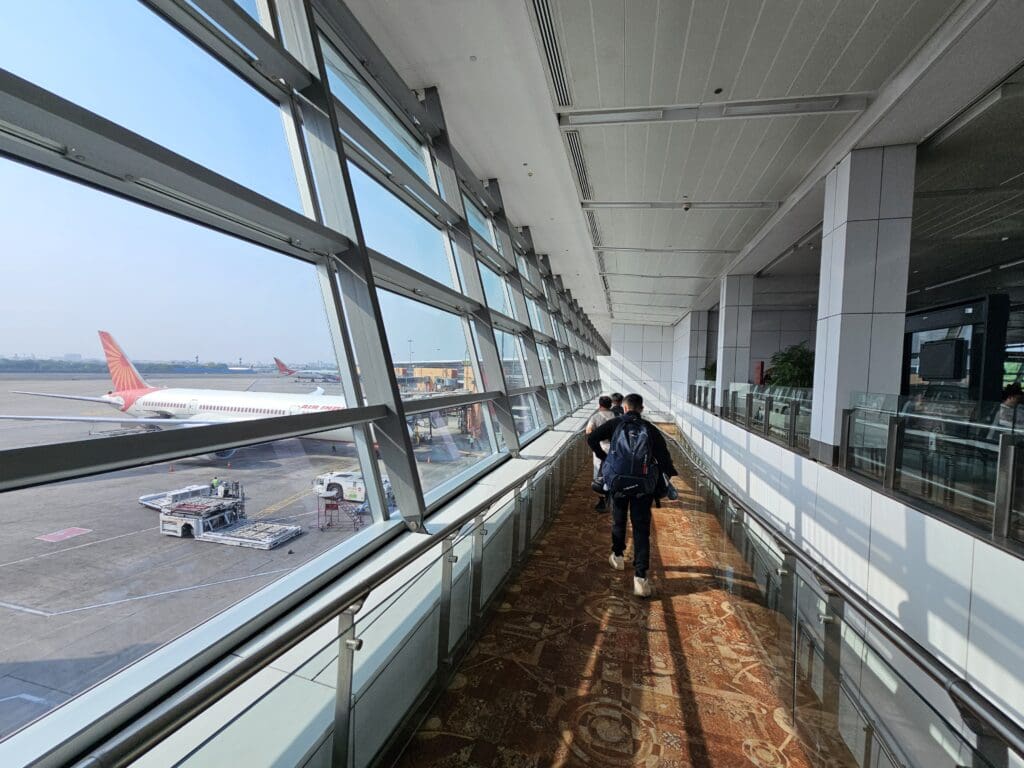
Aviation enthusiasts will be glad to hear that a good view of the movements outside can be had from across the two piers, with large and mostly clean windows offering vistas of the terminal’s stands and one of the airport’s key taxiways. Being the busiest airport in India, and one of the busiest in the world, a near non-stop stream of flights could be seen outside, consisting of a variety of aircraft types operated by a diverse plethora of aircraft from across Asia and beyond. Needless to say, the airport is one of the more exciting for aviation enthusiasts, although that said, I would be hesitant about whipping out any large cameras, seeing as the airport also has a significant military portion, and spotting is often not particularly well-understood by the local authorities.
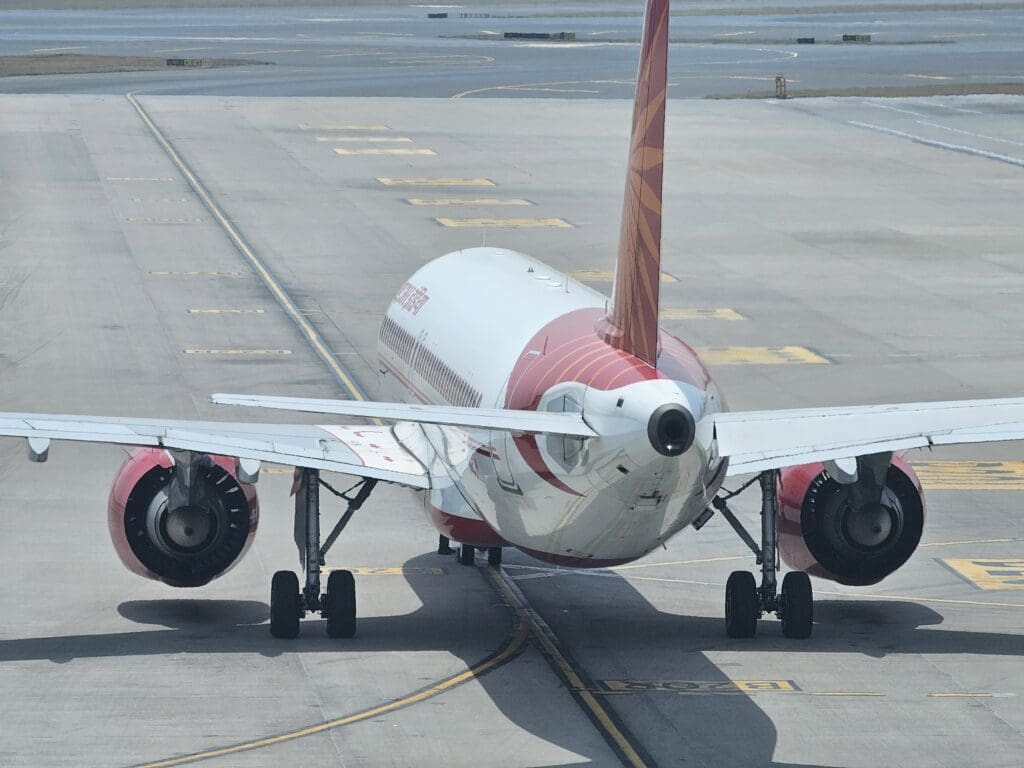
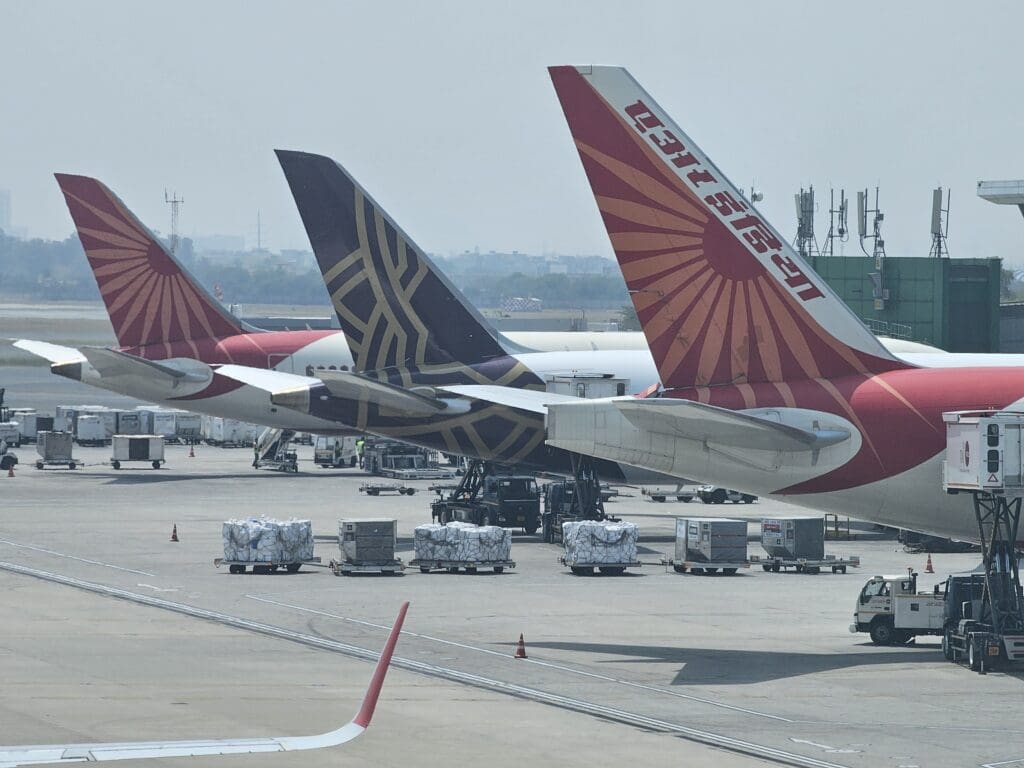
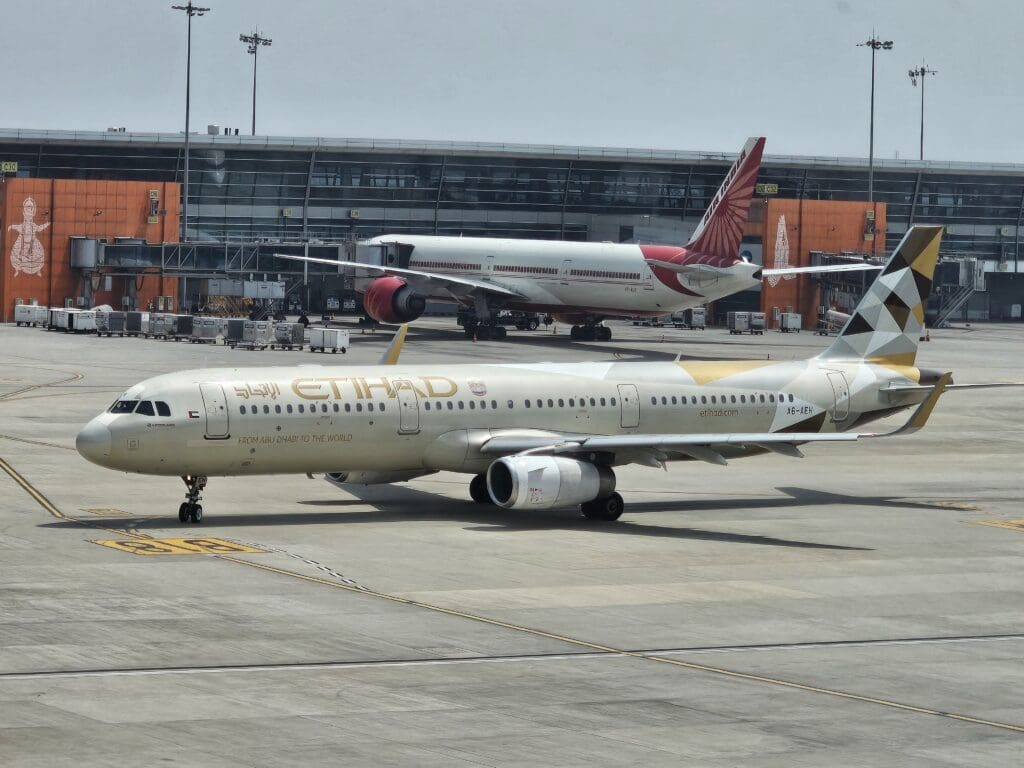
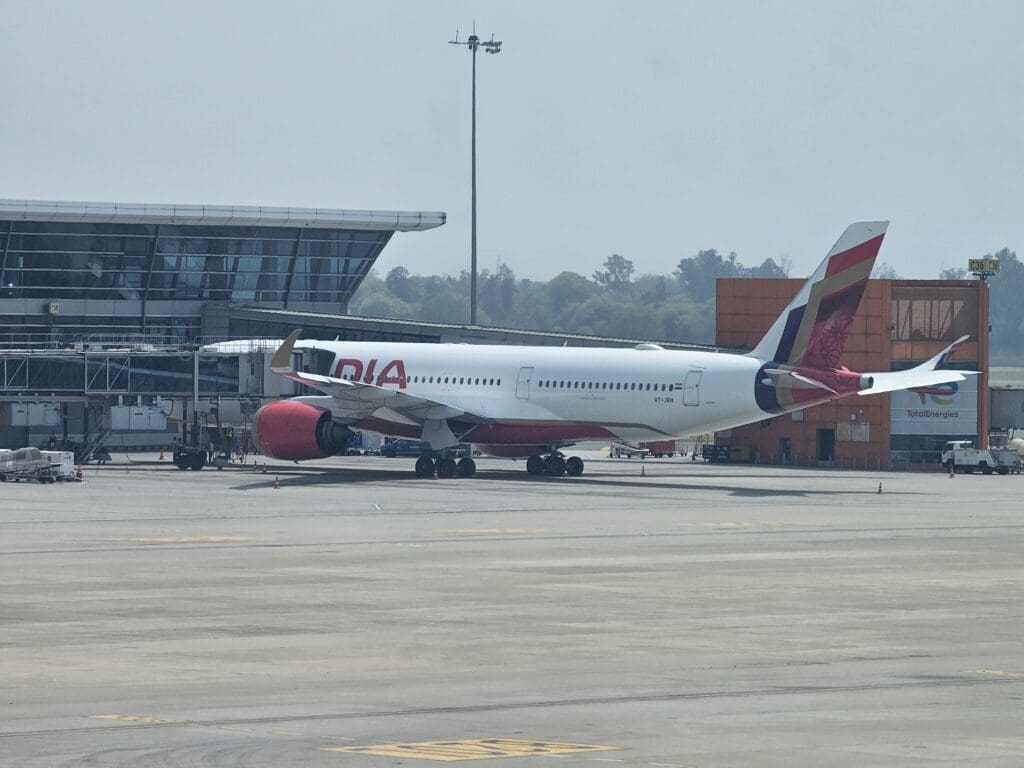
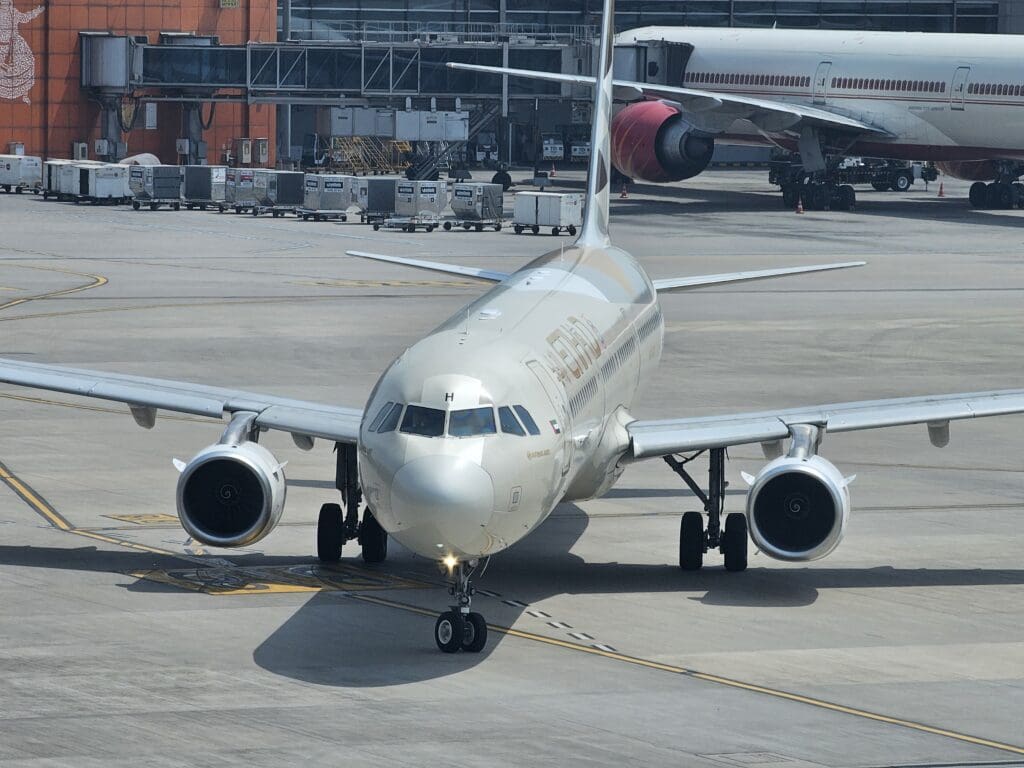
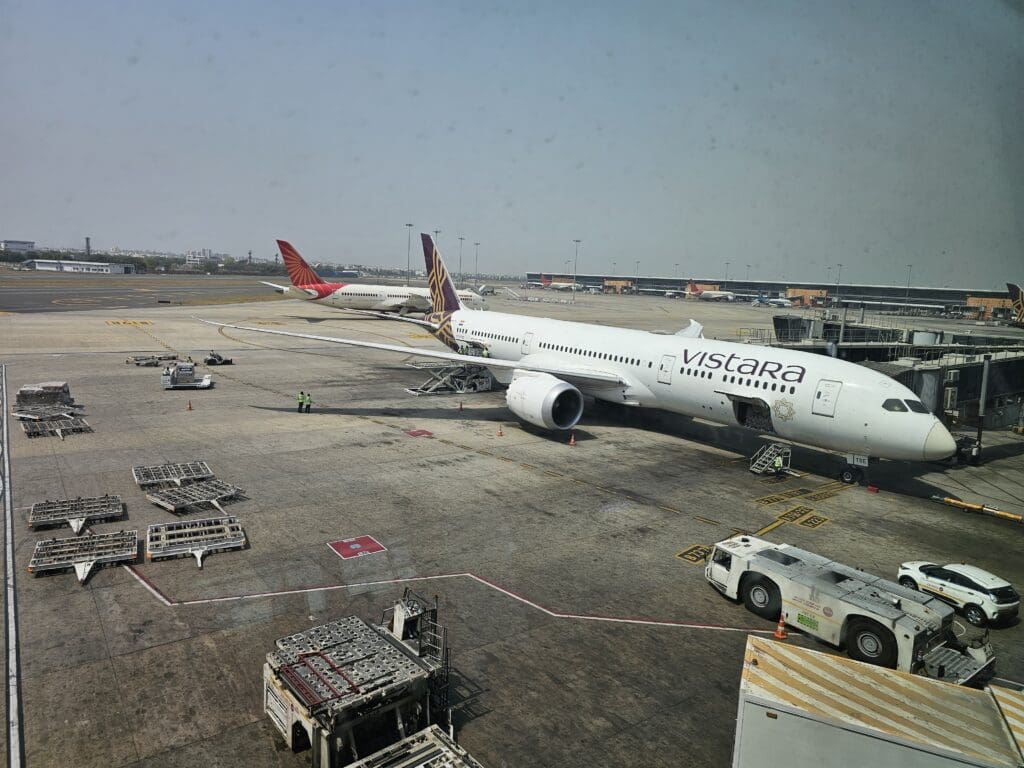
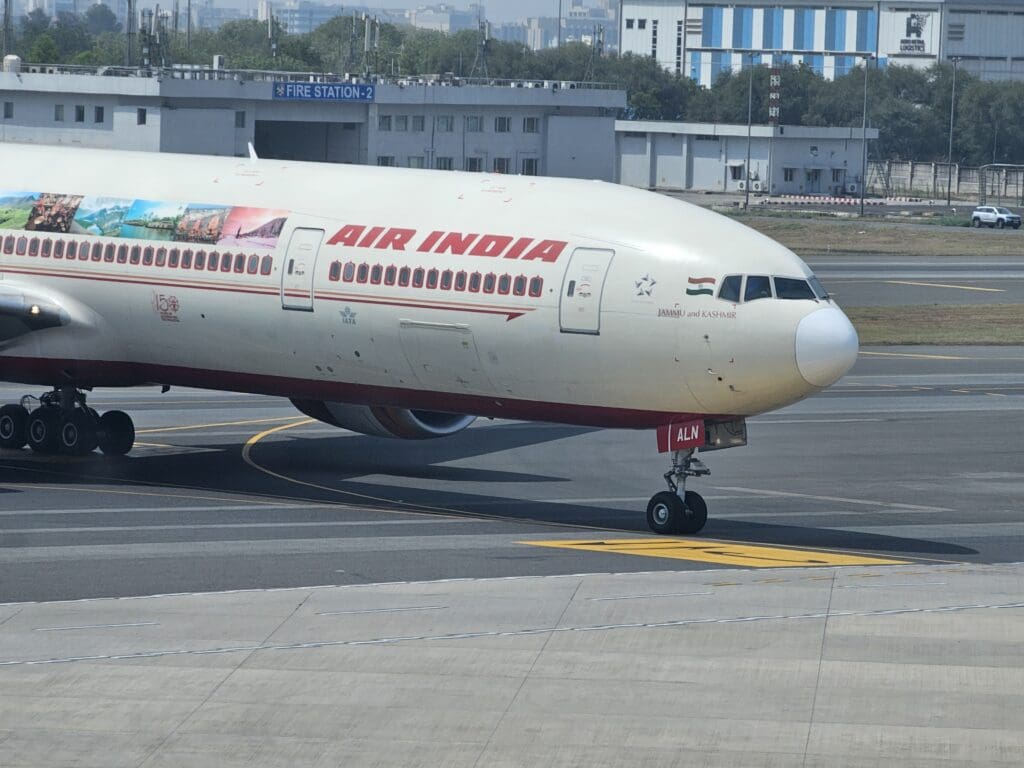
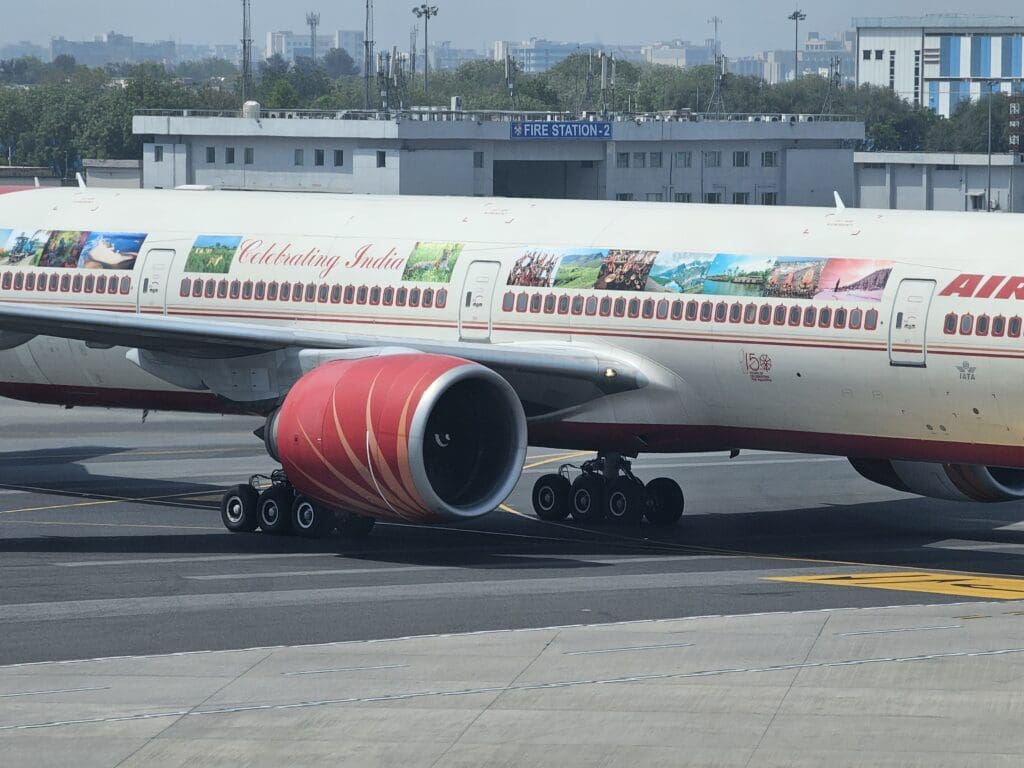
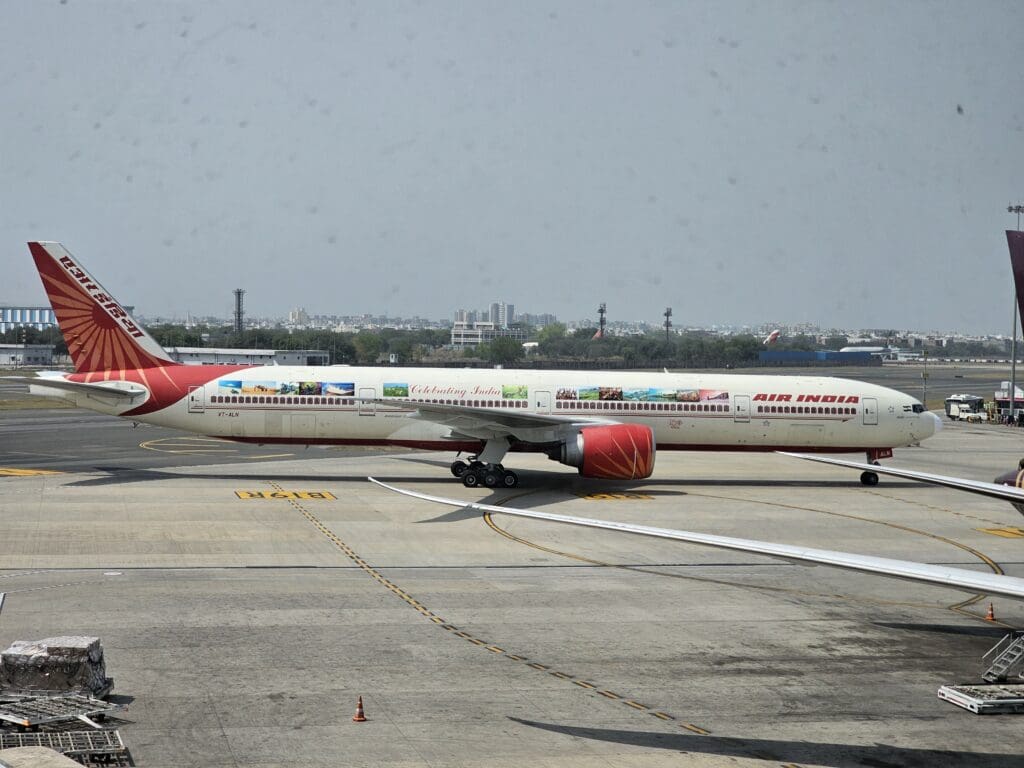
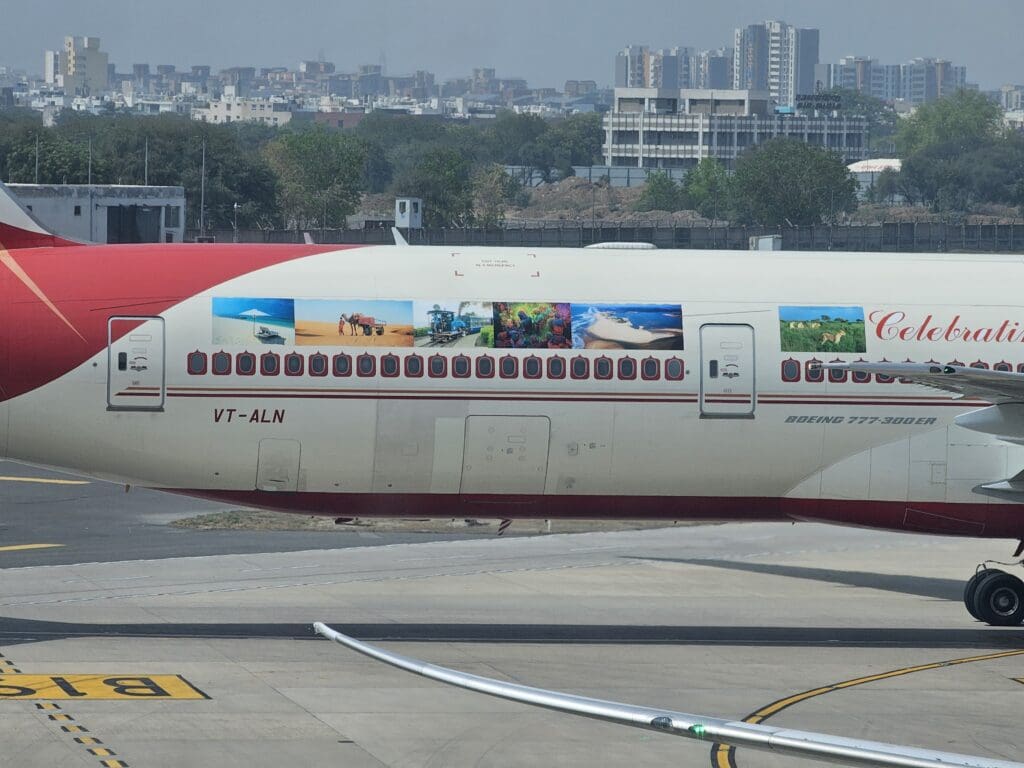
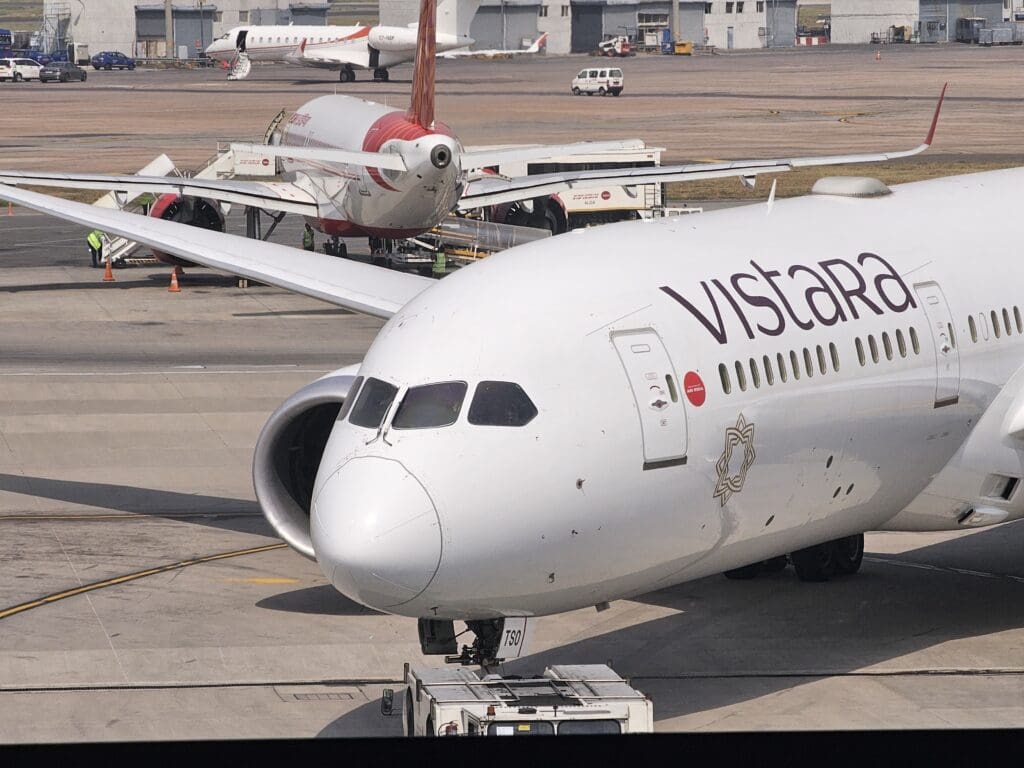
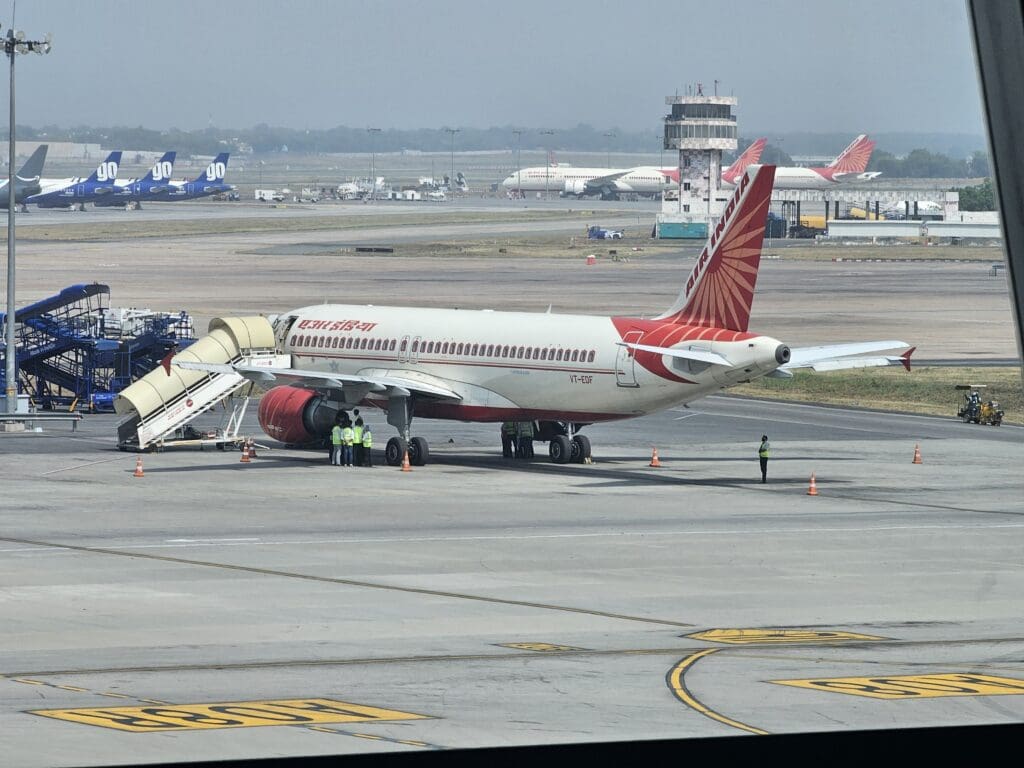
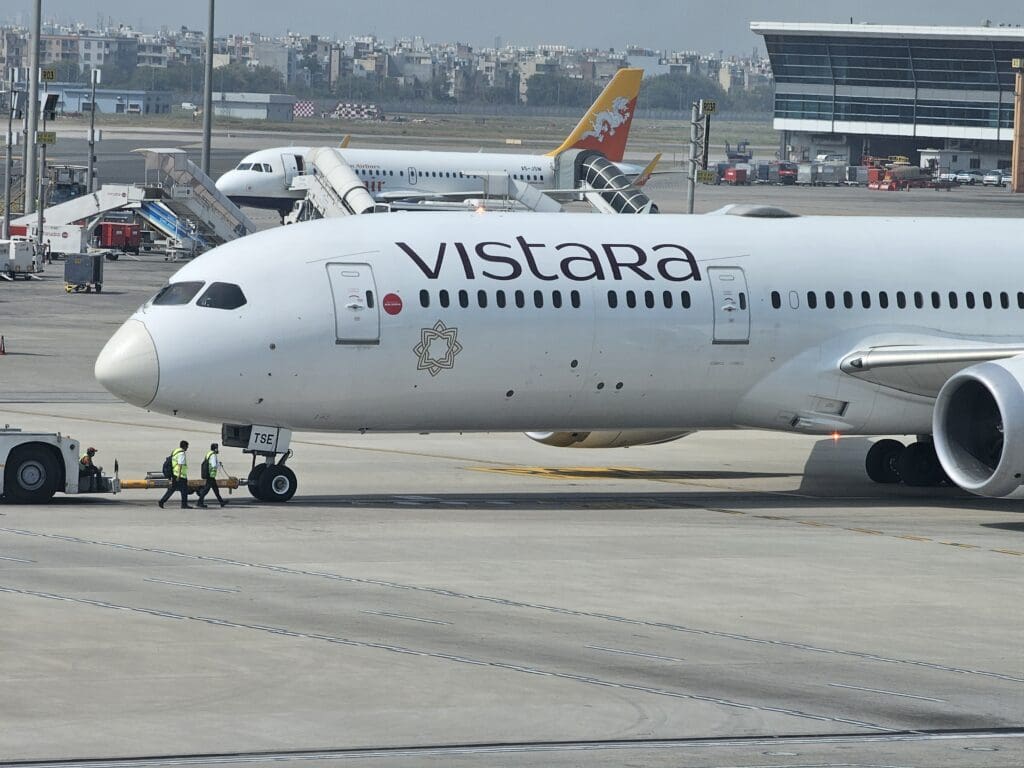
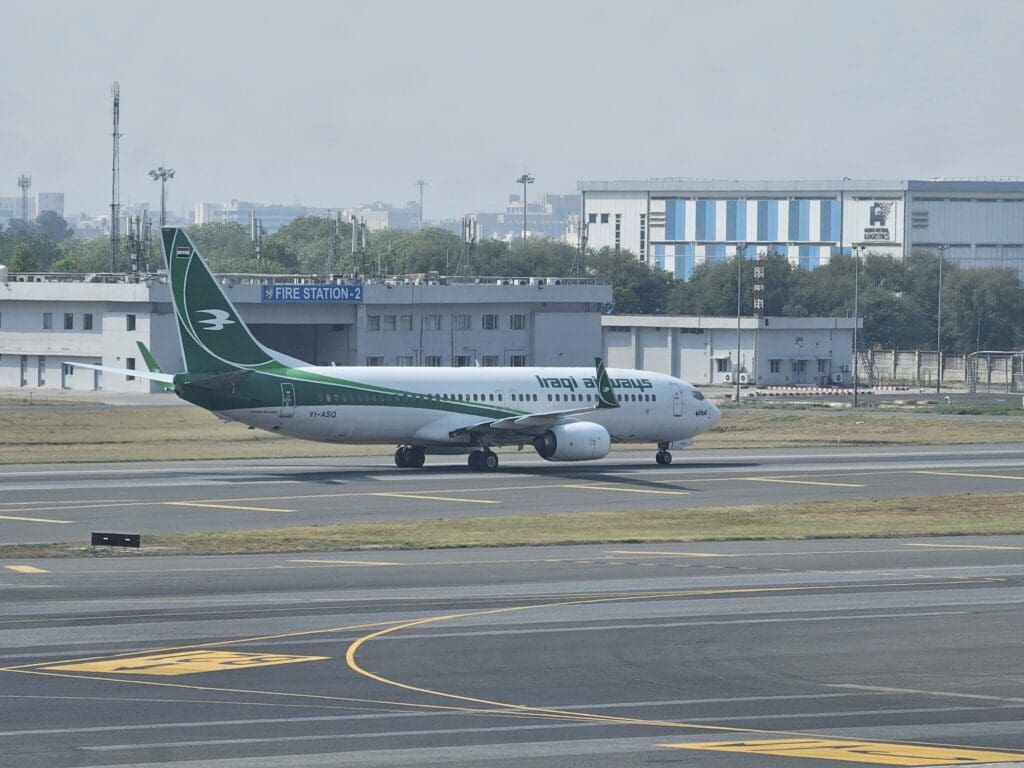
After grabbing a second coffee and wandering around, I plonked myself down near one of the terminal’s large windows and passed the time by watching the stream of aircraft outside. That afternoon, admittedly, I was not too confident that I would touch down in Nepal on time. Nepal Airlines’ international services, its Delhi rotation included, do not seem to have a particularly good on-time performance record, and it does not seem to be too unusual for this flight to return back to its home base an hour or two behind schedule! Tracking the inbound flight, this departed Kathmandu forty minutes behind schedule and touched down on Indian soil at 1512. According to my boarding pass, boarding was scheduled to begin an hour before departure at Gate 1. However, given the aircraft’s late arrival time, I suspected that this would not be the case.
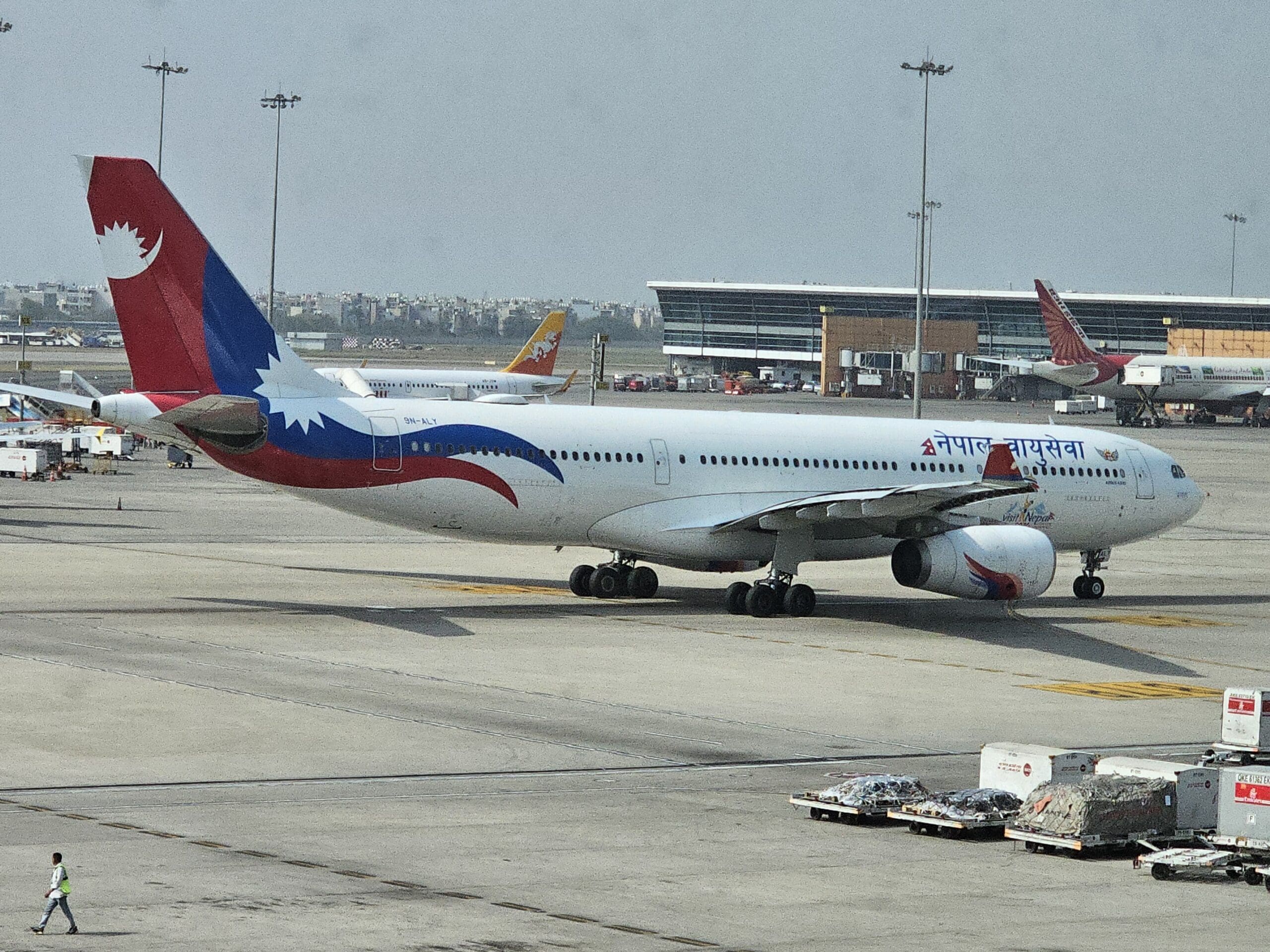
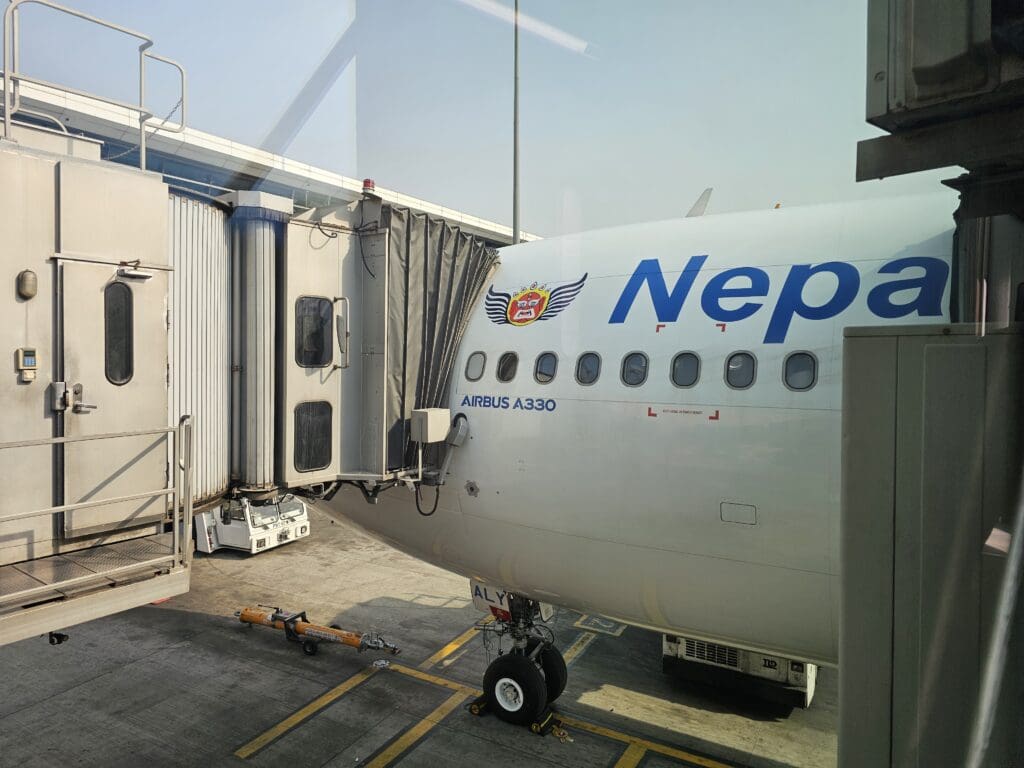
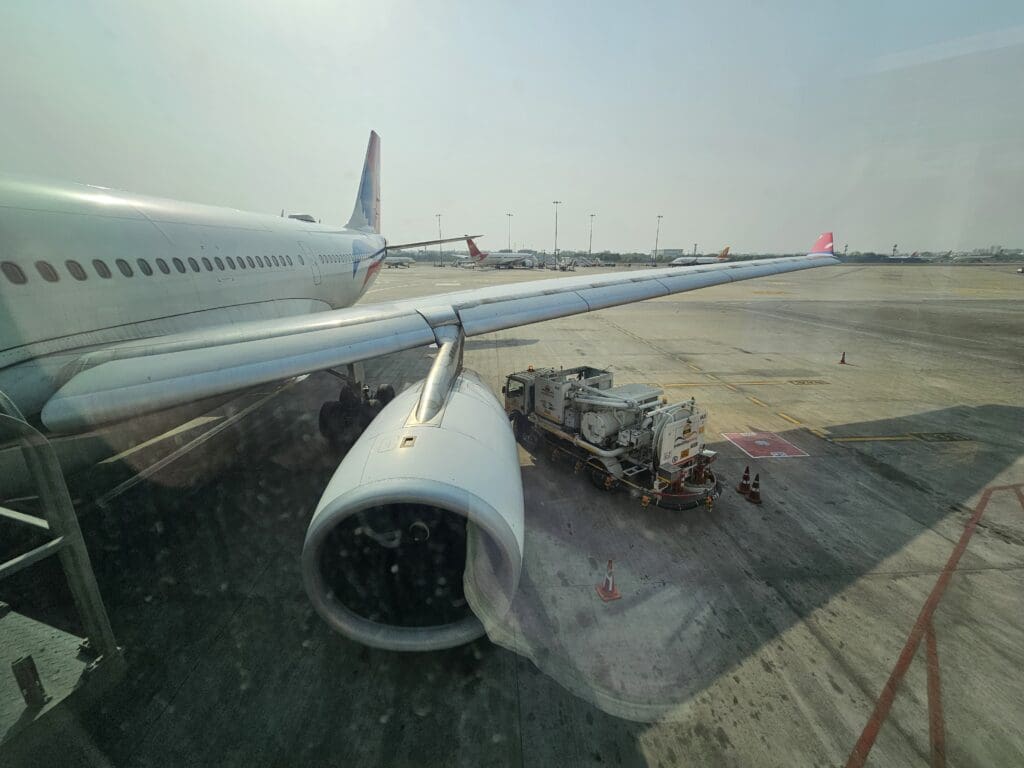
Around fifteen minutes after touching down, I watched as the rather worn-looking Airbus A330-243 made its way into Stand A01, with the fuselage appearing to be in rather dire need of a clean. That day, I would be flying on the marginally older of Nepal Airlines’ two Airbus A330s. Nepal Airlines’ two Airbus A330s were procured as part of a long project to refresh the airline’s fleet and replace its two ageing and frequently unserviceable Boeing 757 Combis, with much more modern and reliable airliners. Following a drawn-out procurement process, which was later found to be fraught with corruption and malpractice, Nepal Airlines’ fleet renewal was sealed, with the airline ordering two Airbus A320s and two Airbus A330s. The introduction of the latter type was seen to be particularly revolutionary, as it meant that the airline could set its sights on entering the long haul market and soon announced aspirations for extending its route network to destinations in Europe and Northeast Asia.
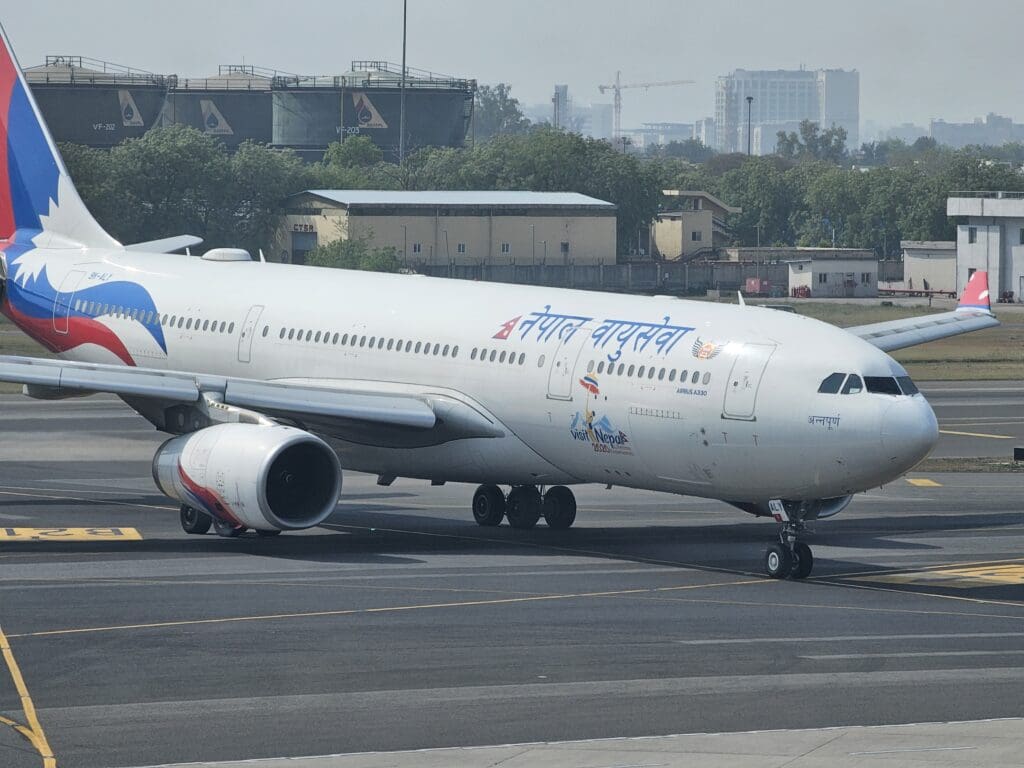
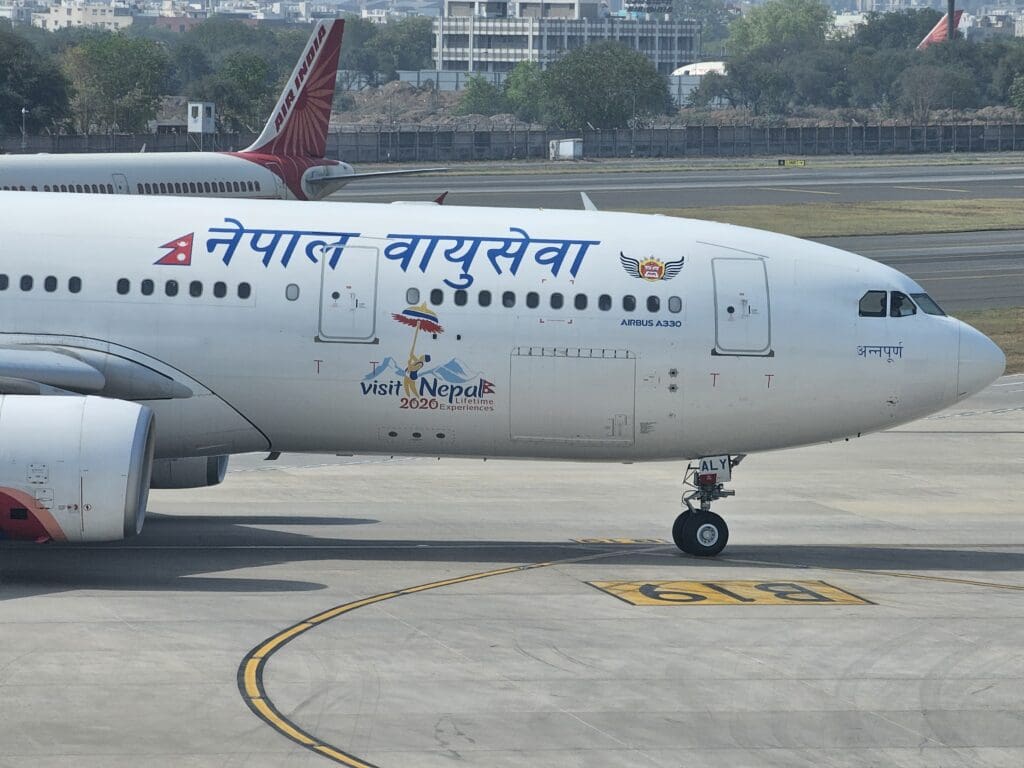
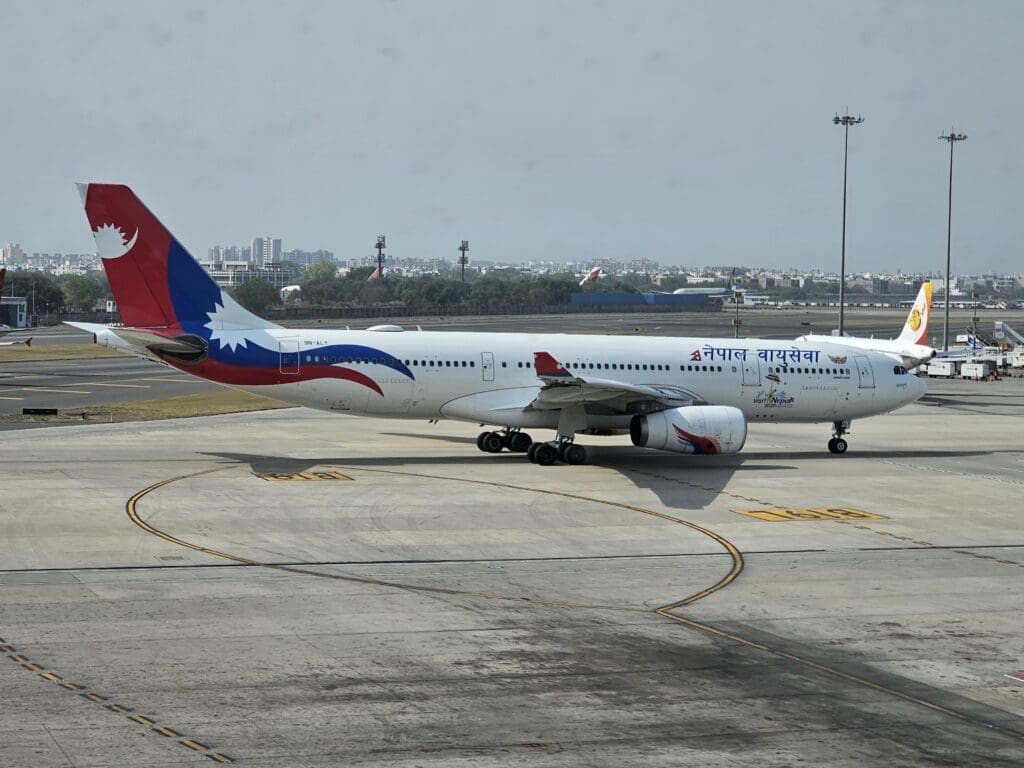
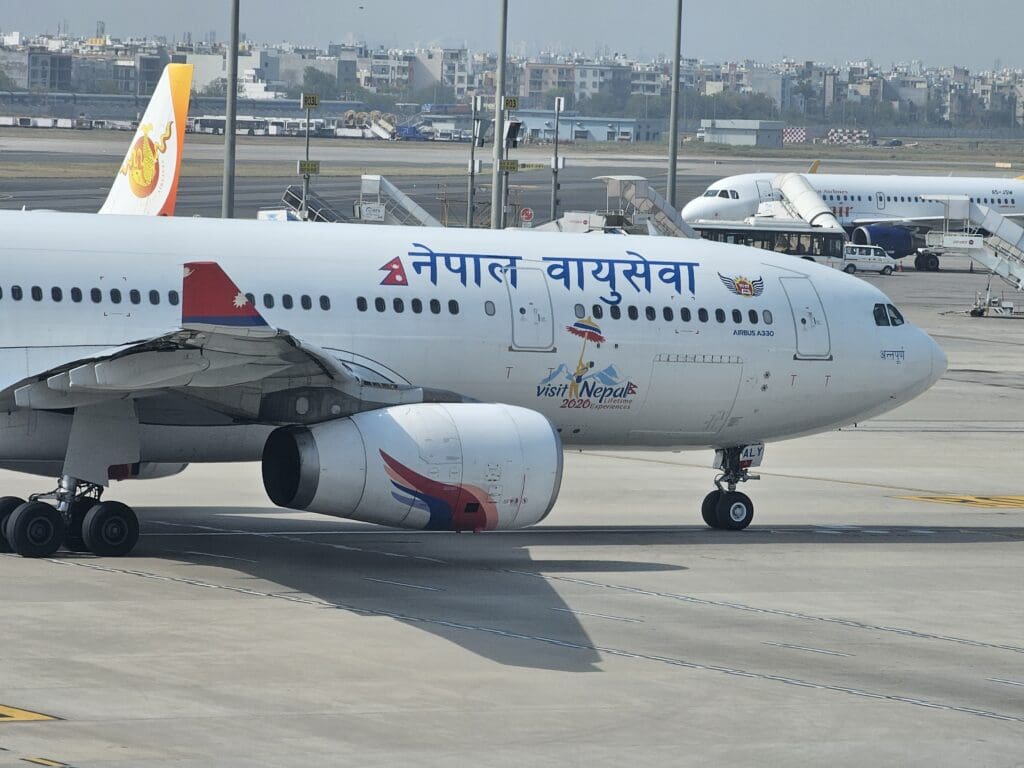
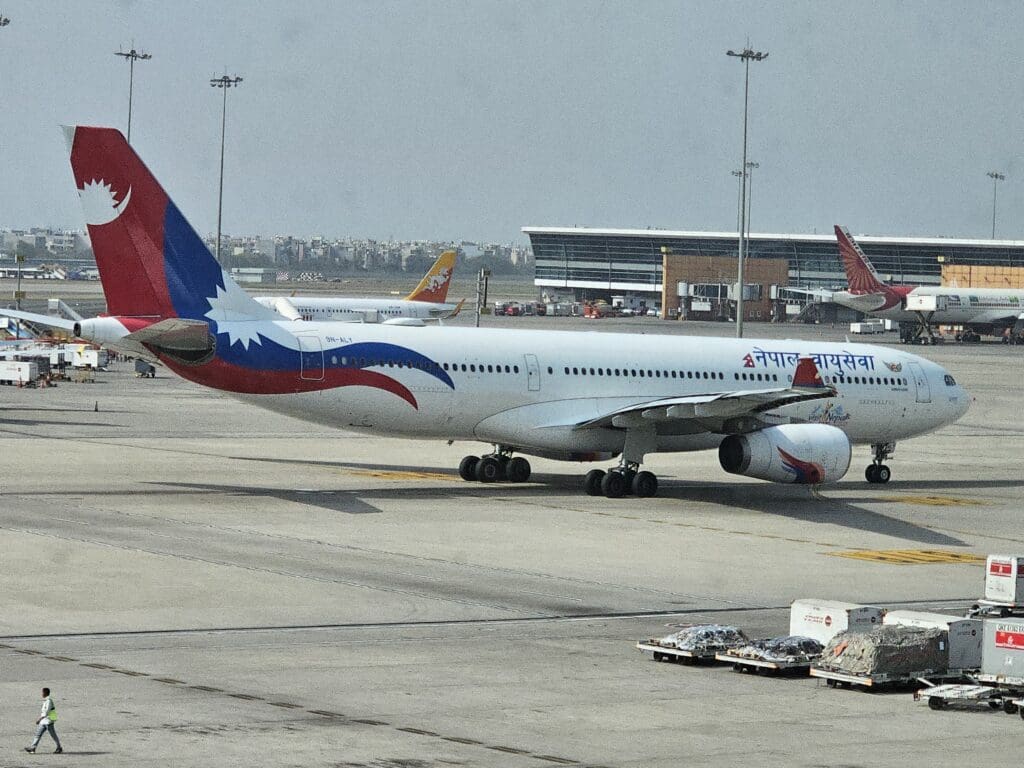
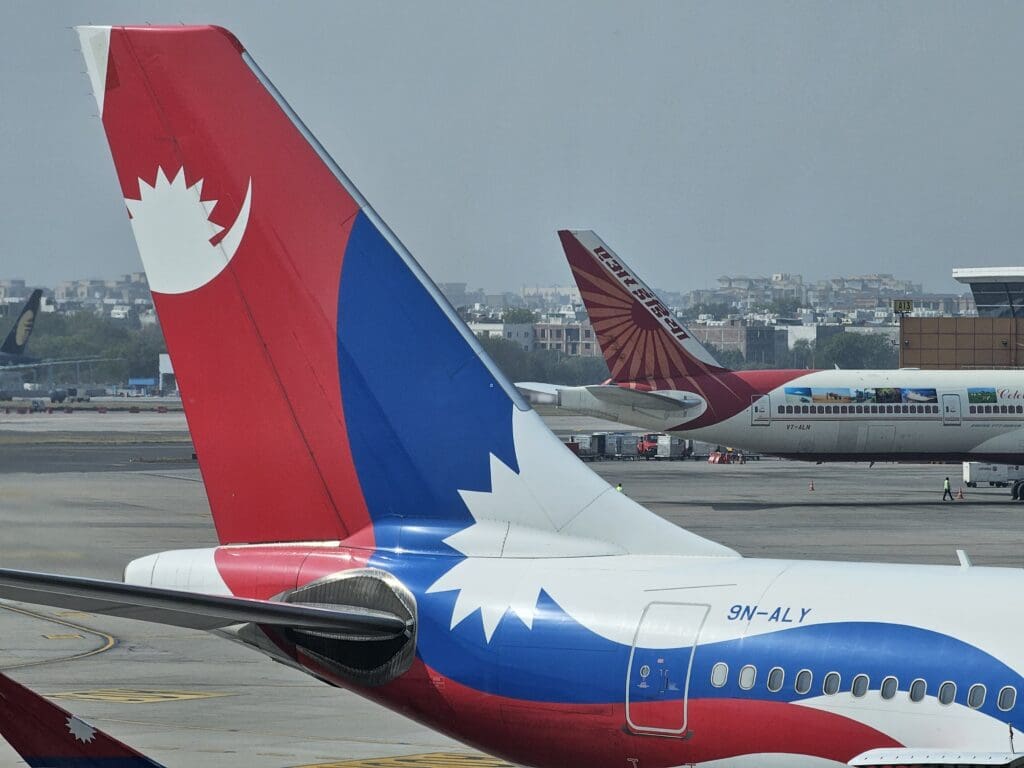
That afternoon I would be flying on 9N-ALY, named Annapurna, after the tenth-highest mountain in the world. Like all Airbus A330s, this aircraft was assembled at Airbus’ Toulouse plant and first took to the skies of France with the test registration F-WWCT in May 2018. This made the aircraft 6.9 years old at the time of my flight. Following a month of testing, the aircraft was ferried to its home in Kathmandu in late June 2018, where it arrived to much celebration, being Nepal Airlines’ first widebody jet. Since then, the aircraft has been deployed on high-capacity routes to the likes of Delhi, Doha and Dubai, as well as on the airline’s sole long-haul service between Kathmandu and Tokyo Narita. In the week before my flight, this aircraft had connected Kathmandu with Delhi, Doha and Tokyo Narita, remaining relatively busy and operating a total of twenty sectors.
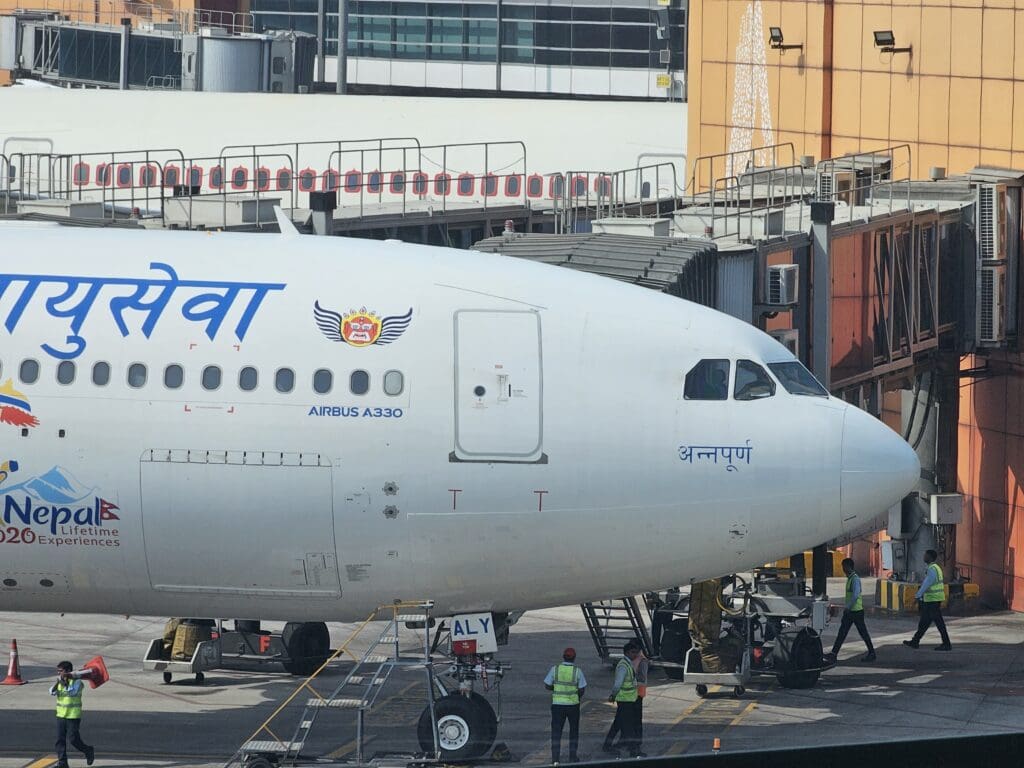
Once I had watched the aircraft pull into the stand, I decided to make the short walk over to Gate 1. Upon arriving there, I found this to be one of the terminal’s gates that sits behind a partition, allowing for an additional identity and security check to be undertaken as required by several destination countries. However, seeing as Nepal does not fall into this category, this checkpoint was unmanned and instead, I was able to walk straight up to the desk at the entrance to the gate, which was manned by two Nepal Airlines agents. To my surprise, once there, I was not asked to show my boarding pass or passport and was instead simply asked if I was heading to Kathmandu. After responding that I was, I was waved into the holding area. Indicating that it would be a busy flight, upon arriving at the gate, I found the waiting area to be packed, with few vacant seats to be seen, indicating that it would be a busy flight to Kathmandu. Whilst I was able to enjoy the freedom of exiting the gate area if required, this space was home to very little by means of amenities – with no toilets or vending machines offered. However, on the plus side, this did offer a good view of the Airbus as it was being readied for its return journey to Kathmandu.
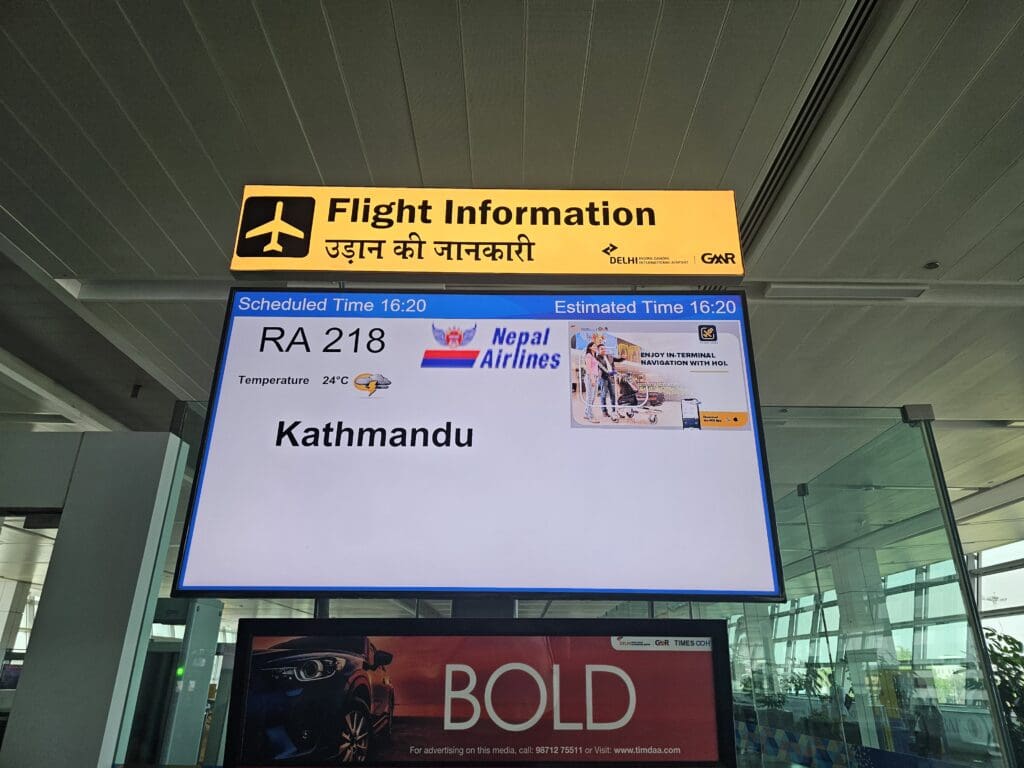
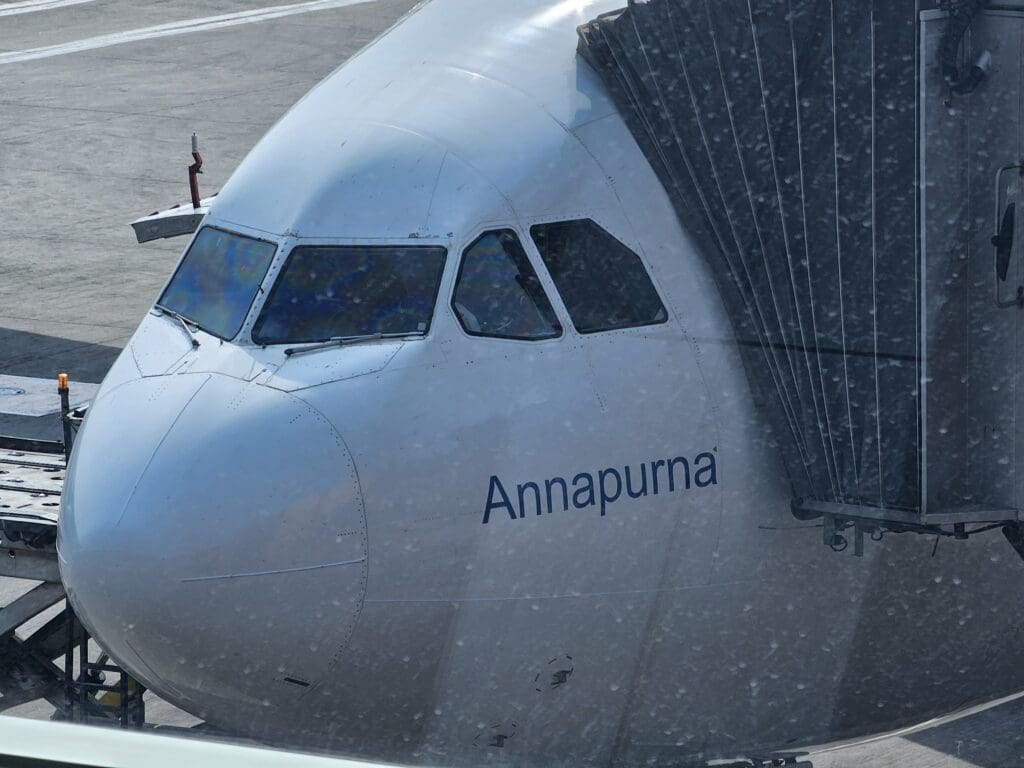
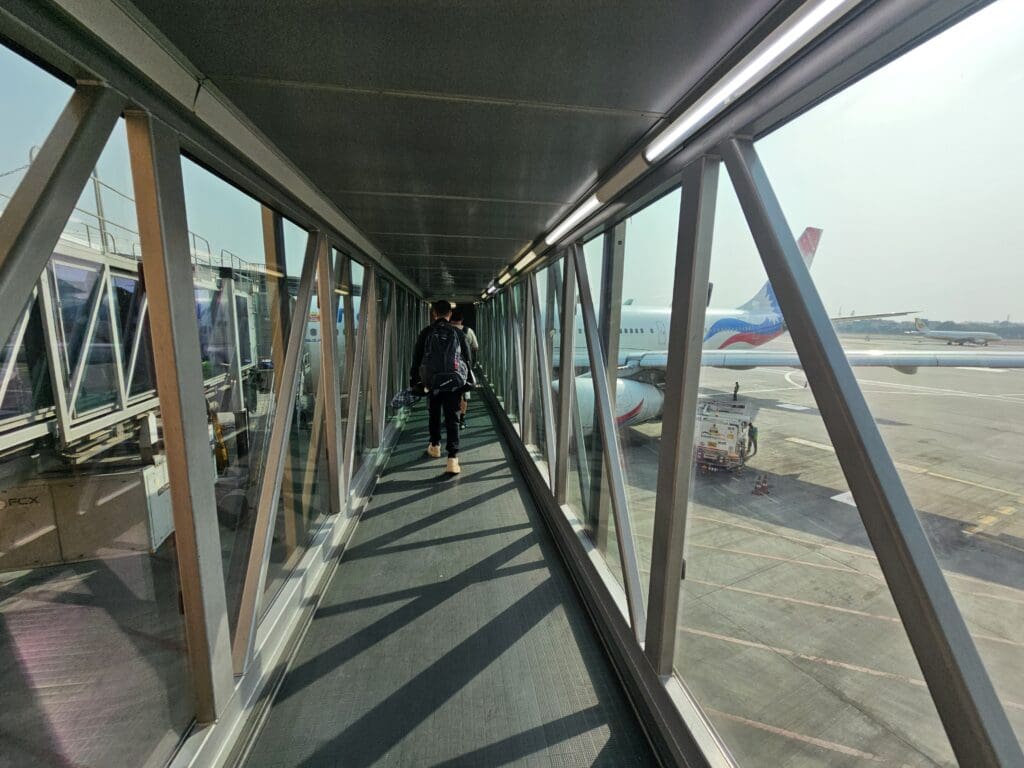
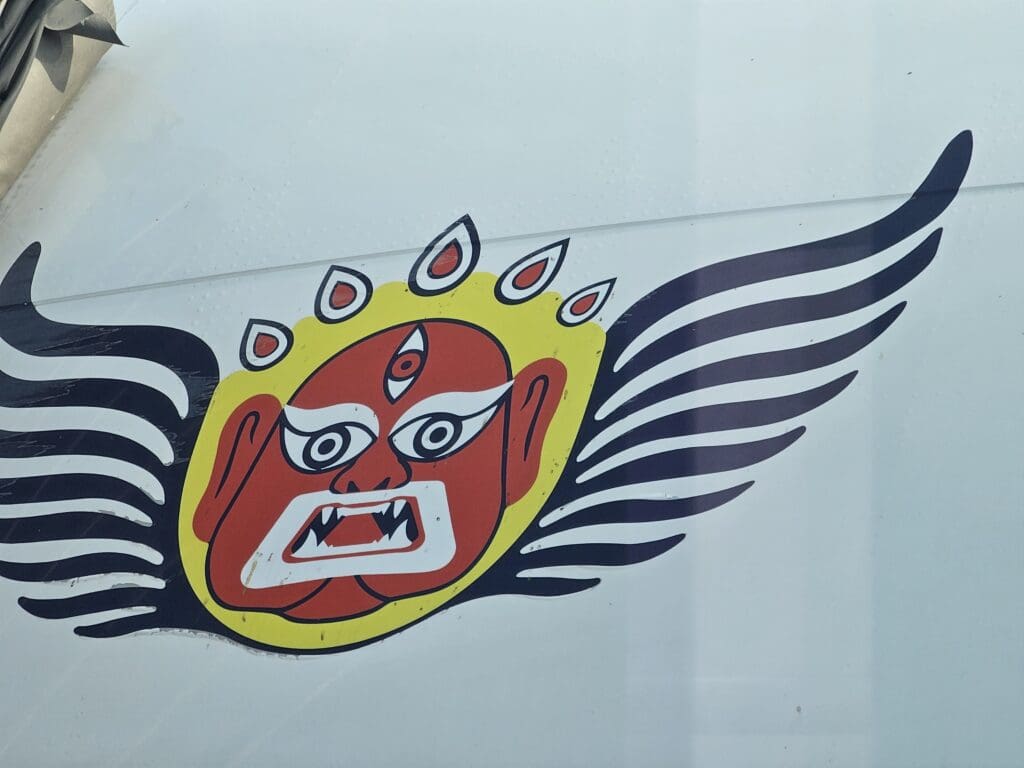
As our departure time neared, a scrum of passengers formed around the gate podium, and, indicating that boarding was soon to commence, just before 1600 several wheelchair passengers were taken down to the aircraft. A short time later, one of the two gate agents shouted several words in Hindi at which point boarding commenced. This was chaotic and not undertaken in any order, with many passengers appearing to be in a desperate rush as if under the impression that the flight would depart without them! Fortunately, the scrum pushed forward at a reasonable rate, and I soon had my boarding pass and passport checked before another agent tore my boarding pass and retained the stub after which I was permitted to head down to the aircraft. From the terminal, I trundled down the greenhouse-like glass jetbridge which offered a good view of the weathered fuselage of the jet and soon reached the Airbus A330’s L2 door.
Unfortunately, my initial interactions with the army of flight attendants did not get my experience with Nepal Airlines off to a particularly fantastic start. Once I had stepped into the galley that separates the aircraft’s 18-seat Business cabin from the forward Economy section, I received absolutely no verbal greeting, and instead, one of the flight attendants stretched out their hand, indicating that they wanted to see my boarding pass. Upon displaying this, I was pointed down the first aisle without a word. Turning right, I immediately entered the Economy section of the aircraft where traditional Nepali music rang out and provided a regionally appropriate soundtrack to the start of my Himalayan adventure.
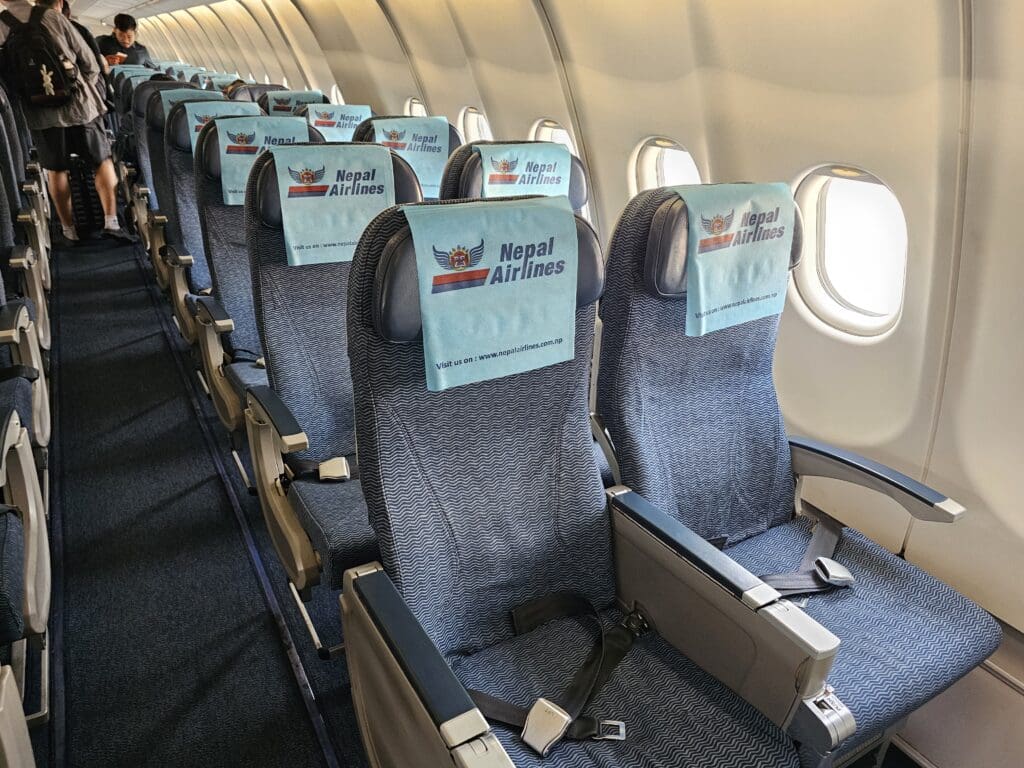
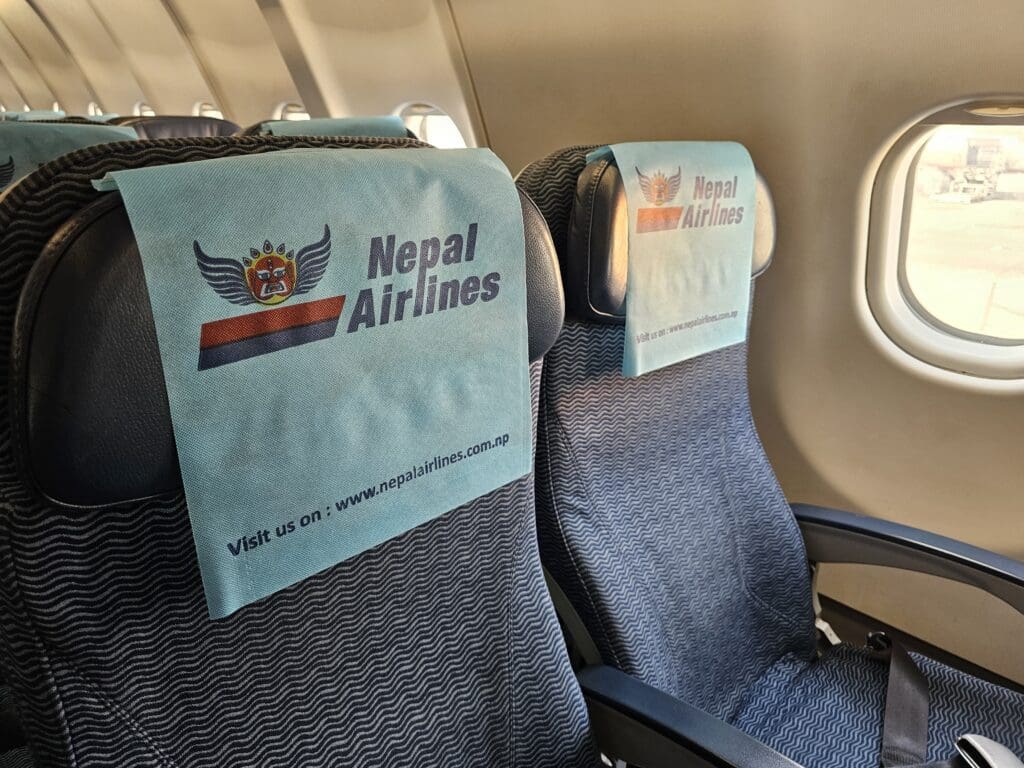
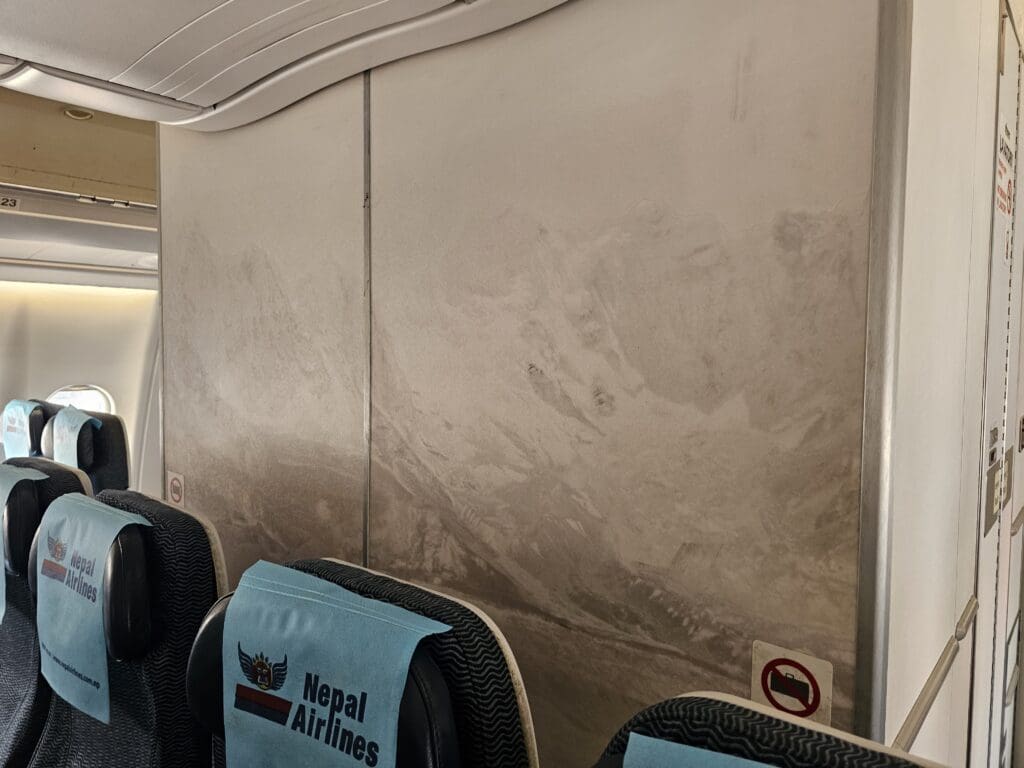
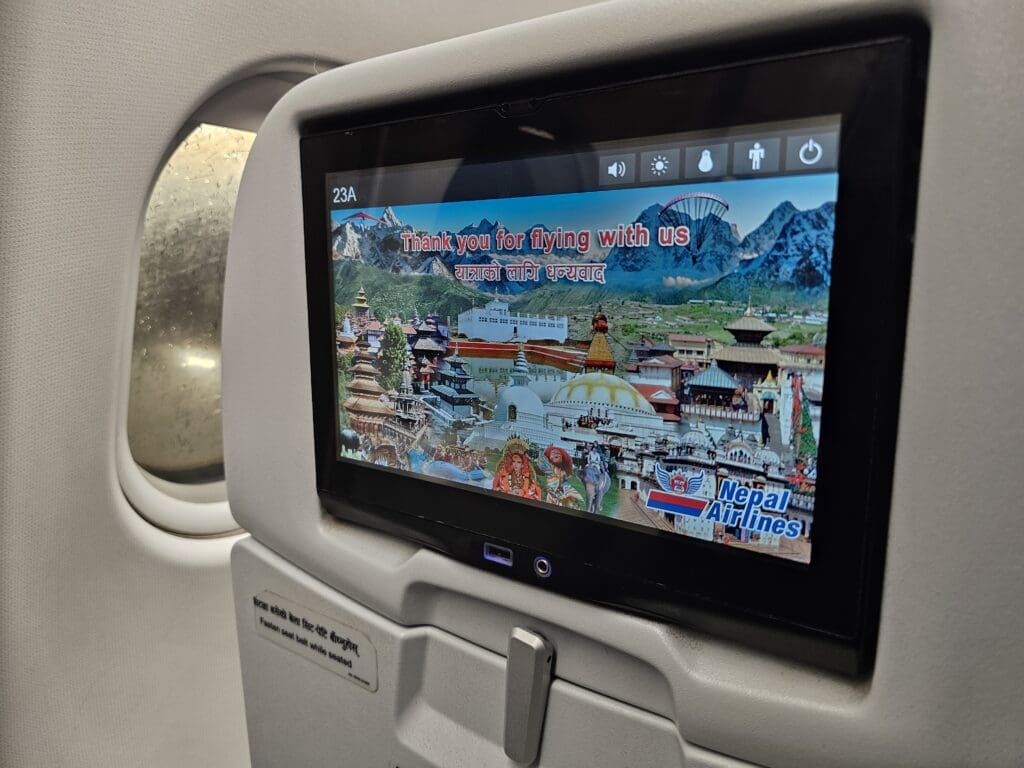
As with most full-service Airbus A330s, the Economy section of the aircraft was arranged in an eight-abreast 2-4-2 configuration. Each seat came complete with a fabric cover which sported Nepal Airlines’ standard pattern seen on their entire Airbus fleet, with this consisting of repeating blue waves. This was topped by a dark blue pleather-covered adjustable headrest that was partially covered by a slightly dated-looking light blue disposable fabric antimacassar. Seeing as Nepal Airlines had procured the Airbus A330 in the hope of making use of its long-haul capabilities, unsurprisingly each seat features a touch-controlled personal inflight entertainment screen. Upon boarding, these displayed a scenic photograph of Mount Everest and remained locked. At seat, power came in the form of a USB-A port, however, upon trying this later on I was disappointed to find that this did not work. Finally, adding a nice Nepali touch to the interior, the bulkheads and cabin dividers featured a faint depiction of Mount Everest and its neighbouring peaks.
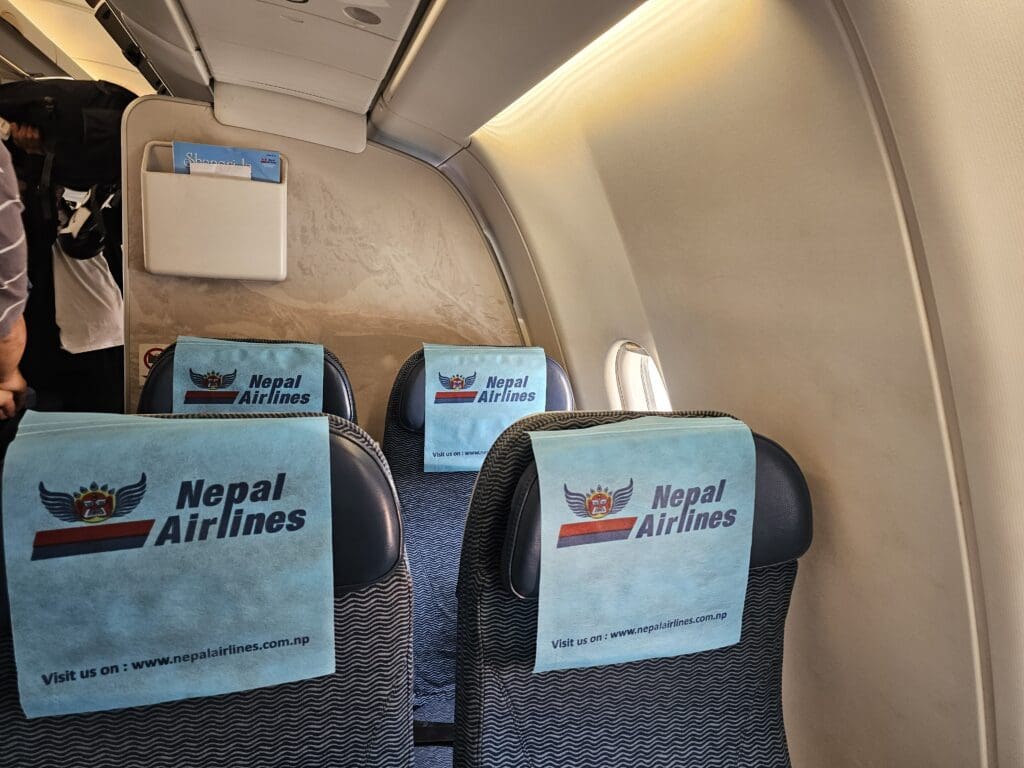
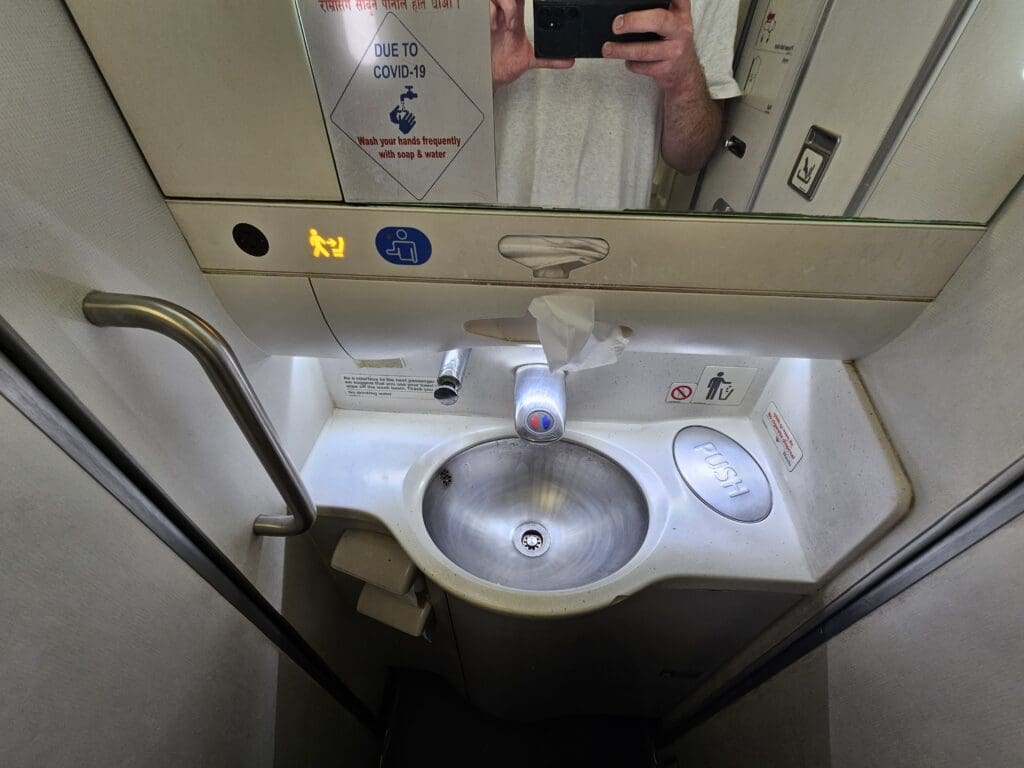
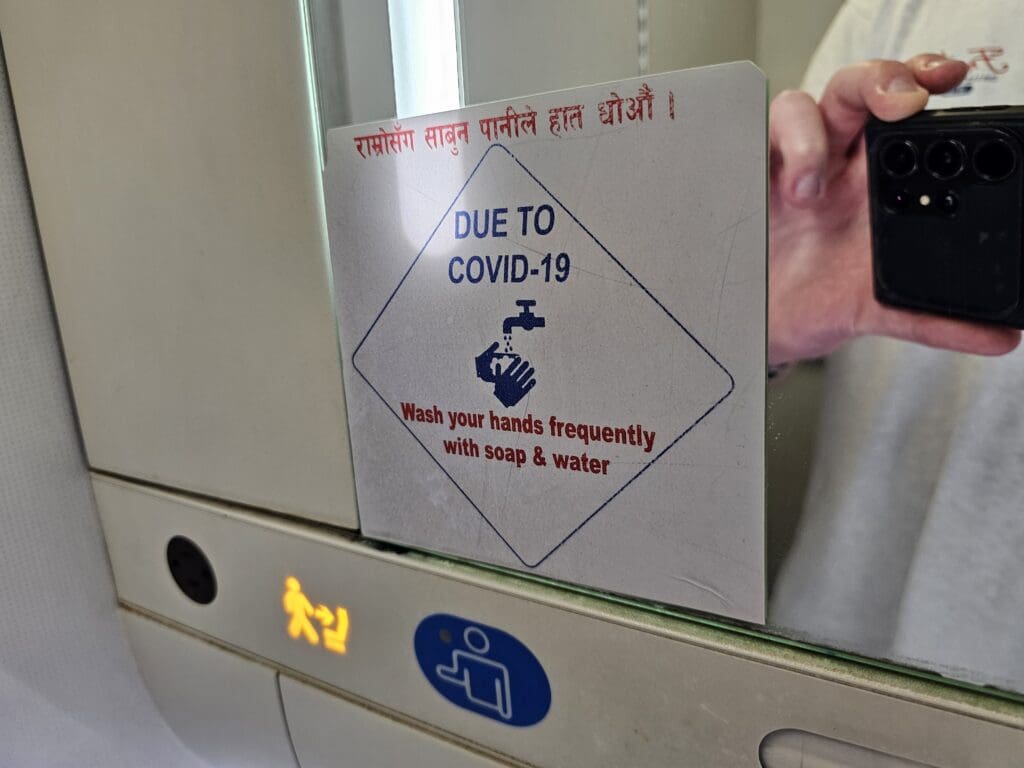
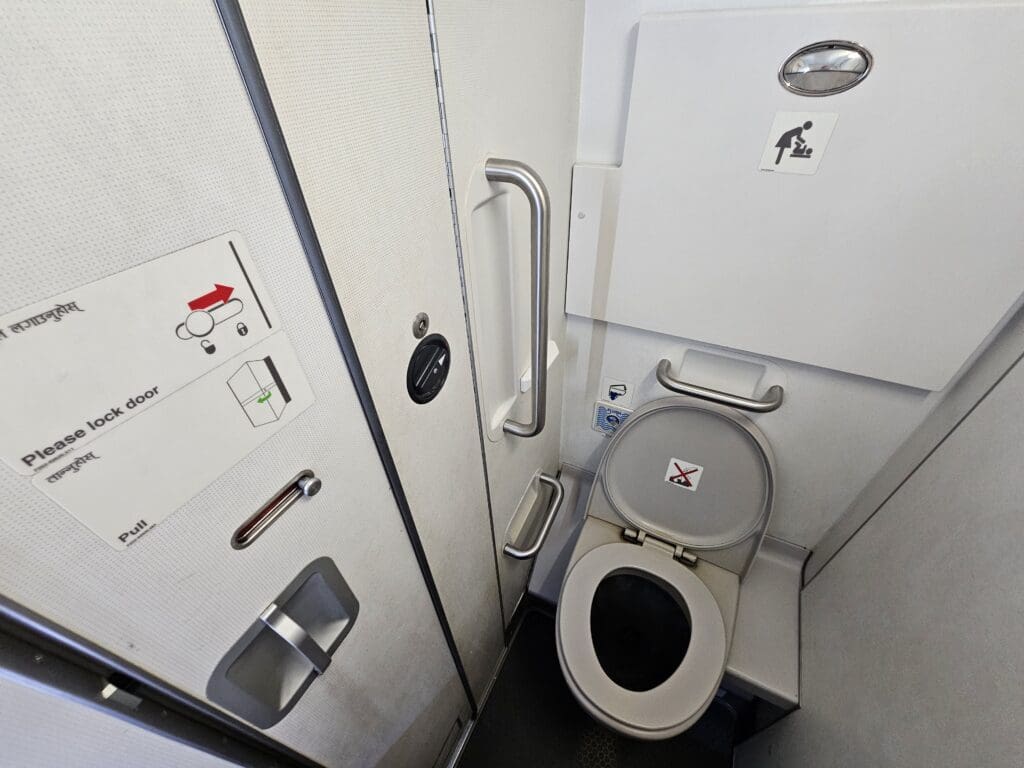
Speeding through the forward Economy cabin, I soon made it to my seat near the rear of this and placed my backpack into the overhead locker. Once done, predicting that I would end up trapped in my seat for the ride to Nepal, I decided to make a pre-departure trip to one of the lavatories sandwiched in between the two Economy cabins. Unfortunately, upon opening this up, I was not left particularly pleased, with this being both dirty and covered in marks and scratches, whilst also lacking soap. Not wanting to spend longer than required in the lavatory, I soon returned to my seat and settled in for the ride to Nepal.
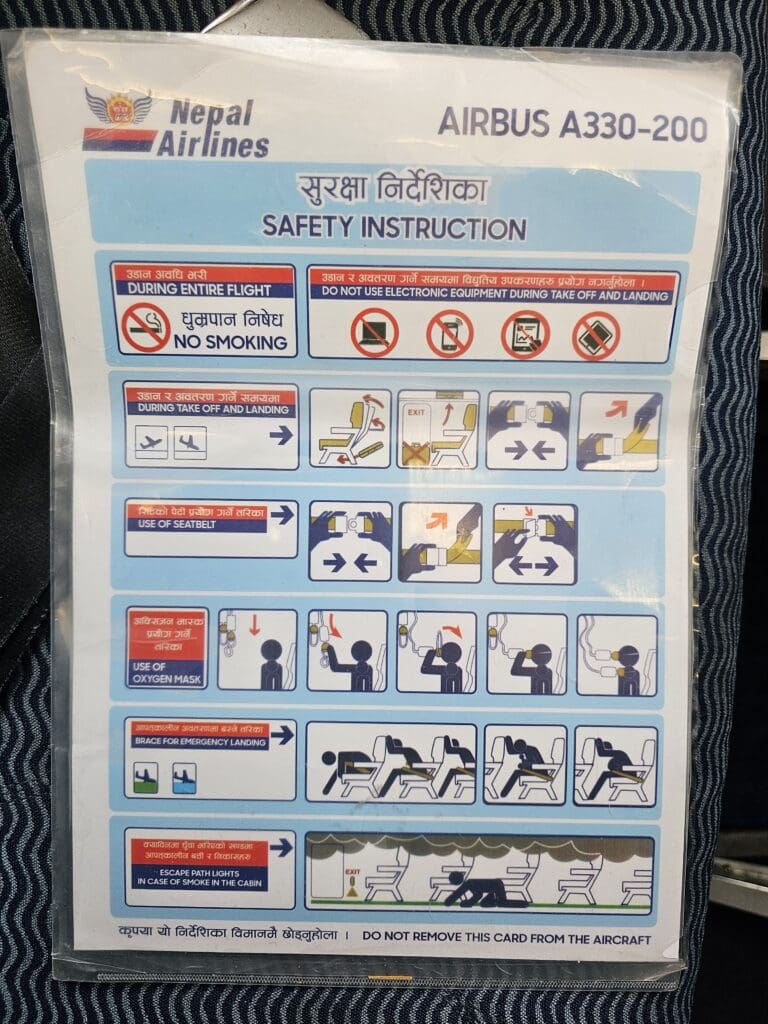
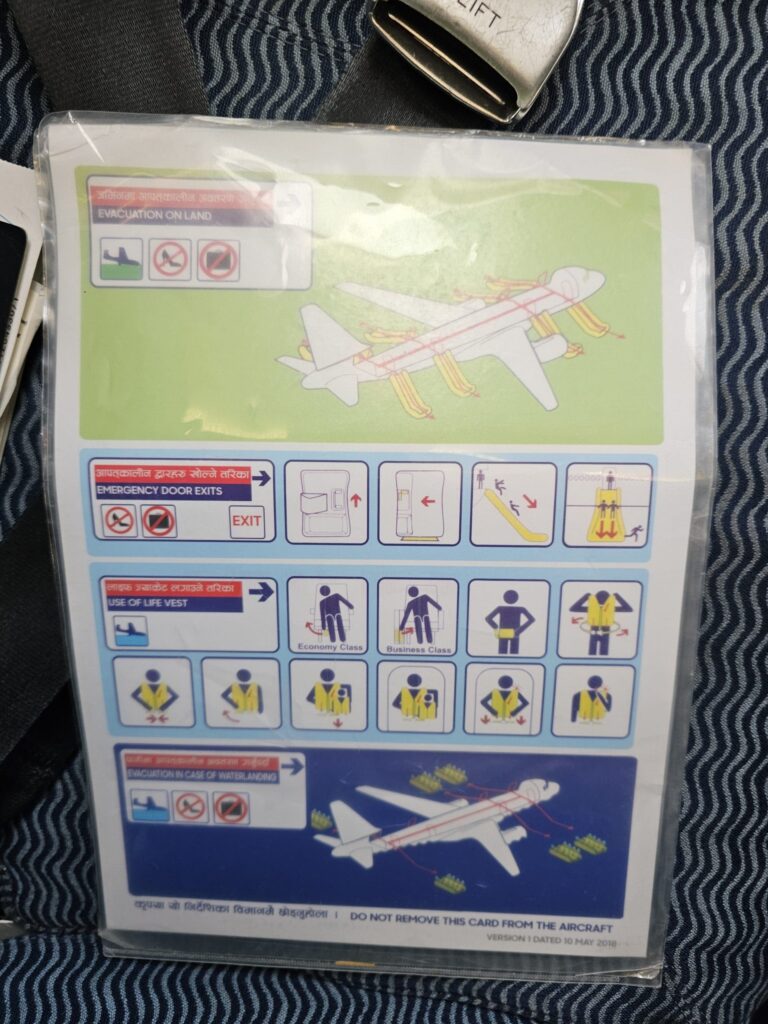
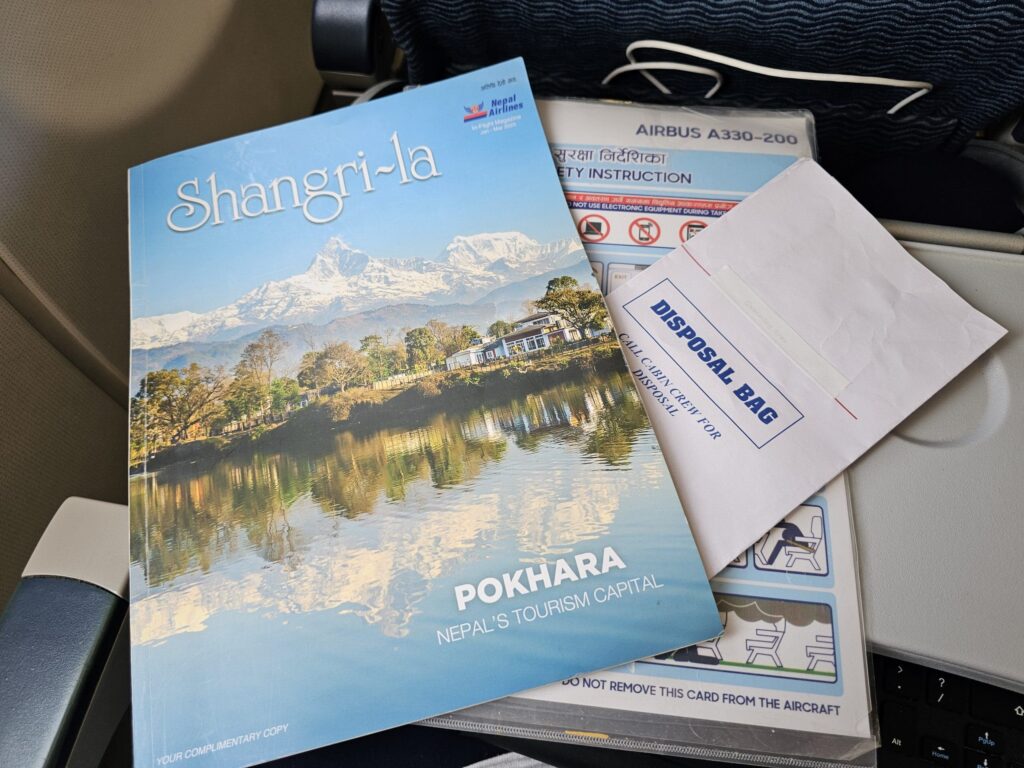
Once I had sat down, my first impressions of the seat and the area around this were far from positive. For a long-haul capable widebody, the legroom was atrocious and I suspect that this was the most cramped widebody that I have ever had the (dis)pleasure of flying onboard. Admittedly, given the short flight time to Kathmandu, this would not prove to be a massive issue, however, I would most certainly not have liked to be stuck in the seat on a flight to Doha or Tokyo. Furthermore, the seat and area around this were in a rather filthy state and covered in marks and scratches, giving the impression that the aircraft was significantly older than it was. Turning to the seatback pocket, this contained a plastic wallet that featured a retro-looking Airbus A330 safety card (interestingly the neighbouring seat featured one for the Airbus A320!), as well as a sickbag and a copy of the January to March 2025 edition of Nepal Airlines’ Shangri La inflight magazine. Ultimately, the poor state of the cabin and the unwelcoming nature of the crew failed to get my experience with Nepal Airlines off to a particularly good start.
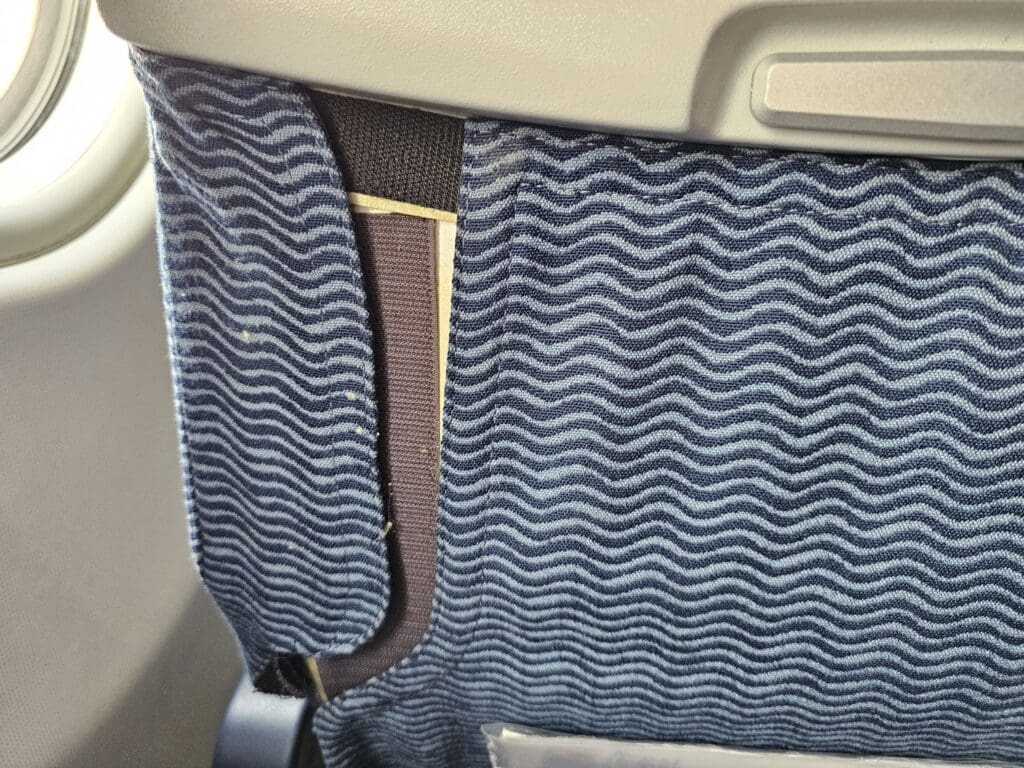
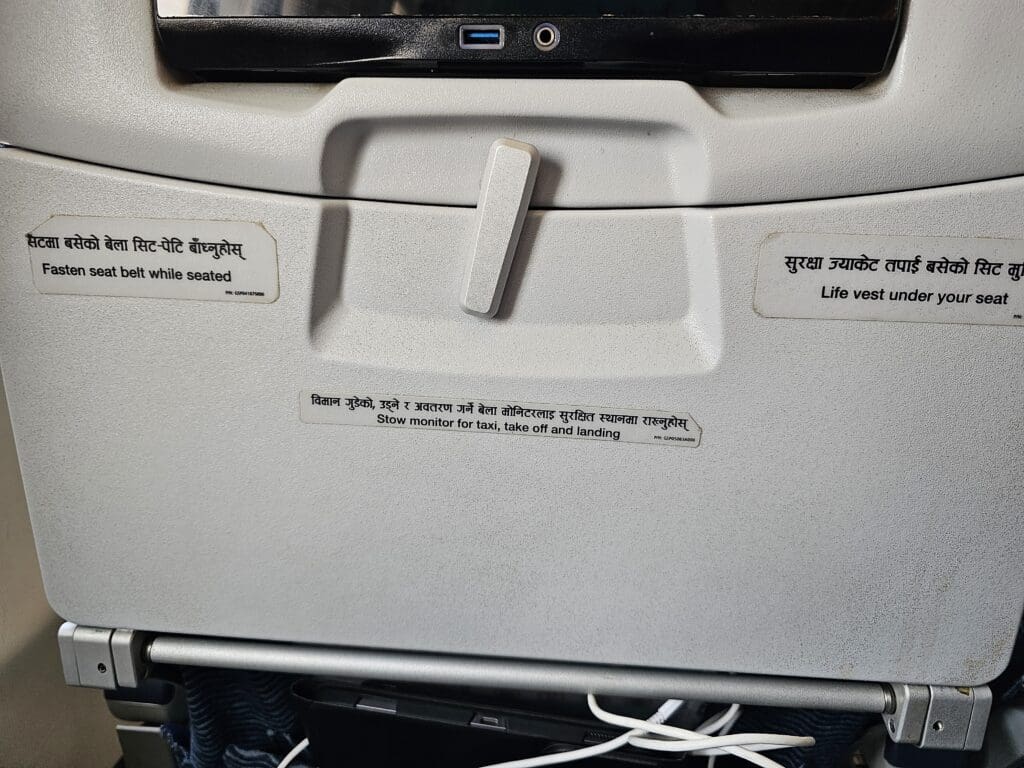
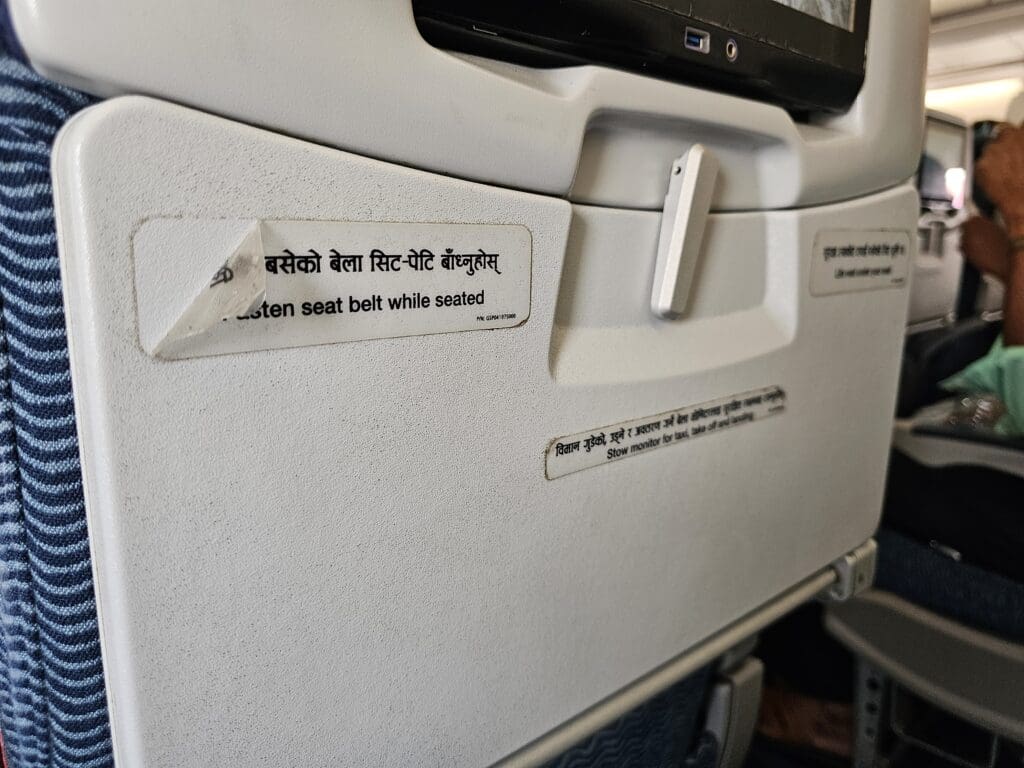
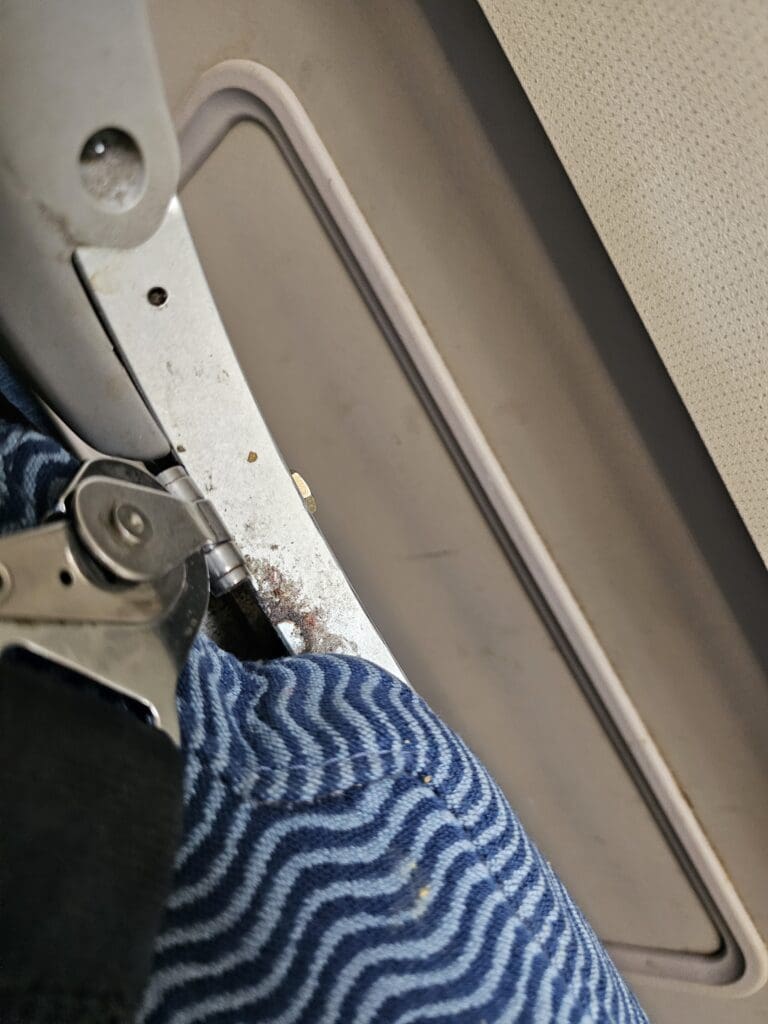
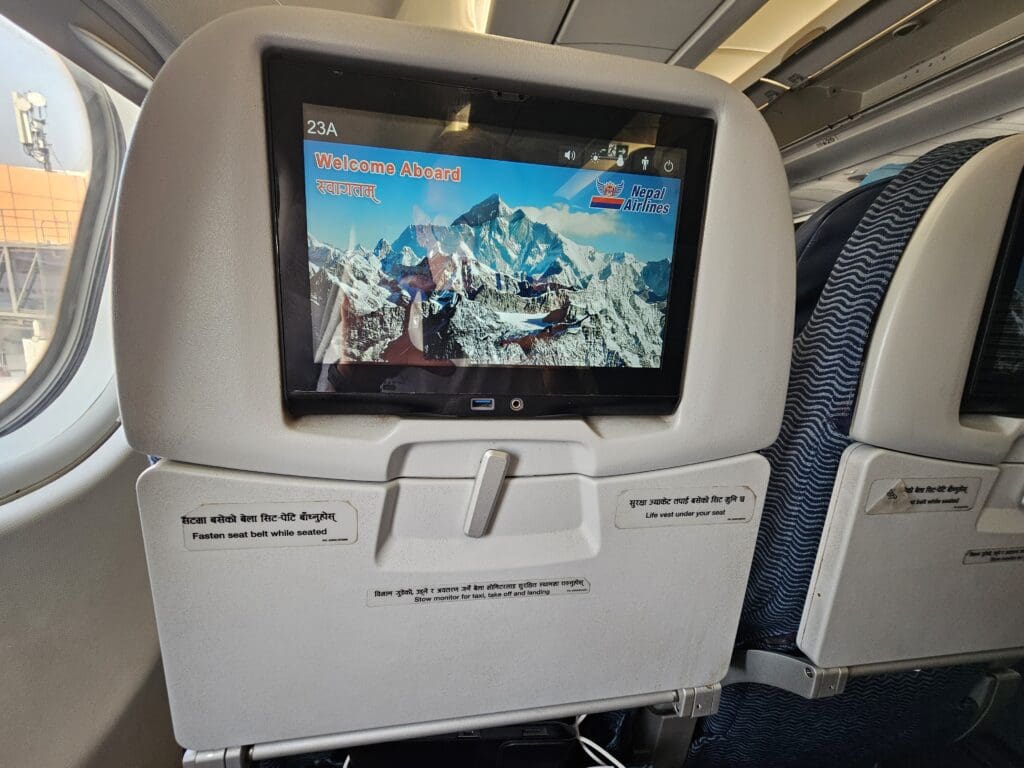
A few minutes after taking my seat, the boarding music came to an end and the cabin was plunged into darkness before the power returned – something that may have been a little concerning for nervous flyers. I assume that this was due to either some fault with the ground power unit, the auxiliary power unit, or during the transition between the two, however, after a few minutes, the power returned, the cabin lights came back on and the traditional music that had accompanied boarding resumed.
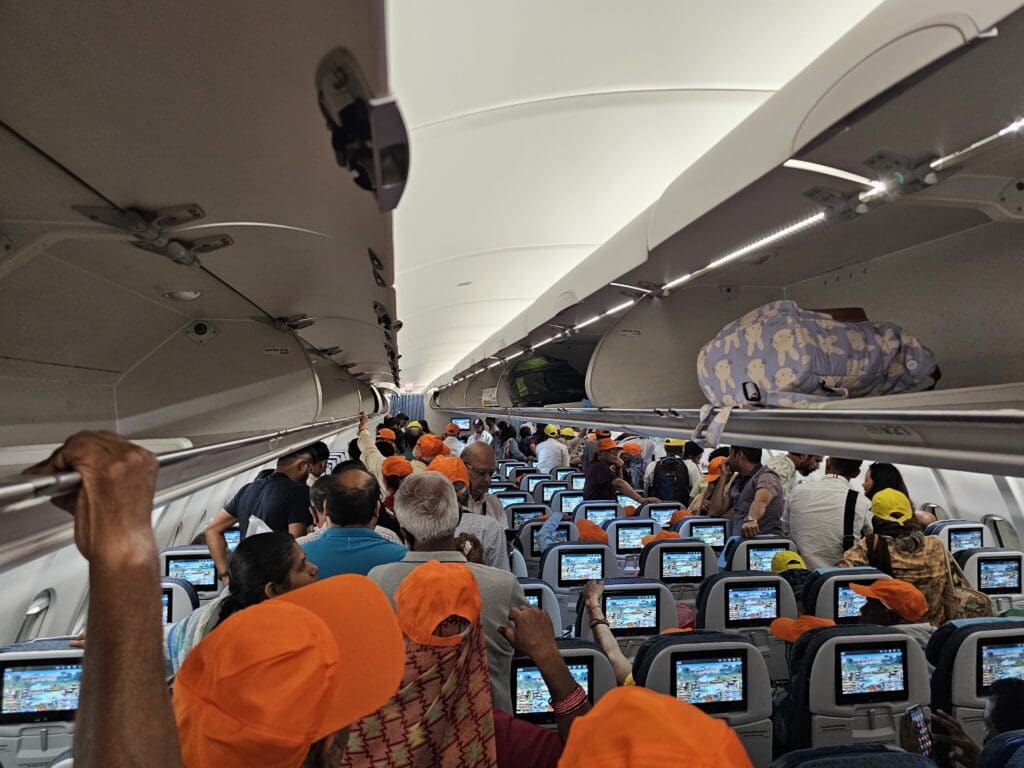
Almost thirty minutes after boarding had commenced, at 1626, six minutes after our scheduled departure time, the final passengers boarded the aircraft. As I had anticipated, the flight was virtually full, and I failed to spot any vacant seats in the forward Economy cabin. Examining the demographics of my fellow passengers, it seemed that most took the form of Indian pilgrims, with three large groups of such passengers, along with a smaller number of Nepali passengers, and very few passengers who appeared to be from elsewhere.
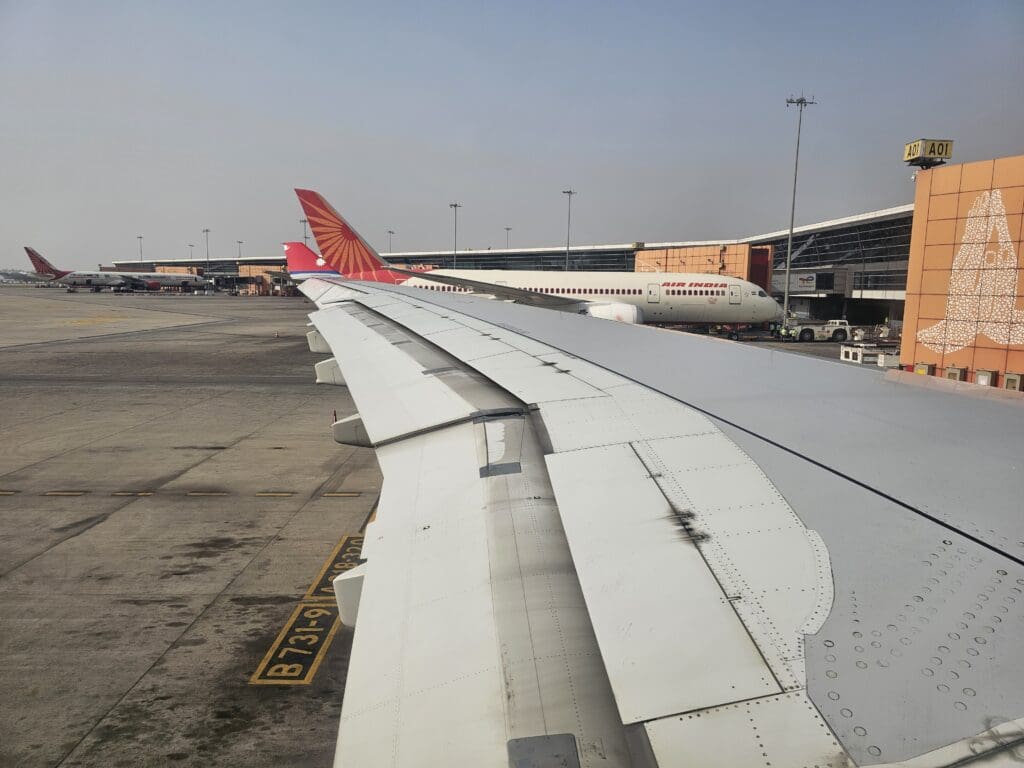
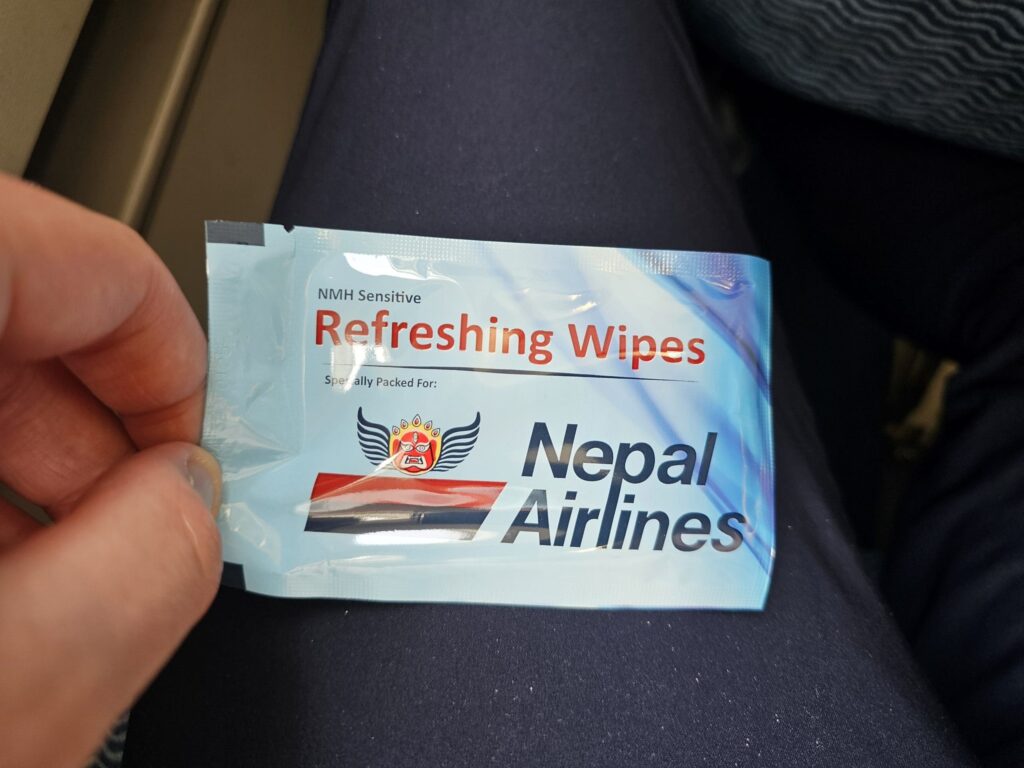
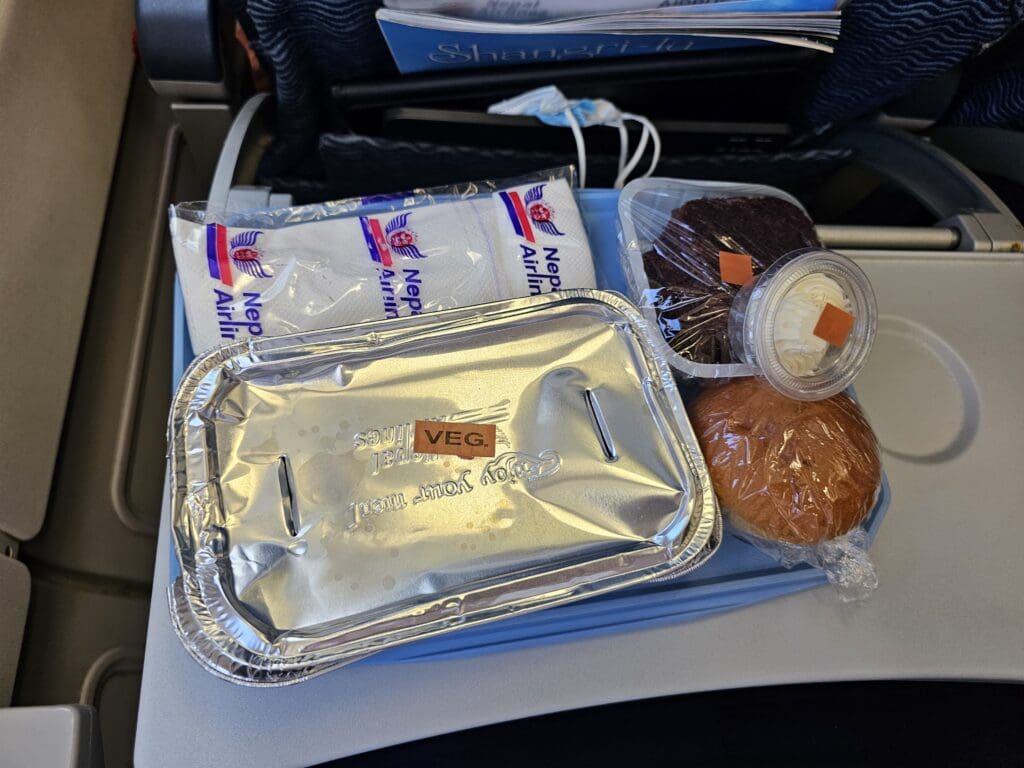
Indicating that we might be able to make up the delay, at 1630 the crew were requested to arm the doors before the jetbridge was backed away from the aircraft. Meanwhile, a short time later, the Purser welcomed all passengers onboard in Nepali and English, giving the usual thanks, welcomes and safety warnings regarding seatbelts and smoking, before the cabin crew passed through the cabin ensuring that all was secure and in place for our departure. A short time later whilst still on stand, Nepal Airlines’ safety video appeared on the inflight entertainment screens. This details all the important safety instructions, centred on a slapstick passenger and comes with a calming guitar soundtrack. This was undertaken first in Nepali and then again in English. This was immediately followed by advertisements for the Nepali government’s investment agency and a money remittance service, a rather unsurprising advertisement given Nepal Airlines’ network of flights to destinations across the Middle East with a high number of Nepali workers. This was then followed by the distribution of Nepal Airlines branded packaged wet wipes – something that was a nice touch given the short length of the flight.
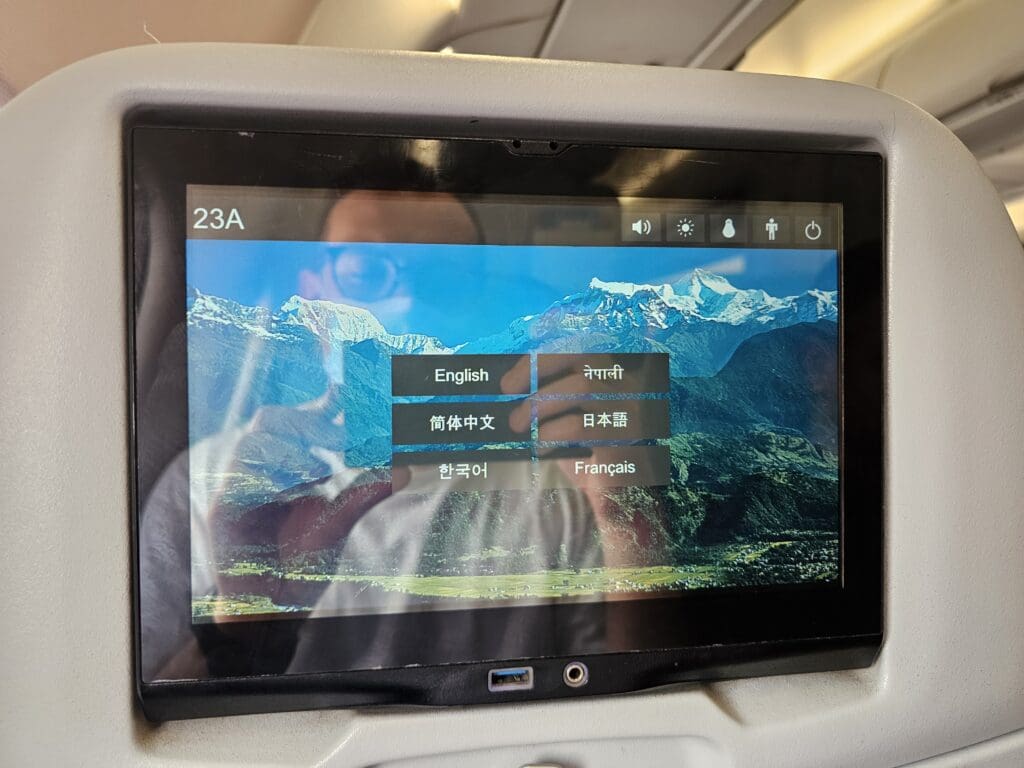
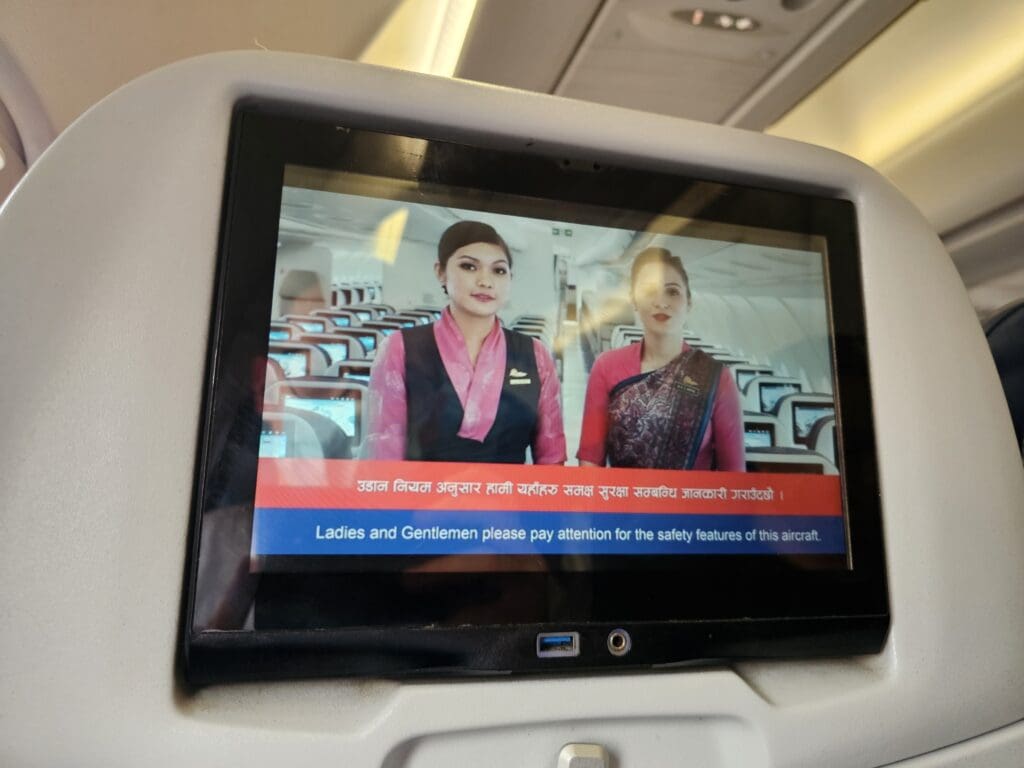
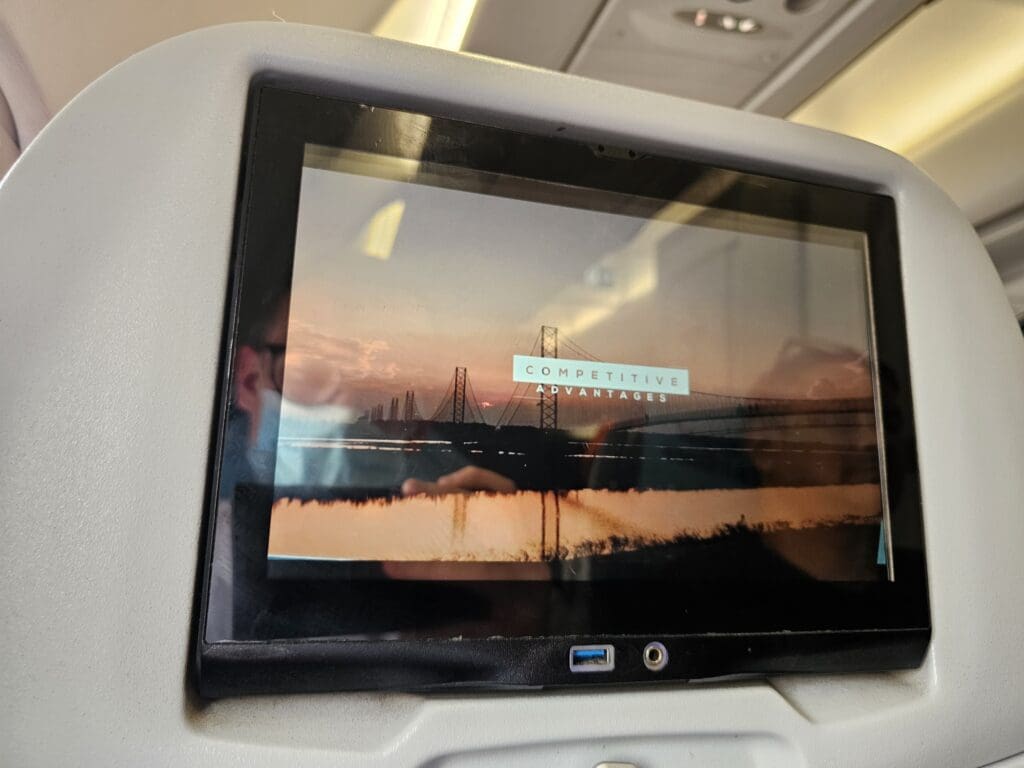
Whilst all appeared set and in place in the cabin for our departure, looking outside, the cones around the aircraft remained in place indicating that our departure would not be occurring any time soon. Meanwhile, inside the cabin, it seemed that many of those in the large pilgrimage groups were not regular flyers and were not au fait with the rules onboard the aircraft, with some members of the cabin crew appearing to become a little annoyed at the fact that a significant number of passengers jumped up and moved around the cabin to chat with their fellow passengers, something that continued for the duration of our journey to the runway.
After waiting, waiting and some more waiting, all without any update from the crew, a symphony of noise could be heard as one of the Airbus’ two powerful Rolls-Royce Trent 772B-60 engines hummed and whirred into life. This was fired up on stand, indicating there to be an issue with the aircraft’s auxiliary power unit, which made sense given the earlier disruption to the aircraft’s power supply. Once this had successfully powered into life, the ground power unit was disconnected and at 1655, 35 minutes after our scheduled departure time, the Airbus was slowly and cautiously pushed back from Stand A01. Once we came to a halt, the aircraft paused whilst the other engine spooled into life and the tug was disconnected before we commenced our long taxi to the end of Runway 29R.
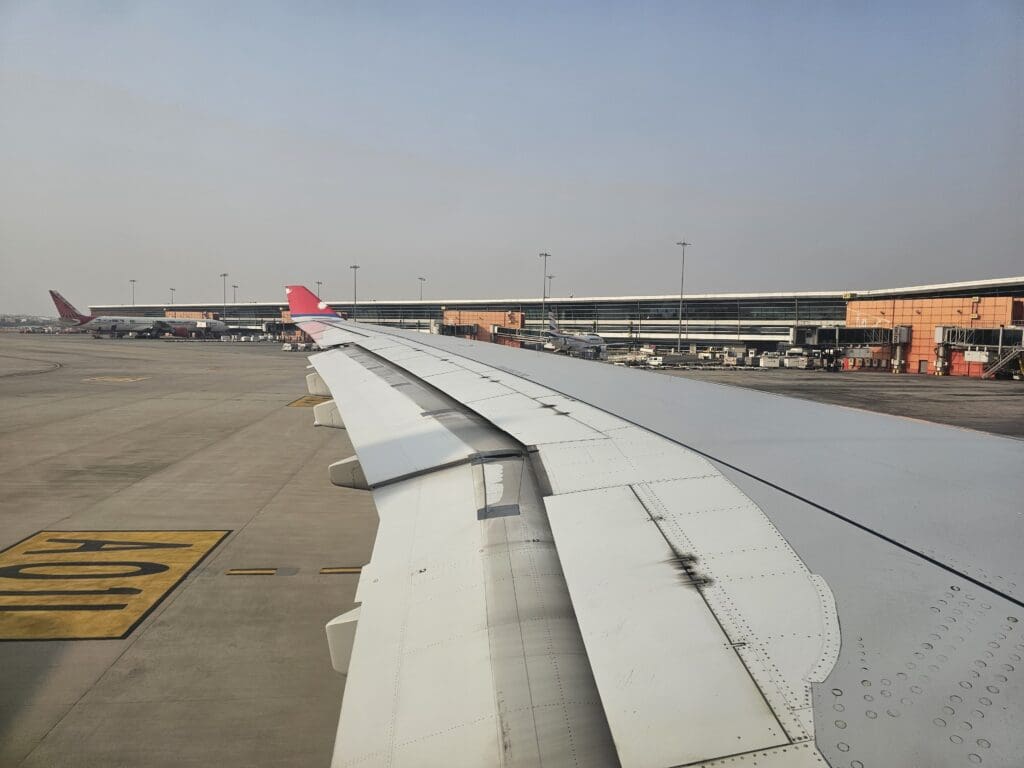
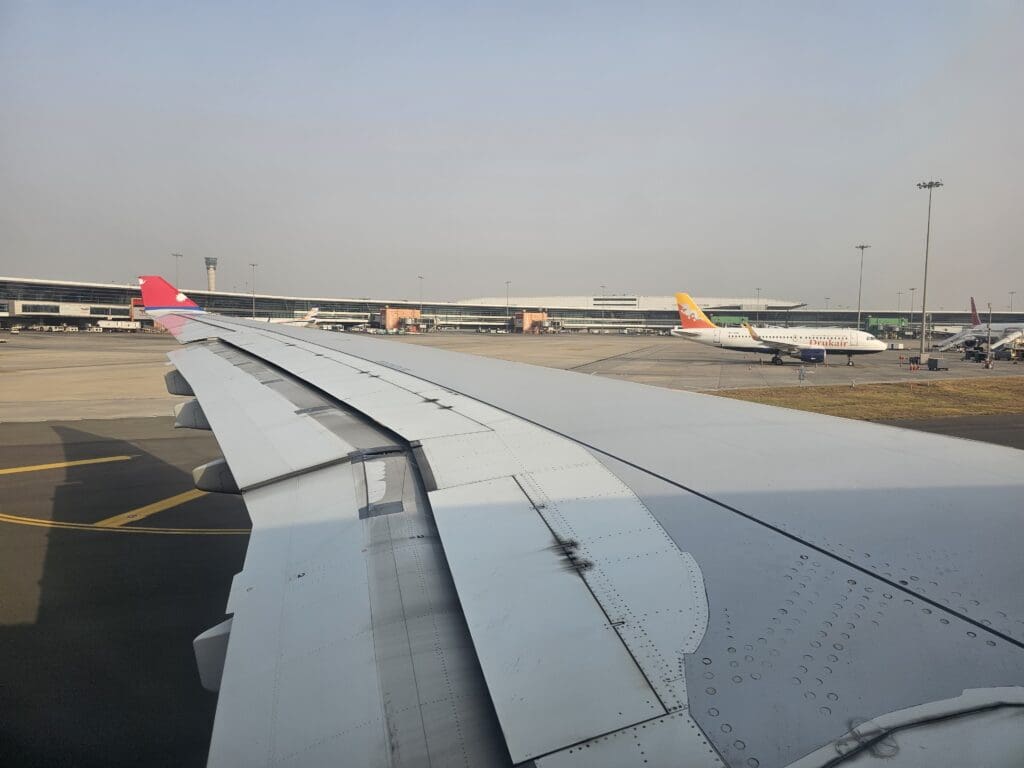
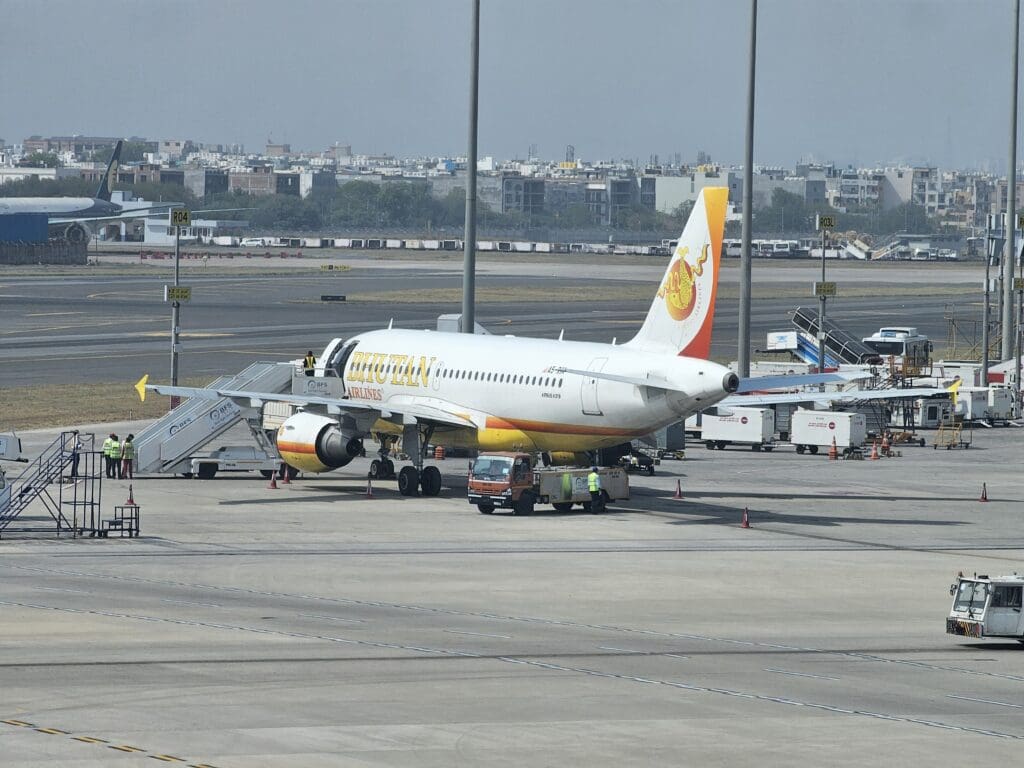
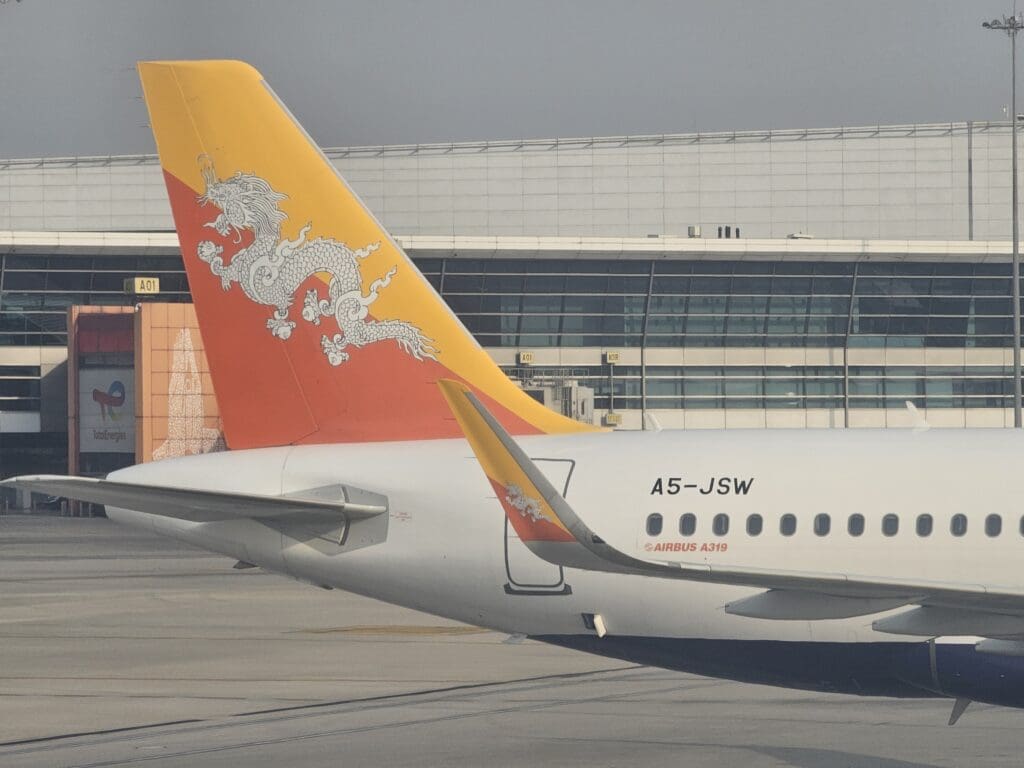
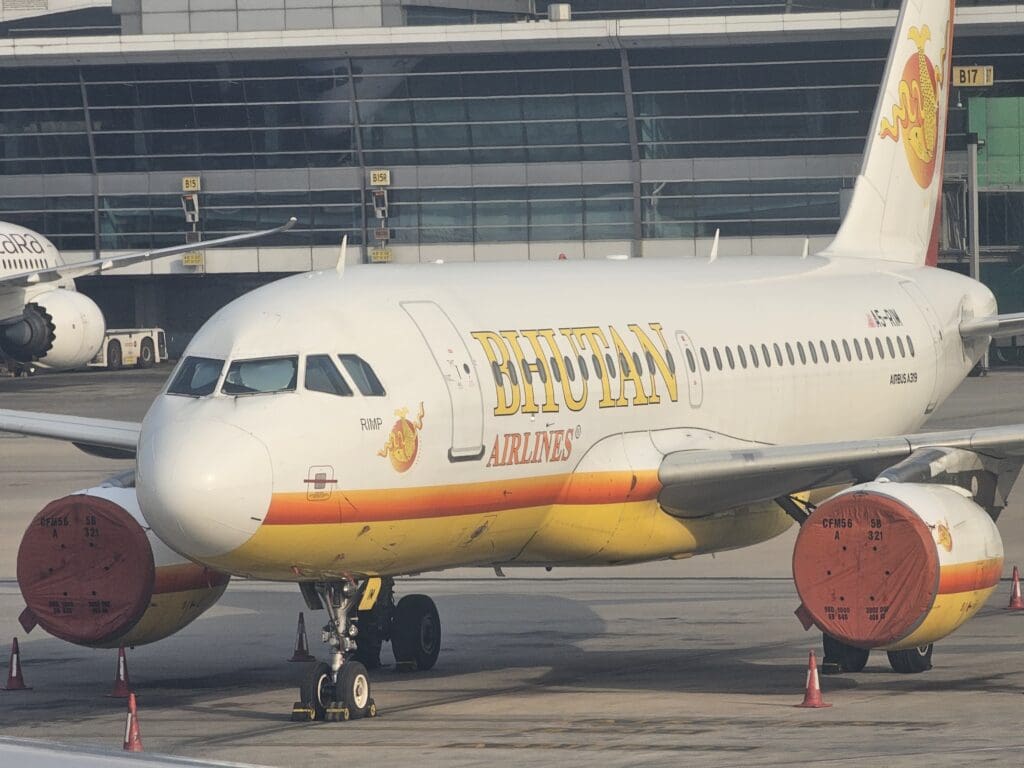
Once on the move, the Airbus made its way past Delhi’s Bhutanese delegation which consisted of two Airbus A319s operated by national carrier Druk Air and its privately owned rival Bhutan Airlines, both of which would night stop in India before returning to their homeland. With Bhutan Airlines’ service operating via Kathmandu and being very reasonably priced, I had considered flying on the airline’s service the next morning, however, seeing as I have already flown with Bhutan Airlines and given the high price of convenient airport hotels in Delhi, I decided to fly with Nepal Airlines instead. After passing these two ‘A5’ jets, the Airbus made its way around the domestic portion of Terminal 3 where I was treated to vistas of plenty of Air India jets before we left this behind. A short time later, we then made our way past the private aircraft of India’s rich and famous, passing the general aviation apron and hangars before nearing the end of the runway.
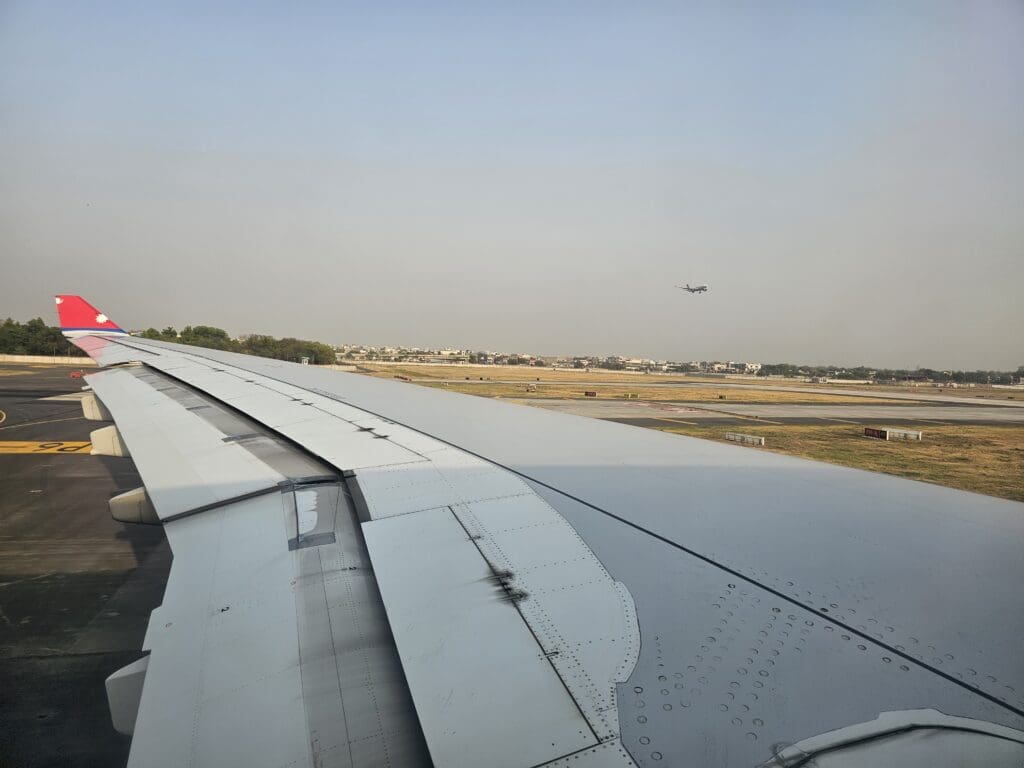
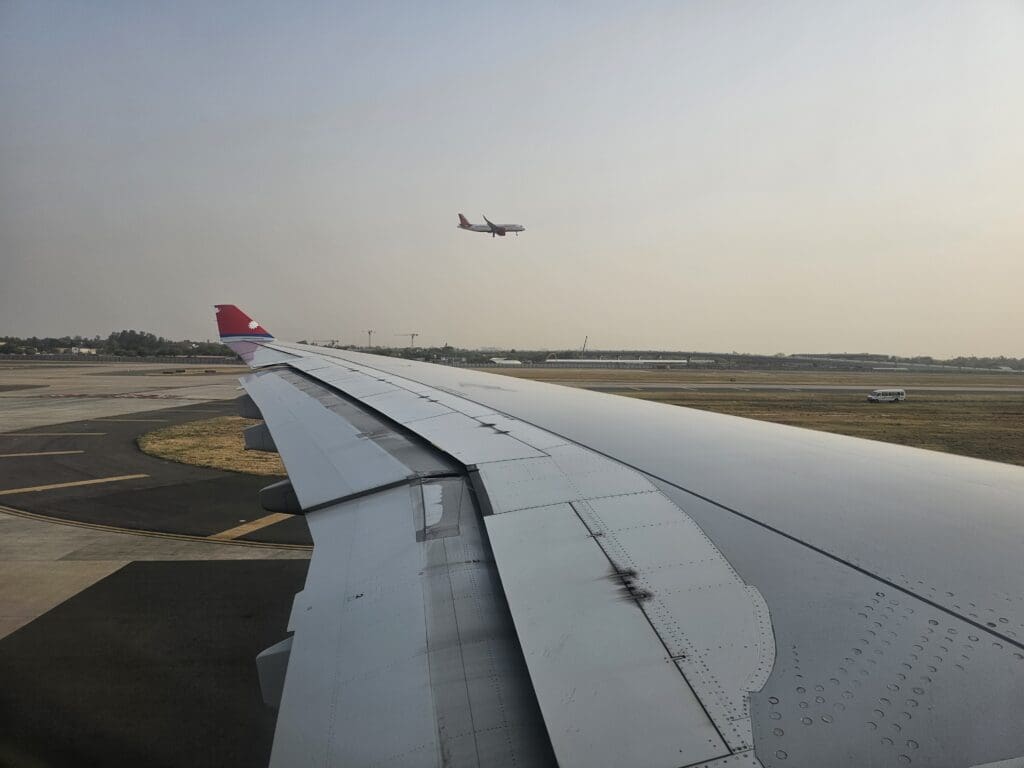
Given the busyness of Indira Gandhi International Airport, it is not all too uncommon for aircraft to have to wait significant lengths of time before taking to the Indian skies. However, fortunately we were not in for a particuialrly long wait, ending up third in the queue for departure. After slowly edging forward for a few minutes, the Airbus reached the end of the runway where we waited for a Sichuan Airlines Airbus A330 Freighter and an Air India Airbus A320 to touch down. Following a short pause, at 1722, the two Rolls-Royce engines spooled up and we performed a seemingly powerful take-off roll, swaying from side-to-side a little before the nose was pointed skywards and we climbed into the hazy skies above Delhi.
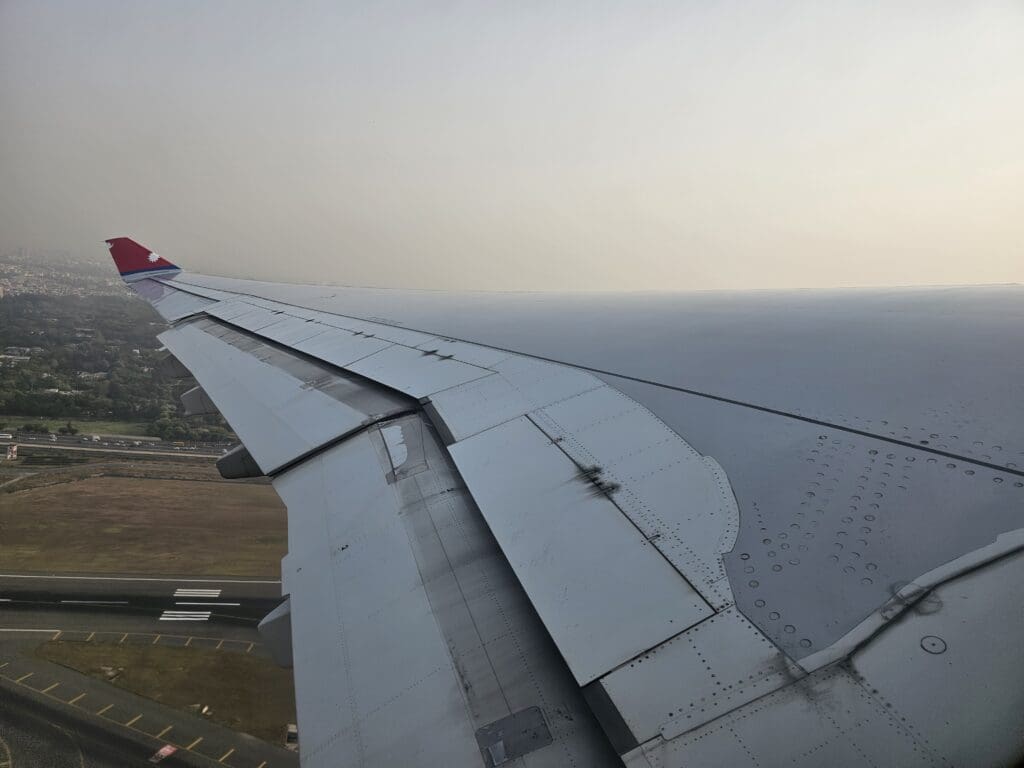
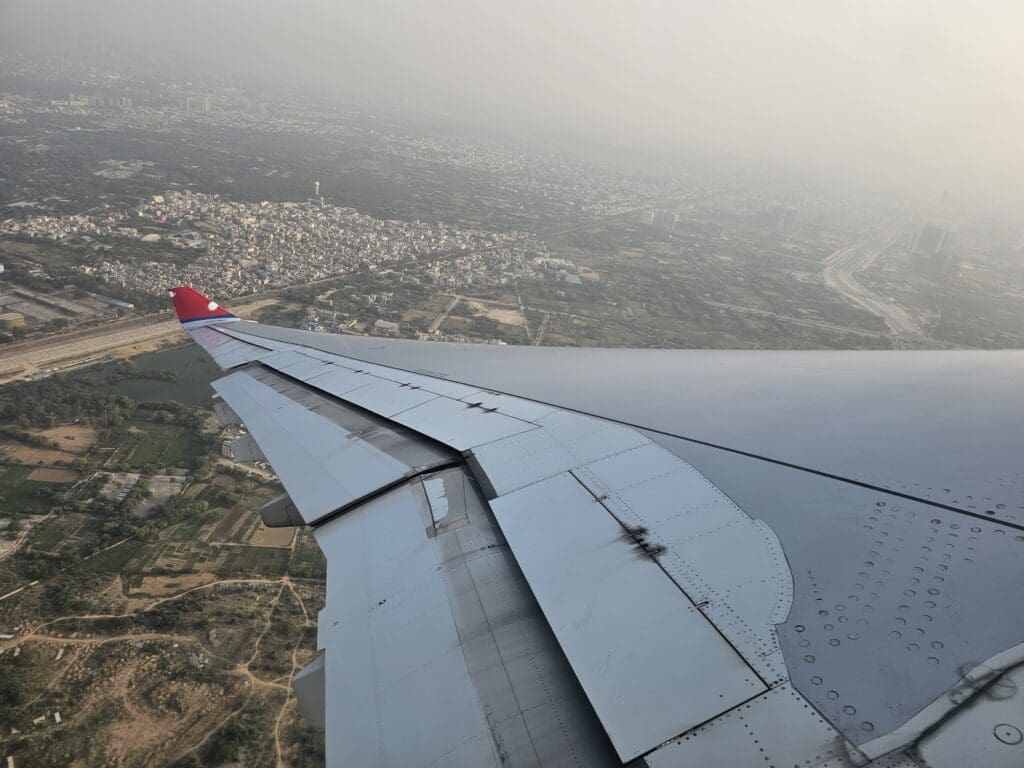
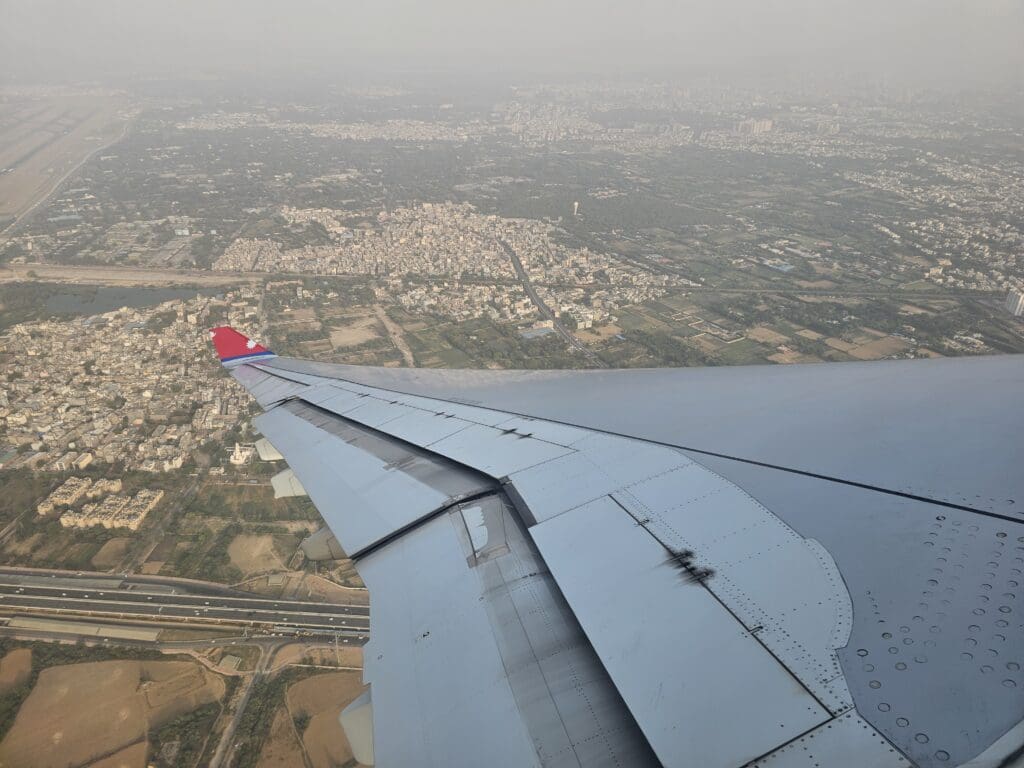
Despite the early evening smog, once we had left the sprawl of the airport behind, a reasonable view of the city of Gurugram could be had as we banked to the left and flew southwards, before banking left again and rolling out on an easterly heading that would take us towards Nepal. Eventually, the apartment blocks, houses, offices and factories faded out of view as we climbed higher and higher and crossed into the skies of the state of Uttar Pradesh.
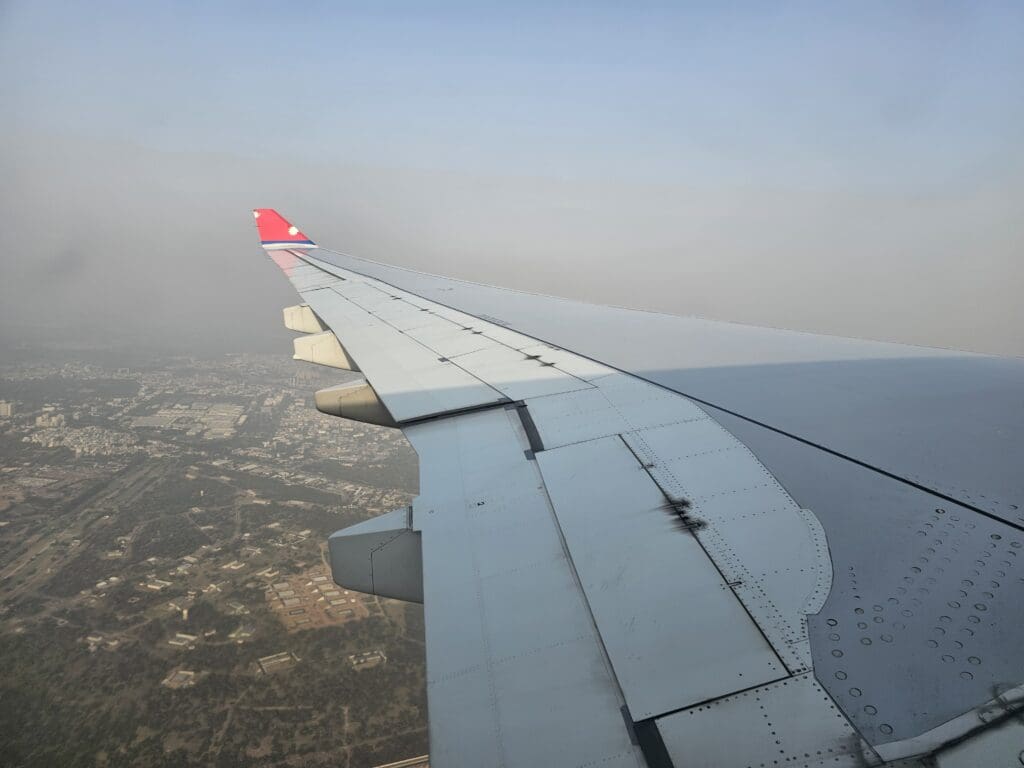
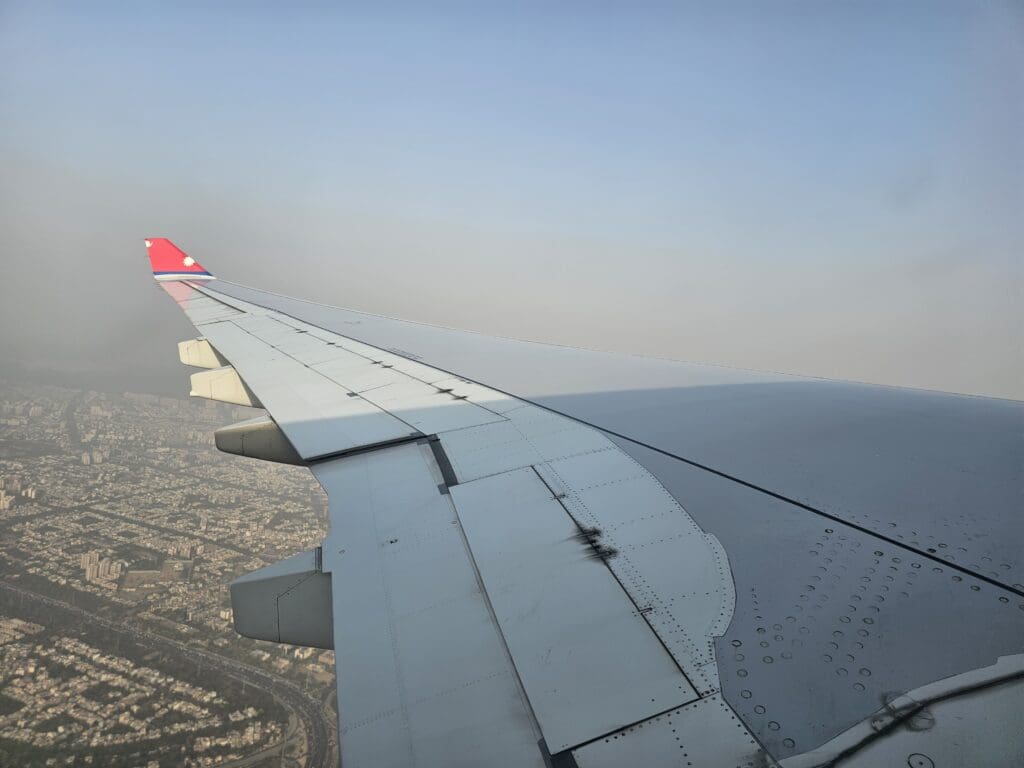
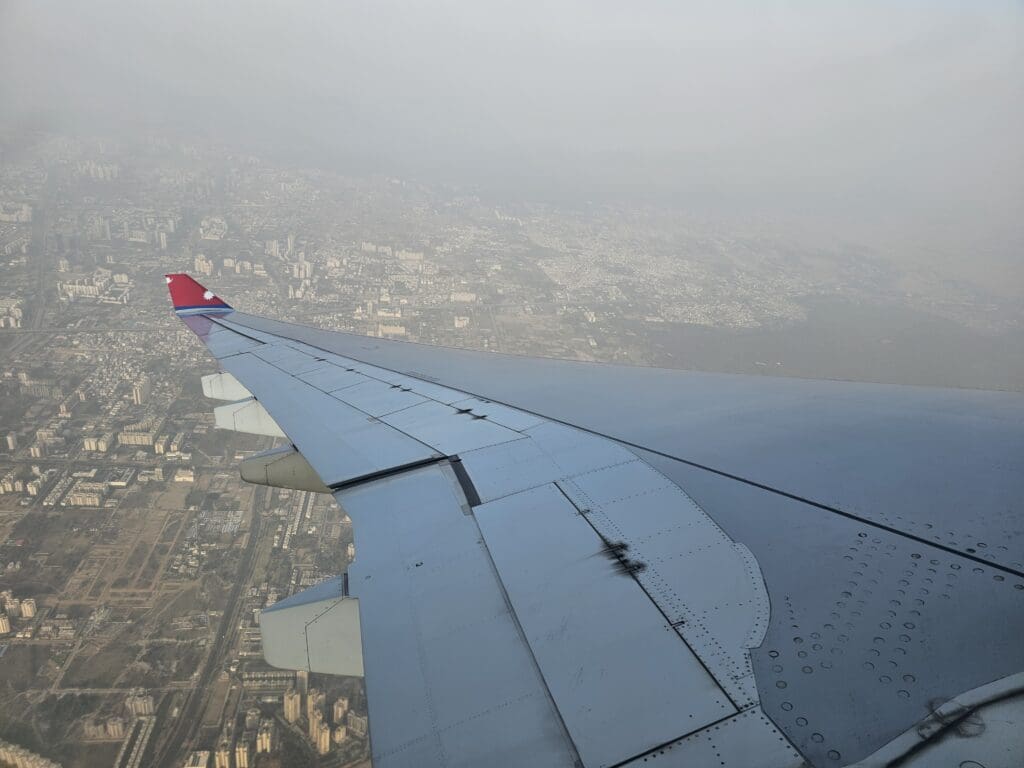
That evening our climb ended up being a silky smooth affair meaning that the seatbelt signs were extinguished as soon as we passed through 10,000 feet. However, by this time, many passengers were already standing up and the crew seemed to have given up on policing this. This was accompanied by an announcement in Nepali and English with the usual warnings requesting passengers to keep these fastened whilst seated. At this time, my neighbour cracked open a couple of cans of Heineken for some inflight refreshment, interesting opening both simultaneously enabling for a seamless transfer from one can to the other!
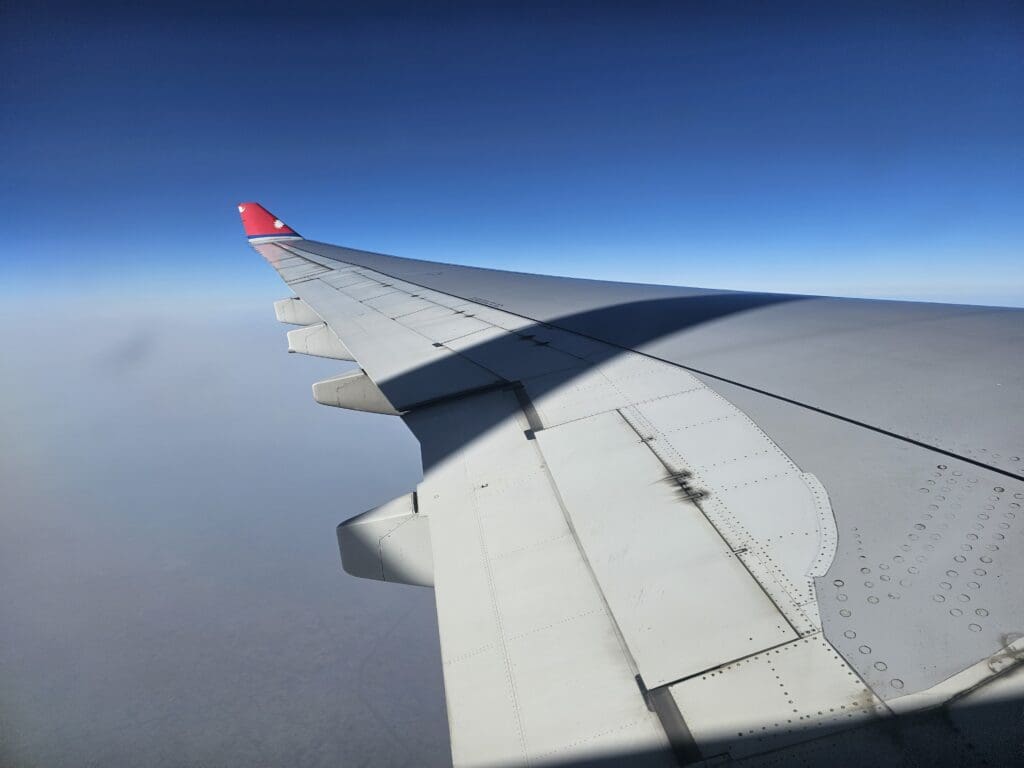
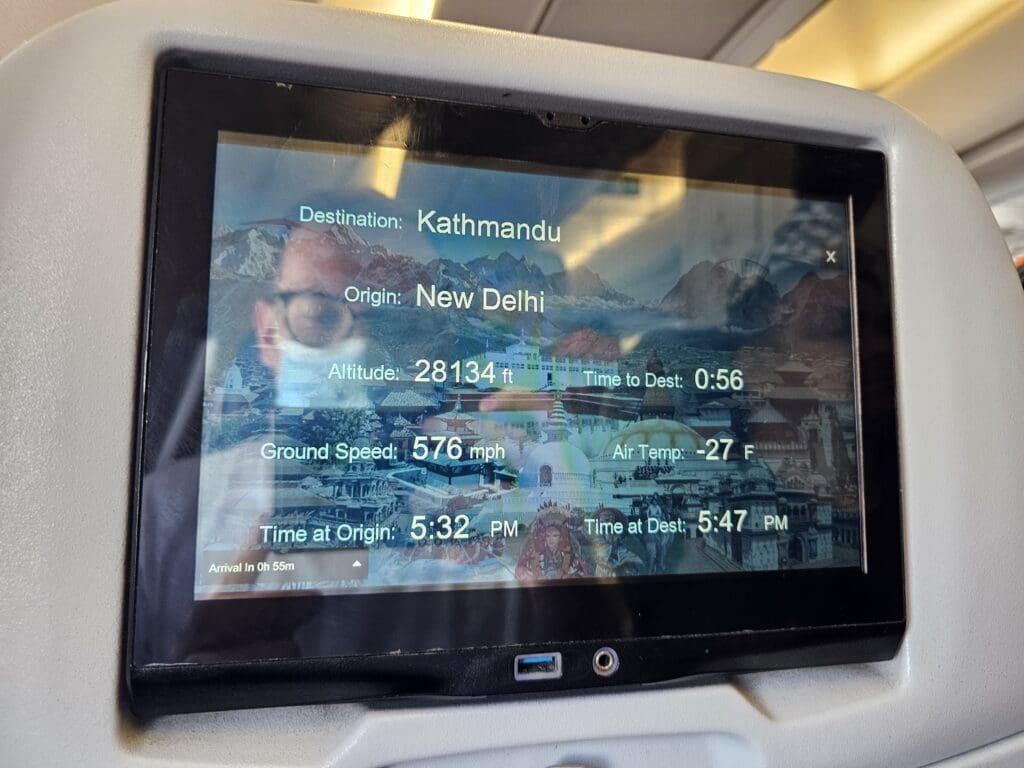
With little to see of India below, I decided to explore the inflight entertainment screens, which had appeared to become usable as soon as the safety video had ended. Starting with the basics, a little surprisingly given how battered the seat was, I found the personal inflight entertainment screen to be responsive to touch, although this did feature a few scratches. Impressively, this came in a total of six languages – Chinese, English, French, Japanese, Korean and Nepali. However, that is where the positives end as once I selected the English language option, I found the system to contain absolutely no content or information about the airline, with the only thing accessible being the non-interactive moving map which scrolled through various screens interspersed by scenic shots of various places throughout Nepal. I should however mention that other trip reports do note Nepal Airlines’ Airbus A330s to feature content (albeit slightly limited) on the inflight entertainment system, and so I can only assume that the lack of this was a temporary issue.
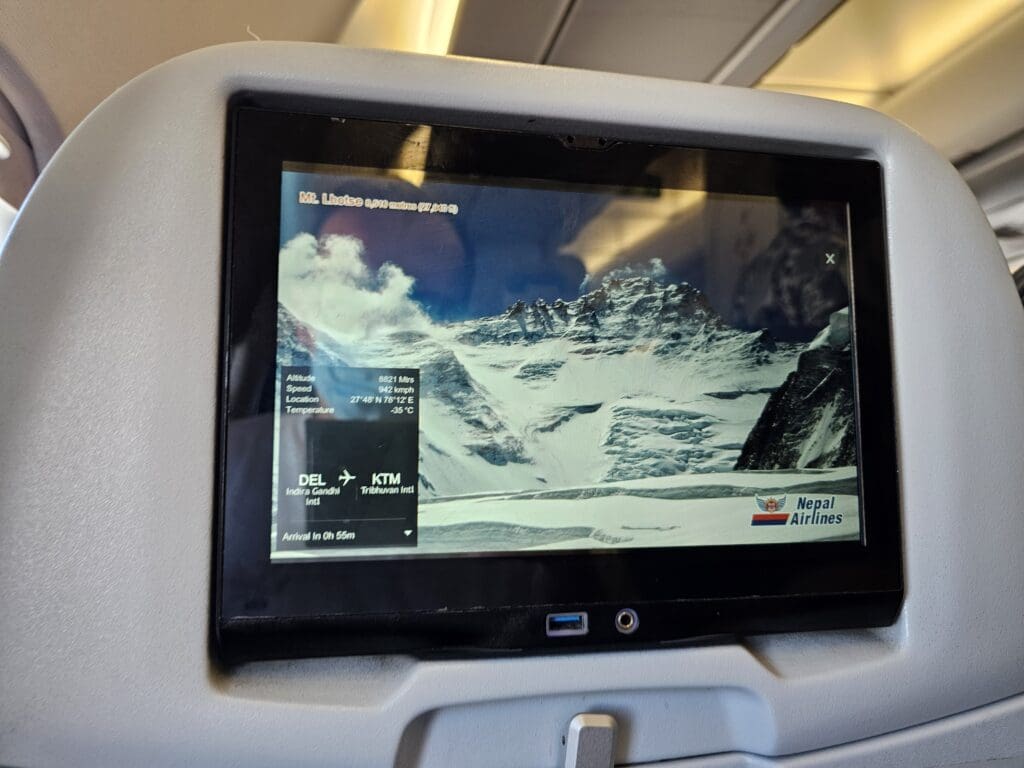
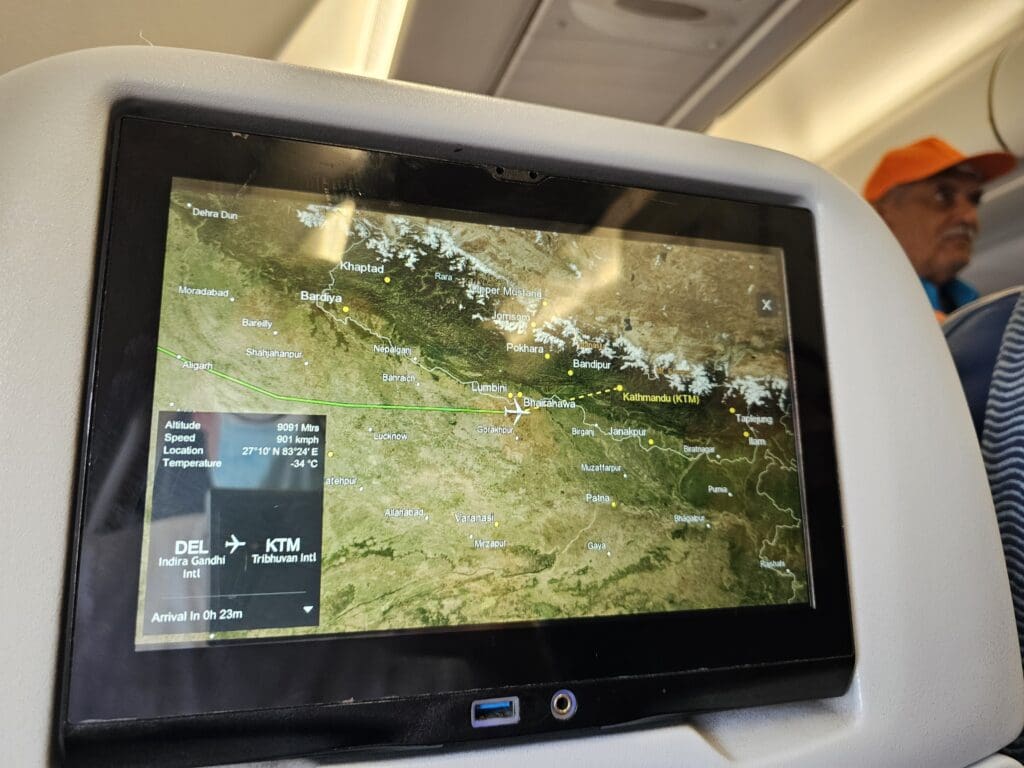
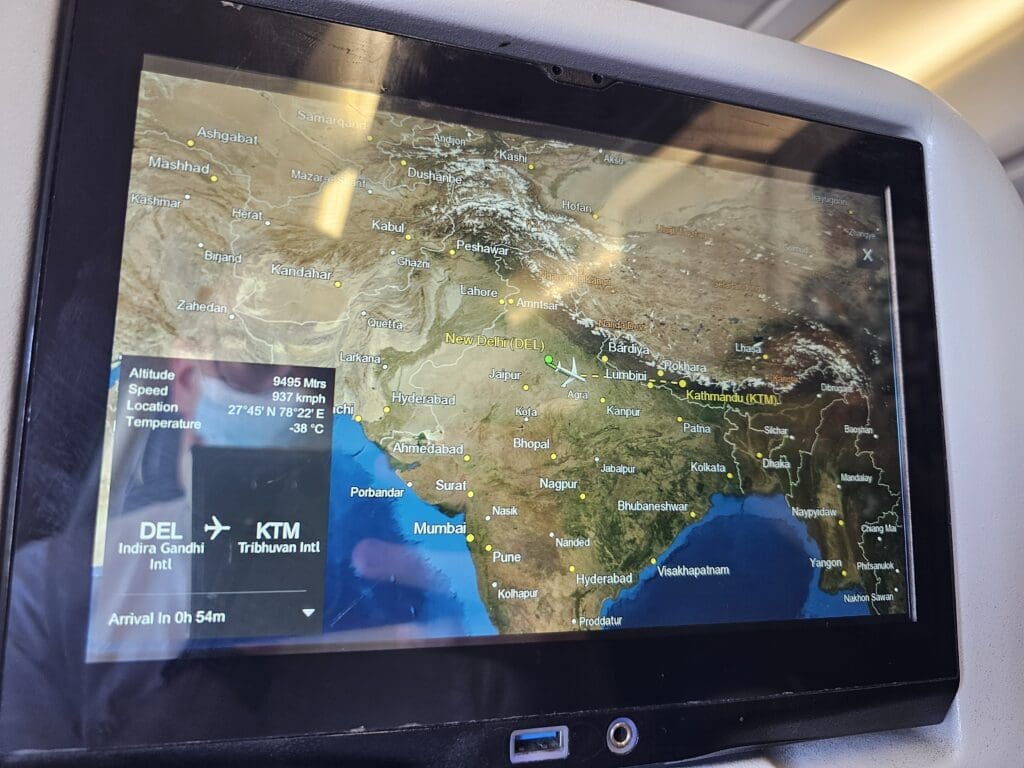
With nothing to see on the inflight entertainment system, I turned to the Shangri La magazine. Flicking through this, it soon became clear that this was aimed at those visiting Nepal, being published in English only (bar the final section detailing onboard information and details about Nepal Airlines) and with most articles highlighting things to do in Nepal and introducing aspects of Nepali culture. In particular, this edition featured articles on Nepali festivals, Lumbini, Pokhara, the Mardi Himal Trek and Newari cuisine, along with an article detailing things to do in Delhi. This was a fairly standard inflight publication and came with plenty of advertisements for an array of products and services in Nepal.
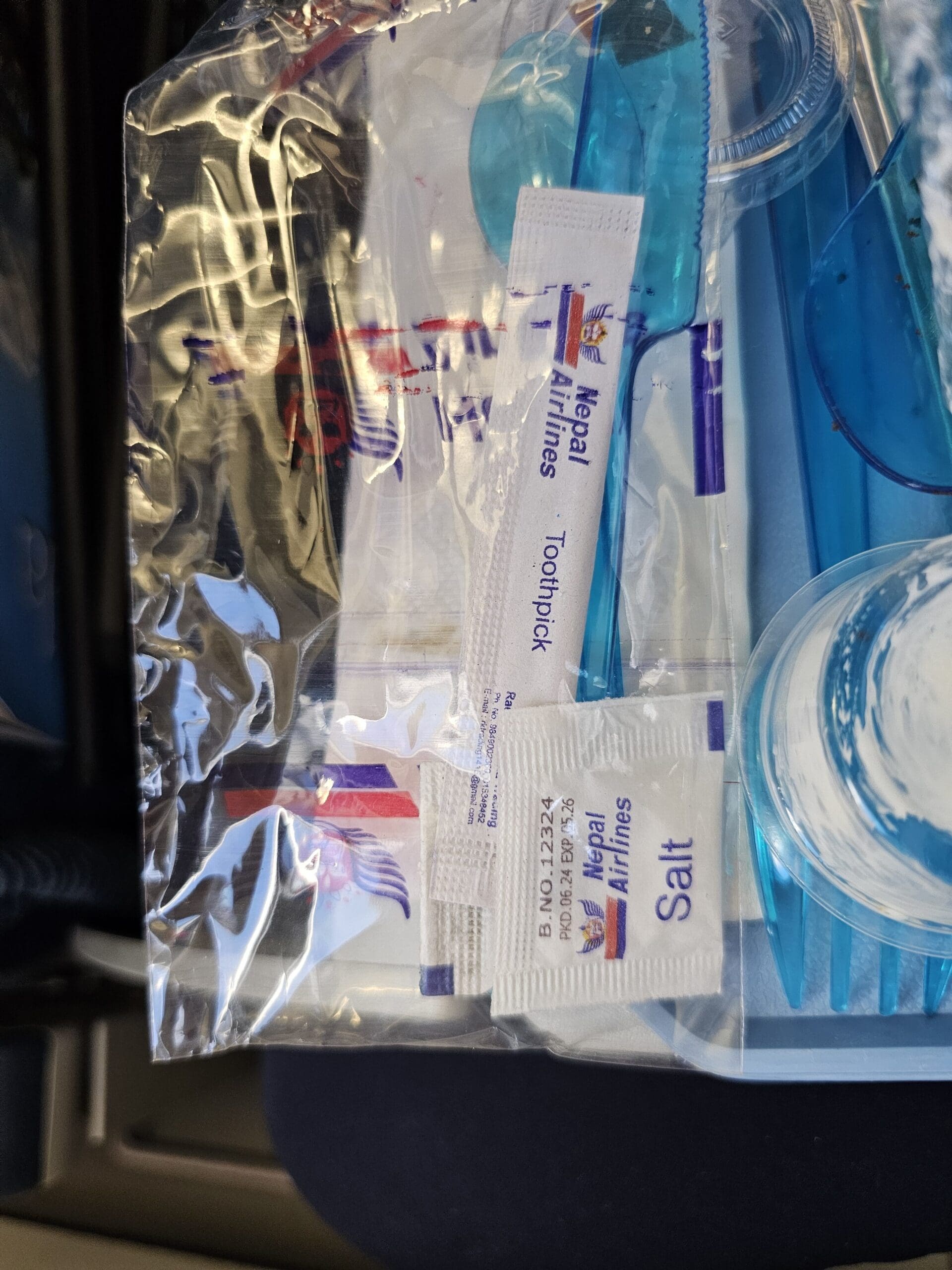
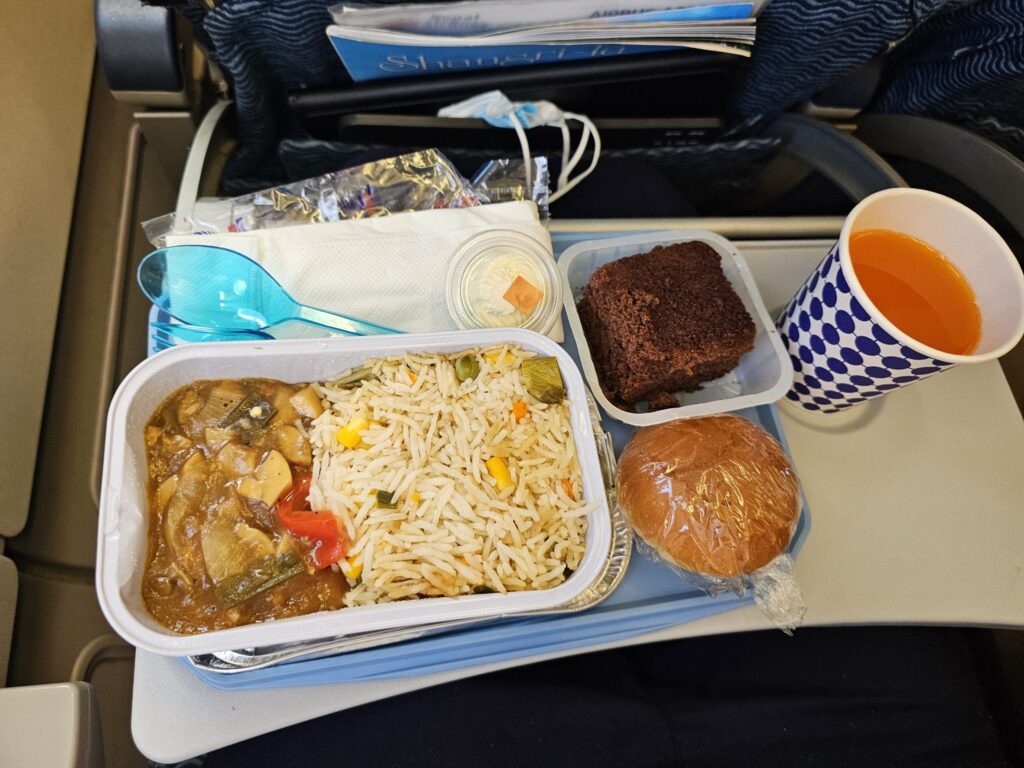
To Nepal Airlines’ credit, despite the short length of the flight, all Economy passengers were offered a hot meal. With little time to serve an Airbus A330 full of passengers, as soon as the crew were released from their seats, they sprung into action and service carts were rolled into the aisle. Eventually, a flight attendant reached my row and I was offered a choice of drink, with the options taking the form of Coca-Cola, Coca-Cola Zero, Fanta, multifruit juice, Sprite or water, opting for the juice, which was poured into a cup and handed over to me. I was then offered a choice of a chicken or vegetarian meal. Picking the latter, I was passed a small tray containing the main dish – which consisted of vegetable curry and rice, a small chocolate cake and a bread roll with butter. Meanwhile, eating utensils came in the form of plastic cutlery. Despite neither being particularly plentiful nor the pinnacle of inflight cuisine, given the short length of the flight, I was left rather impressed by this offering and by the efficiency and speed at which the crew worked their way through the cabin and served all passengers.
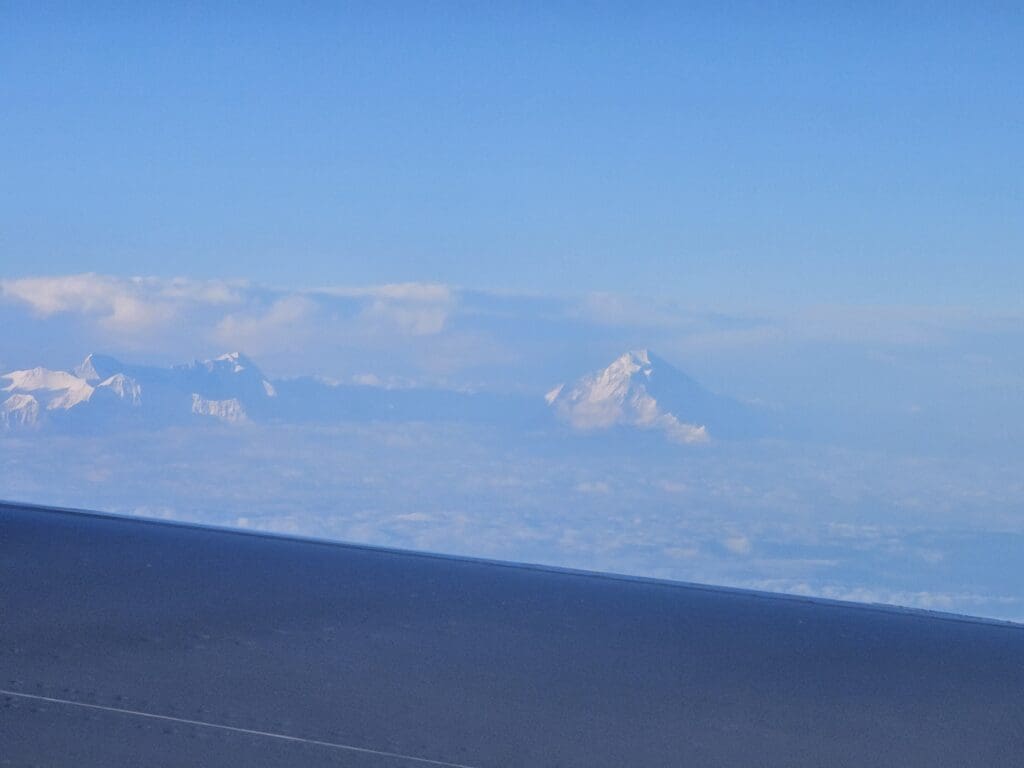
Returning to examine the route, that evening, we cruised over Northern India at an altitude of 39,000 feet, making our way over the Uttar Pradesh cities of Aligarh, Hardoi, Lucknow and Gonda, although sadly little could be seen thanks to a thick layer of cloud beneath the aircraft. As we crossed over Gonda, in the distance I caught my first glimpse of the snowy peaks of the Himalayas, and after just twenty minutes at our cruising altitude, the Airbus could be felt commencing its descent.
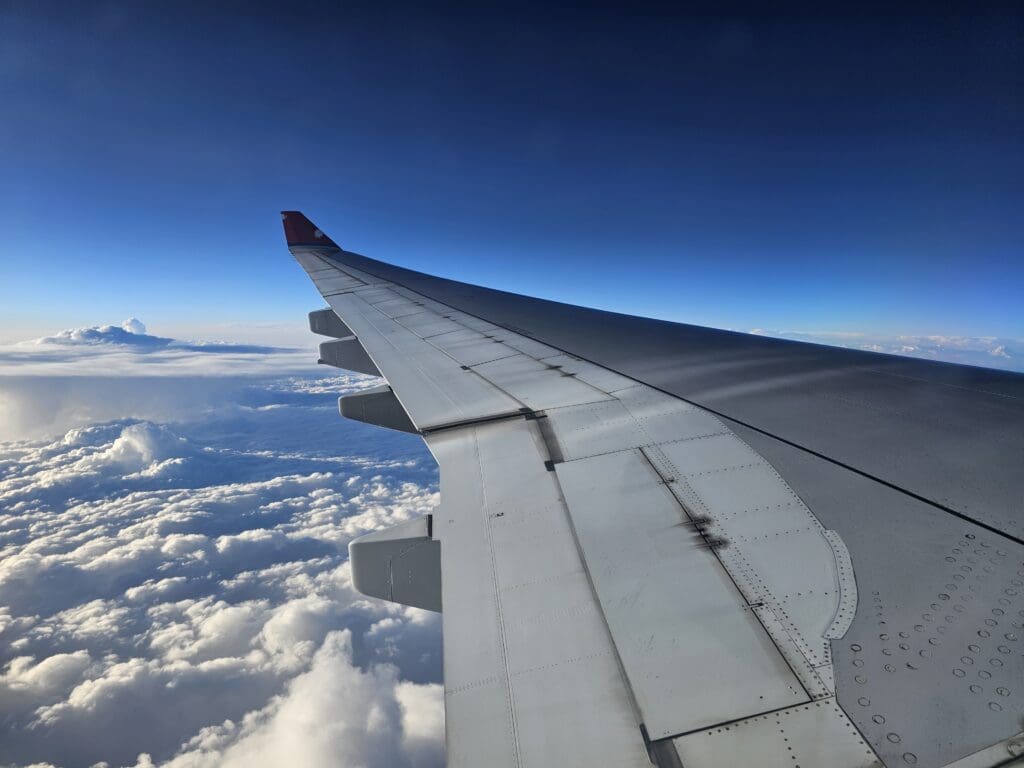
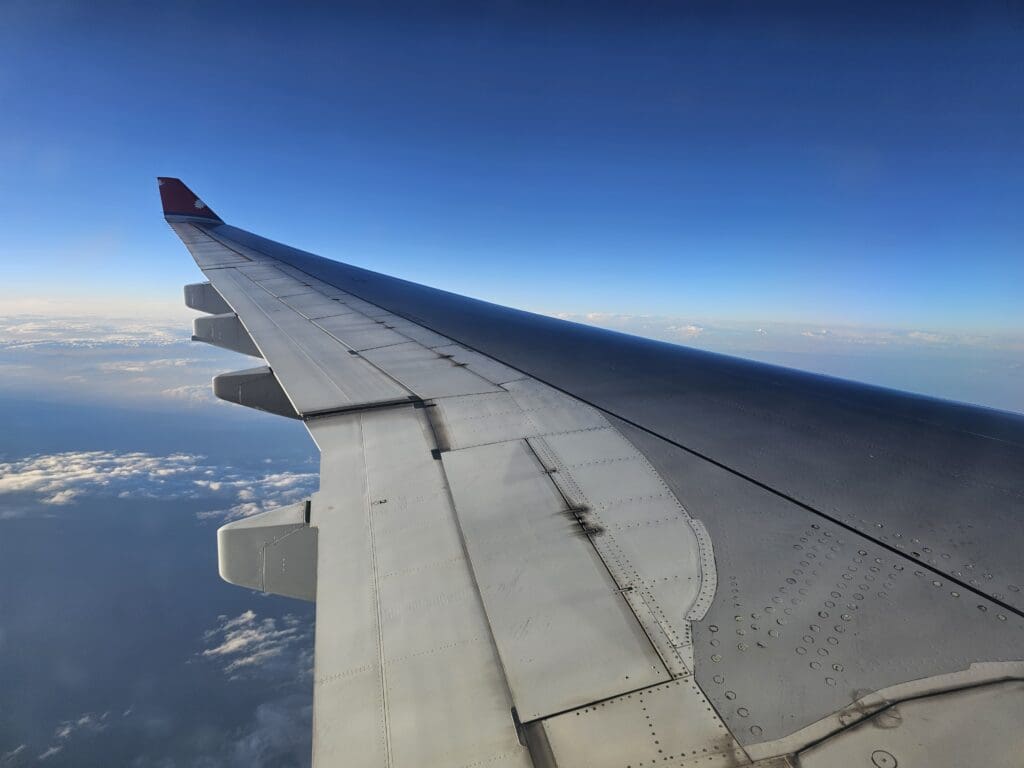
Almost as soon as the aircraft commenced its descent, the crew sped through the cabin collecting trays, after which the seatbelt signs were re-illuminated and the Purser performed an announcement with the usual pre-arrival instructions and warnings before the crew took to the aisles and attempted to get the cabin ready for landing. Flying roughly parallel to Nepal’s border with India, the Airbus remained in Indian skies for much of our descent before finally crossing from the skies of Bihar to Nepal’s Madhes Pradesh near the city of Birgunj whilst passing through an altitude of 14,000 feet.
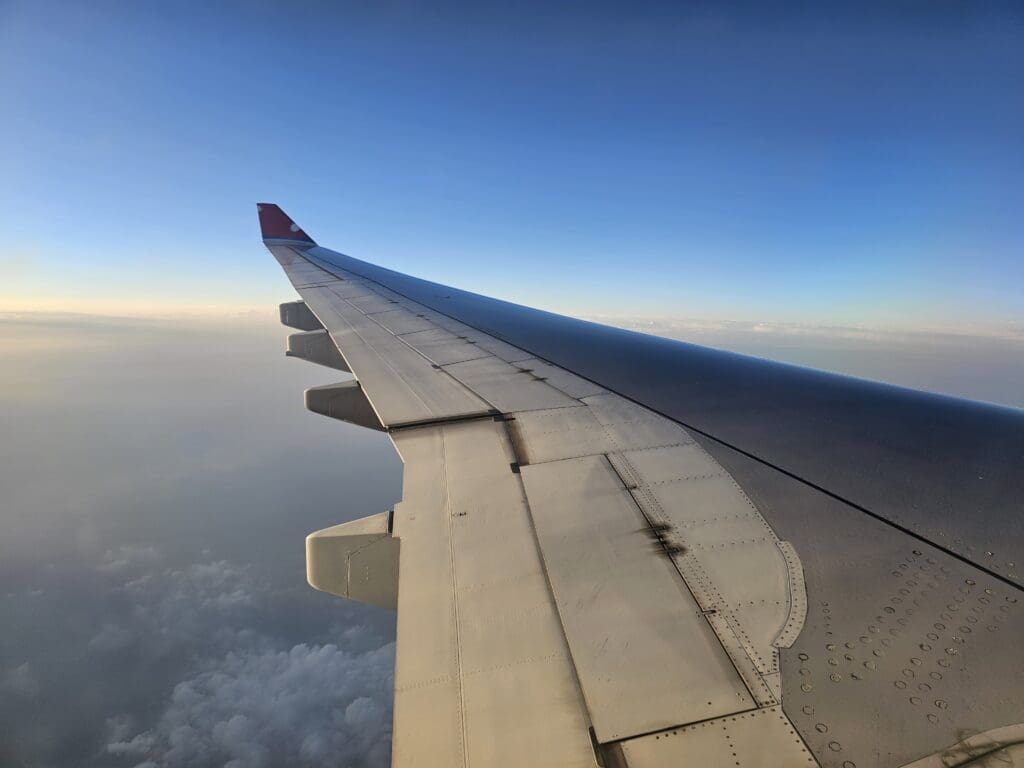
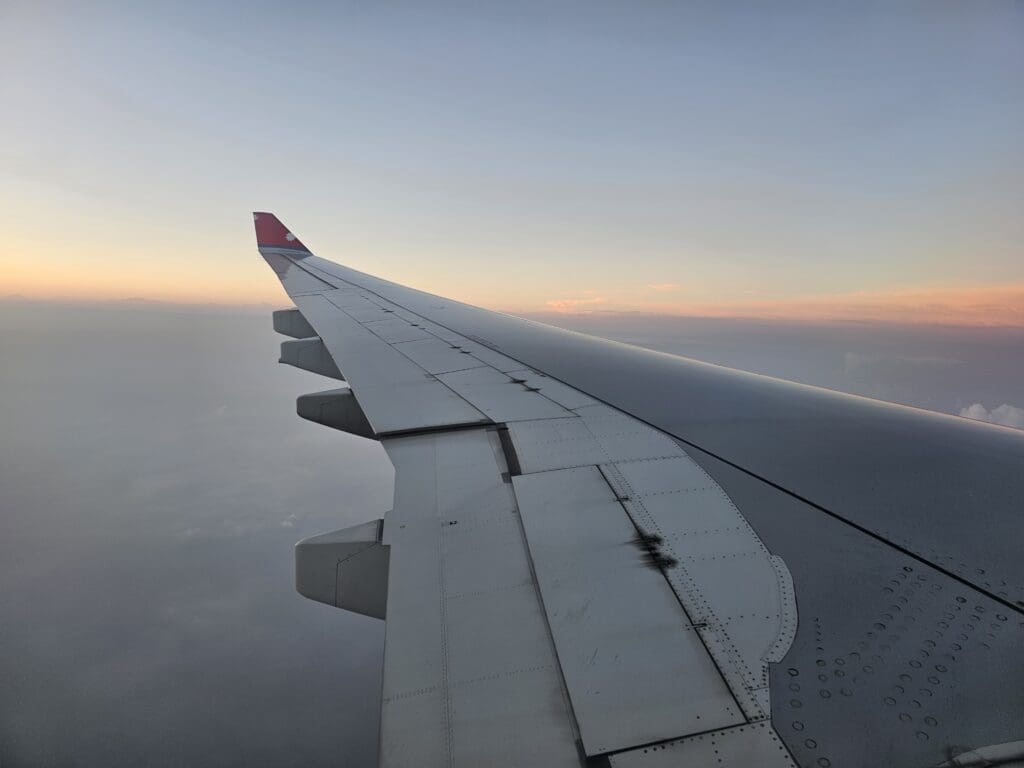
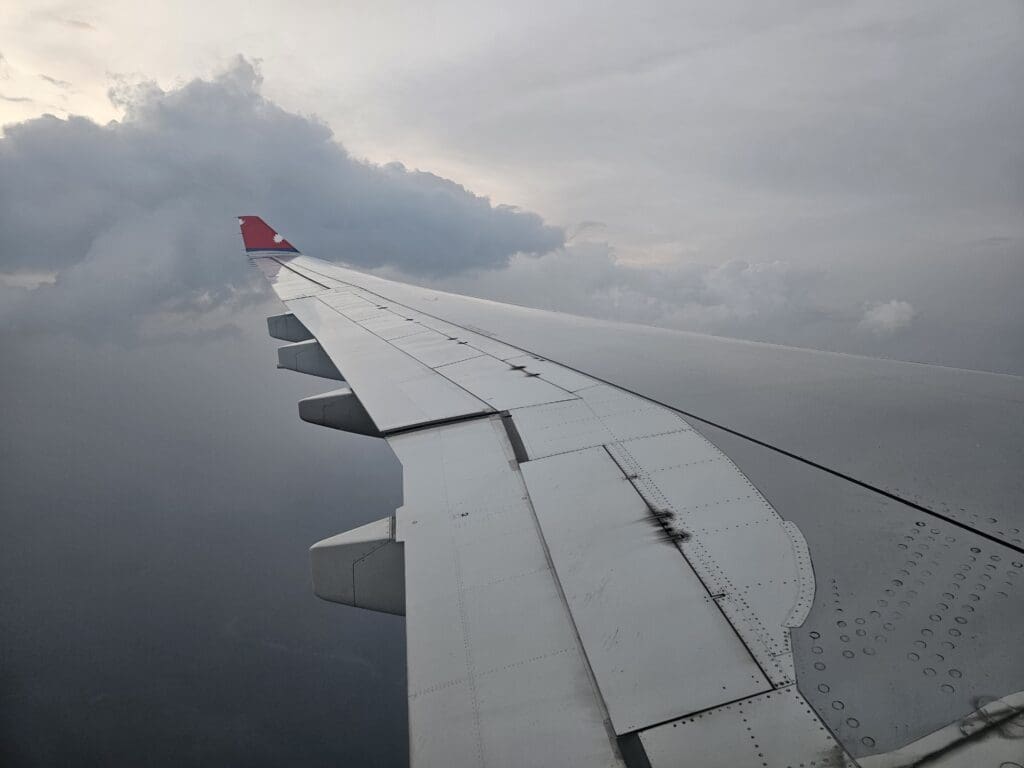
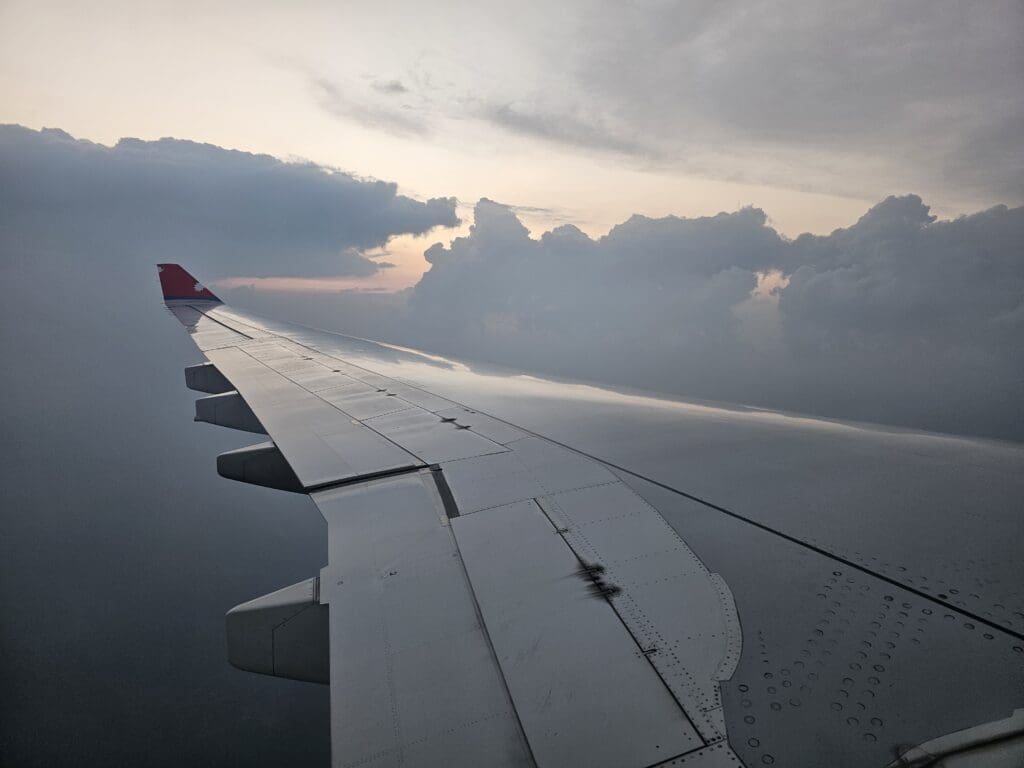
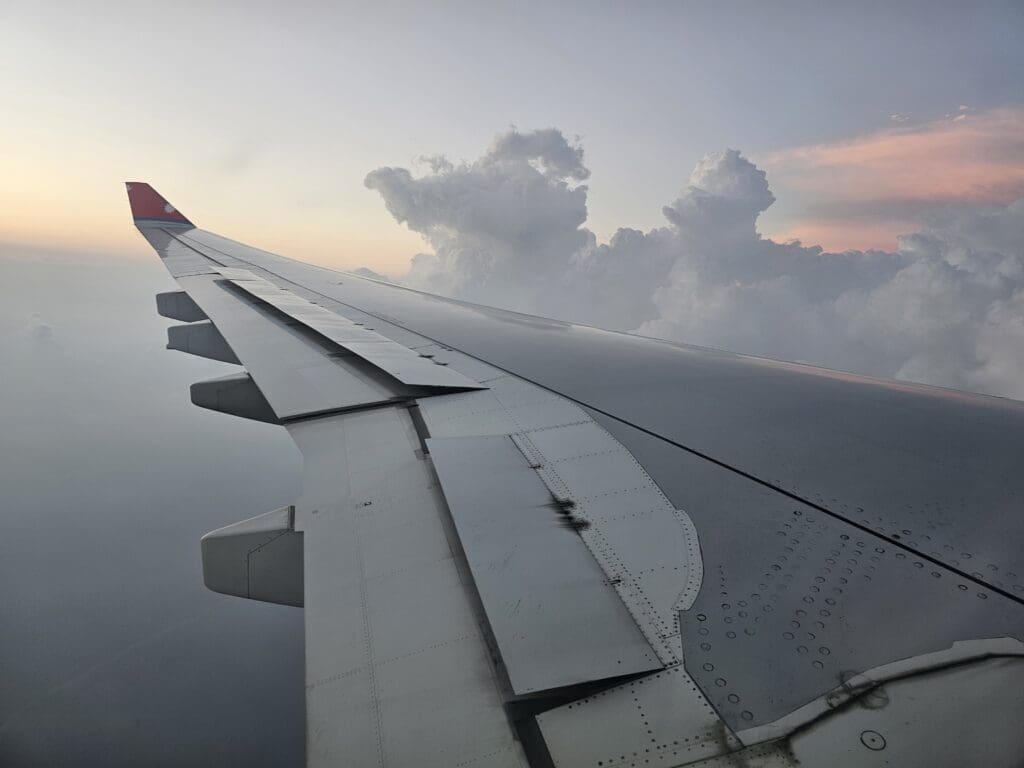
Once in the skies of Nepal, it wasn’t long before I caught sight of mountains below as we cut through clouds with these popping into and disappearing from view as we edged towards Kathmandu. Soon, the cabin lights were dimmed and I was treated to superb dusk views as we headed northwards and descended over the hills and mountains of the Kathmandu Valley, with nothing other than the odd town and village seen below before we reached the sprawl of the Nepali capital.
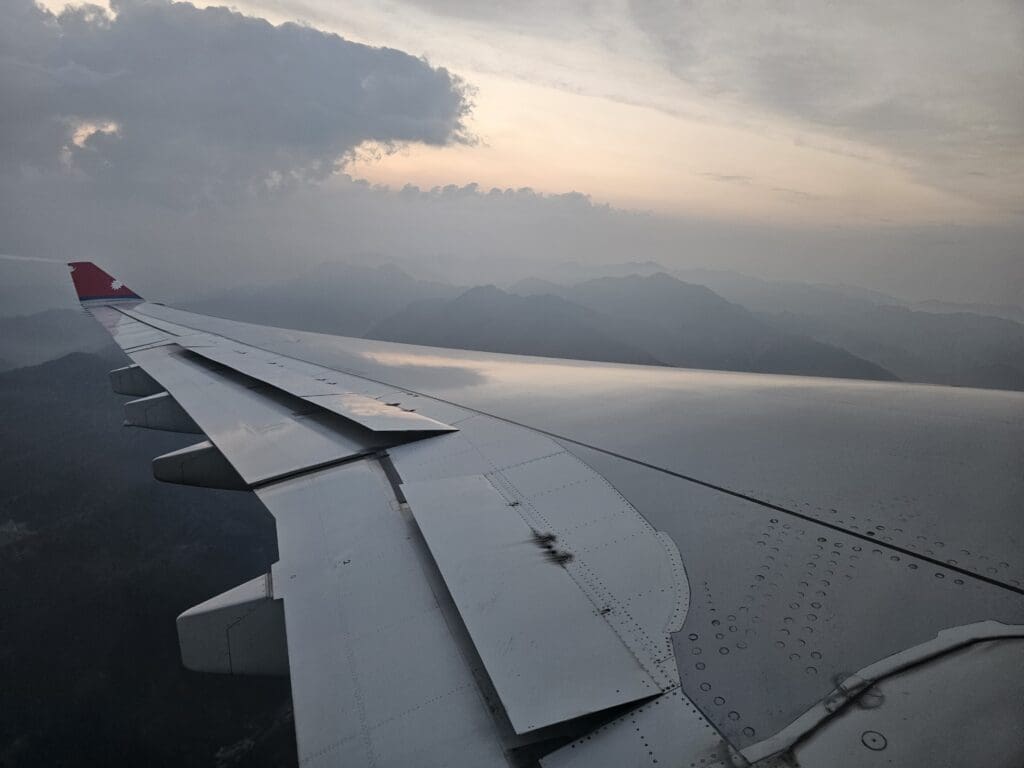
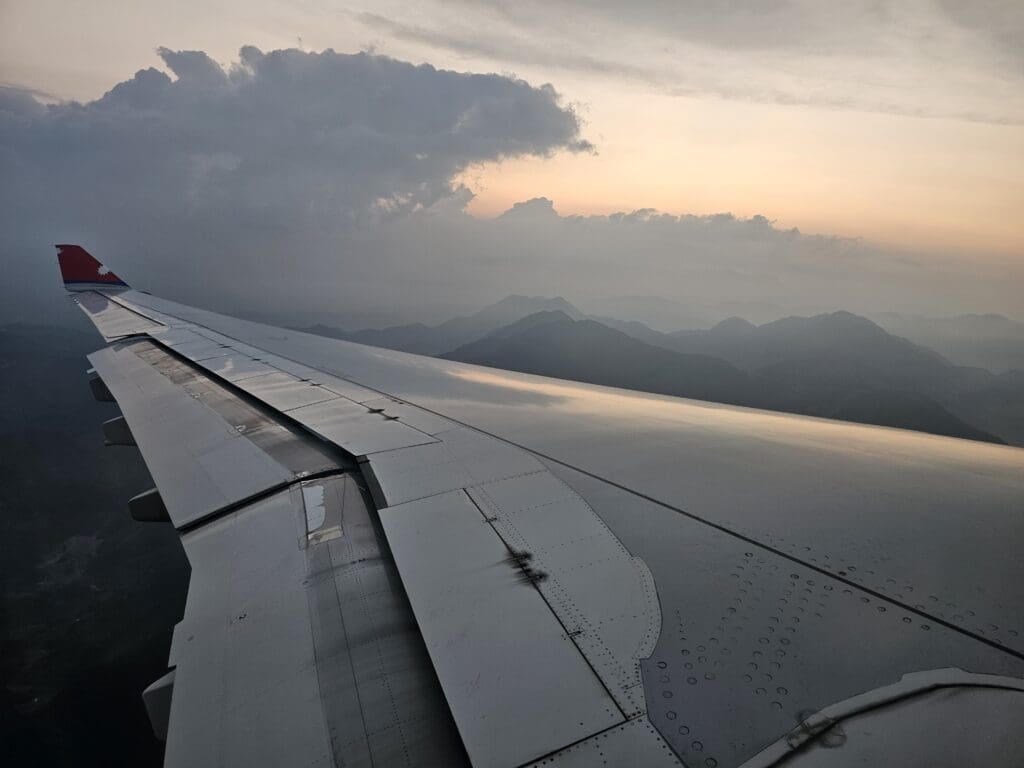
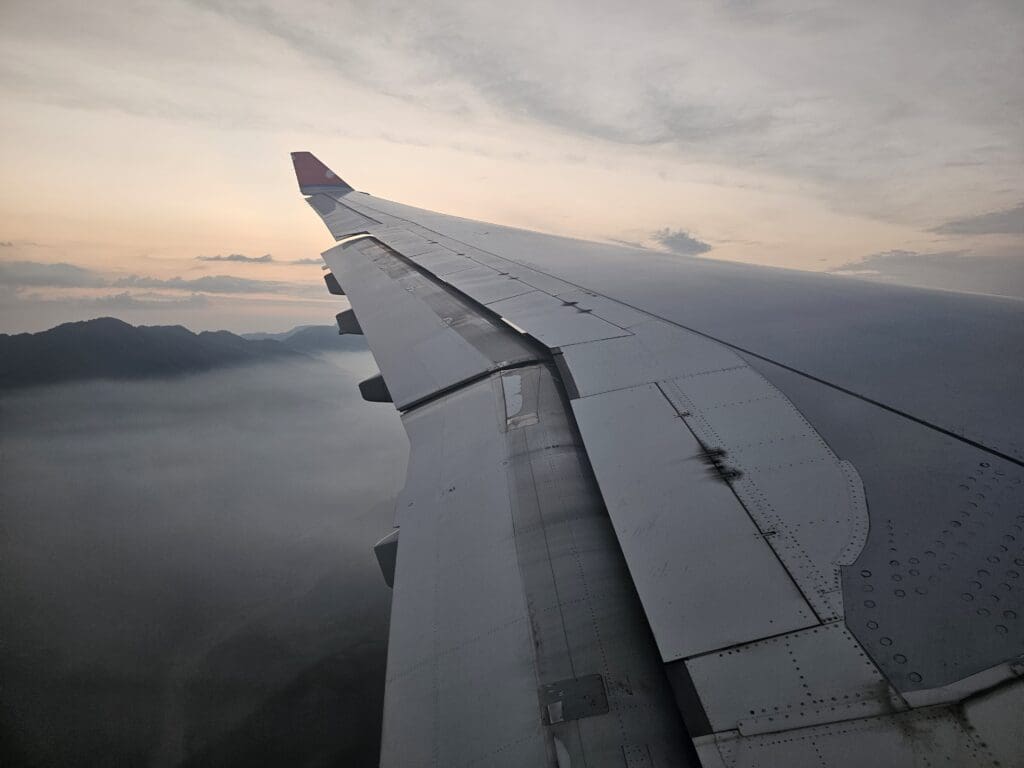
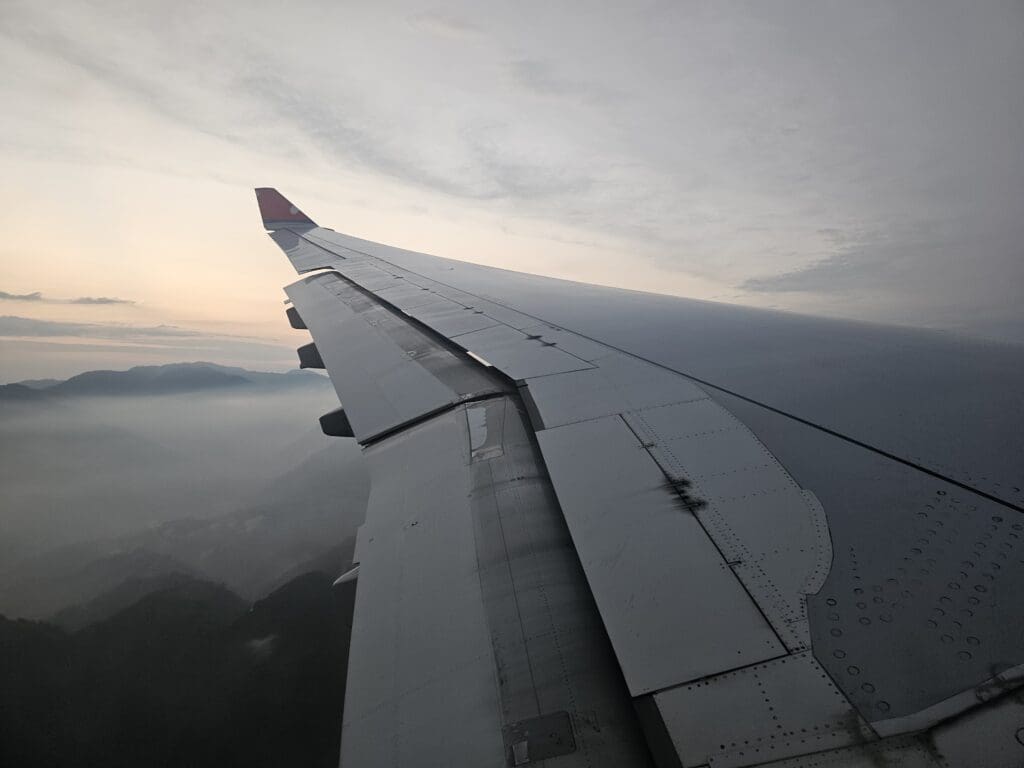
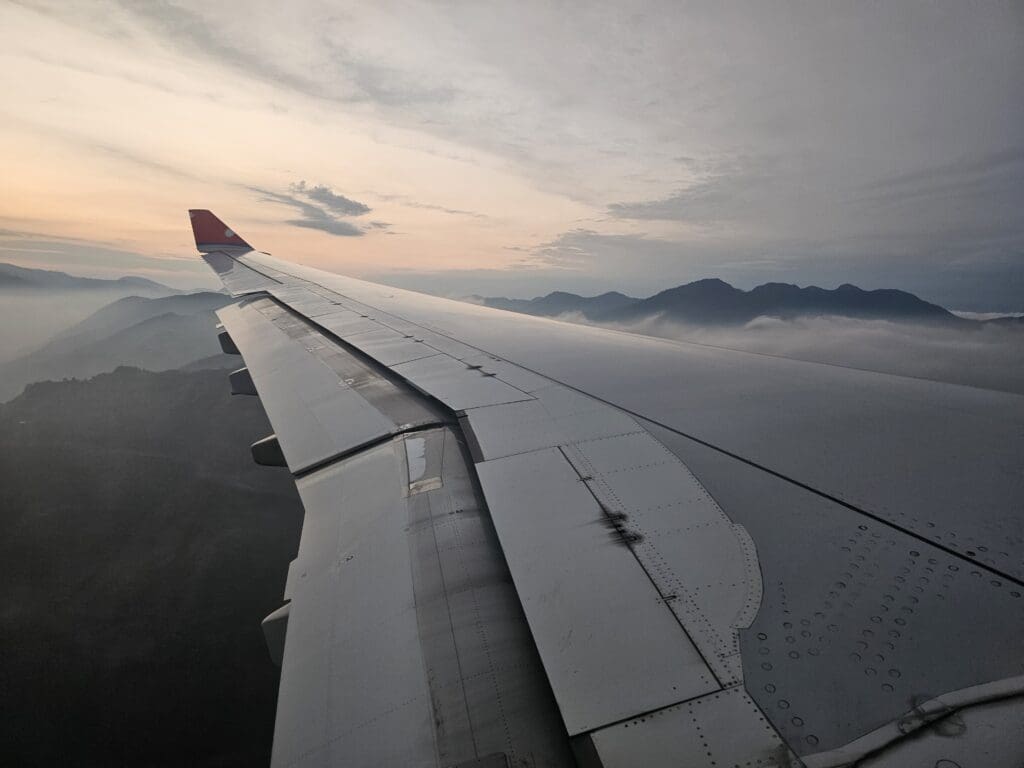
As we neared the city of Lalitpur which borders Kathmandu to the south, the Airbus’ flaps were extended in preparation for our arrival, soon followed by the landing gear which reassuringly fell into position with a loud clunk. Below, the bright lights of Balkumari and Koteshwor whizzed past, where the seemingly endless streams of vehicles on the roads did not give me much hope of being able to make a quick journey to my hotel in Thamel.
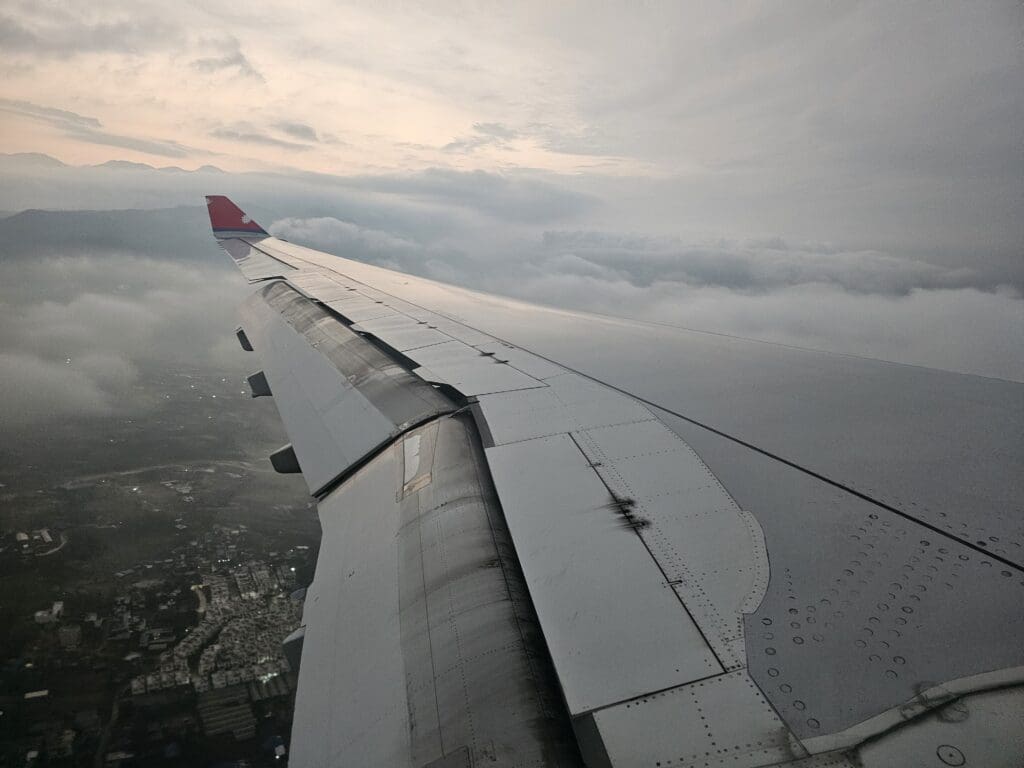
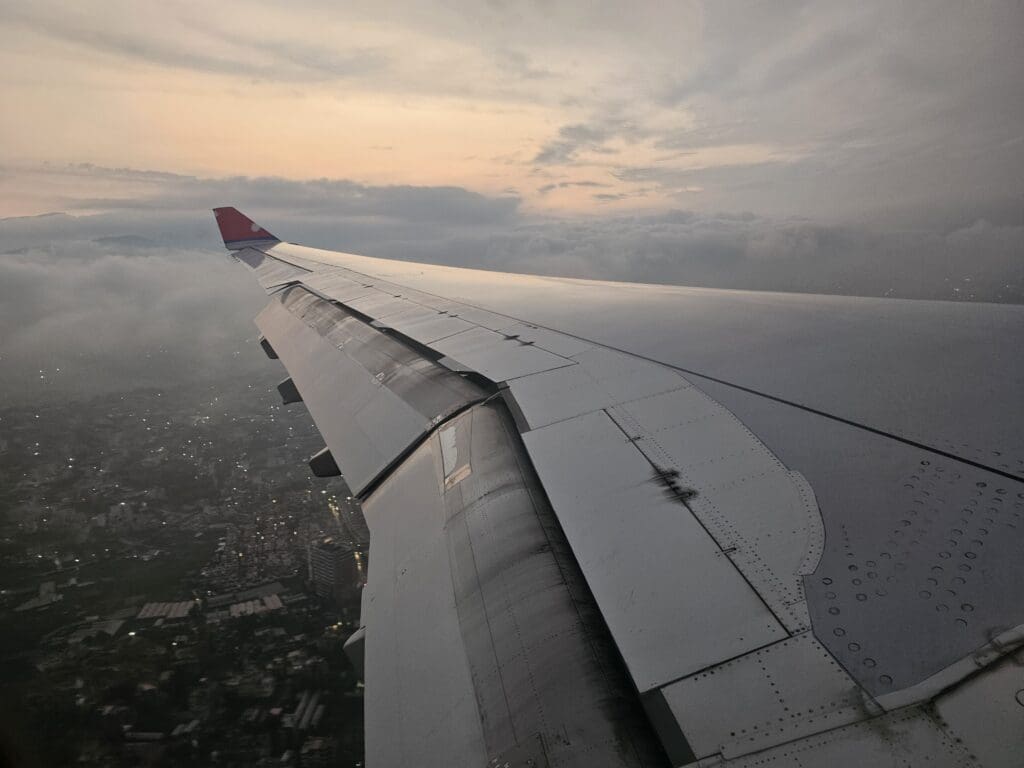
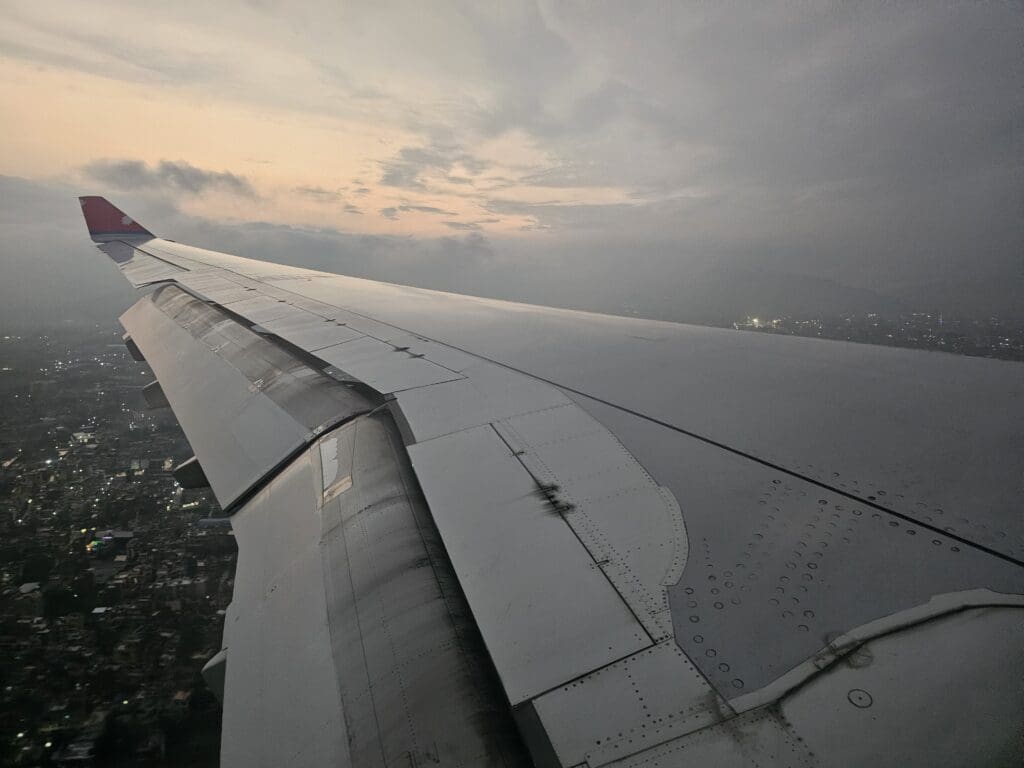
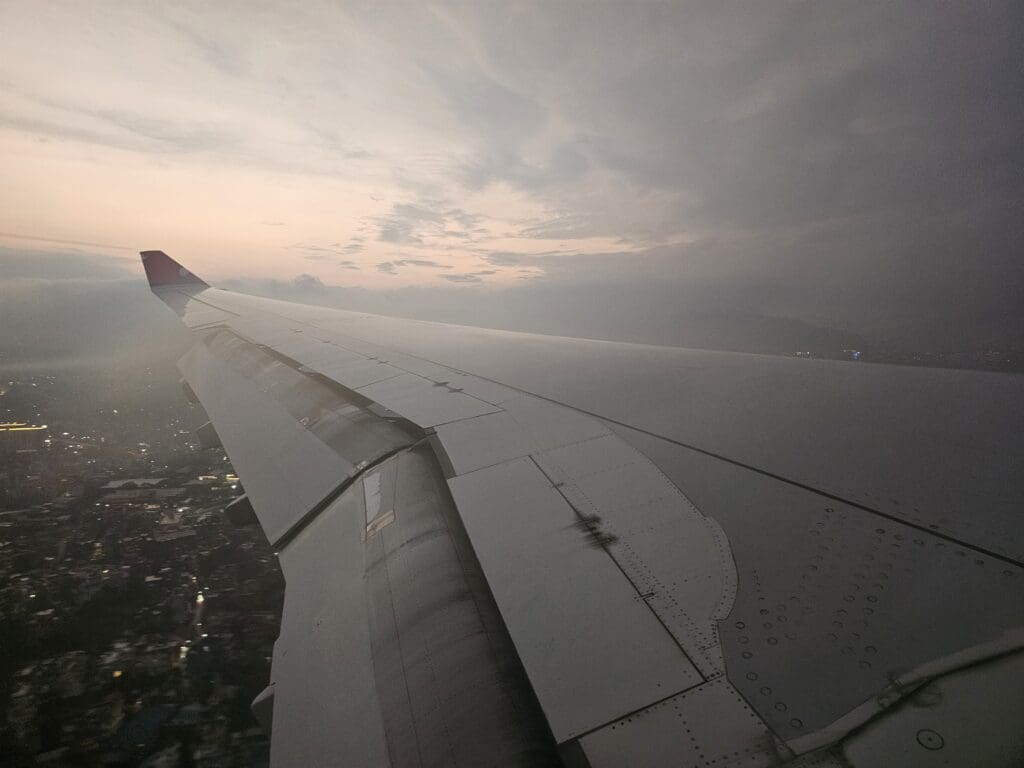
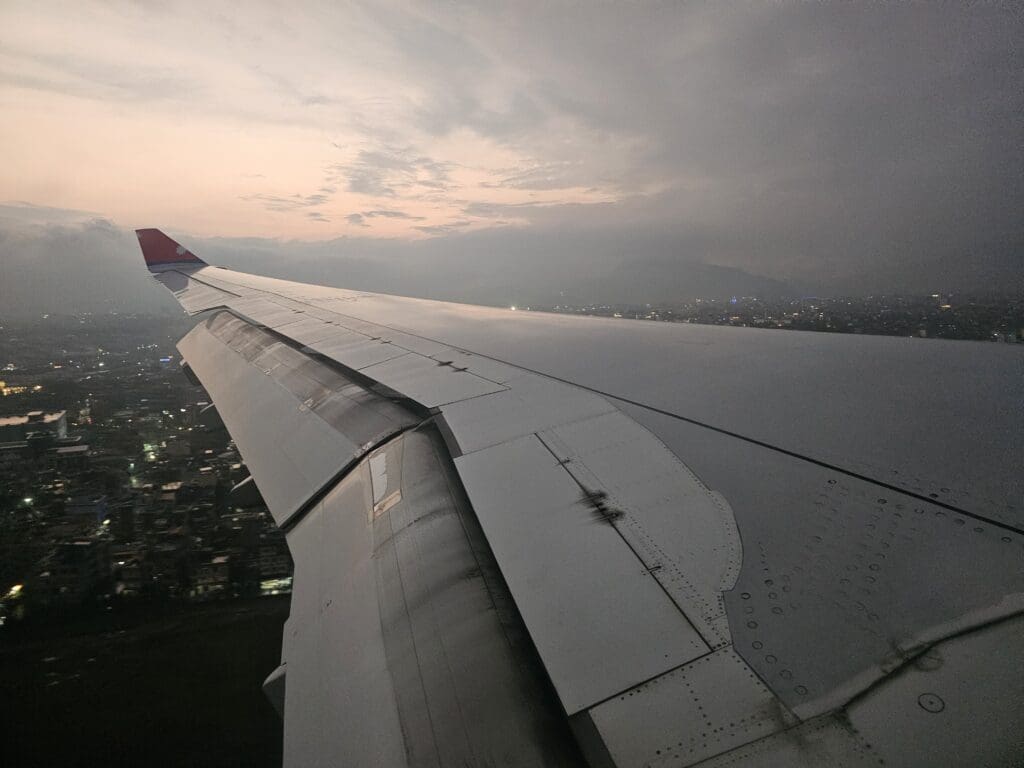
Sinking over the perimeter fence, at 1846 Nepali time, exactly an hour and nine minutes after rocketing into the skies of Delhi, the Airbus made a barely noticeable touchdown on Runway 02. This was followed by some braking which, seeing as Kathmandu had been subject to torrential downpours all afternoon, threw up plenty of spray as we decelerated. At that time, a line of Buddha Air and Yeti Airlines ATR 72 aircraft could be seen waiting their turn to depart, with these bound for destinations across Nepal. This was then followed by the sight of the international terminal, where two Airbus A320s could be seen – these operated by local carriers Himalaya Airlines and Nepal Airlines, whilst a FlyDubai Boeing 737-800 and a Qatar Airways Boeing 787-9 Dreamliner could be seen being readied for their return sectors to Dubai and Doha respectively.
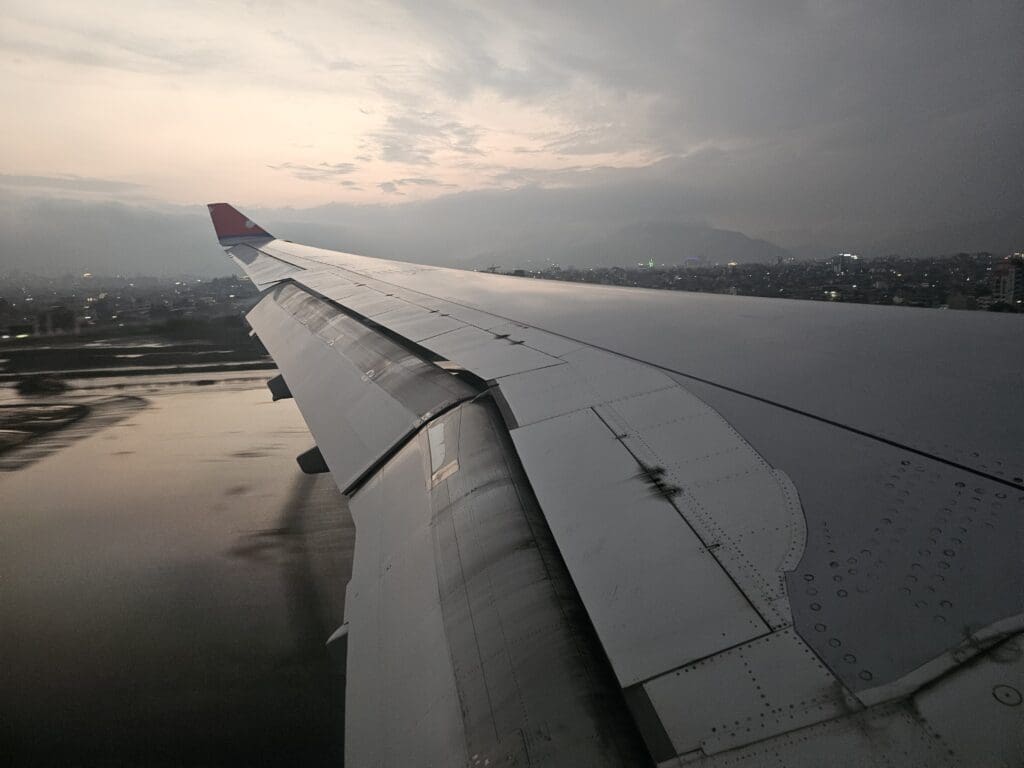
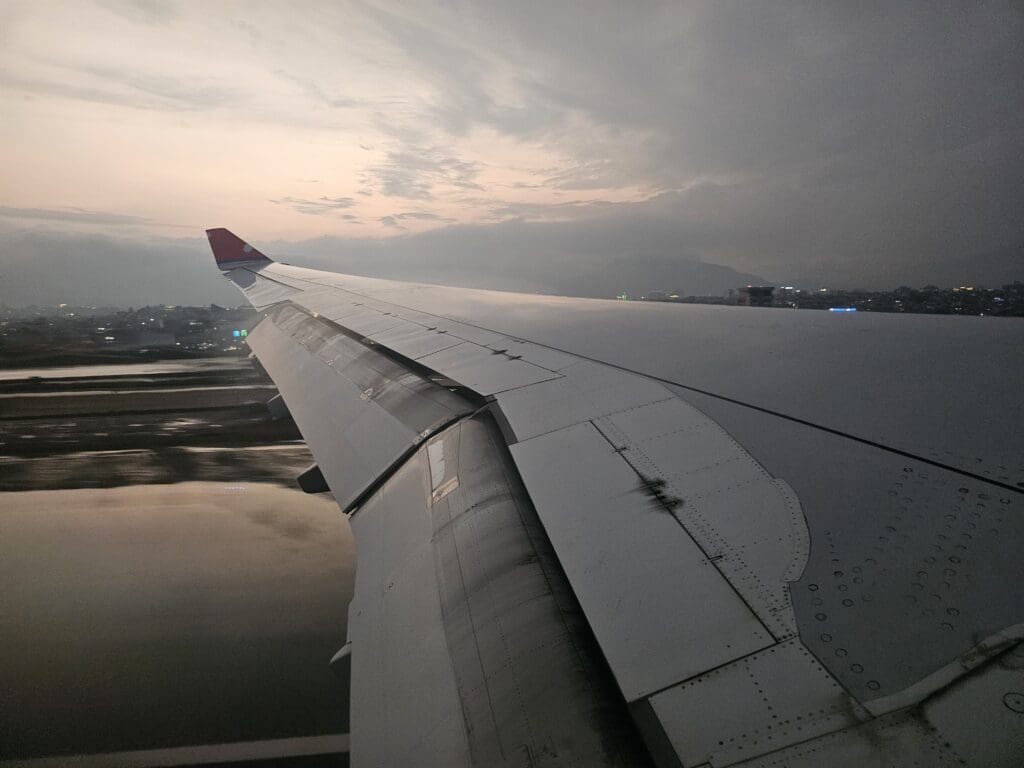
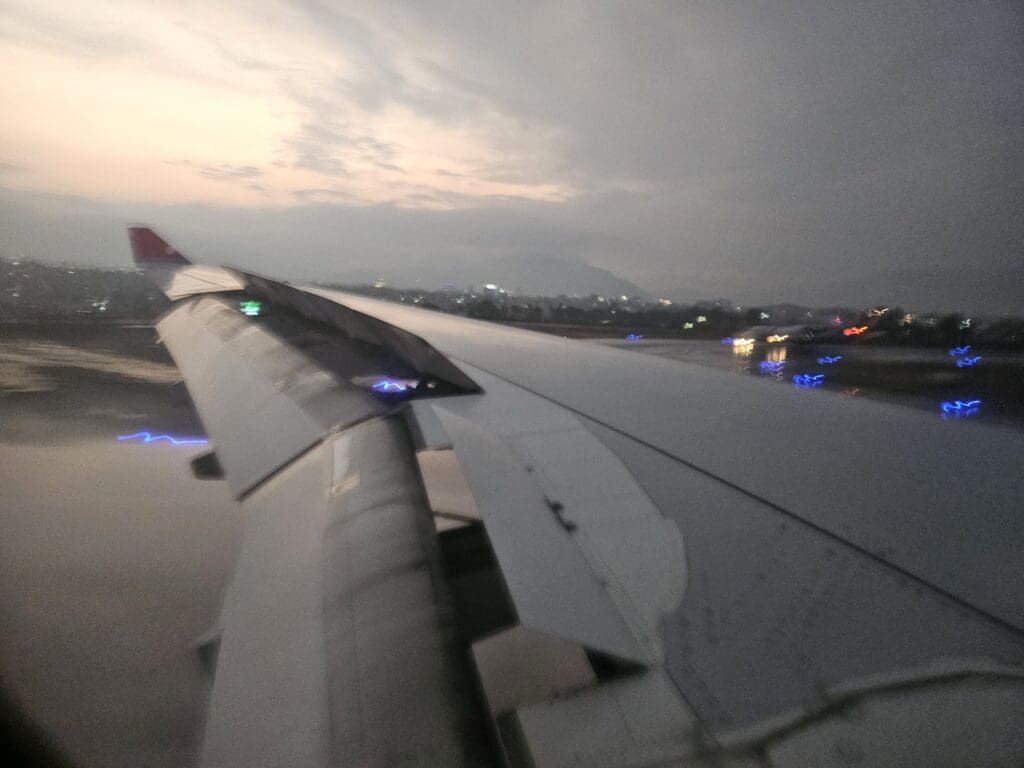
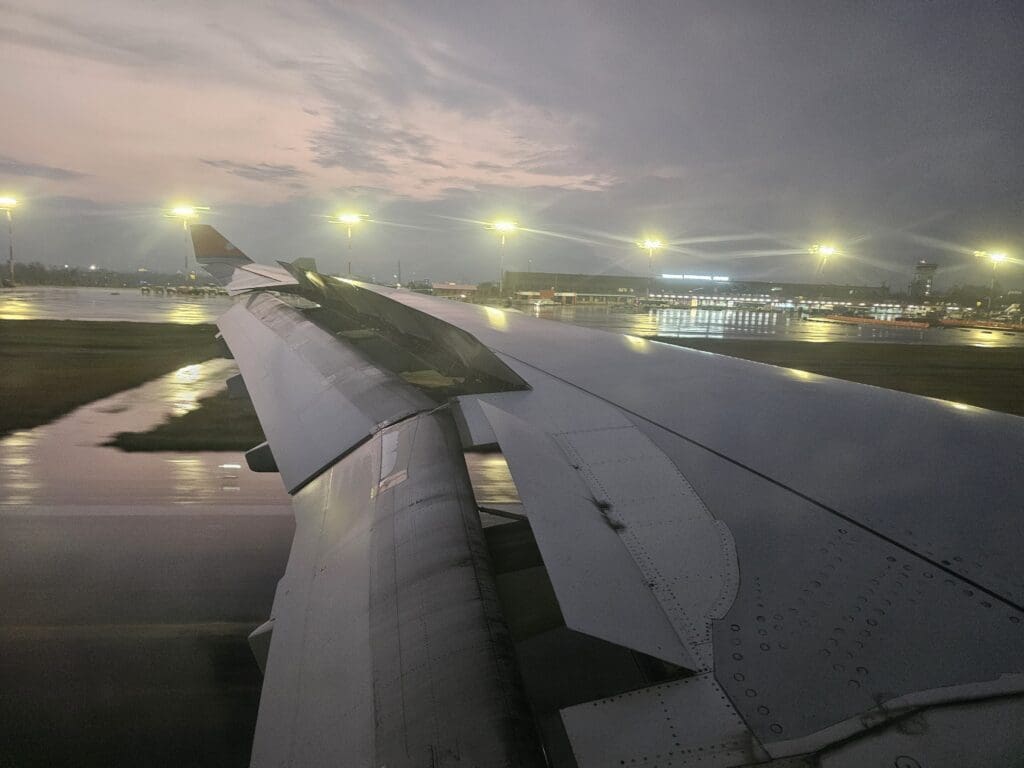
Vacating the runway, inside the cabin the Purser welcomed all to Kathmandu and thanked passengers for flying with Nepal Airlines, ending this with a request for passengers to remain seated until the seatbelt signs had been extinguished, an instruction that a significant number of passengers seemed to ignore. Three minutes after touching down on Nepali soil and 39 minutes behind schedule, the Airbus came to a halt at Stand 3, slotting in between the two international visitors. Upon coming to a halt, the two engines spooled down at which point many passengers jumped up and created chaos in the aisles. Looking outside, sets of Nepal Airlines covered airstairs were positioned up to the 2L and 4L doors and it wasn’t long before these were opened and disembarkation commenced.
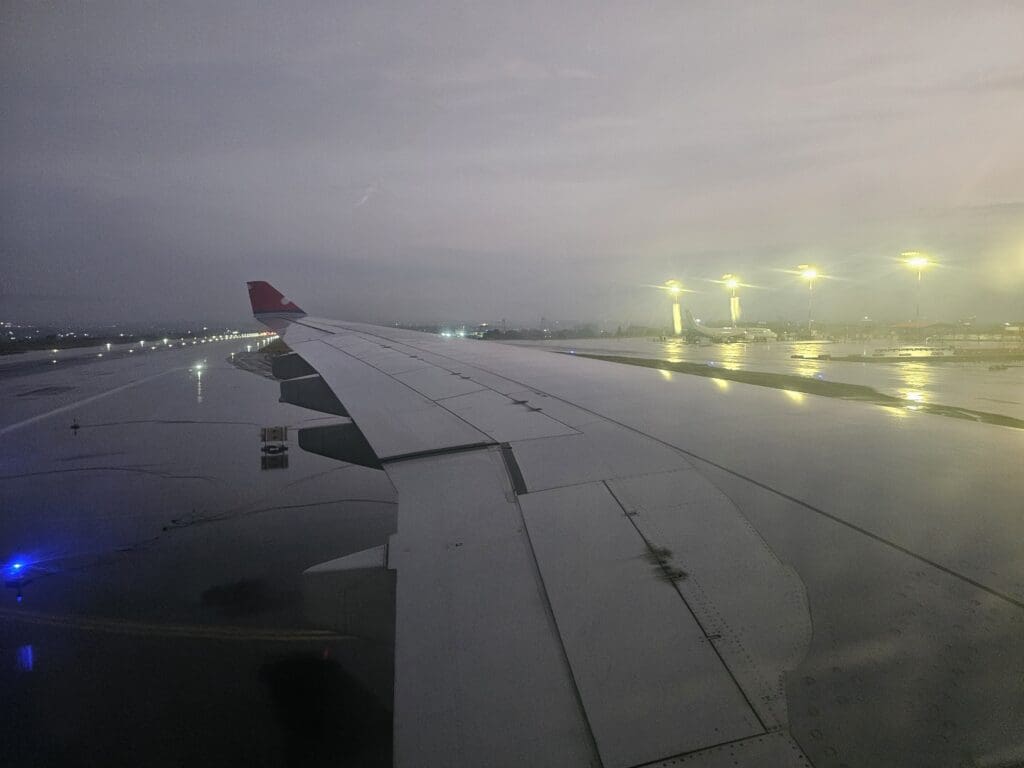
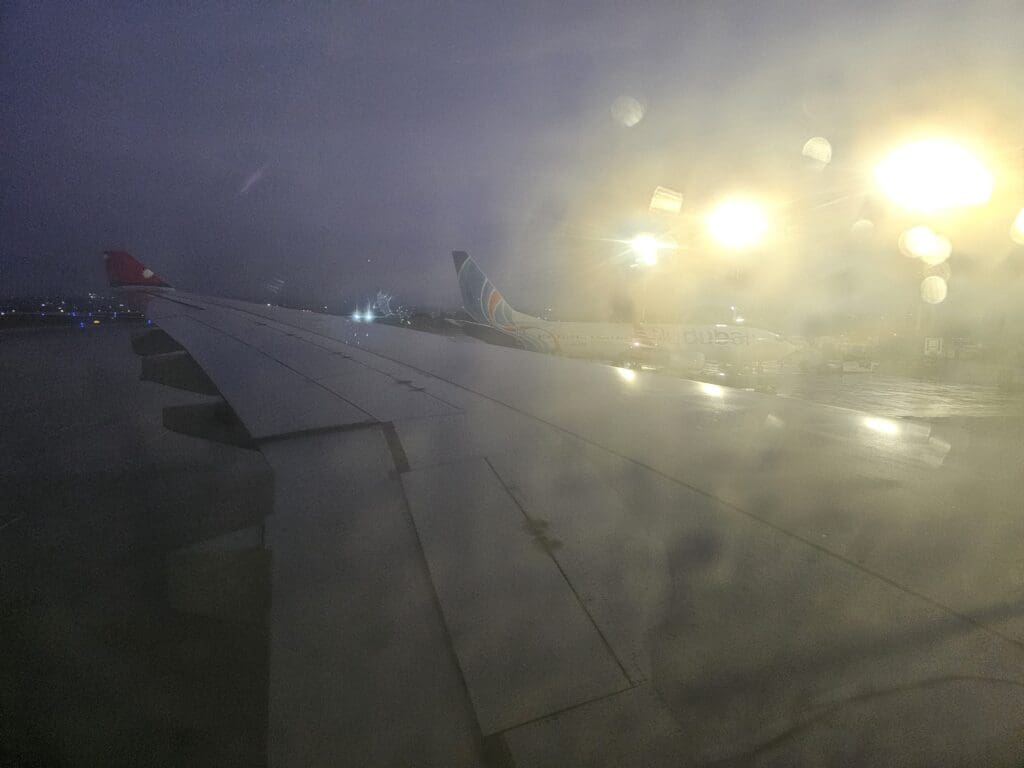
Not being in any rush to disembark, I took my time and ended up being one of the very final passengers to make their way off the aircraft. Making my way through the messy cabin, I soon reached the galley that separates the forward Economy section from the Airbus’ small Business cabin where I thanked the crew before heading down to ground level. Once there, I walked several steps through the rainy evening air before boarding the Nepal Airlines Cobus that would shuttle me to the terminal.
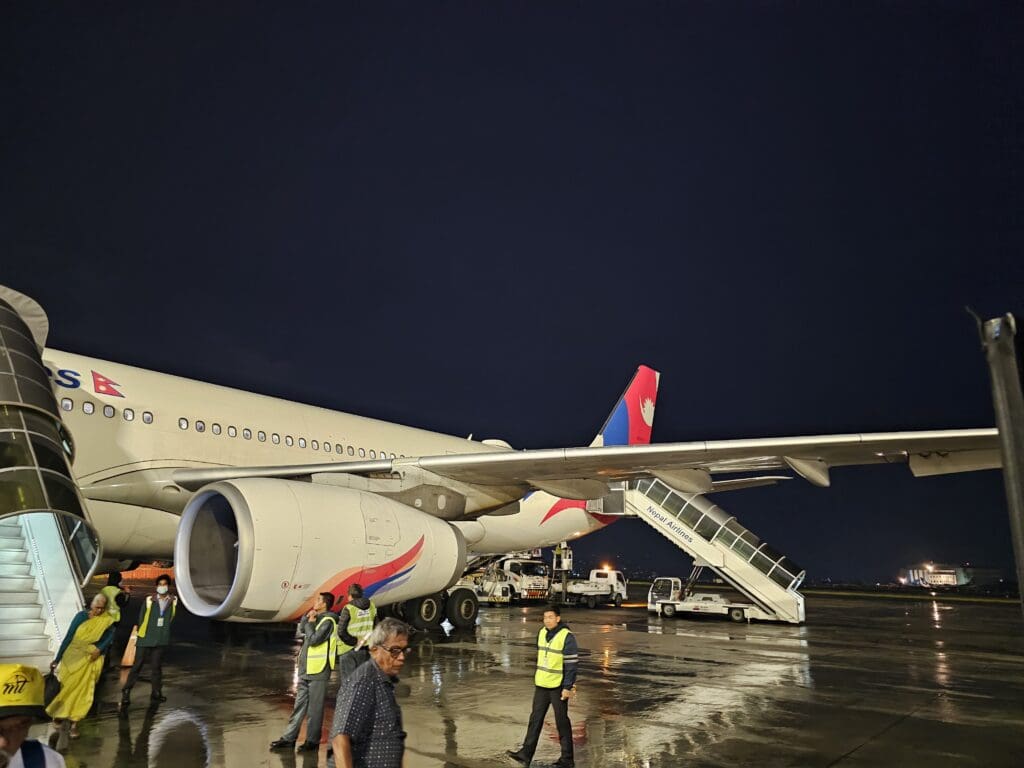
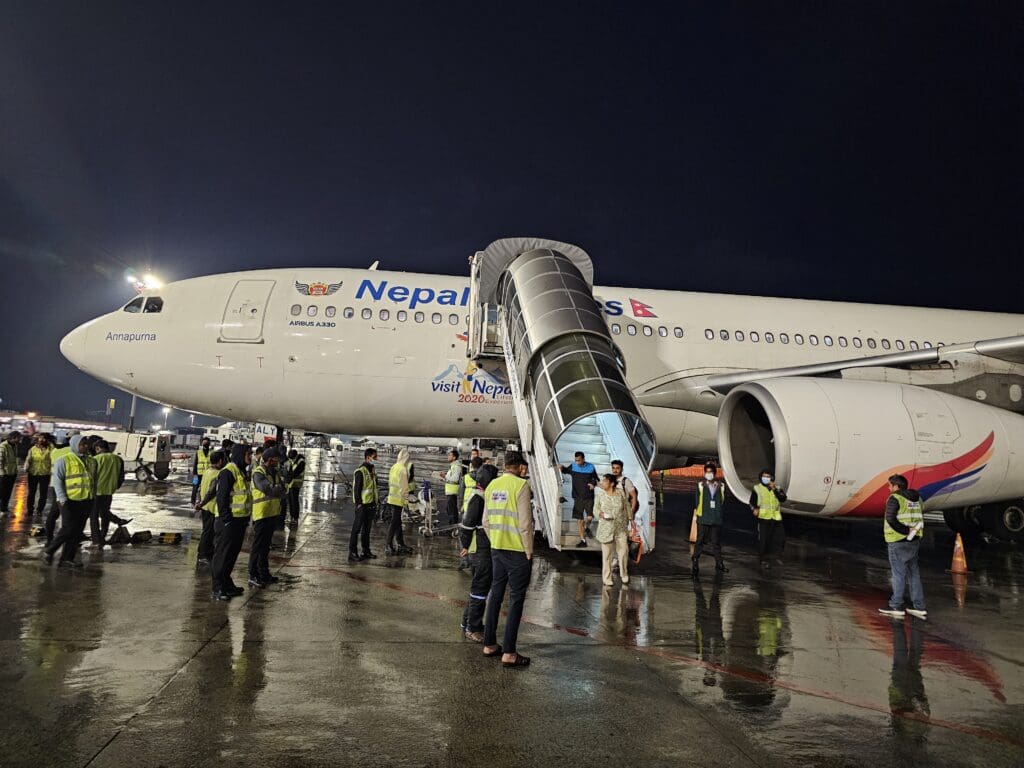
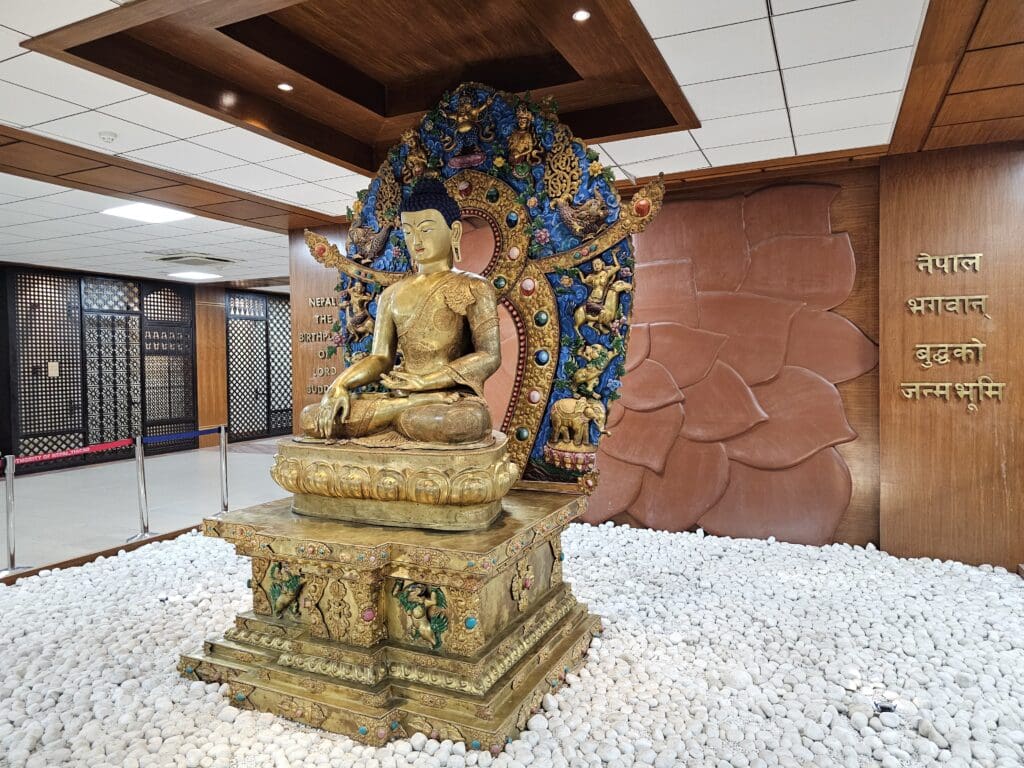
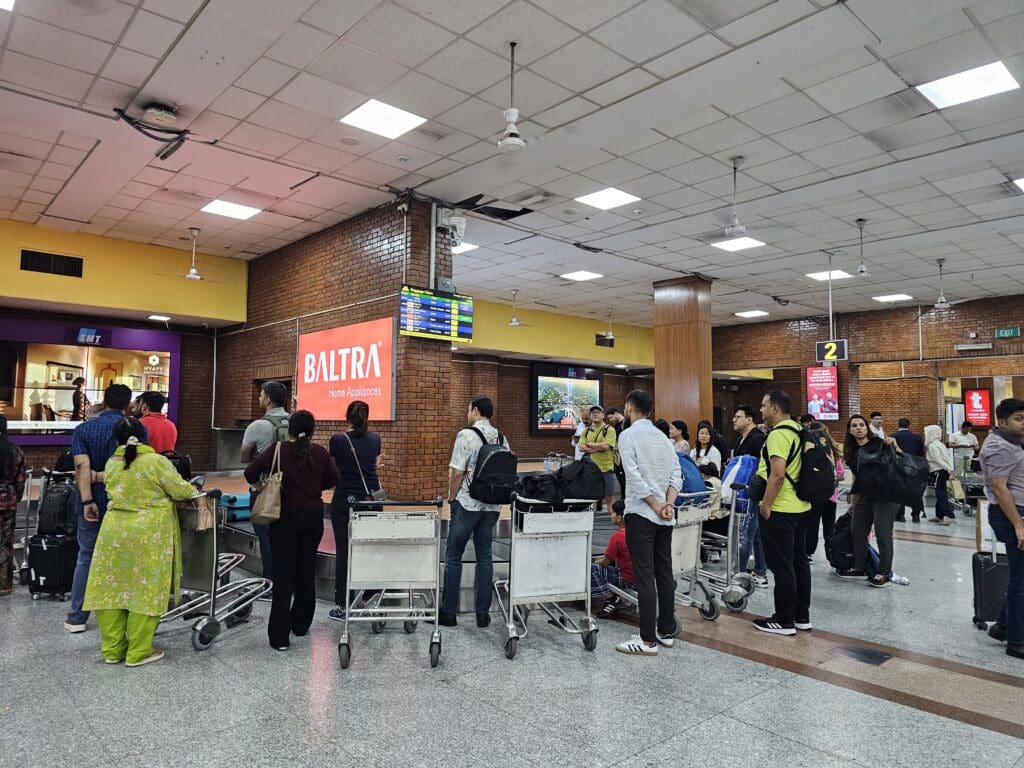
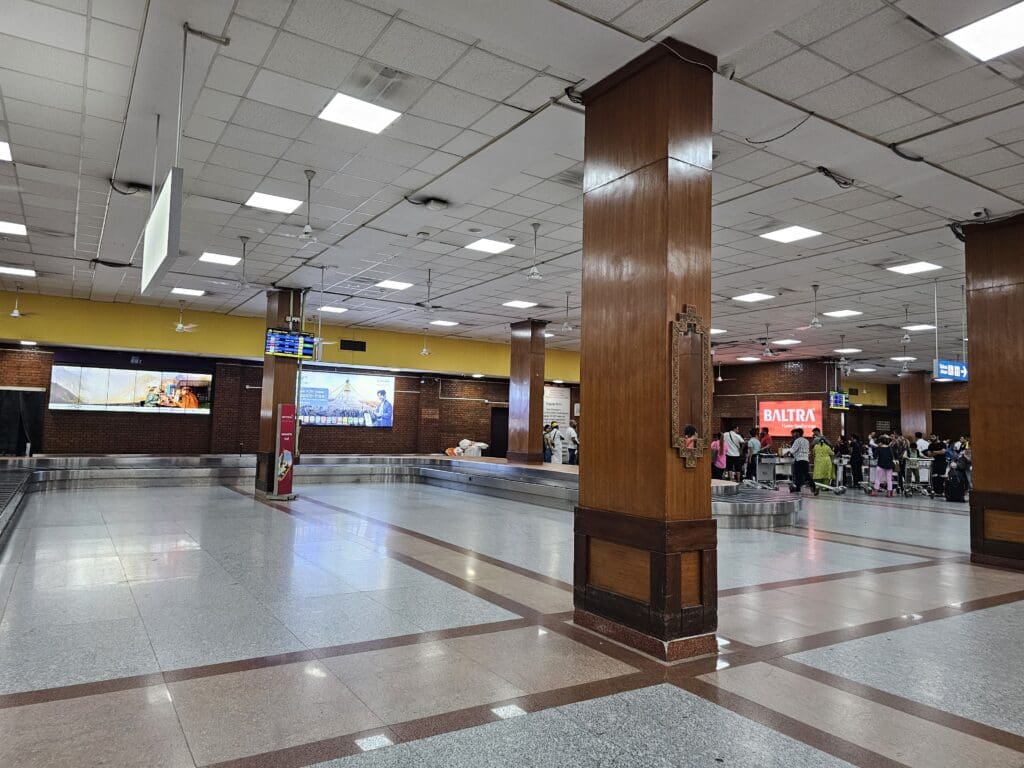
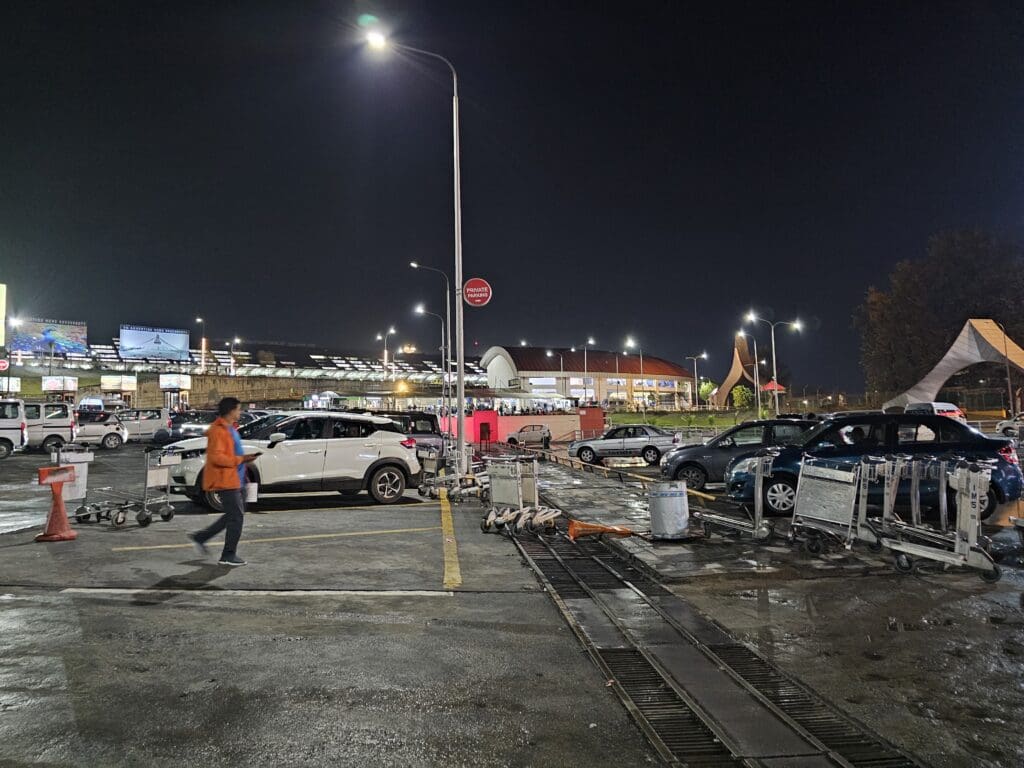
Despite parking directly opposite this, all passengers must be bussed to and from their aircraft in Kathmandu. Soon, we commenced the short journey to the immigration hall and once inside, I was delighted to find that this was reasonably quiet, with most from the Delhi service having already passed through. Having obtained a Nepali visa in London, entering Nepal was a largely painless and quick process, after which I continued onwards, eventually arriving at a baggage scanner where all inbound passengers were required to have their hand luggage scanned by customs officers to ensure that no prohibited items were being brought into the country. Immediately after this, I reached the baggage claim hall where a few minutes of waiting was in order before my suitcase appeared, at which point I picked this up and commenced the reasonably long walk to the landside arrivals portion of the international terminal.
Summary
Whilst I was happy to have sampled a new airline, in all honesty, I was not totally pleased with my experience with Nepal Airlines. Despite working efficiently during the flight, the crew were cold and not particularly welcoming, the aircraft was cramped and tired, and whilst the inflight meal was appreciated, this was not particularly memorable. Whilst I touched down in Kathmandu in one piece and not massively delayed, I have to say that based on my experience, I probably would not fly with Nepal Airlines again unless they were particularly cheap or I had no other option.