A Short Hop Across the North Sea: Amsterdam to Leeds Bradford on a KLM Cityhopper Embraer 175
This flight was taken as part of my journey from Seoul Incheon to Leeds Bradford. You can read about my first flight and all the background information about my trip here.
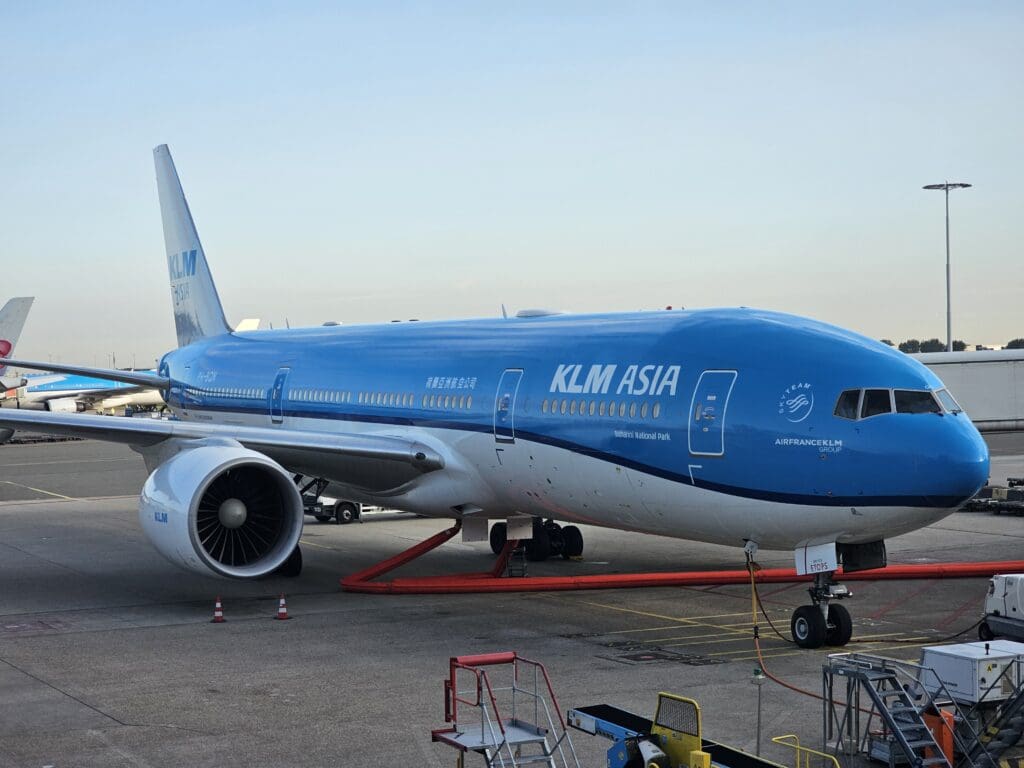
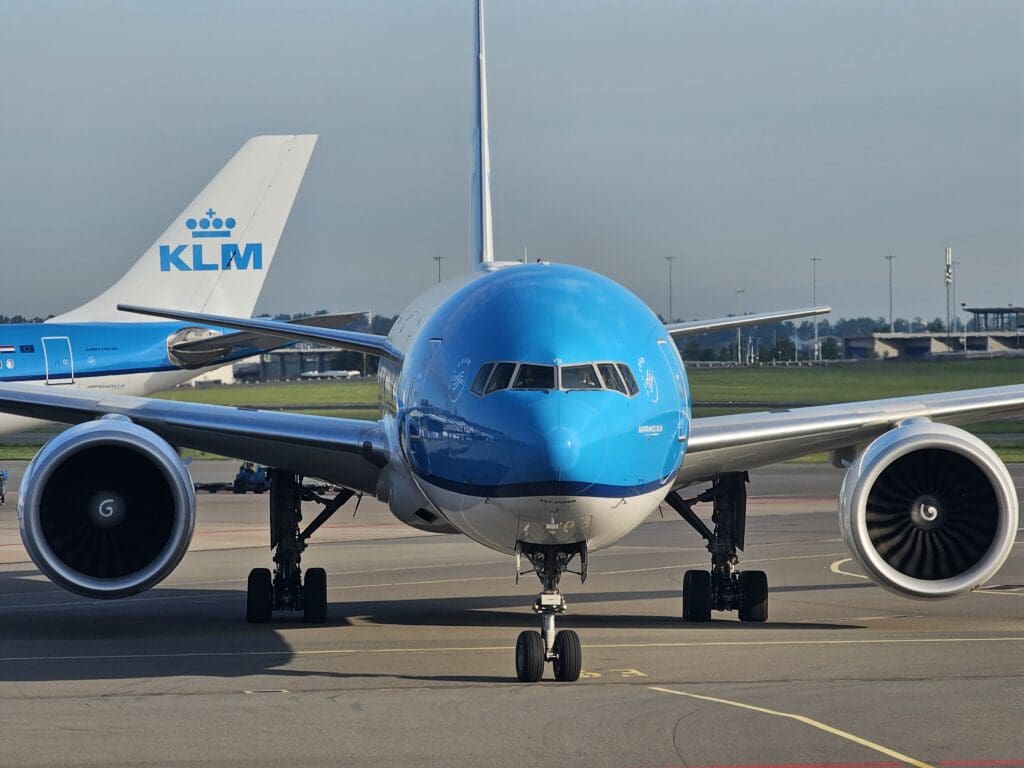
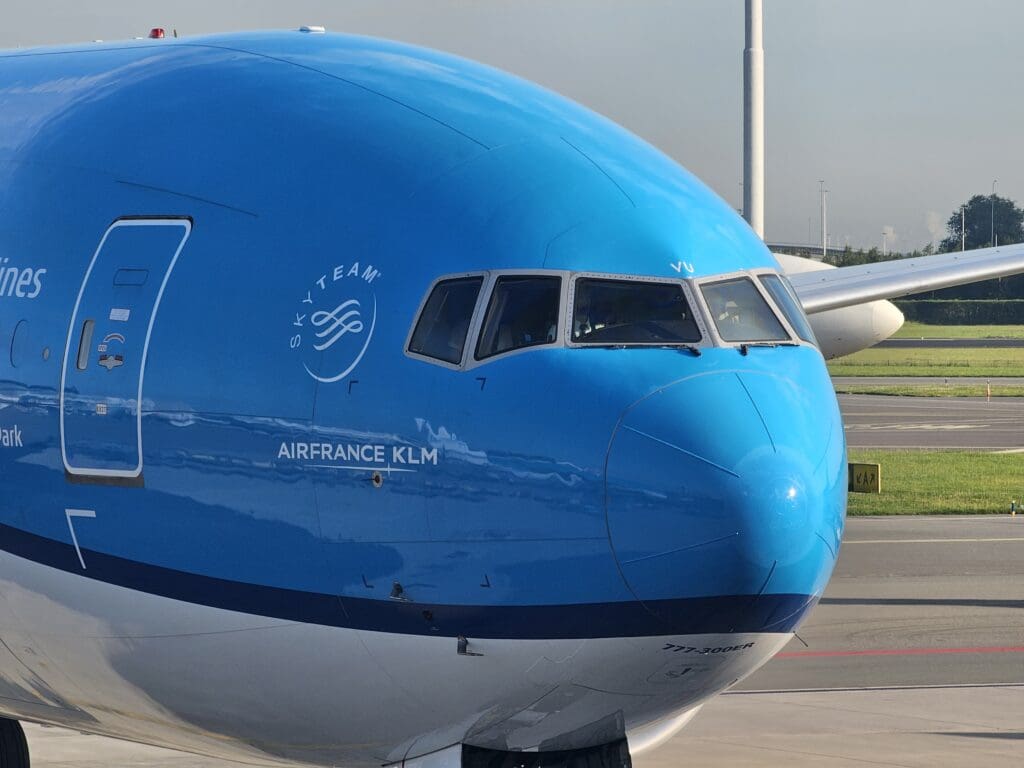
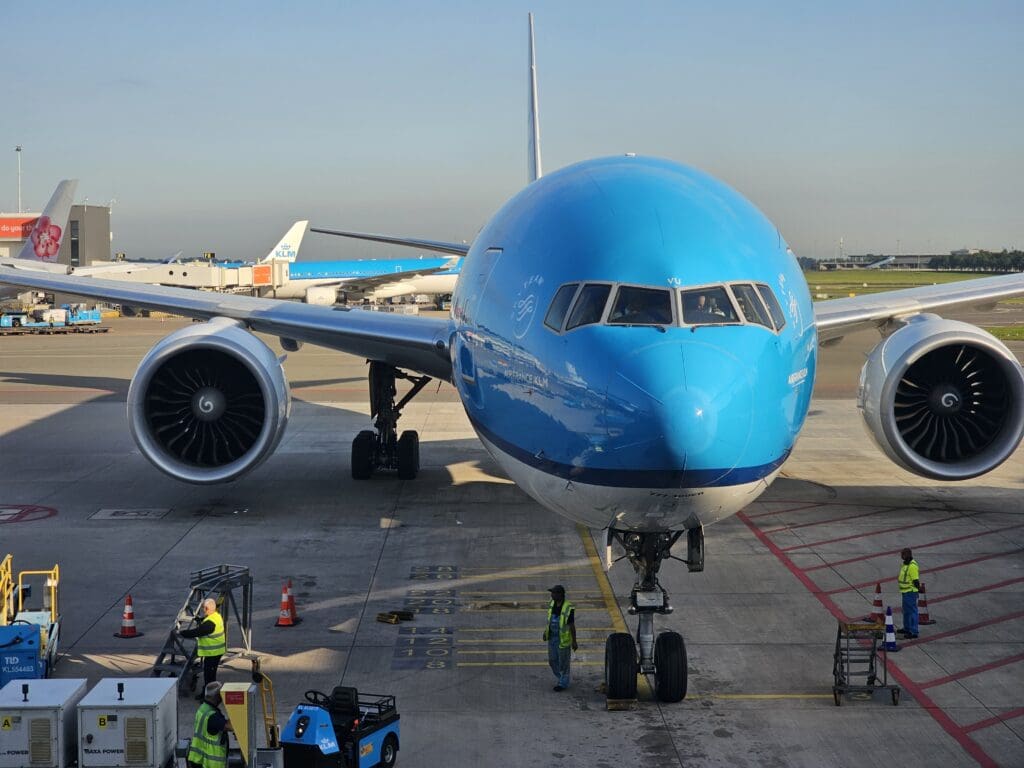
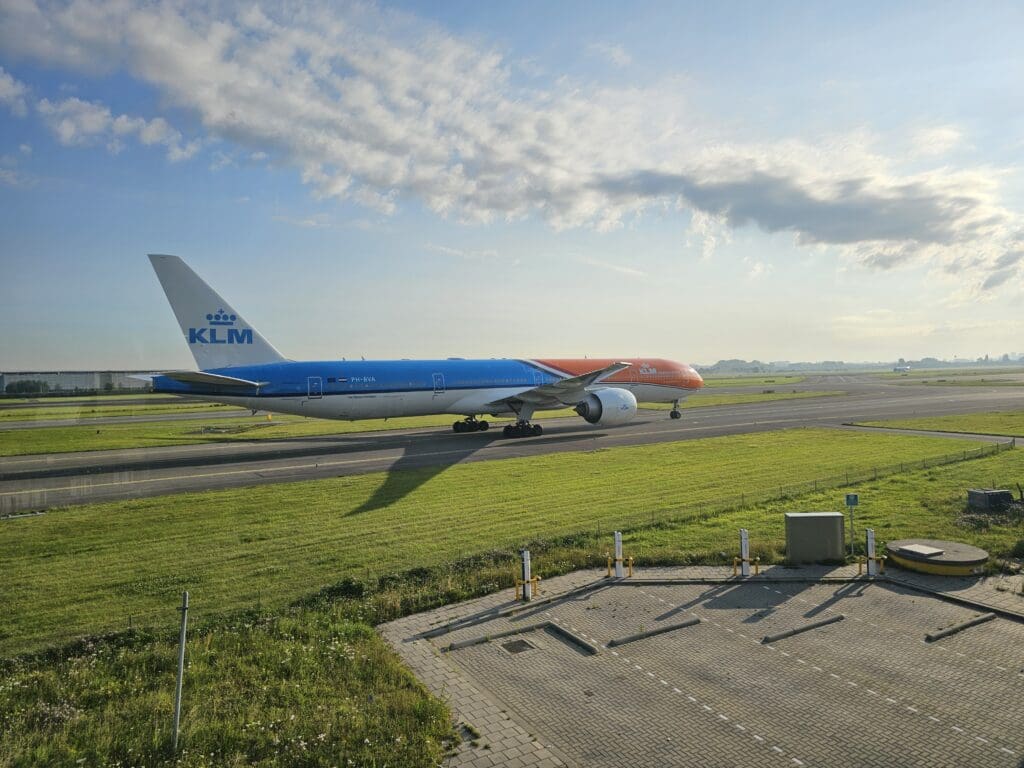
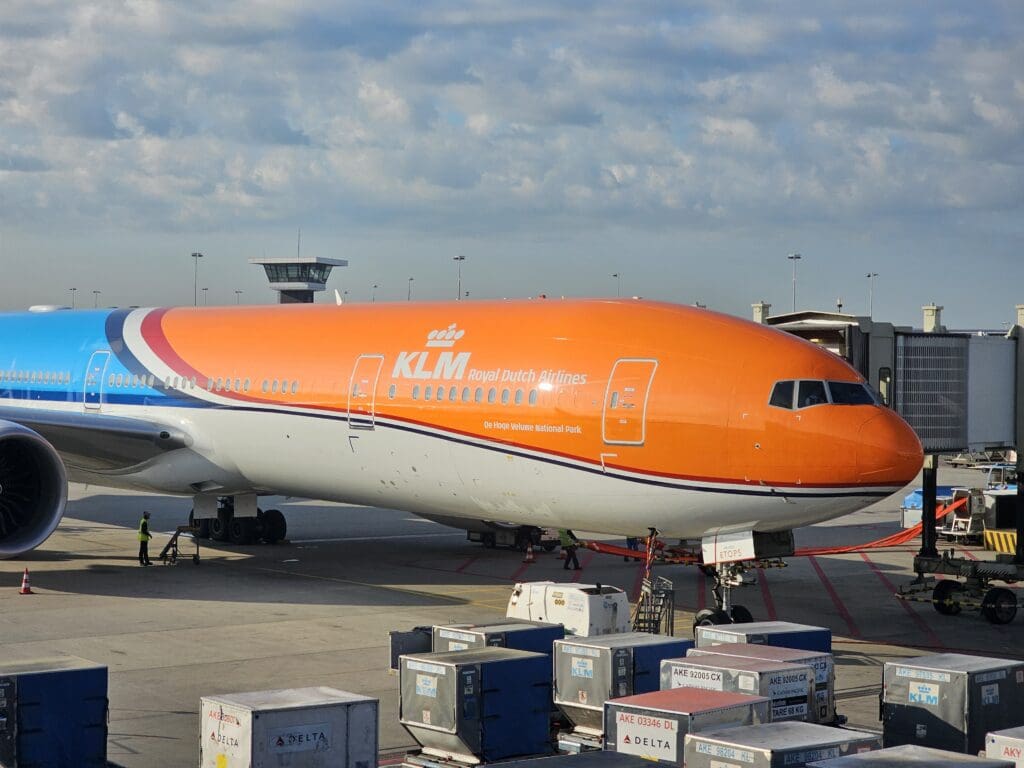
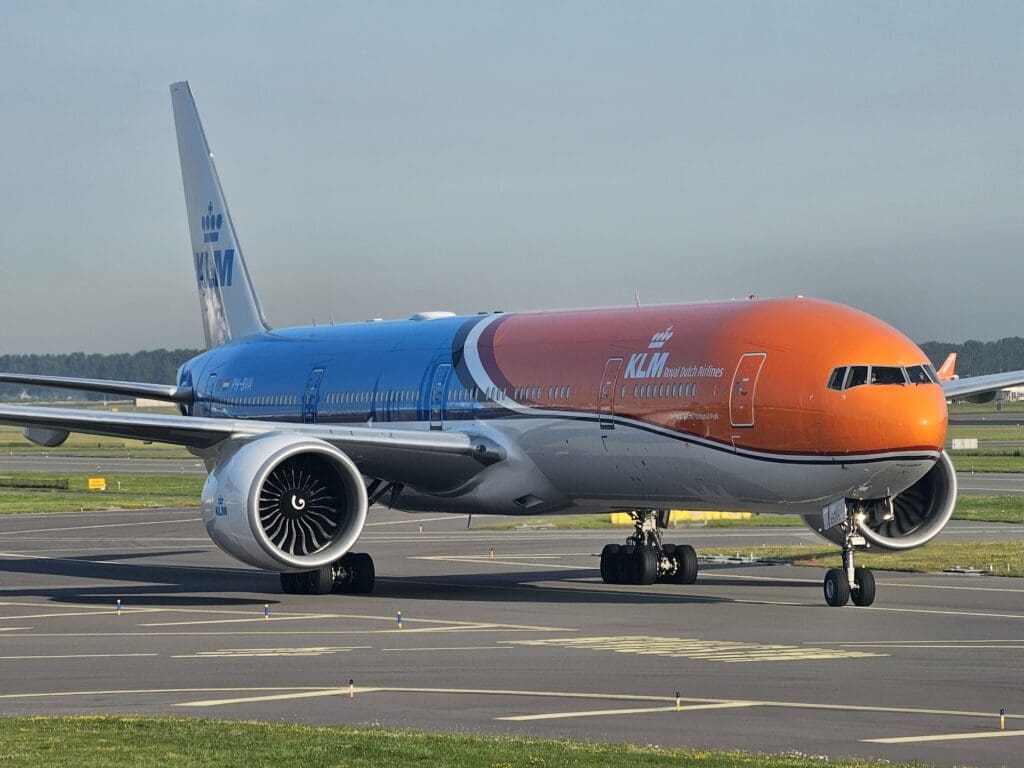
After spending well over thirteen hours cooped up onboard Yakushima, the KLM Boeing 777-300ER that had safely transported me thousands of miles across Eurasia from Korea, at 0540 I stepped off the aircraft and commenced my Amsterdam transit experience. Having come to a halt at Stand F7, this commenced with a rather long trek to the transfer area. However, needing to stretch my legs after the long overnight ride, and seeing as this walk offered great views of the apron where a constant stream of widebody jets could be seen arriving from far flung places, I could hardly complain about this long morning stroll.
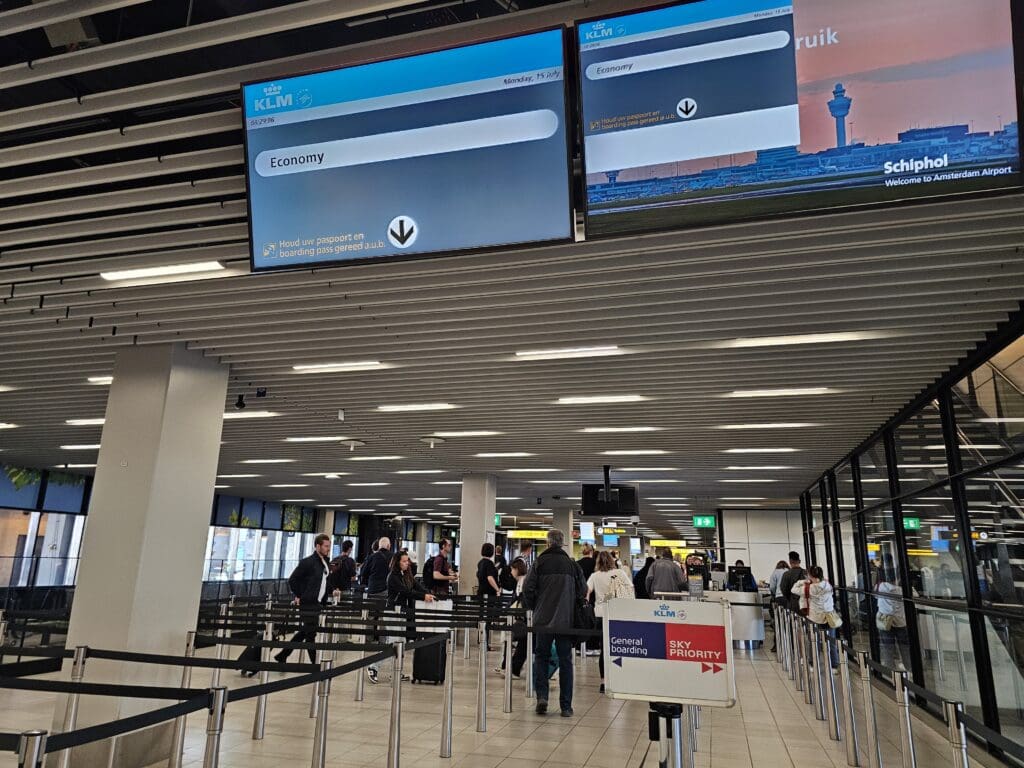
Eventually, I arrived at the terminal’s central hub where those who are bound for the Netherlands are sieved off and taken to immigration, whilst all those who are connecting in Amsterdam must pass through a security checkpoint. Thanks to the fact that my flight from Incheon had arrived almost thirty minutes ahead of schedule, I made it to the security area with just minutes to spare before the rush of passengers arriving on KLM’s services from across Africa and North America arrived. Delighted to be greeted by nothing more than a short queue, I joined this with the expectation that I wouldn’t have to stand around for too long. In the end, thanks to a lack of staff and limited number of open checkpoints, it took about ten minutes before I was directed towards an open checkpoint. Unfortunately, this didn’t end up being the most efficient or smoothest security experience as I would have to wait around for ten minutes in order for my bags to be swabbed. Needless to say, this didn’t get my Amsterdam transit experience off to the most fantastic start, although seeing as I had plenty of time before my flight to Leeds, I was in no major rush.
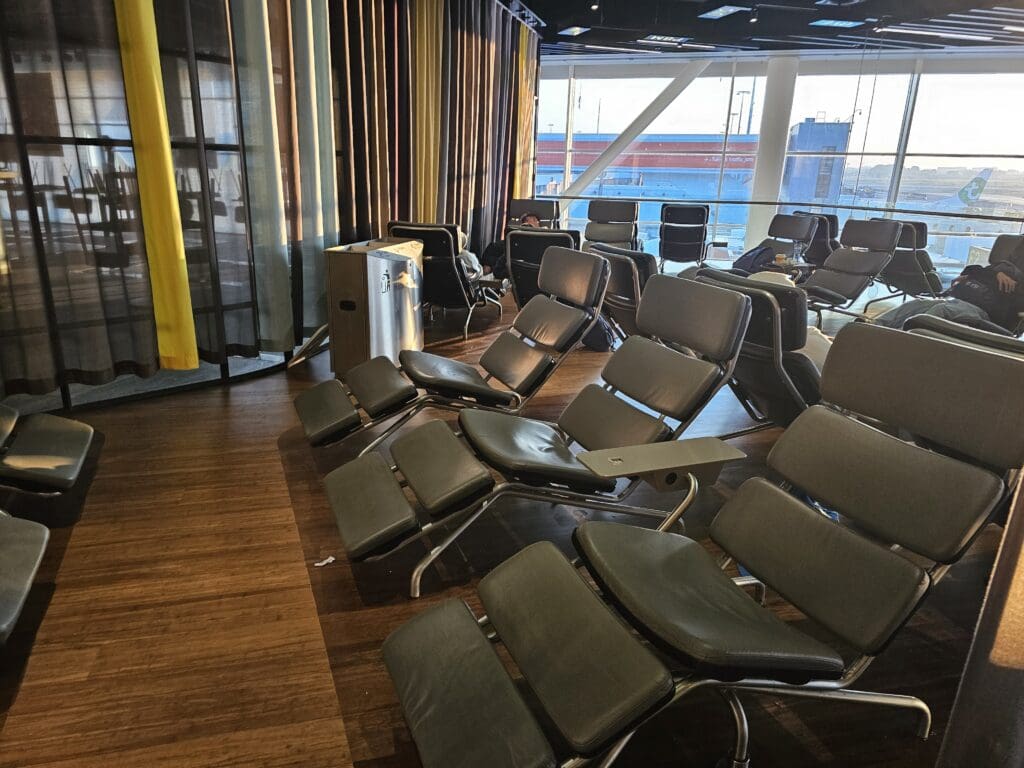
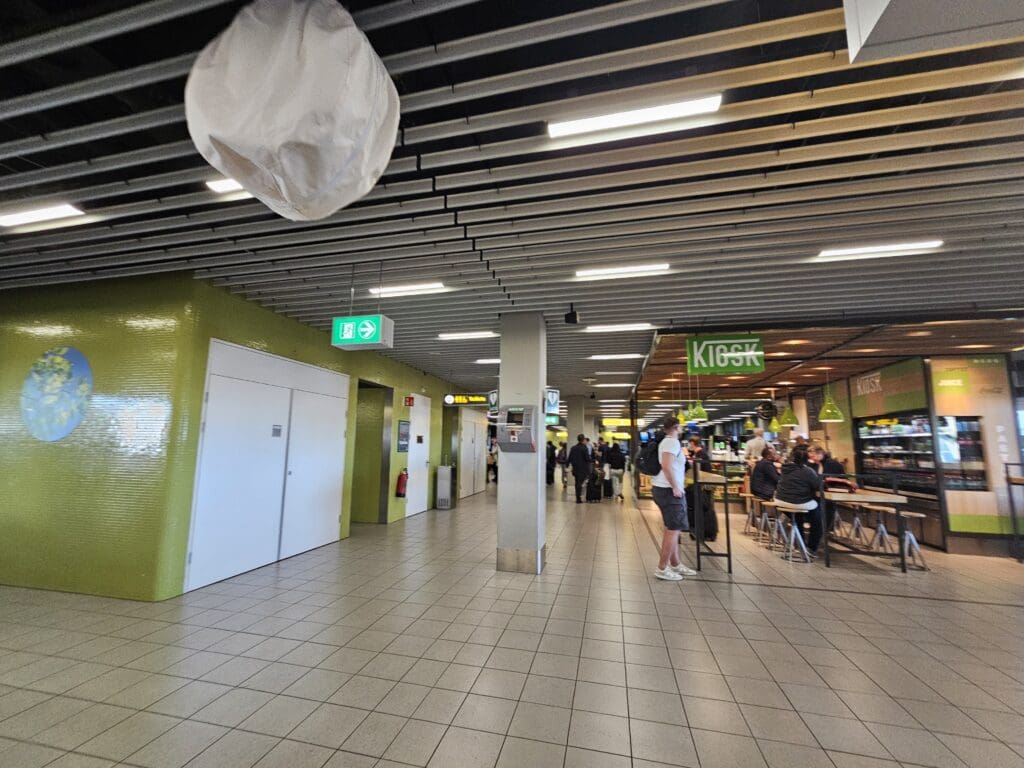
Almost immediately after passing through security, I emerged in the main hub of Schiphol Airport’s non-Schengen airside area. Focusing on the terminal’s layout, Schiphol Airport is home to six piers, of which two are reserved for Schengen flights and thus sit on the other side of an immigration checkpoint (if travelling from the non-Schengen part of the terminal). Focusing first on the main hub, this spans two floors and is home to many of the terminal’s shops and eateries. Meanwhile plenty of seating is on offer that ranges from orthodox spartan airport benches, to more comfortable and luxurious recliners, ideal for a long nap. Meanwhile, several (perhaps fake?) trees could be found in the main hub, creating a nice green atmosphere.
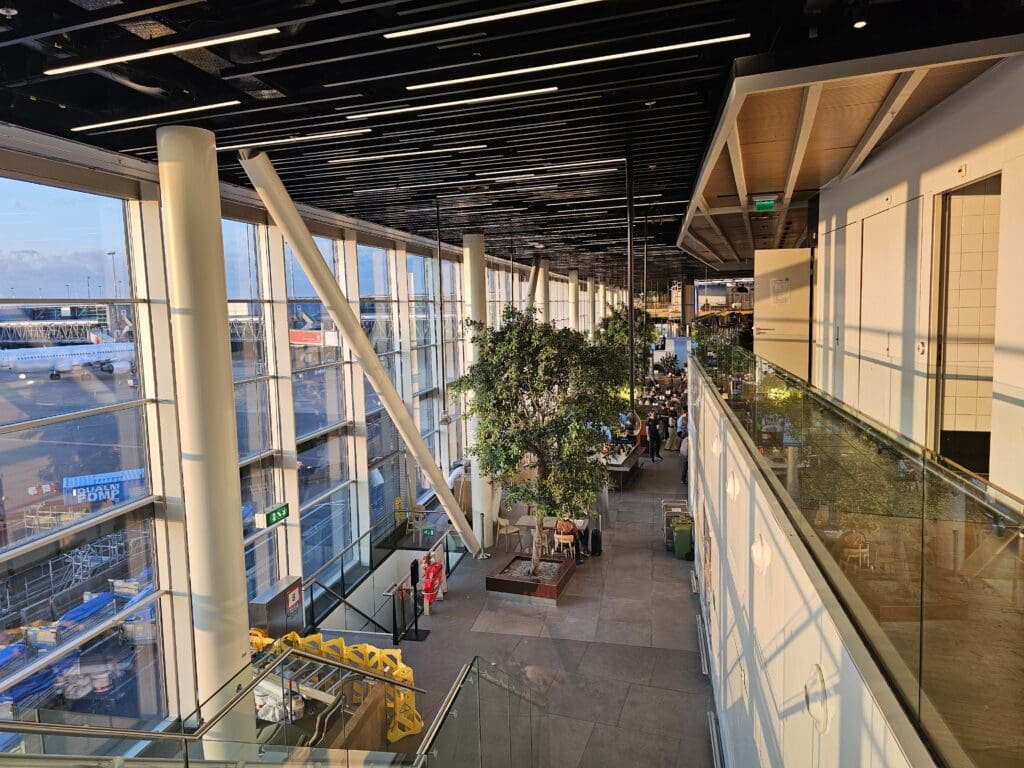
Being one of Europe’s major air hubs, as you would expect, the terminal features a wide array of shops, cafés, restaurants and bars throughout. Those fancying something to eat or drink could stop by at one of the 43 eateries located throughout the terminal, with these offering a range of cuisines, including local specialities. However, those looking for any cheap food or drink options would have been disappointed, with even a coffee from the local McDonalds setting me back around €4! Meanwhile, an impressive total of 40 shops are offered throughout, ranging from convenience stores and souvenir shops, to luxury brand outlets such as Burberry, Bvlgari and Hermès for those looking to part with a small fortune. Not needing to do any shopping, and seeing as I had breakfast courtesy of KLM on my flight over from Korea, I decided to skip any substantial food offerings. Thus once I had my overpriced McDonald’s coffee in hand, I continued exploring the terminal. As you would expect being a major hub and given the time of day, this was awash with passengers scurrying about in all directions, many of whom were connecting from long to short haul flights, along with a fair number of westbound transatlantic passengers who were soon to head off on morning services to the Caribbean and North America.
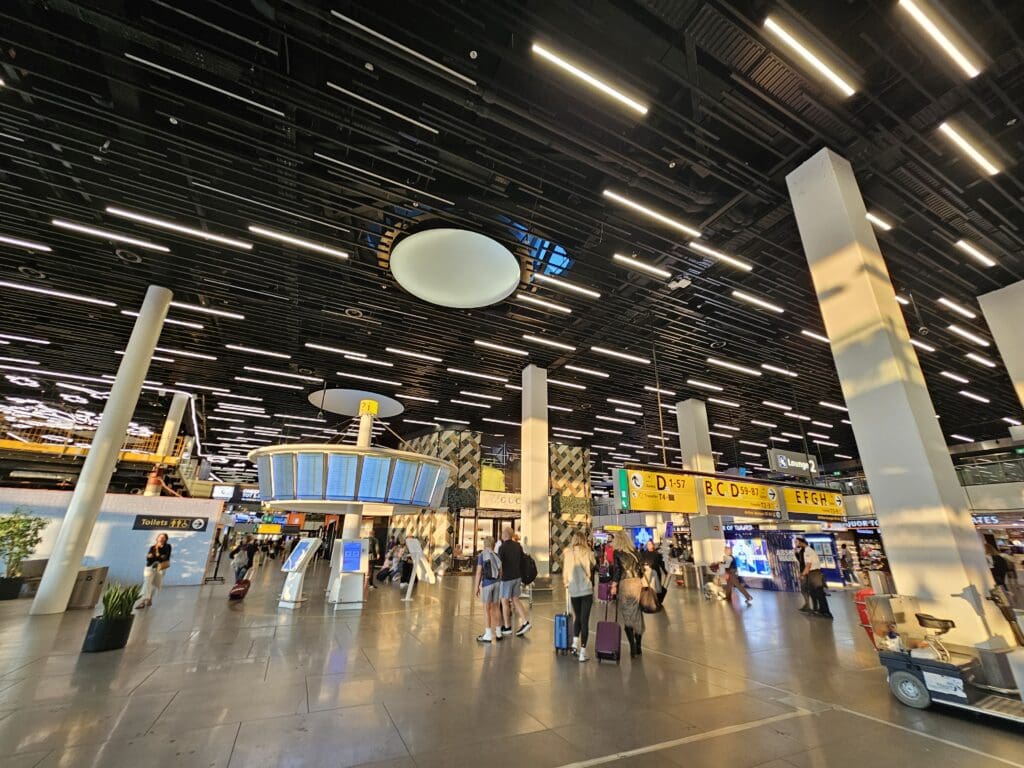
As airport terminals go, I have definitely passed through worse airports than Amsterdam Schiphol. Yet with that said, I am by no means a massive fan of the airport. Not only was this rather tired looking in places, with broken furniture, graffiti and general signs of wear and tear, I came across plenty of spots that appeared to have been off the radars of the local cleaning teams, with rubbish strewn about several seating areas and some disgustingly dirty toilets. On the plus side, unlike my overnight stay in the terminal back in August 2022, I failed to spot any mice scurrying about that morning, although perhaps these only emerge at night when there are few passengers.
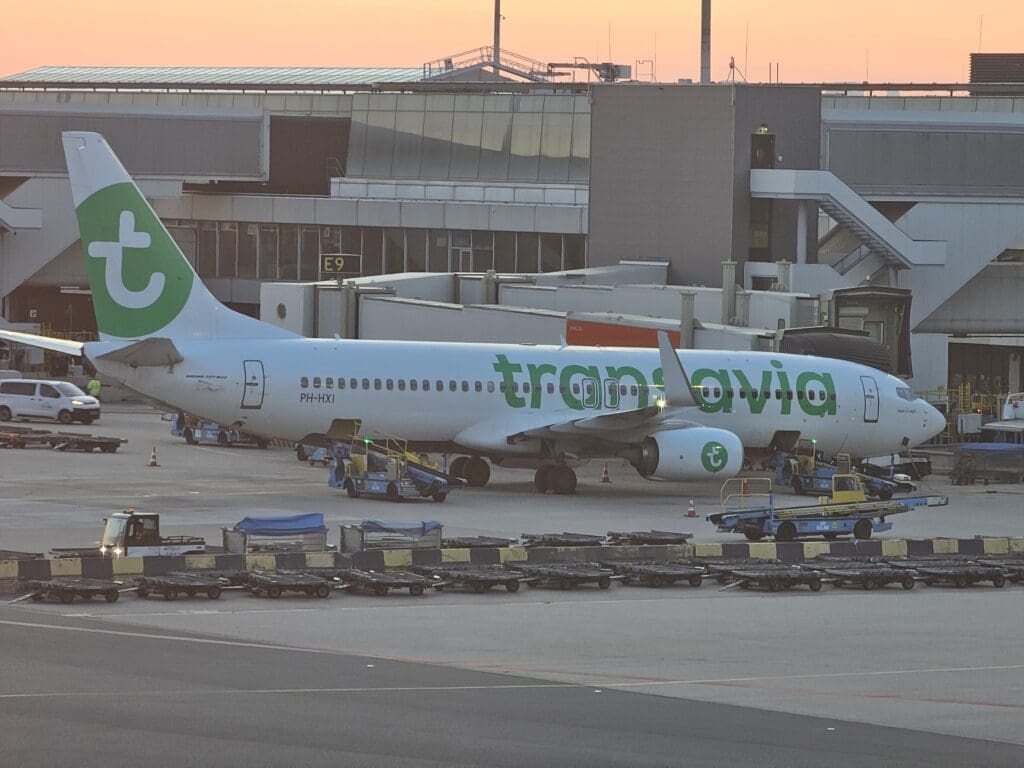
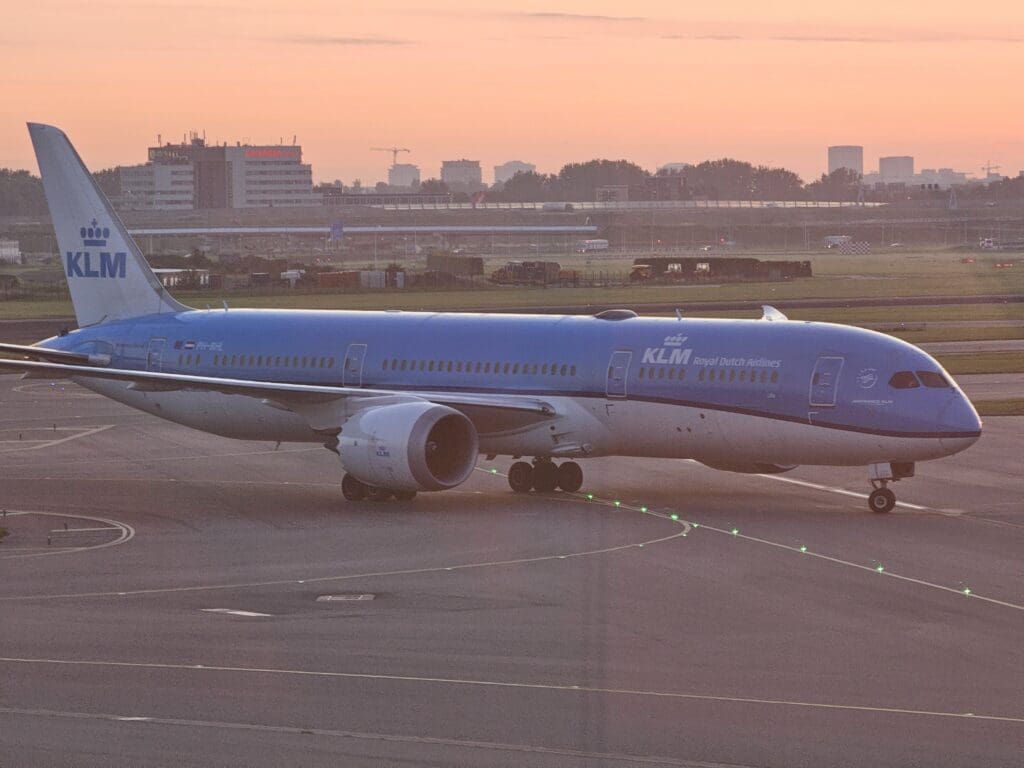
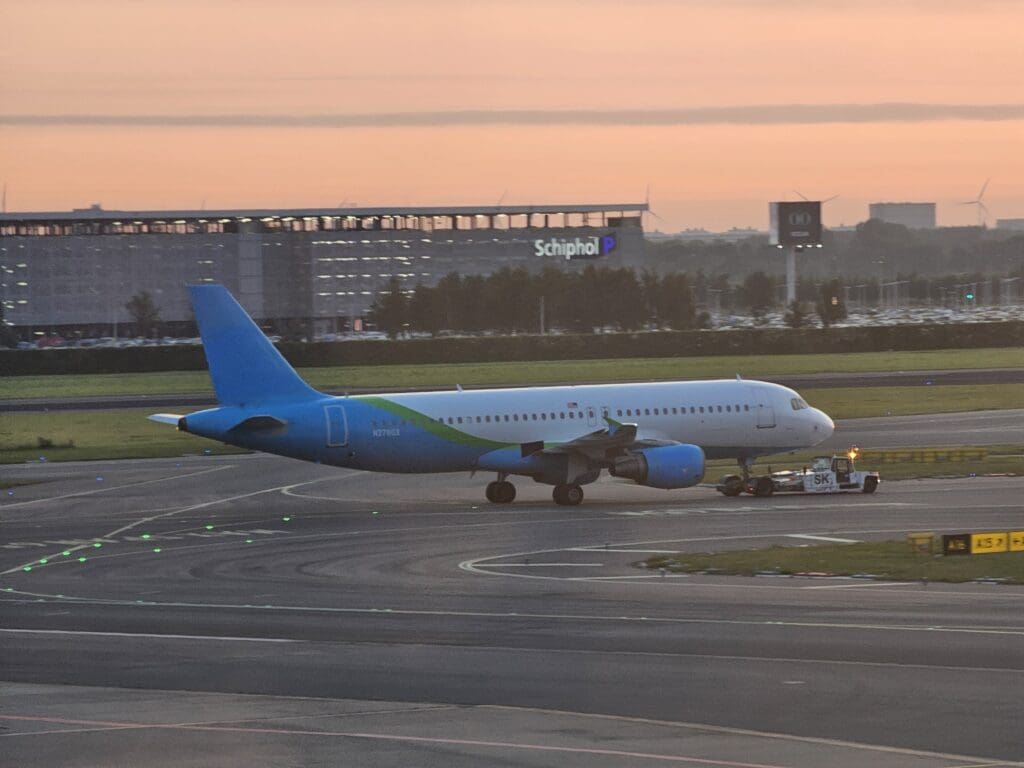
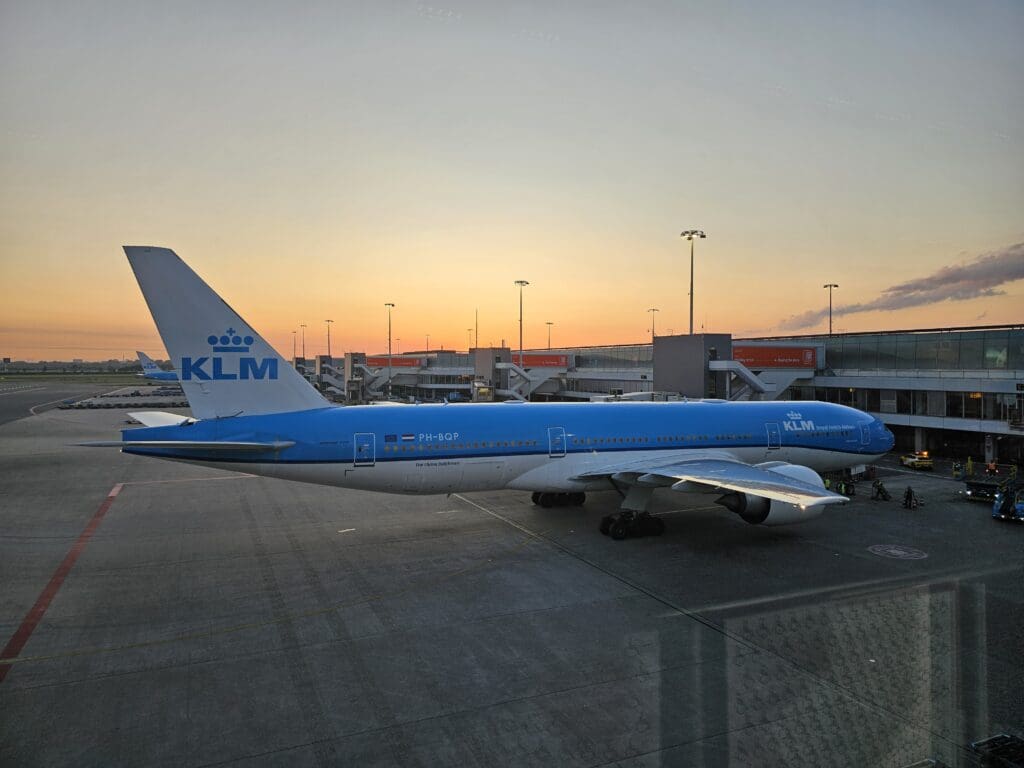
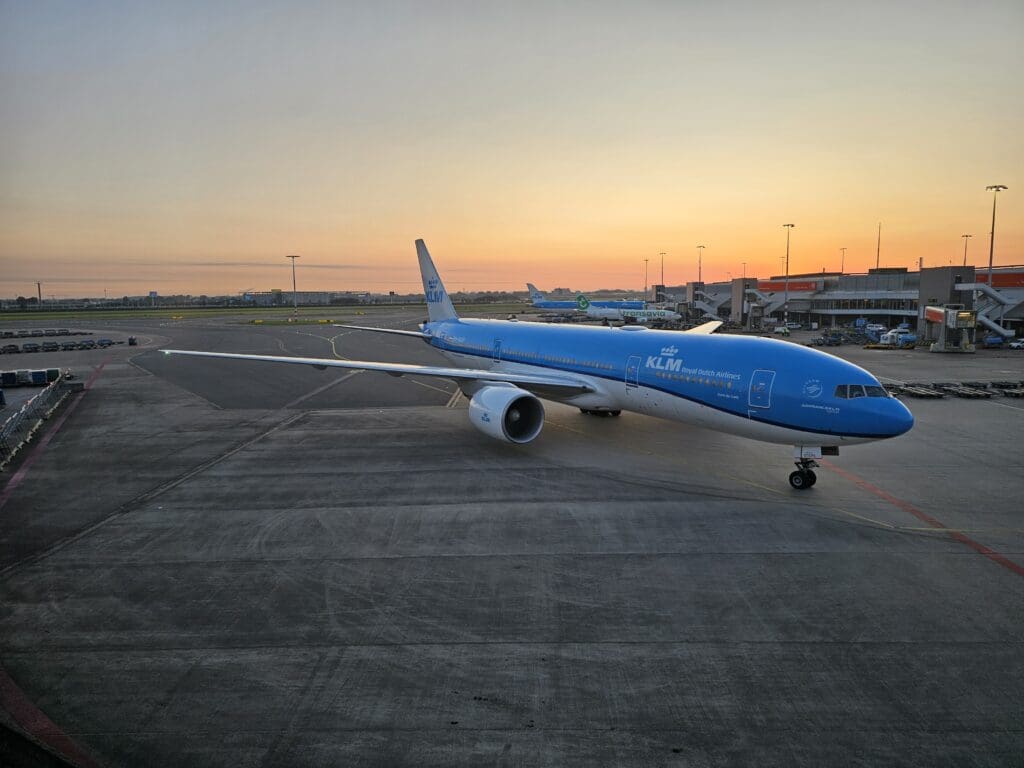
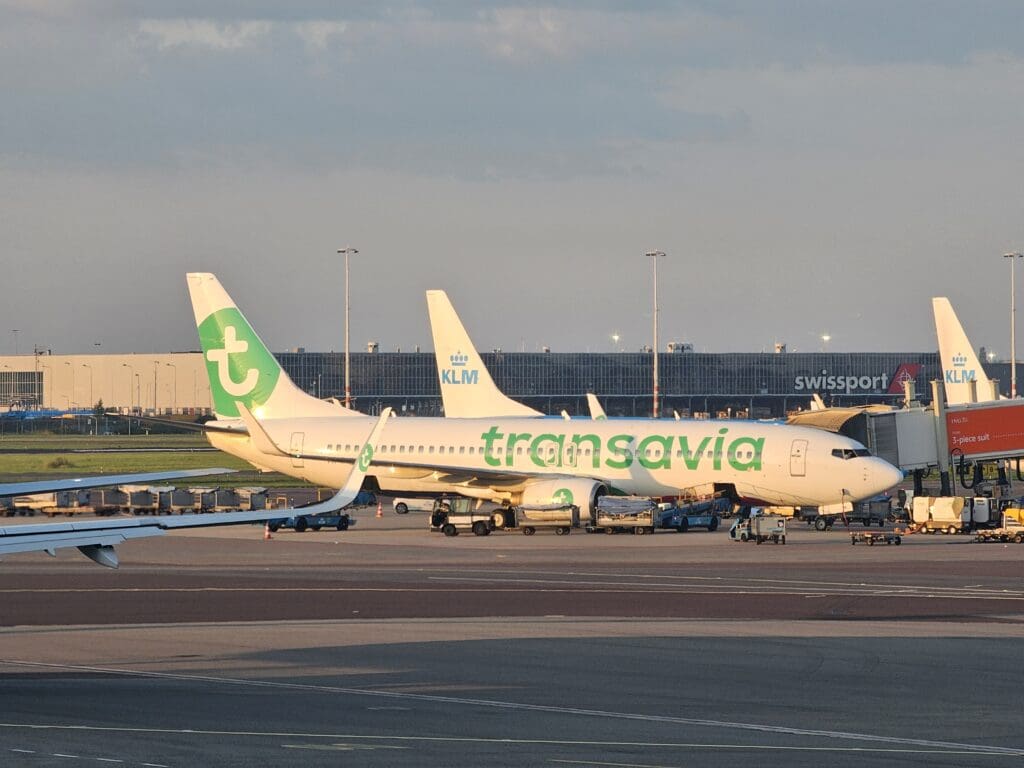
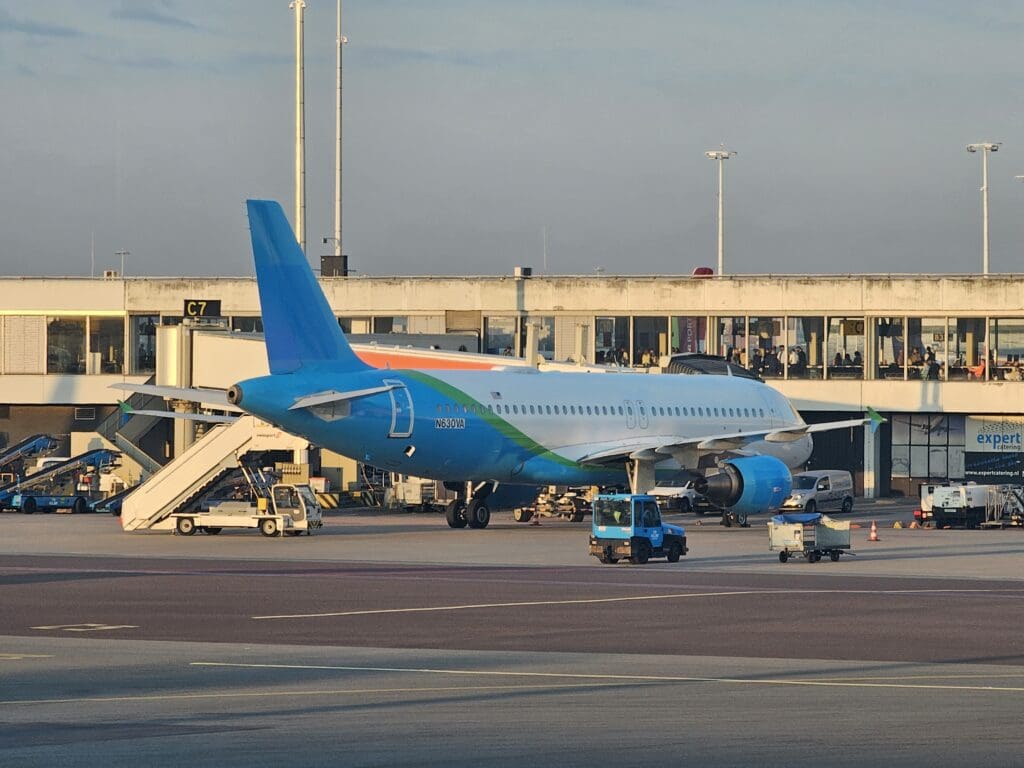
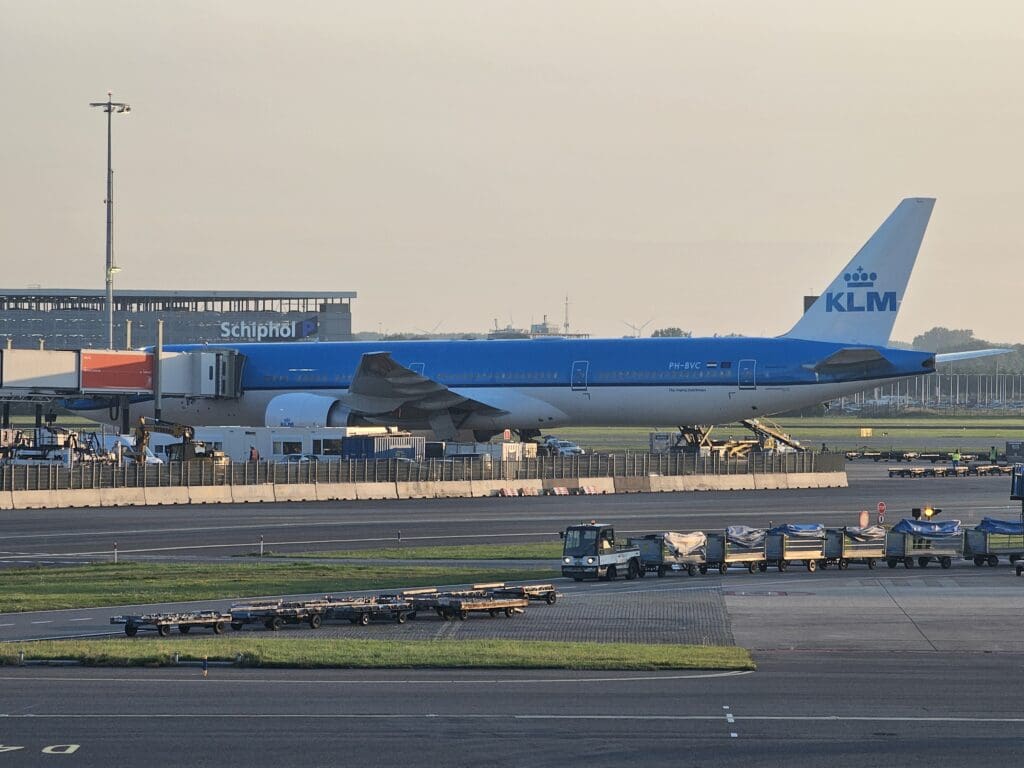
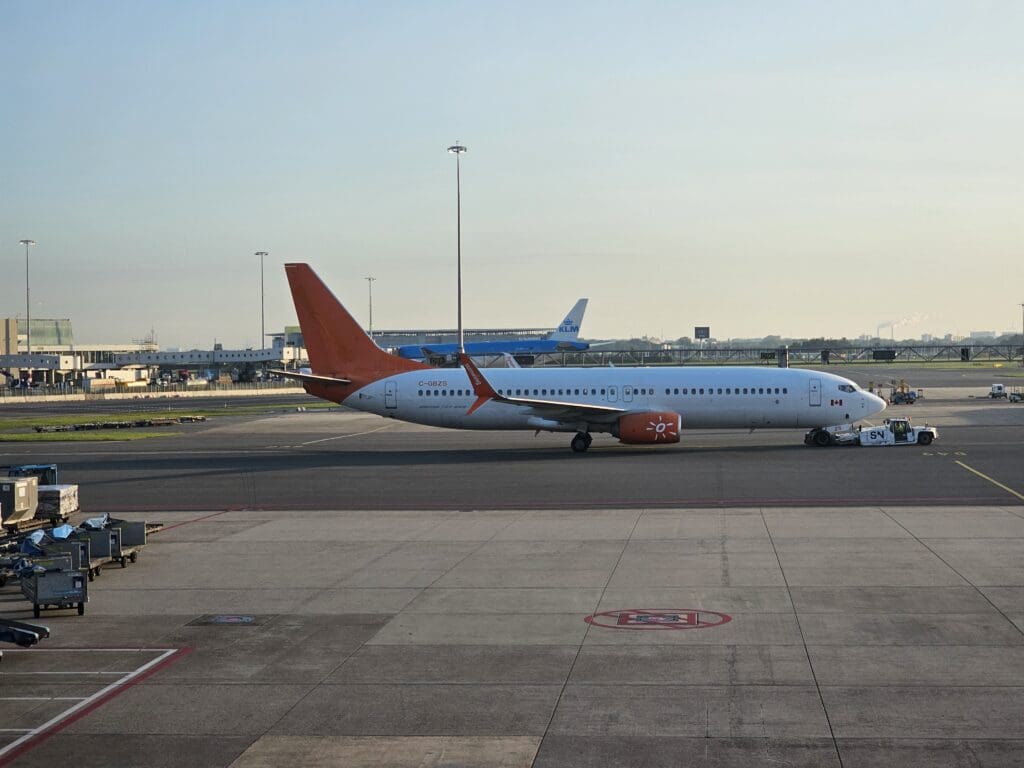
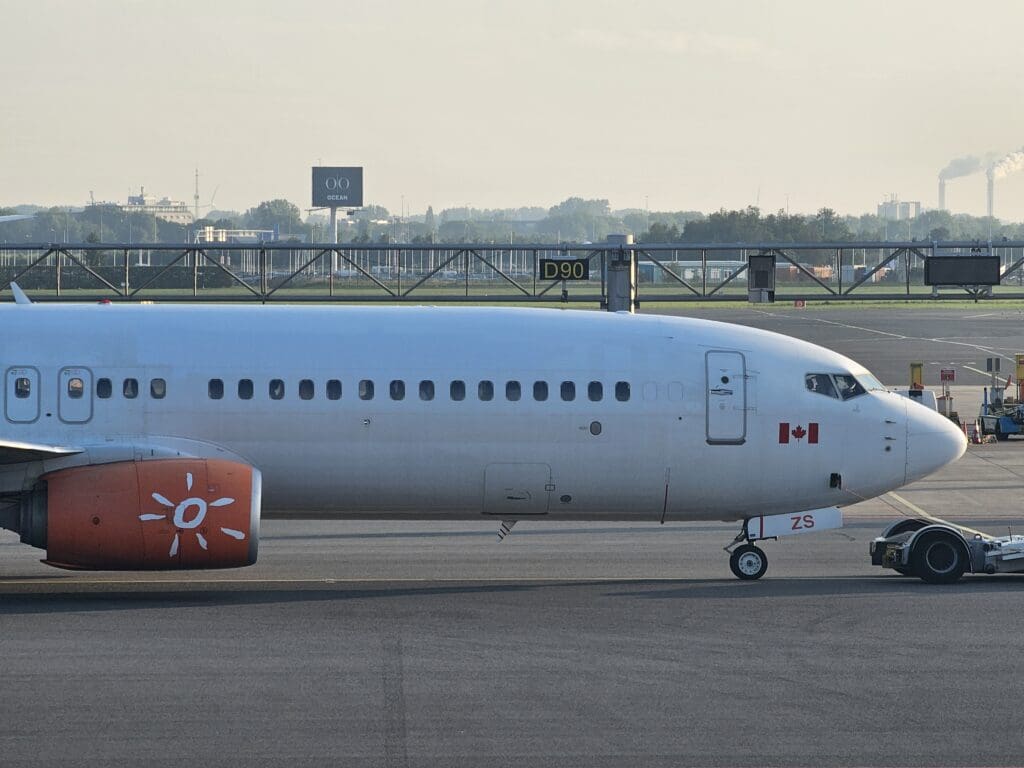
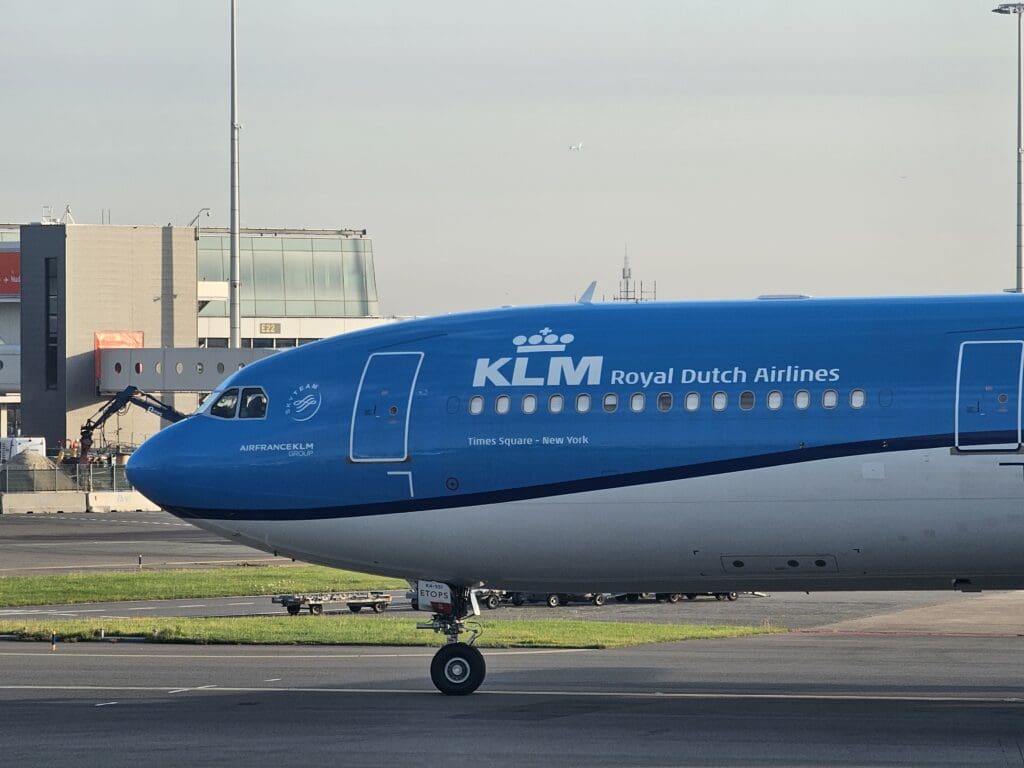
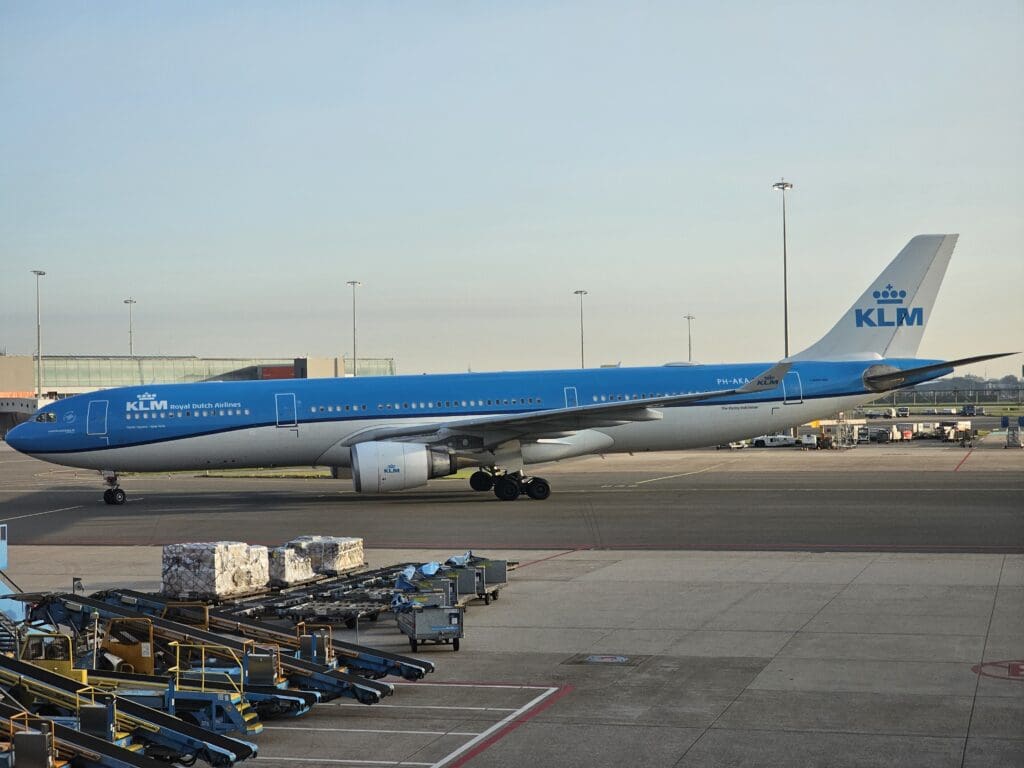
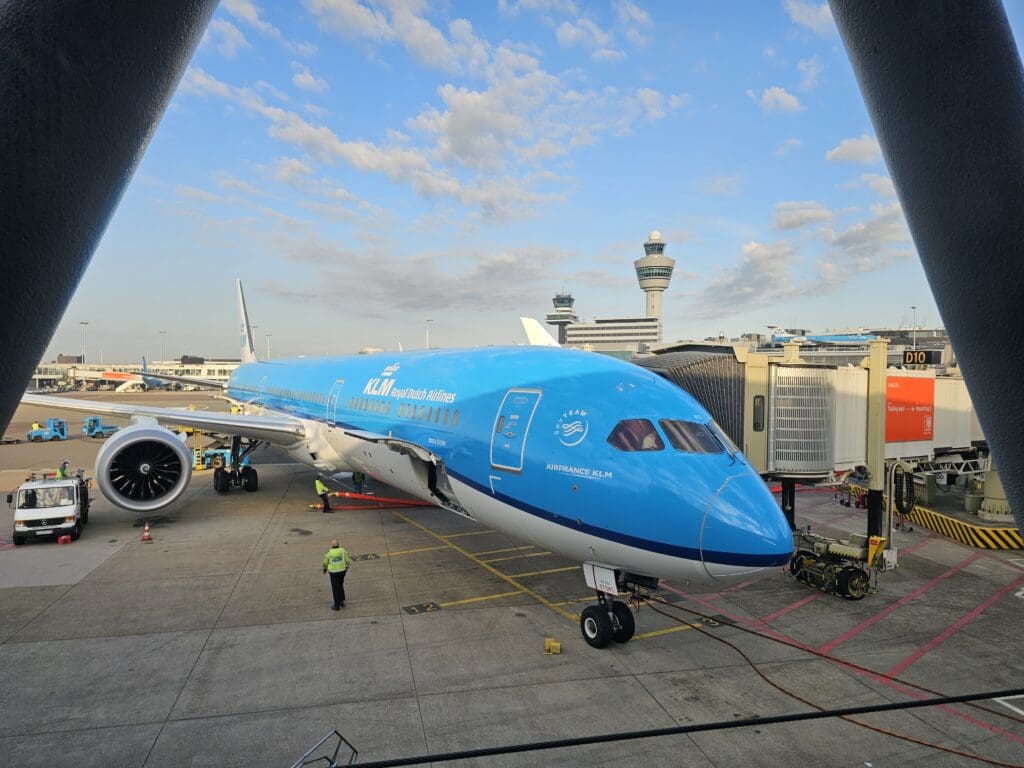
However, not wanting to be too negative, I must mention that Amsterdam Schiphol Airport features plenty of large glass windows that offer unobstructed views of many of the terminal’s stands and a few taxiways too. With a near constant stream of movements, the terminal provides aviation enthusiasts with a fantastic place to spot. Meanwhile, those who end up in the landside area can visit the open air observation deck, home to a retired KLM Cityhopper Fokker 100! After wandering around, I plonked myself down at a window near the end of one of the piers and watched the stream of aircraft outside. Being KLM’s sole hub, unsurprisingly, many movements came in the form of the airline’s distinctively liveried blue and white jets, with these arriving from destinations as close as Brussels and as far as Buenos Aires. In fact, it took me no longer than about ten minutes to spot each of the eleven aircraft types that make up KLM and KLM Cityhoppers fleet. Other than these, plenty of jets could be seen from hometown carriers Corendon Dutch Airlines,Transavia and TUI fly Netherlands, with these specialising in shuttling Dutch holidaymakers to warmer climes. Meanwhile, plenty of carriers from overseas could be spotted, with those from further afield including American Airlines, China Airlines, China Southern Airlines, Delta Air Lines, Jetblue and Singapore Airlines. As a UK based enthusiast, that morning the highlights for me came in the form of Airbus A320s Canada Jetlines (who ended up halting operations weeks after my flight), and American carrier GlobalX Airlines. With these having been wet-leased by Corendon Dutch Airlines and TUI fly Netherlands during the Summer 2024 season.
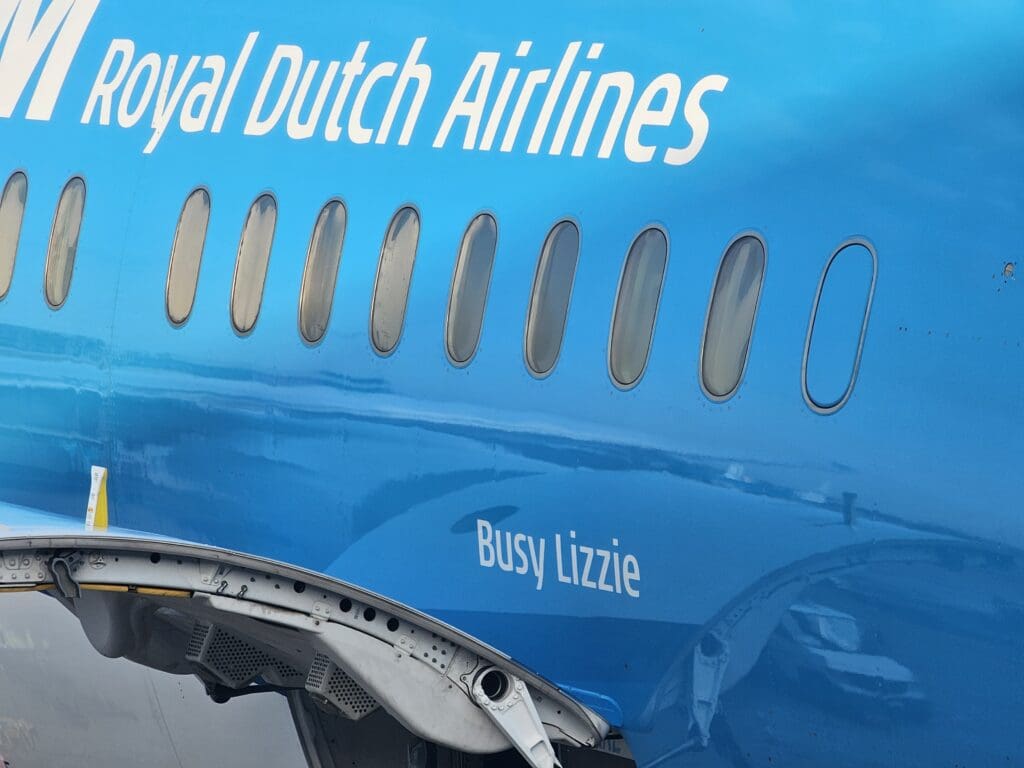
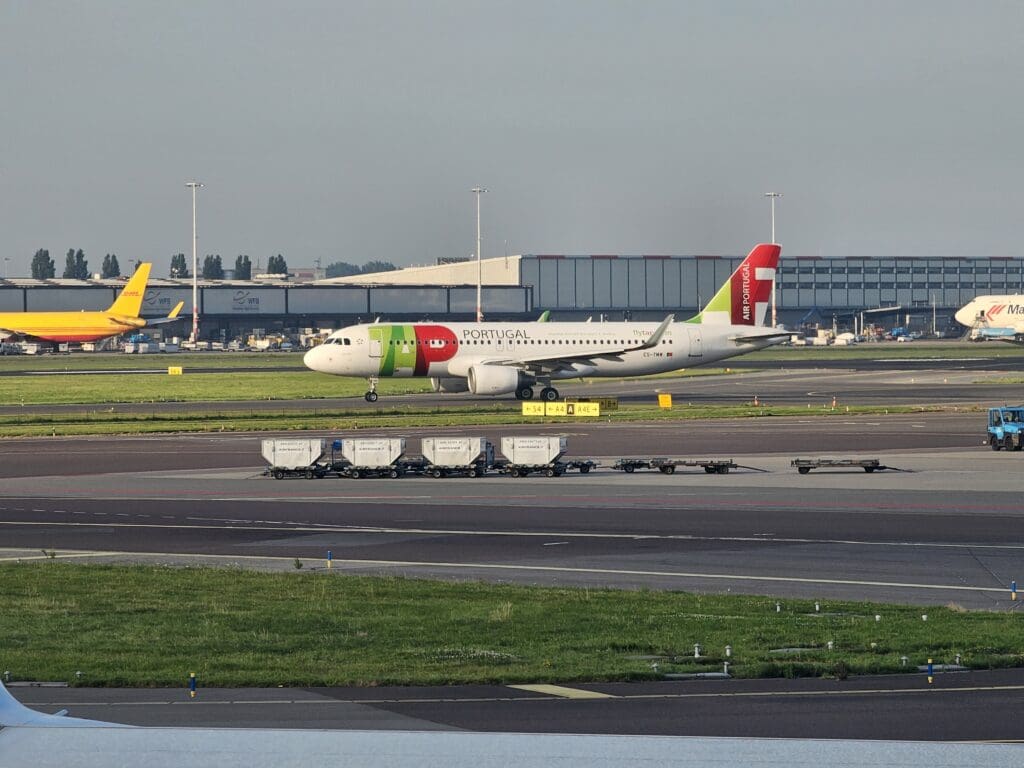
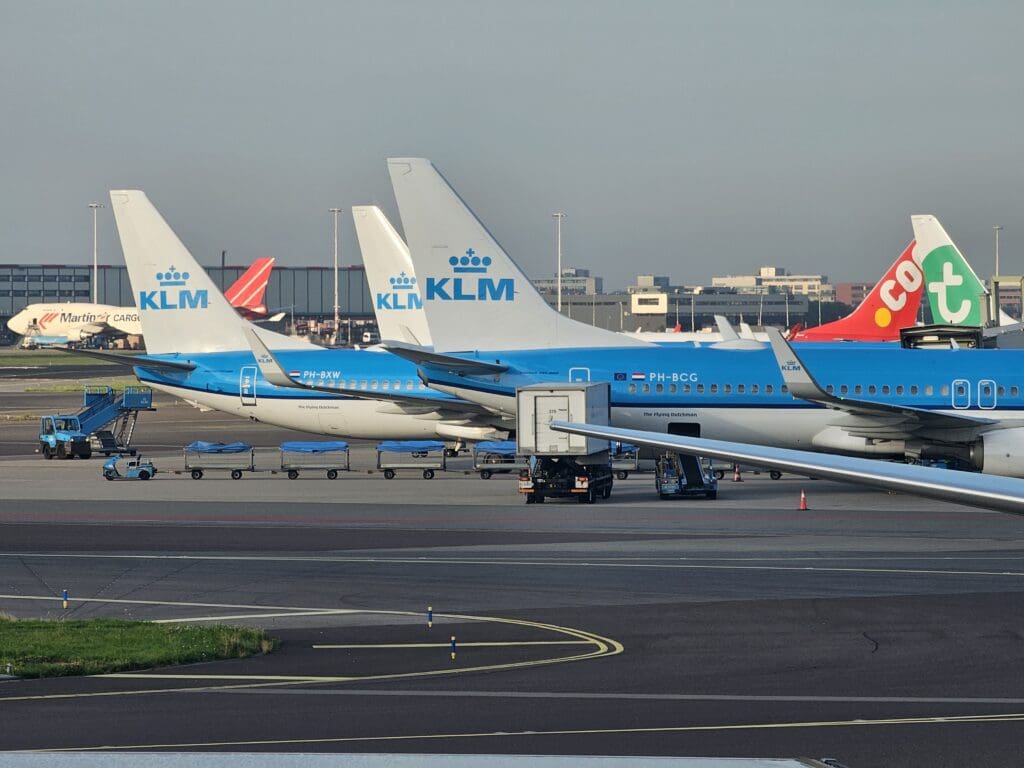
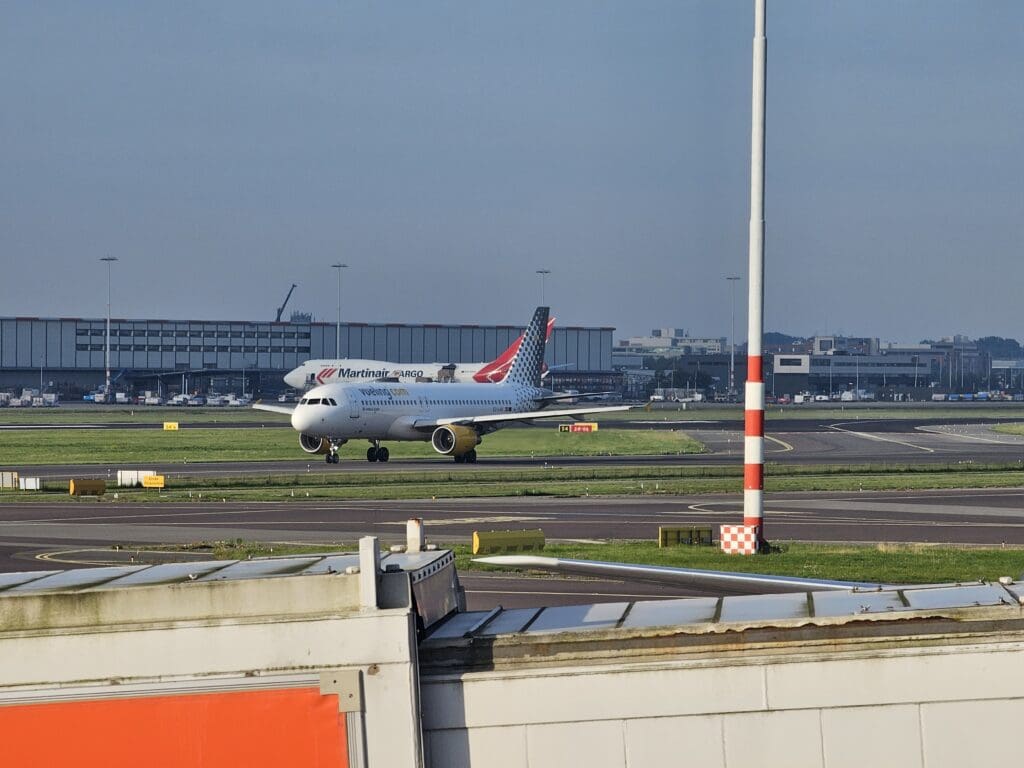
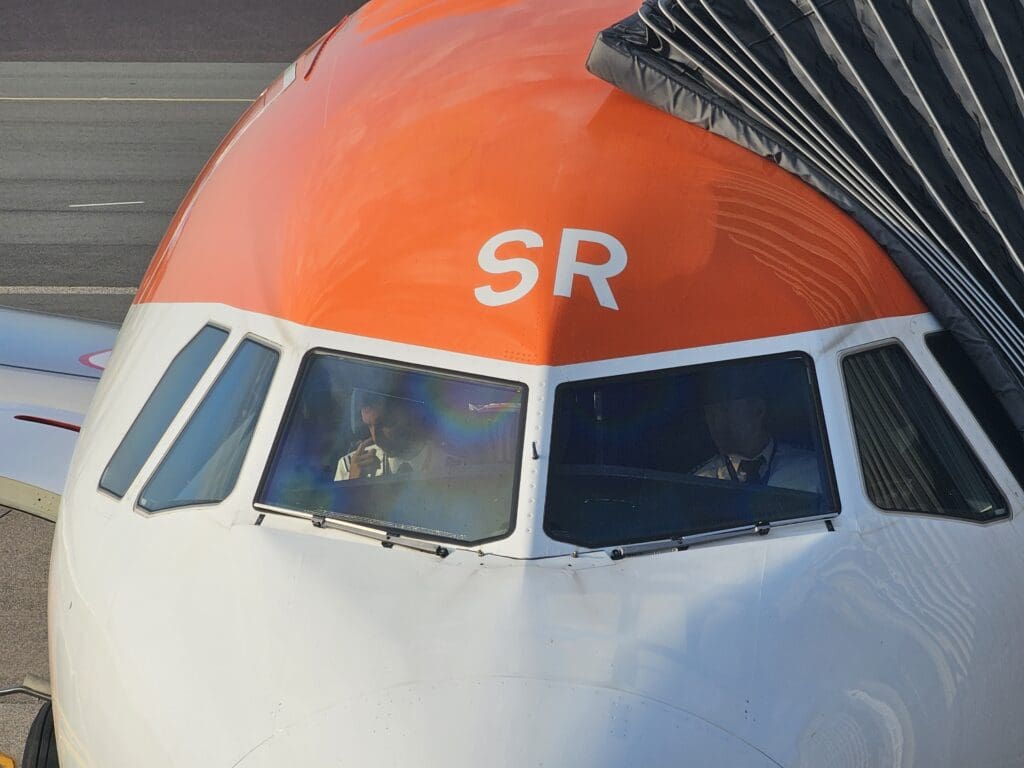
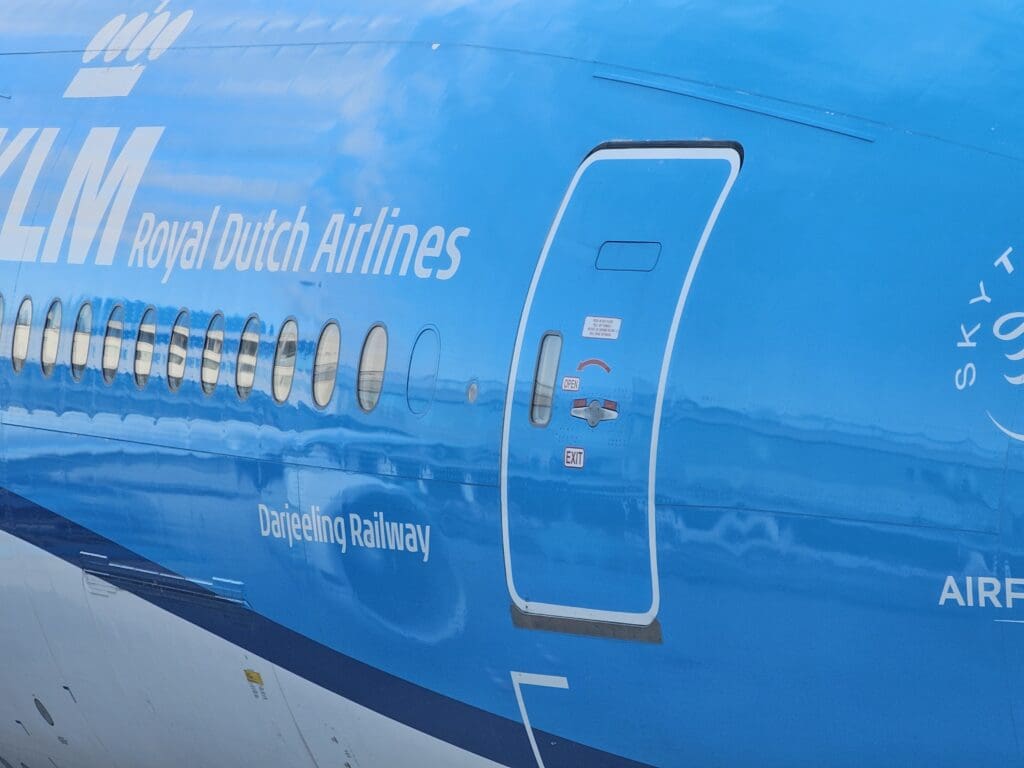
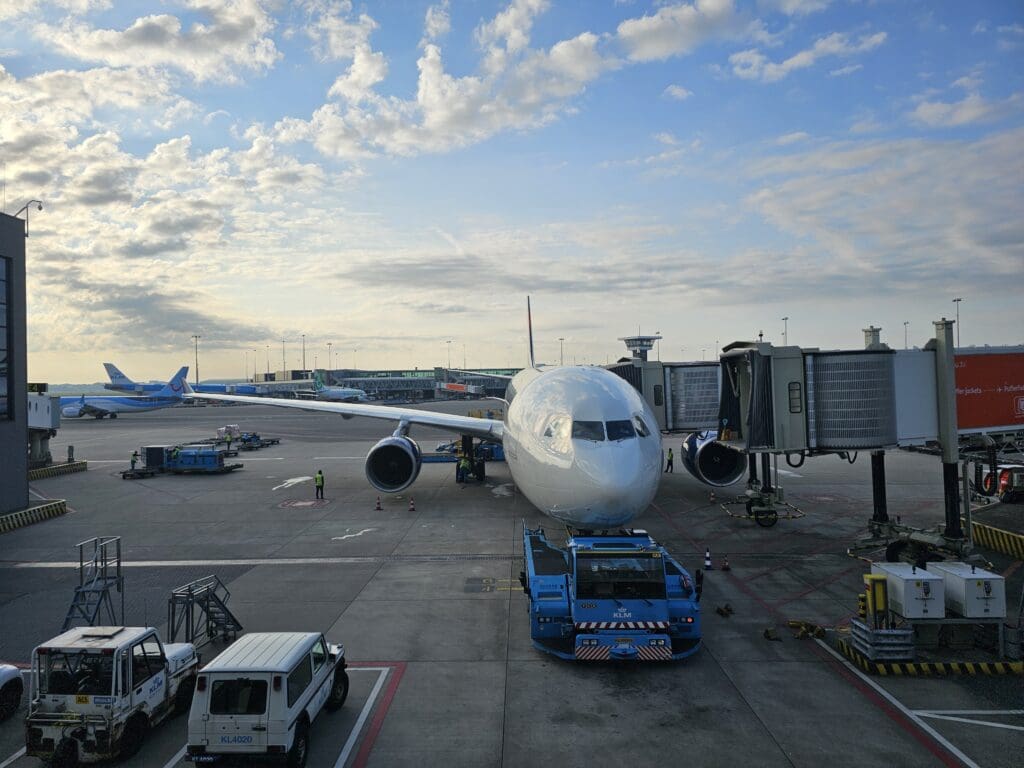
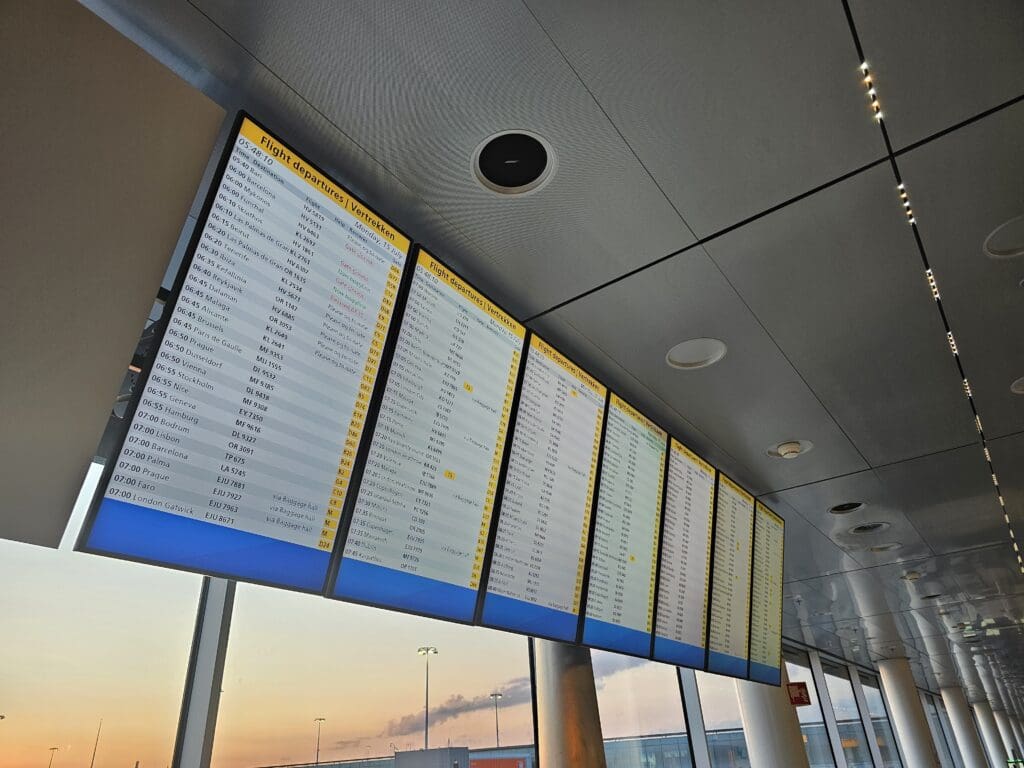
With around an hour to go until my flight to Leeds was scheduled to depart, feeling rather shattered I decided to trek back through the busy terminal to the gate. As with virtually all KLM Cityhopper operated services, that day, my flight would depart from the airport’s ‘Fokker Farm’, a ramp that is used exclusively by the regional subsidiary (alongside any airlines operating on their behalf). Therefore, a short bus ride would be in store in order to reach the aircraft. According to the departure boards, that day my flight was scheduled to depart from Gate D6. However, in reality, Gate D6 is a bus boarding area on the ground floor of the D pier that is used exclusively by all KLM Cityhopper operated services to the UK and Ireland. Sitting behind a KLM staffed boarding pass and passport checkpoint, this is only accessible to those on these services.
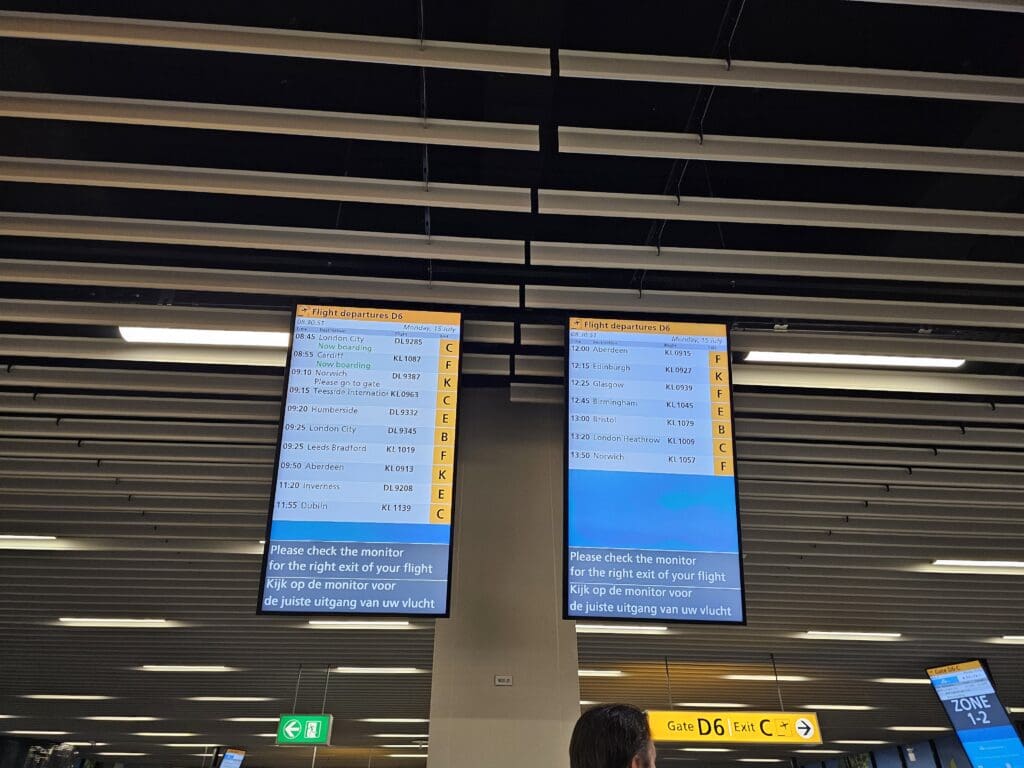
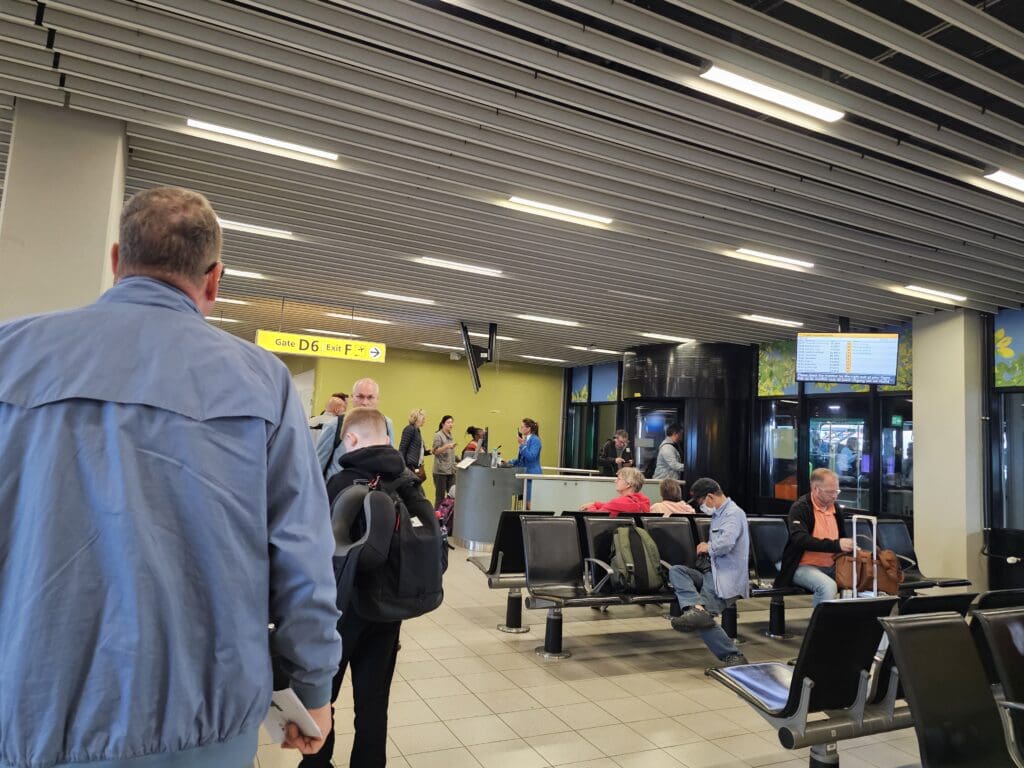
After around ten minutes of walking, I reached D6 and joined the short queue leading to the podium. Soon, I had my boarding pass scanned and my passport checked before I entered this zoned off area. Looking around, this was busy, a little cramped and proved to be far from a fantastic place to wait, and I would advise passengers not to head to part of the terminal too early. However, if you do end up with heaps of time there, then you can visit the local café which sells a range of expensive drinks, snacks and sandwiches. Other than this, several vending machines and toilets are offered, although unfortunately, I found the latter to be in a rather poor condition. Continuing with the complaints, unlike much of the rest of the terminal, being on the ground floor, airside views were virtually non-existent, whilst plug sockets appeared to be very hard to come by.
Once there, I took a seat near Exit F, from where the flight to Leeds was set to board 25 minutes ahead of our scheduled departure time. Throughout my stay, a constant stream of passengers could be seen passing through this part of the terminal and had I not wished to head to Leeds, I could have instead rocketed off to exciting destinations such as Cardiff, Humberside, London City, Norwich or Teesside. Of these flights, those to Humberside and Teesside were operated by Humberside based regional carrier Eastern Airways’ Embraer 190s under a wet-lease agreement with KLM Cityhopper.
At 0855 on the dot, an announcement was made in English only inviting those bound for Leeds Bradford and seated in boarding zones 1 and 2 to board the waiting bus. This was followed a short time later by those in zones 3 and 4. Following a very short queue, I reached the podium where a friendly agent scanned my boarding pass before I darted outside and walked several steps over to the waiting bus. Being one of the final passengers to board the first of two buses, I squeezed onboard before the doors slid closed and we cautiously pulled away. Travelling around the edge of the terminal, passing the airport’s two Schengen piers, I was treated to a short airport tour before we arrived at Stand A84 where the sleek and shiny Embraer that would be taking us all to Yorkshire could be seen basking in the morning sunshine.
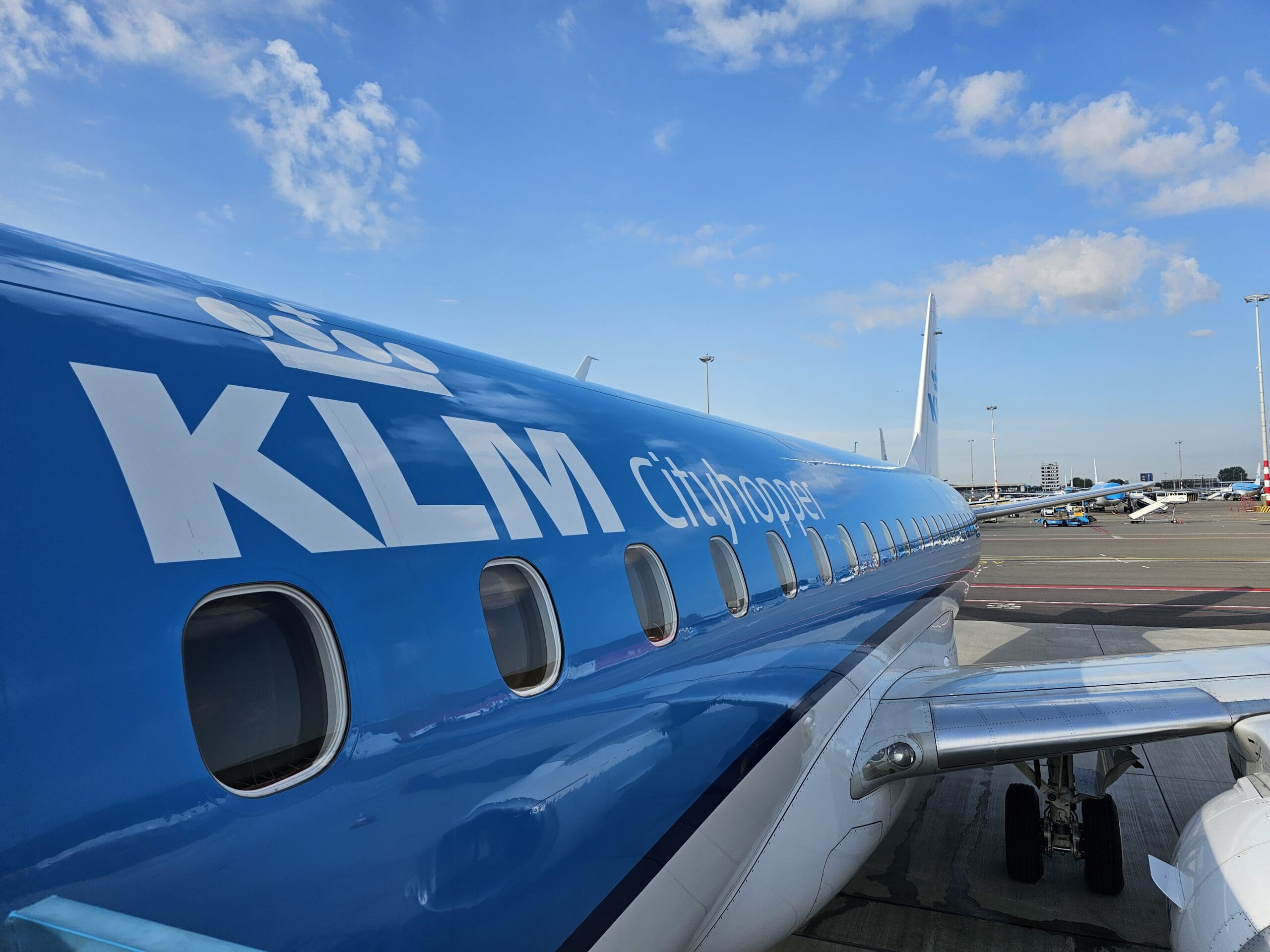
That day, I would be flying onboard PH-EXO, an Embraer 175STD (also known as an EMB 170-200STD). Giving the jet a rather sleek look, this is fitted with the type’s fuel-saving enhanced winglet and it would be my first time flying onboard an Embraer that is equipped with these. Assembled at Embraer’s plant in the Brazilian city of São José dos Campos, this E-Jet first took to the skies with the test registration PR-EBT in spring 2017, making it over seven years old at the time of my flight. In June 2017, PH-EXO was ferried thousands of miles across the Atlantic, making refuelling stops in Recife, Espargos and Faro, before arriving at its new home in Schiphol where it has been based ever since. In the week prior to my flight, the aircraft had been busy flying to destinations across Europe, connecting Amsterdam with Ålesund, Bremen, Brussels, Frankfurt, Hannover, Genoa, Gothenburg, Kraków, Kristiansand, Linköping, Luxembourg, Nuremberg, Palma de Mallorca, Prague, Trondheim and Wrocław, with its longest flights typically lasting around two hours.
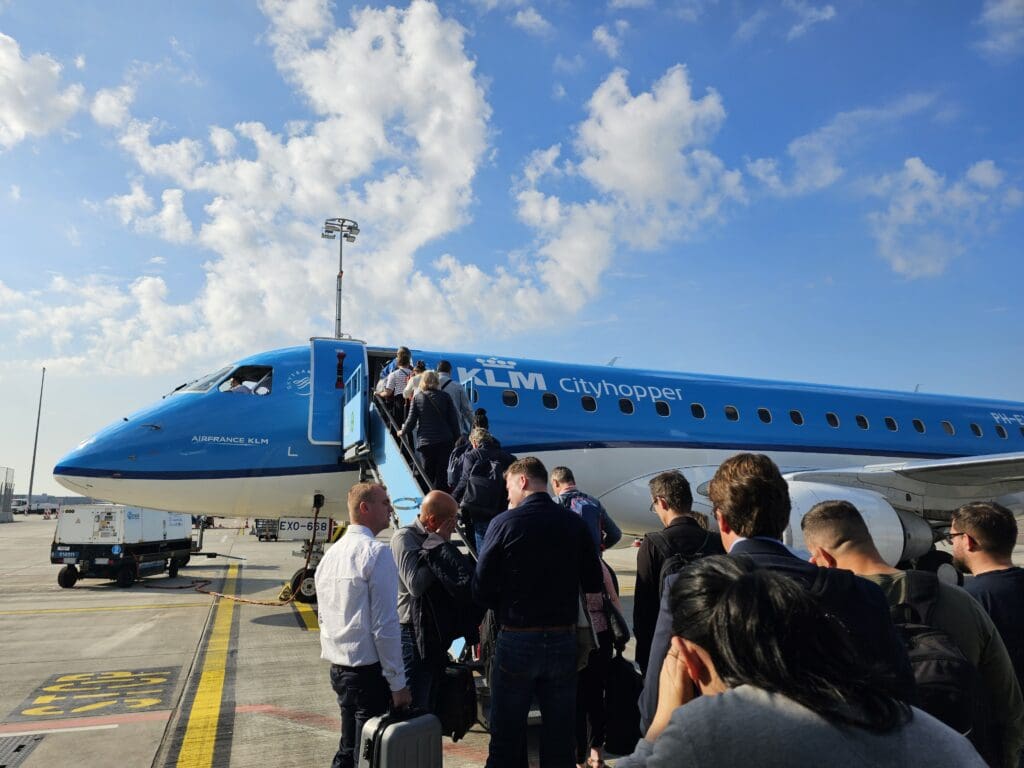
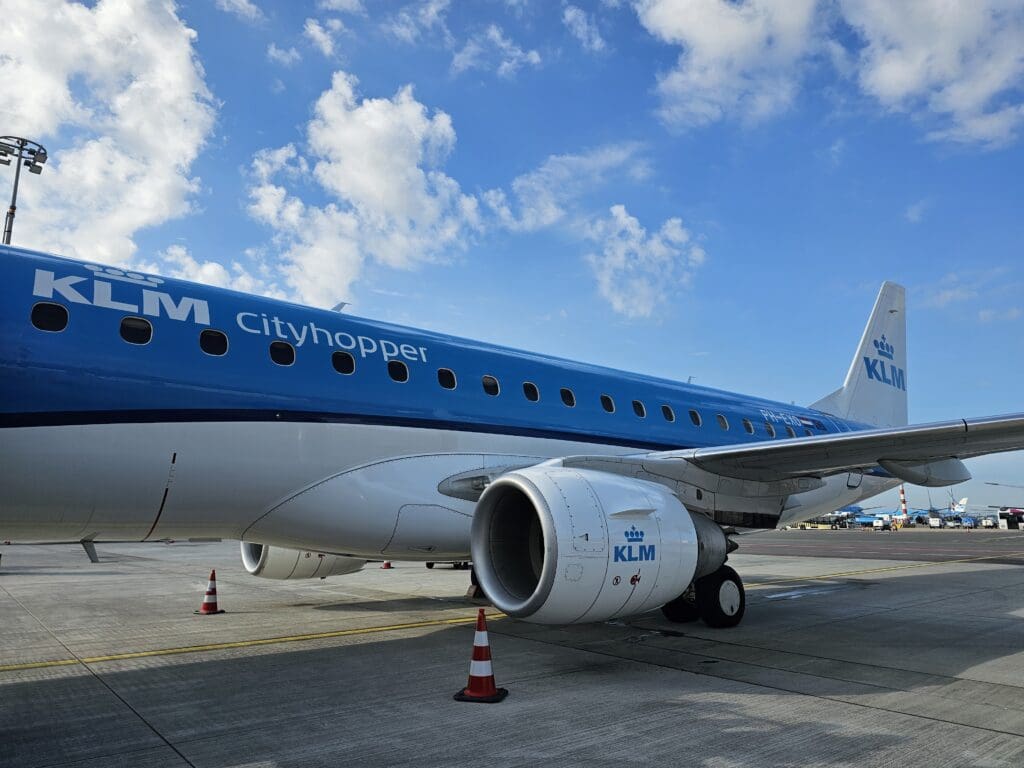
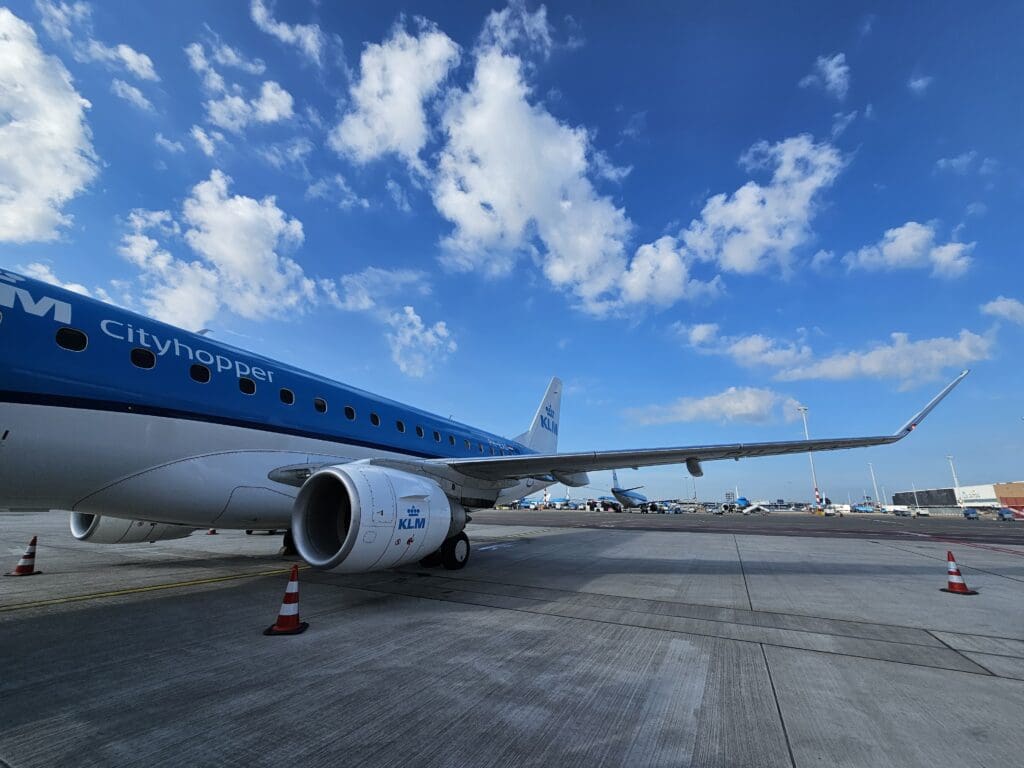
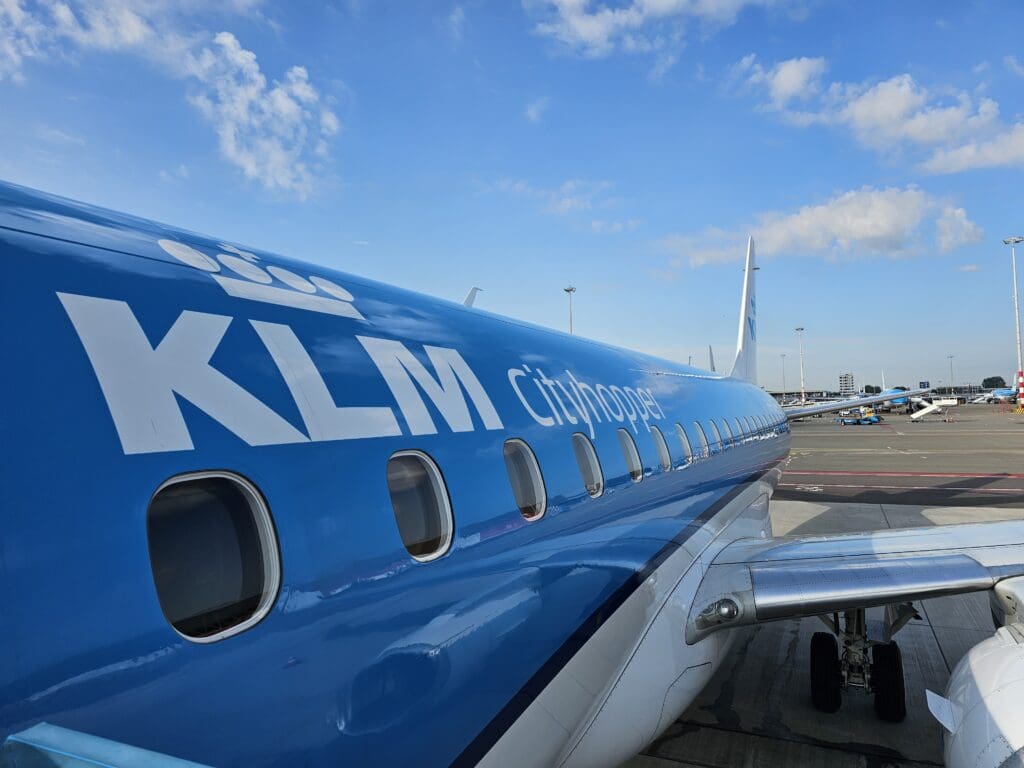
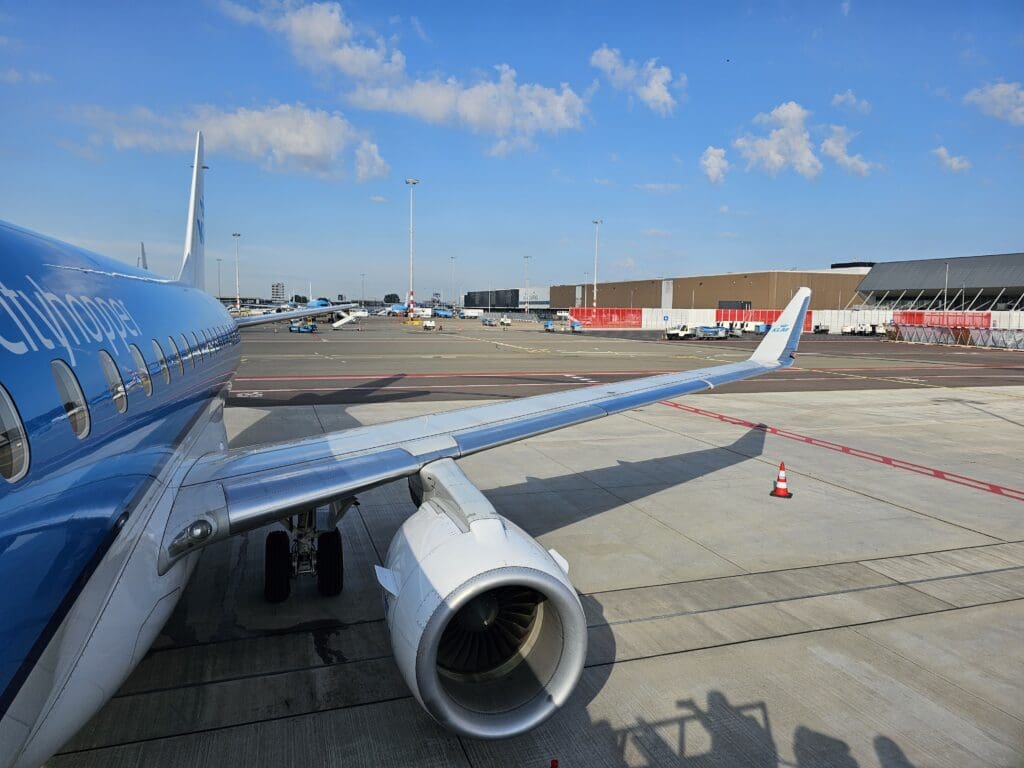
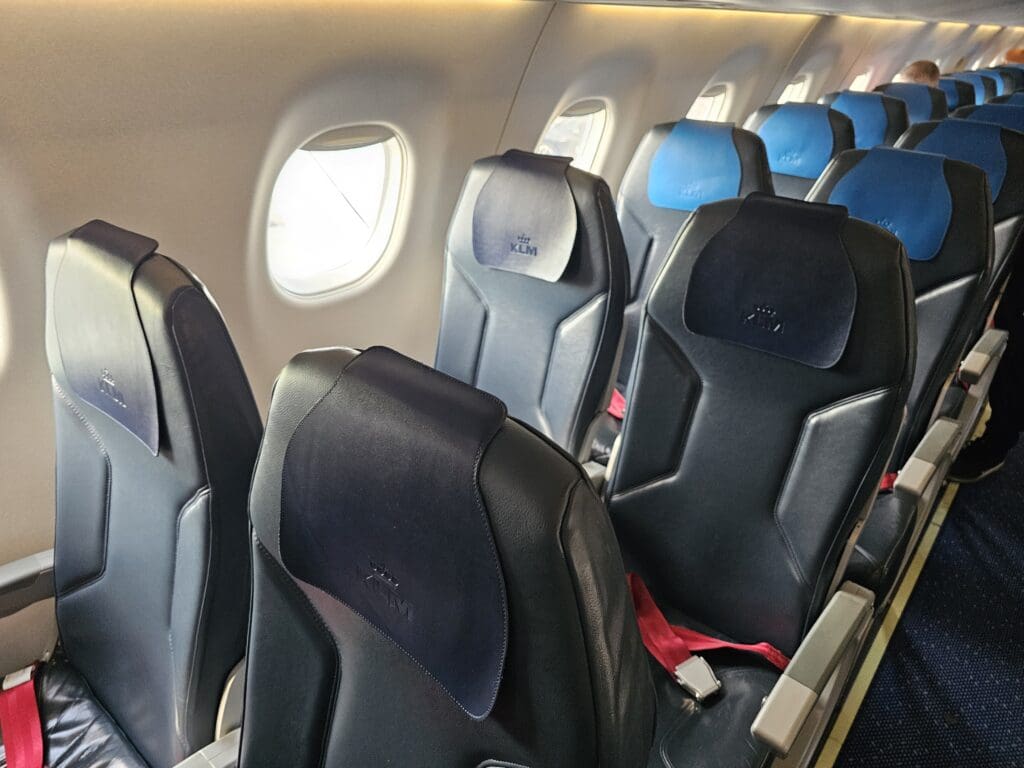
Once the bus doors opened, passengers spilled out onto the apron and I soon made my way out into the Dutch sunshine, making the most of this knowing that I was on my way back to windy Yorkshire! Eventually, I climbed up the shallow steps and, leaving me with a positive first impression, I received a warm and friendly greeting in Dutch as soon as I entered the Embraer’s miniscule forward galley. With no need for a boarding pass check, I turned right and made my way into the aircraft’s 88 seat cabin. Like most narrowbody airliners in Europe, this Embraer features a ‘Euro Biz’ style Business Class cabin, with no difference in seat type between those in Economy and Business. Each of these took the form of slim seats arranged in a 2-2 configuration, each of which is covered in a dark pleather cover and lacks any sort of trimmings other than a coat hook, tray table and seatback pocket. With the latter containing the all-important safety card and sickbag, alongside the latest copy of KLM’s monthly inflight magazine, the Holland Herald. Each seat was topped with a smart leather antimacassar on which KLM’s logo was debossed, with these varying in colour depending on whether the seat was a Business Class, Economy Comfort or regular Economy seat.
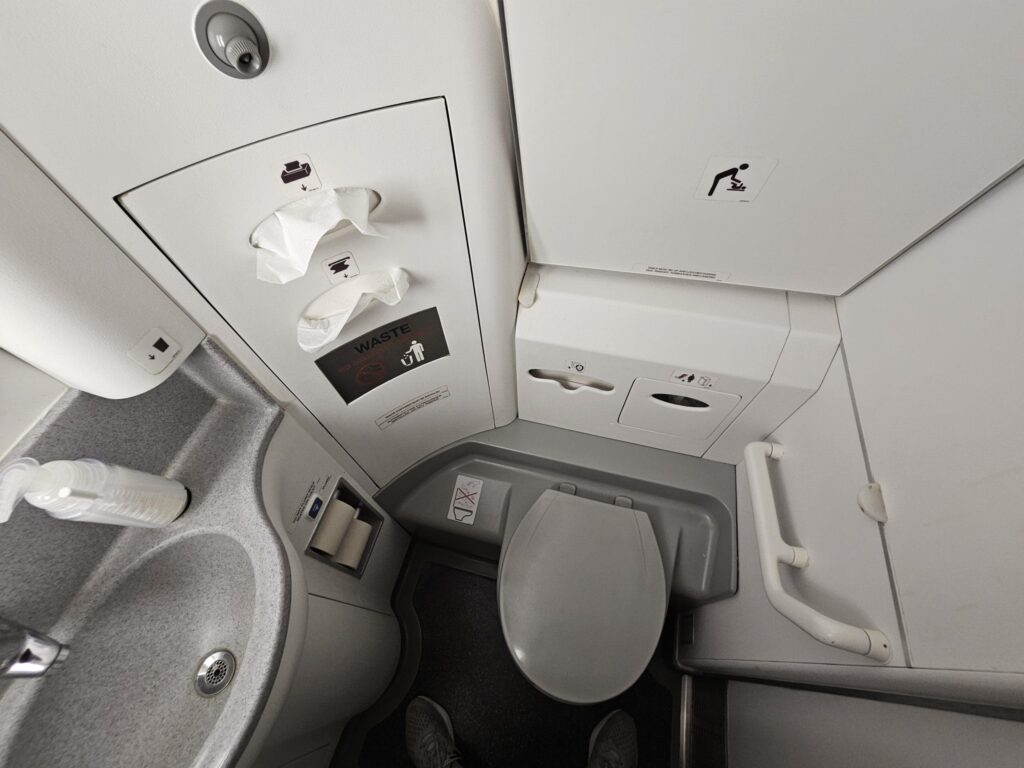
Making my way down the aircraft, I soon made it to my seat, however, with little time to sample them once in the skies, after squeezing my bag into the one of the Embraer’s comparatively small overhead lockers, I made my way to sample the delights of the lavatory. As on all E-Jets, this particular Embraer comes with two lavatories – one at the front of the aircraft squeezed in between the forward galley and cockpit, and another at the very rear of the aircraft. As I entered the rear galley, I received another warm welcome from the other flight attendant onboard before squeezing into the small lavatory. Whilst this was clean and served its purpose, I wasn’t too pleased to find that the tap lacked running water, and no substitutes such as antibacterial gel or wet-wipes were provided.
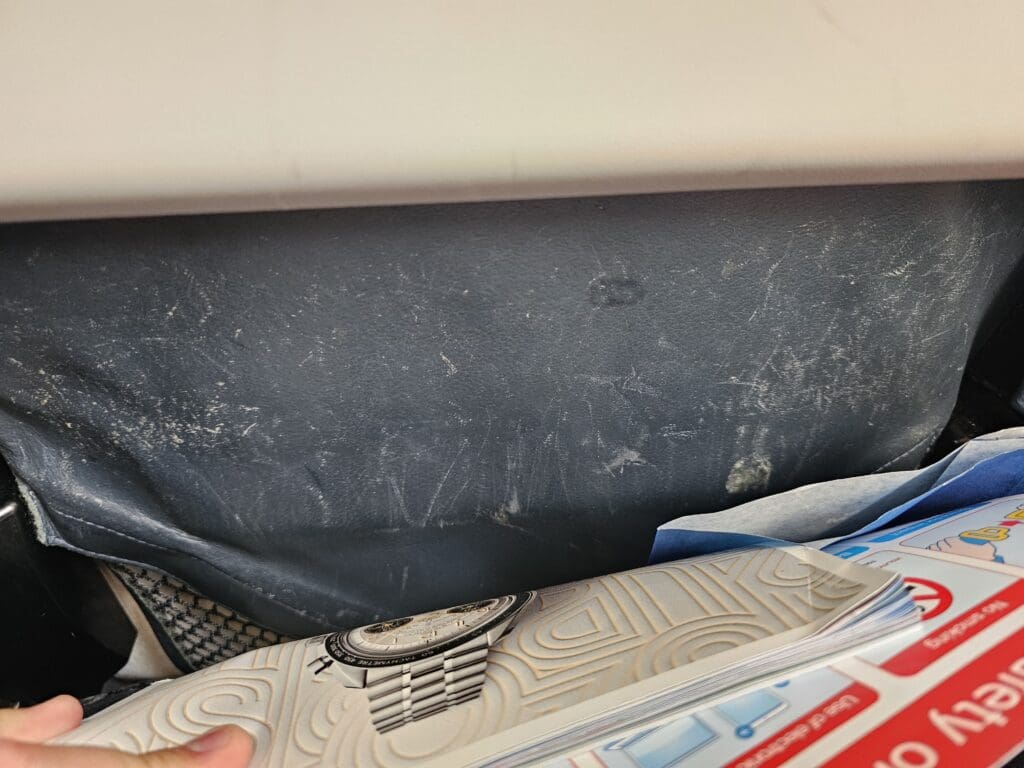
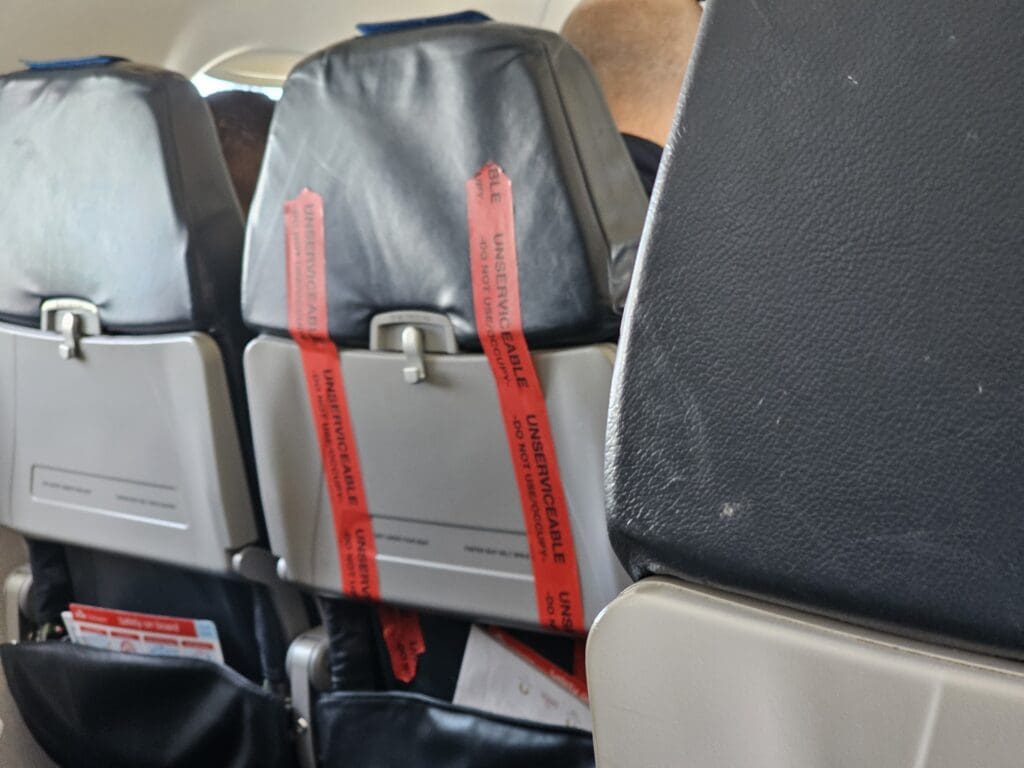
Upon returning to Seat 16F, I strapped myself in and settled down for the short hop back to the UK. Unfortunately, I can’t say that my first impressions of the seat were all too positive, and this certainly fell way below the high bar set by the two KLM Cityhopper Embraer E2s I had flown in 2022. Comfort wise, the seat was firm and offered nothing more than a very limited amount of legroom. However, my greatest gripe revolved around just how dirty the area around my seat appeared to be, with omnipresent dirt and grime indicating that the cabin was in dire need of a deep clean. Meanwhile, despite being a relatively young jet, the aircraft seemed to be a little battered and as I looked around I spotted quite a few marks and scratches. Additionally, giving a somewhat ramshackle impression, the tray table of a nearby seat had been taped up and was thus unusable.
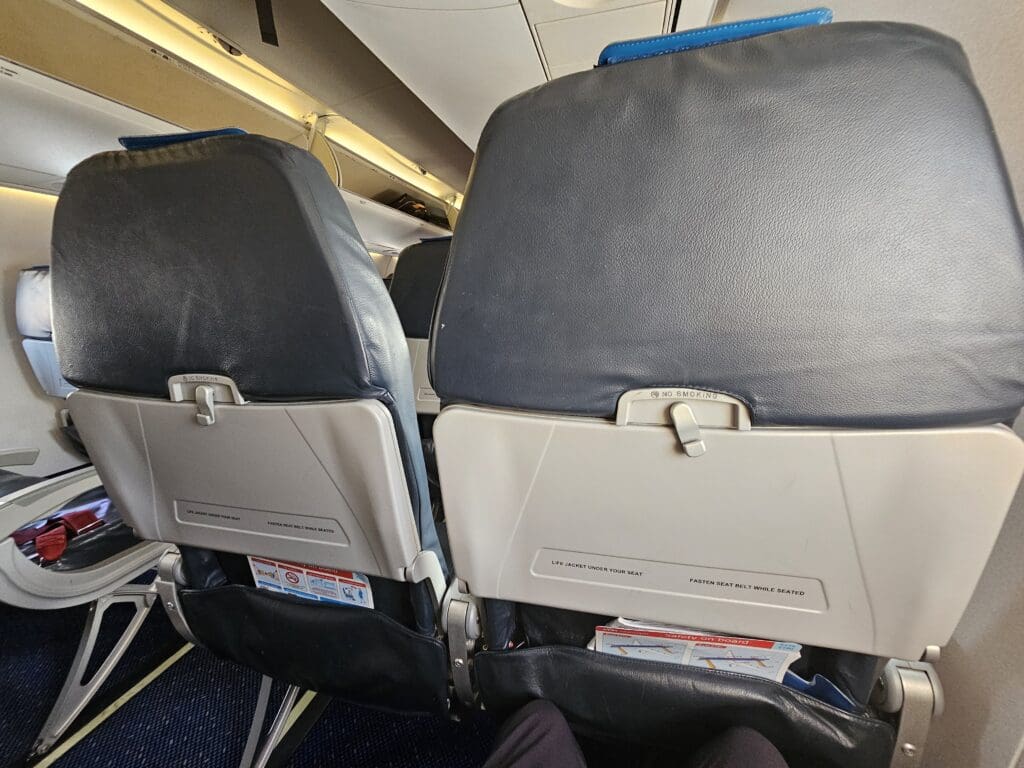
Almost as soon as I had settled in, the second bus arrived and passengers began to filter onto the aircraft. Thankfully, with all passengers having made it to the gate on time, and not having to wait for any stragglers from late connections, boarding was concluded at 0918, seven minutes ahead of our scheduled departure time. Much to my delight, I ended up with an empty neighbouring seat, and being an Embraer in a 2-2 configuration, this meant that I could enjoy the luxury of both a window seat and direct aisle access! Looking around, the flight seemed to be no more than about 70% full and many passengers appeared to have connected in Amsterdam, with many taking the form of young flyers from East and South Asia, or smartly suited business people from across Europe. There did also appear to be a fair number of hiking gear clad Dutch tourists travelling in a few small groups who were presumably swapping the lowlands of Holland for the rolling green hills of the Yorkshire Dales.
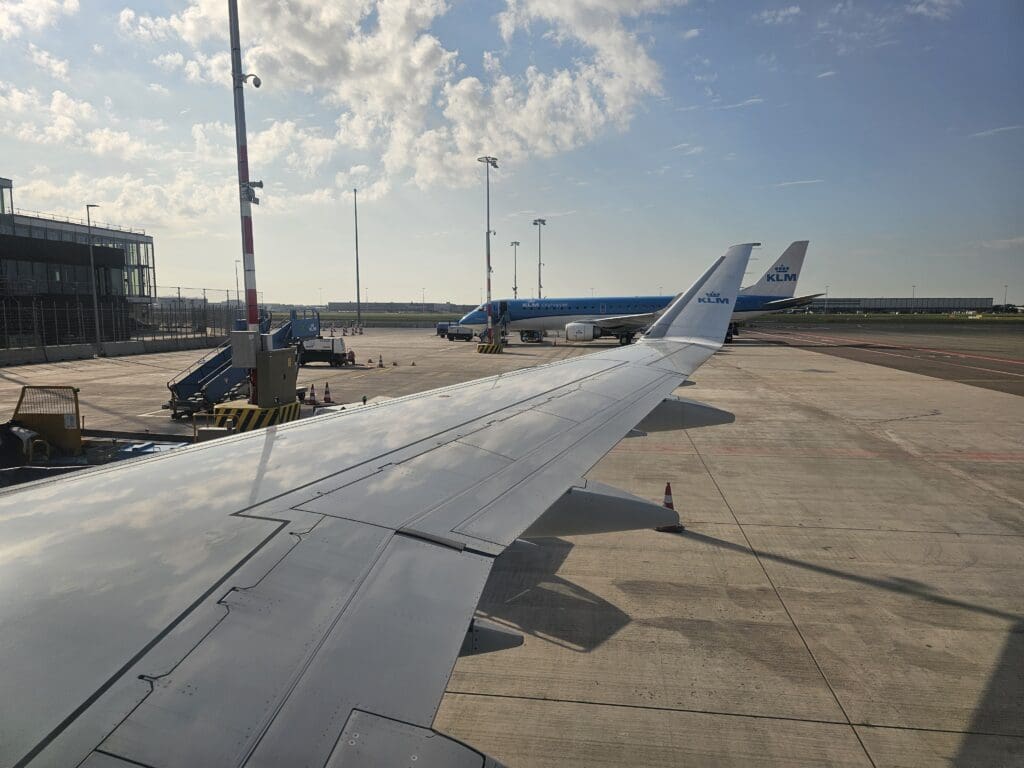
Almost as soon as the final passenger was onboard, one of the two flight attendants closed the main cabin door and all ground service equipment was removed from around the Embraer. At 0920, the Captain performed their welcome announcement in Dutch and English during which they introduced each of the other three crew members by name, thanked passengers for flying with KLM Cityhopper and advised all that we could expect a flight time of around an hour. They then ended this announcement by informing passengers that due to congestion, we would not be able to be pushed back for at least a further five minutes. However they did reassure passengers that we would be in for a short taxi and would still likely touch down in Leeds Bradford ahead of schedule.
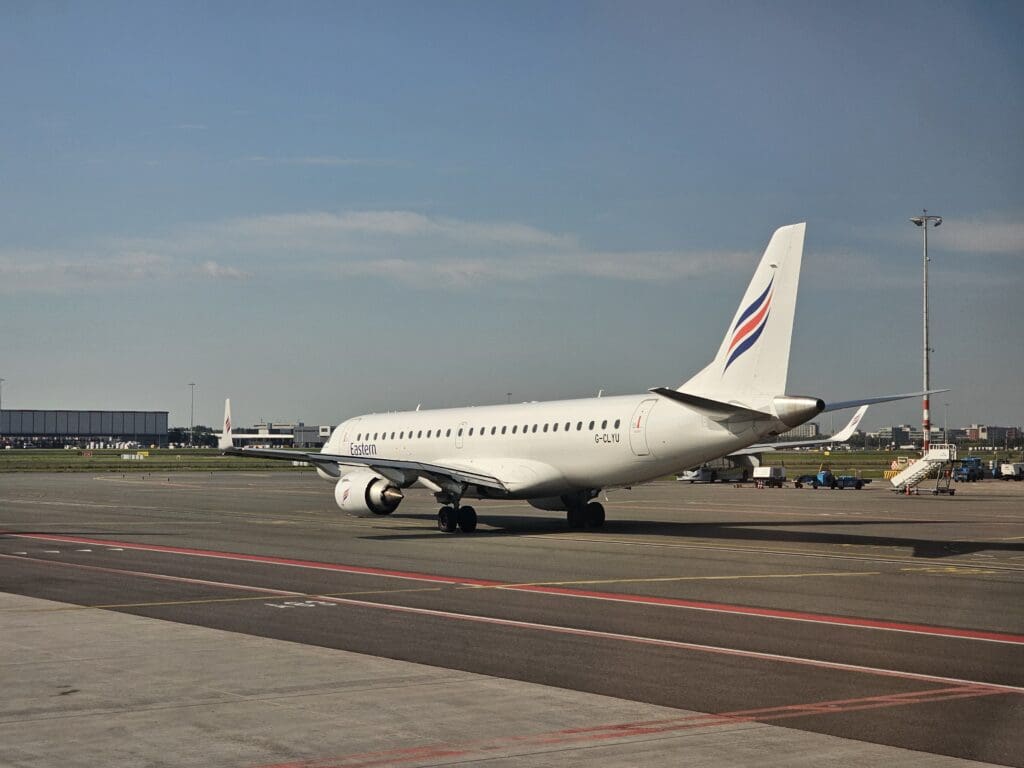
Looking outside, the reason for the slight delay to our pushback became clear as we were required to wait for the two mostly-white liveried Eastern Airways Embraer 190s to be pushed back behind us, start their engines and taxi off before we could depart from the stand. At 0927, our Embraer jolted rearwards at which point the Purser performed their short welcome announcement in Dutch and English. Once completed, both flight attendants took to the aisle and commenced their safety demonstration to the soundtrack of a pre-recorded announcement which went through all the usual safety information in English only. As we headed rearwards, the Embraer’s two comparatively small General Electric CF34-8E5 engines quietly spooled into life in preparation for our short hop across the North Sea.
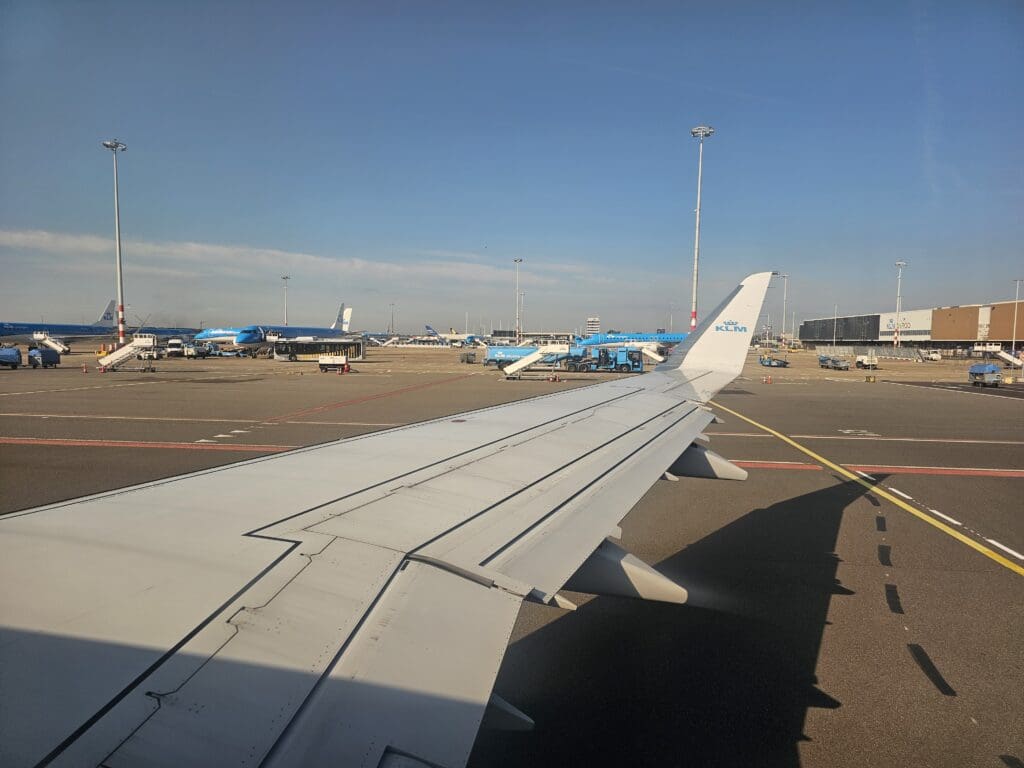
A few minutes after commencing our pushback, the flaps were partially extended and the aircraft began its short journey to the end of Runway 24, also known as the Kaagbaan, after the local village of Kaag. Following a quick taxi, the Embraer came to a halt at the end of the runway where we held in order to allow for an Embraer E2 to commence its journey to the Norwegian city of Trondheim, and for the same Boeing 777 that I had arrived on a from Korea a few hours earlier to head off across the Atlantic to the Surinamese capital, Paramaribo. Once the Boeing had commenced its take-off roll, producing a fair amount of noise, the miniscule Embraer taxied onto the runway and came to a halt. Waiting there for a few minutes, perhaps in an effort to alleviate the risk of encountering any wake turbulence, at 0936 the two engines spooled up and we soon commenced our powerful and short take-off roll.
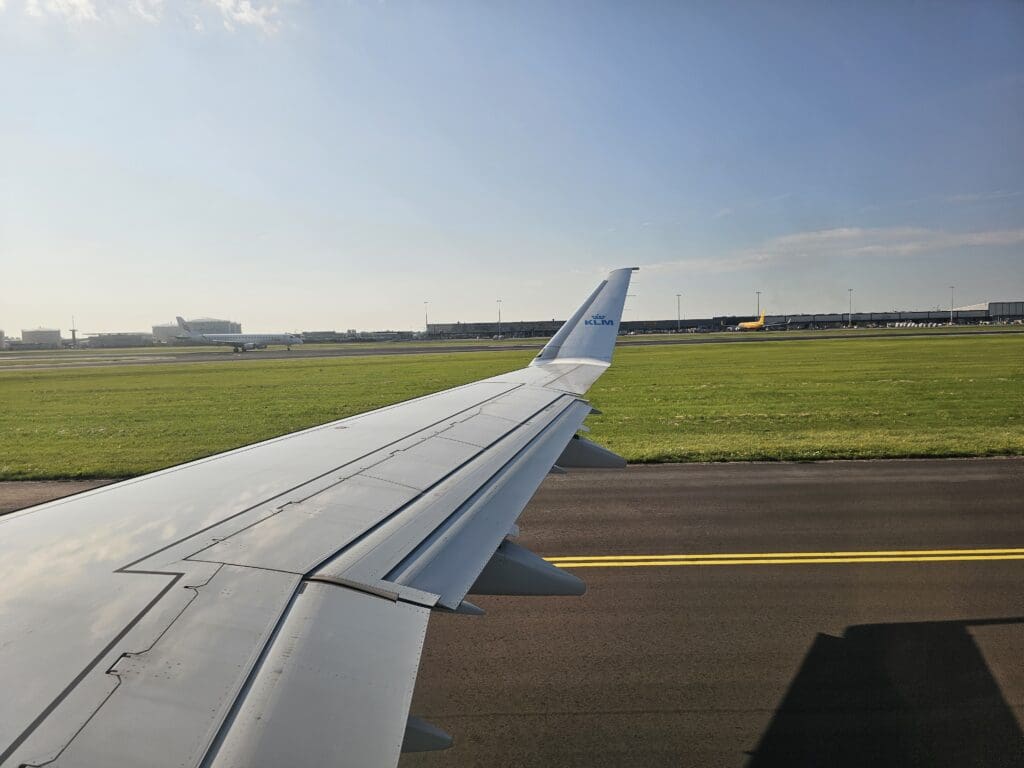
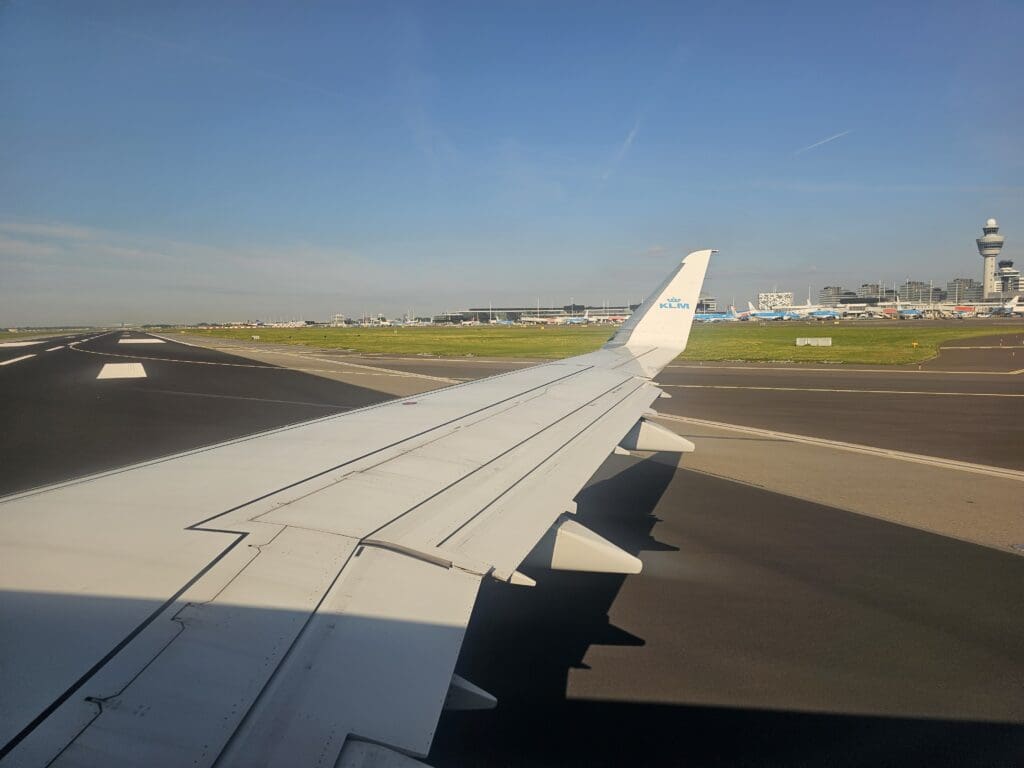
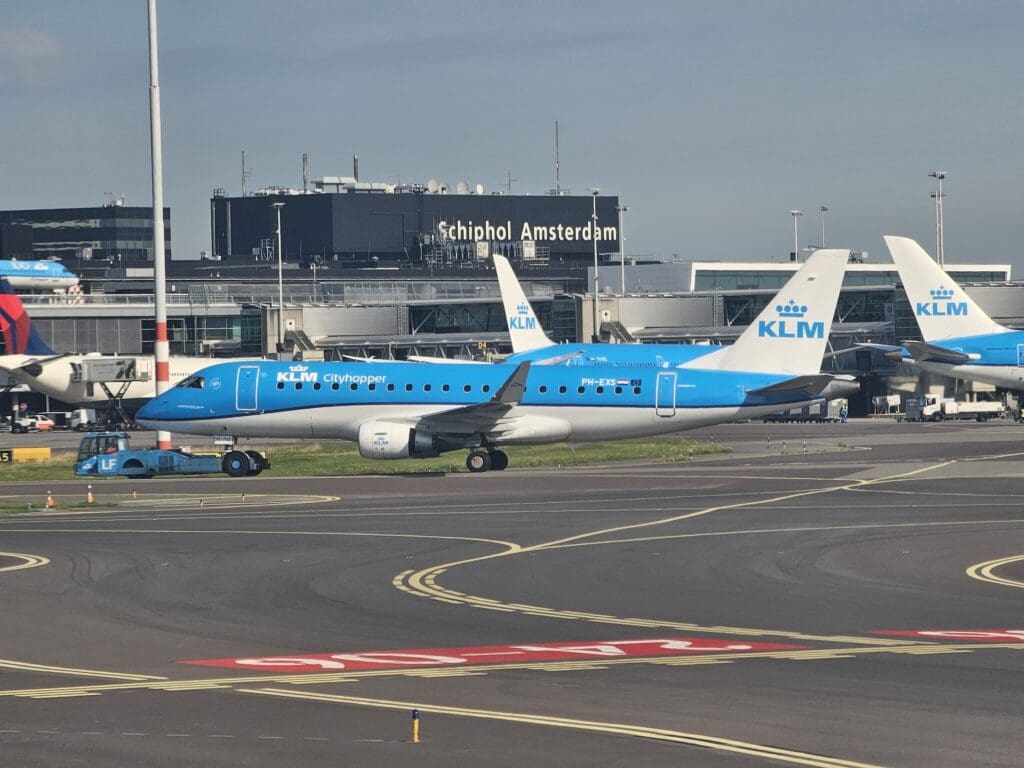
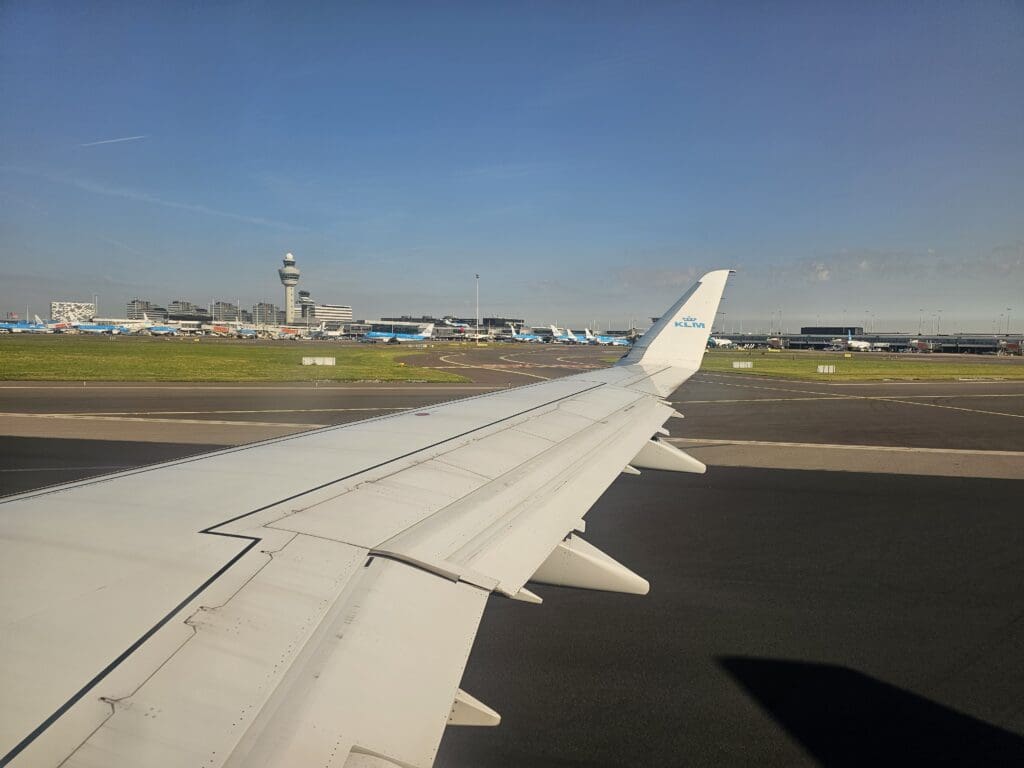
After whizzing past Schiphol’s two Schengen piers and the Fokker Farm, the nose was pointed skywards and we soon rocketed upwards into North Holland’s cloudless skies. Within seconds, the Embraer left the sprawl of Amsterdam Schiphol Airport behind, with this being replaced by a mish-mash of low-rise buildings, industrial estates and flat rectangular fields as we passed the towns of Hoofddorp, Nieuw-Vennep and Lisse. After temporarily turning onto a northerly heading, the Embraer made a beeline for the coast and crossed over the sandy beaches between Noordwijk and Zandvoort no more than four minutes into the flight. At this stage, the aircraft climbed through 10,000 feet and the seatbelt signs were extinguished, with this followed by the usual announcement from the Purser advising passengers to keep these fastened whilst seated. Interestingly, whilst the welcome announcement was made in both Dutch and English, subsequent announcements from the cabin crew were performed in English only. However, given the fact that the Netherlands is one of the top countries for English proficiency outside of native English speaking countries, this probably did not pose much of an issue to most Dutch passengers!
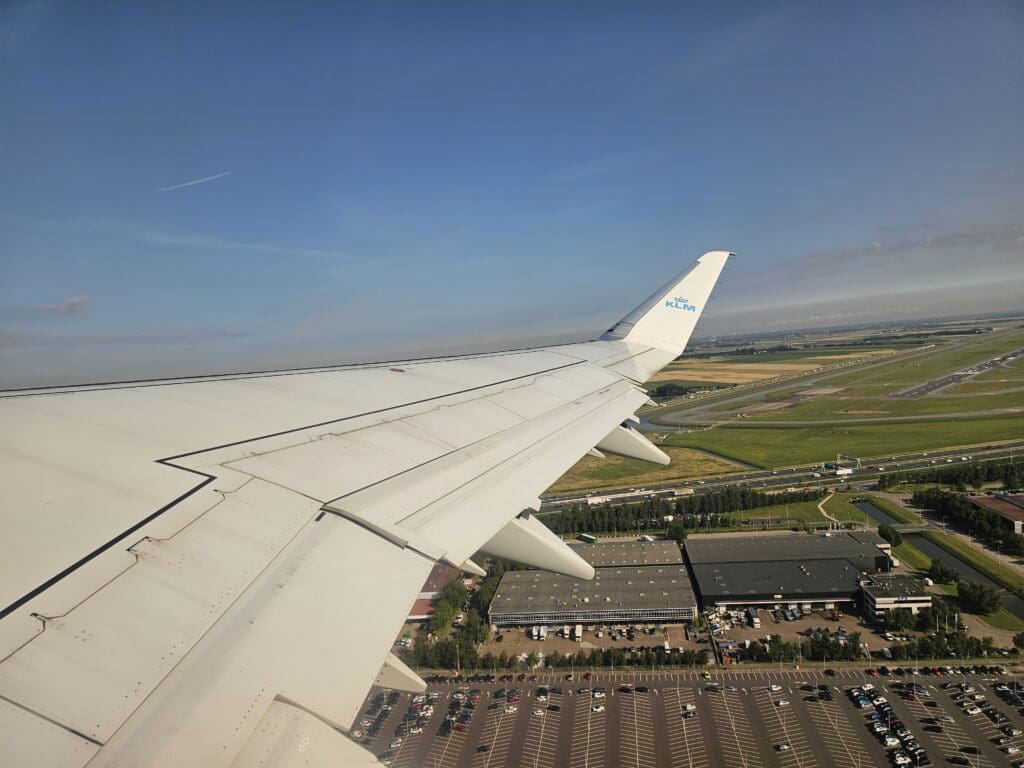
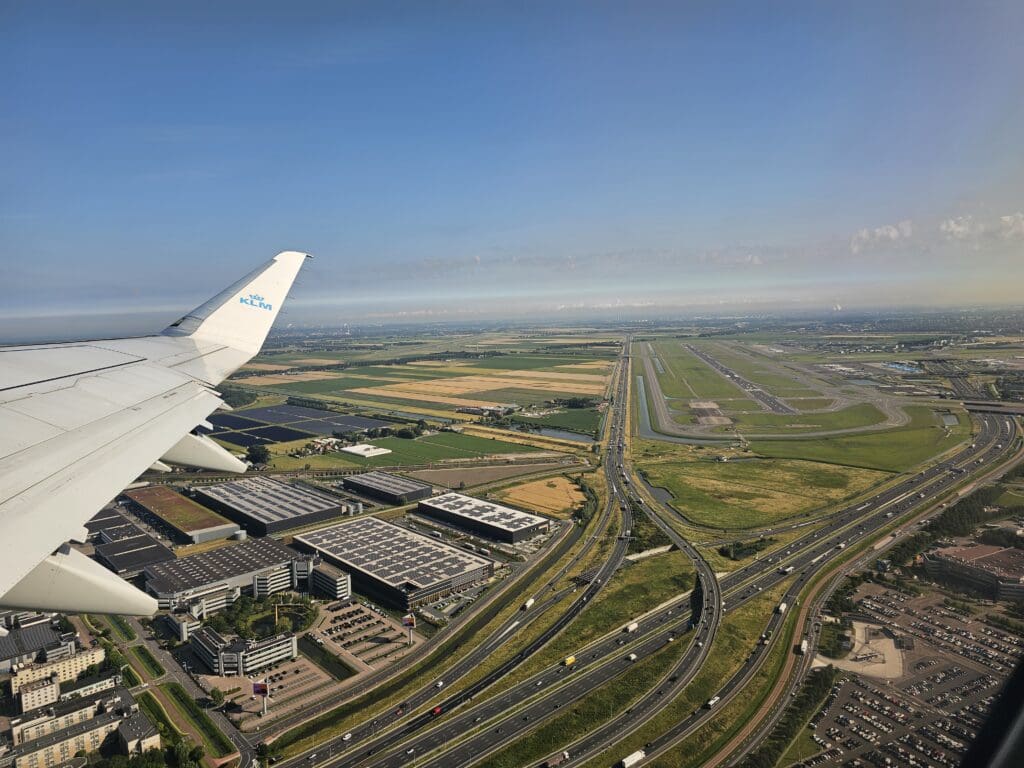
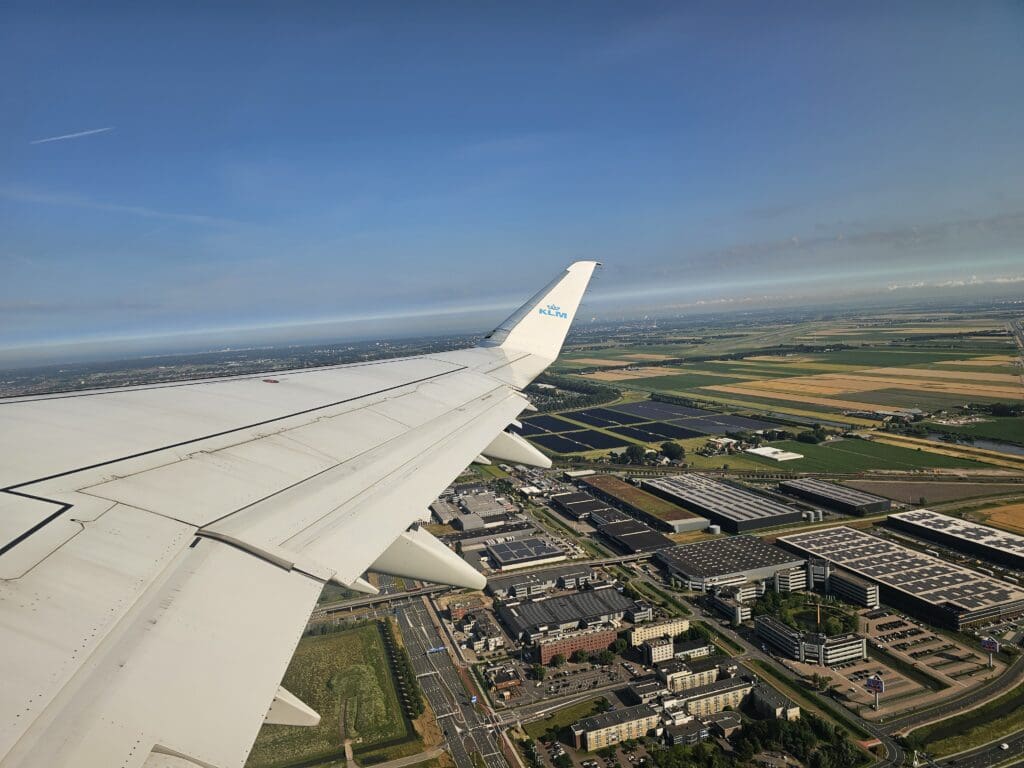
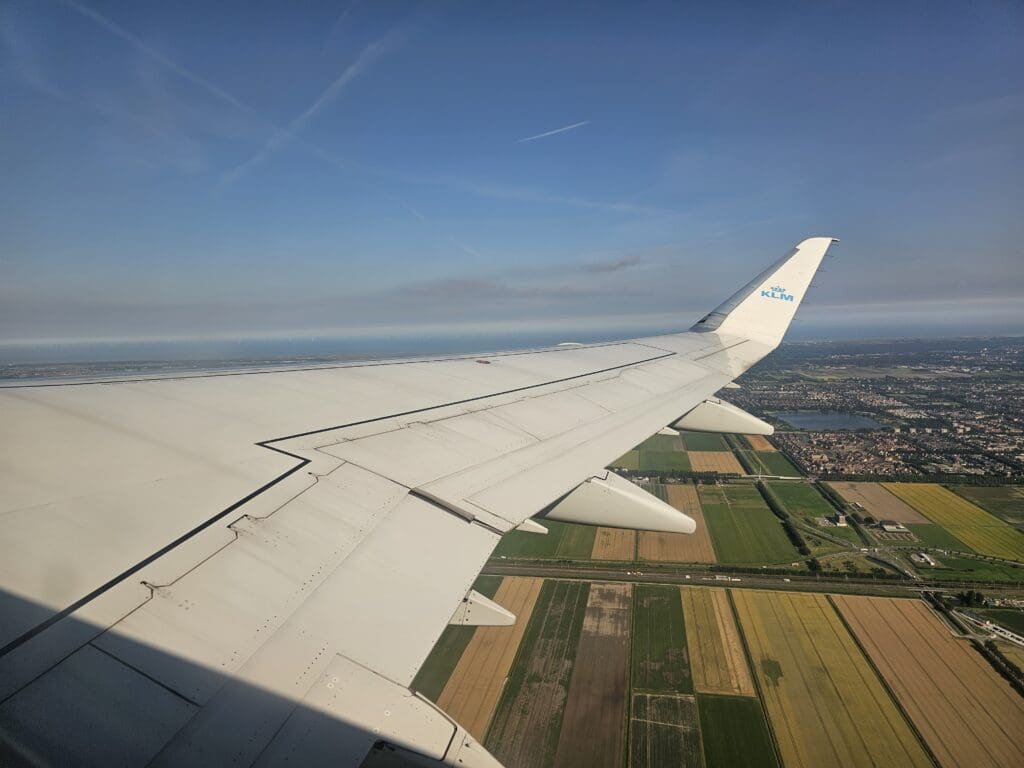
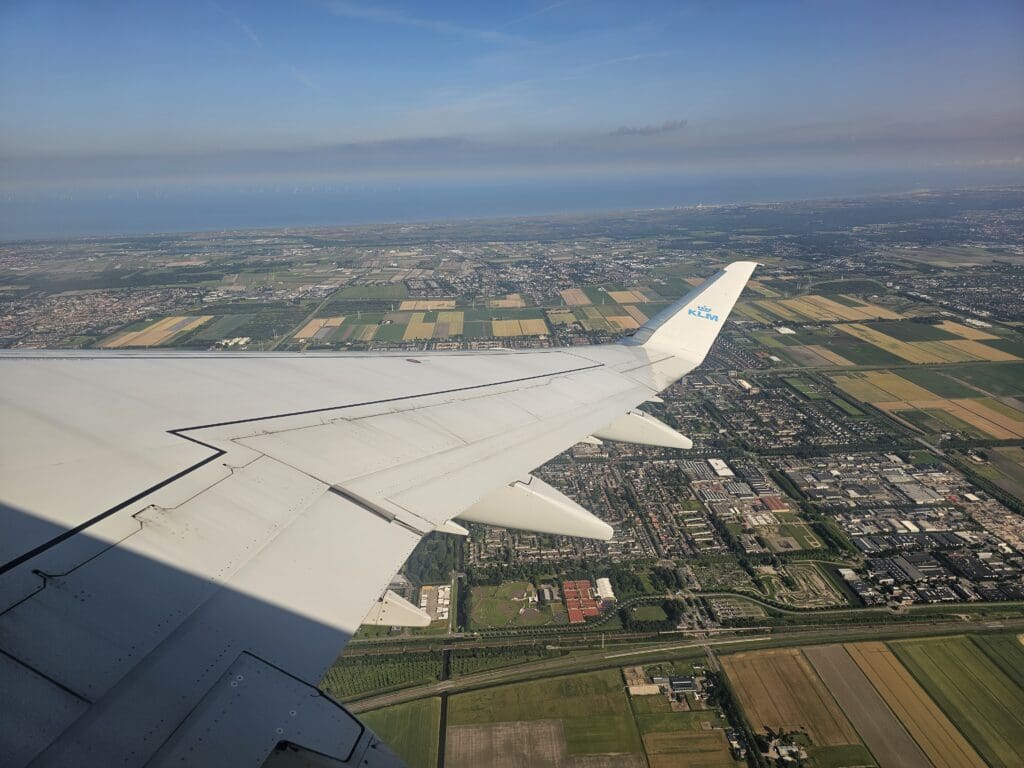
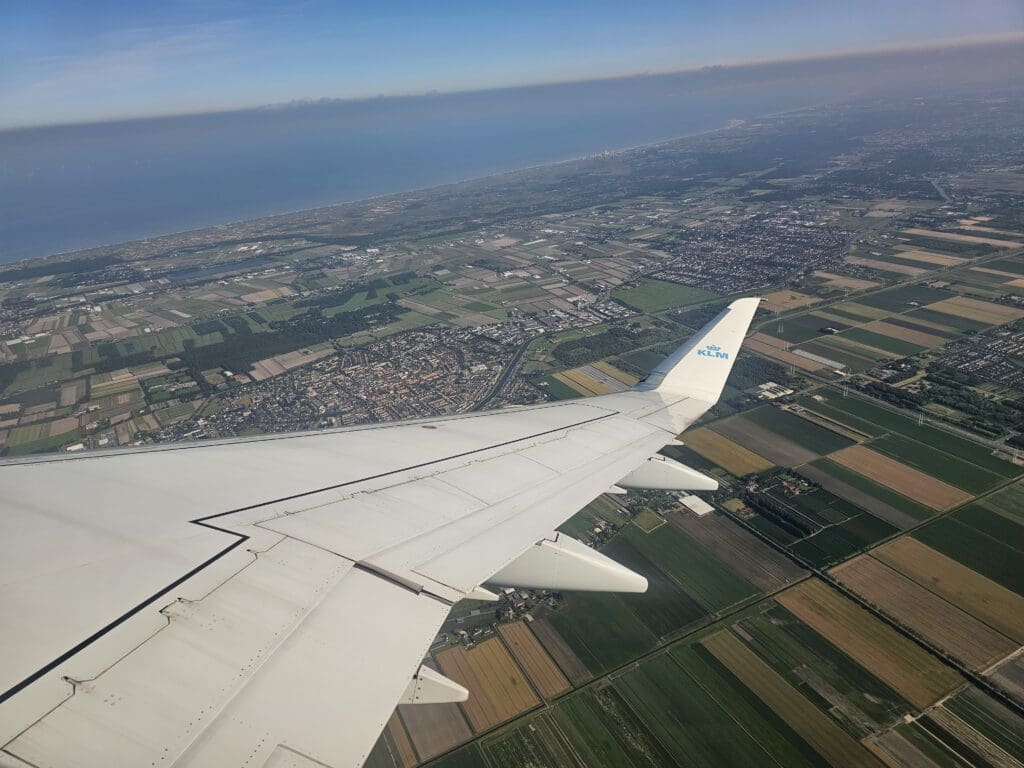
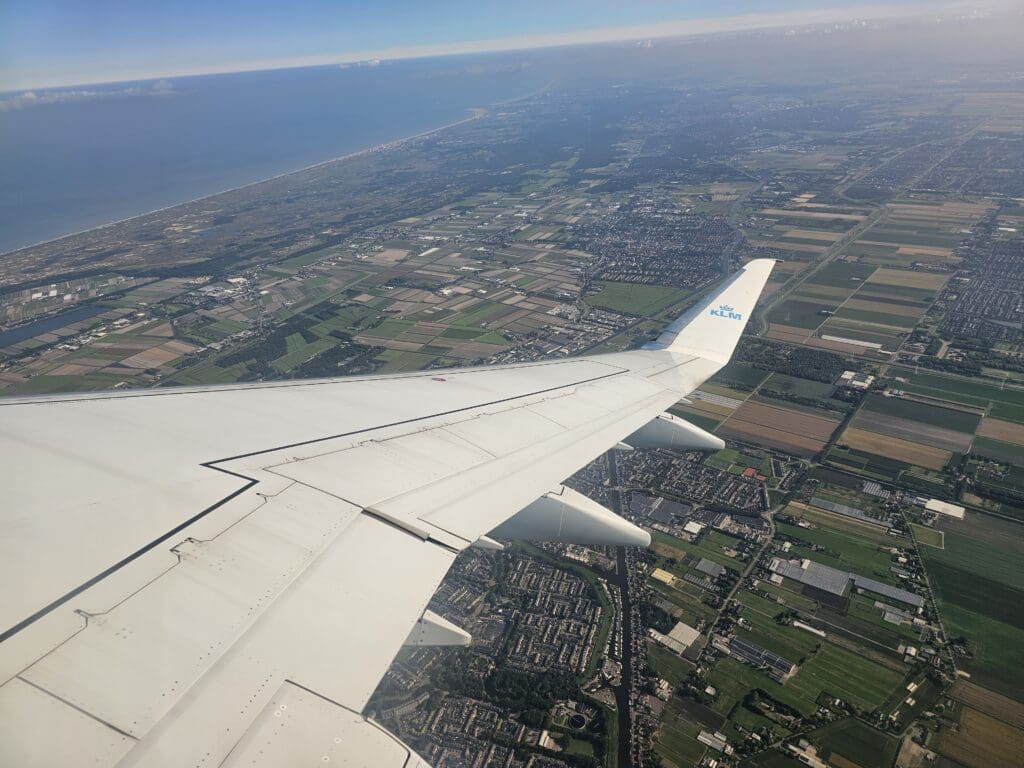
When it comes to scenery, the flight between Amsterdam and Leeds Bradford isn’t the most exciting in the world, with much of this taking place over the blue waters of the North Sea. Nevertheless, as we crossed this, I did manage to spot seemingly endless rows of offshore wind turbines as well as a fair number of ships ploughing through the waters below. Unlike KLM’s mainline fleet, KLM Cityhopper’s aircraft lack onboard wifi and thus those who needed to stay in touch with the outside world would have been out of luck. Meanwhile, the only form of entertainment other than looking out of the window came in the form of KLM’s monthly inflight magazine, the Holland Herald. Published in English only, I found this to be a decent quality inflight publication and featured an array of articles on the sights and culture of a few of the airline’s destinations across the globe. Furthermore, unlike many inflight magazines, I was delighted to find that this was not particularly heavily laden with advertisements.
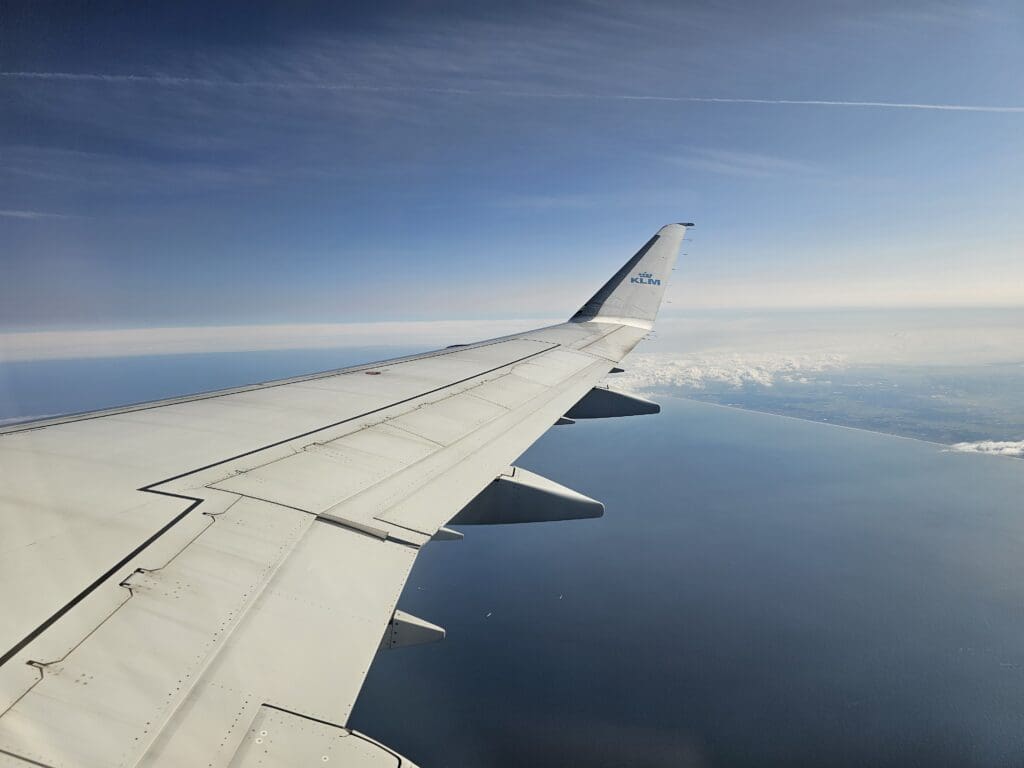
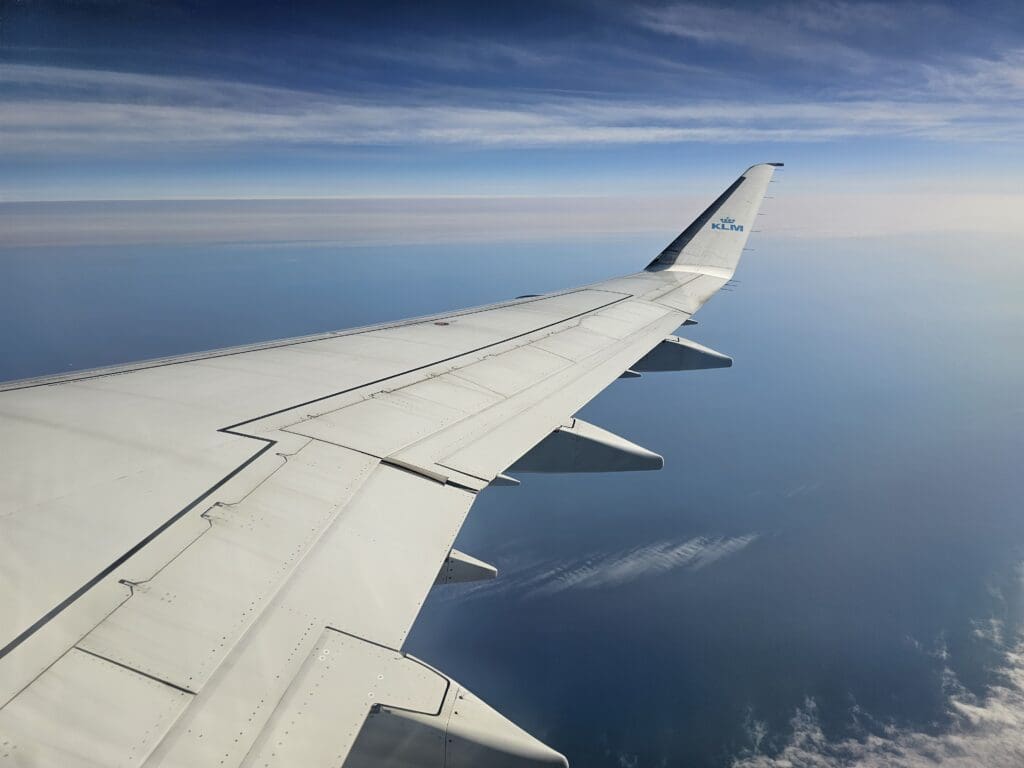
Given the short length of the flight, once they had been released from their seats, the flight attendants wasted no time in commencing the onboard service. That morning, the service carts were rolled out into the aisle at 0947 as we neared the end of our climb up to 32,000 feet. With a limited amount of time to serve all those onboard, the Purser first served those in Business and once done, they moved to the Economy cabin to help the other flight attendant serve that morning’s complimentary offerings. Thirteen minutes after the inflight service commenced, by which time the Embraer was passing just to the north of the North Norfolk coastline, the friendly flight attendant handed me a packaged coconut macaroon and asked for my choice of drink. Opting for a black coffee, this was handed over to me and I soon began to get to work on this. Despite being a slightly more compact offering than the sandwiches that I had previously been treated to when flying short haul with KLM and KLM Cityhopper, overall, this offering left me with few real complaints. Importantly, this was of decent quality and was far more than you could expect to receive onboard hour-long services with many other European legacy carriers.
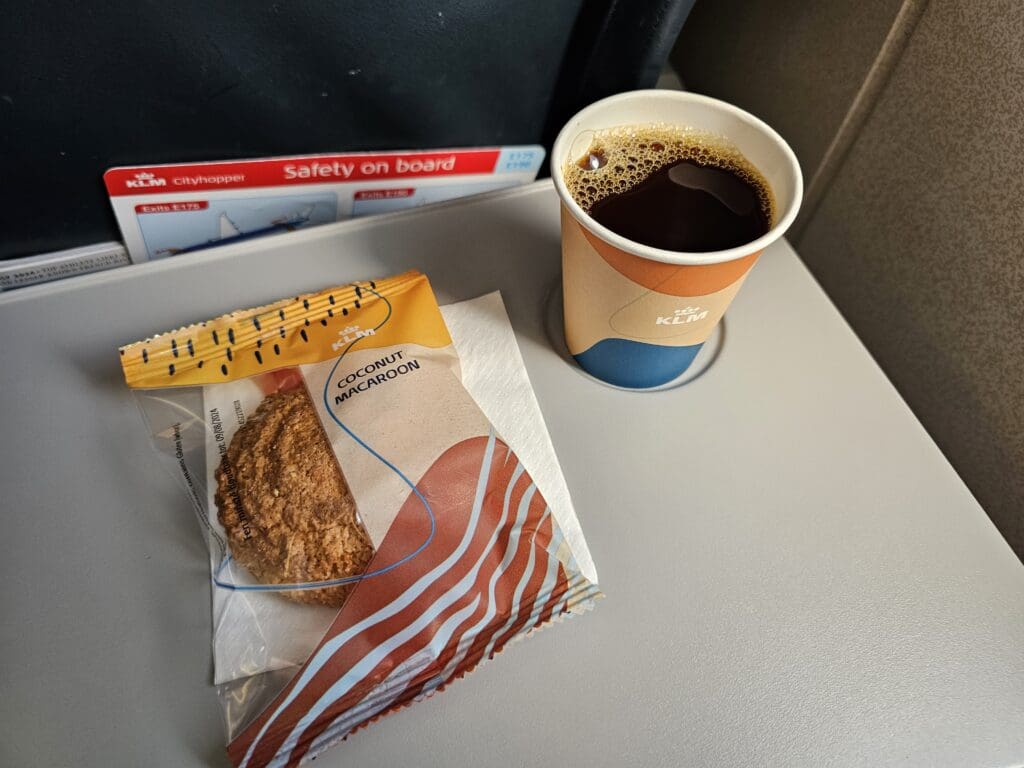
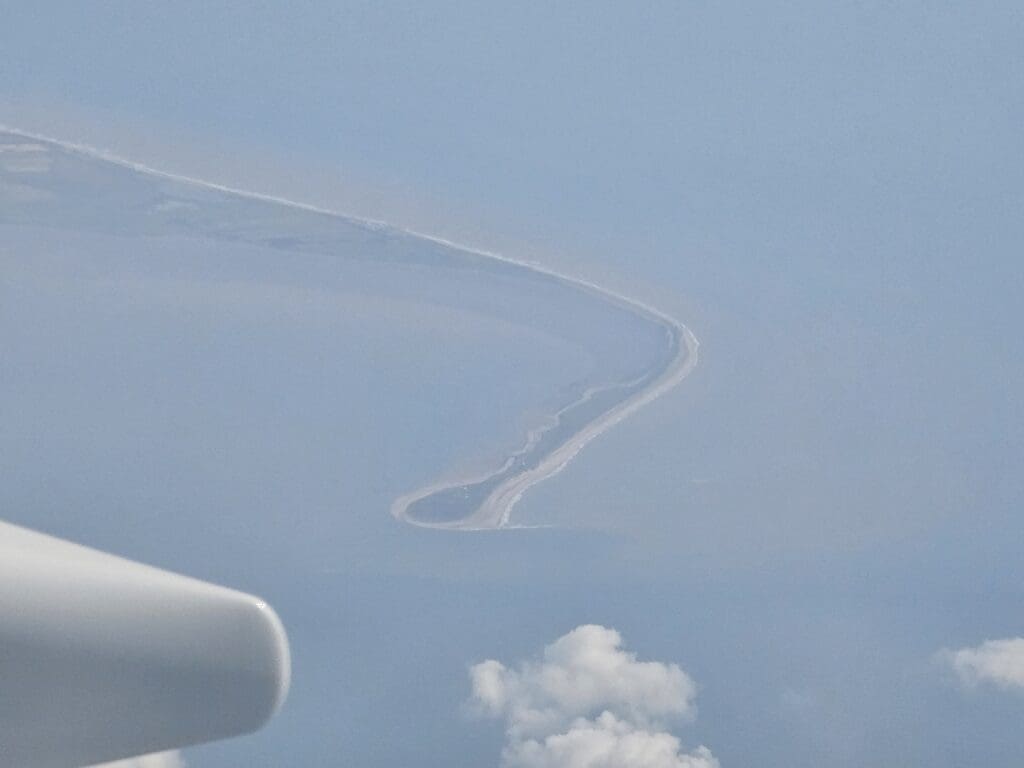
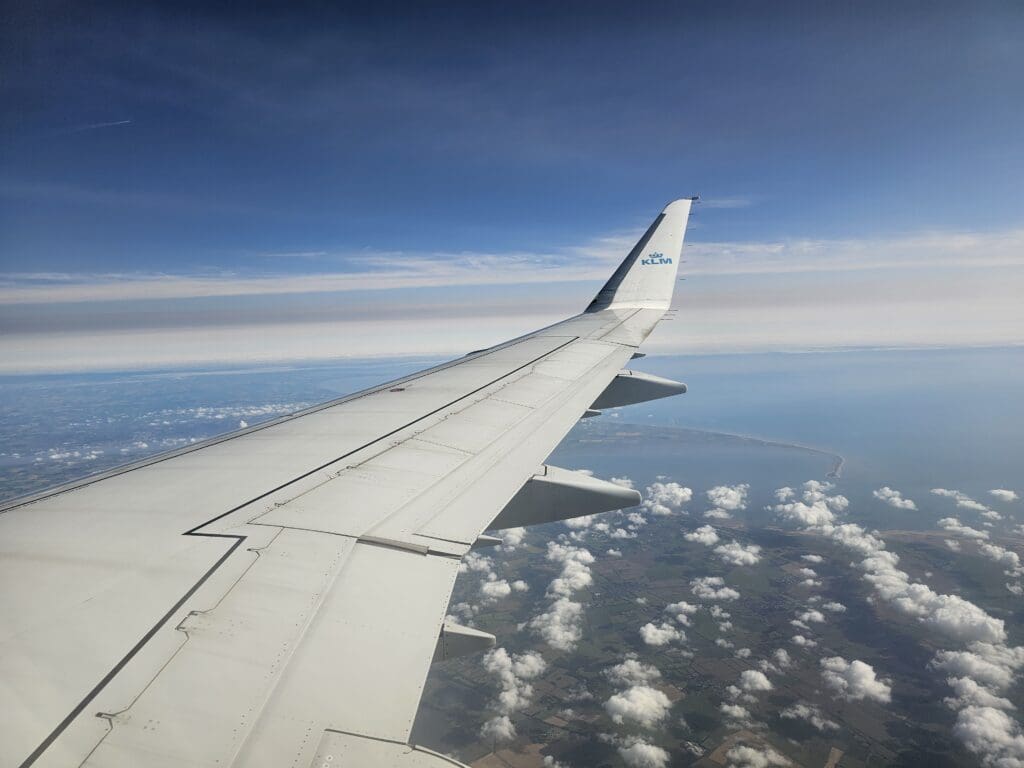
Returning to the route, that morning the Embraer spent just six minutes at 32,000 feet before commencing its step descent and by the time I had been served, the aircraft could already be felt descending. As I sipped on my morning coffee, around 29 minutes after leaving the Dutch coastline behind, the Embraer made landfall over the Lincolnshire coastline in between the towns of Chapel St Leonards and Mablethorpe. To the north, a clear vistas were offered of the mouth of the Humber Estuary and Spurn Head, which, according to Wikipedia was known to the Alexandrian jack-of-all-trades Claudius Ptolemy, and was the place where Henry IV re-landed on British shores to dethrone Richard II.
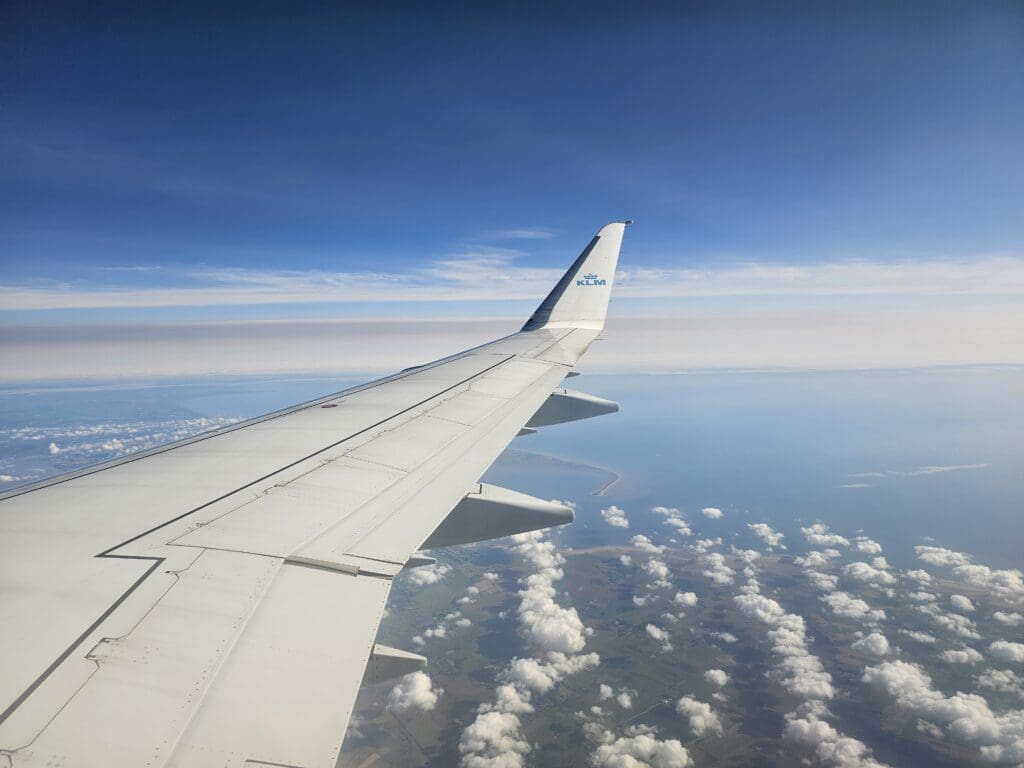
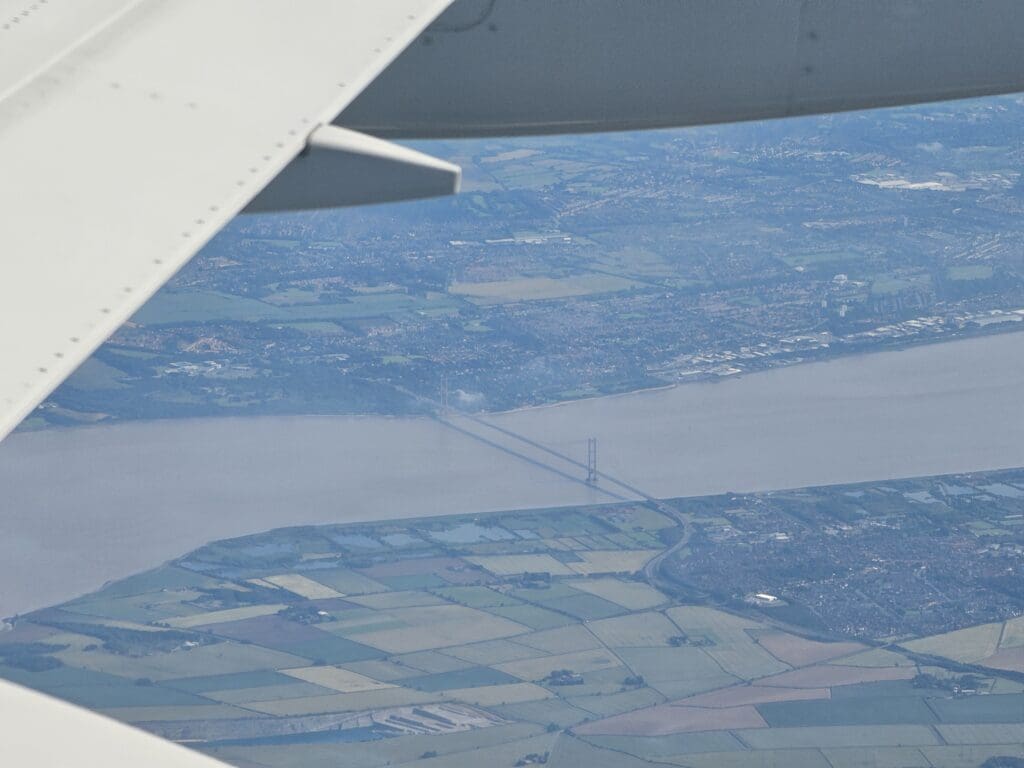
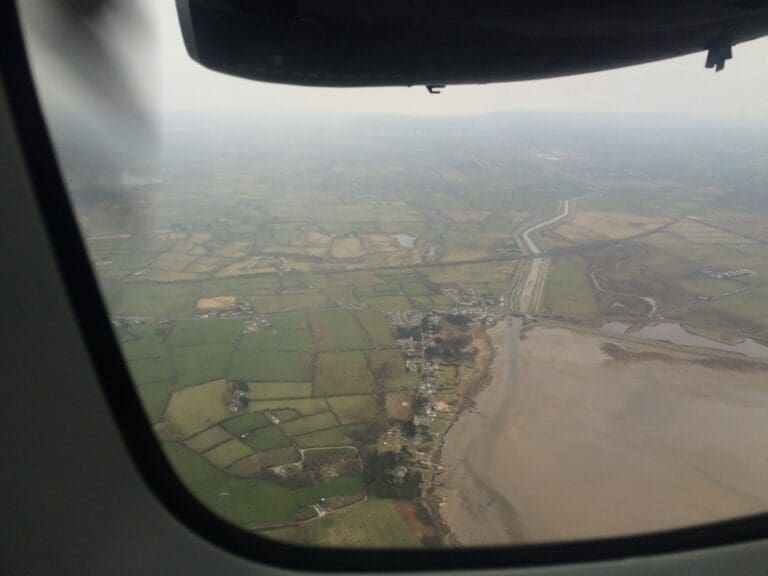
Heading inland, the Embraer passed the town of Louth and descended over the picturesque Lincolnshire Wolds. Below, I managed to catch sight of Humberside Airport where the very same Eastern Airlines Embraer 190 that I had seen being pushed back at Schiphol could be seen turning around on the runway and commencing its taxi to the airport’s small terminal! Meanwhile, beyond this, the Humber Bridge, which was once the longest suspension bridge in the world popped into view, followed by the town of Scunthorpe, famous for its steel industry. As we passed Scunthorpe, the First Officer performed an announcement with the usual thanks, and advised passengers that we would land in around ten minutes’ time before giving an update on the unusually clear weather on the ground. After performing this, the seatbelt signs were re-illuminated and the two crew members passed through the cabin, collecting rubbish and ensuring that all was in place and secure for our arrival.
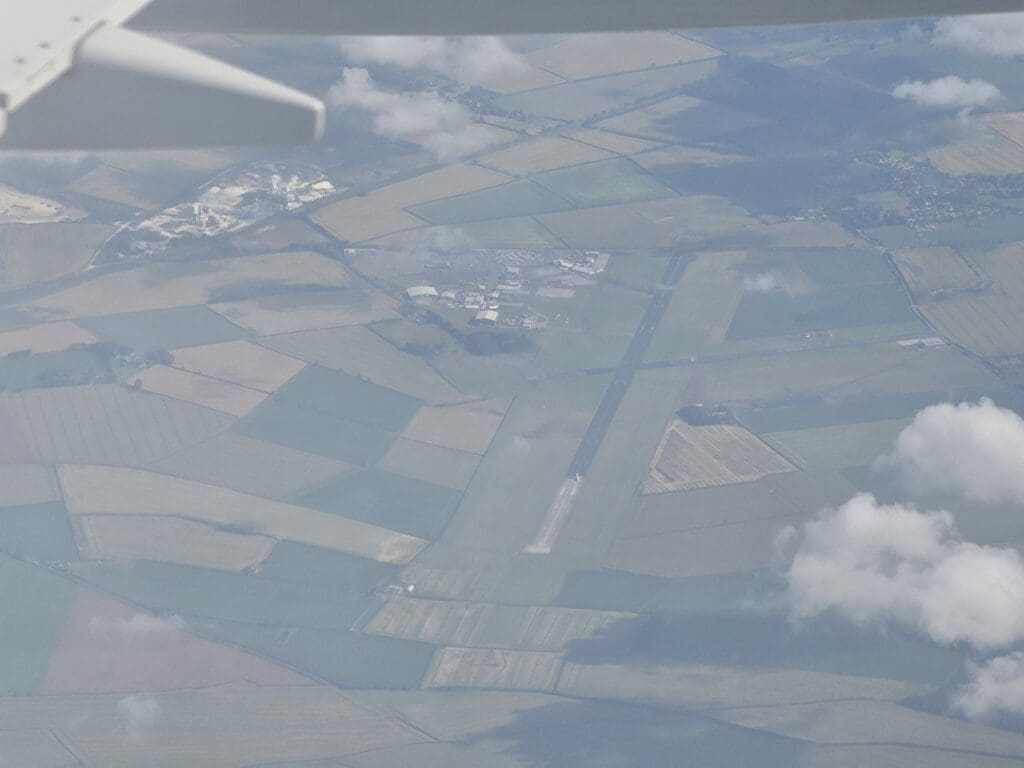
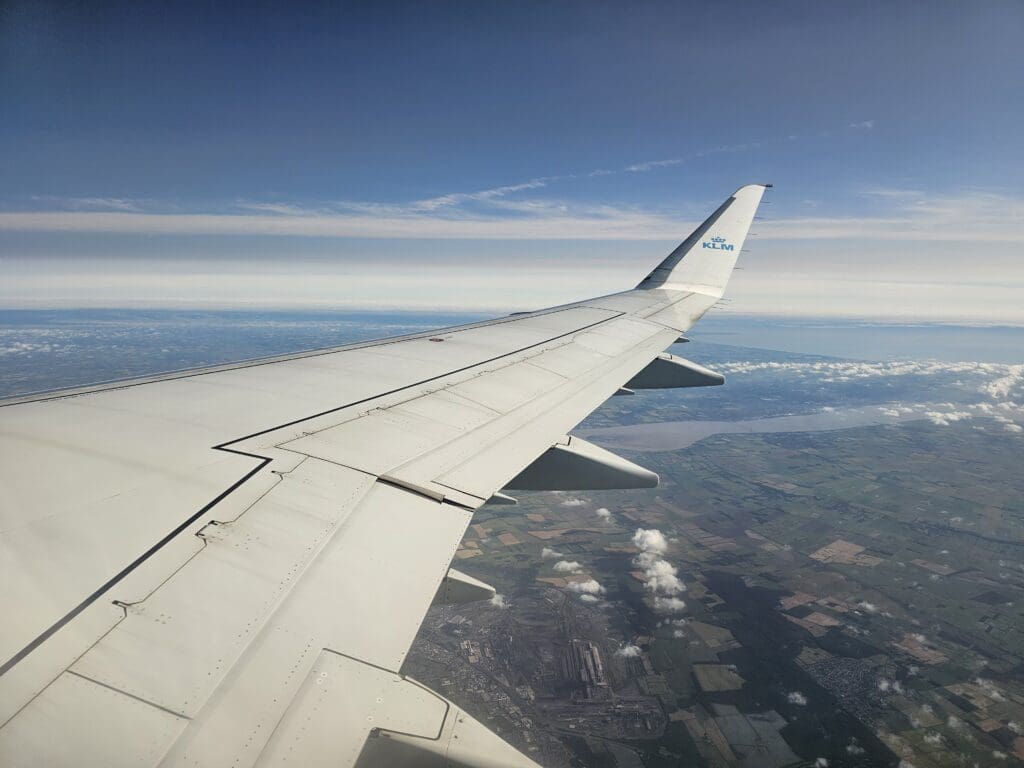
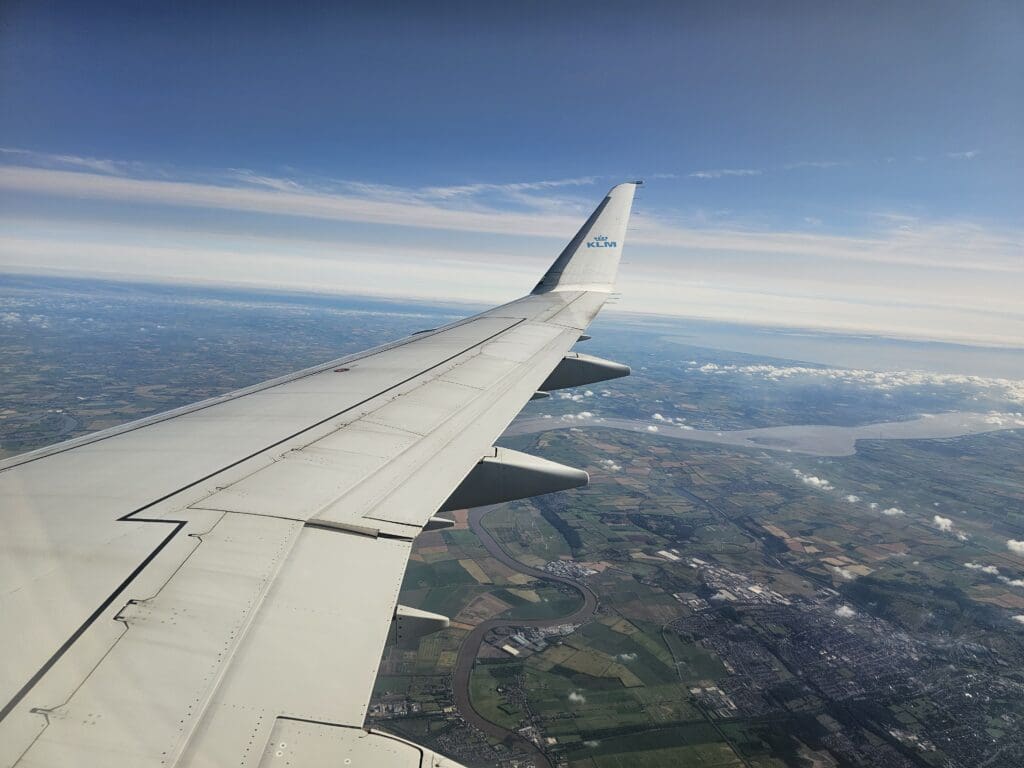
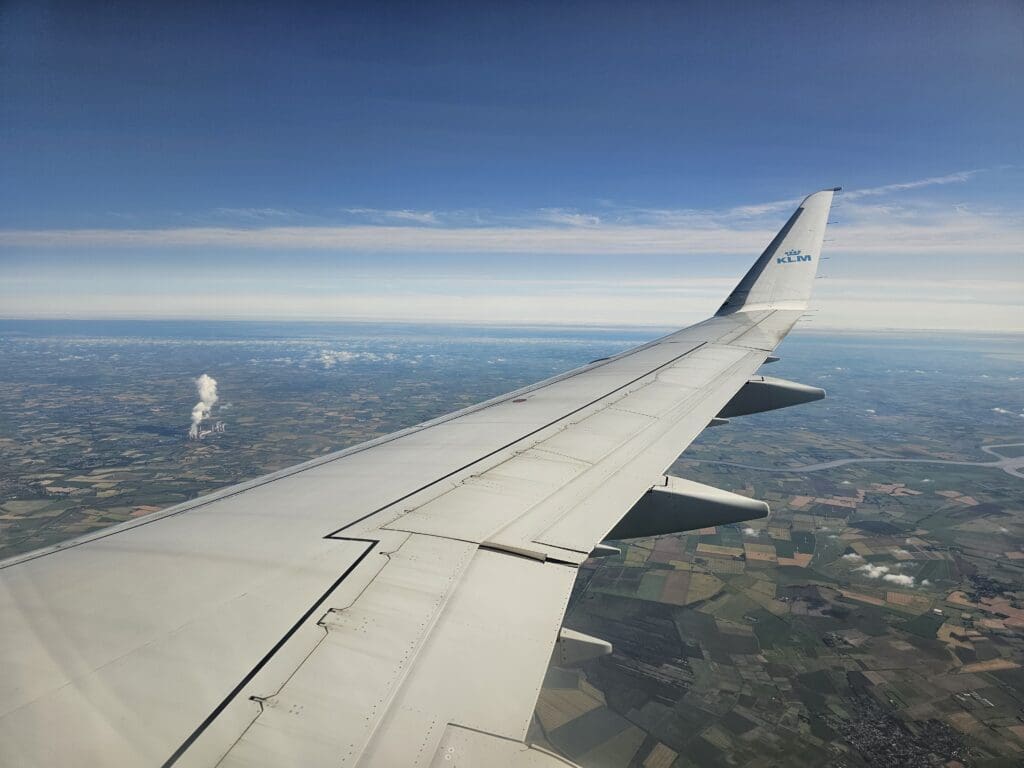
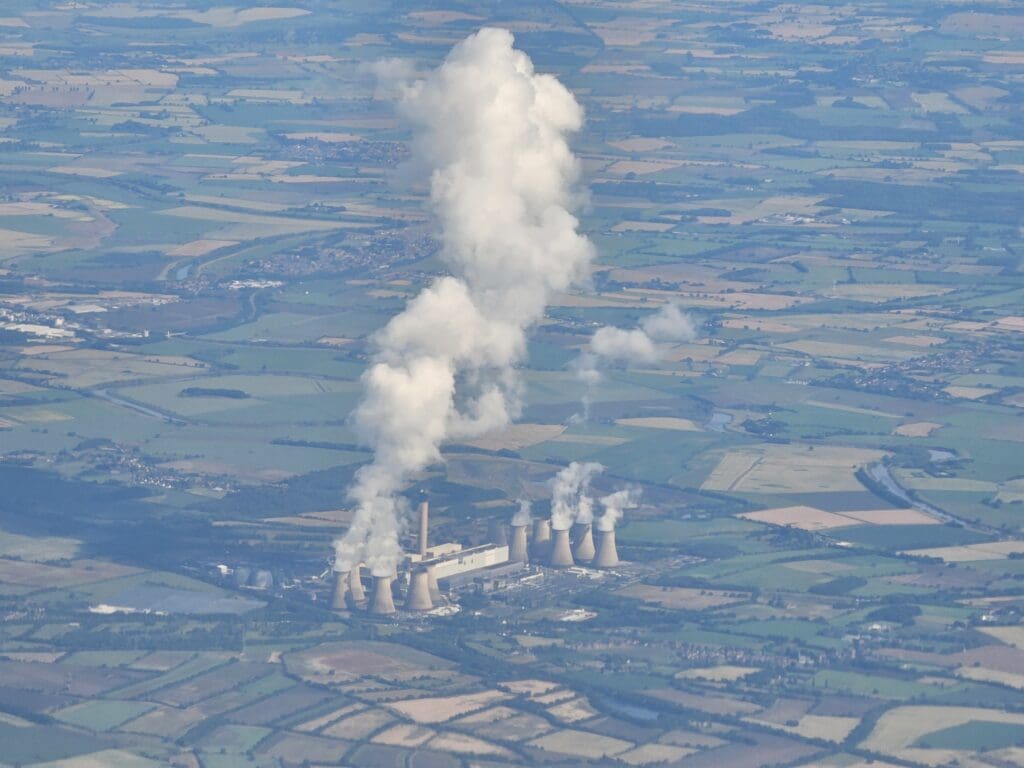
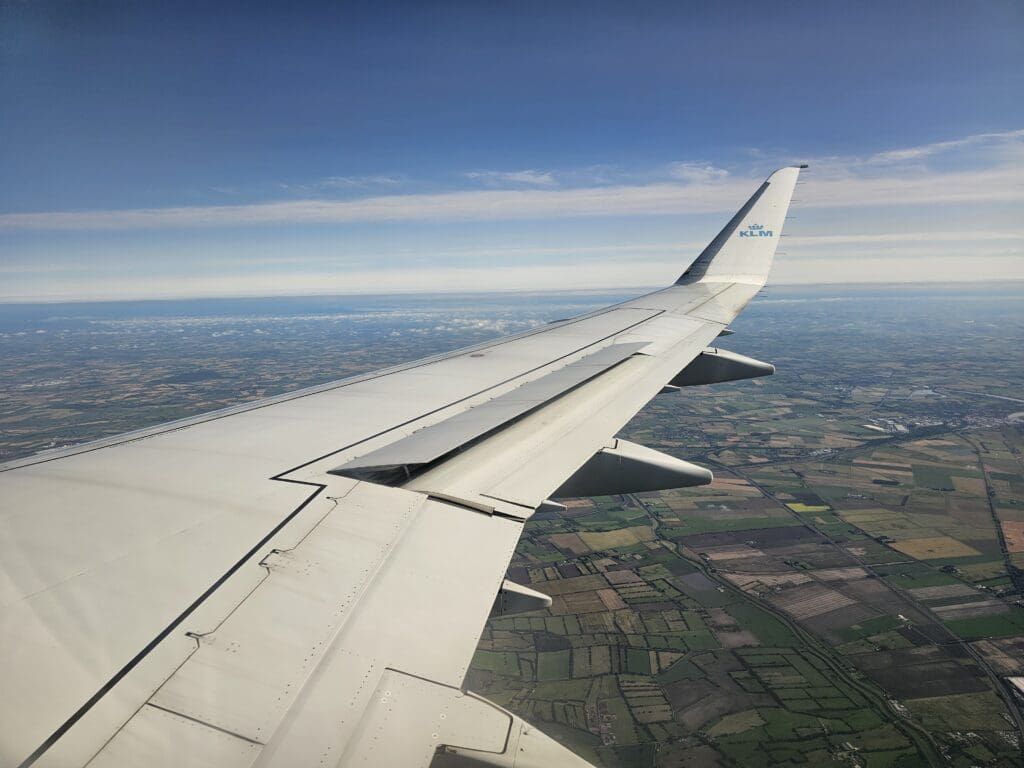
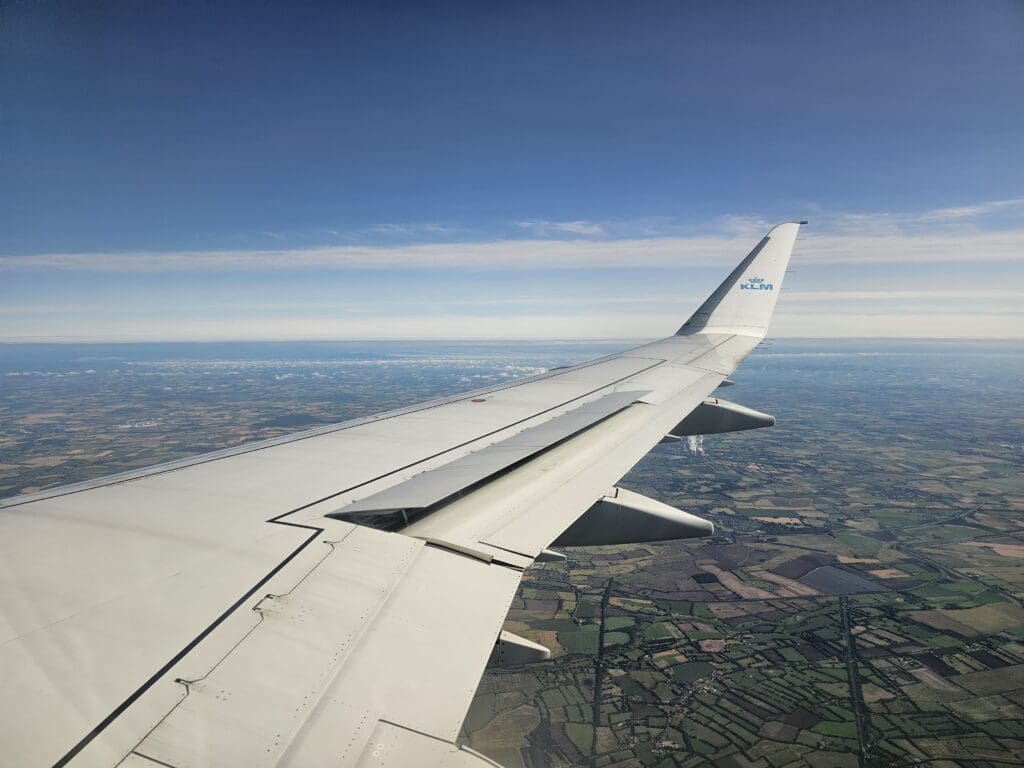
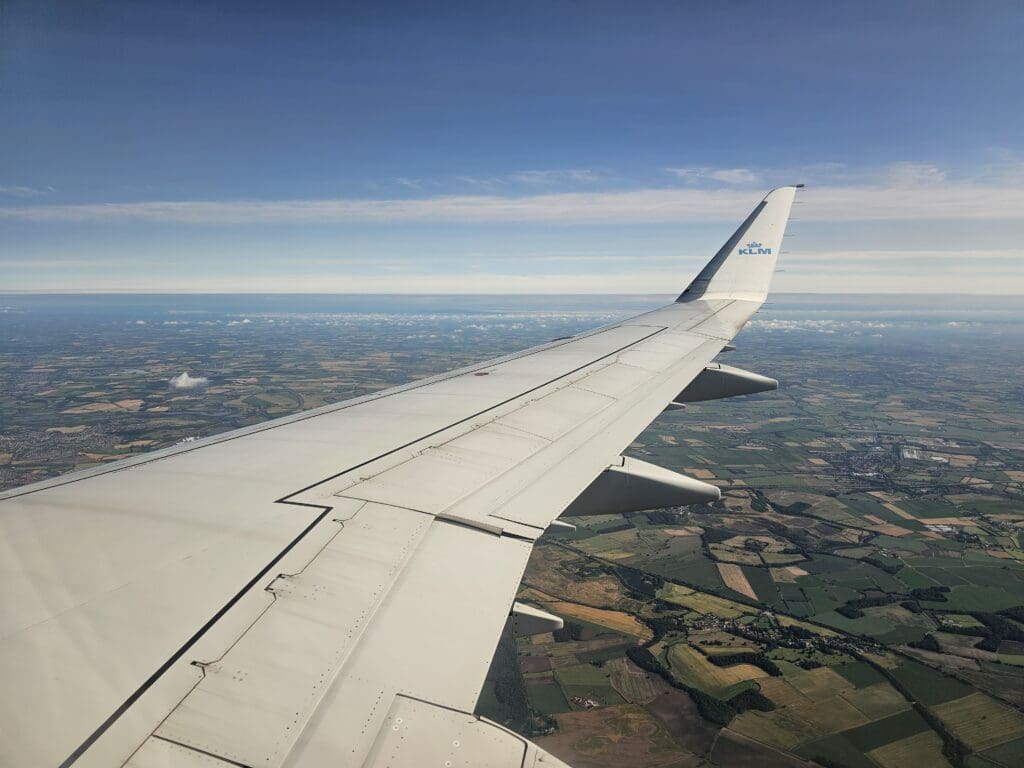
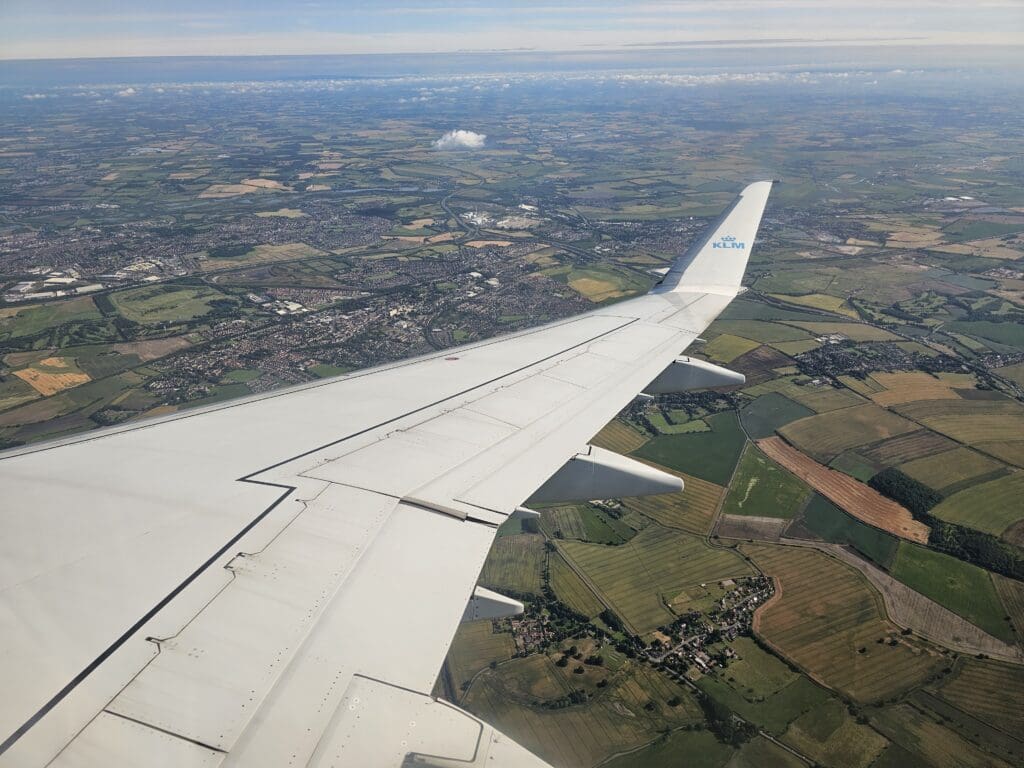
From Scunthorpe, the Embraer continued heading westwards and passed through a small portion of the skies of my homeland, South Yorkshire, before reaching West Yorkshire. Beginning what seemed to be a fairly rapid descent, assisted by the Embraer’s speedbrakes, outside, the towns of Pontefract and Castleford appeared as we roughly followed the course of the Aire and Calder Navigation towards Leeds. If landing on Leeds Bradford Airport’s Runway 32 and if lucky enough to be arriving in good weather conditions, the approach to this offers good views of much of the city and its surrounding area. Indeed, I had opted to sit on the right hand side of the aircraft in the hope that I would be able to spot my apartment block on our way to the airport.
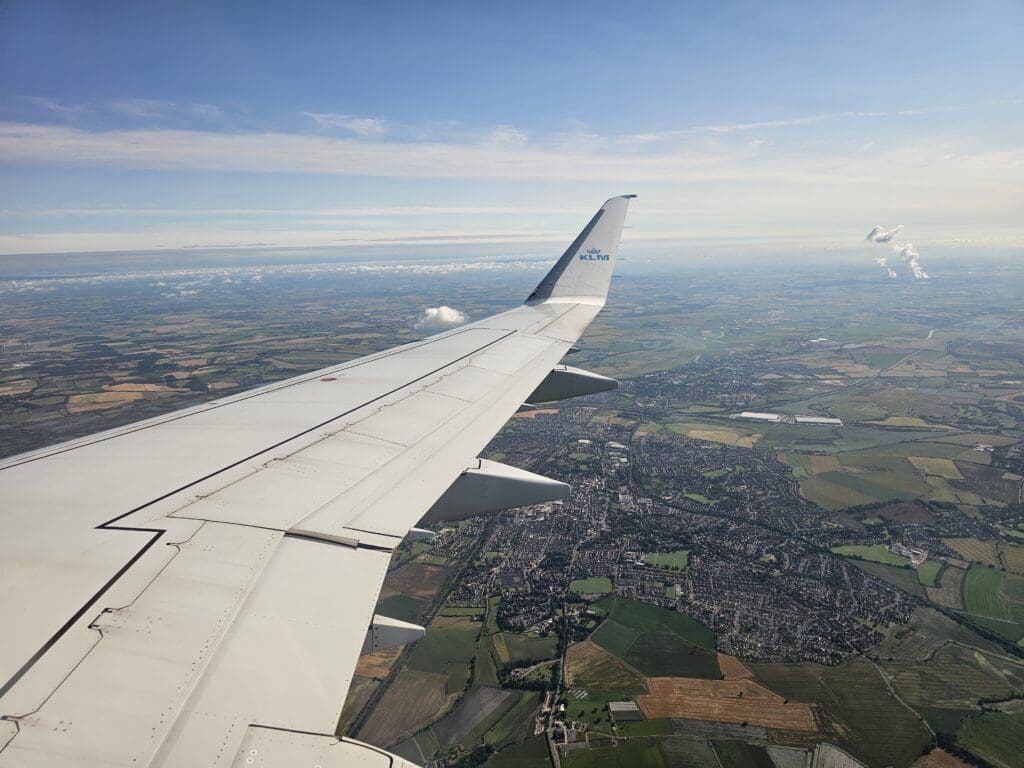
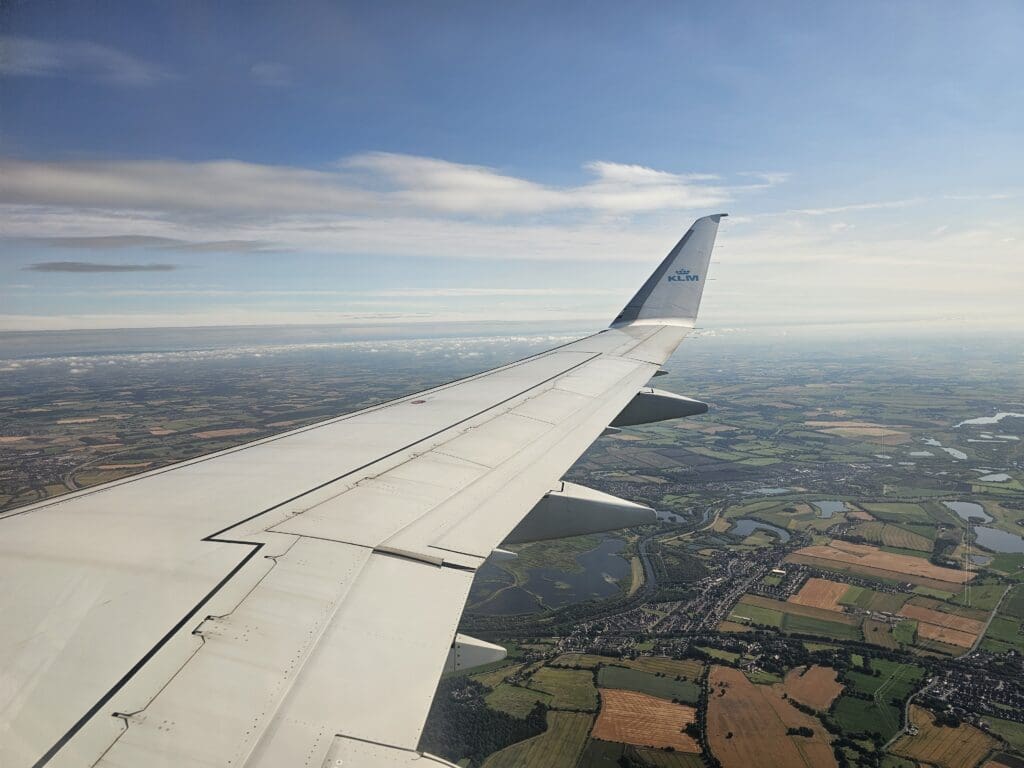
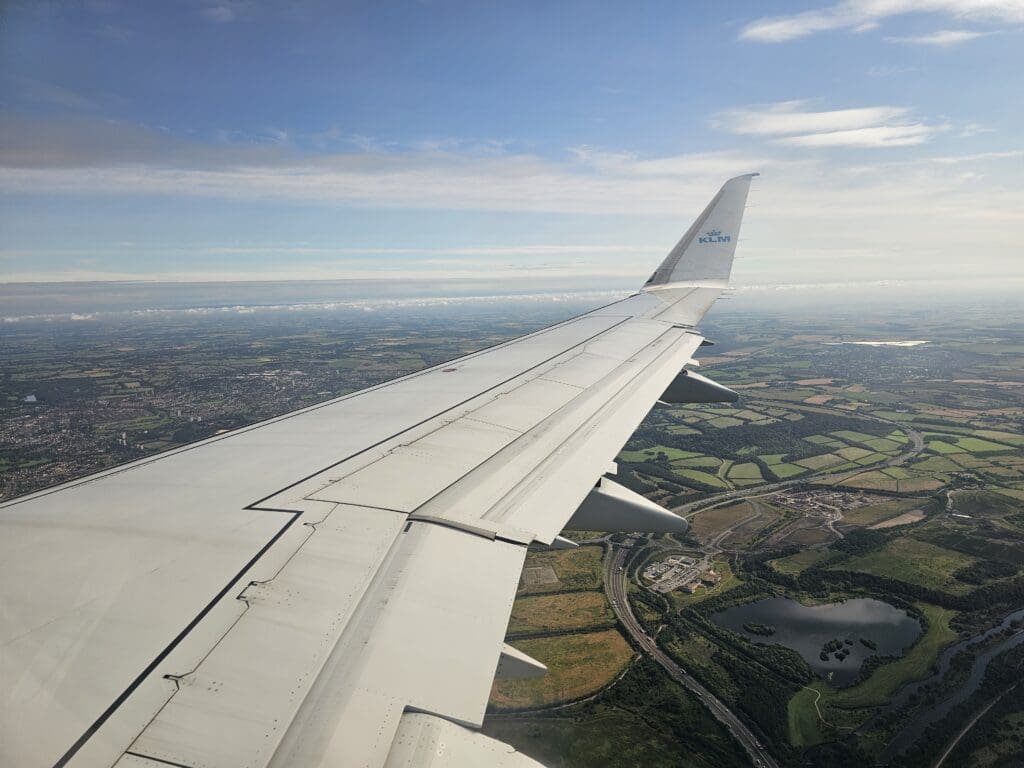
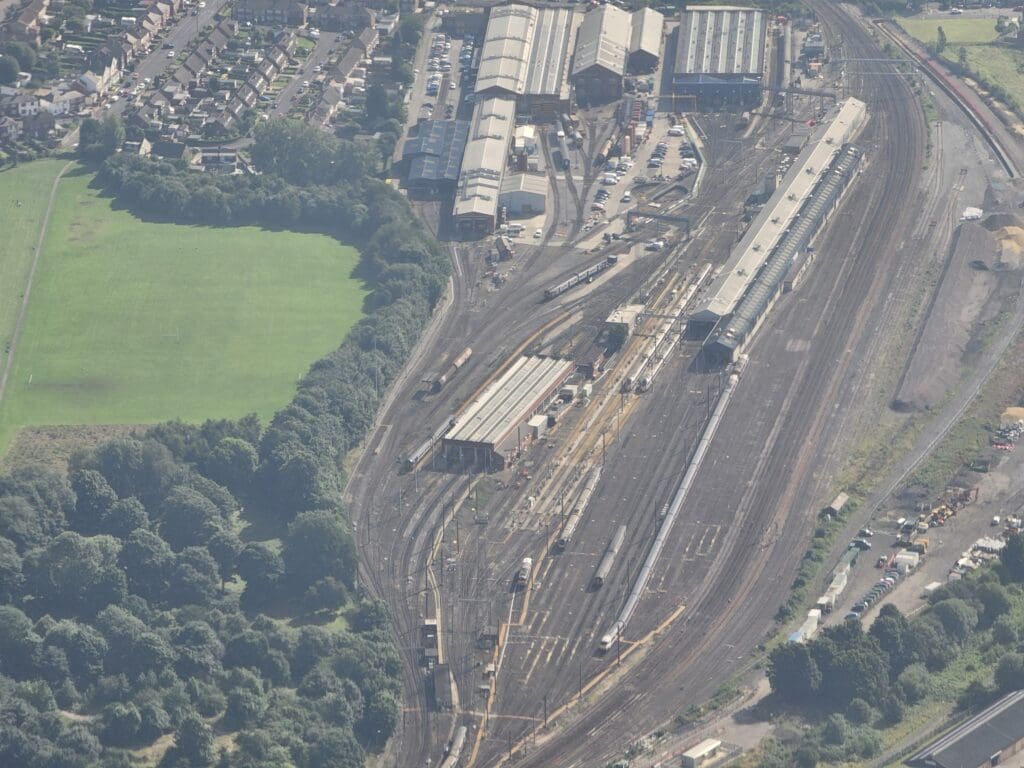
Heralding our arrival into Leeds, I soon spotted the large railway depot at Neville Hill which sits on the eastern fringes of the city as we sped towards the city centre. Passing directly over this, I caught a glimpse of the city’s distinctive arena and tall student accommodation towers, the arena and the University of Leeds, with the suburbs of Chapeltown, Chapel Allerton and Meanwood visible just to the north. From there, we passed straight over the studenty neighbourhood of Headingley, followed by the well-to-do green suburbs of Adel, Cookridge and Horsforth.
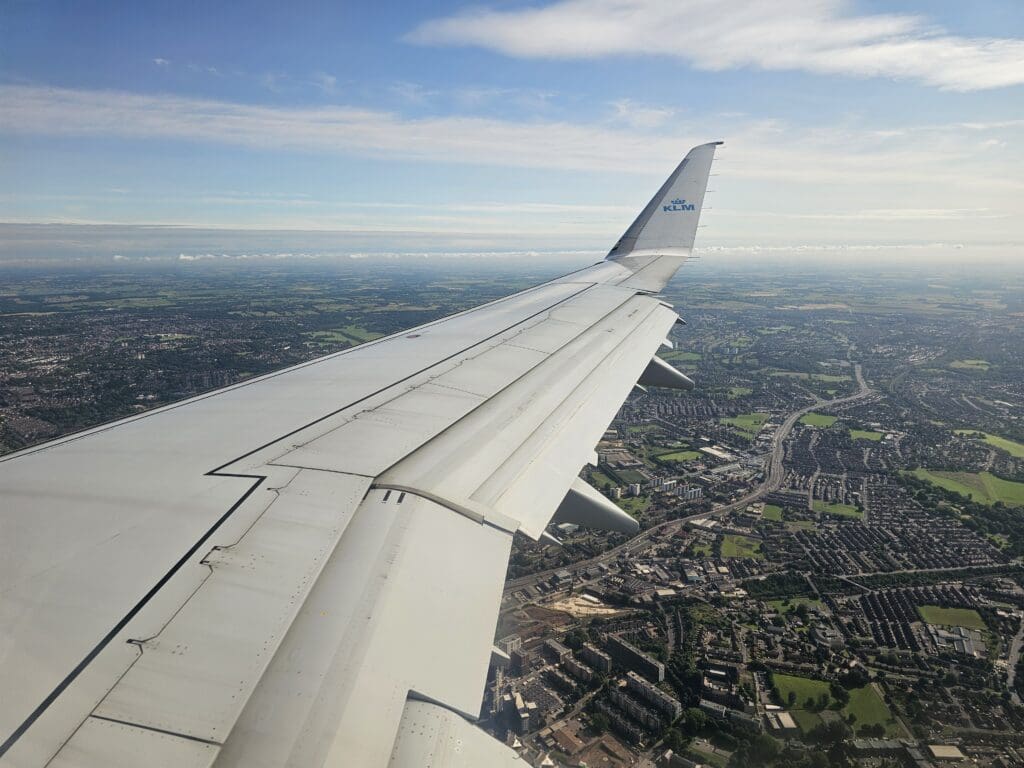
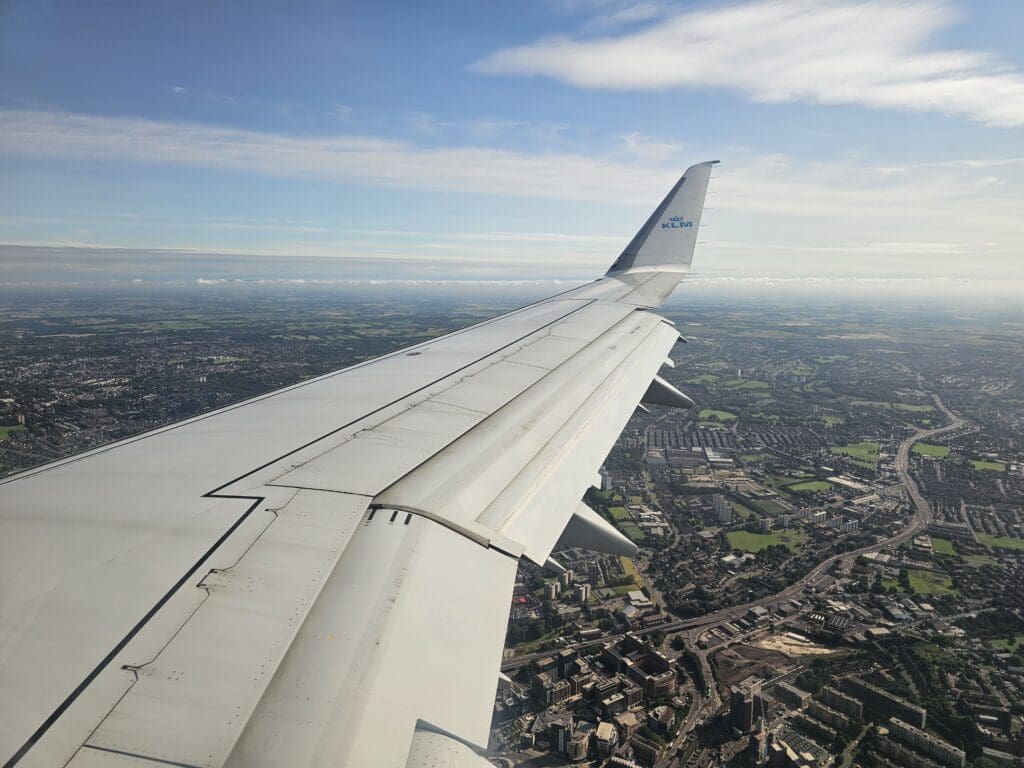
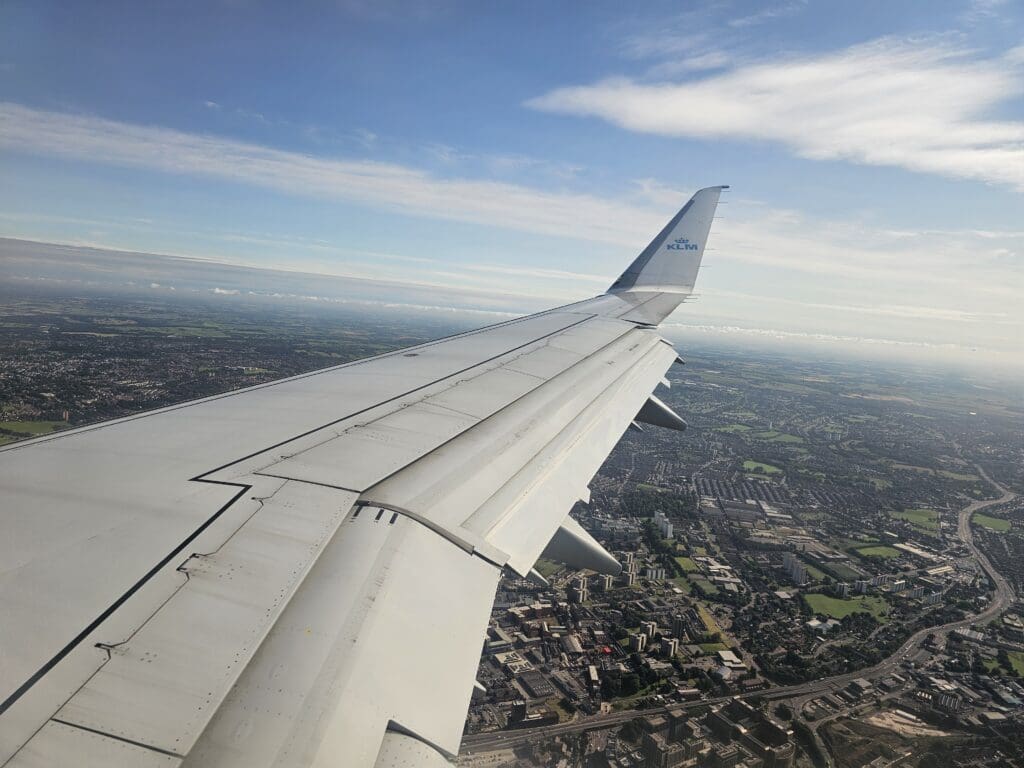
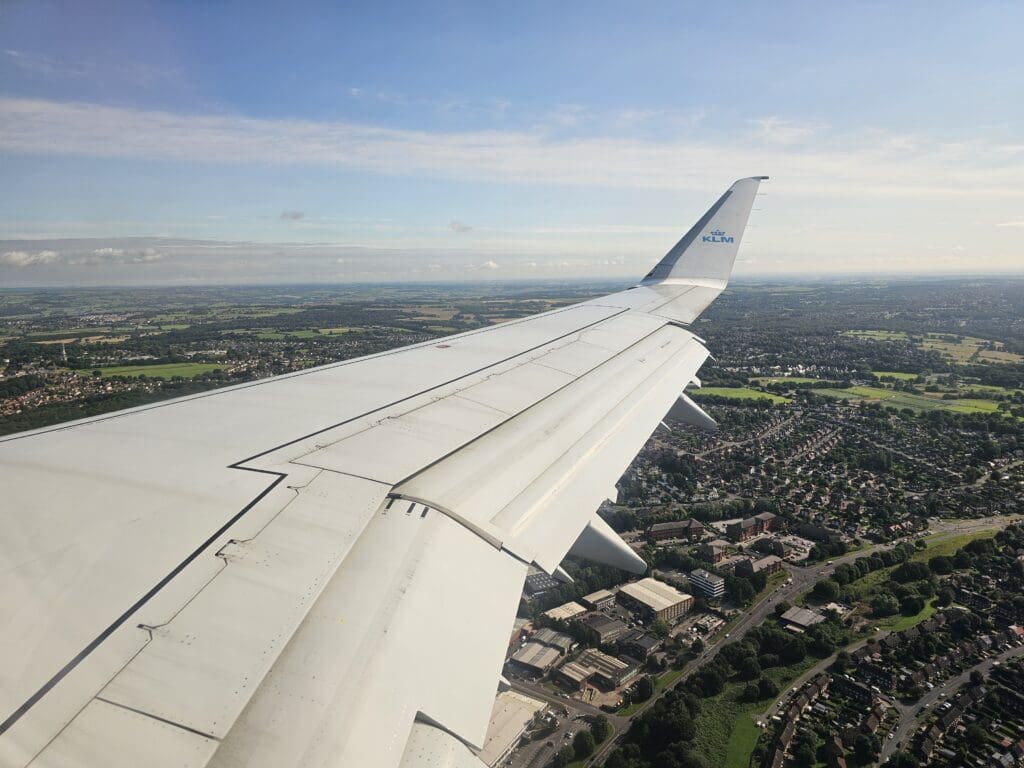
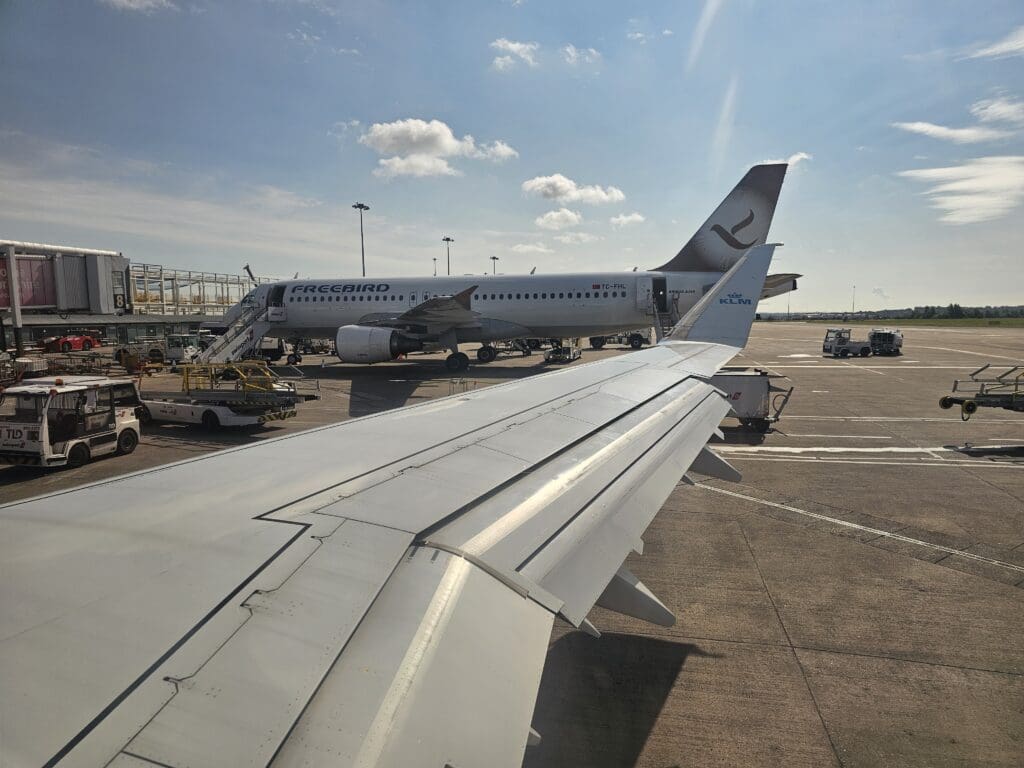
Sitting on a hill, Leeds Bradford Airport is somewhat famous for being the highest commercial airport in the UK and is known for its blustery and foggy conditions which can often result in challenging bumpy approaches, and frequent go arounds and diversions. However, that day, our approach to the airport was smooth, and it wasn’t long before we crossed over the fields to the south of the airport and the hill below rose up to greet us. A grand total of 51 minutes after we had taken to the Dutch skies, the Embraer made a firm touchdown on Runway 32 before decelerating rather rapidly, presumably in an attempt to avoid a backtrack. As we slowed, Leeds Bradford Airport’s not particularly glamorous terminal building appeared, soon followed by the operational headquarters of Jet2. Whilst Leeds Bradford is by no means a quiet airport, travelling in the middle of summer and arriving after the first wave of departures, at that time most aircraft had already jetted off for their first of four flights that day, and so at that time nothing more than a single Jet2 Boeing 737-300 and an Airbus A320 operated by Turkish leisure carrier Freebird Airlines could be seen on the north side of the airfield. More luxury sightings came in the form of a regular Canadian visitor – a Toronto based Bombardier Global Express XRS, and a modern Hahn Air Cessna 680A Citation Latitude parked outside the airport’s Multiflight FBO facility.
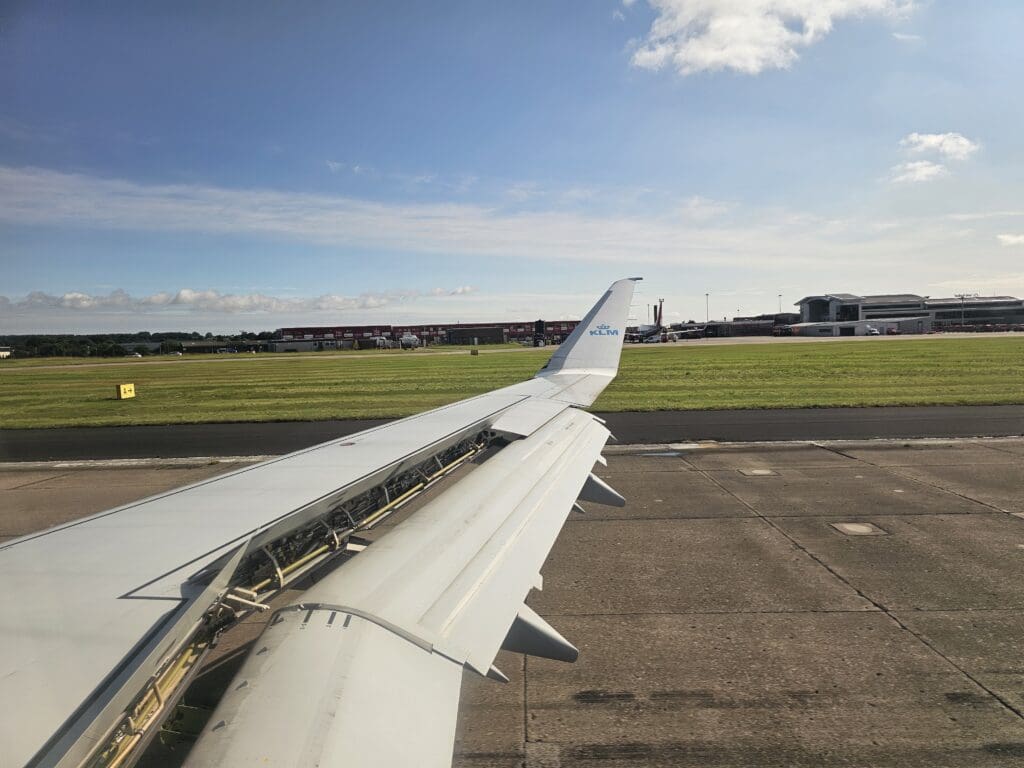
As soon as we left the runway, the Purser welcomed all to Leeds Bradford and advised passengers to remain seated until the seat belt signs had been extinguished. Soon, the aircraft cautiously turned left into Stand 7, one of just two jetbridge equipped stands at the airport, where we pulled in next to the Turkish Airbus being readied for its return flight to Antalya. Once there, the two engines spooled down and interestingly, the flaps remained in their fully extended position. Inside the cabin, many of those around me seemed to lack any urgent rush to disembark, and sensibly remained seated until the jetbridge manoeuvred into position and the cabin door had been opened. Soon, I stood up, made my way through the cabin and thanked the Captain and Purser in the forward galley before heading up onto the jetbridge. That day, the Embraer would have plenty of trips left to undertake and once back at its homebase, the jet would operate rotations to Hamburg and Warsaw, before ending its day in Turin.
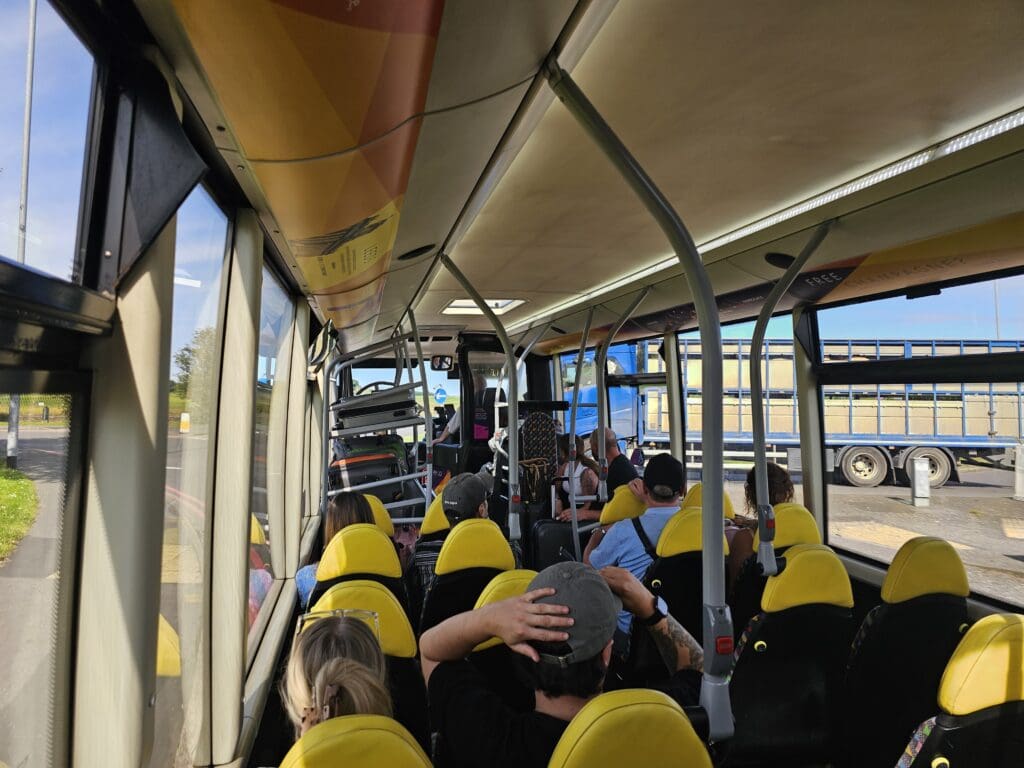
From the gate, nothing more than a very short walk was in order to reach the terminal’s small immigration area. Inside, Leeds Bradford Airport is far from Britain’s best, being neither modern nor trendy, and appearing to be rather tired looking in (many) places. Adding to this, the airport is perhaps the busiest in the UK to lack immigration e-gates and thus all those arriving from outside the UK and Ireland must queue up for the manned passport counters. With three of these open that day – two for those that would in normal circumstances be able to use the e-gates (i.e. passengers from the UK, EEA/EU, Australia, Canada, Japan, Hong Kong, Korea, New Zealand, Singapore and the US) and a single desk for all other nationalities. Fortunately, the queue for the former desks moved along quickly and I soon handed my passport over to a reasonably friendly immigration officer. Following a quick check, I continued onwards downstairs to the old and battered baggage hall. Once there, around ten minutes of waiting was in store before the first bags appeared, with mine worryingly ending up as one of the final bags to be delivered. Much to my dismay, upon collecting my bag, I found this was missing a wheel, whilst my suitcase now featured some rather significant marks and scratches that had most definitely not been there when leaving Korea. Feeling too tired to care about it at that point and in a rush to catch the next city centre bound bus, I picked this up and darted outside, ending my KLM experience.
Summary
That morning, other than the battered state of the cabin and the rather uncomfortable seat, KLM Cityhopper left me with few complaints. I arrived in Leeds on time and in one piece, both flight attendants were friendly and welcoming, the inflight snack was appreciated and boarding was a calm and efficient affair. Granted, my experience was not quite as great as on my two Embraer E2 rides from London Heathrow to Copenhagen via Amsterdam back in 2022, yet, it was far from the worst flight that I have ever experienced. With that considered, I would be happy to fly with KLM again at some point in the future.