Flying the Emirates Whale: Dubai to London Gatwick on the A380
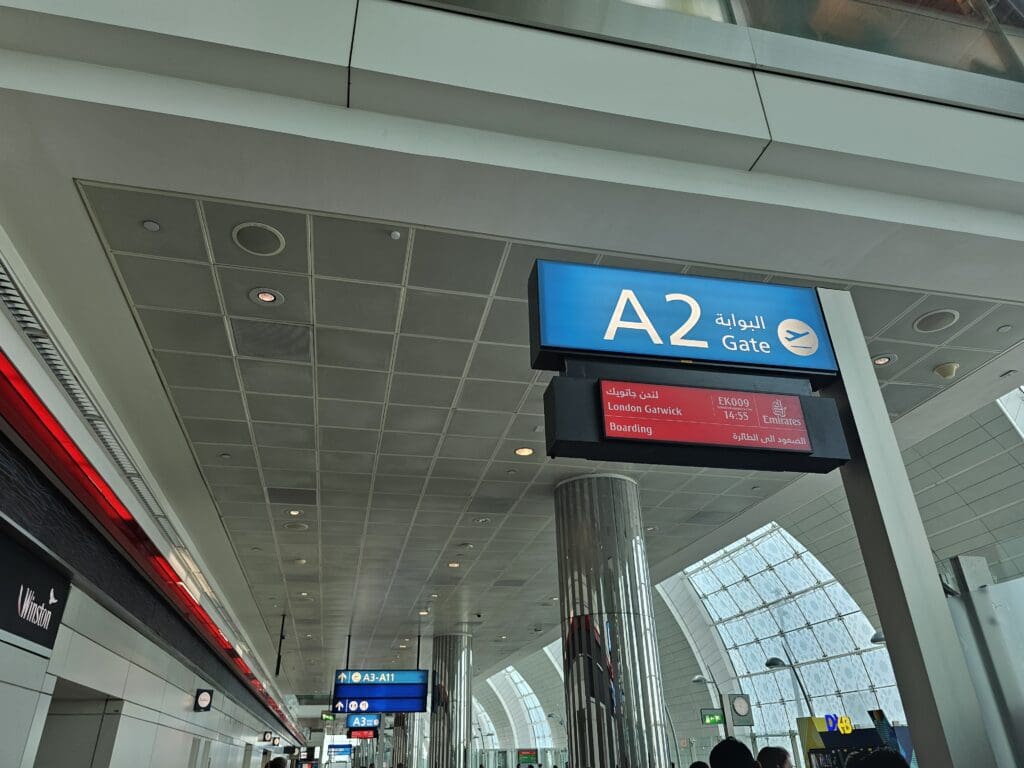
After over six hours spent whizzing through the skies of Asia, the Boeing 777-300ER that had carried me over from Malaysia came to a halt at Stand A16. Having departed from Kuala Lumpur over fifty minutes behind schedule, we arrived late, although not massively so, coming to a halt sixteen minutes after our scheduled arrival time. Whilst this reduced my transit time in Dubai to just under ninety minutes, I was not particularly concerned, even if it did mean that I would be unable to explore all the wonders of Emirates’ hub at Dubai International Airport Terminal 3. Assisting me somewhat was the fact that as I had discovered through the inflight entertainment system, my flight to London would depart from Gate A2, located at the opposite end of the concourse, but not requiring a ride on the driverless people mover.
Nine minutes after coming to a halt, I stepped off the Boeing 777 and wandered up the jetbridge into the well-polished terminal. Unsurprisingly, like me, most passengers from my flight appeared to be connecting in Dubai and so once inside the terminal, I joined the masses of weary-looking passengers following the signs for connections and following a very short walk, I arrived at the airport’s transit area. This consisted of a security checkpoint and a long bank of Emirates desks. In Dubai, all those transiting must pass through a security check, regardless of where they boarded their initial flight. However, with Dubai being Dubai, all checkpoints were open and thus despite the masses of passengers connecting through the terminal at that time, no queuing was required before I wandered straight up to one of the scanners. That day, I made it through security with ease, with no need for me to remove electronics or liquids from my bag, and no additional checks.
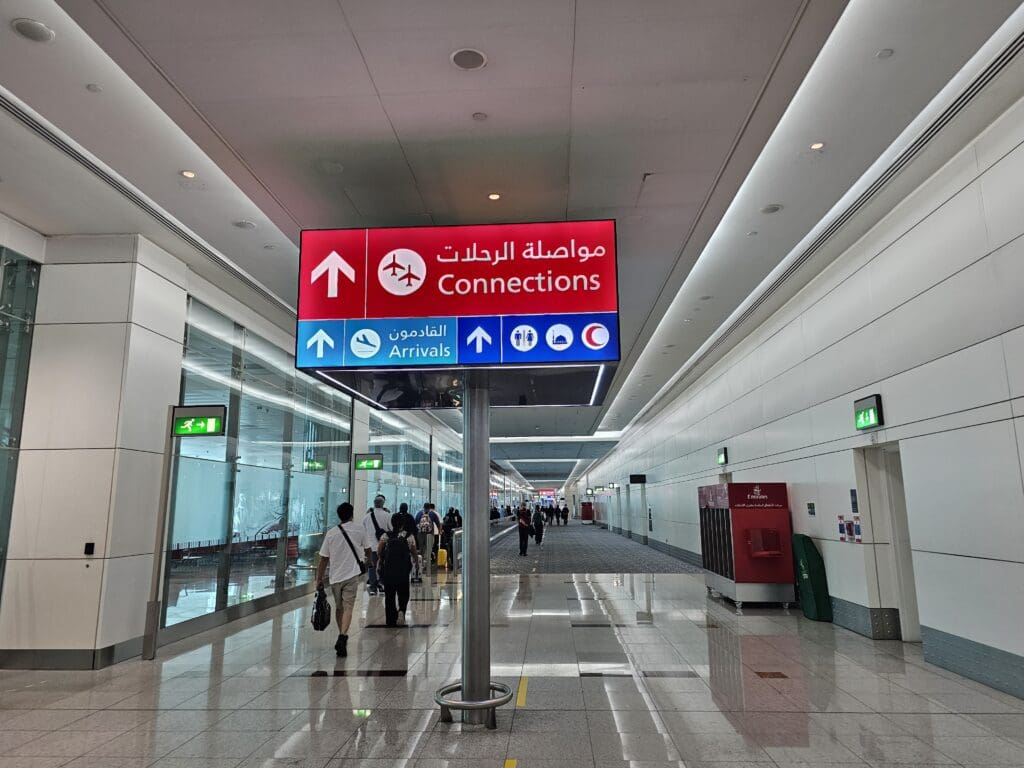
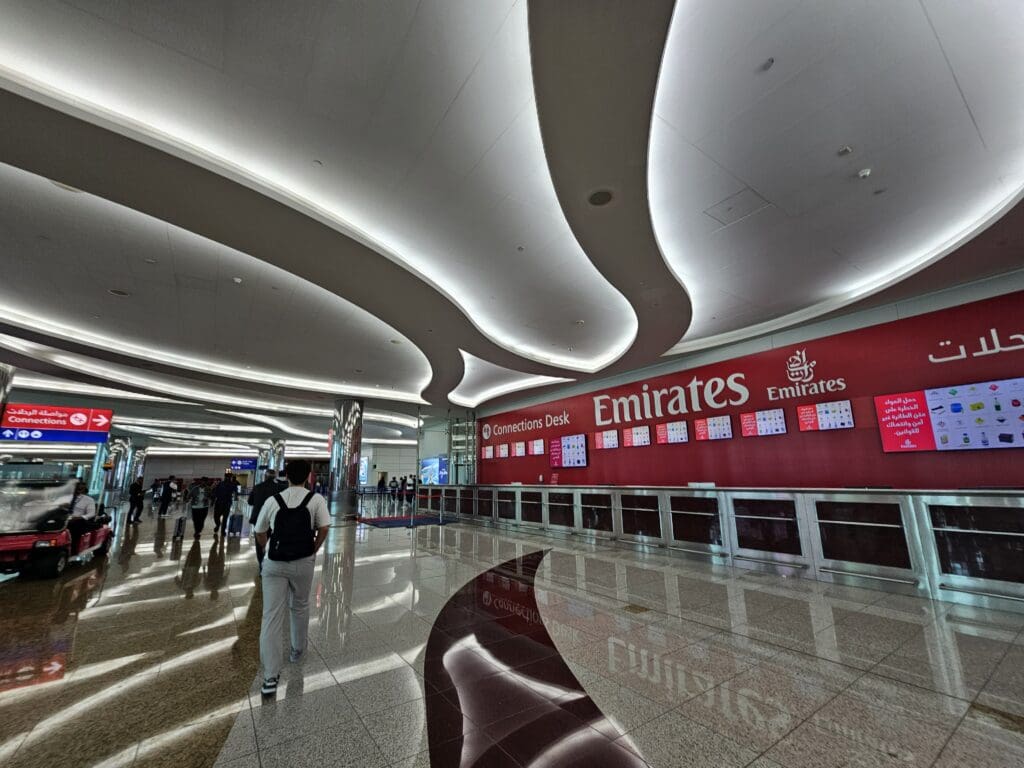
From the security checkpoint, I headed up the escalators and found myself in the airside departures area of Terminal 3’s Concourse A. Arriving there just eight minutes after stepping off my flight from Kuala Lumpur, my speedy transit through Dubai International Airport left me with absolutely nothing to complain about – however I was a little surprised that nobody checked my boarding pass or passport during this journey!
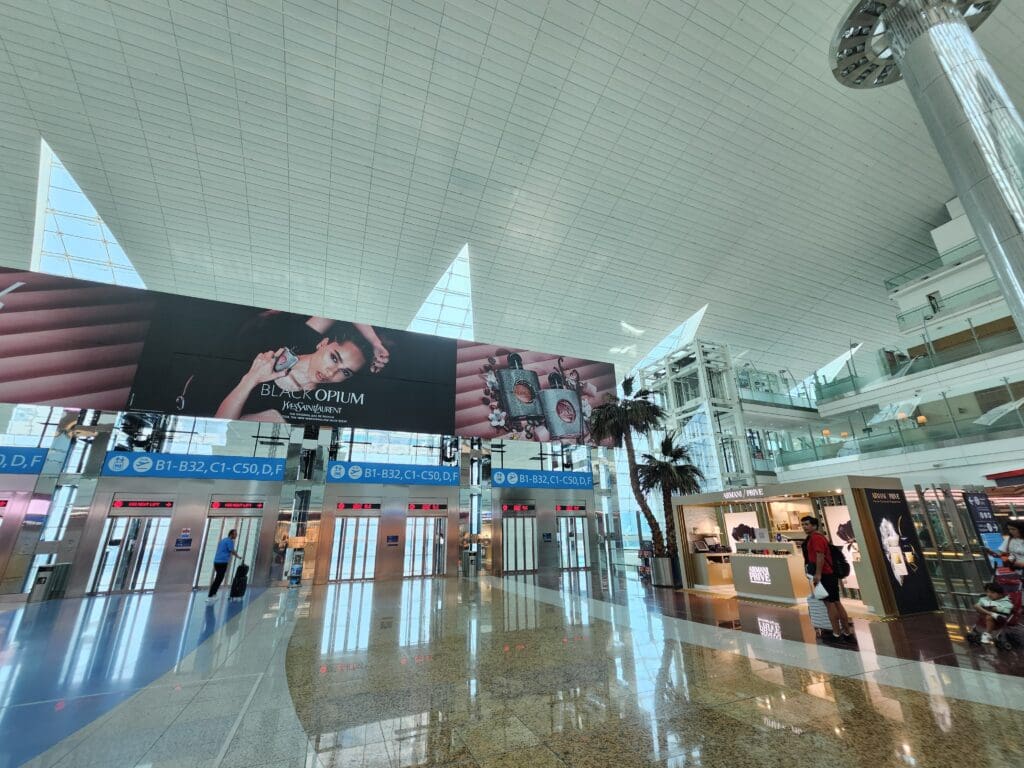
Thanks to my quick journey through the terminal, I was left with some time on my hands, and wanting to explore and stretch my legs after my ride over from Malaysia, I decided to wander around the concourse. In terms of its design, this is long and rectangular, featuring a total of twenty gates, all of which can handle the Airbus A380 simultaneously. In fact, the concourse was designed to be the world’s first purpose-built terminal to cater for the world’s largest passenger aircraft and opened in 2013. However, today, this is not exclusively used by the Airbus A380 and also serves Emirates’ Airbus A350 and Boeing 777 fleet. Sitting in the middle of the apron, this is separated from the landside portion of Terminal 3 and Concourses B and C by means of a driverless people mover. For those looking to partake in some retail therapy, the terminal features a plethora of shops, however many of these seem to take the form of luxury brand outlets such as Chanel, Dior and Gucci. Meanwhile, this features an array of eating options ranging from McDonald’s to Bottega – a luxury Italian bar. Not wanting to splurge out on any food or drink, nor needing to do any shopping, I continued my lap of the terminal without making any stops.
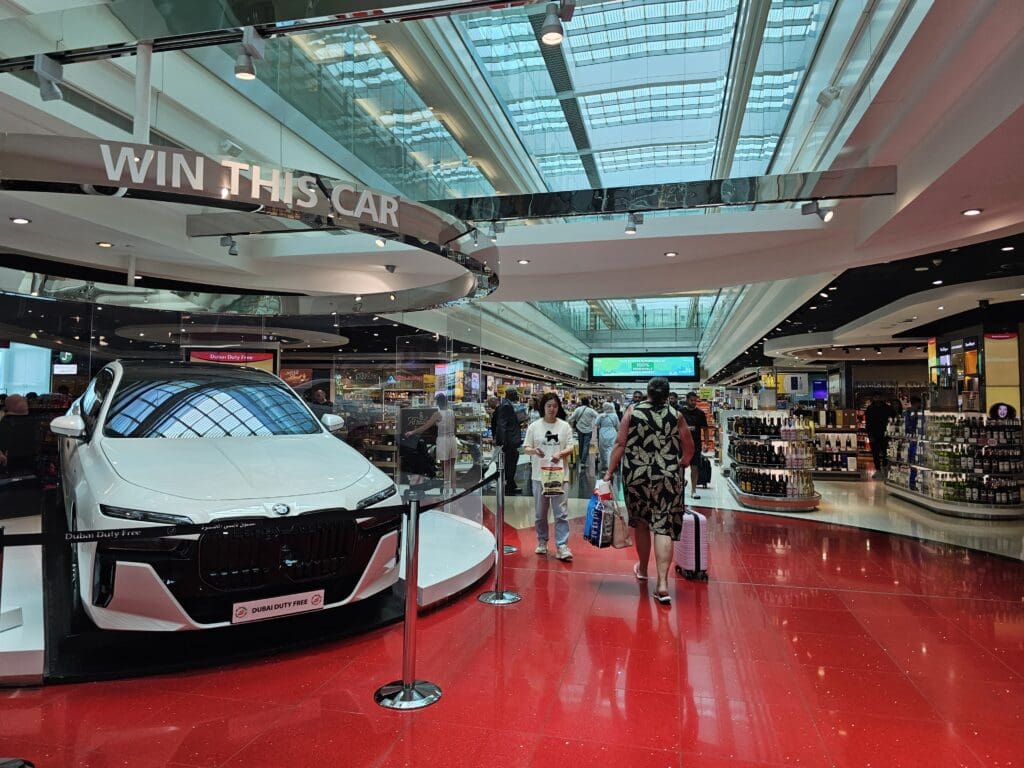
Being a reasonably young twelve years old at the time of my flight, I found the terminal to be unexpectedly bright and modern, however, I cannot say that this featured any standout architectural features, and was for the most part, a somewhat forgettable terminal. Nevertheless, this was clean and tidy, with an army of cleaners spotted doing the rounds for the duration of my stay.
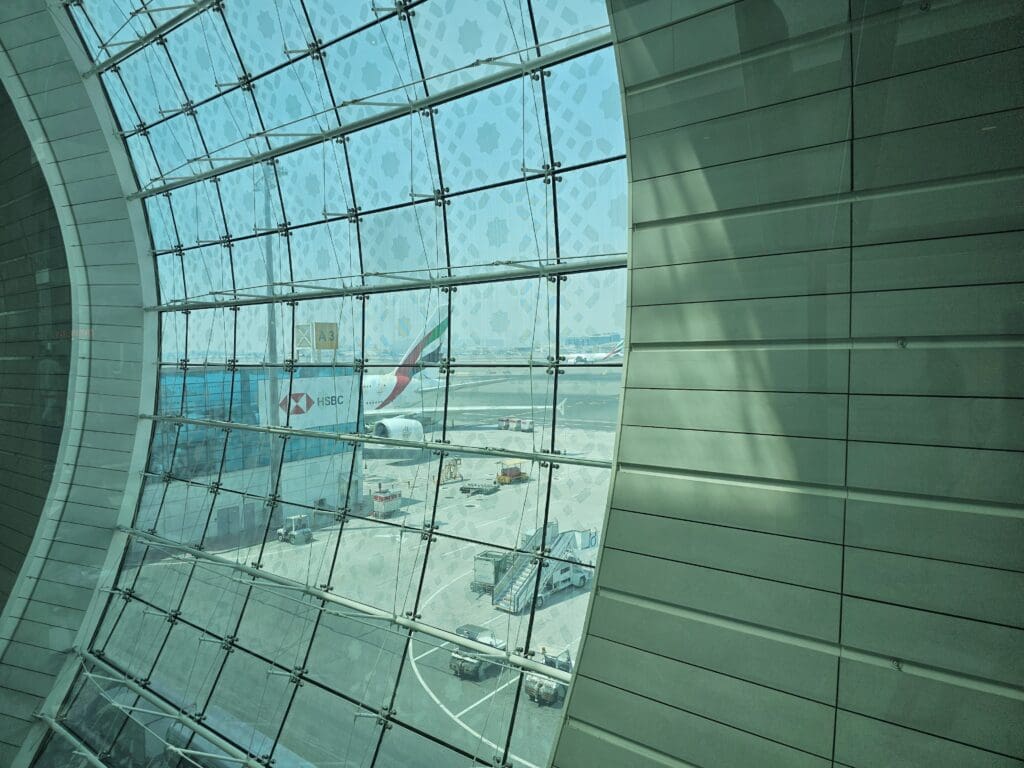
Unfortunately for aviation enthusiasts, despite featuring large windows that allowed natural light to flood in, the design of the terminal meant that unobstructed views of the action outside were very limited, furthermore, with the concourse used solely by Emirates, there is not a great amount of diversity in aircraft types and operators, especially when compared to Terminal 1. That afternoon, the airside portion of Concourse A seemed to be rather busy, and had I not wished to head to Gatwick, flights could be seen heading off to the likes of Amman, Amsterdam, Beirut, Dublin, Hamburg, Hyderabad, Istanbul, Jeddah, London Heathrow, London Stansted, Madrid, Manchester, Nairobi, Paris CDG and Rome.
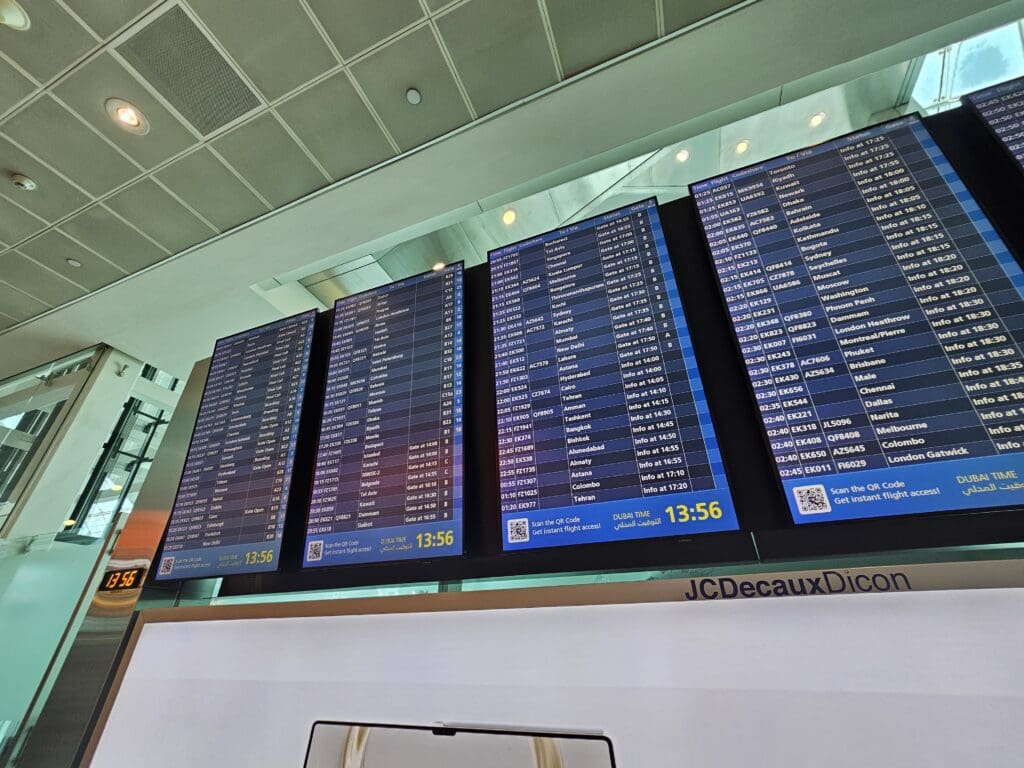
As had been the case in Kuala Lumpur, boarding for my flight to London was scheduled to commence 65 minutes before our scheduled departure time, at 1350 to be precise. As this time neared, I decided to wander over to Gate A2. Upon arriving there, with no reason not to enter the gate holding area, without queuing I wandered over to the gate podium and handed over my passport and boarding pass. Following a quick check by the polite and friendly Emirates gate agents, I was pointed in the direction of a row of automated gates. Once there, I was required to scan my passport and without issue or delay, this swung open, enabling me to make my way down the escalators to the gate waiting area.
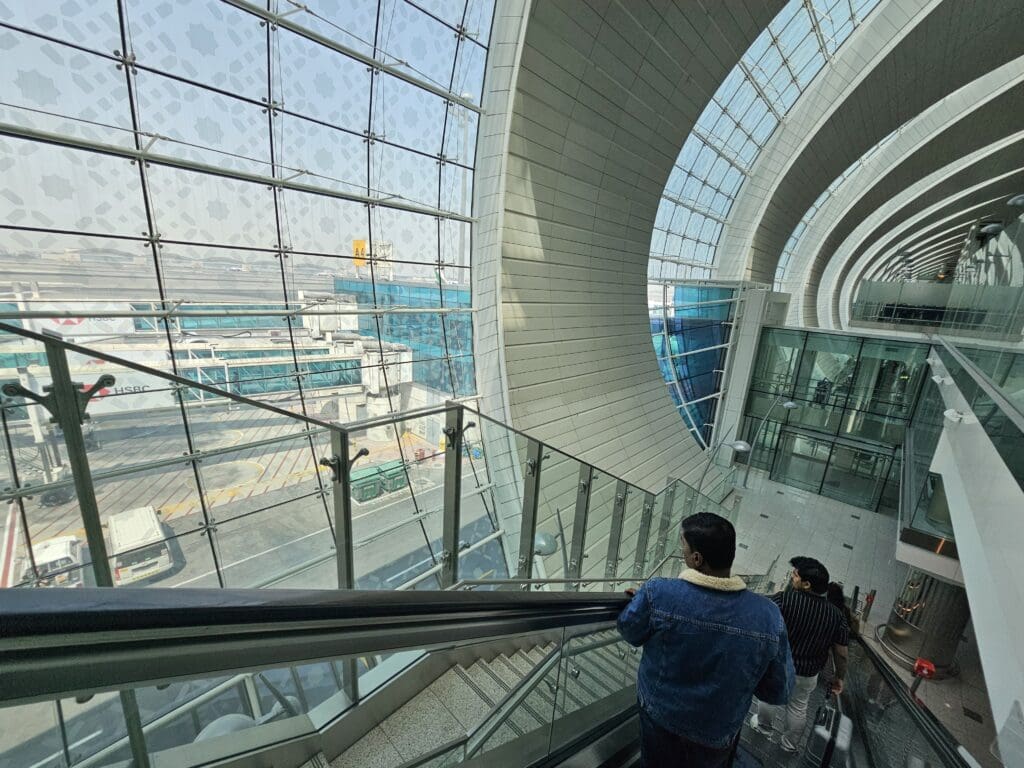
As with all flights from the United Arab Emirates to the United Kingdom, an additional security checkpoint was in place at the entrance of the waiting area, with this manned by a small army of Transguard staff – Emirates’ own security company. That afternoon, I pulled the short straw and ended up being subject to an additional security check. After waiting for a couple of minutes, my hand luggage was searched and the contents swabbed, followed by a thorough pat-down and a swab of my shoes, socks, trousers and hands. Eventually, I received the all-clear and I was free to enter the gate waiting area.
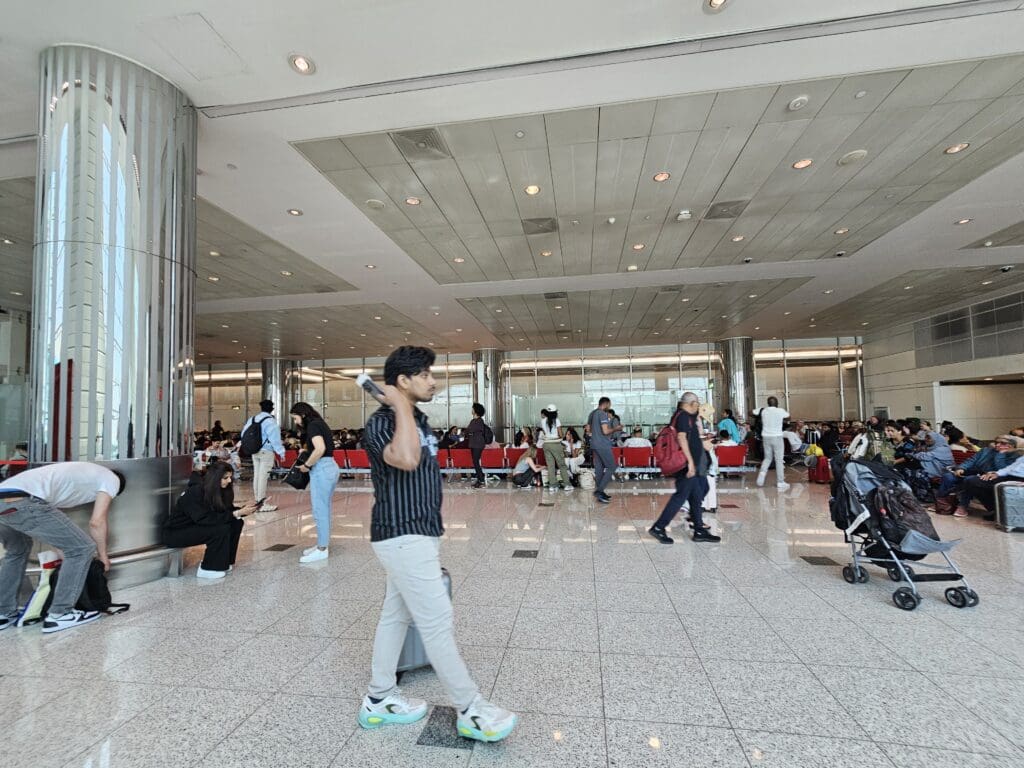
Admittedly, considering that Concourse A was purpose-built for Emirates’ Airbus A380 fleet, my gate did not feature the largest waiting area and by the time I arrived, free seats were almost non-existent. Indicating that I may be in for a rather chaotic flight, there seemed to be plenty of families with young children who were running wild in the gate area! Unlike many gate holding areas, including the one that I had visited that morning in Kuala Lumpur, this did feature a set of toilets. Unfortunately, whilst the Airbus A380 that would be taking us all to London could be seen outside, decent photos of this were impossible thanks to the terminal’s design.
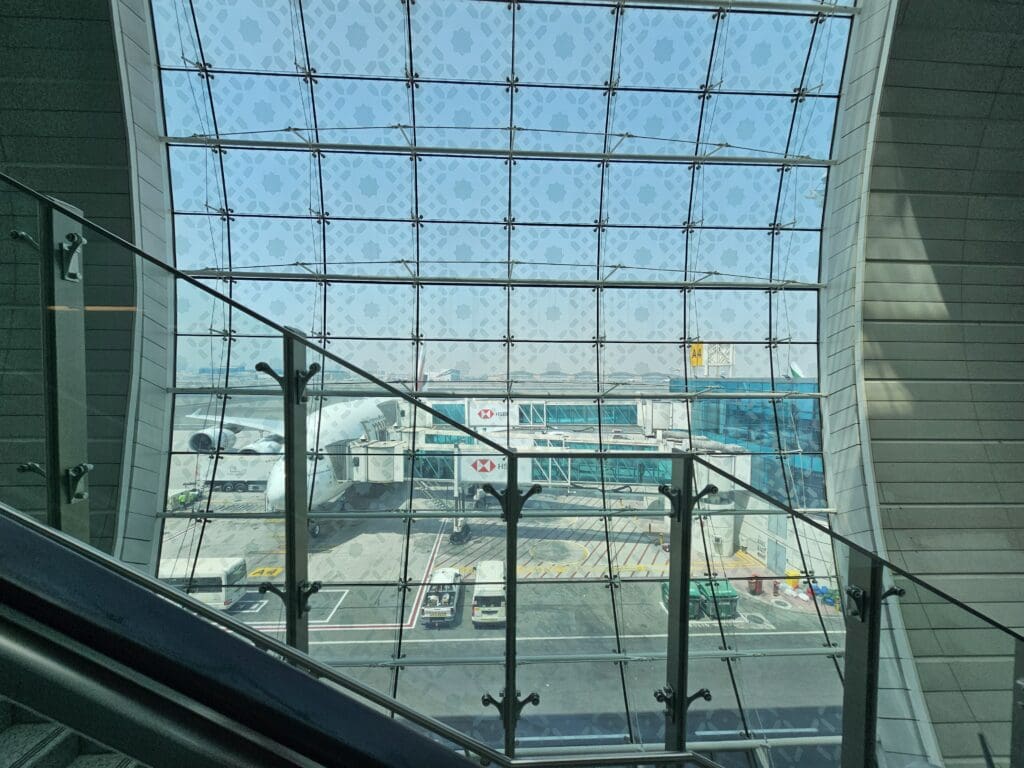
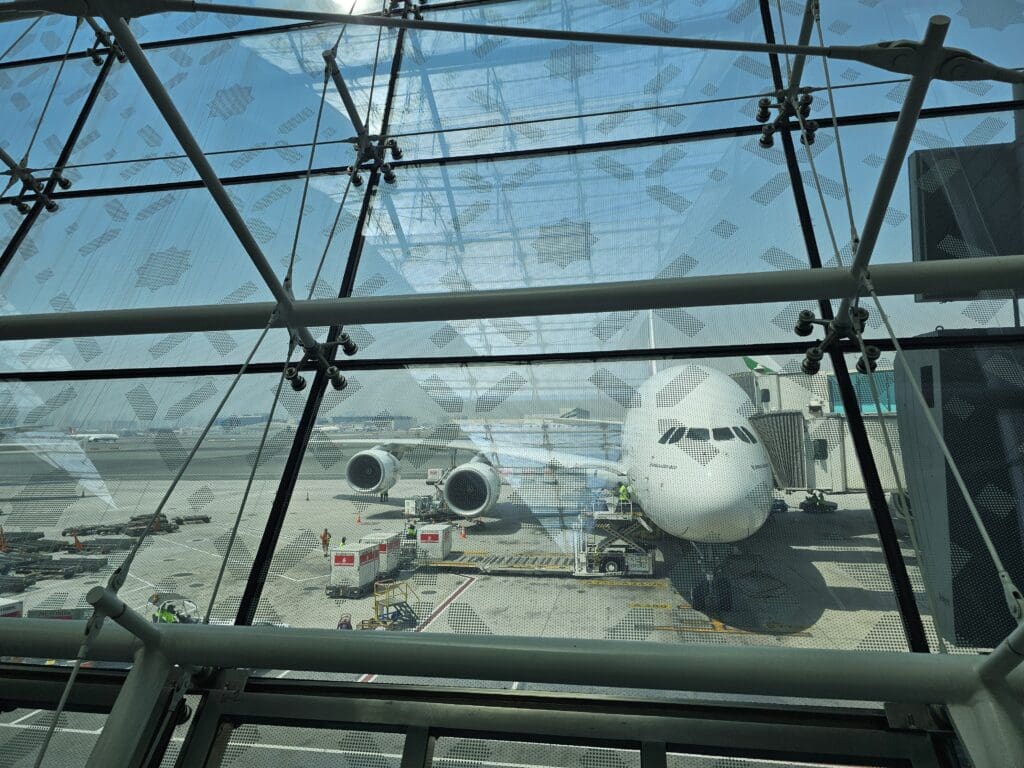
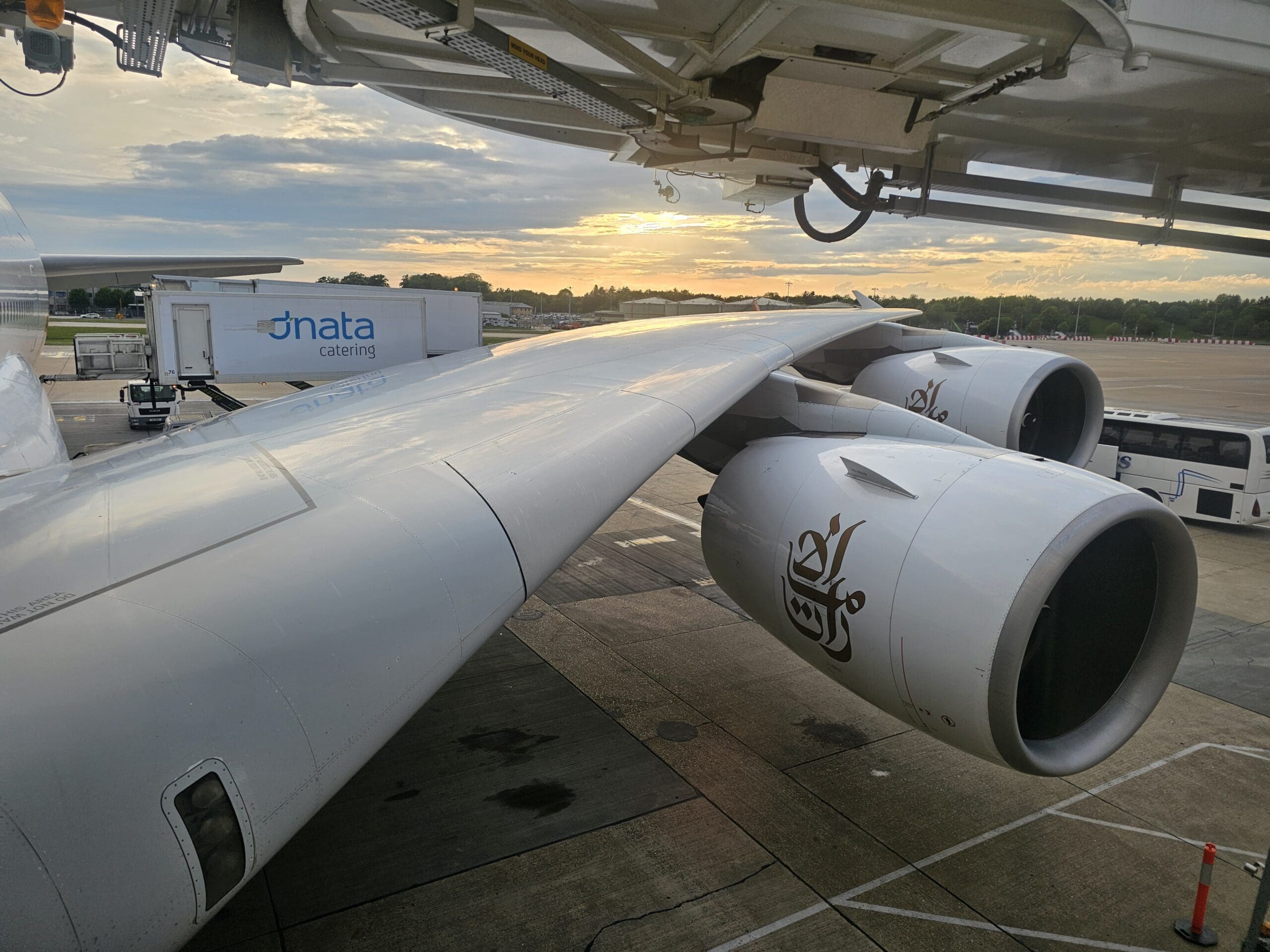
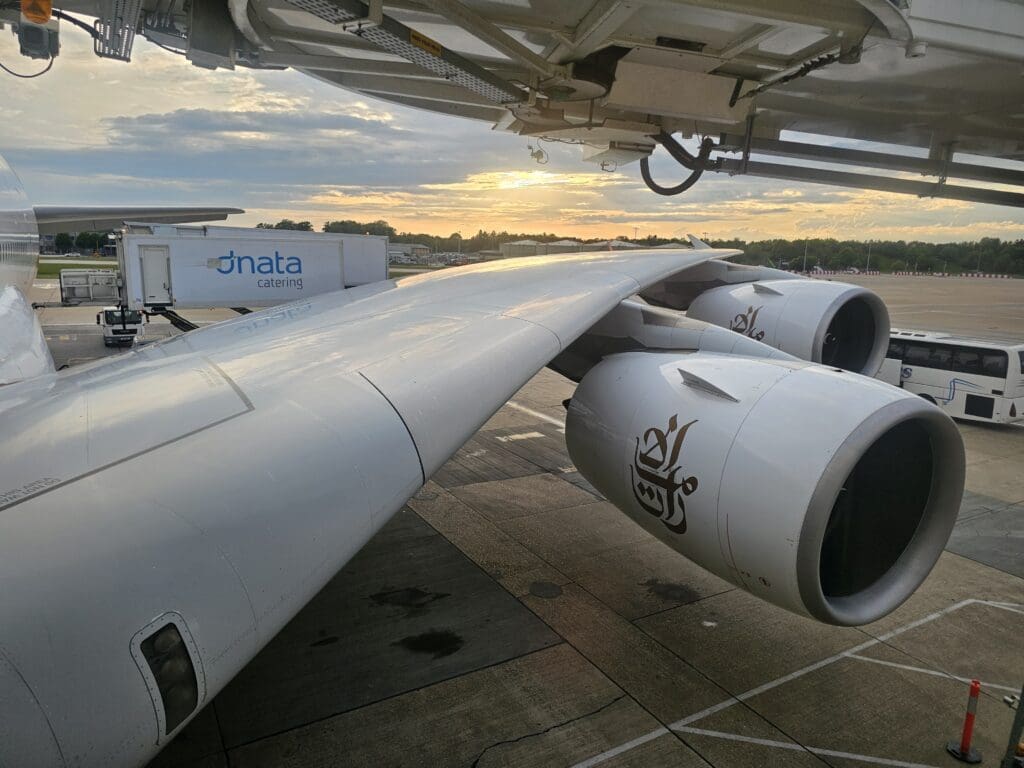
Standing outside at Stand A4 was the gigantic Airbus A380-842 that had been assigned to Emirates’ service to London Gatwick. This took the form of A6-EVB, which carries the construction number 162. Compared to most aircraft in Emirates’ fleet, this particular Airbus A380 had an interesting start to life and had originally been destined for Japanese low-cost carrier Skymark Airlines as JA380A, even receiving the airline’s livery on its tail and engines. This made its first flight with the test registration F-WWSL in April 2014, however, just months later in July, the aircraft’s future was thrown into jeopardy when Skymark Airlines cancelled its order for six Airbus A380s. As a result, the aircraft entered storage, and it took several years before Emirates agreed to take this on. Finally, the aircraft was repainted into Emirates’ iconic livery and outfitted with the airline’s cabin, before being ferried from Hamburg Finkenwerder to Dubai, where it has been based ever since. A year after being delivered, in November 2019 the aircraft was repainted into a special livery to celebrate the United Arab Emirates’ Year of Tolerance and featured a decal promoting Dubai’s Expo 2020. Emirates’ Airbus A380 fleet comes in a whopping eight different configurations, with this particular jet featuring a high-density two-class layout with 58 seats in Business and 557 in Economy. As with most Airbus A380s in Emirates’ fleet, A6-EVB ended up being grounded during the pandemic, entering storage at Dubai World Central Airport in March 2020 and remaining there until June 2021 when it returned to service. Since then, the aircraft has connected Dubai with the world. In the week before my flight, this undertook sixteen sectors, flying between Dubai and Bali, Bangkok, Birmingham, Copenhagen, Manchester and Prague.
By the time I arrived in the holding area, two Emirates agents could already be seen typing away at the gate podium, indicating that boarding would soon commence. At 1408, a pre-recorded announcement rang out in English only inviting those in First Class, Business Class and members of Emirates’ Skywards frequent flyer programme to board the aircraft, whilst all others were requested to remain seated. Ignoring this instruction, many of those in Economy decided to form a scrum leading up to the gate podium, only to be turned away by the gate agents and linger around this, blocking the way for other passengers and creating some fairly chaotic scenes.
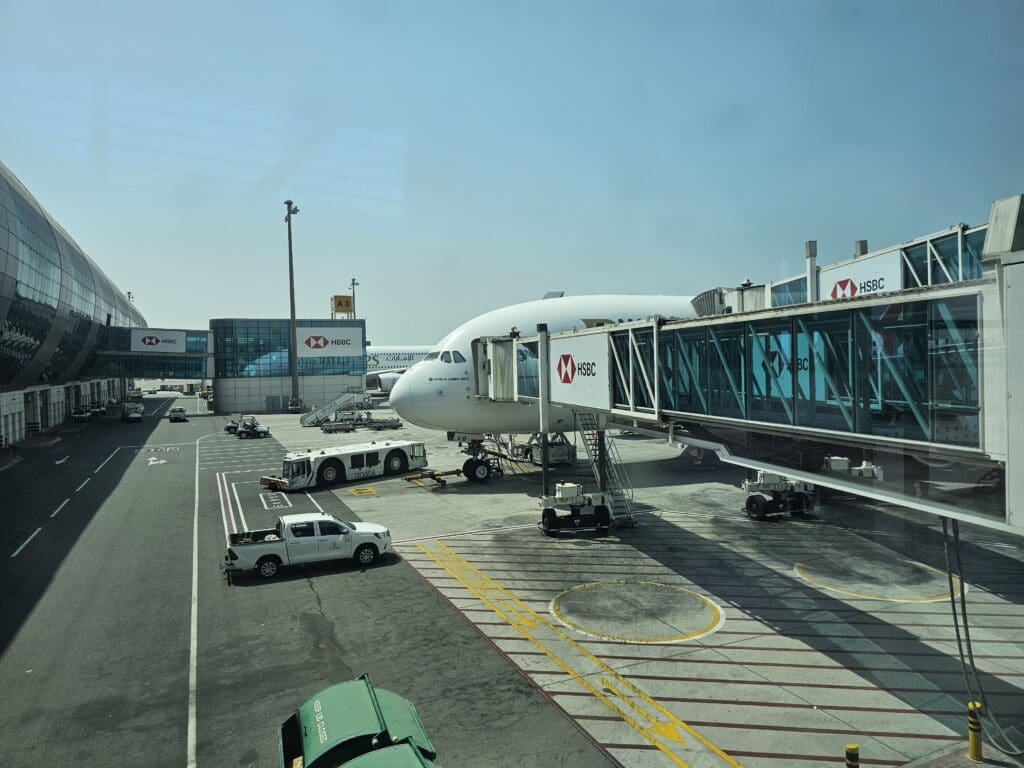
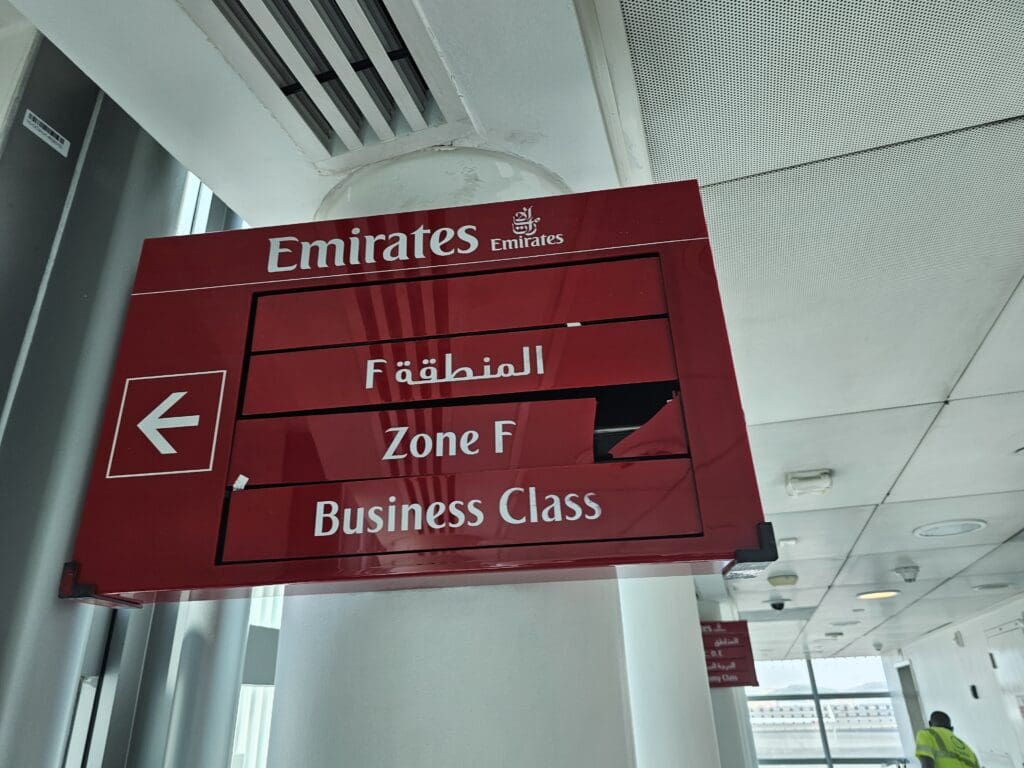
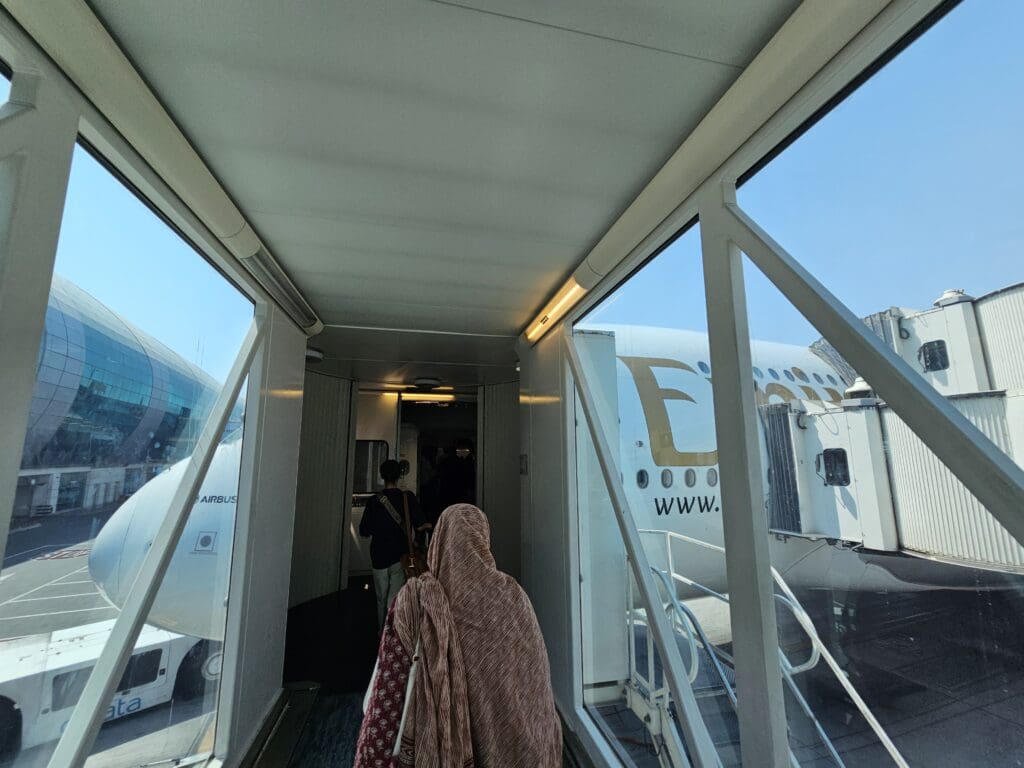
Given the size of the Airbus A380, three jetbridges were connected to the aircraft – one to the first door on the upper deck, and the other to doors L1 and L2 on the main deck. Once the initial cohort of passengers had been invited to board, those in Groups C and F were called forward at which point I joined the chaos. Following a few minutes of waiting in the crowd, my boarding pass was briefly checked before I was able to walk down towards the aircraft. Following the signs on the jetbridge, those in Business Class and Group F were requested to board via the first jetbridge connected to the L1 door and so I ventured down this. Following a short queue at the door, I stepped into the cavernous ‘atrium’ at the very front of the aircraft where I was given a warm and friendly greeting from the senior flight attendant who would be responsible for the Economy cabin that afternoon. Once they had checked my boarding pass, I was directed down the first aisle and soon arrived at my seat in the rearmost row of the forward Economy cabin.
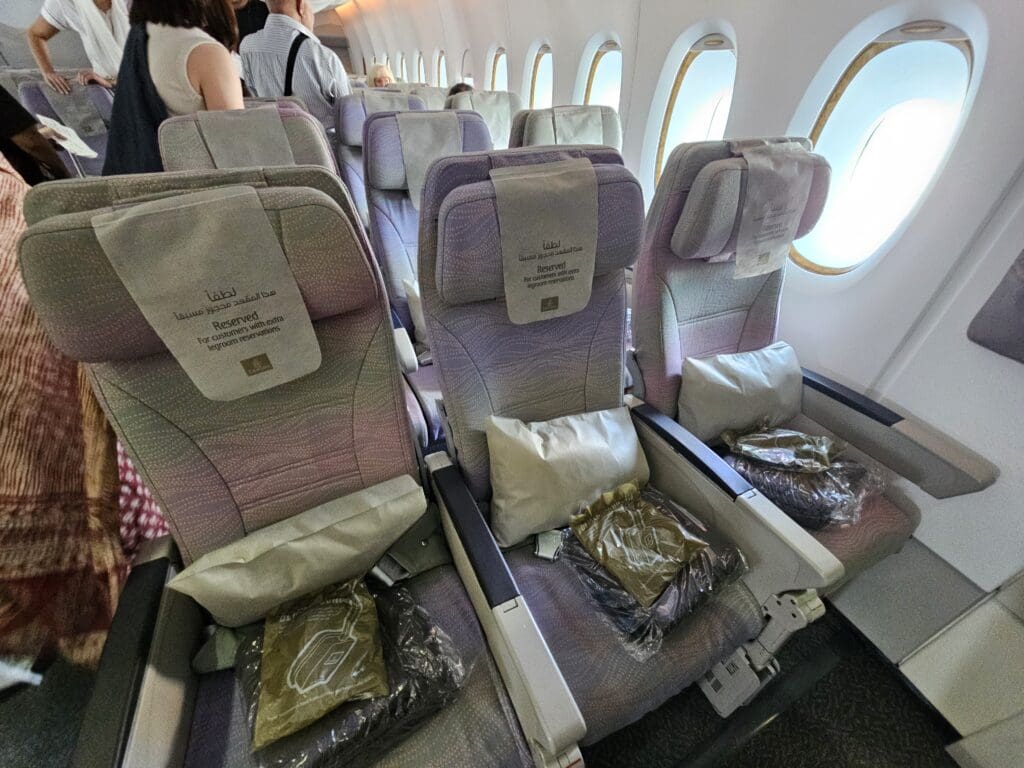
Manufactured by Safran, each seat appeared to be far more modern and thin than those onboard the Boeing 777 that I had flown to Dubai. However, these were identical in their aesthetic, featuring subtly pink or purple fabric covers with a series of dots that formed a pattern of repeating waves, whilst disposable fabric antimacassars sporting Emirates’ logo could be seen partially covering the adjustable headrest. Meanwhile, just as on the Boeing, the bulkheads and cabin dividers featured depictions of desert sand dunes, however, slightly differently, a ring of faux wood seemed to sit around each window, creating an air of sophistication that I have not encountered onboard any other airline.
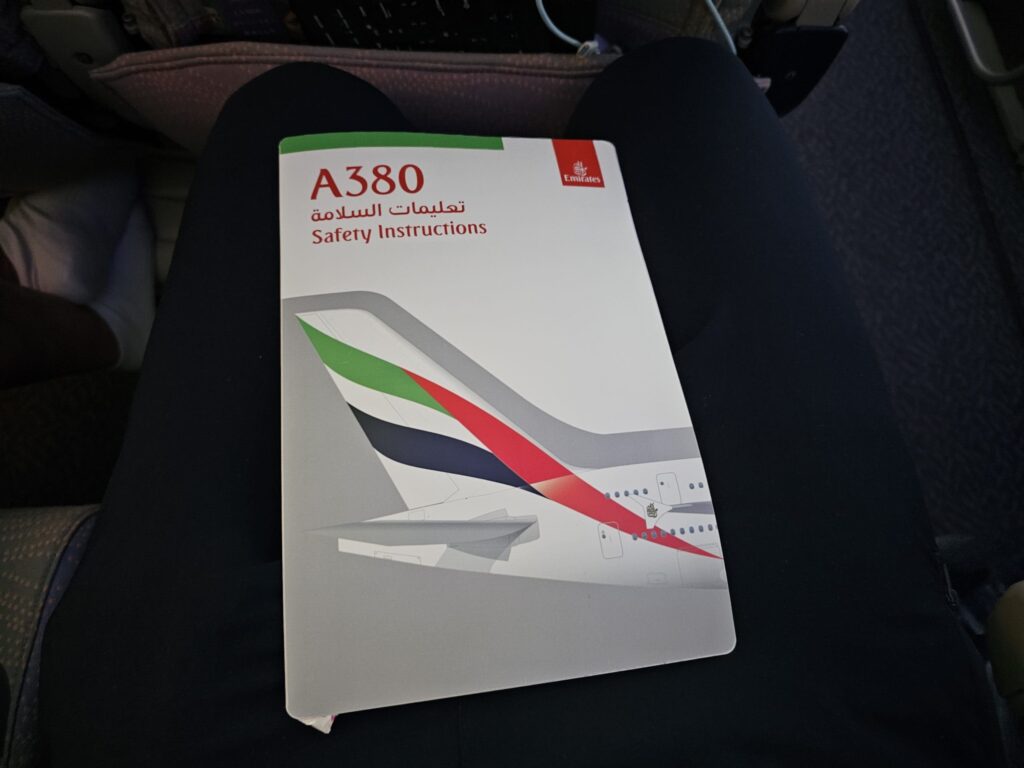
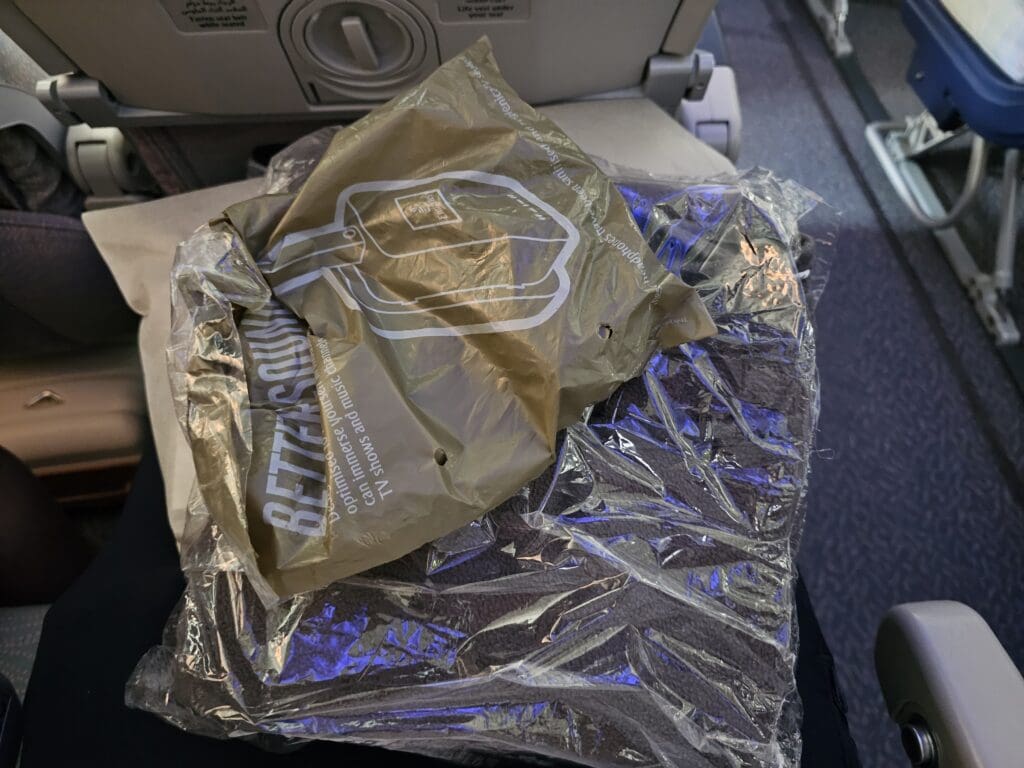
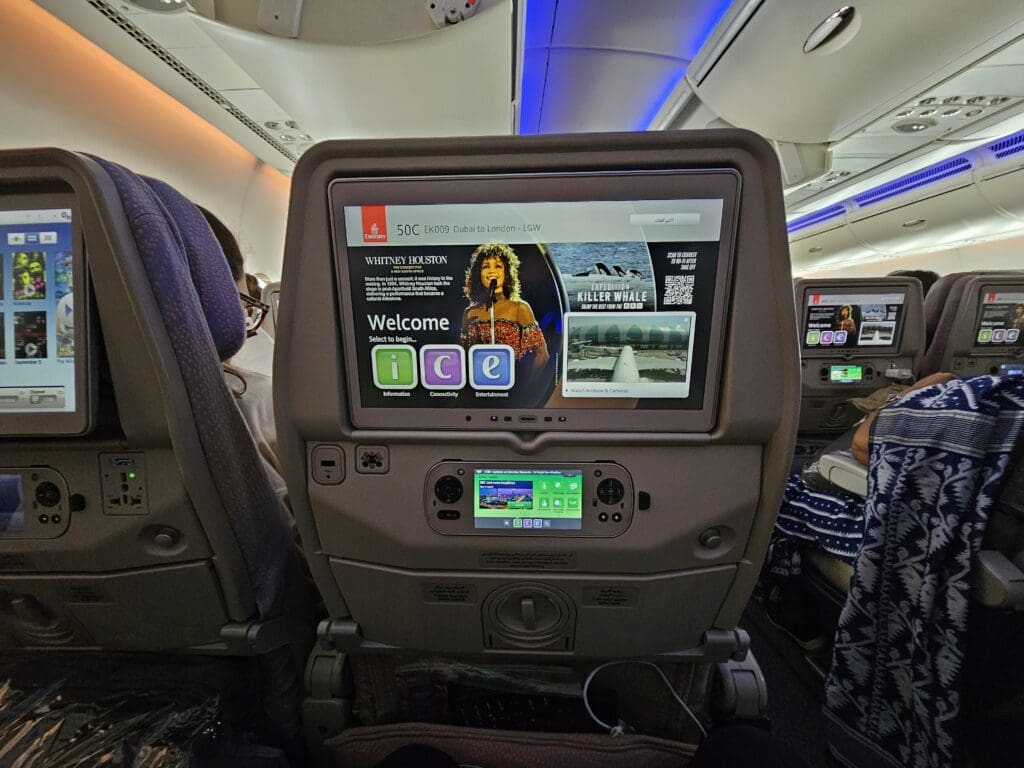
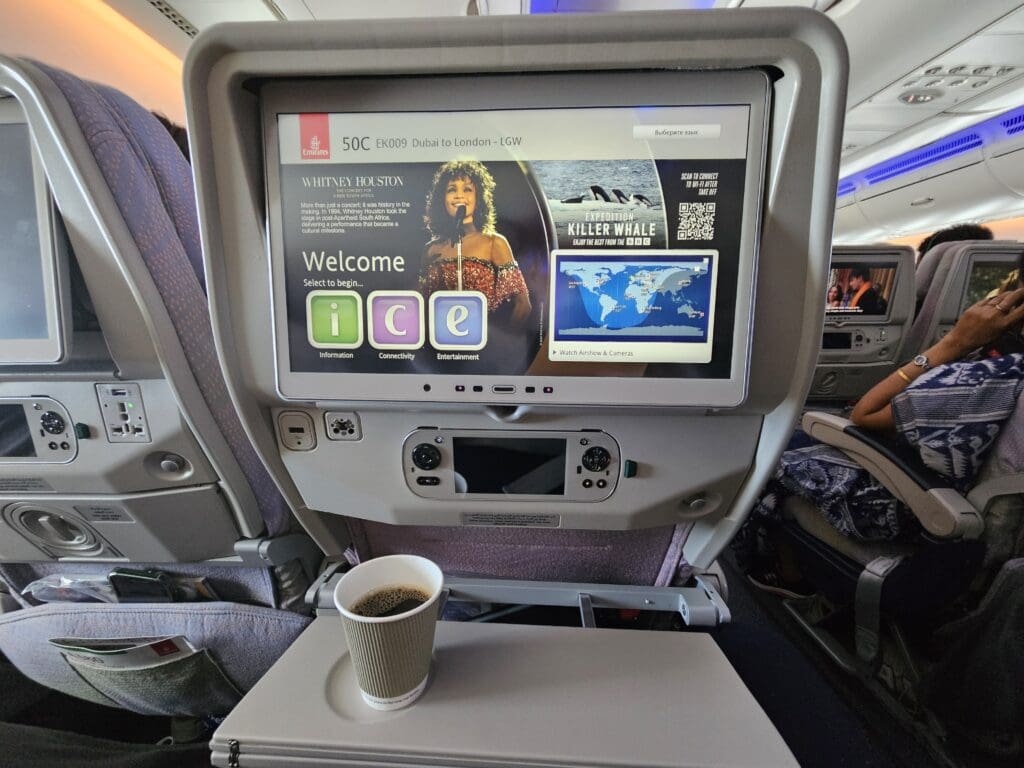
Perhaps the most obvious difference to a lay passenger was the significantly more modern high-definition inflight entertainment screen, which at 13.3 inches wide, was definitely one of the largest screens that I have encountered in Economy. This was accompanied by a high-tech digital controller just beneath it, although as you would expect, the screen could also be navigated and used by touch alone. Meanwhile, at-seat power came in the form of a USB-A port, and most seats featured a universal power outlet – although sadly, for an unknown reason, this was missing from my seat! This also came with a seatback pocket containing a plastic wallet with a sickbag and the latest edition of Emirates’ ICE inflight entertainment system guide, whilst the safety card enjoyed its own pocket. Finally, as was to be expected, a pillow, blanket and headphones had been placed on each seat before boarding, with the latter being of above-average quality compared to those of many other airlines.
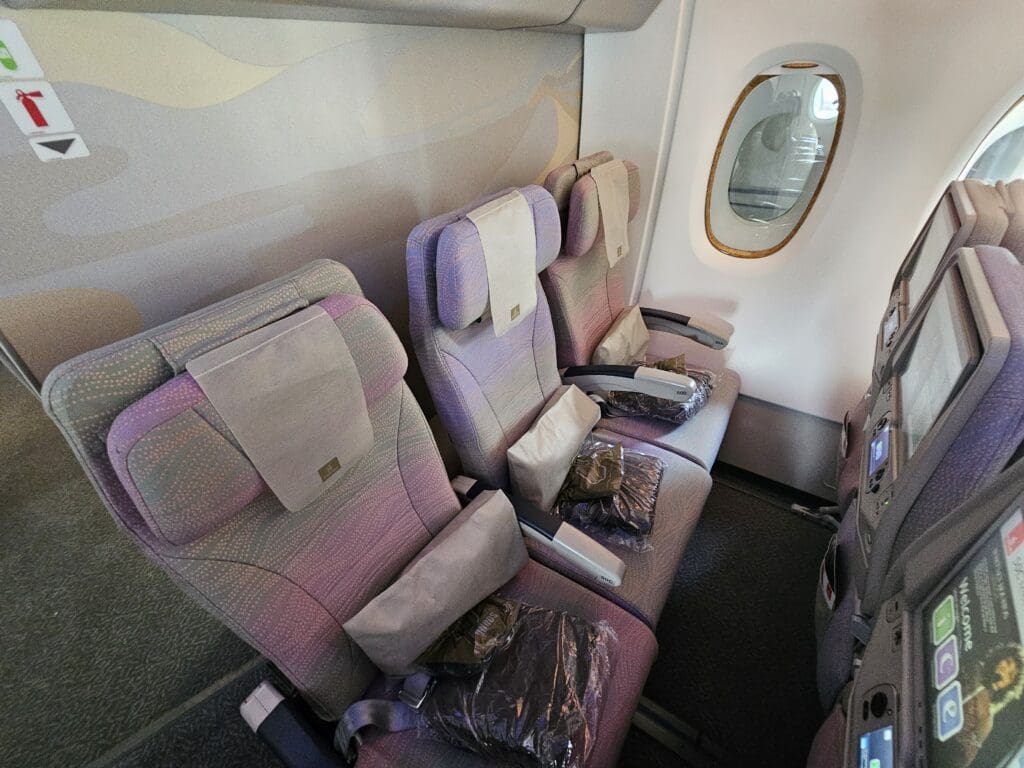
Once seated and settled in, I found the seat to be a little more spacious than that of the Boeing 777 that I had flown on my first leg. However, unsurprisingly given the seat’s thinness, this was definitely a little firmer, something that became clear around an hour into the flight when I felt the need to shuffle around a little. Importantly, this was spotlessly clean and tidy, with no signs of wear and tear or other marks or stains, and thus for the most part, I was left with little to make any sort of valid complaint about.
As the minutes passed, more and more passengers flooded the aisles, and as it turned out, boarding ended up being a very chaotic process thanks to the masses of passengers who were sat in the incorrect seats, something that was not assisted by the fact that many passengers seemed to have flirted with Emirates’ hand luggage restrictions and brought both suitcases and backpacks into the cabin. As this chaos ensured, a playlist of mostly chilled pop songs rang out, and soon my dreams of having two empty neighbouring seats were crushed when a couple appeared to take these.
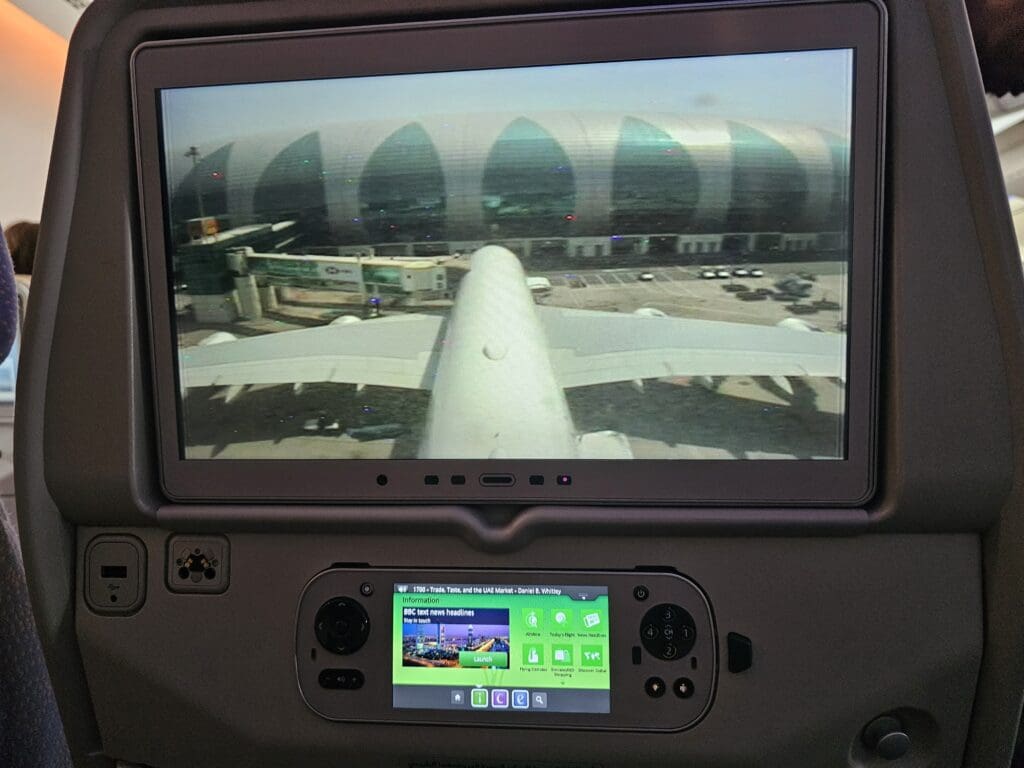
Having studied the ontime performance of the flight, it appeared that Emirates’ afternoon service to Gatwick rarely departed less than thirty minutes behind schedule and I was slightly pessimistic that we would be able to make a punctual departure. However, much to my delight, despite the chaos both at the gate and onboard the aircraft, the final passengers made it onto the Airbus with about ten minutes to go until boarding and a short time later, the last of the hold doors could be heard closing with a loud whine – something that I was able to verify thanks to the high-definition tail-mounted camera that was accessible through the inflight entertainment system. That day, the flight was virtually full, and I failed to spot any empty seats in the forwardmost Economy section of the aircraft. Turning to the demographic of those onboard, most passengers seemed to hail from Bangladesh, India and SriLanka, with Emirates’ services being a popular one-stop option for those travelling between South Asia and the United Kingdom, and vice-versa.
Much to my delight, the dispatcher soon vacated the aircraft at which point the cockpit door was closed and the reassuringly calm tones of the Scottish First Officer filled the cabin during which they introduced the Captain and Purser who hailed from Croatia and Germany respectively, thanked passengers for flying with Emirates, noted that we could track the progress of the flight using the moving map, detailed the weather enroute and gave the usual warning regarding seatbelts. This was then repeated in Arabic by one of the flight attendants. A short time later, the Purser undertook their welcome speech, reiterating the First Officer’s warning regarding seatbelts and noting that the crew hailed from sixteen different countries and spoke twenty different languages. As on my flight from Malaysia, a significant number of crew members seemed to hail from Eastern Europe and South Asia.
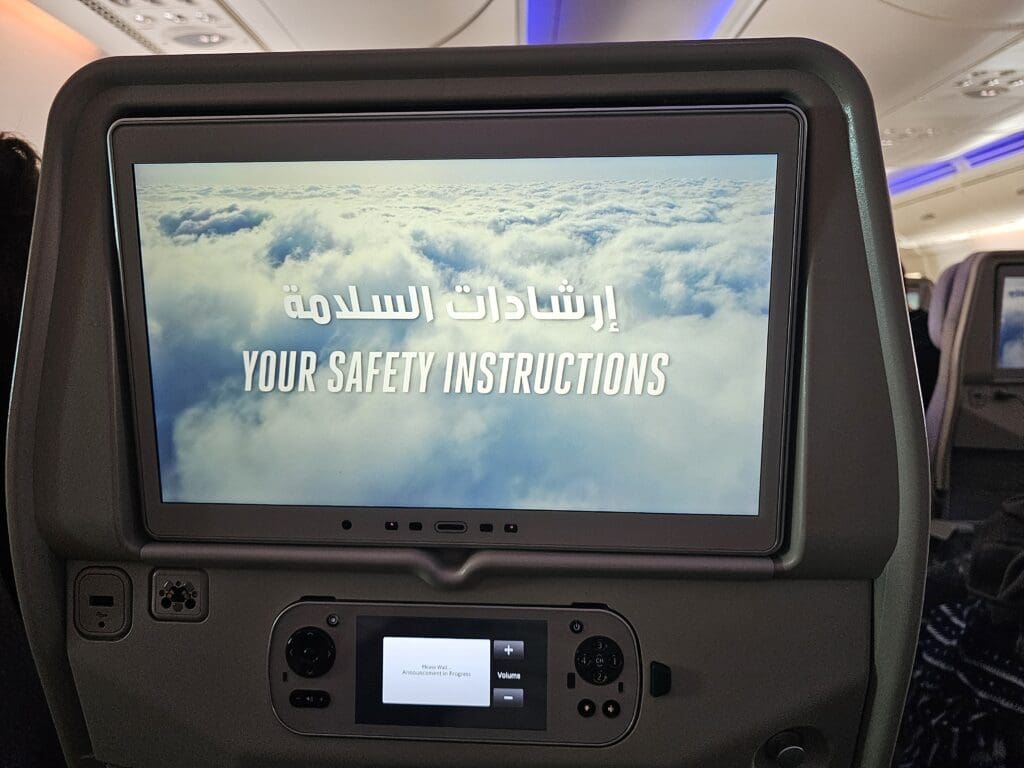
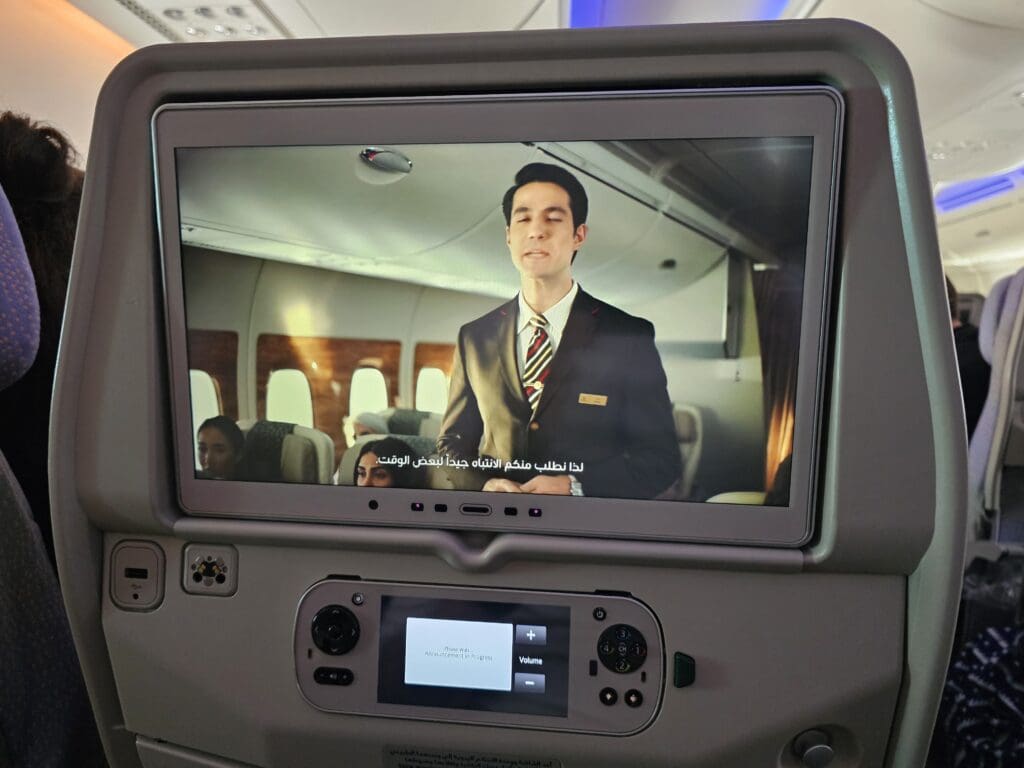
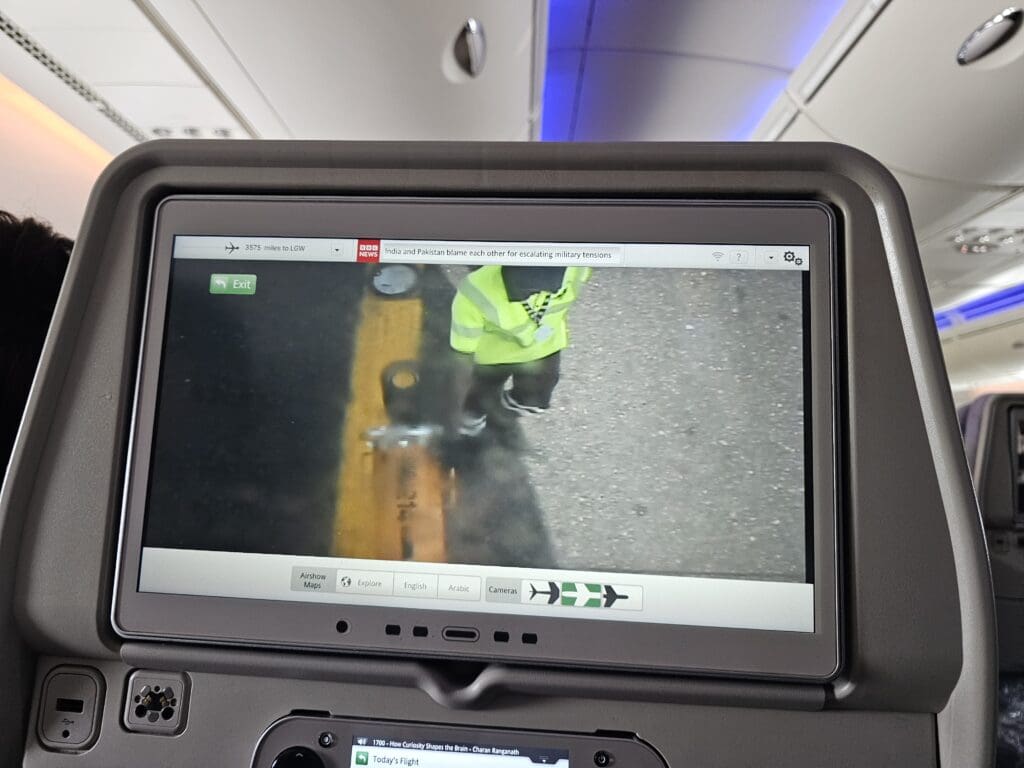
As soon as the Arabic version of the Purser’s speech had reached its end, Emirates’ ‘No-Nonsence’ safety video took over the inflight entertainment screens – detailing all the important safety information without any gimmicks, first in Arabic and then again in English. This was immediately followed by a short video highlighting the vast array of content available for passengers to watch on the ICE inflight entertainment system. After this, seeing I was trapped in the aisle, I decided to turn to the external cameras which displayed the army of pushback crew undertaking their final preparations for our departure. At 1500, a gentle jolt could be felt as the giant was pushed back away from Stand A4 before being lined up with the taxiway. Once we had come to a halt, one by one the Airbus’ massive Rolls-Royce Trent 970 engines quietly spooled into life whilst the tug was disconnected before retreating to a safe position well away from the aircraft. After several minutes, once the four engines had stabilised, the flaps were partially extended with a loud high-pitched mechanical whine before the Airbus powered down the taxiway under its own steam.
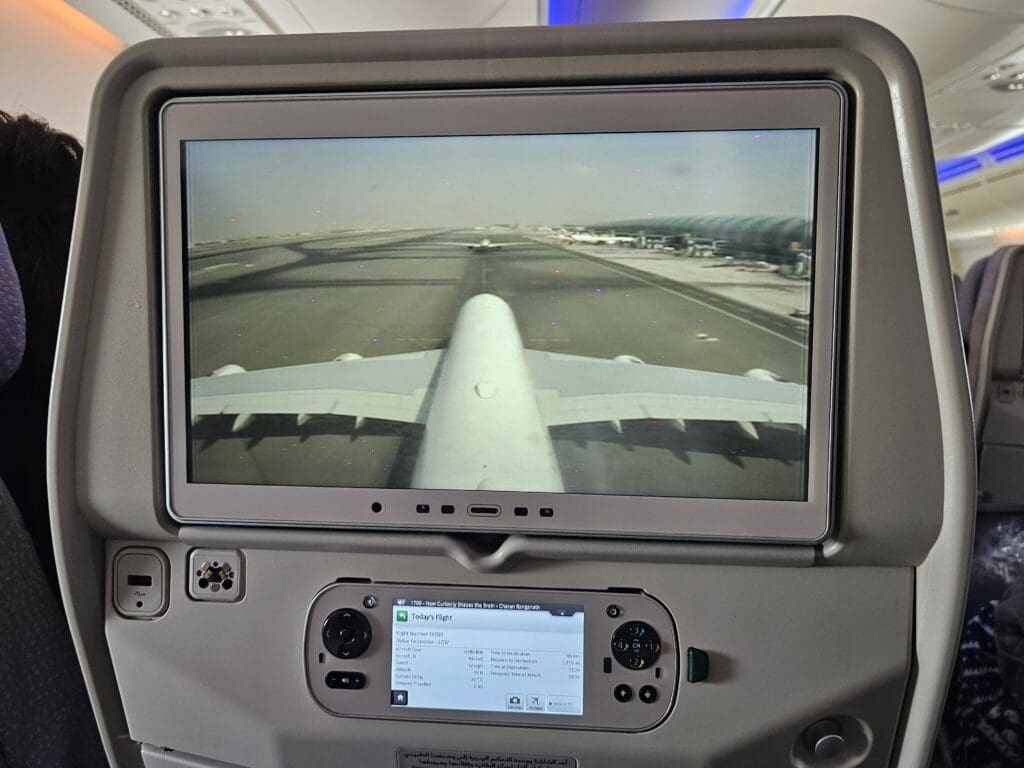
By the time we commenced our taxi, the crew had passed through the cabin ensuring that all was secure and in place, and had taken their seats as we made our way along Concourse A, trundling past the long line of Airbus A380s and Boeing 777s being readied for their flights to destinations both near and far. That day, Runway 30R was in use for departing aircraft and starting our journey on the south side of the airfield, this meant that we would have to cross the busy parallel runway, sneaking in between the masses of arriving aircraft. A few short minutes after our taxi commenced, we came to a halt and were required to wait for a few minutes in order to allow a Flynas Airbus A320neo, an Air India Express Boeing 737 MAX 8 and an Ethiopian Airlines Boeing 777-300ER to land. Eventually, we crossed the runway and made it to the end of Runway 30R where a short wait was in store whilst an Emirates Boeing 777-300ER headed off into the skies of Dubai.
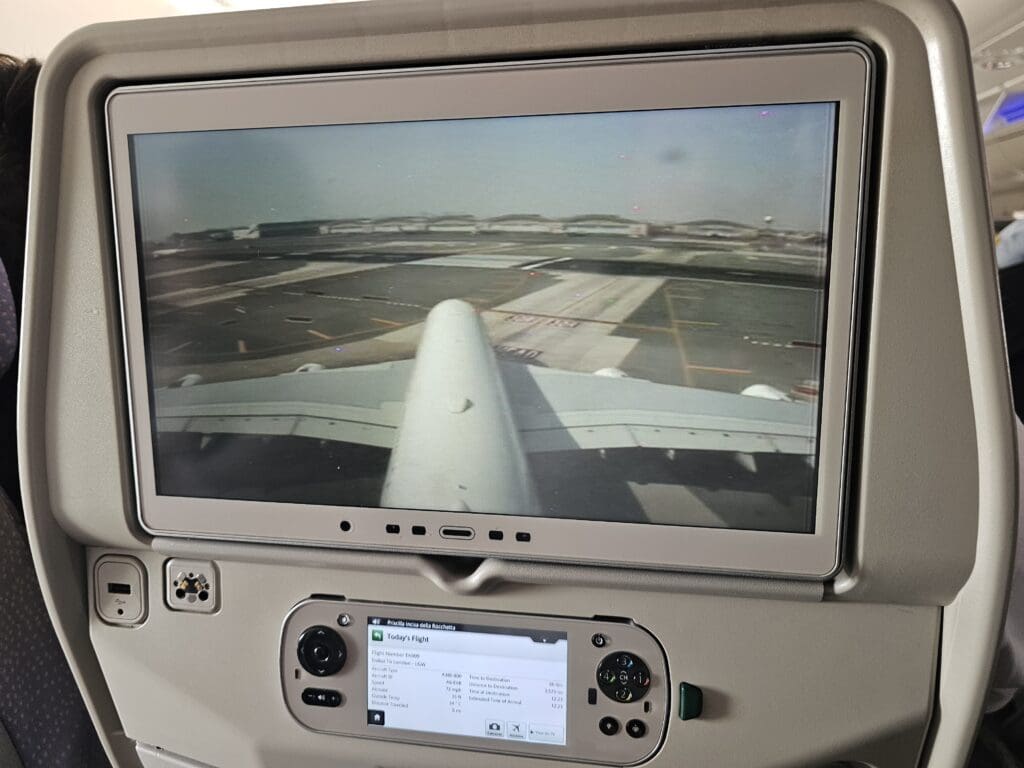
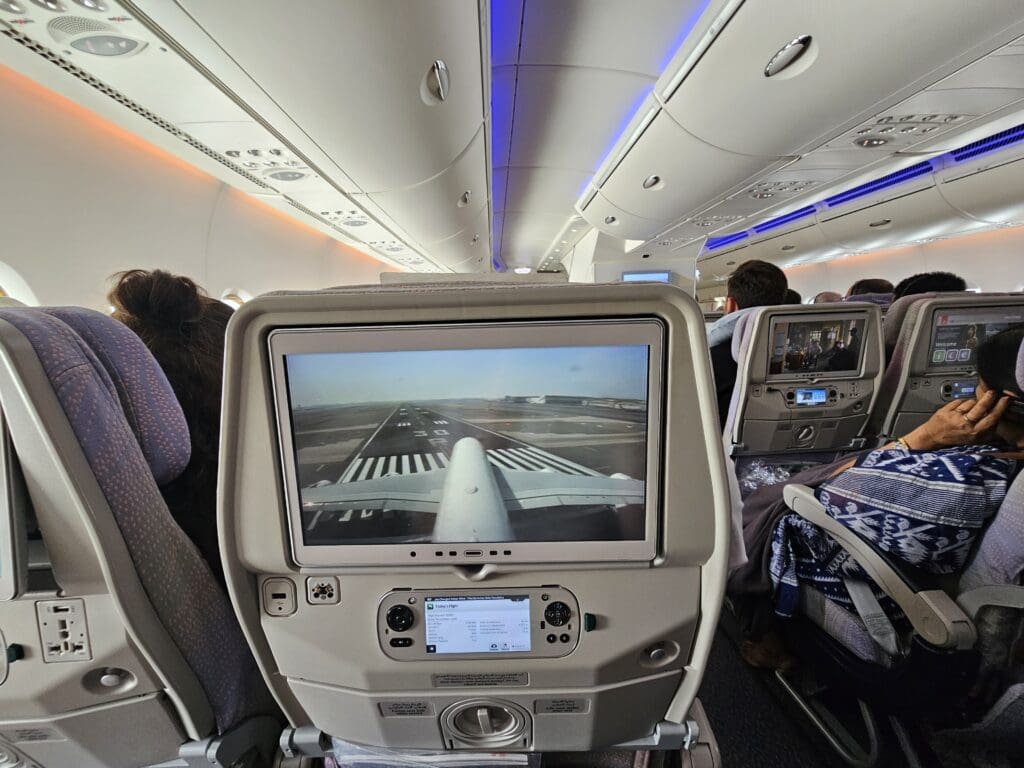
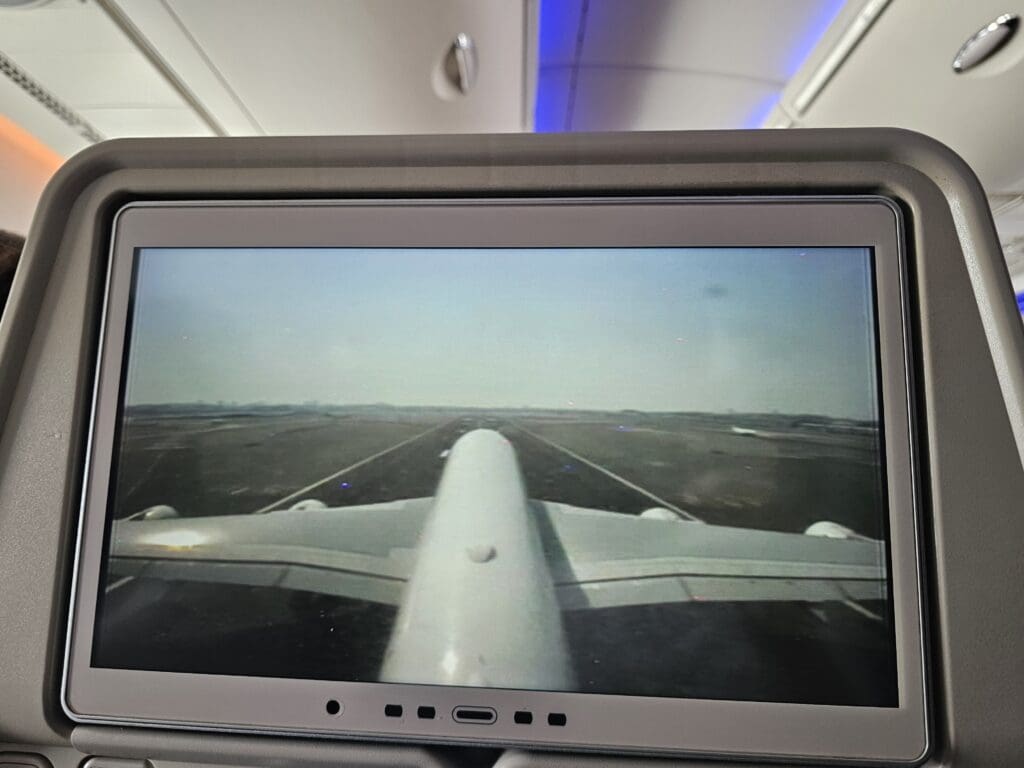
At 1525, thirty minutes after our scheduled departure time, the Airbus lumbered onto the runway and following a very short pause, the four Rolls-Royce engines powered up and we commenced our take-off roll. As I have always found to be the case on the Airbus A380, our take-off roll was a relatively quiet, calm and gentle affair, lasting a fair amount of time before we rotated up and floated into the skies. With the airport sitting near Dubai’s shoreline, we soon crossed over this and climbed over the waters of the Persian Gulf before banking to the right and flying roughly parallel with the United Arab Emirates’ coastline past Sharjah, Umm Al Quwain and Ras Al-Khaimah before turning left and flying northwestwards towards Iran.
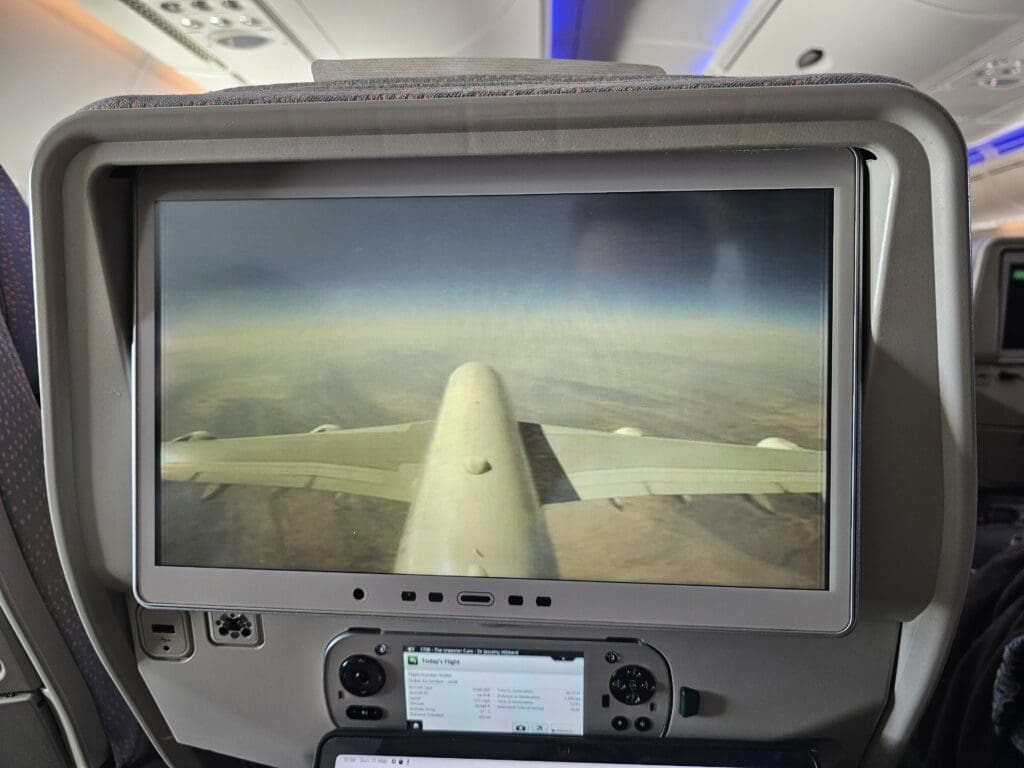
Once safely in the air, an announcement was made in Arabic and English promoting the airline’s charity programme, the Emirates Foundation, which focuses on assisting children across the world. Making a smooth climb out of Dubai, the crew were soon released from their seats and once again, their initial task involved handing out real paper menus to passengers – a nice touch, even though it is not totally unheard of. Once again, and as is usually the case on services between the United Arab Emirates and Western Europe, both a main meal and a pre-landing light meal were to be served to passengers. In the cabin, as soon as the seatbelt signs were extinguished, crowds of people flocked to the lavatories, and despite there being plenty of these available, these seemed to feature constant queues throughout the flight!
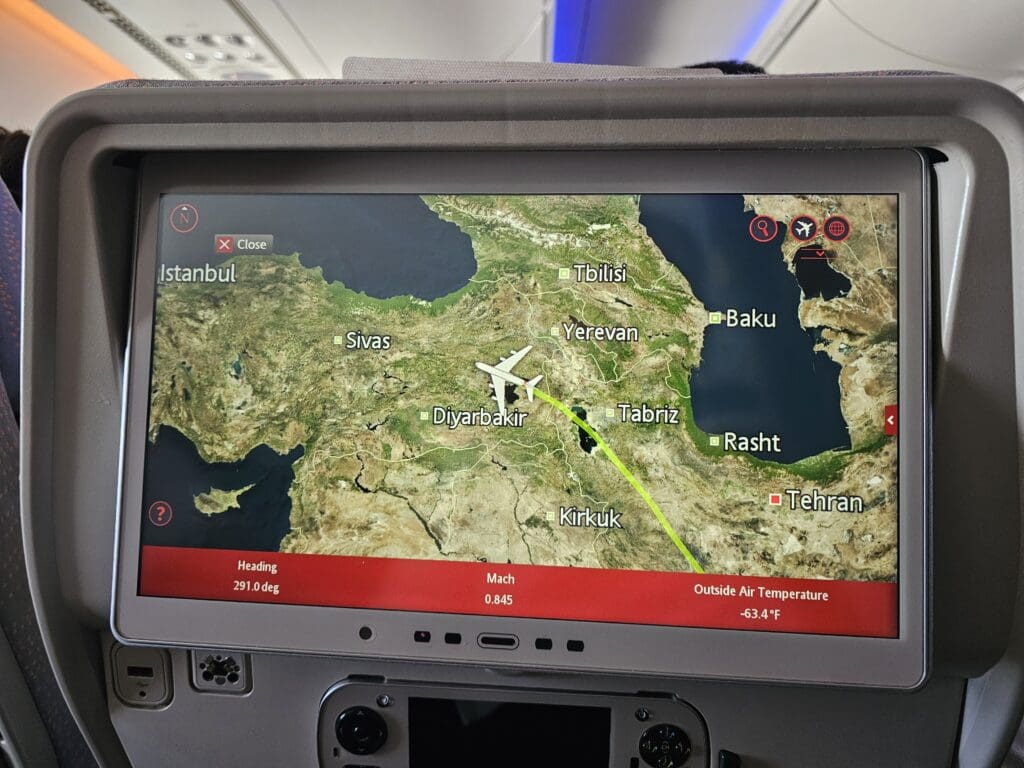
As we neared the final stages of our climb to our initial cruising altitude of 36,000 feet, the Airbus cut across the far western end of the Iranian island of Qeshm before reaching the mainland and passing over the mountainous inland areas of the province of Hormozgan. Looking at the world through the external cameras, with wonderfully clear skies below, at this stage I was starting to regret my choice of an aisle seat as I was missing out on fantastic views of the diverse landscapes of Iran as we cruised northwards and cut across the country from its far southeast to far northwest regions.
Returning my attention to the happenings back inside the cabin, around fifty minutes after taking to the skies, special meals were handed out to the many passengers that had ordered these. Around fifteen minutes later, the service carts were rolled out into the aisles, with service commencing from the front of each Economy cabin. Manned by just one flight attendant, in my case, the friendly senior member of staff that had welcomed me onboard, the service was slow and not assisted by the fact that many passengers were unable to speak English and thus had difficulties when communicating their meal choice to the poor flight attendant. One upside of this was that it gave me plenty of time to study the options for my late lunch or early dinner. However, with these available online before departure, I already knew what culinary delights would be in store – namely beef stroganoff or butter chicken.
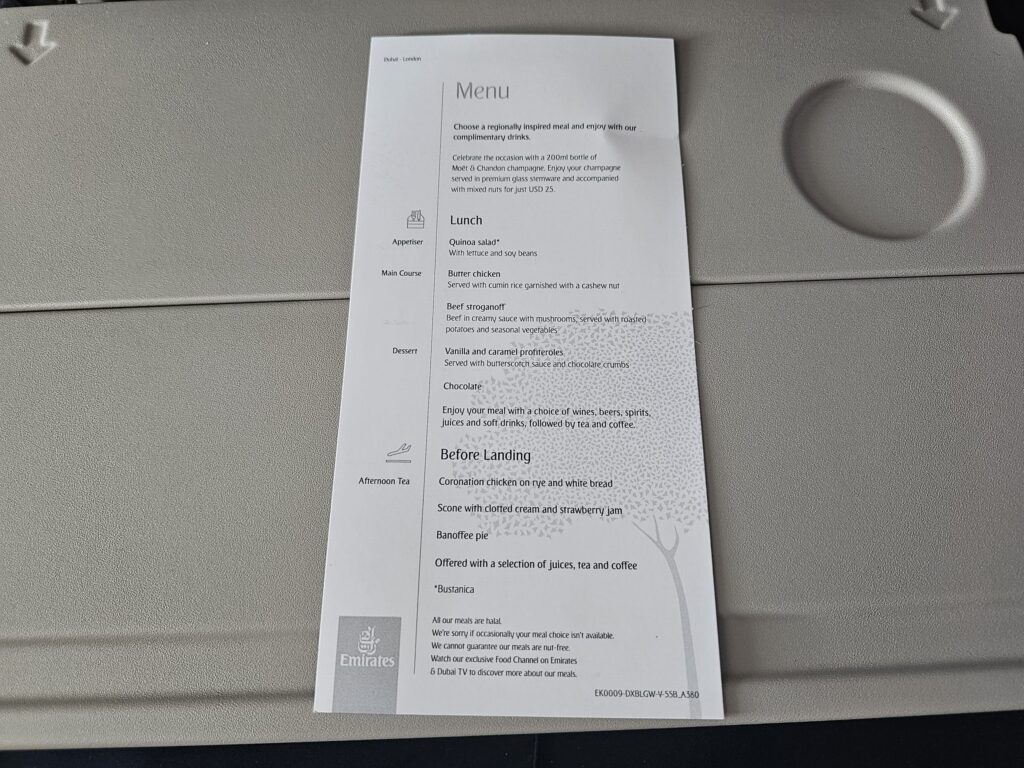
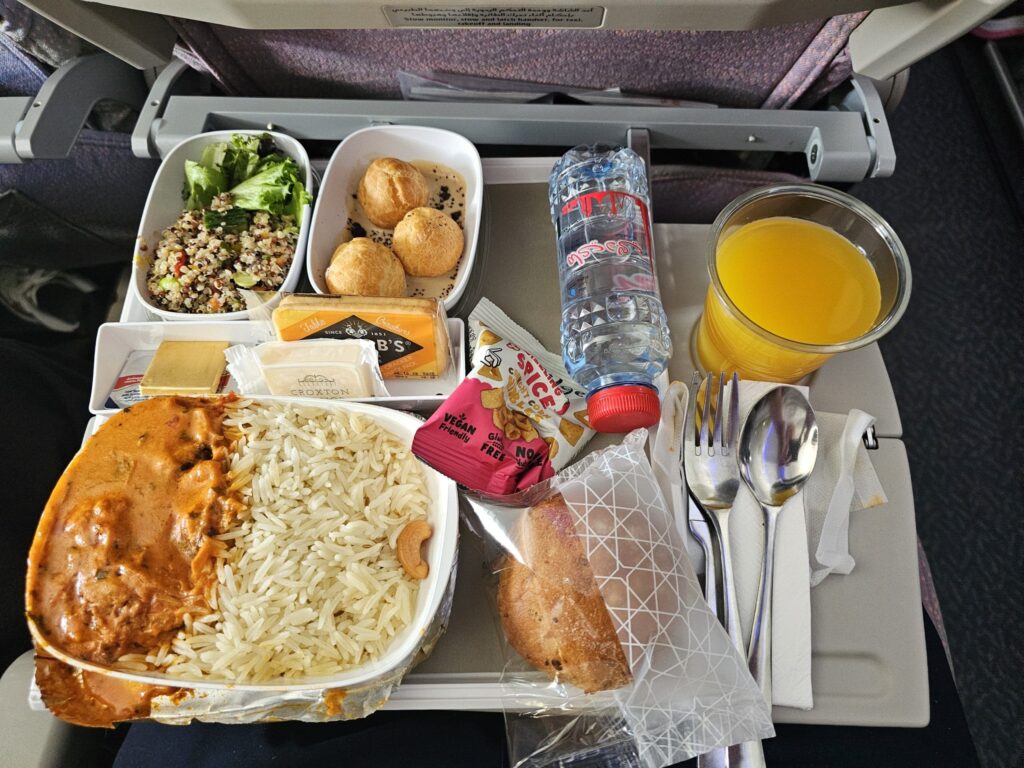
Once the friendly flight attendant eventually reached my row, I opted for the butter chicken which came accompanied by a quinoa salad, a bread roll with butter and cheese, a packet of crackers, vanilla and caramel profiteroles, a square of chocolate and a small bottle of still water. Meanwhile, eating utensils came in the form of classy metal cutlery that sported Emirates’ logo. In terms of quantity, whilst this paled in comparison to my Turkmenistan Airlines feast, this was definitely reasonable considering the duration of the flight and more than I have been served onboard a number of airlines. Additionally, I have to say that the butter chicken was absolutely delicious and probably one of the top ten main dishes that I have ever had the pleasure of eating onboard an aircraft. Opting to pair this with an orange juice, this was served in a plastic cup, whilst the meal was followed by a hot drinks round.
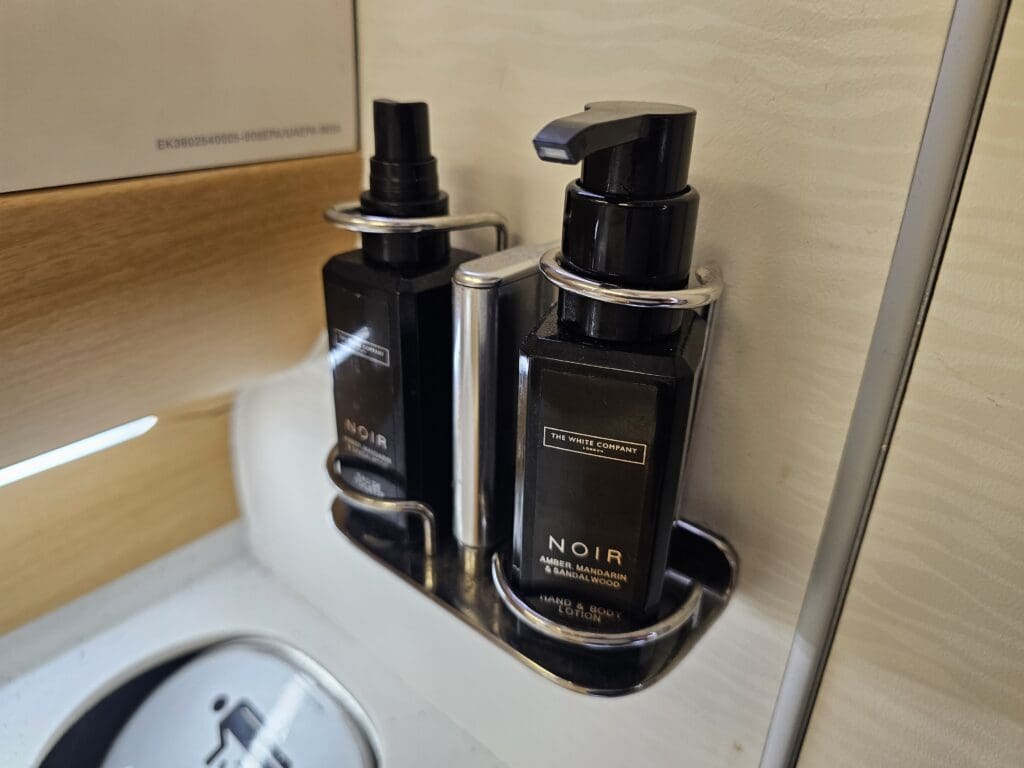
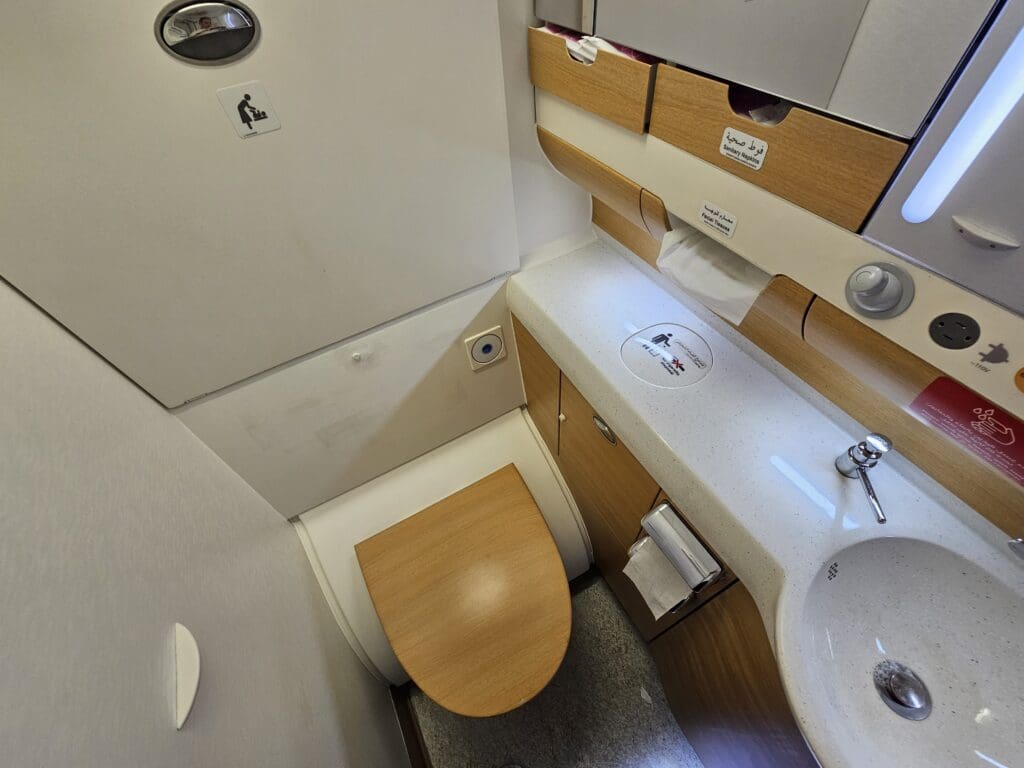
Given the time it took for all passengers to be served, passengers’ trays remained in place for quite some time before finally being removed around fifty minutes after this service had commenced. By this time the Airbus was nearing the end of its crossing through the skies of Iran, having passed directly over the famous city of Shiraz, and to the west of Isfahan and Tabriz. After around an hour and fifty minutes spent in Iranian airspace, the Airbus cruised over into the skies of far eastern Turkey, passing near the city of Van and its large neighbouring Lake Van. At this point, we began to bounce around a little and the seatbelt signs were reilluminated for around ten minutes before things calmed down. Once they did, I decided to make a visit to one of the ten lavatories available for Economy passengers. Opening this up, I found this to be reasonably clean and tidy, although this did not seem to be in as good a condition as the lavatories of the Boeing 777 that I had visited on my ride over to Dubai, with a fair number of marks and scratches visible in these.
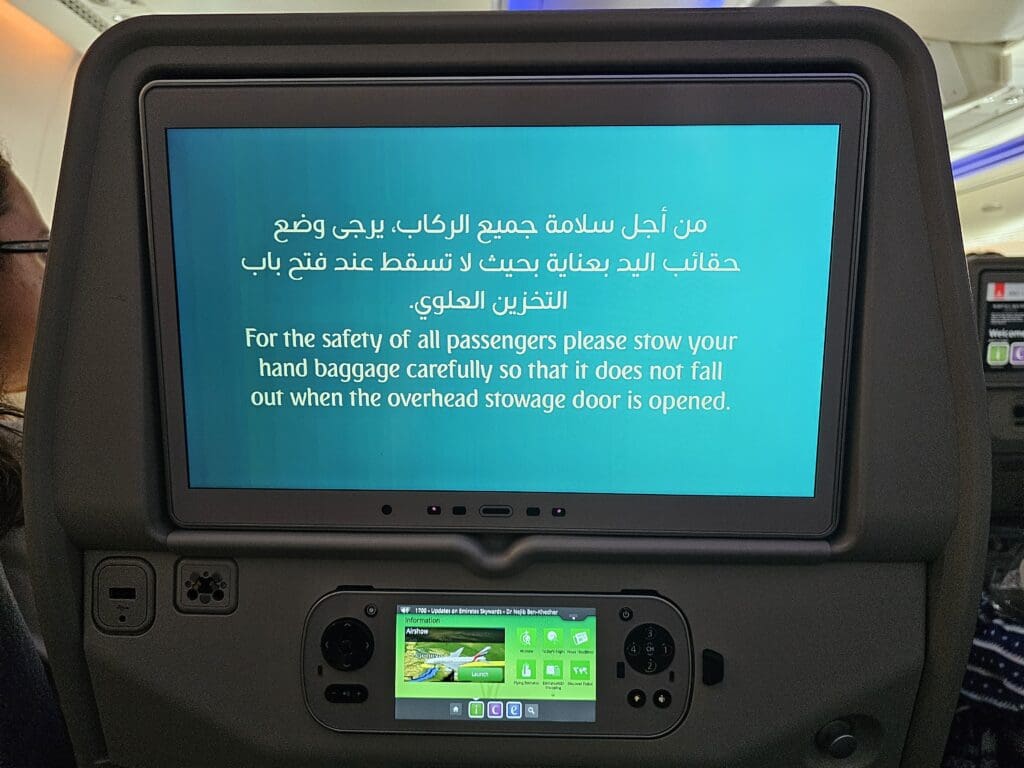
Once I had returned to my seat, I decided to turn to the delights of Emirates’ ICE inflight entertainment system. Thanks to the responsive and large high definition touch screen and the digital remote control, my first impressions of the system were very good, with this being far better than the older system of the Boeing 777. However, this utilised the exact same system and thus the same good and bad points applied. Specifically, this laid out in a modern and easy-to-navigate manner, and was available in a wide array of languages – namely Arabic, Chinese (simplified and traditional), French, German, Italian, Japanese, Korean, Portuguese, Russian and Spanish. However, despite Emirates’ major network of flights across South Asia, this curiously lacked any languages from this region. Furthermore, as far as I could tell, this lacked any sort of kids system. The other big difference with this was the fact that this featured a real interactive moving map, enabling passengers to track the flight in a variety of different ways. Turning to the digital remote, whilst arguably not needed, this was a nice feature. However, unlike on rival carrier Etihad Airways, this did not allow for passengers to watch two things simultaneously.
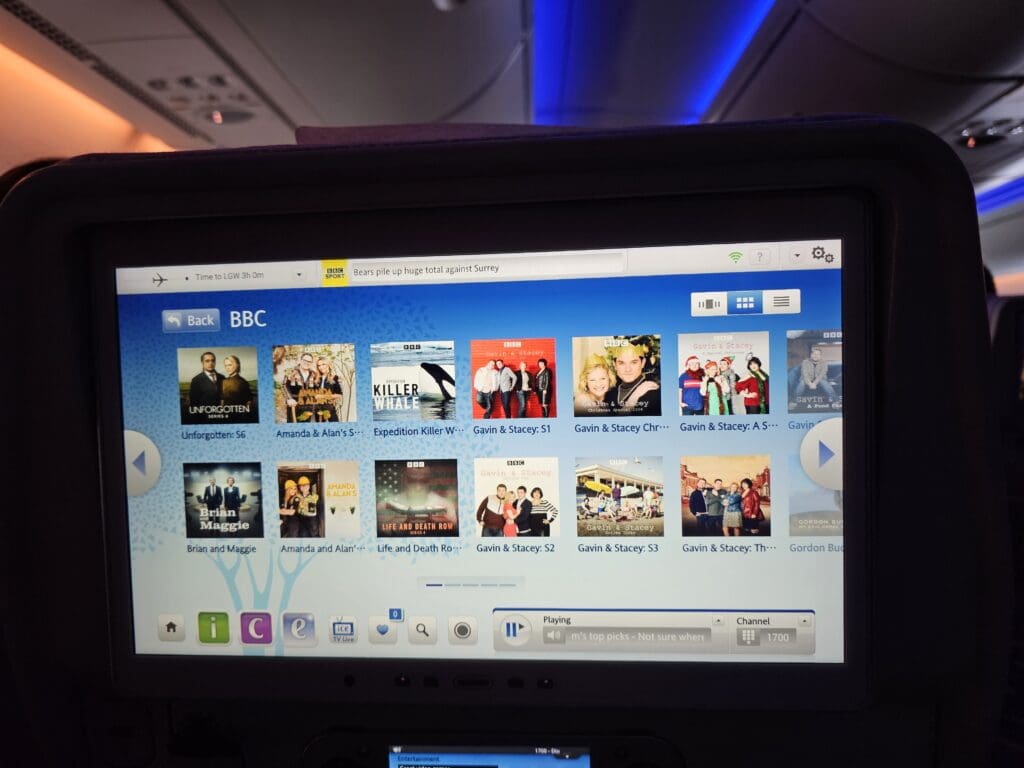
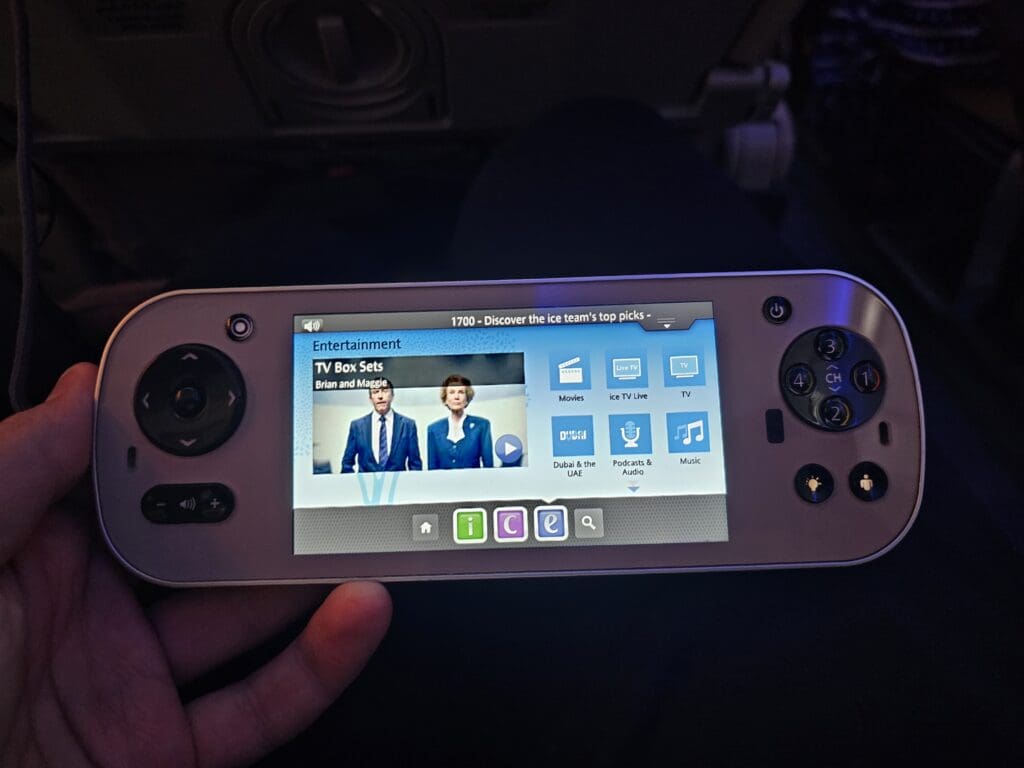
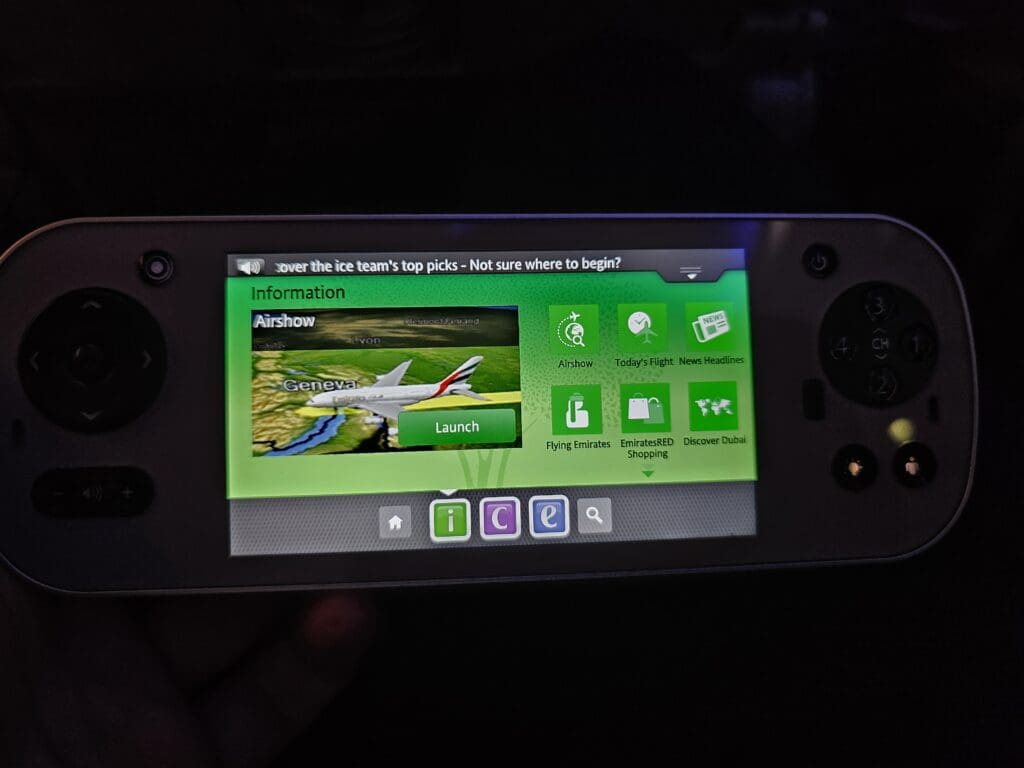
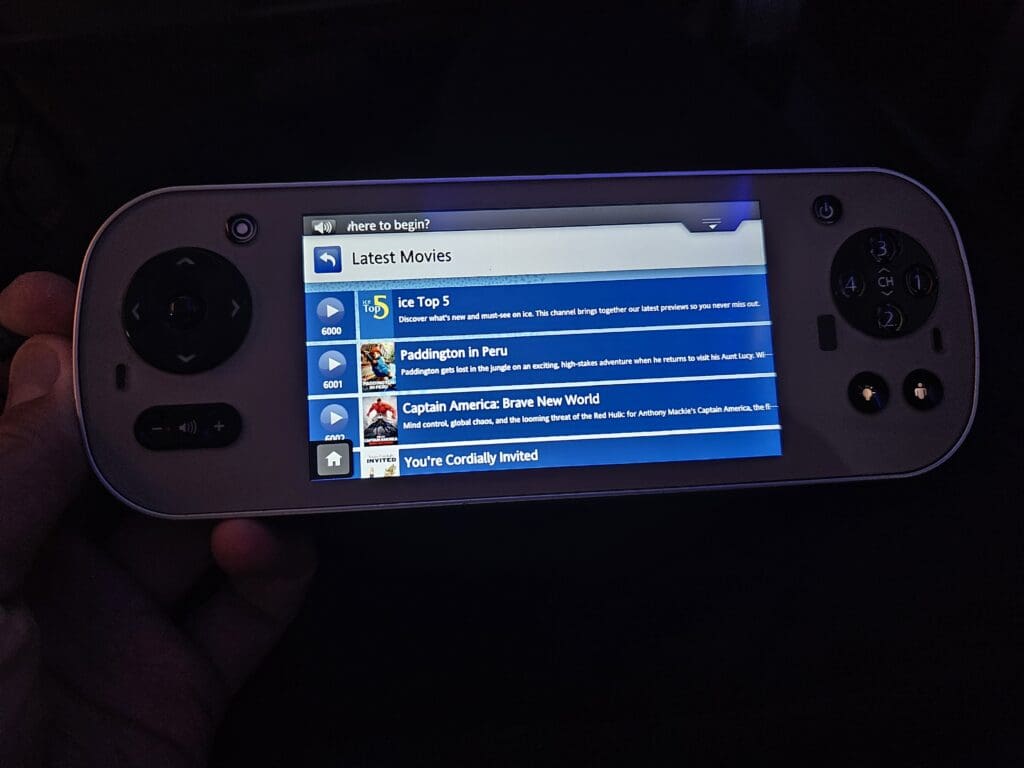
The real highlight of Emirates’ inflight entertainment system is its diverse array of content – featuring a near endless list of films, television programmes and audio content from across the world. In particular, this featured a high number of Hollywood, Bollywood and Arabic language films. This also featured plenty of information on things to do with both Emirates, its destinations and the United Arab Emirates. Meanwhile, five live television channels were provided – BBC News, CNN, Sky News Arabia, Sport 24 and Sport 24 Extra which I found to connect quickly and play without lagging or issues.
As you would likely expect, wifi was provided onboard and those not wishing to pay to access the internet could use this to stream live television, track the progress of our flight and browse the onboard menu. Meanwhile, three internet packages were offered, and despite the flight being of almost exactly equal length to the leg between Kuala Lumpur and Dubai, these were slightly cheaper. This included internet access for the entire flight for $16.99, thirty minutes of wifi for $9.99 and a messaging app only package for $4.99.
By the time I had explored the vast array of contents on the inflight entertainment system, the Airbus had whizzed through the skies of Eastern Turkey and was now nearing the coast, flying just to the south of the cities of Trabzon and Ordu, before passing over Samsun and heading out over a small portion of the Black Sea. Having had minimal sleep in the day or so leading up to my flight and with it being evening in Malaysia, at this point, I closed my eyes and drifted off into the land of nod, temporarily awaking just before we crossed over the coastline of far northeastern Bulgaria to the north of Varna before drifting back to sleep.
By the time I woke up for good, the aircraft was just about to pass from the skies of Romania and into Hungarian airspace. Cutting across the Central European country, the Airbus made its way from the far southeast to the far northwest of Hungary, spending around 27 minutes doing so – passing the likes of Szolnok and Budapest, before reaching Győr and making our way into the skies of Austria, almost immediately reaching the famous city of Vienna. Whilst still reasonably full from our late lunch/early dinner service, once over Austria, the service carts were rolled out once again and the crew began distributing the second catering service of the flight – a light meal (or heavy snack).
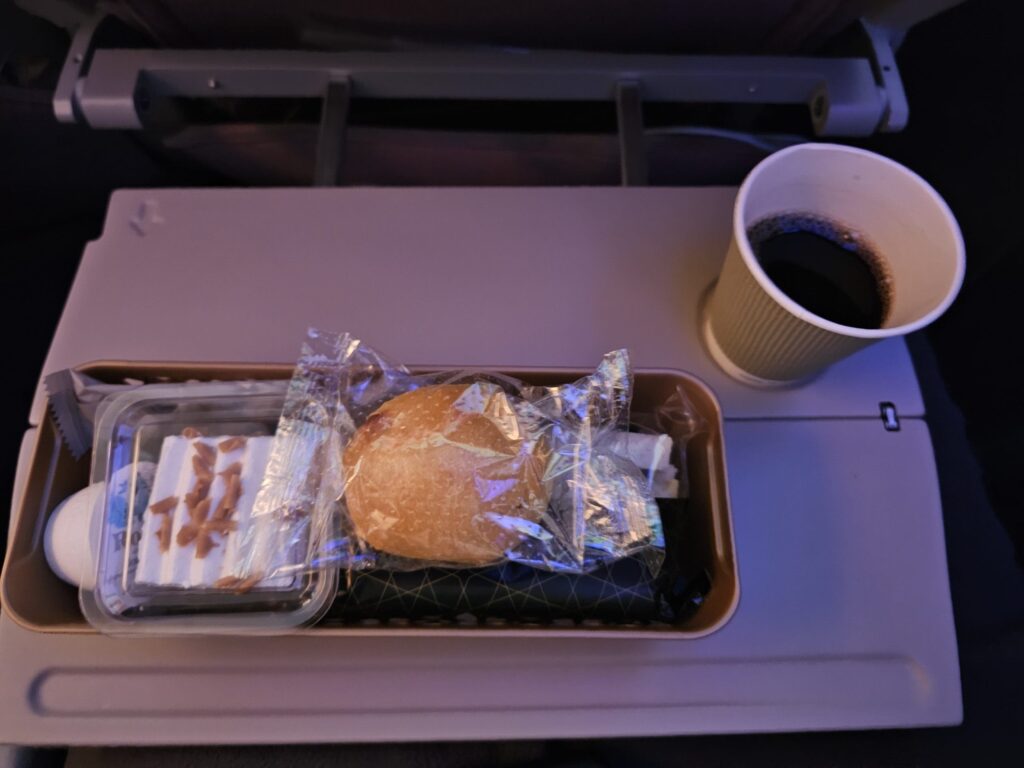
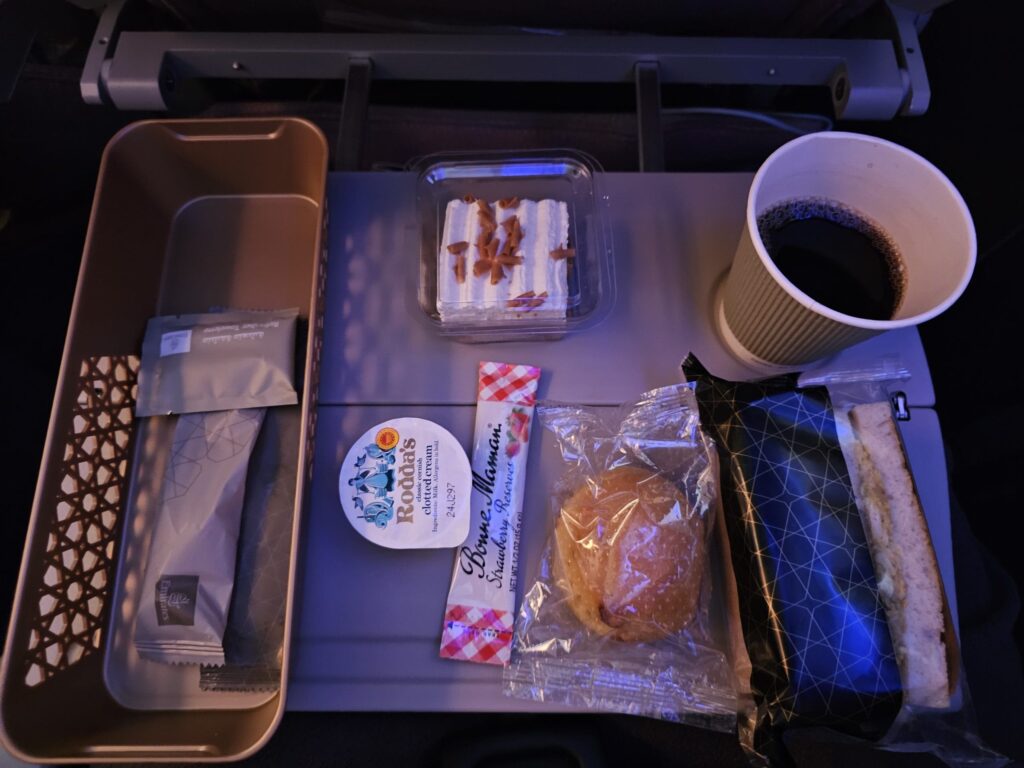
Once again, the service started on either aisle and from the front of each cabin, and the crew made slow progress as they trundled down the cabin as a result of language barriers and demanding passengers. Eventually, the same friendly senior crew member that had served me the first time around reached my seat and I was handed a basket containing an appropriately British selection that included a small coronation chicken sandwich, a warm scone with Bonne Maman strawberry jam and Cornish clotted cream, and a banoffee pie for dessert, with this accompanied by sturdy plastic cutlery, a serviette and a packaged wet wipe. Opting to pair this with a black coffee, this was cautiously poured into a paper cup before being handed over to me, at which point I got to work on this offering. That afternoon, I was rather pleased with this light meal service, with this being of both good quality and quantity, and ultimately far more memorable than the light meal services onboard competitors Etihad Airways and Qatar Airways. However, once again, it did take quite some time for the crew to pass through the cabin collecting the remains of this.
From Austria, the Airbus made its way into the skies of the German state of Lower Bavaria and made our way towards Nuremberg. Following the standard route for flights between the Gulf and United Kingdom, we cut across Germany and soared over Würzburg and Frankfurt before passing to the south of Cologne and Bonn, eventually ending up at the border city of Aachen after around forty minutes in the skies of Germany. Recognising that there was not a great deal of flight time remaining, I decided to go to one of the lavatories, this time picking one of those at the very front of the cabin. Upon opening this up, my experience was similar to my previous toilet visit onboard in the fact that the lavatory was reasonably clean although this appeared to be in a fairly battered state. Nevertheless, stocked with the basics and more, and serving its purpose, I was not left with too many complaints before I took my seat and settled in for the final sprint to London.
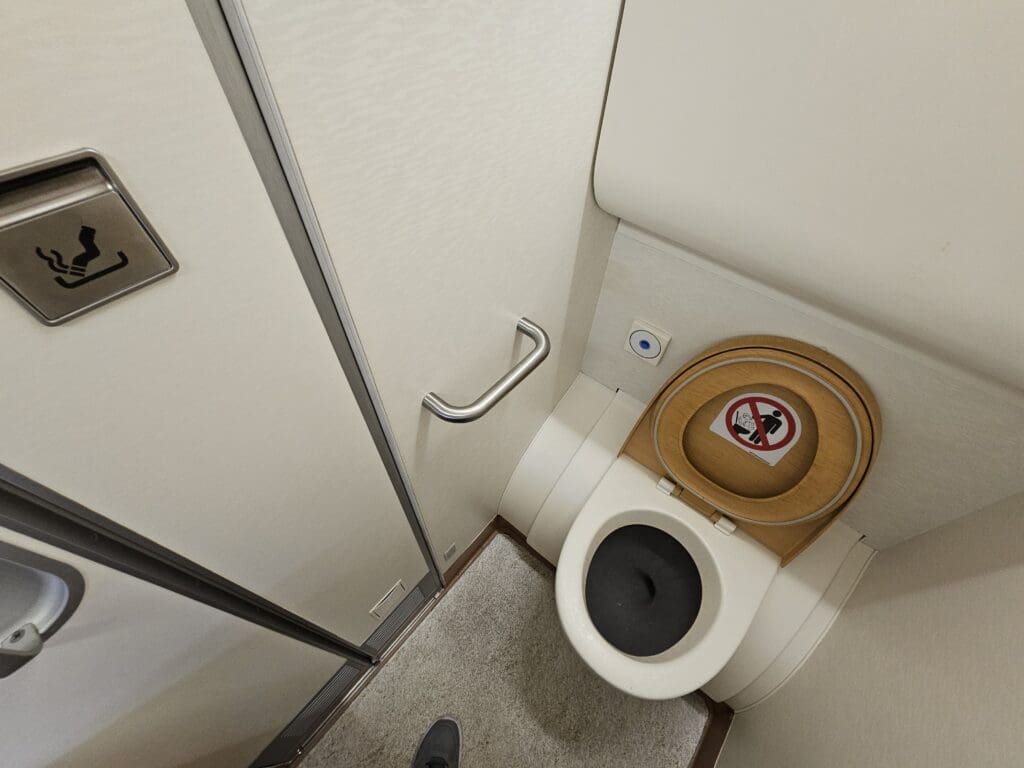
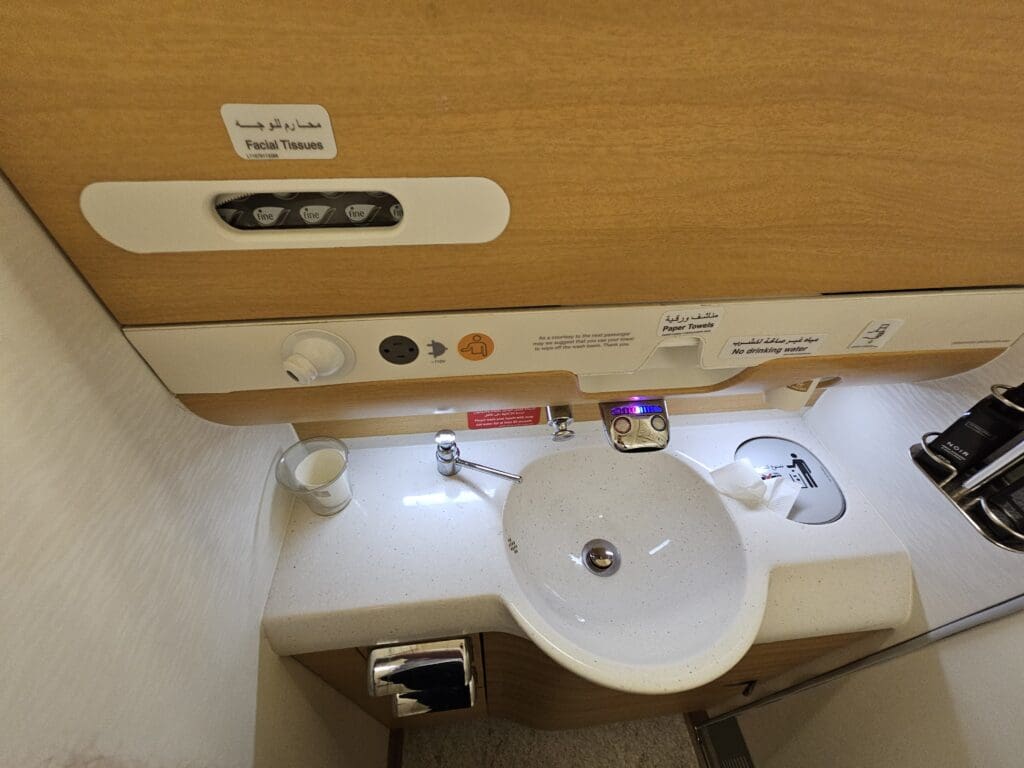
Once seated, the First Officer’s voice filled the cabin once again, during which they provided an update on our progress and noted that we would touch down in London ahead of schedule at around 1930 local time and could expect a smooth approach. This was then ended by a word of thanks for flying with Emirates, and was promptly repeated in Arabic by one of the cabin crew members. By this time, the Airbus was well and truly in Belgian skies, passing to the north of Brussels at which point the crew passed through the cabin, first collecting rubbish before returning a short time later to collect passengers’ blankets.
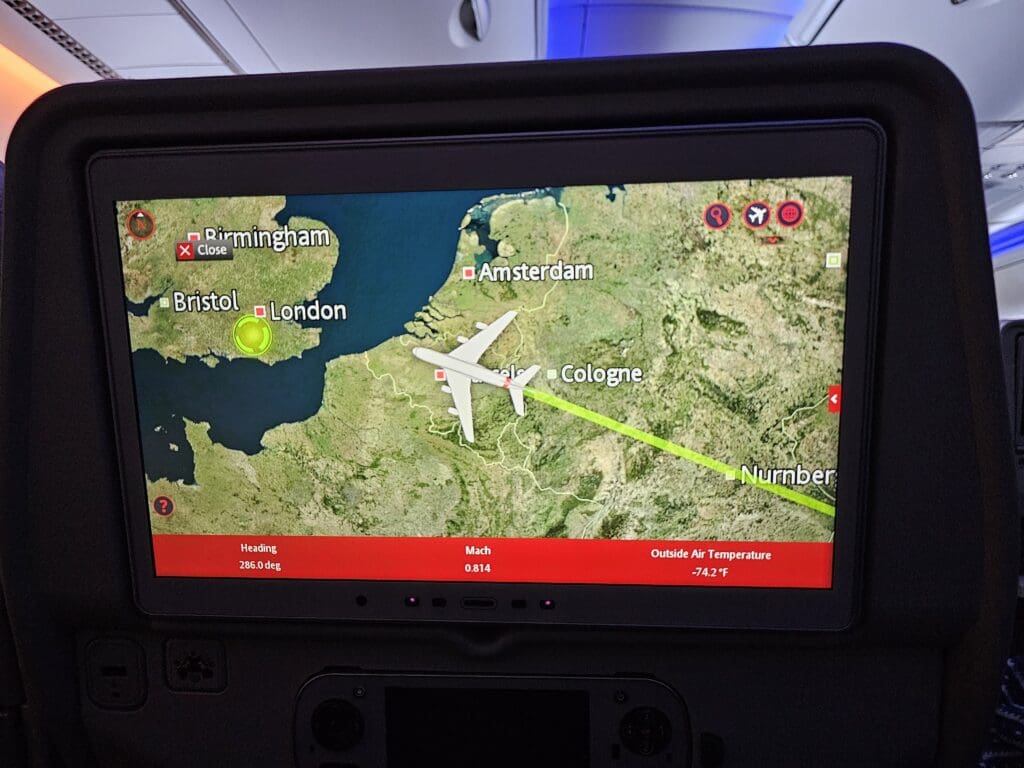
As we passed to the north of the Belgian city of Ghent, the Airbus could be felt gently departing from its cruising altitude of 38,000 feet as we began to sink down. A few short minutes later, we left the Belgian coastline behind whilst inside the cabin a Purser performed their pre-arrival announcement with all the usual warnings regarding seatbacks, tray tables, window shades and seatbelts, and the seatbelt sign was reilluminated. As we sank down over the North Sea, the crew passed through the cabin ensuring that all was secure and in place for our arrival. However unfortunately for them, they seemed to have their work cut out, and thus it took quite some time for the cabin to be secured.
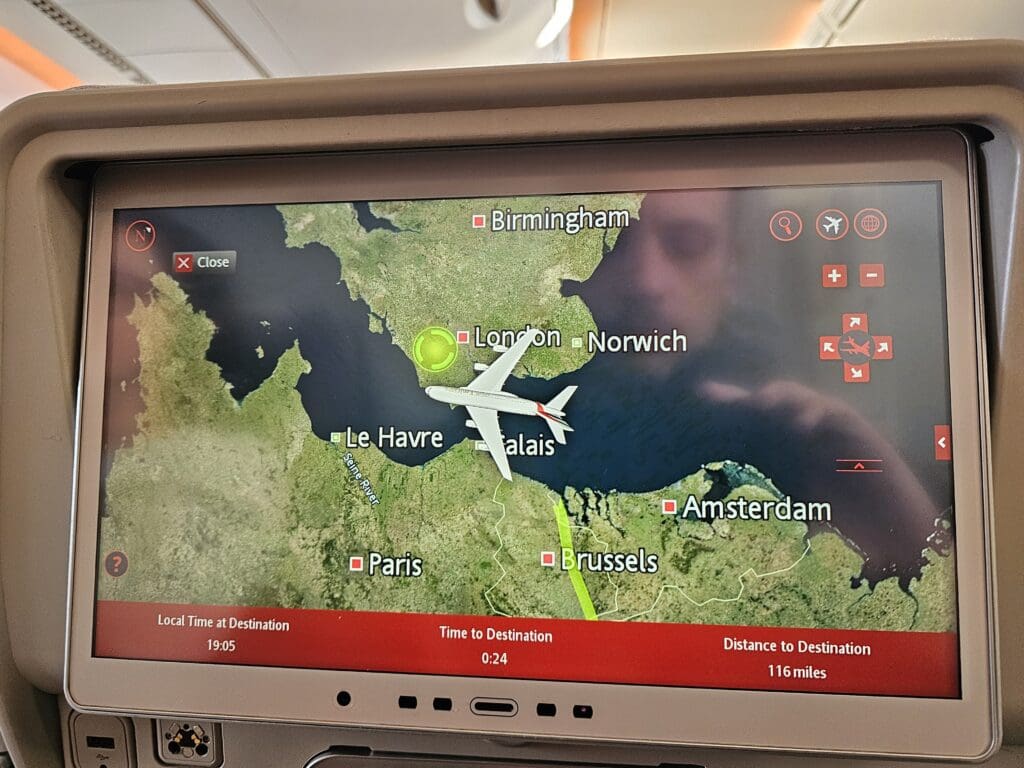
After a nine-minute crossing of the North Sea, the Airbus made landfall near the Kent coastal town of Margate as we headed southwards over the Garden of England, taking a rather indirect approach into Gatwick that would see us land into the east. This took us over the Kent Downs and High Wealds, however, looking at the external cameras, lingering clouds meant that those in the window seats would have probably not received much of a good view until we were on final approach to London Gatwick. Travelling just to the north of the Kent and Sussex coastline, the Airbus passed the likes of Dungeness, Rye and Hastings, before heading inland and entering the downwind leg for an approach to London Gatwick’s Runway 08R.
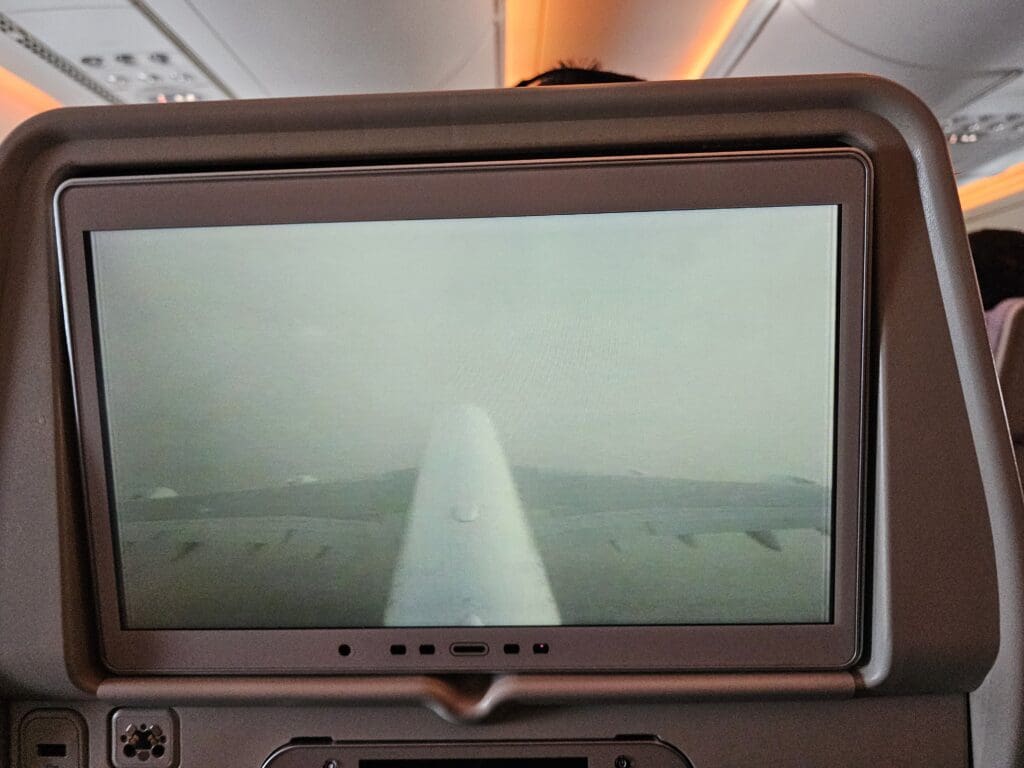
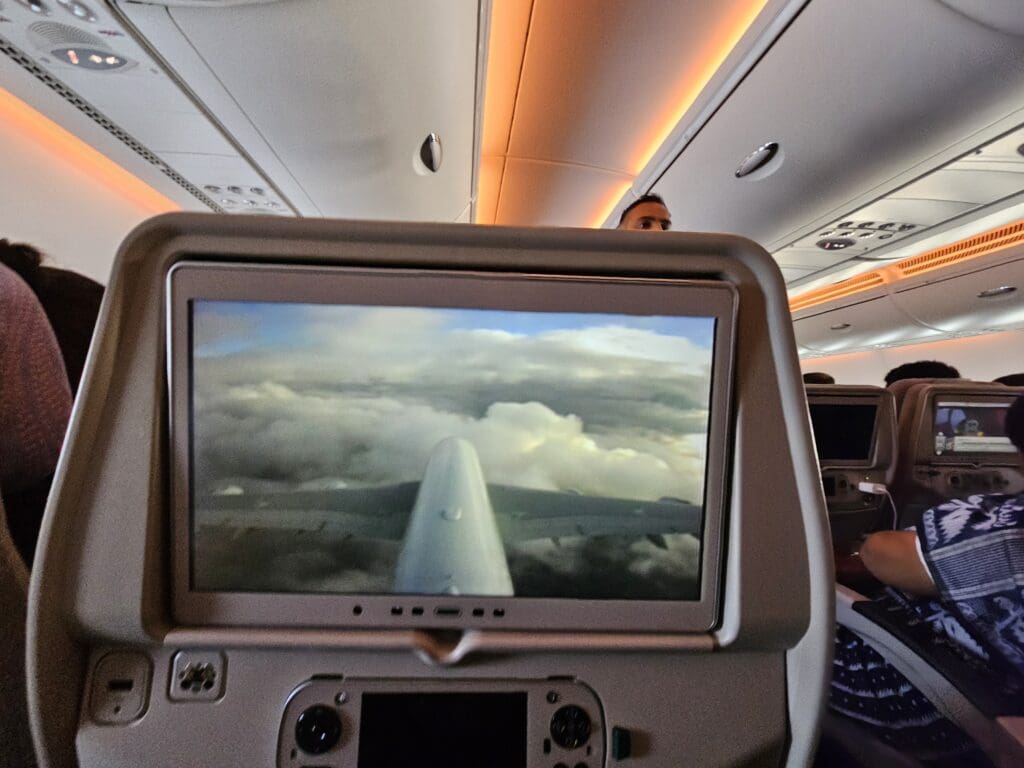
As we sank lower and lower, the flaps could be heard being extended in stages before we turned back towards the airport and the aircraft was lined up for an approach to the runway. At this stage, the landing gear fell into position with a loud clunk, and peering over my neighbours, the green fields of Sussex popped into view, welcoming me back to Britain after almost a month away. Soon, the Airbus sank over the perimeter fence and made a smooth and gentle touchdown on Runway 08R at 1930 on the dot, seven hours and five minutes after taking off from Dubai. Once there, the Airbus decelerated rather gently before vacating the runway to the left and commencing a slow and cautious taxi over to the North Terminal.
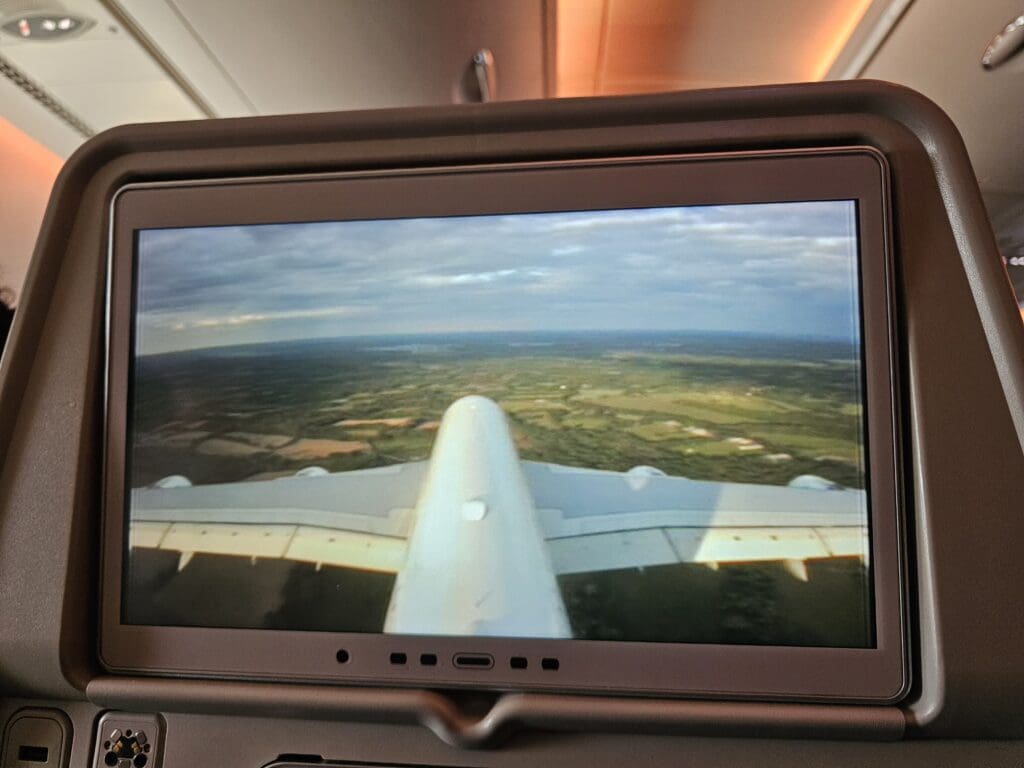
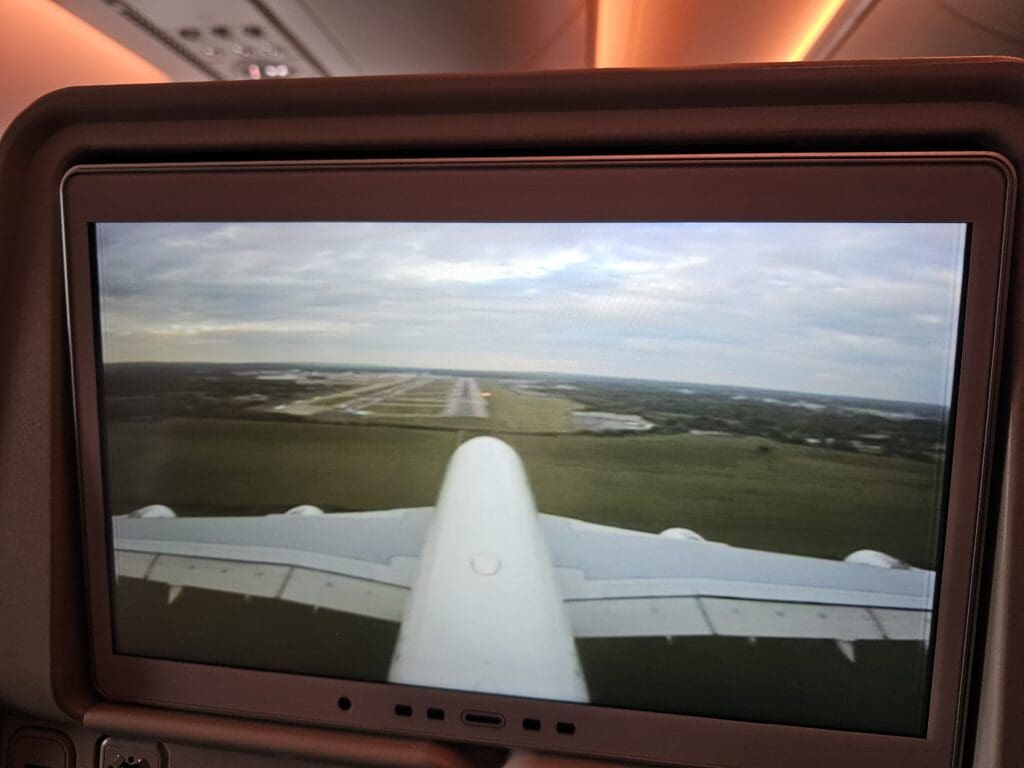
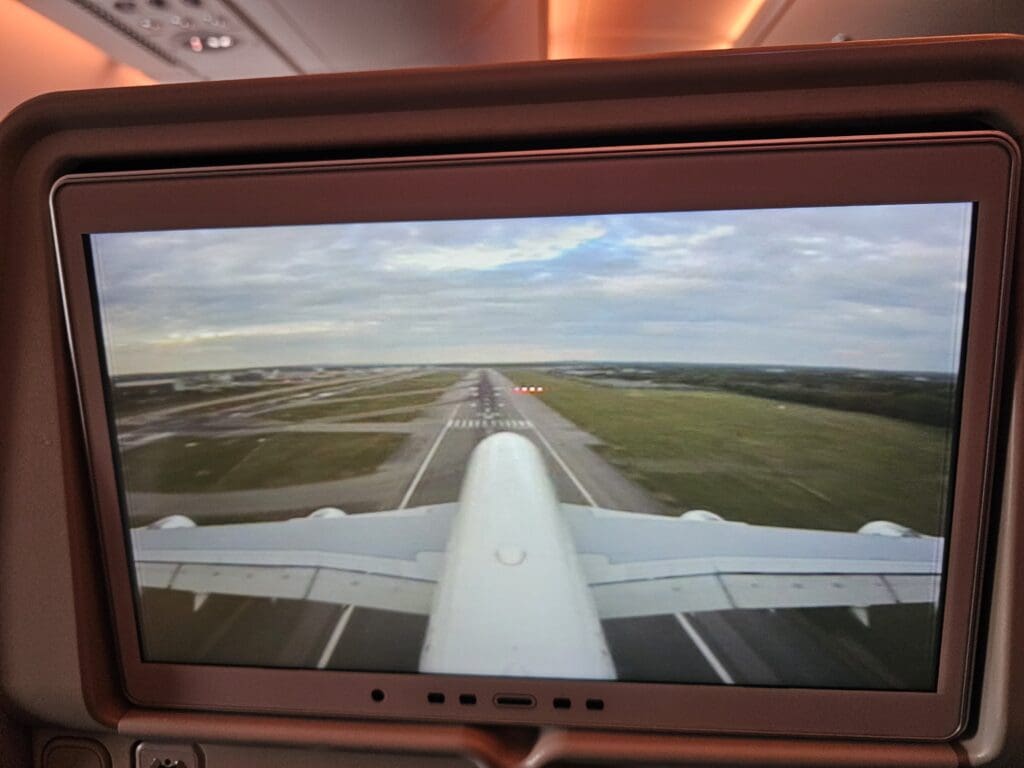
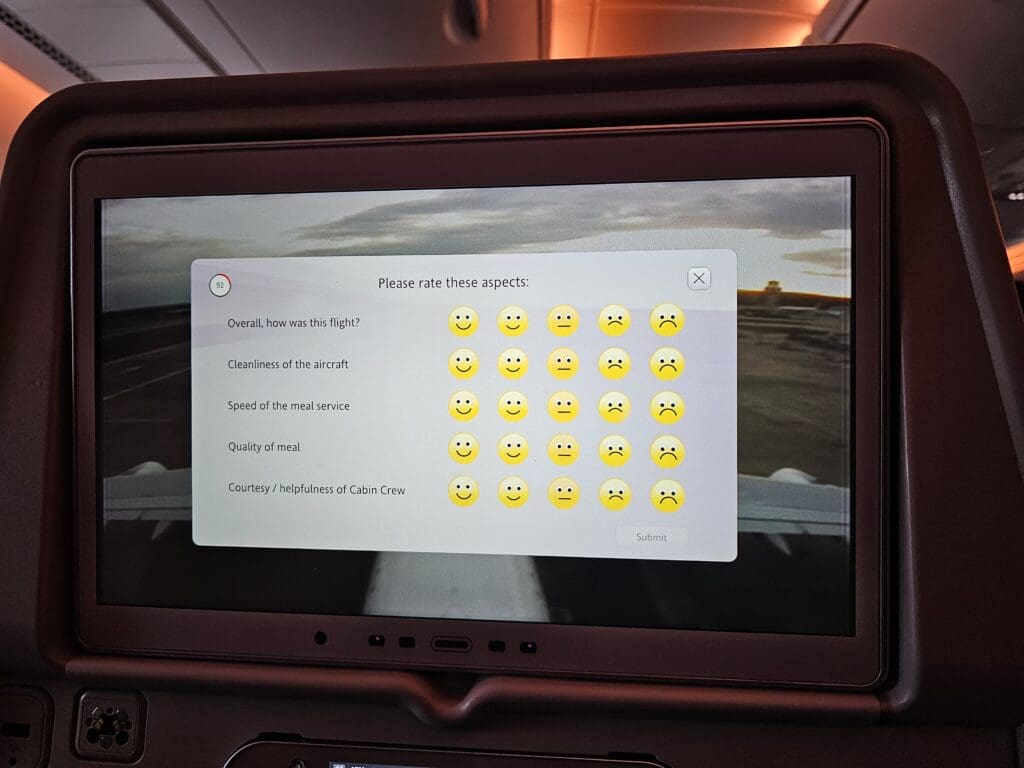
Once safely on the ground, the Purser welcomed all to London, thanked passengers for flying with Emirates and advised passengers to remain seated with their seatbelts fastened until we had arrived at the gate, with this message then repeated in Arabic by another crew member. Once complete, Emirates’ ‘theme’ music filled the cabin, as I tracked the progress of our taxi over to Stand 558 – the only gate at the North Terminal which I believe is capable of handling the mighty Airbus A380. Seven minutes after touching down, and eight minutes ahead of schedule, the Airbus came to a halt and its four engines spooled down. At that time, many of those around me jumped up in a desperate rush to leave the aircraft. By this time, I was confident that I would be able to make it through the airport and make the last train back to Leeds, and so I was not as worried as I had been earlier in the journey.
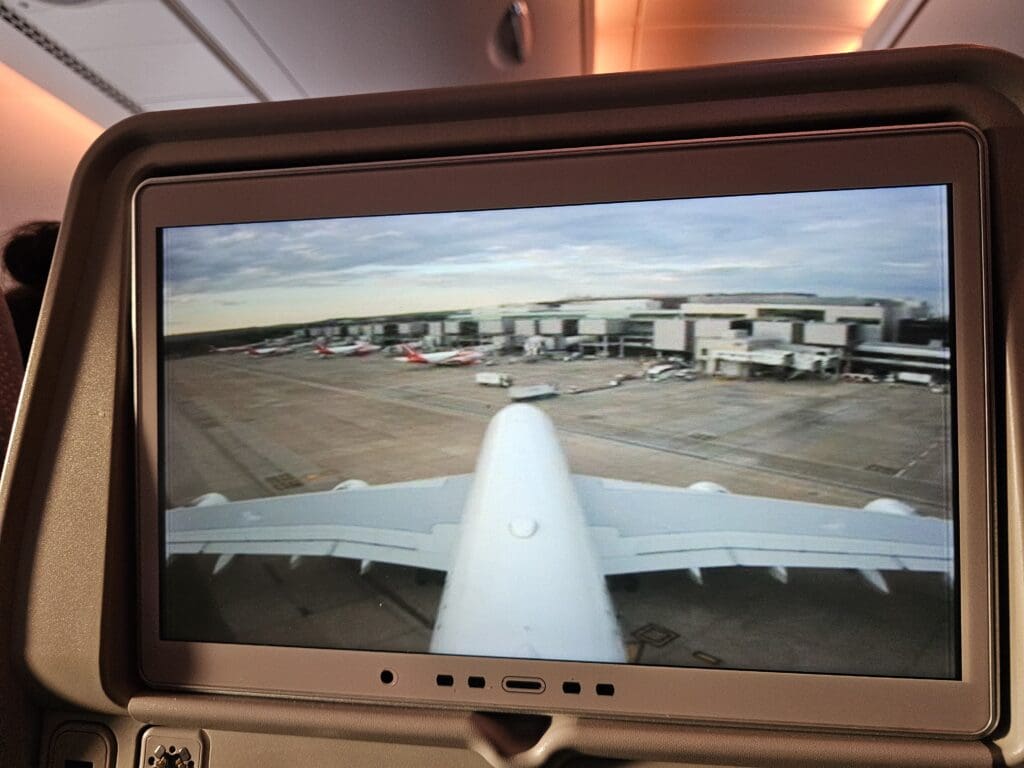
Fortunately, the jetbridges were soon connected up to the aircraft and disembarkation commenced. Given my location just in front of the L2 door, I ended up being one of the first to disembark and thanked the crew before stepping off the aircraft and making my way up the jetbridge. Once in the terminal, nothing more than a short walk was in store to reach the immigration hall, and whilst busy, with plenty of e-gates, I sailed through quickly and without issue, before heading down to the baggage collection hall. Once there, around twenty minutes of waiting was in order before I spotted my suitcase, after picking this up, I wandered through customs and headed out into the small and busy landside arrivals area, ending my first ever experience with Emirates.
Summary
Ultimately, my flight over from Dubai left me with no major complaints. The seat was reasonably comfortable and in good condition, I arrived ahead of schedule and in one piece, and the entertainment system was fantastic. However, that said, there was nothing in particular that really made my Emirates experience stand out amongst many other top carriers. I should also note that other than the friendly senior crew member whom I was lucky to be served by, all other crew members appeared to be a little cold and distant. Ultimately, whilst there was nothing that would stop me from flying Emirates again, at the same time, I wouldn’t say that the flight was the very best that I have ever taken.