Sampling One of Qatar Airways’ Newest Jets: Doha to Manchester on a Boeing 787-9 Dreamliner
You can read all the background information on this trip in my report from Dubai to Doha onboard the Airbus A330-200 here!
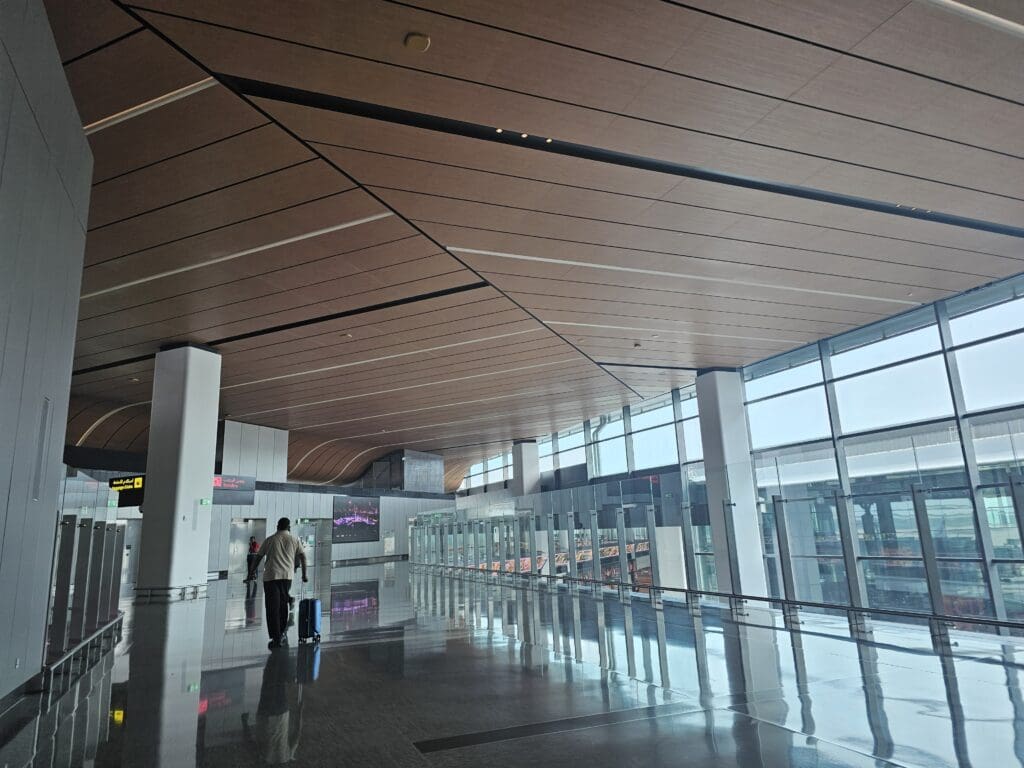
Following my short hop over from Dubai, the ageing Airbus A330-200 that I had called home for an hour or so came to a halt at Stand 119 at 1154, eleven minutes ahead of our scheduled arrival time. With this flight having been almost totally empty in Economy, disembarkation was a quick and painless affair, and I made it into the terminal by 1200, leaving me with buckets of time before my next flight to Manchester. Like many of my fellow passengers, I was simply connecting in the Qatari capital, and I thus followed signs for transfers. This took me on a long walk down the terminal’s modern, airy and well-polished corridors, before finally arriving at one of the security checkpoints almost five minutes later. Unlike in some hubs, all those transiting in Doha must pass through security before entering the airside departures area. Whilst this may seem to be a hassle for those with worryingly short connections, that lunchtime, there appeared to be more staff than passengers, and so this was a quick and painless affair, with no need to remove any electronics or liquids from my bag.
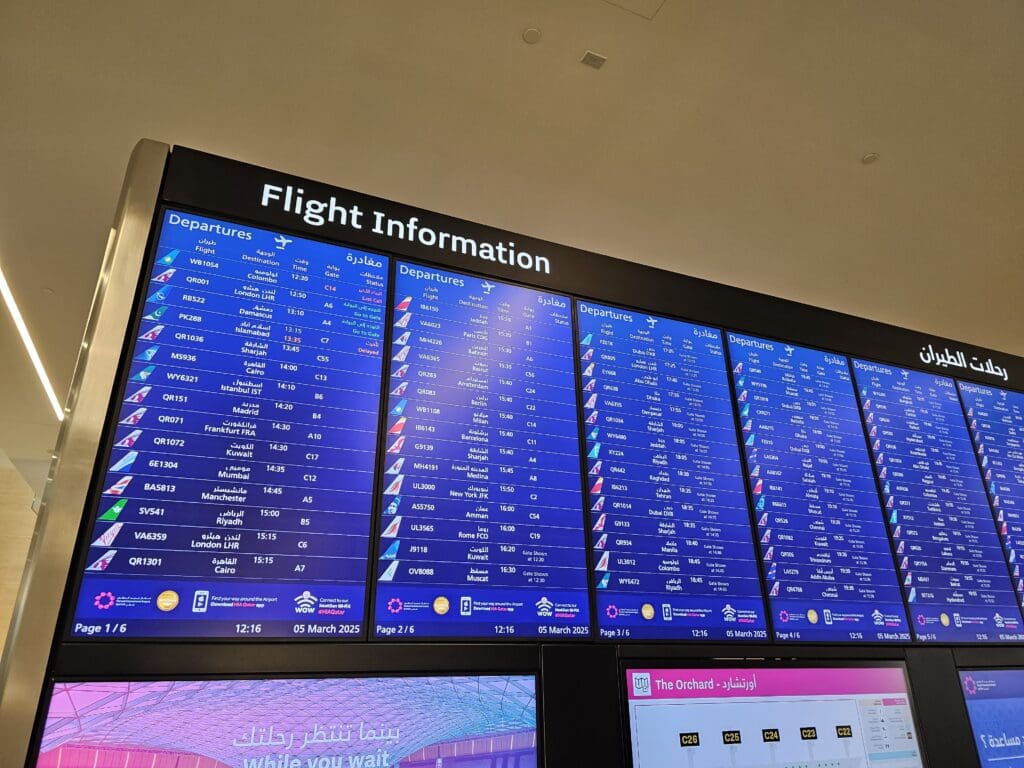
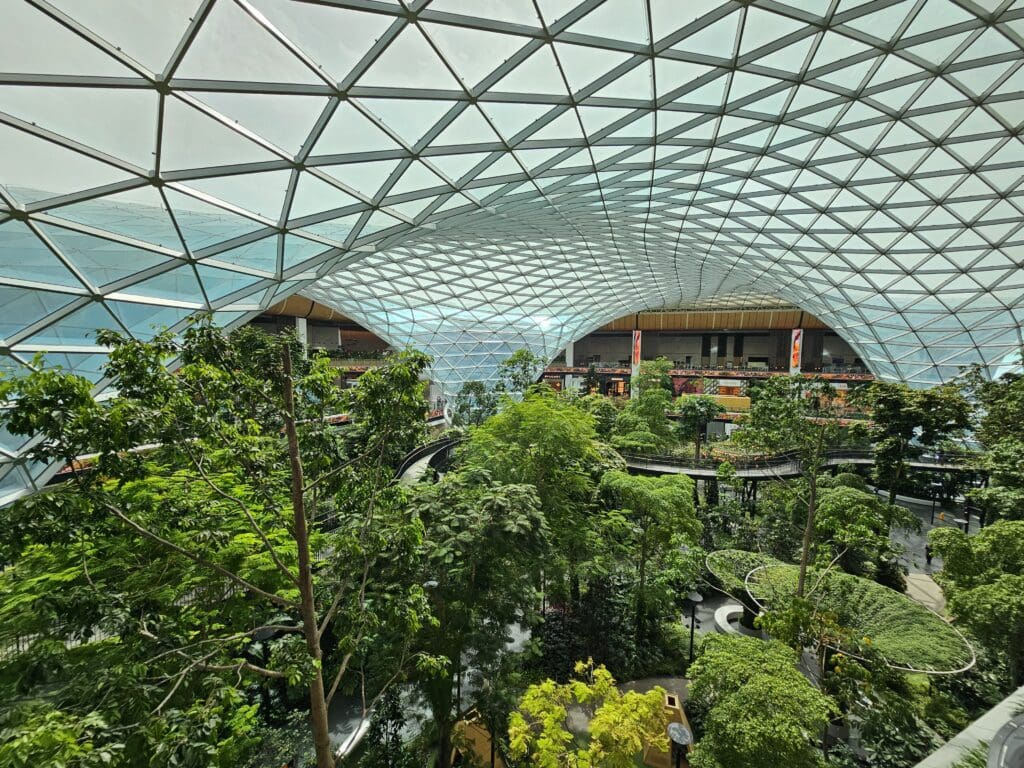
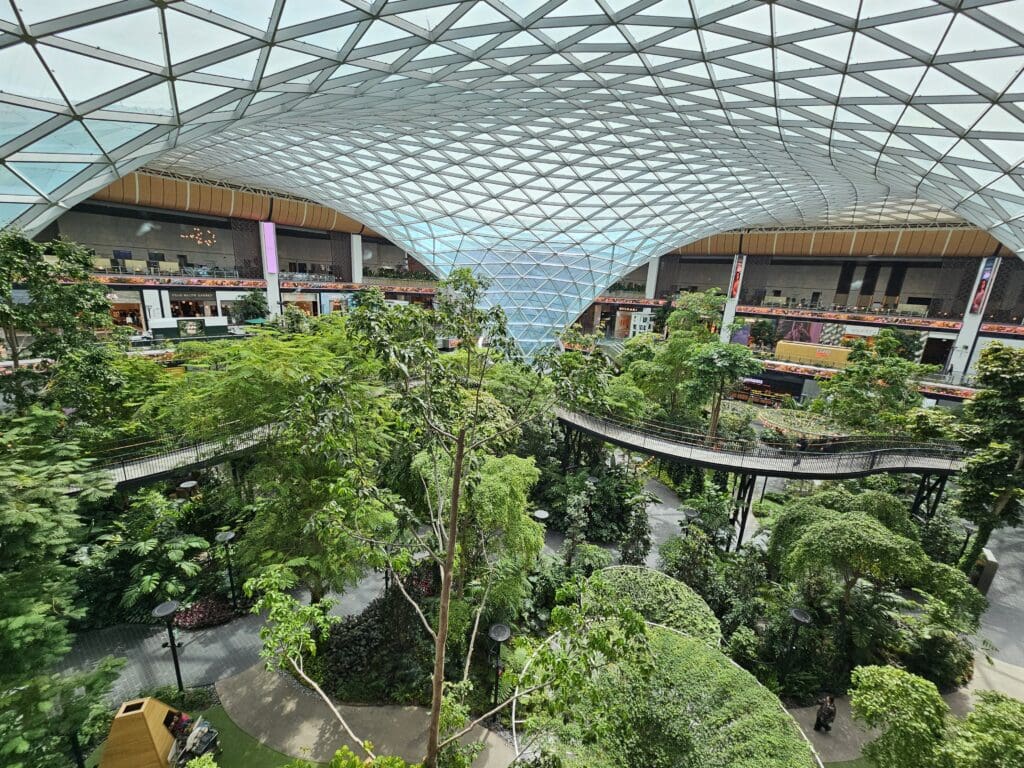
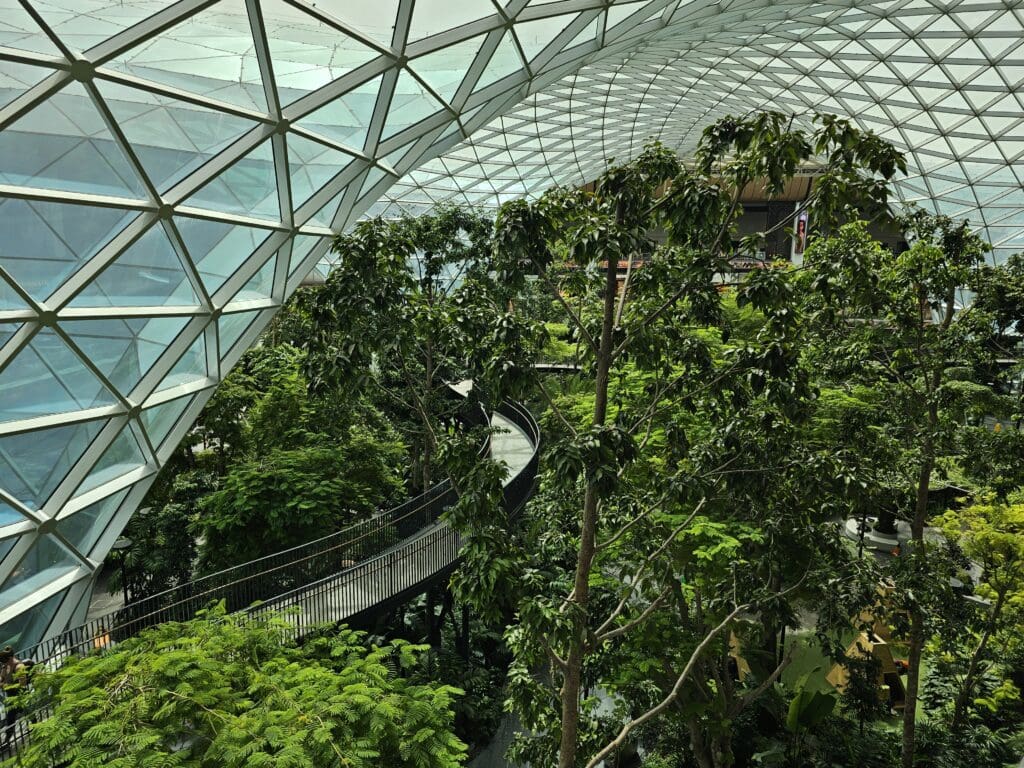
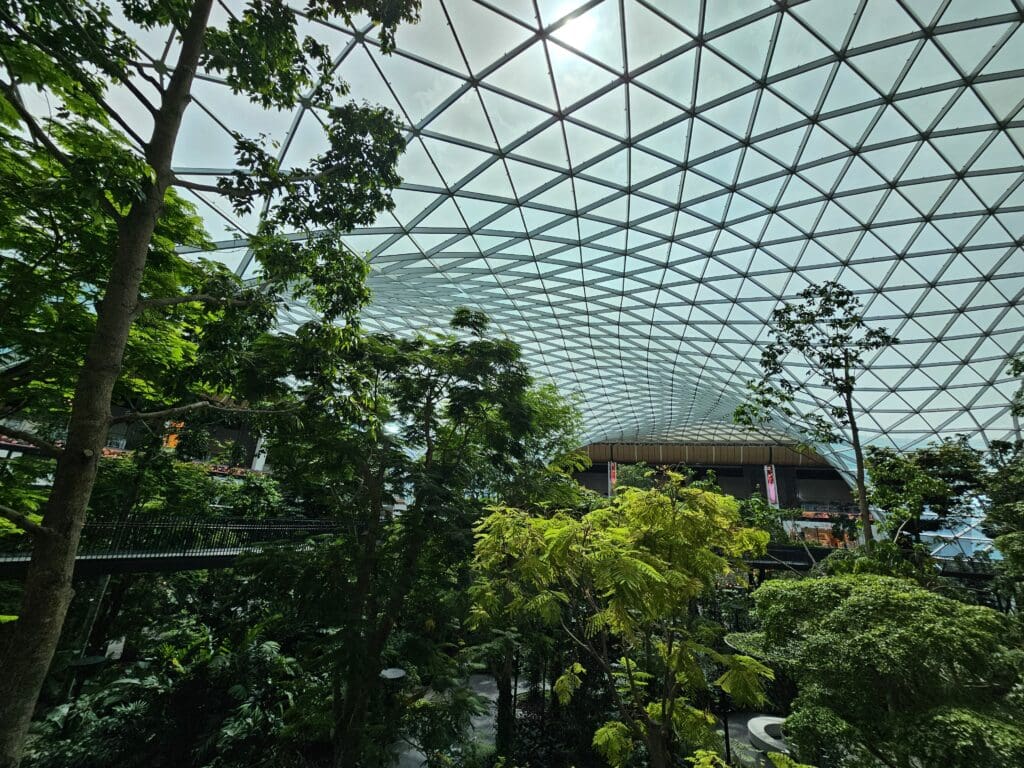
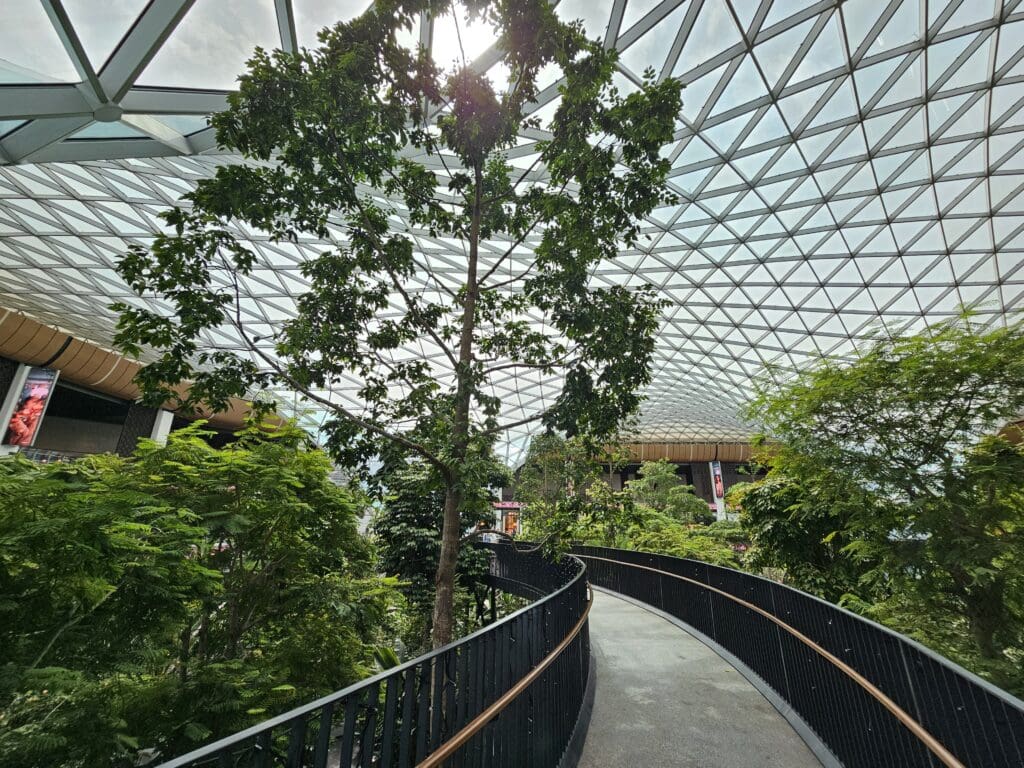
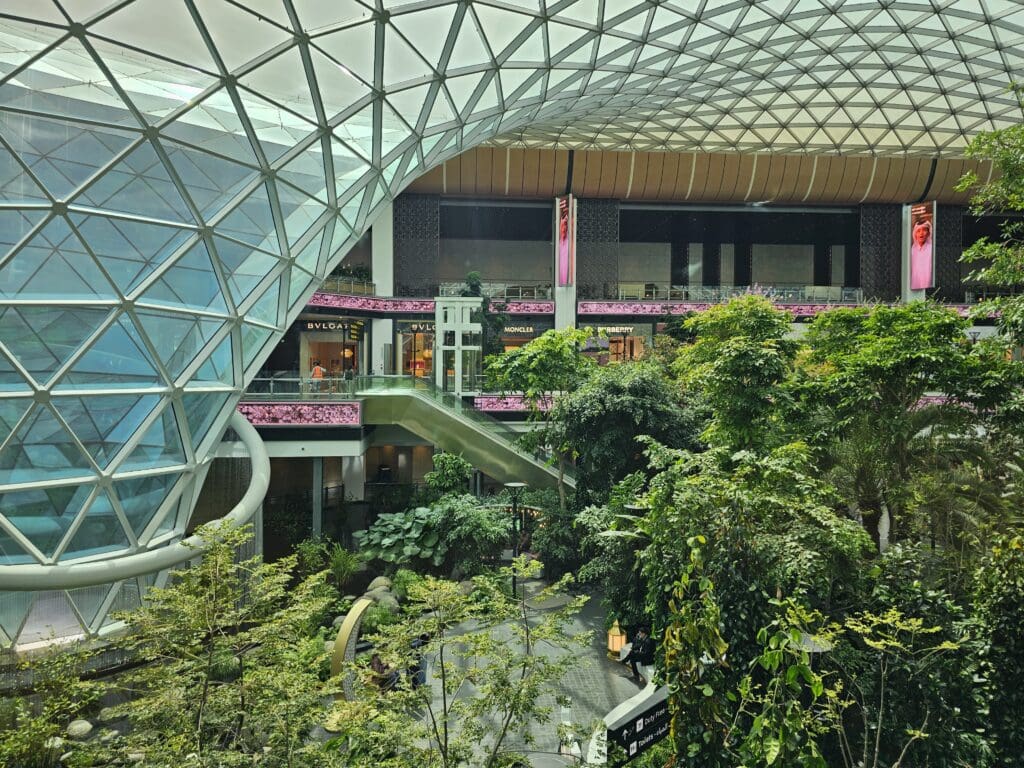
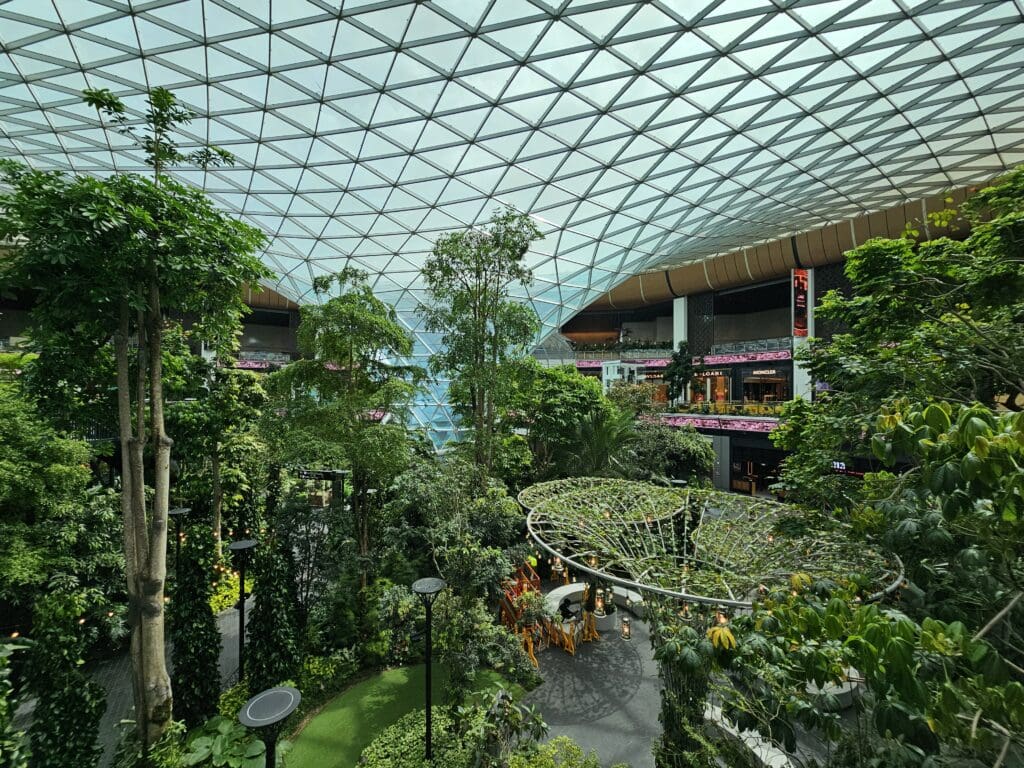
Once through security, I was immediately greeted by the impressive sight of Doha Hamad International Airport’s indoor tropical garden, The Orchard. Covering an area of around six thousand square metres, this luscious green space opened in November 2022 and is arguably the centrepiece of the airport. Rivalled only by Singapore Changi Airport’s Jewel, The Orchard is definitely the most distinctive feature of the airport and is a rather nice place to pass through, with several walkways winding through this. Meanwhile, a plethora of mostly luxury shops neighbour this, selling an array of costly clothes and accessories far beyond the budget of many travellers who pass through Doha, including myself! Not being in any immediate rush, I took a leisurely saunter through The Orchard, taking in the green sights before making my way over to the departure boards, which revealed my flight would depart from Gate A5 at the opposite end of the terminal.
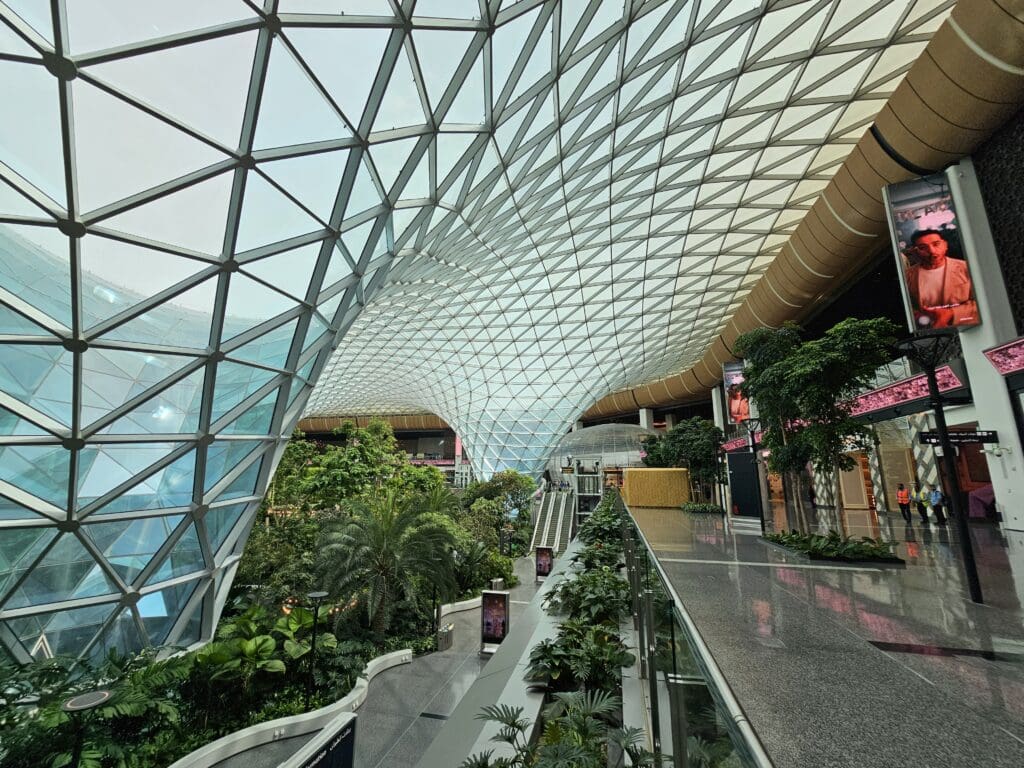
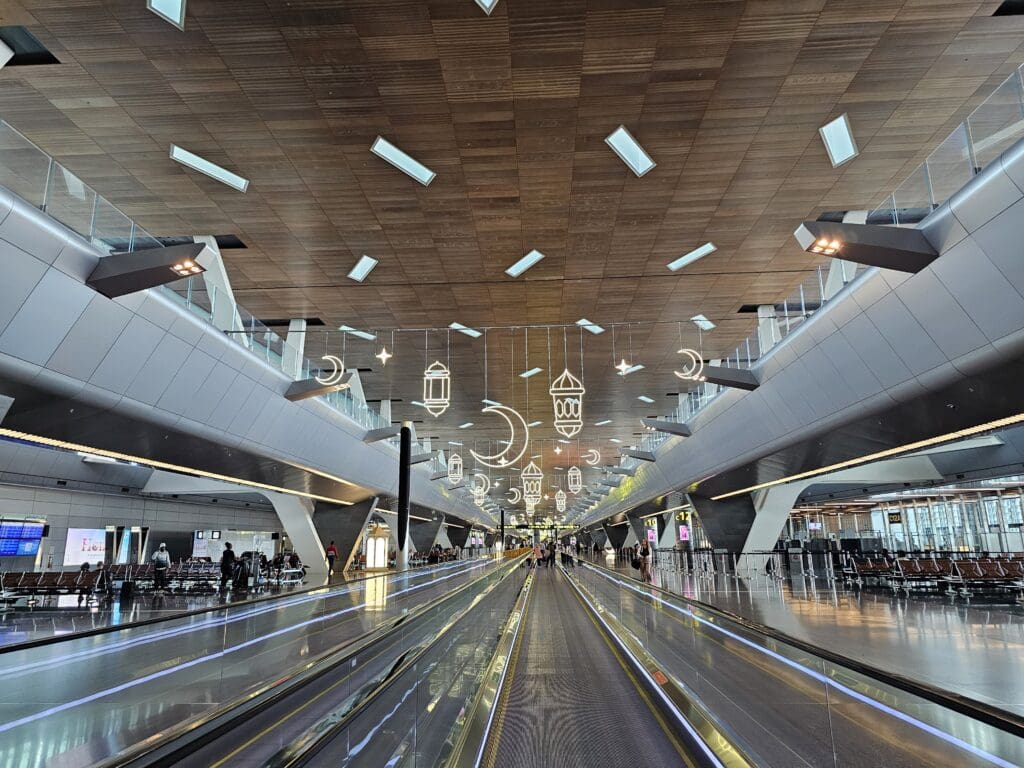
Doha Hamad International Airport features a massive single passenger terminal. Covering an area of 750,000 square metres, at the time of my flight, this was the seventh largest airport terminal in the world. This is sort of ‘Y’ shaped and is split into the North and South Plaza, with a driverless shuttle train running between the two. However, having plenty of time on my hands, I decided to make this journey on foot.
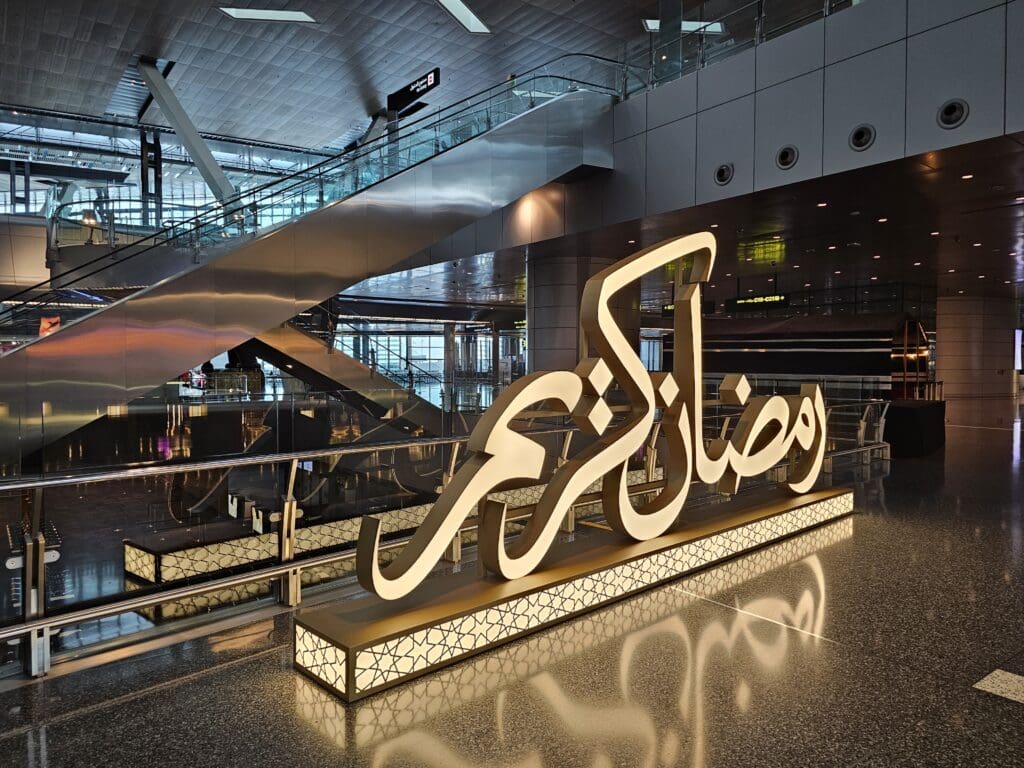
As you may expect considering the terminal’s size, this is home to a seemingly endless list of shops and cafés. In particular, there seemed to be a high concentration of luxury brand outlets, with names such as Bvlgari, Dolce & Gabbana, Gucci, Hublot and TAG Heuer visible amongst many others. Curiously, during my transit, I spotted the first Apple Store that I have ever come across in an airport terminal – a useful feature for those looking to purchase some new electronics before their flight! Of more interest to me, however, was the Qatar Airways store, which sold a wide array of the airline’s souvenirs – albeit, just like everything else, these seemed to come with an eyewateringly high price tag. Another interesting feature of the terminal is the Souq Al Matar, which, taking inspiration from Qatar’s souqs, features several shops and eateries and attempts to provide the traditional souq experience to those who are only passing through Qatar.
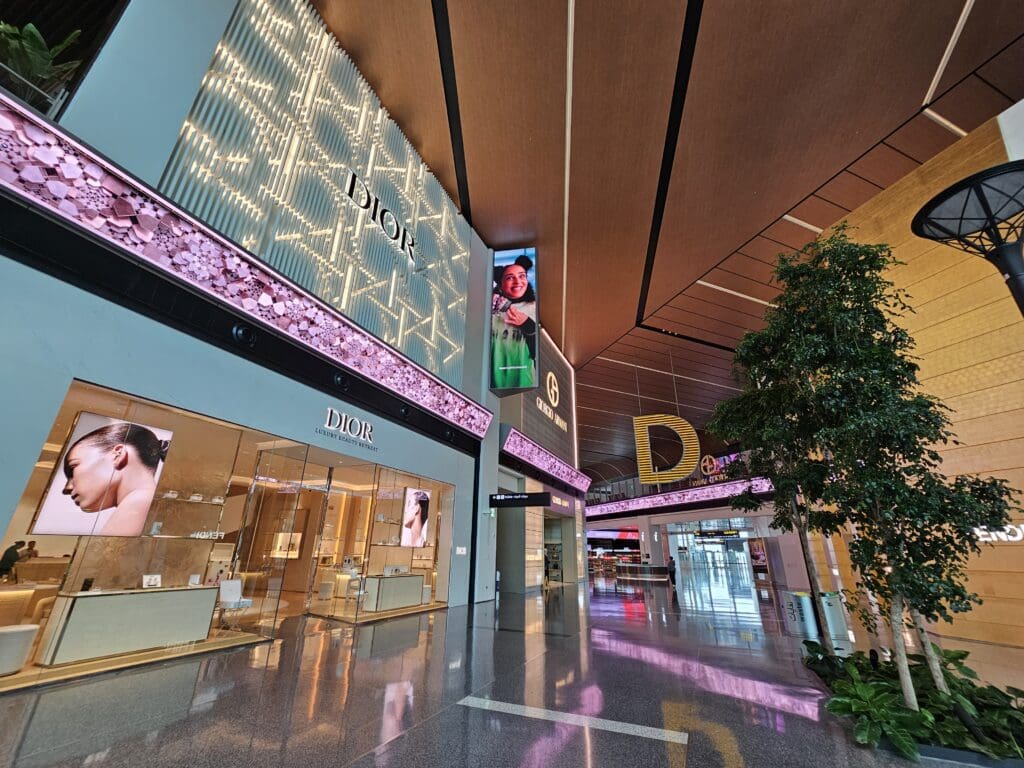
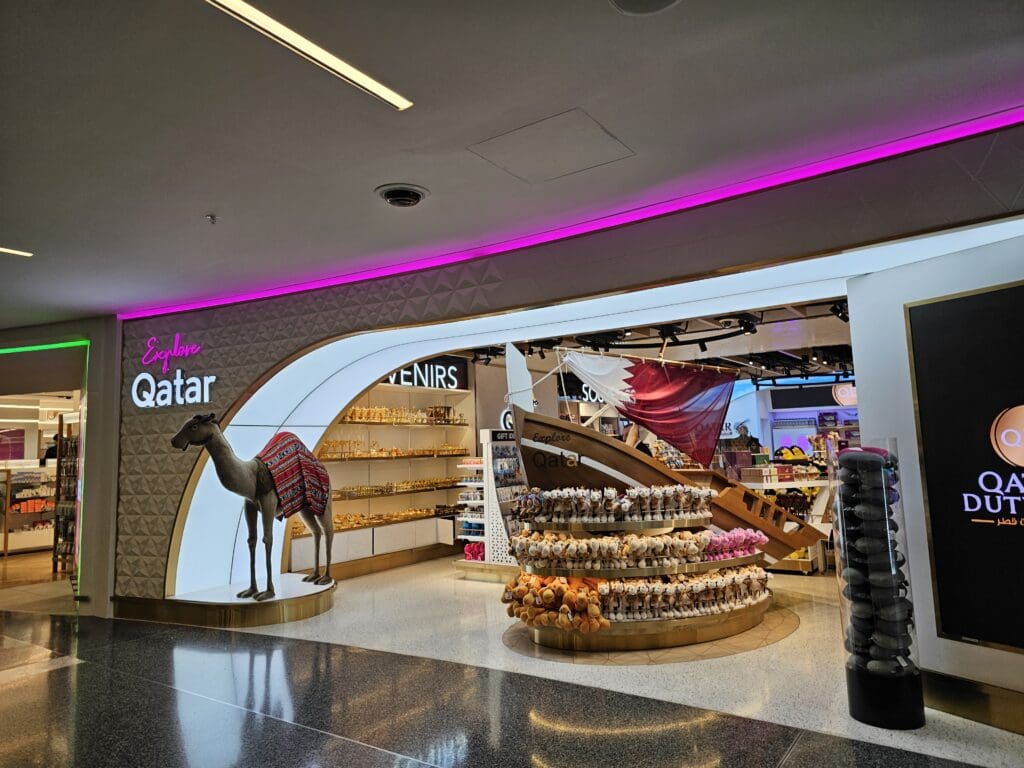
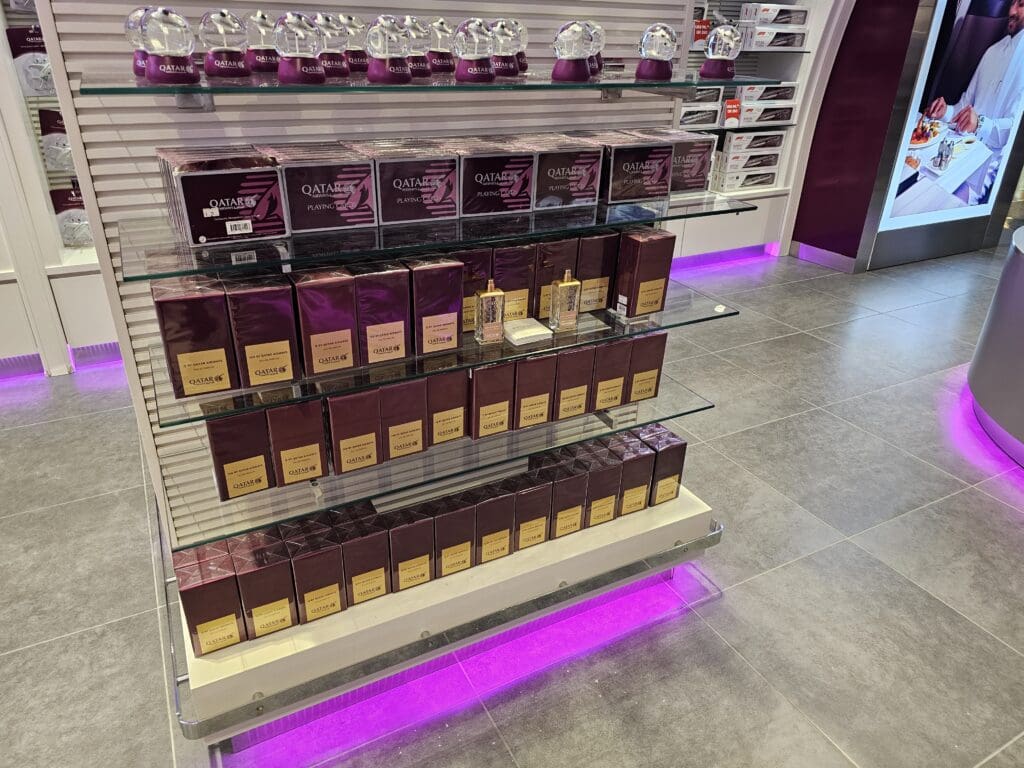
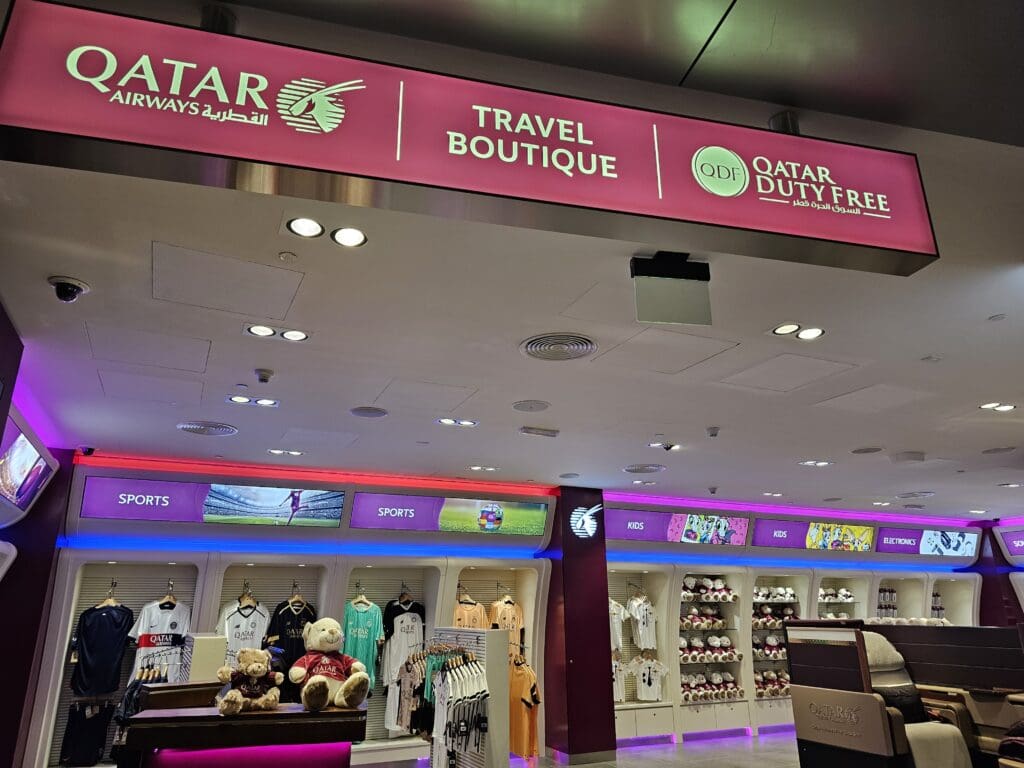
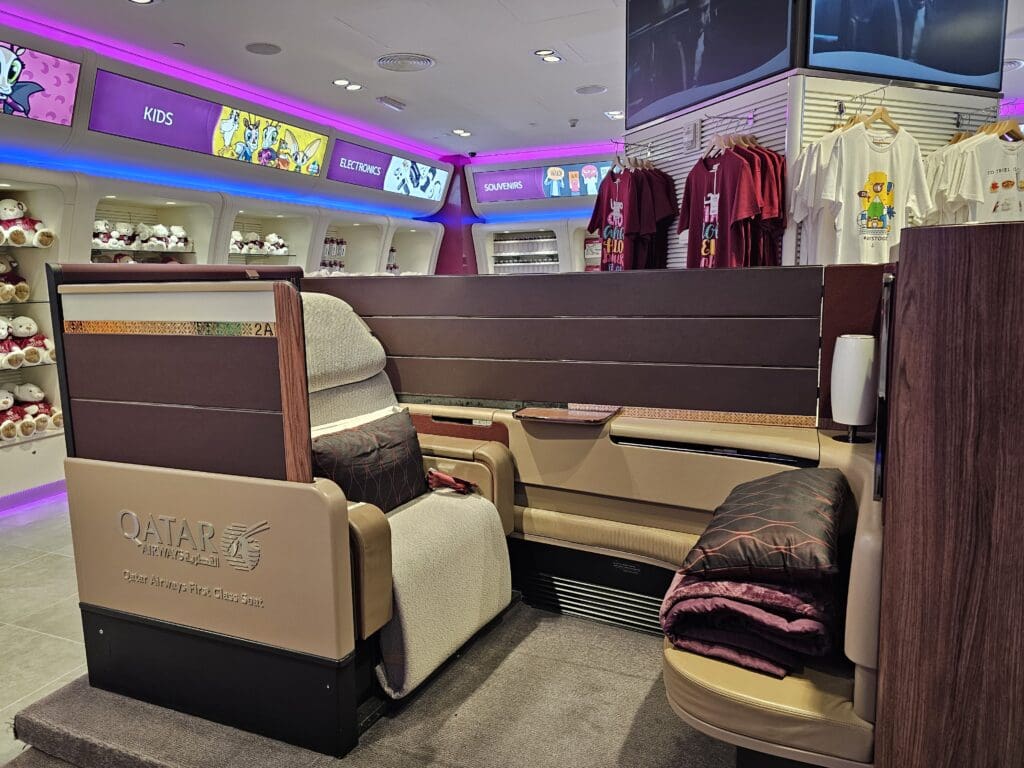
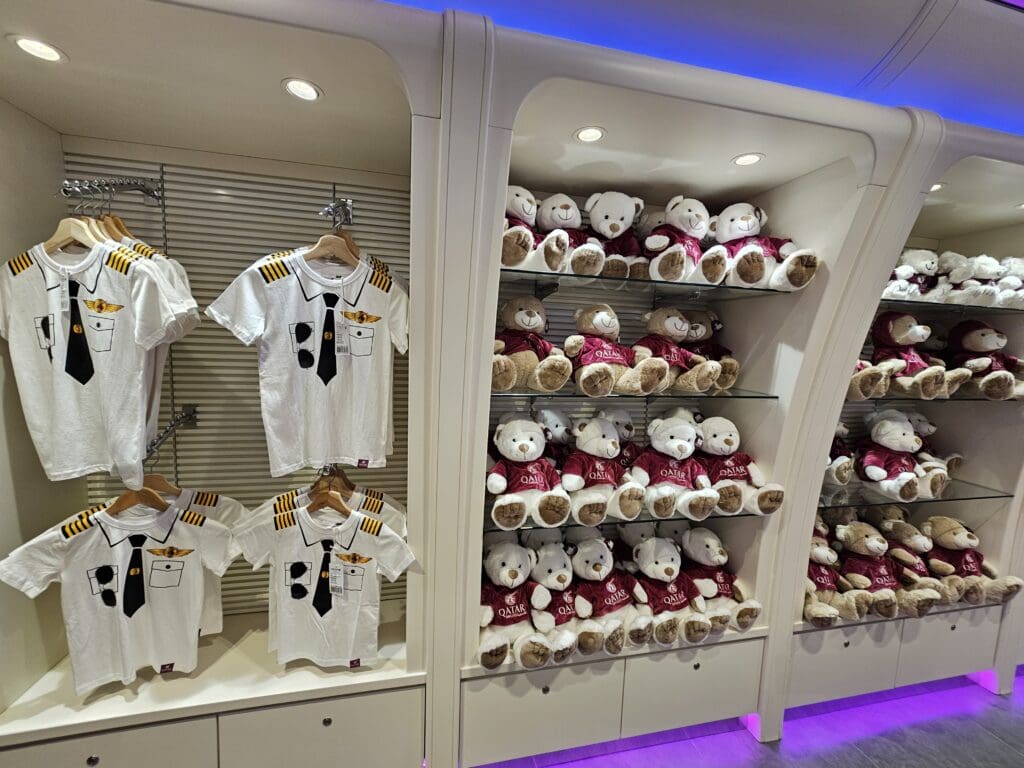
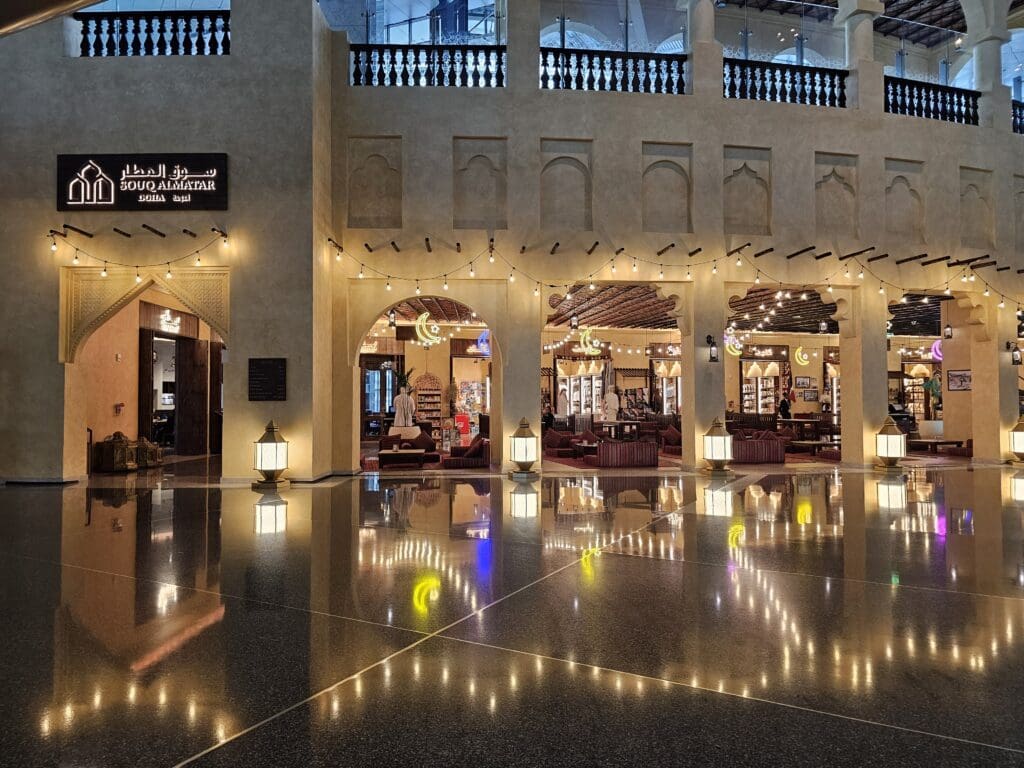
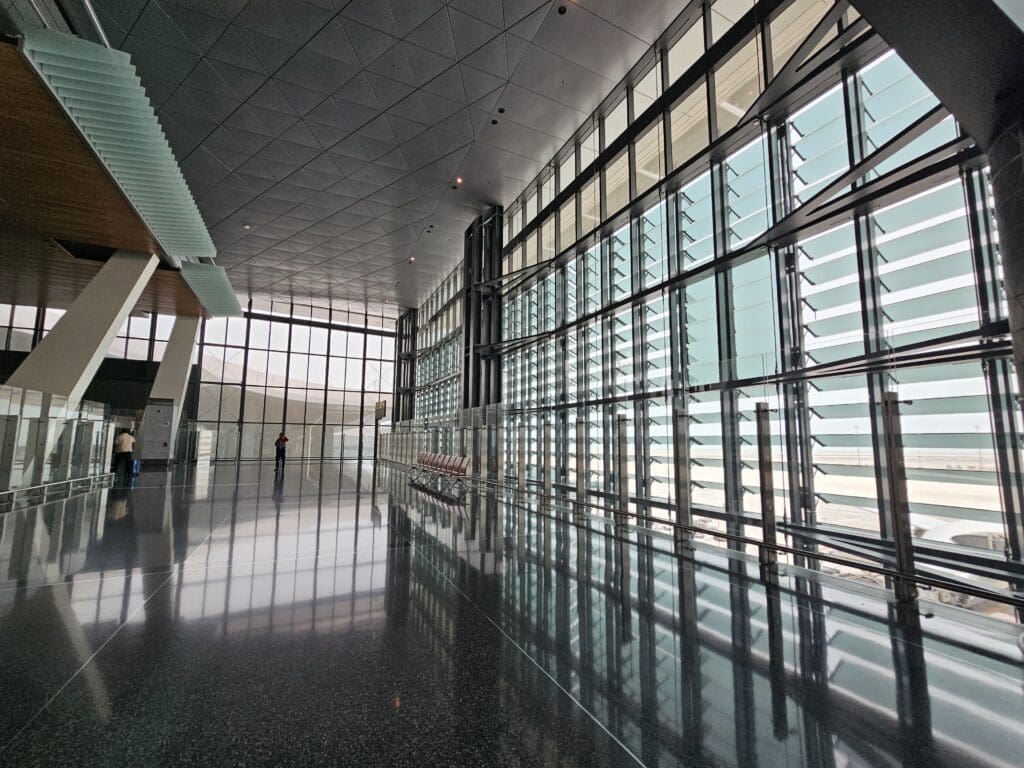
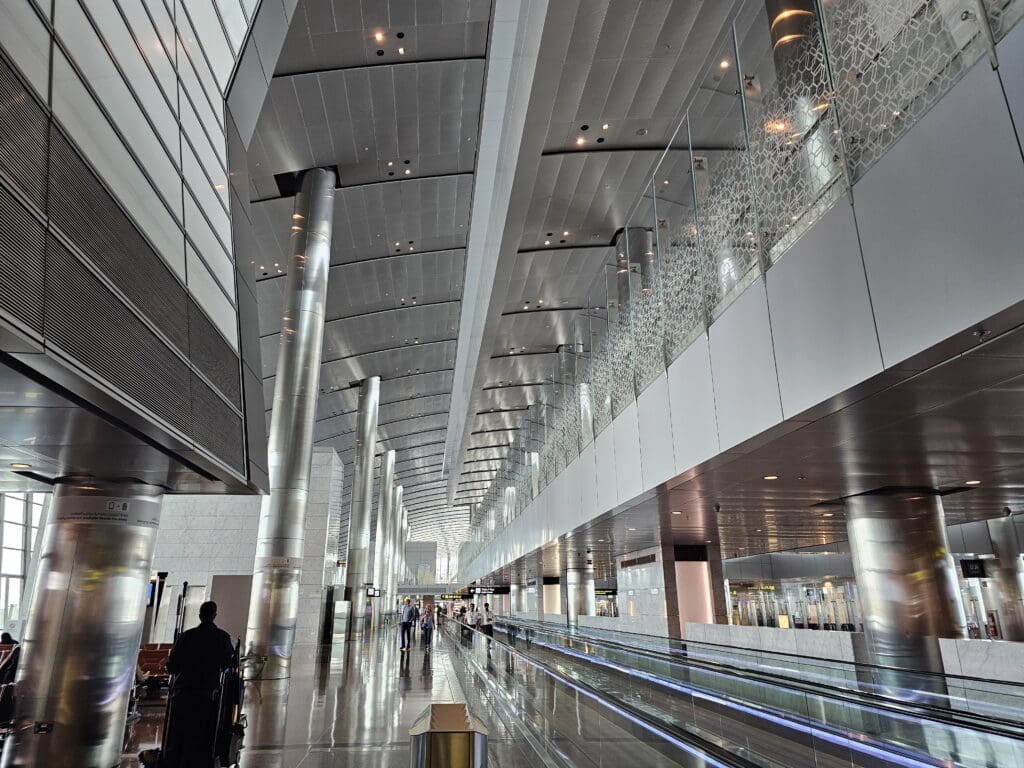
Making my way through the terminal, admittedly, this was a little less impressive than The Orchard; however, this was still modern, clean, tidy and compared to most airport terminals, and comparatively luxurious. Meanwhile, plenty of seating was offered, whilst plug sockets were plentiful and the complimentary wifi worked without issue. My main complaint, however, was that throughout much of the terminal, dots on the windows meant that good photography opportunities of the aircraft outside were nye on non-existent. Whilst this is perhaps of little concern to most passengers, it was a little disappointing to an aviation enthusiast.
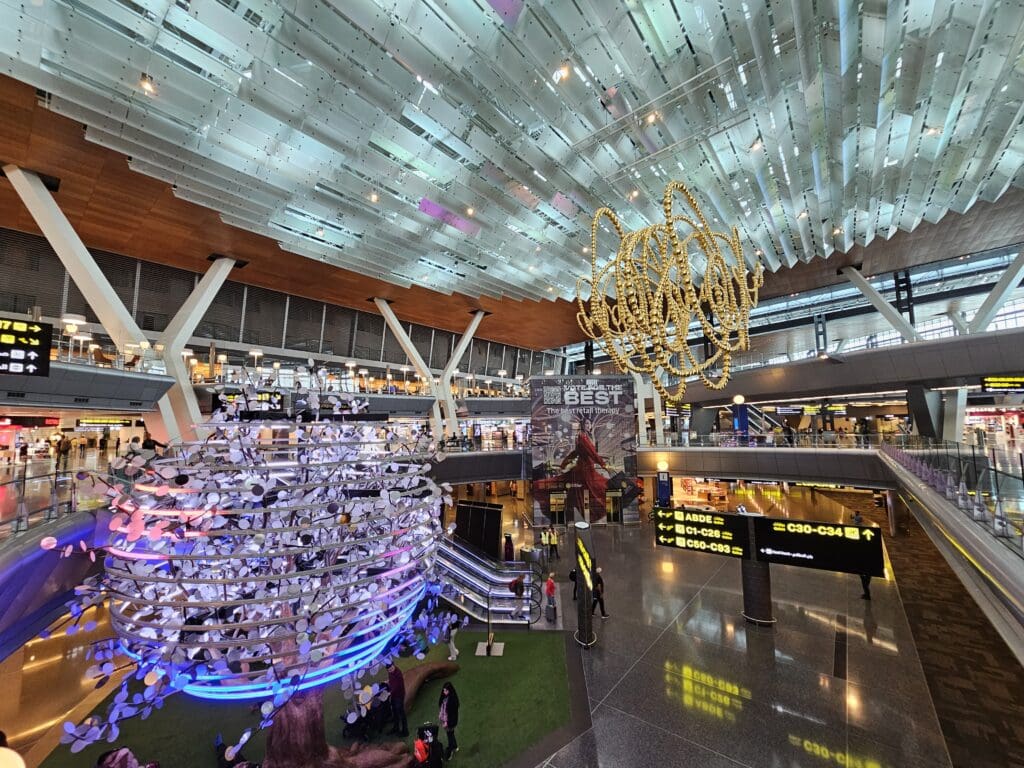
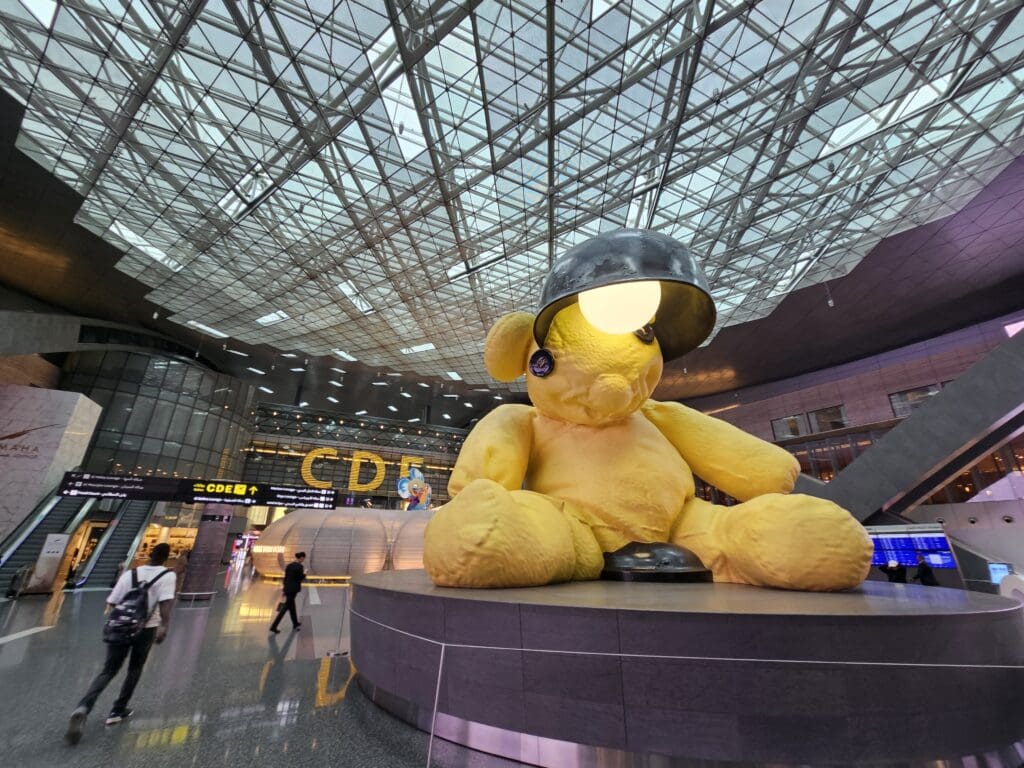
Despite being one of the Middle East’s busiest airports, that day I ended up passing through Doha Hamad at a rather quiet time, with just a small handful of other departures heading off that afternoon. Had I not wished to head to Manchester, I could have instead made my way to the likes of Cairo, Colombo, Damascus, Frankfurt, Islamabad, Kuwait, London Heathrow, Madrid, Mumbai, Riyadh or Sharjah on EgyptAir, Pakistan International Airlines, Qatar Airways, Saudia and Syrian Air. From a British aviation enthusiast’s perspective, of these, the highlight movement was the Syrian Air Airbus A320, one of the only verifiably active aircraft in the airline’s fleet following the end of the conflict in late 2024. After a long walk through the terminal, I found this aircraft opposite the gate for my flight to Manchester and watched as it was readied to head back to its homeland before being pushed back.
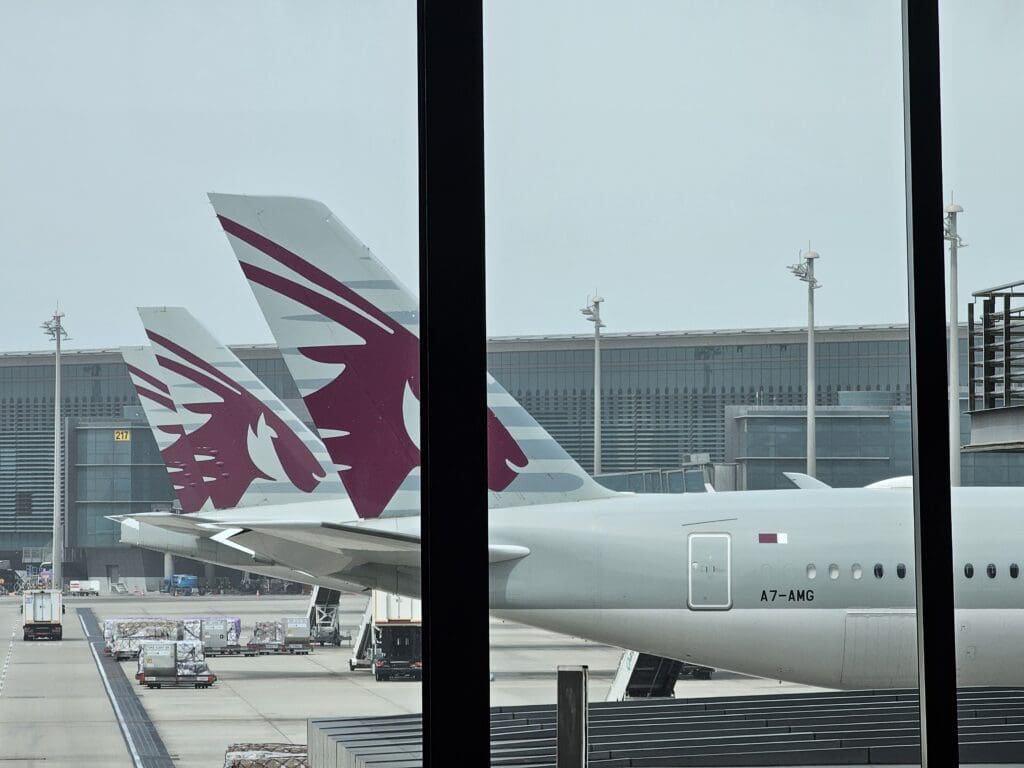
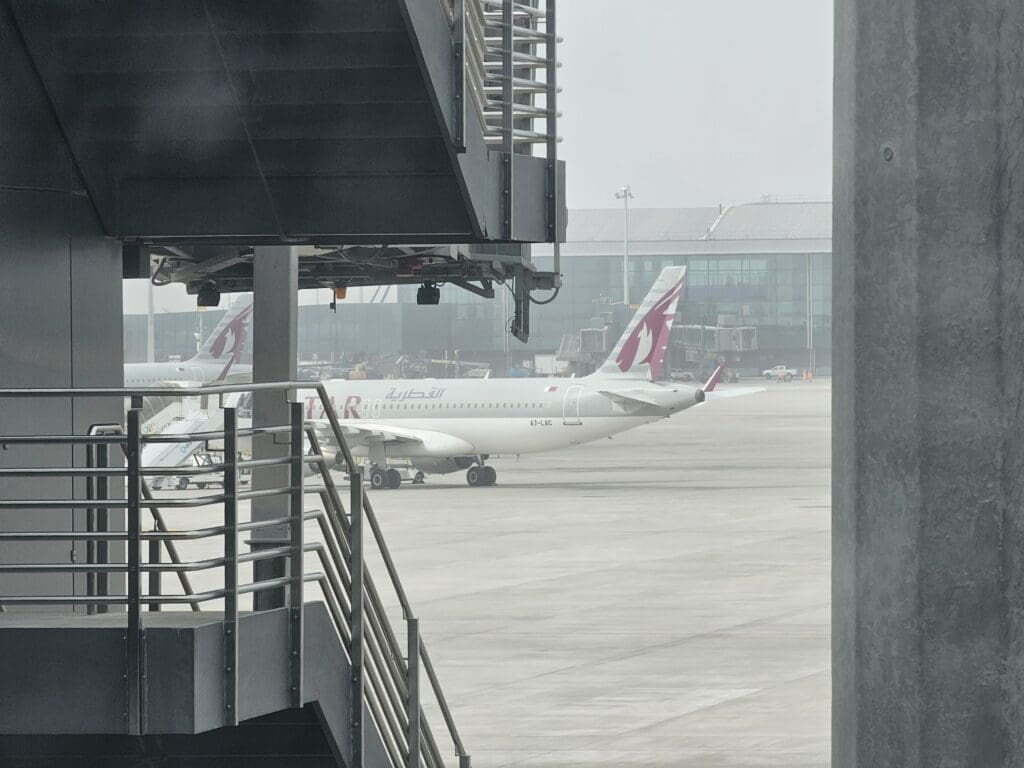
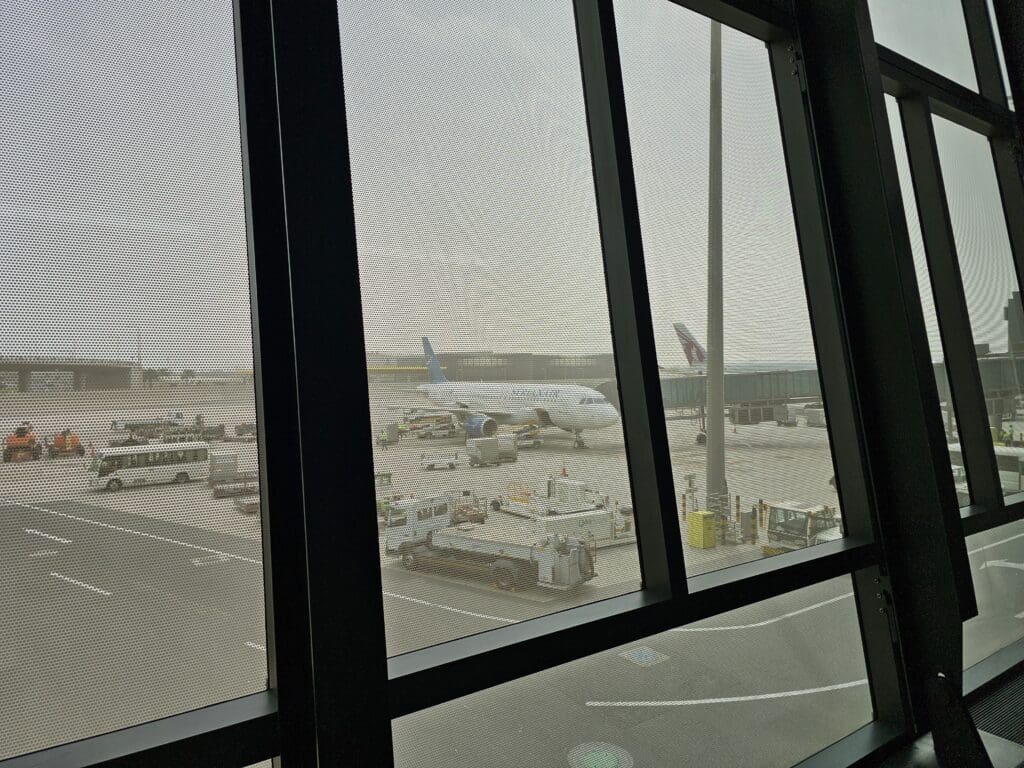
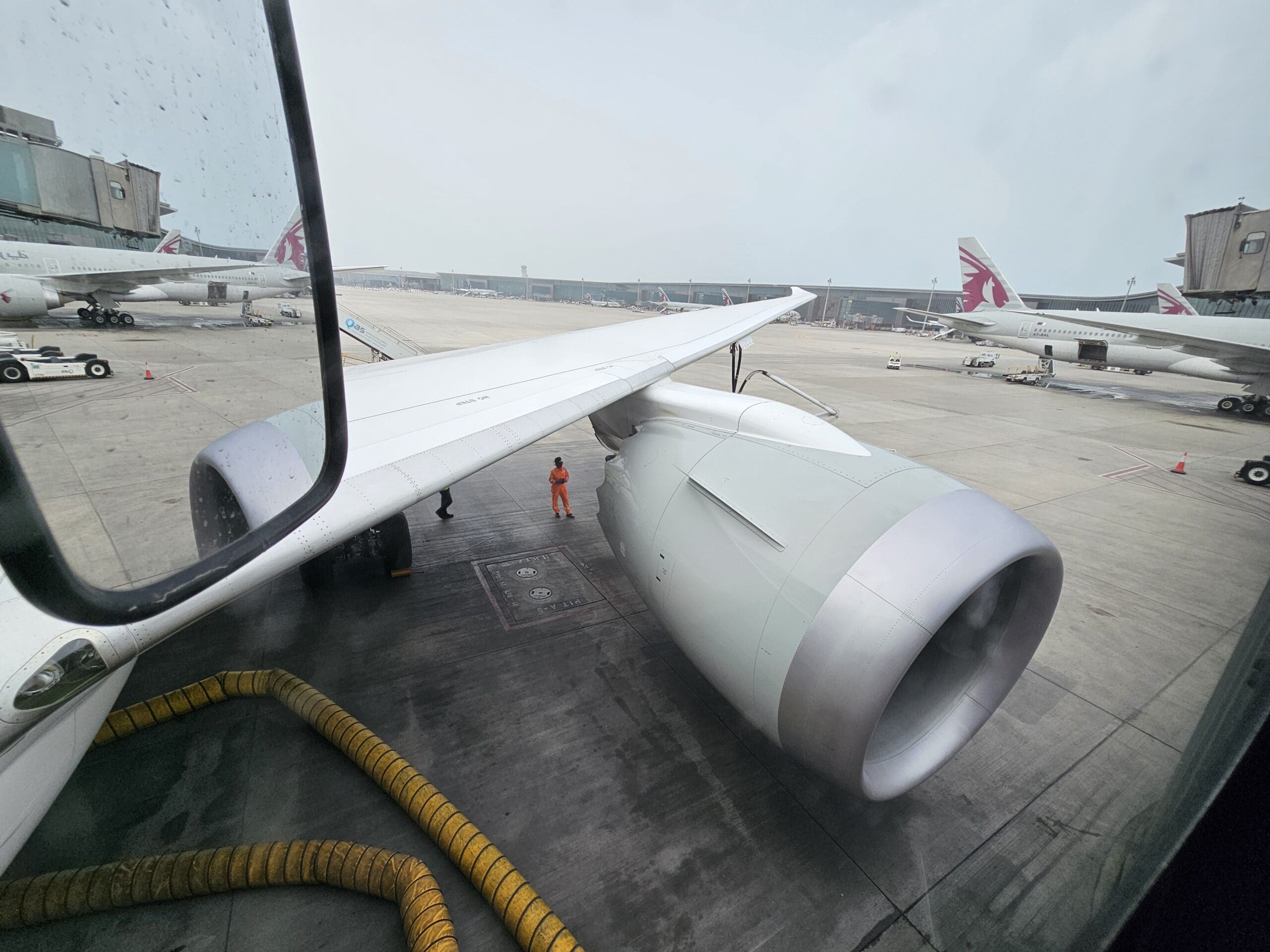
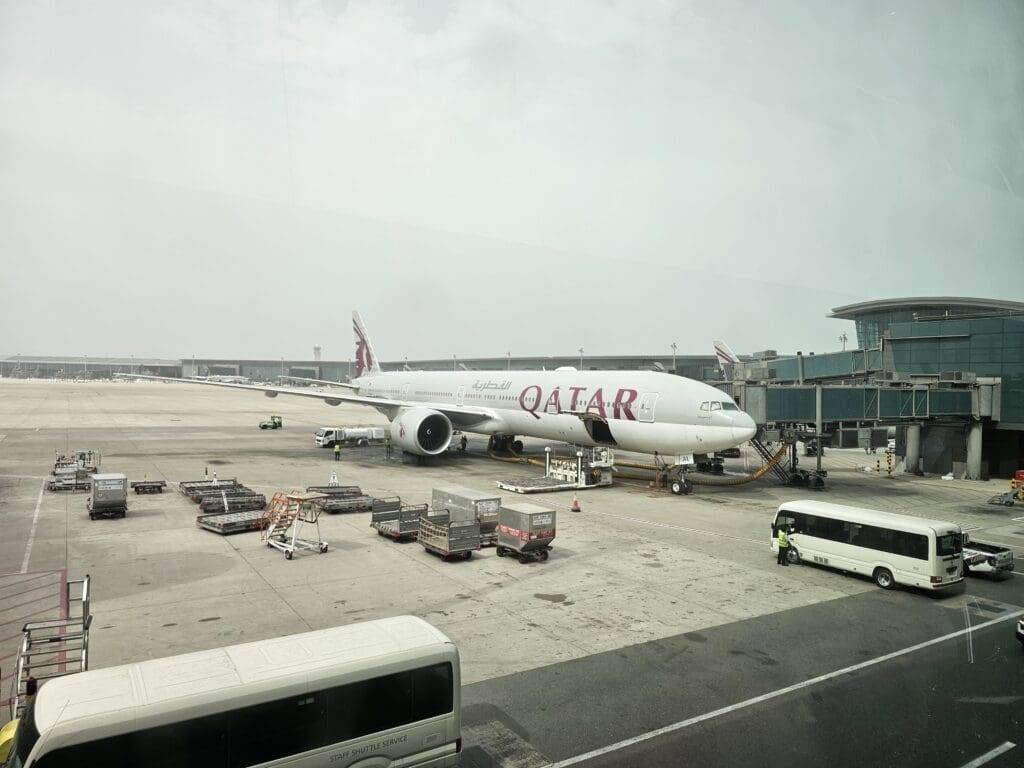
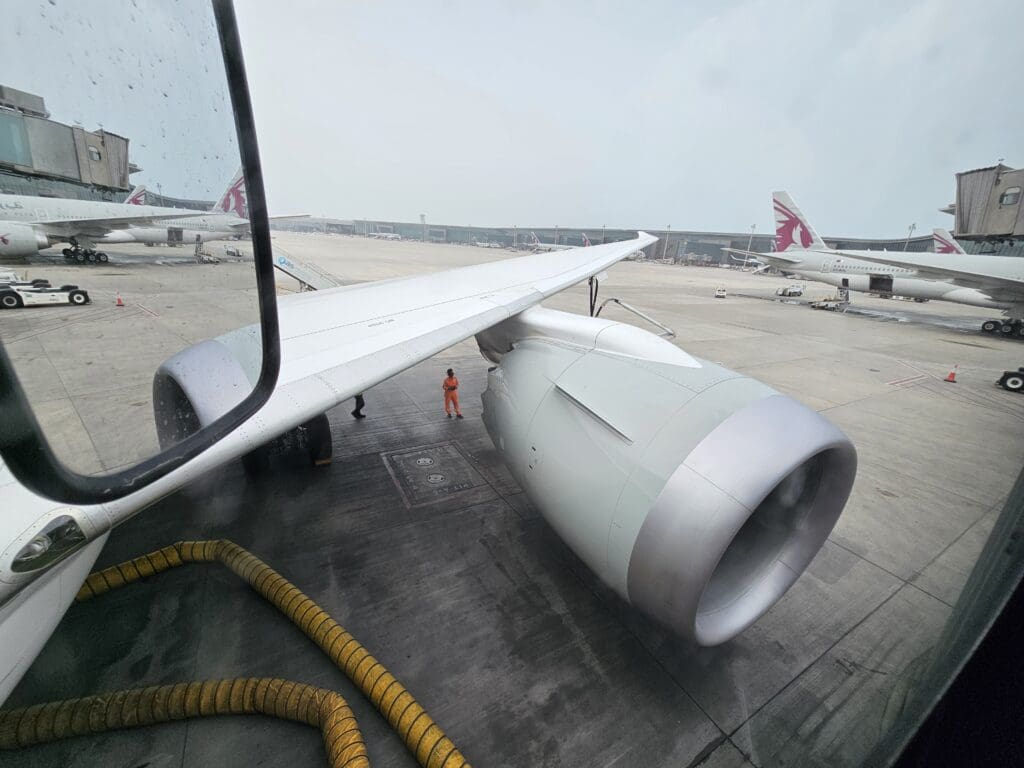
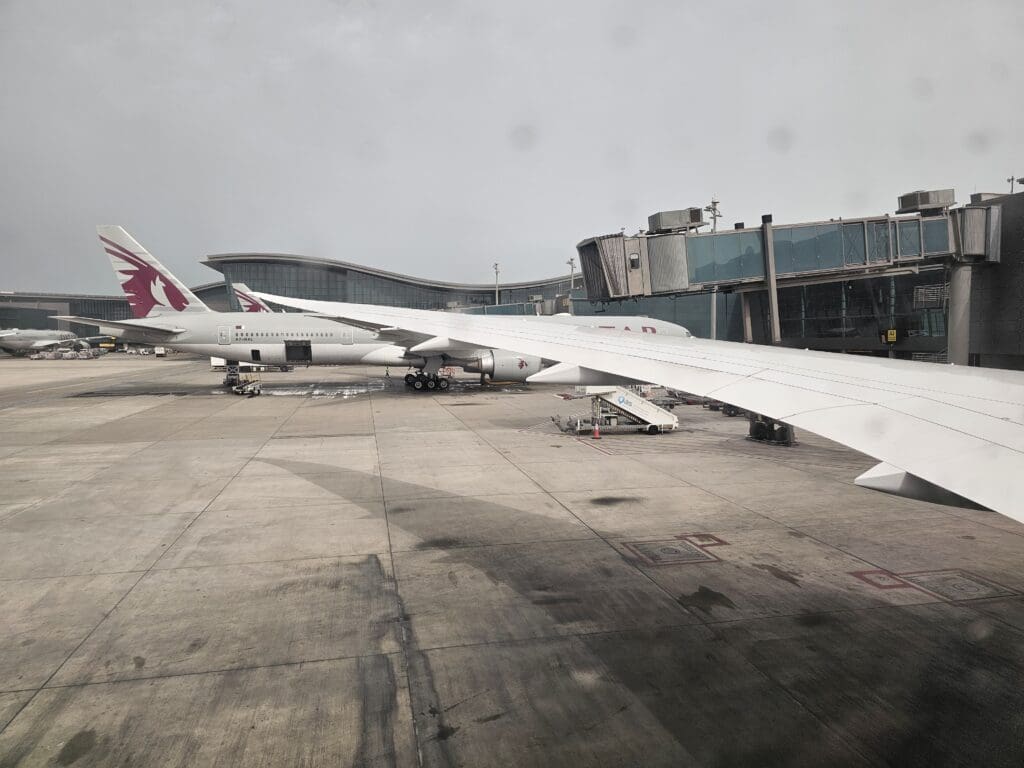
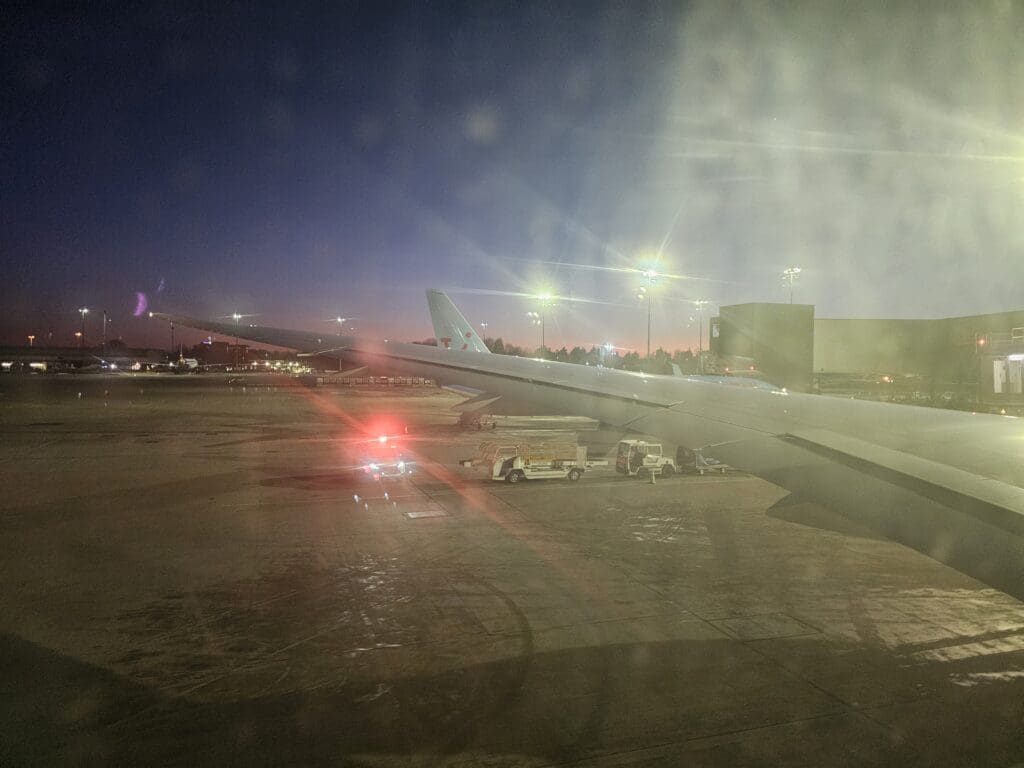
By the time I had watched Syrian Air’s only active aircraft being pushed back from its stand at the start of its flight to Damascus, I was left with an hour to go until my flight was scheduled to depart for Manchester. Feeling weary and not fancying much more wandering around, I headed over to Gate A5. Following a quick toilet stop, I joined the short queue leading up to the desks at the gate entrance, where I soon had my passport checked and boarding pass scanned by a very friendly Qatar Airways agent, not selected for an additional security check, I was then free to head straight into the holding area. As I had found to be the case when heading to Manchester in October 2023, the holding area was not particularly amazing. Whilst modern, and home to internet kiosks and plug sockets, this was crowded, with a significant lack of seating. Furthermore, this lacks any toilet facilities, and so I recommend passengers to head to the lavatories before entering this to avoid any uncomfortable waits. On the plus side, unlike much of the terminal, the airport’s gate holding areas generally offer decent views of the aircraft waiting outside. That said, whilst the windows at Gate A5 offered a superb view of the Boeing 777-300ER at the neighbouring stand being readied for its flight to Jeddah, little other than the port wingtip of the Manchester-bound Dreamliner was visible.
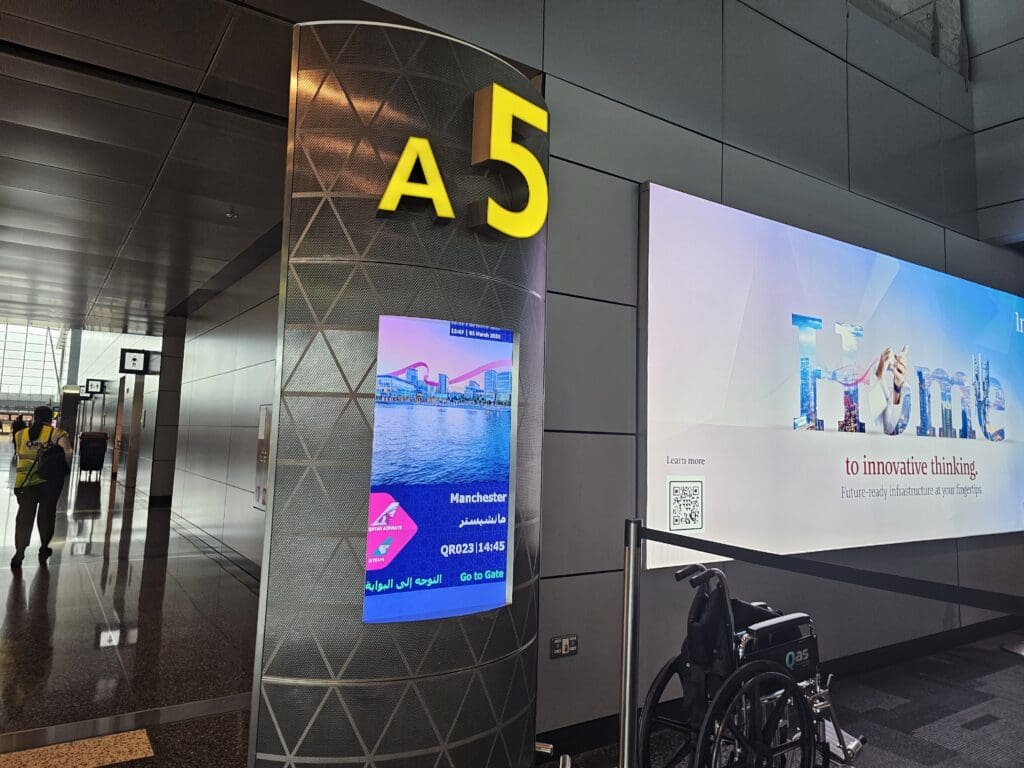
Seeing as I had flown onboard one of Qatar Airways’ oldest aircraft from Dubai to Doha, it was only right that I sample one of their latest deliveries for the ride over to Manchester. That afternoon, I would have the pleasure of flying onboard A7-BHS, the youngest aircraft in Qatar Airways’ fleet at the time of my flight. Assembled at Boeing’s plant in the South Carolinian city of Charleston, this Boeing 787-9 Dreamliner carries the line number 1217 and first rocketed into the skies in early December 2024, which made it almost exactly three months old at the time of my flight. Since the delivery of the first Dreamliner to Qatar Airways in November 2012, the type has become the workhorse of many of the carrier’s services to destinations across Africa, Asia and Europe. In the week before my flight, this particular jet had flown to a smorgasbord of destinations atypical of Qatar Airways’ Dreamliners, connecting Doha with Athens, Berlin, Chennai, Frankfurt, Munich, Karachi, Kathmandu, Kuwait City and Vienna.
Following a short wait, at 1405, the gate agent performed an announcement inviting those in Business as well as those requiring assistance to proceed forward for boarding. With passengers’ boarding passes having already been scanned, a couple of agents stood at the entrance to the corridor that leads to the jetbridges, undertaking an informal boarding pass check to ensure that passengers were not boarding out of sequence. A few minutes after the first cohort of passengers had been permitted to board, those in the rear Economy cabin were invited to board the Dreamliner. Once my boarding pass had been double-checked, I was permitted to head down towards the aircraft. As is the norm with widebodies, two jetbridges were connected to the aircraft, with the forwardmost jetbridge reserved for those lucky passengers in Business Class. Making my way down the second jetbridge, I soon hit a queue and spent around four minutes shuffling forwards before I reached the Dreamliner’s 2L door.
As soon as I stepped into the Dreamliner, I received a friendly and lively welcome from one of the senior members of the cabin crew, distinguished from the other crew members through their dark grey, rather than burgundy, uniform. To my left was the Dreamliner’s Business Class cabin, home to thirty Adient Ascent seats in a 1-2-1 configuration. Whilst not quite as luxurious as Qatar Airways’ Q-Suites, these are still top-tier seats and I am sure that they prove to be more than comfortable enough for the sub-nine-hour flights that the airline’s Dreamliners undertake. Needless to say, I would have had no issues with being upgraded that day! Unfortunately, with no last-minute upgrades, once the flight attendant had checked my boarding pass, I was pointed down the second aisle and immediately entered the forward Economy cabin. As I journeyed down this, I received three polite, if not rather quiet and subdued, welcomes from the cabin crew members that I passed as I trekked to my seat.
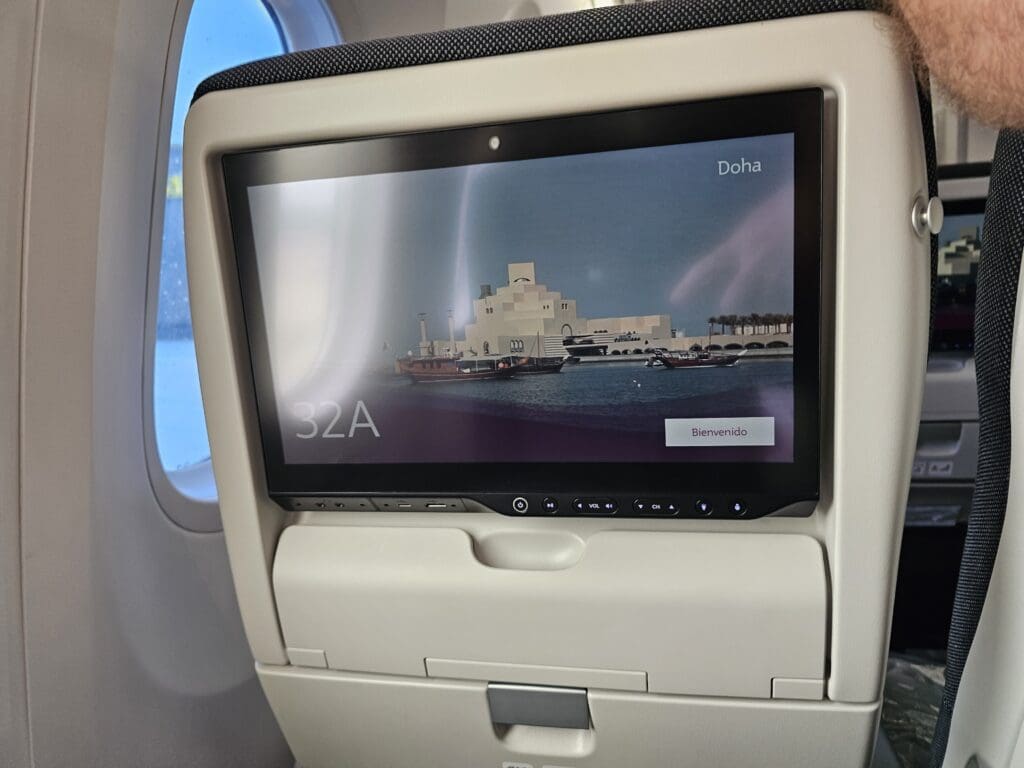
Qatar Airways’ Boeing 787-9 Dreamliners come in a rather Economy-heavy configuration, featuring 281 Recaro seats, no class above Business Class, and no sort of premium economy product. As with most Dreamliner operators, these seats are arranged in a nine-abreast 3-3-3 configuration, and come in Qatar Airways’ standard smart burgundy or dark fabric cover, whilst a burgundy disposable antimacassar featuring the airline’s famous Oryx motif could be seen on each. Each seat was modern in its appearance and came with all the usual trimmings, including a bifold tray table, a seatback pocket and bottle/device holders, whilst more interesting additions came in the form of a contactless card reader (I never quite worked out what this was for) and a pull-out device shelf. Meanwhile, power came in the form of USB-A and USB-C ports, although I did not spot any universal power outlet around my seat. Finally, a large and high definition 13-inch wide inflight entertainment screen could be found on the rear of each seat, with this being amongst the widest that I have ever encountered in Economy. Rather strangely, each seemed to have a small camera above the screen, indicating that Qatar Airways intends to either launch an inflight video calling function or some sort of passenger surveillance system!
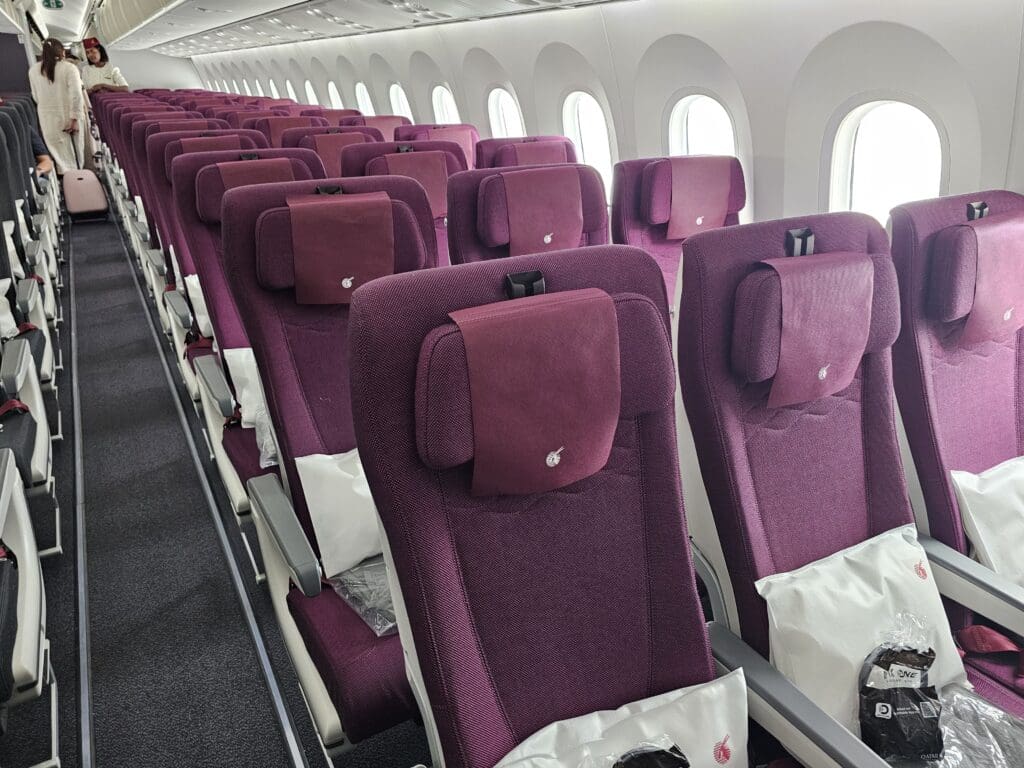
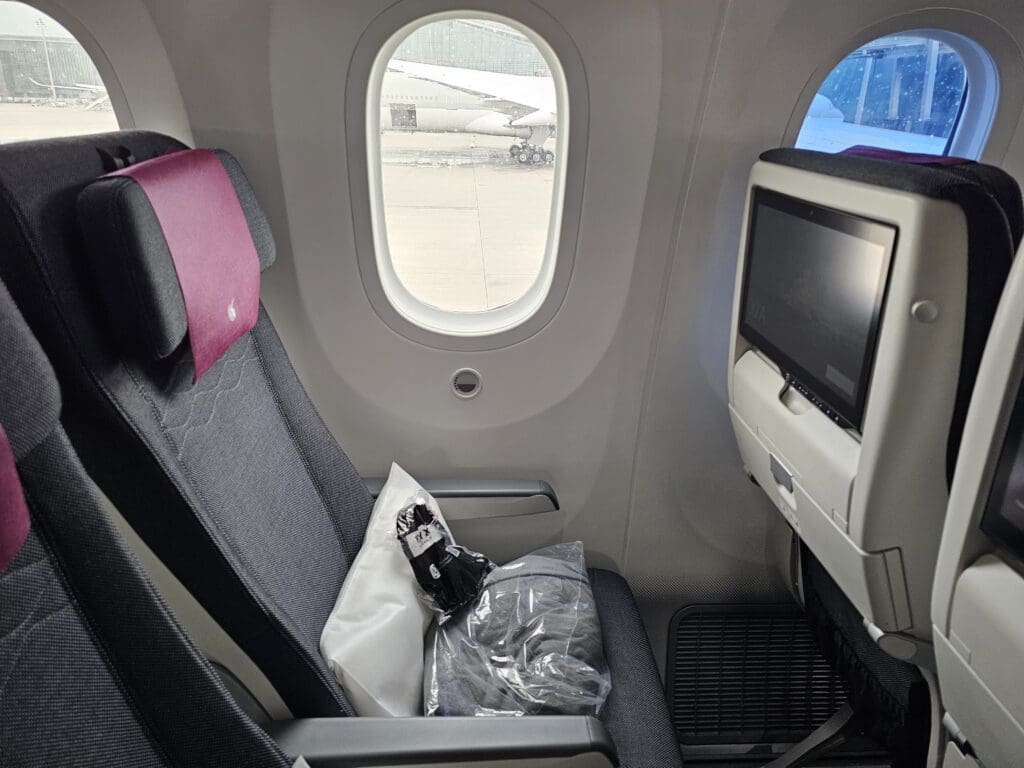
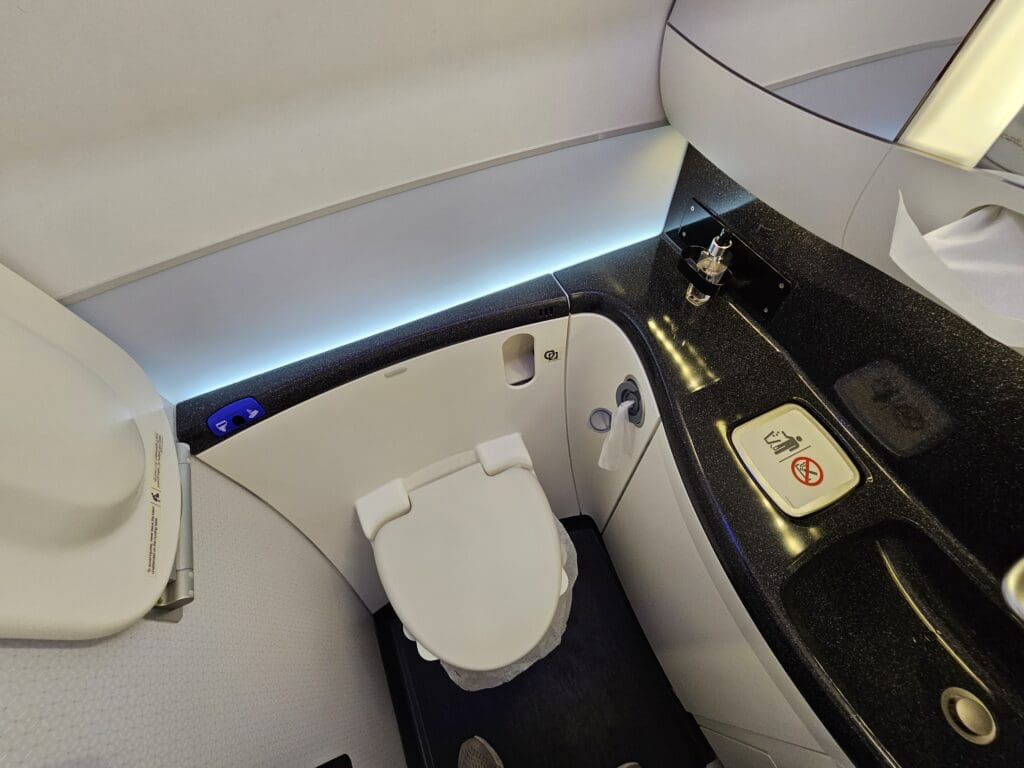
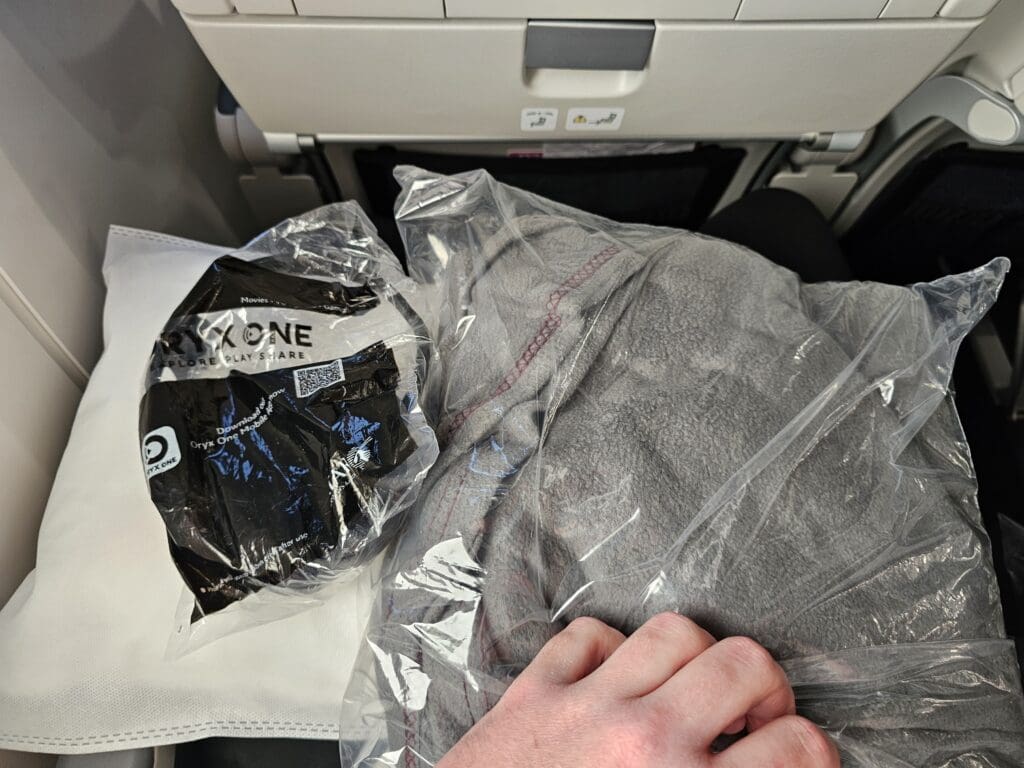
Being a long haul flight, unsurprisingly, a pillow and blanket had been placed on each seat, along with headset-type headphones. Unlike my Etihad Airways ride from London Heathrow to Abu Dhabi, no sort of amenity kit was provided; however, being a reasonably short daytime flight of less than seven hours, this was hardly required. Being in the first cohort of Zone 1 passengers to board, I was able to speed down the cabin and soon reached Seat 32A. Predicting that I would be trapped in for a while, once I had stowed my luggage, I made a trip to one of the four toilets sandwiched between the two Economy cabins. Opening this up, I found this to be spotlessly clean and stocked with the basics, thereby leaving me with no complaints.
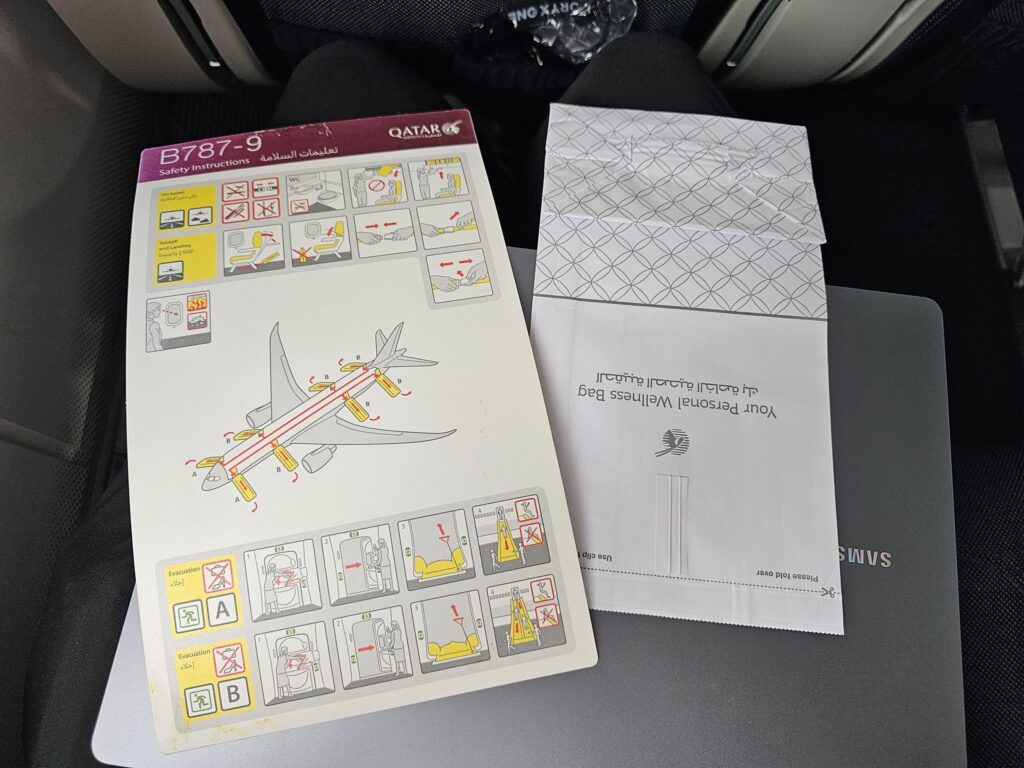
Once I had returned to my seat, I strapped myself in and settled in for the slog ahead. As I explored the area around my seat, I was left with no major complaints. Overall, I found the seat to be soft and comfortable, offering a reasonable amount of legroom despite not being the most spacious economy seat in the world. Crucially, I found the area around my seat to be spotlessly clean and lacked any major signs of wear and tear, with my only complaint being that the exterior of the window was in a very dirty condition, which ultimately prevented me from taking any decent photographs throughout the entire flight. Turning to the seatback pocket, this contained a dog-eared safety card alongside a sick bag, with Qatar Airways having ceased publication of its Oryx inflight magazine during the pandemic.
As the minutes passed, passengers continued to pile onto the Dreamliner, and it wasn’t long before I was joined by two seatmates – a mother and her daughter returning from a holiday in Australia. Soon, the Economy cabin appeared to be totally full. That day, it seemed that most of my fellow passengers had connected in Doha from India, Pakistan and Thailand, with the demographic onboard consisting of a fair mixture of passengers who had been away on holiday, seeing relatives abroad, and students and workers returning to cold British weather. Turning to the crew, that day, the majority of flight attendants seemed to hail from South Asia and the Philippines.
Despite being a full flight, thankfully, all passengers had managed to make it to the aircraft on time and at 1430, Qatar Airways’ famous boarding music came to an end as boarding was announced as complete. A minute or so later, the calm tones of the Spanish-accented Captain filled the cabin as they welcomed and thanked passengers, advised of our relatively short flight time of around six and a half hours, and detailed our 38,000 feet cruising altitude and the mostly good weather forecast throughout the flight. This was then followed by a welcome announcement from the Cabin Director who thanked passengers for flying with Qatar Airways and gave the usual warnings and instructions in preparation for our departure. Interestingly, no onboard announcements were made in Arabic, something that may be attributable to the lack of any Arabic-speaking crew members, although I would have thought that in such cases, pre-recorded announcements are made for important safety messages such as those regarding seatbelts and smoking onboard.
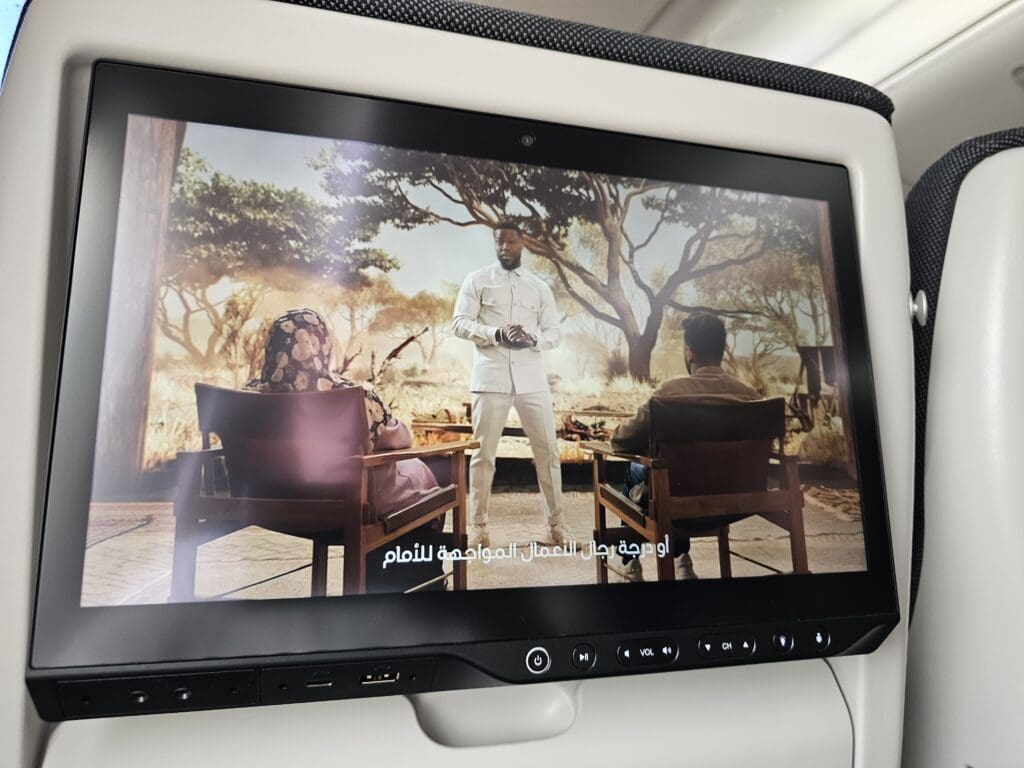
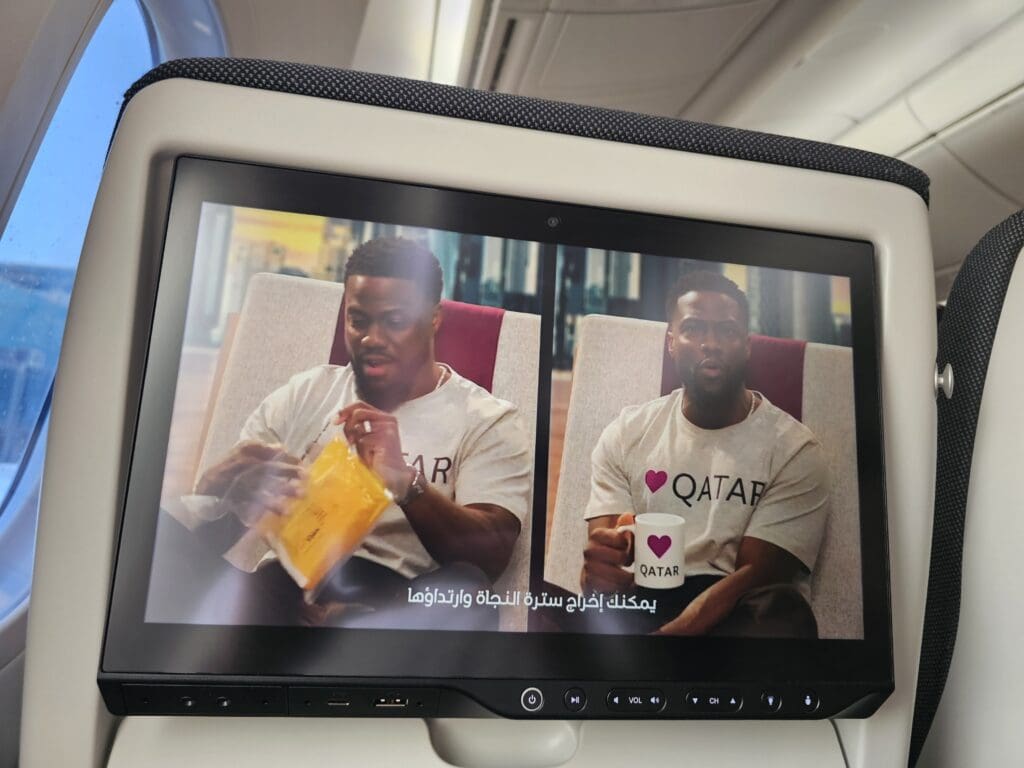
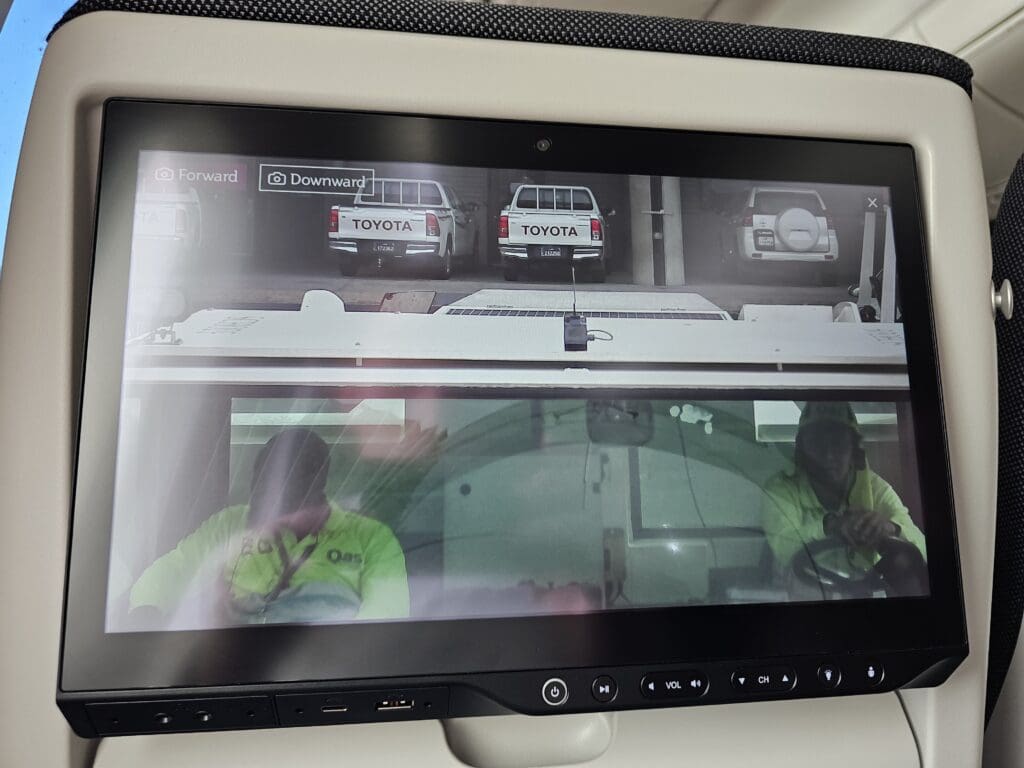
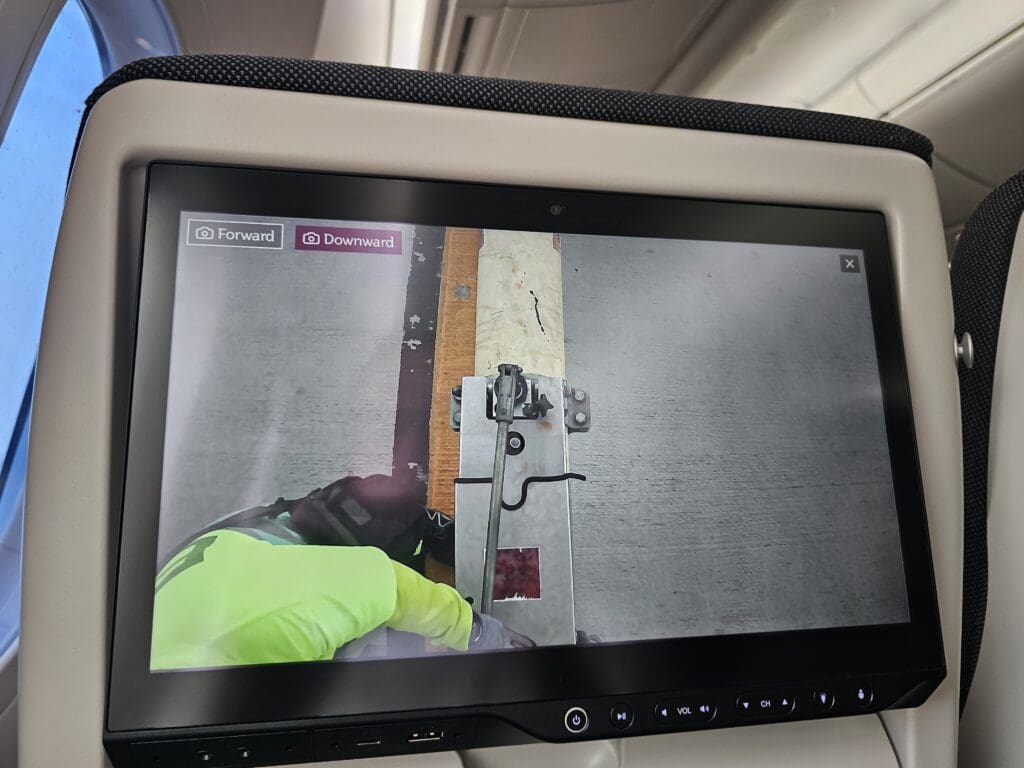
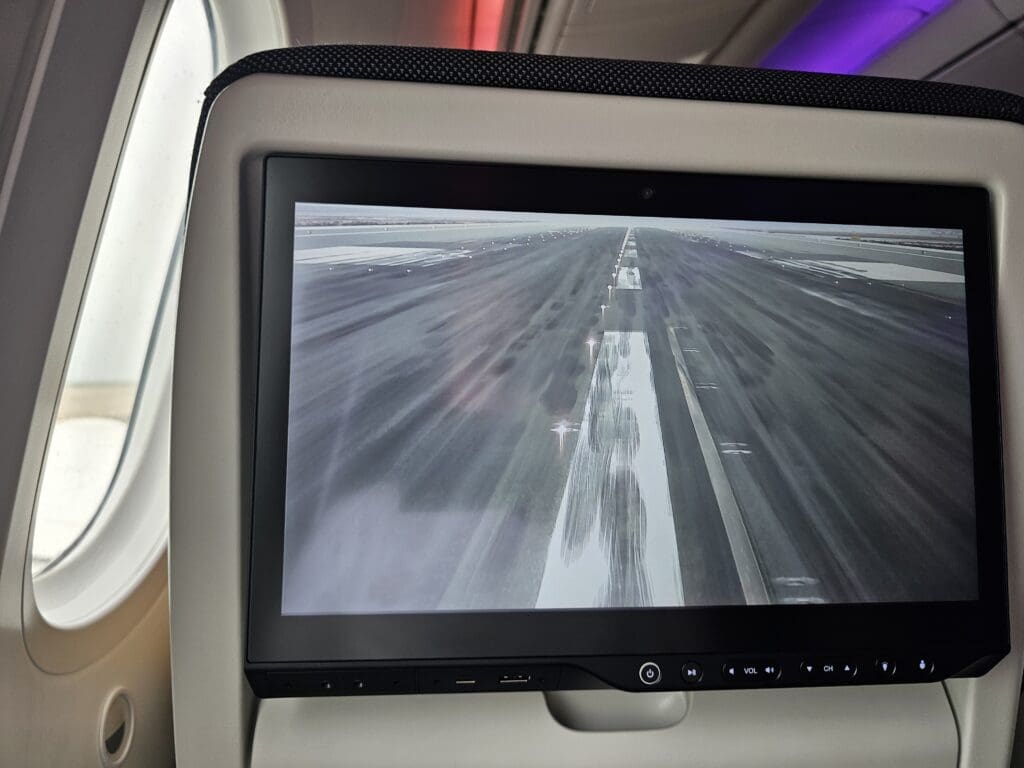
Thanks to the high-definition forward-facing camera that was accessible through the inflight entertainment system, I was able to watch as the final preparations were made for our pushback. However, my observation of the happenings outside was interrupted when the pre-departure prayer was broadcast over the inflight entertainment system. This then transitioned to Qatar Airways’ safety video. Introduced several months before my flight in late 2024, this features famous American comedian Kevin Hart who takes passengers through the safety instructions, whilst highlighting several of the airline’s destinations. For those regular ME3 flyers, this contains a jab at Emirates’ 2024 ‘No-Nonsense’ safety video, with Hart noting ‘You know they say a lot of these safety videos are no-nonsense – unimaginative, uninventive and flat out boring’. At over seven minutes long, this is one of the longer safety videos that I have had the pleasure of sitting through, and other than its rather cringeworthy nature, I could find little to complain about regarding this.
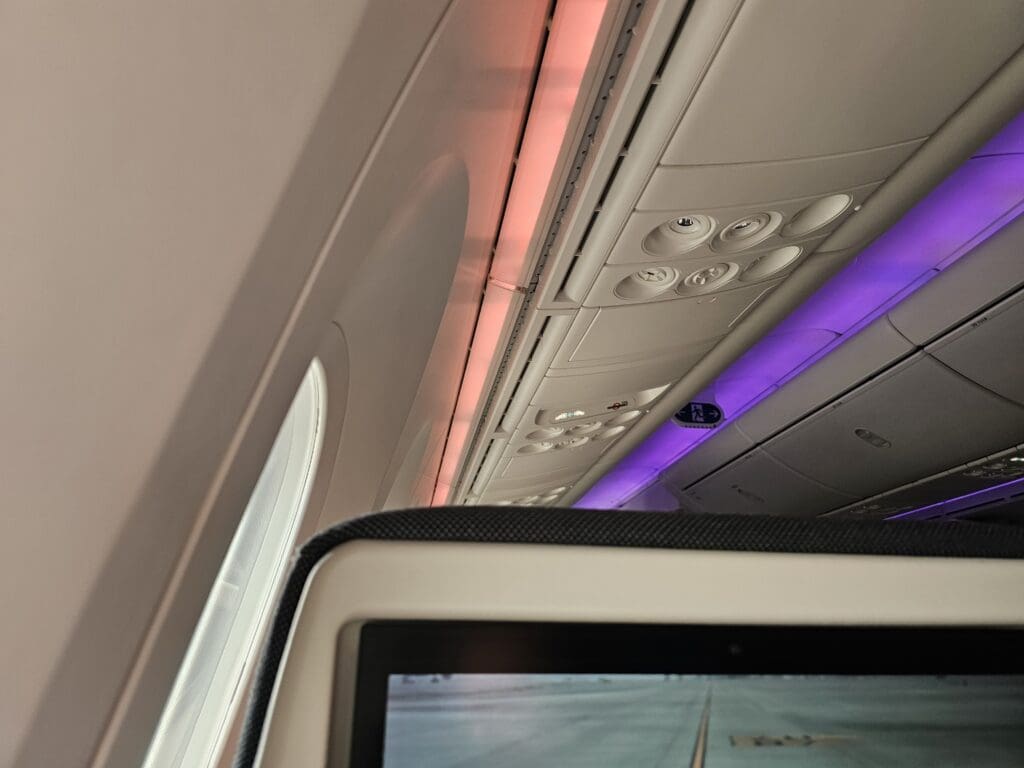
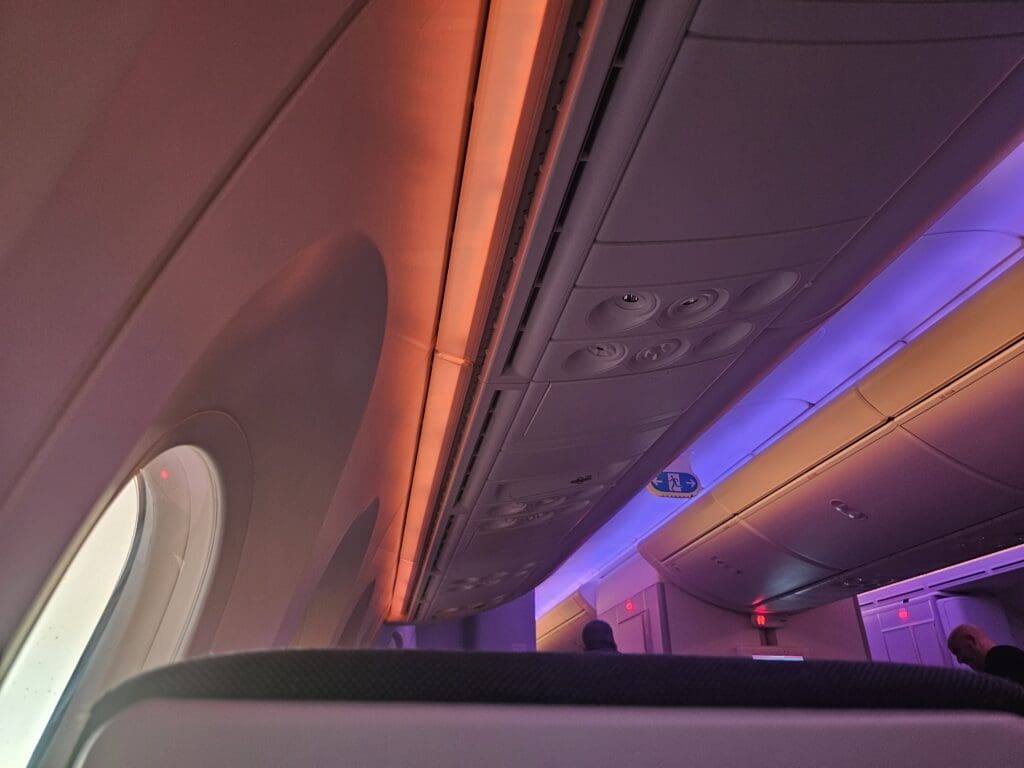
With four minutes to go until our scheduled departure time, at 1441, the Dreamliner jolted backwards and we left Stand A5 behind. As we neared the end of our pushback, a symphony of technical whines and whirrs could be heard throughout the cabin as the Dreamliner’s two massive Rolls-Royce Trent 1000 engines powered into life for the slog over to Manchester. In the usual manner, once spooled up, the flaps were partially extended with a loud whine, and the tug was disconnected before we began the trek over to the end of Runway 16L. Inside the cabin, the crew passed around conducting their usual pre-departure checks, something which thankfully they did not seem to face too many issues in doing with most passengers having followed the advice regarding seatbelts, tray tables and seatbacks. Once done, blue and purple mood lighting filled the cabin.
During our taxi, sitting on the left-hand side of the aircraft, I was not treated to any views of the massive terminal as we left this behind. However, I did manage to spot every single type in Qatar Airways’ fleet waiting at the remote stands and parking areas – from their Airbus A320s to their Airbus A380s. In addition to this, a total of seven Oman Air Airbus A330s could be seen, some of which were in storage and maintenance, and others wet-leased to Qatar Airways as part of an ongoing agreement. On the more luxurious side, two massive Boeing 747-8s and an Airbus A330 operated by the Qatar Amiri Flight could be seen during the trek, whilst a more surprising aircraft took the form of an Argentinian-registered Bombardier Challenger 601, which sported a livery that celebrated footballing legend Diego Maradona. As it turned out, this had been on the ground in Qatar since the World Cup in 2022 and would be unlikely to ever fly again.
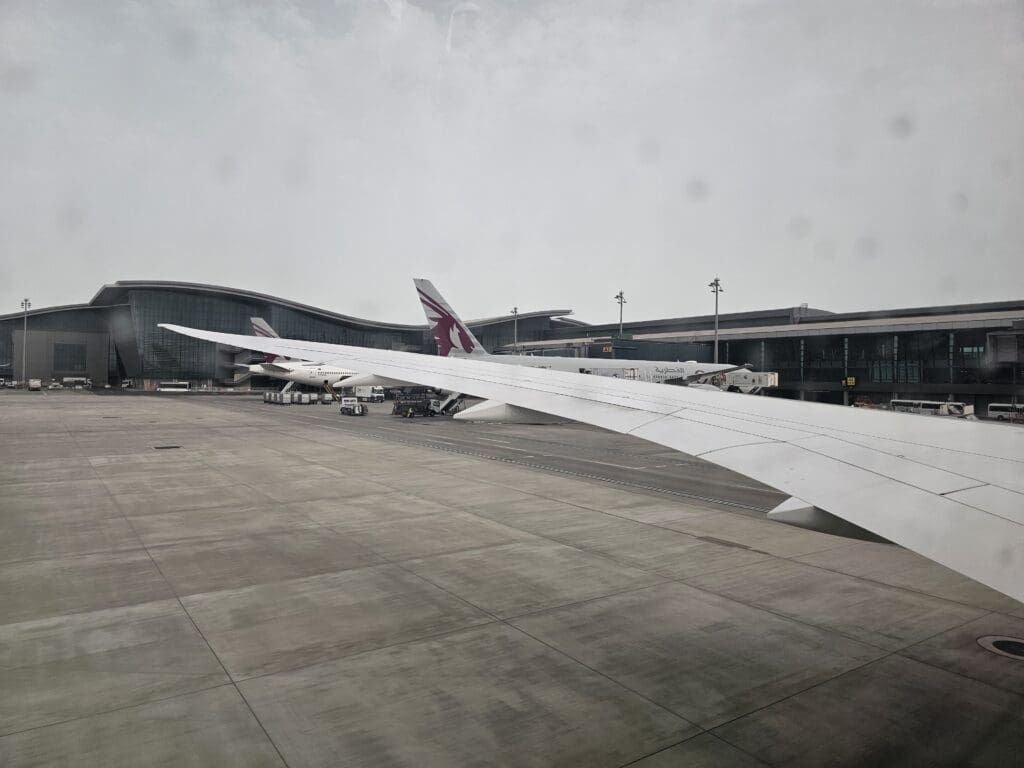
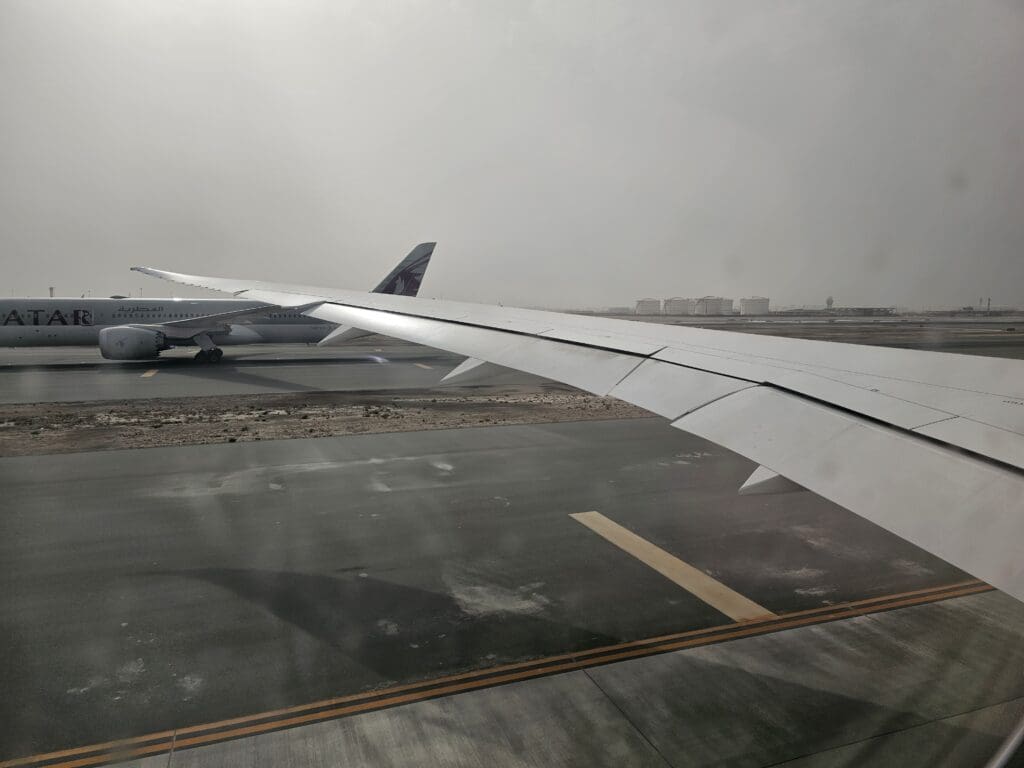
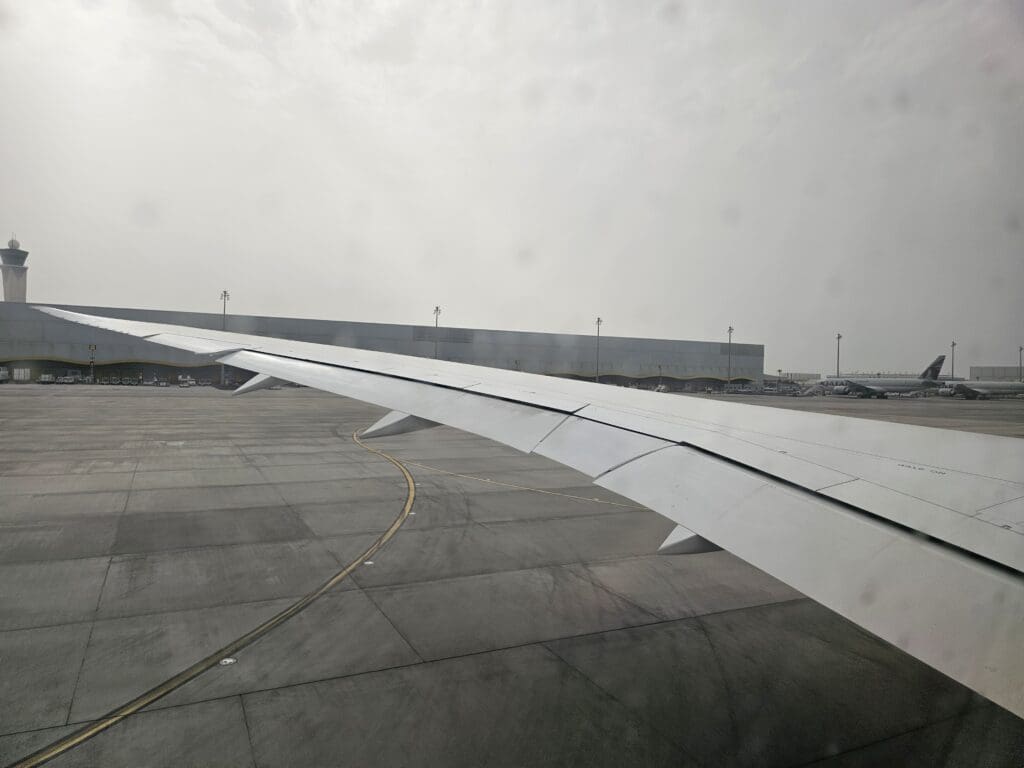
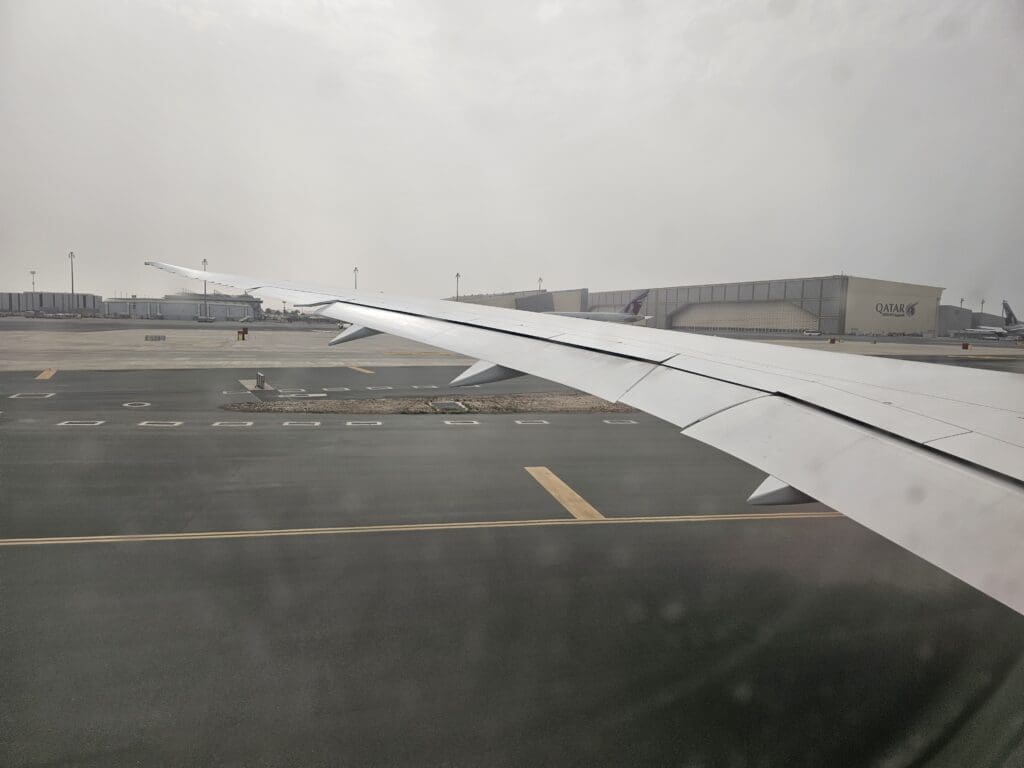
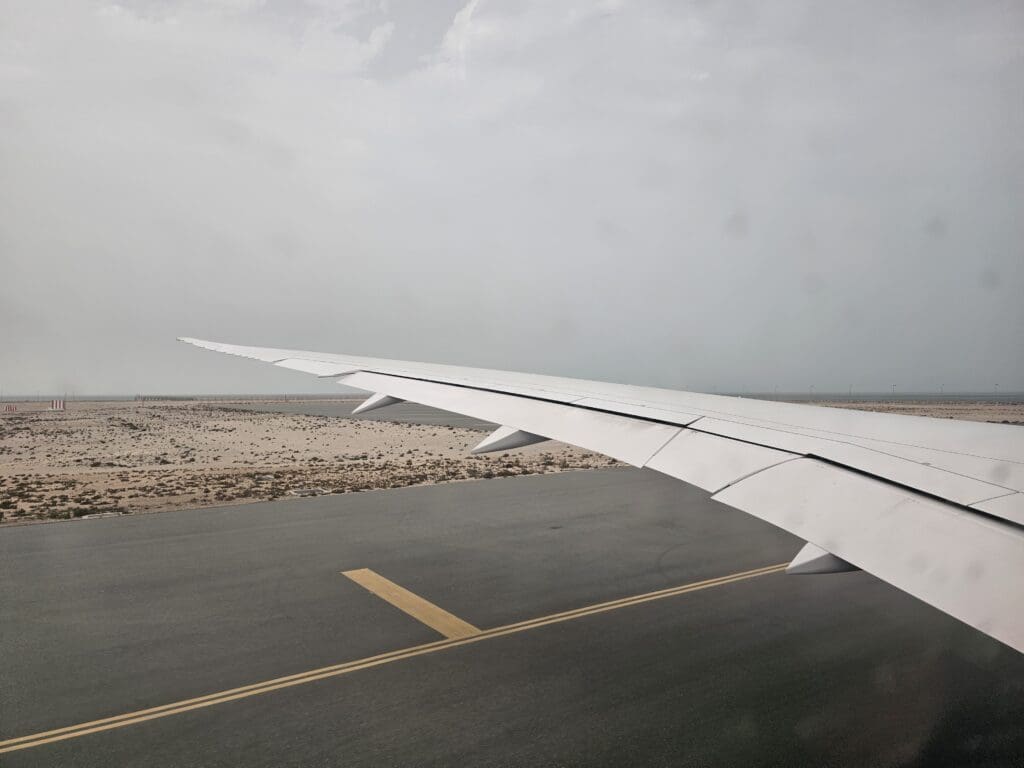
Following our uneventful taxi, departing during a quiet time, the Dreamliner was able to lumber onto the runway without any holding. Once there, without stopping, the engines were quietly spooled up and the jet performed a seemingly gentle rolling take-off. As we accelerated alongside the blue waters of the Persian Gulf, soon, the nose was pointed skywards and the Dreamliner climbed into the partially cloudy skies over Qatar. From the airport, the aircraft banked to the left before rolling out on a northerly heading and reaching the Qatari coastline near the towns of Al Khor and Al Thakhira by which time the seatbelt signs had been extinguished.
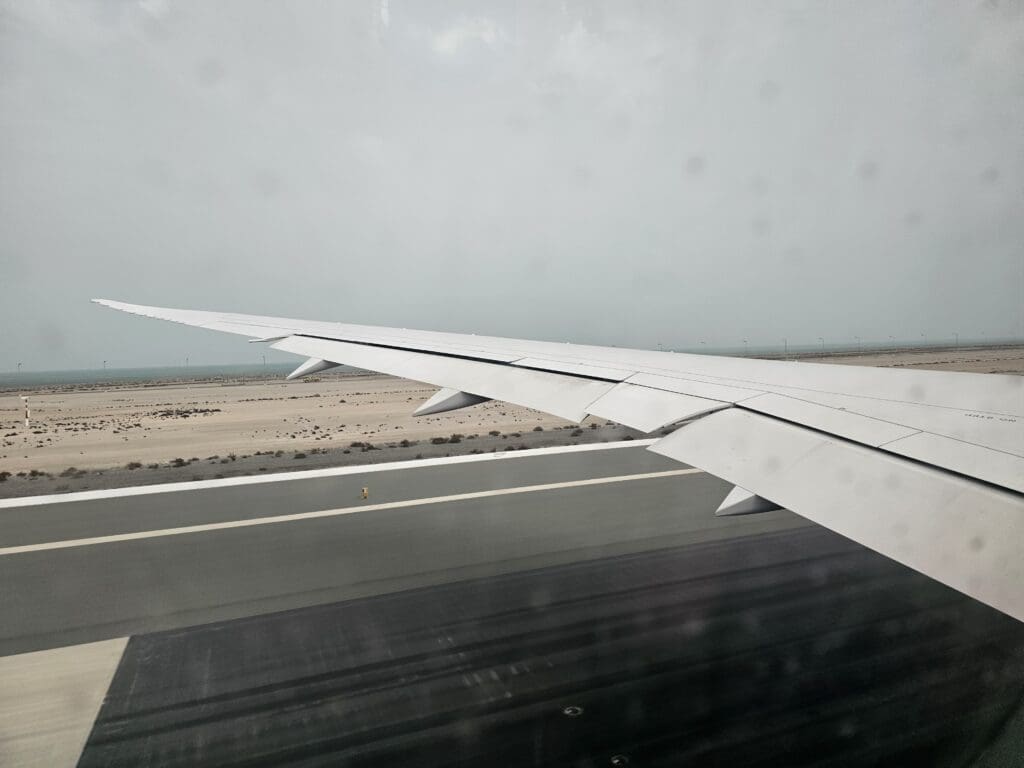
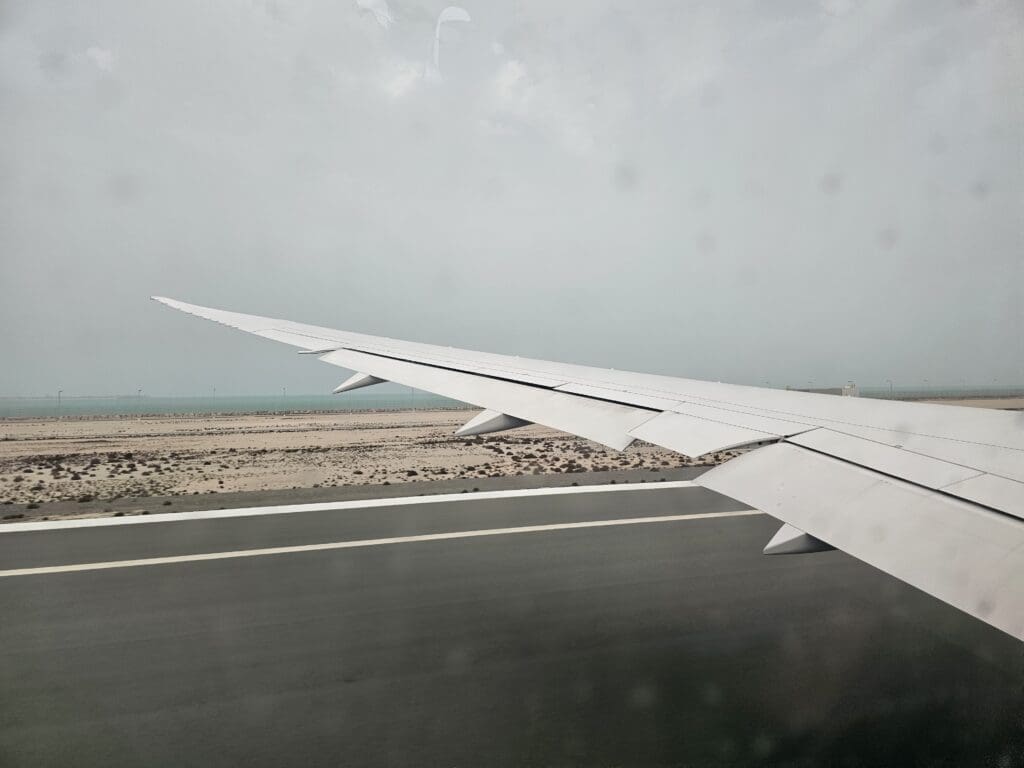
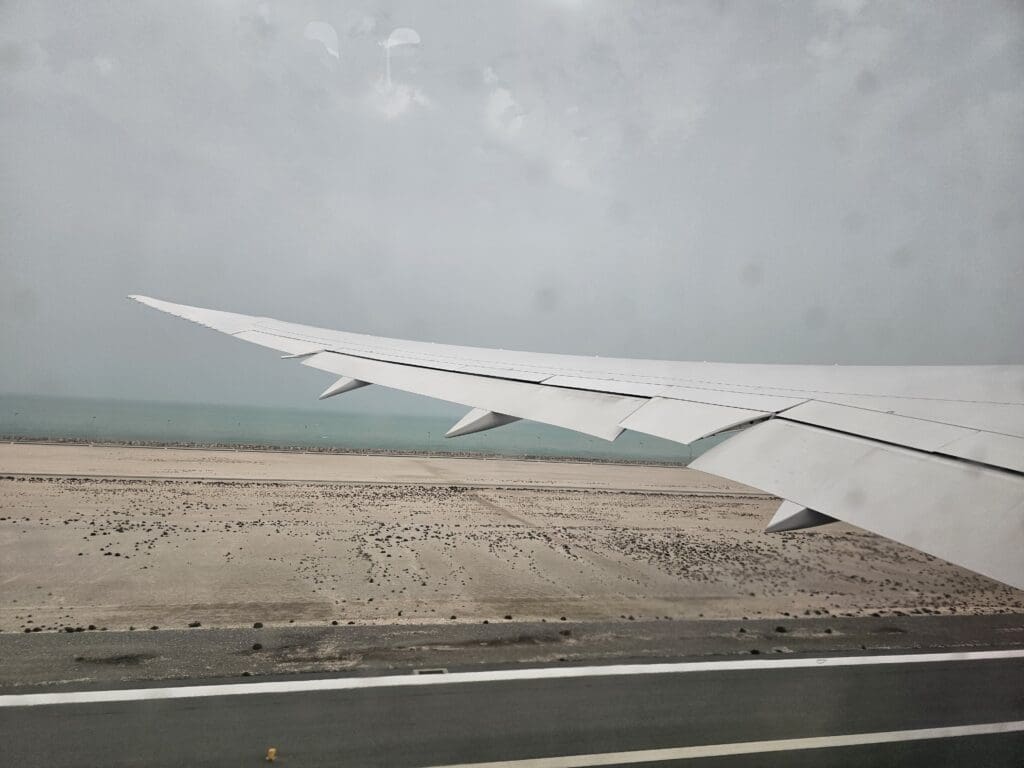
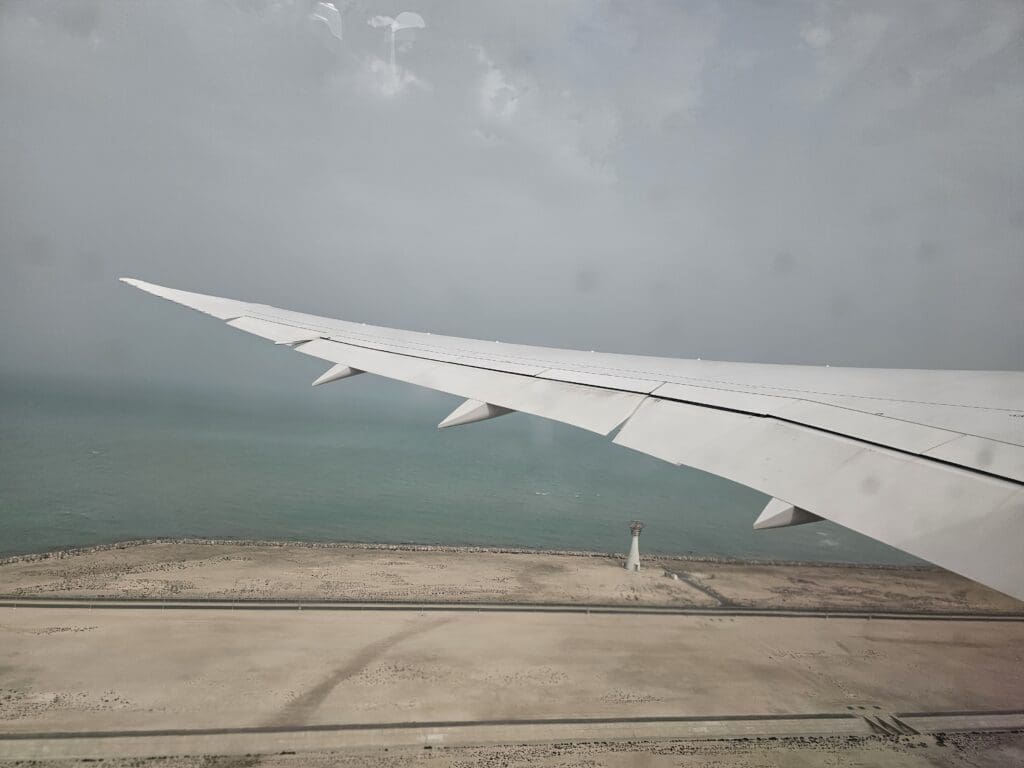
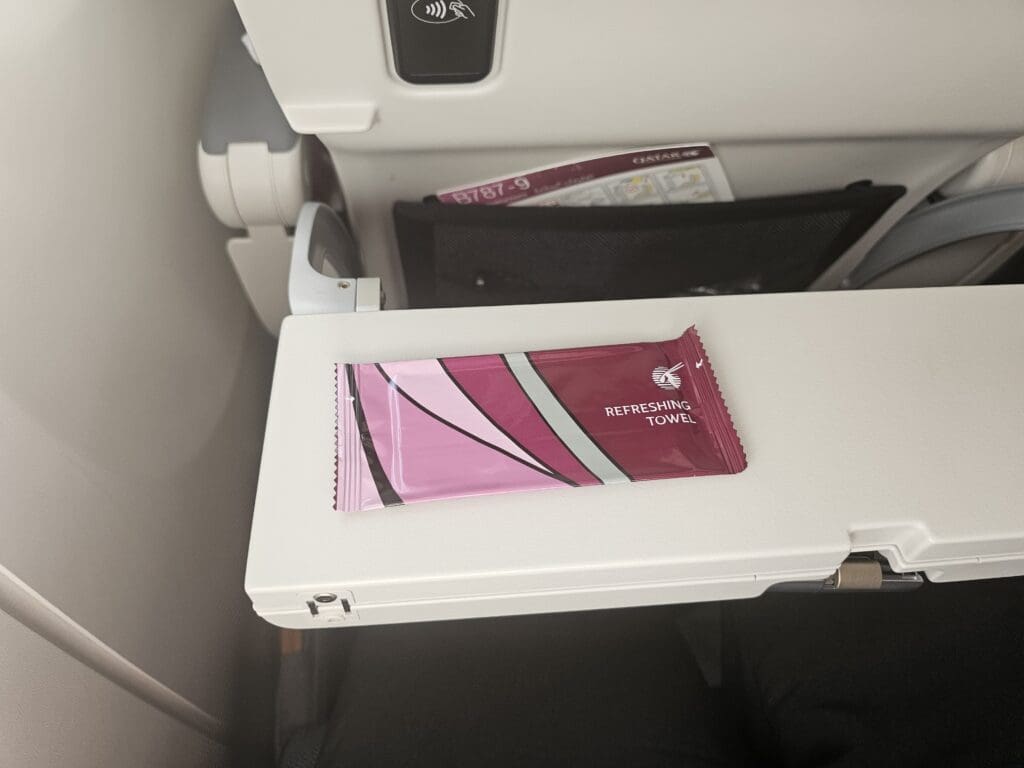
As on my flight over from Dubai, a short time after taking to the skies, a promotional video for Qatar Airways’ Education Above All charity programme was broadcast on the inflight entertainment screens. Meanwhile, once the crew were free from their seats, they passed through the cabin distributing packaged wet wipes. Thanks to the cloudy skies below, nothing could be seen of Qatar as we crossed over the far northern reaches of the country, after which the jet headed past Bahrain and made its way northwestwards, flying roughly parallel to the coastline of Saudi Arabia’s Eastern Province. Inside the cabin, a couple of minutes of drama ensued when a passenger accidentally set off an alarm in one of the lavatories between the two Economy cabins. However, thankfully, there was no issue, and this was soon silenced.
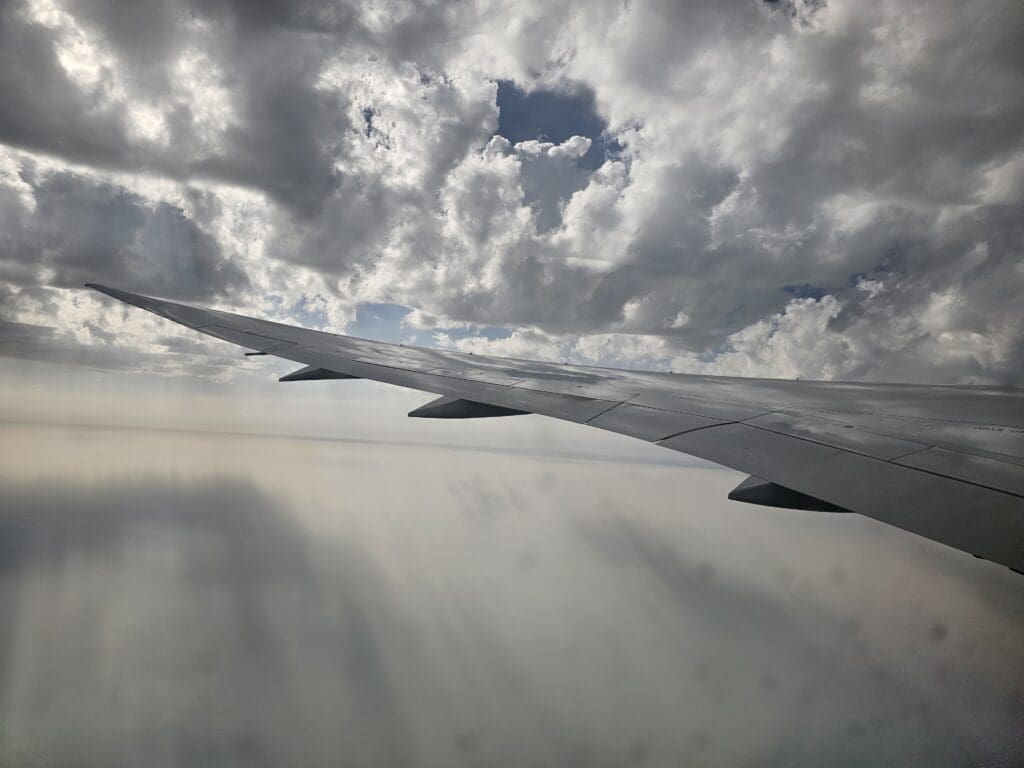
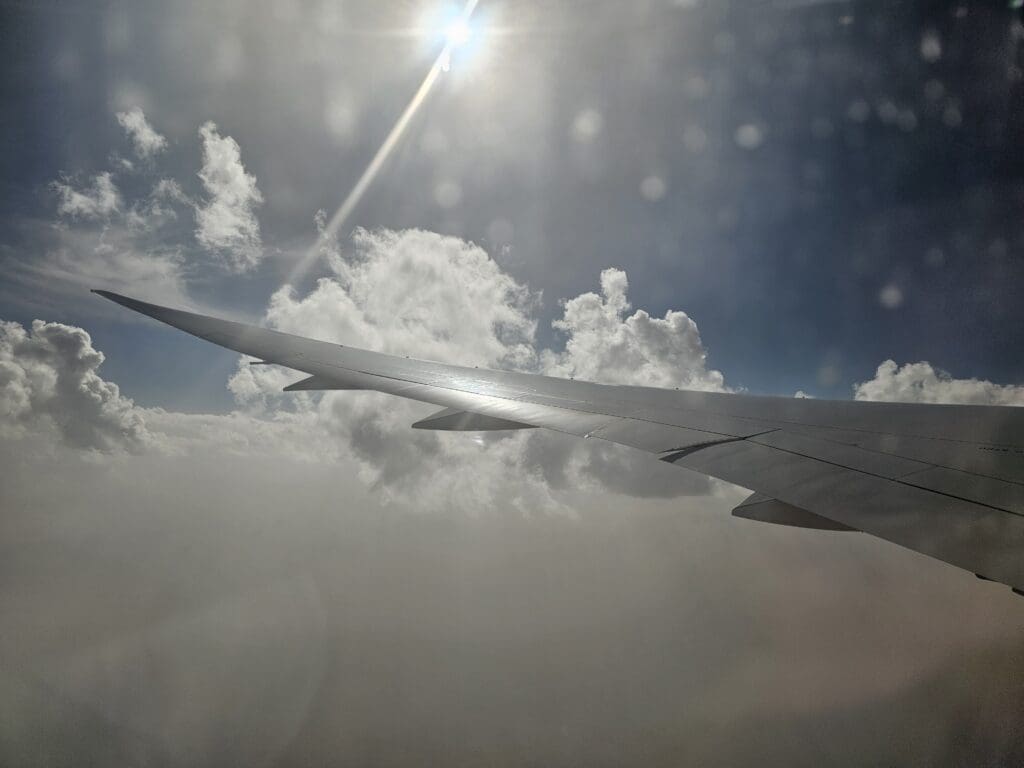
Once the jet had levelled off at 36,000 feet, the crew dragged the service carts out into the aisles and commenced the first round of onboard service. Perhaps slightly disappointingly, given Qatar Airways’ stellar reputation, no sort of paper menu was provided. However, the airline allows passengers to see the onboard catering options before departure through their website, and this can also be accessed during the flight when connected to the onboard wifi.
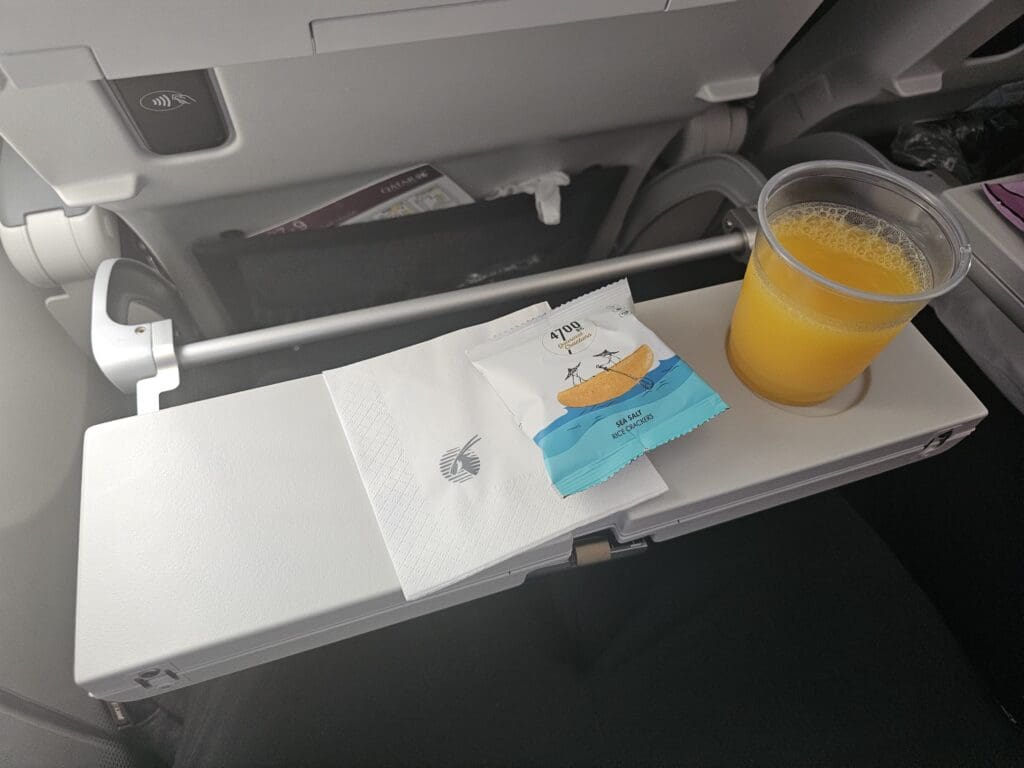
First up was the drinks and appetiser round, and after about ten minutes, a rather friendly and lively flight attendant reached my row. That day, a wide array of soft, hard, hot and cold drinks was on offer, namely two beers, one liquor, ten cocktails, three spirits, three wines, five juices, three mocktails, three coffees, two teas, three mixers and five types of fizzy drinks. Despite this fine selection that included some rather interesting options, I decided to go for a plain and simple orange juice, which was poured into a cup and handed over to me along with a small bag of salted rice crackers. The remains of this service were then collected around thirty minutes later, at which point a queue of passengers formed at the front of the cabin, with many appearing to have a sudden urgency to use the lavatories!
Around three-quarters of an hour after taking off, the Dreamliner passed Kuwait City and made landfall over Bubiyan Island, which sits between Kuwait’s capital city and Iraq’s narrow strip of coastline. No more than a couple of minutes later, the aircraft cruised into Iraqi airspace and soon passed the city of Basra. Heading northwards, the Dreamliner trundled over Iraq’s oil and gas heartland in the south of the country and made its way up the corridor that is home to many of the country’s major towns and cities. The larger of these passed over included Nasiriyah, Shatrah, Al Fajr and Hillah before we reached the capital city, Baghdad. Unfortunately, thanks to the clouds and haze below, little of Iraq could be seen (if you want to see some pictures taken whilst flying over the country, then read my Qatar Airways Boeing 777-300ER report here!). Meanwhile, inside the cabin, by this time, the cabin lights had been turned onto their deep orange dawn/dusk glow setting.
A little over an hour after the drinks service had commenced, the service carts were rolled out into the aisles as we passed high above Baghdad, indicating the commencement of meal service. With this being served at 1330 UK time and 1630 Qatari time, this could be seen as being a late lunch or early dinner service. Having already looked up the menu on Qatar Airways’ website and thus had plenty of time to study the options, by the time the flight attendant reached my row, I knew exactly what I was going to order. That afternoon, passengers were offered three choices of main meal – slow-cooked chicken in herb tomato sauce, chilli beef con carne or kadai paneer with onion pulao.
With a single flight attendant working each service cart, progress was slow, yet on the flip side, the flight attendant who was responsible for my portion of the cabin was polite, friendly and made light-hearted conversation with the passengers. Around fifteen minutes after the service commenced, the flight attendant asked, ‘chicken pasta, beef chilli rice or kadai paneer’. Without hesitation, I requested the kadai paneer, which was cautiously handed over to me on a tray, along with a side dish of roasted vegetable salad, a warm packaged focaccia, a pineapple cheesecake caramel crumble dessert and a 250ml bottle of still water. Adding a touch of class, eating utensils came in the form of metal cutlery on which Qatar Airways’ oryx motif was engraved, with these wrapped in a fabric napkin. I was then asked for my choice of drink, and once again, opting to keep things simple, I went for another sugary orange juice.
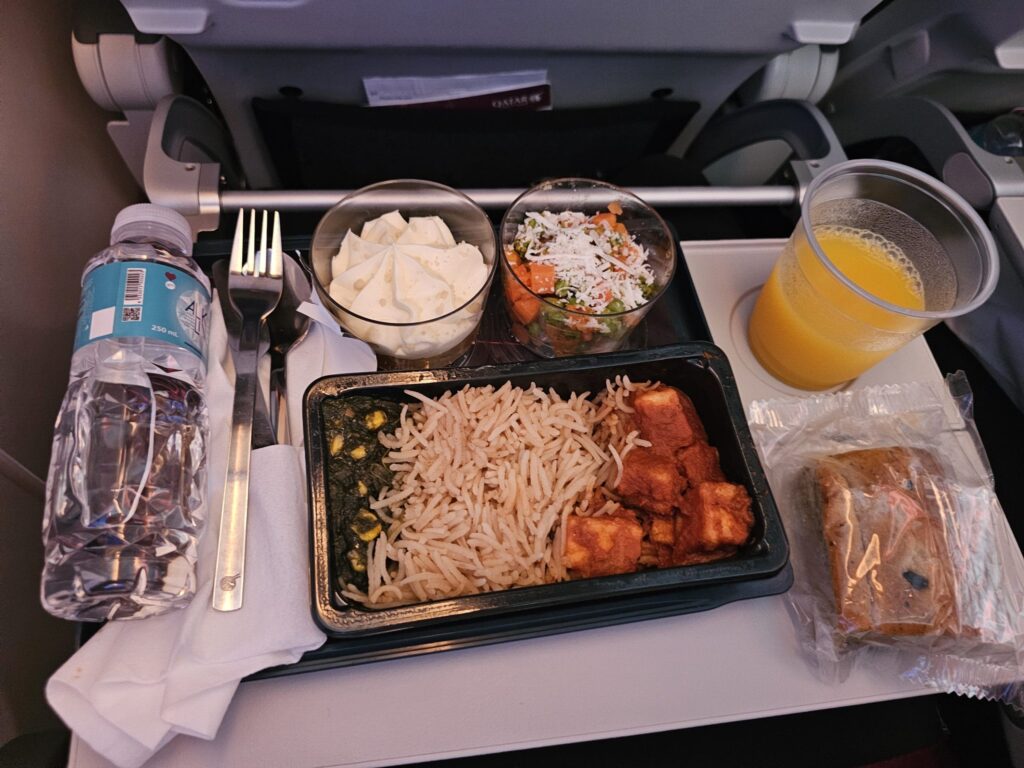
Soon getting stuck in, I found the main dish to be of reasonable quantity and quality, whilst the side dish was good, and, as I had previously found on Qatar Airways, the dessert was fantastic! Overall, this meal left me with absolutely no complaints – although I hoped that this time around I wouldn’t come down with food poisoning eight or so hours later! Polishing the meal off in no time, this was followed by a round of hot drinks around thirty minutes later, before the trays were finally collected around an hour after I had received my meal. Granted, whilst the overall meal experience was good, I feel that by this time, all passengers had long finished eating and many wanted to jump up and use the lavatories.
Returning to the route, following the standard path for flights between the Gulf and Western Europe, after leaving Baghdad behind the Dreamliner headed northwards and travelled parallel with the Tigris, passing the likes of Tikrit, Al Alam, Hajjaj and Baiji which all sit in the green belt that runs on either side of this long river. Soon, we passed over Iraq’s second-largest city, Mosul, once home to the largest city in the world, the ancient Assyrian city of Nineveh. A little over an hour after entering Iraqi airspace, the Dreamliner crossed into the far southeastern skies of Turkey’s Şirnak Province. Feeling absolutely shattered, once the remains of my tray had been collected, I decided to drift off for a few bursts of light nap, occasionally waking up to admire Eastern Turkey’s snow-capped mountains passing by below.
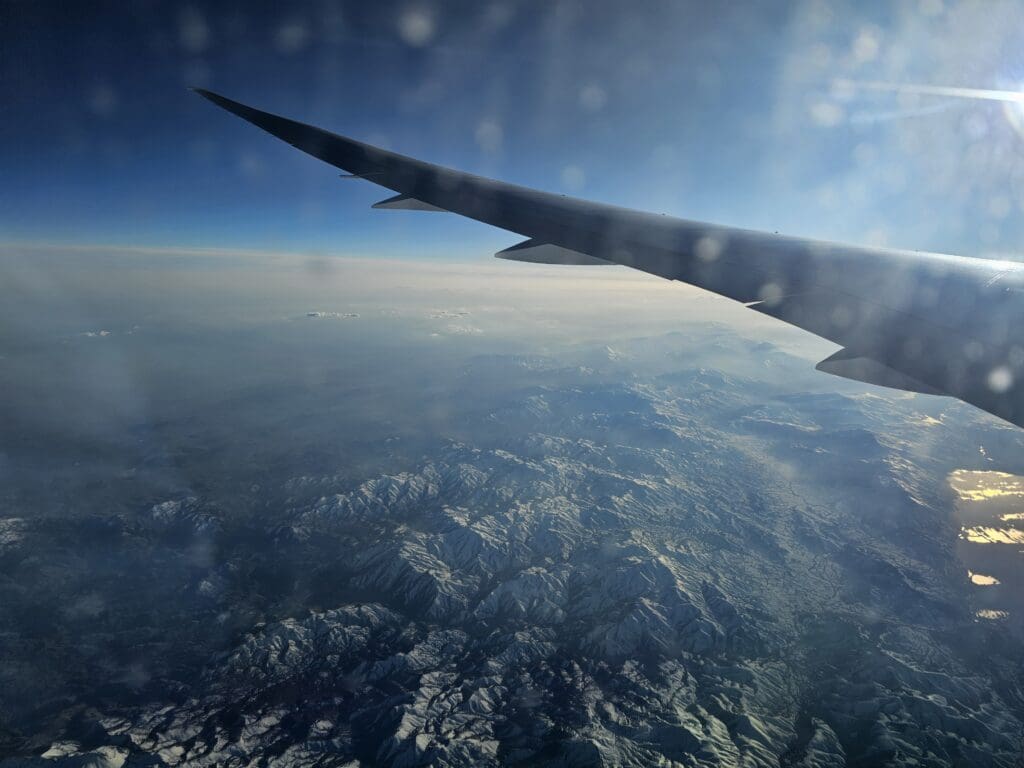
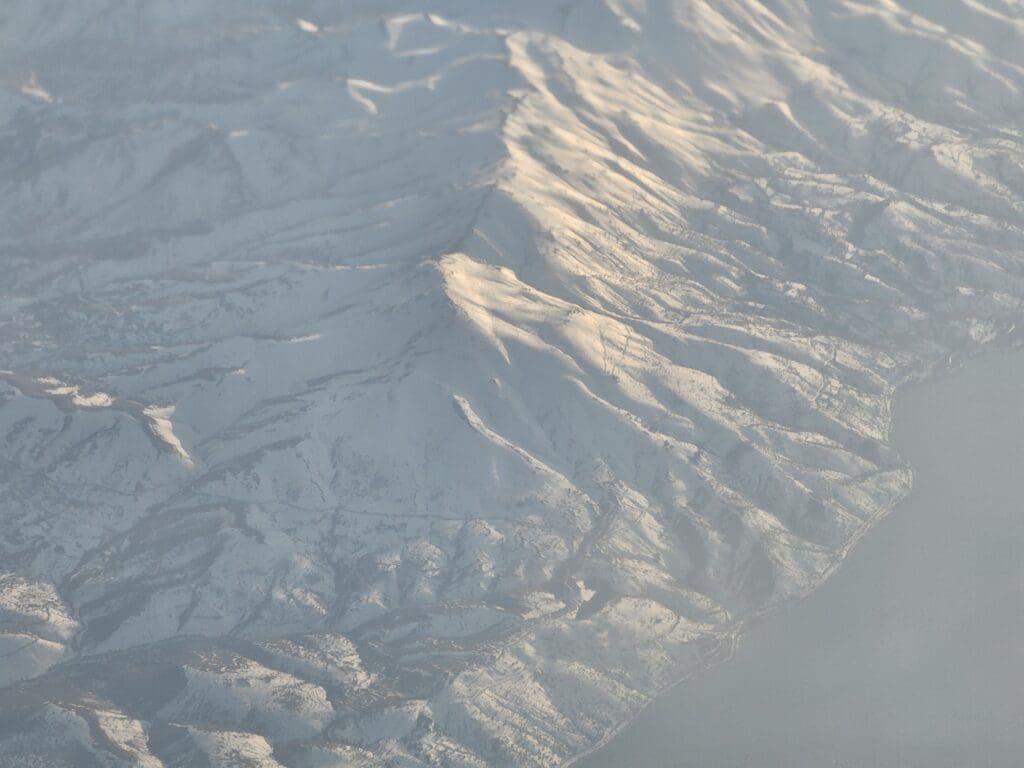
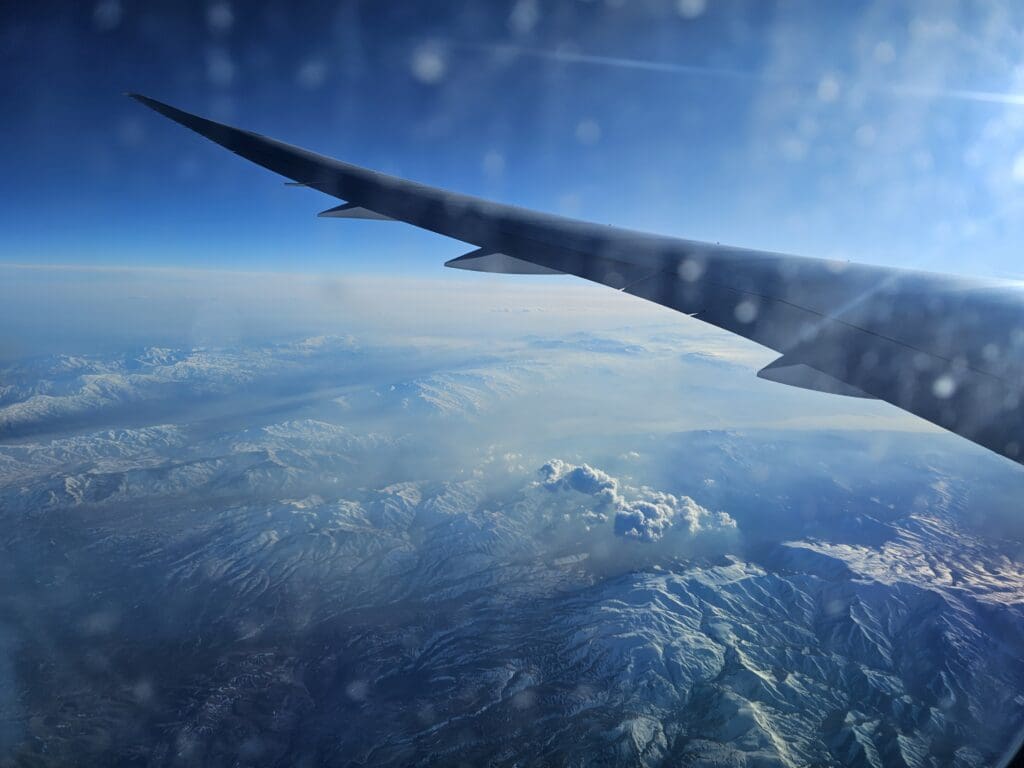
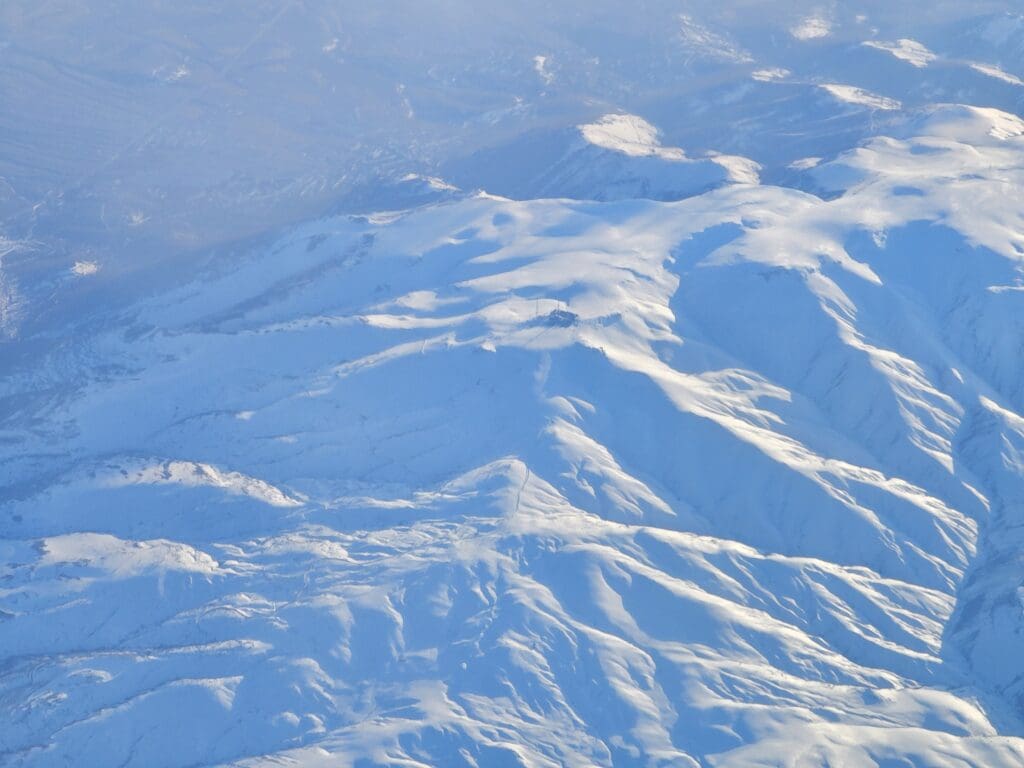
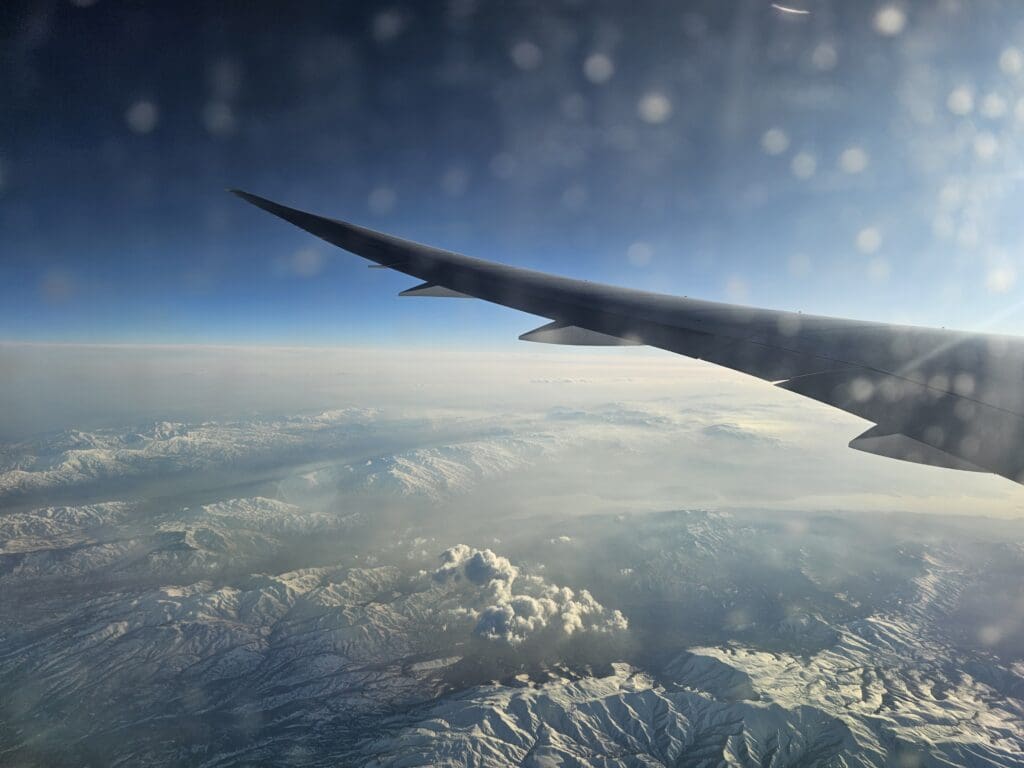
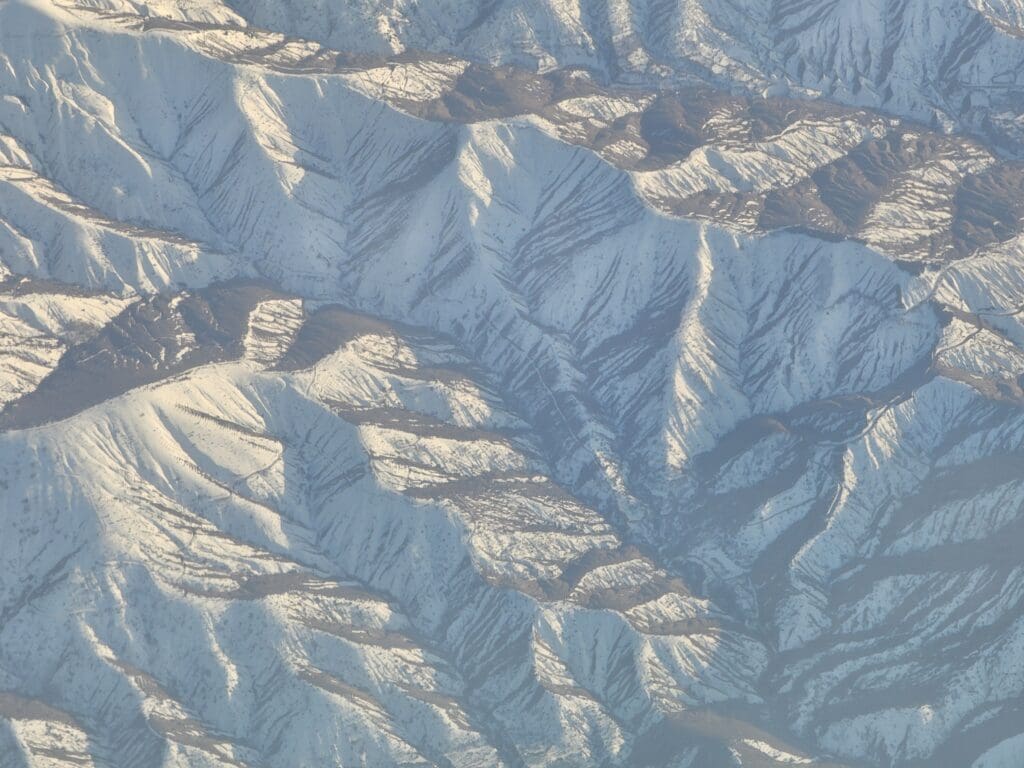
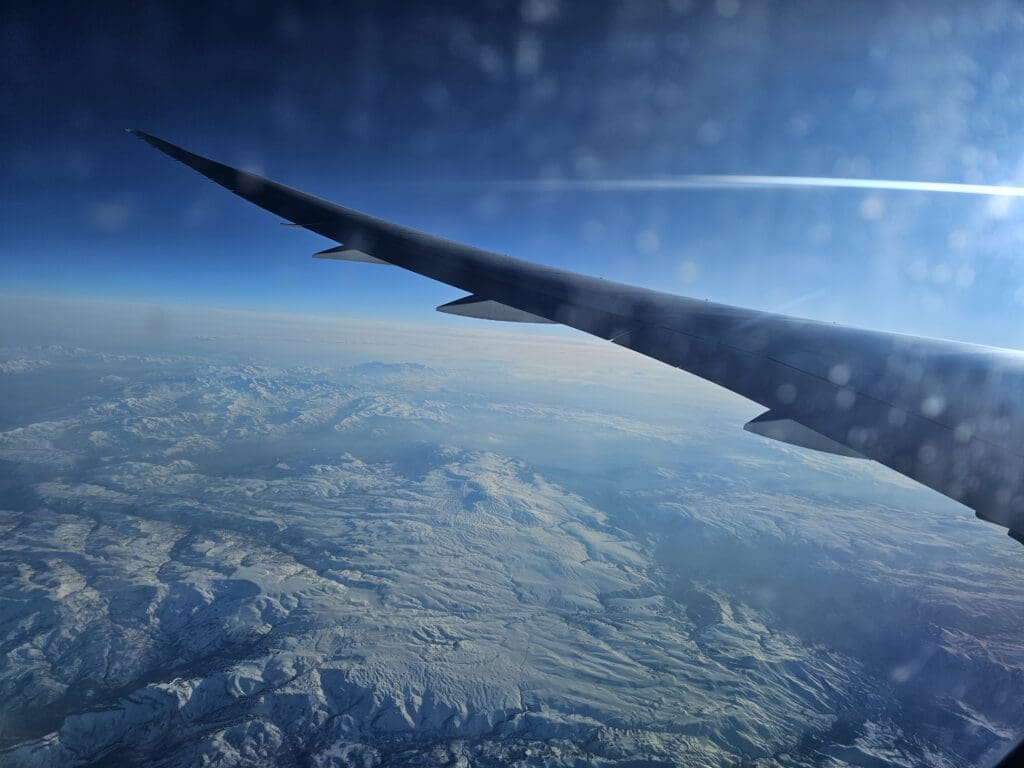
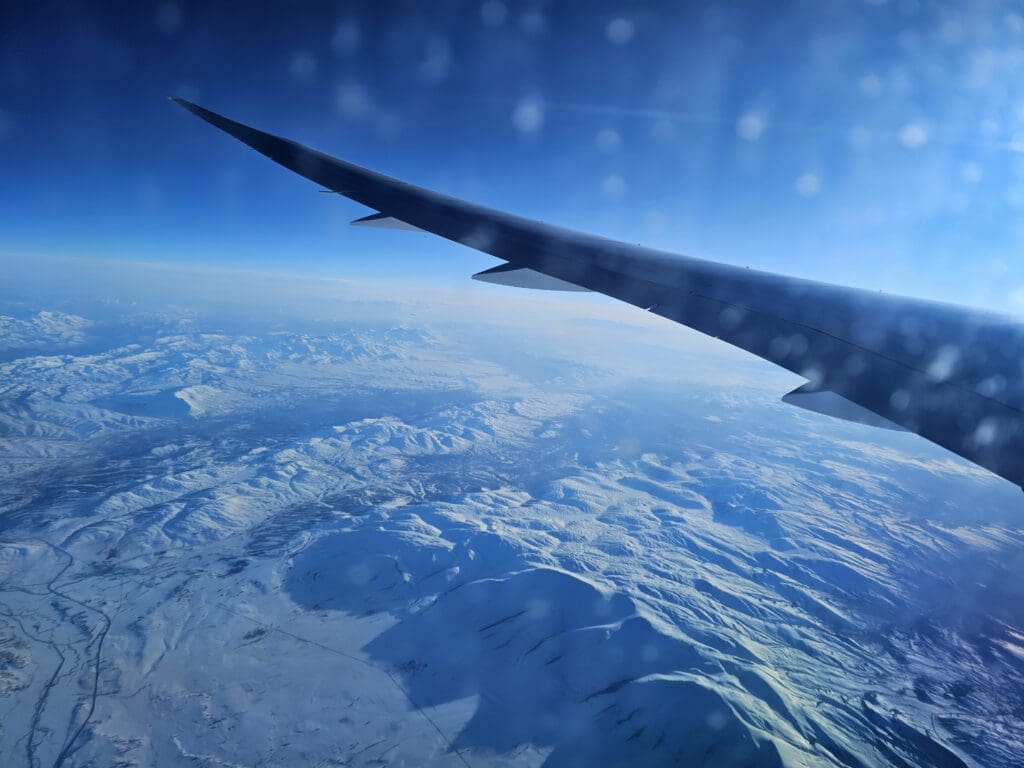
Heading from Turkey’s far southeast to far northwest, that time the aircraft spent more time in Turkish airspace than in that of any other country. Unfortunately, thanks to a thick layer of cloud that lingered over much of the country, very little could be seen of the diverse landscapes below. After passing over Turkey’s heartland, the jet reached the capital city, Ankara, indicating that we were nearing the end of our crossing of the country. Around an hour and a half after entering Turkish skies, the aircraft headed out over the waters of the Black Sea, making a short twenty-minute crossing before reaching the Bulgarian coastline just to the north of the popular holiday city of Burgas.
By the time we reached Europe, feeling wide awake, I opted to make a trip to one of the lavatories at the rear of the aircraft. Seeing as there had been a near-constant queue of passengers leading up to the lavatories throughout the flight, I was a little concerned about the state that I would find these to be in. After a five-minute wait, other than a suspicious puddle of mystery liquid on the floor, these seemed to be in reasonable shape and, remaining stocked with the basics, left me with no major complaints.
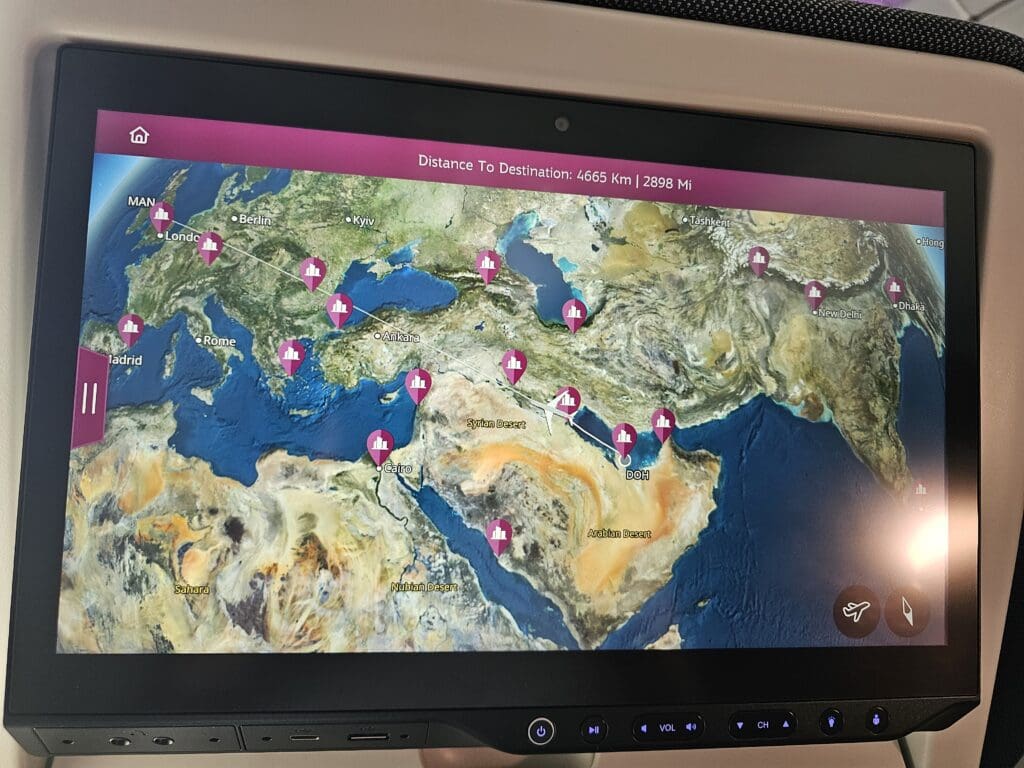
Returning to my seat, I checked the inflight map, which revealed that we were speeding towards the Romanian city of Timișoara. At that time, with the late afternoon sun shining into the aircraft, coupled with the dirty windows, meant that virtually nothing could be seen of the world below. Thus, I decided to explore the sights and delights of Qatar Airways’ Oryx One inflight entertainment system. Considering Qatar Airways’ superb reputation and global route network, I had high hopes for this and was eager to explore the system.
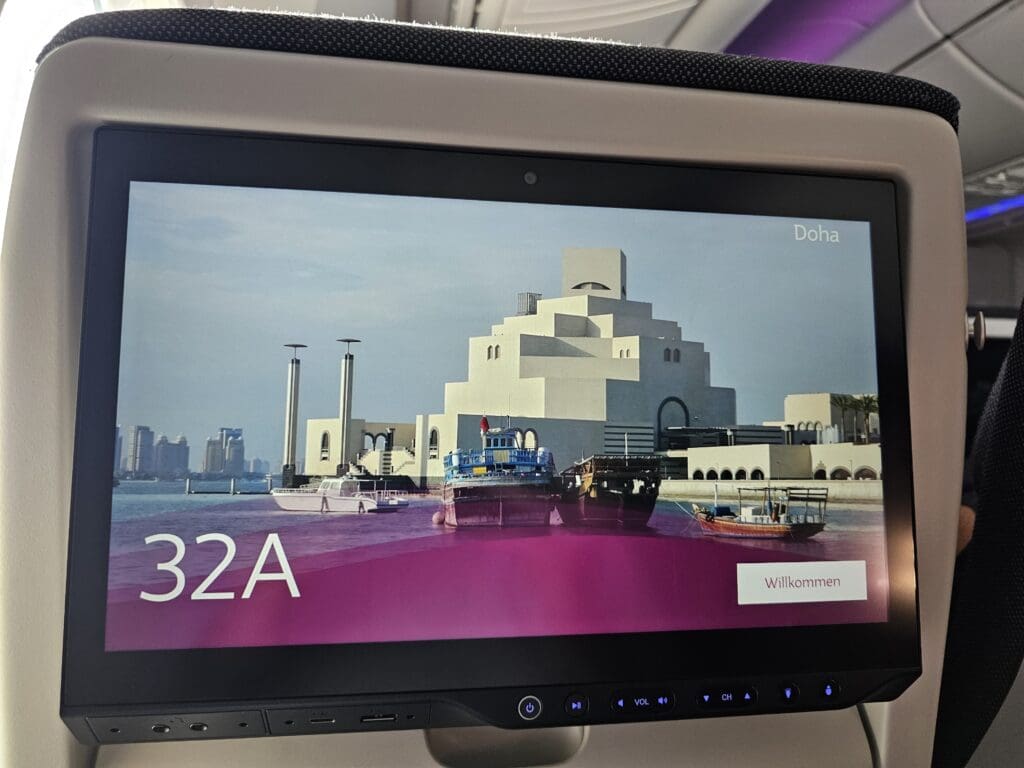
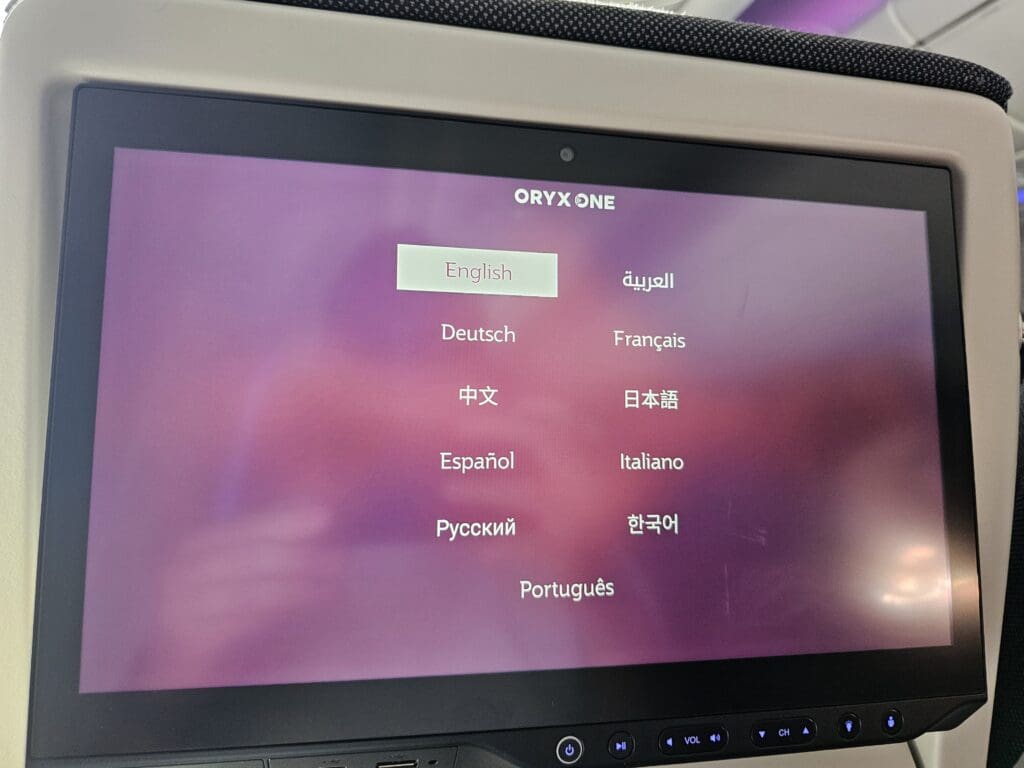
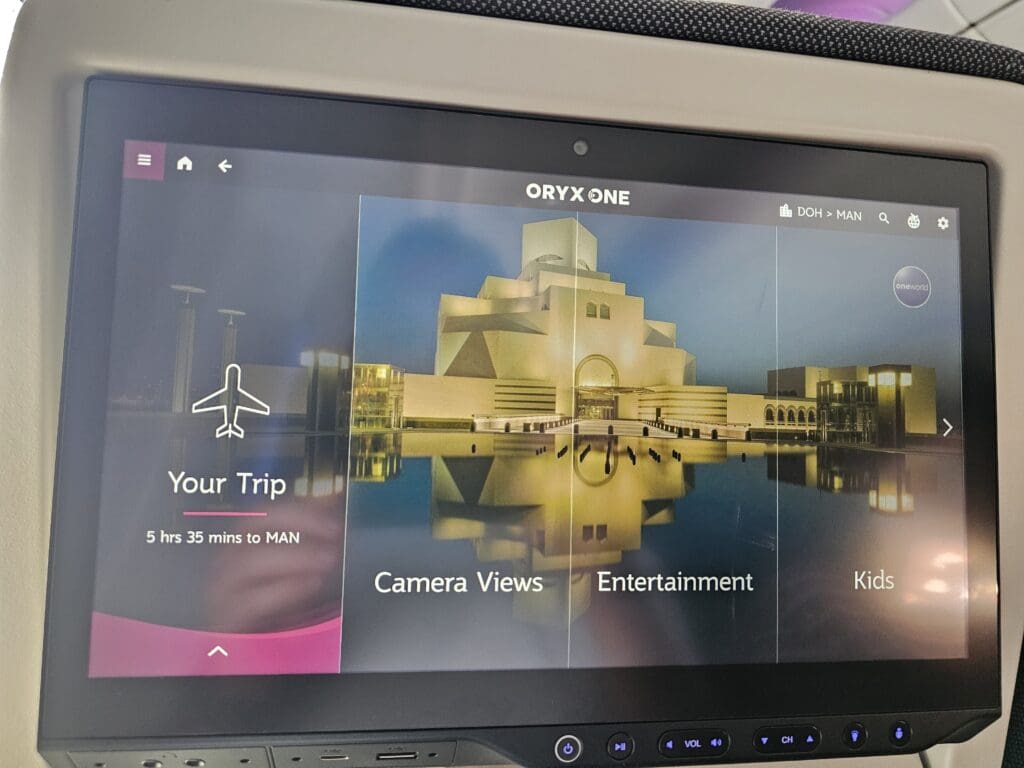
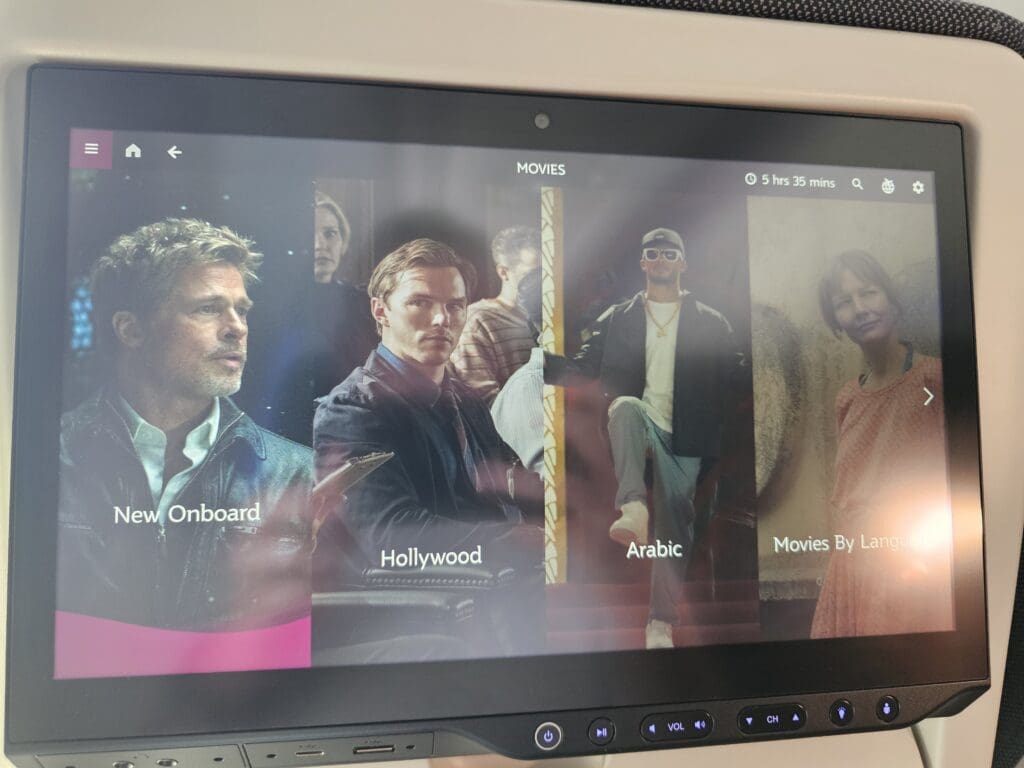
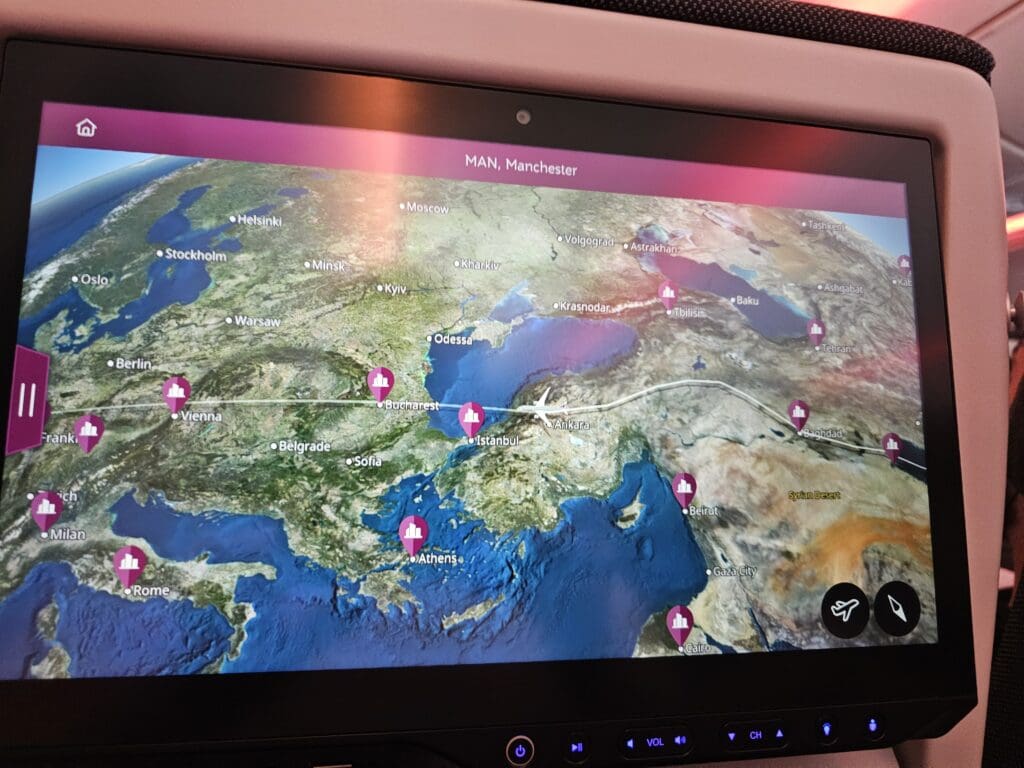
Unlike a surprising number of major carriers, Qatar Airways’ inflight entertainment system is available in more languages than just English and the language of its home country, Arabic. In total, this can be navigated in eleven different languages – specifically Arabic, Chinese, English, French, German, Italian, Japanese, Korean, Portuguese, Russian and Spanish. Not wanting to use this flight to refresh my Korean language skills, I selected the English option and was promptly presented with the main menu. This features a host of options – Your Trip, Camera Views, Entertainment, Kids (a separate family-friendly system), The Holy Quran, Connect, Qatar Airways and Survey, with this menu superimposed on a scenic nighttime shot of Doha’s famous Museum of Islamic Art.
Browsing the options available, I found Oryx One to contain a seemingly endless catalogue of films of all genres, and television programmes from across the world – although with a specific focus on Arabic, Bollywood and Hollywood blockbusters. Audio options were equally plentiful, with an extensive catalogue of albums covering an eclectic array of genres by artists from across the world. In addition, passengers could listen to almost sixty podcasts covering a variety of topics, seven relaxing wellness soundtracks, four audio tours of Qatari museums, thirty audiobooks, and, of course, as is the norm on most major Middle Eastern airlines, passengers could also pass the time by listening to the Quran. Finally, the system also featured ten games.
In addition to this content, I found the Oryx One system to host a plethora of information about Qatar and Qatar Airways, alongside mini guides on many of the airline’s destinations. Finally, a good interactive moving map was offered, providing passengers with a variety of different ways to track the flight, along with a downward and forward-facing camera. Despite having no real intention of watching anything, experimenting with the system, I found visual content to commence with almost three minutes of skippable advertisements for an array of goods and services in Qatar – namely Capital Finance International, Lusail Winter Wonderland, Qatar National Bank and Web Summit Qatar. It is worth mentioning that the system allowed passengers to pair their bluetooth headphones, with this being the second time that I had seen this function (the first being on a Korean Air Airbus A321neo), thereby freeing passengers from the rather so-so quality two-prong headphones that were provided by the airline. However, sadly, I could not get my headphones to pair with the system, although this may well be down to my headphones or incompetence, rather than the system itself!
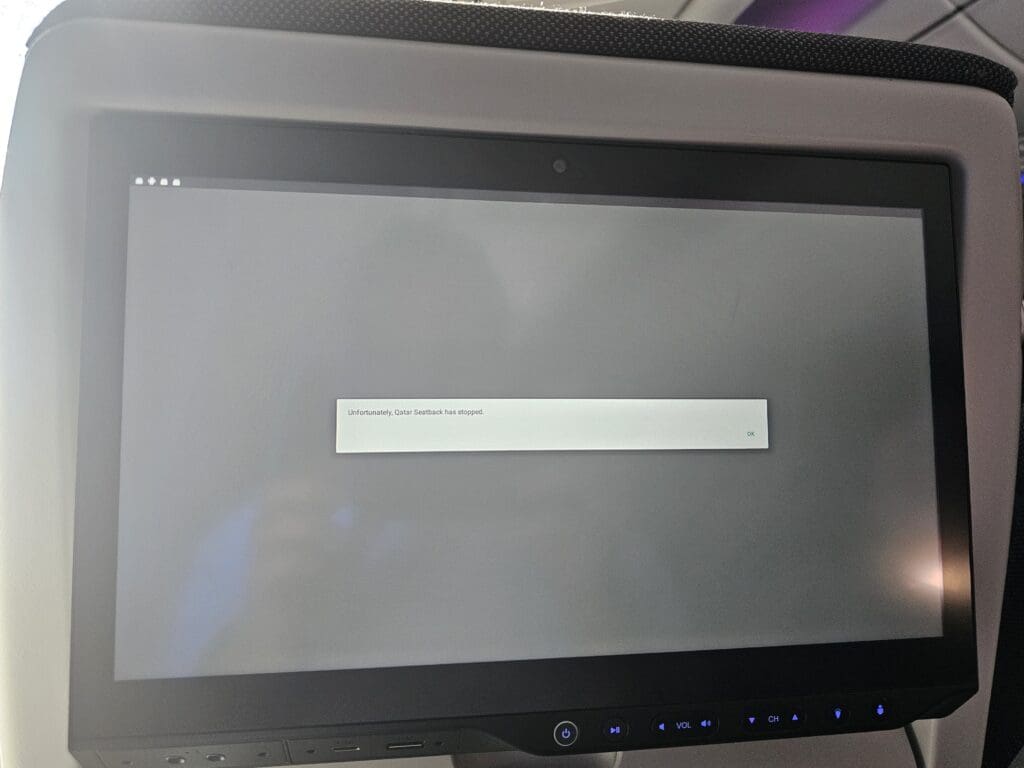
Thanks to its wide array of content, the plethora of system languages, the large high definition screen and the easy to navigate menu, I can conclude the Oryx One system to be one of the better systems that I have had the pleasure of using. This was most certainly significantly better than the older system that I had used on the ex-Virgin Australia Boeing 777-300ER that I had flown during my last trip with Qatar Airways! However, all was not totally perfect, as the system froze, resulting in the error message ‘Unfortunately, Qatar Seatback has stopped’. However, thankfully, this soon rebooted and enabled me to continue exploring. Other than this, my only slight complaint was that this lacked any sort of live television channels or a live news feed. Nevertheless, on a flight of only a little over six hours, this was forgivable, although those on one of the airline’s long slogs from Qatar to Australasia or North America may disagree.
Unlike the Airbus A330 that I had flown from Dubai, wifi was available onboard, and so once I had exhausted the inflight entertainment system, I decided to have a play around with this. Once I had connected to this, I was presented with a screen that detailed the basic information about my flight and offered a link to the inflight menu for those in Economy. Those needing to stay in touch with the outside world could pay a very reasonable flat fee of $10 to access the internet for the entire flight. Furthermore, members of Qatar Airways’ Privilege Club could connect to this and receive one hour of free wifi. Having a dormant Privilege Club account, I opted to connect to this and encountered no issues, with the wifi being of fairly good speed for the hour that I remained connected.
Returning to the route, after leaving Romania behind, the aircraft cut across Hungary before reaching the skies of Eastern Austria, entering the country’s airspace near the city of Wiener Neustadt, famous for being the home of aircraft manufacturer Diamond Aircraft. As we crossed Europe, the skies began to darken as dusk approached. At 1630 UK time, three hours after the distribution of the main meal had commenced, the service carts were rolled out into the aisles once again.
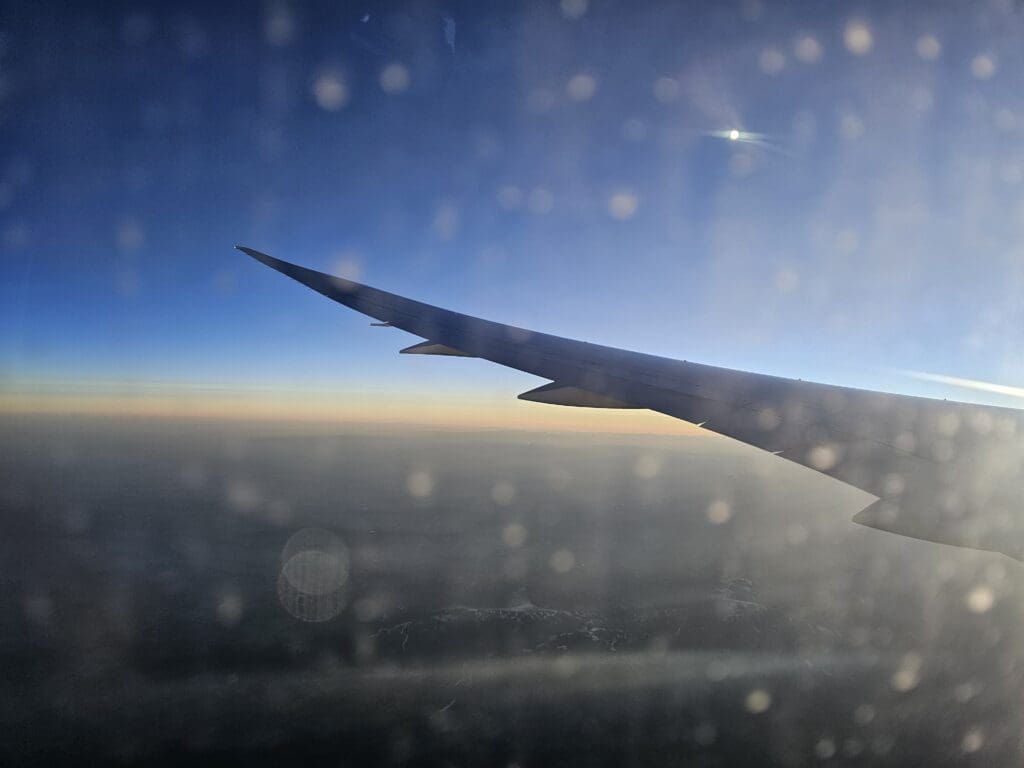
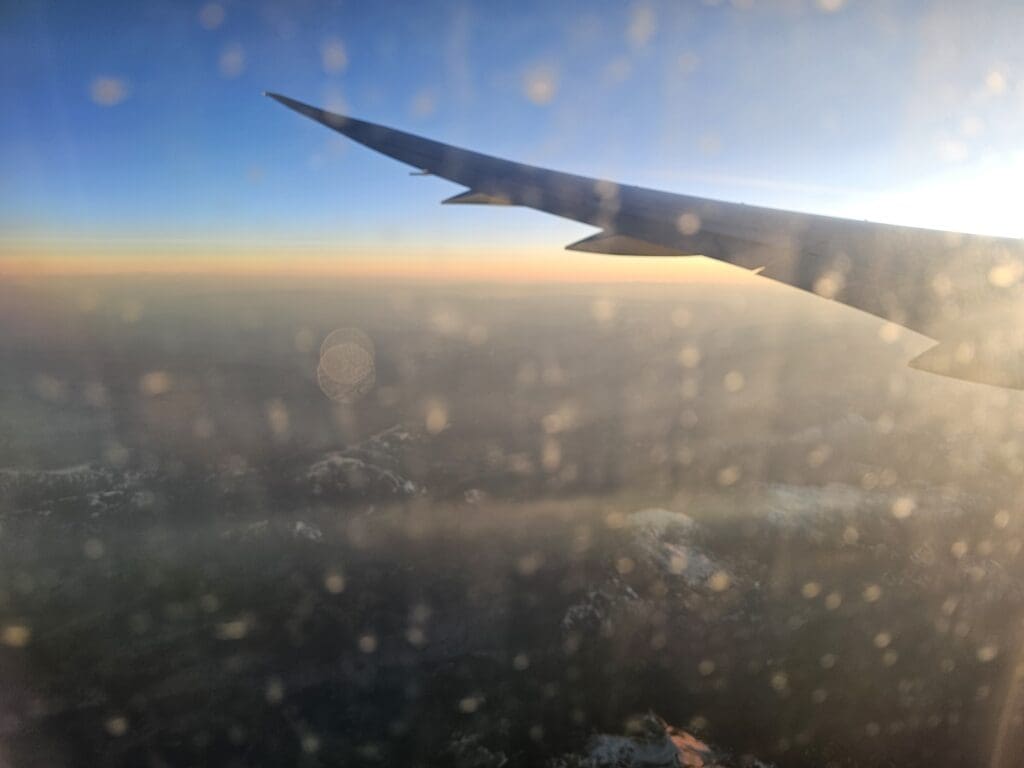
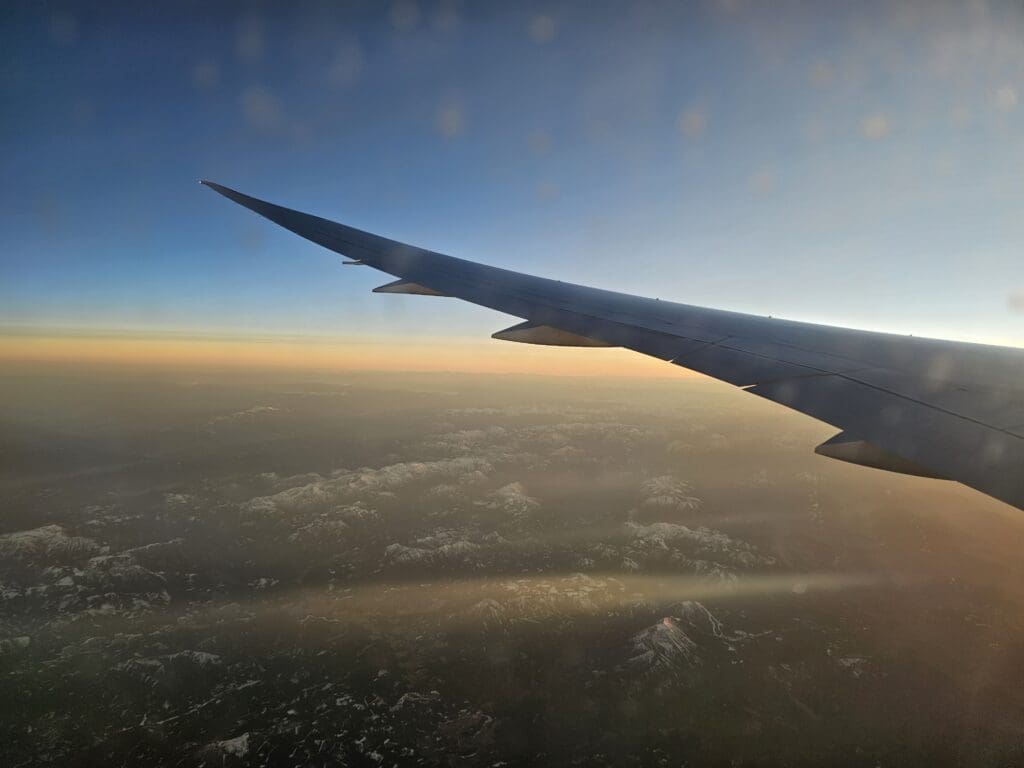
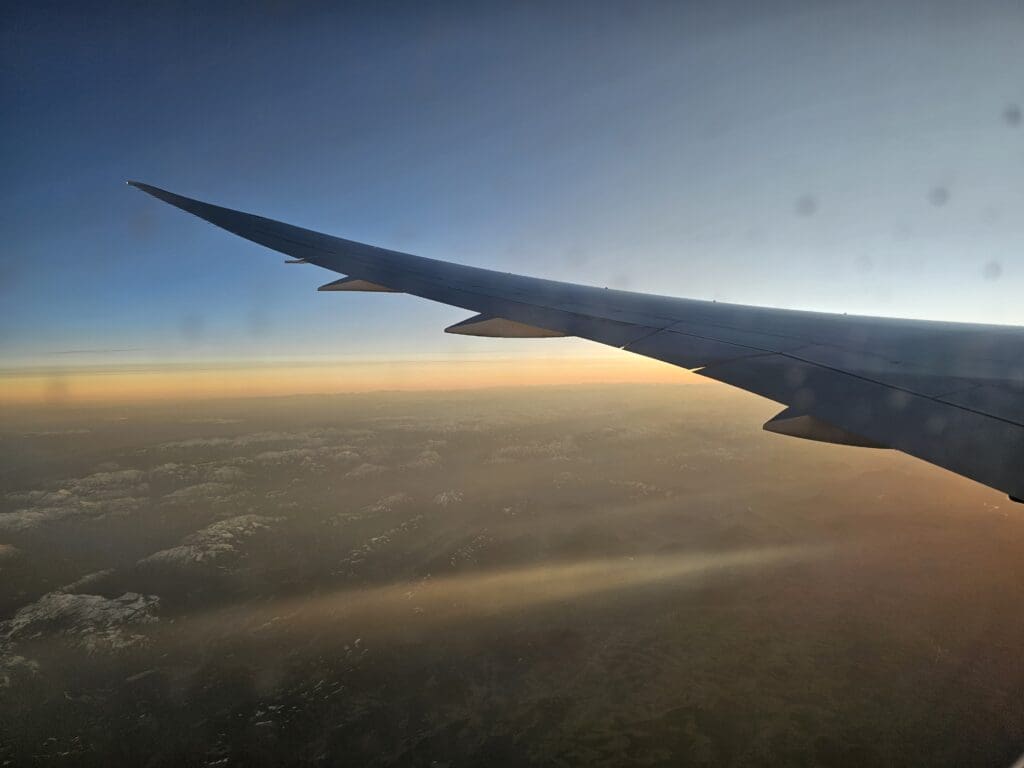
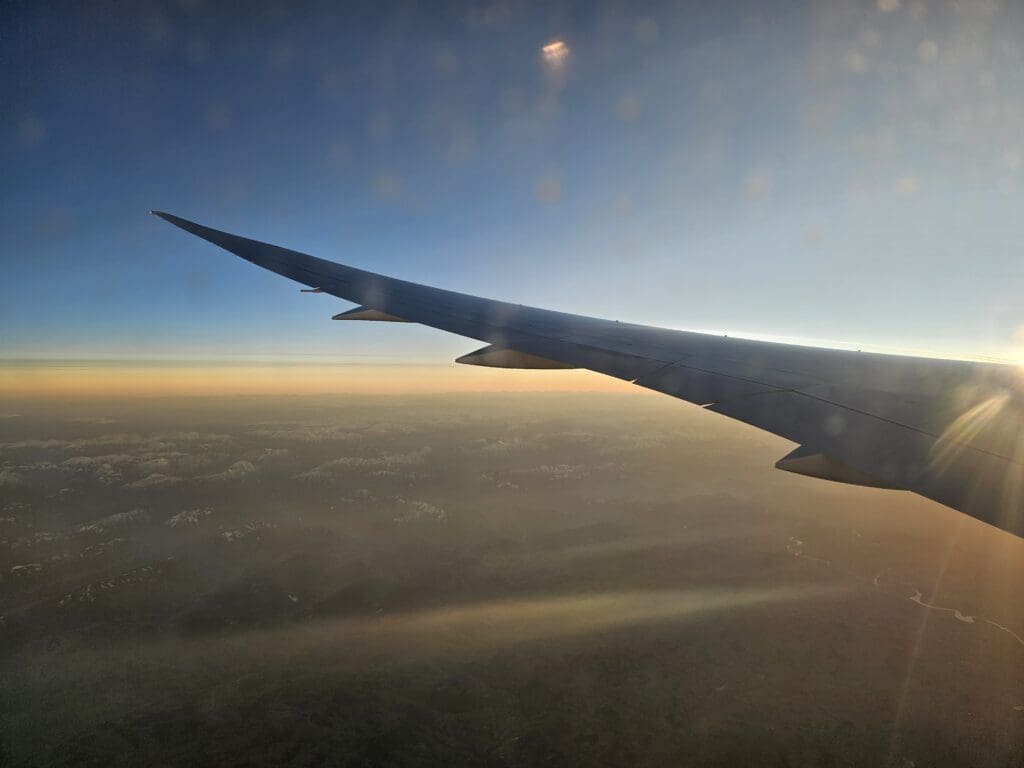
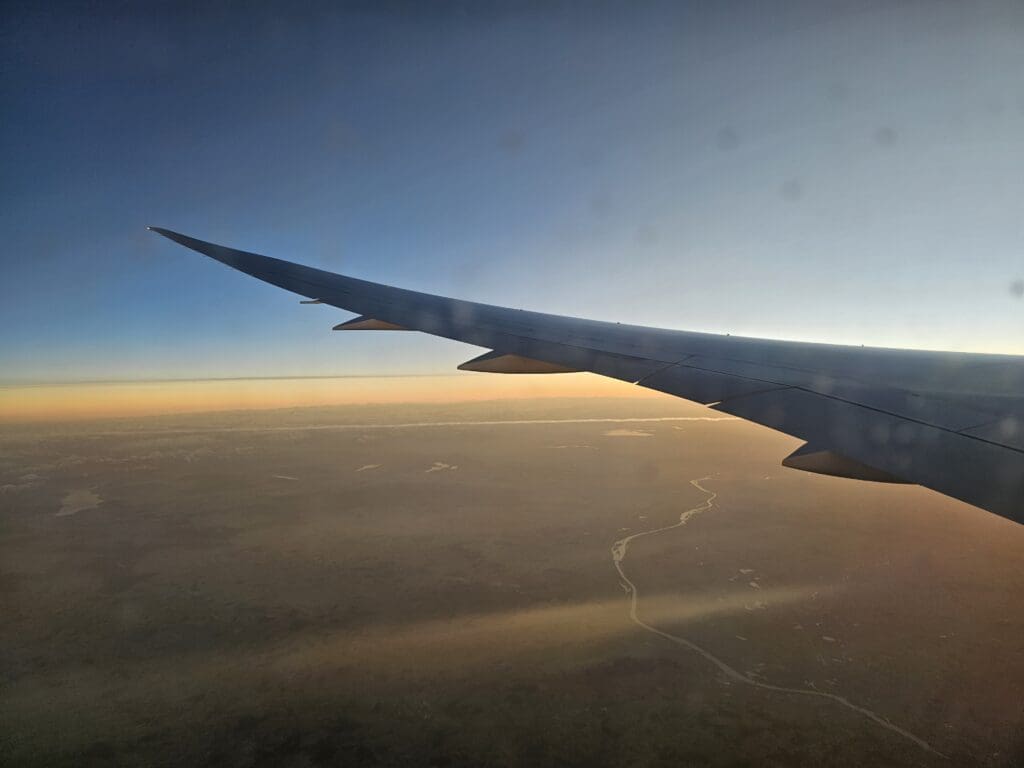
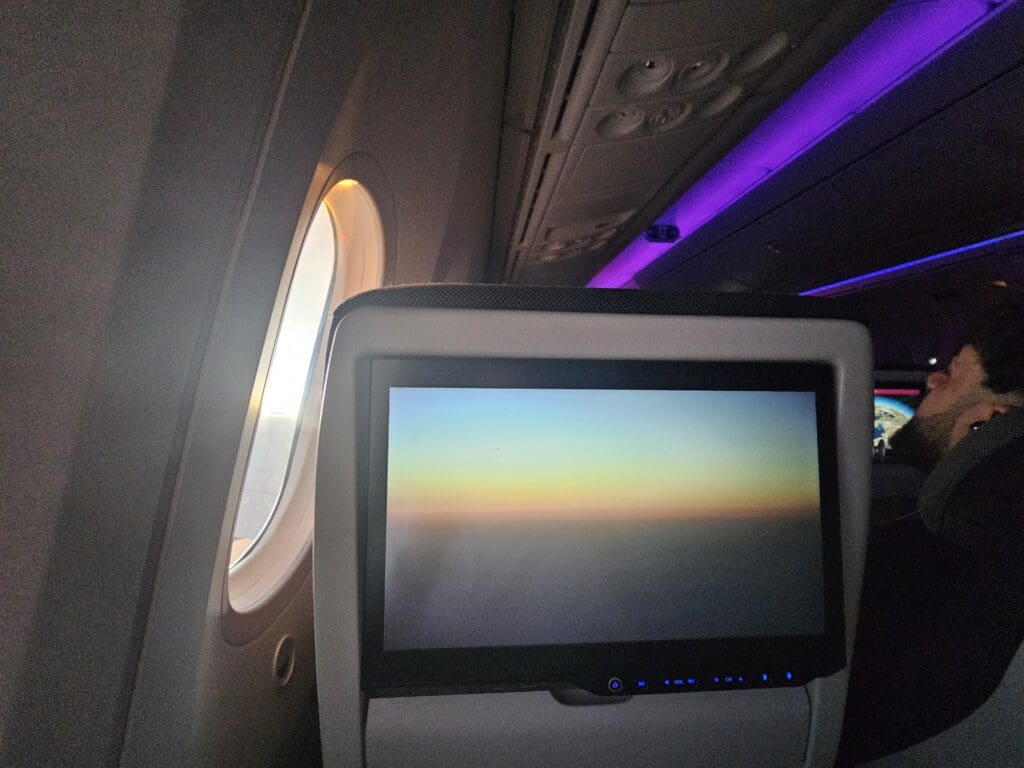
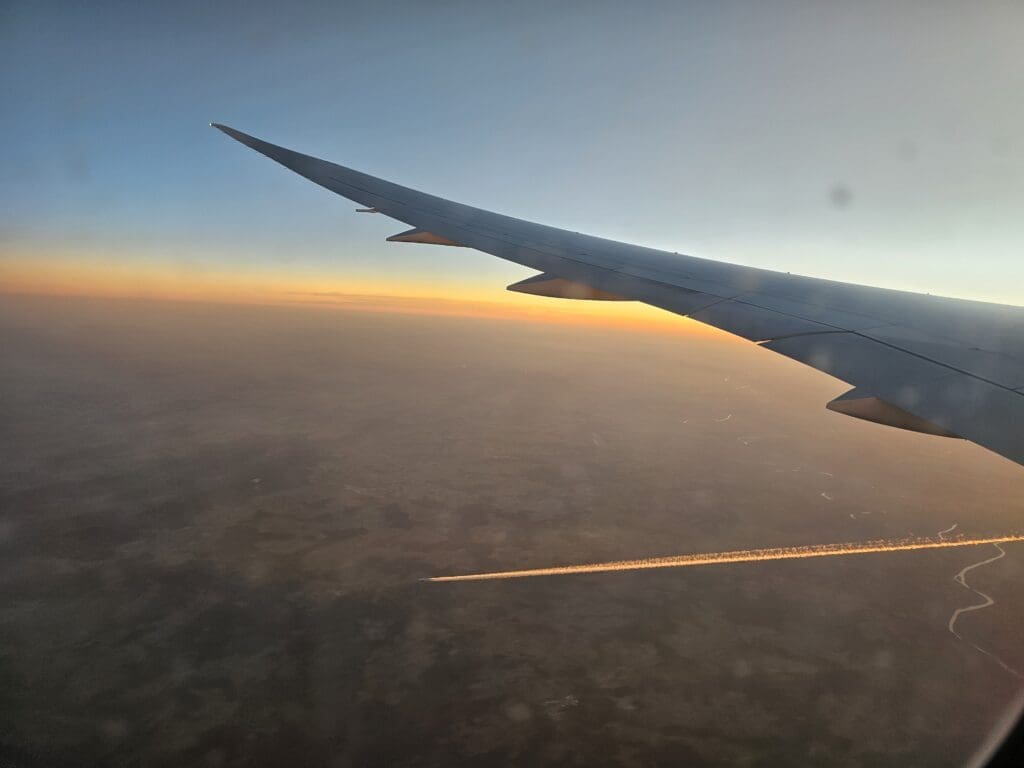
Today, most airlines operating between the Gulf and Britain offer passengers a main meal and a snack service – the exception to these being Gulf Air and Kuwait Airways. Seeing as it had not been too long since I had polished off lunch, I was not particularly hungry; however, I could hardly pass on the opportunity to get the full Qatar Airways experience! Travelling during Ramadan, a short time later at 1645, the Cabin Director performed an announcement advising that it was now time for Iftar. Looking outside, at this time, the scenic Central Eastern Alps could be seen as we crossed over Austria before reaching the city of Linz (where I had visited on my European Air Charter MD-80 adventure in 2022!). This was then followed by the sight of the famous Danube winding through the countryside of Northern Austria before we made our way into German airspace.
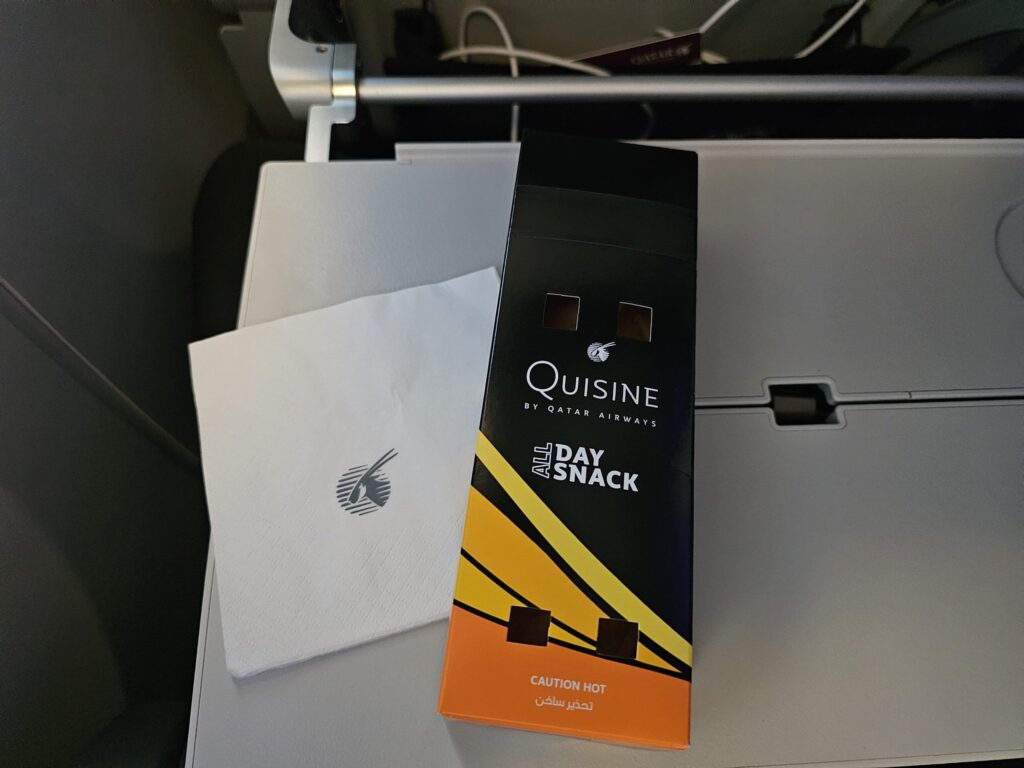
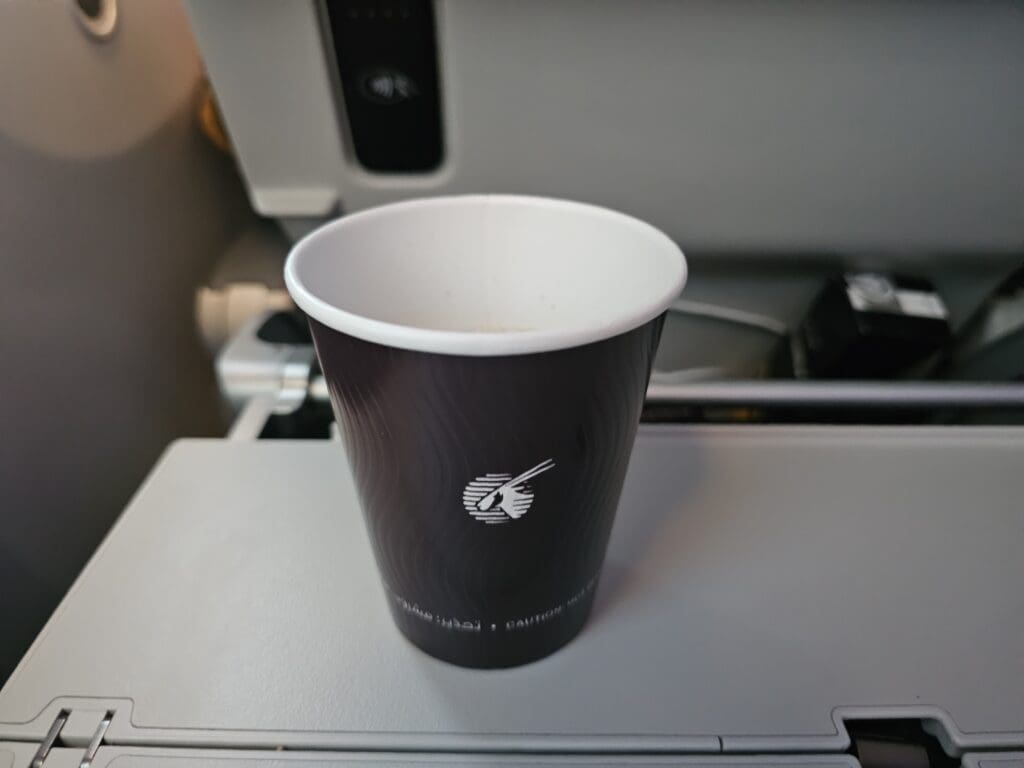
Eventually, the flight attendant reached my row and I was offered the choice of a cheese and spinach pastry or a chicken tikka pastry. Opting for the latter, a cardboard box containing this was passed over to me, before another flight attendant appeared and offered me a drink. Whilst I had pondered a third orange juice, I instead went for a black coffee, which was poured out and cautiously handed over to me. Soon getting to work on this offering, I found this to be lukewarm rather than piping hot, appearing to have been out of the oven for some time. Nevertheless, this ultimately left me with little to complain about and was of reasonable quality.
By the time I had polished off the snack, the aircraft was somewhere in between the German cities of Frankfurt and Cologne, and the flight was well and truly in its final stretch. Crossing over the Rhine to the south of Bonn, it was a matter of a few short minutes before the Dreamliner reached the Belgian border just to the south of the German city of Aachen and to the east of Liège.
As we crossed over Belgium, with around fifty minutes to go until our arrival, anticipating a reasonable wait, I decided to make one final lavatory visit. Once again, I found this to be in a largely good state, being reasonably clean and tidy given its heavy usage throughout the flight. By the time I returned to my seat, the aircraft was crossing the Belgian coastline just to the north of the coastal city of Ostend. Thanks to the clear skies below, a picturesque view of the entirety of the Belgian coastline could be seen as we voyaged out over the North Sea.
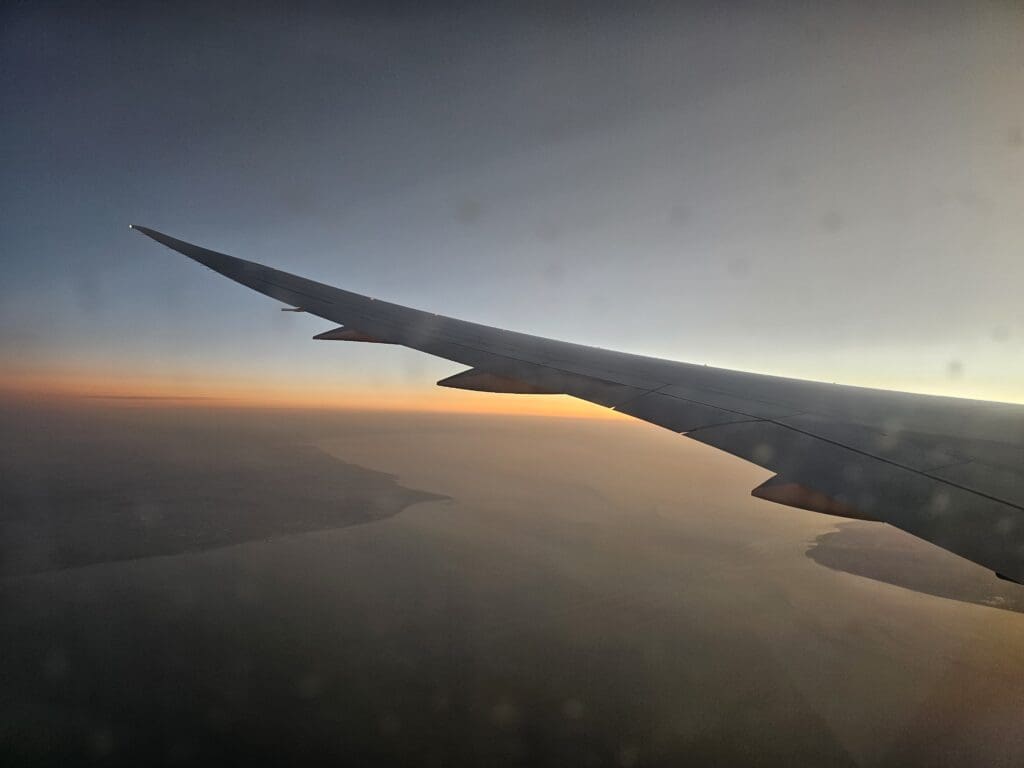
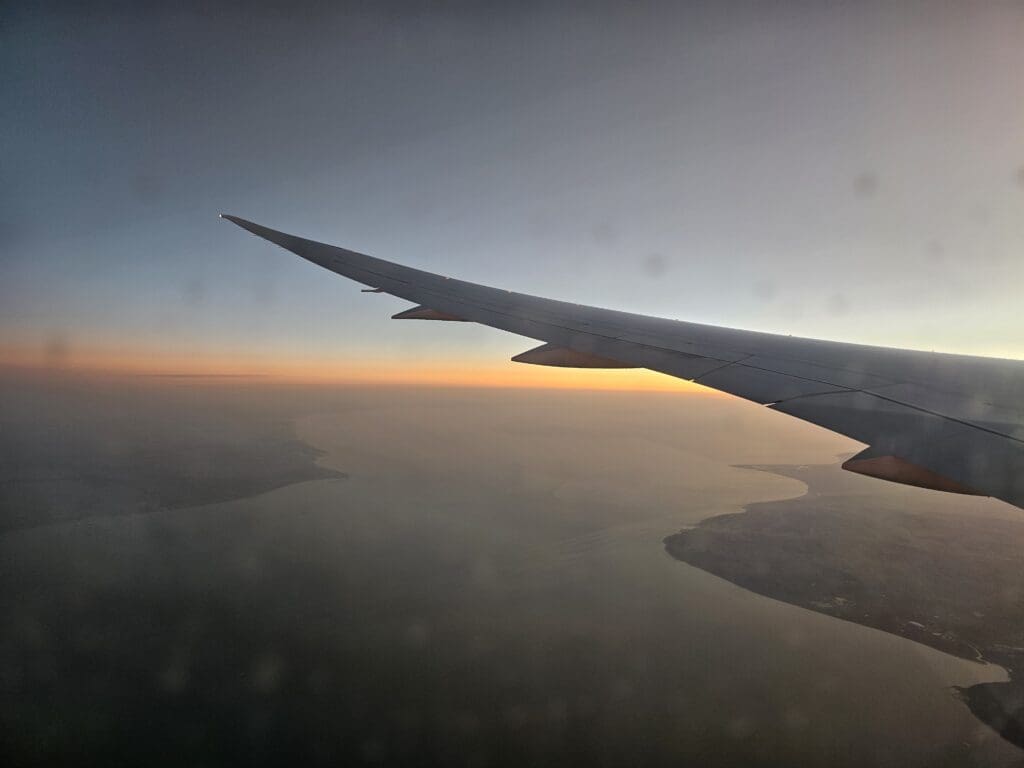
As the Dreamliner headed out to sea, the Captain’s calm tones filled the cabin as they advised that we would commence our descent shortly and could expect to land in Manchester in 35 minutes, before noting the balmy 11-degree temperatures on the ground. Immediately after this, the Cabin Director undertook an announcement featuring all the usual pre-arrival instructions and warnings.
With clear skies lingering over England, as we crossed the North Sea, it wasn’t long before virtually the entirety of the county of Kent appeared just to the south of the aircraft before we made landfall nine minutes after leaving Belgium behind near the Essex town of Southend-on-Sea. Heading inland, a good view of the Thames Estuary was offered, soon followed by vistas of London in which landmarks such as London City Airport, the O2 Arena and the city’s skyscrapers could clearly be made out. Meanwhile, inside the cabin, at this time the seatbelt signs were reilluminated and the crew took to the aisles, ushering people away from the toilets before undertaking a check to ensure that all was secure and in place for our arrival into Manchester.
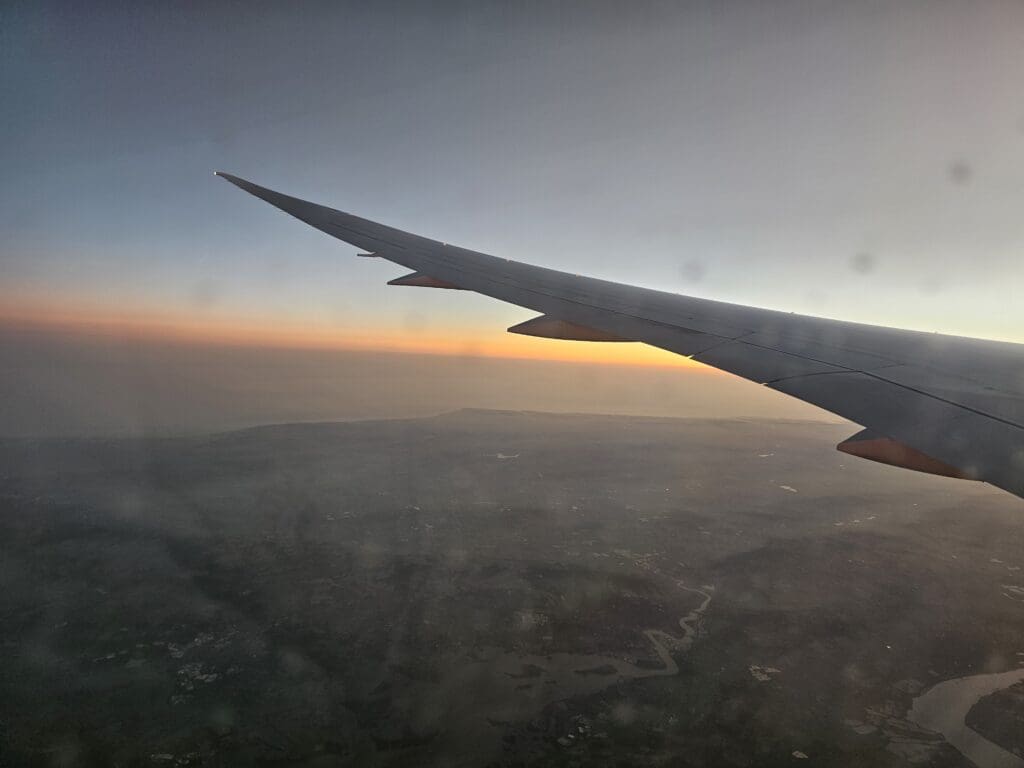
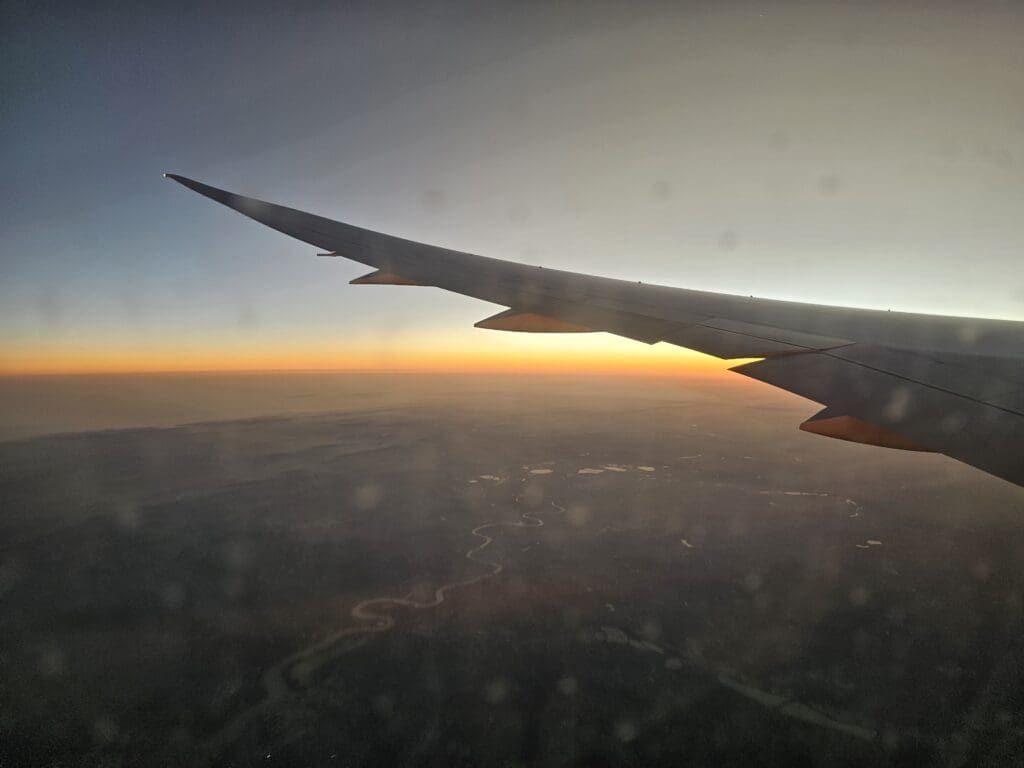
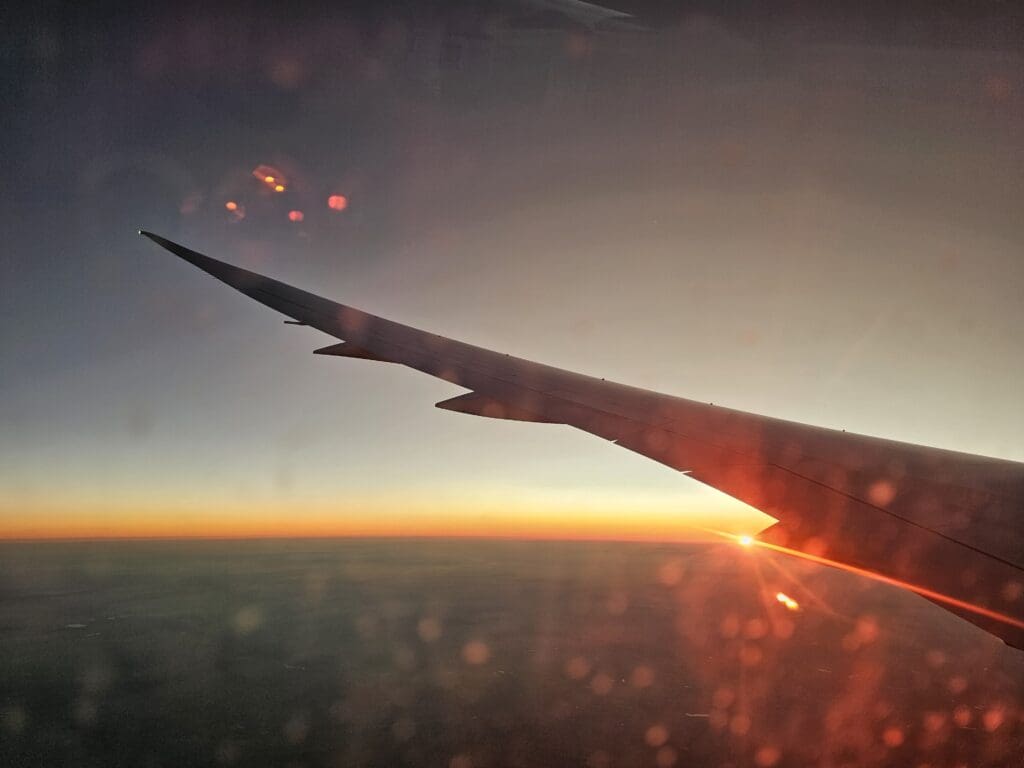
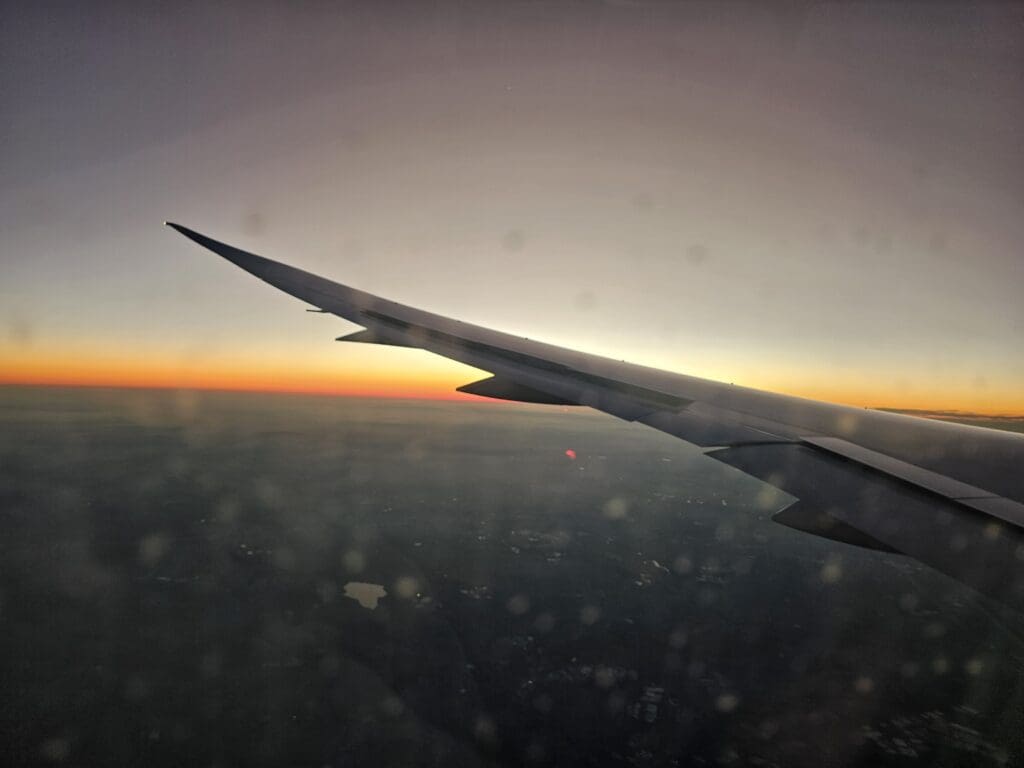
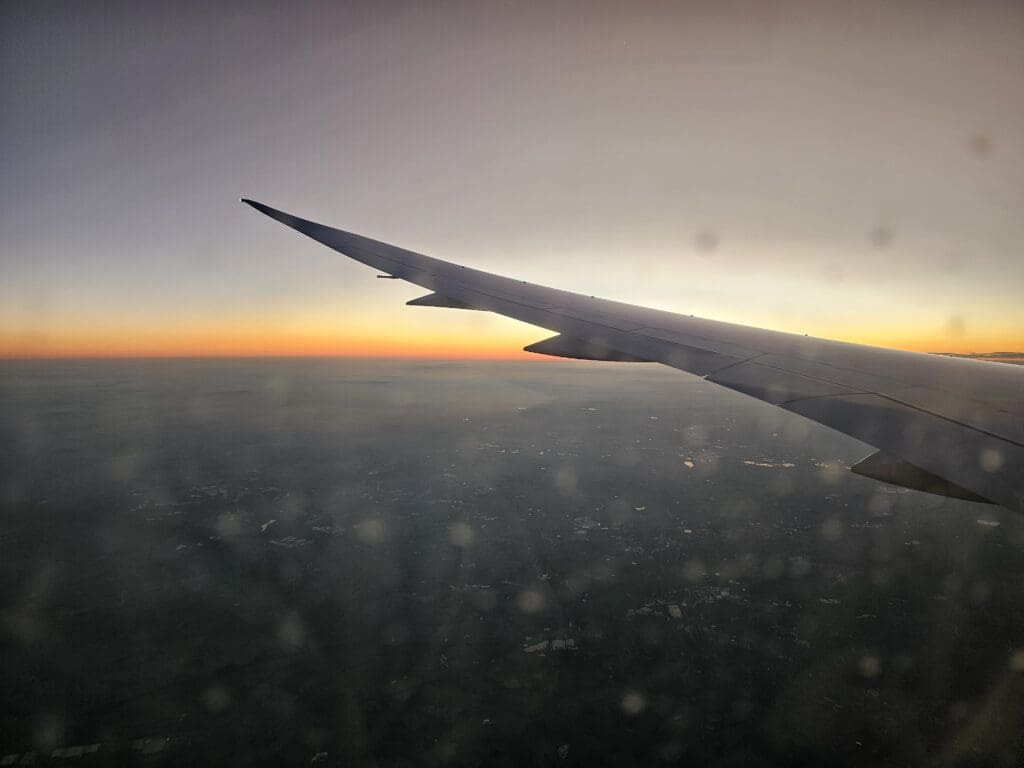
From London, the aircraft headed northwest, roughly following the course of the M1 Motorway, and as we approached the town of Luton, the aircraft could be felt leaving its cruising altitude of 38,000 feet. By the time we reached Leicester, the crew had strapped themselves in and the cabin lights were dimmed in preparation for our arrival as we sank through the skies of the East Midlands and headed towards Derby. Outside, picturesque dusk vistas accompanied our final minutes inflight and we soon reached the southern boundaries of the Peak District National Park.
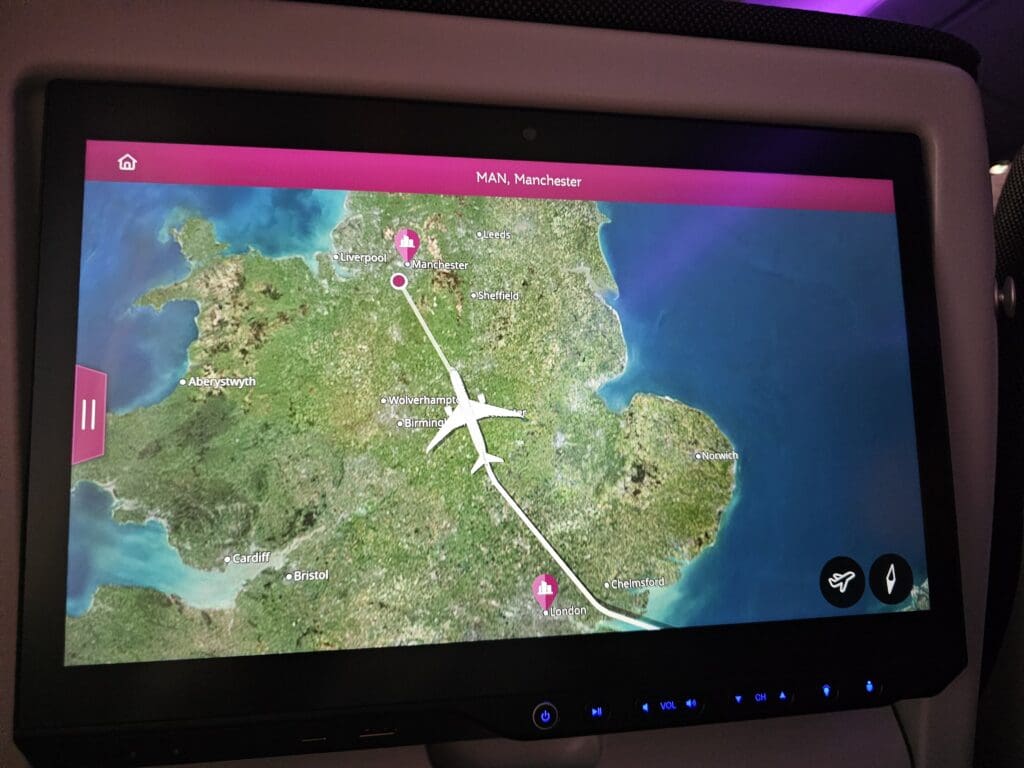
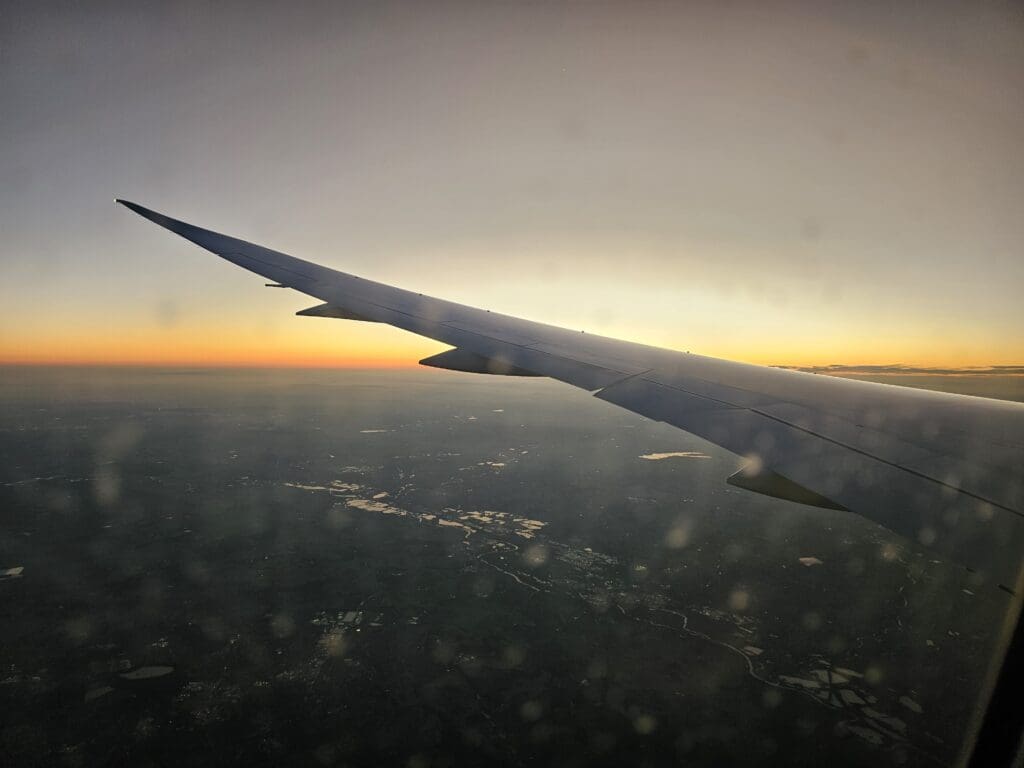
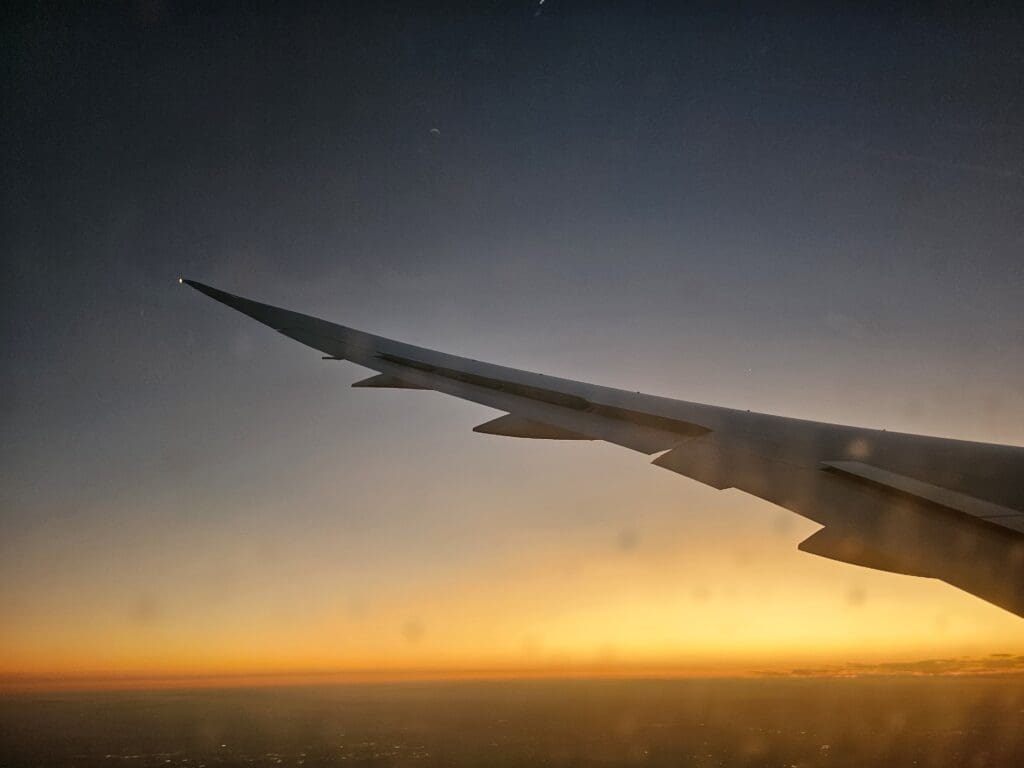
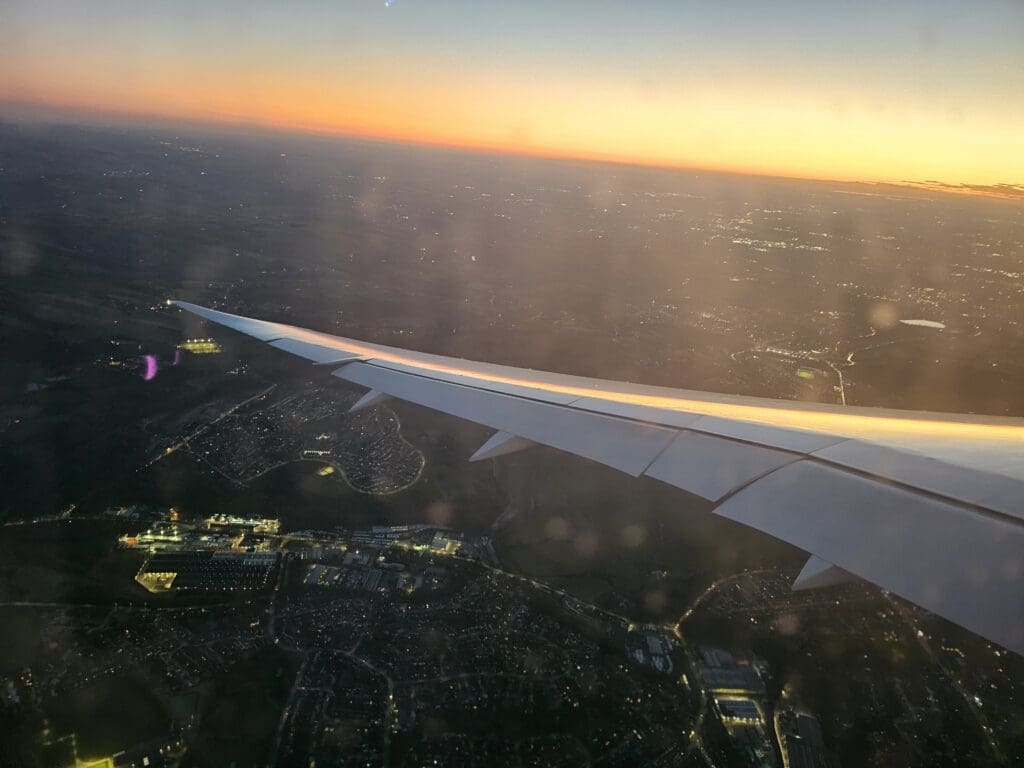
That evening, there was to be no holding and our Dreamliner headed northwards over the Peak District, crossing over the towns of Buxton and Glossop before turning to line up for an approach to Manchester Airport’s Runway 23R. As we sank over the Stockport, the landing gear and full flaps were extended in preparation for our arrival, and like any good enthusiast, I watched the view from the forward-facing camera as we approached the brightly illuminated runway.
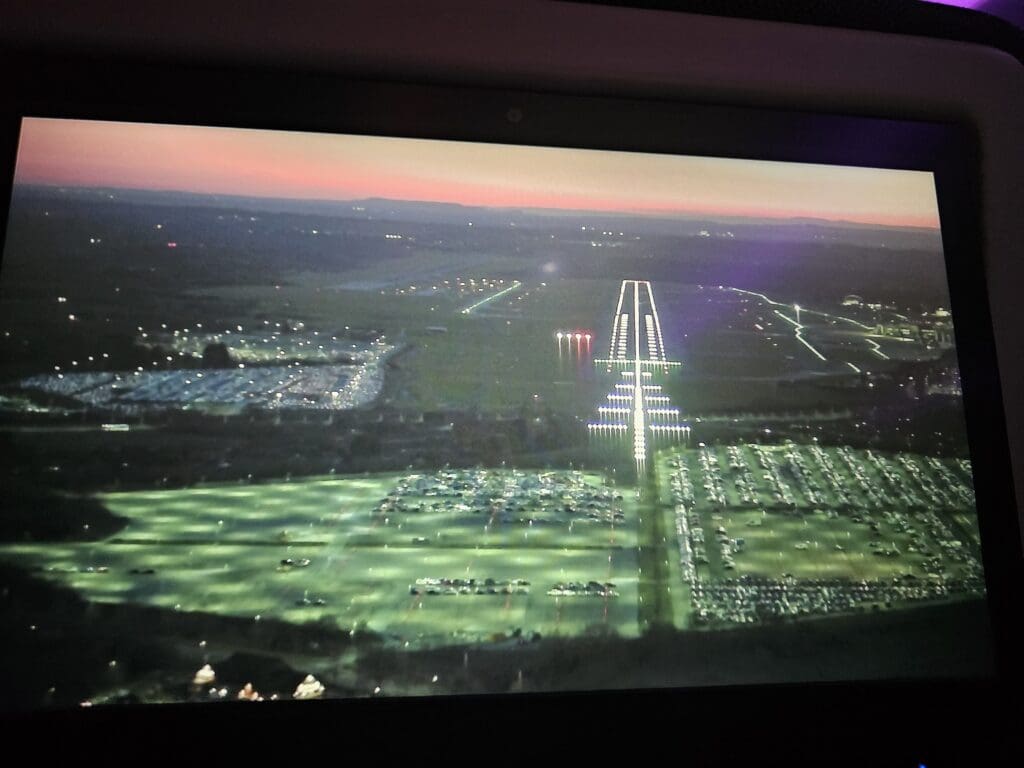
Following a reasonably short flight time of 6H28, the Dreamliner gently whizzed over the perimeter fence before softly touching down on the runway. Once down, the aircraft seemed to decelerate at a sporty pace, likely to minimise our taxi time. Soon, the Dreamliner vacated the runway, at which point the Cabin Director welcomed all to Manchester Airport. After leaving the runway, we soon taxied past Manchester Airport’s famous Runway Visitor Park, where I caught a glimpse of Concorde G-BOAC, as well as the on-display British European Airways Hawker Siddeley Trident 3, the Avro RJX100 prototype and the Nimrod. From there, the airport’s small corporate hangar and terminal could be seen, where I caught a glimpse of a luxurious Bombardier Global 6000 alongside a locally based Pilatus PC-24.
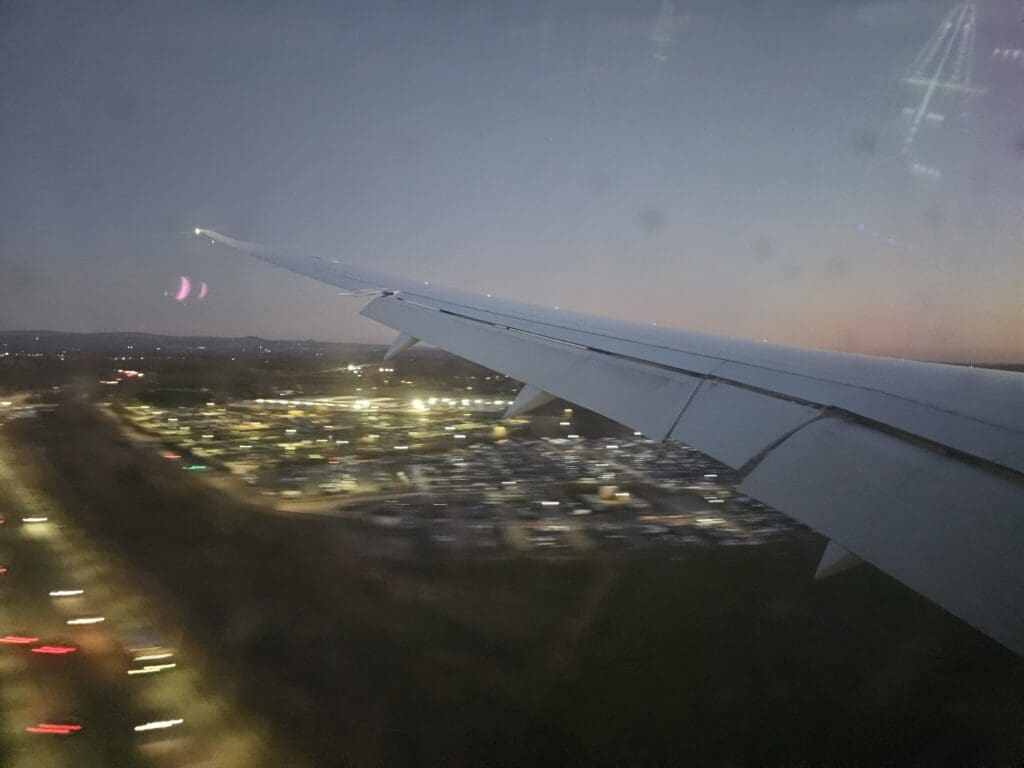
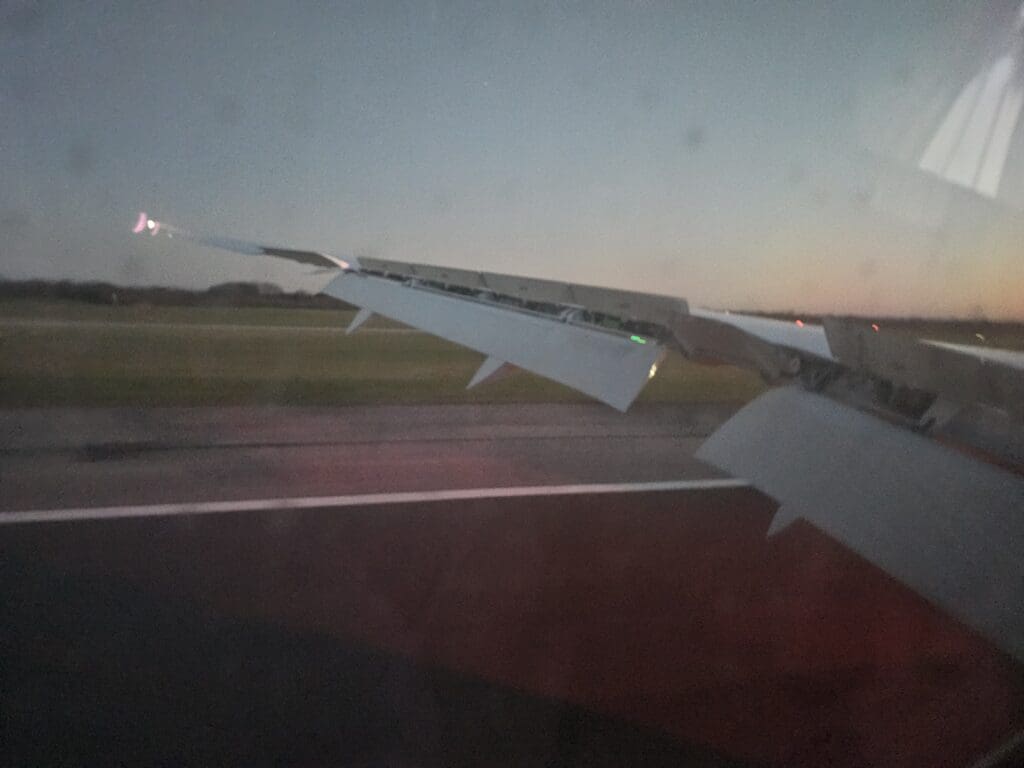
Ten minutes after touching down, the Dreamliner pulled into Stand 110 at Terminal 2’s newer pier and came to a halt at 1838. That day, thanks to our punctual departure from Doha and the shorter-than-usual flight time, the Dreamliner came to a halt an impressive 47 minutes ahead of schedule. Perhaps desperate to end their long journeys from across Asia, at that time, many of my fellow passengers immediately jumped up and sprang into action, retrieving their bags from the overhead lockers and clogging the aisles. Knowing that there would likely be a wait in the baggage collection hall, and confident that there would not be too much waiting at the immigration e-gates, I remained firmly seated until disembarkation commenced and the queue in the aisle started to budge. Fortunately, this did not take too long, and after a few minutes, the queue began to move, at which point I stood up, retrieved my backpack from the overhead locker and began to shuffle down the aircraft.
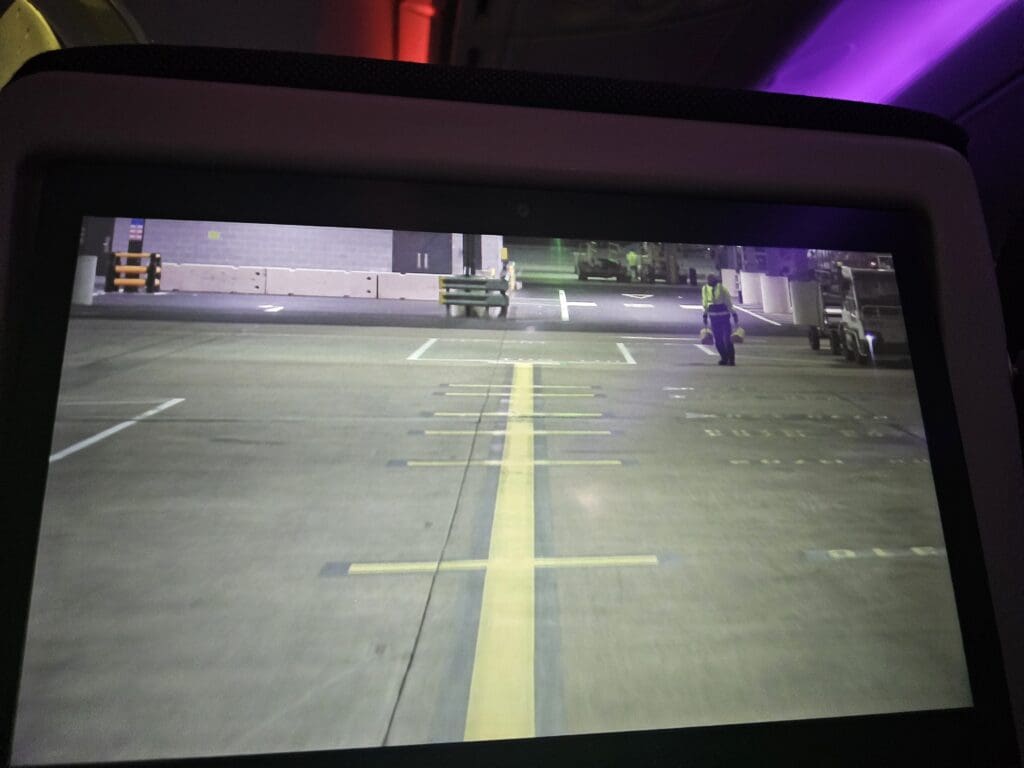
After thanking the various crew members as I trekked down the cabin, I soon stepped off the aircraft and made my way into the terminal before commencing the long walk to Terminal 2’s large and slightly spartan immigration hall. Thankfully, there were no queues at the e-gates and I was able to scan my passport without issue before I headed down the escalators to the baggage collection hall. Fortunately, my small suitcase was one of the first bags to appear, and so wasting no time, I soon picked this up, made my way through customs and reached the quiet landside arrivals area, heralding the end of my trip with Qatar Airways.
Summary
Starting with the positives, my experience with Qatar Airways was, for the most part, positive. The seat was comfortable enough, the inflight entertainment system was very good, and the catering left me with few complaints given the length of the flight. Whilst there were a few areas where I feel that the airline could improve and perhaps get itself more on par with competitors Emirates and Etihad Airways (controversial statement, I know!), I had a decent experience and would be happy to fly with Qatar Airways again. That said, I have to say that other than the odd friendly crew member, I found most flight attendants on both of my flights to be a little cold and distant, and not nearly as friendly and welcoming as the crew that I have encountered on many other airlines.