A Quick Arabian Hop: Muscat to Dubai on an Oman Air Boeing 737 MAX
You can read all the background to my trip on my Oman Air Boeing 787-9 Dreamliner report here!
Following a short overnight flight from London, the Oman Air Boeing 787-9 Dreamliner that I had had the pleasure of flying came to a halt at Stand 403, pulling up next to an Ascend Airways Boeing 737 MAX 8 that would soon head off to Lucknow on behalf of Oman Air. Arriving almost thirty minutes ahead of schedule, by the time I had made it into the terminal, my 90-minute connection had been extended to a comfortable 110 minutes. Thus, once inside the modern surroundings of C Pier, I was in no major rush to powerwalk through the terminal to make it to my next flight. From the gate, I followed the signs and crowds and made a fairly long walk to the terminal’s central hub, which is home to passport control and security. As seems to be the norm in this part of the world, all those simply transiting through Muscat must pass through security before boarding their next flight. However, seeing as I had a fair amount of time on my hands, this was no major issue whatsoever.
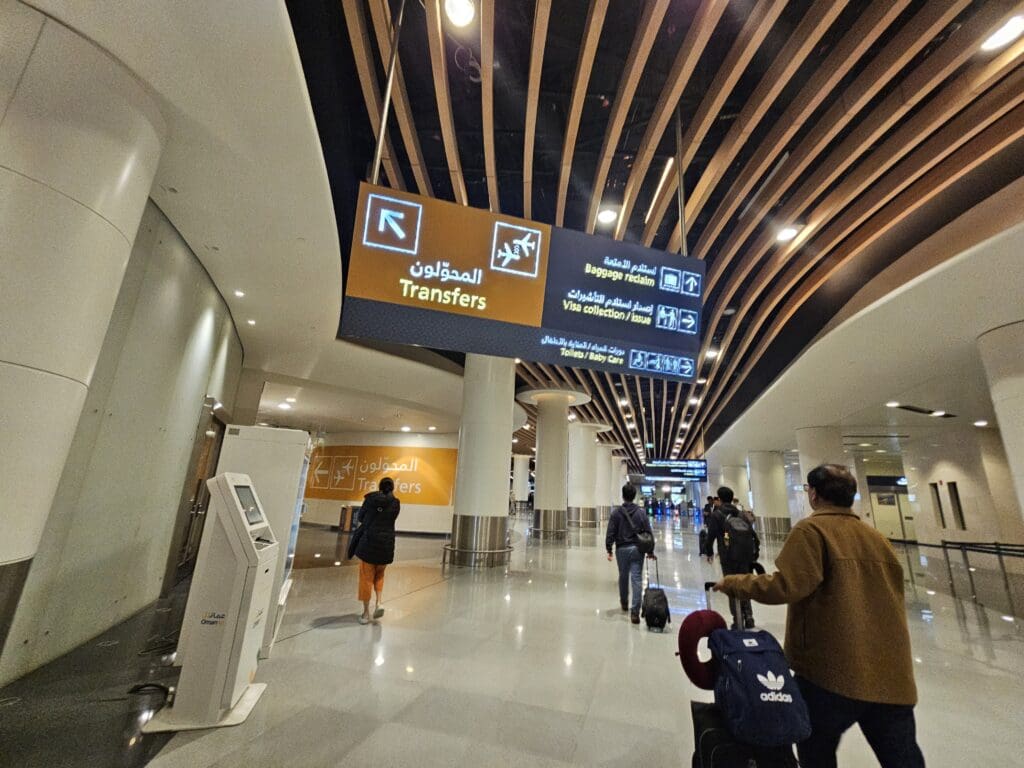
Upon making it to the transit security checkpoint, I tapped my boarding pass on one of the automated gates, which promptly opened and enabled me to join one of the two snaking queues leading up to the security checkpoints. Unfortunately, this line resembled a chaotic scrum or ruck, and many passengers seemed to be in a frantic rush to pass through as soon as possible, and I spent my ten minute wait attempting to guard my position from multiple passengers who attempted to push in – doing so to varying levels of success. Fortunately, once I made it to the checkpoint, I was able to pass through this quickly and easily, with no need to remove electronics or liquids from my bag.
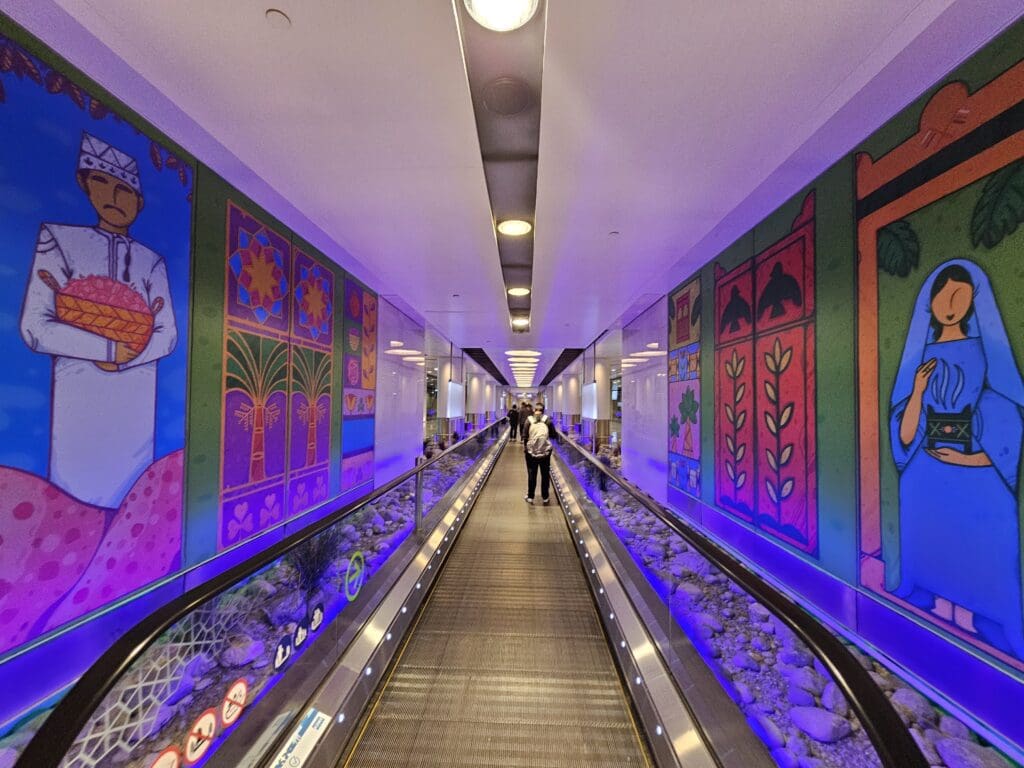
Welcoming its first passengers in 1973, Muscat International Airport has long played an important role in connecting Oman with the world. Almost nine years had passed since my last trip through the airport back in August 2016, and since then, things had changed exponentially. During my trip from Bangkok to London Heathrow with Thai International Airlines and Oman Air, I found the airport’s terminal to be small, cramped and dated. Furthermore, lacking any jetbridge-equipped gates, passengers were subject to bus rides to and from aircraft, and exposed waits in the desert heat and sunshine. However, in March 2018, operations shifted to a much larger state-of-the-art terminal on the other side of the airfield, and I was eager to explore the sights and delights of this new terminal during my short transit. Wandering around, my first impressions of this now seven-year-old terminal were very good, and I found this to be bright, airy, spacious and clean. Furthermore, whether it be through sand dune-shaped benches, tall palm trees, displays of local art and artefacts, or the local designs that are incorporated into the terminal’s design, this has a uniquely Omani feel.
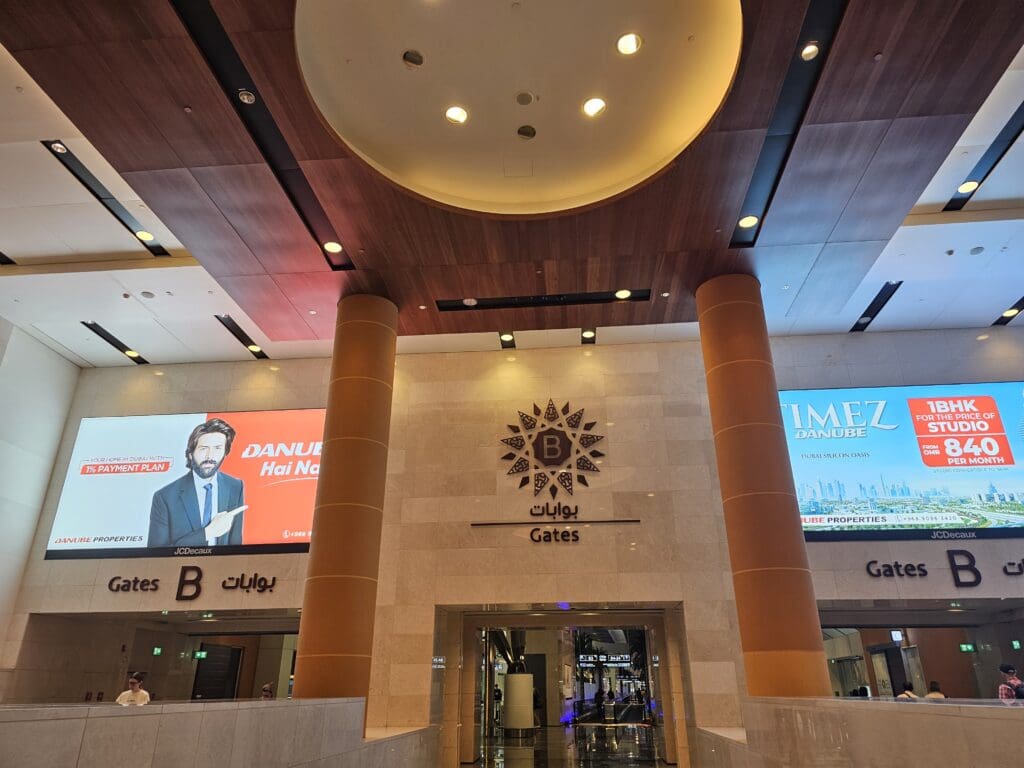
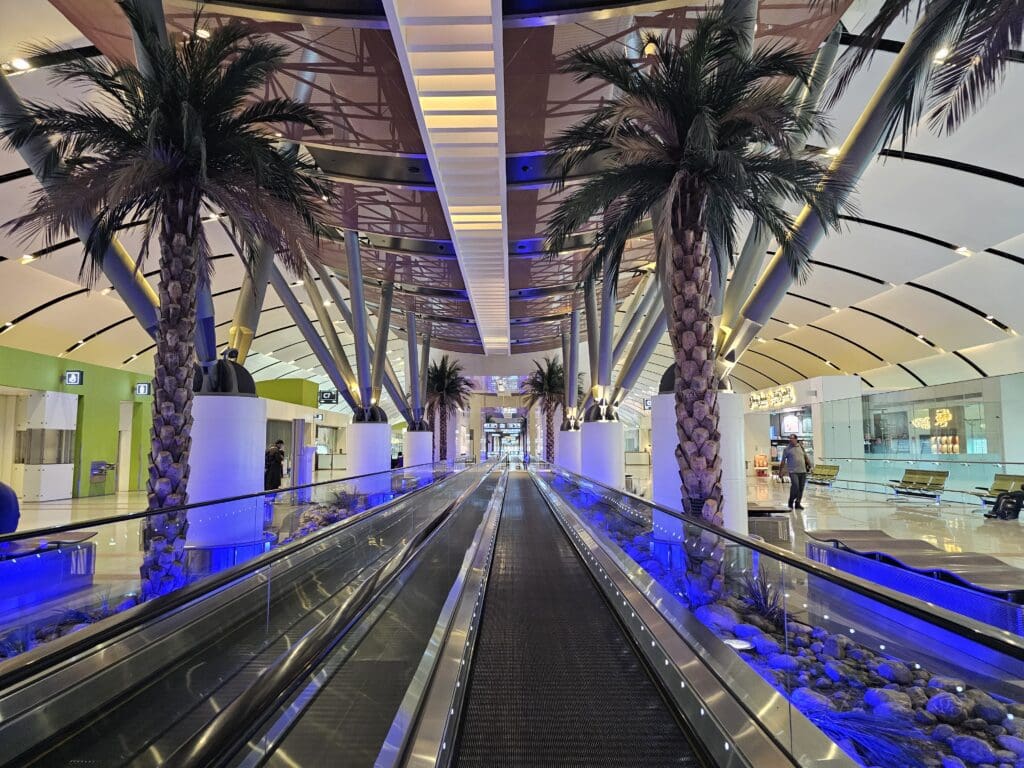
Covering an area of over 580,000 square metres, the terminal is significantly larger than its predecessor and features three piers which stretch out from its central hub. Once airside, passengers emerge in the central hub, which is home to the majority of the terminal’s facilities. These include a large duty free outlet and several smaller shops that sell a variety of items, including local goods and souvenirs. This also features a food court which is home to several eateries, including international chains such as Baskin-Robbins, Caffè Nero, KFC, McDonald’s and Tim Hortons. Meanwhile, the odd café and shop can also be found on the terminal’s piers. Other than these, the terminal features a small spa operated by multinational airport spa chain Be Relax, and an Aerotel for those with long connections. Importantly, plenty of charging points could be found throughout the terminal, and I found the fast and complimentary wifi to work well. However, this did require a verification code, which could be received either via text or from one of the kiosks dotted around the terminal.
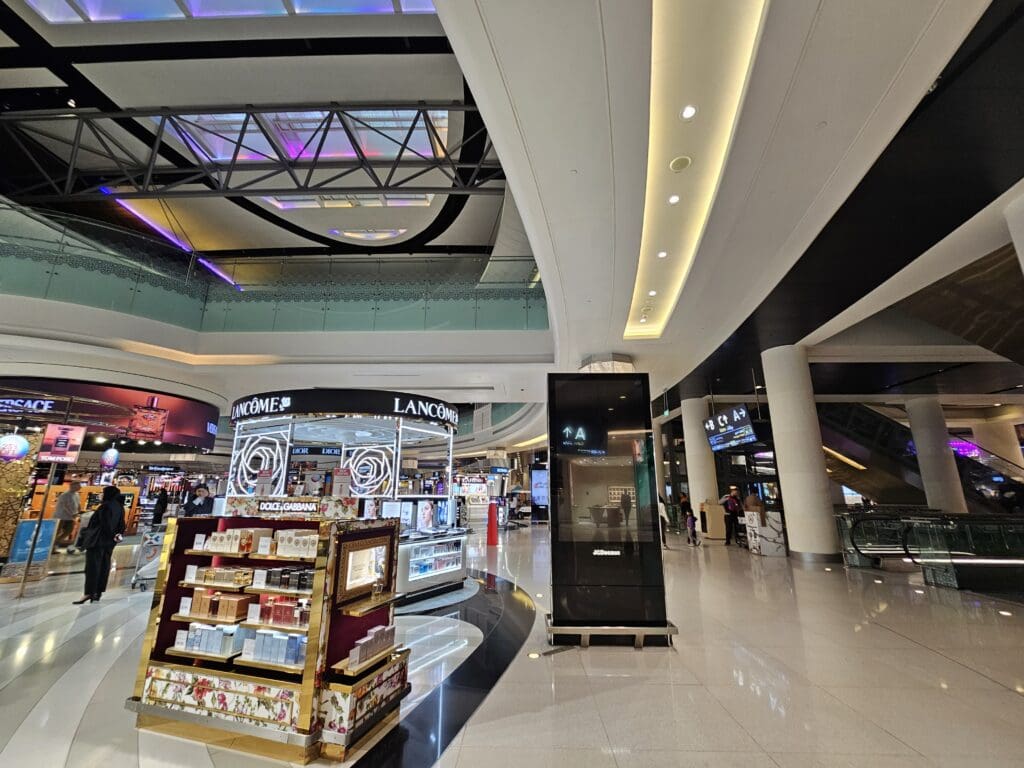
Despite my largely positive experience, I do have to say that airside views are limited and can only be had from the holding areas of each gate, which can only be reached by those departing through these, or from a small portion of the food hall. Furthermore, many items for sale seemed to come with a significant airport markup, with a coffee from the local branch of Kahwaji Café setting me back an eyewatering £7!
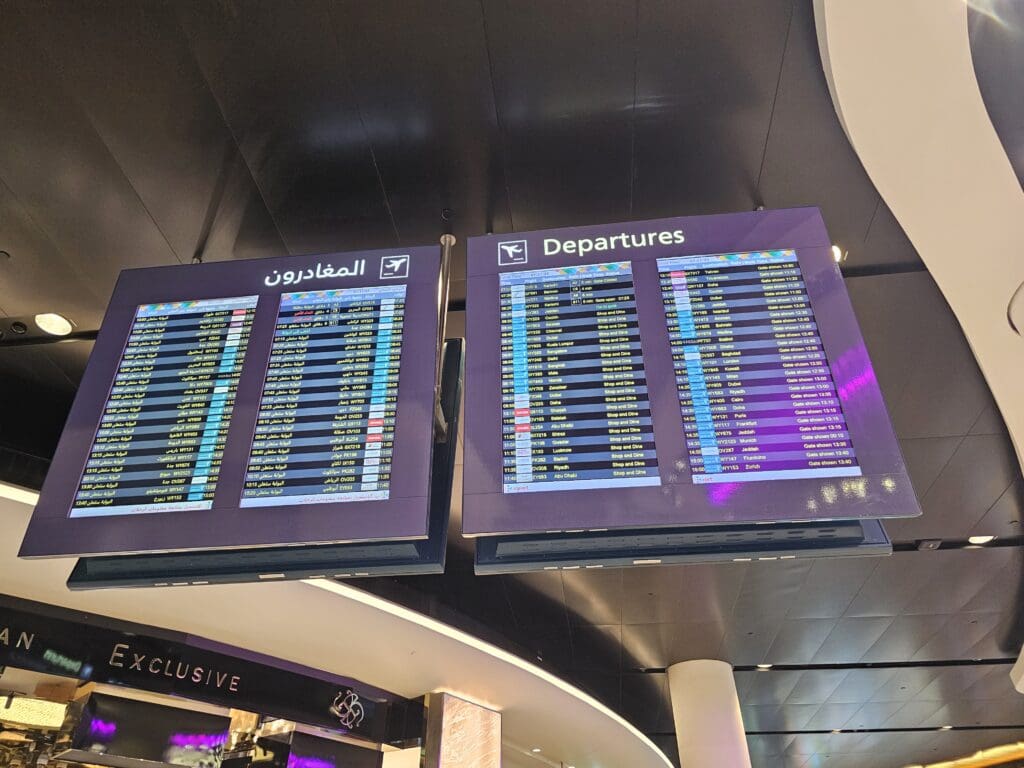
Looking at the departure boards, it was clear who ruled the roost in Muscat, and unsurprisingly, the majority of departures were operated by hometown airline Oman Air, followed by local low cost carrier SalamAir. That morning, most flights seemed to be bound for destinations across India, the Middle East and Pakistan, although departures to the likes of Bangkok, Kuala Lumpur, Manila and Zanzibar could also be seen on the departure boards. Alongside Oman Air and SalamAir, flights operated by Air Arabia, Air India Express, AirSial, FlyDubai, Gulf Air, Pakistan International Airlines, Qatar Airways, Sepheran Airlines and Taban Airlines could also be seen on the departure boards.
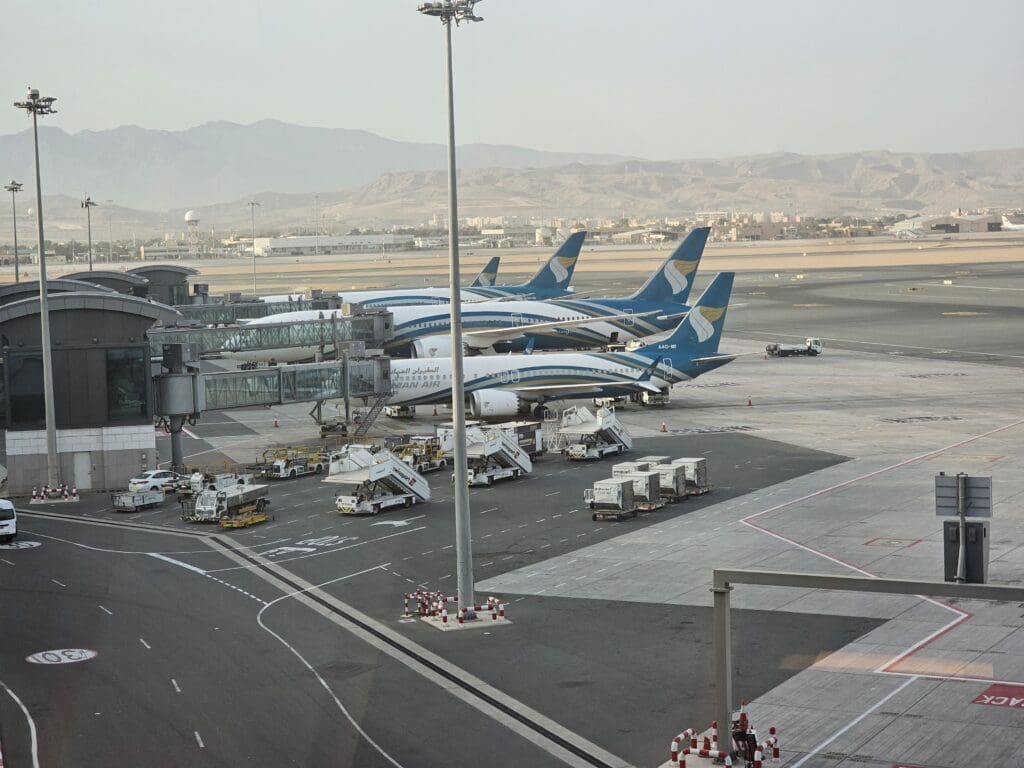
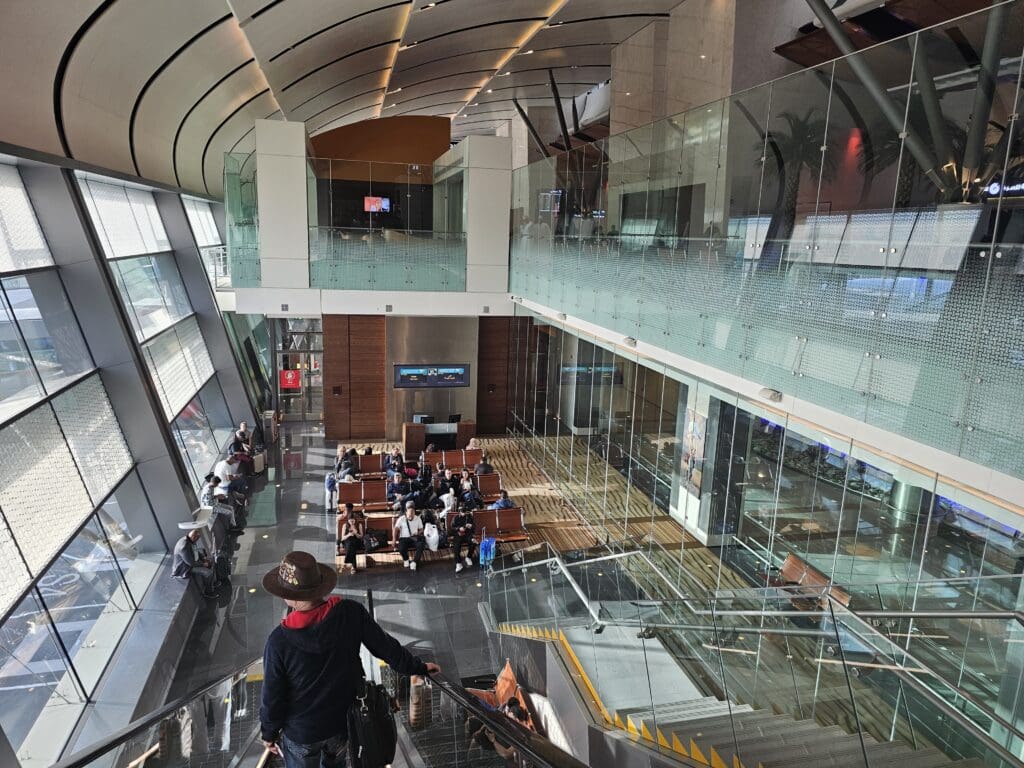
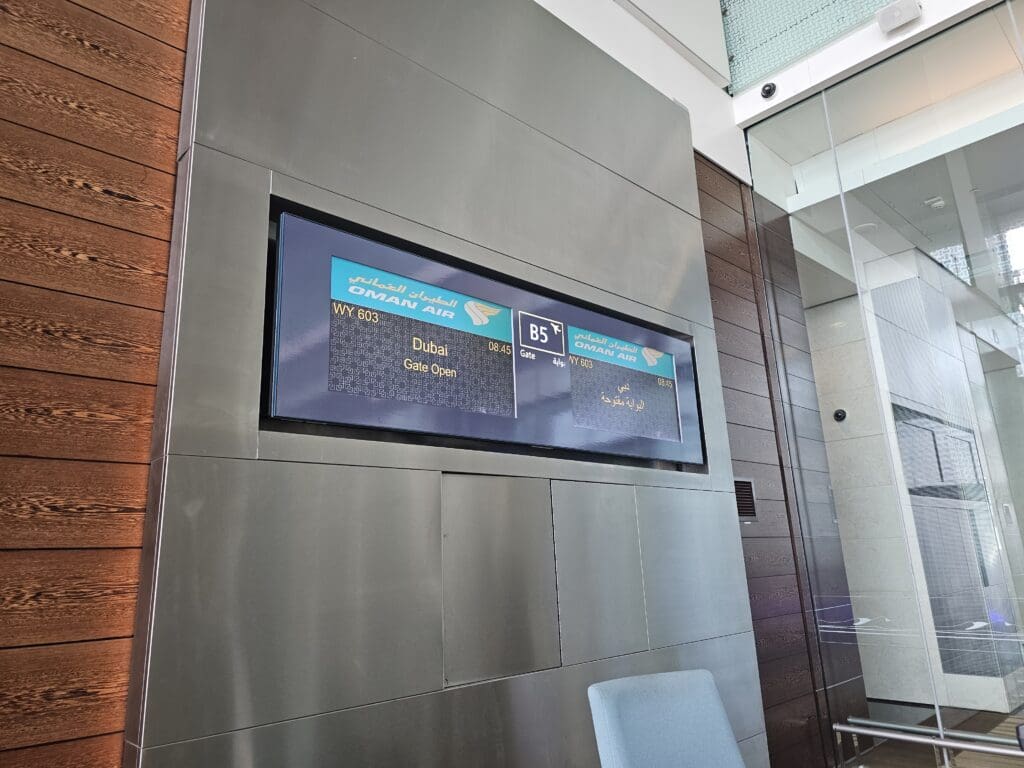
In Muscat, all passengers must wait in a holding area before boarding their aircraft, and this opened an hour before departure at 0745. Having had a night of very little sleep, one I had successfully wandered around the terminal, I joined the queue that led up to one of the two gate podiums. After shuffling forward for a few minutes, the rather cool gate agent scanned my boarding passport and checked my passport before I was free to continue down the escalators and enter the boarding area. Fortunately, the holding areas are a little better than at some airports and feature toilets, charging points and a good view of the aircraft outside.
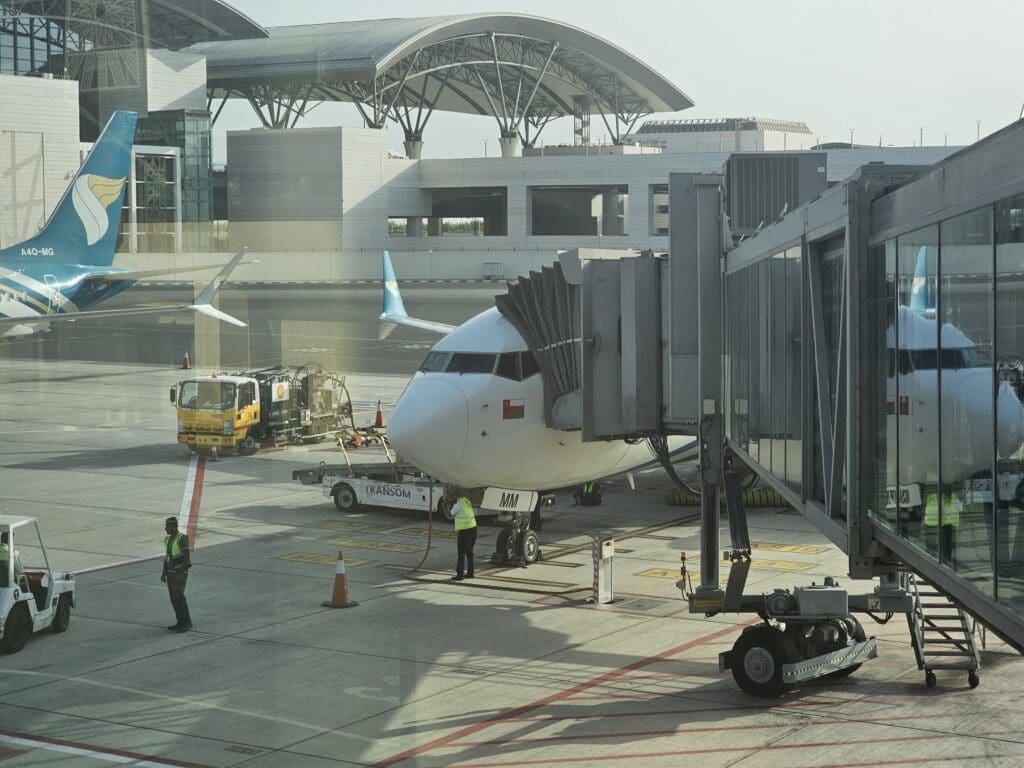
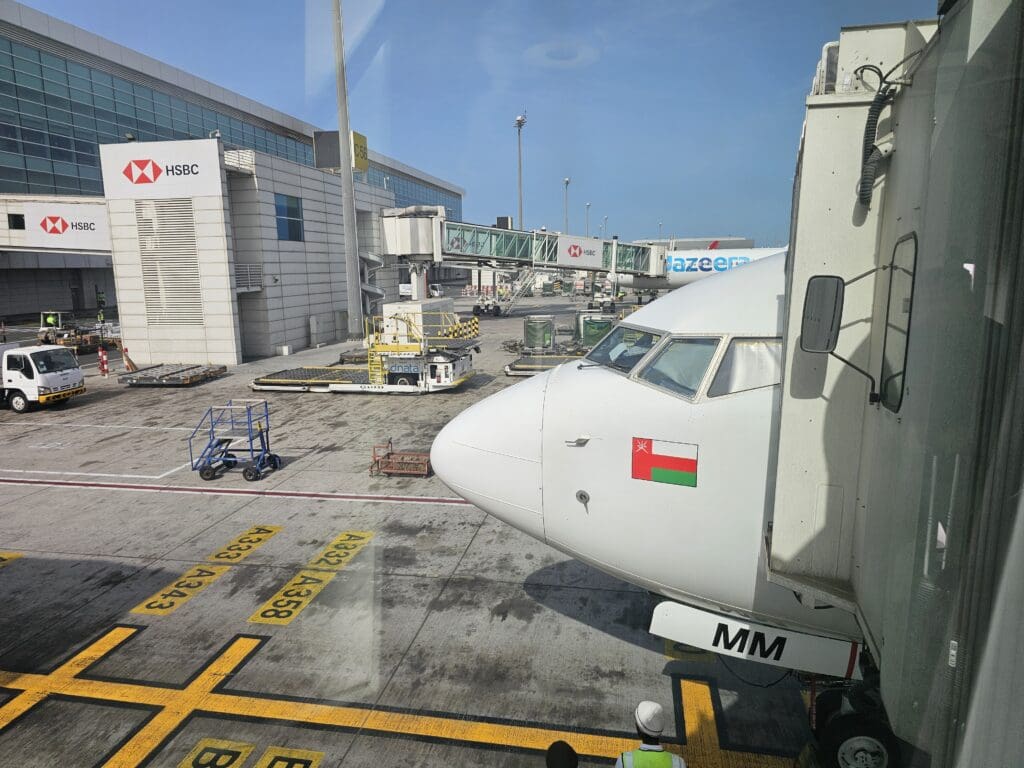
Once I had made it down the escalators, I caught my first glimpse of the aircraft that would take me to Dubai that morning, standing at Stand 605. This came in the form of Boeing 737 MAX 8 A4O-MM, which had arrived earlier that morning from Moscow Sheremetyevo. Assembled thousands of miles away at Renton in the Pacific Northwest, this jet first took to the skies in December 2019 and was thus a little over five years old at the time of my flight. However, the jet had a somewhat turbulent start to its career. Rather than being delivered to Oman Air, the then-ongoing grounding of the type, combined with the pandemic-induced downturn, meant that this remained on the ground in the United States. In January 2020, the aircraft was ferried for long-term storage at Grant County Airport in the Central Washington city of Moses Lake. Despite the Boeing 737 MAX groundings being lifted in 2021, Oman Air opted to continue to delay delivery of the aircraft, and this remained on the ground in Washington for almost three years before being ferried to Victorville in October 2022 in preparation for its eventual delivery. In early 2023, the type returned to Moses Lake and then to Boeing Field, and in February 2023, this was finally shuttled to Muscat via Glasgow, and pressed into service. In the week before my flight, the aircraft had visited Bahrain, Bangalore, Moscow Sheremetyevo, Phuket and Salalah, flying a total of sixteen sectors.
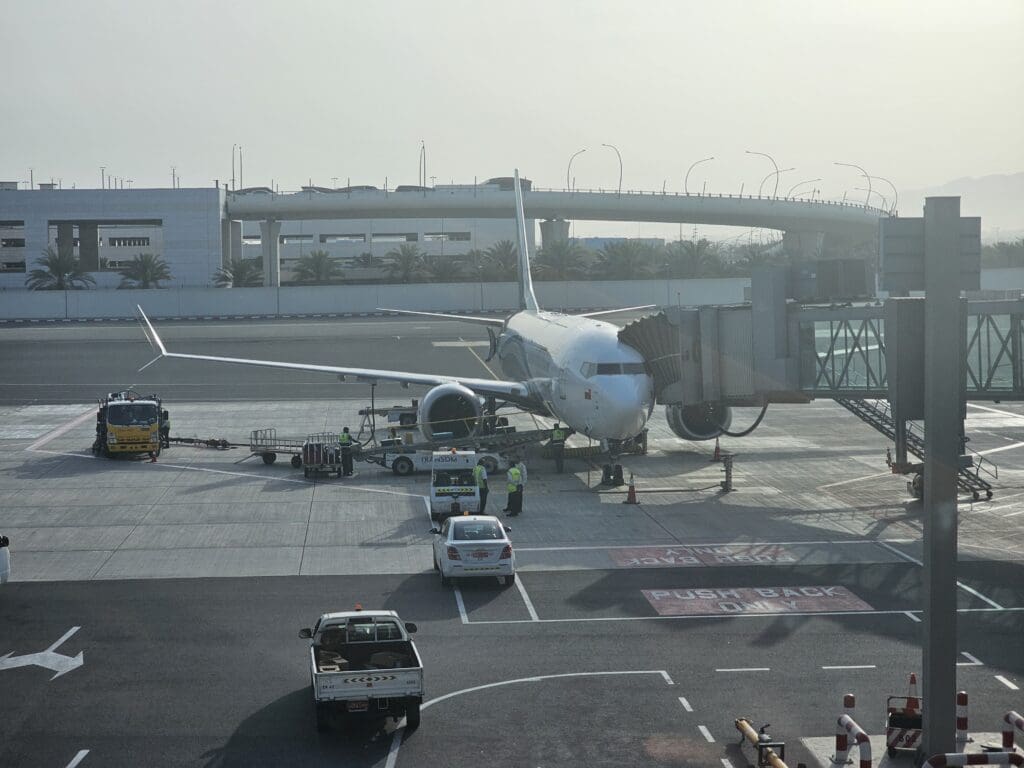
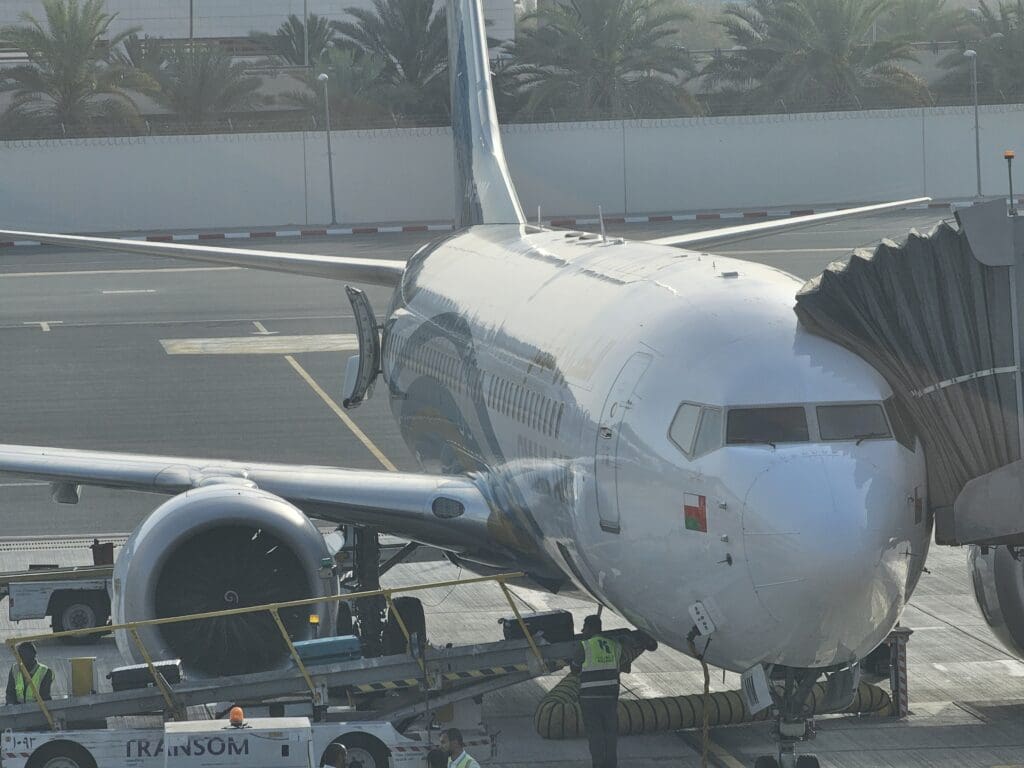
Seeing as the morning Dubai service’s departure time is well-aligned to enable passengers to connect from destinations across Europe and South Asia, plus with plenty of point-to-point traffic between Muscat and Dubai, I had expected the flight to be reasonably busy. Indeed, as I sat and waited, the holding area became rather full, and it wasn’t long until all benches were taken, leaving latecomer passengers to either remain standing or sprawl out across the floor. Fortunately for those who had failed to bag a seat, 25 minutes after the holding area opened, at 0810, one of the two gate agents shouted for passengers in Business Class to board, which was very shortly followed by those seated towards the rear of the Boeing and in Groups 3 and 4. With this being my call to board, wasting no time I headed down the glass jetbridge and towards the waiting Boeing 737 MAX 8.
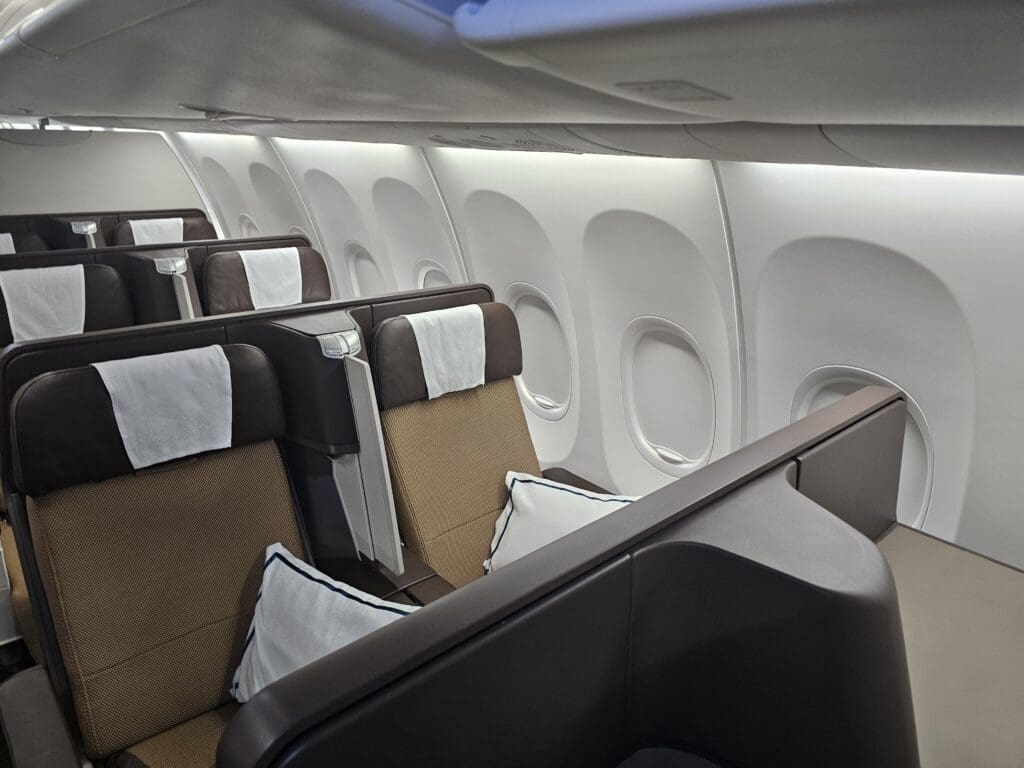
Following a very short wait at the cabin door, I stepped into the Boeing’s forward galley, which, following my overnight ride on the Dreamliner, seemed to be comparatively minuscule! As soon as I stepped onto the aircraft, I received a friendly greeting from the Cabin Director and with nowhere else to go, I turned right and entered the empty Business Class cabin. There, three rows of Collins Aerospace Air Rest seats in a 2-2 configuration could be seen. At first glance, these seats seemed to be a cut above your traditional premium economy seats but fell well below the high standards established by the Apex suites on Oman Air’s Dreamliner fleet. With that considered, I imagine that passengers on the aircraft’s longer flights may be slightly disappointed with this seat. That said, I would not have complained about sitting in one of these on the hop over to Dubai that morning! Furthermore, these are most certainly much better than any Eurobiz seat.
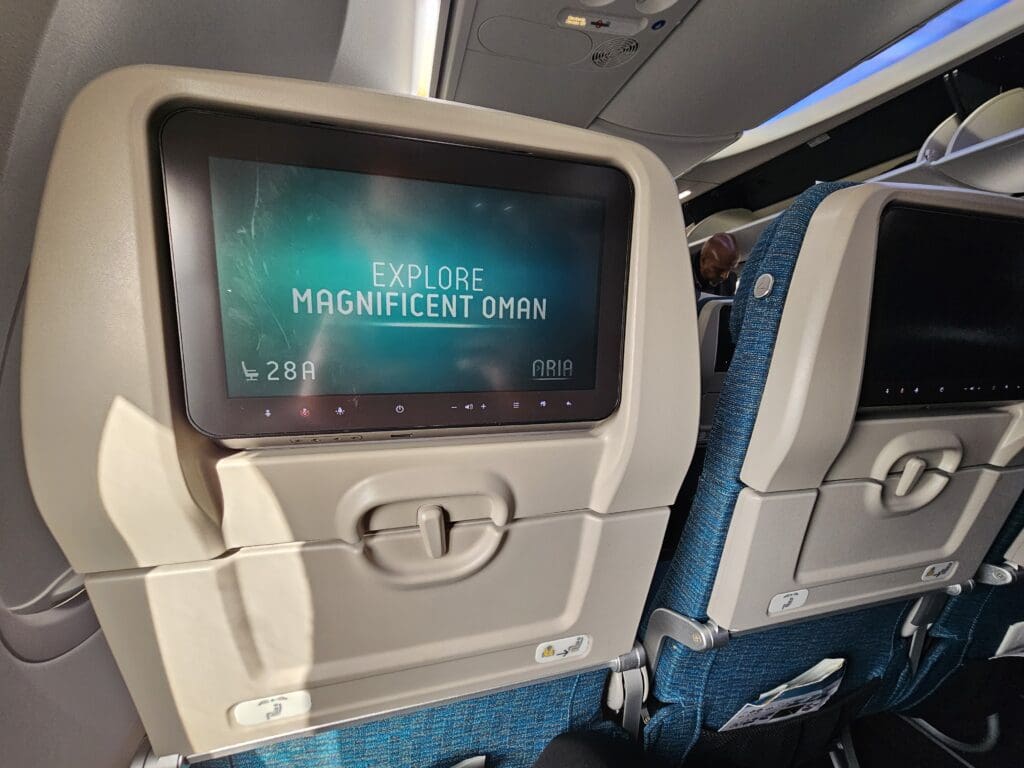
Continuing onwards, within a few seconds I arrived in the Boeing’s Economy cabin, home to 150 modern Collins Aerospace Meridian seats. Each of these was covered in the same dark green fabric as seen on the airline’s Dreamliner fleet, and comes with an adjustable headrest, a 10.2-inch wide inflight entertainment screen, a coathook, a tray table, a seatback pocket, a USB-A port and two universal plug sockets for every two seats.
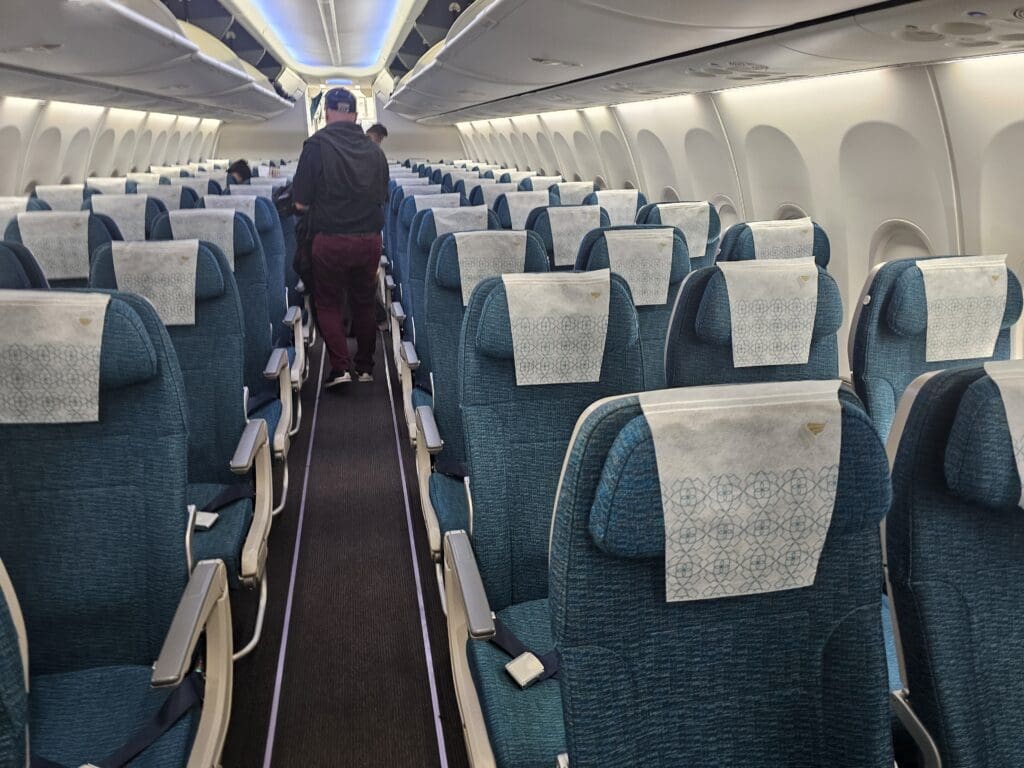
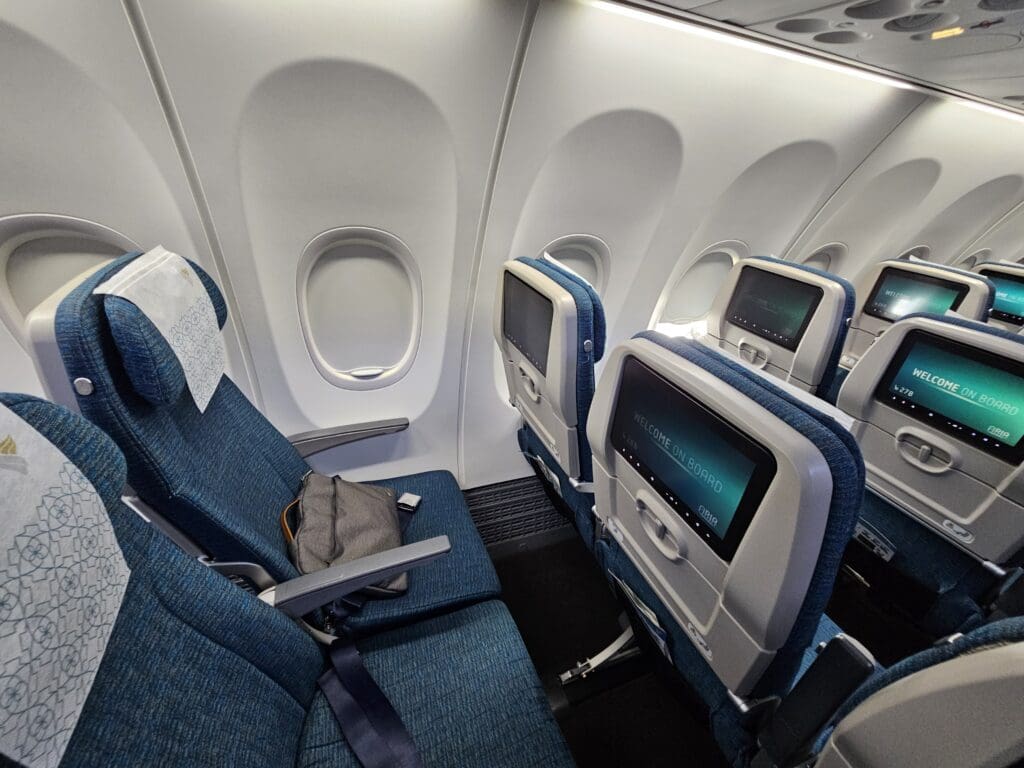
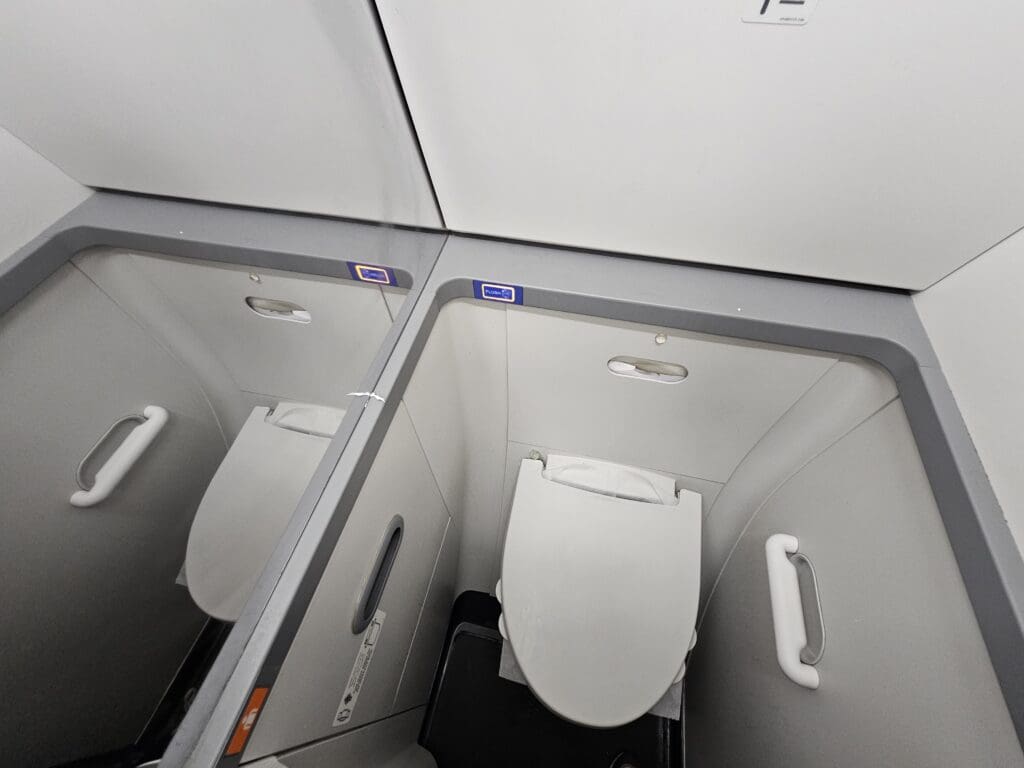
Despite my friendly welcome from the Purser, I received a mixed bag of greetings from the three other flight attendants as I journeyed down the Economy cabin to my seat. Contrasting with the warm temperatures of the terminal, the cabin was refreshingly chilly, and all window shades had been closed to prevent the bright morning sunshine from heating it up. Meanwhile, Oman Air’s calming, if not repetitive, boarding music rang out over the cabin speakers, providing a soundtrack to boarding. Being one of the first Economy passengers to board, I reached Seat 28A in no time whatsoever and placed my backpack into one of the large overhead lockers. Seeing as I would be unlikely to get the opportunity to do so during the short flight, once I had stowed my bag, I decided to head rearwards to explore the delights of one of the two lavatories available for those in Economy, both of which are located at the rear of the cabin. As one would hope, this was clean, stocked with the basics, and in reasonably good condition, although this did feature a few more marks and scratches than the lavatories I had visited on the slightly older Dreamliner that I had flown from London.
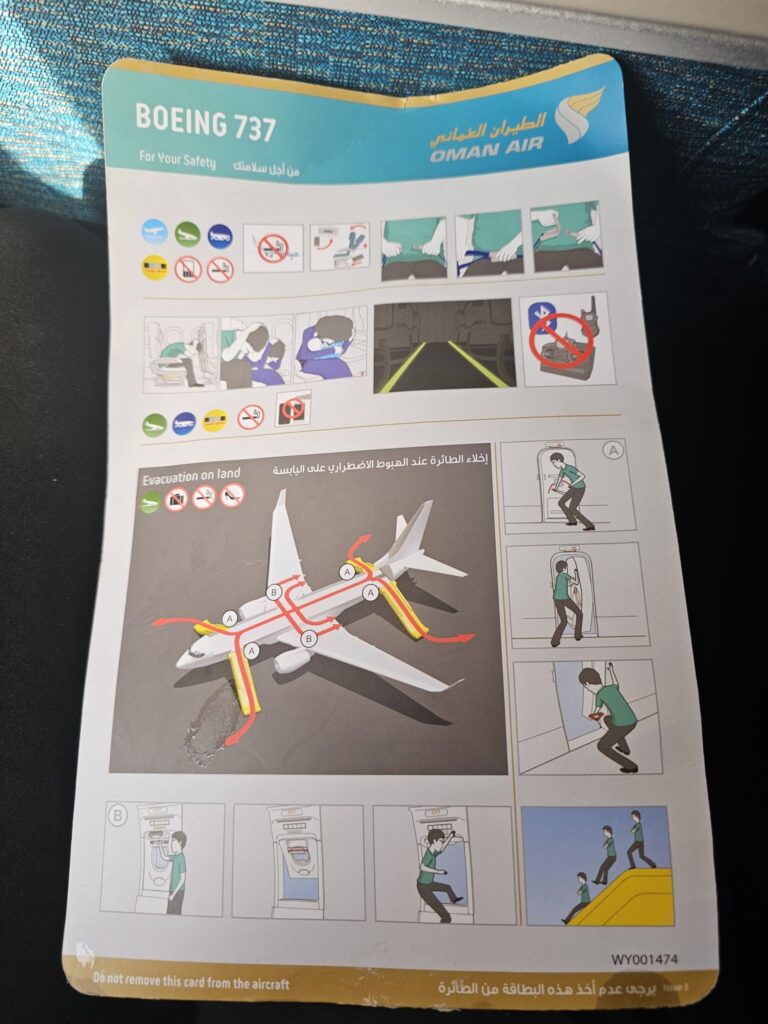
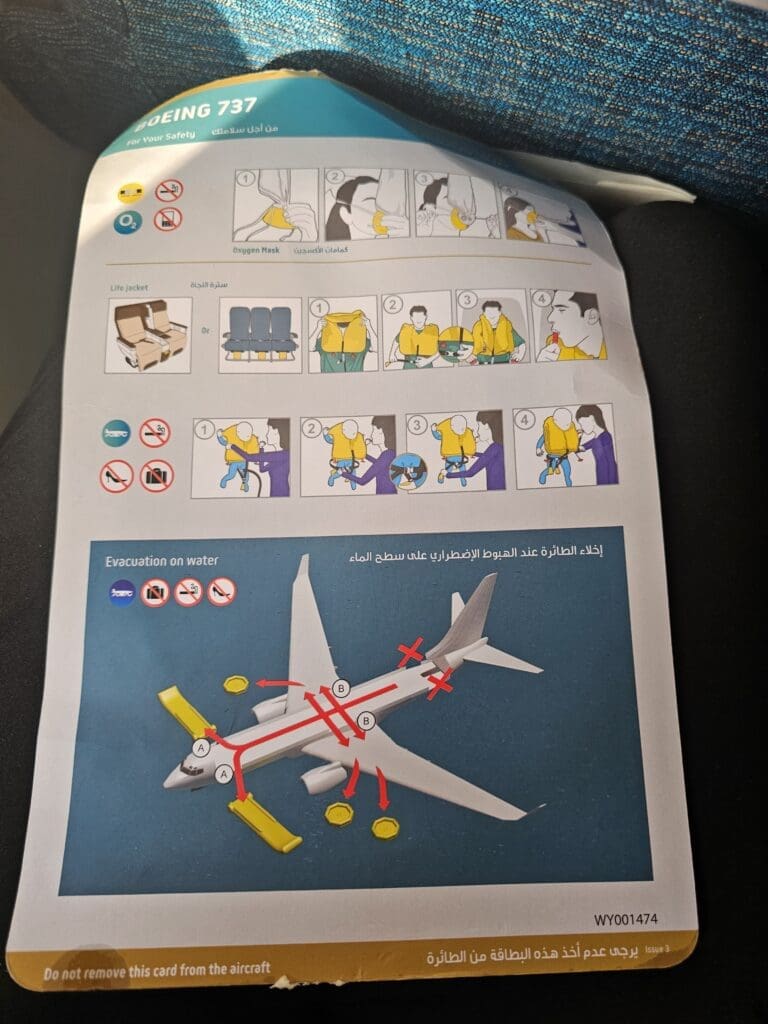
Soon returning to my seat, yet to be joined by any seatmates, I slid into this with ease, strapped myself in and settled in for the short journey to Dubai. Looking around, I was pleased to find the seat to be spotlessly clean, with the ground crew appearing to have done a fantastic job following this aircraft’s overnight slog down from Moscow. Meanwhile, looking around, nothing more than some very minor signs of wear and tear could be spotted in the area around this. As on the Dreamliner, the seatback pocket contained a rather dog-eared safety card and a sick bag, with Oman Air having halted publication of their Wings of Oman magazine during the pandemic. Turning to the slight negatives, whilst the seat was comfortable enough given the length of the flight, this did seem to be a little less spacious than that of the Dreamliner, which, may prove to be a problem for some on the aircraft’s six-hour plus sectors to the likes of Kuala Lumpur, Munich, Phuket or Rome.
As passengers filtered onto the jet, the scene in the aisle seemed to be a little chaotic, with no apparent policing of Oman Air’s cabin baggage policy leading to passengers jostling over overhead locker space, which meant that several passengers had to have their bags moved by the crew into the overhead lockers of Business Class. Soon, I was joined by two members of a large family travelling from India to Dubai, and a short time later, at 0832, the ‘boarding completed’ announcement was made. As I had expected, the flight was virtually full, with passengers hailing from a smorgasbord of European, Middle Eastern and South Asian states. Soon, one of the flight attendants performed the first announcement of the flight, this consisted of the usual welcomes, thanks and warnings, a mention of our fifty-minute flight time and 30,000 feet cruising altitude, before noting that the crew onboard can speak Arabic, English and Tagalog, with three local crew members and a Cabin Director from the Philippines. This was followed by an announcement from Captain Hamid, who introduced themselves and the First Officer, thanked passengers for flying with Oman Air, provided an update on the weather in Dubai and noted that we could expect a flight time of fifty minutes to Dubai that morning.
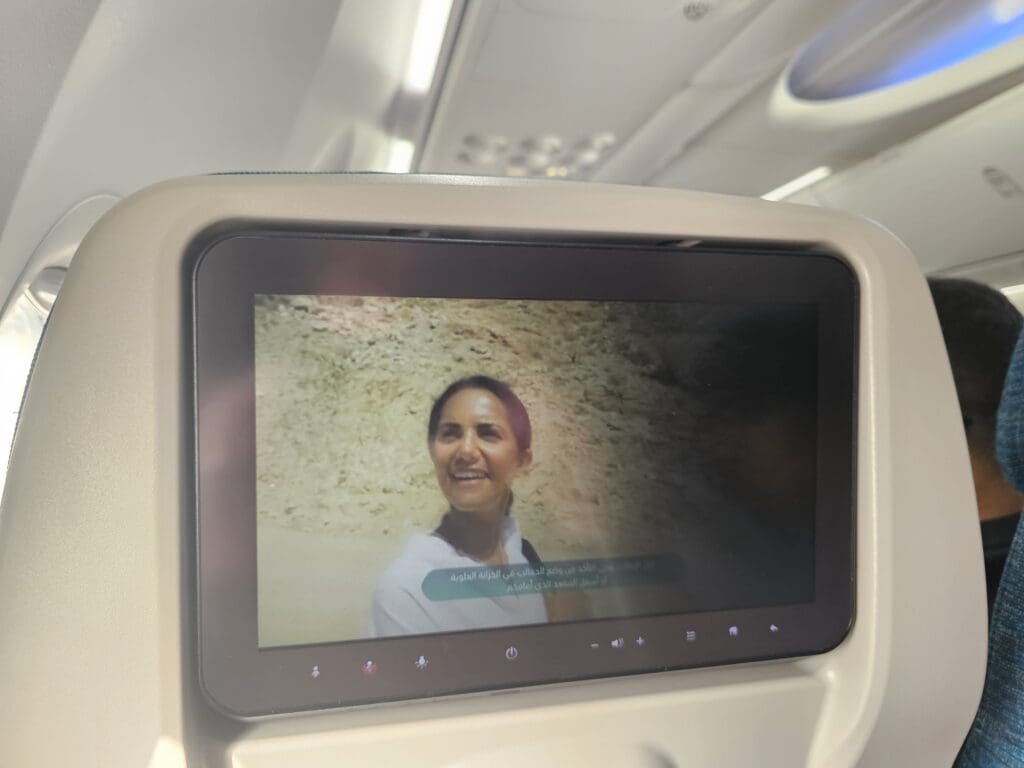
At 0840, Oman Air’s long safety video commenced, with this broadcast first in Arabic, followed by English, and accompanied by subtitles in both languages. Introduced in 2016, this video takes passengers on a journey through Oman, whilst several characters detail the aircraft’s safety features and evacuation information. As this video was played, a total of one minute ahead of schedule, a jolt could be felt as the Boeing was pushed back away from the gate, and soon, the Boeing’s two CFM International LEAP-1B engines powered into life, accompanied by a series of modern whirrs and whines. As the start-up procedure neared its end, the flaps were partially extended with a loud whine, whilst inside the cabin, the flight attendants made multiple passes to ensure that all was secure and in place for our departure.
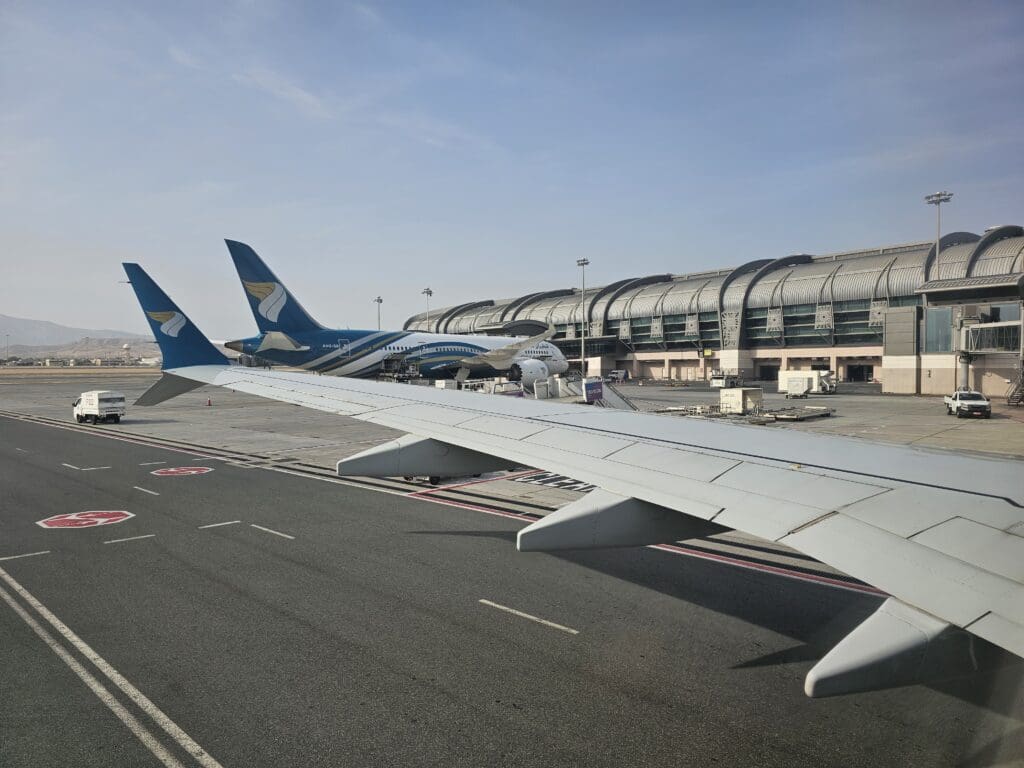
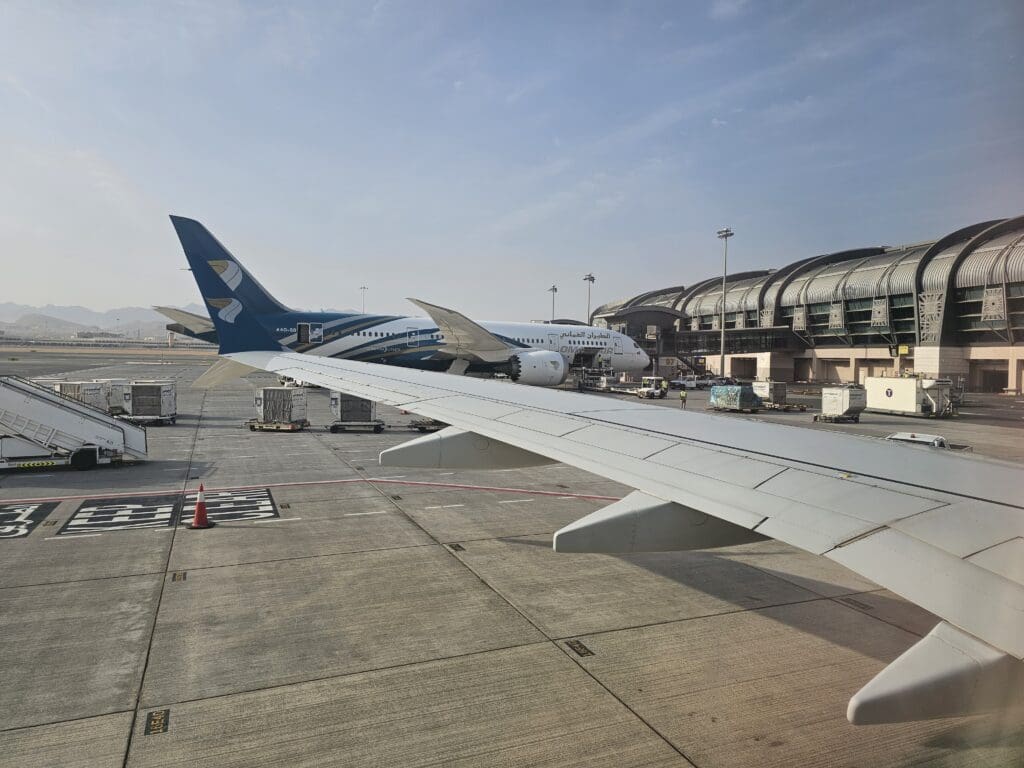
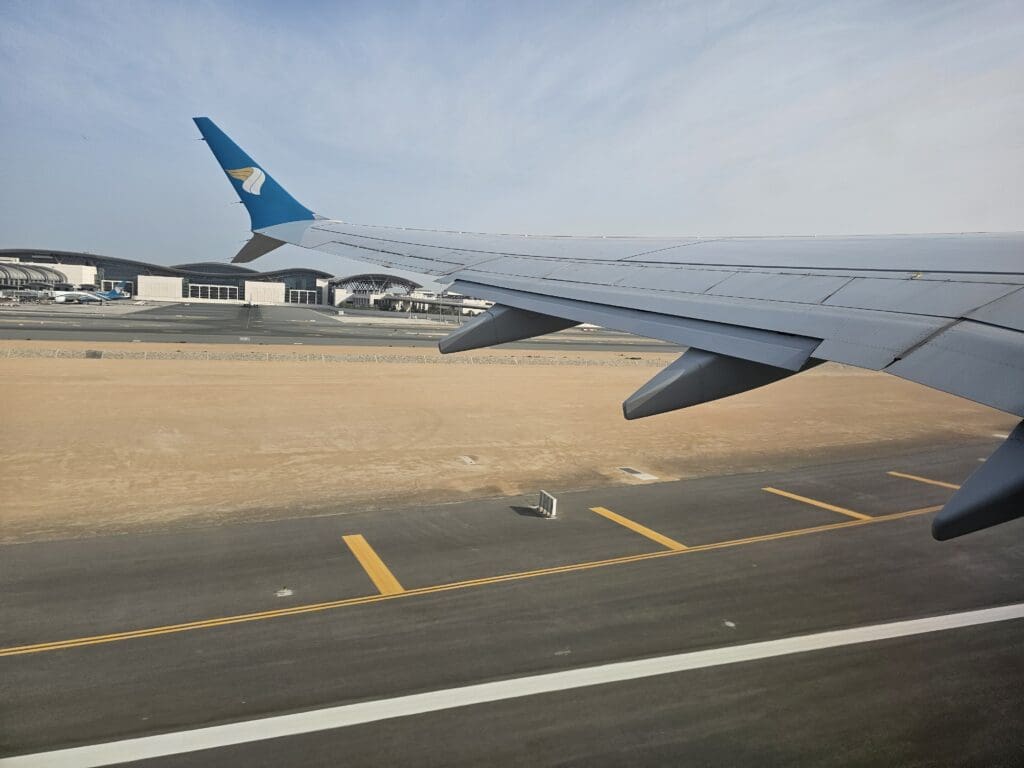
Following a short pause, the Boeing powered away from the terminal under its own steam and left the Muscat International Airport’s B Pier behind. From there, the aircraft followed a Jeddah-bound SalamAir Airbus A321neo to the end of Runway 08R, that day’s very light wind meaning that we would depart in the opposite direction from which I landed several hours earlier. Whilst those on the other side of the aircraft would have been treated to good views of the terminal and the aircraft waiting there for their next sectors to destinations across Africa, Asia and Europe, from my seat, I could see little during the taxi other than the three locally based Airbus A320 Corporate Jets operated by the Royal Air Force of Oman.
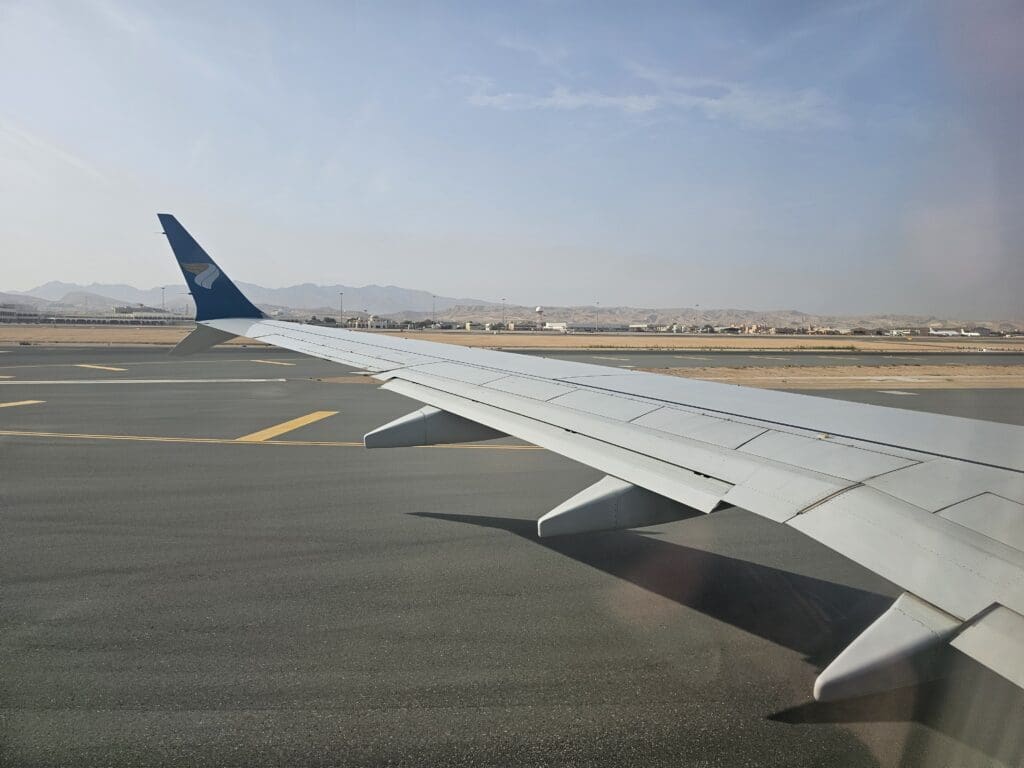
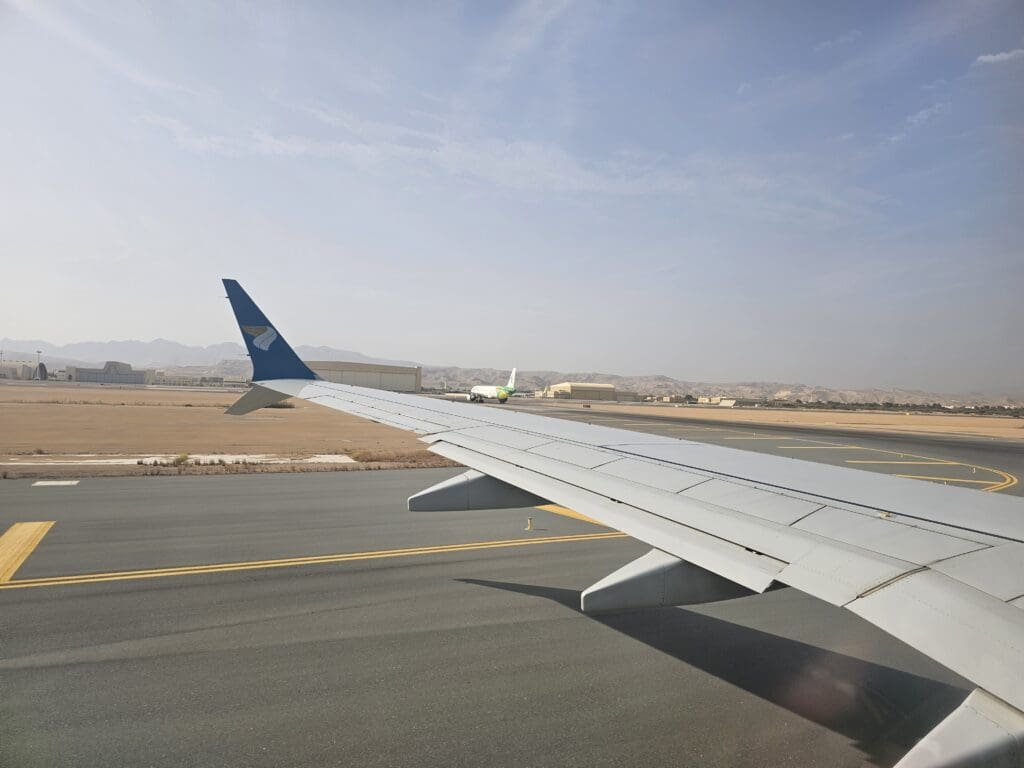
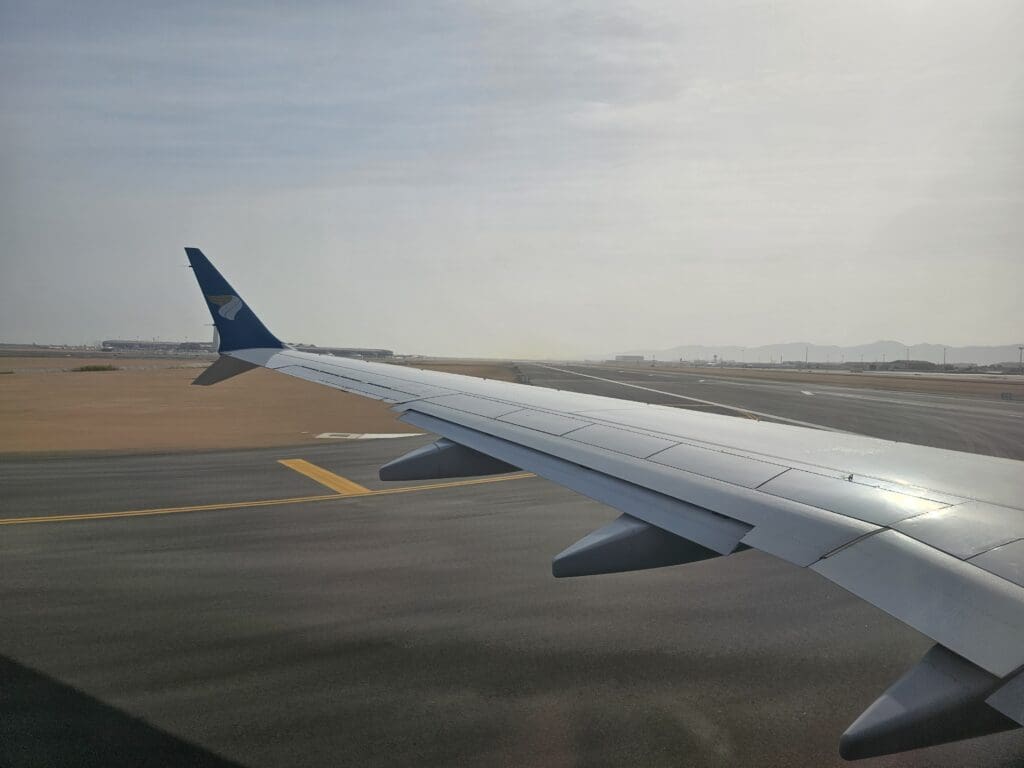
Trundling along, we soon reached the end of the runway and, with the aforementioned SalamAir Airbus already in the skies, our Boeing taxied onto this without any sort of waiting. Without coming to a halt, the Boeing’s two LEAP engines quietly whined into life and the aircraft soon performed a gentle rolling take-off. During this, the jet accelerated past the sprawl of the terminal, travelling quite some distance before finally rotating into the sunny Omani skies. Once up in the air, I caught sight of Oman Air’s only freighter, a converted Boeing 737-800, before the jet crossed over the perimeter fence and left the sprawl of the airport behind.
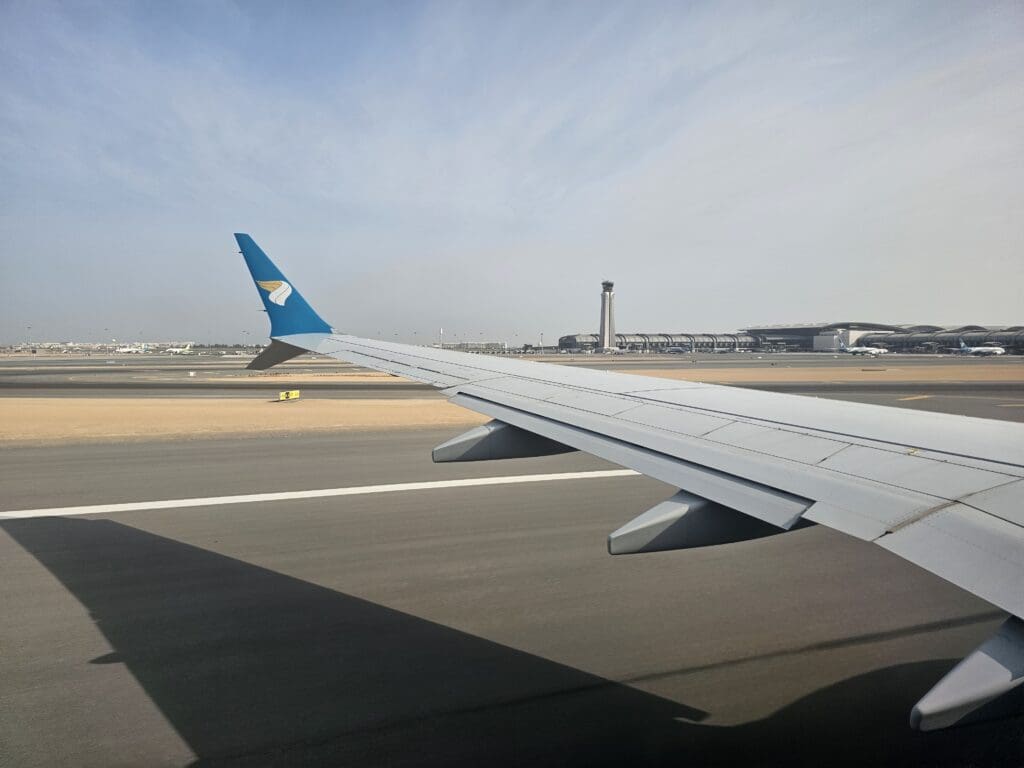
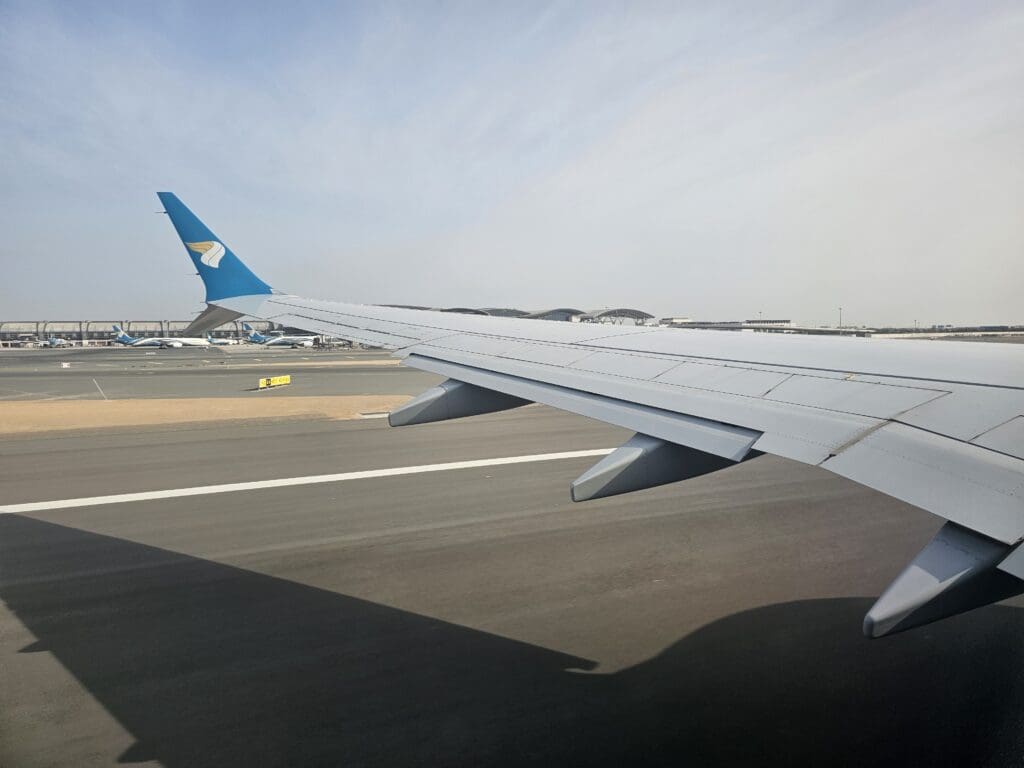
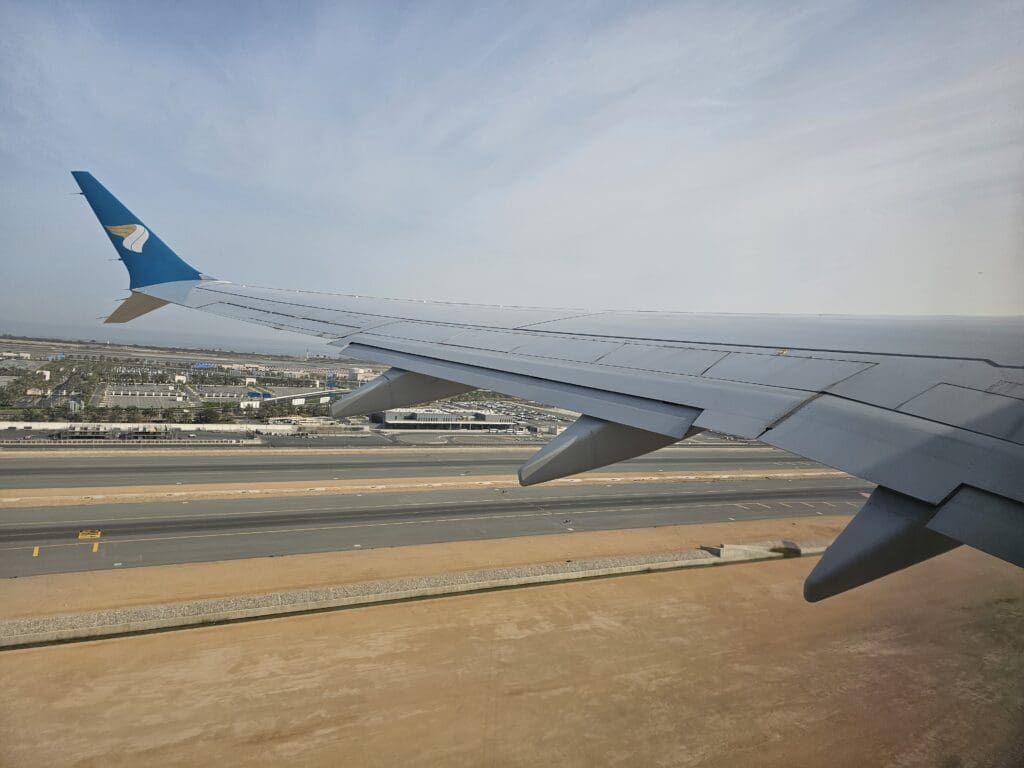
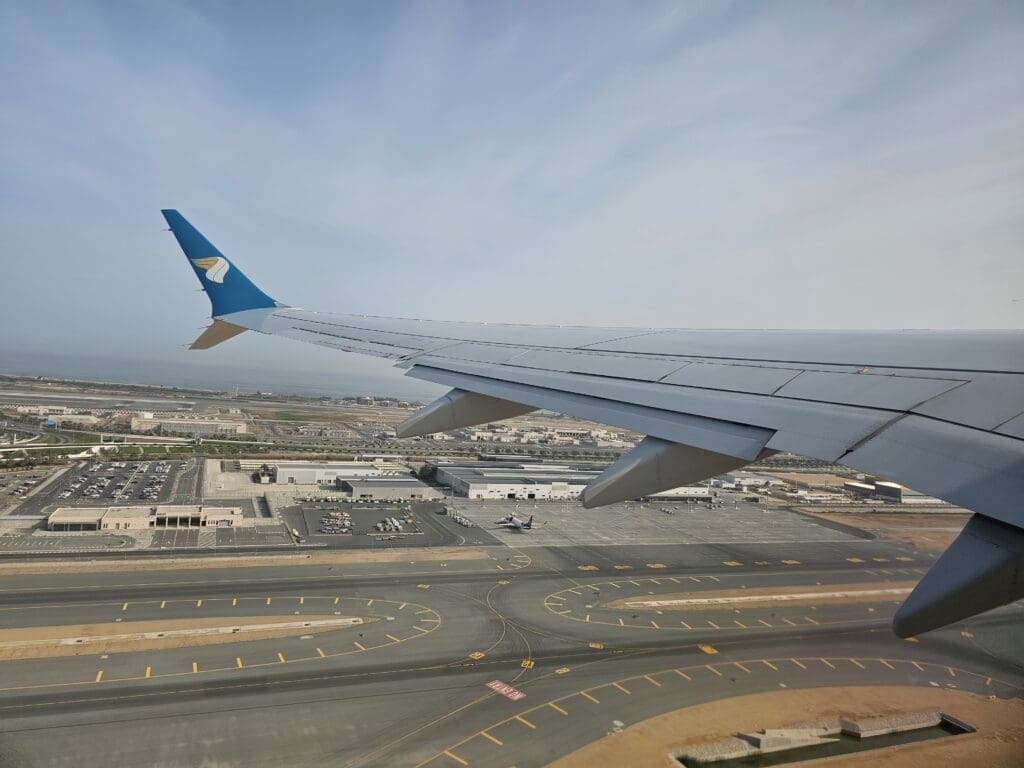
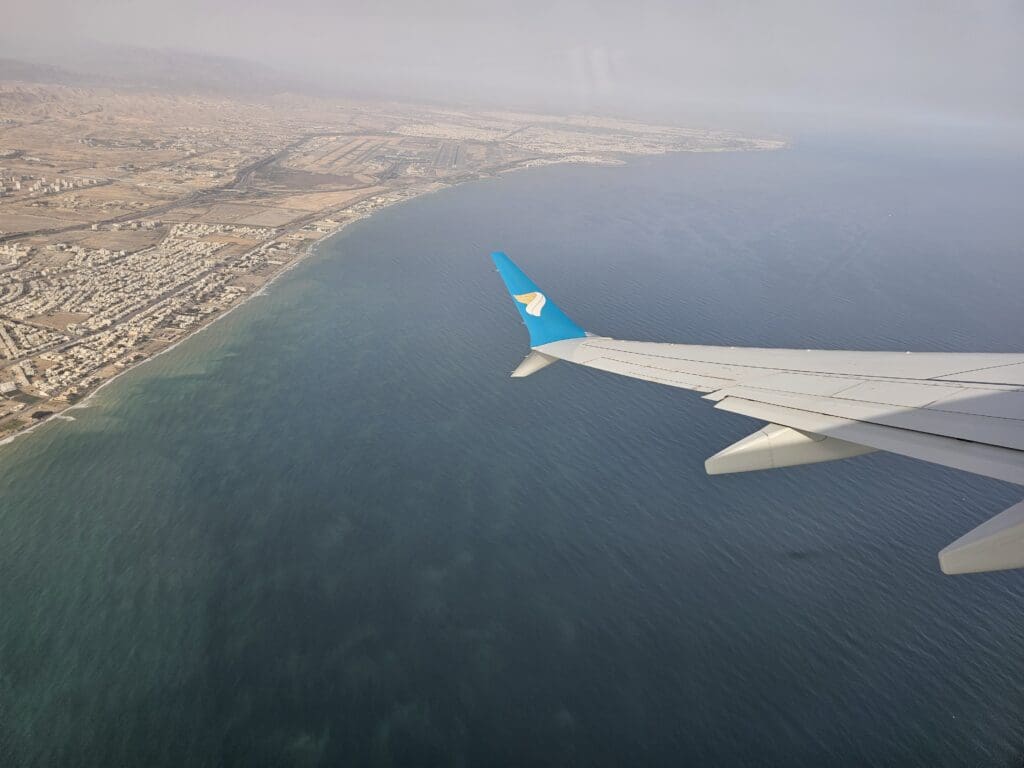
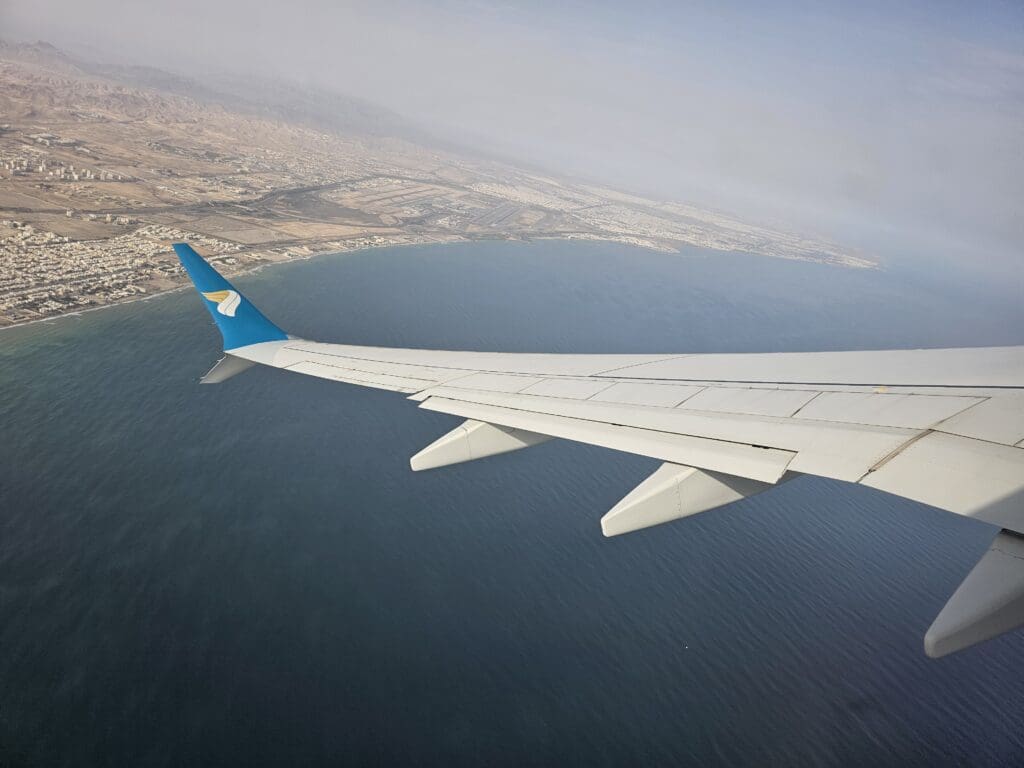
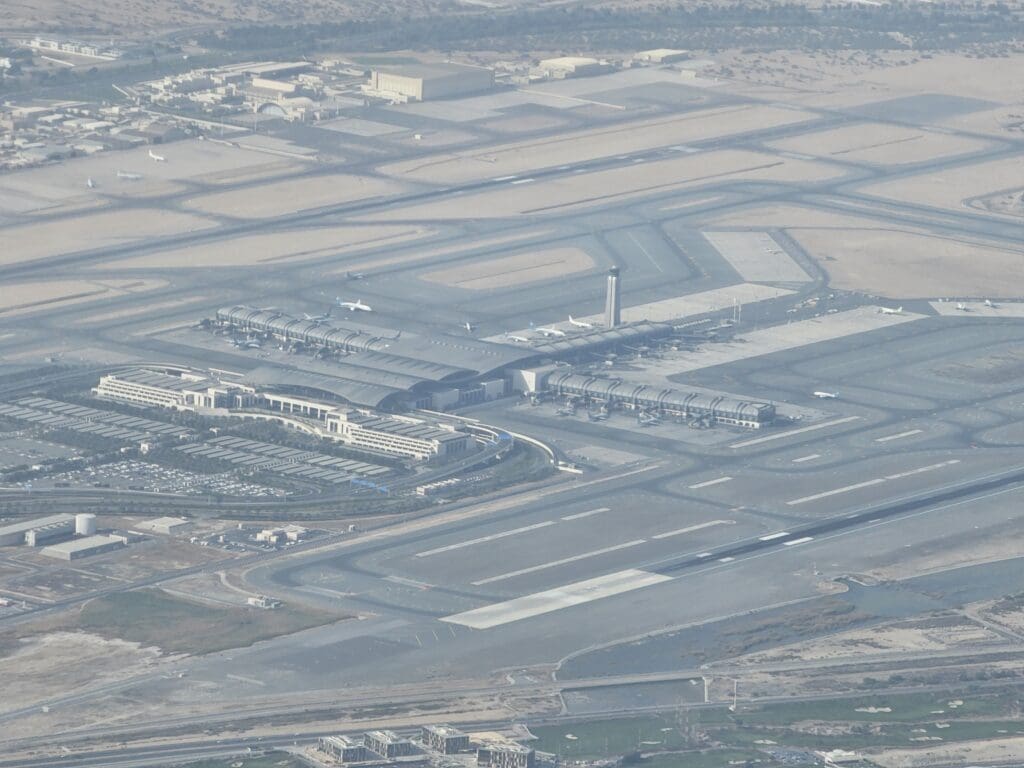
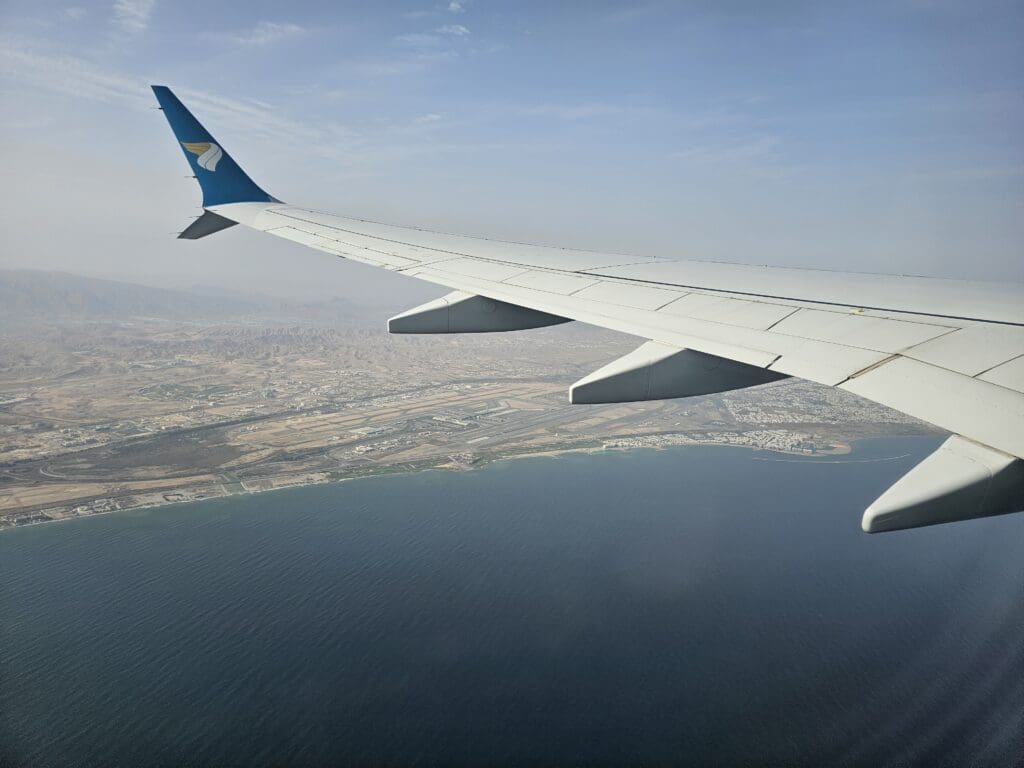
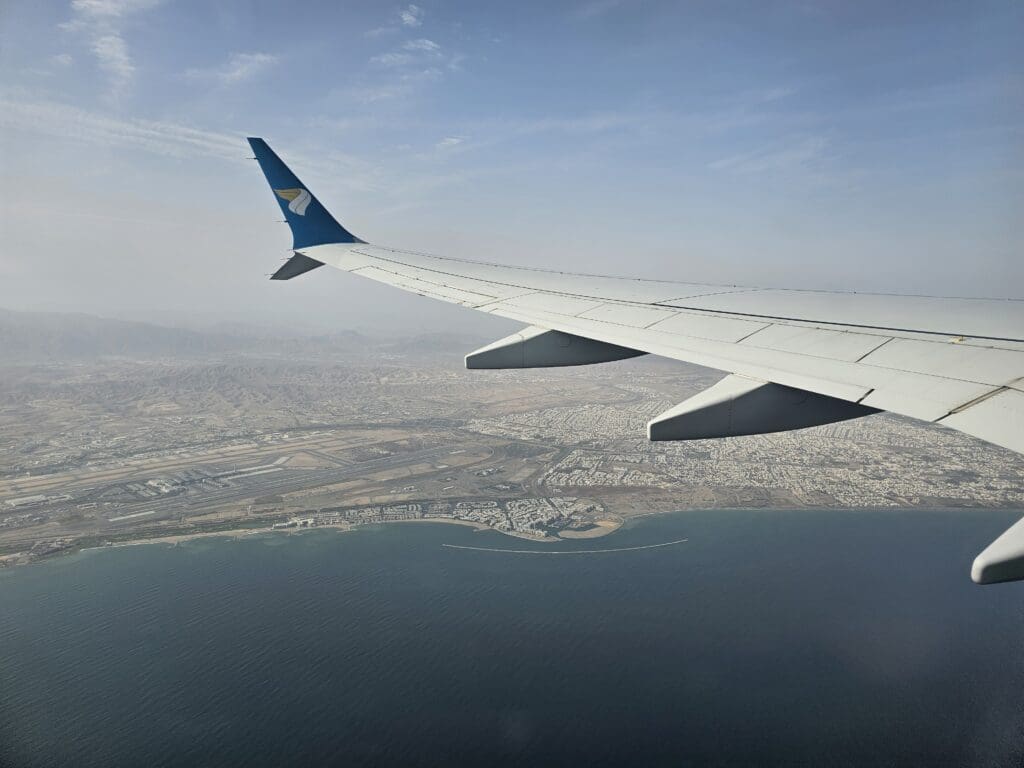
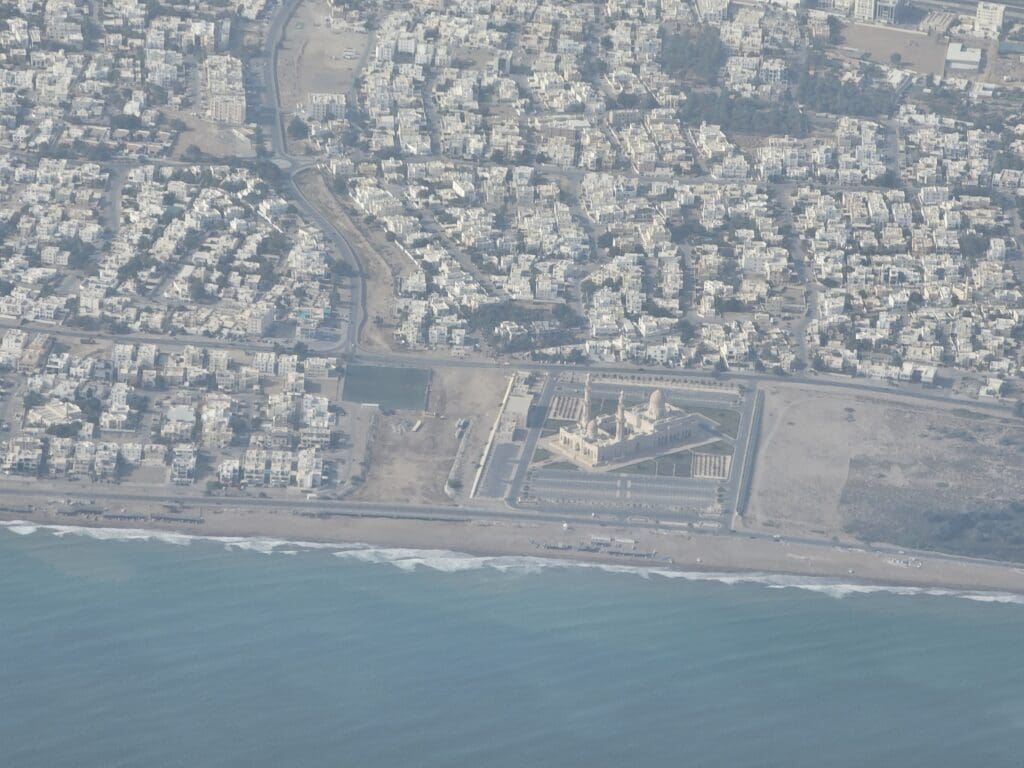
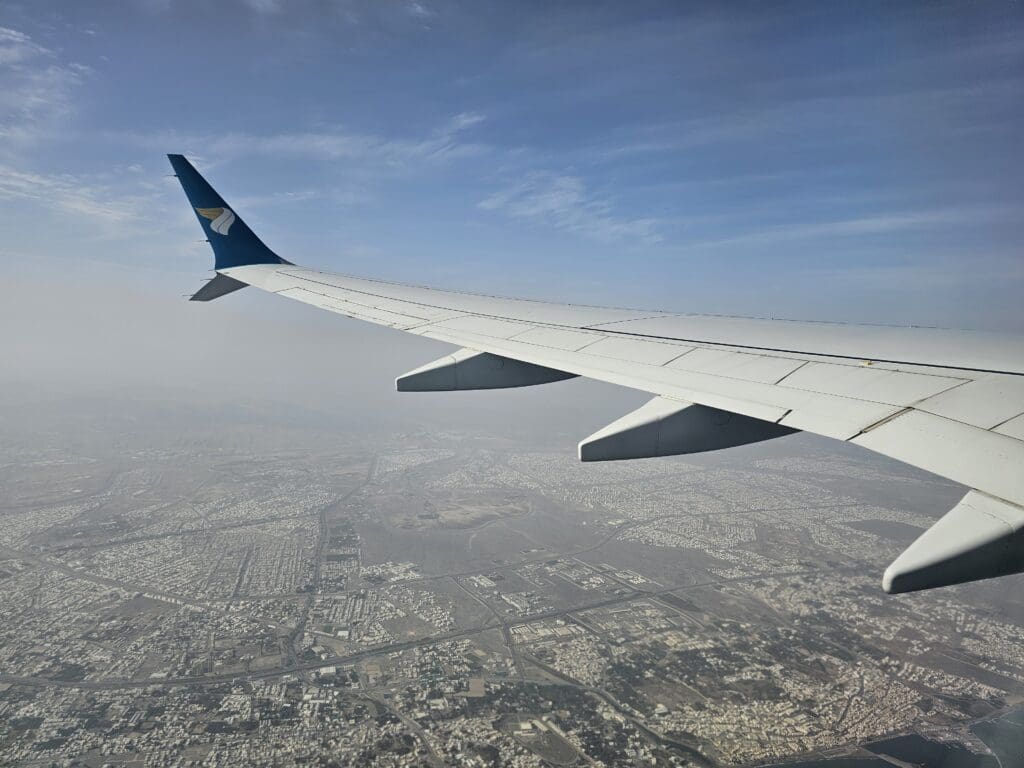
Once in the skies, the Boeing climbed parallel to the shoreline of Muscat, bringing into view a smorgasbord of luxurious villas, resorts and residential developments in between the airport and the city. After a minute or so, the Boeing banked to the left and began to travel westwards and roughly parallel to the shoreline. This allowed for a fantastic final view of the airport, before this faded away and was replaced by the odd coastal town, the largest of which took the form of Seeb and Sohar.
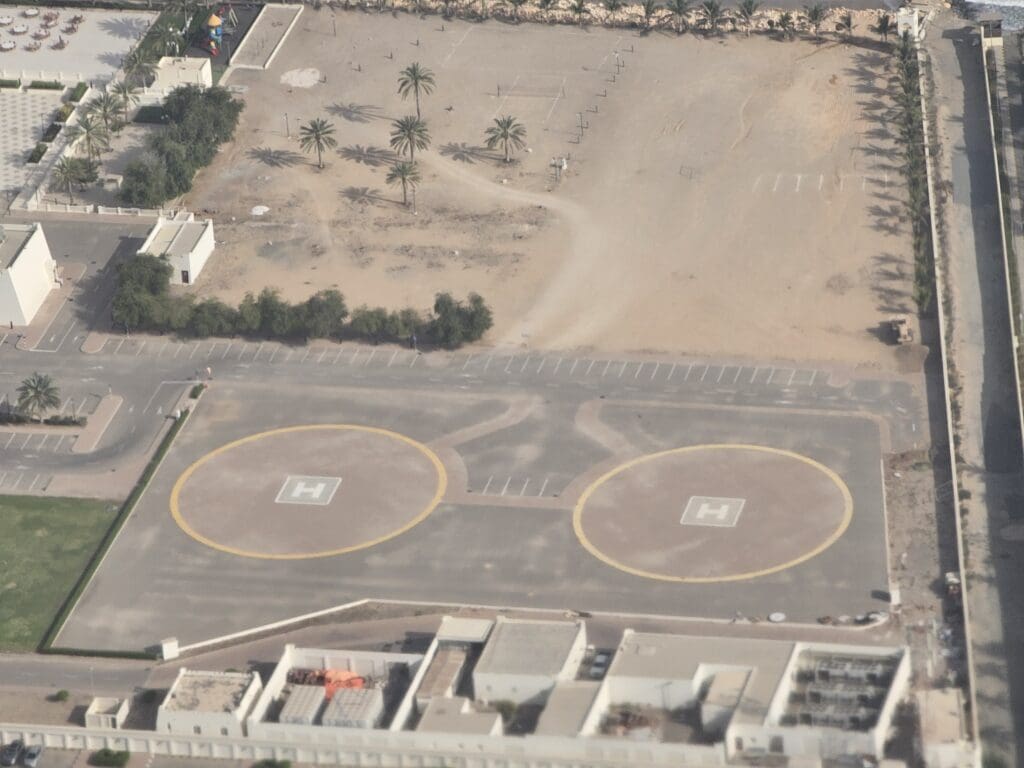
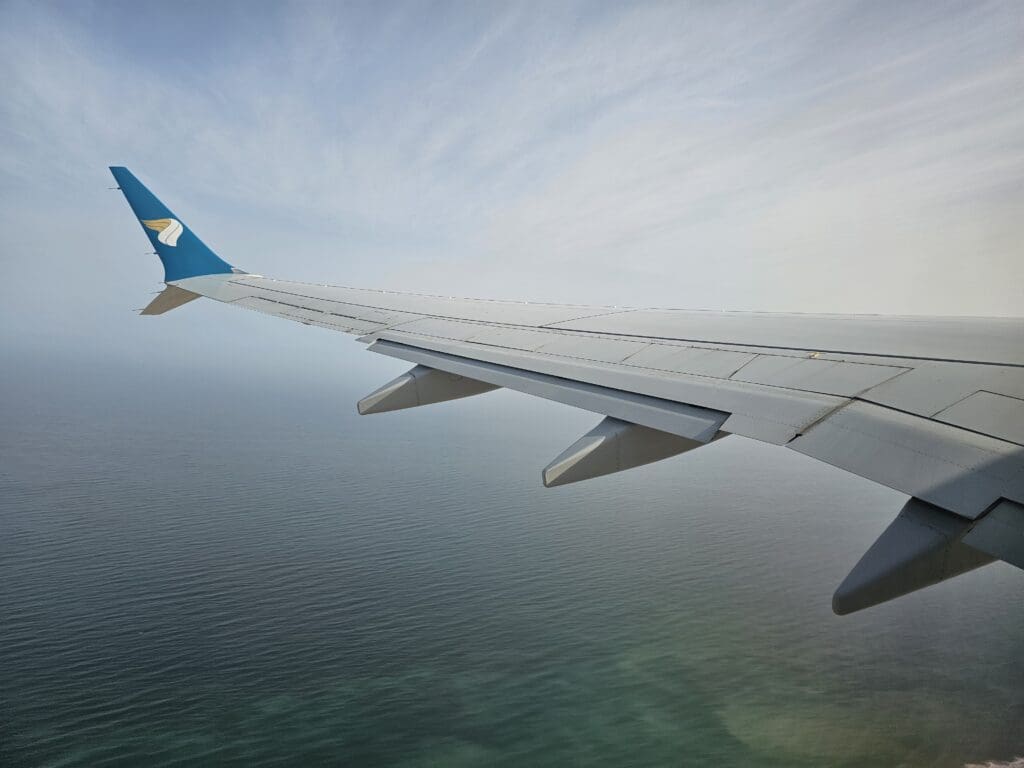
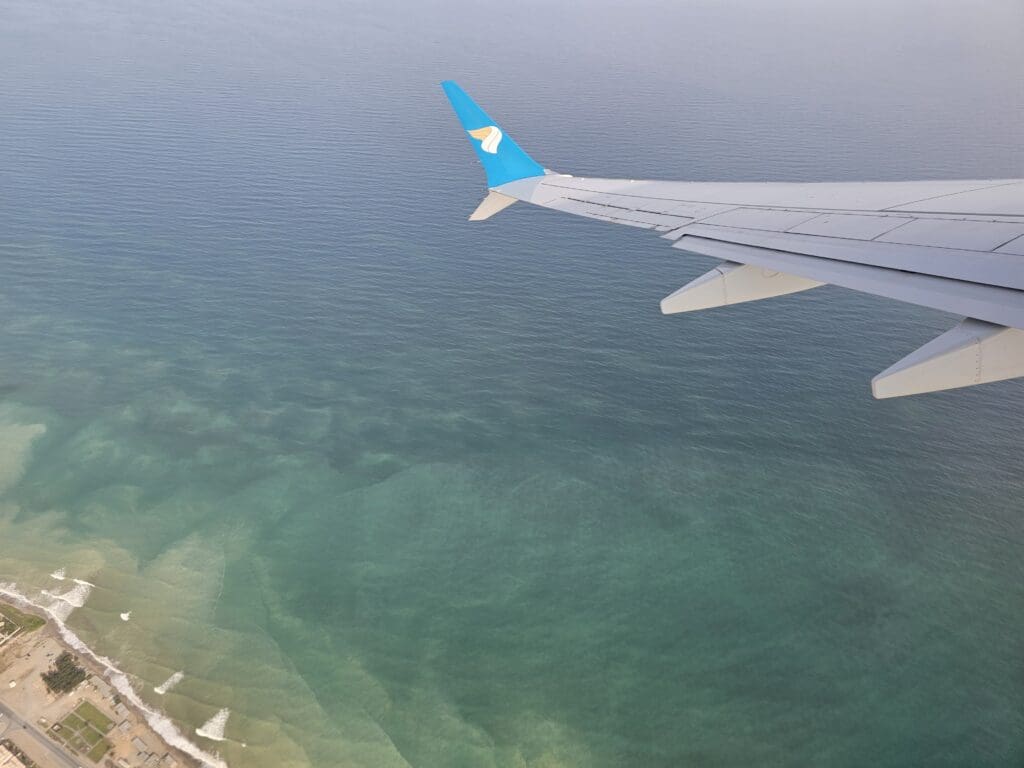
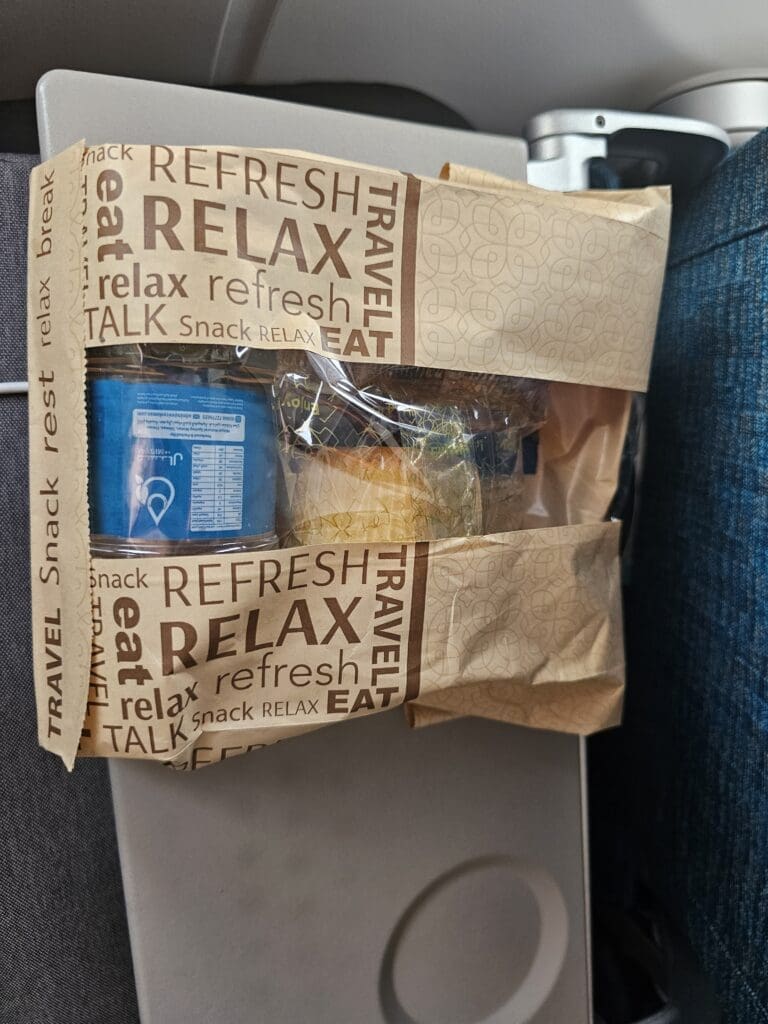
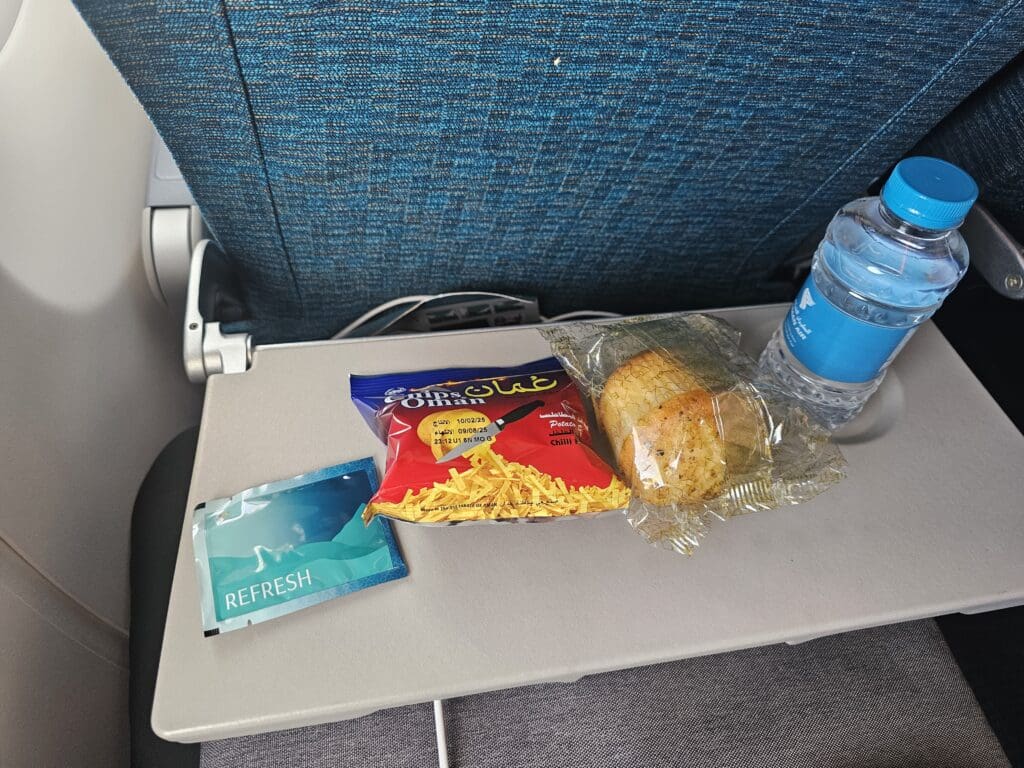
With our departure from Muscat having been a turbulence-free affair, the seatbelt signs were extinguished as soon as we passed through 10,000 feet, and, unsurprisingly, the crew immediately sprang into action. Despite the very short duration of the flight, as is the norm in this part of the world, Oman Air provided all passengers with a complimentary snack. As we levelled off at 20,000 feet, the service carts were rolled out and the crew began distributing that morning’s offerings. Within a minute or so, without a word, I was handed a pack, forgiving the crew’s coolness given the fact that they had a full load of passengers to serve in a very short space of time! Opening this up, I found this to contain a small bottle of Oman Air-branded water, salted Omani crisps and a muffin, along with a wet wipe. Whilst this was not the most comprehensive inflight offering, given the length of the flight, I could hardly complain.
Given the length of the flight, inflight entertainment was hardly needed, and headphones were not provided as standard. However, as with virtually all aircraft in Oman Air’s fleet, the Boeing comes complete with inflight entertainment screens that allow passengers to access the airline’s ARIA inflight entertainment system from gate to gate (other than during the safety video!). This system offered the exact same content and features, and was identical to that on the Dreamliner, and I found the screen to be responsive to touch, whilst the quality of this left me with no complaints. Whilst I give a full review of this in the report of my flight from London to Muscat, to summarise, I found Oman Air’s ARIA system to feature a decent selection of content from across the airline’s destinations and beyond. However, this lacks any particular standout features and is available in just two languages – Arabic and English. Unlike onboard their Dreamliner fleet, Oman Air’s Boeing 737s are not equipped with wifi, something that may be a little troublesome to those travelling on the longer sectors that the type undertakes.
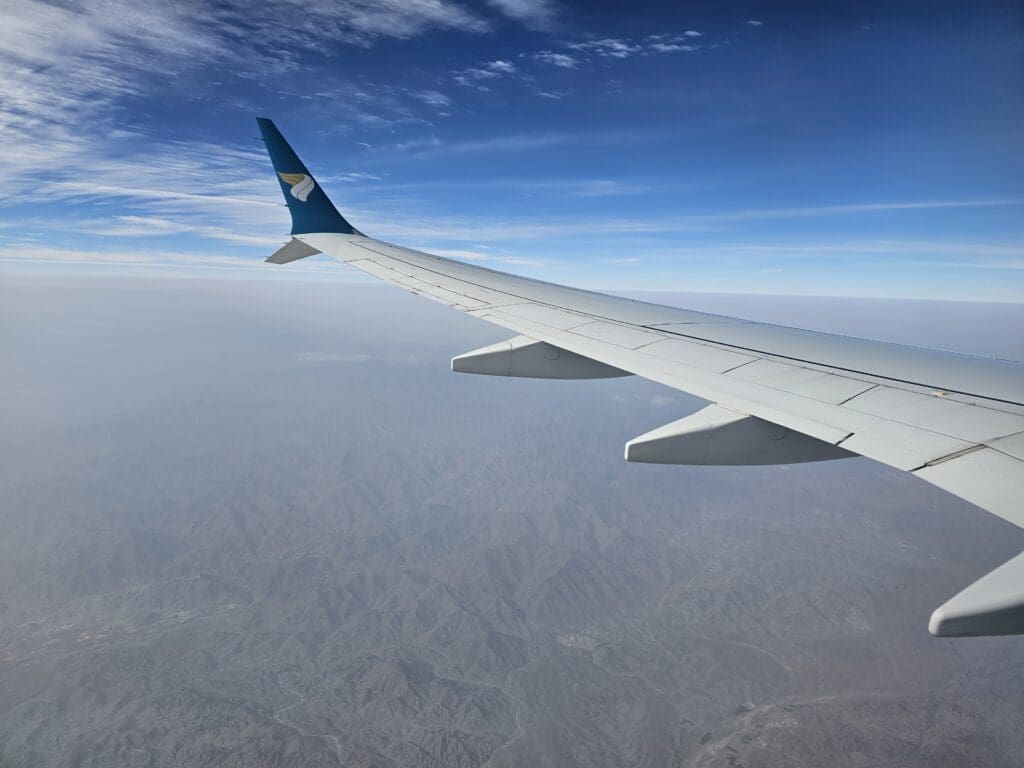
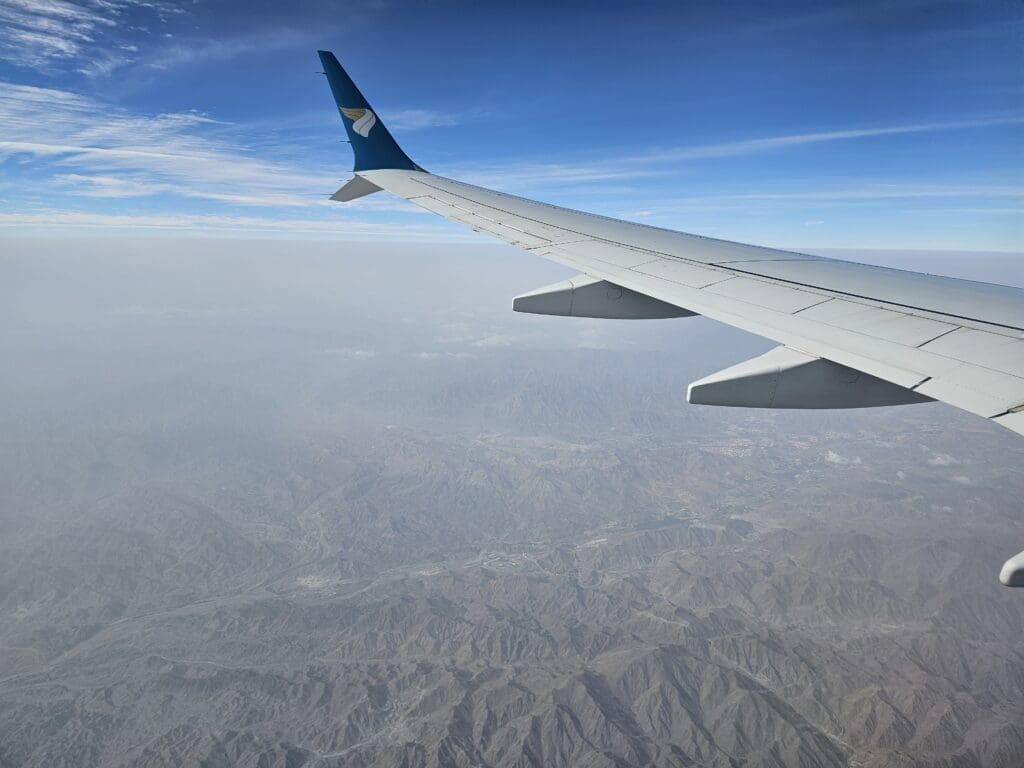
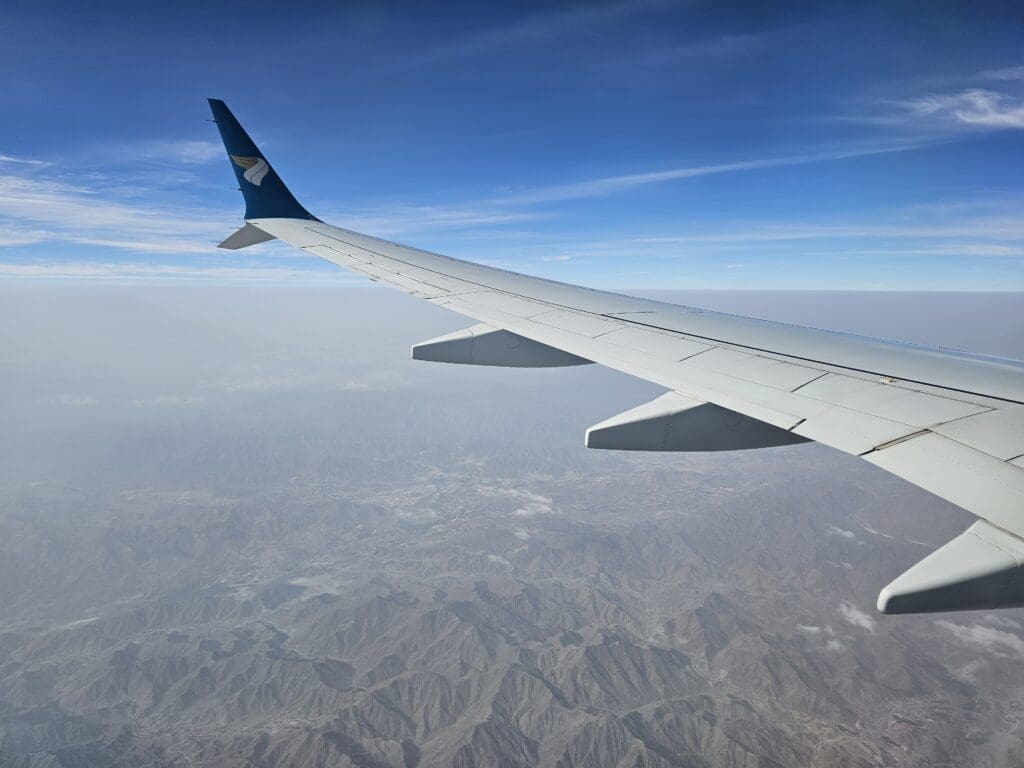
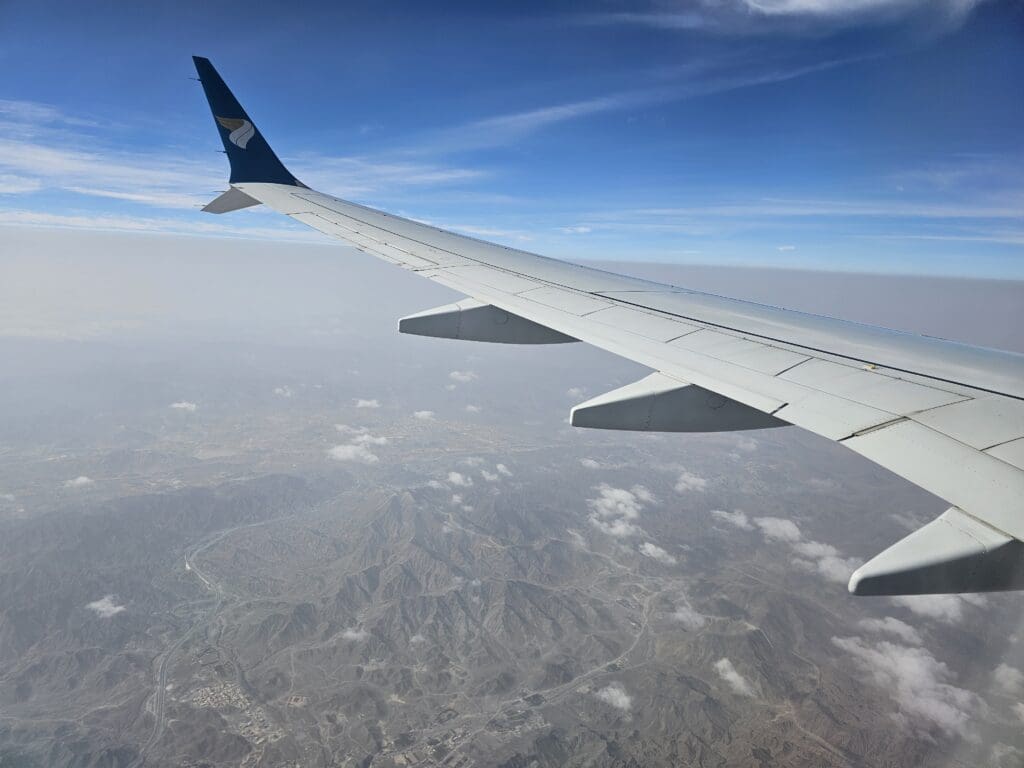
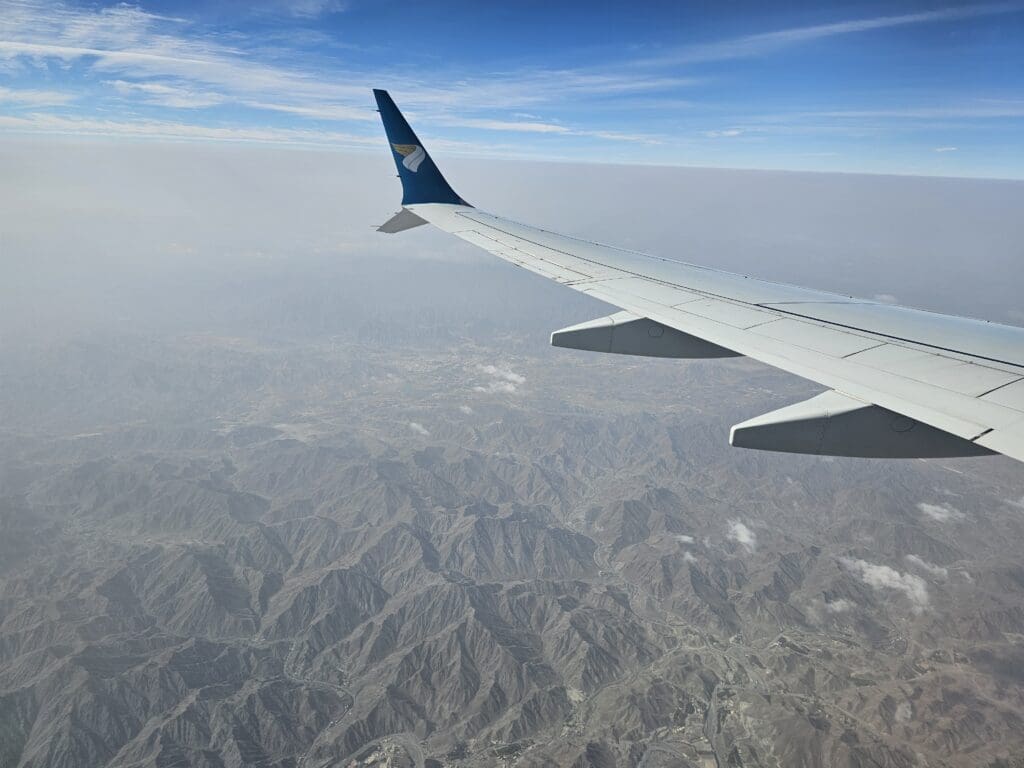
Returning my attention to the world outside, around 25 minutes into the service, First Officer Nasser’s voice filled the cabin as they performed their pre-arrival announcement in Arabic, followed by English. During this, they advised that we could expect to be on the ground by 0950, informed passengers of the refreshing 21-degree temperature in Dubai and advised passengers that we would commence our descent in three minutes. This was immediately followed by the reillumination of the seatbelt signs as the Cabin Director undertook their pre-arrival announcement in English with the usual warnings regarding seatbelts, window shades, tray tables and seatbacks, which was then repeated in Arabic by one of the local crew members.
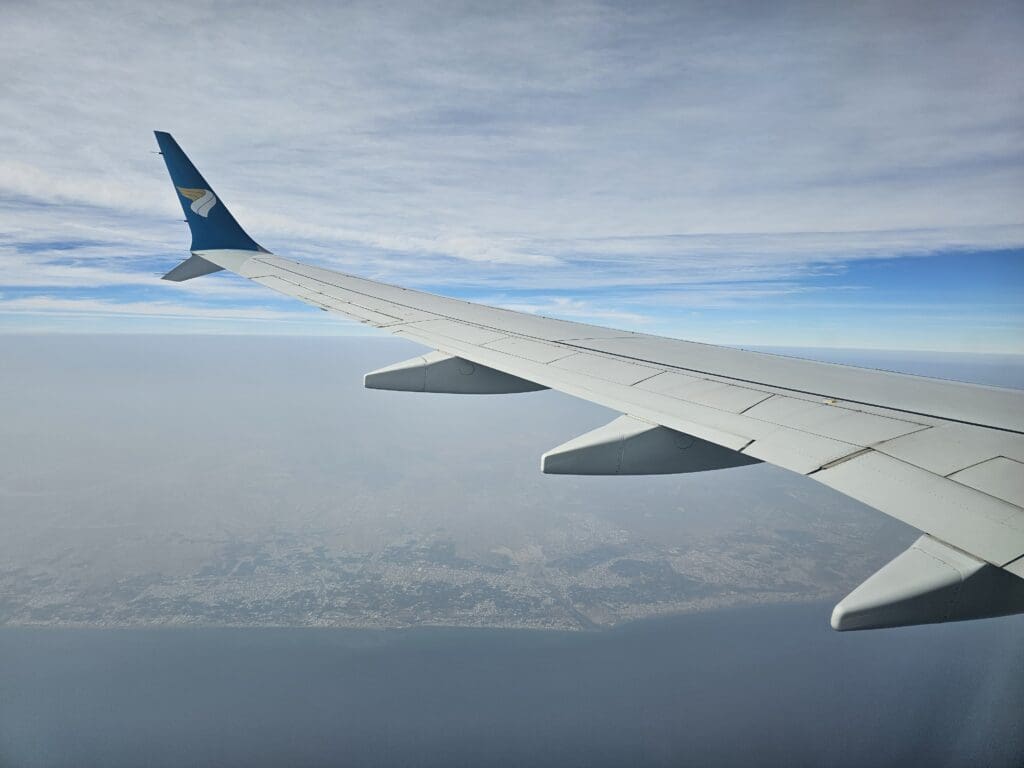
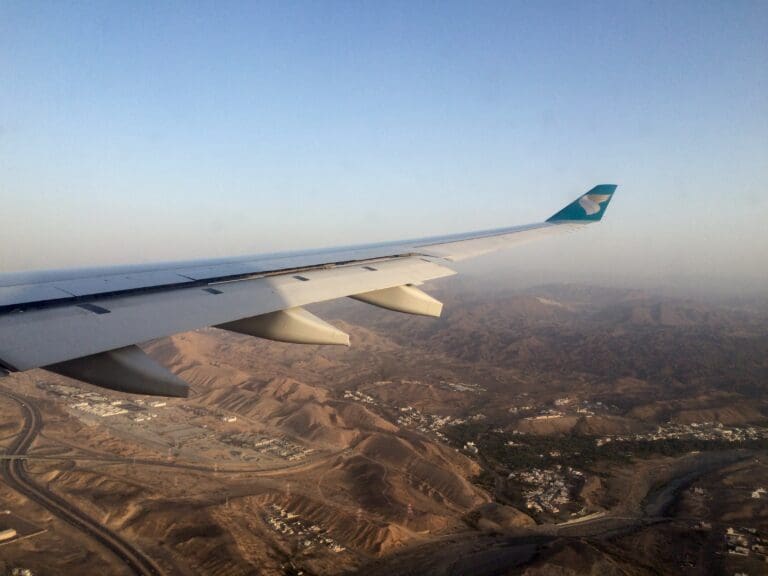
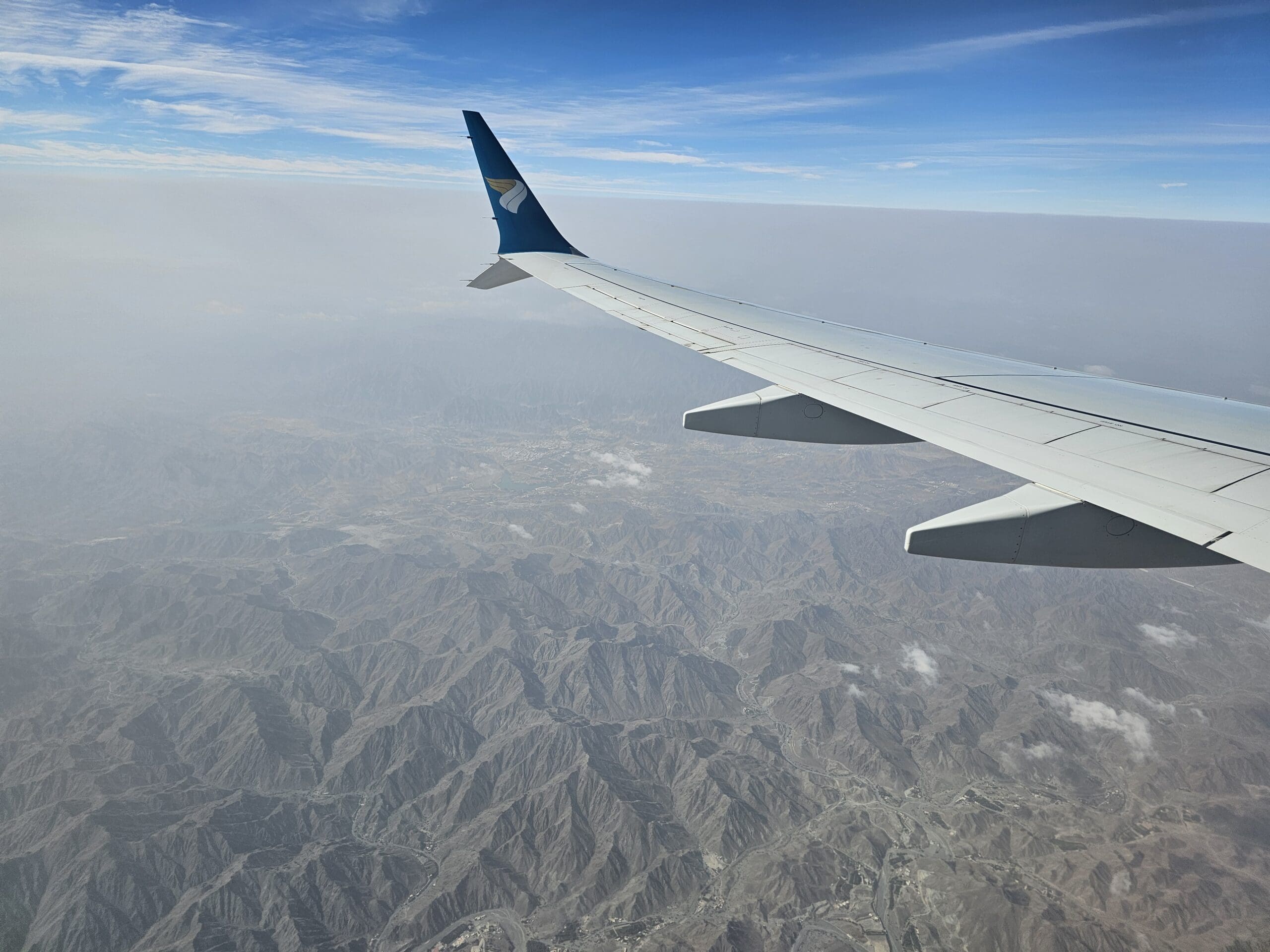
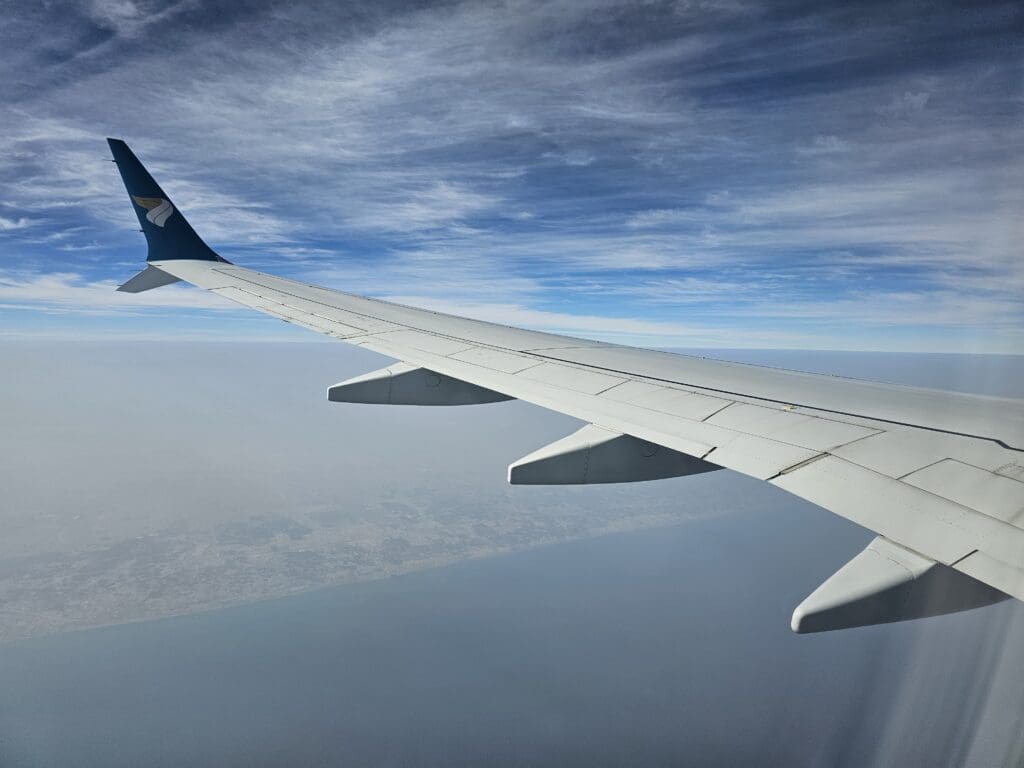
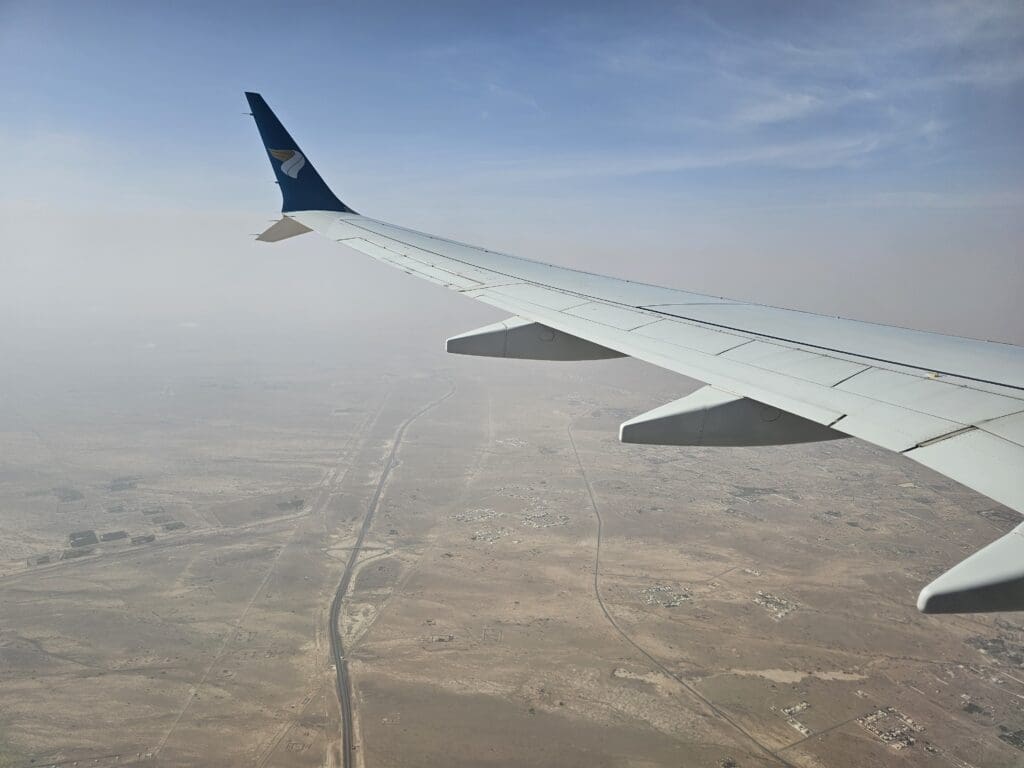
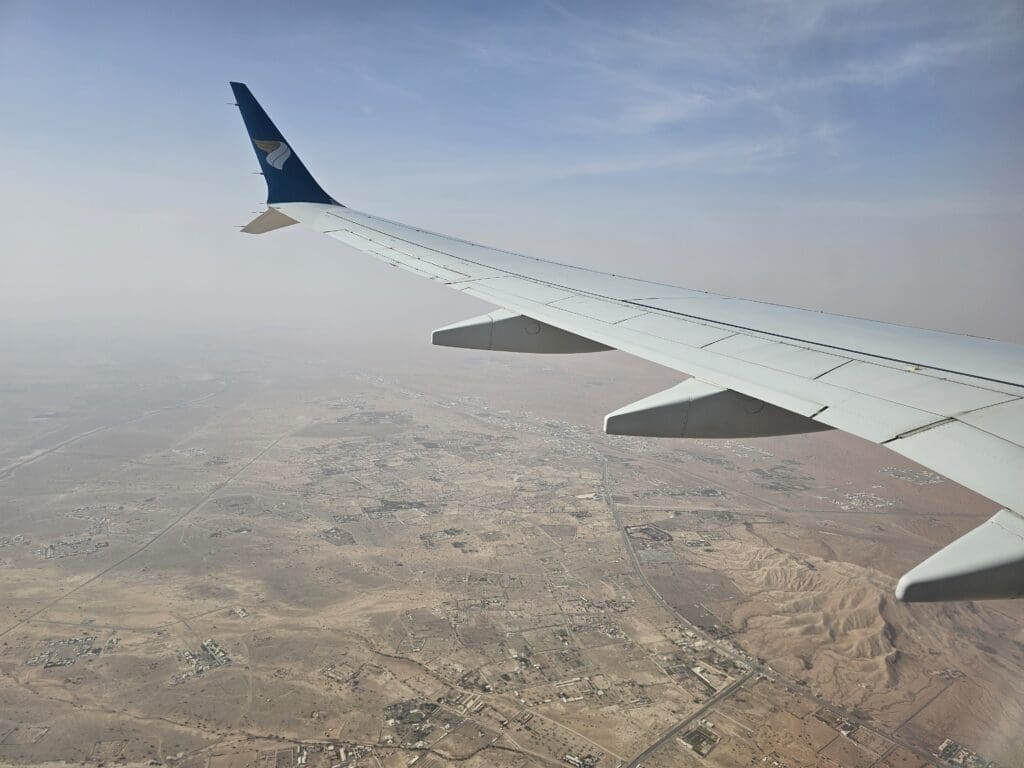
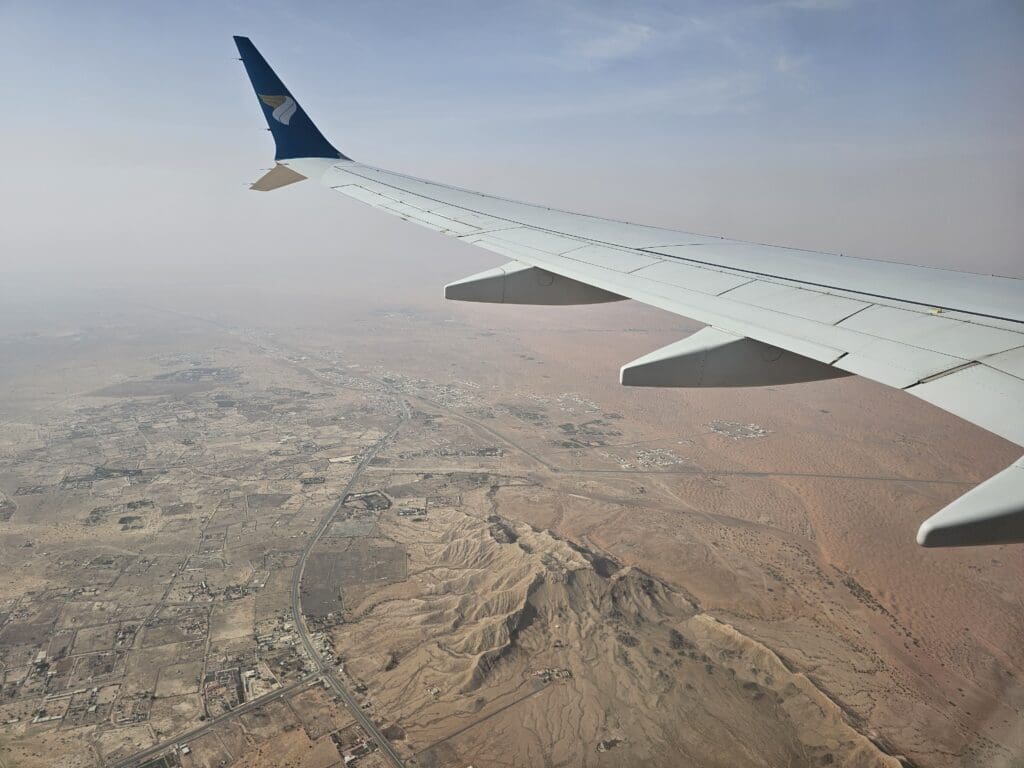
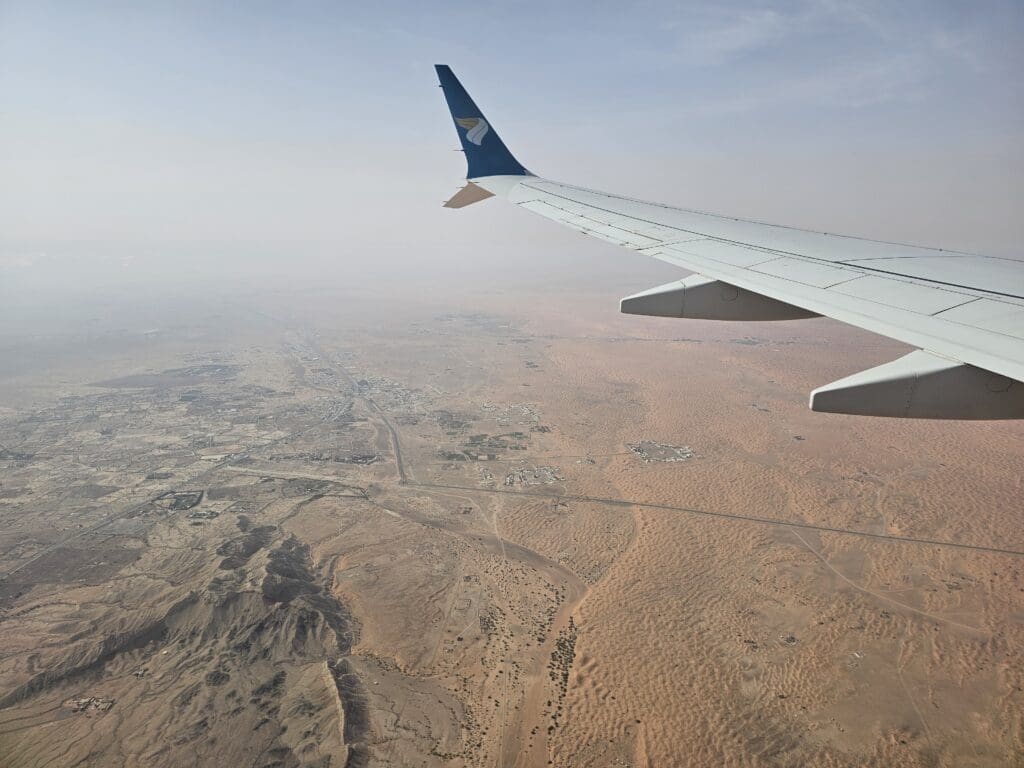
Just after commencing our descent, the Boeing crossed over the Omani coastline and passed directly over the town of Shinas. About a minute later, the aircraft temporarily crossed into the skies of the United Arab Emirates, passing just to the north of Hatta, famous for its picturesque mountains, tourist attractions and large dam, which combined make this a popular getaway spot within the country. Crossing over the bank of mountains that sit to the south of Fujairah, the clear skies meant that a fantastic view was offered of these, although soon, they sank down into the sandy deserts that many may believe are atypical of the United Arab Emirates.
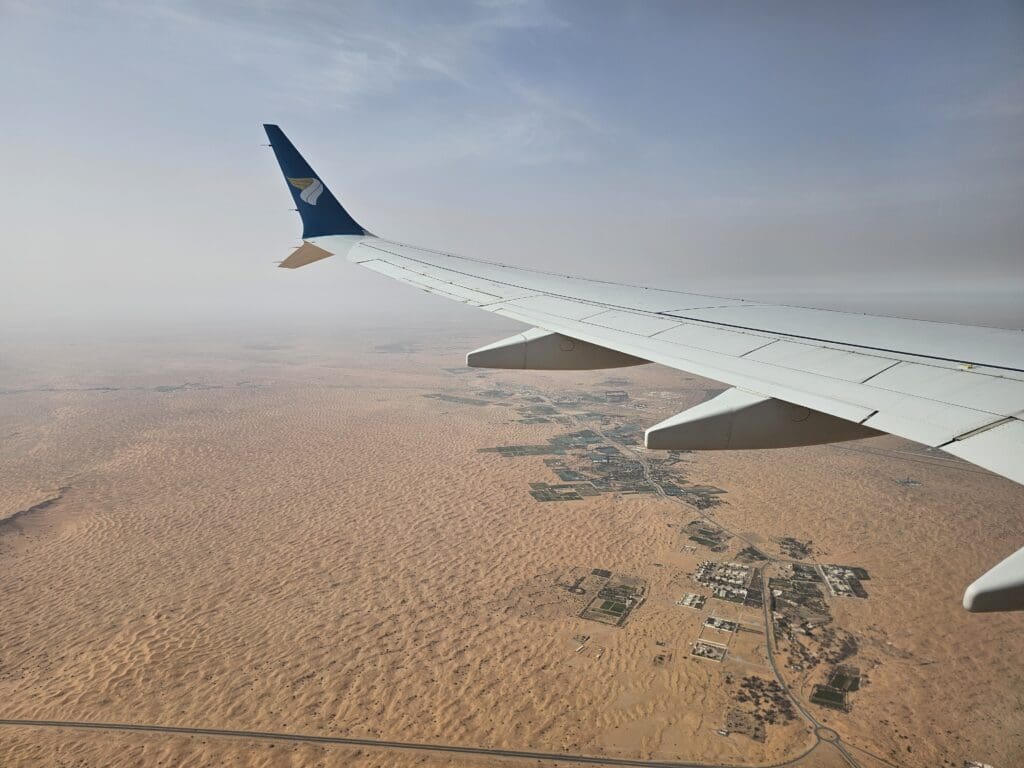
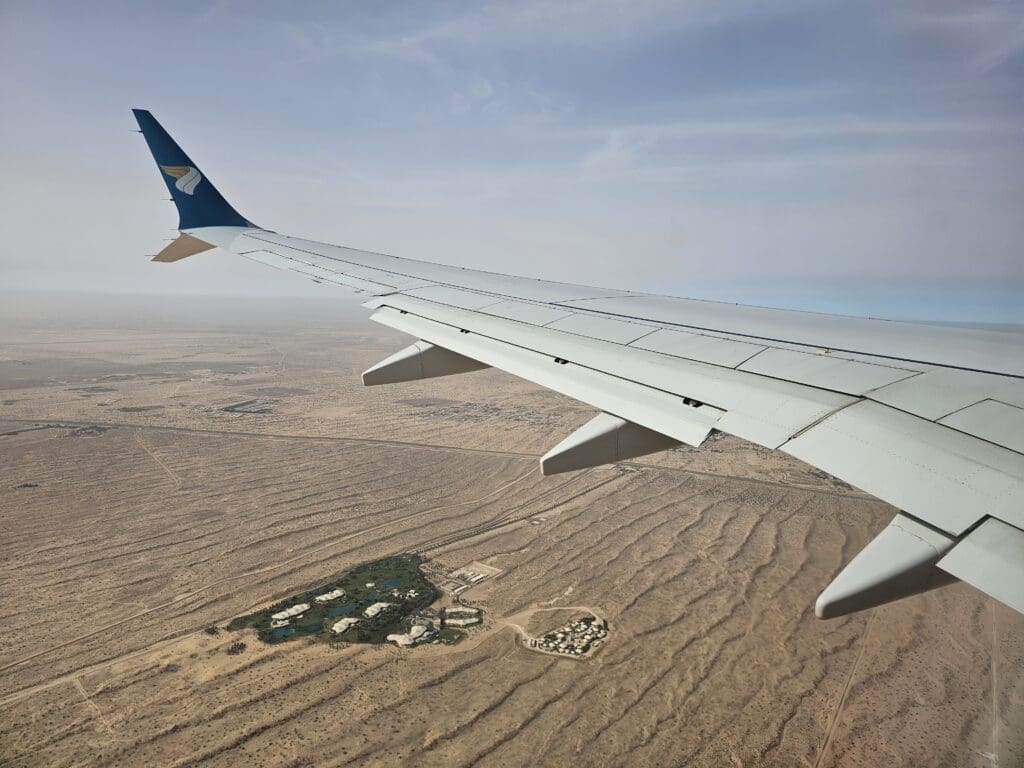
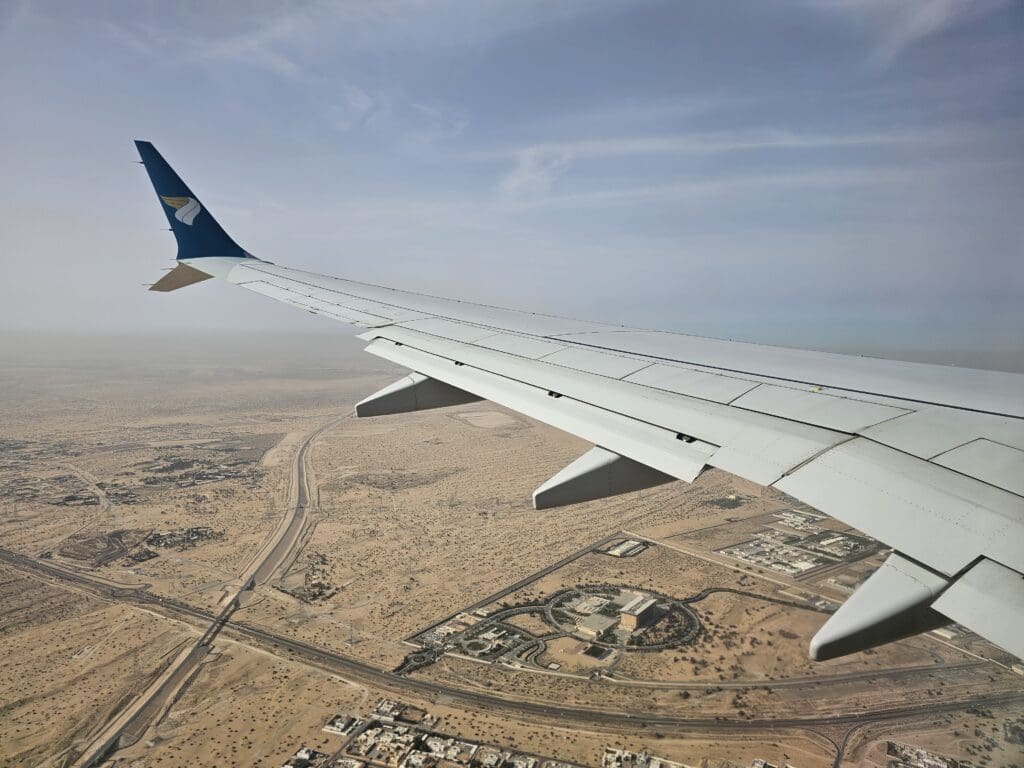
Heading over the sandy deserts towards Dubai, the odd cluster of desert houses and stables, as well as roads and other buildings, came into view below amongst the orange sand dunes. Approaching Dubai from the east and with the wind blowing from the sea, virtually no twists or turns were required to line us up for a landing on Runway 30L. Soon, the flaps were partially extended, and slowly the desert transformed into cultivated lands as we edged towards the sprawl of Dubai International Airport.
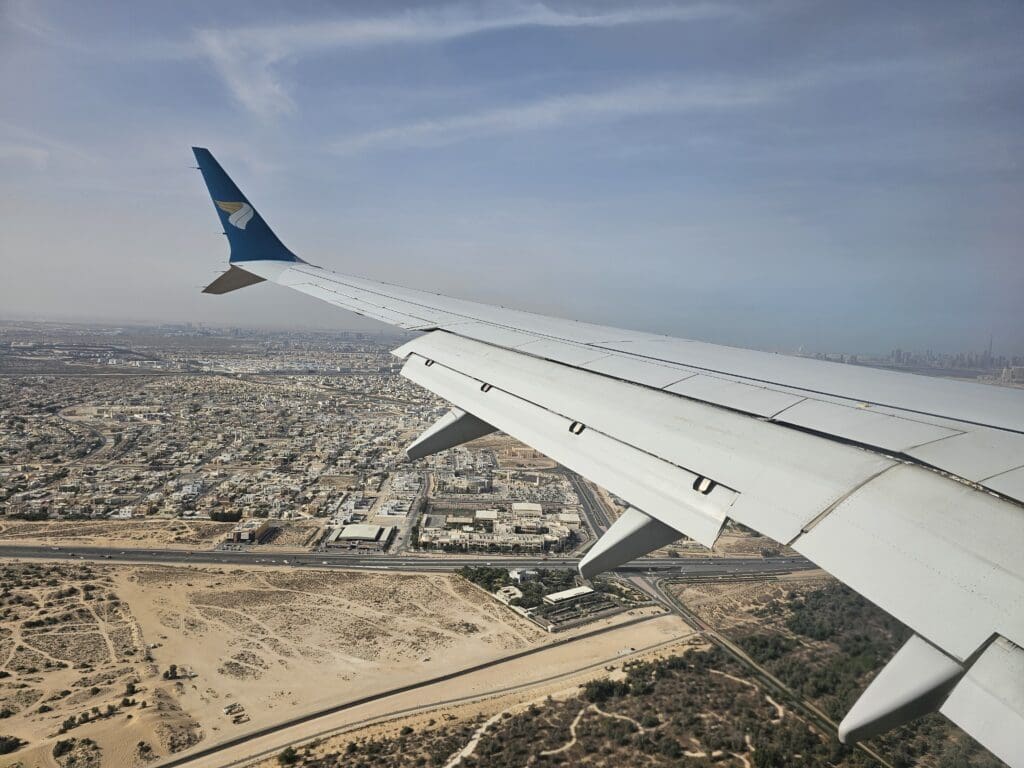
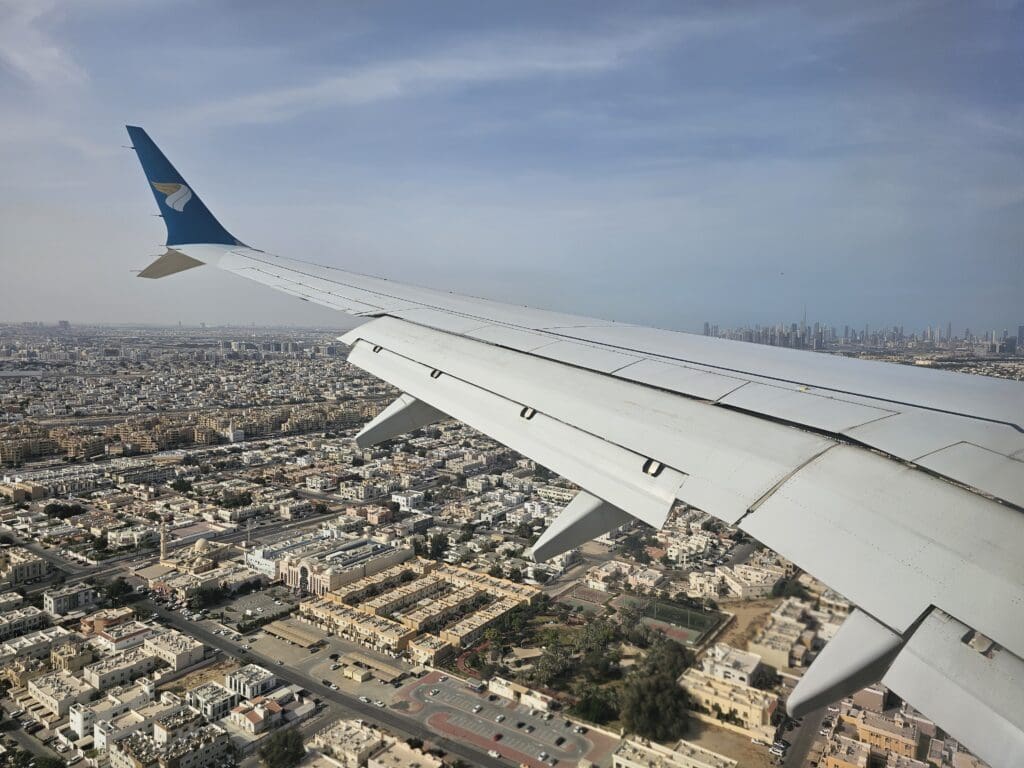
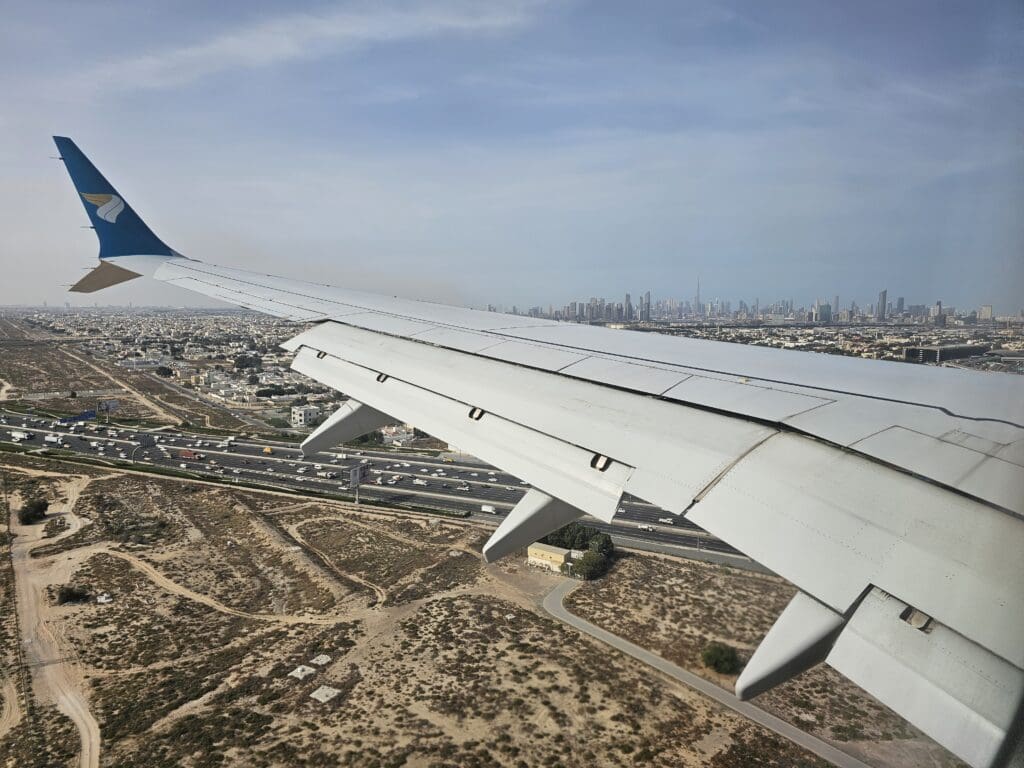
After passing Dubai Safari Park, the deserts were replaced by the residential buildings of the neighbourhoods of Al Warqa and Mirdif. Meanwhile, in the distance, the sprawl of skyscrapers around Business Bay could be seen, the most famous of which takes the form of the Burj Khalifa, the world’s tallest building. Soon, the Boeing sank down over the E44, one of the United Arab Emirates’ main road arteries and crossed over the perimeter fence. Seconds later, the large Presidential Flight hangars popped into view, followed by the luxurious royal terminal, before the aircraft returned to earth with a very gentle bump, ending our short flight of just 43 minutes.
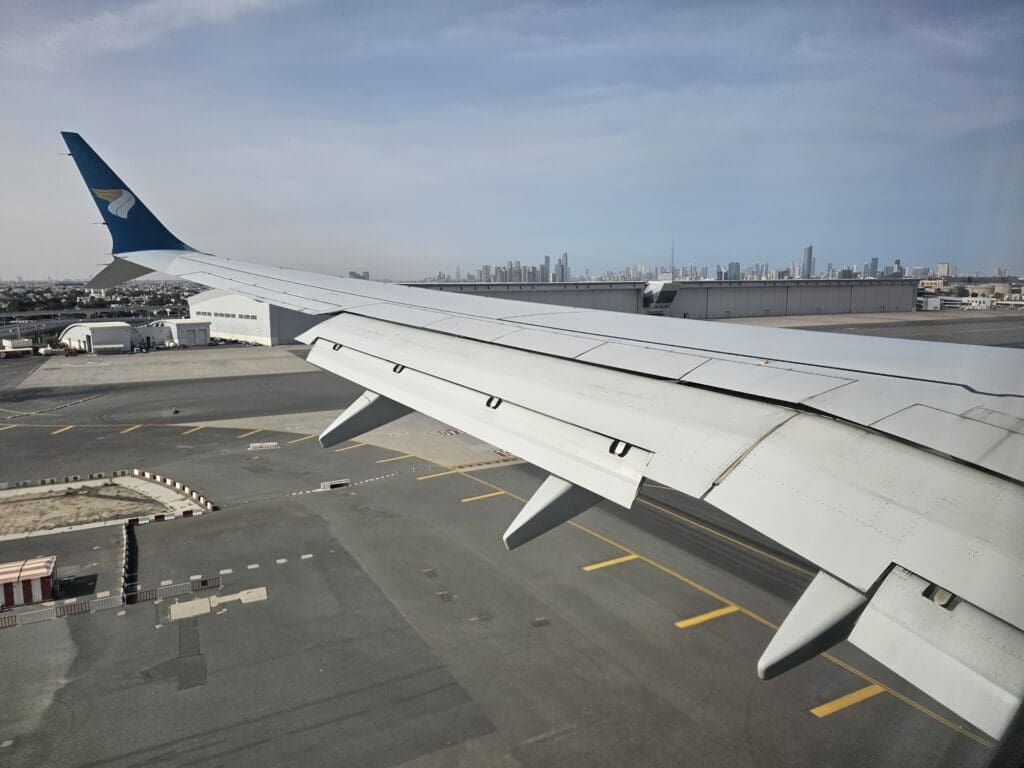
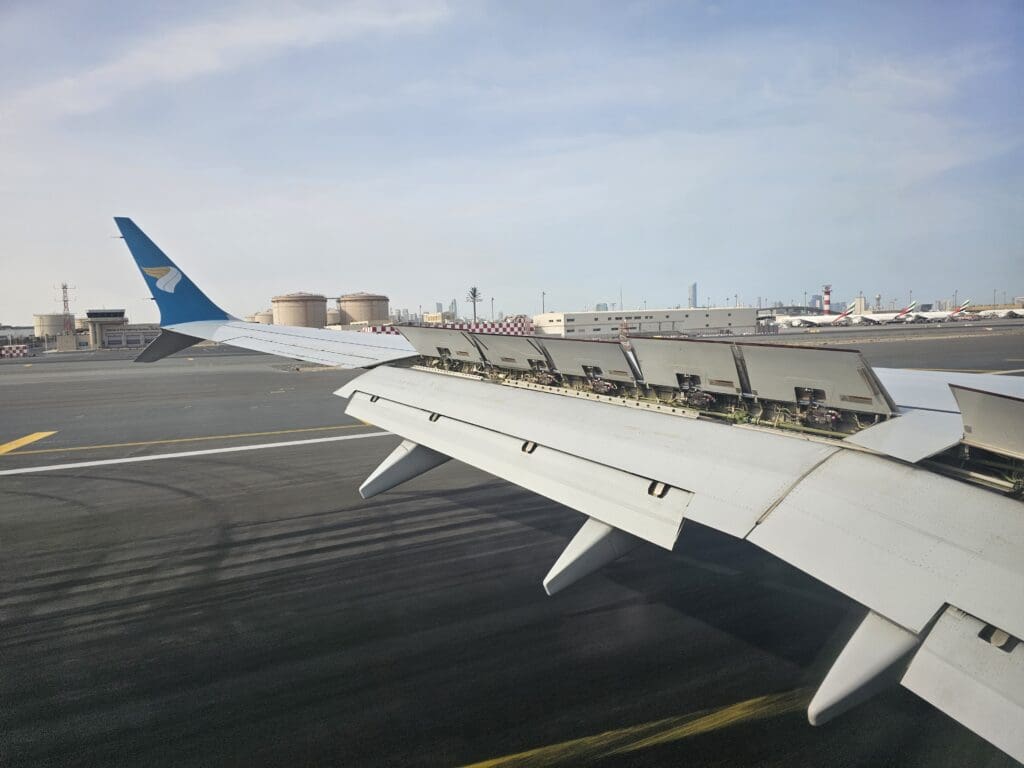
Seeing as Terminal 1 is located in the far southwestern corner of Dubai International Airport, once on the ground, the aircraft decelerated rather gently, presumably to minimise our taxi time. As we slowed, rows and rows of Emirates jets could be spotted being readied for their next missions to destinations both near and far, whilst the Burj Khalifa could be seen in the background, both iconic symbols of Dubai. As we vacated the runway, the flaps were retracted with a whine, whilst inside the cabin one of the flight attendants welcomed all to Dubai and thanked passengers for flying with Oman Air, before reminding passengers to remain seated until the seatbelt signs had been extinguished before music rang out and accompanied the rest of our journey.
Within a couple of minutes of leaving the runway, Terminal 1 popped into view. With the terminal hosting the majority of non-local airlines that serve Dubai, this can be heaven for planespotters, thanks to the variety of aircraft types and airlines that can be seen there. As we made our way to the gate, I spotted two aircraft which were for a British spotter, particularly interesting, a Mahan Air Airbus A340-600 and a Belavia Boeing 737-800 (you can read my report on one of these jets here!), with these just having arrived from Tehran and Minsk. Soon, the Boeing turned right and slowly made its way into Stand C57, coming to a halt next to a Jazeera Airways Airbus A320 being readied for its return journey to Kuwait.
In the usual manner, once the jet came to a halt, many passengers jumped up in a desperate rush to disembark. However, not sharing their sense of urgency, I remained seated whilst up ahead the jetbridge was manoeuvred into position, with boarding commencing a few short minutes later. Once the queue in the aisle began to budge, I stood up, retrieved my bag and shuffled down the cabin, wondering just how this could end up so messy after such a short flight! Upon reaching the forward galley, I thanked the Captain and Cabin Director before heading up the glass jetbridge and making my way into the terminal. With the airside and landside portions of Terminal 1 located in completely separate buildings, once off the aircraft, a short walk to the people mover station was in order, and, having just missed a train, I was required to wait around three minutes before being whisked over the apron. At the other end, I piled off this alongside passengers who had just arrived from Minsk and Peshawar on a Pakistan International Airlines Airbus A320 operated service.
Once upon a time, I had found passport control in Dubai to be a slow affair, featuring long snaking lines. However, things have since long changed thanks to the immigration e-gates, which can be used by many nationalities, including those who do not reside in the United Arab Emirates. Walking straight up to these without queuing, once my passport had been scanned and my photo was taken, I was let through in about thirty seconds, and once my hand luggage had been scanned, I entered the large baggage collection hall. Fortunately, I did not have to wait too long before my small suitcase appeared, and I was free to exit, ending my journey from London with Oman Air.
Summary
Whilst I could make a few minor complaints, such as the slightly more cramped seat of Oman Air’s Boeing 737 MAX compared to its Dreamliner fleet, or the cold crew members, Oman Air delivered me to Dubai early and in one piece. Furthermore, the levels of service provided onboard were much better than you would expect for a similarly short flight in Europe. Overall, my Oman Air experience left me with no real complaints. Yet that said, the airline lacked any particular standout features and did fall behind the likes of the ME3. Therefore, whilst I would be happy to fly with Oman Air again, I would be unlikely to pay a premium to do so.