Buzzing through Borneo on MASwings Twin Otters: Kota Kinabalu to Miri via Lawas
Background
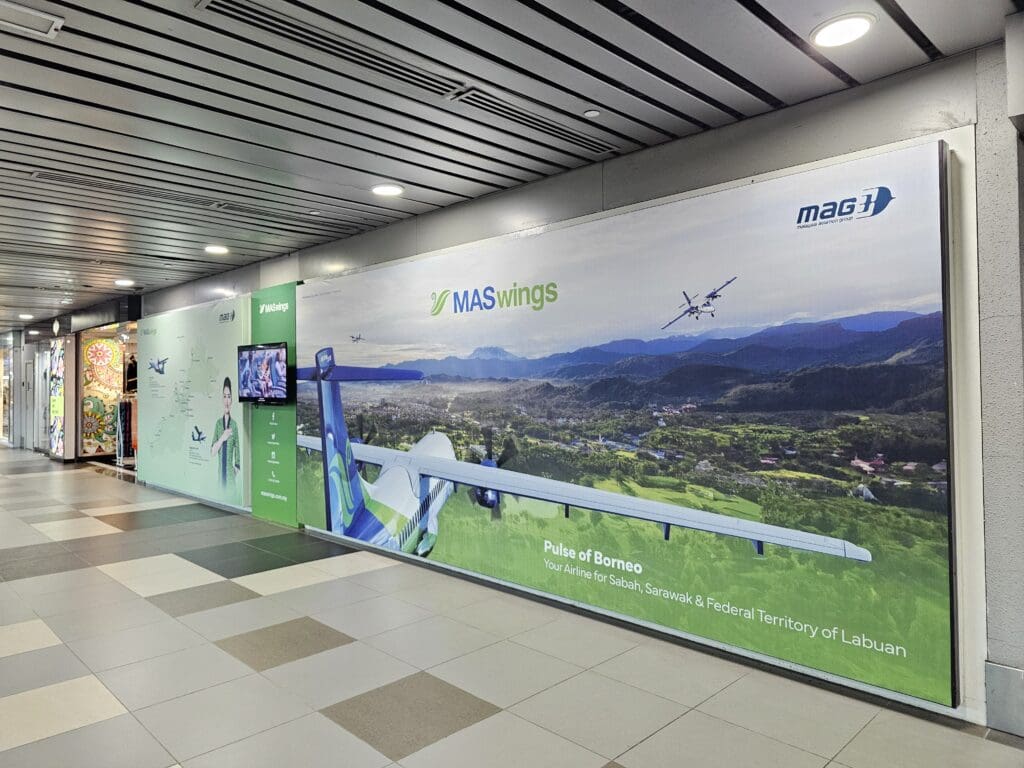
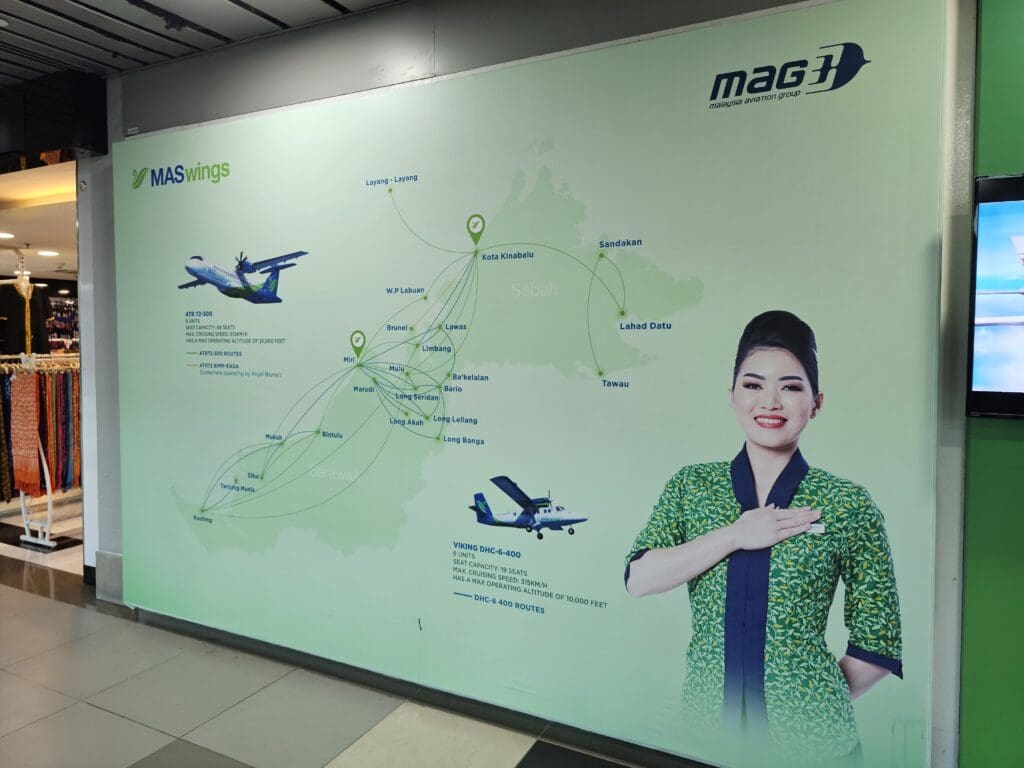
From an aviation enthusiast’s perspective, Malaysia is not an overly exciting country when it comes to opportunities to fly on rare aircraft types. Sadly, Berjaya Air’s Dash 7 fleet, which once operated between Subang and Tioman Island, has long been withdrawn from service. Additionally, the short-lived De Havilland Canada DHC-6-300 Twin Otter service operated by SKS Airways has come to an end, with the airline halting operations in January 2025. However, all is not completely lost, as over in Borneo, Malaysia Airlines’ local subsidiary, MASwings, operates six modern Viking Air Twin Otters from Miri to an array of small towns and villages in Sabah and Sarawak.
The De Havilland Canada Twin Otter first took to the skies in 1965, emerging out of the requirement for a fast and modern twin-turboprop aircraft capable of operating into short and unprepared airstrips in some of the world’s most remote and extreme climes. Enjoying success, it wasn’t long before the type proved its worth in environments ranging from the extreme cold of the Arctic and Antarctic to the heat of deserts and jungles, undertaking a mixture of multi-role missions including cargo, passenger and utility roles in both civilian and military guises. Continuing to undergo development, the 100 Series was soon followed by the 200 and 300 Series in 1968 and 1969 respectively – the latter proving to be the most successful variant of the type. In 1988, De Havilland Canada ended production of the Twin Otter, opting to shift its focus to its then-new Dash 8 turboprop airliner.
Whilst no new Twin Otters rolled off the production line, the demand for STOL-capable airliners continued, yet there were no new real successors to this type capable of carrying the same payloads in harsh environments quickly and efficiently. In 2006, British Columbia-based aircraft part manufacturer Viking Air purchased the type certificates for a number of De Havilland Canada’s aircraft models, from the Chipmunk to the Dash 7, with the Twin Otter included. Recognising the demand for a modernised Twin Otter, Viking Air announced a commitment to an upgraded Twin Otter, with this featuring an array of improvements and efficiencies, including modernised avionics and a glass cockpit, and more powerful engines. This variant became known as the Viking Air DHC-6-400 Twin Otter, or the 400 Series. Unsurprisingly, the modernised Twin Otter has enjoyed reasonable success, with 150 examples manufactured (as of 2025), equating to about 15% of the total number of Twin Otters produced.
Based in Britain, and with the rough-and-ready nature of the Twin Otter not really required for most scheduled operations in the country, opportunities to fly the Twin Otter are somewhat limited. Although these are used by Loganair on flights between Glasgow, Barra and Tiree – operating two Viking Air Twin Otters and a much older ‘original’ version. However, these flights can often prove to be a little expensive, not to mention the fact that they require me to travel up to Glasgow, a fair distance from my home in Leeds. Passing through Borneo, and with the opportunity to work a couple of cheap and easy rides onboard a Twin Otter through the skies of Malaysia, as an aviation enthusiast I could hardly pass on this opportunity!
Staying in Kota Kinabalu but needing to get to Miri to position myself for my AirAsia ride back to Kuala Lumpur, I discovered that I could bag rides on two different Twin Otters by spending the morning flying to Lawas, before continuing onto Miri after a stay of a little over an hour. Coming to a grand total of £35.99, this was definitely a more economical option than heading up to Scotland to fly onboard a Twin Otter back home!
About MASwings
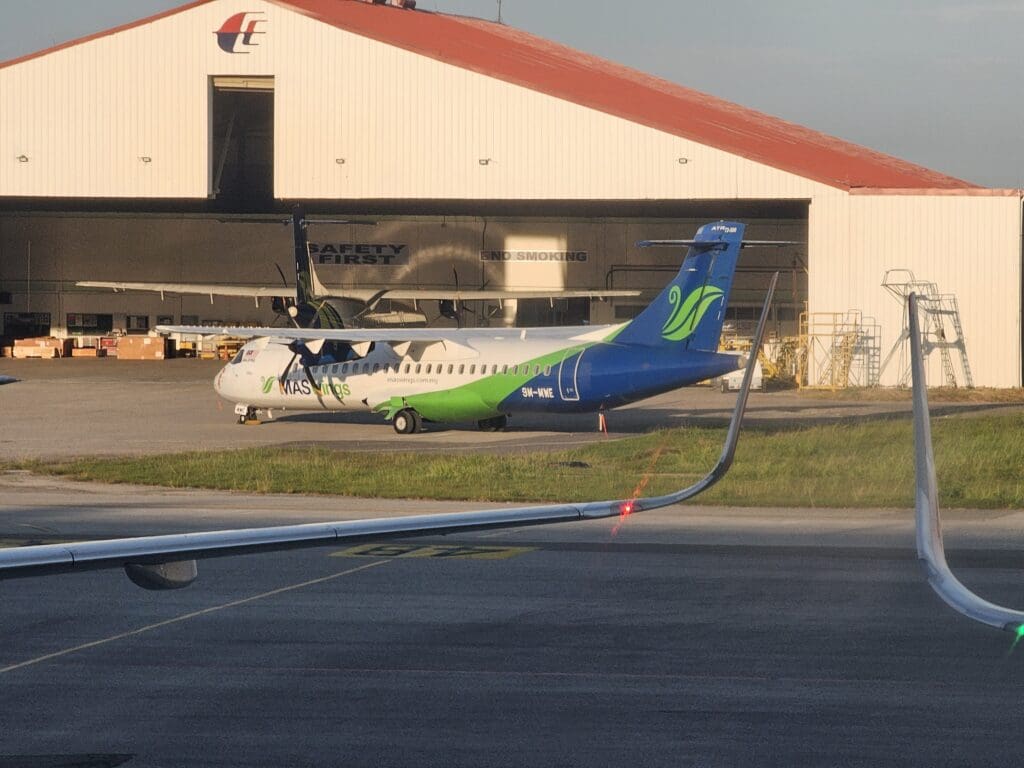
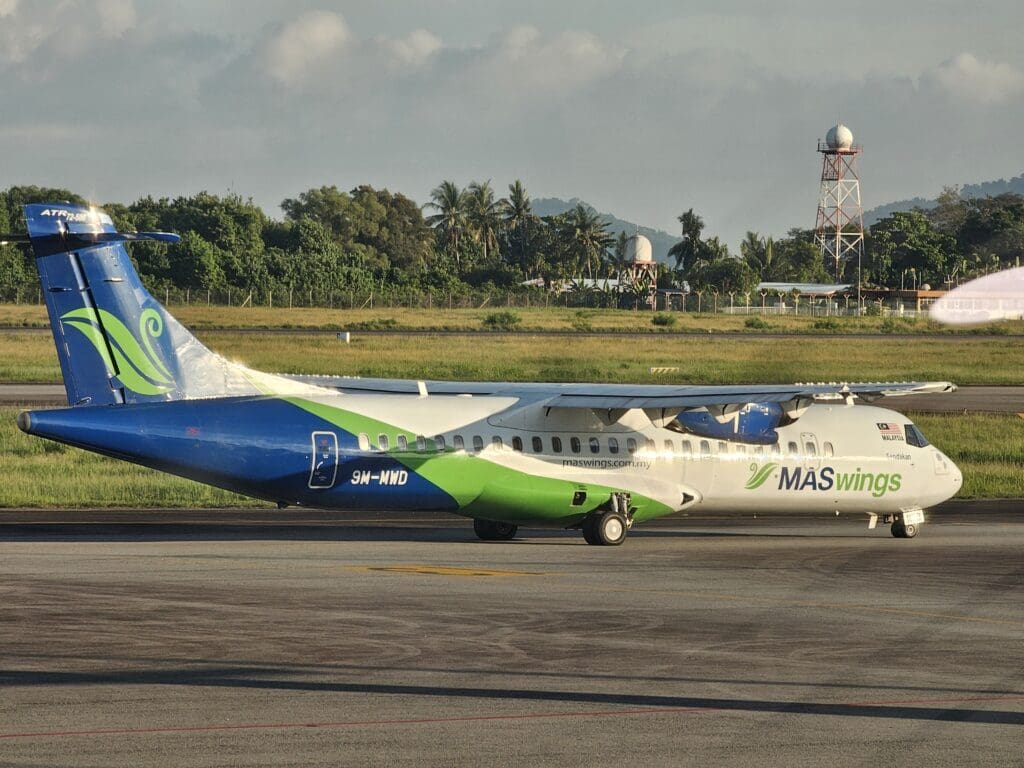
If you are based outside of Malaysia, or indeed Borneo, then you can be forgiven for never having heard of MASwings! Operating a fleet of nine ATR 72-500 and six Viking Air DHC-6-400 Twin Otters, the airline pales in comparison to giants such as AirAsia and Malaysia Airlines. However, the airline has long played an important role in connecting cities, towns and villages across the East Malaysian states of Sabah and Sarawak.
Today, Tony Fernandes and his Tune Group are more commonly associated with the red and white jets of ultra-low-cost carrier, AirAsia, and their plethora of subsidiaries across Asia. However, back in 2006, the group, through its subsidiary FlyAsianXpress, operated a fleet of Twin Otter turboprops on East Malaysia’s Rural Air Services network – a selection of subsidised routes from Kota Kinabalu and Miri to small remote towns and villages across Sabah and Sarawak that had previously been operated by Malaysia Airlines. However, at odds with AirAsia’s other operations, in April 2007, in cooperation with the Malaysian government, the airline transferred responsibility for these routes back to Malaysia Airlines. Taking a different approach, Malaysia Airlines created a wholly-owned Kota Kinabalu-based subsidiary, MASwings, which operated its first service in October 2007.
Commencing operations with a fleet of eight Fokker 50s and four Twin Otters, MASwings operated a route network across Malaysian Borneo, a role that it continues to undertake today. However, since then, the Fokkers have been replaced by ATR 72s, while the De Havilland Canada Twin Otter fleet has been replaced by the upgraded Viking Air model. Today, MASwings operates to 21 destinations across Sabah and Sarawak, with bases in Kota Kinabalu, Kuching and Miri, and continues to play an important role in connecting Borneo.
Booking
Whilst I could have booked via Malaysia Airlines or MASwings’ websites, having the Trip app installed and undertaking a run of bookings with this, I decided to use this to book my flights. Fortunately, this presented no issues and I soon received my ticket and was set to head off on my adventure. Using Malaysia Airlines’ app, I was able to pre-select a seat for free on both sectors, opting to pick Seat 1A and Seat 4A for my first and second flights respectively. However, as is the norm for all MASwings Twin Otter-operated services, I was unable to check in online via either Malaysia Airlines or MASwings’ sites.
The Journey
Kota Kinabalu International Airport is conveniently located, sitting no more than a stone’s throw away from the city centre – around six kilometres, to be precise. For aviation enthusiasts, when Runway 20 is in use, a superb view of aircraft flying low over the city’s seafront promenade can be had as they whizz overhead at the end of their flights. Staying in the city centre and given the short distance to the airport, I did not anticipate any issues in reaching this in good time for my 09:15 flight. Whilst there are a few different bus services that run from neighbourhoods across Kota Kinabalu to the airport, not wanting to get caught up in the early morning heat and humidity at the start of my long day of travel back to Kuala Lumpur, I decided that I would order a cheap car ride to the airport from Grab, the Malaysian version of Uber.
Jalan Tun Fuad Stephen is Kota Kinabalu’s main artery, running parallel to the seafront and hosting some of the city’s fanciest hotels and most expensive properties. Whilst this had been my home for two nights, I spent my two nights in the city not in Le Meridien or the Marriott, but in one of its less glamorous hotels – a small six-bedroom hotel in a worn-down and crumbling multipurpose building. Waking up bright and early with the call to prayer from the nearby mosque, I jumped out of bed just before 05:00, and, unable to get back to sleep, I dawdled in the shower in anticipation of my day ahead. Having packed most of my things the night before, I was left with little to do other than put on a fresh set of clothes and undertake a quick check to ensure that I had everything I needed with me, knowing that it would likely be quite some time before I passed through Sabah again.
With little to do, I decided that I would wait at the airport rather than in my old and battered hotel room, and so at 05:20, I opened up the Grab app and ordered the cheapest available car to the airport. Priced at a very reasonable 11.33 ringgit (£1.97), this was most definitely one of the most economical taxis that I have ever taken to an airport anywhere in the world! However, with few cars ploughing the streets of Kota Kinabalu at that early hour, a longer than usual wait of eight minutes was in store, which left me rather thankful that I had ordered this from my hotel room rather than the humid street. Once this turned onto the seafront, I dropped off my key and headed downstairs, timing things just right, with the small Perodua Bezza, a compact locally produced sedan, pulling up just as I exited the building. With no words, we whizzed southwards down the quiet streets of Kota Kinabalu as the driver’s playlist of loud and upbeat electronic dance music blurted out, hopefully serving to keep the weary-looking driver awake for the journey to the airport.
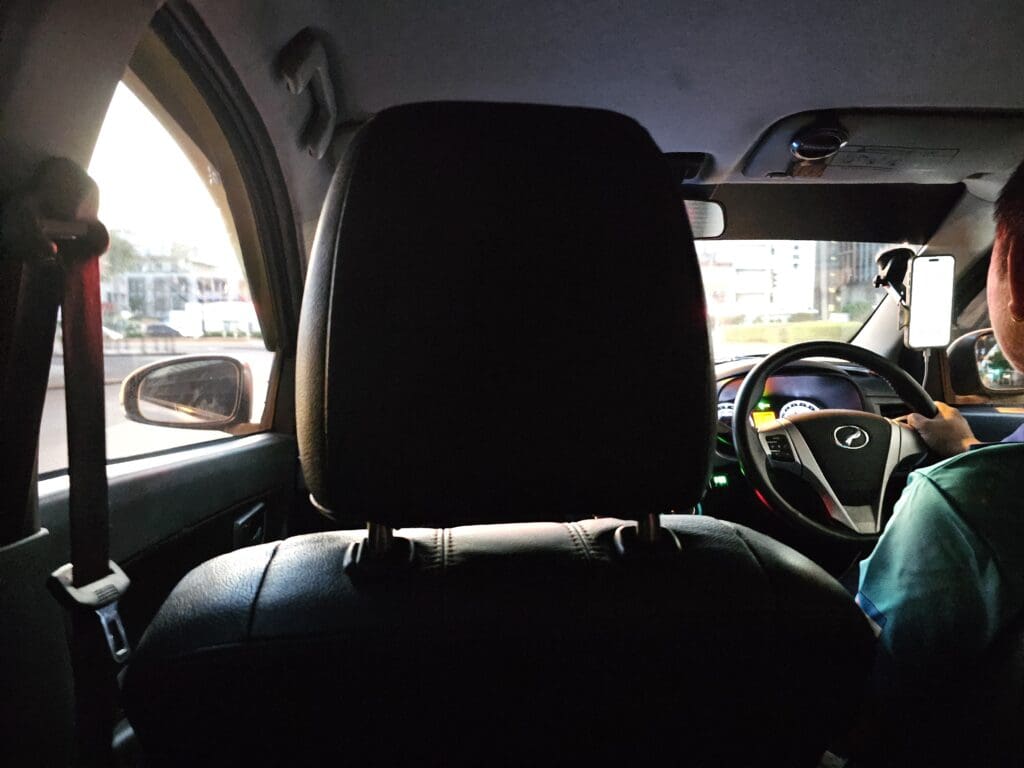
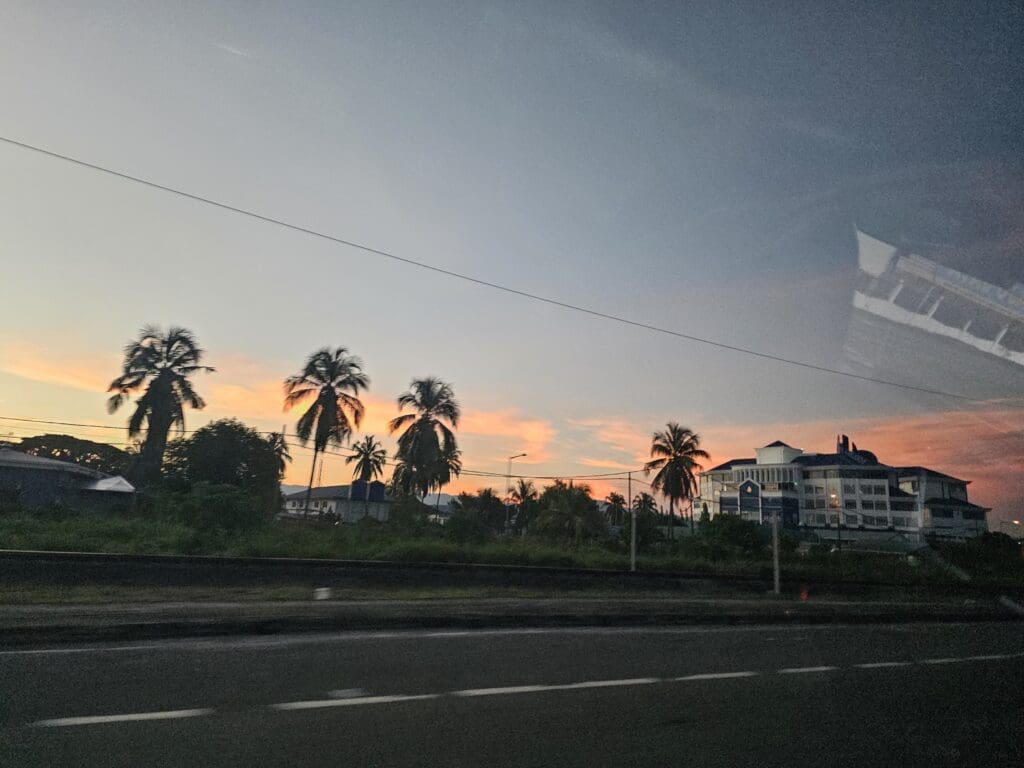
As we sped along, the journey was accompanied by picturesque dawn skies sitting above the forested hills that surround the edges of Kota Kinabalu, and before I knew it, the northern end of the airport’s runway popped into view. Moments later, I spotted a locally based AirAsia Airbus A320 making its taxi to the runway for its early morning flight over to Kuala Lumpur, whilst a much more luxurious locally based San Marino-registered Bombardier Global Express could be seen, with this operated by Sabah Air. Ten minutes after leaving the hotel, the car whizzed up the ramp and soon came to a halt outside one of the entrances to the terminal check-in hall. Once there, I thanked the driver before making my way out into the hot and humid morning air.
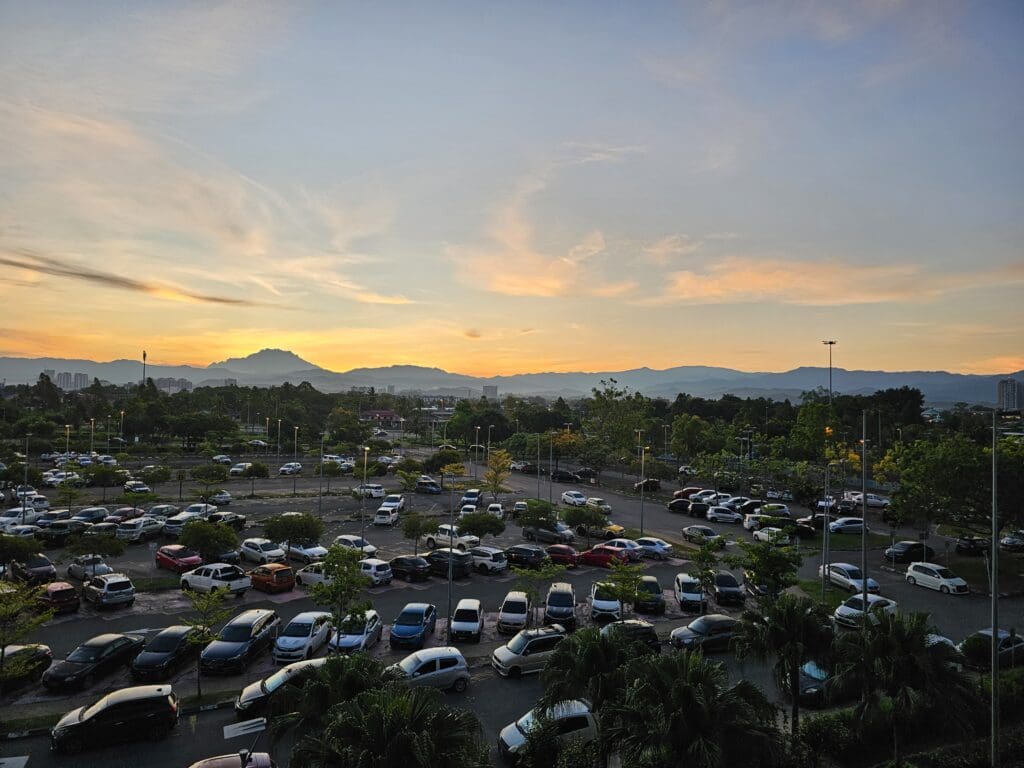
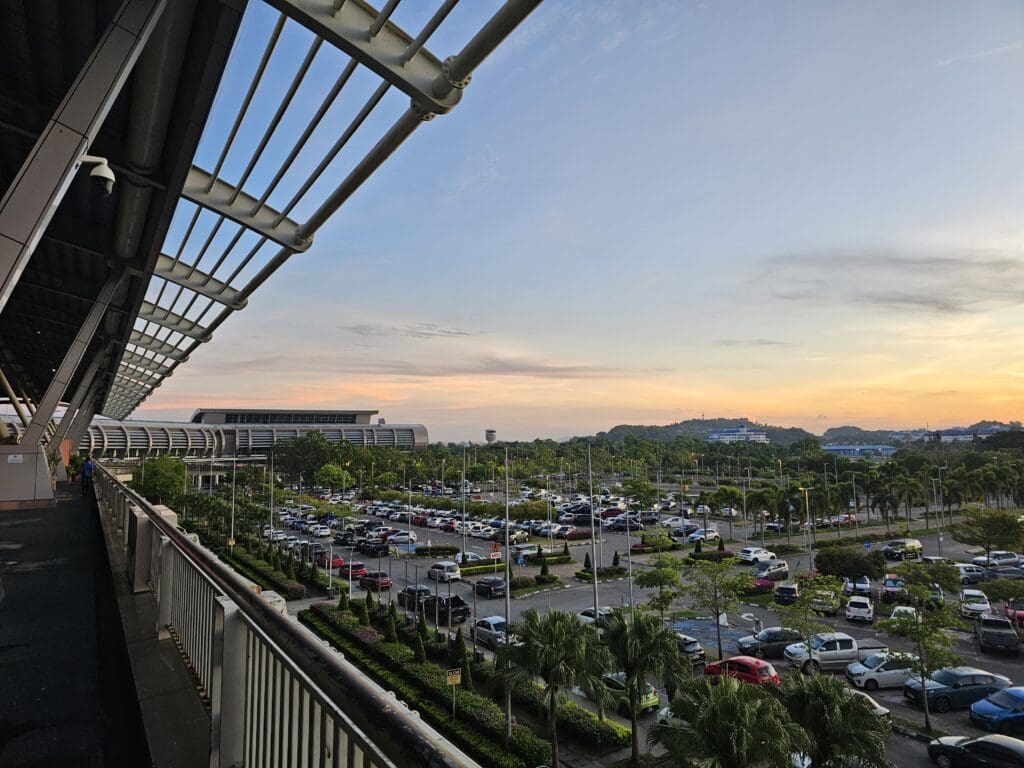
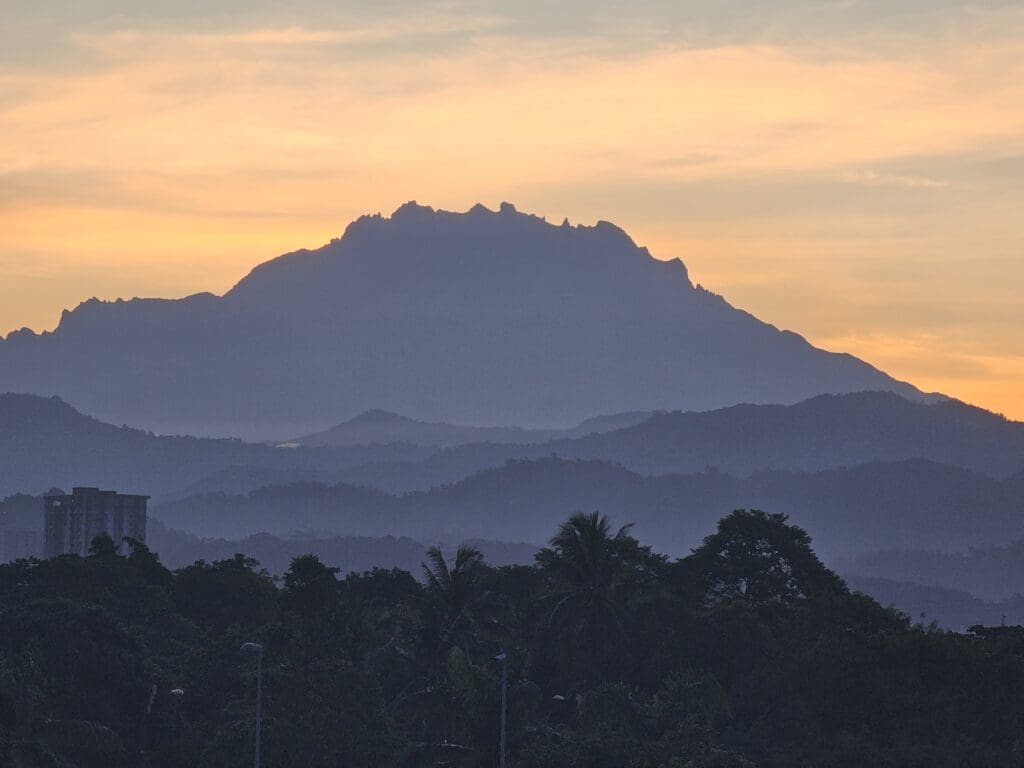
Kota Kinabalu International Airport can trace its roots back to the Japanese occupation of Borneo during the Second World War when it served to support military operations in the region. Seeing extensive damage, following the conflict, the Department of Civil Aviation of North Borneo reconstructed the airfield, and in 1949, it welcomed its first civilian service. This took the form of a Malayan Airways service which connected this with Singapore and made stops in Kuching and Labuan. The following year, the airport welcomed Cathay Pacific who used Kota Kinabalu as a stopover point on its services between Hong Kong and Labuan, whilst the first locally based airlines came in the form of Sabah Airways’ de Havilland Dragon Rapides.
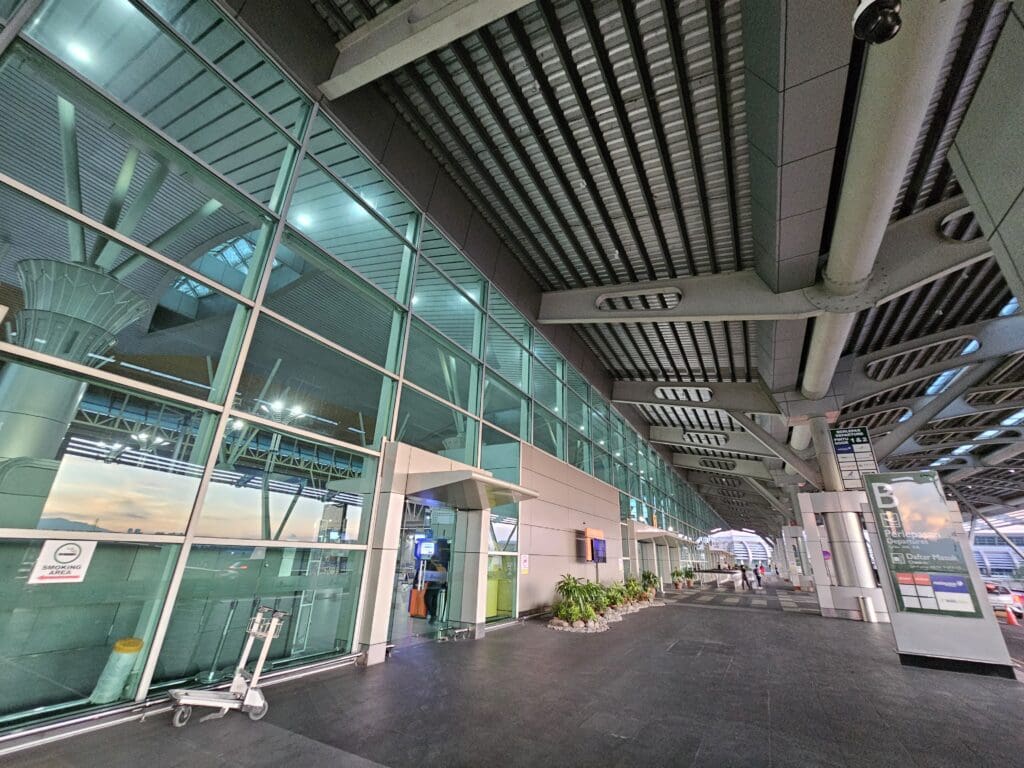
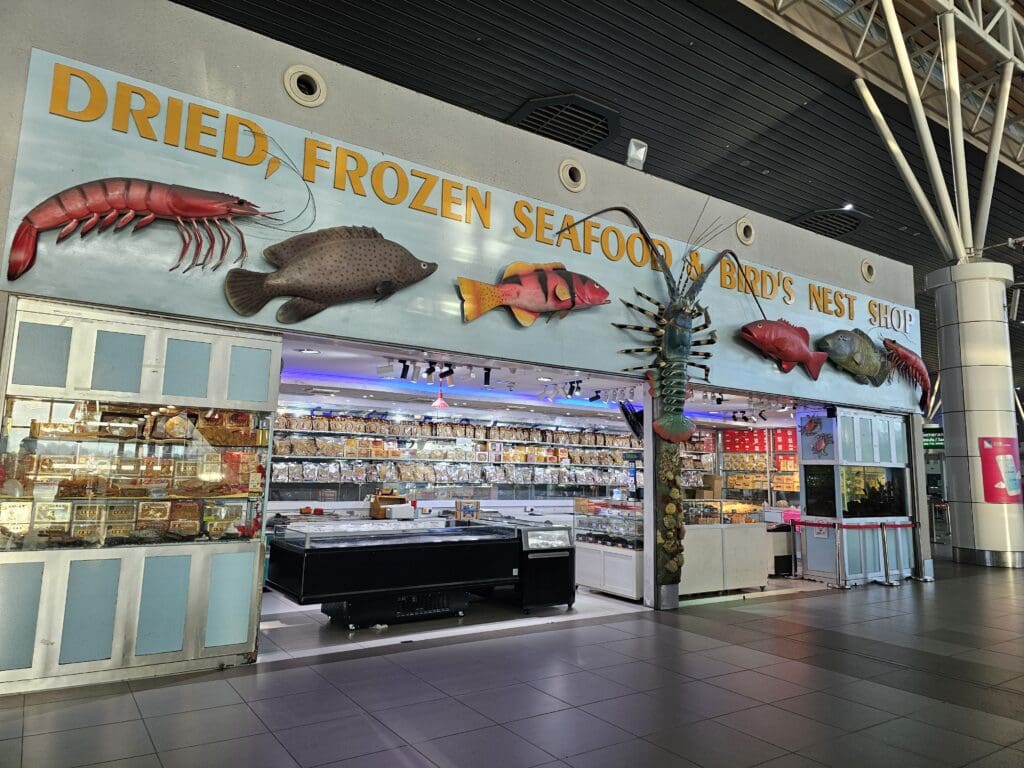
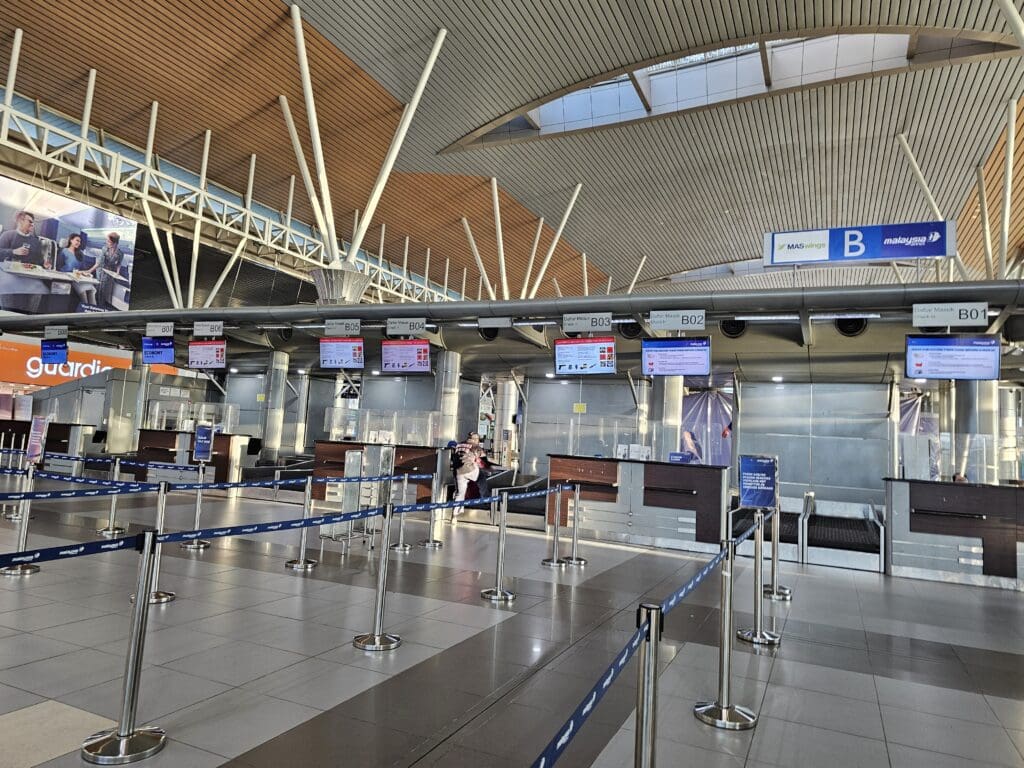
From the outside, Kota Kinabalu International Airport’s terminal is a large, modern and mostly glass structure, much of which is ingeniously shaped like an aircraft’s wing! Once out of the car, I wandered the few short steps into the terminal and entered the large and cavernous check-in hall. Inside, four check-in islands could be seen, and with a slew of flights set to head off that morning to destinations across Borneo and Peninsula Malaysia, alongside AirAsia services to Hong Kong, Singapore and Shenzhen, unsurprisingly there seemed to be a constant throughput of passengers making their way through this portion of the airport. As I wandered around, I found the landside departures area to be clean, tidy and modern, thus leaving me with nothing to complain about. For those with time on their hands and fancying something to eat or drink, the landside portion of the terminal features branches of McDonald’s and Old Town Coffee, alongside a 7-Eleven for those wanting something a little lighter. In addition, a pharmacy as well as shops selling local seafood and souvenirs could also be found before security.
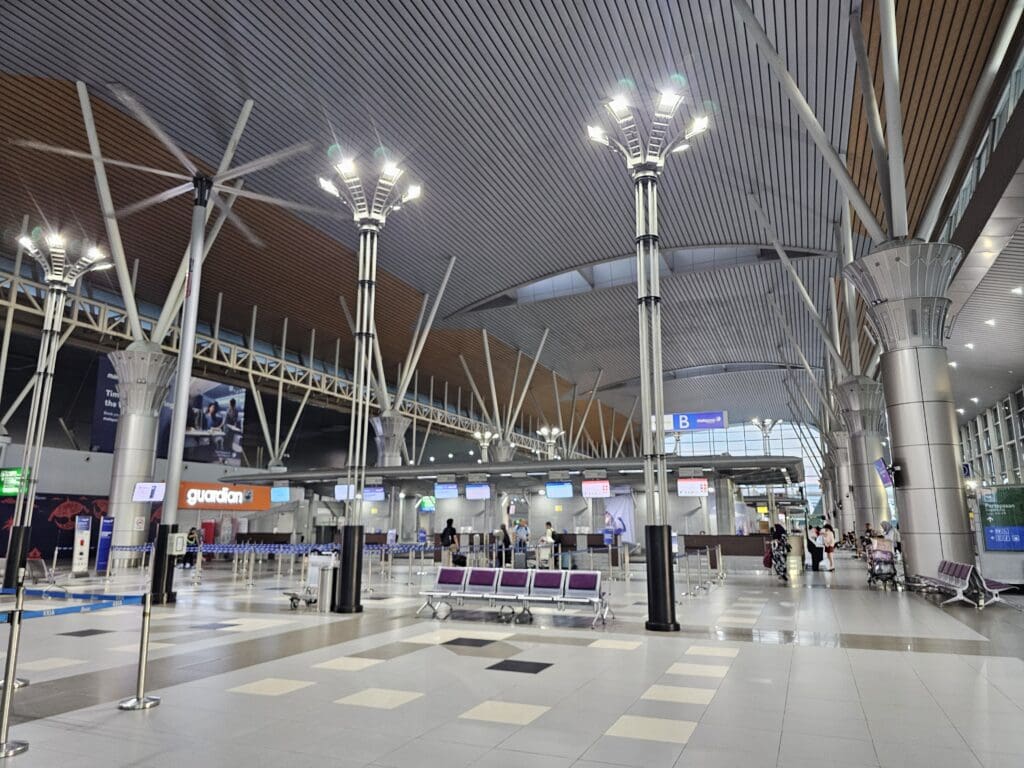
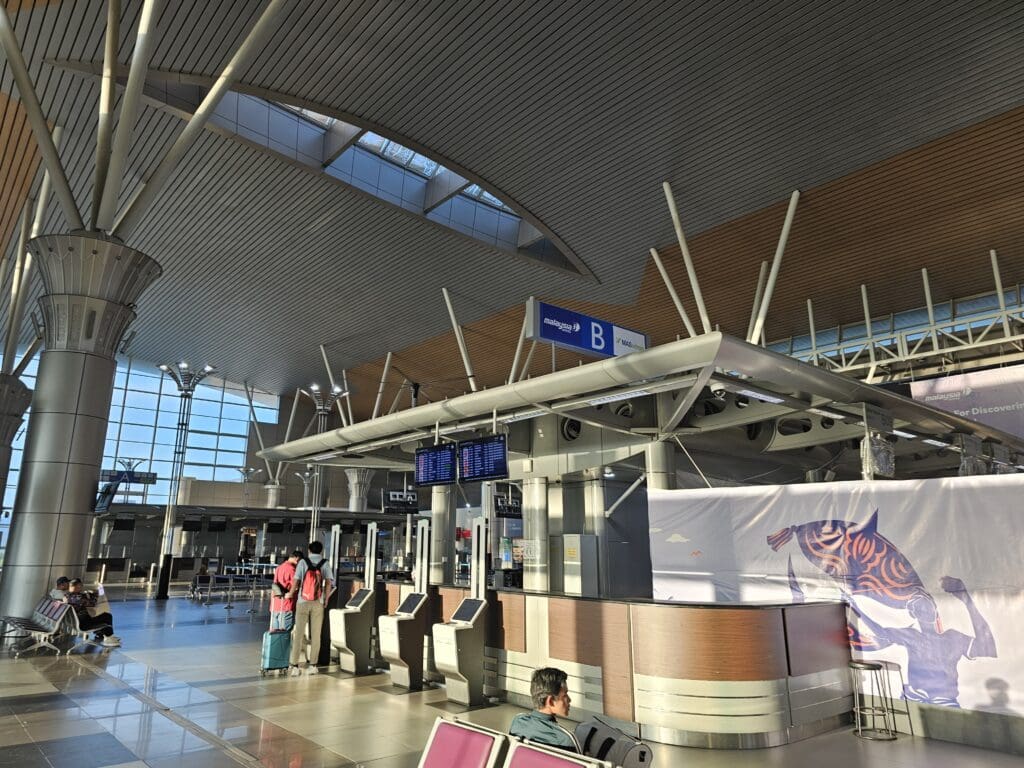
Seeing as I had been unable to check-in online, following my breakfast, I decided to head over to MASwings’ check-in area. Given the airline’s status as a fully owned subsidiary of Malaysia Airlines and the fact that its services are undertaken with Malaysia Airlines flight numbers, the airline unsurprisingly shares its desks with its parent airline. Despite being the hometown airline with plenty of services from the airport, interestingly, there was a lack of MASwings branding. That morning, three desks were open for Economy passengers – a number that seemed perfectly adequate with three MASwings services set to depart before my flight to Lawas, and no Malaysia Airlines services until much later that morning. In addition to the desks, a row of self-check-in machines was also offered; however, upon attempting to use these, I was presented with a generic message advising that check-in was not possible. Fortunately, with no queues at the desks, I was able to wander straight up to one of these where I was seen by an acceptably friendly Malaysia Airlines ground agent. Once I had confirmed that I was bound for Miri and lacked any hold luggage, two Malaysia Airlines boarding passes were printed out, with the check-in process taking no more than a minute at most.
Once I had checked in, I decided to head through security. The terminal features two security checkpoints: one for flights departing to destinations within Sabah (which, at the time of my flight, included Lahud Datu, Sandakan, and Tawau), and another for all other flights. Heading to the latter checkpoint, I found this to be fairly compact, with just two scanners and metal detecting arches on offer; despite this, passing through was quick and easy, and I made it through without any waiting or additional checks. Next up, those departing on international and domestic services are signposted down two separate corridors, and, following signs for the latter, I soon ended up at the small immigration hall. Whilst I would officially be departing Sabah on a domestic flight, with the state maintaining its own immigration regime, even those heading to other destinations within Malaysia must pass through an immigration checkpoint. Fortunately, with all immigration counters manned and no other passengers there at the time, I was able to walk straight up to a desk and following some suspicious looks and fingerprint scanning, I was soon stamped out of Sabah by a rather stern-looking agent.
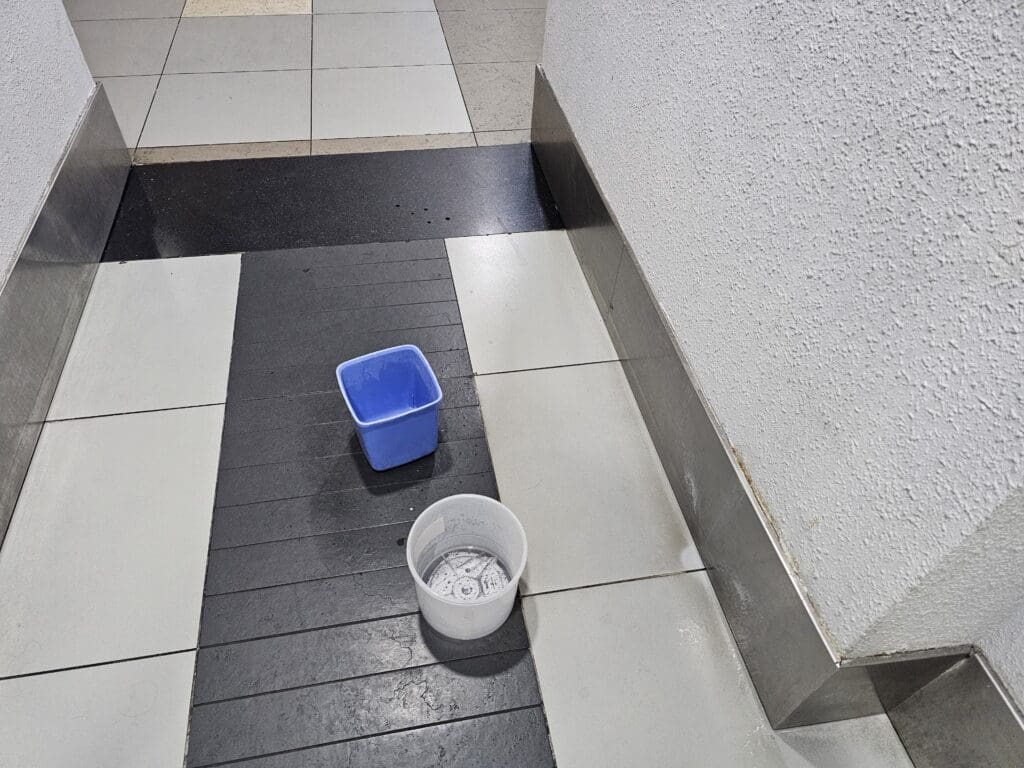
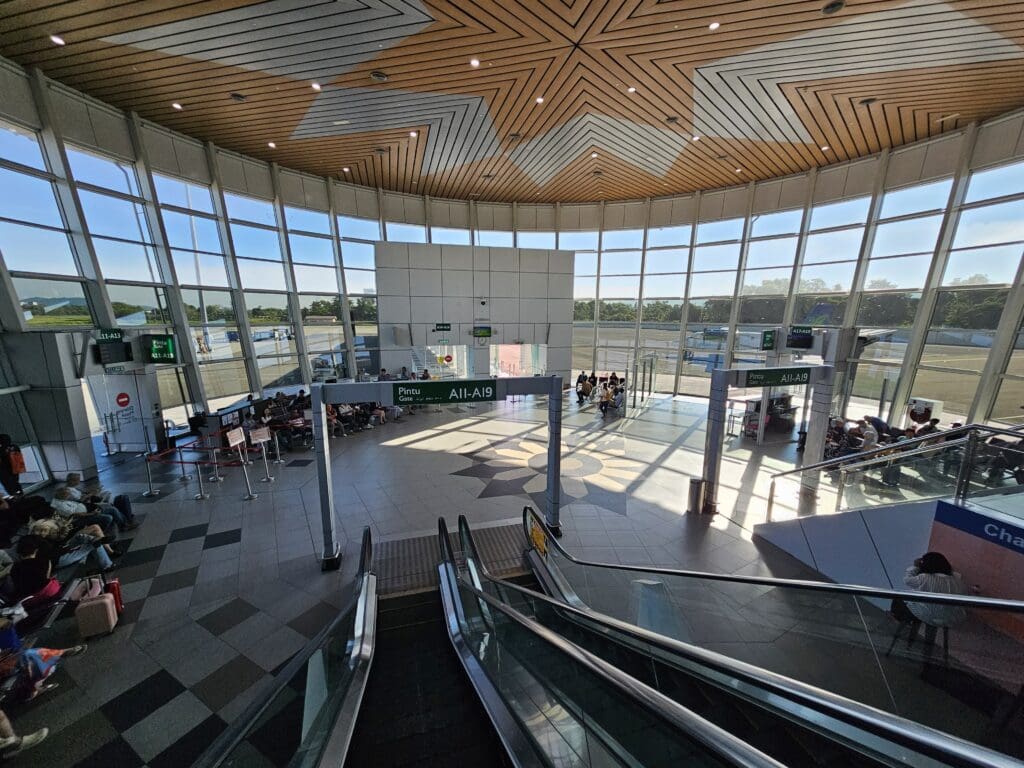
Having sailed through the terminal, that morning I was left with an abundance of time on my hands to explore all the nooks and crannies of the airside portion of Kota Kinabalu International Airport. In terms of its layout, the terminal is large and elongated, featuring a total of nineteen gates, logically named A1 to A19, spread out across a fairly large area. Nine of these take the form of ground-level gates at the end of the terminal, which that morning appeared to be reserved for the exclusive use of MASwings and several AirAsia services. For the most part, the terminal left me with little to complain about. In terms of its design, I found this to be bright, modern, spacious and clean. However, I did find the terminal to be a little worn in places with some of the toilets in particular appearing to have seen the brunt of the action and thus being in need of a repair or revamp. Additionally, I noticed various buckets set up throughout the terminal to capture drips from the ceiling, something that did not quite give off the aura that you would expect from Malaysia’s second-largest airport! Finally, charging points were a little difficult to come by being limited to a few fixed charging stations throughout the terminal. Nevertheless, I was able to find a plug socket that worked the first time, something that is not always the case at many airports!
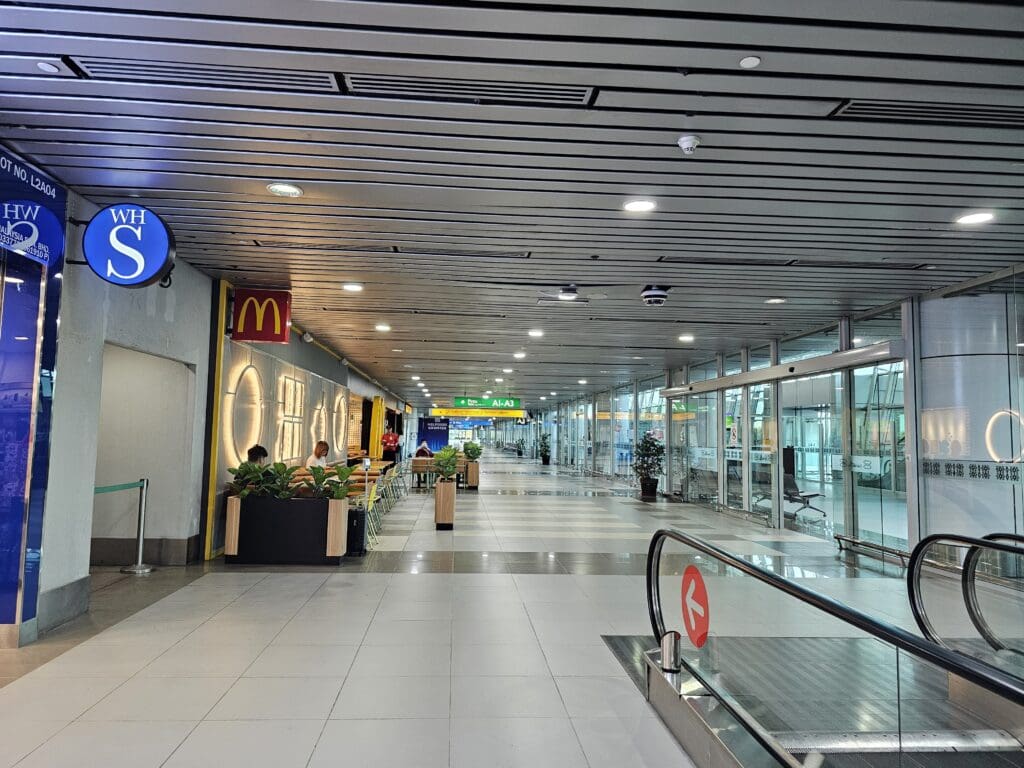
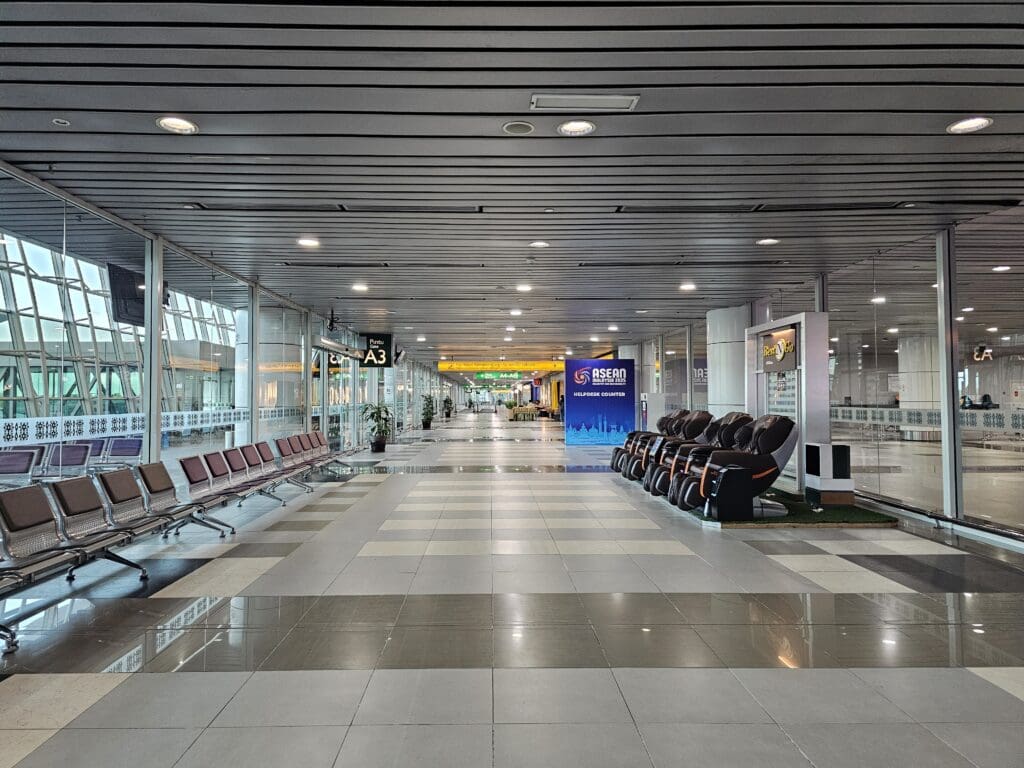
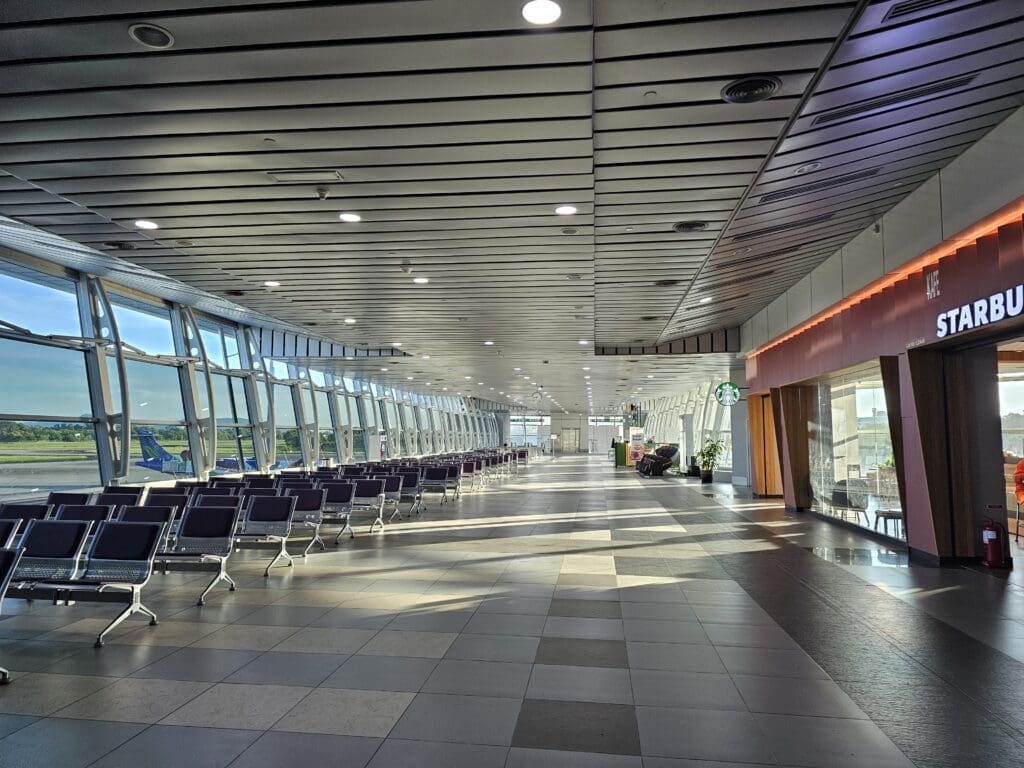
Considering its size, the terminal featured a wide array of facilities. These included multiple overpriced souvenir shops for those who had forgotten to stop by at Sabah’s markets, another shop selling a variety of locally caught seafood and several outlets selling your more traditional (non) duty-free offerings, including clothes, sweets, skincare and beauty products. For those feeling peckish, a decent array of eateries were on offer, although almost all of these took the form of international chains such as Burger King, Dunkin’ Donuts, McDonald’s, Old Town Coffee and Starbucks, with no opportunities to get a final taste of some authentic Sabah cooking.
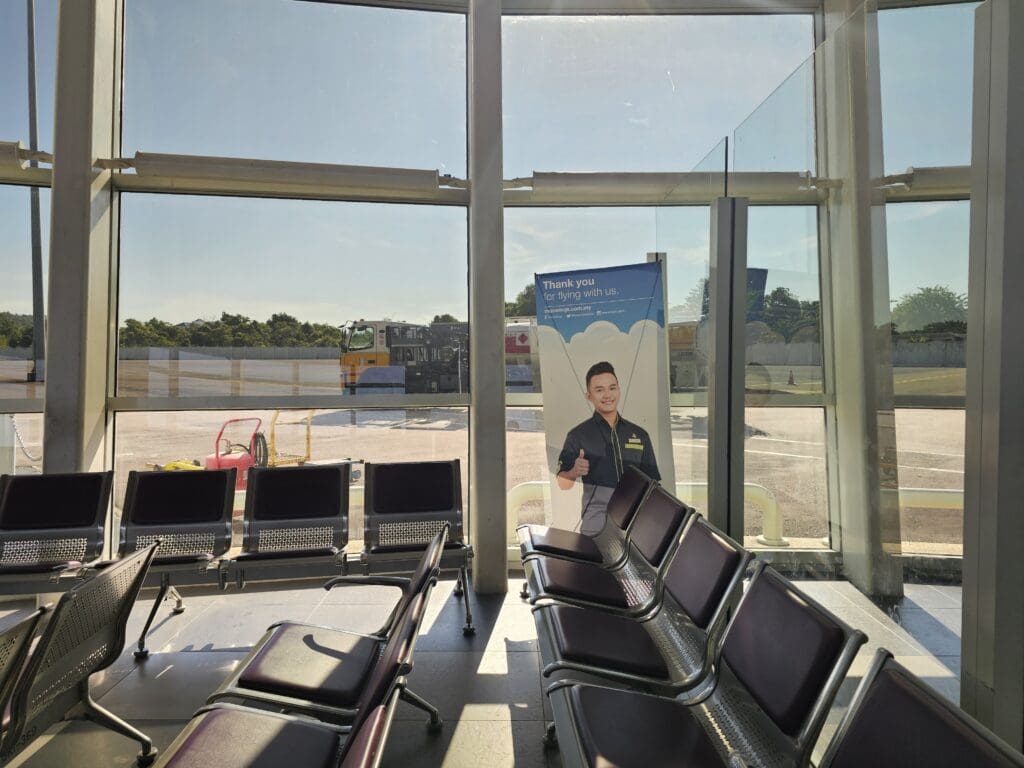
For those more interested in the world outside, thanks to large floor-to-ceiling glass windows, a good view of the movements both at the terminal’s stands and on its runway can be had from throughout much of the terminal. Whilst these were largely clean and devoid of any major marks or streaks, professional aviation photographers may be dismayed to hear that these windows were partially tinted and thus good quality photographs of the movements outside would have proven to be rather tricky.
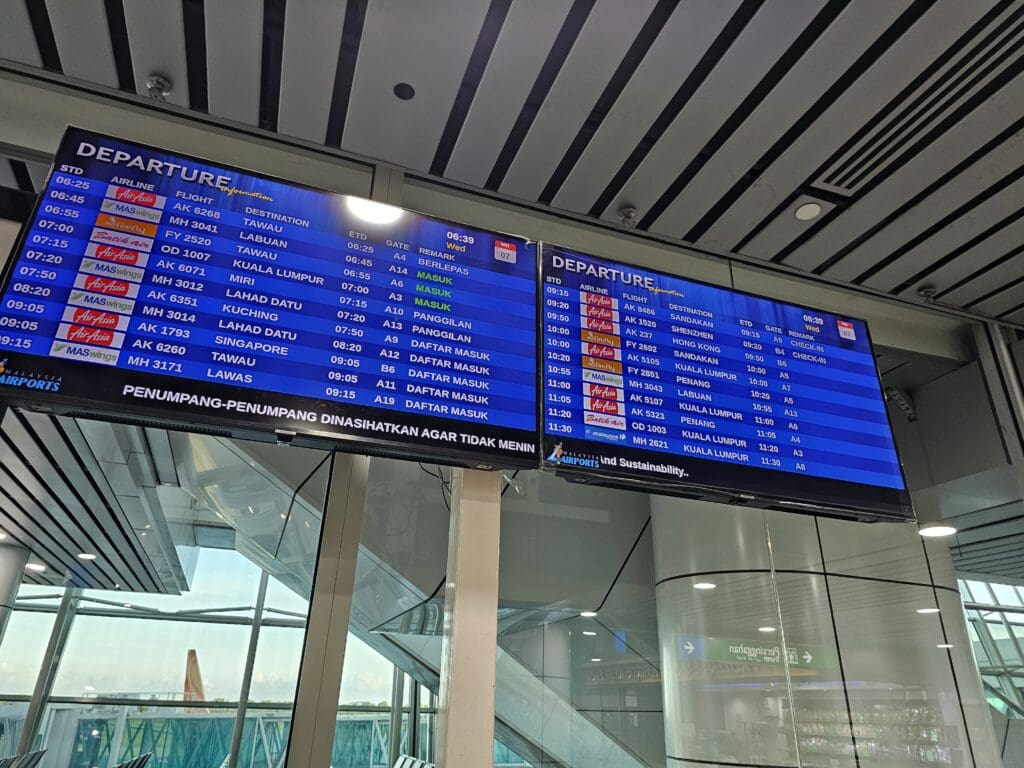
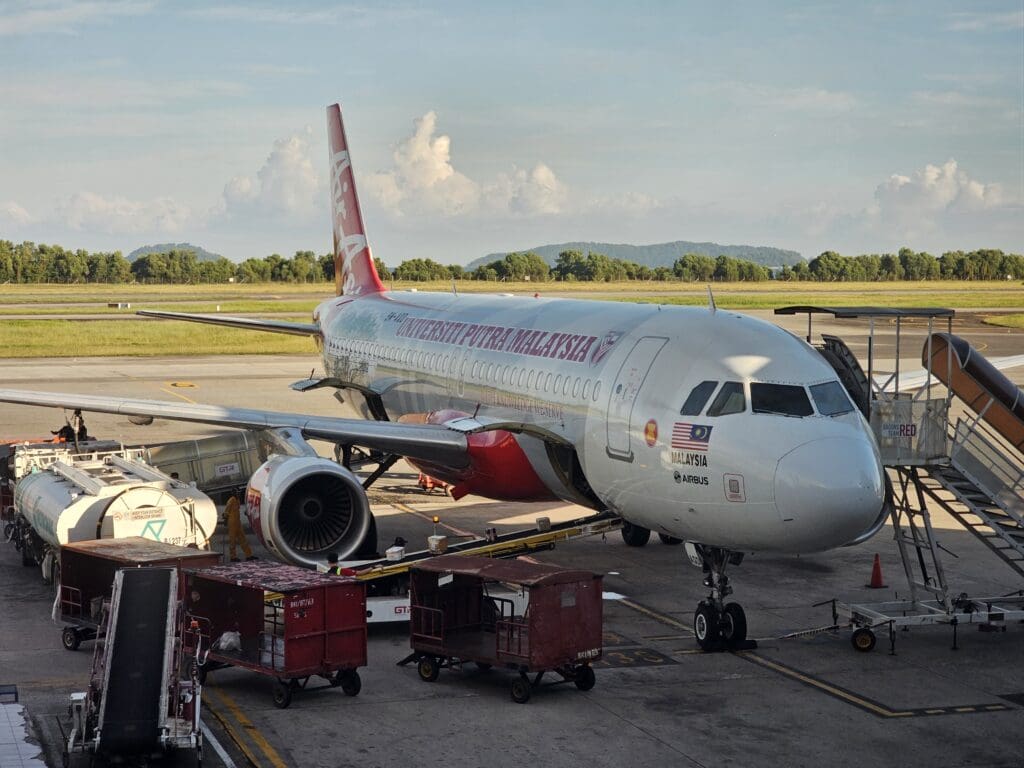
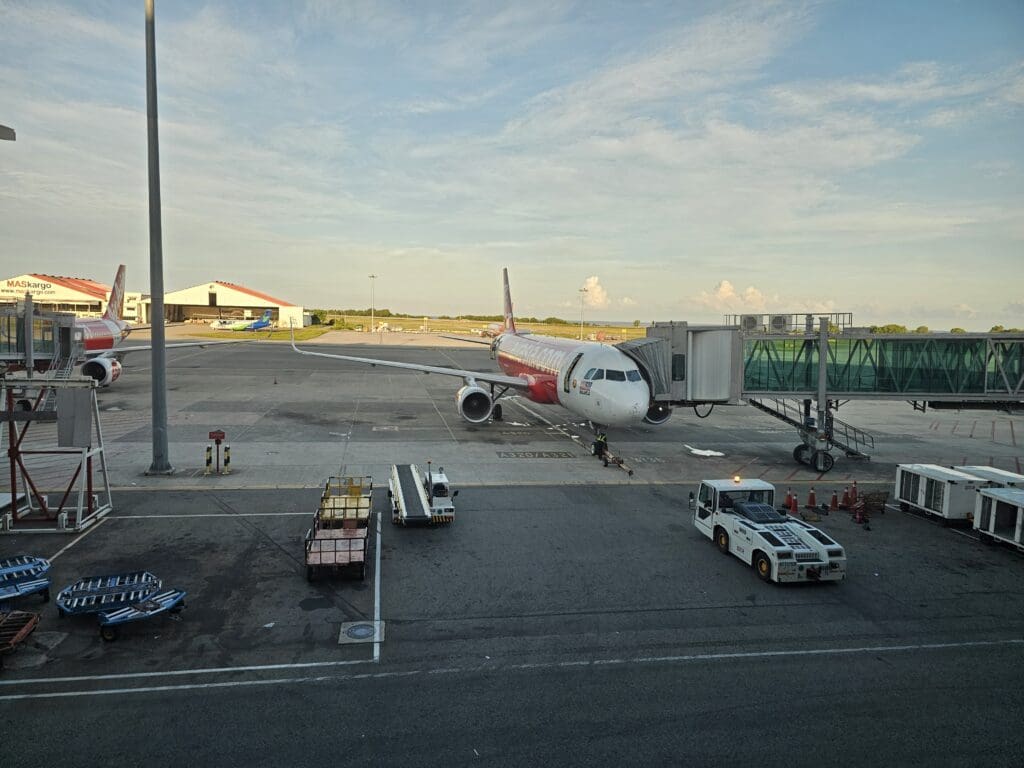
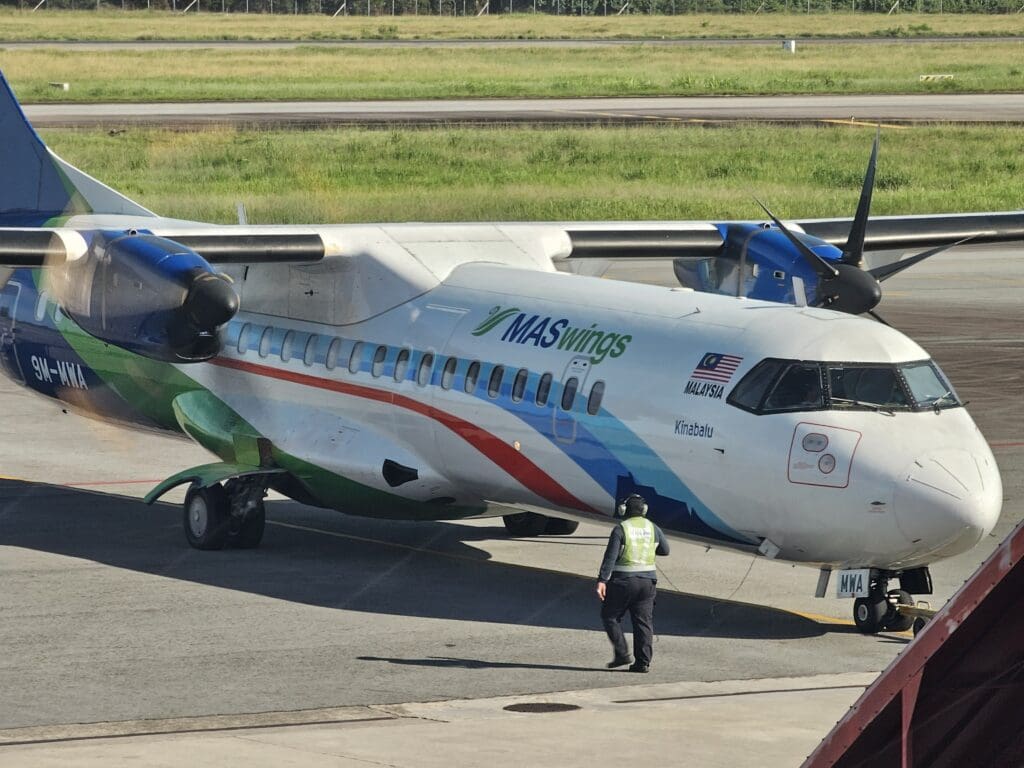
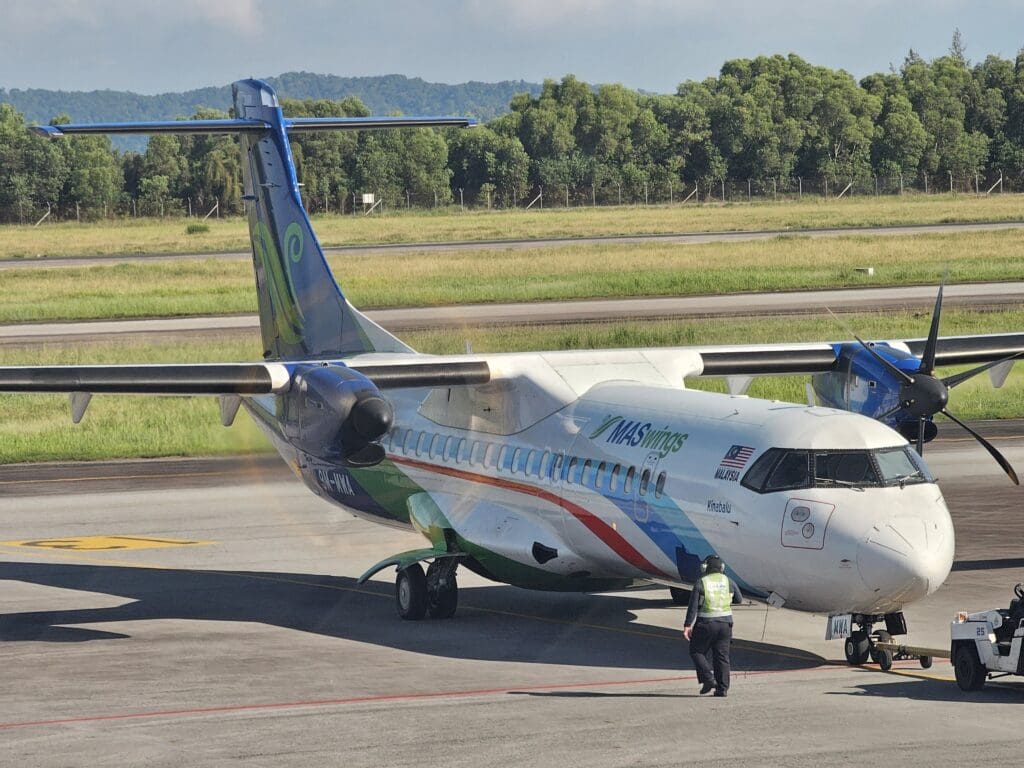
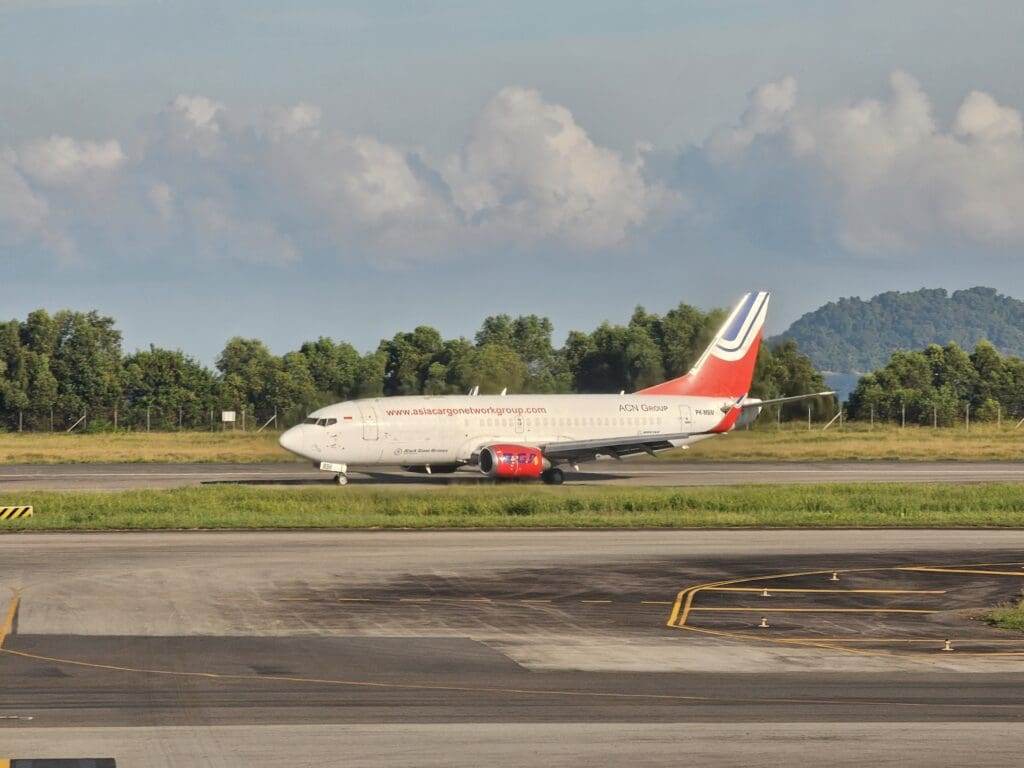
Following my wander, I took a seat near one of the windows and watched the movements outside. Despite being one of Malaysia’s busiest airports, that morning the stream of movements resembled more of a trickle than a gush, with aircraft coming and going at an average interval of about once every twenty minutes. As is the case at some Malaysian airports, AirAsia appeared to rule the roost, with plenty of their distinctive red and white jets seen starting a new day of flying. Meanwhile, a few aircraft operated by Malaysia Airlines’ subsidiaries FireFly and MASwings could also be seen. From a British enthusiast’s perspective, the highlight movement came in the form of an old Boeing 737-300 Freighter operated by Indonesian carrier RGA-Black Stone Airlines. Had I not wished to head to Lawas, I could have instead headed to Kuala Lumpur, Kuching, Labuan, Lahud Datu, Miri, Sandakan or Tawau, with nine flights departing between my arrival in the terminal and my 09:15 flight.
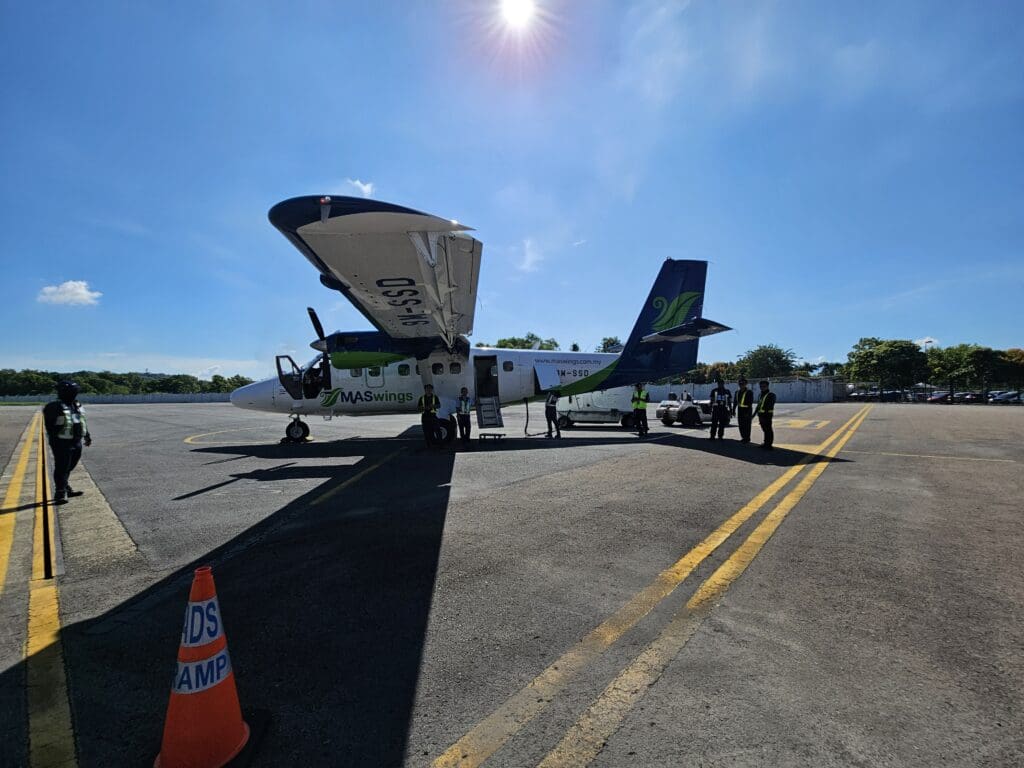
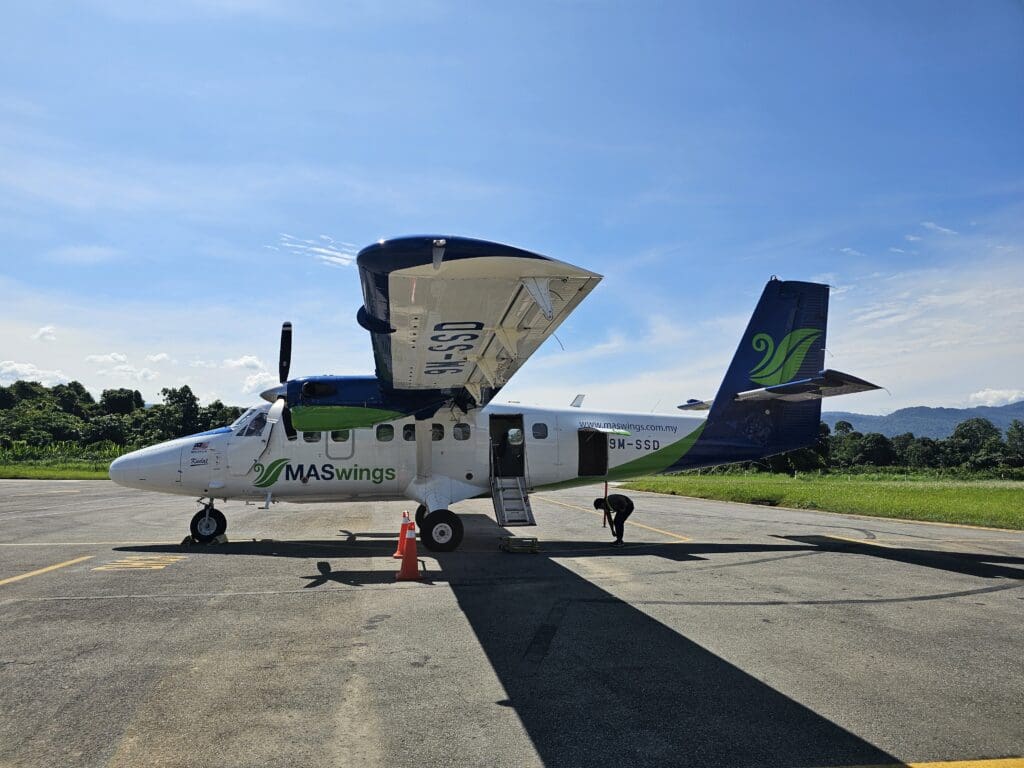
Looking outside, just one Twin Otter could be seen on the ground in Kota Kinabalu, with this parked at Stand 19 and taking the form of 9M-SSD. As with all of MASwings’ Twin Otters, this is named after one of the destinations served by these aircraft, namely Kudat, a town and region in the far north of Sabah.
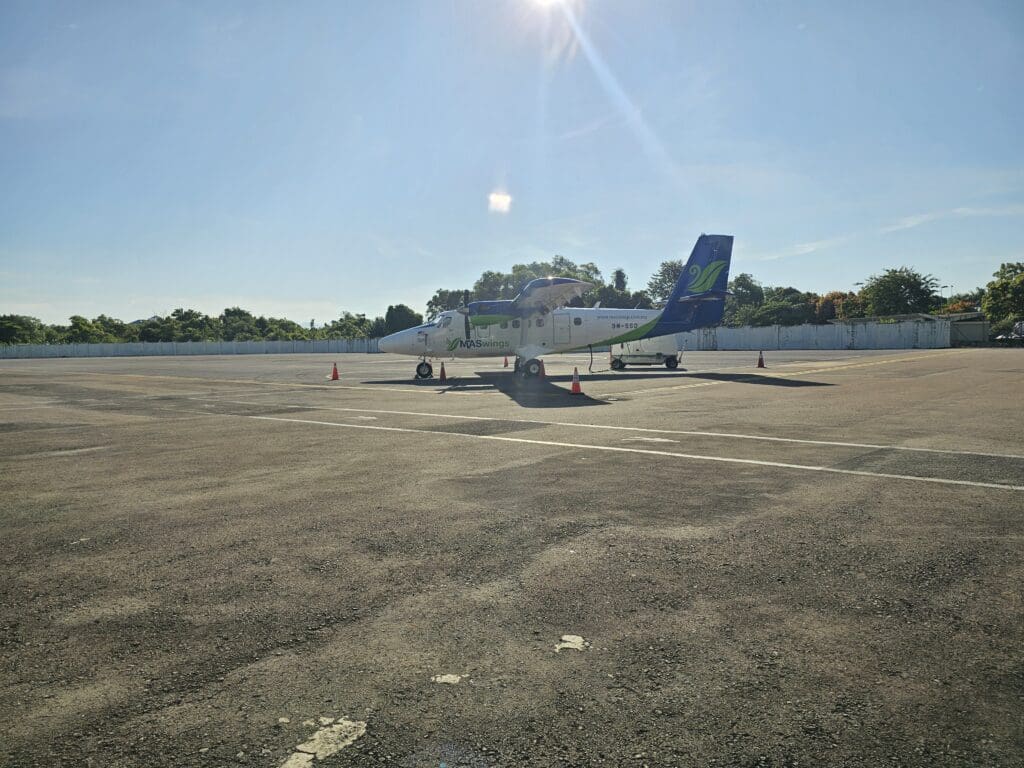
Carrying construction number 893, this Twin Otter was manufactured at Viking Air’s plant at Victoria Airport, thousands of miles away across the Pacific in the province of British Columbia. First taking to the skies in November 2013, this aircraft remained in Canada with the test registration of C-GFVT, shuttling between Victoria and Calgary, before being ferried to Spokane in the United States where it received MASwings’ blue, white and green livery. Once back in Canada, the aircraft remained there for several months before being ferried to Kota Kinabalu in April 2014, a mammoth trek that involved stops in the United States, Russia, Korea and Taiwan, namely Anchorage, Anadyr, Magadan, Khabarovsk, Gwangju, Muan and Taipei, before touching down in its new home. Once in Malaysia, the aircraft received its current registration and has been busy flying across Malaysian Borneo ever since. During its eleven-year career with MASwings, the aircraft has been involved in two notable incidents, both of which occurred in Mukah. The first of these occurred in July 2015 when the aircraft was hit by a Challenger 601 whilst parked, with the second occurring months later in October when the aircraft veered off the runway upon landing after a flight from Miri.
According to my boarding pass, boarding would commence at 08:15, the standard time that Malaysia Airlines advises passengers to be at the gate before departure regardless of whether a passenger is flying onboard a Twin Otter or an Airbus A350! However, given the fact that the Twin Otter can carry just nineteen passengers, I was very sceptical that boarding would indeed commence at the time stated on my boarding pass. Nevertheless, at about 08:20, I headed down the escalators to the ground floor gate waiting area. At this time, this was packed, with almost no free seats whatsoever. However, a few minutes later, an announcement was made advising those heading off to Tawau with AirAsia that the gate for their flight had changed, at which point the herd of passengers, some of whom appeared to be rather disgruntled, got up and left the waiting area, at which point just myself and a few airport staff members remained!
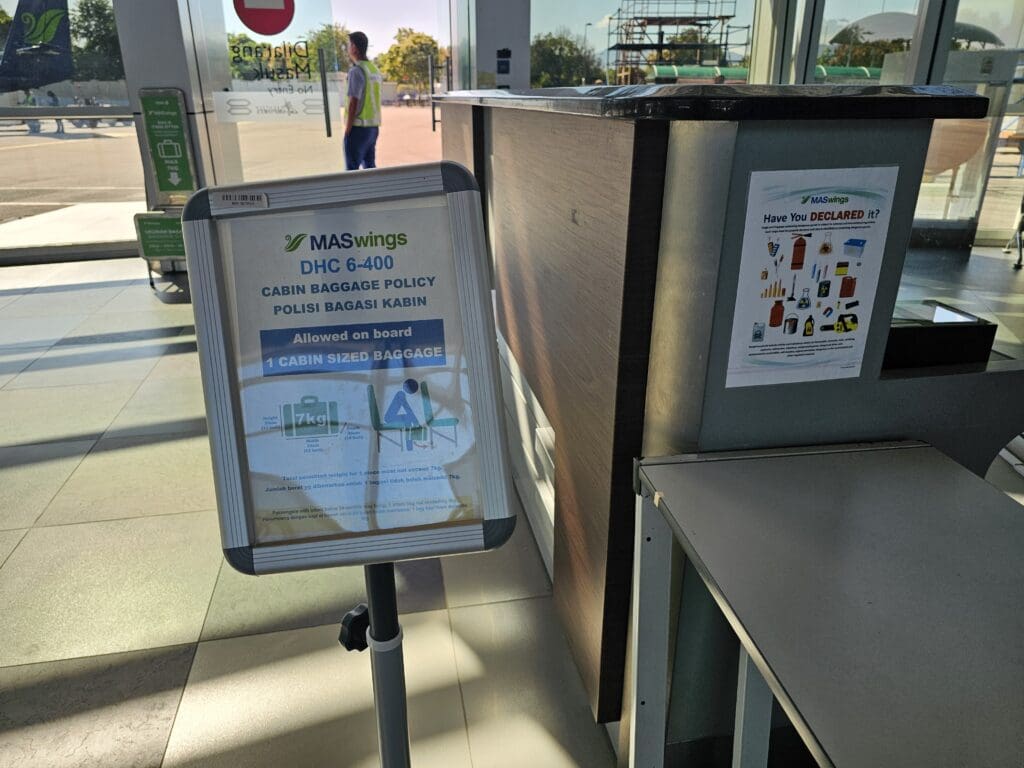
With around thirty minutes to go until my flight was scheduled to depart, a fuel bowser as well as an army of no fewer than ten members of AeroDarat ground staff, Malaysia Airlines’ handling company, appeared and began to prepare the Twin Otter for its trip to Lawas. Meanwhile, with twenty minutes to go until departure, two smartly dressed MASwings pilots appeared. After signing some paperwork and having their identity cards checked at the gate podium, they made their way out to the aircraft. The First Officer undertook a walkaround while the Captain prepared the cockpit for the flight ahead. Indicating that they had night-stopped in Kota Kinabalu along with the aircraft, these crew members travelled with large suitcases in tow, which was atypical for a short-haul crew, and they placed them in the nose cargo compartment.
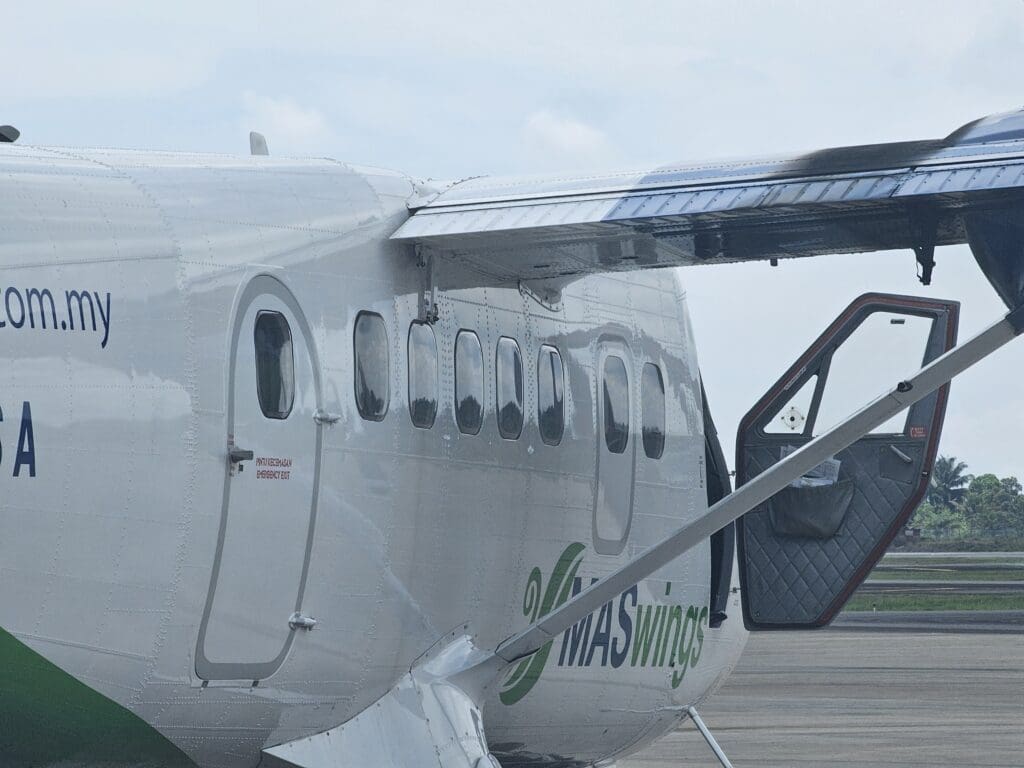
At 09:04, the gate agent said, ‘Ok Sir’ at which point my boarding pass was briefly checked before they jokingly remarked ‘It’s your own private charter today, you are the only passenger’. Making a short walk through the humid air, I soon reached the rear of the waiting mighty Twin Otter where another agent joked about it being my own personal ride before I clambered up the five steps that are built into the inner side of the aircraft’s cabin door. Upon entering the fairly spacious area at the rear of the cabin, I was welcomed onboard by the familiar oily scent that is more typical of a light or vintage aircraft than a modern commercial airliner.
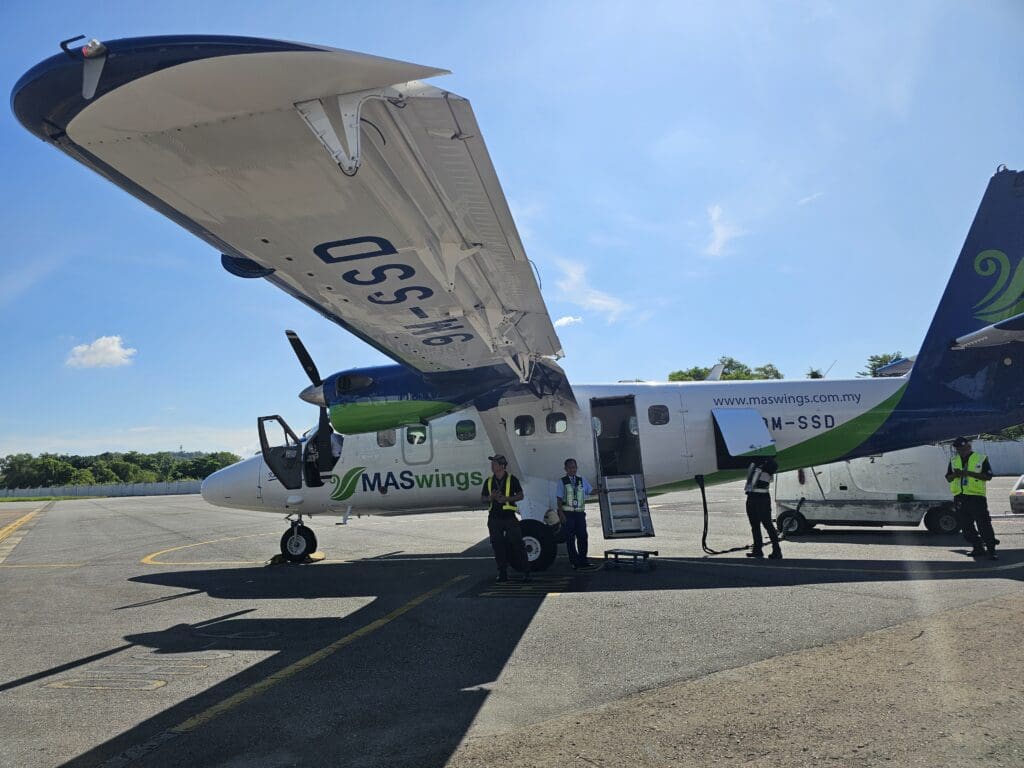
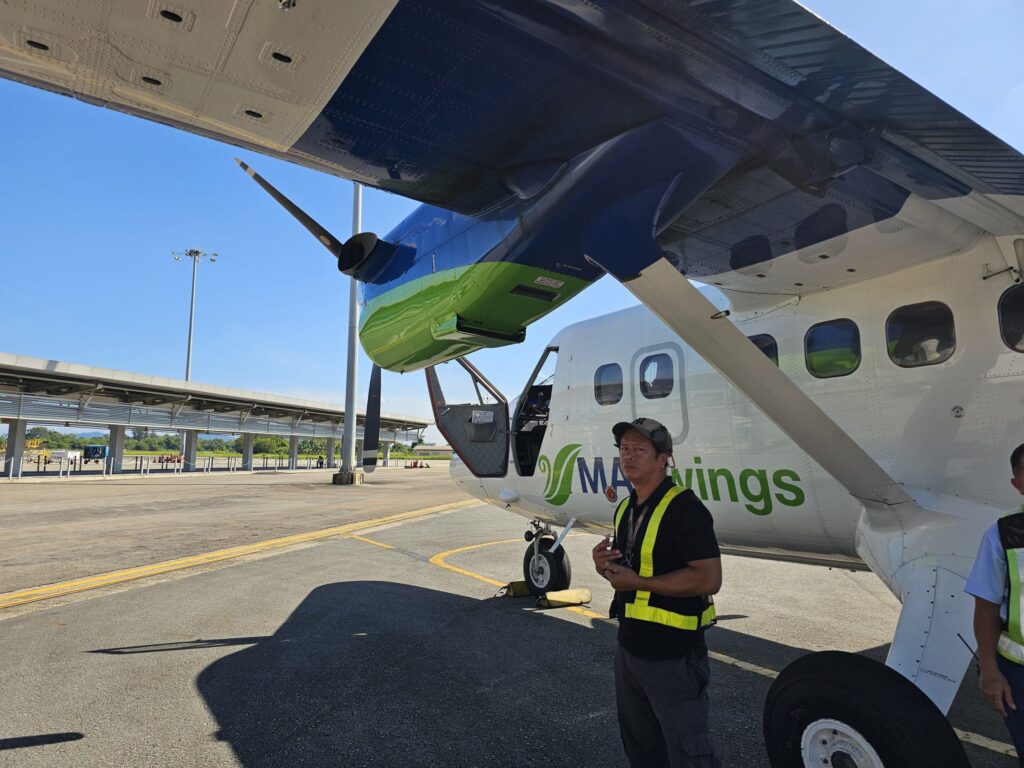
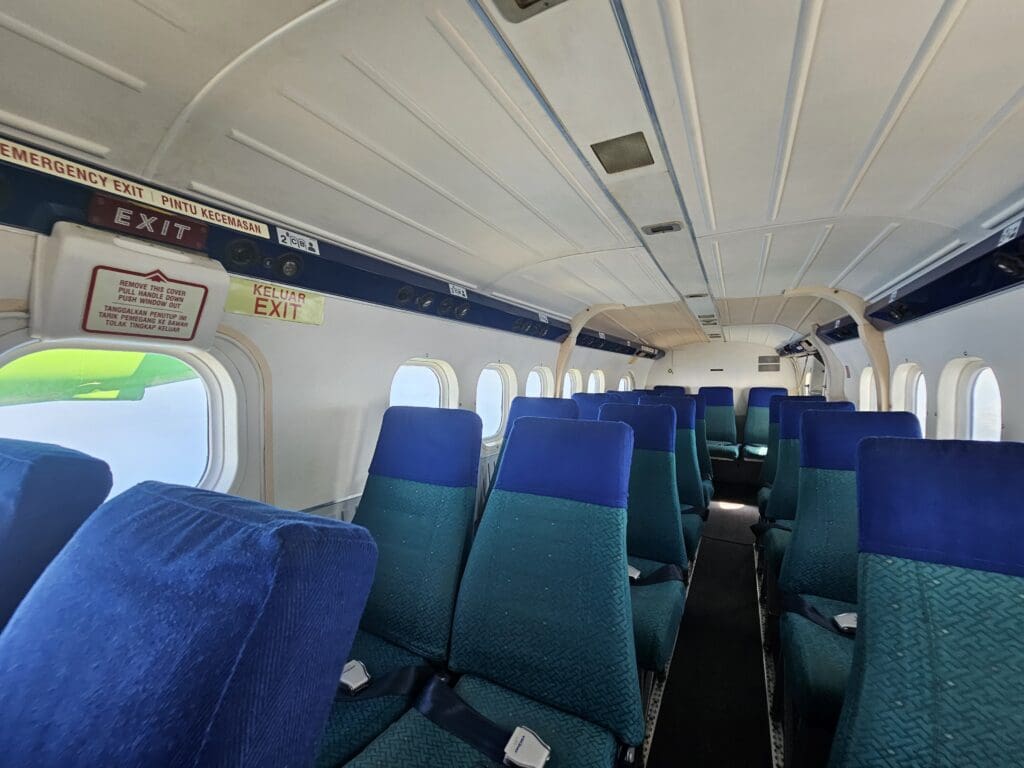
Those who are more used to Airbuses and Boeings may likely be taken aback by the comparatively minuscule size of the Twin Otter, with this perhaps being concerningly small to those who are not so keen on flying and had expected to fly on a larger aircraft! With a cabin height of just 1.50 metres and a width of 1.75 metres, even just getting into the aircraft and shimmying through the narrow aisle can be quite a squeeze. Onboard, seats are arranged in a 1-2 configuration and as you would perhaps expect from such a small utilitarian aircraft, these are small, thin, and far more narrow than even the most basic seats onboard a low-cost carrier! Needless to say, just like the rest of the Twin Otter, these were designed with the mission rather than comfort in mind.
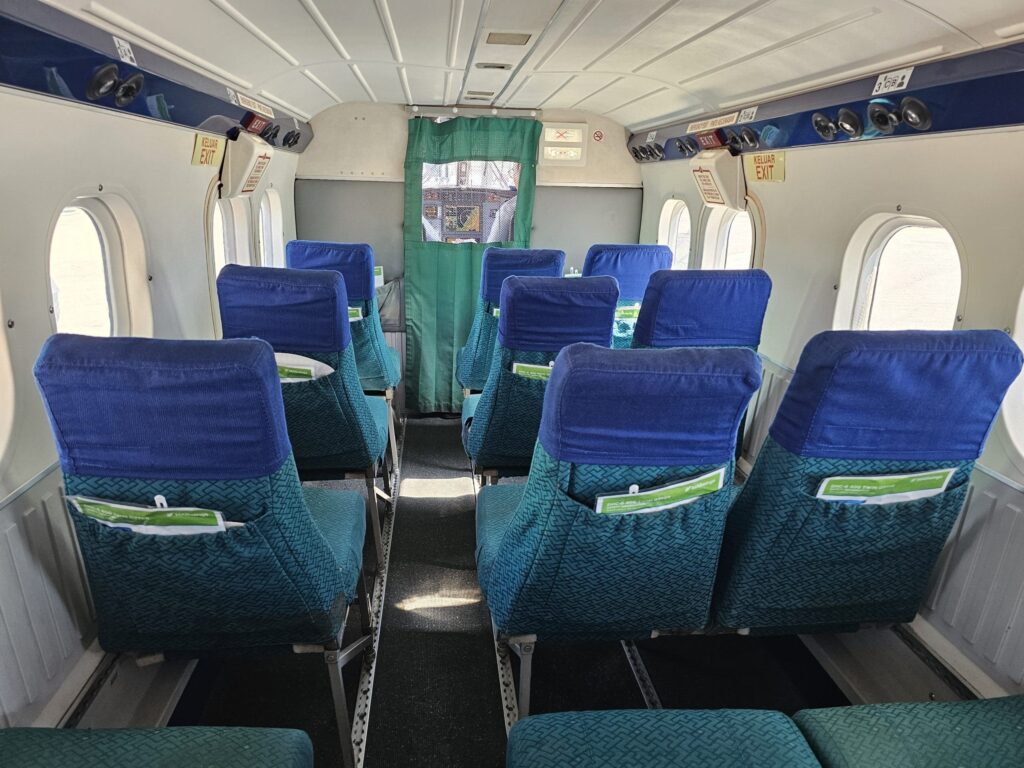
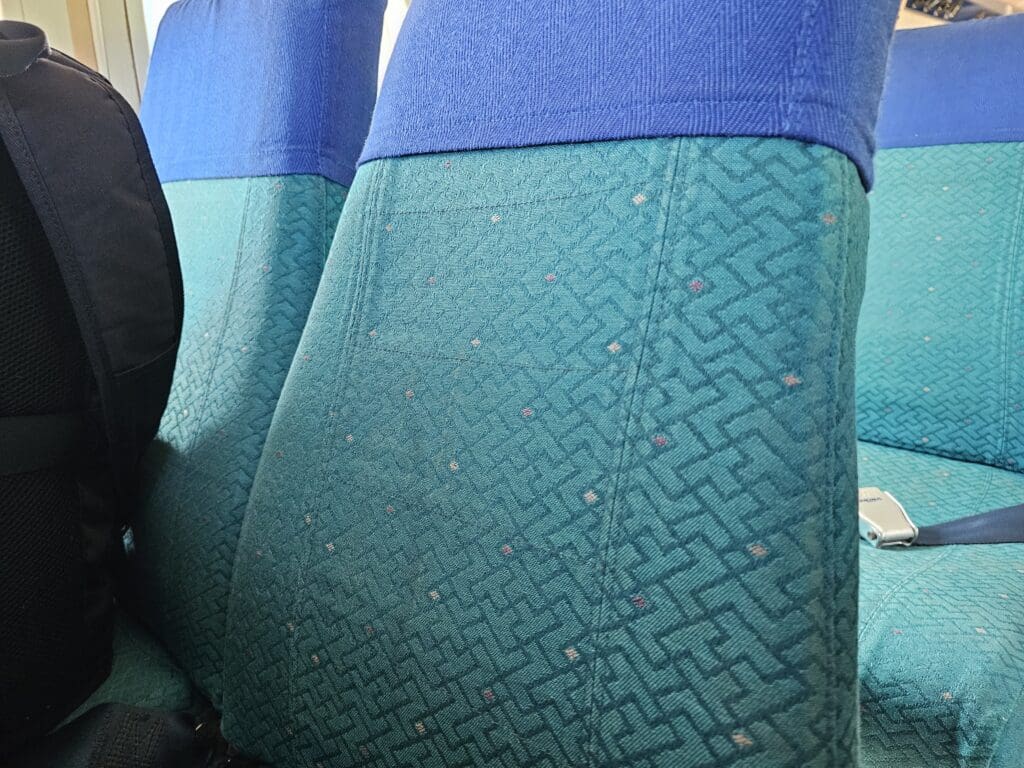
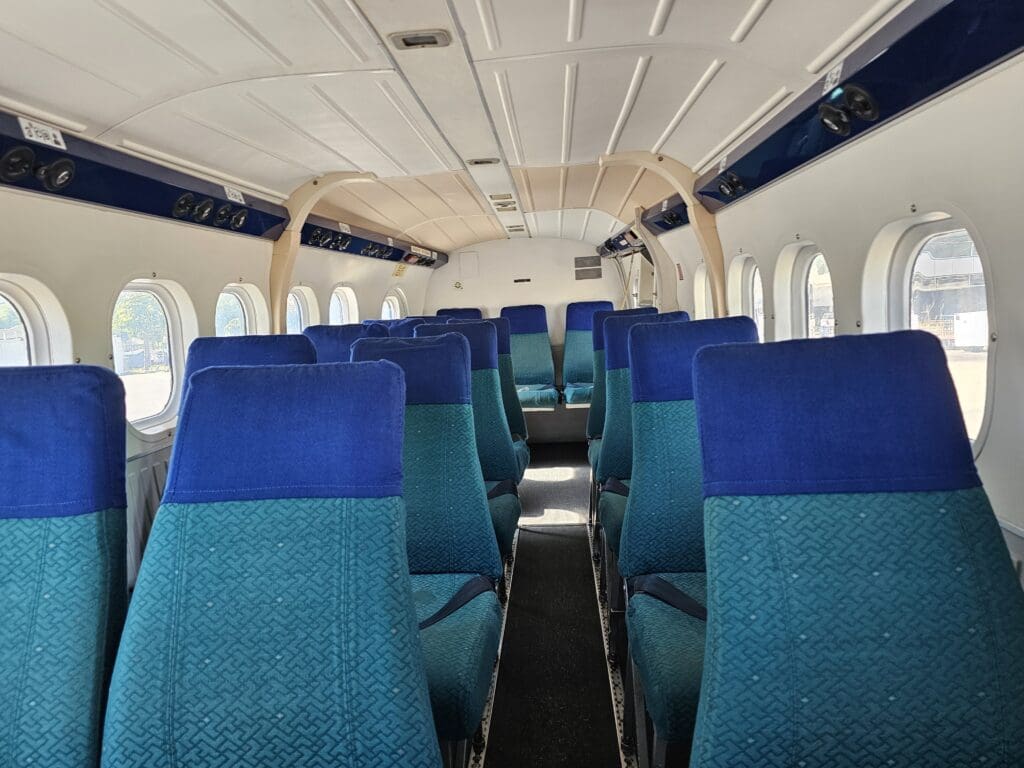
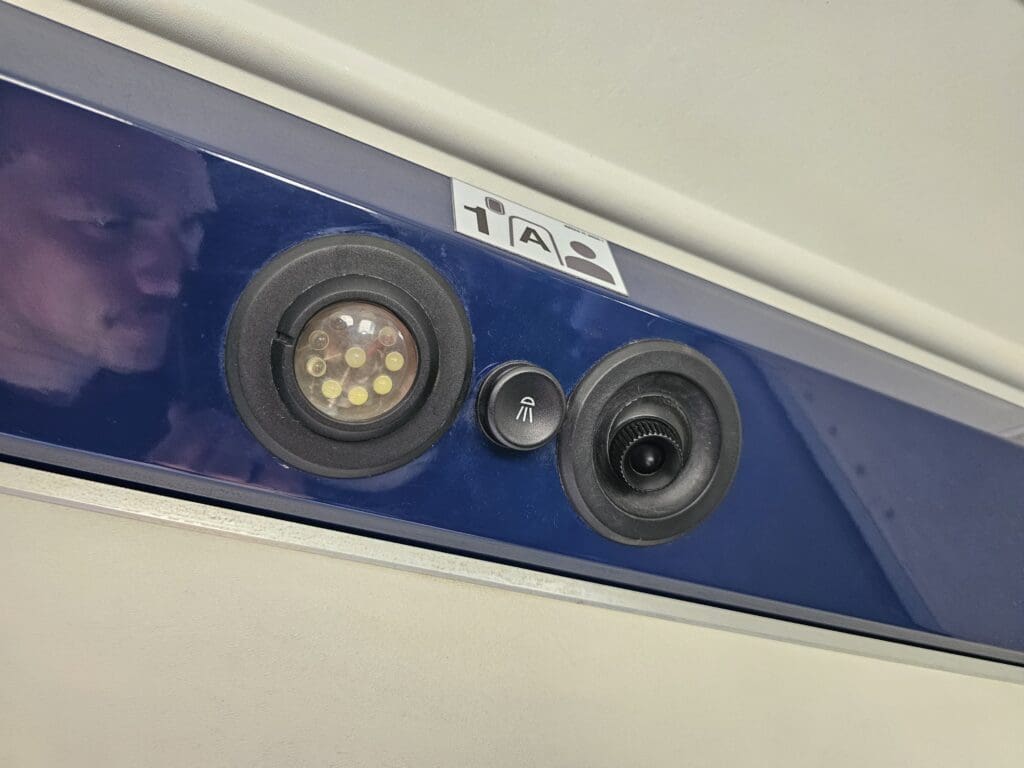
I have to say that compared to the two Loganair Twin Otters that I had previously sampled, MASwings’ cabin was marginally less spartan, featuring fabric-covered seats and a carpeted floor as opposed to easy-to-clean plastic lino and pleather-covered seats. However, the seats themselves were rather basic, featuring nothing other than a seatback pocket and a Viking Air branded seatbelt, lacking frills such as tray tables, overhead lockers, charging points or an onboard lavatory. That said, all passengers are provided with an individual reading light and air vent. Turning to seat design, interestingly these are covered with a green fabric cover with a subtle pattern that had once been the standard Malaysia Airlines Economy Class seat design, with this now living on in the Borneo Twin Otter fleet. Meanwhile, the upper portions of each seat were covered in a protective fabric cover.
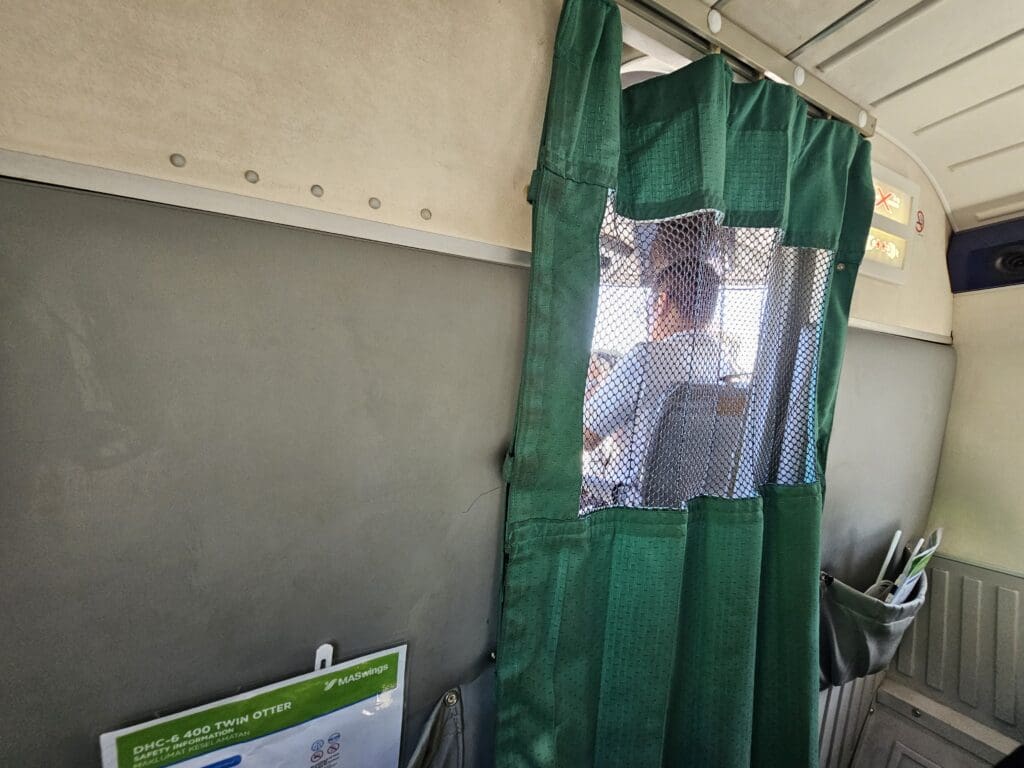
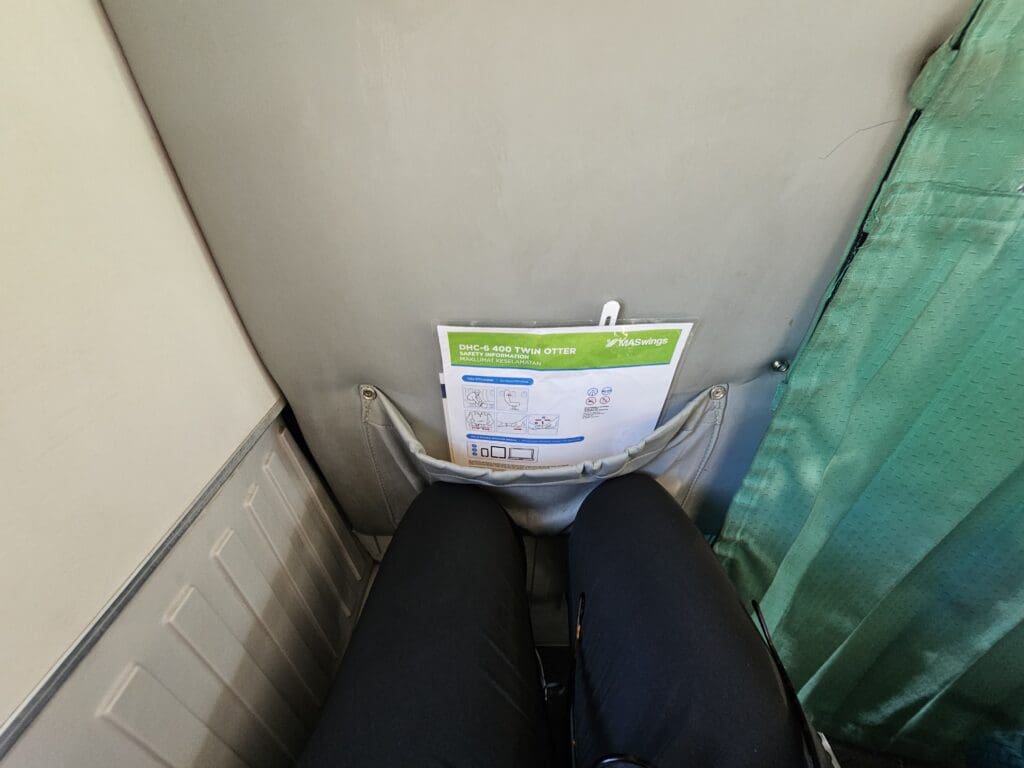
After squeezing through the boiling hot aircraft, I plonked my bag down on Seat 1C before settling into the single seat on the left-hand side of the aircraft behind the Captain. While the seat itself was soft, the legroom was terrible, although this can be forgiven as few people are likely to fly the Twin Otter with Emirates First Class levels of comfort and luxury in mind! Furthermore, being the only passenger, I was able to spread out slightly and stretch my legs out into the aisle which made the seat slightly more bearable. Given the rough-and-ready operations of the Twin Otter, it was only inevitable that there were a few marks and scratches to be seen in the area around my seat; however, these were not quite as omnipresent as I had expected and had previously found when flying onboard Loganair’s Twin Otters. Importantly, having spent the night on the ground in Kota Kinabalu, the aircraft appeared to have been thoroughly cleaned during its long overnight stay, and was in a very presentable state. Turning to the seatback pocket, this contained a double-sided safety card, a much-appreciated MASwings fan and a worrying total of nine Malaysia Airlines branded sickbags! Finally, unlike on many Twin Otters, a small curtain separated the cockpit from the cabin, although this did feature an observation window which provided a view of the action in the cockpit throughout the flight.
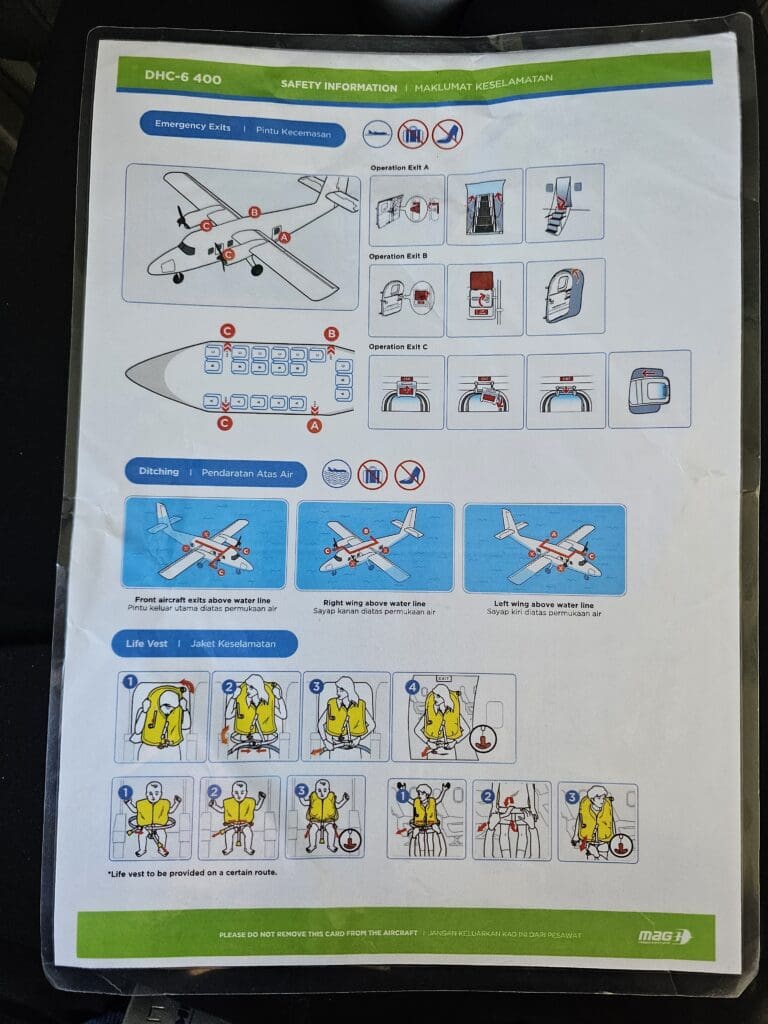
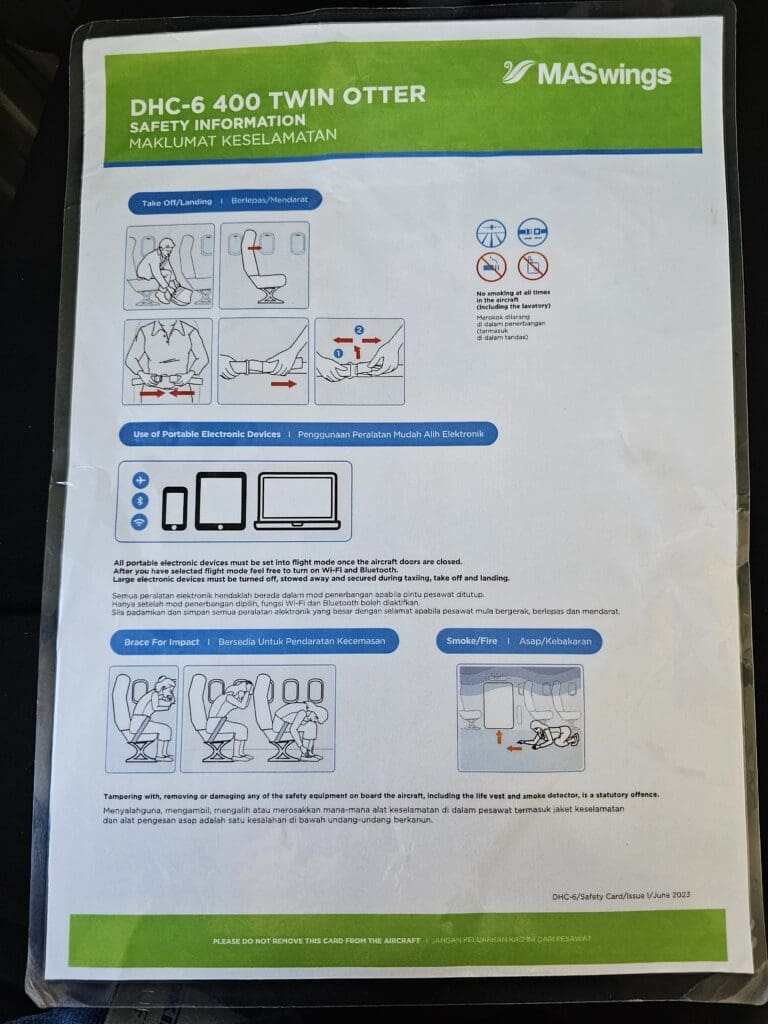
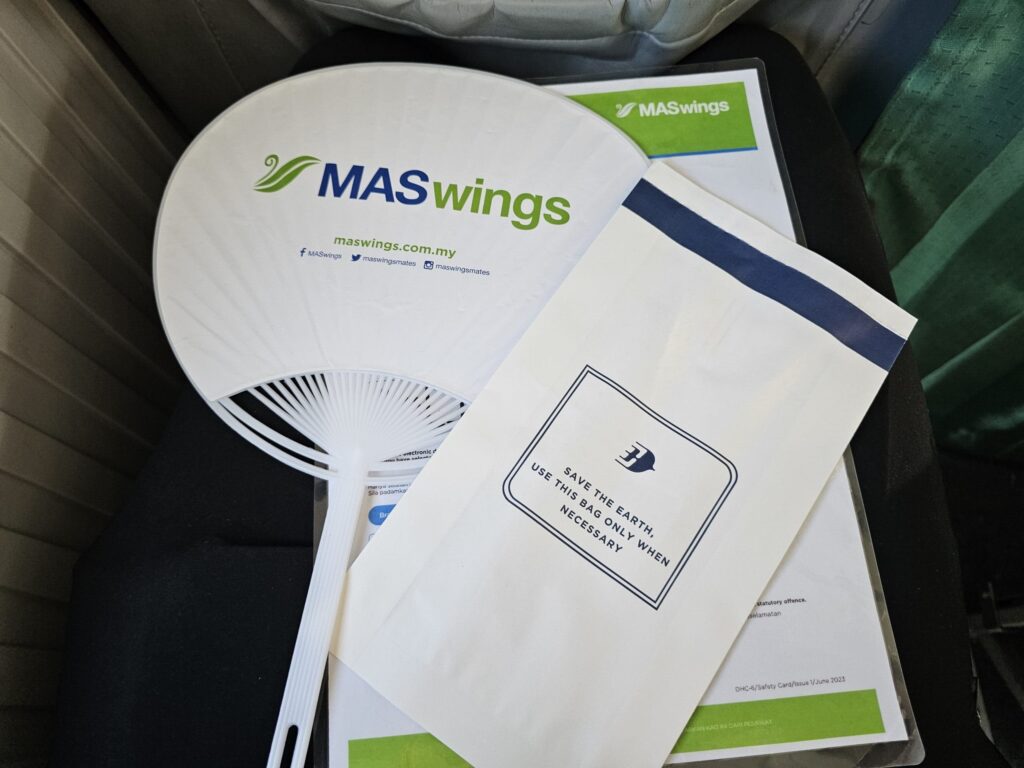
Indicating that we would be making a punctual departure, as soon as I had boarded the aircraft the cabin door was closed behind me with a large thud and the cones around the aircraft were removed. Perhaps being a trusted passenger, once onboard, I was not offered any sort of welcome or safety message, nor was there any check to ensure that my seatbelt was fastened and that my bag had been securely stowed.
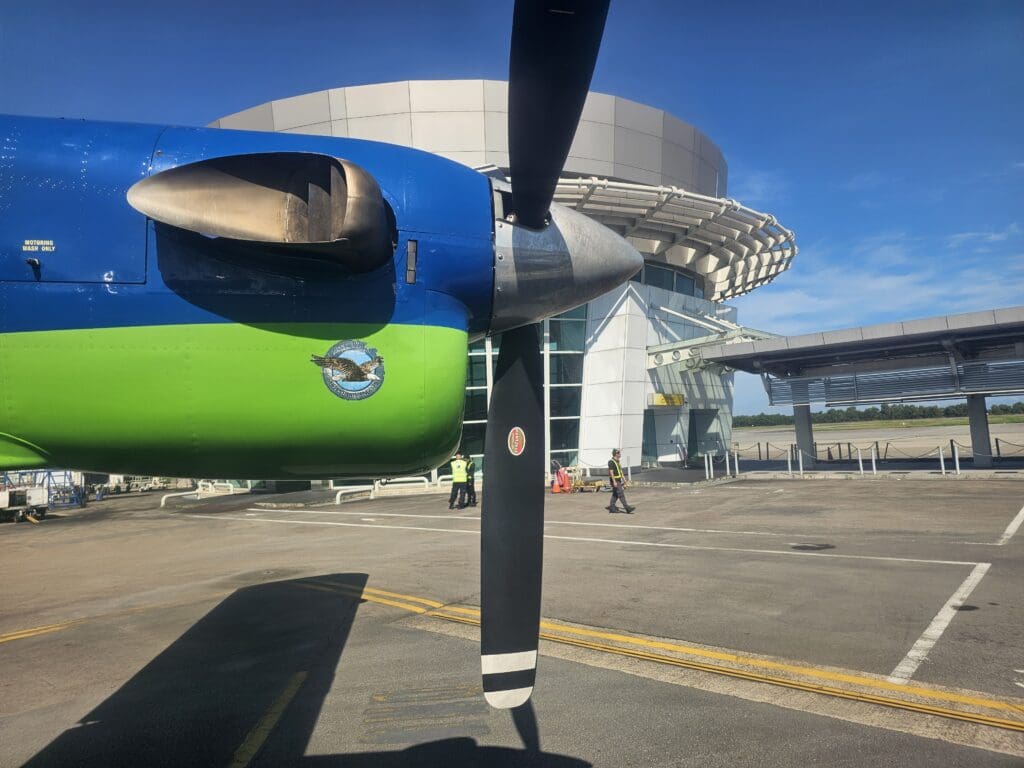
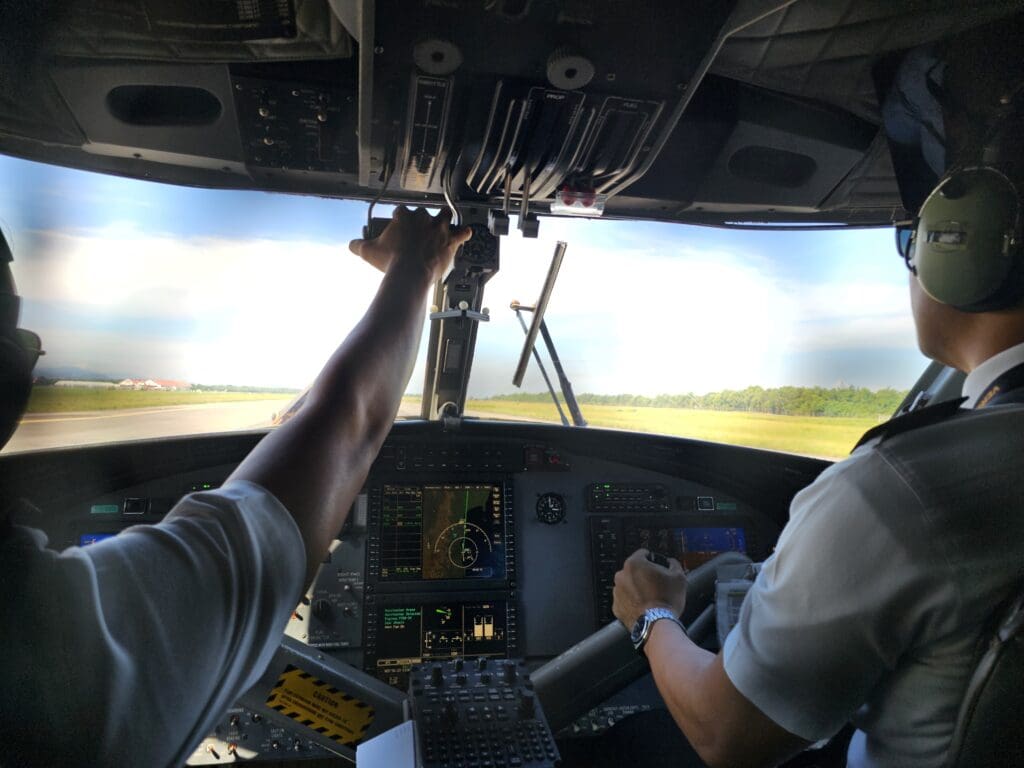
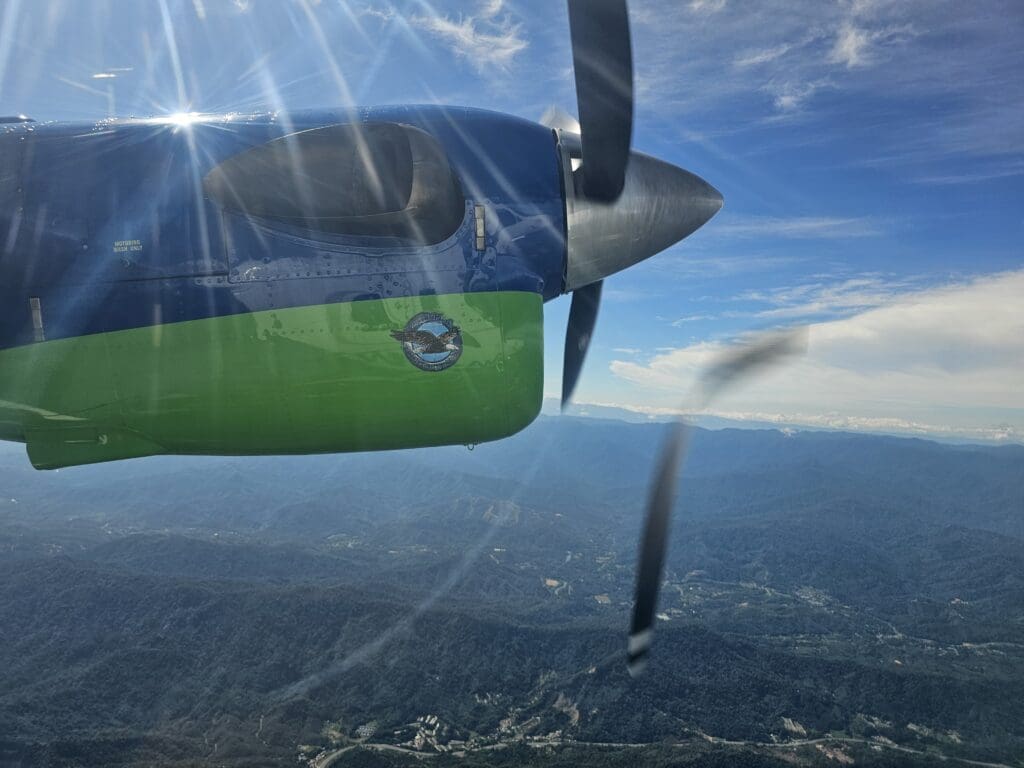
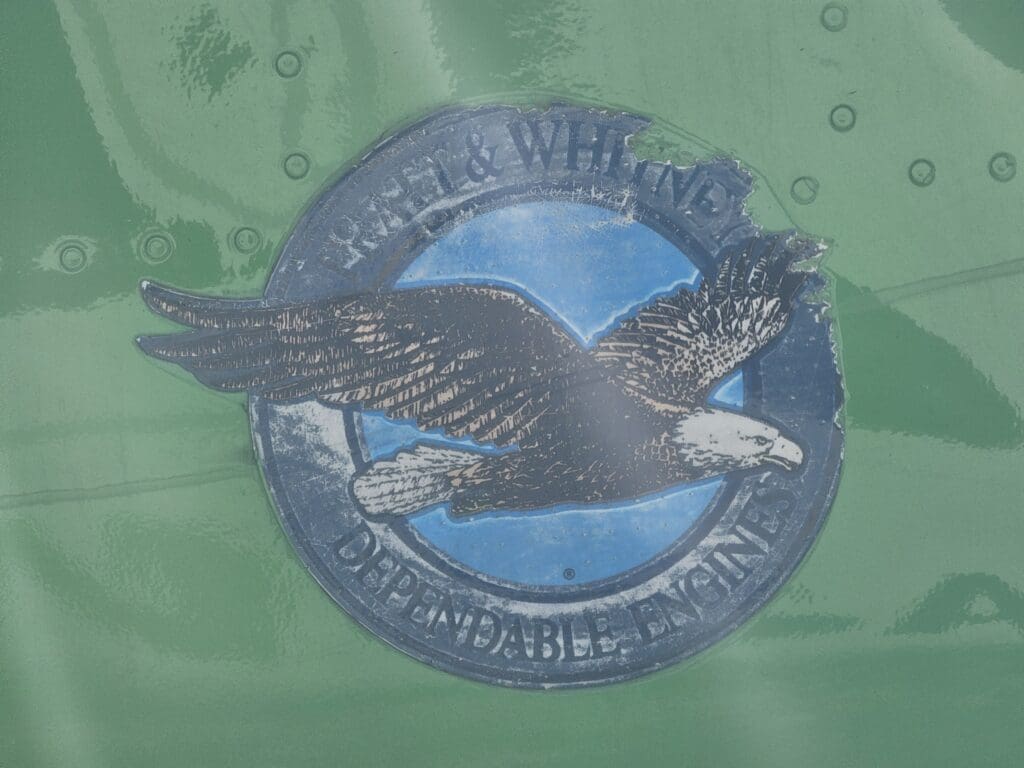
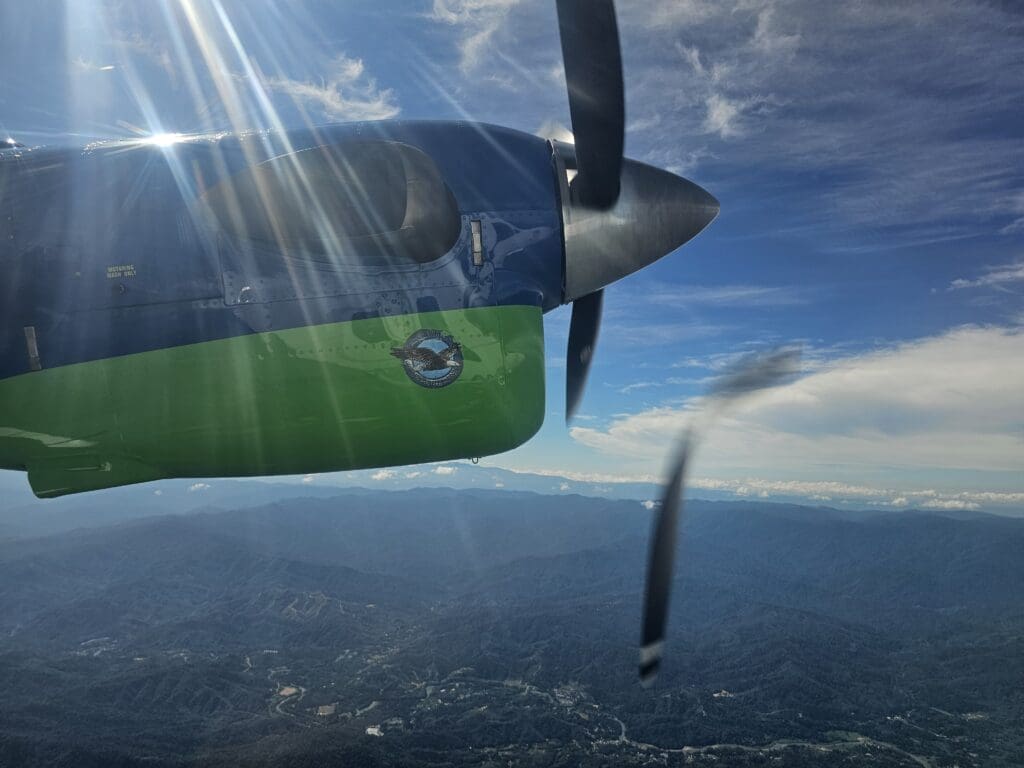
Once seated, I looked ahead at the Viking Air’s modern glass cockpit as the two pilots ran through their checklists and flicked through their digital airport charts on one of the large screens, presumably to ensure that they did not take a wrong turn on their journey to the runway. After much switch flicking, a loud whine could be heard as one by one, the two powerful Pratt & Whitney PT6A-34 turboprop engines fired into life before the two three-blade Hartzell propellers began to whirl, initially causing a fair amount of vibration before stabilising. Once the two engines had successfully powered up, the Twin Otter remained on stand while the two pilots up ahead could be seen diligently checking their instruments, presumably to ensure that all indications were normal. At this point, the cabin became a little cooler, although it was still a little warmer than I would have liked, and the MASwings hand fan definitely came in handy!
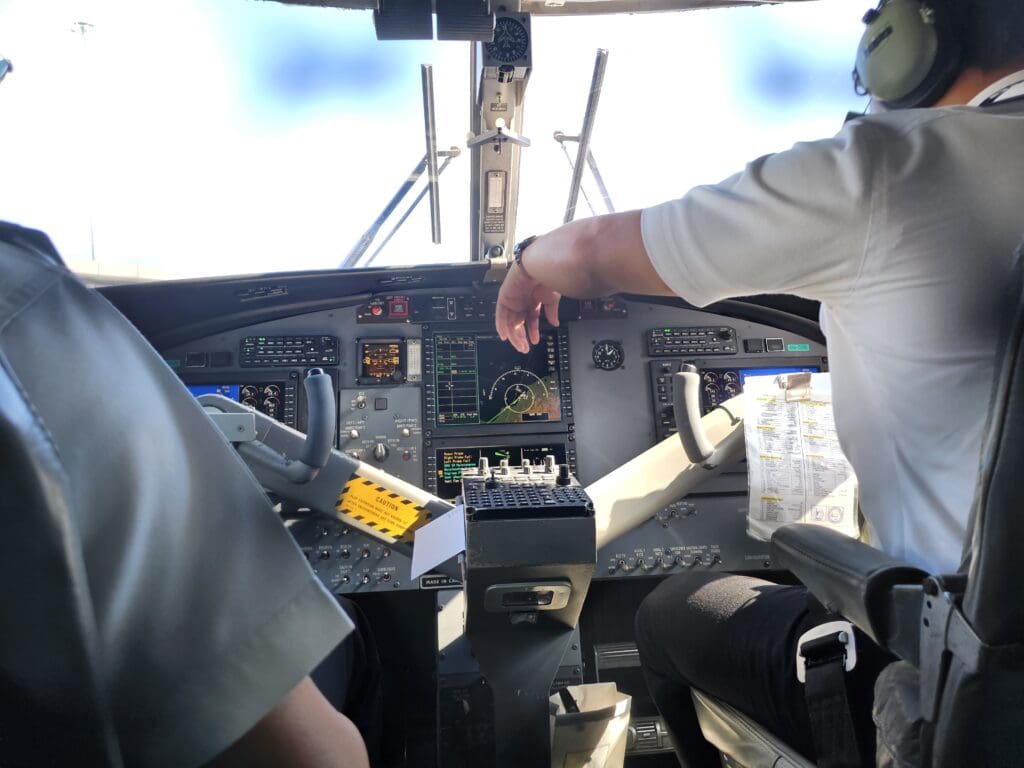
At 0910, five minutes ahead of schedule, the brakes were released and the Twin Otter slowly and cautiously made its way out of Stand 19 and taxied around the end of the covered walkway that connects the terminal with several stands. That morning, the aircraft would depart from Runway 20; however, given the type’s famously short take-off capabilities, we would depart from the nearest intersection rather than use the full length of the runway. After a smooth taxi, the aircraft’s large tyres ensuring a comfortable journey, the Twin Otter came to a halt and waited for a locally based Sabah Flying Club Cessna 172 to depart ahead of us. As with my previous Twin Otter departures, two engines were spooled up and several checks were performed before making our way onto the runway, thus filling the cabin with noise and vibration, providing a taste of what I was to expect during our takeoff roll.
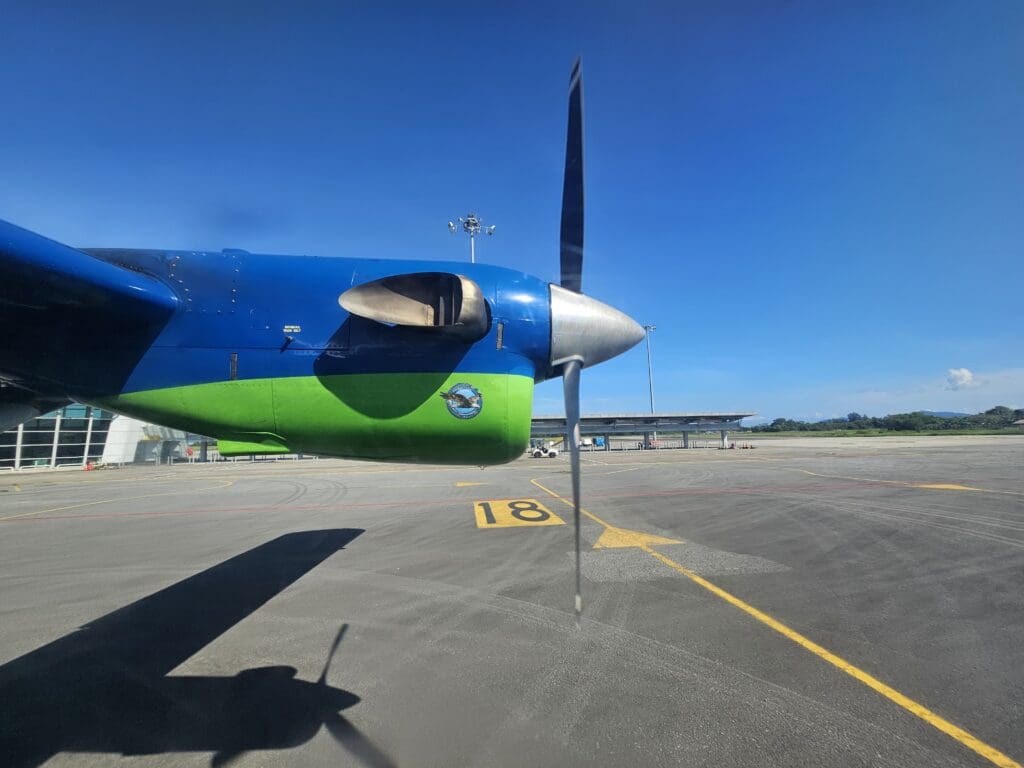
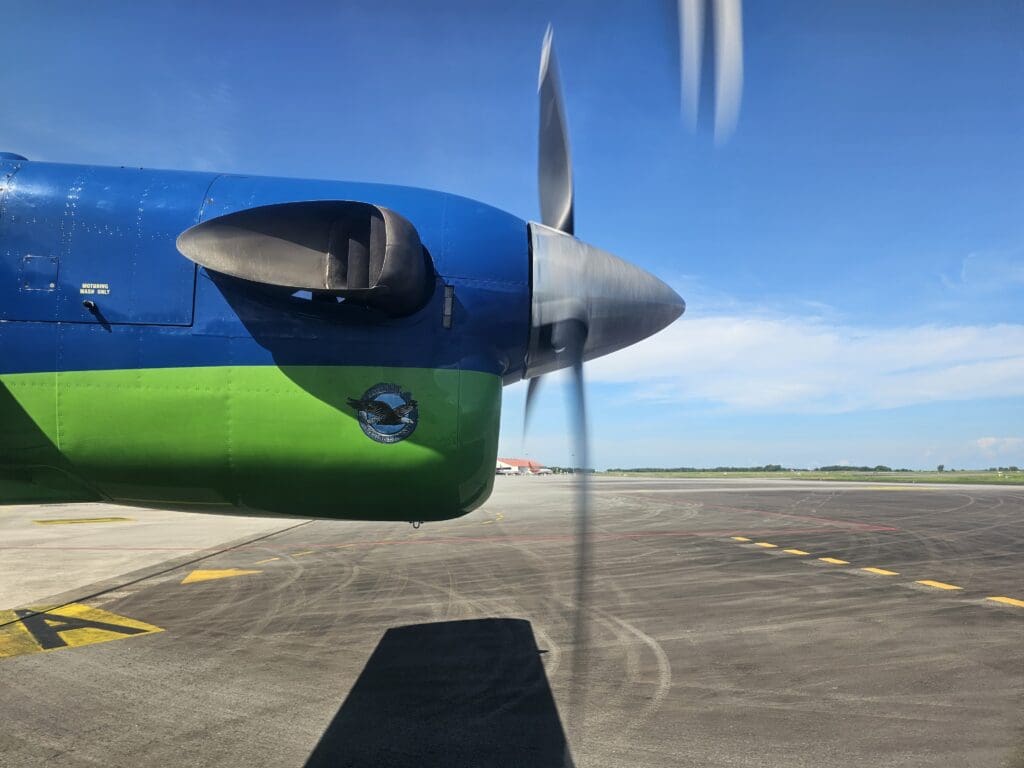
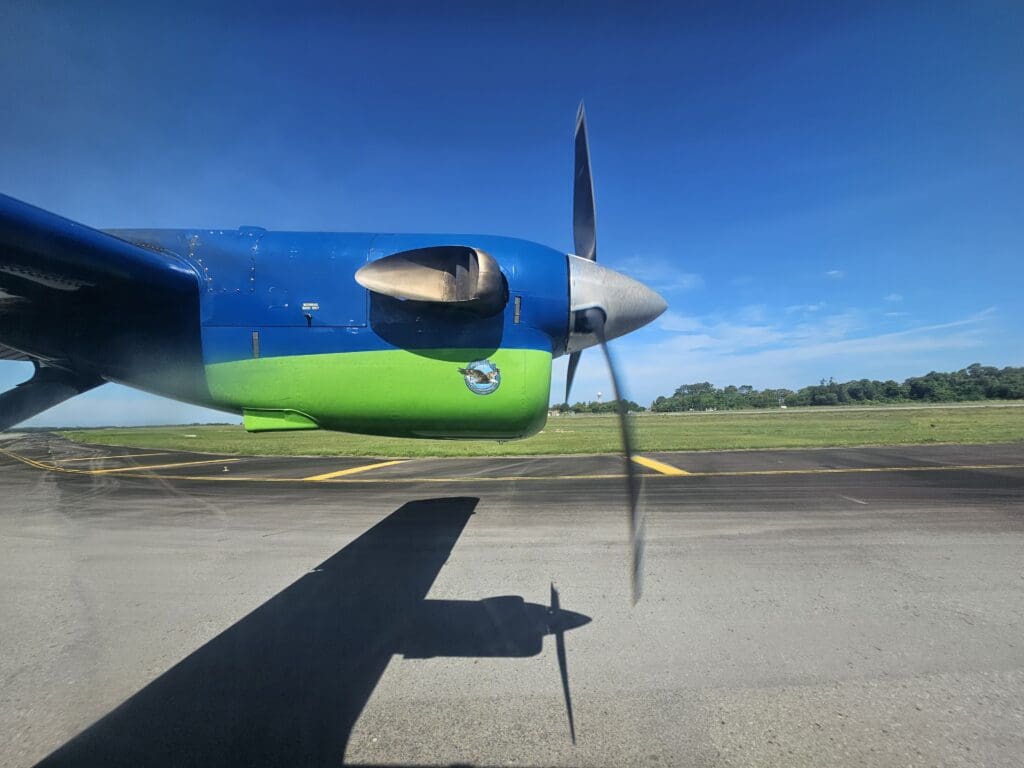
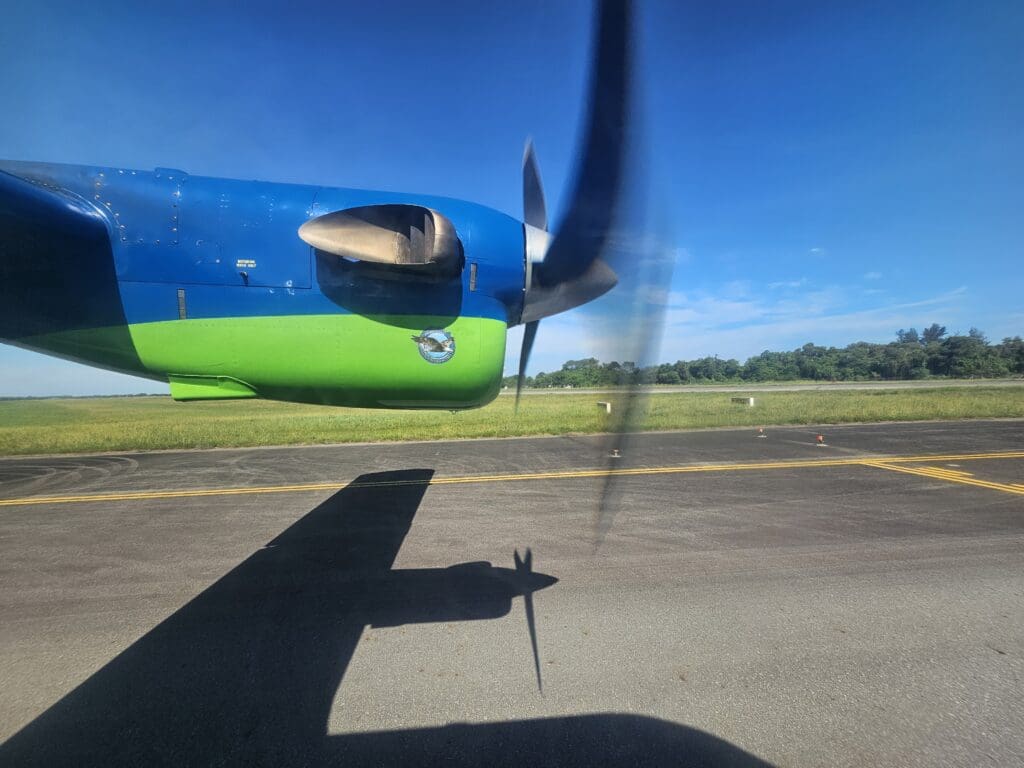
After a few minutes, the Twin Otter taxied onto the runway and came to a halt. Once there, the brakes were held once again as the engines were powered up. Following a few seconds of intense vibration, the brakes were released and the aircraft went down the runway in what seemed to be one of the most powerful and sporty takeoffs that I have ever experienced! Lasting no more than a few seconds, the aircraft soon took to the skies, doing so with plenty of vibrations and shudders as we rocketed upwards, although these soon settled down once the aircraft climbed higher and higher.
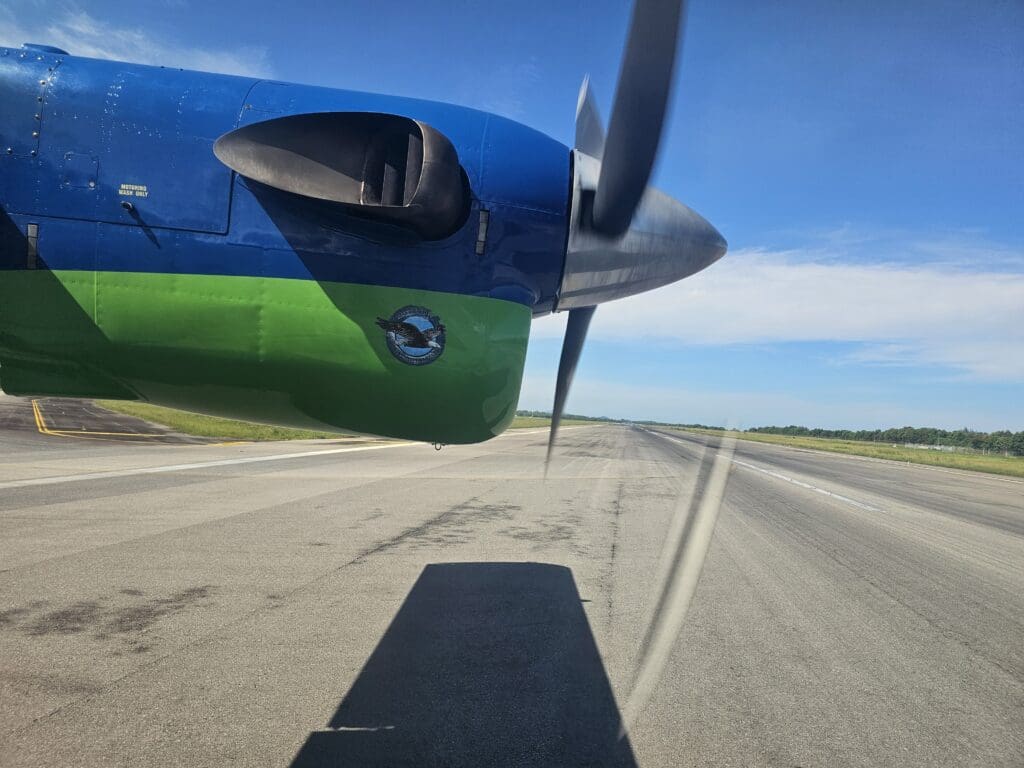
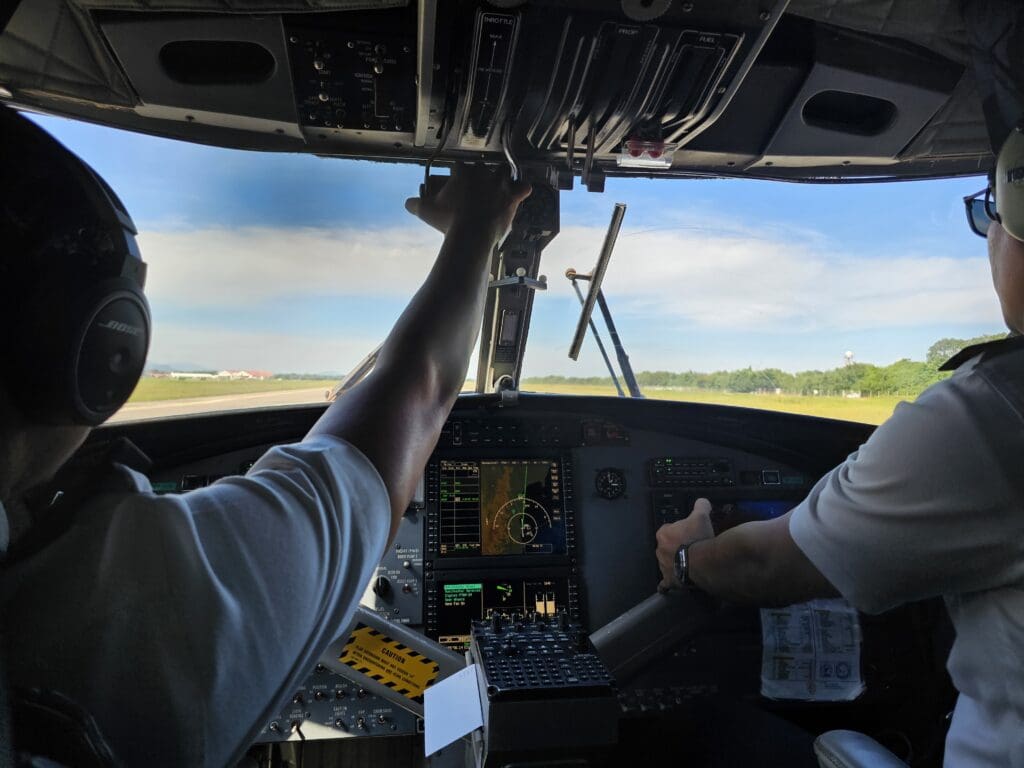
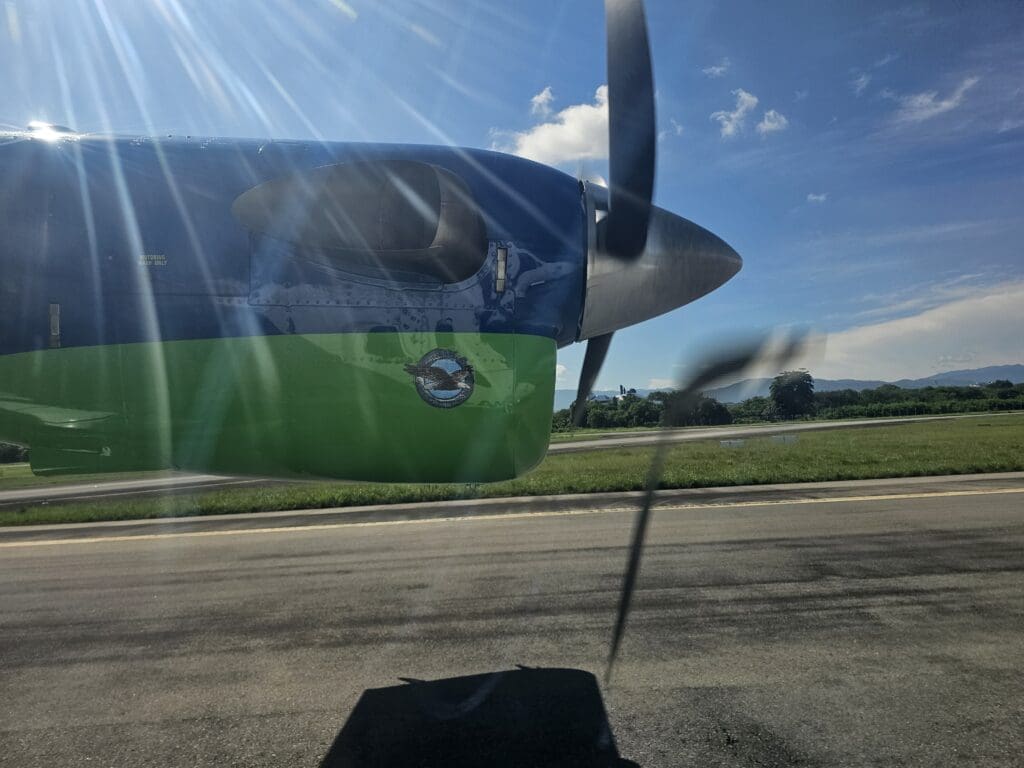
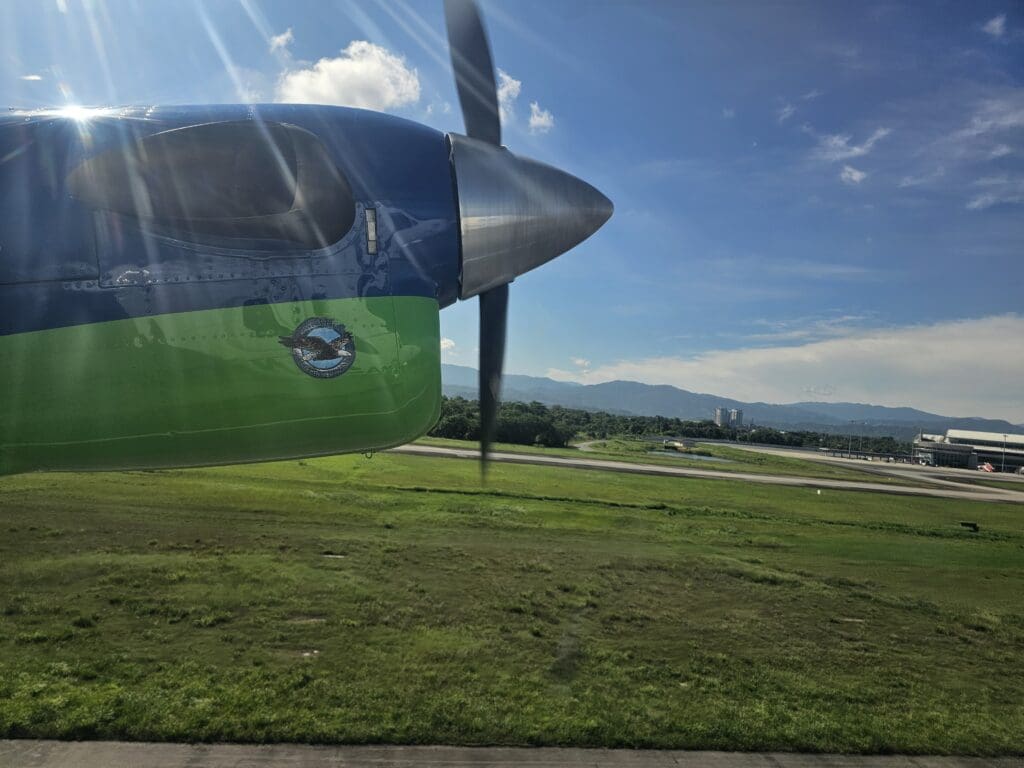
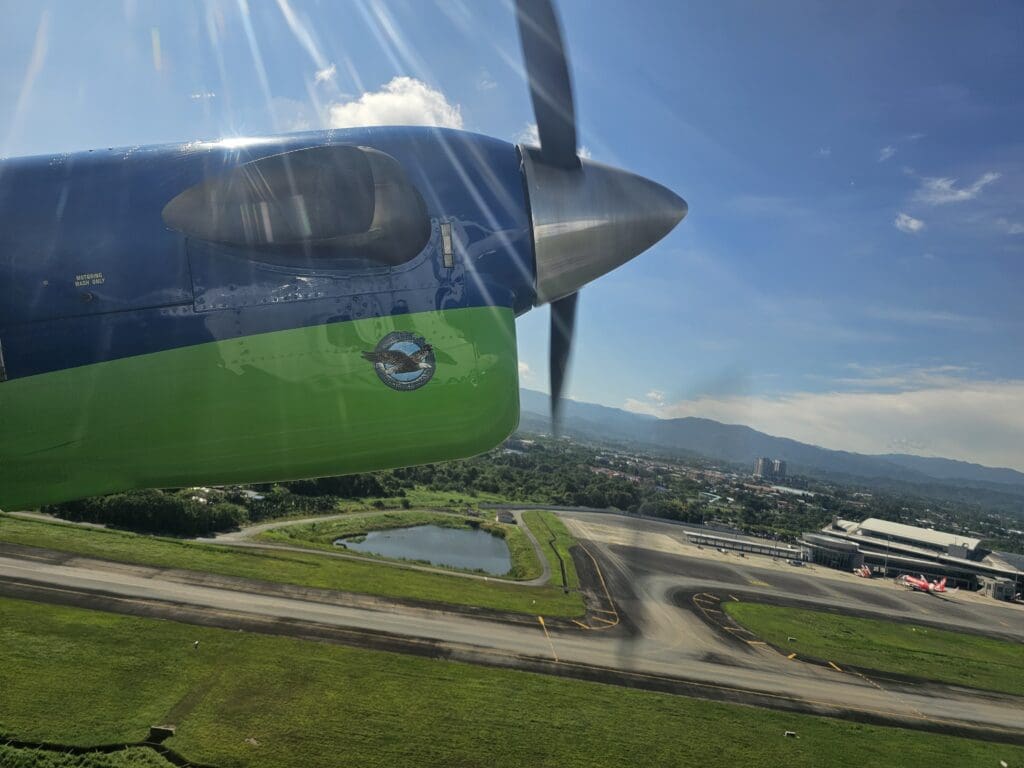
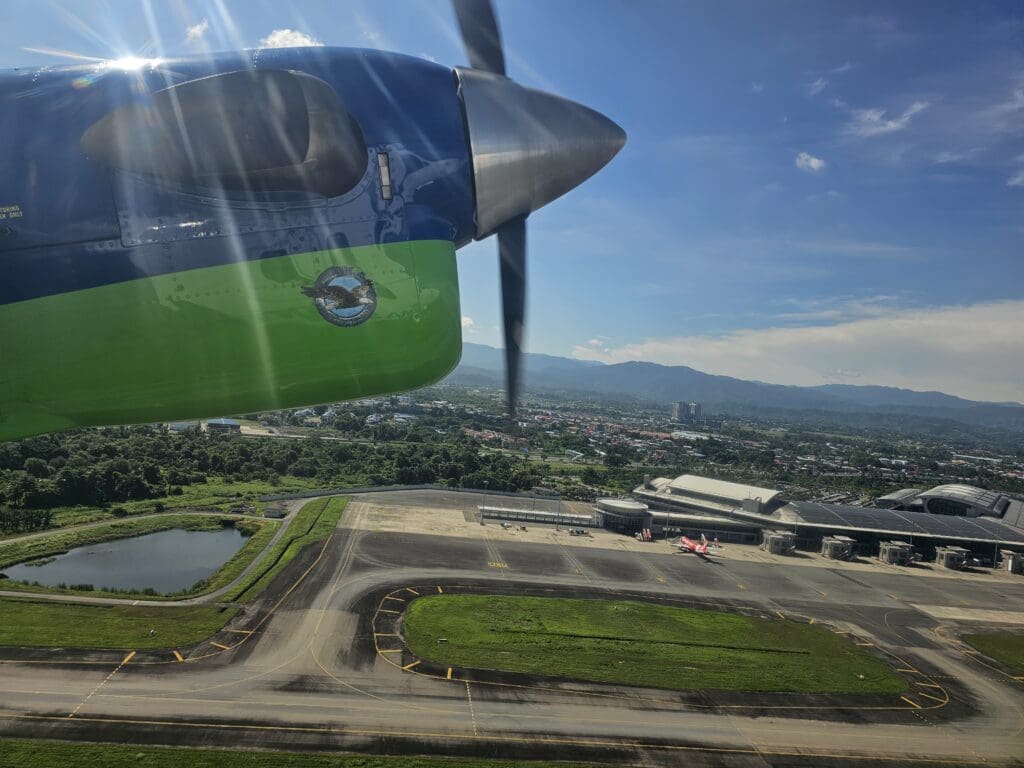
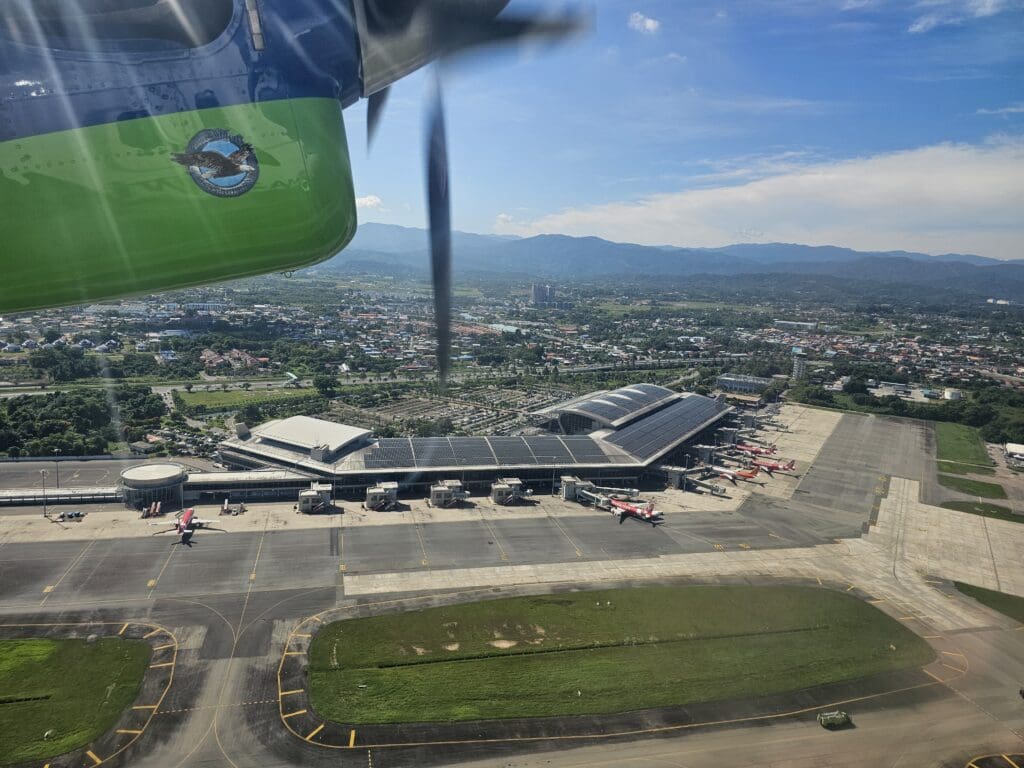
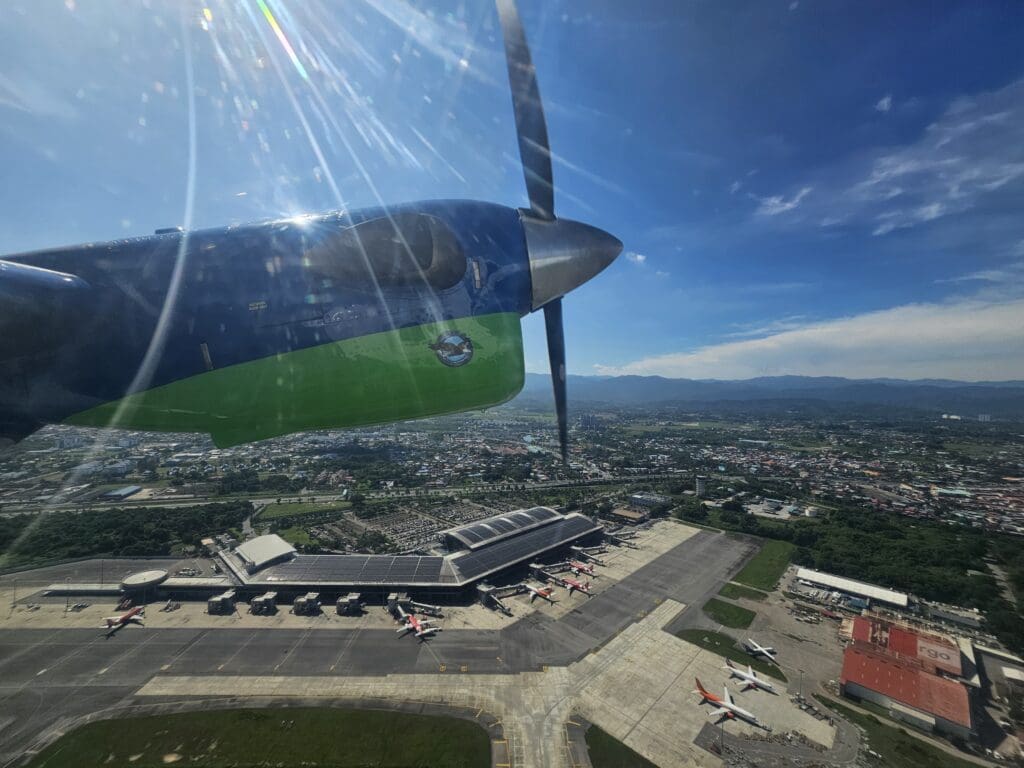
Thanks to our incredibly short take-off roll and my position on the left-hand side of the aircraft, I was treated to a superb bird’s eye view of the terminal where a smorgasbord of aircraft could be seen waiting for their next missions – these included four AirAsia Airbus A320s, two Firefly Boeing 737-800s, a MASwings ATR 72 and the aforementioned rare Indonesian Boeing 737 Classic Freighter. Beyond this, the mostly low-rise buildings on the southern fringes of Kota Kinabalu and the neighbourhoods of Donggongon and Petagas could be seen along with the tree-covered hills in the distance that sit on the edge of the city.
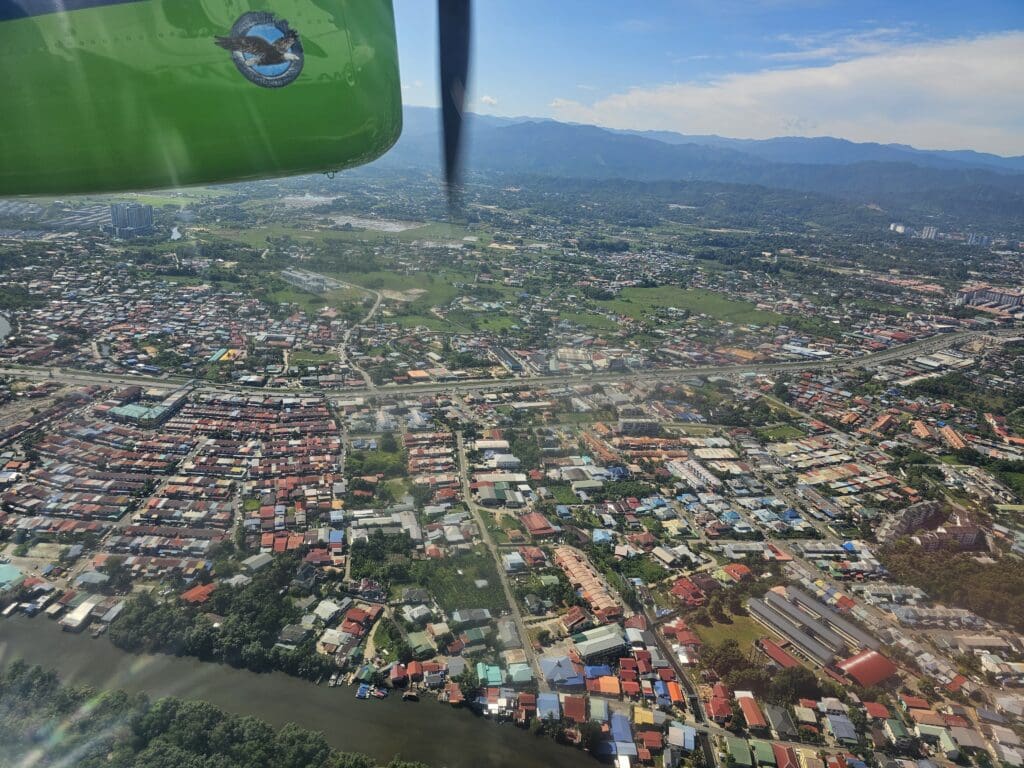
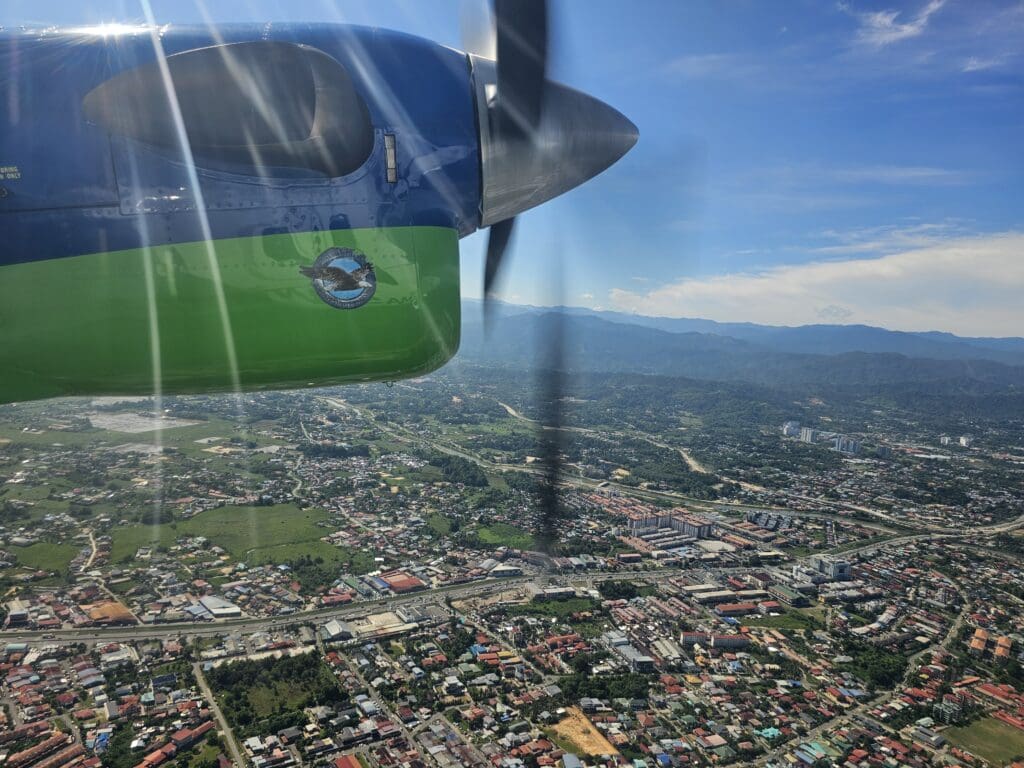
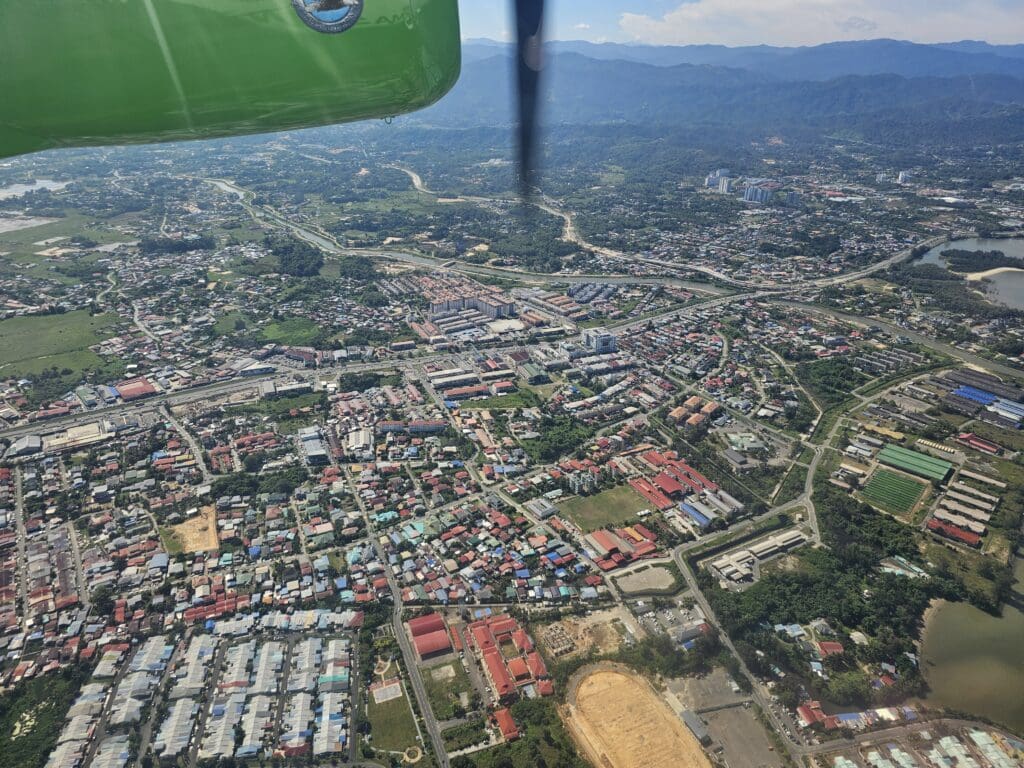
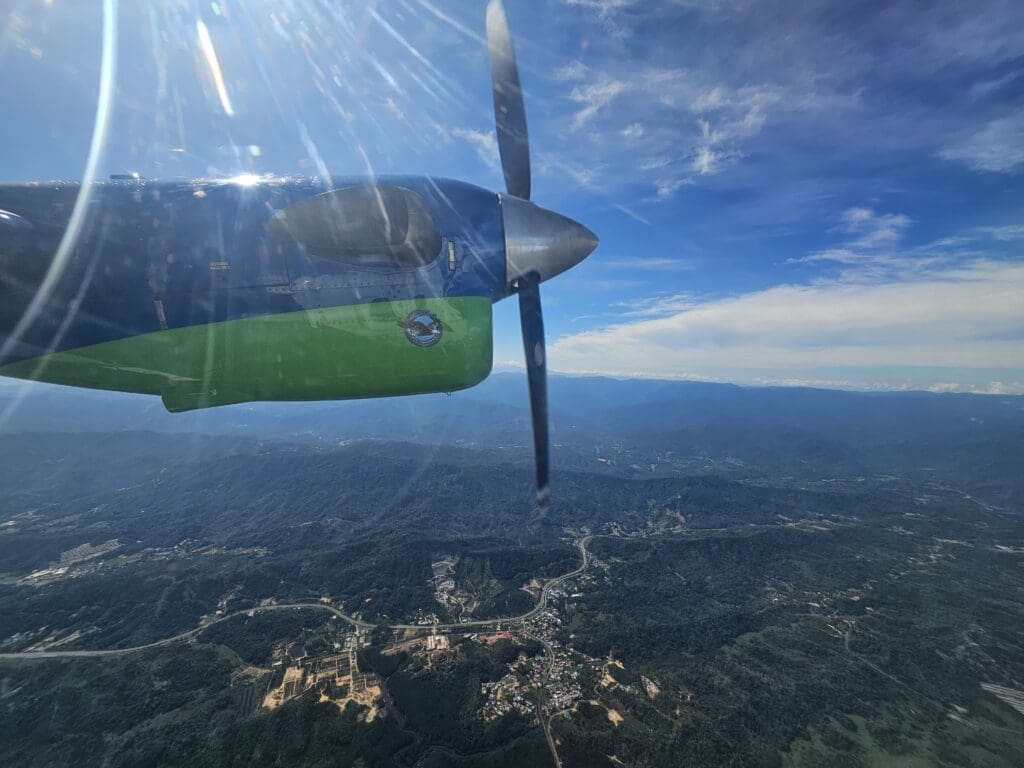
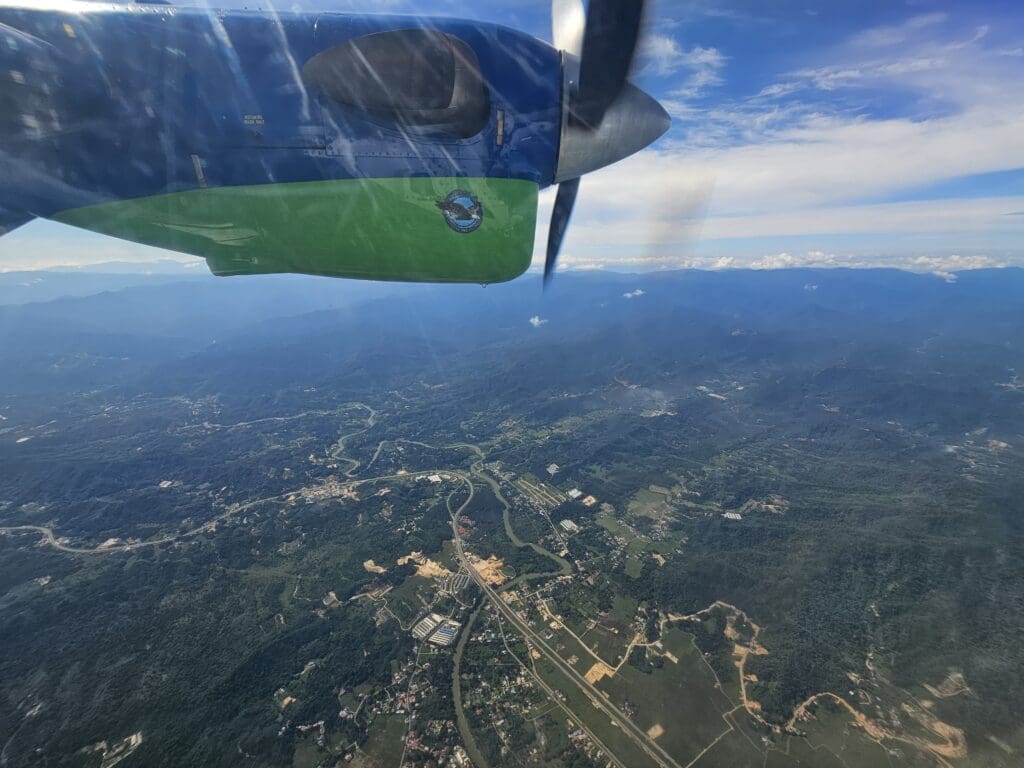
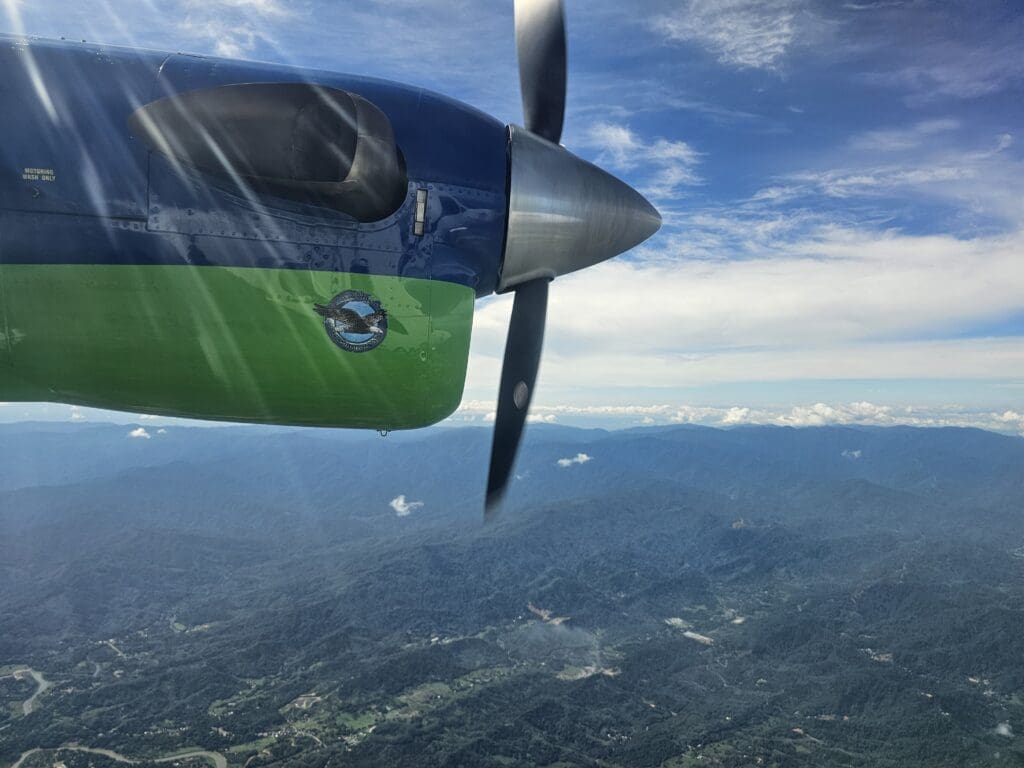
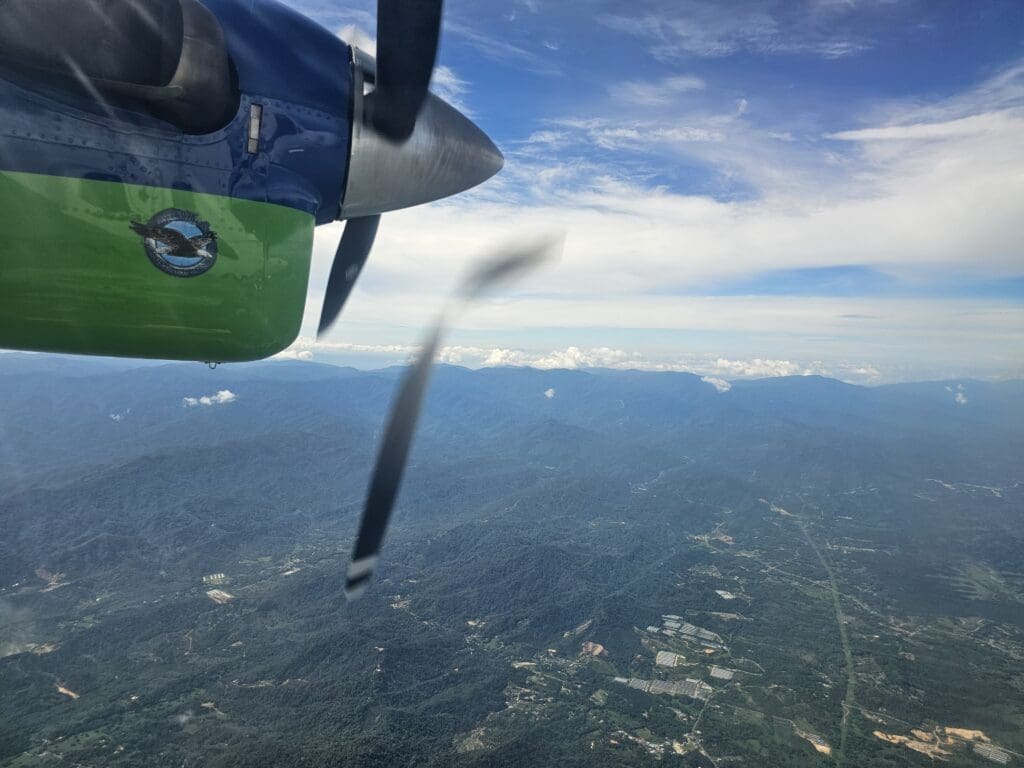
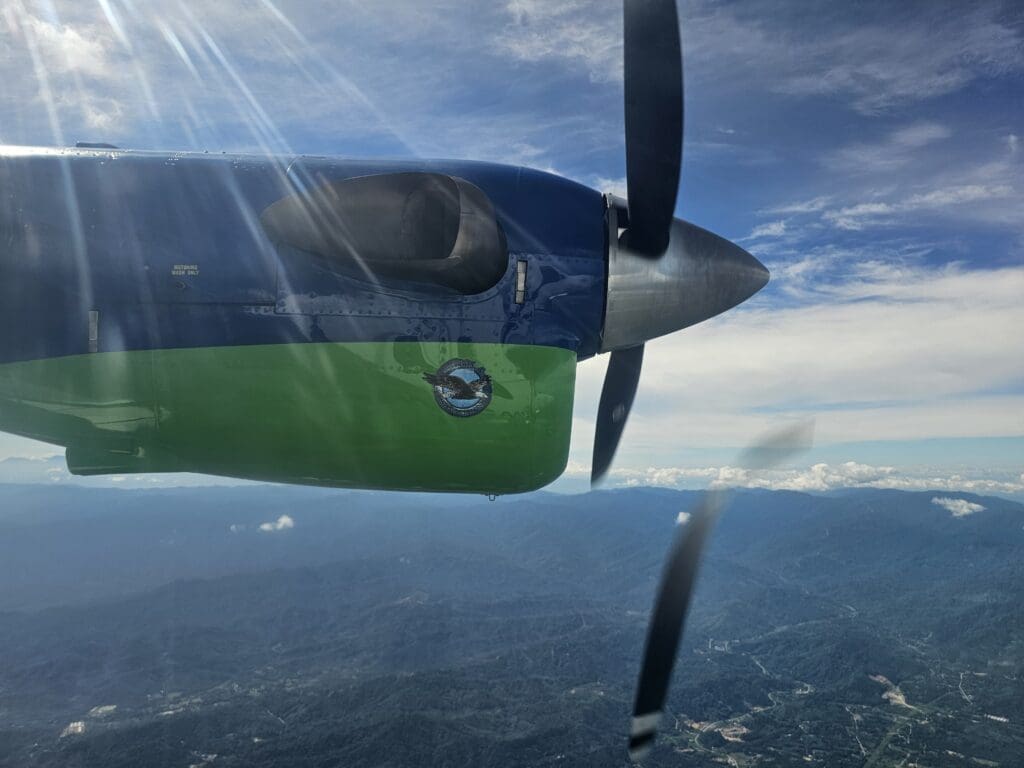
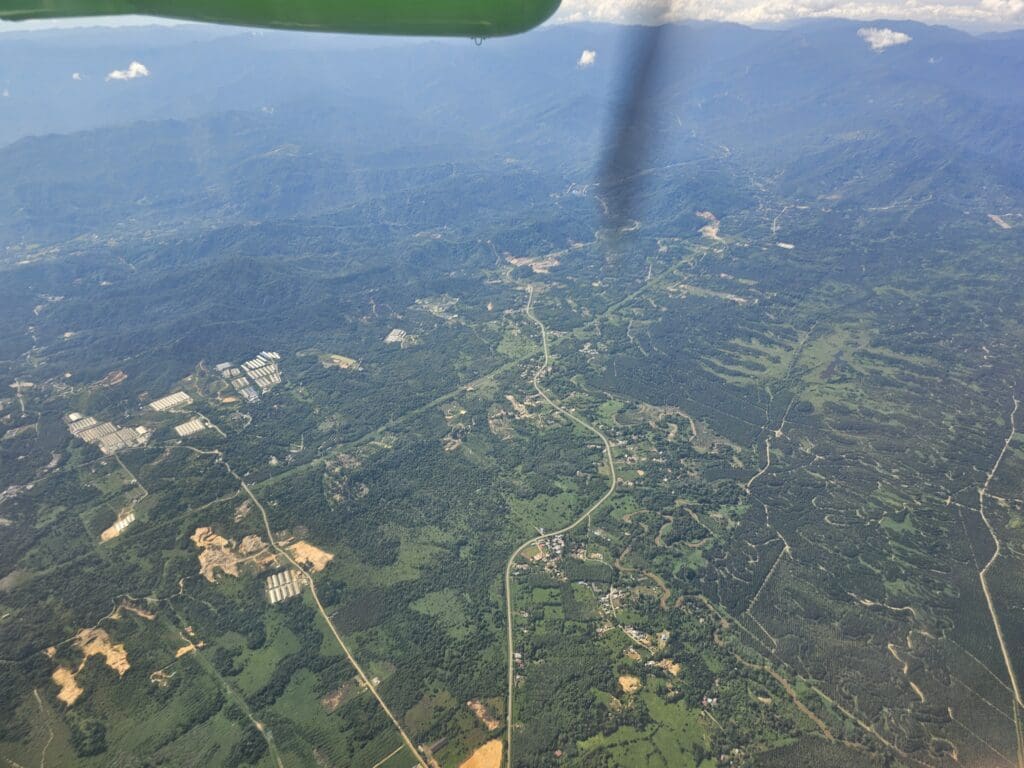
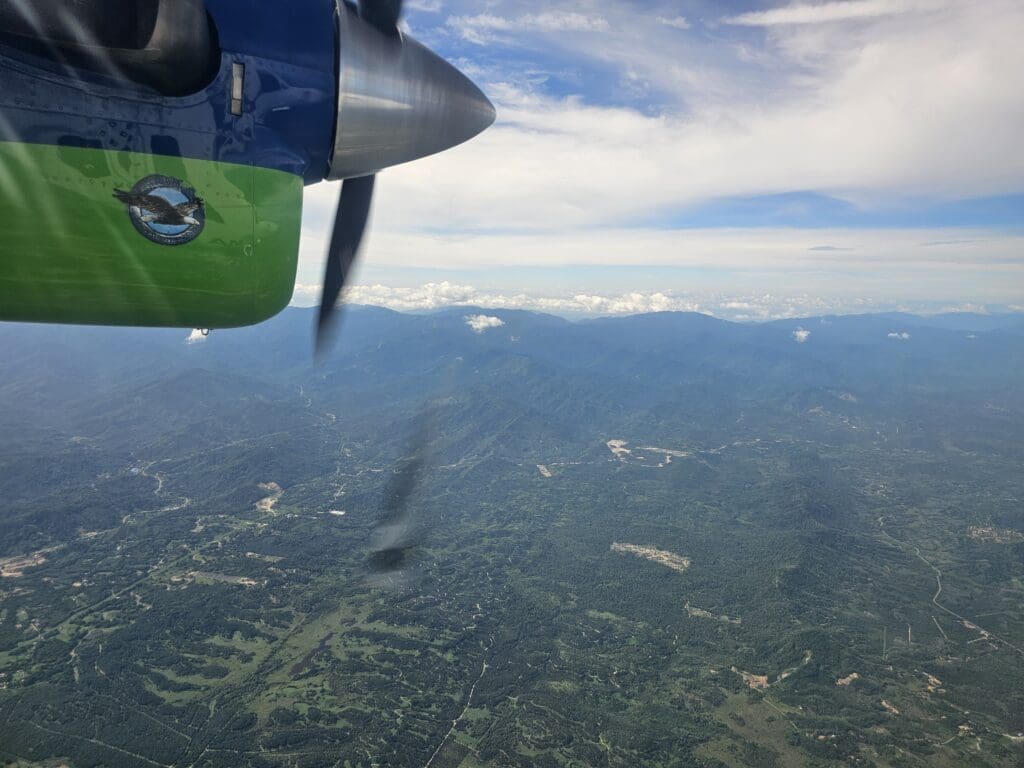
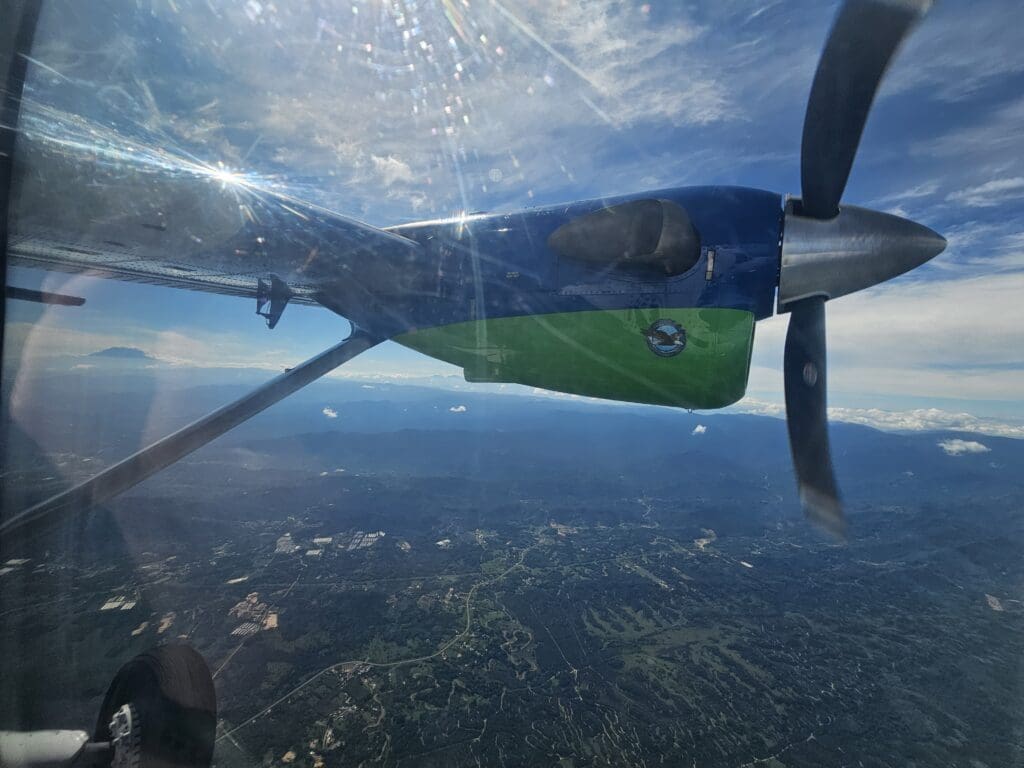
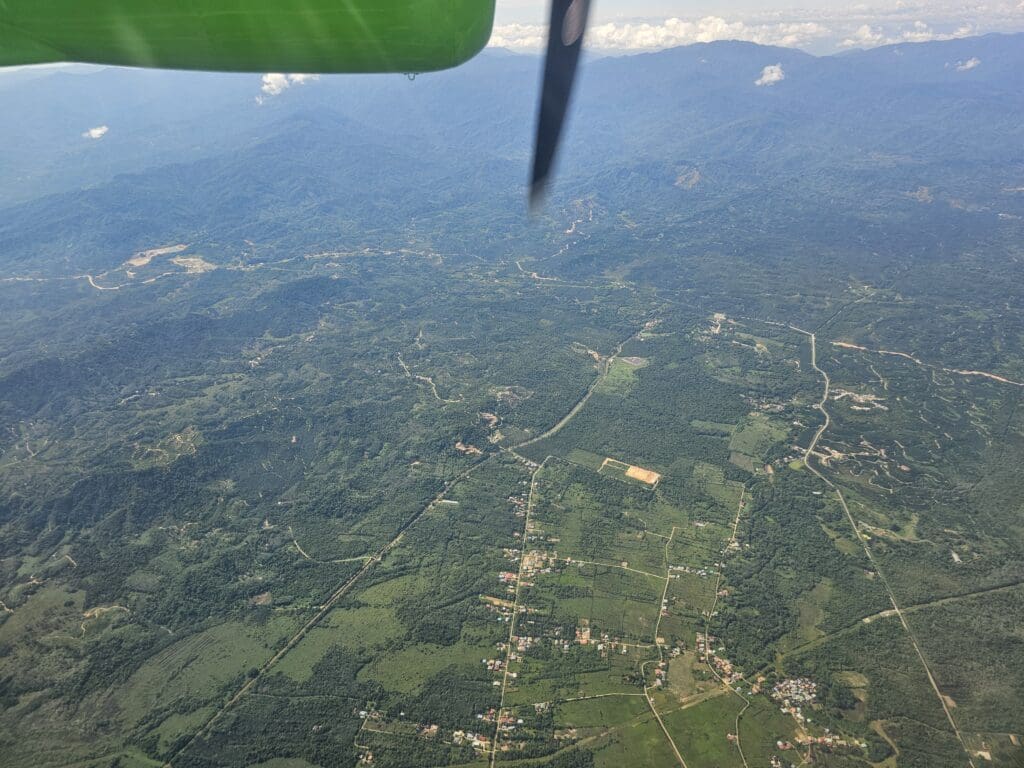
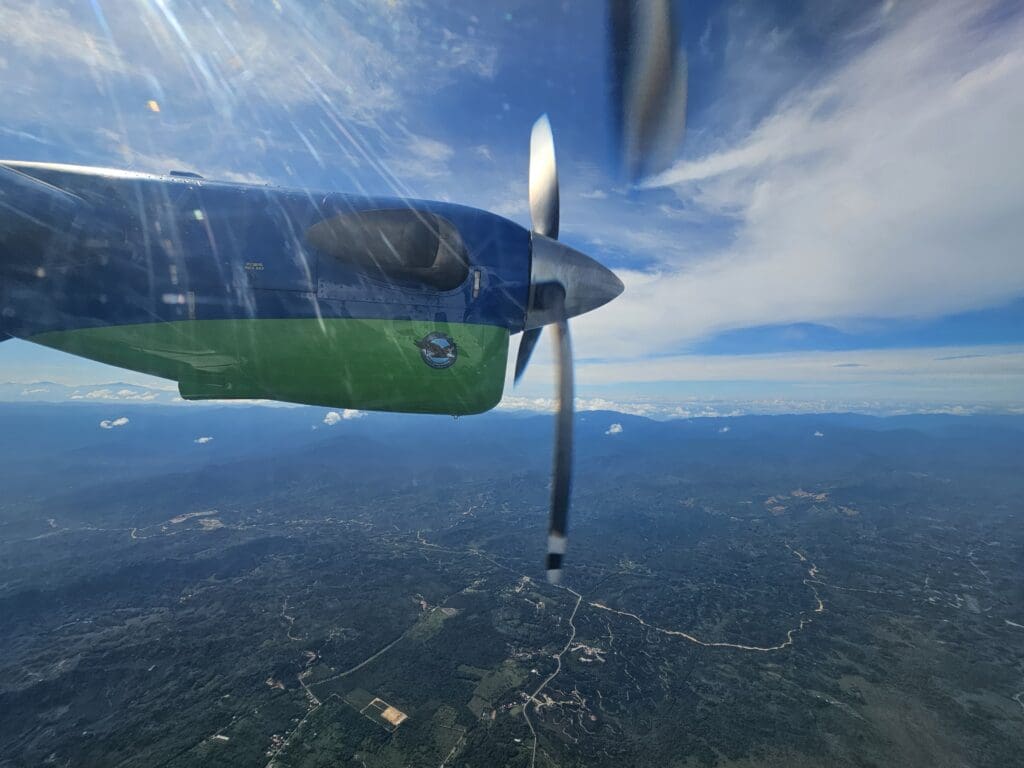
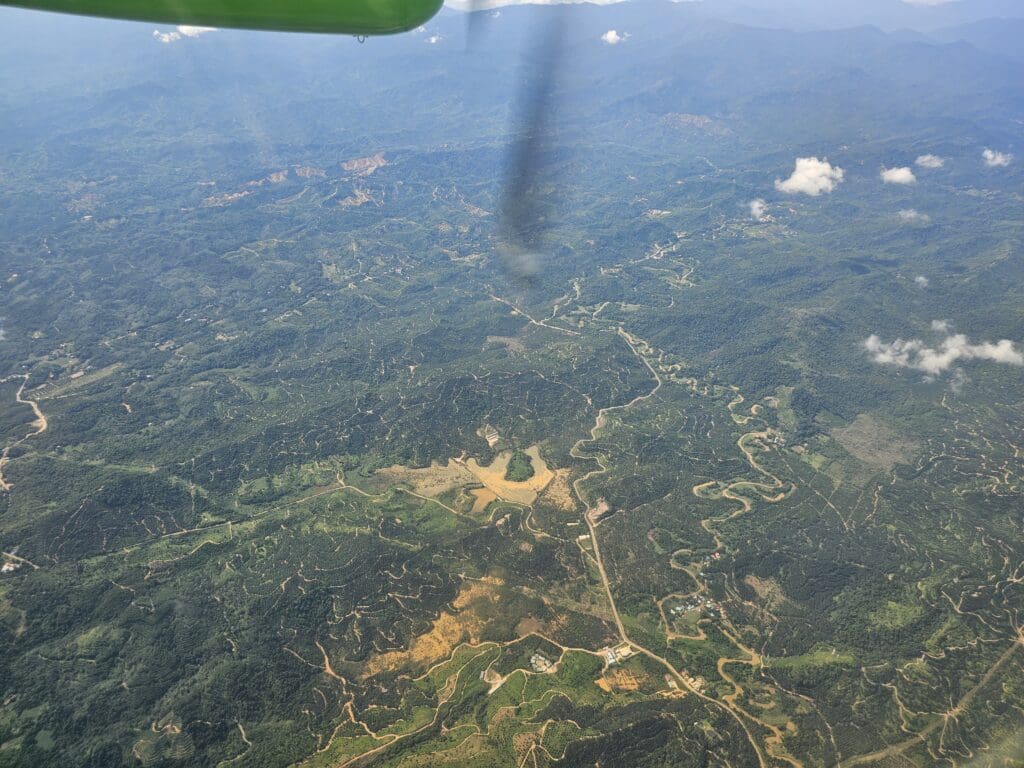
From the airport, the Twin Otter soared over the coastal town of Putatan and continued heading southwards along the coast towards the border with Sarawak. That day, the clear skies and good flying conditions meant that much of the flight was an incredibly smooth affair, although unsurprisingly with nowhere to go, the seatbelt signs remained illuminated. A short time after leaving Kota Kinabalu, the landscape became more rural, consisting of jungle-covered hills, agricultural clearings and the odd town and village, most of which sat alongside the Malaysia Federal Route 1 which runs 428 kilometres from Kudat in the far north of Sabah to Sindumin, a small town on the border with Sarawak. On that note, I would advise those who fly from Kota Kinabalu to Lawas to sit on the left-hand side of the aircraft, with views on the opposite side largely limited to the waters of the South China Sea.
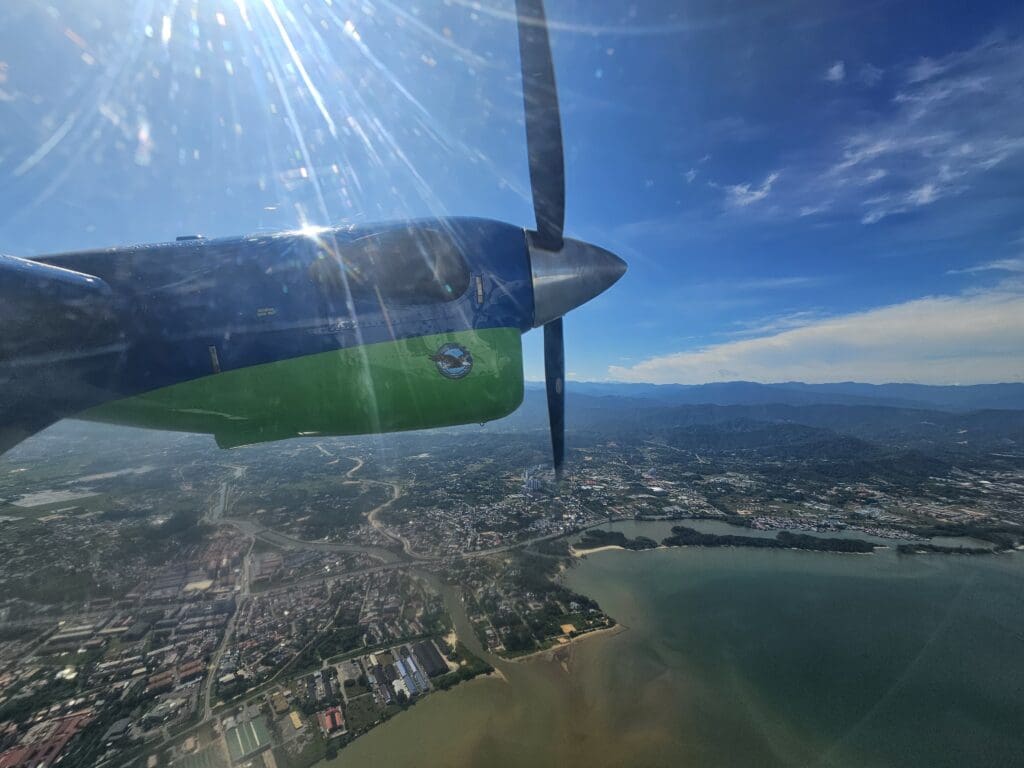
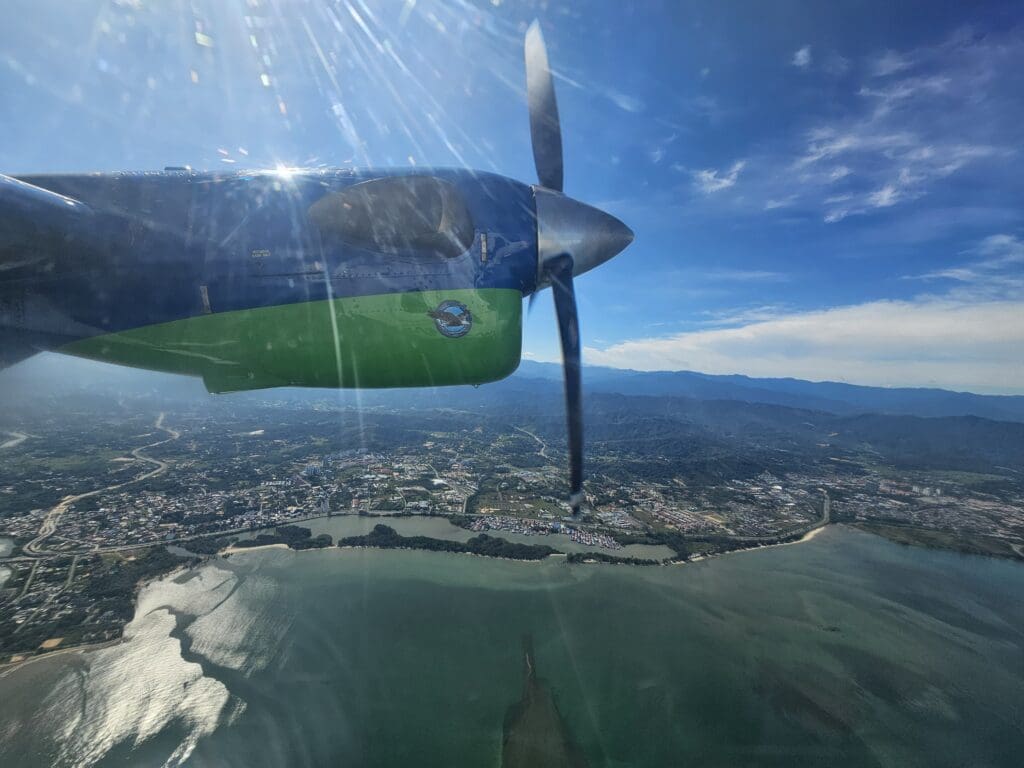
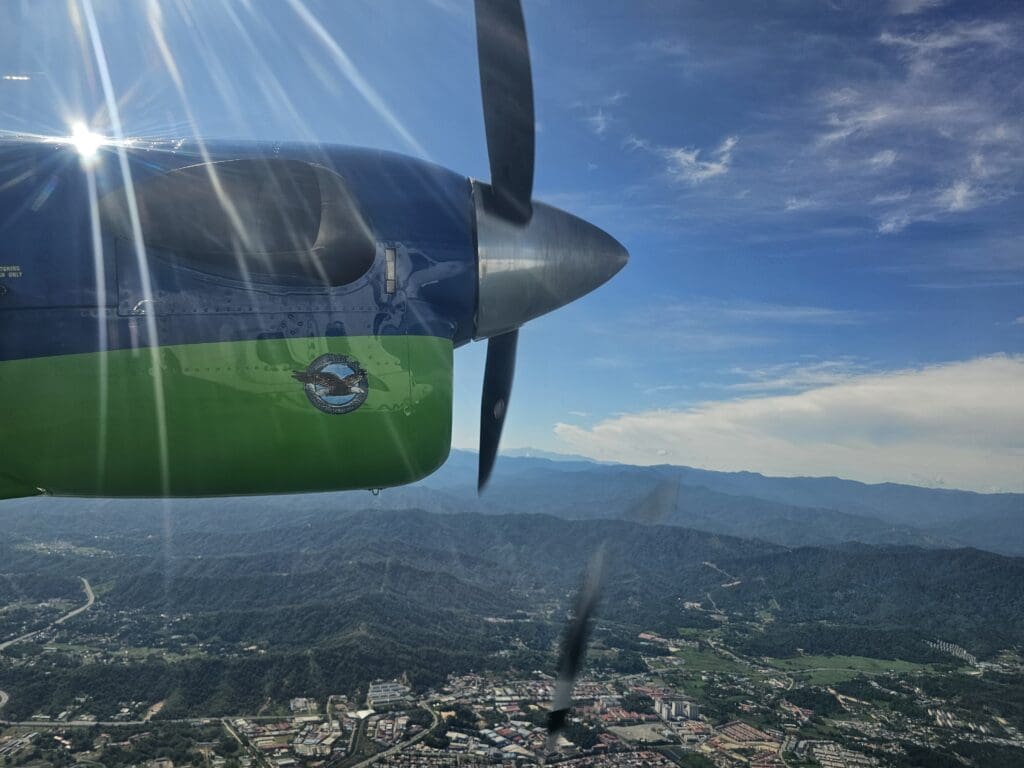
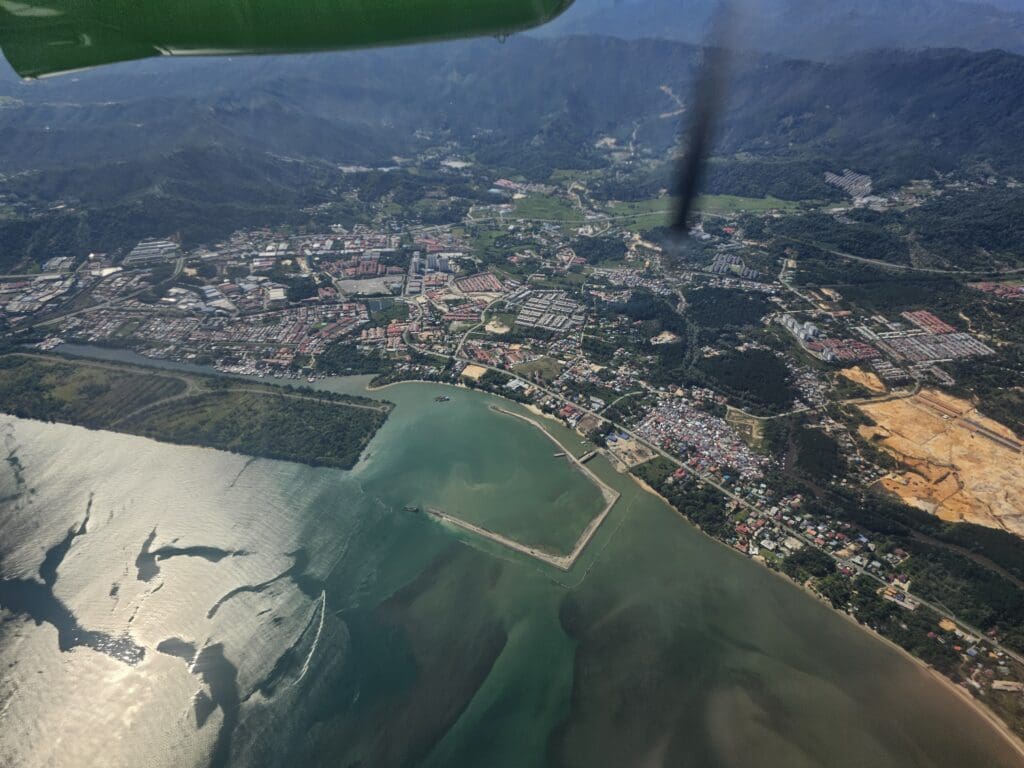
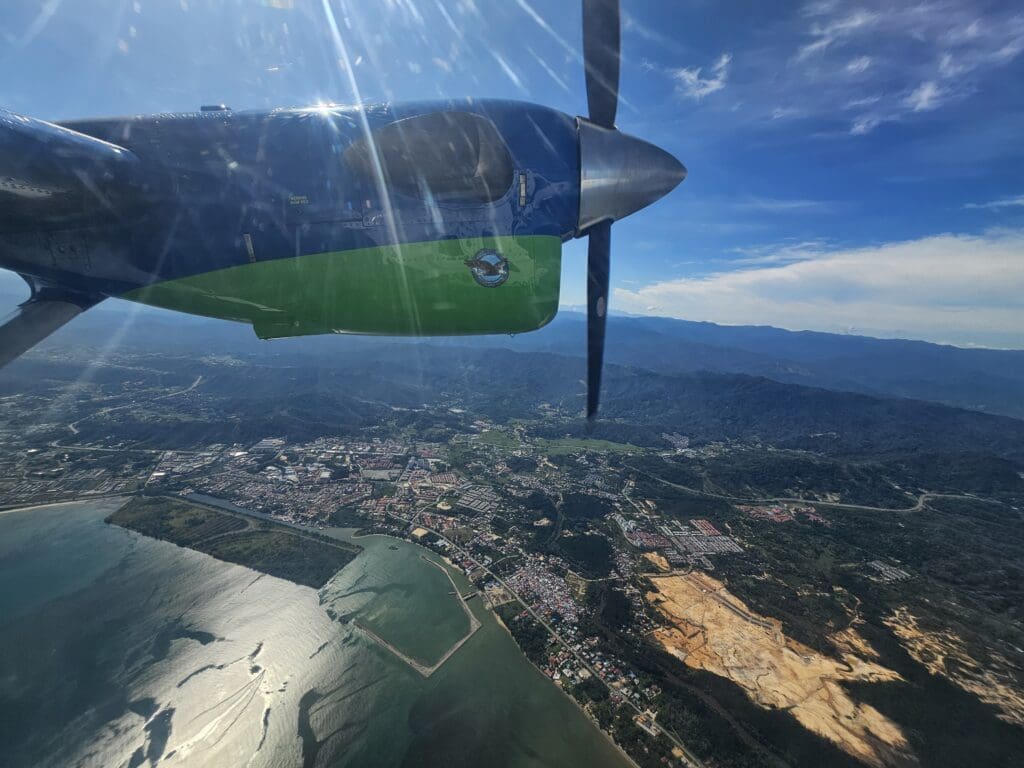
Making a very quick climb, it did not take long for the Twin Otter to reach its cruising altitude of 8,000 feet at which point we levelled off and accelerated to our cruising airspeed of 140 knots. Despite offering a smooth ride, from the perspective of an average passenger, I would not say that the Twin Otter offers an overly comfortable experience. Not only was the cabin small and cramped, I found the type to lack any decent noise insulation and thus the racket produced by the two turboprop engines was deafening and continued unabated for the duration of the flight, likely making any conversations between passengers impossible. However, the aircraft does feature large windows and those onboard this Twin Otter were in good condition, being both clean and largely lacking marks and scratches, allowing for great views of Borneo as we tootled along.

Reading several reports of MASwings Twin Otter services, several of these note of complimentary bottles of water and Malaysia Airlines branded packets of salted peanuts – the same service as on Malaysia Airlines’ short domestic flights. However, neither of these were offered that day, although this was not a complaint given the short length of the flight.
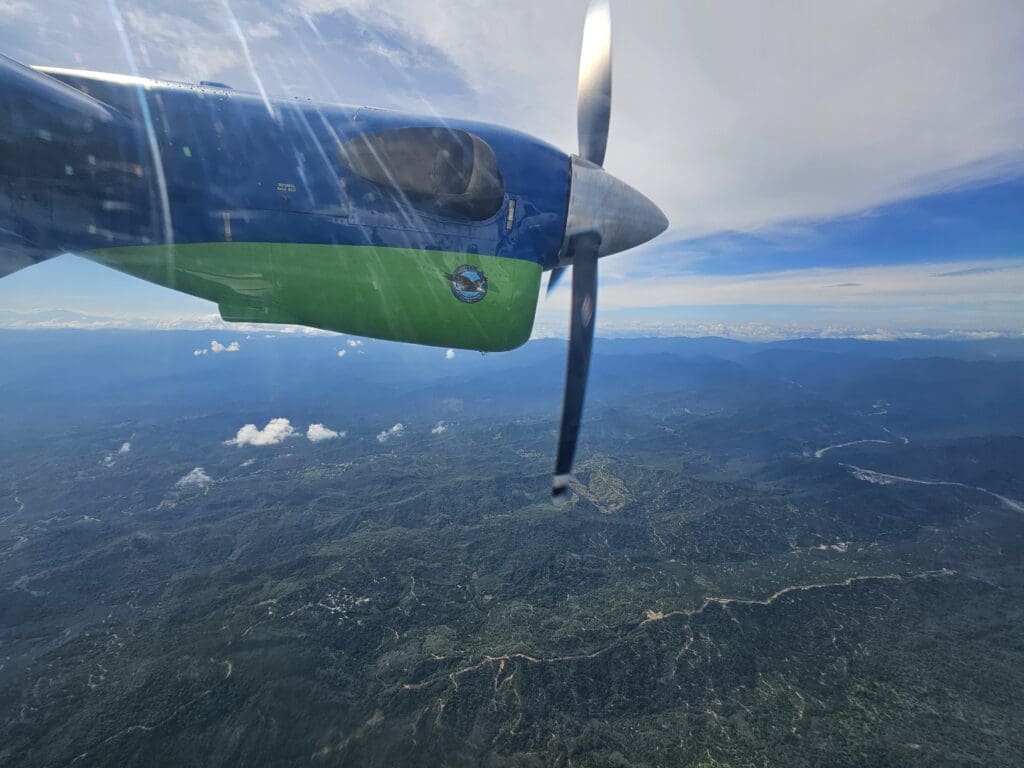
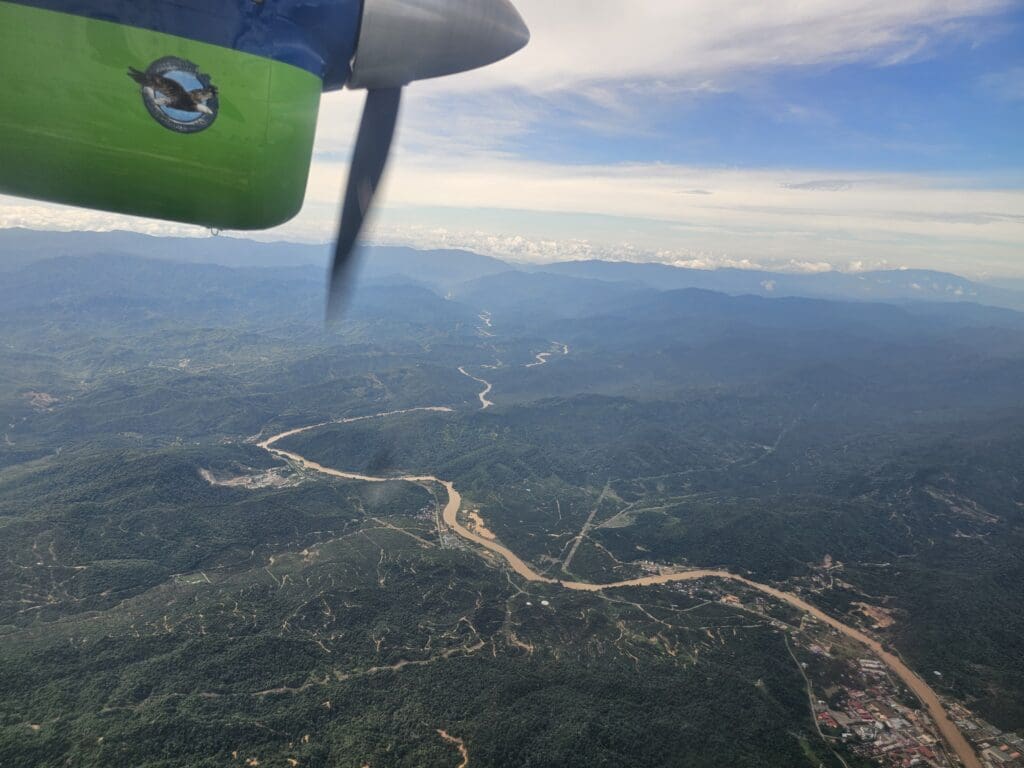
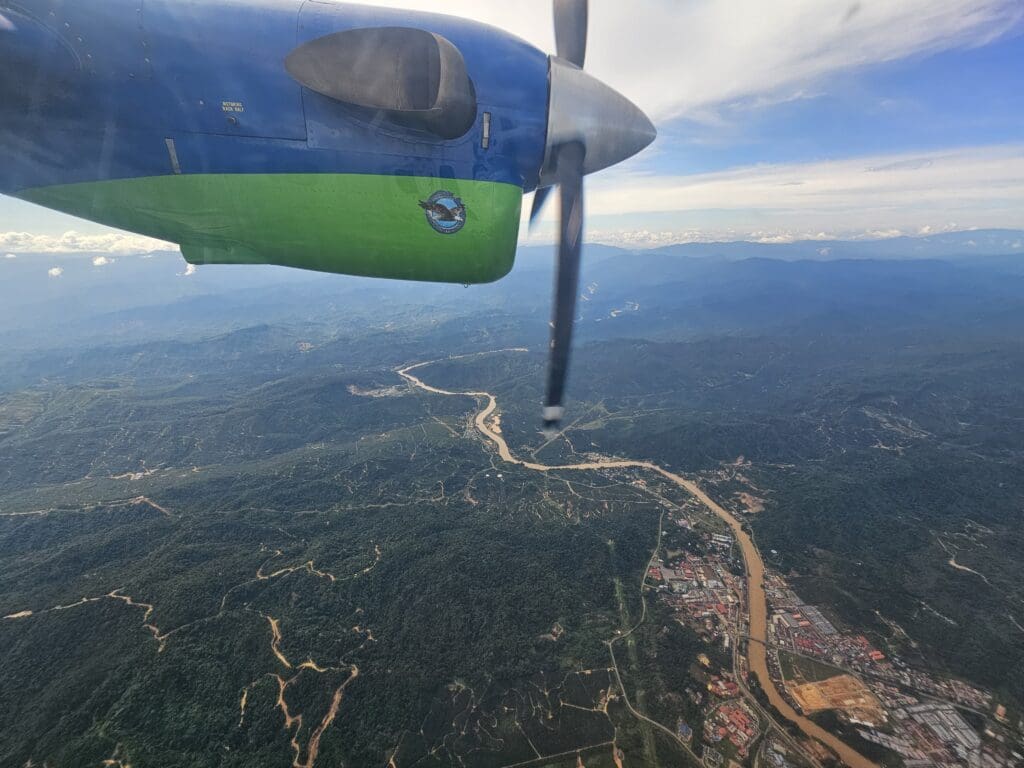
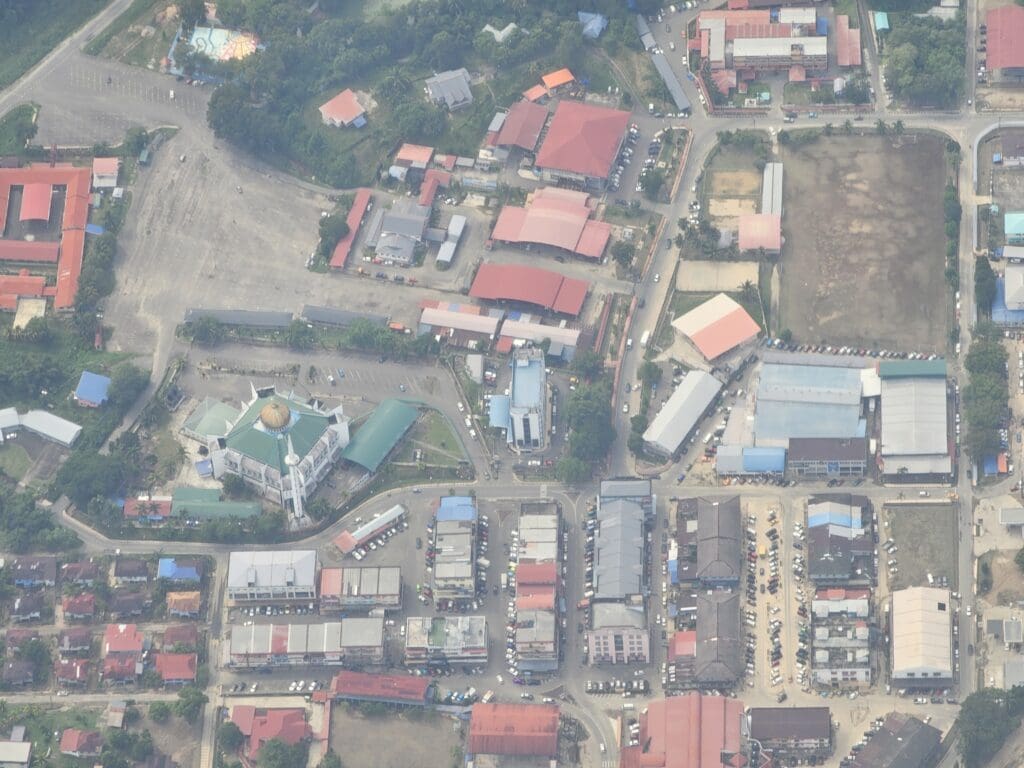
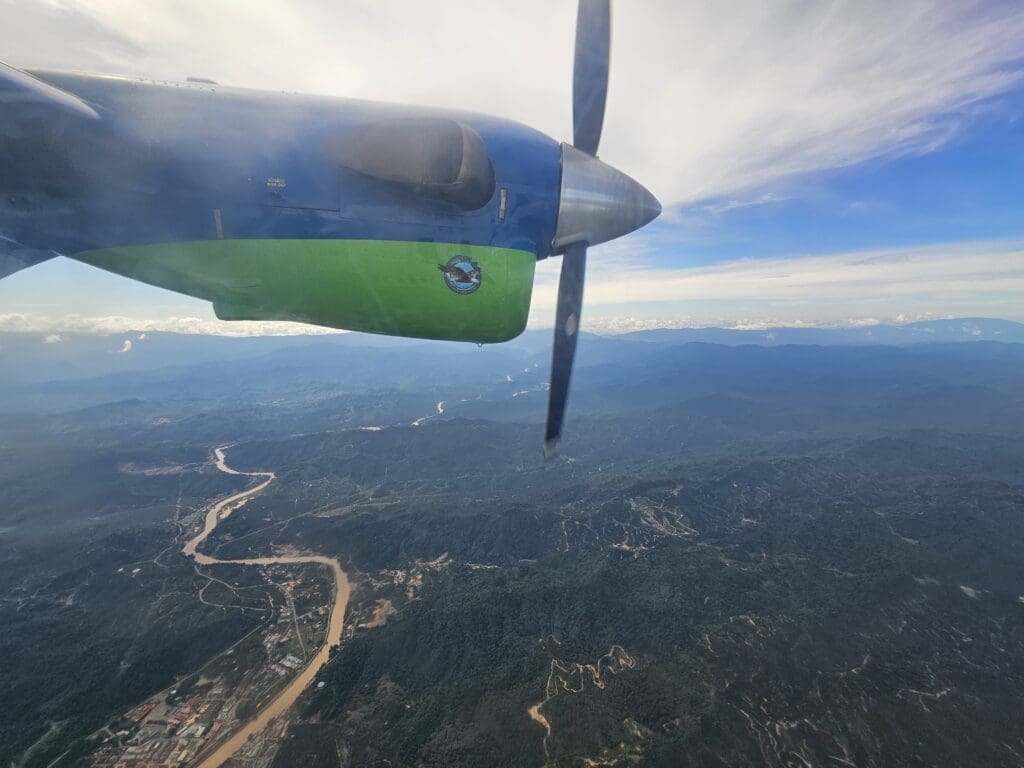
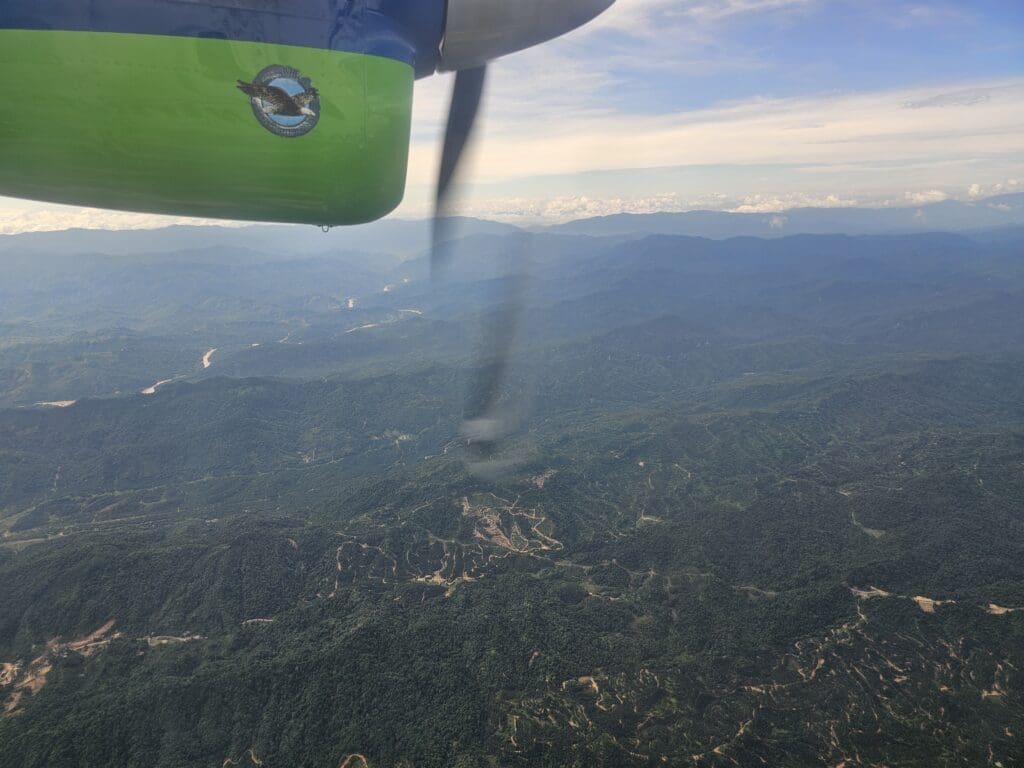
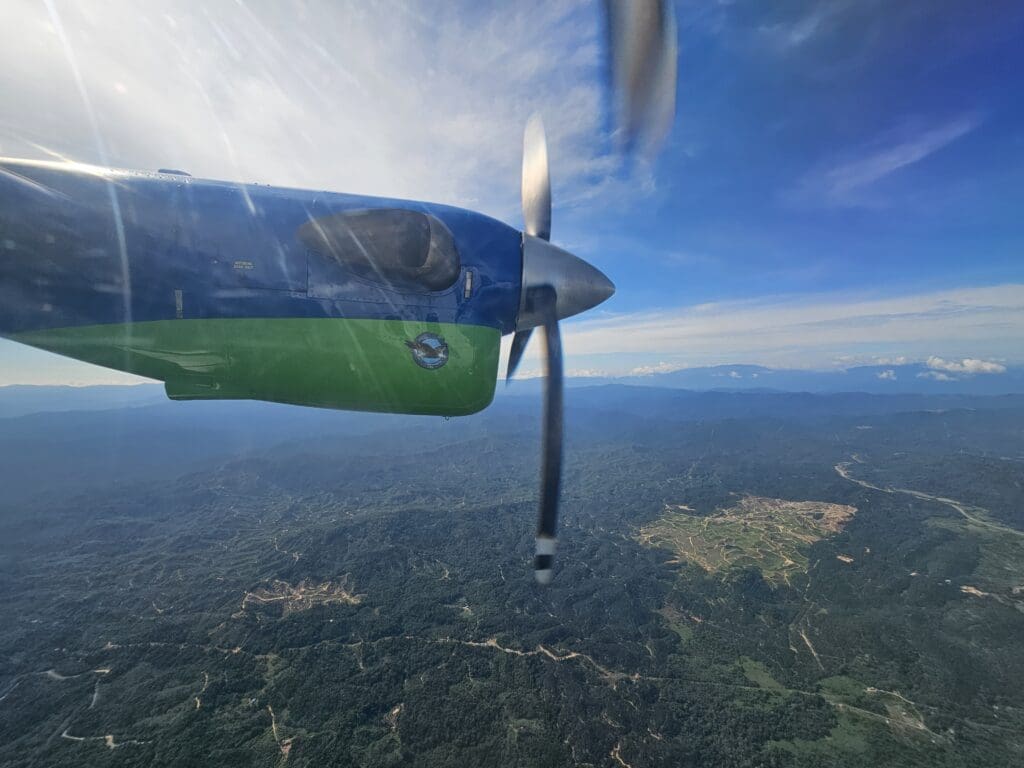
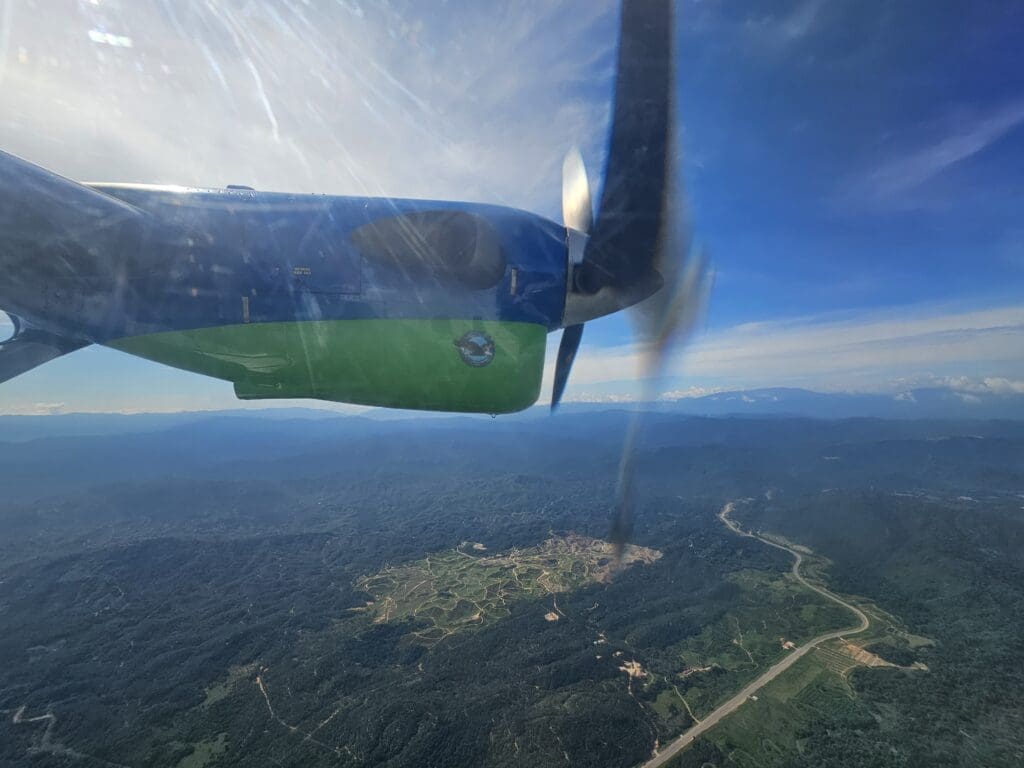
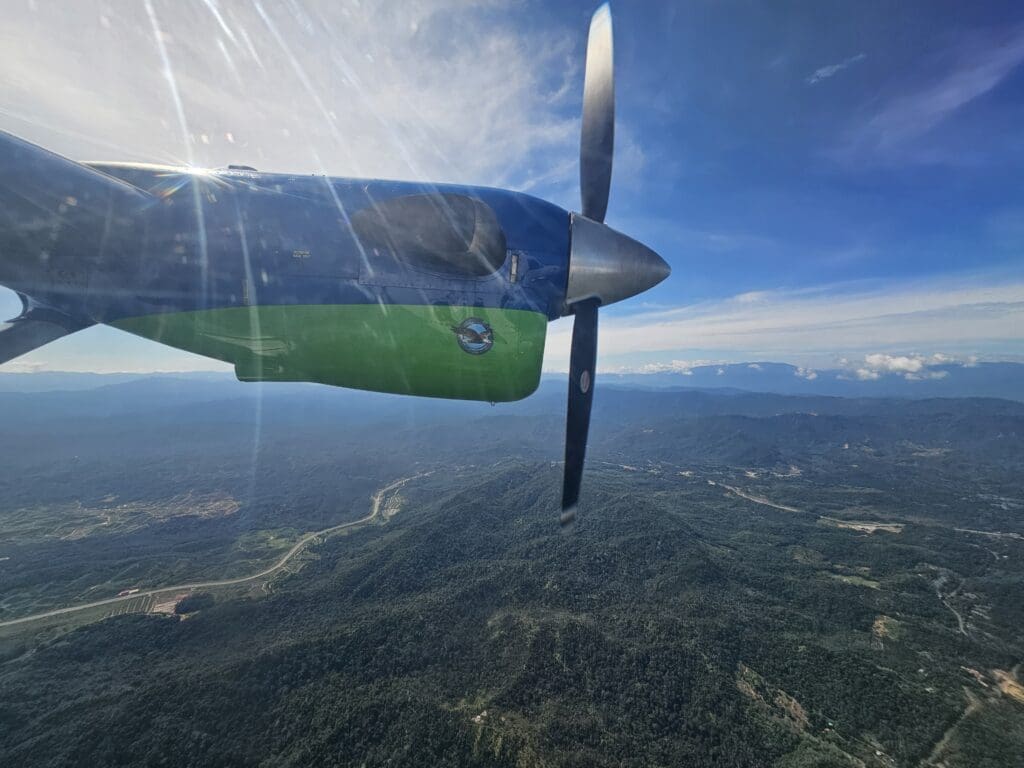
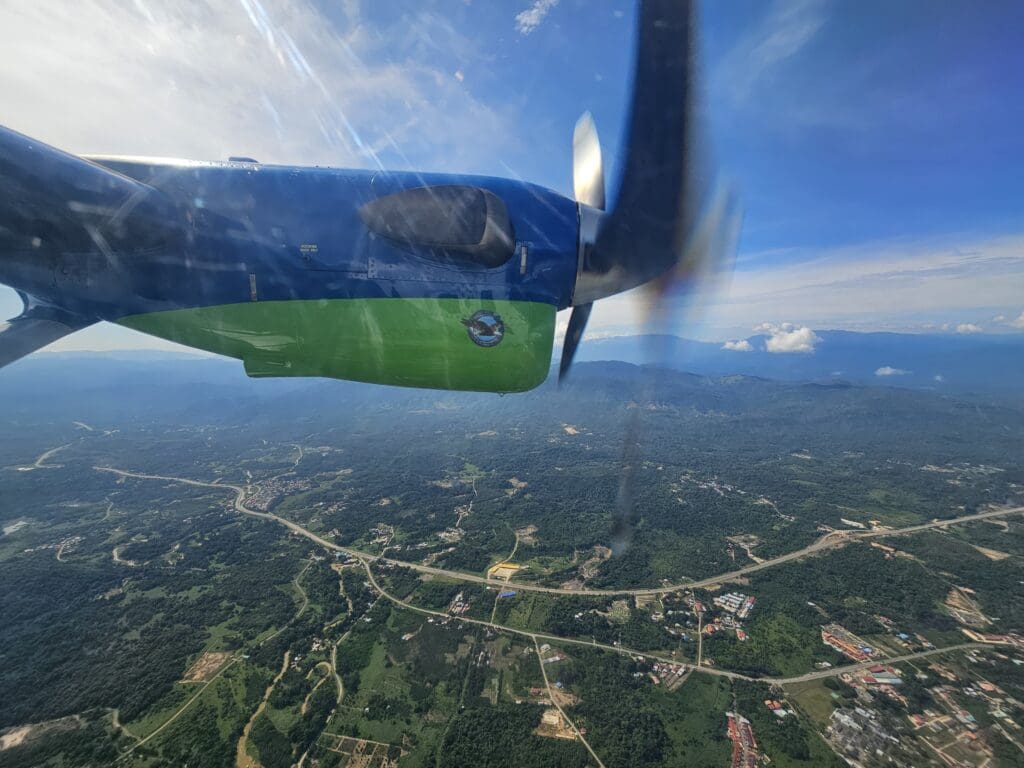
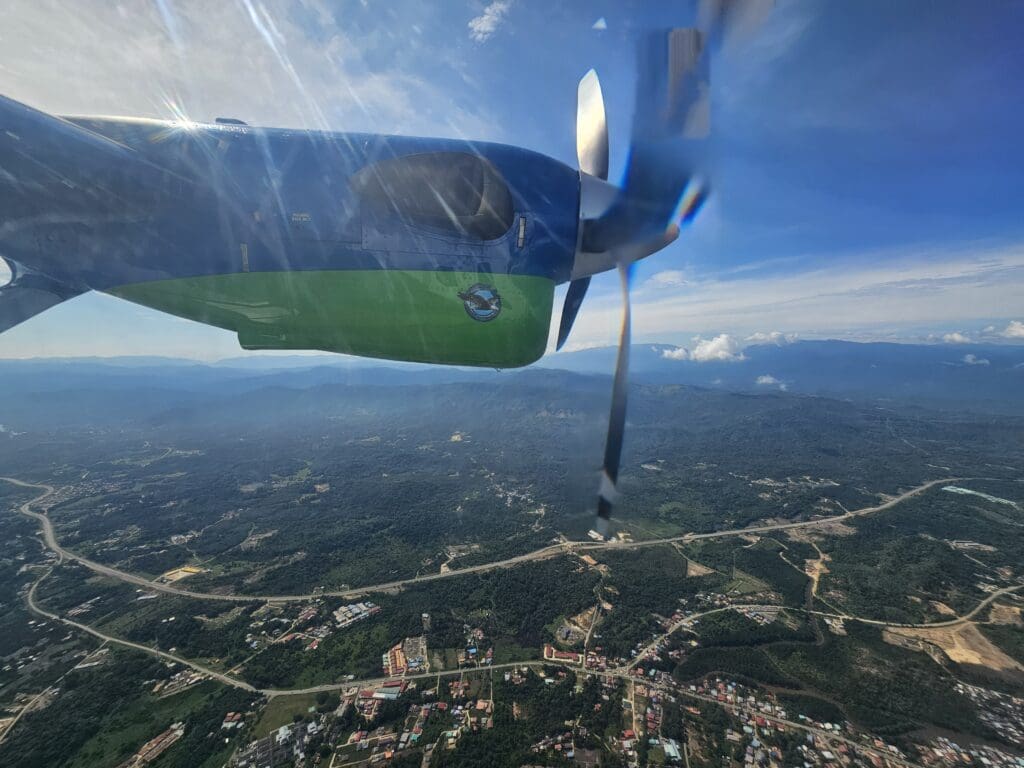
After passing the coastal town of Papar, a fairly popular daytrip destination that sits on the Sabah State Railway, the aircraft banked slightly and turned to fly southwestwards down the coastline making its way over the towns of Beaufort and Bongawan. Once past the former, easily identifiable thanks to the Padang River which cuts straight through the town, the Twin Otter could be felt commencing its descent into Lawas.
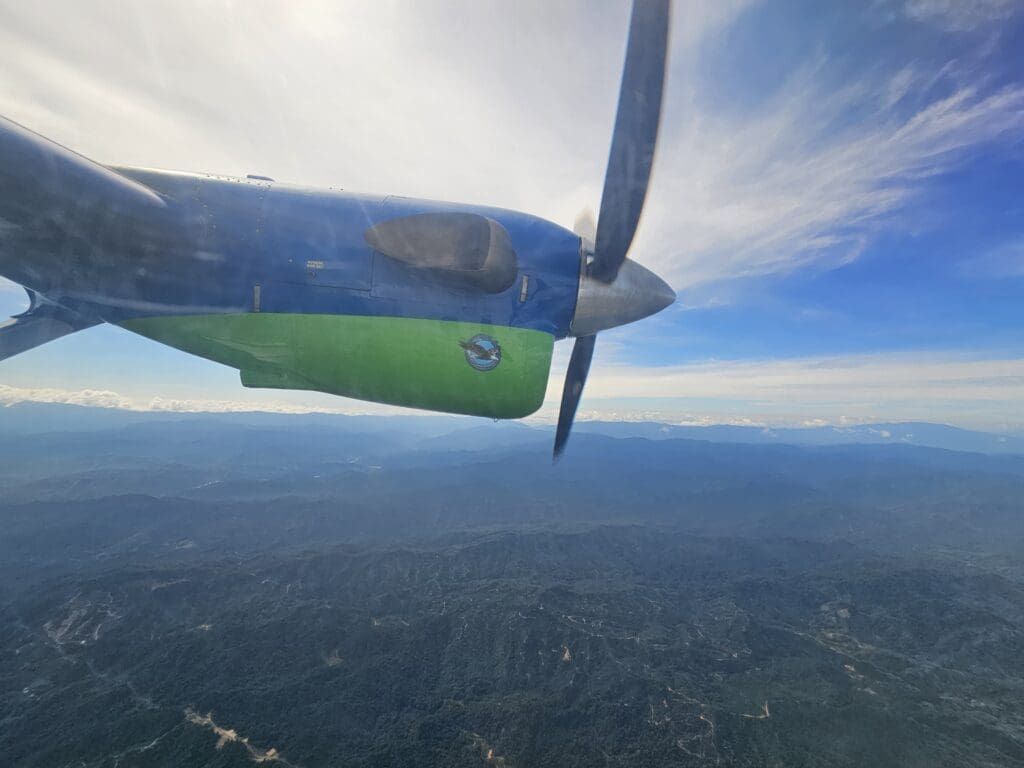
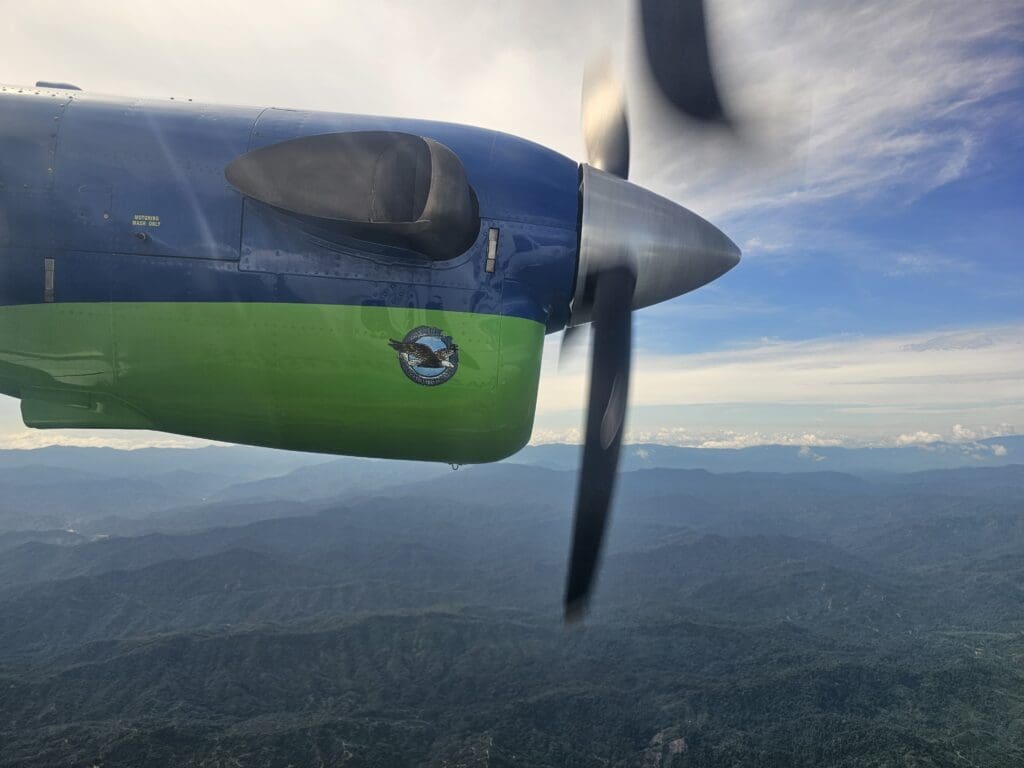
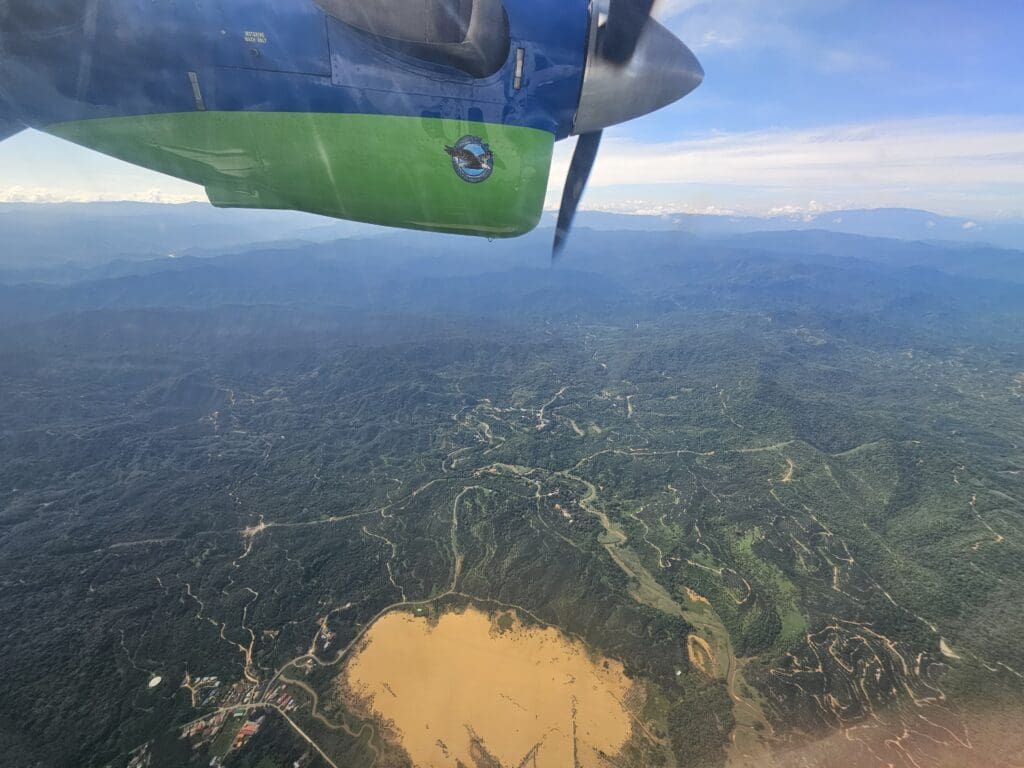
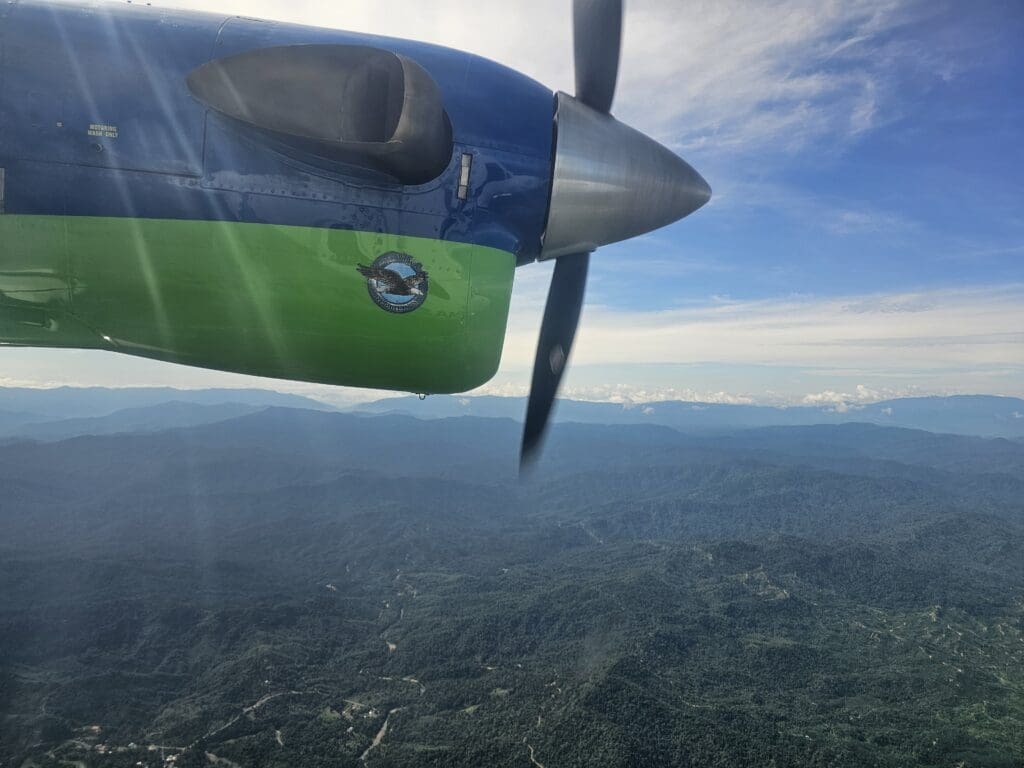
Looking out the window, the sprawl of the coastal town of Sipitang soon appeared, with this being home to about 4,300 residents. This was soon followed by the sight of the town’s long and deserted sandy beach, Pantai Merintaman Sipitang. While its sandy beaches looked inviting, a fatal crocodile attack in the local area just two days earlier would have put me off getting too close to the water there! This was then followed by the sight of the town’s massive Petronas chemical plant before jungles appeared below the aircraft once again.
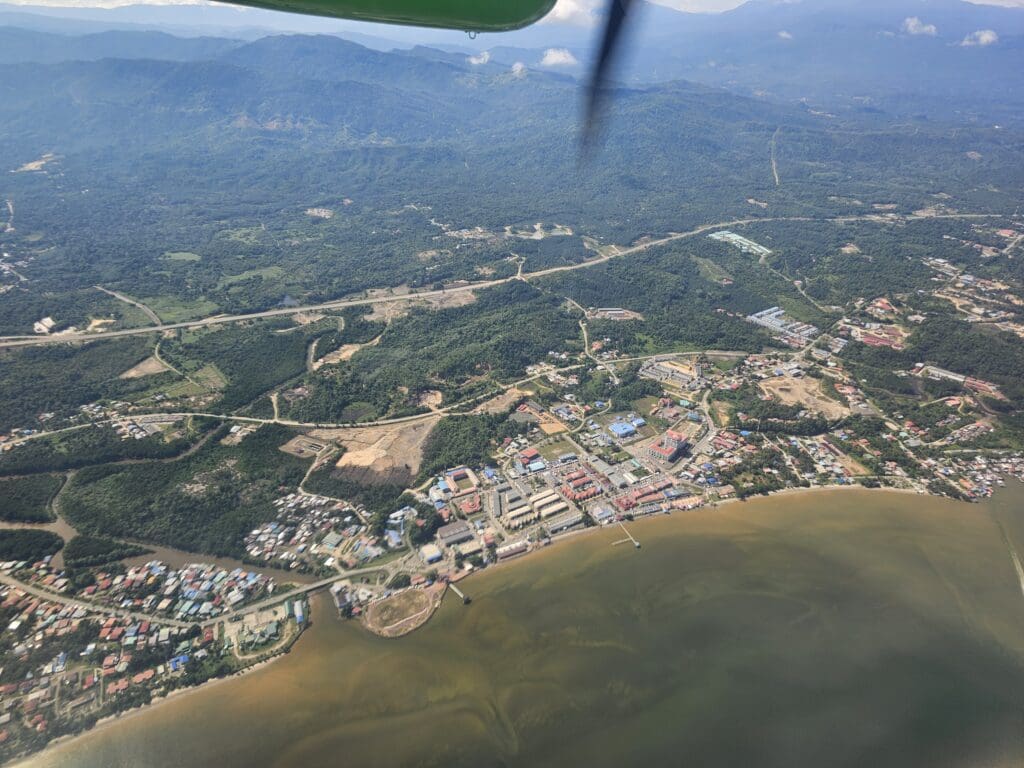
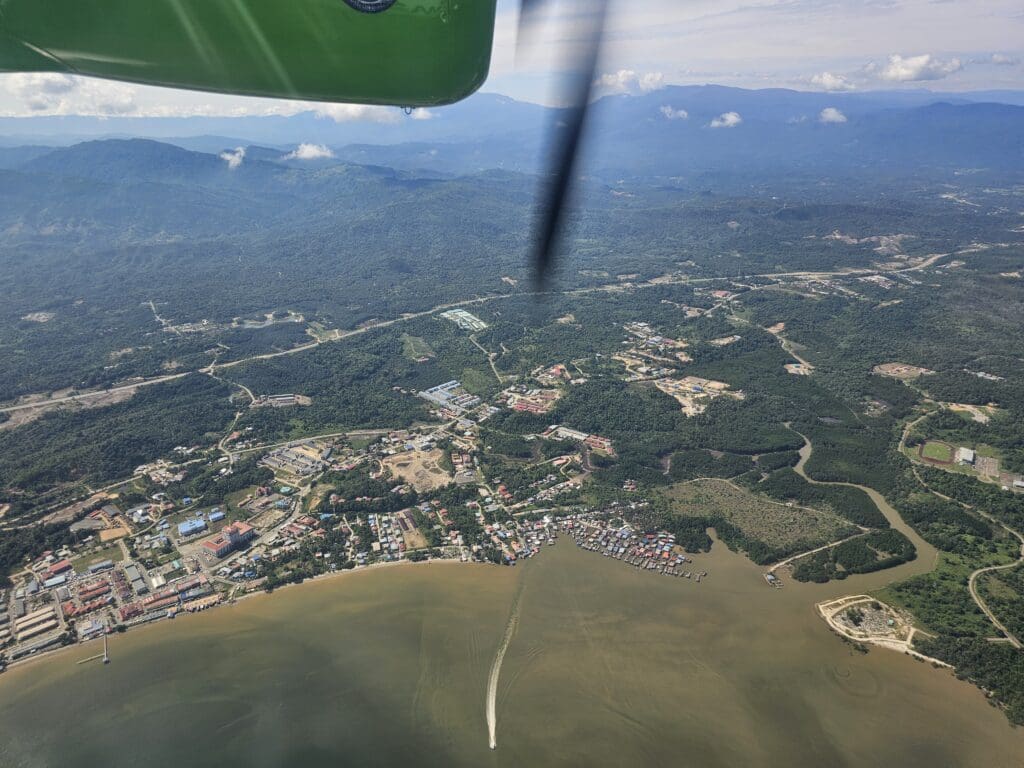
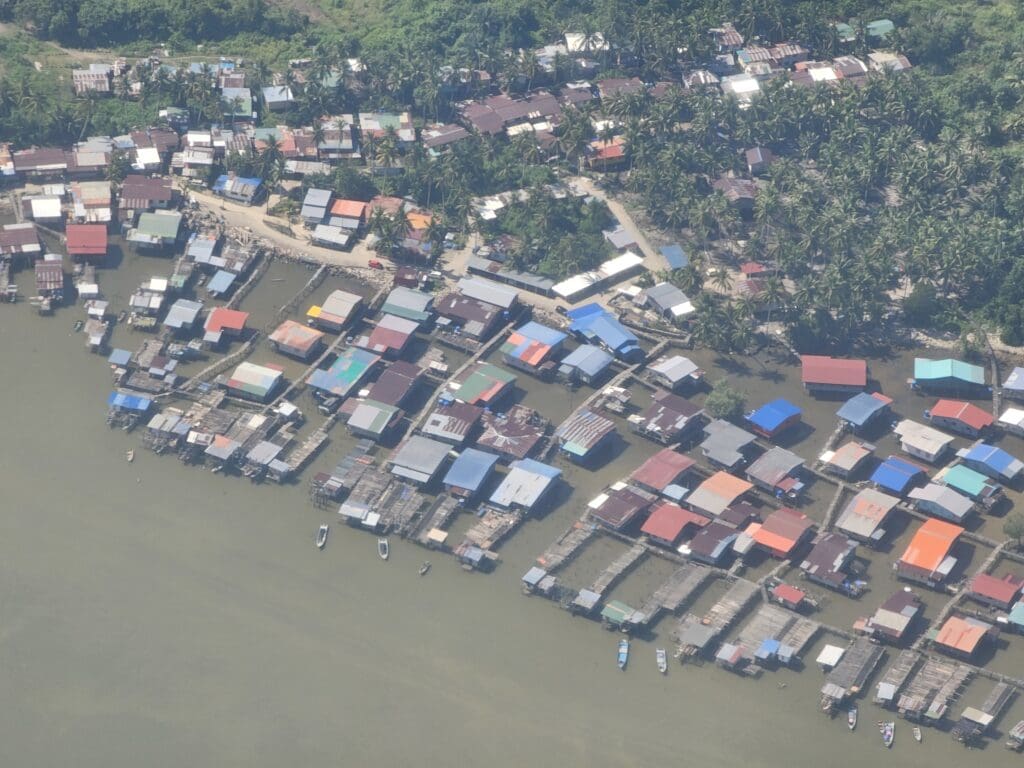
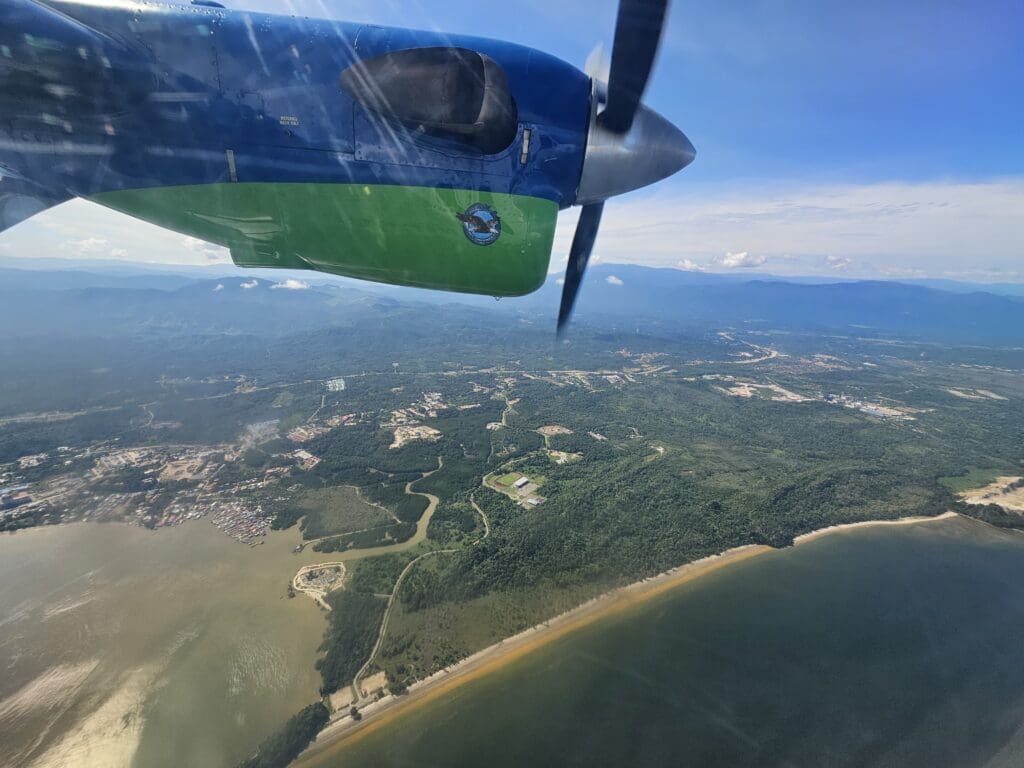
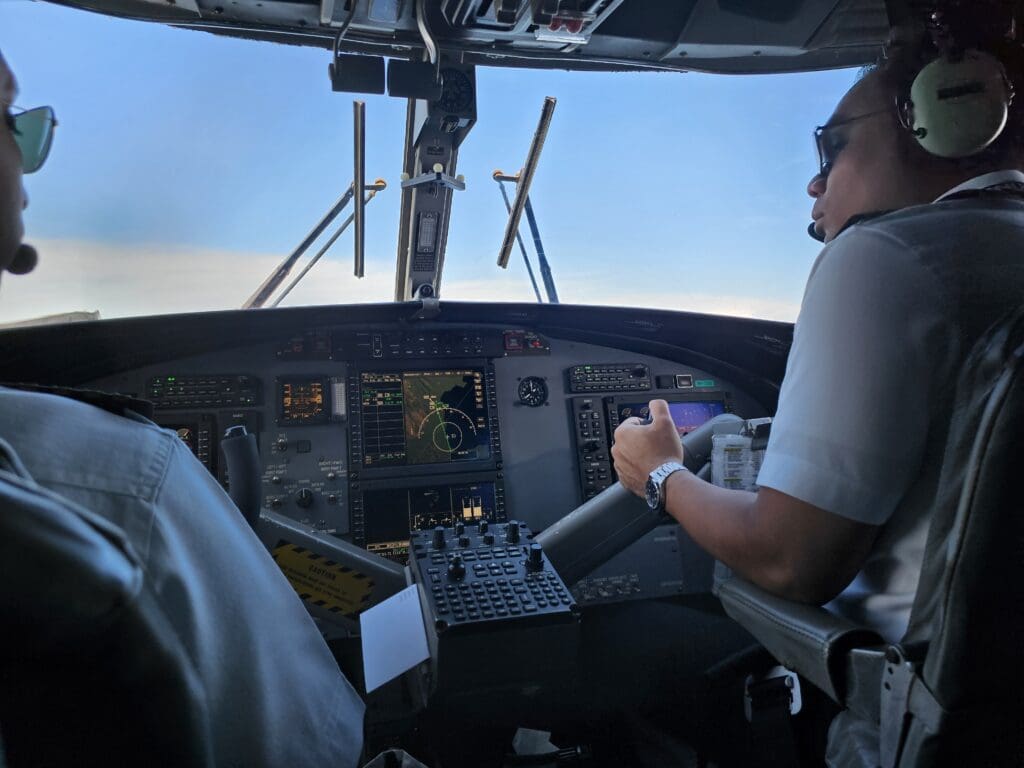
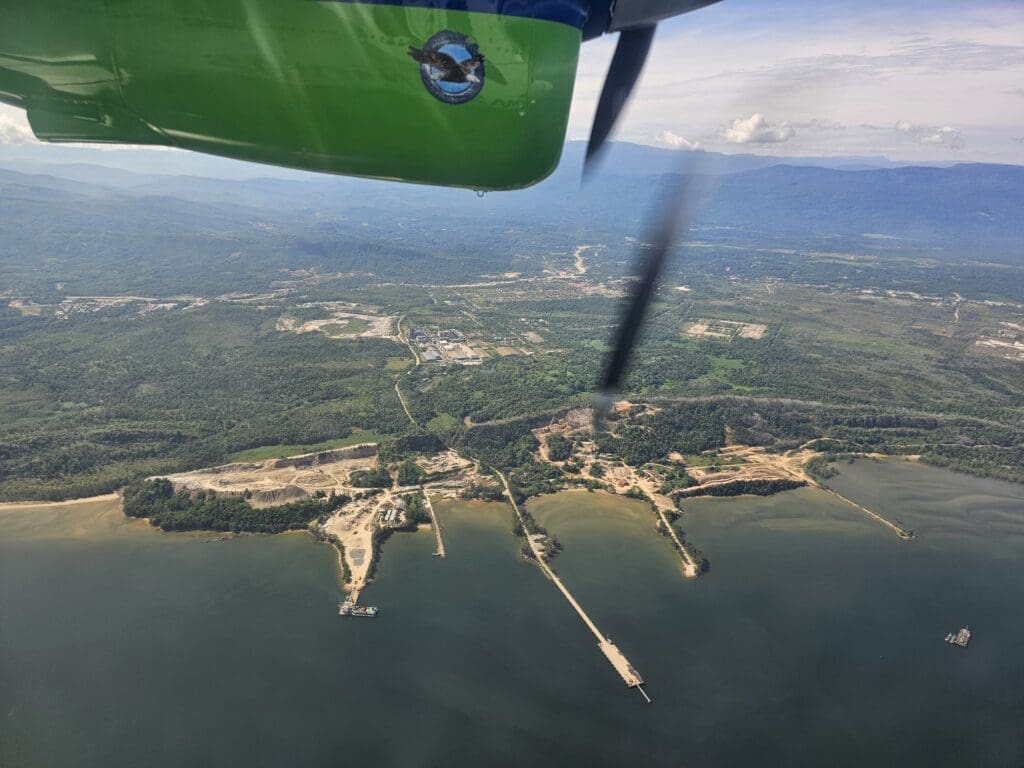
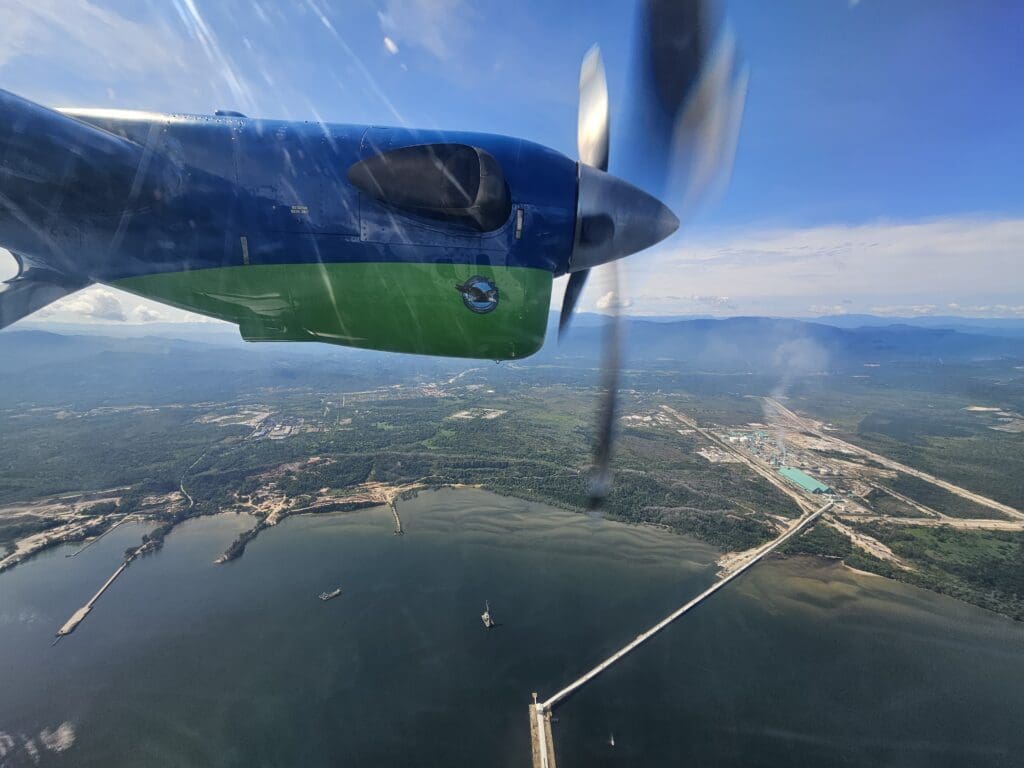
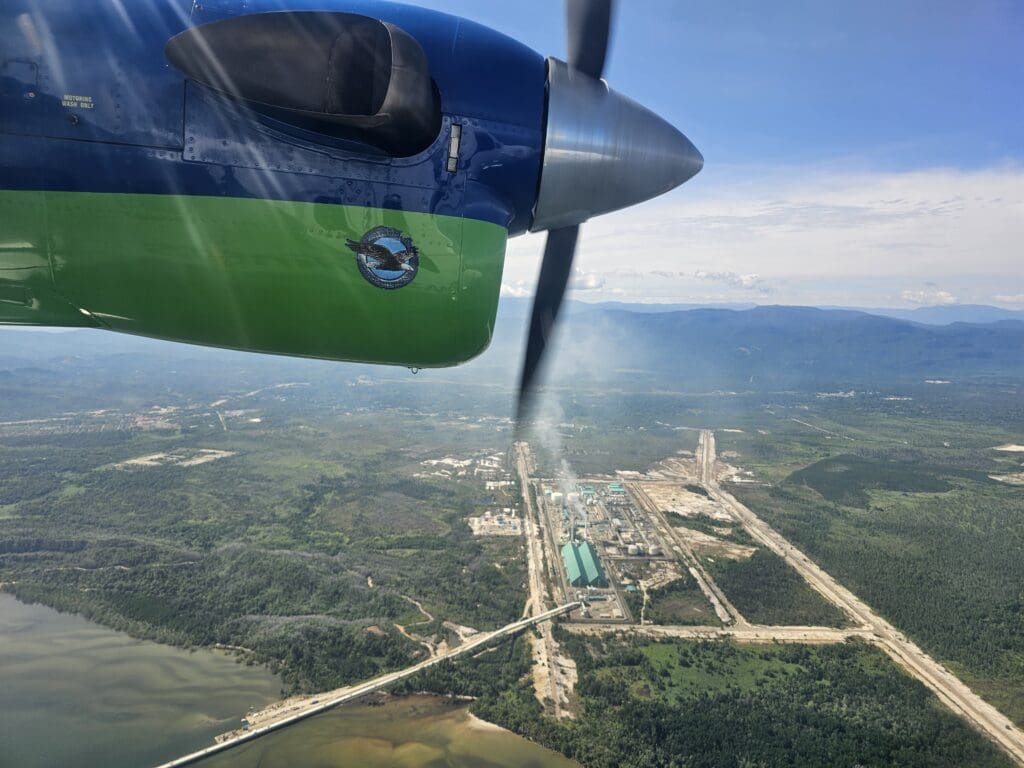
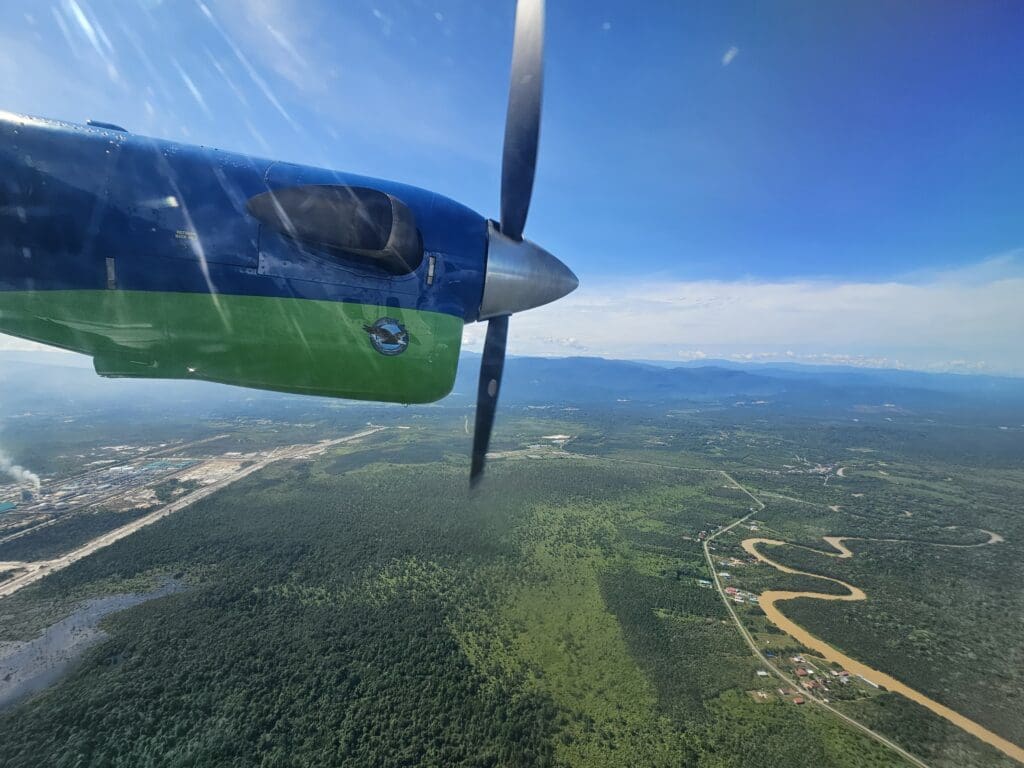
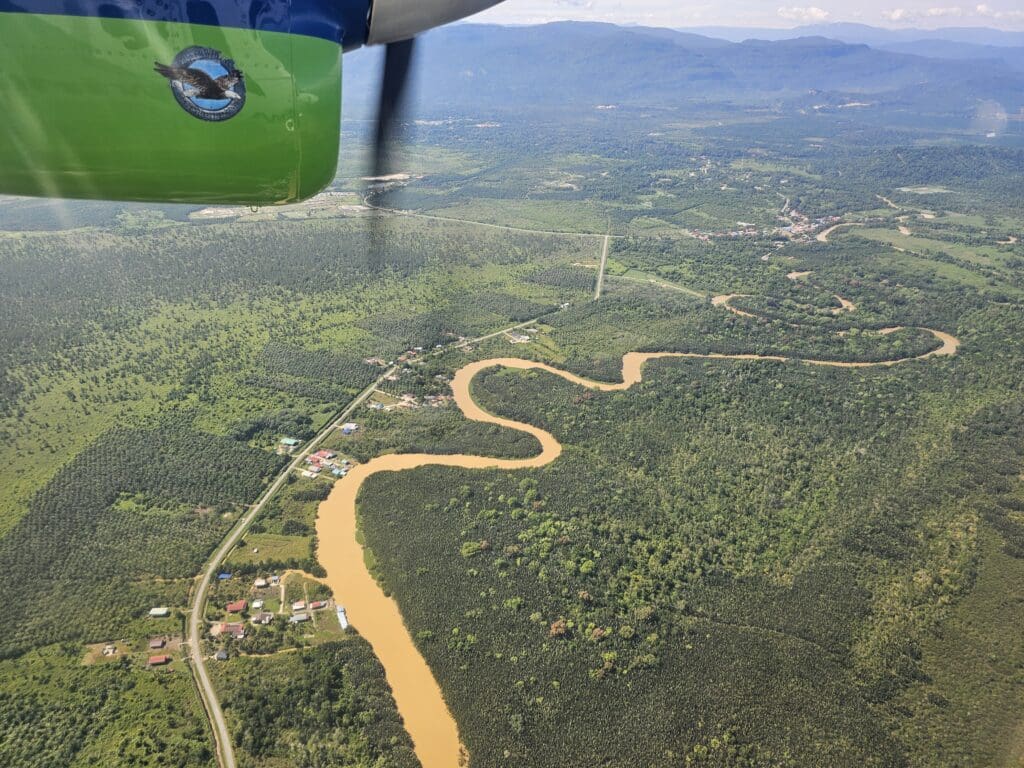
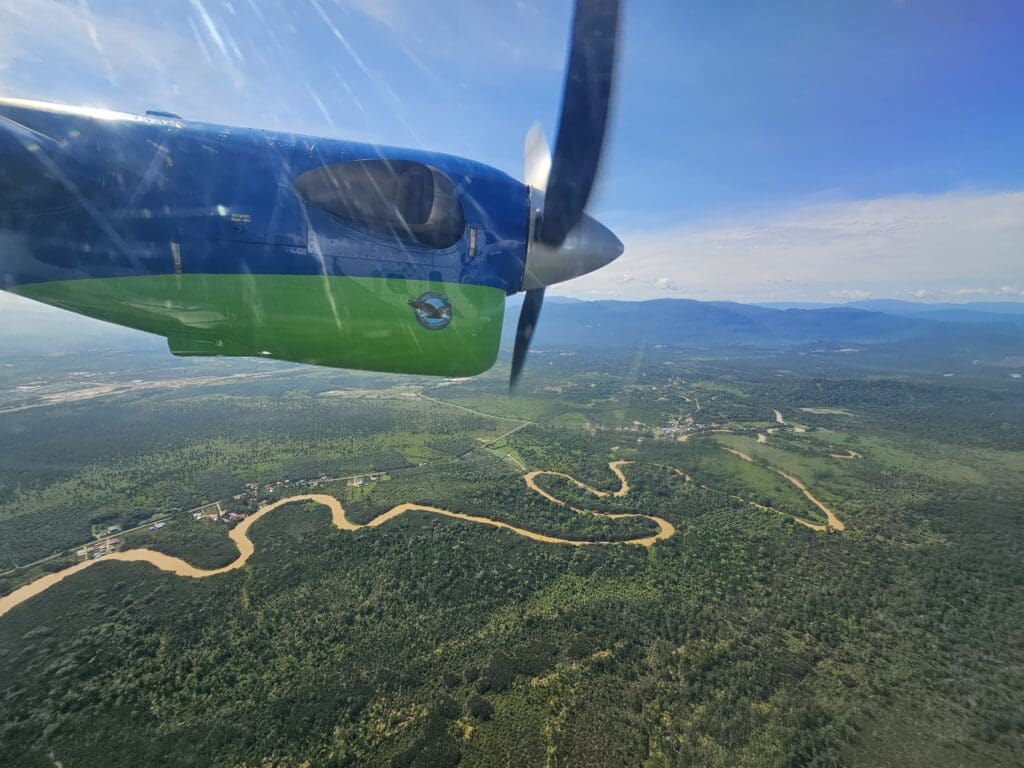
Turning southwards, the Twin Otter followed the course of the Sungai Merapok River and looking through the cockpit windows the cluster of buildings that make up the town of Lawas as well as the airport’s small runway could be seen. At this point, one of the pilots commenced a barely audible announcement during which they thanked me for flying with MASwings and advised me to keep my seatbelt fastened until the aircraft had come to a halt.
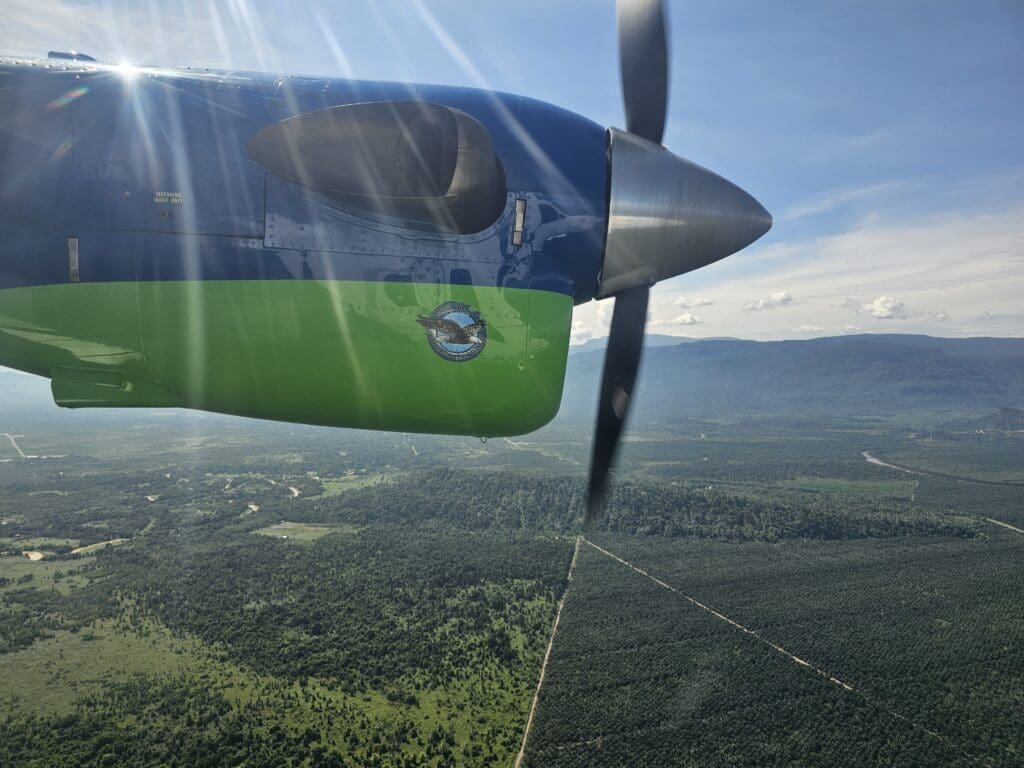
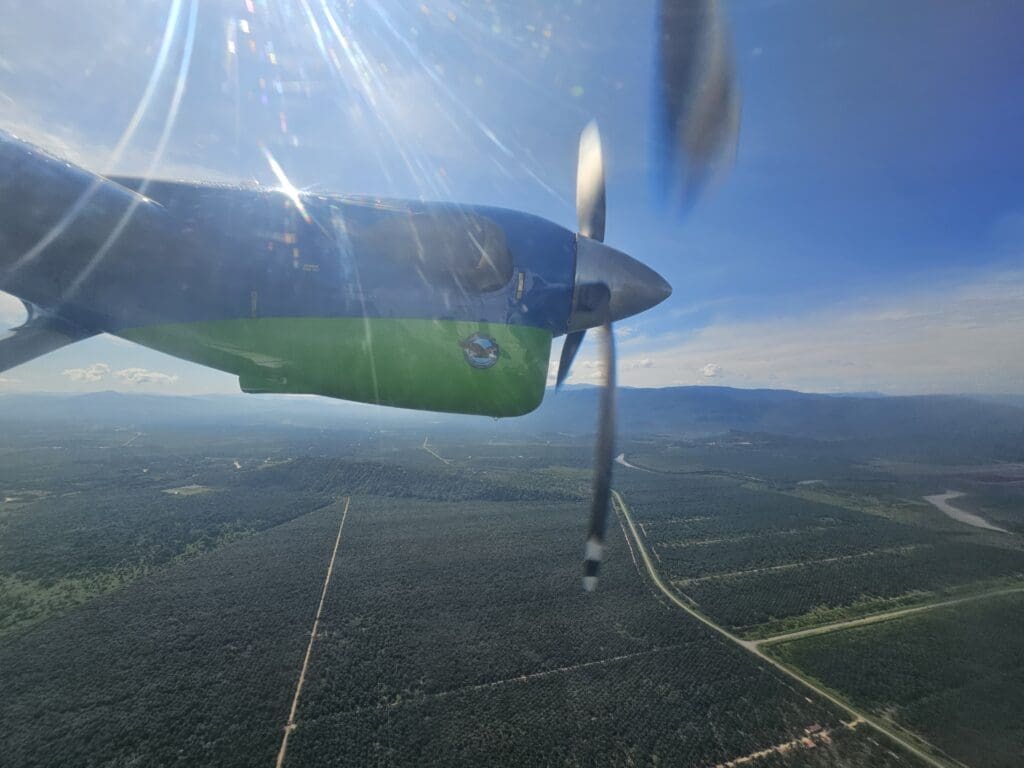
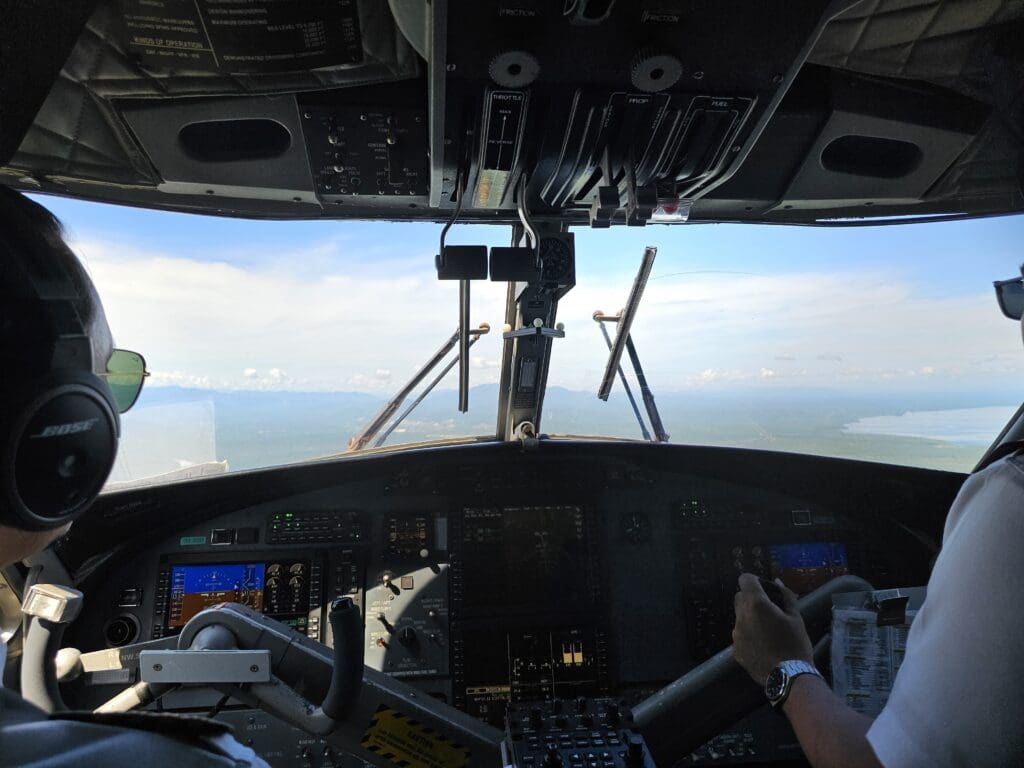
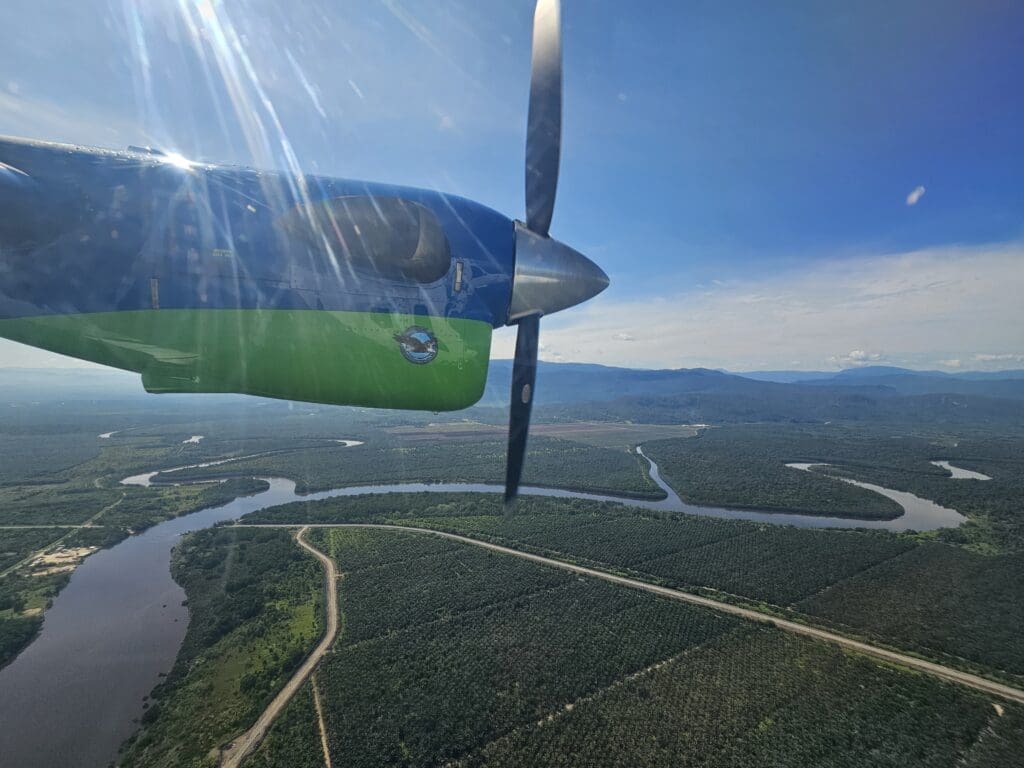
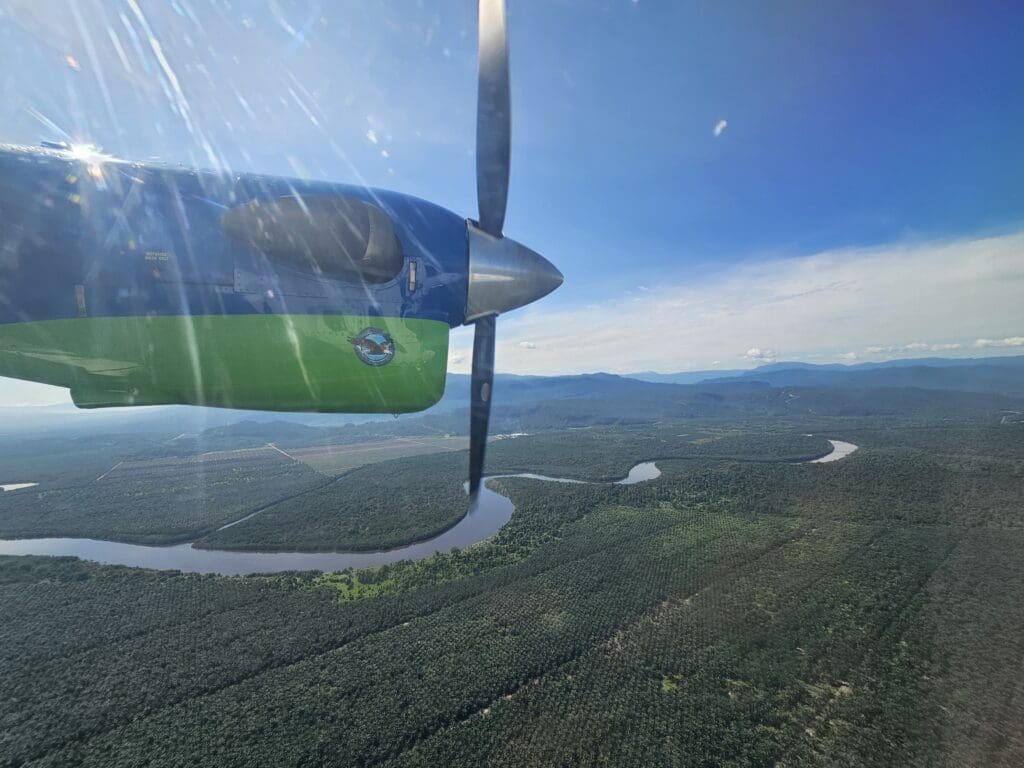
As we neared Lawas, the Twin Otter seemed to point its nose downwards and commence a steeper-than-usual approach of around nine degrees. Looking outside, we whizzed over the wide aforementioned river where several ships could be seen before we dived down over the palm trees and houses that sit just to the north of the airport.
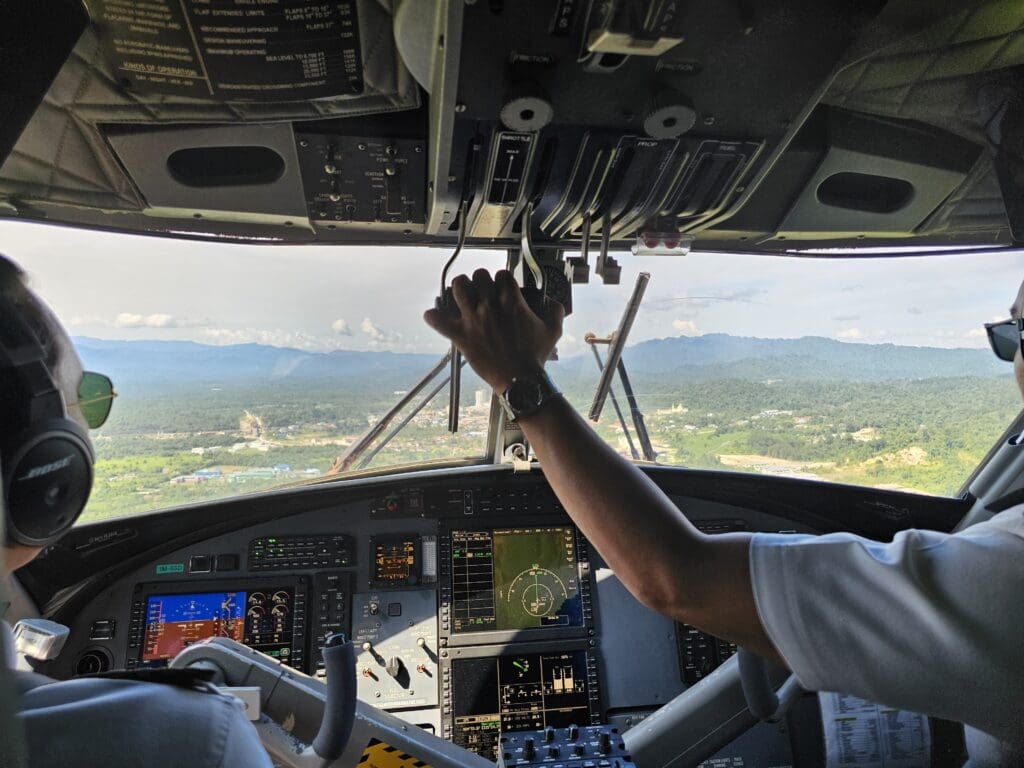
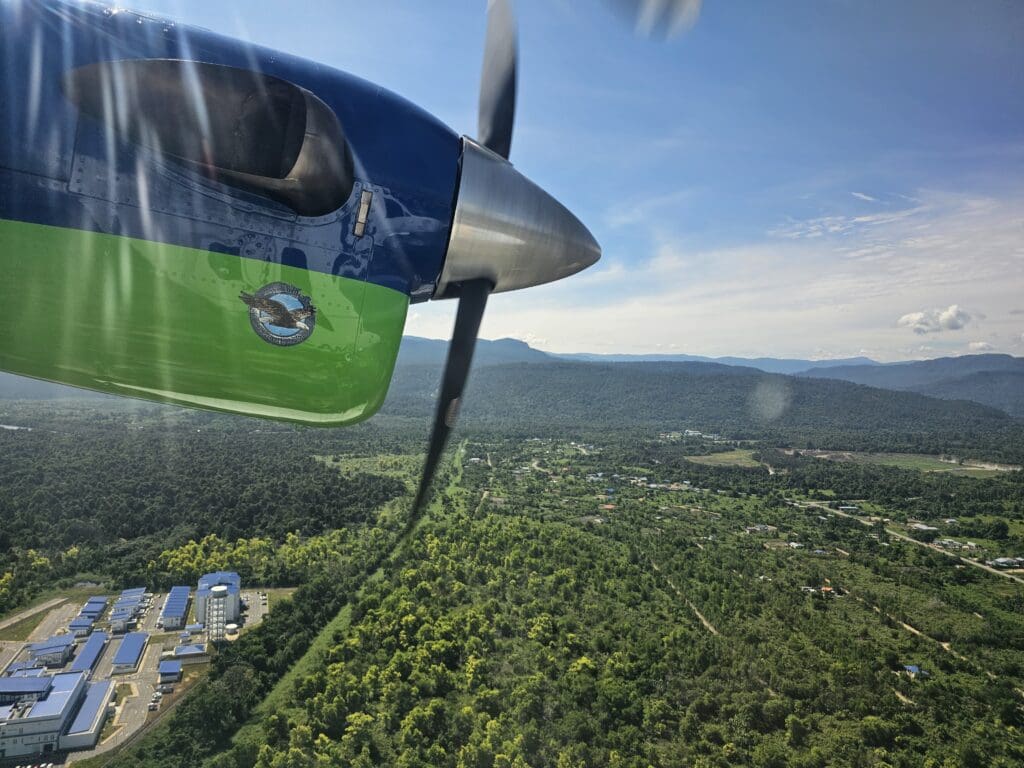
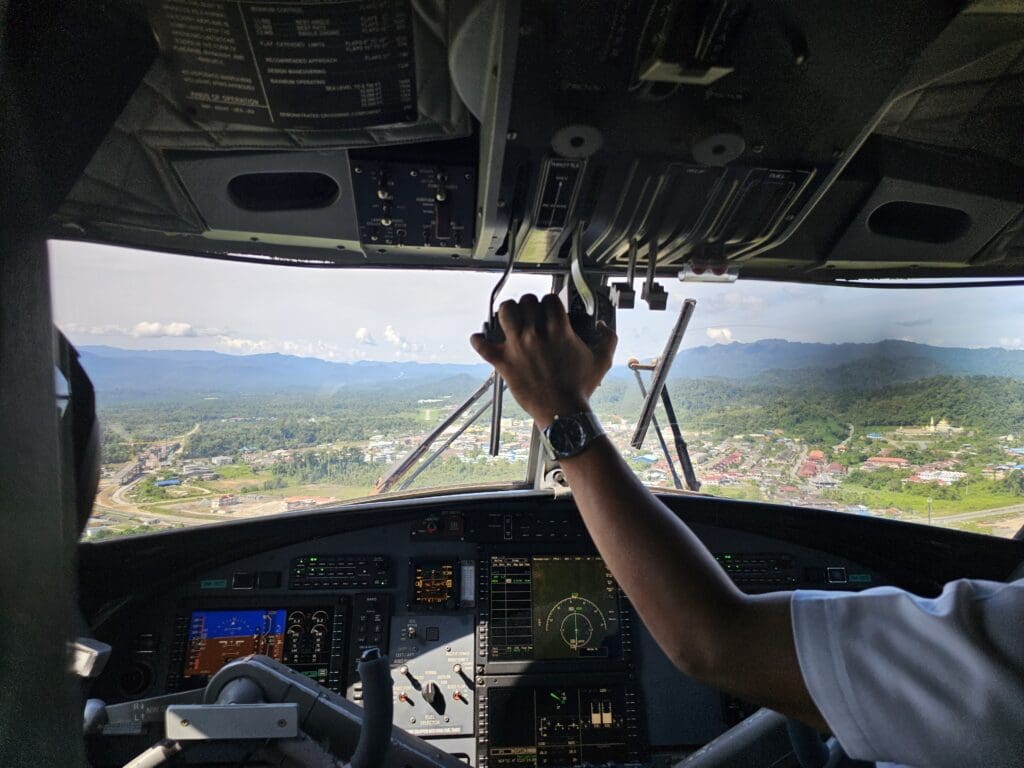
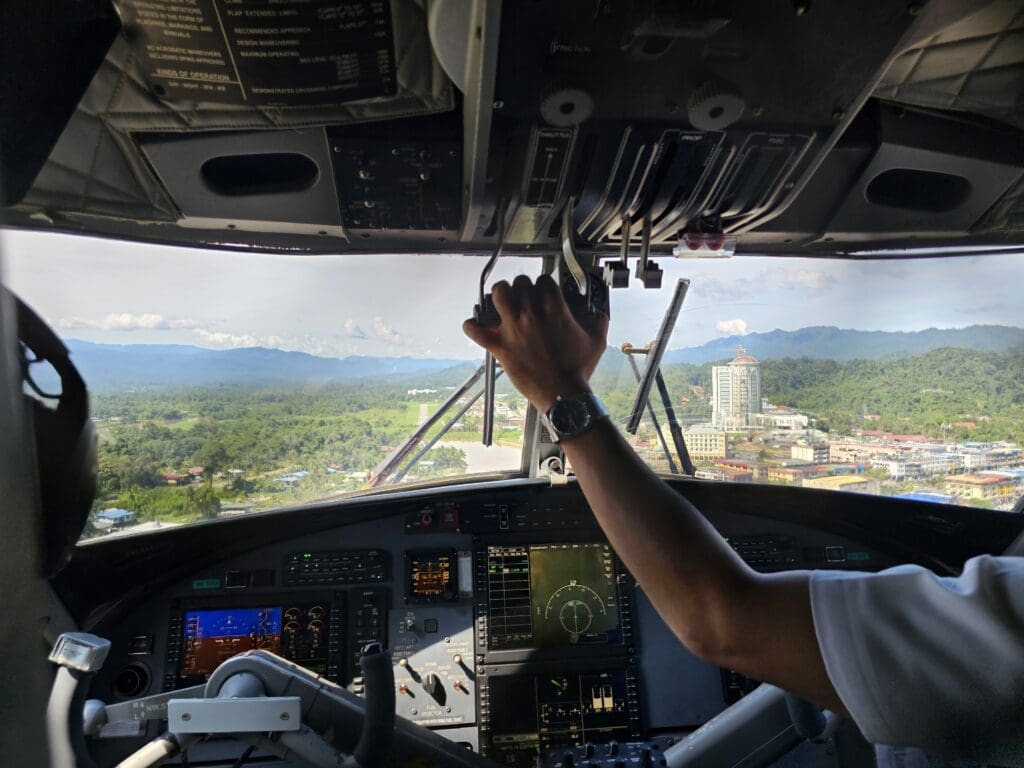
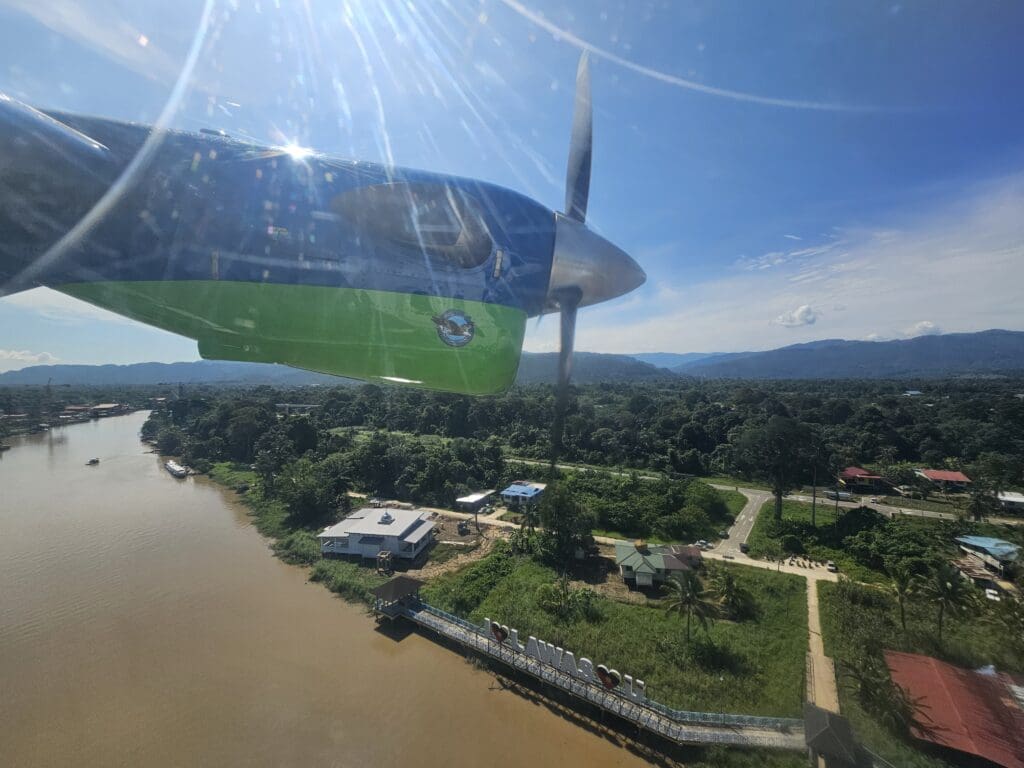
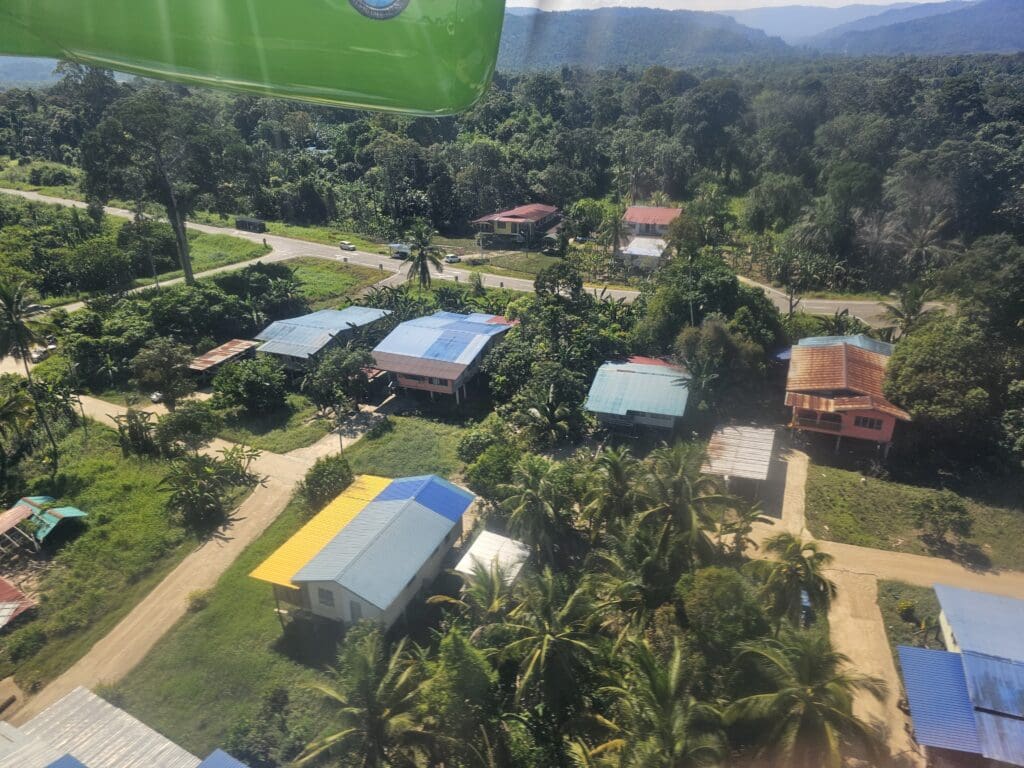
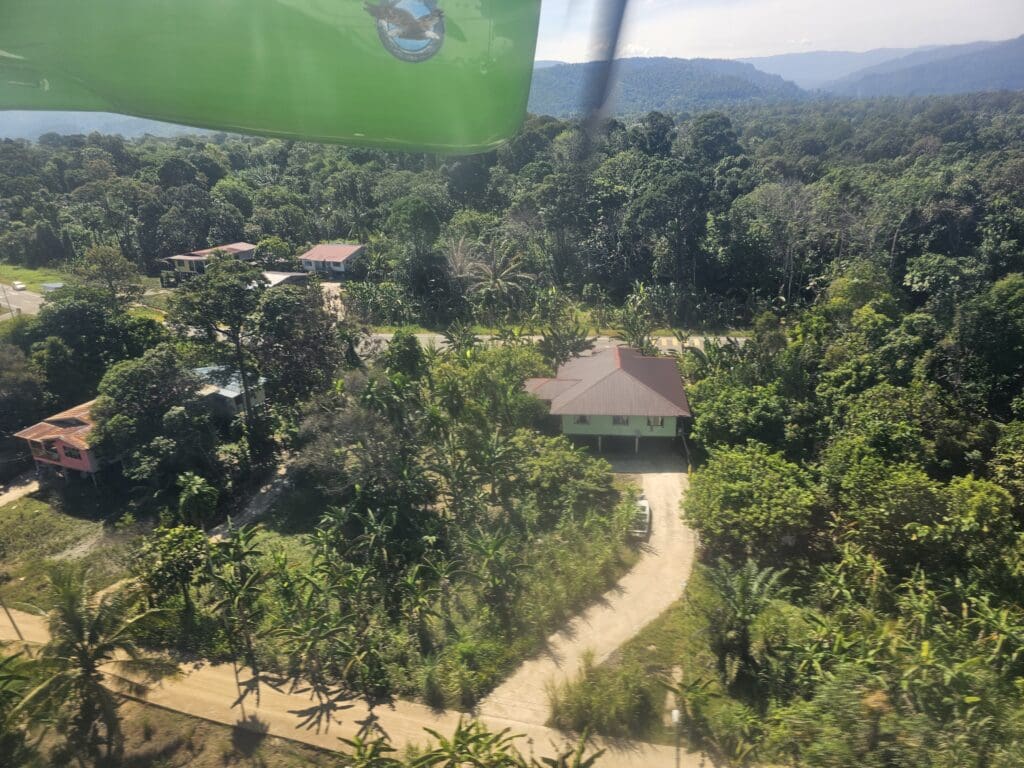
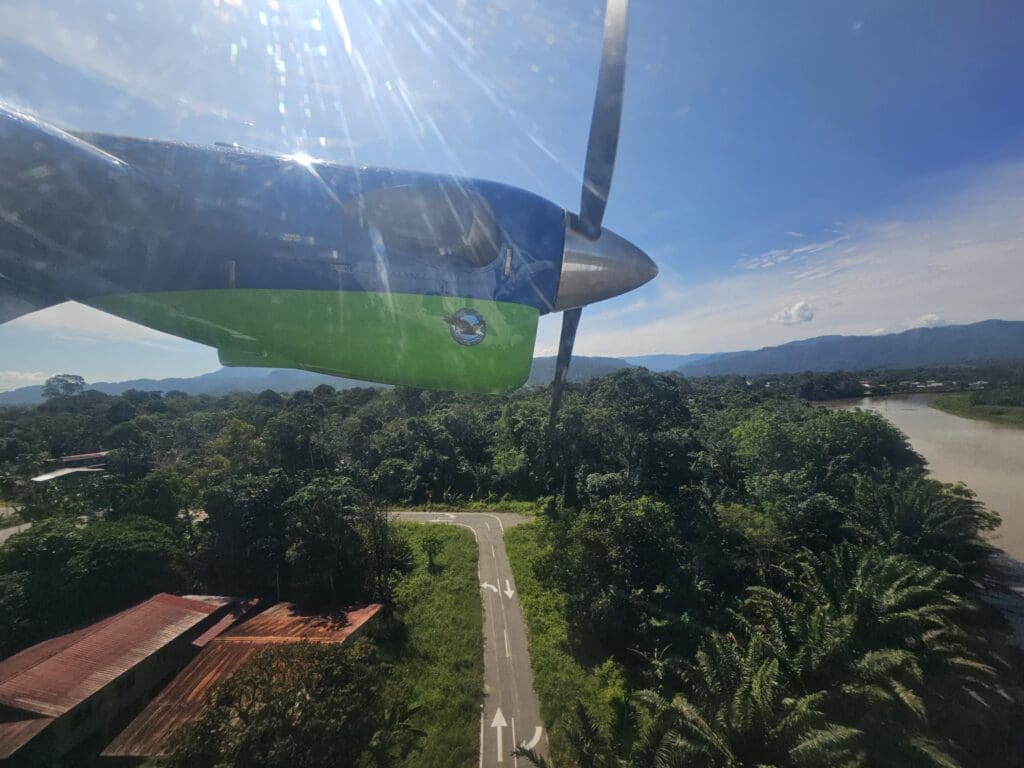
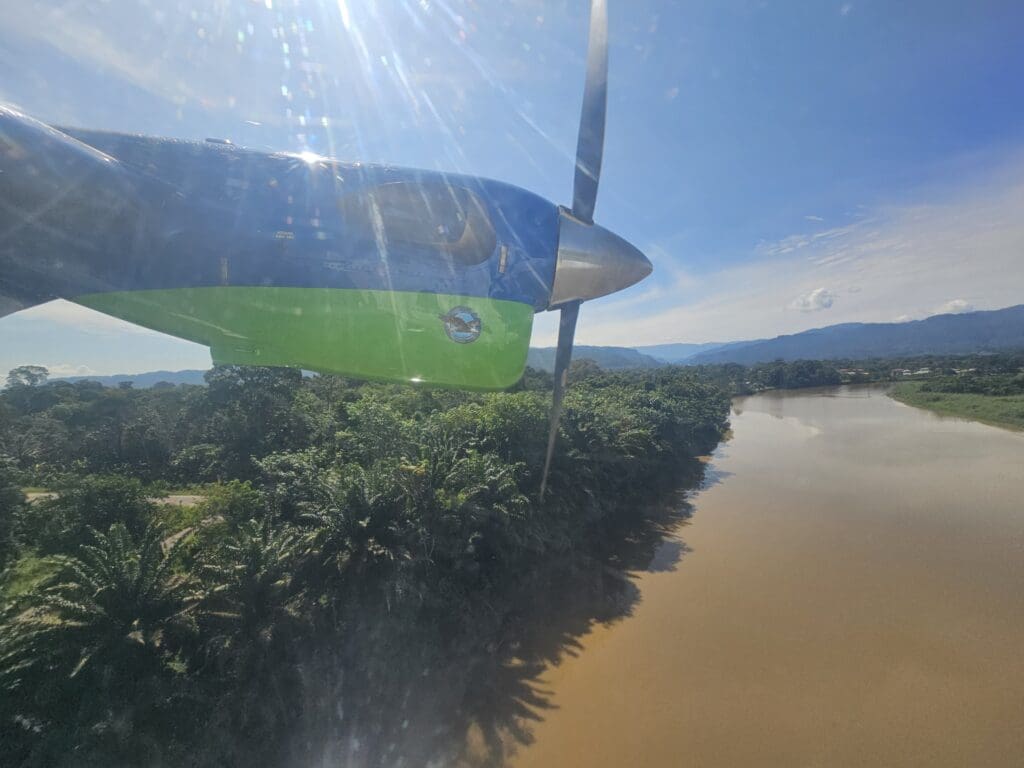
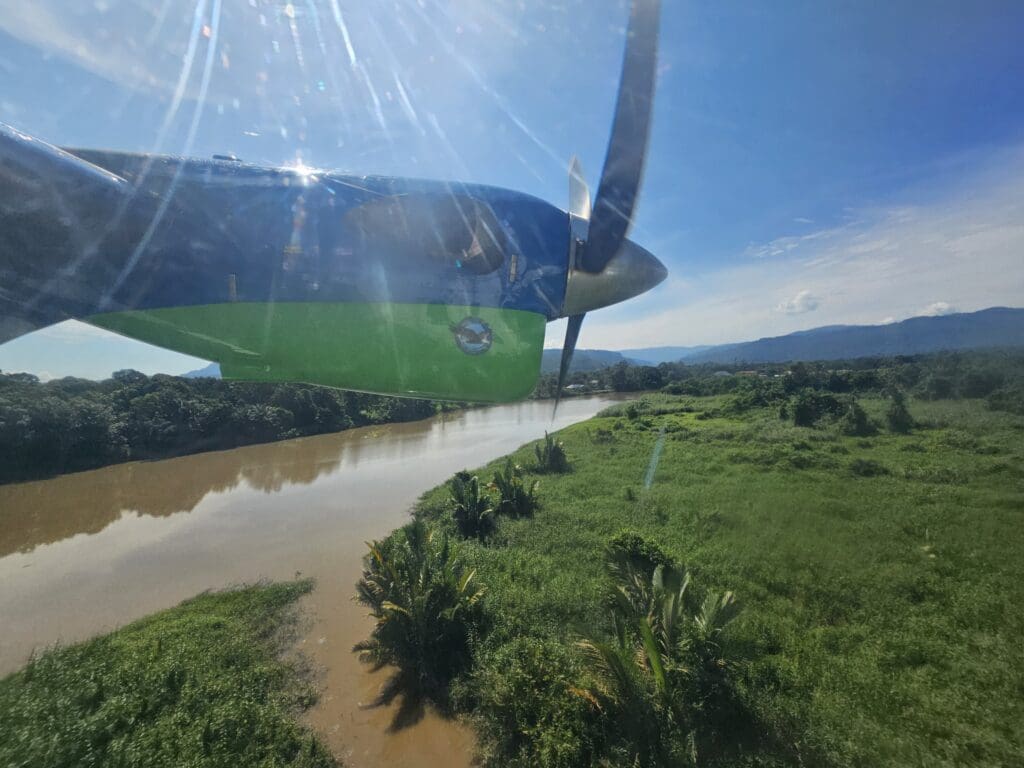
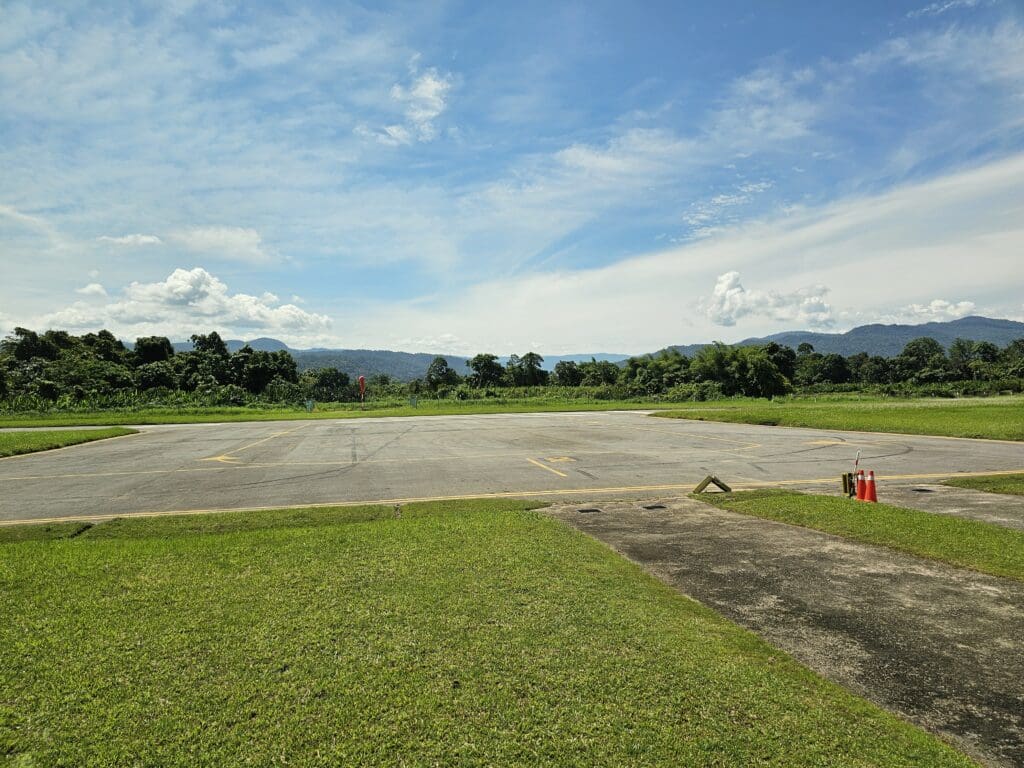
At 0947, the Twin Otter returned to earth with a smooth and squeaky touchdown on Runway 19. Standing at 758 metres long, less than two laps of an athletics track, Lawas Airport lacks the longest runway in the world; however, this proves to be no issue for the STOL-capable Twin Otter. Once on the ground, the noise inside the cabin increased for one final time as the props entered Beta range and we quickly decelerated. Lawas Airport features a minuscule apron with space for just a single aircraft, located in the far southwestern end of the airfield and bordered by the terminal, fire station and air traffic control tower. Thus, the Twin Otter travelled to the end of the runway before turning right and coming to a halt right outside the terminal no more than about thirty seconds after touching down.
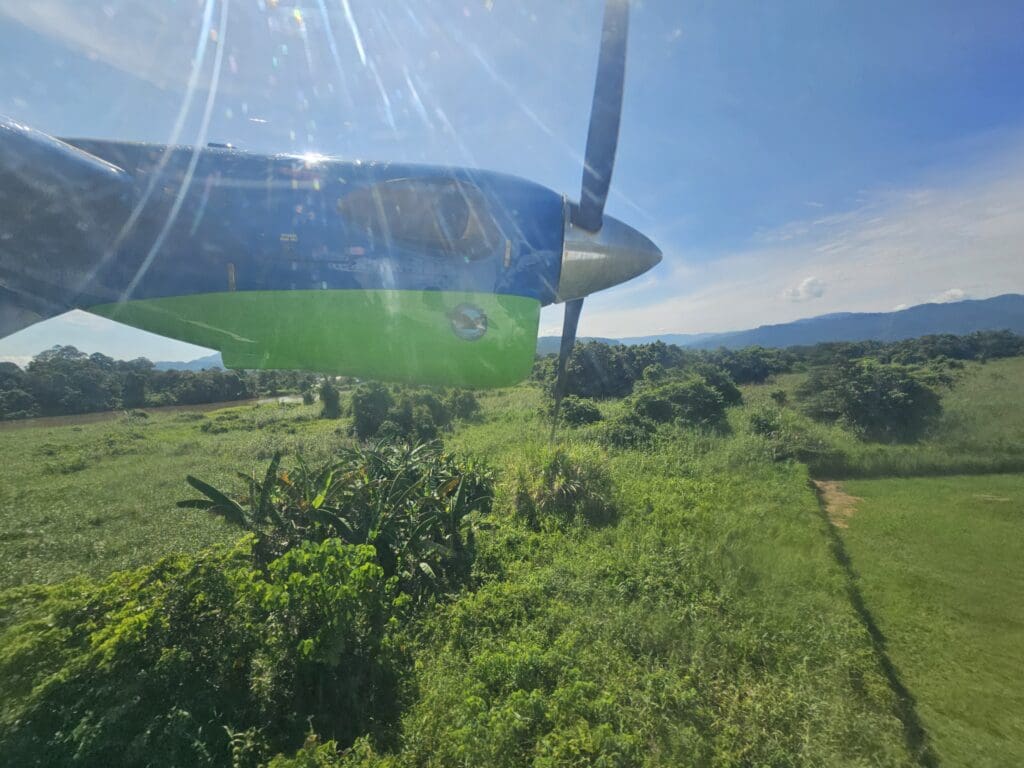
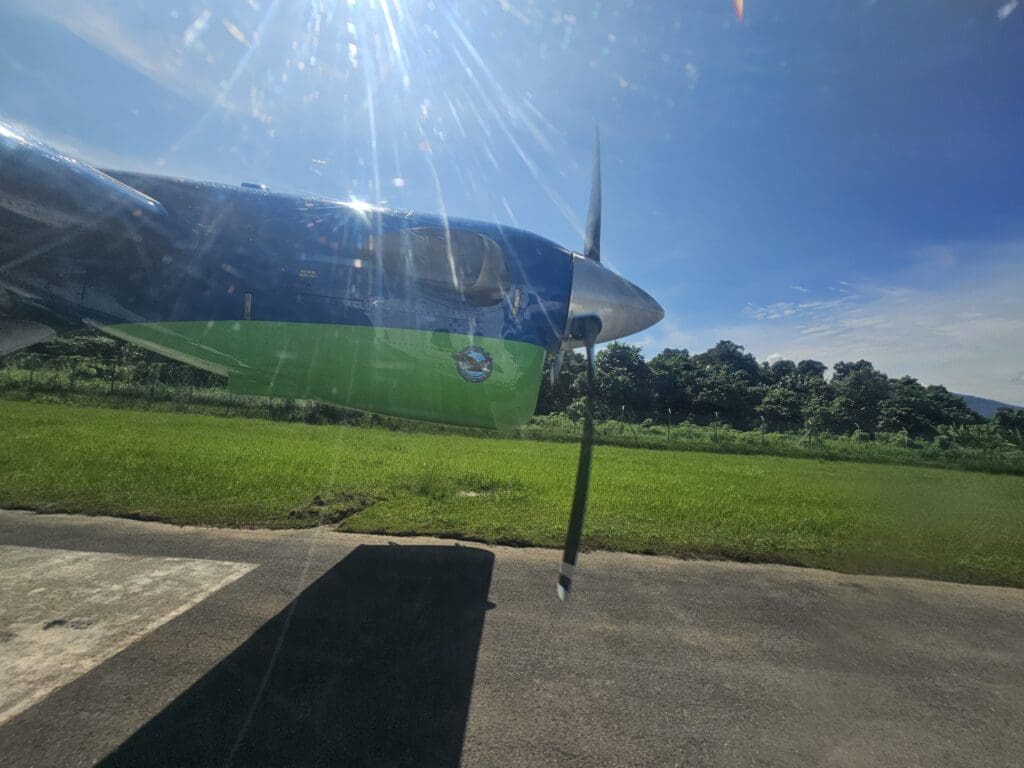
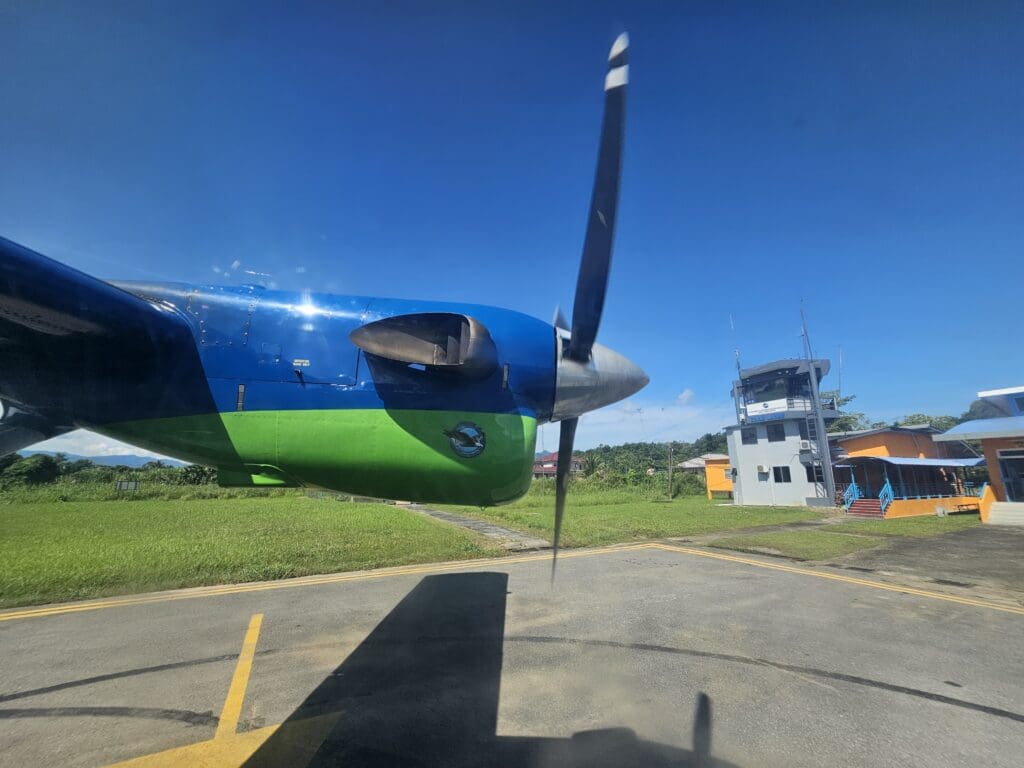
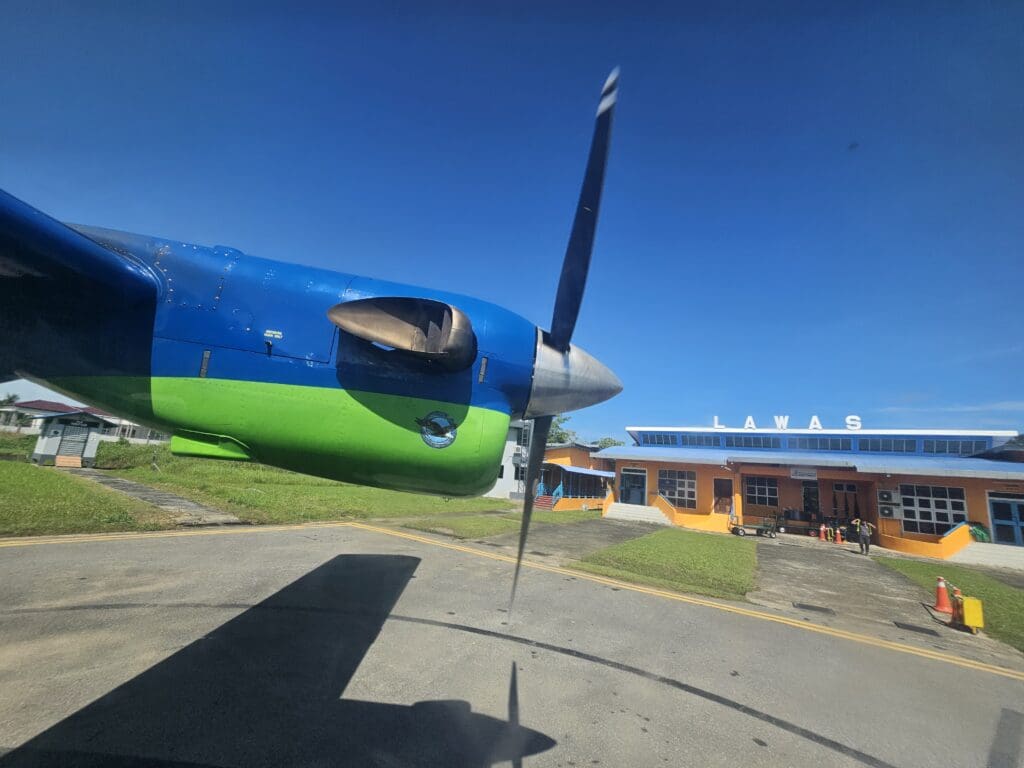
A very short time after touching down, the Twin Otter came to a halt outside the small and unassuming terminal building and the two engines spooled down. As the cabin fell into silence, the two pilots could be heard confirming and recording the fuel figures before the Captain turned around and let out a brief yet appreciated ‘thank you sir’. Looking outside, two members of ground staff approached the aircraft, with one opening the cargo door whilst the other placed cones around the aircraft before opening the passenger door. Once the cabin door had been opened, I squeezed through the cabin before cautiously clambering down the steps and making my way into the heat and humidity of Lawas before being pointed in the direction of the door to arrivals. As I walked over to the terminal, one of the ground agents pushed a trolley in the opposite direction which seemed to contain an eclectic mix of cargo, including suitcases, cardboard boxes and even live chickens! These items were heading off to Miri on the 1020 service.
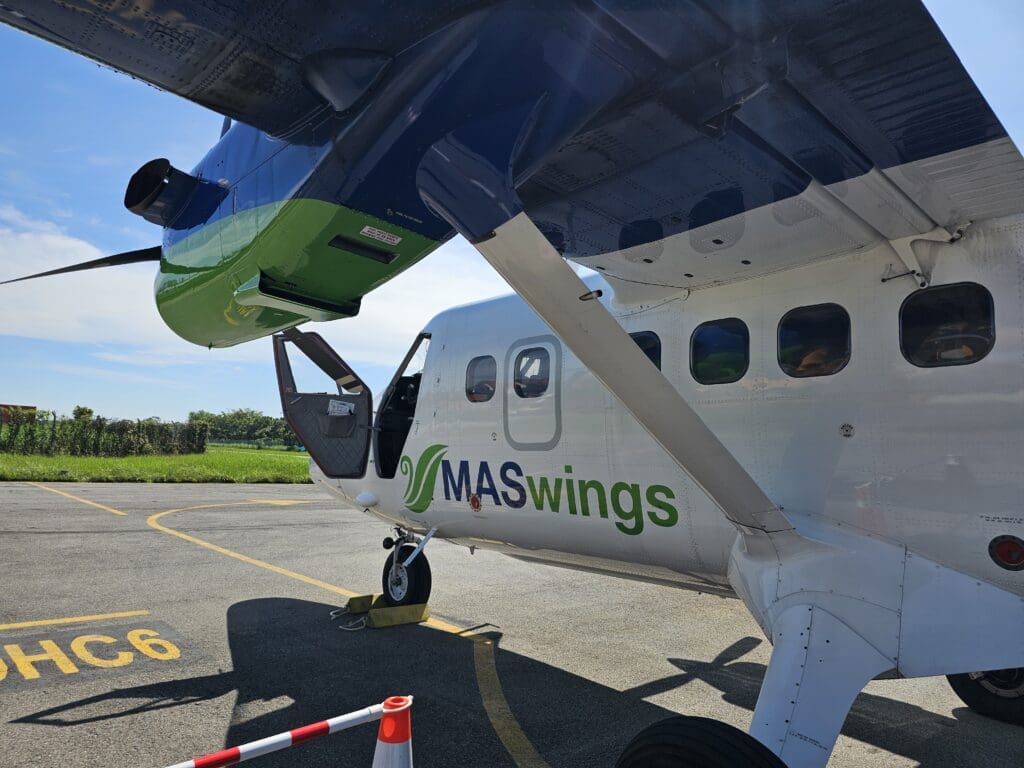
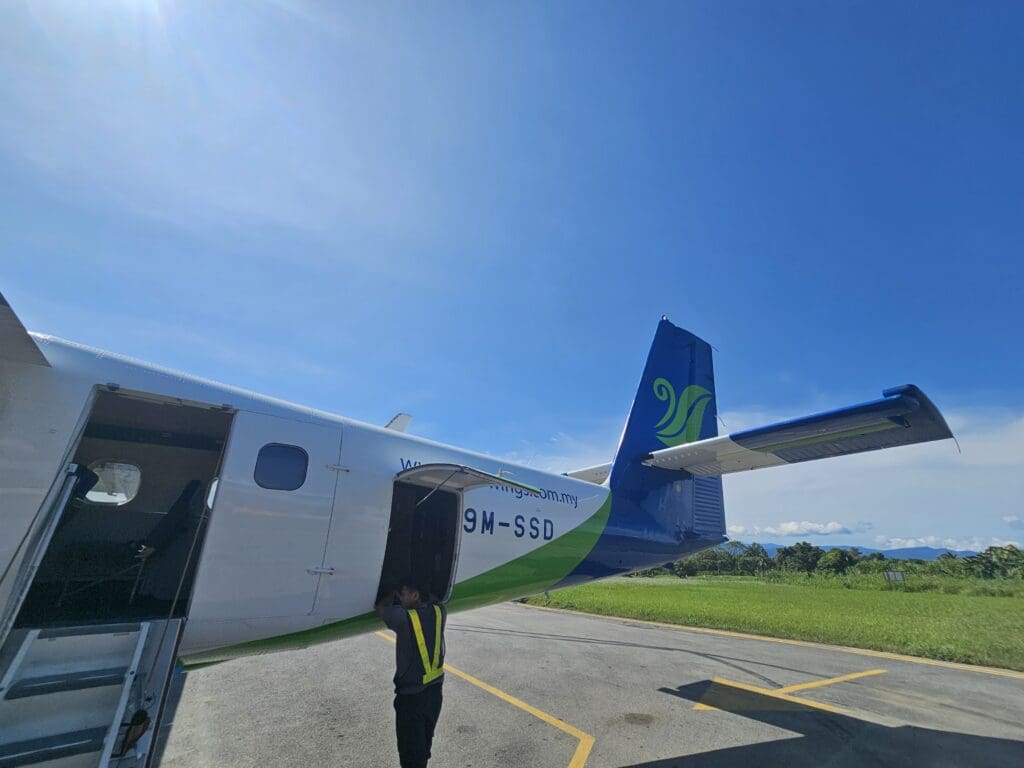
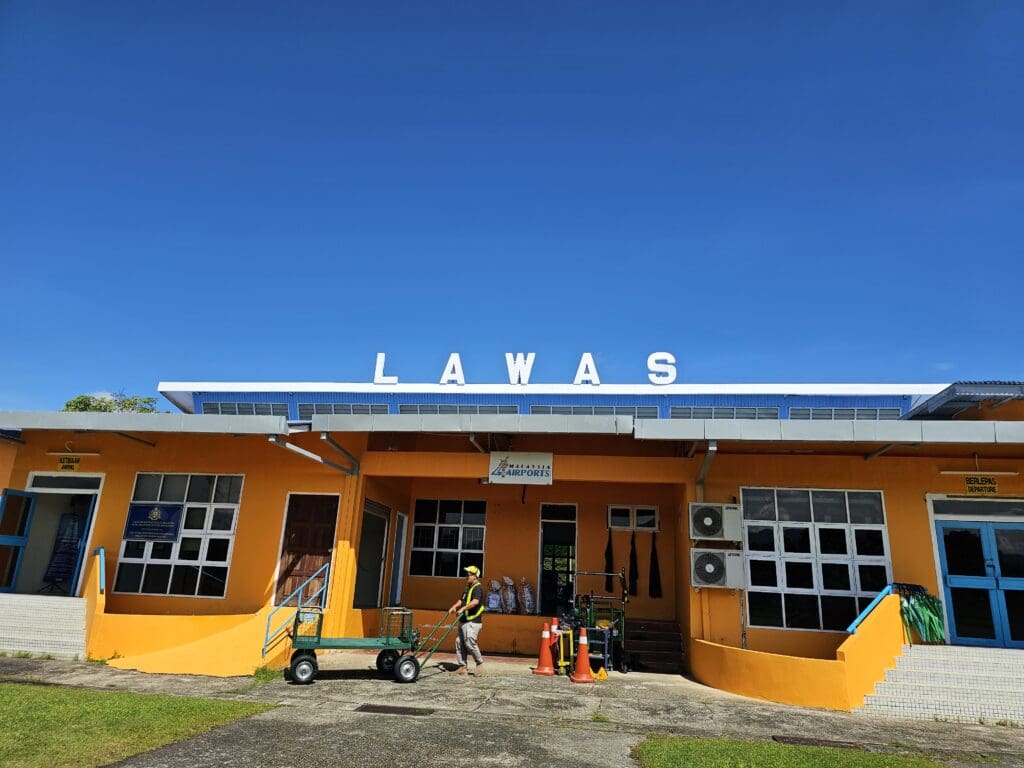
Just like Sabah, Sarawak maintains its own immigration regime and so once inside, I immediately reached a small counter where an officer sat waiting for me to arrive. Upon handing over my passport, I was asked how long I would remain in Sarawak and where I would be heading next. Not raising any suspicion, my passport was soon stamped and returned at which point I entered the landside portion of the terminal.
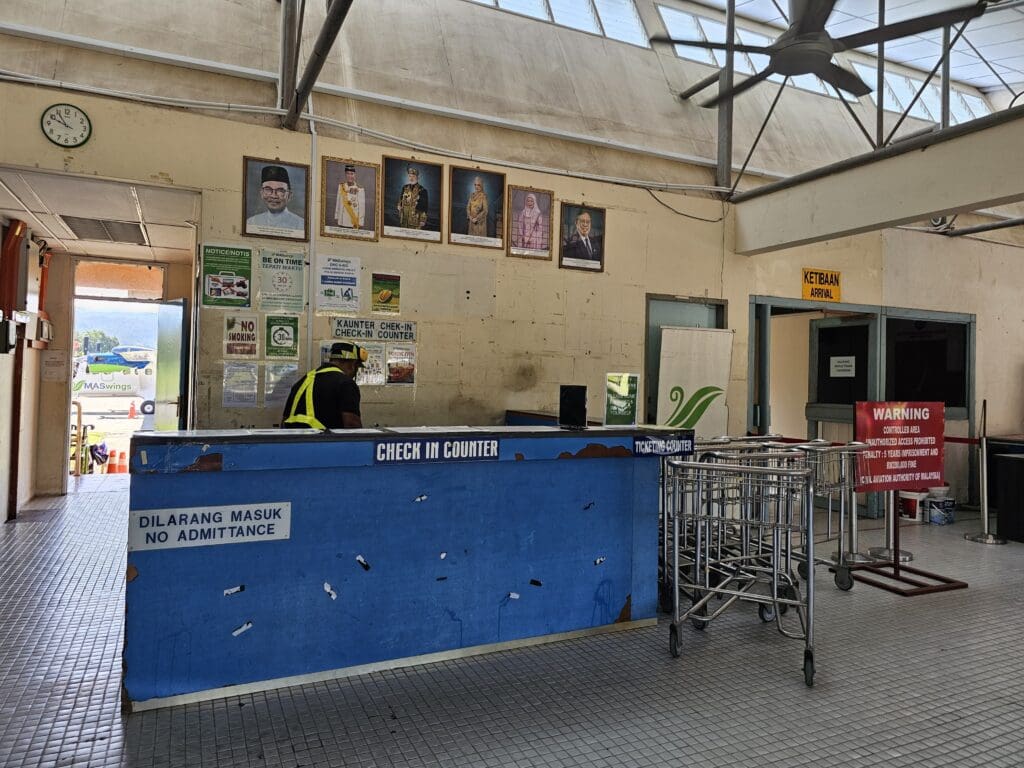
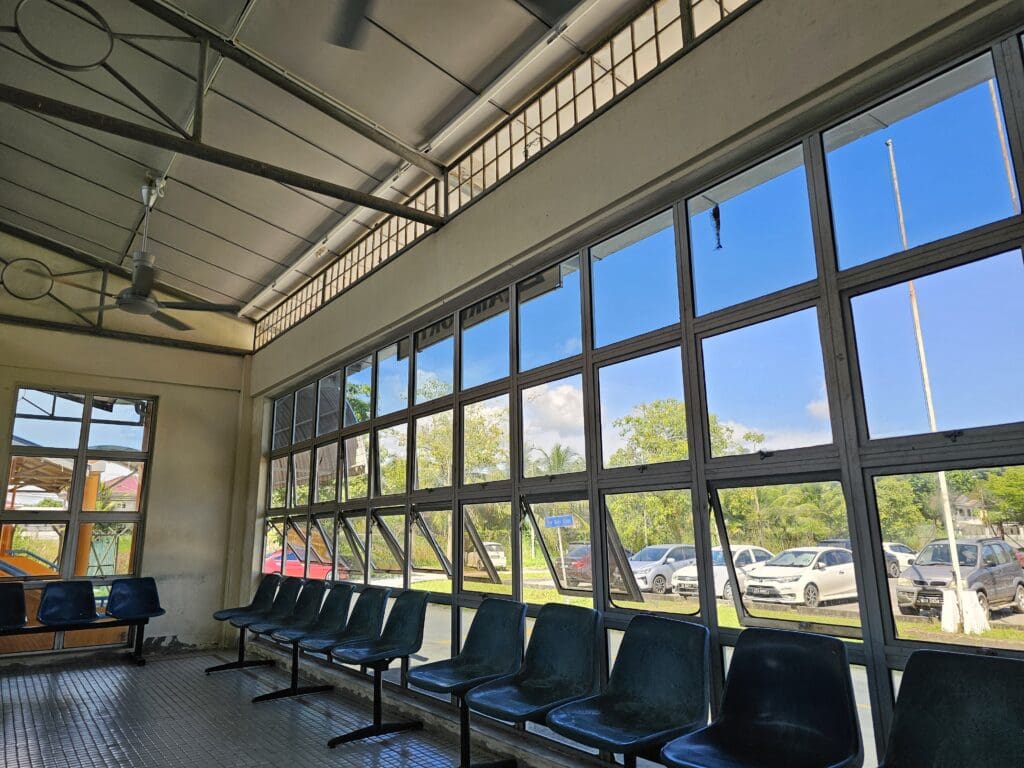
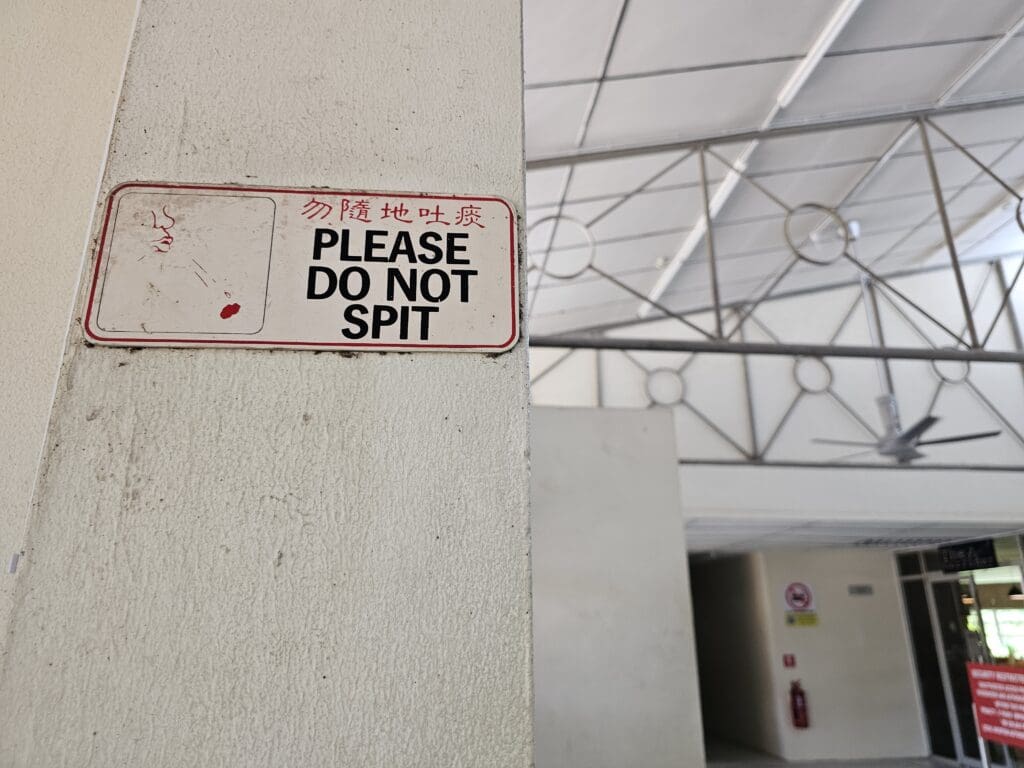
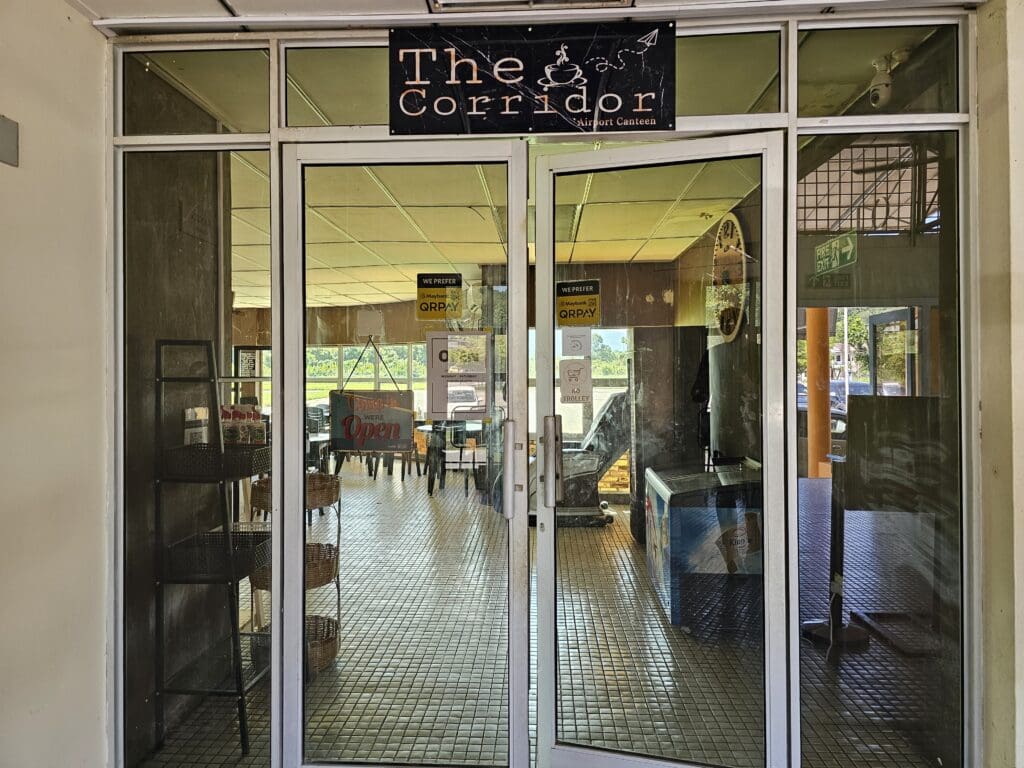
Looking around, I found Lawas Airport’s terminal to be dated, basic and a little worn, yet this was clean and perfectly adequate for a short stay. The landside portion of this features plastic chairs, reminiscent of those that one may find at a football ground, as well as a clean set of toilets, and a shared ticketing, check-in and cargo counter, above which portraits of each Malaysian state could be seen. My only real complaint about this was the fact that air conditioning came in the form of a few ceiling fans and as a result, the interior of this seemed to be no less hot and humid than the outside world. In terms of facilities, this features a small café named The Corridor, which sells an array of hot and cold drinks and snacks at a reasonable price, complete with working plug sockets and panoramic views of the small apron. Opting to spend much of my wait there, this seemed to be a popular spot, hosting a large elderly community meeting.
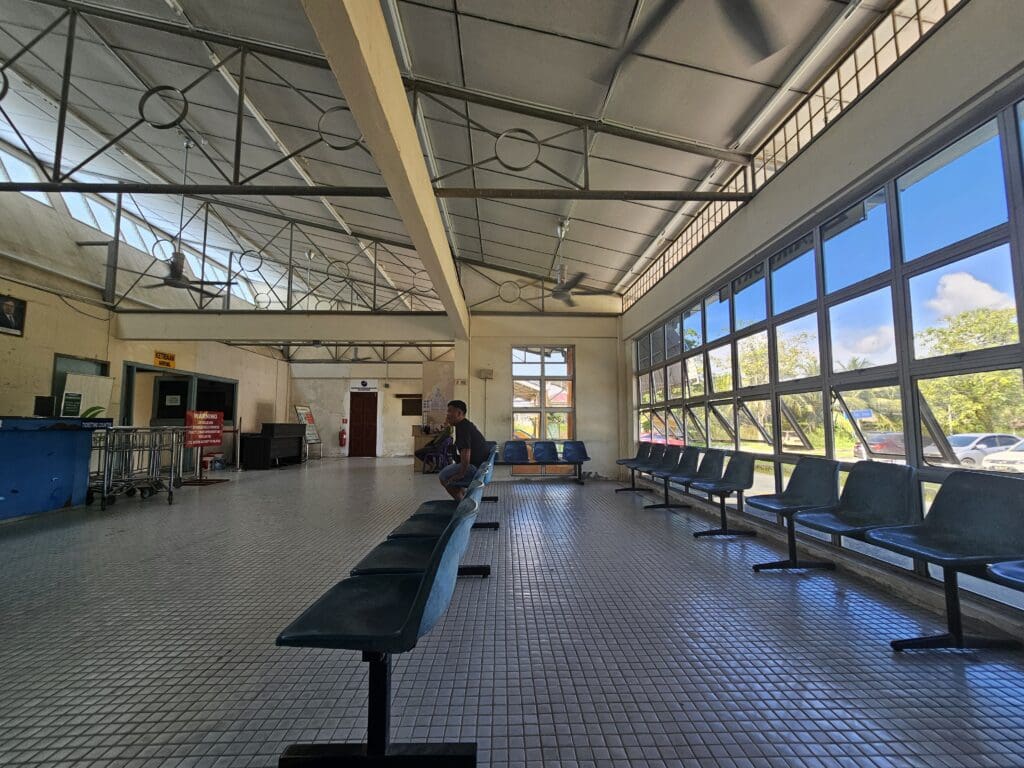
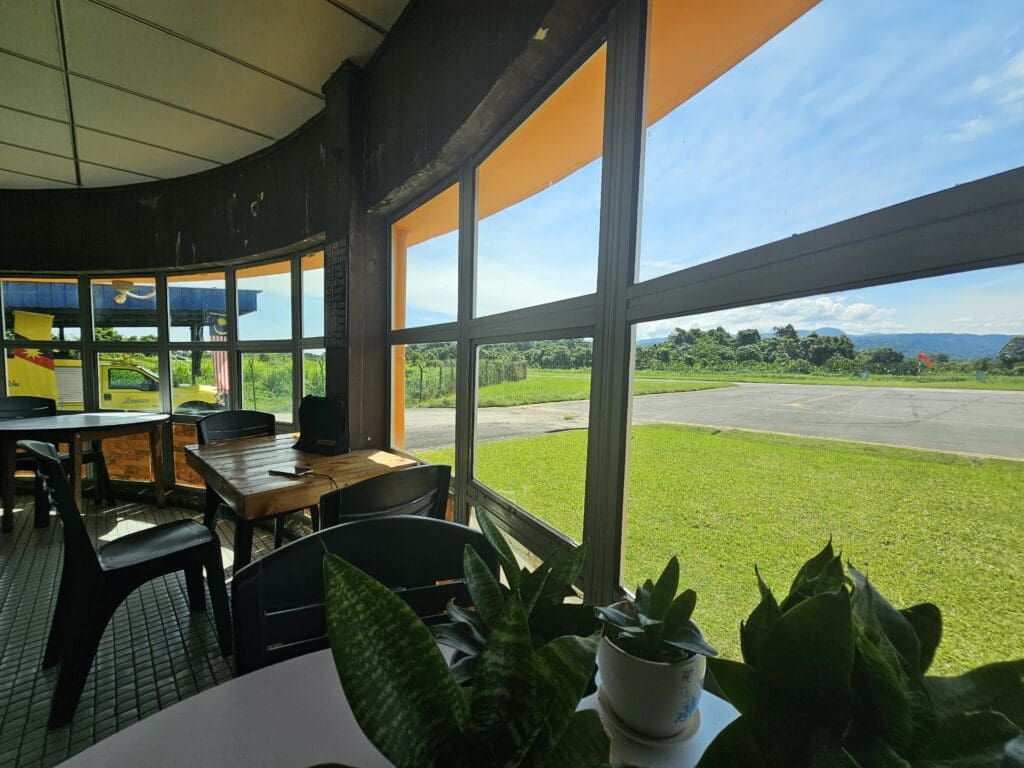
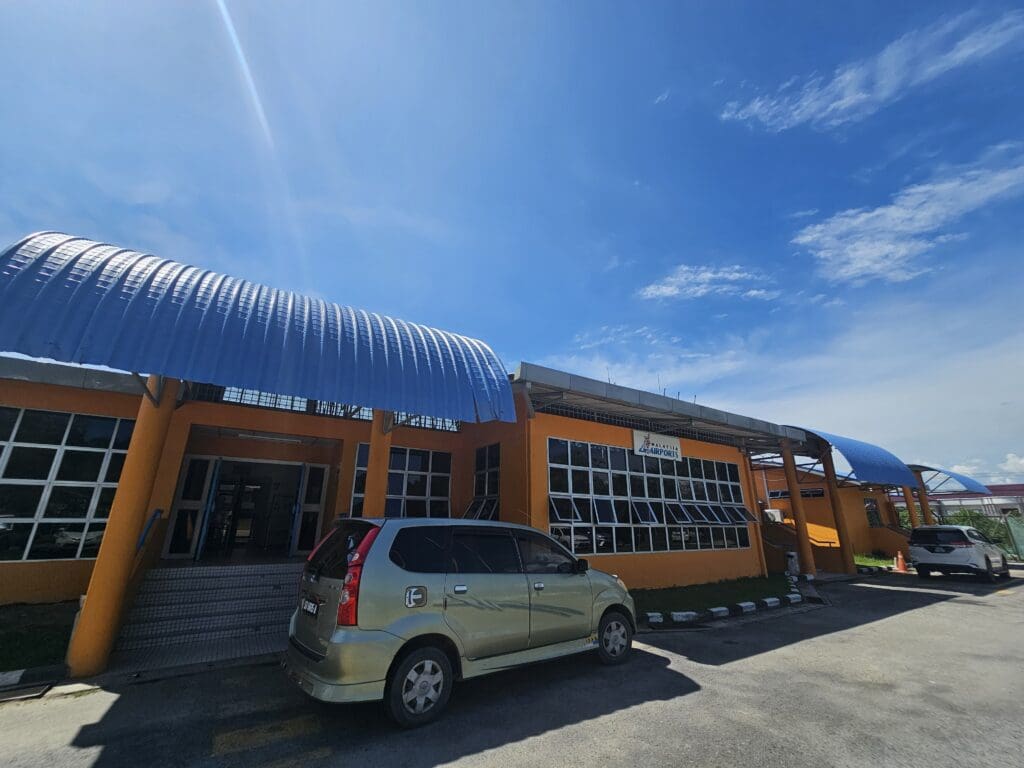
Despite its small size, Lawas Airport may be considered to be something of a MASwings hub, with an impressive total of eight Twin Otter departures that day. Of these, seven flights would head to Miri, with one bound for Ba’kelalan, a small town in the heart of the jungle near the border with Indonesia. Inside the terminal, it wasn’t long before my fellow Miri-bound passengers appeared; however, already in possession of my boarding pass, there was little for me to do until the doors to the small airside waiting area opened. Seeing as MASwings’ Twin Otter fleet does not appear on flight tracking platforms, I had no way of knowing where the inbound aircraft was until the noise of its two turboprop engines began to fill the sky as it made its way in from Ba’kelalan. Soon the inbound Twin Otter whizzed past the terminal before touching down on Runway 01 at 1057, and a short time later came to a halt right outside the terminal, arriving there around seven minutes ahead of schedule.
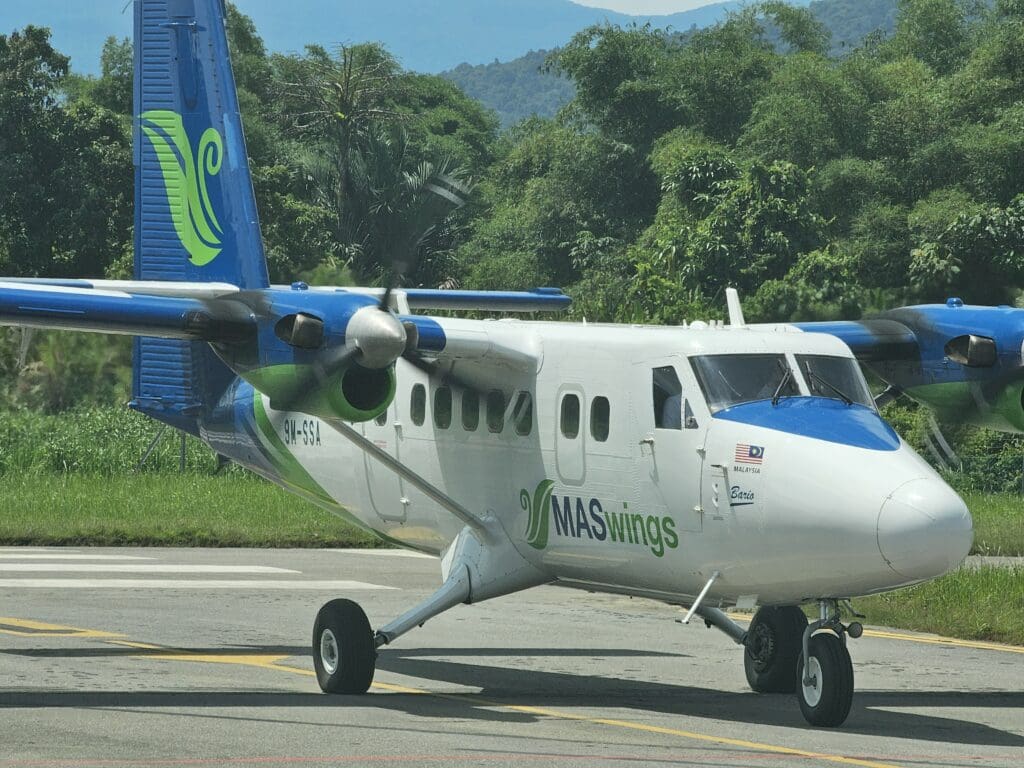
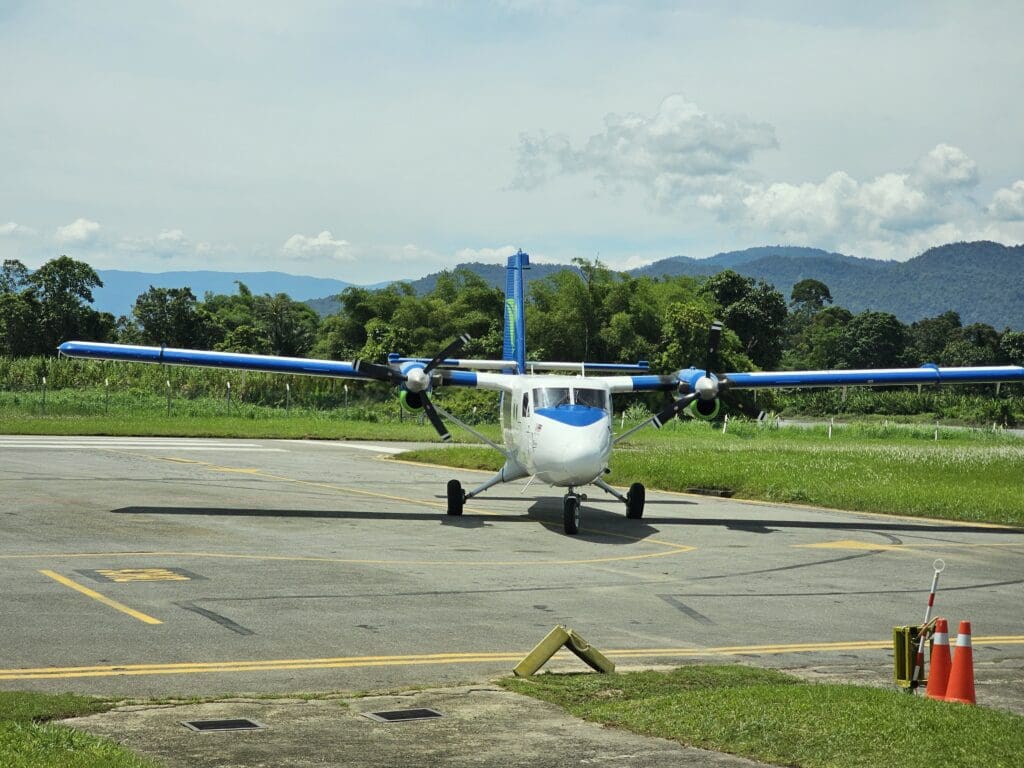
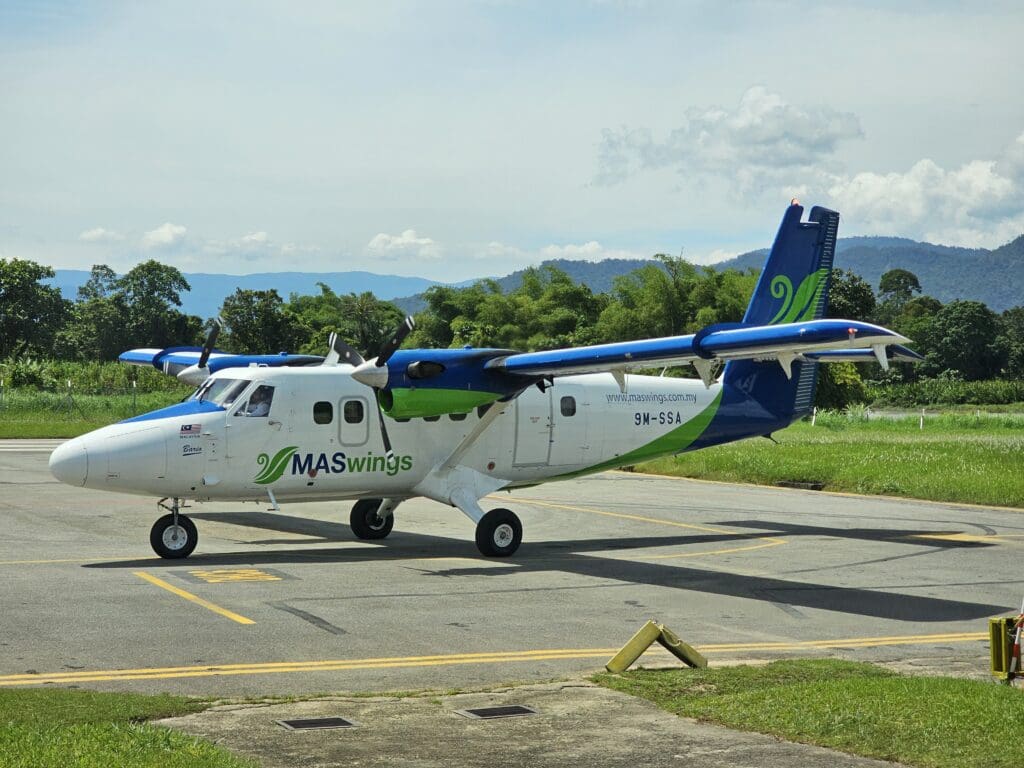
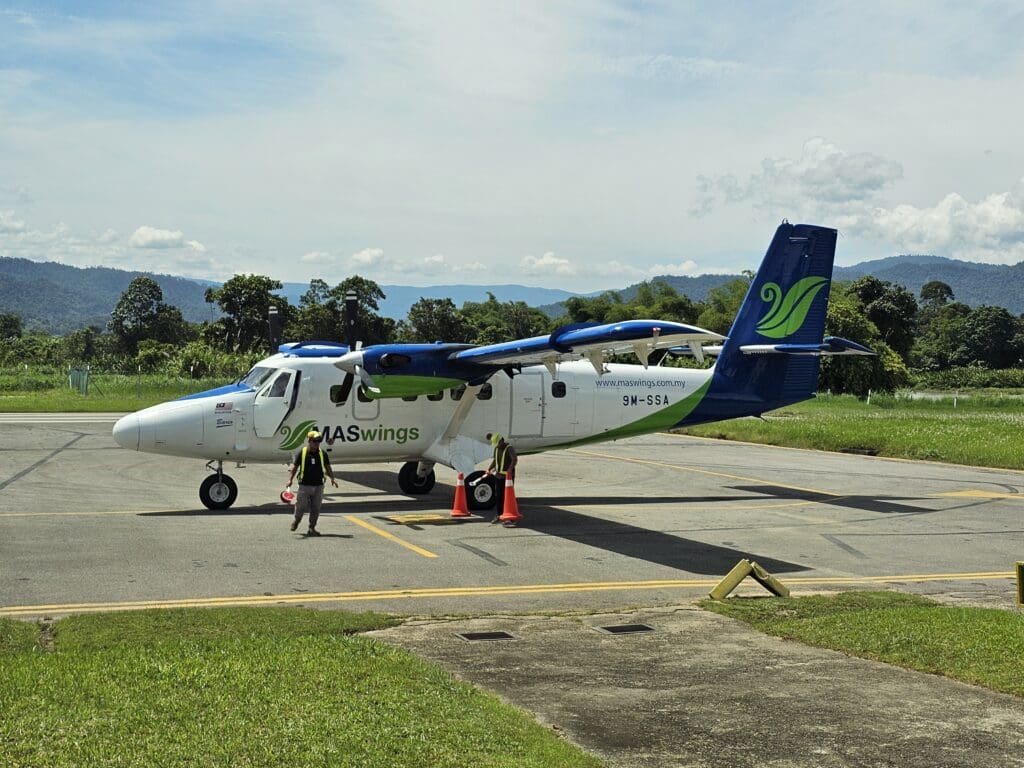
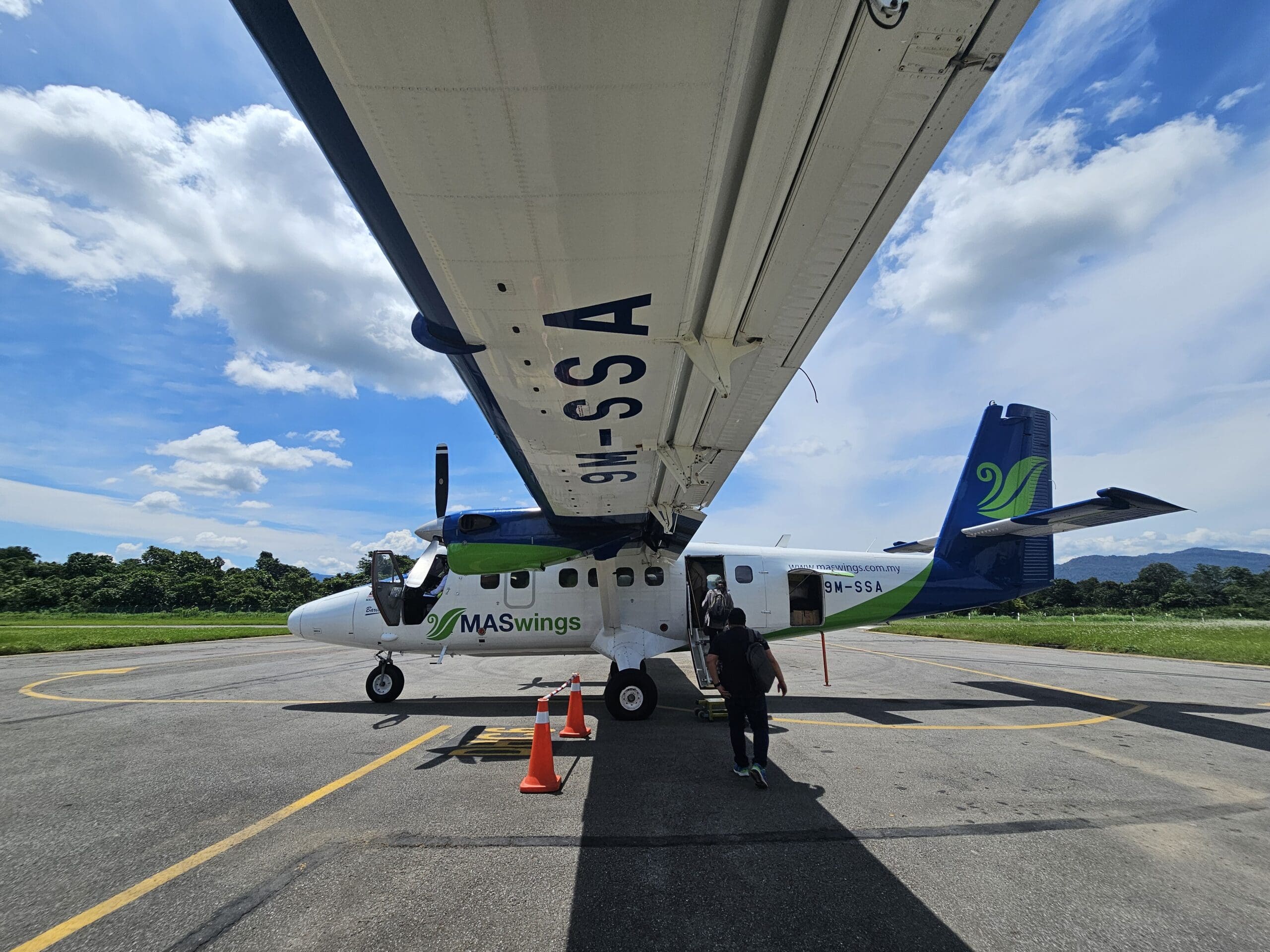
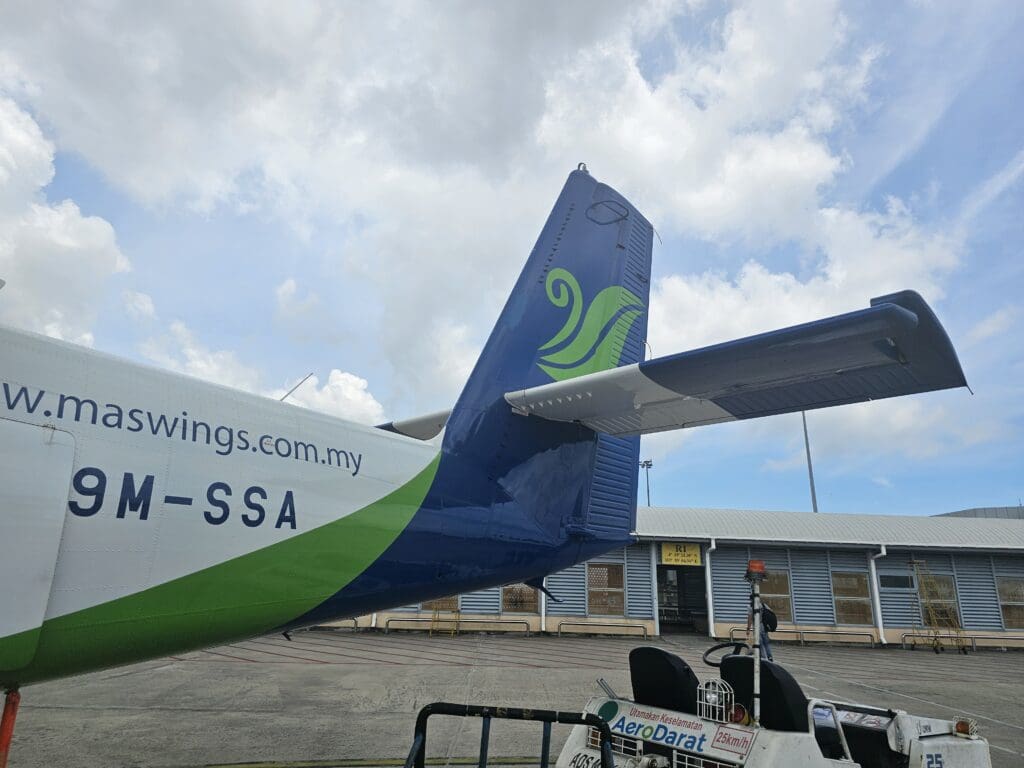
That morning, my second flight with MASwings would take place onboard Viking Air DHC-6 Series 400 Twin Otter, 9M-SSA, named Bario, after the cluster of villages in Sarawak’s Kelabit Highlands. Assembled at Viking Air’s plant on the grounds of Calgary International Airport, this aircraft made its first test flight in April 2013, making it around twelve years old at the time of my flight. In June of that year, the aircraft was ferried to Spokane in Washington for painting before returning to Canada, before commencing its long ferry flight to Kota Kinabalu in August 2013. This saw the aircraft make fuel stops in Anchorage, Anadyr, Magadan, Khabarovsk, Vladivostok and Taipei, arriving in Malaysia a week after leaving Victoria. Once in Malaysia, the aircraft arrived to much celebration, being the first of six Series 400 Twin Otters to join MASwings’ fleet. Since then, the Miri-based aircraft has ploughed the skies of Borneo, connecting the region’s smaller towns and villages.
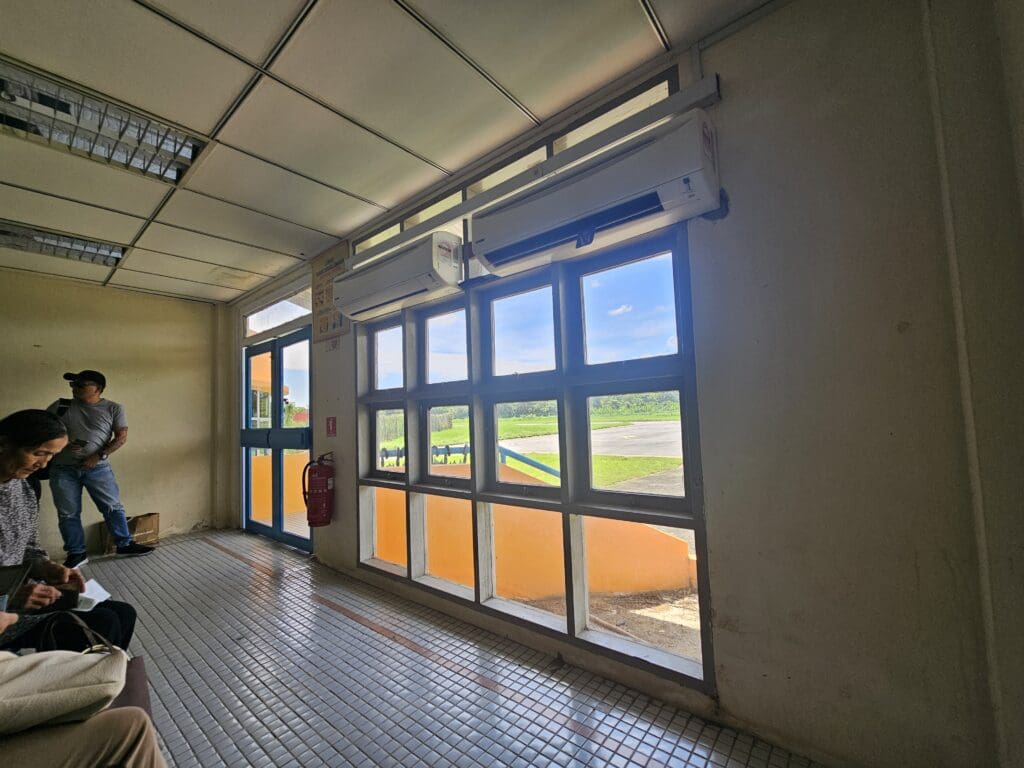
Once the aircraft had come to a halt, I watched as the two inbound passengers disembarked, followed by the two pilots who headed to the terminal for a breather and a toilet stop before returning home to Miri. At this time, one of the airport agents rounded up all those bound for Miri, at which point I joined the short queue to enter the small airside waiting area. To enter, passengers had their boarding pass and identity checked by a local police officer. A metal detector was also present, although this was the extent of the security checks, and the officer did not seem to care that everyone set it off as they passed through! Once airside, the waiting area consists of a small room with plastic chairs, with nothing else but some windows that offer a good view onto the small apron, with no refreshments, plug sockets or toilets. While some may find this to be complaint-worthy, in reality, most passengers probably don’t spend more than about five minutes there and so this is essentially a glorified bus stop.
Looking outside, the small cluster of bags could be seen being pushed out to the aircraft on a trolley with one attendant loading this while the other dealt with passengers. No more than about three minutes after entering the waiting room, the agent responsible for ensuring that all passengers safely boarded the aircraft appeared and without a word, boarding commenced. Before heading outside, another boarding pass check was in store and the agent seemed to be a little surprised that I was heading to Miri, although I am not too sure where else I could have been heading that day! From there, I made my way through the heat and humidity of Borneo and soon reached the rear of the aircraft. Once again taking care not to bang my head on the top of the door, I cautiously squeezed into the small cabin of the Twin Otter.
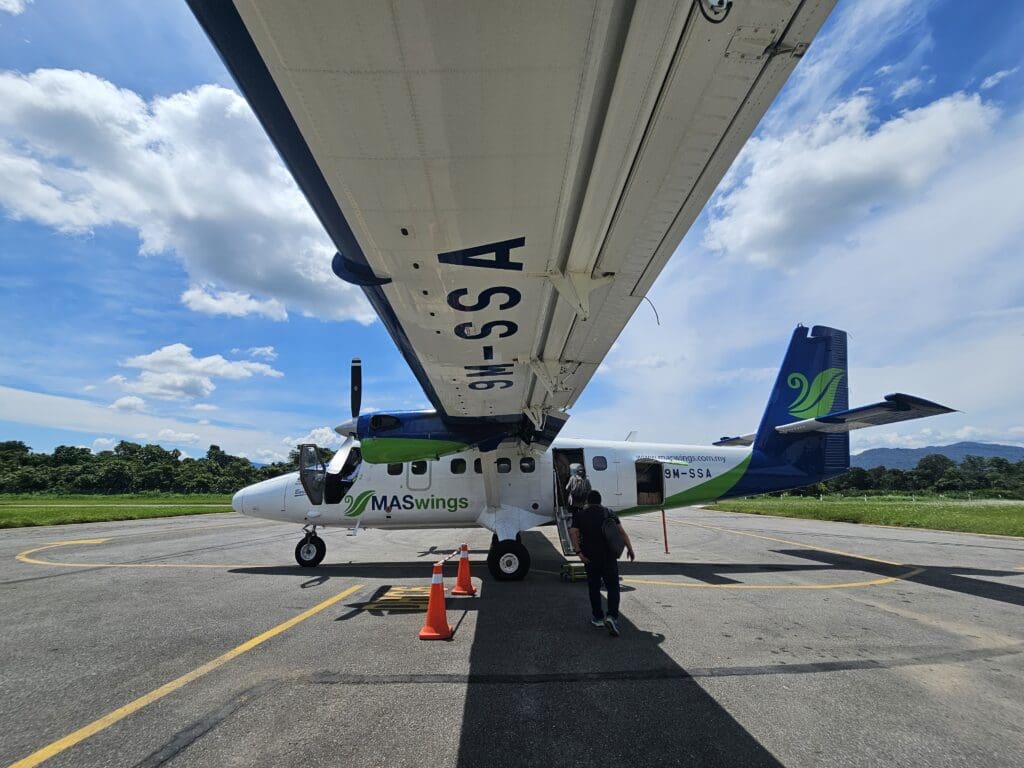
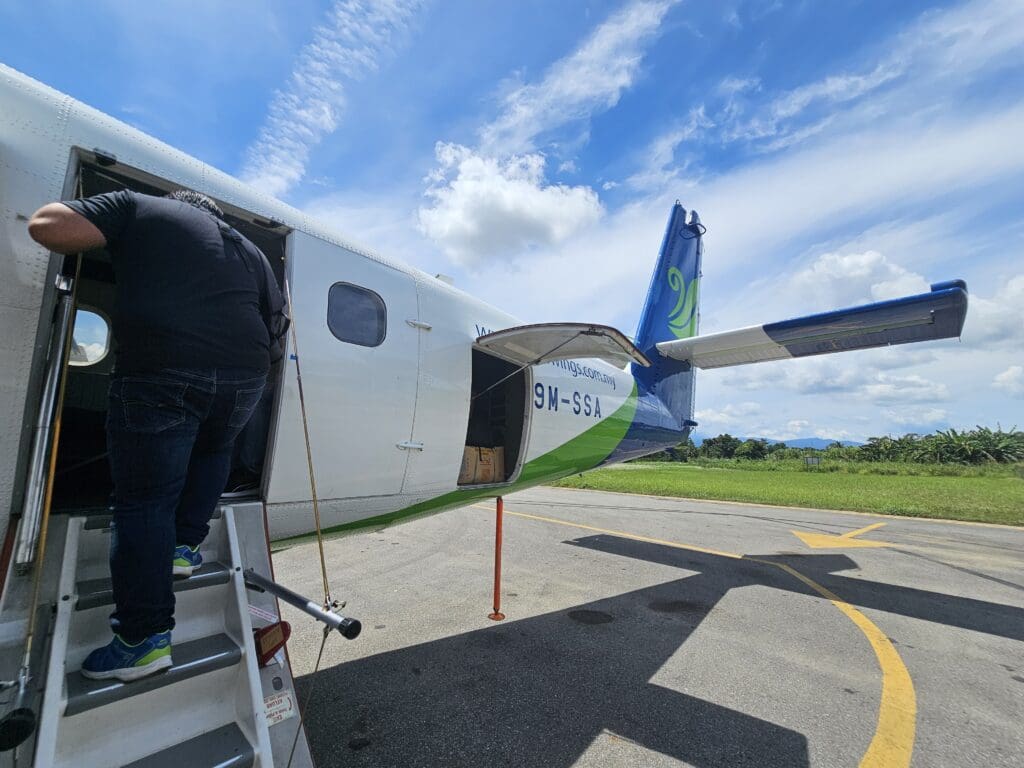
Onboard, unsurprisingly, 9M-SSA’s interior was identical to that of the aircraft that I had flown to Lawas, and I soon reached Seat 4A which I was delighted to find featured the luxury of a window and a half which I hoped would enable some great views of the passing scenery below on this slightly longer leg of my journey. Once seated, I found the amount of legroom provided to be virtually the same as the bulkhead seat; in other words, this was rather terrible! Nevertheless, once again, the aircraft was clean, tidy, and largely devoid of any major signs of wear and tear, which was somewhat impressive given the nature of the Twin Otter’s rough-and-ready operations.
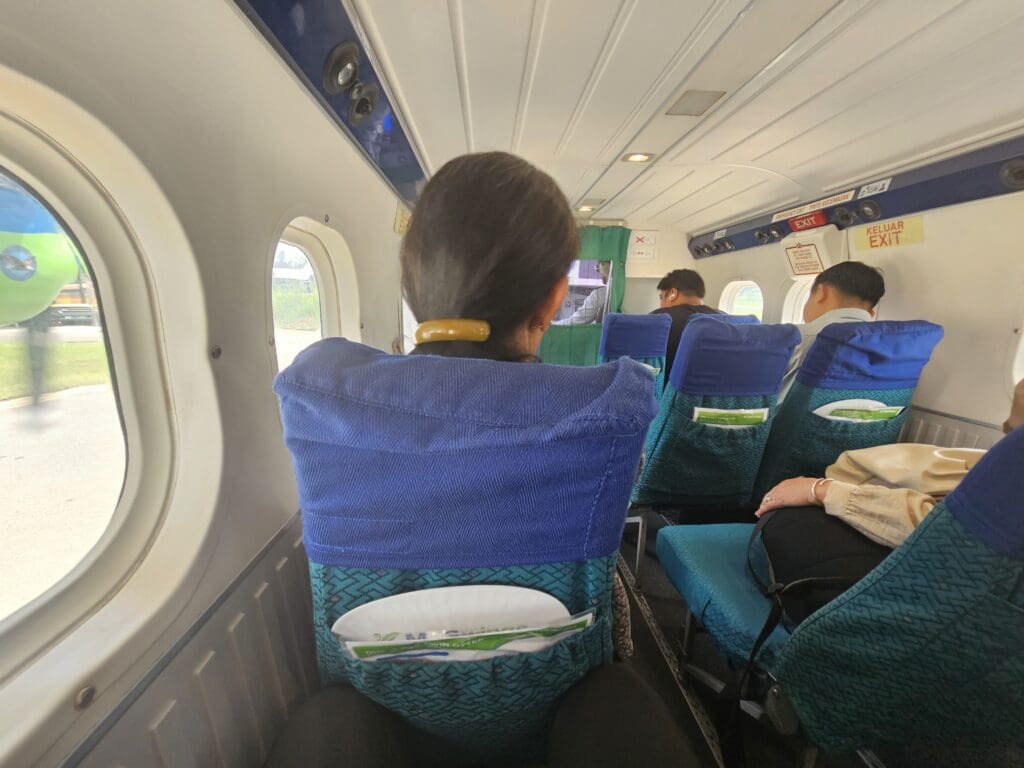
That morning I was one of eight passengers heading to Miri, and the only non-Malaysian onboard. Examining my fellow passengers, there was not much diversity in the demographics, with all but two passengers being solo-travelling men in their late twenties and thirties. While the aircraft did feel a little more cramped due to the higher passenger load than on my flight from Lawas, there were still plenty of empty seats, enabling most passengers to store their bags on these. As I was the final passenger to board, the door was slammed with a thud, and once again, there were no safety instructions nor any sort of check of seatbelts before departure. Wasting no time, the noise of the two Pratt and Whitney engines filled the cabin almost instantly after I had made my way onto the aircraft. At this point, one of the pilots did perform an announcement although thanks to the volume of the engines, nothing of this could be heard!
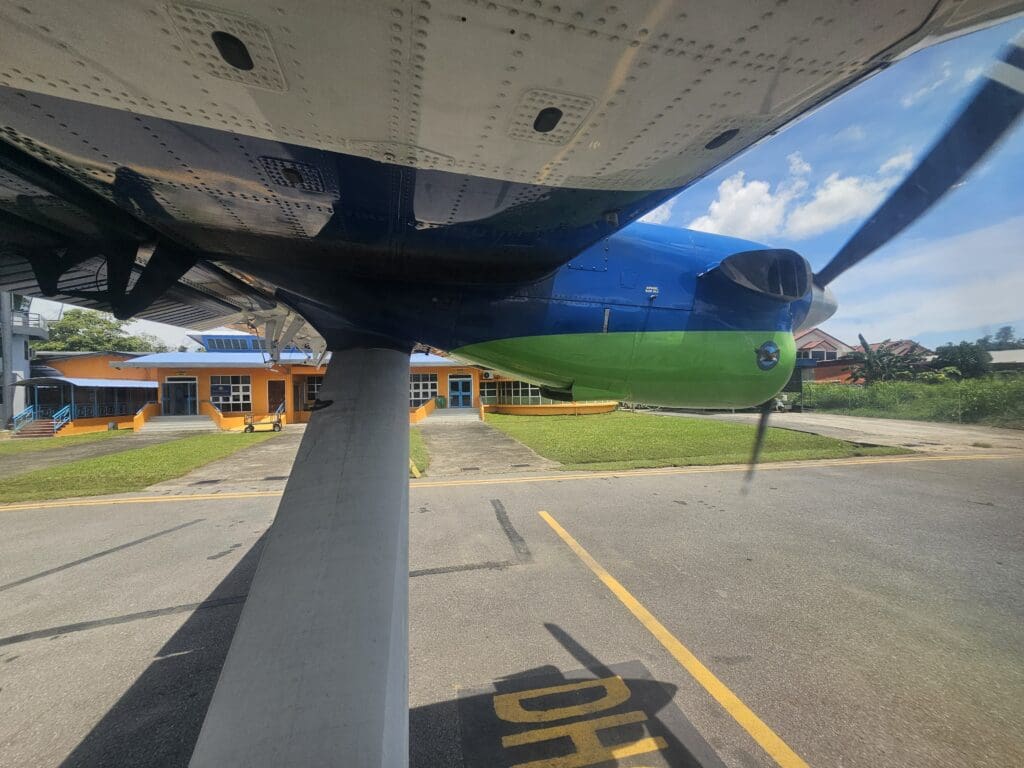
Following the hums, whirs, vibrations and shaking, the two engines stabilised and at 11:11, nine minutes ahead of schedule, the Twin Otter lurched forward and commenced a very short taxi to the end of Runway 01. Once we were there, the aircraft paused for a few moments before the cabin was filled with noise and vibration as the engines spooled up in preparation for our departure. Following a few moments, the brakes were released and the Twin Otter went flying down the runway, undertaking yet another very sporty takeoff before we rotated up into the sky with plenty of shuddering.
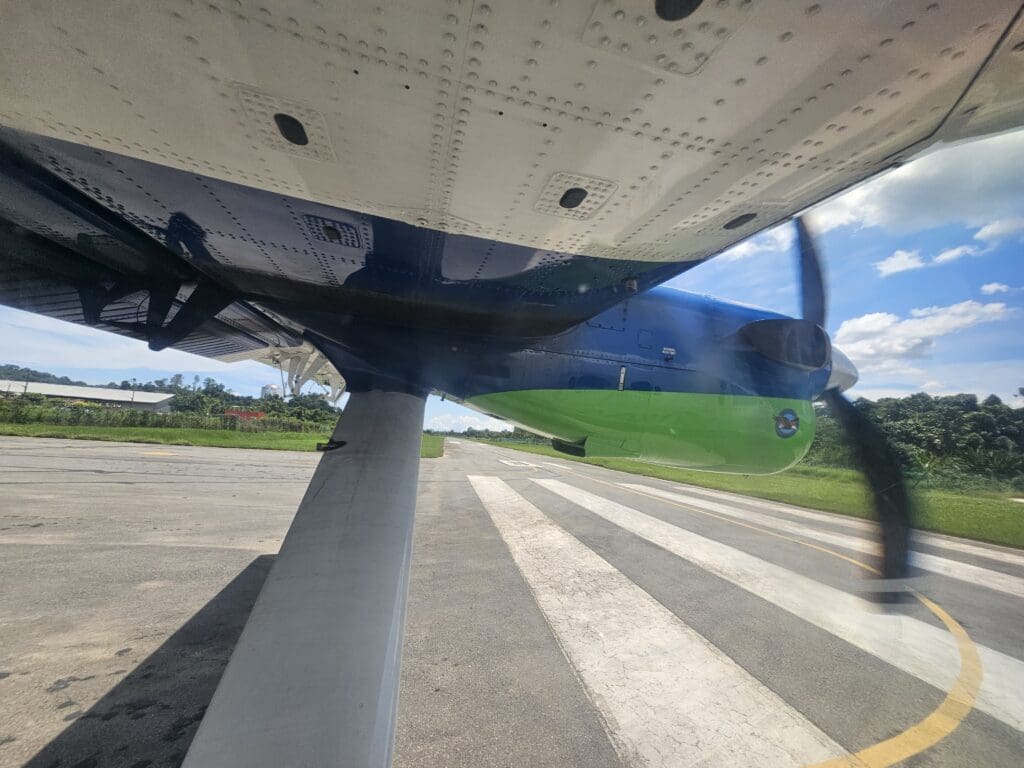
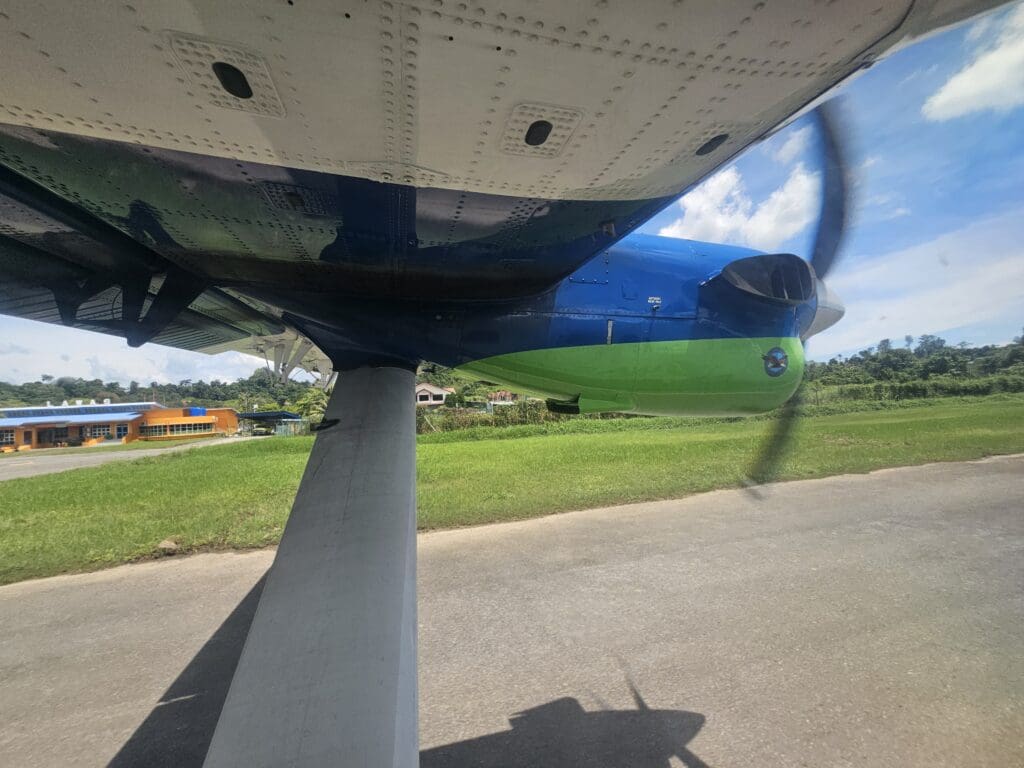
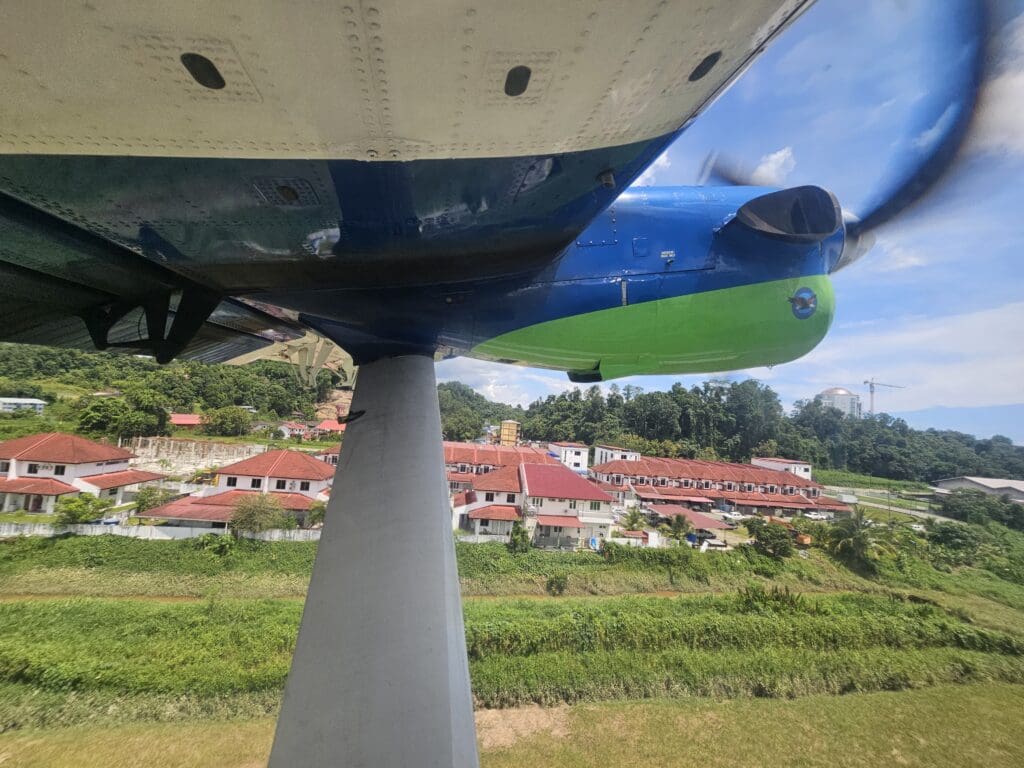
Almost immediately after taking to the skies, the buildings that make up the centre of Lawas came into view including the under-construction Lawas Integrated Administrative Complex that towers over the town, as well as the Masjid Besar Darul Ma’mur, the main mosque in Lawas. After passing over the town, the Twin Otter banked to the left and set a westerly course as it headed out over the jungles of Sarawak’s Limbang Division.
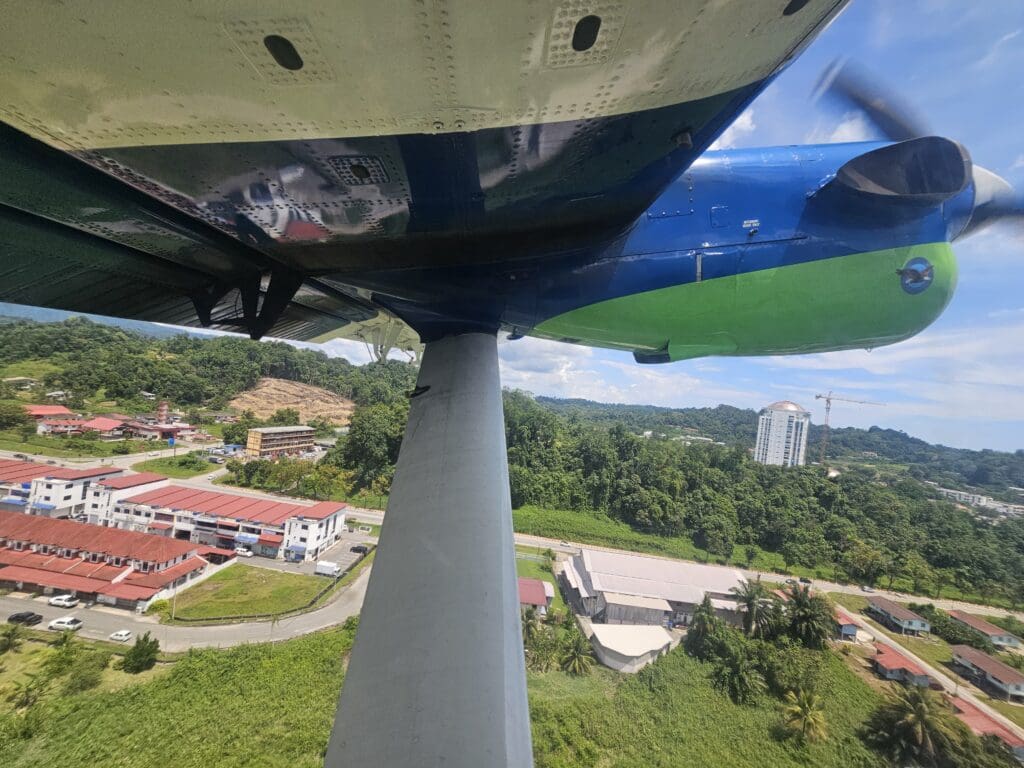
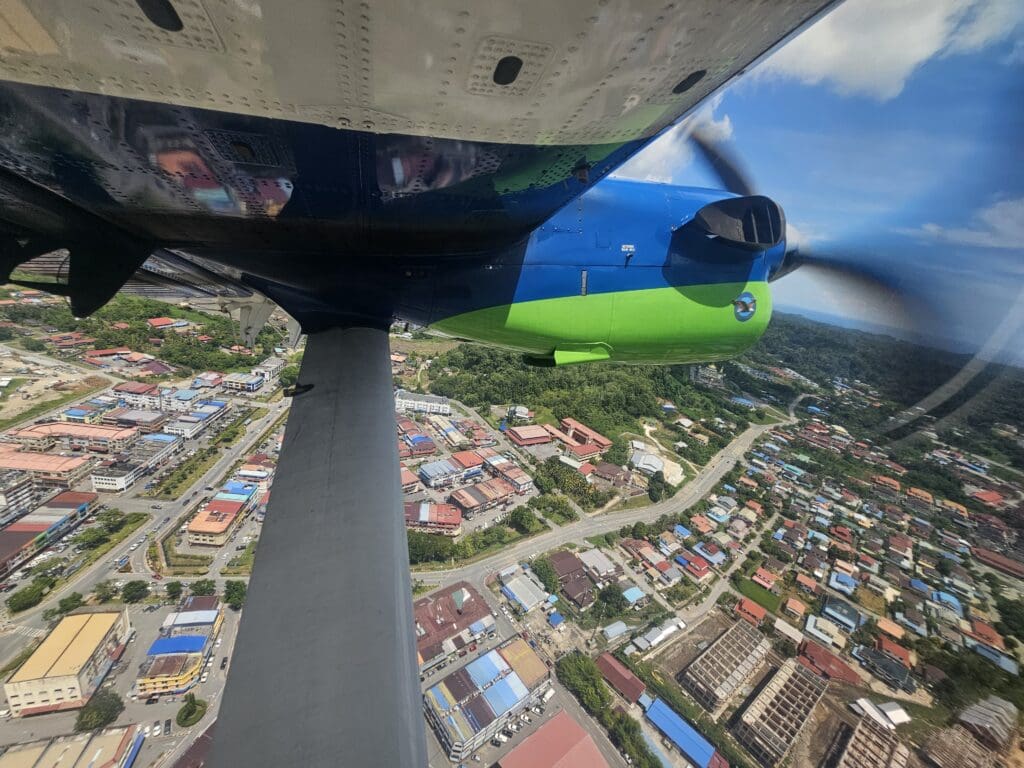
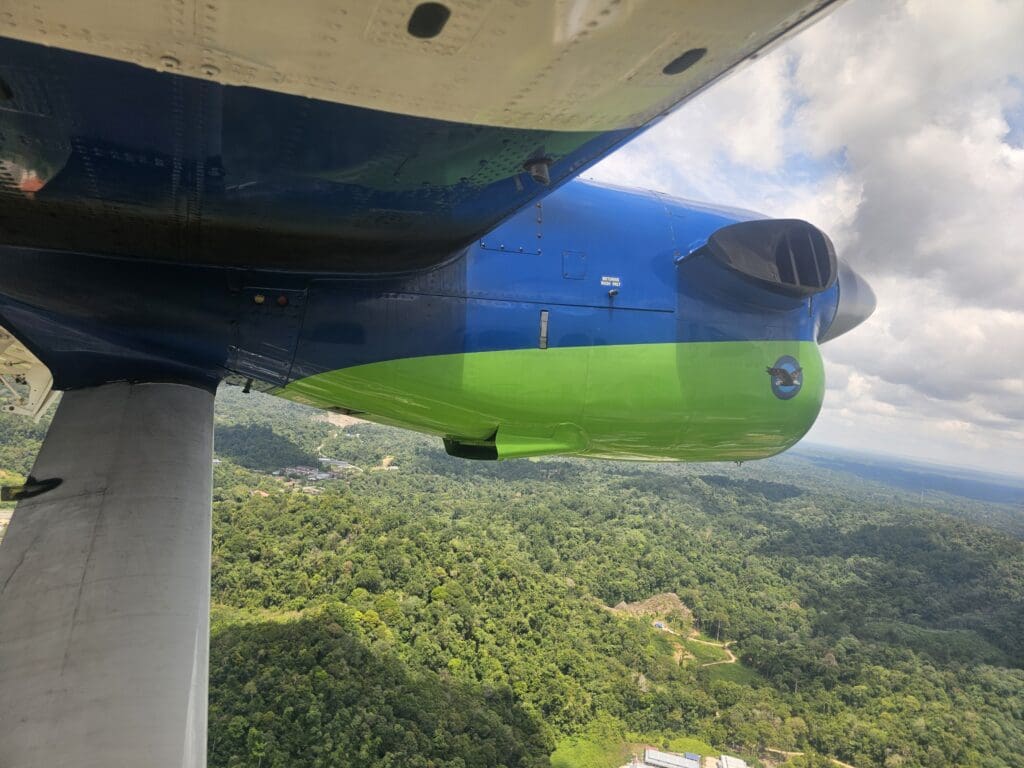
Unfortunately, by this time, the skies had clouded over a little and a minute or so after taking off, we entered the clouds and remained gently bumping around in them for much of the flight. This meant that relatively little of Borneo could be seen, at least when compared to my flight from Kota Kinabalu.
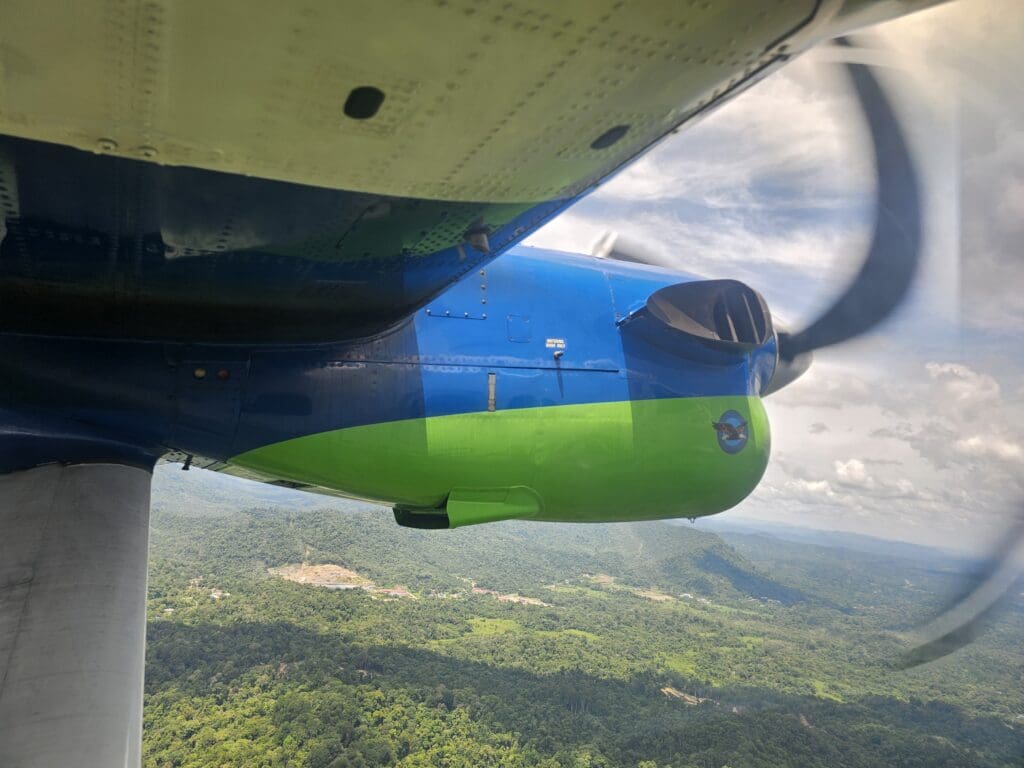
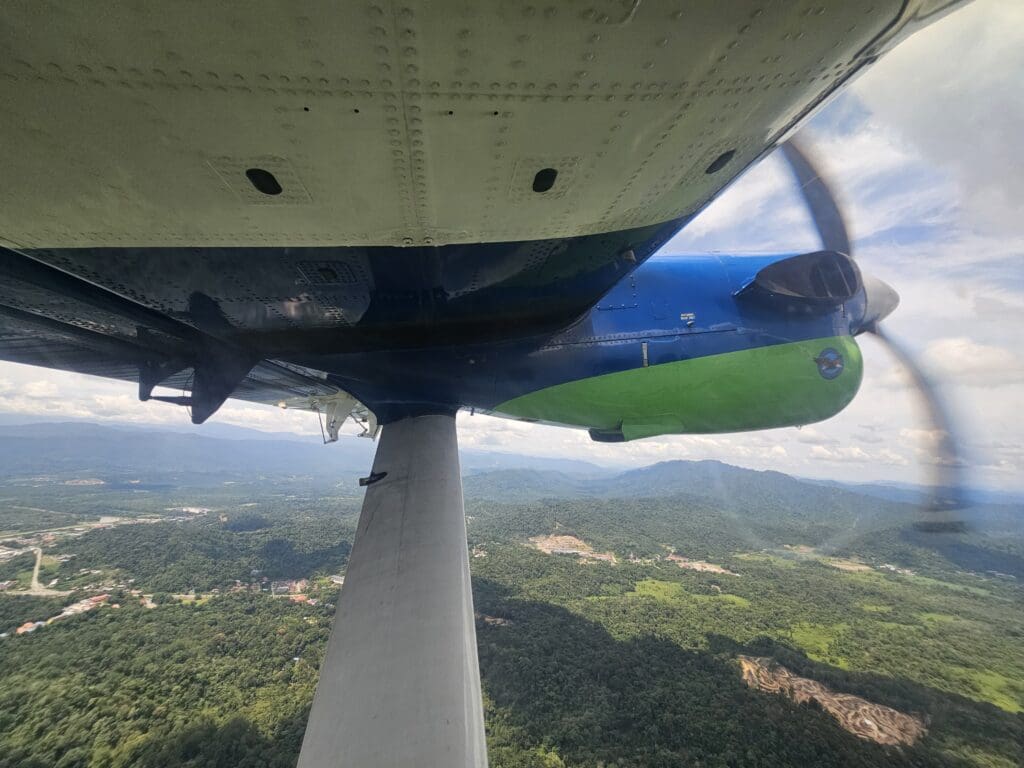
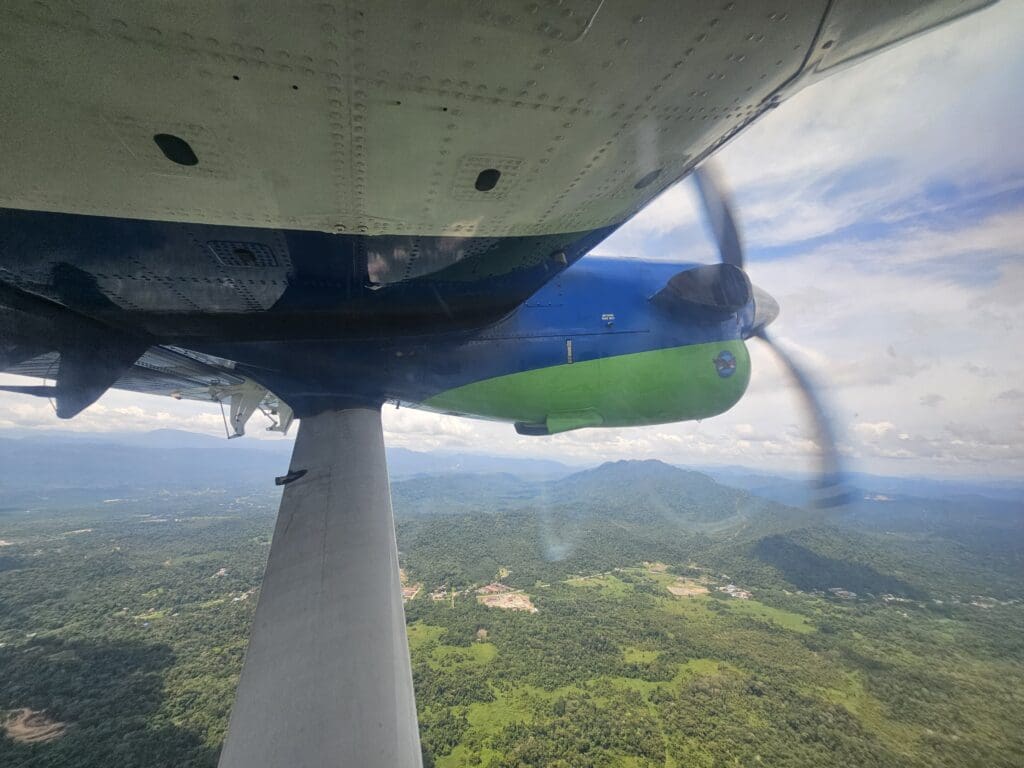
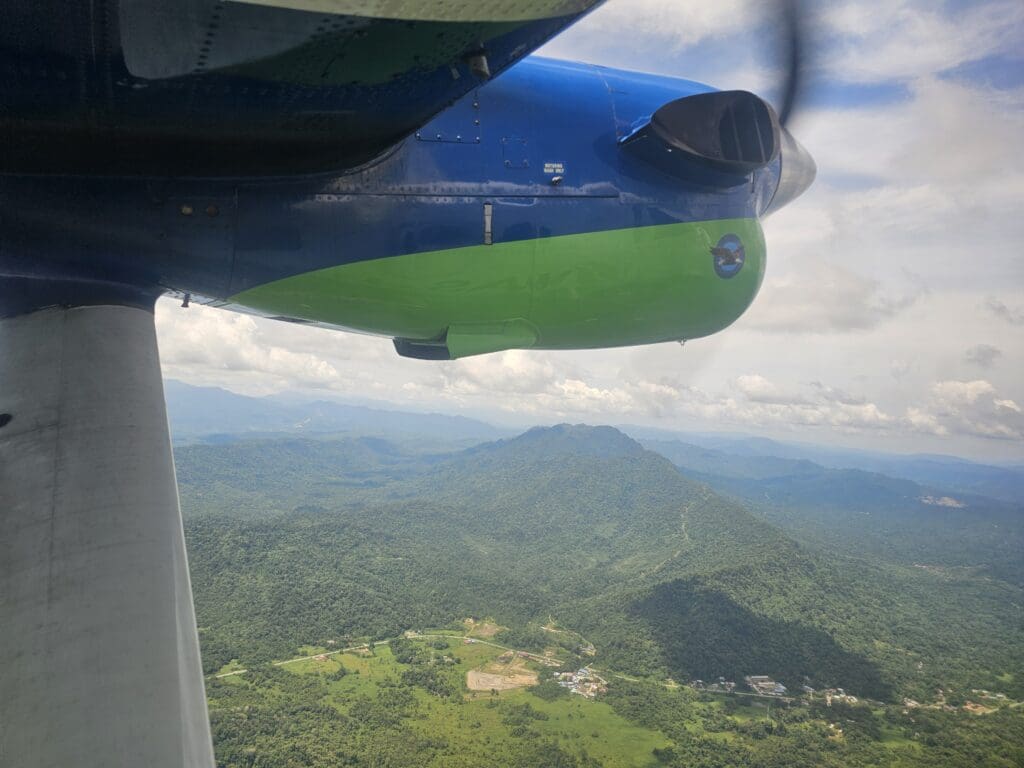
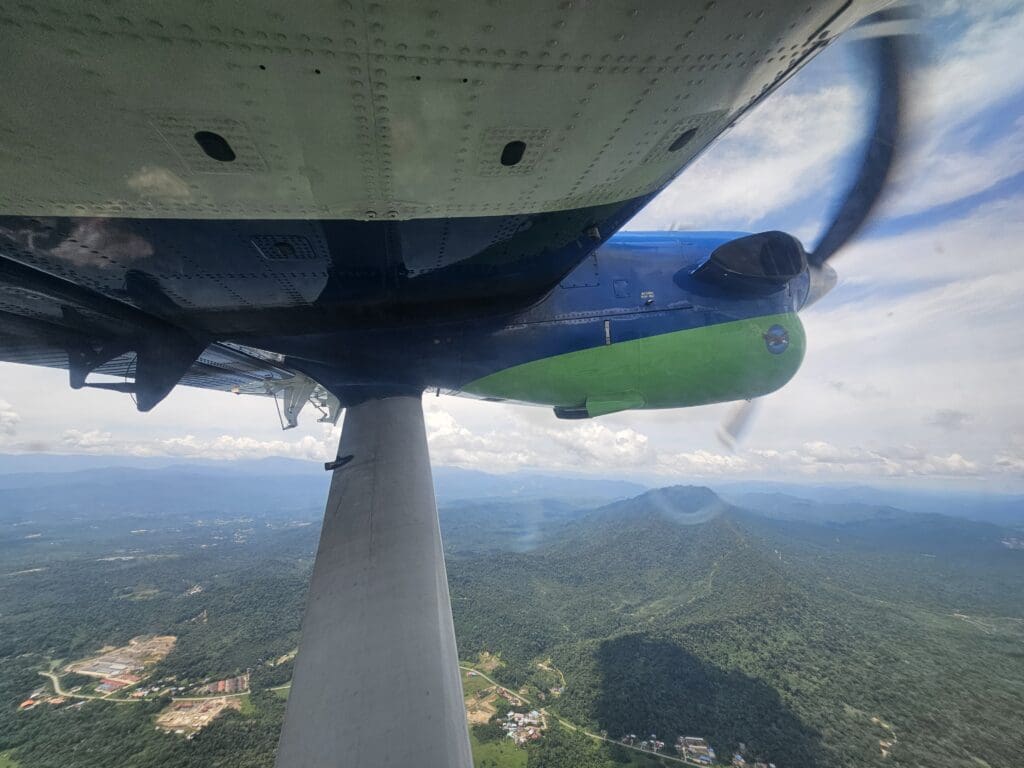
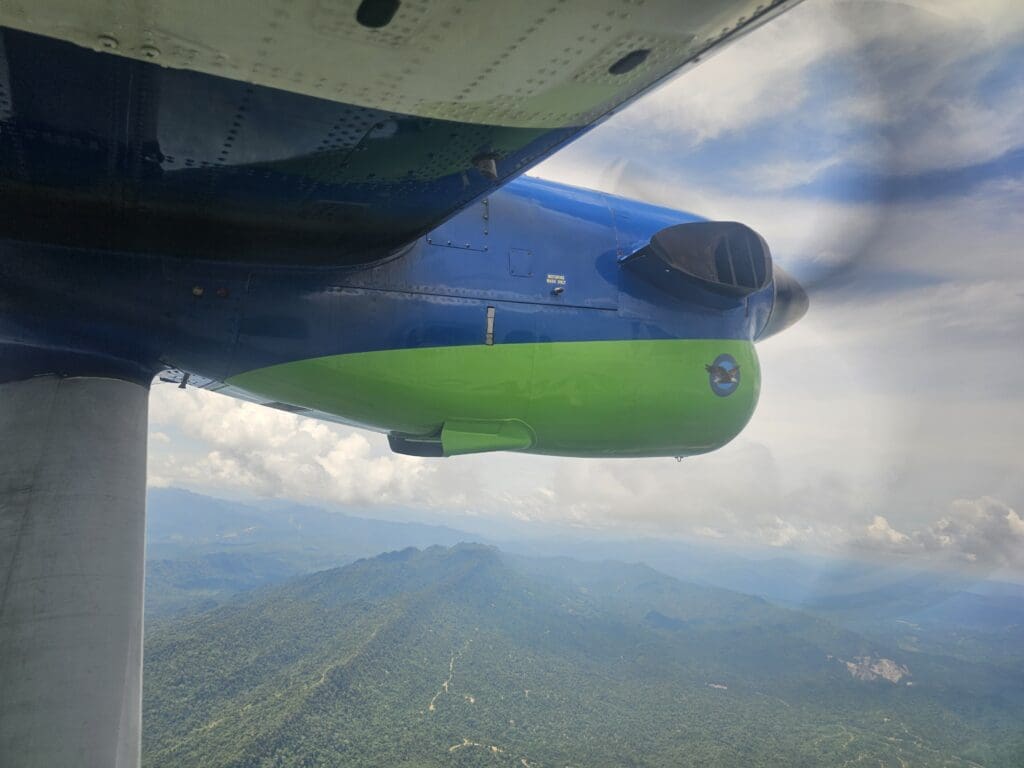
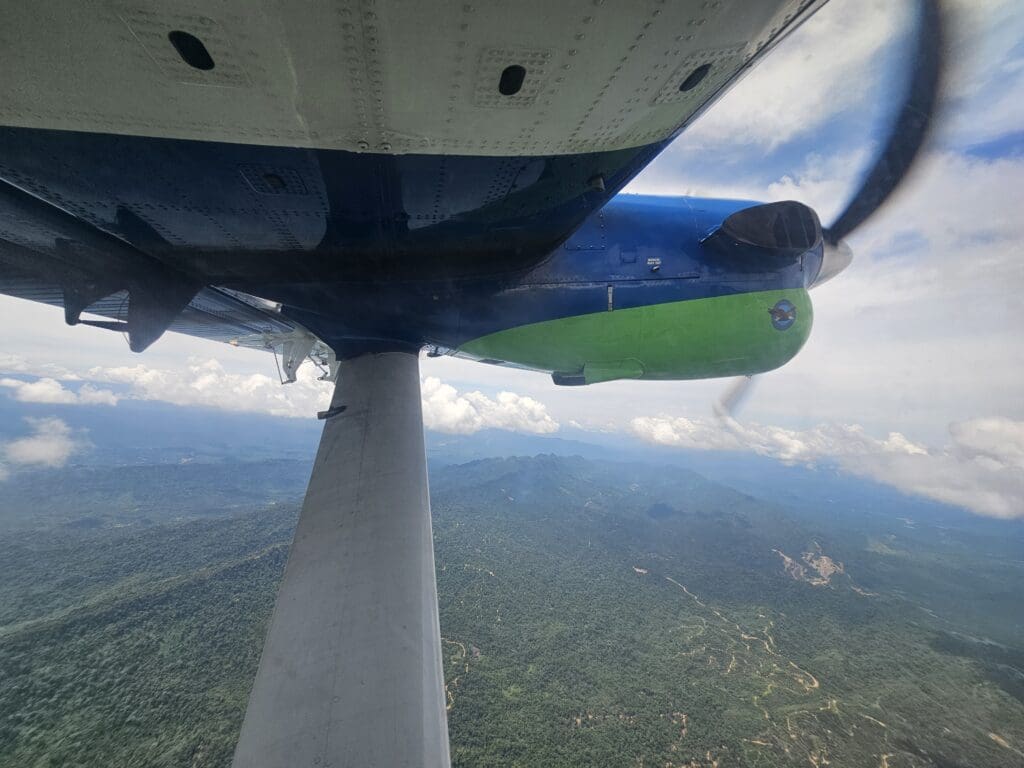
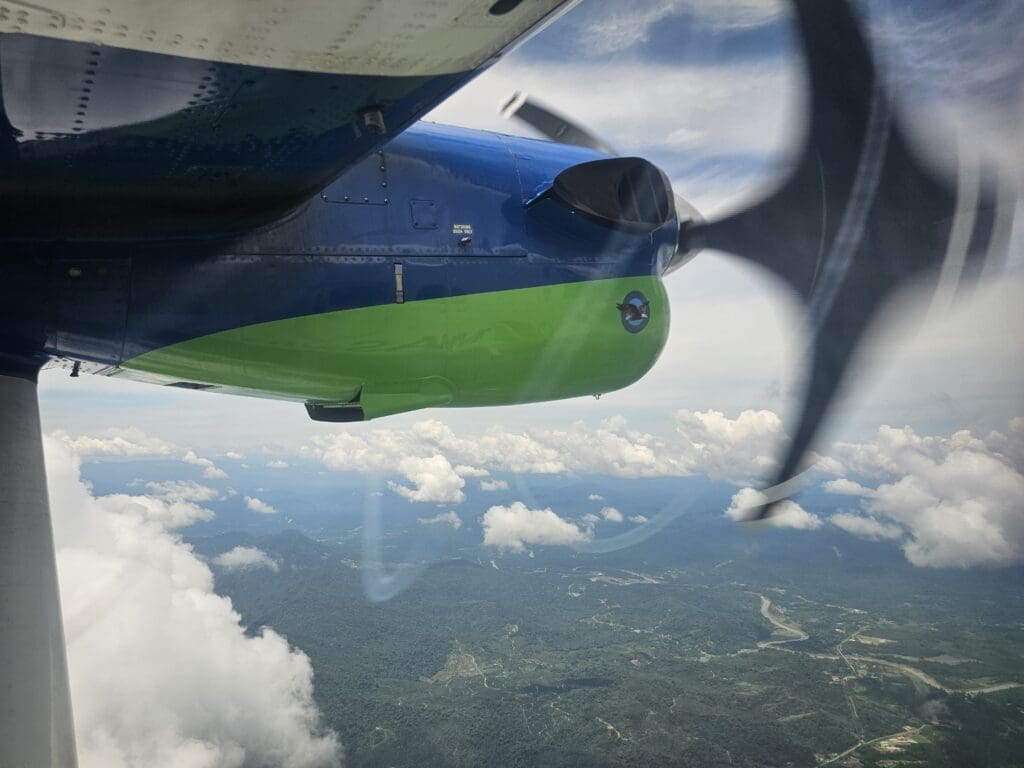
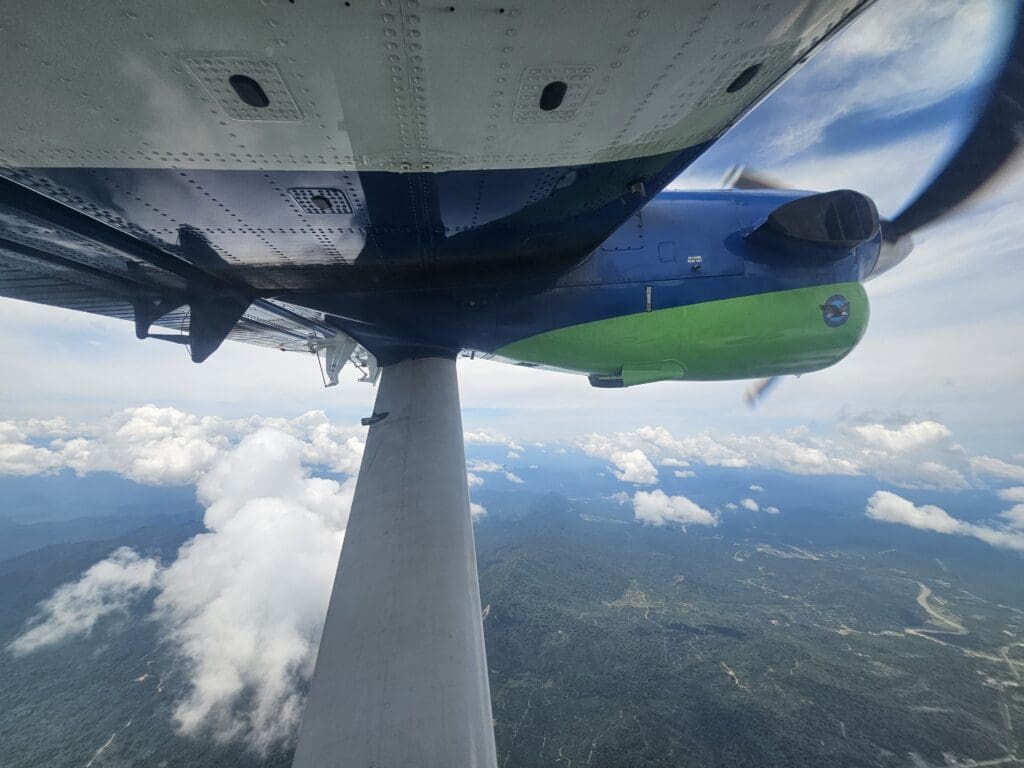
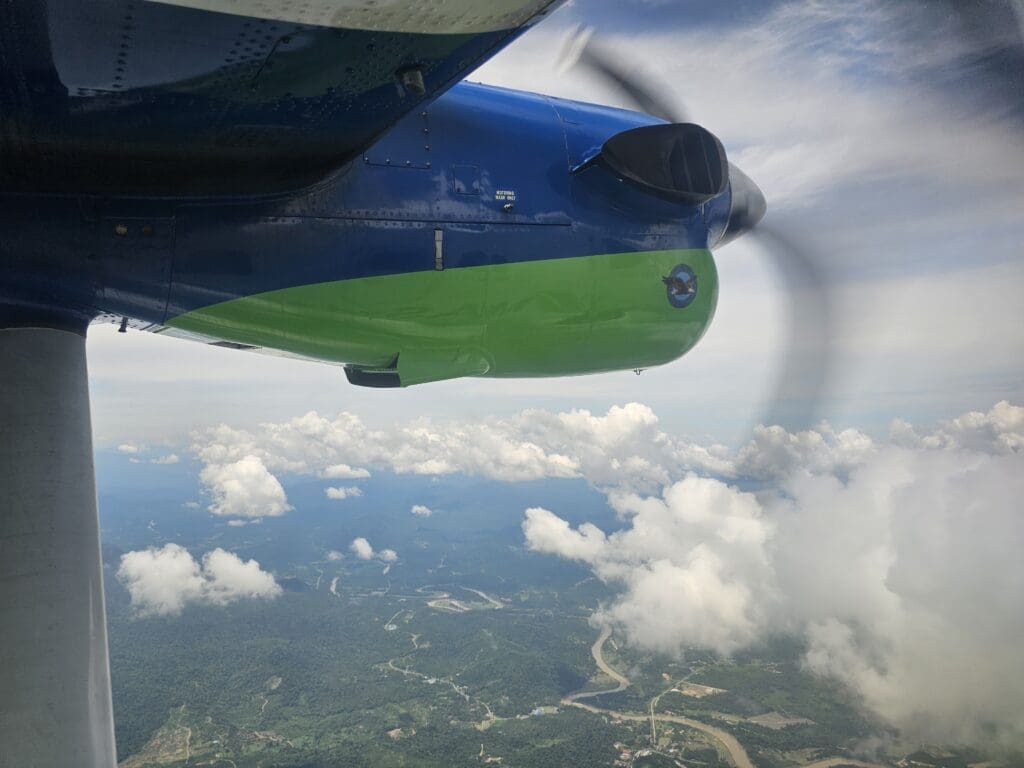
Once the aircraft had levelled off, once again I found that a combination of the high noise produced by the two turboprop engines meant that the Twin Otter did not provide the most comfortable ride; however, that said, the noise was slightly less at the rear of the cabin. On a side note, I would recommend that any passengers flying on a Twin Otter for any great distance opt to sit in the exit seat at the rear of the cabin, which is Seat 6A on many Twin Otters. This is by far the most spacious seat on the aircraft and the only one that offers plenty of room, being located in the spacious area at the very rear of the aircraft. As had been the case on the flight from Kota Kinabalu, there was no catering offered; however, I did not feel that this was required given the short duration of the flight.
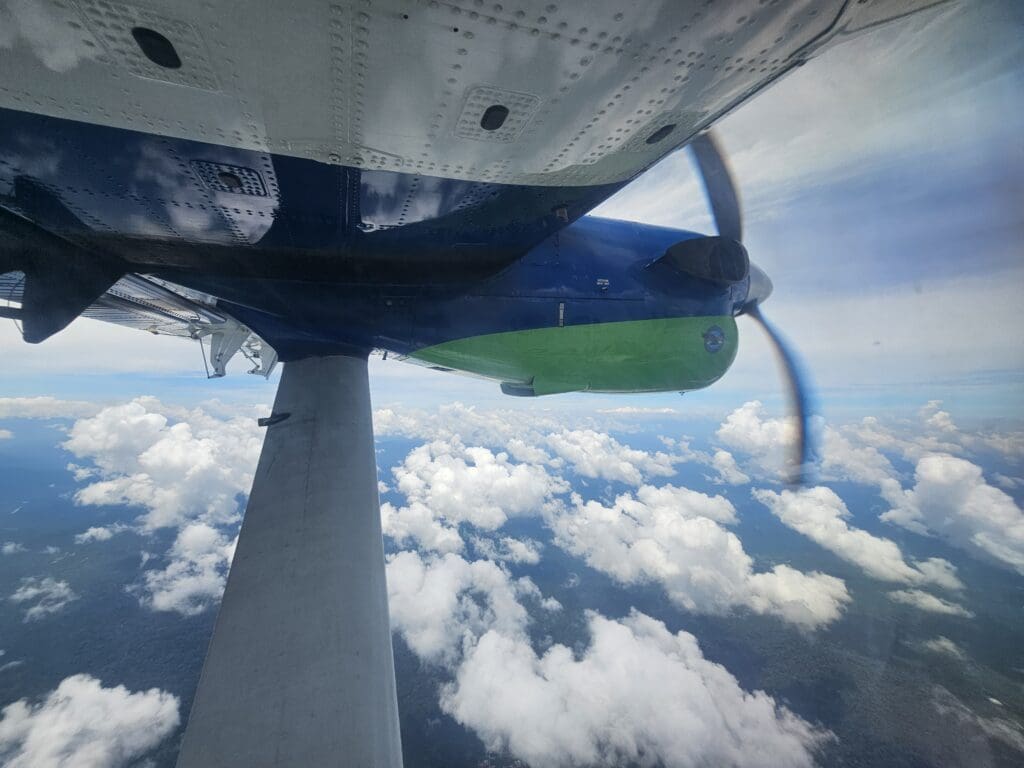
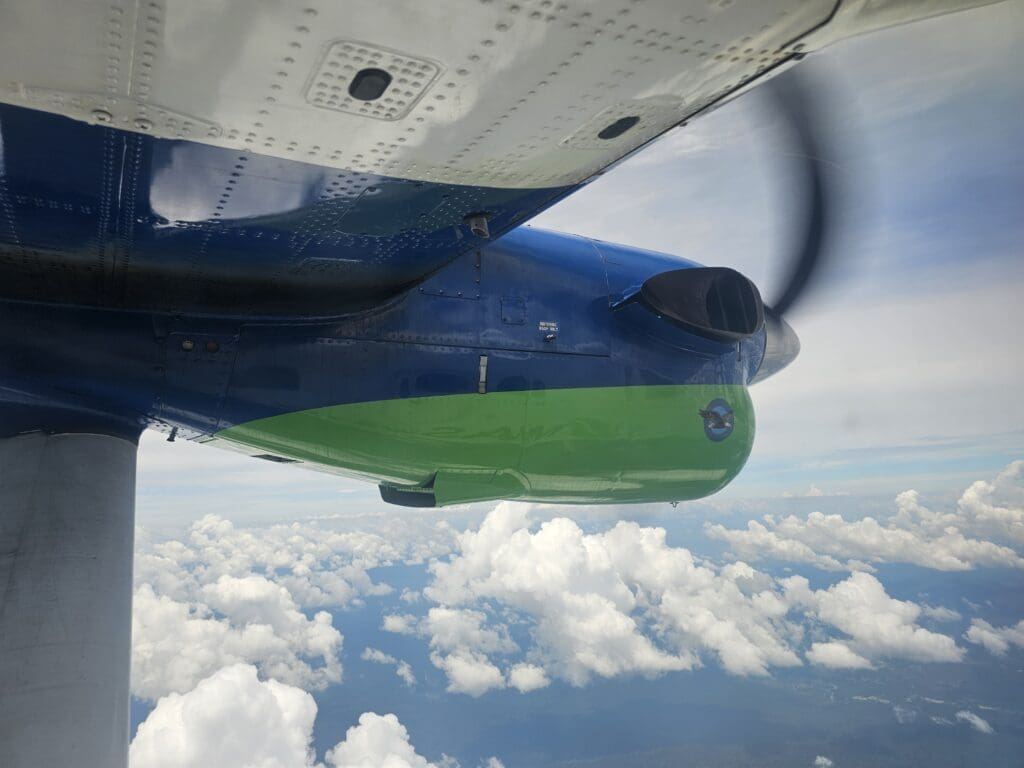
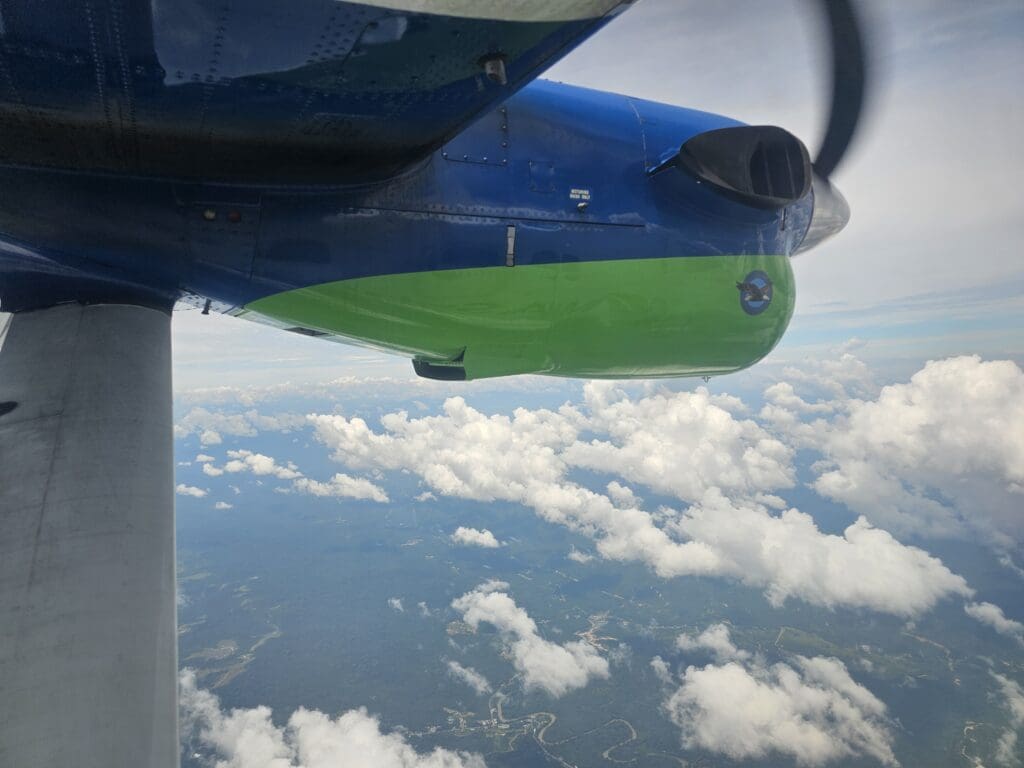
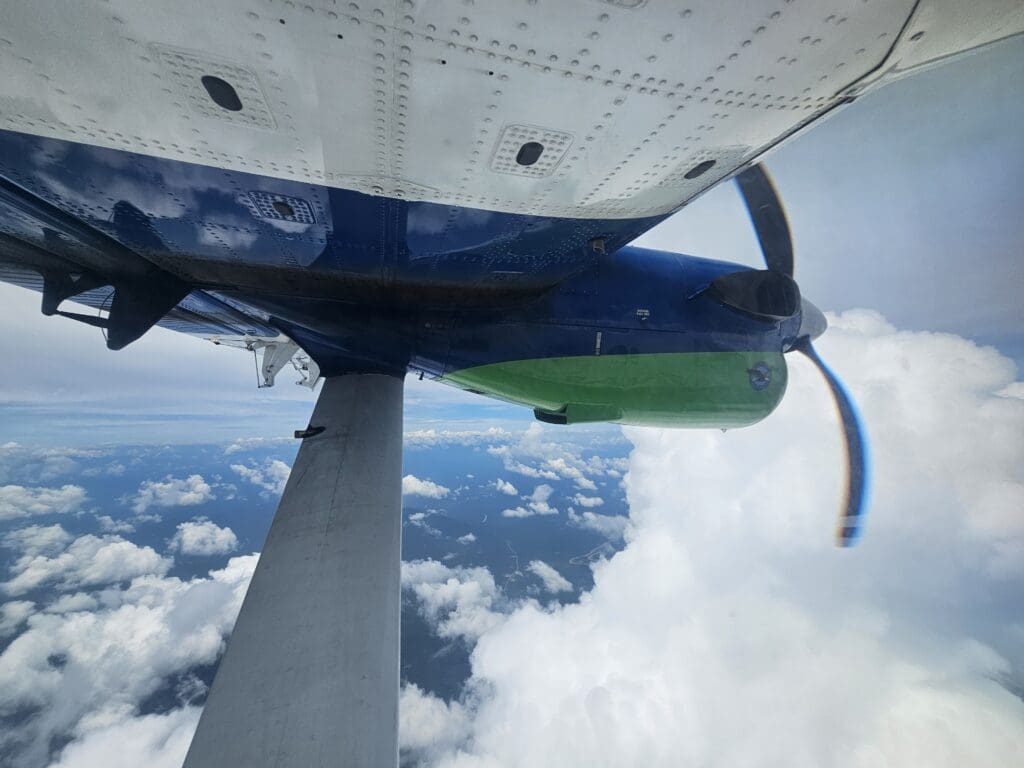
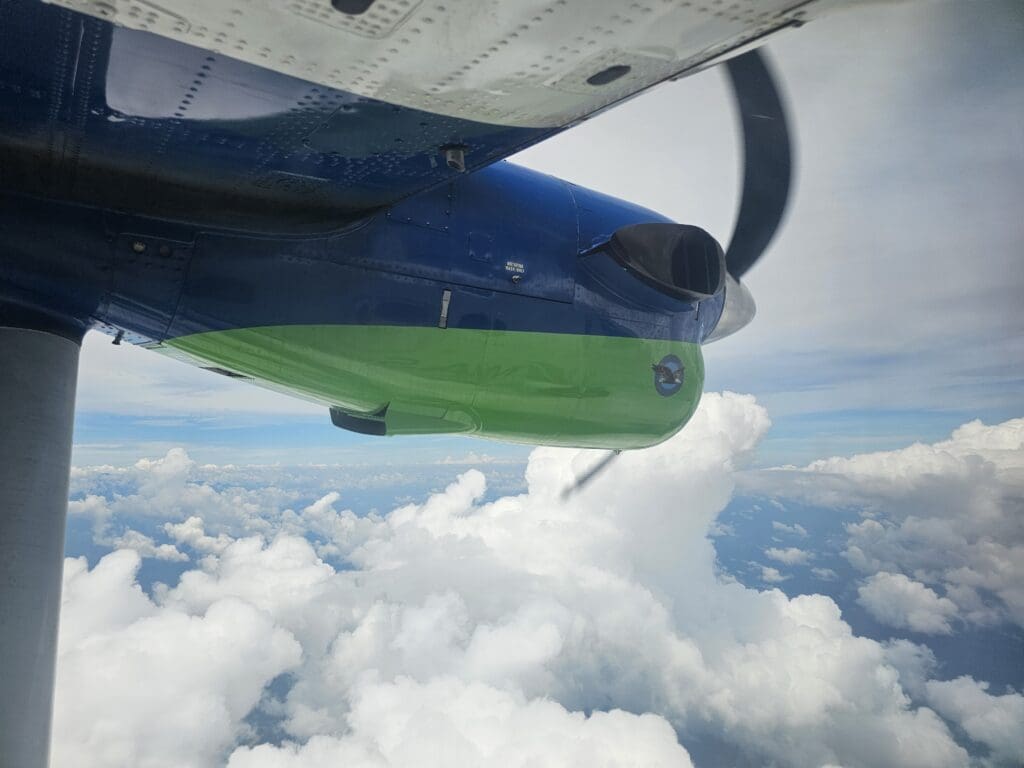
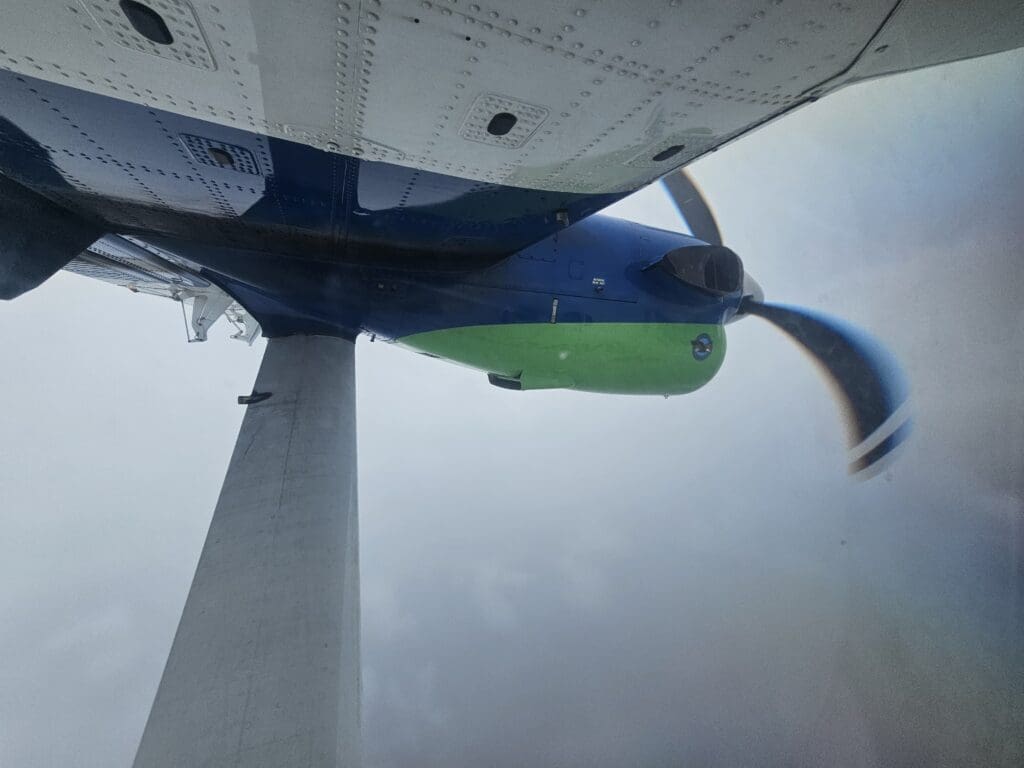
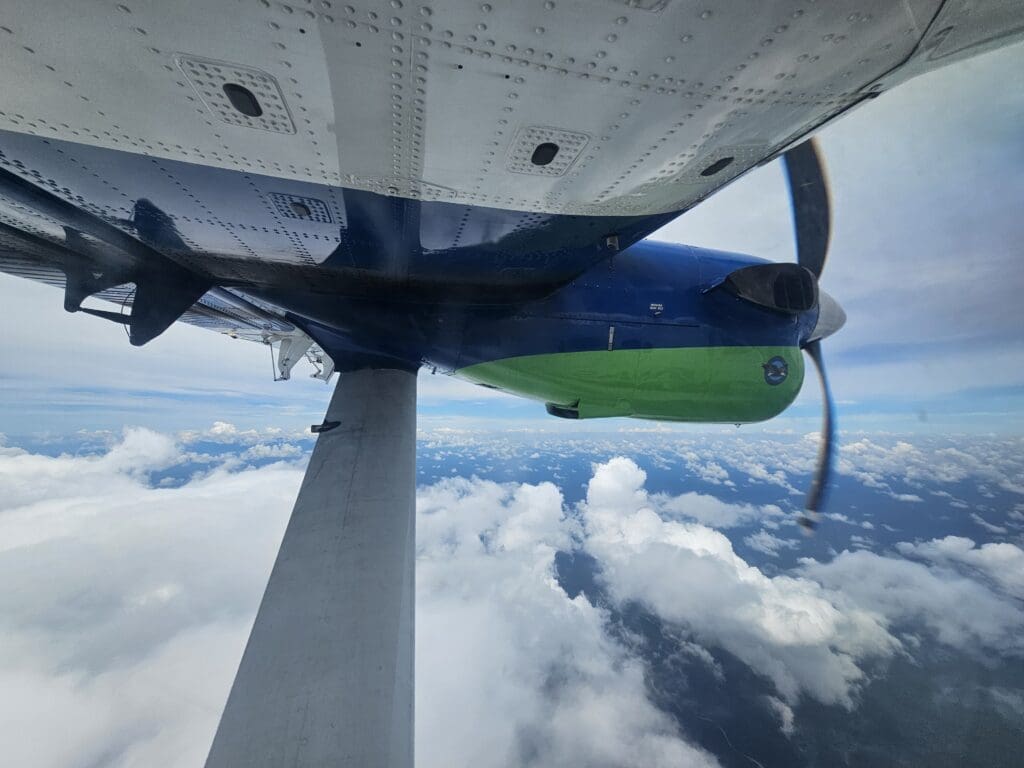
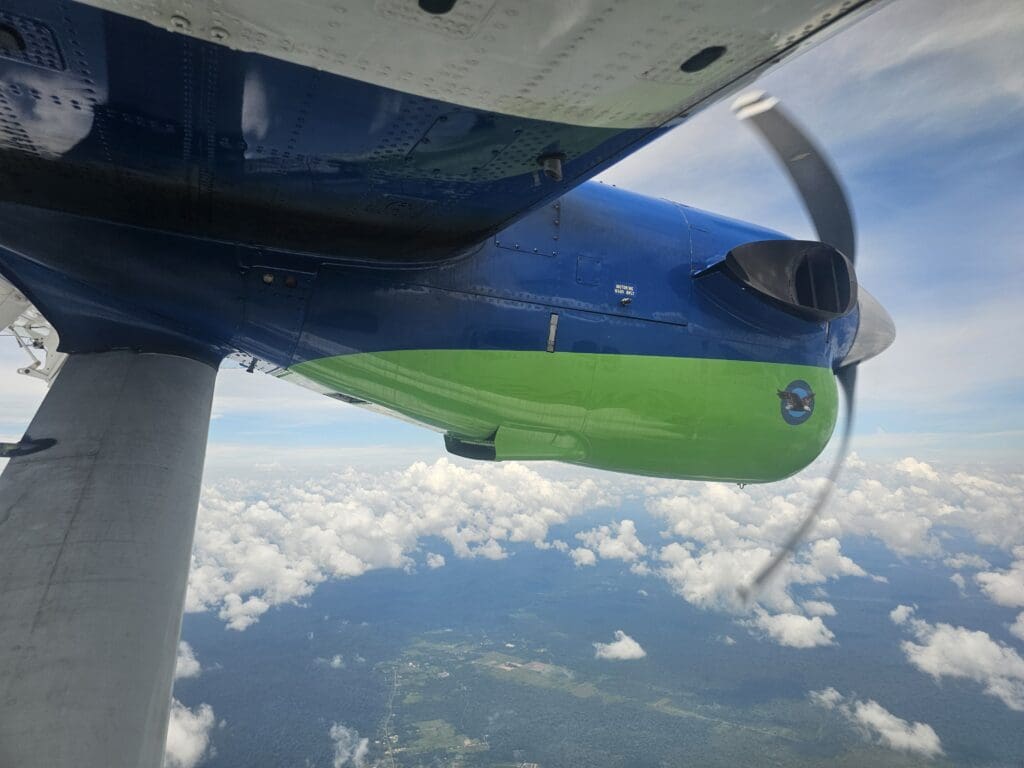
Examining the route, the flight between Lawas and Miri takes a rather interesting route in that it crosses into Bruneian skies, then back into Malaysian, followed by Bruneian again, and then Malaysian. Following the AH150 road, after passing the town of Trusan, the Twin Otter soon reached the border with the Bruneian enclave of Temburong, surrounded on three sides by Sarawak, and the remaining side by the South China Sea, and made its way over the southern fringes of the Labu Forest Reserve. Looking outside, a combination of the clouds and lack of settlements below meant that little could be seen of Brunei’s least populated district as we crossed this from east to west.
After a few bumpy minutes, the Twin Otter re-entered Malaysian skies just to the south of Limbang, a large town of about 56,900 that is served by MASwings’ ATR 72 and Twin Otter fleet. However, we did not remain in Malaysian skies for long before crossing over into Brunei once again, this time passing over Tutong District and the Bukot Ladan Forest Reserve where few signs of human life could be seen as we continued heading westwards over the jungle, soon entering the skies of Belait District.
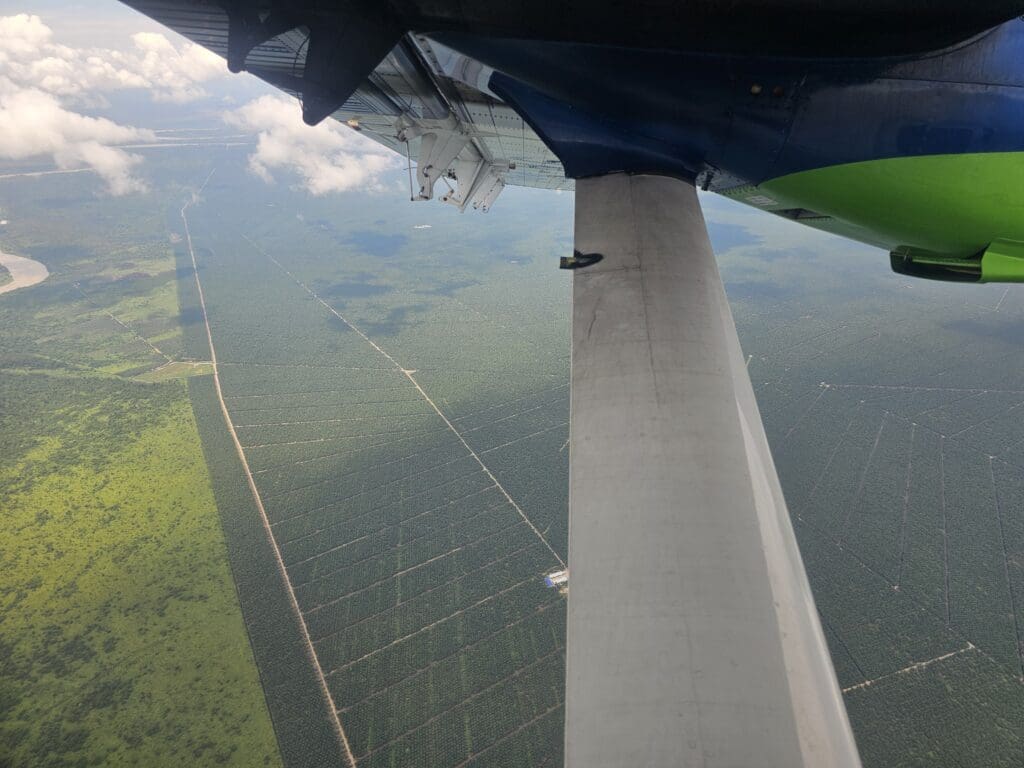
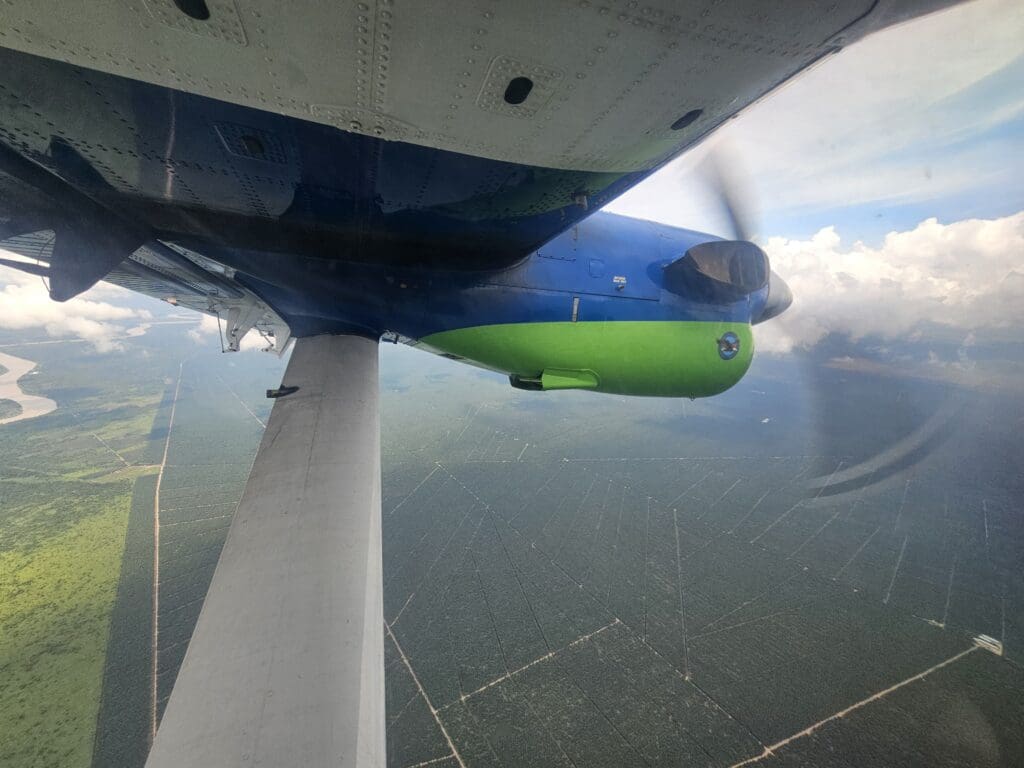
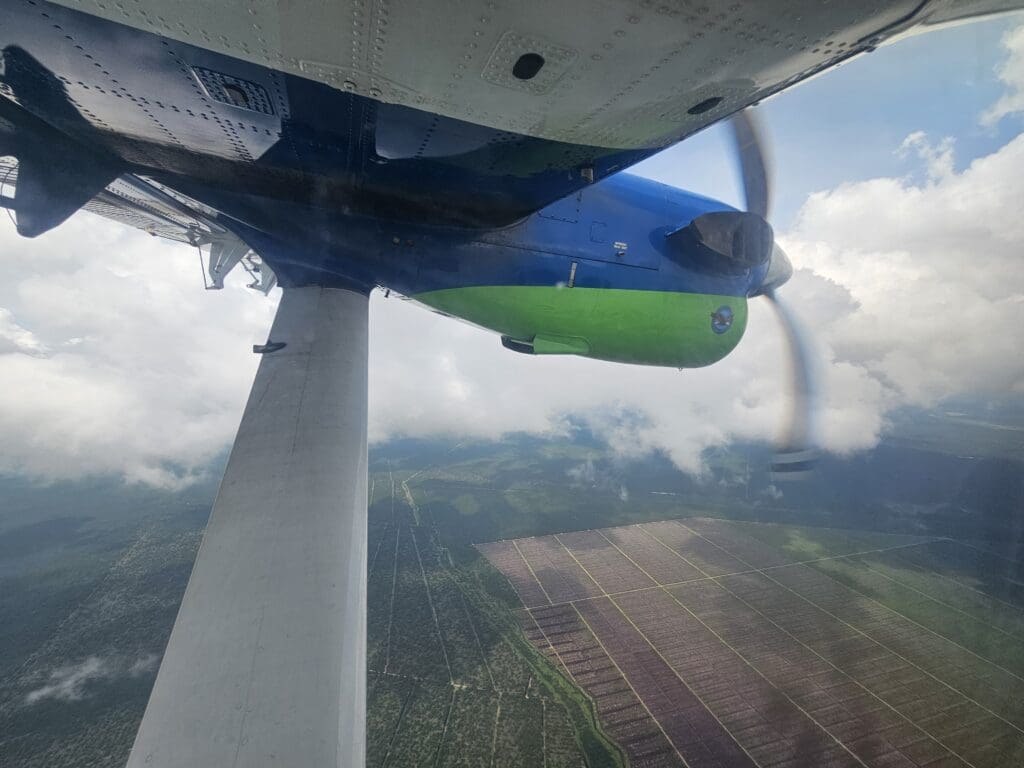
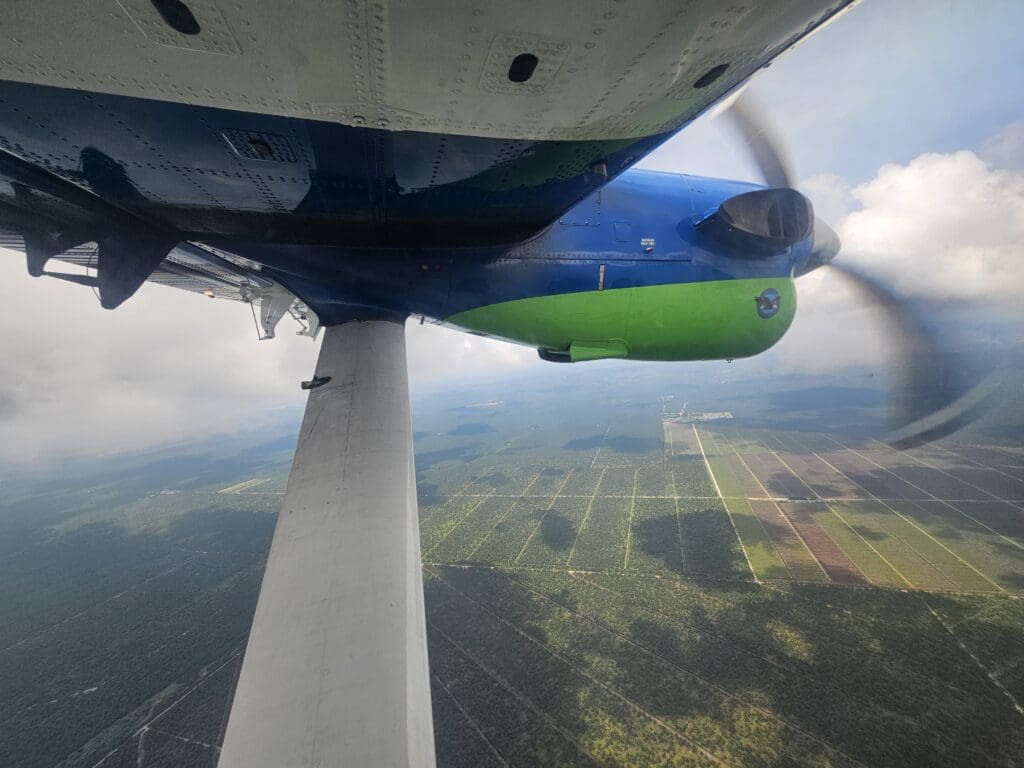
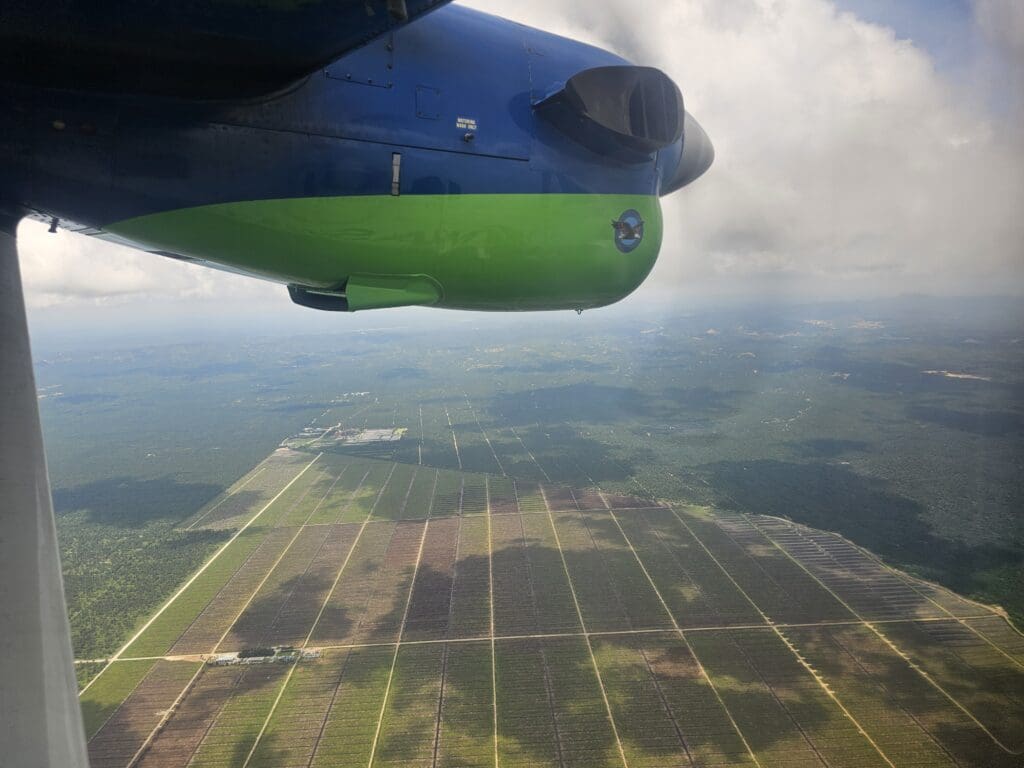
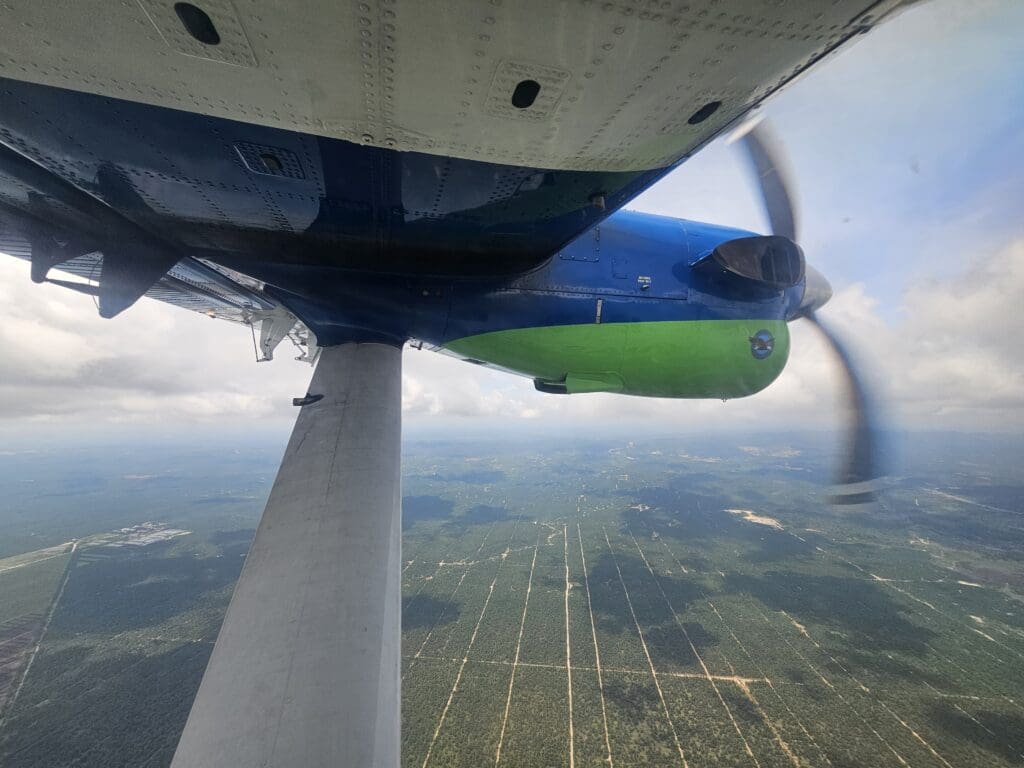
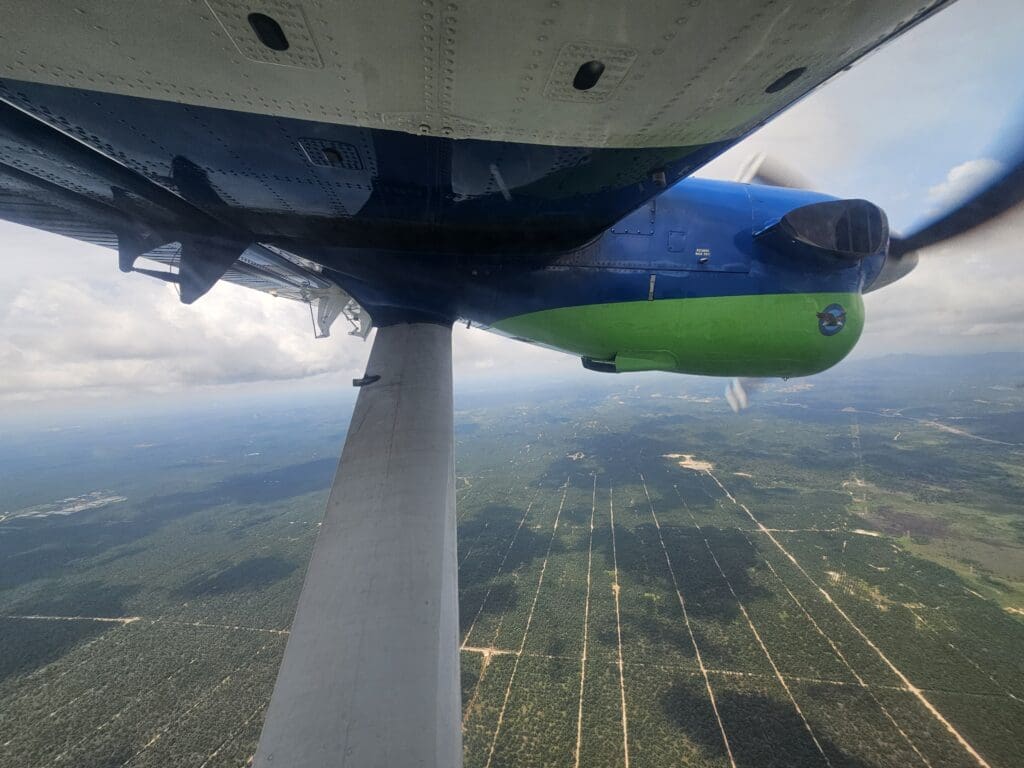
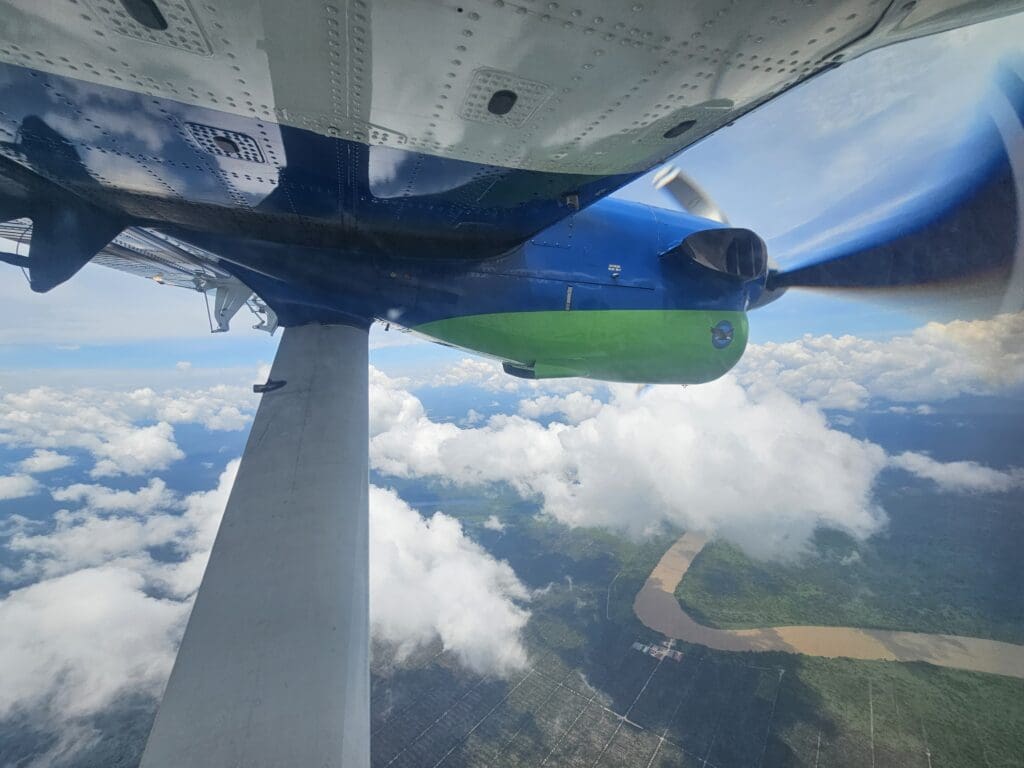
Eventually, the first settlements in quite some time appeared below, with these taking the form of a series of villages that sit alongside Brunei’s Jalan Labi road which runs from the coast to the village of Teraja in the heart of the jungle near the country’s southern border with Sarawak. Meanwhile, the aircraft soon crossed into the skies of Malaysia for the final time where we were greeted by the sight of the winding Baram River and the town of Marudi, a destination on MASwings’ Twin Otter route network.
Once past Marudi, the pilots pulled the power levers back slightly and the aircraft could be felt commencing its descent into Miri. Below, the trees of the Sarawak jungles became increasingly clearer and outside the odd village and jungle clearing could be seen, although aside from these there were few signs of human life until the aircraft reached the fringes of Miri. As we descended, an announcement was made from the cockpit which presumably contained all the usual warnings regarding seatbelts and a word of thanks for flying with MASwings; however, this could barely be heard over the noise of the two turboprop engines on either side of the cabin.
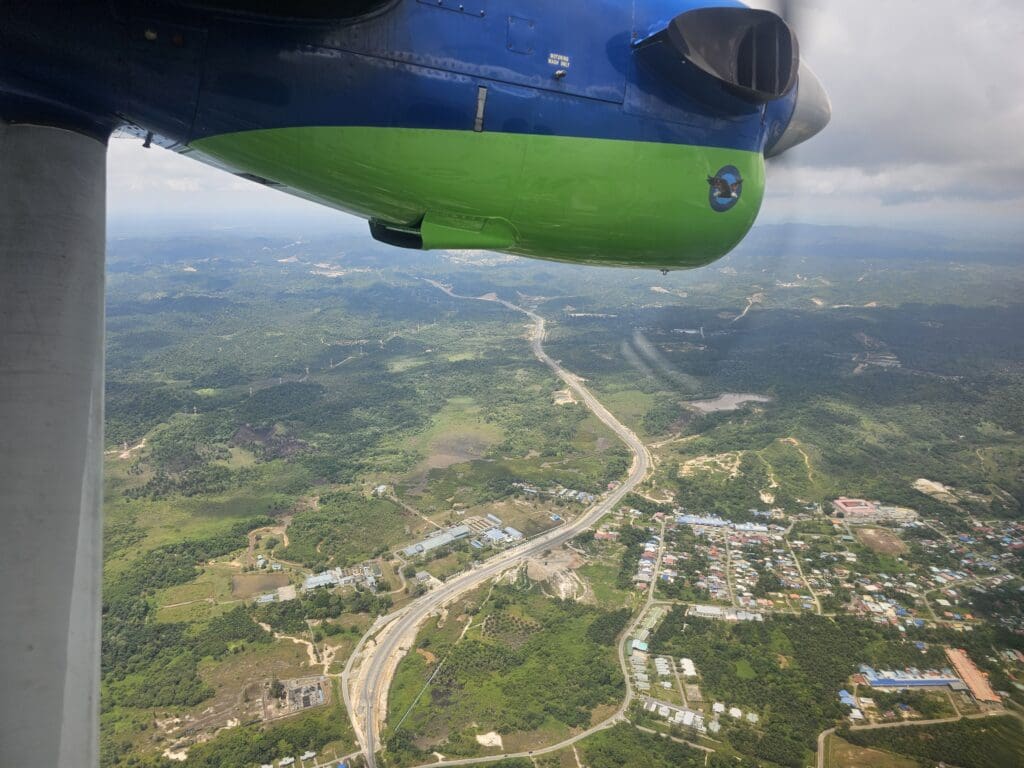
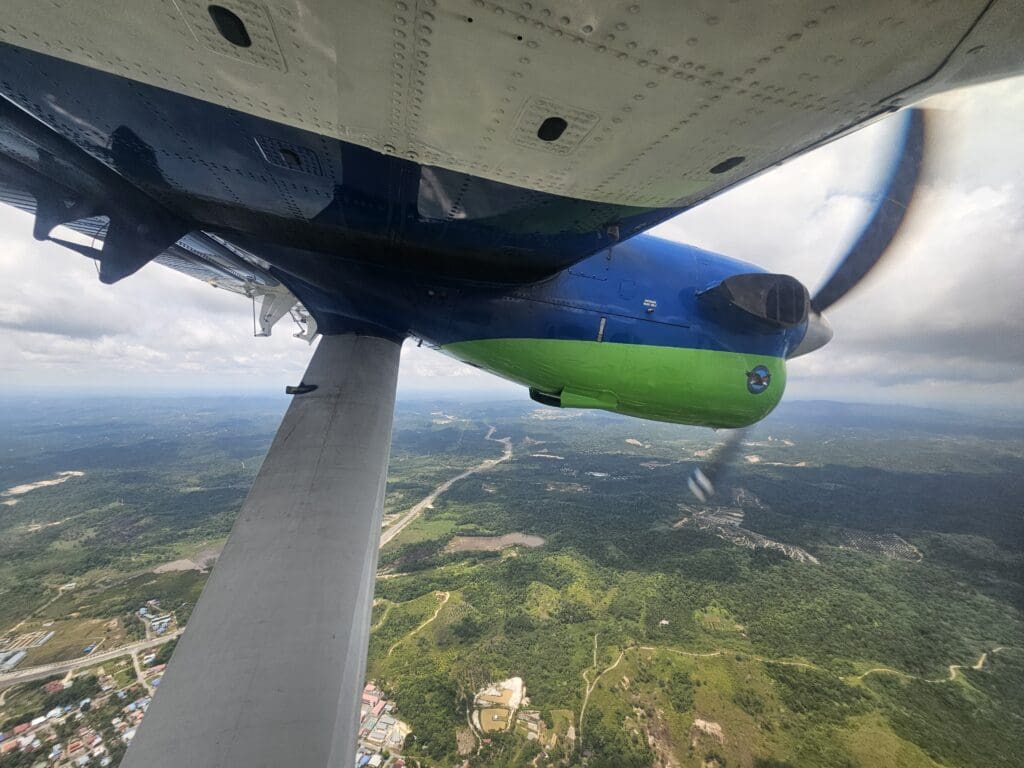
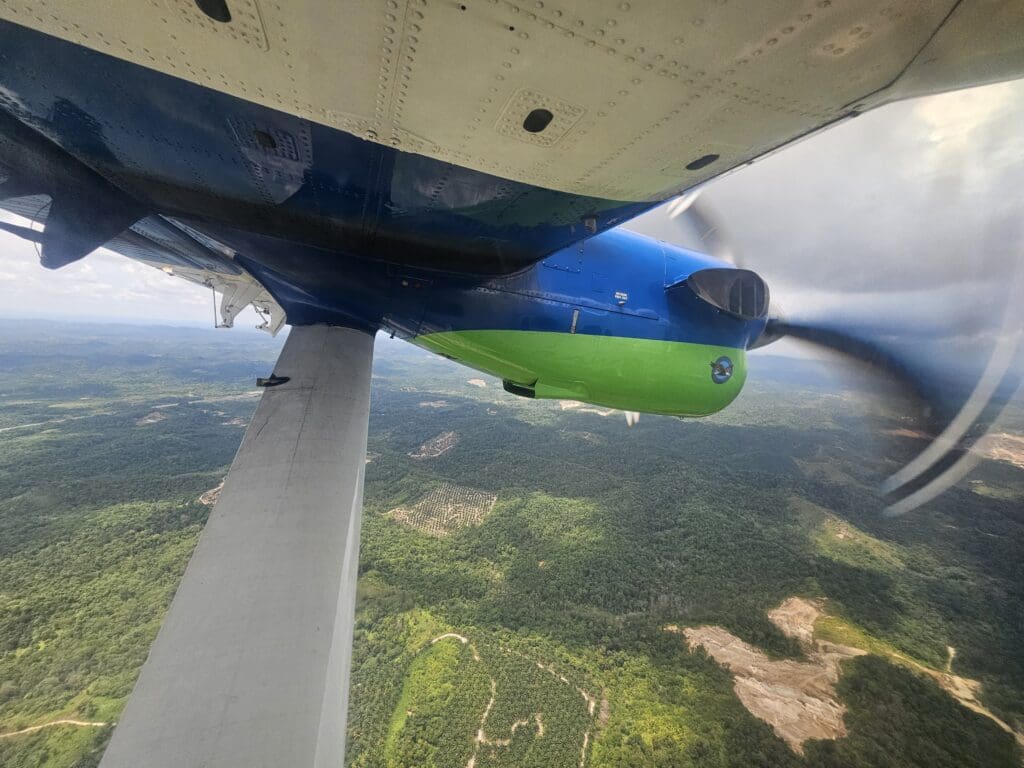
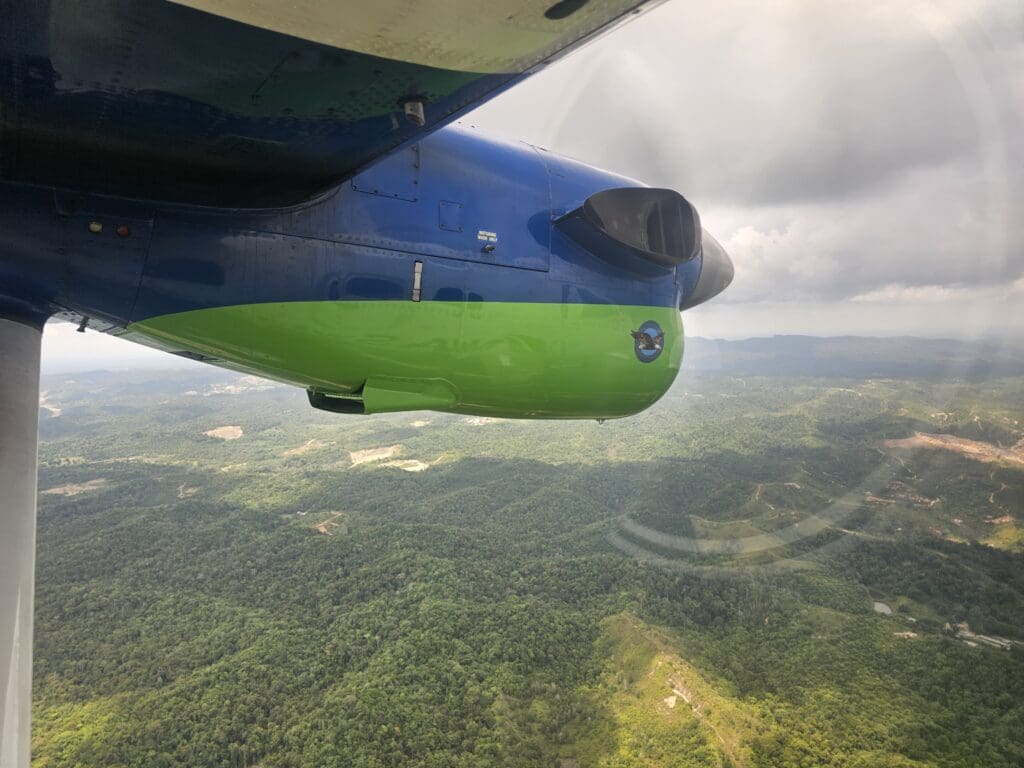
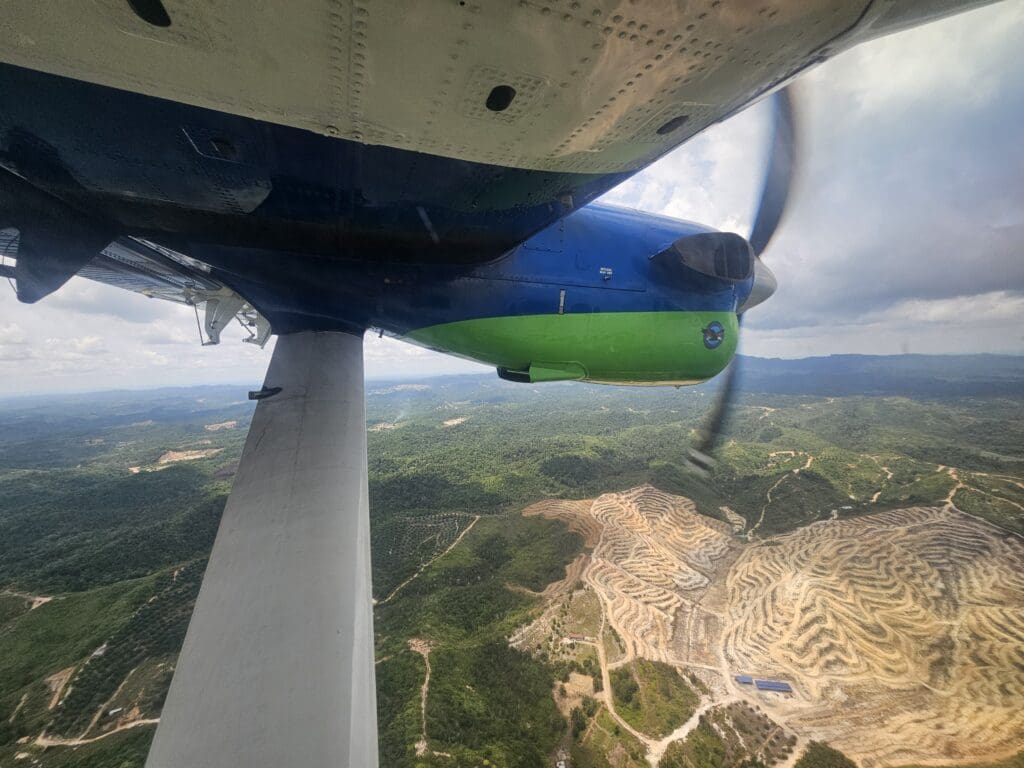
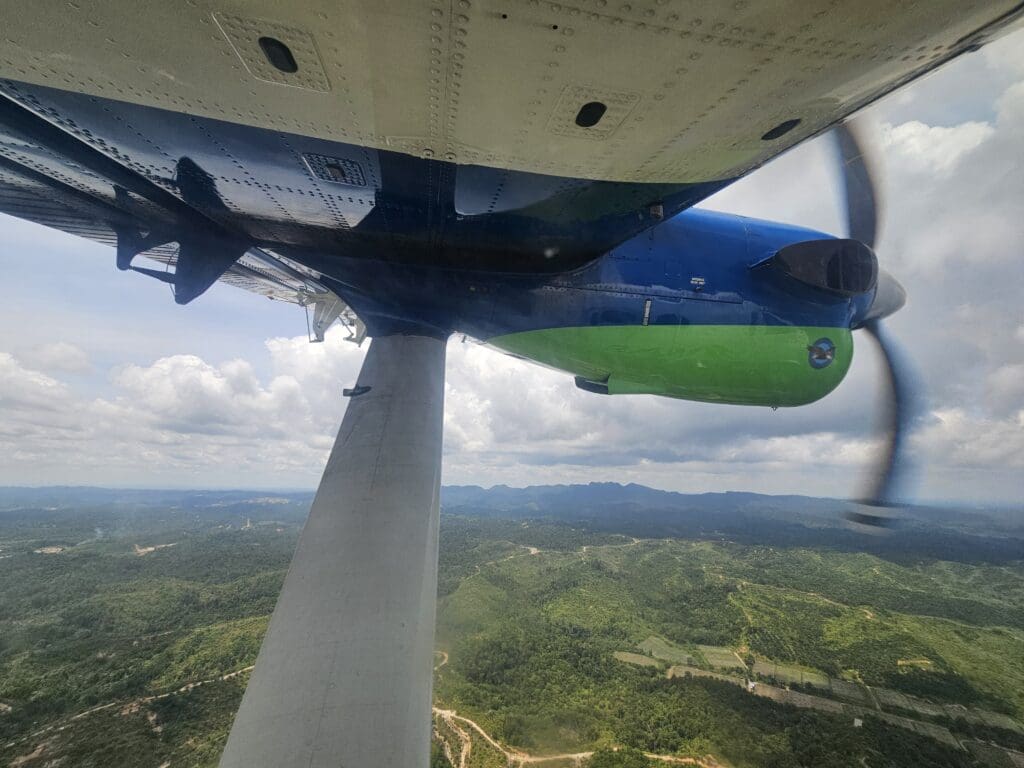
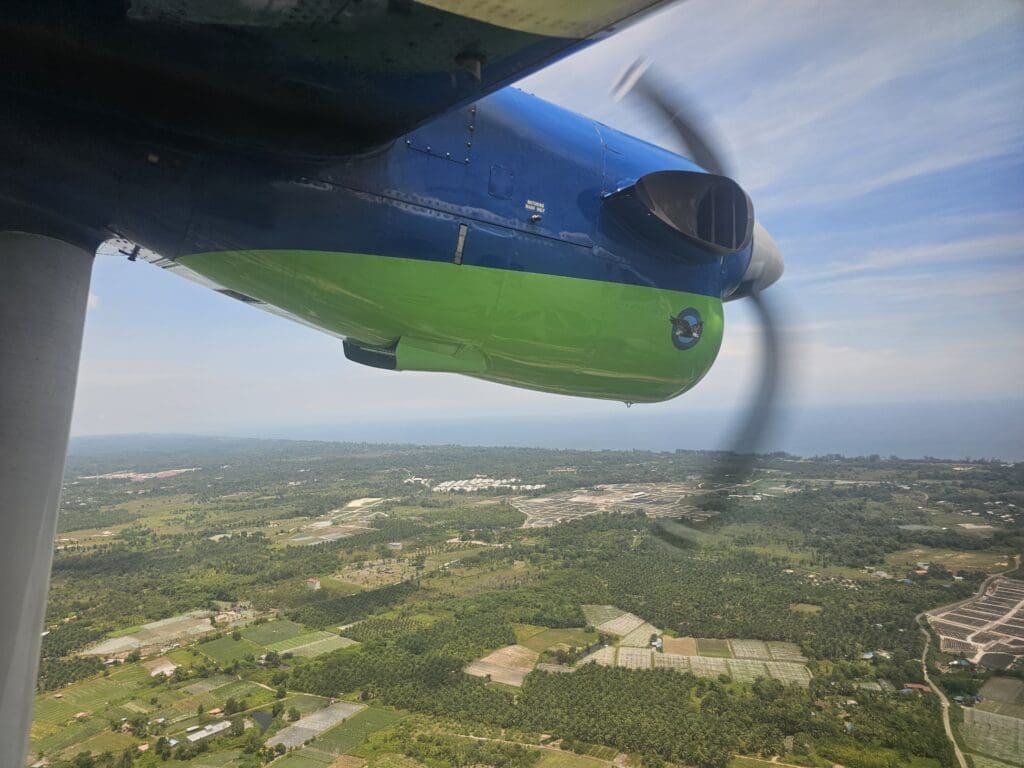
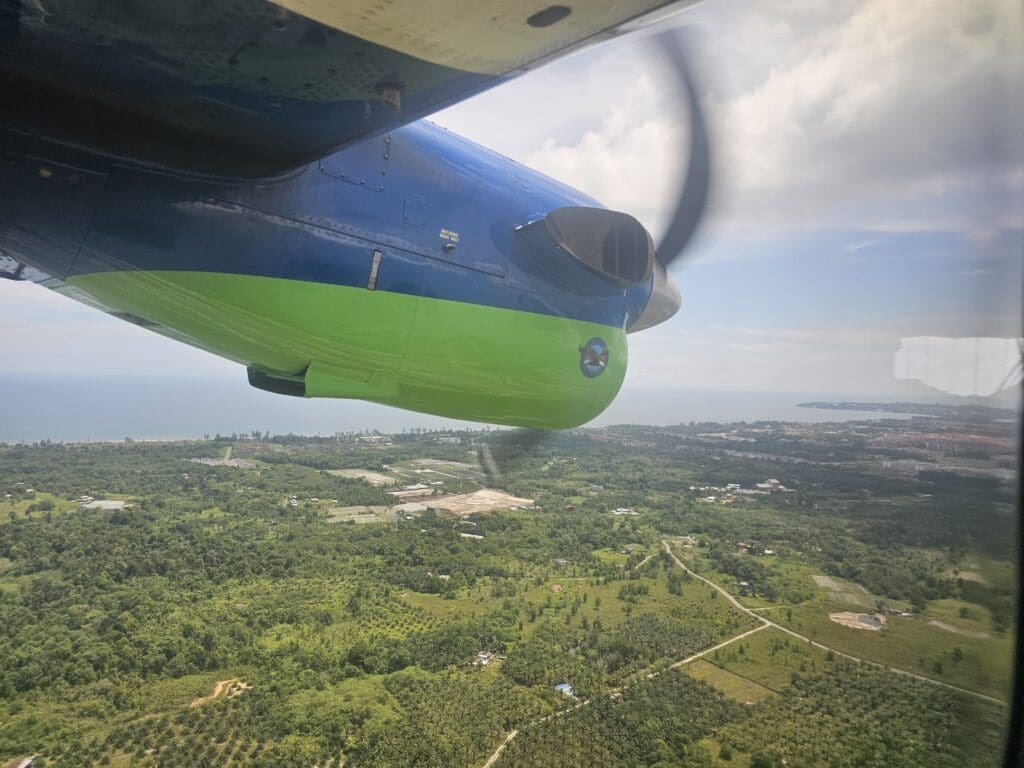
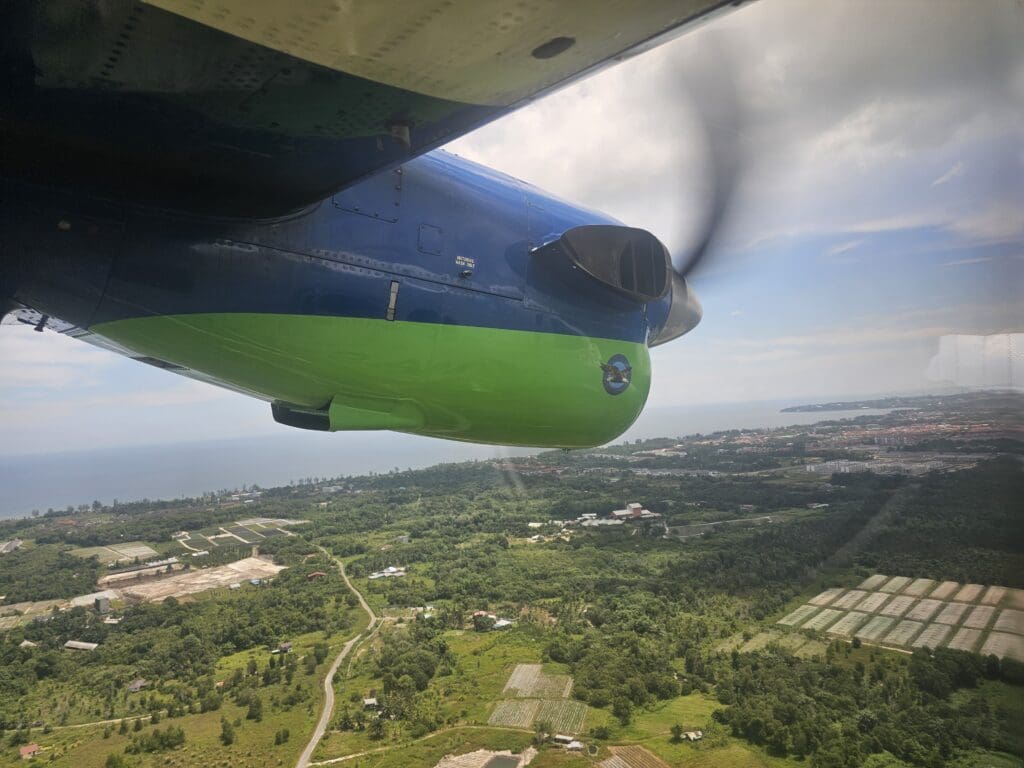
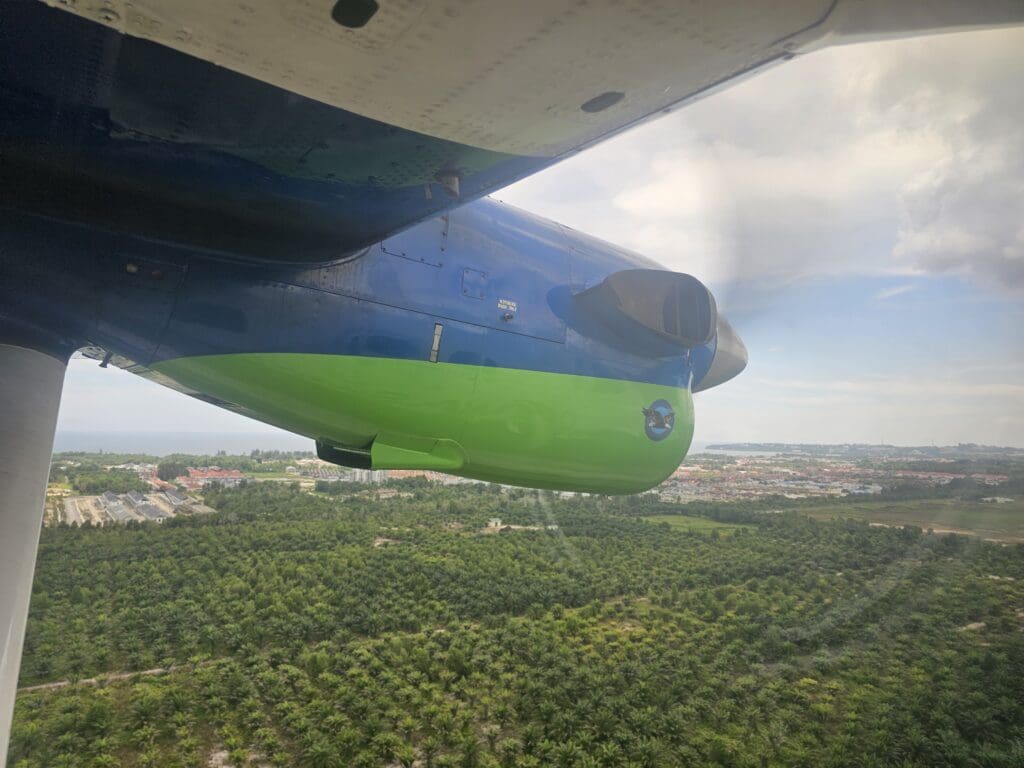
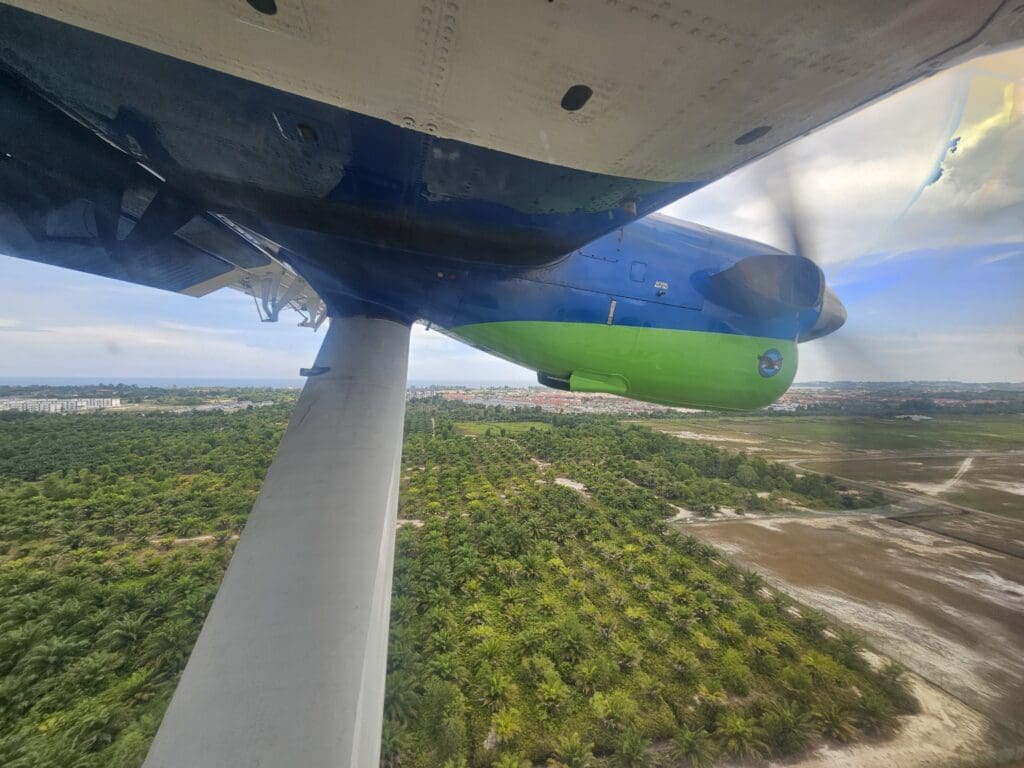
Bouncing around as we skirted the bottom of the clouds, the aircraft made its way around the southern fringes of Miri with the airport soon appearing to the north of the aircraft. As I caught my first glimpse of this, a Malaysia Airlines Boeing 737-800 could be seen on the runway having just arrived from Kuala Lumpur. Soon, the Twin Otter turned around and lined itself up for an approach to Runway 02, with the flaps falling into position as the nose was pointed downwards and the Twin Otter commenced its steep final dive towards the runway. Sinking down, relatively little could be seen outside as we approached the airport, with most of the city of Miri sitting to the north of this and we soon crossed over the airport’s perimeter fence.
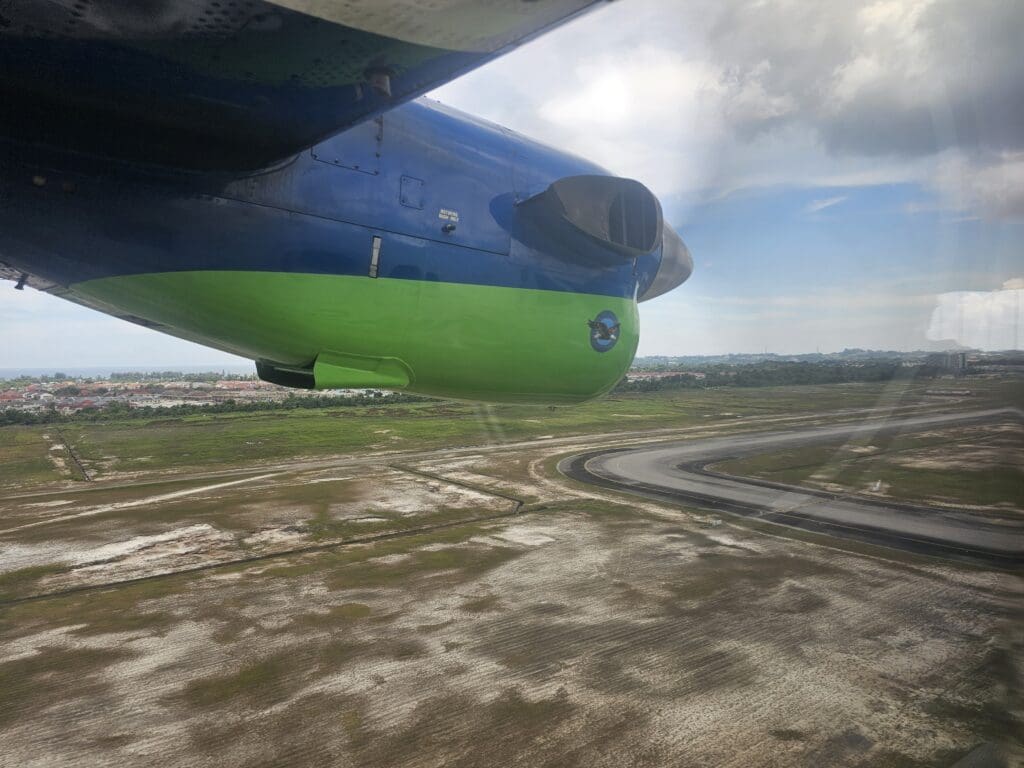
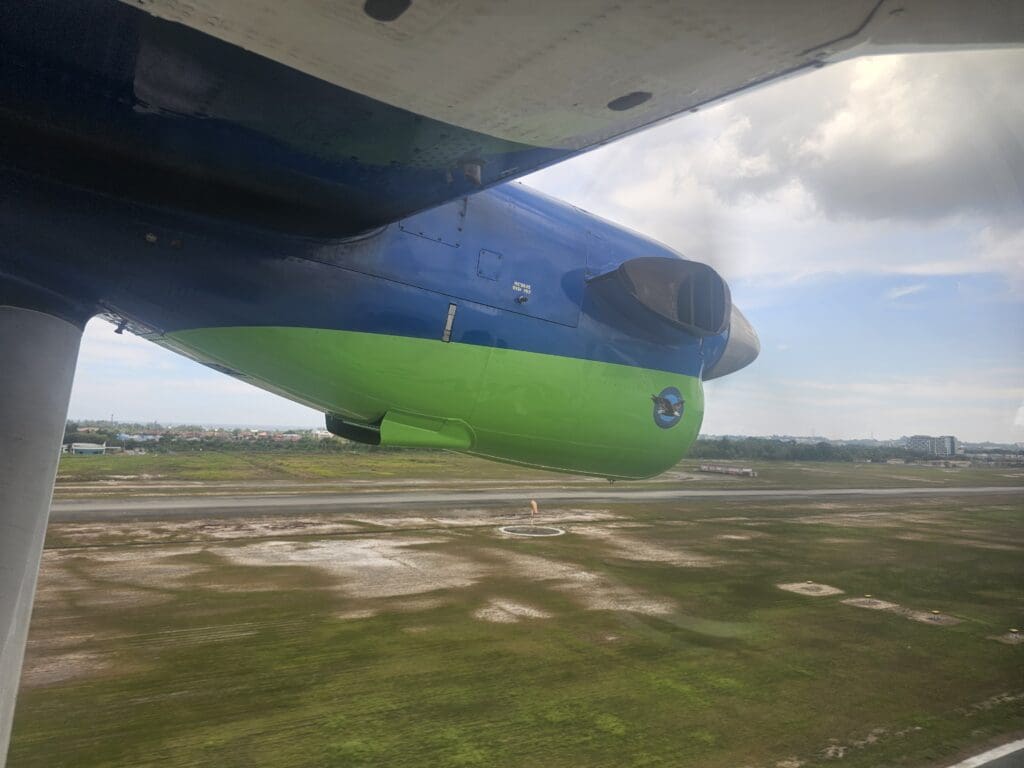
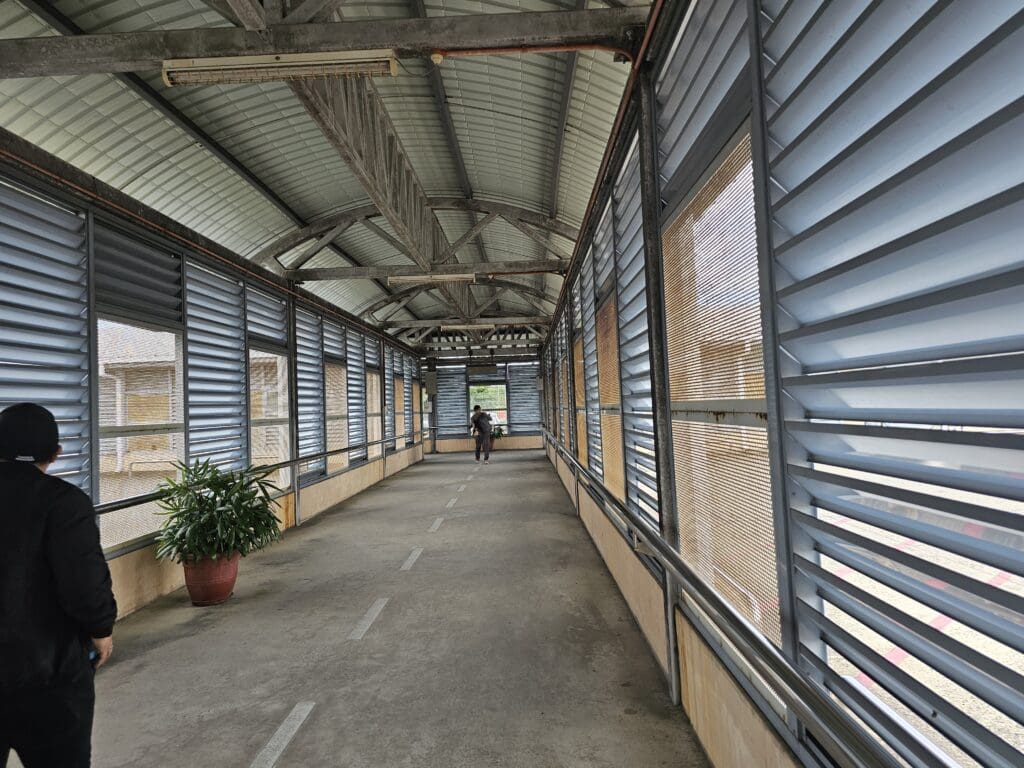
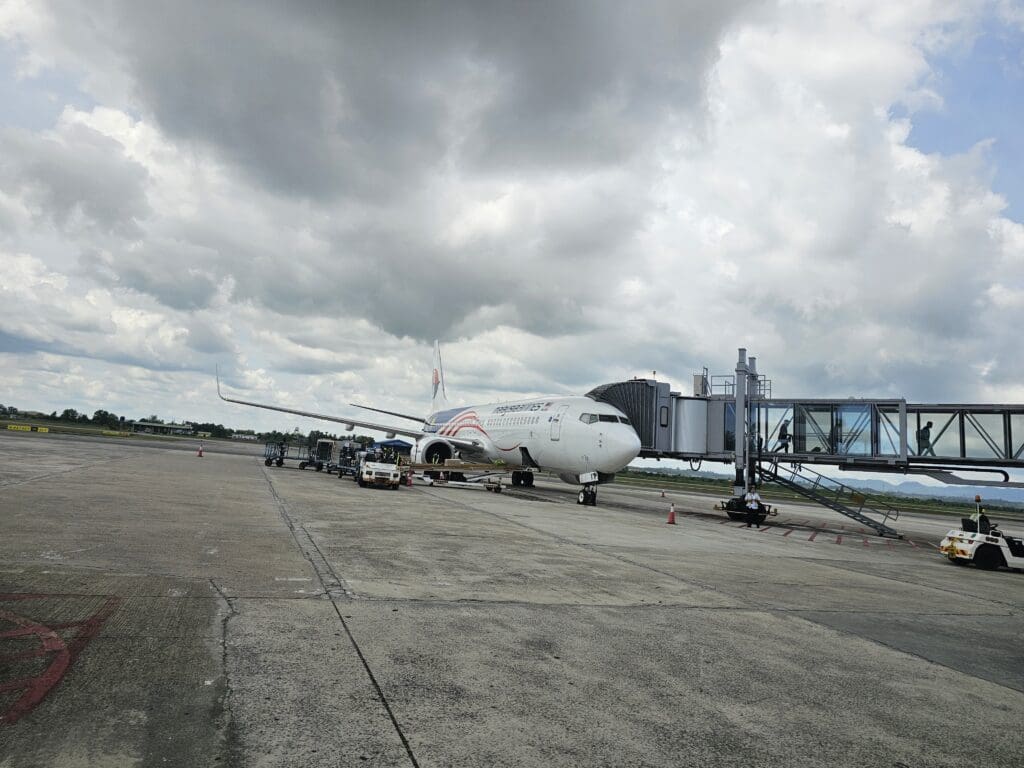
After forty minutes in the air, the Twin Otter touched down in Miri and made another soft and squeaky arrival, which this time was followed by some gentle braking, the comparatively long runway ensuring the pilots had no need to use the type’s short landing capabilities. Soon, we vacated the runway to the left and made our way towards the terminal, where alongside the aforementioned Boeing 737, a MASwings ATR 72 could be spotted. Soon, the Twin Otter was marshalled into one of the stands that seemed to be used exclusively by MASwings’ Twin Otter fleet and is connected to the rest of the terminal by a covered walkway.
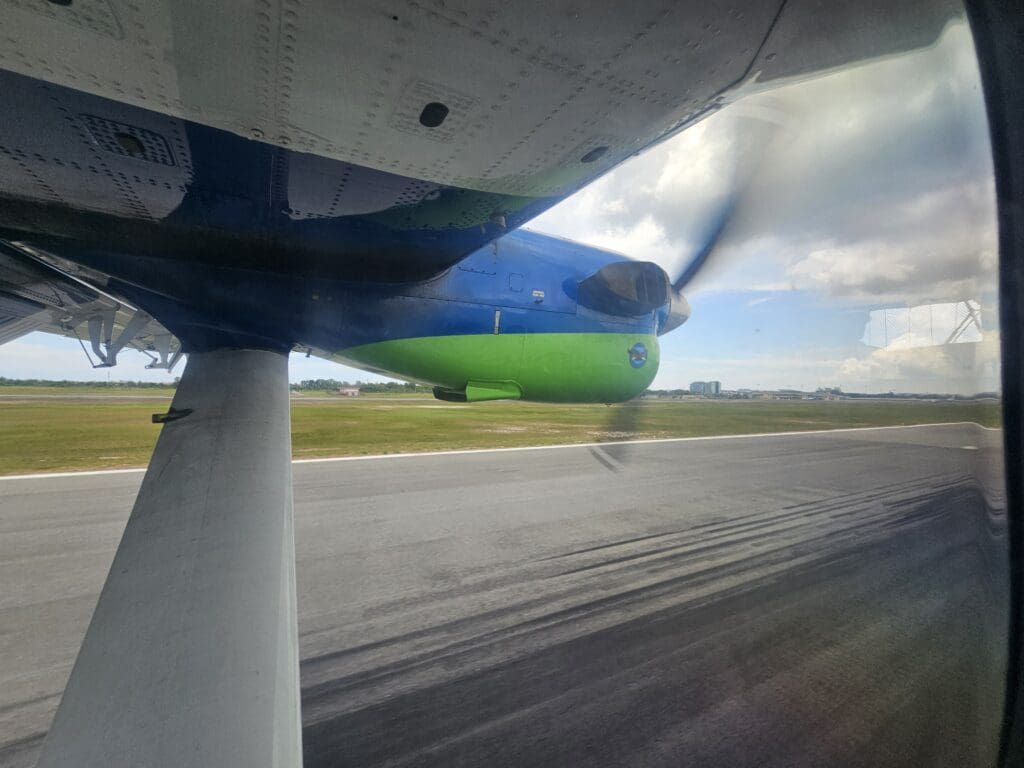
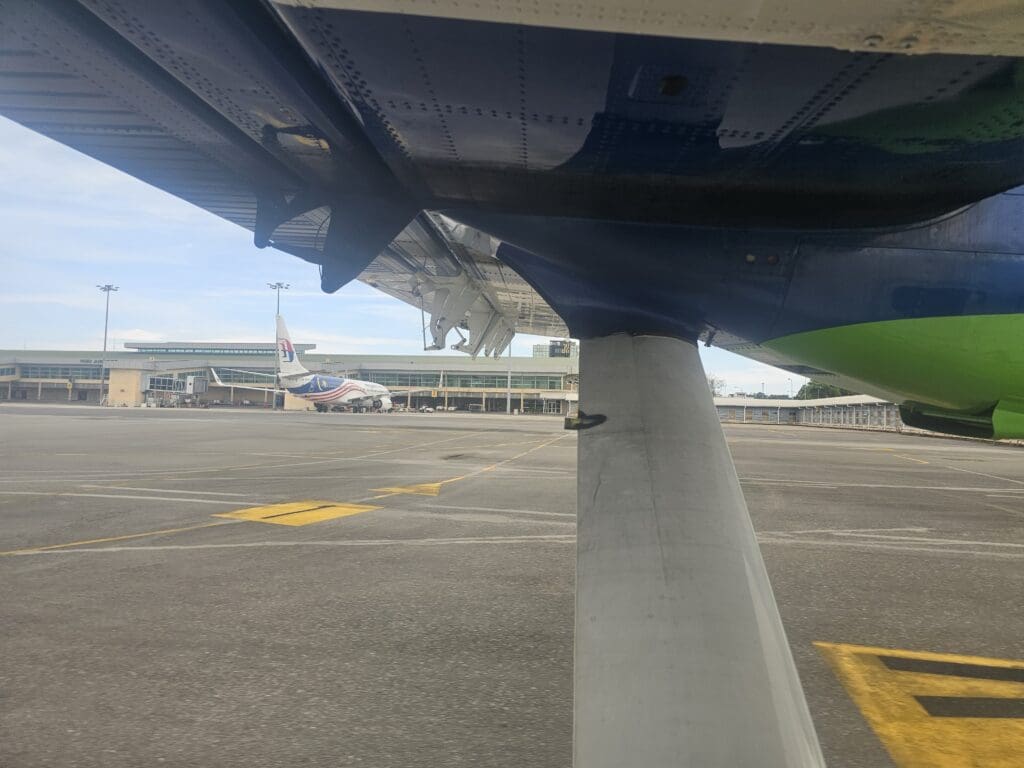
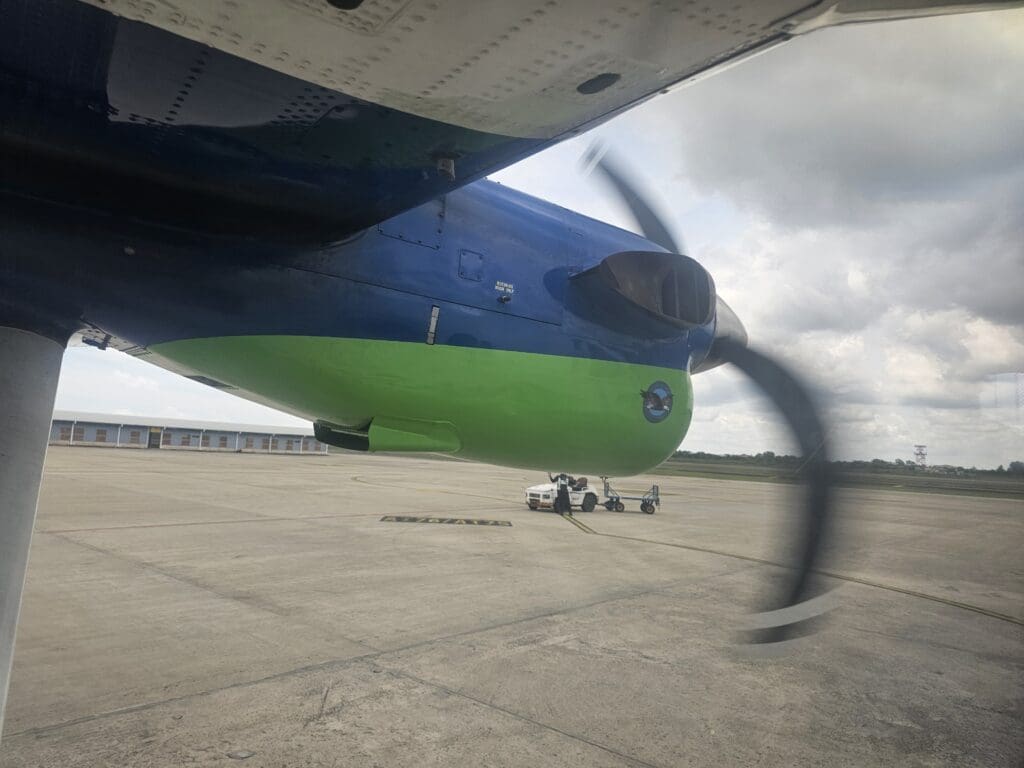
Upon coming to a halt at Stand R1, the two engines spooled down and the cabin was filled with silence before the Captain turned around and thanked passengers in Malay and English. Once we had come to a halt, it took a couple of minutes before the door was opened and disembarkation commenced. From the aircraft, I headed under the covered walkway before being directed towards a waiting minibus which took us on a one-minute journey to the entrance of the ‘domestic’ Sarawak portion of the airport’s small terminal. Whilst I would be heading off to Kuala Lumpur on an AirAsia service later that afternoon, seeing as I would have to pass through immigration and with no option to make an ‘international’ airside transit, I would have to head back to the landside portion of the terminal before heading to the airside departures area. Fortunately, with buckets of time on my hands, this was no issue, and I made the short walk through the baggage collection hall before arriving in the landside portion of the terminal.
Summary
While the Twin Otter is most certainly not a comfortable aircraft, as an aviation enthusiast I was very happy to get the opportunity to sample the delights of the aircraft at a reasonable cost, and to get the opportunity to fly to a small regional Malaysian STOL-port and fly on a third of MASwings’ Twin Otter fleet. Needless to say, my experience with MASwings left me with nothing to complain about and I would happily fly with the airline again!