Leaving Sarawak on AirAsia: Miri to Kuala Lumpur
Background
Separated by just under nine hundred miles and a significant stretch of sea, those needing to travel between the Sarawakan city of Miri in northwest Borneo and Kuala Lumpur are faced with few options other than to fly – with no regular passenger ships and most certainly no form of bridge between Borneo and Peninsula Malaysia! The city of Miri is reasonably small, home to just under a quarter of a million residents, however, it is well known for being the birthplace of Malaysia’s petrochemical industry and is home to the country’s first oil well. This industry, as well as increasing levels of tourism in the region, ensure there to be a continued demand for flights to Miri, and today his is connected to destinations across Borneo, as well as to Johor Bahru, Kota Kinabalu and Kuala Lumpur in Peninsula Malaysia.
Needing to fly back to Kuala Lumpur following my short stay in Borneo, I had two options – AirAsia or Malaysia Airlines. In the end, the significantly cheaper ticket costs meant that I picked AirAsia, with this scheduled to be my third-ever flight with the airline. Despite booking via the Trip app, I was able to manage my booking via AirAsia’s MOVE app, and in the usual low-cost carrier style I was presented with a plethora of additional extras. Wanting to guarantee myself a window seat and seeking to sample some of the culinary delights from the airline’s highly regarded Santan Café menu, I splurged out on one of the cheapest window seats near the rear of the aircraft and ordered myself the MALA Beef Soup Noodle with Chicken Slices, and cheesecake, both being two of AirAsia’s most popular onboard catering items. When it came to check-in, with this being a domestic flight, this was a quick and easy process, and within a few taps, I received my mobile boarding pass for the flight and was all set to jet off to Kuala Lumpur.
The Journey
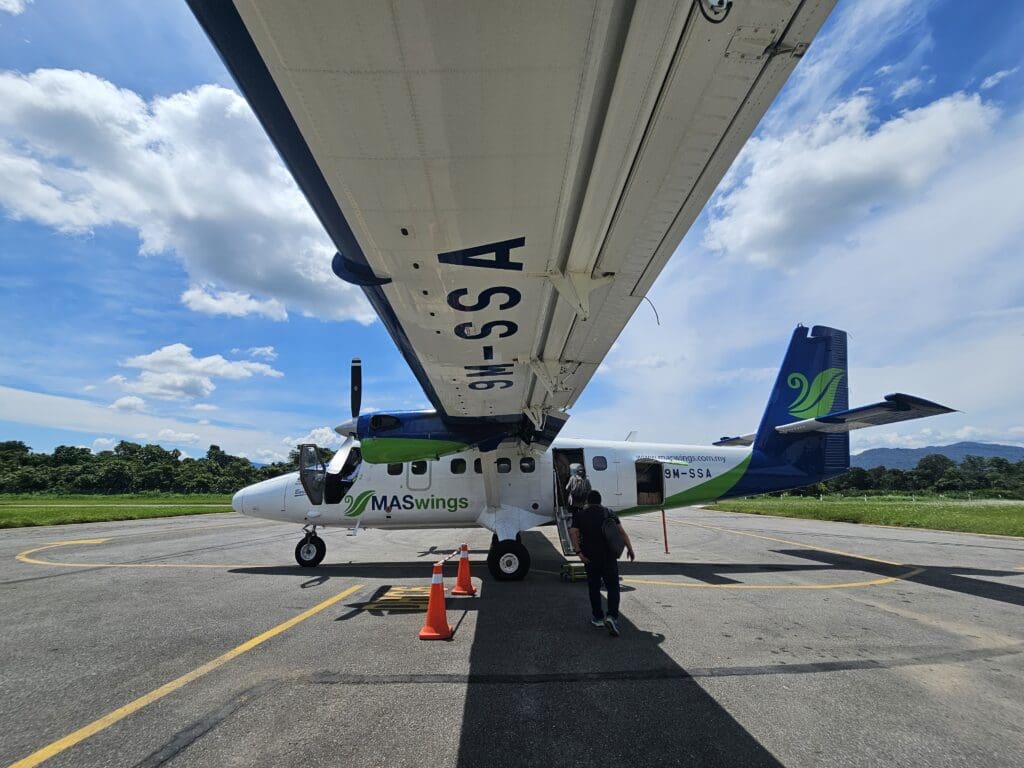
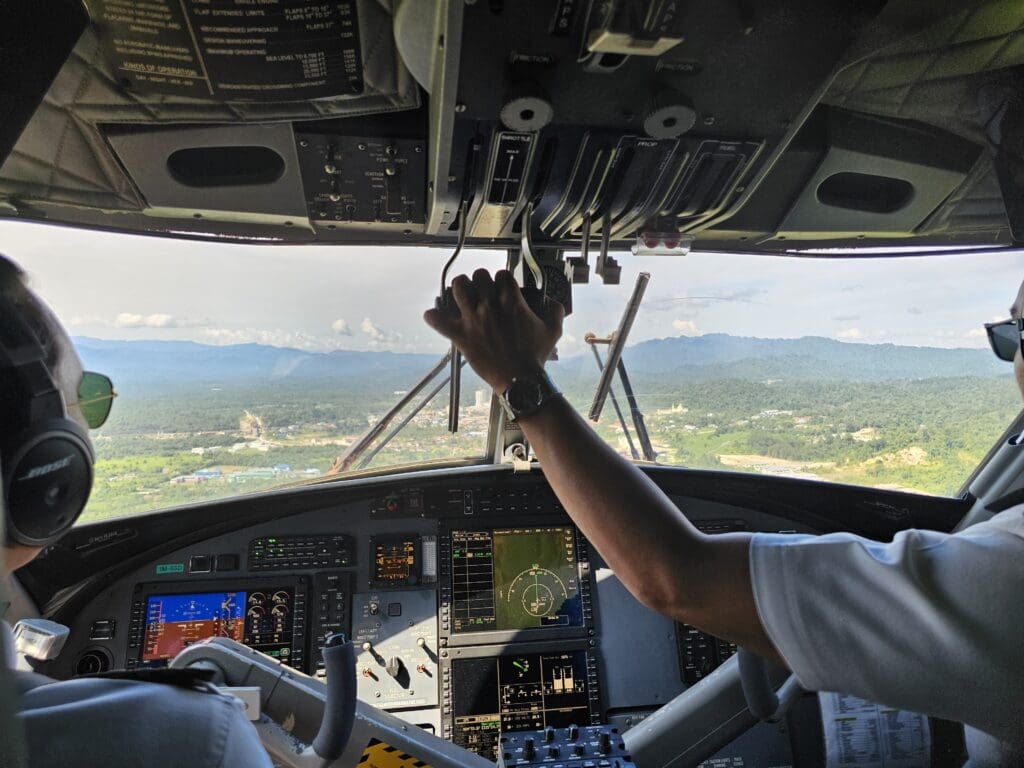
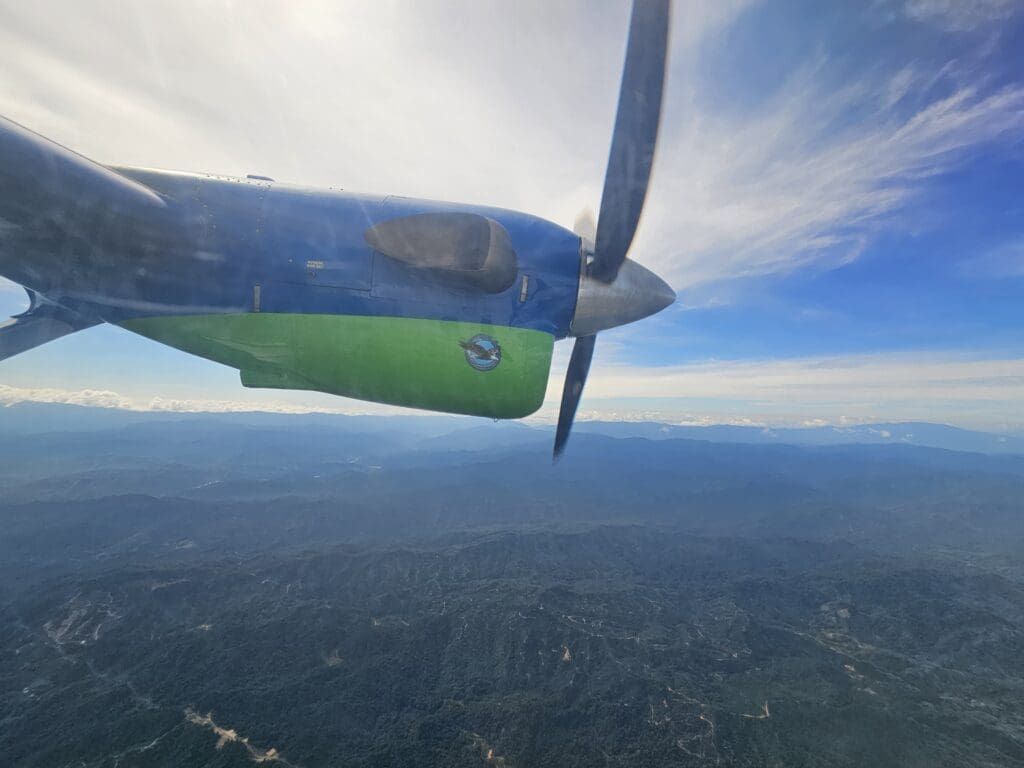
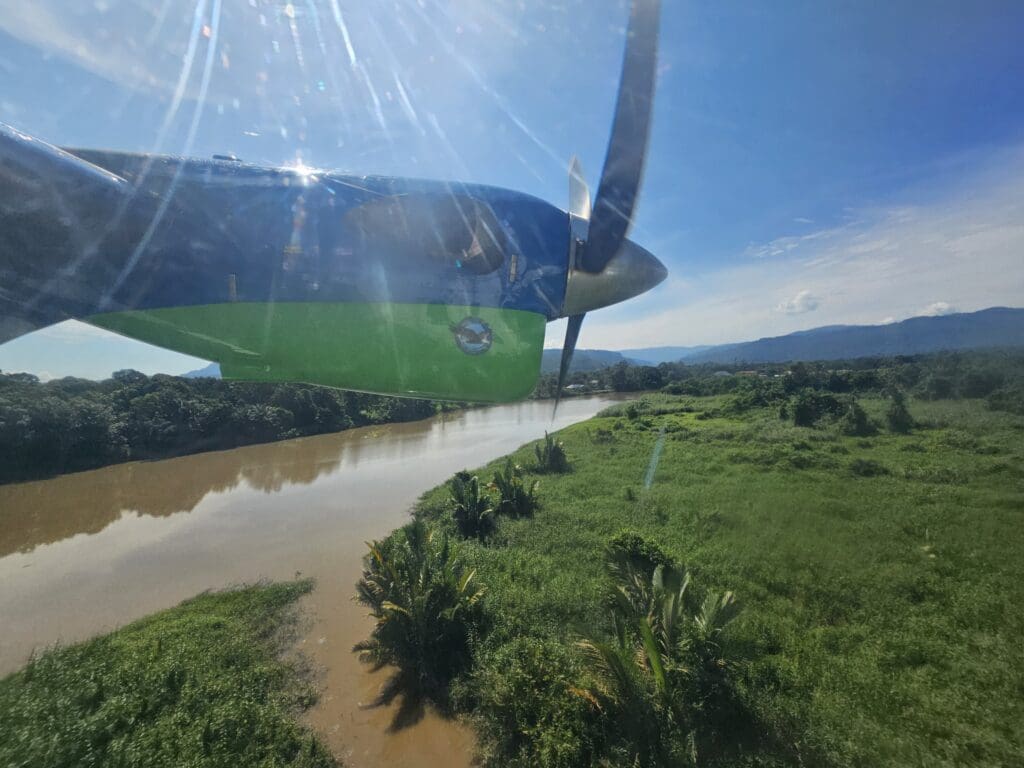
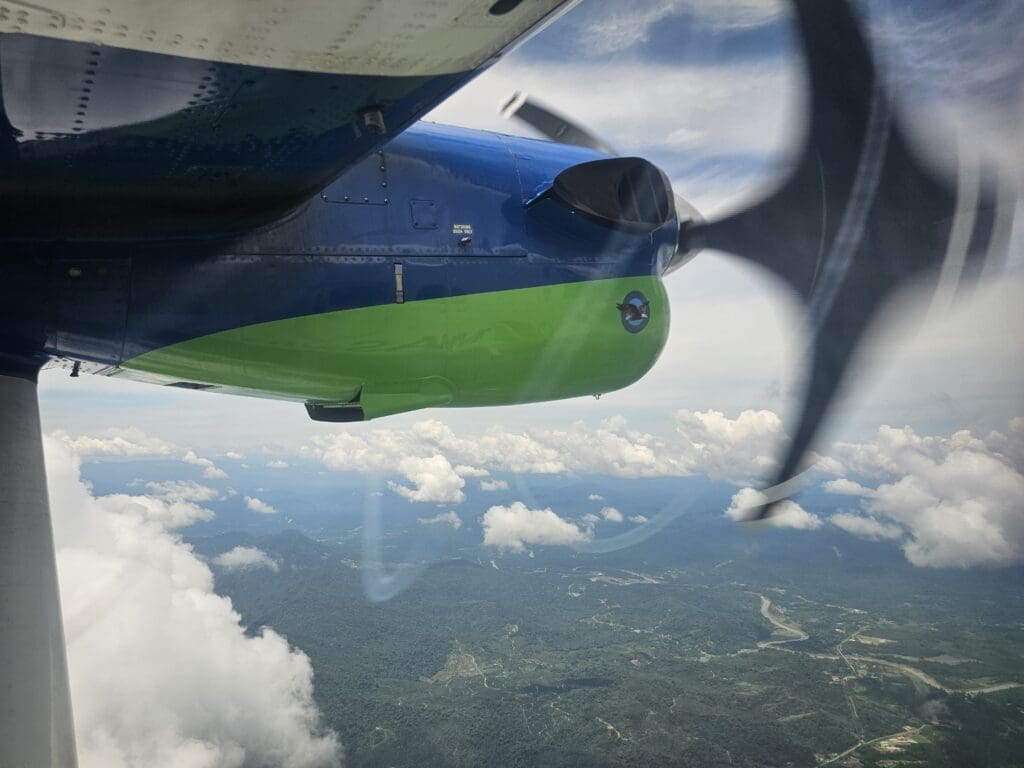
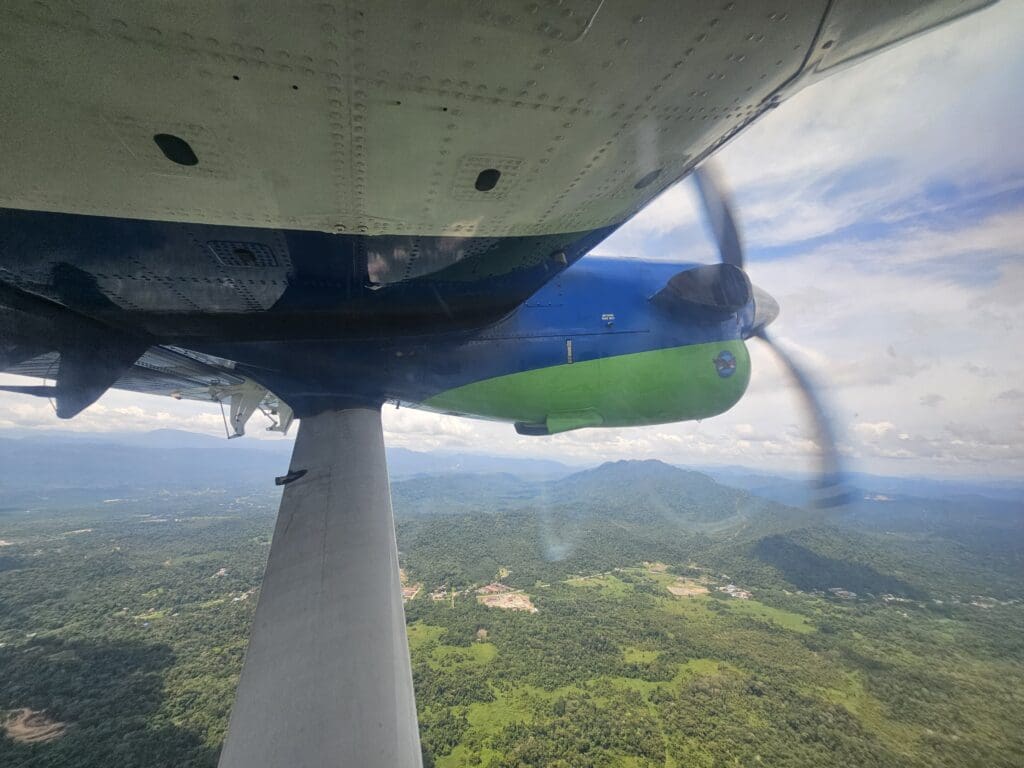
Following an exciting morning spent in the noisy confines of a MASwings Twin Otter as we trundled over Borneo, I touched down in Miri at 1150. Having planned my itinerary with plenty of padding in case of any delays, my punctual arrival meant that I was left with just under four hours to spend in one of Malaysia’s smaller and quieter airport terminals. Following a short walk under a covered walkway and a bus ride, I reached the terminal building. Unlike many terminals within Malaysia which are designed for easy airside-to-airside connections as passengers are deposited straight into the airside departures area, arriving on a Sarawakan ‘domestic’ service, there was no facility for passengers to transfer to any flight out of Sarawak without first heading to the landside portion of the terminal. This is due to the immigration formalities that all passengers must undertake when exiting the state – with Sarawak, just like Sabah, maintaining its own immigration regime separate from that of Peninsula Malaysia.
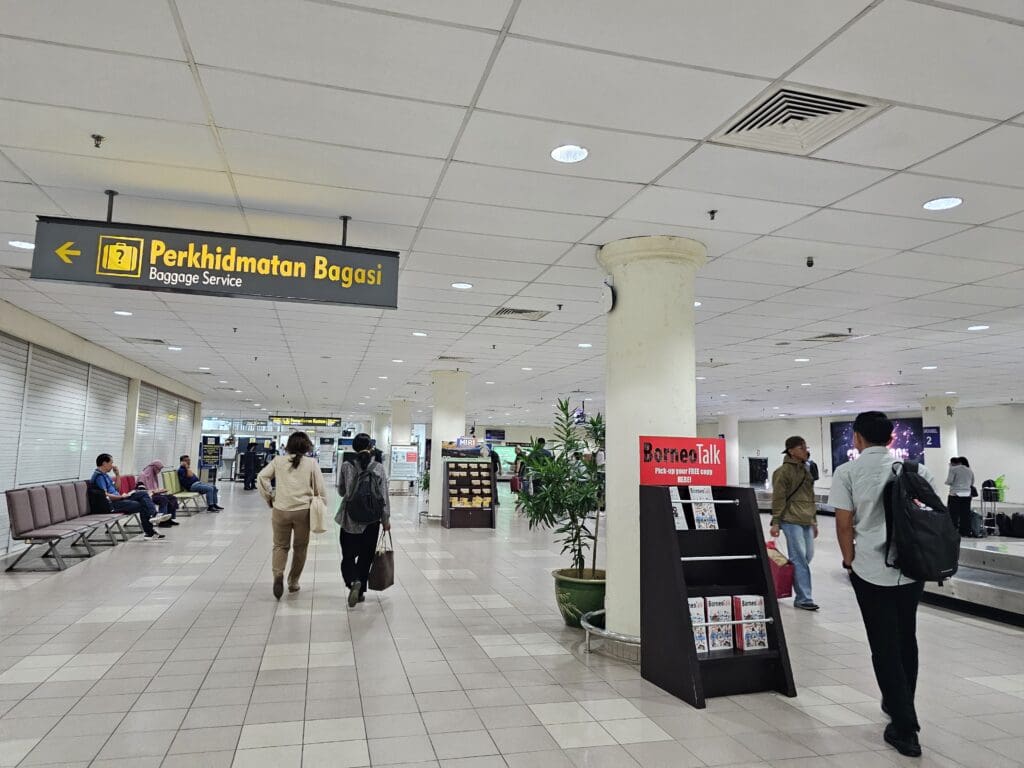
With no luggage to collect, I steamed through the baggage collection hall, which at that time was rather busy with passengers who had arrived on Malaysia Airlines’ lunchtime Boeing 737-800 operated service from Kuala Lumpur. Soon, I found myself in the terminal’s fairly large, spacious and modern landside atrium which, considering the airport’s reasonably small size, hosted a surprising number of facilities. These included several gift shops selling a wide array of (slightly overpriced) Sarawakan souvenirs and produce, a convenience store, a cake shop, a photo studio, and branches of Boost, Marrybrown, Starbucks and Subway.
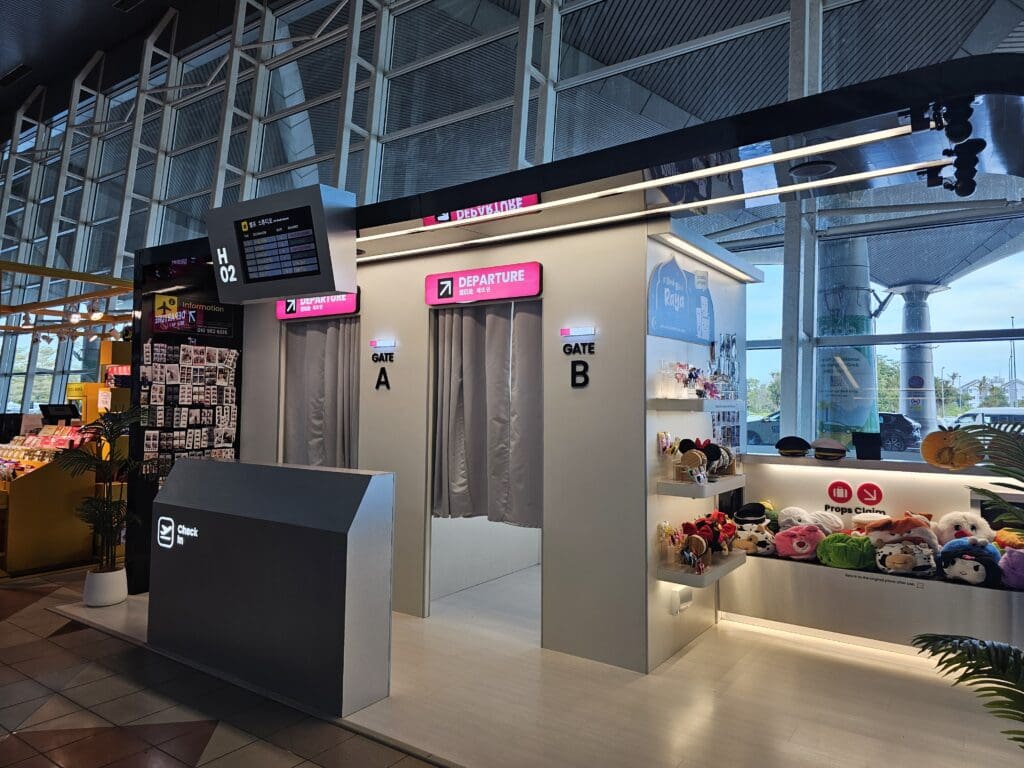
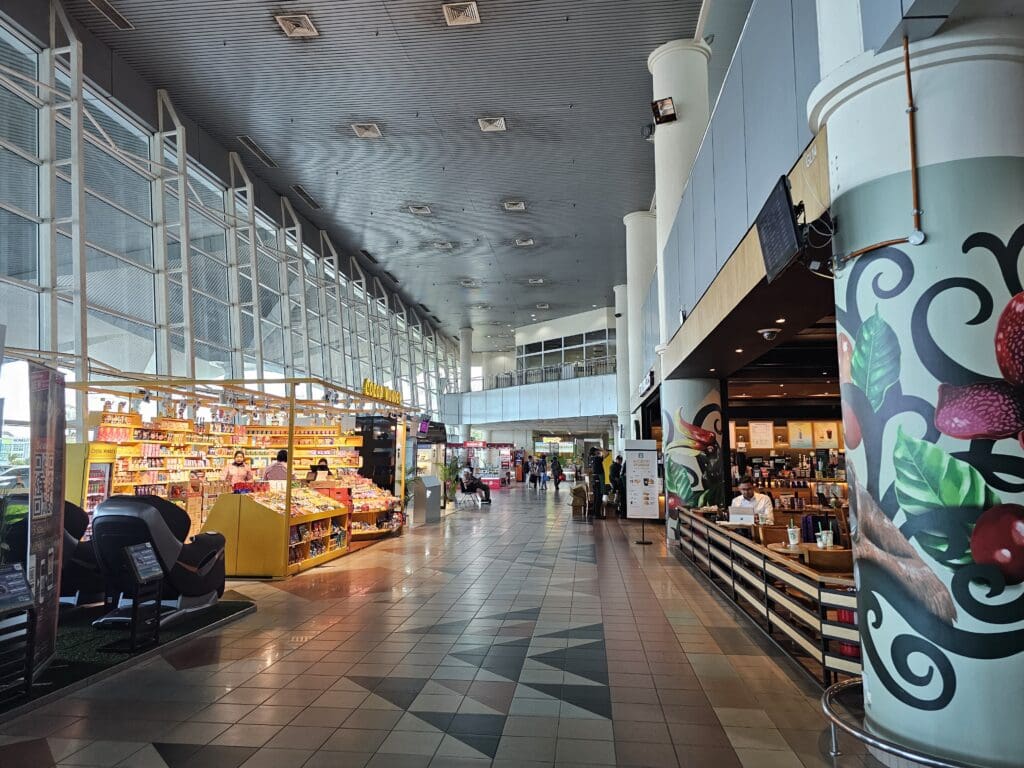
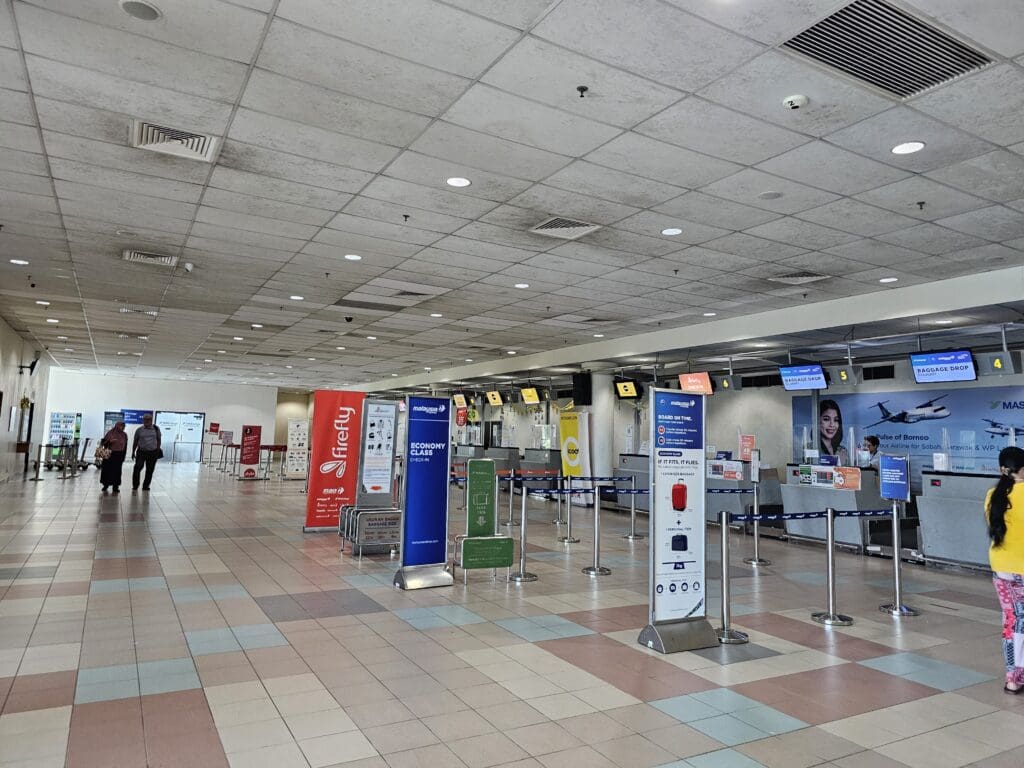
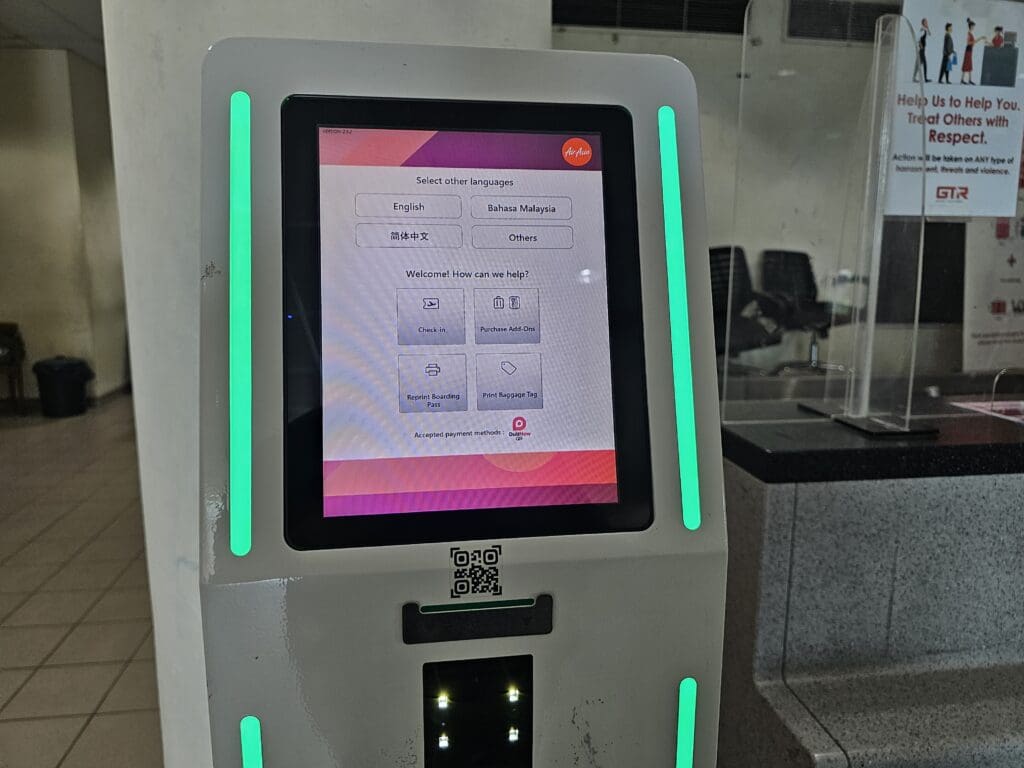
With a perishing thirst, I decided to stop by the convenience store to purchase a coffee-enthused Milo. Once I had drunk this up, I made my way to the check-in area in order to print off an AirAsia boarding pass from one of the self check-in machines there. On a side note, unlike some low cost carriers, AirAsia does not charge those who do not check-in online. With my boarding pass in hand, hoping for airside vistas and confident that there would be a similar decent array of facilities in the airside portion of the terminal, with three or so hours to go until my flight’s departure time, I decided to head airside. Making my way up the escalators, I soon entered the small immigration hall where I was delighted to see that all desks were manned, enabling me to wander straight up to one of them. Following a quick and easy check, during which my suspiciously short stay in Sarawak was not questioned, I was free to continue onwards to the security checkpoint. Once there, this was similarly quick and easy, assisted by the fact that I was not required to remove electronics or liquids from my bag. No more than a couple of minutes after entering the immigration area, I arrived in the airside area, this quick trip through the airport failing to leave me with any sort of complaint.
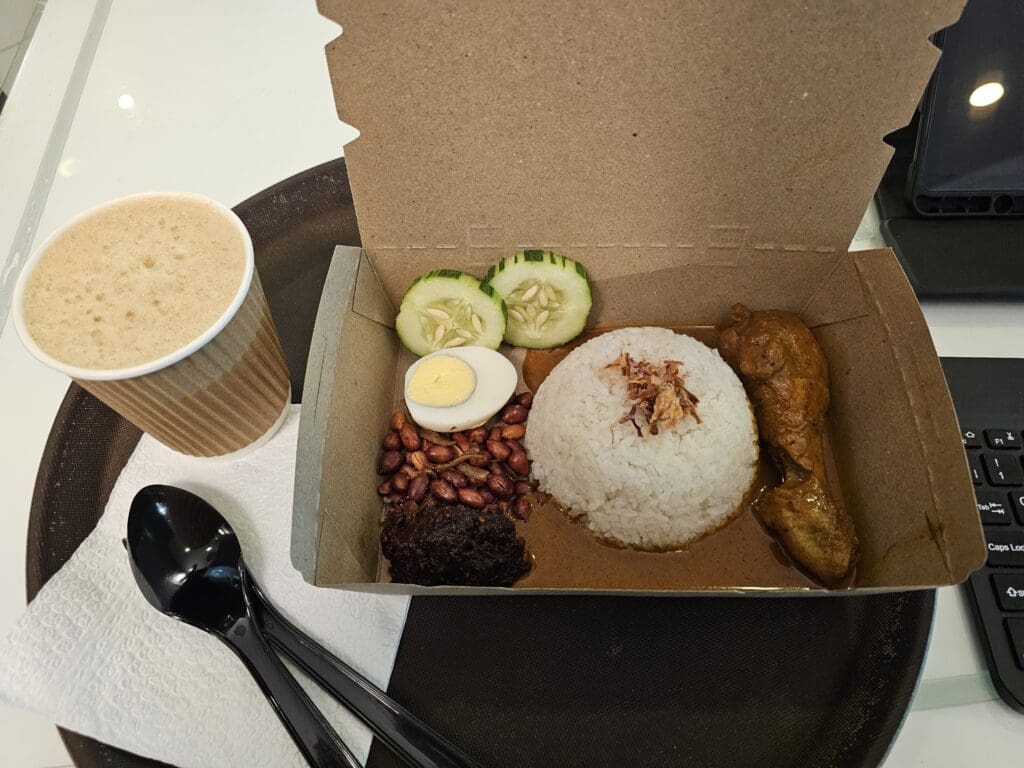
Despite my initial positive first impression of Miri Airport, once airside, I was disappointed to find the airside portion of the terminal to be small, cramped and lacking in facilities, thus making me regret that I had not lingered around for longer in the landside area. This consists of a square-shaped hall with six departure gates on one side, with facilities including a convenience store, a small souvenir store and branches of Famous Amos and Kopitiam Delights. Unfortunately, airside views were not particularly fantastic, with these only had through two layers of glass. Rather than dwell on my poor decision to enter the airside area with over three hours to go until my flight, I instead decided to head for lunch, opting for a nasi lemak from the Kopitiam Delights, setting me back 18.90 ringgit (£3.30) when combined with a coffee and thus being one of the more reasonable airport lunches that I have sampled.
After polishing off my lunch, there was little for me to do other than sit and wait. That afternoon, boarding was scheduled to commence at 1505, five minutes before the scheduled arrival time of the inbound aircraft – with AirAsia being somewhat famous for their lightning-fast turnaround times. However, this became unlikely when upon opening up my flight tracking app, I discovered that the inbound aircraft had departed Kuala Lumpur over an hour behind schedule and was not set to arrive until 1555, indicating that there would be a fairly significant delay for my flight back to the Malaysian capital. Indeed, at 1440, an announcement was made advising that the flight would now depart at 1620.
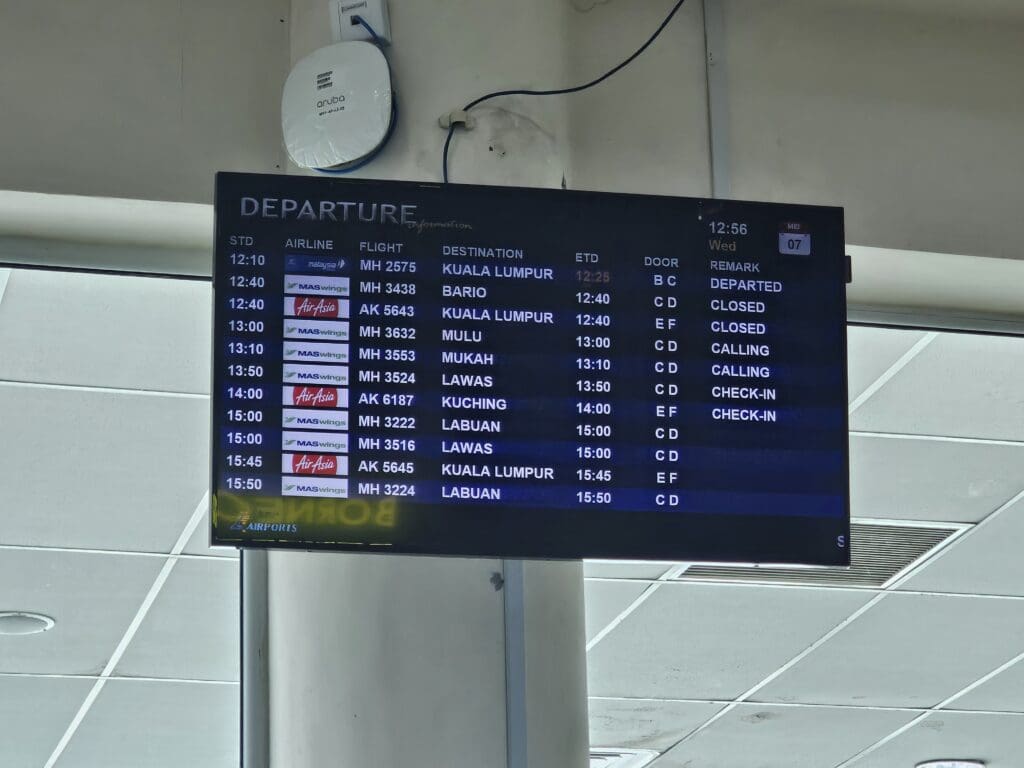
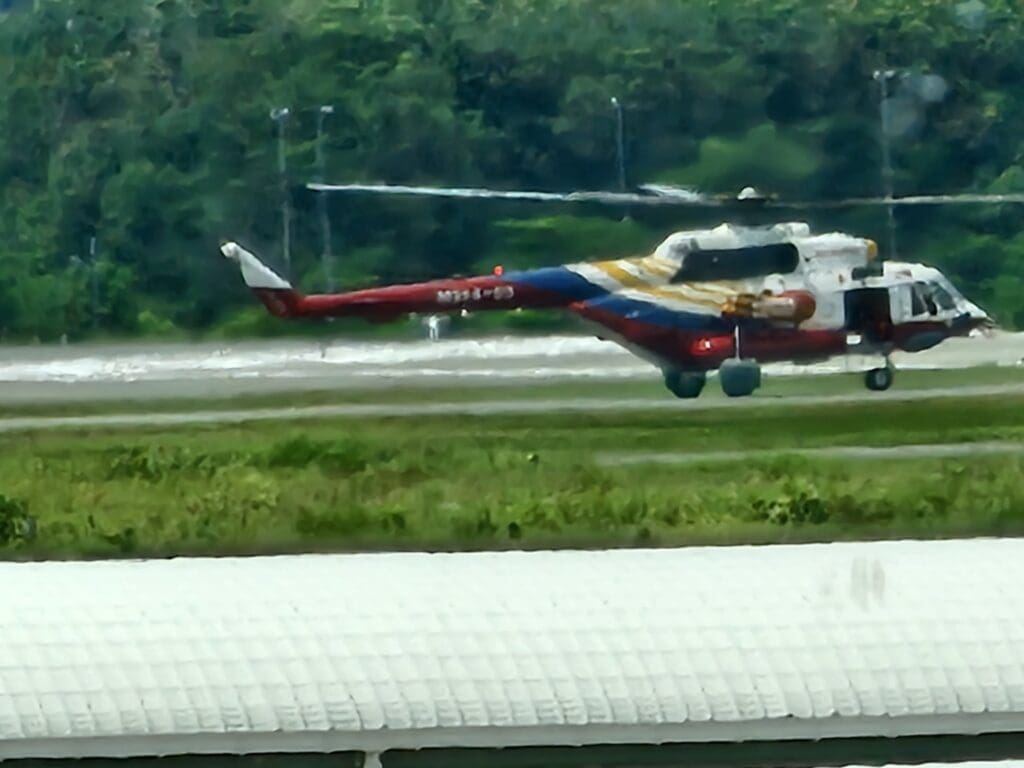
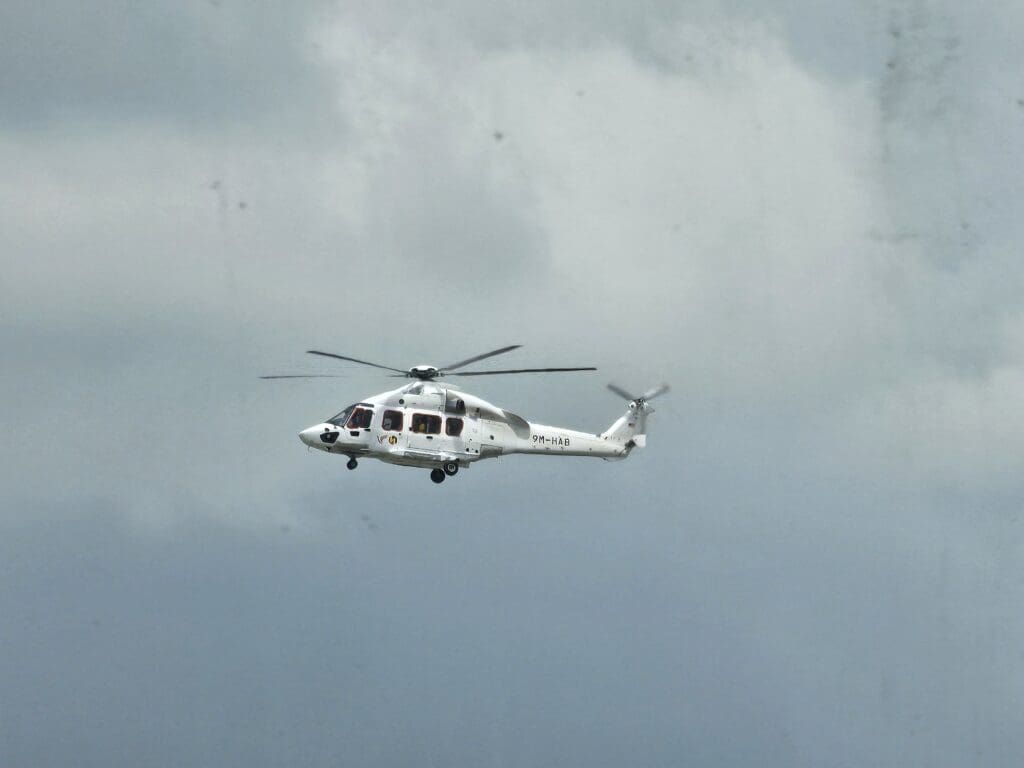
Throughout my stay, a fairly constant stream of passengers could be seen passing through the terminal, with flights heading off to Bario, Kuala Lumpur, Kuching, Labuan, Lawas, Mulu and Mukah, operated by AirAsia, Malaysia Airlines and MASwings on a mixture of Airbus A320s, ATR 72s, Boeing 737-800s and Viking Air Twin Otters. Meanwhile, several groups of offshore platform workers donned in jumpsuits could be seen being escorted through the terminal, with Miri being a helicopter hub for flights to and from these platforms. In fact, during my stay, I saw a couple of ultra-modern Airbus H175 helicopters, operated by Sarawak operator Hornbill Skyways.
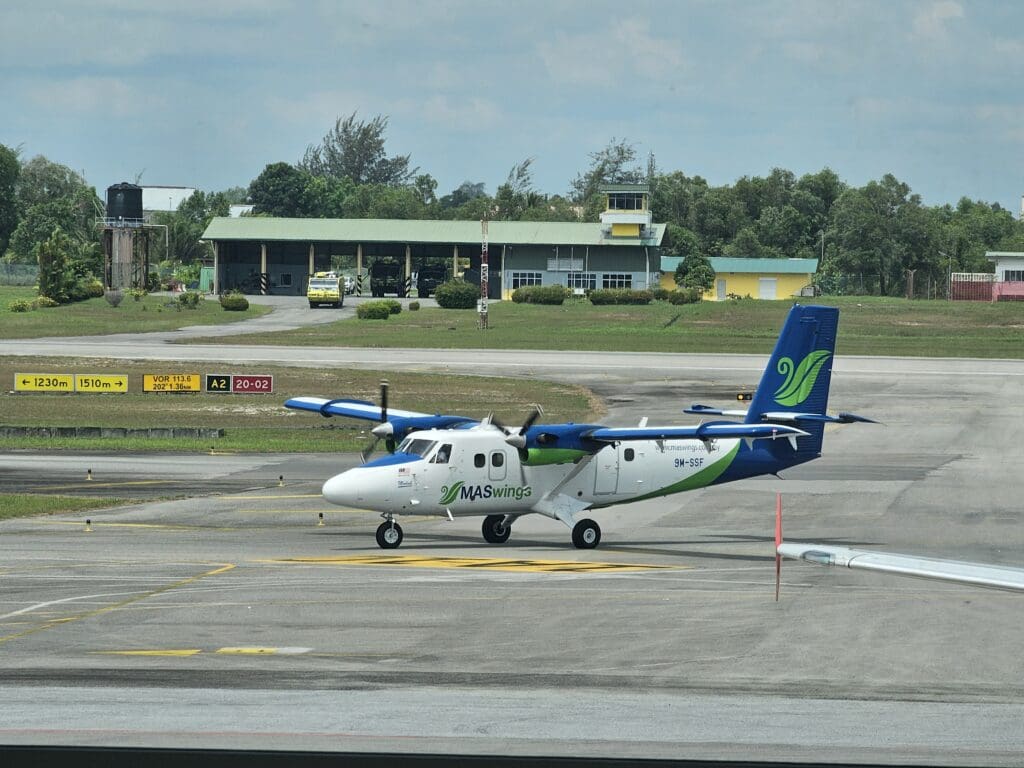
Inside the terminal, many passengers sprung up as they caught sight of an AirAsia Airbus A320, however, this particular aircraft took the form of the afternoon rotation from Kota Kinabalu and not the delayed flight from Kuala Lumpur. Unfortunately, the gate agents failed to do a fantastic job at advising passengers that boarding for the Kota Kinabalu service had commenced, and not for the flight to Kuala Lumpur, thereby creating chaotic scenes at the gate when many passengers were turned away.
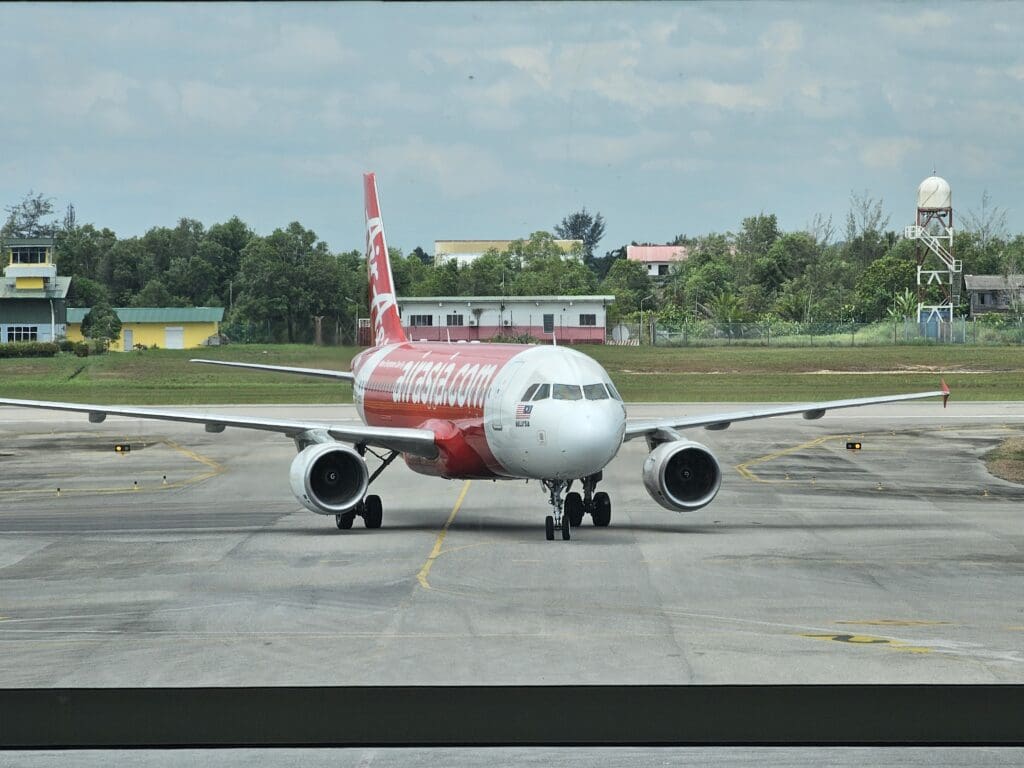
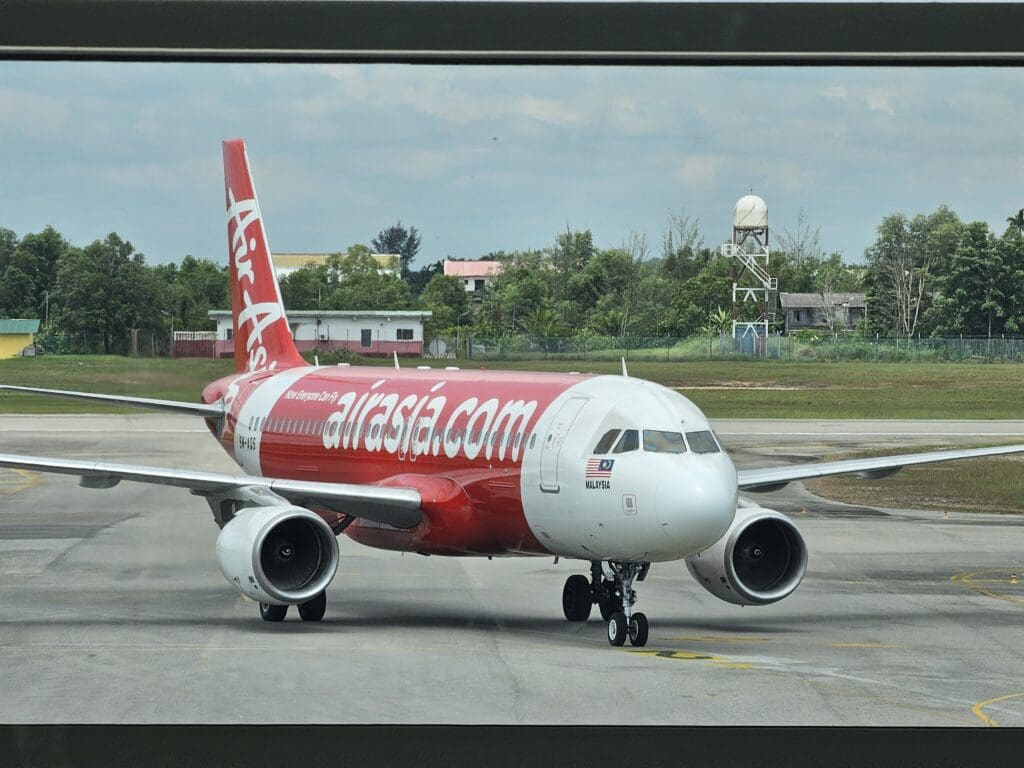
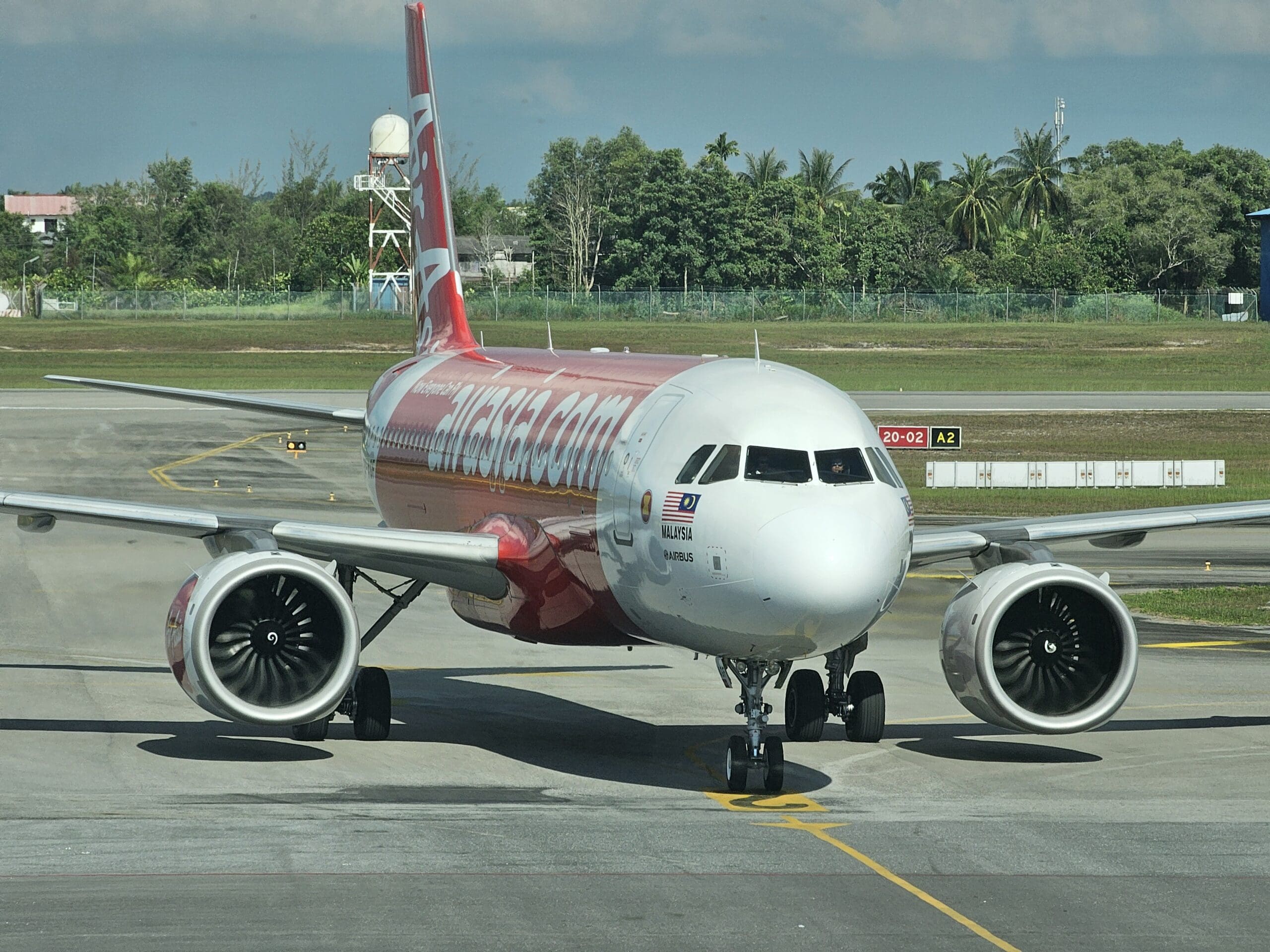
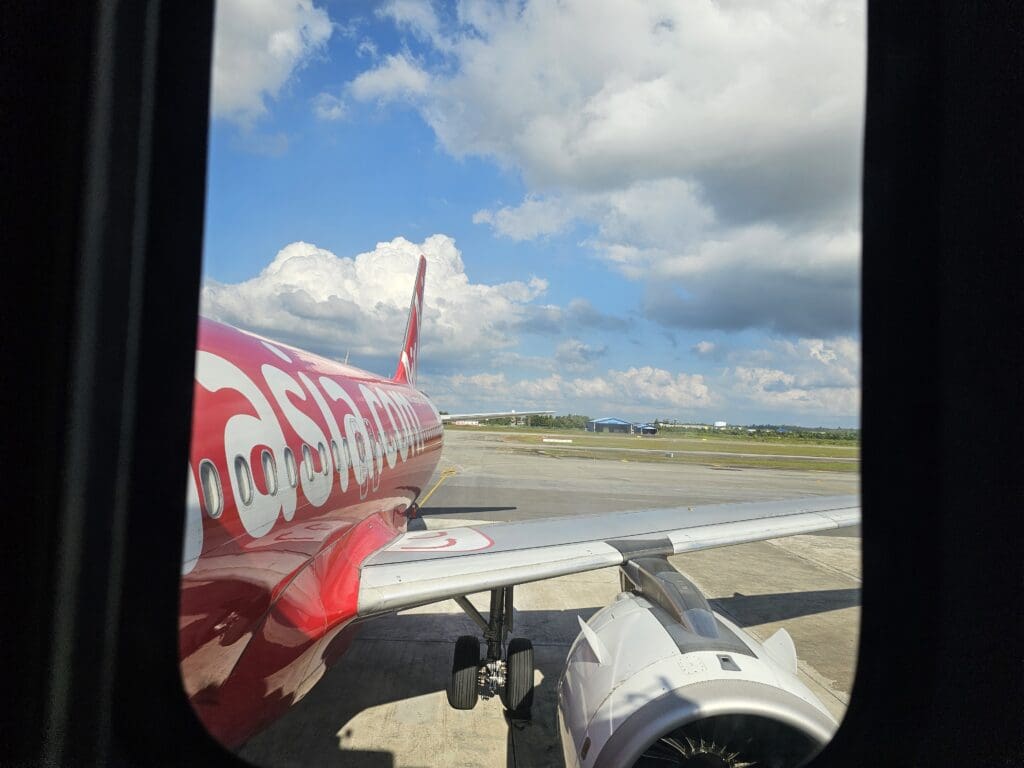
As boarding for AirAsia’s service for Kota Kinabalu was underway, at 1556, red and white Airbus A320-251N, 9M-AGF, touched down in Sarawak before coming to a halt a few minutes later at Stand 2. Assembled at Airbus’ factory in Toulouse Blagnac, this aircraft first took to the skies in June 2017 with the test registration F-WWTR, making it just under eight years old at the time of my flight. Following testing, the aircraft was given its current Malaysian registration and was ferried to Kuala Lumpur with a mid-journey refuelling stop at Dubai World Central Airport. Like many Airbus A320neos, this aircraft was placed into long-term storage, remaining on the ground in Kuala Lumpur for a period of almost two years from April 2021 to March 2023, before finally returning to the skies. In the week before my flight, the aircraft had been in the skies non-stop, connecting Kota Kinabalu with Bintulu, Ho Chi Minh City, Johor Bahru, Kuala Lumpur, Labuan, Miri, Sandakan, Seoul Incheon, Shanghai Pudong, Shenzhen, Sibu, Singapore and Tawau, before switching bases to Kuala Lumpur from where it flew to Phu Quoc before heading to Miri.
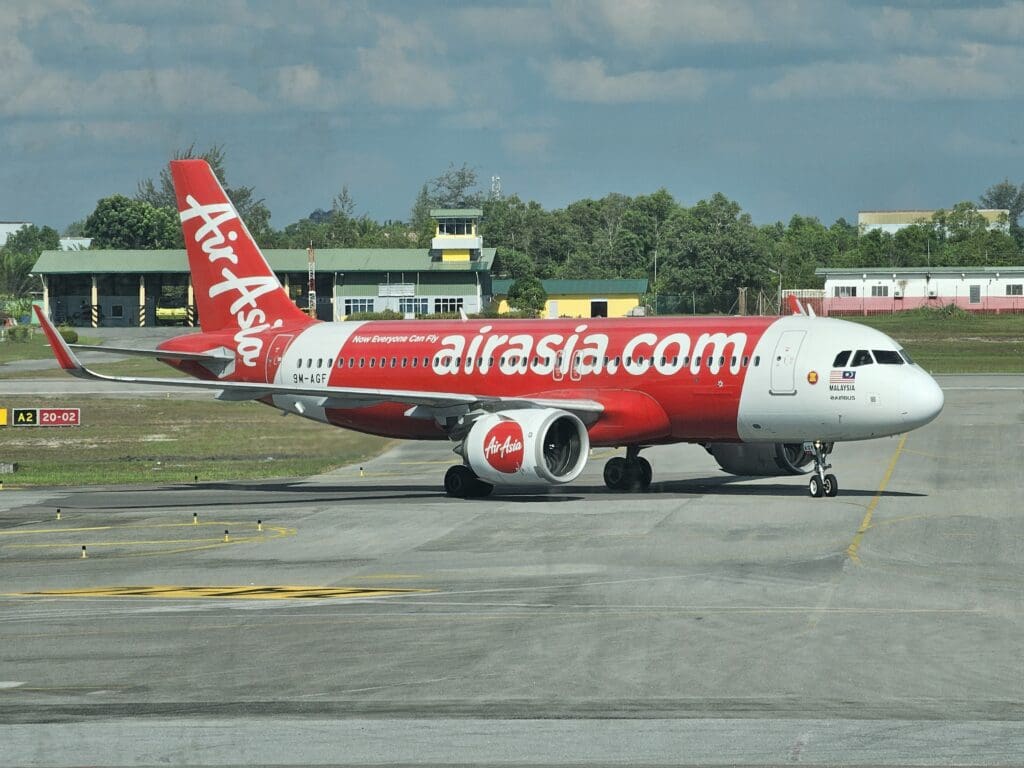
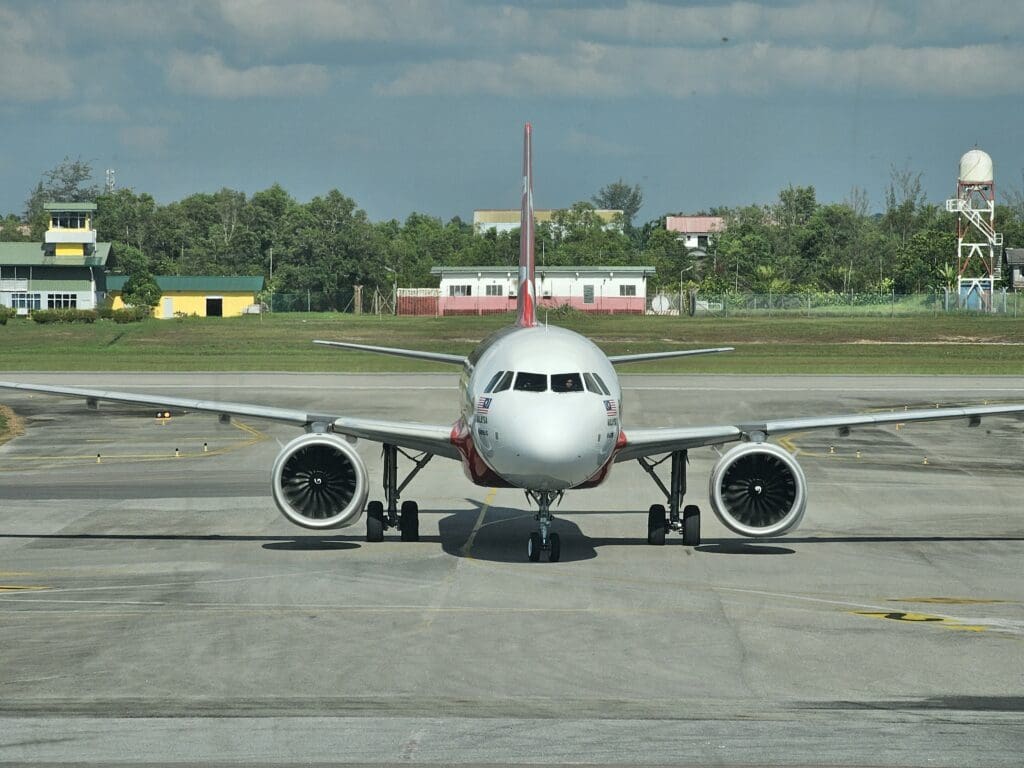
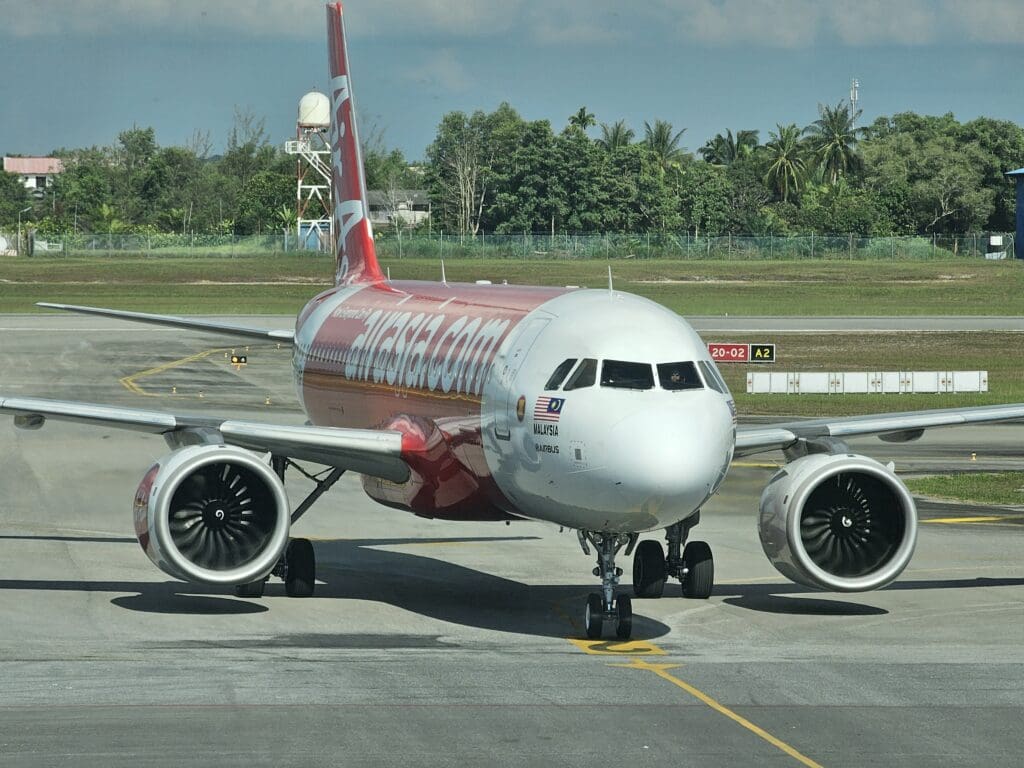
With AirAsia aircraft not seeming to use their auxiliary power units on the ground, once the aircraft came to a halt, one engine remained spooled up before the other powered down, at which point a ground power unit was disconnected before the other engine was shutdown, ensuring that there was no loss of power to the aircraft’s systems as the source of power was transferred from the engines to the ground power unit. Soon, the glass jetbridge was positioned up to the L1 door, with disembarkation commencing a short time later. By the time the jetbridge had been connected, all those bound for Kota Kinabalu had made their way onto the neighbouring AirAsia aircraft and so boarding for the Kuala Lumpur service commenced.
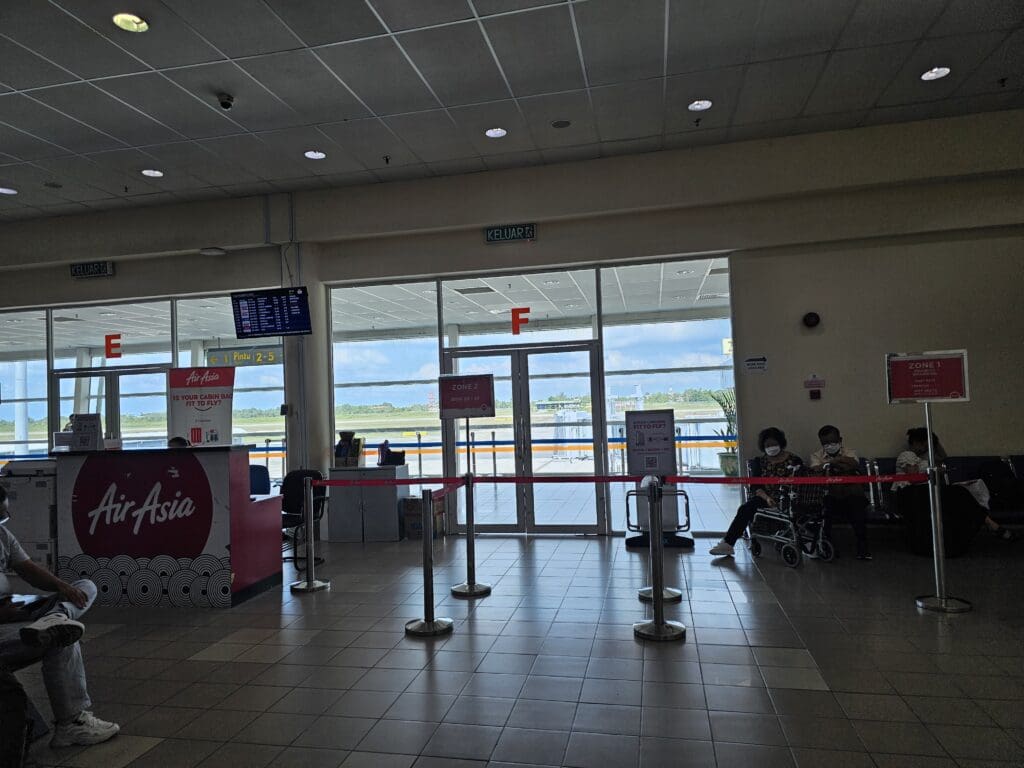
That afternoon, boarding followed the standard AirAsia procedure. Specifically, passengers were split into three zones – Zone 1 was for Priority passengers, those with Fast Pass, Premium Flex and passengers who had paid to pre-reserve the ‘Hot Seats’, Zone 2 consisted of those in Rows 20 to 31, and Zone 3 was those in Rows 6 to 19. Unlike in Penang a few days earlier, many passengers failed to queue in the right place and thus boarding was a little more chaotic than expected – this was not assisted by the fact that once again, there seemed to be a very small number of ground staff on hand to assist with this. Eventually, I made it to the front of the queue and had my boarding pass scanned and passport checked by the friendly yet rather flustered-looking gate agent.
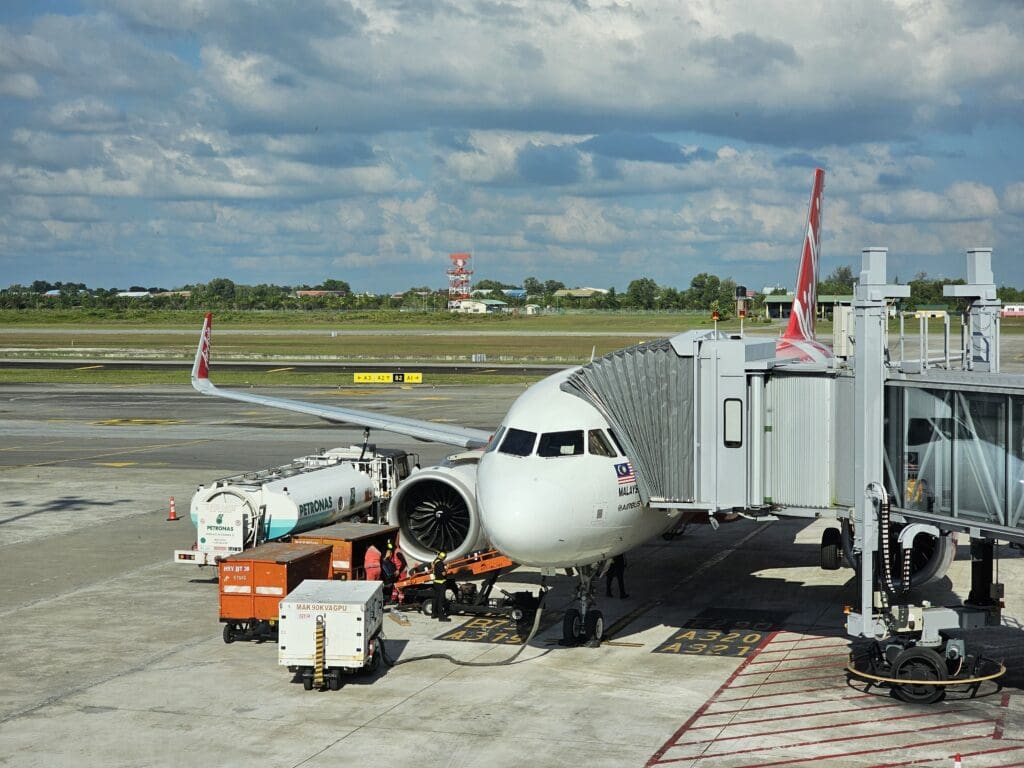
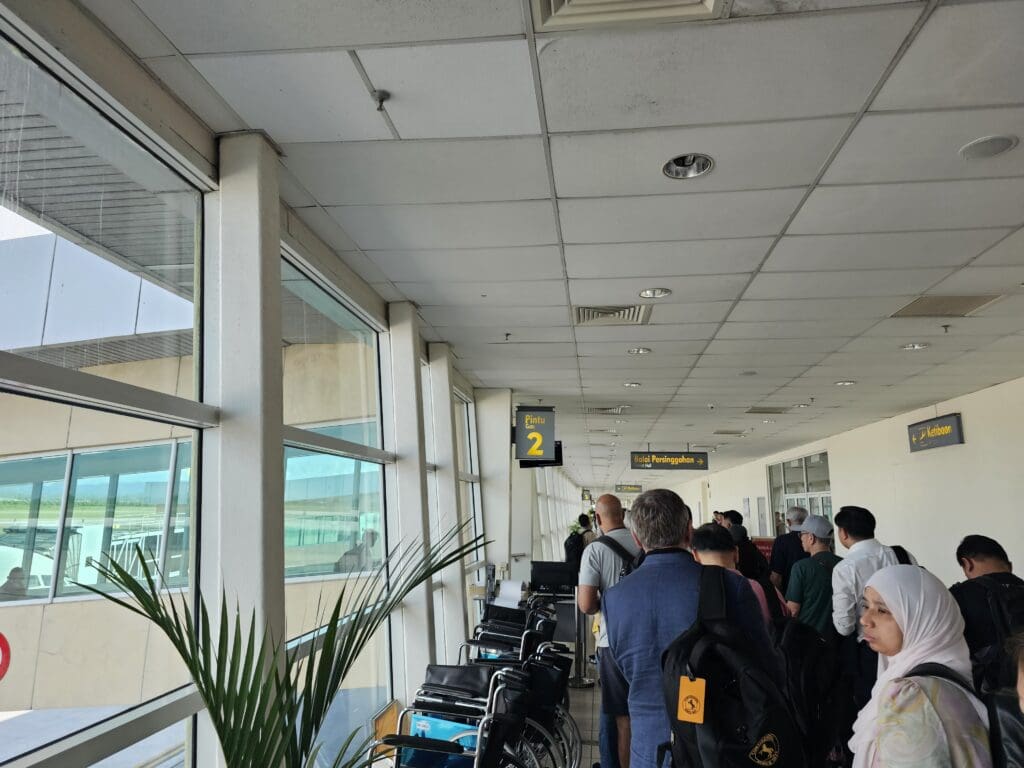
From the gate podium, I headed through the doors and found myself in the corridor that leads to each of the airport’s stands where a short wait was required as the final passengers from the inbound service made their way up into the terminal building. As soon as all passengers had entered the terminal, passengers were given the green light to board and I voyaged down the hot and humid greenhouse-like jetbridge where another wait was in store whilst those ahead of me boarded the jet. Eventually, it was my turn to board and I soon stepped into the Airbus’ forward galley where I received a reasonably friendly and lively welcome.
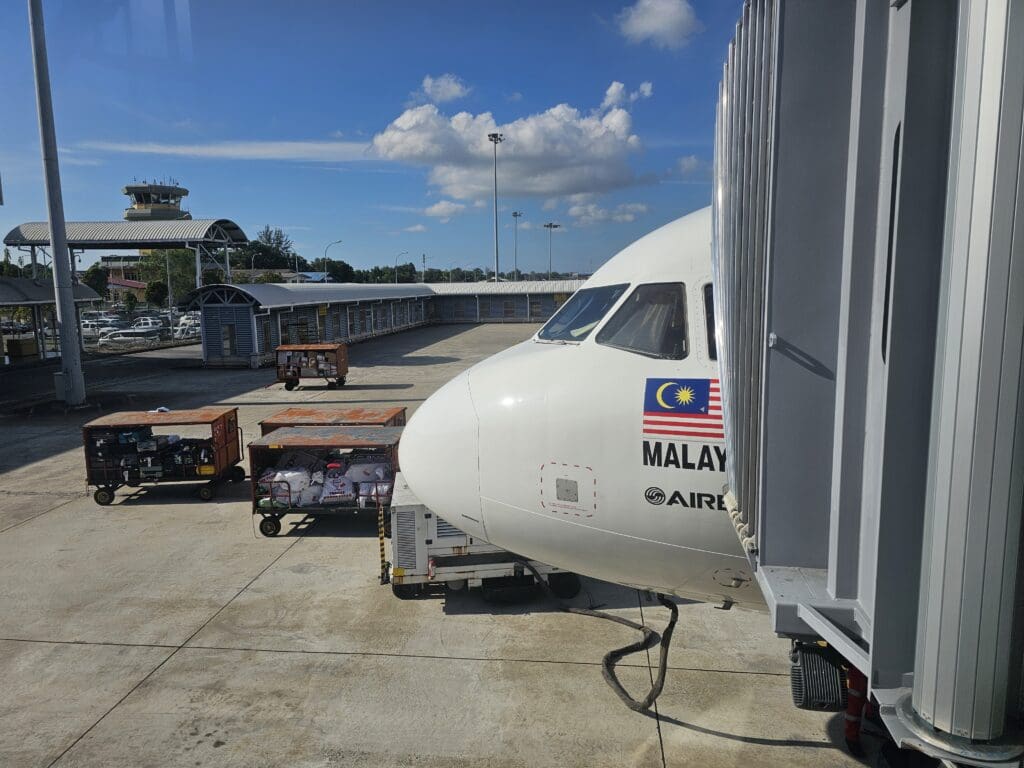
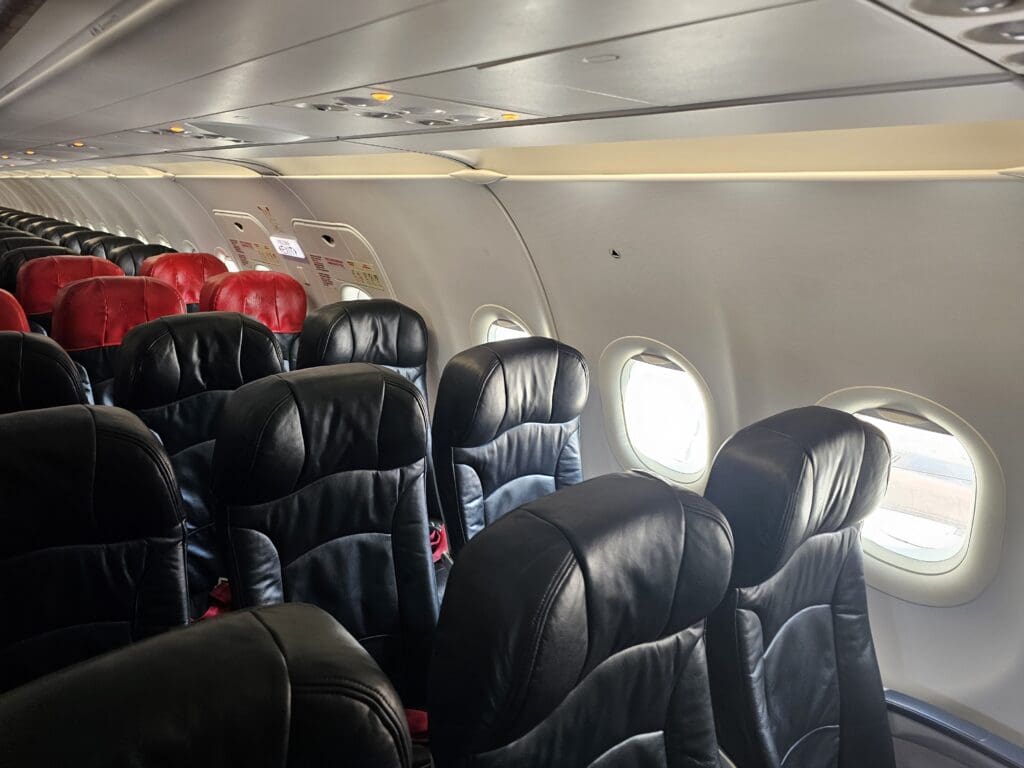
With no need to see my boarding pass, I turned right and entered the Airbus’ 186-seat cabin. Unsurprisingly, the interior of this Airbus A320neo seemed to be identical to that of the Airbus A320ceo that I had flown two days earlier from Penang to Kota Kinabalu (review here!). Specifically, each seat seemed to be reasonably chunky in its appearance and was covered in a dark pleather cover, whilst AirAsia’s famous red could be seen on the seatbelt straps and carpets, as well as on the removable covers of the aircraft’s extra legroom seats. Unlike many low cost carriers, advertisements were non-existent on the doors of the overhead lockers, the undersides of the tray tables and elsewhere.
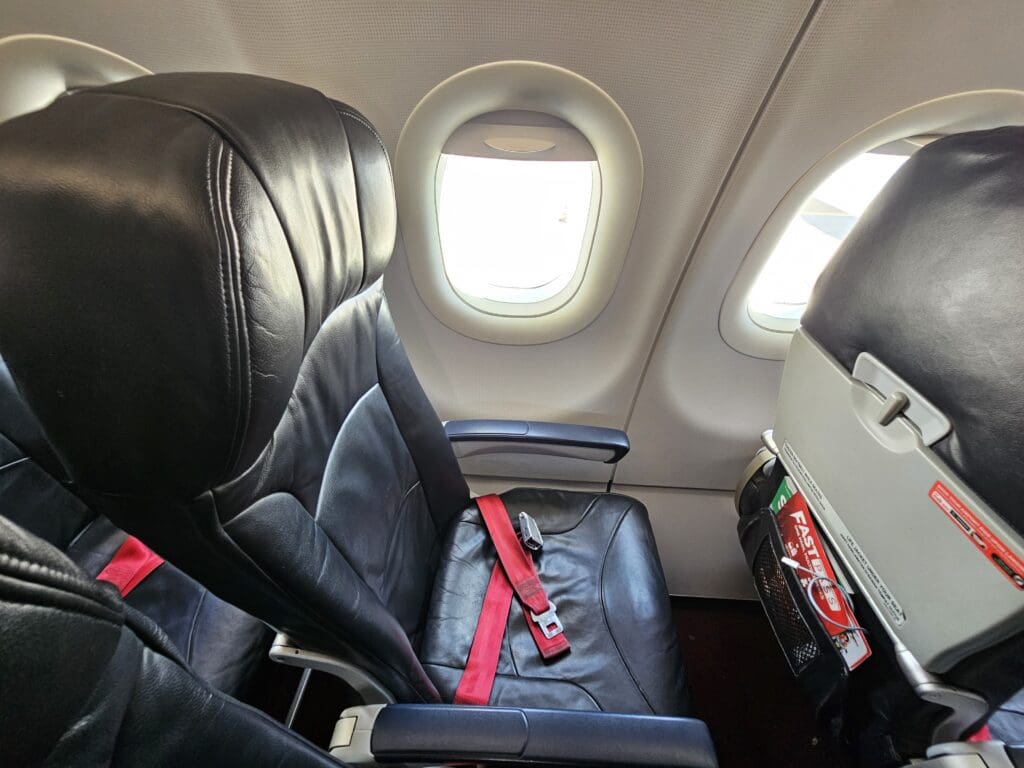
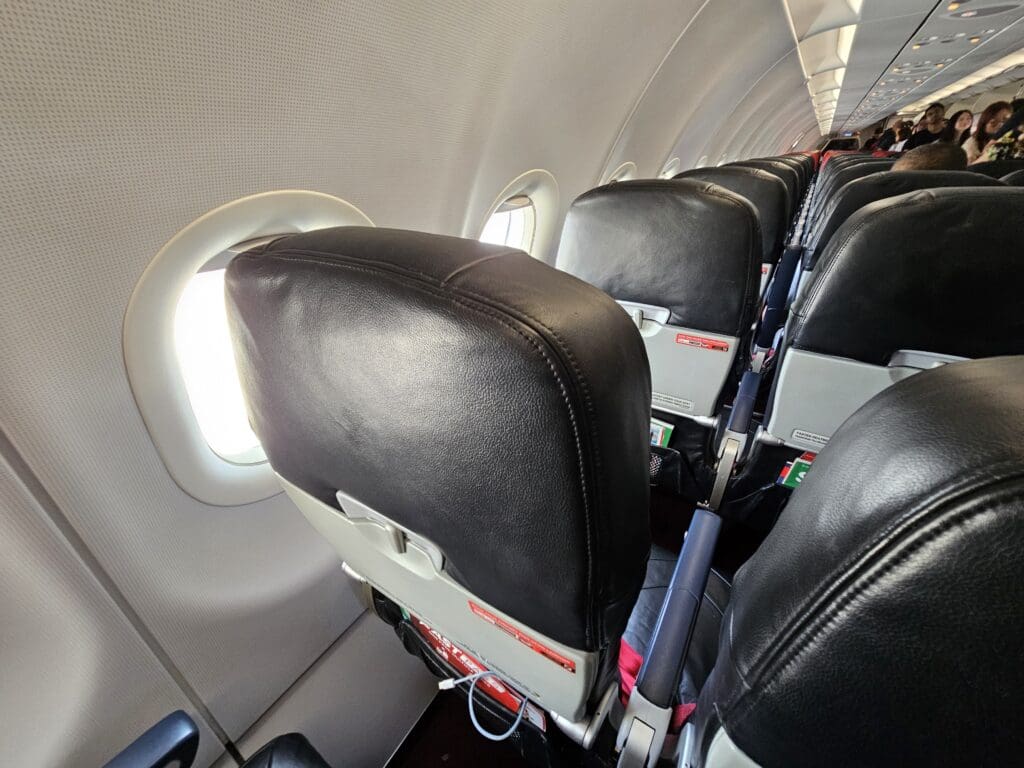
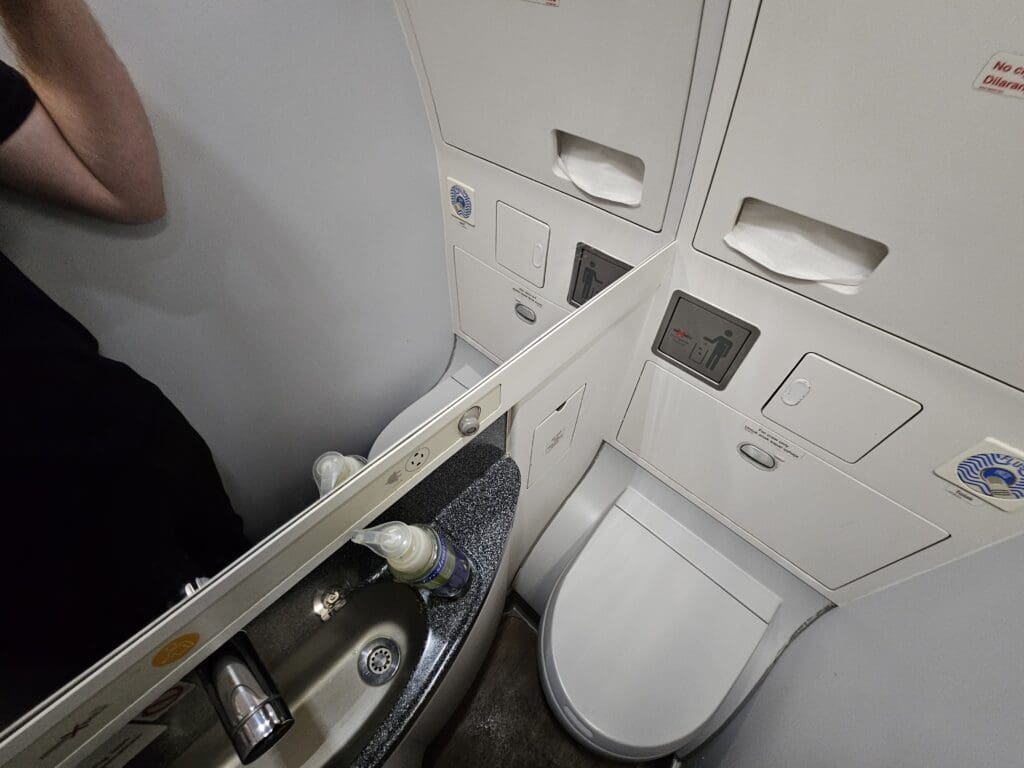
As I voyaged down the cabin I received a welcome from every single crew member that I passed, leaving me with a fairly positive impression of the four flight attendants onboard the aircraft. Meanwhile, the Western pop hits that had accompanied the boarding process on my flight from Penang to Kota Kinabalu had been replaced by a selection of Malay pop, ballads and hip hop which loudly rang out for the duration of boarding. With few passengers in front of me, I steamed down the cabin and soon reached Seat 25A. Once there, I stowed my backpack in the overhead locker, and, anticipating a full flight, and thus being trapped for the duration of this, I decided to make a pre-departure trip to one of the two lavatories at the rear of the aircraft. As with most newer Airbus A320s, these are not located at the rear of the cabin but are instead squeezed into one-half of the rear galley, enabling as many seats to be squeezed into the aircraft as possible. Ignoring its minimal size, I found the lavatory to be in a reasonable state and stocked with the basics, thereby leaving me with no major complaints.
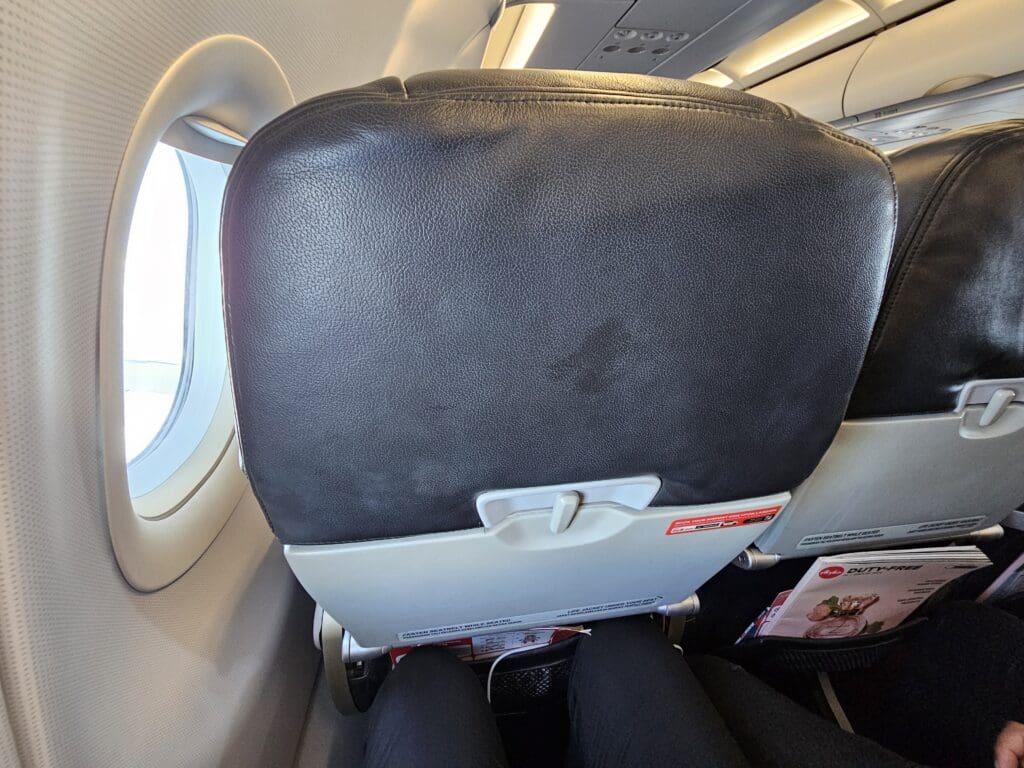
By the time I returned to my seat, this was occupied, although as it happened, this passenger was supposed to be sitting in Seat 25C. Fortunately, once I had pointed out that this was the aisle seat, they shifted across without issue, enabling me to take my assigned seat. As with many low cost carriers, the cabin crew are responsible for cleaning the cabin during short turnarounds away from base, and despite the very short time on the ground in Miri, they appeared to have done a reasonable job, with no traces of rubbish seen around my seat. However, as on my previous AirAsia journey, the area around my seat appeared to be a little tired and in need of a refresh, complete with a fair few marks, scratches and stains. However, my biggest complaint was the lack of space. Whilst AirAsia’s seats may be soft and large, this comes at the expense of legroom and I have to say that the lack of space meant that the seat was one of the most uncomfortable low cost carrier seats that I have ever sat in. Whilst this was tolerable for the two-hour hop over to Kuala Lumpur, I dread to think of flying onboard one of AirAsia’s Airbus A320s on one of their five-hour hops to say Northeast Asia or Australasia!
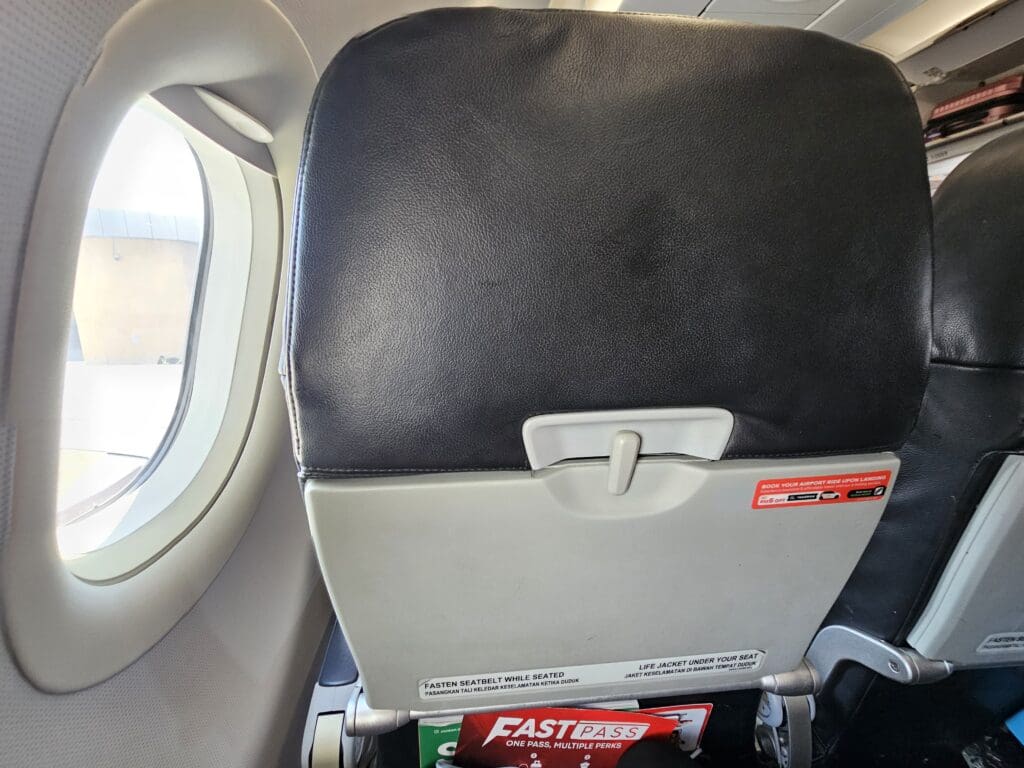
Once seated, the cabin soon filled up and it took around ten minutes for all passengers to make it onto the aircraft. As I had predicted, the flight appeared to be totally full and I failed to spot any vacant seats. Once the final passenger had boarded the aircraft, the Purser’s voice filled the cabin as they welcomed passengers in Malay and English. This announcement consisted of the usual welcomes, thanks and warnings, as well as an apology for the delay which was explained to be down to the late arrival of the aircraft on its previous rotation. A short time later, the Captain performed their welcome speech in English only during which they provided a short overview of the route, a mention of our estimated two-hour flight time and an apology for the delay to the service.
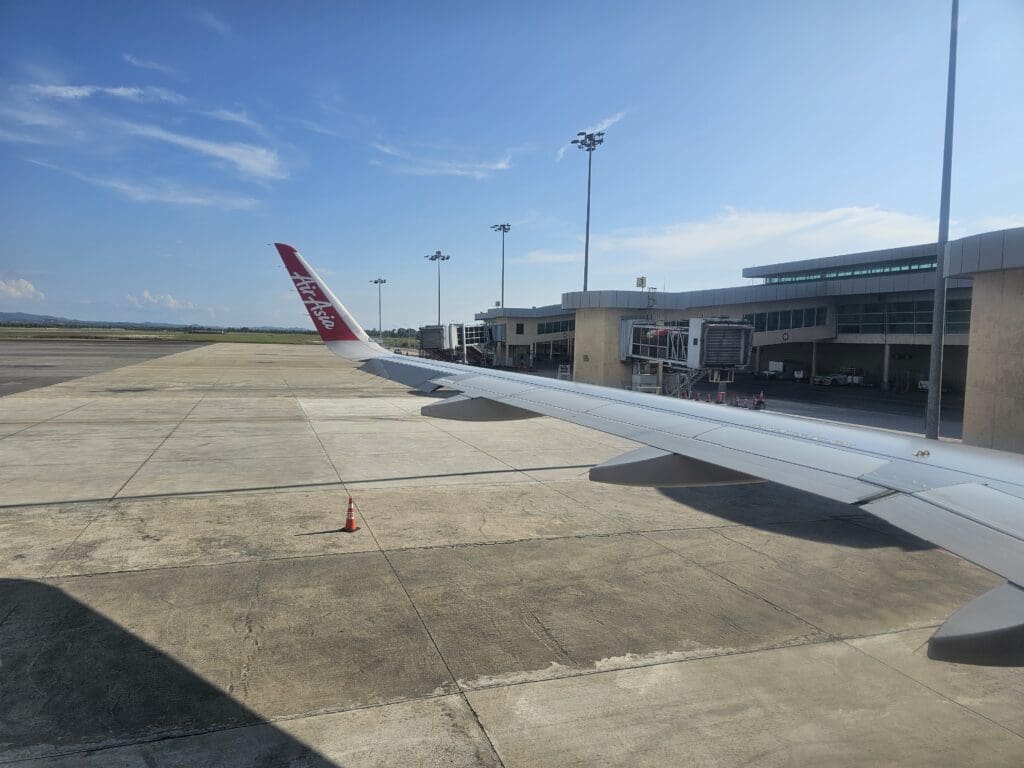
As the Captain performed their welcome speech, the cones could be seen being removed from around the aircraft whilst not wanting to travel to the Malaysian capital, the dispatcher soon vacated the aircraft before the cabin door was closed and the jetbridge backed away from the Airbus. Given AirAsia’s ‘APU Off’ programme, rather than pushing back and starting engines, a loud whine could be heard as the air start unit fired into life and assisted the first of the Airbus’ two CFMI LEAP-1A26 engines to power into life. Once this had successfully spooled up, the power unit was disconnected and at 1631, 46 minutes behind schedule, the Airbus was gently pushed back away from its stand, with the second LEAP engine soon quietly powering up before the flaps were partially extended in preparation for our departure.
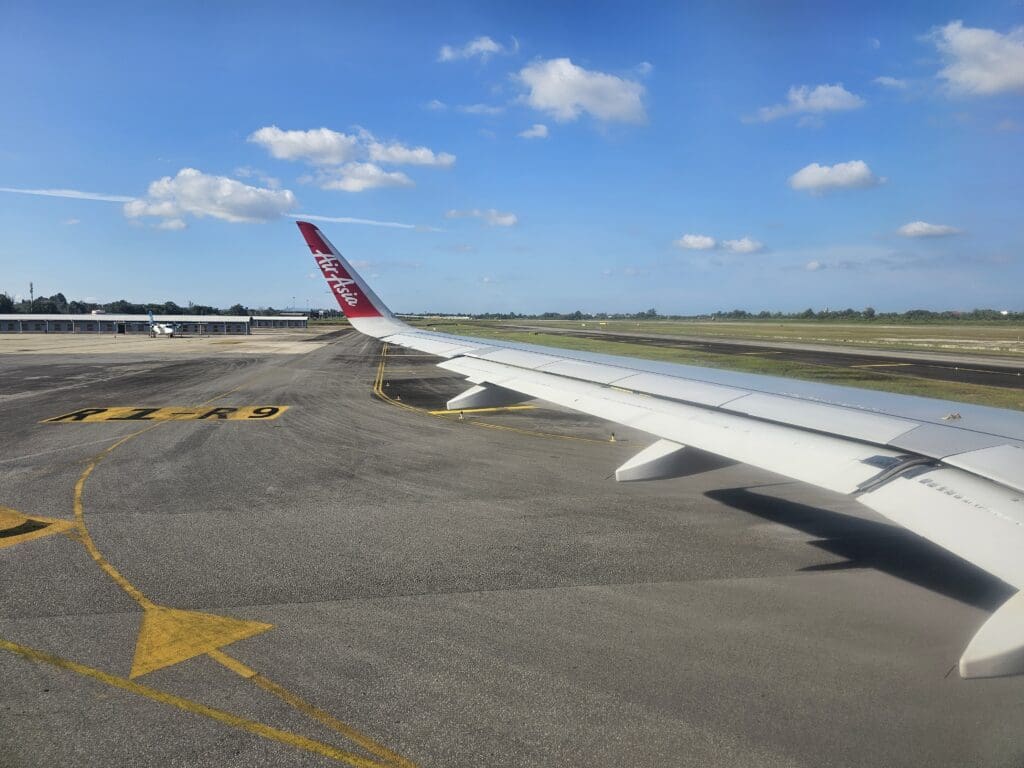
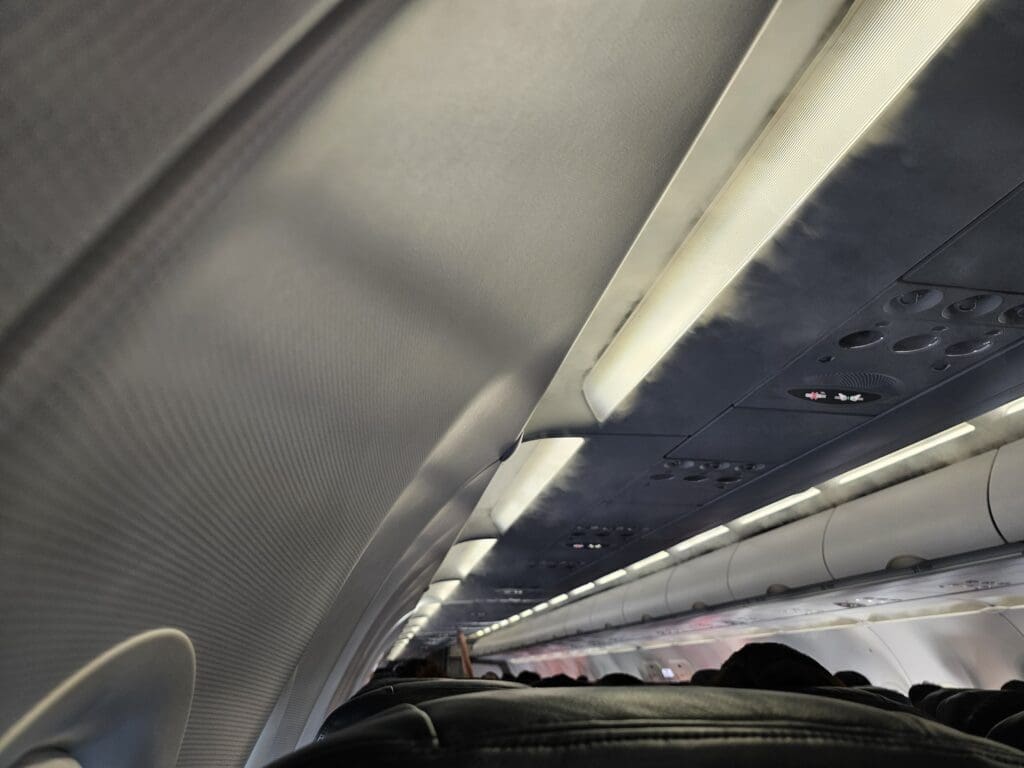
As the pushback was underway, the Malay music came to an end and was replaced by the pre-recorded safety announcement. This detailed all the vitally important safety instructions in Malay and English, during which three flight attendants performed a safety demonstration in the aisle. Once done, the crew members passed through the cabin, ensuring that all was secure and in place in preparation for our departure as we powered away under our own steam and made the short taxi over to the end of Runway 02.
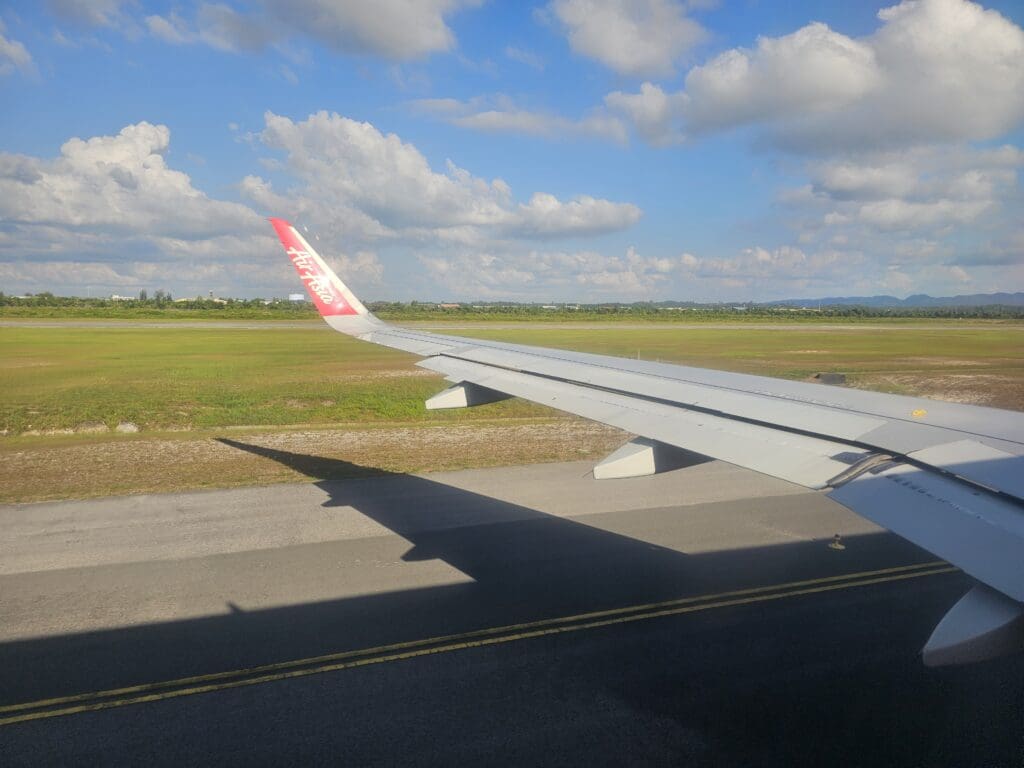
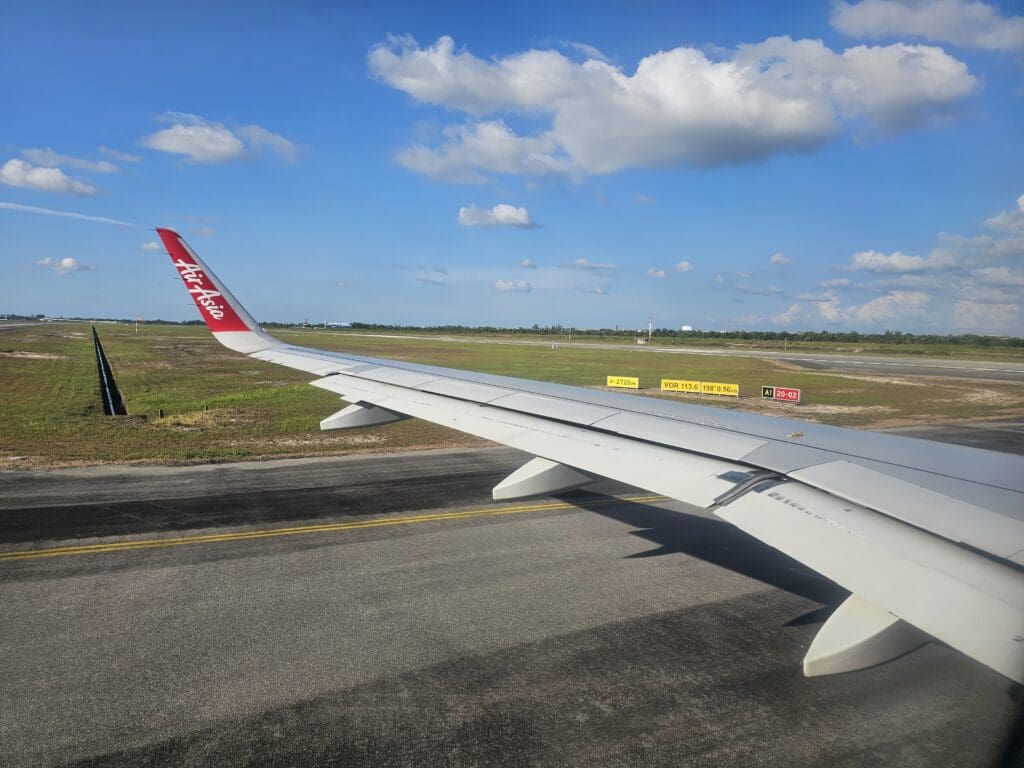
With Miri hardly being Malaysia’s busiest airport, upon reaching the end of the runway, no holding was required and we made our way onto this without pausing before coming to a short halt. A few moments later, the two LEAP engines whistled into life as the Airbus performed its gentle and seemingly long take-off roll, contrasting with rocketship-like departures that I had experienced on the Twin Otter earlier that day! Whilst roughly parallel with the terminal, the Airbus rotated upwards and shuddered a little as it climbed into the Sarawak skies. Looking outside, a good bird’s eye view could be had of the hangars in the far northwestern corner of the airfield which hosts Hornbill Skyways and Layang Layang Aerospace. At that time, two ultra-modern Airbus H175 helicopters operated by the former company could be seen resting in between shuttles to offshore oil platforms.
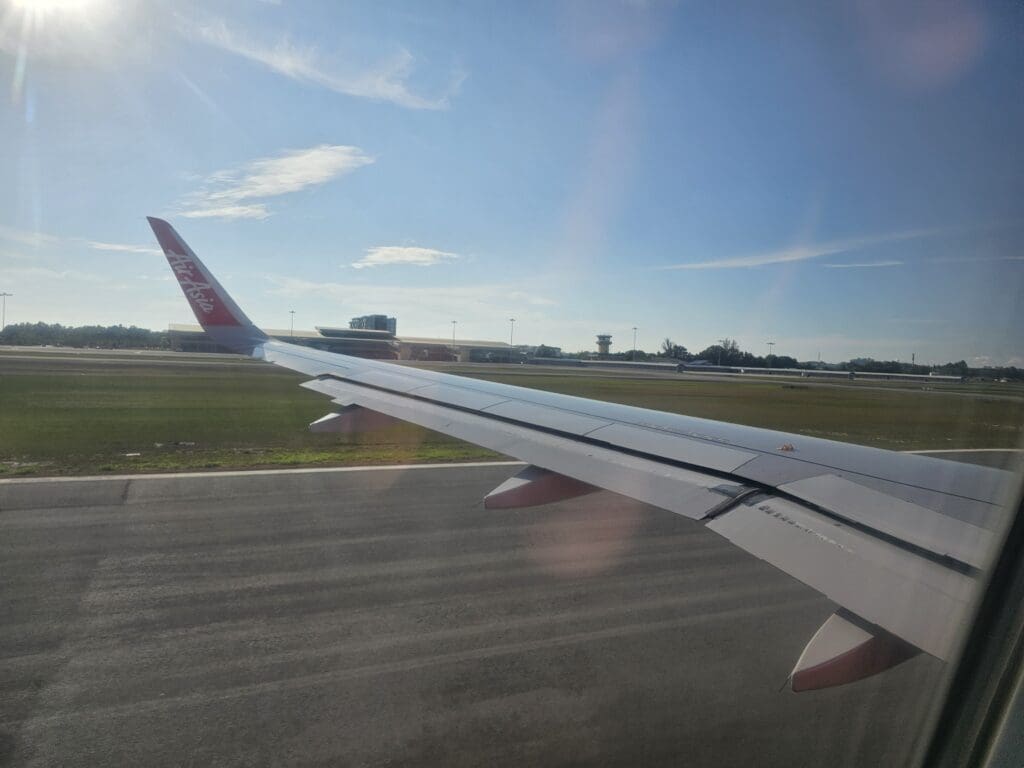
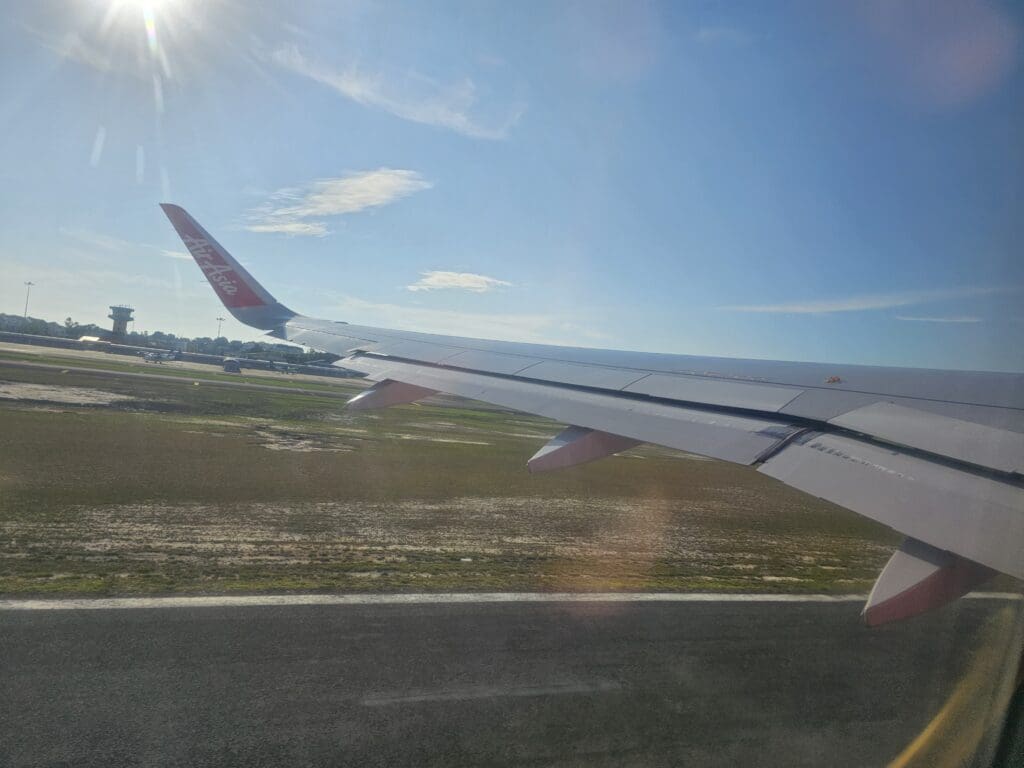
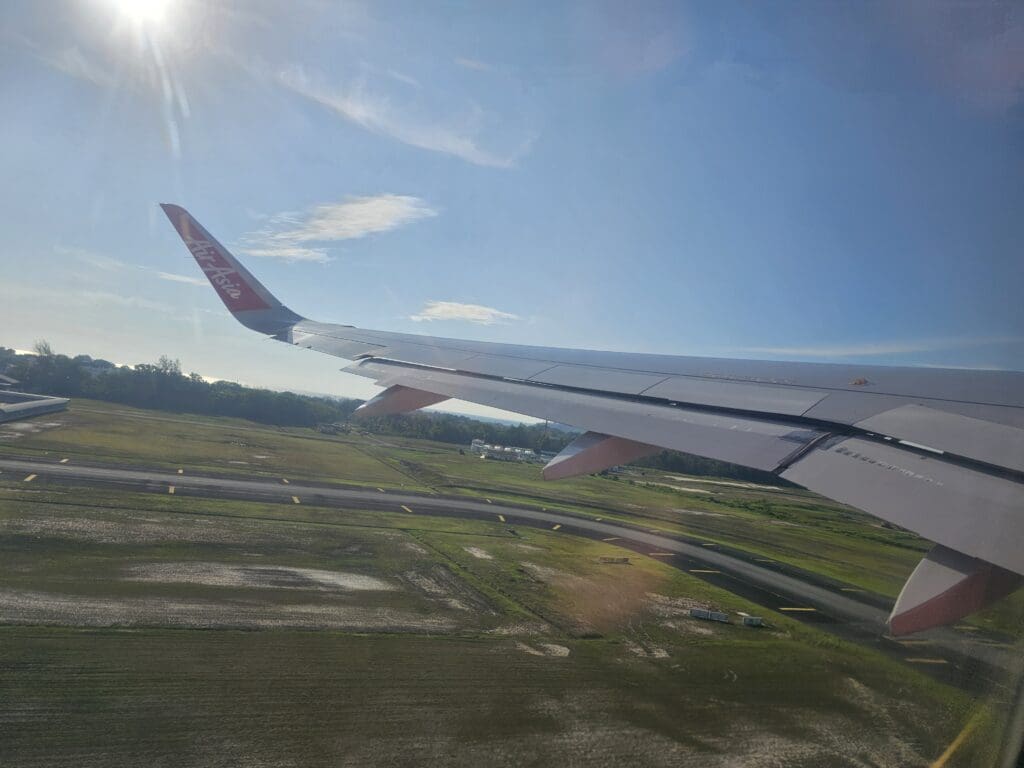
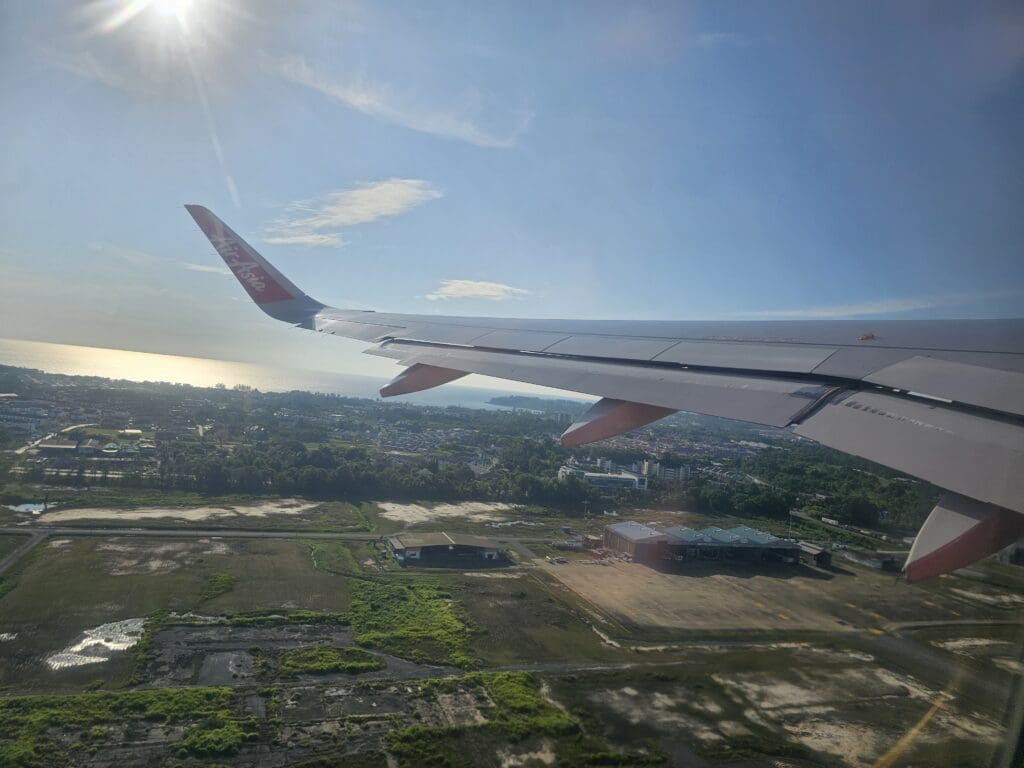
Within a few seconds of taking to the skies, Miri International Airport faded away and we sped towards the city centre, banking slightly and making a beeline for the South China Sea. From the airport, the Airbus passed almost directly over Canada Hill, home to the Grand Old Lady – Malaysia’s first oil well, whilst from my seat, I was offered a good view of the coastline and the popular Tanjong Lobang Beach. After a couple of minutes, the aircraft left the Borneo coastline behind and voyaged westwards over the South China Sea. Unfortunately, at this point, the person in the seat in front of me reclined their seat, giving me even less space, although thankfully perhaps realising the error of their ways, they did soon retract this.
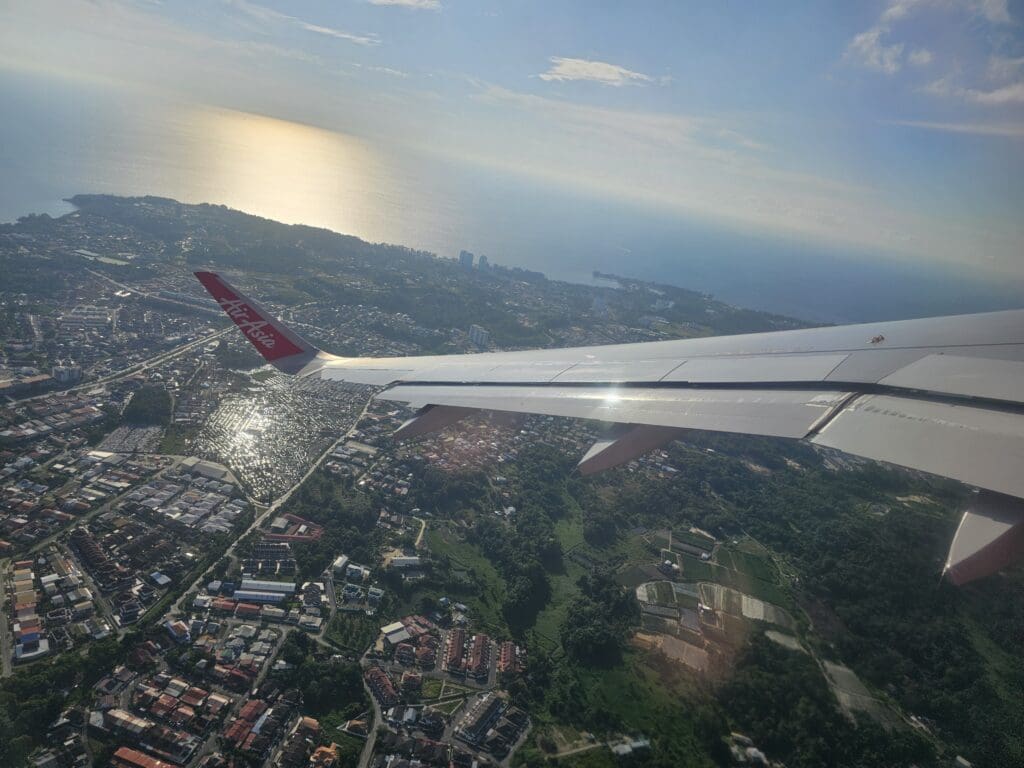
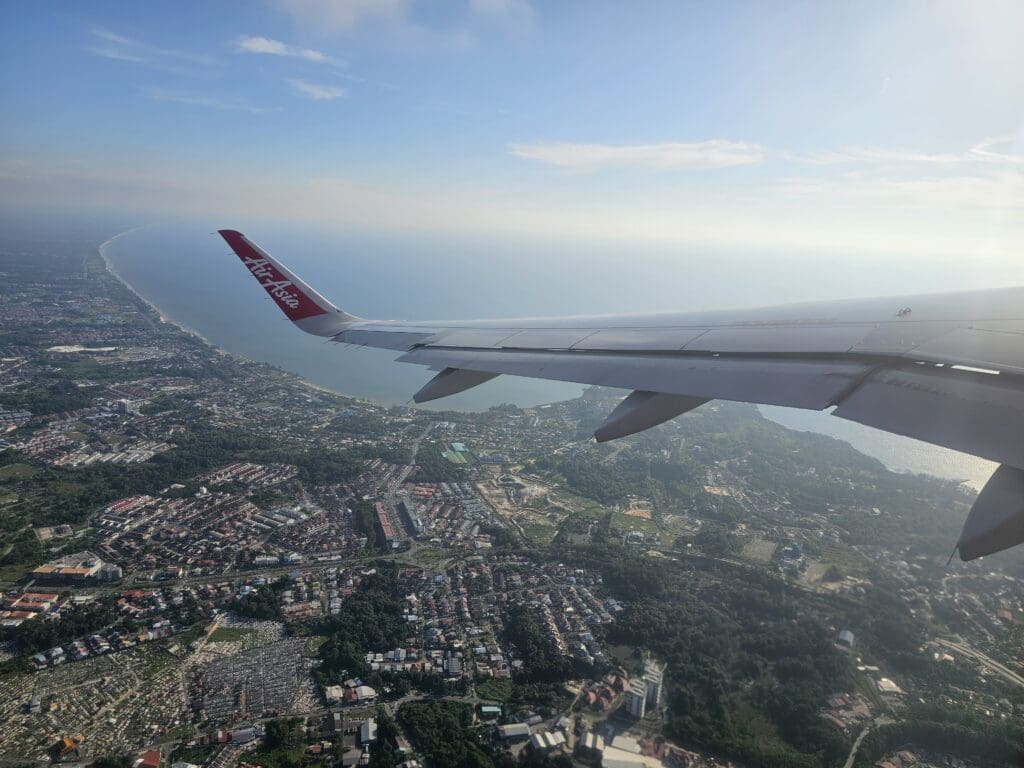
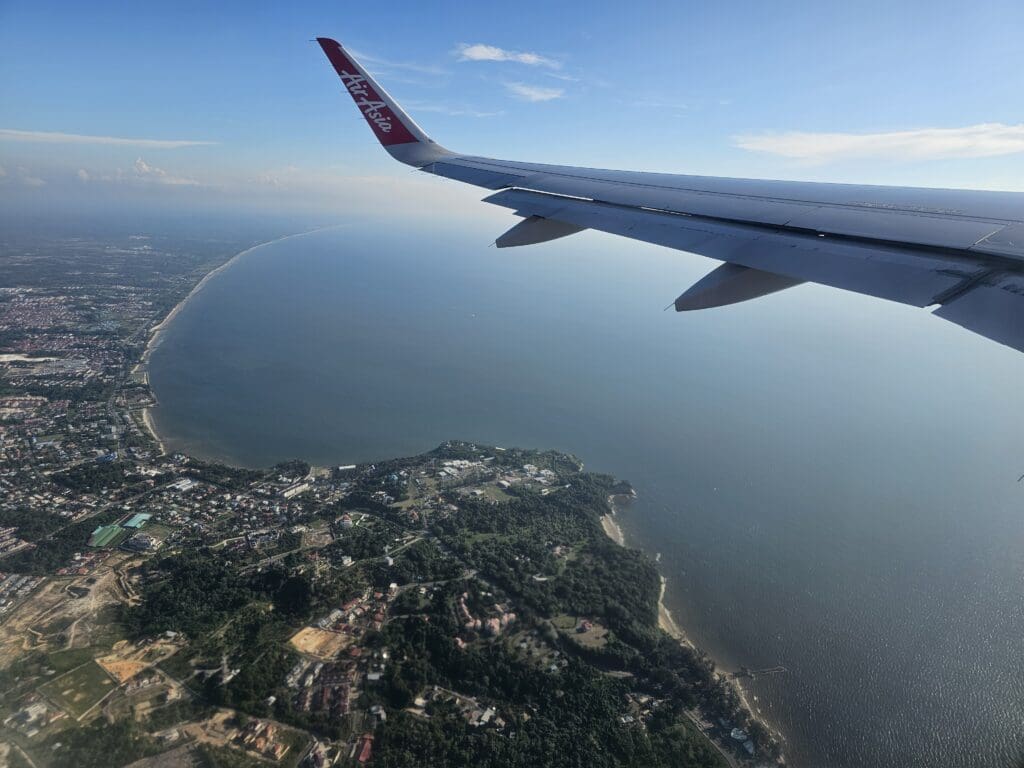
Having made a silky smooth departure, the seatbelt signs were extinguished as soon as we passed through 10,000 feet whilst an announcement was immediately made featuring the usual advice for passengers to keep these fastened whilst seated. A minute or so later, this was followed by another announcement during which the Purser advised passengers that the distribution of pre-ordered meals would soon commence and be followed by the regular buy-on-board service.
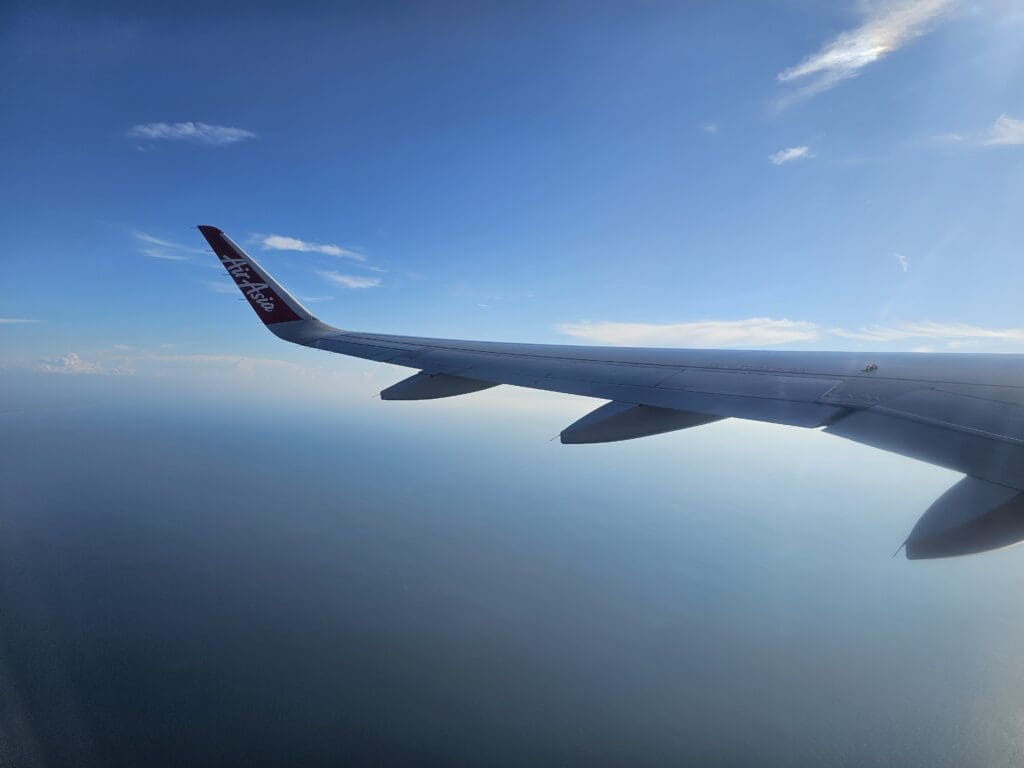
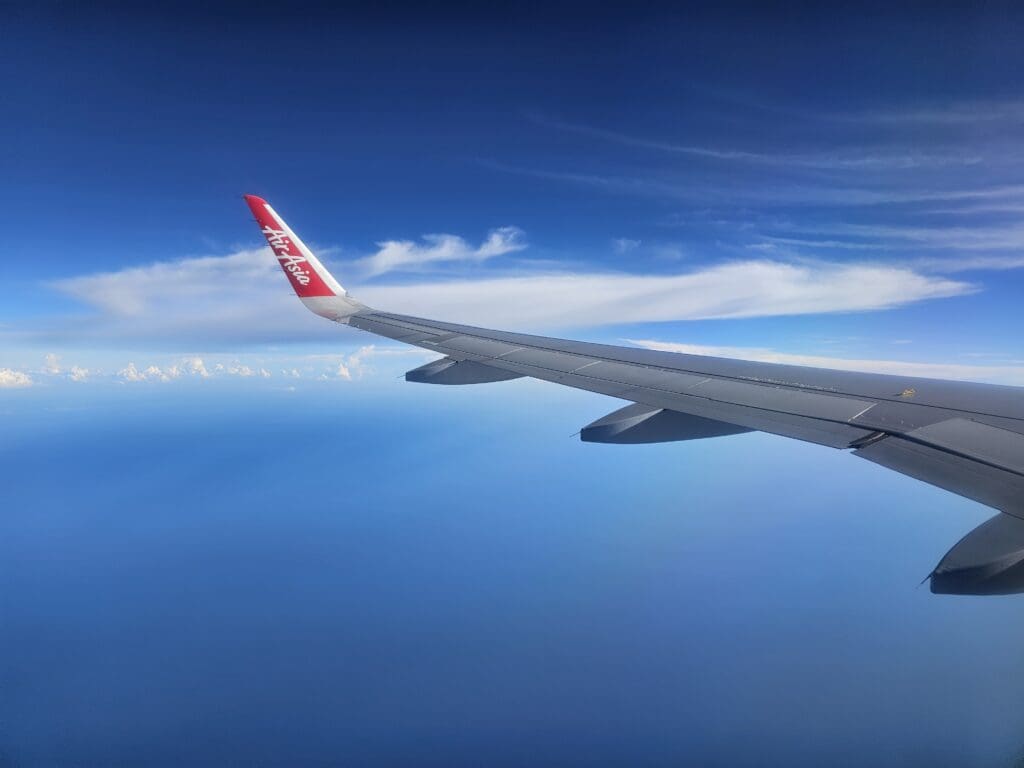
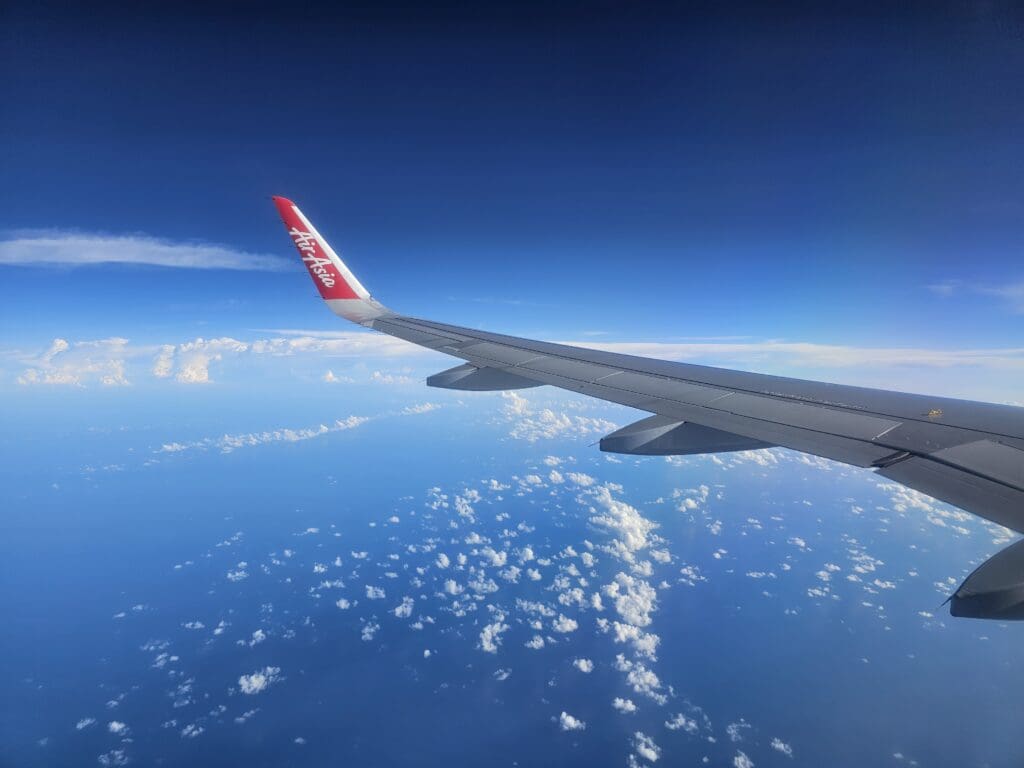
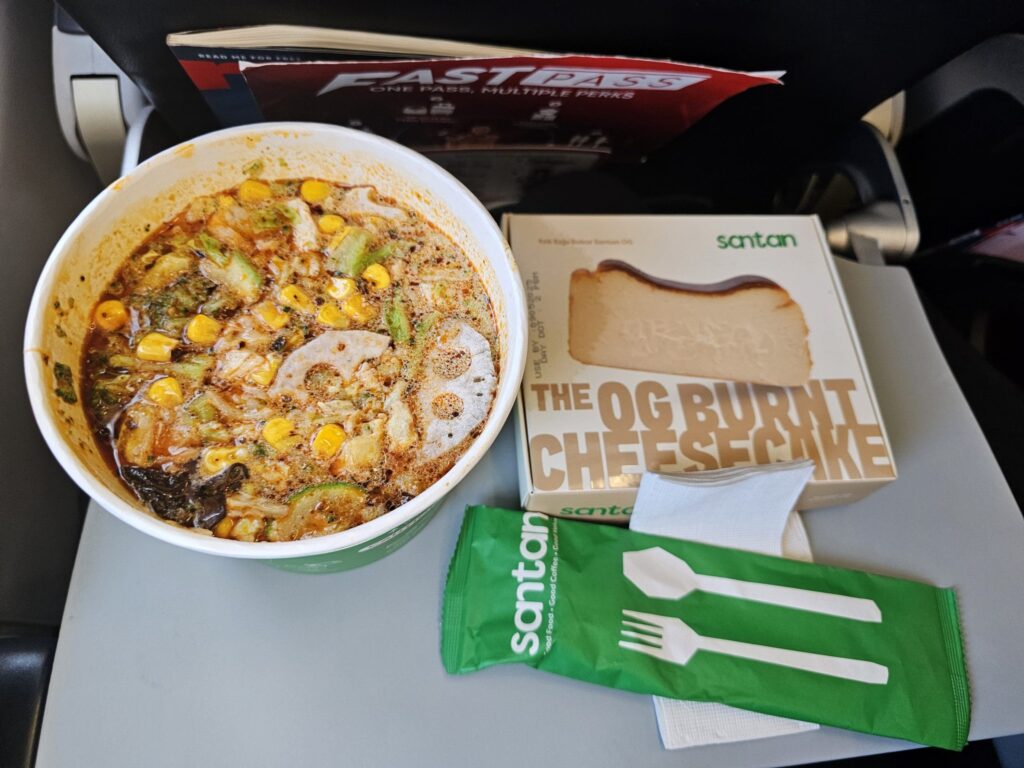
As we neared our cruising altitude of 30,000 feet, mirroring the service on my flight from Penang to Kota Kinabalu, two service carts were rolled out to the front of the aircraft and worked their way to the rear of the aircraft. After about ten minutes, the first of these which contained pre-booked meals, reached my row at which point the Purser confirmed my name at which point I was handed my dessert, the burnt cheesecake, whilst the Purser said ‘omelette’ to the other crew member who responded with ‘we have no omelette’, I interjected, noting that I ordered the ‘mala’ noodles at which point the Purser let out a giggle and noted ‘silly me!’ at which point the noodles were prepared. This involved a sachet of spice mixture being added to this, with the flight attendant asking me if I wanted the full packet and warning that this was rather spicy. Wanting the full experience, I requested the full packet before water was added and this was cautiously handed to me along with a sachet containing plastic cutlery. True to the flight attendant’s words, this was a hotpot level of spicy and, as I had found with the nasi lemak, this was rather delicious for a low-cost onboard catering option. Meanwhile, I also found the cheesecake to be fantastic and I could have easily demolished another two or three of these!
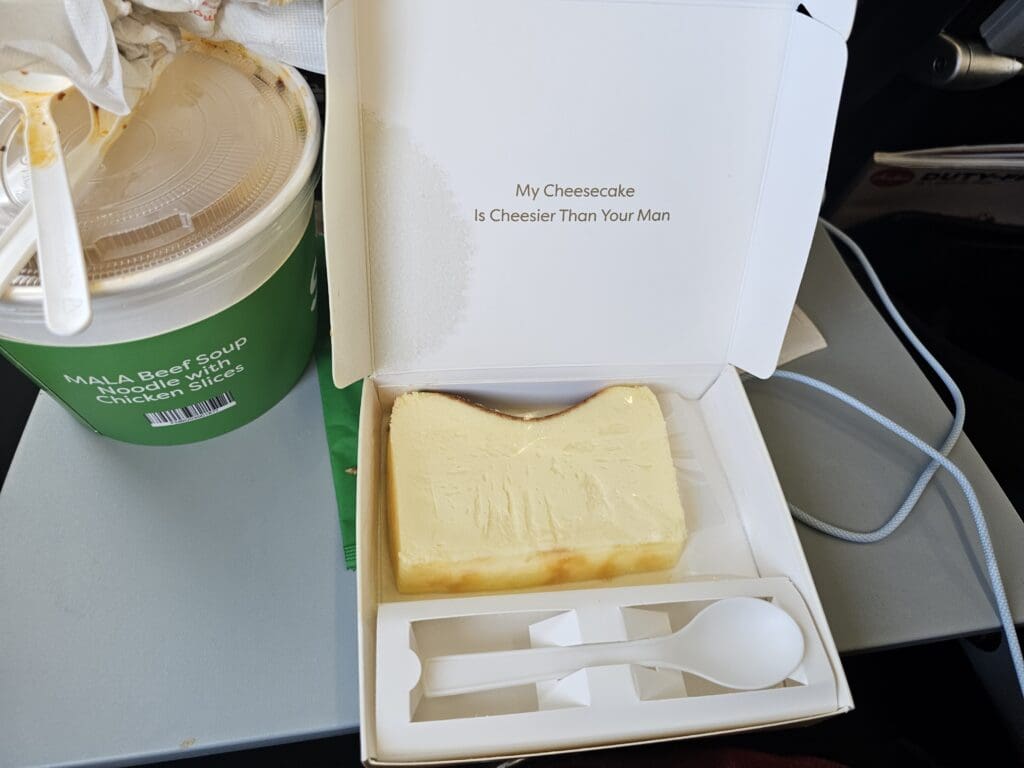
By the time I had polished off my early dinner, the Airbus was roughly halfway into its crossing of the South China Sea and below, the first of Indonesia’s Riau Islands popped into view. This took the form of Natuna-besar Island, one of the largest of these islands and part of the Natuna Archipelago. This island is home to around 59,000 residents and is connected to the rest of Indonesia via an airport which is served by NAM Air Boeing 737-500s and Wings Air ATR 72s which connect this to Batam. This was then followed by vistas of some of the archipelago’s smaller islands, namely Midai and Timau.
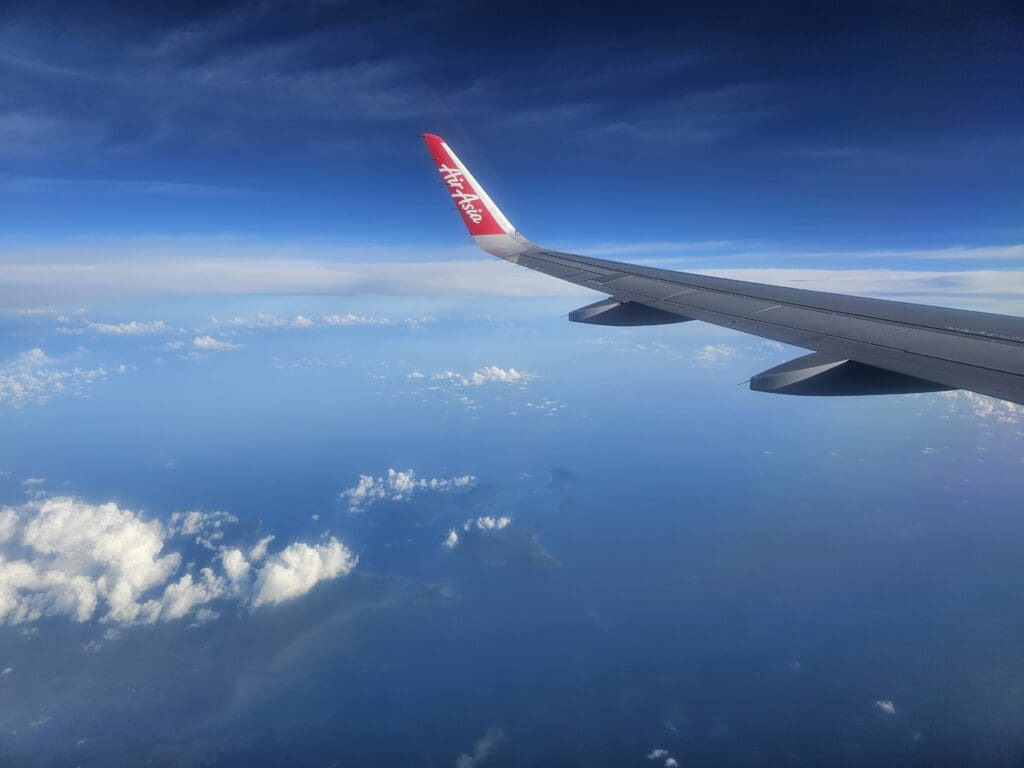
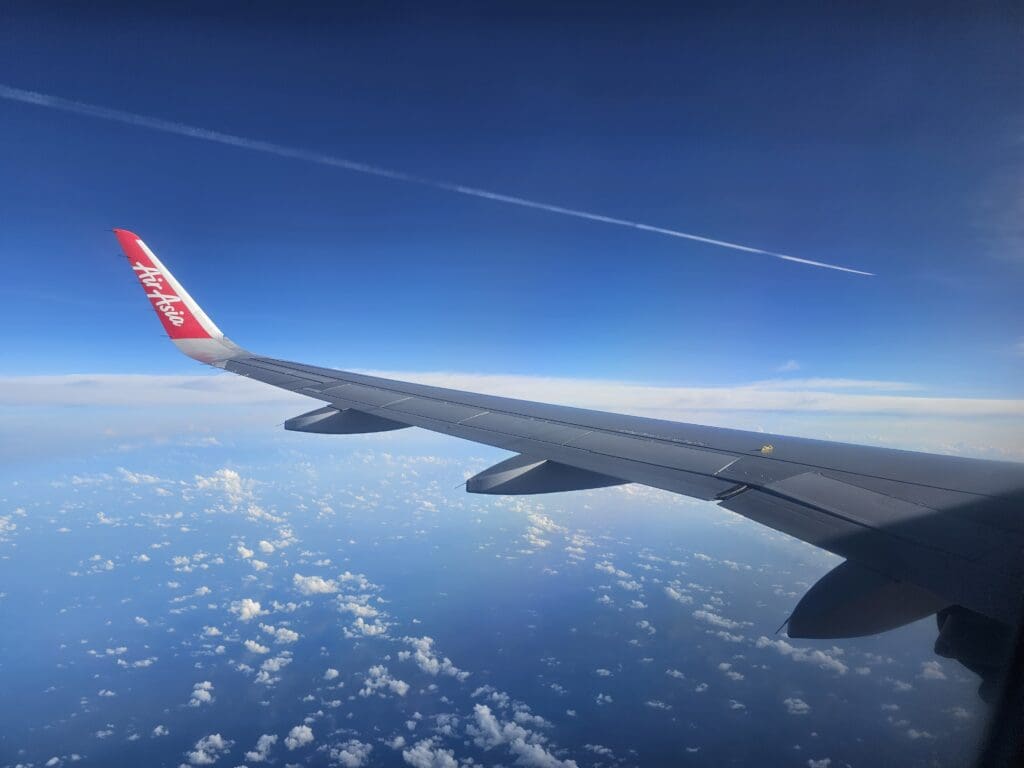
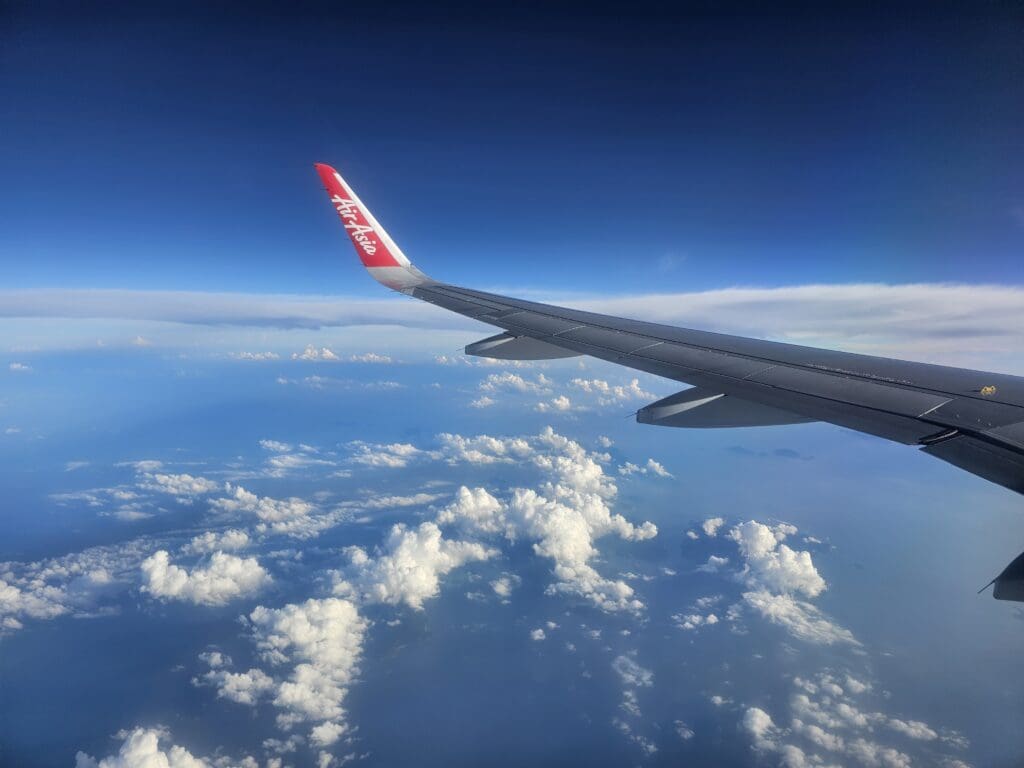
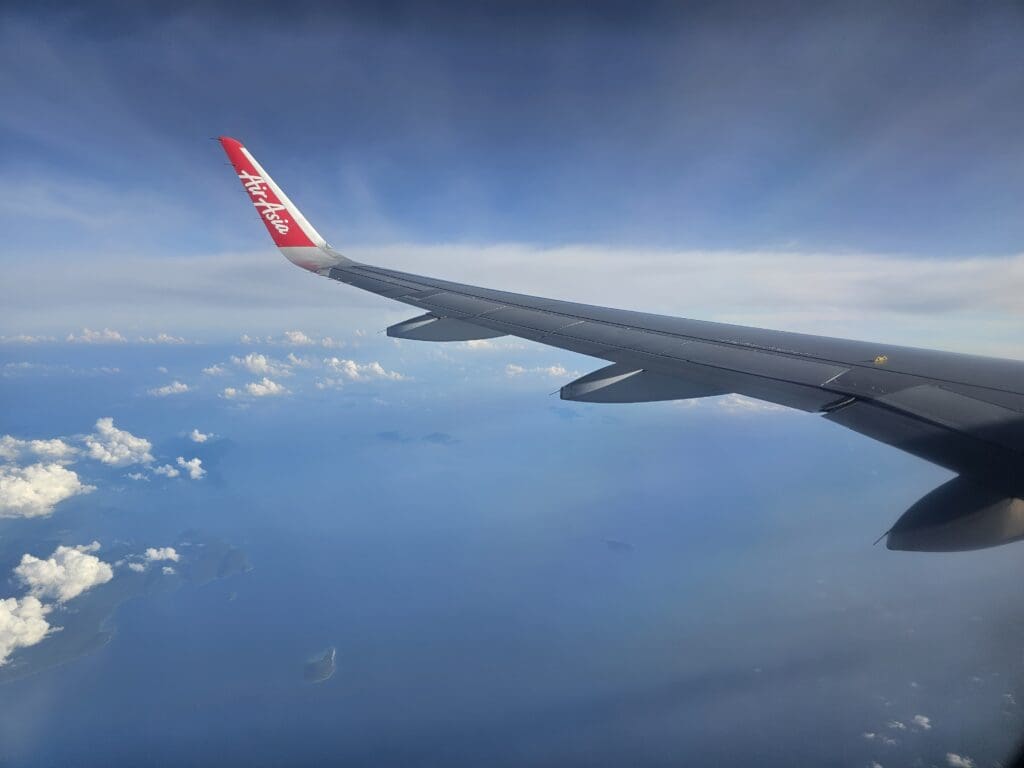
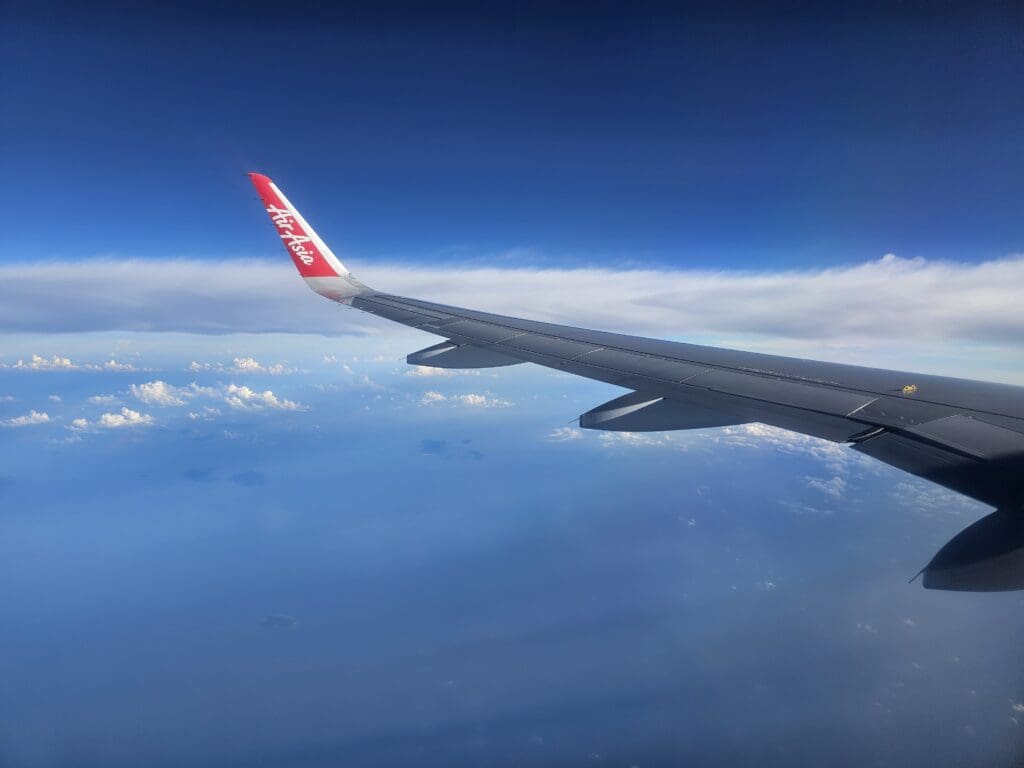
Inside the cabin, as we sped towards Peninsula Malaysia, the flight attendants performed another announcement advising of the soon-to-commence onboard shopping service, although few seemed to be interested in this and thus the flight attendants sped through the cabin making minimal sales before they performed the first of one of many rubbish collection rounds.
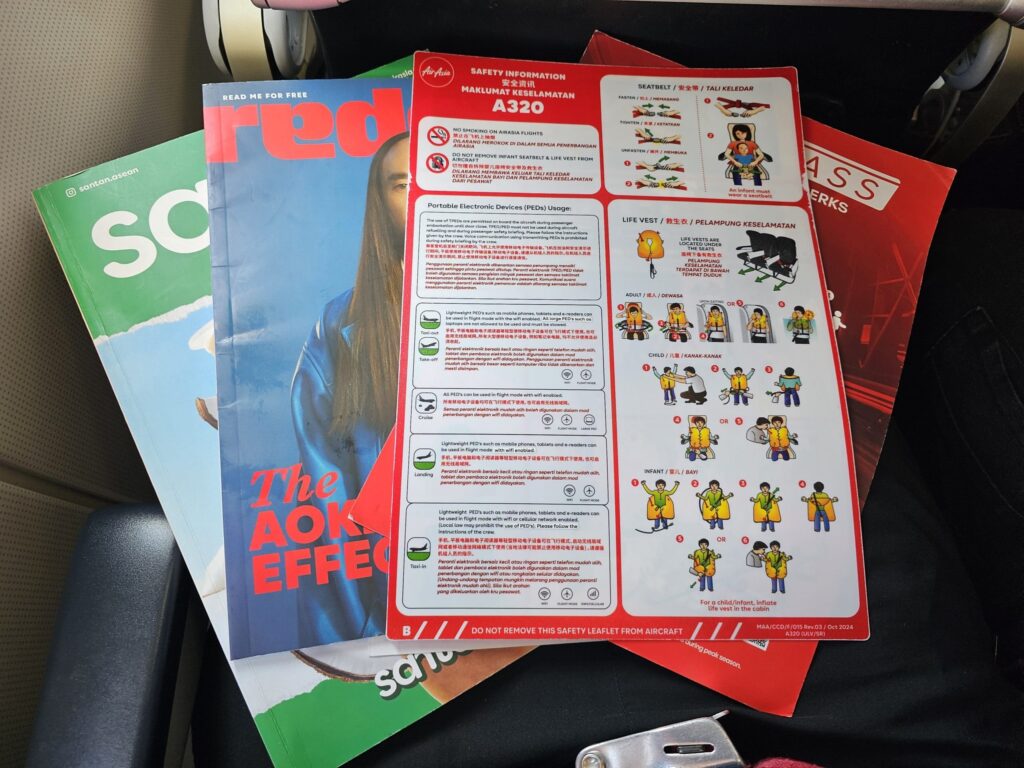
Onboard, those expecting inflight entertainment or the ability to stay in contact with the outside world, with no screens or wifi provided on the aircraft. Instead, the only form of inflight entertainment took the form of AirAsia’s inflight magazine, named Redcap in honour of the airline’s callsign. As I had found on my flight two days earlier, despite travelling in May, this took the form of the April edition of the magazine, perhaps indicating some delays in the publication of their latest issue. As inflight magazines go, I found this to be of fairly decent quality, featuring a good array of articles and not being particularly heavily laden with advertisements, something that was a little surprising given AirAsia’s status as a low-cost carrier.
By the time I had flicked through the inflight magazine, the Malaysian island of Tioman appeared some distance to the south of the aircraft indicating that we were nearing the end of our sea crossing. A popular island destination that is part of Pahang State, this was once served by Berjaya Air’s old four-engined Dash 7s, however since the retirement of this type and the demise of Berjaya Air, the island has lacked a scheduled air service and thus most visitors take the ferry from Mersing.
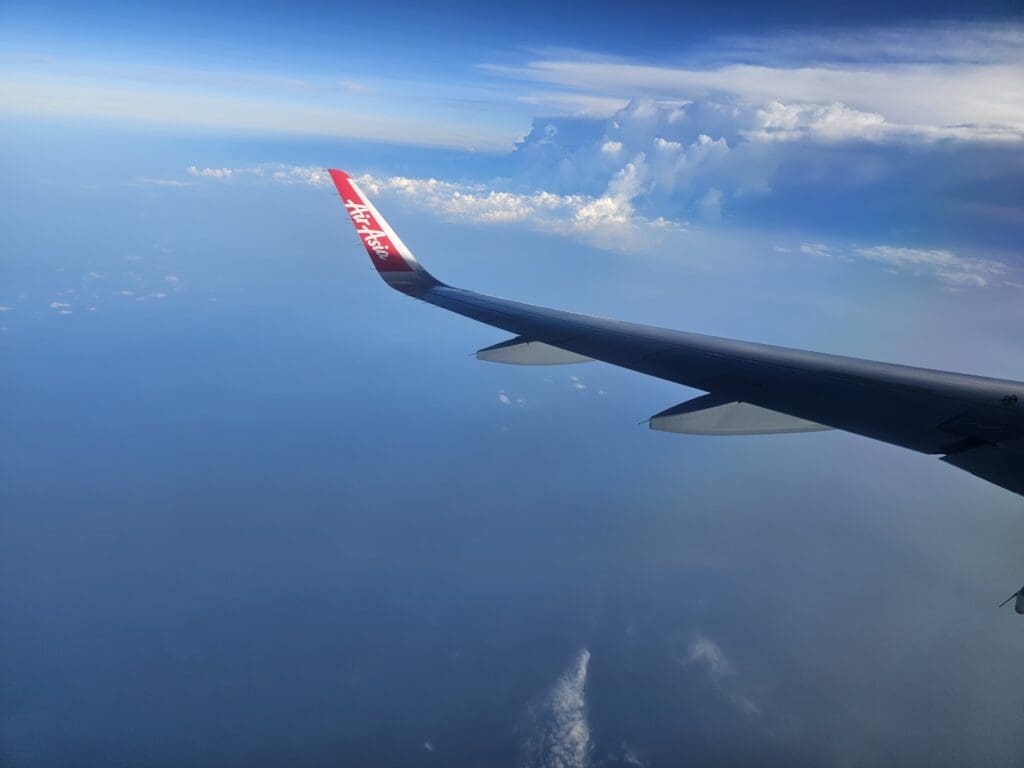
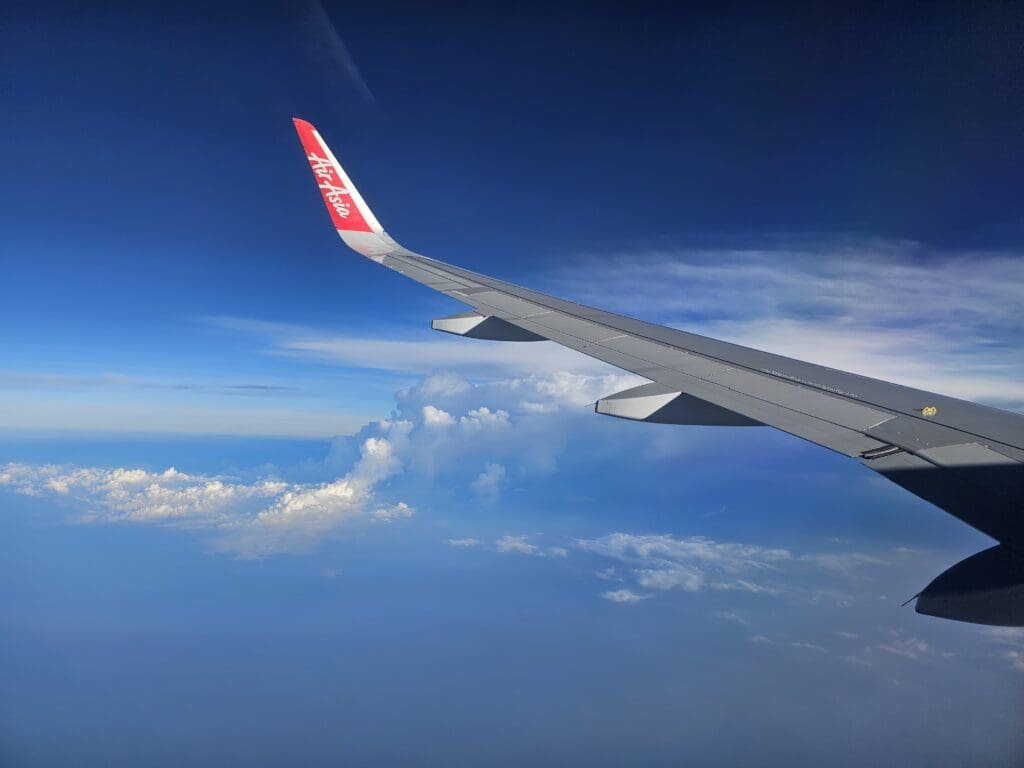
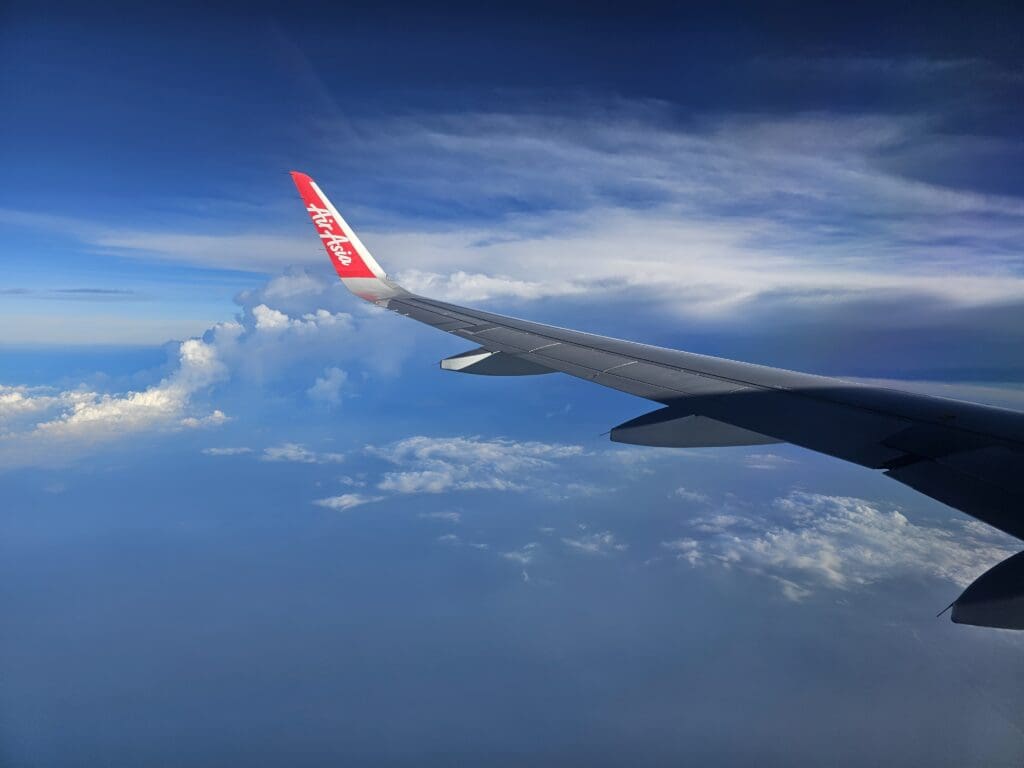
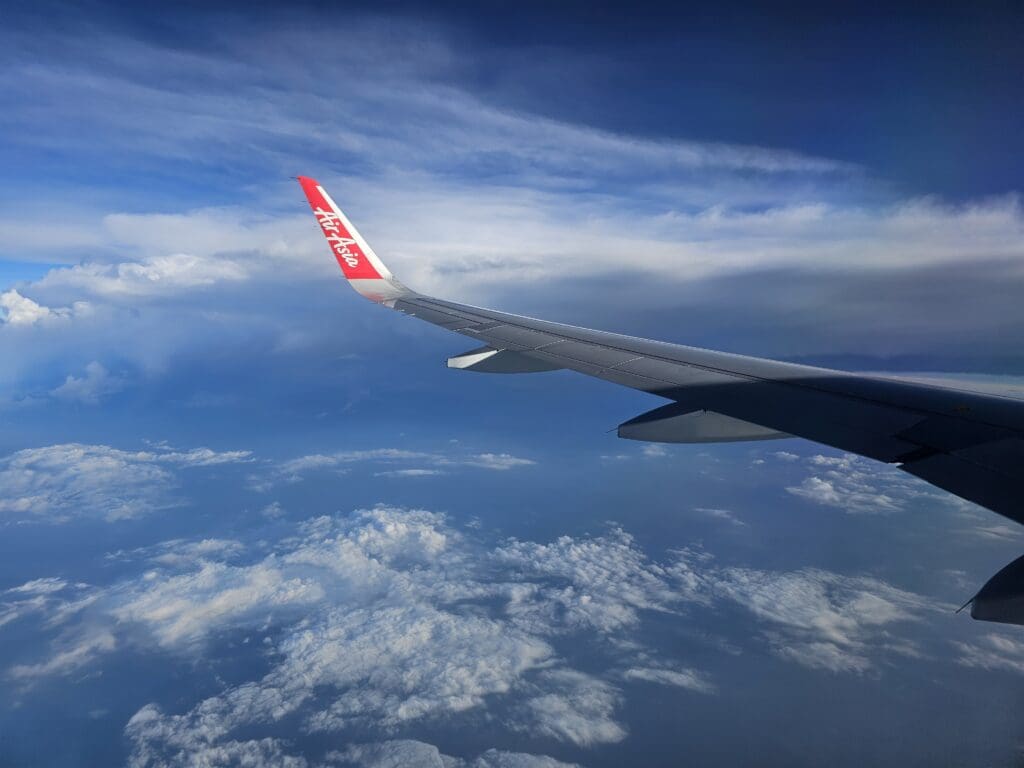
As we sped towards the coastline of Pahang, the Captain’s voice filled the cabin once again as they advised that we would commence our descent in around ten minutes’ time and encouraged those passengers who needed to do so to visit the onboard lavatories, before moving on to update passengers on the weather in Kuala Lumpur and thank passengers for flying with AirAsia, ending this with another apology for our delayed arrival and noting that we would likely arrive at our gate by 1850.
A little over an hour and a half after leaving Miri, our crossing of the South China Sea came to an end as we made landfall just to the south of the Pahang city of Kuantan. A short time later the aircraft could be felt commencing its descent and with some clouds lingering below, the seatbelt signs were soon illuminated. This was accompanied by a pre-recorded announcement regarding our impending arrival in Malay and English, whilst the crew soon passed through the cabin collecting rubbish and ensuring that all was secure and in place for our arrival. Around halfway in between the eastern and western coastlines of Peninsula Malaysia, the Airbus left the skies of Pahang and entered those of Negeri Sembilan, whilst soon, the speedbrakes were extended and we decelerated with a few shudders.
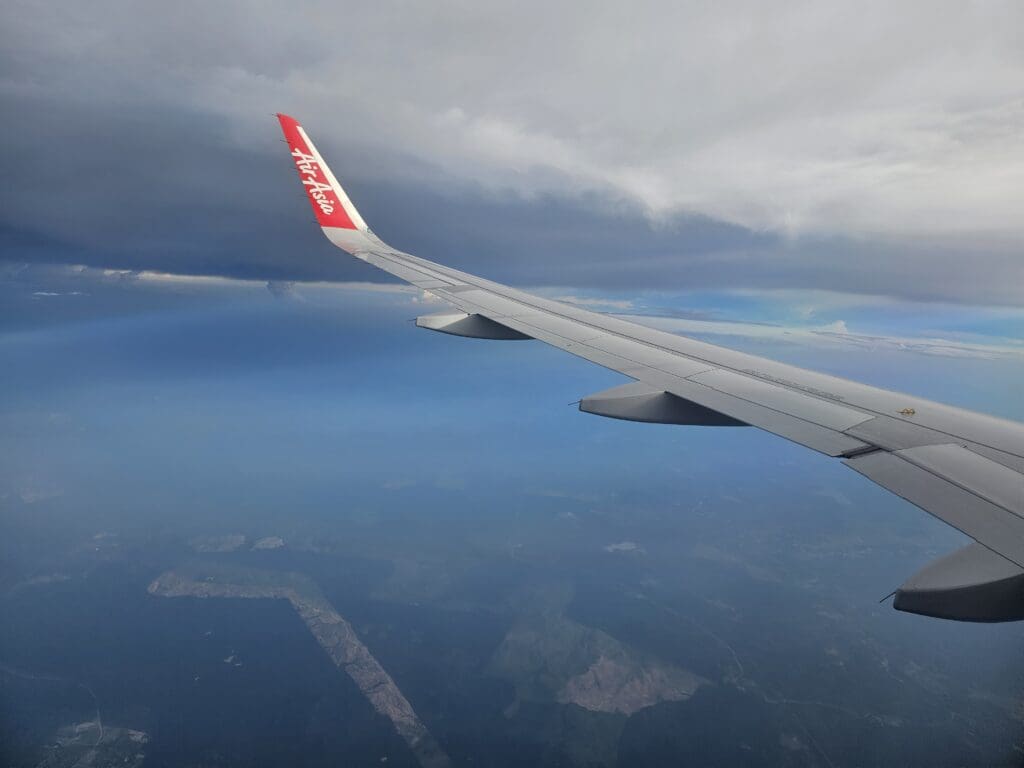
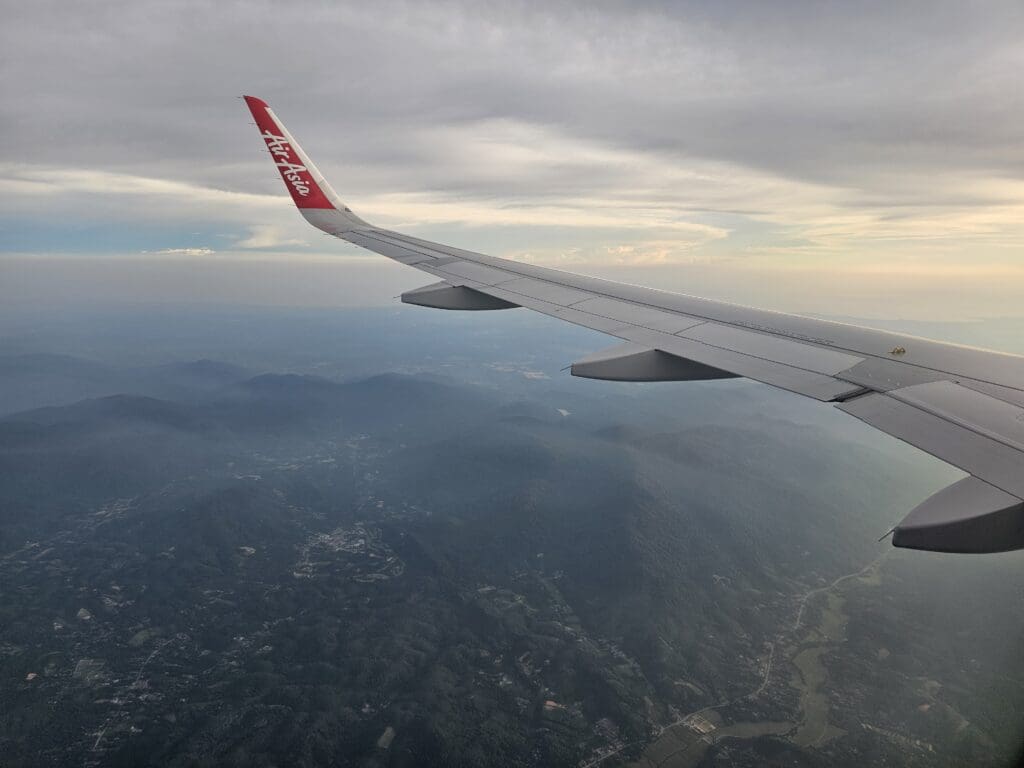
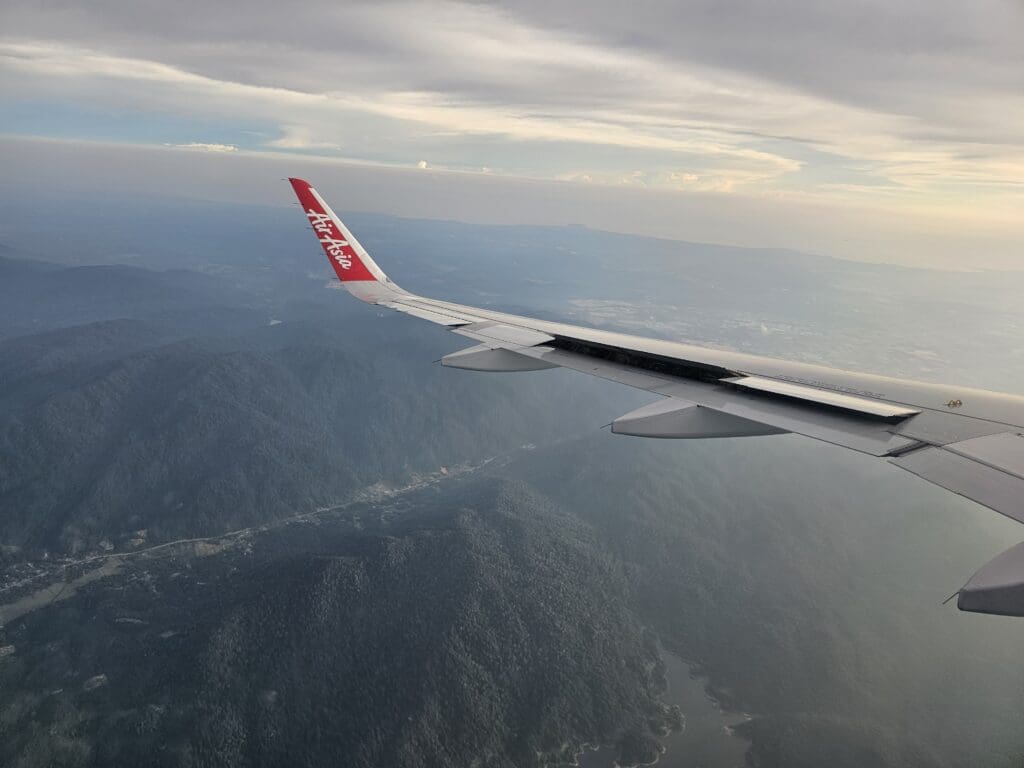
Below, a good view of the forested hills of Negeri Sembilan was offered alongside the odd passing towns such as Kuala Pilah and Tanjung Ipoh. As we passed over the Jeram Toi Recreating Area and before reaching the state’s capital, Seremban, the aircraft turned to fly southwards and then southwestwards, making its way towards the coastline. After a few minutes, the Airbus lined itself up for an approach to Kuala Lumpur International Airport’s Runway 32R at which point the flaps were gradually extended, soon followed by the landing gear.
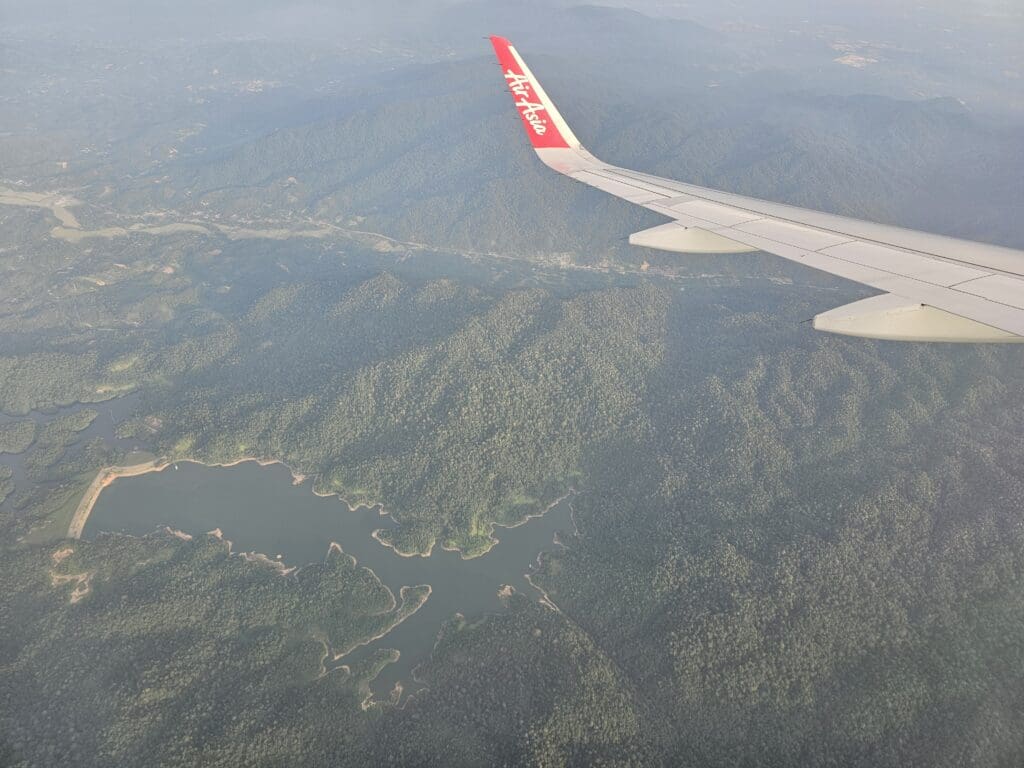
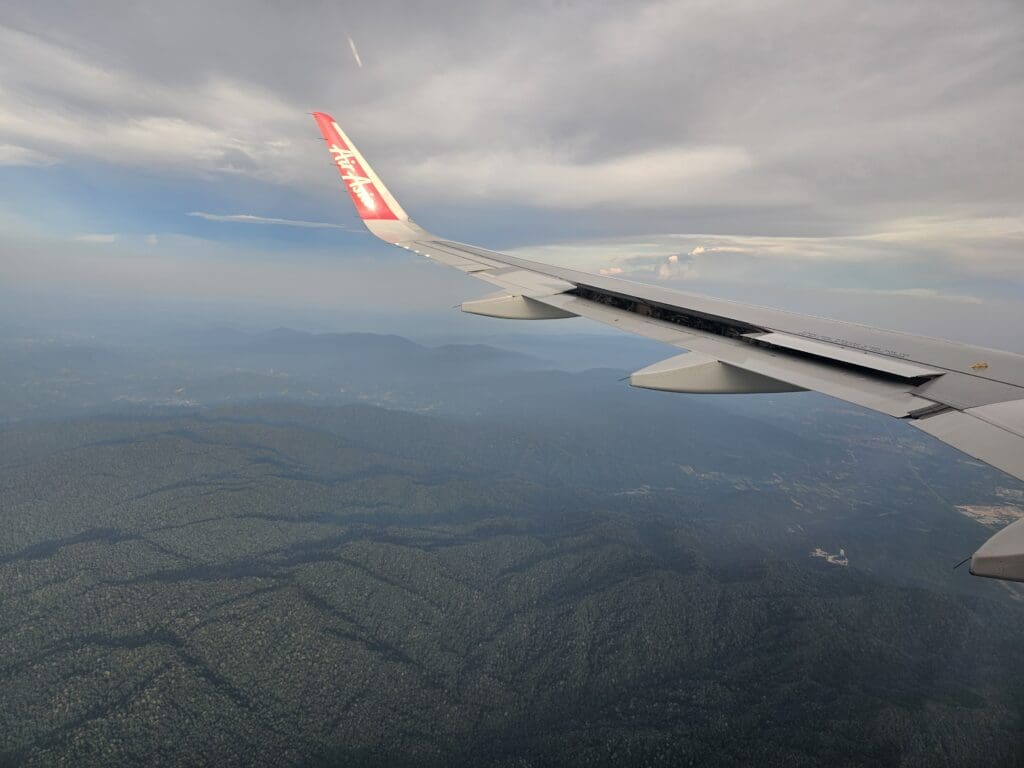
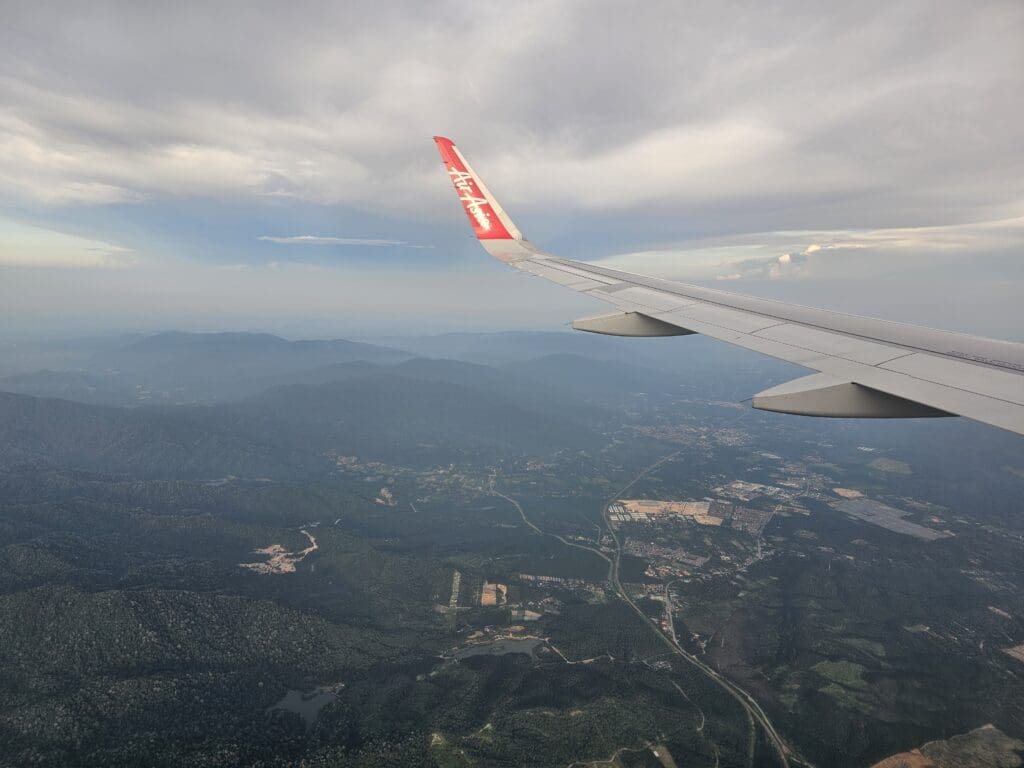
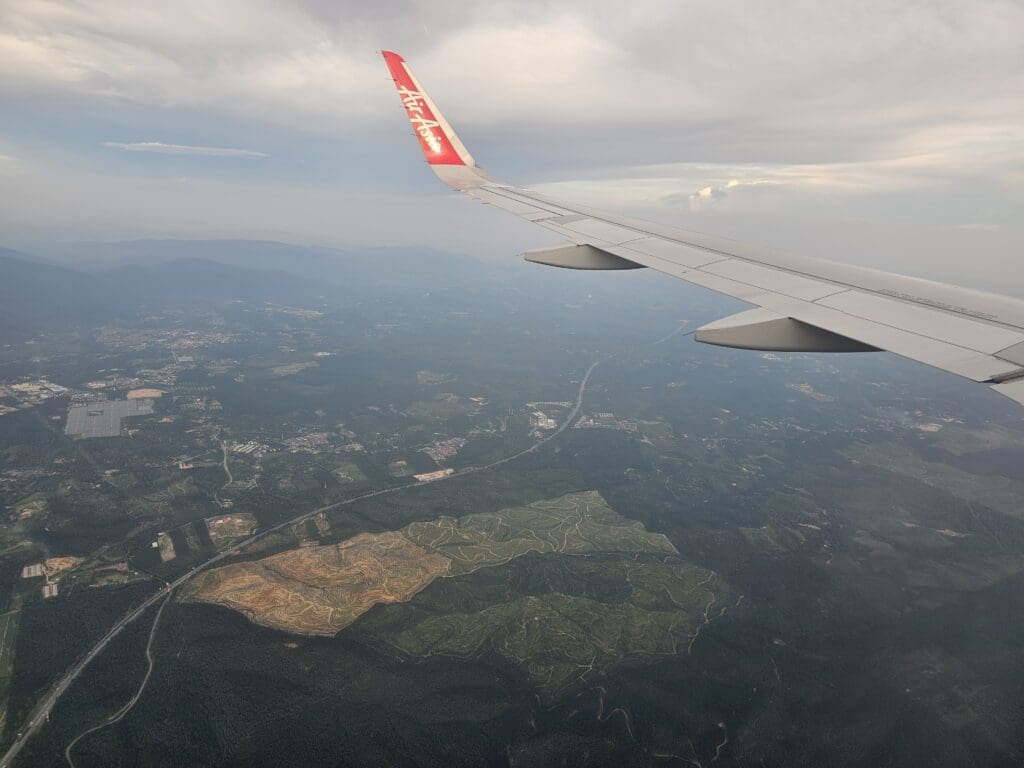
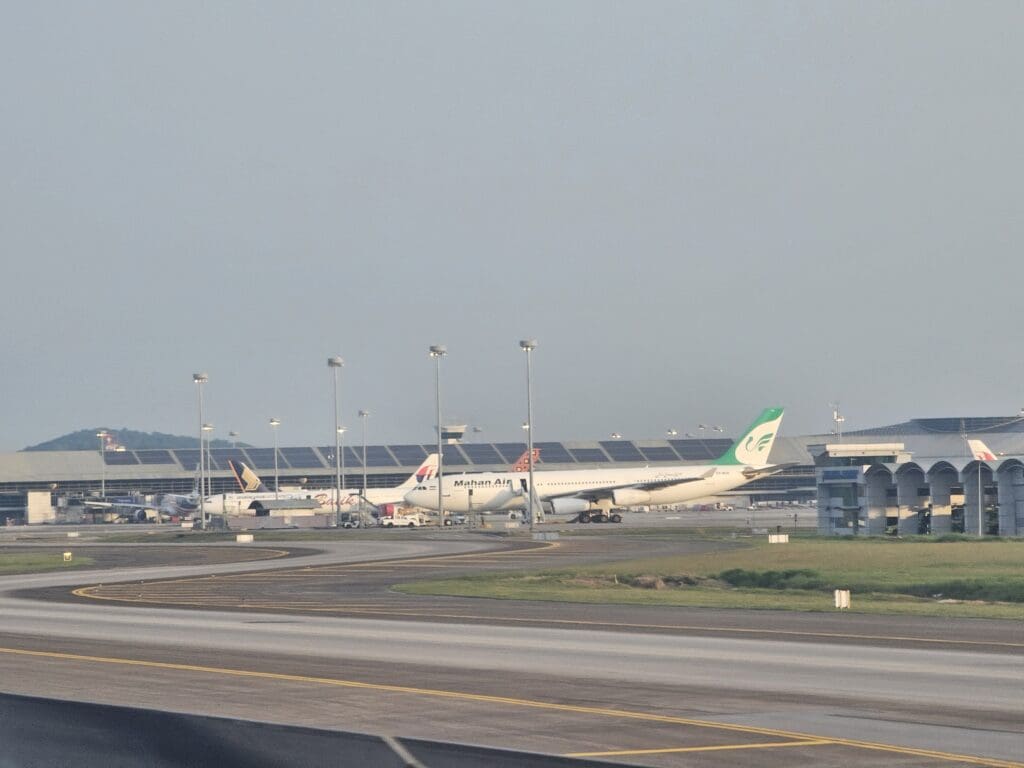
As we sped northwards towards the airport, a good view was offered of the coastal towns, the largest of which was Port Dickson, easily recognisable thanks to its large chemical processing plant. Continuing to sink downwards, the Airbus smoothly made its way over the endless rows of palm trees that border the airport and exactly two hours after departing Miri, the aircraft touched down with a gentle bump. Once back on the ground, the exciting and diverse selection of aircraft, including a rare Mahan Air Airbus A340-200 popped into view as we gently decelerated before vacating the runway to the left.
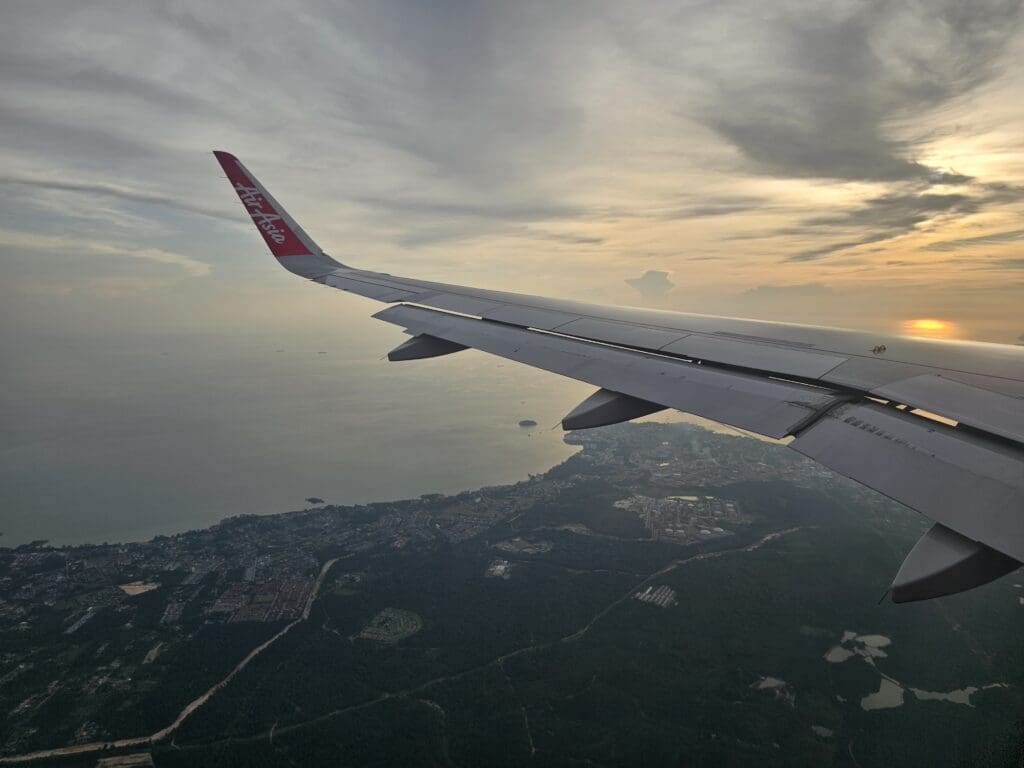
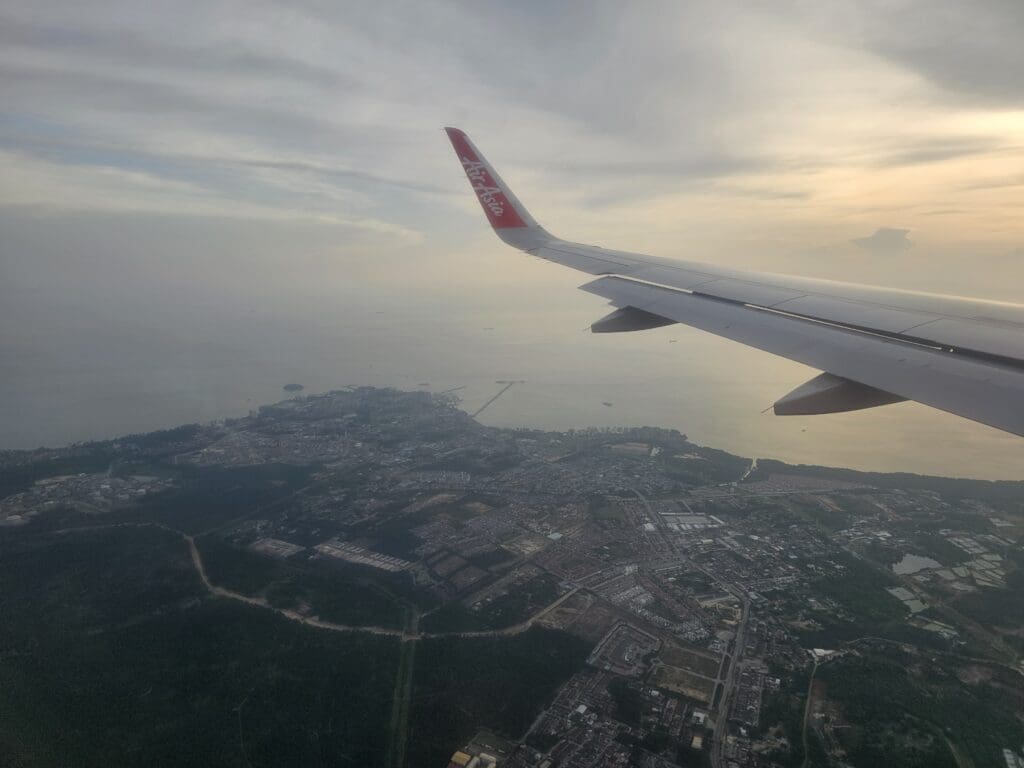
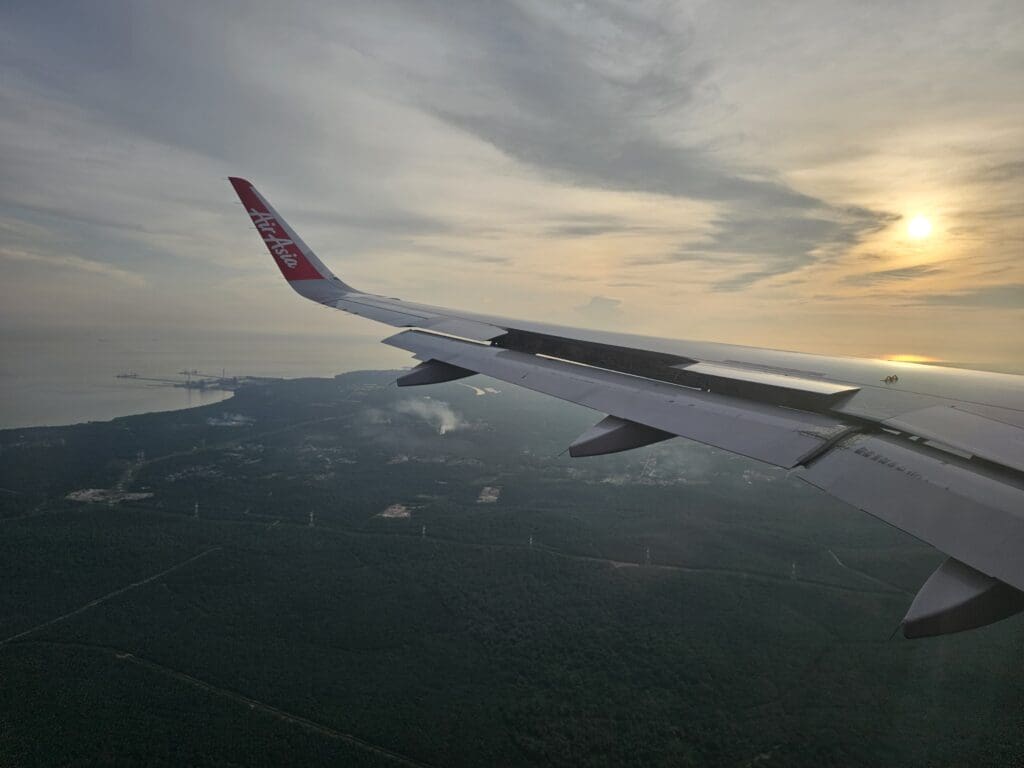
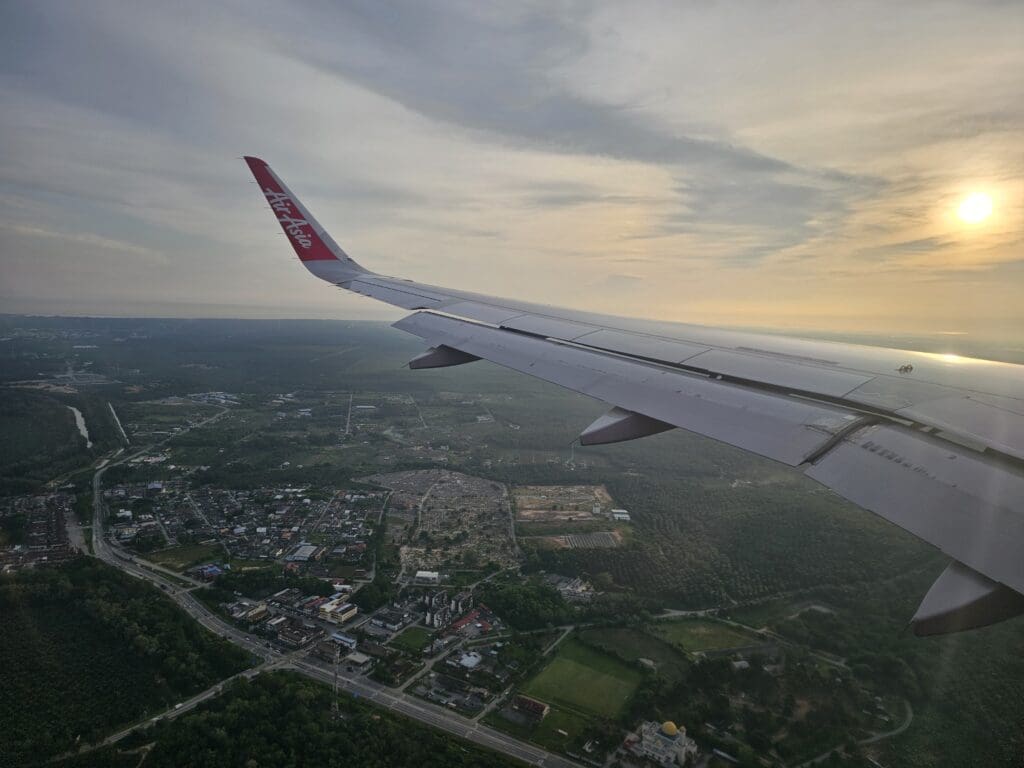
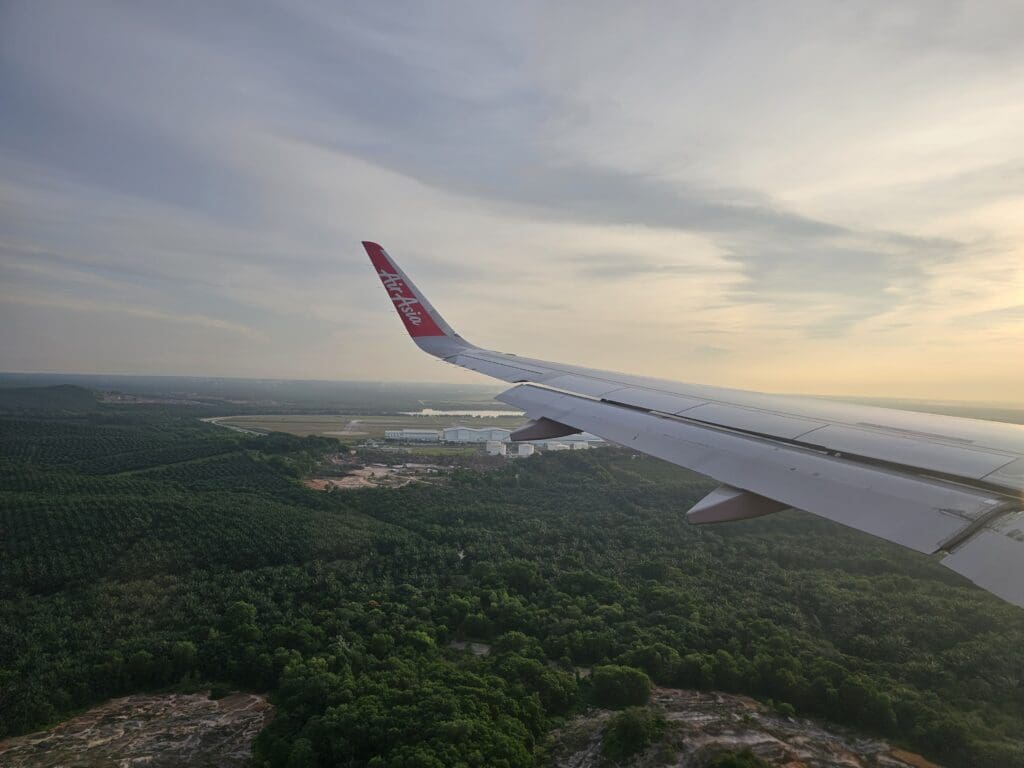
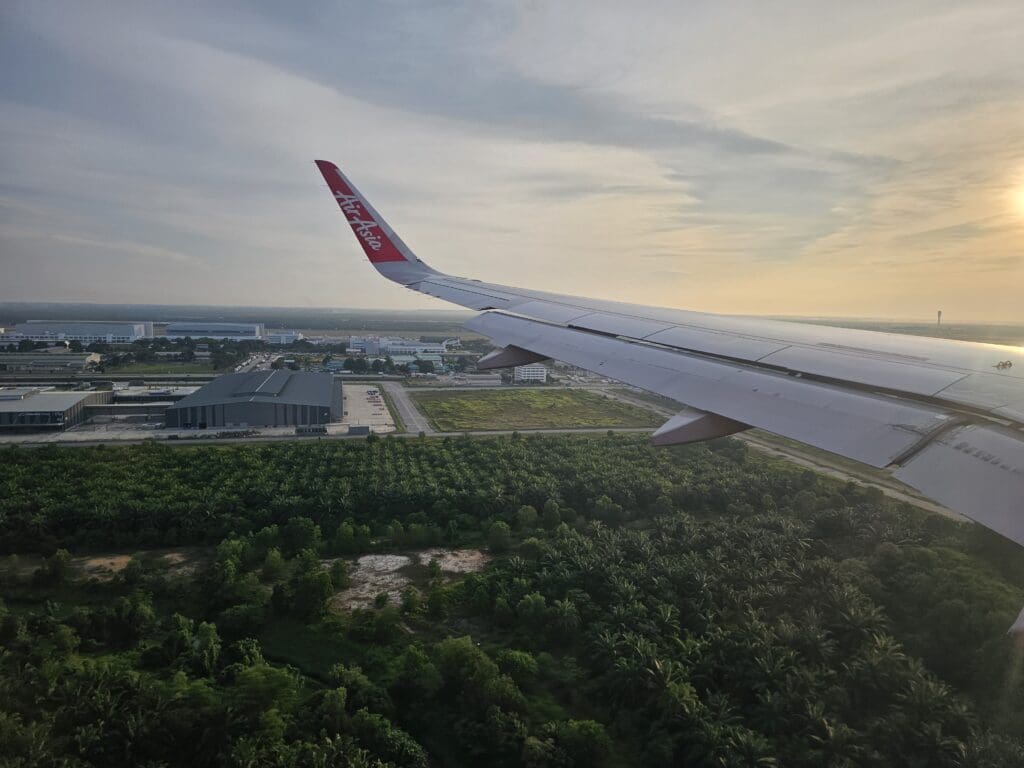
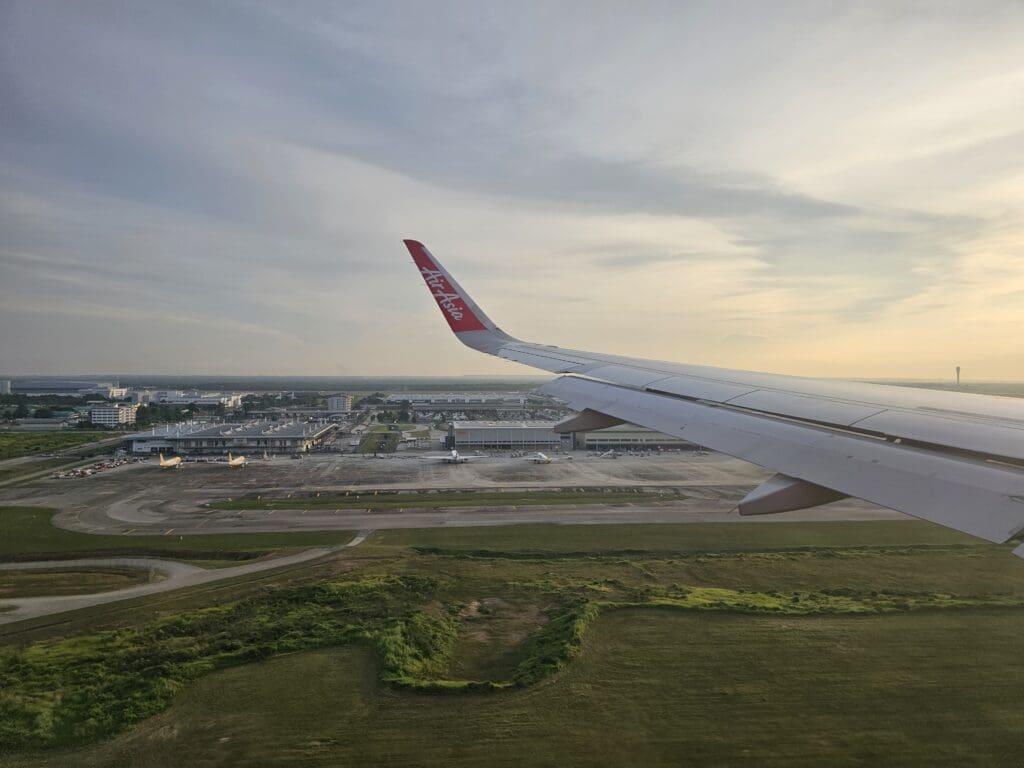
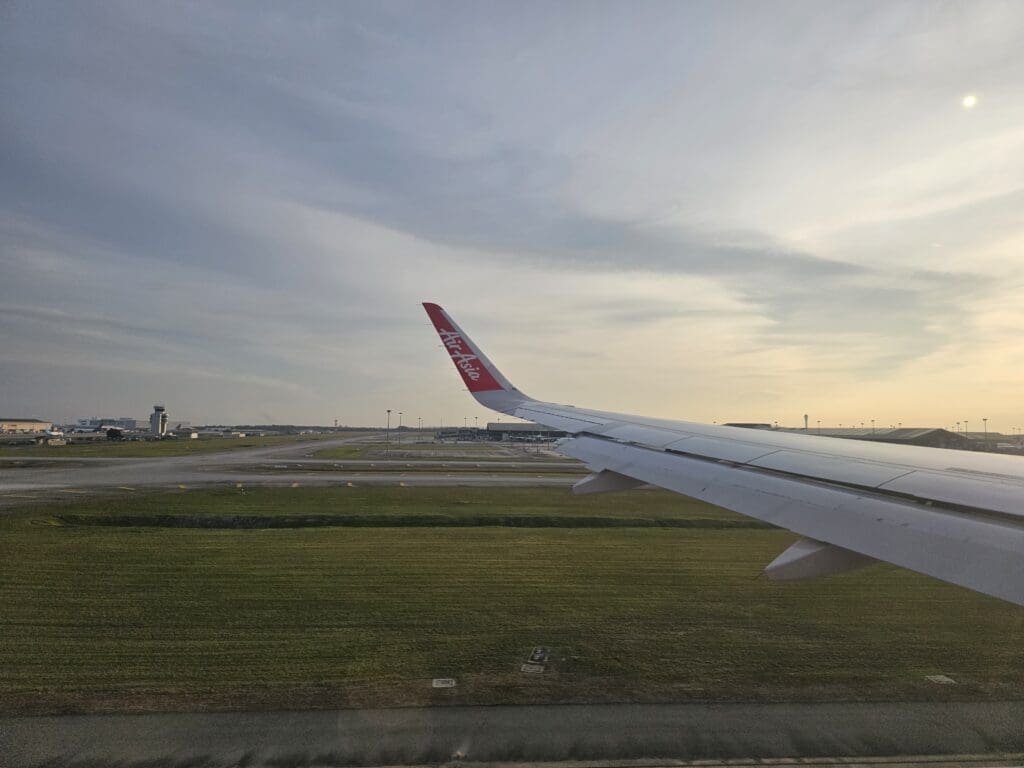
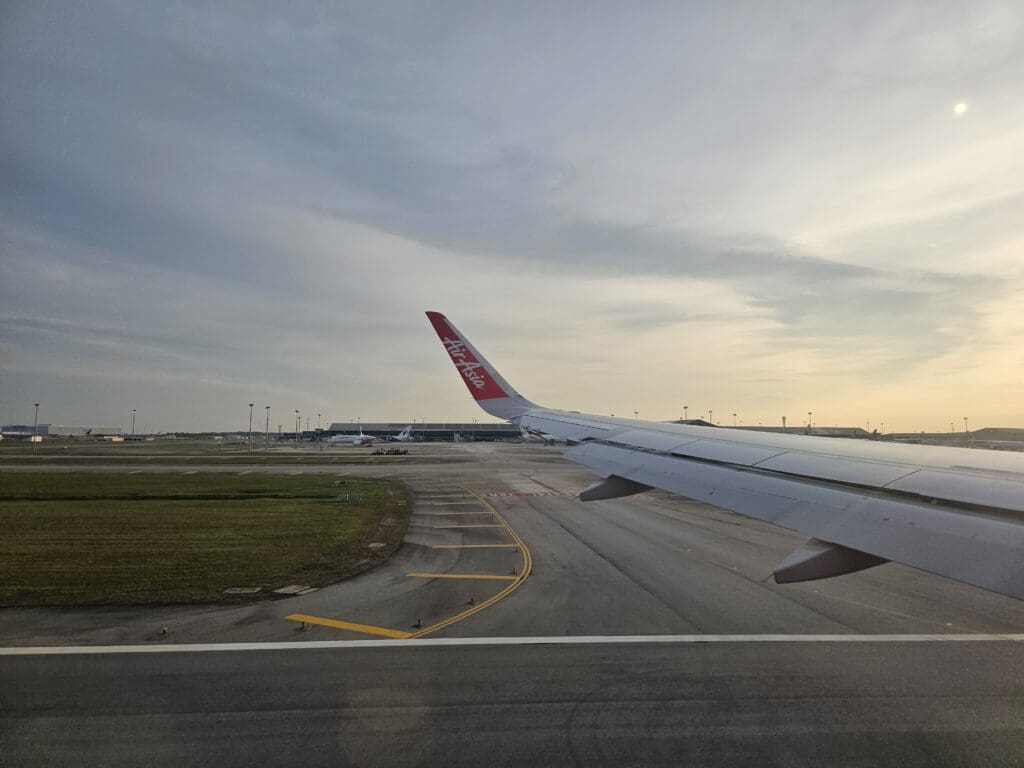
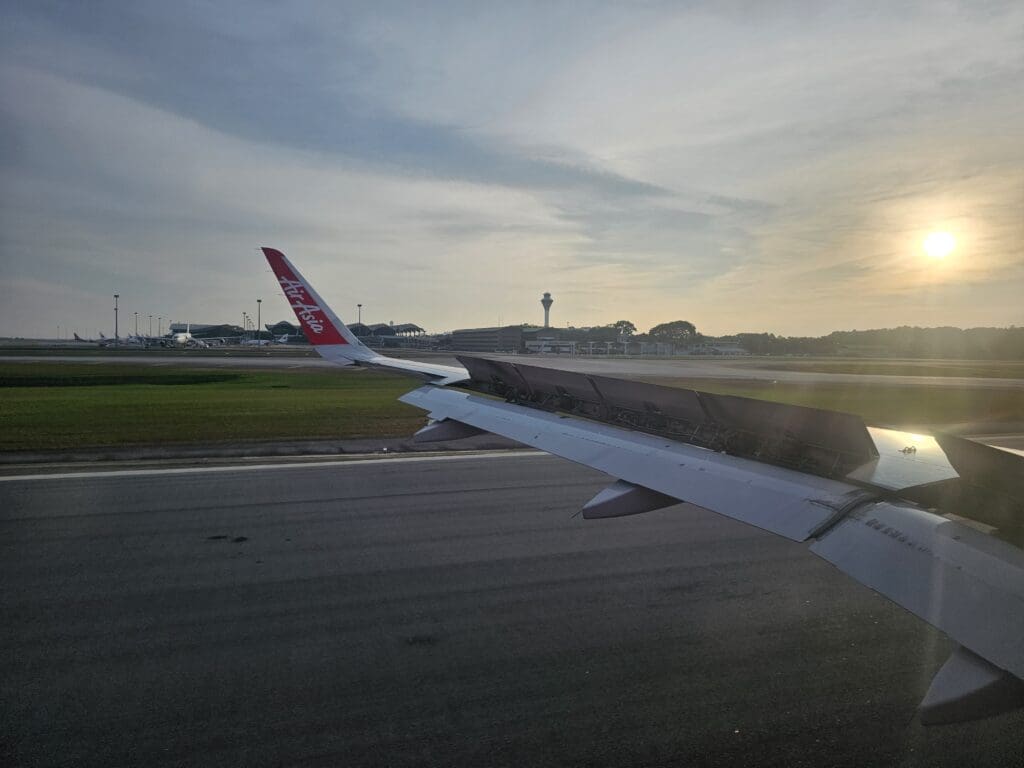
Once off the runway, the Purser welcomed all to Kuala Lumpur and apologised for the delay before giving the usual warnings regarding seatbelts as we journeyed to the gate. Despite arriving on the further runway away from Terminal 2, our taxi over to this did not seem to take long, with no holding required as we journeyed across the airport, getting a fairly good airport tour in the process, with a diverse array of aircraft types and airlines visible. A grand total of twelve minutes after touching down and 53 minutes behind schedule, the Airbus came to a halt at Stand J3, at which point the cabin jumped up, perhaps in a desperate rush to leave their cramped seats. Fortunately, with AirAsia’s operation at Terminal 2 running like clockwork, the jetbridge was connected almost immediately and disembarkation soon commenced.
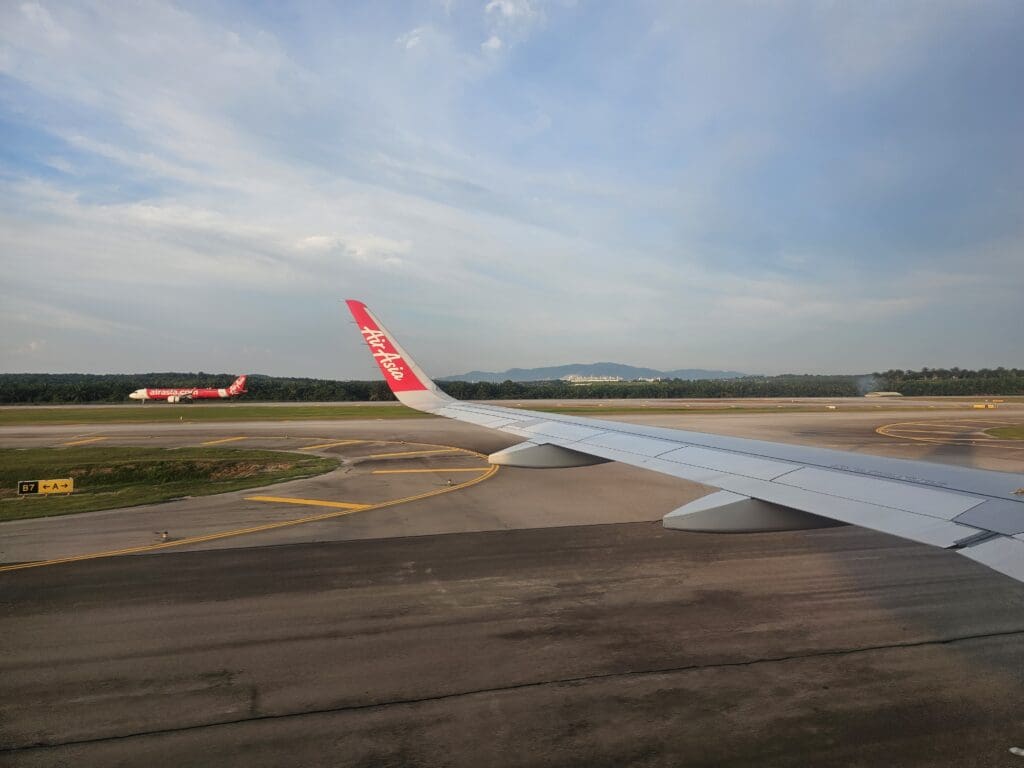
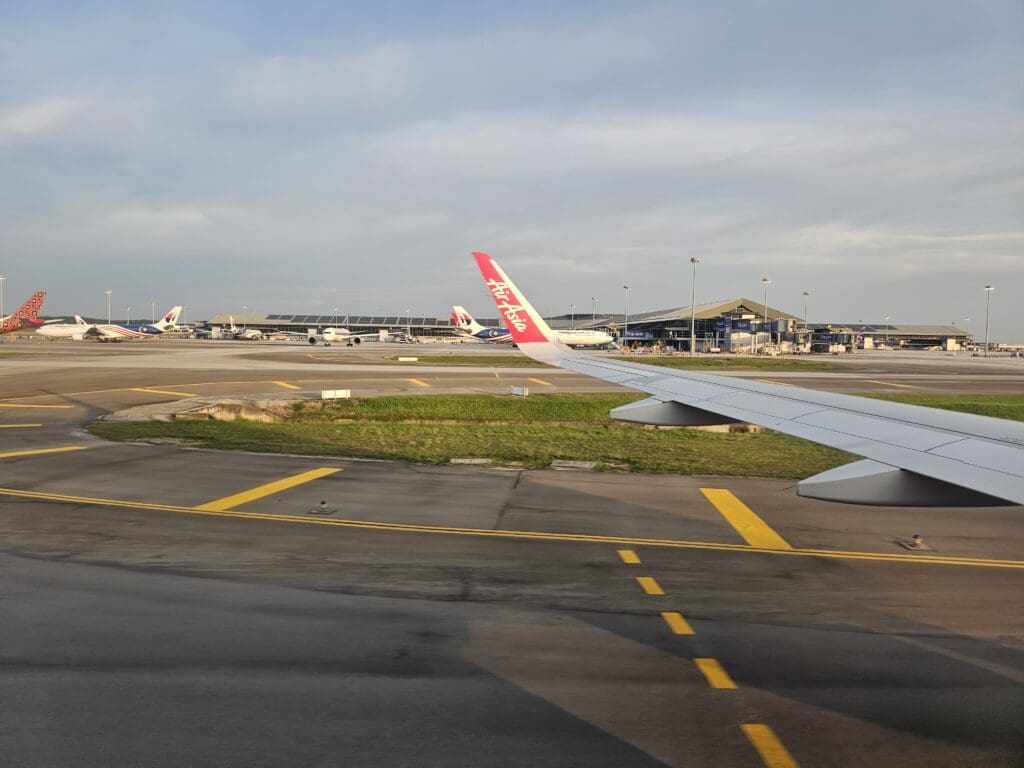
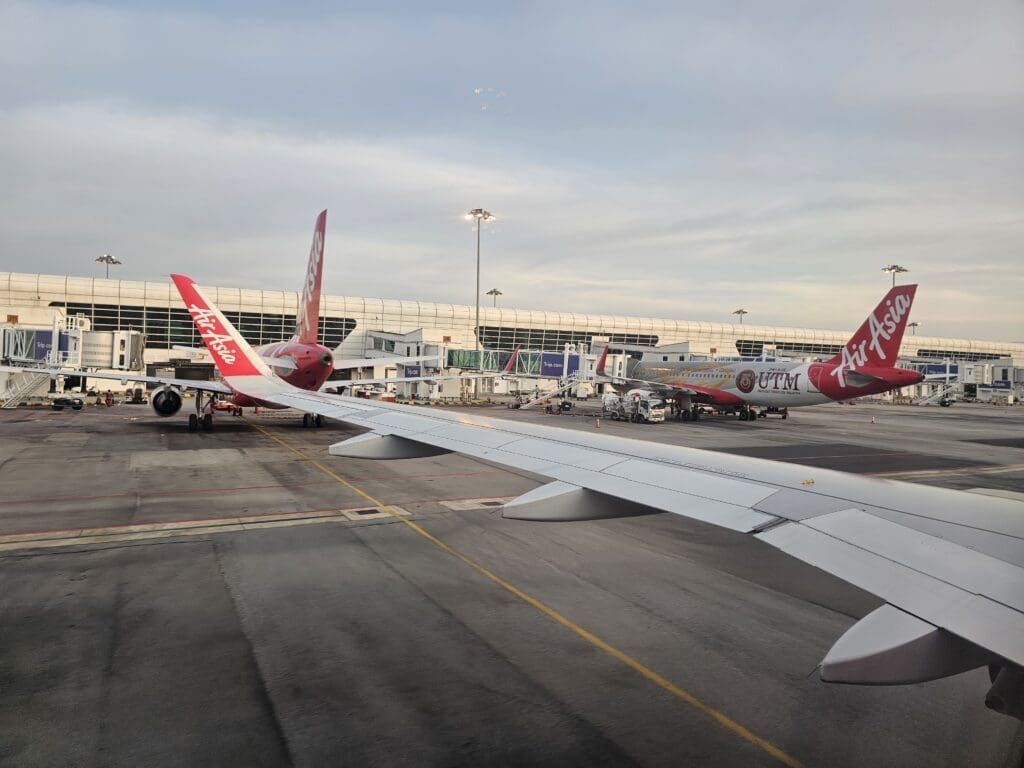
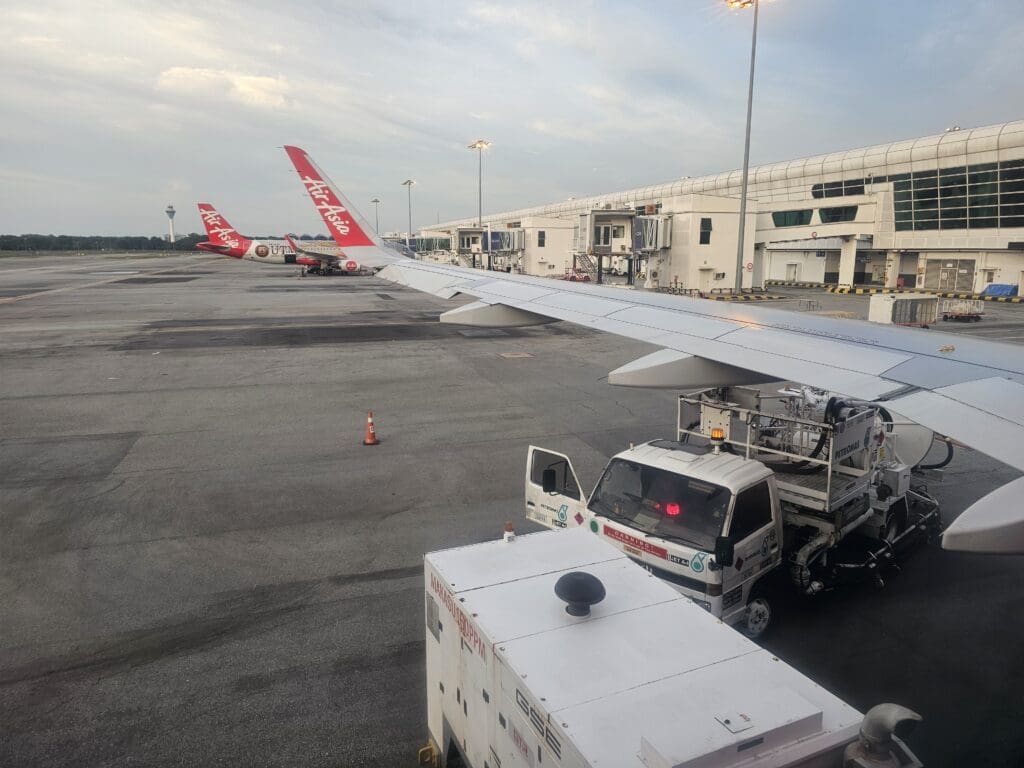
Soon, I stood up and made my way through the cabin, where two flight attendants could already be seen tidying up the seats in preparation for the jet’s next flight. Once I had thanked the Purser, I stepped onto the jetbridge where the six-strong crew who would be taking the aircraft to Tawau and back that evening could be seen raring to go before I entered the modern and busy terminal. As with most airports in Malaysia, I was deposited in the airside departures area and thus had a fair walk through the terminal following signs for arrivals before reaching the landside area.