Sampling Asia’s Giant LCC: Penang to Kota Kinabalu with AirAsia
Background
As part of my eleven-day stay in Malaysia, I needed to get from Penang to Kota Kinabalu, located over one thousand miles to the east on the island of Borneo. Fortunately, there are a few daily flights between the two, operated by Malaysian low cost giant, AirAsia, and Malaysia Airlines’ low cost subsidiary, Firefly. Whilst I had initially hoped to catch my first flight on Firefly, with their flights priced at almost three times as much as those of AirAsia, I found it difficult to go for the cheapest option so I soon booked a flight with AirAsia. With this being my second flight with the airline, having flown from Kuala Lumpur to Ho Chi Minh City with the carrier back in 2016, I had a reasonable idea of what to expect, however, with almost ten years having passed since my last ride, I was still excited to see what treats would be in store!
A Bit About AirAsia
Within Southeast Asia, AirAsia is unquestionably a household name, having transformed from a small full-service operator in 1996, to one of the largest airline groups in the world. Needless to say, if you have an interest in aviation or are based in or frequently travel around Southeast Asia, then it is almost certain that you will have come across the airline’s distinctive red and white jets.
Formed by a government-owned conglomerate with automotive expertise, AirAsia commenced operations in 1996, operating a Boeing 737-300 to destinations across Malaysia. However, unsurprisingly the airline faced tough competition from Malaysia Airlines, who at that time enjoyed a monopoly on most domestic services. This, paired with the impacts of the Asian Financial Crisis saw the young airline fall into significant debt. In September 2001, the Tune Group, led by Tony Fernandes and Kamarudin Meranun acquired the flailing airline and its debt for a token $0.26. Whilst this was perhaps seen as a questionable move by sceptics, the two sought to replicate the successful low cost carrier model seen in Europe and North America in Southeast Asia.
Totally transforming AirAsia’s operating model, the airline was reborn as an ultra low cost carrier, offering no-frills service and bargain fares that undercut many competitors, drawing in masses of first-time flyers and providing unexpected competition to national stalwart Malaysia Airlines on domestic services. With their initial gamble paying off and soon turning a profit, the airline soon grew its fleet of Boeing 737 Classics, deploying these on routes from bases in Johor Bahru and Kuala Lumpur to destinations across the country. However, seeking to upgrade and modernise its fleet, AirAsia placed its first order for Airbus A320 jets in 2004. Today, the Airbus A320 Family serves to be the sole type in AirAsia’s fleet, with the airline operating Airbus A320s, Airbus A320neos and Airbus A321neos, with these deployed on a near countless number of routes to destinations across Asia and Australasia. Needless to say, the airline had proven to be a major low cost success story.
Hoping to repeat its initial success overseas, in 2004 AirAsia’s Thai subsidiary commenced operations, followed by an Indonesian arm the following year, both of which continue to successfully operate to this day. These have since been followed by arms in Cambodia, India, Japan and the Philippines. Meanwhile, setting its sights on long haul low cost operations, in 2007, AirAsia launched AirAsia X. This sought to connect Kuala Lumpur with destinations across Australasia, Europe, the Middle East and Northeast Asia with a fleet of Airbus A330 and Airbus A340 aircraft, replicating this with arms in Indonesia and Thailand. Today, the original Malaysian arm and Thai subsidiary of AirAsia X continue to operate, currently serving destinations in Australasia, the Middle East and Northeast Asia.
The Journey
Following a long weekend in George Town spent overindulging in Penang’s famous culinary delights, fearful of drastically increasing my trouser size, the time came for me to leave the island. Looking forward to my first ever trip to Borneo, I woke up bright and early in my windowless room, ready to sample the delights of Malaysia’s famous low cost carrier, AirAsia. Lured in by its cheap nightly cost, I ended up staying in the Island City Hotel, which proved to be one of the cheapest options and was relatively centrally located, even if it did seem to be a slightly questionable institution at times.
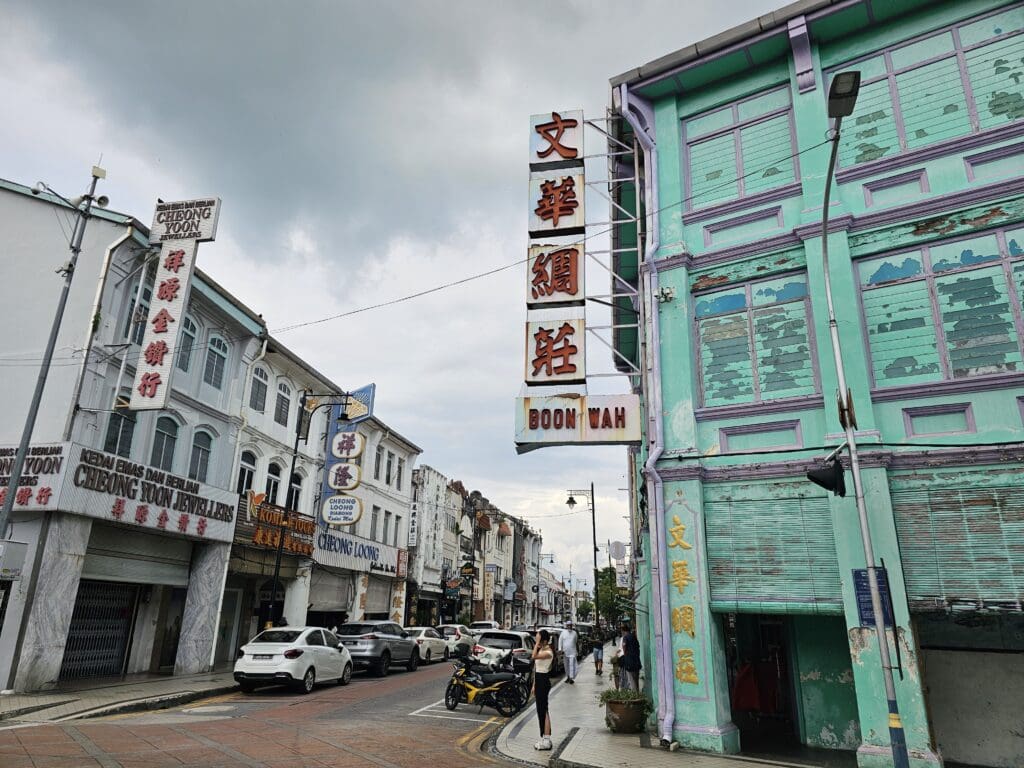
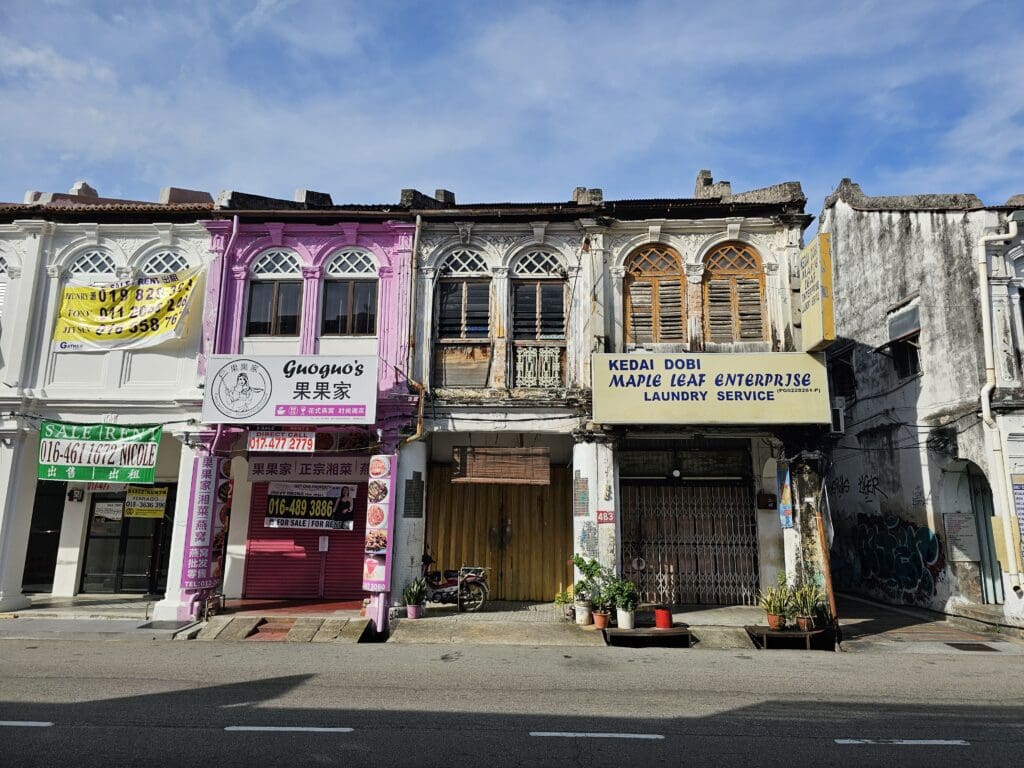
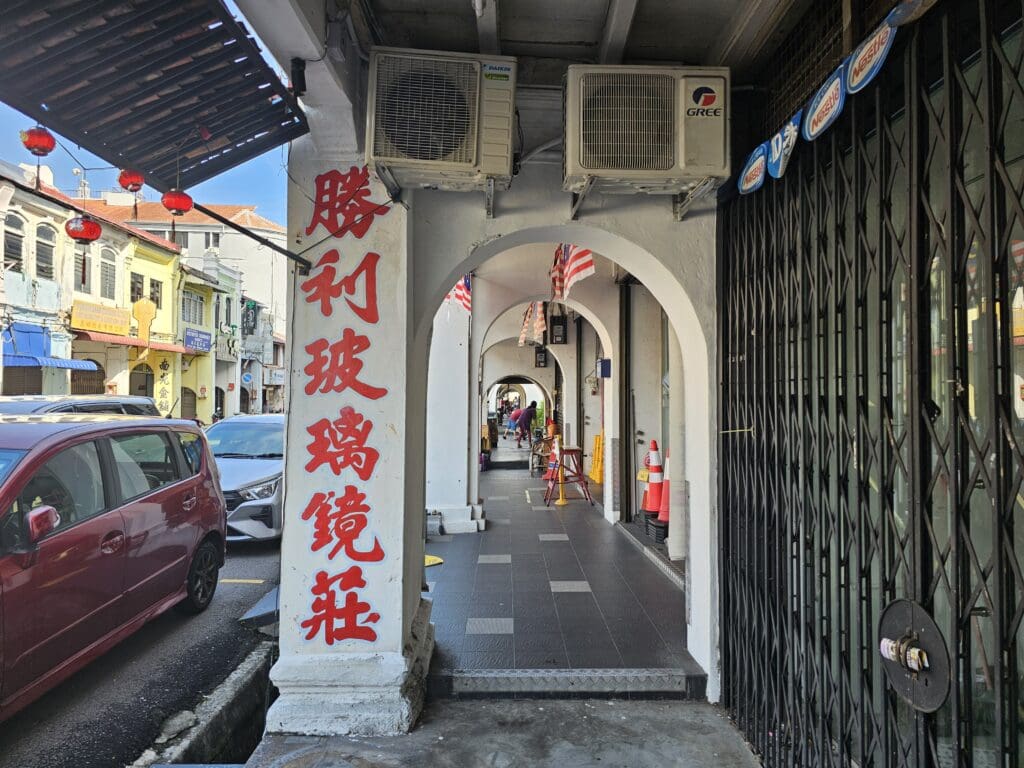
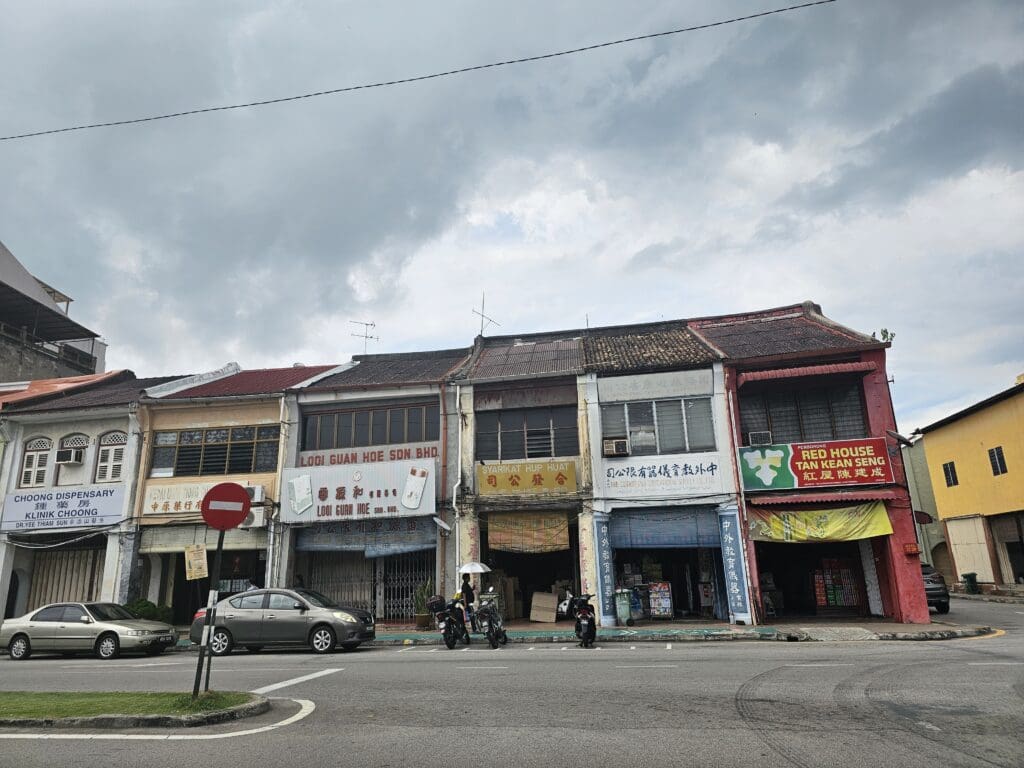
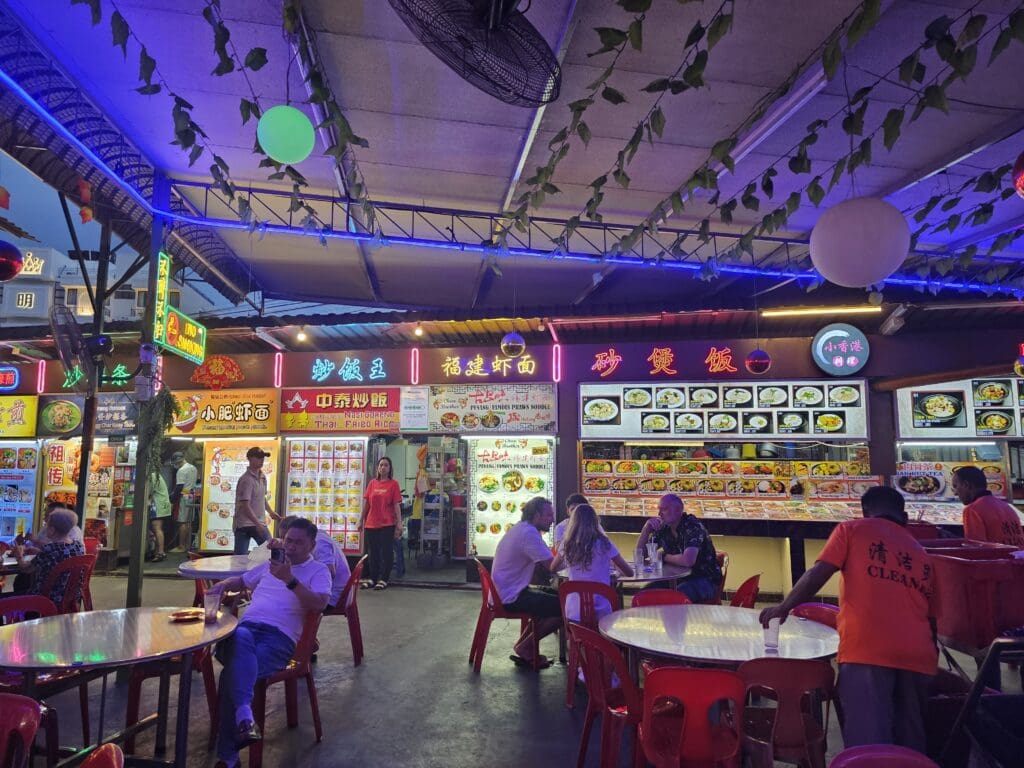
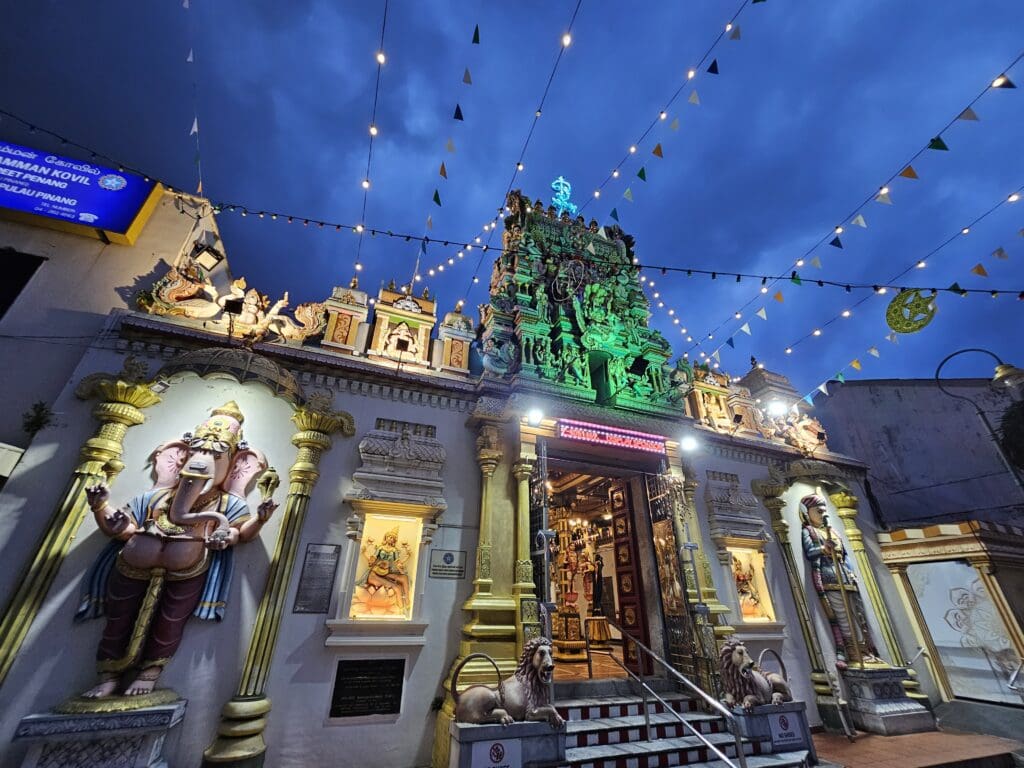

Seeing as my flight to Kota Kinabalu was not scheduled to depart until 1400, I could have comfortably left my hotel at 1200 and still made my flight without rushing. However, having ended up with a free lounge pass for the Plaza Premium Lounge, and with some work to do that morning, I decided that I would leave at 0840 and spend the best part of the morning and early afternoon at the airport. Once up and about, I went for a pre-dawn wander around the quiet streets of George Town, making it down to the seafront and city hall before returning to the hotel for a quick shower and to pack my things.
Sitting in the southeastern corner of the island of Penang, Penang International Airport sits around seventeen kilometres to the south of George Town, and is well-connected to the local Rapid Penang bus network. With a one-way ticket costing just 2.70 ringgit (£0.47), this is by far the cheapest way to reach the airport. However, it is also the slowest, with there not being any sort of express bus service operating between the two. However, were I to have taken the bus, I would have undoubtedly ended up drenched in sweat, with my British body having yet to adapt to Malaysia’s high heat and humidity, even early in the morning. Fortunately, with Malaysia’s answer to Uber, Grab, on my phone, and with an abundance of cheap rides available to the airport, I decided to splurge out on a private car.
After undertaking a final check to ensure that I had everything with me, I headed to reception to turn in my key and have my 50 ringgit deposit returned. Fortunately, this went without a glitch and I soon opened up the app and ordered my ride to the airport. With Grab utilising dynamic pricing based on demand, that morning, I found that my ride back to the airport would be a little over twice the price that it had been for my journey to George Town three days earlier – setting me back 55 ringgit (£9.57) instead of 25 ringgit! Nevertheless, with my heart set on a taxi, I steamed ahead with this and ordered a car. No more than three minutes later, a small blue Suzuki Swift pulled up and whisked me away down Penang’s busy morning streets.
As we made a stop-start journey out of downtown George Town, the calming tones of Westlife’s greatest hits loudly blurted out from the car’s speakers, providing an uninterrupted soundtrack to our journey southwards. Looking outside, once away from historic buildings of the city centre, a slew of tall apartment blocks could be seen alongside Penang Bridge, which is one of two long bridges connecting the island to the mainland. With these lingering beneath dramatic stormy skies which soon opened up and drenched the island with buckets and buckets of rain. After enduring precisely 21 minutes of the melancholic tones of Westlife at full volume, the terminal appeared and we whizzed up the ramp as a live rendition of You Raise Me Up rang through the car.

With the taxi drop off area conveniently located almost right outside the entrance of the check-in hall on the first floor, I was required to make no more than a few short steps through the morning heat and humidity before being entering the terminal. With significant modernisation and expansion work having been completed in 2012, from both the inside and out, Penang International Airport’s terminal appears to be rather modern. This consists of a single rectangular terminal, with the airside area of which is split into a domestic, and a much smaller international portion, whilst the landside portion of the terminal is shared between domestic and international flights. Wandering around, considering the number of flights that serve Penang International Airport, I was a little surprised to find the check-in area to be rather small – with this perhaps clearly designed at a time when the airport saw far fewer international services.
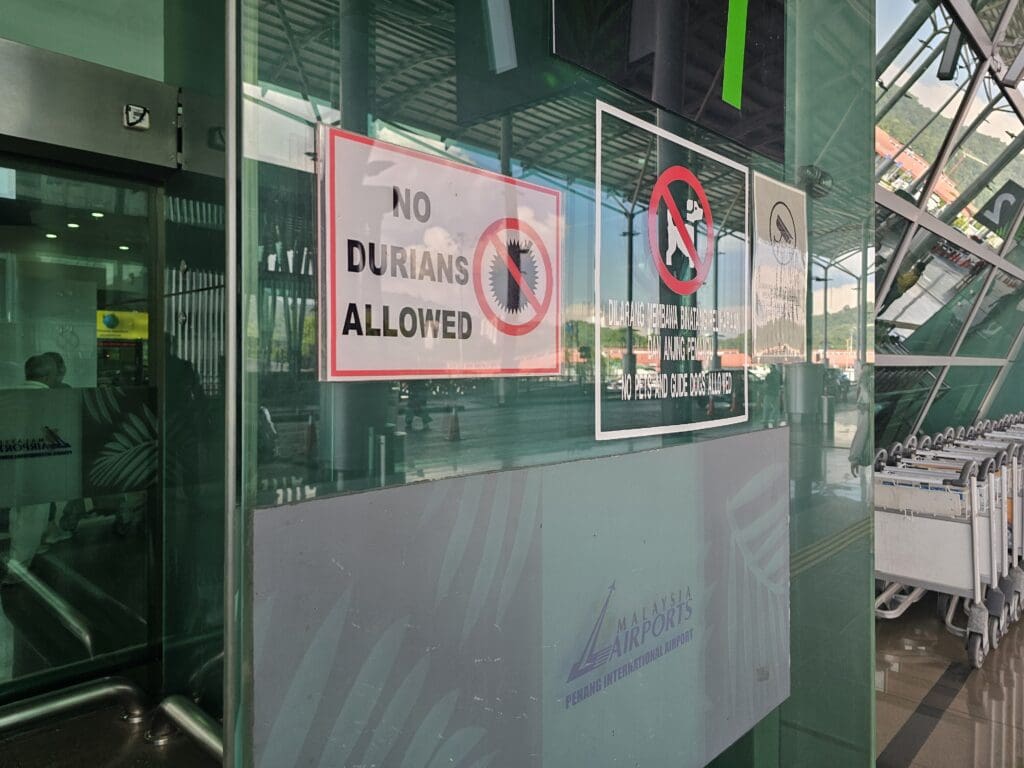


Despite the small check-in area, the landside departures zone is home to a fair number of cafés, eateries and shops, with international chains including McDonalds, Starbucks and WHSmith. Those looking for more local eats can head for Nasi Kandar, or visit the airport branch of Penang bakery, Ban Heang. Unlike at many airports across the world, I was pleased to find that these cafés and eateries did not seem to sell items with any significant airport mark-up, with reasonably priced options aplenty.

With a constant stream of flights departing that morning, once inside, I was not overly surprised to find the terminal to be rather busy, although fortunately the landside portion seemed to be clean and tidy, with ample space to sit and wait. However, seeing as I had a mobile boarding pass, and with no airside views offered from the landside portion of the terminal, following a very short wander around, I decided to head to the domestic airside area. Despite there being a constant stream of passengers passing through, much to my delight I found the domestic security checkpoint to be reasonably quiet, with two lines open and no waiting required. Following a quick and easy check during which I was not required to remove liquids or electronics, nor did I have to undergo any additional checks, I made it through the airside area in around a minute, thus leaving me with a very positive first impression of the airport that day.
Once through security, I decided to have a wander around before retreating to the lounge for a late breakfast. Whilst it had been almost eight years since I had last passed through the terminal, this did not appear to have changed a great deal since my last journey through this. Importantly, as with the landside portion of the terminal, I found this to be in a largely clean and tidy state with plenty of places to sit and wait. Wandering around, I would say that the terminal is neither particularly large nor small, and is rectangular in shape, with the terminal’s gates running along one side of this. Considering its size, the terminal hosts a good number of shops and eateries – once again including both international and local options, none of which seemed to be extortionately priced. However, despite this, I would not say that the domestic terminal was really designed to be somewhere for passengers to spend hours and hours waiting, and, despite the shops and eateries, this lacks any stand-out features or a massive array of facilities for passengers to pass the time.


Importantly for aviation enthusiasts, a good view out onto both the stands, apron and runway can be had from the seating areas around most of the terminal’s gates, and as I wandered around, I watched as a selection of aircraft from Malaysia and abroad were being readied for departure, and made their way to and from the runway. Being Malaysia’s third busiest airport, Penang International Airport most certainly does not lack movements, and at the time of my flight in May 2025, this was served by a total of 25 passenger airlines. Most services connect Penang with destinations across Malaysia and elsewhere in Southeast Asia. However, there are also a small number of services to destinations a little further away such as China, Hong Kong and Taiwan, as well as Chennai, and the furthest destination, Dubai, which is operated by a FlyDubai Boeing 737 MAX that flies a triangular route from Dubai to Langkawi and Penang before heading back to the Middle East. In terms of aircraft sizes, the largest passenger jet to currently serve Penang is the Cathay Pacific Airbus A330, however, over at the cargo terminal, both Cathay Pacific Cargo and Korean Air Cargo serve the airport with Boeing 747 Freighters. Looking at the domestic departure boards, had I not wished to fly to Kota Kinabalu, I could have instead jetted off to Johor Bahru, Kota Bharu, Kuching or Langkawi.
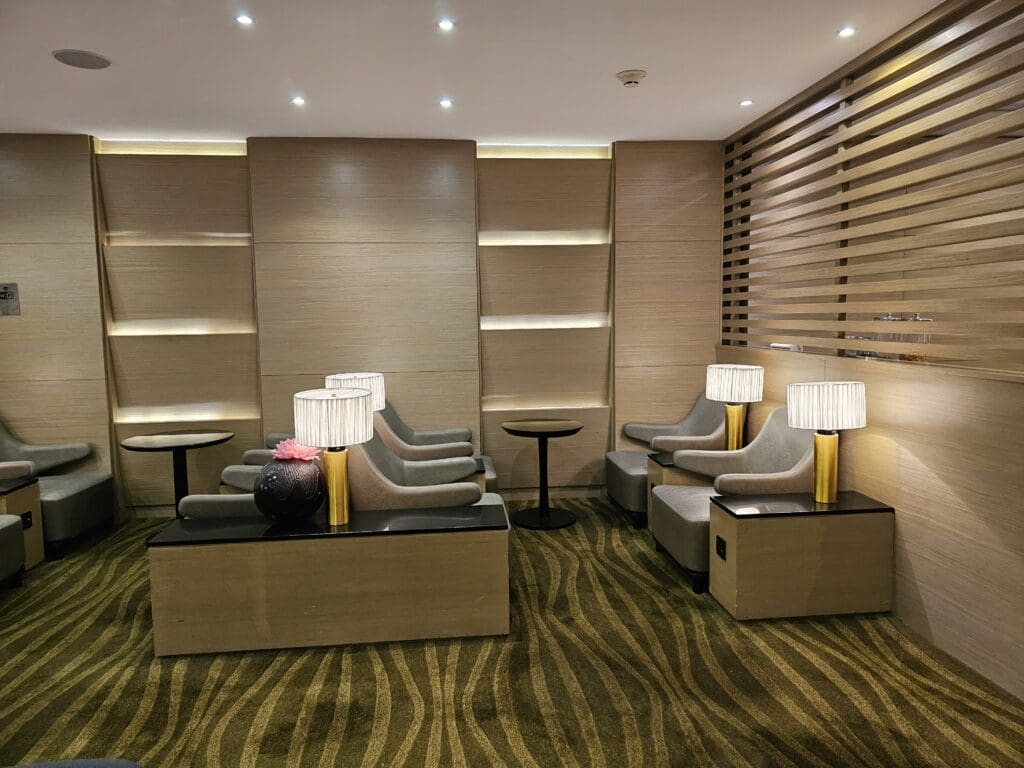
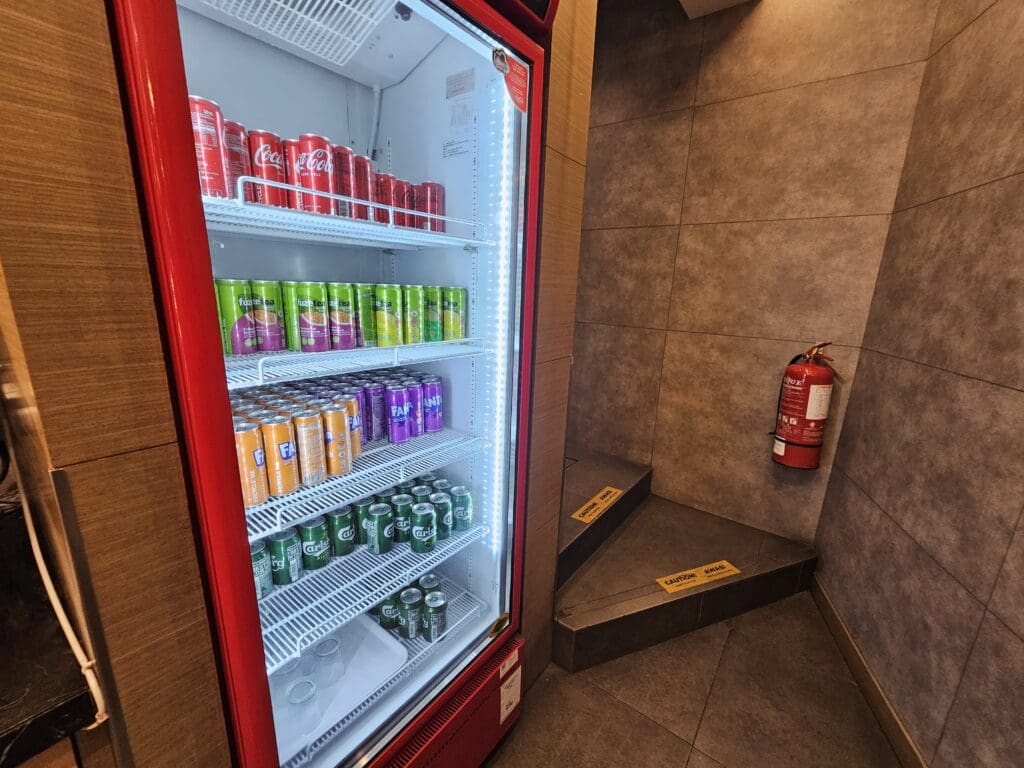
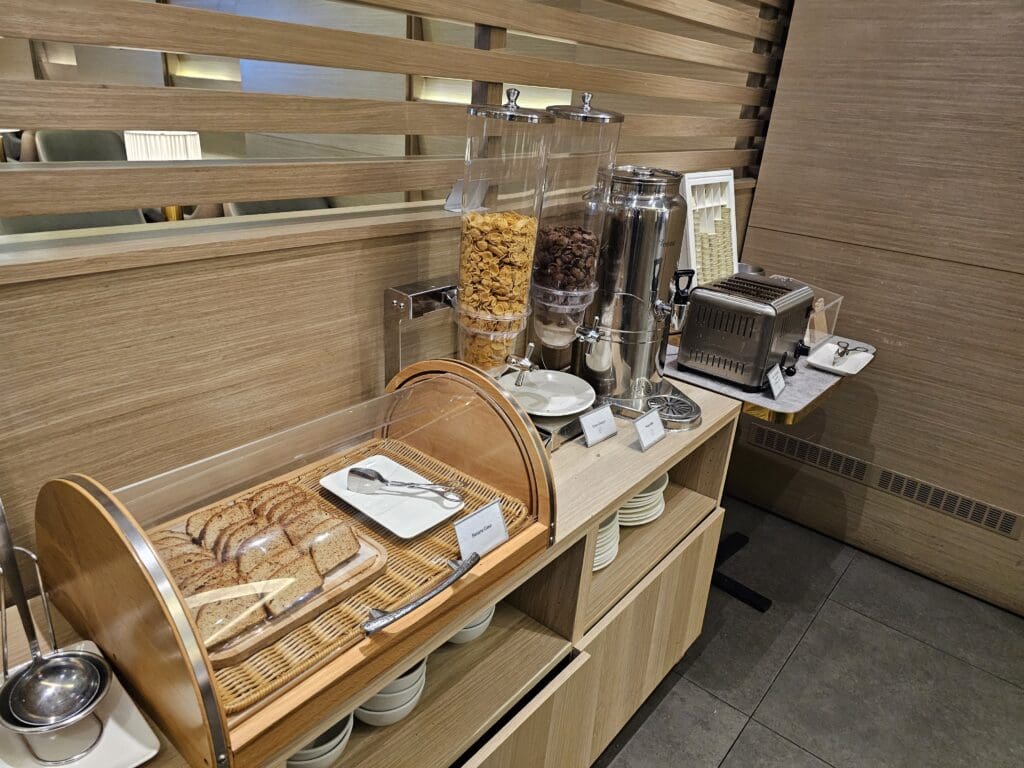
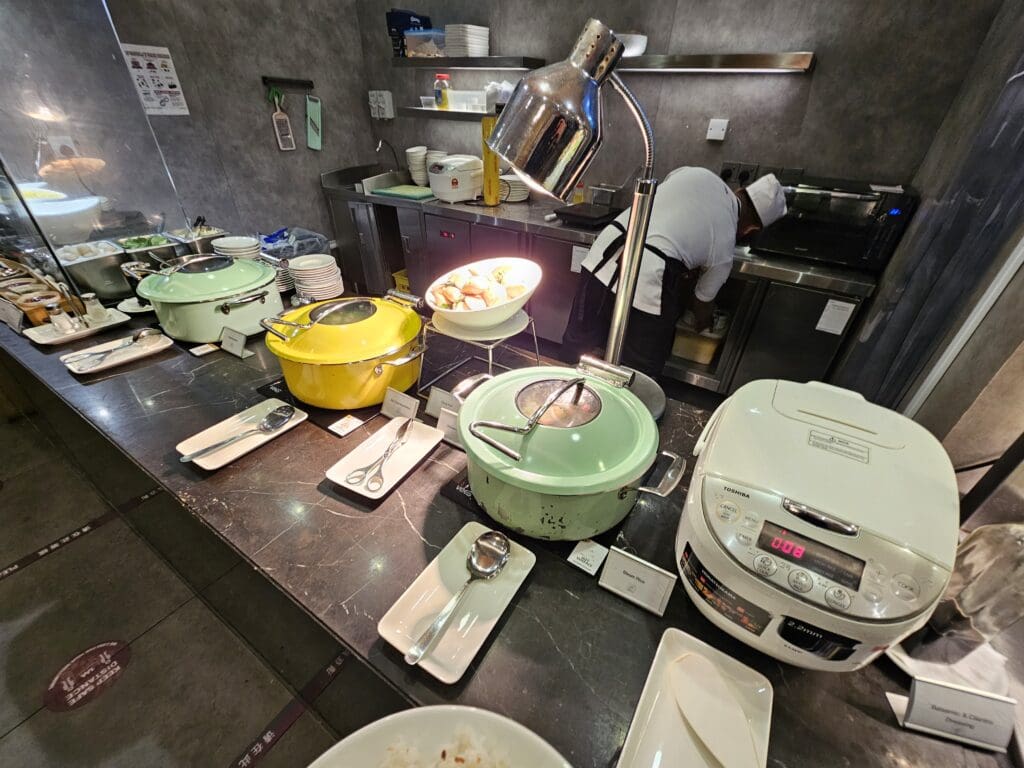
Following my saunter around the terminal, I decided to make my way to the Plaza Premium Lounge, located opposite the terminal’s security checkpoint. Inside, this is fairly compact, yet still features all the usual features such as a small buffet, showers and toilets. This was fairly modern in its design and importantly proved to be clean and tidy for the duration of my stay. Upon arriving there, three breakfast options could be seen on the buffet – Nasi Lemak, noodles with various condiments and toppings, and a Western cooked breakfast. These came in addition to sandwich quarters, cereal, a toast station, biscuits and slices of banana cake, which were later replaced by colourful pieces of Malay Kuih. For drinks, a hot drinks machine was offered, along with jugs of Milo and Teh Tahrik, plus plenty of tea bags, and a chiller containing an array of cans of ice tea, fizzy drinks and Heineken for those fancying something a little stronger. Meanwhile, later on, the hot options were replaced by a laksa station, fried noodles, rice, kurma and curry puffs, along with a healthy salad bar. Whilst by no means a lounge connoisseur, I found this to be a decent place to sit and wait, although I was left with a couple of complaints. Firstly, a surprisingly high number of plug sockets throughout seemed not to work, and it took me some time to actually find one that did in order to charge my phone. Secondly, this failed to offer any views of the action outside, being an entirely windowless lounge.


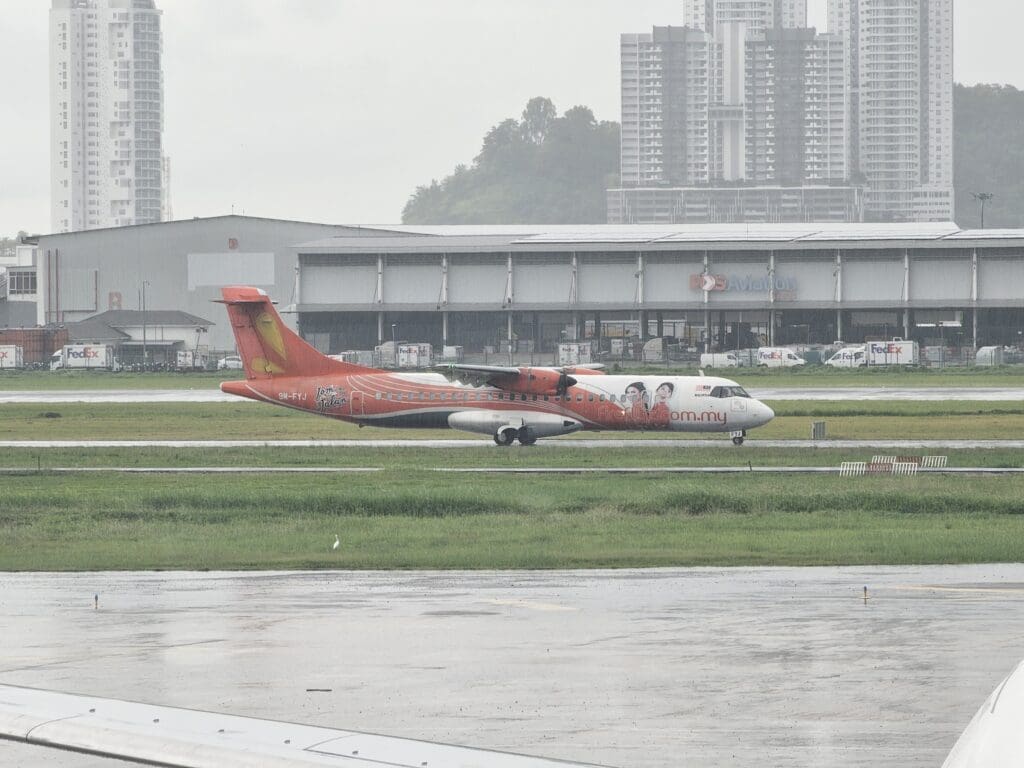
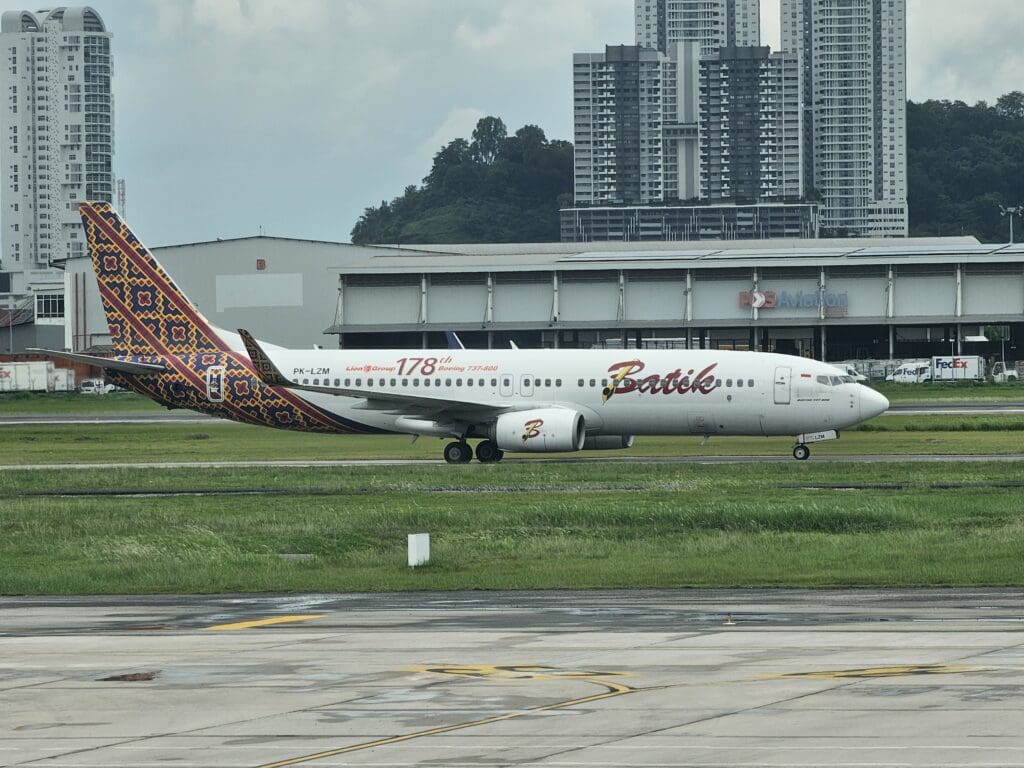
Following a period of peace and quiet where I almost had the luxury of the entire lounge to myself, as we edged towards midday this began to fill up and soon ended up being totally full, with standing room only for those unlucky passengers who were arriving in time for lunch. At this point, I decided that it was time to continue on my adventure and so I returned to the main waiting area, which at this point was also rather crowded. Plonking myself down near one of the floor to ceiling windows, I watched as a seemingly constant stream of mostly AirAsia Airbus A320s came and went, the majority of which were operated by the main Malaysian carrier, bar two operated by their Indonesian and Thai subsidiaries which arrived from Medan and Bangkok Don Mueang respectively. Other than these I spotted aircraft from Batik Air, Batik Air Malaysia, Cathay Pacific, China Airlines, FireFly, IndiGo Lion Air, Malaysia Airlines and SIngapore Airlines. Meanwhile, a trio of freighters – two Boeing 767s operated by Air Hong Kong, FedEx and UPS, and a local MyXpres Boeing 737-800 and a Raya Airways Airbus A321 could be seen on the opposite side of the runway.

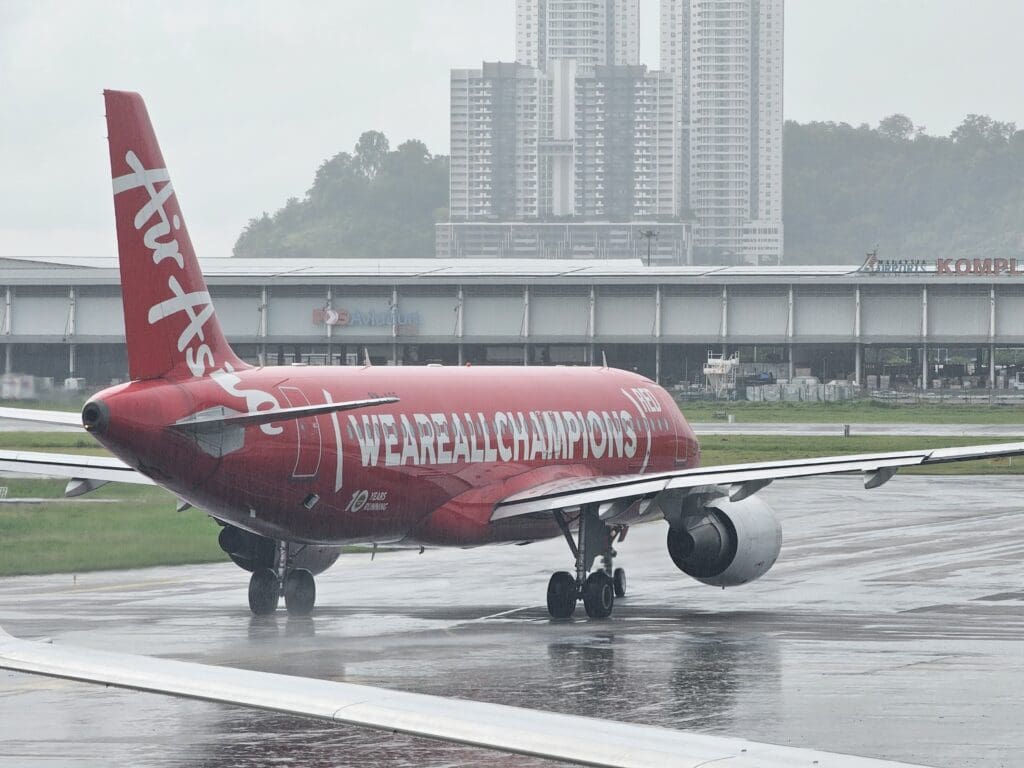

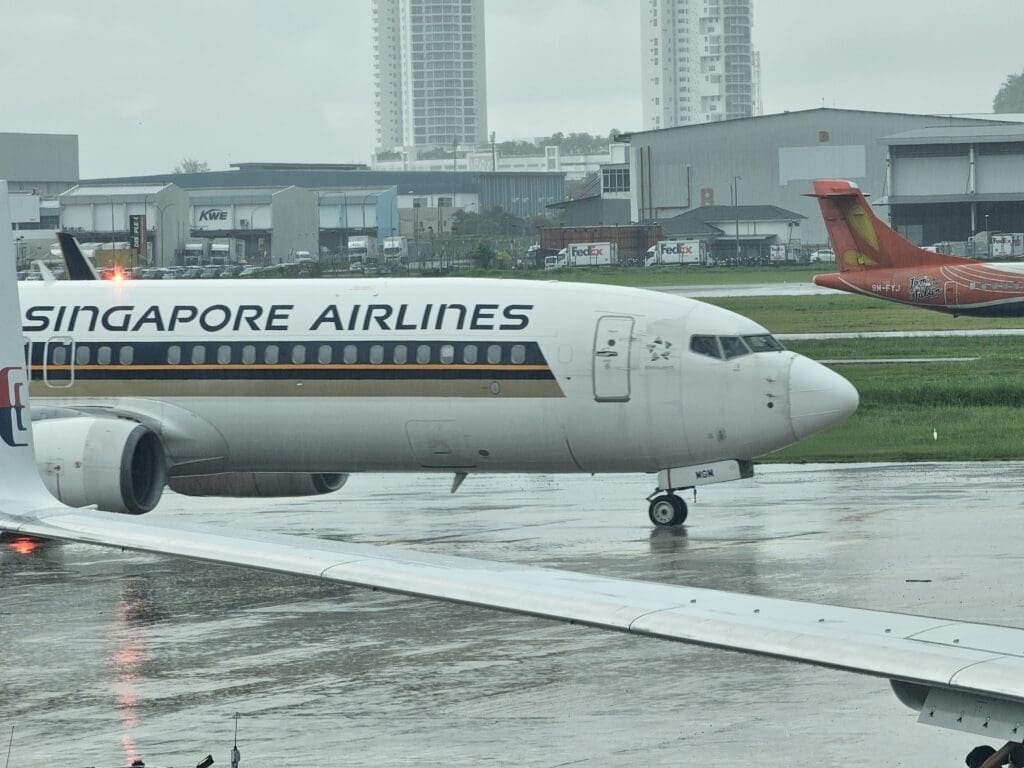

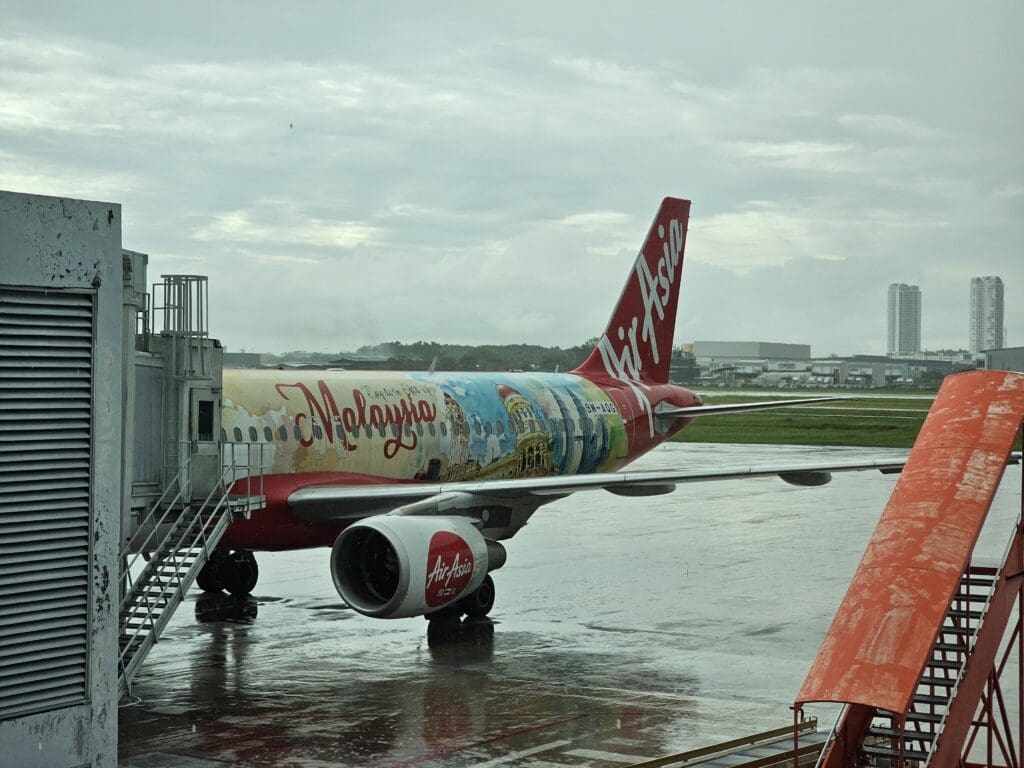
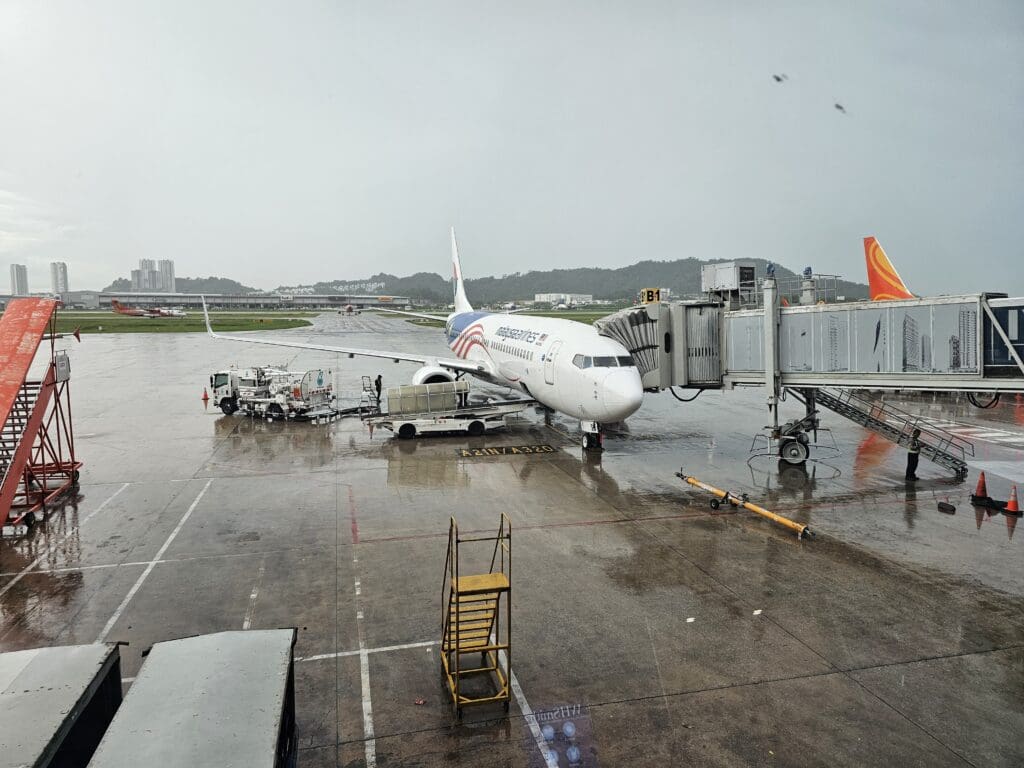


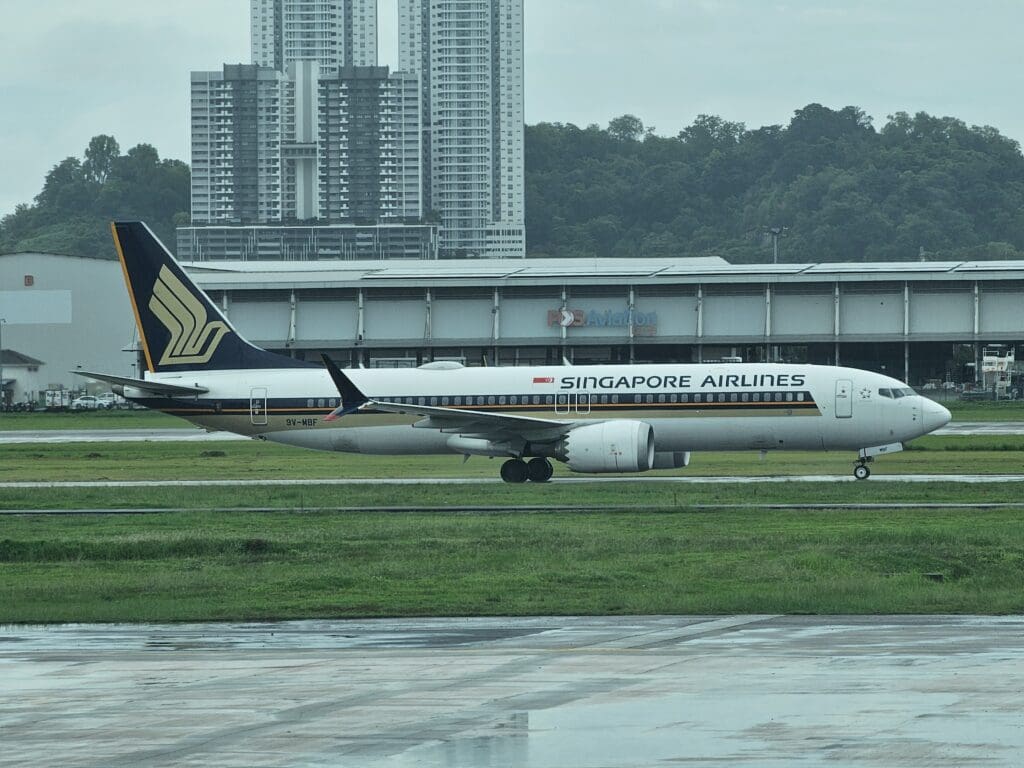




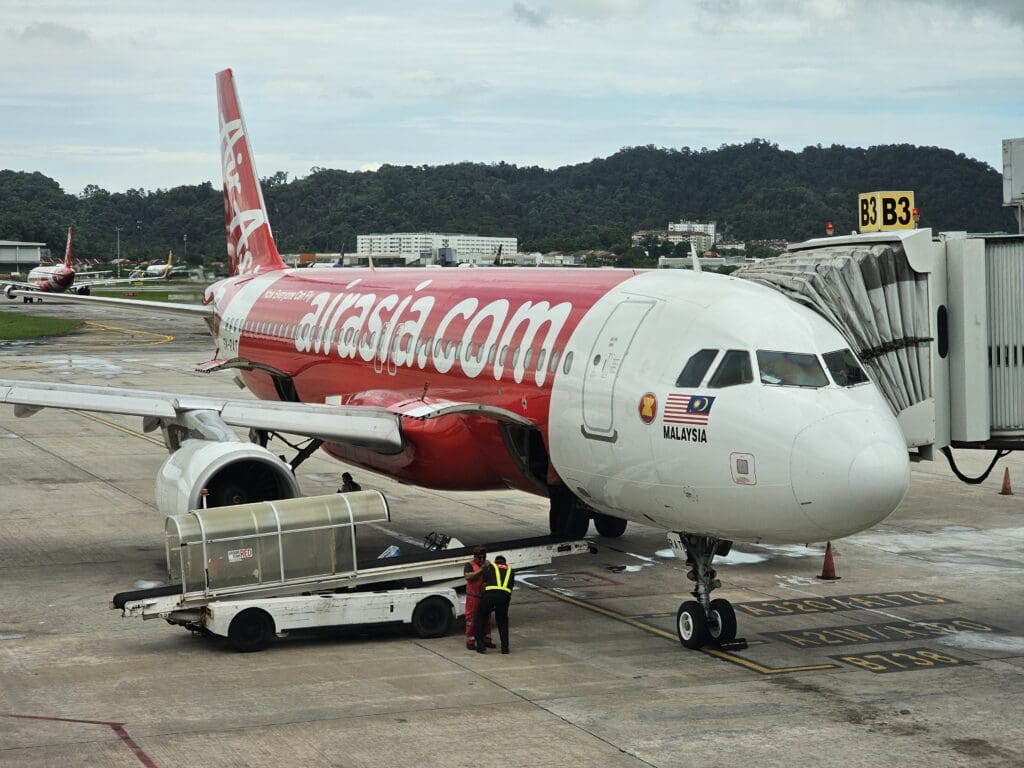
As I watched the movements outside, it soon became evident that AirAsia maintains a well-oiled operation in Penang, with aircraft having nothing other than very short stays on the ground. Indeed, that day, the rotation from Kota Kinabalu was scheduled to be on the ground for just 25 minutes, making a lightning fast turnaround before heading back to its base. However, that afternoon, having made a late departure from Kota Kinabalu, the inbound aircraft did not touch down in Penang until 1352, just eighteen minutes ahead of its scheduled departure time indicating that a punctual departure was an impossibility. Several minutes after touching down on Runway 04, I watched as the red and white jet made its way into Stand B1, the same stand that I had pulled into onboard a Malaysia Airlines Boeing 737-800 several days earlier.


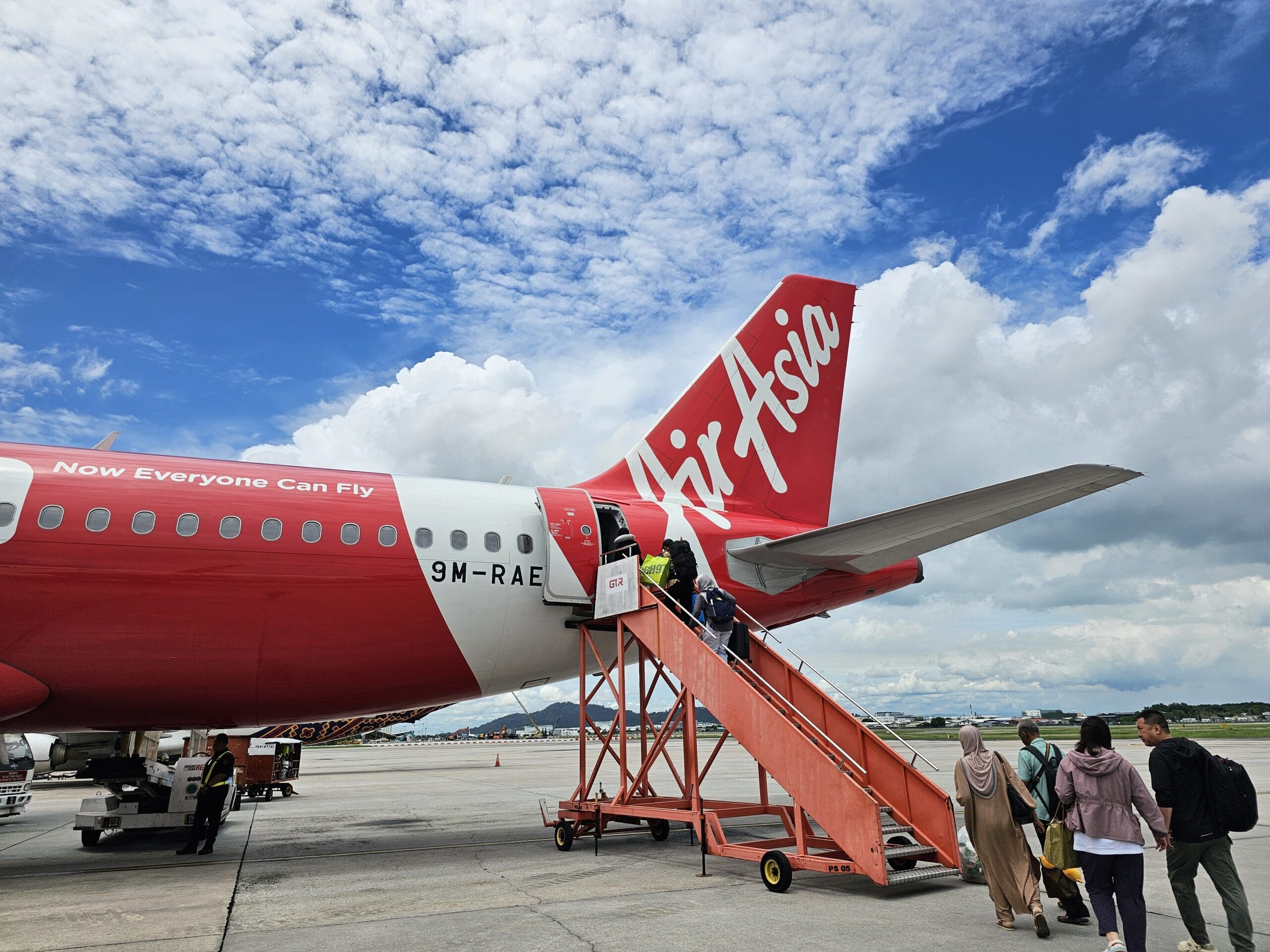
That day I would be flying onboard Sharklet-equipped Airbus A320-216 9M-RAE. Assembled at Airbus’ hometown plant on the grounds of Toulouse Blagnac Airport, this jet first took to the skies in August 2018, making it a modest 6.7 years old at the time of my flight. Destined for AirAsia, the aircraft’s test registration of F-WWDE was soon replaced by its current Malaysian registration and the aircraft was ferried across Europe and Asia to its new home in Kuala Lumpur. Since then, the Airbus has spent its years flying across the skies of East and South Asia for AirAsia, and in the week before my flight had been in the skies almost non-stop. During this week, the Airbus had connected Kota Kinabalu with Bintulu, Hangzhou, Ho Chi Minh City, Johor Bahru, Kuala Lumpur, Kuching, Miri, Penang, Sandakan, Seoul Incheon, Shanghai Pudong, Sibu, Taipei Taoyuan and Tawau, undertaking an impressive total of 62 sectors.

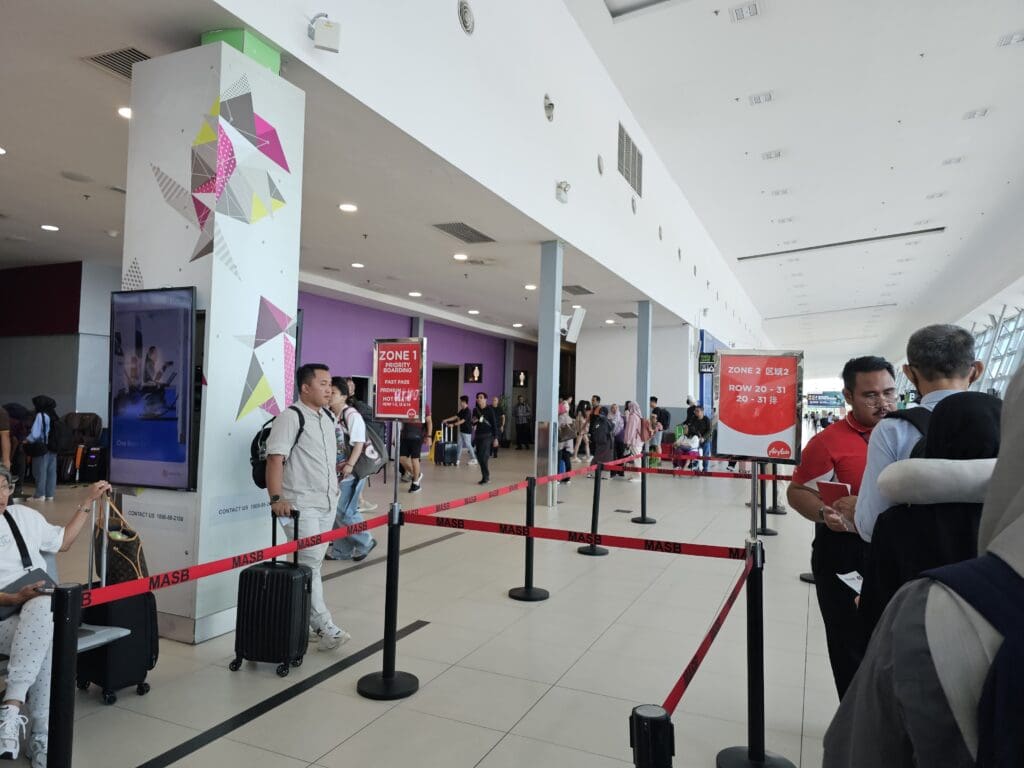
As soon as the Airbus came to a halt, two airstairs were positioned up to the aircraft’s front and rear doors. In a Ryanair-esque manner, no jetbridge was used, despite being present and so passengers were required to trundle to and from the aircraft it the humid May heat. Inside the terminal, once the aircraft came to a halt, an announcement was made in Malay and English regarding the imminent commencement of boarding, with three queues having already been established and each already featuring a reasonably long line of passengers. That afternoon, passengers were split into three zones – Zone 1 was for Priority passengers, those with Fast Pass, Premium Flex and passengers who had paid to pre-reserve the ‘Hot Seats’, Zone 2 consisted of those in Rows 20 to 31, and Zone 3 was those in Rows 6 to 19. With minimal time on the ground, as soon as the final passenger from the inbound service appeared in the terminal, boarding commenced. Soon, a seemingly overworked gate agent who was scanning the boarding passes for those in Zone 1 and Zone 2 simultaneously hurriedly scanned my mobile boarding pass, after which I headed down the stairs and out into the Malaysian heat, where all passengers were initially directed around the wing to board via the rear door.
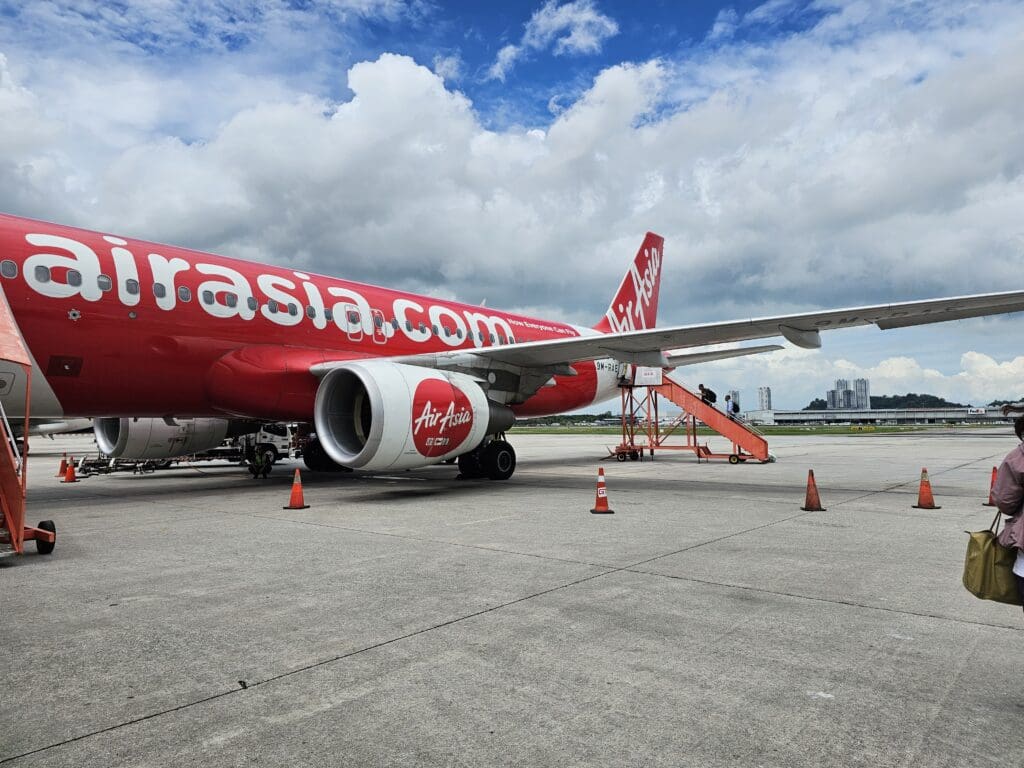
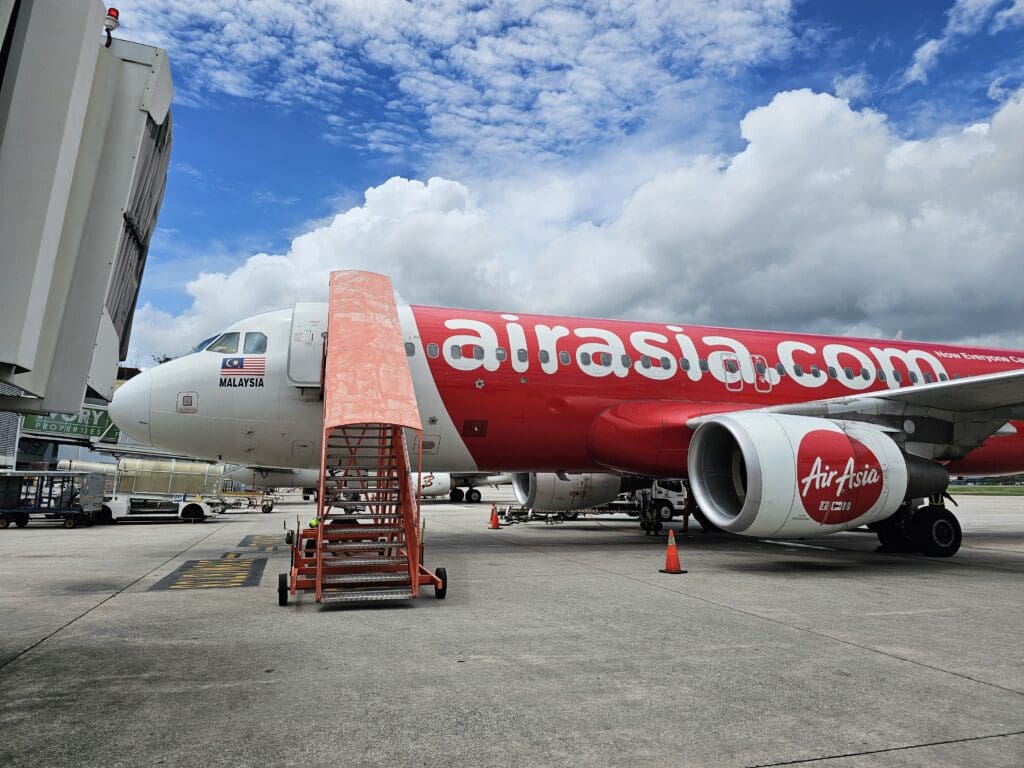

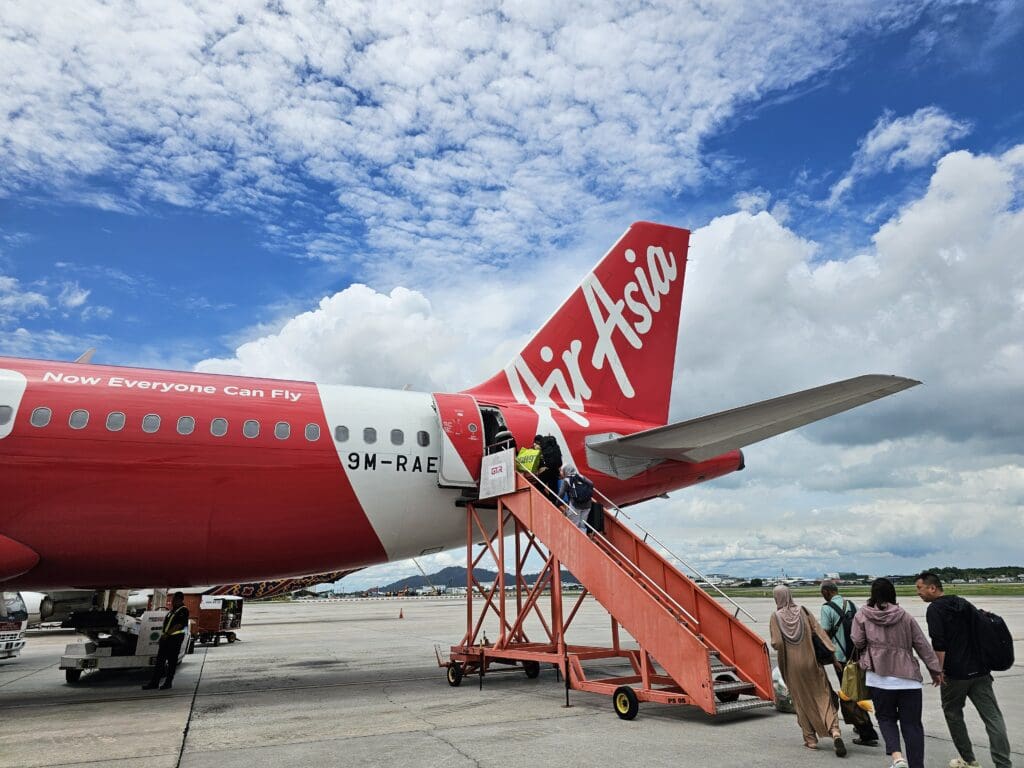

After snapping a few pictures of the Airbus, I climbed up the rear steps and had a short wait before stepping into the Airbus’ rear galley. There, one of the service’s four flight attendants, sporting AirAsia’s bright and distinctive red uniform, could be seen readying the galley for the return leg over to Borneo. With this flight attendant busy at work, I failed to attract any sort of greeting, however, this was ultimately forgivable given the short duration of the turnaround and the likely long list of tasks that needed to be undertaken before the aircraft could depart. Without a word, I turned left and entered the Airbus’ 186-seat cabin. In terms of their design, each seat appeared to be a little more retro and substantial than the ultra-slimline seats found on many low cost carriers. Meanwhile adding an AirAsia touch, in keeping with the airline’s branding, red carpets and seat belt straps could be seen. Unlike many other low cost carriers, the cabin was not plastered with advertisements, with these absent from the overhead lockers, tray table undersides and elsewhere.


Given AirAsia’s status as a low cost carrier, those passengers expecting the same frills as onboard the likes of Malaysia Airlines would have been disappointed, with the seats lacking luxuries such as personal inflight entertainment screens or an at-seat power source, with these instead featuring nothing other than a tray table and a seatback pocket. Turning to the latter, this contained the April 2025 edition of AirAsia’s monthly inflight magazine, Redcap (despite travelling in May), the chunky onboard shopping catalogue, around half of which was filled by the Santan Café menu and the other half by the Sky Style catalogue, the safety card, and a promotional card which advertised the costs should passengers want to upgrade to any vacant extra legroom seat.


Following a few stops and starts to enable those in front of me to stow their luggage, I soon made it to Seat 26A. Failing to beat my neighbours, a late middle aged couple, to my seat, a short wait was required whilst they stood up to let me in, after which I slid into my seat and settled in for the ride ahead. Once seated, the first thing I noticed was just how cramped the seat was. Whilst the seat may be one of the chunkiest that I have come across on a low cost carrier, it was also one of the most cramped and I immediately began to pity those who end up in this on the aircraft’s long five-hour slogs to Northeast Asia! In addition, the seat was beginning to look a little tired, with a fair amount of wear and tear, and some well ingrained dirt and stains visible in the area around this. Furthermore, the cabin was unbearably hot and humid, with the air conditioning failing to work until the engines had powered into life.

Contrasting with Malaysia Airlines’ calming and repetitive boarding music, as passengers boarded a megamix of the latest upbeat American pop songs by the likes of Chapel Roan, Sabrina Carpenter and Taylor Swift rang through the cabin, alluding to AirAsia’s status as a youthful and quirky airline when compared to some of its competitors. Meanwhile, these songs were occasionally interrupted by a pre-recorded announcement in English and Malay requesting passengers to keep their seatbelts unfastened as the aircraft was in the midst of being refueled.
Given the late arrival of the inbound aircraft, the final passengers did not board until ten minutes after our scheduled departure time at which point the rear door was closed and the airstairs backed away from the aircraft, whilst the forward door and stairs remained in position. Indicating that there was some sort of issue, the dispatcher appeared to frantically shuttle in between the cockpit, cabin and outside world for the next nine minutes, before finally leaving the aircraft for good at which point the forward cabin door was closed and the airstairs backed away from the jet. At this time, the Captain performed a very brief welcome announcement in English only, thanking passengers for flying with AirAsia and apologising for the hot cabin, noting this to be due to a technical issue and reassuring passengers that the air conditioning would become operational once the engines had powered up.
Almost as soon as the Captain’s announcement had come to an end, a loud and long whine could be heard as the air starter unit powered into life, using all of its might to fire up the starboard engine. Inside the cabin, at this time, the Purser undertook a rather quiet, subdued and seemingly scripted welcome announcement in Malay and English, thanking passengers for flying with AirAsia, noting of our 2H35 flight time and highlighting the airline’s status as the best low cost carrier in the world for fifteen years running. Immediately after this, three flight attendants took to the aisle and performed a safety demonstration along with a pre-recorded safety announcement.
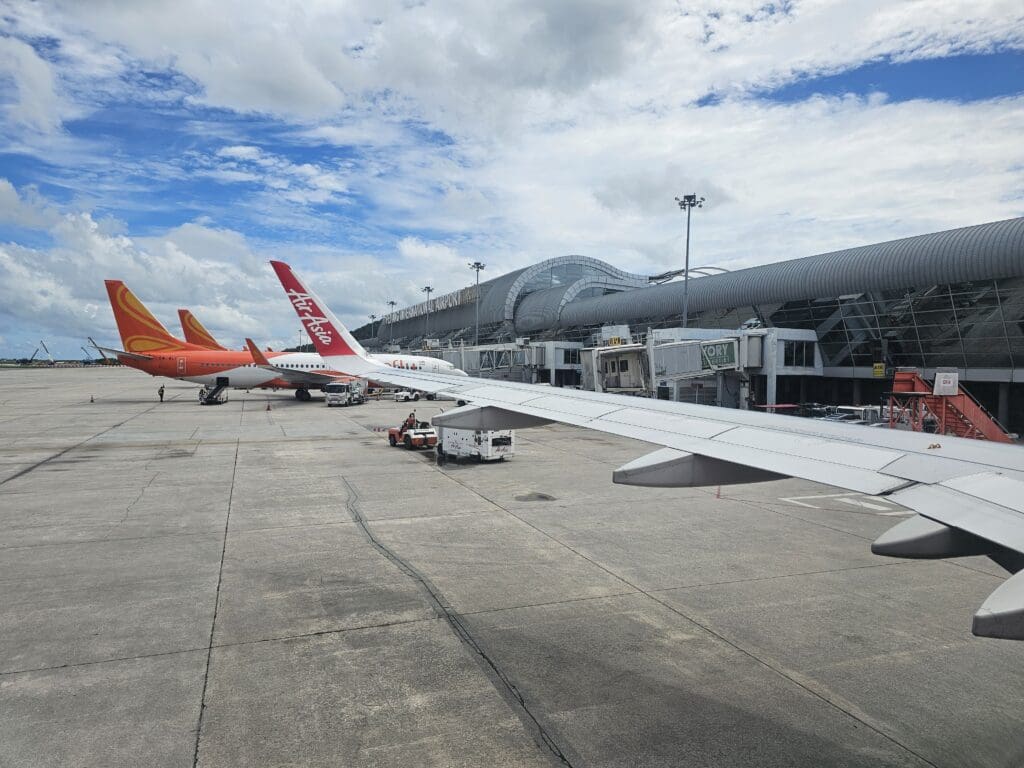
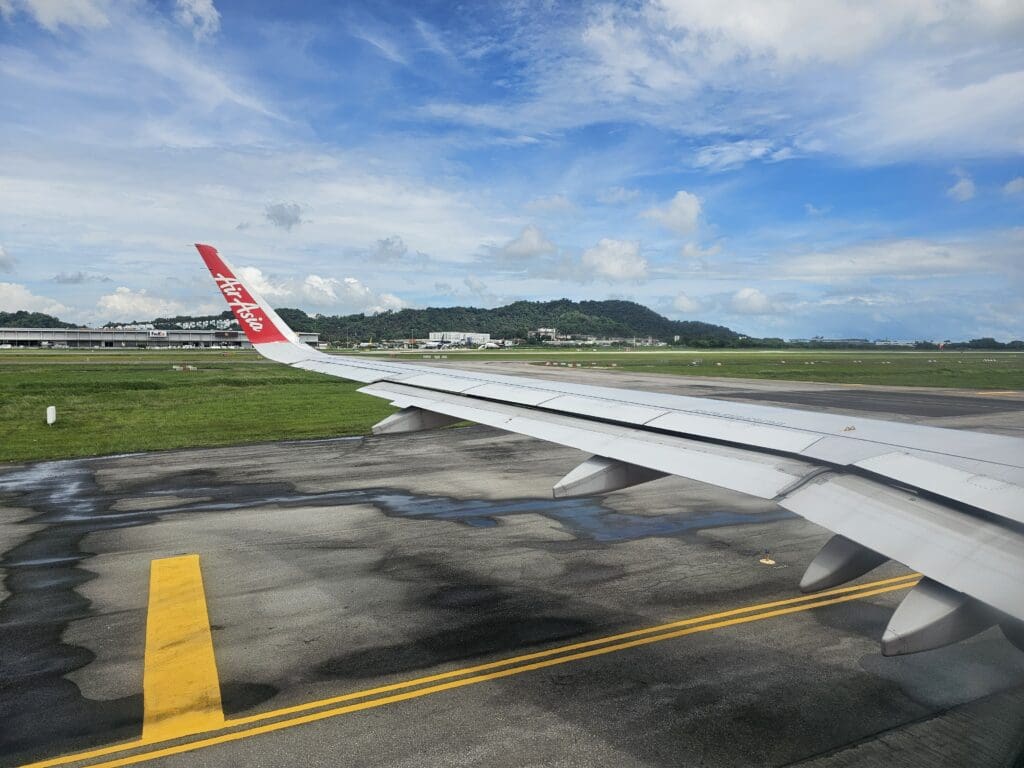
Eventually, the long loud whine came to an end as the longer-than-usual engine start-up procedure concluded, whilst much to the delight of everyone onboard, cold air finally started to pour into the cabin. At this stage, the air starter unit was disconnected and towed away from the aircraft and at 1436 a jolt could be felt as the aircraft was pushed back away from Stand B1 and its left-hand CFMI CFM56-5B6/3 engined quietly whined into life in preparation for the trek over to Kota Kinabalu. In the usual manner, upon coming to a halt, the flaps were partially extended and once the tug and ground crew were clear of the aircraft, we commenced our taxi over to Runway 04, a journey that thanks to our parking position, took no more than about thirty seconds before we came to a halt.

Whilst there was no traffic in the skies of Penang at that time, for some reason, once at the edge of the runway, the aircraft paused for a couple of minutes before making its way onto this. Following another short pause, the Airbus’ two CFM International engines roared into life and the aircraft commenced its fairly powerful takeoff roll down Penang International Airport’s 3,354 metre long runway. Swaying a little from side to side as we accelerated, soon, the nose was pointed skywards and we made our way into the skies above Penang.


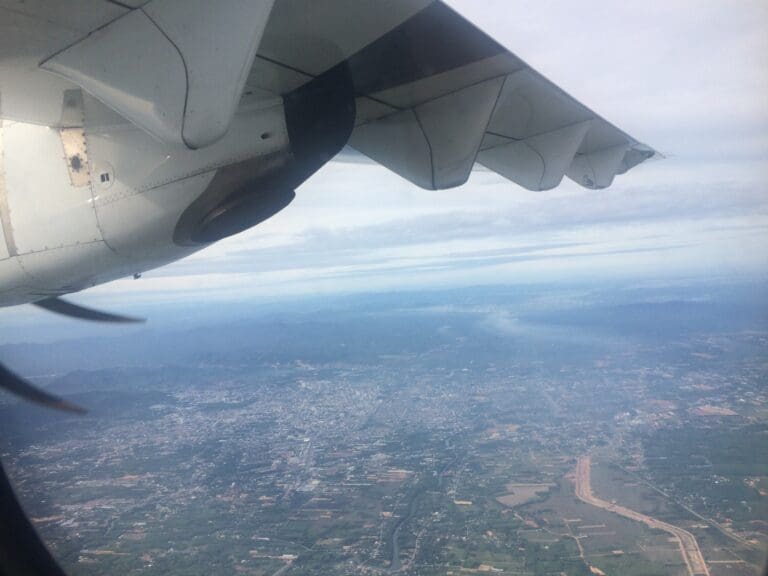
Thanks to the good visibility, lack of haze and my position on the left hand side of the aircraft, during this initial climbout I was treated to a superb view of the mixture of residential suburbs and industrial areas that are sandwiched between George Town and the airport. Following a standard departure route, just before reaching the 13.5 kilometre long Penang Bridge that connects the island with the mainland, the Airbus banked to the right and as we turned I was offered a final glimpse of Penang Island and the tall buildings of George Town.


As we left the island behind, vistas of George Town were replaced by the likes of Butterworth and Bukit Mertajam as we made our way southwards, soon passing from the skies of Penang to Perak. There, the clouds began to roll in, although glimpses of the cities of Taiping and Ipoh could be had as we made our way southeastwards across the state. Heading from Perak into Pahang, the aircraft crossed over the Cameron Highlands at which point the clouds rolled in below the aircraft.
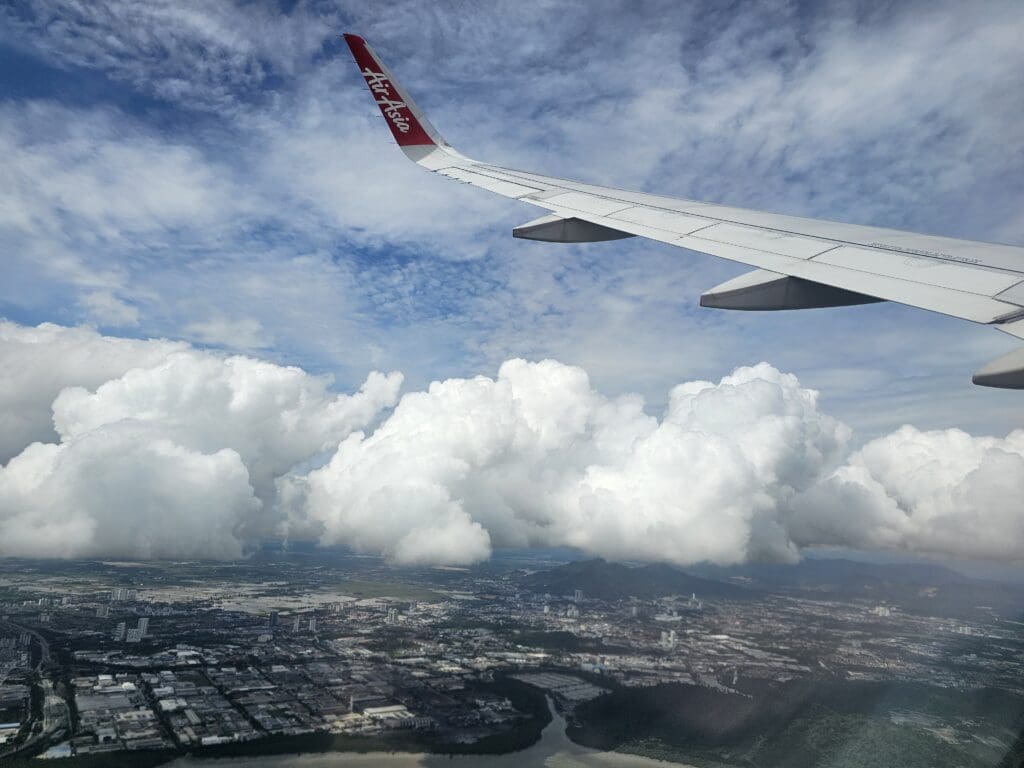


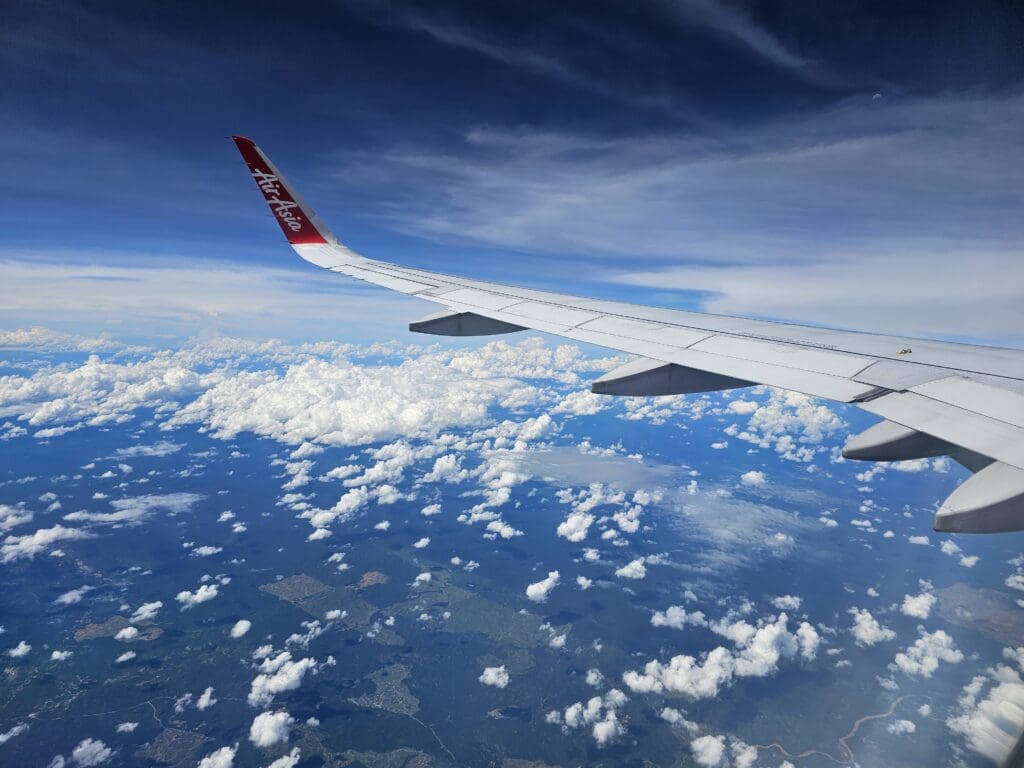
Despite the odd lump and bump during the first few minutes of the flight, the seatbelt signs were extinguished seven minutes into our journey as we passed Taiping. This was accompanied by the usual announcement encouraging passengers to keep these fastened at all times whilst seated. Indicating that the onboard service was soon to commence, at this point, the scent of warming food wafted through the cabin and indeed ten minutes later, an announcement was made advising passengers that pre-reserved meals would soon be distributed, followed by the Santan Café buy-on-board service. Moments later, two service carts were rolled out to the front of the aircraft, the first containing pre-ordered food items and the second containing those for sale as part of the buy-on-board service.
Low cost carriers are not usually well known for their inflight catering, however, AirAsia have bucked this trend, especially within the Malaysian market. In 2015, AirAsia launched a concerted effort to boost onboard catering sales through launching Santan, a new menu that sought to bring high quality Malaysian dishes onto their flights. This proved to be very successful, and today AirAsia are known for their wide array of highly regarded inflight buy-on-board catering offerings. With all that considered, I was very much looking forward to my pre-purchased Pak Nasser Nasi Lemak, one of Santan’s signature dishes. I would advise passengers wanting to sample the delights of Santan to pre-reserve meals in advance, not only does this ensure that there is availability, but there is a greater selection offered and this is also cheaper to do, with a small discount offered when compared to purchasing these onboard.
Given my non-existent welcome and the rather unenthusiastic sounding Purser, when they did reach my row I was pleased to find the two flight attendants manning the first cart to be polite and friendly, confirming my name and meal option, the Pak Nasser Nasi Lemak, before asking for my choice of either hot or iced americano. Opting for the former, my main dish and a small bag containing anchovies and nuts was handed over to me, along with a paper packet containing a serviette and plastic cutlery, soon followed by my boiling hot americano. I have to say that for a low cost carrier meal, the Nasi Lemak was fantastic, and most certainly left me with nothing to complain about.

For those who do not pre-order anything, a comprehensive buy-on-board service is offered, with this commencing immediately after the pre-ordered meals had been distributed. Browsing this, an array of meals, snacks and soft drinks, both hot and cold were offered, with these all being reasonably priced for a low cost carrier. For example, an americano would have cost me 9 ringgit (£1.57), whilst most of the eleven meals were priced at 19 ringgit (£3.31), including a drink.
As I ate my late lunch, the aircraft began to bounce around a little, resulting in the temporary suspension of the serving of hot drinks and the illumination of the seatbelt signs for about twenty minutes. Once I had polished off lunch, it took about twenty minutes before the crew performed their first rubbish collection round. After this, the crew then rolled out another service cart and commenced the onboard shopping, although they had far fewer takers for this compared to the Santan service and so they were able to speed through the cabin within a few minutes.


At the time of my flight, only a small number of AirAsia aircraft were fitted with wifi, and my aircraft was not one of these. With no sort of screens onboard, either personal or overhead, the only form of AirAsia provided inflight entertainment came in the form of the April 2025 edition of the airline’s inflight magazine, Redcap, named after the Malaysian carrier’s callsign. As I flicked through this, I was positively taken aback by the lack of advertisements, something that you would expect the inflight publication of a low cost carrier to be filled with! Examining this in more detail, this featured a good array of articles, naturally, a number of which focused on AirAsia’s destinations including Korea, Kuala Lumpur, Langkawi and Melnbourne, alongside pieces on fashion, finance, technology, turbulence and DJ Steve Aoki.
Returning to our route, whilst little could be seen of Peninsula Malaysia, once we had passed the Cameron Highlands, the Airbus continued heading southeastwards across the State of Pahang, reaching its eastern coastline around thirty minutes after our departure, and heading out to sea just to the south of the city of Kuantan. Crossing over the Natuna Sea, the clouds parted although little could be seen other than the odd container ship trundling through the waters below. However, after almost forty minutes into our crossing, one of the larger of Indonesia’s Riau Islands appeared, with a clear view of this offered from 37,000 feet.

Following this slight excitement of spotting this remote island, the clouds rolled in again and I drifted off for a short nap as we cruised eastwards, travelling a fair distance to the north of Sarawak’s coastline. Upon waking up after about ten minutes, recognising that there was not a great deal left in the flight, and with the aisle seat occupier now standing in the aisle, I decided to make a trip to one of the two lavatories at the rear of the aircraft. Unlike on some Airbus A320s, these are squeezed into the corner of the rear galley rather than being located between the cabin and rear galley. With this enabling AirAsia to squeeze as many seats onto the aircraft as possible. Opening this up, I found the toilet to be in a clean and pleasant condition, and being stocked with the basics, I found no reason to complain – other than the lavatories comparatively miniscule size, with this being more akin in dimensions to a regional jet lavatory rather than an Airbus A320 one!

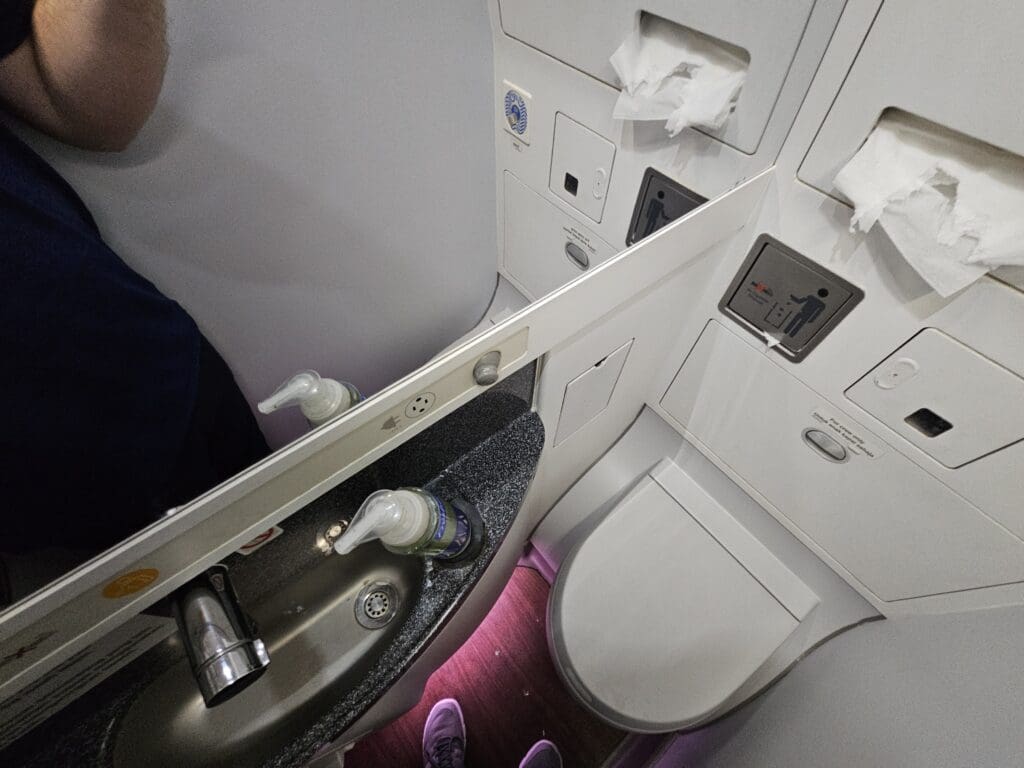
Once back in my seat, at 1645 the First Officer performed an announcement in English and Malay advising that we would be commencing our descent in ten minutes’ time and could expect to land at 1720, before moving on to detail the balmy 33-degree weather on the ground in Kota Kinabalu and thanking passengers for flying with AirAsia. Exactly eight minutes later, the Airbus could be felt commencing its journey back to earth, whilst inside the cabin, a flight attendant soon walked down the aisle undertaking a final rubbish collection round. As we descended through 17,000 feet, the seatbelt signs were illuminated and pre-recorded announcement rang out in Malay and English with the usual instructions regarding seatbacks, tray tables, window blinds and seatbelts, whilst two flight attendants then passed through the aircraft ensuring all was secure and in place for our arrival.


As we descended back towards Earth, little could be seen for much of the approach other than the odd offshore platform sitting off the coastline and playing an important part in supporting Sabah’s economy. However, this changed when the small Mengalum Island popped into view – a popular tourist destination featuring a fancy resort. A few minutes later, the Airbus crossed over the coastline near the village of Karambunai and banked to line itself up for an approach to Kota Kinabalu International Airport’s Runway 20.
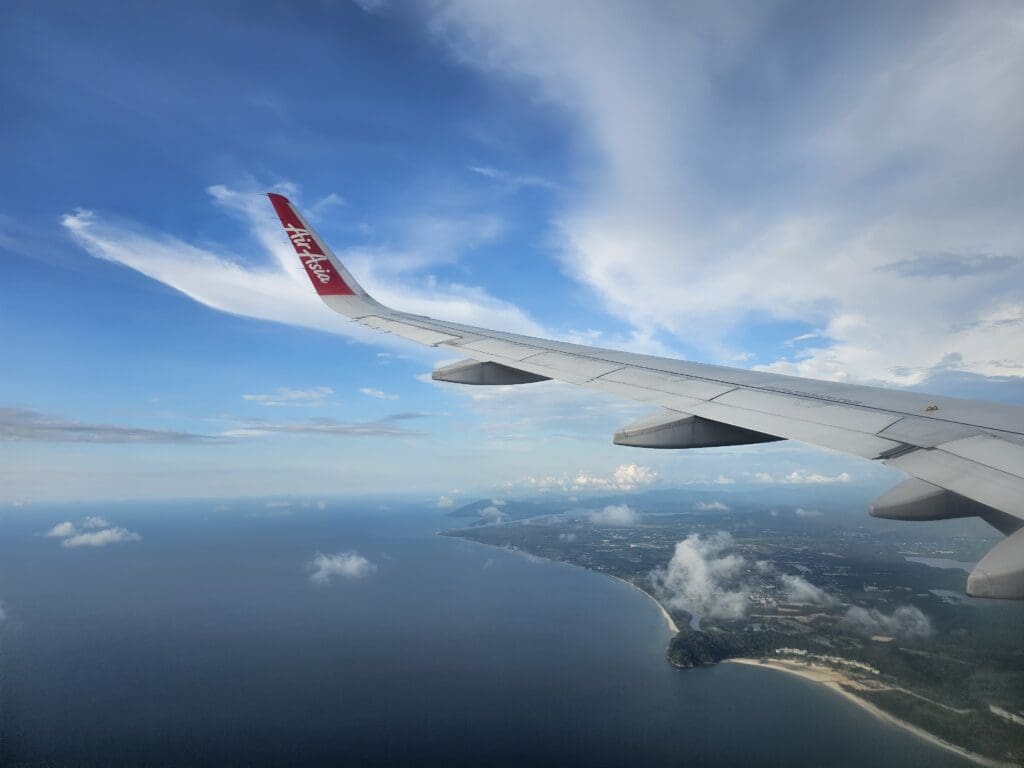
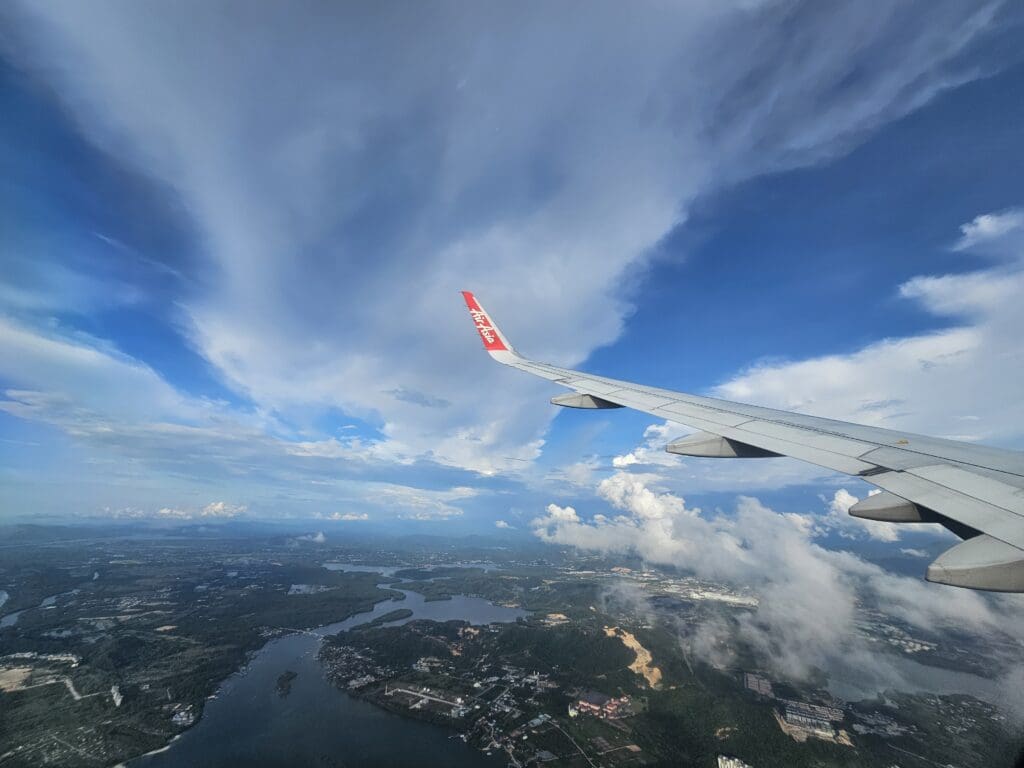


Having inadvertently picked the correct side of the aircraft to get fantastic views as we made our way towards the city, soon, the countryside transformed to the sprawl of Kota Kinabalu, with stilt-houses rising up from the sea, followed by apartment blocks and luxury homes and hotels appearing as we edged nearer to the cities, meanwhile sites such as the city’s large mosque and Signal Hill Observatory appeared, essentially offering me an aerial tour of the city before I had even step foot on Borneon soil!
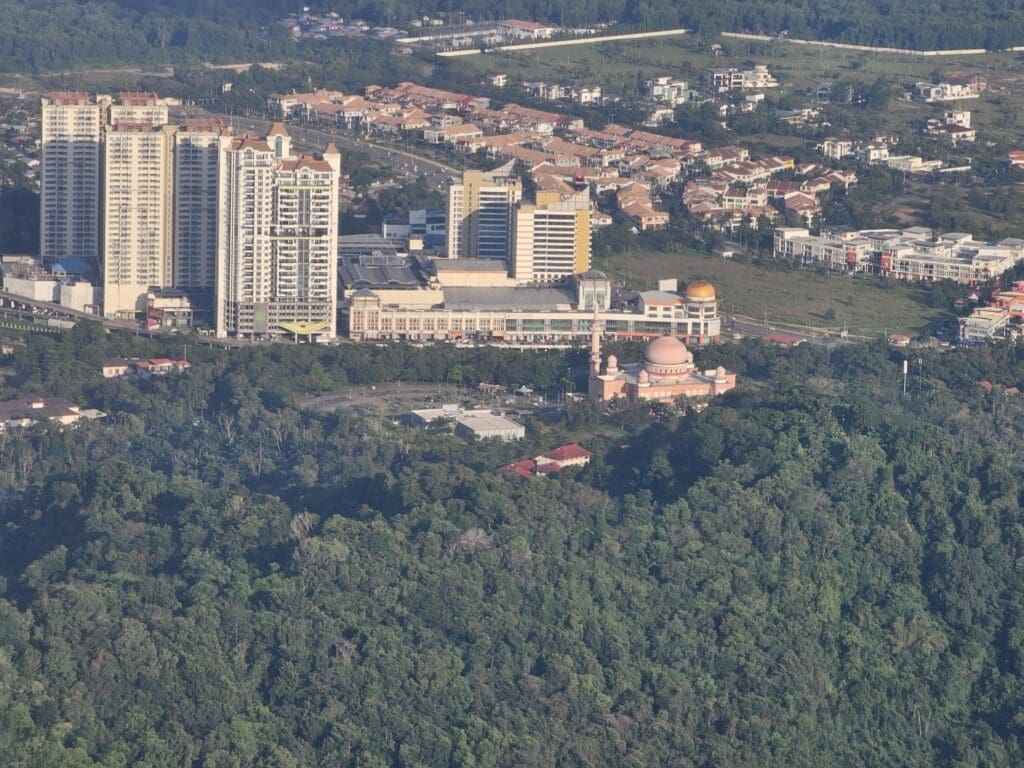


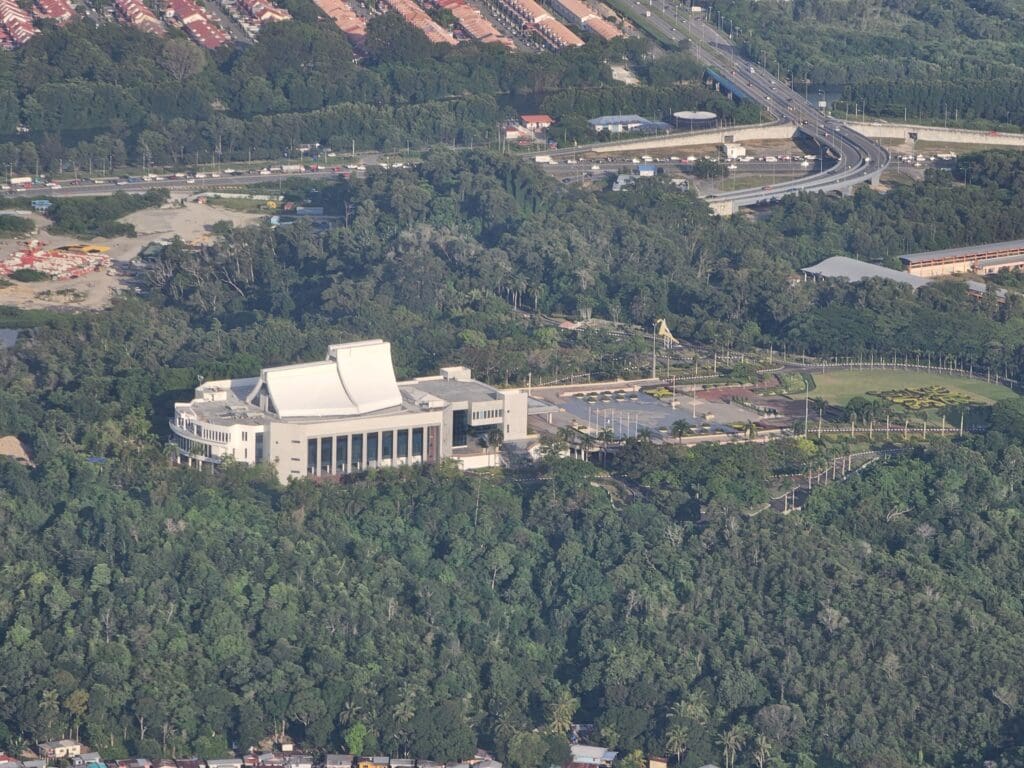


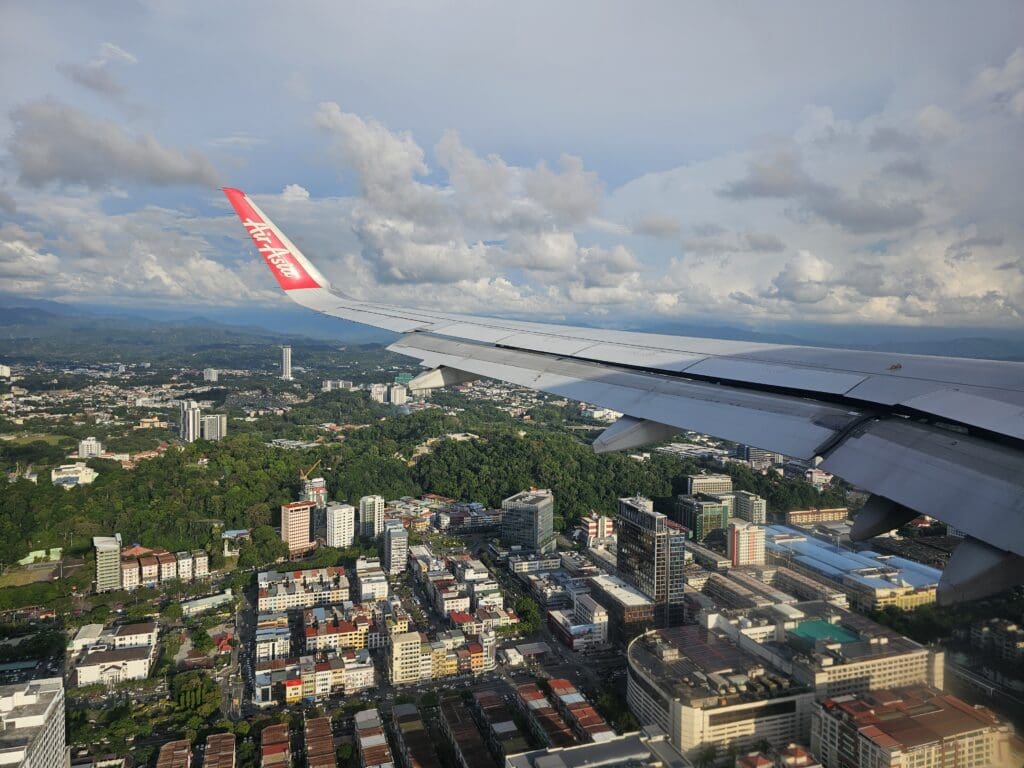

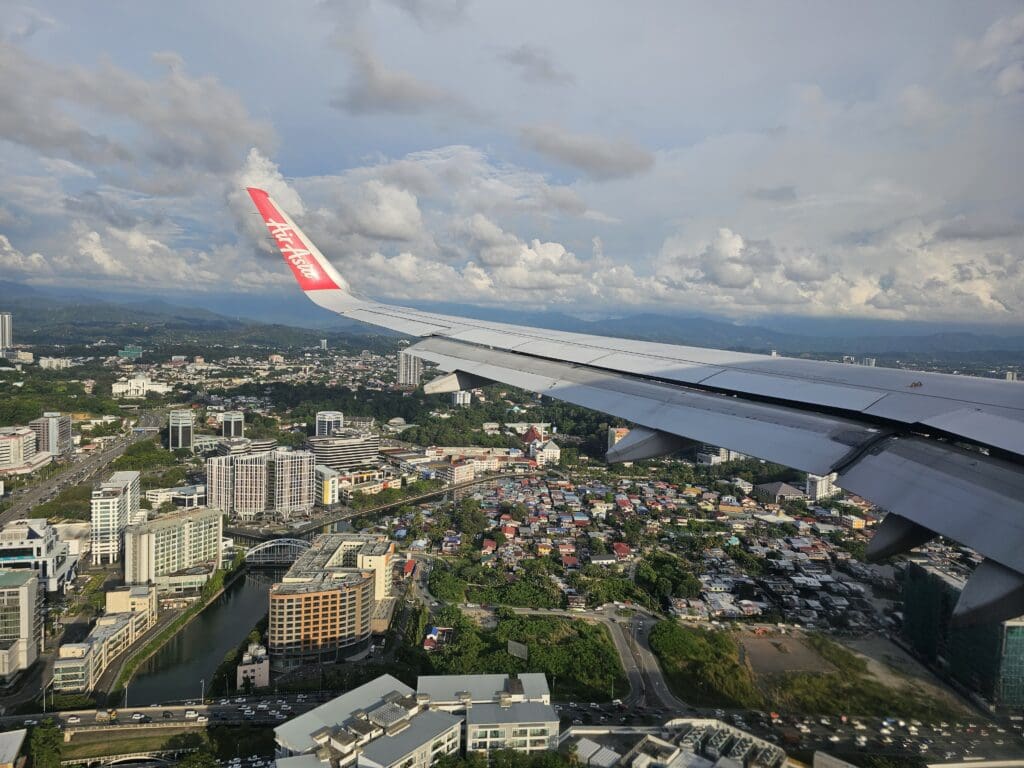


After passing the high rise hotels of the seafront, all of a sudden, the Airbus crossed over the perimeter fence and 2H33 after leaving Penang, the Airbus made a soft touchdown on Runway 20. This was followed by some fairly harsh braking as the aircraft decelerated and the terminal popped into view, which at that time was populated by MAS Wings, Malaysia Airlines, Firefly and AirAsia aircraft. Turning left, the aircraft vacated the runway and welcomed all to Kota Kinabalu in Malay and English as we commenced our short journey over to Stand 10.

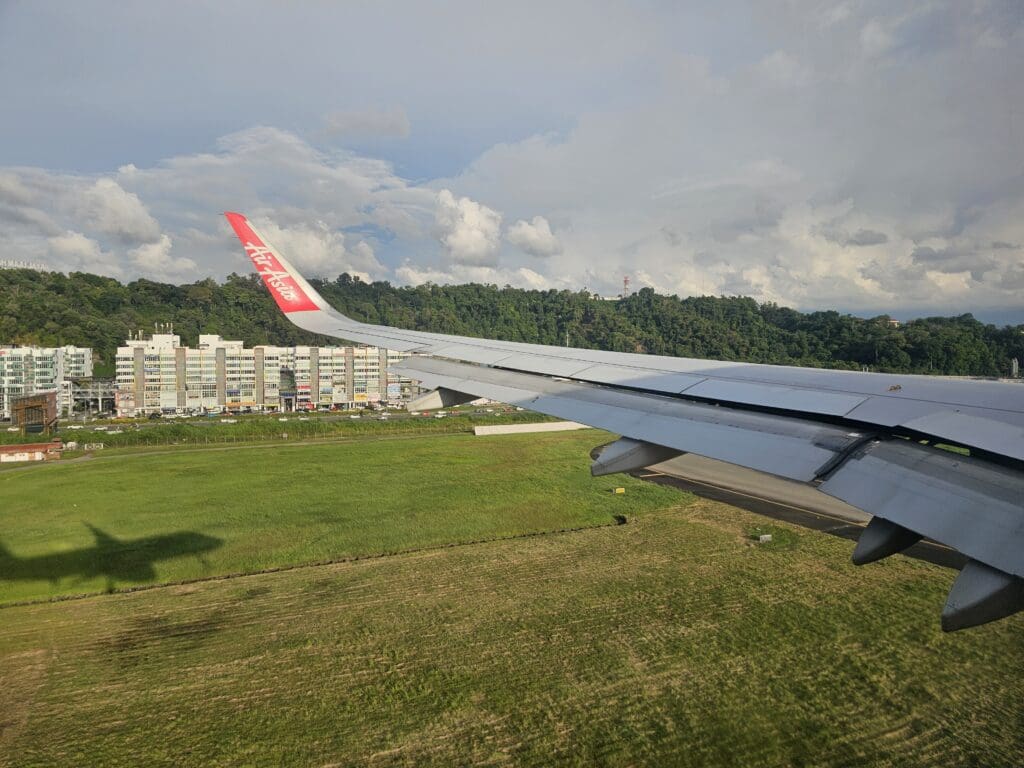


Once on stand, the aircraft came to a halt and the engines spooled down, at which point many of those around me jumped up in a desperate rush to leave the Airbus. Fortunately for them, disembarkation was a quick affair and I soon picked up my bag and made my way forwards, thanking the two friendly crew members at the front of the aircraft before re-entering the hot and balmy evening air.
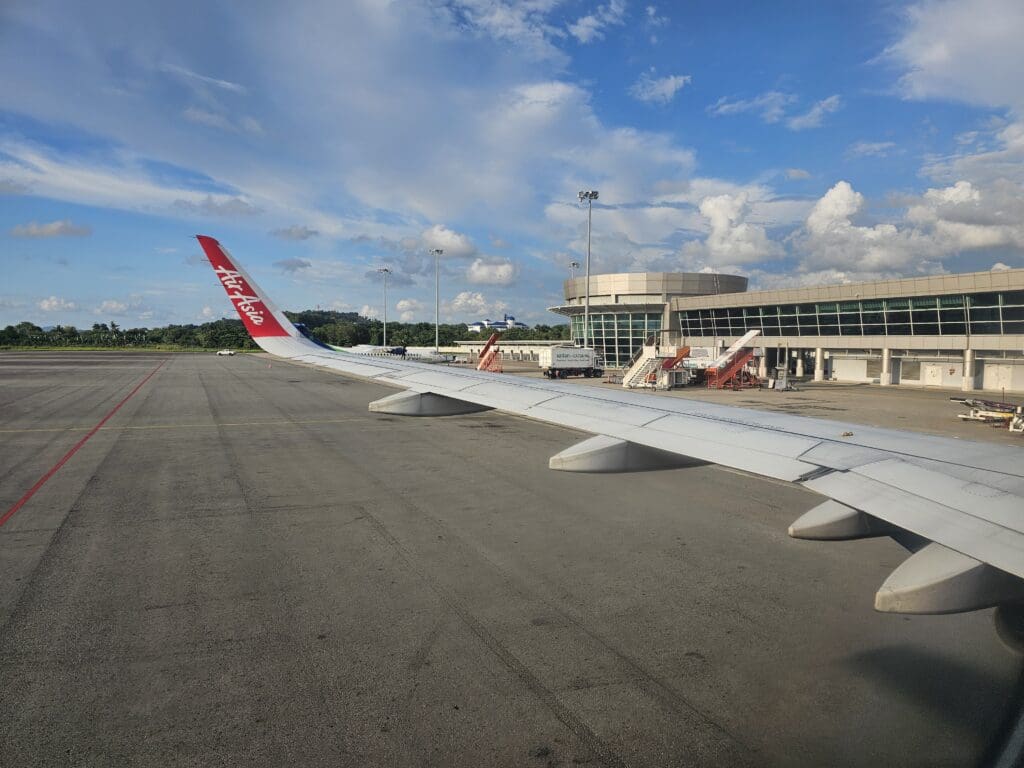
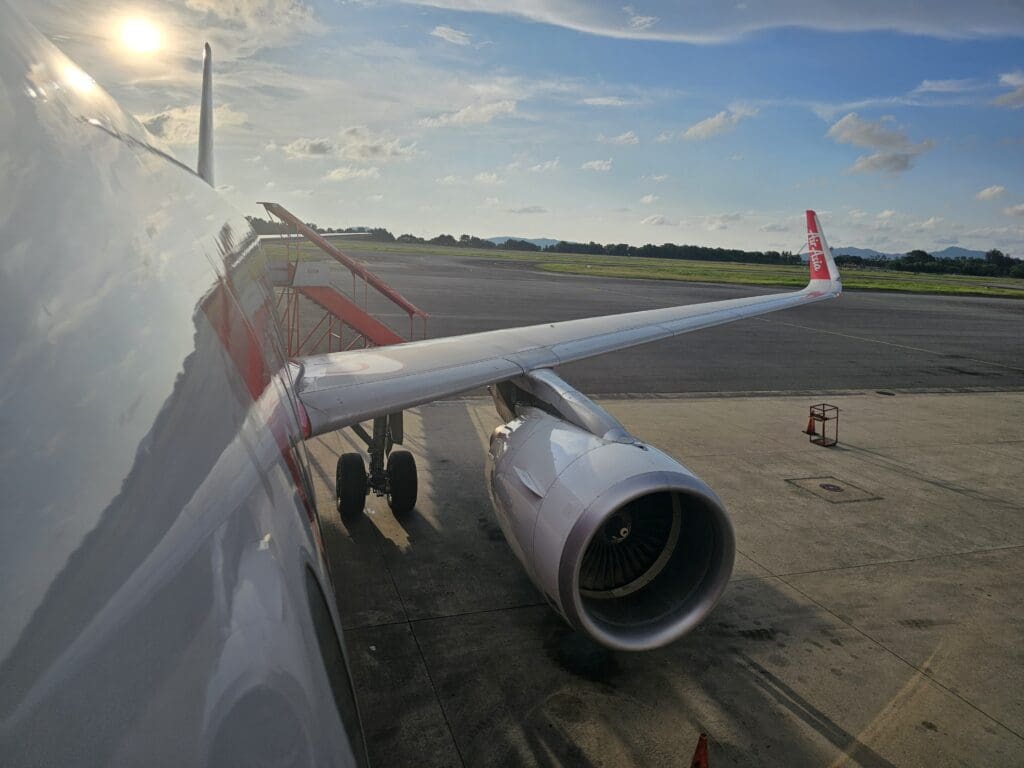


From the aircraft, I headed inside and began a long walk inside the terminal – unbeknownst to me, I had to pass through immigration and customs, having my passport stamped! Fortunately, this did not take too long and I soon made it out into the open and ordered a Grab taxi to take me the short distance into the city centre.


Summary
To be honest, given the price I paid and the general bargain fares that the airline offers, I was fairly happy with my experience with AirAsia that day. Granted, the seat was incredibly cramped and beginning to look a little tired, and I would most certainly not have wanted to sit in this in one of the jet’s five hours to say Beijing or Seoul. However, this was bearable for a Malaysian domestic service and assuming the price was right, I would probably fly with AirAsia again on a short haul flight in Southeast Asia.