Overnight on an Oman Air Dreamliner: Heathrow to Muscat
Background and Check-In
As its name would suggest, Oman Air is the national carrier of the Sultanate of Oman, a country with a rich history, and diverse and spectacular green, rocky and sandy landscapes that curve around the southeastern regions of the Arabian Peninsula. The airline is one that I had sampled almost nine years before this trip, flying from London Heathrow to Muscat on one of their Airbus A330-300s, before heading to Bangkok onboard one of their Boeing 787-8 Dreamliners on a short-term lease from Kenya Airways (you can read my review here). This journey had left me with no complaints, and whilst not quite on par with the Middle Eastern giants Emirates, Etihad Airways and Qatar Airways, my experience had most certainly left me with no reason not to fly with Oman Air again.
Opting to spend a long weekend in late February 2025 visiting my sister in the Emirate of Sharjah, I needed to reach the United Arab Emirates without parting with a proverbial arm and leg – ideally departing from London and returning to Manchester. Fortunately, Oman Air’s flights came in with a reasonably low price tag and a quick journey time for a one-stop option. These would see me leave London Heathrow at 2005 on a Boeing 787-9 Dreamliner and arrive in Muscat at 0715 the next morning. Following a quick connection, I would make the short hop over to Dubai on an Oman Air Boeing 737 MAX 8, departing at 0800 and arriving in Dubai at 1000.
Booking through an agent, I can’t comment too much on Oman Air’s booking process. However, once booked, for some reason, I could not manage my booking via the airline’s website or app and the only thing I could do with this was bid or pay for an upgrade. For the first time in quite a while, the latter option was a little tempting, and I could part with £280 in exchange for a night in one of the Dreamliner’s Apex suites. This was strangely less than half the price of the £660 minimum bid to request an upgrade on my first flight. Online check-in for most Oman Air services opens 48 hours before departure, and the day before I was set to head off, I loaded up my booking on Oman Air’s app. Fortunately, online check-in was a quick and easy experience that left me with few complaints. However, unlike many full-service carriers, I appeared to be unable to change my seats for sectors, although ending up with a window seat for both, this was no major issue.
The Journey
Being the world’s fifth busiest airport and Britain’s main air hub, unsurprisingly, London Heathrow Airport is comparatively well connected to much of London and beyond. As of 2025, the airport is connected to both the mainline railway network through both the Elizabeth Line and Heathrow Express, as well as the London Underground’s Piccadilly Line. Despite living in Leeds, work duties in London meant that on the day of my flight, I would be starting my journey near St James’ Park in the heart of London. Upon consulting CityMapper, this advised me that the quickest means of reaching Terminal 4 was to take a one-change London Underground adventure that would involve a ride on the District Line to Baron’s Court, before continuing westwards on the Picadilly Line all the way to the airport.
With my flight to Oman scheduled to depart at 2005, I decided to give myself an abundance of time just in case there were any delays on the underground. Once out of the office, I made the short walk under the unusually clear blue skies of late February and soon arrived at the slightly imposing Art Deco Grade I listed building that hosts St James’s Park Underground Station. Once inside, without dilly-dallying, I tapped my bank card on the gates before heading down to the platform levels, which sit just beneath street level. Approximately three minutes later, an eight-carriage S7 Stock train of 2012 vintage came hurtling into the platform on its journey across London from Upminster to my old neighbourhood, Ealing Broadway. Travelling just before the evening peak, thankfully, the train was not too busy and I managed to snap a seat and take the weight off my legs as we slowly meandered below West London’s well-to-do neighbourhoods such as Kensington, Westminster, Chelsea and Knightsbridge, before heading out into the open air.
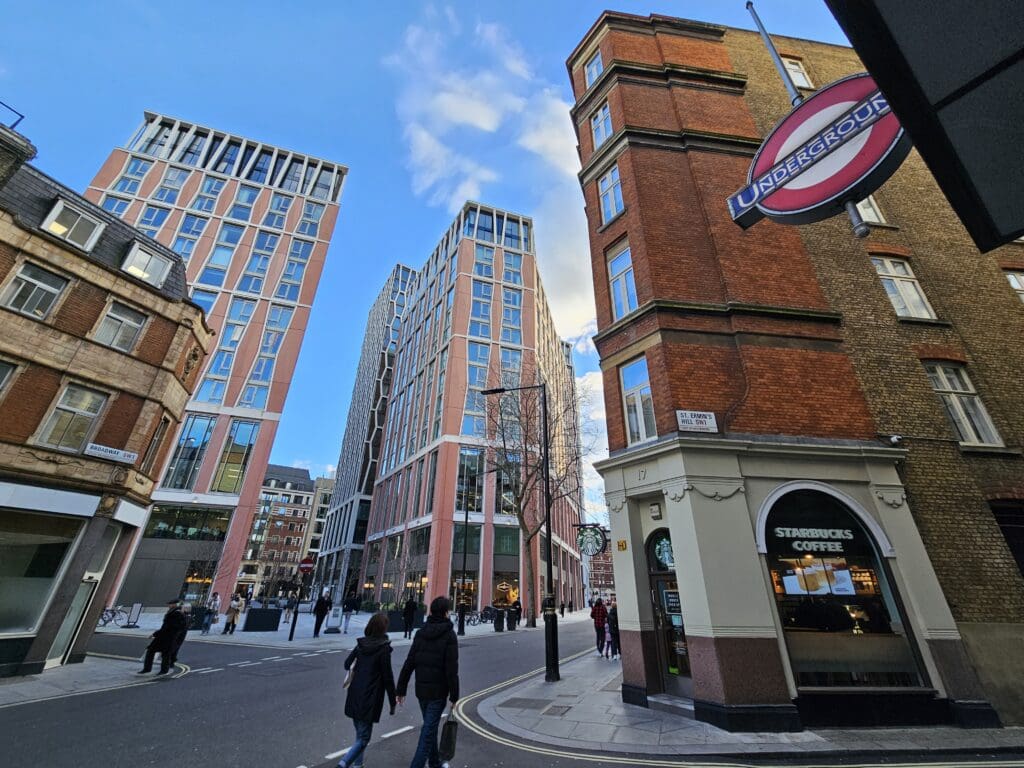
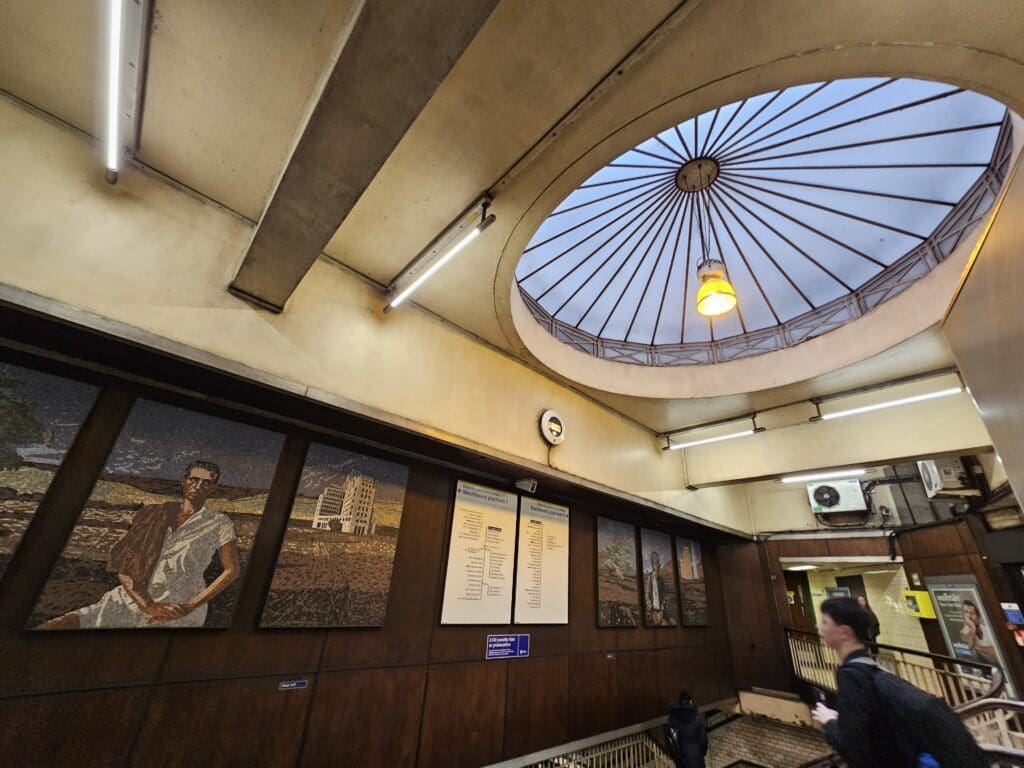
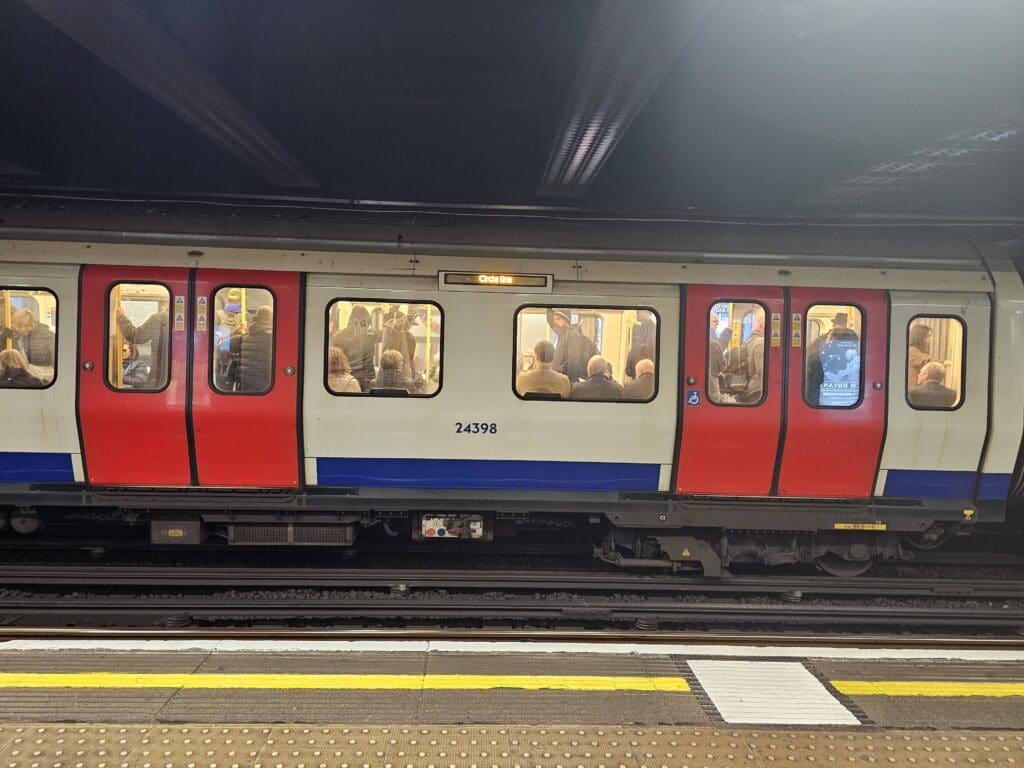
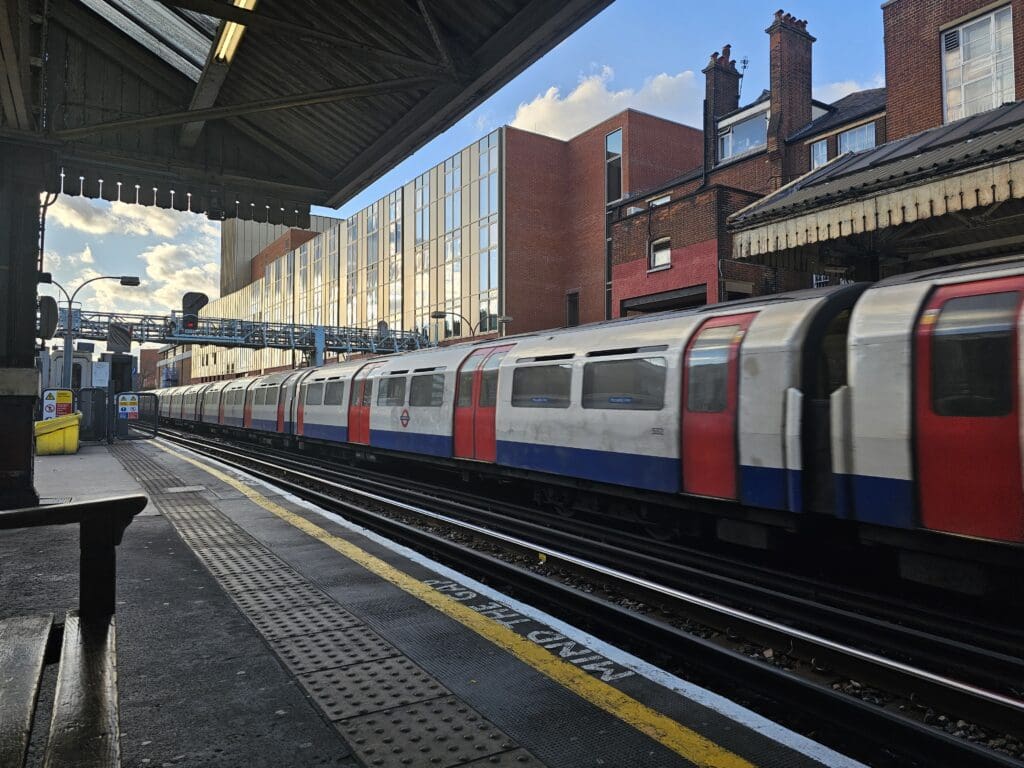
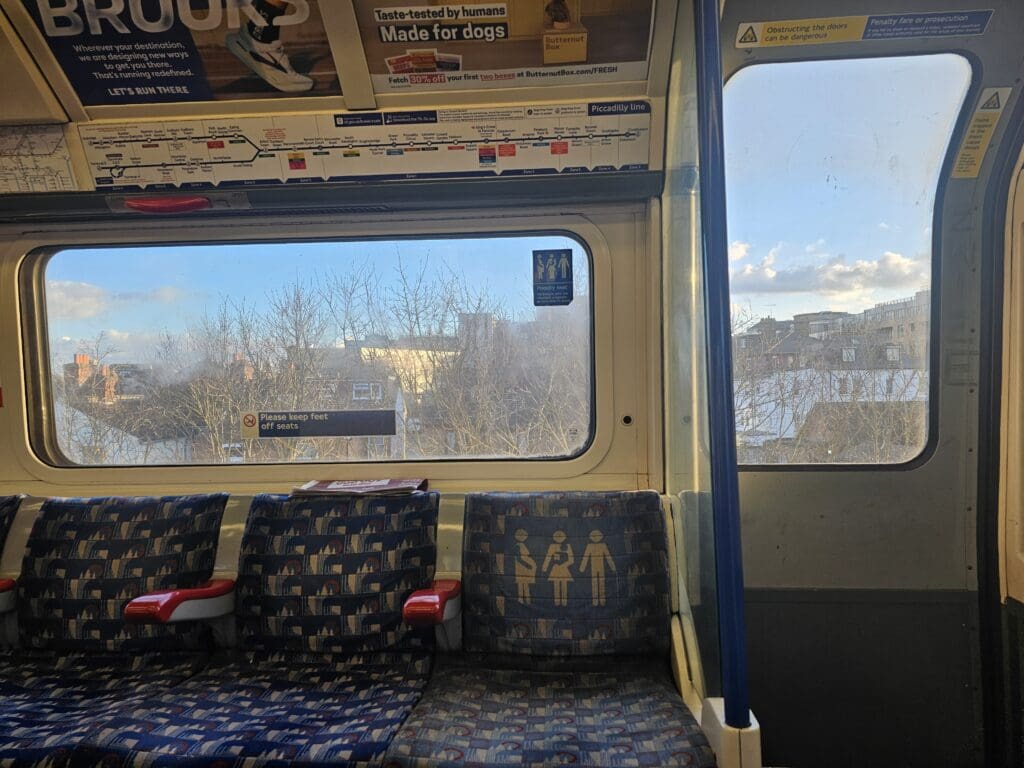
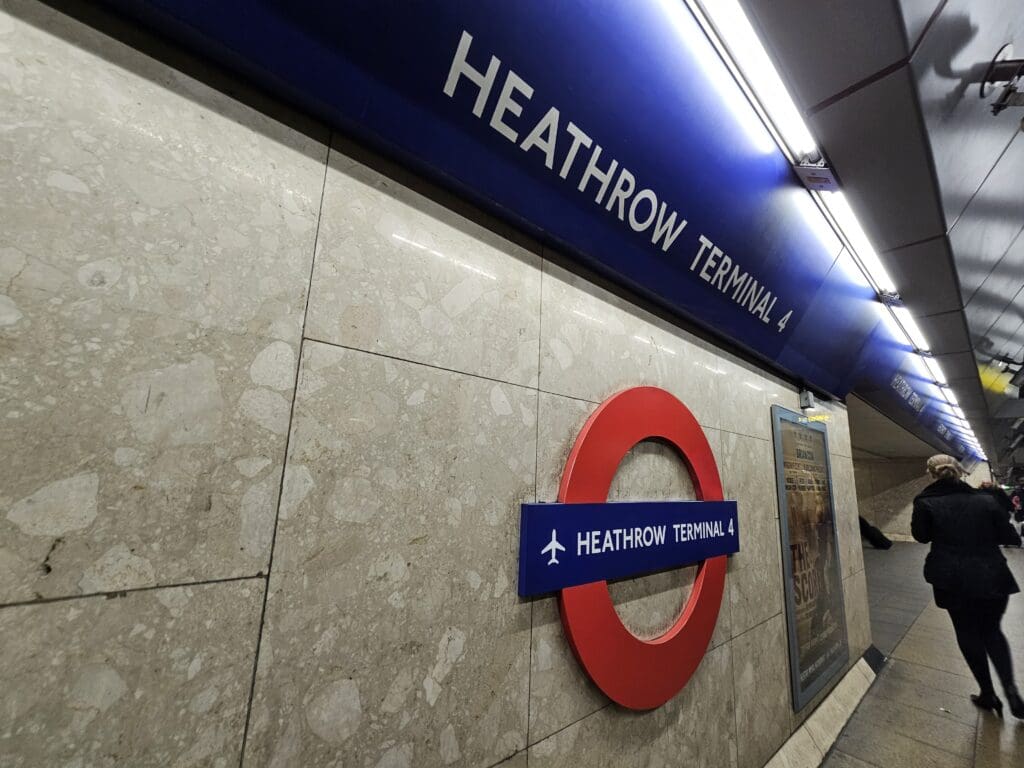
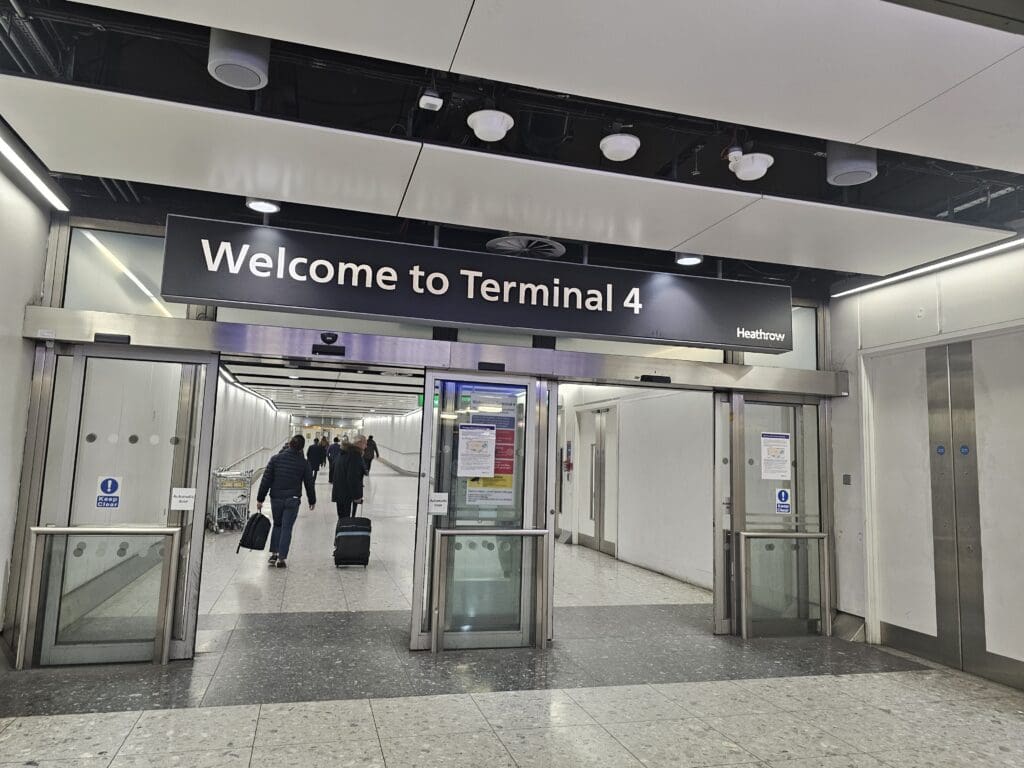
Seven stops later, I disembarked the train at Baron’s Court and waited on the island platform for the next Terminal 4-bound Picadilly Line train to appear. Four minutes later, a Heathrow-bound 1973 Stock train ploughed into the station, and I soon boarded this for the slog across West London to Heathrow. This was a little busier than the first train, and was packed with a mixture of commuters and school students heading home, and as a result, I ended up standing until the last ten minutes or so of the journey. With most passengers piling off at Hounslow Central, from there, I enjoyed the luxury of one of the train’s hard and narrow seats. Heading back underground, the train made a short stop at Hatton Cross, a neighbourhood that is famous for its field where planespotters gather to watch aircraft as they pass just overhead seconds before touching down on Runway 27L. Several minutes later, the old train made its way into the platform of Terminal 4’s dedicated London Underground Station, arriving there around an hour after I had commenced my journey. Wasting no time, I tapped out and had the reasonable £5.50 fare deducted from my bank card before I continued on my journey to the terminal. Whilst taking the London Underground to Terminal 4 may seem slower than the Elizabeth Line or Heathrow Express, one advantage is that the terminal can be reached on foot via a series of corridors and escalators. Whereas those arriving at the mainline station must take a lift, and with a limited number of these available, it is not at all uncommon to have to wait in a crowd for a few minutes before squeezing into one of these.
Heading up past the arrivals level, with three hours to go until my Oman Air service was scheduled to depart, I arrived in Terminal 4’s very busy landside departures area. Whilst Terminal 4 was closed for an extended period of over two years owing to the pandemic-induced drop in demand, the bounceback in the number of travellers saw the revival of the terminal. In the fourteen months leading up to my flight, I had become rather familiar with Terminal 4, departing and arriving from this twice each on the likes of Azerbaijan Airlines, China Southern Airlines, Etihad Airways and Royal Brunei Airlines. With that considered, I had a good idea of what to expect from my journey through the airport that evening, and I hoped for no major surprises.
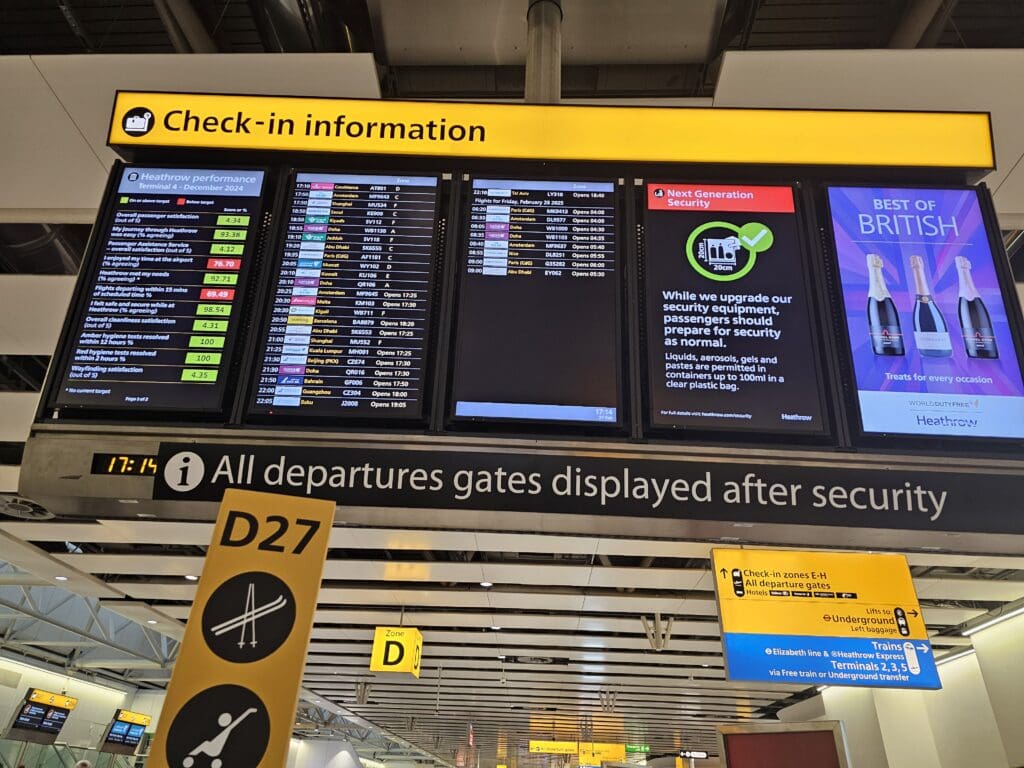
Wandering around, for the most part, I found the landside departures area to be bright and modern, and with the disappointing exception of the toilets, this seemed to be in a reasonably clean and tidy state. However, it is fair to say that this part of the terminal was not designed with long waits in mind, with minimal seating available, and facilities that are limited to the Co-Pilots Bar and Kitchen, a Café Nero, a WHSmiths and a currency exchange counter. Located across a single floor, the check-in area is spread out across a large rectangular-shaped space that is divided into eight zones, Zones A to H. Whilst not travelling during any holidays in the UK, that Thursday evening, the check-in hall was busier than I had ever seen before. With this considered, fearful of long waits at check-in and security, I thought it sensible to make a beeline for Oman Air’s check-in area, which the departure boards revealed was located in Zone D.
Once upon a not-too-distant time, Oman Air operated multiple daily departures from Heathrow. However, at the time of my flight, the airline’s Heathrow operations were limited to a single daily overnight flight to Muscat (this has seen been upgraded to a twice-daily service). Despite this limited operation, I was pleased and a little surprised to find Oman Air’s check-in space to be large and well-branded. Interestingly, the majority of staff were smartly dressed in-house agents who were supplemented by a small number of equally smart ASC Handling staff. In total, six counters had been assigned to Oman Air – two for those in Economy, two for those who had checked in online and two for those travelling in Business or holding elite status in Oman Air’s Sindbad frequent flyer programme – with a turquoise carpet leading up to these premium desks.
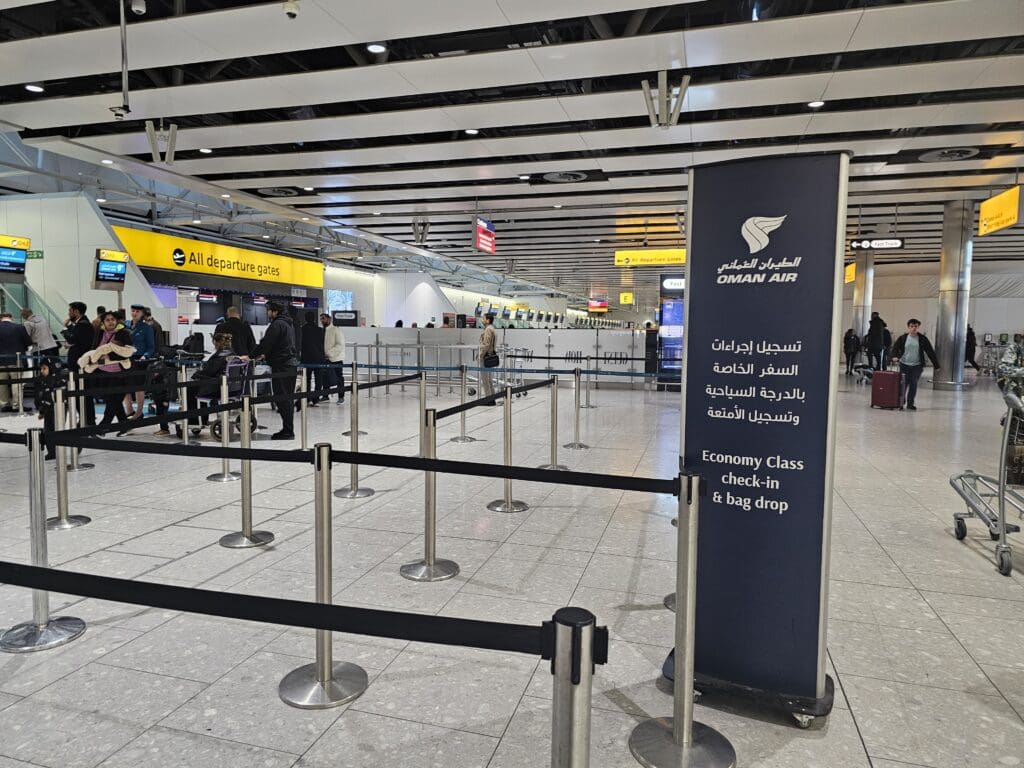
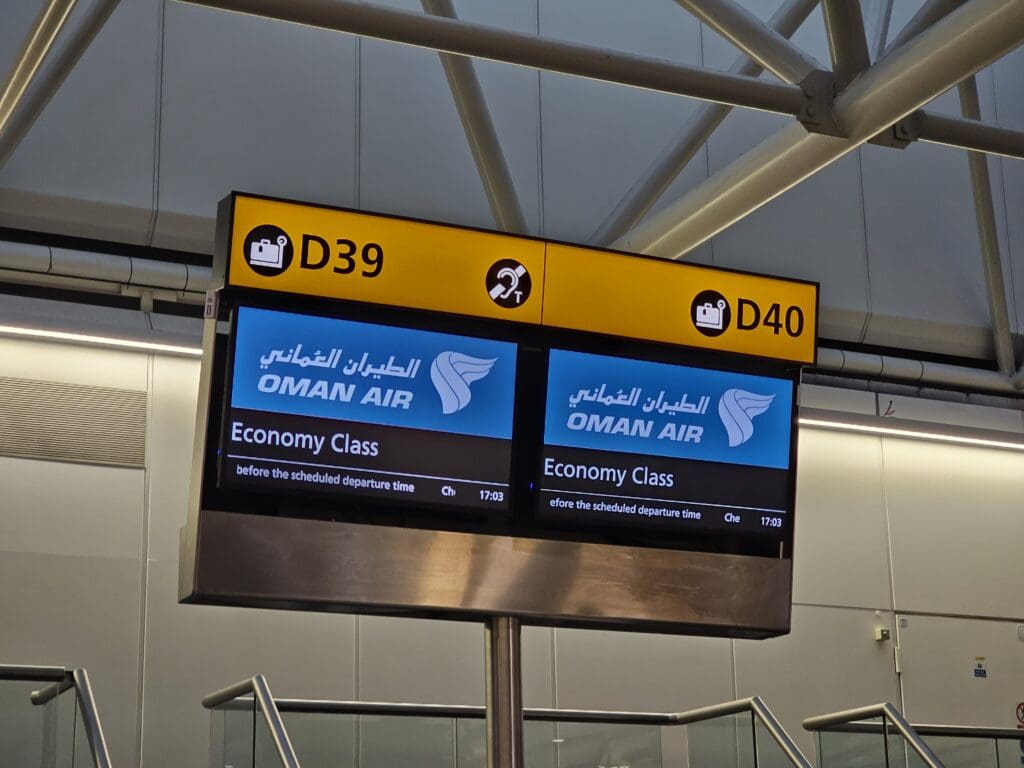
Ending up behind two large families with plenty of luggage, I waited in line for about four minutes before being summoned to one of the counters. Once there, I handed over my passport to the polite agent and enquired as to whether it would be possible to move my seat for the first flight to an aisle seat. In the end, the answer was not wholly negative, with the agent explaining that the only free aisle seat was an exit seat and were he to move me across to this, then I would have to be charged. However, I was encouraged to approach the gate staff, who would be able to move me to this if it remained free. Grateful for the agent’s efforts and advice, my baggage label was printed off and attached to my bag, and I was handed my baggage receipt before this was sent into the depths of Terminal 4, hopefully to be seen again the next morning in Dubai.
Having exhausted all the sights in the landside departures area, once I had checked in, I marched onwards to security. Once there, I tapped my boarding pass on one of the automated gates before being directed to one of the short queues leading up to one of the checkpoints. Despite there being plenty of passengers, I was hopeful of a quick and hassle-free journey to the airside area; however, after passing through the body scanner, I ended up having to wait for fifteen minutes as the x-ray machine broke down with my bag in it! Whilst a couple of passengers around me became visibly irate during this delay, still with plenty of time and thankful for my pre-security toilet stop, I was not too concerned, and once this did appear, I was able to collect this without the need for any additional checks.
Once through security, Terminal 4 seems to be one of the few major terminals in Europe where passengers are not required to take a winding route march through a duty free store to reach the gates or the main airside waiting area. As someone who virtually never makes any purchases from these outlets, this is a very welcome feature of Terminal 4. Covering an area of 105,481 square metres and home to 21 jetbridge-equipped stands, Terminal 4 is the smallest of Heathrow’s four terminals, with the airside area spread out across two long rectangular piers. First opening in 1986, Terminal 4 was once the main hub of British Airways before they migrated to the then newly opened Terminal 5 in 2008. Today, the terminal hosts most SkyTeam carriers that serve Heathrow, bar China Airlines, Delta Air Lines, Middle East Airlines and Virgin Atlantic, who all utilise Terminal 3. In addition, the terminal also serves many of the non-allianced airlines that serve the airport alongside a trio of OneWorld carriers – Malaysia Airlines, Qatar Airways and Royal Air Maroc (with Oman Air now part of this list).
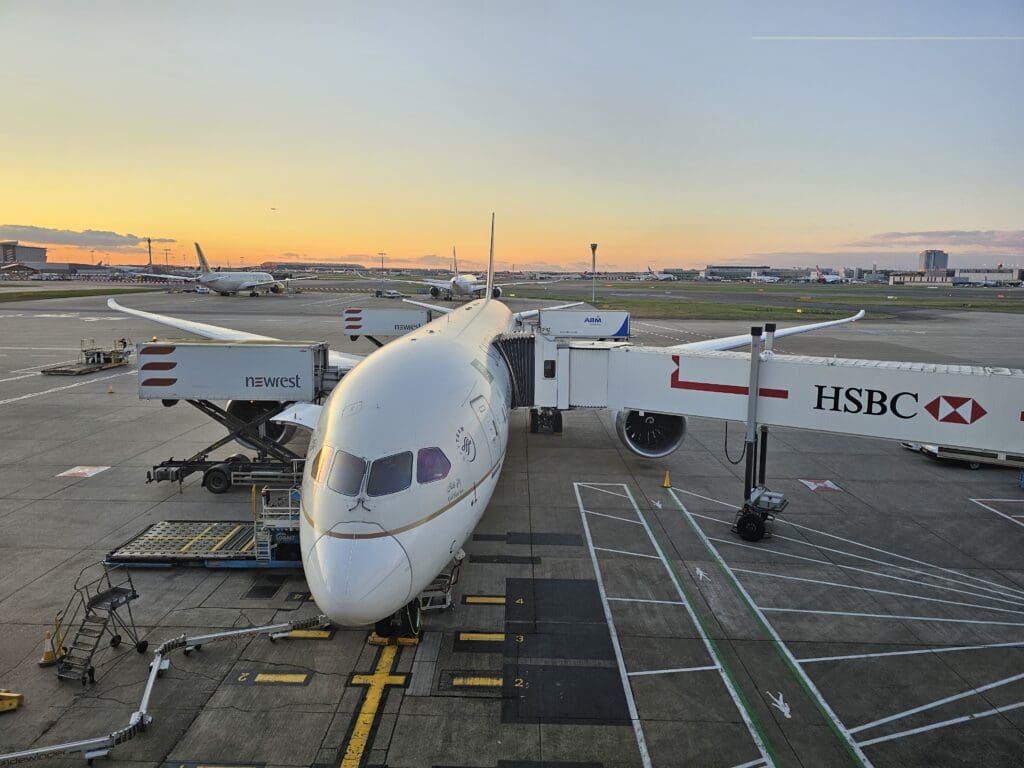
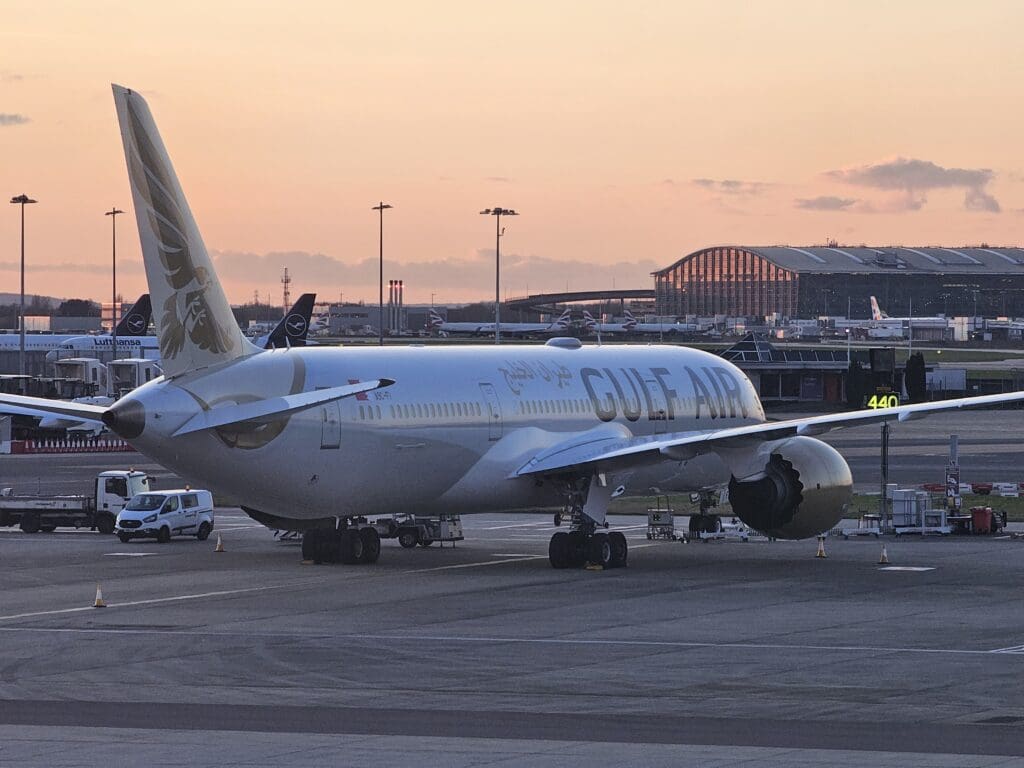
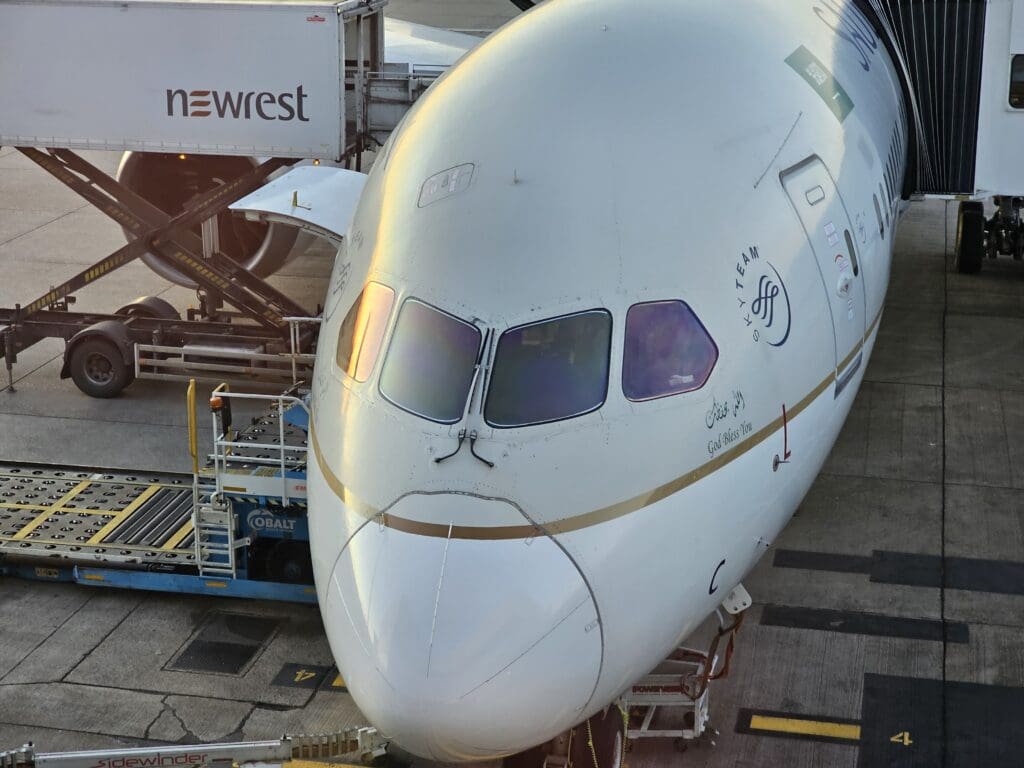
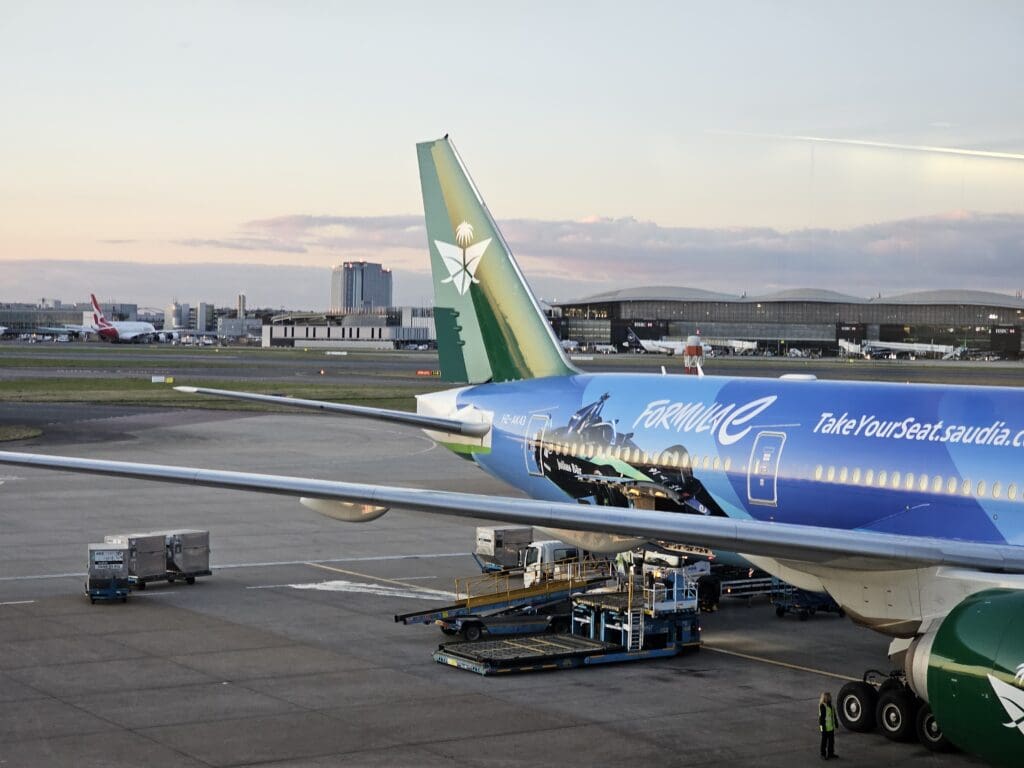
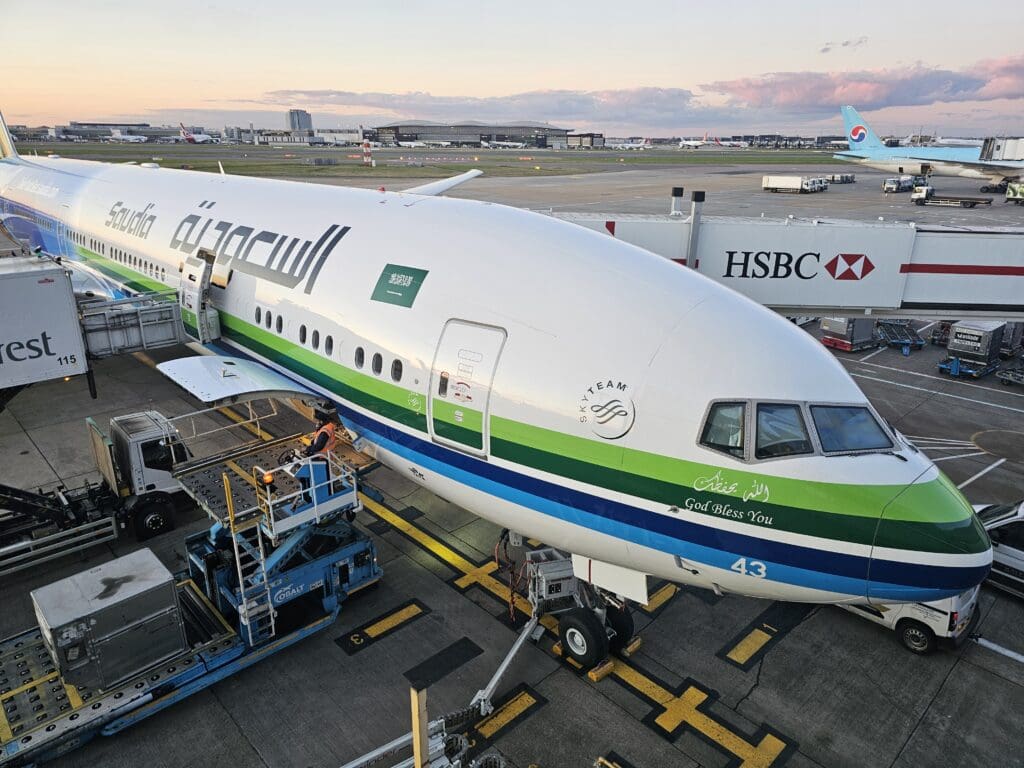
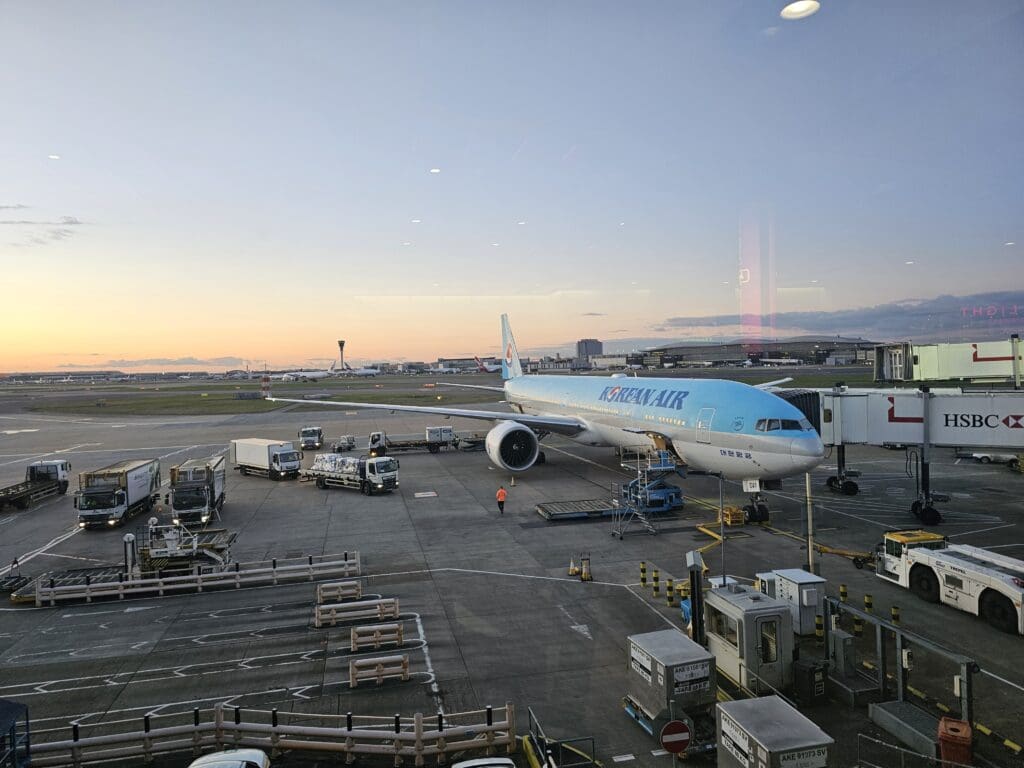
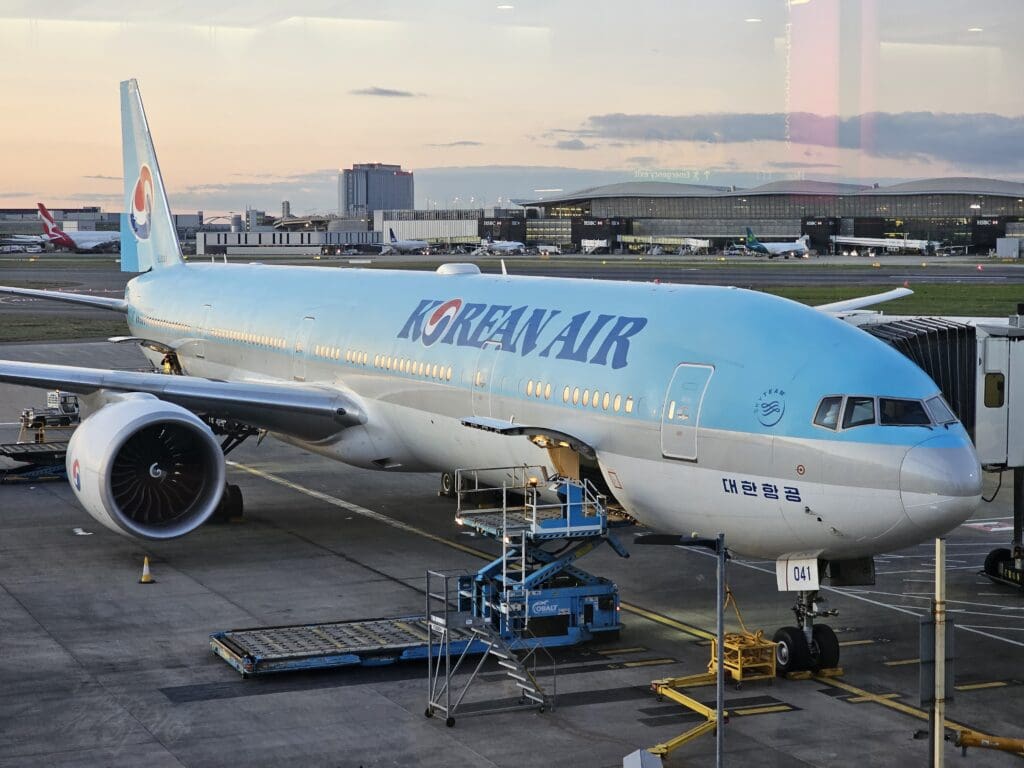
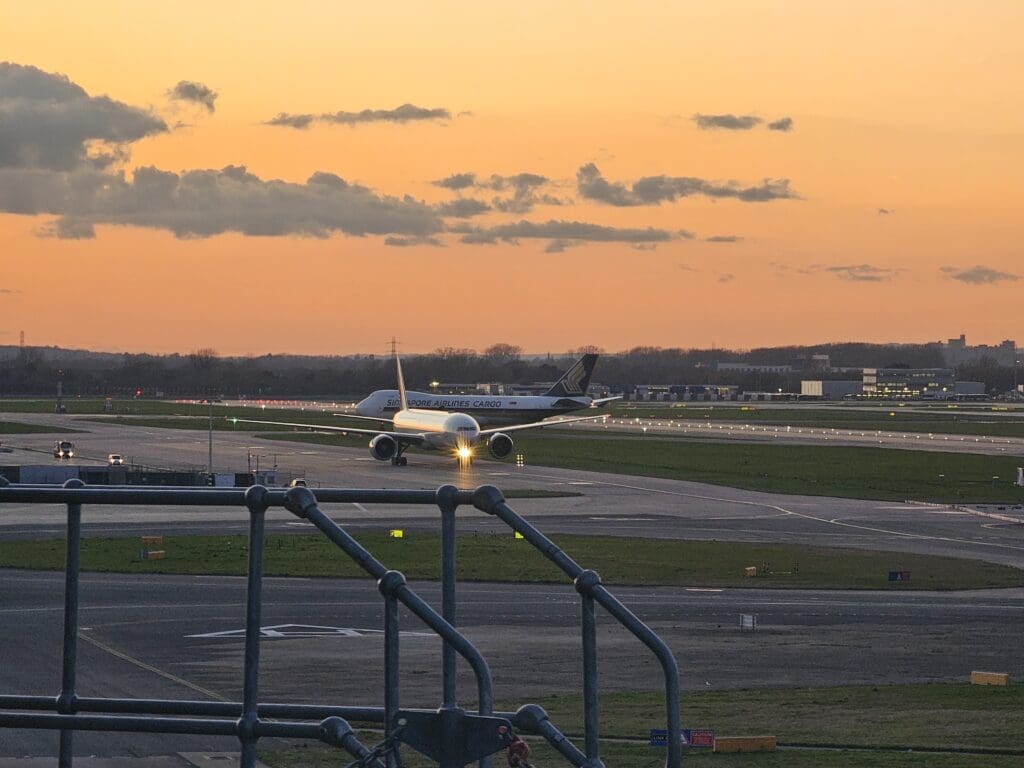
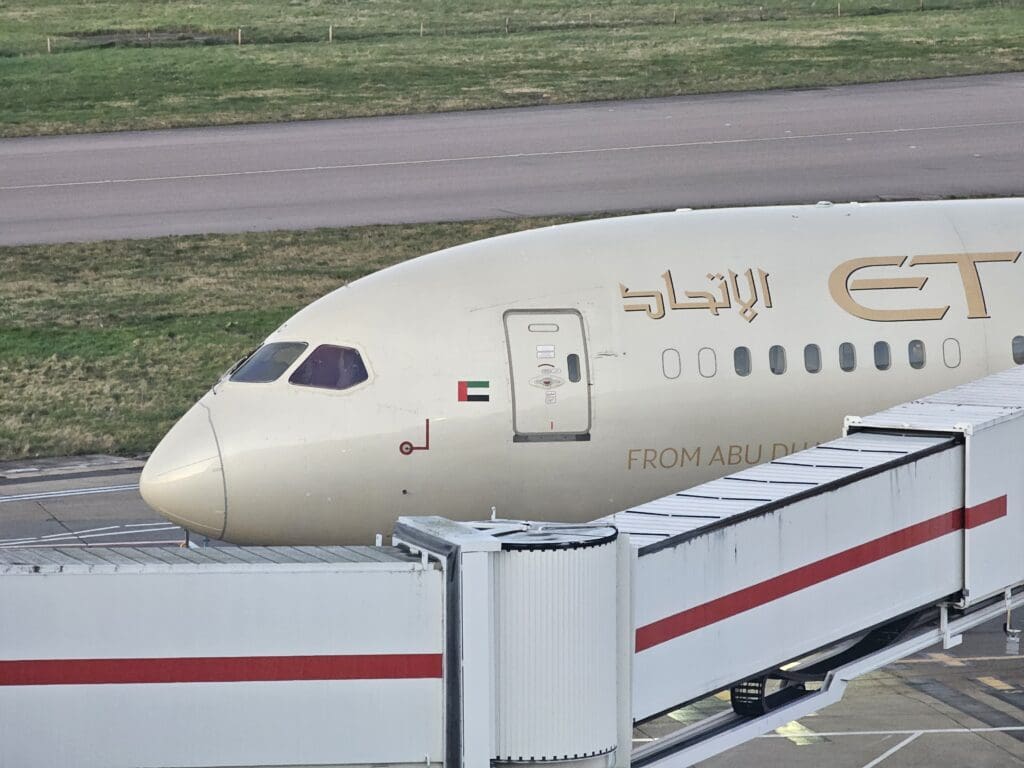
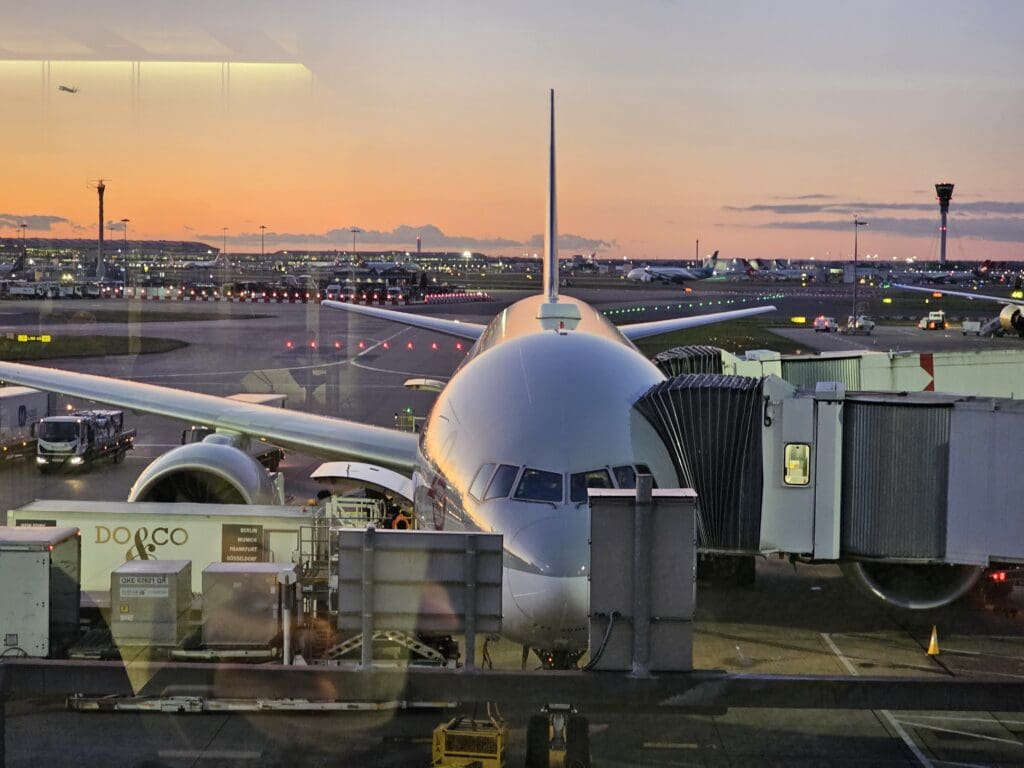
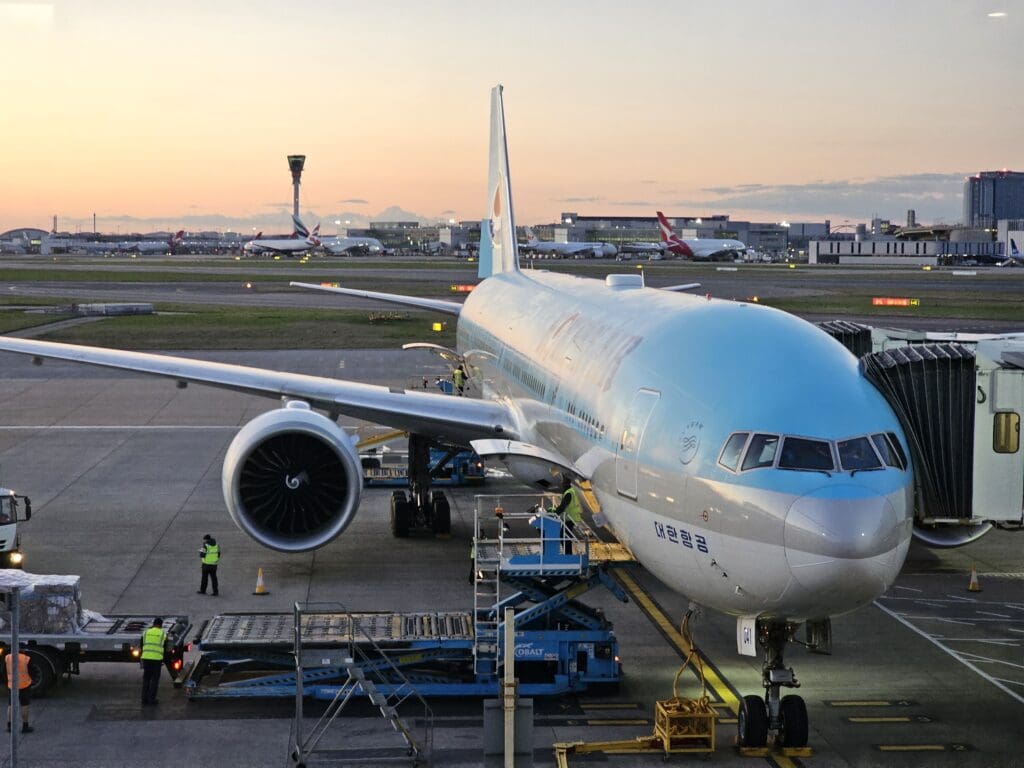
On paper, Terminal 4 is home to plenty of shops, with 35 of these offered. However, likely catering to the demographic of those sitting at the front of the aircraft on the terminal’s many flights to China and the Middle East, the majority of these take the form of luxury outlets such as Bulgari, Cartier, Gucci, Louis Vuitton and Mont Blanc to name a select few. Unfortunately, shopping options for those on a budget are limited, with only Boots and WHSmiths provided for those looking to buy snacks, drinks and other basics at the usual inflated airport prices. In addition, eight eateries can also be found throughout the terminal. These included three coffee shops, four bar-type restaurants, as well as a pricey upmarket restaurant specialising in caviar and seafood. In terms of its architecture, whilst perhaps unlikely to win any design awards, I found the terminal to be fairly modern and nicely designed. Meanwhile, much of this was clean and tidy, leaving me with little to complain about. As most passengers expect in 2025, complimentary wifi was offered throughout the terminal, although disappointingly, charging points were difficult to come by and many of these were already taken by other passengers. Continuing with my complaints, sadly, I found the terminal to be a little dirty in places, and some of the toilets were in a rather filthy state.
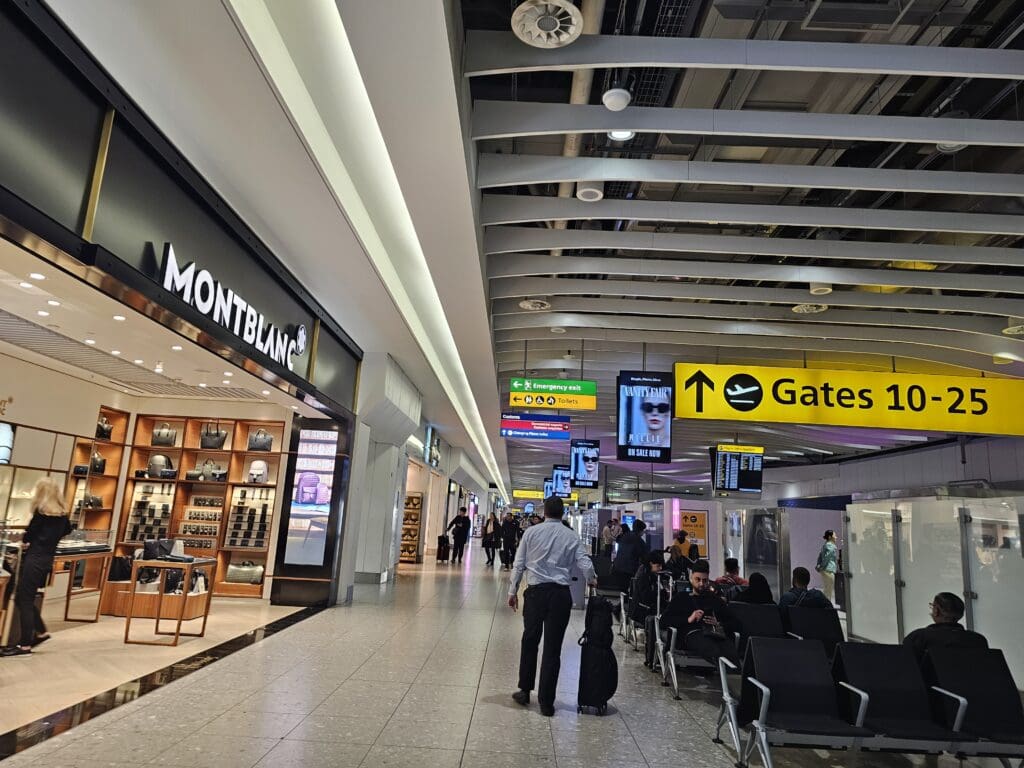
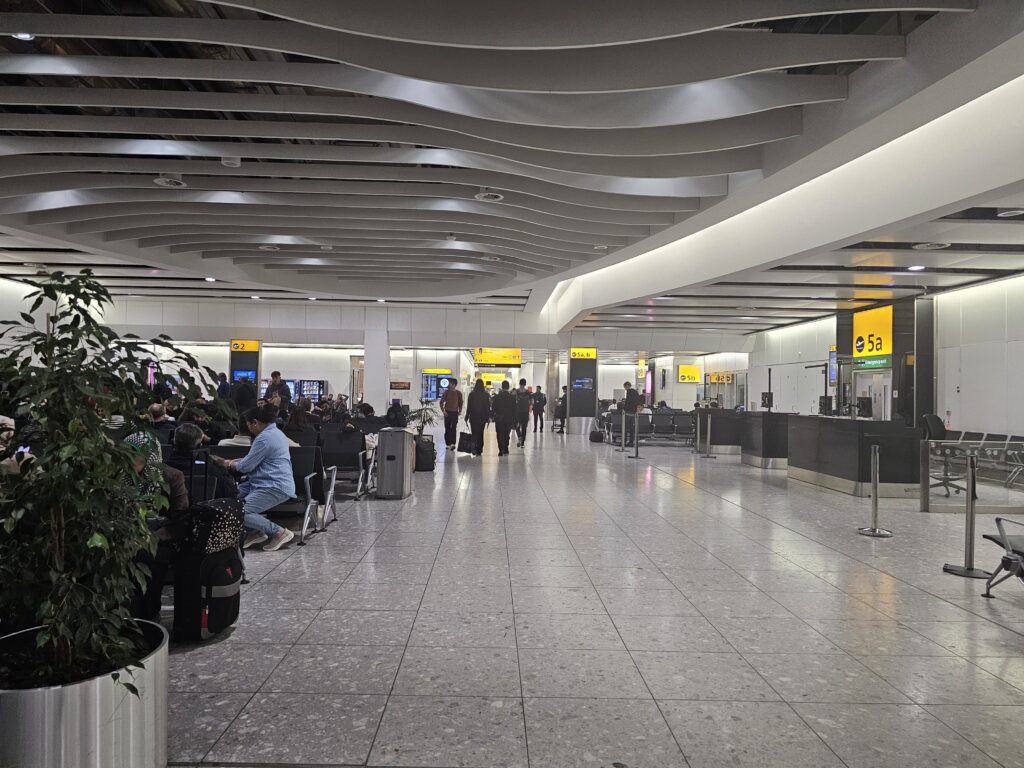
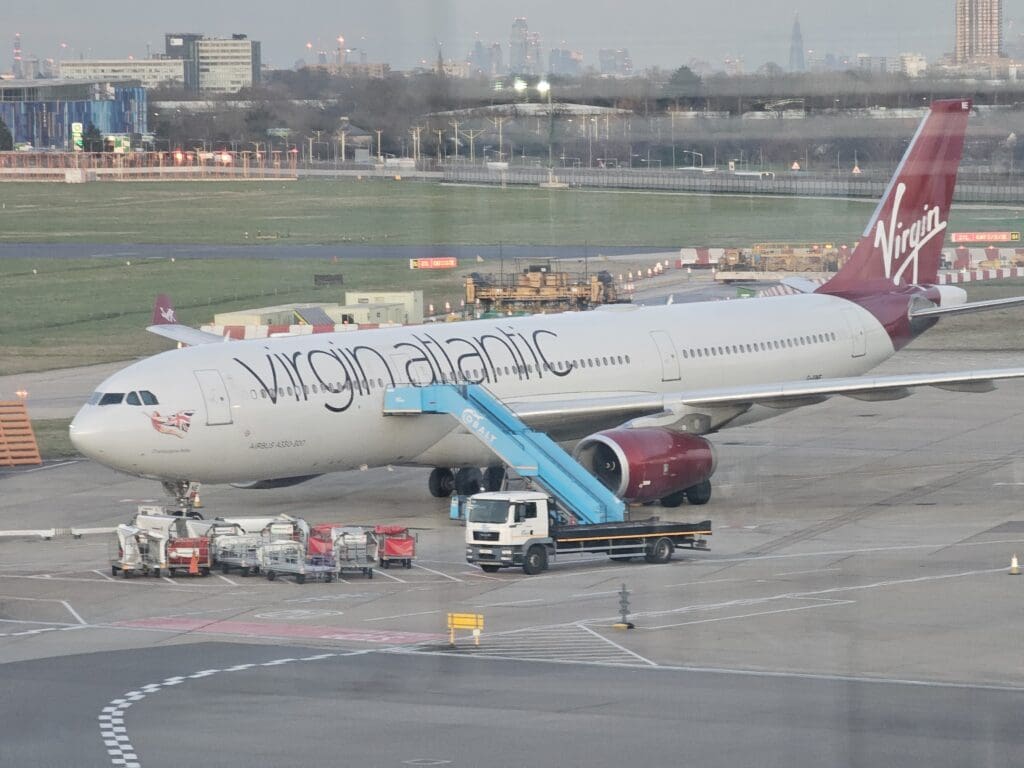
Returning to the positives, the diverse selection of airlines, the large windows throughout which offer good views of both the terminal’s stands, as well as the presence of the View Heathrow observation deck which provides a lookout onto the southerly runway means that Terminal 4 is one of Heathrow’s better places for aviation enthusiasts. By the time I made it through security, with little daylight remaining, I wandered from gate to gate and admired the many aircraft as they were in the process of being readied for their next missions to destinations across the world. Interestingly, I found that both the Boeing 777-300ER and Boeing 787-9 Dreamliner appeared to be particularly popular amongst those carriers who utilise the terminal. Eventually, I ended up at the View Heathrow observation deck and watched as a series of airliners touched down on British soil with a short puff of white smoke in the last rays of that unusually sunny February day.
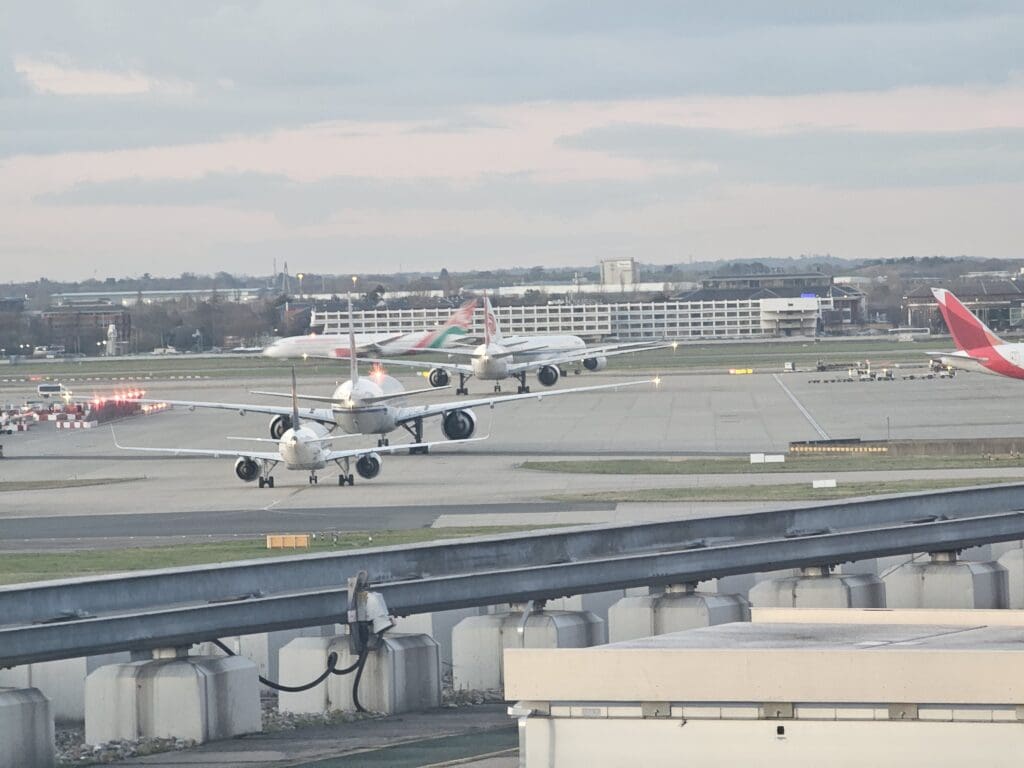
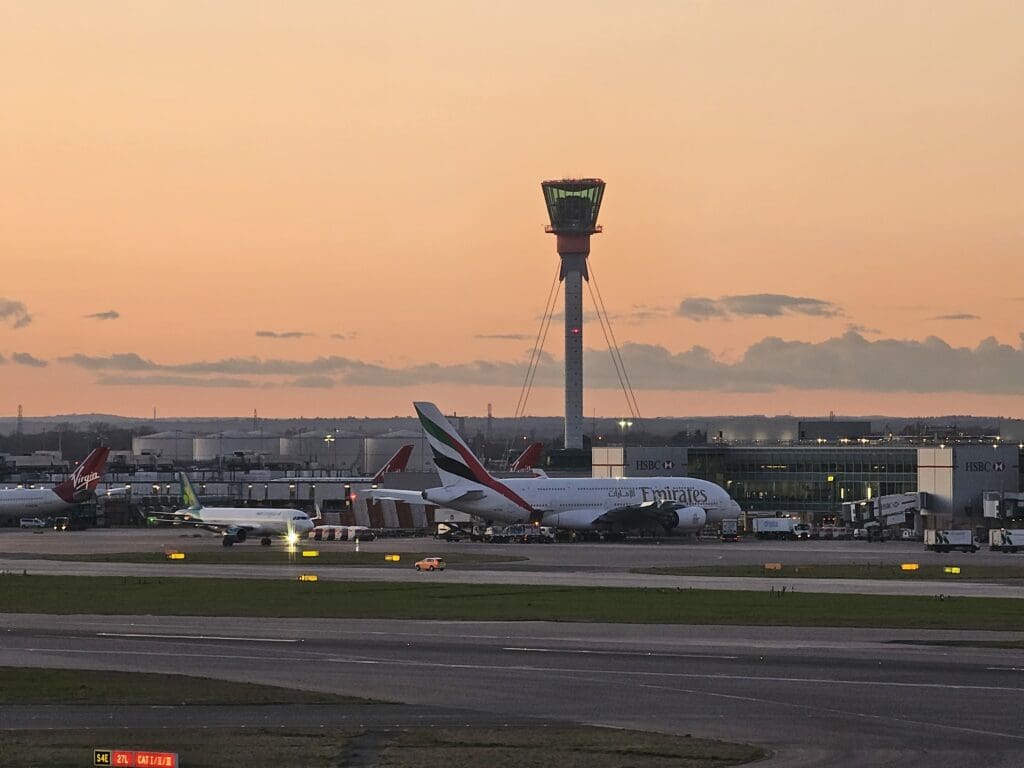
Looking at the departure boards, these were filled with overnight flights to cities across East Asia and the Middle East, with services to Abu Dhabi, Bahrain, Beijing, Doha, Guangzhou, Jeddah, Kuala Lumpur, Kuwait City, Muscat, Seoul Incheon, Shanghai Pudong and Tel Aviv, with other services heading off to Amsterdam, Baku, Barcelona, Casablanca, Kigali, Malta, Paris CDG. These were operated by Air France, Azerbaijan Airlines, China Eastern Airlines, China Southern Airlines, El Al, Etihad Airways, Gulf Air, KLM Cityhopper, KM Malta Airlines, Korean Air, Malaysia Airlines, Royal Air Maroc, RwandAir, Saudia and Vueling, on types ranging in size from the Airbus A220 and Embraer E2 to the Airbus A380.
Once darkness fell, I returned to the terminal and stopped at Pret for an overpriced sandwich before seeking out a plug socket to charge my phone and laptop. Sitting down near one of the large windows, I inadvertently spotted the sleek Oman Air Dreamliner touching down on Runway 27L at the end of its slog from Muscat, arriving ahead of schedule just before 1800. Once safely down, this made a short taxi over to Stand 402, which corresponds to Gate 2 in the terminal. Coincidentally, this is the exact same gate from where I had departed when flying onboard an Oman Air Airbus A330-300 back in June 2016. Unfortunately, this is one of Terminal 4’s few gates that does not offer much of a view of the aircraft waiting outside, with nothing more than the aircraft’s starboard wingtip and tail visible.
That night, my trusty steed took the form of Boeing 787-9 Dreamliner, A4O-SF. Carrying line number 712, this Dreamliner was assembled at the original Dreamliner production line in the Washington city of Everett and made its first test flight in May 2018. This made it a little under seven years old at the time of my flight in February 2025. Painted in Oman Air’s distinctive white, gold and green livery, in June 2018 the aircraft was ferried across the world to Oman where it became the seventh Dreamliner to join the airline’s fleet. Since then, the aircraft has shuttled passengers from Muscat to destinations both near and far across Oman Air’s route network. In the week before my flight, this connected the Omani capital with Bangkok, Frankfurt and London Heathrow, operating fifteen sectors. Onboard, this features a total of 264 seats – 8 Business Studio Private Suites (previously First Class), 24 Business Class Apex suites, and 232 seats in Economy, spread out over two cabins. This is a fairly standard number of seats for a three-class Boeing 787-9 Dreamliner.
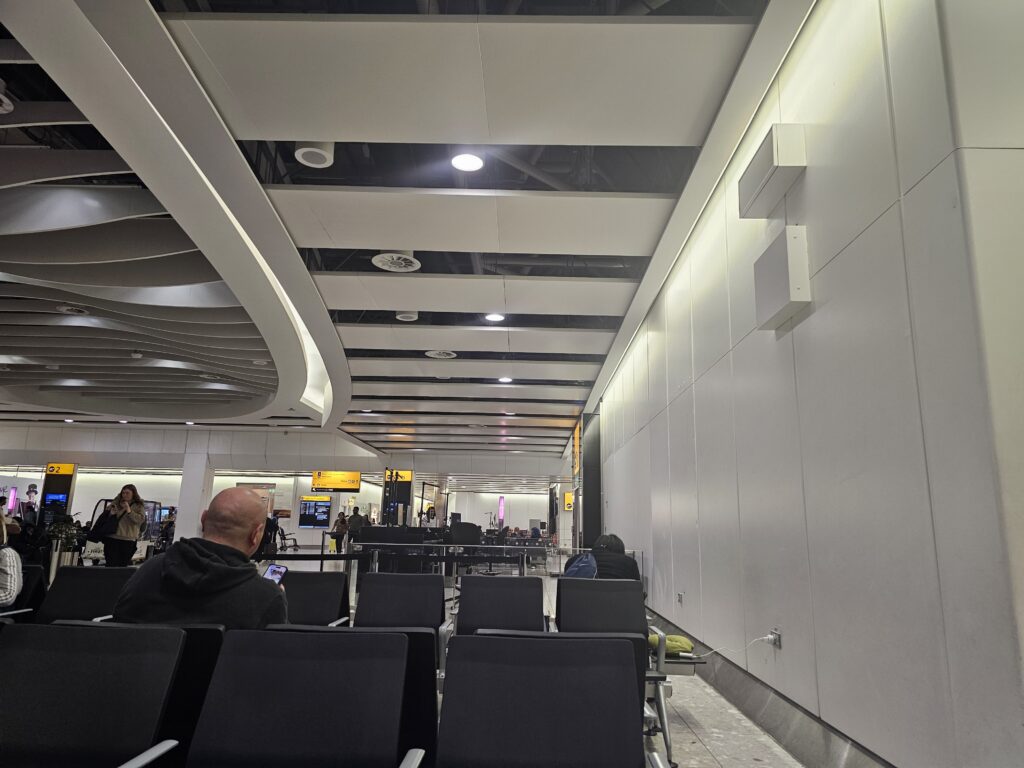
As seems to be standard practice at Oman Air, boarding was scheduled to commence an hour before departure, and so as the clock edged towards 1905, I wandered over to Gate 2. Upon arriving there, I found this to be almost totally full, thereby indicating that it would likely be a busy flight to Oman that night. With fifty minutes to go until departure, one of the Oman Air gate agents performed the first of multiple boarding announcements, and during each, they addressed passengers as ‘valued guests’. As was to be expected, first in the boarding order were those in Business as well as elite members of Oman Air’s Sindbad frequent flyer programme and passengers requiring assistance, with a gate agent wandering around the gate holding a placard reiterating this, and subsequent boarding groups. In the usual manner, boarding for Economy passengers was conducted from back-to-front, and thus some waiting was required until it was my turn to head to the gate podium.
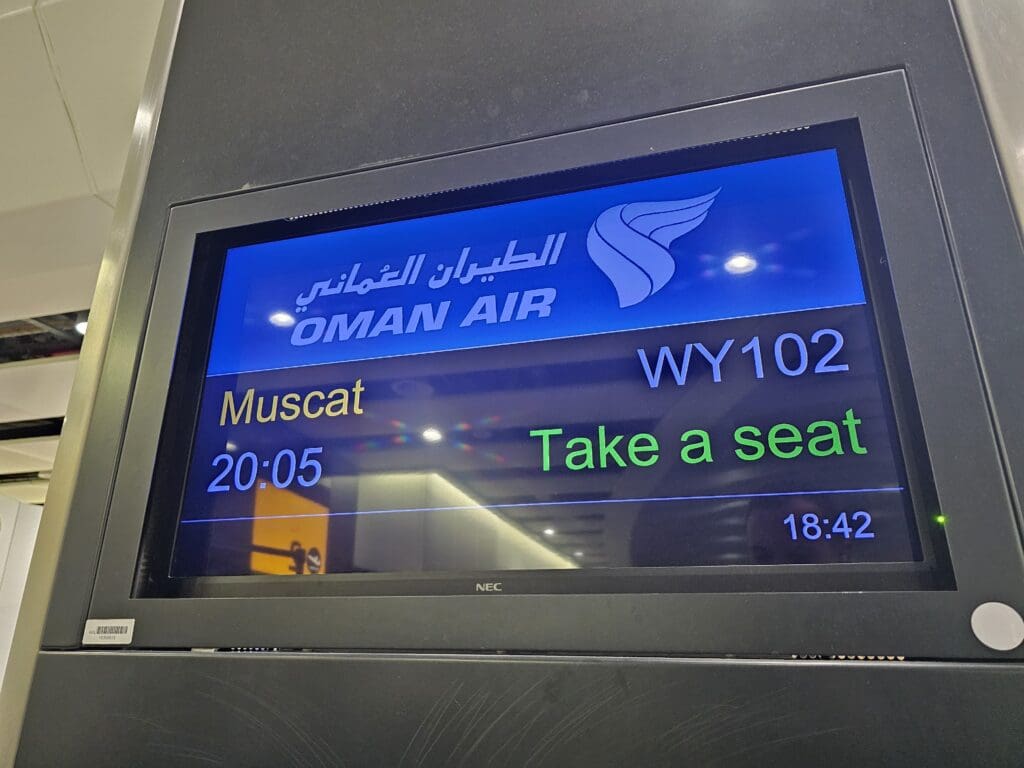
Around ten minutes after the first Economy passengers had been invited to board, boarding was called for those in the forwardmost rows of Economy. Joining a short queue, I soon reached one of the two gate podiums, where, contrasting with the polite agent that I had interacted with at check-in, I found the staff member to be cold and distant, scanning my boarding pass and checking my passport without so much as a single word before waving me on. On a side note, by this time, contrary to the check-in agent’s offer, I decided that I would ride to Oman in the window seat. From there, I continued down the mostly windowless corridor until this ended where the two jetbridges divided. Travelling in Economy, I headed down the second jetbridge and soon arrived at the Dreamliner’s L2 door.
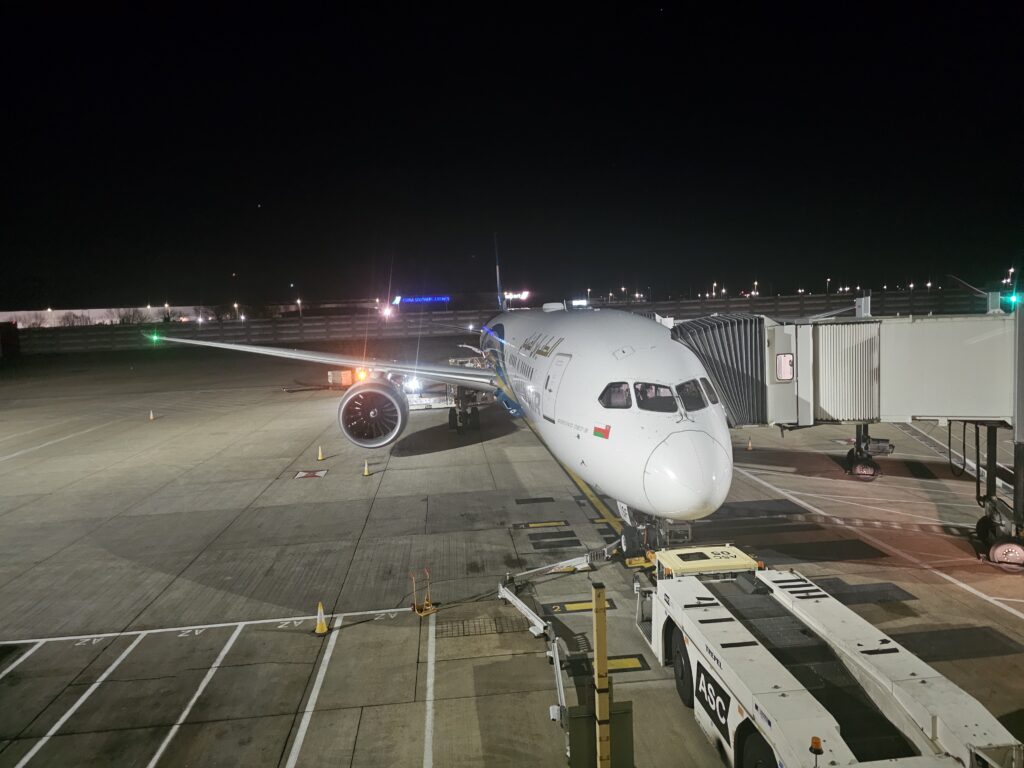
With no need for queuing, I promptly entered the galley that separates the two Business cabins and was greeted by a smartly dressed flight attendant who appeared to be a good contender for Oman’s bodybuilding championships! Upon checking my boarding pass, I was pointed down the second aisle and entered the smaller of the aircraft’s two Business cabins. There, two rows of luxurious Apex suites could be found in a 1-2-1 configuration, and at that time, these were mostly empty. On a side note, Oman Air was one of the earliest airlines to introduce the Apex suite, and this product earned them a fair amount of positive notoriety before the seat became slightly more commonplace.
Seeing as Oman Air does not offer any premium economy, after a short wait, I passed through the cabin divider that separates Business from Economy. Once inside the slightly smaller of the two Economy cabins, I was greeted by slightly chaotic scenes. Many passengers appeared to have flirted with Oman Air’s permitted cabin baggage dimensions and were, as a result, forced to play Tetris as they attempted to position bags into the Dreamliner’s overhead already fairly large overhead lockers.
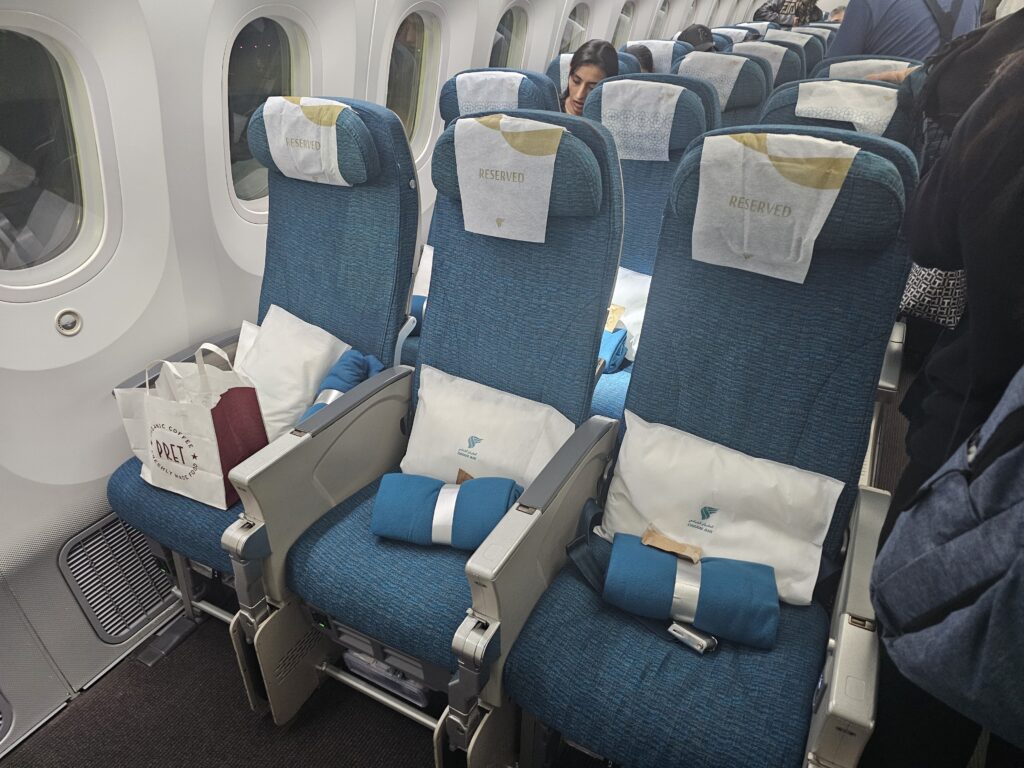
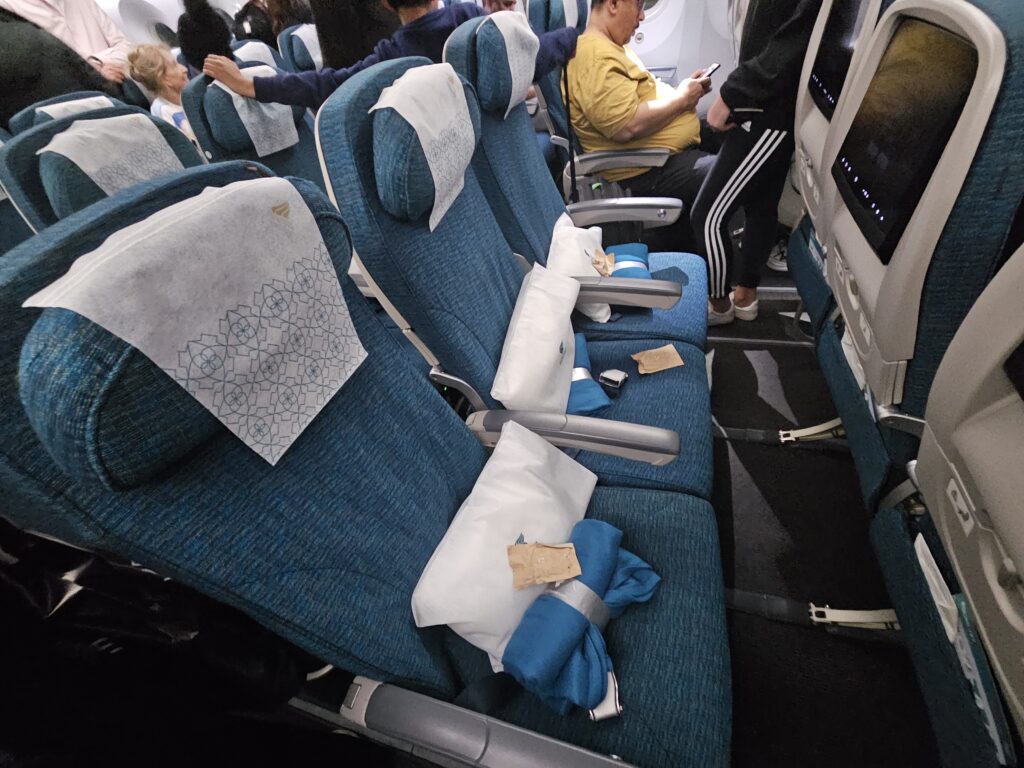
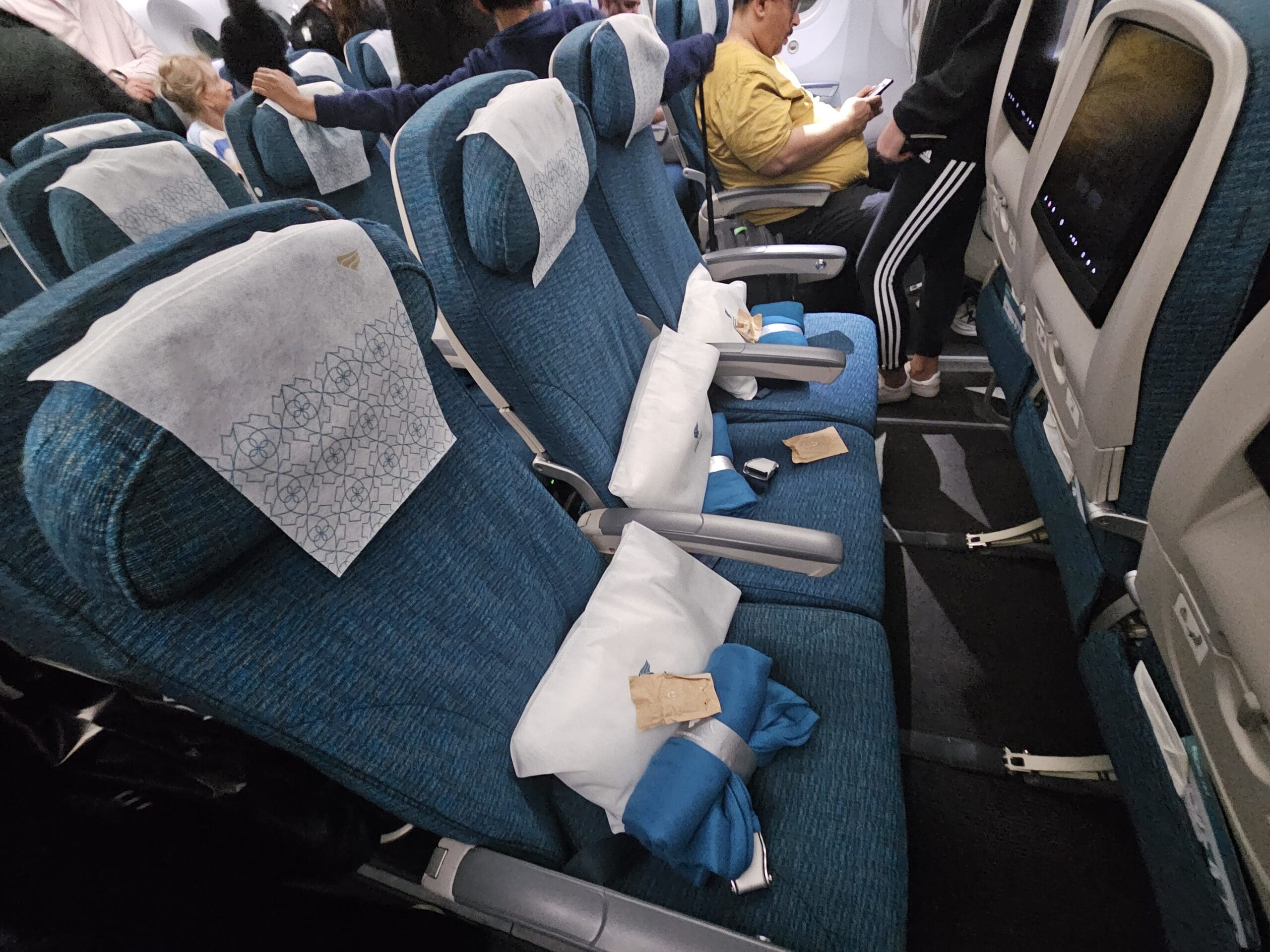
Onboard, Oman Air opted to install the fairly common Collins Aerospace Pinnacle seat onto their Boeing 787-9 Dreamliner fleet, with these arranged in the standard 3-3-3 layout, with each seat measuring 17.3 inches wide. Each of these comes complete with an adjustable headrest, a bifold tray table and a standard-sized 10.6-inch wide personal inflight entertainment screen. Meanwhile, power is provided in the form of a USB-A port, whilst there are two universal plug sockets provided for each bank of three seats. In keeping with Oman Air’s brand colours, each seat is covered in a dark green fabric that features a subtle pattern, whilst a disposable fabric antimacassar covers each headrest and features a traditional pattern and Oman Air’s motif. Sitting in Seat 24K in the fourth row of Economy, I did not have to trundle too far down the cabin before reaching my seat. However, once there, I did find another passenger sitting in this, who, potentially more used to narrowbodies, was under the assumption that the window seat was Seat 24F. Fortunately, this passenger had no qualms about moving, and so I soon slid into my seat and settled in for the ride ahead.
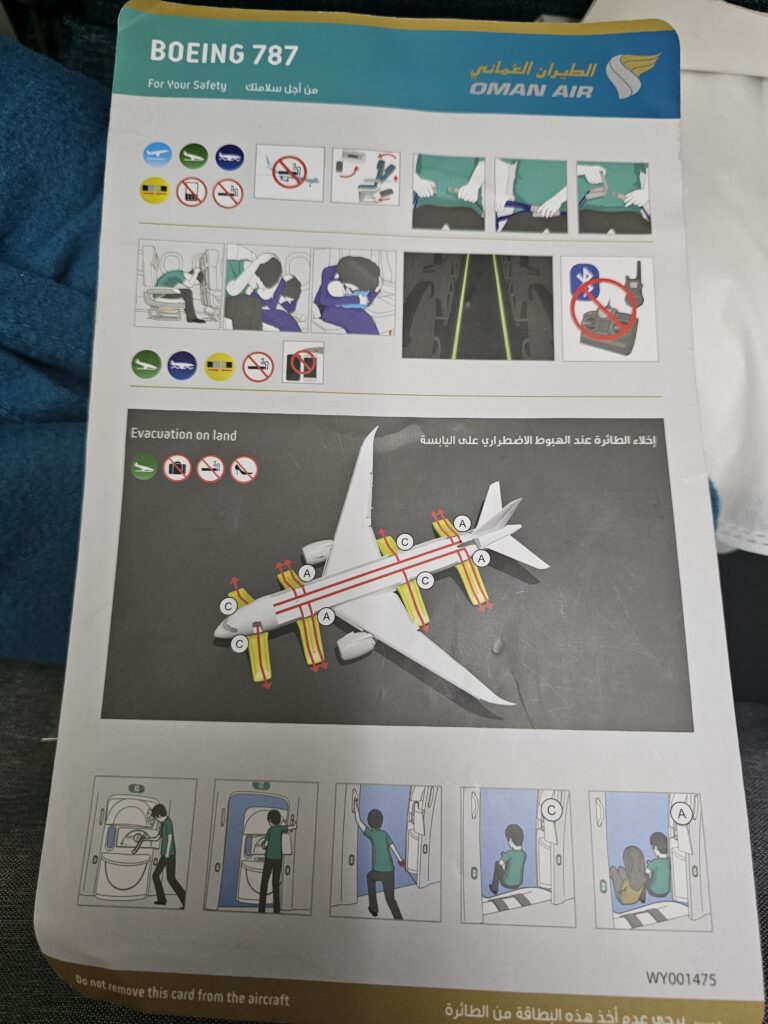
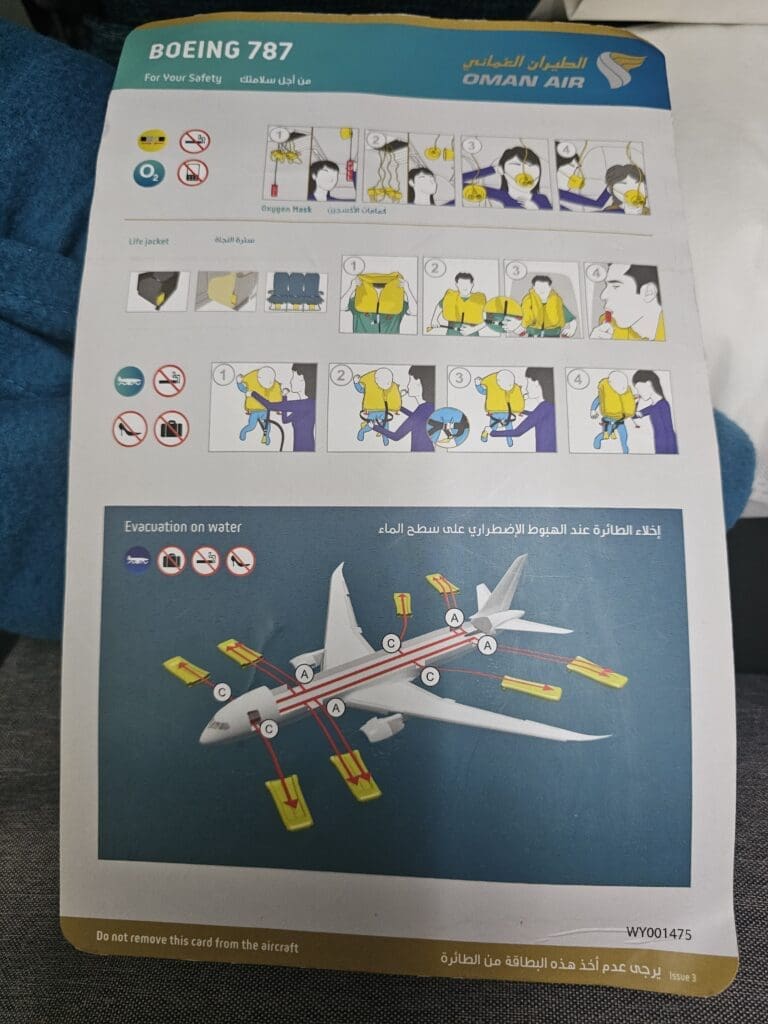
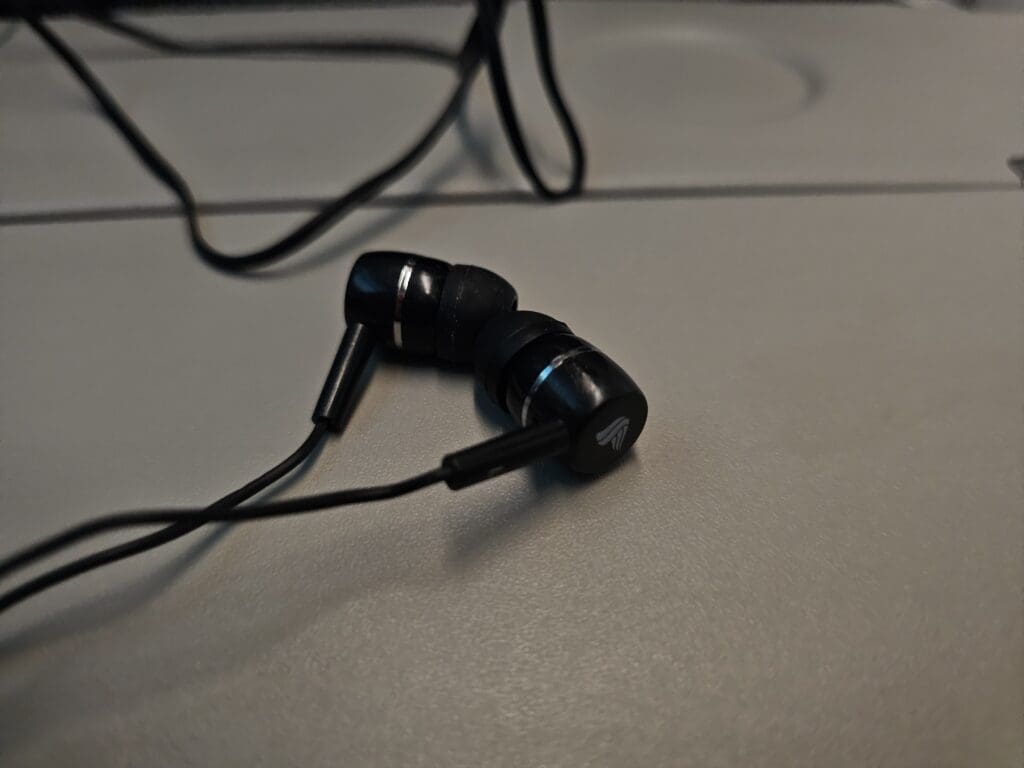
As you would expect to find onboard a long haul overnight flight, upon boarding, a decent quality blanket, earbud-type headphones in a paper packet, and a rather standard-quality pillow could be found on each seat. Unlike my last ride with Oman Air in 2016, no form of amenity kit was offered, although this was not particularly surprising given their increasing rarity on airlines across the world. Turning to the seatback pocket, this featured a dog-eared safety card and a sick bag only, with Oman Air having halted their Wings of Oman magazine during the pandemic and never resumed the publication of this. Importantly, as I looked around, the seat seemed to be spotlessly clean with no signs of rubbish or other remnants from previous passengers, whilst this was also in good condition with minor wear and tear limited to a slightly worn window dimmer button – a seemingly common problem on many Dreamliners across the world. In terms of comfort, I found the seat to be soft and acceptably spacious for a widebody airliner. Thus, overall, once seated and settled in, there was very little for me to complain about my new surroundings for seven or so hours.
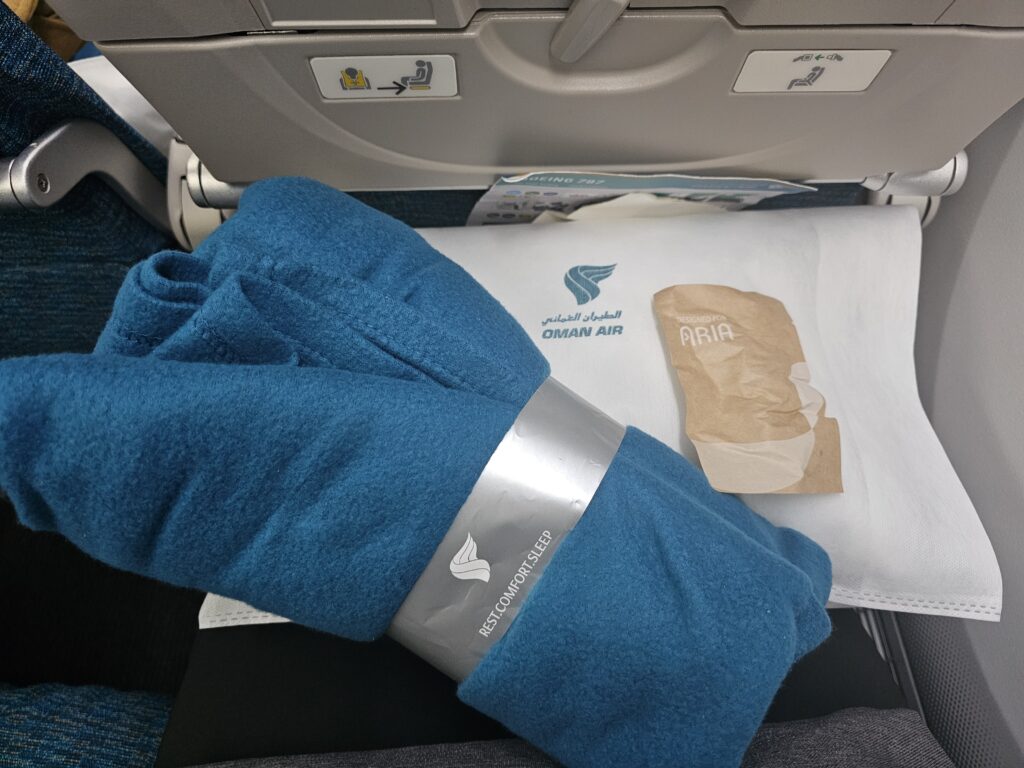
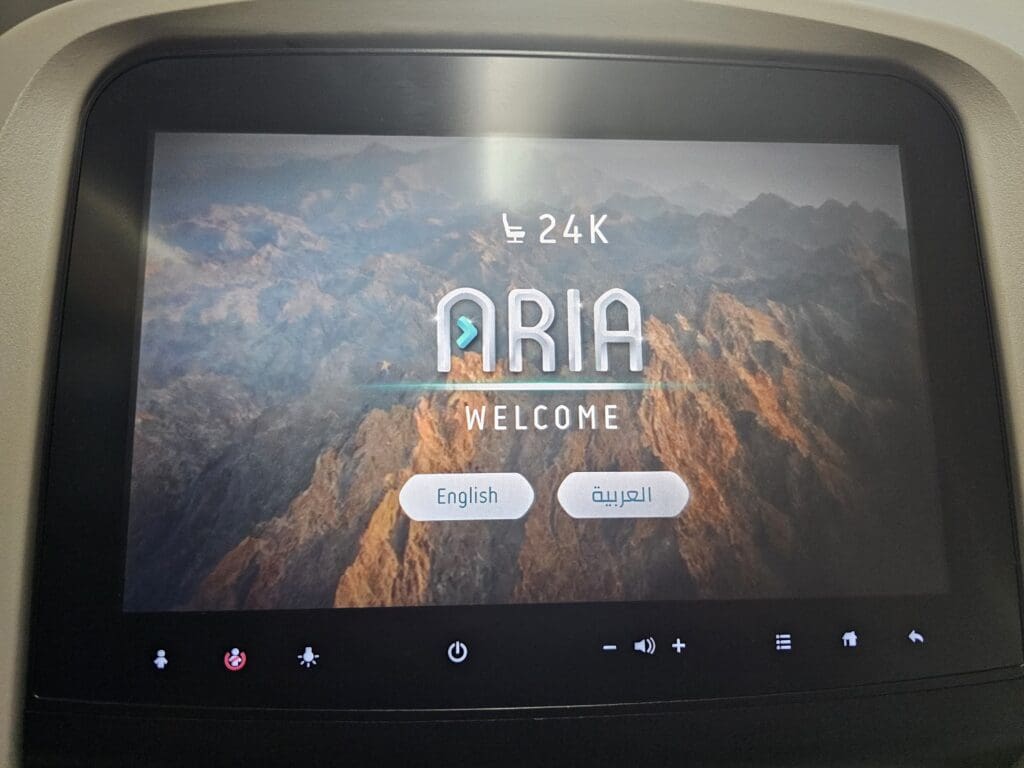
Throughout the boarding process, each inflight entertainment screen played a montage of scenic photos highlighting the diverse natural beauty of Oman; however, this could be overridden, and Oman Air’s ARIA inflight entertainment system could be used throughout the journey. Meanwhile, boarding was accompanied by calming music. Being in the last cohort of passengers to board the aircraft, it wasn’t long before the chaos around me came to an end and with all passengers having made it to the gate on time, boarding was announced as complete at 1943, an impressive 22 minutes ahead of schedule!
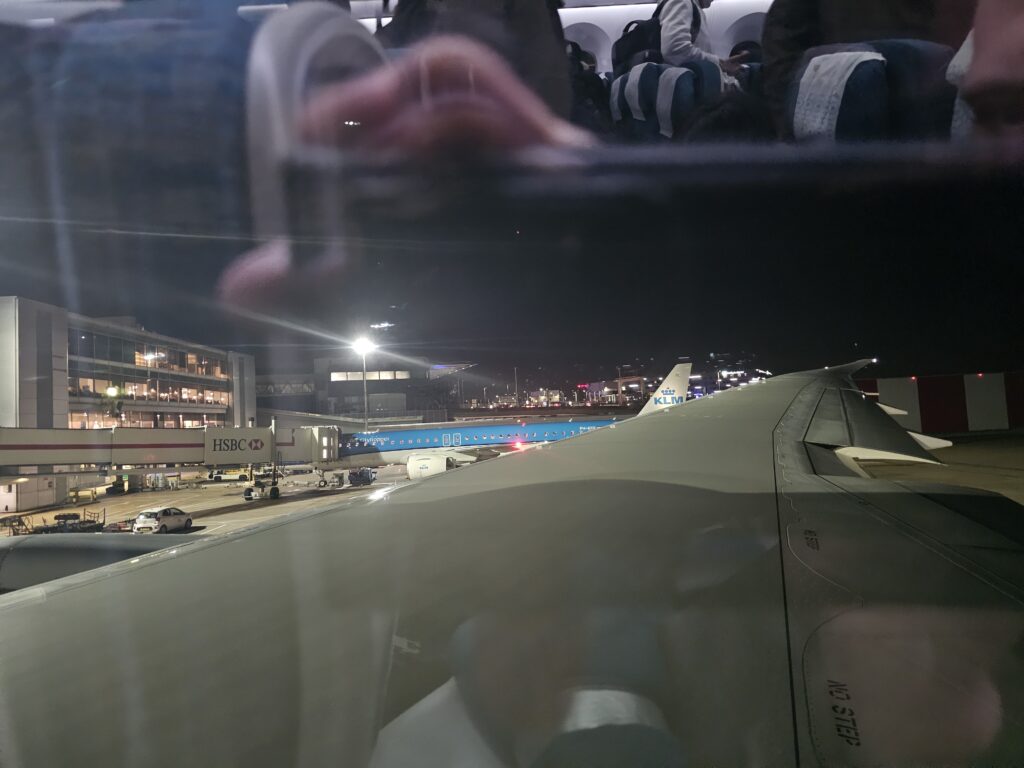
Despite being a very busy flight, I was lucky enough to end up with a vacant middle seat that separated me from the aisle seat occupier. As I had expected given Oman Air’s frequent bargain options between Europe, and South and Southeast Asia, and with the London flight well timed to allow for swift onward connections, it seemed that many passengers around me were simply connecting in Muscat. Turning to the demographics, there were plenty of passengers who hailed from India, with a fair number of families and younger solo passengers, as well as many passengers from the Philippines who were presumably connecting onwards to Manila. Almost immediately after boarding had been announced as completed, the Cabin Director conducted a short welcome announcement in Arabic and English, which consisted of the usual welcomes and thanks, and a mention of the languages spoken by that evening’s crew. Namely, Hindi, Russian, Swahili, Tagalog and Thai, alongside Arabic and English. As seems to be common on many Gulf carriers other than the ME3, the cabin crew appeared to be a mix of local male crew and female crew from abroad. This was a similar demographic to the crew that I had encountered when flying with Gulf Air and Saudia.
Once the doors had been closed, the Captain’s voice filled the cabin as they performed their welcome speech in Arabic and English. This consisted of a word of thanks, a mention of our flight time, which would be in the region of six and a half hours, and the likely good weather en route, although this came with the usual warning for passengers to keep buckled up whilst seated. Giving hope that we would depart on time, at 1952, an impressive total of thirteen minutes ahead of schedule, the Boeing jolted rearwards and our pushback commenced as we left our two gate neighbours, a KLM Cityhopper Embraer E2 and a Qatar Airways Airbus A350. During this process, a series of modern whines and whirrs could be heard as the Boeing’s two large General Electric GEnx engines spooled up into life, ready to power us across to Oman. As the two engines fired into life, Oman Air’s long safety video took over the entertainment screens, playing first in Arabic and then again in English. Introduced in late 2016, this four-minute video takes passengers through the safety instructions whilst highlighting some of Oman’s sights in the process.
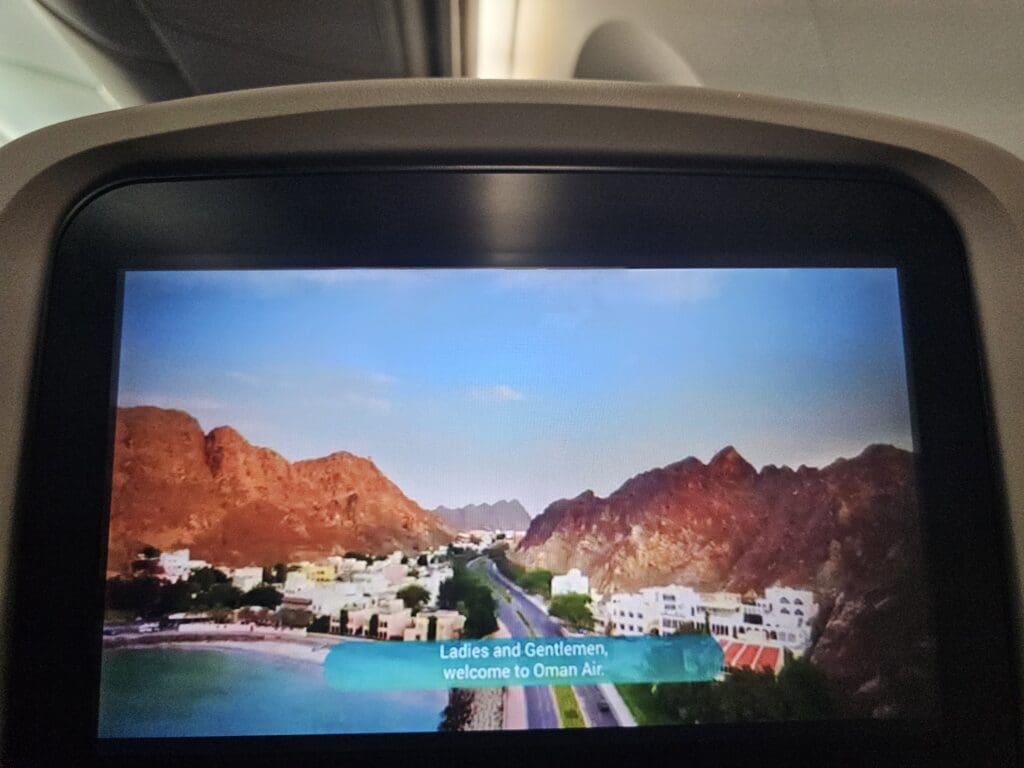
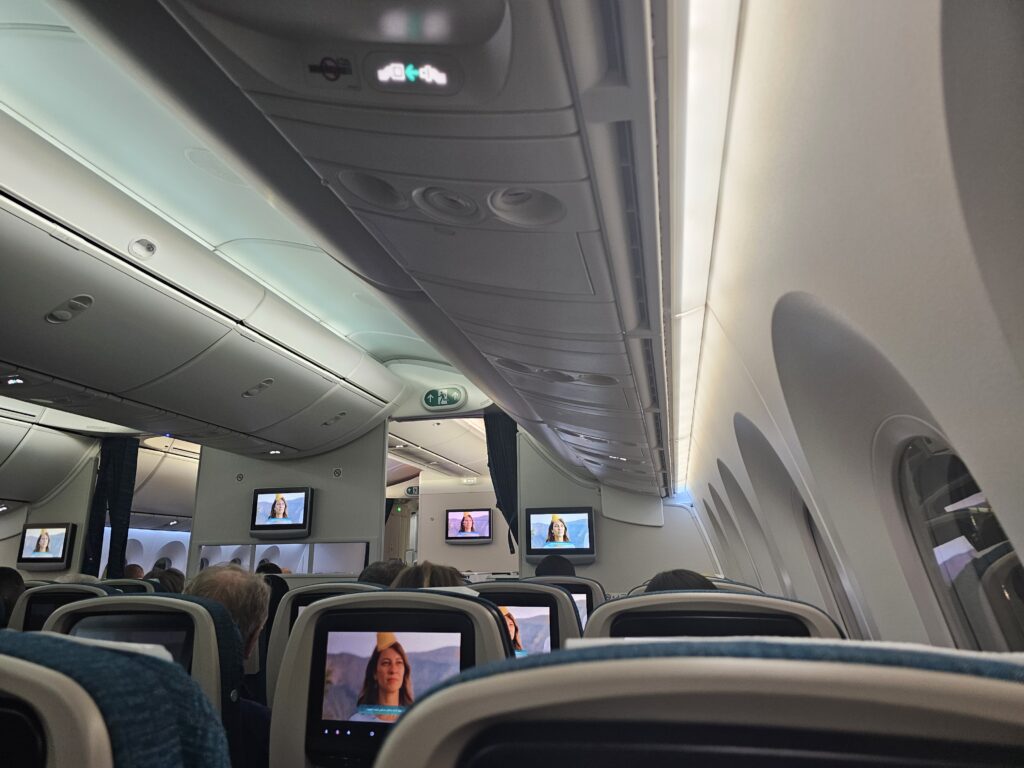
A few minutes after leaving the stand, the tug was disconnected and the flaps were partially extended with a loud whine before we commenced our journey to the end of Runway 27R. Making our way around the end of Terminal 4, the Dreamliner then trundled down the terminal, which was hosting a line of widebody jets that were also bound for the Middle East, provided by Etihad Airways, Gulf Air, Kuwait Airways and Qatar Airways. A short time later, the Dreamliner came to a gentle halt and we waited for several minutes to allow for a trio of British Airways Airbus A320 Family aircraft to touch down from Aberdeen, Geneva and Manchester, during which time the crew performed their final pre-departure cabin checks before the cabin lights were dimmed in preparation for our departure, accompanied by a pre-recorded announcement reassuring passengers that this is standard procedure for nighttime departures.
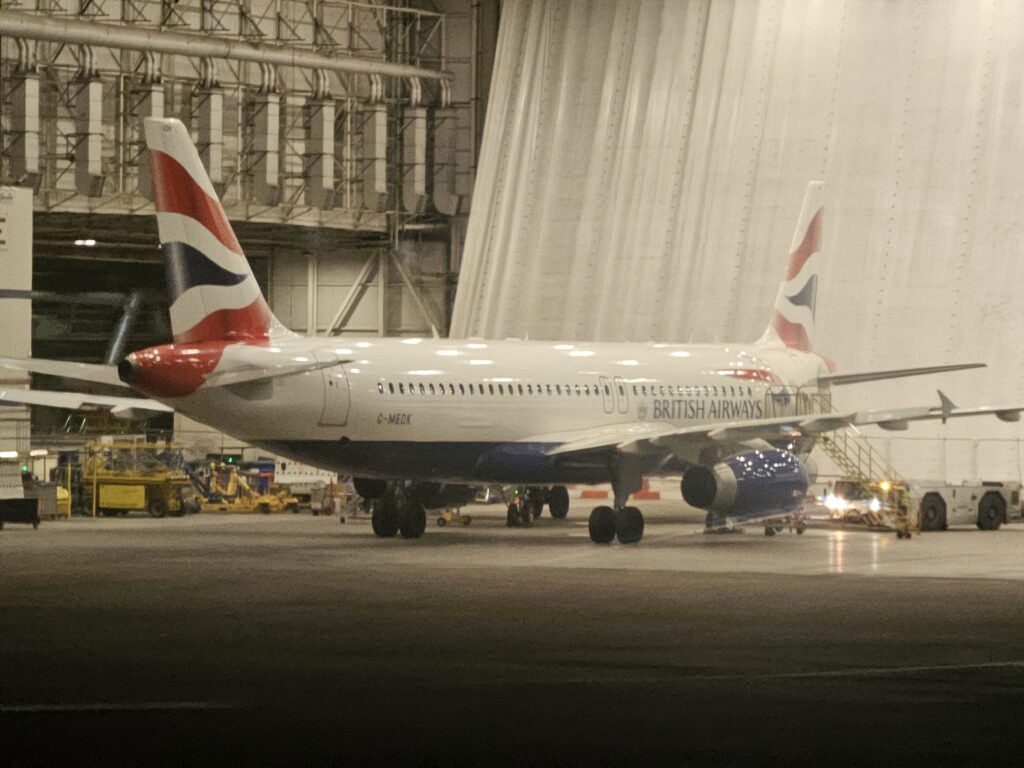
After a while, the Dreamliner speedily crossed Heathrow’s southerly runway and journeyed past British Airways’ large maintenance area at the far eastern end of the airfield. There, the Boeing came to a halt to allow for a Virgin Atlantic Boeing 787-9 Dreamliner to rocket off on its overnight journey to India. As one of the world’s busiest airports, Heathrow is not always known for its speedy departures; however, that day we seemed to be in luck, as no more than a couple of minutes of holding was required before we made our way onto the runway and came to a halt.
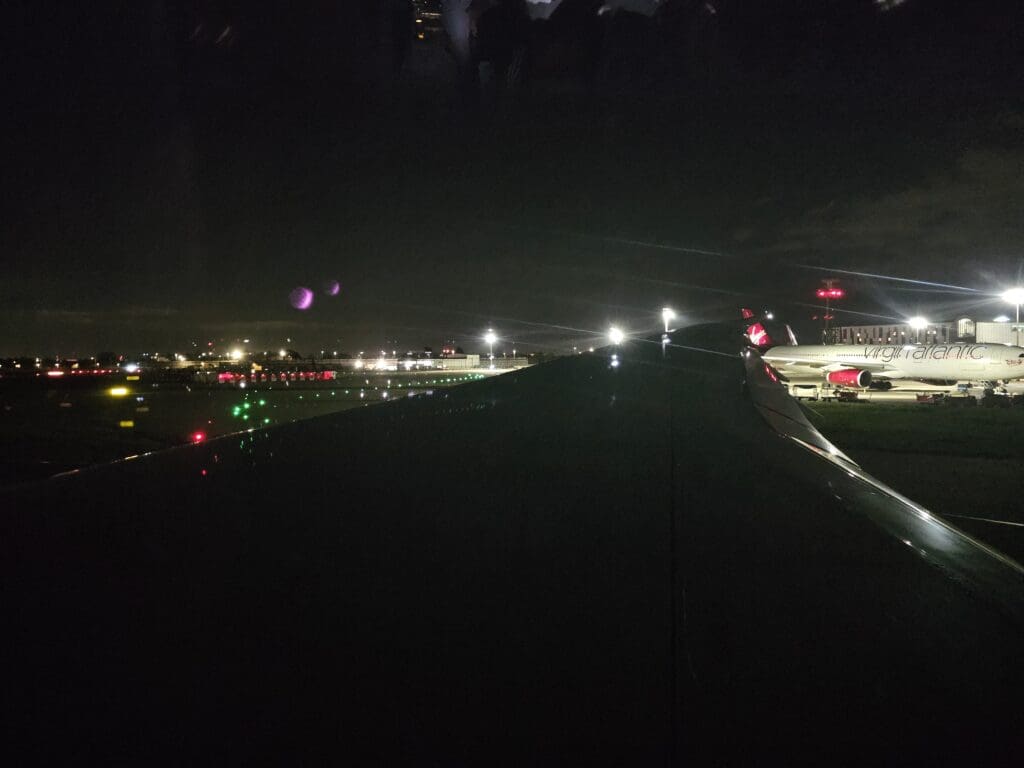
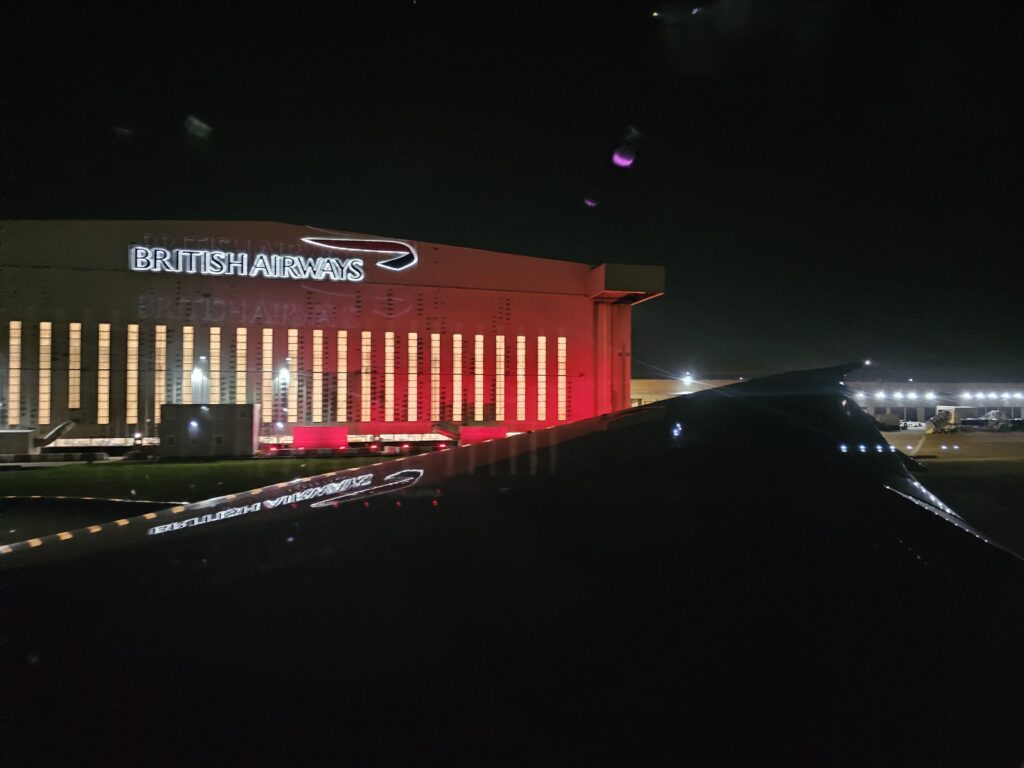
At 2015, the two General Electric engines spooled up and the Dreamliner performed a smooth, gentle and long take-off roll. Looking outside, the lights of the hotels and offices that line the north side of the airport came into view. Eventually, the aircraft rotated into the skies and we crossed over the airport’s perimeter before passing over the bright lights of the slew of vehicles on the M25 motorway. Following the standard instrument departure route followed by many departures heading into destinations east of Britain, no more than a minute after taking to the skies, the Dreamliner banked to the left and crossed over the nearby towns of Egham, Staines-upon-Thames and Sunbury-on-Thames, before rolling out and crossing the fringes of South London. This took us over Kingston-upon-Thames, Wimbledon, Mitcham, Beckenham and Bromley, after which the jet left the fringes of London behind and made its way over northern Kent.
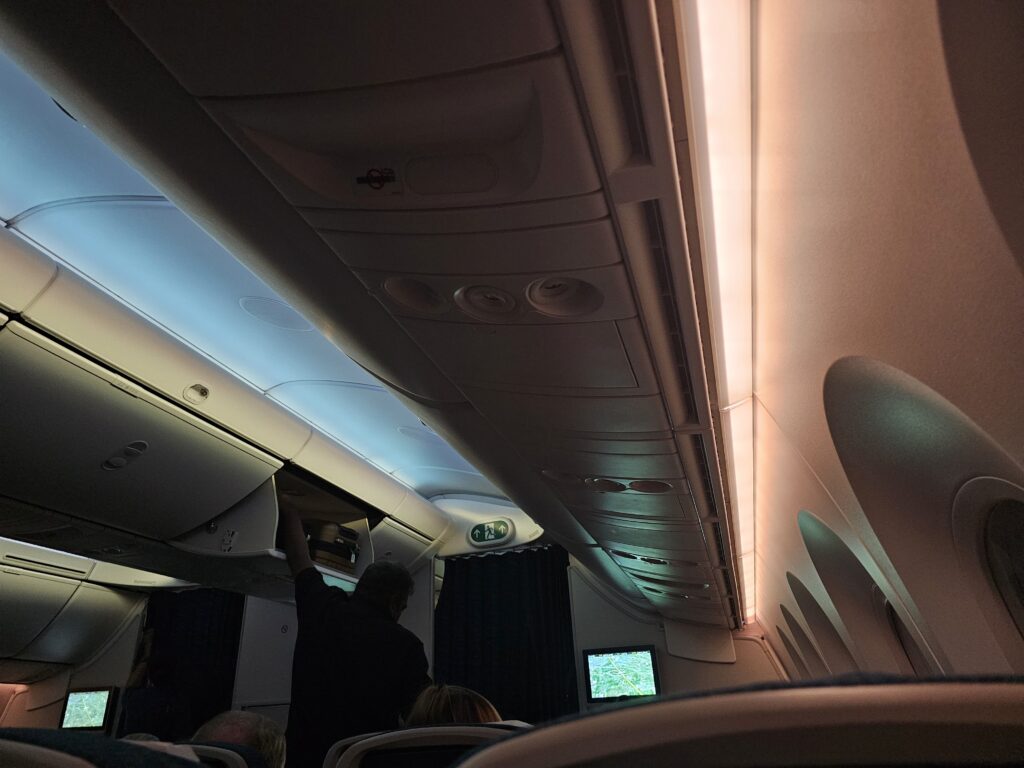
That evening, our departure was turbulence-free, so the seatbelt signs were extinguished as soon as we reached 10,000 feet. By this time, the scent of warming food was already wafting through the cabin, indicating that we were soon to be treated to Oman Air’s culinary delights. Moments later, the mood lighting was turned on to its calming and subtle blue setting, although this soon transferred to a much brighter setting that illuminated the cabin and likely woke up those who had already drifted off to sleep. Around thirteen minutes after taking to the skies, the Dreamliner crossed the Kent coastline between the coastal towns of Ramsgate and Deal, before we made a quick sprint over the English Channel, reaching Dunkirk four minutes later. Once over Continental Europe, the Dreamliner almost immediately crossed into the skies of Belgium and cut across the heart of the country, passing just to the south of the likes of Ghent, Brussels and Liège.
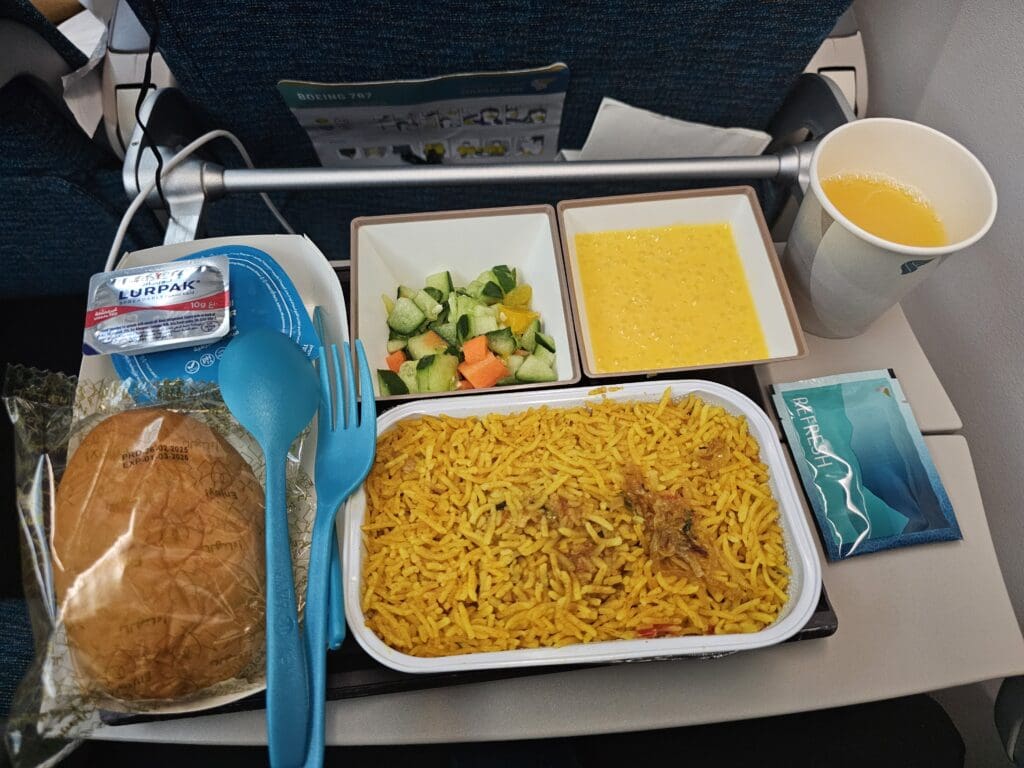
As we whizzed through the skies of Eastern Belgium at an altitude of 37,000 feet, a flight attendant pulled a service cart to the front of the Economy cabin and began to distribute the evening meal options. Unlike my previous flight with Oman Air, there was to be no drink and appetiser round to kick off proceedings, and instead, the crew dived straight into the meal service. Several minutes after this commenced and as we edged towards the Baden-Württemberg city of Mannheim, the polite if not slightly subdued flight attendant asked me, ‘Chicken or vegetarian?’. Unfortunately, seeing as Oman Air does not publish their menus online, nor are these provided in either digital or paper format during the flight, I was uncertain as to just what either option entailed. Taking a chance, I decided to go for the chicken, which I paired with an unhealthy-looking near-fluorescent orange juice, which was soon poured into an Oman Air-branded paper cup. Examining the contents of the tray, this featured the main dish, which turned out to be a chicken biriyani, accompanied by a side of cucumber salad, a bread roll and butter, a passion fruit and tapioca dessert and a tub of still water. Meanwhile, eating utensils took the form of firm plastic cutlery, whilst a serviette, wet wipe, salt and pepper were also provided.
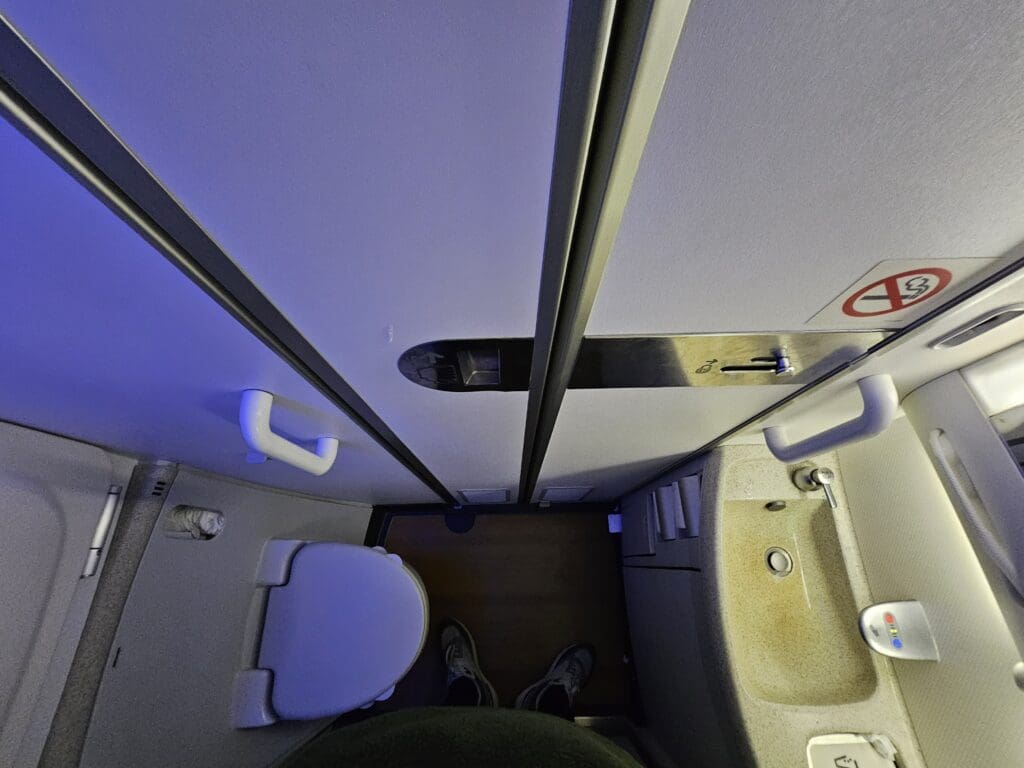
Soon getting to work on the evening meal, I have to say that the offering was not quite as expansive as on some other airlines’ services between London and the Middle East, and lacked luxuries such as metal cutlery. However, this meal was more than edible and considering the length of the flight, this left me with very little to complain about., other than the fact that the trays were kept out for rather a long time, with these finally being removed when a round of tea, coffee and water was made around an hour after the meal service. Once my tray had been collected, I decided to visit one of the onboard lavatories, opting to visit one of the two in between the two Economy cabins. Heading inside without waiting, I was pleased to find this to be clean and in good condition, stocked with the basics and featuring minimal signs of wear and tear, thereby leaving me with nothing to complain about. That said, seeing as the flight was an overnight slog, it would’ve been nice had luxuries such as toothbrush-toothpaste sets and wet wipes been available for passengers to take.
By the time I had returned to my seat, the Dreamliner had soared across Germany and Austria and was now passing just to the south of the Hungarian city of Kecskemét, famous for its local air base, which until recently hosted one of Europe’s largest airshows. Not quite ready to try to get some sleep, and with nothing but darkness to be seen outside, I opted to explore the delights of Oman Air’s ARIA inflight entertainment system. As of 2025, all aircraft in Oman Air’s fleet are complete with inflight entertainment screens. Thus, some may expect that this system is available in a good plethora of languages that are representative of the breadth of Oman Air’s destinations. However, this is not the case, and instead, this system is available in Arabic and English only. Whilst this was fine for me, I can imagine that this may be a prohibitive barrier for a significant number of passengers, preventing them from enjoying the delights of ARIA.
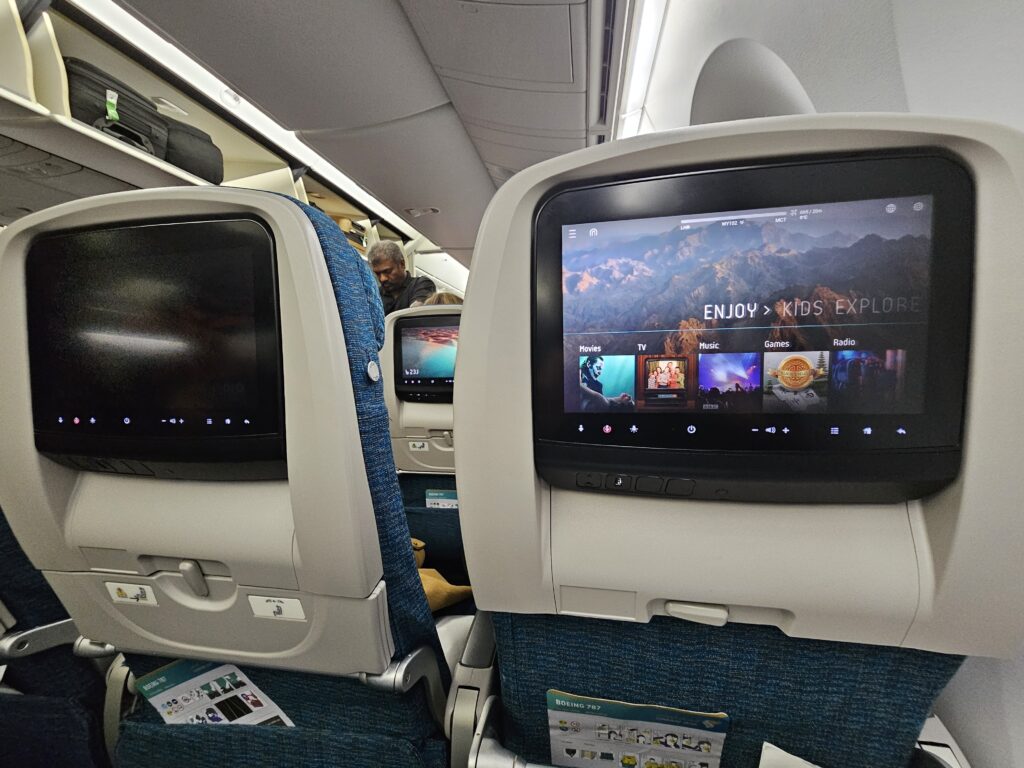
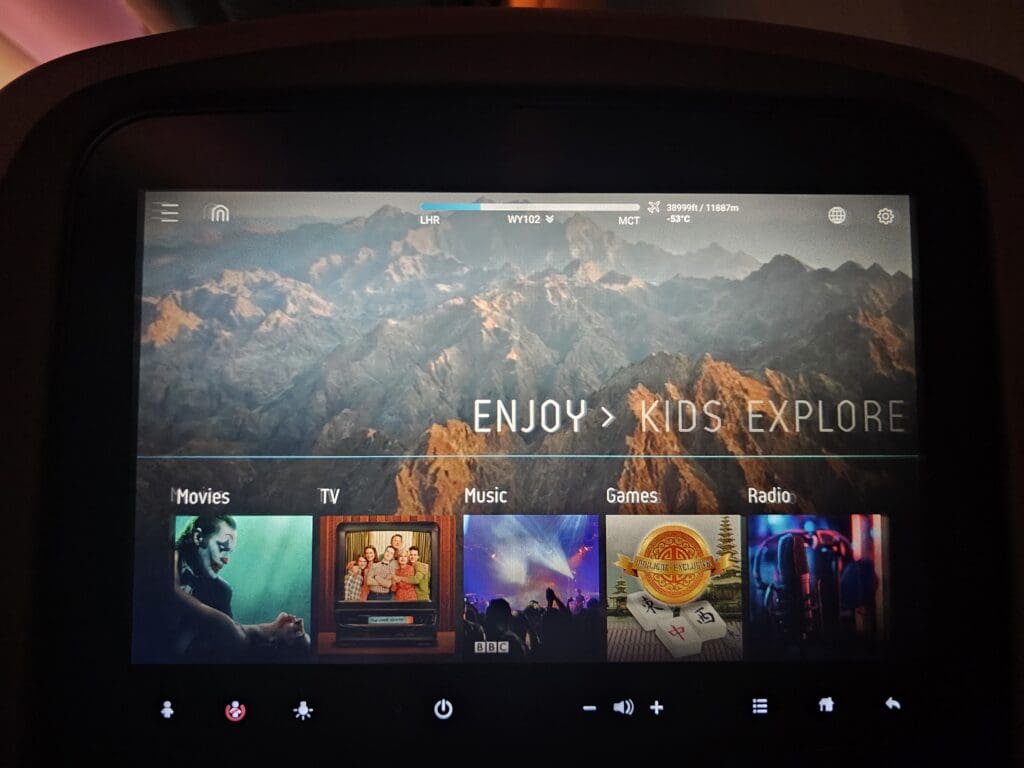
Upon selecting the English option, I was almost immediately presented with a scenic aerial shot of Oman’s spectacular rocky mountains, which served as the background for the main menu guiding passengers towards the various content items – namely Explore, Games, Kids, Movies, Music or Radio. The lattermost option is a selection of playlists, rather than live radio stations. Other than this, the system featured a selection of information about Oman and Oman Air, and as with many airlines across the region, passengers have the option of listening to the Qur’an whilst onboard, with passengers provided with the choice of one of three reciters of this.
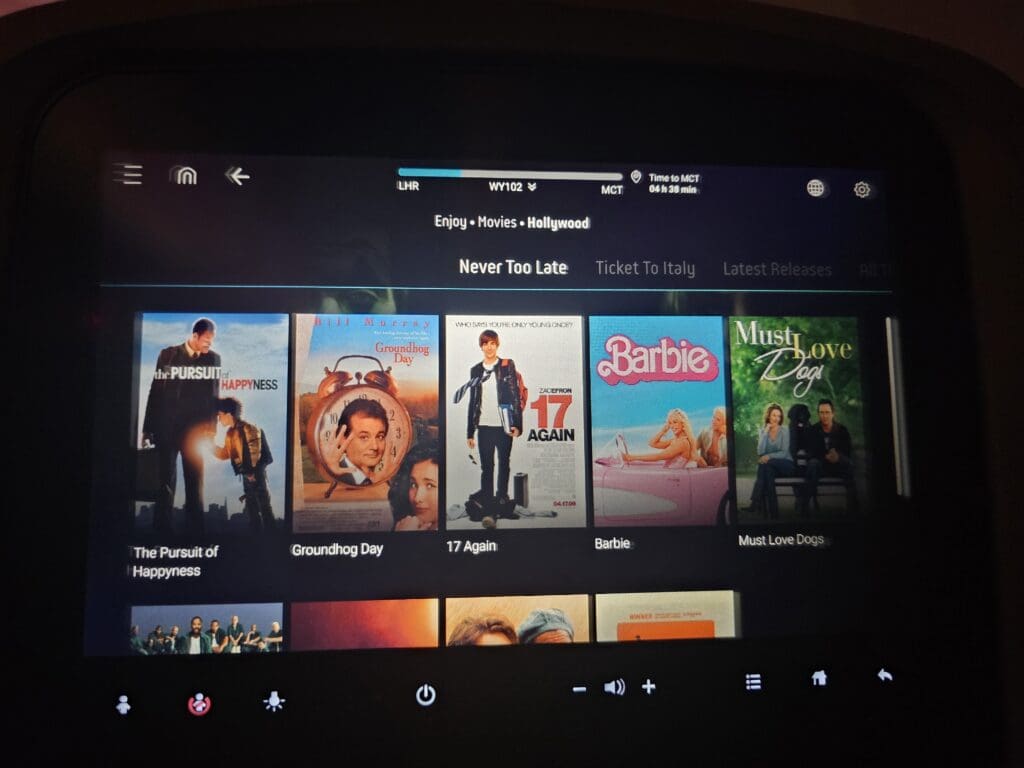
Turning to the content, I counted a smorgasbord of around 100 Hollywood hits both new and old, 43 Arabic films, 43 Indian regional films, 21 Bollywood fims, 7 African films, 7 Sinhala films, 7 Turkish films, 6 Chinese films, 6 Japanese films, 6 Korean films, 6 Thai films, 4 Malay films, 4 Urdu films, 2 Indonesian films and a single lonely production from Germany. These came in addition to plenty of television programmes from the Arab World, Europe, India and the United States, as well as a good number of albums. However, those looking to keep abreast of the latest happenings in the world below would have likely been disappointed at the lack of any live television channels. Returning to the positives, unlike on many airlines, all visual items commenced without any advertisements. Furthermore, when it came to navigating around the platform, I found this to be modern, well laid out, quick to load and responsive to touch.
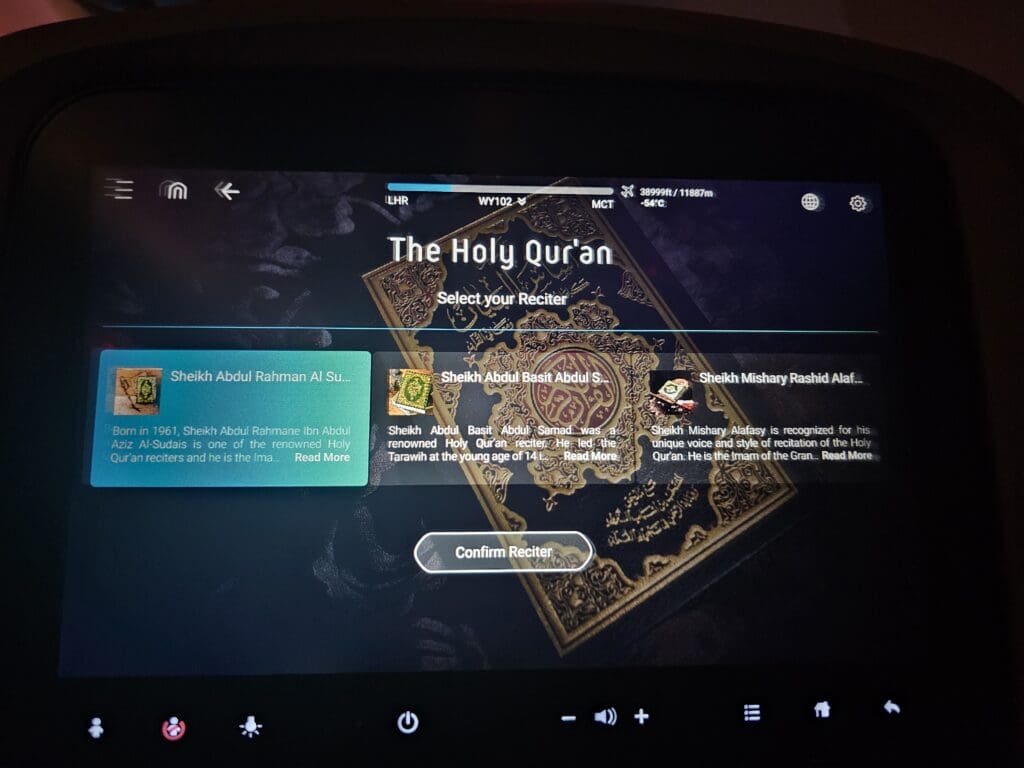
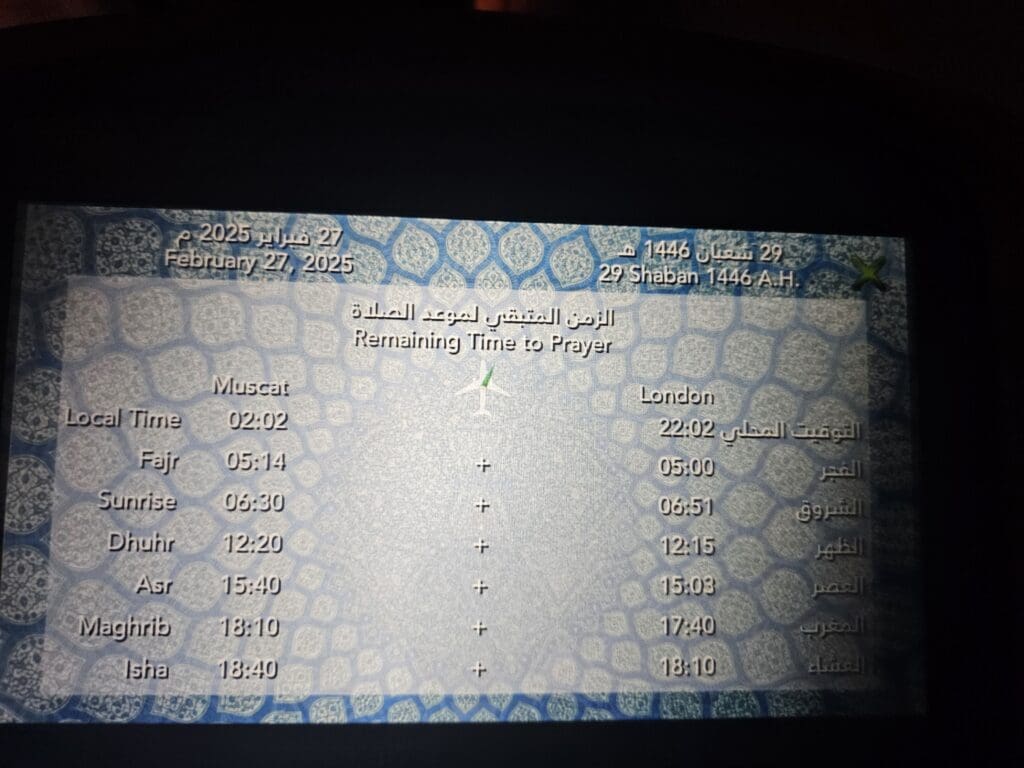
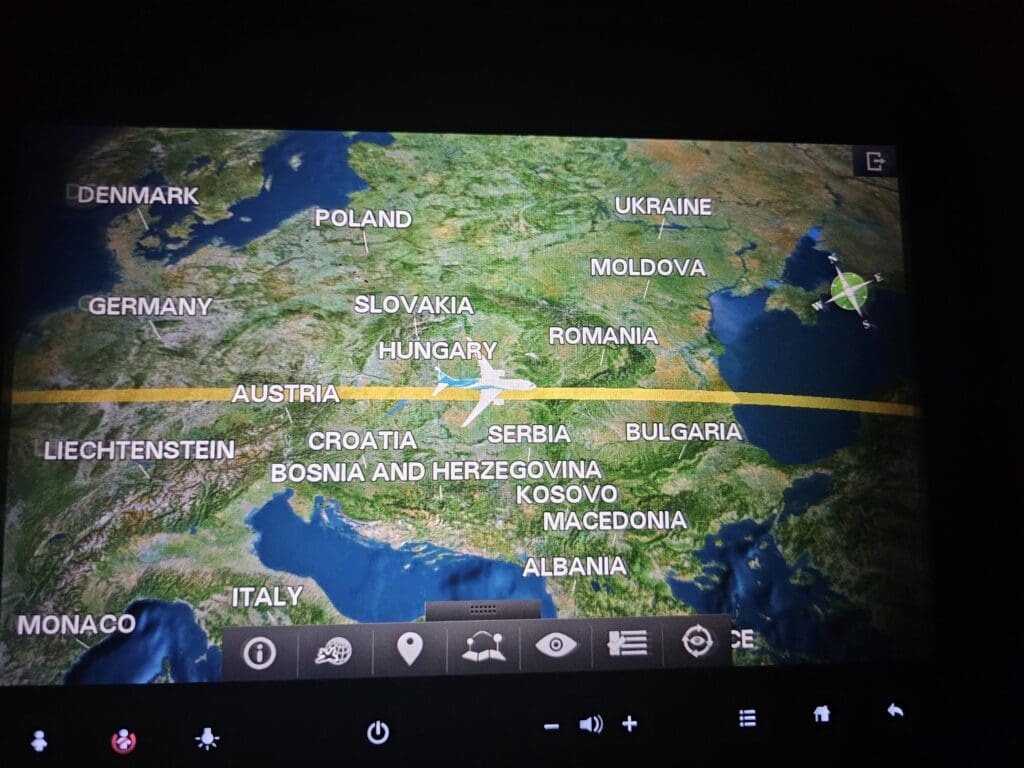
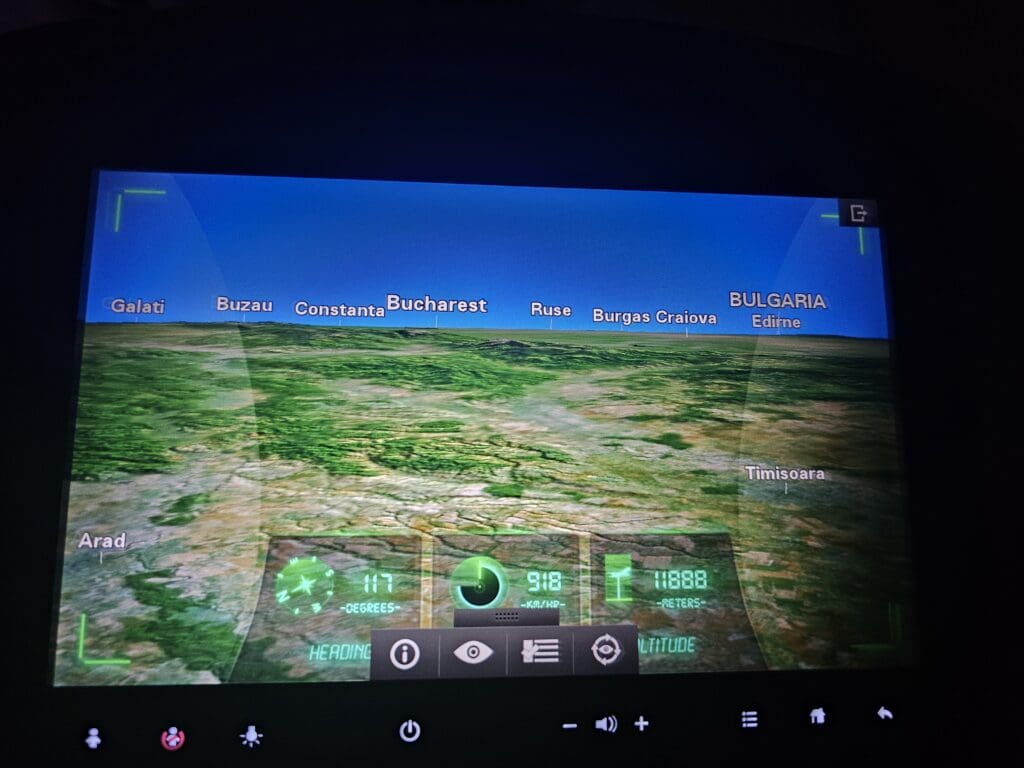
Whilst lagging behind the expansive content libraries of many of the world’s five-star airlines, ultimately, I found Oman Air’s ARIA system to feature a reasonable selection of content and considering Oman Air’s size and route network, this left me with few complaints. Yet at the same time, I found the system to lack any standout features capable of setting this apart from the systems of any other major airline in the world. For those needing to connect to the outside world, officially, Oman Air offers four chargeable wifi packages onboard their Boeing 787 Dreamliner fleet, priced between $6 and $29. However, whilst a network could be connected to, this was out of service for the entire flight. Whilst this was no major disaster for myself, I imagine this may have proven to be slightly problematic for some passengers.
With the cabin lights now having been turned off, as we crossed over the Carpathian Mountains of southwestern Romania near the city of Târgu Jiu, I closed my eyes and attempted to get some sleep. In the end, it took quite a while, and it wasn’t until we had left Romania behind and crossed into Bulgarian airspace that I finally managed to drift off. Leaving the coast of Bulgaria just to the south of the popular holiday destination of Varna, the Dreamliner crossed over the black waters of the Black Sea, and, following the standard route for flights between Western Europe and the Middle East, made a beeline for the northern coastline of Turkey. After 25 minutes, the Boeing made landfall to the east of the city of Zonguldak and continued heading inland over Turkey’s mountainous interior.
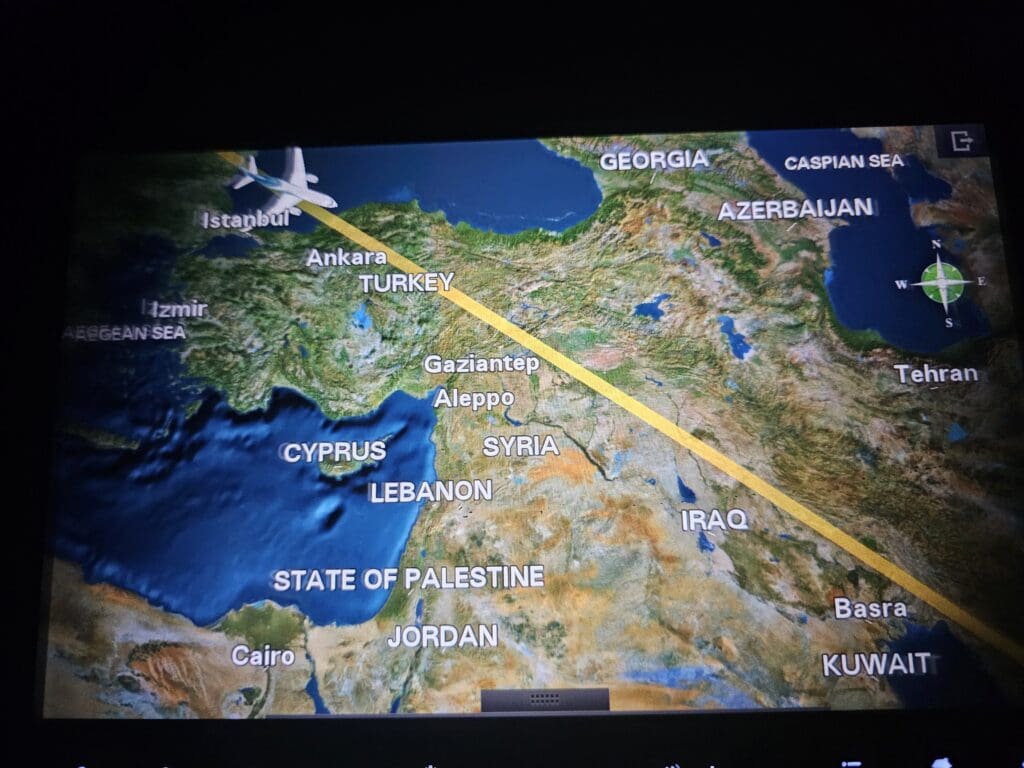
After around an hour, I woke up as we cruised high above Eastern Turkey near the city of Erzincan. Perhaps as a result of the salty biriyani, I woke up with a parching thirst, and so I pressed the call bell in the hope of receiving some water. Four minutes later, perhaps anticipating my request, a flight attendant appeared with a 250ml bottle of Oman Air-branded still water. Once I had downed this, I drifted off into a light sleep once again and spent the next couple of hours waking up and going back to sleep until I woke up with a rather sore neck!
From Turkey, the aircraft cruised into the airside of Iraqi Kurdistan, soon passing over the region’s capital, Erbil, before heading down the country and passing just to the east of the likes of Kirkuk, Tikrit and Baghdad, in the narrow corridor between Iraq’s main artery and the Iranian border. As we passed over the city of Kut, I woke up for good and gazed outside at the orange glow of gas and oil fields, which increased in frequency as we sped southwards towards the city of Basra. As we neared Iraq’s third-largest city, at 0110 UK time or 0510 Omani time, the cabin lights were turned back on, first to their orange and purple glow, before coming back at one of their brightest settings, once again likely waking up the many slumbering passengers.
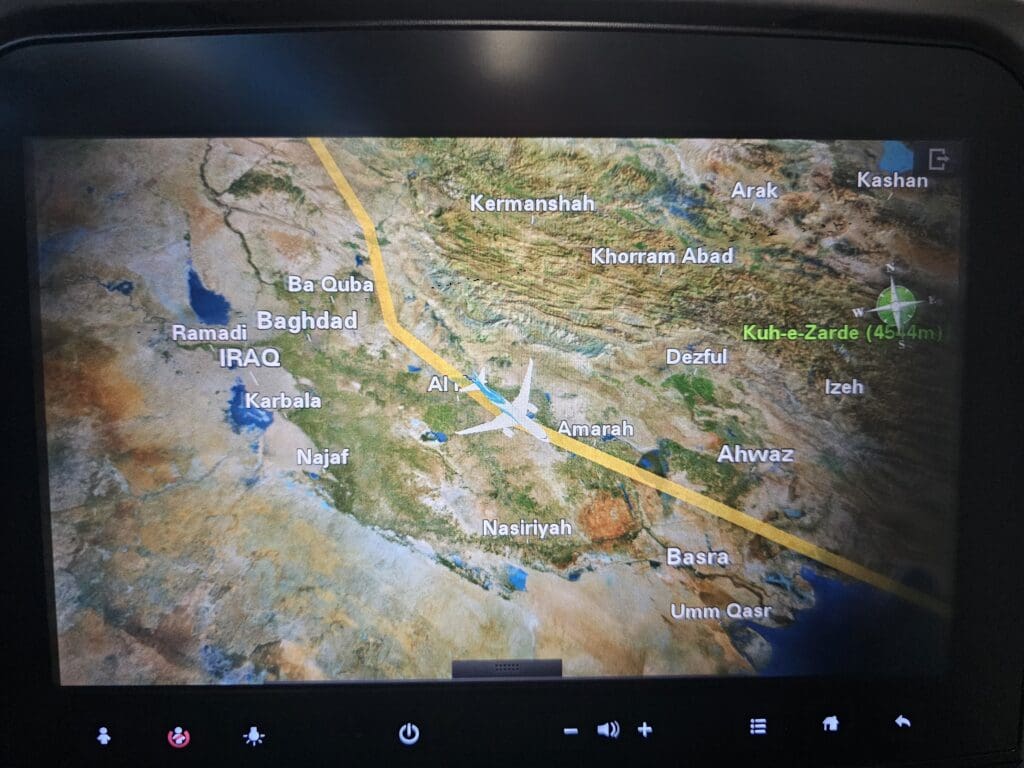
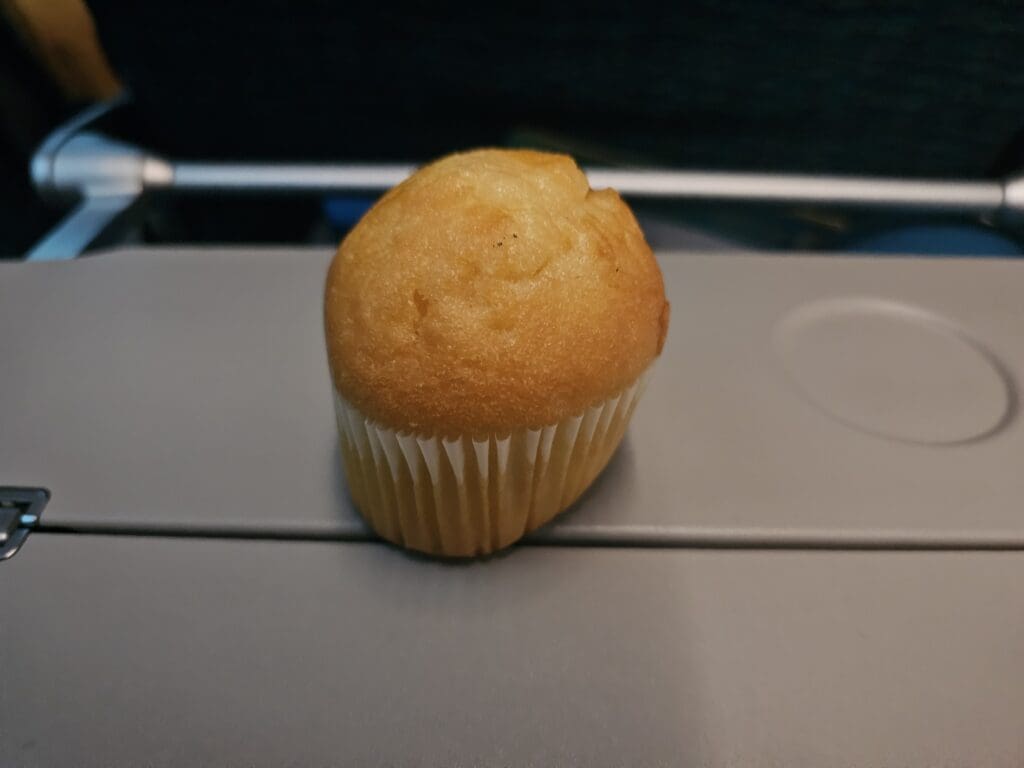
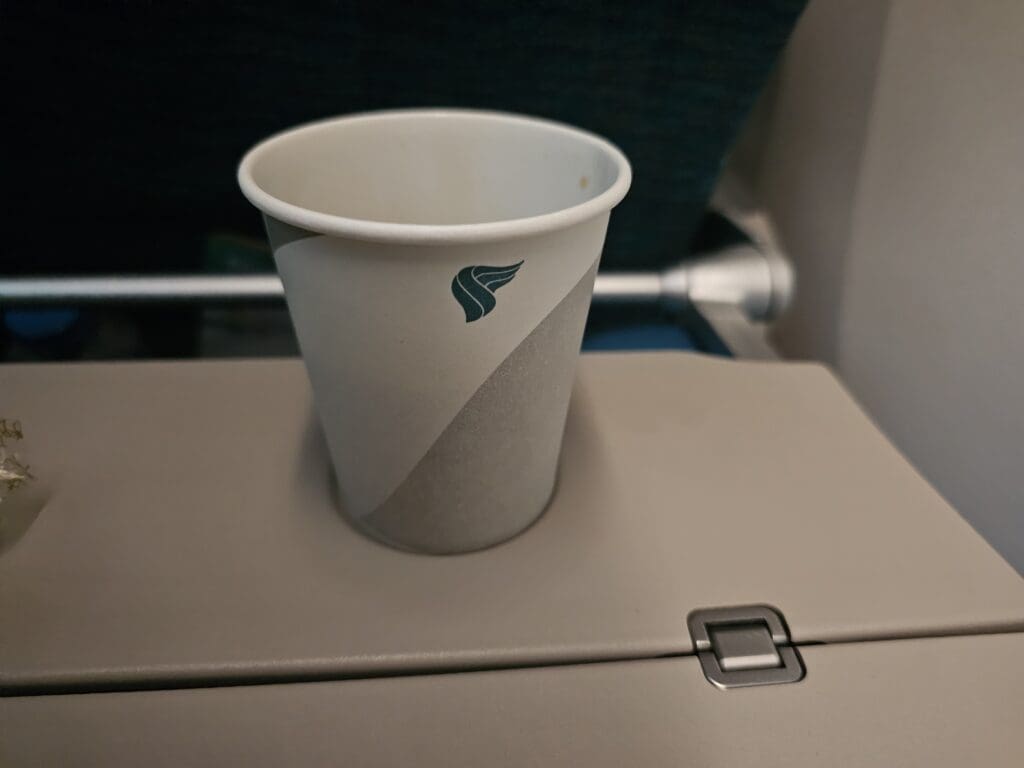
As is the norm on most flights between Britain and the Persian Gulf, passengers were served both a full meal and a snack. As we passed over the narrow strip of Iraqi coastline that separates Iran and Kuwait, the service carts were rolled out. Within a few minutes, two not-so-friendly flight attendants reached my row and handed me a small packaged muffin before asking me, ‘Drink?’. Requesting a black coffee, this was poured into a small Oman Air-branded paper cup and handed over to me. As offerings go, I found this to be perfectly acceptable, although it was significantly less than the hot pizza and dessert that I had been offered when flying with Etihad Airways between London and Abu Dhabi. Around twenty minutes after the service concluded, the remains were cleared, and the cabin lights were dimmed once again as we crossed over the waters of the Persian Gulf. With no clouds below, the region’s many offshore platforms could be seen, alongside the lights of coastal regions of Bahrain, Qatar and Saudi Arabia.
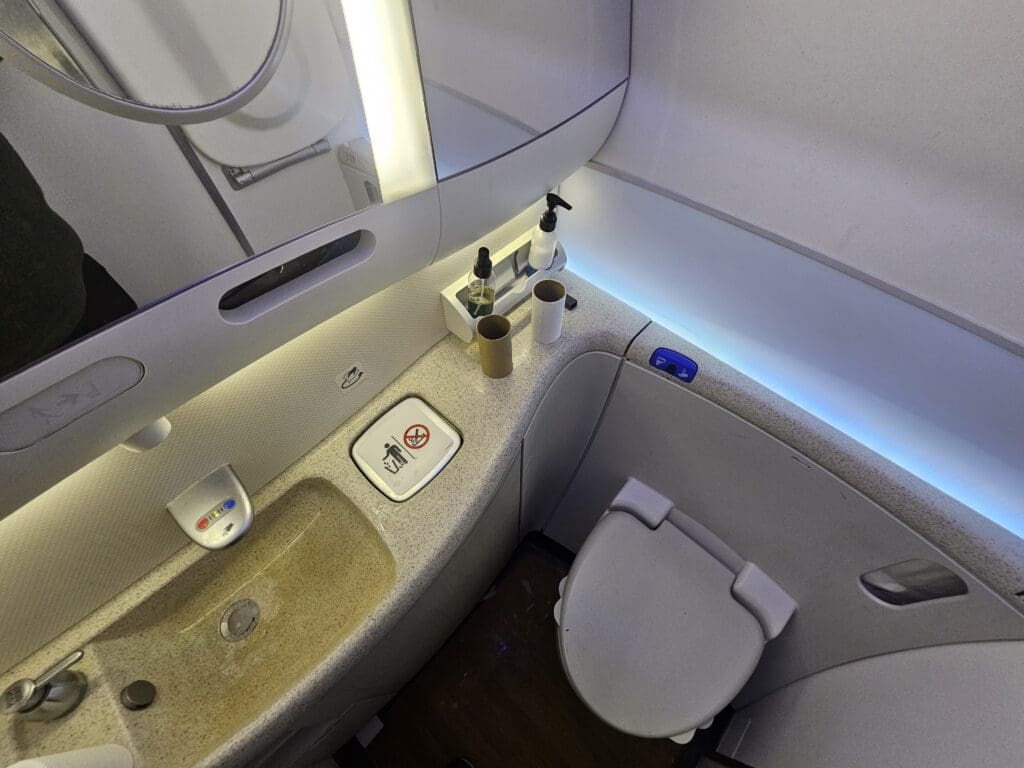
As we made our way to the coastline of the United Arab Emirates, night slowly transformed into day, and the skies began to brighten. Seeing as there was not a great deal of flight time remaining, I decided to pay a visit to one of the lavatories at the rear of the aircraft. Opening this up, I was pleased to find this in a clean and tidy state, despite presumably seeing heavy usage throughout the flight, thereby leaving me with nothing to complain about.
After squeezing back into my seat, it wasn’t long before the First Officer’s calming tones filled the cabin as they performed their pre-arrival announcement in Arabic and English. During this, they noted that we would commence our descent shortly and would be on the ground in Muscat at 0640 local time, where the weather was 21 degrees Celsius, ending this by thanking passengers for flying with Oman Air. A short time later, the seatbelt signs were reilluminated, followed by an announcement from one of the cabin crew members with the usual warnings regarding seatbelts, seatbacks and tray tables.
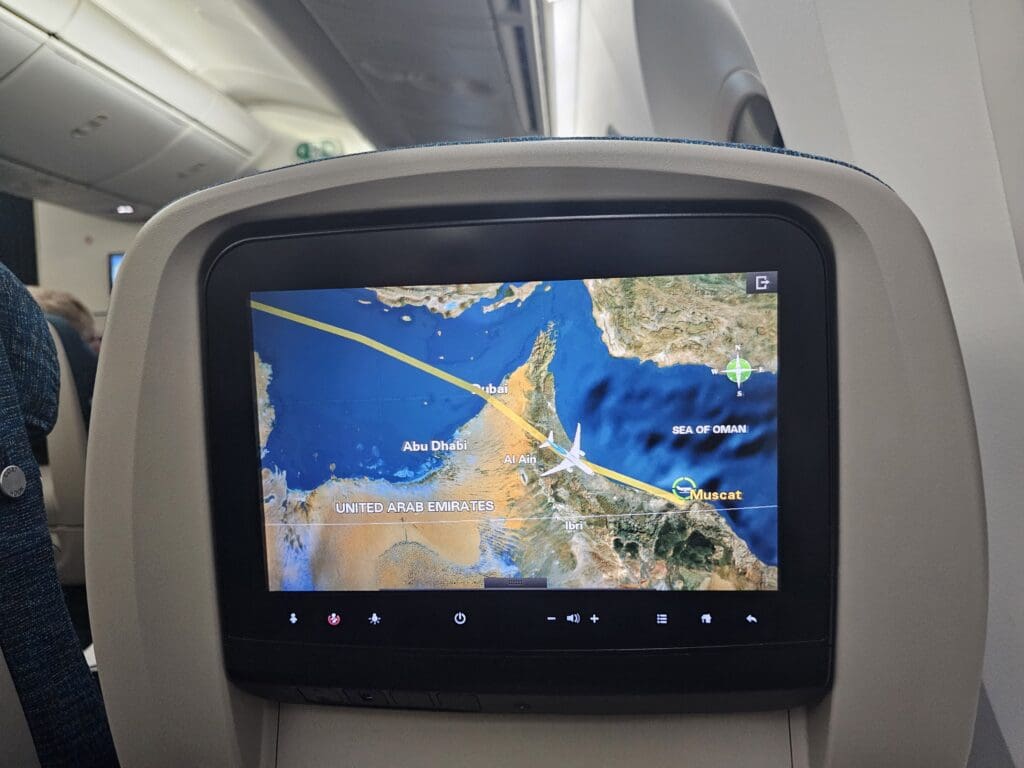
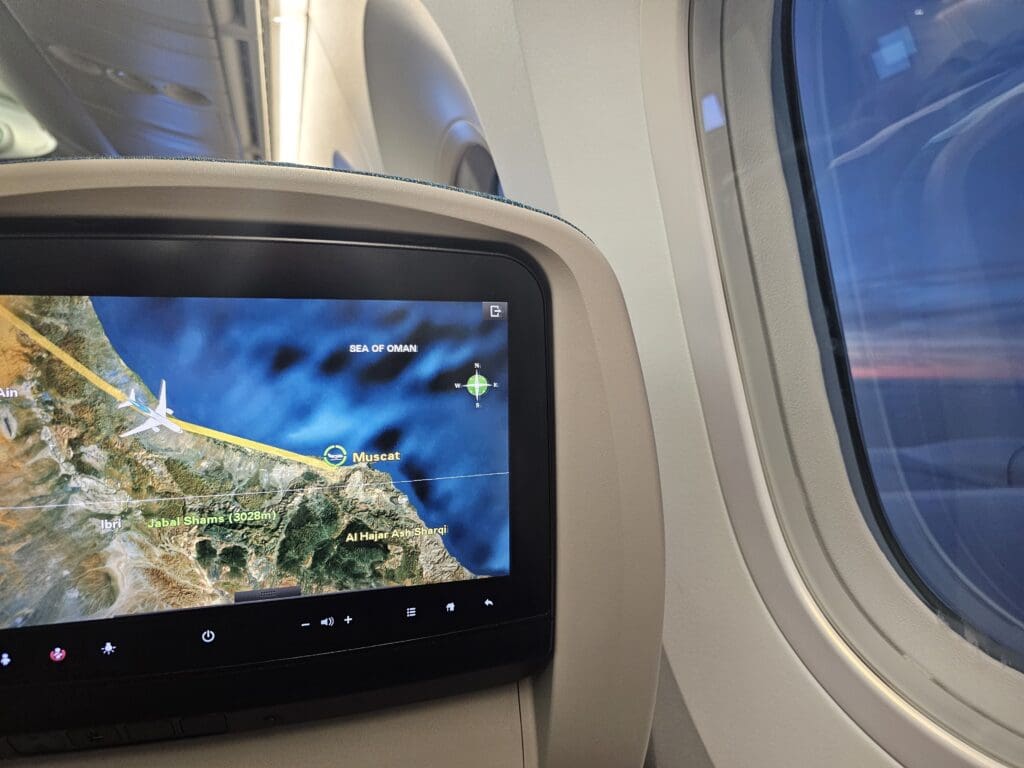
Almost fifty minutes after heading out over the waters of the Persian Gulf, the Dreamliner crossed over the shoreline of the Emirate of Dubai, passing directly above Dubai Creek and just to the south of Dubai International Airport, where I would end my journey several hours later. Heading inland over the sandy deserts, the crew began to pass through the cabin, ensuring that all was secure and in place for our arrival. Unfortunately, despite making multiple passes through the cabin, the crew missed the fact that the passenger in front of me remained reclined for our arrival!
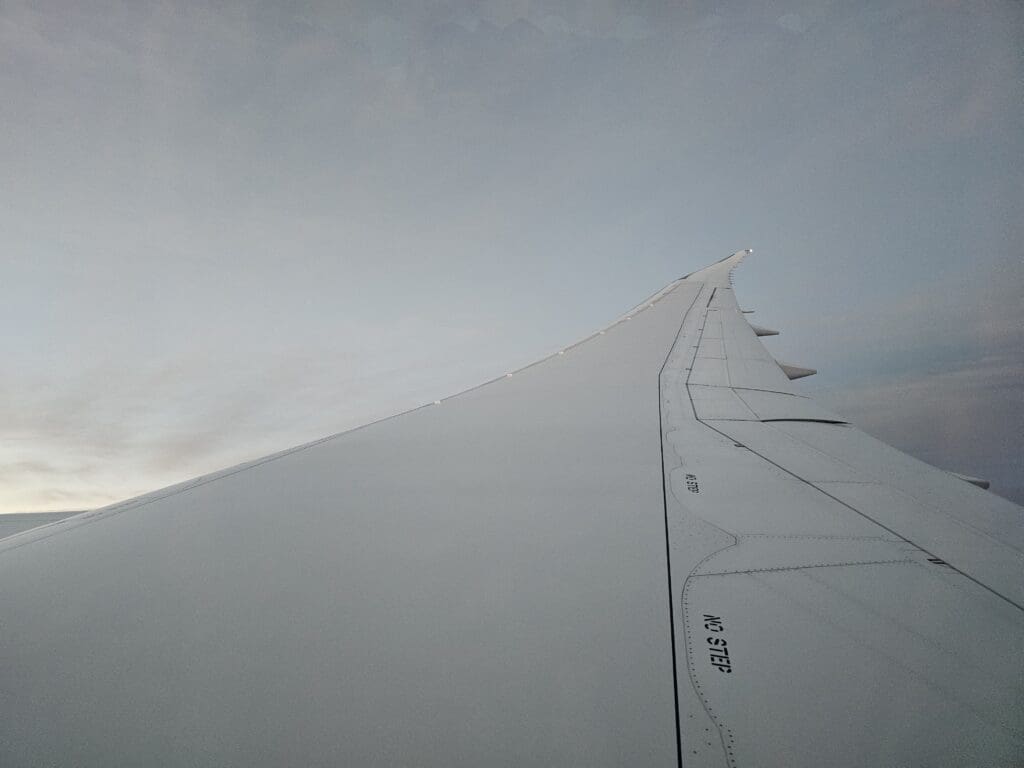
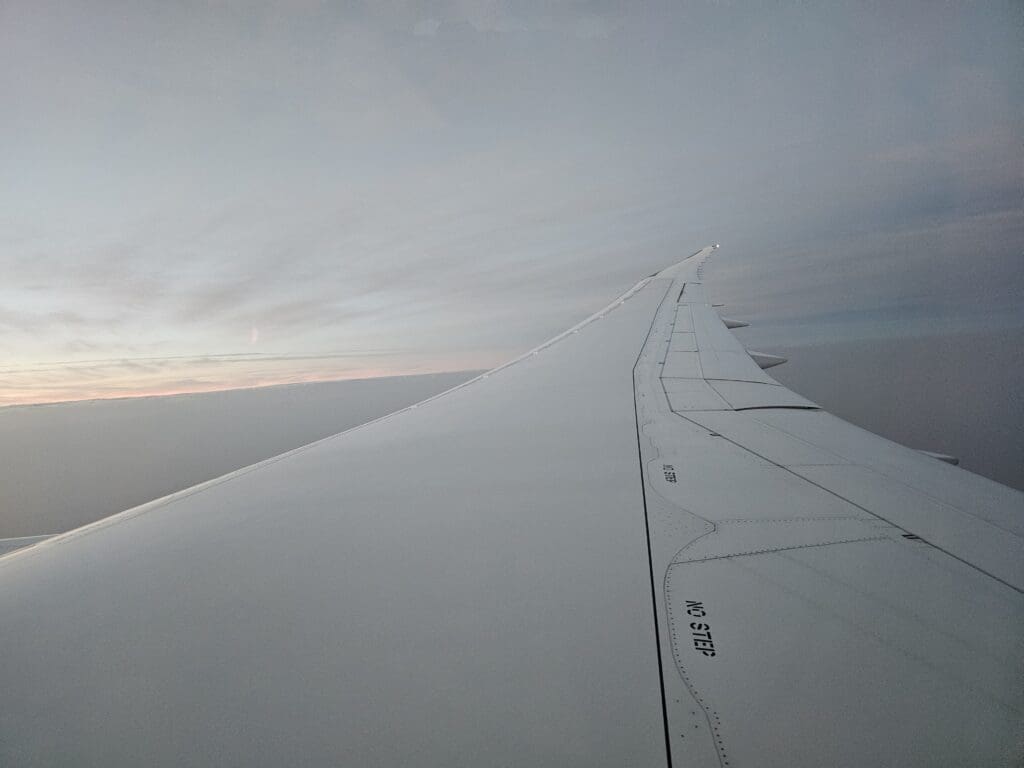
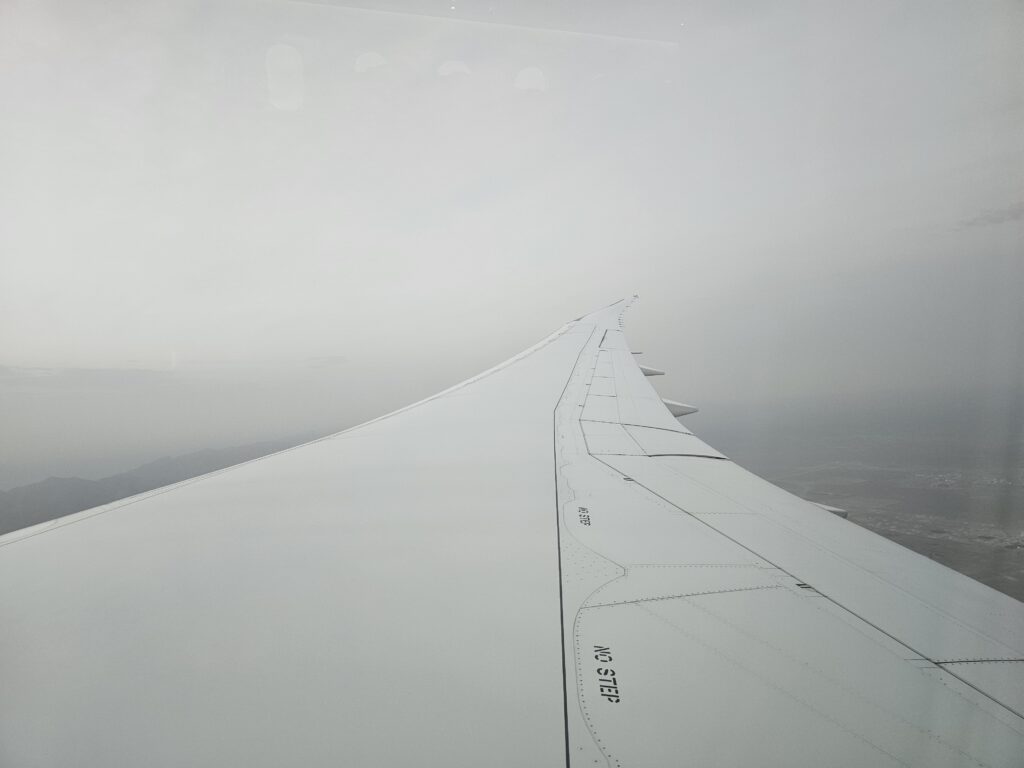
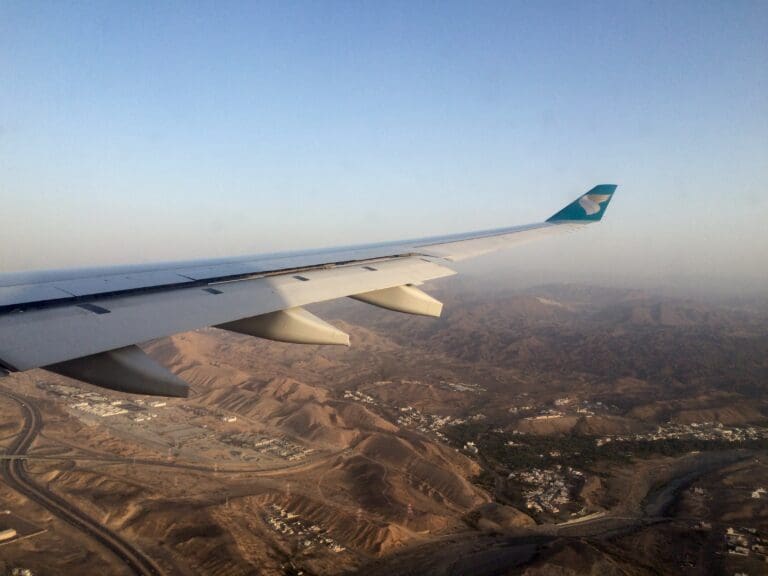
Just three minutes after passing over Dubai’s coastline, the Dreamliner entered Omani airspace and immediately commenced its descent. Once over Oman, the desert rose into the country’s tall and rocky mountains, although unfortunately with plenty of haze below, little of the country could be seen until we were on final approach to Muscat. After crossing the mountains, the Dreamliner trundled southeastwards and travelled parallel to the coastline, trundling past seaside towns and cities such as Sohar, Saham, Al Khaburah and Al Suwayq, before reaching Seeb.
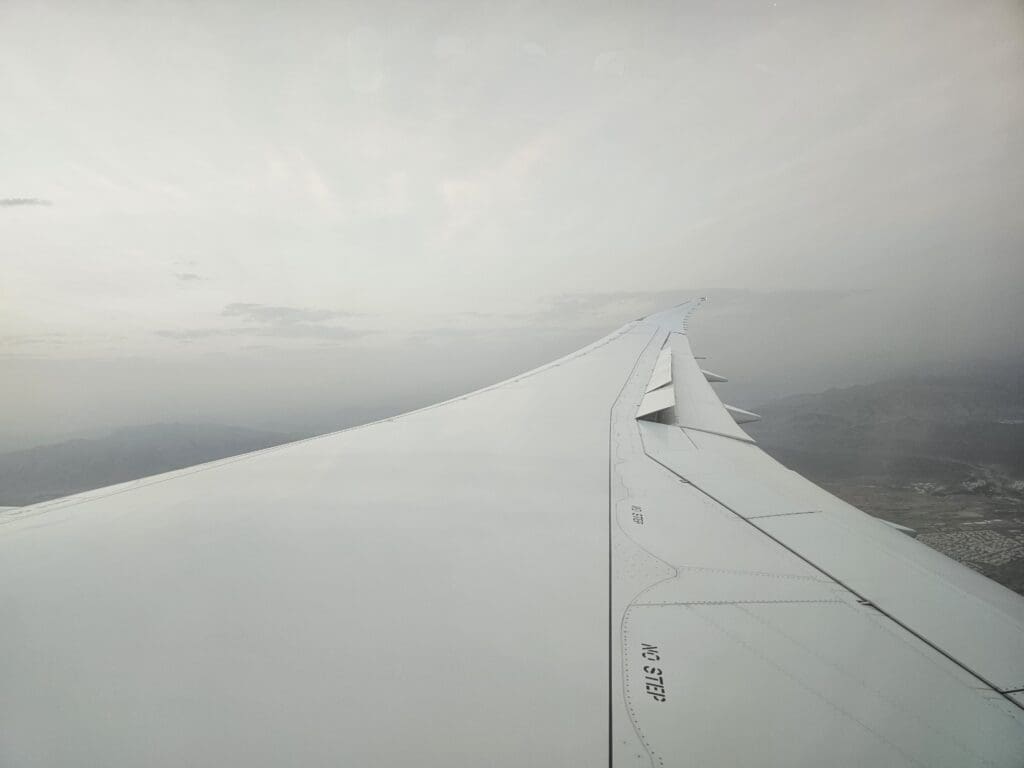
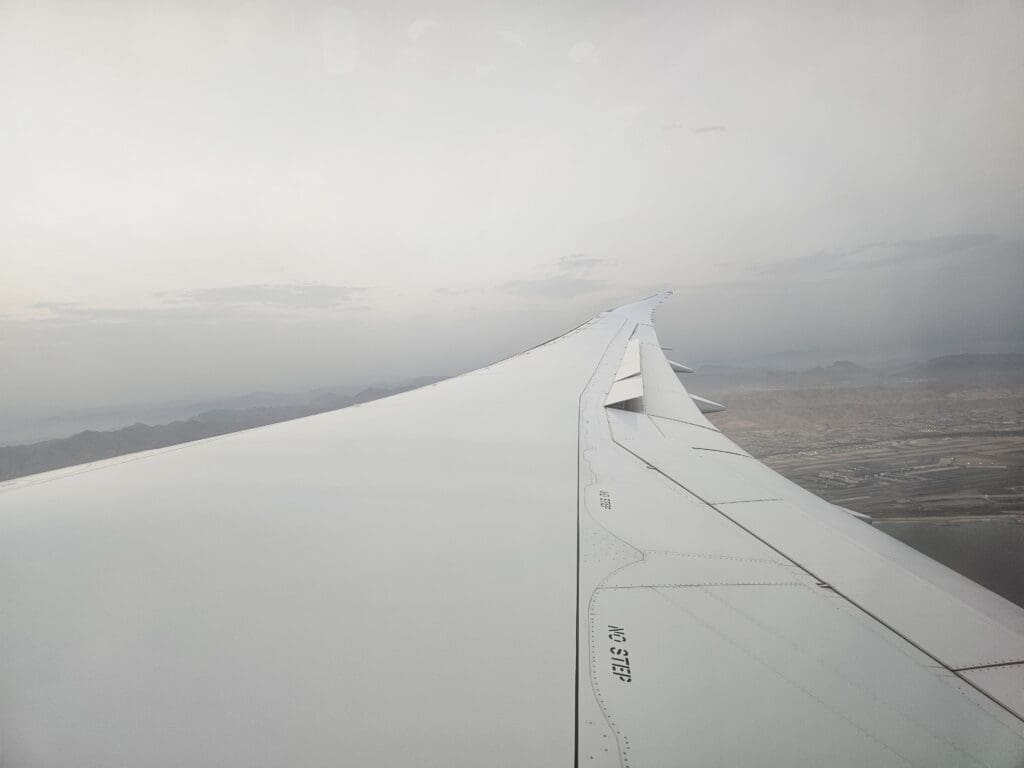
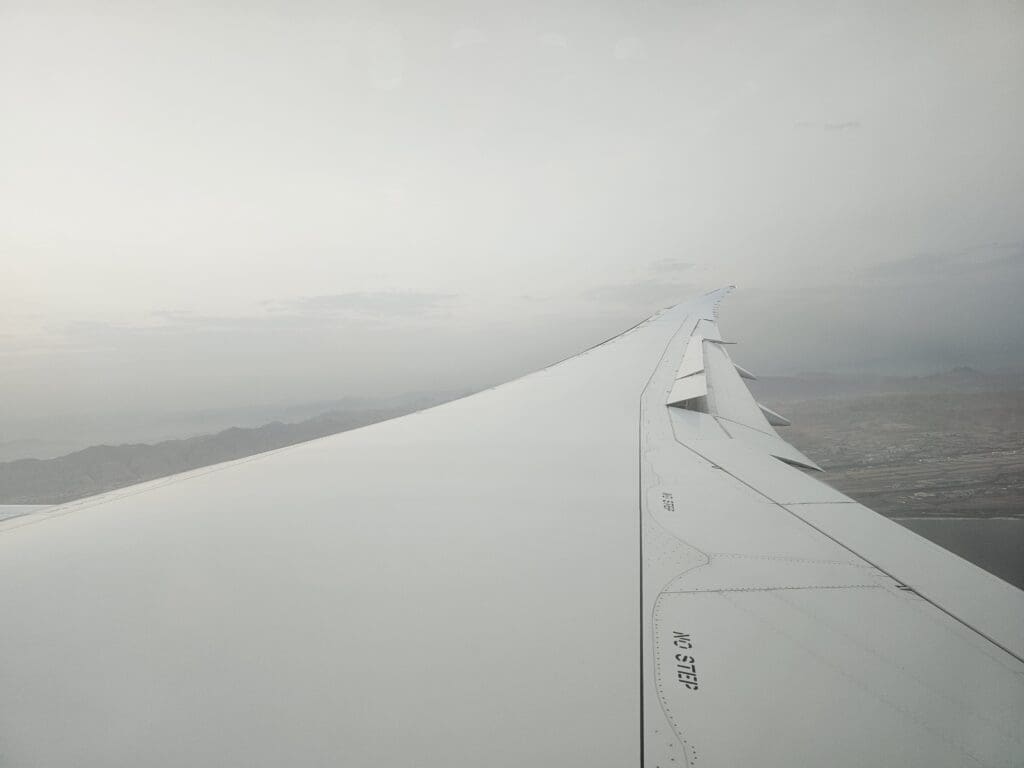
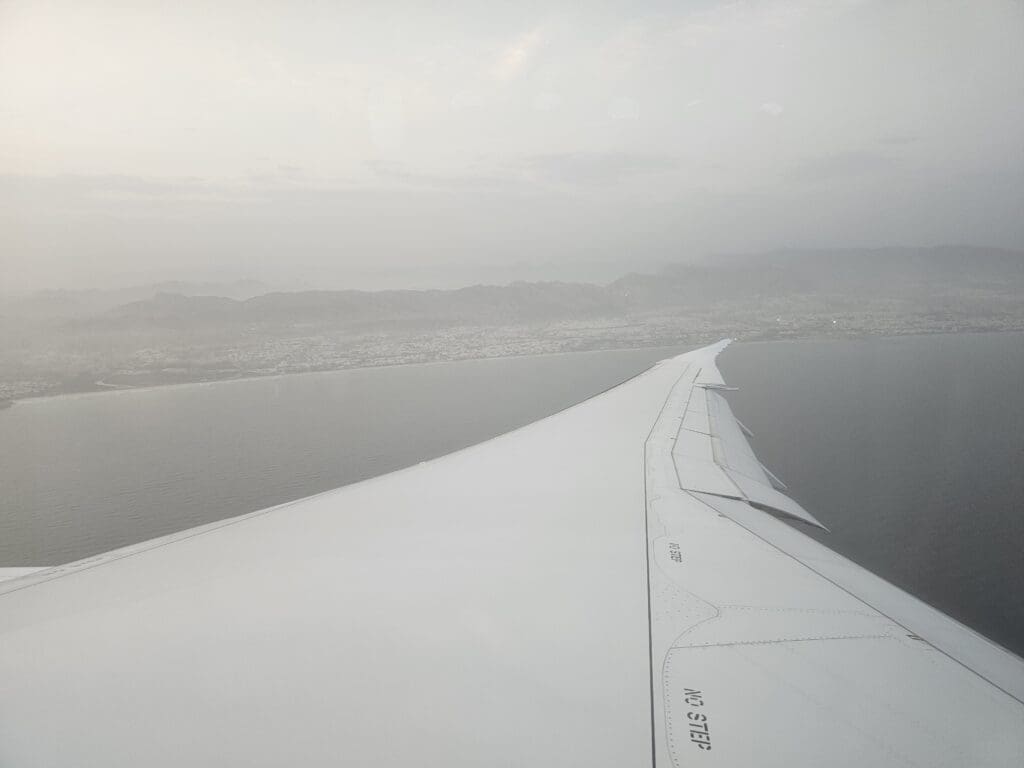
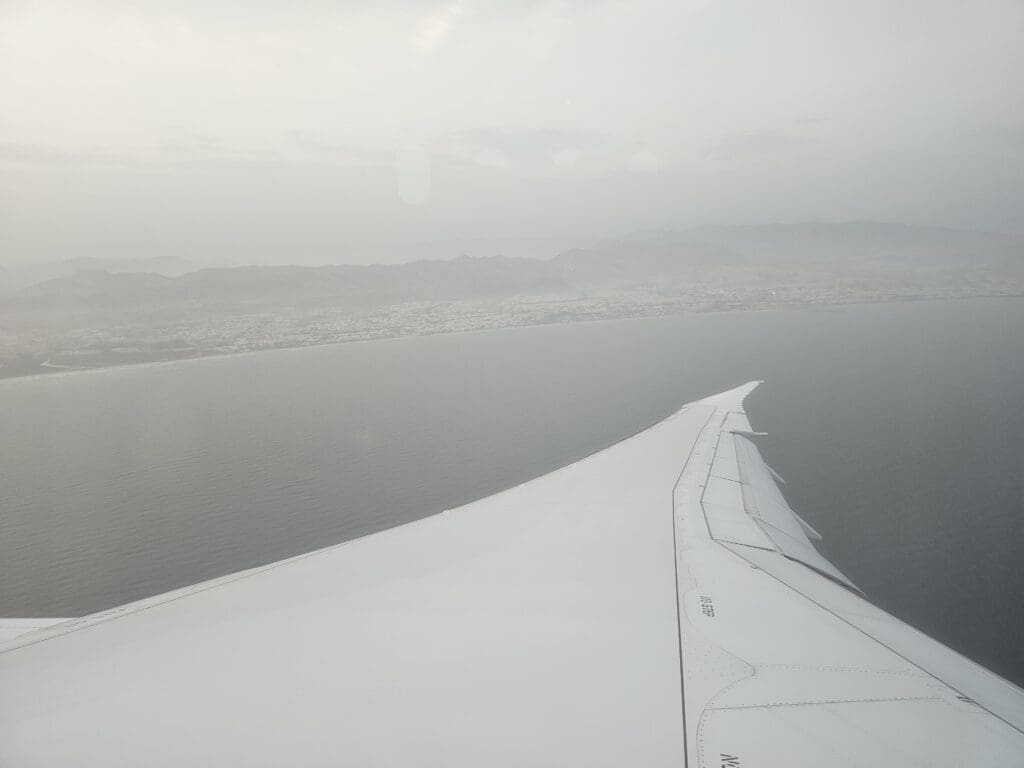
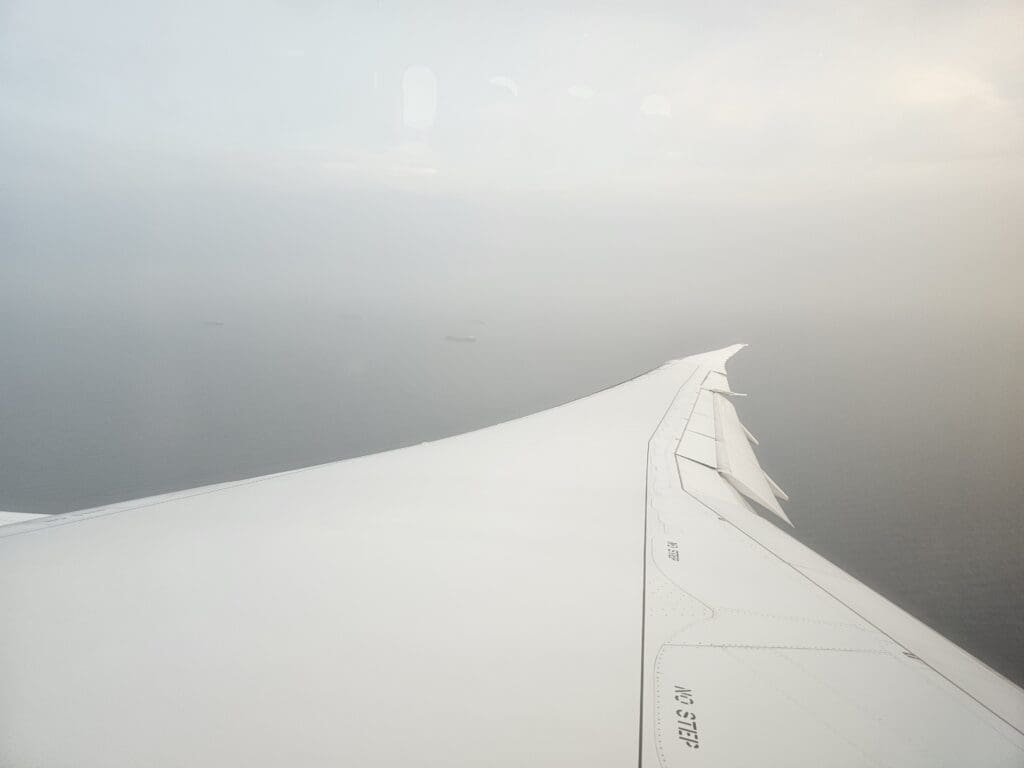
Landing into the west, the aircraft made its way past the airport, followed a short time later by Muscat as the flaps were extended in preparation for our arrival. Soon, the Dreamliner turned back towards the airport as full flaps and the landing gear were extended in preparation for our arrival into Oman. Sitting on the right-hand side of the aircraft, during the final few minutes of the flight, sadly, little could be seen outside other than the waters of the Gulf of Oman as we gently made our way towards the sprawl of Muscat International Airport.
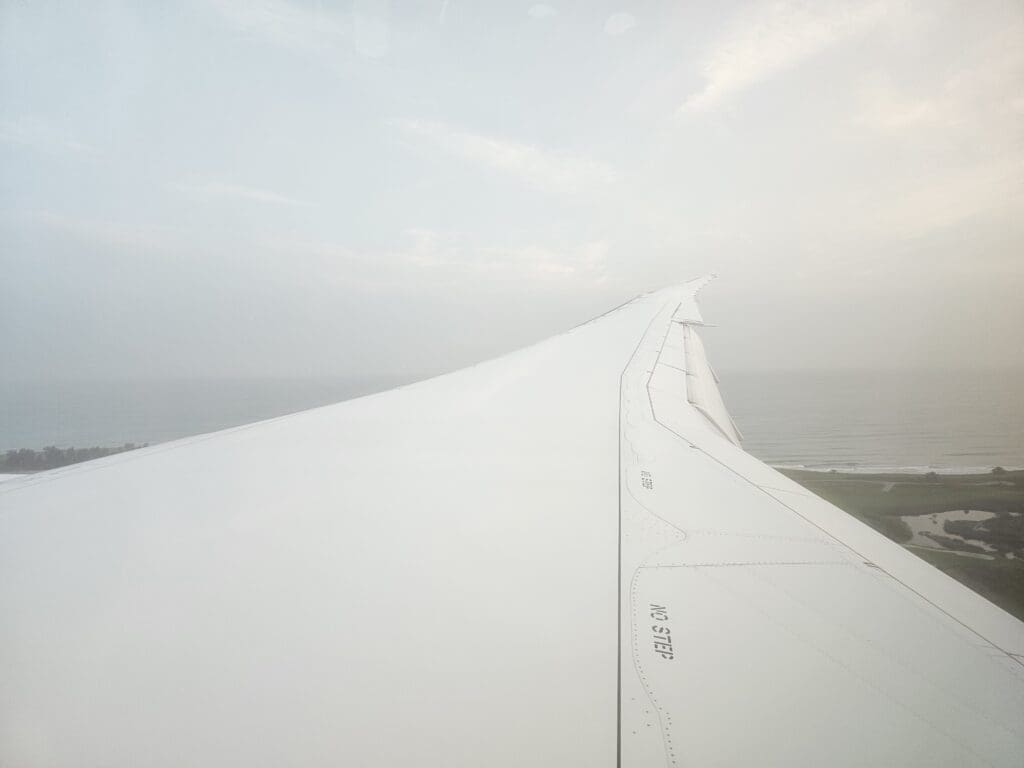
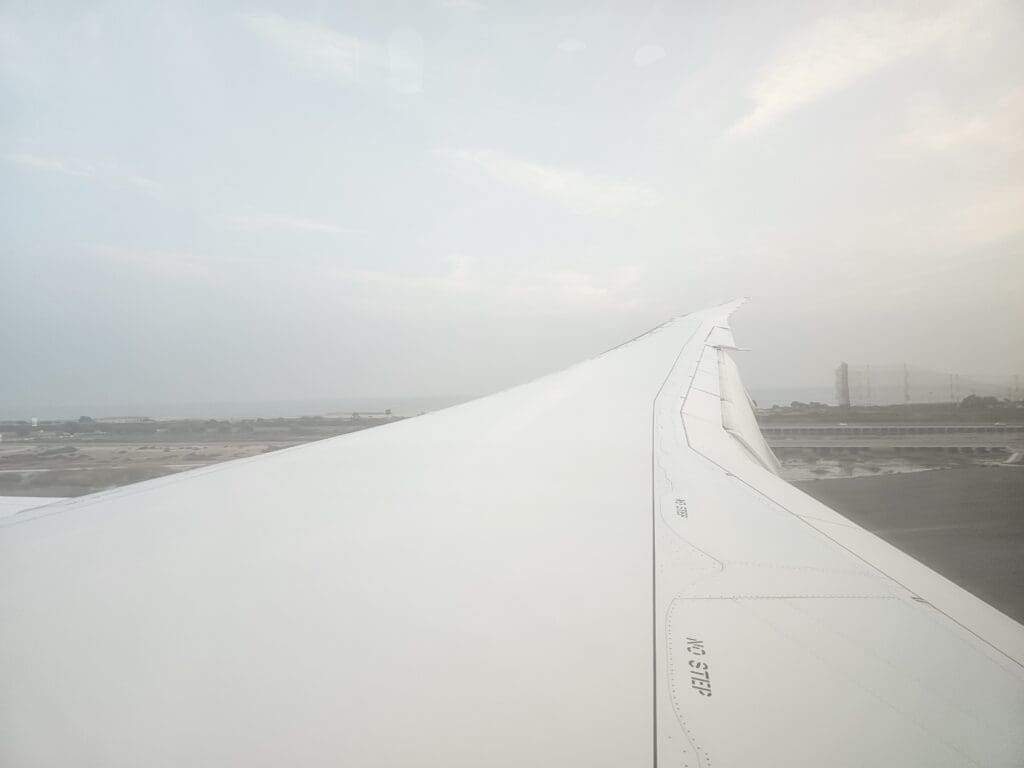
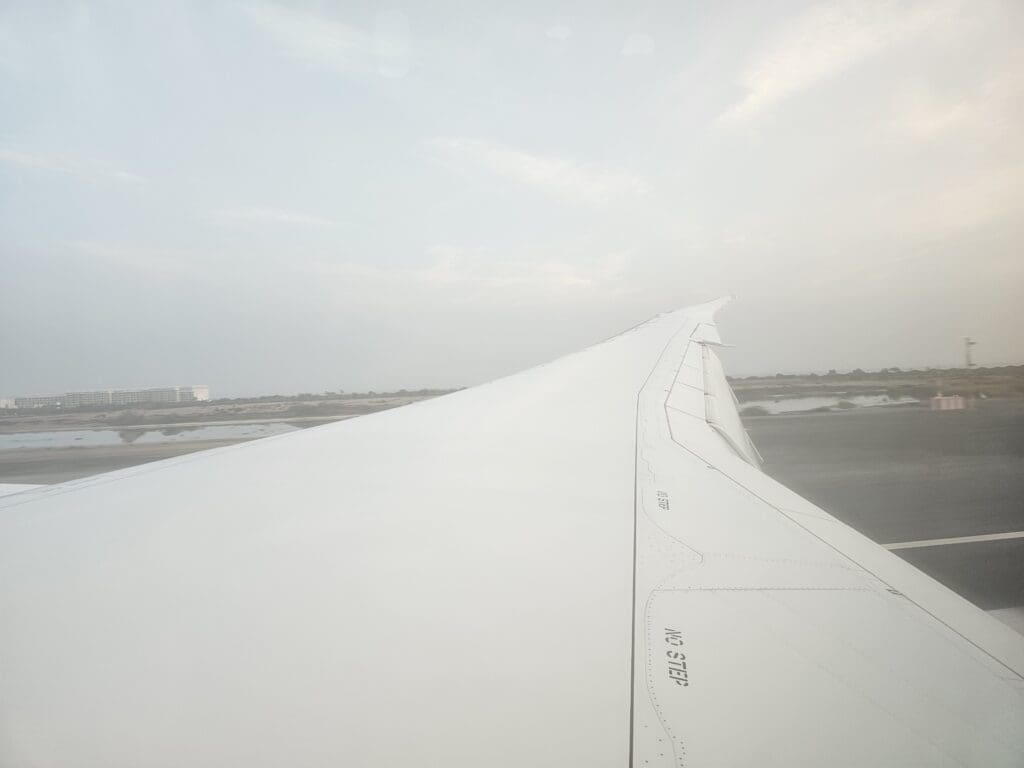
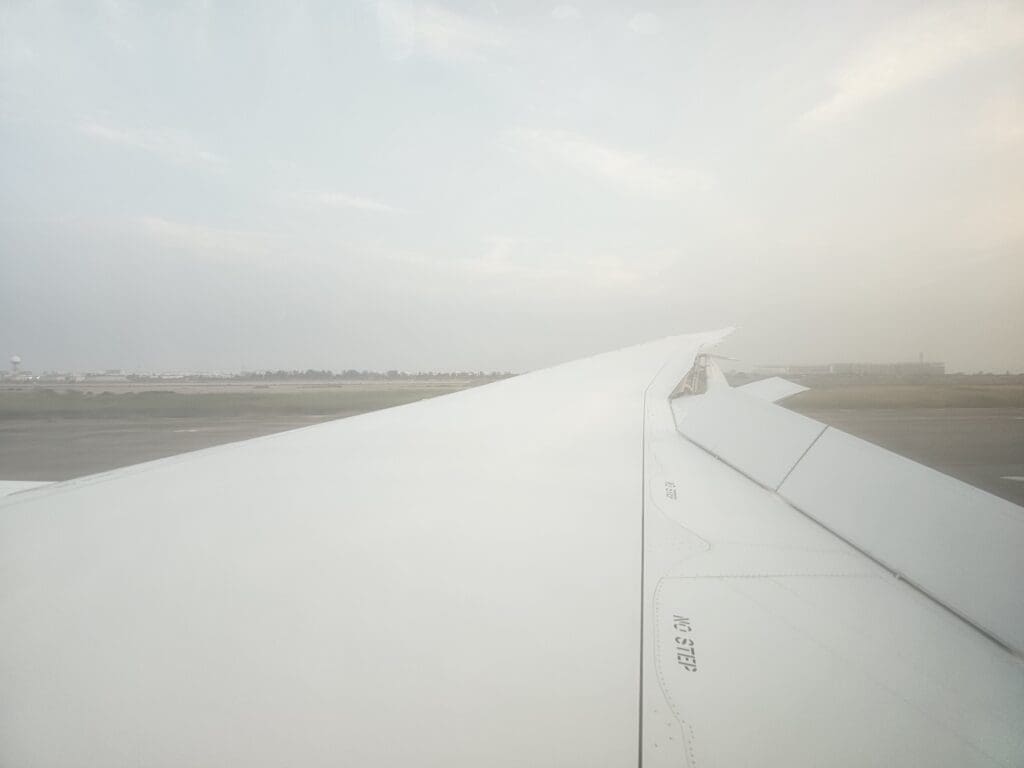
Soon, the Dreamliner crossed over the coastline and made a soft touchdown on Runway 26R, a total of 6H22 after taking off from London Heathrow. Once on the ground, the speedbrakes immediately sprang up as we decelerated down the runway, soon vacating to the left and commencing our taxi over to the terminal. Inside the cabin, at this time, the Cabin Director welcomed all to Muscat in Arabic and English, provided a final word of thanks to passengers for flying with Oman Air and gave the usual warnings regarding keeping seatbelts fastened.
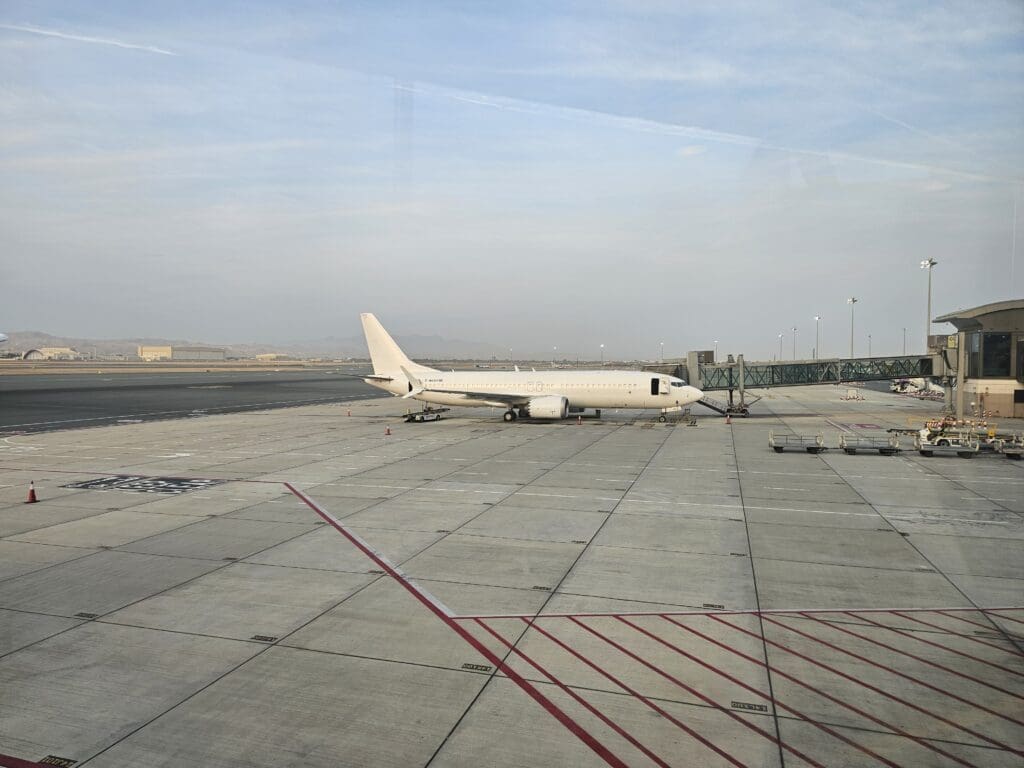
Making our way around the terminal, during our ten-minute taxi to the stand, I made out a smorgasbord of aircraft through the morning mist. The most exciting of which was undoubtedly the trio of Royal Air Force of Oman Airbus A320CJs, which are based on the south side of the airfield. Eventually, the Dreamliner cautiously made its way into Stand 402 at the Terminal’s C Pier, pulling up next to an all-white Boeing 737 MAX 8 operated by British wet-lease specialist Ascend Airways on behalf of Oman Air. Coming to a halt 28 minutes ahead of schedule, perhaps desperate to escape, almost as soon as we pulled into the stand, many around me jumped up in a rush to disembark, with the crew wasting no time in closing the curtains to Business to ensure that these passengers waited their turn.
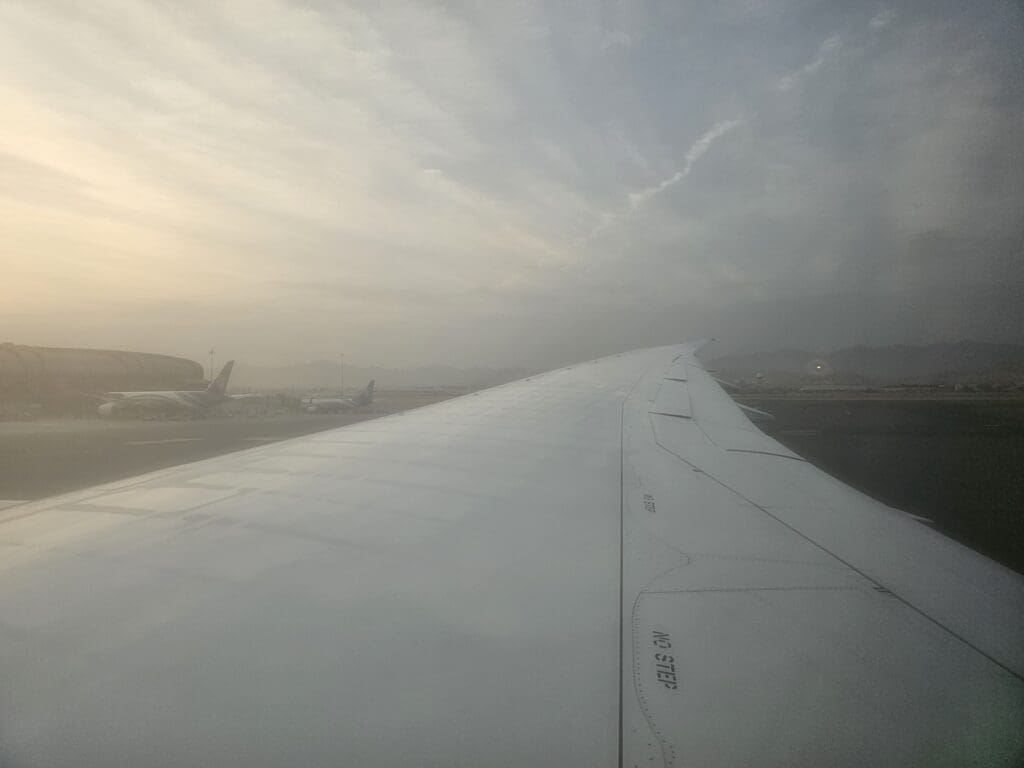
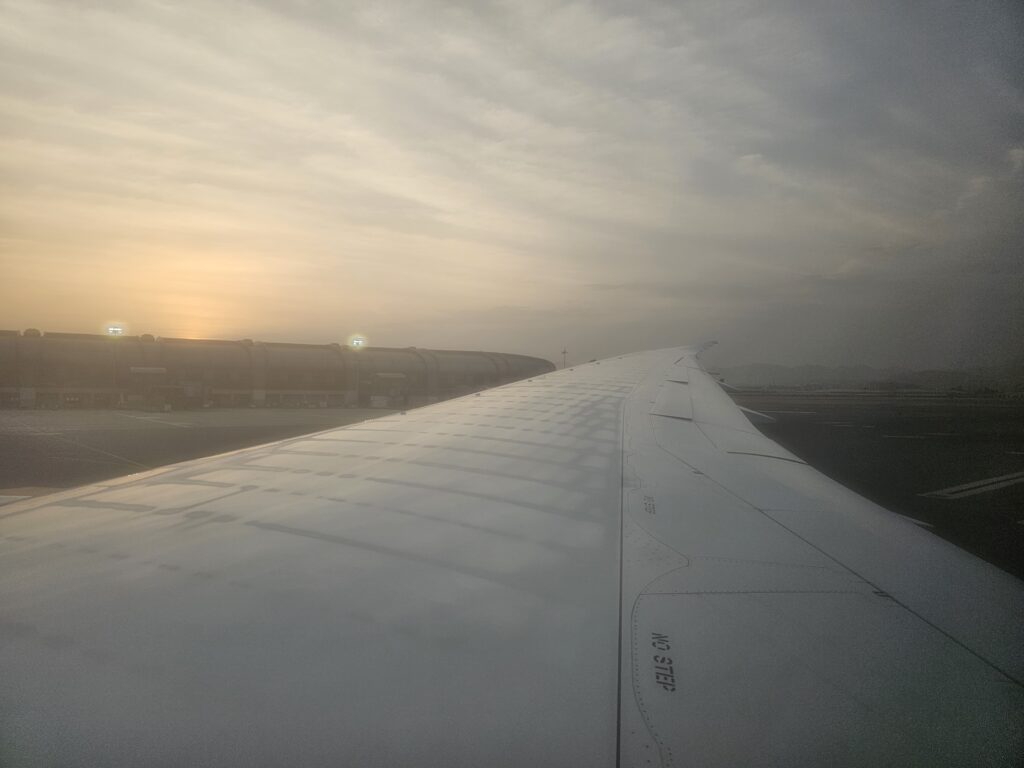
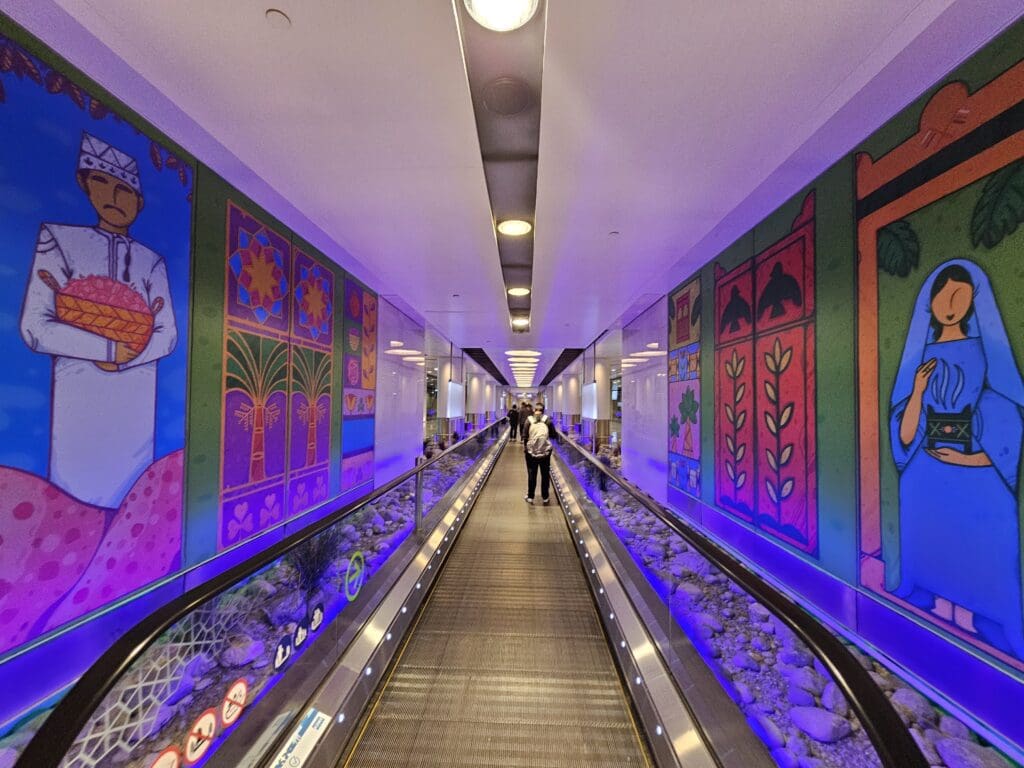
Fortunately, the jetbridge was connected reasonably quickly, and after several minutes, during which several passengers seemed to be getting slightly agitated in the aisles, those in Economy were permitted to disembark. Once the scrum in the aisles started to move, I stood up, collected my belongings and made my way forward through the aisle, soon passing through the messy Business cabin before turning left through the galley, where I thanked one of the flight attendants before heading up the jetbridge and commencing my Muscat connection.
Summary
Oman Air successfully got me from London to Muscat in one piece and ahead of schedule. My ground experience in London was largely positive, and once onboard the seat was comfortable enough, the catering was adequate enough, the entertainment was reasonable enough and the crew were polite enough. That said, despite the absence of any major negatives, there was nothing that particularly stood out to me about my experience with Oman Air, and the experience was, perhaps to an average passenger, simply forgettable. Not to mention the fact that the onboard service had been slimmed down since my last trips with the airline back in 2016. With all considered, based on my ride over from London, whilst I most certainly would not avoid Oman Air, I would not go out of my way to fly with them again.