Qatar Airways’ Worst Product? Dubai to Doha on an Old A330
Background
Back in October 2023, almost exactly 17 months before my flight, I had the joy of sampling Qatar Airways for the first time since 2015. Flying from Abu Dhabi to Manchester via Doha, I enjoyed a generally good experience. The short Boeing 737 MAX 8 operated hop to Qatar was about as good as you can get for a very short haul flight (review here!), whilst the flight to Manchester was fairly good, albeit this took place on an older Boeing 777-300ER complete with the cabin of former operator Virgin Australia (review here!), and the catering can likely be traced to the source of some crippling food poisoning I came down with a few hours following my arrival in the United Kingdom. Before this, I had flown with Qatar Airways on round trips from the United Kingdom to Korea and Nepal, sampling the delights of their Airbus A320, Airbus A330, Airbus A380, Boeing 787-8 Dreamliner and Boeing 777-300ER.
When the opportunity arose to fly from Dubai to Manchester with Qatar Airways in March 2025, I decided to take it. Furthermore, unlike my last flight with the airline, having nearly three hours on the ground in Doha, this time around I would have enough time to explore Qatar’s award-winning hub.
Following the thawing of relations between Qatar and the United Arab Emirates, Qatar Airways has proven to be a popular option for those needing to get between destinations around the world and Dubai. Offering five flights on my departure day between Dubai and Doha between 0520 and 2300, operated by a mixture of Airbus A350s and Boeing 787 Dreamliners, there were three flights I could have taken. These being the 0520, 1150 or 1325 departures. Unable to afford missing my connection in Doha, I shunned the last option given the fact that it would only leave me with 1H05 to connect in Qatar. Whilst the 0520 departure would have required an ungodly wake-up time and seen me have an unreasonably long connection in Doha, even by my standards.
I thus opted for the 1150 departure, arriving in Doha at 1205 local time. Following almost three hours of exploring Qatar’s award-winning hub, I would continue onwards to Manchester, departing at 1445 and arriving at 1925. Unfortunately, there would not be too much diversity in aircraft types, with both sectors scheduled to be operated by the Boeing 787-9 Dreamliner.
Check-In
Qatar Airways allows most passengers to check-in 48 hours before departure. However, due to the last-minute nature of the booking, I did not end up doing this until the night before my flight. Loading my booking into the app, I was presented with an array of options, including upgrading to Business Class for an eye watering 2,273 dirhams (£458) for my first flight, and 6,482 dirhams (£1,307) for my second, topping up my 25kg hold luggage allowance between 5kg and 100kg from 300 dirhams to 6,000 dirhams and increasing in 5kg increments of 300 dirhams, or purchasing lounge access for between 280 dirhams and 480 dirhams depending on which of the five lounges I wanted to visit. Of these, the only option that particularly interested me was the inflight menus.
Speeding onwards to check-in, I was delighted to see that most seats remained available for my first flight, and so I selected a window seat, Seat 27A. Although just a handful of seats remained available for my second, and so I decided to pick Seat 32A, one of the few remaining window seats. For both flights, the seats at the front of the cabin, as well as exit seats. For the longer sector, these were priced at 70 dirhams (£14) and 150 dirhams (£30) respectively. After selecting my seats, I continued onwards and was presented with my boarding passes for the two flights.
The Journey
After a pleasant five-day stay at my sister’s house in Sharjah, I was ready to return to the chilly early March temperatures of the Yorkshire city of Leeds. Having stayed in the neighbourhood of Al Khalidiya, which sits just to the north of Dubai International Airport, I would not have a particularly long trek to reach the airport. However, seeing as Sharjah is yet to be connected to Dubai by metro, and not too keen on the idea of lugging my luggage around the region’s somewhat complicated bus network, the only reasonable way to make this journey involves taking a taxi. Depending on the time of day, this journey can take anywhere between fifteen minutes to over an hour. Travelling during the morning rush, I was advised to leave the house as early as possible and set my alarm for 0600, aiming to leave thirty minutes later.
Having stayed up late packing my things, I had a short night’s sleep and woke up just before 0600, with the call to prayer from the local mosques providing a natural wake-up alarm. Once up and about, I did not have too much to do other than dart in and out of the shower, before having a last-minute check to ensure that I had everything with me before I commenced my long journey back to Britain. Whilst I was confident that I would be able to head out onto the nearby main road and flag down a passing taxi, seeking convenience, I instead loaded up the Emirati version of Uber, Careem, and ordered a vehicle to the airport. Whilst I would have gone with the cheapest possible option, a surprising lack of vehicles at that time meant that I would have to go for the slightly more luxurious ‘Comfort’ option. This took the form of a Chevrolet Impala, and upon ordering this, I said my goodbyes and headed outside, ready to jump in the waiting car.
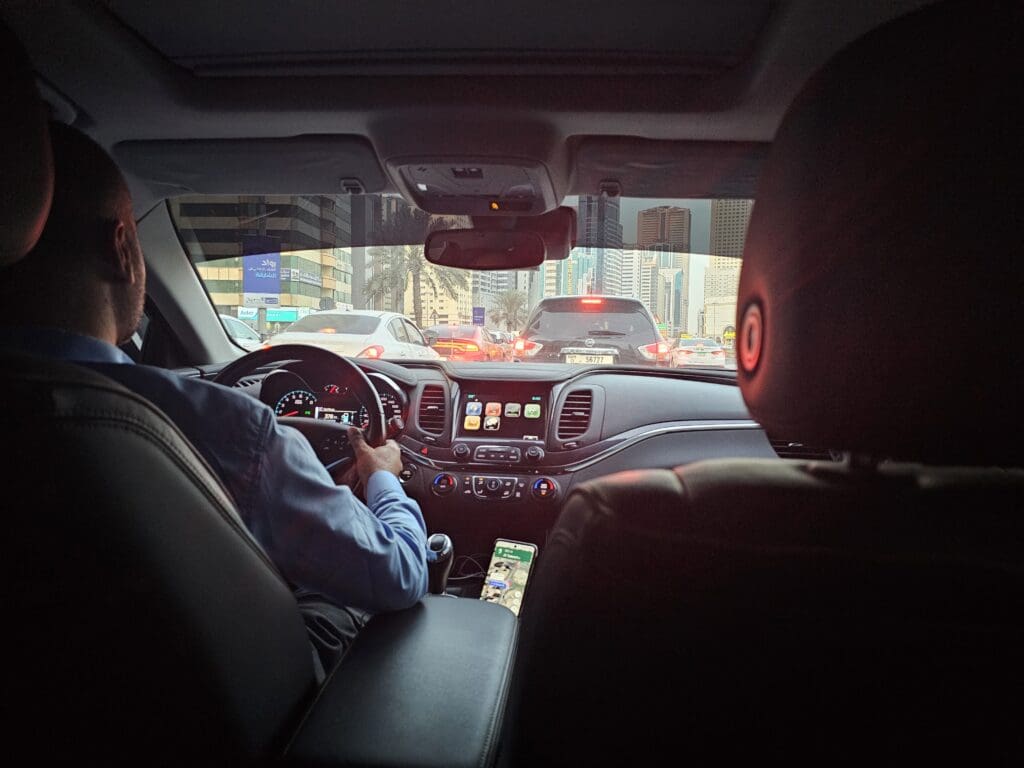
This appeared just before 0630, and without delay, I placed my luggage in the boot and strapped myself in for the ride to the airport (albeit via a local cash machine given my lack of cash and the driver’s lack of a card machine). Once we had made a quick stop at the local supermarket for cash, we hit the main road, and, lulling us into a false sense of security, we made good progress as we sped out of the neighbourhood. Unfortunately, it wasn’t long before we hit a wall of traffic as commuters made their morning exodus out of Sharjah on their way to work in neighbouring Dubai. With no alternative routes, we accepted our fate and slowly crawled along the Sheikh Zayed Road, which runs all the way to the Emirate of Abu Dhabi’s border with Saudi Arabia and Ghuwaifat. Slowly plodding along, we continuously stopped and started, before the traffic finally began to flow a little better as we reached the northern perimeter of the airport, and soon, the sight of rows and rows of Emirates widebodies and FlyDubai Boeing 737s could be spotted, indicating that we were finally nearing our destination.
Despite the delay, my journey to the airport was not as slow as it had been during my last departure from Dubai around ten months prior (you can read my Azerbaijan Airlines Dreamliner report here!), and around forty minutes after leaving my sister’s house, the unassuming, dare I say slightly grim, facade of Dubai International Airport’s Terminal 1 appeared, heralding the end of the very first part of my journey. Speeding up the ramp, I was soon deposited outside one of the many entrances to the check-in hall, where an army of porters could be seen ready to assist those with plenty of bags. With just a small suitcase, I had no need for the porters’ services, so I continued on my journey and walked into the cool and refreshing air of the landside portion of Terminal 1.
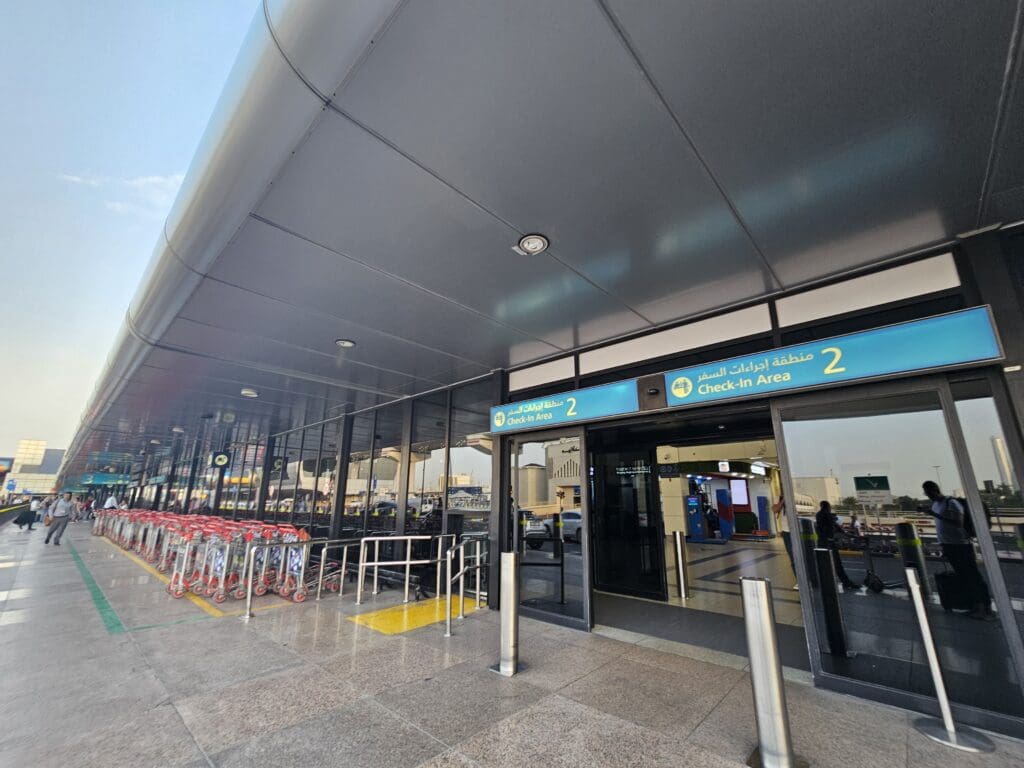
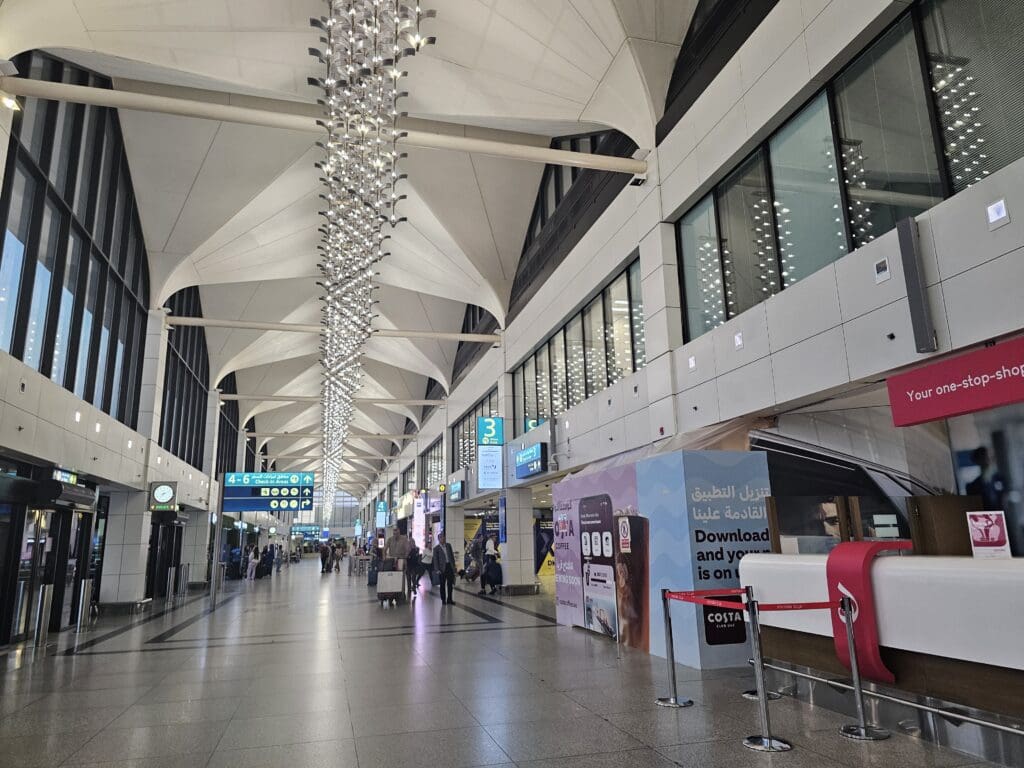
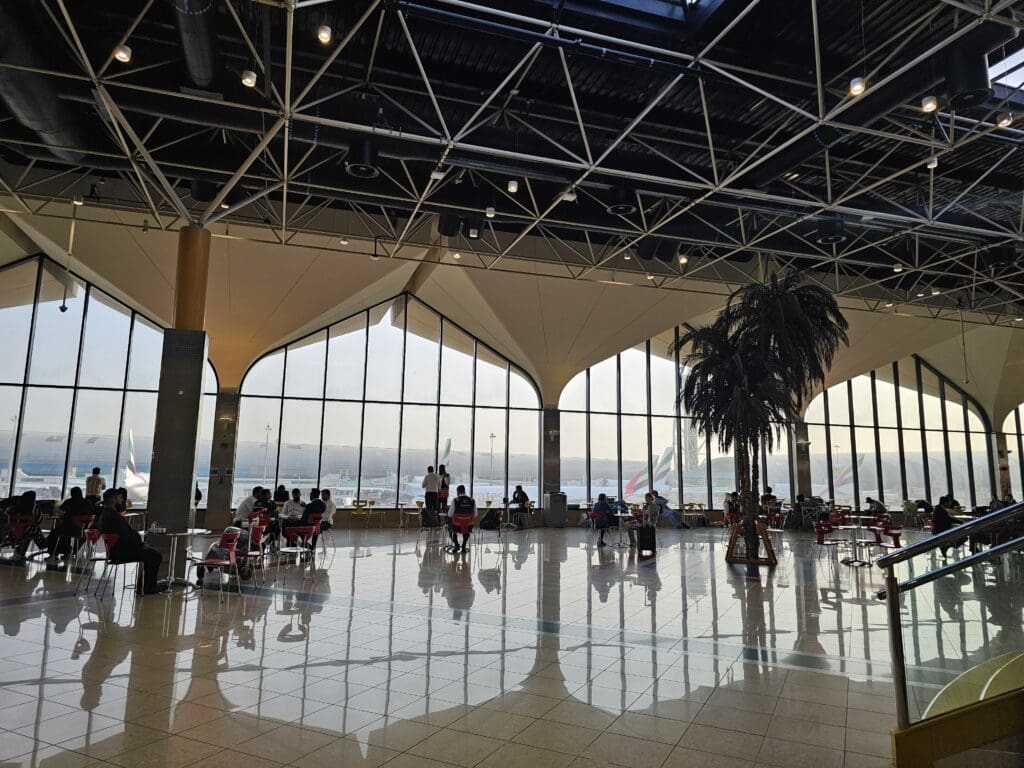
As airport terminals go, I am fairly well-acquainted with Dubai International Airport’s Terminal 1, with this being my sixteenth journey through the terminal in the space of about seven years. Thus, that morning, I had a good idea of what to expect from the terminal. Inside, the landside area is not particularly glitzy or glamorous, contrasting with what some may expect given Dubai’s luxurious and modern image. However, for the most part, I have always found the terminal to serve its purpose without issue and is usually clean and tidy, something that I happily found to be the case that morning. In terms of facilities, a small handful of shops and eateries can be found throughout the landside portion of the terminal. Most notably, this is home to a food court where branches of Baskin-Robbins, JB & Co, Jones the Grocer (actually an eatery), Marybrown, McDonald’s, and Roti Bhai can be found. Sitting above the check-in hall, this is complete with plenty of tables and tall fake palm trees. More importantly for enthusiasts, the food court is the only part of the landside portion of the terminal that offers any sort of decent vistas of the action outside.
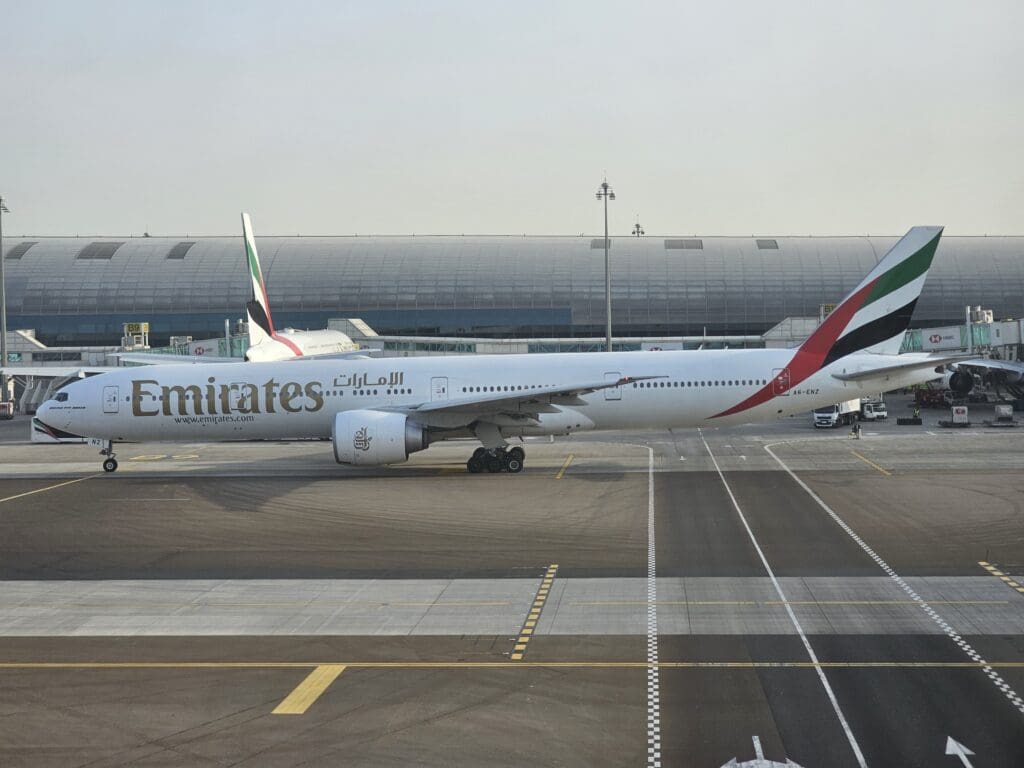
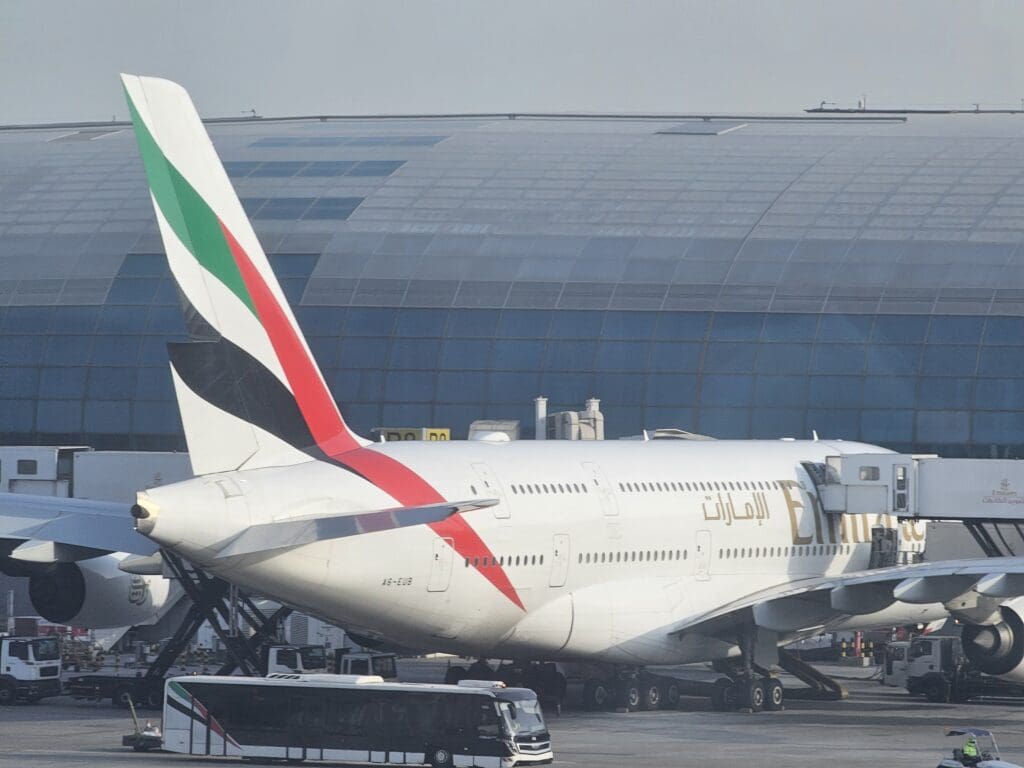
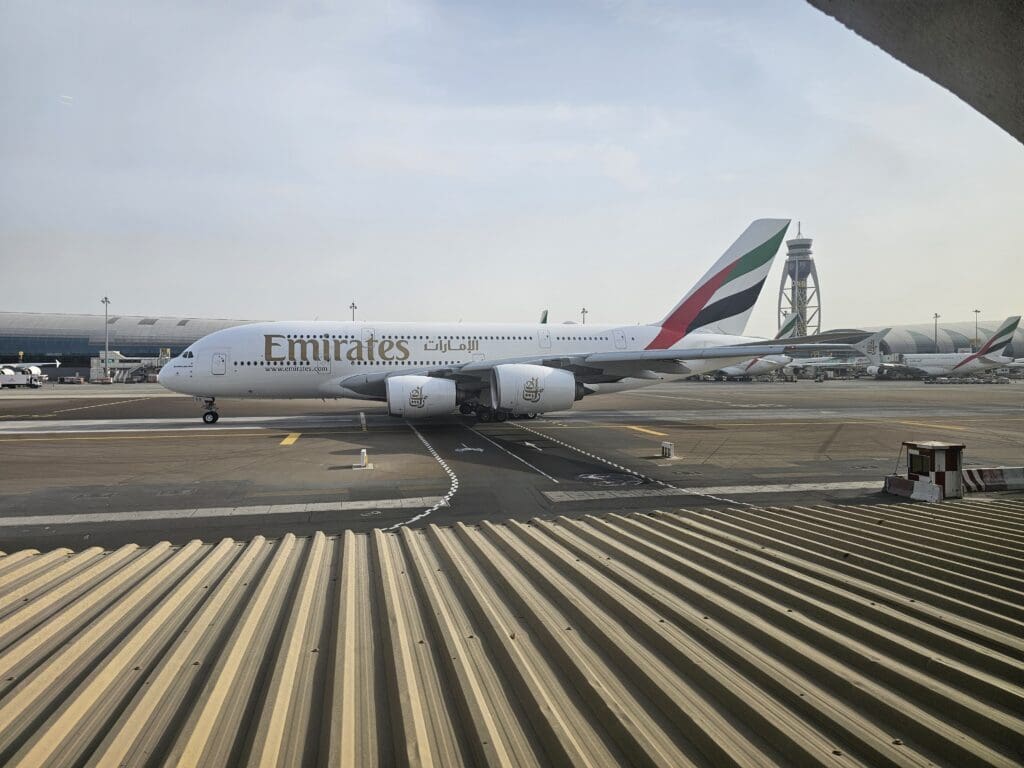
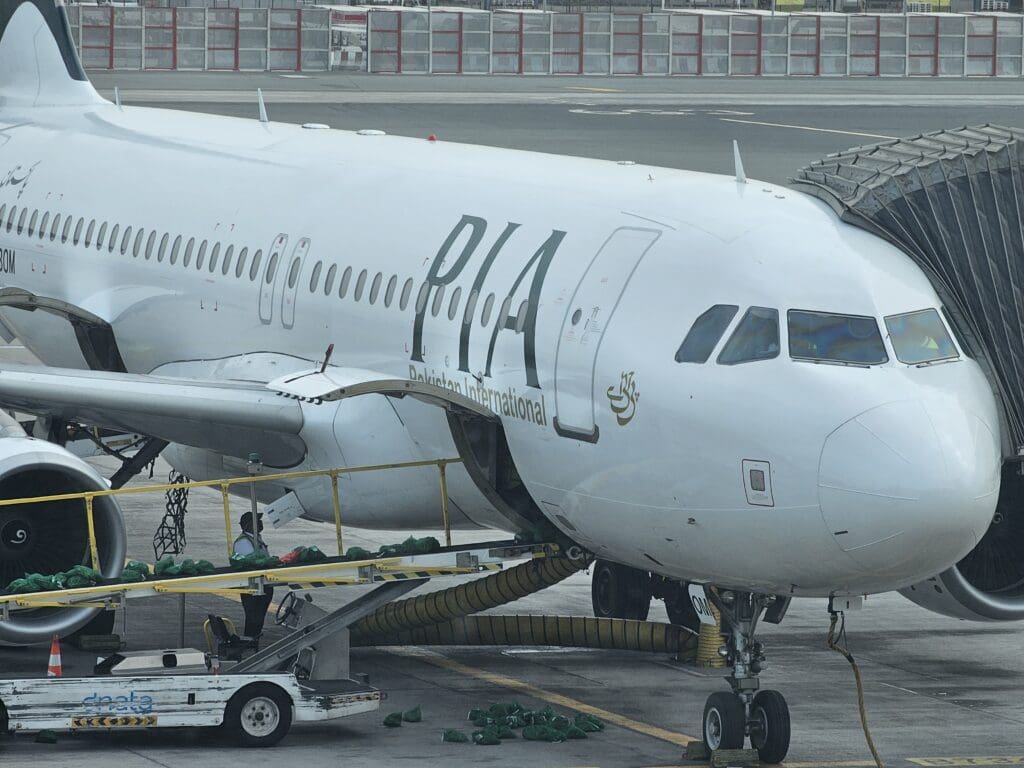
After a very short wander around the terminal, which revealed that virtually nothing had changed in my ten-month absence, I checked the departure boards to ascertain the location of Qatar Airways’ check-in area. Examining the layout of the landside portion of the terminal, this consists of six check-in zones, spread out across a reasonably sized area, with each airline that serves Terminal 1 enjoying its own dedicated space. A quick check of the departure boards revealed that check-in for Qatar Airways’ services that day would take place in Zone 4, which the airline shares with an eclectic selection of airlines – specifically Air Algérie, FlyNas, Iran Airtour, Middle East Airlines, Pakistan International Airlines and Virgin Atlantic. Whilst I hoped that I would be able to rid myself of my small suitcase, as it turned out, I was stung by my punctuality and left with just under an hour to go until check-in for Flight 1007 opened. With little else to do, I decided to seek out my first coffee of the day and headed to McDonald’s for the cheapest possible coffee in the terminal. Parting with a total of fifteen dirhams (£3.16) for a cappuccino, I took a seat and watched the line of Emirates widebodies over at Terminal 3, which were in the process of being readied to head off to destinations near and far.
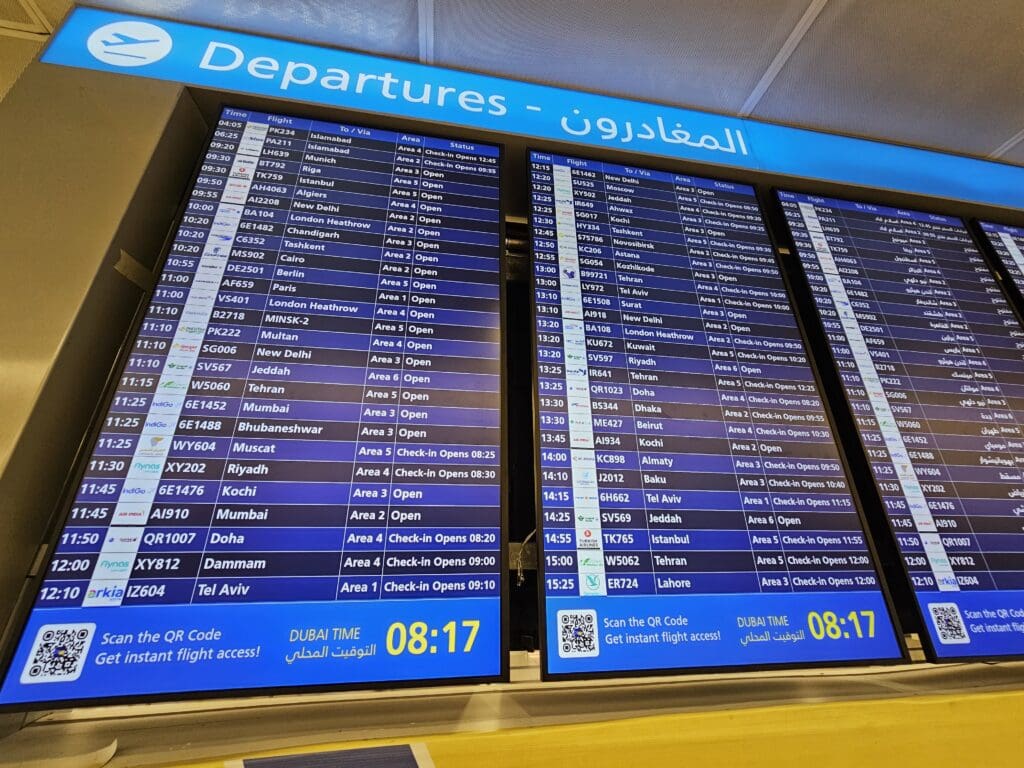
Once I had polished off my coffee and undertaken some morning planespotting, I made my way back down to the busy check-in area in the hope that this was now open. As I reached Zone 4, crowds of passengers, all of whom appeared to be travelling with copious amounts of luggage, could be seen in a scrum, something that was not a particularly reassuring sight, having hoped for a smooth and quick transit through the terminal. However, as it turned out, these were those bound for the Pakistani city of Multan on Pakistan International Airlines’ morning service, and not heading off on Qatar Airways.
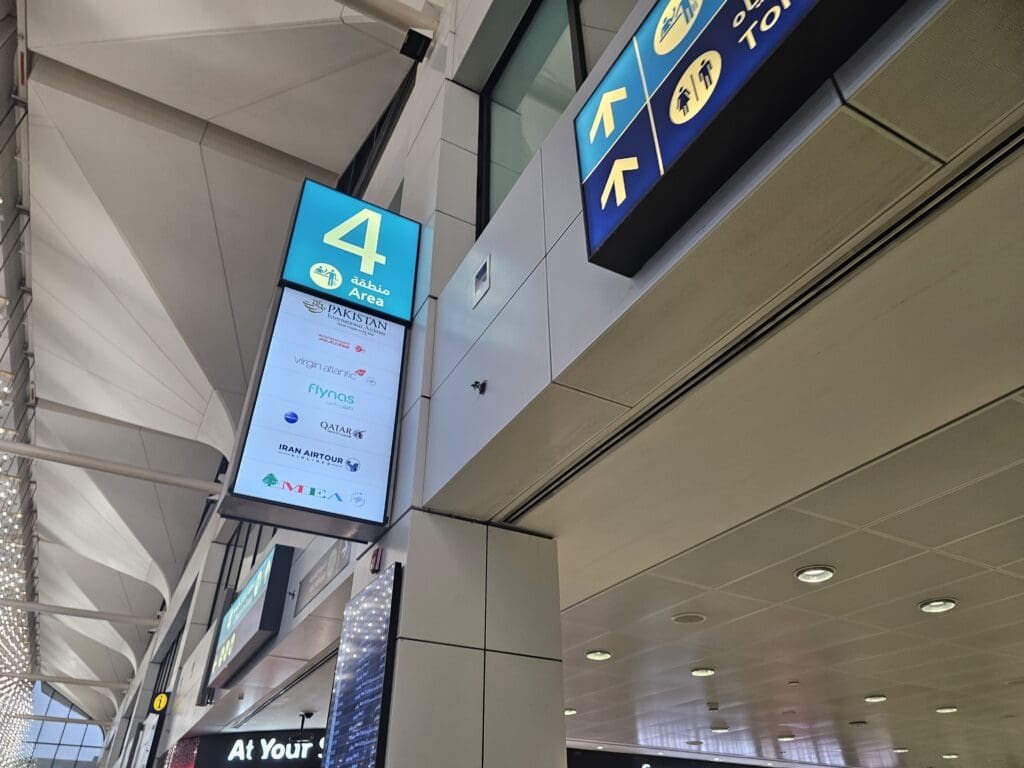
Given Qatar Airways’ significant operation in Dubai, I was expecting the airline’s check-in area to be well-branded and feature plenty of signage, however, this was not the case, and I only managed to spot the airline’s desks thanks to the distinctive burgundy uniforms of the airline’s ground staff – three of whom were supervising arrangements, whilst, as with most airlines in Dubai, the majority of the work was undertaken by Dnata agents. Upon arriving there, I joined the short queue of passengers who appeared to hail from India, Russia and Turkey, and at 0830 the desks opened. That morning, two desks were assigned to those in Business Class, alongside two for those in Economy Class and one desk for those who had checked in online. Whilst there were not too many passengers ahead of me, thanks to their plentiful amounts of luggage, almost ten minutes of waiting was required before I was able to reach one of the desks.
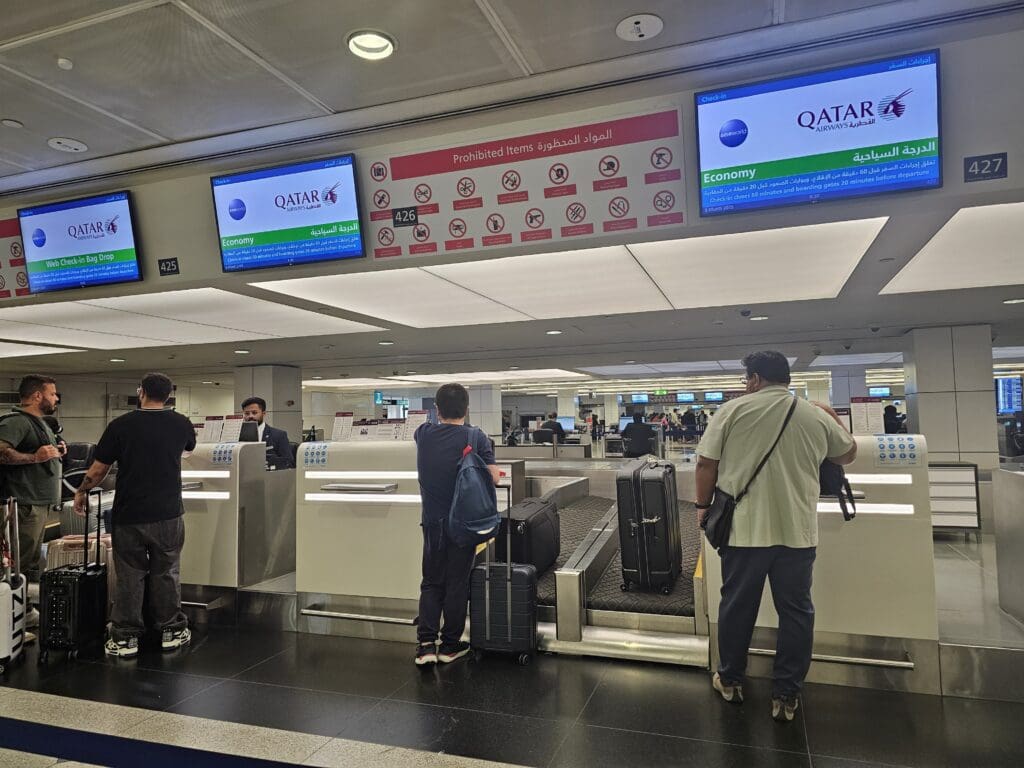
As I stood in line, I checked the Qatar Airways app to bring up my boarding passes. Upon doing so, much to my delight, the Boeing 787-9 Dreamliner that had been scheduled to operate the Doha service had been substituted by one of the four remaining Airbus A330-200s in Qatar Airways’ fleet. Somewhat famous for offering a fairly retro onboard product compared to most other jets in Qatar Airways’ fleet, this isn’t something that your average passenger would have been too happy about. However, given the fact that I would be travelling to Manchester on a Boeing 787-9 Dreamliner, this swap added a little bit of welcome diversity to my itinerary and would enable me to compare what is generally considered to be one of Qatar Airways’ worst onboard products, with one of its better ones.
Upon making it to the desk, I received a friendly greeting from the Dnata agent who checked and scanned my passport, confirmed my pre-selected seats and upon request, printed off a couple of Qatar Airways branded boarding passes. After no more than a couple of minutes, I was free to continue onwards to security and immigration. Following the crowds, I soon arrived at the rather busy immigration hall where snaking queues could be seen for both the manned desks and the smart gates. Opting to pass through the latter, fortunately, this queue moved along quickly, although this was slowed by the confusion of many passengers when using these gates, even though a reasonable number of staff were on hand to guide passengers. In theory, these gates allow passengers to exit Dubai using the magic of facial recognition technology and without the need for passengers to get their passports out. However, I have always found this to be hit-and-miss, and that morning, I was required to scan my passport before I was permitted to leave the country. Once through, I was able to make my way to one of the security checkpoints without any queuing, and with no need to remove my liquids or electronics, I passed through this quickly and easily.
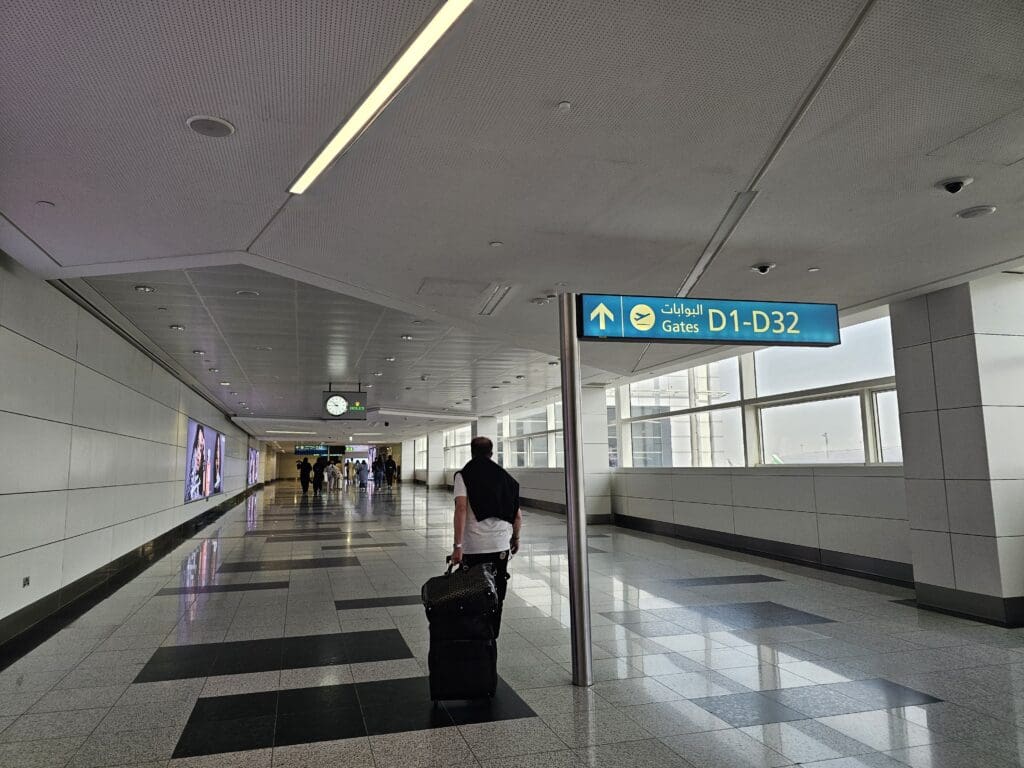
One slight complaint about Terminal 1 is that the landside and airside portions of the terminal are not conjoined, and passengers can only travel between the two by means of a driverless shuttle train. Fortunately, these run at very regular intervals, and two minutes after arriving at the station, I found myself being whisked over the apron towards the airside portion of Terminal 1. After disembarking the train, I made my way down the escalators and almost immediately reached the entrance to the terminal’s large and well-polished duty free store, which sells the usual variety of goods that you can find in duty free pretty much anywhere in the world, alongside overpriced souvenirs. Like many airports across the world, passengers must undertake a route march through this before reaching the main airside portion of the terminal and not needing to make any purchases, I sped through this without stopping.
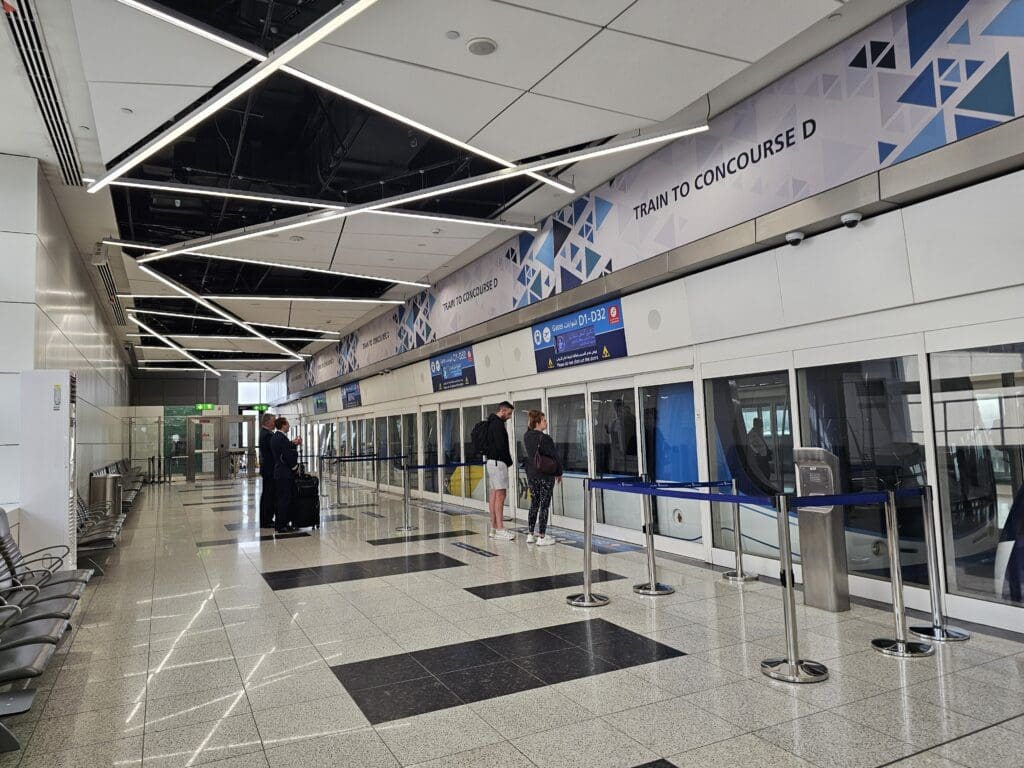
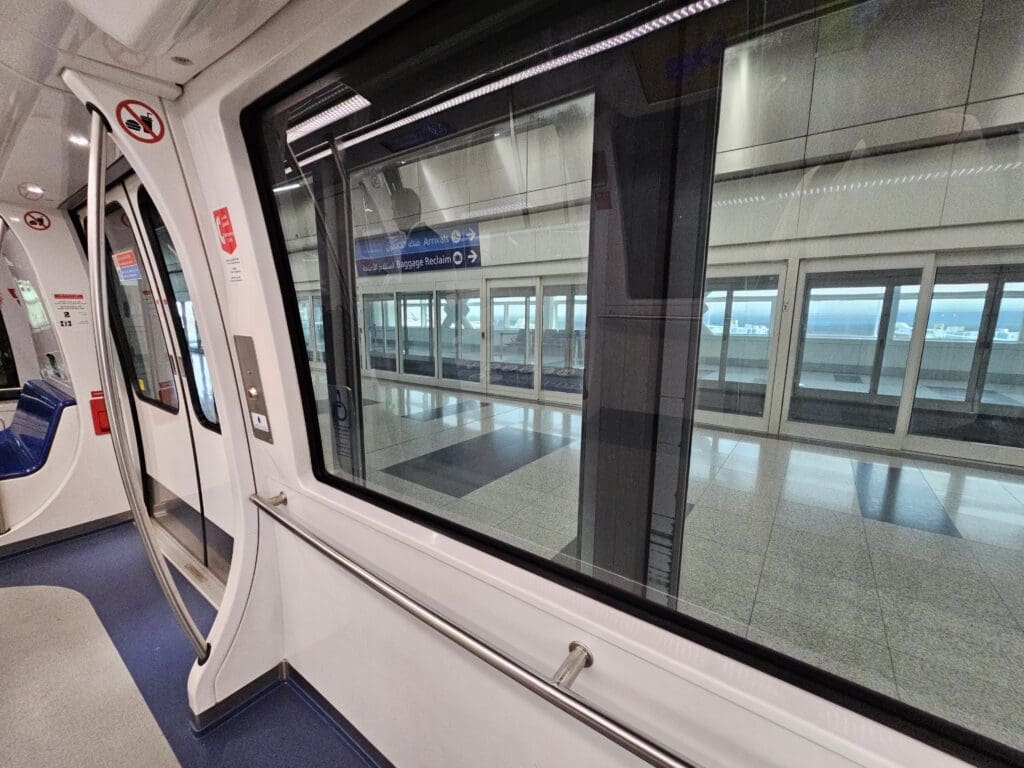
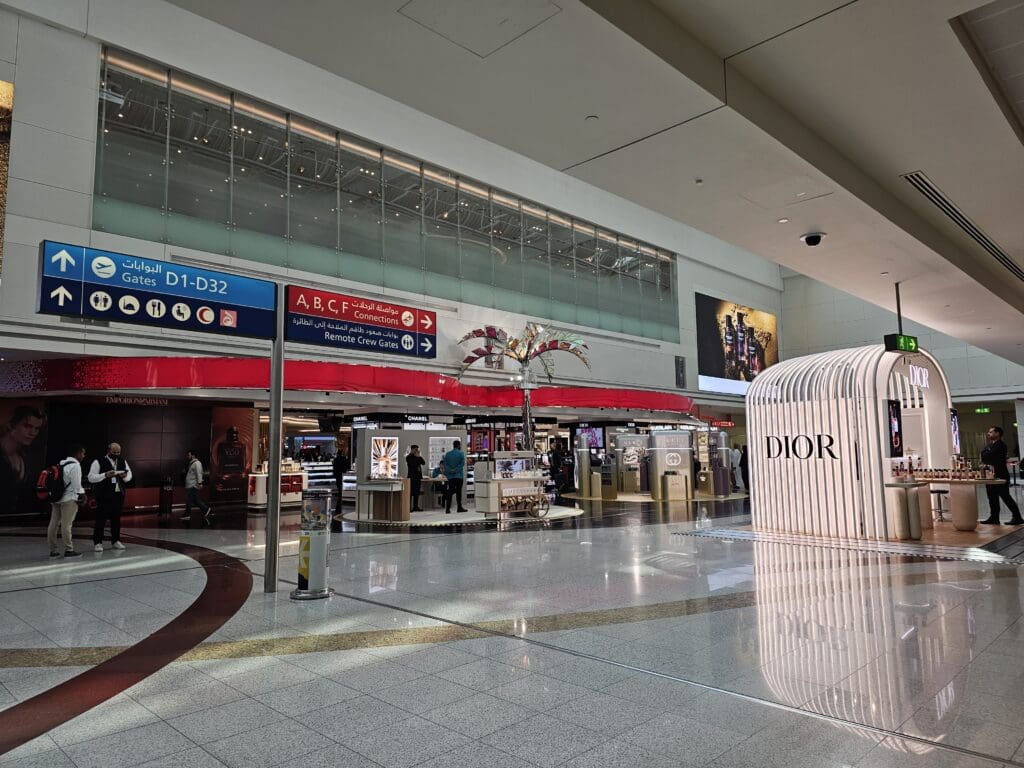
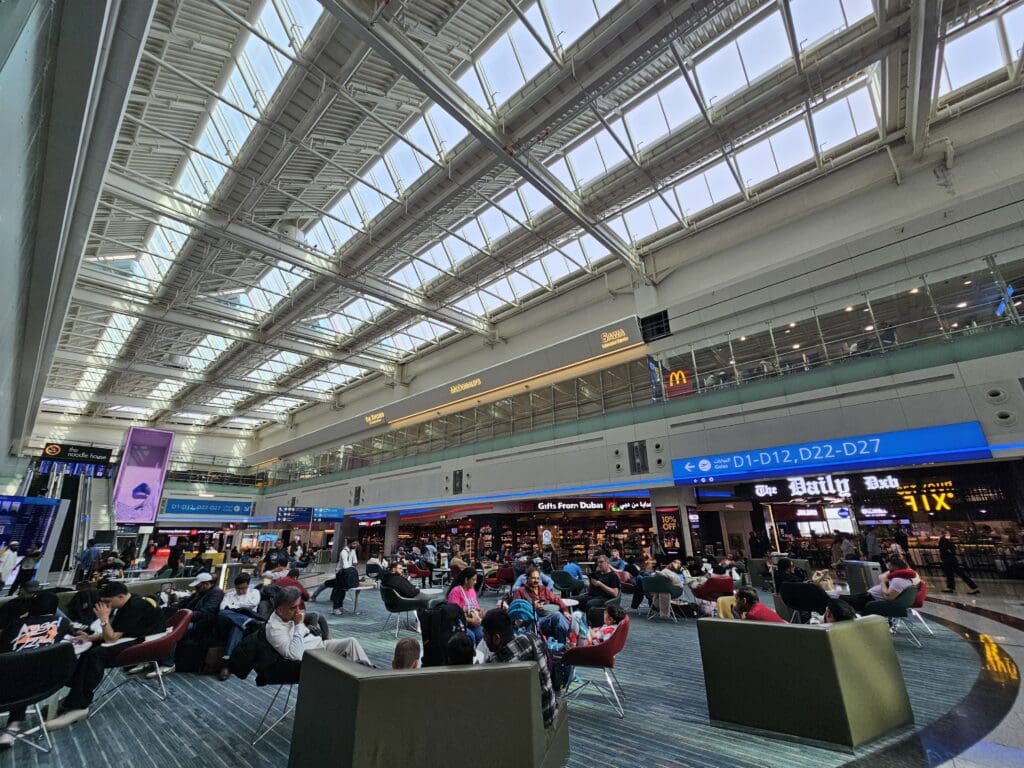
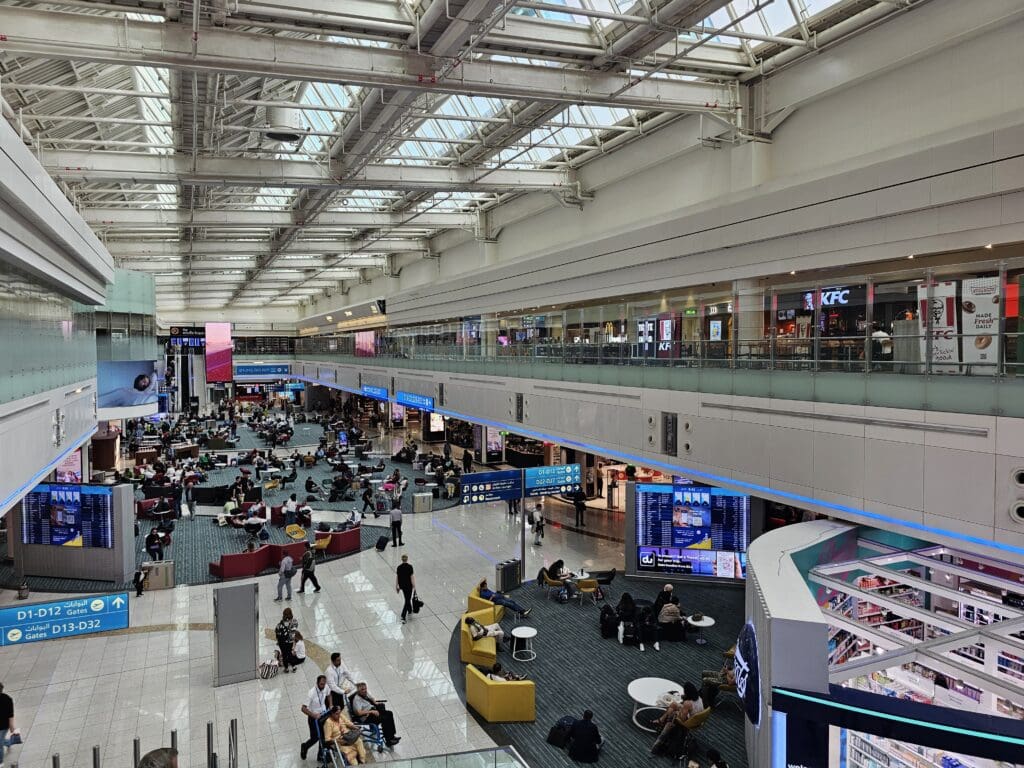
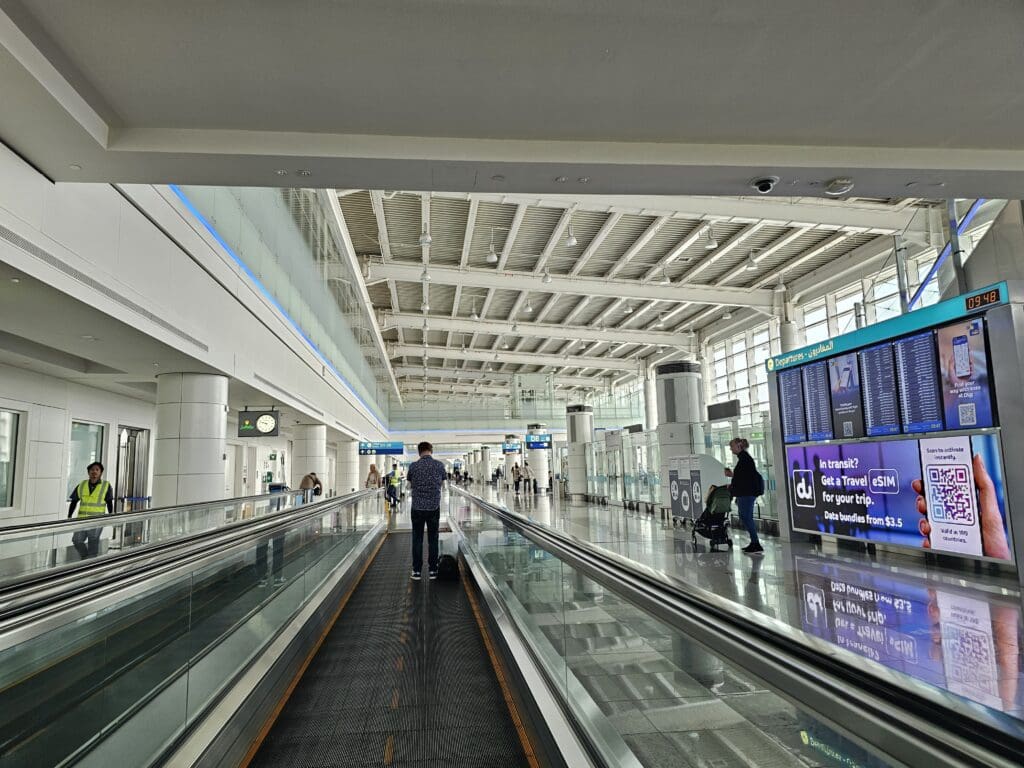
Looking around, the airside portion of Terminal 1 is much more spacious and modern than the landside portion of the terminal. This consists of the main two-story waiting area, which is home to many of the terminal’s facilities, whilst two arms branch off this. In terms of facilities, the airside portion of the terminal features sixteen shops and fourteen eateries. Meanwhile, plenty of plug sockets can be found throughout the terminal, and I found the complimentary wifi to work without issue. Importantly, throughout my stay, I found the terminal to be clean and tidy, with an army of cleaning staff on hand to keep the terminal in top condition. Ultimately, Terminal 1 left me with no real complaints; however, at the same time, this may be seen as lacking any particularly special facilities that set this apart from any other modern major international airport terminal.
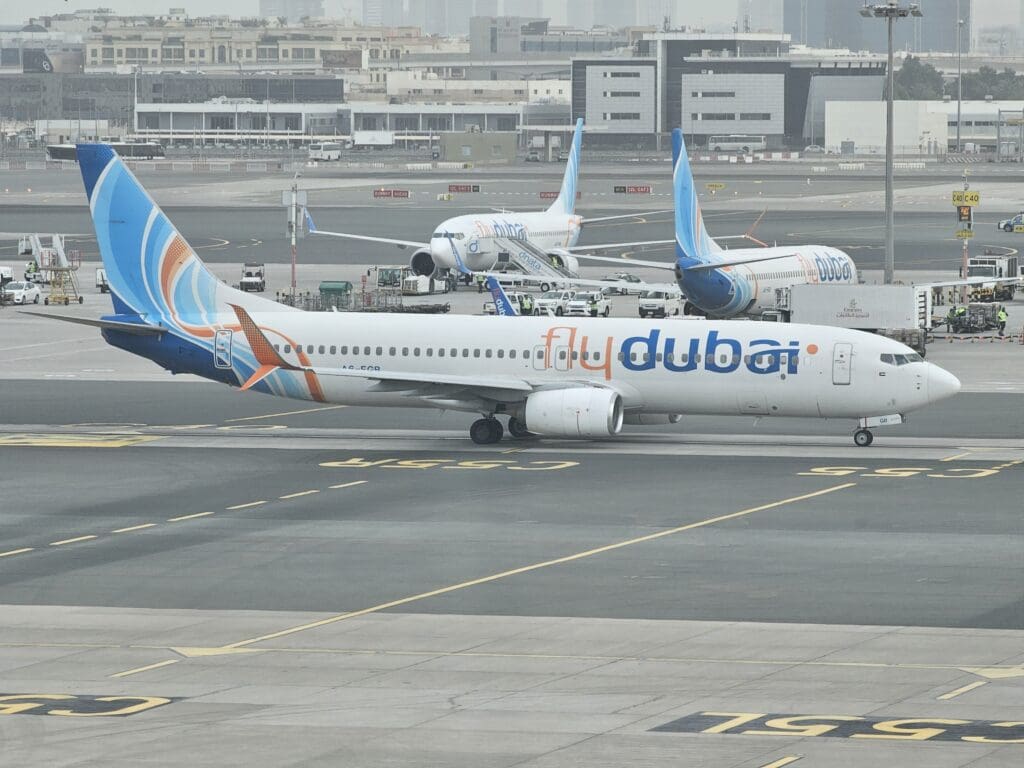
Moving on to the important things, Dubai International Airport is a planespotter’s dream, and at all times of day, a fantastic selection of aircraft of all shapes and sizes from across the world can be seen. Many examples take the form of aircraft that would never be seen back home in Britain, such as vintage Iranian Airbus A300s, or Afghan Boeing 737 Classics! However, sadly, the local authorities are not well known to take an understanding eye to this rather quirky hobby, with enthusiasts armed with large cameras having been detailed around the airport’s perimeter. Fortunately, I have never had such an experience at Terminal 1, with the authorities yet to take an issue with me snapping away at the plethora of aircraft outside on my camera phone. Assisting spotters and filling the terminal with plenty of natural light, large windows offer unobstructed views of many of the terminal’s stands as well as aircraft departing from or arriving on the runways in the distance. After wandering around, I made my way to McDonald’s on the second floor of the terminal for my second coffee of the day, with their seating area offering a superb view over the western portion of the airfield. Other than the non-stop stream of locally based Emirates and FlyDubai jets, I spotted aircraft operated by airlines hailing from far and wide, ranging in size from an AirBaltic Airbus A220 and an Azimuth Sukhoi Superjet 100, right up to the plentiful Emirates Airbus A380s.
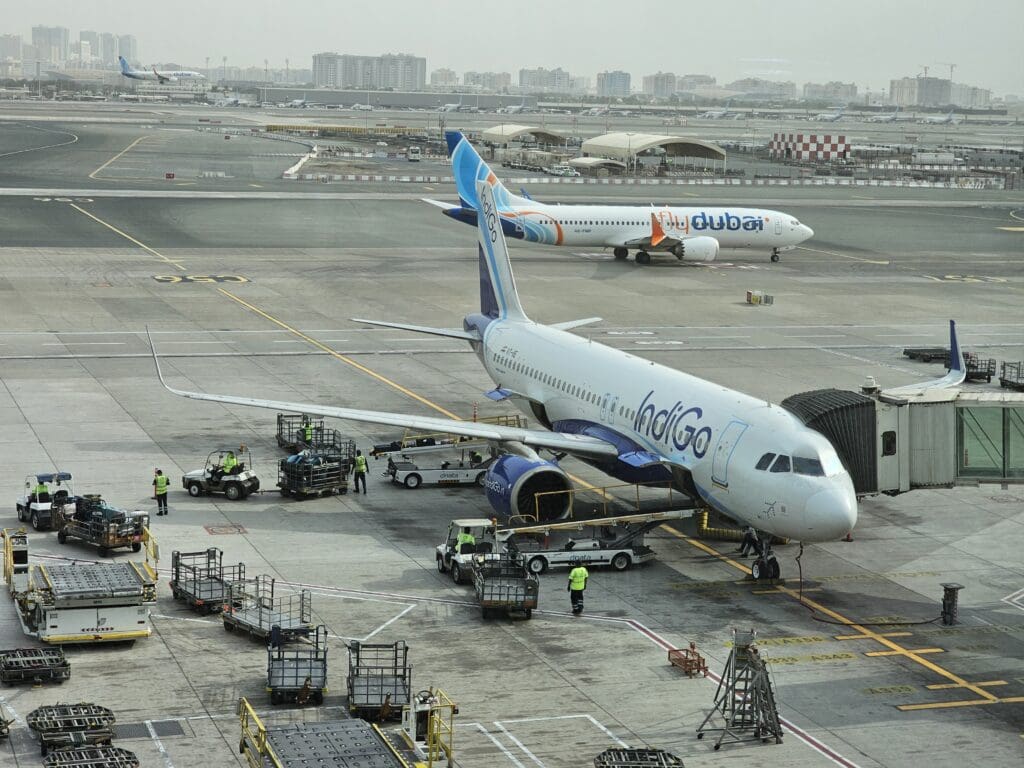
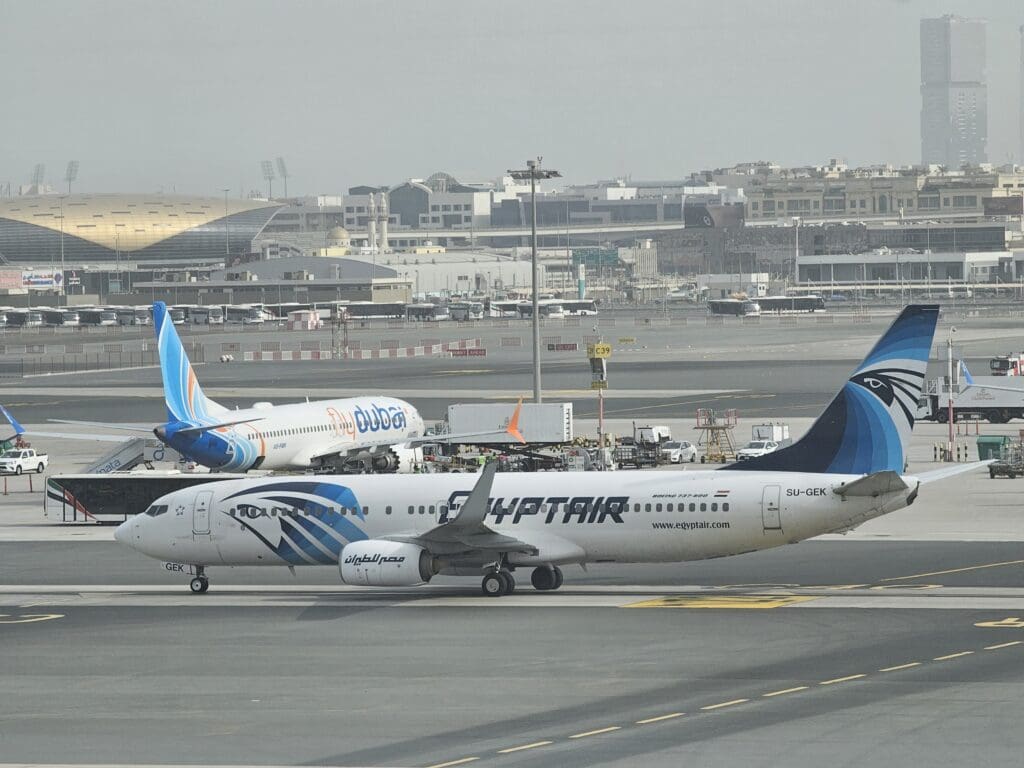
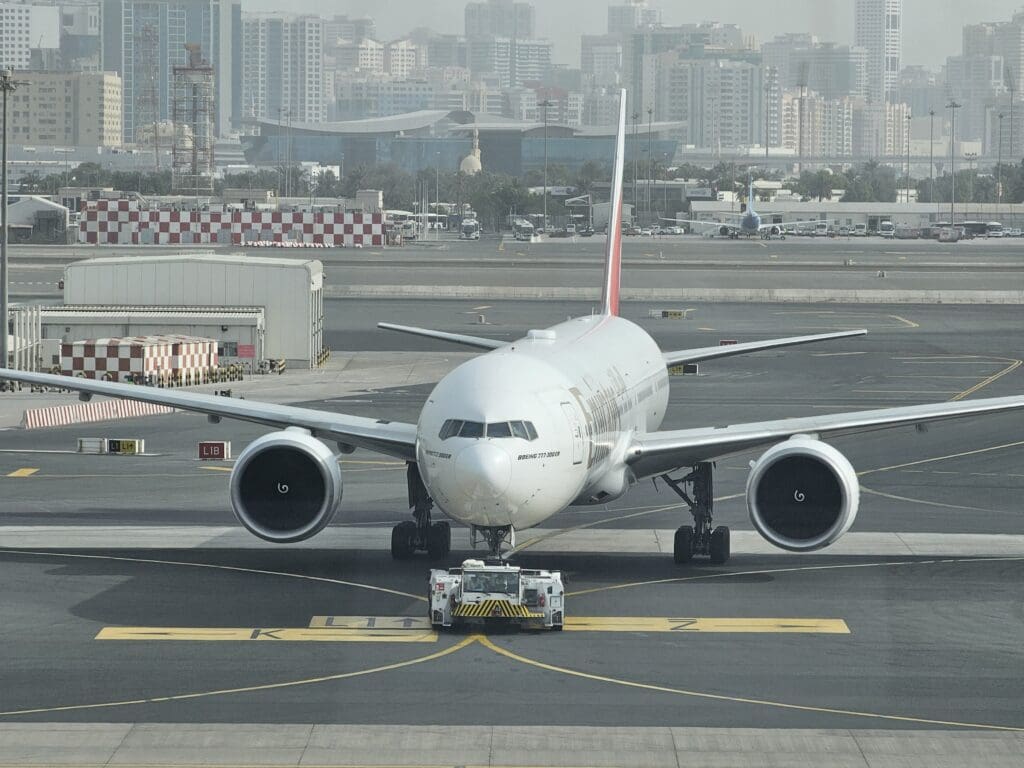
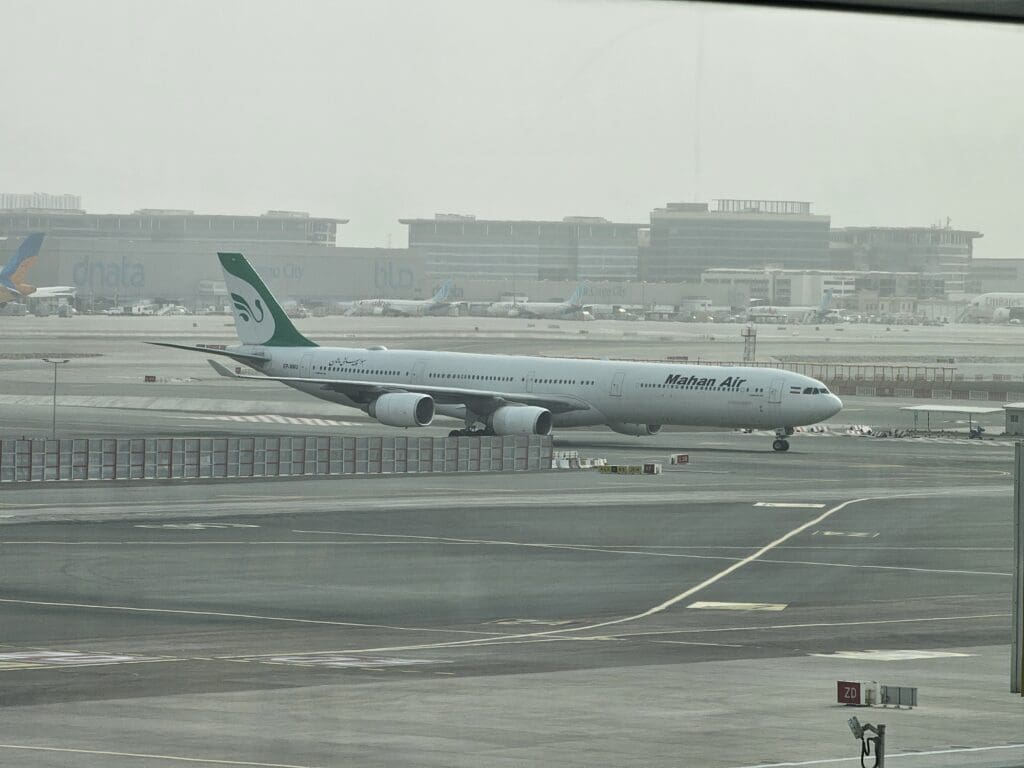
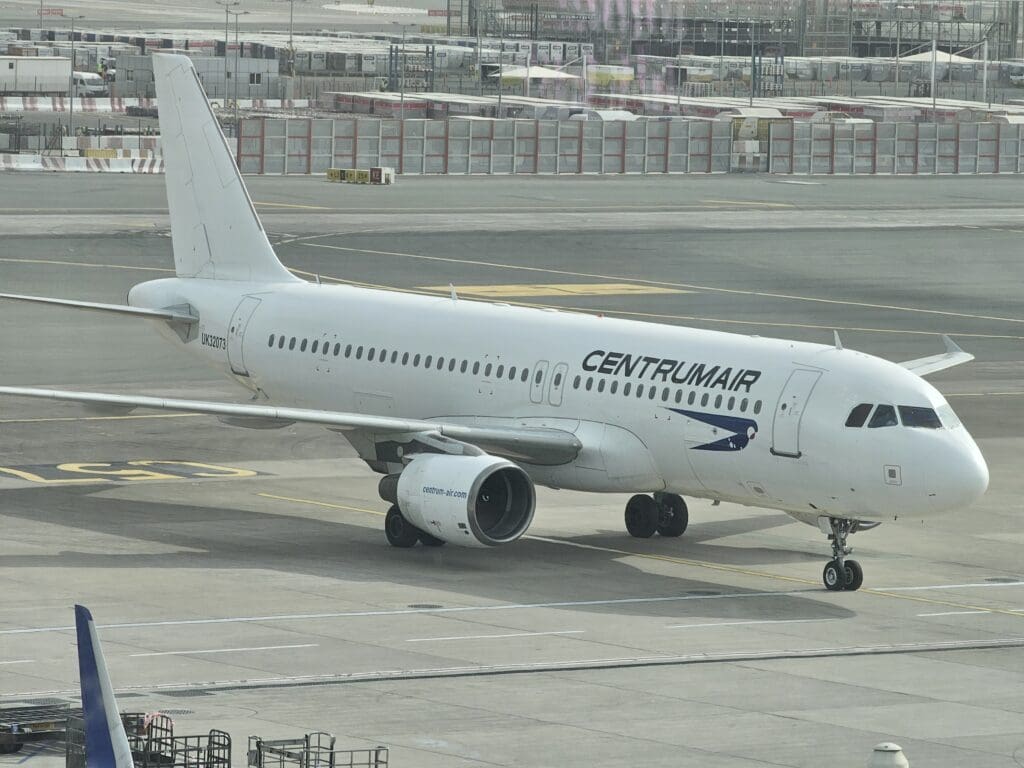
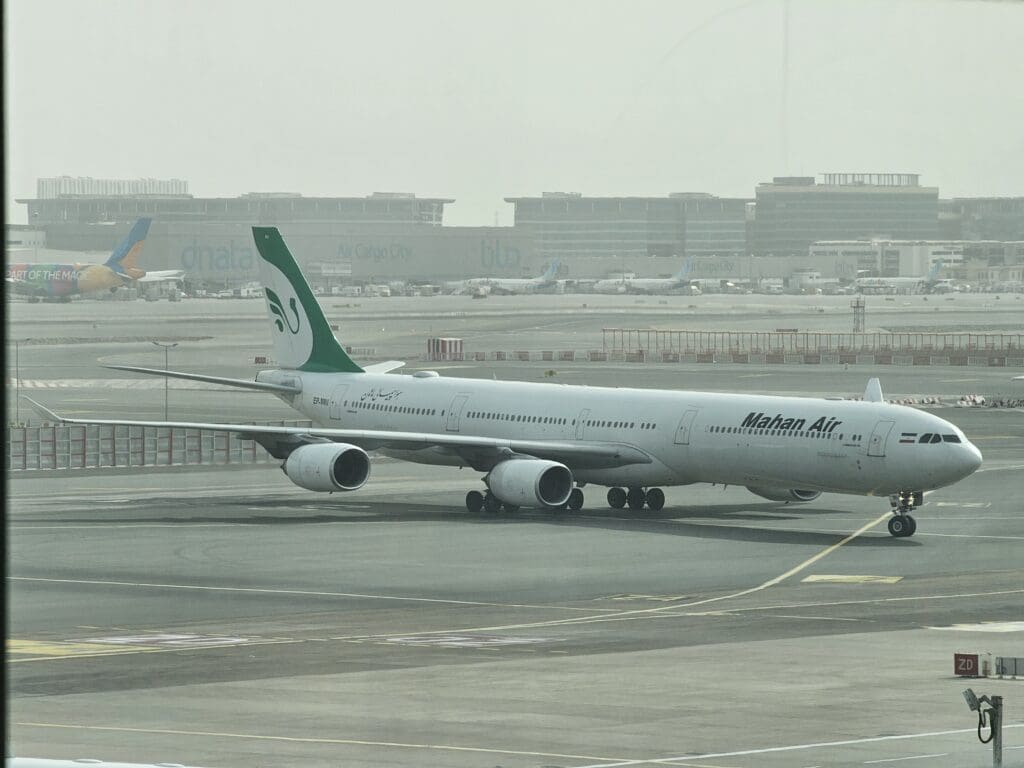
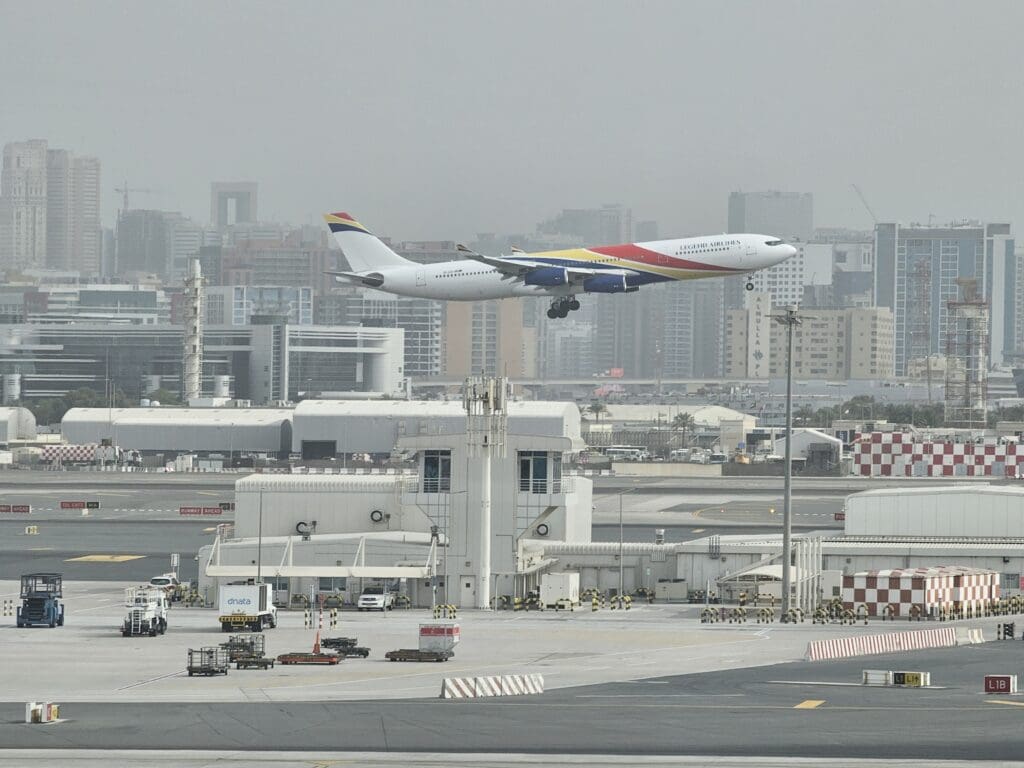
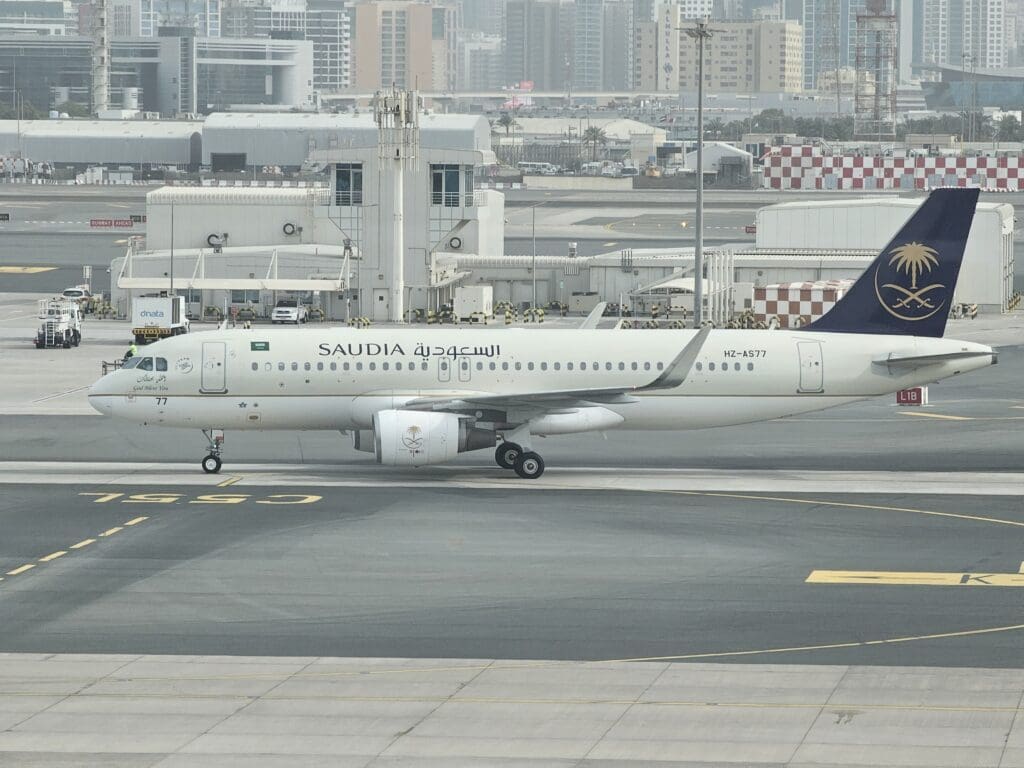
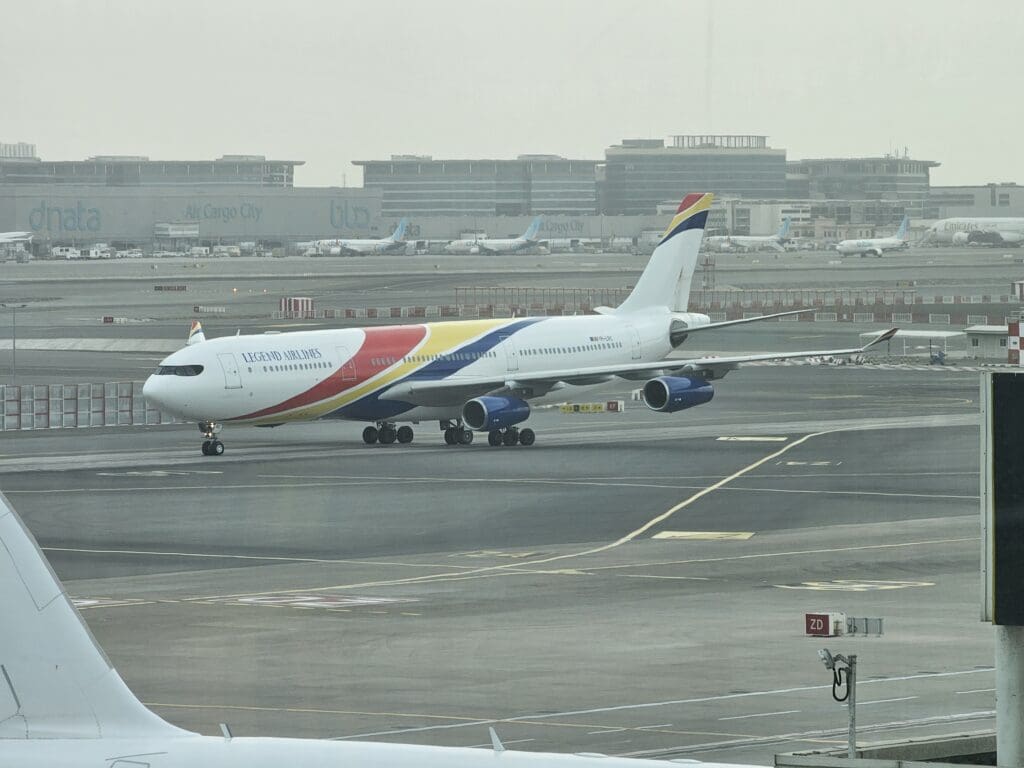
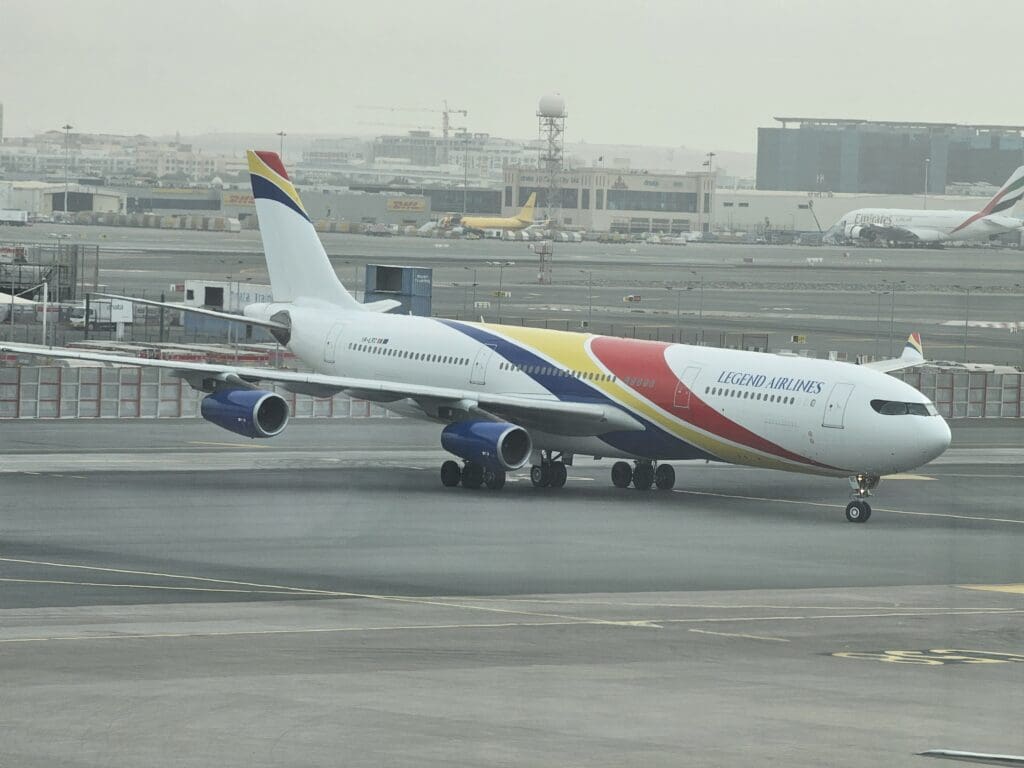
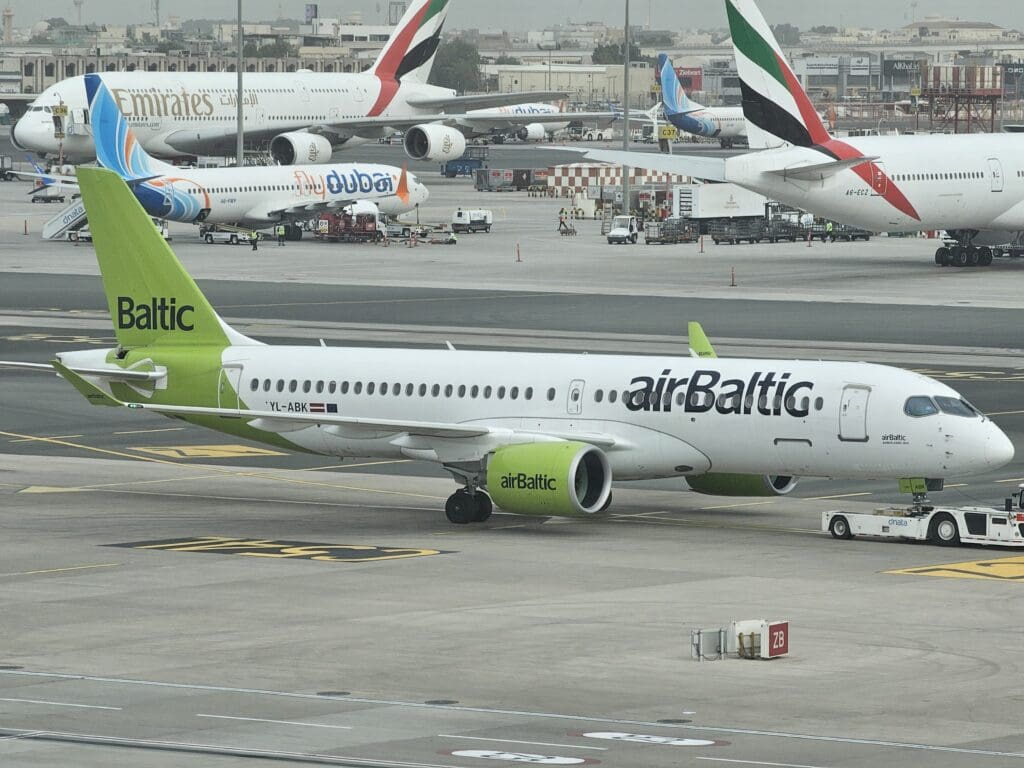
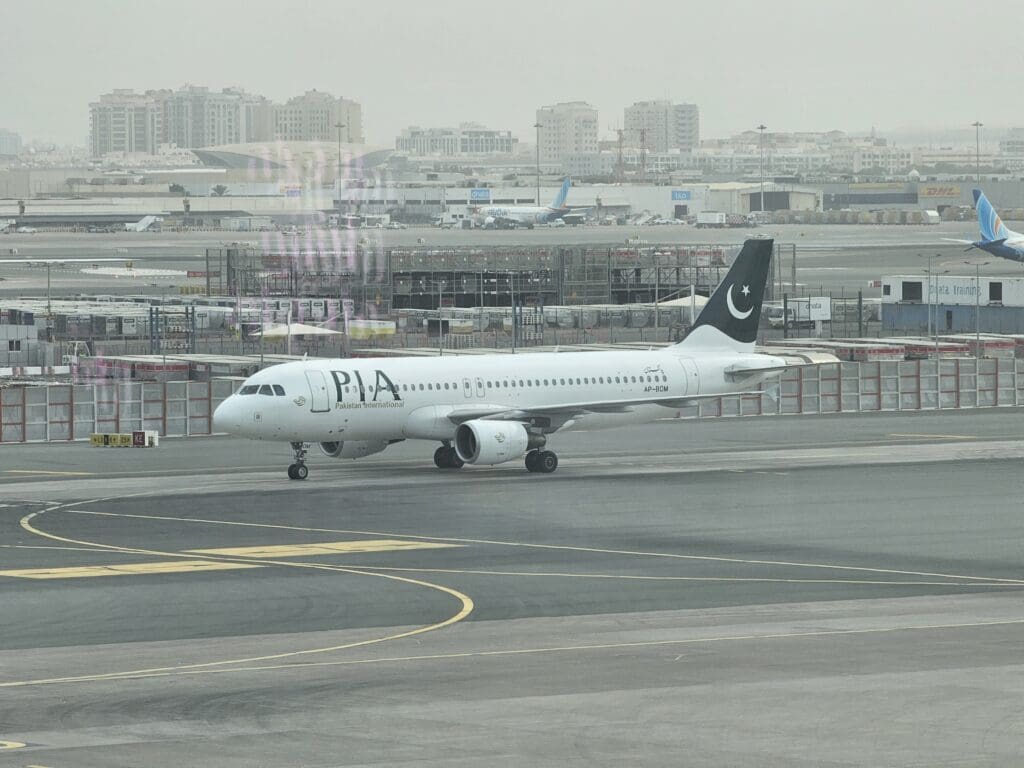
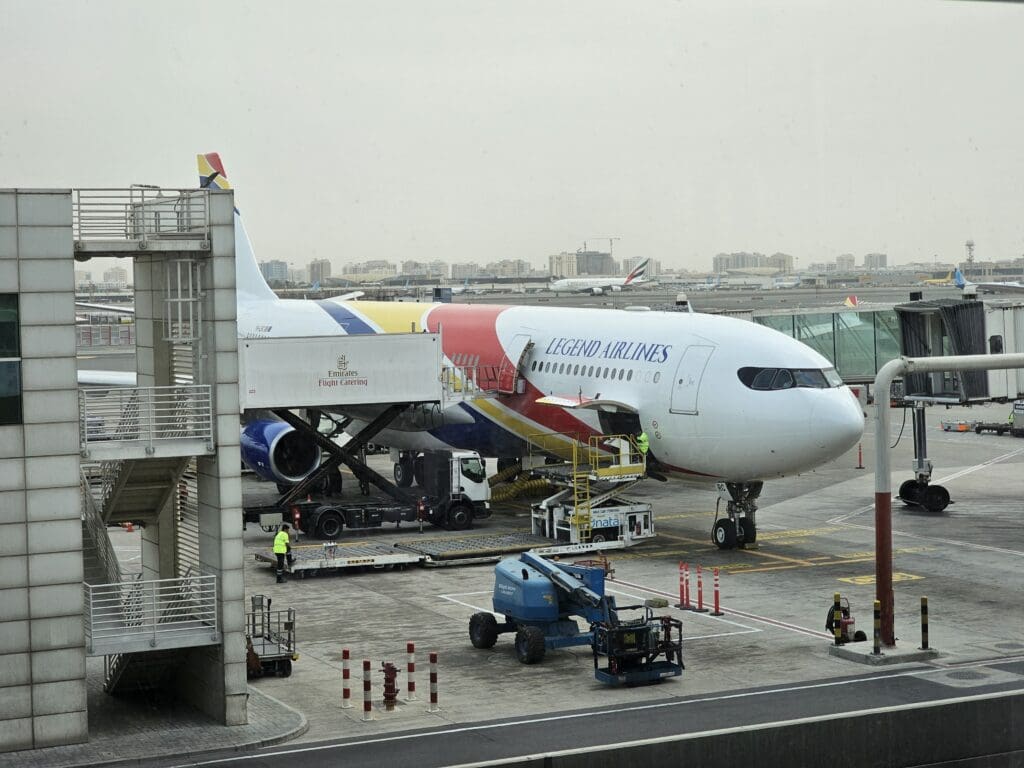
That morning, had I not wished to head off on Qatar Airways, between arriving in the airside portion of the terminal and my scheduled departure time, flights could be seen on the departure boards bound for Algiers, Berlin, Bhubaneswar, Cairo, Chandigarh, Istanbul, Jeddah, Kochi, London Heathrow, Minsk, Multan, Mumbai, Munich, Muscat, New Delhi, Paris CDG, Riga, Riyadh, Tashkent and Tehran. These were operated by Air Baltic, Air France, Air India, Belavia, British Airways, Centrum Air, Condor, Egypt Air, FlyNas, IndiGo, Legend Airlines (operating for Air Algerie), Lufthansa, Mahan Air, Oman Air, Saudia, Smartwings (operating for SpiceJet), Turkish Airlines and Virgin Atlantic.
Sipping my coffee, I watched as aircraft came and went, and at 0951, an Airbus A330 sporting Qatar Airways’ distinctive grey and burgundy livery, complete with a large Oryx on the tail, touched down on Emirati soil. Several minutes later, this made its way past the terminal, although much to my surprise, this did not stop at any of its gates and instead voyaged over to a remote stand, Stand C56, where it came to a halt around twenty minutes ahead of schedule. This would mean that I would be in for my first-ever bus ride to or from an aircraft in Dubai!
That day, I would have the pleasure of flying onboard Airbus A330-202 A7-ACS. Manufactured at Airbus’ home plant at Toulouse Blagnac, this jet first took to the skies in July 2006 and was thus getting on for nineteen years old at the time of my flight. This is well over Qatar Airways’ average fleet age of 9.5 years! Following testing, in August 2006, the aircraft was handed over to Qatar Airways and operated to destinations across Africa, Asia and Europe as A7-ACJ and named Zekreet after a small village in northwestern Qatar. Unfortunately, the pandemic saw the aircraft enter long-term storage, first in Doha, where it remained for just over a year, before being shuttled to Nimes in June 2021, where it was returned to its lessor, Castlelake and wore the Irish registration of EI-GWV. Fortunately, this was not the end of the road, and in August 2021, the Airbus was returned to service as A7-ACS. Today, Qatar Airways primarily deploys its ageing Airbus A330s on short and medium-haul routes to destinations across Africa, Asia and the Middle East, with its longest slogs taking the form of the airline’s services to Algiers, Chengdu, Chongqing, Dhaka, Tunis and Venice. In the week before my flight, this particular Airbus had connected Doha with Amman, Cairo, Chongqing and Colombo.
According to my boarding pass, boarding would commence at 1050, an hour before our scheduled departure time. With seven minutes to go until this time, I made my way down the escalators to Terminal 1’s bus boarding gates, which are located in a large and modern hall underneath the main airside waiting area. Whilst this area of the terminal was fine for a short wait, with no airside views and no facilities other than toilets, I would not suggest passengers arrive there with any great amount of time before boarding. Soon, I arrived at Gate D27, which I found to be surprisingly empty with just a small handful of passengers waiting whilst a trio of Dnata agents could be seen preparing the gate for boarding. Reassuringly, two Cobuses could be seen outside waiting to shuttle passengers out to the waiting Airbus A330.
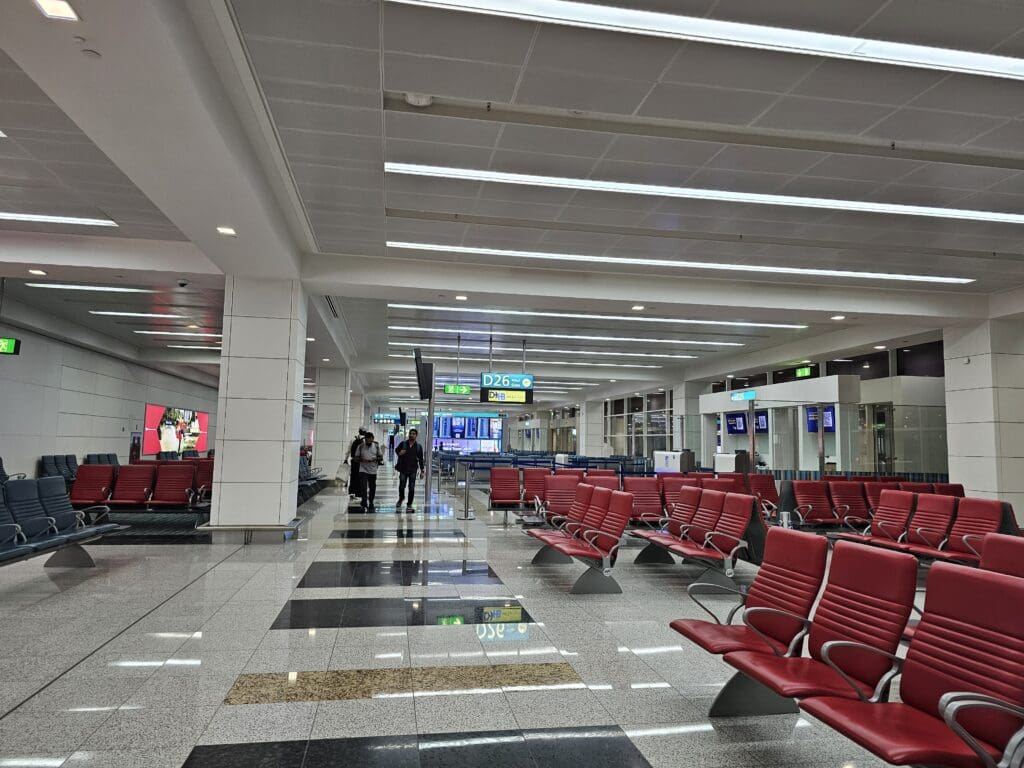
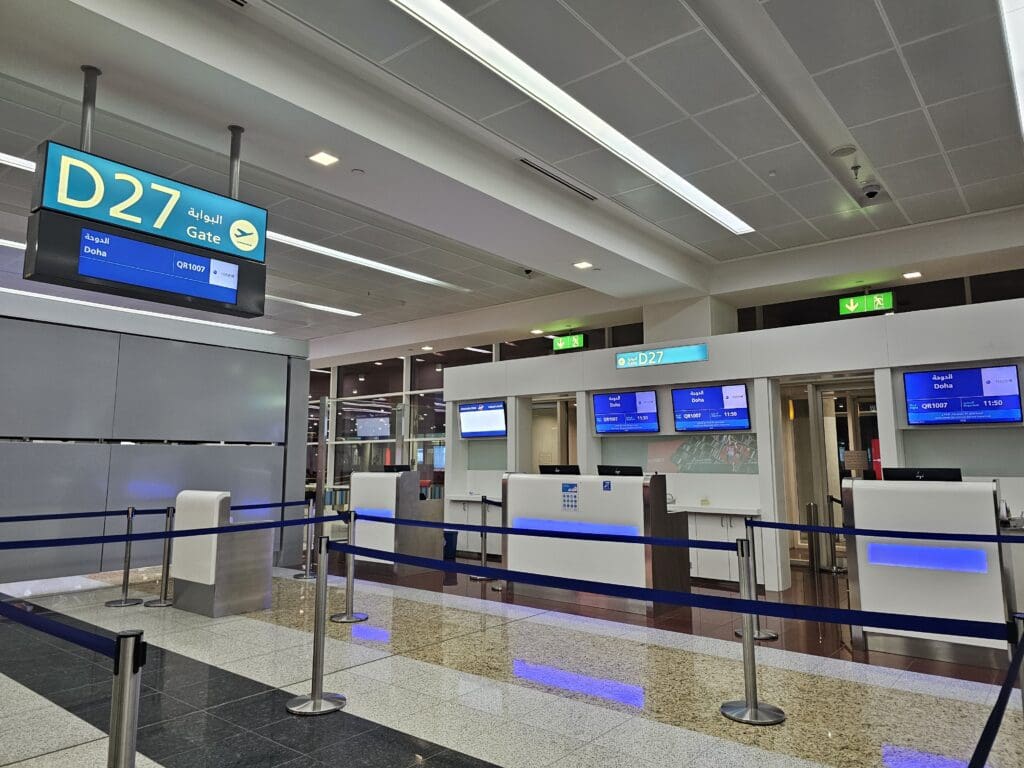
At 1053, boarding commenced for those in Business Class and Zone 1. Falling into the latter category, at this time, I stood up and joined the short queue. Soon, my boarding pass was scanned, and my passport was checked before I stepped onto the waiting bus. Unlike at some airports, passengers were not packed onto the bus like sardines, and instead, boarding was a civilised affair. Once the bus was comfortably full, at 1100 on the dot, the doors slid closed and we slowly trundled out towards the waiting aircraft. Upon emerging from the terminal’s underground roadways, I caught sight of the Qatari Airbus A330 once again, slotted in between an Aeroflot Boeing 737-800 and a colourful Uzbekistan Airways Boeing 787-8 Dreamliner.
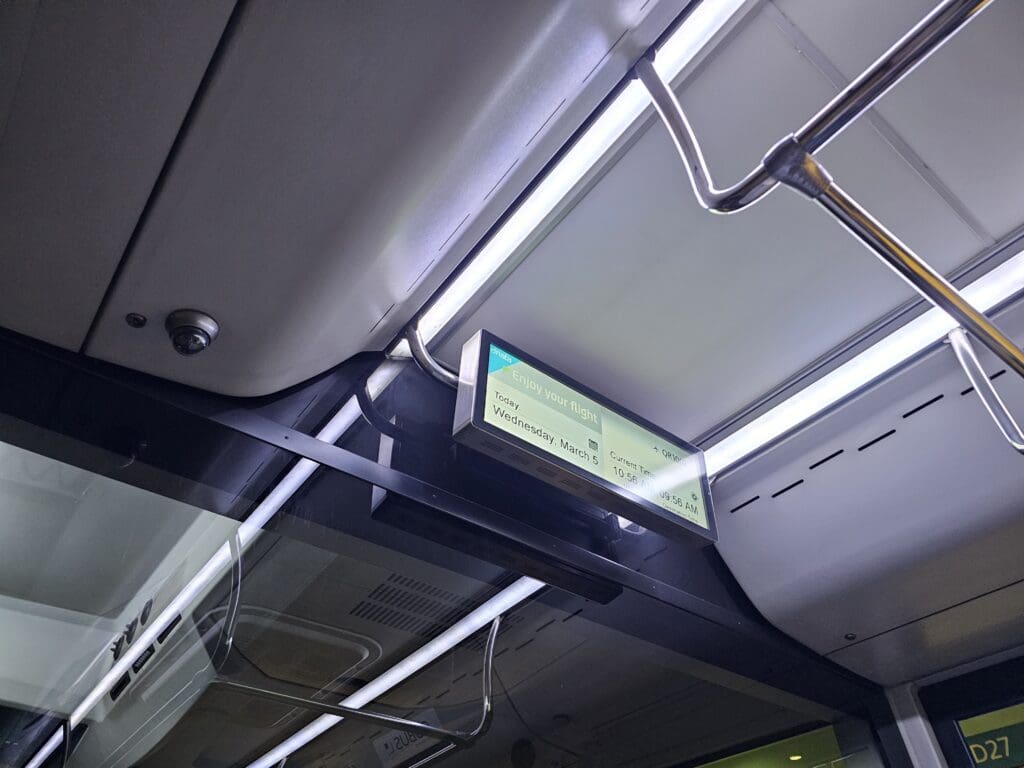
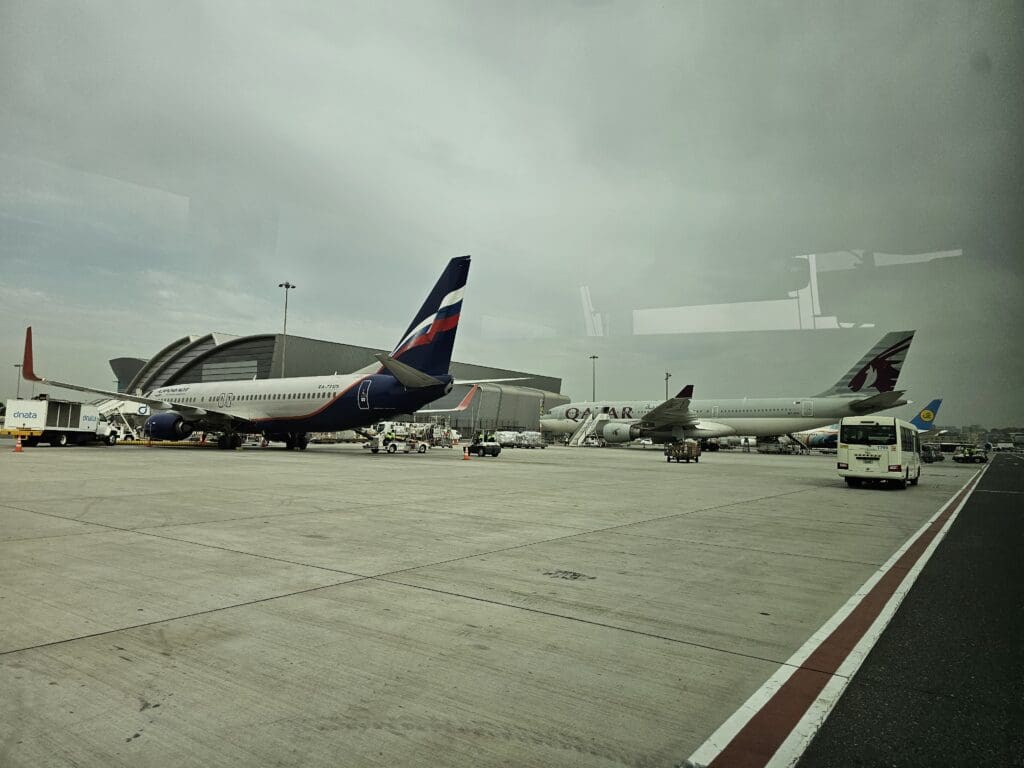
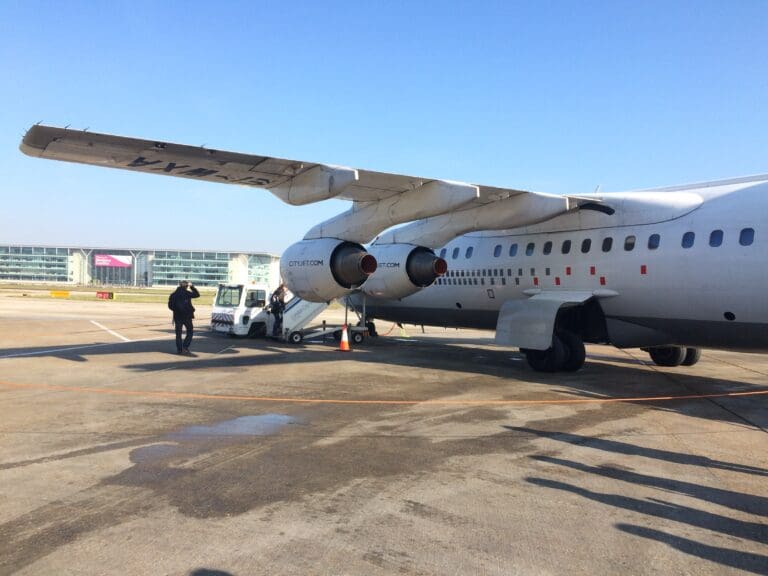
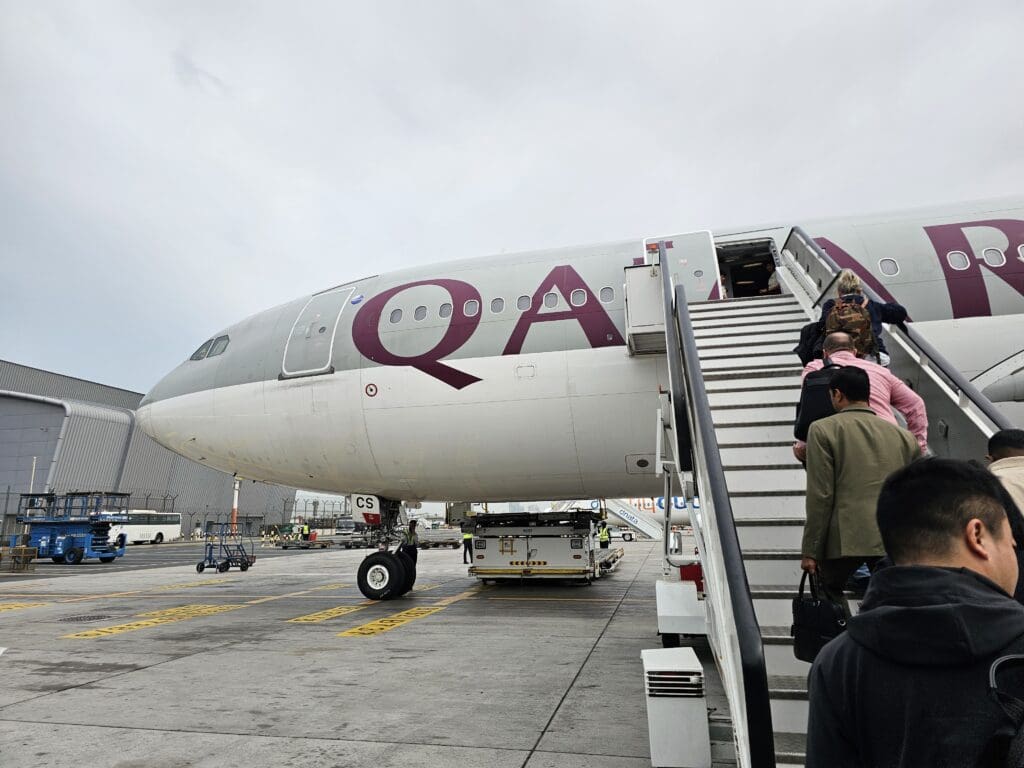
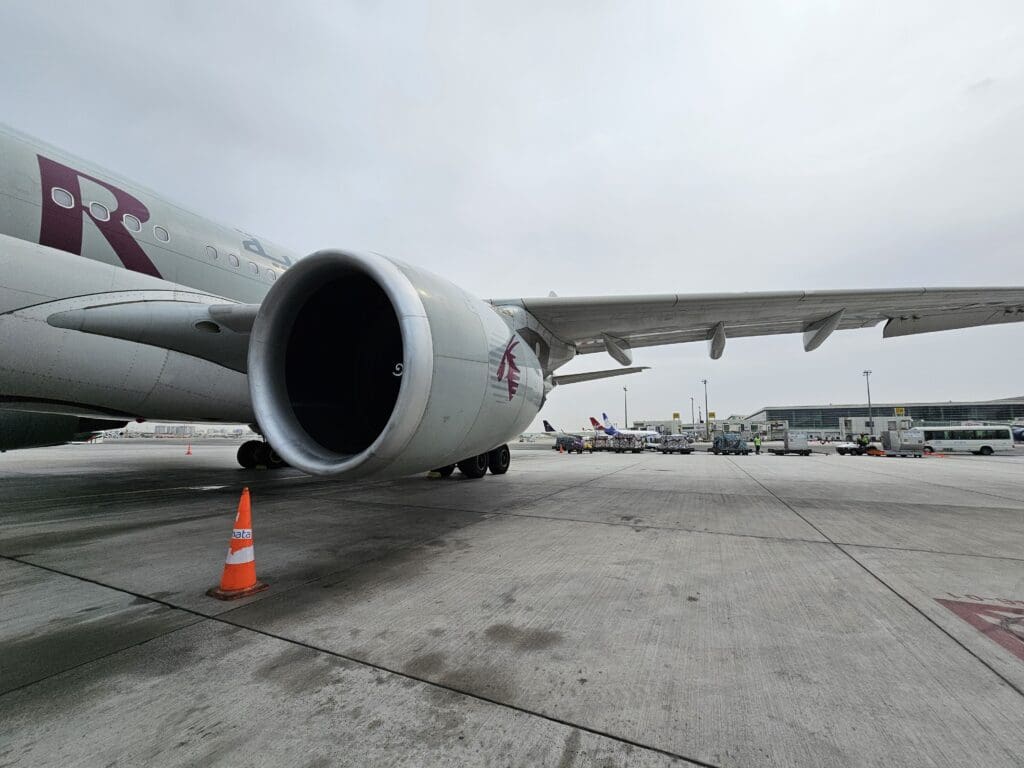
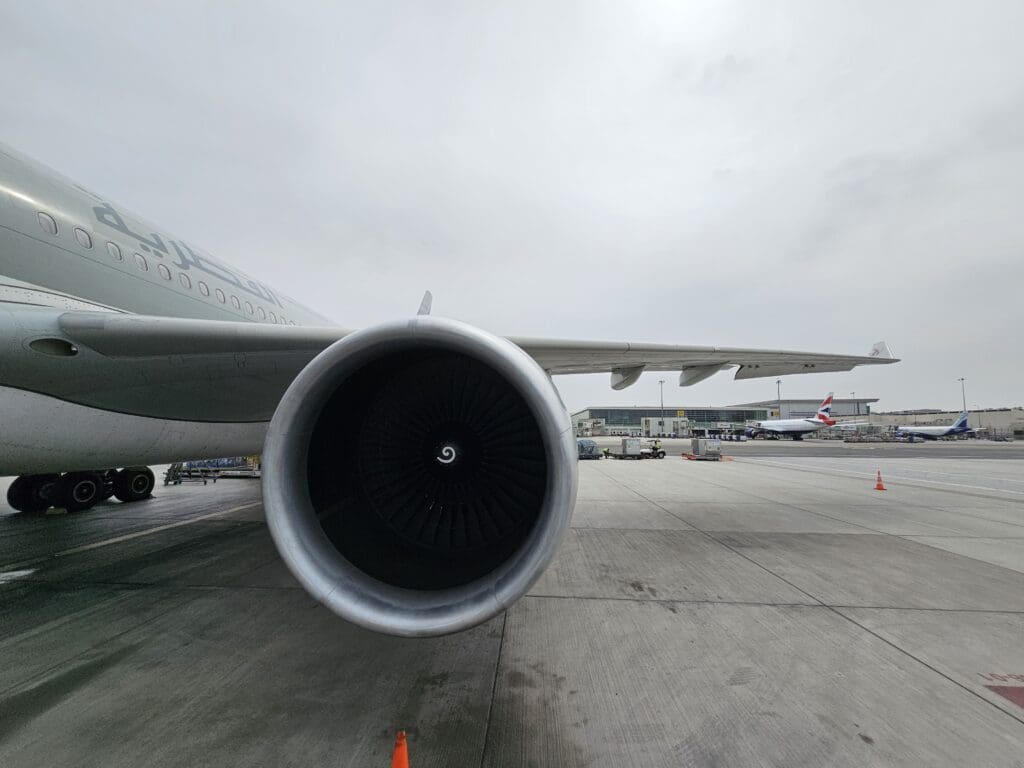
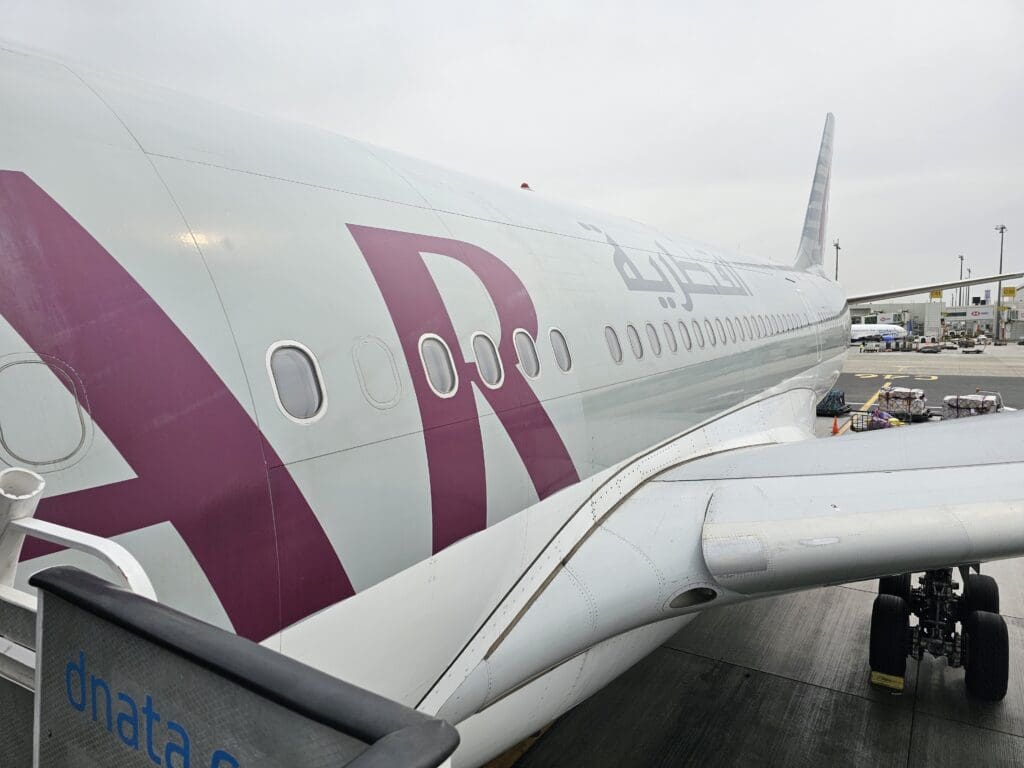
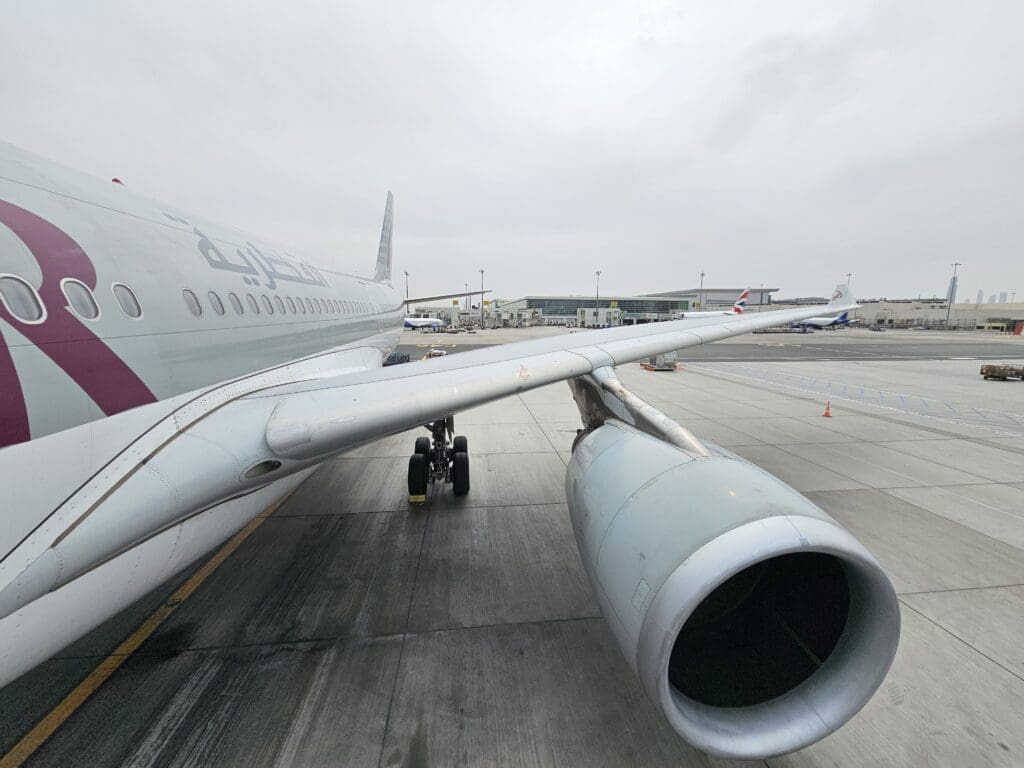
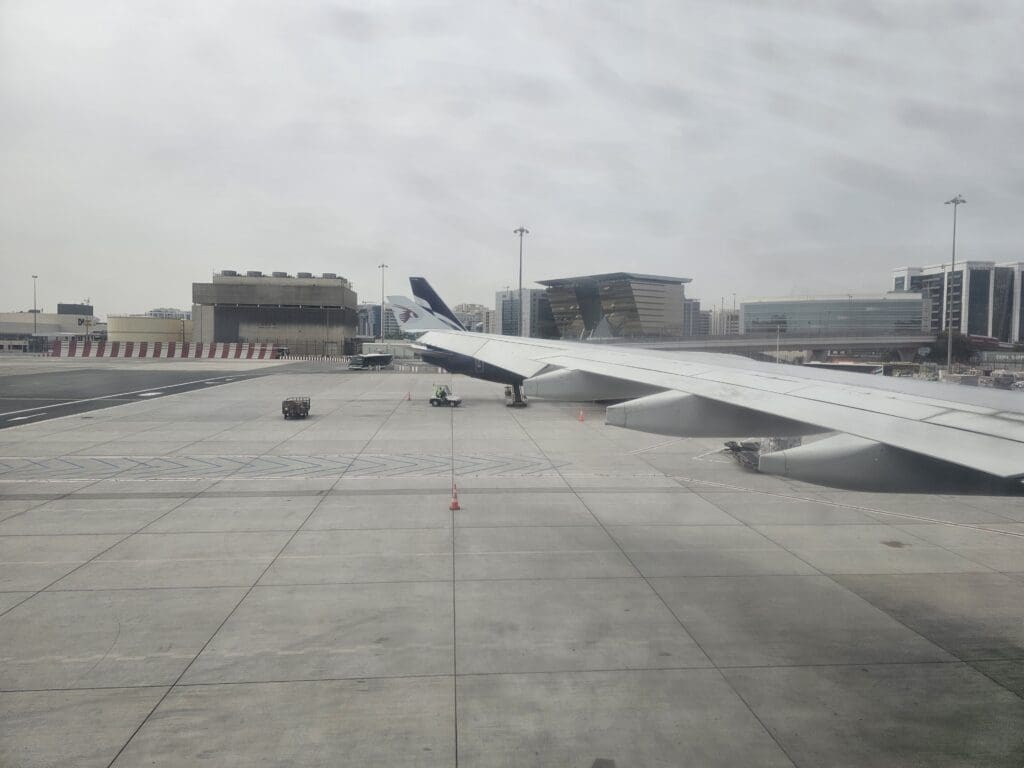
A few seconds after the bus came to a gentle halt, the doors slid open and passengers spilt out onto the pleasantly warm apron. Not in any major rush and savouring the opportunity to board a widebody aircraft via a set of open airstairs, I lingered behind and snapped some photos of the aircraft. From the outside, the fuselage of this Airbus seemed to be rather weathered with plenty of black marks and red stains on the wing, indicating that it had had a recent encounter with a rather unlucky bird! Once I had taken plenty of photos, I climbed up the steps and soon stepped into the galley, which separates the 24-seat Business Class cabin from the forward Economy Class cabin. As soon as I stepped into this, I received a friendly greeting from one of the two flight attendants standing there, and once one of them had checked my boarding pass, I was directed down the first aisle.
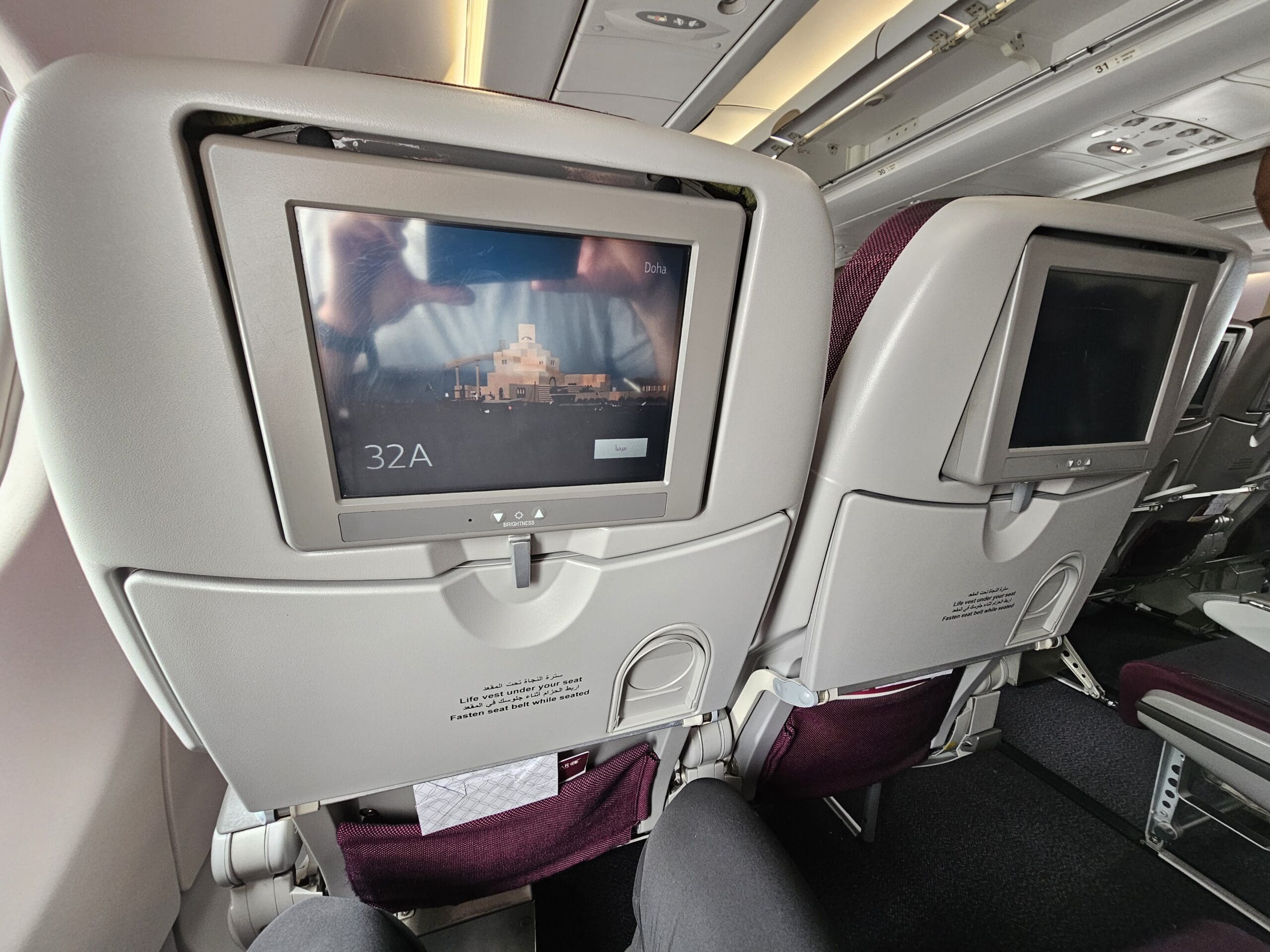
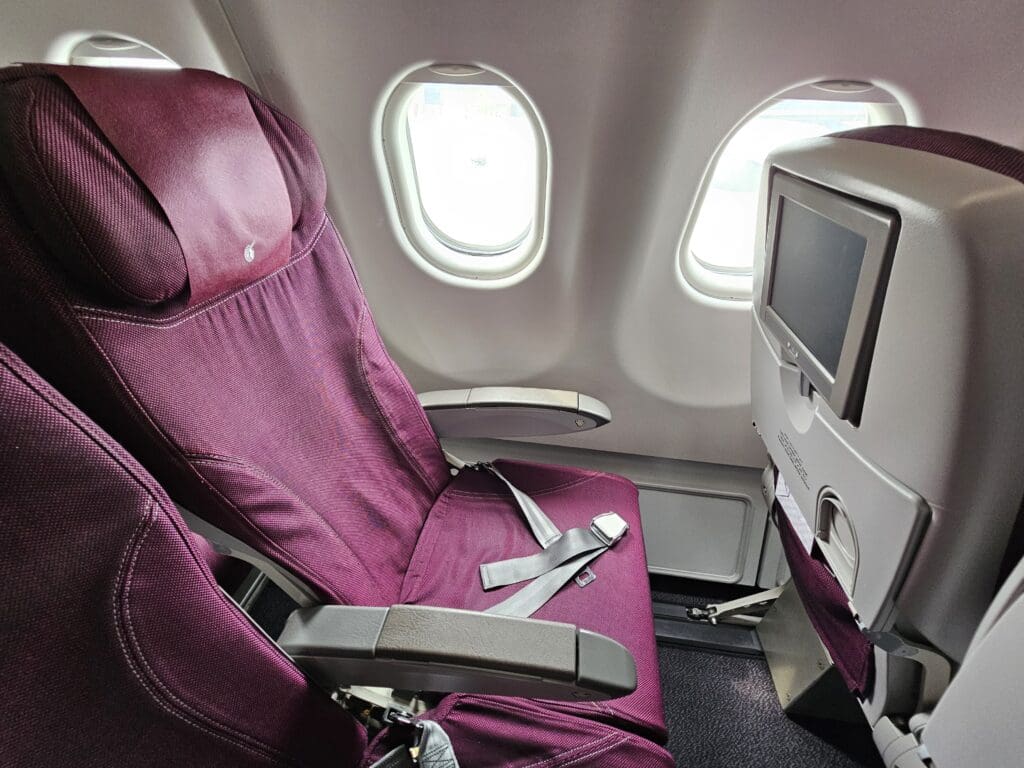
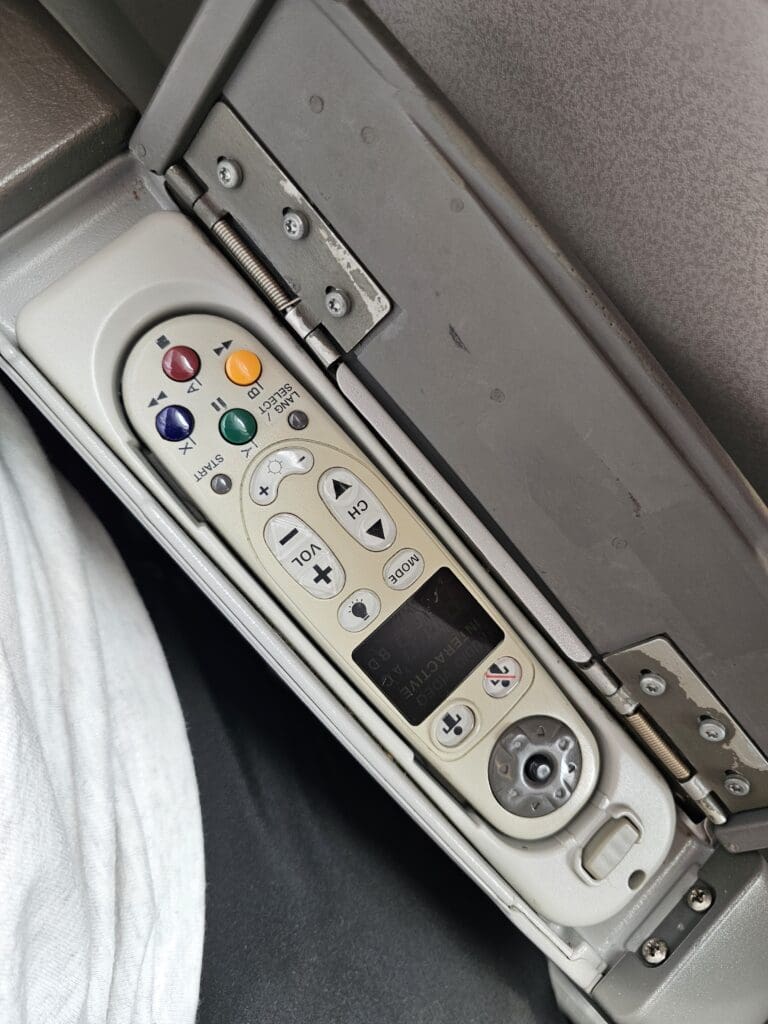
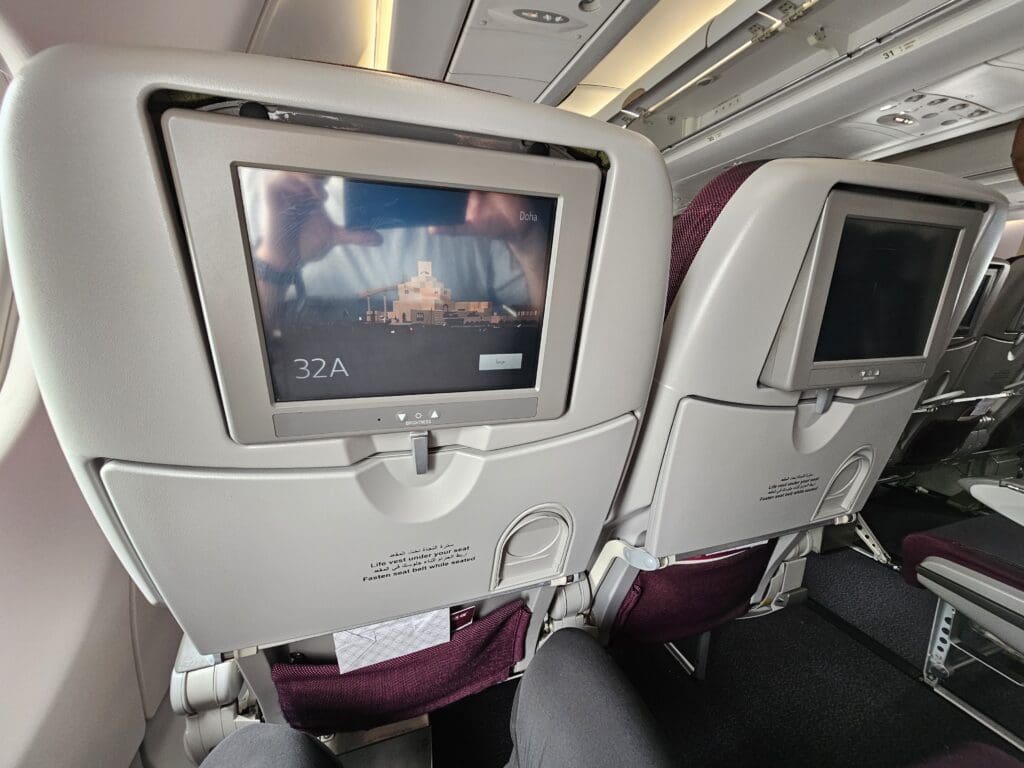
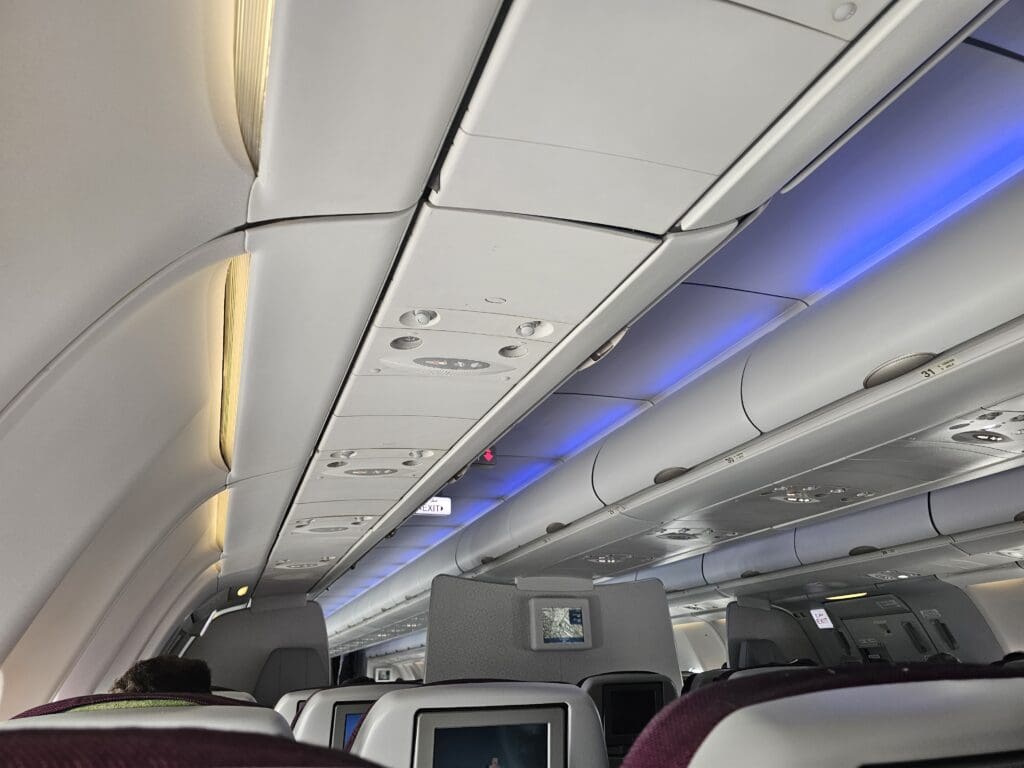
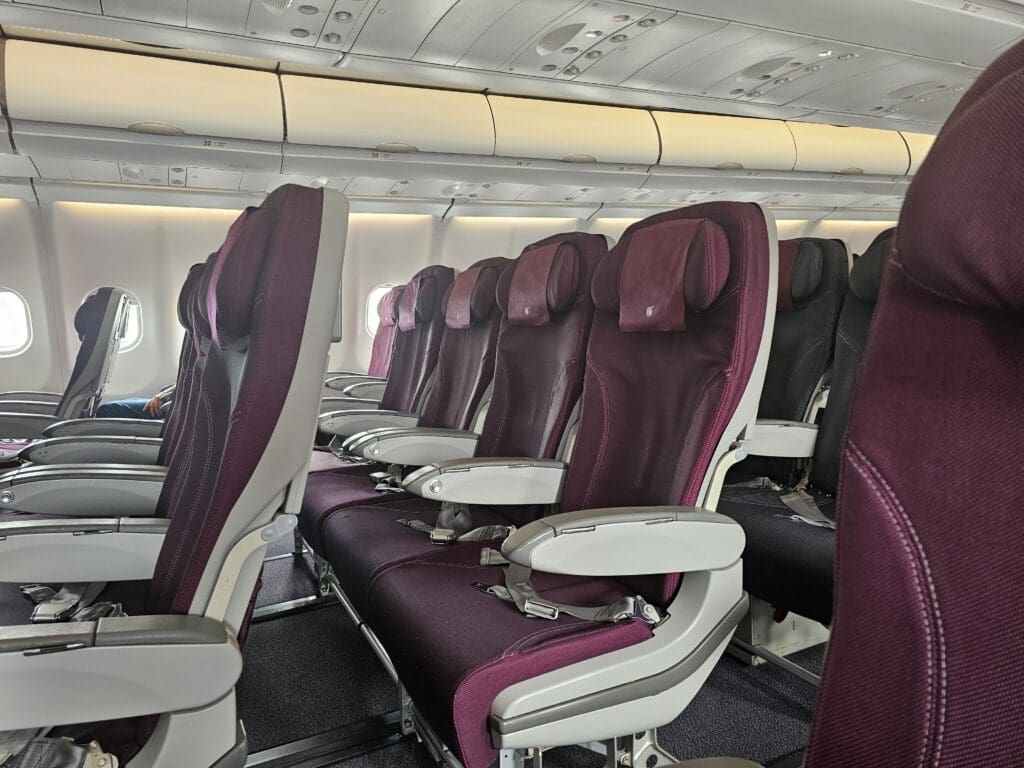
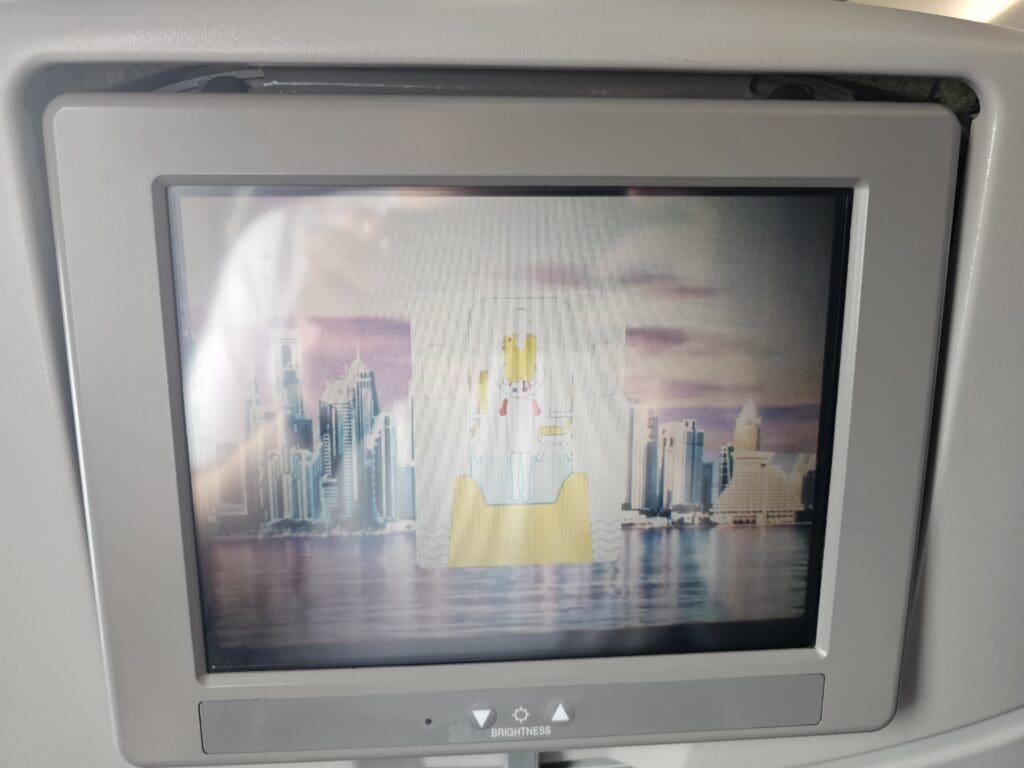
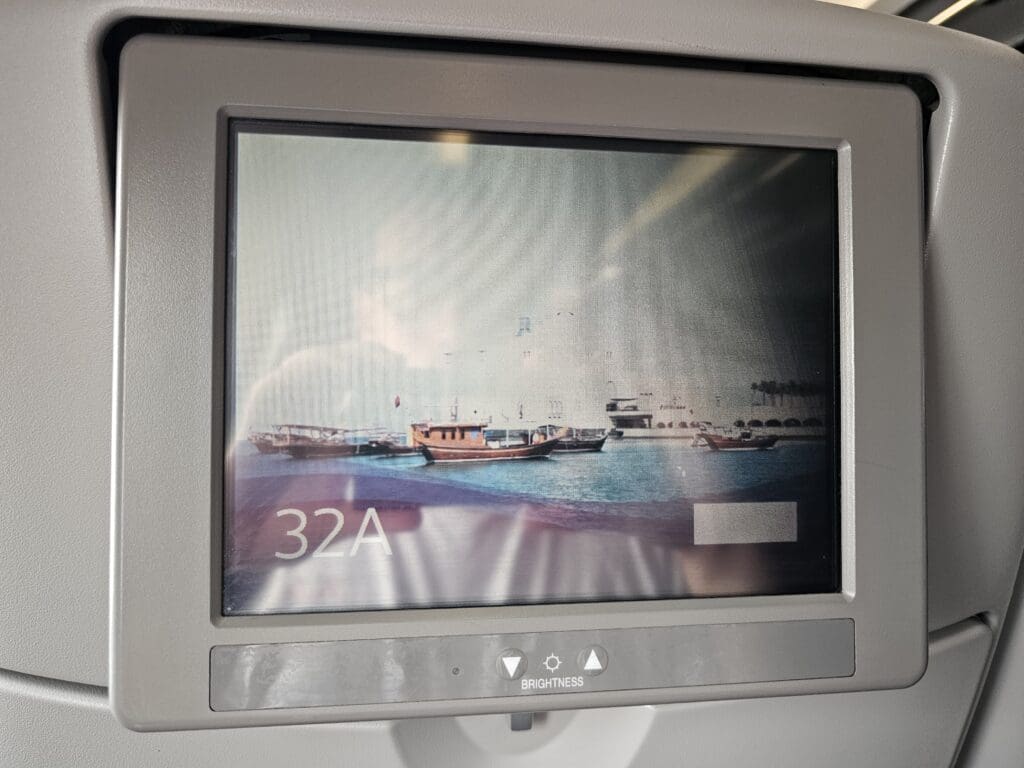
Qatar Airways’ Airbus A330-200s feature a total of 236 Economy seats, which come in the A330-standard eight-abreast configuration (2-4-2), other than at the rear of the aircraft where the fuselage narrows, and this reduces to 2-3-2. As is standard on most of Qatar Airways’ aircraft, each seat is covered in a burgundy or black fabric cover. Meanwhile, each featured an adjustable headrest that was partially covered by a burgundy disposable fabric antimacassar on which Qatar Airways’ famous oryx motif could be seen. Each seat also came with a tray table, a cup holder and a seatback pocket which contained a safety card and a sick bag, with Qatar Airways having halted publication of their Oryx inflight magazine in 2020 and never having recommenced publication of this. For entertainment, each seat is complete with a chunky and clunky retro inflight entertainment screen which is controllable via a pull-out remote control located in each armrest. With these screens dating back to 2006, these are the most retro inflight entertainment screens I have come across for quite some time! Finally, those looking to power their devices would have been disappointed as no at-seat power was provided in Economy. Unsurprisingly, given the short length of the flight to Qatar, headphones, blankets and pillows were not provided as standard.
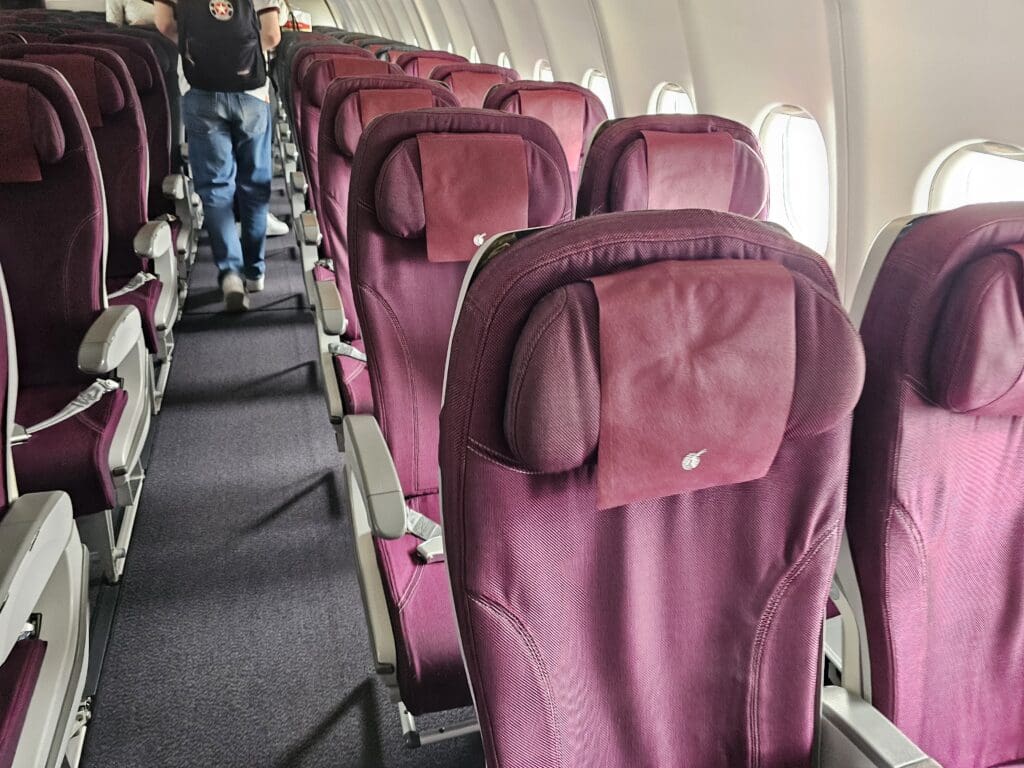
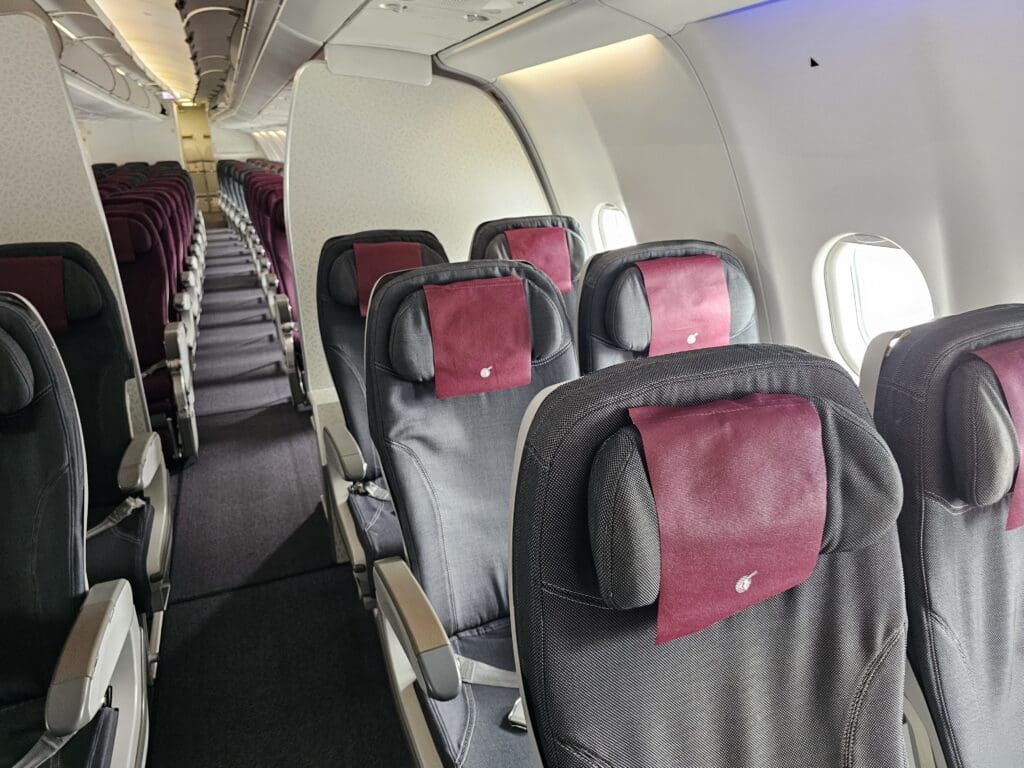
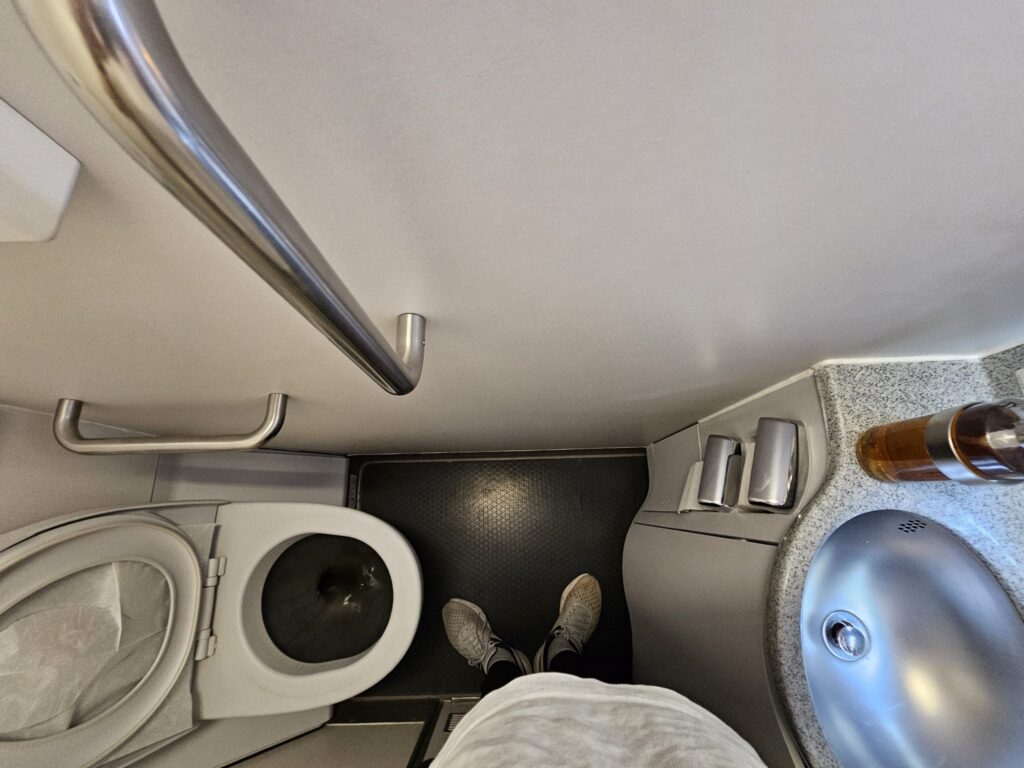
As I voyaged through Economy, I received a couple of polite, if not rather quiet and subdued, greetings from the two flight attendants that I passed before passing through the cabin divider and arriving at Seat 32A near the front of the rear Economy section. Once I had stowed my belongings in the Airbus’ seemingly small overhead lockers, I decided to make a trip to one of the lavatories. In total, seven lavatories are available for Economy passengers to use onboard Qatar Airways’ Airbus A330-200s, three of which are at the very front of the cabin, and four at the very rear. Making my way towards one of the rear lavatories, upon opening this up, I found this to be in a clean and tidy state, stocked with the basics and featuring minimal signs of wear and tear, thus leaving me with nothing to make any sort of valid complaint about.
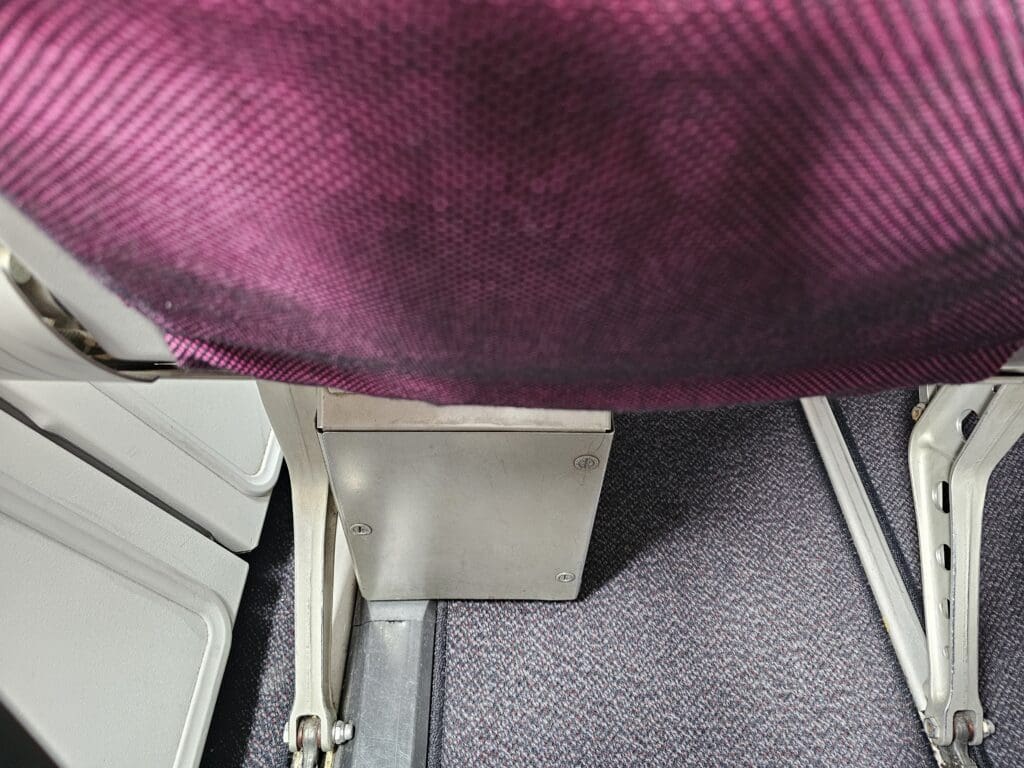
Upon returning to my seat, I sat down and settled in for the short sprint to Doha. Looking around, I found the area around my seat to be clean and tidy, and despite being one of Qatar Airways’ older jets, wear and tear was limited to a few inevitable marks and scratches. Although the window was sadly in a rather poor state meaning that taking any decent photos through this was virtually impossible. When it came to comfort, I found the seat to be comfortable and offer a reasonable amount of legroom, although this was impacted by a large and protruding inflight entertainment box which seemed to be present underneath each window seat. To summarise, for the most part, the seat and cabin left me with few complaints considering the short flight time to Qatar. That said, I imagine those on some of the aircraft’s longer slogs would likely have a very different opinion of this given the seat’s dated nature, lack of at-seat power and the rather retro inflight entertainment system.
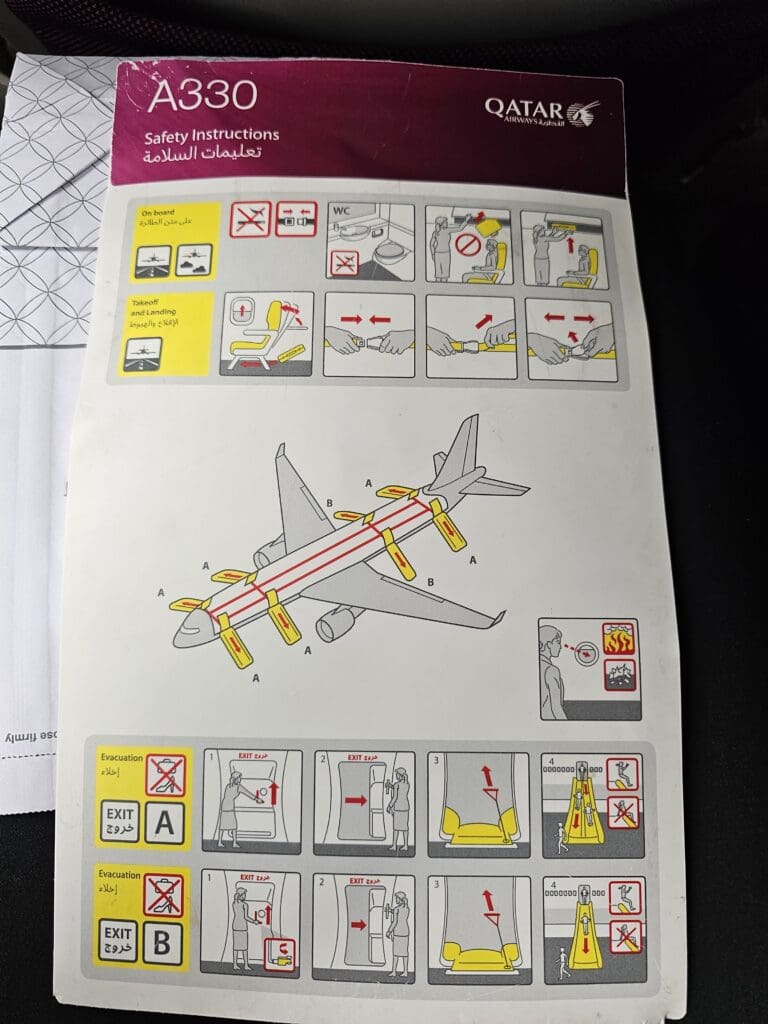
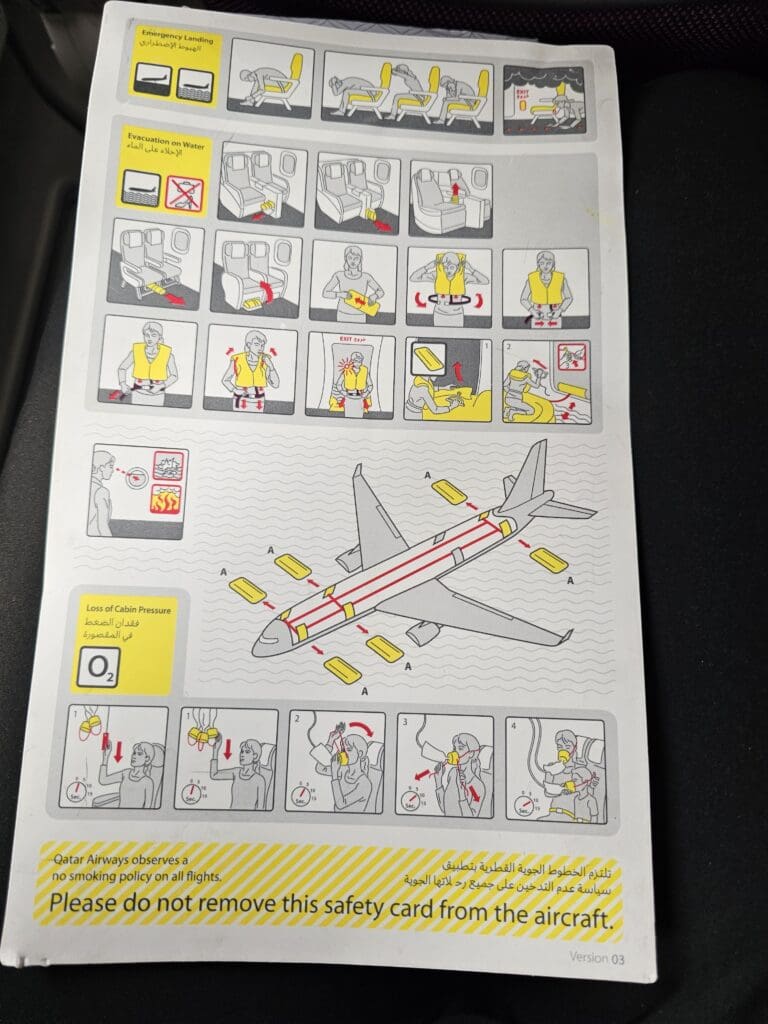
Once settled in, I watched as the second bus slowly trundled over to the Airbus, whilst inside the cabin, Qatar Airways’ boarding music rang out. Composed by Qatari musician Dana Al Fardan, this three-piece soundtrack combines traditional Qatari with classical Western styles and has served as the airline’s boarding music since 2023. Soon, all passengers from the second bus had made it onto the aircraft and much to my delight, this remained reasonably empty, giving me hope that I would be able to journey over to Doha with the luxury of an empty neighbouring seat. As we waited, the boarding music was interrupted every so often with the crew performing announcements in Arabic and English, encouraging passengers to store their luggage correctly and giving the usual warnings cautioning passengers against smoking or vaping onboard.
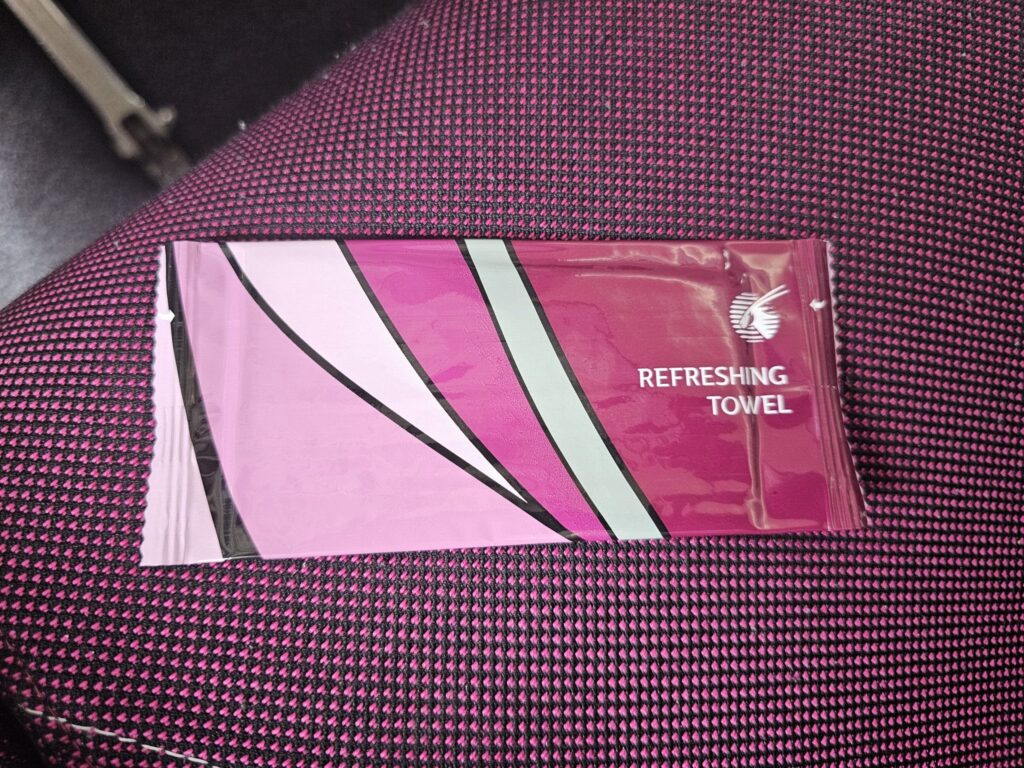
At 1130, twenty minutes ahead of our scheduled departure time, the Captain’s voice filled the cabin as they undertook their welcome announcement, which, despite perhaps being a local pilot, was undertaken in English only. Indicating that they were type-rated on both the Airbus A330 and Airbus A350, the Captain initially welcomed passengers onboard the latter type before correcting themselves. During their welcome, the Captain welcomed all passengers aboard, thanked passengers for flying with Qatar Airways, introduced the First Officer and Cabin Director, noted our 55-minute flight time and our cruising altitude of 22,000 feet. They then concluded this with a warning that we would be in for a bumpy ride over to Qatar and requested passengers remain seated and buckled up at all times. As this announcement was underway, the crew passed through the cabin handing out packaged wet wipes, with another crew member following them and doing the same several minutes later. This perhaps indicated that there was either a lack of communication between the flight attendants at that time, or Qatar Airways was simply generous with their wet wipes!
As the Captain’s announcement was underway, the third and final bus arrived at the aircraft, and soon the final handful of stragglers appeared. Much to my delight, once all passengers had boarded, the aircraft remained largely empty and I would guestimate that the Economy cabin was no more than 20% full, with most solo travellers enjoying the luxury of an entire row to themselves. Focusing on the demographics, perhaps unsurprisingly given Dubai’s status as a global city and Qatar Airways’ route network, passengers seemed to hail from across the world. However, with our aircraft arriving in Doha during the afternoon lull, most of those onboard seemed to be point-to-point flyers, rather than those transiting onwards, such as myself. Turning to the crew, most of those working the flight seemed to hail from either the Philippines or South Asia, plus an Arabic-speaking crew member, as well as another from Eastern Europe, and one crew member from Korea. As soon as the final passengers had boarded, the Cabin Director performed their welcome announcement in Arabic and English, which featured all the usual thanks and warnings.
Once the Cabin Director’s announcement had come to an end, a short prayer was broadcast over the inflight entertainment screens before these transitioned to Qatar Airways’ safety video. Introduced several months before my flight in late 2024, this features famous American comedian Kevin Hart who takes passengers through the safety instructions, whilst highlighting several of the airline’s destinations. For those regular ME3 flyers, this contains a jab at Emirates’ 2024 ‘No-Nonsense’ safety video, with Hart noting ‘You know they say a lot of these safety videos are no-nonsense – unimaginative, uninventive and flat out boring’. At over seven minutes long, this is one of the longer safety videos out there, and I found it to be rather cringey, but I suppose this serves its purpose.
As the safety video played, with four minutes to go until our scheduled departure time, the Airbus jolted backwards and was slowly pointed in the direction of the runway. Upon coming to a halt, the jet’s two large General Electric CF6-80E1A4 engines spooled into life, resulting in a fair amount of whirring and vibration. After a few minutes, the flaps were partially extended in preparation for our departure, and we commenced our taxi to the end of Runway 12R. This initially took us past Terminal 1, where another Qatar Airways jet had just arrived – the same former Virgin Australia Boeing 777-300ER that I had flown from Doha to Manchester in October 2023. Of much more interest and an aircraft that I would likely never see back in Britain was an Iran Airtour Airbus A310 that had just arrived from Tehran. Unfortunately, sitting on the opposite side of the aircraft to the terminal, nothing more than a few glimpses of this rare jet could be seen as we made our way to the runway, and I was instead treated to vistas of three Emirates Boeing 777-300ERs arriving from destinations across the world.
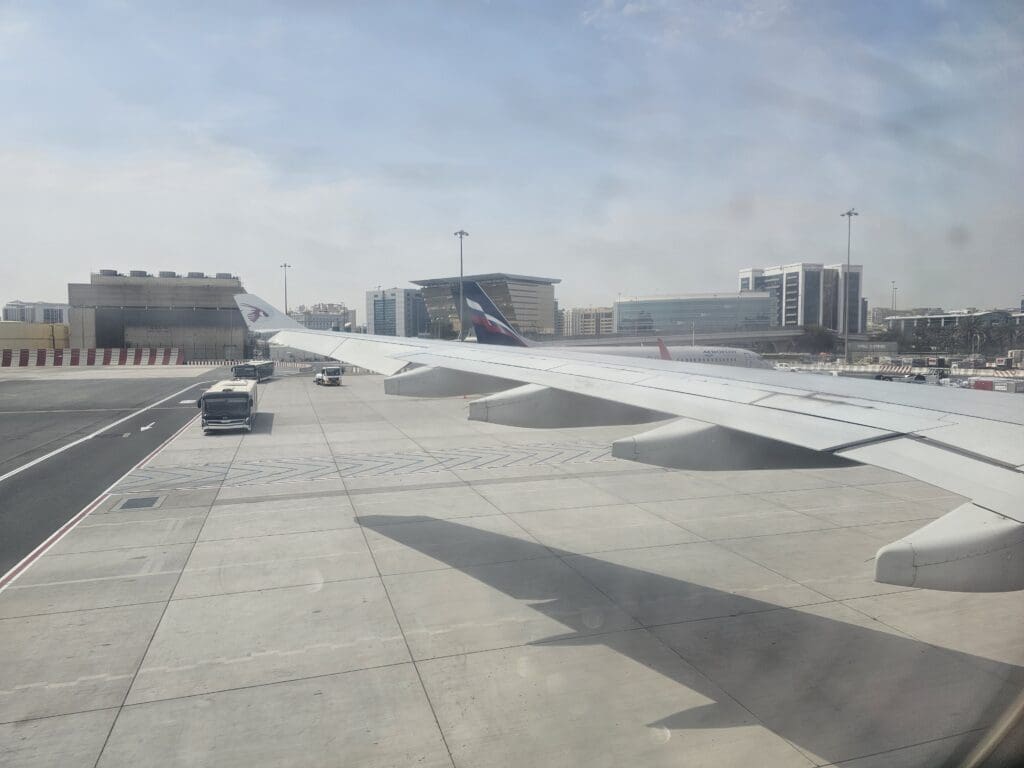
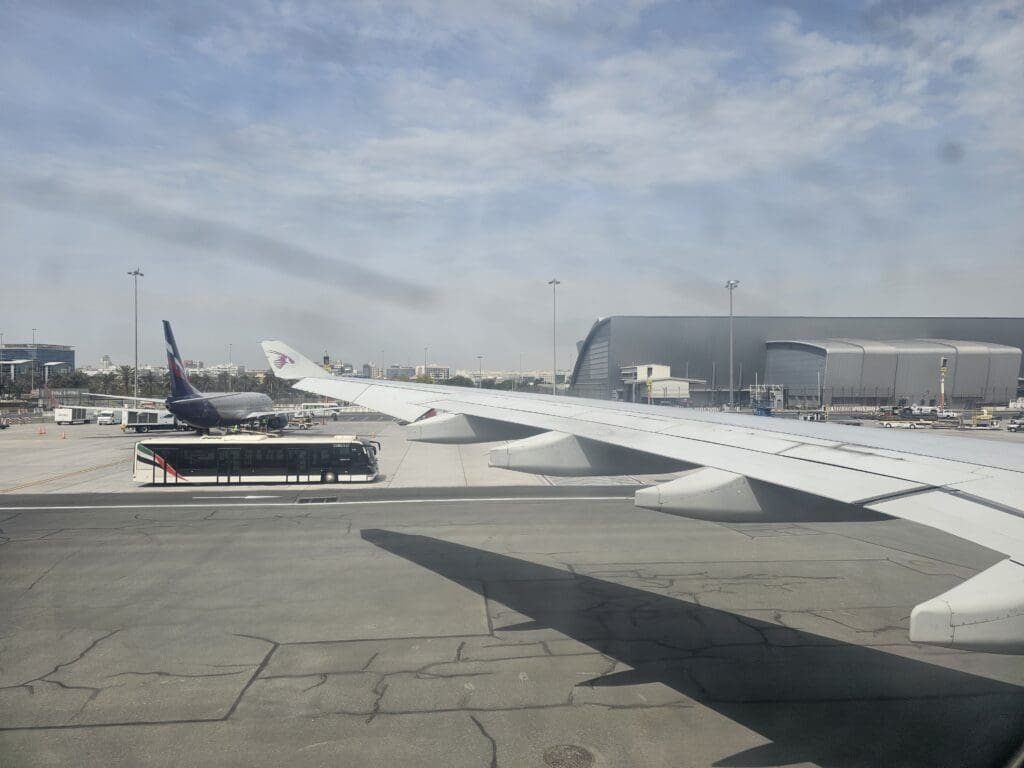
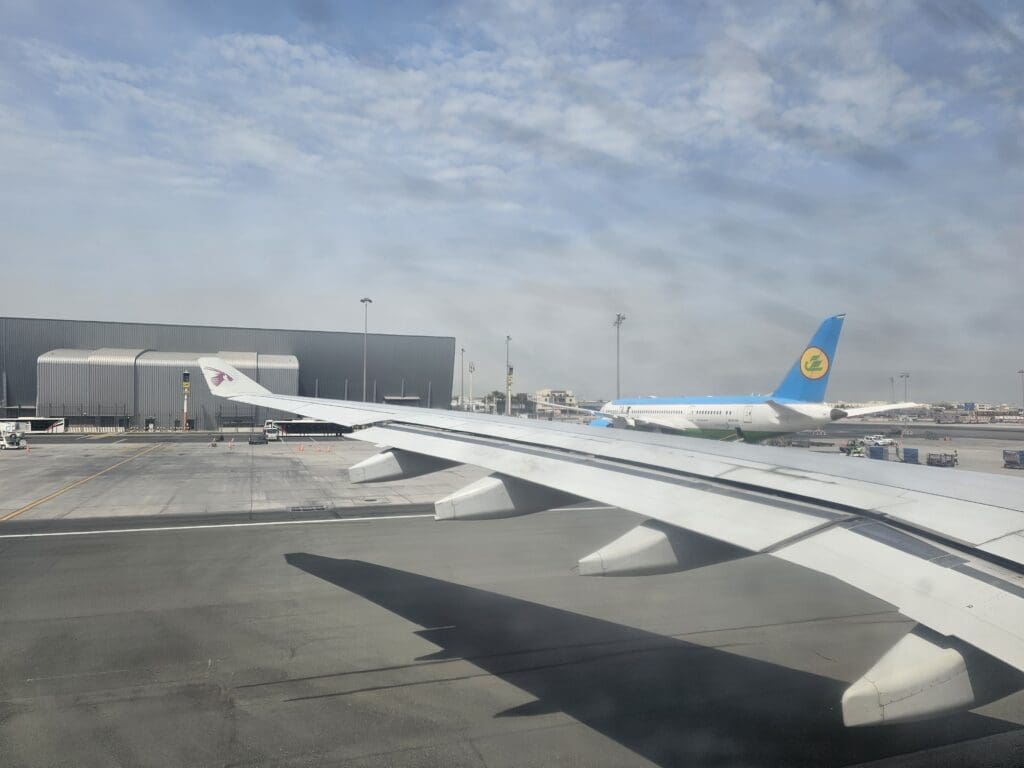
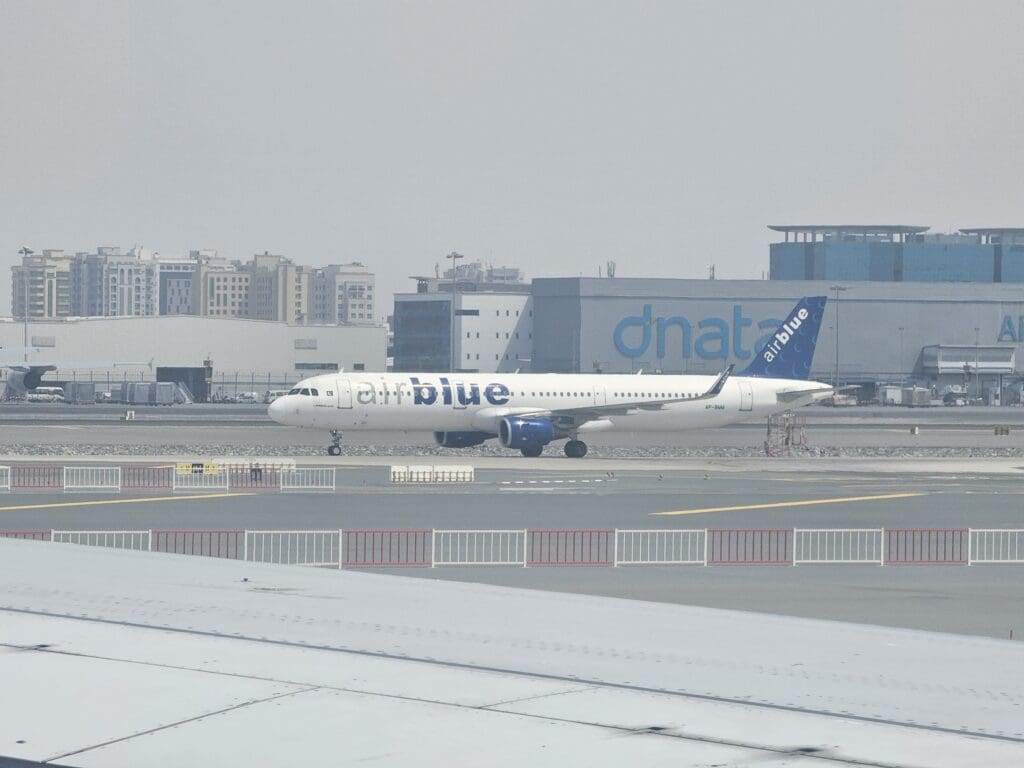
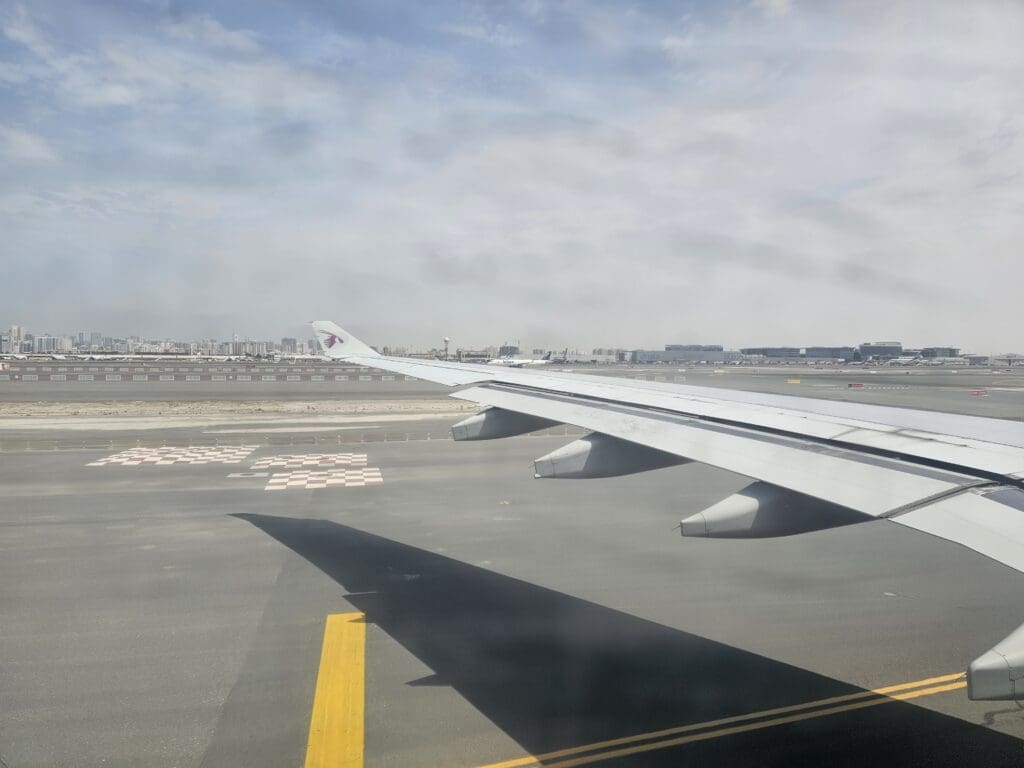
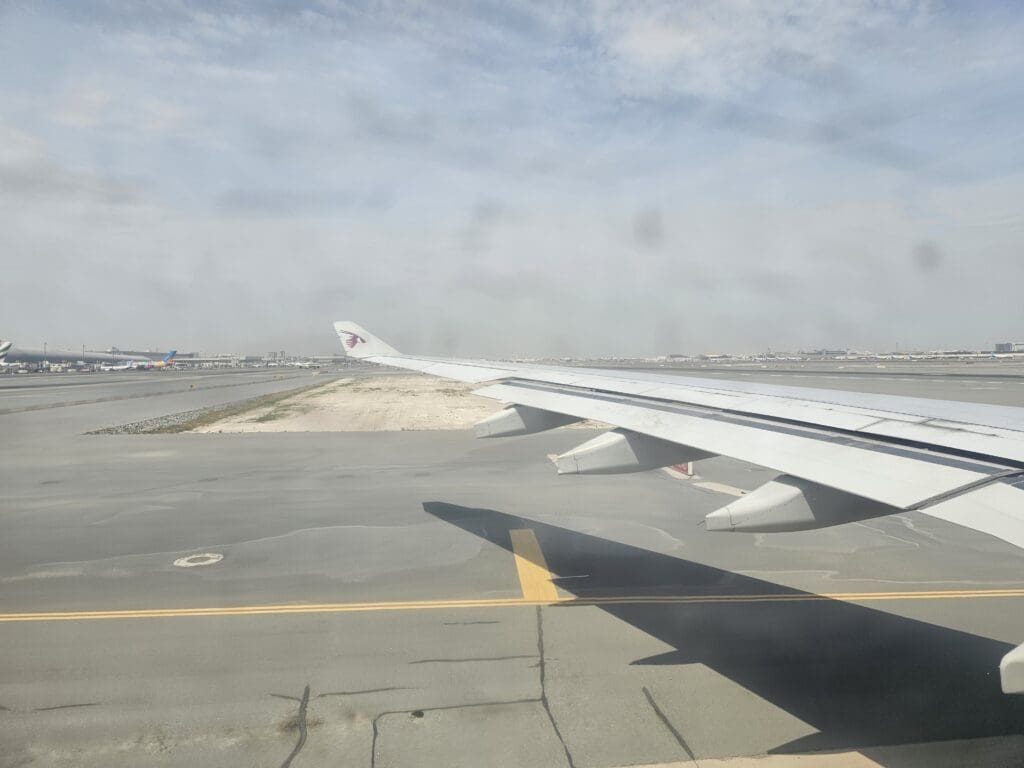
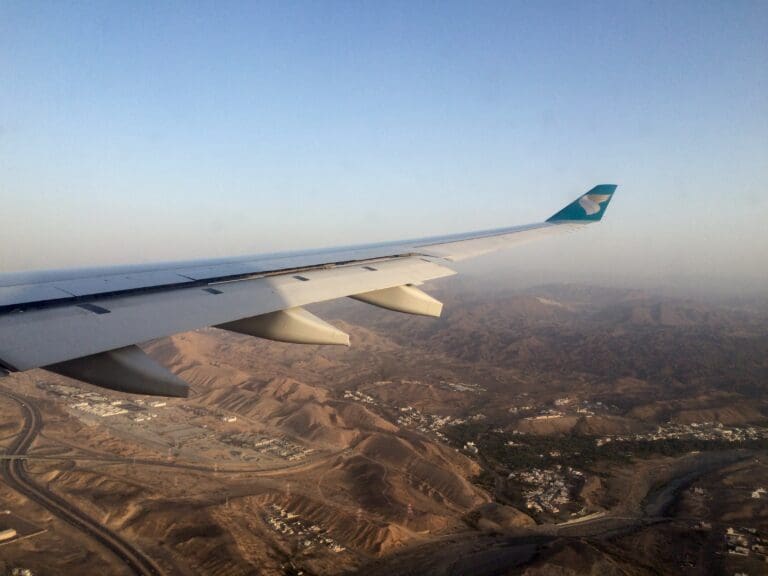
A few minutes after commencing our taxi, the Airbus arrived at the end of the runway, where a short wait was required to allow for a pair of IndiGo Airbus A320s to commence their treks to Bhubaneswar and Mumbai. Following a short wait, at 1201, the Airbus made its way onto the runway, and without stopping, its two General Electric engines spooled into life as the aircraft commenced a fairly powerful takeoff roll, soon rotating upwards into the sunny skies of the United Arab Emirates. Once in the air, a good birds eye view of the stands at the Eastern end of the airfield where plenty of Emirates widebodies could be seen waiting for their next missions before the aircraft left the airport behind and climbed out over Dubai’s northwestern neighbourhoods of Al Warqa and Mirdif, before heading out over the sands of the Dubai desert.
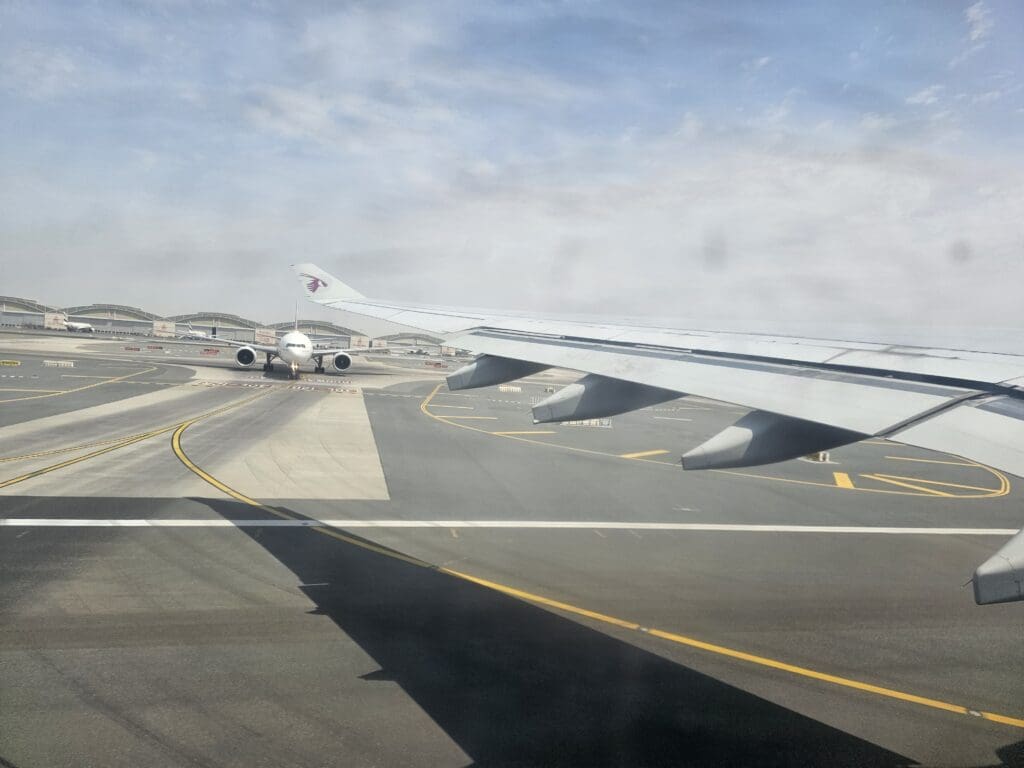
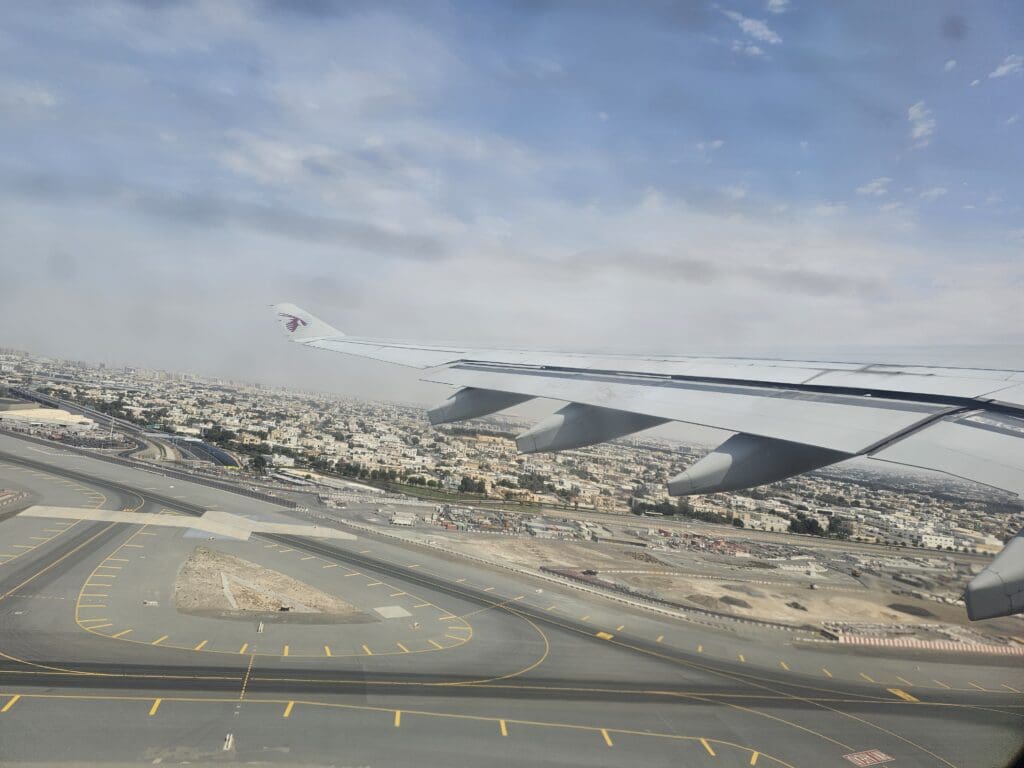
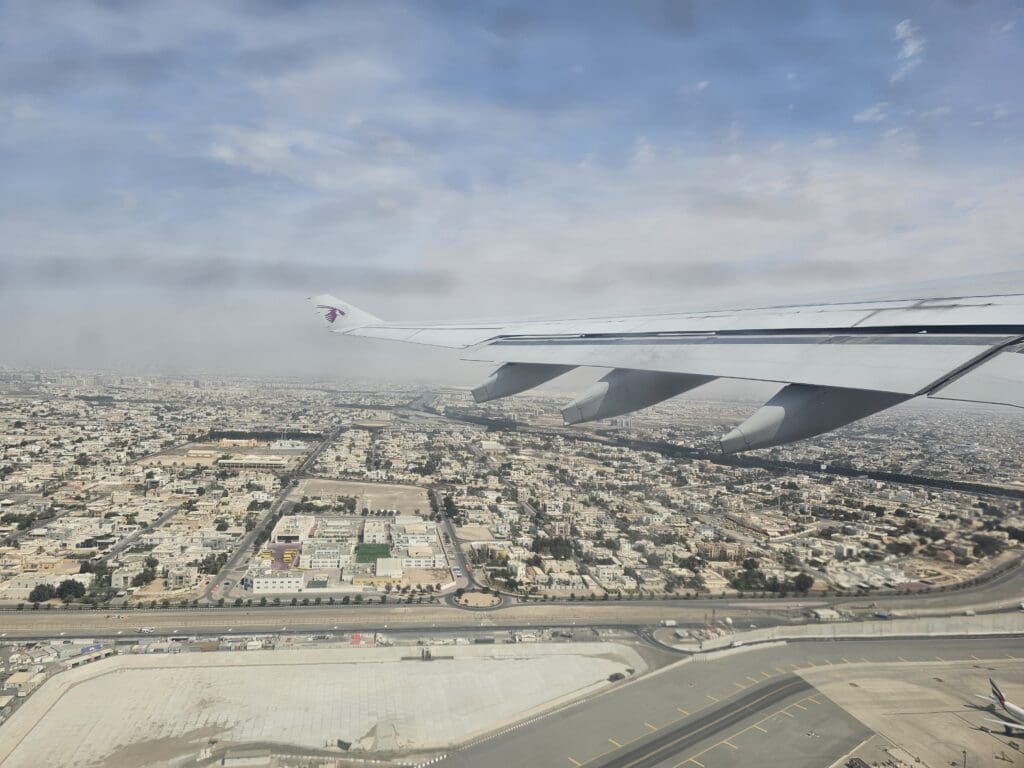
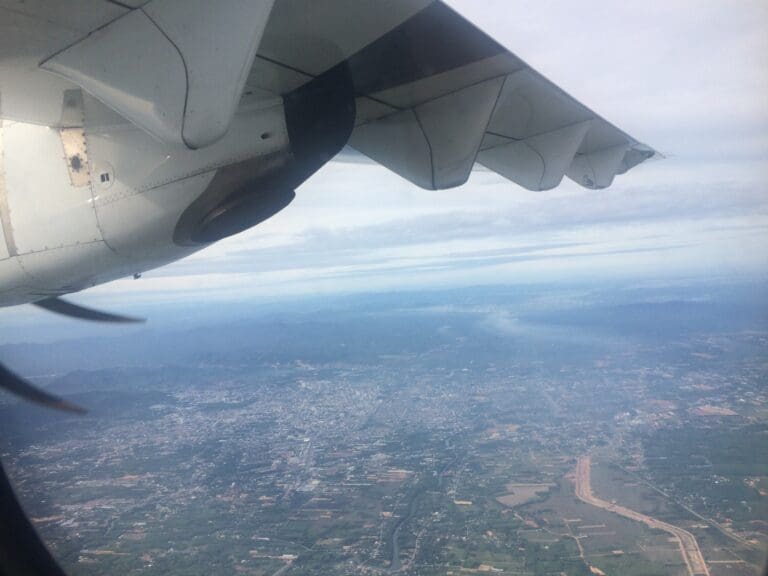
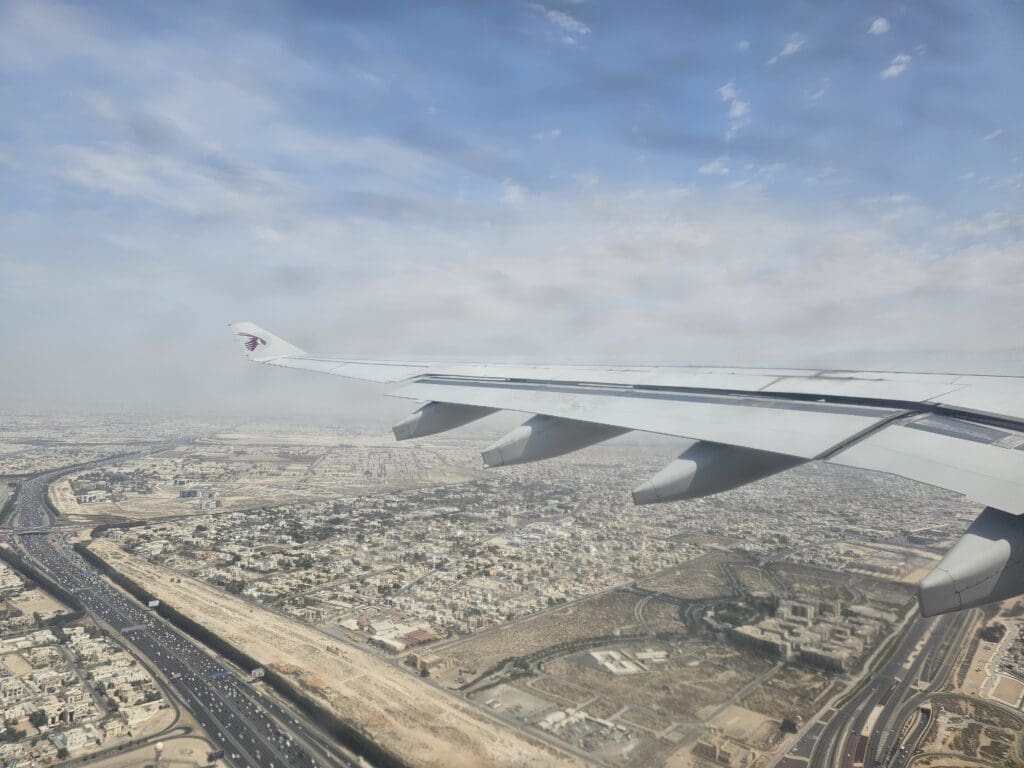
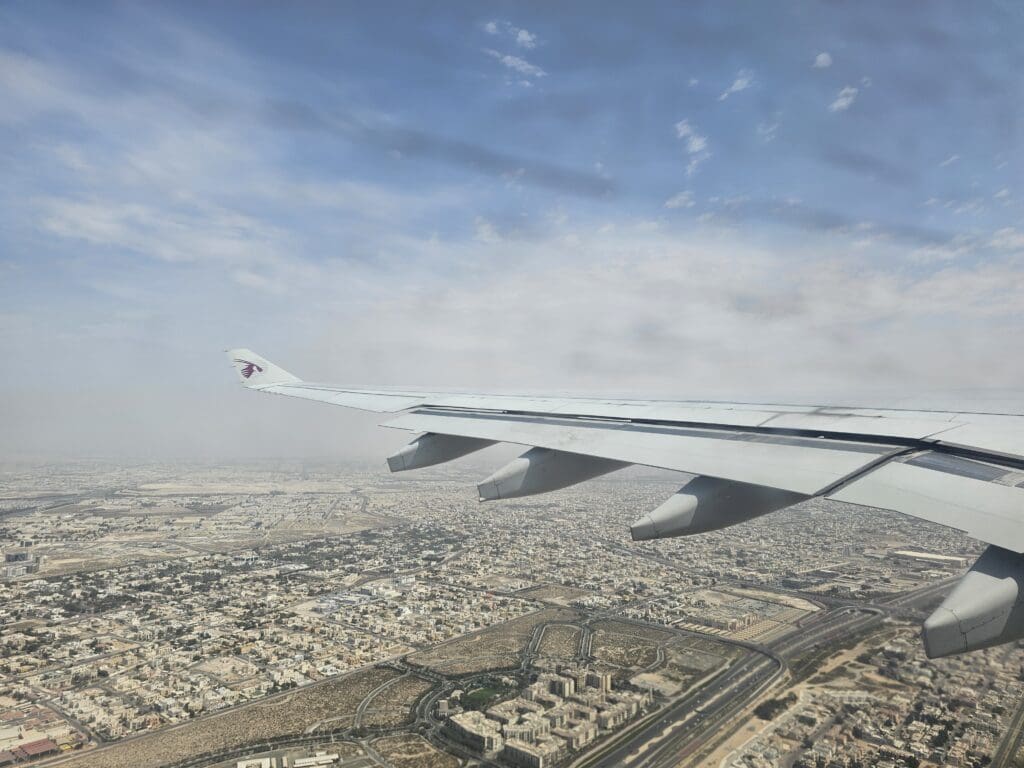
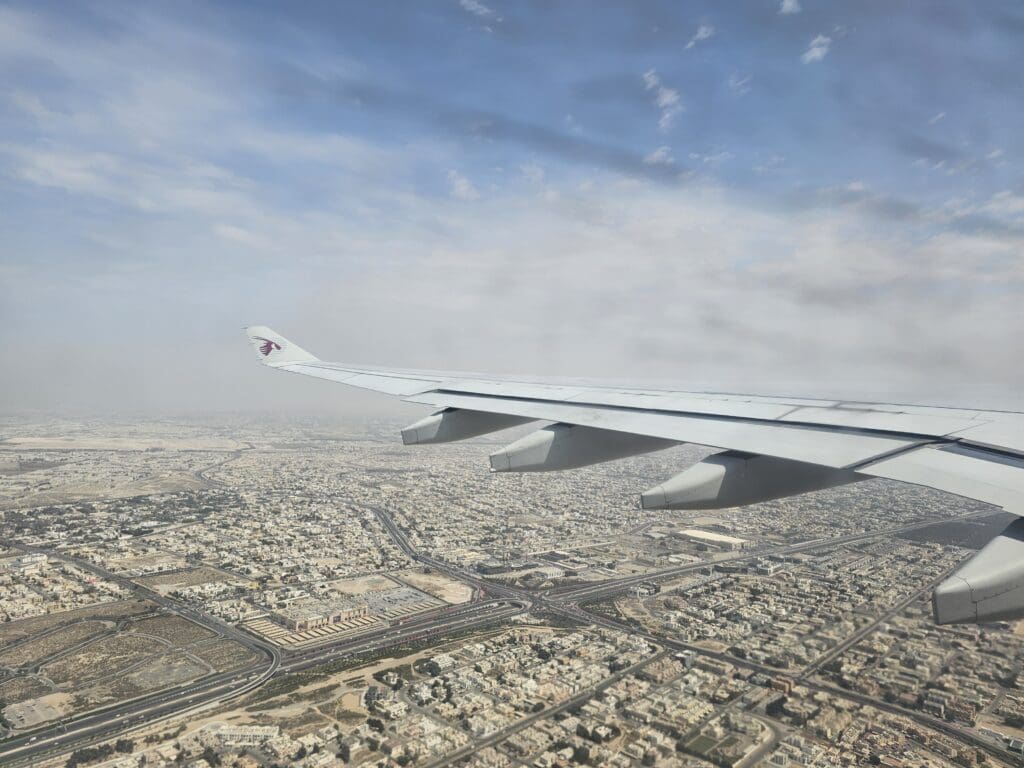
No more than a minute after leaving the airport behind, the Airbus banked to the right and crossed over Dubai International City before rolling out on a westerly heading that would take us to Doha with only minimal additional turns. After passing over Dubai Silicon Oasis and Nad Al Sheba, the Airbus reached Dubai’s skyscraper-filled shoreline, passing in between Business Bay and Palm Jumeirah before heading out over the waters of the Persian Gulf. Whilst this route would have offered superb final vistas of Dubai, a combination of the heavily scratched windows and the lunchtime clouds and haze meant that nothing other than clag could be seen below for virtually all of the flight. As the Captain had warned, once up in the sky, it wasn’t long until we were shaken around by turbulence, with this being an omnipresent feature of our journey that resulted in the seatbelt signs remaining illuminated all the way to Qatar.
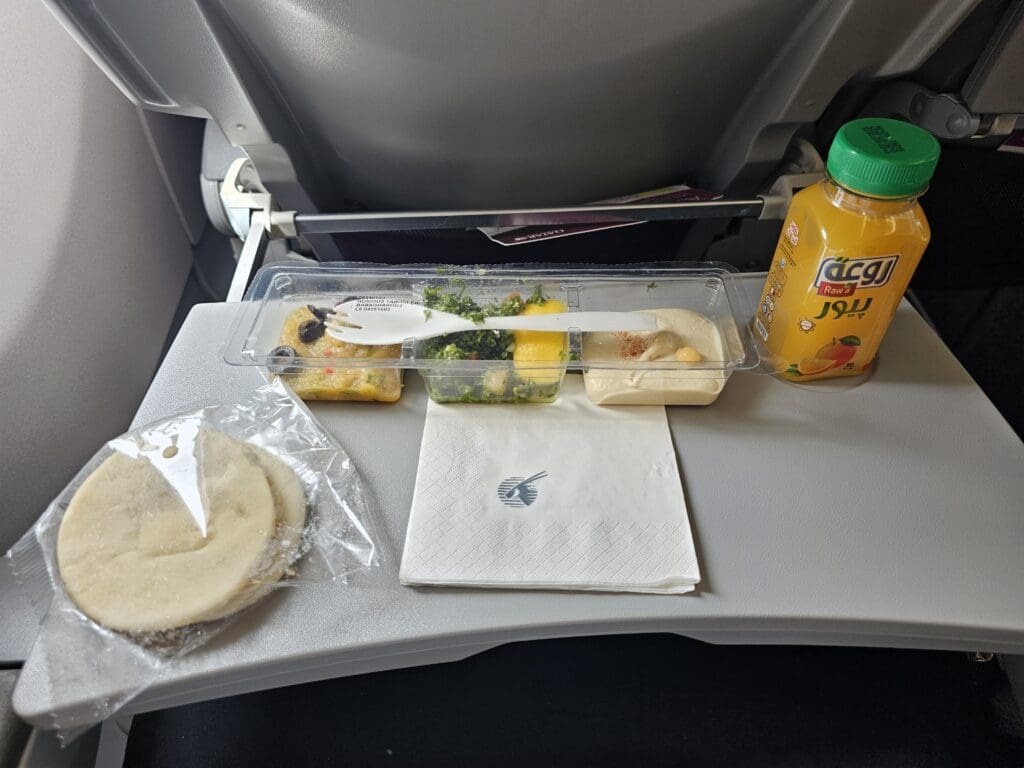
A short time after departure, the inflight entertainment screens temporarily became unusable as a short video for Qatar Airways’ charity partner, Education Above All, was broadcast over these. Meanwhile, inside the cabin, despite the turbulence, given the short flight duration, the crew were soon released from their seats and commenced the onboard service. Back home in Europe, given the short flight time, few Economy passengers would perhaps bat an eyelid were there to be a total absence of service during the flight. However, as is the norm in this part of the world, Qatar Airways was to serve a complimentary offering to all passengers. Within a few minutes of the onboard service commencing, I was handed a pack containing portions of baba ganoush, tabouleh and houmous, along with a packet containing two warm pitta breads and a 180ml bottle of rather sugary orange juice. Soon getting to work, I found this to be a very sufficient offering given the short length of the flight, leaving me with no complaints. Needless to say, I dread to think of how hard the crew must work to ensure that all passengers are served on a busy flight between Dubai and Doha!
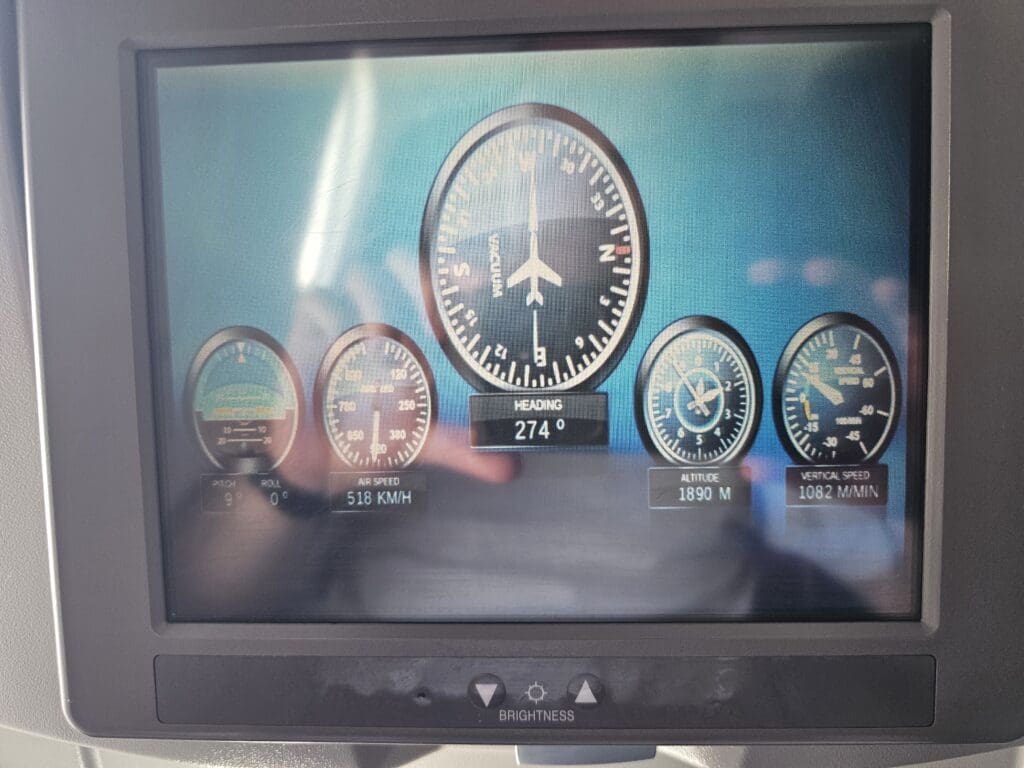
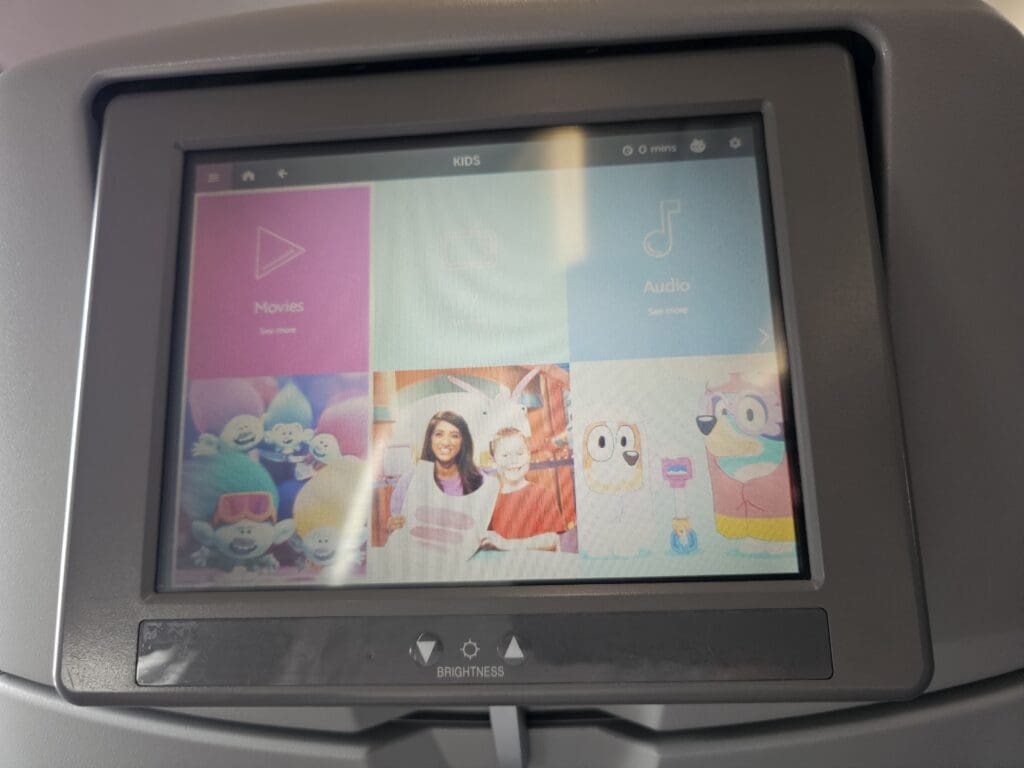
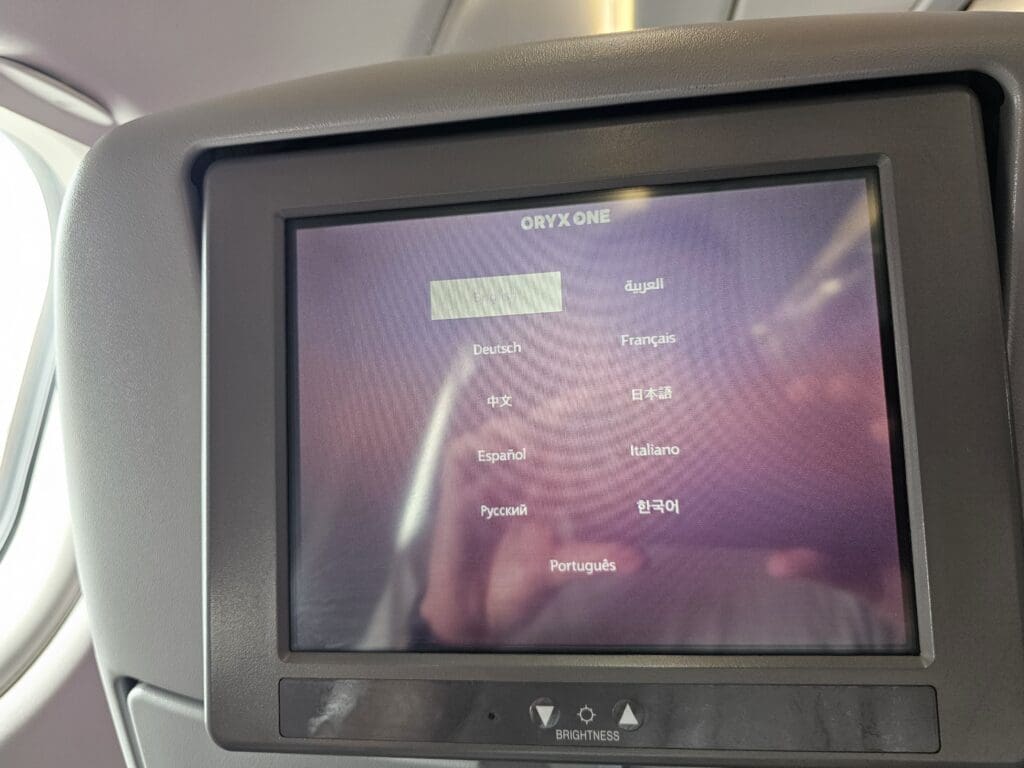
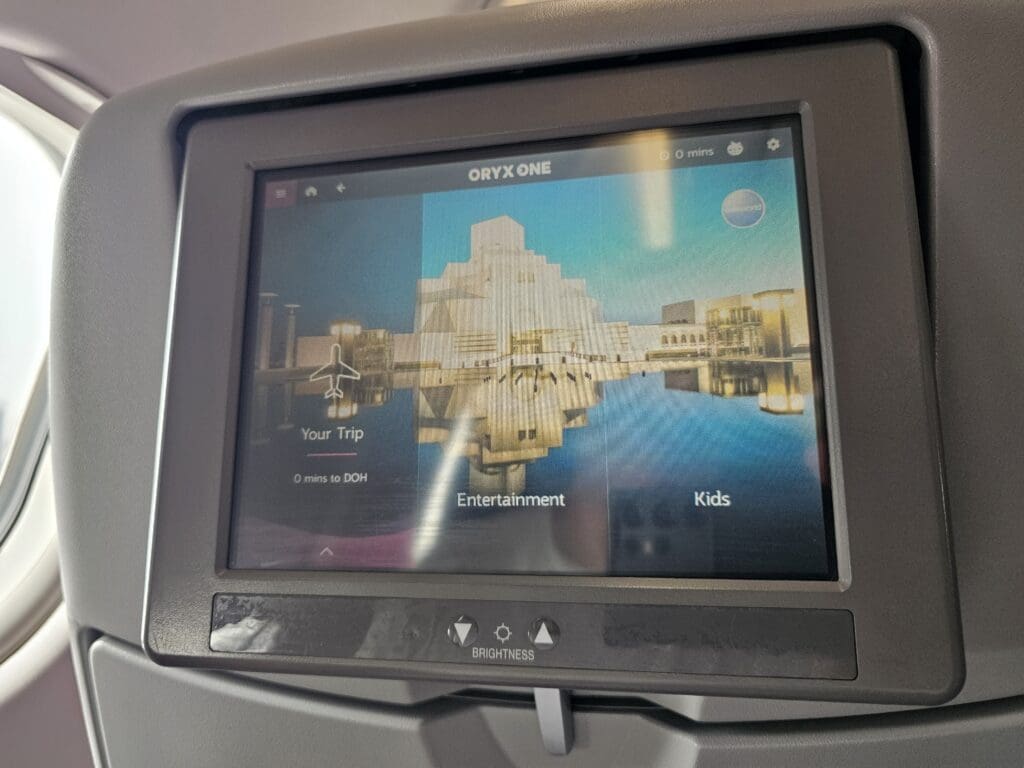
Just ten minutes after departure, the Airbus could be felt levelling off at its low cruising altitude of 22,000 feet by which time the aircraft was nearing the small Emirati island of Sir Abu Nu’Ayr. Covering an area of 13.23 square kilometres, this island sits around 65 kilometres to the north of Abu Dhabi and is part of the Emirate of Sharjah. From there, the Airbus continued heading over the sea and with nothing to see outside, I decided to have a quick look through the aircraft’s inflight entertainment system. Available in a smorgasbord of languages, I found the Oryx One system to be modern and well laid out. However, this was clearly designed with the touchscreens of most other aircraft in Qatar Airways’ fleet in mind, and so navigating through this with the clunky remote control was a little burdensome. Furthermore, I can’t deny that the quality of this retro screen was well below that of the standard that many now expect, whilst the moving map simply scrolled through pages rather than being interactive. Nevertheless, I found Oryx One to serve its purpose and was home to a diverse plethora of films, music and television programmes from across the world, and it is fair to say that passengers are unlikely to get bored on even the longest of services.
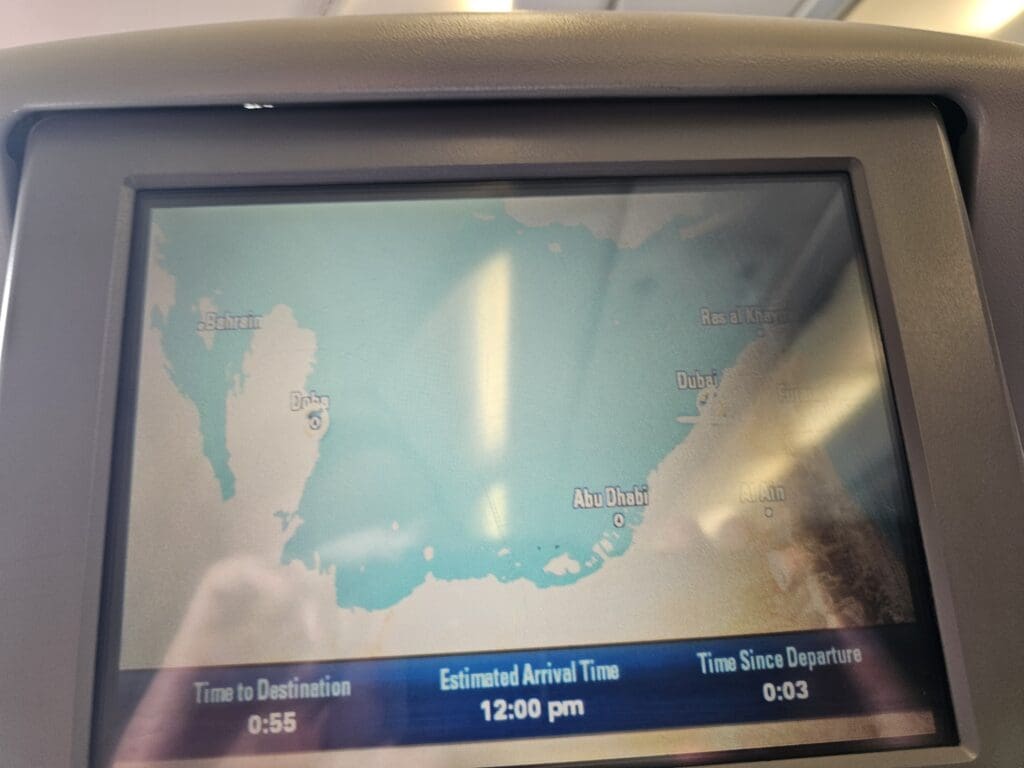
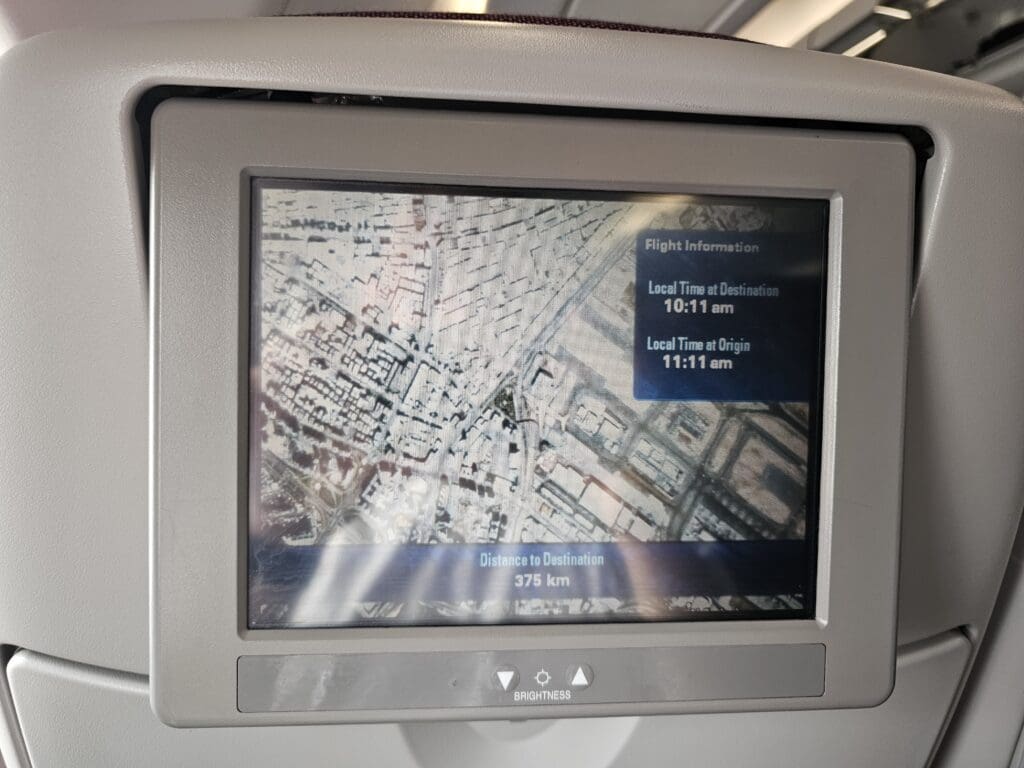
As we cruised over the Persian Gulf, at 1220, the Captain’s voice filled the cabin once again, and they provided us with an update on the weather in Doha and noted that we would be on the ground in forty minutes, before thanking passengers for flying with Qatar Airways. This was immediately followed by the Cabin Director’s pre-arrival announcement in English and Arabic, which featured all the usual warnings regarding seatbacks, seatbelts, tray tables and window shades and whilst this was underway, several crew members passed through the cabin collecting any rubbish that had accumulated during the flight. Meanwhile, soon, the inflight entertainment system was temporarily frozen as a short promotional video for Doha Hamad Airport was broadcast over the screens.
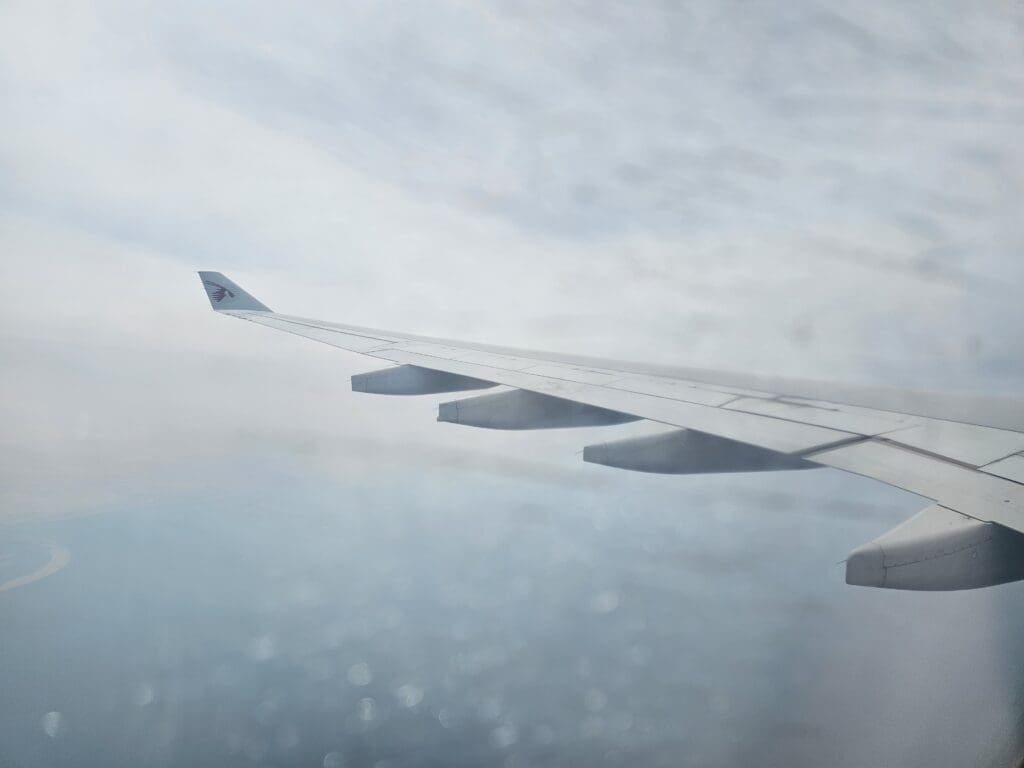
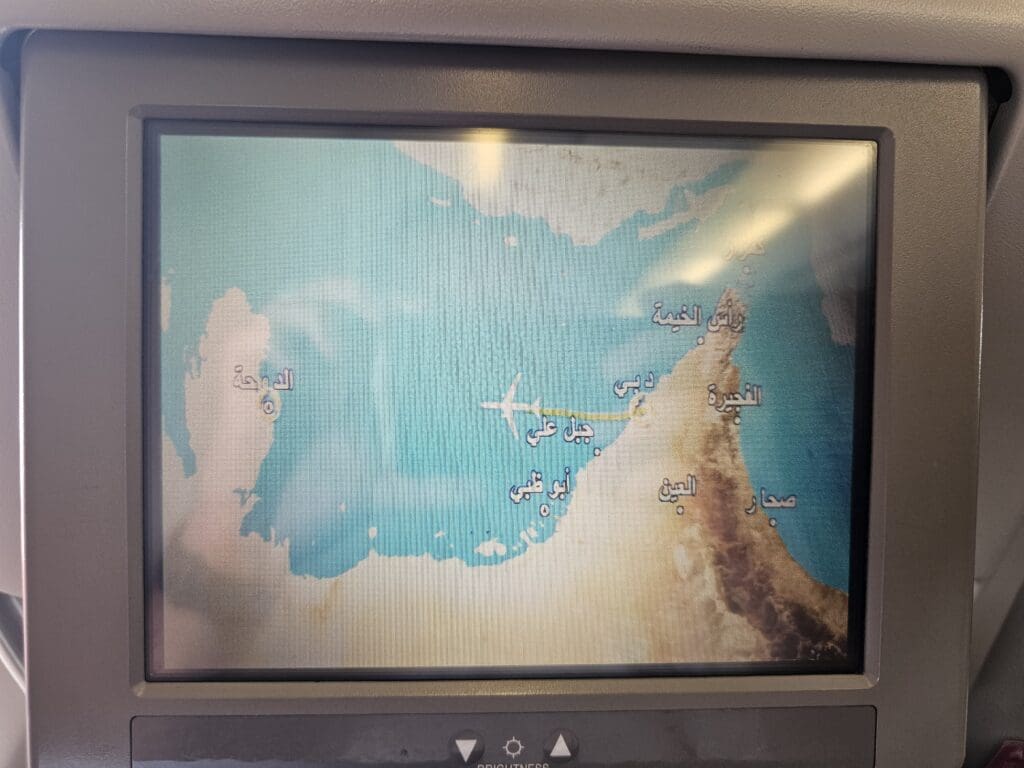
Just thirteen minutes after the aircraft had levelled off at its cruising altitude, approximately halfway between Dubai and Doha, the aircraft could be felt commencing its descent back to earth. Continuing to bump around, once the crew had made two passes to ensure everything was secure and in place for landing, they strapped themselves into the jumpseats in preparation for our arrival into Qatar. Looking outside, with little other than sea and haze below, our descent into Doha was not the most exciting of arrivals, with little to be seen for much of this until a FlyDubai Boeing 737-800 whizzed past below in the opposite direction on its way from Doha to Dubai.
Soon, the Airbus neared the eastern coastline of Qatar near Lusail and turned to fly southwards towards the coastline towards Doha Hamad Airport. Unfortunately, sitting on the left-hand side of the Airbus, little could be seen other than the blue waters of the Persian Gulf as we trundled down the coastline towards the capital city. Soon, the reassuring sight of the seat wall at the north of the airport came into view, and after 48 minutes spent travelling through the bumpy skies of the Middle East, the Airbus made a soft touchdown on Runway 16L. Contrasting with our smooth arrival, the aircraft braked rather heavily, presumably in an effort to minimise taxi time, and we soon vacated the runway to the right.
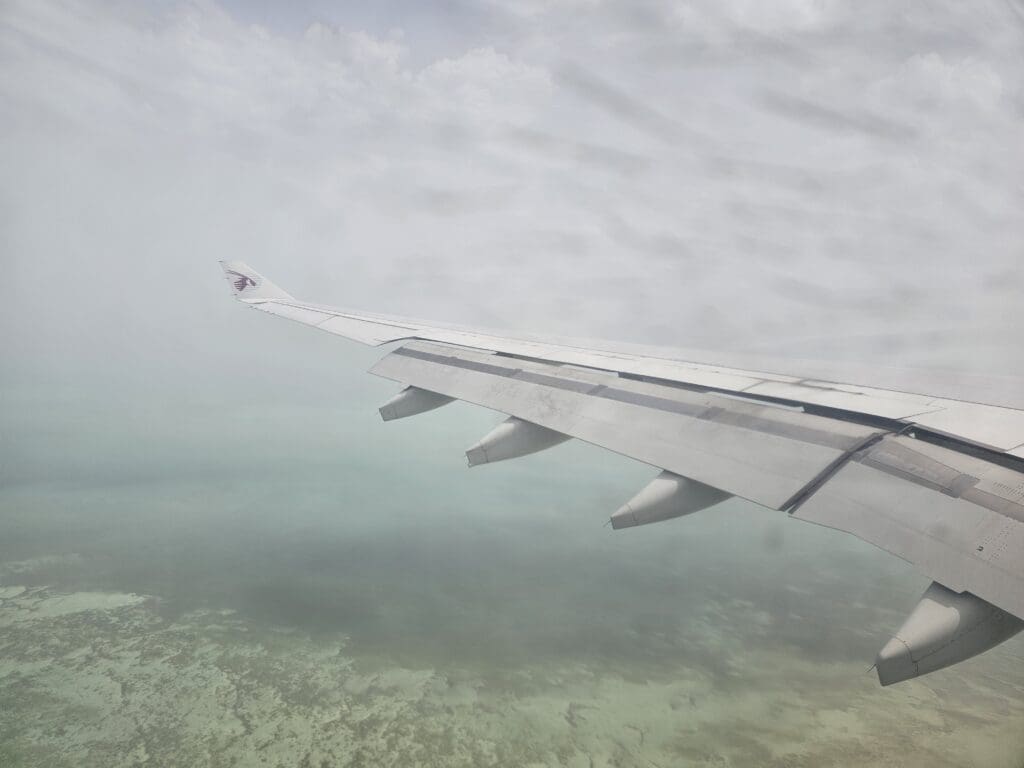
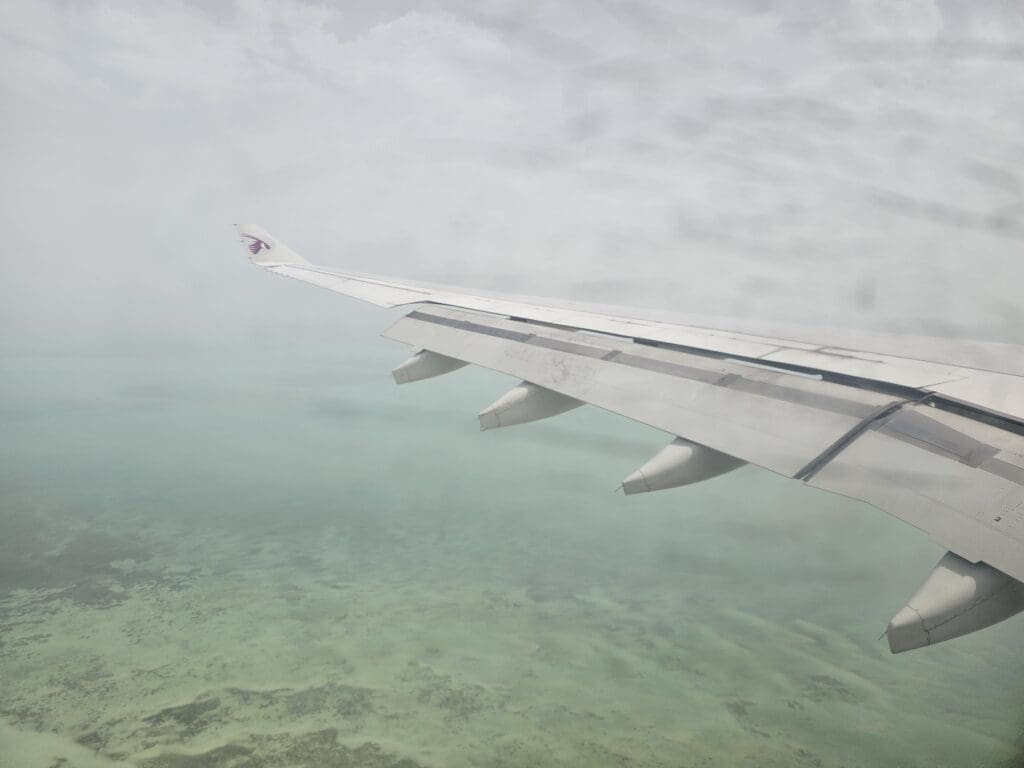
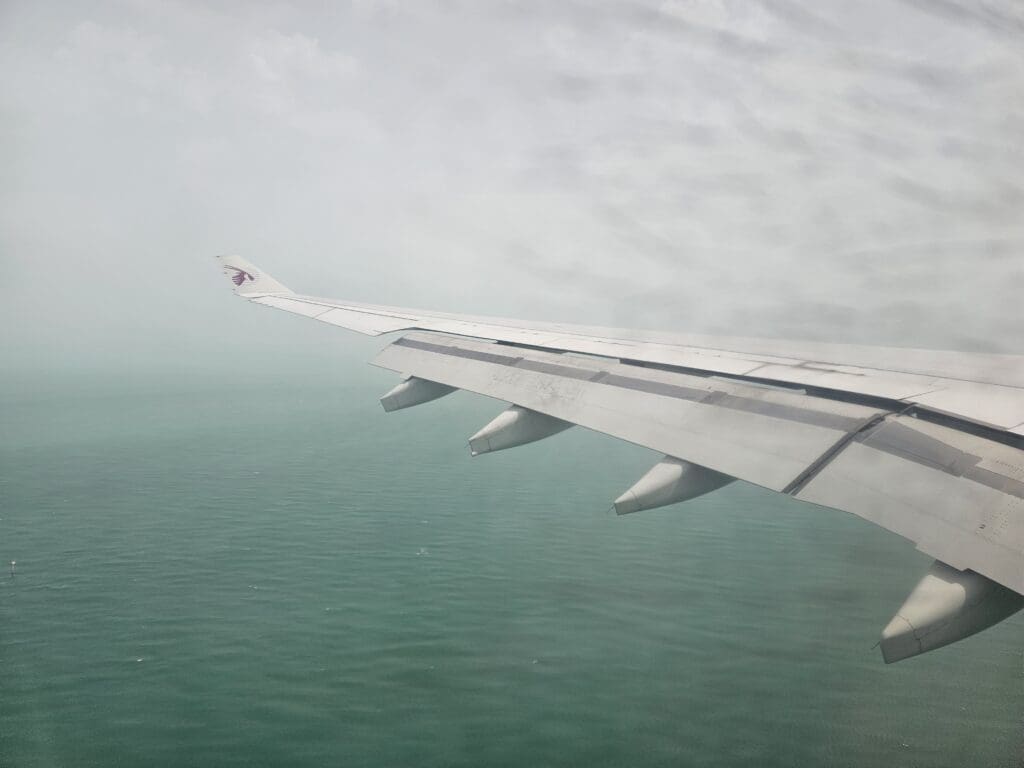
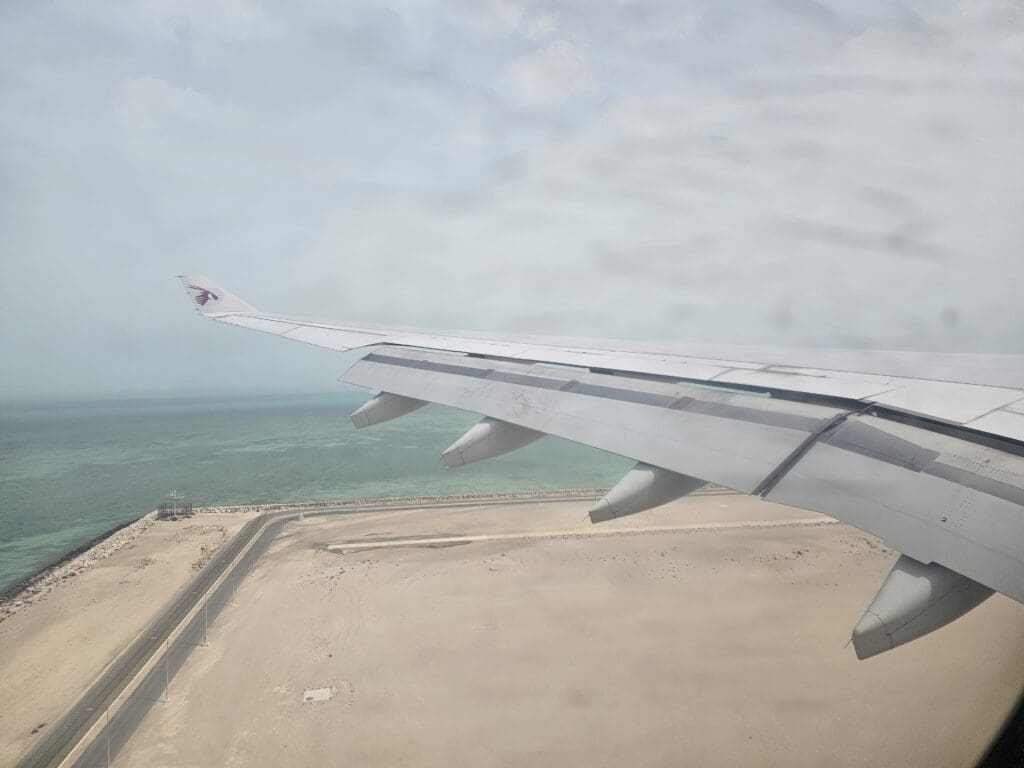
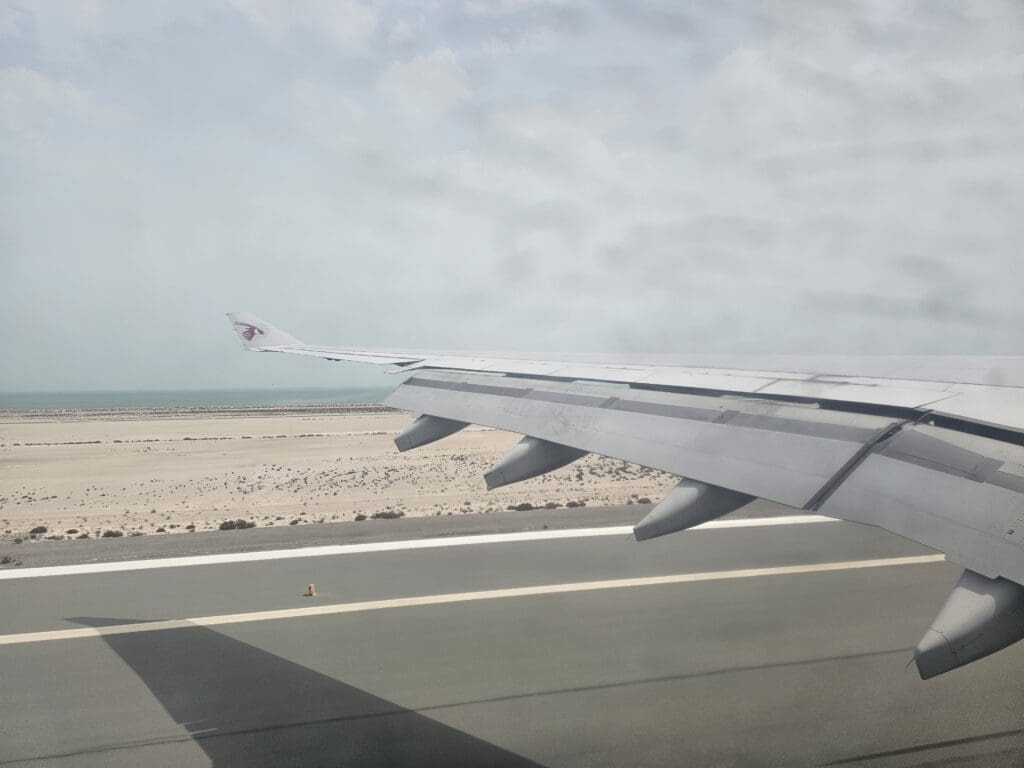
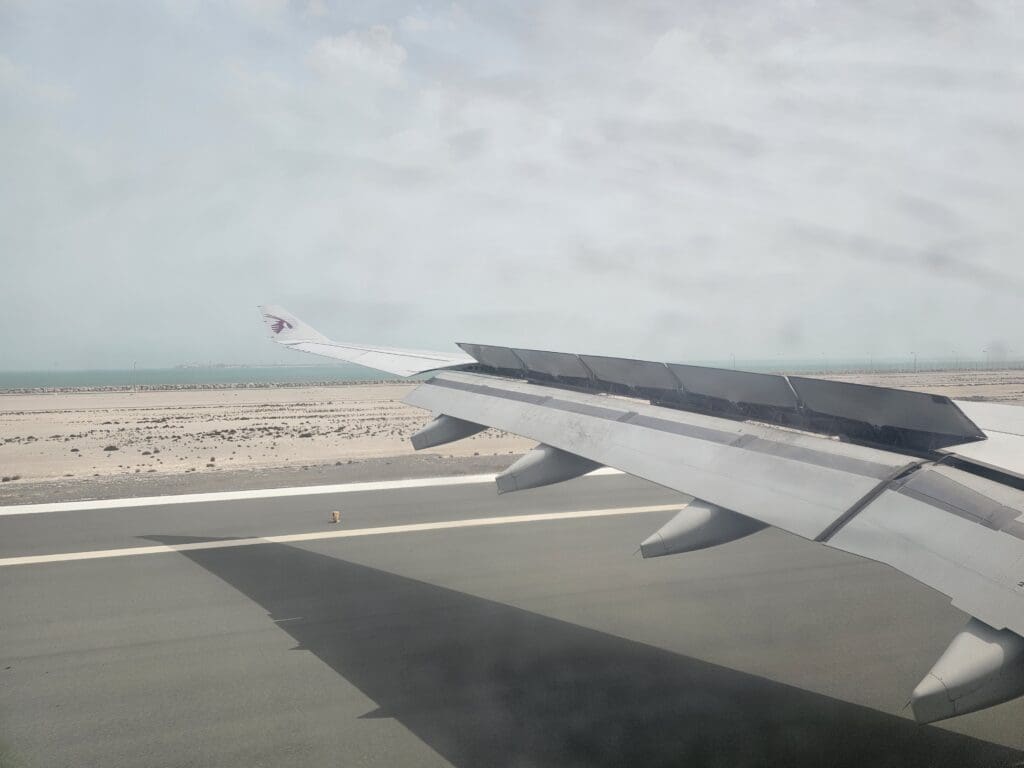
Once the Airbus cleared the runway, the Cabin Director welcomed all to Doha in Arabic and English, noting the local time, thanking passengers for flying with Qatar Airways and giving the usual warnings regarding seatbelts. Making our way towards the airport’s massive terminal, I was a little surprised at the lack of aircraft on the ground at that time, with much of Qatar Airways’ fleet heading off to destinations around the world, with the lunchtime lull in full swing. Several minutes after touching down, the Airbus came to a gentle halt at Stand 119 next to an Airbus A350 being readied for its flight down to Colombo.
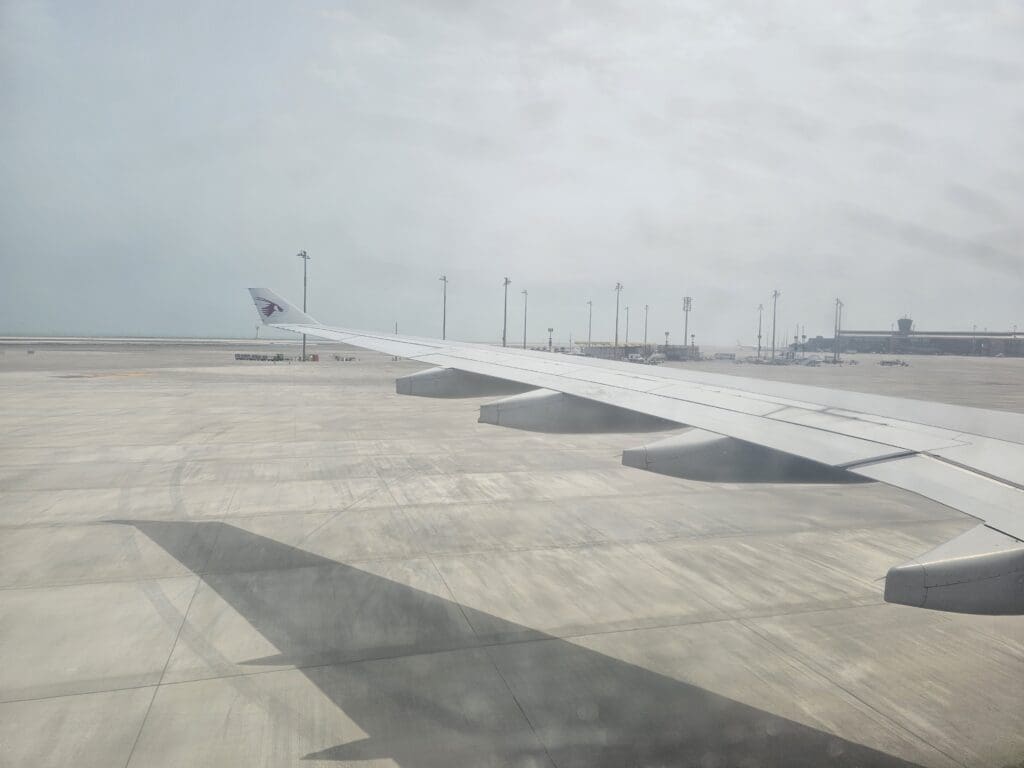
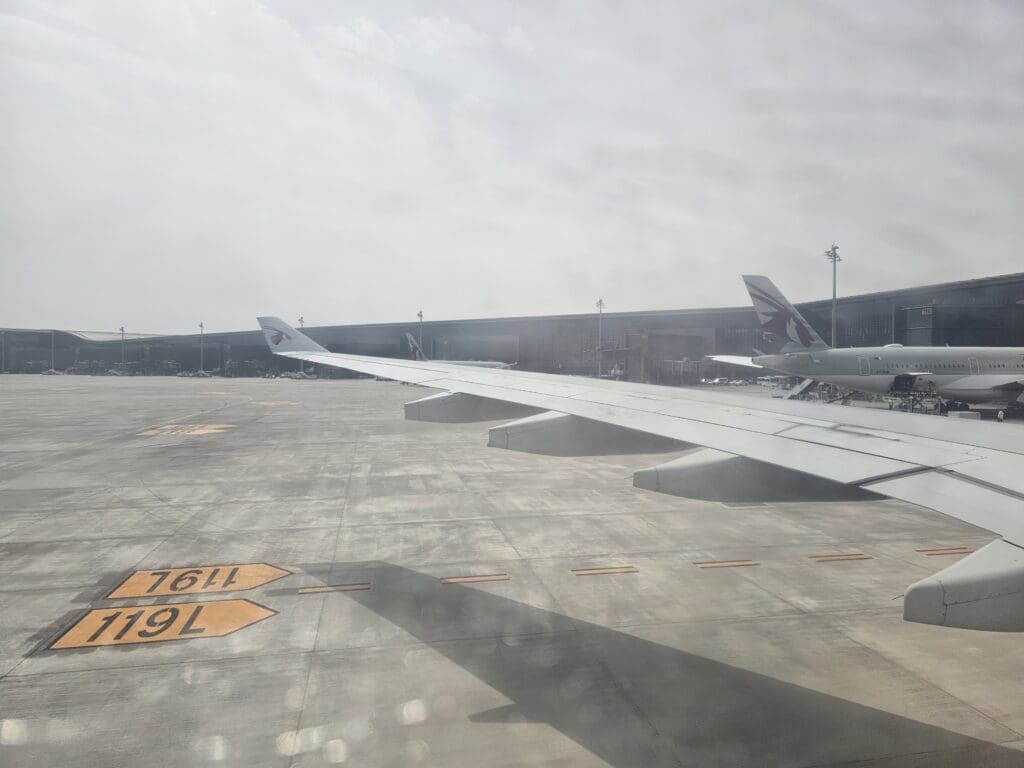
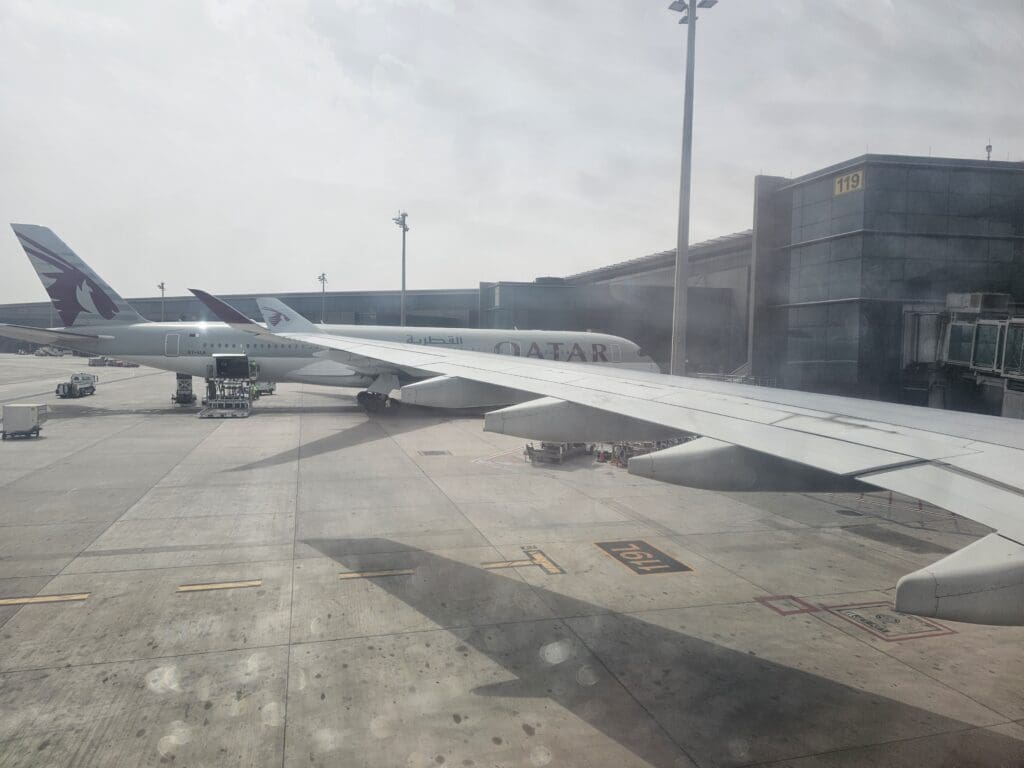
Upon coming to a halt, the engines spooled down, and many of those in the cabin stood up in a rush to leave. Fortunately, it wasn’t long before a jetbridge was connected to the L2 door and disembarkation commenced. With few passengers in Economy, disembarkation was a quick and painless affair, and soon, I stood up and made my way through the forward Economy cabin, receiving a couple of lukewarm farewells before I received a much livelier thanks and farewell from the Cabin Director before I stepped off the aircraft and commenced my three-hour transit in Doha.
Summary
Qatar Airways’ Airbus A330s are by far the most outdated product in the airline’s fleet, and I imagine that passengers who end up on these jets on some of their longer slogs such as those to China or Europe, may likely end up a little disappointed. Nevertheless, I found the aircraft to be perfectly adequate for my short flight over to Doha. Meanwhile, my experience both on the ground and in the air left me with no complaints, and I was delivered to Qatar on time and in one piece.